Page 819

Working with us, not for us: strategies for being a better ally to First Nations people

Source: The Conversation (Au and NZ) – By Richard Matthews, Associate Professor of Medical Ethics, Bond University

Shutterstock

We write this article together – Kelly, a First Nations woman living on Kombumerri Country, and Richard, a Canadian white male settler living on the lands of the Minjungbal people of the Bundjalung Nation.

As a First Nations Australian academic, Kelly is often approached to give guest lectures. She aims to accept these invitations as she believes acts of reciprocity and relationality are essential building blocks for reconciliation. Further, her job requires her to teach First Nations People’s histories and knowledges.

Unfortunately, on many occasions, her knowledge is appropriated, reproduced without permission, frequently misconstrued, or misrepresented and colonised in some way. This all happens under the guise of a non-Indigenous person having “good intentions”. In addition, Kelly is frequently micromanaged regarding her Indigenous knowledges.

This is not an uncommon experience for First Nations academics.

The outcome for these academics is often an increased and unpaid workload, and no opportunities for collaboration between academic staff or faculty. This is all coupled with the trauma that occurs when experiencing ongoing micro-aggressions and racism.

White people often fail to appreciate the nature of power differentials and white privilege – with all the accompanying benefits, including money, prestige and even the option to act.

Further, good intentions are not enough. What settlers need to understand are the principles of proper allyship.

This requires not acting on behalf of someone, but ceding space and decisional authority to others, and privileging the voices and experiences of First Nations Peoples and communities. First Nations communities get to decide on all matters related to themselves and their knowledges. Allies need to understand this is not negotiable.

Here we invite you to consider some strategies for being a good ally with First Nations Peoples and communities.

What can I do?

1) First, allies must assume and confront racism in themselves, explore how they may be part of the problem and look at ways to change.

This means reflecting on and accepting one’s own assigned privilege. Acceptance allows us to become more understanding of how we impact others.

2) Always prioritise the voices of First Nations Peoples above your own. Their voices matter – not those of settlers – in what happens to their communities. This applies to everything – law, policy, health, funding decisions, choices made (or not), and research undertaken (or not).

3) As allies, one’s skills and achievements do not take priority over First Nations Peoples and their needs. Rather, allies should prioritise the creation of “right relations.” This is an act of establishing relationships with First Nations Peoples as an ally, in a culturally appropriate and reflective manner.

4) Listen to and believe the voices of First Nations Peoples and adopt a position of cultural humility.

Cultural humility is a commitment to self-awareness and refection. It also means redressing power imbalances and developing reciprocal, non-paternalistic partnerships with First Nations Peoples and communities.

Further, one must cede any right to determine the shape or direction of political, economic, or academic projects that involve First Nations Peoples. This needs to be determined by or in consultation with First Nations Peoples.

5) Publicly support First Nations People’s sovereignty, self-determination and autonomy. In this case, act only if First Nations Peoples judge it to be valuable. If they say it could be harmful, then back off and remain silent.

6) Finally, if consistent with relevant First Nations voices, teach (not preach) anti-racism messages to our white-privileged peers and others.

It is important to involve one’s peers in this process. People require space to voice their views, even when their views may be perceived as “racist”. Having an open dialogue is a way to address potential hostility that can arise when people get defensive.


Read more:
For too long, research was done on First Nations peoples, not with them. Universities can change this


All people have the right to autonomy and to determine what is right for their own communities. This, too, is an exercise of power, because only those sufficiently privileged to make such choices can do so. Being a better ally is to essentially use the space you are given to provide space for people who are too often excluded from the conversation.

If you are called out for racism or cultural insensitivity, please listen and take the comment seriously as a gift and an invitation to change.

Racism is a white problem and white people need to be the ones to solve it.

The Conversation

The authors do not work for, consult, own shares in or receive funding from any company or organisation that would benefit from this article, and have disclosed no relevant affiliations beyond their academic appointment.

ref. Working with us, not for us: strategies for being a better ally to First Nations people – https://theconversation.com/working-with-us-not-for-us-strategies-for-being-a-better-ally-to-first-nations-people-169455

West Papuans flee from ‘liberation’ conflict into remote PNG region

SPECIAL REPORT: By Johnny Blades, RNZ Pacific journalist

Armed conflict in West Papua has caused an exodus of displaced people into one of the most remote parts of neighbouring Papua New Guinea.

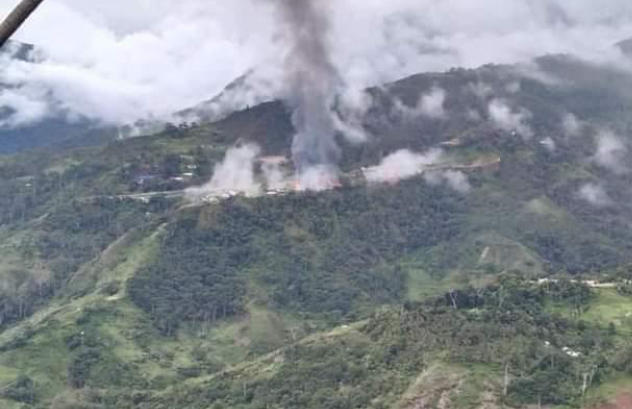
The latest flashpoint in the conflict is in the Indonesian-administered Bintang Mountains regency, where state forces are pursuing West Papua Liberation Army fighters who they blame for recent attacks on health workers in Kiwirok district.

Since violence surged in Kiriwok last month, Indonesian security forces have targetted suspected village strongholds of the OPM-Free Papua Movement’s military wing.

At least 2000 people are recorded by local groups to have fled from the conflict either to other parts of Bintang Mountains (Pegunungan Bintang) or crossed illegally into the adjacent region over the international border.
Hundreds of people have fled across to Tumolbil, in Yapsie sub-district of the PNG province of West Sepik, situated right on the border.

A spokesman for the OPM, Jeffrey Bomanak, said that those fleeing were running from Indonesian military operations, including helicopter assaults, which he claimed had caused significant destruction in around 14 villages.

“Our people, they cannot stay with that situation, so they are crossing to the Papua New Guinea side.

“I already contacted my network, our soldiers from OPM, TPN (Liberation Army). They already confirmed 47 families in Tumolbil.”

Evidence of the influx
A teacher in Yapsie, Paul Alp, said he saw evidence of the influx in Tumolbil last week.

“It is easy to get into Papua New Guinea from Indonesia. There are mountains but they know how to get around to climb those mountains into Papua New Guinea.

“There are foot tracks,” he explained, adding that Papua New Guineans sometimes went across to the Indonesian side, usually to access a better level of basic services.

A village destroyed in Pengunungan Bintang regency, Papua province.
A village destroyed in Pengunungan Bintang regency, Papua province. Image: ULMWP/RNZ

Alp said West Papuans who had come to Tumolbil were not necessarily staying for more than a week or so before returning to the other side.

He and others in the remote district confirmed that illegal border crossings have occurred for years, but that it had increased sharply since last month.

For decades, the PNG government’s policy on refugees from West Papua has been to place them in border camps, the main one being at East Awin in Western Province, with support from the United Nations High Commissioner for Refugees.

Thousands of displaced Papuan have ended up at East Awin, but many others who come across simply melt into the general populace among various remote villages along the porous border region.

Threadbare security
Sergeant Terry Dap is one of a handful of policemen in the entire Telefomin district covering 16,333 sq km and with a population of around 50,000.

He said a lot of people had come across to Tumolbil in recent weeks, including OPM fighters.

“There’s a fight going on, on the other side, between the Indonesians and the West Papuan freedom fighters.

“So there’s a lot of disruption there [in Tumolbil]. So I went there, and I talked to the ward development officer of Yapsie LLG [Local Level Government area], and he said he needed immediate assistance from the authorities in Vanimo [capital of West Sepik].”

“They want military and police, to protect the sovereignty of Papua New Guinea, and to protect properties to make sure the fight doesn’t come into PNG.”

Sergeant Dap said he had emailed the provincial authorities with this request, and was awaiting feedback.

Papua New Guinea police
Papua New Guinea police … “There’s a fight going on, on the other side, between the Indonesians and the West Papuan freedom fighters.” Image: Johnny Blades/RNZ

More civilians crossing over
According to Bomanak, the impacts of displacement from recent attacks in Kiwirok district are ongoing.

“This problem now is as we have damage in village, more civilians will cross over in Papua New Guinea side.

“Five to six hundred villagers, civillians, mothers and children, they’re still in three locations, out in jungle in Kiwirok, and they’re still on their way to Papua New Guinea,” he warned.

On the PNG side, Sergeant Dap said some of the people coming across from West Papua have traditional or family links to the community of Tulmolbil

But their presence on PNG soil creates risk for locals who are fearful their communities could get caught in the crossfire of Indonesian military pursuing the Papuan fighters.

Dap said he spoke with the OPM fighters who had come to Tumolbil, and encouraged them not to stay long.

“I’ve talked to their commander. They said there’s another group of people coming – about one thousand-plus coming in,” he said.

“I told them, just stay for some days and then you go back, because this is another country, so you don’t need to come in. You go back to your own country and then stay there.”

Violence in mountainous Pengunungan Bintang regency, near the border with PNG, October 2021.
Clashes in the mountainous Pengunungan Bintang regency, near the border with PNG, in October 2021. Image: RNZ

The policeman has also been involved in efforts by PNG authorities to encourage vaccination against covid-19.

Mistrust of covid vaccines is deep in PNG, where only around 2 or 3 percent of the population has been inoculated, while a delta-fuelled third wave of the pandemic is causing daily casualties.

Sergeant Dap said convincing people to get vaccinated was difficult enough without illegal border crossings adding to the spread of the virus and the sense of fear.

This article is republished under a community partnership agreement with RNZ.

Print Friendly, PDF & Email

Article by AsiaPacificReport.nz

Why are birds’ eggs colourful? New research shows it’s linked to the shape of their nests

Source: The Conversation (Au and NZ) – By Kiara L’Herpiniere, PhD Candidate, Wildlife Biologist, Macquarie University

Author provided

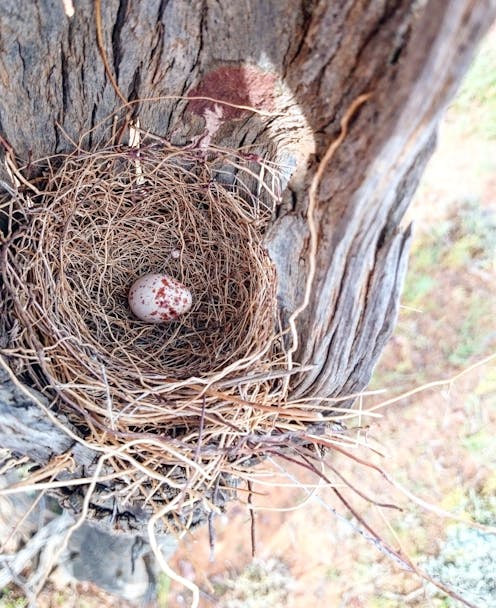
Of all the vertebrates on Earth – that is, animals with backbones – birds are the only ones that lay colourful eggs. Scientists are still unsure why, but new research brings us a step closer to finding out.

Although most reptiles lay eggs, and even some mammals (such as the platypus) too, birds are the only backboned animals alive today that can lay colourful and patterned eggs.
Author provided

In a study published today in the journal Evolution, my colleagues and I reveal how the colours of songbird eggs diversified alongside the evolution of “open cup” nests, more than 40 million years ago.

Why are eggs colourful?

Scientists are not entirely sure why birds lay such colourful eggs. Current theories fall into two main categories.

The first is that colour helps protect the eggs from environmental factors such as extreme cold or rain. Eggs with darker pigments heat up faster and maintain heat longer than white eggs. Pigments have also been shown to help strengthen thinner eggshells.

Eggshells can show areas of thinning, usually when the female’s diet is lacking calcium. This can often result from the use of pesticides, including DDT, in the wild — as they can dissolve or contaminate otherwise nutritious food such as snail shells.

Females have been shown to deposit pigments in the same spots where a shell is thinner (and more prone to breaking) — a bit like covering it with plaster. This may reinforce the shell and help keep it structurally sound.

We know the pigments are produced in the female’s uterus during the shell’s formation, but it’s still not known how different colours and complex patterns are applied to the shell while the egg is still inside the female.


Read more:
Hot as shell: birds in cooler climates lay darker eggs to keep their embryos warm


The second theory is that colour provides a survival advantage, either by camouflaging the eggs from predators or parasites, or by signalling the female’s reproductive fitness to potential partners. More colourful eggs, particularly blue, signify that the mother is healthy and can spare resources for her babies.

How is the colour made?

All the colours we see in bird eggs stem from just two pigments, one brown and the other blue. Different concentrations of these two pigments create the vast range of egg colours we see today.

Some eggs have intricate and delicate patterns. We still don’t know how the female birds apply the pigments to the eggshell in this way.
Author provided

Until 2017, scientists believed laying colourful eggs was a trait unique to birds. But as it turns out, the same pigments can be found in fossilised dinosaur eggs too.

Researchers also found a link between dinosaurs’ nesting behaviour and egg colour. Specifically, they discovered dinosaurs that laid their eggs in partially open nests (rather than burying them like crocodiles) had colour in their eggshells.

Nest-building through time

Until about 40 million years ago, songbirds built complex dome-shaped nests with insulated walls and roofs. Over time, however, they evolved the ability to create the open cup nests we see more commonly today.

Birds exhibit fantastic dexterity when building nests. Using only their beaks and feet, they can weave an array of nests ranging from relatively rudimentary designs to substantial, intricately woven structures.

The nests must have enough structural integrity to hold both the eggs and the weight of an incubating parent without being punctured. They must also stay intact while parents move around, hatched chicks start wriggling, and during rainfall and harsh winds.

Now, our research has found a link between eggshell colour and changes in nest construction. Specifically, birds have gone from laying a narrower range of coloured eggs (mainly white or dark brown) in closed dome nests, to a wider variety of colours (white, pink, olive, blue, pink and brown) in cup nests.

The transition to cup nests means the eggs are exposed when the incubating parent leaves to forage. During these foraging bouts, eggs are much more vulnerable to falling outside the temperature range needed to survive.

If they get too cold or hot, the embryos die. They’re also more exposed to passing predators looking for a snack.

Parasitic cuckoos lay their eggs inside other birds’ nests, and match their eggs to those already in the nest. Perhaps colour started playing an essential role in host parents’ evolutionary attempts to thwart the cuckoos?

Back when nests were mostly closed, and eggs hidden, the host wouldn’t have needed to produce colourful eggs to distinguish them from the cuckoo’s. Similarly, cuckoos wouldn’t have needed to match their eggs with the host’s.

Our research found that laying colourful eggs is a flexible trait, and was lost and regained multiple times during songbirds’ evolutionary history. Moreover, birds that evolved to make cup nests lost and regained this trait twice as many times as birds that still make closed nests today.


Read more:
Who would win in a fight between an emu and a cassowary? One has a dagger-like claw, the other explosive agility


Onward, upward

In the 1800s naturalists had a fascination with birds’ eggs, and it became common to own extensive egg collections. The ultimate goal for collectors, other than prestige, was to have as many different species as possible.

Today, collecting specimens is quite understandably illegal. But those old collections do come in handy.

A collection of bird eggs, in various colours and patterns, in a museum tray.
Today, it’s illegal to collect or trade native bird eggs in Australia without a permit.
Author provided

For our work, we were able to draw on extensive egg collections donated to museums in Australia. We measured the egg colours of more than 250 different species of Australian songbird, took photographs, and analysed them against their evolutionary histories.

Many of the eggs from museum collections also come with geographical locations. We’re grateful to early naturalists for making extensive notes on where, when and how they collected each clutch.

Moving forward, we want to use this data to investigate how climatic variables interact with egg colour — as well as whether a female’s diet impacts egg colour. Egg-citing stuff!


We would like to acknowledge the Traditional Owners of the land from which these eggs were taken, and pay our respects to the Elders, past and present and emerging.

The Conversation

Kiara L’Herpiniere does not work for, consult, own shares in or receive funding from any company or organization that would benefit from this article, and has disclosed no relevant affiliations beyond their academic appointment.

ref. Why are birds’ eggs colourful? New research shows it’s linked to the shape of their nests – https://theconversation.com/why-are-birds-eggs-colourful-new-research-shows-its-linked-to-the-shape-of-their-nests-169095

The bryozoan mystery: a new look at an old fossil reveals the origin of these tiny coral-like creatures

Source: The Conversation (Au and NZ) – By Glenn A Brock, Honorary Professor, Macquarie University

Christian Schwarz, CC BY-NC

Most groups of modern animals had their beginnings more than half a billion years ago in an amazing evolutionary event known as the Cambrian Explosion.

This wasn’t the kind of explosion caused by a bomb or asteroid: we call it an “explosion” because of the huge and rapid increase in the diversity of animals we see in the fossil record during this time.


Read more:
Evolution’s ‘big bang’ explained (and it’s slower than predicted)


Many familiar features of today’s animals arose in this period. The first eyes and other sensory organs developed, and appendages for swimming and walking also appeared. Tooth-rimmed jaws for predation evolved, as did complex hard parts for protection against predators.

One group of animals, called bryozoans, has until now appeared to be absent from the Cambrian Explosion. In new research, we took a closer look at some old fossils and discovered these tiny coral-like creatures were indeed present during this riotous surge in the variety of animal life on Earth.

Have you heard of bryozoans?

Bryozoans are a distinct group of water-dwelling, filter-feeding animals. Like corals, bryozoans form colonies of tiny individuals. They eat using a crown of fine tentacles called a lophophore to extract tiny food particles from the water.

Bryozoan colonies come in a variety of shapes and sizes, including forms that encrust rocky surfaces, delicate branching structures, and even small jelly-like mounds.

Because the colony is often constructed of a hard material called calcium carbonate (the same material from which seashells are made), bryozoans are easily preserved as fossils. This is why roughly 15,000 species of fossil bryozoans are known to science.

Hidden origins

Despite all these fossils, the origin of bryozoans has remained a mystery. The group seemingly “bursts” into existence about 480 million years ago (some 50 million years after the Cambrian Explosion), during the Ordovician Period.

Before the Ordovician, there is no record of their existence. This “missing” record led many palaeontologists to speculate that bryozoans first evolved sometime during the Cambrian. But these early forms were probably tiny and delicate, and may not have constructed their colonies of calcium carbonate. This would make them much less likely to be preserved as fossils.

A new look at old fossils

Our research, published today in Nature, reveals bryozoans were indeed present during the Cambrian Explosion. The key to solving the mystery of their origins is a strange, honeycomb-like fossil called Protomelission (the name means “first honeycomb”).

The first specimens of Protomelission were originally described in 1993 from important Cambrian rocks in the Flinders Ranges in South Australia. However, it wasn’t clear from these original specimens that Protomelission was a bryozoan. Then, in 2018, an almost identical specimen was discovered in China.

The early Cambrian bryozoan Protomelission gatehousei from the Flinders Ranges, South Australia. Image a shows a scanning electron microscope image of a colony with individual capsules, called zooids, that held separate individuals of the colony. Images b and c show internal structures from different orientations revealed by microCT. Colours are added to show different structures.
Zhang et al./Nature, Author provided

Using a state-of-the-art technology called micro-computed tomography (MicroCT), we looked inside Protomelission to confirm it is, in fact, a fossil from a bryozoan colony.

MicroCT technology is similar to a CAT scan in a hospital. Using a thin beam of X-rays, we peer inside the fossil in a series of narrow “slices”. We then use a computer to stack the slices together and produce 3D images and videos of tiny objects like Protomelission.


Read more:
The science of medical imaging: X-rays and CT scans


Our new images confirmed the fossil lacked the robust calcium carbonate skeleton that most living bryozoans possess. Based on our analyses, we can now say with certainty that bryozoans first appeared during the Cambrian Explosion.

A hidden history revealed

A reconstruction of what P. gatehousei may have looked like in life, with Cambrian seafloor in the background.
Zhifei Zhang / Northwest University, Author provided

It’s not every day the hidden history of an entire group of animals is revealed by the fossil record! For context, this would be like revealing the early ancestor of every fish, amphibian, reptile, bird and mammal all in one go.

Our discovery pushes back the first appearance of the phylum Bryozoa by about 35 million years, making Protomelission the oldest known bryozoan. Importantly, our results also mean that living in colonies, a rare feature in complex animals, also originated during the Cambrian Explosion.

The bryozoans can now take their place among the incredible evolutionary and ecological events associated with the rise of animal communities.


For more information and resources related to the wonderful phylum Bryozoa please go here.

The Conversation

Glenn A Brock is an Honorary Professor of Palaeobiology in the Department of Biological Sciences at Macquarie University. This research was funded partly from internal MQ Research funds and from the Australian Research Council (DP120104251).

Luke Strotz receives funding from a Shaanxi Province Research Grant (2019-2024) through Northwest University, Xi’an, China

ref. The bryozoan mystery: a new look at an old fossil reveals the origin of these tiny coral-like creatures – https://theconversation.com/the-bryozoan-mystery-a-new-look-at-an-old-fossil-reveals-the-origin-of-these-tiny-coral-like-creatures-170261

Accountability is under threat. Parliament must urgently reset the balance

Source: The Conversation (Au and NZ) – By Anne Tiernan, Adjunct Professor of Politics. Griffith Business School, Griffith University

All Australians have a stake in our nation’s good governance. The past week has provided plenty of reasons to be concerned about the Morrison government’s disregard of core tenets of Australian democracy in its quest for electoral advantage.

I can’t recall an Australian government that has been as blatant in its disdain for accountability as the one led by Scott Morrison. Nor has there been one that has more assiduously bred the culture of secrecy that permeates from the Prime Minister’s Office (PMO) down.

Its contempt for checks and balances, resentment of scrutiny and preparedness to trash long-standing conventions is widely observed among journalists, experts and practitioners – including former Coalition members. Former prime minister Malcolm Turnbull describes “a culture of entitlement, a culture of non-accountability” within the government that he claims to be “deeply troubled by”.

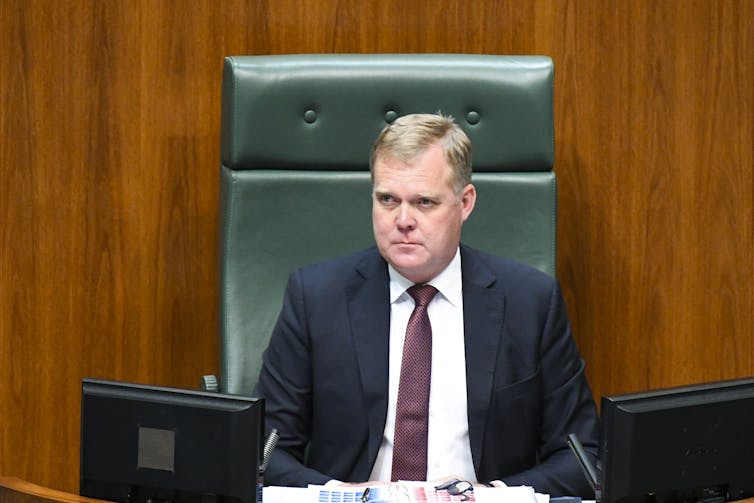
This culture was on full display again in the parliament recently, when the government defied Speaker Tony Smith to stop the matter of Christian Porter’s blind trust fund being referred to the House of Representatives Privileges Committee.

Smith had ruled there was a “prima facie case” for the committee to investigate. But in a move unprecedented in the 120 years of the federal parliament, the government’s leader in the House, Peter Dutton, opposed the speaker’s ruling, mobilising Coalition MPs to win the vote. He achieved this by refusing to count the votes of independent members attending remotely, despite this being routine for remote attendance in the Senate since September 2020.

Much ink has been spilled documenting the Morrison government’s dubious record on integrity matters. These include the rorting and misuse of public funds through discretionary grants programs, its refusal to conform to reasonable expectations of accountability to parliament or answer questions from the media, its unwillingness to enforce ministerial or other codes of conduct, or to concede accumulating evidence of widespread abuses of power with respect to public appointments.

The parliament, like the national cabinet, is merely the latest arena to showcase Morrison’s audacity, given his slim majority and the deep fractures within his government.

Speaker Tony Smith was overruled by the government on referring the Porter blind trust matter to the privileges committee, an unprecedented move in Australian politics.
Lukas Coch/AAP

‘Whatever it takes’ approach gains momentum

Political scientist James Walter argues Morrison embodies the decades-long move to the centralisation and predominance of the leader in Australian politics. Morrison has leveraged and strengthened the institutional and personal power of the prime ministership, including an inner court of trusted loyalists and a large and powerful PMO. It asserts discipline and control across the government, including the public service.

Morrison’s PMO has developed a reputation for backgrounding against rivals and punishing critics. His department, headed by former chief of staff Phil Gaetjens, has been accused of enabling the prime minister to evade accountability and scrutiny.


Read more:
View from The Hill: Scott Morrison becomes tangled in his own spider web


Australia is not the only Westminster-style system grappling with the trend towards an increasingly powerful political executive. In the United Kingdom, similar concerns have been raised about the extent to which unwritten “conventions” intended to guide political practice – premised on those holding power exercising self-restraint in the long-term public interest – are now sufficient to ensure appropriate standards of behaviour and respect for constitutional norms.

Since the Brexit referendum in 2016, a series of “constitutional abuses” has occurred in the UK. Andrew Blick and Peter Hennessy observe:

[The abuses] have touched upon many of the main government organs: the Cabinet, the Civil Service, Parliament, the judiciary, the devolved institutions, and even the monarchy.

These have brought into question whether the “good chap” theory that has underpinned the British political tradition (and also informs Australia’s) remains a sufficient bulwark against an overweening executive.

The flexibility of an unwritten constitution, based on restraint and mutual respect for governing norms, has served Britain and other Westminster-style systems well. However, Blick and Hennessy argue:

For the system to work, ministers must exercise [their] power responsibly and be willing to cooperate with oversight mechanisms to an appropriate extent.

[…] If general standards of good behaviour among senior politicians can no longer be taken for granted, then neither can the sustenance of key constitutional principles.

More effective ways need to be found to promote a culture of good behaviour among office-holders. This may include formally codifying expectations of behaviour and safeguards to protect the rule of law and strengthen the institutions of governance, including the civil service, parliament and the judiciary.

In 2020, Britain’s Committee on Standards in Public Life launched a review of “the strengths and weaknesses of the institutions, policies and processes that implement ethical standards in Westminster and beyond”. The review is being conducted against the backdrop of the Greensill lobbying scandal that involved (among numerous others) former prime minister David Cameron, and claims of a “chumocracy”, where access, positions and honours are a quid pro quo for mates and political donors.

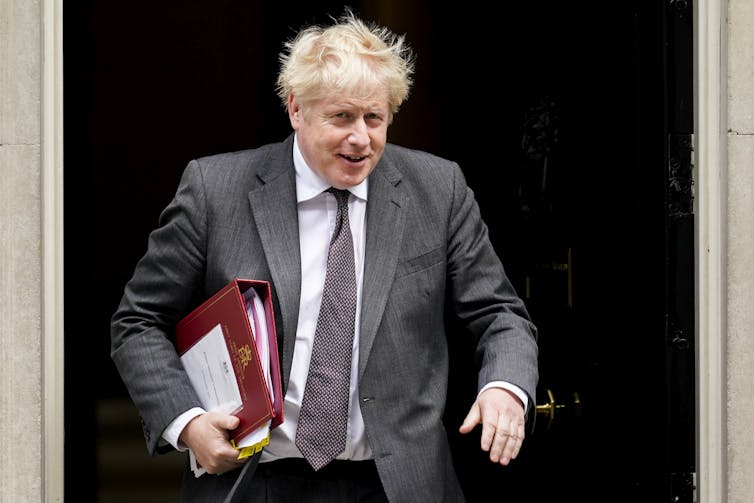
It also comes amid criticism of the impact of informal, personalised networks surrounding British ministers on other institutions, notably the civil service. COVID-19 has exposed Boris Johnson’s shambolic governance style, his cavalier approach to the truth and preparedness to breach long-standing constitutional norms. This culture has extended to former supporters such as top adviser Dominic Cummings.

British Prime Minister Boris Johnson has also been criticised for a lack of accountability in government.
AAP/AP/Alberto Pezzali

The case for a federal integrity commission is overwhelming

If, as recent performance in the Australian government suggests, “general standards of good behaviour among senior politicians can no longer be taken for granted”, the case for a federal integrity commission with strong powers is overwhelming.

But last week, as his government broke precedent to shield Porter from scrutiny, Morrison told independent MP Helen Haines his government would not facilitate debate of her Australian Federal Integrity Commission Bill.

Like his “forever friend” Boris Johnson, Morrison seems little inclined to accept restraints on government power. But as last week also showed, even predominant prime ministers face risks when they overplay their hand.

Coalition MPs voted down the motion to refer Porter to the privileges committee on party lines. But many MPs, reportedly angry, demanded a meeting with Dutton.


Read more:
Grattan on Friday: Porter’s funding from a ‘blind trust’ is an integrity test for Morrison


Similarly, the National Party sorely tested the prime minister’s authority. Its agreement to the net zero by 2050 target was achieved despite Deputy Prime Minister Barnaby Joyce’s opposition, although the Nationals leader accepted the decision of his party room.

As the PM touted his net zero by 2050 plan, it has been galling to hear both he and Minister for Industry, Energy and Emissions Reduction Angus Taylor invoke the “Westminster system” and conventions of Cabinet confidentiality while at the same time ignoring key traditions of “responsible government” – including accountability to parliament. These had already been comprehensively trashed by Joyce and fellow National Bridget McKenzie, whose pretence of “outsiderism” despite their place at the apex of power would have been laughable if not so cynically damaging.

Lacking a federal integrity commission and anything remotely resembling a Committee on Standards in Public Life, the Australian parliament is increasingly an outlier. It is diminished and demeaned by an emboldened political executive, which, as we saw in 2019, will stop at nothing to secure its return to office.

It’s time for the nation’s legislators to exercise constitutional stewardship by resetting the balance. That will require courage from moderate Liberal backbenchers, whose compliance under their leader’s whip hand may have electoral consequences.

The Conversation

During her academic career, Anne Tiernan won research funding from the Australian Research Council and the Australia and New Zealand School of Government.

ref. Accountability is under threat. Parliament must urgently reset the balance – https://theconversation.com/accountability-is-under-threat-parliament-must-urgently-reset-the-balance-170530

Your unvaccinated friend is roughly 20 times more likely to give you COVID

Source: The Conversation (Au and NZ) – By Christopher Baker, Research Fellow in Statistics for Biosecurity Risk, The University of Melbourne

As lockdowns ease in New South Wales, Victoria and the ACT, and people return to work and socialising, many of us will be mixing more with others, even though a section of the community is still unvaccinated.

Many vaccinated people are concerned about the prospect of mixing with unvaccinated people. This mixing might be travelling on trains or at the supermarket initially. But also at family gatherings, or, in NSW at least, at pubs and restaurants when restrictions ease further, slated for December 1.

Some people are wondering, why would a vaccinated person care about the vaccine status of another person?

Briefly, it’s because vaccines reduce the probability of getting infected, which reduces the probability of a vaccinated person infecting someone else. And, despite vaccination providing excellent protection against severe disease, a small proportion of vaccinated people still require ICU care. Therefore some vaccinated people may have a strong preference to mix primarily with other vaccinated people.

But what exactly is the risk of catching COVID from someone who’s unvaccinated?


Read more:
As Melbourne cautiously opens up today, what lies ahead?


What’s the relative risk?

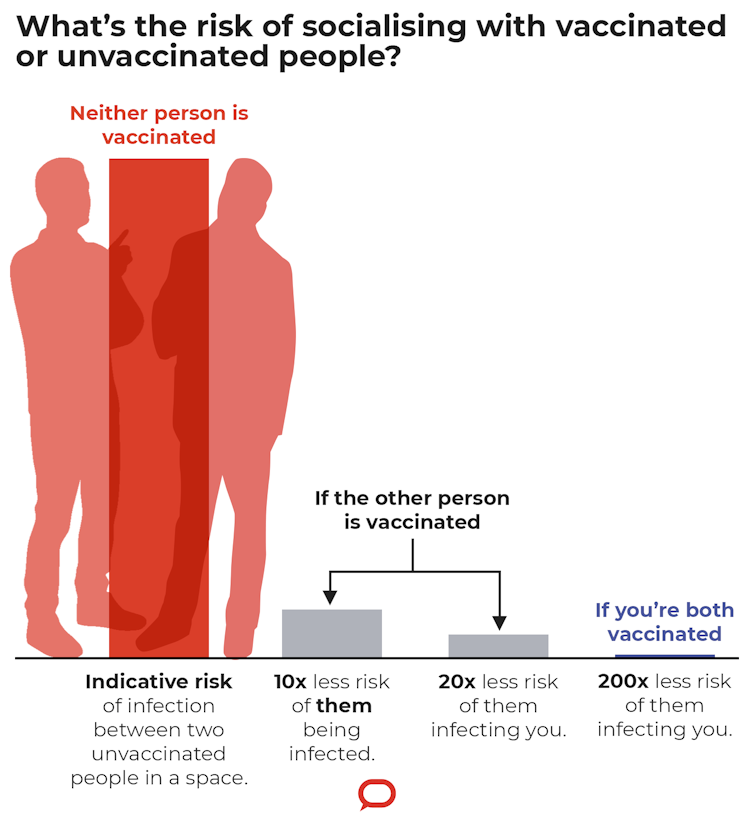
Recent reports from the Victorian Department of Health find that unvaccinated people are ten times more likely to contract COVID than vaccinated people.

We also know that vaccinated people are less likely to transmit the disease even if they become infected. The Doherty modelling from August puts the reduction at around 65%, although more recent research has suggested a lower estimate for AstraZeneca. Hence for this thought experiment, we’ll take a lower value of 50%.

As the prevalence of COVID changes over time, it’s hard to estimate an absolute risk of exposure. So instead, we need to think about risks in a relative sense.

If I were spending time with an unvaccinated person, then there’s some probability they’re infected and will infect me. However, if they were vaccinated, they’re ten times less likely to be infected and half as likely to infect me, following the numbers above.

Hence we arrive at a 20-fold reduction in risk when hanging out with a vaccinated person compared to someone who’s not vaccinated.


The Conversation, CC BY-ND

The exact number depends on a range of factors, including the type of vaccine and time since vaccination. But, in Australia we can expect a large risk reduction when mixing with fully vaccinated people.

The calculation holds true whether you yourself are vaccinated or not. But being vaccinated provides a ten-fold reduction for yourself, which is on top of the risk reduction that comes from people you’re mixing with being vaccinated.

So, dining in an all-vaccinated restaurant and working in an all-vaccinated workplace presents a much lower infection risk to us as individuals, whether we are vaccinated or not. The risk reduction is around 20-fold, but as individuals, we need to consider whether that’s meaningful for our own circumstances, and for the circumstances of those we visit.

There are also added complexities, in that there are three vaccine brands available, and eligibility is still limited to those aged 12 and older. Although, we do know kids are less susceptible and less likely to show symptoms.

However, as more information emerges, we can always update our estimates and think through the implications on the risk reduction.

What about people who can’t be vaccinated?

Some people haven’t been able to get vaccinated because they’re either too young or they have a medical exemption. Other people are immunocompromised and won’t get the same level of protection from two doses as the rest of the community.

Increasing our coverage across the board will help protect those who aren’t fully protected by vaccination (whether that’s by eligibility, medical reasons or choice).

Those at higher risk also enjoy the risk reduction if they’re able to mix primarily with vaccinated people.

And other choices we make can help reduce the risk of transmission when vaccination is impossible, for example, wearing masks, washing hands carefully, and so on.

Do rapid antigen tests help?

Some people have proposed that frequent testing could be used to suppress COVID spread for those who are unwilling to be vaccinated.

Health minister Greg Hunt said Australians can buy rapid antigen tests from November 1, so they can test themselves at home or before entering certain venues.

So how much does a rapid antigen test reduce risk to others?

To answer that question we need to consider test sensitivity.

Test sensitivity is the probability a rapid test will return a positive result, if the person is infected.

It’s challenging to get an accurate estimate. But rapid antigen tests are about 80% as sensitive as a PCR test, which are the traditional COVID tests we do that get sent off to a lab. The PCR tests themselves are about 80% sensitive when it comes to identifying someone with COVID.

So, if you did a rapid antigen test at home, it’s about 64% likely to pick up that you’re positive, if you did have COVID.

Therefore, rapid antigen tests can find about two-thirds of cases. If you’re going to a gathering where everyone has tested negative on a rapid antigen test, that’s a three-fold reduction in risk.

Even though rapid tests provide a reduction in risk, they don’t replace vaccines.

When used in conjunction with high levels of vaccination, rapid tests would provide improved protection for settings where we’re particularly keen to stop disease spread, such as hospitals and aged care facilities.


Read more:
Home rapid antigen testing is on its way. But we need to make sure everyone has access


Consequently, despite the high efficacy of COVID vaccines, there are still reasons a vaccinated person would prefer to mix with vaccinated people, and avoid mixing with unvaccinated people.

This is particularly true for those at higher risk of severe disease, whether due to age or disability. Their baseline risk will be higher, so a 20-fold reduction in risk is more meaningful.

The Conversation

Christopher Baker receives funding from The Australian Government Departments of Health and Foreign Affairs and Trade.

Andrew Robinson receives funding for biosecurity research from the federal Department of Agriculture, Water and the Environment and New Zealand’s Ministry for Primary Industries

ref. Your unvaccinated friend is roughly 20 times more likely to give you COVID – https://theconversation.com/your-unvaccinated-friend-is-roughly-20-times-more-likely-to-give-you-covid-170448

Scott Morrison’s deal with the Nationals must not ignore land stewardship – an attractive, low-hanging fruit

Source: The Conversation (Au and NZ) – By Paul Martin, Director, Australian Centre for Agriculture and Law, University of New England

Shutterstock

The Nationals this week finally agreed to a plan of net-zero emissions by 2050. Farmers say they’ve done much of the heavy lifting on Australia’s emissions reduction and had been calling for a deal that addressed purported inequities of the past.

The terms of the agreement between Morrison and the Nationals have not been formally released. We know it involves five-yearly reviews by the Productivity Commission to assess how regional Australia is faring throughout the transition, cutting red tape for farmers and a new cabinet position for the Nationals.

But so far, there’s no clear indication that the deal includes expanded measures to help farmers restore rural environments. This would be a huge missed opportunity.

Agriculture covers 58% of Australia’s land mass, and restoring farmland is one of the best ways to tackle climate and environmental issues over the long-term. A recent study I was involved in explored how farmers can best be supported to do this.

It found landholders are often forced to rely on unreliable and insufficient funding and support when restoring land. What’s more, no coordinated strategy exists to maximise the value land-stewardship programs might deliver.

It’s unclear what concessions the Nationals secured from Scott Morrison.
Mick Tsikas/AAP

Why farmer think they’re owed

Sentiment from farmers that they’re owed compensation for their emissions reduction efforts stems back to the 1990s and early 2000s. It was then, according to the National Farmers Federation, that Queensland and New South Wales farmers became “victims of land clearing legislation that removed their property rights, without compensation”.

The belief is linked to the unique concession Australia won in the 1997 Kyoto Protocol. Following an extraordinary 1990 spike in land clearing, Australia was allowed to count reduced land-clearing toward its emissions reductions commitments.

Restrictions on land clearing mean more vegetation is retained, leading to carbon dioxide being drawn down from the atmosphere and stored in plants and soil. This limit to land-clearing relieved pressure on other sectors of the economy to reduce carbon emissions.

So it’s understandable the National Party wanted compensation for farmers, and used the net-zero emissions target as a negotiation opportunity. Details of the final deal are expected in coming months.

It would be in everyone’s interest if the measures included ways to boost environmental stewardship of rural areas. This would not only help farmers reduce emissions over the long term, but help improve Australia’s very poor environmental record.


Read more:
The Nationals finally agree to a 2050 net-zero target, but the real decisions on Australia’s emissions are happening elsewhere


Lone tree in field
Native vegetation cover must be restored across vast tracts of Australia.
Shutterstock

Well designed, well funded programs

Land stewardship involves efforts to enable landowners and others to responsibly manage and protect land and environmental assets.

This year’s federal budget included A$32.1 million for “biodiversity stewardship”, in which farmers who adopt more sustainable practices can earn money on private markets. The funding includes programs to protect existing native vegetation, implement a certification scheme and set up a trading platform.

But as others have noted, the experience of environmental markets and certification schemes to date suggests they won’t effectively encourage farmers to take part.

Farmers often have unreliable or weak cash-flows, due to seasonal conditions, natural disasters, and the nature of commodity markets.
More government funding and policy support is needed to promote responsible land management, as well as to enforce rules prohibiting environmentally damaging practices.

A study I was recently involved in found current systems to achieve this are inadequate.

Well-designed, well-funded and long-term programs would create a significant win-win for the farming sector and for the environment, and shore up Australia’s credentials internationally. These measures should make it easy and affordable for farmers to:

  • conserve water

  • protect soil

  • avoid manure and chemical runoff, which can contaminate soil and waterways

  • reduce land-clearing

  • support conservation of plants and animals

  • avoid disturbance to habitats

  • minimise chemical use.


Read more:
Nature is a public good. A plan to save it using private markets doesn’t pass muster


Make it appealing to farmers

Any new climate deal for agriculture should focus on removing hurdles to practical land stewardship. Industry-led sustainability initiatives show what’s possible.

Examples include:

  • myBMP, a best practice training management program helping the cotton industry manage land sustainably and reduce water use

  • Sustainawool, a similar example from the wool sector

  • Freshcare Environmental which achieves similar outcomes in horticulture.

But current incentives and support for farmers to participate in programs like these are not strong enough to ensure a large proportion of farmers take part.

We need a national stewardship investment strategy, developed in partnership with industry and involving sufficient long-term government funding.

A new authority

Payments for environmental services and good stewardship practices often promote good environmental stewardship, but require sufficient investment to work. The National Farmers Federation and KPMG have proposed such a scheme for agriculture.

Our study recommended the creation of an authority to lead the design and initial implementation of a national rural stewardship investment strategy.

It could be created via a successor to the Council of Australian Governments (COAG) or a special purpose national and state body. We proposed this new authority should be responsible for initiating a national stewardship funding program within a specified time frame, such as three years.

The authority should be supported by research from the Productivity Commission or a similar body. Crucially, it must consult widely with environmental and primary production stakeholders and First Nations people and ensure they’re involved in design and decision-making processes.

Well-designed stewardship work can create efficiencies. A recent study, for example, devised a feasible plan to restore 30% of native vegetation cover across almost all degraded ecosystems on Australia’s marginal farming land, by spending just A$2 billion a year for about 30 years.

The plan could restore 13 million hectares of degraded land without affecting food production or urban areas, the authors found.

A feasible rural stewardship investment strategy for Australia is essential, possible, and would deliver a much needed win-win for landholders and the planet. It would be a shame for Australian politicians not to harvest such attractive, low-hanging fruit.


Read more:
A successful COP26 is essential for Earth’s future. Here’s what needs to go right


The Conversation

Paul Martin has received funding from the ARC and various government and private agencies, which are listed in full at https://orcid.org/0000-0002-0243-2654.

ref. Scott Morrison’s deal with the Nationals must not ignore land stewardship – an attractive, low-hanging fruit – https://theconversation.com/scott-morrisons-deal-with-the-nationals-must-not-ignore-land-stewardship-an-attractive-low-hanging-fruit-170539

40% of Australia’s unvaccinated population will soon be kids under 5. Childcare will be the next COVID frontline

Source: The Conversation (Au and NZ) – By Peter Hurley, Policy Fellow, Mitchell Institute, Victoria University

Shutterstock

Once five to 11 year olds have access to COVID vaccines, children up to four years old will make up about 40% of Australia’s unvaccinated population. This will make Australia’s early learning sector the next frontline of the pandemic.

A new report from the Mitchell Institute shows childcare centres are at risk of becoming major transmission locations without a comprehensive strategy to reduce the risk.

While high vaccinations rates across the population will slow the spread of COVID, outbreaks are still likely to occur with the virus predominantly finding the unvaccinated. As younger children are not yet protected by vaccines, it is important to implement measures that reduce possible transmission in educational settings.

Mitchell Institute report on COVID-19 and ECEC.

Many of the approaches used to mitigate the spread of COVID in schools – such as masks and social distancing – will be more difficult to implement in childcare. The childcare funding model also means measures that result in a reduction in physical attendance threaten the viability of providers.

Our report calls for a federal strategy and package of support for the sector to reduce the risk of transmission among the one million unvaccinated children attending childcare and pre-school.

Children and COVID

Rates of sickness, hospitalisation and death due to COVID are much lower in children compared to adults.

Evidence from the most recent outbreak in New South Wales suggests about 2% of children and young people under 18 years old who catch COVID end up in hospital. The most common symptoms among children who showed symptoms of COVID include fever, stuffy or runny nose, cough and fatigue.


Read more:
Children may need to be vaccinated against COVID-19 too. Here’s what we need to consider


But children can still be effective carriers of COVID.

As vaccination rates rise among adults, so does the proportion of COVID cases involving children.

This has been the experience in Europe. The figure below shows the proportion of weekly reported COVID cases involving children under 15 years old in Germany, Sweden and the Netherlands, along with the rates of vaccination.


Before any vaccinations were available in these countries, children under 15 made up about 15-25% of reported COVID cases. They now make up about 35-40% of all reported cases.

As the figure below shows, children 0-4 years old make up about 6% of Australia’s total population. Once 5-11 year olds have access to vaccines, and vaccination rates are above 90%, children aged 0-4 make about 40% of the unvaccinated population.


Many of these children will interact on a daily basis at childcare centres.

There is also recent evidence that shows children under five are 40% more likely to transmit COVID than older children.

About 750,000 children aged 0 to 4 years attend a childcare services. About 330,000 children are enrolled in pre-school.

Mitigation measures harder in childcare

The consensus among health experts is that mitigation measures will help manage the spread of COVID in early childhood education and care, and school settings.

But our report highlights these measures can be more difficult to implement in childcare and preschools compared to schools.

For instance, “cohorting” reduces contact between groups of children. In schools, this means keeping class groups together and separate from other classes as much as possible.

However, in childcare, there is not always a consistent or regular group of children attending and the mix of children can change every day. This makes such a measure difficult.

Improving ventilation has also been proposed to reduce spread in childcare, preshools and schools. Open or well-ventilated spaces reduce the risk of COVID transmission because infectious particles are more quickly diffused in the open air than in spaces with less ventilation.


Read more:
COVID-19 cases rise when schools open – but more so when teachers and students don’t wear masks


Some states have offered funds to schools and preschools to introduce better ventilation. But childcare centres don’t yet have the same level of support.

Childcare operators are largely run by not-for-profit or private organisations and may not have the means to invest in costly measures such as improved ventilation.

The funding model of early childhood education and care providers is also very different from schools. While schools can still receive funds if students are learning remotely, childcare funding is closely tied to physical attendance.

Any COVID mitigation measures that reduce the number of children at a centre can quickly threaten the financial viability of providers.

The Australian government has had to rescue the sector from collapsetwice — during the pandemic when many children stopped attending.

Australia needs a plan

Some states and territories are providing schools with strategic direction and funding. But the childcare sector is largely the responsibility of the federal government, which does not have an urgently needed strategy or support package.

In the short term, Australia needs a plan specific to the operating reality of the early childhood education and care sector. The sector requires buttressing to not only prevent its collapse, but so it can play a significant part in minimising the potential harm COVID causes children and the wider population.


Read more:
The government has again rescued the childcare sector from collapse. But short-term fixes still leave it at risk


And in the medium to long term, the pandemic highlights Australia may need to rethink how it funds and delivers early childhood education and care services.

There is an enormous body of literature describing the benefits of high-quality childcare. Australia needs a system that ensures children and families can continue to benefit from a more resilient early childhood education and care service, even in times of crisis.

The Conversation

Peter Hurley works for the Mitchell Institute who receive funding from Minderoo and the Thrive by Five campaign to undertake research on Australia’s early childhood, education and care (ECEC) sector.

Maximilian de Courten is the director of the Mitchell Institute a Think Tank for Education and Health Policy.

Jora Broerse does not work for, consult, own shares in or receive funding from any company or organization that would benefit from this article, and has disclosed no relevant affiliations beyond their academic appointment.

ref. 40% of Australia’s unvaccinated population will soon be kids under 5. Childcare will be the next COVID frontline – https://theconversation.com/40-of-australias-unvaccinated-population-will-soon-be-kids-under-5-childcare-will-be-the-next-covid-frontline-170551

Building more houses quickly is harder than it looks. Australia hasn’t done it in decades

Source: The Conversation (Au and NZ) – By Ehsan Gharaie, Associate Professor of Project Management, RMIT University

Rich Kareckas/AP

Thanks to HomeBuilder and the housing price boom, house building is experiencing its hottest year on the record.

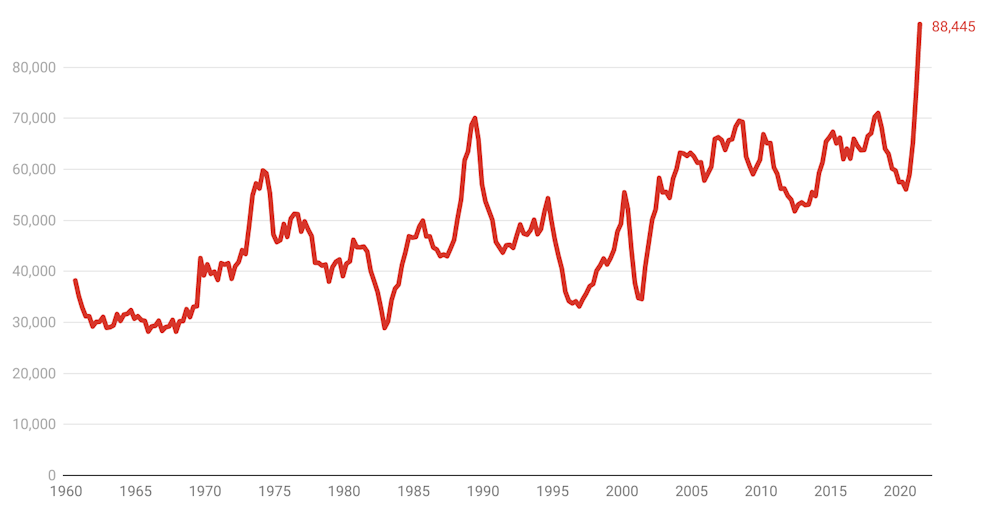
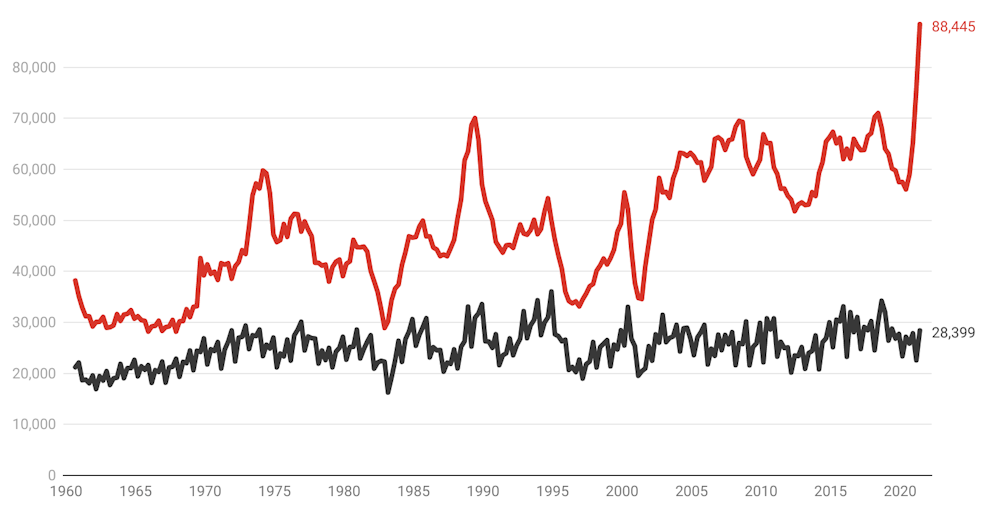
Over the space of a year the number of houses (not apartments) under construction has jumped from 56,060 in the June quarter 2020 to 88,445 in the June quarter 2021 — the biggest peak of all time.


Houses under construction


Australian Bureau of Statistics

It would be entirely reasonable to expect the record number under construction to be converted to record completions. That’s the point of construction.

But bizarrely, the same set of Bureau of Statistics figures show no such thing. Even after an enormous jump in construction, and all through previous jumps in construction, the number of houses completed each quarter has changed little.

In this year’s June quarter, it was 28,399 — little more than the quarterly total at any time over the past five decades.

It is as if starting building is one thing, and finishing it is another.


Houses under construction, houses completed, quarterly


Australian Bureau of Statistics

The 88,445 or more houses presently under construction will eventually be built, but it is going to take seriously longer than normal.

Our research shows every time the number of houses under construction has peaked, completion times have blown out.


Read more:
As home prices soar beyond reach, we have a government inquiry almost designed not to tell us why


During the smaller 2001-2008 construction boom, the average completion time blew out from 5.2 months to seven.

Our projections suggest this time it will sharply blow out from 6.5 months to more than nine by the end of this year.

The impact will be felt by hundreds of thousands of Australian house buyers, builders, subcontractors and lenders.

Why can’t we build faster?

Houses are not built on production lines. Unlike other universal purchases such as cars, each house is built individually.

And the method hasn’t changed much in 100 years.

The people we call builders are better described as project managers who rarely employ in-house tradespeople or have long-term contracts with subcontractors.

The way they manage the process has not changed much since the introduction of construction checklists by AV Jennings in the 1970s.


Read more:
Home prices are climbing alright, but not for the reason you might think


The method is hard to scale up, and unresponsive to demands for speed.

It is ripe for innovations such as offsite construction and prefabrication, but it isn’t clear the authorities are especially aware of the problem.

Now would be a good time. Builders could absorb the costs of changing processes while demand was high, taking advantage of the changes when demand recedes.

But I’m not hopeful. Too much talk is about housing supply in the abstract rather than how to achieve it concrete.

The Conversation

Ali Zolghadr receives RMIT Research Stipend Scholarship for his PhD.

Ehsan Gharaie does not work for, consult, own shares in or receive funding from any company or organization that would benefit from this article, and has disclosed no relevant affiliations beyond their academic appointment.

ref. Building more houses quickly is harder than it looks. Australia hasn’t done it in decades – https://theconversation.com/building-more-houses-quickly-is-harder-than-it-looks-australia-hasnt-done-it-in-decades-170223

The Green Knight review: a wonderfully unsettling cinematic reimagining of the medieval story of Sir Gawain

Source: The Conversation (Au and NZ) – By Sabina Rahman, Sessional Academic in English Literature, Macquarie University

A24/Eric Zachanowich

Review: The Green Knight, directed by David Lowery.

Nothing about The Green Knight, the new film from director David Lowery, is comfortable.

From its opening scene, where Gawain (Dev Patel) sits in an empty throne room, a crown menacingly hovering above his head as flames suddenly engulf him, this film is wonderfully unsettling.

The Green Knight is a reimagining of the Middle English poem Sir Gawain and the Green Knight, which tells the story of Gawain, a knight of King Arthur’s court. Gawain accepts a challenge from a supernatural Green Knight (Ralph Ineson) to use his axe to strike this knight, and take a reciprocating blow from him the following Christmas.

Although Gawain beheads his opponent, the Green Knight does not die. When Gawain departs the following year to fulfil his promise, he demonstrates chivalry and fidelity to duty. But despite this show of chivalry, his honour is tested by the lord and the lady of the Hautdesert, a castle in which he takes refuge.

This narrative poem is a part of the larger collection of stories about King Arthur: a pseudo-history caught up in ideas about nationhood and identity. Throughout this tradition, Arthur is posited as a “once and future king”; Camelot as a utopian government.

Today, representations of the Middle Ages have been embraced by right-wing nationalists. But Lowery’s adaptation disrupts these narratives of a utopian past and future.

Lowery presents a series of contradictions and conflicts between duty, heroism, honour, fear and temptation. He offers viewers a medieval world in which contemporary anxieties about nationality, national identity and personal politics can be explored.


Read more:
Why the far-right and white supremacists have embraced the Middle Ages and their symbols


The hero’s journey

Despite being named for the monstrous Green Knight, this film follows the story of Gawain, the nephew of King Arthur (Sean Harris).

Awed by the King’s invitation to sit with him, Gawain quietly contends the other knights present “have spilled enough blood” to be more deserving of the honour.


Read more:
Guide to the classics: the Arthurian legend


But despite his inexperience, Gawain is the first to meet the challenge of the eponymous knight: to strike him and receive the same blow in return the following year. Although Gawain severs the knight’s head with one clean blow, he retrieves his gruesome head, his raspy laughter echoing off the walls.

Unlike the knightly figure in the medieval poem, Patel’s Gawain is not yet a knight. The bulk of this film forms his hero’s journey: his chance to spill blood for his King and be worthy of a seat at the table.

Dev Patel holds a sword.
The Green Knight is a hero’s journey: Gawain’s quest to prove he is worthy of becoming a knight.
A24/Eric Zachanowich

Gawain was a celebrity as he left Camelot. The hero of street theatre productions and the subject of portraits; a popular culture icon recognised by all. But his bravery had been untested.

Indeed, the chivalric bravery expected of a legendary knight is remarkably absent during this journey. This Gawain displays weakness, uncertainty and fear.

He cites “honour” as the motivation for his journey. Yet the Gawain of this film asks the restless spirit of a raped and murdered woman for payment to retrieve her head so that she may be at peace. He succumbs to the sexual advances of the lady of the house in which he is given refuge. He would use an enchanted girdle to trick his way out of his knightly duty.

Honour does not seem to be one of his virtues.


Read more:
There’s no such thing as a ‘faithful retelling’ of the Arthurian legend


De-romanticising the medieval

This disparity between the celebrated hero of medieval legend and the flawed Gawain of this film invites us to consider how the medieval is reconstructed in popular culture.

The Green Knight begins in a conquered land. When Gawain rides to the Green Chapel, the signs of war are all around him, from the stark landscape pocked with ruin to an entire battlefield of recently dead men.

These are the Saxons the King is referring to when he gives his Christmas speech:

Out my window this morn, I looked and I saw a land shaped by your hands. You have lain those same hands on your Saxon brethren, who now in your shadow bow their heads like babes. Peace. Peace you brought to your kingdom.

The peace was won through a bloody conquest, but our contemporary imagining of a medieval past often romanticises these conquests. This sort of romanticisation encourages the use of the medieval in right-wing politics, and can legitimise racism.

This film interrupts those narratives not just with the colour-conscious casting of Gawain and his mother Morgana (Sarita Choudhury), but also with its demand that we look beyond the common plot points of medievalist stories into what lies beneath: the conquests, the displacement of people, the grotesque Middle Ages.

Dev Patel is getting dressed by three women.
The Green Knight asks us to consider what lies beneath narratives of the Middle Ages.
A24/Eric Zachanowich

Patel’s performance as Gawain is nothing short of captivating. Doubt, vulnerability and trepidation pour from him throughout the quest.

Lowery’s film is beautifully cast and beautifully shot, but always disquieting and inquisitive. It leaves the viewer with more questions than answers.

From the lilting, hissing, ominous voice over of the opening scene, The Green Knight will enthral you – right through to the ambiguous ending where you will release a breath you did not even know you were holding.

The Green Knight is on Amazon Prime from 28 October.

The Conversation

Sabina Rahman does not work for, consult, own shares in or receive funding from any company or organization that would benefit from this article, and has disclosed no relevant affiliations beyond their academic appointment.

ref. The Green Knight review: a wonderfully unsettling cinematic reimagining of the medieval story of Sir Gawain – https://theconversation.com/the-green-knight-review-a-wonderfully-unsettling-cinematic-reimagining-of-the-medieval-story-of-sir-gawain-167364

As Asia ‘lives with covid-19’, media may need to be less adversarial

ANALYSIS: By Kalinga Seneviratne in Sydney

Indonesia’s popular tourism islands of Bali opened for tourism last week, while Thailand announced that from November 1 vaccinated travellers from 19 countries will be allowed to visit the kingdom including its tourism island of Phuket.

Both those countries’ tourism industry, which is a major revenue earner, has been devastated by more than 18 months of inactivity that have impacted on the livelihood of hundreds of thousands of people.

India and Vietnam also announced plans to open the country to vaccinated foreign tourists in November, and Australia will be opening its borders for foreign travel from mid-November for the first time since March 2020.

Countries in the Asia-Pacific region — except for China — are now beginning to grapple with balancing the damage to their economies from covid-19 pandemic by beginning to treat the virus as another flu.

The media may have to play a less adversarial role if this gamble is going to succeed.

October 11 was “Freedom Day” for Australia’s most populous city Sydney when it came out of almost four months of a tough lockdown.

Ironically this is happening while the daily covid-19 infection rates are higher than the figure that triggered the lockdowns in June.

‘It’s not going away’
Yet, New South Wales Premier Dominic Perrottet told Sky News on October 11: “we’ve got to live alongside the virus, it’s not going away, the best thing that we can do is protect our people (by better health services)”.

Singapore’s Prime Minister Lee Hsien Loong, addressing the nation on October 9, said: “Singapore cannot stay locked down and closed off indefinitely. It would not work, and it would be very costly”.

He added, “each time we tighten up, businesses are further disrupted, workers lose jobs, children are deprived of a proper childhood and school life”.

Singapore is coming out of lockdown when it is facing the highest rates of daily infections since the covid-19 outbreak.

Both Singapore and Australia adopted a “zero-covid” policy when the first wave of the pandemic hit, quickly closing the borders, and going into lockdown.

Both were exceptionally successful in controlling the virus and lifting the lockdowns late last year with almost zero covid-19 cases. But, when the more contagious delta virus hit both countries, fear came back forcing them back into lockdowns.

However, PM Lee told Singaporeans that lockdowns had “caused psychological and emotional strain, and mental fatigue for Singaporeans and for everyone else. Therefore, we concluded a few months ago that a “Zero covid” strategy was no longer feasible”.

‘Living with covid-19’
Thus, Singapore has changed its policy to “Living with covid-19”.

In a Facebook posting on October 10, Australian Prime Minister Scott Morrison said: “The phenomenal response from Australians to go and get vaccinated as we’ve seen those vaccination rates rise right across the country, means it’s now time that Australians are able to reclaim their lives. We’re beating covid, and we’re taking our lives back.”

On October 8, Australia’s Federal Health Minister Greg Hunt said that though infection rates might still be a bit high, yet less than 1 percent of those infected were in intensive care units (ICUs).

Why didn’t political leaders take this attitude right from the beginning and continue with it? After all the fatality rate of covid-19 has not been that much higher than the seasonal flu in most countries.

True, it was perhaps more contagious according to medical opinion, but fatality rates were not that large in percentage figures.

According to the Worldometer of health statistics, there have been 237.5 million covid-19 infections up to October this year and 214.6 million have recovered fully (90.4 percent) while 4.8 million have died (just over 2 percent).

According to the US Center for Disease Control and Prevention (CDC) estimates, there have been between 39-56 million flu cases, about 700,000 flu hospitalisations recorded in the US during the 2019-2020 flu season up to April 2020.

They also estimate between 24,000 to 62,000 flu deaths during the season. But did the media give these figures on a daily or even a weekly basis?

New global influenza strategy
In March 2019, WHO launched a new global influenza strategy pointing out that each year there is an estimated 1 billion flu cases of which 3-5 million are severe cases, resulting in 290,000 to 650,000 influenza-related respiratory deaths.

This has been happening for many years, but, yet the global media did not create the panic scenario that accompanied covid-19.

Unfortunately, the media’s adversarial reporting culture has helped to create a fear psychosis from the very beginning of the outbreak in early 2020, which may have contributed to millions of deaths by creating anxiety among those diagnosed with covid-19.

During the peak of the delta pandemic in India, many patients died from heart attacks triggered by anxiety. Would they have died if covid-19 were treated as another flu?

In the US out of the 44 million infected with covid-19 only 1.6 percent died. In Brazil from 21.5 million infected, 2.8 percent of them died, while in India out of 34 million infected only 1.3 percent died.

But what did we see in media reports? Piles of dead bodies being burnt in India, from Brazil bodies buried in mass graves by health workers wrapped in safety gear and in the US, people being rushed into ICUs.

They are just a small fraction of those infected.

Bleak picture of sensationalism
I was the co-editor of a book just released by a British publisher that looked at how the media across the world reported the covid-19 outbreak during 2020. It paints a bleak picture of sensationalism and adversarial reporting blended with racism and politicisation.

It all started with the outbreak in Wuhan in January 2020 when the global media transmitted unverified video clips of people dropping dead in the streets and dead bodies lying in pavements. Along with the focus on “unhygienic” wet markets in China this helped to project an image of China as a threat to the world.

It contributed to the fear psychosis that was built up by the media tinged with racism and politicisation.

If we are to live with covid and other flu viruses, greater investments need to be made in public health.

In Australia, health experts are talking about boosting hospital bed and ICU capacities to deal with the new policy of living with covid, and they have also warned of a shortage of health professionals, especially to staff ICUs.

What about if the media focus on these as national security priorities? Rather than giving daily death rates and sensational stories of people dying from covid — do we give daily death rates from heart attacks or suicide?

We should start discussing more about how to create sustainable safe communities as we recover from the pandemic, and that includes better investments in public health.

We need a journalism culture that is less adversarial and more tuned into promoting cooperation and community harmony.

Kalinga Seneviratne is co-editor of COVID-19, Racism and Politicization: Media in the Midst of a Pandemic published in August 2021 by Cambridge Scholars Publishers. IDN is the flagship agency of the Non-profit International Press Syndicate. This article is republished in partnership with IDN.

Print Friendly, PDF & Email

Article by AsiaPacificReport.nz

Politics with Michelle Grattan: Keith Pitt on the climate plan and coal’s future

Source: The Conversation (Au and NZ) – By Michelle Grattan, Professorial Fellow, University of Canberra

Resources minister Keith Pitt might have been a “no” when the Nationals debated the government’s climate plan but he was a winner in the deal struck between Scott Morrison and the Coalition’s minor partner. He has been restored to cabinet, just months after Barnaby Joyce relegated him to the outer ministry.

The coal industry faces a bleak future as the world tackles global warming. But Pitt, a forthright voice for coal, is anxious to provide reassurance that the climate plan will not do anything to accelerate its decline.

“We’re not closing the coal sector, we’re not closing the gas sector, we’re not closing offshore oil. We will continue to work on markets that are available.”

He says right now thermal coal is in a “very strong position [..] we’ve got more people involved and employed in thermal coal mining than we’ve had since 2012.

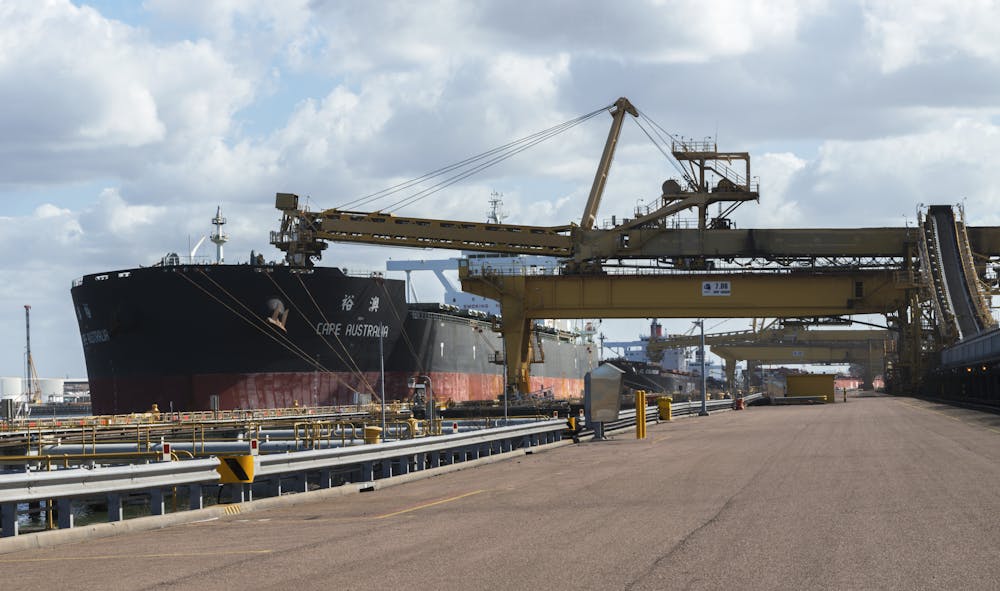
“In the midst of the pandemic, thermal coal was under $50 US spot price – it’s currently over $240 [US].”

“We’ve looked at the International Energy Agency forecast […] they’re saying there’ll be continued increases in demand for thermal coal out to about 2030, and I expect it to drop off peak by about 2050 by around 20 per cent. So there’s still coal-fired power stations being built. There’s still demand. And keep in mind, we have one of the highest quality products in the world. That’s why there’s demand for Australian coal.”

Pitt is coy when pressed on what the Nationals got out of their negotiations with Scott Morrison – apart from his elevation and a commitment to having the Productivity Commission review progress of the plan every five years. “I’m sure we’ll have more to say in coming weeks […] there’s always process.”

On how Nationals members are feeling after the rough ride over the climate plan Pitt says, “this is a democracy at work and in Canberra nearly every decision is difficult […] we’re all knockabout sort of people”.

The Conversation

Michelle Grattan does not work for, consult, own shares in or receive funding from any company or organisation that would benefit from this article, and has disclosed no relevant affiliations beyond their academic appointment.

ref. Politics with Michelle Grattan: Keith Pitt on the climate plan and coal’s future – https://theconversation.com/politics-with-michelle-grattan-keith-pitt-on-the-climate-plan-and-coals-future-170720

Does the government’s new national plan to combat child sexual abuse go far enough?

Source: The Conversation (Au and NZ) – By Tim Moore, Associate Professor and Deputy Director, Australian Centre for Child Protection, University of South Australia

Shutterstock

In 2017, the Royal Commission into Institutional Responses to Child Sexual Abuse handed down its final report.

This came after years of social action and advocacy by survivors and their supporters, during which they were often ignored and dismissed. Thousands of survivors shared their stories and testimony with the royal commission, as well.

Throughout the life of the royal commission, Australians were confronted by horrific stories of child sexual abuse from victims and survivors, as well as case studies highlighting the widespread prevalence of abuse in institutions such as churches, out-of-home care, schools and sporting organisations.

There were also many stories documenting the failure of organisations to identify, prevent and respond to children’s suffering as a result of this abuse.

As former Prime Minister Julia Gillard, who established the royal commission, observed,

the institutional failures and cover-ups that compounded and prolonged the suffering of victims are a stain on our country’s history.

Today, four years after the royal commission handed down its report, Prime Minister Scott Morrison unveiled a new national strategy to prevent and respond to child sexual abuse. He said:

This is a watershed day for Australia. Today we deliver the first-ever, long-term, truly national plan to protect our children from the scourge of sexual abuse.

So, what’s in the national plan, and does it go far enough?

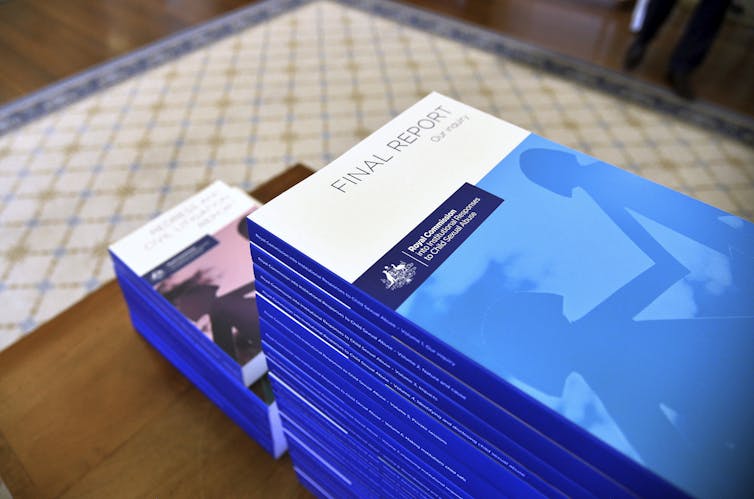
The final report of the royal commission at Government House in 2017.
Jeremy Piper/AP

What’s in the plan?

A comprehensive national strategy of this nature was one of the 409 recommendations handed down by the royal commission. The commission said it was needed to change the cultures, conditions and practices that have enabled child sexual abuse to continue to occur in Australia.

While outside the terms of reference for the royal commission, it was widely acknowledged many children are sexually abused in family and community contexts.

The national strategy, developed in partnership with state and territory governments, aims to tackle not only institutional child sexual abuse, but all other types of sexual abuse experienced by children and young people in their families and communities.

It identifies five key elements, including:

  • raising awareness, providing sexual abuse prevention education and building child-safe cultures

  • supporting and empowering victims and survivors

  • enhancing responses to children who display sexual behaviours that are harmful to themselves or others

  • offender prevention and intervention

  • improving the evidence base on what works in child sexual abuse prevention and supporting survivor recovery and healing.

Alongside the release of the strategy, the Australian government has pledged A$307.5 million over four years to implement the first national plan.

Positive investments

The plan responds to many of the recommendations from the royal commission. Among the priorities was implementing a national awareness campaign on the impacts of child sexual abuse, including the development of resources for teachers, children and young people, parents and families.

Research in Australia and abroad has shown the stigma attached to child sexual abuse makes it difficult for victims and survivors to raise concerns and seek support.

And without ample information, survivors and their families often don’t know where to go when they experience abuse.


Read more:
Child sex abuse survivors are five times more likely to be the victims of sexual assault later in life


The government’s strategy also highlights its ongoing commitment to the National Principles for Child Safe Organisations, which provide guidance on what organisations need to do to reduce the risks of child sexual abuse and better respond when it occurs. The principles are based on what experts believe will make a difference, but have not yet been tested.

Ongoing research and evaluation is required to ensure that the implementation of the principles are, in fact, achieving their intended outcomes and that children and young people are safer as a result.

Responding to children with harmful sexual behaviours

The strategy also focuses on developing the capacity of the community and clinical workforce to better understand and respond to harmful sexual behaviours among children and young people.

In institutions such as schools and residential care – and within the broader community – young people are much more concerned about being harassed, assaulted or victimised by their peers than adults. There is a significant gap in the availability of trauma-informed services for children demonstrating these types of behaviours.

The national plan also invests A$10.9 million in the co-design of culturally safe models to foster healing among child sexual abuse survivors in Aboriginal communities. And it allocates A$3.8 million towards working with Aboriginal experts to develop resources for front-line health workers.


Read more:
‘My mob is telling their story and it makes me feel good’: here’s what Aboriginal survivors of child sexual abuse told us they need


For some time, organisations such as the Healing Foundation have stressed the need to understand how child sexual abuse causes trauma for individuals and communities. Recovery and growth can only be achieved through culturally safe practices, they maintain.

The national strategy is also underpinned by a commitment to build a larger evidence base for what works in child sexual abuse prevention and ensuring initiatives are meeting their objectives – namely the reduction of child sexual abuse in Australia.

More targeted supports for at-risk children

Although the strategy aims to improve the safety of all young people, there is limited recognition of the fact that some children are more vulnerable than others.

Those who are more at-risk include:

  • those who have already experienced abuse or maltreatment

  • children with disabilities and mental health issues

  • LGBTQI children and young people

  • those who live in out-of-home care

  • those who rely on services and supports.

As the strategy is implemented, it is crucial to give deep consideration to how these initiatives can target those who are most vulnerable.


Read more:
What do children and young people have to say about safety in institutions?


In the royal commission’s research and hearings, survivors, children and young people also stressed that child sexual abuse occurred because young people were not valued and their needs and views were not seen as a priority.

They reported feeling disempowered and silenced and had little confidence in adults and organisations when they were not seen as partners in their own protection.

Although it puts a central focus on survivors, the plan is lacking detail about how the it will be shaped, overseen or evaluated by its key beneficiaries (young people). As survivors’ advocate Grace Tame commented this week, efforts to reduce child sexual abuse may be compromised without meaningful dialogue with survivors.

Survivors may also be frustrated by the lack of investment to help them recover and heal from child sexual abuse. The strategy provides no additional funding for victim support services beyond information resources, websites and helplines.

As survivors reported to the royal commission, the lack of appropriate and survivor-centred services means many experience prolonged trauma from their ordeals, with significant emotional, social and economic costs.

The national strategy provides a framework for reducing child sexual abuse, empowering survivors and their families, and improving our responses to those who have been harmed.

To be effective, such initiatives must be driven in dialogue with survivors, children and their families. These programs must also be evaluated to ensure they achieve their lofty goals.


The authors would like to thanks Craig Hughes-Cashmore, chief executive and managing director of Survivors & Mates Support Network (SAMSN), for his contribution to this article.

The Conversation

Tim Moore is Deputy Director at the Australian Centre for Child Protection (UniSA) and has participated in consultations to inform the development of the National Strategy. He was lead researcher on the Children’s Safety Studies funded by the Royal Commission into Institutional Responses to Child Sexual Abuse.

Amanda Paton is part of the Australian Centre for Child Protection, which receives funding from state and territory governments to conduct research and provide services to sectors working with children and young people who have experienced sexual abuse or who are displaying harmful sexual behaviours.

Patrick O’Leary receives funding from Terre des Hommes Foundation Lausanne.

ref. Does the government’s new national plan to combat child sexual abuse go far enough? – https://theconversation.com/does-the-governments-new-national-plan-to-combat-child-sexual-abuse-go-far-enough-170707

A new proposed privacy code promises tough rules and $10 million penalties for tech giants

Source: The Conversation (Au and NZ) – By Katharine Kemp, Senior Lecturer, Faculty of Law & Justice, UNSW, UNSW

Shutterstock

This week the federal government announced proposed legislation to develop an online privacy code (or “OP Code”) setting tougher privacy standards for Facebook, Google, Amazon and many other online platforms.

These companies collect and use vast amounts of consumers’ personal data, much of it without their knowledge or real consent, and the code is intended to guard against privacy harms from these practices.

The higher standards would be backed by increased penalties for interference with privacy under the Privacy Act and greater enforcement powers for the federal privacy commissioner. Serious or repeated breaches of the code could carry penalties of up to A$10 million or 10% of turnover for companies.

However, relevant companies are likely to try to avoid obligations under the OP Code by drawing out the process for drafting and registering the code. They are also likely to try to exclude themselves from the code’s coverage, and argue about the definition of “personal information”.

The current definition of “personal information” under the Privacy Act does not clearly include technical data such as IP addresses and device identifiers. Updating this will be important to ensure the OP Code is effective.

Which organisations would be covered and why?

The code is intended to address some clear online privacy dangers, while we await broader changes from the current broader review of the Privacy Act that would apply across all sectors.

The OP Code would target online platforms that “collect a high volume of personal information or trade in personal information”, including:

  • social media networks such as Facebook; dating apps like Bumble; online blogging or forum sites like Reddit; gaming platforms; online messaging and videoconferencing services such as WhatsApp and Zoom

  • data brokers that trade in personal information, including Quantium, Acxiom, Experian and Nielsen Corporation

  • other large online platforms that collect personal information and have more than 2.5 million annual users in Australia, such as Amazon, Google and Apple.

The OP Code would impose higher standards for these companies than otherwise apply under the Privacy Act.


Read more:
It’s time for third-party data brokers to emerge from the shadows


Higher standards for consent – maybe

The OP Code would set out details about how these organisations must meet obligations under the Privacy Act. This would include higher standards for what constitutes users’ “consent” for how their data are used.

The government’s explanatory paper says the OP Code would require consent to be “voluntary, informed, unambiguous, specific and current”. (Unfortunately, the draft legislation itself doesn’t actually say that, and will require some amendment to achieve this.)

This description draws on the definition of consent in the European Union’s General Data Protection Regulation.

In the EU, for example, “unambiguous” consent means a person must take clear, affirmative action – for instance by ticking a box or clicking a button – to consent to a use of their information.

Consent must also be “specific”, so companies cannot, for example, require consumers to consent to unrelated uses (such as market research) when their data is only needed to process a specific purchase.

Requests to stop using and disclosing personal information

The ACCC recommended we should have a right to erase our personal data as a means of reducing the power imbalance between consumers and large platforms. In the EU, the “right to be forgotten” by search engines and the like is part of this erasure right. The government has not adopted this recommendation.

However, the OP Code would include an obligation for organisations to comply with a consumer’s reasonable request to stop using and disclosing their personal data. Companies would be allowed to charge a “non-excessive” fee for fulfilling these requests. This is a very weak version of the EU right to be forgotten.

For example, Amazon currently states in its privacy policy that it uses customers’ personal data in its advertising business and discloses the data to its vast Amazon.com corporate group. The proposed OP Code would mean Amazon would have to stop this, at a customer’s request, unless it had reasonable grounds for refusing.

Ideally, the code should also allow consumers to ask a company to stop collecting their personal information from third parties, as they currently do, to build profiles on us.


Read more:
How one simple rule change could curb online retailers’ snooping on you


Increased protections for children and vulnerable groups

The draft bill also includes a vague provision for the OP Code to add protections for kids and other vulnerable people who are not capable of making their own privacy decisions.

A more controversial proposal would require new consents and verification for kids using social media services such as Facebook and WhatsApp. These services would be required to:

  • take reasonable steps to verify the age of social media users

  • obtain parental consent before collecting, using or disclosing personal information of a child under 16

  • ensure its data practices are “fair and reasonable in the circumstances”, with the best interests of the child as the primary consideration.

What is ‘personal information’?

A key tactic companies will likely use to avoid the new rules is to claim that the information they use is not truly “personal”, since the OP Code and the Privacy Act only apply to “personal information”, as defined in the Act.

The companies may claim the data they collect is only connected to our individual device or to an online identifier they’ve allocated to us, rather than our legal name. However, the effect is the same. The data is used to build a more detailed profile on an individual and to have effects on that individual.

Australia needs to update the definition of “personal information” to clarify it includes data such as IP addresses, device identifiers, location data, and any other online identifiers that may be used to identify an individual or to interact with them on an individual basis. Data should only be de-identified if no individual is identifiable from that data.

Increased penalties and upgraded enforcement

The government has pledged to give tougher powers to the privacy commissioner, and to hit companies with tougher penalties for breaching their obligations once the code comes into effect.

The maximum civil penalty for a serious and/or repeated interference with privacy will be increased up to the equivalent penalties in the Australian Consumer Law.

For individuals, the maximum penalty will increase to more than A$500,000. For corporations, the maximum will be the greater of A$10 million, or three times the value of the benefit received from the breach, or (if this value cannot be determined) 10% of the company’s annual turnover.

The privacy commissioner could also issue infringement notices for failing to provide relevant information to an investigation. The maximum penalty will be A$2,644 for individuals or A$13,320 for companies.

Such civil penalty provisions will make it unnecessary for the Commissioner to resort to prosecution of a criminal offence, or to civil litigation, in these cases.

Don’t hold your breath

Once legislation is passed, it will take around 12 months for the code to be developed and registered.

The tech giants will have plenty of opportunity to create delay in this process. Companies are likely to challenge the content of the code, and whether they should even be covered by it at all.

The Conversation

Katharine Kemp receives funding from The Allens Hub for Technology, Law and Innovation. She is a Member of the Advisory Board of the Future of Finance Initiative in India, the Centre for Law, Markets & Regulation and the Australian Privacy Foundation.

Graham Greenleaf is a board member of the NGO, the Australian Privacy Foundation.

ref. A new proposed privacy code promises tough rules and $10 million penalties for tech giants – https://theconversation.com/a-new-proposed-privacy-code-promises-tough-rules-and-10-million-penalties-for-tech-giants-170711

Kaitiaki block ‘particularly dangerous’ anti-vax protesters at Auckland border

By Sam Olley, RNZ News reporter

Ngāti Whātua kaitiaki remain in bolstered numbers at the border between Tāmaki Makaurau and Te Tai Tokerau to stop protesters getting through.

Together with Navy and police staff at Te Hana, Te Rūnanga o Ngāti Whātua has turned around about 50 people from anti-vax and anti-lockdown groups throughout this morning.

Chief operating officer Antony Thompson (Ngāti Whātua) told RNZ protesters had come from both sides of the border to meet up, but none got through.

“About 20 to 25 who got started protesting … after probably about 10 minutes they were moved on.”

His team respected the right to protest but it was the wrong place and wrong time, with a growing covid-19 cluster in the Far North, he said.

“The majority of them [protesters] have dispersed, or gone home. And there’s maybe a handful of, I guess ‘hold outs’, that are hoping that more cars turn up and they can go through together.”

The rūnanga would much rather be vaccinating whānau than having to protect them from rule-breakers, Thompson said.

“Recently our whaea Dame Naida Glavish quoted ‘this hoo-ha, this hōhā’ and it really is.”

‘Incredibly disappointed’
Police said they were “incredibly disappointed” by those rallying.

In a statement this afternoon, police said more officers had been deployed to monitor “hīkoi” activity.

“Police have additional staff deployed, including our Iwi Liaison Officers, to both monitor the hīkoi travelling north as well as additional staff in Waitangi,” the statement said.

“Our focus is to ensure the current restrictions set out in the Health Order are adhered to by those involved as well as working to support our Iwi partners in Northland.

“We are working closely with our partners, including leadership of Te Tii Marae, who have indicated that the protesters are not welcome this year due to the risk posed by the delta strain of covid-19.”

Another group of protesters attempted to make it through Auckland’s southern border late on Tuesday evening, and some remained there today, blocking State Highway 1.

The chair of Te Rūnanga-Ā-Iwi-O-Ngāpuhi Wane Wharerau (Ngāpuhi, Te Māhurehure, Uri Kaiwhare, Ngāitawake ki te Waoku / Ngāitawake ki te Tūawhenua / Ngāitawake ki te Tairāwhiti, Ngāti Hine-Mutu) also put out a statement this morning.

The protesters were “particularly dangerous” attempting to get to Waitangi, he said.

Recognising ‘real Māori freedom fighters’
“It is disappointing that organisers are using He Whakaputanga, or the Declaration of Independence, as a means to bring attention to their cause.

“Ngāpuhi recognise and honour the real Māori freedom fighters whose lifelong activism and personal sacrifice meant something and moved our people forward; freedom fighters such as Eva Rickard, Dame Whina Cooper, Titewhai Harawira, Dr Matire Harwood, Rima Edwards, Matiu Rata, Sir James Henare, and Dame Cindy Kiro just to name a few.

“Almost every Ngāpuhi urupā has evidence of the thousands of whānau, some in unmarked graves,” he said, referring to those who died in the 1918 flu pandemic.

“Now, little more than 100 years after that pandemic, Te Tai Tokerau is at the point of a similar threat, but this time we have a vaccine at our disposal.

“We have not fought this virus for 20 months and tolerated the harsh restrictions around tangihanga, gathering at marae and visiting whānau, to abandon this plan now.”

This article is republished under a community partnership agreement with RNZ.

Print Friendly, PDF & Email

Article by AsiaPacificReport.nz

France deploys big force to secure New Caledonia referendum

RNZ Pacific

France has detailed an unprecedented security set-up for New Caledonia’s third and final independence referendum on December 12.

The French authorities made the announcement as the pro-independence FLNKS called on its supporters to boycott the vote after France refused to delay it until next year.

If the call is heeded, the anti-independence side is all but certain to again have a majority as it did in the 2018 and 2020 referendums.

To ensure a safe voting process in December, French High Commissioner Patrice Faure said 1400 armed police will be flown in from France, including 15 mobile units.

High Commissioner in New Caledonia, Patrice Faure
French High Commissioner in New Caledonia Patrice Faure … 1400 armed police will be flown in from France. Image: The Pacific Journal

Just over a week ago, a contingent of 250 armed police arrived in Noumea as first reinforcements for the referendum.

In coming weeks, an additional 100 members of the national police and 250 members of the armed forces are expected.

Elite tactical response unit
The police’s elite tactical response unit will also be reinforced to deal with any situation that may arise.

One hundred and sixty vehicles, 30 armoured carriers, two helicopters and a transport aircraft are due in the next weeks.

Sixty investigators will be flown in to stay for as long as needed.

There will also be a cyber unit dedicated to respond to hate speech and calls for violence on social media.

General Christophe Marietti, who oversees the security operation, said the deployment — which is twice the size of the one at the 2018 referendum — is meant to be “reassuring, dissuasive and reactive”.

After the 2018 plebiscite, rioting south of Noumea closed the main road, which police managed to reopen after two days.

Both the French High Commissioner and Overseas Minister Sebastien Lecornu have said the vote would go ahead as announced in June despite the calls to defer it because of the covid-19 pandemic and the devastating impact on the indigenous Kanak people.

Elections held on time
Lecornu said in democracies votes were held on time and only an out-of-control pandemic could make a date change possible.

More than 10,000 people caught covid-19 since the start of the latest community outbreak in early September and more than 260 people — mainly indigenous Kanaks — have died.

The FLNKS said its campaign was being hampered because covid-19 measures restrict meetings.

It also argues that the Kanak people are in mourning, and therefore the referendum should be postponed until September next year.

The wish to delay the vote is also being supported by the Melanesian Spearhead Group.

The anti-independence camp has meanwhile resumed its referendum campaign, dismissing the rivals’ concerns by pointing out that the issue at stake has been debated for the past three years.

It also said that it was the pro-independence politicians who in April wanted a third referendum when others were against holding another one.

Final referendum held early
Lecornu has said 18 months after the December 2020 referendum, another vote would be held on the next status of New Caledonia.

Paris outlined in a paper in July what the consequences would be of either a yes or a no vote.

A no vote would open the way for an arrangement of partial reintegration into France while a yes vote would, after a transition phase, usher in a sharp rupture.

An FLNKS politician, Pierre-Chanel Tutugoro, said that amid the current debate, two important historic aspects emanating from the 1983 roundtable in Nainville-les-Roches remained.

He said the French state had recognised the innate and active right to independence of the colonised Kanak people.

He also said the Kanak people accepted to include in any future decolonisation process all the various communities that had settled in New Caledonia as part of France’s colonisation.

This article is republished under a community partnership agreement with RNZ.

Print Friendly, PDF & Email

Article by AsiaPacificReport.nz

Port Moresby backs off ‘total’ lockdown in city, says Governor Parkop

By Grace Auka-Salmang in Port Moresby

National Capital District Governor Powes Parkop has announced that there will not be a total lockdown of Port Moresby.

He said the decision was made after much deliberation with key stakeholders in the city and the national government.

“Instead we will focus on maintaining and upgrading the three-pronged approach we are currently pursuing to respond to the third wave of the covid-19 pandemic,” Parkop said.

NCD Governor Powes Parkop
NCD Governor Powes Parkop … “we will focus on maintaining and upgrading the three-pronged approach we are currently pursuing to respond to the third wave of the covid-19 pandemic.” Image: EMTV News

NCD Metropolitan Superintendent Gideon Ikumu said it would also be a logistical nightmare for police to arrest people who breached the covid protocols because they did not have the facilities to lock up all those people.

He said city police would only encourage city residents to observe the new normal protocols of wearing facemasks, observing social distancing and other measures as part of their policing routines in the city.

Superintendent Ikumu said this as the City Hall announced on Monday that it would not enforce a complete lockdown as many people had expected, despite the rocketing number of deaths and covid-19 positive cases in the city since September.

“There is an absence of regulations to implement the specifics of the Pandemic Act 2020 and we cannot arrest someone for simply not wearing a mask as an example,” he said.

Defining legislation
A regulation is the subsidiary legislation that defines the essence of an Act.

It also provides guidelines that show the way the Act needs to be implemented.

Superintendent Ikumu reiterated Governor Parkop’s appeal to city residents that to stop unnecessary deaths and to get “us to overcome the crisis at hand, it needs everyone to step up and do their part”.

“For those who are still reluctant or afraid of the vaccine for one reason or another, the “Nupla Pasin protocols and testing must be your foremost priority on a daily basis,” he said.

“We will do our best to encourage compliance but it is up to each and every person in the city to comply.”

According to the John Hopkins University global covid dashboard, Papua New Guinea has 27,895 confirmed cases of the virus and 335 deaths, but these figures are widely believed to be an underestimate.

Grace Auka-Salmang is a PNG Post-Courier reporter.

Print Friendly, PDF & Email

Article by AsiaPacificReport.nz

Bainimarama’s Fiji faces investigative PR crisis on eve of climate COP26

COMMENT: By Grubsheet’s Graham Davis

A public relations disaster for Fiji just as Prime Minister Voreqe Bainimarama and Attorney-General Aiyaz Sayed-Khaiyum head to Glasgow for COP26 as one of Britain’s leading media outlets — The Independent — carries out a detailed investigation into events at the University of the South Pacific.

Fiji’s reputation in Britain and the academic community the world over has suffered a grievous blow.

What emerges is a sordid tale of cronyism, bullying, repression and a frontal assault on regional cooperation by the FijiFirst government that has undermined Pacific solidarity and adversely affected the education of ordinary Pacific Islanders at USP, including Fijian young people.

COP26 GLASGOW 2021

The length and scope of this article and its impeccable pedigree guarantee that it will become the dominant global narrative about events at USP and have a far reaching impact on Fiji’s reputation, including its current role as Chair of the Pacific Islands Forum.

And for what? For Aiyaz Sayed-Khaiyum’s ego.

A festering wound that will cripple the FijiFirst government all the way to the 2022 election, when its prized “youth vote” will get to make its own pronouncement at the ballot box on events at USP.

Be genuinely dismayed at the AG’s shortsightedness and Bainimarama’s stupidity for allowing his number 2 to embark on a battle he simply cannot win.

This is what The Independent describes as a “long read”:

“At first there is a woman’s voice coming from the back of the house in the dead of night. Then there is repeated ringing of the doorbell. Other voices, male ones, are coming through the front door now; the voices are authoritative and increasingly impatient. Instructions are barked, telling those inside to open up. Fists bang the door. Soon plainclothes police officers are inside and shortly afterwards 63-year-old Professor Pal Ahluwalia and his wife Sandy Price are forcibly escorted to the airport. The vice-chancellor of the most prestigious university in Fiji is being deported on the orders of the Fijian government.

“The University of the South Pacific (USP) is pretty. Its main campus building in Fiji has a clean, modern design and is fronted by rows of palm trees. But behind the attractive facade and beneath a clear blue South Pacific sky, all hell is breaking loose. An internecine conflict has broken out. On one side stands the vice-chancellor, Professor Pal Ahluwalia, who claims to have blown the whistle on mismanagement and malpractice at the university; opposing him are pro-chancellor Winston Thompson and the Fijian government, who say Ahluwalia is guilty of both breaking USP hiring protocols and of unspecified immigration violations.”

Read on at The Independent or if you want to dodge the paywall, read here.

Republished with permission.

Print Friendly, PDF & Email

Article by AsiaPacificReport.nz

Can artists revive dead city centres? Without long-term tenancies it’s window dressing

Source: The Conversation (Au and NZ) – By Kate Shaw, Honorary Senior Fellow, The University of Melbourne

After 18 months of lockdown, the City of Melbourne is understandably anxious to get people back to the CBD and inner areas. Commercial vacancy rates are high, international student numbers have plummeted and the streets are dead.

The council’s $A2.6 million plan to provide “creatives and entrepreneurs” with “flexible, short-term licence agreements” should, however, ring alarm bells.

You can’t just add instant culture to activate an area. These kinds of efforts are not just exploitative, there is no evidence that they work.

Temporary use arrangements in Australia keep artists on the edge of being thrown out at any time.

As the council CEO Justin Hanney notes, artists will have the space month-to-month and the properties can be “taken back by the landlords/owners at any point in time”.

Serious cultural producers will tell you one of the most important components of their ability to work is security of tenure.

Perhaps unwittingly, though, the shopfront program may hold promise. Economists predict the current economic slump will persist for at least a year, meaning temporary users will likely be looking at a more meaningful time frame.

In addition, Lord Mayor Sally Capp’s extension of the program to “performance, new retail pop-ups, entrepreneurial activities, even community radio stations” opens out the field.

The program is part of the joint state government and council A$100m recovery fund, in addition to the state’s $A15 million package to support the hard hit creative sector.

These are positive initiatives. In crisis there is opportunity. Now, let’s think about how best to use this opening.


Read more:
How COVID all but killed the Australian CBD


empty arcade in Melbourne's CBD
Melbourne’s streets emptied during the city’s lockdowns.
Shutterstock.

What do artists actually need?

Arts, music, performance and other cultural activities should be treated as neither saviours nor indicators of a city’s economic health. They exist in their own right, with many spin-off and flow-on effects for the city including associated anti-racist, anti-fascist, LGBTI+-welcoming, social, environmental and political activism.

The strength of a city’s cultural scene is not linked to its economic success. The exception is that the more successful the city becomes, the more the scene is at risk.

Some of the world’s best cultural scenes are in poorer cities: New Orleans, Chicago, Berlin. Some of the world’s best scenes that have since died were in cities that became rich: New York, London, Paris. In all of these cities, along with cities like Austin, Seattle, Brisbane and Melbourne, two key conditions existed for the seeds of those scenes to be sown. Plenty of space and cheap rent.

Cities known for their arts and cultural activity today make a point of supporting those scenes – such as in New Orleans with a stream of world famous festivals employing only local artists and paying them well – or still have land available for cultural use and cheap housing, such as in Chicago and Berlin.

But Berlin is changing rapidly. The city celebrated for its alternative scene is gentrifying, with vacancy rates shrinking and property prices and rents increasing (due more to the large tax incentives offered to companies to relocate to Germany’s capital than to any cultural activity). These trends place the scene under pressure.

Cultural entrepreneurs are responding by buying their venues, often with institutional assistance, before the land becomes too expensive. Housing activists are building their own co-ops, and artists are campaigning effectively for more social housing, rent caps and freezes and renationalisation of private housing companies.

Most of these initiatives are aided by considerable financial or government support, with cultural producers and entrepreneurs recognised and respected members of civil society.


Read more:
How to help artists and cultural industries recover from the COVID-19 disaster


What could Melbourne do?

Melbourne’s large cultural scene has been fighting gentrification for decades. Organisations such as Fair Go for Live Music, Save Live Australia’s Music and most recently, Save Our Scene have clearly shown the threats from economic growth to local culture. Until very recently, government support has been sorely lacking.

But in the current economic climate, with vacancy rates higher and property prices and rents lower than they have been for years in the inner-city and stricken CBD, a real opportunity exists to literally as well as metaphorically embed the scene in the city’s fabric.

Part of the $A100 million recovery fund should provide deposits and guarantees for artist and artist-collective purchases of inner-city property. That would take those places out of the market and secure a place for the arts for the long term.

The state government and council could broker secure, long-term leases for cultural producers, using influence and incentives to negotiate reasonable rentals that would give owners secure, long-term revenue streams.

They could help venues, performance spaces, galleries and cinemas to fully open up again. Permanent arts spaces could be secured in the Nicholas Building – a hive of cultural production right on the doorstep of the Town Hall.

The Nicholas Building is on the market, and artists fear they may lose it to development. Could it, instead, enter into public or collective ownership?

The pandemic-induced slump will pass and Australia’s cities will come to life again. They are stable and secure places to invest. Students will return, vacancies will decline and commercial and residential rents will increase, irrespective of the health of arts and culture.

Now is the time to act. If Melbourne’s state and city governments do not take the chance now to value what we are lucky to still have, we may lose it forever.

The Conversation

Kate Shaw has received funding from the Australian Research Council, the Victorian Department of Health and Human Services, and the ZEIT-Stiftung Ebelin und Gerd Bucerius Gastwissenschaftsprogramm für Stadtforschung an der HCU (Fellows Program
for Urban Research at HafenCity University Hamburg) .

ref. Can artists revive dead city centres? Without long-term tenancies it’s window dressing – https://theconversation.com/can-artists-revive-dead-city-centres-without-long-term-tenancies-its-window-dressing-169822

‘It was the best five years of my life!’ How sports programs are keeping disadvantaged teens at school

Source: The Conversation (Au and NZ) – By Eibhlish O’Hara, Research Associate, Edith Cowan University

Shutterstock

Participation in specialist sport programs keeps teenagers from low socioeconomic backgrounds at school and boosts their maths grades. This is what I found in my PhD study.

Being engaged in learning can set people up for success in the rest of their life. This is why experts see it as one of the main goals of early adolescence.

Students tend to be engaged with school in the primary years, but their engagement decreases in secondary school. So educators are trying to find ways to help students maintain that early engagement.

My PhD research explored the influence of specialist sporting programs on the educational outcomes of students attending schools in low socioeconomic areas of Perth. Specifically, I was interested in how participation in these programs affected the students’ academic performance and level of school engagement.

What are specialist sports programs?

Students who participate in specialist sporting programs specialise in one sport in place of a range of elective subjects in years 7-10. Enrolment is open to all students, including those who live outside a school’s catchment area, and selection is generally based on:

  • a high level (or potentially high level) of sporting ability and coachability

  • a positive attitude toward sport and school (in primary school)

  • a good record of behaviour and attendance.

The selection criteria are a way for the school to clearly communicate their expectations from the very beginning. They are about encouraging the continuation of students’ positive behaviours into secondary school, rather than trying to solve the problem of disengagement down the track.


Read more:
Aussie kids are some of the least active in the world. We developed a cheap school program that gets results


Specialist sport programs are available in a variety of forms across Australia (including South Australia, Western Australia and Queensland). Some take an elite pathway approach, while others focus on participation. They are increasingly being developed in both public and private schools.

Teenage girls playing netball
Specialist sporting programs come in various forms.
Shutterstock

On average, schools allocate around four hours of class time per week to specialist sports programs. In years 7-10 this time is split evenly between practical and theoretical work. In years 11 and 12 there is roughly a 70-30% practical-theoretical split.

Practical sessions focus on developing skills and students’ fitness levels. Theoretical sessions cover topics such as biomechanics and physiology, rules and tactics, and nutrition and sport psychology.

What my study showed

Broad claims are made regarding the positive influence of the programs. For example, Western Australia’s education department states specialist sport programs can:

develop character, teach technical skills and self-discipline, and nurture a love of sport […] and […] enable children to compete at the highest levels and develop their skills as athletes both on the field and in the classroom.

But there has previously been no research on these programs in Western Australian schools to support this assertion.

Only two studies have investigated the influence of specialist sports programs on students’ academic achievement. Both were conducted in the United Kingdom and examined final year students’ academic performance in the GCSE (General Certificate of Secondary Education). Students attending specialist program schools had better scores than those attending non-specialist schools. The improvement in scores over time was greater at schools with a high percentage of students from low socioeconomic backgrounds.


Read more:
Move it, move it: how physical activity at school helps the mind (as well as the body)


Mine is the first study to examine the link between early adolescents’ academic achievement and engagement with school, and participation in specialist sports programs in Australia.

My study involved seven secondary schools and students in years 7-10, in low socioeconomic areas of Perth.

A total of 68 specialist sports students gave access to their school grades for each subject over the period of a year and 73 students completed a survey measuring their level of engagement with school.

I also interviewed 11 students and three parents, as well as five teachers and three graduates of the programs.

To analyse programs’ effects on student grades, I assigned each grade a number (A = 5, B = 4, C = 3) – essentially a better grade was assigned a higher number). I then compared the mean grade for each subject, each year. At the baseline measurement, the mean grade for maths was 3.08 (a C grade). At the follow-up a year later it was 3.30. Although it was still a C grade, statistical analysis deemed this a significant improvement.

Students in maths class. Teacher showing them something.
There was some improvement in the maths scores of students who were part of the programs.
Shutterstock

Mean grades in all other subjects – English, science, society and environment, and health and physical education – remained stable. Students’ level of engagement with school also remained stable over the period of a year.

What students said

Many students said the program was the reason they attended school each day, and the reason they applied effort to their education.

One male student said:

I didn’t want to come to [school] unless I got into the [program].

A parent said:

There are a lot of kids that the only reason they’re still at school is because of the program – it gives them a reason to go [to school].

Both male and female students felt participation in a specialist sports program positively influenced their engagement with school.

A female student said:

It’s fun […] it’s energetic and you just have a great time doing it.

And a male graduate told me:

It was the best five years of my life!

Only male students discussed specific aspects relating to engagement, such as attendance, behaviour and academic achievement. One said:

It made me think, it’s going to affect your appearance in the program […] it’s made me think harder in maths and like […] English and stuff like that so […] I moved up from a C to a B in English from thinking about the program, and if I didn’t think about the program, I would still have been on a C kind of thing.

This is significant as previous research has revealed gender differences in school engagement levels with girls generally being more engaged than boys.

There are limitations

There were two main limitations to this study: the lack of a comparison group and the possibility of self-selection bias. Despite my best efforts to recruit both specialist and non-specialist students, not enough non-program students provided informed consent to conduct a valid statistical comparison.

All schools with a specialist sports program located in low socioeconomic areas of WA were invited to participate, but only seven agreed. So it is possible only schools in which the specialist sports teacher was proactive and proud of the program’s accomplishments agreed to be involved in the research.


Read more:
Missing out on PE during lockdowns means students will be playing catch-up


That said, for the schools involved in the study, specialist sports programs provided students with a supportive learning environment.

It is important educators consider the students’ individual needs and interests in designing specialist sports programs. And they should be open to further developing other specialist programs — whether that be in other sports or other interest areas.

The Conversation

Eibhlish O’Hara does not work for, consult, own shares in or receive funding from any company or organisation that would benefit from this article, and has disclosed no relevant affiliations beyond their academic appointment.

ref. ‘It was the best five years of my life!’ How sports programs are keeping disadvantaged teens at school – https://theconversation.com/it-was-the-best-five-years-of-my-life-how-sports-programs-are-keeping-disadvantaged-teens-at-school-162855

Australians will soon receive COVID booster vaccines. Why do we need them, and how effective are they?

Source: The Conversation (Au and NZ) – By Jennifer Juno, Senior research fellow, The Peter Doherty Institute for Infection and Immunity

Australia’s drug regulator, the Therapeutic Goods Administration (TGA), today provisionally approved the Pfizer COVID vaccine to be used as a booster for anyone over the age of 18.

The TGA said people can take the third dose from six months after their second dose.

People can take Pfizer as a third dose regardless of which two shots they got first.

Moderna’s vaccine is yet to be approved as a booster, while the federal government does not expect AstraZeneca’s vaccine to be used as a booster.

Health Minister Greg Hunt said he expects the booster program to start from November 8. However, the federal government is awaiting further advice from the Australian Technical Advisory Group on Immunisation (ATAGI) about who should receive it and when.

Given our approved vaccines were originally marketed as two-dose jabs, why are we now looking at an extra dose?

Why another jab?

Scientists have often said we may need another jab in the future to have better long-term protection against COVID. This is because of concerns about the possibility the immunity will decrease over time.

Initially it was hard to predict when this might happen. But it’s clear now the need and timing for an extra vaccine dose depends on what group of people you’re talking about.

For those living with cancer or other diseases affecting the immune system, current COVID vaccines often fail to generate a strong level of immunity. Getting a third dose seems to help, leading the United States and United Kingdom to recommend additional jabs for people who are immunocompromised.

Earlier in October, boosters for people who are severely immunocompromised became available in Australia. These are available 28 days after the second dose.


Read more:
Why is a third COVID-19 vaccine dose important for people who are immunocompromised?


Among those who do have a strong response to a two-dose vaccine, their level of protection against infection or serious disease is being tracked over time.

Earlier this year, Israel reported increasing rates of infection in fully vaccinated people aged 60 years and older. This led the government to provide third doses for this age group.

In the short-term, the strategy appears to have worked, with infections dropping ten-fold at least two weeks after the boost.

What is ‘waning immunity’?

We’ve heard a lot about “waning immunity”, but this may actually be referring to more than one topic.

Across a population, we can track how well vaccines are performing at preventing people from getting infected, getting sick, or needing to go to the hospital.

There is evidence of gradual decreasing vaccine effectiveness over time.

However, the ability of vaccination to prevent hospitalisation from COVID remains very high even after six months.

At an individual level, scientists can also study the waning of immune responses over time.

There are two key parts to this immunity: the antibodies that can bind to the virus and stop infection completely, and the cells that remember the virus for (hopefully) years to come, ready to be reactivated if the virus gets in.

After a few months, the levels of these antibodies have dropped somewhat among those who receive two doses, likely explaining why vaccine effectiveness declines and breakthrough infections in fully vaccinated people occur.

But if our immunity drops, why are people still protected from hospitalisation and severe disease?


Read more:
How long do COVID vaccines take to start working?


That’s where our immune memory comes in. If you do get infected after being vaccinated, your white blood cells will quickly jump into action, producing lots of antibodies and getting ready to kill the virus.

Although longer-term immunity from vaccination dramatically reduces the need for hospitalisation, breakthrough infections following the waning of immunity do result in further spread of the virus, complicating efforts to control the epidemic.

So, after six months, the vaccines may be less likely to stop us from becoming infected at all, but they’re still extremely important for preventing hospitalisation and death.

Therefore, administering boosters will likely reduce infection and transmission, but the effect of boosters to prevent serious disease and death is more modest, at least in those under 60.

Are boosters effective?

Early reports have shown strong immune responses to the third dose, and similar side effects to the first shots (mostly pain and fatigue).

Vaccinating people who previously received AstraZeneca with mRNA vaccines can produce particularly strong antibody responses.

This is important in Australia, as most vulnerable older people received the comparatively less potent AstraZeneca vaccine, and using a potent mRNA booster vaccine is wise.

3-dose vaccine, or booster dose?

Most discussion of additional doses uses the terms “third dose” and “booster dose” interchangeably. But there’s a key distinction.

Many vaccines for other diseases are given as three-dose vaccines, including the Hepatitis B and Human Papillomavirus (HPV) vaccines. In these cases, you’re considered fully vaccinated after having three doses, and in some cases, are expected to have life-long immunity.

This is different from situations in which people might need intermittent booster vaccines to maintain their immunity, such as the annual flu vaccine.

For COVID, a third dose vaccine isn’t likely to provide life-long immunity against any infection, and further doses may be needed.

The third dose of Pfizer will be the same formulation that’s currently being given across Australia. In the US, Moderna is planning to administer a half-dose as the third shot.


Read more:
Can I get AstraZeneca now and Pfizer later? Why mixing and matching COVID vaccines could help solve many rollout problems


When should boosters be given?

The best timing of third doses for widespread use isn’t yet clear, and there are two conflicting considerations.

On the one hand, earlier administration will provide more immediate protection from breakthrough infections and virus spread.

However, a longer gap between vaccine doses generally results in higher and more durable immunity.

The best timing of booster vaccines requires careful follow-up in trials.

Are boosters ethical?

There’s a question about whether wealthy countries should be embarking on third-dose rollouts given global vaccine supply is limited.

Many developing countries have vaccinated very small proportions of their populations. They remain vulnerable to widespread outbreaks and the overwhelming of already fragile health-care systems.

Also, large numbers of infections across the world can drive additional variants and economic and political instability.

There’s a moral and political imperative for wealthy countries to donate vaccines to initiatives such as the World Health Organization’s COVAX program.

In this context, the decision to shut down local manufacturing of the AstraZeneca vaccine in Australia from early next year is disappointing. Australia had been exporting many of these doses to its Pacific neighbours.


Read more:
Are COVID-19 boosters ethical, with half the world waiting for a first shot? A bioethicist weighs in


The Conversation

Jennifer Juno receives funding from the National Health and Medical Research Council and the Medical Research Future Fund.

Stephen Kent receives funding from the Australian National Health and Medical Research Council and the Medical Research Future Fund.

ref. Australians will soon receive COVID booster vaccines. Why do we need them, and how effective are they? – https://theconversation.com/australians-will-soon-receive-covid-booster-vaccines-why-do-we-need-them-and-how-effective-are-they-170368

Australia’s net-zero plan fails to tackle our biggest contribution to climate change: fossil fuel exports

Source: The Conversation (Au and NZ) – By Jeremy Moss, Professor of Political Philosophy, UNSW

Shutterstock

The Morrison government’s eleventh hour commitment to net zero by 2050 is a monumental failure.

Critics rightly point out the government’s plan involves no increase to Australia’s 2030 climate target, no new funding or policies and few concrete details of how reductions will be achieved – except a heavy reliance on technological solutions not yet invented.

What we do know is not encouraging. The questionable focus on subsidising technologies such as carbon capture and storage seems designed to allow the fossil fuel industry to keep operating for decades to come. There is also no detail on how the promised jobs and economic growth will be achieved, nor any plan to legislate the projected reductions in emissions.

But the most glaring gap is a complete failure to tackle Australia’s biggest contribution to climate change: our coal, gas and oil exports. What’s more, the government’s “technology not taxes” mantra belies the fact taxpayers, not big business, will incur a multi-billion dollar bill for emissions reduction.

No net-zero without exports

The government’s plan contains no credible strategy to reduce the enormous emissions produced by Australia’s fossil fuel industry, especially the export industry.

Australia’s fossil fuel exports have more than doubled since 2005. We are the world’s largest exporter of metalurgical coal and the third largest exporter of fossil fuels overall.


Read more:
Between the lines, Morrison’s plan has coal on the way out, with the future bright


The emissions caused by other countries burning Australia’s exported fossil fuels are more than double Australia’s domestic emissions.

Annual domestic greenhouse gas emissions in 2020 were around 494 million tonnes of carbon dioxide equivalent. Yet the emissions from exported coal and liquefied natural gas (LNG) alone were 1,073 million tonnes, according to my calculations using standard conversion factors. This is more than the emissions caused by the 2019-2020 bushfires.

For a net-zero plan not to include a strategy to phase out this enormous contribution to climate change is an abrogation of responsibility.

Australia is not responsible for all of the emissions produced by exported fossil fuels – after all other countries consume them. Still, Australia must take a high degree of responsibility given the billions of dollars in subsidies and environmental approvals that allow the industry to exist.

Australia is the world’s third largest fossil fuel exporter.
Shutterstock

The supply of cheap, subsidised fossil fuels to global markets significantly worsens climate change, even if not all of the emissions from those exported fuels are Australia’s responsibility.

The government is asking the wrong questions. Instead of asking how it can reduce domestic emissions, it should be asking: what is Australia’s contribution to climate change and how can it be reduced? Given the combined emissions from Australia’s exported fossil fuels and domestic emissions are around 3-4% of global emissions, this must be addressed.

And there is clear evidence Australia’s fossil fuel industry will continue to enjoy strong support.


Read more:
Morrison’s climate plan has 35% 2030 emissions reduction ‘projection’ but modelling underpinning 2050 target yet to be released


The net zero plan includes directing the Clean Energy Finance Corporation and the Australian Renewable Energy Agency to fund technologies like carbon capture and storage – the process of capturing carbon emissions from the source and storing in the ground – which will channel more taxpayer dollars into the fossil fuel industry.

The federal government also continues to grant approvals for new fossil fuel developments that will create millions of tonnes of CO₂ equivalent. This includes three new coal mines and a new major gas power plant in Kurri Kurri in the Hunter Valley.

These actions are not consistent with a real commitment to reducing Australia’s contribution to climate change.

Emissions from our exports were far greater than emissions released in the 2019-2020 bushfires.
Shutterstock

Technology via taxation

The support the fossil fuel industry will receive under the government’s plan also means the government mantra of “technology not taxes” is highly misleading.

The commitment in the government’s new plan to spend A$20 billion of taxpayer money on new technologies is using taxes to pay for climate action. Any subsidy for fossil fuel production, the development of new carbon capture and storage technologies or other low emissions technology, comes from taxation revenue.

There are many policies that would shift the burden of climate action away from taxpayers and onto the companies responsible for the pollution. This includes extracting the full historical social cost of carbon from big polluters or legislating a carbon price.


Read more:
Climate wars, carbon taxes and toppled leaders: the 30-year history of Australia’s climate response, in brief


But as we all know, the Coalition scrapped the Gillard government’s carbon price in 2014 and such a policy is now considered political poison.

The bulk of federal tax revenue comes from individual taxpayers. The majority of the big fossil fuel exporters such as Shell or ExxonMobil, which have contributed huge volumes of greenhouse gases, pay little or no corporate tax. And under the Morrison plan they will not have to pay for their pollution.

The plan procrastinates on climate action

The timing of this plan is also deeply flawed. Even with Australia’s projected (not legislated) emissions reduction of 30-35% by 2030, this still leaves around 70% of the emissions reductions to happen after 2030. Given the urgency of the problem, the proportions ought to be the other way around.

In a briefing note released Monday by the ARC Centre of Excellence, Australian climate scientists say even if global emissions do reach net-zero by mid-century, temperatures are still likely to exceed 2℃ this century if short-term action doesn’t increase.


Read more:
If all 2030 climate targets are met, the planet will heat by 2.7℃ this century. That’s not OK


Australia’s weak targets are made worse by the fact our per capita emissions at 22 tonnes of CO₂ equivalent are double the OECD average. Australia’s long history of high domestic and exported emissions means we ought to be on top of the list of emission reducers, not at the bottom.

The position Australia finds itself in on the eve of the COP26 negotiations could not be more stark. We can either join the ranks of the climate ambitious and come up with a real plan with substantial interim targets. Or, we can join with the likes of Saudi Arabia and delay action further.

But what we cannot do is claim to be taking climate action while simultaneously being one of the world’s largest coal exporters and pretending it makes no contribution to climate change.

The Conversation

Jeremy Moss receives funding from the Australian Research Council.

ref. Australia’s net-zero plan fails to tackle our biggest contribution to climate change: fossil fuel exports – https://theconversation.com/australias-net-zero-plan-fails-to-tackle-our-biggest-contribution-to-climate-change-fossil-fuel-exports-170646

New research shows how hard it is for ‘flying grannies’ to care for their Australian grandkids

Source: The Conversation (Au and NZ) – By Myra Hamilton, Principal Research Fellow, University of Sydney

www.shutterstock.com

In Australia, grandparents are the most popular form of childcare. Yet with almost 30% of Australians born overseas, for many families, grandparents are not close by.

COVID-19 border closures have made family reunions almost impossible for the past 18 months.

But our new study on grandparents who come to Australia to care for their grandchildren shows that even in “normal” times, many migrant families struggle to get the childcare they need.

Our study

Apart from the importance of family and cultural connections, grandparents are a highly sought-after form of childcare because formal early childhood education and care (such as daycare) is so expensive.

Grandmother with grandchild.
Grandparent care is flexible, which particularly suits parents with shift work or variable work hours.
www.shutterstock.com

Grandparents who live overseas, who we call “migrant grandparents”, provide two types of childcare. This includes the so-called “flying grannies” who do regular short trips, and those who permanently relocate in order to provide care for grandchildren.

In 2019, we interviewed 12 migrant grandparents from China, Vietnam and Nepal about their experiences. The research consisted of three focus groups with these grandparents, all of whom provide regular childcare for their grandchildren in the Sydney metropolitan area.

What migrant grandparents do

The migrant grandparents provided intensive childcare for their grandchildren. This support, they said, enabled their adult children to “get ahead” in their new country. One grandmother from Vietnam put it this way:

Thinking about my daughter, [she] can’t contribute to the country because she has to stay home to take care of her daughter and family[…] When I come here, I take care of my grandchild and my daughter goes to work.

A grandfather from Nepal put it this way:

My daughter-in-law is studying RN [registered nurse]. She is completing the course within six months […] If we are here [it is] very easy.

Australia’s migration system

In recent decades, Australia’s migration system has increasingly prioritised younger, skilled migrants. At the same time, rules on family reunions with ageing relatives have become tougher.

Permanently relocating to Australia as a grandparent is difficult and expensive.
One option is a “contributory visa,” but this costs about $50,000. The other permanent option for grandparents is the “non-contributory” visa, which is cheaper but has a prohibitive 30-plus year wait.

Passenger planes taking off and landing.
Australia’s migration system has had a focus on younger skilled migrants over family reunions.
Dan Himbrechts/AAP

These visas also have strict criteria, which require at least half of an applicant’s children to be Australian citizens or permanent residents. They must also provide assurances they will repay any social security debts incurred. In 2018-2019, there were 5,587 contributory and 1,218 non-contributory parent visas offered.

The majority of grandparents are more likely to rely on visitor visas that allow them to stay in Australia for around three months, sometimes 12 months (precise numbers are not available, as grandparents are not singled out in government data on tourist/visitor visas).

In 2019, the federal government introduced a new visa. Costing between A$5,000 and A$10,000, it allows citizens and permanent residents to temporarily bring their parents to Australia for three or five years renewable up to a maximum of ten years. During their stay, visa holders do not have access to public healthcare or social security and cannot do paid work.

The impact on migrant grandparents

Migrant grandparents we spoke to talked in-depth about the challenges of Australia’s visa system. Many were simply unable to afford a permanent visa. As a Nepalese grandfather said:

I think if we pay $50,000 then we can get a permanent visa. So we can’t do that. So for us this [temporary visitor visa] is the only option. We are not satisfied, but what to do?

Nepalese and Vietnamese participants reported how they used revolving visa applications to maintain contact with their families in Australia. This required constant travel between Sydney, their home city, or third countries. Many said they were now on their fourth or fifth visa. As one Vietnamese grandfather said:

I stay a maximum of three months and then I go back to Vietnam. This is the fourth time I’ve come to Sydney. For this visit, my wife and I need to leave Australia to go back to Vietnam in about one week to follow the conditions of our visa.

The Chinese grandparents in our study were all able to afford the “contributory” visas that provided much greater continuity and security. But even these created vulnerabilities. Although the visa was permanent, grandparents were still unsure about their entitlements and worried about accessing the health and aged care they might need as they grew older. An interpreter explained:

They [the grandparents] didn’t know whether the government can help them, when they’re getting old. So, they need someone who can speak their language, to look after them, to support them.

Their dependence on their children to qualify to be in Australia also created the potential for exploitative relationships.

The impact on parents and children

The temporary visas not only create problems for grandparents, they are also a source of instability for children who miss their grandparents’ care. As one grandmother told us:

Every time when I’m back there [in Vietnam], my granddaughter, she misses her grandmother and she asks, ‘Why does our grandmother need to go back there? I miss you. Who will take me to school?’

This uncertainty about grandparent care also made it very difficult for adult children to find and maintain decent employment.

One Vietnamese grandmother explained how each time her three-month visa expired, her daughter had to give up work, because she could not afford daycare. This pattern had been recurring for ten years.

Where to next?

Our study revealed Australia’s migration and childcare regimes do not match up well.


Read more:
Nearly 40% of Australian families can’t ‘afford’ childcare


Even with the relatively new (2019) visa, getting to Australia as a migrant grandparent is uncertain and for many, impossibly expensive. It is also poorly supported when it comes to healthcare and social security – leaving this group of grandparents vulnerable as they age.

Our research highlights the need for clearer, more accessible visa pathways for migrant grandparents. It is also (yet another) reason to create more affordable early childhood education and care for all families in Australia.

The Conversation

Myra Hamilton receives funding from the Australian Research Council. She is a Board Director of Council on the Ageing NSW.

Elizabeth Hill receives funding from the Australian Research Council.

Angela Kintominas does not work for, consult, own shares in or receive funding from any company or organisation that would benefit from this article, and has disclosed no relevant affiliations beyond their academic appointment.

ref. New research shows how hard it is for ‘flying grannies’ to care for their Australian grandkids – https://theconversation.com/new-research-shows-how-hard-it-is-for-flying-grannies-to-care-for-their-australian-grandkids-169464

Consumers are wise to ‘woke washing’ – but truly ‘transformative branding’ can still make a difference

Source: The Conversation (Au and NZ) – By Amanda Spry, Lecturer of Marketing, RMIT University

Shutterstock

With brands increasingly engaging in social change campaigns and leveraging their influence to be “purpose-led”, the time has come to ask a couple of big questions: is this a viable strategy, and how sceptical should we be of so-called “brand activism”?

In recent weeks alone, Ben & Jerry’s has launched a new ice-cream flavour called “Change is Brewing” to support Black-owned businesses and raise awareness of the People’s Response Act, proposed legislation to establish a new public safety agency in the US.

Lego declared it would promote inclusive play and address harmful gender stereotypes with its toys. Mars Food rebranded Uncle Ben’s rice to Ben’s Original in response to criticisms of the racial caricatures in its marketing.

At the same time, businesses have a chequered history when it comes to engaging with societal problems, from self-serving “box ticking” corporate practices under the guise of social responsibility to shifting responsibility to consumers to make ethical choices (such as reusable coffee cups).

More recently, “woke washing” has seen brands promoting social issues without taking meaningful action. Consider fast fashion brands that promote International Women’s Day while simultaneously profiting from the exploitation of female workers.

Lego has pledged to combat gender stereotyping in its toys.
Shutterstock

Change from within

How then can brands legitimately shoulder responsibility to support or promote societal transformation?

Our research introduces the idea of “transformative branding”. This involves companies working with customers, communities and even competitors to co-create brands that lead on both market and social fronts.


Read more:
Woke washing: what happens when marketing communications don’t match corporate practice


Transformative branding can be achieved by for-profit organisations, not-for-profits and social enterprises. The common factor is balancing business and societal goals to create change from within the market system.

Marketing concepts with a social edge have proliferated in the past 50 years, but finding actual solutions has been less successful. We ask how corporations can act to genuinely contribute to society and show how transformative branding can help brands shoulder that responsibility.

The Patagonia clothing brand’s ‘worn wear’ scheme promotes recycling over new purchases.
Shutterstock

Beyond making money

Transformative branding works via two main market-shaping elements: leadership and collaborative coupling. These enable companies to partner with stakeholders to change their business landscapes.

First, leadership involves building a vision for the transformation. This requires leaders to think flexibly and creatively, work to long time horizons and stay attuned to changing ideologies. This involves fundamentally re-imagining what branding can do – beyond making money.


Read more:
Athlete activism or corporate woke washing? Getting it right in the age of Black Lives Matter is a tough game


Second, collaborative coupling involves implementing this vision across the different dimensions of the brand. Key to this is mobilising stakeholders, including customers, employees, investors, suppliers, governments, communities and competitors.

When the brand and its stakeholders collectively throw their weight behind the goal of transformation, it signals commitment, distributes expertise and resources and establishes legitimacy.

Leadership and collaborative coupling work together to change the business environment. Our research shows this has ripple effects, creating opportunities for transforming economic, regulatory, socio-cultural and political environments.

Ice-cream brand Ben & Jerry’s builds social responsibility and activism into its corporate ethos.
Shutterstock

Transformative branding in practice

Patagonia founder Yvon Chouinard is a good example of transformative branding at work, particularly in his candid admission that the notion of a fully sustainable business is “impossible”. Instead, Patagonia has reframed its priorities around responsibility, with Chouinard re-imagining the brand as a solution to environmental degradation.

This vision is central to the brand’s iconic “demarketing” campaign, “Don’t buy this jacket”, which aims to shift the consumption ideology from purchase to repair.


Read more:
Brand activism is moving up the supply chain — corporate accountability or commercial censorship?


More recently, Patagonia’s “Buy Less, Demand More” campaign and its “Worn Wear” scheme for used apparel have brought the notion of a circular economy into the company’s strategy to promote a culture of reuse rather than always buying new.

Dutch chocolate brand Tony’s Chocolonely demonstrates collaborative coupling in its campaign to clean up production and supply chain practices in the chocolate manufacturing industry, and to eliminate illegal child labour and modern slavery.

The company’s “open chain platform” helps all industry players, including competitors, to foster equitable and transparent supply chains and ensure a living income is paid to cocoa farmers. The brand actively erodes its own potential competitive advantage in the process.

Staying sceptical

But transformative branding is complex and dynamic, and authenticity is paramount. For instance, earlier this year, Tony’s was removed from watchdog organisation Slave Free Chocolate’s ethical producers list over its partnership with a major chocolate producer being sued for allegedly using slave labour.

Tony’s responded by claiming it was important to educate and inspire business partners and competitors to adopt ethical principles and practices.

This complex and often slow process of negotiating what it means to be ethical is all part of transformative branding. It adapts to the differing goals and values of many stakeholders.

And while transformative branding offers a path towards a more sustainable and equitable future, we should continue to cast a critical eye on brands claiming to be a force for good, challenge them and hold them accountable where necessary.

The Conversation

The authors do not work for, consult, own shares in or receive funding from any company or organisation that would benefit from this article, and have disclosed no relevant affiliations beyond their academic appointment.

ref. Consumers are wise to ‘woke washing’ – but truly ‘transformative branding’ can still make a difference – https://theconversation.com/consumers-are-wise-to-woke-washing-but-truly-transformative-branding-can-still-make-a-difference-170190

Why do First Nations people continue to be history’s outsiders?

Source: The Conversation (Au and NZ) – By Ann McGrath, Professor, Australian National University

For as long as “History” with a capital ‘H’ has been written, Indigenous peoples have been placed outside its circle. Consequently, whole groups of peoples, whole continents like Australia, and whole spans of human time, are missing from history’s scope.

Why have Indigenous peoples become History’s outsiders? One reason is the formal discipline of history originated in Europe and was based on analysing written texts.

Traditionally History has used books and articles to share its findings. It has also relied on documentary archives for its data. Yet Indigenous cultures the world over had their own methods of maintaining History: story telling, art, ritual, dance and song. Many cultures still practice these today.

In our collection, The Routledge Companion to Indigenous Global History , we reveal no truly global history can be written unless we take account of the depth, scale and scope of Indigenous histories.

Our book assembled a wide range of contributors (Indigenous and settler), working across a vast array of geographical locations, including Africa, Asia, Northern Europe and the Americas. The collection spans many time-zones – from the human journey out of Africa hundreds of thousands of years ago detailed by Martin Porr to the forced migrations of North American peoples in the 1820s and 30s, to the intermixed groups arising from slavery in the Caribbean.

Indigenous authors include Paulette Steeves, May-Britt Öhman, Kirstine E. Møller, Kella Robinson, Judi Wickes, and John Maynard. These authors reconnect with their traditions through an exploration of early Native American archaeology, Saami fishing stories, and the hidden stories of Australian Indigenous identity. These personal accounts repeatedly show us we have much to learn from Indigenous histories. Not only in their content, but also in their ways of telling.


Read more:
For too long, research was done on First Nations peoples, not with them. Universities can change this


Indigenous peoples histories

Over aeons, Indigenous peoples have developed a vision of a world shared by people and their environment – the animals, plants and their entangled stories. It is one that is mutually interdependent and intimately interconnected. It is emotional and nurturing.

During the age of discovery – when imperial and colonial powers mapped, documented and occupied their lands – Indigenous people were observed, but often as a background, fast disappearing presence. Expected to soon disappear, in Australia they were the “dying race.

Traditionally, Western historians have focused on change, key moments and events. As a result Indigenous peoples prior to European arrival have been seen, incorrectly, as unchanging people confined to a timeless zone, a kind of limbo before History itself began.

Indigenous people were not unchanging, but rather, they were inventive and dynamic. Indigenous people’s long custodianship of their forests, rivers, and seas offer pathways to a more sustainable future. In the mounting climate emergency that the world faces today, Indigenous people’s knowledge is more important than ever.

In recent decades, much has been written about the arrival of colonialism as a huge rupture, a dramatic turning point after which nothing could be the same. Consequently, historical writing has focused upon the plight of Indigenous peoples after Europeans arrived on their lands: the violence, the massacres, the disease, the appropriation of lands, and destruction of cultures.


Read more:
‘Singing up Country’: reawakening the Black Duck Songline, across 300km in Australia’s southeast


Acknowledgement of Indigenous peoples’ rights on a global stage

With their tragic histories now better known, in 2007 the United Nations endorsed the Declaration on the Rights of Indigenous Peoples. This declaration represented the culmination of meetings of over 700 Indigenous representatives, the participants hailing from many diverse environments and regions around the world. Indigenous peoples had long demanded their fundamental human rights be reinstated. Now they were heard in an international arena.

It is noteworthy that Australia and its English speaking allies, United States, New Zealand and Canada initially opposed the declaration. Eventually agreeing to sign, they remained concerned about its potential impact on their national sovereignty.

The UN Committee recognised Indigenous people as entitled to a special category of rights. In the Declaration they shared a common entitlement to what they had held historically and was still under threat:

their political, economic and social structures and […] their cultures, spiritual traditions, histories and philosophies, especially their rights to their lands, territories and resources.

Our Routledge Companion to Indigenous Global History takes a few more steps to recognising that historical suffering and ongoing injustice on a global scale. But the Companion does not overlook the richness, power and strength of Indigenous peoples.

They have developed their own historical interpretations and modes of historical practice through millennia. In our collection, authors Paul Lane, Chris Ballard, Peter Veth and colleagues, Paulette Steeves and John Maynard explain the deep stories held in the land, the sea and the sky.

The history of the deep pasts and modern presents of Indigenous peoples is the story of peoples who are the custodians of the planet upon which we all live. They have left, and continue to leave profound legacies.

On a planet where waterways, seas, lands and skies are being exploited ever more destructively, Indigenous people’s respect for the environment offers inspiring insights for future generations.

The Conversation

Ann McGrath receives funding from the Australian Research Council for the Laureate Project Rediscovering the Deep Human Past: Global Networks, Future Opportunities. She is a Kathleen Fitzpatrick Australian Laureate Fellow and the WK Hancock Distinguished Professor at the Australian National University.

Lynette Russell receives funding from the Australian Research Council. She is a Kathleen Fitzpatrick ARC Laureate Professor at the Monash Indigenous Studies Centre, School of Philosophical, Historical and International Studies.

ref. Why do First Nations people continue to be history’s outsiders? – https://theconversation.com/why-do-first-nations-people-continue-to-be-historys-outsiders-162762

Are employers and workers at odds over NZ’s workplace vaccine mandates? Our research suggests they might be

Source: The Conversation (Au and NZ) – By Stephen Croucher, Professor and Head of School of Communication, Journalism, and Marketing, Massey University

Shutterstock

The New Zealand government’s announcement yesterday of expanded mandatory vaccination requirements raises important questions about legality and compliance.

Vaccination will become mandatory for staff at any business where vaccine certificates are required for customers, including hospitality, hairdressers and gyms. But our research suggests this will not be without its challenges.

The new system comes into effect under the government’s recently revealed “traffic light” protection framework, central to transitioning the country out of the current COVID elimination strategy. The system requires each regional district health board to achieve at least a 90% vaccination rate.

Vaccination had already been mandated for border and other frontline workers through the Public Health Response (Vaccinations) Order 2021. Mandates for health and disability workers and teachers were then announced on October 11.

Yesterday’s public health order amendment broadens the scope of vaccine mandates and will allow businesses to terminate the employment of someone who refuses to comply.

This is a major shift in policy. Mandated vaccination has existed in New Zealand before, between 1863 and 1920 to combat smallpox, but compliance was very low. Since then, New Zealand has largely relied on education to encourage vaccination, not compulsion.

Employers have generally welcomed the latest news, but how do workers feel about mandatory vaccination and the new rights conferred on employers?

Jacinda Ardern and Workplace Relations & Safety Minister Michael Woods announce the government’s expanded vaccine mandate policy on October 26.
GettyImages

Who supports vaccine mandates?

Our research, conducted between June and August 2021, examined support for employer mandated vaccinations. We surveyed 1,852 New Zealanders and found 46.4% of participants agreed or strongly agreed with employers having the right to require employees prove they have been vaccinated.

Breaking this down, we found 46.2% of Pākehā, 51.9% of Māori, 25% of Pasifika, and 58.6% of others agreed or strongly agreed with a workplace’s right to require vaccination proof.

Looking at it politically, we found 32.8% of National, 52.2% of Labour, 40.9% of Green, 51.3% of Māori and 32.2% of other voters agreed or strongly agreed with this requirement.


Read more:
Parents were fine with sweeping school vaccination mandates five decades ago – but COVID-19 may be a different story


We also asked participants the extent to which they supported an employer having the right to terminate the employment of someone who refuses to get vaccinated.

We found 56.7% of participants disagreed or strongly disagreed with this employer right. Ethnically, 54% of Pākehā, 56.5% of Māori, 75% of Pasifika and 44.8% of others disagreed or strongly disagreed.

And by party preference, 69.6% of National, 53% of Labour, 60.9% of Green, 55.9% of Māori and 64.4% of other voters disagreed or strongly disagreed.

How will a new law work?

These results suggest there is limited support for businesses either knowing the vaccine status of their employees or having the power to terminate their employment if they are unvaccinated.

On the other hand, businesses appear willing to mandate vaccination out of a duty of care but are cautious due to legal uncertainty. The Business Leaders’ Health and Safety Forum found “a solid desire […] to take a risk-based duty of care”, but a desire for greater clarity from the government about how to do that.

For its part, the government has signalled a

new law to introduce a clearer and simplified risk assessment process for employers to follow when deciding whether they can require vaccination for different types of work.


Read more:
To be truly ethical, vaccine mandates must be about more than just lifting jab rates


That law will need to align with existing legislation in this area. The Bill of Rights Act guarantees the right of citizens to refuse medical treatment and thus vaccinations. However, the Health and Safety at Work Act places obligations on managers and organisations to evaluate risk and protect workers and customers from harm.

While businesses can require workers to be vaccinated when they are in certain frontline jobs (with higher risks) or supporting those in frontline roles, how this is enforced remains confusing.

The Health and Safety at Work Act states employers must provide a workplace with no unreasonable levels of risk and must actively pursue this. And yet the health and safety watchdog Worksafe advises that any risk evaluation must take into account the prevalence of COVID-19 in the region.

A mandate for vaccine mandates?

So, while most legislation states businesses cannot generally require all employees to be vaccinated, businesses can require certain roles involving certain kinds of work be done only by the vaccinated – but only if the virus is prevalent in a particular area.

This leaves businesses such as Air New Zealand and Auckland Airport, which want to require vaccination for all frontline employees, in a potential legal quandary.


Read more:
Vaccination status – when your medical information is private and when it’s not


But New Zealand is not alone in grappling with these issues. Many companies in the US have said they will require all staff interacting with customers to be vaccinated. And many other countries are introducing strict vaccine mandates for various sectors of their workforces.

Such measures are always contentious. Given our own research findings that suggest only limited support for employees having to reveal their vaccination status, or for employer rights to terminate employment for the unvaccinated, they will remain contentious in New Zealand, too.

The Conversation

The authors do not work for, consult, own shares in or receive funding from any company or organisation that would benefit from this article, and have disclosed no relevant affiliations beyond their academic appointment.

ref. Are employers and workers at odds over NZ’s workplace vaccine mandates? Our research suggests they might be – https://theconversation.com/are-employers-and-workers-at-odds-over-nzs-workplace-vaccine-mandates-our-research-suggests-they-might-be-170431

If COVID hospitalisations increase, it’s still not clear how patients will be prioritised for ICU beds

Source: The Conversation (Au and NZ) – By Eliana Close, Postdoctoral Research Fellow, Australian Centre for Health Law Research, Queensland University of Technology

Around the world, the coronavirus pandemic has put unprecedented strain on intensive care resources. In some places, including parts of Italy, the United States, Canada, and the Asia-Pacific, ICUs have been overwhelmed. Reports from Italy found doctors were “weeping in the hospital hallways because of the choices they were going to have to make”.

In this respect, Australia has fared relatively well in the pandemic. Initial modelling suggested Australian ICUs would be overwhelmed in April 2020, but successful public health measures prevented this.

COVID vaccines now offer significant protection against hospitalisation. But as Australia prepares to open its borders, experts have raised concerns that even with 80% of the population vaccinated, hospitals may yet be strained and possibly overwhelmed.

This raises the difficult question of how to undertake triage: who gets scarce life-saving resources when hospitals are overwhelmed, and how are these decisions made?

So far, Australian state and territory governments have not answered these questions.


Read more:
In Victoria, whether you get an ICU bed could depend on the hospital


Resource allocation in a crisis

Health systems can increase their capacity in a crisis. However, a recent study found although Australia now has enough ICU beds and ventilators, we lack sufficient trained staff to operate them. If we are overwhelmed by COVID, not all patients who might benefit will be treated.

In some countries, governments have released their triage protocols for such scenarios – documents that set out the process and rules that determine which patients get treatment if hospitals are overwhelmed.

Most triage protocols aim to prioritise those who are most likely to benefit from ICU admission.

For example, a province-wide protocol has been released in Alberta, Canada. While not yet activated, the Alberta government is instructing clinicians on its use as the province faces a devastating fourth wave.

The Alberta protocol involves a phased, multi-step process to decide which patients to admit to critical care when demand for resources outstrips supply.

In phase 1 (major surge with critical care bed occupancy at 90% or greater), those with certain conditions including severe dementia, advanced cancer, bad burns, or at a high risk of stroke, are deprioritised.

In phase 2 (large scale surge with critical care bed occupancy at 95% or greater), further categories of adult patients are deprioritised. Paediatric triage is also activated, using similar criteria related to a child’s life expectancy and likelihood of survival.

Benefits of transparent triage protocols

When health system resources are overwhelmed, clinicians may be forced to deny treatment to patients who would otherwise receive it.

This creates a risk clinicians might be subject to lawsuits for negligence, disciplinary sanctions, or even criminal charges.

These legal risks may be reduced by triage protocols, which may provide clinicians with a legal defence.


Read more:
We’re two frontline COVID doctors. Here’s what we see as case numbers rise


Another benefit of triage protocols is they can promote transparent and consistent allocation decisions and minimise perceptions of bias.

A lack of transparent protocols

To maximise consistency and fairness, triage protocols should be issued by governments, not individual hospitals.

However, in Australia, government coronavirus triage protocols either do not exist, or have not been made public.

Our research found a lack of protocols on state and territory government websites. Health department websites for the ACT, Northern Territory, South Australia, Tasmania, Victoria, and Western Australia did not mention a coronavirus triage protocol.

Queensland Health released a detailed ethical guidance framework, which was later removed from its website in mid-2020, without an official statement or explanation.

New South Wales Health has created a pandemic response framework, which mentions allocation frameworks and tools, but these have not been made public.

Public scrutiny

There are good reasons to prepare and publicly release triage protocols before a health crisis.

First, this allows debate on the ethical basis for decisions.

While there is broad agreement about some principles (for example, that protocols should apply to all patients, not just those with COVID), considerable debate remains on other issues.

Should younger people be prioritised? What about those who are vaccinated? If two patients are eligible for a resource, what factors should act as a “tiebreaker”? Should essential workers be prioritised?

Timely release of triage protocols allows for public scrutiny of these ethical questions.


Read more:
Coronavirus and triage: a medical ethicist on how hospitals make difficult decisions


Second, releasing triage protocols before a health crisis allows exploration of whether a protocol is lawful.

There are inherent risks here. A triage protocol could veer into unlawful discrimination on the basis of age or disability, or violate guardianship laws designed to protect the vulnerable.

Transparency, consultation, and litigation all play a role in testing the legal boundaries. Guidelines in the United Kingdom, for example, were updated after a legal action was initiated. The proposed challenge argued the guidelines unlawfully discriminated against people with long-term disabilities by relying too heavily on a frailty assessment tool. The revised guideline clarified that the tool should not be used in certain groups.

Third, prior release enables preparation and education. Triage policy and decision-making cannot be left until the ICU door.

Clinicians and the public must know what to expect and have a chance to understand the necessity for triage and the basis of decisions being made.

What needs to happen now?

State and territory governments should release triage protocols (if they have them), and if not, they should develop them, with public consultation.

Governments can readily borrow from the experience of other jurisdictions. They might also look to professional organisations for guidance.

While it’s possible Australian health services will not be overwhelmed, proposed relaxations of border and quarantine controls clearly signal that pressure will build in coming months.

Having unimplemented public triage protocols in place would be a small problem; having no protocols when they are needed could be devastating.


Read more:
We’re seeing more COVID patients in ICU as case numbers rise. That affects the whole hospital


The Conversation

Eliana Close contributed to the “ANZICS guiding principles for complex decision making during the COVID-19 pandemic.” She is currently appointed on an Australian Research Council Future Fellowship (project number FT190100410: Enhancing End-of-Life Decision-Making: Optimal Regulation of Voluntary Assisted Dying) funded by the Australian Government.

Ben White receives funding from the Australian Research Council, the National Health and Medical Research Council and Commonwealth and State Governments for research and training about the law, policy and practice relating to end-of-life care. Of relevance for this article, he contributed to the “ANZICS guiding principles for complex decision making during the COVID-19 pandemic.” He is a current recipient of an Australian Research Council Future Fellowship (project number FT190100410: Enhancing End-of-Life Decision-Making: Optimal Regulation of Voluntary Assisted Dying) funded by the Australian Government.

Lindy Willmott receives funding from the Australian Research Council, the National Health and Medical Research Council and the Commonwealth and State governments for research and training about the law, policy and practice relating to end-of-life care. Of relevance for this article, she contributed to the “ANZICS guiding principles for complex decision making during the COVID-19 pandemic”.

Simon Young, Tina Cockburn, and Will Cairns do not work for, consult, own shares in or receive funding from any company or organisation that would benefit from this article, and have disclosed no relevant affiliations beyond their academic appointment.

ref. If COVID hospitalisations increase, it’s still not clear how patients will be prioritised for ICU beds – https://theconversation.com/if-covid-hospitalisations-increase-its-still-not-clear-how-patients-will-be-prioritised-for-icu-beds-169948

If all 2030 climate targets are met, the planet will heat by 2.7℃ this century. That’s not OK

Source: The Conversation (Au and NZ) – By Andrew King, ARC DECRA fellow, The University of Melbourne

Shutterstock

If nations make good on their latest promises to reduce emissions by 2030, the planet will warm by at least 2.7℃ this century, a report by the United Nations Environment Programme (UNEP) has found. This overshoots the crucial internationally agreed temperature rise of 1.5℃.

Released today, just days before the international climate change summit in Glasgow begins, UNEP’s Emissions Gap Report works out the difference between where greenhouse emissions are projected to be in 2030 and where they should be to avoid the worst climate change impacts.

It comes as the Morrison government yesterday officially committed to a target of net-zero emissions by 2050. The government made no changes to its paltry 2030 target to reduce emissions by between 26% and 28% below 2005 levels, but announced that Australia is set to beat this, and reduce emissions by up to 35%.

The UNEP report was conducted before Australia’s new 2050 target was announced, but even with this new pledge, global pledges will undoubtedly still be short of what’s needed.

The report found global targets for net-zero emissions by mid-century could cut another 0.5℃ off global warming. While this is a big improvement, it will still see temperatures rise to 2.2℃ this century. If we don’t close the global emissions gap, what will Australia, and the rest of world, be forced to endure?

Pledges are falling short

As of August 30 (the date the UNEP report reviewed to), 120 countries had made new or updated pledges and announcements to cut emissions.

The US, for example, has set an ambitious new target of reducing emissions by 50-52% below 2005 levels in 2030. Similarly, the European Union will cut carbon emissions by at least 55% by 2030, compared with 1990 levels.

But the UNEP report shows all these pledges are falling short. It finds we must take an extra 28 million tonnes of carbon dioxide equivalent off annual emissions by 2030, over what’s already promised.


Read more:
Morrison’s climate plan has 35% 2030 emissions reduction ‘projection’ but modelling underpinning 2050 target yet to be released


The UNEP also found that while effectively delivering on net-zero targets by mid-century could mitigate the predicted temperature rise, current plans are vague, with many delaying action until after 2030, which is too late. These net-zero targets, including Australia’s, are also based on technologies that don’t exist on a large-scale yet, such as carbon capture and storage.

UNEP’s findings echo a briefing note by Australian climate scientists on Monday, who say even if global emissions reach net-zero by mid-century, there’s still a high chance temperatures will exceed 2℃ this century if we neglect to increase short-term action.

When the UNEP report was conducted, 49 countries plus the EU had pledged a net-zero target, which accounts for a third of the global population and half of global emissions. Eleven of these targets are enshrined in law, which accounts for 12% of global emissions.


Emissions Gap Report 2021/The Conversation, CC BY-ND

Did COVID-19 make a difference? While carbon emissions fell by 5-6% in 2020, this was due to widespread lockdowns and other restrictions worldwide, rather than long-lived changes in how society functions.

The report notes that as restrictions ease, emissions are expected to sharply rise again this year to a level only slightly lower than in 2019. To avoid the worst climate change effects, a sustainable year-on-year reduction in carbon emissions is required.

What does this mean for Australia?

To date, the world has warmed by about 1.2℃ since pre-industrial levels, and we’re already experiencing significant climate change impacts and worsening extreme weather events.

The western North America heatwave in late June this year saw temperature records and heat-related deaths spike. This event would have been virtually impossible without human-caused greenhouse gas emissions warming the planet.

Similarly, the extreme rainfall that led to recent floods in central Europe which tore through towns in July were very likely enhanced by global warming.

In Australia, we’ve seen our own share of extreme events in recent years that were intensified by climate change, including record hot summers and the devastating bushfires of 2019 and 2020.

Meeting the Paris Agreement and keeping global warming below 2℃ or even 1.5℃ would still lead to continued sea level rise and worsening heatwaves on land and in our oceans.

If we fail to meet the Paris Agreement and warm the world by closer to 3℃ by 2100, then the impacts of climate change worsen considerably.


Read more:
Seriously ugly: here’s how Australia will look if the world heats by 3°C this century


Warm water coral reefs, including the Great Barrier Reef, are already stressed by frequent bleaching events and might be on the brink already. Most coral reefs would likely not survive sustained 1.5℃ warming, much less likely 2℃ global warming, let alone 3℃ of warming. However, limiting warming to 1.5℃ rather 2℃ makes a huge difference for many other ecosystems.

Historically hot summers, such as the Angry Summer of 2012 and 2013 and the Black Summer of 2019 and 2020, would be cooler than most Australian summers in a 2-3℃ warmer world. Parts of Sydney and Melbourne would likely see 50℃ temperatures during heatwaves.

Corals will not likely survive more than 2℃ global warming.
Shutterstock

And at 2-3℃ global warming, most of the continent would experience more short bursts of extreme rainfall that causes flash flooding, Meanwhile, droughts are projected to worsen, especially in the southwest and southeast of the continent.

While Australia would experience major climate change impacts if the world fails to meet the Paris Agreement, the outlook is much worse and more devastating for less wealthy nations. Intensified heatwaves, more extreme rain events and droughts would make life harder for many, as developing nations don’t have the resources to adapt.

A big task for COP26

It is imperative we avoid the impacts of climate change that come with a 2 to 3℃ average temperature rise.

To have any chance at meeting the goals of the Paris Agreement, all countries will need to significantly increase their ambition and pledge much greater reductions in carbon emissions in Glasgow.

Wealthy, high-emitting countries should lead the way with stronger pledges, and agree on terms to finance climate mitigation and adaptation in developing countries.

Time is fast running out to avert more dangerous climate changes, and the world cannot afford a missed opportunity at COP26.


Read more:
A successful COP26 is essential for Earth’s future. Here’s what needs to go right


The Conversation

Andrew King receives funding from the Australian Research Council.

Malte Meinshausen is Associate Professor at the University of Melbourne, is Lead Author of the IPCC WG1 AR6 and Core Writing Team Member of the IPCC Synthesis Report. He also is scientific co-director of Climate Resource, with Climate Resource also providing NDC quantifications that contributed to the UNEP Gap report. He received funding from various government, international organisation and private grants and consultancies. As scientific adviser to the German government, he advised the German Ministry of Environment on UNFCCC negotiations from 2005 to 2015.

ref. If all 2030 climate targets are met, the planet will heat by 2.7℃ this century. That’s not OK – https://theconversation.com/if-all-2030-climate-targets-are-met-the-planet-will-heat-by-2-7-this-century-thats-not-ok-170458

Australia’s clean hydrogen revolution is a path to prosperity – but it must be powered by renewable energy

Source: The Conversation (Au and NZ) – By John Mathews, Professor Emeritus, Macquarie Business School, Macquarie University

Days out from the United Nations climate summit in Glasgow, the Morrison government on Tuesday announced a “practically achievable” path to reaching its new target of net-zero emissions by 2050.

As expected, the government will pursue a “technology not taxes” approach – eschewing policies such as a carbon price in favour of technological solutions to reduce emissions. Developing Australia’s fledgling hydrogen industry is a central plank in the plan.

This technological shift should not be seen as a cost burden for Australia. Yes, major transformation in industry is needed as it moves away from conventional fossil-fuelled processes. But this green industrial revolution is a potential source of great profit and prosperity – a fact Australia’s business sector has already recognised.

Acting quickly, and powering the shift with renewable energy, means Australia can be a world leader in green hydrogen technology and exports, particular to Asia.

hand holds blue booklet
Hydrogen is at the centre of the Morrison government’s plan to reach net-zero emissions by 2050.
Mick Tsikas/AAP

A ‘priority technology’

Hydrogen can be produced in several ways. So-called “green” hydrogen is produced using electrolysers, powered by renewable energy, splitting water into hydrogen and oxygen.

“Blue” hydrogen is produced from coal or gas, with some carbon emissions trapped and stored underground.

A report released earlier this month found Australia could create 395,000 new jobs and generate A$89 billion in new trade by 2040 by investing in clean energy exports. Some of the biggest opportunities were in green hydrogen produced using renewable energy.

The National Hydrogen Strategy, published in late 2019 and spearheaded by then-Chief Scientist Alan Finkel, aims to make Australia a world leader in hydrogen. Under the most optimistic scenario, it predicts Australia’s hydrogen industry could be worth A$26 billion to the economy in 2050.

Energy Minster Angus Taylor on Tuesday said clean hydrogen was a “priority technology” in the government’s roadmap to reaching net-zero emissions this century, adding:

“We’ve set a goal of under $2 per kilogram and as we get to that cost-competitiveness we know we’ll see explosive growth in the deployment of clean hydrogen.”

Somewhat problematically, the Morrison government considers blue hydrogen a “clean” technology, and an important part of Australia’s energy transition.


Read more:
Super-charged: how Australia’s biggest renewables project will change the energy game


two men talking
Australia’s former chief scientist Alan Finkel, pictured with Energy Minister Angus Taylor, spearheaded the National Hydrogen Strategy.
Richard Wainwright/AAP

The revolution is possible

To bring down the cost of green hydrogen, it must be manufactured at scale. This is consistent with a vision of a global green shift in which clean forms of energy and production become so competitive they displace incumbent fossil fuel industries.

That is certainly the way Australian businessman Andrew “Twiggy” Forrest sees it. This month he announced his company, Fortescue Future Industries, will build a green energy manufacturing centre in central Queensland. The first step in the $1 billion-plus investment will involve hydrogen electrolysers, before the project expands to other green industry products such as cabling and wind turbines.

Forrest also intends to build a $1.3 billion gas- and hydrogen-fuelled power plant at Port Kembla in New South Wales and a plant in Brisbane, producing green ammonia for use in fertilisers.

Forrest claims there will be “no bigger industry” in future than green hydrogen and ammonia, saying it would dwarf the scale of iron ore and coal. The claims may sound outlandish, but history suggests they’re possible.

The oil industry, and its offshoots in cars and petrochemicals, grew to its mammoth size in the 20th century precisely because of industrialists such as John D. Rockefeller and Henry Ford. They understood that large investments at huge scale would trigger huge cost reductions as the market for goods produced by fossil fuels expanded.

Similarly today, huge investments in cost reduction and market expansion, if continued, could well see the green hydrogen industry displace fossil fuels.

Economics will drive the transition. The costs of green hydrogen will likely outmatch the costs of oil and gas, and so become the inputs of choice in making green fertilisers, green steel, green cement and fuel for heavy vehicles such as trucks and ships.

The business sector is not the only one blazing a trail. Several Australian states, including New South Wales, Queensland and Western Australia, are also seizing green hydrogen opportunities.


Read more:
The Morrison government is set to finally announce a 2050 net-zero commitment. Here’s a ‘to do’ list for each sector


white tank with H2 Hydrogen in blue writing
The Morrison government wants hydrogen produced at under $2 a kilogram.
Shutterstock

The future must be green

Much resistance to clean energy in Australia has focused on the costs of the transition. But in fact, it can be a path to prosperity.

There’s one important caveat, however. Minister Taylor said on Tuesday that his technology roadmap included hydrogen produced from coal and gas, saying “Australia has an opportunity to be a world leader in the adoption of blue and green hydrogen”.

But as others have noted, producing hydrogen from fossil fuels is a risky strategy. It can emit substantial amounts of greenhouse gases, and capturing these emissions at a high rate may drive up the cost of the technology.

This would make it far more expensive than green hydrogen produced from renewable energy, disrupting the cycle of cost-reduction and market expansion.

Taylor is right in saying Australia could be a global leader in hydrogen production and exports. But only hydrogen produced using renewable energy will bring about a true green industrial revolution.


Read more:
Australia is at a crossroads in the global hydrogen race – and one path looks risky


The Conversation

John Mathews does not work for, consult, own shares in or receive funding from any company or organisation that would benefit from this article, and has disclosed no relevant affiliations beyond their academic appointment.

ref. Australia’s clean hydrogen revolution is a path to prosperity – but it must be powered by renewable energy – https://theconversation.com/australias-clean-hydrogen-revolution-is-a-path-to-prosperity-but-it-must-be-powered-by-renewable-energy-169832

Missing out on PE during lockdowns means students will be playing catch-up

Source: The Conversation (Au and NZ) – By Jora Broerse, Research Fellow in Health Policy, Mitchell Institute for Education and Health Policy, Victoria University

Shutterstock

International evidence suggests children have poorer movement skills as a result of COVID-related lockdowns that reduced physical activity at school, socially and in the community. In parts of Australia, learning from home replaced face-to-face classroom teaching for months at a time.

Thousands of primary school children in Victoria and New South Wales are now returning to full-time onsite learning. It’s likely they will be playing catch-up after missing out on fundamental health and physical education (HPE) experiences.


Read more:
PE can do much more than keep children fit – but its many benefits are often overlooked


What impacts have lockdowns had?

Students aged 4-12 in the Netherlands have been reported to have significantly reduced movement skills after lockdown. The study found the largest differences before and after lockdown were in the youngest children.

The Dutch lockdown (98 days plus 49 days with some access to physical education and organised sport) is comparable with NSW’s lockdown (107 days in Sydney), but shorter than in Victoria (77 days in Melbourne’s sixth lockdown, 262 days in total).

Physical educators struggled to provide appropriate support for students during lockdowns around the world. Studies from Czech Republic, Portugal and Spain, among many countries, have reported similar negative impacts on children’s development and health.

A Tasmanian-based study found HPE simply did not happen in times of remote teaching or was reduced to a movement break between other subjects that were seen as more important.


Read more:
Physical Education is just as important as any other school subject


The study concludes that online delivery reduced the educative purpose of the subject – the “E” in HPE did not occur. Instead, the focus was on physical activity tasks.

This effect on physical education was found in Tasmania despite only limited periods of COVID-19 restrictions and no full state-wide lockdown. The impact is likely to be much greater in NSW and Victoria.

During preparations for our current research, two Melbourne primary school teachers told us they are concerned about their students’ reduced physical activity in lockdowns. Grace, who teaches years 4/5 in the city’s north, said:

“We have noticed a massive lack of physical activity in the students. Some do say they went to the park or played basketball in the backyard, but a lot talk about being on their devices. We have certainly noticed over the past year that students have put on weight.”

Boy sitting on couch as he operates a game controller
Many students are likely to have spent more time on the couch playing games.
Shutterstock

Frances, a year prep teacher in Melbourne’s west, said:

“The emphasis has been on the social-emotional well-being of students, which is extremely important. However, surely a decrease in physical activity has an impact on a student’s social-emotional well-being.”


Read more:
Move it, move it: how physical activity at school helps the mind (as well as the body)


Why does missing out on HPE matter?

In the Australian Curriculum, Health and Physical Education is designed to provide the foundation of lifelong physical activity. Through HPE, students develop their movement skills by taking part in a range of structured physical activities, which in turn enhances their safety and well-being.

Lockdowns over the past two years mean much of the national HPE time allocation of 80 hours a year has been lost. Monitoring student activity against these guidelines is not mandatory and rarely completed in schools.

Primary school students in particular have missed out on many hours per week of physical activity and the critical early educational experiences it provides.

Grace said:

“Our sport teacher usually assesses using anecdotal notes, but who knows what assessments she has completed this year due to all the interruptions?”

Children miss out on more than HPE classes

For children aged 5-17 years, the Australian Physical Activity Guidelines recommend several hours of light activity a day. This should include at least 60 minutes a day of moderate to vigorous activity.

The Australian Institute of Health and Welfare (AIHW) reports only 26% of children aged 5-12 and 10% of 13-to-17-year-olds met the guidelines before the pandemic. However, due to differences in survey questions, definitions of “sufficient physical activity”, data collection methods and timeframes, it is difficult to determine compliance with the guidelines in these age groups.


Read more:
Aussie kids are some of the least active in the world. We developed a cheap school program that gets results


Data from the national tracking survey AusPlay show children’s participation in organised out-of-school sport at least once a week declined nationally from 55% in 2019 to 43% in 2020 after the pandemic hit. Time spent indoors and screen time increased, according to AIHW data.

Walking to school, carrying a schoolbag, play time during lesson breaks and HPE classes also help children meet physical activity guidelines. Lockdowns have reduced all these activities to nothing.

In contrast, informal play in parks (where accessible) and streets increased during lockdowns.

Missing out on HPE increases children’s risk of not meeting physical activity guidelines. The children at most risk include those with lower pre-pandemic developmental skills and those living in low socio-economic areas that have fewer opportunities for organised physical activities.

Meeting physical activity guidelines is a key factor in promoting overall population health. Physical inactivity increases the risk of developing chronic diseases. It’s typically more of a problem in areas with low socio-economic profiles.

Bar chart showing rates of physical inactivity in advantaged and disadvantaged suburbs
Rates of physical inactivity (less than 150 minutes of exercise per week) have been consistently higher in low socioeconomic areas over the past decade.
Mitchell Institute, Author provided

Where to from here?

In a context where foundational HPE “simply did not happen” for many months, we urge schools to think about its role in a crowded curriculum. HPE is vital for student well-being and public health priorities.

Regular monitoring of movement skills in schools is important to respond to changing circumstances, such as long periods of limited or no access to HPE and community sports.

Physical educators will need support to re-introduce their students to physical education and help them catch up on what they have missed. They will have to cater for the diverse range of physical activity experiences that children bring to primary HPE. Long lockdowns are likely to have increased disparities among children.

Extra support will be needed from schools and governments. It’s particularly important for preschoolers and other priority populations.

In years to come, better equipping educators with remote HPE delivery and digital technologies will be essential in dealing with similar situations across Australia. This offers the opportunity to explore new movement cultures as part of HPE.

The Conversation

The authors do not work for, consult, own shares in or receive funding from any company or organisation that would benefit from this article, and have disclosed no relevant affiliations beyond their academic appointment.

ref. Missing out on PE during lockdowns means students will be playing catch-up – https://theconversation.com/missing-out-on-pe-during-lockdowns-means-students-will-be-playing-catch-up-170101

The first bisexual Bachelorette and the messy history of bisexual representation on reality TV

Source: The Conversation (Au and NZ) – By Rebecca Beirne, Senior Lecturer in Film, Media and Cultural Studies, University of Newcastle

Network 10

Reality TV staple The Bachelor, and its various franchises, has been described as a “primetime harem fantasy” even though it ultimately presents a fairly conservative portrait of romance.

In its latest iteration, The Bachelorette Australia (Network 10 2021) is attempting to offer something refreshingly different through the casting of Brooke Blurton, a First Nations bisexual woman. Such casting necessitates a first for the franchise — casting both male and female contestants to vie for Blurton’s affections.

Having both male and female suitors was sold as a groundbreaking moment of representation. One contestant even says “we’re doing so much for our community” in the second episode. Is this indeed the case? The volume and quality of representation we have seen of LGBTIQ+ individuals, characters and communities has undoubtedly improved, though it is still rare enough for each one to be notable.

Of course, the stereotypes and issues surrounding representing bisexuality are different from, say, those surrounding gay men. And it is well established by decades of research that television representation plays a role in informing attitudes towards LGBTIQ+ individuals.

The long and reductive history of bisexual representation on television

The Bachelorette is not the first series to present a bisexual individual on the small screen. 1990s bisexual representation on television was largely made up of ratings boosting kisses between a major female character and a non-recurring female character. In these cases, the major character’s interest in women was generally never mentioned again (think Ally McBeal, Picket Fences and even Friends). It was generally seen as a titillating or scandalous storyline, but not one that took representation or sexuality seriously.

Later on, series like Queer as Folk or The L Word, tended to characterise male bisexuality as simply a stopover on the way to gayness, with male bisexuals depicted as closeted or lying to themselves.

Neither of these positions take bisexuality particularly seriously as an identity. In the last few years we have seen two really positive representations emerge in the form of Rosa Diaz on Brooklyn 99 and David Schitt on Schitt’s Creek. Both of these characters built meaningful relationships with both men and women over the course of their seasons. And neither of them were defined purely by their sexuality.

In terms of reality dating television, as could perhaps be expected, representation of bisexuality has tended to emphasise sex. The casting of bisexual contestants can be seen to add an extra set of dimensions and complications. A recent example can be found in season 8 of MTV reality dating show Are You The One? (MTV 2019), which cast 16 male and female contestants who all identified as sexually fluid.

Perhaps the earliest reality dating series to feature both male and female contestants vying for a bisexual (female) lead was A Shot at Love With Tila Tequila (2007) and its 2008 sequel. In these series both male and female contestants were placed onto teams to compete for Tequila, who rose to fame as the most popular person on MySpace. The game structure even leveraged one woman and one man into the finale for Tequila to pick between. This emphasises the unfortunately common perception that bisexuals need to “pick a team”, and furthermore, that audiences should feel personally invested in what “team” that might be.

A Shot At Love With Tila Tequila used bisexuality as a reality TV device.
IMDb

The structure of reality dating shows with their emphasis on contest and conflict, tend to result in narratives that attempt to grab ratings with (often sexually charged) interactions between contestants. The issue with this is that it falls into a context of associating bisexuality with hypersexuality.


Read more:
Is The Bachelor anti-feminist, or is conventional heterosexual romance the real problem?


Brooke Blurton and bisexuality in 2021

The charming Brooke Blurton on The Bachelorette is characterised very differently from Tila Tequila. A statement from her, edited near the beginning of the premiere, asserts that she is interested in connections with individuals, rather than their gender. Thus eliminating the idea of there being a “team” for her to choose.

There are signs, however, that the series is setting up a men vs women narrative regardless of this. The first episode sees the male and female contestants grouped in separate gazebos, and multiple comments are edited in that highlight the various insecurities about having more than one gender in the mix. Blurton herself is also presented on multiple occasions making comparisons between the “boys” and the “girls”.

Certainly conventional perceptions around gender are still held by contestants and casting, such as surprise about the women being romantically “bold”, and the casting of only very stereotypically feminine women as suitors (in contrast, a fan favourite and finalist in Tila Tequila’s show was a relatively butch lesbian firefighter).


Read more:
If You Are The One and The Bachelor know how to get to us: we all fear dying alone


Osher Günsberg, The Bachelorette Australia’s host, is certainly self-congratulatory in his opening dialogue, asserting that Blurton’s presence on the show is a groundbreaking moment of representation. It is, however, hard not to see all this as a strategic move to attract younger viewers on the part of a franchise with rapidly dwindling ratings, that is struggling to compete with more contemporary series. The 2021 The Bachelor Australia, for example, was its lowest rating season, with the finale only attracting half the viewers of previous seasons.

Casting diversity appears to be a key part of this strategy. In the US in 2020 this has meant the 25th bachelor was the first ever Black bachelor. In Australia, Blurton is not only the first bisexual woman in the Bachelorette role, but also the first First Nations woman to appear on a major reality dating franchise. It is her sexuality, however, that offers the most change in terms of the actual “gameplay” of the series.

While scripted series have managed to create complex portraits of bisexual desire, the broad brush strokes of reality dating series are probably still a way off being able to imagine a world where gender is not an “issue” of dating.

The Conversation

Rebecca Beirne does not work for, consult, own shares in or receive funding from any company or organisation that would benefit from this article, and has disclosed no relevant affiliations beyond their academic appointment.

ref. The first bisexual Bachelorette and the messy history of bisexual representation on reality TV – https://theconversation.com/the-first-bisexual-bachelorette-and-the-messy-history-of-bisexual-representation-on-reality-tv-170362

Old wine in new bottles – why the NZ-UK free trade agreement fails to confront the challenges of a post-COVID world

Source: The Conversation (Au and NZ) – By Jane Kelsey, Professor of Law, University of Auckland

Shutterstock

When the sales pitch for a free trade agreement is that “British consumers will enjoy more affordable Marlborough sauvignon blanc, mānuka honey and kiwifruit, while Kiwis enjoy the benefit from cheaper gin, chocolate, clothing and buses”, you know this is hardly the deal of the century.

Indeed, the New Zealand-United Kingdom Free Trade Agreement (FTA) announced last Thursday would cause barely a blip on the radar of either country’s GDP – in New Zealand’s case, using the most optimistic projections, less than 0.3% of GDP in 15 years’ time.

Of course, there is more to it than that. Notably, it will impose significant longer-term regulatory constraints on future governments. Yet these barely rate a mention in the Agreement in Principle that summarises agreed outcomes and provides neither the full text nor politically inconvenient details.

These kinds of “trade agreements” have become Trojan horses for reaching ever further into countries’ domestic policy and regulatory processes and choices.

What Britain really wants

The most extensive to date is the Trans-Pacific Partnership Agreement (TPPA), which became the Comprehensive and Progressive Agreement for Trans-Pacific Partnership (CPTPP) in 2017, after the US withdrew and some of the most controversial items the US had insisted on were suspended (but not removed).

Britain now wants to join the CPTPP and needs New Zealand’s consent to do so. New Zealand’s price was a range of quotas and removal of tariffs on primary products, phased in over 15 years. In return, it would not seek more in Britain’s accession to CPTPP.


Read more:
There’s a lot we don’t know about the UK trade agreement we are about to sign


That also meant the CPTPP was the starting point for the rules in the new FTA. This brought one clear plus. As it tried to do when renegotiating the TPPA, the New Zealand government insisted it would not accept investor-state dispute settlement (ISDS), whereby foreign investors can sue the government in pro-corporate offshore tribunals and seek huge damages for alleged breaches of broadly worded investor protections.

Readers will remember the Philip Morris plain packaging dispute that cost the Australian government many millions of dollars to win. The exclusion of ISDS is a victory for campaigners who highlighted the fiscal and policy risk of arming foreign investors with such tools.

However, those investor protections will remain available to enforcement at a country level under the NZ-UK FTA.

Patent monopolies still a problem

The Agreement in Principle says neither country will need to change its CPTPP-compatible patent laws. That allows British-based pharmaceutical firms like AstraZeneca, Johnson & Johnson and Pfizer to invoke their patent monopolies to reap massive profits from life-saving COVID-19 vaccines and other health resources, often funded by public subsidies. It’s something a post-COVID agreement could and should have changed.

Likewise, more extensive commitments on government procurement and labour mobility appear to contradict the government’s post-COVID commitments to build local resilience through domestic production, and to train and employ New Zealand’s own workforce.


Read more:
What New Zealand should win from its trade agreement with post-Brexit Britain


Some rules go further than the CPTPP, reinstating US demands that were suspended from the TPPA. The clearest example is extension of the copyright term to the author’s life plus 70 years.

That’s a gain for British media, entertainment and publishing firms and potentially a hit for our libraries, education system and theatres, depending on the exact terms. The agreement has an exception for the creative arts, but that does not apply to the intellectual property chapter. There is no explicit protection for Māori cultural or physical taonga.

The vaunted clause on the Ngāti Toa haka Ka Mate (famously used by the All Blacks before Test matches) merely promises to “co-operate to identify ways” to advance its recognition and protection.

Big Tech a winner

In several other areas the FTA adopts texts that are subject to controversial negotiations at the WTO and build on and extend the TPPA. Most notably, the digital trade chapter protects the rights of Big Tech to mine data and relocate it to wherever best facilitates its exploitation with minimal regulatory constraints, and to entrench its dominance over the digital domain.

Unlike the TPPA/CPTPP, the FTA includes similar rights over financial data in the hands of the UK’s massive financial services industry.


Read more:
New Zealand is overdue for an open and honest debate about 21st-century trade relations


The Agreement in Principle is suspiciously silent about prohibitions on the right of governments to require the disclosure of source codes and algorithms. This power is often essential to identify the nature and causes of digital harms and to prosecute them.

Nor does it address a crucial concern for Māori to protect their sovereignty over data and systems of digital governance to prevent foreign control of their whakapapa, the essence of Māori collective identity and being. Exceptions to these rules are limited, ambiguous and highly contestable.

Light-handed regulation

Other chapters might appear more benign, but are potentially as ominous. Two chapters deliberately lock in the failed neoliberal regulatory regime of the past 40 years.

The chapter on Good Regulatory Practice extends the CPTPP chapter on Regulatory Coherence, despite the latter becoming muted and unenforceable after vigorous pushback from developing countries’ negotiators.

It seems the FTA will require governments to maintain the current OECD-style regime that presumes light-handed pro-market regulation, supported by regulatory impact assessments and rights of affected commercial interests to pressure governments not to adopt measures they don’t support.

The complementary Domestic Regulation chapter imposes pro-market “disciplines” on licensing and technical standards (such as zoning, construction standards and water-testing requirements) and their administration across the whole economy.


Read more:
The UK wants to join a Pacific trade deal – why that might not be a risk worth taking


A new paradigm is needed

This comes at a time when New Zealand’s domestic regulatory regime urgently needs reform. The past four decades have seen multiple avoidable regulatory failures – often costing lives – in mining, forestry, ports, aged-care homes and warranting of unsafe motor vehicles.

Other failures have caused significant financial losses and distress, including leaky buildings and finance company collapses.

Of course, trade officials point to various exceptions and exclusions they say protect everything about which people might be concerned. But the governments’ refusal to release the FTA text until it is signed is a tacit acknowledgement that it won’t stand up to close scrutiny.

The price of allowing this FTA to proceed without open public and media debate is just too high. Another TPPA-style agreement will lock us into the failed neoliberal project of the 20th century at a time when we desperately need to discuss and develop a new paradigm that will confront the realities of a 21st century already beset with multiple, potentially existential crises.

The Conversation

Jane Kelsey is a Professor of Law at the University of Auckland. She has previously received funding from the Marsden Fund.

ref. Old wine in new bottles – why the NZ-UK free trade agreement fails to confront the challenges of a post-COVID world – https://theconversation.com/old-wine-in-new-bottles-why-the-nz-uk-free-trade-agreement-fails-to-confront-the-challenges-of-a-post-covid-world-170621

View from The Hill: Morrison’s net-zero plan is built more on politics than detailed policy

Source: The Conversation (Au and NZ) – By Michelle Grattan, Professorial Fellow, University of Canberra

Boris Johnson enthused about the Morrison government’s belated embrace of the 2050 net-zero target. “They’ve done a heroic thing, the Australians, in getting to that commitment,” Johnson said.

“[It] was actually very difficult for Australia to do … because Australia is very heavily dependent on coal and on lots of carbon-producing industries.”

Scott Morrison relished the British PM’s praise. “Heroic” could, however, be applied to the plan he and energy minister Angus Taylor released on Tuesday in a less gushing sense.

That plan relies on many “heroic” assumptions which may or may not turn out to be reasonable.

Of course given the three-decade timeframe, any roadmap must be open to question, because it is impossible to accurately predict that far ahead. But the fine detail of the plan’s assumptions is important, and the government has yet to release the modelling.

The plan, which doesn’t contain new policy, is constructed on a narrative which can be more easily and immediately judged, and that narrative is false.

Morrison’s claim the plan is based on “technology not taxes” is sophistry, designed for political warfare rather than policy truth-telling.

The “technology” side is correct enough, but “taxes” are very much there. The government boasts of the multi-billions it is investing to drive the technology. This involves taxpayer funds.

Indeed in its reaction to the plan, the Carbon Market Institute lamented that “the taxpayer rather than business will remain the main driver with $20 billion earmarked to underwrite the transition”.


Read more:
Morrison’s climate plan has 35% 2030 emissions reduction ‘projection’ but modelling underpinning 2050 target yet to be released


Morrison also likes to give the impression this massive transformation to a cleaner economy can be a relatively painless exercise. But this too is misleading.

We obviously must make the change to a low emissions future, for environmental and economic reasons, and there will be many opportunities, in the form of new industries and jobs, produced by it. But there will be costs – for industries, businesses and individuals.

There’s a useful comparison with Australia’s slashing of tariffs in the 1980s and early 1990s.

As is happening with net-zero, the world was the whip hand, forcing Australia to open and reform. The resulting structural changes brought lasting benefits for the economy and for households.

But in the process, certain industries faded, businesses failed and workers lost jobs. Some people retrained; others never got back on their feet. Inevitably, big economic restructurings have winners and losers, the old story of pain as well as gain.

Morrison doesn’t focus publicly on the losers but the Nationals do. Climate change denialism drives the attitudes of some Nationals, but they are also deeply worried about the reaction of their base in mining areas in particular.

After noisily pursuing a package of safeguards and trade offs, what the Nationals have obtained remains unclear.


Read more:
View from The Hill: Will Barnaby Joyce be less ‘on board’ with net zero when he’s in the backblocks?


There will be a Productivity Commission review of the plan’s progress every five years. And the minor Coalition party has obtained an extra seat in cabinet.

Beyond that, Nationals sources selling the agreement point to two things. The first is that the plan is not to be legislated, and does not envisage government action to shut down coal or any other resource industry. The fate of those industries is left to the market.

Secondly, they say a number of specific measures are in the pipeline for later announcement.

Delaying these announcements does seem an odd tactic after the Nationals made so much of needing visible safeguards. It’s not really explained by the line that there are cabinet processes to be gone through.

The messy spectacle of nailing down Nationals’ agreement to the plan has delivered a hit to Barnaby Joyce, who becomes acting PM after Morrison leaves for the G20 and Glasgow late Thursday.

Joyce’s angst is obvious, as he’s painfully caught between his past vocal rejection of net-zero and his current forced public acceptance of it.

He struggled, with the prime minister and with his colleagues, during the Coalition negotiations. He struggles in question time. And he will struggle as he campaigns to hold Nationals seats in Queensland.

Boris Johnson’s effusiveness about Australia suggests he is easing the way for Morrison at Glasgow next week. Australia’s 2030 position – taking an updated “projection” rather than an updated “target” – may attract some negativity, because 2030 has become the main focus of COP26. On the other hand, Australia is a bit player.


Read more:
Coalition drops in Newspoll; Australia “not doing enough” response on climate change falls


Now that the government’s plan, inadequate as it might be, is out, attention will turn to Labor.

Anthony Albanese has understandably waited until after Glasgow to release the opposition’s policy. He can’t credibly avoid the moment much longer.

In general, Labor doesn’t have much policy in the public arena. If it is as serious about the climate issue as it claims, it needs to get an alternative out before Christmas.

Labor can easily promise to legislate targets. Beyond that, for Albanese the challenge is to position the opposition’s policy so it is distinct from the Coalition’s – which means being more ambitious – but not so radical that it makes Labor a dangerously big target.

Finding that sweet spot will be tricky for Albanese, especially if there are some internal differences about precisely where it is.

The Conversation

Michelle Grattan does not work for, consult, own shares in or receive funding from any company or organisation that would benefit from this article, and has disclosed no relevant affiliations beyond their academic appointment.

ref. View from The Hill: Morrison’s net-zero plan is built more on politics than detailed policy – https://theconversation.com/view-from-the-hill-morrisons-net-zero-plan-is-built-more-on-politics-than-detailed-policy-170669

Politics with Michelle Grattan: Scott Morrison’s (thin) climate plan for Glasgow

Source: The Conversation (Au and NZ) – By Michelle Grattan, Professorial Fellow, University of Canberra

As well as Michelle Grattan’s usual interviews with experts and politicians about the news of the day, Politics with Michelle Grattan now includes “Word from The Hill”, where all things political will be discussed with members of The Conversation’s politics team.

In this week’s episode, they canvass the government’s plan, released on Tuesday, to get to net-zero emissions reduction by 2050. It relies overwhelmingly on technology, some of which is yet to be developed. Scott Morrison’s mantra is “technology not taxes” but his plan spends a lot of taxpayer money to drive his technology journey.

The experts are already sceptical about the plan’s thinness, and the detailed modelling is still to come. Meanwhile, after all that Coalition agonising, the safeguards the Nationals obtained remain mostly under wraps.

The Conversation

Michelle Grattan does not work for, consult, own shares in or receive funding from any company or organisation that would benefit from this article, and has disclosed no relevant affiliations beyond their academic appointment.

ref. Politics with Michelle Grattan: Scott Morrison’s (thin) climate plan for Glasgow – https://theconversation.com/politics-with-michelle-grattan-scott-morrisons-thin-climate-plan-for-glasgow-170652

Word from The Hill: Scott Morrison’s (thin) climate plan for Glasgow

Source: The Conversation (Au and NZ) – By Michelle Grattan, Professorial Fellow, University of Canberra

As well as Michelle Grattan’s usual interviews with experts and politicians about the news of the day, Politics with Michelle Grattan now includes “Word from The Hill”, where all things political will be discussed with members of The Conversation’s politics team.

In this week’s episode, they canvass the government’s plan, released on Tuesday, to get to net-zero emissions reduction by 2050. It relies overwhelmingly on technology, some of which is yet to be developed. Scott Morrison’s mantra is “technology not taxes” but his plan spends a lot of taxpayer money to drive his technology journey.

The experts are already sceptical about the plan’s thinness, and the detailed modelling is still to come. Meanwhile, after all that Coalition agonising, the safeguards the Nationals obtained remain mostly under wraps.

The Conversation

Michelle Grattan does not work for, consult, own shares in or receive funding from any company or organisation that would benefit from this article, and has disclosed no relevant affiliations beyond their academic appointment.

ref. Word from The Hill: Scott Morrison’s (thin) climate plan for Glasgow – https://theconversation.com/word-from-the-hill-scott-morrisons-thin-climate-plan-for-glasgow-170652

‘Illegal, dishonest, unethical and exploitative’ – but Crown Resorts keeps its Melbourne casino licence

Source: The Conversation (Au and NZ) – By Charles Livingstone, Associate Professor, School of Public Health and Preventive Medicine, Monash University

Shutterstock

The report of Victoria’s Royal Commission into Melbourne’s casino has been made public. It has found the behaviour of the casino’s operator, Crown Resorts to be “disgraceful”, with practices that have been “variously illegal, dishonest, unethical and exploitative”.

But royal commissioner Ray Finkelstein has also decided the economic effects of Crown losing its licence, the impact on innocent parties, and the company’s belated attempts at rehabilitation mean it should keep its casino licence – at least for now.

The Victorian government has accepted this recommendation. It will appoint a “special manager” – Stephen O’Bryan QC, a former commissioner with the state’s anti-corruption commission – to oversee the casino’s operations over the next two years.

After two years O’Bryan will prepare a report for the new gambling regulator the Victorian government will establish in response to the deficiencies identified with the Victorian Commission for Gambling and Liquor Regulation. The new beefed-up regulator, to be known as the Victorian Gambling and Casino Control Commission, will then decide if Crown keeps its licence.

The government has also announced it will repeal provisions enabling Crown to be compensated for any regulatory changes affecting its business. It will also increase the maximum penalty for breaches of the Casino Control Act from A$1 million to A$100 million.

This is all good. But all these things should, of course, have been in place far earlier.

It is the failure of regulation, and the politics that sit behind it, that made the Crown Melbourne debacle possible, and perhaps inevitable.

As with other gambling businesses, Crown’s political influence has been significant, and a key feature of its business model.

Politically and socially well connected directors and staff were recruited, clearly with an eye to their ability to influence governments. Their aim, it seems, was to make Crown too big to be regulated. They seem to have succeeded.


Read more:
Crown Resorts is not too big to fail. It has failed already


Recommendations kicked down the road

Beyond the government’s headline announcements, some of Commissioner Finkelstein’s key recommendations have been kicked down the road – until next year, at least. These include those addressing money laundering, and changes to the operator’s structure. The latter relate to reductions in maximum shareholdings, and the independence of the board and senior management.

Also deferred is any response to the recommendations focused on gambling harm prevention and minimisation. Many in favour of gambling reform will be encouraged by Finkelstein’s focus on these. The government says it accepts all his recommendations, but exactly how it will act on them requires “further detailed analysis and consultation”.

Finkelstein focused on the harms of gambling, finding that:

Crown Melbourne had for years held itself out as having a world’s best approach to problem gambling. Nothing can be further from the truth.

His recommendations to improve Crown’s paltry “responsible gambling” program are far reaching and significant. They include implementing a comprehensive pre-commitment system, requiring gamblers to establish accounts and set limits of time and money. This would establish an effective self-exclusion system for the first time, in which those struggling with gambling would be able to ban themselves from gambling without the possibility of easily revoking that arrangement.

Australia’s Productivity Commission recommended a pre-commitment system in its 2010 report on gambling. The Gillard government was set to implement that recommendation, but ClubsNSW spearheaded a successful campaign to sink the plan.

The gambling lobby will no doubt be keenly interested in how the Victorian government responds to Finkelstein’s recommendation, which goes further than the Productivity Commission by recommending a default loss limit and regulated breaks in use.

Reversing the ‘responsible gambling’ discourse

Finkelstein’s report recommends the casino also have “a duty to take all reasonable steps to prevent and minimise harm from gambling”. This effectively reverses the “responsible gambling” discourse which puts the onus on gamblers – and arguably blames them for harming themselves. Such a change, if well implemented, has the potential to finally make harm prevention a high priority in gaming regulation.

The report also recommends that casino data be made available for proper research purposes. It points out the importance, and difficulty, of obtaining such data. Without it, evaluating the casino’s personal and social impacts is virtually impossible. This too would be a big step forward in harm prevention and reduction efforts. It could also help with anti money-laundering endeavours.


Read more:
Responsible gambling – a bright shining lie Crown Resorts and others can no longer hide behind


A blueprint for wider regulation

Assuming its board and executives have the nous to clean up the business to the necessary standard, Crown Resorts will get to keep its Melbourne casino. This will shock many, given what has transpired.

Political will is needed. The outcome may be that a powerful and harmful gambling business is cleaned up. Or the situation may revert to business as usual – the default position for gambling regulation. This depends on what the Victorian government does with the recommendations on which it has postponed action.


Read more:
The Crown allegations show the repeated failures of our gambling regulators


Most of the money Victorians (and Australians) gamble away is through poker machines in local clubs and pubs. The Finkelstein royal commission has provided an important blueprint to tackle that gambling harm, too. The Victorian government could lead the way by extending Finkelstein’s recommendations to all gambling businesses. No business, or sector, should be too big to be regulated.

The Conversation

Charles Livingstone has received funding from the Victorian Responsible Gambling Foundation, the (former) Victorian Gambling Research Panel, and the South Australian Independent Gambling Authority (the funds for which were derived from hypothecation of gambling tax revenue to research purposes), from the Australian and New Zealand School of Government and the Foundation for Alcohol Research and Education, and from non-government organisations for research into multiple aspects of poker machine gambling, including regulatory reform, existing harm minimisation practices, and technical characteristics of gambling forms. He has received travel and co-operation grants from the Alberta Problem Gambling Research Institute, the Finnish Institute for Public Health, the Finnish Alcohol Research Foundation, the Ontario Problem Gambling Research Committee, and the Problem Gambling Foundation of New Zealand. He was a Chief Investigator on an Australian Research Council funded project researching mechanisms of influence on government by the tobacco, alcohol and gambling industries. He has undertaken consultancy research for local governments and non-government organisations in Australia and the UK seeking to restrict or reduce the concentration of poker machines and gambling impacts, and was a member of the Australian government’s Ministerial Expert Advisory Group on Gambling in 2010-11. He is a member of the Australian Greens.

ref. ‘Illegal, dishonest, unethical and exploitative’ – but Crown Resorts keeps its Melbourne casino licence – https://theconversation.com/illegal-dishonest-unethical-and-exploitative-but-crown-resorts-keeps-its-melbourne-casino-licence-170625

Between the lines, Morrison’s plan has coal on the way out, with the future bright

Source: The Conversation (Au and NZ) – By John Quiggin, Professor, School of Economics, The University of Queensland

Masmikha/Shutterstock

The most striking feature of Prime Minister Scott Morrison’s long-term emissions reduction plan outlined on Tuesday is not the long-telegraphed commitment to net-zero emissions by 2050, or the promise of a A$20 billion clean energy program (around 0.2% of national income annually).

It is the announcement of a technology target which is entirely outside the government’s control: solar photovoltaic electricity at a cost of A$15 a megawatt-hour ($/MWh).

That price translates to 1.5 cents per kilowatt hour (c/kWh), a tiny fraction of the 20 to 30 (c/kWh) currently being paid by Australian households. Most of the price households pay consists of charges for transmission, distribution and retail services.

The Australian government cannot deliver (or even significantly obstruct) this target, any more than Australia, acting alone, can much effect the global climate.

But it’s easy to see Mr Morrison is on safe ground in setting ultra-cheap solar photovoltaic electricity as his goal.

That’s because the world is almost there.

Long-term solar power supply contracts in many countries are being settled at prices of less than A$0.02 c/kWh and prices are continuing to fall.

Reductions in the cost of solar modules, inverters and the like are being driven by a massive global industry, with an annual turnover of more than $A200 billion a year, and correspondingly huge research and development budgets.


Read more:
Morrison’s climate plan has 35% 2030 emissions reduction ‘projection’ but modelling underpinning 2050 target yet to be released


The programs announced today might help to accelerate progress a little, but they are part of a massive global effort.

Equally critical, and less subject to government control, is the global decline in long-term real interest rates which are now zero or negative, even over terms of 30 years, more than the expected life of a solar plant.

A zero real interest rate, combined with near-zero operating costs means a solar plant only needs to generate enough electricity over its lifetime to pay for its initial installation cost.

Solar electricity now costs very little

Utility-scale solar can now be installed at a cost of less than $A1/watt or $A1,000/kWh.

In favourable locations, such as those in most parts of Australia, solar cells can deliver the 2,000 hours of full power per year, over a lifetime of 25 years. That’s 50,000 kWh, implying a cost of A$0.02 c/kWh.

We can expect to see such prices appearing in contracts very soon, as the ultra-low cost of capital is factored into calculations of returns. Technological progress will get us the rest of the way to Morrison’s target.

This remains about as true even when we take account of the need for energy storage, to ensure electricity generated at the midday supply peak can be shifted to meet the demand peak in the early evening and to meet the much lower night-time need (sometimes called “baseload”). The costs of batteries are declining in the same way as solar cells.


Read more:
Australia’s stumbling, last-minute dash for climate respectability doesn’t negate a decade of abject failure


What are the implications for the Australian coal industry? It’s already clear new coal-fired power is uneconomic in competition with solar and wind power, and most countries have stopped commissioning new generators.

The exceptions, including those in China, reflect the desire of provincial governments to keep capital investment going, rather than a calculation of costs and benefits.

But as the price of solar falls, even the existing paid-for plants will become uneconomic, unless the price of coal falls drastically.

Brutal arithmetic

The arithmetic is brutal. One tonne of high-grade thermal coal is sufficient to generate 2-3 MWh of electricity.

In a market where the price is set by competition from solar at A$15/MWh, that would yield revenue A$30-45/tonne, out of which has to come the costs of maintaining and operating an ageing coal-power plant, as well as the cost of mining and shipping the coal.

At the moment thermal coal costs in excess of US$180 per tonne.

Steel will one day be produced without coal.
Shestakov Dmytro/Shutterstock

Add to that the fact China is in the process of introducing a carbon price, and it’s clear the achievement of Morrison’s solar electricity price target will spell the end of thermal coal. A similar analysis applies to gas.

“Green” hydrogen, produced by cheap electrolysis, could do the same for coking coal, as well as undercutting “blue” hydrogen produced from gas.

That won’t happen immediately. In the very short term in places such as China, growth in electricity demand is outpacing installations of solar and wind, pushing coal prices high.

And carbon-free steel is some way off.

When the global demand for coal does declines, it will be higher-cost and lower-quality producers such as those in Indonesia that will feel it before Australia’s.

But the idea Australia will still be exporting significant quantities of coal in 2040 — let alone 2050 — is a fantasy.

The broader story delivered by Morrison (and the right one) is a story of optimism.

Coal on way out, future bright

Instead of the alarmist scenarios of $100 roasts and economic catastrophe still being pushed by opponents of action, we are at a point where we can safely predict we will have more than enough ultra-cheap, pollution-free electricity to power homes, vehicles and most kinds of industry.

All that’s needed is the courage to embrace it.

It will require more than we have seen from our leaders so far.


Read more:
The Nationals finally agree to a 2050 net-zero target, but the real decisions on Australia’s emissions are happening elsewhere


We need to accelerate the transition away from coal-fired electricity and internal combustion vehicles, starting immediately.

The internal politics of the LNP might have stopped Morrison from announcing a serious target for emissions reductions by 2030, but there is no reason we couldn’t reduce emissions by 50% or more, while setting a course for a more prosperous and sustainable future.

The Conversation

John Quiggin is a former Member of the Climate Change Authority

ref. Between the lines, Morrison’s plan has coal on the way out, with the future bright – https://theconversation.com/between-the-lines-morrisons-plan-has-coal-on-the-way-out-with-the-future-bright-170643