Page 787

I’ve tested positive to COVID. What should I do now?

Source: The Conversation (Au and NZ) – By Natasha Yates, Assistant Professor, General Practice, Bond University

Shutterstock

For two years, COVID has dominated our world. In Australia, we’ve tested every sniffle, undergone extensive lockdowns, and double-vaccinated more than 90% of adults to combat this lethal virus.

So, it’s understandable our first reaction when we test positive to COVID ourselves is to panic.

However, a positive test doesn’t mean you will necessarily end up in hospital.

As a GP, here’s my advice on what you should do.

When you test positive

If you test positive on a rapid antigen test at home, you’re no longer required to get a PCR test.

If you have symptoms and cannot get either a PCR or a rapid antigen test, you should assume you have COVID and self-isolate until you can get tested.

Who should you tell?

Tell a support person – someone who will be able to check on you every day, either in person (taking appropriate precautions) or by phone.

Also notify your work and cancel any other commitments you have coming up for the following week.

Contact tracing is completely overwhelmed in most states and territories, so make sure to notify your close contacts yourself.

Currently, this is defined as a person who has spent four hours or more with you in a household or “household-like” setting while you’re infectious, which includes the two days before you got symptoms. Realistically, someone can catch it from you in much less than four hours, so notifying anyone you spent time with (even if less than four hours), would make medical sense.

In some states you are asked to notify the public health unit that you’ve tested positive. But at the time of writing there’s no national approach to self-reporting.

Only inform your doctor if you have certain conditions

Don’t automatically notify your GP. In many cases, if you’re young, fit and healthy there’s no benefit to you.

The current national recommendations for treating COVID suggest adults with mild illness and no other risk factors may manage their symptoms at home.

With tens of thousands of people being diagnosed daily – and GPs rolling out booster vaccines, vaccines for children, and continuing our usual work – we don’t have capacity to review every person in Australia who’s a positive test each day.

However, certain people testing positive should arrange a telehealth consultation with a GP regardless of how well they feel on receiving the news.

This includes people who are over 65, pregnant, immunocompromised, unvaccinated, or have certain diseases like diabetes, obesity, kidney, heart, liver or lung disease.

As people in this group are at higher risk of deteriorating, they may be able to access medications such as antiviral therapy to reduce that risk.


Read more:
It’s still not too late to fix the rapid antigen testing debacle. Why the national cabinet decision is wrong and must be reversed


Treating ourselves at home

Most of us will be treating ourselves at home.

This will usually apply to people who are under 65, aren’t pregnant, have had at least two doses of a COVID vaccine, and don’t suffer from any chronic conditions.

Here are some things to consider:

  • make sure your home is as safe as possible for others who live there. It’s not inevitable everyone at home will catch it from you, especially if you keep it well ventilated

  • as you’re not allowed to leave the house at all (except for urgent medical care), ensure you have ways of getting food and medication, such as via home delivery services

  • rest, keep up your fluids, and treat pain and fever symptoms with over-the-counter medications if needed, like paracetamol and ibuprofen

  • nausea, vomiting and diarrhoea aren’t uncommon. If you experience any of these, eat small meals more often, stick to “white coloured” foods (pasta, rice, potato, white bread), and drink enough for your urine to look pale

  • continue your usual medications. It’s very important you don’t stop taking these, unless your GP specifically advises otherwise

  • if you have access to an oxygen monitor, use it three times a day or if you feel your breathlessness is worsening. If your levels are 92% or lower, you need urgent review. Don’t rely on a smart watch for oxygen monitoring.

Here are some further helpful guides to managing COVID at home.


Read more:
5 tips for ventilation to reduce COVID risk at home and work


When to get medical help

The national Healthdirect website suggests asking yourself these questions morning, afternoon and night:

  • can I get my own food?

  • can I drink?

  • can I go to the toilet normally?

  • can I take my regular medication?

If you answer “no” to any of these questions, call your GP for a telehealth assessment.

Person sick at home holding chest
It’s important to speak to your GP if your condition deteriorates.
Shutterstock

Some parts of Australia have systems where home monitoring takes place under a management plan devised by a health-care provider. Your GP will help you access this if appropriate.

You may also like to complete a daily symptom checklist.

When to go to hospital

Bypass your GP, go to straight to hospital, or call 000 if you develop any of the following:

  • breathlessness, so you’re unable to speak in sentences, for example you cannot count to 20 in a single breath

  • fainting, unusually sleepy (difficult to rouse) or lethargic, or become unconscious at any point

  • skin turning blue or pale, or becoming clammy and cold

  • pain or pressure in the chest

  • confusion

  • passing no urine or a lot less urine than usual

  • coughing up blood.

When will you be safe to stop isolation?

Current guidelines on this are complicated, vary from state to state, and change frequently.

For starters however, you can expect at least seven days of isolation.

Rules around safely stopping isolation centre on protecting both yourself and others. Therefore, as a general rule, you may stop isolating once you’re no longer infectious (evidenced by a negative PCR or rapid antigen test), your symptoms have passed (mild/occasional coughing is OK as this can last weeks) and you feel well enough to return to your normal life.

It’s best to check local requirements before stopping your isolation.

Finally, if you’re reading this before having tested positive, now is a great time to do some planning and put preparations in place, just in case you do.

The Conversation

Natasha Yates is affiliated with the RACGP

ref. I’ve tested positive to COVID. What should I do now? – https://theconversation.com/ive-tested-positive-to-covid-what-should-i-do-now-174458

Leaf at first sight: how leaf-curling spiders pair up and build a family home

Source: The Conversation (Au and NZ) – By Jess Marsh, Research fellow at the Harry Butler Institute, Murdoch University

Shutterstock

Have you recently spotted a spider peeking out from a brown, curled-up leaf in your garden?

Chances are you’re sharing your yard with the leaf-curling spider, Phonognatha graeffei (pronounced fon-og-natha greef-e-i), a fascinating member of the orb-weaving spider family Araneidae (pronounced aran-ee-i-dee).

This spider – found in each state and territory in Australia – builds its orb web in plants and places in it a special custom-built hiding spot: a curled up leaf.

Similar to other orb-weaving spiders, the leaf-curling spider lives for only one year and is most commonly seen in late summer.

They are found in woodlands as well as urban gardens and greenery and have particularly interesting family arrangements.

Why and how do they curl the leaves?

To make their leafy retreats, these spiders use silk to lift a leaf up from the ground and into their orb web.

Using their legs, they then carefully curl it up and secure it with silk in a funnel or cone shape. They weave this curled leaf into the web using more silk.

If they can’t find a suitable leaf, they might use other objects such as snail shells and pieces of paper.

Young spiders, which aren’t as strong as adults, start by curling up small, fresh green leaves for their retreats and move on to bigger dry leaves as they get older.

The curled leaves – or bits of paper – protect the spider from hungry predators, such as birds. They also shield the spider from parasitic wasps, which lay their eggs on or in the bodies of other insects and spiders, eventually killing their hosts.

The spider can sit safely in their retreat, while keeping their front legs extended and in contact with their orb web. That way, the spider can sense any vibrations caused by an insect trapped in its web – and nip out to grab the food.

Like most other orb-weaving spiders, leaf-curling spiders are not fussy and will eat any insect that happens to get tangled in their web, such as flies, bees, moths and butterflies. They can even handle prey quite a bit bigger than them.

The spiders will spend most of their time in their retreat, only venturing out to get food in the day, or to repair and rebuild their webs (usually at night).

The spider can sit safely in their retreat, while keeping their front legs extended and in contact with their orb web.
Shutterstock

Venomous? Yes. Dangerous? No.

Nearly all spiders you come across are venomous – in other words, they have venom.

But being venomous isn’t the same as being dangerous to humans, and like most spiders, leaf-curling spiders aren’t dangerous to us.

The leaf-curling spider has small fangs that point together, a bit like pincers. Bites are rare. If you hassle one, the spider could try to bite, which may cause localised pain and swelling at the site – but the symptoms are generally mild.

If you spot one, just “leaf” it alone and it will do the same to you.

And remember: having leaf-curling spiders in your back yard is something to be proud of! These fascinating little creatures are great for keeping down pest insects and are a gardener’s friend.

Are there eggs or baby spiders inside the curled leaves?

These spiders have interesting family arrangements.

Unusually for spiders, males and female leaf-curling spiders form pairs and share a leaf retreat.

The male moves in with the female when she is young and once she is mature he will mate with her. According to one study

Females may cannibalise cohabiting males, which occurs independently of whether the female has been deprived of food.

After mating, the female makes another curled leaf retreat in vegetation away from her web. This one is a “nursery” retreat, in which she will lay her eggs.

A fascinating and beautiful world

Spiders aren’t top of most people’s favourite animal list, I get that.

But, if you are able to spend a bit of time observing their lives and getting to know them and their stories, it can open up a fascinating and often beautiful world.

Spiders and other invertebrates such as beetles, flies, snails and millipedes are really important for the workings of our natural world, and so for us.

And when you get to know them, they are also pretty cool.

The Conversation

Jess Marsh does not work for, consult, own shares in or receive funding from any company or organisation that would benefit from this article, and has disclosed no relevant affiliations beyond their academic appointment.

ref. Leaf at first sight: how leaf-curling spiders pair up and build a family home – https://theconversation.com/leaf-at-first-sight-how-leaf-curling-spiders-pair-up-and-build-a-family-home-170775

As COVID rips through Australia, is Scott Morrison’s media strategy starting to fail as well?

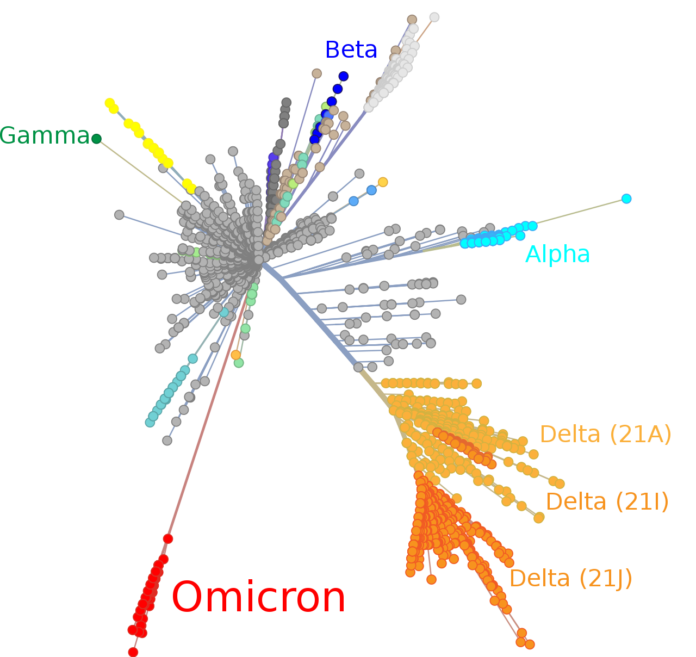
Omicron Variant. Image via WIKIMEDIA.ORG.

Source: The Conversation (Au and NZ) – By Denis Muller, Senior Research Fellow, Centre for Advancing Journalism, The University of Melbourne

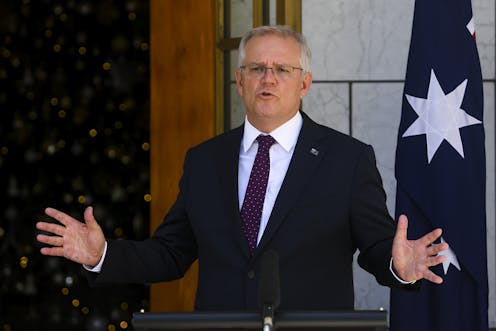
As he embarks on an election year, there is a question about whether Prime Minister Scott Morrison’s media communications strategy, which has served him well for a long time, is fit for the current political environment.

The strategy is predicated on the proposition that Morrison is the government’s prime political asset, to be protected as necessary and exploited where possible. Doubtless this is a legacy of his “miracle” win in 2019.

To this end, it has four central elements.

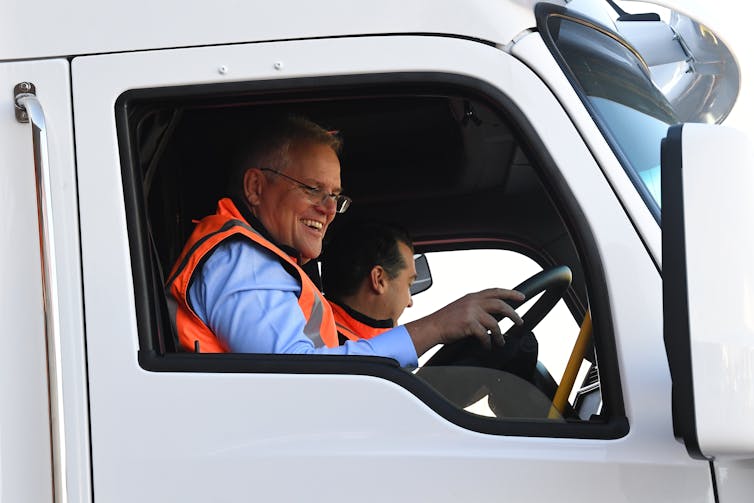
The first is to maximise his visibility when there is good news or an “announceable” to unveil. These appearances are tightly controlled and usually supported by some theatrical prop: an officer in uniform; Morrison himself in a hard hat or some other form of dress-up – a chef’s apron, a medical researcher’s lab coat, a high-vis vest while sitting in the cab of a big truck. The media get plenty of footage but little chance to ask questions.

The second is to minimise his visibility when there is bad news. Handling this is delegated to a cabinet minister or a government official such as the chief medical officer. Where possible, blame for the bad news is also shifted to someone else.


Read more:
Morrison’s political judgement goes missing on rapid antigen test debacle


The third is to maximise his direct exposure to friendly media. These include Rupert Murdoch’s News Corp outlets, matey radio jocks such as Ray Hadley on Sydney’s 2GB, and conversational television programs like Channel Seven’s Sunrise.

The fourth is to minimise his direct exposure to critical media. These include the Nine newspapers – The Age, Sydney Morning Herald and Australian Financial Review – Guardian Australia and the ABC.

A key media strategy of the prime minister is to maximise visibility when there is good news or an ‘announceable’, often in high-vis or some other form of dress-up.
AAP/James Ross

The foundation on which this strategy rests is plausibility: that enough voters will believe Morrison to be trustworthy and competent.

However, mere plausibility is an unstable surface to build on. In recent months, Morrison’s has been seriously eroded.

On the question of trustworthiness, French President Emmanuel Macron said Morrison had lied to him about the cancelled submarine contract, and this was followed immediately by a cascade of further allegations that Morrison was a liar, most notably by Malcolm Turnbull, who said he had a reputation for dishonesty.

On the question of competence, Morrison now finds himself jammed between his political need to consign COVID to the past, and the reality of the Omicron wave. It is not going well.

As cases exploded across the country over Christmas and New Year, he persisted with his push for eased restrictions. His line was faithfully delivered for him by The Australian newspaper. On successive days – December 30 and 31 – it ran page-one banner headlines such as: “PM’s plea: set the people free”.

For a few days he went quiet. Then, on January 3, he stuck his head above the parapet to tell viewers of Seven’s Sunrise program that the government would not be supplying free rapid antigen test kits to everyone because “we just can’t go round and make everything free”.

This prompted an avalanche of criticism, including from News Corp’s news.com.au. Commissioning editor Riah Matthews, who published a scathing opinion piece saying it showed how out of touch Morrison was with “hardworking everyday Australians”.

Two days later, Morrison sought to hose down this criticism by leaking a proposal, subsequently adopted by national cabinet, for disadvantaged groups in the community to be given free rapid antigen tests.

Murdoch’s big tabloids, the Daily Telegraph in Sydney and Herald Sun in Melbourne, described this as a “backflip”. But the trusty Australian found a way to put a positive spin on it, saying it was an attempt by Morrison to end debate over COVID testing, “which is a state and territory responsibility”.

It is early days, but if this unusually discordant chorus from News Corp were to continue between now and the election, one of the key elements in Morrison’s media communications strategy would be undermined. He would no longer be able to rely on this most powerful of media allies for unquestioning support.

He has not made life easier for himself by reportedly trying to put pressure on the senior political correspondents of the Nine newspapers.

According to a report in The Australian, Nine’s chief executive Mike Sneesby and head of publishing James Chessell met Morrison and the head of his media team last month. Morrison was reported to have complained the political columnists on The Age and The Sydney Morning Herald were “too tough” on him.

The Nine organisation said no concessions had been made, and this became obvious within a week, when columns by the Herald’s political editor Peter Hartcher and the chief political correspondent for the two papers, David Crowe, were notably tough on Morrison.

Plainly, no one had warned Morrison about the culture of robust editorial independence on those newspapers. Or, if they had, he was cross enough to disregard it.


Read more:
It’s still not too late to fix the rapid antigen testing debacle. Why the national cabinet decision is wrong and must be reversed


Australia also enters an election year in the aftermath of the media diversity inquiry, the report of which was delivered in early December.

The political relevance of this inquiry lies not in its recommendations, but in the fact it was generated by widespread public concern at the concentration of media ownership in Australia. About two-thirds of the metropolitan daily newspaper circulation is controlled by News Corp.

This concern was demonstrated by the fact the inquiry was established as a result of a petition to parliament by former Prime Minister Kevin Rudd, focused on the influence of News Corp. It attracted more than half a million signatures.

The report noted the inquiry received 5,068 submissions, one of the largest number ever received by a Senate inquiry. It said this indicated

the high degree of public interest in the health of Australia’s media sector, including the availability, diversity and reliability of news content.

Media ownership and diversity are obviously not front-of-mind issues for most of the electorate. But they are not negligible considerations either.

Morrison relies heavily on the support of News Corp, which has become a de facto propaganda arm of the government. Anything that unsettles that cosy arrangement would compromise his media strategy and make an already difficult set of circumstances even more awkward.

The more fundamental question is whether his plausibility remains a strong enough foundation for the strategy to rest on. If not, those four central elements will have to change.

The Conversation

Denis Muller does not work for, consult, own shares in or receive funding from any company or organization that would benefit from this article, and has disclosed no relevant affiliations beyond their academic appointment.

ref. As COVID rips through Australia, is Scott Morrison’s media strategy starting to fail as well? – https://theconversation.com/as-covid-rips-through-australia-is-scott-morrisons-media-strategy-starting-to-fail-as-well-174332

Free rapid antigen tests makes economic sense for governments, our analysis shows

Source: The Conversation (Au and NZ) – By Jonathan Karnon, Professor of Health Economics, Flinders University

Following considerable public pressure over the past few weeks, the federal government has announced concession card holders will soon be able to collect up to ten free rapid antigen tests over three months.

But everyone else will continue to have to purchase their own rapid antigen tests, which cost upwards of A$10 a test.

In countries like Singapore, the UK and Germany, rapid antigen tests are free for everyone.

We’ve developed a model that estimates how cost-effective a policy of government-funded rapid antigen tests for all Australians would be. We’ve released our economic analysis as a pre-print online, which is yet to be independently reviewed by other researchers.

We found a policy of government-funded rapid antigen tests for all is highly likely to be cost-effective.

Even minor reductions in COVID transmission rates due to increased early isolation would justify the additional costs associated with the policy.

Here’s why.


Read more:
It’s still not too late to fix the rapid antigen testing debacle. Why the national cabinet decision is wrong and must be reversed


Why is testing so important?

Testing and contact tracing have been the primary measures used to interrupt the spread of COVID around the world.

One of the benefits of testing for cases is it allows countries to rapidly identify new cases, isolate affected people and their close contacts, and thereby slow further transmission of the disease.

Australia has relied on PCR (polymerase chain reaction) tests to confirm COVID cases, which are funded by the federal government and free for Australians.

But the emergence of the highly transmissible Omicron variant, coinciding with a relaxation of public health restrictions and the social festive season, has led to a surge in COVID cases in Australia, swamping the PCR testing system.

Governments are pivoting towards using rapid antigen tests to confirm positive cases, which can give results in 15 minutes, although they’re not as accurate as PCR tests.


Read more:
Taking your first rapid antigen test? 7 tips for an accurate result


How does our analysis work?

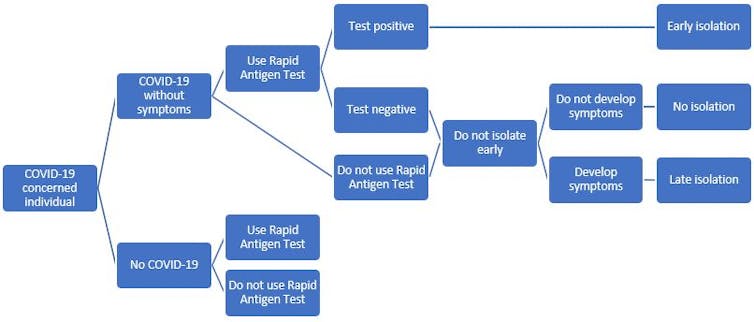
We created a “decision tree” model, which represents the testing pathways for a hypothetical group of people without COVID symptoms.

We used it to estimate the number of COVID-positive people isolating before developing symptoms.

It’s key people isolate as early as possible, to reduce the risk of spread to others.

We analysed a range of possible scenarios.

A decision tree showing possible outcomes with using, or not using, rapid antigen tests
A ‘decision tree’ showing the testing pathways for people without COVID symptoms, but who might have COVID.
Jon Karnon and colleagues, Author provided

A key parameter is the proportion of people who use a rapid antigen test who have COVID.

Let’s play out one scenario.

Let’s say a group of 10,000 people get free rapid antigen tests funded by the government. Assume 1,000 out of 10,000 users have COVID, and that a rapid antigen test costs $10.

Let’s also assume 2,000 of the 10,000 would buy rapid antigen tests if not government-funded. (The real-life proportion who would be willing and able to buy a rapid antigen test is impossible to know, given the current shortage.)

What did we find?

In the group where everyone had access to free rapid antigen tests, the model estimates this policy would result in successfully isolating an additional 464 people early, compared with a group in which 20% purchased their own rapid antigen tests.

Providing free rapid tests for 10,000 people would cost the government $100,000, but spending less on PCR tests (which are about $150 each) reduces the additional costs to the government to around $52,000.

Rapid antigen tests are less effective in people with no symptoms, so they wouldn’t catch everybody in the group who’s COVID-positive.

But the net effect is preventing an additional 464 people from infecting more people, thereby reducing costs to the economy of further infections. The costs of these people isolating only after developing symptoms would likely be far higher than the extra $52,000 spent on tests.

Dividing the $52,000 by the 464 earlier isolating cases gives us an estimate of the cost to the government per additional earlier isolating person with COVID – $112. This allows us to compare alternative scenarios.

For example, if only 500 of 10,000 users of government-funded rapid antigen tests had COVID, 232 more people would isolate early and the cost per additional earlier isolating person with COVID would be $328.

If only 100 of 10,000 users have COVID, the corresponding value is $2,052.

The less COVID circulating, the less effective a policy of free rapid antigen tests for all would be. But even with low prevalence, it’s still highly likely to be cost-effective.

The expected benefits of early isolation are difficult to quantify, but it can only help to constrain the spread of COVID and the number of people infected by each person with COVID (the reproductive number). Modelling shows that in Australia the reproductive number increased from around 1 to 1.5 over the course of December 2021, and daily reported COVID cases increased from around 1,000 to over 30,000. This illustrates the importance of the reproductive number and the magnitude of the potential effects of increasing early isolation of people with COVID. Even a minor reduction in the reproductive number will have a significant effect on the number of daily cases.

There are high costs to health and the economy of not successfully isolating COVID positive people early.

COVID positive people, who don’t know they’re positive, will spread it to others, many of whom will get sick, require medical attention, and take time off work. Some will need to go to hospital, be in intensive care, and be put on a ventilator. And some will die.

A proportion of those who do recover from the initial phase of the infection will have lingering symptoms from the virus, known as “long COVID”.

All of these outcomes impose significant costs to people and society. We could make a conservative assumption that each early isolated case prevents at least one new COVID case and that the broad range of costs associated with one COVID case are far higher than the $112 it might cost the government per additional early isolated person with COVID.

Are there any downsides?

One thing to consider is overuse. If people used rapid antigen tests too much, for example when people are highly unlikely to have been exposed to COVID, this would reduce the cost-effectiveness of the policy.

In saying that, the unpleasant nature of the testing process should limit such overuse – no one enjoys sticking the swab up their nose!

Hoarding is another risk, as with toilet paper in the early days of the pandemic. So it would be important to ensure confidence in the supply and distribution of the tests.


Read more:
Why are people stockpiling toilet paper? We asked four experts


Constraining the spread of COVID is important for many reasons, including avoiding short- and long-term health effects, reducing burden on the health system, and increasing availability of essential workers.

Easy and equitable access to testing is a cornerstone of the public health response to COVID. It also makes economic sense.

The Conversation

Jonathan Karnon receives funding from the National Health and Medical Research Council and the Medical Research Future Fund.

Billie Bonevski receives funding from the National Health and Medical Research Council, the Medical Research Future Fund, NSW Ministry of Health, National Heart Foundation and The Hospital Research Foundation.

Hossein Afzali receives funding from the National Health and Medical Research Council.

ref. Free rapid antigen tests makes economic sense for governments, our analysis shows – https://theconversation.com/free-rapid-antigen-tests-makes-economic-sense-for-governments-our-analysis-shows-174342

Surprisingly few animals die in wildfires – and that means we can help more in the aftermath

Source: The Conversation (Au and NZ) – By Chris J Jolly, Postdoctoral Research Fellow, Charles Sturt University

Getty Images

The estimate that one billion animals were killed by Australia’s 2019-20 Black Summer fires drew international attention to the fate of wildlife during fire.

This estimate assumed all animals in the fire’s path were killed by the flames, or in the immediate aftermath due to injury, predation, dehydration or starvation.

However, our new research, published today in Global Change Biology, suggests that, on average, the vast majority of animals (more than 90%) actually survive the immediate passage of a typical fire. But there are precious few studies of animal survival through catastrophic fires, such as those observed during Australia’s Black Summer.

We urgently need data on how animals cope with megafires, given these are expected to increase in a warming world.

How do we know how many animals are killed by fire?

How do researchers actually know the fate of wildlife exposed to fire? The most reliable way is to track animals wearing radio or GPS collars.

As fire passes through a landscape, animals in its path unable to flee or find shelter often die from the the flames, radiant heat, or smoke. By tracking these individuals, as well as those that survived, we can calculate the proportion of animals that live and die during fire.

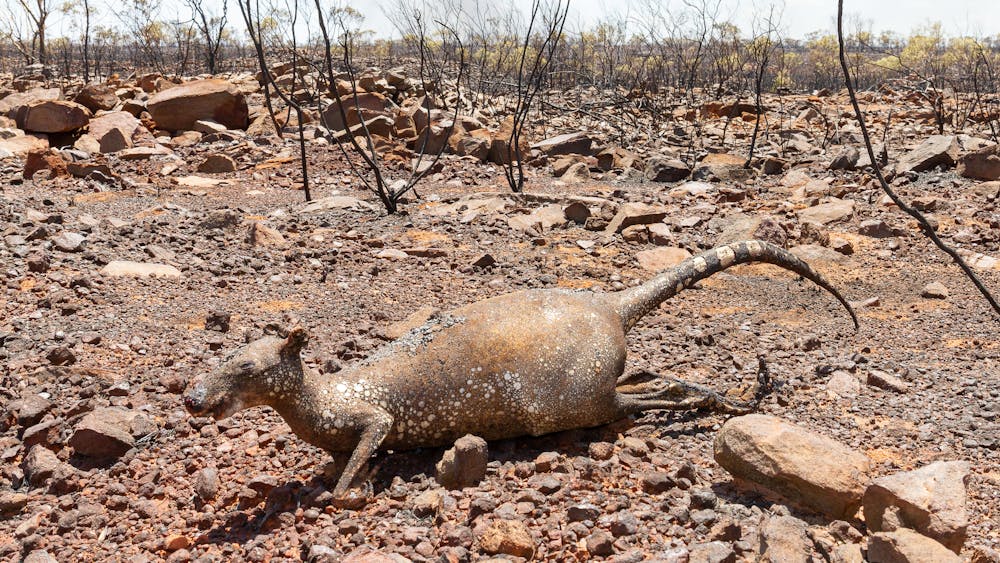
This agile wallaby could not escape the flames during a hot fire in northern Australia.
Dr Chris Jolly, Author provided

We systematically reviewed all studies tracking animal survival during fires from around the world. The 31 studies we found came largely from Australia and North America. The fires included planned burns, as well as opportunistic studies where an unexpected wildfire passed through an existing animal tracking programme.

Studies mostly tracked mammals and reptiles, though some included birds and amphibians. Animals studied ranged from tiny red-backed fairywrens weighing only 8 grams through to African bush elephants, the world’s largest terrestrial vertebrate at up to 4.4 tonnes.

So what did we find? The most remarkable finding is that almost two-thirds of studies (65%) found zero animal deaths directly caused by the fires. It turns out animals are surprisingly good at avoiding oncoming fire. Some animals may have evolved these tricks over time.


Read more:
3 billion animals were in the bushfires’ path. Here’s what the royal commission said (and should’ve said) about them


For instance, all mountain brushtail possums tracked through Victoria’s intense 2009 Black Saturday fires survived.

It’s important to note the 31 studies often tracked only a handful of animals (half tracked less than ten individuals), with a wide variation in death rates. In one study, for instance, up to 40% of rattlesnakes were killed. However, this study only tracked five snakes, two of which perished in the fire.

When we aggregated the studies we found something interesting. On average, fires killed just 3% of tracked animals. This figure rose to 7% for studies tracking animal survival through high severity fires.

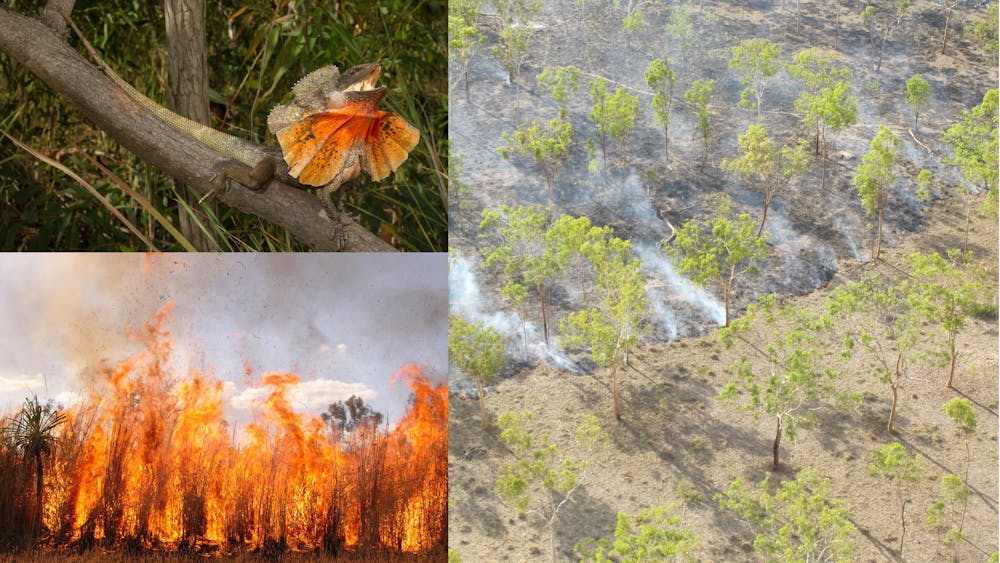
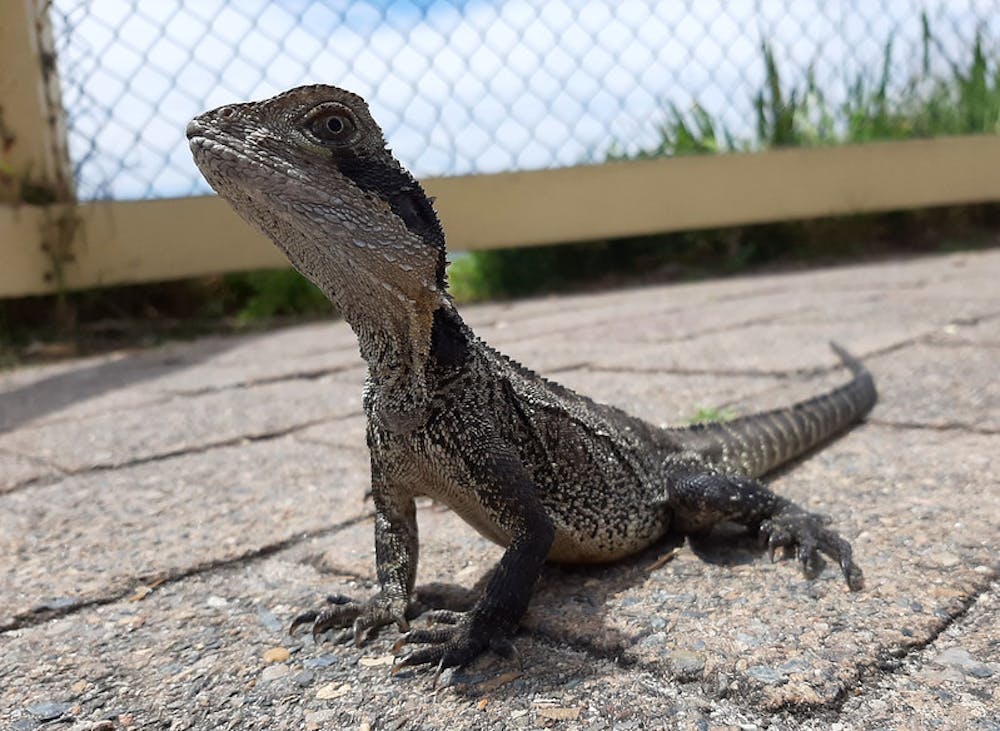
Not all fires are the same, and some animals are good at surviving one kind of fire, but succumb to other fires. Take frill-necked lizards, who typically shelter in the tree canopy during fires in northern Australia. When they employed this tactic during cool, early dry season fires, all tracked lizards survived.

When more severe fires occurred later in the dry season, a quarter of the lizards were killed. Many that remained in place were killed by flames that scorched the canopy. Those savvy enough to shelter in termite mounds survived.

Frilled-neck lizard and a grass fire
Frilled-necked lizards (top) tend to survive early dry season burns (right) but suffer higher mortality rates during more intense late dry season burns (left).
Clockwise from top-left: Dr Chris Jolly (CSU), Dr Rohan Fisher (CDU), A/Prof Samantha Setterfield (UWA)., Author provided

The silver lining: All is not lost after fire

When you read a headline about the number of animals killed in fires, it can be easy to despair.

That’s why we believe our research is good news. Why? Because it means there may be a narrow window of opportunity after fires to have a real impact, by helping animals survive the challenging post-fire period.

You might remember stories of helicopters dropping sweet potatoes and carrots to starving rock wallabies immediately following the Black Summer fires.

Our research suggests this is exactly the time to act to help as much wildlife as possible.

That’s because the post-fire landscape is exceptionally challenging for surviving wildlife. For months afterwards, home has turned hostile for animals.

It’s very hard to find shelter, with food and water also scarce. Predators roam, looking for easy pickings.

So what can be done? Efforts to reduce these dangers are key, such as supplementing food and water, and even dropping in temporary shelter options. Controlling foxes and cats might also help.

Taken together, this package could help save threatened species after wildfire – even from high-severity megafires. But these interventions need to be monitored to assess their effectiveness.


Read more:
Some animals have excellent tricks to evade bushfire. But flames might be reaching more animals naive to the dangers


Can animals cope with megafires?

At present, we know next to nothing about animal death rates during catastrophic fire events like the megafires raging over the Black Summer.

Although animals might survive typical fire, there are increasing instances of fires around the world that display extreme behaviour. For instance, the numerous fire storms that occurred during the Black Summer probably left a narrow pathway to survival for many species.

We simply lack the data to provide justifiable estimates of how many animals are killed across such vast areas during such extreme fires.

As climate change intensifies, megafires are likely to become more common.
Even if populations are resilient to individual megafires, their cumulative impacts may gradually erode that resilience. We also need to consider the major impact fires can have on habitat, which can last for decades or centuries.

We will urgently need to find ways of helping wildlife before and after these fires.

The Conversation

Chris J Jolly receives funding from Australian Government’s National Environmental Science Program (Threatened Species Recovery Hub).

Dale Nimmo receives funding from the Australian Research Council, the Department of Agriculture, Water and the Environment, the Department of Environment, Land, Water and Planning, the Department of Biodiversity, Conservation and Attractions, and the World Wildlife Fund.

ref. Surprisingly few animals die in wildfires – and that means we can help more in the aftermath – https://theconversation.com/surprisingly-few-animals-die-in-wildfires-and-that-means-we-can-help-more-in-the-aftermath-174392

Vital Signs: Sydney to Newcastle fast rail makes sense. Making trains locally does not

Source: The Conversation (Au and NZ) – By Richard Holden, Professor of Economics, UNSW

Shutterstock

Federal Opposition Leader Anthony Albanese this week announced a commitment to funding high-speed rail between Sydney and Newcastle.

At speeds of more than 250km/h, this would cut the 150-minute journey from Sydney to Newcastle to just 45 minutes. Commuting between the two cities would be a lot more feasible.

An artist’s impression of the proposed Very Fast Train in the 1980s.
Comeng

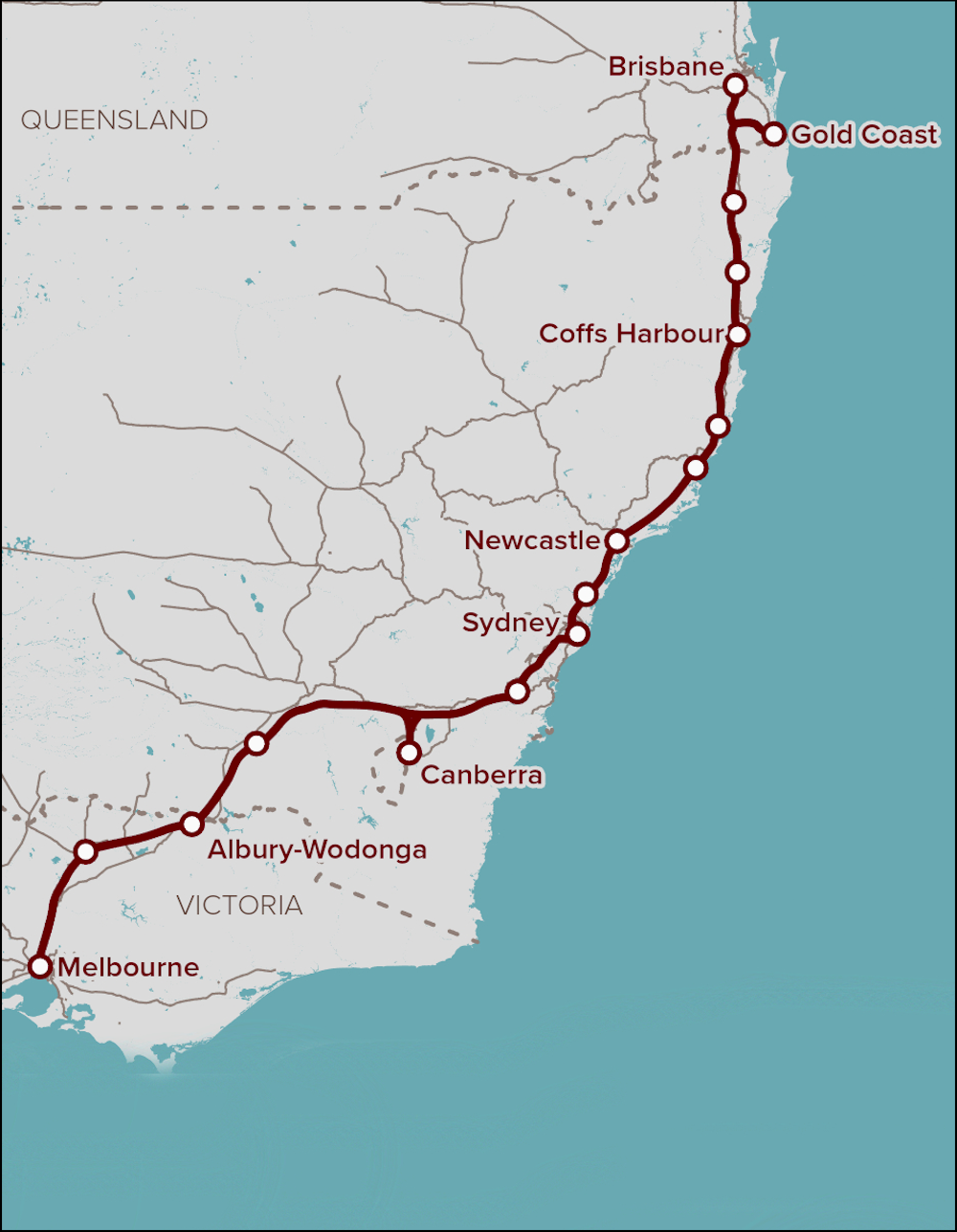
The Sydney-Newcastle link would be a first step in a grand plan to link the Melbourne-Sydney-Brisbane corridor by high-speed rail.

Albanese also wants the trains to be built at home, saying “we will look build as much of our fast and high-speed rail future in Australia as is possible”.

Of course, this idea has been around for a long time. Nobody has ever got the numbers to stack up before.

Federal infrastructure minister Paul Fletcher made the obvious but reasonable point that such a rail link would be very expensive.

“It is $200 to $300 billion on any credible estimate,” he said in response to Labor’s announcement. “It has to be paid for, and that means higher taxes”.

Or does it?

Social cost-benefit analysis

Traditional cost-benefit analysis is how governments tend to make decisions about big infrastructure projects like this. Figure out the costs (such as $300 billion) and then figure out the benefits. Adjust for timing differences and when money is spent and received, and then compare.

This generates an “internal rate of return” (IRR) on the money invested. It’s what private companies do all the time. One then compares that IRR to some reference or “hurdle” rate. For a private company that might be 12% or so. For governments it is typically lower.

An obvious question this raises is: what are the benefits?

An artist’s impression by Phil Belbin of the proposed VFT (Very Fast Train) in the 1980s.
Comeng

If all one is willing to count are things such as ticket fares, the numbers will almost never stack up. But that’s far too narrow a way to think about the financial benefits.

A Sydney-Newcastle high-speed rail link would cut down on travel times, help ease congestion in Sydney, ease housing affordability pressures in Sydney, improve property values along the corridor and in Newcastle, provide better access to education and jobs, and more.

The point is one has to think about the social value from government investments, not just the narrow commercial value. Alex Rosenberg, Rosalind Dixon and I provided a framework for this kind of “social return accounting” in a report published in 2018.

Newcastle might make sense, Brisbane might not

I haven’t done the social cost-benefit analysis for this rail link, but the social return being greater than the cost is quite plausible.

The other thing to remember is that the return a government should require has fallen materially in recent years. The Australian government can borrow for 10 years at just 1.78%, as opposed to well over 5% before the financial crisis of 2008.


Read more:
Let’s get moving with the affordable medium-speed alternatives to the old dream of high-speed rail


I’m less sure about the Brisbane to Melbourne idea. The cost would be dramatically higher for obvious reasons, as well as the fact that the topography en route to Brisbane is especially challenging.

Nobody is going to commute from Sydney to Brisbane by rail, and the air routes between the three capitals are well serviced.

Transport policy is not industry policy

The decision about building a Sydney-Newcastle rail link is, and should be kept, completely separate from where the trains are made. Transport policy shouldn’t be hijacked for industry policy.

To be fair, Newcastle has a long and proud history of manufacturing rolling stock, at what was the Goninan factory at Broadmeadows – much of it for export.

But ask yourself how sustainable that industry looks in Australia, absent massive government support. Can it stand on its own?


Read more:
Look beyond a silver bullet train for stimulus


It’s also true there have been some recent high-profile procurement disasters buying overseas trains.

Sydney’s light-rail project has run massively late and over budget, with Spanish company Acciona getting an extra A$600 million due to the project being more difficult than expected.

Then cracks were found in all 12 trams for the city’s inner-west line, putting them out of service for 18 months.

These are terrible bungles due to the government agreeing to poorly written contracts with sophisticated counterparties. When contracts don’t specify contingencies there is the possibility of what economists call the “hold-up problem”.

But these problems could have occurred with a local maker too.

The Tinbergen Rule

An enduring lesson from economics is the Tinbergen Rule – named after Jan Tinbergen, winner of the first Nobel prize for economics.

This rule says for each policy challenge one requires an independent policy instrument. This can be widely applied. But here the lesson is particularly clear.

Addressing housing affordability is a good idea, and a Sydney-Newcastle link could help with that. But if Labor want a jobs policy it should develop one.

The more TAFE places Labor has already announced is a reasonable start.


Read more:
Vital Signs: we need to make things in Australia, but not like in the past


Reviving 1970s-style industry policy – something that has almost never worked – is not a good move. Governments are lousy at picking winners. The public invariably ends up paying more for less, and the jobs are typically transient.

But aside from this conflation of policy goals, Albanese deserves credit for being bold about the future of high-speed rail in Australia.

The Conversation

Richard Holden is President of the Academy of the Social Sciences in Australia.

ref. Vital Signs: Sydney to Newcastle fast rail makes sense. Making trains locally does not – https://theconversation.com/vital-signs-sydney-to-newcastle-fast-rail-makes-sense-making-trains-locally-does-not-174341

‘Boost like crazy’ before omicron spreads, epidemiologist warns NZ

RNZ News

Rising covid-19 cases at the border are increasing the risk of the omicron variant spreading in Aotearoa but a leading epidemiologist says the country still has time to prepare for an outbreak.

Today there were 43 covid-19 cases identified at the border, a jump from 23 cases yesterday, and the Ministry of Health believes the majority are omicron.

But New Zealand still has time to keep omicron out and prepare the population before the virus enters the community, says University of Melbourne epidemiologist Professor Tony Blakely, originally from New Zealand.

Looking at New South Wales probably hitting its peak with omicron cases, he told RNZ Morning Report there were lessons for New Zealand to better manage an outbreak.

He said there was a huge “five-fold” undercount of cases because those infected with omicron were more likely to be asymptomatic. There could be up to 180,000 infections a day, he said.

His explanation for nearing the peak was: “It makes sense because of that number of infections per day … the virus exhausts the number of people it can infect because you’re chewing up all the susceptibles.”

He said there was a massive shortage of rapid antigen tests in Australia which was “just appalling”, thereby disrupting employment and the supply chain.

‘Flipping lessons to NZ’
“So flipping this to lessons for New Zealand: Get heaps of rapid antigen tests in before you get omicron and change your surveillance systems, or at least have them ready to go to pivot to being less reliant on PCR when the numbers of omicron go up.

“And follow some of the UK example of getting some free rapid antigen tests out towards citizens who have got some ready for when omicron arrives.”

He said New Zealand could take a few more steps to keeping covid-19 out because it had “the advantage of learning from pretty much every other country”.

“Try and keep the borders really strong which New Zealand has excelled at and wait for better vaccines that have wider coverage and not let omicron in. I think the chances of pulling that off are remote because omicron will get in at some point.

“The second option is, somewhat controversially, to embrace omicron.”

Blakely said omicron was “way less severe” thereby reducing the number of people that died or had to go to hospital.

“Omicron is less dangerous than delta … we’re talking somewhere between 1-5 percent of the mortality risk of a delta infection.”

Good immunity against delta
He said studies showed people who had had omicron then had good immunity against delta.

“So if New Zealand embraces omicron in, the trick is to manage it well.

“But there are other things to do in the next six weeks for New Zealand, which is boost like crazy, try and get at least two-thirds of the over 60 population boosted … before omicron comes in and get the public ready.

“Have a plan in place, mandatory masks when the case numbers get to a certain point.”

University of Canterbury professor Michael Plank said new cases in MIQ was a steep rise from last year, when most days, there were just two or three new cases arriving.

“What that really shows, there is a high risk at the moment of the virus leaking out.”

He said it mirrored international data showing infection rates were higher than ever, in some countries.

No assumptions over MIQ
Professor Plank said New Zealanders could not assume managed isolation and quarantine (MIQ) would keep the variant out.

New testing rules will come into effect for arrivals into the country, with travellers required to return a negative test result within 48 hours of departure, rather than 72 hours.

Professor Plank said it was a helpful step, but he would like to see rapid antigen tests also used, for a final check on the day of departure.

“These tests return a result in about 20 minutes so these can actually be done on the day. They won’t catch every last case but even if they only caught say 50 percent of cases prior to getting on the flight, that would be a help.”

Professor Plank said Aotearoa needed to buy as much time against omicron as possible, to roll out boosters and child vaccinations.

“If you’re eligible for that booster dose, don’t delay, don’t wait for a few weeks, because it could be too late by then.”

This article is republished under a community partnership agreement with RNZ.

Print Friendly, PDF & Email

Article by AsiaPacificReport.nz

Three US Army personnel test positive for covid at Marshall Islands border

By Giff Johnson, RNZ Pacific correspondent in Majuro

The US Army ignored agreed-to covid prevention rules for entry into the Marshall Islands this week and the result was the first border cases of covid in the Marshall Islands in more than a year.

Three US Army personnel tested positive for covid soon after arrival at the US Army Garrison — Kwajalein Atoll (USAG-KA) Tuesday while starting a two-week quarantine period for entry into the country.

Despite record-breaking numbers of covid cases in Hawai’i and the US mainland over the past several weeks, driven largely by the omicron variant, the Army brought in the largest group ever to come to Kwajalein in the weekly US Army repatriation groups since it started the process in June 2020.

The group arrived Tuesday this week following a one-week quarantine in Hawai’i to undergo an additional two weeks of quarantine at the Kwajalein base.

Of the 37 base workers and their families now in quarantine, three tested positive for covid. On Wednesday, Army authorities informed Marshall Islands officials of the positive cases in this group.

These are known as “border cases”.

The Marshall Islands is one of the few countries globally that has never had community transmission of covid in the two years since the virus appeared.

‘Clearly broke the protocols’
The 37 people in this weekly Army group were allowed to board the military flight to Kwajalein from Honolulu without waiting for the results from a covid test, “which clearly broke the protocols jointly agreed to by National Disaster Committee (NDC) and USAG-KA,” said Chief Secretary Kino Kabua, who chairs the Marshall Islands National Disaster Committee.

A negative covid test is required for anyone to fly from Honolulu to the Marshall Islands.

A public statement issued by the Office of the Chief Secretary Wednesday said all three positive cases are showing no symptoms and are in quarantine and isolated from the community at Kwajalein.

There were no border cases in either Kwajalein or Majuro for 14 months preceding this week’s development. This is primarily because a quarantine period in Hawai’i — two weeks for unvaccinated individuals, one week if vaccinated — coupled with three covid tests prior to departure to the Marshall Islands has ensured no border cases in the Marshall Islands for an extended period.

Last week’s Army group saw one person bumped off the flight when they tested positive for covid prior to departure from Honolulu. But this protocol was not followed this week.

“NDC had discussions with the colonel on Wednesday who stated it was a procedural error on their part,” said Kabua.

“He conveyed it was unacceptable that the situation occurred and that he had already brought his entire team to rectify the problem, including pulling back the authority to authorise the flights to his level.”

Monitoring of test results
Kabua added: “We reiterated the importance of adhering to the joint protocols and discussed additional measures to enhance collaboration at the technical-working level, especially the monitoring of test results coming out from Honolulu.”

Prior to the discovery of the three border cases, the Ministry of Health earlier this week issued a call to temporarily halt all repatriation for one month in light of the explosion of covid cases in Hawai’i, the US mainland and the world during the past month.

Hawai’i has been reporting between 1500 and 3000 new covid cases daily over the past several weeks after having only 57 cases as recently as December 7. The United States set a new record with more than 500,000 cases a day earlier this week.

The recommendation to “pause” repatriation was the lead point in a “Ministry of Health Emergency Covid-19 Resolution” issued January 3.

There is currently one Marshall Islands repatriation group tentatively scheduled for January and the Army brings in groups of its workers weekly.

The ministry recommended using a one-month pause on repatriation groups to enhance health and community preparation for the possible introduction of covid-19 omicron into the community, including vaccination, boosters and updating National Emergency Operations Centre plans.

The ministry also called on the government to “mandate covid-19 vaccination for healthcare workers, front-liners, civil servants and school aged children, including booster doses”.

This article is republished under a community partnership agreement with RNZ. Giff Johnson is editor of the Marshall Islands Journal.

Print Friendly, PDF & Email

Article by AsiaPacificReport.nz

Otago University covid-19 experts copping abuse from anti-vaxxers

By Hamish MacLean in Dunedin

University of Otago covid-19 experts are not immune to the increasingly vitriolic attacks dished out to scientists commenting on New Zealand’s pandemic response.

Among a litany of attacks University of Otago epidemiologist Professor Michael Baker has endured over the course of the pandemic, at the start of this week a caller told him he had “a target on his back”.

Professor Baker said he kept the caller on the line for about 20 minutes and asked him what that meant “in real terms”.

The caller was an anti-vaxxer who was accusing Professor Baker of propaganda on behalf of pharmaceutical companies, telling him vaccines were dangerous, especially so for children.

The caller had half-baked information gleaned from various sources that did not really make sense, Professor Baker said.

“He had these slogans he was throwing at me, but when I asked him what he meant he didn’t really have any answers.”

This week it was revealed University of Auckland professors Shaun Hendy and Siouxsie Wiles have argued to the Employment Relations Authority their employer was not doing enough to protect them as they shared their expertise with the public.

Professor would call police
But Professor Baker said he had not raised any concerns for his safety with his employer, the University of Otago.

If anyone made a threat where he felt he or his family was unsafe he would not hesitate to involve the police.

The Wellington-based scientist received the occasional phone call where a caller delivered a stream of abuse and hung up, but Professor Baker said he was most likely to receive abuse in the form of emails, averaging a few attacks by email every day.

As an exercise, Professor Baker began classifying the forms of abuse he received into “five categories of insult”, he said.

There were the incoherent streams of abuse, which were easily dealt with, he said.

Some people had major grievances but did not know where to go, and contacted him to vent and, in some extremely sad cases, he would reply and express sorrow and sympathy.

There were anti-vax propagandists whose positions were not based on facts, which he ignored.

There were those with ideological stances who disapproved of the government’s overall strategy, who at times delved into conspiracy theories.

Personal attacks stream
Finally, the group he found the hardest to deal with came as personal attacks from a small stream of people who persistently contacted him, and tried to undermine his ability to comment.

“Talking about how you look, or how you appear – they’re obviously making quite a concerted effort to look at where you might feel a bit vulnerable,” he said.

The attacks had never made him question his role of speaking publicly about the pandemic response, Professor Baker said.

University of Otago virologist Jemma Geoghegan.
Dr Jemma Geoghegan … limited her media exposure. Image: University of Otago

University of Otago evolutionary virologist Dr Jemma Geoghegan said she, too, had not raised any concerns with her employer.

She said “no” to about 90 percent of media requests because the issues were not related to her field of expertise.

In limiting her media exposure, she had limited the number of people who wanted to harass her about her expertise, Dr Geoghegan said.

“I don’t generally speak about vaccines, so [that] abuse isn’t aimed at me,” the Dunedin scientist said.

‘Weirdly strong views’
However, she had published on covid-19 origins and people had “weirdly strong views about that”.

The issues dealt with by her Auckland counterparts were not surprising though and she had sympathy for them.

“This is happening all around the world,” Dr Geoghegan said.

“I’ve got international collaborators that … I think their mental health has suffered.

“Before covid, or at the start of covid, they were really prominent on Twitter and stuff like that, and now they’ve had to delete their accounts because of the amount of abuse they’ve got.”

Hamish MacLean is an Otago Daily Times journalist. This article is republished under a community partnership agreement with RNZ and this story first appeared in the Otago Daily Times

Print Friendly, PDF & Email

Article by AsiaPacificReport.nz

Fiji braces for pandemic third wave as omicron cases found in community

By Josefa Babitu in Suva

Fiji is bracing for a third wave of the covid-19 virus after tests have confirmed the presence of the omicron variant in local communities.

The country’s Health Secretary Dr James Fong said today the ministry was prioritising testing of suspected individuals to prevent severe illness and death and to focus on suppression where the risk of transmission was high.

“Omicron is vastly more infectious than delta. As such, in keeping with what we see in other countries, the omicron will become the dominant variant,” said Dr Fong.

“As omicron spreads very fast, you should assume you are infected, and self-isolate, if you develop any cold/flu-like symptoms such as runny nose, sneezing, nasal congestion, sore throat, cough, body ache, or fever.

“Gatherings have been observed where covid-safe measures have not been followed, or people have attended while having symptoms. We ask that if you have relaxed in your observance of covid safe measures, that you please resume now.

According to Dr Fong, 580 new cases of both the delta and omicron variant were recorded between Monday and eight o’clock today.

Of the 580 cases recorded since the last update, 146 cases were recorded in the Northern Division, 111 cases were recorded in the Western Division, 303 cases were recorded in the Central Division, and 20 cases in the Eastern Division.

2417 active cases in Fiji
There are currently 2417 active cases of covid-19 in the country.

The Health Ministry has recorded two additional deaths in its latest report, bringing the total death toll to 712 during the pandemic.

However, Dr Fong said the omicron variant was likely to cause milder disease as data from the United Kingdom and South Africa had shown the risk of hospitalisation was reduced by 80 percent and, once in hospital, the risk of severe diseases was reduced by 70 percent when compared to the delta variant.

“As with previous variants, unvaccinated people are at higher risk of severe disease. With more than 92 percent of adults fully vaccinated, we expect that our high vaccination rates, plus the infection-induced immunity from the large number of people who were infected during the last wave, will help to lower the number of people that develop severe disease.

“We continue to see that the majority of individuals testing positive in medical facilities are presenting for non-covid medical problems and found to be positive while undergoing routine screening as all admissions to the hospital are currently tested for covid-19.

“Also, the vast majority of cases turning positive have minimal symptoms and remain stable.

He added that severe outcomes would be expected in some individuals, including those who have been immunised with two doses of the vaccine, especially people with severe underlying medical conditions and people over the age of 50.

‘Monitored … in a timely manner’
“We have in place measures that ensure that those vulnerable to severe disease are adequately monitored, tested, retrieved, and effectively managed in a timely manner before their conditions worsen.

“However, we need the cooperation and support of community networks in formal and informal community settings and business settings, working in tandem with the ministry.

The ministry has advised the public to self-isolate at home if they have any of the covid-19 symptoms.

A health care worker must isolate for seven days while everyone else is required to isolate for 10 days.

Meanwhile, Fijians who are eligible to get their booster shot have been advised to do so as the country fights the new variant.

Josefa Babitu is a University of the South Pacific student journalist and contributor to Asia Pacific Report.

Print Friendly, PDF & Email

Article by AsiaPacificReport.nz

Don’t look Up! has a surprising amount to tell us about economics, much of it useful

Source: The Conversation (Au and NZ) – By Steven Hail, Adjunct Associate Professor, Torrens University Australia

Netflix

In the new Netflix sensation Don’t Look Up, two astronomers, played by Jennifer Lawrence and Leonardo Di Caprio, discover a massive comet heading towards Earth, and desperately try to warn the US president, played by Meryl Streep.

Their hope is the government will take action to avert catastrophe while there is time. Their efforts are subverted by a combination of self-serving political cynicism, billionaire business interests, a media that sees its job as respecting those interests and that cynicism, and a population conditioned not to look up.

It is an obvious metaphor for the threat of climate breakdown, where warnings and pleadings from climatologists and scientists and from a growing number of campaigners, ecological economists and others, are being ignored, trivialised and sometimes even ridiculed by political insiders.

But after 40 years marked by the dominance of neoliberal pro-market economic policies, the metaphor can be extended to almost any challenge requiring a serious response, particularly where it involves standing up to vested interests.

There’s more amiss than vision and courage. Public services no longer have the capacity they did to respond to problems like long-term climate change and short-term pandemics.

Their administrative and decision-making capacity has been stripped away, as has the surge capacity in health systems and in many countries the ability to react to disruptions to supply chains – all in the name of efficiency, but with the effect of creating fragility while contributing to inequality and extremism.

Hayek, Friedman and Buchanan got us here

Neoliberalism is rooted in the work of three Chicago School economists: Friedrich Hayek, Milton Friedman and James Buchanan.

Hayek, though a famous name, was probably the least influential of the three. He saw mixed economies, market-based but regulated by governments, as inevitable steps on the road to totalitarianism.

Friedman espoused a naïve and outdated theory of money, which was no sooner adopted than abandoned in the early 1980s, but like Hayek saw freedom in low taxes and championed privatisation and deregulation. It was Friedman who argued that many people had to remain unemployed in order to suppress wages.

Buchanan, like Friedman, argued that politicians and public servants could be trusted to act in in their own interests at a cost to society, and that almost anything that could be done by public servants could be done better by the private sector.

In the 1980s the trio effectively took over the conservative side of politics in high-income countries. Their ideas also helped intimidate those on the other side, including the Hawke-Keating Labor government in Australia, and every Labor front bench that succeeded them. That influence persists to this day.

Mazzucato, Kelton and Raworth want to get us out

In her book Mission Economy, the University College London economist Marianna Mazzucato imagines a different relationship between the public and private sectors: a proactive, problem-solving government cooperating with the private sector to address, among other things, climate change and the problems and opportunities associated with a rapid transition to sustainability.

This would require rebuilding public capacity and an approach to government experimentation and risk-taking not seen for 40 years.

Aligned with her are modern monetary theorist Stephanie Kelton and ecological economist Kate Raworth.

Stephanie Kelton, at Adelaide university in January 2020.
John Staines

Kelton’s The Deficit Myth describes how modern monetary systems work and demolishes the metaphor of the government as a household used by neoliberals to push for balanced budgets and minimalist governments.

Kelton points out it is normal for governments to run deficits (Australia’s Commonwealth government nearly always has) and that these deficits allow the private sector to avoid building up debt.

Governments that create their own currencies such as America’s or Australia’s are well-placed to guide the private sector to serve a public purpose.

While both Mazzucato and Kelton discuss what this means, and give examples, it is Raworth’s book that most clearly identifies the goal governments should aspire to.

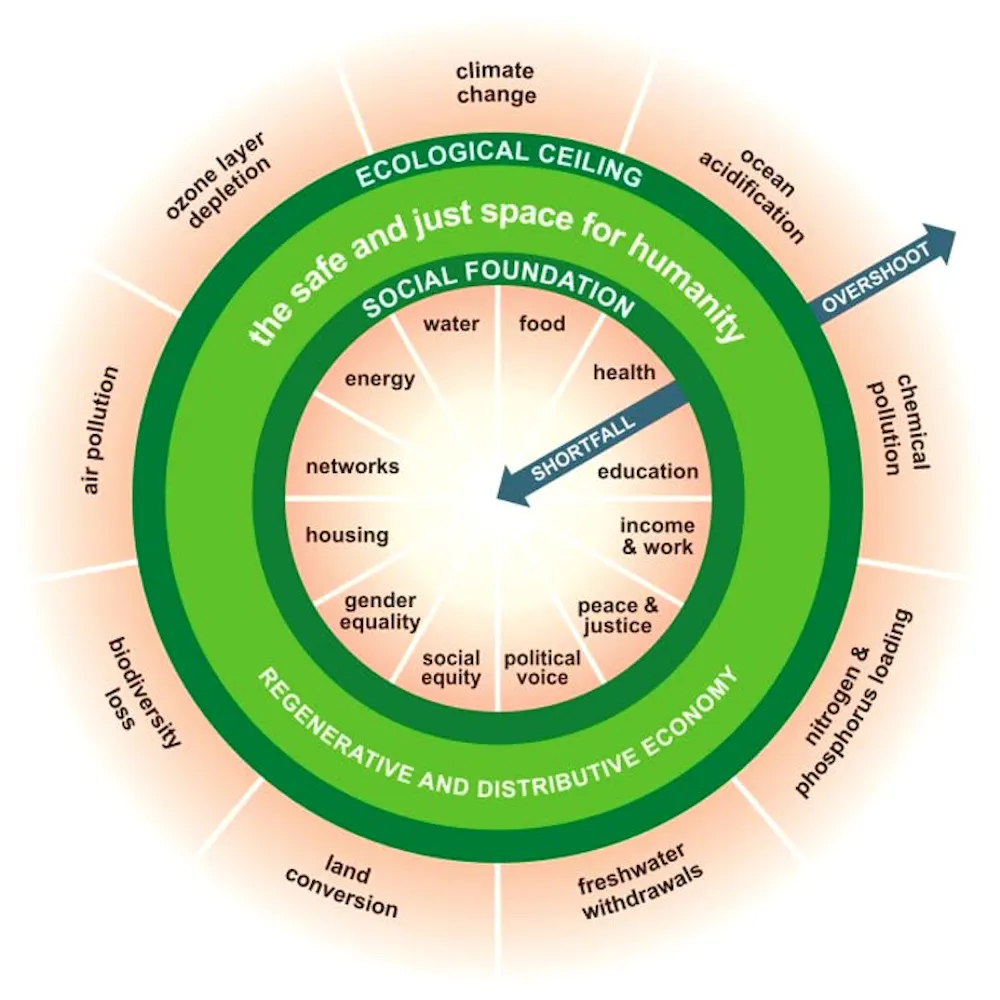
That book is called Doughnut Economics. It sets out a framework for providing everyone with an opportunity to enjoy a secure, dignified and connected life, while respecting nine environmental planetary boundaries that are prerequisites for the maintenance of the planet.


doughnuteconomics.org

The framework requires a shift of focus away from the goal of economic growth as defined by gross domestic product towards a set of indicators of a successful society. The indicators are similar to the UN sustainable development goals.

Both Kelton and Raworth are members of the World Health Organization’s Council on the Economics of Health for All, chaired by Mazzucato. Its guiding principle is that health should be seen not only as a human right but also as an investment in continued prosperity. It is an approach that would have led, among much else, to better preparations for the long-predicted pandemic.

Deficit-funded spending pays dividends

With Kelton and others, including leading medical researcher Steve Robson and health economist Martin Hensher, I have discussed the implications of modern monetary theory for health in an article for the Insight magazine of the Medical Journal of Australia, and in a position paper for the Institute for Health Transformation at Deakin University.

As a nation, we should not have been worried by the prospect of health spending climbing above 10% of gross domestic product as it did in 2015-16, nor by the prospect of it climbing higher in future decades. We should be investing in resources including the skills, health infrastructure and technology we will need to deal with future pandemics and the consequences of climate change.


Read more:
‘Don’t Look Up’: Hollywood’s primer on climate denial illustrates 5 myths that fuel rejection of science


On climate change, it is gradually dawning on people that the outcome of COP26 in Glasgow was not up to the challenge we face and that many countries will not even achieve what they committed themselves to at Glasgow.

To a greater or lesser extent, every leader of a high-income country is failing to articulate a mission in regard to climate change, to drive that mission with the right public investments, and to locate the problems of climate change within the broader context of the planetary boundaries identified by Raworth – the most obvious of which is biodiversity.

The attitude is “Don’t Look Up!”, we have got this. Or “technology will save us”, as President Orlean (Meryl Streep) believed in the movie.

Few leaders any better than Streep

Meryl Streep as President Orlean.
Tavernise/Netflix

A search by Raworth’s colleagues at the University of Leeds has failed to identify any country anywhere in the world that is providing its citizens with the social foundations for a good life while remaining inside planetary boundaries.

If that was to be the definition of a developed economy, none of our economies are developed.

We are either not meeting the needs of our people or exceeding the carrying capacity of our planet, or (in the case of about a third of countries) doing both at once.

Therein lies both a warning and a challenge; a threat and an opportunity.

Our mission ought to be to meet social foundations everywhere without destroying the environment of which we are a part and on which we depend.

We have an opportunity to govern differently

Governments, and especially monetary sovereign governments in high income countries such as Australia, will have to lead the way.

They will have to throw off the neoliberalism of Friedman, Hayek and Buchanan, and the baggage which goes with it and buy into the new economics of Kelton, Raworth, Mazzucato and their colleagues.

Then we can look up, with some confidence that we can deflect the metaphorical comets that threaten the lives of millions and the quality of life for us all.

The resources and the technology to do what’s needed already exist. But until now we have been trapped in an outmoded way of thinking about both the role of government and the purpose of economic activity that has held us back to the point where the comet is bearing down upon us.

The Conversation

Steven Hail does not work for, consult, own shares in or receive funding from any company or organisation that would benefit from this article, and has disclosed no relevant affiliations beyond their academic appointment.

ref. Don’t look Up! has a surprising amount to tell us about economics, much of it useful – https://theconversation.com/dont-look-up-has-a-surprising-amount-to-tell-us-about-economics-much-of-it-useful-174399

Sydney Festival boycott: when arts organisations accept donations, there is always a price to pay

Source: The Conversation (Au and NZ) – By Jo Caust, Associate Professor and Principal Fellow (Hon), School of Culture and Communication, The University of Melbourne

The Sydney Festival opens today under a cloud. Several artists and arts organisations have withdrawn from the festival over the Israeli Embassy’s sponsorship of the dance work Decadance, by Israeli choreographer Ohad Naharin.

The crazy thing is the value of the sponsorship in question. A$20,000 is very small in the context of the festival’s overall budget.

Why, then, did the festival accept the funding agreement for Decadance, given the overall size of its budget and the potential community reaction?

It’s true it is common, when a festival invites an arts performance from another country, for the country of origin to provide financial support for the project. They do this because they see an advantage for their culture to be presented internationally.

But critics have said this particular funding arrangement “serves to artwash the Israeli regime’s violent control over the lives of Palestinians”.

This is not an isolated incident but part of a broader global debate around sources of arts funding. If an arts organisation accepts money from a donor, there is always a price to pay. It’s a question of how high the price is.


Read more:
The Biennale, Transfield, and the value of boycott


Is a donation ever free?

Arts organisations can sometimes demonstrate a strange naivety when asking for or accepting donations. It’s as though the gift is more precious than its actual monetary value. Certainly, government funders and bodies such as Creative Partnerships Australia provide rewards such as matched funding to arts organisations for attracting private donations.

Ironically, too, there are expectations from governments that arts organisations must find outside funders, to justify receiving government support. A recent arts minister, George Brandis, threatened in 2014 that if arts organisations or artists rejected private donations, they should be banned from receiving any government grants.

On the other hand, the donor, in this case the Israeli Embassy, insists it’s not about politics but that

culture is a bridge to coexistence, cooperation and rapprochement and should be left out of the political arena.

But are there ever any “free” donations? And can we separate the “giver” from their brand or past actions?

A history of protest over arts sponsorship

There was an outcry at the 2014 Sydney Biennale about an art sponsor, Transfield, and its connection with offshore asylum seeker processing centres. That did not go well for either party, with both suffering negative press and eventually breaking ties.

In December 2021 the Metropolitan Museum of Art in New York finally removed the Sackler name from seven of its exhibition spaces, given that family’s association with producing the drug at the centre of the US opioid crisis, OxyContin.

The museum’s board seemingly took this action reluctantly, thanking the family for their gracious donations, despite the community havoc wrought by their drug.

The Fringe World festival in Perth provoked an outcry in 2020 for insisting on accepting a large sponsorship from fossil fuel giant Woodside, and then later stipulating artists “not do any act or omit to do any act that would prejudice any of Fringe World’s sponsorship arrangements”.

Artists put in a difficult position

Artists are always desperately searching for money to make their art happen.

Yet it was the artists who stood up and withdrew their labour during the 2014 Sydney Biennale. It was the artists who protested the sponsorship of the Fringe World festival, and it is the artists again who are protesting and withdrawing their labour from the 2022 Sydney Festival.

When artists protest about the sources of arts funding, they are often framed as ungrateful brats rather people standing up for their beliefs.

Artists are some of the poorest people in our community, and yet are prepared to forgo their limited income to support fellow artists from other countries – in this case Palestine. This is not meant as a criticism of artists from Israel, for example the dancers involved in Decadance, but a criticism of their government.

Arts organisations are not separate from life or politics. And arts and cultural practices more broadly are not independent of any political association or connections. Nations around the world use arts and culture to promote their views, or to project a more benign image of their culture.

It is true, as the Israeli Embassy states, that arts and culture are a bridge for creating better cultural understanding.

But the protesters would argue that arts or cultural practices can be used cynically to drive a political or cultural agenda, hence the accusation of “artwashing”.

So where does this leave the Sydney Festival?

So far, according to a statement, the festival’s board has said it wishes to:

affirm its respect for the right of all groups to protest and raise concerns […] All funding agreements for the current Festival – including for Decadance – will be honoured, and the performances will proceed. At the same time, the Board has also determined it will review its practices in relation to funding from foreign governments or related parties.

But it may have been wiser if the board had been more careful about its funding arrangements. Arts organisations, like artists, must be vigilant about the contracts they enter into.


Read more:
We should value the Biennale protest, not threaten arts funding


The Conversation

Jo Caust has received funding from the Australia Council. She is a member of NAVA and the Arts Industry Council (SA).

ref. Sydney Festival boycott: when arts organisations accept donations, there is always a price to pay – https://theconversation.com/sydney-festival-boycott-when-arts-organisations-accept-donations-there-is-always-a-price-to-pay-174393

Sydney’s dams may be almost full – but don’t relax, because drought will come again

Source: The Conversation (Au and NZ) – By Ian Wright, Senior Lecturer in Environmental Science, Western Sydney University

Dams serving capital cities such as Canberra, Hobart and Sydney are near full after two years of widespread rainfall. But these wet conditions won’t last.

Under climate change, droughts in Australia will become more frequent and severe. Our drinking water supplies, and water crucial for irrigation and the environment, will dwindle again.

Sydney, Australia’s most populous city, is among those that must prepare for the next drought. The NSW government is developing the Greater Sydney Water Strategy, to guide water management in coming decades.

Among the plan’s more contentious proposals are increased use of Sydney’s existing desalination plant and expanding the use of recycled water (highly treated sewage), including for drinking water. So let’s examine whether such measures are enough to secure Sydney’s water future.

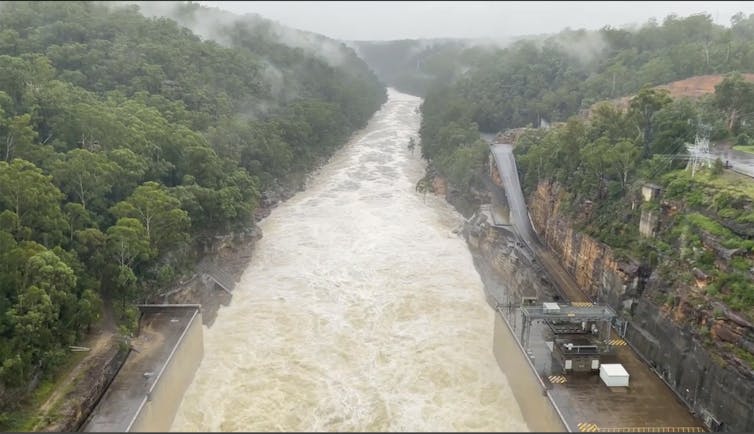
water spills from dam
Water has been spilling from Warragamba Dam, but dry conditions will eventually return.
WaterNSW

A city of water scarcity

During the most recent drought from 2017 to 2020, Sydney’s water storage levels dropped by 50% of full dam capacity in two years – a much faster depletion than in previous droughts.

Inflows into Sydney’s dams have dropped over the past 30 years. From 1991 to 2020, inflows averaged 770 million litres a year – 45% less than the long-term average.

The news isn’t all bad. Sydney used less water in 2019-20 than it did in 1990, despite its population growing from 3.8 million to 5.4 million.

But as the Greater Sydney Water Strategy states, increasing climate variability means that, without action, the city could face a shortage of drinking water as periods of severe drought become longer and more frequent.

delighted boy holds hose
Sydney must prepare for a drier future.
Brendan Esposito/AAP

Desalination for the nation?

The strategy raises the prospect of increased use of Sydney’s existing desalination plant, and building a second plant in the Illawarra region south of Sydney.

Desalination removes salt from sea water to create drinking water. The Millenium drought – from the late 1990s until 2010 – prompted several major Australian cities, including Sydney, to build desalination plants.

The technology can revolutionise water supply. For example, in 2020-21, Perth’s two desalination plants supplied 47% of the city’s water. But desalination plants can also face limitations and challenges.

The plants are expensive to build and to operate – and can sit idle for years, as the Kurnell plant did between 2012 and 2019. This can make them politically unpopular and see them criticised as “white elephants”.

Even at full production, the Kurnell plant produces only 15% of Sydney’s daily demand. And while an additional plant in the Illawarra will extend desalinated supply to more households, the technology can’t supply water to all parts of Sydney due to the city’s complex distribution infrastructure.

As I discuss below, expanded use of recycled water is a better option for Sydney than more desalination.


Read more:
Melbourne’s desalination plant is just one part of drought-proofing water supply


Ocean wave with land in background
Desalination removes salt from seawater.
Nick Bothma/EPA

Can we stomach recycled water?

Many Australian cities, including Sydney, already use recycled water – sewage that has been heavily treated – in applications such as watering golf courses and parks, flushing toilets and fighting fires.

The draft plan raises the prospect of also adding recycled water to drinking supplies, which has long been a vexed issue in Australia. Some people oppose it on health grounds, while others just can’t get over the “yuck” factor.

The concept of recycled water has a lot going for it. For example, analysis suggests it would be far cheaper and use much less energy than desalination.

Making better use of recycled water would also reduce the environmental impact of disposing of wastewater in rivers and oceans. And the potential supply of recycled water will only increase as populations grow.

Finally, good recycled water projects are used continuously, not just at times of water stress. The Rouse Hill recycled water scheme in Sydney, which supplies 32,000 properties for non-drinking water uses, is a great model.

The draft plan says recycled water would not be added to drinking supplies without public support, but past history suggests this may be hard to achieve. In 2006, for example, Toowoomba residents rejected a plan to drink recycled water, despite the town facing a grave water shortage.

However, as urban water supplies become ever more scarce, Australians may have to get used to the idea of drinking recycled water – and authorities will have to find new and better ways of selling the concept to the public.

The Sydney water plan recognises this. It emphasises the need for public consultation, and raises the prospect of investing in a recycled water demonstration plant to “highlight the safety of demonstrated and proven technology”.


Read more:
When water is scarce, we can’t afford to neglect the alternatives to desalination


man leans towards water in front of Sydney Harbour Bridge
Better use of recycled water would reduce wastewater flows to Sydney’s beaches and rivers.
CSIRO

A major omission

The plan shows how Sydney’s growing population could sustainably adapt to to a drier future. But it ignores one important measure for reducing water use – charging customers a penalty for excessive water use.

Under the measure, also known as an “inclining block tariff”, the rate per unit of water increases as the volume of consumption increases.

Research has shown water pricing can be an effective way to manage water scarcity, as well as helping water utilities recover the costs of their services. Australian cities such as Melbourne, Canberra and Brisbane apply inclining block tariffs to water, but Sydney does not.

Sydney Water’s price regulator, IPART, has argued against charging high water users more, saying it would provide less incentive for smaller households to conserve water and impose unfair costs on larger households.

Granted, water pricing is a complex issue and may require protections for lower-income users and the environment.

But under worsening climate change, our major cities cannot eschew any opportunity to ease pressure on water supplies.

The Conversation

Ian Wright receives research funding from local governments, Sydney Water and the Clean Ocean Foundation. He is a research associate with the Blue Mountains World Heritage Institute.

ref. Sydney’s dams may be almost full – but don’t relax, because drought will come again – https://theconversation.com/sydneys-dams-may-be-almost-full-but-dont-relax-because-drought-will-come-again-170523

It’s still not too late to fix the rapid antigen testing debacle. Why the national cabinet decision is wrong and must be reversed

Source: The Conversation (Au and NZ) – By Stephen Duckett, Director, Health and Aged Care Program, Grattan Institute

Shutterstock

Yesterday’s national cabinet meeting was called to address another COVID crisis – not the crisis about burgeoning case numbers, nor the crisis about hospital staff being overwhelmed.

This crisis was of the Commonwealth’s own making – what to do about the mess it is in about pricing and availability of rapid antigen tests for use at home.

The problem was foreseeable. The UK government ordered rapid antigen tests from manufacturers in January 2021. The tests have been distributed to the public since April 2021. Sooner or later it was inevitable pressure would mount for the same policy in Australia.


Read more:
Rapid antigen tests have long been used overseas to detect COVID. Here’s what Australia can learn


There were 4 options

Before this week’s national cabinet meeting, the Commonwealth government had four options.

1. Head in sand, fingers in ears, problem goes away

This was tried and failed. A variant of this was to attempt to deflect the issue as being about removing GST on rapid antigen tests. That also failed and GST on the tests remain.

2. Encourage states to provide free tests

This has also been tried, with the Commonwealth offering a 50% subsidy to states that come on board. Some have accepted the deal to make rapid antigen tests available in some circumstances, but not universally. Details of these circumstances are still unclear.

3. Implement a 2-tier scheme with rapid antigen tests free for the identified poor and not for others

This is an inequitable throwback to the pre-Medicare world. It suffers from a key problem of any means-tested program. There will be those at the margins of eligibility who cannot afford the test but need to use it.

Pathology tests are covered by Medicare, with out-of-hospital tests almost universally bulk billed (so largely free to the consumer). This and the free availability of PCR tests create important precedents for universal free access to rapid antigen tests.

Politically, means-testing also lays the Commonwealth open to a “Mediscare” type campaign, with accusations the government is seeking to undermine Medicare.

4. Make rapid antigen tests free

This would have heeded the calls of public health experts, the medical profession and economists to make rapid antigen tests free, as a critical public health screening tool.

Here’s what happened

The Commonwealth leaned on the states into supporting option three with a touch of option two.

Over 6 million Australians will get access to ten rapid antigen tests to use at home over a three-month period. It is unclear how this number was set. Close contacts in Victoria, for example, are recommended to use five rapid antigen tests for each exposure to a known case.

Free tests will be distributed through pharmacies to check people’s eligibility, presumably adding an extra cost in the distribution chain. Pharmacies will presumably be paid to manage this process.

New rules make it harder to track virus spread

At national cabinet on December 30, close contacts were redefined as people exposed for more than four hours. This was designed to reduce pressure on testing centres and it did. However, this move immediately underestimated the true COVID rate in the community. Those asymptomatic people with COVID, but exposed for less than four hours, no longer presented for testing.

National cabinet yesterday further hampered the government’s ability to monitor case numbers by more actions to reduce demand on testing. In all states other than Western Australia, people with a positive rapid antigen test no longer need to have a confirmatory PCR test.

Both changes make it harder to track the progress of the virus.


Read more:
Taking your first rapid antigen test? 7 tips for an accurate result


Bad public health and bad economics

The national cabinet outcome on rapid antigen tests fails on two criteria for decision-making during a pandemic: what is good for the public health and what is sensible economically.

A public health fail

The main public health objective during a pandemic is to minimise transmission – this was the point of the extended lockdowns in south-east Australia and the main point of mask mandates and state border closures. A secondary objective is to minimise the impact of COVID on those infected, mainly via vaccinations.

The public health rationale for home rapid antigen tests rests on their role in reducing the likelihood infectious people will go out and infect others. People should therefore be encouraged to use the test if worried about transmitting the virus, particularly if asymptomatic. So from a public health perspective, we want to maximise the use of rapid antigen tests to reduce asymptomatic but potentially infectious people spreading the virus.


Read more:
Home rapid antigen testing is on its way. But we need to make sure everyone has access


Young people generally have more social contacts and are more likely to spread the virus. Unfortunately, young people are less likely to be eligible for free tests under the Commonwealth’s means-testing regime, and also less likely to be able to afford the tests. They will therefore likely use the test less than would be desirable on public health grounds and this will in turn lead to more spread of the virus, including to higher-risk, older relatives.

An economic fail

The economic case for widespread rapid antigen tests rests on two bases. The main benefit from my use of this test falls on other people – if I test positive, I isolate and don’t infect others.

In a normal market the price of a product reflects the benefit (utility) that I get from it. For rapid antigen tests, most of the benefit falls on others and so the price set in the market will not lead to the optimum number of tests been purchased. As the objective is to maximise people who think they may spread COVID using the test, the price of a rapid antigen test should be zero or as close to that as possible.


Read more:
Morrison’s political judgement goes missing on rapid antigen test debacle


Because rapid antigen tests are cheap to produce and the cost to the community of infections is high, there is also a cost-effectiveness argument for maximising use of rapid antigen tests.

One argument against rapid antigen tests is so-called moral hazard – if a product is free people might consume too much of it. The evidence about moral hazard is weak. But sticking a swab up one’s nose is not pleasant and so is probably sufficient deterrent against frivolous use.

We need a u-turn

Despite the national cabinet decisions, the case for free rapid antigen tests remains. People who want to do the right thing will continue to be annoyed at having to pay to protect others. The community will not be as well protected as it should be.

This is yet another wrong decision by the Commonwealth government in its mishandling of the pandemic, and it should urgently reverse its decision and provide free rapid antigen tests for everyone.


Read more:
Australia has not learned the lessons of its bungled COVID vaccine rollout


The Conversation

Grattan Institute began with contributions to its endowment of $15 million from each of the Federal and Victorian Governments, $4 million from BHP Billiton, and $1 million from NAB. In order to safeguard its independence, Grattan Institute’s board controls this endowment. The funds are invested and contribute to funding Grattan Institute’s activities. Grattan Institute also receives funding from corporates, foundations, and individuals to support its general activities, as disclosed on its website.

ref. It’s still not too late to fix the rapid antigen testing debacle. Why the national cabinet decision is wrong and must be reversed – https://theconversation.com/its-still-not-too-late-to-fix-the-rapid-antigen-testing-debacle-why-the-national-cabinet-decision-is-wrong-and-must-be-reversed-174391

A century ago, Australia was ground zero for eclipse-watchers – and helped prove Einstein right

Source: The Conversation (Au and NZ) – By Brian Finlayson, Honorary Principal Fellow in the School of Geography, Earth and Atmospheric Sciences, The University of Melbourne

Ontario Picture Bureau/Wikimedia Commons

In 1922, Australia was even more remote from the rest of the world than it is today. But when it came to astronomy, that year it was the centre of everyone’s attention.

On September 21, the shadow of a total solar eclipse would cross the entire continent, from Eighty Mile Beach in Western Australia, right through the outback, and out over the Pacific Ocean just south of the Queensland-New South Wales border.

Vintage newspaper eclipse map
Map published in the Argus newspaper, showing the eclipse track.
Argus, Author provided

Astronomers came from the United States, Canada, New Zealand, India and Britain – journeying to places so remote that many Australians had never heard of them before their names started appearing in the press.

The scientists were there not just for the spectacle, but also in the hope their observations of the eclipse would validate Albert Einstein’s then-controversial theory of general relativity, postulated just seven years earlier.

Einstein’s theory, broadly speaking, suggested gravity can bend the very fabric of space-time itself. One possible way to test this was to photograph the background of stars both before and during an eclipse. The Sun’s gravity should bend the light from the distant stars as it passes in front of them, causing them to appear in a slightly different position – and the eclipse would allow astronomers to make this observation by helpfully blotting out the Sun’s glare.


Read more:
Explainer: Einstein’s Theory of General Relativity


War and weather

The first world war prevented astronomers from investigating Einstein’s 1915 prediction. But a total solar eclipse on May 29 1919 offered the first decent chance to prove him right. Britain mounted two separate expeditions in the hope at least one of them could make the necessary observations. In Sobral, Brazil, the team led by Astronomer Royal Frank Dyson suffered equipment failure. But on the island of Principe off Africa’s west coast, Arthur Eddington, despite inclement weather, successfully photographed the event.

Dyson, after viewing Eddington’s photographic plates, pronounced “there can be no doubt that they confirm Einstein’s prediction”. But many sceptics remained unconvinced.

The next suitable eclipse was in Australia on September 21 1922. The famous Lick Observatory in California had used its fine 12-metre camera to photograph several previous eclipses, and director William Wallace Campbell was determined his observatory would solve “the Einstein problem” in Australia.


Read more:
Explainer: what is a solar eclipse?


Campbell’s chosen location – Wallal, on the WA coast 320km south of Broome, was remote and almost inaccessible. But it had virtually no chance of cloud, and the eclipse there would last longest, offering a full five minutes of totality.

Shallow seas meant the expedition’s ships could not get close to shore, and instead had to ferry the equipment ashore at high tide with the help of local Indigenous people.

Eighty Mile Beach
Eighty Mile Beach at Wallal, during low tide.
Brian Finlayson, Author provided

The Royal Australian Navy also played an essential role in transporting the heavy and delicate equipment to Wallal, where Campbell’s group, which also included Canadian and New Zealand astronomers, had set up camp near the telegraph station.

Also at Wallal were astronomers from the Perth Observatory, the Kodiakanal Solar Observatory in India, and a smaller private British expedition. The various teams made several practice runs, knowing they would get just one chance at the eclipse itself.

Eclipse observation site at Wallal
Location of the eclipse observation site, viewed seaward. Left of the vehicle are remains of Wallal Telegraph Station, including a well.
Brian Finlayson, Author provided

Afterwards, having spent months studying the huge photographic plates created during the eclipse, Campbell telegraphed Einstein to tell him the observations were indisputable. A remote corner of Australia had played a pivotal role in proving one of the fundamental truths of the Universe.

Chart of star displacements from 1923 scientific paper
Star displacements observed during the 1922 eclipse, consistent with the movements predicted by Einstein’s theory.
Campbell & Trumper/Lick Observatory Bulletin 1923, Author provided

Meanwhile, other astronomers and amateur enthusiasts right across Australia were turning their eyes heavenwards as the eclipse passed overhead. South Australia sent an expedition to Cordillo Downs in the state’s northeast, led by Government Astronomer George Dodwell. His remote journey, laden with bulky equipment, was an undertaking of heroic proportions. Yet now, Cordillo Downs is chiefly known for its historic woolshed.

In the eastern states travel was somewhat easier, and many of the public gathered in Goondiwindi on the Queensland-NSW border to watch the eclipse. Scientist, businessman and philanthropist Sir Wilfrid Russell Grimwade organised a trip there from Melbourne; Sydney Observatory sent its astronomers; Sydney University mounted an expedition led by physicist Oscar Vonwiller that also included Father Edward Pigot, president of the NSW branch of the British Astronomical Association. Queensland’s Governor, Sir Matthew Nathan, motored out for the event, and locals came from miles around.

Twenty of Pigot’s fellow members of the British Astronomical Association opted to travel to nearby Stanthorpe, while special trains carried Brisbane residents to Sandgate for the viewing. The indefatigable scientist Reverend Skertchly travelled from Brisbane to Mount Tamborine, where he made many different observations and later described viewing the corona as an epiphany.

Time for recognition

Australians from all walks of life engaged with the eclipse. Wonderful photographic records exist of the event, as well as special brochures and copious newspaper coverage. Scientific enthusiasm was mingled with fun, bringing together not just astronomers but also schoolchildren, Indigenous peoples, outback camel drivers, and the wider community.

Yet, a century later, this extraordinary coming together of global and local people isn’t very well documented in the places it happened. In September 1972, Goondiwindi’s citizens marked the golden jubilee of the eclipse, but we are not aware of any formal plans to mark its centenary this year.

At Wallal, which is close to a large and popular caravan park on Eighty Mile Beach, there is no mention of the momentous observations that helped prove Einstein’s genius. Perhaps a commemorative plaque or installation there would be a fitting place to start.


Read more:
We counted 20 billion ticks of an extreme galactic clock to give Einstein’s theory of gravity its toughest test yet


The Conversation

The authors do not work for, consult, own shares in or receive funding from any company or organization that would benefit from this article, and have disclosed no relevant affiliations beyond their academic appointment.

ref. A century ago, Australia was ground zero for eclipse-watchers – and helped prove Einstein right – https://theconversation.com/a-century-ago-australia-was-ground-zero-for-eclipse-watchers-and-helped-prove-einstein-right-172605

Recess is a time of conflict for children. Here are 6 school design tips to keep the peace

Source: The Conversation (Au and NZ) – By Fatemeh Aminpour, Associate Lecturer, School of Built Environment, UNSW

Conflict is one of the main barriers to children’s play during school recess. Research has found students experience an average of one conflict at recess every three minutes. My own research shows how well-designed school grounds can reduce conflict and help vulnerable students take part in recess play activities.

Clashes happen most often when children organise play themselves. Causes include difficulties sharing resources and disputes over who’s taking control of them, including play space.
School staff can manage conflicts. However, this tends to limit children’s self-directed executive functioning, through which they regulate thoughts and behaviours to support goal-directed actions.


Read more:
Let them play! Kids need freedom from play restrictions to develop


My study explored children’s views on the activities that usually triggered conflict and the ways in which school grounds could be designed to avoid it. The study was carried out at three public primary schools in Sydney, Australia. It offers the following six design recommendations that draw upon children’s perspectives.

1. Offer more than one grassed area

Children recognise grassed areas as major areas of conflict. The school rule of “No Running Fast on Concrete” generally restricts running games to these grassed areas, but these activities can easily clash when all in the same area.


Read more:
Are our school playgrounds being wrapped in cotton wool?


Instead of having a single grassed area, children prefer to “play more separate games”. This means they need separate grassed areas for playing soccer, gymnastics or bullrush – a game in which children must race across a field without getting tagged by those who are “in”.

Children in a focus group voiced their dissatisfaction with the lack of alternative grassed areas. As students said:

When you’re back to score a goal, someone just runs in the way and kicks it […]

There’s three goalkeepers in the goals […]

You can’t even see your ball and it makes everyone stop.

When multiple grassed areas are not available, older children, particularly boys, often dominate the main play space. As a result, more sensitive children – usually younger girls – feel excluded from these settings. They retreat to the edges or corners to avoid those who play “rough”.

2. Separate zones for different types of activities

Although this seems an obvious design recommendation, separate zones are not always available, particularly in schools with limited space. As a result, a zone is used for both fine and gross motor activities. Children running around fast or playing with balls are then seen as “disruptive” to those sitting or playing with cards, and vice versa.

The space is no longer felt as a “very relaxing place”. Children who seek “peace” and “quiet” have to withdraw.

3. Offer more natural settings

My research indicates that children of diverse personal characteristics – including gender, age and ability – use natural settings without conflict, although their play activities in these settings vary. They hide behind tree trunks, use them as “base” in running games, practise balancing on their massive roots, build imaginary houses under their canopies and use their malleable resources in their creative play. These activities don’t usually come into conflict.

As indicated by children, their preferred natural settings in Australian schools include trees such as bottlebrushes, Moreton bay figs and paperbarks, and bushes with no “spiky” leaves. Increasing these natural environments can encourage more peaceful school ground activities, with benefits for children’s social functioning.


Read more:
Children learn science in nature play long before they get to school classrooms and labs


4. Use physical barriers to separate activities

To reduce disruption, barriers can be subtly incorporated into the design of school grounds. These might be a row of trees, furniture, raised edges or retaining walls. Barriers can be also imposed, such as fences or netting around playing fields.

Children identify ball games as the most invasive activity that justifies barriers. Children can be easily struck by balls flying out of playing fields, but physical barriers can stop this sort of interference with other activities.

5. Allow buffer space to create clear pathways

If a school playground is densely populated and/or play areas are in close proximity, children inevitably pass through the playing fields and that can cause conflict:

I found it annoying when the year 6s run through our handball court […] When we’re playing with the ball, they run through it and they take the ball and hit it and it sometimes becomes really hard to find it.

Providing an adequate buffer area allows children to pass around games and avoid situations like this.


Read more:
Physical distancing at school is a challenge. Here are 5 ways to keep our children safer


6. Ensure all students have a place to play

Enough play areas and opportunities are needed to keep all children engaged during recess. Otherwise, as observations show, children can loiter and annoy others to avoid getting “bored”.

If school grounds lack suitable settings, children may also create informal play spaces in areas disruptive to other play activities. Unorganised play settings can worsen conflict and bullying.

Contrary to common beliefs, children who retreat to the edges of school grounds are not necessarily “unable” or “unwilling” to take part in play; they are often trying to avoid conflict in the main play zones. By minimising the chance of conflict during recess, school design can support children in building positive, reciprocal social relationships through play.

The Conversation

Fatemeh Aminpour does not work for, consult, own shares in or receive funding from any company or organization that would benefit from this article, and has disclosed no relevant affiliations beyond their academic appointment.

ref. Recess is a time of conflict for children. Here are 6 school design tips to keep the peace – https://theconversation.com/recess-is-a-time-of-conflict-for-children-here-are-6-school-design-tips-to-keep-the-peace-173140

A simple calculation can stop artificial intelligence sending you broke

Source: The Conversation (Au and NZ) – By Evan Shellshear, Industry Fellow, The University of Queensland

Shutterstock

Mike is a 40-something crop farmer from southern Queensland. With a chestnut tan, crushing handshake and a strong outback accent, he’s the third generation of his family to grow sorghum, a cereal mostly used for animal fodder.

But, like most farmers, Mike faces more challenges than his forbears. Climate change has eroded Australian farms’ profitability by an average of 23% over the past 20 years. It’s a constant challenge to improve productivity by producing more with less.


Read more:
Australian farmers are adapting well to climate change, but there’s work ahead


After the devastating 2019 bushfire season, Mike began exploring “smart” farming techniques enabled by artificial intelligence (AI). Agriculture has been called one of the most fertile industries for AI and machine learning. Mike was enthused about an AI powered system enabling him to use less fertiliser and water.

After months of inquiries he found a company promising its technology could reduce crop inputs by up to 80%. It involved software processing information from digital sensors placed across his fields to allow “precision farming” – tailoring water, pest and fertiliser treatment for each plant.

The salesperson’s pitch was compelling. But the cost to install the system was $500,000, plus $80,000 a year for data storage and processing. Support costs were on top of that.

Ultimately, Mike calculated the cost would offset any extra profit generated, even if the slick technology lived up to all the promises. If it delivered less, it would only help him into bankruptcy.

This experience – of being pitched an AI technology with big claims but questionable value – is common. It’s easy to be swayed by the promises. But new technology is not the solution to everything. For it to be worth the money for people like Mike – indeed any organisation – requires a cold calculation of its economic value.

In this article we provide a simple methodology to do so.

Blinded by technological potential

For all the focus now on how AI will revolutionise the world, hype about it isn’t new. Since the inception of practical AI techniques in the early 1960s, obsession with AI potential has led to two major “AI winters” – in which huge investments by corporations and research institutions failed to deliver promised results.

The first was in the 1970s, when money poured into variety of AI systems such as speech recognition and machine translation. The second was in the 1980s, when companies invested heavily in so-called “expert systems” meant to do things like diagnose illnesses or control space shuttle launches.

Computer scientist John McCarthy, who coined the term 'AI', at work in his laboratory at Stanford University.
Computer scientist John McCarthy, who coined the term ‘AI’, at work in his laboratory at Stanford University.
AP

In both cases what the technology could do fell well short of the hype. It was not that AI was useless. Far from it. But what it could do had limited economic value.

The backlash set the scientific and economic advance of the technology back almost a decade both times, as funding and interest dissipated.

To be sure your investment in technology is worth the money, you need to guard against being swept up by the promises and possibilities.

As Ben Robinson, the chief strategy officer at financial software company Temenos has put it:

we can safely predict it won’t be blockchain or APIs or AI that transform the industry. Instead it will be new business models empowered by those technologies.


Read more:
If machines can be inventors, could AI soon monopolise technology?


Focus on the economics

The following figures outline a simple approach to focus on the economics, not the engineering.

Figure 1 summarises the basic economics of any investment decision. Invest if the extra profit is greater than the “opportunity cost” – the benefit you can gain from spending your money another way, or by not spending the money.


Figure 1 can be hard to use so Figure 2 frames the investment decision in slightly more detailed terms using the economic concept of “marginal utility” – the additional (marginal) benefit (utility) that comes from additional expenditure.


To make this simple to apply, Figure 3 summarises this decision-making process into a simple “decision tree”.


The Conversation/Author provided, CC BY-ND

Resolving Mike’s AI investment challenge

Applying this methodology to Mike’s situation, we can see why he couldn’t make business sense of the pitch of AI-enabled precision farming.

The salesperson passed the first question by stating the gains from AI adoption would reduce Mike’s crop input costs by up to 80%. This would translate to Mike saving about $80,000 per year (in the best-case scenario).

The salesperson also passed the second question, with a clear statement of the system’s cost.

But the business case failed on the third question. The best-case marginal benefit of adopting the AI (saving $80,000 a year) was just equal to the marginal cost ($80,000 a year) – not counting the initial installation.


Read more:
Artificial intelligence is now part of our everyday lives – and its growing power is a double-edged sword


Putting it this way makes it clearly look like a dud investment, and that Mike didn’t have put a lot of time into deciding against it. But the fact is many decisions to invest in AI don’t make economic sense and the above process will make this easy to know why.

Using an economic framework of worth, rather than an engineering claim of possibility, is the first step to make better decisions. Doing so reduces the prospect of another AI winter, and increases the chance of real gains contributing to a more prosperous and sustainable world.

The Conversation

Evan Shellshear is head of analytics at Biarri, a mathematical and predictive modelling company.

This article was co-authored by Brendan Markey-Towler, previously a lecturer and research fellow at The University of Queensland and now an analyst with Westpac. All three authors declare they do not work for, consult, own shares in or receive funding from any company or organisation that would benefit from this article.

ref. A simple calculation can stop artificial intelligence sending you broke – https://theconversation.com/a-simple-calculation-can-stop-artificial-intelligence-sending-you-broke-173501

Secrecy surrounding Djokovic’s medical exemption means star can expect a hostile reception on centre court

Source: The Conversation (Au and NZ) – By Daryl Adair, Associate Professor of Sport Management, University of Technology Sydney

original AAP/AP/Michael Probst

Novak Djokovic, nine times Australian Open tennis champion, has confirmed via social media – after much speculation – that he will indeed be competing in the 2022 tournament.

The sticking point for him was the Victorian government’s requirement that all players be vaccinated, in the interests of reducing public transmission of COVID-19.

A noted anti-vaxxer, Djokovic submitted a request for a medical exemption to the vaccine mandate, which has now been approved. In tennis parlance, a COVID wildcard will jettison Djokovic to Melbourne.

Djokovic’s rocky history with COVID-19

In June 2020, Djokovic contrived a tournament, the Adria Tour, in the Balkans, as a response to the cancellation of many tennis events during the pandemic. It was organised by the Novak Djokovic Foundation, as a “charity tour to help the coronavirus victims”.

However, players and officials did not wear masks or socially distance – it was instead a party atmosphere. No surprise, then, that COVID broke out among attendees. Djokovic and his wife Jelena were among those infected, with the tournament abandoned before it reached the finals.


Read more:
Vaccinated or not, Novak Djokovic should be able to play at the Australian Open


Being young and healthy, Djokovic’s body handled the virus in a way that others – the elderly and immune-compromised – often do not. Six months later, he competed at the 2021 Australian Open, although was annoyed at having to follow quarantine protocols. The imposition did not impede the Serb’s on-court performance, for he left Melbourne with yet another major singles title.

Djokovic’s discontent at quarantine requirements for the 2021 Australian Open did not impede his performance, with him winning the grand slam event.
AAP/AP/Hamish Blair

For the 2022 tournament, lengthy quarantine is not required for fully vaccinated players and officials. Yet, for Djokovic, the requirement to be vaccinated – as a condition of entry – was something he objected to. His father, speaking to Serbian media, described the rule as tantamount to “blackmail”.

Given that Djokovic has had COVID, what is the case for requiring him (and others) to be vaccinated?

In general, antibodies produced naturally to fight COVID are effective in healthy patients, but their longevity is uncertain. By contrast, the antibody responses through vaccinations – with boosters – are better understood.

The dual goal, of course, is to optimise personal protection and reduce the risk of transmission. So, this is about the health of the wider community, with individuals expected to commit to a greater good. After all, an unvaccinated person is “roughly 20 times more likely to give you COVID” than someone who has been fully jabbed.

How are medical exemptions assessed?

So, what is the process for assessing a medical exemption for a COVID-19 vaccine? Applications are first assessed by “an expert panel of doctors specialising in immunology, infectious diseases and general practice”. Assuming they see merit in the submission, a second review is conducted by a government-appointed expert panel, known as the independent Medical Exemption Review Panel (IMERP). This panel’s job is to establish that the application meets the Australian Technical Advisory Group on Immunisation (ATAGI) guidelines on medical exemptions to vaccination.

ATAGI has two guideline categories:

The first of these speaks to an individual having experienced a significant medical challenge, such as serious illness or surgery, that is likely to be temporary and can be reviewed six months later.

The second speaks to “medication contraindications” to “a component” of one of more of the three vaccines available in Australia, leading either to “anaphylaxis” or a “serious adverse event”. Those seeking an exemption for either of these scenarios need to “produce evidence provided by a medical practitioner”.

Shrouded in secrecy

So, how is it that one of the world’s fittest athletes has been granted a COVID-19 vaccine medical exemption? By design, the public cannot know. Nor, it seems, can those who adjudicated on the medical merits of Djokovic’s case. That is because exemption submissions were “blinded”, which means those evaluating the application (should) have no idea whom they were assessing, and thus could be medically objective.

Tennis Australia’s chief executive Craig Tiley revealed 26 athletes had applied for exemptions for the Australian Open this year, “and a handful of those have been granted”.

The decision was supported by the Victorian Department of Health as it was confirmed those given exemptions have a “genuine medical condition”.


Read more:
Self-entitled prima donnas or do they have a point? Why Australian Open tennis players find hard lockdown so tough


Of course, the public cannot automatically know who these individuals are because that information is protected by privacy conventions and laws around personal health data.

In Djokovic’s case, though, he has indirectly revealed he is unvaccinated, given he has a medical exemption that permits him to travel to Australia and play at the open. This means Djokovic also has the same quarantine status as someone who is fully vaccinated. All that is required of him is a COVID-19 test within 24 hours of arriving in Australia and to isolate at his hotel until receipt of a negative result. He must then repeat that process 5-7 days after entering the country.

Other than avoiding “high-risk settings”, such as schools and aged-care homes, Djokovic is free to go about his business. In that sense, it is game, set and match to the Joker.

Tennis Australia CEO Craig Tiley has revealed 26 players and support staff have applied for medical exemptions to this year’s Australian Open, with a handful of those granted.
AAP/Joel Carrett

But how the medical exemption sits with the Australian public is combustible. Many are infuriated by what they see as Djokovic’s hubris in seeking an exemption and, given his power and celebrity status in tennis, their lack of confidence that the correct medical decision was made.

Djokovic could, of course, choose to be candid with the Australian public, explaining to them the medical calamity that allows him to meet the exemption guidelines. But that would invite debate about the scientific merits of his case, so that seems unlikely.

As ever, Djokovic has positioned himself as a maverick, a sceptic of medicine and science while an advocate of alternative therapies, such as his belief in the transformative power of celery juice and the capacity of water to “react with human emotions”.

“#Novax Djokovic” will have many human emotions to contend with when he walks onto centre court later this month.

The Conversation

Daryl Adair does not work for, consult, own shares in or receive funding from any company or organisation that would benefit from this article, and has disclosed no relevant affiliations beyond their academic appointment.

ref. Secrecy surrounding Djokovic’s medical exemption means star can expect a hostile reception on centre court – https://theconversation.com/secrecy-surrounding-djokovics-medical-exemption-means-star-can-expect-a-hostile-reception-on-centre-court-174331

From COVID control to chaos – what now for Australia? Two pathways lie before us

Source: The Conversation (Au and NZ) – By C Raina MacIntyre, Professor of Global Biosecurity, NHMRC Principal Research Fellow, Head, Biosecurity Program, Kirby Institute, UNSW

Australia has swung from one extreme in pandemic control to the other – having great control of COVID, to now having the world’s highest rise in daily cases.

Across the country (except for Western Australia), COVID cases are exploding.

True case numbers are much higher than official reports, as many sick people cannot even get a test or are only tested with a rapid antigen test, which isn’t counted in statistics.

Frail, ill and vulnerable people have queued for hours at testing centres, only to be turned away. Others find testing centres closed down without explanation.

Instead of rushing to expand capacity, state and federal governments restricted access to testing even more, by narrowing the definitions of who was eligible for a test and of what a close contact is.

State and federal governments have also pivoted to a strategy of using rapid antigen tests, as the traditional PCR testing system is overwhelmed. But these tests aren’t provided free, are exceedingly hard to come by, and there have been reports of price gouging.

The net effect of inaccessible, restricted and expensive testing is falsely low case numbers but exploding transmission, because undiagnosed cases fuel transmission.

Combined with vastly reduced contact tracing, this has toppled two pillars of epidemic control: test and trace. Modelling for the national plan assumed these would be still standing. Without these, it will get much worse.

The public has been left to their own devices as all our previous safeguards collapse around us.

We urgently need to change our approach and follow a “vaccines-plus” strategy to flatten the curve.

We can’t rely solely on vaccines

Available data suggests two vaccine doses provides minimal protection against symptomatic infection with Omicron.

Multiple countries already tried a vaccine-only strategy and failed. OzSage warned this wasn’t enough.

The New South Wales government persevered with the roadmap despite the emergence of Omicron and rising cases in early December – mask mandates were dropped and QR codes abolished.

By late December, cases predictably soared. With Christmas and New Year looming as superspreader events, NSW reintroduced QR codes and mask mandates, both highly effective and minimally intrusive. Then within weeks there was more flip-flopping about QR codes in what remained a chaotic response.

Meanwhile, people in Sydney cancelled restaurant and party bookings in droves for New Years Eve, leaving business and the economy worse off.

We’ve been told we have to live with COVID. In Queensland, the Chief Health Officer went as far as saying: “Not only is the spread of this virus inevitable, it is necessary (for COVID to become endemic).”

But COVID will never be endemic. It will always be an epidemic infection, with recurrent epidemic waves.

Lack of planning

Every government health agency was informed by modelling that cases and hospitalisations would surge when mitigation measures were relaxed.

But there has been inadequate surge planning at all levels of government, leaving us sitting ducks with low third-dose vaccine coverage.

There was no planning for expedited third-dose boosters, expanded testing capacity, rapid antigen tests, hospital in the home, opening of schools or even guidance for people to protect their household when one person becomes infected.

During the Delta wave, hospital in the home was set up to spare hospital capacity, but this time people are on their own and must take “personal responsbility”, according to the Prime Minister.


Read more:
As restrictions ease, here are 5 crucial ways for Australia to stay safely on top of COVID-19


Health systems buckling

The Omicron wave has made health systems buckle in most states, with NSW worst affected currently. Delta was twice as severe as previous variants, so if Omicron is 20-45% less severe than Delta, that’s still no laughing matter with low booster rates.

Daily case numbers across Australia are already 30 times what they were in the Delta peak (and may be 200 times higher soon). The enormous volume of cases means the small proportion needing hospital care will overwhelm the system.

Hospitals are already so overwhelmed that in NSW, infected nurses are instructed to work. If you need to come into hospital for a heart attack or broken leg, the chances are you will catch COVID as a bonus.

“Collapse” of the health system means we move to disaster mode, where the standard of care we expect for any condition becomes compromised. Already, self-caring COVID patients are told to call their GP if they’re worried, with no easy access to the public health system.

General practice is struggling without any additional funding or support, withdrawal of some telehealth support, and the extra load of vaccination of children 5-11 years (from next week) and third dose boosters.

Several people died at home during the Delta wave. And there’s already a death at home of a 30 year old reported during the current wave. People dying at home is a measure of health system failure, and should be tracked.

There are also domino effects of mass illness on all parts of society. Supermarkets are unable to supply fully, because of the amount of illness all the way along the supply chain.

It could go one of two ways from here

If there’s no change in policy, there will be a higher, faster peak that far exceeds available health care, which may then force a lockdown. If people who need simple measures like oxygen cannot get a hospital bed, the death rate will start rising.

The other option is to use “vaccines-plus” to flatten the curve and ease the load on society and the health system.

Such measures include:

  • expanding PCR capacity and free rapid antigen tests for all, like the UK, US and Singapore

  • building on existing QR code infrastructure for automated digital tracing

  • mandating masks in indoor settings and subsidised high quality options like N95 masks

  • expediting third dose boosters and ensure adequate supply for fourth doses if required

  • expediting the vaccination of children 5-11 years

  • ensuring safe indoor air, including at schools.

Taking personal responsibility will be easier for the affluent, who can afford their own supplies, like rapid antigen tests.

For everyone else, some simple measures to prevent transmission in the home is to ensure safe indoor air, use KF94 masks which are much cheaper than N95s, and get your third dose booster as soon as you can.

It’s worth doing everything we can to prevent COVID and the long term burden of illness it may cause. In addition to long COVID, SARS-CoV-2 lingers in the heart, brain and many other organs long after the acute infection, and we don’t know the long term impacts of this.

Omicron isn’t the end – there will be new variants. There are promising new variant-proof vaccines on the horizon, so we shouldn’t surrender.

The Conversation

Raina MacIntyre is a member of the WHO COVID-19 Vaccine Composition Technical Advisory group, a member of OzSAGE, and has consulted for or been on advisory boards for Janssen, AstraZeneca and Seqirus on COVID-19 vaccines. She has been on advisory boards for Sanofi and Seqirus for influenza vaccines in the past 5 years. She is currently working on a clinical trial of a non-COVID vaccine for Moderna. She currently receives funding from NHMRC (Principal Research Fellowship, Centre for Research Excellence) and the Medical Research Futures Fund, and has done COVID 19 modelling for the Tasmanian Government.

ref. From COVID control to chaos – what now for Australia? Two pathways lie before us – https://theconversation.com/from-covid-control-to-chaos-what-now-for-australia-two-pathways-lie-before-us-174325

4 plant-based foods to eat every week (and why science suggests they’re good for you)

Source: The Conversation (Au and NZ) – By Clare Collins, Laureate Professor in Nutrition and Dietetics, University of Newcastle

Shutterstock

As a laureate professor in nutrition and dietetics people often ask – what do you eat?

Plant-based foods are good sources of healthy nutrients. These include different types of dietary fibre, vitamins, minerals, and a range of “phytonutrients”, which plants produce to help them grow or protect them from pathogens and pests.

A review of research published in May 2021 looked at 12 studies with more than 500,000 people who were followed for up to 25 years. It found those who ate the most plant foods were less likely to die from any cause over follow-up time periods that varied across the studies from five to 25 years, compared to those who ate the least.

Here are four versatile and tasty plant foods I have on my weekly grocery list, and the research showing why they’re good for you.


Read more:
Plant-rich diets may help prevent depression – new evidence


1. Tomatoes

Tomatoes are a berry fruit (not a vegetable). They’re rich in vitamin C and “lycopene”, which is a carotenoid. Carotenoids are pigments produced by plants and give vegetables their bright colours.

A review of six trials asked people to consume tomato products equivalent to 1-1.5 large tomatoes or 1-1.5 cups of tomato juice daily for about six weeks.

The researchers found people who did this had reduced blood levels of triglycerides (a type of fat in your blood that increases heart disease risk), as well as lower total and “bad” cholesterol levels, compared to those who didn’t have any tomatoes.

These people also had increased levels of “good cholesterol”.


Read more:
Love meat too much to be vegetarian? Go ‘flexitarian’


Another review of 11 studies tested the effect of tomatoes and lycopene on blood pressure.

Researchers found consuming any tomato products led to a large decrease in systolic blood pressure (the first number that measures the pressure at which the heart pumps blood).

However, there was no effect on the diastolic pressure (the second number which is the pressure in the heart when it relaxes).

In the group who had high blood pressure to begin with, both systolic and diastolic blood pressure decreased after eating tomato products compared to placebos.

Tomatoes
Tomatoes are high in vitamin C and other important healthy nutrients.
Shutterstock

A review of studies included a total of 260,000 men and found those with the highest intakes of cooked tomatoes, tomato sauces and tomato-based foods (equivalent to around one cup per week) had a 15-20% lower risk of developing prostate cancer compared to those with the lowest tomato intakes. Keep in mind correlation doesn’t necessarily mean causation, though.

Recipe tips

Keep canned tomatoes in the cupboard and add to pasta sauce, casseroles and soup. Make your own sauce by roasting tomatoes and red capsicum with a splash of olive oil and balsamic vinegar, then puree with a spoon of chilli paste or herbs of your choice. Keep in the fridge.

Try our fast tomato recipes at No Money No Time, a site full of dietary advice and recipes founded by my team at the University of Newcastle.

2. Pumpkin

Pumpkin is rich in beta-carotene, which is also a carotenoid (plant pigment). It gets converted into vitamin A in the body and is used in the production of antibodies that fight infection. It’s also needed to maintain the integrity of cells in eyes, skin, lungs and the gut.

A review of studies that followed people over time looked at associations between what people ate, blood concentrations of beta-carotene and health outcomes.


Read more:
Carrots and pumpkin might reduce your risk of cancer, but beware taking them in pill form


People who had the highest intakes of foods rich in beta-carotene (such as pumpkin, carrots, sweet potato and leafy greens) had an 8-19% lower relative risk of having coronary heart disease, stroke, or dying from any cause in studies over 10 years or more compared to those with the lowest intakes.

Recipe tips

Pumpkin soup is a favourite. Try our design-your-own soup recipe.

Heat oven to 180℃, chop the pumpkin into wedges, drizzle with olive oil, roast till golden. Speed it up by microwaving cut pumpkin for a couple of minutes before roasting.

Carrots, pumpkins, sweet potato and other vegetables
Pumpkins, carrots and sweet potato have high levels of beta-carotene, which has health benefits.
Shutterstock

3. Mushrooms

Mushrooms are rich in nutrients with strong antioxidant properties.

The body’s usual processes create oxidative stress, which generates “free radicals”. These are small particles that damage cells walls and cause the cells to die.

If these aren’t neutralised by antioxidants, they can trigger inflammation, contribute to ageing and development of some cancers.


Read more:
What are antioxidants? And are they truly good for us?


A review of 17 studies on mushrooms and health found people who ate the most mushrooms had a 34% lower risk of developing any type of cancer compared to those with lowest intakes. For breast cancer, the risk was 35% lower. Though, again, correlation doesn’t necessarily mean causation.

Across the studies, a high mushroom intake was equivalent to eating a button mushroom a day (roughly 18 grams).

Recipe tips

Check out our mushroom and baby spinach stir-fry recipe. It makes a tasty side dish to serve with scrambled or poached eggs on toast.

4. Oats

A review of ten studies tested the effects on blood sugar and insulin levels from eating intact oat kernels, thick rolled oats or quick rolled oats compared to refined grains.

These found eating intact oat kernels and thick rolled oats led to significant reductions in blood glucose and insulin responses, but not after eating quick rolled oats.

This is likely due to the longer time it takes for your body to digest and absorb the less-processed oats. So it’s better to eat whole grain oats, called groats, or rolled oats rather then quick rolled oats.


Read more:
Phytonutrients can boost your health. Here are 4 and where to find them (including in your next cup of coffee)


Oats are a good sources of beta-glucan, a soluble fibre shown to help lower blood cholesterol levels.

Across 58 studies where people were fed a special diet containing about 3.5 grams of oat beta-glucan a day, “bad” cholesterol levels were significantly lower compared with control groups.

The impact of oats on blood pressure has been tested in five intervention trials which showed a small, but important, drop in blood pressure.

Recipe tips

You can eat rolled oats for breakfast year round.

Eat them as muesli in summer or porridge in winter, add to meat patties, mix with breadcrumbs for coatings or add to fruit crumble toppings.

The Conversation

Clare Collins is affiliated with the Priority Research Centre for Physical Activity and Nutrition, the University of Newcastle, NSW. She has received research grants from NHMRC, ARC, MRFF, Hunter Medical Research Institute, Diabetes Australia, Heart Foundation, Bill and Melinda Gates Foundation, nib foundation, Rijk Zwaan Australia, WA Dept. Health, Meat and Livestock Australia, and Greater Charitable Foundation. She has consulted to SHINE Australia, Novo Nordisk, Quality Bakers, the Sax Institute and the ABC. She was a team member conducting systematic reviews to inform the Australian Dietary Guidelines update and the Heart Foundation evidence reviews on meat and dietary patterns.

ref. 4 plant-based foods to eat every week (and why science suggests they’re good for you) – https://theconversation.com/4-plant-based-foods-to-eat-every-week-and-why-science-suggests-theyre-good-for-you-157235

House dust from 35 countries reveals our global toxic contaminant exposure and health risk

Source: The Conversation (Au and NZ) – By Cynthia Faye Isley, Postdoctoral Research Fellow in Environmental Science, Macquarie University

Shutterstock

Everyone’s home gets dusty, but is yours the same as house dust in China or the US? Researchers around the world have united to capture the world’s first trans-continental data on household dust.

People from 35 countries vacuumed their homes and sent their dust to universities in different countries, where it was tested for potentially toxic trace metals. Researchers gathered data on the human and household factors that might affect how much humans are exposed to these contaminants.

This is the first effort to collect global data of this type in a single study. It shed new light on the sources and risks associated with trace metal exposure, which can lead to concerning neurocognitive effects in people of all ages.

The study shows it doesn’t matter whether you live in a high or low income country, are rich or poor – we’re all exposed to contaminants via dust.


Read more:
What is dust? And where does it all come from?


A man sneezes in a dusty room
It doesn’t matter whether you live in a high or low income country, we are all exposed to contaminants in dust.
Shutterstock

Differences between countries

Local environmental factors and contamination histories can make a difference.

In New Caledonia, elevated chromium, nickel and manganese were evident, due to local rock, soil and nickel smelters. These may be linked to increased lung and thyroid cancers in New Caledonia.

In New Zealand, arsenic concentrations are naturally high. One in three New Zealand homes exceeded the acceptable health risk for children under two, set by the US Environmental Protection Agency.

Australia has concerning levels of arsenic and lead contamination in house dust. One in six Australian homes exceeded the US Environmental Protection Agency acceptable health risk. Arsenic exposure can increase cancer risk and cause problems to respiratory health and immune function. Lead can affect children’s brain and nervous system development, causing behavioural and developmental problems.

It’s clear lead mining and smelting activities cause high lead levels in dust for local communities. But the study shows inner city areas are equally affected, commonly from legacy sources like emissions from the leaded petrol era, or peeling lead paint in homes.

Data from Accra, in Ghana showed homes contained elevated lead concentrations, likely due to nearby electronic recycling operations. Old wiring and circuitry are burned to extract metals, causing trace metals such as lead, nickel and copper to fall out as dust across the city.

So where do contaminants in house dust come from?

One source reflects lead from past leaded petrol emissions and paints. Another reflects the degradation of building materials, rich in copper and zinc. This was more prevalent in older homes, which have seen more wear and tear and have been exposed to traffic emissions longer.

The third common source is soil, which gets blown in from outside and walked into homes by people and pets.

A woman cleans a vent.
Simple home cleaning practices, like frequently vacuuming, mopping and dusting with a damp cloth can reduce your exposure to contaminants in dust.
Shutterstock

What factors affect how risky your dust is?

We also gathered global data on building materials, pets, hobbies, habits and home characteristics.

What made the most difference to metals in dust were house age, peeling paint, having a garden and smoking.

Interestingly, homes with garden access had higher dust concentrations of lead and arsenic.

Older homes had higher levels of all metals except chromium, and are likely to have residues from peeling paints, traffic and industrial pollutants, pest treatments and other chemicals.

Other factors, such as home type, building material, heating fuel didn’t appear to influence trace metal concentrations in homes.

Critically, what’s outside ends up in our homes, where it can be inhaled and ingested.

While global averages were within accepted thresholds, many individual homes exceeded these, particularly homes in Australia for lead-related risks, New Caledonia and the US for chromium-related risks, and New Zealand for arsenic-related risks.

A person wipes dust from a shoe area.
Reduce the amount of dust entering your home by taking your shoes off at the door.
Shutterstock

How to reduce your exposure to contaminants in dust

Frequent vacuuming, mopping and dusting with a damp cloth can reduce your risk. Vacuuming reduces contaminants like microplastics in house dust.

If you live in an older home, keep the paint in good condition so it’s not flaking off.

When painting or renovating, follow safety guidance from your state’s environmental protection authority – or call a professional.

Hobbies involving lead, like fishing, shooting and metal work, can affect your trace metal exposure. Choosing not to smoke inside will reduce exposures to chromium and manganese.

Cover exposed soil in your garden with mulch or grass, use a dual system of outdoor and indoor mats, take shoes off at the door and towel down muddy pets before letting them inside.

Considering we spend most of our lives indoors, there is growing international interest in setting public health guidelines for chemicals in indoor settled dust.

In Australia and the US, we have guidance for lead dust, but not other contaminants.

The best way to know what’s in your house dust is to have it tested by DustSafe researchers.


Read more:
We’re all ingesting microplastics at home, and these might be toxic for our health. Here are some tips to reduce your risk


The Conversation

Cynthia works on the DustSafe program at Macquarie University as a postdoctoral researcher. The DustSafe program received funding from an Australian Government Citizen Science Grant, CSG55984 to M.P. Taylor.

Kara Fry is a research assistant for the DustSafe citizen science program at Macquarie University. This program has received funding from an Australian Government Citizen Science Grant, CSG55984 to M.P. Taylor.

Mark Patrick Taylor received funding via an Australian Government Citizen Science Grant (2017-2020), CSG55984 ‘Citizen insights to the composition and risks of household dust’ (the DustSafe project). He is an Honorary Professor at Macquarie University and a full time employee of EPA Victoria, appointed to the statutory role of Chief Environmental Scientist.

ref. House dust from 35 countries reveals our global toxic contaminant exposure and health risk – https://theconversation.com/house-dust-from-35-countries-reveals-our-global-toxic-contaminant-exposure-and-health-risk-172499

Learn how to make a sonobe unit in origami – and unlock a world of mathematical wonder

Source: The Conversation (Au and NZ) – By Julia Collins, Lecturer of Mathematics, Edith Cowan University

Julia Collins, Author provided

This article is part of a series explaining how readers can learn the skills to take part in activities that academics love doing as part of their work.


Many of us could happily fold a paper crane, yet few feel confident solving an equation like x³ – 3 x² – x + 3 = 0, to find a value for x.

Both activities, however, share similar skills: precision, the ability to follow an algorithm, an intuition for shape, and a search for pattern and symmetry.

I’m a mathematician whose hobby is origami, and I love introducing people to mathematical ideas through crafts like paper folding. Any piece of origami will contain mathematical ideas and skills, and can take you on a fascinating, creative journey.


Read more:
Why bother calculating pi to 62.8 trillion digits? It’s both useless and fascinating


The ‘building blocks’ of origami models

As a geometer (mathematician who studies geometry), my favourite technique is modular origami. That’s where you use several pieces of folded paper as “building blocks” to create a larger, often symmetrical structure.

The building blocks, called units, are typically straightforward to fold; the mathematical skill comes in assembling the larger structure and discovering the patterns within them.

Many modular origami patterns, although they may use different units, have a similar method of combining units into a bigger creation.

So, for a little effort you are rewarded with a vast number of models to explore.

My website Maths Craft Australia contains a range of modular origami patterns, as well as patterns for other crafts such as crochet, knitting and stitching.

They require no mathematical background but will take you in some fascinating mathematical directions.

This model, folded by the author, uses a design from the book Perfectly Mindful Origami – The Art and Craft of Geometric Origami by Mark Bolitho.

Building 3D shapes from smaller 2D units

In mathematics, the shapes with the most symmetry are called the Platonic solids. They’re named after the ancient Greek philosopher Plato (although they almost certainly predate him and have been discovered in ancient civilisations around the world).

The Platonic solids are 3D shapes made from regular 2D shapes (also known as regular polygons) where every side and angle is identical: equilateral triangles, squares, pentagons.

While there are infinitely many regular polygons, there are, surprisingly, only five Platonic solids:

  • the tetrahedron (four triangles)

  • the cube (six squares)

  • the octahedron (eight triangles)

  • the dodecahedron (12 pentagons) and

  • the icosahedron (20 triangles).

To build Platonic solids in origami, the best place to start is to master what’s known as the “sonobe unit”.

Sonobe units, like these ones piled in a stack, can be put together to create 3D shapes.
Julia Collins, Author provided

Enter the sonobe unit

A sonobe unit (sometimes called the sonobe module) looks a bit like a parallelogram with two flaps folded behind.

I’ve got instructions for how to make a sonobe unit on my website and there are plenty of videos online, like this one:

How to make a sonobe unit.

Sonobe units are fast and simple to fold, and can be fitted together to create beautiful, intriguing 3D shapes like these:

Three sonobe origami models by Julia Collins.

You will need six sonobe units to make a cube like the yellow-blue-green one pictured above, 12 to make an octahedron (the red-pink-purple one), and 30 to make an icosahedron (the golden one). (Interestingly, it’s not possible to build a tetrahedron and dodecahedron from sonobe units).

I’ve got written instructions for building the cube on my website, and some quick searching online will find you instructions for the larger models.

Sonobe units can be put together to build wondrous shapes.
Julia Collins, Author provided

Into the mathematical rabbit hole

Once you’ve mastered the basic structure of each 3D shape, you may find yourself (as others have done) pondering deeper mathematical questions.

Can you arrange the sonobe units so two units of the same colour never touch, if you only have three colours?

Are larger symmetric shapes possible? (Answer: yes!)

Are there relationships between the different 3D shapes? (For example, the icosahedron is basically built of triangles, but can you spot the pentagons lurking within? Or the triangles in the dodecahedron?)

One seemingly innocent question can easily lead to a mathematical rabbit hole.

Questions about colouring will lead you to the mathematics of graphs and networks (and big questions that remained unsolved for many centuries).

Questions about larger models will lead you to the Archimedean solids and the Johnson solids. These 3D shapes have a lot of symmetry, though not as much as the Platonic solids.

Then, for a truly mind-bending journey, you might land on the concept of higher-dimensional symmetric shapes.

Or perhaps your questions will lead you in the opposite direction.

Instead of using origami to explore new ideas in mathematics, some researchers have used mathematical frameworks to explore new ideas in origami.

Origami can take you into the mathematical rabbit hole.
Julia Collins, Author provided

Solving old problems in new ways

Perhaps the most famous mathematical origami artist is the US-based former NASA physicist Robert Lang, who designs computer programs that generate crease patterns for fantastically complicated models.

His models include segmented tarantulas and ants, stags with twisted antlers and soaring, feathered birds.

Credit: Great Big Story/YouTube.

Robert Lang and others have also created crease patterns for use in new engineering contexts such as folding telescope lenses, air bags and solar panels.


Read more:
Curved origami offers a creative route to making robots and other mechanical devices


My final example of the power of origami goes back to the cubic equation I mentioned at the outset:

x³ – 3 x² – x + 3 = 0

Cubic equations relate to some “impossible” mathematical problems, such as trisecting an angle (splitting an arbitrary angle into three equal angles). Or doubling a cube (which is finding a cube with double the volume of a given cube).

A blue and purple origami shape sits on a grey background.
Any piece of origami will contain mathematical ideas and skills.
Julia Collins, Author provided

Famously, these problems cannot be solved using the classical methods of a straightedge (ruler without the markings) and compass.

In 1980, however, Japanese mathematician Hisashi Abe showed how to solve all these problems using origami.

I am excited to see where mathematics and origami will intersect in future. Grab some paper today, make a few models and start your own journey of mathematical exploration.


You can read other articles in this series here.

The Conversation

Julia Collins does not work for, consult, own shares in or receive funding from any company or organization that would benefit from this article, and has disclosed no relevant affiliations beyond their academic appointment.

ref. Learn how to make a sonobe unit in origami – and unlock a world of mathematical wonder – https://theconversation.com/learn-how-to-make-a-sonobe-unit-in-origami-and-unlock-a-world-of-mathematical-wonder-171390

Morrison’s political judgement goes missing on rapid antigen test debacle

Source: The Conversation (Au and NZ) – By Mark Kenny, Professor, Australian Studies Institute, Australian National University

AAP/Lukas Coch

January 3 2022 was a day like most others in the roughly two years of the COVID-19 pandemic preceding it – except it wasn’t.

Despite reassurances from a federal government desperate to consign the health emergency to history, it was a day in which the number of new infections in every state (bar Western Australia, which is closed off) soared to record highs.

Hospital admissions were spiking too, even though intensive care admissions remained lower than the worst days of the Delta outbreak, due to the apparently milder effects of the Omicron variant and high community vaccination levels.

Nonetheless, NSW Health Minister Brad Hazzard’s deliberately frightening suggestion just weeks ago that his state could face 25,000 cases daily by the end of January now looks conservative.

At the time, the minister admitted to having used large numbers to get the public’s attention at earlier stages of the pandemic, arguing this approach probably saved lives. He said on December 16:

Because the community came out and responded, because they wore masks, because we all kept the 1.5-metre social distance, because we did all we were asked to do by NSW Health, we managed to keep the deaths down considerably.

So we may not get 25,000 new cases every day, but we could.

In the 24 hours prior to January 4, the number of infections in NSW tipped over 23,000. This meant it was nudging 25,000 at the start of the month rather than its end. Long queues were forming at PCR testing sites, and rapid antigen tests (RATs) were increasingly difficult to find. Test results were taking days to come through, and people missed out on Christmas and other family events while they waited, sometimes for days.

As case numbers have soared, testing sites have been swamped and wait times for results have blown out.
AAP/Mick Tsikas

For a federal government seeking re-election, the dramatic deterioration of the COVID picture is a complex and unwelcome problem. It is also one in which Prime Minister Scott Morrison is displaying feet of clay.

The opposition critique of Morrison as always reluctant to act – too little, too late – seems apt in the curious matter of rapid antigen tests.


Read more:
When is it OK to take a rapid antigen test for COVID rather than lining up for a PCR swab?


With the far more expensive and time-consuming PCR testing system now being overwhelmed by the sheer numbers of Omicron infections, the federal government has championed the shift to faster and cheaper rapid antigen testing.

But that shift has not been accompanied by a willingness at the national government level to purchase the kits for free distribution to those who need them.

Morrison’s rationale appears ideological to the point of crazy-brave, and it seems only to be a matter of time before some kind of retreat is effected.

His argument invoking the limitations of government, and the value of personal responsibility, should have his colleagues questioning his political judgement, and thus his ability to lead them to an unlikely fourth term in office:

This isn’t a medicine, it’s a test, and so, there’s a difference between those two things. They are available at $15.

By any reading, this is a tortured rationale making a distinction without a difference.

It got worse, though, when he appeared to argue against himself:

We’ve invested hundreds of billions of dollars getting Australia through this crisis. But we’re now in a stage of the pandemic where you can’t just make everything free because when someone tells you they want to make something free, someone’s always going to pay for it, and it’s going to be you.

Which raises the question of government: well why not buy them then – seeing as you (the government) can get them cheaper and we (taxpayers) are paying in the end anyway?

Amid widespread concerns the self-administered test kits are unavailable and that where they are, there has been price-gouging, the Australian Competition and Consumer Commission (ACCC) , has warned it will consider action to name and shame pharmacists and other retailers profiteering from the demand.

In any event, Morrison’s refusal to fund the purchase of enough test kits for Australians also looks like false economy.

After lavishing hundreds of billions of dollars in various Jobkeeper payments as well as Jobseeker supplements, the prime minister wants to lecture voters about the virtues of personal responsibility, while ducking government responsibility.

Along with the states, the Commonwealth is set to meet some of the costs of rapid antigen tests for concession card holders. They will also support those required to undertake the tests by health rules, such as when they are known close contacts of infection cases.

But so far, it has stopped short of providing the kits for those wanting to monitor their health to avoid spread – that is, the main value of RATs.

So, in a phase of the pandemic when Australians are being encouraged to resume their normal social and economic activities, attend work, and travel between cities and states, rapid antigen tests represent the main method of detecting the presence of the virus and thus limiting the scale of future outbreaks.

This penny-pinching not only threatens to undo past success in keeping community infections down, it comes within sight of an election.

Government, which has been central to Australia’s largely successful management of the pandemic, is in retreat.

From a political perspective, Morrison’s inflexible behaviour is beyond curious. By refusing to use the Commonwealth’s bulk-purchasing power to obtain the kits at lower prices, it has surrendered the very role of pandemic coordination it had claimed to be so central to until now.

Further, this debacle risks reviving memories of Morrison’s dull insouciance through 2020 when he had said vaccines could wait justifying the slow delivery at one point with the words “it’s not a race”.


Read more:
Farewell to 2021 in federal politics, the year of living in disappointment


With each glib excuse, the scar tissue builds. So Morrison’s argument the rollout is “not a race” in turn reminded critics of his misjudged secret trip to Hawaii during the 2019-20 Black Summer bushfire crisis and its toxic one-liner, “I don’t hold a hose, mate”.

Just why he would want to reanimate voter umbrage of these damaging miscalculations just months out from an election is not clear. Perhaps his colleagues are starting to wonder too?

From almost the moment she assumed the role as Australia’s first female prime minister, Julia Gillard faced criticism that she lacked political judgement.
Various missteps such as the no carbon tax pledge and the “real Julia” pivot acted as catalysts, but the criticism of her judgement was ruthlessly exaggerated by critics, and with lethal effect, to undermine her legitimacy.

A decade on and with Morrison’s multiple missteps, backflips and retreats accumulating, Gillard’s treatment looks all the more unconscionable.

And the question of Morrison’s political judgement, his ability to lead, all the more pressing.

The Conversation

Mark Kenny does not work for, consult, own shares in or receive funding from any company or organization that would benefit from this article, and has disclosed no relevant affiliations beyond their academic appointment.

ref. Morrison’s political judgement goes missing on rapid antigen test debacle – https://theconversation.com/morrisons-political-judgement-goes-missing-on-rapid-antigen-test-debacle-174324

Ministerial interference is an attack on academic freedom and Australia’s literary culture

Source: The Conversation (Au and NZ) – By Julieanne Lamond, Senior Lecturer in English, Australian National University

Stuart Robert, who as acting Education Minister vetoed six ARC approved research projects. Lukas Coch/AAP

On Christmas Eve, many researchers across the country received the news that their Australian Research Council (ARC) funding applications had failed. For most of them, this was disappointing but not surprising: the success rate for the scheme is 19%.

Six research teams were informed they had been recommended for funding within this competitive pool, but the acting Education Minister Stuart Robert had vetoed their applications. The rationale provided was that the vetoed projects “do not demonstrate value for taxpayers’ money nor contribute to the national interest”.

The focus of Robert’s veto is particularly worrying: all the rejected projects are in the humanities, and four of the six are in literary studies. The applications that were vetoed offer a snapshot of how literature has long been part of everyday life, examining topics such as Elizabethan theatre, popular narratives, science fiction and fantasy.

This shows a wilful ignorance of the value that literature and its study provide to Australia’s society, culture and economy. It is an affront to the principle of independence that should underpin research funding in a democracy. It disregards the expertise and time of the thousands of scholars involved in the process of writing and assessing these applications.

The Australian University Heads of English, the peak body for the study and research of literature in Australia, has released a statement calling on the minister to “reinstate the defunded projects and commit to legislating the complete independence of the ARC from government interference and censorship.”

Thus far, the more than 800 signatories to the statement include many of Australia’s most brilliant writers: Alexis Wright, J.M. Coetzee, Randa Abdel-Fattah, Gail Jones, Delia Falconer, Natalie Harkin, Peter Goldsworthy, Amanda Lohrey, Evelyn Araluen, Michelle de Kretser, Maria Tumarkin, and Roanna Gonsalves.

Amanda Lohrey, one of the signatories to the statement and the winner of the 2021 Prime Minister’s Literary Award for fiction and Miles Franklin Literary Award.
Richard Bugg

When then education minister Simon Birmingham rejected 11 ARC applications four years ago, they were all in the humanities, including four from literary studies. The statement notes:

The actions of the government reveal that it is committed to defunding Australia’s literary culture by overriding academic autonomy and determining what kinds of knowledge can and cannot be pursued.


Read more:
Simon Birmingham’s intervention in research funding is not unprecedented, but dangerous


Time and money

ARC applications are onerous. Each proposal goes through a process of drafting, internal university review, informal reading and advice, audit and redrafting. This process relies on collegial good will. Because of the timing of the deadlines, it is often undertaken over the summer.

Each application is then assessed by readers who are respected scholars in the field. This round, 9,402 assessors’ reports were submitted. The applications are then ranked by an overseeing assessor, and appraised by a selection committee and an eligibility committee.

The decisions to fund projects in such a competitive field, where research funding is already constrained, are the end result of a process that is extremely time-intensive and relies on countless hours of labour. This process is already a significant drain on the time and resources of universities across the country.

Minister Robert’s rejection of the expert recommendations is a shocking waste of time and money.

ARC funding can make the difference between researchers keeping or losing their jobs. In some institutions, it is a hard barrier to promotion and it has a compounding effect on gender disparity at professorial level in many disciplines.

Fewer than half of the chief investigators on research projects in the current round of applications were women. The success or failure of funding applications also influences how far institutions are willing to invest in particular areas of study.

The value of literature

Such ministerial decisions imply that the discipline of literary studies is antithetical to the national interest. On behalf of the nation’s readers, I would like to disagree.

Literature in Australia is put to many and diverse uses: it is part of our leisure, our social connections, our inner lives. It connects us to the past and informs our thinking about the future. It shapes our children’s and young adults’ sense of themselves and how they fit into the world at large.

Students study literature at school and university and find themselves challenged by and reflected in the works they read. Politicians quote poetry in their speeches in parliament. Book clubs are a vital source of community and connection for people of all walks of life.

Australian books are translated into many languages: they are read and studied all over the world. The publishing industry contributes more than a billion dollars a year to the national economy.

For these and many other reasons, I find it difficult to believe the study of literature does not provide “value for taxpayers’ money nor contribute to the national interest”.

What the writers who have signed the statement contribute “to the national interest” is inestimable. Unlike Robert, they recognise the role of literary research in supporting the literary cultures that enrich the lives of all Australians.

The Conversation

Julieanne Lamond is affiliated with the Association for the Study of Australian Literature.

ref. Ministerial interference is an attack on academic freedom and Australia’s literary culture – https://theconversation.com/ministerial-interference-is-an-attack-on-academic-freedom-and-australias-literary-culture-174329

Digging deep: DNA molecules in ancient dirt offer a treasure trove of clues to our past

Source: The Conversation (Au and NZ) – By Mike W Morley, Associate Professor, Flinders University

Micro-drilling sediment blocks to extract powder for genetic analysis

Archaeological deposits typically consist of a mix of artefacts and the remains of plants and animals — including the occasional human fossil — all held in a matrix of dirt. But these days, we dig for a lot more besides fossils and artefacts.

Now we can find clues to the deep past in the very dirt that we excavate. Alongside plant and animal remains, the sediments in an archaeological deposit might also contain ancient DNA molecules that can be extracted and used to identify the species that once lived there.

This was the case at Denisova Cave in southern Siberia, where “sediment DNA” revealed the evolutionary comings and goings of two now-extinct groups of humans who once lived there: the Neanderthals and a mysterious group dubbed the Denisovans.


Read more:
Dirty secrets: sediment DNA reveals a 300,000-year timeline of ancient and modern humans living in Siberia


Recent advances in this new field of genetic research offer exciting opportunities to study the geographic spread, timing and behaviour of past human populations. The possibility of obtaining clues from sediment DNA is important also because human remains (bones and teeth) are rarely preserved at archaeological sites.

Our new research, published in Proceedings of the National Academy of Sciences, reveals exactly where the DNA in archaeological sediments comes from — at a microscopic scale.

DNA in the dirt

Together with colleagues from around the world, we extracted ancient DNA from intact blocks of resin-soaked sediment collected at 13 archaeological sites in Europe, Asia, Africa and North America. From these blocks, we identified a variety of mammals, including Neanderthals in a sample from Denisova Cave.

We recovered ancient DNA from 23 of the 47 blocks analysed, including samples from Russia, Germany, France and Turkey, but not from samples collected at sites in Israel, Morocco, South Africa or the United States.

These results align with previous reports on the limits of ancient DNA preservation in bones and teeth. DNA survival depends on the complex interaction of environmental conditions, including temperature, humidity and soil composition. It is usually much better preserved in cold and dry environments than in deserts or the tropics.

Sediment blocks from 13 sites were screened for the presence of ancient mammalian DNA, which was detected in blocks collected at the sites shown in red.

Although DNA can survive in sediments for tens of thousands of years under favourable conditions, lingering questions persist about where these DNA molecules originate, and whether they could have been transported by water between archaeological layers.

In archaeological research, it’s crucial to know the exact location of where a piece of evidence was found. Sediment layers are laid down over many millennia, so if DNA molecules find their way into older or younger layers, then our estimates of their age could potentially be out by thousands of years.

Setting the record straight

To investigate whether DNA molecules can indeed be transported by water from one archaeological layer to another, we looked at sediment samples from caves occupied in the past by humans and other animals.

We cut resin-soaked blocks of cave sediment into thin slices for microscopic imaging and genetic analysis. From these, we successfully extracted DNA from blocks dug up as long as 40 years ago.

The blocks were originally collected and set in hardened resin to help understand how archaeological sites were formed. But our relatively new-found ability to retrieve ancient DNA from these samples opens new possibilities to explore the past.

A resin-soaked sediment block from Denisova Cave, containing bones, stones and fossilised faeces.

We used a dental drill to bore tiny holes into the sediment slices and were encouraged to find the resulting powder contained ancient DNA. So we then looked in detail at particular microscopic features preserved intact in the blocks from which we cut the slices, and targeted them for genetic analysis.

In our samples, the ancient DNA was concentrated in millimetre-sized “hotspots”. These were typically associated with tiny fragments of bone — in effect, microfossils — or fossilised faeces. By understanding better where DNA is preserved in sediments, we now know which microscopic features to target in future studies.

Drill-hole locations in a sediment block from Denisova Cave (left, circles indicate sample size) and the ancient mammalian DNA recovered from them. Locations 5 and 16 yielded Neanderthal DNA.

Resin-hardened sediment blocks are very stable over time and are unlikely to become contaminated by other sources of DNA, such as modern DNA from present-day humans.

Blocks of resin-soaked sediment can be found in archaeology storerooms around the world, offering a largely untapped reservoir of clues about ancient human populations and the animals and plants that lived alongside them.


Read more:
Dishing the dirt: sediments reveal a famous early human cave site was also home to hyenas and wolves


Excavation in the laboratory

In a pandemic world, where access to archaeological sites might be limited, these sediment blocks might also usher in a new era of “scientific excavation”, carried out in the lab, not in the field.

Detailed analyses of archived sediment blocks could reduce the need to travel to remote sites. Already a financially and environmentally costly exercise, it has become even more challenging during the current pandemic.

Pinpointing the origin of DNA in archaeological dirt will help us to refine this understanding, especially for sites that lack ancient bones and teeth.

The Conversation

Mike W Morley receives funding from the Australian Research Council (ARC).

Diyendo Massilani receives funding from the Max Planck Society.

Matthias Meyer receives funding from the Max Planck Society.

Richard ‘Bert’ Roberts receives funding from the Australian Research Council (ARC).

ref. Digging deep: DNA molecules in ancient dirt offer a treasure trove of clues to our past – https://theconversation.com/digging-deep-dna-molecules-in-ancient-dirt-offer-a-treasure-trove-of-clues-to-our-past-172489

Bike kitchens: the community-run repair workshops that help build a culture of cycling

Source: The Conversation (Au and NZ) – By Simon Batterbury, Associate Professor, The University of Melbourne

James Batterbury

Cycling reduces greenhouse gas emissions, brings myriad health benefits and reduces traffic. But urban planners and policymakers often struggle to get more people on bikes.

To increase urban cycling, we need more than extra cycling infrastructure; we need a culture change. A worldwide movement of community bike workshops, also known as bike kitchens, can help.

Bike kitchens offer tools, second hand parts and bikes, and convivial help with repairs. They are also hubs for community development.

Since 2014 we have visited over 50 bike kitchens around the world – in the US, Australia, NZ, UK, France, Germany, Austria, Switzerland, Portugal, Mexico and Belgium to research how they operate. We have also volunteered and led student projects at several workshops.

A woman repairs a bike.
Bike kitchens offer tools, second hand parts and bikes, and convivial help with repairs.
Shutterstock

Building a culture of cycling

Dedicated bike lanes, road treatments and bike parking are relatively cheap to build and maintain compared to roads, car parks, and major public transport schemes. There is some correlation between better bike infrastructure and more riders.

But better infrastructure alone does not solve the problem. In Paris, with its pro-bike mayor and traffic calming initiatives, a recent explosion in bike use has led to accidents and clashes, suggesting other factors like social acceptance and up-skilling need attention.

In lockdown this year, Sydney experienced a 78% increase in cycling injuries when more people took to their bikes.

Cycling in cities is a social practice, and building a culture of cycling is essential – especially where bike use has traditionally been low.

It’s essential to cycling culture that a critical mass of people have riding and bike maintenance skills, and the activity is more socially accepted.

That’s where bike kitchens come in.

WeCycle, a workshop in Gumbri Park, Melbourne gives free bikes to asylum seekers, refugees, and people in need.
Simon Batterbury, Author provided

Convivial places to build and repair a bike

Bike kitchen workshops are initiated and run by activists and socially-minded cyclists. Most teach hands-on self-repair and maintenance skills to people who want to learn. Others give away free bikes to those who need them.

Workshops extend the use life of bicycles and components. They are part of the community economy and interrupt the waste stream; most parts come from donated or scavenged bikes and are re-used creatively and cheaply with a DIY ethos, avoiding new consumption.

Some bikes may be sold to support ongoing workshop costs, but rarely for high prices.

Workshops numbers have grown since the 1990s, and are widespread across Europe, the Americas, Australasia and the rest of the world.

The largest concentration is in France. Most are networked through l’Heureux Cyclage, which coordinates events, logistics, and learning between 250 workshops, assisting well over 110,000 people yearly.

Brussels has at least 18, like Cycloperativa, spread across the city’s arrondissements.

Ten bike workshops operate in Austria, with at least four in Vienna. They include Flickerei and WUK which, established in 1983, is probably the world’s oldest.


Read more:
We analysed 100 million bike trips to reveal where in the world cyclists are most likely to brave rain and cold


A woman and a man work together on a bike.
Workshops extend the use life of bicycles and components.
Shutterstock

How bike kitchens work

There are two main types of bike kitchens:

1) places where tools, parts and bike stands are offered for anybody to use, assisted by workshop volunteers and sometimes by paid mechanics. Most are social enterprises or non-profits, promoting what’s known in French as vélonomie: the ability of a cyclist to maintain a bicycle and ride safely and with confidence.

2) those that fix bikes for others – often for the disadvantaged – such as WeCycle in Melbourne which offers bikes to refugees and asylum seekers. Working Bikes in Chicago sends bikes to the Global South.


Read more:
What Australia can learn from bicycle-friendly cities overseas


Récup’R in its former premises in Bordeaux, France.
Simon Batterbury

There are often fixing sessions and other activities for specific ages, genders and groups. At one of the oldest French bike workshops, Un p’tit vélo dans la tête in Grenoble, one volunteer told us some fixing sessions are women-only.

For members of the public without money, earn-a-bike programs convert volunteer hours into eventual bike ownership.

Workshop rules vary, but almost all forbid racist and sexist behaviour and support conviviality, diversity and respect. The main goal is “integrating a community”, the same volunteer told us.

Over time, a few diversify to become big social enterprises, like Cyclo in Brussels. Fees from memberships or workshop time, bike sales or government employment schemes allow some workshops to take on paid staff.

Others like Atelier Vélorutionaire in Paris reject commercial or government support entirely, championing a more militant stance against cars and capitalism.

Bike kitchens in Australia

Australia has had many community bike projects dating back over 30 years, with The Bike Shed in Melbourne being one of the first. Workshops come and go, but there are at least 18, with seven in Melbourne and four in Sydney.

Many smaller initiatives work in schools, churches, or at recycling centres. They are networked through BiCANZ.

WeCycle in Melbourne is a workshop focused on fixing bikes for others. Founders Gayle Potts and Craig Jackson have supplied refurbished bikes to asylum seekers, refugees and people in need since 2016.

Bikes in an Australian community bike workshop.
Donated bikes accumulate in a workshop, ready for repair and re-homing.
Simon Batterbury, Author provided

A community approach to sustainable transport

Workshops need volunteers and secure premises with power and light, on or off-grid. Limited budgets make this a challenge.

While workshops can be co-housed, secure premises is the key area where support from government and bike-friendly donors is welcome. Tools, racks and spares are also needed.

Community bike workshops extend bicycle lifespans and promote a community approach to sustainable transport – all while promoting conviviality and making our cities more liveable.


Read more:
Do the sums: bicycle-friendly changes are good business


The Conversation

Simon Batterbury received funding from the Melbourne Sustainable Society Institute, University of Melbourne and Cosmopolis, Vrije Universiteit Brussel, Belgium. The assistance of Bernardita del Real, Stephen Nurse, Derlie Mateo-Babiano, Alexandre Rigal, Max Teppner and Carlos Uxo is appreciated.

Alejandro Manga is a board member of L’Heureux Cyclage. He has a research grant from the Mobile Lives Forum that partly funds the European part of his PhD. He is a dual degree PhD Candidate in the program of Communication, Culture and Media (Drexel University, Philadelphia) and in Urban and Regional Planning at Université Gustave Eiffel LVMT.

Matthias Kowasch is affiliated with Chôros (https://www.choros.place/).

Ruth Lane has received funding from the ARC.

ref. Bike kitchens: the community-run repair workshops that help build a culture of cycling – https://theconversation.com/bike-kitchens-the-community-run-repair-workshops-that-help-build-a-culture-of-cycling-169687

NZ protesters slam arrest of Lumad cultural speaker and other Filipino political prisoners

Asia Pacific Report newsdesk

Justice and peace advocates in New Zealand have strongly criticised Philippine President Rodrigo Duterte’s “horrific crackdown” on community leaders, activists, and educators.

They have condemned in a statement published in Manila yesterday the arrest last September of Filipina educator and poet Lorena Sigua on a “trumped-up murder charge”.

The advocates of the Auckland Philippiness Solidarity (APS) say Sigua, who is also a community activist, had recently returned from a visit to New Zealand and was not in Mindanao at the time of the alleged killing of Filipino soldiers on 22 April 2018.

The campaigners say the crackdown is “reminiscent of [Duterte’s] infamous war on drugs“.

Writing in a letter to the editor of the Philippine Daily Inquirer newspaper, Helen Te Hira of APS, said: “It is outrageous that thousands have been unjustly arrested and brutally killed under Duterte’s drug war and war against community activists.

“Meanwhile those who are rich and close to power such as Kerwin Espinosa, a self-confessed drug dealer, will soon be free after the court dismissed drug trafficking charges against him.

“New Zealand indigenous rights advocates and community leaders were shocked to hear of the arrest of Lorena Sigua, a Filipino educator, poet, and community advocate on a trumped-up murder charge.

“Lorena was arrested on September 19, 2021, in Bulacan, Northern Luzon, and charged with murder for allegedly taking part in an attack by the New People’s Army [NPA] on members of the Armed Forces of the Philippines [AFP] on April 22, 2018, in Agusan del Sur, Mindanao.

Not in Mindanao
“But in fact, she was not in Mindanao at this time. Lorena returned to Manila after arriving back from New Zealand on April 6, 2018, and on the day of the alleged murder she was attending the indigenous festival “Cordillera Day” in Baguio, 1413 kilometers from Agusan.”

In 2018, Sigua took part in a speaking tour in Aotearoa New Zealand to discuss the situation of indigenous Lumad schools in Mindanao, Philippines.

The Auckland Philippine Solidarity (APS) protest letter in PDI
The Auckland Philippine Solidarity (APS) protest letter in the Philippine Daily Inquirer yesterday. Image: APR screenshot

Sigua spoke out strongly to New Zealand audiences in defence of the Lumad schools during her visit.

She met members of Parliament, representatives from the NZ Ministry of Foreign Affairs and Trade (MFAT), human rights advocates, members of the local Filipino community, Māori leaders, and students and staff at kohanga reo and kura kaupapa Māori and tertiary wānanga.

Te Hira wrote that kohanga reo and kura kaupapa Māori students and staff “enjoyed a rich dialogue with Lorena and the delegation as they exchanged experiences around the strategies that Māori and indigenous communities have adopted to build a national movement for language and cultural revitalisation”.

“We were particularly disturbed to learn of the routine harassment and state violence that our Lumad counterparts face for attempting to educate children in indigenous ways,” she said.

Te Hira described Sigua as a volunteer with the Education Development Institute in developing curriculum, books, and resources for Lumad schools in Mindanao.

Sigua was also a volunteer for students at the Lumad Bakwit School at the University of the Philippines Los Baños, a school set up for young people forced to leave their ancestral lands due to militarisation and human rights violations.

“Lorena’s bravery and commitment to quality education for indigenous communities resonate with the struggles of our people in the kura kaupapa movement,” Te Hira wrote.

“We call for immediate freedom for Lorena and all political prisoners who have been slapped with trumped-up charges.”

Print Friendly, PDF & Email

Article by AsiaPacificReport.nz

Fiji parents warned about sick children in back-to-school catch-up

By Timoci Vula in Suva

Fiji parents are advised not to send their children to school today if they are not feeling well as the country is rocked by a third wave of the covid-19 pandemic.

That was the advice from the Ministry of Education as the last term for 2021 begins on January 4 for Years 8 to 13 to make up the education gap.

Education Minister Premila Kumar said the students were expected to comply with covid-safe measures introduced in school, including the wearing of masks.

“We must all take the necessary steps to reduce risk of covid-19 in our communities to keep our schools safe,” Kumar said.

The minister said the ministry was also aware that not all students had had regular and reliable access to online learning tools during the long school closure due to covid-19.

As such, she said the return of students to school this month would provide them with the opportunity and resources to work closely with their teachers to successfully complete the requirements of the 2021 academic year before progressing to the next level.

“We know that face-to-face learning is vital for the academic achievement, mental and physical health, and overall well-being of our students.

“By continuing to work together, we can help ensure a positive school experience for everyone.”

Kumar added that the schools would be finalising the provisional enrolments for the 2022 academic year by the end of January 2022, giving parents and guardians ample time to prepare their children for the new school year.

805 new cases in Fiji
The Ministry of Health and Medical Services reported 805 new cases of covid-19 in the last three days ending at 8am on Sunday morning.

“Since the last update on 29/12/2021, we have recorded a total of 805 new cases; of which 316 new cases were recorded on 30/12/2021, 223 new cases were recorded on 31/12/2021, and 266 new cases in the last 24 hours ending at 8 am this morning,” stated the ministry in a statement.

The Fiji Times reports that Health Secretary Dr James Fong said plans to amend curfew hours and close Fiji’s international borders were still under discussion.

He said that if a variant was transmissible enough, stringent border and community measures would only delay the inevitable entry and spread of current and future variants of the covid-19 virus.

“We must all get vaccinated when it is our turn and continue to be strict with our covid-19 safe measures,” he said.

The ministry, in a statement, said that from January 1, 2022, travellers from travel partner and non-travel partner countries must produce a negative covid-19 PCR test taken no more than two calendar days before the scheduled day of departure.

Timoci Vula is a Fiji Times reporter. Republished with permission.

Print Friendly, PDF & Email

Article by AsiaPacificReport.nz

The bleak and black covid year that shook Papua New Guinea to the core

ANALYSIS: By Patrick Levo in Port Moresby

In all of the meandering years in the life of Papua New Guinea, 2021, which ended on Friday has to be it.

The colours were there, the love and laughter were there, the sadness, emotions, losses, highs and lows, the bleakness of our long-suffering population and blackness of ethereal poor governance were all intertwined with making 2021 standout.

In a nutshell, 2021 will be remembered as the year that shook PNG to the core.

The biggest and most enduring life changer was covid-19. Like a thief in the night, it descended on our lives. It robbed our children of their innocence. It stopped our businesses dead in their tracks. It stole our bread. It stole the breath of our nation builders.

This year, we will still be waking, walking and wandering with covid-19. It was and is the most tumultuous health issue ever, hovering over the gardener in a remote valley to a bush driver in a town to a business executive in the city.

Big or small, rich or poor, we all face the same anxiety.

Covid-19 was on everyone’s lips and in everyone’s ears. It is a global event that is still unraveling and we cannot predict what it holds for us in 2022.

The Kumul will fly
Now you can’t go anywhere without a face mask. But we must rise to the occasion. We must be resilient like our forefathers. We must face it. The Kumul will fly.

So many of our fathers and forefathers left us over the past year. Men, who walked and talked with giants, whose dreams and aspirations – covid-19 or not – we must carry in our hearts and move forward. That is the challenge that awaits our bones in 2022.

Sir Mekere Morauata (2020), Sir Pita Lus, Sir Philip Bouraga, Sir Paulias Matane, Sir Ramon Thurecht, Sir Ronald Tovue and the Chief of Chiefs, GC Sir Michael Thomas Somare.

One could only wonder as we wandered, tearfully from “haus krai” to the next mourning house. Why?

In one swoop, 2021 took our history book and shook the knights of our realm out of its pages.

Men whose colourful and storied existence led to the birth of our nation. How said indeed it is that a country loses its foundation so suddenly. Shaken to the core.

While mainland PNG mourned the loss of Sir Mekere, Kerema MP Richard Mendani, Middle Fly MP Roy Biyama and recently Middle Ramu MP Johnny Alonk, Bougainville was not spared.

The island is reeling from losing its Regional MP Joe Lera and just two weeks ago, Central Bougainville MP Sam Akoitai. Our leadership shaken to the core!

Historic year for PNG
This is also a historic year for PNG. Sixty-four years after Sir Michael shook his fist at Australia and demanded: “Let my people go,” Bougainville has done the same, voting overwhelmingly to secede from PNG in a referendum.

Two weeks ago, its president declared: “Let my people go!” Shaken to the core!

Ethnic violence — 1000 tribes in distress with violence becoming an everyday happening, Tari vs Kerema, Kange vs Apo, Kaimo vs Igiri, Goi vs Tari, threatening the very fabric of our unity. Our knights in their freshly dug tombs would be turning in their graves.

Family and Sexual Violence against women and children and the ugly head of sorcery related violence.

I mean, how dare we call ourselves a Christian nation and tolerate such evil? How dare you men accuse our women, mothers, sisters and daughters, and murder them in cold blood?

What more can we, as a newspaper say? We have spent copious amounts of sheet and ink, more than enough on these issues, we have raised our anger, we have commiserated with those in power about these issues. The message is not getting through to the men of this nation. Where have all the good men gone?

Spectre of ‘pirate’ Tommy Baker
Law and order wise, the name Tommy Baker raises the spectre of piracy, armed robbery, shootouts with law enforcement and a million kina manhunt that has failed to corner Baker.

Until he was shot dead by police, the self-styled pirate was still out there in Milne Bay, hiding, abiding in time, waiting to strike again.

The Nankina cult group on the Rai Coast and its murderous rampage also shocks us, as a reminder of the Black Jisas uprising gone wrong, two decades before.

Add the consistent and constant power blackouts in the major cities and towns. This is hardly a sign of progress, especially when the management of the major power company PNG Pawa Ltd has been changed three times!

However, yes, we need to remember this too. In our topsy turvy perennial spin, some of the major positive developments need to be mentioned.

The giant Porgera Mine was shut down and promised to be reopened, Ok Tedi, Kumul, BSP and IRC all handed the government a gold card standard in millions of kina dividends.

And the government has signed for a gold refinery in PNG for the first time.

22 billion kina budget
The passing of a 22 billion kina (about NZ$9.2 billion) budget. That is, in the finest words of my best friend Lousy, preposterous. Never before has the budget being built around such a humongous money plan.

Spending is easy but raising it sounds very challenging. Therein lies the challenge.

The most important part is to ensure this money plan reaches the unreached, that service delivery will go where the ballot boxes, somehow manage to reach on election days.

One noticeable explosion of knowledge is the awareness of social communications platforms. For better or worse, Facebook has taken a stranglehold of the lives of ordinary Papua New Guineans.

Communication around the country has changed overnight at the touch of a button or dial of a mobile phone.

In sport – the heart of the nation missed a beat when star Justin Olam was overlooked in the Dally M awards. A major uproar in PNG and popularly support down under forced the organisers to realign the stars. Justin easily pocked the Dally M Centre of the Year.
The good book the Holy Bible, says there is a season for everything. Maybe we are in a judgement season, being tried and tested and refined. Only we can come out of that judgement refined and define the course of our country – from Land of the Unexpected to the Land of the Respected!

We will remember the 365 days of you, as the jingle fiddles our imagination, we were “all shook up!”

Patrick Levo is a senior PNG Post-Courier journalist. Republished with permission.

Print Friendly, PDF & Email

Article by AsiaPacificReport.nz

Hitting the beach this summer? Here are some of our top animal picks to look out for

Source: The Conversation (Au and NZ) – By John Turnbull, Postdoctoral Research Associate, UNSW

John Turnbull, Author provided

Australia has one of the longest coastlines in the world. And it’s packed with life of all shapes and sizes – from lively dolphins leaping offshore, to tiny crabs scurrying into their holes.

Here is just some of the diverse coastal life you might expect to see this summer, if you spend some time at the water’s edge.

Dolphins and turtles

We’re fortunate to have 15 species of dolphin (and one porpoise!) living in Australian waters. The large bottlenose dolphins (Tursiops spp.) are relatively common and can be spotted all the way around our coast.

You might see them playing in the waves, jumping out of the water, or even surfing among humans.

Bottlenose dolphin mother and cals
Bottlenose dolphins are generally grey with a lighter underside and have a pronounced, curved dorsal (upper) fin.
Shutterstock

Turtles are less obvious, but can be spotted as they bob their heads out of the water to breathe. Australia’s coasts are home to six of the world’s seven sea turtles (all listed as either vulnerable or endangered).

The more common green turtle (Chelonia mydas) can be found everywhere except in the coldest southern waters. In summer, the turtles travel north to the tropical waters of QLD, NT and WA to reproduce – laying their eggs in the warm sand.

Green turtles often get tangled in discarded fishing gear and nets and can die from ingesting plastics, so don’t litter!
John Turnbull/Flickr, Author provided

Another reptile you might encounter in the eastern coastal areas is the water dragon (Intellagama lesueurii). You’ll find them hovering around beach-side picnic areas, looking for tasty treats such as flies, ants, bugs, native fruits and flowers. As with all native animals, it’s important not to feed them.

Water dragons are good swimmers and stay near the water.
John Turnbull/Flickr, Author provided

Heads in the clouds

If you cast your eyes up, you’ll see many coastal bird species soaring above.

Two of our favourites are the protected white-bellied sea eagle (Haliaeetus leucogaster) and the sooty oystercatcher (Haematopus fuliginosus). Both rely on marine animals for food, and nest in coastal areas right around Australia.

With a wingspan of up to 2m, you can find white-bellied sea eagles soaring above headlands.
WikiCommons

The sea eagle mostly feeds on fish, turtles and sea snakes. It was recently listed as either threatened, endangered, or vulnerable in four states, largely as a result of coastal developments.

Meanwhile the sooty oystercatcher is, well, all black. It has distinctive bright-orange eyes and a long beak. Sooties can be found strutting among the seaweed and sea squirts on rocky shores.

As the name suggests, these birds enjoy eating molluscs and other invertebrates.

The sooty gives a loud whistling call before taking flight.
John Turnbull/Flickr, Author provided

Crawling coastal critters

Many a critter will run for cover as sooties (and humans) approach, including the swift-footed crab (Leptograpsus variegatus). This crab’s mostly purple body is sprinkled with flecks of olive, and sometimes orange.

The species lives among the rocky shores around southern Australia, from WA to QLD, and even Tasmania.

The swift-footed crab can grow to about 5cm in shell width.
John Turnbull/Flickr, Author provided

You’re much less likely to see another common crab, the sand bubbler. But you might see the results of its industrious activity on flat, wet and sandy areas.

Sand bubblers live in underground burrows, emerging during the low tide to filter sand through their mouthparts looking for food.

In this process, they end up making little pea-sized sand balls. When the tide starts to rise again, they return to their burrows and wait in a bubble of air, which they use to breathe, until the tide recedes.

Sand bubblers, from the family Dotillidae, are tiny and will quickly hide if they sense danger.
John Turnbull/Flickr, Author provided

Magnificent molluscs

Molluscs are another diverse group of marine animals on our shores, and one of the best known molluscs is the octopus. Along with squid and cuttlefish, this trio of cephalopods is considered to be among the most intelligent invertebrates on Earth.

Octopus in a glass jar
Near urban areas, octopuses have been known to make homes of bottles, jars and even discarded coffee cups.
John Turnbull, Author provided

In the case of the octopus, this may be due to having nine “brains”, including a donut-shaped brain in the head and a mini brain in each tentacle, which allow the tentacles to operate somewhat independently.

Australia has several octopus species, from the gloomy octopus (Octopus tetricus) on the east coast, to the Maori octopus (O. maorum) in the south. The potentially deadly blue-ringed octopus (Hapalochlaena sp.) is found right around Australia.

Octopus reaches for camera
This gloomy octopus made a move for my camera as I took its photo.
John Turnbull/Flickr, Author provided

Octopus forage at night, in shallow waters and to depths exceeding 500 metres. During the day they’ll return to their lair, which may be a hole, a ledge or a crack in a rock. They’ll often decorate their home with the discarded shells of their prey.


Read more:
This super rare squid is a deep-sea mystery. We recently spotted not 1, but 5, in the Great Australian Bight


(Sometimes) stingers

You’ve probably seen jellyfish at the beach before, too. Species such as the moon jelly (Aurelia aurita) are harmless. But others can deliver a painful sting; bluebottles (Physalia utriculus) might come to mind here, also called the Pacific man-of-war.

Bluebottles and their relatives, blue buttons (P. porpita) and by-the-wind sailors (V. velella) don’t swim. They float at the ocean’s surface and go where the winds blow, which is how they sometimes get washed onto the beach.

Jellyfish on sand
By-the-wind sailors have an angled ‘sail’ which takes advantage of the wind, moving them large distances to catch prey.
John Turnbull/Flickr, Author provided

Rather than being one animal, they are made of many polyps or “zooids” living together in a floating colony. Each polyp has a specialised role such as flotation, stinging, catching prey, digestion or reproduction.

Anemones are also related to jellyfish, and come in many shapes and colours – from the bright red waratah anemone (Actinia tenebrosa) found in all states, to the multi-coloured shellgrit anemone (Oulactis muscosa) found from SA to QLD. They use their tentacles to sting and catch prey, but have no impact on humans.

Many anemones live among the rocks and rock pools in the intertidal area, although some species, such as the swimming anemone (Phlyctenactis tuberculosa), live as deep as 40m underwater.
Grid of four anemone photos.
Top left: shellgrit anemone, top right: swimming anemone, bottom left: red waratah anemone, bottom right: green snakelock anemone (Aulactinia veratra)
John Turnbull/Flickr, Author provided

Fancy fishes

Of course there are many fish to be seen along our shores – more than we could possibly mention here! In the shallows, we particularly like to find big-eyed gobies.

Some of the most colourful fish in this zone are young damselfish. These are most diverse in tropical Australia, but still found in temperate waters. Their juvenile forms can be striped and spotted, with colours ranging from bright yellow to iridescent blue.

Juvenile immaculate damselfish.
Immaculate damsels are endemic to Australian waters.
John Turnbull/Flickr, Author provided

It’s best to photograph any fish you want to identify. Resources such as Reef Life Survey and Fishes of Australia can help with this.

If you upload your photos to the iNaturalist website, other users can help you ID them too. Uploading is also a big help to scientists, who then have a record of each sighting.

Finally, the diversity of marine life on our coast isn’t something we can afford to take for granted. So if you hit the beach this summer, make sure you:

  • do not bring any single-use plastics
  • never leave anything behind (and preferably pick up any litter you see)
  • and keep pets and cars away from sensitive habitats, such as dunes and bird nesting areas.


Read more:
Humpback whales have been spotted ‘bubble-net feeding’ for the first time in Australia (and we have it on camera)


The Conversation

The authors do not work for, consult, own shares in or receive funding from any company or organisation that would benefit from this article, and have disclosed no relevant affiliations beyond their academic appointment.

ref. Hitting the beach this summer? Here are some of our top animal picks to look out for – https://theconversation.com/hitting-the-beach-this-summer-here-are-some-of-our-top-animal-picks-to-look-out-for-171744

Curious Kids: how exactly does a spaceship get into space?

Source: The Conversation (Au and NZ) – By Chris James, ARC DECRA Fellow, Centre for Hypersonics, School of Mechanical and Mining Engineering, The University of Queensland

Shutterstock

How exactly does a spaceship get into space? – Mathilde, age 5, Sydney

Hello Mathilde, thanks for this great question! It isn’t easy to get to space, and there are a few steps to it. First, let’s think about where “space” itself actually begins.

Well, some time ago, a number of experts decided on one point above us as being the point where “space” begins. They marked it with an invisible line called the Kármán line.

This line goes all around the Earth and is about 100km above us. To help you understand how high that is, a normal aircraft flies only about 10km above the ground.

The Kármán line is very high above us, and wraps all around the Earth.
Shutterstock

Could we take a plane to space?

There are many reasons we can’t just use an aircraft to get into space. A major one is that the higher up we go, the less air there is – or specifically the less “oxygen” there is in the air.
The engine is what helps the aircraft fly. And just like car engines, aircraft engines need oxygen to work. Thankfully, the air we breathe is made up of 21% oxygen (although you can’t see it)!
Aircraft suck air in at the front, using big fans on either side. They then mix this air with jet fuel, creating a mixture of fuel and oxygen which is then burned, making the air hotter. The hot air is then shot out the back at a very high speed – pushing the aircraft forward.

Aircraft viewed from front with two large fans on each side
The two large fans on the sides of an aircraft help suck in air, which has oxygen.
Shutterstock

But an aircraft trying to fly too close to space, where there isn’t enough oxygen, would be like a person trying to breathe in a room with no air in it.

This is why we need rockets to get to space. The big difference between rocket engines and jet engines used in aircraft is rocket engines do not need to get oxygen from the air. Instead, they carry their own oxygen with them.

In some ways this is bad, since rocket engines have to carry something that an aircraft can easily get from all around it. That means there’s less room on a rocket for other cargo, such as passengers and luggage.

But on the bright side, being able to take oxygen along for the journey means rockets can work in space, much higher up than where most aircraft fly.

How does a rocket engine work?

Similar to an aircraft’s jet engine, rocket engines work by shooting very hot gas out from the back of the rocket. As the gas is pushed backwards, the rocket is pushed forward.

This is an example of a rule in science called the Third Law of Motion, first discovered by a famous scientist named Isaac Newton. This law says that every action has an equal and opposite reaction.

You can even make a very basic “rocket” at home with some help from an adult! If you get a balloon, blow it up, and let it go without tying off the end, the air inside will shoot out and send it flying around the room – just like a very badly controlled rocket!


Read more:
Curious Kids: can people live in space?


The Conversation

Chris James does not work for, consult, own shares in or receive funding from any company or organisation that would benefit from this article, and has disclosed no relevant affiliations beyond their academic appointment.

ref. Curious Kids: how exactly does a spaceship get into space? – https://theconversation.com/curious-kids-how-exactly-does-a-spaceship-get-into-space-172402

Report from the future: Aotearoa New Zealand is looking good in 2040 – here’s how we did it

Source: The Conversation (Au and NZ) – By Thomas Nash, Social Entrepreneur in Residence, Massey University

Shutterstock

The year is 2040 and Aotearoa New Zealand has reduced its greenhouse gas emissions consistent with the commitment to keep global heating below 1.5°C above pre-industrial temperatures.

The economy, society, local government, transport, housing and urban design, energy, land use, food production and water systems have all changed significantly. Fossil fuels have been mostly phased out internationally and import taxes are imposed on high emissions goods.

New Zealand is now a world leader in natural infrastructure, clean hydrogen energy, engineered wood and high quality low emissions food. Despite ongoing challenges, with a prosperous economy, most people think the transition was worth it. Cities are more pleasant places to live, air and water are cleaner, nature is more abundant.

Following the emissions budgets stipulated by the Zero Carbon Act in late 2021, emissions are now properly priced into all economic decisions. The Emissions Trading Scheme has been reinforced and the price of emitting carbon has stabilised at $300 per tonne, after hitting $75 in 2022 and $200 by 2030.

In 2026, New Zealand signed the International Treaty to Phase out Fossil Fuels, which prohibits fossil fuel extraction, phases out use and requires international cooperation on renewable energy.

Carbon import taxes mean many high emissions commercial activities are no longer economically viable. Trade unions have played a major role in the industrial strategy underpinning the transition to a lower emissions economy.


Shutterstock

Local focus

The Māori economy is bigger than any other sector and has benefited from wider international recognition of the long term value of climate and biodiversity work.

New Zealand’s economy is based on productive activity that stays within planetary boundaries – including emissions and pollution of land and water – while respecting social requirements, such as a decent standard of living for all.

Building on their successful response to the COVID pandemic, marae-based organisations are prominent as centres of excellence for climate and economic strategy, health and social services, managed retreat from coastal areas and natural infrastructure development.


Read more:
When climate change and other emergencies threaten where we live, how will we manage our retreat?


Public financing was radically rebalanced in the 2020s, delivering more for local government and a greater partnership between councils, government and Māori organisations. This has enabled far better delivery of local services and much more meaningful connections within communities.

Councils and council organisations laid the groundwork for the climate transition, helping address the unequal impacts of climate change on different groups. Councils and mana whenua collectively administer substantial funds for regional development.


Shutterstock

Rail returns

The government’s 2022 Climate Budget provided the massive injection of funds required to redesign our cities, which are now organised around mass transit, safe and segregated routes for cycling and vibrant pedestrian areas. People can access fast, frequent light rail and dedicated busways with low cost fares. Less road space is required for driving, which is more accessible now for those who need it, including disabled people and service vehicles.

People travel between cities primarily via electric rail, managed by a new national passenger rail agency InterCity, which acquired the InterCity regional bus operator in 2023. Through major reforms in 2024, KiwiRail became a dedicated rail freight operator. A new government agency, OnTrack, oversees maintenance and renewal of tracks and rail infrastructure.

Passenger rail services run across the North Island main trunk line on improved electrified tracks at up to 160kph. South Island rail uses hydrogen trains fuelled by locally produced green hydrogen.

Most of the work to upgrade transport, housing and energy infrastructure has been done by a new Ministry of Green Works set up in 2025. This Ministry partners with local hapū and iwi, as well as councils through regional hubs. It is backed by the government’s expanded Green Investment Finance company.


Shutterstock

Housing for all

Anger at the divide between property owners and renters culminated in a general rent strike in 2024. The government responded with new financial rules ending the treatment of housing as an asset class. Kāinga Ora, Māori organisations and councils have undertaken a massive public housing construction effort.

Most new housing is now public infrastructure rather than private homes built to store individual wealth. Public ownership has expanded, in particular for entities that provide core services such as transport, energy and water.


Read more:
2020 hindsight: can New Zealand apply the political lessons of COVID-19 in the year ahead?


In 2024, the government worked with councils to focus plans on quality universal design housing. Since the new building code was adopted in 2025, all new homes have high standards for energy efficiency and accessibility. Higher density apartments line public transport routes in the main centres, with terraced homes in smaller towns. Structural timber has replaced concrete and steel in many construction projects.

Changes to housing, transport and urban design have supported improvements in health, well-being and physical activity. Health improved dramatically after universal basic services were introduced in 2024 to cover free visits to the doctor and dentist as well as free childcare and elderly care.


Shutterstock

Energy goes green

Electricity generation has doubled, with a mix of wind, solar and geothermal. Many more energy storage facilities exist, including pumped hydroelectricity. Distributed energy is commonplace. Many councils have helped their communities set up local solar schemes and dozens of towns are completely independent of the national grid.

Green hydrogen is produced at the converted aluminium smelter at Tiwai Point using hydroelectricity. This is used in heavy industry and transport and exported from Southport.

In 2027, after New Zealand blew its first carbon budget, the government replaced MBIE with a new Ministry for Economic Transition. The Ministry oversaw the transition to green jobs via a universal job guarantee scheme.

It also supported a dramatic reduction in energy use in all parts of society and the economy. This effort had a greater impact on emissions reduction than the replacement of energy and fuel with renewable sources.


Read more:
Stemming methane leaks from oil fields, pipelines and landfills could help us slow global warming quickly


The land heals

In 2025 the government established a Natural Infrastructure Commission. The term “natural infrastructure” emerged in the 2020s as a term to include native forests, wetlands, coastal environments and other ecosystems that store and clean water, protect against drought, flooding and storms, boost biodiversity and absorb carbon.

The Commission has supported massive land restoration for carbon sequestration and biodiversity purposes, with an annual budget of NZ$5 billion from emissions revenue. Among other uses, the fund compensates land owners for land use changes that reduce emissions and build up resilience.

Under the new Constitution of Aotearoa adopted in 2040, ownership of the Conservation Estate transferred from Crown ownership to its own status of legal personhood.


Read more:
The ocean is our greatest climate regulator. It must be a stronger part of climate policy and action


International carbon taxes have transformed agriculture. Dairy herds have reduced in size and New Zealand is known for organic, low emissions food and fibre. High quality meat and dairy products, as well as plant-based protein foods, supply international markets.

Seaweed and aquaculture operations have flourished. Along with regenerative agriculture, this transition has reduced pollution and emissions. With native ecosystems regenerated, tōtara and harakeke can now be sustainably harvested for timber and fibre.

In urban and industrial settings water use has dramatically reduced. Every business, home and building stores its own water. Water use is measured and charges are levied for excess water use beyond the needs of the household. No water is ever wasted.


Shutterstock

A better place

The country feels steadier than 20 years ago. There is hope for the future in a world that was full of uncertainty after the pandemic stricken early 2020s.

Many government agencies and councils are now seen as useful and relevant, having been equipped with the money to provide housing, social services, environmental restoration and support for economic and land use change.

Moving away from high emissions exports was more successful than anyone expected, but it took strict rules to make it happen. Some in the business sector opposed more government direction and regulation, but it’s widely accepted that relying on market forces would not have delivered a successful transition.

That approach had driven the country to the brink of failure on climate, biodiversity and social cohesion. Having been leaders in milk powder and tourism, the country now leads on natural infrastructure and the future of food, timber and energy.

In 2040, Aotearoa is a better place to be.

The Conversation

Thomas Nash is a regional councillor for Greater Wellington Regional Council and a member of the Green Party. He is a committee member of New Zealand Alternative, and works as an adviser to Auckland-based social enterprise Big Street Bikers.

ref. Report from the future: Aotearoa New Zealand is looking good in 2040 – here’s how we did it – https://theconversation.com/report-from-the-future-aotearoa-new-zealand-is-looking-good-in-2040-heres-how-we-did-it-169461

Planning, stress and worry put the mental load on mothers – will 2022 be the year they share the burden?

Source: The Conversation (Au and NZ) – By Leah Ruppanner, Associate Professor in Sociology and Co-Director of The Policy Lab, The University of Melbourne

Rich Smith/Unsplash

The COVID pandemic has made the very private issue of the domestic division of labour – the way housework and childcare are divided – a very public issue.

During lockdowns, the burden of housework and childcare grew significantly for men and women in opposite-sex and same-sex couples both in Australia and elsewhere.

Overnight, homes became offices, childcare centres and makeshift schools and it was mothers who largely stepped into these teaching and caring roles at the expense of their anxiety levels and sleep.

While the pandemic exacerbated the physical demands of care – housework and childcare – it also exacerbated another part of the work that keeps households and families running: the mental load.


Read more:
COVID forced Australian fathers to do more at home, but at the same cost mothers have long endured


What is the mental load?

A lot has been written about the mental load over the past two years, with many confusing the mental load with household labour – cleaning and cooking or caring after children – or planning tasks involved with childcare. But the mental load is so much more.

In our recently published research, we define the mental load as the combination of two types of work or labour: cognitive labour and emotional labour.

Mother organises things on her phone, while looking after kids at the kitchen table.
The mental load is more than just planning.
Vitolda Klein/Unsplash

The cognitive aspect of the mental load involves the scheduling, planning, and organising required to support the smooth operating of families. This type of work ranges from organising a play date to planning dinner.

We argue this cognitive work becomes a load or the mental load when it has an emotional element, for example, when there is worry or stress attached to these tasks.

Some have described list-making as the mental load, but list-making isn’t always stressful or emotional and, importantly, list-making has a finite beginning and end.

But, once cognitive tasks like list-making take on an emotional element – like worry about whether Nana will like her present, anxiety about how relatives will get along at holiday dinners and stress about filling stockings while finishing work – then it becomes the mental load.

How does the mental load operate?

We argue the mental load operates in families and societies in three ways.

Busy woman sits at a cafe on her computer, talking on the phone.
The mental load can be performed anywhere, anytime.
Aviv Rachmadian/Unsplash

First it’s invisible – it’s the type of work that is done internally. Unlike housework or childcare, it’s unseen and therefore hard to recognise.

Second, the mental load is boundaryless. Because it’s invisible, it can be performed anywhere or at anytime.

American sociologist Arlie Hochschild termed women’s domestic labour done after work as the “second shift” but the mental load has no shifts – it can be done before, during and after work or even during time that should be spent sleeping.

And lastly, the mental load is enduring, meaning it never ends. Unlike housework such as like cooking or cleaning, thinking and caring about family members never ends, which is why the mental load can be so burdensome and Nana still reminds you to take a jacket.

How can we lessen mental loads in 2022 and beyond?

Individuals and society can do a number of things to decrease the mental load.

1) Make the mental load more visible by quantifying it

We have no robust, standardised and nationally representative measure of the mental load. This means, unlike housework and childcare, we have no idea the volume and consequences of the mental load for Australians.

Recent reports on housework show women do 21 more hours of unpaid work than men. They may also spend the bulk of the day thinking about, planning and worrying about their families.

Older woman rides a bike through a cobble-stone street.
The mental load can last long after your children have left home.
Clem Onojeghuo

Yet, we have no measure of this labour and, importantly, we don’t know how men carry the mental load either.

Quantifying and capturing how much time we spend on the mental load and how this is shared between couples will help lay the groundwork for change.

2) Acknowledge the toll on women

The pandemic has left workers burnt out, stressed and overwhelmed by the intensity of balancing work, homeschooling and full-time care demands while isolated at home.

It’s no wonder the pandemic has knocked mothers out of employment.


Read more:
Women aren’t better multitaskers than men – they’re just doing more work


Mothers are exhausted not only from the physical demands of work and family but also the cognitive labour of holding it all together at work while worrying about torpedoing children’s educational futures from keeping them home, alone and glued to screens.

The mental load, as the unrelenting internal nag, is a drain on well-being with serious consequences for economic productivity and fatigue.

The mental load is a national health emergency and should be treated seriously by workplaces and governments alike.

Woman concentrates on a computer while working from home.
The mental load affects women’s health and productivity.
Annie Spratt/Unsplash

3) Help families better reconcile work and family demands

Both organisations and governments need to be better at helping families combine their work and care responsibilities. The mental load overloads women (and some men) particularly at work when they are thinking and worrying about their children’s needs.

Workplaces need to improve support for families to lessen the mental load. This may mean more working remotely or concrete programs to support workers’ mental loads. This is also likely to improve workers’ productivity.


Read more:
As the 9-to-5 work day disappears, our lives are growing more out of sync


At the same time, governments need to provide better care infrastructure to support families, for example more universal affordable childcare, supports for transitioning children to and from school, and better aged care. This will lessen workers’ worries about the experiences of loved ones while they’re engaged in paid work.

Ultimately, the mental load is a mental health issue and companies and governments should treat it as such. This will unburden families, and particularly mothers, from managing the mental load alone.

The Conversation

Leah Ruppanner receives funding from the Australian Research Council.

Brendan Churchill receives funding from the Australian Research Council.

Liz Dean does not work for, consult, own shares in or receive funding from any company or organisation that would benefit from this article, and has disclosed no relevant affiliations beyond their academic appointment.

ref. Planning, stress and worry put the mental load on mothers – will 2022 be the year they share the burden? – https://theconversation.com/planning-stress-and-worry-put-the-mental-load-on-mothers-will-2022-be-the-year-they-share-the-burden-172599

Moths eating your clothes? It’s actually their hungry little caterpillars – here’s how to get rid of them

Source: The Conversation (Au and NZ) – By Ying Luo, PhD Candidate at the Research School of Biology, Australian National University

Shutterstock

Have you opened your post-lockdown wardrobe, only to discover some of your beautiful summer clothes have holes in them? You’re probably blaming clothes moths but the real culprits are the larvae (caterpillars).

But who are these moths? The fact that they’re feeding on your precious clothes, fabrics and yarn actually reflects an interesting and – for moths – unusual biology.


Read more:
Curious Kids: How do moths eat our clothes?


What can you do to protect your precious clothes, fabrics and yarn from the hungry larvae?
Shutterstock

An old foe

Early references to clothes moths in Greek and Roman literature suggest humans have been battling clothes moths for thousands of years. Clothes moths are part of an ancient lineage of moths (Tineidae) and as such have preserved some quirky behaviours and adaptions that have led to a few species becoming pests.

The most well-known species of clothes moths in Australia are the webbing clothes moth (Tineola bisselliella) and the case-making clothes moth (Tinea pellionella). These common names refer to the appearance of silk spun by the caterpillars as shelter.

The adult clothes moth ranges in size from 4mm to 9mm – about the size of a grain of rice. Once the larvae turn into adult moths, they never eat again.

An inconvenient diet

The evolutionary origin of clothes moths diverged from 98% of all other moths a long time ago, so these moths do some things differently from most other moths.

Most tineid species don’t feed on living plants like “normal” caterpillars, but on rotting wood, fungi, lichens, detritus and even bat poo in caves. So it is unsurprising some species even feed on the keratin (a kind of protein) found in natural fibres.

They love to nibble on items derived from animals such as fur, wool and silk. But the synthetics or mixed fibres in your wardrobe aren’t safe either. Clothes moth larvae have been known to feed on synthetic and blended fibres, particularly those stained with sweat or food. The preferred diet of these caterpillars means some species have become unwelcome pests in our homes.

They love to nibble on items derived from animals such as fur, wool and silk. But synthetics or mixed fibres aren’t safe either.
Shutterstock

Not all clothes moths are pests!

Fortunately, only a few species from this group containing over 2,600 species are pests. In Australia we have over 190 known species of moths belonging to the clothes moth group, and many more unnamed specimens located at the Australian National Insect Collection are waiting for scientists to formally name them.

Researchers are working to understand more about the diversity and behaviour of moths that feed in unconventional ways, including the authors of this article. One of us (Ying Luo) is currently studying moths whose larvae feed inside a leaf, rather than on the outside of a leaf. Luckily, you won’t find these inside your wardrobe.

Why are they in my house – and how do I get rid of them?

The introduced clothes moths are a well-established pest in Australia and were brought here by accident. But how did they get into your house?

Sadly, you probably brought the eggs or larvae home yourself. They may have been hidden in a piece of clothing thrifted from the op-shop, borrowed from a friend or even bought new from a big brand store.

One of the best methods for keeping on top of clothes moths is to regularly check your clothing. Like their wild cousins, clothes moths enjoy dark, enclosed spaces.

You could try packing your clothes away in plastic tubs or bags, but this may mean you check on your clothes less often. You could risk sealing in some clothes moth larvae with your clothes.

If you haven’t been using certain clothes – the summer clothes packed away during winter for example, or any work or going-out clothes that stayed in the wardrobe during lockdown – then this is the perfect environment for clothes moths larvae to settle in for a nice, undisturbed feast.

Bring them out for washing and airing every now and then, and you could even give your wardrobe a refresh while you’re at it.

If you already have an infestation, you should remove all your clothing from the wardrobe and give the space a good vacuum. Some larvae may even be present in the carpet (if you have it). Wash all clothing before putting it back into the wardrobe.

What about moth balls?

Modern mothballs are a crystallised form of a chemical known as 1,4-dichlorobenzene (C₆H ₄Cl₂).

Over time, it turns (or “sublimates”) into a gas, which produces the strong smell you probably associate with moth balls.

They are used to deter moths – but if you already have an infestation, mothballs will not help.

And you may need quite a high concentration to be effective. At that point, you might not particularly enjoy the strong smell of the mothballs on your clothes.

Here at the Australian National Insect Collection even we have to keep an eye out for unwanted insects!

We use a commercial form of “moth balls” to deter pests, and quarantine incoming specimens to prevent future infestations. But don’t worry about quarantining your clothes, we’ve found that careful observation is also an effective way to stay on top of pesty moths!

If you already have an infestation, mothballs will not help.
Shutterstock

The Conversation

Ying Luo’s PhD is funded by an ABRS grant. She is also affiliated with the Research School of Biology at ANU, as her PhD is done through ANU.

Andreas Zwick is a research scientist in the Australian National Insect Collection, CSIRO. He is affiliated with the Australian Entomological Society, the Societas Europaea Lepidopterologica and the Japan Heterocerists’ Society.

ref. Moths eating your clothes? It’s actually their hungry little caterpillars – here’s how to get rid of them – https://theconversation.com/moths-eating-your-clothes-its-actually-their-hungry-little-caterpillars-heres-how-to-get-rid-of-them-170553

Thar she blows! An expert’s guide to whale watching 101

Source: The Conversation (Au and NZ) – By Vanessa Pirotta, Postdoctoral Researcher and Wildlife Scientist, Macquarie University

Shutterstock

This article is part of a series explaining how readers can learn the skills to take part in activities that academics love doing as part of their work.


There’s no doubt about it, seeing a whale rise from the depths of the ocean is something special. Whether it’s the first time you’ve seen a whale or you’ve seen many like I have, it’s the thrill of hearing and sometimes smelling whale breath that gets you back for more! It’s time to dust off your binoculars because we’re about to dive into learning to whale watch.

When to see whales

Whale watching is a great outdoors activity we can all enjoy from May to November each year in Australia. Thousands of humpback whales migrate from their feeding waters of Antarctica to the warm northern breeding waters off the Kimberley, Western Australia, and the Great Barrier Reef, Queensland.

These giants traverse the sea and play important ecological roles in our marine environment.

What to look for

Ironically, trying to spot an animal the size of a bus is not always easy.

One of the first things to look for is that puffy tell-tail sign of a whale, its blow. Whales are mammals like you and I, which means they breathe air. Their nose is located on top of their head like an in-built snorkel.

A humpback whale takes a breath when it surfaces in Antarctic waters.
A humpback whale takes a breath in the cool waters of Antarctica.
Photo: Vanessa Pirotta, Author provided

This allows whales to breathe on the go and without having to raise their heads out of the water. As they breathe out you can see a spout or puffy blow as a combination of water and air is blasted upwards as they exhale. This air comes directly from their lungs and is also known as whale snot.

Whale blow can stick around for longer when weather conditions are ideal such as times with good visibility and low wind. This is a great advantage for spotting a whale.

If you’re lucky, you may also be able to spot a whale breaching, which is when they jump out of the water. Humpback whales are most famous for this. We don’t exactly know why whales do this but it most likely serves as a form of communication with other whales.

A humpback whale leaps clear of the water in a behaviour known as breaching.
A humpback whale breaches off Manly, Sydney, Australia.
Photo: Vanessa Pirotta, Author provided

You may also be able to see other behaviours such as pec (arm) and tail slapping, resting at the surface and spy hopping – where a whale brings its mouth and eyes out of the water to look around.

After a dive, whales sometimes leave a whale footprint, which is a circular disruption at the surface caused by the whale’s tail. This is where the whale last surfaced. The whale will now likely be further ahead of this location.

After a whale surfaces, they sometimes leave a visible footprint at the surface.

Boat or land-based whale watching, what’s better?

It depends. Some of the best whale watching I’ve ever had has been from land. High land-based viewing platforms such as those in national parks enable you to see further and wider out to sea. This allows you to document a lot more whale action but from a distance.

But if you’re after the salt in your face and the thrill of being on the water, then whale watching with a responsible ecotourism company is your best option. Australia has rules and regulations in place to keep both whales and humans safe from each other. This means humans must keep their distance from whales when on the water.

In some cases, whales may choose to approach your vessel and swim around at close range. This is known as a whale mugging and there is nothing you can do but turn off the boat engines and enjoy the show.

Whale mugging off the New South Wales south coast, Australia.

Tools people can use to whale watch

Whale watching is an outdoors activity so prepare for any type of weather. I always suggest a weatherproof jacket to keep warm and protected from the wind and rain. I also recommend sunglasses, sun screen, a hat and comfy shoes.

If you’re a keen wildlife photographer like me, then pack your camera. Alternatively, a phone can be used to video or take photos.

Finally, don’t forget your binoculars. These can be great for seeing whales a little closer, but don’t worry if you don’t own a pair. I personally prefer spotting whales first with the naked eye.

Tips and tricks for success

It’s important to know whales don’t sit at the surface breathing all the time. Depending on what they are doing, they will likely spend time swimming underwater. This can range from a few minutes to up to 20 minutes for humpback whales. So be patient.

Scanning the horizon from left to right is a great tip when starting, especially from land. Start from one side and move along the horizon slowly. This will increase your chances of picking up anything between you and the horizon.

a sunfish swims near the surface of the sea.
Spotted: a sunfish swims near the surface off Sydney, Australia.
Photo: Vanessa Pirotta

If on a boat, be aware that you’re likely moving, so try to use landmarks or other boats as potential navigational markers. Keep an eye out for anything at the surface that moves or pops up suddenly. I’ve seen some amazing things while waiting for whales, such as jumping sharks and sunfish.

Dive in

Whale watching is a great annual outdoor activity anyone can do. Whether you’re watching from land or sea, keep an eye out because you never know when you might spot your next or very first whale.


You can read other articles in this series here.

The Conversation

Vanessa Pirotta does not work for, consult, own shares in or receive funding from any company or organisation that would benefit from this article, and has disclosed no relevant affiliations beyond their academic appointment.

ref. Thar she blows! An expert’s guide to whale watching 101 – https://theconversation.com/thar-she-blows-an-experts-guide-to-whale-watching-101-171954

How COVID-19 changed the way we shop – and what to expect in 2022 and beyond

Source: The Conversation (Au and NZ) – By Adrian R. Camilleri, Senior Lecturer in Marketing, University of Technology Sydney

Shutterstock

COVID-19 has dramatically changed how businesses and consumers behave. We’ve seen panic buying, the rise of the “homebody economy” and a strong shift towards contactless shopping.

As we emerge from the worst of the pandemic, it seems the right time to reflect on the most important changes in consumer behaviour we’ve seen, and to make some predictions about COVID-19’s lasting and pervasive effects on how we shop.

Pandemic purchasing

One of the first impacts of COVID-19 was supermarket shelves being repeatedly stripped of toilet paper and other products ahead of lockdowns.

One debate this behaviour sparked was about how much it could be considered irrational panic buying – or if it was rational to stockpile in response to the irrational behaviour of others.

It was a real-life lesson in game theory. Decisions that make perfect sense for individuals can add up to a bad outcome for the community.


Read more:
A toilet paper run is like a bank run. The economic fixes are about the same


Spending less, spending more

Spending more money at the supermarket was at least possible.

Consumption patterns changed significantly due to closed borders, restricted shopping, stay-at-home orders and general uncertainty.

Data from the Australian Bureau of Statistics shows large drops in spending on transport, accommodation, recreation and entertainment services, and catering.


Individual services consumption, 2020

Individual services consumption by select categories, 2020.
Percentage change in household services consumption by select categories per quarter 2020.
ABS, Insights into household consumption, December quarter 2020

Spending on food increased marginally, and on alcohol even more. The main reasons cited for increased drinking, according to one study, were stress (45.7%), increased alcohol availability (34.4%) and boredom (30.1%).


Individual goods consumption, 2020

Individual goods consumption, 2020
Percentage change in household goods consumption by select categories per quarter 2020.
ABS, Insights into household consumption, December quarter 2020

Spending also increased on home-related electronics, streaming services, furnishings, hardware and pet-related items.

Interest increased in traditional activities such as cooking, reading and gardening.

It is too early to tell to what extent these pandemic-driven shifts will translate into permanent behavioural change. However, research published last month, based on surveying 7,500 households in France, Germany, Italy, the Netherlands and Spain, supports the likelihood of at least some long-term sectoral shifts in consumer behaviour.

Predictions of a shopping splurge

As restrictions relax, some marketing experts are predicting “revenge spending” – shopping sprees with abandon.

Certainly many higher-income households have the money to splash out on a holiday, or new car, or home renovation, with Australians banking an estimated A$140 billion in extra savings during the pandemic.

Other research, such as the National Australia Bank’s quarterly Consumer Sentiment Survey, suggests the pandemic has engendered greater caution. In its most recent survey, 37% said they were mindful or careful of where they spent their money (42% of women and 33% of men). In terms of purchasing influences, 43% nominated supporting local businesses, compared with 15% environmental issues and 14% social concerns such as labour practices.

In NAB's consumer sentiment survey 43% said their purchases were influenced by the desire to support local business.
In NAB’s consumer sentiment survey 43% said their purchases were influenced by the desire to support local business.
Shutterstock

Some have wondered if, in the wake of COVID-19, we are about to experience another “Roaring Twenties” – emulating that period of economic prosperity and cultural dynamism in the 1920s following the deprivations of the first world war and the “Spanish flu” epidemic.

The circumstances are not exactly analogous. But new technologies and changes in habits are likely to drive several long-term changes in the way we shop.

Going contactless

Our desire to reduce physical contact accelerated contactless payment methods. Research (from the Netherlands) suggests this will, for most, be a permanent change, accelerating a steady decline in the use of cash for shopping.


ATM cash withdrawals using debit cards

Monthly, seasonally adjusted.
Reserve Bank of Australia

Technology enabling payments using smartphones, such as supermarkets introducing a way to pay by scanning a QR code, will contribute to this shift.


Read more:
The paradox of going contactless is we’re more in love with cash than ever


Ways to buy things without ever having to step inside a shop – such as curbside pick-up and home delivery – should also continue. In 2021 we’ve seen a number of startup businesses promising grocery deliveries in 15 minutes.

“Omni” experiences

Increasingly our buying behaviour will be shaped by what marketing experts call omnichannel shopping – a fancy word meaning using a variety of experiences to make a purchase.

You might, for instance, go into a store to try out headphones, then go online to read third-party reviews and compare prices from different retailers.

Technologies such as augmented reality will facilitate this trend. For example, IKEA’s Place app allows you to see how furnishing will into your space.

IKEA's 'Place' app.
IKEA’s ‘Place’ app.
IKEA

More and more what were once physical experiences will have their digital variants, from attending university to having an appointment with a health professional to taking a tour of the British Museum or exploring the Grand Canyon. Though these cannot replicate the real experience, they will be an increasingly common way to “try before you buy”.

The future of shopping will gradually merge the digital and physical. But whatever changes, some things will remain constant: the human desire to make experiences convenient, fun and meaningful.

The Conversation

Adrian R. Camilleri does not work for, consult, own shares in or receive funding from any company or organisation that would benefit from this article, and has disclosed no relevant affiliations beyond their academic appointment.

ref. How COVID-19 changed the way we shop – and what to expect in 2022 and beyond – https://theconversation.com/how-covid-19-changed-the-way-we-shop-and-what-to-expect-in-2022-and-beyond-172973