Page 784

Tongan government confirms all homes on Mango destroyed, fears death toll of 3 may rise

RNZ News

The Tongan government has confirmed that all houses on the island of Mango were wiped out in the tsunami that followed Saturday’s volcanic eruption.

It confirmed that three people are now known to have died: a 65-year-old woman in Mango and a 49-year-old man in Nomuka, both in the outlying Ha’apai island group; as well as British national Angela Glover in Tongatapu.

The Tongan navy had deployed with health teams and water, food and tents to the Ha’apai islands.

One aerial image taken by the New Zealand Defence Force (NZDF) showed Mango and described the damage there as “catastrophic”.

No houses, but just a few temporary tarpaulin shelters could be seen.

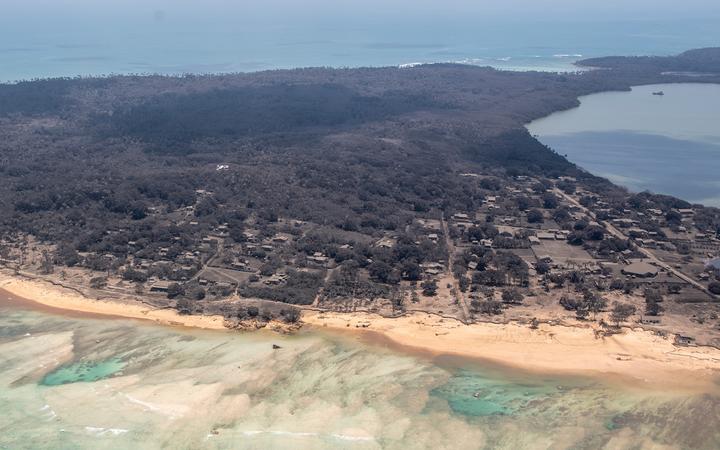
A view over an area of Tonga that shows the heavy ash fall from the recent volcanic eruption within the Tongan Islands.
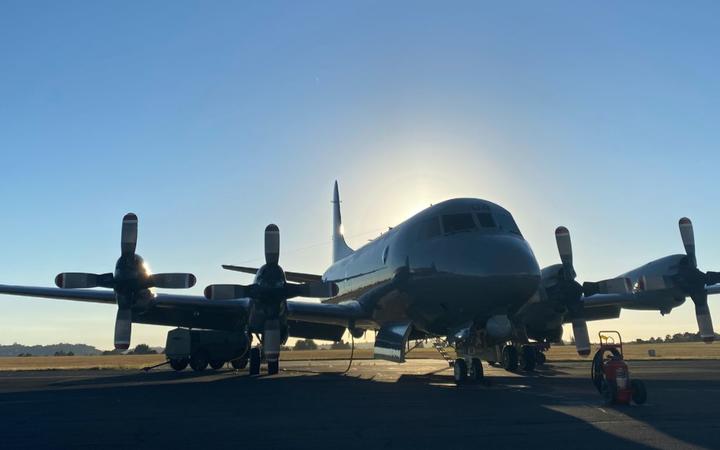
A view over Nomuka in Tonga from a New Zealand Defence Force P-3K2 Orion surveillance flight after the islands were hit by a tsunami triggered by an undersea volcanic eruption. Image: RNZ/NZ Defence Force

The Tongan government said Mango, Atata, and Fonoifua islands were being evacuated, and that water supplies in Tonga were seriously affected. It said all houses were destroyed on Mango Island, only two houses remained on Fonoifua and extensive damage occurred on Nomuka Island.

The government also said there were multiple injuries.

First official Tongan statement
It is the first official statement the kingdom has made about the disaster to international media.

The government said parts of the western side of Tongatapu, including Kanokupolu, were being evacuated after dozens of houses were damaged, and that in the central district many houses were damaged in Kolomotu’a and on the island of ‘Eua.

A diplomat, Tonga’s deputy head of mission in Australia, Curtis Tu’ihalangingie, earlier described the images taken by the NZDF reconnaissance flight as “alarming”, saying they showed numerous buildings missing on Atata island as well.

“People panic, people run and get injuries,” Tu’ihalangingie told Reuters. “Possibly there will be more deaths and we just pray that is not the case.”

With communications in the South Pacific island nation cut, the true extent of casualties is still not clear.

Glover, 50, was the first known death in the tsunami, swept away as she tried to rescue the dogs she cared for at a shelter.

Australia’s Minister for the Pacific Zed Seselja said conditions on other outer islands were “very tough, we understand, with many houses being destroyed in the tsunami”.

UN report of distress signal
The United Nations had earlier reported a distress signal was detected in Ha’apai, where Mango is located.

The Tongan navy reported the area was hit by waves estimated to be 5m-10m high, said the UN Office for the Co-ordination of Humanitarian Affairs.

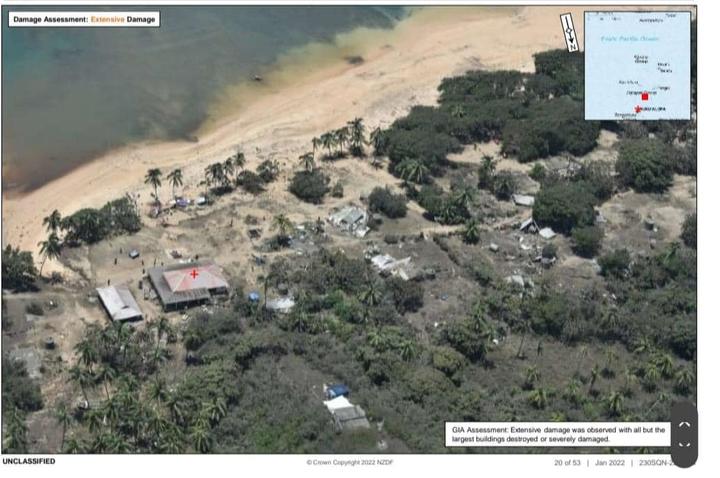
Fonoifua Island in Ha'apai, Tonga, as seen from an NZDF P-3 Orion reconnaisance flight after the eruption of Hunga Tonga-Hunga Ha'apai. The image caption says all but the largest buildings were destroyed or severely damaged.
Fonoifua Island in Ha’apai, Tonga, as seen from an NZDF P-3 Orion reconnaissance flight after the eruption of Hunga Tonga-Hunga Ha’apai. The image caption says all but the largest buildings were destroyed or severely damaged. Image: RNZ/NZDF

Atata and Mango are between 50km and 70km from the Hunga Tonga-Hunga Ha’apai volcano, which sent tsunami waves across the Pacific Ocean and was heard some 2300km away in New Zealand when it erupted on Saturday.

Atata has a population of about 100 people and Mango about 50 people.

“It is very alarming to see the wave possibly went through Atata from one end to the other,” Tu’ihalangingie said.

Workers on airport runway
The NZDF images were posted unofficially on a Facebook site and confirmed by Tu’ihalangingie.

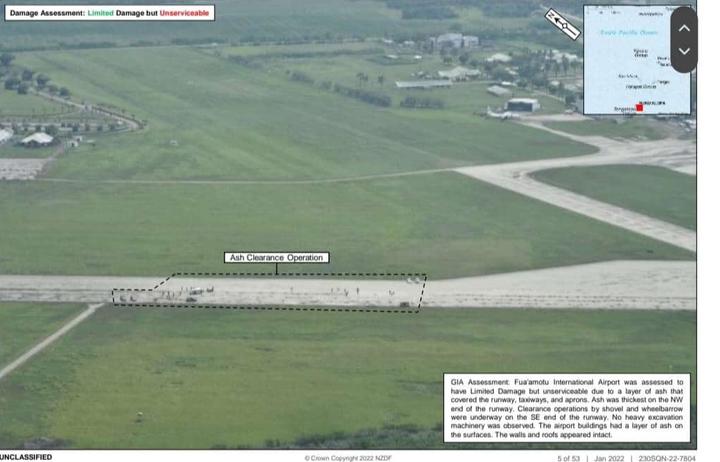
Fua'amotu International Airport in Tonga as seen from a New Zealand Defence Force P-3 Orion reconnaisance flight, after the eruption of Hunga-Tonga Hunga-Ha'apai. The image caption says workers are using shovels and wheelbarrows to clear volcanic ash from the runway.
Fua’amotu International Airport in Tonga as seen from a New Zealand Defence Force P-3 Orion reconnaisance flight, after the eruption of Hunga-Tonga Hunga-Ha’apai. The image caption says workers are using shovels and wheelbarrows to clear volcanic ash from the runway. Image: Crown copyright 2022/NZDF/RNZ

Taken from a P-3K2 Orion plane, they also showed workers on the runway clearing volcanic ash at Fua’amotu International Airport, the country’s main airfield.

One caption described the runway as “unserviceable” because of the layer of ash on it, meaning aircraft cannot land there.

It said the clearance operation was being done with shovels and wheelbarrows, and that “no heavy excavation machinery was observed”.

The Tongan government said wharves were also damaged in the eruption.

This article is republished under a community partnership agreement with RNZ.

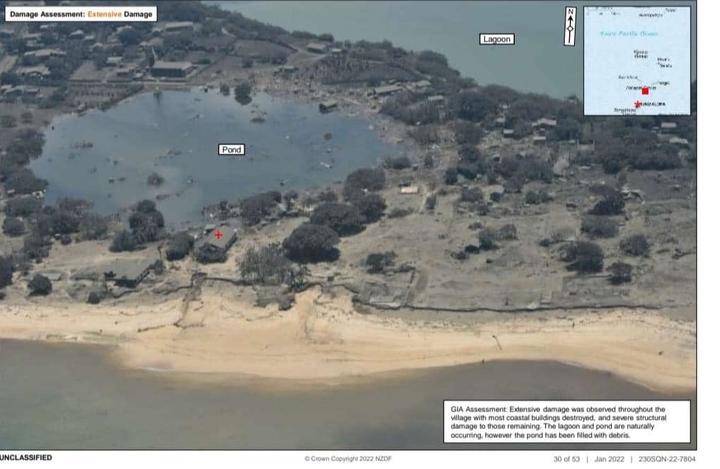
Nomuka Island in Ha'apai, Tonga, as seen from an NZDF P-3 Orion reconnaisance flight after the eruption of Hunga Tonga-Hunga Ha'apai. The image caption says extensive damage was observed through the village with most coastal buildings destroyed.
Nomuka Island in Ha’apai, Tonga, as seen from an NZDF P-3 Orion reconnaisance flight after the eruption of Hunga Tonga-Hunga Ha’apai. The image caption says extensive damage was observed through the village with most coastal buildings destroyed. Image: RNZ/NZDF
Print Friendly, PDF & Email

Article by AsiaPacificReport.nz

Research confirms men with older brothers are more likely to be gay, suggesting same-sex attraction has a biological basis

Source: The Conversation (Au and NZ) – By Francisco Perales, Associate Professor, School of Social Science, The University of Queensland

Shutterstock

New research shows having a greater number of older brothers increases the probability of a person entering a same-sex union at some point in their lives.

This finding, detailed in our paper published today in the Journal of Sex Research, offers a rare insight into the origins of sexual orientation.

The origins of sexual orientation

In recent decades, many countries have achieved remarkable progress towards equal treatment of LGBTIQ+ people, including greater public support and more protective legislation. But despite these encouraging developments, sexual minorities still experience high levels of stigma – and the origins of sexual orientation remain a matter of debate.


Read more:
How stigma impacts LGB health and wellbeing in Australia


A growing body of research is attempting to shed light on why some people experience same-sex sexual attraction and others don’t. These studies have substantial implications for public opinion and debate, and subsequently the treatment of LGBTIQ+ people.

For example, we know people who view sexual orientation as a product of biological factors (such as hormones or genetics) are more likely to support sexual minorities and their civil rights, compared to those who view it as a product of social factors or individual choice.

The fraternal birth order effect

The “fraternal birth order effect” is one of the most well-documented patterns supporting a biological origin of human sexual orientation. This longstanding hypothesis proposes men’s propensity for homosexuality increases with the number of older biological brothers they have.

This effect has been attributed to a mother’s immune reaction to proteins produced by a male foetus. The proteins enter the mother’s bloodstream and trigger the production of antibodies that influence the sexual development of subsequent children.

These maternal antibodies accumulate over successive pregnancies with male foetuses, which means men with more older brothers are more likely to experience same-sex sexual attraction.

However, previous research documenting the fraternal birth order effect has relied on small and selective participant samples, which has led some scholars to question the authenticity of the phenomenon. Indeed, no study of a representative population sample has supported its existence – until now.

Our research

Our research used unique data from Dutch population registers. These data allowed us to follow the life trajectories of more than nine million people born between 1940 and 1990.

In previous studies we used this dataset to examine whether the gender of a married couple’s children affected the stability of their union, and to compare the academic performance of children raised by same- and different-sex couples. This time, we used it to provide a robust test of the fraternal birth order effect.

While the data did not contain direct measures of individuals’ sexual orientation, they did indicate whether they ever entered a same-sex marriage or registered partnership. We used this information as a proxy for homosexuality.

In the Netherlands, registered same-sex partnerships have been recognised since 1998, and same-sex marriage since 2001.

What we found

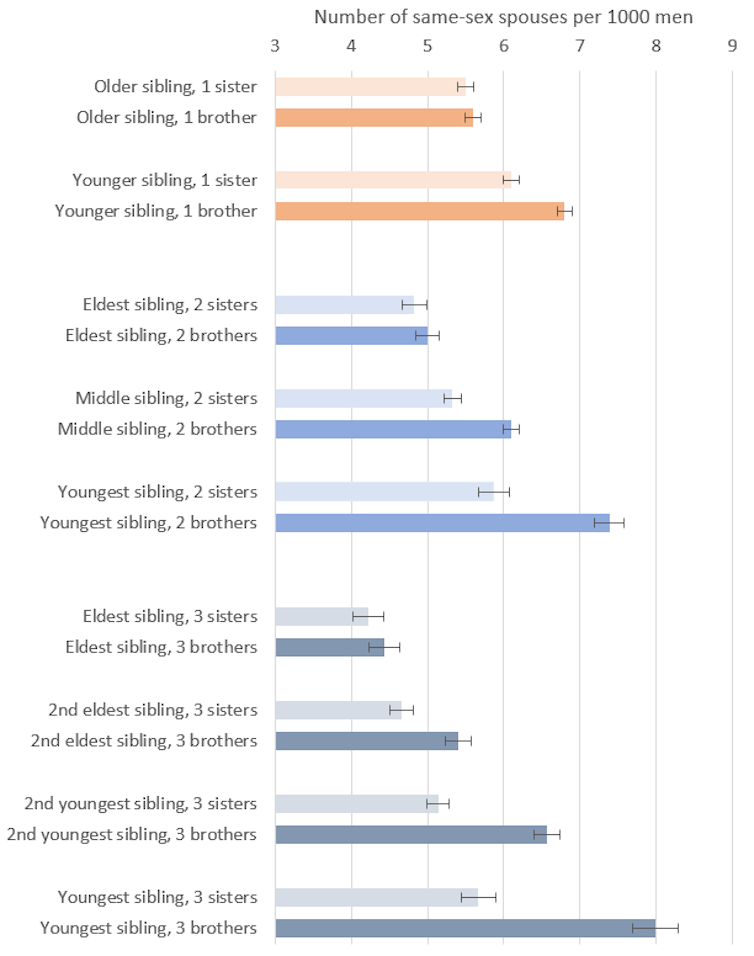
Our results show clear evidence of a fraternal birth order effect on homosexuality. Specifically, men with one older brother are 12% more likely to enter a same-sex union than men with one older sister, and 21% more likely than men with just one younger brother or sister.

The birth order and total number of siblings matter too. Men who are the youngest sibling are more likely to enter a same-sex union than men who are the oldest sibling, and the differences grow larger as the total number of siblings increases.

For example, the probability of a man entering a same-sex union is 41% greater if he has three older brothers, as opposed to three older sisters, and 80% greater than if he has three younger brothers.

The chart below illustrates some of our findings, showing the number of men who entered same-sex unions among those with up to three siblings. The sex of older siblings wields a considerable influence over same-sex union formation. On the other hand, the sex of younger siblings plays little to no role.

Data cover men born in the Netherlands between 1940 and 1990. The underlying statistical model accounts for birth year differences. This rules out the possibility that our results are due to age differences between the groups. Whiskers denote 95% confidence intervals.
Author provided

Unlike earlier studies which focused almost exclusively on men, we documented the same pattern of results among women. We found women are also more likely to enter a same-sex union if they have older brothers.

This finding yields tentative support to arguments that maternal antibodies and foetal proteins also interact to influence womens’ sexual development.

What does it all mean?

Our results tell a clear and consistent story: the number and sex of one’s siblings play an important role in the development of their sexuality.

This evidence aligns squarely with perspectives that emphasise sexual orientation as an innate trait and a reflection of a person’s true self, rather than a product of “lifestyle choices” or a “fashion trend” as some suggest.

Of course, in an ideal society, the rights and respect people are afforded should not depend on whether their sexual identity is “innate” or “a choice”. But unfortunately, these issues still loom large in contemporary debate, further highlighting the importance of our findings.

A biological basis for human sexuality suggests harmful practices like conversion therapy can’t alter someone’s sexual orientation. It also discredits claims homosexuality can be “taught” (such as through sexual diversity education at schools) or “passed on” (such as through same-sex couples adopting children).

We acknowledge the diverging opinions on the value of research concerning the origins of human sexuality. Some feel such research is irrelevant because the findings should have no bearing on public attitudes or legislation, while others reject it for more hostile reasons.

Like others before us, we consider this research essential. Understanding the mechanisms behind sexual orientation can offer insights into what makes people who they are, and helps normalise the full spectrum of human sexual diversity.


Read more:
Why has same-sex sexual behaviour persisted during evolution?


The Conversation

Francisco Perales received funding from the Australian Research Council as part of its Discovery Early Career Researcher Award scheme for a project titled ‘Sexual Orientation and Life Chances in Contemporary Australia’.

Jan Kabatek receives funding from the Australian Research Council Centre of Excellence for Children and Families over the Life Course.

Christine Ablaza does not work for, consult, own shares in or receive funding from any company or organization that would benefit from this article, and has disclosed no relevant affiliations beyond their academic appointment.

ref. Research confirms men with older brothers are more likely to be gay, suggesting same-sex attraction has a biological basis – https://theconversation.com/research-confirms-men-with-older-brothers-are-more-likely-to-be-gay-suggesting-same-sex-attraction-has-a-biological-basis-172396

The republic debate is back (again) but we need more than a model to capture Australians’ imagination

Source: The Conversation (Au and NZ) – By Dennis Altman, VC Fellow LaTrobe University, La Trobe University

Chris Jackson/AP/AAP

The Australian Republic Movement has just released their preferred model for a republic.

It would see Australia’s parliaments nominate candidates for head of state, who would be put to a popular vote of all Australian voters. The head of state’s term would be for five years.

For the past two decades, the Australian Republic Movement has not had a position on what model should be used. So what does this development mean?

The 1999 referendum

Australia’s 1999 republic referendum is widely believed to have failed because republicans were divided on what model to adopt. The proposal for a president chosen by the federal parliament was opposed by many republicans, who insisted only a directly elected head of state was acceptable. Whether another model could have succeeded is unknowable.

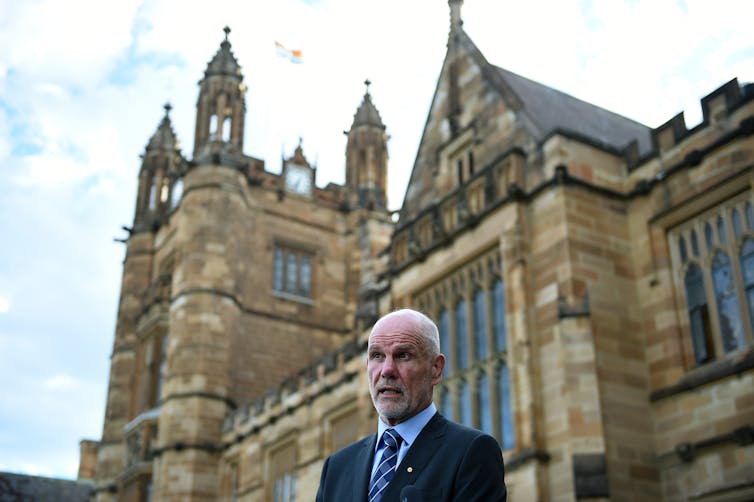
Peter FitzSimons, chair of the Australian Republic Movement.
Writer, journalist and former rugby player Peter FitzSimons is chair of the Australian Republic Movement.
Dan Himbrechts/AAP

The idea of a republic has essentially been on the political back burner since the referendum.

Major polls suggest declining support for a republic. Interestingly, support for change is weakest among younger age groups, who would have no memory of the earlier campaign.

Under former leader Bill Shorten, Labor proposed a two-stage popular vote to get to a republic: one to decide in-principle support for a republic, and if that succeeded another to decide how. However the issue is unlikely to feature prominently in the upcoming election campaign, set to be dominated by COVID and the economy.

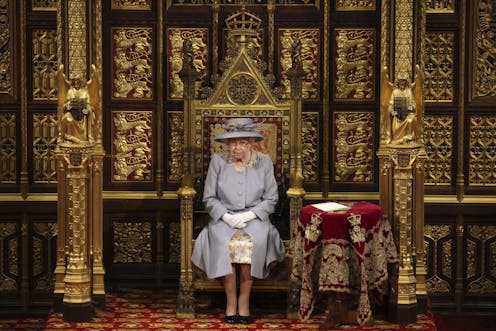
After Queen Elizabeth

As the end of Queen Elizabeth’s reign approaches, the Australian Republic Movement has reignited the debate, following two years of consultation. Central to their campaign is the claim:

Australians should have genuine, merit-based choice about who speaks for them as Head of State, rather than a British King or Queen on the other side of the world.

Monarchists will retort that we already have an effective head of state with the governor-general, who for all practical purposes exercises the powers granted to the monarch. Ever since 1930, when the Scullin government appointed the first Australian-born governor-general, Sir Isaacs Isaacs, against the opposition of King George V, it has been clear this choice rests with the prime minister.

Becoming a republic would essentially be a symbolic, if important act. The republic movement claims we need the change so “our future, more than ever, will be in Australian hands”, but it is hard to see what effectively would change.


Read more:
Forget Charles — an Australian republic hinges on the model we adopt, not the monarch


The biggest hurdle for republicans is the reality that Australia is already an independent nation, with only sentiment and inertia linking us to the British crown.

Most Australians, when pressed, struggle to remember the name of the current governor-general or to explain their role.

Over the past several decades, prime minsters have seemed increasingly presidential. Indeed, one might have expected a head of state to be more visible as a unifying force during the past two years of the pandemic, but Governor-General David Hurley’s messages have gone largely unnoticed.

A hybrid model

To find an acceptable means of removing the link to the crown, the republic movement is now proposing a hybrid plan. The media response to this has been at best lukewarm.

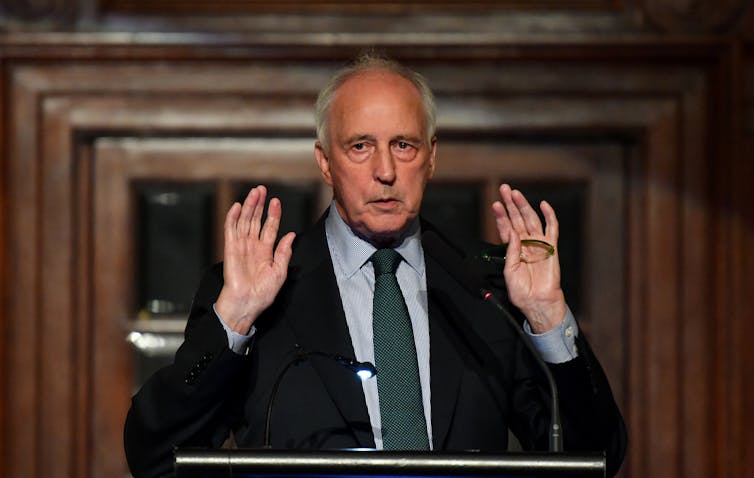
Paul Keating
Former prime minister Paul Keating is no fan of the hybrid proposal.
Darren England/AAP

This model retains the basic premise of the Westminster system, namely that effective power rests in the hands of a parliamentary majority. A directly-elected president can be compatible with parliamentary government – this is the system in Ireland and several other European countries – although it would need strict constitutional limitations on the powers of a president.

But former prime minister Paul Keating lashed the hybrid idea, saying it would undermine the prime minister’s authority and lead to a dangerous “US-style” presidency.

Former “yes” campaign leader and prime minister Malcolm Turnbull has also criticised the proposal as unlikely to get the required support of voters, because it

will be seen by many to embody the weaknesses of direct election and parliamentary appointment models but the strengths of neither.

Indigenous recognition

Becoming a republic would require significant rewriting of the Constitution, which would then need to be ratified by a majority of voters in a majority of states. Such a significant undertaking should see us imagine more than just a name change for the head of state.


Read more:
Our research shows public support for a First Nations Voice is not only high, it’s deeply entrenched


One of the major shifts since the 1999 referendum is the growing demand from Indigenous Australians for recognition that sovereignty was never ceded, and the scars of colonial occupation and expropriation remain.

As historian Mark McKenna writes:

The republican vision of Australia’s independence […] must finally be grounded on our own soil and on thousands of generations of Indigenous occupation.

A republican movement that begins with the Uluru Statement from the Heart, rather than concerns about the symbolic links to the British crown, is a project more likely to capture the imagination of Australians.

The Conversation

Dennis Altman does not work for, consult, own shares in or receive funding from any company or organization that would benefit from this article, and has disclosed no relevant affiliations beyond their academic appointment.

ref. The republic debate is back (again) but we need more than a model to capture Australians’ imagination – https://theconversation.com/the-republic-debate-is-back-again-but-we-need-more-than-a-model-to-capture-australians-imagination-175058

How to look after your mental health if you’re at home with COVID

Source: The Conversation (Au and NZ) – By Louise Stone, General practitioner; Associate Professor, ANU Medical School, Australian National University

Shutterstock

For many of us, catching COVID and isolating at home can be a lonely, scary and distressing experience.

For those with a pre-existing mental illness, it can be even more difficult.

The following strategies are designed to help you look after your mental health if you get COVID and are isolating at home.

Remember the basics

When living in a time of great uncertainty and threat, it can be difficult to remember and practice simple strategies to maximise wellness.

If you’re isolating at home with COVID, it’s important to:

  • manage fever and other symptoms like aches, pains and sore throat with paracetamol or ibuprofen

  • maintain a healthy diet

  • keep your fluid intake up, particularly if you have a fever

  • stop exercise for at least 10 days, and depending on the severity of your symptoms, return to exercise slowly (if you have any questions about returning to exercise, ask your GP)

  • deep breathing, which can help lung function and help you stay calm during isolation and recovery, but this should be done in consultation with your doctor

  • practise mindfulness to help cope with the inevitable anxiety around illness and isolation

  • find distractions like reading, watching movies or doing a creative activity, which can help keep your brain from fixating on worry (this is particularly important for children)

  • and stay connected with friends and family, online or over the phone.

It’s important to monitor your COVID symptoms. The Royal Australian College of General Practitioners has a useful symptom diary to assist with this. Or use the Healthdirect symptom checker to decide whether you need medical help.

If you live alone, you should arrange for someone to contact you regularly to make sure you are managing.

Some coping strategies to avoid

During times of anxiety and uncertainty, such as isolating at home with COVID, it’s understandable people may turn to drugs and alcohol, unhealthy eating, gambling, or other addictions to manage psychological discomfort.

These strategies may temporarily alleviate stress. But they can cause more mental health issues in the longer term.


Read more:
Doomscrolling COVID news takes an emotional toll – here’s how to make your social media a happier place


It’s also important to avoid “doom scrolling”, which is the tendency to continue to scroll through bad news on your mobile phone, even though the news is saddening, disheartening or depressing.

You might want to disengage from mainstream or social media if it has become harmful to your mental health.

It’s been extra hard for those with mental illnesses

The COVID pandemic has made living with mental illness even more difficult. The last few years have been challenging and exhausting for many. People with mental illnesses, and other chronic conditions, have had to adapt their normal management strategies to cope, shifting care and some forms of therapy online.

Recovery from, and management of, mental illness often involves activities like exercise, positive social engagement and therapy – all of which may be limited due to COVID restrictions, financial constraints and staff shortages.

Acute services, including hospitals and general practice, are struggling to meet demand.

Isolation can be particularly difficult for people who don’t have a safe and secure home. People experiencing domestic violence have more difficulty accessing care as they may not be safe interacting with health professionals in their homes.

Children are at increased risk of harm if they live with domestic violence. They may have no safe places to go when schools or childcare facilities are closed, so family, friends and services like Kids Helpline play an important role in supporting children.

Seeking help

There are many resources available to assist you if you’re isolating due to COVID.

Your GP can provide advice, help you navigate the health system and treat physical and mental health symptoms, via telehealth over the phone or online. Medicare rebates for telehealth are available if you have seen the GP face to face in the previous 12 months.

The National Coronavirus Helpline is a 24-hour service that provides free advice on how to seek medical help.

Beyond Blue offers a series of resources for adapting to the pandemic, including for Australians living overseas and people who speak languages other than English. The organisation also offers free counselling during the pandemic. Call 1800 512 348 to speak with a trained mental health professional, or chat online.


Read more:
Not again … how to protect your mental health in the face of uncertainty and another COVID variant


The federal government provides a free mental health service for people in Victoria, NSW and the ACT who’ve been affected by the pandemic. Call 1800 595 212 from Monday to Friday, 8:30am-5pm.

The Raising Healthy Minds app has information, ideas and guidance for parents to help them support their child’s mental health and well-being.

People who are experiencing domestic violence can access support through calling 1800RESPECT on 1800 737 732 or visiting the organisation’s website.

Each state and territory also offers a mental health service to help you access local support:

  • ACT — Canberra Health Services Access Mental Health on 1800 629 354 or 02 6205 1065 (available 24/7)

  • NSW — Mental Health Line on 1800 011 511 (available 24/7)

  • NT — Northern Territory Mental Health Line on 1800 682 288 (available 24/7)

  • Queensland — Mental health access line on 1300 642 255 (available 24/7)

  • SA — SA COVID-19 Mental Health Support Line on 1800 632 753 (available 8am-8pm)

  • Tasmania — Mental Health Service Helpline on 1800 332 388

  • Victoria — Head to Help on 1800 595 212 (available 8:30am-5pm, Monday to Friday)

  • WA — Mental Health Emergency Response Line on 1300 555 733 (metro) or 1800 676 822 (Peel) (available 24/7).


If this article has raised issues for you, or if you’re concerned about someone you know, call Lifeline on 13 11 14.

The Conversation

Louise Stone does not work for, consult, own shares in or receive funding from any company or organization that would benefit from this article, and has disclosed no relevant affiliations beyond their academic appointment.

ref. How to look after your mental health if you’re at home with COVID – https://theconversation.com/how-to-look-after-your-mental-health-if-youre-at-home-with-covid-174536

4 ways to stop Australia’s surge in rooftop solar from destabilising electricity prices

Source: The Conversation (Au and NZ) – By Christina Nikitopoulos, Associate professor, Finance Discipline Group, University of Technology Sydney

Shutterstock

Last year saw Australians install rooftop solar like never before, with 40% more installed in 2021 than in 2020. Solar system installations now make up 7% of the energy going into the national electricity grid.

Alongside the greater uptake of utility-scale solar (such as solar farms), this means cheaper and cleaner electricity is fast becoming a reality, putting the country on track to meet international climate targets.

But such a dramatic surge in solar output also poses challenges for Australia’s power system for two main reasons.

It results in increased periods of large oversupply when weather conditions favour solar energy. This leads to energy being wasted due to the need for solar curtailment – when a solar system shuts down or stops exporting energy to the grid to counter the energy spike.

On the other hand, there is little solar generation during peak demand hours in the morning and evening. This requires more expensive generators to run.

These are huge problems from a market operations perspective, as the pressure on the system may result in blackouts and disruptions. It also creates large price swings for retailers, which then can increase costs for consumers. As a result, we may see it become more expensive to decarbonise the national energy market.

We propose four ways to combat this growing, volatile issue, according to findings from our recent research.

Renewables investment is exploding

Investment in solar has increased significantly since 2018 as it became the cheapest form of new power-generation technology.

In fact, the Australian Energy Market Operator’s latest Integrated System Plan, released last month, predicts coal plants to close three times faster than industries had expected.

Australia has one of the highest per-capita rooftop solar installation rates in the world, with rooftop and utility-scale solar already meeting over 100% of demand in South Australia.

By 2050, we expect to see five times more rooftop solar capacity.


Read more:
The end of coal is coming 3 times faster than expected. Governments must accept it and urgently support a ‘just transition’


How does this challenge price stability?

As solar generation is so cheap, traditional coal and gas generators are getting pushed out as a source of base-load electricity supply.

This is especially acute in the middle of the day, when solar generation is greatest as the sun is shining at its peak. This results in low prices, or even in negative prices, which financially penalises any generators making power at those times. Curtailment is then used to offset any oversupply or negative prices.

Electricity demand, however, tends to peak during the morning and evening when most people are home. Prices skyrocket during these periods as gas and coal-fired power stations benefit from the reduced competition from solar energy.

For retailers, these huge price swings are extremely inefficient. And this inefficiency in the market may eventually be reflected in consumer prices. What’s more, too much solar curtailment can hurt the rooftop solar owner because it reduces the amount of generation coming from their systems.

This price variability can also undermine the stability of the power system. This is because solar systems, both large and small, do not inherently provide certain services needed to keep the lights on, such as “system strength” and “inertia”.

Such services are currently largely provided by coal and other thermal plants, whose very existence is under threat by additional solar.


Read more:
Solar curtailment is emerging as a new challenge to overcome as Australia dashes for rooftop solar


Utility-scale solar output looks very different to rooftop PV output over the course of a day, as the utility-scale solar panels rotate to track the sun. On the other hand, rooftop solar systems are generally fixed in orientation.

We found this difference in output leads to different price impacts. Utility-scale solar output reduces price variability, while rooftop solar output increases it. This means we have a greater need for managing rooftop solar.

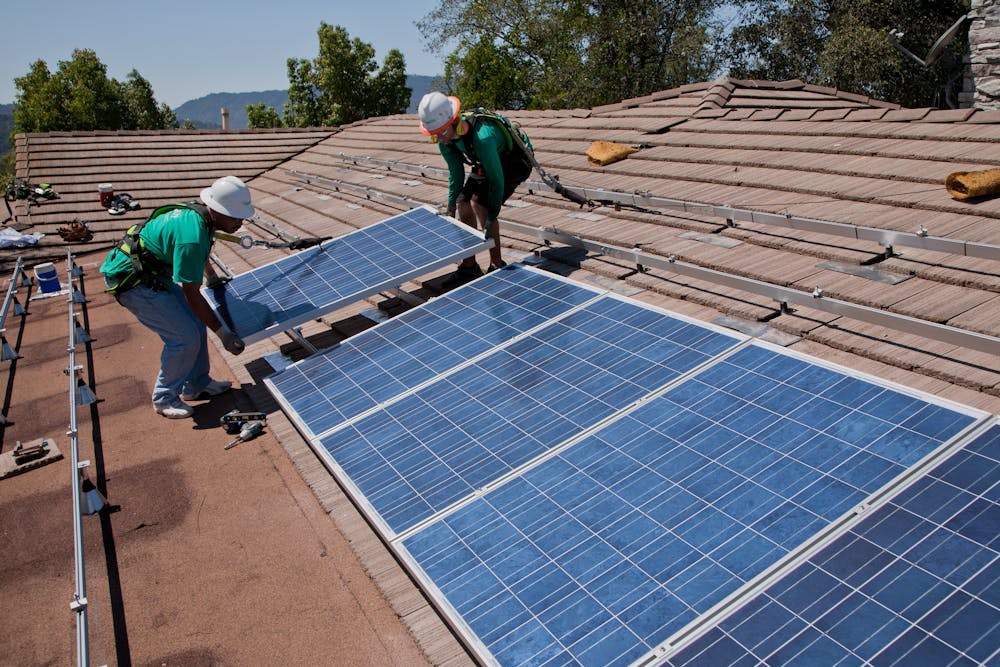
Two men installing solar panels on a rooftop
The price variability of rooftop solar can undermine the stability of the power system.
Shutterstock

Our research proposes four ways we can better align solar output with electricity demand. This can reduce both the level and volatility of electricity prices, benefiting consumers without undermining the stability of the power system.

1. More battery storage

Australians with rooftop solar should be eligible for government grants, rebates, and loans to support their systems with batteries. This will enable owners to store extra power generation during the day and export it to the national grid later in the evening to meet the peak demand.

2. Flexible management of energy exported to the grid

The Australian Energy Market Operator should design dynamic and flexible export management measures to absorb excess rooftop generation. This will efficiently control the generated energy going into the grid by taking into account demand and supply conditions in real time, improving the system security.

The operator has recently developed such measures for South Australia, but they’ll also be useful to other regions.

3. Paying rooftop solar owners dynamic tariffs

Currently, people who own rooftop solar are paid a fixed or “flat-rate” tariff for the electricity they provide to the grid, regardless of time of the day.

Instead, we need to transition from fixed to dynamic tariffs. These dynamic “feed-in” tariffs would be lower during the day and higher in the morning and evening peaks to incentivise rooftop owners to inject their electricity into the grid when it’s more valuable.

4. We need a two-sided market

Australia’s energy market is heavily one-sided, with suppliers having the flexibility to, for example, set prices and dispatch energy.

A two-sided market will allow both supply and demand sides to participate in the dispatch and price setting process. This will enable electricity demand to be more flexible, and better align energy usage with solar and wind generation.

Such a market will allow increased output of renewables to be translated to lower electricity prices.


Read more:
We mapped every large solar plant on the planet using satellites and machine learning


We rely on solar energy as a key technology to help Australia decarbonise the energy market by 2050. To maximise the benefits of solar generation, Australia urgently needs a coordinated response from policymakers, energy providers and consumers. And crucially, it will enable Australia to achieve net-zero emissions by 2050.

The Conversation

The authors gratefully acknowledge the important contributions of Dr Otto Konstandatos to this research and the writing of this article.

Alan Rai and Muthe Mwampashi do not work for, consult, own shares in or receive funding from any company or organization that would benefit from this article, and have disclosed no relevant affiliations beyond their academic appointment.

ref. 4 ways to stop Australia’s surge in rooftop solar from destabilising electricity prices – https://theconversation.com/4-ways-to-stop-australias-surge-in-rooftop-solar-from-destabilising-electricity-prices-173592

COVID and schools: Australia is about to feel the full brunt of its teacher shortage

Source: The Conversation (Au and NZ) – By Rachel Wilson, Associate Professor in Education, University of Sydney

Shutterstock

The Omicron wave is likely to exacerbate Australia’s existing teacher shortages and demanding workloads. As school starts at the end of January and beginning of February across the country, many teachers will be at risk of contracting COVID. They will need to stay away from work, while others may choose to leave the profession altogether.

To address parental concerns about teacher absences, the Prime Minister recently announced teachers will no longer be required to isolate at home for seven days if they are close contacts, and if they don’t have symptoms and return a negative rapid antigen test. But unions have slammed this relaxation of rules saying it will only add to safety concerns for teachers and children.

States and territories are putting together a plan to open schools safely, which is set to be released on Thursday. But for schools to operate effectively, and avoid remote learning, Australia must also have a long-term plan for recruiting and retaining teachers. This means lifting their professional status, improving work conditions and increasing pay.


Read more:
We shouldn’t delay the start of school due to Omicron. 2 paediatric infectious disease experts explain


What’s happening overseas?

Other countries are seeing Omicron-fuelled teacher shortages. In England teachers have been told to combine classes due to staff shortages.

In Canada some provinces had to delay opening schools. In Ontario families who were previously notified when a teacher or child in their class tested positive will now only be notified when more than 30% of staff and students are absent.

In France teachers have gone on strike over what are described as “chaotic conditions”.

Schools in the United States, like in Australia, suffered from pre-pandemic teacher shortages and have struggled to stay open during the pandemic. Some states have recruited parents as stop-gap substitute teachers, others returned to remote learning.

Research in the US has made it clear the pandemic has changed teachers’ committment to remaining in the classroom and led to high staff turnover. Australians may find themselves in the same position.

Australia’s teacher shortage

Australia’s teachers suffer from poor professional status. A lack of respect, problems with recruitment, poor pay (relative to other professions), high workload, conflicting demands and now the pandemic, have conspired to create a perfect storm.

A range of data and reports suggest the scale of the emerging teacher shortage will be serious. Low completion rates of teacher degrees (fewer than 60% of those who started the degree) alongside rising child and youth demographic trends mean many schools, particularly those in rural areas, will find things even more difficult over the next few years.


Read more:
We’re short of teachers, and the struggles to find training placements in schools add to the problem


Reports from the New South Wales education department, accessed by the NSW Teachers Federation, show more than 1,100 full time secondary and special education teaching positions were unfilled in 2021. That’s a lot of classrooms without a teacher.

The documents also reportedly say the state’s public schools will “run out of teachers in the next five years”. Meanwhile, states struggled to find casual and relief teachers to fill the pandemic exacerbated shortages in the past two years.

Projections based on 2020 student enrolments, student to teacher ratio and school population growth suggest between 11,000 and 13,000 new teachers will be needed in NSW by 2031.

Nationally we have seen a chronic shortage in maths and science teachers. With the Australian Teacher Workforce Data Project still in development phase after ten years there has been no systemic national tracking of generic or specialist shortages. The Australian Mathematics and Science Institute calculates there is a 76% chance every student will have at least one unqualified maths teacher in years 7 to 10.

Long-term toleration of the teacher shortages in maths and science is particularly surprising as these learning areas are critical to our economy. There are also well documented declines in senior students taking these subjects, suggesting we are already paying the price for this neglect.


Read more:
Fewer Australians are taking advanced maths in Year 12. We can learn from countries doing it better


There has been no government reporting on the number of schools unable to meet their staff needs in 2021. But a number of social media reports have shown industrial action in individual schools where the remaining teachers were unable to maintain classes.

We need a national plan

A large volume of research documents the high and increasing workload of Australian teachers. In NSW, before the pandemic, teachers reported working an average of 55 hours per week and principals an average of 62. With the pandemic increasing teacher workload, short staffing in schools will ratchet that up another notch.

Unlike many countries, including England, Australia doesn’t have a strategic plan to recruit and retain teachers.

The NSW Teachers Federation commissioned an independent inquiry in 2020 into the work of teachers and principals, and how it’s changed since 2004. After reviewing international evidence and local data, the final report made a range of recommendations to “recognise the increase in skills and responsibilities, help overcome shortages and recruit the additional teachers needed to cope with enrolment growth”.

The key recommendations included:

  • increase teacher salaries by 10 to 15% to bring them on par with other similarly educated professions

  • increase lesson preparation time

  • improve promotions and career structure

  • increase number of school counsellors

  • reduce curriculum and administration workload.

Australia urgently needs a coordinated, long-term, politically bipartisan plan to strengthen teacher recruitment, placement and retention. With such a plan in hand we will be better positioned to tackle the ongoing pandemic and whatever other crises we face in the future.

The Conversation

The authors do not work for, consult, own shares in or receive funding from any company or organization that would benefit from this article, and have disclosed no relevant affiliations beyond their academic appointment.

ref. COVID and schools: Australia is about to feel the full brunt of its teacher shortage – https://theconversation.com/covid-and-schools-australia-is-about-to-feel-the-full-brunt-of-its-teacher-shortage-174885

63.5% of Australia’s performing artists reported worsening mental health during COVID

Source: The Conversation (Au and NZ) – By Helen Rusak, Senior Lecturer, Arts Management, Edith Cowan University

Hailey Kean/Unsplash

92% of performing artists experienced significant changes to their work during early stages of the pandemic – and at least half experienced depression.

These shocking figures comes from new research talking to hundreds of performing artists from across Australia.

The impact of COVID-19 was particularly devastating for performing artists because their artistic practice is highly ingrained in their identity.

The disruption to performances during lockdown led performers to re-evaluate their artistic practice, whether through having a break or reassessing their career paths.

Artists described cancellation of tours, gigs, and contracts which often happened overnight and without warning. Participants spoke of losing “27 gigs in three days” in March 2020, having a year’s worth of touring work cancelled, and not being able to find any new gigs.

In our national survey of 431 performing artists, 63.5% of the participants reported feeling their mental health worsened during the pandemic.

Mental health stressors

COVID-19 exacerbated social, economic and mental health problems long-recognised throughout the performing arts sector. In an industry that was already under the spotlight for stress and mental health, COVID-19 brought with it another test to the resilience of the industry.

In our research, we used the short form Depression Anxiety Stress Scales 21 (DASS-21), a self-reported survey which measures levels of distress, and found scores on all three subscales were elevated compared to previous findings among performing artists in 2015.

49% of participants demonstrated moderate, severe or extremely severe levels of depression; 61% demonstrated moderate, severe or extremely severe levels of anxiety; and 47% demonstrated moderate, severe or extremely severe levels of stress.

In line with these findings, almost half (47.9% of respondants) accessed mental health supports, such as psychologists and GPs.

The participants most affected by poor mental health were early career artists, freelancers and women.

Women not only faced the difficulties of COVID and related lockdowns, but also disproportionately faced the challenge of increased care responsibilities for elderly parents and children, and the distractions of working from home during lockdown.


Read more:
Planning, stress and worry put the mental load on mothers – will 2022 be the year they share the burden?


Freelance artists often found themselves excluded from government support such as JobKeeper.

Early career artists questioned their future in the arts: their performing opportunities suddenly disappeared during lockdown, and they lost opportunities to gain new networks and build there careers. As one participant told us, “a whole year [was] just ripped away,”

that’s a year I’ll never get back, to add to my portfolio, to my connections and networks.

Ongoing stress

Difficulties weren’t just faced by individual artists. The immediate impact for performing arts organisations was a complete shock to the system.

Workload stress for managers increased with their efforts to maintain operations and recoup lost income.

Many artistic organisations are only now beginning to feel the true burden of COVID-19 and will continue to feel these impacts throughout the medium term.

As the pandemic went on through 2020 and 2021, some organisations saw two seasons’ worth of programming delayed. 2022 and beyond will see these organisations trying to play catch up, causing additional logistical work – and as Omicron is proving, there will be with further disruptions and shutdowns in the sector.

While almost half of the participants accessed mental health support during COVID-19, several barriers to seeking help were identified, such as financial constraints and a lack of available and appropriate mental health support which understood the particular stressors of working in the performing arts.

Community and resilience

Even as they were facing stress, our research found organisations acted as beacons of support for the wider performing arts community, honouring artist and employee contracts as much as possible.

In turn, arts workers reported support from audiences, donors and direct support from government was instrumental in maintaining morale and purpose for organisations.

The adaptability and resilience evidenced within the performing arts industry during COVID-19 should not be underestimated. Artists continued to create work throughout the pandemic, and even found positive outcomes from this challenging time.

Participants reported being able to rest and reset.

Time for people to take a break is important, mental health is important, hard conversations are important. But we had the time to have them, instead of “we can’t have that conversation because the show’s going on in two weeks and we’ve got to rehearse the scene.” It’s like, well, let’s stop and let’s talk about this. It was really beneficial for a lot of works that I was involved in.

For many artists, it will be a long recovery for their careers and their health. Now is the time to consider how the industry can build back stronger post-COVID: increased arts funding, low-cost or free mental health services tailored to performing artists, and encouraging everyone to experience – and support – the amazing art being made in our own backyards.

The Conversation

This research was supported by funding received from the Western Australian Government Department of Jobs, Tourism, Science and Innovation.

ref. 63.5% of Australia’s performing artists reported worsening mental health during COVID – https://theconversation.com/63-5-of-australias-performing-artists-reported-worsening-mental-health-during-covid-174610

Tonga eruption: New Zealand sends two navy ships with supplies, water

RNZ News

Two New Zealand naval ships are being sent to Tonga to provide support, carrying fresh water, emergency provisions, and diving teams.

It comes as ashfall on the Nuku’alofa airport runway means one of the aircraft readied yesterday — a C-130 Hercules, to supply aid — would be unable to land.

The official death toll from Saturday’s eruption of Hunga Tonga-Hunga Ha’apai volcano and tsunami is two, but getting accurate information from the ground has been difficult.

In a statement this afternoon, Foreign Minister Nanaia Mahuta and Defence Minister Peeni Henare said New Zealand was ready to assist.

The HMNZS Wellington would transport survey equipment and a helicopter, while HMNZS Aotearoa would transport 250,000 litres of water and is able to produce an extra 70,000 litres per day through salinisation, they said.

The journey is expected to take three days.

Mahuta said authorities had struggled with communications on the ground so decided to send aid before an official request.

“The delays mean we have taken the decision for both HMNZS Wellington and HMNZS Aotearoa to sail so they can respond quickly if called upon by the Tongan Government,” she said.

Henare said the ships would return to New Zealand if not required.

He said the survey and diving teams would be able to assess wharf infrastructure, and changes to the seabed in shipping channels and ports, to assure future delivery of aid and support from the sea.

The Hercules flight remains on standby with humanitarian aid and disaster relief stores including collapsible water containers, generators and hygiene kits.

Tonga is free of covid-19 and operates strict border controls, so all support is being offered in a contactless way.

The ministers’ statement said a further NZ$500,000 in humanitarian assistance had been allocated, bringing the total to $1 million.

Serious damage has been reported from the west coast of Tongatapu and a state of emergency has been declared.

Acting High Commissioner for New Zealand in Tonga Peter Lund told Tagata Pasifika he could see rubble, large rocks and damaged buildings, with serious damage along the west coast of Tongatapu.

“There is a huge clean-up operation underway, the town has been blanketed in a thick blanket of volcanic dust, but look they’re making progress… roads are being cleared,” he said.

A Briton among fatalities
UN Coordonator in the Pacific Jonathan Veitch said one of the fatalities was British national Angela Glover, who was reported by her family to have been killed by the tsunami.

Glover is thought to have died trying to rescue her dogs at the animal charity she ran.

Veitch told RNZ full information from some islands — such as the Ha’apai group — was not available.

“We know that the Tonga Navy has gone there and we expect to hear back soon.”

The communication situation was “absolutely terrible”.

“I have worked in a lot of emergencies but this is one of the hardest in terms of communicating and trying to get information from there. With the severing of the cable that comes from Fiji they’re just cut off completely,” he said.

“We’re relying 100 percent on satellite phones.

‘Bit of a struggle’
“We’ve been discussing with New Zealand and Australia and UN colleagues … and we hope to have this [cable] back up and running relatively soon, but it’s been a bit of a struggle.”

It had been “a lot more difficult” than regular operations, Veitch said.

One of the biggest concerns in the crisis was clean water, he said.

“I think one of the first things that can be done is if those aircraft or those ships that both New Zealand and Australia have offered can provide bottled drinking water. That’s a very small, short-term solution.

“We need to ensure that the desalination plants are functioning well and properly … and we need to send a lot of testing kits and other material over there so people can treat their own water, because as you know, the vast majority of the population in Tonga is reliant on rainwater.

“And with the ash as it currently is, it has been a bit acidic, so we’re not sure of the quality of the water right now.”

Access in ‘covid-free nation’
Another issue was access.

“Tonga is one of the few lucky countries in the world that hasn’t had covid … so we’ll have to operate rather remotely. So we’ll be supporting the government to do the implementation and then working very much through local organisations.”

For those in Tonga who were cut off, Veitch said the main message was “everybody is working day and night on this. We are putting our supplies together. We are ready to move.

“We have teams on the ground. We are coming up with cash and other supply solutions … so help is on its way”.

Royal New Zealand Air Force aircrew monitoring the Tongan volcanic tsunami damage during the 170122 flight
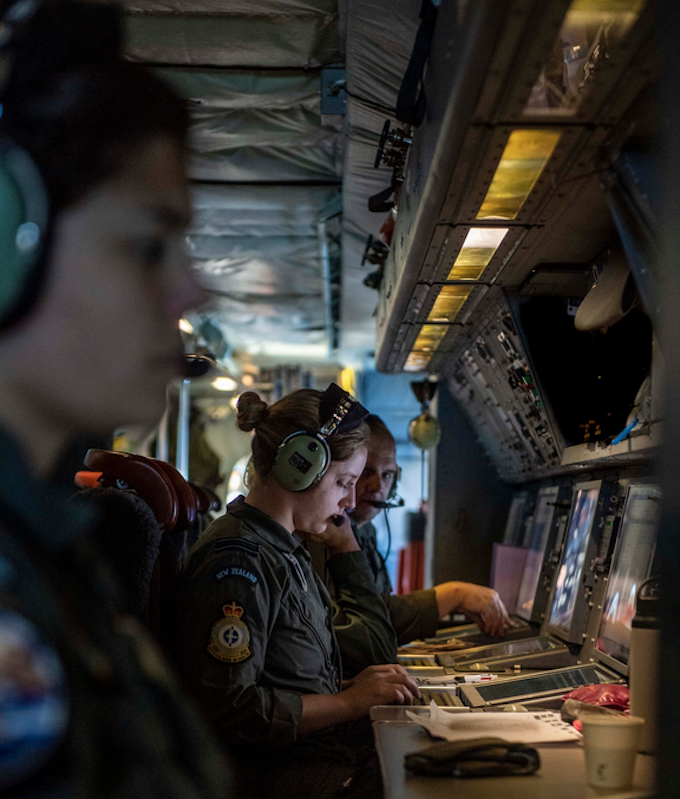
Royal New Zealand Air Force aircrew in the P-3K2 Orion aircraft monitoring the Tongan tsunami damage on yesterday’s surveillance flight. Image: RNZDF/Licensed under Creative Commons BY 4.0

This article is republished under a community partnership agreement with RNZ. It corrects an earlier report on the death toll headlined “Tonga volcano tsunami death toll rises to three, reports UN”. The death toll stood at 2 as confirmed by MFAT.

Print Friendly, PDF & Email

Article by AsiaPacificReport.nz

Eruption renews debate on lack of backup for Tongan communications

By Kalino Latu and Philip Cass in Auckland

Lack of backup satellite and cable links in the wake of Tonga’s volcanic eruption at the weekend reignites debate over the government’s plans to secure communications.

Communication with Tonga remains intermittent after the Hunga Tonga-Hunga Ha’apai eruption and tsunami severed the kingdom’s undersea cable connection with the rest of the world.

The crisis has renewed debate over previous government decisions which have been the subject of controversy and court cases.

It could be weeks before services are fully restored.

The 827km cable between Tonga and Fiji was cut when the volcano exploded. The break is located 37km from the capital, Nuku’alofa.

A cable connecting Tongatapu to other islands in the archipelago has been severed about 47km from Nuku’alofa.

A submarine cable repair ship is expected to sail from Papua New Guinea in the next few days.

Some communication with Tonga is possible via satellite. It is understood some people have been able to use the University of the South Pacific’s satellite connection to contact New Zealand from Ha’apai.

A New Zealand resident in Mangawhai, north of Auckland, has been in contact with his colleagues in Tonga via satellite text phone, 1News reported today.

However, Tonga Cable Ltd chair Samiuela Fonua said the lingering ash cloud was continuing to make even satellite phone calls abroad difficult.

Fonau said Tonga had been talking with New Zealand about establishing a second international fibreoptic cable, but any long-term solution was difficult.

The Kacific controversy
The government of the late prime minister ‘Akilisi Pohiva believed the best option was for Tonga to spend its money in building a satellite back up service.

The Pohiva government had made a 15-year deal with Kacific to establish a satellite backup link, but this was cancelled by the Tu’ionetoa government.

As Kaniva News reported in June last year, Kacific Broadband Satellites International Ltd provided emergency broadband services to Tonga when the undersea cable was severed by a ship’s anchor in 2019.

The Tongan government and its subsidiary Tonga Satellite Ltd later signed an agreement with Kacific for the supply of satellite broadband for a fee of US$5.76 million, which was due on June 15, 2019.

The fee was not paid and the company took Tonga to court in Singapore to enforce payment of the debt. The government then tried to take TSL off the kingdom’s company registry. This was overturned by the Tongan Supreme Court.

“We came to Tonga’s aid during its hour of need,” company CEO Christian Patouraux said at the time.

“It is deeply disappointing that Kacific has to undertake legal proceedings.

“The Tongan Government has benefited from millions of dollars of payments from international aid and infrastructure agencies to fund e-government initiatives and strengthen digital access over the last 10 years.”

The Hawaiki deal
The current Prime Minister, Siaosi Sovaleni was at the centre of a controversial deal with internet provider Hawaiki when he was Minister of Environment and Communications.

Sovaleni signed a TOP$50 million (NZ$32.5 million) contract.

Tonga paid TOP$6 million (NZ$4 million) so that the Hawaiki cable connecting New Zealand and Australia to Hawai’i and Los Angeles was connected to the Vava’u fibre cable in Tonga.

However, in 2019 Tonga Cable Ltd (TCL) director Paula Piveni Piukala and Minister of Trade and Economic Development Tu’i Uata were sent to Auckland to seek advice on the deal.

Uata said TCL had questioned whether the large sums being paid from taxpayers’ money were justified.

Piukala said at the time it “did not make sense” to pay such a large amount of money just in case the cable might be damaged in the future.

Tonga also had an agreement with French company Alcatel for the provision of a fibreoptic cable system connecting Nuku’alofa and Vava’u with a branch to Ha’apai.

The World Bank
The World Bank has funded $50 million for Tonga’s high-speed internet cable which was launched in 2013.

Tonga asked the bank to also fund a back up, or redundancy, cable but the bank said it was not financially viable.

Kalino Latu is editor of Kaniva Tonga. Asia Pacific Report collaborates with Kaniva News.

Print Friendly, PDF & Email

Article by AsiaPacificReport.nz

Fiji’s AG blames Tongan tsunami warning delay on ‘agency liaison’

By Luke Nacei in Suva

Fiji’s Department of Mineral Resources needs time to liaise with a number of agencies before emergency warnings or alerts are issued, says acting Prime Minister and Attorney-General Aiyaz Sayed-Khaiyum.

He made the comment after being quizzed on the delay in issuing a tsunami warning in Fiji following the underwater volcanic eruption in Tonga on Saturday.

The National Disaster Management Office (NDMO) issued a public advisory after 7pm on Saturday — two hours after the volcano erupted.

While many found out about the volcanic activity on social media, just as many thought the explosions were thunder.

Many living in coastal communities were also unaware the volcano was erupting — until tidal surges flooded their communities.

Sayed-Khaiyum said the Mineral Resources Department was in close contact with seismology experts in New Zealand.

He said the department was also in contact with various other international agencies for assessments, adding that it required very “sophisticated equipment to predict these things as to when it would occur”.

“It is not our ability to say that this will happen in the next hour and that is something the experts will tell us, so this is why it is critically important to keep the radio on as all messages as and when needed will be given on the radio,” he said.

Luke Nacei is a Fiji Times reporter. Republished with permission.

Print Friendly, PDF & Email

Article by AsiaPacificReport.nz

Tonga’s undersea communications cable could take weeks to repair

By Hamish Cardwell, RNZ News senior journalist

It could be weeks before Tonga’s crucial undersea communications cable – which connects it to the world – is back online.

The cable carries nearly all digital information including the internet and phone communications in and out of Tonga.

It was damaged after the Hunga Tonga-Hunga Ha’apai volcanic eruption nearby on Saturday.

Dean Veverka is director of the International Cable Protection Committee and chief technical officer for Southern Cross Cables — which owns two other cables in the area.

The Tongan cable, which is part-owned by the Tongan government, has broken about 37km off Tonga, he said.

The repair requires a ship which is currently in Papua New Guinea, about 2500 km away, so it could be a couple of weeks before the cable is back up and running.

“It’s very serious because the satellites can only handle … a small percentage of the traffic requirements out of any country.

“These days submarine cables carry about 99 percent of all communications between countries.

Limiting Tongan communications
“It will be quite limiting the communication to Tonga for a fair while.”

It could cost anywhere from US$250,000 upwards to repair, he said.

In the meantime, satellite communications appear to be disrupted by the massive ash cloud thrown up by the volcano.

NZ Joint Forces commander Rear Admiral Jim Gilmour told RNZ News on Monday the communication problems — likely from the ash– prevented pictures taken during the reconnaissance flight being sent back to New Zealand for analysis from the air.

It had to be done once the plane landed back in New Zealand last evening.

The Tonga cable connects into Suva in Fiji, and from there to the Southern Cross cable onto New Zealand, Australia and the US.

This article is republished under a community partnership agreement with RNZ.

Print Friendly, PDF & Email

Article by AsiaPacificReport.nz

Tongan volcanic eruption reveals the vulnerabilities in global telecommunications

ANALYSIS: By Dale Dominey-Howes, University of Sydney

In the wake of a violent volcanic eruption in Tonga, much of the communication with residents on the islands remains at a standstill. In our modern, highly-connected world, more than 95 percent of global data transfer occurs along fibre-optic cables that criss-cross through the world’s oceans.

Breakage or interruption to this critical infrastructure can have catastrophic local, regional and even global consequences.

This is exactly what has happened in Tonga following Saturday’s volcano-tsunami disaster. But this isn’t the first time a natural disaster has cut off critical submarine cables, and it won’t be the last.

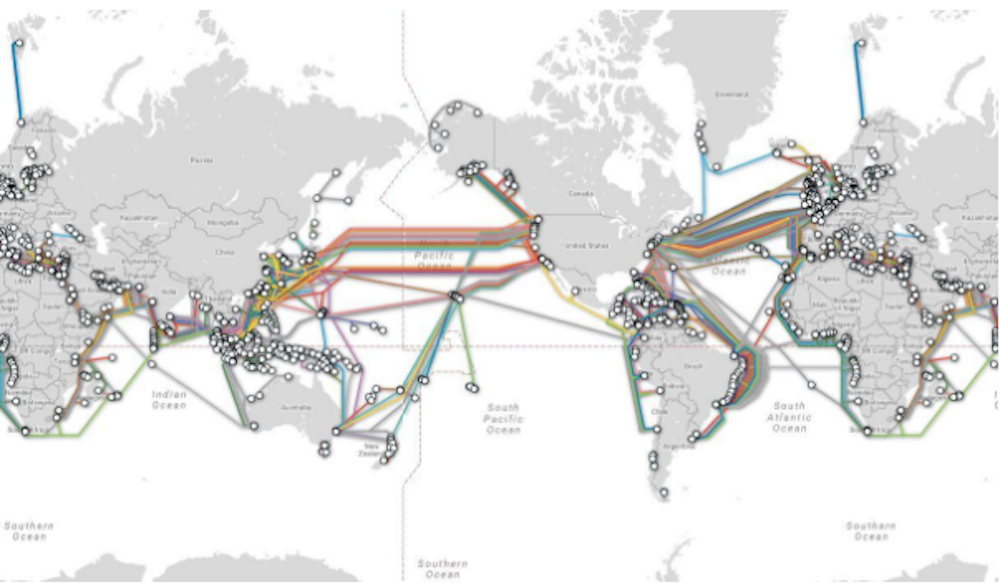
The video below shows the incredible spread of submarine cables around the planet – with more than 885,000 km of cable laid down since 1989. These cables cluster in narrow corridors and pass between so-called critical “choke points” which leave them vulnerable to a number of natural hazards including volcanic eruptions, underwater landslides, earthquakes and tsunamis.


Animation of spread of global submarine cable network between 1989 and 2023. Video: ESRI

What exactly has happened in Tonga?
Tonga was only connected to the global submarine telecommunication network in the last decade. Its islands have been heavily reliant on this system as it is more stable than other technologies such as satellite and fixed infrastructure.

The situation in Tonga right now is still fluid, and certain details have yet to be confirmed — but it seems one or more volcanic processes (such as the tsunami, submarine landslide or other underwater currents) have snapped the 872km long fibreoptic cable connecting Tonga to the rest of the world.

The cable system was not switched off or disconnected by the authorities.

This has had a massive impact. Tongans living in Australia and New Zealand cannot contact their loved ones to check on them. It has also made it difficult for Tongan government officials and emergency services to communicate with each other, and for local communities to determine aid and recovery needs.

Telecommunications are down, as are regular internet functions – and outages keep disrupting online services, making things worse.

Tonga is particularly vulnerable to this type of disruption as there is only one cable connecting the capital Nuku’alofa to Fiji, which is more than 800km away. No interisland cables exist.

Risks to submarine cables elsewhere
The events in Tonga once again highlight how fragile the global undersea cable network is and how quickly it can go offline. In 2009, I coauthored a study detailing the vulnerabilities of the submarine telecommunications network to a variety of natural hazard processes.

And nothing has changed since then.

Cables are laid in the shortest (that means cheapest) distance between two points on the Earth’s surface. They also have to be laid along particular geographic locations that allow easy placement, which is why many cables are clustered in choke points.

Some good examples of choke points include the Hawai’ian islands, the Suez Canal, Guam and the Sunda Strait in Indonesia. Inconveniently, these are also locations where major natural hazards tend to occur.

Once damaged it can takes days to weeks (or even longer) to repair broken cables, depending on the cable’s depth and how easily accessible it is. At times of crisis, such outages make it much harder for governments, emergency services and charities to engage in recovery efforts.

Many of these undersea cables pass close to or directly over active volcanoes, regions impacted by tropical cyclones and/or active earthquake zones.

https://blog.apnic.net/2021/01/13/how-critical-are-submarine-cables-to-end-users/
Tonga is connected to the rest of the world via a global network of submarine cables. Image: Author provided
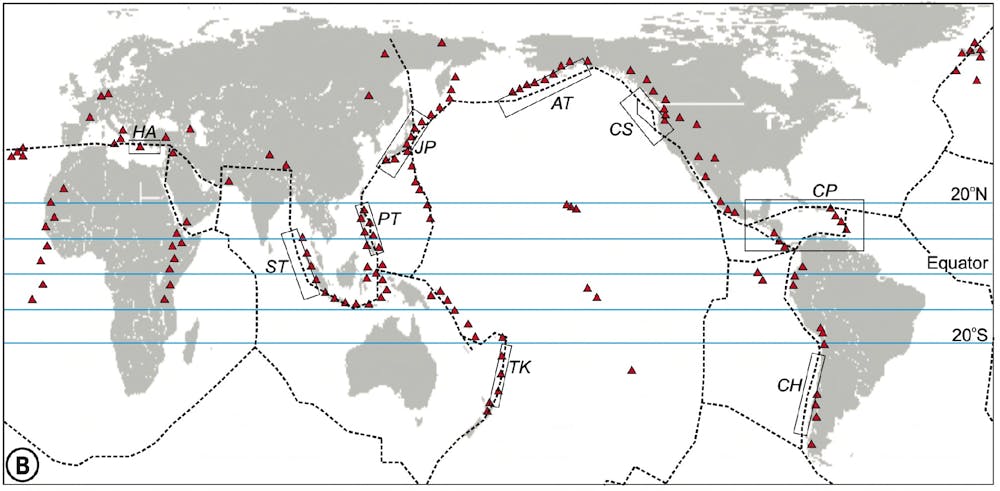
Global plate tectonic boundaries
In this map you can see the global plate tectonic boundaries (dashed lines) where most volcanic eruptions and earthquakes occur, approximate cyclone/hurricane zone (blue lines) and locations of volcanic regions (red triangles). Significant zones where earthquakes and tsunami occur are marked. Map: Author provided

In many ways, Australia is also very vulnerable (as is New Zealand and the rest of the world) since we are connected to the global cable network by a very small number of connection points, from just Sydney and Perth.

In regards to Sydney and the eastern seaboard of Australia, we know large underwater landslides have occurred off the coast of Sydney in the past. Future events could damage the critical portion of the network which links to us.

How do we manage risk going forward?
Given the vulnerability of the network, the first step to mitigating risk is to undertake research to quantify and evaluate the actual risk to submarine cables in particular places on the ocean floors and to different types of natural hazards.

For example, tropical cyclones (hurricanes/typhoons) occur regularly, but other disasters such as earthquakes and volcanic eruptions happen less often.

Currently, there is little publicly available data on the risk to the global submarine cable network. Once we know which cables are vulnerable, and to what sorts of hazards, we can then develop plans to reduce risk.

At the same time, governments and the telecommunication companies should find ways to diversify the way we communicate, such as by using more satellite-based systems and other technologies.The Conversation

Dr Dale Dominey-Howes is professor of hazards and disaster risk sciences at the University of Sydney. This article is republished from The Conversation under a Creative Commons licence. Read the original article.

Print Friendly, PDF & Email

Article by AsiaPacificReport.nz

Anxious Tongans in NZ await volcano news from home: ‘It’s painful, you just feel hopeless’

By Christine Rovoi, RNZ Pacific journalist

Langi Fatanitavake’s wife and son live on one of the islands flanking Tonga’s Hunga Tonga-Hunga Ha’apai undersea volcano, but his repeated calls home since the violent eruption and tsunami have gone unanswered.

The South Island seasonal worker last spoke to his family on Ha’apai on Saturday afternoon, shortly before destructive waves crashed into the island nation.

Fatanitavake is growing increasingly concerned for their safety.

“Last night and today, nothing. I called, no answer. My feeling is not good about my family,” he said.

Fatanitavake is also worried about his sister who lives on Atata Island, about 50 km from the volcano that has covered Tonga in a layer of ash.

“I want to know what happened to my sister,” he said.

Fatanitavake said the 17 other Tongans he was working with on an Alexandra orchard had not heard from their families either and were anxious to receive a simple message or phone call to say they were safe.

Repatriation flight postponed
A repatriation flight scheduled for Thursday for workers who came to New Zealand as part of the Recognised Seasonal Employers (RSE) scheme has been postponed.

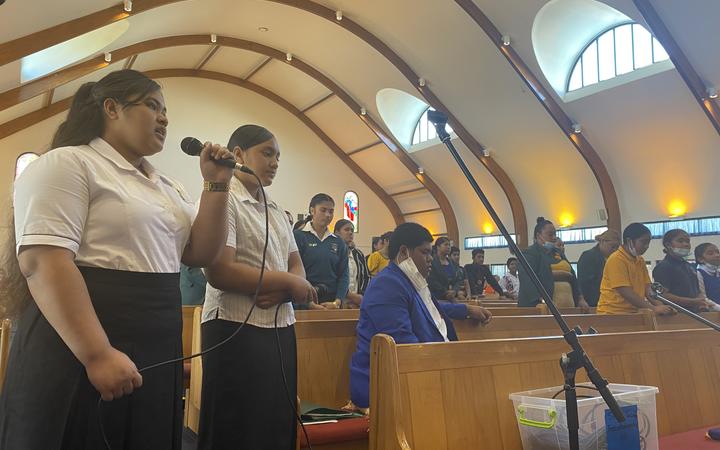
An Auckland church congregation prays for their family in Tonga.
An Auckland church congregation prays for their family in Tonga. Image: Lydia Lewis/RNZ Pacific

Tongans in New Zealand have been praying for their Pacific Island families, as they endure an agonising wait for news from relatives cut off from the world.

Timaru’s Sina Latu last heard from her sister when she broadcast her family’s escape from the tsunami live on Facebook, as ash rained down on the island of ‘Eua.

“It was very scary, we could see the waves coming in,” she said.

While Latu believed they were safe, she said the lack of communication was upsetting.

“It’s painful, you just feel hopeless and very anxious,” she said.

“I’m so worried, I haven’t really slept well. I just want one phone call, or one message, that will do me, just to say we’re fine, we’re safe.”

Latu said she was also worried about her 80-year-old father who lives on Tongatapu, but was reassured by no official reports of injuries or deaths so far.

An RNZAF P-3K Orion left Whenuapai air base, Auckland, to carry out assessment of the area and low-lying islands after the huge undersea Hunga Tonga-Hunga Ha'apai volcano eruption.
An RNZAF P-3K Orion flew from Whenuapai air base, Auckland, today to carry out assessment of the area and low-lying islands after the huge undersea Hunga Tonga-Hunga Ha’apai volcano eruption. Image: NZ Defence Force/RNZ Pacific

Aerial reconnaissance, water supplies
A New Zealand Defence Force plane flew to Tonga today to assess the damage, but Prime Minister Jacinda Ardern said aerial reconnaissance depended on the conditions, including the amount of suspended volcanic ash.

Another plane took essential supplies like water late today.

Communication links were still down, because the undersea cable that connects Tonga to the wider world appears to have been damaged.

Invercargill’s Ofa Boyle is yet to hear from her brother and sister who live near the capital Nuku’alofa.

She is also worried about the situation on the Ha’apai group of islands.

“I have some extended family living around that area, in Ha’apai. It’s a big worry,” she said.

“On the main island, the waves coming inland are not those big giant ones. That gives a bit of relief, but I’m also anxious about what it’s like in other areas like Ha’apai, near where the volcano erupted.”

Boyle said Tongan families relied heavily on relatives overseas, who would rally around to help them.

GNS Science said there could be more small-scale eruptions for some weeks, but they would be unlikely to trigger another big tsunami.

This article is republished under a community partnership agreement with RNZ.

Print Friendly, PDF & Email

Article by AsiaPacificReport.nz

PM Ardern on covid-19 vaccine for children, booster doses and Tonga

RNZ News

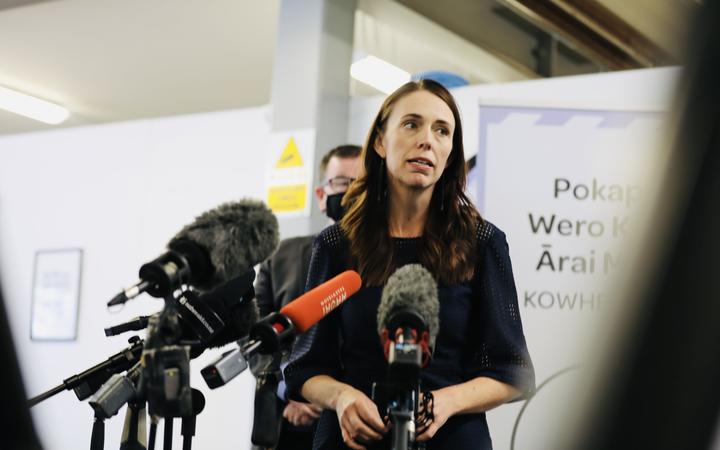
Prime Minister Jacinda Ardern says New Zealand will move to the red traffic light setting if omicron is spreading in the community following reports that a border worker who was yesterday reported as covid-19 positive has been confirmed to have the omicron variant.

On Tonga, Defence Minister Peeni Henare says he understands power has been restored in large parts of Nuku’alofa following Saturday’s eruption of Hunga Tonga-Hunga Haʻapai volcano.

The government leaders were speaking at today’s media briefing.

More than 120,000 doses of the children’s Pfizer vaccine for covid-19 are ready to go at clinics around the country.

Tamariki aged five to 11 are eligible for the first of two recommended doses, eight weeks apart.

Ardern said it was pleasing to see people had been lining up today to be the first through the door at vaccination centres, and lines have been clearing quickly.

Henare, who is also Whānau Ora and Associate Health Minister, said the government had been working closely with iwi leaders to ensure tamariki could receive the vaccine, and was looking towards the schools for when they reopened.

Another milestone day
Today was another milestone day in the vaccination campaign in New Zealand, Ardern said.

New Zealanders have been able to get boosters since early January and online bookings open from today.

“For children of course they are able to be booked in now via Book My Vaccine … we’ve heard that whānau are coming in to get both their booster and to bring their children in to be vaccinated as well.”

Prime Minister Jacinda Ardern says it's a matter of if, not when Omicron is in the community.
Prime Minister Jacinda Ardern says it is a matter of if, not when, Omicron is in the community. Image: Marika Khabazi/RNZ

Today Ardern received her booster dose of the covid-19 vaccination.

She says it was possible 80 percent of the country’s population could be boosted by the end of February.

She thanked all those putting in mahi so far, to get the booster roll-out well underway.

Over half of eligible New Zealanders have had their booster, she says.

66,000 make bookings
“The traffic on the website today has been good, she says, with over 66,000 people having made a booking by midday compared to about 12,000 on other recent days.

Aotearoa’s first community case of the omicron variant of covid-19 was announced yesterday. The person is a border worker in Auckland and has 50 close contacts.

The worker, who was infectious from January 10, took two bus services in Auckland and visited a supermarket and four other stores in the city.

Ardern said when it comes to omicron in the community it is a matter of when, not if.

“New Zealanders have had the break that we hoped they would get but we know that with omicron it is a case of when, not if, and that is why the booster campaign is just so critical.”

The government would look to move into the red traffic light setting if Omicron was spreading in the community, Ardern says.

“What I expect is over the coming weeks to be able to share with you some of the additional preparation that has been done over and above the work that we did on delta, for the specific issue of omicron and what it represents.

“We have the ability to learn from other nations and see the impact or the way that omicron is behaving and prepare ourselves.”

Changes in testing, isiolation
“This will mean changes including to the way testing, isolation and contact tracing is done, and the details will be shared in the coming weeks.

“We’ve managed to get delta down to extraordinarily low levels, that means the risk posed by opening that border, now is very low. We are in the right place now to remove those requirements.”

Ardern said the traffic light system was designed to deal with surges, outbreaks and had the possibility of new variants in mind. She said the measures under the red setting were designed to slow the spread of a variant like omicron.

Another update on traffic light settings would be given on Thursday, she said.

Vaccination passes do not currently have the booster set within them. Ardern said the option to include that in future is being retained, but getting a booster remained the best way to protect against omicron.

“We’re doing what we can but I think it would be wrong to assume those border measures will be sufficient. At some point we will see omicron in the community … we should always assume at any time.”

Eruption crisis in Tonga
Defence Minister Peeni Henare said he understood power had been restored in large parts of the Tongan capital Nuku’alofa.

Ardern said the RNZAF Orion had been undertaking an assessment from the air of the outer islands in particular to provide that information to the Tongan authorities.

The C-130 would perform naval drops, with planning being done to enable that regardless of the status of the airport.

“I understand that on the ground of course that Tonga has also now by sea dispatched to the outer islands.”

She says the C-130 was expected to fly today regardless, and would be able to meet immediate supply needs.

Henare said it is being ensured that the C-130 had the necessities on board. He said the aerial assessment being done would help with that.

The response must be directed to where it was needed the most, he said.

Navy able to deploy quickly
Ardern said the navy was able to deploy very quickly.

She said communication had been difficult but the flight today along with communication with officials on the ground would help establish the needs of those in Tonga, but they knew water was needed.

She cautioned that while there had been reports that some islands had seen no casualties, it was still early days.

It is thought the connectivity problems with the underwater cable stemmed from power outages, she said.

This article is republished under a community partnership agreement with RNZ.

Print Friendly, PDF & Email

Article by AsiaPacificReport.nz

NZ Air Force plane leaves for Tonga to assess volcano eruption damage

RNZ Pacific

Power is being restored in Tonga’s capital Nuku’alofa, and the country is sending naval boats to outlying islands to assess the damage from the huge Hunga Tonga-Hunga Ha’apai eruption and tsunami.

A New Zealand Defence Force plane has left for Tonga to assess the damage from Saturday’s volcanic eruption and tsunami.

The violent eight-minute eruption of the undersea volcano Hunga Tonga-Hunga Ha’apai triggered atmospheric shockwaves and a tsunami which travelled as far afield as Alaska, Japan and South America.

The flight — which was dependant on whether the ash cloud from Hunga Tonga-Hunga Ha’apai had dissipated enough — departed from Whenuapai air base in Auckland.

Foreign Affairs Minister Nanaia Mahuta said reports overnight said there had been no further ash fall, and that there was no damage to the runway in Tonga.

“It’s just a matter of clearing the ash from the runway.

“The flight is scheduled to leave this morning.”

80 percent of power restored
Mahuta said 80 percent of power had been restored in Nuku’alofa, on Tongatapu, but internet connections remained disrupted.

Damage on Tongatapu was able to be better assessed today, and the country was sending its naval capacity to the outer islands, she said.

The initial need was for water and water storage bladders, as well as food and medical supplies, she said, and Mahuta expected the Tongan government would be be making a more formal request for assistance.

The New Zealand Defence Force has deployed a Royal New Zealand Air Force P-3K2 Orion aircraft to help search for two vessels in Kiribati that failed to return from separate fishing trips last week.
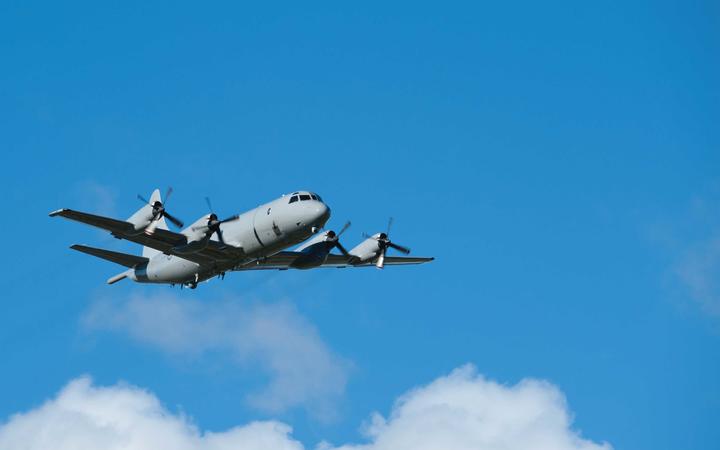
An RNZAF P-3K Orion carrying out a reconnaissance flight to Tonga today. Image: NZ Defence Force

The RNZAF P-3K Orion will carry out a reconnaissance flight over the affected area, including low-lying islands that have not been heard from.

The Defence Force was also preparing options for naval deployments to help with the recovery.

Prime Minister Jacinda Ardern said yesterday the navy was making preparations, and either HMNZS Canterbury or HMNZS Manawanui could be deployed.

No casualties in Ha’apai
Labour MP Jenny Salesa, who is Tongan, last night joined a Zoom meeting with Tongan Methodist ministers, including Reverend ‘Ulufonua from Ha’apai.

‘Ulufonua told them there had been no casualties on the group’s main island. There was a lot of ash on the ground and quite a number of houses had been damaged.

“One of the main things that they’re dealing with right now is the damage to the water system and the fact that not all of the people were able to protect some of the tank water that they collect from the rain,” Salesa told RNZ Morning Report.

“There are 169 islands in all of Tonga, 36 of those are inhabited, and so we don’t have updates from any of those other islands.”

Red Cross teams in Tonga have supplies in the country to support 1200 households, their international organisation says.

International Federation of Red Cross and Red Crescent Societies Pacific head of delegation Katie Greenwood said they were able to make very brief contact with the teams in Tonga on Saturday before communication was cut.

“Red Cross teams were supporting authorities to move people to the small available amount of higher ground around capital Nuku’alofa itself and also they are well trained to be able to support any needs that are arising on the ground,” she told Morning Report.

Looking for contact with loved ones
Greenwood said once communications were restored the Red Cross was looking to help connect families registration system where people indicate they are looking for contact with loved ones.

A P-8 aircraft from Australia’s defence force is also being sent to survey critical infrastructure such as roads, ports and power lines today, if conditions permit. A statement from Australian government ministers said it was co-ordinating critical humanitarian supplies for disaster relief, and was ready to respond to further requests for assistance.

New Zealand Acting High Commissioner in Tonga Peter Lund said Nuku’alofa resembled a moonscape.

He said the capital was blanketed in ash, and there was a lot of damage on the waterfront and along the western coast.

There were no confirmed reports of any deaths or serious injuries, he said.

The ash cloud reached many kilometres into the air, and the eruption is thought to be the largest since Mt Pinatubo, in the Philippines, exploded in 1991.

This article is republished under a community partnership agreement with RNZ.

Print Friendly, PDF & Email

Article by AsiaPacificReport.nz

Veteran Tahiti politician Flosse accuses France of causing his ‘political death’

RNZ Pacific

French Polynesia’s former president Gaston Flosse says he is in mourning because the French state has signed his political death by banning him from political office for five years for abusing public funds.

Flosse made the statement after France’s highest appeal court upheld a 2020 conviction over a long-running corrupt water supply arrangement in Pirae.

The ruling means the 90-year-old Flosse will not be able to contest this year’s French National Assembly elections and next year’s territorial election.

As former and current mayors of the town of Pirae, Flosse and now President Edouard Fritch made the town administration pay for the water use in the upmarket Erima neighbourhood, where Flosse lived.

Flosse had set up the scheme and Fritch allowed the abusive billing process to be continued until the practice was discovered in an audit in 2011.

When the two were convicted in Tahiti in 2020, Flosse was declared ineligible to hold office for five years.

Flosse questioned how the justice system worked, as he was singled out for punishment in a witch hunt while Fritch got away with just a fine.

Why was Fritch still eligible?
He said he wondered why Fritch was not made ineligible for two years because for years the scheme was run while Fritch was mayor.

Flosse’s lawyer said he could not understand the intellectual mechanism used to convict Flosse over the issue.

Losing the appeal in Paris last week, Flosse, will not be able to run for office until 2027, but he said would not give up and would continue with renewed vigour.

Only last week, he had announced his candidacy for one of the three French Polynesian seats in the French legislature.

In 2014, Flosse had been declared ineligible for five years after another corruption conviction and he had hoped to avert a renewed such sanction by taking the matter to Paris.

He was forced to relinquish the presidency to his deputy Fritch, but the two politicians have since fallen out.

Fritch has since been re-elected president and mayor of Pirae.

In French Polynesia, about a quarter of the ruling party’s assembly members have corruption convictions, including the assembly president Gaston Tong Sang.

This article is republished under a community partnership agreement with RNZ.

Print Friendly, PDF & Email

Article by AsiaPacificReport.nz

Tsunami wave hits Tonga’s ‘Eua royal palace gate as vehicles try to flee

The video of the tsunami wave crashing into the gate of the Heilala Tangitangi royal palace in ‘Eua. Video: Kaniva Tonga

By Kalino Latu in Auckland

Tonga’s King Tupou VI is reportedly still on ‘Eua island despite reports yesterday that he had been evacuated to the royal villa at Mataki’eua in Tongatapu.

The latest information about his presence in ‘Eua came last night after terrifying footage was shot of a tsunami wave crashing into the gate of the Heilala Tangitangi royal palace in ‘Eua.

In the video, which was sent to Kaniva News, a man can be heard saying: “It’s now 5.54 pm”.

A vehicle being swept away by the tsunami wave on 'Eua
A vehicle being swept away by the tsunami wave on ‘Eua island in Tonga yesterday. Video: Kaniva News screenshot APR

“There, you see the wave is on its way to ‘Ohonua’,” he said in Tongan.

“Hang on, I will run, otherwise the wave will catch me,” he said.

“Those of you who have already been to ‘Eua look at how the wave breaks on the Matapā Tapu [Taboo Gate of the royal palace].

“Look at it. The wave reached the Matapā Tapu”.

Waves broke electricity poles
The man was also heard in another video saying the waves had broken electricity poles, sunk boats and engulfed the ‘Ovava hotel.

He can also be heard in another video saying in Tongan that the only time he took notice of the wave was when the king told him to assist two vehicles trying to flee the scene.

“Two vehicles came out there and the king noticed they appeared hesitant to enter so he told me to run and wave to them to come through,” the man said.

‘Alisi Moa Paasi, who shared the videos with Kaniva News last night, said the person speaking in the videos was her father, Tēvita Fau’ese Moa.

She said Tēvita was His Majesty’s Armed Forces’ (HMAF) Superintendent in ‘Eua. He called her in Auckland on Facebook from the palace while the tsunami hit at about 6pm (Tongan time) on Saturday January 15, shortly before Tonga’s internet was knocked out by the eruption.

Kaniva News could not independently confirm the authenticity of the videos.

‘Alisi clarified what her father was talking about in the videos as the background sound of the tsunami heard in the clips she sent intermittently distracted what her father was saying.

‘Alisi said his father was talking about two vehicles who attempted to flee the wave before they realised their only way out was the Matapā Tapu.

While the drivers appeared hesitant to enter the gate, ‘Alisi claimed the king alerted his father to allow the vehicle to drive through.

She said once the vehicles entered safely, the tsunami wave crashed into the gate.

‘Alisi contacted Kaniva News
‘Alisi contacted Kaniva News after the news website reported yesterday that the king had been evacuated to his villa at Mataki’eua in Tongatapu.

‘Alisi denied this and said the king was still in ‘Eua. She said she confirmed this with her father.

She said it may be that it was the Queen who had been escorted to the villa.

The Kaniva News report had been based on information published by Fiji’s Island Business media on its official Facebook page yesterday.

The news item read:

“Tonga’s King Tupou VI has been evacuated from the Royal Palace after a tsunami flooded Nuku’alofa today.

“A convoy of police and troops rushed the King to the villa at Mataki’eua as residents headed for higher ground.

“Earlier, a series of explosions were heard as an undersea volcano erupted, throwing clouds of ash into the sky.

“The explosions were heard on Lakeba, Matuku and in Fiji’s capital, Suva, around 6pm”.

Islands Business report
The Islands Business Facebook administration was contacted for comment.

The news was picked up by New Zealand mainstream media, such as the New Zealand Herald and RNZ Pacific.

The ‘Eua news came after the underwater volcano at the two Hungas had erupted for eight minutes, throwing clouds of ash into the sky yesterday afternoon.

Waves flooded the capital Nuku’alofa, where video footage has shown water engulfing buildings.

“The eruptions have been heard as booms or ‘thumps’ across the Pacific, in Fiji, Niue, Vanuatu, and in New Zealand,” RNZ Pacific reported.

The West Coast of New Zealand’s South Island has been included in a warning about dangerous sea conditions as a result of the eruption.

The New Zealand Defence Force is currently monitoring the situation in Tonga, and said it was standing by to assist if asked to do so by the Tongan government.

Meanwhile, Shane Cronin of the University of Auckland wrote in an analysis article published by The Conversation: “Soon after the eruption started, the sky was blacked out on Tongatapu, with ash beginning to fall.

“All these signs suggest the large Hunga caldera has awoken. Tsunami are generated by coupled atmospheric and ocean shock waves during an explosion, but they are also readily caused by submarine landslides and caldera collapses”.

Kalino Latu is editor of Kaniva Tonga. Asia Pacific Report collaborates with Kaniva Tonga.

Print Friendly, PDF & Email

Article by AsiaPacificReport.nz

New, exclusive letters between the queen and 6 governors-general show the evolution of a relationship of equals

Source: The Conversation (Au and NZ) – By Jenny Hocking, Emeritus Professor, Monash University

More than a year after the High Court’s decision in the “Palace letters” case, which said the queen’s correspondence with Governor-General Sir John Kerr is not “personal”, more letters have now been made public.

The letters between a further six governors-general and the queen have now been released to me, from Lord Casey in 1965 to Sir William Deane in 2001. Deane’s letters are being revealed here for the first time. In total, this is more than 2,000 pages, spanning 36 years and nine prime ministers.

These newly released letters cover some of the most important and memorable moments in Australian politics: the 1967 referendum on Aboriginal rights; the disappearance of Prime Minister Harold Holt and appointment of acting Prime Minister John McEwen; the election of Gough Whitlam in 1972; Whitlam’s double dissolution election in 1974 and Malcolm Fraser’s in 1983; the Australia Act; the High Court’s 1992 Mabo decision; and the 1999 republic referendum.

The breadth of correspondence gives us a rare opportunity to explore the changing nature of the vice-regal relationship over time.

The letters also provide a point of comparison with Kerr’s “sycophantic grovelling” and “stomach-churning” letters, as former Prime Minister Malcolm Turnbull describes them. Seen across the 36-year trajectory of this vice-regal correspondence, Kerr is even more clearly an outlier.

In just three and a half years, Kerr’s correspondence comprises as many pages as four governors-general (from Casey to Sir Ninian Stephen) put together.

No other governor-general even comes close to the obsessive frequency of Kerr’s 116 lengthy letters. Casey wrote about 34 letters during his five-year term, Sir Paul Hasluck 37 in six years, and Stephen just 23 letters in six and a half years.

How much other governors-general shared with the queen

The correspondence of these seven governors-general spans 14 elections, two of which, the 1974 and 1983 double dissolutions, had the potential to cause controversy for the governor-general in accepting the prime minister’s advice to call them.

Similarly, Whitlam’s formation of the “duumvirate” (two-man ministry) in 1972 was an unprecedented situation for his first governor-general, Hasluck. This was a two-week ministry made up of Whitlam, with 13 portfolios, and his deputy Lance Barnard with 14, until the final number of seats had been determined.

It is notable neither Hasluck in 1974 nor Stephen in 1983 discussed their options or intentions with the palace before accepting the prime minister’s advice.

There is no parallel in the correspondence of other governors-general with Kerr’s discussions with the queen, her private secretary, Sir Martin Charteris, and Prince Charles, regarding the possible dismissal of the Whitlam government and the use of the reserve powers (against ministerial advice) to do so.


Read more:
At long last, we can tear open the queen’s secret letters with Australia’s governors-general


It is a hallmark of these letters that, unlike Kerr, the governors-general report back to the queen after these events they describe.

Casey informs the queen after he has appointed McEwen as acting prime minister following Holt’s disappearance, for example, while Hasluck writes to Charteris ten days after accepting Whitlam’s advice to call the 1974 double dissolution.

Stephen also writes to the queen two weeks after accepting Fraser’s contentious advice to call the 1983 double dissolution. Eighteen months later, he follows up with a letter on the intricacies of the double dissolution provision in section 57 of the Constitution and the discretionary power it confers to the governor-general.

In fact, it is Charteris who writes to Hasluck prior to the 1974 double dissolution hoping for further information, telling Hasluck he was “not uninterested at the moment in anything to do with the prerogative of Dissolution!”. Hasluck ignores this invitation to discuss the prerogative.

These post-facto comments are in no way comparable to Kerr’s extensive discussions with Charteris over several months about the governor-general’s reserve powers and the possible dismissal of the prime minister. There is simply no equivalent to what Kerr calls “Charteris’s advice to me on dismissal”.

Cowen’s streak of assertiveness

Similar to Stephen after him, Governor-General Zelman Cowen is assertive and independent, at times disputing aspects of the queen’s letters and instructing the private secretary on matters of law.

In a letter to the private secretary Sir Philip Moore in December 1978, Cowen corrects erroneous press reports claiming if Whitlam had sought Kerr’s recall as governor-general in 1975, the queen would not have acted on the advice of the Australian prime minister and would instead have acted on the advice of her UK ministers.

Quoting his own book on the governor-general, Sir Isaac Isaacs, Cowen tells Moore, “it is inappropriate that UK ministers should be concerned in the appointment of a Governor-General” and it is “surely inappropriate that the Monarch should act otherwise” than on the Australian prime minister’s advice.

Cowen also strongly disagrees with Moore on the 1978 appointment of Kerr as Australia’s ambassador to UNESCO – and on the appointment of any former governor-general to paid public office. He said,

I have grave doubts about this […] any suggestion (or appearance of a suggestion) that a Governor General might be influenced in his conduct by such expectations is damaging.

‘I get no joy from these assessments’

The suggestion other governors-general show the same “obsequious deference” as Kerr in these letters is unsustainable.

Bill Hayden follows Stephen as governor-general in 1989, towards the end of Bob Hawke’s term as prime minister. Clearly still bristling at having lost the Labor leadership to Hawke so close to the 1983 election, Hayden interprets his “duty” in writing to the queen as providing “a candid and fair, if at times harsh” assessment of political figures, many of whom are his former colleagues.

His reports are dry, lengthy descriptions of the political, social and economic situation in Australia. He invariably sees large-scale problems for Hawke, saying his “extraordinary popularity defies reasoned understanding”.

Hayden is an astute and detailed observer, correct in many of his forecasts, and yet throughout his letters there is little sense of what he does in his daily routine as governor-general.

Where others send copies of articles, speeches and reports on things like engagements at Government House, Hayden’s letters seem more removed from everyday vice-regal life. They appear increasingly forced — particularly after Paul Keating defeats Hawke in a 1991 leadership spill to become prime minister — and his letters become less frequent.

There is a poignancy in Hayden’s final lament to the queen about his “harsh judgment” of Keating. “I get no joy from these assessments”, he tells the queen, adding he has done so only as “a matter of duty to you”. Keating is a personal friend, “an admirable person”, he insists, seeming to regret what he has written.

It adds a human element to the absurdity of the arcane secret ritual of vice-regal correspondence.


Read more:
Jenny Hocking: why my battle for access to the ‘Palace letters’ should matter to all Australians


Deane strikes a tone of equals

With Sir William Deane following Hayden as governor-general, the transition from the supine deferential genuflections of Kerr to an exchange of letters between equals is complete.

Deane passes much of the routine reporting on plans for royal visits, election results and press clippings on the republic debate to the official secretary, who writes to the queen’s private secretary. Deane himself, for the most part, writes directly to the queen – “Your Majesty, Ma’am” – rather than her private secretary.

This assertion of vice-regal equivalence is a statement in itself, not so much of Deane’s self-assured independence, but Australia’s.

At the same time, Deane informs the queen he will be sending copies of their correspondence to the prime minister, effectively ending the secrecy of vice-regal correspondence from the Australian government, which had so plagued Whitlam.

This dramatic shift follows an unusual exchange with the queen’s private secretary, Sir Robert Fellowes, early in Deane’s term.

In the context of the burgeoning constitutional debate ahead of the republic referendum, Fellowes asks the official secretary, Douglas Sturkey, whether there was anything members of the royal family could do “in the interests of the monarchical system”. He raises the timing of a possible royal visit by either Prince Charles or the queen.

Sturkey tells Deane he finds Fellowes’ suggestion “curious”:

I cannot seriously believe that Sir Robert Fellowes is proposing an active (and unprecedented) role for the monarchy in public constitutional debate.

Deane tells him not to do anything about it, and the letter goes unanswered for two months.

These letters are a unique window on an evolving vice-regal relationship and an exceptional addition to our history. It is immensely disappointing, therefore, the National Archives has made numerous redactions throughout them.

Worse, Buckingham Palace was consulted on those redactions. The former director-general of the archives, David Fricker, conceded last year that the archives was consulting “the Royal Household” on redactions, despite the High Court’s decision overturning the queen’s embargo over their release.

After a four-year legal action to secure the release of these letters, the least the archives could do is to finally let us see them in full.

The Conversation

Jenny Hocking has received funding from The Australian Research Council.

ref. New, exclusive letters between the queen and 6 governors-general show the evolution of a relationship of equals – https://theconversation.com/new-exclusive-letters-between-the-queen-and-6-governors-general-show-the-evolution-of-a-relationship-of-equals-174965


Coalition slumps in first poll of 2022 as voters lose confidence in Morrison’s handling of pandemic

Source: The Conversation (Au and NZ) – By Adrian Beaumont, Honorary Associate, School of Mathematics and Statistics, The University of Melbourne

In the first national poll of the new year, a Resolve survey for the Nine newspapers, Labor had 35% of the primary vote (up three percentage points since November), the Coalition 34% (down five), the Greens 11% (steady), One Nation 3% (steady) and independents 11% (up two).

This is the first time since Resolve began doing its monthly surveys last April that Labor has been ahead of the Coalition on primary votes. In late 2021, Resolve showed better results for the Coalition than other polls conducted at about the same time.

The slump in the most favourable poll for the Coalition should be concerning for them, with a federal election due by May. This Resolve poll was conducted January 11-15 from a sample of 1,607 respondents.


Read more:
Morrison’s political judgement goes missing on rapid antigen test debacle


No two-party-preferred estimate was given by Resolve, but applying the previous election’s preference flows to the primary votes gives Labor a clear lead. Analyst Kevin Bonham estimated a 53-47% lead for Labor, a three-point gain for Labor since November.

I have previously criticised Resolve for not providing a two-party-preferred question and for its unrealistically high “independents” vote share.

In the survey, 41% gave Prime Minister Scott Morrison a good rating for his performance in recent weeks (up one percentage point from November) and 50% a poor rating (up one), for an unchanged net approval of minus-nine points.

Opposition Leader Anthony Albanese’s net approval was also still negative, with 34% saying he was doing a good job, while 41% said he was doing a poor job. His net approval was minus seven, up seven percentage points from November.

Morrison led Albanese by 38-31% as preferred prime minister, a narrowing from the 40-29% result in the November survey and 44-26% in October.

The Liberals and Morrison continued to lead Labor and Albanese by 39-26% on economic management (compared to 40-24% in November). On handling the COVID pandemic, the Liberals’ lead was cut to just 32-28%, from 36-23% in November.

Before the Omicron variant outbreak began in December, Australia’s strict lockdowns and border closures had kept our daily COVID cases to under 5,000. Daily cases have recently surged to over 100,000. While cases have probably peaked, daily deaths are unfortunately likely to keep rising for some time owing to a lag in people becoming seriously sick.

The current COVID situation probably explains the Coalition’s slump in the Resolve poll. While other countries, such as the UK, have had high case counts before the Omicron surge, Australia’s recent spike in cases is unprecedented.

Will the Coalition’s poll ratings recover once Omicron wave passes? I believe this depends on how much voters in the long term blame the federal government for allowing the virus to run free and the number of deaths that occur.

By 71-14%, voters also thought Serbian tennis star Novak Djokovic should not have been allowed to stay in Australia to play tennis due to his unvaccinated status.

Highlights of December and January polling

In a late November and early December Morgan poll from a sample of 2,805 voters, Labor led by 56.5-43.5%, a one percentage point gain for Labor since the mid-November poll.

Primary votes were 36% Labor (up 0.5%), 34.5% Coalition (down 1%), 12.5% Greens (up 0.5%), 3.5% One Nation (steady), 1% UAP and 12.5% for all others.

Continuing a decline from the height of his popularity in February 2021, Morrison’s approval was 46% in the mid-December Essential poll and his disapproval 44% for a net approval of plus-two points, down from plus-six in November and plus-37 in February.

Albanese’s net approval dropped one point to plus-four from November. Morrison’s lead as better PM was cut to 42-31% from 44-28%.

Voters rated the federal government’s response to COVID as good by 41-32%, down from 47-25% in early December, before the Omicron surge began. This was the government’s worst net rating since September. The Victorian state government took the biggest hit, with its good rating down eight points to 43%.

Newspoll also released its aggregate data for all polls conducted from October to December. Labor led by 53-47% in NSW, a five percentage point swing to Labor since the 2019 election.

Labor also led by 56-44% in Victoria, a swing of three percentage points to Labor. In both WA and SA, Labor led by 55-45%, a swing in WA of 11 points and in SA of three points. In Queensland, the Coalition led by 54-46%, a 4.5-point swing to Labor. More details from The Poll Bludger.


Read more:
As COVID rips through Australia, is Scott Morrison’s media strategy starting to fail as well?


An Utting Research federal poll in WA, conducted January 5 from a sample of 650 people, gave Labor a 55-45% lead in that state, in agreement with Newspoll.

While the massive COVID spread has dominated the media recently, the November jobs report, which the ABS released on December 16, was very good for the government.

With lockdowns ending in NSW and Victoria in October, the unemployment rate fell 0.6 percentage points from October to 4.6%, and the underemployment rate fell two percentage points to 7.5%. The employment population ratio – the percentage of eligible Australians employed – increased 1.8% to 63% to return to where it was in July.

The Conversation

Adrian Beaumont does not work for, consult, own shares in or receive funding from any company or organization that would benefit from this article, and has disclosed no relevant affiliations beyond their academic appointment.

ref. Coalition slumps in first poll of 2022 as voters lose confidence in Morrison’s handling of pandemic – https://theconversation.com/coalition-slumps-in-first-poll-of-2022-as-voters-lose-confidence-in-morrisons-handling-of-pandemic-175138

Mythologised, memorialised then forgotten: a history of Australia’s bushfire reporting

Source: The Conversation (Au and NZ) – By Fiannuala Morgan, PhD Candidate, Australian National University

Australia’s Black Summer bushfires of 2019 and 2020 wreaked destruction across South-Eastern Australia. Images of flames crowned trees, engulfed fire trucks and people crowded on beaches and packed in boats were broadcast into our homes.

For European colonists in 19th century Australia, bushfires were a strange, but by no means uncommon phenomenon. Rather, they had become part of life, and also a focus of media attention.

In addition to journalistic reporting, Australian newspapers also published hundreds of serialised bushfire narratives, often concurrent with the fire season.

Reading these accounts together provides insight not only into shifting attitudes towards disaster, but also the way fire disaster itself is mythologised, memorialised or forgotten.

Study of bush fires by William Strutt (1850s)
A possible sketch of Black Thursday with the sun obscured by bushfire smoke by William Strutt (185?)
NLA

From reporting to literature

One of the earliest bushfire narratives, William Howitt’s short story Black Thursday (1856), is an adaptation of his own reporting on the fire disaster of the same name.

Black Thursday (February 7, 1851) was perhaps the first great fire disaster in settler Australian history. Although no official records exist, it is estimated that almost a quarter of the Victorian colony was burned.

Howitt’s literary account is partly a revision of his own reporting that drew together different newspaper accounts to present a sensational report of unprecedented destruction.

Howitt’s narrative is ultimately a tale of settler endurance that features protagonist Robert Patterson successfully navigating the difficulties of bush life. Nonetheless, he draws heavily on these journalistic accounts for both the narrative setting and the description of the fire itself.


Read more:
Fires review: new ABC drama helps teach important lessons about the realities of bushfires in Australia


Subsequent Black Thursday narratives, such as An Australian Squire (1878) by Rolf Boldrewood, present a more realistic reappraisal of the disaster. In this story newspaper reporting is integrated directly into the narrative to contextualise the scale of the disaster:

when the papers came in the accounts of loss and ruin over the length and breadth of the land were appalling.

Other narratives, such as the unusually didactic, The Burning Forest (1853) present bushfire reporting as only a partial record of what has taken place. This narrative offers a vivid account of a fire caused by a careless gold digger whose refusal to put out a campfire leads to the death of several members of a family.

The story concludes with an acknowledgement of the anonymity of the incident:

Taking place far from all civilisation, these circumstances did not reach the newspapers, and perhaps the travellers never knew the result of that burning log.

A record of fire

As fires increased in regularity and severity across the century, the way they were reported also changed, prompting some historians to conclude they were hardly reported on at all.

But, bushfire reporting remained relatively consistent across the 19th century, although the extensive multi-page features that followed disasters such as Black Thursday (1851) and Black Monday (1865) were eventually replaced by more succinct reporting.

Across the late 1870s and early 1880s Victoria experienced regular and devastating bushfires with the most fatal occurring in 1879. The fact Black Monday (February 27, 1865) is so quickly forgotten also attests to the severity of these fires.

Although Black Monday is initially reported as the colony’s second major fire disaster, the event is forgotten by the turn of the century when it is excluded from a list of significant fires in the Victorian Royal Commission into “Fire-Protection in Country Districts” (1900).

Black Thursday, February 6th. 1851, as depicted by William Strutt in 1864.
State Library Victoria

The role of bushfire fiction

Literary depictions of bushfires also changed over time. While Black Thursday narratives may have been the only ones to respond directly to historical events, others began to draw on identifiable seasonal patterns.

These stories often begin in the middle of a drought with the same imagery of an oppressive red sun. What is consistent in bushfire narratives across the 19th Century is the way they model fire preparation and precaution, albeit with varying degrees of insight into the reality of fire-fighting.

For example, Howitt’s tale of Black Thursday suggests that pre-emptive backburning and the creation of firebreaks is enough to save the settler home. Boldrewood’s account, however, demonstrates that in such exceptional circumstances no amount of preparation is sufficient and defence is impossible:

No man living could have stood near enough to the line of fire to go through the mockery of trying to stem it. Such was its force and fierceness…


Read more:
‘Like volcanoes on the ranges’: how Australian bushfire writing has changed with the climate


Black Thursday by William Howitt was consistently republished in Australian newspapers across the 19th century, and the story played an important role in preserving the cultural memory of the disaster.

Black summer and modern stories

Just as Howitt adapted his own reporting to memorialise bushfire disasters, modern reporting continues to do the same, such as the recent publication Black Summer, telling the story of the 2019-2020 bushfires from the perspective of journalists on the ground.

The ABC’s television series Fires also incorporates imagery that could be drawn directly from the footage that circulated around this time.

The new ABC TV drama Fires is a six-part series of interlinked stories inspired by the 2019-2020 Black Summer fire season.
Ben King/ABC

In both cases, adding a narrative to culturally identifiable footage and journalistic accounts of the Black Summer counteracts our propensity to forget – and unlike Black Monday, gives us the opportunity to ensure this time the practical lessons of disaster are learned.

The Conversation

Fiannuala Morgan does not work for, consult, own shares in or receive funding from any company or organization that would benefit from this article, and has disclosed no relevant affiliations beyond their academic appointment.

ref. Mythologised, memorialised then forgotten: a history of Australia’s bushfire reporting – https://theconversation.com/mythologised-memorialised-then-forgotten-a-history-of-australias-bushfire-reporting-170778

Pandemic disruption to PhD research is bad for society and the economy – but there are solutions

Source: The Conversation (Au and NZ) – By Catherine Whitby, Postgraduate Lead in the School of Natural Sciences and Associate Professor in Chemistry, Massey University

Shutterstock

Every year thousands of students enrol in PhD degrees at universities in New Zealand. The government funds their degrees because the advanced knowledge and innovations they develop benefit our economy and society.

But there is growing concern about the impact of COVID-19 on doctoral students. It’s feared some will abandon their degrees, with real implications for the potential future social and economic benefits of the research.

PhD students are required to do extensive research and document their findings in a thesis. Many do this using specialised equipment available only on university campuses.

Due to the lockdowns in the past two years, however, most were locked out of their labs for several months. Given the ongoing uncertainty, how can we help students whose degrees are being disrupted?

The funding problem

The government bases funding on the assumption a PhD takes three years to complete full-time, plus the time for thesis examination, meaning universities are funded for these degrees for four years.

Universities also award top students three-year scholarships to help pay their living expenses while they do their research. Some offer grants to students while they write their thesis and are examined during their fourth year.


Read more:
Is it a good time to be getting a PhD? We asked those who’ve done it


But while scholarships and funding are time-dependent, progress depends on how much research a student gets done. They need to make enough discoveries to write a 100,000-word thesis. Despite completing annual (or six-monthly) reports on their progress, many find it hard to measure and plan their research.

One study showed students took longer than expected to finish, even before the pandemic: 50% of full-time students took more than four years and one month to complete their degrees.

Otago University building
Health scientists at the University of Otago estimated the pandemic affected 95% of their projects.
Shutterstock

Stalled research and disrupted study

We don’t yet know how long PhDs will be extended as students try to recover time lost due to the pandemic. But closing university campuses during the lockdowns stalled many research projects.

Health scientists at the University of Otago, for example, estimated 95% of their projects were affected. Like their overseas counterparts, even those who could work from home struggled to make progress due to limited access to supervisors and colleagues.


Read more:
COVID-19 has changed university teaching – here are five things to stick with in the future


Now back in their labs, students are having to adjust their research plans. A study by Te Pūnaha Matatini highlighted how vulnerable our doctoral students are to the ongoing crisis. Many need funded extensions to complete their research. They also face shrinking job prospects in academia.

The danger is some will abandon their degrees. Surveys suggest up to 25% of PhD students in Australia and Canada, for example, may halt their training.

Losing a similar proportion of students in New Zealand will disrupt the research workforce that supports economic growth and social development.

The power of ‘small wins’

These are big challenges. A report from the Ministry of Business, Innovation and Employment identified that universities, policymakers, funders and the community will need to work together to protect the future of the research sector. In the meantime, I think two smaller changes could make a difference.

Improving how students measure their progress will increase the rate at which they complete their degrees. It is natural for students to struggle. They are searching for new data and insights in their field – stuff that is hard to find.

A recent survey highlighted that students who feel stuck, and think they have no significant results, are less likely to finish.


Read more:
After 2 years of COVID, how bad has it really been for university finances and staff?


Currently, there are two major milestones in most PhD programs. Students are assessed at the end of their first year and must have made enough progress developing their research project to continue their degree. After that, the next milestone for most is submission of their thesis.

Breaking thesis preparation down into manageable chunks during the years in between should help. Researchers following 3,500 European students over 30 years observed a jump in thesis completions when stricter deadlines for submission of thesis chapters were introduced.

Helping students make their progress tangible takes advantage of what we know about the power of small wins.

lecturer speaking to students
PhD students want academic careers, but a 2020 study showed around 75% of graduates are employed outside universities.
shutterstock

Better career advice

The second change involves upgrading the career advice offered to students. Around the world, PhD students aim for a career in academia. They often rate the alternatives as second best.

But analysis of the national research workforce in 2020 by the Royal Society of New Zealand showed around 75% of PhD graduates are employed outside universities. It’s vital, therefore, that students receive high-quality information about alternative careers.

Researchers at ANU have developed artificial intelligence tools that can analyse thousands of job advertisements and identify those suitable for PhD graduates. They found 80% of adverts for highly skilled researchers do not target people with PhD qualifications.

Taking advantage of the information provided by tools like this will improve how universities train students for their future careers. A better understanding of the demand for research skills should enhance the contribution PhD graduates make to the New Zealand economy.

And it will mean the next generation of researchers is ready to support the recovery from the pandemic.

The Conversation

Catherine Whitby does not work for, consult, own shares in or receive funding from any company or organization that would benefit from this article, and has disclosed no relevant affiliations beyond their academic appointment.

ref. Pandemic disruption to PhD research is bad for society and the economy – but there are solutions – https://theconversation.com/pandemic-disruption-to-phd-research-is-bad-for-society-and-the-economy-but-there-are-solutions-173982

As international students return, let’s not return to the status quo of isolation and exploitation

Source: The Conversation (Au and NZ) – By Andrew Deuchar, Postdoctoral Researcher, Australia India Institute and Melbourne Graduate School of Education, The University of Melbourne

Shutterstock

As Australia welcomes back international students, it’s a time for education providers to re-imagine how they cater to these students. Our research shows helping them to build strong connections with other students, as well as employers, makes them more likely to have a productive and fulfilling time in Australia and to find suitable work when they graduate.

Australia has an opportunity to emerge as a leading destination not just for a world-class education, but as one that fosters deep social, cultural and economic engagement with these students.

We must not return to the status quo. Before the pandemic, international students faced many challenges, including racism, visa restrictions and insecure work. Research shows they are much more likely than domestic students to experience social isolation, financial insecurity and mental health issues.


Read more:
‘It takes a mental toll’: Indian students tell their stories of waiting out the pandemic in Australia


Australia cannot afford to neglect the welfare of international students. The sector contributed A$37.6 billion to the economy in the financial year before the pandemic, but that fell to $26.7 billion in 2020-21. Rebuilding international education is a critical part of Australia’s economic recovery.

And the key to improving international students’ welfare and experience in Australia is building stronger social connections among them.

Indian students carry placards in a protest in Melbourne against racism
Indian students have supported each other through the pandemic and in the past when targeted in racist attacks in Australia.
Shutterstock

What did the research find?

In 2020, the Department of Education Skills and Employment commissioned the Australia India Institute – in partnership with Austrade and the Group of Eight Australia – to investigate the experiences of Indian international students in Australia.

Our research complemented quantitative studies by interviewing these students at 11 universities across Australia. One of the most striking findings was that those who had strong social connections with other Indian students had a much more productive experience than those who did not.

One research participant befriended three other Indian students who he moved in with when he arrived in Australia. It was much more cost-effective for them to pool their resources to buy groceries and pay the rent. But, more than that, he said:

“When you have company your mind can rest, you can be at ease and enjoy your studies.”

In contrast, another international student who lived alone said:

“My life in Australia is so quiet, when I lay in bed I can hear my heartbeat.”

When students with strong social connections did experience hardships, other international students were usually their most crucial supports.

During COVID-19 lockdowns, these students shared vital information through WhatsApp about where and how to get financial support and food. One student said she would have “not eaten for a week” if she was not made aware of these resources.


Read more:
‘God, I miss fruit!’ 40% of students at Australian universities may be going without food


The supports Indian international students provided each other weren’t just social and emotional. They also formed informal study groups where they could share their challenges and ideas about assignments. One student said:

“Together we learn so much more than one person can do by himself.”

International students who were connected with each other were also more likely to build connections with domestic students. The main reason for this was that having strong connections with each other gave them the confidence to socialise and attend events in groups. One student explained that because he had a close group of Indian friends he spent more time doing “things that Aussies do, like going to the pub and watching the AFL”.

Benefits go beyond the study experience

In light of these findings, our report argues that international students’ experiences will be much more productive and fulfilling when they have strong connections with each other.

Another key finding is that international students with a strong social network are much more likely to find suitable employment while studying and after graduating.

Some students reported being underpaid and exploited in part-time jobs and felt there was little they could do about it. This was especially true of those who had recently arrived in Australia and did not have strong social connections. One student who worked in a bakery said:

“My employer told me I would get a pay rise if I proved I was reliable. After one month I asked for the pay rise and I was taken off the roster.”

Those with stronger links with members of the Indian community – including but not limited to students – fared better.

They shared information about who to work for and who to avoid. They also helped each other write effective resumes. This was crucial in finding part-time work, which future employers would recognise.

Graduates with strong social connections also had more success getting jobs related to their degrees.

What can institutions and policymakers do?

Our findings put a different spin on how education providers can help their students and graduates find work. Alongside regular career guidance and support focused on the individual, our report argues that providers should consider how they can build connections between international students and with potential employers.

Addressing the challenges international students face is a critical part of the education sector’s recovery from the pandemic. It will not only consolidate Australia’s position as a leader in world-class education, but also improve the welfare of the students themselves.

If education providers help international students build their social connections, the flow-on effects will be huge.

They will be much more likely to have a fulfilling study experience and more likely to find suitable jobs once they graduate.

Better support for international students is also likely to encourage others to study in Australia.


Read more:
International student numbers hit record highs in Canada, UK and US as falls continue in Australia and NZ


As international students return to Australia, there’s a lot we need to do differently. Practitioners and policymakers need to consider exactly how they can nurture and sustain international students’ social connections.

These students are already supporting each other in a range of creative and effective ways. We need to recognise their efforts. And to learn from them.

The Conversation

Andrew Deuchar works for The University of Melbourne. The research this article refers to was commissioned by the Commonwealth Department of Education, Skills and Employment.

ref. As international students return, let’s not return to the status quo of isolation and exploitation – https://theconversation.com/as-international-students-return-lets-not-return-to-the-status-quo-of-isolation-and-exploitation-173489

Time to upgrade from cloth and surgical masks to respirators? Your questions answered

Source: The Conversation (Au and NZ) – By Leyla Asadi, PhD candidate and infectious diseases doctor, University of Alberta

Shutterstock

With the rapid spread of Omicron, many countries are rethinking their COVID mask advice for the community.

Respirators have been mandatory in public places in Austria for a year. Now, the United States Centers for Disease Control and Prevention suggests respirators be considered for greater protection, for instance, on public transport or in enclosed crowded spaces. It’s time to rethink and upgrade masks for you and your family.

What is a respirator?

Respirators, often wrongly called “masks” because of their appearance, are personal protective equipment made to a particular standard and designed to prevent inhalation of hazardous airborne contaminants.

In the US, respirator standards are managed by the National Institute for Occupational Safety and Health (NIOSH), and cover three things: filter efficiency, breathing resistance and fit. A filter that meets the N95 standard (equivalent to Europe’s FFP2) must capture at least 95% of particles in the most penetrating size range at a high flow rate. In Australia, a respirator must meet TGA standards.

A respirator that consists entirely of filtering material – rather than having layers, say for waterproofing – is called a filtering facepiece respirator (FFR). An FFR can be worn multiple times but must eventually be thrown away. Research suggests FFRs lose their ability to fit well after 20 wears – due to stretching of straps or failure of the nose clip or edge components.

The filter material is usually a non-woven polypropylene electret, which means the fibres carry an electrical charge to enhance particle collection while ensuring low breathing resistance.

N95 respirator held up by hand
N95 masks capture 95% of particles of a certain size.
Shutterstock

Why were we told to wear cloth masks at first?

It was initially assumed SARS-CoV-2 spread via droplets (in coughs and sneezes) which caused infection when they landed on the mouth, nose or eyes. For such particles, a cloth or surgical mask is an efficient form of source control to protect others from virus emitted by the wearer.

Now it’s understood the virus is airborne. Virus-laden particles build up in the air over time indoors because of breathing and speaking.

Will a respirator protect me even if others are unmasked?

It depends on the type of exposure and how long you are exposed. It is important to consider your risk depending on where you are, what you’re doing, with whom and how long you’re there.

The safest situation, especially for prolonged contact in crowded settings, is when everyone is wearing well-fitting N95 respirators.

It’s hard to show evidence to support respirator use in the community – but lack of randomised controlled trials (RCT) does not mean they are not effective. Studying masks or respirators at a population level is complex and involves many variables. There is strong evidence from RCTs in health workers and laboratory studies showing respirators are effective for source control and personal protection.

I really like my cloth mask. Is it OK to keep wearing it?

Probably not. Cloth masks are not made to any particular standard, so their properties and quality vary considerably.

In general, they are poor filters of small airborne particles.


Mask effectiveness table.
Lisa M Brosseau, Author provided

Surgical masks are cheaper – can I just switch to those?

Not really. While some surgical masks may have better filtration capacity than cloth masks, they were designed primarily to prevent the emission of large droplets. Some medical-grade surgical masks may also offer protection from body fluid splashes or sprays. No surgical mask will prevent the emission or inhalation of small infectious particles, however.

A key deficiency of surgical and cloth masks is their loose fit compared to respirators.

While some older, hard-cup style respirators may be uncomfortable, newer styles are better tolerated. This may be due to their greater surface area, which could contribute to lower breathing resistance.

Should I have my respirator professionally fitted?

No. When respirators are used to protect workers from airborne hazards such as dust or pollution, employers are legally required to undertake fit-testing (see for example the US Occupational Safety and Health Administration fit-testing standard). But even non-fit tested respirators will provide superior protection over cloth or surgical masks.

A respirator should rest against your face with no gaps, especially around the nose and chin. To create a tight seal, form the nose clip and place both straps around your head, adjusting them if necessary.

If the facepiece collapses a small amount when you inhale, the respirator probably fits well. Get in the habit of doing a “self seal-check” before each wear.

Shouldn’t respirators be reserved for healthcare professionals?

No. Early in the pandemic, the public were discouraged from buying respirators because of a global shortage of personal protective equipment and the assumption healthcare workers were at higher risk of catching COVID from so-called “aerosol-generating procedures” such as intubation.

We now know everyday activities like talking and singing are more likely to generate infectious aerosols than medical procedures.

As with vaccines, there are global equity issues and we need to expand manufacturing capacity to ensure sufficient supply for everyone.


Read more:
Latest isolation rules for critical workers gets the balance right. But that’s not the end of the story


What about the cost and environmental impact?

Compared to cloth masks, respirators (which are not washable) cost more and have a greater environmental impact. But disposable respirators can be used for extended periods if they are not wet or damaged, and there are re-usable options such as elastometric respirators. A respirator should be thrown away when it gets dirty or the straps, nose clip or other components lose their integrity.

Costs and environmental concerns need to be weighed against the costs and waste produced by a single COVID hospital admission. In Australia, the average daily cost of an Intensive Care Unit stay has been estimated at $4375.

What if I can’t afford or get my hands on a N95 respirator?

The Korean KF94 and Chinese KN95s are cheaper alternatives that provide better protection than a surgical or cloth mask. Beware counterfeits, such as those without a GN stamp to show they meet manufacturing standards.

KN95 mask
KN95 masks may be easier to find and cheaper but beware fakes.
Unsplash/Markus Winkler, CC BY

If you can’t get hold of a respirator, you can improve protection of a surgical or cloth mask.

Options include “double masking” by wearing a tight-fitting cloth mask over a surgical mask. You can also “knot and tuck” a surgical mask by tying the sides and tucking the remainder inside. Finally, a well-designed cloth mask (with three layers) can perform as well as a good quality surgical mask.

It’s still true that something is better than nothing. But don’t count on these types of masks to provide the same level of protection for the same amount of time as an N95 respirator.


Read more:
From COVID control to chaos – what now for Australia? Two pathways lie before us


Respirators should be provided and required

The World Health Organization has stressed the importance of a “vaccines-plus” approach.

There is a strong case, when prevalence of COVID is high, for governments to both mandate and fund the provision of respirators for the public, as some parts of the US are now doing.

The Conversation

C Raina MacIntyre receives funding from NHMRC, MRFF and has consulted for Ascend Performance Materials, Detmold Group and Cleanspace in the last 5 years.

Lisa M Brosseau has no research funding.

Trish Greenhalgh receives funding from Wellcome Trust, NIHR, MRC, ESRC, Health Data Research UK and Health Foundation.

Leyla Asadi does not work for, consult, own shares in or receive funding from any company or organisation that would benefit from this article, and has disclosed no relevant affiliations beyond their academic appointment.

ref. Time to upgrade from cloth and surgical masks to respirators? Your questions answered – https://theconversation.com/time-to-upgrade-from-cloth-and-surgical-masks-to-respirators-your-questions-answered-174877

No, chivalry is not dead – but it’s about time it was

Source: The Conversation (Au and NZ) – By Beatrice Alba, Lecturer, Deakin University

Shutterstock

It is customary in many Western cultures for men to offer a range of special courtesies to women. This includes paying on dates, carrying heavy objects, pulling out chairs, opening doors, and allowing women to go first, even when the man was there first.

Despite being generally seen as polite and even romantic, these acts of chivalry – where men are excessively courteous to women simply because they are women – have a dark side.

What does research tell us?

Benevolent sexism

Psychologists refer to the paternalistic attitudes underlying these behaviours as benevolent sexism. Benevolent sexism involves the belief that men should cherish and protect women, and “put them on a pedestal”. This is because women are viewed as being more morally pure, weaker, and in need of protection.

Although benevolent sexism has a positive tone, research has found people higher on these attitudes also tend to be higher on hostile sexism. Hostile sexism involves overtly negative and suspicious views of women – this is what people generally think about when they think of sexism.

While it may seem paradoxical that benevolent sexism and hostile sexism are correlated, ambivalent sexism theory holds that benevolent sexism is reserved for “good” women who conform to traditional gender roles. Hostile sexism tends to be directed towards women who are perceived to be seeking to usurp men’s power.


Read more:
Still serving guests while your male relatives relax? Everyday sexism like this hurts women’s mental health


Negative effects of benevolent sexism

Research shows there are a range of negative outcomes associated with benevolent sexism.

For instance, one experiment found exposure to benevolently sexist comments led women to perform worse on a cognitive task, and to be more likely to think of themselves as incompetent.

A more recent experiment found benevolently sexist feedback led to women displaying cardiovascular responses similar to experiencing threat.

In the context of intimate relationships, men higher on benevolent sexism have been found to be more likely to provide dependency-oriented help to their female partners, such as providing solutions that overlooked their partner’s skills and efforts. These women subsequently felt less competent and less well-regarded by their partners.

Benevolent sexism happens every day, and while it appears to be positive, it can have serious negative effects on women.
Shutterstock

It may be harder to recognise this form of sexism because it can’t be measured in a pay gap or in the number of women in executive roles. It happens in everyday interactions between people, and often in private. People underestimate how harmful benevolent sexism is and overestimate how harmful hostile sexism is.

The seemingly positive tone of benevolent sexism may even be perceived by some as being advantageous to women, but the scientific research does not bear this out.

Why are women drawn to benevolent sexism?

Despite all the negatives, women tend to prefer benevolently sexist men. This preference is even stronger among women who have high levels of insecurity about their intimate relationships.

This preference for benevolently sexist men may be driven by women’s perception that they are warmer people. Recent research has found women saw benevolently sexist men as more attractive partners because they were seen as being more willing to invest, despite also recognising them as patronising and undermining.


Read more:
Why women – including feminists – are still attracted to ‘benevolently sexist’ men


The preference for benevolent sexism may also be driven by women’s understanding that it offers an antidote to hostile sexism. This is supported by experimental research finding women were more likely to endorse benevolent sexism when they were exposed to information suggesting that men have negative attitudes towards women.

The poisoned chalice

So why are there so many negatives to something that is so widely appealing?

One problem with benevolent sexism is the reinforcement of traditional gender roles about how women and men should relate to one another. It’s the same old problem that who we are or what we want should be predetermined by our sex rather than our own preferences and personalities.

But as the above research suggests, an even bigger problem may be that benevolent sexism has the capacity to undermine women’s performance and well-being. There’s an inherent condescension in benevolent sexism that views women as less competent than men. This is not to say individual acts of kindness are a problem – but the double-standards driving them are a problem if they disadvantage one gender.

The broadest implication of all this may be that benevolent sexism enacts men’s agency and dominance and women’s passivity and subordination. Men take a higher-status role as providers and protectors, while women play the role of weak and dependent followers.

By rewarding submissiveness, benevolent sexism is antithetical to women’s power, and an impediment to women’s attainment of leadership roles. It may be an added challenge to be a figure of authority when you are expected to be extra pleasant and deferential.

Benevolent sexism enables men to have loving relationships with women while maintaining male dominance in interpersonal relationships. It goes hand-in-hand with hostile sexism, which punishes women who challenge the status quo and seek gender equality. Benevolent sexism is the reward women get for being submissive to men, and that kindness is conditional upon their conformity to traditional gender roles.

Achieving gender equality might mean sacrificing some of these perceived perks.

The Conversation

Beatrice Alba does not work for, consult, own shares in or receive funding from any company or organisation that would benefit from this article, and has disclosed no relevant affiliations beyond their academic appointment.

ref. No, chivalry is not dead – but it’s about time it was – https://theconversation.com/no-chivalry-is-not-dead-but-its-about-time-it-was-174197

Sportswashing: how mining and energy companies sponsor your favourite sports to help clean up their image

Source: The Conversation (Au and NZ) – By Robin Canniford, Department of Management & Marketing, The University of Melbourne

Fossil fuel and carbon-intensive industries have an image problem. As awareness of their environmental impact grows, energy and mining companies in particular are desperate to maintain control over spiralling levels of public esteem.

For decades, greenwashing has been a go-to tactic for companies seeking to mask their damaging effects on natural environments, and governments across the world have begun to legislate against it.

Nevertheless, another more subtle practice remains in the marketing toolkit: sportswashing. By sponsoring sporting teams or events, organisations harness the positive impacts of sport to wash off negative associations with problems such as environmental degradation and human rights abuses.

In Australia, mining and energy companies often partner with sporting organisations from the grassroots to the elite level. As our research has shown, sports sponsorship is a powerful way to channel the energy of sporting “atmospheres” into brands, diverting attention from firms’ roles in furthering climate change.

So as Australia clinches another Ashes series, let’s take a closer look at how official partners such as Alinta Energy can benefit from sponsoring sporting events.

How does sportswashing work?

Sporting events have long been a site to exert “soft power”. Countries that host the Olympics or the FIFA World Cup, for example, are able to challenge negative global images. Take Qatar: in the lead up to this year’s FIFA World Cup, the nation has taken opportunities to reshape its reputation on a number of issues including human rights.


Read more:
The World Cup – an exercise in soft power that did not go to plan for Brazil


Sports sponsorship can serve similar purposes for businesses. Mining and energy giants such as Adani, Rio Tinto, Origin, and Woodside all sponsor sports teams and leagues from local to international levels of sport.

Our research shows when companies sponsor sport events, their brands become associated with atmospheres: intense experiences of shared emotion. Over time, sports fans come to associate sponsors’ logos and names with these experiences such that sponsors’ brands become stores of this emotional energy, rather like batteries.

This benefits companies because when people feel emotions in relation to a brand, they’re more likely to remember that brand and become loyal customers. Simultaneously, these positive emotional associations can distract from companies’ problematic connections to a range of issues including climate change and pollution.

Is the tide turning against sportswashing?

In 2021 a critical report found more than 250 advertising and sponsorship deals between corporate polluters, and leading sports teams and organisations around the world.

The report, by the New Weather Institute, implicated a range of Australian sports events and leagues including the Australian Football League, Australian Baseball League, and the 2021 Australian Tennis Open.

Some condemned the Australian Open for accepting gas giant Santos as an “official natural gas partner”. And last year Comms Declare, an advertising and marketing industry body, said the decision was at odds with Tennis Australia’s commitment to the United Nations Sports for Climate Action Framework.

Surf Life Saving Australia has also been criticised for accepting sponsorship from petrol supplier Ampol, not least because the fossil fuel industry threatens the very coastal environments that surf lifesaving calls home.

Sportspeople are joining these critical voices, too. Former Australian rugby captain and conservationist David Pocock last year criticised Rugby Australia’s decision to accept Santos as the Wallabies’ major sponsor, likening it to tobacco company sport sponsorship in the 1980s.

What does this mean for sport sponsorships?

As awareness of sportswashing grows, we think sponsorship deals are likely to generate increasing scrutiny from consumers, investors, and from other companies. This will have big implications for companies whose sponsoring partnerships are perceived as sportswashing.

In recent years, sports fans have protested against the owners of sports teams, as well as event organisers, for a range of issues. Research shows that activism can damage revenue and share prices for companies.


Read more:
How repressive states and governments use ‘sportswashing’ to remove stains on their reputation


More generally, by creating negative media publicity and government attention, sports activism can undo the intended benefits of sponsorship, further damaging brand images.

In some cases, activists have been able to demand policy u-turns. For example, Liverpool FC supporters forced owners to scrap ticket price rises and issue an apology. Whether activists can bring about change in environmental sportswashing remains to be seen.

Nevertheless, it may be time for sports governing bodies, owners and event managers to reconsider contributions from environmentally unsustainable companies. Such sponsorship is at odds with the the cultural value of sporting events and the benefits sport brings to all levels of society.


Read more:
Greenwash: a critical exposé highlights need for action


The Conversation

The authors do not work for, consult, own shares in or receive funding from any company or organization that would benefit from this article, and have disclosed no relevant affiliations beyond their academic appointment.

ref. Sportswashing: how mining and energy companies sponsor your favourite sports to help clean up their image – https://theconversation.com/sportswashing-how-mining-and-energy-companies-sponsor-your-favourite-sports-to-help-clean-up-their-image-173589

Sponges can survive low oxygen and warming waters. They could be the main reef organisms in the future

Source: The Conversation (Au and NZ) – By James Bell, Professor of Marine Biology, Te Herenga Waka — Victoria University of Wellington

Valerio Micaroni

Sponges are ancient marine animals, very common throughout the world’s oceans and seem less affected by ocean warming and acidification.

Our latest research shows they can also survive low levels of oxygen.

This is a surprising finding because most sponges are rarely exposed naturally to low oxygen in modern seas.

We propose their tolerance is the result of their long evolutionary history and exposure to variable oxygen concentrations through geological time.

As our oceans continue to warm due to climate change, they are expected to hold less oxygen.

The ability of sponges to survive low-oxygen conditions means they are likely to tolerate these possible future environments better than other organisms living on the seafloor.

This graph shows different marine organisms that live permanently attached to the seafloor and their different thresholds for low-oxygen conditions.
Different marine organisms that live permanently attached to the seafloor have different thresholds for low-oxygen conditions.
Author provided

There are an estimated 8000-plus sponge species in the oceans. They are multicellular organisms with a body architecture built around a system of water canals, pores and channels allowing water to be pumped and circulated through them.

Their specialised pumping and feeding cells, called choanocytes, are highly efficient. Sponges can pump the equivalent of their own body volume in a matter of seconds.

Images of four different sponge species, with different shapes and colours.
There are thousands of different sponge species in the world’s oceans.
Author provided

In modern oceans, sponges are often the most abundant organisms in rocky reef environments. They fulfil important ecological functions as part of bottom-dwelling (benthic) communities worldwide.

Sponges have many roles in marine ecosystems, but their water-processing ability and efficiency at capturing small particles is the most important because it links the water column with the seafloor. Sponges also support diverse seafloor communities by transforming carbon.

Some sponge species have been shown to be very tolerant to climate change stressors, particularly changing temperature and acidity (measured as pH). This means sponges could be future winners in changing oceans.

Sponges in past oceans

We know that sponges are ancient organisms, but recently described 890-million-year-old fossils have turned our understanding of evolution on its head.

Most major animal groups, including arthropods and worms, first appear in the fossil record during a period known as the Cambrian explosion, 540 million years ago. But if the newly-described fossils are indeed sponges, they would have existed nearly 300 million years earlier, significantly pushing back the date of Earth’s earliest known animals.


Read more:
A new fossil discovery may add hundreds of millions of years to the evolutionary history of animals


If the ancestors of modern sponges are about 900 million years old, they would have evolved and survived during the Marinoan glaciation, 657-645 million years ago, when the oceans were extremely low in oxygen.

They would have also likely experienced wide fluctuations in other environmental conditions such as pH, temperature and salinity through evolutionary time.

Sponge tolerance to low oxygen

Our recent environmental tolerance experiments support this scenario, showing they are surprisingly tolerant to low levels of oxygen.

We assessed the response of sponges to moderate and severe low-oxygen events in a series of laboratory experiments on four species from the northeast Atlantic and southwest Pacific. Sponges were exposed to a total of five low-oxygen treatments, with increasing severity (40%, 20%, 6%, 5% and 1.5% air saturation) over seven to 12 days.

We found the sponges generally very tolerant of hypoxia. All but one of the species survived in the extreme experimental conditions, and that species only began to die off at the lowest oxygen concentration. In most experiments, hypoxic conditions did not significantly affect the sponges’ respiration rates, which suggests they can take up oxygen at very low concentrations in the surrounding environment.

As a response to the low oxygen, sponges displayed a number of shape and structural changes, likely maximising their ability to take up oxygen at these low levels.

Images of sponges show they changed their shape and structure in response to low-oxygen oxygen conditions.
Sponges changed their shape and structure in response to low-oxygen conditions.
Author provided

Sponges in future oceans

Warmer ocean water holds less oxygen, and ocean deoxygenation is one of the major consequences of climate change.

Warmer water also becomes more buoyant than cooler water, which reduces the mixing of surface oxygenated water with deeper layers that naturally contain less oxygen. At the same time, warmer temperatures increase the demand of organisms for oxygen as metabolic rates increase and stress responses are initiated.


Read more:
The rise of sponges in Anthropocene reef ecosystems


While oxygen levels in the ocean are only expected to fall on average by 4% across all oceans, these effects are likely to be much more extreme locally and regionally. In coastal waters, climate-driven ocean deoxygenation can be exacerbated by a process called eutrophication, essentially an increase in nutrients. This fuels plankton blooms, and when bacteria breakdown the dead phytoplankton, they use up all the oxygen.

Since the land is generally the source of these excess nutrients, shallow coastal areas are most at risk. These are areas where rocky reefs are typically dominated by sponges, particularly just below the depth of light penetration (typically 20-30m).

Our finding lends further support to the idea that sponges will be the survivors if our oceans continue to warm.

The Conversation

James Bell receives funding from the National Parks and Wildlife Service

Rob McAllen and Valerio Micaroni do not work for, consult, own shares in or receive funding from any company or organisation that would benefit from this article, and have disclosed no relevant affiliations beyond their academic appointment.

ref. Sponges can survive low oxygen and warming waters. They could be the main reef organisms in the future – https://theconversation.com/sponges-can-survive-low-oxygen-and-warming-waters-they-could-be-the-main-reef-organisms-in-the-future-173912

From fairytale to gothic ghost story: how 40 years of biopics showed Princess Diana on screen

Source: The Conversation (Au and NZ) – By Giselle Bastin, Associate Professor of English, Flinders University

Pablo Larraín/Roadshow

Since the earliest Princess Diana biopics appeared soon after the royal wedding in 1981, there have been repeated attempts to bring to the screen the story of Diana’s journey from blue-blooded ingenue through to tragic princess trapped within – and then expelled from – the royal system.

A long string of actresses, with replicas of the outfits she wore and a blond wig (sometimes precariously) in place, have walked through episodic storylines, charting the “greatest hits” of what is known of Diana’s royal life.

Biopics about the princess tend to be shaped according to the dominant mythic narratives in circulation in any given phase of Diana’s life. The first biopics were stories of fairytales and romance. From the 1990s, the marriage of Charles and Diana took on the shape of soap opera and melodrama.

Now, with the Crown (2016–) and Spencer (2021), Diana has become a doomed gothic heroine. She is a woman suffocated by a royal system that cannot, will not, acknowledge her special place in the royal pantheon.


Read more:
Spencer: how Diana became the popular culture princess


Fairytales and soap operas

The first Dianas appeared on American television networks within months of the July 1981 wedding of Charles and Diana.

Both Charles and Diana: A Royal Love Story (starring Caroline Bliss) and The Royal Romance of Charles and Diana (starring Catherine Oxenberg) invested wholesale in a fairytale lens.

They told of the young and virginal beauty who had captured the attention of the dashing prince, whisked off to a life of happily ever after.

The Diana biopics fell quiet for the first years of the marriage (fairytales don’t tend to interest themselves in pregnancies and apparent marital harmony), and then reemerged after the publication of Andrew Morton’s exposé, Diana: Her True Story (1992).

Morton’s biography was written from taped interviews with the princess and inspired the next generation of Diana biopics, ones that I call the “post-Morton” biopics, which borrow from Diana’s own scripting of her life.

A series of actors were enlisted to play Diana in these made-for-television productions.

Oxenberg turns up again in Charles and Diana: Unhappily Ever After (1992). In Diana: Her True Story (1993), Serena Scott-Thomas (who, incidentally, turns up in the 2011 television biopic William and Kate as Catherine Middleton’s mother Carole) does her best with a terrible script and series of wigs.

Others gave it their best shot. We had Julie Cox in Princess in Love (1996), Amy Seacombe in Diana: A Tribute to the People’s Princess (1998), Genevieve O’Reilly in Diana: Last Days of a Princess (2007) and, briefly, Michelle Duncan in Charles and Camilla: Whatever Love Means (2005).

But even large budget films (such as 2013’s cinema-release Diana, directed by Oliver Hirschbiegel and starring Naomi Watts) had critics and audiences letting out a collective yawn.

In film after film we were offered yet another uninspired, soap opera-style representation of the princess’s life.

A gothic tale

Critics’ voices were quelled somewhat with the appearance of Emma Corrin’s Diana in season four of The Crown.

With Netflix’s high budget and quality production values, many — including myself — felt Peter Morgan’s deliberate combination of accuracy and imaginative interpretation of Diana’s royal life offered something approximating a closer rendition of the “real” princess than we’d been presented with before.


Read more:
The Crown season 4 review: a triumphant portrait of the 1980s with a perfectly wide-eyed Diana


And then we come to the most recent portrayal of Diana on screen, Pablo Larraín’s Spencer (2021), starring Kristen Stewart as Diana. What, royal biopic watchers wondered, could it possibly do to top The Crown’s Diana?

Spencer’s statement in the film’s opening offers a clue: it promises to be a “fable from a true tragedy”.

This is a film where genre imperatives and creative imaginings are placed at the forefront of its representation of the princess.

Taking its cue from the gothic themes and tropes Diana can be heard invoking on the Morton tapes, Spencer’s heroine is trapped in a frozen Sandringham setting, gasping for air to the point where her voice rarely lifts above a soft, almost suffocated, whisper.

She tears at the pearls encircling her throat. She rips open the curtains sewn shut by staff. She self-harms with wire cutters. She runs like an animal hunted down manor house corridors and across frosty Norfolk fields.

She is haunted by the ghost of Anne Boleyn, another royal wife rejected by her husband, prompting one reviewer to ask: “is Spencer the ultimate horror movie?”

Larraín and Stewart’s Diana has her precursor in the spectral, gothic Diana who appears in the 2017 future-history television film King Charles III, based on Mike Bartlett’s 2014 play. The anguished howl of this Diana (played by Katie Brayben) echoes throughout the palace in the same way Spencer’s Diana is framed as the royal who will haunt the Windsors for decades to come.

The lamentable Diana: The Musical (2021) on Netflix (a filmed version of the Broadway production starring Jeanna de Waal) – with its cliched storyline, two-dimensional characterisation, awkward costuming and early 1980s Andrew Lloyd Webber-style aesthetic – offers some evidence that, even in 2021, the creators of Diana stories haven’t altogether abandoned their investment in the Diana of 1981.

But with Spencer, we have a Diana shaped by both the princess’s own version of her story, and the screen Dianas that came before her. Spencer suggests new directions and potential for the telling of royal lives.

The Conversation

Giselle Bastin does not work for, consult, own shares in or receive funding from any company or organization that would benefit from this article, and has disclosed no relevant affiliations beyond their academic appointment.

ref. From fairytale to gothic ghost story: how 40 years of biopics showed Princess Diana on screen – https://theconversation.com/from-fairytale-to-gothic-ghost-story-how-40-years-of-biopics-showed-princess-diana-on-screen-173648

Waves from the Tonga tsunami are still being felt in Australia – and even a 50cm surge could knock you off your feet

Source: The Conversation (Au and NZ) – By Hannah Power, Associate Professor in Coastal and Marine Science, University of Newcastle


Bianca De Marchi

The eruption of the underwater volcano Hunga Tonga–Hunga Ha’apai created a tsunami felt across the Pacific Ocean. This includes Australia, where small but measurable tsunami waves were still being recorded as late as Monday afternoon. These may even persist into Tuesday morning.

The sea level gauge at Nuku’alofa, Tonga, recorded a tsunami wave of 1.19 metres before it stopped reporting. The waves that subsequently arrived at the Australian coast were comparable to some of the biggest tsunami waves recorded here, including those generated by the southern Chile earthquake in 1960 – one of the largest on record.

The Tongan volcanic eruption generated waves of 82cm at the Gold Coast. In southern coastal New South Wales, the tsunami waves reached 65cm at Port Kembla and 77cm at Eden’s Twofold Bay.

Australians tend to be fairly relaxed about the tsunami risk. But this latest event demonstrates Australia is vulnerable to tsunamis, and that warnings from authorities to stay away from foreshore areas should not be ignored.

Why are tsunami waves different?

Where everyday ocean waves are caused by wind, tsunamis are caused by the large-scale vertical displacement of the water column.

The biggest cause of tsunamis is underwater earthquakes. Underwater volcanoes are a far less common cause, as the graph below shows.

A tsunami wave of, say, 50cm might not sound that big. But it’s entirely different to the normal waves arriving at our coastline everyday. Those normal waves might take 5-15 seconds to come onshore and flow back out. A single tsunami wave can last much longer.

Let’s look at data from tide levels in Sydney on Saturday night. The tsunami off Tonga occurred at 3.10pm AEDT, and waves first arrived in Sydney just after 6pm.

Between 8.17pm and 9.08pm, two peaks in the tsunami waves were recorded. Each wave lasted almost 30 minutes – 15 minutes while the water went onshore, and 15 minutes while it went offshore.

And as late as Monday afternoon, hour-long tsunami waves were being recorded at Batemans Bay in NSW.

At some places along the Australian coast, these waves were 50cm high, and that water was pushing onshore for 15 to 30 minutes. That is really different to a normal 50cm wave.

If you were standing on the beach in Australia observing the tsunami, it would look like the tide was coming in really fast. Half a metre of tidal change would normally take 90 minutes or more – here we’re talking about that happening six times faster.

The below controlled experiment conducted in Japan shows how a human can struggle to stand in a strong, rapid flow of knee high water, similar to that which would occur during a tsunami:


Read more:
Making waves: the tsunami risk in Australia


Tsunami waves are unpredictable

Tide gauges up and down the coast, which usually measure everyday water levels, can also be used to determine the size of tsunami waves. These days, tide gauges usually operate using acoustic or pressure sensors.

To measure a tsunami wave, we take out the tide level and the short oscillations which represent normal waves so we’re only left with the waves from the tsunami.

Tsunami waves typically arrive in a series which lasts for 12 to 24 hours, and the first wave is not always the biggest.

I’m on holidays at the beach at the moment. I spoke to a few people on Sunday who had been for a morning swim because they thought the tsunami had passed – but it hadn’t. In some places in Australia, the biggest tsunami waves were observed after 10am on Sunday – more than 12 hours after the first recorded impacts.

A tsunami wave does not behave in a linear fashion. It radiates out across the ocean and interacts with the continents and coastlines, as well as the features of the seabed such as sea mounts and underwater ridges. Tsunami waves also travel faster in deep water than shallow water. All these factors interact to cause the waves to bounce around in complex ways.

Before communications to Tonga were lost, video reports showed significant tsunami wave flooding and inundation which damaged roads, buildings, and infrastructure such as seawalls.

broken dock with man and boats
The Tonga tsunami was felt in New Zealand where it tore apart a dock at a marina.
Tanya White AP

As well as affecting Australia, tsunami waves also travelled across the whole Pacific Ocean to Fiji, the Cook Islands, New Caledonia, New Zealand, along both the North and South American coastlines and to Japan. Some of these places reported flooding and localised inundation.

Fortunately, Australia didn’t experience significant inundation due to this tsunami. The effect was most visible in estuaries, which don’t feature swell or wind waves that to bystanders can mask the signal of the tsunami.

Tsunamis can cause cause significant erosion, especially in estuaries when water is flowing in and out very quickly. Following the 1960 Chile earthquake, for example, the Sydney suburb of Clontarf experienced significant erosion.


Read more:
Yes, a tsunami could hit Sydney – causing flooding and dangerous currents


Clontarf beach erosion: (Left) 2014 in usual sediment conditions and (right) 1960 post tsunami.
Northern Beaches Council holdings

Don’t ignore the risks

Australians tend to be fairly complacent about tsunamis because we don’t have a large localised risk. In contrast, places like New Zealand are more highly attuned to the dangers because the country is close to plate tectonic boundaries – part of the outer rocky crust of the Earth that could generate the large earthquakes that cause most tsunamnis.

But given the potential for further volcanic activity off Tonga, further tsunamis could be generated, and they may again reach Australia.

Australia is better prepared for tsunamis following the devastating 2004 Boxing Day tsunami. This includes the joint Australian Tsunami Warning System run by the Bureau of Meteorology and Geoscience Australia.

In the event of a tsunami warning, keep a close eye on emergency alert services and follow guidance from emergency services. Certainly, during a tsunami warning is no time to go swimming or surfing.


Read more:
The Tonga volcanic eruption has revealed the vulnerabilities in our global telecommunication system


The Conversation

Hannah Power receives funding from the Australian Research Council, the NSW State Government State Emergency Management Program, the Queensland Resilience and Risk Reduction Fund, the New Zealand Ministry for Business, Innovation and Employment Endeavour Fund, and ship time from Australia’s Marine National Facility. She is a member of the NSW Coastal Council.

ref. Waves from the Tonga tsunami are still being felt in Australia – and even a 50cm surge could knock you off your feet – https://theconversation.com/waves-from-the-tonga-tsunami-are-still-being-felt-in-australia-and-even-a-50cm-surge-could-knock-you-off-your-feet-175056

The Tonga volcanic eruption has revealed the vulnerabilities in our global telecommunication system

Source: The Conversation (Au and NZ) – By Dale Dominey-Howes, Professor of Hazards and Disaster Risk Sciences, University of Sydney

In the wake of a violent volcanic eruption in Tonga, much of the communication with residents on the islands remains at a standstill. In our modern, highly-connected world, more than 95% of global data transfer occurs along fibre-optic cables that criss-cross through the world’s oceans.

Breakage or interruption to this critical infrastructure can have catastrophic local, regional and even global consequences. This is exactly what has happened in Tonga following Saturday’s volcano-tsunami disaster. But this isn’t the first time a natural disaster has cut off critical submarine cables, and it won’t be the last.

The video below shows the incredible spread of submarine cables around the planet – with more than 885,000 kilometres of cable laid down since 1989. These cables cluster in narrow corridors and pass between so-called critical “choke points” which leave them vulnerable to a number of natural hazards including volcanic eruptions, underwater landslides, earthquakes and tsunamis.

Animation of spread of global submarine cable network between 1989 and 2023.

What exactly has happened in Tonga?

Tonga was only connected to the global submarine telecommunication network in the last decade. Its islands have been heavily reliant on this system as it is more stable than other technologies such as satellite and fixed infrastructure.


Read more:
Why the volcanic eruption in Tonga was so violent, and what to expect next


The situation in Tonga right now is still fluid, and certain details have yet to be confirmed – but it seems one or more volcanic processes (such as the tsunami, submarine landslide or other underwater currents) have snapped the 872km long fibre-optic cable connecting Tonga to the rest of the world. The cable system was not switched off or disconnected by the authorities.

This has had a massive impact. Tongans living in Australia and New Zealand can’t contact their loved ones to check on them. It has also made it difficult for Tongan government officials and emergency services to communicate with each other, and for local communities to determine aid and recovery needs.

Telecommunications are down, as are regular internet functions – and outages keep disrupting online services, making things worse. Tonga is particularly vulnerable to this type of disruption as there is only one cable connecting the capital Nuku’alofa to Fiji, which is more than 800km away. No inter-island cables exist.

Risks to submarine cables elsewhere

The events in Tonga once again highlight how fragile the global undersea cable network is and how quickly it can go offline. In 2009, I coauthored a study detailing the vulnerabilities of the submarine telecommunications network to a variety of natural hazard processes. And nothing has changed since then.

Cables are laid in the shortest (that means cheapest) distance between two points on the Earth’s surface. They also have to be laid along particular geographic locations that allow easy placement, which is why many cables are clustered in choke points.

Some good examples of choke points include the Hawaiian islands, the Suez Canal, Guam and the Sunda Strait in Indonesia. Inconveniently, these are also locations where major natural hazards tend to occur.

Once damaged it can takes days to weeks (or even longer) to repair broken cables, depending on the cable’s depth and how easily accessible it is. At times of crisis, such outages make it much harder for governments, emergency services and charities to engage in recovery efforts.

Many of these undersea cables pass close to or directly over active volcanoes, regions impacted by tropical cyclones and/or active earthquake zones.

https://blog.apnic.net/2021/01/13/how-critical-are-submarine-cables-to-end-users/
Tonga is connected to the rest of the world via a global network of submarine cables.
Author provided
In this map you can see the global plate tectonic boundaries (dashed lines) where most volcanic eruptions and earthquakes occur, approximate cyclone/hurricane zone (blue lines) and locations of volcanic regions (red triangles). Significant zones where earthquakes and tsunami occur are marked.
Author provided, Author provided

In many ways, Australia is also very vulnerable (as is New Zealand and the rest of the world) since we are connected to the global cable network by a very small number of connection points, from just Sydney and Perth.

In regards to Sydney and the eastern seaboard of Australia, we know large underwater landslides have occurred off the coast of Sydney in the past. Future events could damage the critical portion of the network which links to us.

How do we manage risk going forward?

Given the vulnerability of the network, the first step to mitigating risk is to undertake research to quantify and evaluate the actual risk to submarine cables in particular places on the ocean floors and to different types of natural hazards. For example, tropical cyclones (hurricanes/typhoons) occur regularly, but other disaster such as earthquakes and volcanic eruptions happen less often.

Currently, there is little publicly available data on the risk to the global submarine cable network. Once we know which cables are vulnerable, and to what sorts of hazards, we can then develop plans to reduce risk.

At the same time, governments and the telecommunication companies should find ways to diversify the way we communicate, such as by using more satellite-based systems and other technologies.


Read more:
Undersea internet cables connect Pacific islands to the world. But geopolitical tension is tugging at the wires


The Conversation

Dale Dominey-Howes receives funding from the Australian Research Council, National Disaster Resilience Program and Global Resilience Partnership.

ref. The Tonga volcanic eruption has revealed the vulnerabilities in our global telecommunication system – https://theconversation.com/the-tonga-volcanic-eruption-has-revealed-the-vulnerabilities-in-our-global-telecommunication-system-175048

3 local solutions to replace coal jobs and ensure a just transition for mining communities

Source: The Conversation (Au and NZ) – By Liam Phelan, Senior Lecturer, School of Environmental and Life Sciences, University of Newcastle

As the world shifts to renewable energy, helping the communities that have depended on fossil fuels for jobs is becoming ever more pressing.

The 2015 Paris Agreement notes the imperative of a “just transition” for affected workforces, with “the creation of decent work and quality jobs” to replace those lost.

Trade unionists have been arguing this point for at least several decades. The first use of the phrase “just transition” attributed to the Communications, Energy and Paperworkers Union of Canada, which called for a “Just Transition Program” for workers in the logging industry in 1996.

Yet for all the talk since, action remains scarce.

Three clear priorities for policy makers, however, have emerged from Australia’s Hunter Valley region, where coal mines employ about 14,000 workers directly and thousands more indirectly. These are:

  • the need for a local coordinating authority
  • funding for a “flagship” job-creation project, and
  • more resources for technical and vocational education.

These priorities were identified through consultations undertaken in late 2021 by two community organisations, Hunter Renewal and Hunter Jobs Alliance. They did so in response to the NSW government announcing A$25 million a year to a Royalties for Rejuvenation Fund.

The fund is meant to “ensure coal mining communities have the support they need to develop other industries in the long-term”.

But how to spend the money wisely?

The consultations involved 314 people from across the region ranking 22 ideas from from previous work on this issue. About one-third of participants were involved in workshop discussions. The balance contributed through a survey.

Key to the top three priorities is the need for self-determination, allowing local communities to decide on which solutions are best and how to implement them, not a “cookie-cutter” approach imposed from the top.

As one workshop participant put it:

The most important thing is involving the local community in designing the transition. Unless you take the locals with you on the journey, so that they own the changes, it will not be successful.

1. Have a local coordinating authority

Local coordination is important to ensure solutions reflect a community’s needs, skills and opportunities.

In Victoria, the state government set up the Latrobe Valley Authority in 2016, following the unexpected announcement of the closure of the Hazelwood power station in 2017.

Beginning with $270 million in funding, the authority is headquartered in Morwell, in the heart of the Latrobe Valley’s coal-mining industry.

This means those who work for the authority know the region and are in touch with the stakeholders from industry, government, education and community organisations who inform its “Smart Specialisation” approach to identify local strengths and competitive advantages.

A local authority can also coordinate with other authorities to ensure fossil fuel communities aren’t competing against each other by pursuing to create jobs in the same new industries.


Read more:
Hazelwood’s closure calls for a rethink on Latrobe Valley solutions


2. Fund flagship job-creation projects

Flagship projects give tangible direction to the transition and create hope for the future.

An example comes from the coal-mining community of Collie in Western Australia. It involves industry, government and university researchers working together on a project to make “Colliecrete”, a more sustainable form of concrete made from fly-ash, a waste product from the burning of coal by the local coal-fired power stations.

Emulating this plan using waste fly-ash from Hunter Valley power stations could potentially create 3,000 permanent full-time jobs in NSW, according to a report commissioned by Hunter Community Environment Centre.


Read more:
Greening the concrete jungle: how to make environmentally friendly cement


3. Expand vocational training

Retraining is crucial to new industries to flourish, and for workers to find new jobs.

A 2020 report from the Clean Energy Council found shortages of skilled and experienced staff are hampering development in renewable energy industries. The report recommended the entire vocational educational system needs reviewing, because “existing training systems are not meeting industry needs”.

Indeed in the Hunter region, TAFE closures are occurring at a time when they should be expanding.

As a workshop participant put it (with great understatment):

It is problematic when funding keeps getting cut.

Think local, act local

Local communities understand the transition away from economic reliance on fossil-fuel industries can’t happen overnight. They are keen to get moving.
These priorities identified by the coal-mining communities of NSW Hunter Valley hold lessons for the rest of Australia, and the world.


Read more:
How to transition from coal: 4 lessons for Australia from around the world


What’s important is that local communities take the leading role in defining their challenges, and then addressing them.

The people who know a community best, and what is possible, are those who live in them. You just have to ask them.

The Conversation

Kimberley receives an Australian Government Research Training Program Stipend as part of her PhD programme with the University of Technology, Sydney. She is affiliated with Hunter Renewal and Hunter Jobs Alliance as a volunteer.

Liam Phelan does not work for, consult, own shares in or receive funding from any company or organisation that would benefit from this article, and has disclosed no relevant affiliations beyond their academic appointment.

ref. 3 local solutions to replace coal jobs and ensure a just transition for mining communities – https://theconversation.com/3-local-solutions-to-replace-coal-jobs-and-ensure-a-just-transition-for-mining-communities-174883

Cannibalism, mutilation and murder: the Australian calamities that rival Yellowjackets for survival horror

Source: The Conversation (Au and NZ) – By Peter Hobbins, Head of Knowledge, Australian National Maritime Museum and Honorary Affiliate, University of Sydney

IMDB

It’s a familiar tale with a morbidly fascinating ending: humans go feral. Emerging from the wreckage of a crashed aircraft or sunken ship, they find themselves cast into a wilderness. Their social moorings lost, the survivors drift towards depravity, chaos and death.

This is the premise for Showtime’s visceral series Yellowjackets, which has just wrapped up its premiere season. Its gruesome depiction of cannibalism and privation seems too horrific to be true. Yet several stories from Australia’s past show fiction can come perilously close to our own realities.

Parallel fates

Yellowjackets tracks two parallel fates. In 1996, a high-school soccer team survives an aircraft accident in a remote Canadian forest. In our present day, those who made it out remain both united and riven by their shared ordeal.

But the survivors share something more traumatic – and unthinkable – than just a plane crash. As the episodes progress, both the plot and the characters disentangle, revealing a narrative of mutilation, murder and cannibalism.

The creators and critics alike have likened Yellowjackets to fiction, especially William Golding’s 1954 novel, The Lord of the Flies. Others draw parallels with the 1972 crash of Uruguayan Air Force Flight 571 in the Andes. Cannibalism sustained some of the survivors who emerged after 72 days of torment, including members of an amateur rugby union team.

Lifeboat dramas and castaway narratives

Yellowjackets collapses several genres of survival narrative. In part it evokes the castaway stories that ask how we sustain our moral, spiritual and intellectual essence in the absence of everyday cultural constraints. The series also echoes the “lifeboat drama”, in which traumatised survivors realise that they depend entirely on each other for their future – or their demise.

In 1929, for instance, celebrated Australian aviators Charles Kingsford Smith and Charles Ulm provoked a tragic scandal. On a flight from Sydney to England, their record-breaking aircraft Southern Cross made an emergency landing in the Kimberley region of Western Australia. They withstood two weeks of extreme temperatures and dwindling supplies before being saved.

But two ill-prepared friends who participated in the search were less fortunate. After an engine failure their small aeroplane, named Kookaburra, landed in the Northern Territory’s Tanami Desert. Pilot Keith Anderson and mechanic “Bobby” Hitchcock had no water aboard.

A poignant diary written by Anderson on the Kookaburra’s tail recorded that the increasingly weakened men drank the only fluids available to them: oil, petrol and their own urine. They soon perished, adding vitriol to accusations that the Southern Cross disappearance was merely a publicity stunt.

The Southern Cross, photograph circa 1928.
State Library Queensland

Another accident in 1937 also left a bittersweet legacy. Flying to Lismore from Brisbane, a Stinson Model A airliner vanished. While a vast search was mounted, three of the seven men aboard survived its crash into the McPherson Range on the Queensland/NSW border.

Believing that he could see a farm in the distance, James Westray set off for help but fell fatally over a cliff. Rather than resorting to cannibalism, however, Joseph Binstead struggled for ten days to keep alive his injured fellow passenger, Jack Proud. When rescued, the pair asked their saviour for the cricket results.


Read more:
We studied the tree rings of the Batavia shipwreck timbers – they told us much about global seafaring history


Calamity, mutiny and brutal retribution

Both lifeboat dramas and castaway narratives are deeply anchored in maritime history – with good reason. Archaeologist Martin Gibbs has termed the study of shipwreck survivor camps “the archaeology of crisis”, laying bare the social challenges, survival strategies and rescue plans of those who wash ashore.

Departing Calcutta in 1796 with trade goods for the new British settlement of Sydney, the sailing ship Sydney Cove began sinking and was deliberately beached. Landing on Preservation Island in Bass Strait, its British and Indian crew established a camp and dined on native animals.

But their 17 shipmates who set off to raise the alarm in Sydney suffered desperate privations. Their small longboat was wrecked on Victoria’s Ninety Mile Beach. Struggling for 700 kilometres overland, they faced unfamiliar country and daunting river crossings. The marooned mariners were at first aided by coastal Kurnai and Thaua peoples. Gradually, however, exhaustion, injury, starvation and the baser instincts of people under extreme duress picked them off. Ultimately, only three ragged sailors reached the safety of Port Jackson.


Read more:
Picturing the unimaginable: a new look at the wreck of the Batavia


The wreck of the Batavia

Where Australian history most viciously parallels Yellowjackets, however, is a series of tiny islands off the Western Australian coast. Here in 1629 a Dutch ship named Batavia pitched up on a coral reef. Its commander, Francisco Pelsaert, departed in a boat with 48 others to seek help. Over 200 crew, soldiers and passengers remained stranded.

Returning over three months later, Pelsaert found that a pitiless mutiny had occurred. It was led by Jeronimus Cornelisz, an officer of the Vereenigde Oostindische Compagnie (VOC), or United East India Company. Prior to the wreck, he had led plans to kill Pelsaert and commandeer the Batavia, including its cargo of silver coins.

17th Century engraving of Batavia and Wallabi group from an illustration in the Jan Janz 1647 edition of Ongeluckige Voyagie.
WA Museum

Determined to ensure their provisions would last, Cornelisz recruited a cadre who hunted down and slaughtered up to 125 men, women and children. The mutineers drowned, bludgeoned, stabbed and slashed the strongest first, before moving on to the sick and weak. Those who were spared faced rape, sexual slavery, vicious punishment and death. The toll of depravity – including the murder of pregnant women and infants – was every bit as dark as the fictional events in Yellowjackets.

Finally, two groups of survivors remained: the mutineers and the loyal soldiers who had been sent to another island. After several beachside battles, the soldiers captured the feral Cornelisz, who was soon executed.

Perhaps the mutineers’ moral corruption on the Houtman Abrolhos Islands comprised what we could consider the Batavia’s first “series”. If so, the retribution meted out by the VOC would make for an equally brutal season 2.

Yellowjackets might take survival drama to the extreme, but our own episodes of endurance remind us nobody comes out of the woods unscathed.

Yellowjackets streams in Australia on Paramount Plus.

The Conversation

Peter Hobbins leads the curatorial, library and publications team the Australian National Maritime Museum. Over 2016-19 he was awarded an Australian Research Council DECRA Fellowship to research the history of aircraft accidents and aviation safety in Australia.

ref. Cannibalism, mutilation and murder: the Australian calamities that rival Yellowjackets for survival horror – https://theconversation.com/cannibalism-mutilation-and-murder-the-australian-calamities-that-rival-yellowjackets-for-survival-horror-174863

When is the right time for children to learn to swim?

Source: The Conversation (Au and NZ) – By Amy Peden, Lecturer – Injury Prevention, UNSW

Shutterstock

Each year in Australia, an average of 23 children under five die from unintentional drowning, usually due to factors such as a lack of adult supervision, unrestricted access to water and not having the skills to stay safe in water.

Teaching children to swim is crucial to prevent drowning; it’s also good for fun and fitness, and sets kids up for a lifetime of water enjoyment.

But when is the best age to enrol children in swimming?


À lire aussi :
Why going for a swim in the ocean can be good for you, and for nature


Babies and mothers play in a pool.
Many learn-to-swim schools offer lessons for children as young as six months.
Shutterstock

Age four is a good time to start

Many learn-to-swim schools offer lessons for children as young as six months, and parents often feel under pressure to get kids started as early as possible.

These lessons can help a child get used to water, learn to put their face under and learn to close their mouths. They can also be a great opportunity for parent and child to bond, as the caregiver is in the water with the child. Research has even suggested swimming in the early years can benefit physical, cognitive and language skills among three to five year olds.

But while it may be possible to teach young infants basic motor skills in water, infants cannot, and should not, be expected to know how to swim or to be able to react appropriately in emergencies.

There’s not a lot of research available on what age is the “best” time to start swim lessons. But studies from Australia suggest children start being able to master water confidence and basic aquatic locomotive skills at around four years of age, regardless of the age they are when lessons begin.

The same researchers also reported that regardless of whether lessons began at two, three or four years of age, children achieved the skills necessary to perform freestyle at five and a half years of age.

Some evidence suggests swimming lessons improve swimming ability and behaviour around the pool in younger children (between two and four years of age).

But the jury is out on how well these skills are maintained in the long term.

You may have also seen videos circulating on social media showing infants being tossed into pools and rolling over to float on their back unassisted.

But Austswim, Australia’s national organisation for the teaching of swimming and water safety, has advised against forced back float and submersion in favour of more developmentally appropriate strategies.

Research I led also showed a negative prior aquatic experience, which can occur during formal learn-to-swim lessons, can negatively impact a child’s achievement level.

Children kick in a pool.
Learning to swim sets kids up for a lifetime of water enjoyment.
Shutterstock

Consistency is key

Parents sometimes enrol their children in swimming lessons at a young age and then pull them out before minimum competencies are achieved, frustrated by the cost of lessons and the seemingly slow progress.

COVID has also interrupted swimming lessons and water safety education for many children.

Some will return to lessons and catch up, but some may never return – perhaps due to the cost of lessons or because the child is now focused on a different sport or activity.

So when considering whether to enrol your child in swimming lessons, consider sticking with it over the long term until your child truly has the skills to stay safe in the water.

Consider your child’s maturity level and how ready they are to learn to swim. Factor in the long-term costs associated with lessons and when that investment may provide the greatest benefit.

Once enrolled, what’s the best way to learn?

You might be wondering what’s better: a short weekly lesson or school holiday intensives, where the child does a swim lesson every day for a week or two.

The answer may depend on your family’s schedule and what’s available in your area but even if you opt for holiday intensives, try to provide opportunities for your child to regularly practise the skills learned in the pool.

Research I co-authored found the more often a child swims (formally or informally) in a pool, at the beach or at the river, the better they will do at swimming lessons. My coauthors and I recommended children swim at least once a fortnight.

It has been a tragic summer for drowning so far, with several factors increasing the risk at this time of year. Therefore, water safety is vital.

For children, in addition to learning to swim, that means active adult supervision of children at all times around the water, checking the pool fence and gate are in good working order and learning CPR so you have the skills to respond in an emergency.


À lire aussi :
Watered down: what happened to Australia’s river swimming tradition?


The Conversation

Amy Peden is an honorary Senior Research Fellow with Royal Life Saving Society – Australia and is the co-founder of the UNSW Beach Safety Research Group. Amy Peden receives funding from the National Health and Medical Research Council (NH&MRC).

ref. When is the right time for children to learn to swim? – https://theconversation.com/when-is-the-right-time-for-children-to-learn-to-swim-173144

Maternal metamorphosis: how mothering has changed in Australia since the second world war

Source: The Conversation (Au and NZ) – By Carla Pascoe Leahy, Australian Research Council DECRA Fellow, The University of Melbourne

Shutterstock

When I first became a mother in 2013, I realised my experiences of motherhood did not match the kinds of messages circulating around me.

As a society we talk about motherhood either in cheesy sentimentalities – think of gift catalogues for Mother’s Day – or in terms of how overly burdensome it is for women. Too often, we depict motherhood as a problem or a crisis, rather than considering whether there are ways that mothering enriches a woman’s life.

Psychologists recognise becoming a mother as a fundamental shift in a woman’s identity.

So, I decided to try and understand this metamorphosis of the self that I recognised in myself, to track how it has developed over time, and what it can tell us about motherhood today.

By interviewing more than 60 Australian women who entered motherhood between 1945 and the present, I’ve created an oral history of how it feels to become a mother. While each interview is unique, together they form three broad eras of generational experience.


Read more:
Why coronavirus may forever change the way we care within families


Postwar mothers

Women who had their first child in the 1950s and 1960s had a distinctive experience I call postwar motherhood. During these decades, Australians embraced plans for marriage and parenthood that had been delayed by the second world war. Under conditions of full employment and high male wages, many families could live on one income.

In 1954, for example, only 15% of married women were in paid work. Most girls grew up assuming that their identity would centre on motherhood and for many, that meant becoming a full-time housewife. Women became mothers at a younger age and had larger families: almost half had their first child in their early 20s and mothers had 3.5 children on average.

When I asked postwar mothers whether motherhood had changed them, many were dismissive. Eve felt that “I was the same person but growing in skills” and explained that – like many Australians in the mid-20th century – she did not analyse herself very often.

Postwar mums were characteristically stoic when recalling their time raising children.
Museums Victoria

Postwar mothers were characteristically stoic in remembering motherhood. By contrast to living through the Great Depression or the second world war, they tended to downplay the challenges of toilet training or infant feeding.

However, a minority admitted finding the transition to motherhood difficult. Grace, for example, became “seriously depressed” from “managing two babies, and being isolated all day”. It was hard to speak openly about perinatal depression in an era when mental illness was considered shameful and the condition was not widely understood.

Second-wave mothers

Women who had children in the 1970s and 1980s had their experiences shaped by second-wave feminism.

More and more Australians came to believe a woman’s potential reached beyond breeding and raising children. Better access to birth control, abortion and sex education gave women a greater ability to control reproduction. The average age of first-time motherhood rose to 25 in 1971, and women were having 2.1 children on average by 1976.

Women’s participation in the labour force grew from 34% in 1961 to 62% by 1990, supported by the slow expansion of paid childcare.

By the 1970s, Australian women saw their identity as stretching beyond just being wives and mothers.
Museum of Australian Democracy

There was growing discussion of psychology and emotion, as feminism encouraged women to speak about personal experiences, including mothering. Many second-wave mothers felt they were changed by having children. Susan said “having the first baby made my whole life worth living” and “fulfilled something that I didn’t know I needed”.

Second-wave mothers were franker about the difficulties of first-time motherhood. Sally found her initial experience was “hell on earth” and a “shock to the system in every way”. While Sally’s difficulties were short-lived, some mothers experienced more serious and long-lasting emotional struggles.

Miroslava remembers her sister Mary’s perinatal depression. Mary’s mother-in-law told her “it’s nothing” and “you’re being silly”. In an era when mental illness was stigmatised, Mary’s family was determined that “no daughter-in-law of ours was going to be diagnosed with a mental issue” and impeded her access to support services.

Mary’s story highlights the tragic incomprehension of many people towards perinatal depression in earlier eras. It also demonstrates that difficulties coping with motherhood do not happen in a vacuum, but rather in social contexts with many contributing factors.


Read more:
Mothers explain how they navigated work and childcare, from the 1970s to today


Millennial mothers

Women who have become mothers from the 1990s to today I call “millennial mothers”. The influence of feminism means motherhood is viewed as a choice, and around one-quarter to one-third of Australian women alive today will likely never have children.

Those that do are having children later, with the average age of first motherhood rising to 31. Australians are also having smaller families. In 2020, the average number of births per woman was 1.8. Our gender norms have fundamentally shifted: millennial mothers have grown up assuming female identity is rooted in career.

Our cultural ideals of the “good mother” have also changed: from judging mothers who go out to work, to judging women who stay home with their kids. Assisted reproductive technologies have enabled motherhood where it would have been difficult or impossible before, for single mothers, lesbian mothers and for women with fertility issues.

Millennial mothers assume having a career is a vital part of female identity.
Shutterstock

Katerina evoked the sense of intensity that characterises the early months of mothering, explaining it was both “the hardest thing” and “the most amazing thing” she has experienced. In fact, these extremes were linked in her interview, implying that the satisfaction and joy of mothering stem from mastering – or at least surviving – its difficulties.

After she decided to have a child on her own, Connie found motherhood much harder than anticipated. After what she describes as a couple of “breakdowns”, she was prescribed antidepressants. Connie’s depression stemmed from a disappointing birth experience, unsympathetic hospital staff while she was recovering, and inadequate support in looking after her new baby, manifesting in exhaustion and loneliness.

A more complex picture emerges

Across these 75 years there is a clear shift from the stoic and pragmatic accounts of postwar mothers to the more personal and expressive accounts of millennial mothers. There is also a rise in the number of women expressing difficulties adjusting to new motherhood.

Several factors explain these shifts. The rise of an expressive culture over the second half of the 20th century means more people feel comfortable sharing emotions. Linked to this, the popularisation of psychology has normalised mental illness (to some extent) and made it easier for mothers to admit emotional difficulties.

The dynamic nature of memory plays a role. For millennial mothers, memories of early motherhood are vivid and identity shifts easier to remember. For postwar mothers, memories of temporary difficulties have faded and any identity change has been integrated over decades.

But it’s also likely first-time motherhood was less of an identity shift for postwar mothers than today. Many grew up assuming motherhood would be central to adult identity; they didn’t view motherhood as optional. Since the women’s liberation movement, many Australian women have regarded their identity as closely linked to work, and motherhood disrupts that, at least temporarily.

A rising age of first motherhood contributes to this disruption. Postwar women were significantly younger when they became mothers – and it is very different for a 20-year-old to have a child compared with a 35- or 40-year-old, who may find motherhood more disruptive to her sense of self because her prematernal identity had become more solidified over time.

More and more women are choosing not to mother in the 21st century. I suspect one influence on women who decide against motherhood is because it looks inescapably and inevitably difficult. Yet motherhood itself is not the problem. It has the potential to be the most enriching experience of a woman’s life – but the preparation and support we provide to new mothers require dramatic improvement.

Motherhood comes with intense emotions, the likes of which a woman may never have previously experienced. This is hardly surprising if we keep in mind that two births are taking place: that of the infant and of the mother.

By improving our understanding of this profound transition we will also be able to better appreciate how mothers can be more effectively supported through one of the most cataclysmic – and rewarding – experiences of their lives: the maternal metamorphosis.

The Conversation

Carla Pascoe Leahy receives funding from the Australian Research Council under DE160100817.

ref. Maternal metamorphosis: how mothering has changed in Australia since the second world war – https://theconversation.com/maternal-metamorphosis-how-mothering-has-changed-in-australia-since-the-second-world-war-172843

Who are the ‘Original Sovereigns’ who were camped out at Old Parliament House and what are their aims?

Source: The Conversation (Au and NZ) – By Toni Hassan, Adjunct research fellow, Charles Sturt University

The politics swirling around Canberra’s Aboriginal Tent Embassy – set up on the lawns opposite Old Parliament House 50 years ago – have always been complex.

These politics got more layered this summer when protesters not formally connected to the embassy – people calling themselves the Original Sovereigns –defaced and allegedly set fire to the main entrance of Old Parliament House.

The Original Sovereigns come out of the so-called Original Sovereign Tribal Nation Federation (OSTNF) in Australia. The Federation blends with and borrows from the global Sovereign Citizens (SovCits) movement.

Indigenous custodians of the Canberra region have rejected any connection to the Original Sovereigns, embarrassed and upset by what they see as a lack of respect shown by the interstate visitors to the capital.

From mid-December the Original Sovereigns set up a camp they called Muckudda (interpreted as “storm coming”) near but separate from the Aboriginal Tent Embassy.

They took their protest to the gates of Government House on Tuesday, led by a spokesperson, Indigenous activist Bruce “Buddy” Shillingsworth Jnr. On Thursday they went to Parliament House on Capital Hill, where they clashed with police.

On Friday, police began to dismantle the Muckudda camp. Shillingsworth Jnr was arrested and appeared in court charged with abetting arson related to the December 30 fire. He pleaded not guilty.

Twists on notions of sovereignty

Indigenous Australians have long asserted Aboriginal sovereignty was never ceded on the continent. However, ideas around sovereignty, statehood and self government differ among First Nations peoples.

Sovereign citizens also assert the authority of the Australian state is illegitimate. Their reasons and interpretations of the law are often convoluted and conspiratorial.

According to US lawyer Caesar Kalinowski, the global movement has “no leader, no central repository for ideas, and no unifying collective mission, with most adherents gaining their information through nebulous webpages or YouTube videos”.

The movement, which originated among farmers in the US midwest, has ties to right-wing patriot or militia movements. SovCits members believe, among other things, that federal attempts to protect the environment and regulate gun ownership (and more recently mandate vaccines) interfere with their civil or constitutional liberties.

In Australia, the SovCits have tried to connect with Aboriginal and Torres Strait Islander people to gain the credibility that comes from assertions of Indigenous sovereignty.

Just how formally enmeshed members of the Original Sovereign Tribal Nation Federation are with the SovCits movement is unclear, likely made deliberately opaque by members, but they do adopt concepts and rhetoric from one another.

Both groups have deep suspicions of mainstream media and both employ similar tactics, such as targeting buildings that symbolise political power. Across the interconnected groups, there’s a fair amount of testosterone, anger and ego.

There are regular lived-streamed forums bringing together Indigenous and non-Indigenous people involved with the now dismantled Muckudda Camp. When followers have questioned the group’s aims, organisers point to the actions of the Yidindji Tribal Nation in Northern Queensland. This group has renounced legal ties with the Commonwealth and began a process from 2014 to secede from Australia. Yidinji has its own ministers, identity cards and law enforcement agency.

But the so-called Original Sovereigns have little or nothing to do with current Tent Embassy caretakers. The embassy, which has had periods of latency since 1972, has been more active since 2000 as a vigil promoting First Nations sovereignty. It has a self-appointed committee, with its own power struggles and fundraising drives.

The embassy, which is included on the Commonwealth Heritage List, is a potent place where activists and subcultures of all kinds are drawn – a visible soapbox. Others go there because they are homeless.

Social media exchanges involving members connected to the Muckudda Camp continue to talk up plans to #TakeOldParliment, inspired by the Capitol Hill insurrection in Washington.


Read more:
White supremacist and far right ideology underpin anti-vax movements


Ties to political conservatives

The Original Sovereign Tribal Federation was formed in 2010 by Mark McMurtrie (who also goes by the name Dunham Badi Jakamarra). McMurtrie claims Indigenous heritage and that he’s been initiated into Warlpiri Law of the Northern Territory.

The Federation’s website says it has a treaty with a “large number of tribes”. It aims to unite the “original society nationally” and “expose the fraud being conducted against the tribes on behalf of the Crown Corporation by its UK and Australian parliaments”.

In 2020, the Federation signed a memorandum of understanding with the fledgling Great Australian Party led by former One Nation senator Rod Culleton.

The Federation and the Great Australian Party declared in a media release “the current state and federal governments of Australia are operating without license”.

Members of the Federation have also been pursued by Australia’s largest anti-vaccine lobby group, Reignite Democracy Australia; a crowd shown to back the United Australia Party’s Craig Kelly and Clive Palmer.

The Federation has set itself up in opposition to an older, more coherent and scholarly movement of First Nations activists called the Sovereign Union.

The Sovereign Union was organised by Ghillar Michael Anderson, an Euahlayi elder from Goodooga in northwest New South Wales. Anderson is the only surviving member of the group that put up the umbrella as the original Tent Embassy. He has a law degree and was once an adviser on First Nations treaties to Liberal Prime Minister Malcolm Fraser.

Anderson has spent many years trying to unite Indigenous nations, working with volunteers and advisers to essentially try and work out how to “put Aboriginal law on top of Australian law”. He puts forward shire councils as a model for what could be done, and promotes the idea of dual citizenship, not secession.

Anderson won’t openly criticise those people drawn to the “Muckudda” resistance camp at Old Parliament House. He told me he has more concern for what he calls “too many conservative blacks who think these [white] fellahs will give us what we want”.

Future reckoning?

What has panned out in the Tent Embassy precinct in December and January is not black and white.

The destruction to Old Parliament House has added to the mistrust among the pro-sovereignty parties in the Canberra parliamentary zone.

There were plans to “take Old Parliament house” over the weekend, but after Friday’s eviction of the Muckudda Camp, the protest seemed to fizzle out.

Tensions could continue to worsen during commemorative events planned for the 50th anniversary of the Tent Embassy around January 26. In a sign of the new anxieties, the embassy’s caretakers have insisted people who are planning to camp must formally register.

Whatever happens in the midst of a pandemic, the program will rely on the police to keep the peace.

The Conversation

Toni Hassan does not work for, consult, own shares in or receive funding from any company or organisation that would benefit from this article, and has disclosed no relevant affiliations beyond their academic appointment.

ref. Who are the ‘Original Sovereigns’ who were camped out at Old Parliament House and what are their aims? – https://theconversation.com/who-are-the-original-sovereigns-who-were-camped-out-at-old-parliament-house-and-what-are-their-aims-174694

What makes a vegan-friendly wine vegan? And how’s it different to conventional wine?

Source: The Conversation (Au and NZ) – By Geoff Scollary, Adjunct Professor, Charles Sturt University

Shutterstock

Consumer interest in vegan wines is growing, with vegan-friendly wines showing up in many supermarkets and Google searches for “vegan wine” soaring in recent years.

But what makes a vegan-friendly wine vegan? And how’s it different to conventional winemaking techniques?

I’m an oenology and chemistry researcher; I’ve spent years studying wine and winemaking processes. To explain the difference between vegan and non-vegan wines, I first need to walk you through the basics of conventional winemaking.

So top up your glass and let’s begin.

An Asian woman and Asian man drink a glass of red wine together.
In winemaking, the grape has a long and tortuous path from the vine to the bottle.
Shutterstock


Read more:
No, putting a spoon in an open bottle of champagne doesn’t keep it bubbly – but there is a better way


How conventional wine is made

In conventional winemaking, for both red and white, the grape has a long and tortuous path from the vine to the bottle.

Red wine fermentation is carried out with the skin on the grape, as this is where the molecules that contribute to colour are found.

Additions and manipulations can be extensive. Yeast is normally added in combination with diammonium phosphate, a source of nitrogen, to ensure a controlled and manageable fermentation.

Enzymes may be added, either to break down pectin (a fibre found in fruits) or to enhance flavour. Malo-lactic fermentation – where the grape’s malic acid is converted to lactic acid – is common in red wine and also used in some white wine styles.

Gross lees (waste yeast) can be removed by “racking” – which means moving wine from one vessel to another – while the smaller fine lees are removed by filtration.

Finishing the wine prior to bottling

Wines are routinely tasted prior to bottling. It’s often at this stage a decision is made the young wine may need adjustment to the palate structure.

For example, a wine may have an obvious drying effect in the mouth, known as astringency, or exhibit a slightly bitter aftertaste. This can happen when the amount of polyphenolic compounds – micronutrients that naturally occur in plants –are higher than preferred.

In red wine, polyphenolic compounds are commonly called tannins; these are macromolecules made up of carbon, oxygen and hydrogen atoms. The molecules are much smaller in white wine and, in that context, are usually referred to simply as “phenolic compounds”.

Phenolic compounds interact with proteins. Think of putting milk into a cup of strong black tea to soften the taste and give a more rounded, less bitter taste.

Winemakers will add one of the permitted protein additives after setting up a tasting trial to assess the right amount of protein to be added. This process is known in the business as “fining”.

Now here’s the problem for vegans

This is where things get problematic for vegans.

The commonly used proteins are gelatin sourced from cow or pig collagen, isinglass (from fish swim bladder), egg white or skim milk.

Each protein tends to have specific fining ability, and winemakers make decisions on which to use based on experience or advice.

A winemaker tests wine in a factory.
Wines are routinely tasted prior to bottling. It’s often at this stage a decision is made the young wine may need adjustment to the palate structure.
Shutterstock

Australia has comprehensive rules regarding wine labelling, including the need to specify allergens.

This includes milk and eggs, but not the other animal-derived fining proteins. This can cause considerable uncertainty when selecting wines that are vegan-friendly.

Some wine labels now have a statement such as “this wine has been treated with fish product and traces may remain”.

Increasingly in Australia and especially in Europe, wines are now often labelled as “vegan-friendly” or “no animal products were used in the preparation of this wine”.

What are the alternatives to animal proteins?

Proteins derived from plants would appear to be an obvious alternative but, for now, most work on plant proteins is still in the research stage. Only one from potatoes is commercially available.

Gluten from cereals is effective in red wine, but presents obvious problems for those with coeliac disease or gluten allergies.

Grape seed extract is perhaps the most effective plant-based protein that has been trialled but it’s not commercially available. Obtaining regulatory approval across international markets is a significant barrier to the commercialisation of new products for use in wine.

Storing a wine on its fine lees (meaning the wine is aged in contact with its fine lees) after removal of the gross lees is one alternative to using animal proteins in winemaking. This can soften a wine and enhance the mouthfeel without the use of additives.

White wines can be stored on fine lees for nine months before bottling. Reds can take up to 18 months to obtain the desired mouthfeel.

Regular tasting during this ageing step is essential to ensure the wine is developing as desired. It is a somewhat expensive process as it ties up storage vessels and winery space.

The taste test

At a recent tasting of organic and biodynamic wines, some I presented were made by the conventional method, while others met the vegan-friendly criterion. The general comment after the tasting was: I couldn’t tell the difference.

Pairing vegan-friendly wines with food is not restricted to vegan-friendly food. In one classic example, a vegan-friendly sweet wine from the Loire Valley in France was also described as “excellent with foie gras”.

My advice is to explore with an open mind and enjoy the new experience.


Read more:
Cardboardeaux, bag-in-box, and goon: why Australia’s love affair with boxed wine endures


The Conversation

Geoff Scollary does not work for, consult, own shares in or receive funding from any company or organisation that would benefit from this article, and has disclosed no relevant affiliations beyond their academic appointment.

ref. What makes a vegan-friendly wine vegan? And how’s it different to conventional wine? – https://theconversation.com/what-makes-a-vegan-friendly-wine-vegan-and-hows-it-different-to-conventional-wine-174468

Russia and the West are at a stalemate over Ukraine. Is Putin’s endgame now war?

Source: The Conversation (Au and NZ) – By Matthew Sussex, Associate Professor, National Security College, Crawford School of Public Policy, Australian National University

AP

The flurry of diplomatic activity last week over Russia’s latest military buildup near Ukraine ended, as expected, with no breakthrough agreement. Russian President Vladimir Putin called it a “dead end”.

Washington was hoping the talks between Russia and the United States and its NATO allies, which took place in three different European cities, would de-escalate the crisis along Ukraine’s border and lead to a diplomatic solution.

But the stalemate shows how differently the Putin and Biden administrations interpret the security situation on Europe’s periphery.

For the US, Russia’s determination to act as a spoiler stems from a petulant unhappiness with the post-Soviet geopolitical status quo.

For Russia, the US is the chief instigator of instability in Europe, pushing Western-dominated political and security institutions, like NATO and the European Union, ever closer to its borders.

These contrasting viewpoints give both protagonists entirely different objectives for the outcome of the talks – one wants to build walls, the other seeks to break them down.

Little room for agreement

The Kremlin has put forth a list of demands that are all about creating boundaries in Europe, in which Russia has a central role in the security affairs of the independent nations that surround it.

Russia also sees the “Ukraine question” as a broader “NATO expansion question”, and wants it resolved once and for all.

The Biden administration, meanwhile, sees the talks as a chance to restart dialogue on a path back to a strategically stable relationship with Russia.


Baca juga:
Ukraine: crisis between Russia and the west in the region has been brewing for 30 years


It’s clear now the two sides have little room for agreement. It is an open question whether Moscow even wants strategic stability, unless it is on its own terms. And the West will not allow a European security order riven between NATO members on one side and a group of Russian proxies and relatively weak nations vulnerable to Kremlin political interference on the other.

Given this disconnect, it is puzzling why the talks are happening at all, and what might possibly be gained from them.

After the first round of talks in Geneva last Monday, US Deputy Secretary of State Wendy Sherman referred to the Russian position as a number of “non-starters”.

Russian Deputy Foreign Minister Sergei Ryabkov was similarly downbeat, warning of unspecified consequences for Europe if Russia’s demands were not met:

We don’t see an understanding from the American side of the necessity of a decision in a way that satisfies us.

Wendy Sherman and Sergei Ryabkov in Geneva
US Deputy Secretary of State Wendy Sherman, left, and Russian Deputy Foreign Minister Sergei Ryabkov at the security talks in Geneva.
Denis Balibouse/AP

The NATO-Russia Council meeting that followed in Brussels also yielded no progress, with Sherman saying Russia had the choice of “de-escalation and diplomacy, or confrontation and consequences”.

Meanwhile, Russian Deputy Foreign Minister Alexander Grushko accused NATO of trying to contain Russia and described the presence of NATO forces in eastern Europe as “intolerable” for Moscow.

Why is Putin raising the stakes?

With the talks so far following the expected script, it raises the broader question of why Putin has sought to escalate tensions so dramatically, and what his endgame might be.

Conventional wisdom would suggest the Kremlin sees the situation as a series of useful tests of Western resolve.

First, by upping the ante with troops on Ukraine’s borders, Putin is testing the Biden administration’s commitment to European security after the chaos of the Trump years.

Russian leaders certainly perceive Biden as weak, distracted by America’s internal political schisms and the need to outline a coherent approach to its competition with China.

Russian President Vladimir Putin
Russian President Vladimir Putin listens during a meeting in the Kremlin last week.
Mikhail Metzel/AP

Second, Russia’s brinkmanship also helps reveal potential fault lines among NATO members. This is intended to wheedle out those who are more risk-averse, like Germany, from those such as Poland who see Russia as a clear threat to their territorial integrity.

Third, it allows Putin to test how well his muscular foreign policy is playing at home.

This is partly a pragmatic political gambit to prop up faltering support for his leadership. But it is also a social device, aimed at tapping into domestic nostalgia about past greatness. This potentially gives Russians a sense of a unifying national idea that has been largely absent since the collapse of the Soviet Union.

What could Putin do next?

All these are useful explanations for why Putin might seek to ramp up tensions with the US and the broader West – and why he’s doing it now.

But it doesn’t answer what would actually satisfy Moscow, given Washington refuses to acquiesce to Russian demands not to expand NATO to Ukraine, regardless of how remote a possibility that might be.

Stationing more than 100,000 military personnel – effectively an invasion force – near a sovereign neighbour is a dramatic piece of symbolism not without political risk.

Russian military drills near the Ukraine border.
A Russian tank fires as troops take part in drills in southern Russia last week.
AP

It is possible Putin may interpret failure to make headway in the talks as further evidence of the West’s malign intentions, and formally annex the Donbas region of eastern Ukraine – just as it did Crimea – in retaliation.

Yet that is hardly persuasive. For one thing, Putin is already in de facto possession of these regions, and leaving the negotiating table with only parts of Ukraine to show for it would hardly be a ringing triumph.

Another possibility is Putin genuinely wishes to bring confrontation with NATO to a head by threatening to conquer the rest of Ukraine.


Baca juga:
Why Putin has such a hard time accepting Ukrainian sovereignty


This should not be dismissed out of hand. After all, Putin has long telegraphed his personal sense of loss at the collapse of the USSR. It culminated in his bizarre essay last July which effectively denied Ukraine was a sovereign nation and claimed Ukrainians and Russians were “one people”.

This essentially frames Russia as a grand geo-cultural civilising project: it must dominate its historical spheres of influence in Eastern Europe in order for there to be stability.

And what should the West do next?

For the Biden administration and other NATO governments, Putin’s antics can no longer be dismissed as mere petulance, or sympathetically explained away as “legitimate” grievances.

Rather, they form a pattern of behaviour that has sought to undermine European unity, exacerbate domestic divisions in the US, and fragment the current security order by threatening to invade independent states.

Given this, as well as Putin’s increasingly virulent nationalism, talks are unlikely to assuage him. Instead, he is more likely to perceive it as weakness, and be encouraged to continue his brinkmanship.

So, if diplomacy fails, the US and its NATO partners will need to do more than rely on cycles of sanctions and dialogue to counter Russia. More importantly, if they really do seek to uphold the principles they espouse, they may find they can speak louder with actions than with words.

The Conversation

Matthew Sussex has receives funding from the Australian Research Council, Australian Defence Department, Fulbright Commission and European Union.

ref. Russia and the West are at a stalemate over Ukraine. Is Putin’s endgame now war? – https://theconversation.com/russia-and-the-west-are-at-a-stalemate-over-ukraine-is-putins-endgame-now-war-174691

Green hydrogen is coming – and these Australian regions are well placed to build our new export industry

Source: The Conversation (Au and NZ) – By Steven Percy, Senior Research Fellow, Victorian Hydrogen Hub, Swinburne University of Technology

Shutterstock

You might remember hearing a lot about green hydrogen last year, as global pressure mounted on Australia to take stronger action on climate change ahead of the COP26 Glasgow summit last November.

The government predicts green hydrogen exports and domestic use could be worth up to A$50 billion within 30 years, helping the world achieve deep decarbonisation.

But how close are we really to a green hydrogen industry? And which states are best placed to host it? My research shows that as of next year, and based on where the cheapest renewables are, the best places to produce green hydrogen are far north Queensland and Tasmania.

As ever more renewable energy pours into our grid, this picture will change. By the end of the decade, the north Queensland coast could become the hydrogen powerhouse. By 2040, dirt-cheap solar should make inland areas across New South Wales, Queensland, Victoria and South Australia the lowest cost producers.

Renewable energy you can store and transport

Why is there so much buzz around green hydrogen? In short, because it offers us a zero emissions way to transport energy. Take cheap renewable energy and use it to split water into hydrogen and oxygen using an electrolyser. Store the hydrogen on trucks, ship it overseas, or send it by pipeline. Then use the hydrogen for transport, manufacturing or electricity production.

Diagram of uses of green hydrogen
Pathways for the production and use of green hydrogen.
Author provided

All the technology exists – it’s the cost holding the industry back at present. That’s where Australia and its wealth of cheap renewable energy comes in.

Making hydrogen is nothing new – it has a long history of use in fertiliser production and oil refining. But until now, the main source for hydrogen was gas, a fossil fuel.

In the last few years, however, there has been a sudden surge of interest and investment in green hydrogen, and new technology pathways have emerged to produce cheap green hydrogen. As global decarbonisation gathers steam, Japan, South Korea and parts of Europe are looking for clean alternatives to replace the role fossil fuels have played in their economies.

Australia is exceptionally well placed to deliver these alternatives, with world-beating renewable resources and ports set up for our existing fossil fuel exports, such as coal and LNG.

In 2019, we sold almost $64 billion of black coal, with most going to Japan, South Korea, India and China. As these countries decarbonise, the coal industry will shrink. Green hydrogen could be an excellent replacement.


Read more:
Australia’s clean hydrogen revolution is a path to prosperity – but it must be powered by renewable energy


How competitive is Australian hydrogen?

At present, Australia is a long way from producing green hydrogen cheap enough to compete with fossil fuels, given we seem to have no appetite for taxing carbon pollution.

Does that mean it’s a non-starter? Hardly. It was only a decade ago sceptics ridiculed solar and wind as too expensive. They’ve gone awfully quiet as renewable prices fell, and fell, and fell – as tracked by the International Renewable Energy Agency. Now renewables are cheaper than coal. Battery storage, too, has fallen drastically in price. The same forces are at work on the key technology we need – cheaper electrolysers.

By 2040, the CSIRO predicts an 83% fall in electrolyser costs, according to its Gencost 2021-22 report. By contrast, gas-derived hydrogen with carbon capture is predicted to reduce in cost only slightly. That means green hydrogen is likely to capture much of the market for hydrogen from 2030 onwards.

Which states could benefit?

My research with the Victorian Hydrogen Hub) shows as of next year, the lowest cost location for green hydrogen would be Far North Queensland ($4.1/kg) and Tasmania ($4.4/kg) due to high renewable resources.

But this picture will change. By 2030, northern Queensland’s coastal regions could be the Australian hydrogen powerhouse due to a combination of cheap solar and access to ports. Western Australia and the Northern Territory could also have similar advantages, though the modelling for these areas has not yet been done.

As solar energy and electrolyser costs continue to fall, new states could enter the green hydrogen economy. In CSIRO’s cost predictions, electricity from solar is predicted to become much cheaper than wind by 2040. This means sunny areas like central and northern Queensland ($1.7/kg) and inland NSW, Victoria and South Australia ($1.8/kg) could be the best locations for green hydrogen production.

In making these estimates, I do not consider supply chain and storage infrastructure required to deliver the hydrogen. Transport could account for between $0.05/kg to $0.75/kg depending on distance.

Comparing my modelling to price thresholds set out in the National Hydrogen Strategy indicates we can produce green hydrogen for trucking at a similar cost to diesel within four years. Fertiliser would take longer, becoming competitive by 2040.

The levelised cost of hydrogen at renewable energy zones in Australia for 2023, 2030 and 2040. (source: Steven Percy, Victorian Hydrogen Hub)

Does our dry country have the water resources for green hydrogen?

If we achieved the $50 billion green hydrogen industry the government is aiming for, how much water would it consume? Surprisingly little. It would take only around 4% of the water we used for our crops and pastures in 2019-20 to generate an export industry that size – 225,000 megalitres.

Much more water than this will be freed up as coal-fired power stations exit the grid. In Queensland and NSW alone, these power stations consume around 158,000 megalitres a year according to a 2020 report prepared for the Australian Conservation Foundation. Coal mining in these two states takes an additional 224,000 megalitres.


Read more:
Why green hydrogen — but not grey — could help solve climate change


As the cost of renewable energy falls and falls, we will also be able to desalinate seawater along our coasts to produce hydrogen. We estimate this would account for only about 1% of the cost of producing hydrogen, based on Australian Water Association desalination cost estimates.

How can we get there faster?

This decade, we must plan for our new hydrogen economy. Government and industry will need to develop and support new hydrogen infrastructure projects to produce, distribute, use and export hydrogen at scale.

We’re already seeing promising signs of progress, as major mining companies move strongly into green hydrogen.

Now we need governments across Australia to rapidly get optimal policy and regulations in place to allow the industry to develop and thrive.

The Conversation

Steven Percy receives funding from the Victorian government’s Victorian Higher Education State Investment Fund.

ref. Green hydrogen is coming – and these Australian regions are well placed to build our new export industry – https://theconversation.com/green-hydrogen-is-coming-and-these-australian-regions-are-well-placed-to-build-our-new-export-industry-174466

The Singapore-inspired idea for using super for housing that could cut costs 50%

Source: The Conversation (Au and NZ) – By Cameron Murray, Research Fellow – Henry Halloran Trust, University of Sydney

shutterstock

During the past four decades in which home ownership among Australians aged 25-34 has sunk from around 60% to 45%, home ownership among the same age group in Singapore has climbed from around 60% to 88%.

There’s a good chance that’s because Singapore is doing something right.

What Singapore has that Australia does not is a public housing developer, the Housing Development Board, which puts new dwellings on public and reclaimed land, provides mortgages, and allows buyers to use their compulsory retirement savings (what Australians call superannuation) for both a deposit and repayments.

There’s more to it than that. It limits eligibility by income and age, requires owners to hang on to the property for five years, and limits their resale to only other eligible buyers.

Eight in ten of all the dwellings in Singapore today were built over the past half century by the Housing Development Board.

In a new paper released this month I suggest an Australian version called HouseMate, that could halve the cost of buying a home.

Introducing HouseMate

  • Housemate would build on underutilised crown, council, and federal land, land acquired by compulsory acquisition, or land purchased at market prices, and by tenders from private developers

  • HouseMate would sell the dwellings at a discounted price (A$300,000 on average) to Australian citizens aged over 24 and in a de facto or married relationship and to single citizens aged over 28 and over, where no household member owns property

  • HouseMate would offer loans underwritten by the federal government for up to 95% of the purchase price, charged at one percentage point above the cash rate, which at the moment would be 1.1%

  • HouseMate buyers would be permitted to use their superannuation savings and contributions for both the deposit and ongoing repayments

  • HouseMate buyers would be required to occupy the home, with limits on leasing and resale for seven years. They will own the home freehold, paying council rates, insurances, and having responsibility for maintenance and body corporate representation

  • HouseMate owners could sell after seven years. But if they sell to the private market instead of another eligible HouseMate buyer, that would trigger a waiting period of seven years before the seller became eligible for another HouseMate home, and a fee of 15% of the sale price

Homes for half price


HouseMate, a proposed national institution to build new homes and sell them cheap to any citizen who does not own a home

My calculations suggest building these homes on land that would cost little (perhaps A$50,000 averaged across all types) would by itself cut the price 20-35%.

The lower interest rate, and the use of superannuation savings for both the deposit and repayments would cut the “after super” cost saved by as much again, cutting the “after super” cost savings 50-70%.

The use of superannuation savings where available makes sense. Home ownership does more for security in retirement than does super.

Because the use of super would be quarantined to new HouseMate homes, it would be unlikely to push up the price of existing homes.

No other housing policy change would do anything like as much to make homeownership cheaper, or to free up income for families at the times they need it most.

The changes to tax arrangements often talked about, including changes to capital gains tax and negative gearing, might on my estimate at most cut prices by as much as 10% – enough to reverse only six months of the past year’s price growth.

There would be critics

Because HouseMate would divert first home buyers away from private
markets, private sellers would find reasons to argue it would be bad for the people it helps and somehow financially reckless or unsustainable. Banks would argue the same thing.

But because the non-land cost of HouseMate dwellings would be mostly covered by the purchase price (and 15% of private resale prices) and the other costs would mostly be covered by the interest margin, the budget cost would be low – on my estimate peaking at A$1.7 billion after seven years and shrinking to $640 million after 20 years.


Read more:
A century of public housing: lessons from Singapore, where housing is a social, not financial, asset


The $1 billion or so per year would provide 30,000 affordable houses per year. Compared to the A$100 billion spent on the COVID JobKeeper scheme, that cost is a rounding error. Australia spends $125 billion per year on healthcare.

Each year about $11 billion is given to private landowners through
rezoning decisions. Taxing those value gains could fund HouseMate ten times over.

We have got the land

The Australian Capital Territory has developed land for decades.
Google Maps

The New South Wales Land and Housing Corporation has four times the net assets of Singapore’s Housing Development Board at $54 billion. Queensland’s Housing and Public Works has $10 billion in land assets. Victoria’s Department of Families, Fairness and
Housing has $17 billion.

We could start by upgrading and selling existing public housing to its tenants under HouseMate rules.

The Australian Capital Territory has operated this way for decades, developing low or zero cost rural land for housing and selling the homes at cost, although in recent decades it has acted more like a private developer, maximising revenue at the expense of putting people into homes.

To start with, there would be bottlenecks

HouseMate would be overwhelmed at first. I have suggested lotteries to allocate homes until the system ramps up.

Just as Medicare didn’t displace but operated alongside the private health system, HouseMate would operate parallel to the private market, adding to overall supply rather than increasing demand in the private market.

I’ll finish with a story. I met a Singaporean resident recently who moved to Australia to study social work. She said they don’t really have homeless people in Singapore because the Housing Development Board provided an option for almost everyone.

To find homeless people required moving to Australia. I think we ought to try it. What’s the worst that could happen?

The Conversation

Cameron Murray is currently a member of the Drew Pavlou Democratic Alliance.

ref. The Singapore-inspired idea for using super for housing that could cut costs 50% – https://theconversation.com/the-singapore-inspired-idea-for-using-super-for-housing-that-could-cut-costs-50-174401