Despite New Zealand’s national cervical screening programme (NCSP), Māori women are more than twice as likely as European women to be diagnosed with, and die from, cervical cancer.
Similarly, the screening programme has not been equitable for Pasifika and Asian women. Like Māori women, Pasifika women have lower screening rates and higher rates of cervical cancer incidence and mortality than European women. Asian women also have lower screening rates but lower incidence and similar mortality to European women.
Women who don’t access the screening programme are often referred to as “hard-to-reach” or “disengaged” but, in reality, the inequities are a systems issue. These groups are under-served and suffer the majority of cases of cervical cancer.
Our study explored whether self-testing would help the least-served groups. We show self-testing, particularly at home, raises screening rates among women who have never or rarely accessed the screening programme and experience the most barriers.
Clear preference for home testing
This is the first evaluation of the effectiveness of mailed self-testing kits for cervical cancer screening in Aotearoa New Zealand.
We invited Māori, Pasifika and Asian women between the ages of 30 and 69, who had never been screened or were more than five years overdue, to take part in a community-based, randomised controlled trial with three different tracks.
Our aim was to assess whether two invitation methods for self-testing improved screening participation over usual care (the third track). Women were either invited to take a self-test at their usual general practice or were mailed a kit to take a self-test at home.
We compared participation rates with the usual care process of an invitation to come to the GP clinic for collection of a standard Pap smear.
There were 3,553 women in the study. Although the absolute level of participation was modest, we showed that participation was statistically significantly higher for self-testing at home, compared to the usual Pap smear at the GP clinic.
Māori were 9.7 times more likely to agree to self-test at home. For Pasifika women, participation was six times more likely; for Asian women it was 5.1 times more likely.
Self-testing at the clinic was preferred, respectively 4.1, 3.3 and 1.6 times over the Pap smear. Overall, our results show access to screening at home is much preferred over other options.
A brief history of cervical cancer screening
Our understanding of cervical cancer goes back to the 1928 discovery by George Papanicolaou (hence Pap smear) of profound abnormalities in cervical cells. He realised this could be used as a method of early cancer diagnosis.
The process was subsequently refined in the 1950s after which the Pap smear was increasingly used for screening and early diagnosis.
By the 1970s, there was clear circumstantial evidence that cervical cancer was caused by a sexually transmitted agent, which was later identified as the human papillomavirus (HPV). This has allowed two crucial developments in the control of cervical cancer: effective vaccines with increasing coverage against high-risk HPVs and reliable screening using a vaginal swab.
From 2015, and increasingly around the world, vaginal samples (collected using a swab by women themselves or by healthcare professionals) have been used to identify the presence of HPVs with a high degree of reliability.
This screening approach does not need to involve any other person and has a number of advantages over a standard clinically obtained Pap smear. It allows collection at home and caters to those who prefer greater privacy or have less time. It is empowering because it places health management in a woman’s own hands.
This is an exact parallel with self-collected swabs for sexually transmitted infections (STIs), which are well accepted as standard of care. Self-testing for cervical cancer screening is increasingly available around the world.
Aotearoa New Zealand already has extensive experience with free mail-out screening for bowel cancer. Giving women the opportunity to self-test at home at no cost will result in the greatest impact toward improving equity of access to cervical cancer screening.
This will be a serious missed opportunity to improve equity. The key to achieving equity is for all women to access screening, including those who may agree only to testing at home.
John Donne Potter received funding from the Health Research Council of New Zealand for this work.
Naomi Brewer does not work for, consult, own shares in or receive funding from any company or organisation that would benefit from this article, and has disclosed no relevant affiliations beyond their academic appointment.
One of the great failures of Fiji’s climate action campaign has been the missed opportunity of not linking up with arguably the world’s foremost climate crusader and inarguably the biggest star at COP26 — the young Swedish activist, Greta Thunberg.
And the blame for that rests squarely with Fiji’s Permanent Representative at the United Nations, Dr Satyendra Prasad.
As part of the communications team at the UN Climate Summit in New York in September 2019, we put a lot of effort into developing close ties with Greta Thunberg and her team to try to link her with Fiji’s overall campaign and benefit from her immense appeal with young people the world over, including Fiji.
One of our team members spent several weeks getting close to the Thunberg camp with a view to setting up a meeting and photo call between her and Prime Minister Voreqe Bainimarama — the former COP23 president — and Thunberg’s people were keen for this to proceed.
A time and place were set — in the forecourt of the UN headquarters building by the East River– and everything was set to proceed.
But then on the eve of the meeting, Satyendra Prasad used his influence with the Prime Minister to shut it down.
We sat there stunned as he dismissively said: “We don’t need Greta Thunberg. We have our own youth climate champions.”
While that was true, Thunberg was already a global star whose celebrity could have added lustre to our young Fijian campaigners and Fiji’s overall campaign. But Dr Prasad ( the “Dr” is a PhD in sociology) had other ideas and we were forced to go back to Thunberg’s people with an apology and the excuse that Voreqe Bainimarama didn’t have time in his busy schedule to meet her.
He did but she wasn’t important enough for the PM or Dr Prasad.
A lost opportunity that ought to niggle both of them at COP26 now that Greta Thunberg is an even bigger star and bigger than either of them will ever be.
But as strangers to shame — and with barely a passing acquaintance with self awareness — don’t bet on it.
Australian-Fijian journalist Graham Davis publishes the blog Grubsheet Feejee as a commentary on the national interest; the strengthening of Fiji’s ties with democracies; upholding equal rights for all citizens; government that is genuinely transparent and free of corruption and nepotism; and upholding Fiji’s service to the world in climate and oceans advocacy and UN Peacekeeping. He was a member of the Fiji government’s climate delegation at COP23.
Child sexual abuse material is widely available online, thanks to technological progress and a lack of effective action by internet companies and governments.
In the recently launched national strategy to prevent and respond to child sexual abuse, the federal government committed A$24.1 million to enhance the Commonwealth’s capacity to investigate and prosecute child sexual abusers, with additional funds targeting offenders who use technology to exploit children.
As arrest figures swell, so do the numbers of partners and families of people charged with these offences. Up to 65% of offenders in treatment have an intimate partner and up to 47% have at least one child, according to the Australian Institute of Criminology.
The partners, families and children of offenders have been described as “secondary victims”. However, this group is not well recognised or supported, despite their significant needs for psychological and practical help.
Our study
In 2020, we conducted an evaluation of PartnerSPEAK, a non-governmnet organisation in Victoria providing peer support and advocacy for the (non-offending) family members of people who access child sex abuse material.
With growing arrests for child sex abuse material, more families are being caught up in the fallout of this abuse. www.shutterstock.com
This is the only specialist support service in Australia.
As part of the study, we surveyed 53 PartnerSPEAK clients and interviewed seven clients. This provided important insights into the needs of this often ignored group.
‘The knock on the door’
For 83% of our research participants, the person in their life who accessed child abuse material was a partner or ex-partner. For others, the offender was a parent, child or sibling. Most of these offenders had viewed or accessed abuse material, but some had also committed other offences, including sexually abusing children and producing and distributing material.
Needless to say, the discovery of a loved one’s offending was life-changing, bewildering and profoundly traumatic. One interviewee discovered her partner’s offending when the police came to search their house:
[…] something you’re never going to forget or put out of your mind, is the knock on the door […] The way they [the police] presented and when they spoke to me initially, I had no idea. And then when they said the warrant was for – I thought it was for fraud, initially, I just couldn’t put the two together. And the fear was that they would label me the same, as colluding with him.
This quote also highlights the intersecting crises that begin with the discovery of a partner’s offending. This includes the shock of investigation, and the potentially ruinous implication that she may be a co-offender.
Where to turn to?
For the majority of participants, the discovery of the offending was the beginning of a frightening journey. This included police investigations into their partner and home life, while managing the emotional and practical fallout of separating in sudden and shocking circumstances.
Participants felt as though they were judged by others in the community for their partner’s behaviour. They spoke of feeling isolated, even if friends tried to help, they had no “frame of reference”.
A lot of my friends – because it’s uncharted territory for many of
my peer group – just didn’t get what I was going through […] I didn’t want a pity party, but I wanted to talk to other people that have had similar experiences to me.
Other interviewees also spoke of the difficulty of working out what to do next and how to get help.
We all have that confusion and hurt and dire need to look after our children. And where to from here, what do I do next? […] There are lots of things that initially you don’t even think of for yourself because you’re so worried about your children and where you’re going to live and what you’re going to do.
The similarities with domestic and family violence
Our study showed a significant overlap with domestic and family violence. In interviews, participants described their relationships with the child sex abuse material offender as characterised by control, secrecy and domestic abuse.
This could include physical assault but also financial abuse and coercive control. One interviewee described how difficult it was to leave the relationship:
I did not know how controlling a marriage I was in until I went to try and open a bank account […] I was hysterical. I was in the car just screaming in fear. And you go, where is this fear coming from? I don’t understand.
At present, child sex abuse material offending is not recognised as a form of abuse against the non-offending partner, despite associated patterns of manipulation and control, as well as physical violence in some cases.
Many women did not identify they had been in an abusive relationship until after the child abuse offending came to light, and did not know where to turn to for assistance with housing, child support or paid leave to attend court matters.
Our recommendations
As the number of non-offending partners and family members of child sex abuse offenders continues to grow, our study made three key recommendations:
Specialist support for non-offending partners and families of child sex offenders needs to be properly funded and nationally available. The recent national strategy has set aside A$10.2 million for the next four years for just such a support service. This is a good start but mainstream services also need to build their capacity to support this group.
Child abuse material offending represents an area in which domestic and family violence services could expand their current offerings, including by clearly identifying themselves as points of contact for non-offending partners.
There is a clear need for public education and awareness raising about the scale and impacts of child abuse material. Our interviewees often felt misunderstood and isolated, which obviously has a big impact on their ability to move on with their lives.
Christian Jones contributed to the research study in this piece.
For support or advice about someone you know using online child sexual abuse material, you can contact PartnerSPEAK.org.au or call the PartnerSPEAK Peerline 1300 590 589.
The Blue Knot Foundation provides telephone counselling for survivors of childhood trauma on 1300 657 380.
If this article has raised any issues for you, please contact 1800 RESPECT through their national counselling hotline 1800 737 732. If you believe you are in immediate danger call 000.
The authors do not work for, consult, own shares in or receive funding from any company or organisation that would benefit from this article, and have disclosed no relevant affiliations beyond their academic appointment.
On Tuesday October 26, the Guardian Australia revealed the Morrison government intends to make further changes to Australian federal electoral legislation.
These proposed changes include the requirement for registered voters to show ID prior to casting their vote at the polling booth on election day.
The proposed changes state the appropriate forms of ID would include:
drivers licence
passport
medicare card
power bill
debit or credit card
an enrolment letter from the Australian Electoral Commission (AEC).
a document from a Land Council or similar agency.
If a voter is unable to produce ID on election day, there is an option for a fellow voter (who has their own ID) to vouch for them. Potential voters could also sign a declaration for their ID, which is then attached to their ballot.
If this bill becomes law, it would potentially further disenfranchise vulnerable people of society who don’t have access to the ID documents required, particularly First Nations people.
The Morrison government has stated these measures are necessary to ensure federal elections aren’t at risk of electoral fraud. This also ensures potential voters aren’t excluded from casting their vote at federal elections. This position was reaffirmed recently by Liberal Senator James McGrath on RN Breakfast.
Previous Australian elections have not required voters to produce ID on election day. This is because electoral fraud has rarely been an issue in Australian elections. In fact, the Australian Electoral Commission estimates the rate of multiple voting at the 2019 Federal election was 0.03%.
This proposed change from the Morrison government has been met with criticism and outrage from Labor, the Greens and others. They argue not only is multiple voting not a problem that needs solving, this proposed change risks doing harm to the electoral system.
The people who would suffer most from this proposed bill are Australia’s most vulnerable voters. They include those living in financial poverty, living in remote communities with minimal access to support services and homeless people. Indigenous people occupy alarming rates of each of those vulnerable positions in society.
Further disenfranchisement for vulnerable people
Barriers of this kind are part of a history of undemocratic attitudes towards how Australian elections should be conducted. Women and Aboriginal people of Australia were excluded from providing input during the drafting of the Australian Constitution. The only people who were included in that process were non-Indigenous male delegates from each colony except Queensland.
In addition, women and Aboriginal people were granted the right to vote in federal elections much later than white men. Women were granted the right to vote in 1902, Aboriginal people in 1962. However, with Indigenous people, there still remains ongoing issues with increasingly high and disproportionate incarceration rates and low literacy and numeracy rates. Those issues are yet to be settled in Australia and contribute significantly to Indigenous marginalisation.
It seems as though the Morrison government’s position on voter ID requirements doesn’t consider the issues Indigenous people face and how to combat them. For example, research conducted from the AEC in 2016 suggests approximately 58% of Indigenous people (both Aboriginal and Torres Strait Islander people) were enrolled to vote. However, this was viewed as a generous estimate of Indigenous voter engagement – a more realistic enrolment figure is about 50%.
Further, a private assessment conducted by Indigenous leaders, non-government and government agencies found approximately 25 – 30% of Indigenous people who are enrolled actually cast a formal vote. These figures, I’d suggest, are indicative of broader systemic challenges facing Indigenous political participation in Australia.
the government knows full well that First Nations people have always struggled to obtain identification documents as basic as a birth certificate, because of an absence of records or because of difficulties in accessing and navigating official services – difficulties that are often exacerbated because of remoteness and language and communication disadvantages.
Indigenous people and communities must rely on the limited resources of the AEC, which coordinates educational outreach programs to engage and assist Indigenous voters. However, past funding for these initiatives has been limited.
The Indigenous enrolment rate of 79.3% still lags behind the enrolment rate for all eligible voters of 96.3%. Those figures are not inclusive of Indigenous voter turnout rates, Indigenous votes cast and the rates at which those votes are actually counted as formal votes.
What do these proposed changes mean for other vulnerable voters?
The Morrison government’s proposed voter ID changes add additional red tape to the voting process. This does not provide incentive for those who are already oppressed to participate in voting. Instead, such electoral changes could make for a less fair and less transparent democracy.
There should be as few barriers to Australian citizens casting their vote as possible.
At an international level, the government’s position conflicts with internationally recognised standards of universal suffrage. In general terms, it should only be limited if there are substantial reasons to justify the limitation of the privileges of adult citizens.
The Morrison government’s position on electoral fraud is not a substantial reason to further exclude Australia’s most vulnerable people from voting at elections.
Rather, given the evidence of Indigenous and other vulnerable people’s disenfranchisement and as the Australian Human Rights Commission has recommended in its submission to a Senate inquiry in September, the voter ID requirement bill should be blocked.
The proposed electoral voter ID requirements are precisely why Indigenous people need a constitutionally protected Voice to Parliament, given their means of representation within it is so limited.
The government should adopt a new strategy for electoral reform that commits to empowering and including Indigenous people and other vulnerable voters of society.
A new strategy would require new ways to ensure Australia’s most vulnerable, marginalised and unrepresented people have a seat at the table in federal electoral decision-making processes. Most importantly, this must include those who are first peoples to this land.
Dr Dani Larkin does not work for, consult, own shares in or receive funding from any company or organization that would benefit from this article, and has disclosed no relevant affiliations beyond their academic appointment.
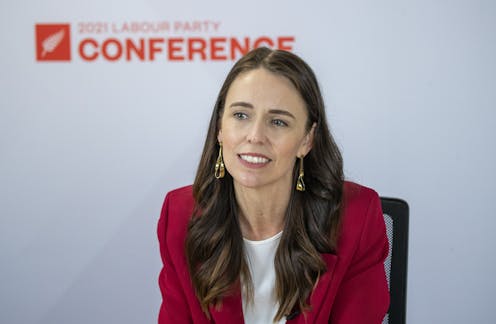
Despite a landslide 50% election victory in October 2020, the New Zealand Labour Party annual conference last weekend – apparently incongruously – made it easier for the party’s leader to be replaced.
The “main focus” of the conference agenda was a remit that allows the party’s parliamentary caucus to elect a new leader (if two-thirds or more are in favour), bypassing a party-wide election process.
This got journalists speculating that it was about “replacing” Ardern as party leader and prime minister, probably with her present deputy and minister of finance, Grant Robertson.
Ardern took over the party leadership just seven weeks before the 2017 election when it looked like Labour would hit another embarrassing low. That switch didn’t require a party-wide primary as it was so close to a general election. Labour’s rules allowed an exemption for caucus to decide on that occasion.
The results were remarkable. Ardern lifted Labour to 37% at the 2017 election, and then formed a governing coalition with New Zealand First, with support from the Greens. In 2020, having brought COVID-19 to a standstill, Labour won 50% and a parliamentary majority.
Delta politics
But no government gets away lightly in this pandemic. The delta variant has proven unbeatable and case numbers have risen.
Difficult policy choices have been made about vaccinations, vaccine mandates, travel, quarantine, lockdowns and the enforcement of emergency rules. The government is now a target for protests and Ardern has been hassled by small but “aggressive” groups.
Polling, however, suggests she and the Labour Party are holding up well. Ardern is still close to 50% in preferred prime minister polls, well ahead of rivals, and the Labour Party is safely in the low 40s.
It’s worth noting, too, that polls in the final pre-election fortnight in 2020 were under-estimating Labour by 3.7 percentage points on average, outside their margins of error, and there’s no proof they’ve improved. Labour’s likely coalition partner, the Green Party, is also polling well.
Grant Robertson, deputy prime minister and Labour’s likeliest successor as leader, watches Jacinda Ardern address media after the weekend’s Labour Party conference. GettyImages
Changing the rules
But the government’s approval rating is in decline. Could that help explain why the Labour Party made a mid-term leadership change easier?
In 2012, Labour introduced an internal primary election for the leadership. This involves a preferential vote, weighted 20% for caucus, 20% for affiliated trade unions and 40% for party members.
This process has been conducted twice. In 2013, it resulted in David Cunliffe being elected leader. He was backed by only one-third of caucus, but members and unions strongly supported him. Cunliffe led Labour to a dismal defeat in the 2014 general election with 25% of the vote.
After he stood down, the next internal primary was won by Andrew Little who narrowly defeated Grant Robertson on a third round of preferences thanks to strong union support for Little. It was Little – backed by caucus – who persuaded Ardern to take the reins in 2017.
On past performance, then, the primary hasn’t delivered the most effective party leadership. The new amended rule doesn’t repeal the party-wide election, however, it just allows the caucus to switch leaders without it if two-thirds or more are in favour.
The party has now given back to the caucus the power to decide who leads in parliament – which sometimes may decide who’ll be prime minister.
Given her electoral success, though, why on earth would Ardern stand down (let alone be rolled) as leader? One can only speculate, but that hasn’t prevented comparisons being made with former National prime minister John Key who stood down unexpectedly in December 2016.
Key’s situation differs from Ardern’s, but it does hint that quitting mid-term may not do your party any favours. In the 2017 election, National won the most seats but was unable to form a government.
No easy way out
The tough decisions taken by Ardern to deal effectively with the pandemic are compromising her social democratic ideals and her ethics of kindness, empathy and inclusiveness.
As the emotional and financial costs and the social divisions mount up daily in people’s lives, many turn their anger and frustration on the country’s leader. On the other hand, a sudden relaxation of restrictions and a rise in cases would also produce a public backlash and would do most harm to Māori.
The state is obliged, and has the legal powers, to protect the population from deadly diseases. But there’s no simple or popular way to balance the public health, economic and political risks at the moment.
These tensions could become so glaring that a refreshed leadership is necessary in the interests of the party’s future election chances. The opinion polls suggest there’s no need for that – yet. In the meantime there’s a pandemic to deal with, and the next election is late 2023.
Thinking optimistically, when the pandemic subsides, surely Ardern would want to take the credit. Either way, she has said with typical political caution that, for the time being at least, “I have no plans to change what I am doing.”
Grant Duncan tidak bekerja, menjadi konsultan, memiliki saham, atau menerima dana dari perusahaan atau organisasi mana pun yang akan mengambil untung dari artikel ini, dan telah mengungkapkan bahwa ia tidak memiliki afiliasi selain yang telah disebut di atas.
New Zealand Parliament Buildings, Wellington, New Zealand.
Editor’s Note: Here below is a list of the main issues currently under discussion in New Zealand and links to media coverage. You can sign up to NZ Politics Daily as well as New Zealand Political Roundup columns for free here.
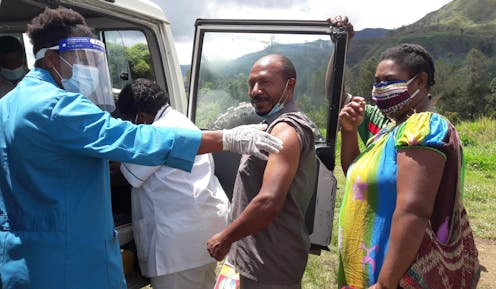
Papua New Guinea National Department of Health/Facebook
Only 1.7% of Papua New Guineans have been fully vaccinated against COVID-19. This has been a cause of concern for the international community, who are watching the virus spread through an exposed population with high rates of co-morbidities and minimal access to healthcare.
The mood within the country, however, is very different. No doubt there is abundant fear, but this has centred on the vaccine itself.
Many Papua New Guineans have access to the vaccine, even in some of the remotest corners of the country. They are also fully familiar with injected medicines and vaccinations against diseases like polio and measles.
But millions of Papua New Guineans are not getting vaccinated against COVID because they are terrified of this specific vaccine. This is not “vaccine hesitancy”, but full-blown opposition, a genuine antipathy.
So, why is there such a fierce resistance to the COVID vaccine? The key difference, as any good anthropologist will tell you, is cultural context.
Spiritual sickness
Any attempt to understand local views on the COVID vaccine must first appreciate that, within Melanesian societies, physicality is intimately connected to morality and spirituality. Because of this, biomedical explanations for disease are usually secondary to other causes or irrelevant.
This is mainly due to the small, sometimes non-existent role played by government education in the lives of most Papua New Guineans, especially the roughly 80% that live in rural villages.
For example, should an otherwise healthy person suddenly become ill and die, sorcery or witchcraft may be deemed the cause. Accusations are linked to interpersonal conflicts and jealousies that may have precipitated the mystical assault.
Such interpretations usually occur with individual misfortunes – not much larger events like a global pandemic. This is where Christianity becomes hugely important, making sense of broader problems like this.
The role of Christianity
Nearly all Papua New Guineans (99.2%) are Christian. And the religious landscape in the country is powerfully influenced by Pentecostal and evangelical churches.
In PNG, Christianity provides not only the promise of eternal salvation, but biblically inscribed frameworks and prophetic ideas that inform how people live and view the world around them.
Many Christians, especially those believing in the Pentecostal and evangelical traditions, have a strong interest in the end of the world, as this signals the return of Jesus Christ.
Crucially, the imminent return of Christ is heralded by the world’s rapid moral decline and humanity being branded with the mark of the beast — a process mandated by Satan. As such, many Papua New Guinea Christians continuously and fearfully scan the horizon for this definitive sign.
Years ago, some Papua New Guinean friends declared barcodes were the mark. More recently, they insisted it was the government’s national ID card initiative. Now, in a completely different order of magnitude and intensity, it is the COVID vaccine.
As one group protesting a vaccine drive recently chanted, “Karim 666 chip goh!”, or “Get out of here with Satan’s microchip”.
From this perspective, the vaccine is a vehicle for much larger forces of global and cosmic tyranny. The speed with which the vaccine was developed, its global reach, and the apparent coercion of vaccine mandates all further strengthen suspicions of its evil origins.
However, Christianity is not the sole factor spurring anti-vaccination sentiment. Indeed, powerful misinformation on social media has also been influential, such as rumours the vaccine carries a microchip or commonly causes death. People also have a well-founded distrust of outsiders, and they view both the virus and vaccine as foreign assaults on PNG’s sovereignty.
In the absence of Western biomedical knowledge or a lack of faith in its validity, these theories flourish. Those with more sustained exposure to Western culture often try in vain to convince their compatriots against this kind of thinking.
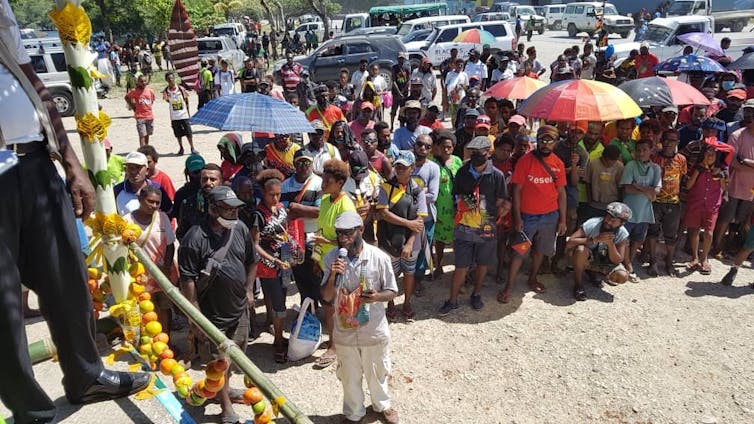
A member of the public voicing concerns about COVID vaccines during the launch of the Johnson & Johnson vaccine in Madang. Papua New Guinea National Department of Health/Facebook
Alternative treatments
While defiantly resisting vaccination, many Papua New Guineans nonetheless acknowledge COVID-19 is real and that it causes sickness.
With infection rates, hospital admissions, and deaths now surging, it would be hard to ignore this reality. The rising COVID-19 mortality across the country has scared some into receiving the vaccine, but even those open to vaccination are easily spooked by rumours of subsequent death.
In the absence of vaccinations, Papua New Guineans have turned to three main methods of treatment: prayer and healing, organic remedies, and reliance on a claimed strong natural immunity to disease.
As Christians strongly influenced by the evangelical and Pentecostal traditions, many people pray to God, Jesus, and the Holy Spirit to not just mitigate, but annihilate, the evil sickness.
In addition, many are turning to organic traditional remedies to ward off illness. This mainly consists of spices and leaves used in drinks and steaming.
Finally, there is a strongly held belief that Papua New Guineans possess an intrinsically strong immune system, buttressed by a diet of garden food, which makes them more resistant to the incursion of the COVID virus.
What can the authorities do?
For most westerners, vaccines are an obvious and intrinsic good. For many Papua New Guineans, vaccines are a dangerous, unknown, and sinister threat. This is due to a combination of forces – governmental neglect, strong religiosity, and a justified distrust of outsiders.
This local position needs to be very sensitively understood and respected, not dismissed or criticised.
Vaccine campaign message featuring Cardinal John Ribat of PNG. Papua New Guinea National Department of Health/Facebook
At the same time, deaths must be prevented and the thick fog of opposition surrounding the vaccine must be dissipated. But how?
Detailed information about the vaccine, including its creation, contents, efficacy, and potential side effects, must be made fully known to people before asking them to be vaccinated. Insisting a population with minimal information be vaccinated is not ethical or fair.
Likely in response to the widespread apocalyptic interpretations of the vaccine, the PNG Council of Churches is now actively promoting its safety and benefits. The government also needs to step up its efforts and commit to a nationwide educational campaign if hopes for substantial vaccine uptake are ever to be realised.
The success of the whole endeavour – and steering Papua New Guinea away from a public health catastrophe – will likely turn on persuading ordinary people the vaccine is a divine blessing and not a Satanic curse.
Fraser Macdonald does not work for, consult, own shares in or receive funding from any company or organization that would benefit from this article, and has disclosed no relevant affiliations beyond their academic appointment.
As our nearest neighbour, Papua New Guinea, struggles to contain a rampaging COVID outbreak, the question arises of how much Australia is doing to help. Is the emergency assistance Australia offers enough in a country whose health infrastructure was already under siege before the pandemic?
An ancillary question is whether Canberra’s “vaccine diplomacy” in the Indo-Pacific is losing ground against an aggressive Chinese push to make available its Sinovac and Sinopharm vaccines across the region.
This is a classic case of a health emergency meeting soft diplomatic power in Australia’s own strategic backyard.
China has distributed more than 1 billion doses of its vaccines to some 100 countries, with a particular focus on Asia and the Pacific. Something like 400 million doses have been distributed in Southeast Asia and around 300,000 in the Pacific.
Australia’s contribution in its own region stands at about 6 million doses of its AstraZeneca stockpile. But there is much work to be done: just 1.7% of adults in PNG are fully vaccinated.
The Morrison government insists it is doing all it reasonably can to help its neighbour in what are dire circumstances for a country beset with development issues.
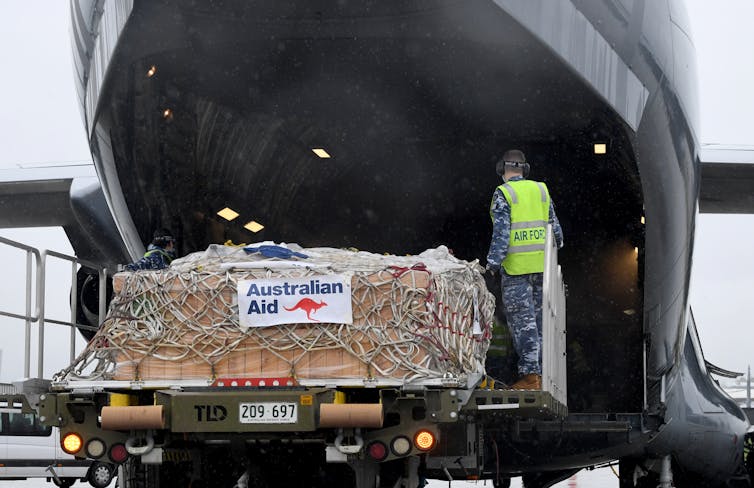
Zed Seselja, minister for international development and the Pacific, says in an interview that Australia has been “moving heaven and earth” to assist PNG with the supply of vaccines and has deployed Australian Medical Assistance Teams (AUSMAT) to help on the ground.
Late last month, Canberra despatched its sixth AUSMAT to PNG since the COVID-19 crisis began, to help lift the flagging vaccination rates.
Minister Zed Seselja says Australia has ‘moved heaven and earth’ to assist PNG with COVID vaccines. Darren England/AAP
This contrasts with Fiji where more than 80% of the eligible population – those over 18 – has been fully vaccinated with Australian assistance.
While the comparison between Fiji (population 900,00) and PNG (8 million) may not be fair, in the sense that the former is facing nowhere near the development problems and geographical constraints of the latter, the contrast between the two could hardly be more telling.
No-one pretends getting vaccines to remote areas in PNG, wide swathes of which lack electricity and, therefore, refrigeration for vaccine storage, is anything but a huge challenge. However, overlaying the PNG situation is the problem of vaccine hesitancy – perhaps better described as “vaccine phobia”.
According to a survey among university students, just 6% believed they needed to get vaccinated. One explanation for the level of vaccine hesitancy among educated Papua New Guineans is a low level of confidence in PNG’s public institutions, according to former Australian ambassador to Port Moresby Ian Kemish.
Perhaps most troubling of all is that many Papua New Guineans have developed a fatalistic belief that COVID is just another health challenge to add to the litany of other serious problems facing the country, including maternal mortality, malaria and tuberculosis.
Health professionals on PNG’s COVID-19 front line paint a disturbing picture of the challenges they are facing.
Dr Glen Liddell Mola, professor of medicine and a veteran gynaecologist and obstetrician in PNG, describes an overflow of patients into “tent wards” in the car park of Port Moresby General Hospital as medical facilities struggle to cope with the influx of COVID-19 sufferers. He told me:
I am 50 years into medical practice and not many illness scenarios challenge or frighten me anymore; but watching young people die from severe COVID disease had a very big impact on me. They literally die from laboured breathing respiratory failure: they just do not have the strength to take another breath.
Seselja says the government is mindful of the huge health challenges facing PNG, but levels of vaccine hesitancy are “very, very high”.
Sejelsa defends the government against suggestions it could have done more. He points out that since the COVID-19 crisis hit in early 2020, Australia has allocated $532.2 million to the countries of the Indo-Pacific to access and roll out vaccines.
It has made a $130 million contribution to the global World Health Organisation-managed COVAX facility as its share of a vaccine procurement program for less developed countries. Australia has pledged $100 million under the Quad Vaccine Partnership with the US, Japan and India to support vaccine delivery in Southeast Asia. Australia is also sharing 40 million vaccine doses with the region from its own AstraZeneca stockpile.
Fiji and PNG faced a similar catastrophic problem with COVID, but have gone in opposite directions in terms of vaccinating the population: in Fiji, over 80% have had two doses. Aileen Torres-Bennett/AP/AAP
Of that 40 million stockpile, 2.2 million has gone to Indonesia, 1.5 to Vietnam, 861,000 to Fiji, 577,850 to Timor-Leste, 213,000 to the Solomon Islands and 144,970 to PNG, among others.
Asked why more vaccines had not gone to PNG, given its proximity to Australia and Australia’s own historical responsibilities, Seselja replied:
PNG’s absorptive capacity for vaccines is just not there.
In July, China’s nationalist Global Times berated Canberra for “sabotaging” China’s aid programs with Pacific nations using “political manipulation” to interfere in vaccine rollouts.
The newspaper said Australia had been “planting” consultants in PNG to obstruct the authorisation of Chinese-supplied vaccines. A Chinese Foreign Ministry spokesman said:
Some people in Australia use the vaccine issue to engage in political manipulation and bullying, which is a disregard for the life and health of Papua New Guinea people, goes against the basic humanitarian spirit, seriously interferes with the overall situation of global co-operation against the pandemic.
Seselja rejects China’s claims, saying it is “absolutely not the case”.
All that said, vaccine diplomacy competition between Canberra and Beijing is evident in efforts by the former to counter China’s attempts to increase its influence among Pacific nations.
Finally, Australia’s COVID assistance program should be set against its annual aid allocations to PNG and the Pacific more generally as part of its Pacific “Step-Up” policy.
In 2020-21, Australia allocated $491.1 million in aid to PNG, or more than 10% of its total $4 billion aid budget. This was slightly less than Port Moresby received in 2019-20 due to completion of work on an undersea cable between PNG and the Solomon Islands.
PNG’s allocation accounts for about half of funds provided to Pacific island countries. On top of the annual aid budget, Canberra set aside $304.7 million over two years for what it called the COVID-19 Response Package for the Pacific and Timor-Leste.
These funds are being deployed, but it is in Australia’s interests to do more to help PNG.
Tony Walker does not work for, consult, own shares in or receive funding from any company or organisation that would benefit from this article, and has disclosed no relevant affiliations beyond their academic appointment.
Australia is opening up, people are mixing and mingling, and schools are back. But there’s a downside. Sharing our lives with each other again also means sharing our germs.
When we look at trends of illnesses in cities coming out of lockdown internationally, one thing is clear. We can expect to see more colds and flu. But what’s actually causing these?
Here are five germs I expect we’ll see more of in the coming months.
The most likely reason for such a dramatic drop is the reduction in international travel. Public health interventions designed to curb COVID (such as mask wearing, hand washing, physical distancing) have also likely contributed.
With global travel opening up again, influenza will likely travel too. So we anticipate seeing a lot more of it around.
Pandemic response measures have also curbed some bacteria, such as Streptococcus pneumoniae.
A study was conducted on data from 26 countries across six continents in the first half of 2020. It found S. pneumoniae infections decreased by 82% after eight weeks of restricted population movement, such as lockdown.
This bacteria causes pneumonia (which is how it got its name). It can also cause a range of other illnesses from ear infections and sinusitis to life-threatening infections of the bloodstream (sepsis), and central nervous system (meningitis).
Young children, older people and people with impaired immune systems are most at risk.
This bacteria can cause everything from ear infections to meningitis. Shutterstock
Thankfully, we have vaccines (known as pneumococcal vaccines) to help prevent the nastier diseases you can get from this bacteria.
These are already part of the Australian vaccination schedule. So if you have been vaccinated according to routine recommendations, you should already be protected.
If you catch S. pneumoniae, it does respond to antibiotics. However, it’s resistant to at least one antibiotic in three out of every ten cases.
Prevention (with vaccines and hygiene) is definitely the better option. So as a community, we must carefully steward our use of antibiotics to make sure they actually work when we really need them.
This is another nasty bacteria. You may have already guessed from its name that it can cause meningococcal meningitis, a serious infection of the central nervous system.
The same international study that found a reduction in S. pneumoniae during lockdowns also found rates of Neisseria meningitidis greatly reduced.
This is not surprising as N. meningitidis also lives in the nose and throat and can be transmitted from person to person via droplets as people cough and sneeze.
Meningitis outbreaks have occurred worldwide over the years, and a high proportion of people who become sick with it die. Survivors sometimes have severe, lifelong disability.
Like with S. pneumoniae, there is both prevention (via a vaccine) and treatment (with antibiotics) for N. meningitidis infections. But there is also growing antibiotic resistance.
So getting vaccinated, and avoiding antibiotic overuse, are important ways to reduce the risk of being seriously impacted by this bacteria.
Respiratory syncytial virus (or RSV) is a common virus causing a flu-like lung infection called bronchiolitis. This mostly seriously affects children under the age of two.
Although RSV infections usually cause mild cold symptoms, they are also responsible for a significant number of deaths in children under five worldwide.
RSV can be particularly serious in toddlers. Shutterstock
During COVID lockdowns around the world, RSV infections were at a historic low for a year. But they started rising again in April 2021 even in the Northern Hemisphere (for example, in the United States and the United Kingdom) where countries were entering summer.
Doctors usually expect to see spikes of RSV in winter months, and before COVID many assumed this was because it survived and replicated better in colder weather.
So for the sake of our little ones we should not lose all the good habits we developed to combat COVID, such as staying home when sick, washing our hands, covering our coughs/sneezes and wearing masks in higher risk settings.
5. Rhinovirus
Rhinovirus continued to spread throughout the pandemic and infections even shot up in some countries. But I am including it in this list as its prevalence holds some fascinating potential in our fight against COVID.
Rhinovirus, like RSV, is a major cause of the common cold, particularly in infants. Both rhinovirus and RSV show the same symptoms. So without doing a diagnostic test it is impossible to tell which of these someone has. They require the same acute treatment anyway.
However, recently there has been interest in distinguishing between them for two reasons.
First, if a child has a rhinovirus infection in early childhood they may have a higher risk of recurrent respiratory symptoms and a higher risk of developing recurrent wheezing and childhood asthma.
Second, there is the exciting potential for rhinovirus infections to actually train our immune system to block other viruses, such as the coronavirus and influenza. This is still in the early stages of research but is something to watch.
We can reduce the impact of these five germs by keeping up simple hygiene habits, getting immunised where possible, and making sure we only use antibiotics when absolutely necessary.
However, if you do have respiratory symptoms as restrictions ease, and as symptoms do overlap with COVID, you should get a COVID test.
At the United Nations climate summit in Glasgow last week, more than 40 countries pledged to phase out coal-fired power. Some were big coal-using countries such as Poland, Canada and Vietnam – however Australia was not among them. Australia was similarly absent for a methane reduction pledge.
Achieving the Paris Agreement — limiting global warming to well below 2℃ and preferably 1.5℃ — requires the rapid phase out of coal, oil and fossil gas. Failure to do so will spell the end of the Great Barrier Reef and make a large swathe of Australia virtually unlivable.
Yet the Morrison government’s technology-driven net-zero “plan” contains no concrete measures to end this fossil fuel addiction. It’s more a placeholder than a strategy, fulfilling the government’s need to have a document to wave around. Meanwhile, the government seems intent on sitting back and letting the future happen, rather than creating it.
I’ve spent 25 years working and investing in technology commercialisation, focusing over the past 15 years on clean technologies. I know Australia doesn’t need to wait for new technology before committing to and achieving deep emissions cuts. Most technologies we need already exist – they just need to be deployed, rapidly and at massive scale. And that requires an actual plan.
Australia has the technology for a net-zero future – now it must be deployed. Mick Tsikas/AAP
We have the technology
The Morrison government’s path to reach net-zero by 2050 relies primarily on technology, but fails to even remotely outline what that would mean in practice.
A total of 70% of the emissions cuts would purportedly be achieved by technology “investment”, “trends” and “breakthroughs”. But it’s not technology per se that reduces emissions, it’s deploying it.
The government missed the opportunity to explain decarbonisation at its simplest: electrify everything we can, and power it with renewables.
Some 84% of Australia’s emissions come from activities related to the energy sector. Recent overseas analysis shows electrification could replace 78% of energy emissions using established technologies. Add technologies being developed, and the figure rises to 99%.
Hydrogen, one of the government’s technologies du jour, is likely to play a modest but important role in domestic decarbonisation. And if we don’t get left behind, it could become a significant export earner.
But what’s required in the near term is much more boring: build lots of wind, solar and storage, retire coal and gas as soon as possible, and electrify transport and heating.
Carbon capture and storage (CCS), a favourite of Australian governments for decades, remains a distraction. First, since CCS adds significant cost but no benefit to a process, it will always require either a carbon price or regulations to be viable. Second, while CCS may play a role at the margins in areas where emissions are hard to abate, such as cement production, its only significant role for coal and gas is as a fig leaf for inaction.
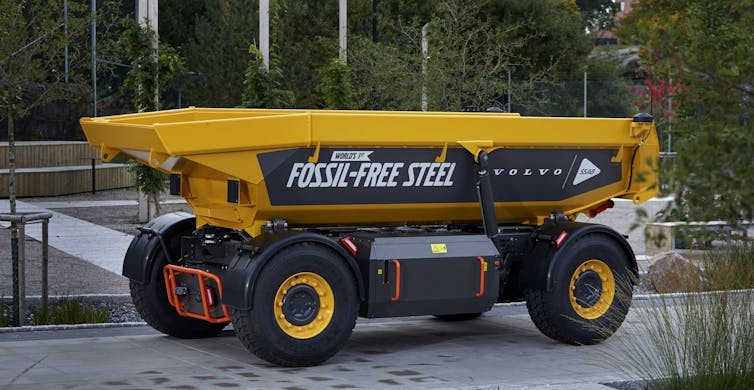
Green steel could be a significant opportunity for Australia, given our abundance of iron ore and access to low-cost clean energy. But while Australia dips a toe in the water, overseas companies like SSAB and Volvo are demonstrating that the days of metalurgical coal — one of Australia’s biggest exports — are numbered.
Clearly, the technologies are here. What we need is deployment.
Volvo recently produced the first vehicle made from fossil-free or ‘green’ steel. SSAB
Learn from Henry Ford
A decade ago, energy from wind are solar was significantly more expensive than from coal and gas. But renewables are now the cheapest form of new energy, even including additional costs such as energy storage and transmission.
Renewable energy’s fast fall in price was due to a mix of well-designed government policies and massive private investment, both here and around the world.
The Commonwealth’s Renewable Energy Target, for example, required electricity retailers to purchase a small but increasing amount of renewable energy each year, in a way that did not significantly affect energy affordability. With renewables now at a lower cost than new coal and gas, that early investment is paying dividends.
The experience showed we don’t have to wait until technology is cheap and perfect before deploying it. In fact, the only way to make it cheap and perfect is to deploy it, again and again.
When Henry Ford released the Model T in 1908 his horseless carriage was imperfect and expensive. Yet it kicked off a process of technological improvement in which each successive generation of cars has learnt lessons from those which came before.
If federal Energy Minister Angus Taylor time-travelled back to 1908, would he advise Ford not to release the Model T until it resembled the Tesla Model S?
Henry Ford didn’t wait until the Model T ran like a Tesla before deploying the technology. Ford Motor Co
Seizing opportunities
Most economists agree the most efficient way to reduce emissions is to put a price on carbon and let the market respond. More than a decade of toxic Australian politics has poisoned that well. It leaves policymakers with few tools, and politicians with even fewer ideas.
In the absence of an explicit carbon pricing scheme, the federal government should set clear emissions reduction targets in each sector of the economy.
Monash University’s ClimateWorks has developed a plan for doing so. Such a plan, with an added combination of policy “carrots” (subsidies or incentives) and “sticks” (regulations or taxes) would ensure emissions reduction targets are met.
Our lowest hanging fruit would include a carefully managed coal phase-out and policies to rapidly electrify transport and heating, using existing technologies. This would help us hit meaningful 2030 emissions reduction targets consistent with the Paris Agreement.
Meanwhile, we sit on the cusp of what is almost certainly Australia’s biggest ever investment opportunity. Our wide brown land is chock full of the critical minerals needed in a decarbonising world — lithium, nickel, cobalt, rare earth metals and silicon. Moreover, our windswept and sun-drenched plains are ready to produce the low-cost energy required to locally transform these raw minerals into valuable refined materials.
Our state governments, some having committed to net-zero five years ago, are making progress – particularly in electricity. But complementary and coordinated policies at the federal level would almost certainly make progress faster — and cheaper.
The coal and methane pledges at COP26 shows many of the world’s most emissions-intensive economies are ready to make the transition. Meanwhile, the federal government’s so-called “plan” prevents Australia from claiming our place in the sun, and wind.
Simon Holmes à Court has indirect stockholdings in numerous domestic and international clean tech and clean infrastructure companies. He is a director of the Smart Energy Council, a peak body for solar, storage, smart-grids and hydrogen. He is also the convenor of Climate 200, a non-profit supporting pro-climate, pro-integrity and pro-gender equity political candidates.
Feeling anxious about the ecological crises we face is entirely understandable, given the enormity of the threats.
Eco-anxiety is sometimes described as a mental health problem. It’s not. Eco-anxiety is a rational psychological and emotional response to the overlapping ecological crises we now face.
If you feel this way, you are not alone. We have found eco-anxiety is remarkably common. Almost two-thirds of Australian participants in our recent surveys reported feeling eco-anxiety at least “some of the time”.
The response can be triggered by media stories on environmental and climate crises as well as human efforts to combat them. This includes the barrage of media from the United Nations climate conference, or COP26, now underway in Glasgow.
In this age of ecological reckoning, eco-anxiety is not going to go away. That means we must learn how to cope with it – and perhaps even harness it to drive us to find solutions
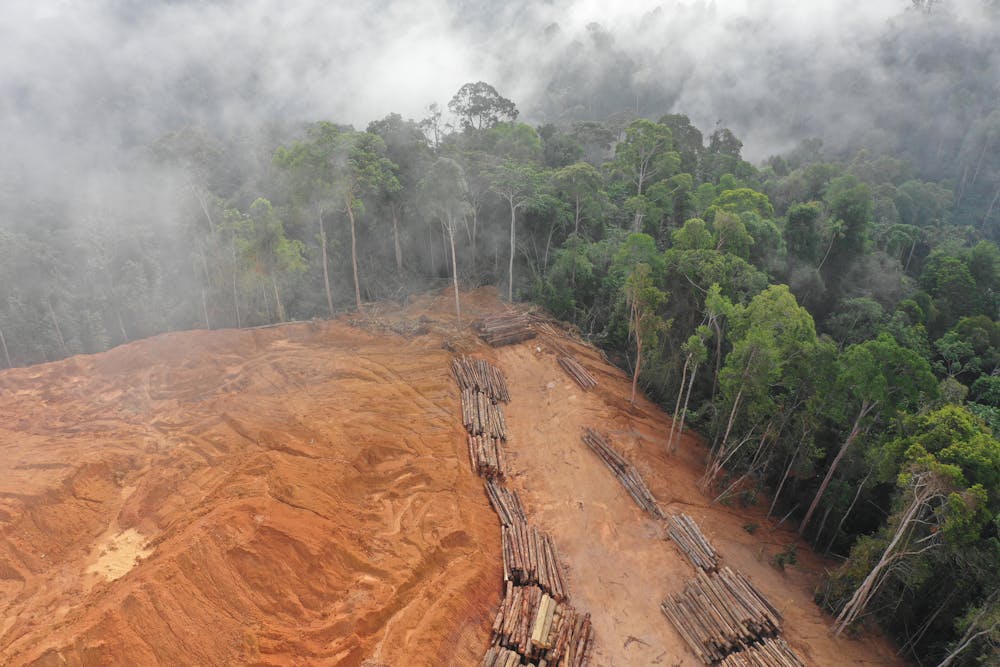
Awareness of environmental crises like deforestation can provoke anxiety. Shutterstock
Dwelling on problems we contribute to
Our study found four key features of eco-anxiety:
affective symptoms, such as feelings of anxiety and worry
rumination, meaning persistent thoughts which can keep you up at night
behavioural symptoms, such as difficulty sleeping, working, studying or socialising
anxiety about your personal impact on the planet.
We found similar levels of eco-anxiety in our surveys of 334 Australians and 735 New Zealanders, with people affected in similar ways in both countries. This supports emerging research, which found more than half of young people surveyed across ten countries experienced climate anxiety. Feeling anxious about the state of the planet is likely to be universal.
When we asked Australians how it affected them, they told us eco-anxiety affected everything from their mood to their daily routine to their relationships. It even affected their ability to concentrate, work or study. For some, eco-anxiety made them feel restless, tense and agitated. New Zealanders reported similar impacts.
Our study found people were also anxious about their personal contribution to the deteriorating state of the planet. Some participants noted the state of the planet made them “extremely anxious”, so much so they “find it hard to think about anything else”.
Other research shows many people are anxious about how their personal behaviours impact the earth, such as consumerism or flying. Some young adults are choosing to have fewer children, or none at all, out of concern their children will contribute to the climate crisis or will inherit a degraded world.
These fears appeared in our study too, with one parent participant noting:
My biggest worry is that climate change will affect my child in their lifetime, and I get very upset that I won’t be able to protect him from the effects of it.
Is eco-anxiety different to generalised anxiety?
Eco-anxiety has similarities with generalised anxiety and stress, but we found important differences, such as the focus on environmental issues and our contribution to the problem.
We also found people experience eco-anxiety independent of depression, anxiety and stress, suggesting it’s a unique experience.
While it is possible to experience eco-anxiety as someone who is otherwise mentally well, many people experience it on top of existing mental health issues.
What we need to do now is understand what eco-anxiety means for individual (and planetary) well-being, and provide support to people with varying degrees of this anxiety.
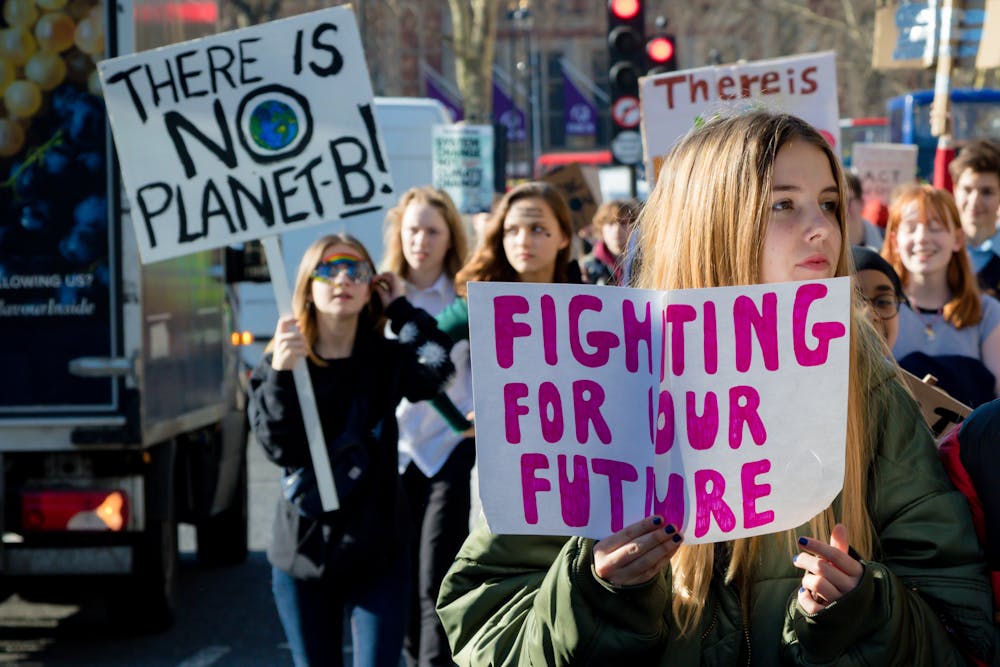
School students marching for climate action in the UK, 2019. Shutterstock
Four ways to cope with your eco-anxiety
Eco-anxiety is not going to go away as an issue, given the range of environmental issues the world is confronting. To stop these feelings becoming overwhelming or debilitating, there are a range of behavioural, cognitive and emotional strategies people can use to cope.
Here are four techniques:
validation One part of managing your own anxiety is to validate it, by acknowledging it makes sense to feel anxious and distressed
time out Another technique is to take mental breaks and avoid your 24/7 news feed to give yourself time to restore a sense of balance
seek hope Cultivating a realistic sense of hope about the future can also reduce anxiety emerging from our awareness of ecological threats. That means appreciating the complexity of the problem, while also searching for alternative visions of the future and trusting that we, as a collective, will eventually resolve the crisis before it’s too late
take action Many of us struggle with a sense of overwhelming powerlessness in the face of a deteriorating climate. This can be self-reinforcing. To combat this, you can try action – whether changing your own behaviour or getting involved in campaigns.
As climate campaigner Greta Thunberg has said, “no one is too small to make a difference”.
Climate change has been described as the greatest collective action problem we have ever faced. That means the necessary changes will have to come from the collective action of all individuals, industries and governments. We all must act together now, just as we have in combating the COVID pandemic.
Eco-anxiety is increasingly common. But being concerned about environmental crises does not need to come at the cost of your health and wellbeing.
After all, psychological, emotional and behavioural burnout is not helpful for you – or the planet.
The authors do not work for, consult, own shares in or receive funding from any company or organization that would benefit from this article, and have disclosed no relevant affiliations beyond their academic appointment.
Some schools around Australia, and elsewhere, have replaced individual desks with circular booths and shared tables for collaborative work.
But what does the evidence actually say? Do flexible learning spaces improve students’ ability to work together, as well as their learning overall?
The evolution of the classroom
For many parents, the schools their children attend are markedly different in design to the schools of their own childhood. This is because school design in Australia and New Zealand (and internationally) is challenging the traditional classroom housing one teacher and 30 students seated in static, uniform desks and chairs.
This arrangement is being replaced by open-plan spaces accommodating several teachers working collaboratively with perhaps 100 students.
These new classrooms include include a profusion of colour, arrangements, styles and types of furnishing such as shared tables, mobile chairs, ottomans and beanbags.
The aim is to encourage students to move freely and collaborate. The arrangement also provides options for students to work individually if they please.
Modern classroom design in Hobsonville Point Primary School, Auckland. Leon Benade, Author provided
What’s the reason for these changes?
In its 2018 report The Future of Jobs, the World Economic Forum pointed to the importance of “human” skills such as “creativity, originality and initiative, critical thinking, persuasion and negotiation” as workplaces change with technology.
The obvious place to begin acquiring these skills is school. In its 2013 Innovative Learning Environments report, the OECD marked creativity, collaboration and digital literacy as of greater importance to a 21st-century workforce than traditional knowledge acquisition.
For at least the past two decades, teachers have focused increasingly on developing “21st-century skills”. They have learnt to accommodate the learning needs and styles of 21st-century children, while also learning to accommodate and embrace the development of technology. The result is teaching has shifted from teacher-centred instruction to student-centred and student-led learning.
Does non-traditional school furniture improve learning?
One of the arguments for a non-traditional furniture set-up is its design and flexibility enhance student engagement. A 2020 study of ten classrooms in Texas with 206 elementary students in third and fourth grades reported the students experienced higher levels of enjoyment, comfort and attentiveness when using flexible furniture options.
The study found flexible furniture afforded opportunities for collaboration and developing student autonomy. Importantly, this study also showed flexible furniture can positively influence teachers’ behaviour, given appropriate professional development support. This is because it liberates them from controlling students, who are allowed to move freely around the classroom.
If students are more engaged when moving around the classroom, that can’t be a bad thing. Shutterstock.
Some local studies have made similar findings. A 2018 University of Wollongong study found several factors enhanced student engagement and motivation, including students’ autonomous use of flexible furniture.
And a New Zealand study recently found students made considered use of furniture choices in ways that reflected their conscious awareness of how the different kinds of furniture could support various learning activities.
There are possible negatives
Both Australasian studies reported, however, distractions and increased noise due to the sociability aspects of the range and type of furniture. These distractions led to off-task behaviour and lowered concentration levels in some cases.
Designers of modern school furniture claim a range of physical and psychological health benefits for students. These include breaking the cycle of sedentary seated behaviour common in traditional school settings. Some parents hotly contest this position and argue, for example, that options such as beanbags compromise children’s postures.
Similarly, the Wollongong and New Zealand studies questioned the health benefits of students sitting hunched over low tables or at backless ottomans. But both concluded free and frequent student movement reduced any postural concerns.
While inconclusive, the evidence does indicate 21st-century students of all ages prefer the option of being able to move around freely, to sit, slouch or lie wherever they are most comfortable, and to work with their peers on collaborative tasks.
Whether this leads to better academic outcomes than being seated at more traditional tables and chairs arranged in straight lines is yet to be researched. For the moment, the more permissive environment of modern and flexible learning spaces is making students more engaged, and that can’t be a bad thing.
Leon Benade does not work for, consult, own shares in or receive funding from any company or organisation that would benefit from this article, and has disclosed no relevant affiliations beyond their academic appointment.
In 2020, for the first time in Australia, more than half the shareholders of a public company voted in support of a climate change resolution put forward by shareholders in the face of opposition from the company’s board of directors.
The resolution, advanced at Woodside Petroleum’s annual general meeting, called for the company to establish hard targets to bring its own emissions and the emissions caused by the use of its products globally in line with the Paris Agreement to keep global warming below two degrees.
A similar resolution followed at this year’s AGL annual general meeting, gaining the support of 52% of the shareholders.
Although the Woodside vote was described as a “breakthrough moment”, it is part of an increase in shareholder activism around environmental, social and governance (ESG) issues that’s been building for several years.
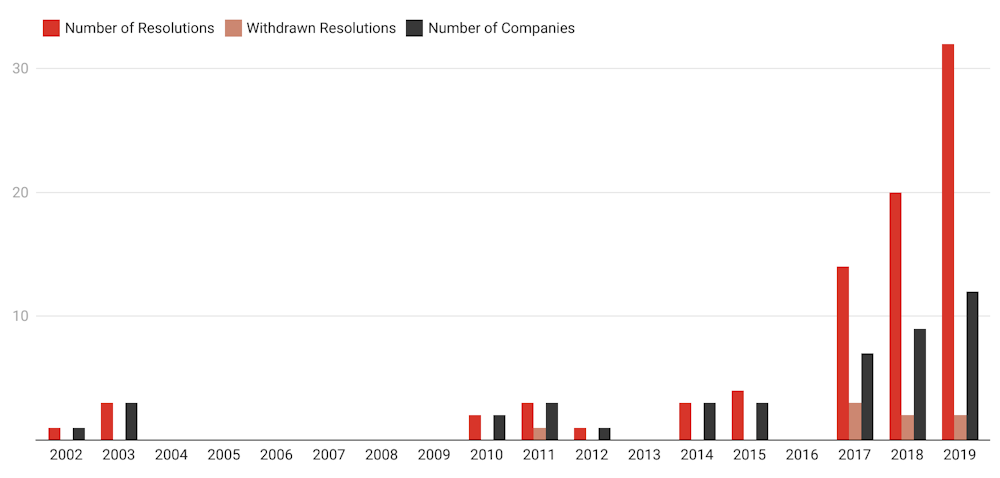
Our analysis of shareholder ESG resolutions put forward in listed Australian companies between 2002 and 2019 finds they have increased in number, prominence and impact.
A record 36 shareholder ESG resolutions were put forward in 2020. So far in 2021 a further 20 have been put forward, with more foreshadowed.
The resolutions have been concentrated in a small number of companies and industries.
Four industries – energy, banking, insurance and materials – accounted for 83.5% of the resolutions, with the 139 resolutions recorded between 2002 and the first part of 2021 concentrated in only 28 companies.
They were generally the companies most exposed to the risk of climate change or which provide finance to these companies.
More climate resolutions are succeeding
Several have been subjected to more than one campaign a year. The company with the most is Origin Energy, facing 24 resolutions in the last six years.
Of the 83 shareholder ESG resolutions advanced between 2002 and 2019, 48 concerned climate change. A further 26 notionally related to governance, but the governance resolutions were often the ones needed to enable consideration of issues such as climate change.
The others related to workers’ rights, human rights, obtaining the consent of Aboriginal native title holders to fracking activities, and gambling.
Until last year the level of support garnered by shareholder ESG resolutions was small, averaging 9.7%. In 2020, support jumped to 14.7%.
In 2021 to date it has climbed to 28%, bolstered by two resolutions of Rio Tinto shareholders that attracted 99% after winning the support of Rio Tinto’s board.
Success needn’t mean being put to a vote
Our study sought input from proponents of ESG resolutions, institutional shareholders, company directors, governance professionals and the Australian Securities and Investments Commission.
We found that winning votes isn’t the only objective of those who propose these resolutions.
Another is to get companies to respond positively even though the resolutions will be defeated, and sometimes in return for the resolutions being withdrawn before the annual general meeting.
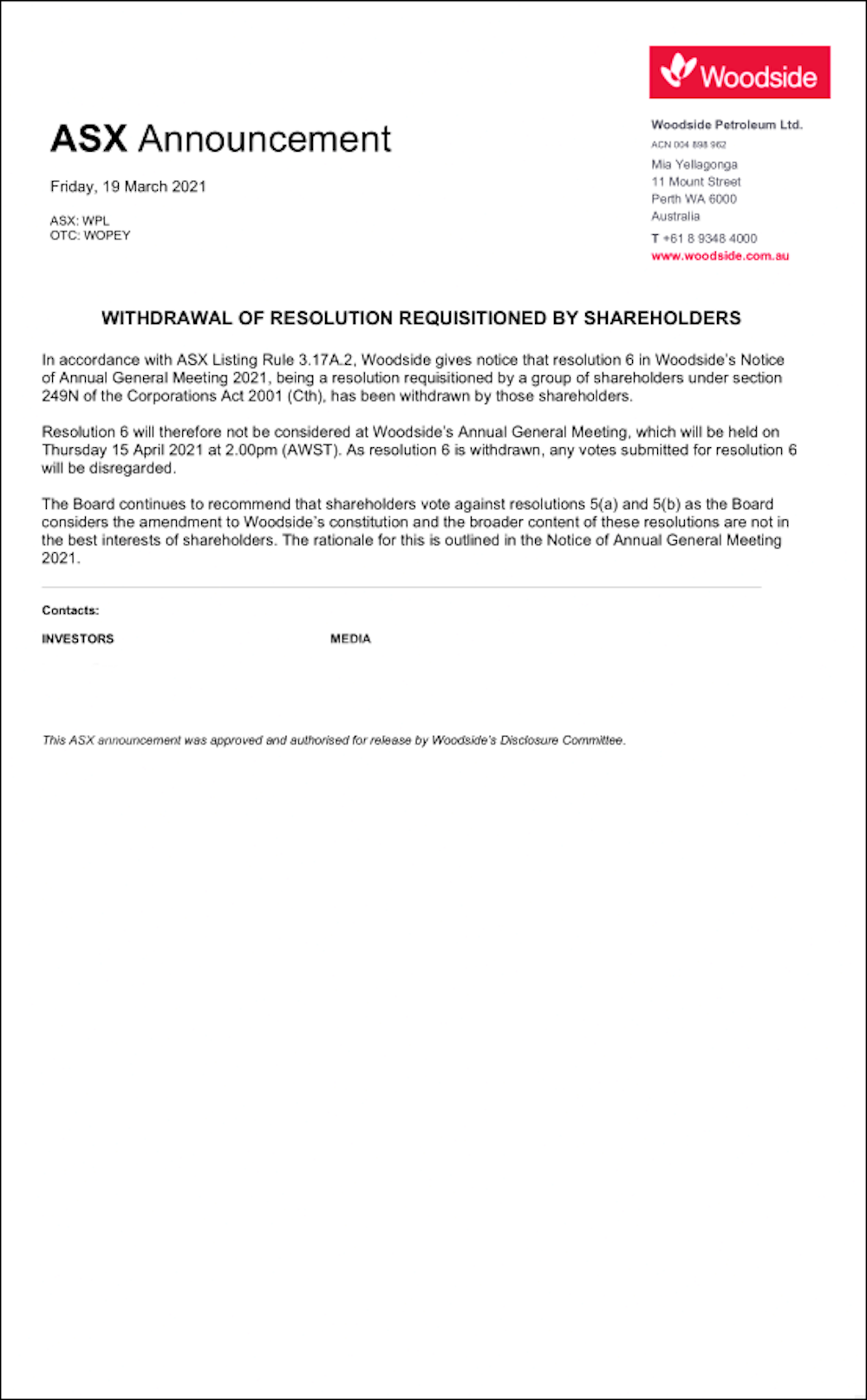
As an example, the Australasian Centre for Corporate Responsibility submitted a resolution for this year’s Woodside annual general meeting calling on the company to prepare an annual climate report that would include Woodside’s strategy to reduce its greenhouse gas emissions and put the report to a shareholder advisory vote.
It withdrew the resolution after Woodside announced it would put climate reporting to an advisory vote of shareholders at its 2022 annual general meeting.
Some of those we interviewed said shareholder ESG resolutions distracted the companies from what they should be doing.
Others said they ran the risk of blurring the distinct roles of directors and shareholders. Many said the process for getting shareholder ESG resolutions on the agenda for annual general meetings is cumbersome.
However, almost all of those interviewed – and not just the proponents of the resolutions – saw them as a valuable way of letting companies know what their shareholders really think about how they should respond to the challenges of climate change and other issues.
The authors do not work for, consult, own shares in or receive funding from any company or organisation that would benefit from this article, and have disclosed no relevant affiliations beyond their academic appointment.
Linda McCartney, Brian Jones and Mick Jagger, Hudson River, New York, 1966.BIFB
Review: The Linda McCartney Retrospective, Ballarat International Foto Biennale
The Linda McCartney Retrospective has toured the world, taking on a new life in each location, morphing and connecting to the local milieu. It morphs again here for Ballarat’s International Foto Biennale. The 200 works included are curated from the artist’s vast archive of half a million photographs by her famous husband Sir Paul McCartney and their daughters, photographer Mary and fashion designer Stella.
Linda by Paul Sussex. BIFB
The show contains work across 30 years, from her earliest images of rock stars such as the Beatles and Janis Joplin in the 1960s, through to images of the everyday, self-portraits, experiments with form and commentary on causes dear to her heart, especially animal liberation.
Before meeting Paul McCartney in 1967, Linda Eastman (no relation to the Kodak-Eastman family) aleady enjoyed a successful career. She was named US Female Photographer of the Year in 1967. In 1968, she became the first female photographer to shoot the cover of Rolling Stone with an acclaimed portrait of Eric Clapton.
Despite her credentials, she was best known as Paul’s wife rather than an artist in her own right. It is widely reported he often joked that he ruined his wife’s career, but since her death in 1998, Paul has ensured her legacy with books and international retrospectives.
This retrospective includes never before exhibited material, including photographs captured during the McCartney family’s Australian visits for the 1975 Wings and 1993 New World tours.
For local audiences, this provides a connection with images of down-time, press scrums and press conferences (including one with Norman Gunston), landmarks, crew, fans, sunsets and Greenpeace activists. Whether it is the quality of the light or the openness of the faces, these images stand out as quintessentially Australian.
Photo by Linda McCartney, Self Portrait with Paul and Mary, London, 1969. BIFB
From the shadows
McCartney achieves a direct sense of connection and intimacy with her subjects. The images speak of the moment shared, often unposed and character-revealing.
This idea also occurs in her self-portraits – often mirror reflections – reminding the viewer this is her life and her experience. Direct quotes are framing banners: “Looking out from deep below my eyes, I capture moments of my life … .”
In a video she says: “you’ve got to click on the moment, not before and not after”. This sense gives her work a spontaneity and lightness.
Photo by Linda McCartney, Stella and James with horse, Scotland, 1982. BIFB
Other images enable fleeting glimpses, such as Mick Jagger 1966. Looking back, framed by a curtain as he moves through a doorway, he just registers her. I wondered if there is something female about this approach, that women might be able to just “be there” so quietly.
Perhaps this could be related to gender relations, where women are imperceivable, non-threatening, only just there in a man’s world. Alternatively, it could show her ability to step into the shadows, to better observe.
There are also portraits of McCartney taken by others. Two taken by Jim Morrison stand out, particularly one very sensual one on a bed taken in 1967. Both photographs reflect a sense that the tables are turned, and it is she who is being looked at.
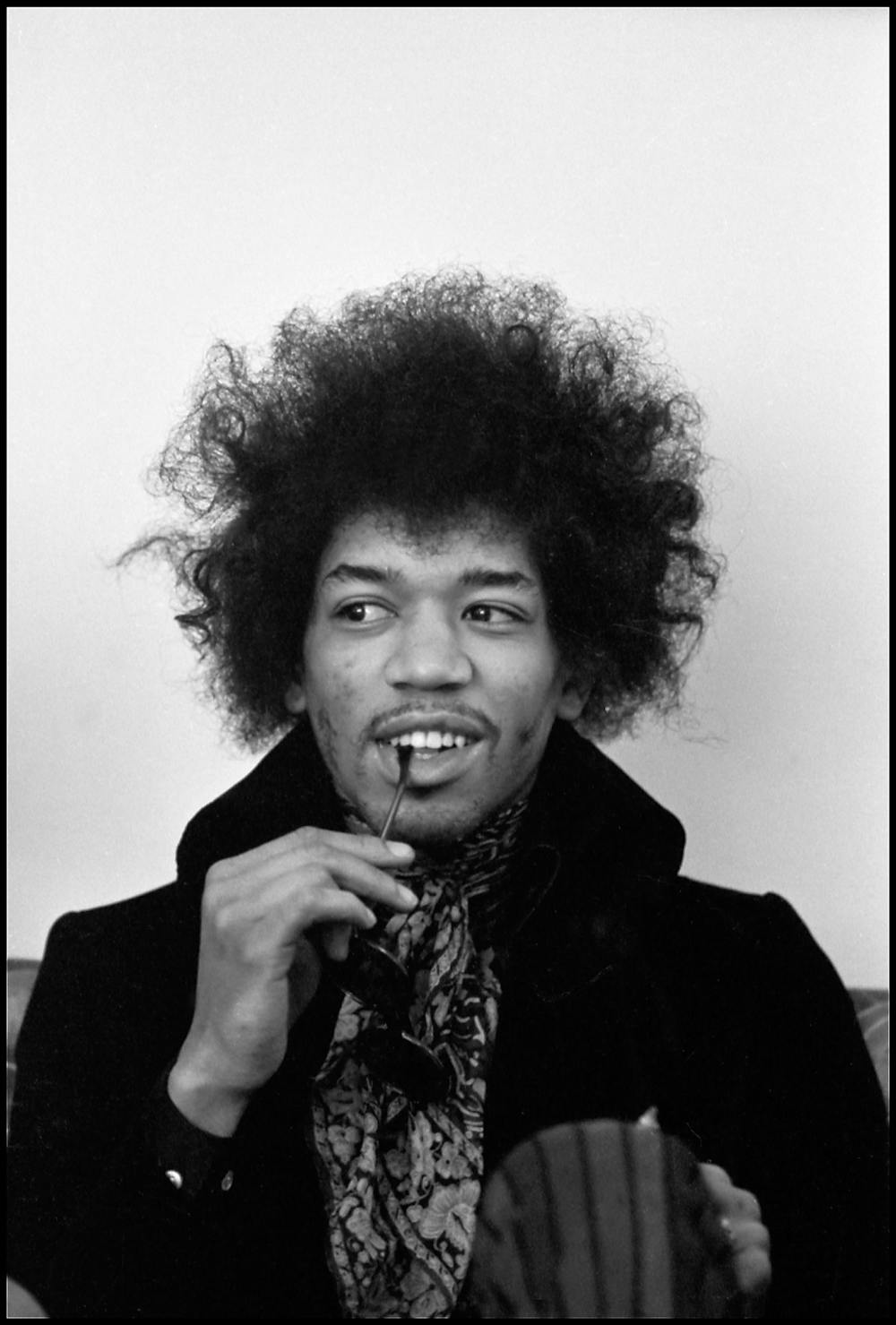
Linda McCartney, Jimi Hendrix, London, 1967. BIFB
Many of McCartney’s family images depict Paul at play with their children. In the photograph Paul and James Los Angles 1983, father and son are in a bubble bath and Paul hams up the scene of being sucked under the water with an open-mouthed scream, evocative of Edvard Munch.
In another, Paul and Children East Hampton New York 1975, he is depicted with them all trailing behind him like the Pied Piper of Hamelin. In Self Portrait with Paul London 1970, Paul and Linda face the mirror in a bathroom. She holds a camera, slightly angled to him, and he holds an imaginary one.
In all this, you get the sense of his collaboration with her theatrical agenda.
Artistic conversations
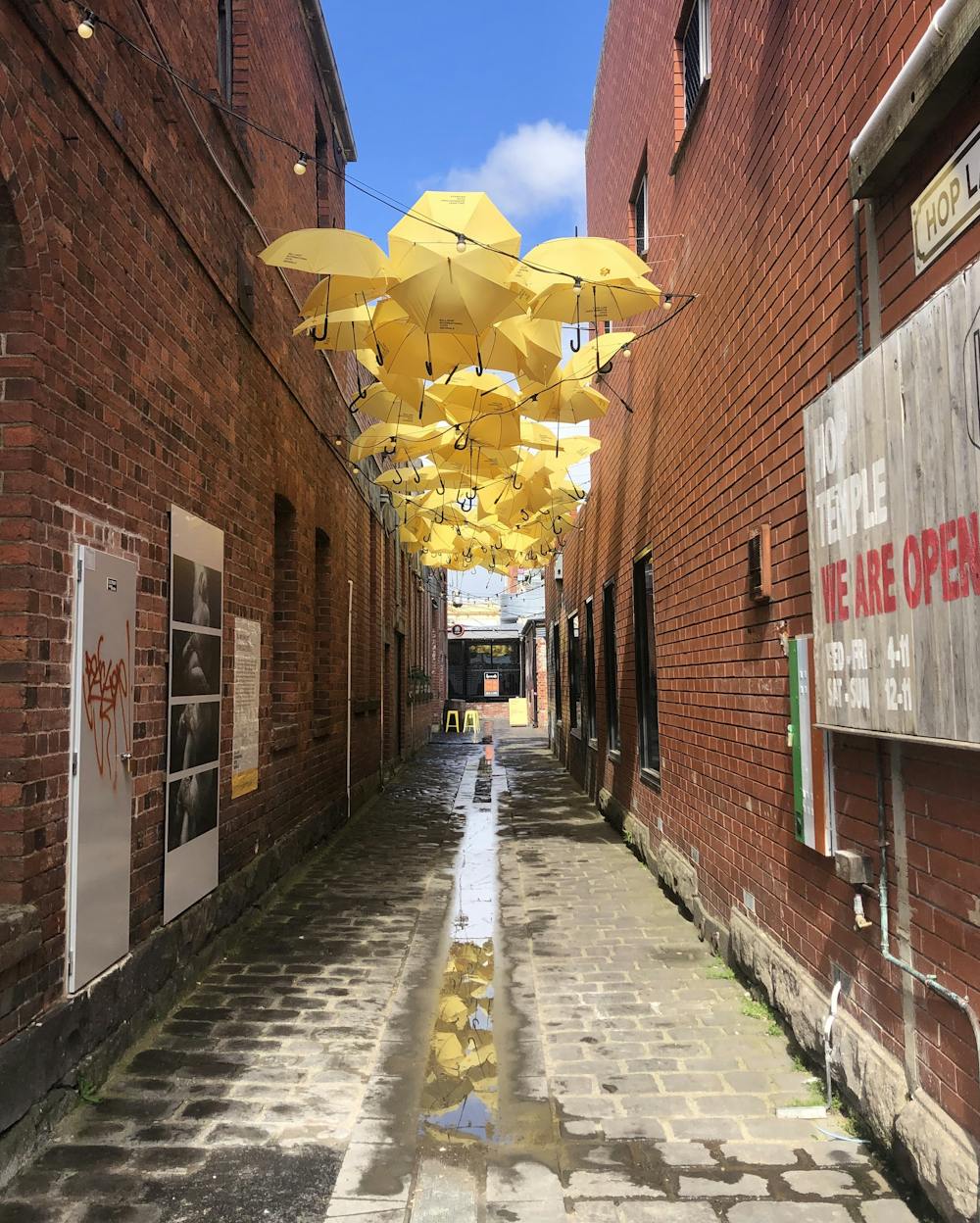
Photographs by the Australian artist Rhonda Senbergs line the laneway to the McCartney show, highlighting the synergy between the women. Senbergs photographed the Australian artworld, her family, Prime Ministers and ordinary people with a similar approach and style to McCarthy. They were both self-taught, and, tragically, they both died of breast cancer in 1998 at 57 years old.
Both photographers share an approach characterised by humour and playfulness bordering on theatricality. This is an example of the important work of a curator, how one show illuminates another, and vice versa.
The Art Gallery of Ballarat is supported by an army of volunteers. This is also the case for the entire Biennale, operating seven days a week over four months. The core program has 12 indoor and 16 outdoor exhibits and there are 120 shows in all with the Open Program straddling the city’s cafes, streetscapes and buildings.
The Ballarat International Foto Biennale helps to sustain the cultural heart of this city. Lisa French
One volunteer, Sarah Masters, tells me she volunteers because of “reciprocity – if you want a vibrant art culture, it is about supporting that where you live”.
I find the volunteers offer interesting snippets of information about the show, or the building, or can identify an obscure object that catches your eye. They are the heroes of this regional arts scene and a key to nurturing and sustaining the cultural heart of this city.
The Linda McCartney Retrospective and The Ballarat International Foto Biennale run until 9 January 2022. Bookings are advised.
Lisa French does not work for, consult, own shares in or receive funding from any company or organisation that would benefit from this article, and has disclosed no relevant affiliations beyond their academic appointment.
An Auckland councillor says he is astounded by the lack of cultural awareness shown by the authorities towards Māori and Pacific communities this far into the pandemic.
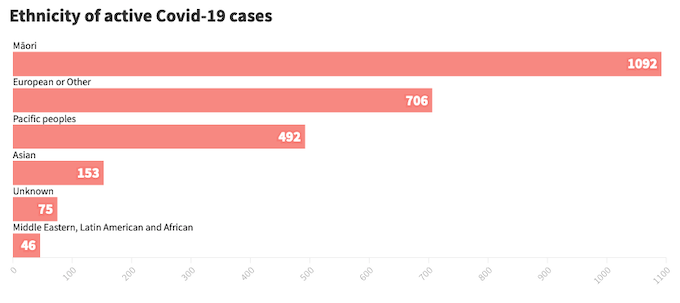
Manukau ward councillor Fa’anana Efeso Collins said covid-19 has become a Māori and Pacific outbreak, and South Auckland in particular is bearing the brunt.
He said calls over the past year for Māori and Pacific representatives to be at the decision-making table had been largely ignored.
Collins said those designing the response seem to have little knowledge of the communities, and it was showing.
Fa’anana Efeso Collins … “decisions are so far detached and disconnected from the realities on the ground.” Image: RNZ
“[We should have] people who are on the ground who understand our communities — right from the very beginning our request was that they be around the table that makes the decisions.
“And so these decisions are so far detached and disconnected from the realities on the ground.”
A breakdown of covid ethnicity statistics in NZ. Source: Ministry of Health
Fa’anana said the fact the government’s process for dealing with people in self-isolation was not practical was a glaring example.
On Friday a man in his fifties died in a Mount Eden apartment block after discharging himself from hospital on Wednesday.
And a 40-year-old man died while self-isolating in Manukau on Wednesday.
The cause of death has not been determined in either case, but the Health Ministry said the deaths were being considered as part of a wider systemic review it was carrying out with Auckland district health boards (DHBs).
“You know, the Ministry of Health says everyone gets sent an email. I think it’s time to get real — none of us read emails.
“And so I think that’s the level of lack of intelligence that perhaps we’re seeing from the Ministry of Health because they’re not on the ground, they don’t understand our communities.”
Battling the Health Ministry “Fa’anana said health reforms cannot come soon enough.
Fa’anana’s criticisms come as Whānau Ora is battling the Health Ministry in court to try get access to personal data on unvaccinated Māori released to them.
The organisation wants to use the data for directing campaigns to increase vaccination rates among Māori.
The ministry has agreed to provide some of the data sought. It agreed to supply individual’s vaccination status for previous clients of Whānau Ora services, and anonymous vaccination status data to street level, to show unvaccinated areas in communities.
While the ministry has so far refused to hand over the full personalised data, after a High Court ruling this week it agreed to work with Whānau Ora to identify places where “outreach to Māori is most needed”, and to identify what data sharing was needed in those cases.
South Auckland health workers going door-to-door Manurewa-Papakura ward councillor Daniel Newman said the ministry’s vaccination campaign had fallen short and left too many people vulnerable to the virus.
He said the government’s failure to set vaccine targets for Māori was already having consequences, and that is showing in hospitalisation statistics.
In his ward, frontline healthcare workers have resorted to door-to-door visits in an effort to reach vulnerable and vaccine-hesitant residents.
However, that could potentially expose them to people who are infectious with the virus and are isolating at home, he said.
He called on the government to protect healthworkers by letting them know where people are isolating at home with covid-19.
“It’s really important that we stay safe, because not only do we need to protect our own health, but we can’t become conduits for covid-19 ourself.
“The important thing for us is that we have enough scale that we have the ability to get to enough people as soon as possible.”
He said the door-to-door approach was necessary: “We’re in a race against covid-19 which is seeding in those streets, we need to get people protected before they become unwell.”
This article is republished under a community partnership agreement with RNZ.
Church minister Suiva’aia Te’o says proactive communication, compassion and clear information have led to a fully vaccinated congregation.
Like most churches operating under level three and four rules, the Sāmoan Methodist Māngere Central church livestreams services on Facebook and holds Bible studies and prayer meetings over Zoom.
To keep the young people engaged they run Kahoot! quizzes and online talent shows.
But when lockdown rules lift, the congregation will be able to confidently worship in person — because all 120 of them are already double-vaccinated.
The church’s Reverend Suiva’aia Te’o says no edict or mandate was imposed by her or anyone else. Rather, she made sure everyone was given clear and relevant information, and then members of the congregation got the vaccinations of their own volition.
“One Sunday I gave a brief talk about why they should take it. My thinking was if everybody understands why, then they can make a decision for themselves,” she says.
Te’o was motivated to promote the vaccine after attending a talk organised by Pacific health provider South Seas for church ministers in South Auckland. She says the crux of her message to the congregation was to do it for the “love of family”.
‘We breathe the same air’ “We all live in the same world and we breathe the same air,” she says. “The delta variant can spread so easily, and so I reminded them it was about the safety of their families, the safety of the community and the safety of the church.”
She also recruited the support of her church’s youth group leaders, including Māngere College student Gardinea Lemoa.
“We have youth meetings every Friday and so I’ve just been encouraging them to get vaccinated and to get their friends and family vaccinated as well,” says Lemoa.
“We’ve also been making up memes so they could post things on their social media accounts.”
Te’o is well aware that some Christian leaders are calling the covid-19 vaccine the “mark of the beast” and a sign of the end times, but she’s got no time for such attempts to stoke fear.
“I know they say that’s what they believe, but I don’t agree. I think it’s just an excuse and they need to get vaccinated.
“We have got this remedy, and I’m convinced it has been developed with God-given wisdom and knowledge by professionals so we can be safe.”
86% of eligible Pacific population Before this weekend 86 percent of the eligible Pacific population have had their first dose, compared to 89 percent of Europeans and close to 100 percent of the Asian population.
Around 50,000 Counties Manukau District Health Board residents still need to get their second dose in order to reach the 90 percent double-vaccinated threshold. It’s a marker the Auckland and Waitematā DHB populations need about 15,000 and 40,000 doses respectively to reach.
“It is encouraging to see so many community-led initiatives happening now. But these should have been resourced from the beginning,” he says.
“Instead, the first big mass vaccination event was held at [higher learning institution] Manukau Institute of Technology (MIT). It was great that they got 16,000 people vaccinated then, but it actually made things worse in some ways, because they barely vaccinated any Māori or Pacific people.”
He says when local organisations like churches are empowered to take the lead, mistrust and misinformation become less of a hurdle to overcome.
“Now we have Pacific providers taking ownership we are finally seeing a lot more acceptance and uptake of the vaccine.”
Quickly got on board Te’o says though her congregation quickly got on board with the vaccination rollout, many have still found lockdown challenging.
“I thought with this lockdown it would be quiet for us, but it’s not – there’s more and more Zoom meetings and more work. It’s been a hard time, the world is changing a lot for so many of us and there’s a lot of uncertainty.
“We’ve been providing food parcels for some families and some have needed small monetary grants to help with paying the power or other bills.”
But one thing she is confident about, given all her congregation is vaccinated, is that when they do get back to in-person services they’ll all have that extra layer of protection.
Local Democracy Reporting is a public interest news service supported by RNZ, the News Publishers’ Association and NZ On Air. Asia Pacific Report is a partner.
Police stopped a climate change march in Suva today and forced activists to remove their banners.
They also warned demonstrators against making social media posts about the event.
Priests, church workers and youth had gathered at My Suva Park to march as part of worldwide Day of Climate Action protests against governments failing to act more urgently at the global COP26 conference in Glasgow, Scotland.
“Every weekend [a] protest takes place here in Auckland by the anti-vaccine people, not in numbers but in thousands. Police are present there but [none] are arrested or told to stop and leave. It is their right and freedom to express and voice out.
“What is the danger in there. Why so much of dictatorship rule. It was a peaceful march. Marches were also staged in Glasgow during the summit, nobody were turned away.
It is [a] way for the people to express their views.”
Another poster said: “Fijian officials need to realise that Fiji will be one of the few countries in the world that will be swallowed up by the ocean due to climate change.
“Fiji needs to do these marches to show the large countries [which] are guilty of polluting our atmosphere that Fijian Lives Matter.”
Papua New Guinea — a country faced with a depressed economy and its public health system on the brink of total collapse due to the covid-19 pandemic sent a 62-member delegation to Europe to attend the COP26 Climate Change conference at a cost of a whooping K5.8 million (NZ$2.03 million).
The Post-Courier was told the initial budget for PNG’s participation in the climate change conference was put at K20 million for 82 people.
However, this was brought down to K5.8 million, but the National Executive Council approved only K3 million and reduced the number of delegates to 62 people.
Prime Minister James Marape stayed in PNG and appointed his Minister for Environment and Conservation, Wera Mori, to head the delegation to Glasgow.
Mori, when contacted by this newspaper to justify the cost, referred us to the NEC.
Apart from Mori, other MPs on the trip are Oro Governor Gary Juffa, Member for Moresby North West Lohia Boe Samuel, Member for Talasea Francis Maneke, Vice-Minister for Works and Member for Anglimp-South Waghi Joe Kuli, Member for Kairiku-Hiri Peter Isoaimo and Member for Rai Coast Peter Sapia.
The money was spent on airfares, accomondation and allowances and the delegation requested from the Finance Department in total K800,000 for airfares and K620,000 for accommodation for 10 nights.
Furthermore, travel allowances for the special envoy, the six other MPs with their officers was at US$500 to US$600 per day and at today’s exchange rate, this works out to about K2500 to K3000 a day.
Travel allowance rates For the public servants, the current rate for travel allowance is at US$300 (K1500) per day and accommodation between US$200 – US$250 (K600 – K1250) per day, depending on the rate charged by the hotels they are booked in to stay.
According to our findings, the actual cost of the trip would have been K1.32 million.
The delegates travelled in three groups and the round trip — Port Moresby, Singapore, Doha and Glasgow — and back cost K19,000 on business class for the envoy and the MPs and K12,980 for the others on economy class.
The Post-Courier was told the first 20 travelled on PX 009 on October 23, the next 20 on the 24th and the rest on the 25th.
Attempts to get the full list of the delegation as well as an official response on the exorbitant cost from the Prime Minister’s office and the departments of Finance, and Foreign Affairs and Office of Environment and Climate Change were unsuccessful.
PNG’s Kundu London High Commissioner was also sent questions relating to PNG’s participation and the costs, but this newspaper was advised all media responses must be channelled through the Foreign Affairs Secretary Elias Wohengu.
This is the second international conference on Climate Change PNG has participated in as a country.
‘Corruption at its best’ After the COP15 conference held in Paris, France, in 2015, the then Environment Minister, Sir John Pundari, went public and condemned the conduct of some members of the government delegation to that conference.
In his criticism, Sir John particularly talked about the attendance of members of the delegation, noting that some went missing, others turned up late while others left early for home.
At that time, Sir John said he was very disappointed that even his fellow ministers who were part of the government delegation quickly disappeared.
He said then that “getting airline tickets and allowances to attend international meetings, and to show up for a day or two, then spend the rest of the time in other places was corruption at its best, and must never be encouraged”.
Over the last two weeks, the Post-Courier asked Sir John twice to comment on the COP26 trip but he referred the newspaper to the Prime Minister’s office instead.
By PNG Post-Courier reporters. Republished with permission.
October 2021 was a horror month for Facebook as the headlines screamed “Facebook under fire” which started with the social media behemoth suffering an outage for several hours.
bowing to the will of state censors in some countries;
allowing hate speech to burgeon in other countries;
ignoring fake accounts that may influence voters and undermine elections;
allowing the antivaccine message to proliferate; and
having algorithms that fuel noxious behaviour online.
Add to that, a major impending problem of capturing a young audience who are flocking elsewhere and turning their backs on the oldest social media platform which was founded in 2004 by Harvard students Mark Zuckerberg, Eduardo Saverin, Dustin Moskovitz, and Chris Hughes.
Even so, its success as the leading platform is undeniable with it announcing a $9 billion quarterly profit in October with a massive 3 billion users.
It was the access to smartphones when they were offered in the Pacific and technology that drove Facebook’s popularity to largely receptive devotees. Image: FB
It was the access to smartphones when they were offered in the Pacific and technology that drove Facebook’s popularity to largely receptive devotees. The uptake of the social media platform in French Polynesia (72.1 percent penetration by 2020), Fiji (68.2 percent, Guam (87.8 percent), Niue (91.7 percent), Samoa (67.2 percent) and Tonga (62.3 percent) made it a no-brainer for Sue Ahearn, founder of the highly credible The Pacific Newsroom page to use the platform.
Measured success The success of The Pacific Newsroom page can be measured by the site garnering in excess of 40,500 members most of who can participate actively by contributing to the page.
Ahearn is no stranger to the Asia-Pacific region. An Australian journalist for more than 40 years, 25 at the Australian Broadcasting Corporation (ABC), who originally hails from Martinborough in New Zealand, she was drawn to set up the page primarily because of misinformation that tends to flourish in the Pacific news.
“It came to me about four years ago when the ABC cut back on all of its coverage of the Pacific, and I could see there was a big gap there,” she says.
“The ABC was only providing a small service and there was a lack of interest in most of the Australian media. You could see the technology was changing, how the information was flowing from the region was changing.’’
Pacific Newsroom founder Sue Ahearn … “Pacific journalists just can’t fathom why is there so little interest in our region among the Australian media.” Image: ROA
The apathy for a thirst for Pacific knowledge has had a profound effect on insularity in the media, especially in Australia and New Zealand, although the Public Interest Journalism Fund is attempting to address that in some way in New Zealand.
“I wish I knew, Sean Dorney, Jemima Garrett and all of the Pacific journalists just can’t fathom why is there so little interest in our region among the Australian media,’’ says Ahearn.
“It doesn’t make sense. There tends to be three or four journalists that cover the region and try to convince news outlets to run their stories or send reporters, and that has become very difficult.”
Only Pacific correspondent based in Pacific Natalie Whiting of the ABC and the recipient of the Dorney-Walkley Foundation grant 2021 is the only journalist from Australasia who is based in the Pacific. She is stationed in the Papua New Guinean capital of Port Moresby.
“In New Zealand, that’s not a problem and New Zealand does good coverage of the Pacific. New Zealand has a much closer relationship with the Pacific,” Ahearn says.
Page administrator and journalist Michael Field … qualms about the Pacific coverage out of New Zealand. Image: BWB
However, Michael Field in Auckland, a page administrator and a veteran of the Pacific who went to journalism school with Ahearn, had qualms about the coverage out of New Zealand.
“The thing that really bugs me is that only Radio New Zealand (RNZ) seems to be doing Pacific news. For example, you’d pick up the (New) Herald and see who’s covering the hurricane out in Fiji only to see it is a re-run of a RNZ story,” says Field.
“It bothers me. The Herald should have had a different angle on the story, RNZ a different angle, The Dominion Post would be different and there would be work for stringers in the Pacific. Now that is not the case because RNZ takes up everybody else’s work and runs it that way,
“I guess that is the reality of it now, but it seems the voice of the Pacific these days is state radio.
“Call me old fashioned, but I’d be too embarrassed to run a story quoting another media organisation, and if you had to do it you’d do it grudgingly. We are starting to fail in the coverage of the region,” he says.
Success stirs amazement The success and growth of The Pacific Newsroom as an organic, quasi news agency akin to Reuters, Agence France Press (AFP) or Australian Associated Press (AAP) in a tiny way, has caught Ahearn by amazement.
“I am surprised because we have a lot of engagement, some stories get 80,000 or 90,000 engagements so there is a lot of interest in it, and I think it fills a huge niche.
She speaks about the talanoa concept of The Pacific Newsroom.
“It’s like a town square where people can meet, share stories and talk about what is happening. Michael (Field) and I spend an enormous time on this project and we’re basically volunteers, we’re not being paid or making any money from it,” she says.
Nor would she entertain the thought of applying for funding either in New Zealand or Australia, preferring instead to maintain their editorial independence.
“Mike and I have discussed this, and we think one of the main attractions of our site is it is not monetised, that it is a voluntary site, there are no advertisements on it, we try and keep it independent, and we are both at the stage in our lives where we’re not working fulltime in the media,” Ahearn says.
“We’ve got time to spend doing this as a public interest, we really enjoy doing it too, it’s a lot of fun.
Many great stories “There are so many great stories in the Pacific that need to be amplified to the world.
“Things are happening with technology and it’s giving a much stronger voice to the Pacific whether it’s on climate change or fishing or other important issues and that is why it is going to get stronger and stronger,” Ahearn says.
Among the stories that gained the site momentum was the University of the South Pacific (USP) having its vice-chancellor and president Professor Pal Ahluwalia at the centre of controversy during his first term when Fiji government and educational officials tried to oust him from office in the so-called USP saga, eventually unceremoniously deporting him in a move widely condemned around the Pacific.
“The big story which moved us along was the USP saga last year, for quite political reasons which had to do with the players, we were leaked all the reports and people could see if it got a certain amount of information on Pacific Newsroom that things might happen, and it did,” Field says.
“More recently we’ve had the same with the Samoan elections where a number of players wanted to be interviewed directly; the former Prime Minister (Tuila’epa Sa’ilele Malielegaoi) seemed to have some misinformed view that we are more powerful than we are. We cope with that so it is constantly moving thing.”
“The libel laws, it’s another tension and another thing we’ve got to watch. We watch it like a hawk (as moderators) and that is not to characterise the particular audience we’ve got,” Field says.
‘Shooting your mouth off’ “Shooting your mouth off seems to be regarded in much of the Pacific as a God-given right — ‘why you trying to stop me from saying this’, we just delete people now. We tried saying to people right at the beginning we didn’t need expletives, swear words and all that stuff, and we were going to take them down.
“It is learning experience, moderating a site like Pacific Newsroom can be hard, depressing work and sometimes there’s a lot of people that sort of feel they have to say something even though it is a complete nonsense, and it is hard yakka that sort of stuff,’’ Field says.
On the flip side of it were the tangible rewards that make it all worthwhile.
“I can remember one particular point where we were tracking a superyacht that was tripping around Vanuatu, Fiji, Tonga; there were people from quite remote village areas of these countries that would send us pictures saying, ‘here is a picture of the yacht that has just passed my village ‘. Whereas back in the day you tried to get a shortwave radio operator to tell you what happened three weeks after the event.
As for the credibility of the site, Field declined an approach from a major mainstream New Zealand media company that sought copyright and permission to use the material that was published.
Then there was the young journalist from another mainstream media company who asked Field for a contact in relation to a Vanuatu story, telling Field that they all shared their contacts in the newsroom. Needless to say, he went away disappointed and empty-handed.
Ancient settler societies Just how well The Pacific Newsroom is regarded in the Pacific is summed up eloquently by history associate professor Morgan Tuimaleali’ifano of the USP who tells it with a Pacific panache.
USP academic Dr Morgan Tuimaleali’ifano … Pacific nations “remain steeped in ancient systems of governance based largely on hereditary hierarchies.” Image: USP
“Apart from Australia, New Zealand, Tokelau, Hawai’i, Guam, American Samoa, West Papua, Rapanui, and the French territories (New Caledonia, Uvea and Futuna, Tahiti), the nature of independent and self-governing Pacific societies is that they are ancient settler societies steeped in conservatism,” Tuimaleali’ifano says.
“While their constitutions have absorbed Western influences, imperial laws, Christianity, fundamental freedoms/rights, monetary capitalism, they remain steeped in ancient systems of governance based largely on hereditary hierarchies.
“Two worlds co-exist with the constitutional democratic model heavily influenced by kinship patterns of thought and behaviour. Within kinship hierarchies, there exists diverse governance structures and no two villages share the exact governing structure,” he says.
“Equally important are the constitutions and parliamentary legislation. These law-making institutions together with the judiciary are constantly evolving as they must with changing circumstances and best practices.
“It is within these social dynamics that journalism provides the Fourth or Fifth Estate to maintain an even keel on the Pacific’s growth as a viable region of nation-states.
“The Pacific Newsroom plays a vital role, of mirroring the changing Pasifika people needs and commenting on sensitive matters that many may find unsavoury difficult and overwhelming to articulate within ultra-conservative societies.
‘Without fear or favour’ “Without fear or favour, The Pacific Newsroom and its sister networks provide a critical service for a multi-faceted Pasifika struggling to reconcile and reshape a new consciousness for Pasifika.
“These include the enduring issues of regional identity and solidarity and unity within the context of relentless ideological and geopolitical power plays.”
USP journalism academic Dr Shailendra Singh … “It is indeed a success story, due to a large following, because of media restrictions in Fiji.” Image: USP
As associate professor and head of journalism at USP Shailendra Singh in Suva, who continues to strive to keep his students well abreast in journalism under draconian media laws in Fiji, says:
“It is indeed a success story, due to a large following, because of media restrictions in Fiji. Users from Fiji especially feel more comfortable expressing themselves on this page.
“The page is prudently and professionally moderated, so it is respectable. The page uses information from credible news sources. (Independent sources like Bob Howarth on Papua New Guinea and Timor-Leste; former Vanuatu Daily Post publisher Dan McGarry; current Pacific Island Times publisher Mar-Vic Cagurangan; and photojournalist Ben Bohane, until he returned to Australia from Vanuatu; as well as David Robie‘s Asia-Pacific Report which is a huge contributor to the page).
“I promote USP journalism students’ work on Pacific Newsroom. It is exemplary of how Facebook can support democracy.”
A vital source of information in the covid era. You get a cross-section of news and views on one platform. It is definitely the most popular virtual “kava bar” in the Pacific.
Tonga’s only suspected covid-19 case has tested positive when he took his third test today in Nuku’alofa.
The latest result came after the person was tested positive last week and tested negative on Monday this week.
The Health Ministry chief executive Dr Siale ‘Akau’ola said today the person had recorded a very weak positive result which likely reflected a historical infection.
He described the second positive result as “weaker than the first weak positive result”.
Dr ‘Akau’ola said the result showed what appeared to be a fragment of dead virus from old infections.
He said the ministry discussed the result with a team from the World Health Organisation (WHO) this morning.
He said there was a lot of “technicalities in the case”.
‘Not infectious’ “We believe the person is not infectious,” he said.
Dr ‘Akau’ola said the result meant there was no need to panic.
“It is not a new virus and the ministry is highly confident about it.
“The virus is shedding.”
He said the machines Tonga was using for the tests “are very sensitive”.
“Whenever they detected a fragment of a virus they will show it as positive”.
Dr ‘Akau’ola was speaking during a press conference this afternoon attended by the Prime Minister and a team of government officials.
The patient has been transferred to a special quarantine facility in Mu’a after he arrived at the kingdom from Christchurch last Wednesday on a flight carrying 215 people.
They had four contacts in New Zealand — all of whom returned negative tests.
A second person with covid-19 who was isolating at home has died in New Zealand, the Ministry of Health has confirmed.
In this afternoon’s covid media briefing, where it was revealed there were 163 new community cases of covid-19 today, Director of Public Health Dr Caroline McElnay said St John Ambulance attended a call this morning after an emergency call to an address in the suburb of Mount Eden and found a person dead on arrival.
The man in his fifties is understood to have been recently treated in hospital.
“Health authorities in Auckland are working with the police and ambulance crew to review the circumstances around the death,” Dr McElnay said.
Deputy Prime Minister Grant Robertson said it was his understanding the dead man was admitted to hospital on Monday and discharged himself from the hospital on Wednesday.
He said there had been phone contact with them on Wednesday and Thursday.
“I am confident in the system. Obviously when we introduce a new system like self-isolation we need to continully monitor it and that’s happening,” he said.
Looking at wider system “Between the Ministry of Health and the Auckland regional public health, they’re looking at both these specific incidents, but also at the wider system.
“It’s important to note there are still enquiries going on about the cause of death at the moment and we’ve just got to all make sure we allow that to occur.”
Robertson said before it was decided that a person could self-isolate, there was a public health assessment of issues like the circumstances of someone’s accommodation.
A medical assessment also determined the person’s suitability as a candidate for self-isolation.
“We’re not in a position at the moment to be able to say what the cause of death was for either patient,” Roberston said.
Dr McElnay said the coroner would look at both deaths.
Meanwhile, a covid-19 case fled a Hamilton MIQ facility this morning by removing a section of fencing and jumping into a waiting car, but were stopped by police a few minutes later.
It was one of two attempts to flee a MIQ facility in the past day, with another covid-19 case running away from the entrance to the Holiday Inn at Auckland Airport last night.
They were also caught within five minutes.
In a statement, Joint Head of MIQ Brigadier Rose King said every single event like this was “extremely disappointing”.
This article is republished under a community partnership agreement with RNZ.
With Cleo Smith safely returned to her family, and charges laid against her alleged abductor, much of the media’s focus has now turned to the question of how police can best piece together the details of what exactly happened to her during the 18 days she was missing.
Child psychologists have described how, with appropriate questioning techniques, a four-year-old can indeed recall and describe detailed memories of their recent experiences. But what about the questioning of the relevant adults, whose recall might also not be perfect, or who might be unwilling to volunteer the necessary information?
Movies and television shows often show police using tough, aggressive questioning techniques on suspects. But the evidence suggests a calm, measured and open approach can help interviewers collect the best information with which to build a prosecution.
Perhaps surprisingly, that means the techniques used to compile evidence from Cleo herself may not be all that different from an interview with an adult witness, or even with Terence Darrell Kelly, the 36-year-old man now charged with her abduction.
Building the case
Child interviewing techniques are based on research about memory and cognition. Creating a safe and comfortable space for the child will help them recall crucial details, and every care is taken to avoid “contaminating” the evidence by asking leading questions. Asking if a child saw “some dolls” when the child has previously only mentioned “some toys” would introduce new information into the child’s narrative, making it hard for them to be sure what they have remembered rather than what was suggested to them.
Young children such as Cleo are also still learning language skills, so the interview questions must also take account of their level of linguistic development. In a question that uses the passive voice, such as “was the dog attacked by the man”, children younger than about seven years will struggle to figure out who is doing the attacking and who is being attacked. Their answers to these types of question can be very unreliable. Multi-part questions (“who was there and what were they wearing”) and forced-choice questions (“was the car white or grey?”) are also problematic.
Of course, some of these considerations apply equally to adults.
The best-practice models of police investigative interviewing are those developed in the United Kingdom during the 1990s, called “cognitive interviewing”. This approach involves five phases, known by the mnemonic “PEACE”:
Preparation and Planning – assembling all the available information and preparing an appropriate strategy and questions. This happens before the interview begins.
Engage and Explain – the first part of the interview, which involves building rapport and explaining the purpose and format of the interview.
Account – the main body of the interview, in which the interviewee has an opportunity to give their narrative, and interviewers ask questions for further detail.
Closure – confirming the information collected with the interviewee, and providing further information and support.
Evaluation – after the interview is complete, the interviewers assess the information gathered, the quality of the interview, and the next steps.
This approach emphasises the use of open questions, such as “tell me everything that happened on the night Cleo went missing – even little things you think aren’t important”.
The second part of this question is designed to counter people’s natural tendency not to include lengthy and detailed descriptions in response to questions in ordinary conversation.
Police interviewing puts a strong emphasis on the elicitation of a free narrative at the start of the interview, and at any point where new information is sought. All possible effort must be made to encourage the suspect to tell their own story in their own words, before probing questions are used to clarify the details and prepare for the strategic presentation of evidence.
Closed questions with a limited range of possible answers, such as “who were you with?” or “what was he wearing on his head?”, and yes/no questions such as “did you go to Cleo’s tent?” are regarded as last-resort options.
Adults vary enormously in their language abilities, and a skilled interviewer will adapt their vocabulary, grammar and questioning style as appropriate. This might mean asking simpler questions, but also using a similar level of informality, and the same terminology, that the interviewee uses. This can build rapport and promote clear communication, which is especially important in relation to taboo topics such as body parts, or other idiosyncratic words like names.
Some interviewees might also have special communication needs, which might require a language interpreter or support person to be present.
Television and movie convention tells us that police interviewing is forceful and even coercive, particularly in strongly emotional cases such as an alleged child abduction.
This trope is based on the real-life Reid technique, widely used in the United States since the 1960s. Not dissimilar to the proverbial “good cop, bad cop” routine, this approach aims to put extreme pressure on any subject deemed uncooperative or untruthful, before offering sympathy and understanding if a confession seems to be forthcoming.
Unsurprisingly, researchers have raised concerns that this technique generates high rates of false confessions.
According to a growing weight of evidence, it’s now clear the best way to interview an adult, even someone accused of child abduction, is to draw on the same principles that underpin child interviewing.
To achieve the best results – that is, a judicial verdict based on fair and just processes and high-quality evidence – investigators will use interviewing techniques that avoid police “contamination” of the evidence, and focus instead on reliable, narrative-based contributions from the suspect.
When the stakes are high, the principles of investigative interviewing established by the UK Home Office offer the best guidance. The focus is on respecting the interviewee’s rights, gathering high-quality, unbiased and reliable information, and following due process in the hopes of maximising the chances of securing a conviction if appropriate.
Georgina Heydon does not work for, consult, own shares in or receive funding from any company or organisation that would benefit from this article, and has disclosed no relevant affiliations beyond their academic appointment.
Source: The Conversation (Au and NZ) – By John Hawkins, Senior Lecturer, Canberra School of Politics, Economics and Society and NATSEM, University of Canberra
RBA/The Conversation
The Reserve Bank has used Friday’s quarterly assessment of the economy to declare that lockdowns have “delayed but not derailed” Australia’s recovery.
It says economic activity probably contracted 2.5% in the three months to September, but the December quarter (the one we are in now) will regain most of what was lost, leaving the economy recovering much as it would have were it not for the mid-year lockdowns.
Taken together with last year’s descent into recession and quick bounce back it paints a picture of a W-shaped recovery, even on what the Bank has graphed as its “downside” scenario.
As a sign of emerging confidence it points to an increase in the number of people prepared to change jobs because they are looking for something better or different.
It says this is partly a bounce back from the start of the COVID recession when workers appeared to put plans they might have had to change jobs on hold.
The Bank is concerned about property markets at home and abroad.
It says the possible collapse of the large and highly leveraged Chinese developer Evergrande might “lead to a significant slowdown in the Chinese economy”.
Average home prices have reached fresh highs in most Australian cities.
It says while interest payments have declined by around one percentage point of disposable income since March 2020 because of lower interest rates, the financial system faces risks associated with high and rising household indebtedness.
While it says mortgage rates will climb, and while financial market pricing implies quite rapid increases in the Bank’s cash rate, it doesn’t expect to lift the rate until 2024 (which is the year after Governor Philip Lowe’s term is due to end, raising the prospect of him completing his seven-year term without once lifting rates).
The Bank has consistently said it will “not increase the cash rate until actual inflation is sustainably within the 2–3% target range”.
It has also said it is not enough for inflation to be merely forecast to be within the range, creating a high bar for action.
Although at 2.1% over the year underlying inflation is the highest it has been since 2015, it is still towards the bottom of the Bank’s target band.
Inflation weaker than it seems
And the rate reflects some temporary factors. Some of it is due to the rebound in petrol prices as demand has picked up as people have returned to work, something that won’t continue.
The Bank expects underlying inflation over the course of 2022 to be 2.25%. Although well above the previous forecast of 1.75%, it is below the mid point of its target.
It doesn’t expect inflation of 2.5% until 2023, suggesting no rate hike until then.
The labour market outlook is little changed from the Bank’s August statement. It expects unemployment to fall to a historic low 4.25% by the end of 2022 and then to 4% in 2023.
Even then, in 2023, it expects only modest wage growth of 3%, doing little to support the sustainably higher inflation it says it would need to see before it lifts rates.
John Hawkins is a former economic forecaster in the Reserve Bank and Treasury.
The Fair Work Commission’s ruling that Australian farm workers paid piece rates to pick fruit and vegetables must now get a base wage of $25.41 an hour is long overdue and absolutely necessary.
In theory, anyone working in Australia should be paid a minimum wage. But piecework payments, by which workers are paid solely on what they produce with no guarantee of a minimum rate, have lingered on as a common practice in the agricultural sector.
As the commission’s ruling notes: “A substantial proportion of the seasonal harvesting workforce are engaged on piece rates and more than half of the seasonal harvesting workforce are temporary migrant workers. These characteristics render the seasonal harvesting workforce vulnerable to exploitation.”
Piecework arrangements needn’t be exploitative. It depends on the rates – whether they’re enough to make a living in a bad season, when fruit is scarce. By law, they should be. In practice they haven’t been. The Fair Work Commission has acknowledged and sought to address this. It’s about time.
Underpayment is an open secret
The Horticulture Award, which covers farm fruit and vegetable pickers, does set minimum weekly and hourly rates. But it also permits full-time, part-time or casual employees to make a piece-rate agreement with their employee.
Such agreements must be entered into “without coercion or duress”, and the agreed rate is meant to “enable the average competent employee to earn at least 15% more per hour than the minimum hourly rate” set in the award.
In 2017 the National Temporary Migrant Work Survey found wage theft common for migrant workers. Of 4,322 participants in the survey, 46% earned no more than $15 an hour, while 30% earned $12 a hour or less. Wage theft was prevalent across a range of industries, but the worst paid jobs were in farm work. Of the migrants working as fruit and vegetable pickers, 31% earned $10 per hour or less, while 15% earned $5 an hour or less.
Numerous studies have found wage theft rife in the horticultural sector, with piece rates being the most common means for underpay workers. Shutterstock
A 2019 study by Unions NSW and the Migrant Worker Centre
in Victoria found similarly grim results. Of 1,300 migrant workers surveyed, 78% reported being underpaid at some point, and 34% on piece rates had never signed an agreement. The lowest piece rates reported were from grape and zucchini farms, where respondents reported earning as little as $9 a day.
Just ask any backpacker working in the sector if they know anyone who has been ripped off. It’s not exactly a secret. I’ve picked fruit myself and experienced it firsthand.
A particularly vulnerable workforce
It is worth noting that not all migrant farm workers have been equally vulnerable.
The Seasonal Worker Program, for workers from nine Pacific nations and Timor Leste, has been more tightly regulated, and generally successful in avoiding the sort of exploitation described above. In 2019 this program offered about 12,000 visas. Stephen Howes of the Development Policy Centre has argued the program could be expanded to more than 100,000 places.
Far more vulnerable to exploitation have been those on the more laissez-faire Working Holiday Maker Scheme – better known as the backpackers’ visa. This visa requires 88 days of farm work to stay in Australia for a year, and a further 180 days to stay for a second year. The evidence is that many accept being underpaid for those periods as a cost of staying in Australia.
Newly arrived Australian residents, particularly refugees, are also at risk, due to unfamiliarity with working rights and entitlements.
If piece rates are set at a fair level, and the agreement is truly voluntary, such payment can be win-win – good for the farmer and an opportunity for a motivated worker to earn better money than just working for a flat minimum rate.
A lot of my career has involved working abroad in places where the poor and unconnected have no hope of getting ahead. Researching on Australian agriculture I’ve often been touched by the stories I’ve heard of experienced pickers, who plan to keep picking to save enough money to buy land of their own. They tend to be fierce and hard-working. You don’t want to get between them and the good fruit.
Earning more than the Horticulture Award’s minimum rates through a piece-rate agreement does happen, but it is the exception rather than the norm. Shutterstock
But not everyone is an experienced picker able to look out for their own interests. That is why a base rate is essential.
The problem with the piecemeal rate provisions in the the Horticulture Award was that clause 15.2(i) stated:
Nothing in this award guarantees an employee on a piecework rate will earn at least the minimum ordinary time weekly rate or hourly rate in this award for the type of employment and the classification level of the employee, as the employee’s earnings are contingent on their productivity.
The Australian Workers Union applied in December 2020 to have this clause struck out and replaced with a provision setting a minimum hourly rate for piecework. This application was supported by the United Workers’ Union, the Australian Council of Social Service, and the state governments of Queensland, Victoria and Western Australia.
The application was opposed by the Australian Fresh Produce Alliance, the Australian Industry Group and the National Farmer’s Federation.
In its decision on October 3, the Fair Work Commission said while some pieceworkers earn significantly more than the target rate for the “average competent employee”, the totality of the evidence “presents a picture of significant underpayment of pieceworkers”.
The best way to look at this is the Fair Work Commission closing a loophole.
It was already the responsibility of employers to pay piece rates high enough to allow competent workers make 15% more the minimum wage. Rather than thinking of this ruling as imposing an “extra cost” on farmers, it should been seen as putting in place a mechanism to ensure compliance with law.
A base rate takes the prospect of vulnerable workers getting paid $3 an hour off the table. That’s not asking for a lot.
Michael Rose does not work for, consult, own shares in or receive funding from any company or organization that would benefit from this article, and has disclosed no relevant affiliations beyond their academic appointment.
This simple but powerful statement is the reason for the Yoo-rrook Justice Commission’s mandate to reveal, record and analyse the systemic injustices experienced by Victorian First Peoples since colonisation.
Named from a Wamba Wamba word meaning truth, the Yoo-rrook mandate will take three years from 2021-24. This is a significant step for truth-telling in Victoria.
Truth-telling commissions are formal bodies tasked with discovering and revealing past wrongdoings in the hope of resolving conflict and repairing relationships.
Yoo-rrook’s strategic vision is for a transformed Victoria. A Victoria based on truth and justice, grounded in First Peoples’ enduring spirit, cultures and self-determination.
As any other royal commission, Yoo-rrook will have broad powers to hold public hearings, compel evidence and make recommendations to the Victorian government as to what should change.
The commission’s letters patent is the legal document from the governor-general setting up the Yoo-rrok’s royal commission. This document essentially gives instructions to Yoo-rrook about how to inquire into the experience of past and present systemic injustices for Victorian First Peoples.
The Yoo-rrook Justice Commission logo.
The letters patent details a wide-ranging set of obligations that can be summarised as:
establishing an official record of the impact of systemic injustice on the First Peoples of Victoria from colonisation to the present
developing a shared understand among all Victorians on the impact of these systemic injustices, as well as the diversity, strength and resilience of First Peoples
determining the causes and consequences of systemic injustice and make recommendations for system reform and changes to laws, policy and education.
The commission’s findings also aim to support the founding of a new relationship between First Peoples, the state, and the people of Victoria, inclusive of informing Treaty negotiations.
Establishment of the Yoo-rrook Justice Commission
An historical first for Australia, a truth-telling commission was an agreed action of the Victorian government and the First Peoples’ Assembly of Victoria.
The First Peoples’ Assembly was established in 2019 and is the elected representative body of Traditional Owners and other Victorian Aboriginal people.
This is a crucial step in the realisation of the Advancing the Treaty Process with Aboriginal Victorians Act 2018.
Yoo-rrook began in May with the appointment of five commissioners. Independently selected from 64 applicants, we are:
Chairperson: Professor Eleanor Bourke (Wergaia/Wamba Wamba)
Dr Wayne Atkinson (Yorta Yorta/Dja Dja Wurrung)
Sue-Anne Hunter (Wurundjeri/Ngurai illum wurrung)
Distinguished Professor Maggie Walter (Palawa)
Professor the Honourable Kevin Bell AM QC (non-Indigenous)
Yoo-rrook employs a human rights framework aligned to the United Nations Declaration of the Rights of Indigenous Peoples. To ensure the priority of First Peoples’ voices and knowledge, this framework is enacted through a methodology that weaves together First Peoples knowledge systems, worldviews and Western methods of scientific analysis. This methodology ensures an approach that respects Victorian First Peoples values and culture.
The commission’s terms of reference are extensive.
The instructions to inquire into historical systemic injustices perpetrated against First Peoples include (among other areas):
cultural violations, such as denial of First Peoples’ law and lore by colonial state authorities and systems
theft and misappropriation of land and culture
dispossession and displacement of Aboriginal peoples, families and children
massacres, wars and killings
unfair policies and practices in areas such as labour, the justice system, child protection and welfare, and health care
The findings of the royal commission’s inquiry into these areas will be the basis for the official record, and more details will come.
Priority #1: Sovereignty over knowledge
Yoo-rrook is the first Aboriginal-led royal commission. It is also the first in which the foundational evidence is First Peoples voices, stories and knowledges. The commission has now determined four strategic priorities for its first year.
To maximise participation, Yoo-rrook’s first strategic priority has been to build strong foundations to bring about trust that First Peoples’ voices will be heard, and the commission’s processes are conducted in a culturally appropriate way.
Despite the COVID-19 lockdowns of the last six months, the commissioners and commission staff have consulted (mostly online) with Traditional Owner groups and many Aboriginal community-controlled organisations across Victoria.
Yoo-rrook is instructed to uphold the sovereignty of First Peoples over their knowledge and stories. This will be done through the Indigenous data sovereignty principles, which is the right of First Peoples to own, control, access and possess their respective data.
This means the First Peoples who provide evidence to Yoo-rrook will maintain ownership of their respective data, determining how their information is treated with regards to confidentiality and accessibility.
This is significant because with past royal commissions, evidence has been available to the public. This is not always in First Peoples’ best interest.
Priority #2: Culturally appropriate ways of collecting evidence
Yoo-rrook’s second strategic priority is to focus on formal evidence collection from Elders and those who are unwell.
The commission is acutely aware of First Peoples unease toward formal processes such as these. So, culturally safe systems have been developed.
For example, the commission is accepting evidence in relation to the experience of historic and ongoing systemic injustice in a myriad of ways. These include individual witness statements, group testimony and testimony through cultural means, such as ceremony, dance and art. Evidence can also be given confidentially and on Country, with ongoing support for social and emotional wellbeing in place.
Priority #3: Creating a public record of systemic injustice
The third strategic priority is to develop a comprehensive picture of systemic injustices against First Peoples as part of the official record of what happened in Victoria.
This will be done via the compilation and interrogation of existing knowledge sources. This work has begun with the collection of official records, academic studies and legislative materials.
Priority #4: Reviewing the criminal justice system
The fourth priority is to review current reform processes in criminal justice and law enforcement.
The task of the Yoo-rrook Justice Commission is intimidating and the timeframe is short. Yoo-rrook is required to deliver an interim report in June 2022 and a final report in June 2024.
It is the only truth-telling commission anywhere authorised to scrutinise First Peoples’ experiences of systemic injustices, past and present, arising from colonisation.
That Yoo-rrook has been initiated in Victoria should be a matter of pride for all Victorians. The commission is setting a national and global precedent. Because Yoo-rrook is the first, it assuredly will not be the last.
The world is watching.
If you are interested in reaching out to the commission, you can do so here.
Maggie Walter is a Commissioner with the Yoo-rrook Justice Commission and also Distinguished Professor of Sociology (adjunct) University of Tasmania and receives funding from the Australian Research Council, the National Health and Medical Research Council and the Minderoo Foundation
Professor the Hon Kevin Bell AM QC is also the Executive Director of the Castan Centre for Human Rights Law in the Faculty of Law at Monash University.
Eleanor Bourke, Sue-Anne Hunter, and Wayne Atkinson do not work for, consult, own shares in or receive funding from any company or organization that would benefit from this article, and have disclosed no relevant affiliations beyond their academic appointment.
For scientists, energy is not really a thing and so it isn’t made of something else, in the way a house is made of bricks.
Energy is more like a capacity. A capacity is an ability to do something.
Energy and work
Think of a musician: they have the capacity to play an instrument. A painter has the capacity to paint.
Energy is the capacity for something to do work.
Something does work when it exerts a force on another object, pushing the object to move in a particular direction.
When you hit a ball with a bat, the bat transfers some of its kinetic energy to the ball to change its speed and direction. Shutterstock
What does that mean? Well, imagine someone throws a ball to you and you hit it with a bat. When the bat hits the ball, it changes the ball’s speed and direction.
Energy is the capacity the bat has to change the direction of the ball. When the bat is swinging, it can change the direction of any ball it hits.
When you swing the bat, you put energy stored in your muscles into it. The harder you swing, the more work the bat can do, so the more energy it carries.
Types of energy
There are many ways for something to do work, so there are different kinds of energy.
We have already encountered one: the swinging of the bat. This is called kinetic energy. It is the energy something has because it is moving.
Another kind of energy is potential energy. Potential energy is the capacity something has to do work because of its position in relation to other objects.
This means putting things in certain places gives them energy.
If you balance a bucket of water on top of a door, you give it potential energy. When the door is opened, the bucket starts to move downwards, drenching the unlucky person who opened it. Shutterstock
Here’s a fun example: imagine putting a bucket of water on top of a door that is half open. When someone walks through the door, the bucket will fall on their head.
Because the bucket is on top of the door, it can fall. And when it falls, it can do some work. Not only will it soak whoever walks through the door, but it will also hit them on the head.
So the bucket has the capacity to do work just because it is put on top of the door, and not because it is moving. That capacity is the bucket’s potential energy.
Einstein’s famous equation
The famous physicist Albert Einstein made an equation about energy, which you may have seen before: E = mc ².
In this equation, the E is for energy, the m is for mass (which is roughly how much matter, or physical stuff, is in something), and c means the speed of light.
What the equation seems to say is that energy equals mass times some number. So then, isn’t energy made of something after all?
Not quite, because some things with no mass can still have energy. For example, light. We know it has energy because we catch light’s energy in solar panels, and turn it into electricity.
There’s a more complicated version of Einstein’s equation that shows how energy is related to mass and momentum.
Light is so fast it travels all the way from the Sun to Earth in just over 8 minutes. Shutterstock
One important thing to know is that light moves very fast. Because the amount of energy in something depends on how much mass it has multiplied by the square of the speed of light, that means a little bit of matter carries a lot of energy!
Light travels almost 300 million metres in a single second, which means one kilogram of mass is equivalent to almost nine quintillion joules of energy! That’s a 9 with 18 zeroes after it: 9,000,000,000,000,000,000.
The trick is unleashing that capacity. That’s actually how nuclear bombs (and nuclear power) work: they unlock the energy captured in matter to produce an enormous effect.
University of Canberra Professorial Fellow Michelle Grattan and Director of the Institute for Governance & Policy Analysis Dr Lain Dare discuss the week in politics.
They talk about how Scott Morrison fared at the G20 Summit and the Glasgow Climate Conference, in a trip dominated by the spectacular row with the French over the cancellation of their submarine deal. On the sidelines of the G20 French President Emmanuel Macron labelled Scott Morrison a liar and the PM responded with some very undiplomatic leaking.
Now back home, Morrison will try to “move on”, with a campaigning trip through NSW and Victoria in the coming week.
Michelle Grattan does not work for, consult, own shares in or receive funding from any company or organisation that would benefit from this article, and has disclosed no relevant affiliations beyond their academic appointment.
Still : Andrew Glouberman, a character in the Netflix’s animated comedy Big Mouth watches a condom demonstration from mother.
Animation and character design allow us to hold a mirror up to society. We get to see humanity, warts and all, and understand the complexity of what it means to be human. But this reflection of ourselves ties back to a very old artform: the ideas of masking our real selves in the festivity of the Roman Catholic concept of Carnival.
One of the strongest contemporary adult animated shows right now is Big Mouth, the nuanced, lewd, coming-of-age series on Netflix. The show investigates the complex, awkward and often taboo experiences of pubescent teens: cultural identity, sexual identity and inclusivity, social media, pornography, periods, masturbation, anxiety and depression.
Through the use of carnival, Big Mouth tells complex stories about what it means to be a teenager with a monster-verse of shoulder angels. Shoulder angels (or representations of our conscience) have traditionally been a small angel or devil, representing good or bad.
Big Mouth draws on a rich history of adult animation while also making the genre entirely its own.
Animation allows us to disassociate from reality and create a visual dimension to explore ideas: the drawings act as a mask through which viewers engage in a form of role playing, hidden identity and a sense of play.
Masks have been an important part of many cultures from the Tengu Matsuri mask, Junkanoo masks, Dinagyang masks, Dia de los Muertos masks, Venetian carnival masks, to the masks of the Hindu Gods.
This engraving from 1875 shows a Carnival masquerade party in New Orleans. James Wells Champney, Wikimedia Commons
Carnival was traditionally a Christian celebration in the last three days before Lent, where the sumptuary laws – the restraint on consumption and luxury – were suspended. During this time, people could wear a mask and break from the conventional rules of society, their identity, hierarchies and become other-than-self.
Like the Carnival, the Russian philosopher Mikhail Bakhtin’s notion of Carnivalesque is a literary device used to assist people in unshackling themselves: using a mask to explore the complexities of experience without consequence.
In animated form, Carnivalesque utilises four techniques: laughter, bodily excess, Billingsgate (or vitriolic language) and inversions of normal social roles. Big Mouth employs a range of these elements in the character design and dialogue to engage the audience in social commentary.
From family fare to adult sitcoms
The animated sitcom has been evolving since the middle of the last century, and with it questions of what is “appropriate” for viewers. Betty Boop first appeared in 1930s. Drawing influences from burlesque, the lewd nature of the show was highly criticised. Soon, censorship would play an important role in limiting sexually suggestive content.
From 1934 to 1968, animation was self-censored by the Hays Code: a set of guidelines preventing profanity, suggestive nudity, excessive violence and sexual content. This gave rise to the closed morality tale built around the nuclear family and patriarchal structure presented in The Flinstones (1960-66) and the The Jetsons (1962-63).
Cartoons of the 1960s were family-friendly morality tales. IMDB
In 1989, The Simpsons moved animated content into the adult frame, each episode dealing with a particular cultural and moral issue.
With the advent of cable television, cartoons could move even more firmly into the adult realm. We saw the rise of absurdity in Beavis and Butt-head (1993-2011) and Family Guy (1999-) and the introduction of crude language and sexual innuendo in South Park (1997-). 2001 saw the launch of US cable network Adult Swim, with its suite of adult-focused content.
Even in this age, Big Mouth is not without its critics. It is often vulgar and has been criticised for sexualising puberty too much. Critics have asked: has it gone too far? Is this really how these issues should be explored?
At the heart of good animation is character design, with strong characters translating the human experience – goals, mannerisms, habits and worldviews – into moving abstract versions of ourselves. Animation manipulates the character to give a drawing life. We view the characters in the carnival as if they could be our experiences.
In Big Mouth, chemicals and inanimate objects become personified, allowing the show to explore complex topics.
Maury and Connie are “Hormone Monsters”, who become the internal conversation around the rushes of chemicals influencing teen decisions. Tito the Anxiety Mosquito and Depression Kitty introduce the way mental illness can feel and operate. Gratitoad and other characters explore the positivity we experience together, and eats anxiety. Pam the Sex Pillow and the Shame Wizard present ways we feel in response to other people.
In the new fifth season we are introduced to Lovebugs and Hateworms. All of these characters help communicate the relationship we have with our experiences.
Big Mouth creator Nick Kroll has described how using animation allows them to tell stories which they “might not be able to discuss” in live action shows starring actual teens or tweens. A character like a hormone monster or shame wizard, he says:
gives us a lot of latitude to have these more complicated discussions and delve into the subjects kids are dealing with.
Growing up is never easy, but visualising complex ideas can enhance our shared experience. Watching a coming-of-age show as an adult allows us to reflect and better communicate the complex experience of puberty.
The authors do not work for, consult, own shares in or receive funding from any company or organisation that would benefit from this article, and have disclosed no relevant affiliations beyond their academic appointment.
Source: The Conversation (Au and NZ) – By Wesley Morgan, Researcher, Climate Council, and Research Fellow, Griffith Asia Institute, Griffith University
EPA
The first week of the United Nations climate talks in Glasgow are drawing to a close. While there’s still a way to go, progress so far gives some hope the Paris climate agreement struck six years ago is working.
Major powers brought significant commitments to cut emissions this decade and pledged to shift toward net-zero emissions. New coalitions were also announced for decarbonising sectors of the global economy. These include phasing out coal-fired power, pledges to cut global methane emissions, ending deforestation and plans for net-zero emissions shipping.
The two-week summit, known as COP26, is a critical test of global cooperation to tackle the climate crisis. Under the Paris Agreement, countries are required, every five years, to produce more ambitious national plans to reduce emissions. Delayed one year by the COVID pandemic, this year is when new plans are due.
Pledges made at the summit so far could start to bend the global emissions curve downwards. Credible projections from an expert team, including Professor Malte Meinshausen at the University of Melbourne, suggest if new pledges are fully funded and met, global warming could be limited to to 1.9℃ this century. The International Energy Agency came to a similar conclusion.
This is real progress. But the Earth system reacts to what we put in the atmosphere, not promises made at summits. So pledges need to be backed by finance, and the necessary policies and actions across energy and land use.
A significant ambition gap on emissions reduction also remains, and more climate action is needed this decade to avoid catastrophic warming. Achieving necessary emissions reductions by 2030 will be a key focus of the second week of the Glasgow talks, especially as global emissions are projected to rebound strongly in 2021 (after the drop induced last year by COVID-19).
For its part, Australia contributed virtually nothing to global efforts in Glasgow. Alone among advanced economies, Australia set no new target to cut emissions this decade. If anything, this week added to Australia’s reputation as a member of a small and isolated group of countries – with the likes of Saudi Arabia and Russia – resisting climate action.
Two graphs showing progress towards global temperature goals, based on national pledges before the COP26 summit, left, and on November 3.
Global momentum: What did major powers bring to Glasgow?
Since the last UN climate summit we’ve seen a worldwide surge in momentum toward climate action. More than 100 countries – accounting for more than two-thirds of the global economy – have set firm dates for achieving net-zero emissions.
Perhaps more importantly, in the lead up to the Glasgow summit the world’s advanced economies – including the United States, the United Kingdom, the European Union, Japan, Canada, South Korea and New Zealand – all strengthened their 2030 targets. The G7 group of countries pledged to halve their collective emissions by 2030.
Major economies in the developing world also brought new commitments to COP26. China pledged to achieve net-zero emissions by 2060 and strengthened its 2030 targets. It now plans to peak emissions by the end of the decade.
This week India also pledged to achieve net-zero by 2070 and ramp up installation of renewable energy. By 2030, half of India’s electricity will come from renewable sources.
The opening days of COP26 also saw a suite of new announcements for decarbonising sectors of the global economy. The UK declared the end of coal was in sight, as it launched a new global coalition to phase out coal-fired power.
More than 100 countries signed on to a new pledge to cut methane emissions by 30% by 2030. More than 120 countries also promised to end deforestation by 2030.
The US also joined a coalition of countries that plans to achieve net-zero emissions in global shipping.
But this week the developed world fell short of fulfilling a decade-old promise – to deliver US$100 billion each year to help poorer nations deal with climate impacts.
Fulfilling commitments on climate finance will be critically important for building trust in the talks. For it’s part, Australia pledged an additional A$500 million in climate finance to countries in Southeast Asia and the Pacific – a figure well short of Australia’s fair share of global efforts. Australia also refused to rejoin the Green Climate Fund.
British Prime Minister Boris Johnson, Congo President Felix Tshisekedi and US President Joe Biden stand at a COP26 session on deforestation. More than 120 countries signed a pledge to end deforestation. AP
Missing the moment: The Australian Way
While the rest of the world is getting on with the race to a net-zero emissions economy, Australia is barely out of the starting blocks. Australia brought to Glasgow the same 2030 emissions target that it took to Paris six years ago – even as key allies pledged much stronger targets.
Prime Minister Scott Morrison arrived with scant plans to accompany his last-minute announcement on net-zero by 2050. The strategy, which comprised little more than a brochure, failed to provide a credible pathway to that target and was met with derision across the world.
On the way to Glasgow, at the G20 leaders meeting in Rome, Australia blocked global momentum to reduce emissions by resisting calls for a phase out of coal power. Australia also refused to sign on to the global pledge on methane.
Worse still, Australia is using COP26 to actively promote fossil fuels. Federal Energy Minister Angus Taylor says the summit is a chance to promote investment in Australian gas projects, and Australian fossil fuel company Santos was prominently branded at the venue’s Australia Pavilion.
The federal government is promoting carbon capture and storage as a climate solution, despite it being widely regarded as a licence to prolong the use of fossil fuels. The technology is also eye-wateringly expensive and not yet proven at scale.
Climate Council
The closing stretch
Week one in Glasgow has delivered more climate action than the world promised in Paris six years ago. However, the summit outcomes still fall well short of what is required to limit warming to 1.5℃. Attention will now turn to negotiating an outcome to further increase climate ambition this decade.
Vulnerable countries have proposed countries yet to deliver enhanced 2030 targets be required to come back in 2022, well before COP27, with stronger targets to cut emissions.
This week, the United States rejoined the High Ambition Coalition, a group of countries from across traditional negotiating blocs in the UN climate talks. Led by the Marshall Islands, the group was crucial in securing the 2015 Paris Agreement.
In Glasgow, this coalition is pressing for an outcome that will keep the world on track to limiting warming to 1.5℃.
But significant differences persist between the US and China. Many developing countries want to see more commitment to climate finance from wealthy nations before they will pledge new targets. Can consensus be reached in Glasgow? We’ll be watching the negotiations closely next week to find out.
PODCAST: Buchanan + Manning on COP26 plus New-Gen Attack Drones
/
RSS Feed
Share
Link
Embed
A View from Afar – In this podcast, political scientist Paul Buchanan and Selwyn Manning discuss two issues: the evolution of new generation attack drones; and the COP26 meeting in Glasgow this week. Specifically, Buchanan and Manning unpack:
Whether Geopolitics has railroaded a broad-based consensus of climate interventionism
Why Russia and China abandoned the Cop26 multilateral forum?
How mostly developed nations state the take away agreements help address climate change, and how Greenpeace and many other environment groups say fundamental problems remain with how developed nations address the climate change challenge.
ALSO: We discuss the latest in the evolution of high-tech militarised attack drones. What can we now expect to see? And, how will countries defend themselves against AI driven attacks?
You can comment on this debate by clicking on one of these social media channels and interacting in the social media’s comment area. Here are the links:
Threat.Technology placed A View from Afar at 9th in its 20 Best Defence Security Podcasts of 2021 category. You can follow A View from Afar via our affiliate syndicators.
After COVID emerged, it didn’t take long for clinicians and scientists to notice the SARS-CoV-2 virus affects children and adults very differently.
One of the earliest studies, from March 2020, reported 40–50% of infected children suffered cough and fever, but they had much milder symptoms than adults.
Subsequent information from health authorities noted children were less likely to develop severe disease and rarely died from COVID.
However, clinicians found a very small number of children, despite having mild or even no symptoms initially, developed an inflammatory reaction about four weeks after infection.
In May last year, doctors reported the very first cases of 18 children with hyperinflammatory shock, resulting in one death. Most of the patients tested negative for SARS-CoV-2 but positive for antibodies, suggesting they had been infected previously.
This prompted the World Health Organization, and health bodies in the United Kingdom and United States, to define the condition as multisystem inflammatory syndrome in children (MIS-C) or paediatric inflammatory multisystem syndrome temporally associated with SARS-CoV-2 (PIMS-TS).
What are the symptoms?
Since there is no diagnostic test, the conditions are defined by fever and elevated inflammatory markers in children with current or recent SARS-CoV-2 infection or COVID exposure within four weeks before the onset of symptoms.
Clinical presentation for organ dysfunction includes abdominal pain, vomiting, diarrhoea, skin rash, conjunctivitis, red cracked lips and, in severe cases, hypotension (low blood pressure) and shock.
MIS-C is rare. According to data from European primary care records, South Korean claims and US claims and hospital databases, MIS-C was seen in fewer than 0.1-0.3% of people in the 30-day period following the diagnosis of COVID-19.
A US study found a similar incidence of MIS-C at under 0.05%. This study also found the incidence of MIS-C was higher among Black, Hispanic or Latino, and Asian or Pacific Islander persons compared with white persons.
The studies were conducted before the Delta variant became dominant, so further research is required to update the incidence of MIS-C after infection with Delta.
What causes it?
The cause of inflammation underlying MIS-C is not well understood.
Patients with MIS-C were initially reported to show features similar to Kawasaki disease, which causes swelling (inflammation) in the walls of medium-sized arteries, particularly the coronary arteries in children.
However, children with MIS-C are generally older (mostly school-aged) than patients with Kawasaki disease (mostly younger than five years of age) and presented with intestinal involvement and heart attack.
Researchers compared immune cells and immunoregulatory molecules in healthy children, children with Kawasaki disease enrolled in the study before COVID, children infected with SARS-CoV-2, and children presenting with MIS-C. The analysis revealed the inflammatory response in MIS-C differs from those of severe acute COVID and Kawasaki disease.
An electron microscope laboratory image of SARS-CoV-2, coloured yellow, emerging from the surface of patient cells. CDC/AP
Importantly, the investigation discovered the abnormal production of antibodies in patients with MIS-C that recognise endothelial cells (which line blood vessels) and immune cells. In cases of MIS-C, the antibodies react to the body itself – this means they interfere with normal physiological functions and promote inflammation.
Once they are generated, autoantibodies grow step-by-step via interactions between immune cells lasting for weeks. This aligns with the fact MIS-C starts about four weeks from the initial SARS-CoV-2 infection.
Scientists still need to formally establish whether autoantibodies contribute to how MIS-C begins, or the patient’s deterioration when they have the syndrome.
How is it treated?
Scientists are still working on understanding MIS-C, so there is no specific therapy for it.
Paediatric clinicians with expertise in intensive care, immunology and rheumatology, infectious diseases, haematology, and cardiology have developed suggestions, consensus and guidance for managing MIS-C.
Patients are treated with corticosteroids and intravenous immunoglobulins, which have anti-inflammatory effects.
Therapies are also being tested that block molecules involved in inflammation – such as cytokines, proteins that help cells communicate.
The Delta variant is more contagious than previous strains. Transmission at schools and early childhood education and care services in New South Wales occured at a rate five times higher than the ancestral COVID strains of 2020.
US figures report 148,222 child COVID cases in the first week of October. Children represented 24.8% of the total weekly cases (children, under age 18, make up 22.2% of the US population). So the increase in infections in children pose a significant risk of more MIS-C.
Vaccines will reduce the risk
To prevent infection and reduce the risk of severe illness caused by infection, the Australian Therapeutic Goods Administration (TGA) granted provisional approval for COVID vaccination in children aged 12 years and over.
The TGA has also said Pfizer can apply for provisional approval of its COVID vaccine for children 5-11 years of age.
In later September, Pfizer and its German partner BioNTech announced the results of 2,268 children aged 5-11 who received one-third the amount of vaccine given to adults and adolescents. The results demonstrate the vaccine is safe and produces a significant immune response in young children. The US Food and Drug Administration has authorised the Pfizer-BioNTech COVID vaccine for emergency use in children 5-11 years of age.
MIS-C is rare in children and vaccination will further reduce its incidence. Nevertheless, it is still a major risk for children infected with SARS-CoV-2 and should not be overlooked.
If a child experiences a SARS-CoV-2 infection, even with mild or no symptoms, but after a few weeks, begins a fever with one of the following symptoms – stomach pain, vomiting, diarrhoea, bloodshot eyes, skin rash, dizziness or lightheadedness – they should be given immediate medical attention.
Di Yu receives funding from The University of Queensland, The National Health and Medical Research Council (NHMRC), Bellberry Limited and Eureka TechIN.
Young people across the world have taken to the streets again, demanding decision-makers at COP26 listen to the science. But if science is to live up to these expectations, a fundamental rethinking of research ethics in light of the climate and ecological crises is needed.
We are proposing a move from a negative ethics focused on avoiding harm to a positive research ethics. These new ethics are needed to guide the global scientific community in relation to civil society and politics during the climate and ecological crises.
According to the “do no harm” imperative, researchers have a responsibility to avoid hurting humans or animals directly involved in their research. But what does “do no harm” mean in the midst of climate and ecological crises?
The “do no harm” principle should thus be broadened in two ways:
it should include humans, animals and ecosystems that are traditionally not considered part of the research process, but can be negatively affected by it
it should better account for the long-term, indirect or unintended consequences of research projects or new technologies.
But if averting the climate crisis requires the complete transformation of society within ten years, is it enough for research to “do no harm”? Inspired by post-colonial approaches to research ethics, we suggest moving beyond this negative principle and towards a positive, regenerative science.
This science would actively contribute to the project of regenerating society and ecosystems. It would be motivated by an analysis of the suffering already taking place and acknowledge historical responsibilities and power relations.
The principle of integrity asks researchers to follow rigorous protocols, disclose conflicts of interest, refrain from manipulating data, and abstain from plagiarism. But can science be rigorous if it overlooks environmental variables?
Some disciplines ignore the predictions of IPCC reports, as well as indications of mass extinction and ecosystem collapse. They also struggle to reflect the complex and delicate interconnection between humanity and nature in their practical recommendations.
For example, by focusing heavily on GDP growth, mainstream economics portrays our planetary habitat mostly as a resource to use or exploit. The idea of geoengineering also largely rests on an understanding of our life-support systems as a set of disconnected pieces that can be engineered.
Ultimately, “integrity means wholeness”. It implies acknowledging that we are parts of a fragile and interconnected web of life, which we need to preserve.
Researchers should thus account for ecological dimensions in their analyses. They should also interrogate the conception of the humanity-nature relationship that implicitly underpins their work.
Take responsibility
According to the “responsibility” principle, research should be relevant to society and communicated to the public. But in a climate crisis, findings can be so dramatic, their implications for society so huge and controversial, that the word “responsibility” takes a new, heavier meaning.
Others are tempted to adjust their research to political demands. An example is the inclusion of unrealistic amounts of “negative carbon emissions” in climate models to satisfy policymakers. This was criticised for unintentionally providing a scientific cover-up for climate inaction.
scientists should remain humble as to what science can achieve. This means acknowledging the limits to our knowledge of an infinitely complex world, as well as the slow pace and unpredictable consequences of technological development.
From words to deeds
The research ethics sketched here need to be further developed. They can then be incorporated into global guidelines for individual researchers, but also for governments, universities and funding agencies.
Academic research will be at the heart of any solution to the climate and ecological crises. Embracing this responsibility and facing these existential threats requires much more from universities than the adoption of sustainability plans.
Emma Elfversson receives funding from the Swedish Research Council and the Swedish Research Council for Sustainable Development (Formas). She is a member of the Swedish Green party (Miljöpartiet).
Helen Avery receives funding from the Swedish Research Council for Sustainable Development (Formas).
Alexandre Wadih Raffoul, David Fopp, and Ryan Carolan do not work for, consult, own shares in or receive funding from any company or organization that would benefit from this article, and have disclosed no relevant affiliations beyond their academic appointment.
Just 2% of the Great Barrier Reef remains untouched by bleaching since 1998 and 80% of individual reefs have bleached severely once, twice or three times since 2016, our new study reveals today.
We measured the impacts of five marine heatwaves on the Great Barrier Reef over the past three decades: in 1998, 2002, 2016, 2017 and 2020. We found these bouts of extreme temperatures have transformed it into a checkerboard of bleached reefs with very different recent histories.
Whether we still have a functioning Great Barrier Reef in the decades to come depends on how much higher we allow global temperatures to rise. The bleaching events we’ve already seen in recent years are a result of the world warming by 1.2℃ since pre-industrial times.
World leaders meeting at the climate summit in Glasgow must commit to more ambitious promises to drastically cut greenhouse gas emissions. It’s vital for the future of corals reefs, and for the hundreds of millions of people who depend on them for their livelihoods and food security.
Coral in a hotter climate
The Great Barrier Reef is comprised of more than 3,000 individual reefs stretching for 2,300 kilometres, and supports more than 60,000 jobs in reef tourism.
Under climate change, the frequency, intensity and scale of climate extremes is changing rapidly, including the record-breaking marine heatwaves that cause corals to bleach. Bleaching is a stress response by overheated corals, where they lose their colour and many struggle to survive.
If all new COP26 pledges by individual countries are actually met, then the projected increase in average global warming could be brought down to 1.9℃. In theory, this would put us in line with the goal of the Paris Agreement, which is to keep global warming below 2℃, but preferably 1.5℃, this century.
However, it is still not enough to prevent the ongoing degradation of the world’s coral reefs. The damage to coral reefs from anthropogenic heating so far is very clear, and further warming will continue to ratchet down reefs throughout the tropics.
Most reefs today are in early recovery mode, as coral populations begin to re-build since they last experienced bleaching in 2016, 2017 and 2020. It takes about a decade for a decent recovery of the fastest growing corals, and much longer for slow-growing species. Many coastal reefs that were severely bleached in 1998 have never fully recovered.
The fringing reef flat at Orpheus Island on the central Great Barrier Reef, prior to mass coral bleaching in 1998. Bette Willis and Andrew Baird, Author provided The same reef flat at Orpheus Island after further bleaching in 2002 and 2016. Bette Willis and Andrew Baird, Author provided
Each bleaching event so far has a different geographic footprint. Drawing upon satellite data, we measured the duration and intensity of heat stress that the Great Barrier Reef experienced each summer, to explain why different parts were affected during all five events.
The bleaching responses of corals differed greatly in each event, and was strongly influenced by the recent history of previous bleaching. For this reason, it’s important to measure the extent and severity of bleaching directly, where it actually occurs, and not rely exclusively on water temperature data from satellites as an indirect proxy.
We found the most vulnerable reefs each year were the ones that had not bleached for a decade or longer. On the other hand, when successive episodes were close together in time (one to four years apart), the heat threshold for severe bleaching increased. In other words, the earlier event had hardened regions of the Great Barrier Reef to subsequent impacts.
Bleaching is a stress response by overheated corals. Shutterstock
For example, in 2002 and 2017, it took much more heat to trigger similar levels of bleaching that were measured in 1998 and 2016. The threshold for bleaching was much higher on reefs that had experienced an earlier episode of heat stress.
Similarly, southern corals, which escaped bleaching in 2016 and 2017, were the most vulnerable in 2020, compared to central and northern reefs that had bleached severely in previous events.
Many different mechanisms could generate these historical effects, or ecological memories. One is heavy losses of the more heat-susceptible coral species during an earlier event – dead corals don’t re-bleach.
Only a single cluster of reefs remains unbleached in the far south, downstream from the rest of the Great Barrier Reef, in a small region that has remained consistently cool through the summer months during all five mass bleaching events. These reefs lie at the outer edge of the Great Barrier Reef, where upwelling of cool water may offer some protection from heatwaves, at least so far.
Author provided
In theory, a judiciously placed network of well-protected, climate-resistant reefs might help to repopulate the broader seascape, if greenhouse gas emissions are curtailed to stabilise temperatures later this century.
But the unbleached southern reefs are too few in number, and too far away from the rest of the Great Barrier Reef to produce and deliver sufficient coral larvae, to promote a long-distance recovery.
Instead, future replenishment of depleted coral populations is more likely to be local. It would come from the billions of larvae produced by recovering adults on nearby reefs that have not bleached for a while, or by corals inhabiting reef in deeper waters which tend to experience less heat stress than those living in shallow water.
Future recovery of corals will increasingly be temporary and incomplete, before being interrupted again by the inevitable next bleaching event. Consequently, the patchiness of living coral on the Great Barrier Reef will increase further, and corals will continue to decline under climate change.
Our findings make it clear we no longer have the luxury of studying individual climate-related events that were once unprecedented, or very rare. Instead, as the world gets hotter, it’s increasingly important to understand the effects and combined outcomes of sequences of rapid-fire catastrophes.
Terry Hughes receives funding from The Australian Research Foundation.
Sean Connolly has received funding from the Australian Research Councilfor research including effects of climate change on coral reefs, and he currently receives funding from the Mark and Rachel Rohr foundation for work on climate resilience in the Tropical East Pacific.
New Zealand Parliament Buildings, Wellington, New Zealand.
Editor’s Note: Here below is a list of the main issues currently under discussion in New Zealand and links to media coverage. You can sign up to NZ Politics Daily as well as New Zealand Political Roundup columns for free here.
Health Ministry Chief Executive Dr Siale ‘Akau’ola says the ministry had not responded to allegations made on social media to protect the privacy of a suspected covid-19 patient.
He said the ministry had been very careful not to release any information that might identify the person.
He said the patient should have been advised not to release any information.
Dr ‘Akau’ola said information had been released through various channels, which had caused problems.
Prime Minister’s concerns During yesterday’s press conference a journalist asked why the patient was allowed to contact other people on his mobile phone.
He said this was why there were concerns in the social media that the government should take the situation seriously because what had been leaked from the MIQ included information that was unreliable.
He asked Prime Minister Pōhiva Tuʻiʻonetoa to make a firm decision on the claim.
In his response, Tuʻiʻonetoa said he had just received a message on his mobile phone and was disappointed with what had been revealed in it.
The Prime Minister did not go into details on what he had received, but it appeared it was a video clip which had been widely shared on Facebook purporting to show the patient talking to what appeared to be family members on a mobile phone while the conversation was being recorded on another phone.
Chief executive of Tonga’s Ministry of Health Dr Siale ‘Akau’ola … another test expected today for the patient. Image: Kaniva Tonga/Christine Rovoi/RNZ Pacific
Serious accusations In that conversation serious accusations were made against the government, including claims that it was lying to the public when it said the patient had been taken to the Mu’a MIQ on Saturday.
The patient said he had been taken on Monday.
During the conversation the patient said he had tested negative, but the ministry kept on telling the public the test was positive.
Dr ‘Akau’ola said two tests must be carried out to confirm a negative result. The patient’s second test would be today.
Kaniva News reported yesterday that Dr ‘Akau’ola had said the patient had returned a weak positive result and had now tested negative.
The Prime Minister said: “I have listened to it (the recording of the conversation) and I did not like the attitude of their conversation and it said the patient was taken to Mu’a MIQ,” the Prime Minister said.
Tu’i’onetoa asked the meeting for his officials to clarify when the patient was taken to the MIQ.
“I want to confirm that,” he said.
Respect for the patient The Minister of Health and her CEO were looking at each other before the CEO apologised to the Prime Minister and the conference, saying it was true the patient was taken on Monday not Saturday as he was advised, because of some paper work issues.
The CEO said the ministry highly respected the patient.
“We wanted to protect his identity,” Dr ‘Akau’ola said.
“He is carrying a huge burden and the people’s concerns as well.
“As I look at it there was a weakness as he should have been given proper counselling advice for him not to release any information.
“However, we learnt from this”, the CEO said.
Family members This morning some family members of the patient were concerned that some posts on Facebook targeted the patient’s paternal side.
The posts included one which said the problem was that the family should not have released the identity of the patient to the public because it would backfire on them.
Another said the whole family could be stigmatised by the situation, something that is extremely common in Tonga.
It said some families or clans were stigmatised with “kilia”, the Tongan word for leprosy, in the past. Nowadays it was a stigma that people used to identify those families whenever there was any dissatisfaction with them.
Critics in Fiji are concerned about climate change hypocrisy at the COP26 Leaders Summit this week. Fiji Times contributor Ajay Bhai Amrit was moved to comment about the problem of the government’s “gas guzzler” vehicle fleet.
Bula readers! First and foremost, this article is not a criticism of the government and its policies. It is more of an observation on how officials can rectify and improve themselves because if we, the public, cannot voice our opinions and suggest changes then who can?
The hot topic this week is about the huge contingent of 36 people that Fiji has sent half way around the world to Glasgow, Scotland.
This is to be part of the COP26 summit and the many discussions on climate change that major counties such as the US, UK, Canada, Australia, Germany and France and so on will hopefully discuss and agree to principle points and further reduce harmful emissions to the environment globally.
This topic brings issues closer to home as I am seeing a worrying trend of our government leaders splashing out on massive gas guzzling vehicles with full black tinted glass, which quite frankly looks a little embarrassing in a country where we basically all know each other.
I have witnessed time and again these huge beasts of vehicles being left with engines running, both consuming fuel and polluting the environment as they wait for the occupants to arrive.
Government entourages have a huge fleet of the most uneconomical big 4X4 luxury vehicles available with not one hybrid or electric vehicle, or even a small engine vehicle, in the fleet for the ministers or even assistant ministers.
This is a sad sight to see as the world moves in one direction towards a greener environment and it seems our leaders are moving in another direction towards more excess and luxuries.
Environmental luxury warriors Unfortunately, you have to ask yourself what type of example does this set for our so-called environmental warriors who will fly in luxury half way around the world to represent us.
The Environmental Protection Agency estimates that vehicles cause about 75 percent of the carbon monoxide pollution in the US alone.
The science doesn’t lie, when each gallon of fuel you burn creates 20 pounds of greenhouse gases, which is roughly six to nine tons of greenhouse gases each year for a typical vehicle.
To make things worse the average hardworking Fiji citizen who drives let’s say a Toyota Prius or other similar hybrid vehicle makes approx 99/km of CO2 emissions, compare that with our government ministers’ Toyota Prados and Land Cruisers which can make up to a whopping 300/km of CO2 emissions. This is very sad indeed to see.
I am the first to put my hand up and say, after much deliberation, I decided to purchase a big eight-seater Toyota Land Cruiser for my family of six and sometimes eight when my elderly parents visit as it can accommodate eight people and the only legal form of transport I can use to carry that number of people.
The government on the other hand is using our public funds to totally disregard any environmentally friendly options and has actually purchased and leased the biggest, most expensive, vehicles with the largest engines to pollute the environment even more.
These vehicles are equipped to carry many passengers but sadly usually only carry the driver and minister.
A huge flying fleet To add to this, these are not just one or two vehicles, but a huge fleet of them flying around Suva and other towns and villages Fiji wide, sometimes speeding along with screaming lights flashing away.
For the life of me I still don’t know why they do this.
I don’t want to be critical, but just imagine if the powers that be in government decided for once to follow their own guidelines and maybe purchase a more modest and fuel efficient substitute, millions upon millions of dollars would have been saved plus millions of pounds of harmful greenhouse gases would have been avoided.
And the environment would be much less polluted and we would certainly commend them for this.
Would it be too much to ask to introduce smaller fuel efficient hybrid vehicles to their fleet for the ministers and senior officials to show their commitment to their polices?
There are so many fuel efficient vehicle options available.
Where I live, we constantly see governments huge 4×4 vehicles screeching around with their fully tinted windows, and also entourages of them storming in and out of Suva with little or no regard to the pollution and impact it has on the environment.
Willing to be inspired I am willing to be inspired by any one of the ministers who will give up gas guzzling vehicles which they have been cruising around in for the last eight plus years for a smaller hybrid efficient vehicle.
I will be the first to congratulate them for practising what they preach. Finally there is a very inspiring four way test that all Rotarians try and abide by. These are:
Is it the truth?
Is it fair to all concerned?
Will it build goodwill?
Will it be beneficial to all?
Unfortunately, when it comes to the government hierarchy and their passion for large expensive gas guzzling and environmentally damaging vehicles, I am embarrassed to say that they have failed every one of the four-way test completely and miserably.
Ajay Bhai Amrit is a freelance writer. Fiji Times articles are republished with permission.
Jokes at the COP26 Climate Leaders Summit … but many questions about the future. Image: UK govt/FT
West Papua indigenous independence leaders today launched “Green State Vision” at the COP26 climate summit in Glasgow, pledging to take decisive action to address the climate emergency and the impact of natural resource extraction in an independent West Papua.
Restoring guardianship of natural resources to indigenous authorities, combining Western democratic norms with local Papuan systems; and
‘Serving notice’ on all extraction companies, including oil, gas, mining, logging and palm oil, requiring them to adhere to international environmental standards or cease operations.
In June 2021, a panel of international legal experts, co-chaired by Professor Philippe Sands QC, drafted a definition of ecocide intended for adoption by the International Criminal Court (ICC).
West Papua is half of the island of New Guinea, home to the world’s third largest rainforest after the Amazon and the Congo. West Papua is rich in natural resources, including one of the world’s largest gold and copper mines — the Freeport Indonesia mine at Grasberg — and extensive sources of natural gas, minerals, timber and palm oil.
West Papua was a Dutch colony until 1961. The Indonesian military seized control in 1963.
The people indigenous to the provinces are Melanesian, ethnically distinct from the people of Indonesia. West Papua continues to be unlawfully occupied by Indonesia. Indonesia is currently the world’s largest exporter of palm oil.
West Papuans have contested Indonesia’s occupation for more than half a century, with Indonesian forces repeatedly accused of human rights violations and violent suppression of the independence movement.
In 2020, the ULMWP announced the formation of its Temporary Constitution and Provisional Government, with exiled leader Benny Wenda as interim president.
He will be a keynote speaker at the COP26 Coalition’s Global Day for Climate Justice rally tomorrow.
A “March Against Climate Colonialism” will be held on Sunday, November 7, starting at 1:30pm at 83 Argyle Street, Glasgow.
Benny Wenda, interim president of the ULMWP and provisional government, said: ‘We are fighting for stewardship of one of the planet’s largest rainforests, a lung of the world.
“The international climate movement and all governments serious about stopping climate change must help end Indonesia’s genocide of the first defenders in West Papua. If you want to save the world, you must save West Papua.”
Joe Corré, founder of Agent Provocateur, said: “This is a critical step towards protecting one of the world’s largest rainforests from catastrophic destruction caused by the illegal Indonesian occupation.
“The Indonesian government and military, supported by BP, are using violence, intimidation and murder to silence the indigenous inhabitants.”
Jennifer Robinson of Doughty Street Chambers said: “The unlawful occupation of West Papua by Indonesia is facilitating the destruction of one of the world’s most important rainforests.
“Ensuring West Papua’s right to self-determination will also ensure the protection of the environment and the climate by allowing the Indigenous custodians of the land to take back control, protection and management of their resources.’
Several times this week, protesters have forced Prime Minister Jacinda Ardern to abandon events aimed to support the COVID vaccination rollout.
Over the past few weeks, thousands have gathered, in breach of COVID restrictions and public health measures, to protest against lockdowns and vaccination mandates. The PM has described such protests as “obviously illegal” and “morally wrong”.
But so will penalties for intentional breaches of COVID orders as amendments come into effect this month. A person who intentionally fails to comply with restrictions could face fines of up to NZ$12,000 (up from $4,000) or six months in prison. The maximum fine for failing to wear a mask where it is mandatory rises to $4,000 (from $300).
The importance of protests
Protesting is part of Aotearoa’s identity. New Zealanders have protested against poverty, war, nuclear weapons, gender inequality and the loss of Māori land and customary rights. Several protests — including those against the 1981 Springbok tour — have divided the nation.
Although there is no specific right to protest in law, protesting is a manifestation of rights to freedom of movement, association and peaceful assembly. Globally, these rights are protected by the Universal Declaration of Human Rights 1948 and the ensuing framework of human rights treaties. In Aotearoa New Zealand, the New Zealand Bill of Rights Act 1990 guarantees these rights.
But despite the legal underpinnings of the right to protest, specific protest actions must be in accordance with the law. They must not be unduly disorderly, violent or unsafe.
The restrictions on the right to protest can be seen in the criminalisation of certain conduct. For example, if someone behaves offensively in a public place, they could face a $1,000 fine. Indecent or obscene words can cost up to $500.
The fine could go to $2,000 and three months in prison if the behaviour becomes disorderly by acting or encouraging others to behave in a riotous, threatening or violent manner.
Threatening a police officer, or committing an actual assault, could result in a $6,000 fine or six months in prison. Common assault on other citizens carries the same penalty. Causing wilful damage to property could cost a protester up to $2,000, the same as graffiti. Obstructing a public road without the correct authority can result in a $1,000 fine.
Even excessive noise or burning the national flag, if done in a particularly offensive way intended to dishonour it, could have repercussions for the protester.
Limits on crowd sizes
COVID rules also currently restrict the right to peaceful assembly. These restrictions have been justified by the need to protect public health, which is recognised in international law. However, any such restrictive measures must be specifically aimed at preventing disease.
While New Zealand’s alert level 4 was very strict, alert level 3 is a little more liberal. Currently, Aucklanders are still expected to stay home, with exceptions for those who can’t work from home. Most events can’t proceed, except for ten-person gatherings at weddings, civil unions, funerals and tangihanga.
From next week, when restrictions are expected to ease further, Aucklanders will enjoy the freedom of larger outdoor gatherings of up to 25 people. Some shops will also reopen.
A protester at one of the events during Prime Minister Jacinda Ardern’s tour of vaccination clinics. Fiona Goodall/Getty Images
The question now is how authorities should respond to growing protests, some of which may involve illegal activity, in terms of breaching the above orders. The guiding principles for the police are that they must act to ensure public support and confidence, remain independent and impartial and act professionally, ethically and with integrity.
In Australia, some COVID protests have gotten out of hand and police responded with rubber bullets, tear gas and pepper spray. With very few exceptions, this approach is absolutely wrong. The guiding principle must be maximum restraint in the use of force when confronting protests.
The emphasis must be on de-escalation of tense and volatile situations. The decision to intervene should only be taken at the highest level of the police force, when there is no other means to protect the public order from an imminent risk of violence.
This is not to say those who break the laws should not be brought to justice. They should — but after the event, not during it. Although rules may be broken, non-aggressive crowds of protesters should not be unnecessarily dispersed.
The current tactic of identifying those who break the rules and bringing them to justice later for their illegal activity is correct and appropriate for a country that values the importance of protests, as well as law and order.
The authors do not work for, consult, own shares in or receive funding from any company or organization that would benefit from this article, and have disclosed no relevant affiliations beyond their academic appointment.
Clouds have been objects of reverie and wonder throughout human history, inspiring art and imagination, and of course warning of extreme weather events.
Clouds are also central players in Earth’s climate. They move water around the globe, reflect sunlight and interact with radiation emitted by the Earth, and in so doing can both cool and warm the planet.
How clouds react as the planet heats up is a matter of serious concern. As the latest Intergovernmental Panel on Climate Change (IPCC) report reiterates, we sit on the brink of a precipice in terms of our ability to slow or halt the global heating humans are causing.
Climate scientists study clouds closely, but translating scientific findings into forms that catch the public imagination is not always an easy task. Our new film, Path 99, uses satellite imagery and the tools of art and science to show clouds in a spectacular new light.
Data from the Himawari 8 weather satellite shows water vapour flowing through Earth’s atmosphere.
Satellites, clouds and invalid data
Remote sensing satellite data is produced by a very large multinational effort, and it makes an immense contribution to our knowledge of the world. Meteorology, geoscience and climate science all rely on satellite data.
But we can gain even more from this data if we explore it via the creative arts. When we bring knowledge to life through imagination and feeling, we can create new ways of experiencing, understanding and responding to our planet.
Path 99 – which launches next week at the New Zealand International Film Festival – uses satellite images of clouds over Australia to highlight the importance of clouds to climate. Designed to be viewed on the domed screen of a planetarium with an enveloping electronic soundtrack, it combines art, science and Earth.
We used data from two satellites, America’s Landsat 8 and Japan’s Himawari 8, made available by Geoscience Australia and the Digital Earth Australia program, and the Bureau of Meteorology.
Landsat 8 is an Earth observation satellite mainly used for monitoring environmental conditions at ground level. Its orbit takes it over the poles while the planet spins beneath it, which means it can view the entire globe over the course of a 16-day cycle of 233 orbits or “paths”. The track running down the centre of Australia is path 99, hence the film’s title.
For geoscientists, clouds are an obstruction to the view of the land from orbit. They use software to comb through satellite data pixel by pixel, identifying and removing clouds and other atmospheric noise to obtain clear images.
At any given time, clouds cover around two-thirds of Earth, so what the scientists sift out creates a vast archive of “invalid data” – a multi-year record of incredible cloud formations.
‘Invalid Data: Kati Thanda / Lake Eyre 12/03/2017’ (2019). This Landsat 8 satellite image shows clouds over Kati Thanda / Lake Eyre on March 12 2017. Grayson Cooke. NASA/USGS Landsat 8 OLI.
Our project focuses on this “invalid data”, showing the clouds, cloud shadow and gauzy fragments of land that are deemed unusable for scientific Earth observation.
A scientist’s waste can be an artist’s treasure. Projects like ours, combining art and science, show what can be gained when we look at the aesthetic qualities of the objects of scientific enquiry from a more human-centred perspective.
Clouds in a new light
Landsat 8’s sensor records what is known as “multi-spectral” imagery. This is data recorded in “bands” that isolate specific parts of the electromagnetic spectrum, from visible light to the near infrared.
Scientists use the infrared bands to study plants and water. When we used them to render clouds, we discovered startling colours, textures and forms.
On the right is a ‘true colour’ image, mapping the red, green and blue bands (432) of the sensor to RGB in the output image. On the left is a ‘false colour’ image, mapping the near infrared, and two shortwave infrared bands (567) of the sensor to RGB. The infrared image picks out large variation in cloud structure and therefore height, temperature and opacity more effectively than the true colour image. Grayson Cooke. NASA/USGS Landsat 8 OLI.
The dramatic shift in colouration that results from mapping the infrared bands into the visible spectrum, turning shades of white and grey into highly coloured tableaux, translates clouds into something radically unexpected.
Scientifically speaking, the coloured images reveal the remarkable spectral complexity of clouds, in terms of which wavelengths of sunlight they reflect and which they absorb. The variations in colour reflect wide ranges of cloud temperatures, densities, and heights, as well as the presence or absence of dust and other aerosol particles.
Tracing vapour
The Himawari 8 satellite sits in a geostationary orbit high above a point on the equator just north of Papua New Guinea. Its field of view allows it to record multi-spectral images of much of the Asia-Pacific region every 10 minutes, including several infrared bands used to track gases and other particles in the atmosphere.
In the video clips shown in this article, Path 99 uses bands designed to show the transport of water vapour around the planet. This allows us to see Australia’s clouds in their wider context, as part of the massive circulations that distribute thermal energy around the Earth.
The “Path 99” trailer for planetarium. Imagine the circular image as a dome flipped up and rotated above your head.
Heads in the clouds
As modern human existence increasingly transforms the Earth, its atmosphere and climate, we need new ways to understand, represent and address this impact.
Cloud behaviours are vital clues to the extent of the changes in climate and weather. Now more than ever, we should all have our heads in the clouds.
This project has been produced with the support of Geoscience Australia and Digital Earth Australia, and with the assistance of resources from the National Computational Infrastructure (NCI) which is supported by the Australian Government.
Christian Jakob receives funding from the Australian Research Council.
Dugal McKinnon does not work for, consult, own shares in or receive funding from any company or organisation that would benefit from this article, and has disclosed no relevant affiliations beyond their academic appointment.
Source: The Conversation (Au and NZ) – By Rachel Cunneen, Senior Lecturer in English and Literacy Education, Student Success and LANTITE coordinator, University of Canberra
At the start of each university year, we ask first-year students a question: how many have been told by their secondary teachers not to use Wikipedia? Without fail, nearly every hand shoots up. Wikipedia offers free and reliable information instantly. So why do teachers almost universally distrust it?
Wikipedia has community-enforced policies on neutrality, reliability and notability. This means all information “must be presented accurately and without bias”; sources must come from a third party; and a Wikipedia article is notable and should be created if there has been “third-party coverage of the topic in reliable sources”.
Wikipedia is free, non-profit, and has been operating for over two decades, making it an internet success story. At a time when it’s increasingly difficult to separate truth from falsehood, Wikipedia is an accessible tool for fact-checking and fighting misinformation.
Why is Wikipedia so reliable?
Many teachers point out that anyone can edit a Wikipedia page, not just experts on the subject. But this doesn’t make Wikipedia’s information unreliable. It’s virtually impossible, for instance, for conspiracies to remain published on Wikipedia.
Less frequently edited articles on Wikipedia might be less reliable than popular ones. But it’s easy to find out how an article has been created and modified on Wikipedia. All modifications to an article are archived in its “history” page. Disputes between editors about the article’s content are documented in its “talk” page.
To use Wikipedia effectively, school students need to be taught to find and analyse these pages of an article, so they can quickly assess the article’s reliability.
Is information on Wikipedia too shallow?
Many teachers also argue the information on Wikipedia is too basic, particularly for tertiary students. This argument supposes all fact-checking must involve deep engagement. But this is not best practice for conducting initial investigation into a subject online. Deep research needs to come later, once the validity of the source has been established.
Still, some teachers are horrified by the idea students need to be taught to assess information quickly and superficially. If you look up the general capabilities in the Australian Curriculum, you will find “critical and creative thinking” encourages deep, broad reflection. Educators who conflate “critical” and “media” literacy may be inclined to believe analysis of online material must be slow and thorough.
Students should be taught to use Wikipedia’s ‘talk’ and ‘history’ pages. Shutterstock
Yet the reality is we live in an “attention economy” where everyone and everything on the internet is vying for our attention. Our time is precious, so engaging deeply with spurious online content, and potentially falling down misinformation rabbit holes, wastes a most valuable commodity – our attention.
Wikipedia can be a tool for better media literacy
Research suggests Australian children are not getting sufficient instruction in spotting fake news. Only one in five young Australians in 2020 reported having a lesson during the past year that helped them decide whether news stories could be trusted.
Our students clearly need more media literacy education, and Wikipedia can be a good media literacy instrument. One way is to use it is with “lateral reading”. This means when faced with an unfamiliar online claim, students should leave the web page they’re on and open a new browser tab. They can then investigate what trusted sources say about the claim.
Wikipedia is the perfect classroom resource for this purpose, even for primary-aged students. When first encountering unfamiliar information, students can be encouraged to go to the relevant Wikipedia page to check reliability. If the unknown information isn’t verifiable, they can discard it and move on.
In the future, we hope first-year university students enter our classrooms already understanding the value of Wikipedia. This will mean a widespread cultural shift has taken place in Australian primary and secondary schools. In a time of climate change and pandemics, everyone needs to be able to separate fact from fiction. Wikipedia can be part of the remedy.
Rachel Cunneen has received grants from the ACT Education Directorate; The University of Canberra and the US Embassy (Aust).
Mathieu O’Neil has received grants from the ACT Education Directorate; The University of Canberra and the US Embassy (Aust). He is affiliated with the Digital Commons Policy Council.