At CSIRO, we have produced a “protein roadmap” to guide investments in a diverse range of new products and ingredients. We believe plant-based patties, lab-made meat and insects are just some of the foods set to fill Australian fridges by 2030.
The roadmap sketches out the foundations for a future with greater choice for consumers, and better outcomes for Australian producers across all types of protein.
Changing protein preferences
Australia is one of the world’s largest per-capita beef consumers, but there has been a steady decline in consumption over the past two decades.
The most common reason for eating less red meat is cost, followed by concerns related to health, the environment, and animal welfare.
The plant protein industry is still small in Australia. However, it is ramping up rapidly.
The total number of plant-based protein products on grocery shelves has doubled over the past year to more than 200. Recent data from the Australian Bureau of Statistics shows demand for these products has increased by about 30% in the past two years.
Plant-based food products are made by processing various plant ingredients (such as wholegrains, legumes, beans, nuts and oilseeds) into food products, including breads, pasta, and alternatives to meat and dairy.
Legumes are often used to create plant-based patties. Shutterstock
Lupins, chickpeas and lentils can be turned into plant-based burgers, while protein powders can be made from faba or mung beans.
Most plant-based products available now are either imported or made in Australia using imported ingredients, so there is plenty of room for Australian producers to enter the industry.
The story behind the steak
Meat will continue to be a staple in many people’s diets for years to come.
When we do eat meat, Australian consumers are increasingly asking questions about where their meat came from. On this front, “digital integrity” systems can be a useful solution.
These systems track everything from the origin of ingredients, to nutrition, sustainable packaging, fair trade and organic certifications. They also keep a record of associated labour conditions, carbon footprint, water use, chemical use, animal welfare consideration, and impacts to biodiversity and air quality.
One example is made by Sydney-based firm NanoTag Technology: a unique micro-dot matrix pattern printed on the packaging of meat products which, when scanned with a pocket reader, verifies the authenticity of the product. Buyers can see the product’s pack date, batch number and factory of origin.
We’re becoming more interested in the story behind the steak. Shutterstock
Precision fermentation is another technology for creating protein-rich products and ingredients – potentially worth A$2.2 billion by 2030.
Traditional fermentation involves using microorganisms (such as bacteria and yeast) to create food including yoghurt, bread or tempeh.
Fermentation can create nutritious plant-based milk, yogurts, tempeh and more. Shutterstock
In precision fermentation, you customise the microorganisms to create new products. The US-based Every Company, uses customised microorganism strains to create a chicken-free substitute for egg white. Similarly, Perfect Day has created a cow-free milk.
Man made meats
Still want to eat meat, but are concerned about animal welfare or environmental impacts? Cultivated or cell-based meat is biologically similar to the regular variety, but the animal cells are grown in a lab, not a farm.
An array of companies are working towards biologically identical, lab-grown meat. Shutterstock
Australian company Vow is making pork and chicken, as well as kangaroo, alpaca and water buffalo meat using cells from animals. These products are not yet commercially available, though chef Neil Perry did use some of them to create a menu in 2020.
Edible insects
Edible insects, such as crickets and mealworms, have been part of cuisines around the world for millennia, including Australian First Nations Peoples.
Insects have a high nutritional value, are rich in protein, omega-3 fatty acids, iron, zinc, folic acid and vitamins B12, C and E.
Insect farming is also considered to have a low environmental footprint, and requires less land, water and energy.
Australian company Circle Harvest sells a range of edible insect products including pastas and chocolate brownie mixes enriched with cricket powder.
Protein is vital to our health. However, until now its production has placed strain on the health of most other ecosystems. CSIRO’s protein roadmap offers not only sustainability, but also more choice for consumers and opportunities for Australian producers.
Katherine Wynn works for the CSIRO, which receives funding from the Australian Government.
Michelle Colgrave is affiliated with both CSIRO, which receives funding from the Australian Government; and Edith Cowan University wherein she receives grant funding from the Australian Research Council.
Source: The Conversation (Au and NZ) – By Carol Johnson, Emerita Professor, Department of Politics and International Relations, University of Adelaide
AAP/Joel Carrett
This is the second in a two-part series on the major parties’ Treasury spokespeople. You can read Michelle Grattan’s profile of Josh Frydenberg here.
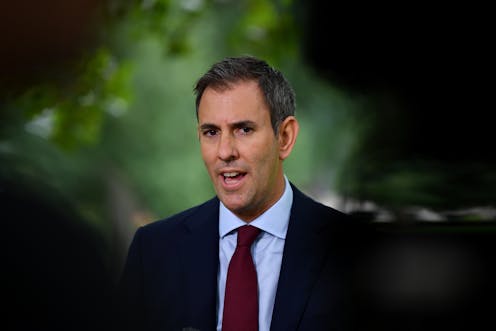
Shadow Treasurer Jim Chalmers decided it would be premature to stand for the Labor leadership after Bill Shorten’s 2019 election defeat. However, he is likely to be a serious candidate if Anthony Albanese loses the 2022 election. At the least, Chalmers has positioned himself to be a very capable senior minister in an Albanese government.
So who is Jim Chalmers?
He grew up in southern Brisbane and Logan City, in his current electorate of Rankin. He feels
part of all I have met there: the local parents and pensioners, cleaners and kitchen hands, businesses and battlers, tradies and truckies.
His mother Carol was a nurse and his father Graham a courier. A favourite school teacher remembers Chalmers as “always going to go into politics.”
Chalmers’ subsequent education suggests he was indeed aiming for a political career. He gained a Bachelor of Arts and Bachelor of Communication from Griffith University, and a PhD in political science from the Australian National University.
Chalmers’ PhD on Paul Keating studied the sources and constraints of prime ministerial power. He argued Keating’s flaws included failing to build a good relationship with the media, and not engaging sufficiently with the concerns and aspirations of voters.
Chalmers had already begun working for the ALP before he completed his PhD. He went on to hold a variety of state and federal government advisory roles, including being former Labor Treasurer Wayne Swan’s chief of staff.
Chalmers’ experiences in the Rudd and Gillard governments led to a book, Glory Daze, which defended Labor’s economic management of the Global Financial Crisis (GFC) against critics, particularly the Murdoch press. After the Rudd government’s defeat, Chalmers co-authored a book with Mike Quigley on the economic and social policy implications of technological disruption, Changing Jobs: The Fair Go in the New Machine Age.
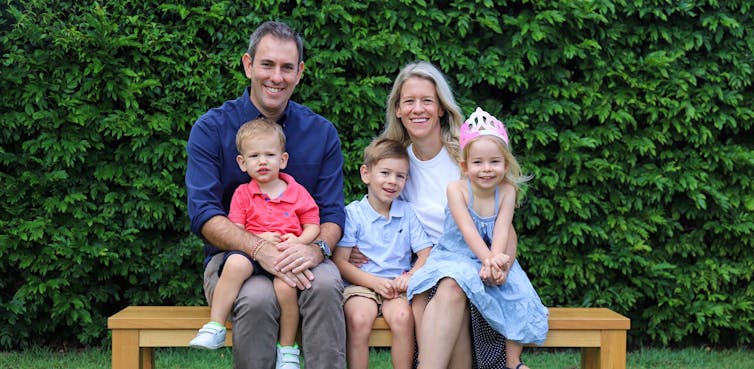
He is married to Laura Anderson, and they have three children.
Chalmers is therefore a somewhat unusual politician, more reflective and intellectual than most. However, he has also established himself as a very capable media performer with excellent communication skills. He is more personable, engaging and better at cutting through than his former boss, Wayne Swan.
Chalmers with his wife, Laura Anderson, and their children Leo, Annabel and Jack. jimchalmers.org
But what does he stand for? Chalmers is a member of Labor’s right faction. In Glory Daze, he defined Labor as standing for intergenerational mobility, aspiration and the Fair Go, while emphasising the importance of sound economic management.
In many respects, those are still Chalmers’ values. However, there is one key difference. Acceptance of large deficits as a legitimate tool of economic management has grown since COVID-related stimulus spending. Labor increased government debt to fund stimulus packages during the GFC by significantly less than the Coalition has during COVID.
Nonetheless, Rudd
and Swan still emphasised the importance of getting back in the black, blaming massively falling government revenues for their failure to do so.
Chalmers now argues it is the quality not quantity of the government spend that is most important. Labor’s alternative budget should be assessed “not on whether it’s a little bit bigger or a little bit smaller than our opponents” but on “value for money”. He criticises the Morrison government for a history of incompetent expenditure, claiming it wasted billions on French submarines, consultants, unnecessary job keeper payments and electoral pork-barrelling.
He argues the budget deficit is best addressed by ending the Coalition’s wasteful spending and rorts, while using government expenditure to increase productivity and grow the economy. Investing in education and training, innovation and developing local business supply chains are central to this agenda. Meanwhile increased funding for childcare and health would have both social and economic benefits.
Chalmers emphasises the need for a future Labor government to work with business. He shares Anthony Albanese’s view that Bill Shorten’s targeting of the “big end of town” in the last election was a mistake.
Similarly, in line with his previous arguments, Chalmers prioritises encouraging “aspiration”. Shorten’s focus on combating increasing class inequality has been replaced by a focus on addressing the cost of living pressures suffered by “working families” who have experienced increasing prices and declining real wages.
Jim Chalmers, who was chief of staff to former Treasurer Wayne Swan, often invokes the phrase ‘working families’, widely used by the Rudd Labor government. AAP/Jono Searle
Here, as elsewhere, Chalmers often draws on pre-Shorten Labor strategies. The term “working families” was widely used by Kevin Rudd in the 2007 election campaign. It can evoke class but is less alienating to business and conservative voters than emphasising economic inequality.
Clearly Chalmers sees the focus on cost of living pressures and aspiration as connecting with voters’ concerns in a way that he has long argued Labor needs to do.
Meanwhile, the emphasis on working with business is intended to shore up Labor’s reputation as good economic managers. It reflects a traditional Labor view, strongly reaffirmed by Anthony Albanese, that business and labour have common interests in a healthy, productive economy that generates employment.
Chalmers has repeatedly stressed that Labor is committed to securing “an economy and a society stronger after COVID than before.” He is attempting to sell a positive message of hope for the 2022 election campaign, while avoiding controversial policies that could unleash Coalition scare campaigns.
However, there are after-effects of the pandemic that may pose major challenges for Labor’s agenda, especially when combined with the economic fallout of international security issues.
Challenges ahead
There are good reasons for Labor to tackle wage stagnation and low-paid, precarious work. Nonetheless, Chalmers skates over a potential contradiction in Labor’s plans to both work closely with business and increase real wages.
Labor argues that it will pursue a Bob Hawke-style consensus with business. However, it conveniently overlooks that Hawke’s consensus was reinforced by an Accord process that substituted better government services and benefits for wage rises, eventually leading to real wage cuts.
Hawke later admitted that a rationale for the Accord was that “employers didn’t have to pay as much”. Furthermore, even former Labor prime ministers Chifley and Whitlam attempted to restrain real wage increases in times of inflation.
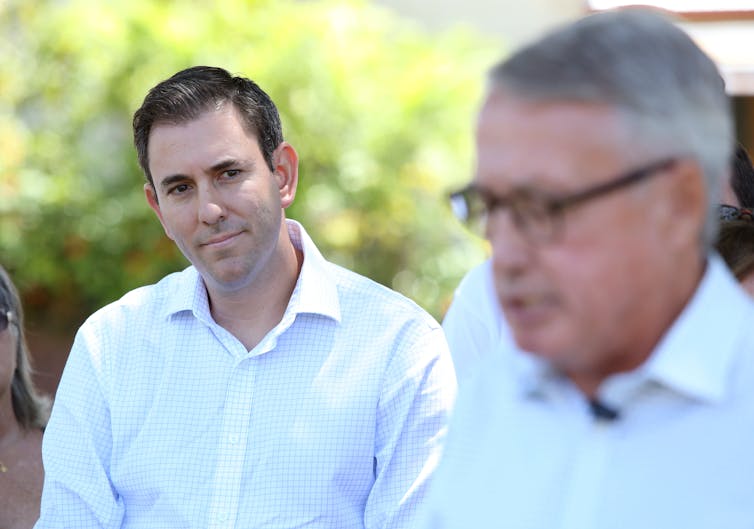
Chalmers, pictured with Chris Bowen, will have challenges if he becomes Australia’s next treasurer, including economic fallout from major international conflicts. AAP/Rohan Thomson
An Albanese Labor government would fund wage rises in aged care. However, many rises would cost the private sector, including in other sectors of predominantly female employment where Chalmers supports substantial real wage increases.
Some far-sighted business people, in highly profitable industries, might accept that wage stagnation has damaged the economy by reducing consumption levels. Nonetheless, pandemic losses, combined with rising supply costs exacerbated by the war in Ukraine, have contributed to many sections of business being even more hesitant to raise their own workers’ wages now than would usually be the case.
Meanwhile, the Masters Building Association is mounting a campaign against Labor’s proposed abolition of the Australian Building and Construction Commission, arguing that it would unleash rogue building unions and “risk the economic recovery”.
Widespread business opposition can indeed give rise to perceptions Labor can’t manage the economy, with particular implications for voters employed in the private sector. Furthermore, Chalmers praises the opportunities technology provides, including for working from home.
However, increased working from home during the pandemic has also demonstrated that many tasks can be done remotely, thereby exacerbating existing trends towards electronic offshoring to lower wage countries.
Similarly, Labor’s and Chalmers’ much vaunted emphasis on education and training, including free TAFE, may no longer be the simple panacea it once was for improving standards of living. As machines become smarter, they replace not just unskilled jobs but many skilled ones as well.
In short, there can be downsides to the benefits technology can bring that Chalmers has arguably underestimated both in recent statements and in his co-authored book on jobs in the Machine Age.
Chalmers and Labor may have underestimated the downside to the many benefits technology can bring. AAP/Joel Carrett
There are also other potential problems with Labor’s heavy reliance on education and training. Albanese’s recent statement that “Labor’s historic task is to move more people into the middle-class” gels with Chalmers’ long-term focus on intergenerational mobility and aspiration.
While it is excellent to provide greater access to skills, training and equal opportunities, what about the traditional working class?
COVID provides lessons here too. There is some truth in the aphorism that during the pandemic the educated middle class often stayed safely working from home while members of the working class brought them things and kept essential services running.
Yet Labor rhetoric about aspiration all too often suggests a major solution to inequality lies in people leaving the working class. Consequently, what attracts “aspirationals”, risks leaving some traditional supporters feeling alienated and unappreciated.
Labor will also face a host of other economic and social challenges. Ruling out increasing taxes other than on multinationals will still leave major government revenue losses resulting from Howard and Morrison government tax cuts. Increasing revenues from commodities trade with China has temporarily helped the budget bottom line.
However, security concerns and declining trust have resulted in a decoupling of the Australian and Chinese economies. This is likely to worsen as China searches for other markets, with negative implications for the Australian economy.
Admittedly, Chalmers would find it difficult to acknowledge such complex challenges during a small-target election campaign that focuses on promising a positive future. And he may be willing to address at least some future challenges in interesting ways if Labor wins office.
His book Changing Jobs includes a long list of new policy proposals for dealing with the Machine Age. For example, Chalmers and Quigley argue a robot tax is worthy of careful consideration. An opinion piece co-authored with Andrew Charlton (an architect of Kevin Rudd’s stimulus policies since parachuted in as Labor candidate for Paramatta) argues for the possibility of “linking the tax and transfer system to ensure a minimum basic income for those who need it.”
A robot tax would encounter major business opposition and is ruled out in the near term by Chalmers’ rejection of new taxes. But Chalmers recently reaffirmed that a minimum basic income for those who need it would be among “the sorts of issues that a Labor government would look at” given medium and longer term agendas.
In short, Chalmers may turn out to be a far more innovative politician than his current cautious election rhetoric suggests. Meanwhile, he continues to affirm that Labor governments have historically been better economic managers than the Coalition.
Nonetheless, whoever wins government will face major economic and social challenges.
Carol Johnson has received past funding from the Australian Research Council for work on Australian Labor.
Source: The Conversation (Au and NZ) – By Peter Christoff, Senior Research Fellow and Associate Professor, Melbourne Climate Futures initiative, The University of Melbourne
James Ross/AAP
As far as political debate goes, this federal election seems to be less about climate change than any in the past 15 years. Unlike in 2010, 2013 and 2016 – when governments were elected and leaders deposed over climate policy – this time there’s no brutal contest over the issue.
There are no calls for emissions trading schemes, no Greens cavalcade into Queensland’s coal-mining hinterland, and no Labor prevarication over the Adani coal mine. The election is shaping up as a contest over other issues – leadership integrity, crisis management, economic nous and the cost of living.
Even so, and although overshadowed by the COVID pandemic, the current term of government has been framed by extreme climate events – first the Black Summer bushfires and, more recently, floods.
In 2019, climate change determined how about 13% of Australians voted. And while it’s early days in the campaign, severalpolls suggest climate change remains a defining issue for voters this time around. If they’re right, the Coalition is in trouble.
Voters will not easily forget the trauma of the Black Summer fires. David Mariuz
Climate emergencies fuel climate anxiety
Public anxiety over future climate damage is growing. The Lowy Institute has found 60% of Australians now say global warming is a significant and pressing problem. The same poll showed 55% of Australians say the government’s energy policy should prioritise “reducing carbon emissions” – up eight points since 2019.
We can expect the climate vote to be driven by several factors. They include: personal experience of disaster and recovery, Prime Minister Scott Morrison’s leadership on the issue, the government’s performance in reducing emissions, power prices and energy security, and competing parties’ credibility and promises on climate action.
There is mixed evidence on how extreme weather affects voting intentions. For example, while some studies say it benefits parties with greener policies, others indicate voters prioritise economic security after a disaster.
But the Morrison government has also been accused of weak leadership during recent disasters and being too slow to deliver assistance afterwards. Such perceptions, particularly in disaster-hit areas, are likely to weigh heavily against the government.
The election, of course, will not be decided on the overall swing, but what happens in marginal seats and those where credible independent candidates – many of them with climate action high on their agendas – pose a real threat to incumbents.
Some 25 electorates are likely to determine the next government. The 2019 election was only narrowly won by the Coalition and it currently holds nine seats on a margin of less than 4%. Labor holds 14 marginal seats and independents hold two.
Seven of these seats were hard hit by the Black Summer fires and this year’s floods. Five are marginal seats held by the ALP – Dobell, Eden-Monaro, Macquarie and Gilmore in NSW, and Lilley in Queensland.
If the fires and floods do swing votes this election, they’re likely to secure Labor incumbents in these seats.
The other two – Page in NSW and Gippsland in Victoria – are safe Nationals seats and likely to remain so.
Independents campaigning on climate policy look set to challenge Liberal supremacy in three urban seats: Goldstein in Victoria, and Wentworth and North Sydney in NSW.
Meanwhile Zali Steggall, an incumbent climate independent, looks secure in Warringah.
Pro-climate independent Zali Steggall looks set for re-election. Marion Rae/AAP
A credibility problem
Scott Morrison has a climate credibility problem. Having defined himself while treasurer by brandishing a lump of coal in Parliament, as prime minister he’s been accused of lacking empathy for victims of climate disasters.
Morrison’s trip to Hawaii during the Black Summer fires continues to haunt his reputation. And given the ongoing sensitivities around his disaster responsiveness, his government’s assistance after the recent floods was surprisingly sluggish.
Australia’s low climate policy ambition and persistent refusal to increase its 2030 emissions target saw it branded a laggard at last year’s crucial United Nations climate summit in Glasgow.
The government has sought to claim credit for Australia’s success in reducing emissions from the energy sector. But most momentum derives from state and territory policies, and private investment – coupled with the dynamism and market competitiveness of the renewable energy sector itself.
The road to elections is paved with broken old promises and lit by bright new ones (see table below).
The crucial indicator is the short-term national emissions target. The Coalition is sticking with a 26-28% reduction on 2005 levels by 2030. Labor is aiming for a 43% cut in the same period. The Greens and independents want more, and would legislate their targets.
While the Coalition has no renewable energy target, Labor is promising renewables will comprise 82% of the national grid by 2030.
But how will they get there? This year’s federal budget – which barely mentioned climate change – outline the Coalition’s express commitments. It provides funding for liquified natural gas production, but no declining funding for renewable energy.
The budget also offers $12.3 billion for road infrastructure and $3.7 billion for rail next year. But there’s little for electric vehicles – crucial for cutting transport emissions and fuel costs.
Labor is promising $20 billion for powergrid upgrades and renewables, $200 million for solar banks and community batteries, and a discount scheme for electric cars.
Seeking to repair Australia’s international reputation, Labor is also offering to host a future United Nations climate conference, which traditionally serves to enhance the host nation’s domestic performance.
But tellingly, neither major party mentions fossil fuel exports – the overwhelming and growing contributor to Australia’s global carbon footprint.
What will the next term bring?
Obviously, we don’t yet know the persuasion of the next government – nor whether it will rely on support from minor parties and independents.
But we do know it will confront growing pressure for tougher climate targets and action – from the electorate, our international peers and the rising number of climate-related legal challenges.
As this month’s report from the Intergovernmental Panel on Climate Change indicates, extreme events will inevitably intensify and require more, and better coordinated, responses.
Ever more forcefully, we can expect global warming to continue shaping Australia’s political landscape.
Peter Christoff is a member of the not-for-profit group Environment Victoria, and was previously affiliated with the Australian Conservation Foundation and the Victorian Greens.
Not so long ago, it was easy for public banks to fund new fossil fuel projects. But now, as the world faces a worsening climate crisis, the tide may be turning.
Case in point: after Traditional owners filed an injunction over a Santos gas development near the Tiwi islands, South Korea’s export credit agency announced it would reconsider its financial support.
“Environmental and legal risks” is one reason given by the Export-Import Bank of Korea (Kexim) for the delay in deciding on a loan of up to US$330 million for the project. The move could threaten its financial viability.
Public financial institutions are under renewed pressure to change lending practices after the world’s leading climate scientists strongly warned against any new fossil fuel infrastructure. In our region, public banks in China, Japan, and South Korea now face unprecedented scrutiny for their role in financing the climate crisis.
Not only that, but the Tiwi injunction has again shone a spotlight on the role played by export credit agencies like Kexim in pumping funds into new coal, gas and oil projects.
New fossil fuel projects rely on finance. Shutterstock
What are export credit agencies and why do they matter?
The Kexim loan was intended to go to the Korean energy group SK E&S, which had planned to export gas from the project to Asia. Without funding, there may be no project.
That’s why Kexim’s move is so important. While export credit agencies are not the only funders of oil, gas and coal infrastructure, and not the largest either, they have been instrumental in developing many of the world’s most carbon intensive sectors.
How? By locking in fossil fuel energy systems, leveraging private finance by reducing risk premiums, and shaping international standards which influence private bank policies. In short, they have played a key role in enabling fossil fuel expansion.
For decades, these state supported agencies have gone under the radar. No longer. Scrutiny is increasing of their work borrowing from national treasuries or public capital markets to finance export-oriented fossil fuel projects.
That’s not to criticise all the work these agencies do. They’ve proven invaluable for nations like South Korea as they industrialised. By providing direct loans, insurance and guarantees to foreign buyers, they have helped improve the competitiveness of their exports.
Many public and development banks have been funding fossil fuel projects locally and overseas. Shutterstock
Ending lending: why export credit agencies must fund clean alternatives
If the world is to achieve the rapid energy transition necessary to avoid the worst effects of climate change, we will need a revolution in global finance. We have to drain funding from fossil fuels and pump it into clean energy.
Until recently, efforts to cut international public funding for fossil fuel projects have focused on multilateral development banks like the World Bank and the Asian Development Bank. In response, both have slowly started to shift their financing away from fossil fuels.
While that’s a positive step, bilateral funding bodies like export credit agencies are still stuck at square one. Research estimates these public banks are now financing fossil fuel projects more than the multilateral development banks. Between 2013 and 2015, for instance, these agencies financed oil and gas to the tune of US$32 billion a year. The worst offenders were Japan, Korea and the United States.
Australia’s equivalent – Export Finance Australia – is hardly blameless. Between 2009 and 2020, our agency loaned an estimated A$1.5 billion to new coal, oil and gas projects, dwarfing the funding it gave to renewable projects.
The pressure is mounting
As governments belatedly swing into action, it is likely we will see an end to the historical support given by these banks to highly polluting sectors. In turn, this will hinder corporate efforts to mobilise public and private finance alike.
That’s not to say there won’t be holdouts. At the Glasgow UN climate conference in late 2021, developed countries including the United States, Canada and the United Kingdom committed to ending public funding for “unabated fossil fuel energy”. Australia, Japan and South Korea were not among the signatories.
The Glasgow announcement came only a month after the OECD announced it would end export credit support for coal-fired power plants built without the ability to capture and store carbon dioxide.
Renewable financing through Australia’s export credit agency has been limited. Shutterstock
While important, these steps are nowhere near enough. To date, only the Canadian export credit agency has committed to aligning funding with the goal of net zero by 2050. That means the lending policies of almost all of these agencies remain glaringly inconsistent with Paris Agreement goals and renewed warnings from climate scientists.
In a year when unprecedented floodwaters have taken lives and livelihoods up and down Australia’s east coast, it is time for governments to revise the mandates of their export credit agencies. They can be a force for good by helping to leverage billions of dollars into clean energy projects, rather than fossil fuel ones.
Without government action, it will be left to local communities like the traditional owners in the Northern Territory and environmental organisations to fight uphill battles against these taxpayer funded banks.
Christian Downie receives funding from the Australian Research Council.
If tensions between the Western world and China and Russia led to a split into two separate financial and trading systems, Australia would be among the countries most hurt.
We ran the numbers on this earlier this year for the West Australian Governor’s Strategic Foresight Dialogue. At the time the possibility of a new “bamboo curtain” with China, Russia and like-minded nations on one side, and the “West” led by the United States on the other, was academic.
It remains so. Nevertheless, it is worth reexamining what our model produced.
We modelled the short-term effects of an end to trade and investment flows across a curtain which leaves the Western economies on one side and China and the rest of the world on the other.
Examining only the short-term effects of an end to trade and investment flows across such a curtain, we conservatively assumed:
no associated military expenditures or losses
exchange rate targeting within each group, with Western currencies pegged to US dollar and Eastern countries pegged to the Chinese Renminbi
money wages, capital and government spending fixed in all countries
employment, business rates of return and fiscal deficits allowed to adjust
in all regions, the unemployed get 60% of the low-skill wage
Australia among the hardest hit
Proportionately, the negative effect on Australia would be larger than on the world as a whole, due to Australia’s relative affluence and dependence on trade.
The United States was the least affected in terms of GDP.
The relative resilience of the US is because it is less trade-dependent than other economies. It would receive an expanded share of the diminished Western investment pool.
Production would fall everywhere until production centres are relocated, resulting in mass unemployment and plunging returns on capital.
Our model suggests half a billion workers would lose their jobs worldwide, including one fifth of employed Australians.
The worth of financial assets would fall by one fifth on average, and by one quarter in Australia.
An end to trade across a bamboo curtain would hit Australia, since we export more resources to China than anywhere else and we import more goods from China than anywhere else.
Australia’s (mainly commodity) export prices would fall 6.9%, while Australia’s (mainly manufactured) import prices would climb, by as much as 13.2%.
The result would be a real decline in the value of Australia’s currency, which would be biggest against the US dollar (20%).
Australia’s export income would fall 55%, a loss almost as big as China’s.
Western Australia would be by far the worst affected Australian state, because it depends on exports for 61% of its gross state product, compared to 24% for Australia as a whole.
The 55% collapse in Australia’s export income predicted by the modelling would cause a collapse in Western Australia’s nominal gross state product by 34%, while Australia’s nominal GDP would fall by 17%.
Diversity, within the bloc
The scenario remains unlikely, but the best early defence against extremely large losses is greater economic diversity. Interestingly, this need not be diversity within the Australian economy, or within one state within it, but diversity within the entire Western bloc on Australia’s side of the potential curtain.
It is achievable with far less restructuring than would be needed to make all of Australia self-sufficient.
Nonetheless, to support the expanded investments required, Australia would have to quickly enhance its strengths in sophisticated manufacturing.
This needn’t happen within the state with the most to lose, which is Western Australia. Expanded manufacturing in Australia’s east could source the minerals, energy and agricultural inputs it needed from Australia’s west.
Of course, any support of manufacturing in Australia will require programs that avoid the import protection that held back Australian growth through the 1970s.
One idea would be tax reforms combined with tax-financed direct assistance. Finding other ideas will be challenging for Australia’s economists and policy makers, but we fear they could become very important.
The substance of this article was prepared for the WA Governor’s Strategic Foresight Dialogue: Possibilities for Western Australian Economic and Industrial Resilience in the Event of Regional Conflict, 23 February 2022
The authors do not work for, consult, own shares in or receive funding from any company or organisation that would benefit from this article, and have disclosed no relevant affiliations beyond their academic appointment.
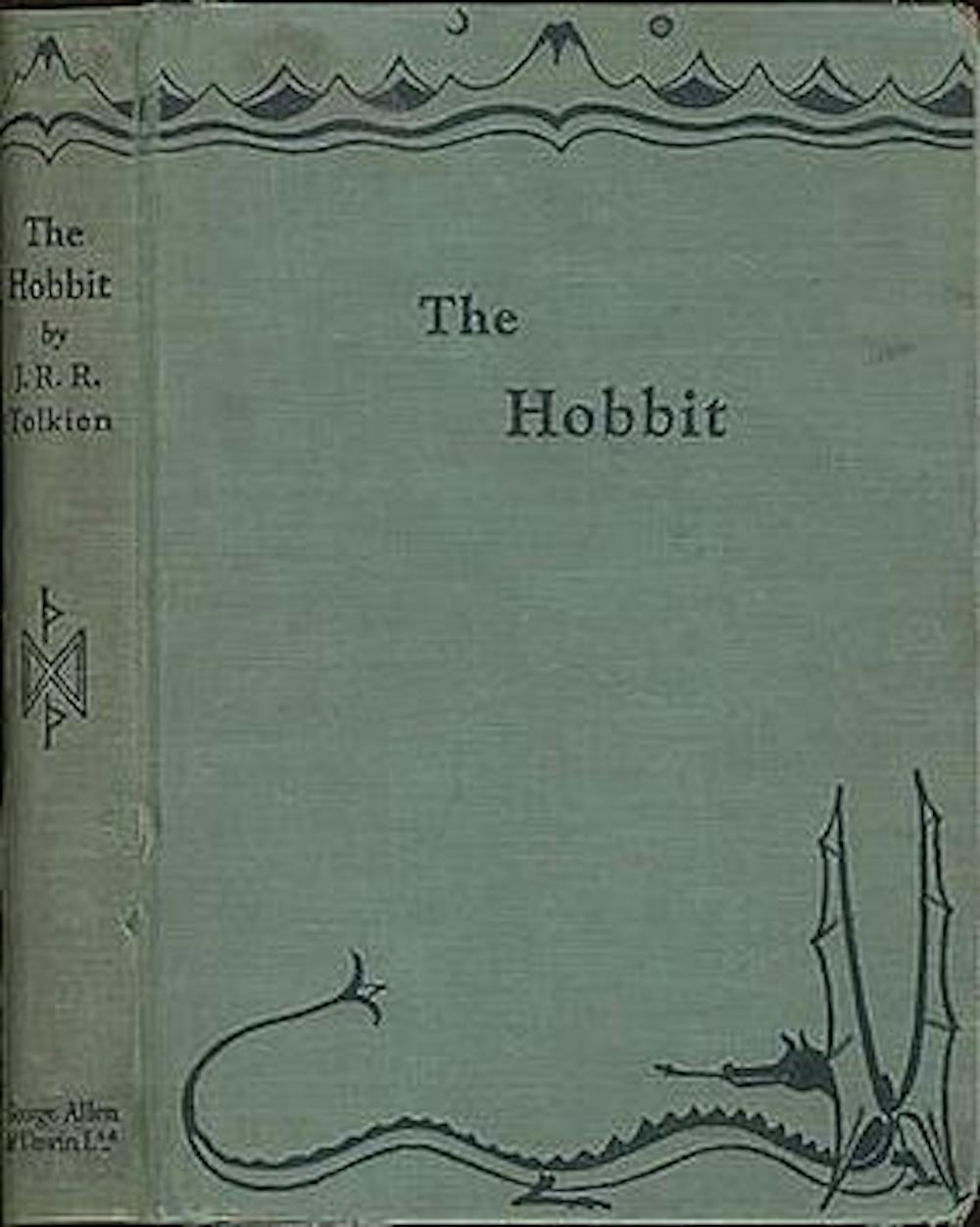
When Allen & Unwin requested a sequel to J.R.R. Tolkien’s first novel The Hobbit (1937), they could not have known that it would be one of the best publishing decisions of the century, if not all time.
The Lord of the Rings has sold an enormous number of copies, and generated a vast and still-growing multimedia franchise, including the upcoming TV series The Rings of Power. Tolkien’s work and ideas also inspired countless readers and authors and is at the root of contemporary fantasy’s commercial and artistic success.
The 1937 first edition of The Hobbit by J.R.R. Tolkien. Wikipedia
All of this took time, even after the 15 year the publishers waited for their sequel. The Lord of the Rings sold well in its original hardback edition and was positively reviewed. The poet W. H. Auden called it a “masterpiece” and said that in parts it was better than John Milton’s canonical poem Paradise Lost.
It became an international publishing phenomenon in the 1960s, with cheap paperback editions, first with an unauthorised version from Ace Books and then licensed ones from Ballantine Books and Houghton Mifflin.
Sparking a genre
These paperback editions sparked the commercial fantasy genre. According to the late David G. Hartwell, a leading figure in US fantasy and science fiction publishing, what the 1970s reading public wanted was “not more fantasy but more Tolkien”.
That desire was fulfilled with books like Terry Brooks’ Shannara series and Stephen R. Donaldson’s The Chronicles of Thomas Covenant, as well as the role-playing game Dungeons & Dragons.
Familiar fantasy conventions, with their roots in The Lord of the Rings, were established through this “genre-fication” of fantasy publishing: multi-book series about good vs evil, a pseudo-medieval time, a vaguely European setting and white, usually male, protagonists. They still persist, as in George R. R. Martin’s A Song of Ice and Fire series and The Witcher franchise.
Contemporary fantasy is varied, has many sub-genres, and is often strikingly and deliberately different to The Lord of the Rings. Tolkien and his work are still a touchstone, however, particularly for so-called epic fantasy.
John Ronald Reuel Tolkien CBE FRSL was an English writer, poet, philologist, and academic. IMDB
George R. R. Martin has been dubbed the “American Tolkien,” and critic Laura Miller explored the fantasy of David Anthony Durham and N. K. Jemisin in an article titled “If Tolkien Were Black”. Steven Erikson, the bestselling author of The Malazan Book of the Fallen series called his fiction “post-Tolkien”.
Peter Jackson, who created the Lord of the Rings and Hobbit film franchises, with a copy of the original book. Chris Pizzello/ AP
The impact of Tolkien’s ideas of fantasy
Tolkien’s ideas about fantasy literature are influential far beyond books (and other media) that were inspired, even indirectly, by The Lord of the Rings.
The great American fantasy and science fiction author Ursula K. le Guin wrote that his essay On Fairy Stories is “the best introductory guide I know to the domain of fantasy”. The ideas expressed in Tolkien’s essay validate fantasy as art and shape how many authors (and readers) understand what it means to write it.
For Tolkien, imagination and story-telling are central to being human. He wrote that “fantasy” is the purest and most “potent” kind of art because it requires subcreation of a “secondary world”. A secondary world is a different world to reality, and has “inner consistency” obeying its own rules.
If there is any one thing that the great variety of fantasy works have in common, it is that they need imagination, even if not taking place in what Tolkien would have called a secondary world. Even urban fantasy, like Neil Gaiman’s novels, where magic and mythological beings exist in a world like our reality, involves creation of a world that differs meaningfully from our own.
“Subcreation” is the author’s process of imagining and building a secondary world and the story (or stories) that take place in it.
Tolkien, a devout Christian, thought of this process as being an emulation of what he believed was God’s creation. Many fantasy authors don’t share his religious beliefs of course, but the notion of making a new world is a powerful one that gives a framework for the artistic, literary endeavour of writing in a genre that is sometimes dismissed as juvenile, repetitive and unimportant.
For Tolkien, human subcreation differed from God’s creation because humans had to work with what already existed, recombining elements to create the new world. One example of this sort of re-combination he used was imagining a world with a sun that is green, rather than the bright white of the real sun.
Even more important, for him, is dipping into what he called the “cauldron of story”, a hypothetical pot of soup where every major story ever told bubbles together for the author to draw ingredients from.
Elements of folk and fairy tales, mythologies and mythical figures like King Arthur, are familiar features in fantasy, all taken from the cauldron of story.
Lord of the Rings though the ages
Exact sales figures for The Lord of the Rings are impossible to get because it’s been sold in separate volumes as well as a single edition of all three books, and the many translations.
It is nonetheless clearly one of the best-selling books of all time with estimates putting sales at more than 150 million, and copies of The Hobbit at more than 100 million copies.
Peter Jackson’s film franchise has raked in more than US $5.8 billion. This puts it in the top 15 franchises of all time.
Still, Tolkien’s fiction and ideas have a contested and troubling legacy. The Lord of the Rings’ impact was partly due to it being taken up by 1960s hippie counter-culture, but it is also a favourite text of neo-Nazis, who embraced the fantasy depictions of race within the texts.
Fantasy, along with science fiction, has been a battle ground in the culture wars for more than a decade. The bitter reaction of some fans to casting actors of colour in Amazon’s The Lord of the Rings: The Rings of Power series shows that the “racialised” history of the series continues in the present. Such reactions have been “debunked”, and were resisted by other fans.
Discussions like this abound in modern criticism of Tolkien’s work – but they are only part of his legacy. It is Tolkien’s insight into the nature of fantasy itself and the way it demands that we imagine and desire a new world, that defines his work.
Helen Young is President of the Australia and New Zealand Association for Medieval and Early Modern Studies.
Labor has clung to its 53-47% two-party lead in the latest Newspoll, but Anthony Albanese’s ratings have taken a knock after his error-prone first week of the campaign.
While Labor would win on this vote, with a uniform swing, both government and opposition have low primary numbers, prompting speculation the chances of a hung parliament are increasing.
Labor was down a point on primaries to 36%, and the Coalition also fell a point, to 35%, since the poll last week.
The poll, published in Tuesday’s Australian, finds Albanese’s satisfaction has slumped to a record low of minus 14. This is the lowest for an opposition leader since Bill Shorten’s rating in May 2019, before the election. Albanese’s position has also worsened on the better PM measure.
The combined popular support for the Coalition and Labor is the lowest on record for an election campaign, reflecting the “pox on both houses” sentiment in the community.
Nearly three in ten (29%) voters are currently saying they would support a minor party or independent. The Greens vote rose 2 points to 12%. The Liberals are increasingly fearing the “teal” candidates challenging in some of their seats.
In his worst result since becoming leader, satisfaction with Albanese dropped 5 points to 37% and his dissatisfaction increased 6 points to 51%.
Satisfaction with Morrison rose one point to 43%; his dissatisfaction fell 2 points to 52% His net satisfaction went from last week’s minus 12 to minus 9.
Morrison widened his lead as better PM, thanks to a 2 point fall in Albanese’s support. Morrison is ahead 44-37%. The poll was conducted April 14-17.
The Newspoll comes after a Resolve poll, published in the Sydney Morning Herald and the Age on Monday, showed a 4 point fall in Labor’s primary vote to 34%, while the Coalition rose from 34% to 35%. The poll suggested a possible hung parliament. Morrison led as preferred PM 38-30%.
On Monday both sides had scare campaigns running, as the campaign’s second week got underway.
Labor wants voters to believe Anne Ruston, Scott Morrison’s designated heath minister if he is re-elected, would assault Medicare.
The Prime Minister is claiming Anthony Albanese would open the flood gates to boat people.
Never mind there’s not credible evidence to back either claim. Both sides are looking for advantages from negativity.
It was no surprise when Ruston, currently social services minister, was announced as Greg Hunt’s replacement if the Coalition holds power. Labor had the files ready.
“Medicare in its current form is not sustainable into the future without some change being made,” Ruston said in March 2015.
In the budget of the year before, the Abbott government had proposed a payment, from which ultimately it had to retreat. Ruston said that “the government recognised that Australia was not ready for this particular reform”.
The quotes were quickly in journalists hands at the weekend.
On the ABC on Monday morning Ruston faffed about a bit when pressed for guarantees of no cuts. Morrison later swept up, telling a news conference Ruston “said yesterday there wouldn’t be any cuts and I would repeat that today”.
Labor is fondly remembering its successful “Medicare” campaign in the 2016 election, when the opposition claimed the Turnbull government planned to privatise Medicare.
This was based on that government considering privatising the delivery of various government payments.
Labor’s Mediscare was potent.
It’s unlikely Labor can get as far by mining Ruston’s historical quotes. In 2016 Labor was exploiting, albeit misrepresenting, something that was actually being considered. In 2022, it is recycling old statements.
On the other side, Morrison is being shameless as he seizes on Anthony Albanese’s looseness about Labor’s policy on borders, and the policy itself.
Albanese last week said he supported turnbacks, which meant offshore processing wouldn’t be necessary. He did the clean up quickly – Labor still supports offshore processing.
At the weekend he had another fluff, about Labor’s policy on temporary protection visas, saying first it supported them then clarifying that it didn’t. He said he had heard only half the question.
All this was grist for Morrison, who can chew on meagre bones.
“When Labor abolished temporary protection visas in 2008, the armada of people smugglers boats came to Australia,” Morrison told a news conference while campaigning in Perth.
On turnbacks, Morrison went back to 2015, coincidentally the same year as the Ruston quotes.
“Anthony Albanese said he couldn’t ask someone to do something he wouldn’t do himself. Now it’s fine for people to say they agree with it many years after the fact. But when it matters, when people were dying at sea, Anthony Albanese was one of the most vocal critics of the government’s border protection policies. He was wrong then, and he is still wrong.”
In 2015 the ALP national conference changed the party’s position so Bill Shorten could go to the next election with a policy for turnbacks.
Albanese, who opposed the switch, said at the time: “I couldn’t ask someone else to do something that I couldn’t see myself doing.
“If people were in a boat including families and children, I myself couldn’t turn that around.”
It’s true that Albanese has done a dramatic U-turn on turnbacks. It’s equally true that if Labor was in government his current position, not his former one, would be the policy his government implemented.
After Albanese’s major problem on numbers last week, there is a big “mistake monitor” on the campaign trail. On Monday, Morrison had to correct himself, after declaring the JobSeeker income support was $46 a week (instead of a day).
Meanwhile, the divisive row continues within the NSW Liberals over Morrison’s controversial pick for Warringah, Katherine Deves, who has a trail of offensive anti trans posts (for which she has apologised).
Many in the party want her to step down, fearing she will hurt the vote in Wentworth and North Sydney where Liberals face “teal” independents. Local Liberals have abandoned any hope of dislodging independent Zali Steggall in Warringah.
News.com.au reported Deves, in a letter to supporters, had dug in, saying “I have been bullied in the most vile way and received death threats. I’m not going anywhere, as the Prime Minister said yesterday.”
It also reports the president of the Neutral Bay branch in the electorate, Simon Moore, had emailed the party’s state president, saying he hopes Deves could be “persuaded to stand aside for the good of the party”.
Michelle Grattan does not work for, consult, own shares in or receive funding from any company or organisation that would benefit from this article, and has disclosed no relevant affiliations beyond their academic appointment.
This is the first in a two-part series on the major parties’ Treasury spokespeople. You can read Carol Johnson’s profile of Jim Chalmers here.
When Josh Frydenberg was studying law at Monash University, he’d tell fellow students he wanted to go into politics and hopefully one day might be prime minister.
“He would say it in a jovial fashion, not in an arrogant way,” remembers one student from the time. “He’d say [to someone] ‘you can be in my cabinet’”.
The story is instructive: Frydenberg’s intensely ambitious nature was forged early, and so was his personal and political style.
“Unlike the rest of us, he was always a bit more careful of how he conducted himself.” He’s not remembered for excessive partying or drinking. “This was quite possibly because of his aspirations, but also because of the example of his parents and others in the [Jewish] community”.
There was something else too, that went to Frydenberg’s first ambition. He was still consumed by his tennis obsession, even though he’d given up his dream of becoming a “pro” after a year’s full-time try-out after he left school.
Discipline is a cornerstone in Frydenberg’s life. As a school boy, Frydenberg recalls, “I wouldn’t go out with my school friends”. His tennis coach, Peter Geraerts, “would tell me to run down Toorak Road, in front of my friends, to see what I had to give up” for a tennis career. “He was always prepared to put the hard training in – mentally and physically,” says Geraerts, who started coaching Frydenberg at age 12 or 13, and is still in contact.
The ex-student quoted above also keeps in touch. “I’ve always found him someone you can have a very robust conversation with and he will listen to different perspectives – and on occasion he would change his perspective after listening.”
As treasurer and deputy Liberal leader, Frydenberg is in sight of the prime ministership. But, while he may sooner or later clinch the prize, politics being politics means it could equally turn into a mirage.
So far, the diligent, careful aspirant has had a dream run. That might seem an odd observation, given the huge challenges of the pandemic. Yet the successful economic response to COVID, based on solid Treasury advice, means Frydenberg has been able to boast, in this election campaign, a set of enviable economic numbers, including unemployment at 4%.
It’s not a policy place Frydenberg ever thought he’d be in. He declared in his maiden speech:
We need to limit the government. Our government is too big. […] my goal is to ensure that government learns to live within its means. […] Less dependence on government makes for a better Australia.
In his early days as treasurer, the measure of his success was set to be returning the budget to surplus, a target he said unequivocally he would achieve, but then never did. Reaching budget balance was a far as he got, before COVID turned the economy and the budget pear-shaped.
Although Frydenberg has delivered four budgets (including three in 18 months), independent economist Saul Eslake sees him as a work in progress.
A really good treasurer does three things, Eslake says – makes good policy decisions, is able persuade the public of the wisdom of them, and “occasionally argues for policy changes that are good for the economy, but might cost votes”. He gives Frydenberg a tick on the first two (though not unqualified), but says he is “yet to establish himself as a reformist treasurer”.
“He’s the best treasurer in the past decade – which is not setting the bar very high. But he’s not in Keating or Costello’s league,” Eslake says. “If he gets another three years as treasurer, he may have the opportunity to improve his ranking on point three. He’s so far barely disturbed the scoring on that.”
Warwick McKibbin, professor of economics and public policy at the Australian National University, says Frydenberg has done a good job during the COVID crisis. “He has a very good memory and he’s good with numbers. He can filter good arguments from bad arguments.”
But “he doesn’t stick his neck out very far. He’s adventurous in asking interesting questions privately, but not willing to push it too far, because he’s trying to keep a political position.
“He has the potential to understand why you want to reform – as leader it would depend on the numbers. His decisions appear to be politically based.”
Some reforms have been made, including changes to insolvency arrangements, taking on the tech giants to get them to pay for the news they use, an overhaul of foreign investment arrangements, and more transparency in superannuation. But he hasn’t confronted the big tax and other reform questions on the economists’ agendas.
Asked whether he thinks big reform is still possible, Frydenberg says: “Of course it’s possible. You can’t underestimate how all-consuming the pandemic has been. [In future] “I think there will be an appetite for [reform]”, although he adds, “I don’t buy into the theory we haven’t reformed”.
Frydenberg entered parliament for the seat of Kooyong (once held by Robert Menzies) in 2010, after one preselection rebuff but a model preparation for a future high-flying Liberal.
He’d been to Oxford and Harvard, worked in banking and been a staffer in the Howard government to Attorney-General Daryl Williams, Foreign Minister Alexander Downer, and the prime minister himself. Both Downer and Howard became major influences on him. He hadn’t been involved in partisan politics at university – he did win a big battle for president of the law students society – but joined the Liberal Party while working for Williams.
The most intense “networker” imaginable – even Morrison has quipped publicly about this – Frydenberg had already an extensive contact list by the time he arrived in the House of Representatives.
Some veteran Liberals quickly marked him out for higher things. Amanda Vanstone, who’d been a minister in the Howard government, attended a Frydenberg fundraiser with Margaret Guilfoyle, a Liberal icon who’d been finance minister in the Fraser government. “I can’t remember her exact words but she effectively said, this guy is part of our future,” Vanstone recalls.
Tony Abbott was opposition leader when Frydenberg was elected, and the newcomer was impatient as he looked for promotion; in the Abbott government he was made parliamentary secretary to the prime minister and later assistant treasurer.
His first real test came in Malcolm Turnbull’s second ministry, after the 2016 election. Frydenberg (minister for resources, energy and northern Australia in the first Turnbull ministry) became minister for the environment and energy, as Turnbull was trying to shift a resistant Coalition towards a better response on climate change and emissions reduction.
Despite all efforts, including solid work by Frydenberg, the exercise ended in political disaster for Turnbull, becoming a major factor in his overthrow.
In the fall of Abbott and then of Turnbull, Frydenberg displayed one quality his colleagues and friends recognise – he’s very loyal. One of Frydenberg’s best friends, fellow Victorian Greg Hunt, jumped to Peter Dutton when Dutton challenged Turnbull in 2018.
Frydenberg resisted any such temptation, and was rewarded. He was approached by colleagues to run for deputy – making for a difficult conversation when he had to tell Hunt he was opposing him for that position – and won overwhelmingly in the first ballot after Scott Morrison became leader.
That he’s not a troublemaker helped Morrison when internal criticism of the PM grew in recent months. In a Morgan poll in February, Frydenberg was preferred as Liberal leader by 38.5%, Morrison by 31% and Peter Dutton by 12.5%. Among women, Frydenberg led Morrison 41-29%.
In every election campaign, the treasurer has a big job, especially in a Coalition government, which traditionally wants economic credibility to be centre stage. This time, Frydenberg is particularly stretched. He is doing much heavy lifting in “teal” seats where Liberals are under challenge from high profile, well-funded independents and Morrison is a negative. And he is watching his back against a hightly-organised “teal” campaign in his own seat, which is on a 6.4% margin.
On the Easter weekend, Morrison and Frydenberg locked in a bear hug outside a synagogue in Melbourne, an image that mightn’t go down so well in Kooyong, given Morrison’s poor personal popularity.
Frydenberg was classed as a conservative in earlier years but seems to have moved to a more centrist position. In 2015, he declared he had changed his stance on marriage equality.
Importantly, his conservatism has always been interlaced with a humanitarian streak derived from the experiences of his family. His maternal grandparents and their infant daughter, his mother Erica, were interned in the Budapest ghetto. Many relatives died in the Holocaust.
Those who know the family well speak of them as warm, supportive and generous, and say his father Harry, a surgeon, and his mother, a psychologist have been crucial in forging Frydenberg’s values.
In his preparation for the political life Zelman Cowen, Australia’s second Jewish governor-general, was crucial. For years Frydenberg visited Cowen for breakfast on Saturday and Sunday. He sang to Cowen, an opera lover, on the night he died in 2011, regularly took flowers to his widow Anna, and has sworn the oath to his various political offices on the Hebrew Bible Cowen gave him. Frydenberg says:
Zelman was always about integrity, intellectual curiosity. He had a guiding light. He really put me through my paces.
His Jewish identity and heritage are woven through Frydenberg’s persona. Besides Cowen, some of his important mentors were Jewish. He chose Monash law school, the favoured choice of Jewish students, over the more prestigious Melbourne University.
A friend from university days and later, Melbourne businessman Duncan Murray says, “His Judaism is part of who he is and part of his brand. He has not shirked from being proud of it.” Frydenberg says: “What my Judaism has instilled in me is a love of family, respect for tradition and learning, and of course the importance of faith”.
If Frydenberg reached the top, he would be Australia’s first Jewish prime minister.
If the government loses, the contest for opposition leader would presumably be between Frydenberg and Dutton. Judging now, Frydenberg would start favourite against Dutton, who is from the hard right. Frydenberg showed in winning the deputyship that he’s a good harvester of votes within the party. All that networking doesn’t go astray.
But the route of opposition leader is not the optimal path for him. He does not excel at negative campaigning in the way Abbott did, or Dutton does. Perhaps it goes back to that willingness to see another side of things, or a lack of natural aggression.
Also, the first leader after a defeat does not necessarily get to be the one who takes their side to victory. Then again, it would also depend on how close the election result was.
From Frydenberg’s perspective, the best way to the prime ministership would be to assume it in government some time in the next term. That scenario would of course be full of assumptions. It would also mean Frydenberg PM would be asking for a fifth Coalition term at the following election. It would be a fresh face on a wrinkled body.
Michelle Grattan does not work for, consult, own shares in or receive funding from any company or organisation that would benefit from this article, and has disclosed no relevant affiliations beyond their academic appointment.
Outspoken Madang MP Bryan Kramer has been stripped of the Justice and Attorney-General ministries and given the Immigration and Border Security portfolio in a move seen as a demotion in Papua New Guinea’s pre-Easter cabinet mini-reshuffle.
Prime Minister James Marape announced the change along with four others last week, only a fortnight out from the start of the 2022 national general elections campaign with the writs being issued next week on April 28.
The other changes are: Westly Nukundj to Provincial and Local-Level Government Affairs, replacing Pila Niningi, who takes over Kramer’s former portfolio; Sohe MP Henry Amuli takes on Commerce and Industry, left vacant following the death of William Samb (Goilala MP); and Daulo MP Pogio Ghate replaces Chuave MP Wera Mori as Minister for Environment, Conservation and Climate Change.
Mori resigned from the cabinet a month ago to lead the Country Party into the elections.
New minister for Provincial and Local-Level Government Affairs Nukundj, last night thanked the government for having trust in him.
“I thank the prime minister for recognising my potential in elevating me to a senior ministry to be in charge of all the provincial and local level governments,” he said.
“I will discharge my duties to the very best of my knowledge, experiences and ability.”
Ministers Amuli and Ghate are first-term MPs.
Elevated to cabinet They are being elevated to cabinet for the first time.
This is Marape’s fourth cabinet reshuffle since he became prime minister two years ago.
He appeared evasive when asked about the sudden changes with the election just days away.
Marape just said the changes were “necessary” to maintain cabinet.
“We had to fill the vacancies left in key portfolios and we had to have ministers who could have oversight on the portfolios so that work continues as we get into the election period,” he said.
He said the experience of each of the politicians was needed in their new portfolios.
“It is the prerogative of the prime minister, and while I respect the hard work of all three ministers the rotation of the key ministries comes at a time we are heading to the election,” Marape said.
‘Stand watch at immigration’ “We want to maintain work at the local level government, stand watch at immigration and maintain our laws, that is the reason for change.
“The changes have nothing to do with performance.
“They have all performed well in their key sectors but I felt these key sectors needed a change.
“I know the two new ministers, I know they are capable of heading the ministries they are taking care of.”
Miriam Zarriga is a PNG Post-Courier reporter. Republished with permission.
Forming post-election alliances through formal agreement is an effective way of drawing in a broader and more culturally diverse group of voters into a bigger support bloc, says a New Zealand-based political sociologist.
Professor Steven Ratuva, director of the Macmillan Brown Pacific Studies Centre at Canterbury University, said this while responding to the memorandum of understanding (MoU) signed recently by the opposition National Federation Party and the People’s Alliance party which was formed last year and led by Sitiveni Rabuka.
The two parties have undertaken to work together in the lead-up to the 2022 Fiji general election.
Professor Ratuva said politics everywhere had to do with power contestation, and the removal or weakening of those in power was usually one of the most fundamental factors of this “power game”.
“The question I would like to ask Prime Minister Voreqe Bainimarama is, has he ever played competitive sports,” Rabuka said during a news conference.
“Nobody goes into the field thinking that they are going to lose; we are going in thinking the way he is thinking, we are going in to win.”
Rabuka, whose MoU witj the NFP sets out the guidelines on how the two parties would work together towards the election, confirmed that the two parties would be fighting the polls on their own.
However, he said they would be working together on a number of issues during the election.
When quizzed by the media on how he intended to make the partnership with NFP work under the electoral process, Rabuka said “it is not a coalition, it’s an MoU”.
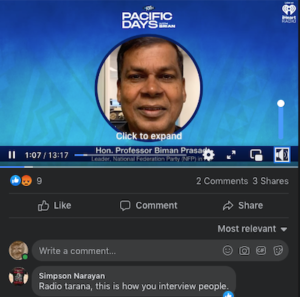
NFP leader Professor Biman Prasad said their partnership was to get rid of the mess the FijiFirst government had created in the country.
Luke Naceiis a Fiji Times reporter. Republished with permission.
The Fiji Revenue and Customs Service has issued two infringement notices to the captain of the seized Russian super yacht Amadea which is berthed in Lautoka port.
These are notices under Section 14 of the Customs Act of 1986 for failure to comply with procedure on arrival and Section 17 which deals with failure to comply with people disembarking.
Section 14 deals with infringements under “procedure on arrival” where the master of every aircraft or ship arriving in the Fiji Islands shall bring the ship or aircraft to an airport or port or mooring without touching at any other place.
A fine not exceeding F$20,000 (NZ$14,000) or imprisonment for four years applies for the infringement.
Section 17 deals with “provisions as to persons disembarking from or going onboard an aircraft, ship” and states a person who contravenes or fails to comply with any direction given by the Customs comptroller under the provisions of this section is guilty of an offence and is liable to a fine not exceeding F$10,000 (NZ$7000).
“These charges are as per the Customs Act 1986,” said Police Commissioner Brigadier-General Sitiveni Qiliho.
“Normally the Act, (FRCS) Fiji Revenue and Customs Service acts on a fine matrix. If he pays the fines, then good otherwise, we will need to go to the court.”
US officials join investigation Repeka Nasiko reports that American government officials are working with the Fiji Police Force in investigations over the Amadea.
Police Commissioner Brigadier-General Sitiveni Qiliho said the US investigators had already boarded the super yacht.
Commissioner Qiliho said investigations were progressing well.
“We are working very closely with the US government in regard to the current seizure of the yacht at the moment while we go through that investigation process,” he said.
He said the next course of action would not take place overnight and “probably take the next couple of days”.
The crew, he said, were on board and the person of interest was the captain of the vessel.
“The crew are of other nationalities.
“Their embassies and high commissions have been in touch with the investigation team and we are working through the US government with those embassies regarding the crew members who continue to be on board the vessel.”
He added that all relevant defence and border agencies were involved in the investigations.
“We have the RFMF through the Fiji Navy, Customs, Fiji Police and our international counterparts that monitor the movement of vessels.”
Amadea is reportedly owned by Russian oligarch Suleiman Kerimov, who is currently sanctioned by foreign governments, including the US, over the Russian invasion of Ukraine.
Anish Chandis the Fiji Times West Bureau chief reporter; Repeka Nasiko is a Fiji Times reporter. Republished with permission.
Fiji’s National Federation Party leader and Member of Parliament Dr Biman Prasad is confident that the incumbent Voreqe Bainimarama government will be defeated in this year’s general election, because — as he says — “People have had enough; they want a change”.
Speaking to the media in Auckland on Wednesday, he said Fiji was suffering from an economic downturn, inept policies and an unfriendly government.
“Bainimarama does not hold any hope for our people. His government has been in power since December 5, 2006, when he ousted a democratically elected coalition government,” he said.
“Since then, Fiji has been sliding on the economic scale. We are in dire straits.”
Describing the Constitution of Fiji, adopted in 2013 as “draconian”, he said that several provisions of the document were detrimental to human rights and freedom of speech.
“There are human rights breaches, media cannot operate freely and even the Opposition is also not allowed to function as per democratic standards,” he said.
Fiji’s electoral system Fiji follows a single, nationwide constituency method of electing members to its Parliament through the open list proportion with an electoral threshold of 5 percent.
The House has 50 seats allocated using the D’Hondt method. Also known as the “Jefferson Method” or the “Greatest Divisors Method”. This allows for the allocation of seats in Parliament among federal states or in the party-list proportional representation system.
It belongs to the class of highest average methods.
The method was first described in 1772 by future US President Thomas Jefferson and was reinvented in 1878 by Belgian mathematician Victor D’Hont — hence the name.
The Election Office in Fiji has not set the date for this year’s election but said in an announcement on March 17, 2022, that it would be held during November this year.
Candidates can begin campaigning on April 26, 2022, but must conclude two days before the polling date.
The first general election was held in September 2014 with the Parliamentary term set at four years. Bainimarama and his close friend, Attoney-General Aiyaz Sayed-Khaiyum, established the FijiFirst Party, which won 32 seats, followed by the Social Democratic Liberal Party (SODELPA) (15 seats) and NFP (3).
However, in the 2018 election, FijiFirst won only 27 seats, with SODELPA gaining 21 seats, while NFP retained its three seats in the 51-Member House.
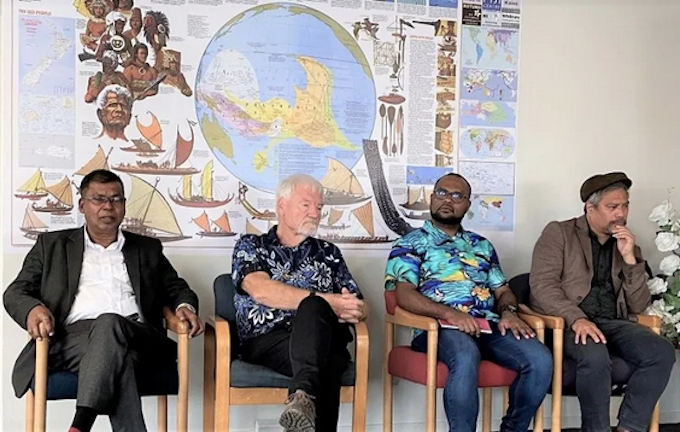
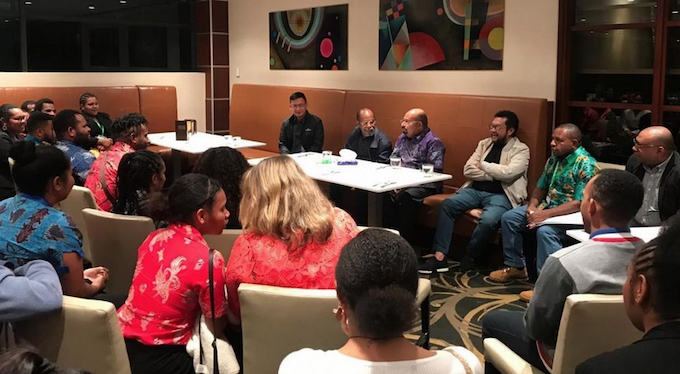
Dr Biman Prasad with (from left) panellists Asia Pacific Report editor professor David Robie, West Papuan student leader Laurens Ikinia and Green MP Teanau Tuiono at a media conference at the Whānau Hub in Auckland on Wednesday. Image: Indian Newslnk
An accomplished academic Dr Prasad, who served the University of South Pacific as a lecturer and professor for 28 years, gave up his academic career to enter politics. He was the associate editor of the Journal of Fijian Studies and editor-in-chief of the Journal of Pacific Studies, the head of the School of Economics and later dean of the Faculty of Business and Economics.
He said that the Fijian economy suffered from mismanagement and wasteful expenditure.
“Poverty, which was placed at 29 percent of the population in 2019, has risen sharply since the covid-19 pandemic hit the country. Today another 20 percent of our people are on the margin of poverty. The government received budget support of F$300 million from Australia and New Zealand,” Dr Prasad said.
“The total amount obtained in the last two years from various sources is F$1.3 billion. Covid has exposed the extent of mismanagement. Our growth has been negative for the past three years.
“The agriculture and sugarcane sectors have been neglected and all the money has been spent on tourism. Our infrastructure is in a pathetic state.”
IMF expects contraction According to the December 2021 report of the International Monetary Fund, Fiji’s real gross domestic product (GDP) contracted by an estimated 15.7 percent in 2021 and is projected to contract by another 4 percent in the fiscal year 20211-2022 in the wake of the delta variant covid outbreak.
“The fiscal deficit reached a record 13.1 percent of GDP in the fiscal year 2020-2021 with an accompanying rise in public debt to 89.8 percent of the GDP by March 2022. Year-on-year consumer price inflation reached -2.8 percent at the end of 2020.
“Increases in international commodity prices and local food prices are expected to drive consumer price inflation to 1.4 percent by end of 2021.
“Both lending and deposit rates have decreased, and private sector credit contracted by 3.1 percent in 2020 and is expected to shrink by a further 3.6 percent by the end of the 2021 financial year. Non-performing loans have risen to record levels,” the IMF report said.
Pact with Rabuka Dr Prasad said that NFP would work with People’s Alliance party leader Sitiveni Rabuka, who is expected to emerge strongly in the 2022 election, saying that he had changed and favoured inclusive politics.
“We will restore the rights of the people, including freedom of speech, and freedom of the media and repeal the draconian laws within the first 100 days in office. We will have a strong focus on social welfare and improve the availability of healthcare and medicines,” Dr Prasad said.
“Fiji wants a free government. As a politician, I was arrested more than once for speaking out against the Constitution.”
He is confident that the people of Fiji will elect the opposition parties to form the government later this year.
“Our people want a good, accountable and transparent government. Our Constitution does not allow a coalition government but we are confident of reaching an agreement with other parties. We have plenty of work to do,” he said.
Dr Prasad ruled out another coup saying, “Fijians will not tolerate any more of them”.
He said that he had written to the Labour government asking for urgent financial support through the Scholarship Fund and including the affected students in the “2021 Pathway to Residency Programme”.
Venkat Ramanis editor and general manager of Indian Newslink. Republished with permission.
Scott Morrison and NSW treasurer and leading moderate Matt Kean are publicly at loggerheads over the future of the prime minister’s controversial captain’s pick for the seat of Warringah.
Kean has declared Katherine Deves, who made offensive comments on social media about transgender people, should be disendorsed – a view shared by a number of other prominent Liberals.
But Morrison said on Saturday he would not join the “pile on”.
“I don’t share Matt’s view. I share Tony Abbott’s view. I’m not joining that pile on,” he told reporters.
Abbott, who lost Warringah to independent Zali Steggall in 2019, condemned the “pile on from people who claim to be supporters of women’s rights”.
Abbott told the Sydney Morning Herald Deves was “a tough, brave person who’s standing up for the rights of women and girls, for fairness in sport”.
The Deves issue exploded after news.com.au revealed her offensive social media posts, which included referring to transgender children being “surgically mutilated and sterilised”. She also said she was “triggered” by the rainbow pride flag.
The posts had been deleted.
After they were reported, she apologised for using language that was “not acceptable”.
Kean said on Twitter:“There is no place in a mainstream political party for bigotry. Coming out as Trans would be hugely challenging, especially for kids, and political leaders should be condemning the persecution of people based on their gender, not participating in it.”
He told the media: “She should be disendorsed”. .
Deves was one of a batch of NSW candidates chosen at the last minute by a committee headed by Morrison. He was particularly anxious to find women candidates.
But now Deves has become not just a drag on the vote in Warringah – which the Liberals were not expected to win from Steggall anyway – but a problem more widely.
Some Liberal sources say that if Deves is not removed, this could harm the Liberal vote in North Sydney and Wentworth, where there are high profile “teal” candidates. The Liberal MPs in these seats, Trent Zimmerman and Dave Sharma respectively, crossed the floor as part of a Liberal backbench revolt to protect gay and trans children.
There are also fears within the party that more damaging material about Deves might emerge.
Deves is a strong campaigner for banning transgender women from women’s sport. Morrison some days ago praised her for her activism on women’s sport but after the social media posts were revealed he said he had not been aware of her other comments.
Morrison on Saturday said Deves had principally been talking about ensuring fairness in sport and standing up for women and girls in sport. “And she has learnt from her experiences about how she’s sought to deal with this issue in the past.
“And I have no doubt that she’ll pursue these issues in a more sensitive way, a more respectful way in the future.”
In an email that’s had wide distribution in the Liberal party, Walter Villatora, a branch president in Warringah, has written: “The view of many experienced members is that we would suffer less of a loss without a candidate than a candidate that has brought the party into disrepute to this extent. Steggall and the media will not let this go”.
Liberal sources said that before Deves was chosen it was known within the party that she was a “single issue” candidate and had made some provocative comments.
Michelle Grattan does not work for, consult, own shares in or receive funding from any company or organisation that would benefit from this article, and has disclosed no relevant affiliations beyond their academic appointment.
“Soft” voters who took part in focus groups in the Sydney seat of Wentworth this week were probably speaking for a vast number of Australians when they vented their disgruntlement with the two leaders who are fighting out this election.
These voters didn’t like Scott Morrison one bit. But they couldn’t think of much positive to say about Anthony Albanese.
They do have another course open to them in this eastern suburbs seat. A high profile independent, Allegra Spender, is the main challenger to Liberal incumbent Dave Sharma, who won the seat in 2019 from another independent, Kerryn Phelps.
But going down the Spender route was also raising questions for the undecideds.
In our second report on The Wentworth Project, sponsored by the University of Canberra’s Centre for Change Governance and The Conversation, we bring the results of the focus group research conducted by Landscape Research, on April 11 and 12, immediately after Morrison called the May 21 election.
Two groups, totalling 15 electors aged 26-68 (including a younger and an older group), were comprised of “soft” voters who hadn’t yet made up their minds who they’d vote for or who were considering switching their vote.
Focus group research is designed to tap into attitudes and is not predictive.
An earlier poll of 1036 Wentworth voters conducted March 19-21 found Morrison unpopular, Albanese as preferred PM and climate change topping the issues people said would influence their vote. The focus groups dug deeper.
Participants excoriated Morrison personally – although notably many credited the government for its management of the economy, national security and the pandemic.
“I don’t believe a word of what he says,” declared a 46-year-old woman from Paddington. Distrust was a common theme. “The biggest thing for me […] is him not fulfilling the election promise on the integrity commission (male, 34). “I don’t feel as if I can trust him when I hear him” (male, 30). “He’s too late to the party on so many things” (male, 64).
Specific criticisms were raised about how Morrison speaks about women, the way the religious discrimination bill was handled, and apparent partisanship in the initial allocation of funding after the northern NSW floods.
Older soft voters were enthusiastic about the suggestion of a leadership change to treasurer and Liberal deputy Josh Frydenberg. Unsurprisingly, Morrison is not campaigning in Wentworth; Frydenberg is.
For his part, Albanese is seen largely as a career politician, who lacks policy. Lingering concerns were expressed about his ties to the left and the unions. His lapse on the campaign’s first day, when he didn’t know the unemployment and cash rates, had been noted.
There was disappointment (not prompted but volunteered) from several women about his response to the allegations the late senator Kimberley Kitching had been bullied by female colleagues. (Albanese refused to call an inquiry.)
“I don’t trust Morrison but I certainly don’t trust Albanese [..] the fact that he won’t even look into [the Kitching matter] worries me. What are you hiding?” said a 48-year-old single mother and part-time receptionist from North Bondi.
Albanese’s small target strategy “inspires fear of what he’s going to be like and if he has some crazy ideas that he’s going to show after he gets elected” (female, 46). “He’s not very clear communicating [his agenda] at the moment, like it seems very opaque. […] That just makes me nervous that either he doesn’t know or it’s not good” (female, 39).
With substantial negativity around both leaders, when pressed for a conclusion, for these soft voters it is a case of deciding who they dislike less. Nine opted for Albanese while six preferred Morrison, as the most trusted to lead the country.
Despite their disillusionment with the country’s leaders, these soft voters from this affluent electorate were more likely to feel Australia was headed in the right direction rather than the wrong one. They pointed to the strong economy, low unemployment, infrastructure development, quality of life, and better performance compared to most countries in handling COVID.
But those who felt the country was going the wrong way highlighted the erosion of the home ownership dream, short-termism and lack of vision in political leadership, lack of transparency and signs of corruption in public office, a decline in educational standards and aged care failures.
Climate change topped the list when Wentworth voters were asked in the March poll which of several issues would have most influence on their vote. The focus group participants pointed to increasing natural disasters, not enough effort to persuade international big emitters to curb their ways and the need for more support for renewable energy and other carbon reduction technologies such as electric cars.
“We’ve had so many natural disasters in a very short time. It’s very scary,” said a 61-year-old retired female health practitioner from North Bondi.
“I’d really like to see a significant boost in infrastructure to support electric vehicles. I just don’t understand why Australia is dragging on that so badly” (male, 57). “We don’t seem to be pulling our weight in terms of changing the world perspective on climate change,” (male, 64).
But a 46-year-old mother of three felt too much emphasis was being placed on climate change and that it was harmful to the mental health of young people who were worried about the future. “In Australia, we have such a minuscule contribution to worldwide greenhouse gas emissions.[…] I wonder why we’re not talking about climate change resilience rather than net zero,” she said.
A broad range of issues was brought out as requiring addressing: energy security and alternatives to fossil fuels (including nuclear energy), national debt, defence and national security, corruption, unemployment, housing affordability, the cost of living, inflation, child care, health, aged care, education, the COVID response, and immigration.
But participants struggled to think of federally-related issues that needed to be addressed in Wentworth. When pressed, they pointed to housing affordability, job security, local employment, and aged care.
At the grass roots level, views about Sharma range from “bland” to being seen as a good local member. There’s a sense he’s been able to be all things to all people. But among these soft voters there’s a feeling of uncertainty about what he stands for, especially given that as a moderate he’s sought to distance himself from the right on issues such as climate change and the rights of transgender people (he was one of the Liberals who crossed the floor over trans rights on the religious discrimination legislation).
“He is strikingly unknown to me,” said a young fraud analyst from Rose Bay.
“He says what he thinks his constituents want to hear. I don’t know that you really can figure out who Dave Sharma really is (female, 48). “He takes feedback and seems to act on it. But I don’t think he’s been very effective when it comes to the crunch at the top level. So, even though he may disagree with things that the Liberal Party stands for, he doesn’t really enable any change” (female, 51). “Good local member […] somebody who will stand up and have a different opinion” (male, 62).
A 61-year-old woman who identifies herself as Jewish got to the crux of the problem faced by some voters. “I like Dave Sharma. I like the fact that he’s experienced in a lot of areas. [ …] And he is pro-Israel. If it was just a matter of voting for him, I would, but unfortunately he comes attached to Scott Morrison”.
Spender, despite her eastern suburbs credentials and her Liberal family background (both her father and her grandfather were in the federal parliament), is still not well known. Her appeal is mainly that she is seen at her core as a “Liberal” who is running on more moderate policies. But her non-committal position on preferences and who she’d support in parliament raises questions.
“I think she sounds to me like she’s a one-issue politician […] I also am very suspicious of her actual leanings, because I don’t like that all these independents are actually funded by one organisation. I just think that’s a bit dodgy,” said a university worker from Queen’s Park. “The fact that she hasn’t been upfront straightaway saying who her preferences are going to – that to me is the major concern” (female, 61.)
“I just think of her being more like a moderate Liberal but outside the party. She seems to have the same beliefs,” (male, 52). “She definitely seems very passionate about climate and improving integrity” (female, 51).
While not at all predictive, on a two-candidate Sharma versus Spender basis, in the younger group three were leaning towards Sharma and four towards Spender. The older group was equally divided, four for each.
Sharma’s support is taking a knock from Morrison’s unpopularity and the grievances against the government. “At this stage [I’m] leaning towards Dave Sharma, although I have to say I’m struggling with the leadership and Morrison,” said a retired corporate property manager from Clovelly. Sharma is being helped by the Liberals’ traditional reputation on the economy and the current good numbers backing that up.
Spender is seen as a viable alternative for disenchanted Liberal voters as well as appealing to swing voters. Liberal Democrat candidate Daniel Lewkovitz, CEO of Australian security and life safety firm Calamity, is also viewed as an alternative by some disaffected Liberals.
We will check in on how our soft voters are seeing things later in the campaign.
CAMPAIGN UPDATE
The opposition has announced a Labor government would legislate for an anti-corruption commission by the end of this year.
After Scott Morrison made it clear this week he will not alter his model for an integrity body and would only introduce legislation if Labor supported it, Anthony Albanese has accelerated Labor’s plans.
Previously Labor was committed to bringing in the commission in its first term.
The government’s model has been widely criticised for a lack of teeth and other flaws.
Albanese said: “A National Anti-Corruption Commission would be one of the first priorities of a government I lead.
“Mr Morrison has delayed and obfuscated for over three years – and then this week it became clear he has absolutely no intention of honouring his promise to deliver a National Anti-Corruption Commission at all. So the question for Mr Morrison is – why do you fear an anti-corruption commission? What is it you’re afraid they will find?”
Meanwhile Western Australian Liberal senator Ben Small has resigned from the Senate after finding he had New Zealand citizenship. At the time of Small’s birth his mother was an Australian citizen and his father, who was born in New Zealand, was a permanent resident.
He said on Friday that he had now renounced “any New Zealand citizenship rights” and he would contest the election.
Michelle Grattan does not work for, consult, own shares in or receive funding from any company or organisation that would benefit from this article, and has disclosed no relevant affiliations beyond their academic appointment.
Opposition National Federation Party leader Professor Biman Prasad is confident there will be a change of government in Fiji this year and his party will be part of the new line-up giving the people a genuine choice for an optimistic future.
“The people of Fiji are fed up with the lies and propaganda that they have seen with this government,” he told listeners today on Pacific Media Network’s Radio 531pi.
“Why we are very optimistic is that we feel that the people are going to make a definite choice [in the general election] to reject this government that has been in power for the past 15 years.”
The current FijiFirst government has been in power since then military commander Voreqe Bainimarama seized power in a coup in 2006 and was then elected to office in a return to democracy in 2014.
Economist Professor Prasad said that his NFP partnership with the People’s Alliance Party (PAP), formed last year and led by former 1987 coup leader Sitiveni Rabuka, was committed to bringing back a “sense of good governance” to Fiji with transparency and accountability.
Responding to public discussions about democracy, he told Pacific Days host Ma’a Brian Sagala that Fiji was “far, far away from a genuine democracy”.
“We have articulated this very well over the last three or four years,” he said.
‘Ambush’ discussion His interview with PMN today had a very different and more informative tone compared to a hostile “ambush” discussion yesterday with Radio Tarana’s host Pawan Rekha Prasad, who kept insisting on an NFP party manifesto when the election writs have not yet been issued and campaigning has yet to start.
Professor Prasad eventually walked out of that interview, complaining that he was not being “listened to”.
He later told Fijivillage that it was a set-up and a plan to try to “discredit him”.
Radio Tarana walkout reports … all virtually the same story. Image: APR screenshot
Professor Prasad also spoke to a media briefing yesterday that included Indian Newslink editor Venkat Rahman and Māori and Pacific journalists at the Whānau Community Hub when he commented about plans for the “first 100 days” if elected.
Asked by Sagala what the major election issues would be, Professor Prasad said: “The situation in Fiji with respect to the economy, with respect to poverty levels, with respect to health issues, education, infrastructure, and the contraction of the economy — that we even had before the covid pandemic — has been of serious concern to the people.”
He said Fijians “want a choice in the next election”.
“They want to see the last of the current government in Fiji and we in the NFP and the People’s Alliance, and the partnership agreement that we have signed, provide a definite distinction and choice for the people.”
Issues for the election These issues would be the ones that NFP would be taking into the election. A date has yet to be set, but the election writs are due on April 26 with the ballot to be set between July 9 and January 2023.
The PMN Pacific Days interview with Professor Biman Prasad today … a poster comments “Radio Tarana, this is how you interview people.” Image: APR screenshot
Professor Prasad said the mood at the recent NFP convention when people gathered again after two years of the pandemic was confident.
“We had a sense of exuberance, and a sense of optimism. Everyone is looking ahead to the election and a change of government,” he said.
Asked by Sagala what would the partnership do if successful in the election, Professor Prasad said a coalition was only possible after the election. But the partnership agreement between the NFP and PAP would be a good basis for forming a coalition.
However, Professor Prasad also pointed to the 2018 NFP manifesto as a good indicator.
Asked about a recent “heated exchange” in a parliamentary debate about the Fiji Investment Bill and a claim by Attorney-General Aiyaz Sayed-Khaiyum that the partnership was a “naked grab for power at any cost”, Professor Prasad said:
‘Ironical and hypocritical’ “This is ironical and the height of hypocrisy when coming from a man who himself with Frank Bainimarama nakedly grabbed power together in 2006 through the barrel of a gun.
“And they stayed in power with the support of the military from 2006 to 2014 when we had an election under an imposed constitution by them.
“So it is quite ironical and hypocritical of the de facto prime minister or leader of the FijiFirst party to say that this partnership is about a naked grab for power.
“Far from it, this partnership gives a clear choice, an alternative for the people of Fiji, and they have been looking for one.
“This partnership is the alternative.”
The Professor Biman Prasad interview on Radio 531pi’s Pacific Days.
The long-serving New Zealand MP Louisa Wall has fired a broadside at her own Labour Party as she leaves Parliament to take up a Pacific diplomacy role — using her valedictory speech to accuse the party president of leading a corrupt process.
Wall is leaving politics after 14 years — citing a legal battle in the lead-up to the 2020 election over the Manurewa seat as one of the reasons for leaving.
In the days leading up to her final speech at Parliament, she spoke out about a rift with the party’s leadership, claiming the Prime Minister told her directly she would never be a minister.
She accused the Labour Party president, Claire Szabó, of leading a “corrupt process”.
“When I was forced out of my electorate in 2020, by the unconstitutional actions of the party president Claire Szabó and some members of council, I was devastated.
“The president accepted a late nomination, did not share the fact of the late receipt with the council until questions were asked and then retrospectively tried to justify and legitimise her actions.”
Agreed to leave Wall told the House at the conclusion of the spat, she agreed with the Labour Party to leave politics during this Parliamentary term.
“In 2020, I agreed to leave. Because irrespective of the merits of challenging actions, being in a team where there is no appetite for your contribution is not healthy.
“I took the opportunity to complete some of my ongoing work, including in the international advocacy space. I was placed on the list just below where I had been in 2017 and accepted that I was to resign as an MP during this term.”
Wall thanked MPs Michael Wood, Nanaia Mahuta and Tim Barnett for helping her reach this agreement but told the House she was not going of her own volition.
“I stand here today fulfilling my part of the agreement but I want to be very clear that this was not entirely my choice.”
As is custom on Thursday, Prime Minister Jacinda Ardern was not in the debating chamber but deputy Prime Minister Grant Robertson watched on.
Despite never holding a ministerial position, Wall has a long list of legislative achievements, including her successful campaign to legalise same-sex marriage.
‘Rapid-fire course’ She told MPs the journey to marriage equality was “a rapid-fire course in process and procedures” not universally supported within the Labour caucus.
“While the deputy leader of the caucus at the time wanted more recognition of civil unions I believed that advocacy for marriage equality was based on fundamental human rights and that civil unions became a stop gap measure because it was not clear that marriage would get over the line,” she said.
“When I expressed this view I was told that this would be the end of my career and I would be on my own.”
Wall said throughout her time in politics she had been able to advocate on housing, period poverty, surrogacy, alcohol policies, revenge porn and abortion safe zones.
With her family watching from the packed public gallery, she finished her speech on a positive note that paid tribute to her previous sporting career.
“So while there have been obstacles to face and overcome I leave knowing I did what I could within those constraints. To use a sporting analogy, I left it all on the field.”
West Papuan students stranded in Aotearoa New Zealand by an abrupt cancellation of their Indonesian government scholarships earlier this year while trying to complete their degrees and diplomas can breathe more easily with the latest news.
It is understood they have been told by Immigration New Zealand that they will not be deported while New Zealand is considering their plight.
After weeks of advocacy by Green MPs, an immigration team will now be formed to assess the future needs of the students.
“The Green Party has been calling on the government to do its part to support the indigenous communities of West Papua and we’re pleased that action is being taken,” said Teanau Tuiono, Green Party spokesperson for Pacific Peoples.
Tuiono — along with Papuan student spokesperson Laurens Ikinia, Professor David Robie, editor of Asia Pacific Report, and opposition National Federation Party leader Professor Biman Prasad, a former academic at the University of the South Pacific — addressed a seminar about the issue at the Whānau Community Hub in Auckland yesterday.
Ikinia welcomed the news that none of the Papuan students would be deported and praised the community support that they were receiving in New Zealand.
“Dozens of West Papuan students are facing hardship and the prospect of not being able to finish their studies due to the cancellation of their scholarship by the Indonesian government,’ Tuiono said in a statement.
Requested urgent action “We wrote to [Immigration Minister Kris] Faafoi asking him to act urgently to issue new visas for the students of West Papua.
Green Party posting about the Papuan students on Te Mātāwaka today. Image: APR screenshot
“We are pleased that government agencies are taking action to assess the needs of the West Papuan students and ideally grant them renewed visas for them to remain in Aotearoa.
“West Papuans are indigenous peoples who have been occupied by Indonesia. As a Pacific nation and signatory of the United Nations Declaration on the Rights of Indigenous Peoples we have a responsibility to support West Papuans and their struggle for self-determination.
“Supporting students to come to Aotearoa to study and to stay is a tangible way we can do our part to support the people of West Papua,” Tuiono said.
Dr Robie published an open letter in Asia Pacific Report yesterday appealing for help from the minister for the 34 students in New Zealand, ranging from masters degree and diploma students to one high school student.
“They must finish their studies here in New Zealand because returning home to a low wage economy, high unemployment, the ravages of the covid-19 pandemic, and an insurgency war for independence will ruin their education prospects,” he said.
“Papuan students studying in Australia and New Zealand face tough and stressful challenges apart from the language barrier.”
The open letter added:
“Minister Faafoi, surely New Zealand can open its arms and embrace the Papuan students, offering them humanitarian assistance, first through extended visas, and second helping out with their financial plight.”
Alarming human rights abuses Ricardo Menéndez March, Green Party spokesperson for immigration said:
“The ongoing alarming reports of human rights abuses in West Papua, mean the students could have been forced to return to their homelands without the security and tools they need to support their communities”
“The government has shown us that where there is political will we can guarantee certainty and security for temporary visa holders.
“The prompt issuing of the Ukraine Special Visa and the renewal of up to 19,500 working holiday visas demonstrate there are levers the Minister of Immigration can pull to guarantee a safe pathway to remain in Aotearoa for students from West Papua.
“We are calling on the government to guarantee replacement visas for the West Papuan students and to explore setting up a scholarship fund to do our part supporting indigenous peoples in the Pacific,” said Menéndez March.
Papuan students in Auckland sort donated food for their colleagues stranded in New Zealand while completing their studies. Image: IAPSAO
“We don’t do Russians.” This was the response from Fiji’s Health Minister Dr Ifereimi Waqainabete when asked about the arrival on Tuesday of Russian super yacht Amadea.
“We’ll need clarification on that then we can comment on that,” he said. “We don’t do Russians.”
While the Prime Minister’s office did not respond to queries on the subject, the United States Embassy in Suva and the Delegation of the European Union in the Pacific said they had been in contact with the Fiji government over the presence in Fiji of the super yacht.
The Amadea, which arrived on Tuesday and was still in port yesterday, is owned by Russian billionaire Suleiman Kerimov.
Kerimov is on the United States, British and European Union sanctions list that came out after Russia’s invasion on Ukraine. Yachts owned by other sanctioned individuals have been seized all over the world.
“Seizing assets of Russian oligarchs supporting the invasion of Ukraine is a part of the sanction regime applied by the European Union,” said Sujiro Seam, Ambassador of the Delegation of the European Union.
“Several Russian oligarchs’ yachts have already been impounded in the European Union. The European Union is cooperating with partners around the world on the matter, including in the Pacific.
Consulting with Fiji “The European Union is aware of reports of the presence of Amadea in Lautoka and, together with like-minded partners, is consulting with the government of Fiji.”
The US Embassy in Fiji also issued a similar statement, saying they are “cooperating with Fijian authorities on the matter”.
“The United States is committed to finding and seizing the assets of the oligarchs who have supported the Russian Federation’s brutal, unprovoked war of choice against Ukraine,” Stephanie Fitzmaurice, the regional public affairs officer said.
We are working closely with governments and private sector partners in Europe, and the entire world, including Fiji, on this issue.”
According to Fijian entry requirements, yachts must seek approval from the Ministry of Health, Ministry of Trade and Tourism and the Immigration Department before departing their last port.
Anish Chandis the Fiji Times West Bureau chief reporter. Republished with permission.
He said the change in alert levels was justified for several reasons, including an ongoing decline in cases.
He said case numbers now sit below 10,000 new cases per day for the first time since February 24, and that hospitalisations in Auckland were lower, with all three DHBs each reporting fewer than 100 patients for the first time since late February.
Epidemiologist Professor Michael Baker told RNZ Afternoons with Jesse Mulligan the move was reasonable for Auckland, which peaked almost six weeks ago.
“But that’s not the situation in the rest of New Zealand and particularly the South Island, even some DHBs in the North Island, like Northland and some of the others in the central North Island, are still seeing case numbers reported yesterday that were about 50 percent of their peak.
“So we are quite divided in terms of risk.”
Face masks out in schools Under the orange setting, face masks are still required in some environments but not in schools.
Professor Baker said that with only 20 percent of younger students fully vaccinated, without masks there are not many barriers that stopped the virus circulating.
“And we do know anecdotally a lot of the way this virus is getting from one family to another is through transmission at school so this seems like a gap at the orange level.”
Hipkins said schools have been provided with guidance, and they have access to public health guidance so they can consider the advice for themselves.
“Ultimately looking at a school by school basis, in some schools there is still a very strong justification for masks — but not all.
“It is very challenging for schools, it has proven to be one of the most challenging covid-19 requirements.”
People who are young, healthy, fully vaccinated and boosted should be getting out much more because the risk from the infection is much less, Professor Baker said.
High vaccine coverage “We know now of high vaccine coverage, we’ve actually pushed the fatality rate from this infection now to down to less than, it’s about 0.05 percent which is in a similar range now to seasonal flu — but it’s only because we’re highly vaccinated.”
Prior to vaccination there was a fatality risk of 0.5 percent, he said.
Te Pūnaha Matatini modeller Professor Michael Plank said: “It’s a good time to be relaxing the traffic light settings when cases and hospitalisations are declining in almost all parts of the country.”
Professor Plank is partly funded by the Department of Prime Minister and cabinet for research on mathematical modelling of covid-19.
“We have successfully flattened the curve of this Omicron wave — although hospitalisations and staff absences have put intense strain on our healthcare system, things would have been even worse without our efforts to slow the spread.”
While New Zealand is marking the end of its omicron sprint, it is at the beginning of its marathon, Professor Baker said.
“Covid-19 isn’t going to go away and we are very likely to have further waves of infection as immunity wanes, people’s behaviour gets back to normal, and new variants arrive,” he said.
“As we move away from restrictions and mandates, we need to work on a long-term, sustainable set of mitigations. This should include vaccines, high-quality surveillance systems, a focus on clean air indoors, and financial support for people to isolate when sick.”
Hybrid office/home set-up With a change in restrictions, Victoria University of Wellington and Umbrella Wellbeing clinical psychologist Dr Dougal Sutherland says the government will no longer encourage working from home.
But Dr Sutherland warned there may be psychological consequences for workplaces encouraging their people to return in person.
Flexibility and agility will be key for adjusting to this new normal, he said.
“It seems likely many people will continue working from home, at least some of the time.
“This presents a challenge to organisations about how they create psychologically safe teams in a dispersed environment. There is also the challenge of how to support people with different levels of anxiety associated with increased human contact.
“Research shows that allowing people to work from home a few days a week is associated with better wellbeing and productivity, so allowing workers to continue a hybrid office/home set-up should be encouraged.”
This article is republished under a community partnership agreement with RNZ.
Māori and Pasifika female rugby players and advocates are asking to not be an afterthought.
Māori/Pasifika community rugby representative Chantal Bakersmith said the latest New Zealand Rugby (NZR) report highlighting issues surrounding the treatment of Black Ferns players was not surprising.
A scathing review released this week by NZR raised concerns within Black Ferns’ culture and environment and said Māori and Pacific players had been badly served by both team management and the governing body.
Bakersmith, who has developed pilot programmes for women’s rugby within NZR, said the issues were not new.
“Planning for women’s rugby, it was always an afterthought, and you really had to push your case for it to be thought about,” she said.
“And then there was always this feeling that because I’m questioning things I’m an agitator or being a pain — but there’s a population that hasn’t been served or thought about.”
The review was a result of Black Ferns hooker Te Kura Ngata-Aerengamate, who shared a social media post saying the Black Ferns head coach Glenn Moore told her she did not deserve to be on the team, and was “picked only to play the guitar”.
Cultural competency needed Rugby advocate Alice Soper said Pākehā coaches needed to understand cultural competency and be able to relate to their players.
“Any excuse around ignorance is just arrogance,” she said.
“We live in a time where there is multiple things that you can access to upskill yourself and if you are a Pākehā coach and you are going into a team that is predominantly Māori or Pasifika then you need to be upskilling yourself — that is a basic part of your role.”
Soper said changed behaviour and the removal of the current coach was a must. It was understood that Moore would remain as the head coach until at least the Women’s World Cup in October.
However, female rugby players also need to take accountability of their own performance, said former Black Ferns representative Regina Sheck.
Sheck, who played prop for the Black Ferns from 1994 to 2004, said the NZR review seems to be about a communication issue rather than a management issue.
She said a lot of the ownership of not being selected comes down to the players themselves.
“If you haven’t put in the effort then don’t be surprised if you don’t get the call-out,” she said.
‘Take a look at themselves’ “Players need to take a look at themselves — well that’s just life in general. Don’t throw stones if you live in a glasshouse.
“What’s happened since the Black Ferns started to get paid, and this is how I look at it, this could also go back through to NZR as well — is that there hasn’t been any development.”
Despite the report, Bakersmith said that there were some initiatives that NZR had created to ensure rugby culture was more inclusive for women.
“There’s a programme called Ako Wāhine, and it’s fully focused on upskilling or recruiting women from all different parts of rugby experience — whether as a manager or as a player or as a coach, anybody.”
“They had the first cohort rollout last year and you’ll see these cohorts throughout the community and across the country, so that’s positive.”
This article is republished under a community partnership agreement with RNZ.
Allegations of young women being traded for votes in several parts of the Highlands region during Papua New Guinea’s national general elections were raised yesterday in Port Moresby.
A high level conference held by the Governance and Service Delivery Sectoral Committee raised the concern of past experiences in parts of Highlands where young women and girls were taken away because community leaders wanted votes.
Government authorities have yet to act over this inhumane treatment of women and girls.
Independent Commission Against Corruption (ICAC) interim chairman Thomas Eluh said there was no freedom in the voting system in PNG.
He said 2012 was the worst election experience he had had in his career.
He was in charge of the security operations in Hela Province, while also being the chief of Bougainville Police Service.
“From past experiences of those involved during that time, there were speculations or some had seen young women being traded for securing votes and a large amount of money was used,” he said.
‘Threats were issued’ “Threats were issued. There are many ways to get leaders into Parliament.”
Eluh said PNG was at the top of the list of most corrupt countries in the world, and it started from “households to the top bureaucratic levels”.
He said the consultative meeting aimed to bring stakeholders together to generate discussions on safety, transparency, fairness and accountability in the upcoming elections.
He said even trying to minimise such practices is not easy with all the challenges the country is facing.
“We all can sit here and talk about various steps of the ongoing issues affecting people, it is the voters out there who will play their part, they will be ones who will be targeted through corrupt means, so we appeal to our voters top stand firm and to follow the right processes and system — say no to corruption,” he said.
Eluh said everybody needed to work together and understand the importance of delivering a safe, secure and fair election.
The writs will be issued on April 28, and voting is due June 11-24.
Marjorie Finkeo is a PNG Post-Courier reporter. Republished with permission.
It is unconscionable. A bewildering and grossly unfair crisis for 34 young Papuan students – 25 male and 9 female – the hope for the future of the West Papua region, the Melanesian half of Papua New Guinea island ruled by Indonesia.
They were part of a cohort of 93 Papuan students studying in Aotearoa New Zealand on local provincial autonomy government scholarships, preparing for their careers, and learning or improving their English along the way. They were also making Pacific friendships and contacts.
They were fast becoming a “bridge” to New Zealand. Ambassadors for their people.
And then it all changed. Suddenly through no fault of their own, 41 of them were told out of the blue their scholarships were being cancelled and they had to return home.
Their funds were cut with no warning. Many of them had accommodation bills to pay, university fees to cover and other student survival debts.
They were abandoned by their own government, some of them being close to completing their degrees of diplomas. Appeals to both the provincial governments in Papua and the central government in Jakarta – even to President Joko Widodo — were ignored.
Yes, it is unconscionable.
New Zealand help? Surely New Zealand can respond to this Pacific plea for help?
An interview by Laurens Ikinia with Tagata Pasifika last month. Video: Sunpix
They must finish their studies here in New Zealand because returning home to a low wage economy, high unemployment, the ravages of the covid-19 pandemic, and an insurgency war for independence will ruin their education prospects.
Papuan students studying in Australia and New Zealand face tough and stressful challenges apart from the language barrier. As Yamin Kogoya, a Brisbane-based West Papuan commentator, says from first-hand experience:
“Papuan students abroad face many difficulties, including culture shock and adjustments, along with anxiety due to the deaths of their family members back in West Papua, which take a toll on their study.
“As well as inconsistencies and delays in Jakarta’s handling of funds, corruption, harassment, and intimidation also contribute to this crisis.”
At present, out of 17 students currently studying at the Universal College of Learning (UCOL) in Palmerston North, only 10 are able to attend classes. Seven students cannot attend because of their visa status and tuition fees which have not been paid.
Yesterday Teanau Tuiono was interviewed on @TeAo_Official to speak on the scholarship funding cut impacting Western Papuan students in Aotearoa. @teanau_tuiono provides great context for all those wanting to learn about this issue and how to help!https://t.co/P92j1ORrwQ
Five students at AUT At Auckland University of Technology, out of five students studying there, one is doing a masters degree, four are studying for diplomas and one is not enrolled because the government has not paid tuition fees.
Out of the 41 recalled students, the visas for some of them have already expired while others are expiring this month.
Of the 34 students still in New Zealand and determined to complete their studies, the breakdown is understood to be as follows:
UCOL Palmerston North – 15 Institute of the Pacific United (IPU) New Zealand – 6 AUT University – 4 Ardmore Flying School – 2 Waikato University – 2 Canterbury University – 1 Massey University – 1 Unitec – 1 Victoria University – 1 Awatapu College – 1
Papuan students Stevi Yikwa (left) and Laurens Ikinia with Lole Turner of the All Saints Anglican Church Foodbank in Auckland sort donated food for their colleagues stranded in New Zealand while completing their studies after their scholarships ended abruptly. Image: IAPSAO
The students have rallied and are working hard to try to rescue their situation as they are optimistic about completing their studies. The Green Party has taken up advocacy on their behalf.
The Papuans are communicating with the NZ International Students Association, NZ Students Union and NZ Pasifika Students.
Community groups such as the Whānau Hub in Mt Roskill, Auckland, have assisted with food and living funds. A givealittle page has been set up for relief and has raised more than $6500 so far.
But far more is needed, and an urgent extension of their student visas is a must.
Papuan Governor Lukas Enembe (centre in purple shirt) talks with students in Jayapura. Image: Jubi
‘Grateful for support’ “We’re so grateful to all Kiwis across the country for their generous support for us at our time of desperate need,” says communication coordinator Laurens Ikinia of the International Alliance of Papuan Students Associations Overseas (IAPSAO) and who is a postgraduate student at AUT.
“We’re also grateful to all the tertiary institutions and universities for understanding the plight of the West Papuan students.”
Papuan students are speaking today on the issue at a Pacific “media lunch” in a double billing along with Fiji’s opposition National Federation Party leader Professor Biman Prasad at the Whānau Community Centre in Auckland’s Mt Roskill.
Today’s “media lunch” featuring the forthcoming Fiji general election and the West Papuan students. Image: Whānau Community Hub
Just last Monday, many worried parents and families of students affected by this sudden change of scholarship policy gathered to meet Papua Governor Lukas Enembe in Jayapura to plead their case.
Hopefully, Indonesian Ambassador Fientje Maritje Suebu, ironically also a Papuan, will read this appeal too. The situation is an embarrassment for Indonesia at a time when the republic is trying to foster a better image with our Pacific neighbours.
Minister Faafoi, surely New Zealand can open its arms and embrace the Papuan students, offering them humanitarian assistance, first through extended visas, and second helping out with their financial plight.
Some Fiji government ministers are “held on a tight leash” and afraid to make open ended statements in public, claims former health minister Dr Neil Sharma.
A week ago, Anthony Albanese appeared well placed as the election was about to be called. Now he has comprehensively blown the first campaign week.
This isn’t to say he can’t recover. But it does raise big questions about his ability to perform under intense pressure, which has always been a concern for Labor, and about the competency of his campaign team.
We heard a lot in recent weeks about the slimmer, fitter, better- dressed opposition leader. He was “match fit”, they said. All okay, but there’s a lot more to being “match fit”.
What Labor needed this week was a sharper, edgier, supremely-prepared leader.
Now critics will say, “the media are being too hard – so what if he can’t recall a couple of numbers (even if they are the unemployment rate and the cash rate)?”
But details matter in the jungle of a campaign, where your opponent can inflict a nasty blow if you slip. And the media help in the process. With the 24 hour news cycle, it is nearly impossible to put a gaffe behind you. It is endlessly replayed.
Most importantly, when Albanese is trying to convince people he can match his opponent on economic competence, mistakes on basic numbers are doubly bad.
Focus groups are conducted all the time in campaigns by the political parties and media, and Albanese’s mistake has registered with participants. Although, it should be added, so did his apology.
In research for the University of Canberra and The Conversation this week in the seat of Wentworth, a male insurance worker said: “He’s a good guy but I’m not sure he’s up for it. It really wasn’t a good look yesterday that he couldn’t bring all those numbers up.”
A man working in IT said, “I’m a little concerned that he didn’t know just basic economic figures […] He owned up to it pretty quickly which made me like him a little bit more but at first I was alarmed”.
Wentworth is a contest between a Liberal MP and a high profile independent, but those involved in other focus group research have a similar story.
Albanese’s bad head for numbers was not his only problem in these first campaign days.
He foolishly exaggerated his economic credentials – which speaks to his desperation to establish them in the public mind.
He described himself on Tuesday as having been “an economic policy adviser to the Hawke government”, when he actually was a research officer to Tom Uren, at that stage a junior minister.
Karen Middleton in her biography, Albanese: Telling it Straight, says he wrote “reports and policy proposals”, including notes on the economy for Uren’s electors, and a position paper for the Left faction on dividend imputation before the 1985 tax summit.
On Thursday came a third own goal – this time leaving open a gate for the government to charge through.
Asked about border policy, Albanese reaffirmed Labor would turn back boats if they appeared. He also said offshore processing wouldn’t be needed if boats were turned back.
Taken literally, this was a statement of the obvious. But it invited an interpretation that Labor had scrapped its commitment to offshore processing. It hasn’t, but the slightest imprecision is dangerous because Labor has always been vulnerable on the issue.
Albanese clarified, but it had been another example of failing to take enough care.
Through the week, Albanese did try to smarten up his presentation, and make his news conferences tighter. However his preparation remains underdone, and within Labor there’s criticism of the narrowness of the group running things and the high degree of centralisation of the campaign.
A ragged week hits both a leader’s confidence and that of his team. How it shakes out will depend in part on whether the next round of polls show any shine has been taken off Labor’s vote.
Albanese’s problems have made Scott Morrison’s first week rather easier than he might have anticipated.
But by Thursday the prime minister was starting to feel the heat, with the travelling media peppering him over his stubborn resistance to setting up a robust integrity commission (rather than the pallid model he proposed).
It’s clear Morrison, who demands Labor agrees to his model before introducing legislation, has little intention of trying to forge a deal if re-elected. This will play poorly for him in the “teal” seats where high profile independents are challenging Liberal incumbents.
Morrison was appearing with the member for the Tasmanian seat of Bass, Bridget Archer, who crossed the floor in a bid for a debate on a crossbench bill for an integrity commission.
At Thursday’s news conference Archer acquitted herself as well as she could in the circumstances. But another Liberal candidate, Morrison’s “captain’s pick” for the Sydney seat of Warringah, held by independent Zali Steggall, was in a heap of trouble this week and the PM found himself in the middle of it.
Katherine Deves had social media posts last year (now deleted) that talked about transgender children being “surgically mutilated and sterilised” and criticised police for participating in “Wear it Purple” day, celebrating diversity.
Katherine Deves, Liberal candidate for Warringah. NSW Liberals
Morrison on Monday praised Deves for “standing up for something really important” – that was, ensuring girls and women playing sport were “playing against people of the same sex”. Deves, he said, was “standing up for things that she believes in, and I share her views on those topics”.
By Wednesday, when more had come out about Daves, and she apologised for her inflammatory posts, Morrison said lamely “they’re not views that I was aware of”.
To which the obvious question was: why not?
Morrison and his factional ally, minister Alex Hawke, had delayed a batch of preselections until the last moment. Morrison had led the three-person selection committee for a suite of candidates, including the candidate for Warringah.
Why hadn’t the Liberal party vetted Deves properly? If it had, and was aware of the social media posts, did it think no one would notice?
It will be another mark against Morrison and Hawke when the election postmortem in NSW examines the preselection fiasco. That postmortem will be excoriating if Morrison loses, more benign is he wins.
Over Easter, the pace of campaigning slackens; the parties don’t stop but they try to match the rhythm of the holiday. Somewhat spooked by the early glitches and knowing Albanese needs a run of good weeks ahead, Labor is looking to Easter as a chance to regroup.
Many voters, meanwhile, will probably take the opportunity for a brief respite from all this politicking.
Michelle Grattan does not work for, consult, own shares in or receive funding from any company or organisation that would benefit from this article, and has disclosed no relevant affiliations beyond their academic appointment.
The official employment figures say the unemployment rate for March was 4.0%, exactly the same as a month earlier.
But if you’re prepared to download the spreadsheet and work it out, you’ll find that expressed to two decimal places the rate actually fell, from 4.04% to 3.95%.
The Bureau of Statistics confirms this by saying on its website that the unemployment rate fell by 0.1 percentage points between February and March while also (apparently inconsistentlly) saying it was 4.0% in both months.
This result, clearly below 4%, is the lowest rate of unemployment Australia has seen since the monthly series of labour force statistics began in February 1978, and the lowest since the November quarter of 1974, almost 50 years ago, when the figures were quarterly.
After the decade up to March 2020 in which the rate hardly moved above 6% or below 5%, the new rate of 3.95% is an enormous step in the right direction.
But we need to worry about more than unemployment. Workers can be underemployed (getting less hours than they would like) and people who would like to work but think they won’t get work, may stop searching and not get recorded as unemployed.
There’s good news on both counts.
Less underemployment, fewer hidden unemployed
The proportion of workers underemployed has fallen from 9.3% prior to COVID in March 2020 to 6.6%. And rather than people withdrawing from the labour force and not looking for work, the rate at which people are either working or looking is up half a percentage point on before COVID.
As well, in an instance of the adage that a rising tide lifts all boats, young Australians who in the 2010s lost out as the economy slowed, now seem to be benefiting most from the pick-up.
The proportion of young Australians who are employed is an extraordinary 4.6 percentage points higher than in March 2020.
This compares with an improvement of 1.9 percentage points for Australians aged 25 to 64 years, and 0.4 percentage point for Australians aged 65 years and over.
A rate of unemployment below 4% is certainly a positive. It means more of the nation’s productive resources are being used. It has improved the living standards of the 170,000 people employed today who would have not been, had unemployment remained where it was before COVID.
But those benefits will only stay in place as long as unemployment remains low. Our objective ought to be to keep it as low as possible for as long as possible.
How can we keep unemployment below 4%?
Unemployment fell below 4% because more of the population found work.
The economic stimulus the government provided to respond to COVID was built for a worst case that didn’t materialise – people generally kept their jobs. As a result it added to employment growth, and established that it was easier to get unemployment down than had been generally realised.
This suggests that keeping unemployment below 4% will depend on being committed to that goal.
Much of the COVID stimulus has been saved and has yet to make its way into spending. This, and the new spending measures in the 2022 budget, are likely to maintain the impetus needed to keep unemployment low for the months ahead.
Beyond that, what happens to unemployment will depend on the next government’s decisions.
That 1.3 million extra jobs pledge
All this must mean the Coalition’s pledge to create 1.3 million extra jobs in the next five years is what’s needed. Well, maybe.
Certainly, employment has to grow for the rate of unemployment to stay low. But the absolute number of jobs only has relevance for the rate of unemployment when we also know what is happening to the number of people who want to work.
Depending on whether the keenness of Australians to get jobs (participation) increases at a faster or slower rate than employment, 1.3 million extra jobs could either cut the rate of unemployment or be insufficient to stop it climbing.
Suppose 1.3 million jobs are created in the next five years as the Coalition has pledged, and all of them increase employment. And suppose also that the working age population and labour force participation rate grow at the same pace as for the past five years.
Then Australia’s rate of unemployment in five years time will be about 4.4%, which is higher rather than lower than it is today.
Ultimately what we care about is the proportion of the population that is in work, rather than the number of jobs created, which can be related to population.
A more meaningful pledge would be to keep unemployment at the lowest possible rate below 4% without causing excessive wage inflation.
Jeff Borland receives funding from the Australian Research Council.
Does time exist? The answer to this question may seem obvious: of course it does! Just look at a calendar or a clock.
But developments in physics suggest the non-existence of time is an open possibility, and one that we should take seriously.
How can that be, and what would it mean? It’ll take a little while to explain, but don’t worry: even if time doesn’t exist, our lives will go on as usual.
A crisis in physics
Physics is in crisis. For the past century or so, we have explained the universe with two wildly successful physical theories: general relativity and quantum mechanics.
Quantum mechanics describes how things work in the incredibly tiny world of particles and particle interactions. General relativity describes the big picture of gravity and how objects move.
Both theories work extremely well in their own right, but the two are thought to conflict with one another. Though the exact nature of the conflict is controversial, scientists generally agree both theories need to be replaced with a new, more general theory.
Physicists want to produce a theory of “quantum gravity” that replaces general relativity and quantum mechanics, while capturing the extraordinary success of both. Such a theory would explain how gravity’s big picture works at the miniature scale of particles.
Time in quantum gravity
It turns out that producing a theory of quantum gravity is extraordinarily difficult.
One attempt to overcome the conflict between the two theories is string theory. String theory replaces particles with strings vibrating in as many as 11 dimensions.
However, string theory faces a further difficulty. String theories provide a range of models that describe a universe broadly like our own, and they don’t really make any clear predictions that can be tested by experiments to figure out which model is the right one.
In the 1980s and 1990s, many physicists became dissatisfied with string theory and came up with a range of new mathematical approaches to quantum gravity.
One of the most prominent of these is loop quantum gravity, which proposes that the fabric of space and time is made of a network of extremely small discrete chunks, or “loops”.
One of the remarkable aspects of loop quantum gravity is that it appears to eliminate time entirely.
Loop quantum gravity is not alone in abolishing time: a number of other approaches also seem to remove time as a fundamental aspect of reality.
Emergent time
So we know we need a new physical theory to explain the universe, and that this theory might not feature time.
Suppose such a theory turns out to be correct. Would it follow that time does not exist?
It’s complicated, and it depends what we mean by exist.
Theories of physics don’t include any tables, chairs, or people, and yet we still accept that tables, chairs and people exist.
If time isn’t a fundamental property of the universe, it may still ‘emerge’ from something more basic. Shutterstock
Why? Because we assume that such things exist at a higher level than the level described by physics.
We say that tables, for example, “emerge” from an underlying physics of particles whizzing around the universe.
But while we have a pretty good sense of how a table might be made out of fundamental particles, we have no idea how time might be “made out of” something more fundamental.
So unless we can come up with a good account of how time emerges, it is not clear we can simply assume time exists.
Time might not exist at any level.
Time and agency
Saying that time does not exist at any level is like saying that there are no tables at all.
Trying to get by in a world without tables might be tough, but managing in a world without time seems positively disastrous.
Our entire lives are built around time. We plan for the future, in light of what we know about the past. We hold people morally accountable for their past actions, with an eye to reprimanding them later on.
We believe ourselves to be agents (entities that can do things) in part because we can plan to act in a way that will bring about changes in the future.
But what’s the point of acting to bring about a change in the future when, in a very real sense, there is no future to act for?
What’s the point of punishing someone for a past action, when there is no past and so, apparently, no such action?
The discovery that time does not exist would seem to bring the entire world to a grinding halt. We would have no reason to get out of bed.
Business as usual
There is a way out of the mess.
While physics might eliminate time, it seems to leave causation intact: the sense in which one thing can bring about another.
Perhaps what physics is telling us, then, is that causation and not time is the basic feature of our universe.
If that’s right, then agency can still survive. For it is possible to reconstruct a sense of agency entirely in causal terms.
At least, that’s what Kristie Miller, Jonathan Tallant and I argue in our new book.
We suggest the discovery that time does not exist may have no direct impact on our lives, even while it propels physics into a new era.
Sam Baron receives funding from the Australian Research Council.
As consumers, we often think of the risk of food poisoning from raw or under-cooked meat, leftovers or even packaged salad. It’s less common to worry about chocolate.
Salmonella outbreaks in chocolate
While reports of salmonella bacteria in chocolate are not common, there have been several high-profile outbreaks. Most documented cases of salmonellosis have been in Europe and North America, perhaps because chocolate consumption is high and monitoring and surveillance is in place.
Salmonella outbreaks linked to chocolate. David Bean, Author provided
1985–86: 33 cases of gastroenteritis due to salmonella were reported in Canada and the US, and eventually traced back to chocolate coins imported from Belgium
1987: 361 confirmed cases of salmonellosis in Norway and Finland were part of an outbreak linked to chocolate contaminated with salmonella (it is estimated the actual number of infections was 20,000-40,000)
2001–02: an outbreak of salmonella occurred in Germany, resulting in at least 439 reports of infection, traced to a specific brand of chocolate distributed exclusively through a single supermarket chain
2006: an outbreak in the UK was traced to chocolate, with 56 cases reported.
Why do salmonella outbreaks occur?
Chocolate begins its life as various agricultural products, the most important of which is cacao. Much of the world’s cacao comes from small farms in West Africa.
Beans from the cacao tree are harvested, fermented and dried on these farms. There are plenty of opportunities for the beans to become contaminated with salmonella from animals and the environment.
When the beans reach a chocolate factory, they are roasted. This will kill any salmonella on the beans. But if salmonella is present on the raw beans it can potentially be a source of contamination.
It is important raw beans are well segregated from roast beans to prevent cross-contamination.
As well as this segregation, chocolate factories must be well maintained and have risk-control mechanisms in place. The 2006 outbreak in the UK, for example, was ultimately linked to water leaks from pipes onto chocolate.
Salmonella in chocolate
Even when chocolate is made using appropriate food safety techniques, it has inherent properties that make it very capable of spreading bacteria.
While salmonella will not grow in chocolate (there isn’t enough water), it survives in chocolate very well. Chocolate may even protect the salmonella during its passage through the gut.
Salmonella won’t grow in chocolate, but it survives there very well. Shutterstock
This means a batch of chocolate product contaminated with salmonella may remain a food safety risk for a long time and be distributed over a large geographical area. This explains why chocolate-related outbreaks can affect large numbers of people in multiple countries.
Another important consideration is who often consumes chocolate: children. Children are often disproportionately represented in these outbreaks and may be more susceptible to severe infections.
What can be done?
Most confectionery manufacturers operate under stringent guidelines to ensure quality and safety of their products. Good manufacturing processes and food safety guidelines are well established to ensure chocolate is safe.
Manufacturers would prefer to eliminate pathogens (disease causing microorganisms) such as salmonella in chocolate, or at least detect it during manufacturing.
However, the current Kinder recall and others like it are evidence of the system working, albeit late in the process. When a recall notice is issued, consumers should take the advice seriously.
So don’t put off a little Easter indulgence! In the absence of a recall notice in a specific product, it is safe to assume eating chocolate won’t make you sick – unless perhaps you over-indulge.
I previously worked at Mars as a Global Microbiology Food Safety Manager.
Andrew Greenhill does not work for, consult, own shares in or receive funding from any company or organisation that would benefit from this article, and has disclosed no relevant affiliations beyond their academic appointment.
There have been suggestions Australia could see a “youthquake” at the upcoming May 21 election.
Spurred on by their suffering during COVID and anger about economic inequality, environmental inaction and toxicity in federal parliament, young people may flock to the polls.
But there is also a real risk they will do the opposite.
How many young people are enrolled?
As of March 2022, more than 1.6 billion 18-to-24 year-olds were enrolled. According to the Australian Electoral Commission, this is 85.4% of the group, which is slightly higher than the national target of 85% and similar to the 85.8% rate in March 2019.
This hopeful trend bolsters my recent research suggesting young Australians care as much about politics as their older counterparts. In the same study, I show short-term political, economic and social circumstances best explain electoral behaviours among Australian voters.
This means the pandemic, among other generation-defining events such as the 2019-20 bushfires and the Russian invasion of Ukraine, will likely influence the youth vote.
The 2019 Australian Election Study found 66% of all voters surveyed cast their ballot based on key policy issues – the most important was the economy, followed by health and medicare.
But there was considerable difference in what concerned younger voters. Half of 18-to-24-year-old voters surveyed identified an environmental issue as their top consideration in the 2019 election. Among economic issues, they were particularly concerned about property prices.
In 2022, these issues will continue to be front-of-mind for young people.
Under 30s, who work in hospitality and other casual jobs, have borne the brunt of pandemic job uncertainty. They are likely to stumble out of the pandemic with shrinking incomes, mounting HECS debt and alarming rates of underemployment.
On top of this, they are facing increasing living costs and a housing affordability crisis.
Young people were at the back of the queue for COVID vaccines and have reported a spike in mental health issues as a result of lockdowns and pandemic-related isolation and stress.
Environment and equality
Social and environmental issues are also likely to factor into young people’s votes.
Young women such as Chanel Contos, Brittany Higgins and Grace Tame have lead the national conversation about the treatment of women and consent over the past 12 months. We know there is significant community anger about the treatment of women – as seen by the thousands who have turned out to march to demand gender equality.
Continuous mistreatment of women in federal politics is not good news for either major party. Understandably, young Australian women are unimpressed by the handling of women’s safety: so it won’t be surprising if they abandon both the major parties at the poll.
We also know young people care deeply about climate change and are very cynical about the major parties’ ability to deliver meaningful action.
This presents a real opportunity for the Australian Greens and their climate policies. The long-term voting patterns of voters aged 18 to 34 show although Labor attracts more young people than the Liberals, both major parties have been losing their youth vote to the Greens over the past few decades.
In fact, the 2019 election exhibited the lowest Liberal party vote on record for this age group (23%) and the highest on record for the Greens (28%). The ALP received 37%.
In a recent analysis, I suggest the cocktail of pandemic-related stresses is forging a generation of more financially aware, politically engaged, and resilient young people.
However, growing distrust of politicians may stand in the way.
In Australia, young people largely blame their growing wariness of government leaders on factors like poor performance. In 2004, an electoral commission study found that first-time voters thought of politicians as promise-breakers who are not interested in young people and behave badly in parliament. This has not changed. In fact, the entire electorate’s confidence in the moral integrity of politicians reached its lowest level last year, dropping by nearly 20% since 2007.
Compulsory voting might tie young citizens to the Australian political system, but this significant decline in trust, together with a pandemic fatigue, might make them less enthused about casting their vote.
Historically, defying international trends, young Australians have been as diligent as older Australians about turning up on election day. But the 2022 election will test this.
Although not part of a significant trend, inner-city electorates did see a drop in youth vote in 2019, reminding us that issues of the time can sway some young people away from the polls.
Either way, more than ever, the youth vote will be crucial for the upcoming federal election.
Intifar Chowdhury does not work for, consult, own shares in or receive funding from any company or organization that would benefit from this article, and has disclosed no relevant affiliations beyond their academic appointment.
The federal election campaign is underway and political advertising has really started to ramp up. But who is the target audience for each party’s ad, what are their key messages and how effective will they be?
I research how people or organisations use stories to effect change such as political advertising in entertainment. When I look at each party’s early campaign ads, here’s what stands out for me.
The Greens: hope, change, power
The key message at the centre of The Greens ads is hope.
Australian Greens ad.
This ad aims to draw attention to “the people demanding change” giving rise to hope – a message that will hit hardest in the early stages of the campaign.
Hope is a powerfully motivating emotion. Probably the most famous recent example is Barack Obama’s “Yes, we can!”, used in a popular poster that boosted interest in his campaign.
Science suggests hope does not make people remember new policy positions or political personalities. However, voters who already wanted strong climate action, will be more hopeful and likely to cast their actual vote for the Greens after viewing this commercial.
Labor: a straightforward argument
The Labor Party relies on arguments as a means of persuading voters:
Labor Party ad.
Labor wants to persuade Australian voters that the future will be better if you vote for them, underpinned by five key premises: Labor will manufacture more things here, make child care cheaper, lower power bills, invest in fee-free TAFE, and strengthen Medicare.
The argument follows a “topdown” structure, starting out with a general statement idea – that for a better future Australia needs to more local manufacturing, cheaper child care, lower power bills, fee-free TAFE, and stronger Medicare.
From this, a more specific, logical conclusion derived – that Labor can deliver these things to you, the voter.
Whether or not this argument resonates with voters depends firstly on the extent to which voters want these things and secondly on whether they believe Labor can make them happen.
Liberal Party: contempt
The Liberal Party’s ads focus attention on contempt for Opposition Leader Anthony Albanese:
Liberal Party ad.
Contempt is an intense, powerful emotion with clear influence on voters. Contempt encourages avoidance; we try to create as much distance between us and the subject of contempt as we can. Such a response is seldom reasoned, which can make it difficult to counter.
The Liberal Party’s ads aim to make us link Albanese – and by extension, Labor – with a sense of contempt and disgust.
The emotion in these ads seems to be directed at undecided voters, in an effort to harden attitudes.
The National Party: one good turn deserves another
The National Party’s ads centre on the idea of reciprocity.
National Party ad.
The ads hinge on two crucial ideas:
1) if voters want to keep bringing regional Australia to life, they need to give their vote to the Nationals
2) one good turn deserves another; since regional Australia has received from the Nationals, the ads imply, they should give something back.
This network of obligations enables the National Party to forge relationships with regional voters. Failure to honour and observe the rule of reciprocity is deeply frowned upon among many regional Australians; the rule of reciprocity is so influential it does not matter how much regional Australians like the National Party.
If the Nationals do regional Australia a favour, then plenty of regional Australians may feel obliged to do something in return.
People are inclined to reciprocate not only because they are afraid of being judged negatively, but also because they consider it the right thing to do.
The United Australia Party: ‘that’s my kind of party’
This United Australia Party (UAP) ad uses music to create a particular ambience.
United Australia Party ad.
Music’s behavioural influence is often automatic and the effect considerable.
The attention-grabbing song in this ad – “That’s my kind of party. The United Australia Party” – is energetic. It inspires action. It also positions the UAP as an alternative to the major parties.
This ad may be targeting a voter who either feels voting is not that important or that all the major parties are similar. It may hit a note with a voter who is hesitating about where to direct their vote and is tired of the usual political offerings.
Tom van Laer is a member of the National Tertiary Education Union.
Source: The Conversation (Au and NZ) – By Ian Kemish, Adjunct Professor, School of Historical and Philosophical Inquiry, The University of Queensland
This is part of a foreign policy election series looking at how Australia’s relations with the world have changed since the Morrison government came to power. You can read the first piece in the series here.
Successive Australian governments have lined up over recent decades to emphasise the importance of the Pacific region to Australian interests. While there are some differences in emphasis between the two major parties’ approach to the Pacific, we can expect considerable continuity in Australia’s approach to the region if there is a change of government in May.
Regional capitals will be early destinations for newly-elected ministers. The Pacific will remain the main focus of the Australian aid program, and the Australian Defence Force will continue to provide humanitarian support following natural disasters, as it has for decades. Economic integration with the region will remain a priority, as will labour market access.
But the stakes rose significantly for Australia last month, when a leaked draft security agreement between China and Solomon Islands confirmed Beijing’s intention to deploy military and police to the country, and to secure a potential supply base there for its warships.
The Coalition points to the Pacific Step-up program, first announced by Prime Minister Malcolm Turnbull in 2016, to illustrate how seriously it takes the region. As part of this, Australia has sustained its major aid effort in the Pacific, while pivoting over the past two years to respond to the challenges of COVID-19.
The government’s commitment also takes in a significant new infrastructure financing initiative. This invests in upgrades to Fiji’s airport and a new undersea internet cable between the Federated States of Micronesia, Kiribati and Nauru.
This bipartisan history takes in Labor government initiatives such as the 2008 Port Moresby Declaration, a landmark Australian commitment to work with Pacific nations on economic development and climate change. It also includes the resulting Pacific Islands Partnerships for Development, aimed at improving health, education and employment outcomes in the region.
Since 2013, we have seen fresh determination in Canberra to counter Chinese strategic inroads in the region, as well.
If these have been tactical wins for the current Australian government, China’s deal with Solomon Islands is undoubtedly a setback. It has prompted serious concern in Washington and other capitals.
Responding to China will require a collaborative response that draws on the voices of the Pacific Island nations that share Australia’s concerns. There are serious hazards for fragile Pacific nations in Beijing’s hunger for resources, its growing military engagement across the region and the scale of its lending patterns.
Australia will also need to work harder to avoid the impression that its focus on the region has been motivated only by an impulse to counter China’s reach.
Prime Minister Scott Morrison has won praise from some for his personal tone and language when engaging with regional audiences. This includes positioning Australia as a proud member of the Pacific “family”.
But his foreign policy address to the Lowy Institute in March struck a different tone. The prime minister depicted Australia’s neighbourhood as a geo-strategic theatre brimming with threats, rather than a place of collaboration or opportunity. He was speaking to a domestic audience against the backdrop of Russia’s war in Ukraine, but they will have been listening in the Pacific, too.
Last year, several Pacific leaders and senior community representatives expressed real disquiet in the aftermath of the AUKUS announcement about what they saw as a disrespectful lack of forewarning and the impact of growing strategic competition on a vulnerable region.
Fijian Prime Minister Frank Bainimarama told the UN General Assembly that Australia and its AUKUS partners should shift their focus to what the Pacific sees as the highest priority.
If we can spend trillions on missiles, drones, and nuclear submarines, we can fund climate action.
Opportunities for Labor
This is where a Labor government would have a significant opportunity to differentiate itself in the eyes of the region.
Pacific countries have consistently made it clear they see climate change as an overriding, existential challenge. The current government’s measures to support climate change resilience and renewable energy projects have generally been been drowned out by an entrenched regional belief that Australia has been a laggard on this issue.
Labor has signalled it will respond seriously to this concern. In his own address to the Lowy Institute in March, Opposition leader Anthony Albanese said he would elevate climate change to a national security issue. He also highlighted Labor’s intention to join Pacific countries in hosting a special regional climate conference.
Simply holding a conference like this would undoubtedly have a positive symbolic impact across the region and help reset Australia’s global climate credentials.
Foreign Affairs Shadow Minister Penny Wong has also said Labor would draw more strategically on Australia’s multicultural strengths, including its Indigenous cultures, to improve engagement with the Pacific.
While DFAT has done solid work in developing an Indigenous diplomacy agenda, it has yet to be folded into the foreign policy mainstream or applied deliberately in dealings with the region. These kinds of soft diplomacy strategies should not be underestimated for their symbolic importance.
There is little sign the strategic competition in the region will lessen over the coming Australian term of government. And the Pacific Island nations will quickly throw up challenges to whoever is in power after the election.
COVID also remains a pressing issue in the region. But Australia will need to lift its strategic gaze beyond the immediate health concerns to build partnerships to address the pandemic’s longer-term impact on Pacific societies. This is especially true in the education sector, where COVID has reversed decades of hard-won gains and removed millions of children – especially girls – from school.
Whoever wins in May, flexibility and a genuine commitment to partnership with the Pacific family will be the key factors in success.
Ian Kemish AM is a former Australian diplomat who served, among other roles, as Australian High Commissioner to Papua New Guinea. He chairs the Kokoda Track Foundation, which receives Australian Government support for its work in PNG, and is the Pacific representative for the Global Partnership for Education. He is a nonresident fellow with the Lowy Institute, and represents Bower Group Asia in the region.
Many Australian schools still use “streaming”, where students are separated into classes based on ability. However, not all students see streaming as beneficial.
My research, published in the journal Research Papers in Education, found streaming caused some students to feel unduly pressured, privileged, disempowered, and misunderstood.
Some students in higher-ability classes said they felt more confident and motivated, but students in lower streams reported conforming to teachers’ low expectations for achievement.
In Australia, there is no official educational policy on streaming (also known as tracking, setting, or “between-class ability grouping”). Schools make local decisions about if and how to stream students.
My recent research in Western Australia shows students themselves can experience the inequity embedded in streaming. I followed 25 year 10 students across their school days for one week of school. I did more than 100 interviews with the students and conducted 175 classroom observations.
The research revealed some students in lower streams found their learning opportunities were limited. Student in the higher streams had different exams, assignments, grading, and excursions than students in lower streams.
Ryan* discussed how in the higher stream, they “got to build roller coasters” while students in the lower stream were “just building bridges.”
The research revealed some students in lower streams found their learning opportunities were limited. Shutterstock
Students also expressed frustration their capacity to succeed was limited by streaming.
Jerome said that in a lower streamed class
The highest mark you can get in that class is a C!
Moving up between streams highlighted the difference for students too. Curt remembered it was like he “skipped a year.”
Krissy said “there is a big gap of knowledge” when you “move up” to a higher stream.
Some students in higher streams welcomed the challenge of more difficult learning and extra opportunities. They felt motivated by the additional opportunities and, as Jenny put it, “wanted to be pushed” because it made them “feel good about themselves.”
For other students, streaming felt restrictive. These students felt their teachers saw them in a way that didn’t match how they saw themselves.
Not seen as individuals
Many students felt their teachers had conceptualised their ability because of the streamed class they were in, rather than seeing them as individuals.
Being expected to perform at a higher level academically felt constrictive and unwelcome for some students.
Jessica, for instance, resisted being told to do more difficult work in higher streams. When her teacher told her the work she was doing was Year 11 work she responded by thinking
Why can’t we do Year 10 work? What happened to the Year 10 work?
Other higher stream students also felt unmotivated by being assigned work they found too difficult. Rochelle avoided her maths teacher and the learning, saying:
Some of the math, she’s like doing stuff on the board and I’m just like [wide eyes] oh my God. This is too hard […] If I don’t get it, I’m like, I lose motivation.
Students in lower streams complied with their teachers’ low expectations for learning. Jerome said his teacher
[…] understands what class we’re in, like everyone’s just, no one really cares. So she does understand if I don’t really focus that much.
Many of these students felt they didn’t fit in with the teachers’ homogeneous expectations for streamed classes.
Students in lower streams complied with their teachers’ low expectations for learning, the research found. Shutterstock
Calling out inequity
Not all students accepted streaming. Some felt undue pressure and privilege in higher streamed classes.
Jessica noticed she and her classmates in higher streamed classes sometimes had to do extra tests her friends in different classes got to skip.
It’s really like, ‘is this really fair?’ Because I’m getting all this extra stress, and like, it’s helping me, but it’s not like 100%.
Sarah noticed students in the higher streams “had the privilege to go on a lot of excursions” while students in lower steams didn’t. She said she thought it’d be better if there was no streaming.
I don’t think there should be a (higher streamed) class […] I think it’s better with everyone fair, and everyone should do the same.
These students questioned the fairness of streaming, even while acknowledging the privileges of being in the higher streamed class.
Poor behaviour in lower streams makes learning harder
Poor behaviour in lower streams made it difficult for students already struggling at school.
Asher, who was in a lower streamed class, said:
They’re not learning because they’re always mucking around, and it takes away from everyone else’s ability to learn because the teacher’s preoccupied dealing with them […] And we’re behind a whole assessment because of the people in our class.
Other students described their peers in lower streams as “naughty”, “noisy”, “rowdy” or “messing around.”
Students in higher streamed classes noticed and appreciated how being streamed protected them from poor behaviour of students in the lower streams. Rochelle said she’d felt “distracted” in the lower streams, but since moving the higher stream found “things have changed […] my class is pretty good.”
Since moving to the higher streamed class, Curt noticed “everyone focuses.” This had not been his experience in the lower streamed classes.
Clustering students who have difficulty achieving at school can lead to more behaviour problems in lower streamed groups.
Streaming can perpetuate disadvantage
A growing body of research has identified a link between streaming and equity issues.
Critics of streaming say it is an ineffective way to cater to the varied needs of students and that it can perpetuate social inequality (because students from lower socio-economic backgrounds and minorities are often placed in “bottom” groups, where their opportunities to learn are limited).
Education researcher John Hattie has said streaming (or “tracking”) says to kids that “this is where you perform” and it presents equity issues.
Yet, teachers in Australia often believe streaming is beneficial because it allows them to meet students’ learning needs more effectively.
So what should educators do?
Schools, educators and policymakers making decisions about streaming should consider students’ experiences and take into account how streaming helps perpetuate cycles of disadvantage. Policymakers could look to guidelines aimed at reducing the inequality associated with it.
All students deserve the opportunity to learn well and to confront limiting expectations and prove them wrong. My research shows students want to be taught and seen as individuals – unconstrained by labels and assumptions.
We should take care adults’ socially-contrived notions of student “ability” don’t place limits on their capacity to succeed at school.
* All names have been changed to protect the students’ identities.
Olivia Johnston has previously received research funding from the Fogarty Foundation, the Western Australian Institute for Educational Research, and the Australian government Research Training Program. This story is part of The Conversation’s Breaking the Cycle series, which is about escaping cycles of disadvantage. It is supported by a philanthropic grant from the Paul Ramsay Foundation.
So the federal election is on. Billboards are suddenly plastered with party slogans, campaign ads are all around us, and our social media feeds are flaring up with political spin.
Political advertising is a major feature of Australian election campaigns. But sometimes it can be difficult to separate facts from scare campaigns, or even to distinguish a government ad from a party ad.
So what are the rules that govern political advertising in the upcoming election campaign?
There are very few restrictions on political advertising
Political advertising seeks to promote a political party, candidate, or political agenda. These ads can come from political parties themselves, or from anyone else who wants to influence voters and can afford to pay for one.
We have already seen several major advertising campaigns launched for this election, including the Coalition’s “Why I love Australia”, Labor’s “A better future”, and a series of prominent United Australia Party ads.
There are no limits on how much political parties, independent candidates, or third parties can spend in a federal election. So the race is on to raise more money than your opponents so that you can spread your message further and wider.
Some funding also comes from the taxpayer to help cover campaign expenses, such as advertising. The Australian Electoral Commission (AEC) reimburses parties or candidates for some of their spending according to the share of the primary vote they achieve in the election. In the last federal election this amounted to A$70 million in funding.
Political ads need only meet some basic requirements, which are monitored by the AEC and the Australian Communications and Media Authority (ACMA).
These include identifying who authorised the ad – that’s the bit at the end of a TV or radio ad that sounds like someone trying to break a fast-talking record – and not misleading voters on howto cast a vote.
If an ad encourages voters to fill out their voting paper incorrectly, the AEC can intervene, but only to correct that specific part of the ad. ACMA also enforces a “blackout period” on TV and radio ads in the final few days before election day.
Truth is not a requirement
When it comes to the content of political ads, there is almost no oversight.
Political ads are not fact-checked. The truth or otherwise of what is said in a political ad is left up to the voter to determine for themselves.
It’s worth noting this hands-off approach is very different to strict rules around commercial advertising. Where a company is alleged to have misled consumers about a product or service, the matter is investigated, the ad may be pulled, and the company could face fines or further penalties. But there are no consequences for political parties if they lie to voters in their ads.
That means bad-faith characterisations of other parties’ policies – or even flatly inaccurate ones – are perfectly OK under the law.
That’s how misleading scare campaigns have been allowed to feature so prominently in recent elections.
During the 2019 election campaign, the Coalition hit Labor with false advertising about “death taxes”. And Labor ran the false “Mediscare” campaign against the Coalition at the 2016 election. Neither of these campaigns broke any rules.
Democratic politics, and election campaigns in particular, are naturally a contest of ideas. They involve values, promises, “blue sky” thinking, and unproveable claims.
But deliberately false and misleading advertising hurts the democratic process. It can divert voter attention from the real issues and potentially distort election outcomes.
In an attempt to tackle this problem, both South Australia and the ACT have enacted truth in political advertising laws at the state level. At the federal level, however, it’s a case of anything goes.
What about government advertising?
Government advertising is different – or it’s supposed to be. It’s advertising funded by the taxpayer for the legitimate purpose of enabling the government of the day to communicate important information to the public.
Government advertising includes, for example, public campaigns to remind people to get their booster shots, or information on how to access assistance in a domestic violence situation.
But sometimes government advertising can shade into political advertising, particularly when governments make ads spruiking their own performance.
Government advertising often ramps up in the pre-election period. We’ve seen some examples of this recently, in the recent blue-shaded advertisements about “Australia’s Economic Plan”, or “Making Positive Energy”. It’s not clear what public benefit is served by ads like these.
Government advertising is subject to guidelines that require campaigns to be justified, objective, and fair, and prohibit the promotion of political party interests. But these guidelines are not enforceable.
The Independent Communications Committee reviews all campaigns costing more than $250,000, but it only sees them at the proposal stage, and can only provide advice to government.
It has no power to veto a proposed ad campaign.
What can we expect during the election period?
We probably won’t be seeing much government advertising over the coming weeks.
The government is now in “caretaker” mode. Caretaker conventions state the Department of Finance and the Department of Prime Minister and Cabinet must review all taxpayer-funded advertising and make recommendations on whether the campaigns should proceed or be deferred.
If a campaign gets the green light, the government still has to get the Opposition’s approval. As a result, any government advertising that looks suspiciously like government self-promotion tends to disappear during elections.
But when it comes to political advertising, the sky is the limit – at least while parties’ campaign funds hold out.
We can expect political ads to continue to ramp up over the coming weeks. The onus will be on each voter to sift through the spin for the facts and for the policies that matter to them.
The Grattan Institute began with contributions to its endowment of $15 million from each of the Federal and Victorian Governments, $4 million from BHP Billiton, and $1 million from NAB. In order to safeguard its independence, Grattan Institute’s board controls this endowment. The funds are invested and contribute to funding Grattan Institute’s activities. Grattan Institute also receives funding from corporates, foundations, and individuals to support its general activities as disclosed on its website.
Kate Griffiths does not work for, consult, own shares in or receive funding from any company or organisation that would benefit from this article, and has disclosed no relevant affiliations beyond their academic appointment.
It seems every few weeks we hear about a new COVID variant, and it’s hard to know how concerned we ought to be.
A “recombinant” variant has emerged, dubbed “Omicron XE”, which is the result of two omicron strains merging together in a single host and then going on to infect others.
So what do we know about this new hybrid, and do we need to worry?
Omicron is a variant of the SARS-CoV-2 virus that was first discovered in Botswana on November 11 2021 and designated a variant of concern by the WHO on November 26. Since this time, it has been transmitted worldwide and replaced Delta to become the dominant variant.
Omicron has since continued to evolve to have multiple different lineages, or genetically related subvariants. This includes the original Omicron BA.1 (B.1.1.529) and also BA.2 and BA.3.
BA.2 is more infectious than BA.1 and has now taken over or outcompeted BA.1 to become the new dominant form of the SARS-CoV-2 virus worldwide, with the WHO officially announcing this to be the case on March 22 2022.
The differences we have seen with Omicron relative to previous variants are explained by the relatively large number of mutations it has acquired, with 60 mutations not found in the original virus arising from Wuhan, China.
Among these mutations are 32 genetic changes in the spike protein. The spike protein is the part of the virus it uses to attach to human cells, as well as the target of the immune response against the virus, from both vaccines and prior infection.
BA.2 shares many of these same mutations as the original Omicron variant, but also has 28 unique genetic changes of its own. Four of these genetic changes are in the spike protein, which explains why some of its characteristics are different to the original Omicron variant (BA.1), including the fact it appears to be approximately 30 to 50% more infectious than BA.1.
Just as we have seen new variants arise, followed by the evolution of subvariants or different lineages, the SARS-CoV-2 virus has continued to change in other ways as well. In recent times we have seen not just spontaneous changes in the genetic code that have accounted for the changes described above, but also so-called recombinants.
A recombinant is where related viruses exchange genetic material to create offspring with genetic material from both parent viruses. This can arise when viruses of two different strains (or variants or subvariants) co-infect the same cell.
The genetic material of the viruses can get mixed and packaged together to make a new recombinant virus, with properties of either or both parent viruses. The properties of the recombinant virus therefore depend on which parts of the genetic material from the parent viruses make it into the new version – just like you might have your mum’s nose and your dad’s knees.
A person may become infected with two virus strains, and they combine to create a new strain. Shutterstock
When Delta and Omicron recombine, the resulting progeny have been referred to as “Deltacron” (although more officially these are referred to as XD and XF). This type of recombinant was first identified in France in mid-February and seems to have a genetic sequence mostly the same as Delta, but with aspects of the spike protein from Omicron BA.1.
So what is XE and where is it spreading?
XE is a recombination of BA.1 and BA.2. There are many other BA.1 and BA.2 recombinants, including XQ in the UK, XG from Denmark, XJ from Finland and XK from Belgium.
While XE still comprises a small proportion of total sequenced cases, it has shown evidence of community transmission, at least within England where it was first detected in mid-January. There have now been just over 1,100 cases recorded.
It has also been identified in India, China and Thailand. Initially the growth rate for XE appeared to not be significantly different from BA.2, but more recent data from the UK suggests it has a growth rate of around 10 to 20% above that of BA.2.
This data remains preliminary and based on small numbers, so may change as we get more information. If it is true, then this means XE is likely to be slightly more contagious than BA.2, which was slightly more contagious than BA.1, which was more contagious than Delta.
Do we need to worry?
Our immune response that helps to protect against COVID-19 is generated by vaccination or from previous infection, and it mostly targets the spike protein. Given XE basically has the same spike protein as BA.2, it doesn’t appear our protection against XE will be significantly reduced.
While this is something public health agencies and expert groups certainly should monitor, and they are, it isn’t really something that is unexpected given the number of cases we continue to see worldwide. So it shouldn’t be a cause of extra concern for the general public.
The best way to slow the emergence of new variants, as well as recombinants, remains having as many people in the world protected by vaccination to reduce the pool of susceptible hosts in which these events can occur.
Paul Griffin does not work for, consult, own shares in or receive funding from any company or organisation that would benefit from this article, and has disclosed no relevant affiliations beyond their academic appointment.
You’re leaving for your family Easter lunch, trying to make sure all children are wearing shoes and socks. Then you’re hit with the dreaded question, “Dad, is the Easter bunny real?”.
For many families, Easter traditions bring a special kind of magic for both children and adults. Like Santa and the tooth fairy, the Easter bunny represents the pure innocence and fun of childhood. With a dash of imagination, and plenty of beautifully wrapped chocolate, what could go wrong?
Well, unfortunately, the truth may be what goes wrong, leading to tears for disappointed children.
Thankfully, there are ways to manage this situation gracefully and even use it as a learning opportunity.
Family traditions and Easter
Some families organise Easter egg hunts in the backyard or park for children to find eggs the Easter bunny leaves behind. Some families create magic through shared games, gifts and delicious food, without telling white lies about the Easter bunny.
However, whatever holiday traditions you follow in your family, children often hear about the Easter bunny at school.
So even if you don’t welcome the Easter bunny into your family, you may still be faced with the dreaded question.
Storytelling has played a rich part in our human history and evolution. When we tell stories to children, we teach them about about social norms – the rules and expectations society expects of us all.
Santa and the tooth fairy teach children about socially desirable behaviour – behave well and you’ll be rewarded. The Easter bunny teaches children about celebration and showing appreciation through giving gifts.
Children are usually very good at separating the unreal from the real. Depending on the circumstances, this can even be as young as three years old.
The strength of children’s beliefs is directly related to the amount of supporting “evidence” they’ve experienced over the years.
We don’t tend to hear children asking if Frozen’s Elsa is real. There’s a good reason. spiderman777/Shutterstock
Beliefs about cultural figures, such as the Easter bunny and Santa, are often stronger than beliefs about fictional television or book characters (such as SpongeBob SquarePants or Frozen’s Elsa). That’s because rituals for Easter and Christmas are so widespread and are reinforced in western society.
Children’s beliefs are often stronger in families where parents provide more detail about the story or ritual, or if parents go the extra mile in providing evidence by putting out carrots for the Easter bunny, or milk and cookies for Santa.
There’s some loss for kids in finding out the truth, but there’s also a gain.
The process of children finding out the truth can be a really important learning experience for your child. Asking questions (about the Easter bunny or other tricky matters) develops their critical thinking skills, important milestones in child development.
However awkward you may feel, such critical thinking should be celebrated and supported.
So, what shall I say?
You’ll be relieved to know you can handle the question, “Is the Easter bunny real?” without ruining the magic and ritual of Easter.
If your child is questioning and unsure
To support your child, you can relax, listen carefully and be guided by your child. Aim to answer questions in a simple, straight-forward way. But remember, you don’t need to give the answer straight away.
You might say: “Hmm, can you tell me why you think the Easter bunny might not be real?”
When children learn their parents will always listen to them, take them seriously, and answer their questions as best they can, this will strengthen their bond by building trust.
If your child has heard other kids asking
Some kids may be asking about the Easter bunny because they’ve heard other kids asking the question, but make it clear to you in other ways they still want to believe.
You might say: “Even though other kids are asking about it, it sounds like you still believe in the Easter bunny? Should we see what happens this year?”.
If your child is sad about the truth
For most kids, finding out the truth is a positive experience. But some may feel really sad and upset when they find out. For these kids, it will help if parents acknowledge and validate their feelings.
You might say: “I know it feels so sad and disappointing to find out the Easter bunny isn’t real.”
Celebrate the moment
Parents can also talk about how it’s such a big important milestone for kids to be ready for the truth.
You might say: “All kids hear the story about the Easter bunny, and when they figure out it’s not real, it’s a really special moment. It shows how much you’ve grown and how clever you are at working things out on your own. I think we should celebrate!”
Coming-of-age tradition
Parents might also want to turn the occasion into a positive coming-of-age tradition, where they learn Easter is about family togetherness and celebration.
You might tell your child: “Even though there’s no actual Easter bunny, the magic of Easter is really about doing all the fun things together with our family and friends, and showing each other we love them by giving chocolate gifts.”
Kids like to feel involved, so you could ask: “What would you like to keep doing each year to keep the magic of Easter alive?”
In advising parents, my usual rule of thumb is, if a child is asking a question, they’re ready to hear the answer. This goes for all topics, including painful or embarrassing ones.
But kids communicate in a number of ways, so take your lead from your child.
Every child is different, and although all kids pass through broad developmental stages, some kids may want to hold onto beliefs about the Easter bunny and Santa for longer.
How do you handle the situation where there are children of different ages in the family? If parents want younger children in the family to believe in the Easter bunny, it may work to “recruit” older children in on the secret.
Older kids are more likely to support the magic of the Easter bunny for their younger brothers and sisters if they feel important and are part of something special.
However, if the younger child learns from their older sibling the Easter bunny isn’t real, that’s OK too. Older siblings can help younger kids develop a range of complex cognitive skills. Watching bigger kids find out the truth about the Easter bunny may help everyone.
Elizabeth Westrupp does not work for, consult, own shares in or receive funding from any company or organisation that would benefit from this article, and has disclosed no relevant affiliations beyond their academic appointment.
We’ve all heard those people who say “running gives you a high” or “exercise is addictive,” but for many of us, it’s hard to love exercise. Some might even say they hate it, dread it, or the thought of going to the gym gives them anxiety.
Why do some of us hate exercise? And how can we overcome this to reap the lifesaving benefits of getting the body moving?
Humans didn’t evolve to ‘exercise’
Throughout most of human history, food was scarce and being active wasn’t a choice. For millennia, humans had to move to find food, and once they were fed, they rested to conserve energy, because they didn’t know where their next meal was coming from.
So, if you have the urge to sit down and watch Netflix rather than going to the gym, you might take solace in the knowledge resting is a natural human tendency.
Having said that, our 21st-century lifestyles involve far too much sitting and resting. With technology, cars, and other labour-saving devices, moving is no longer necessary for daily survival.
Movement is no longer necessary for our daily survival. Shutterstock
Yet, being physically inactive is terrible for our health. A meta-analysis published in prestigious medical journal The Lancet found physical inactivity is associated with a 30-40% increased risk of colon cancer, 30% increased risk of breast cancer, 20-60% increased risk of type 2 diabetes, and a 30-50% higher risk of premature death, compared with being physically active.
So how much physical activity do you actually need?
It’s recommended Australian adults (aged 18-65) get at least 150 (though preferably 300) minutes of moderate-intensity physical activity each week. Moderate intensity exercise might be a brisk walk, light cycle or mowing the lawn.
If you are willing to do vigorous physical activity, you only need half that (75-150 minutes per week). Vigourous activity is anything strenuous enough you would struggle to have a conversation: jogging, or running around playing a sport like footy or tennis.
A variety of activity types are encouraged since different physical activities entail different benefits. Muscle-strengthening exercises, like lifting weights or doing push ups, are encouraged twice a week, to keep bones and muscles strong.
If that is all starting to sound too complicated, rest assured ANY exercise is good for you. You don’t have to achieve the physical activity guidelines to benefit from physical activity.
What are some science-backed tips for getting motivated?
According to psychologists there are two main types of motivation: extrinsic and intrinsic motivation. Intrinsic motivation arises from within – doing something for the personal reward or challenge of it. Extrinsic motivation comes from external factors, like trying to earn a reward or avoid a punishment.
You can boost your intrinsic motivation by identifying why exercising is important to you.
1. Identify your “why” – do you want to exercise for your health? Is it for your kids? Is it for how working out makes you feel? Exercise has long-term benefits for health and function, flow-on benefits for your children, and immediate effects on mood and vitality. Being clear in your mind about what you want to gain from exercising, can help prompt you into action.
Thinking about why you want to exercise can help your intrinsic motivation. Shutterstock
Extrinsic motivators can also help you get started with exercise.
2. Arrange to meet a friend to exercise together. You’ll be more likely to follow through, as you won’t want to let your friend down. Also, research suggests people exercise for longer when they exercise with family members and friends compared with those who exercise alone
3. reward yourself with a new piece of clothing or shoes you’ll enjoy exercising in. Be sure to make the reward conditional on doing a certain amount of exercise, so you have to earn it
4. get an activity tracker. Fitness trackers have a host of features designed to boost motivation, such as prompts, self-monitoring and goal-setting. There is a plethora of research suggesting activity trackers increase physical activity
5. exercise at the same time each day, so it becomes a habit. Research suggests exercising in the morning leads to faster habit formation compared with evening exercise
6. do an activity you enjoy. Starting a new exercise habit is hard enough. Increase your chances of sticking with it by doing an activity you find enjoyable. Also, you may exercise at a higher intensity without even realising it, if you are doing a form of exercise you enjoy. If you hate running, don’t do it. Go for a long walk in nature
7. start small. Leave yourself wanting more, rather than overdoing it. You’re also less likely to feel sore or injure yourself
8. listening to up-beat music improves mood during exercise, and reduces perceived exertion, leading to increased work output. These benefits are particularly effective for rhythmic, repetitive forms of exercise, such as walking and running
9. take your dog for a walk. Dog-walkers walk more often and for longer than non-dog walkers, and they report feeling safer and more socially connected in their neighbourhood
People who walk with dogs walk more often and for longer. Shutterstock
10. make a financial commitment. Behavioural economic theory recognises humans are motivated by loss aversion. Some commercial websites have harnessed this for health by getting people to make a “commitment contract” in which they pay a financial deposit that is forfeited if the health behaviour commitment is not met. This approach has been shown to improve physical activity, medication adherence and weight loss.
Be patient with yourself, and keep the long game in mind – it takes around three to four months to form an exercise habit. After that, the intrinsic motivators take over to keep your exercise routine going. Who knows, maybe you’ll be the one hooked on exercise and inspiring your friends and family a few months from now.
Carol Maher receives funding from the National Health and Medical Research Council, the Medical Research Future Fund, the National Heart Foundation, the South Australian Department for Innovation and Skills, the South Australian Department for Education, Healthway and Hunter New England Local Health District.
Ben Singh does not work for, consult, own shares in or receive funding from any company or organisation that would benefit from this article, and has disclosed no relevant affiliations beyond their academic appointment.
Universal and affordable access to dental care is the perennial health-care issue everyone cares about but no major political party seems willing to address in any substantive way.
Thank goodness the Greens consistently remind us of the pressing need to make dental care an essential part of health care. This election, they’ve been quick to push out their policy to integrate dental care into Medicare.
They propose everyone with access to Medicare be eligible for what are described as the “clinically relevant services they require”. This includes general dental, orthodontics (such as braces) and restorative services (such as crowns).
To make sure there are enough dental professionals, the Greens propose university education and training for the dental workforce be fee-free.
Such an expansive scheme is very expensive. This has been costed at A$77.6 billion over the next decade, funded with new taxes on big corporations and billionaires.
The Greens (who might hold some sway in a new parliament but will never be in government with budget responsibilities) have the luxury of proposing a large-scale program with no information about its presumable gradual introduction.
The Greens have also proposed a funding mechanism that is very unlikely to fly, given both the Coalition and Labor view new taxes and tax reforms as political poison.
The Greens’ publicly available policy document is just three pages long and very short on detail. A number of key questions go unacknowledged and unanswered.
The policy has been costed by the independent Parliamentary Budget Office, so there must be more detail available about the program’s rollout and scope.
The policy document does not say if the proposed $77.6 billion investment includes, or is in addition to, current federal spending on dental care through the Medicare-funded dental services for eligible children, public dentistry for some adults, and GP and hospital visits for dental needs.
This figure likely does not include the costs of free university education for dentists, which is part of the Greens’ separate education policy.
Does the proposed funding include educating the next generation of dentists? That would cost extra. Shutterstock
This $77.6 billion investment over ten years is substantial. This equates to an average of $7.7 billion a year – about the same (see table 5.8.1) as the annual cost to the federal budget of the subsidy to encourage people to purchase private health insurance.
However, these costs should be balanced against the economic benefits a federal government investment in a universal dental-care program would deliver in terms of reduced health-care costs and increased productivity.
What is covered?
The proposal is said to be costed on the basis that 80% of dental services will be “routine”. But especially in the early years of such a program, there will be a pent-up demand from people who have waited years for care. These people will need more extensive and expensive services.
Formal guidelines about what is “routine” or “essential” and a focus on prevention and early intervention will be critical to ensure targeted care and prevent cost blow-outs.
Having the right dental workforce in the right places is essential for universal access to dental care.
Simply providing free university places for dental students will not address the current situation, which sees a surfeit of dentists in metropolitan areas and a scarcity in rural, remote and socially disadvantaged areas.
Many dental-care services can be delivered by dental hygienists and technicians and any new scheme should encourage the most appropriate professional to deliver each service.
The policy does not specifically address providing oral health and dental care for people with special needs, including aged-care residents or people with a physical or mental disability.
The campaign materials talk about “free dental care” but provide no indication as to how this will be achieved. Under Medicare, neither the fees doctors and allied health professionals charge, nor bulk billing, are mandated. It would be very difficult to impose set fees and a requirement to bulk bill on dental professionals.
University of Sydney colleague Professor Heiko Spallek and I recently proposed that in the face of unwillingness of the major political parties to implement a universal dental-care program, there should be a more targeted approach to providing dental services.
For example, this could be a preventive program for children, oral hygiene programs for people in aged care, Medicare coverage of dental care for pregnant and post-partum women and for people with certain chronic medical conditions, such as cancer, diabetes or HIV/AIDs. Alternatively, a more limited approach could see the provision of designated essential services under a means-tested program.
I’ve written before about the need for teams of dental professionals and educators where they’re most needed, such as remote and under-served communities.
It is time for politicians and the medical profession to see oral health and dental care as an essential health-care issue worthy of substantial investment.
The Greens’ proposal – despite its inadequacies – has a vision that should serve as a starting point for public debate.
Lesley Russell does not work for, consult, own shares in or receive funding from any company or organisation that would benefit from this article, and has disclosed no relevant affiliations beyond their academic appointment.
Alberts lyrebird in its natural habitatJustin Welbergen, CC BY-NC
Am I not pretty enough? This article is part of The Conversation’s series introducing you to Australia’s unloved animals that need our help.
Mention the superb lyrebird, and you’ll probably hear comments on their uncanny mimicry of human sounds, their presence on the 10 cent coin, and their stunning tail. Far less known – but equally, if not more, impressive – is the Albert’s lyrebird.
Like the superb lyrebird, the Albert’s lyrebird performs spectacular dance displays and, as our latest research shows, produces astounding mimicry of sounds from its environment. The Albert’s lyrebird is part of an ancient lineage of song birds, and even attracted the attention of Charles Darwin himself.
While the superb lyrebird is notoriously shy, the Albert’s lyrebird is more elusive still and is only found in a small region of subtropical rainforest hidden away in the mountainous areas of Bundjalung Country, on the border between New South Wales and Queensland.
Sadly, historical land clearing and recent bushfires have placed this species under threat, and a lack of information may be impeding its conservation. So let us introduce you to this shy performer and convince you that the Albert’s lyrebird is worthy of as much attention as its limelight-stealing sister species.
A male Albert’s lyrebird in display. Alex Maisey
Impressive displays
The Albert’s lyrebird (Menura alberti) is a large, ground-dwelling bird that forages by scratching up the soft, leaf-littered forest floor.
Both sexes have dark auburn-red feathers, and the male sports a showy tail made of silvery thread-like feathers that create a waterfall effect over his head during his courtship display. The display also reveals a bright, flame-like patch of orange feathers underneath his tail.
Like superb lyrebirds, male Albert’s lyrebirds hit the stage in midwinter. Hidden within the thick vegetation of the rainforest, they use clusters of vines or sticks as a platform to perform. The male Albert’s lyrebird then sings a remarkable song.
Impressively, they can accurately mimic up to 11 different species, including satin bowerbirds, Australian king-parrots, crimson rosellas and kookaburras, among others.
They also mimic multiple vocalisations from each species, as well as non-vocal sounds such as wingbeats. In fact, one lyrebird can mimic up to 37 different sounds!
A male Albert’s lyrebird mimicking while on his display platform.
Drama and ‘whistle songs’
In our latest research, we show each male arranges his mimicry into a particular order that’s repeated again and again throughout a performance. What’s more, all males within a location perform their mimicry in a similar order, suggesting this sequence is learnt from neighbouring males.
For example, lyrebirds at Binna Burra, in Lamington National Park, often mimic a kookaburra, followed by an eastern yellow robin, wingbeats, and the “tsit” of a green catbird. You can hear this shared sequence in the recordings below.
Bird A from Binna Burra mimicking a kookaburra, robin, wingbeats, and a catbird. Author supplied: Fiona Backhouse103 KB(download)
Bird B from Binna Burra mimicking the same sequence. Author supplied: Fiona Backhouse181 KB(download)
Bird C from Binna Burra mimicking the same sequence again. Author supplied: Fiona Backhouse219 KB(download)
We’ve also discovered that males order their mimicry to place contrasting calls together within the sequence. This likely increases “drama”, and highlights the virtuosity of the male through the great diversity of sounds he can produce.
Lyrebirds not only mimic, but also sing their own songs, including their prominent whistle song – a striking melody we could hum or whistle along to, and during the dawn chorus the whistle songs of every lyrebird echo around the escarpments of their range.
These songs also vary from region to region, so each population has its unique set of whistle songs shared among the local males, which you can hear in the recordings below.
A whistle song from Mt Jerusalem. Author provided112 KB(download)
A whistle song from Lamington. Author provided119 KB(download)
A whistle song from Goomburra. Author provided135 KB(download)
It’s not just the males that sing – female lyrebirds are shamefully underrated. Like female superb lyrebirds, female Albert’s lyrebirds sing both their own song and mimic the sounds of other birds.
They seem to often mimic alarm calls of eastern whipbirds, as well as grey goshawks, a fierce predator of lyrebirds.
While the Albert’s lyrebird may be most noticeable for its extravagant plumes and vocal virtuosity, they also likely play an important role in the local ecosystem.
Superb lyrebirds are “ecosystem engineers”, who turn over soil when foraging with their powerful claws, which can reduce bushfire fuel. Albert’s lyrebirds also rake the forest floor while foraging and are likely to have similar impacts.
A male Albert’s lyrebird using its powerful claws to forage in the leaf litter. Alex Maisey
A threatened species
Since European colonisation, Albert’s lyrebirds have endured a history of land clearing for agriculture, and were even once shot to put in pies!
As a result, they are listed nationally as “near threatened”, though this listing worsens to “vulnerable” in NSW, where the smallest population has an estimated 10 individuals.
The devastating 2019-2020 bushfires that engulfed Australia’s east coast burnt an estimated 32% of Albert’s lyrebirds habitat. As a result, Albert’s lyrebirds have now been listed as one of 13 priority bird species requiring urgent management after the fires.
Now, more than ever, it’s important to fully understand the behaviour and ecology of this species to ensure their survival.
(Left) The escarpment in Main Range National Park, typical of Albert’s lyrebird habitat. Photo taken before the 2019-2020 bushfires. (Right) Smoke from bushfires burning throughout the range of Albert’s lyrebirds in November 2019. Imagery derived from NASA’s Worldview. Fiona Backhouse/NASA Worldview
What can we do?
The Albert’s lyrebird has escaped much public attention and has likely seen severe habitat loss after the fires. However, there is good news.
Citizen science initiatives in local council areas are helping to more accurately map Albert’s lyrebird occurrences, and improve habitat quality and connectivity by removing weeds.
Albert’s lyrebirds are not only important as an individual species, but also provide an entire soundscape through their diverse mimetic repertoires that they can perform for over an hour at a time.
They provide a soundtrack to our dwindling ancient rainforests, and are an important part of Australia’s natural and cultural history. Let’s ensure the next generation has the opportunity to meet this shy sister of the superb lyrebird.
Fiona Backhouse received funding from BirdLife Northern NSW, and was assisted by funding from the National Science Foundation (USA).
Anastasia Dalziell receives funding support from the University of Wollongong and the National Science Foundation (USA) for research on the acoustic ecology and cultural evolution of lyrebirds (see: lyrebirdlab.org).
Justin Welbergen receives funding support from Western Sydney University and the National Science Foundation (USA) for research on the acoustic ecology and cultural evolution of lyrebirds (see: lyrebirdlab.org).
Robert Magrath receives funding from the Australian National University and the Australian Research Council for work on the acoustic ecology and communication of birds.
Fads and fashion have always influenced the plants we keep. And so it is with variegated plants, which have become very popular with indoor plant enthusiasts these days.
Variegated plants possess multiple colours – typically on their leaves, but in some cases on stems, flowers and fruit. Their patterns include stripes, dots, edges and patches. They’re usually green with either white or yellow, but can also feature red, pink, silver and other colours.
Variegated plants can divide opinion. I recall a great aunt telling me many years ago of her great fondness for the variegated Aspidistra elatior growing her garden. But I’ve also heard gardeners and garden designers dismiss variegated foliage because it didn’t fit with their design or colour themes.
Now, it seems indoor variegated plants are considered a “must-have” home decor accessory. But before you rush out and buy one, make sure you know how to keep it happy.
Variegated plants come in an array of colours and patterns. Shutterstock
Understanding variegated plants
Most plant species are entirely green but occasionally a variegated individual arises. Some catch the eye of a dedicated plant collector or nursery worker and become a popular variety.
Plant variegation can occur for several reasons.
In some plants, such as the flowers of tulips, it’s due to a viral infection. The resulting streaks of different colours may be cursed or valued depending on the aesthetic effect.
Others plants, such as those in the genus coleus, are naturally patterned. Groups of cells produce different colour combinations, causing leaves to grow with attractive markings.
Plant variegations can also arise from genetic mutation.
When growing variegated plants, it’s important to understand how the various colours affect the way it functions.
The green part of plants contains chlorophyll, a pigment essential for photosynthesis. (Photosynthesis, of course, is the process by which the leaves convert sunlight into oxygen and carbohydrate that provides energy for plants to grow.)
In variegated plants, white parts of leaves do not contain chlorophyll and so do not photosynthesise.
Yellow parts of leaves can help send energy to the chlorophyll, but can’t perform photosynthesis on their own. The same goes for some red, orange and pink patches of tissue.
But all cells in the leaf – green or not – use the plant’s energy. That means variegated plants are less efficient energy producers than their all-green counterparts, which causes them to grow more slowly.
Some plants have mutated into albinos containing no chlorophyll. These normally die within a few days or weeks of germination.
Yellow parts of leaves do not photosynthesise. Shutterstock
Caring for your plant indoors
It’s no coincidence many popular indoor plants – such as coleus, philodendrons, monsteras, dracaenas and calatheas – are variegated. Because they’re usually far less vigorous than all-green versions of the species, they won’t be pushing against the ceiling within weeks.
The decorative colour and pattern of a variegated indoor plant is an added bonus.
Variegated plants can take longer than others to reach a size considered appropriate for sale at a nursery, so may be comparatively more expensive. But there are ways to protect your variegated investment.
First, watch out for “reversion”. This can occur when a variegated plant sends up an all-green shoot. The shoot will grow fast compared to the variegated parts and can eventually take over, causing the whole plant to revert to green.
To avoid this, vigilantly remove any green shoots before they get big.
You don’t want variegated plants quickly outgrowing their space, but remember they’re low on chlorophyll and so need good light.
And like any indoor plant, ensure its leaves are kept free of fine dust and you don’t give it too much, or too little, water.
Indoor variegated plants need good light to make up for the lack of chlorophyll. Shutterstock
Variegated plants in the garden
The popularity of indoor variegated plants will almost certainly lead to greater use outdoors.
Their slow-growing nature means outdoor variegated plants are usually much less likely to be “weedy” and spread where they’re not wanted.
This can be an advantage if you’ve avoided planting a species because it will take over the garden. The variegated versions of pittosporum, ficus and nerium oleander, for example, are far less intent on global domination than their all-green counterparts.
When planting a variegated plant outdoors, watch that it doesn’t become shaded by other quicker-growing plants. Many variegated plants already struggle to photosynthesise sufficiently. A bit of extra shade can damage or even kill them.
So ensure they get enough light – and every so often give them a hand by trimming back nearby plants.
Ensure variegated plants are not over-shaded. Shutterstock
Growing with flying colours
Variegated plants are having their moment in the sun. But their interesting biology is always in fashion!
These plants can brighten up your indoor space and provide attractive colour and pattern in the garden.
By learning about how variegated plants function and considering their special requirements, you can enjoy them for years to come.
Gregory Moore does not work for, consult, own shares in or receive funding from any company or organisation that would benefit from this article, and has disclosed no relevant affiliations beyond their academic appointment.
My grandmother, Claire Hastings, was born in the 1920s on a farm in Armidale, northern New South Wales. That was a relatively common thing, with just 43% of the population living in cities, compared with more than 70% now.
She lived in a small wooden hut, with a chicken coop out the front and fields out the back. When she and her siblings came home from school, they helped plough the fields with a horse-drawn plough until sundown.
Little did she know this life would soon disappear. The “second industrial revolution” (of mass production and standardisation) was creating machines to replace human and horse power. A plough pulled by a tractor could do in hours what took Grandma and her siblings a week.
Grandma’s brother, John, working the plough (c1929) Bradley Hastings, Author provided
By the time she left school, age 17, she wasn’t needed on the farm. So she instead went to college, became a teacher, got married and raised a family. Now 93, she lives in a comfy suburban four-bedroom home, enjoys dining at restaurants, and loves going to the theatre and on ocean cruises.
Her story is far from unique. Around the world industrialisation has reduced farm employment enormously. In the United States, for example, 40% of the
labour force worked on farms in 1920; now it is about 2%
The loss of those jobs, and their replacement, is worth remembering as we now confront the “fourth industrial revolution”, with robots and artificial intelligence tipped to take up to 40% of the jobs now done by humans within two decades.
The hit list is long, from drivers and call-centre workers to computer programmers and university lecturers like myself (we face being replaced by AI avatars, delivering animated content online).
But just as disappearing farm jobs didn’t lead to permanent mass unemployment, nor should we fear this next stage of technological development.
Improving quality of life
While industrial farming was not universally embraced as progress, the huge reductions in farming labour over the 20th century were key to a better life for most people (though poverty and glaring economic inequality still exist).
To cite just one measure, when my grandmother was born the average life expectancy in Australia was 60 years. Now it’s more than 80.
The underlying forces driving such advances are twofold.
First, the mechanisation of farming made food cheaper. US data shows the price of a common basket of groceries is now about 80% cheaper than a century ago. Similar trends exist for virtually every other consumable product.
Second, spending less on food meant people could spend more on other things. New industries sprang up – automobiles, holidays, health care, finance, fitness and education and so on. Sectors virtually unknown in the 1920s now employ more than half of the population.
McKinsey
These new industries have both underpinned improvements in our quality of life and, crucially, created new jobs.
As artificial intelligence and robotics develop, services such as banking, insurance and transport will become cheaper. As a consequence, we will have more money to spend on other items – on health and fitness, travel and leisure and possibilities yet to be conceived.
Whatever these new or expanded industries are, jobs will evolve at the same time as quality of life improves for all.
None of this, of course, will necessarily make you feel better if you have (and love) a job under threat from automation.
Some lessons from my grandma’s life may help.
First, she didn’t take the changes personally. She understood that times were changing, and that she would have to change with them. She embraced the challenge rather than being defeated by it.
The author with his grandmother on her 90th birthday. Bradley Hastings, Author provided
Second, she understood she had to develop new skills. At the same time as farm jobs were diminishing, she saw growing demand for more teachers, underpinned by government regulations requiring children to stay in school longer. So too today education is the key for future jobs.
None of us know what the future holds. But for our collective future to replicate the advancements my grandmother has seen over her life, it’s inevitable that artificial intelligence and robots will take over jobs.
I asked grandma if we should be worried. “Life moves on,” she told me.
And so must we.
Bradley Hastings does not work for, consult, own shares in or receive funding from any company or organisation that would benefit from this article, and has disclosed no relevant affiliations beyond their academic appointment.
Australians were involved in competitive cookery long before MasterChef.
The earliest of Australia’s cooking competitions were at agricultural shows. In 1910, the Royal Agricultural Society of NSW hosted its first competition for “perishable foods” at the Royal Easter Show.
Along with pastry and pickles, competitors could also be judged on their calf’s foot jelly.
By the 1920s, the cookery category at the Easter Show had been firmly established. It was purely the preserve of women. Men were prohibited from entering and wouldn’t be allowed to enter until after the second world war.
Women living in NSW and the ACT also entered their wares in the Country Women’s Association’s The Land Cookery Competition. Starting in 1949, the competition judged women on their ability to bake classics such as fruit cake, butter cake and lamingtons, offering modest prize money to the winners. It is still running today.
These competitions are grounded in a history of cooking which saw women as “cooks” and men as “chefs”. Women were amateurs working in the home, while men worked in professional kitchens. This phenomenon continues today.
Cookery competitions allowed women to receive recognition for their often-overlooked hard work and skill. Contestants were encouraged to break out of their comfort zones, to be creative, innovate and impress.
With women as their key demographic, it is little wonder that, by the 1960s, women’s magazines such as the Australian Women’s Weekly began hosting large-scale cookery competitions open to readers around the country.
Perhaps the most extravagant of these competitions was the Butter-White Wings Bake-Off, which ran from 1963 to 1970. The competition pitted Australia’s best home bakers against each other in a variety of categories, including cakes, desserts, main courses and “busy lady recipes”.
Australian Women’s Weekly, Wednesday 12 July 1967. Trove
Entering their written recipes, contestants competed at state level for a chance to win a trip to the national final where they would cook for illustrious judges.
Thousands competed at the state level of these competitions, and one from each state and territory would go on to the final. These were held in either Sydney or Melbourne in front of live audiences, usually in the middle of a department store.
The 1970 final was televised, with the Weekly estimating two million viewers would watch the proceedings.
It was Australia’s first televised cooking competition.
Marketing and celebrities
Just as MasterChef is sponsored by advertisers, the cookery competitions hosted in the Weekly proved to be lucrative marketing opportunities for a variety of sponsors. The prizes, provided by sponsors such as Breville and QANTAS, included cash, fur coats, appliances, cars and overseas holidays.
The choice of judges also offers us a glimpse of the glamour associated with the competitions as well as the continued gendered expectations surrounding cookery. A slew of early “celebrity chefs” were flown in from exotic, international destinations to judge the competition – including the Galloping Gourmet himself, Graham Kerr.
These celebrity chefs judged the main course section; the overtly feminine baking sections were judged primarily by women.
Australian Women’s Weekly, Wednesday 23 October 1968. Trove
It was in the cake section that contestants really went above and beyond, both in the recipes themselves and in their names. In 1968, prize-winning recipes included “Golden Crown Dessert”, “Marshmallow-Cherry Cake”, “Chocolate Gold Layer Cake” and “Peach Kuchen”.
Peach Kuchen, which won the “Busy Lady” section, was made with a packet of White Wings cake mix, a tin of peaches and some sour cream. The Bake-Off helped to popularise (and sell!) boxed cake mixes: even the “busy woman” could create delicious cakes deserving of accolades.
A dizzying progression
The last Butter-White Wings Bake-Off was held in 1970, but the magazine kept hosting cooking competitions. In 1980, Elizabeth Love was crowned “Best Cook in Australia.”
Her prize-winning menu included oysters in pastry cases, ballotine of duckling with baby vegetables and a red wine jus, mango sorbet and almond petits fours.
In a recent interview, Love reflected that her menu drew on the concepts of nouvelle cuisine, which was popular at the time. It was an ambitious menu for a home cook – however Love declared that she didn’t think it would do very well if she went on MasterChef today.
Australian cooking has come a long way – competitions are no longer for the busy home cook. Shutterstock
Her menu demonstrates the dizzying progression of Australian food over the past 40 years.
Cookery competitions like those held in the Weekly gradually disappeared, replaced instead by competitions on television, which have grown in popularity over the last two decades.
Like the magazine cookery competitions of the past, where contestants were inventive and used new and exciting ingredients, television competitions have also proved important for introducing the Australian palate to innovative cooking techniques and exotic ingredients.
Our ongoing fascination with cooking competition shows such as MasterChef reflects the prestige still on offer for those ambitious contestants who enter them, as well as the cultural importance of food.