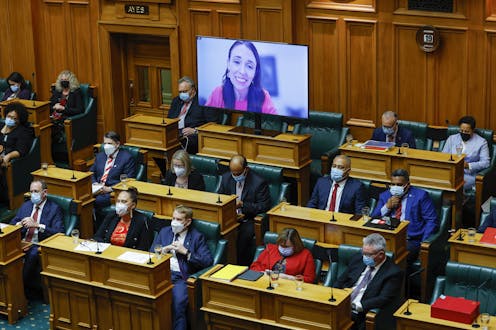
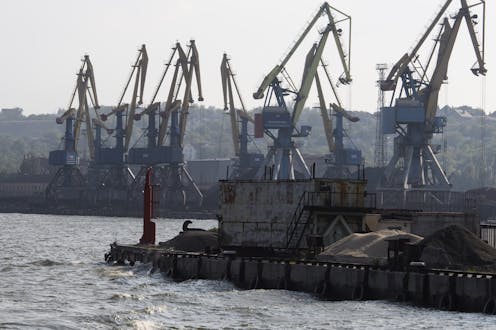
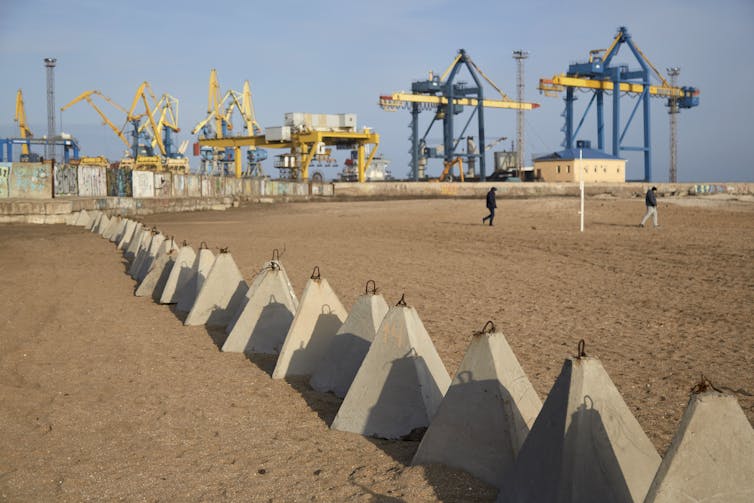
Thomas Raivet has roared into contention as the Bougainville presidential vote count continues while former rebel military leader Ishmael Toroama retains the lead.
Raivet, who is the surrogate for retiring President John Momis, is now in second place behind Toroama.
In third place is the former president, James Tanis.
Toroama believes that as the vote count moves north he will continue to hold his lead, though Tanis says it is too early to call.
Raivet was put forward as a candidate after the Papua New Guinea Supreme Court ruled out Momis’ bid for a third term.
He is a former naval captain and has been the acting chief secretary of the Bougainville government.
There are 25 people contesting the presidency and the proportional voting system in Bougainville means votes are re-allocated when candidates fade during the count.
Meanwhile, a number of constituency seats have been decided and they include one notable loss, that of Albert Punghau, in the Siwai district.
Punghau, as the Minister of Peace Agreement Implementation, had been instrumental in ensuring last year’s referendum on independence from PNG went smoothly.
This article is republished by the Pacific Media Centre under a partnership agreement with RNZ.
Academic streaming in New Zealand schools is still common, but according to recent reports it is also discriminatory and racist.
Also known as tracking, setting and ability grouping, streaming has been called a systemic barrier to Māori educational success in one major analysis released in August.
Education Minister Chris Hipkins agreed, saying “streaming does more harm than it does good”.
The criticism should come as no surprise. Decades of research has shown streaming doesn’t lift achievement. While it may boost top streams a little, it usually drags down the achievement of students in bottom streams.
Low expectations and low confidence
Given the main justification for streaming is that it lets teachers fine-tune learning activities to make them realistic but challenging, why doesn’t customised learning benefit all students?
Essentially, low-stream students learn more basic materialmore slowly via less challenging tasks. Students who start secondary school in a low stream have flatter learning curves than their top-stream peers. It becomes very difficult for them to catch up.
For example, we have observed low-stream year 9 students repetitively rounding numbers to the nearest hundred, while their top-stream peers grappled with challenging number puzzles. One head of mathematics reflected:
There was no real pathway for students in the bottom class to come out of that bottom class.
The messages low-stream students receive about who they are and what they’re capable of damage their self-confidence. Self-confidence is a strong predictor of future achievement, so streaming can turn one test result into a self-fulfilling prophecy.
Education Minister Chris Hipkins: streaming is incompatible with Treaty of Waitangi provisions.GettyImages
Is streaming systemically racist?
Māori and Pasifika students are over-represented in low-stream classes and therefore experience the predictable and well-established harmful impacts of streaming.
Understanding the difference between intent and impact is crucial. In the United States, for example, research has shown how “ability grouping was used as a mechanism to resegregate schools”, keeping Black and white students separated within the same building, and subverting national schooling integration mandates.
It is the outcome rather than any intent to do deliberate harm that defines a practice as racist.
In New Zealand, leading Māori education scholars have long pointed to the correlations between teacher expectations for Māori students and their educational attainment in mainstream secondary schools. Māori students achieve highly when their teachers ensure they are both culturally safe and academically challenged.
Of course, quality teaching improves students’ opportunities to excel academically. However, improving teaching for low-stream students may still have little impact unless there is systemic change that creates pathways for them to advance to senior academic courses.
What are the relevant policies?
The Māori education strategy Ka Hikitia was refreshed this year. Its original purpose was to influence policy to improve Māori educational success. And yet Māori are still experiencing the same systemic inequities over a decade since it was first published.
Streaming seems inconsistent with one of the refreshed Ka Hikitia’s “outcome domains”: Te Tangata: Māori are free from racism, discrimination and stigma in education.
Streaming diminishes the mana of students in low streams because they don’t see themselves as academically able, expectations are often low, and the stigma of belonging to an “underclass” can remain for life.
Ka Hikitia also stresses the importance of whānau (family) in making informed decisions about education. But open conversations about streaming with whānau are rare, and streaming processes and terms can be confusing.
Being in a low stream closes doors to many learning and employment pathways, but often students and whānau don’t know this until it’s too late.
Furthermore, the Education and Training Act (which became law in August this year, replacing the 1989 Education Act) includes a new requirement for school boards of trustees to “ensure schools give effect to the Treaty of Waitangi by achieving equitable outcomes for Māori students”.
As Education Minister Hipkins observed, streaming would be “very incompatible and inconsistent” with this requirement. In our opinion, the evidence is on his side.
The system must respond
There are ways to continue with streaming but minimise its worst effects. But the tendency to “label” students as failures, in particular, seems almost impossible to mitigate.
For now, the decision on whether or not to stream in New Zealand still sits with individual schools (unlike in Ontario, Canada, which banned streaming in July for being “discriminatory” and “racist”).
During the COVID-19 pandemic, schools have been busier than ever juggling many competing demands. But if Māori are calling out a widely accepted educational practice as discriminatory, those of us in the education system must not only be listening, but also be ready to implement evidence-based change.
As some of us return to the workplace, or are planning to do so in the future, we face the challenges of a changed environment of social distancing rules and restrictions. It might be your workplace will set limits on how many people are allowed in the lunchroom at a time, or the only people you talk to in the corridors are the cleaners.
For some people, going back to work is an opportunity to regain independence, especially if they have experienced difficulty working from home and are looking forward to going back.
But for others, it might be anxiety-inducing to think about another abrupt shift of routine, from a controlled environment where they feel safe to a place where rules and regulations are changing dramatically.
Indeed, it’s possible we might face separation anxiety from our home.
Humans are not only emotionally attached to people and pets – we’re also attached to places, especially safe ones. Place attachment is defined as the bond we create with specific places such as our home, a park, or a city. These bonds are formed with meaningful places that provide us with a feeling of safe haven, at the same time as providing us the opportunity to grow and continue to explore our interests.
However, this isn’t static, as we can create attachment to different places as our habits or feelings change. College students are an example of how identity can be tied to a place. Researchers have found relocating from home to college will impact how college students see and understand themselves by engaging in different activities, taking on more responsibility, and becoming independent.
Just as a new university student might feel the campus rapidly becomes a cherished part of their identity, people in lockdown might also see their home as emblematic of staying safe during the pandemic.
Humans don’t only create attachments with people, but places too.Shutterstock
How might we experience separation anxiety from our homes?
As defined in the Diagnostic and Statistical Manual of Mental Disorders, one of the criteria for a clinical diagnosis of separation anxiety is “recurrent excessive distress when anticipating or experiencing separation from home or from major attachment figures”.
A diagnosis of separation anxiety can also explain:
unusual distress or heightened fear about being separated from a loved one
excessive worry this separation could end in harm
physical symptoms such as stomach ache, nausea, headache and sore throat when thinking about separation or when the separation is imminent. This is most often found in children, but can also be found in adults.
Leading up to my first day back at work, I experienced a sense of dread and uncertainty. These feelings didn’t make sense at first. But they became clear when I realised I was worried about working away from home — a place that has been my safe haven throughout the coronavirus crisis. I had become more attached to my home office, routine, and fur assistants.
Although concerning, it’s unlikely I met the criteria for a clinical case of separation anxiety, of “recurrent excessive distress”. Nonetheless, the fear of separation I felt can be understood as John Bowlby (a pioneer of attachment theory) originally intended: a non-clinical concept to explain the phenomena of fear of separation from close attachments such as places, people and pets.
Even if you feel fear around separation but don’t meet the clinical criteria, you can still develop strategies to cope and minimise disruptions to daily functioning.
Many of us have spent a lot of time at home during the pandemic, so it might be anxiety-inducing to re-enter the workplace.Shutterstock
How managers and employees could minimise potential separation anxiety
COVID-19 has changed our workplaces a lot. Thus, strengthening support in the workplace should be considered. Managers need to be flexible and understanding to help staff go back to work. Managers could:
have an individual conversation with each employee to find out what they need, specially if there are signs they are struggling
consider how the transition will impact them in terms of commute times, costs, and hours away from home and family
review work arrangements to allow for a balanced routine, including flexibility to work from home on certain days, or flexible start and finish times where possible
ensure employees have a safe place to work and prepare them for the transition. This could include educational videos and articles
continue to acknowledge employees’ efforts and encourage self-care.
understand what makes you feel safe and comfortable at home and seek to translate that to the work environment. This could mean a more flexible wardrobe that is professional yet comfortable, or a new scent for the office that reminds you of the same one you have at home
think of alternative ways of communicating with colleagues that does not always involve formalised meetings. If possible, have a “meeting-free day” scheduled each week and consider whether something can be sorted via a phone call or email rather than face-to-face
think of innovative practices implemented during the lockdown, and seek to continue them. For example, continuing to share meals over zoom can be fun. In my workplace we have themes like “crazy hats” or Christmas in July
if possible, organise a “take your pet to work day”. This could help keep you and them mentally healthy.
Astronomers know all too well how precious and unique the environment of our planet is. Yet the size of our carbon footprint might surprise you.
Our study, released today in Nature Astronomy, estimated the field produces 25,000 tonnes of carbon dioxide-equivalent emissions per year in Australia. With fewer than 700 active researchers nationwide (including PhD students), this translates to 37 tonnes per astronomer per year.
As a point of reference, the average Australian adult was responsible for 26 tonnes of emissions in 2019, total. That means the job of being an astronomer is 40% more carbon-intensive than the average Australian’s job and home life combined.
While we often defer to governments for climate policy, our global carbon footprint can be dramatically reduced if every industry promotes strategies to reduce their own footprint. For individual industries to make progress, they must first recognise just how much they contribute to the climate emergency.
Where do all the emissions come from?
We found 60% of astronomy’s carbon footprint comes from supercomputing. Astronomers rely on supercomputers to not only process the many terabytes of data they collect from observatories everyday, but also test their theories of how the Universe formed with simulations.
Antennas of CSIRO’s ASKAP telescope at the Murchison Radio-astronomy Observatory in Western Australia.CSIRO Science Image
Frequent flying has historically been par for the course for astronomers too, be it for conference attendance or on-site observatory visits all around the world. Prior to COVID-19, six tonnes of annual emissions from flights were attributed to the average astronomer.
An estimated five tonnes of additional emissions per astronomer are produced in powering observatories every year. Astronomical facilities tend to be remote, to escape the bright lights and radio signals from populous areas.
Others, like the Murchison Radio-astronomy Observatory in Western Australia, need to be powered by generators on site. Solar panels currently provide around 15% of the energy needs at the Murchison Radio-astronomy Observatory, but diesel is still used for the bulk of the energy demands.
Finally, the powering of office spaces accounts for three tonnes of emissions per person per year. This contribution is relatively small, but still non-negligible.
They’re doing it better in Germany
Australia has an embarrassing record of per-capita emissions. At almost four times the global average, Australia ranks in the top three OECD countries for the highest per-capita emissions. The problem at large is Australia’s archaic reliance on fossil fuels.
The difference lies in the amount of renewable energy available in Germany versus Australia. The carbon emissions produced for each kilowatt-hour of electricity consumed at the German institute is less than a third pulled from the grid in Australia, on average.
The challenge astronomers in Australia face in reducing their carbon footprint is the same challenge all Australian residents face. For the country to claim any semblance of environmental sustainability, a swift and decisive transition to renewable energy is needed.
Taking emissions reduction into our own hands
A lack of coordinated action at a national level means organisations, individuals, and professions need to take emissions reduction into their own hands.
For astronomers, private arrangements for supercomputing centres, observatories, and universities to purchase dedicated wind and/or solar energy must be a top priority. Astronomers do not control the organisations that make these decisions, but we are not powerless to effect influence.
CSIRO expects the increasing fraction of on-site renewables at the Murchison Radio-astronomy Observatory has the potential to save 2,000 tonnes of emissions per year from diesel combustion. And most major universities in Australia have released plans to become carbon-neutral this decade.
As COVID-19 halted travel worldwide, meetings have transitioned to virtual platforms. Virtual conferences have a relatively minute carbon footprint, are cheaper, and have the potential to be more inclusive for those who lack the means to travel. Despite its challenges, COVID-19 has taught us we can dramatically reduce our flying. We must commit this lesson to memory.
And it’s encouraging to see the global community banding together. Last year, 11,000 scientists from 153 countries signed a scientific paper, warning of a global climate emergency.
As astronomers, we have now identified the significant size of our footprint, and where it comes from. Positive change is possible; the challenge simply needs to be tackled head-on.
With playgrounds, playdates and playcentres often off the menu, many parents and children are relying on digital games for play. But children’s use of screens remains a source of anxiety and conflict for many parents.
Our recent research finds children are mimicking real world play in the digital space. This means screen play can help substitute for what kids may be missing out on during the pandemic.
But compared to non-digitalplay, we still know comparatively little about play in digital spaces.
In 2018, we conducted a survey of 753 Melbourne parents to find what sort of digital games children were playing, on which devices and with whom. It showed 53% of children aged 6 to 8, and 68% of children aged 9 to 12, were actively playing Minecraft. More than half of those played more than once per week.
In Minecraft, players can build, fight for survival or engage in imaginative play, using the digital landscape as a kind of virtual playground. It can be played offline or online, alone or with other people, on a range of devices.
Since the survey, we have been studying in depth the Minecraft play of 6-8 year-old children from ten families across Melbourne. We interviewed children and their parents and recorded many hours of Minecraft play. We saw children engaging in many types of important play.
sociodramatic play where children act out everyday scenarios such as playing “school” or “families”
symbolic play where children use objects to stand in for other objects, such as a stick becoming a broom or a sword
creative play where children make use of colour, form, texture and spatial awareness to produce structures or art
dramatic play where children incorporate popular media content into their play, such as acting like pop stars
locomotor play where the joy of movement and a sense of vertigo is key to action, like going on swings or climbing a tree.
Here’s some of what we saw children doing in Minecraft, and how it fell into these categories of play:
two children set about building a town, complete with movie theatre and Bunnings hardware store, while pretending to be a couple with twin babies (sociodramatic play)
kids designated on-screen “emeralds” as telephones, insisting one player must be “holding” an emerald to talk to other players who were far away in game space. They followed telephone conventions, such as saying “ring ring, ring ring”, then waiting for someone to say “hello” (symbolic play)
kids broke into spontaneous song and dance both on and off-screen, and playfully teased siblings on text chat (communication play)
kids made careful choices in relation to design and aesthetics when building. They used “Redstone”, which functions like electricity in the game and can be used to make structures light up or move, and made weird and wonderful machines with it (creative play)
several children flew their screen characters high into the sky, and then had them fall back down while crying “whee!”. We also saw them zipping around on a “roller coaster” made of Minecart tracks, which seemed to give a sense of vertigo and thrill of movement (locomotor play)
some kids pretended to be YouTubers while commentating or dramatising their own play in the style of a YouTube video (dramatic play).
Seven year old ‘Beth’ and her dad put the finishing touches on their TNT cat sculptures before determining who wins the prize for ‘most satisfying explosion.’study participant data
There are obvious differences — both negative and positive – between play on a screen and play in a physical space. “Making a cake” in Minecraft doesn’t involve the same sensory and fine motor experiences as making a real cake. Nor does running around Minecraft terrain work major muscle groups. But children jumping off high structures in Minecraft also don’t risk physical injury.
And it’s important to note no play activity — digital or otherwise — offers every range of experience. A “varied diet” of play activities is best.
Physical lockdowns, digital freedom
Parents can take note of what is going on in the worlds of Roblox, Minecraft, Fortnite and whatever other digital spaces their children are playing in to get a better idea of their kids’ onscreen play worlds.
Playing with them is one good way to do this. But, not every parent has the desire, and children may not want parents tagging along. So, parents can ask questions about what their child likes about a particular game; what happened in a recent play session; and note connections between digital and non-digital play and events.
Children have the right to play. It is up to adults to ensure we uphold that right. This is especially relevant when many children’s play-worlds have been dramatically altered.
The eSafety Commissioner website has a great range of resources for parents to help make online play as safe and enjoyable as possible.
Source: The Conversation (Au and NZ) – By Hal Pawson, Professor of Housing Research and Policy, and Associate Director, City Futures Research Centre, UNSW
A new report from the New South Wales Productivity Commission (NSWPC) announces that “[higher] housing costs […] impose broader economic costs”. That chimes with our own newly published research. The implication is that Australia’s heavily capitalised housing market will weigh down economic recovery from the shocks of the coronavirus pandemic.
A niche group of economists and epidemiologists had warned the world for decades that a pandemic would have devastating economic and social consequences. When it comes to Australia’s housing, though, the COVID-19 crisis has only served to highlight deep and long-standing faultlines.
However, a particularly cruel COVID-19 effect has been the concentration of pandemic impacts on public-facing economic sectors and jobs. Younger people and female employees have been hit hardest. The fallout in the lower end of the labour market will only make existing pressures worse.
Australia is about to embark on an audacious economic and social experiment as it tries to wind back the JobKeeper and JobSeeker programs temporarily protecting about 3.5 million people. Treasury projections envisage a gradual withdrawal. In reality, especially if any eviction moratoria are allowed to lapse, the start of this process will likely trigger huge immediate challenges in managing the housing and homelessness fallout.
Beyond that, the recession will drive home the need for political leaders to more fully appreciate the integral role of housing in the economy. The housing system plays key roles in shaping economic productivity, stability and inequality.
How on earth did we get here?
For many decades economics-leaning policymakers have assumed the housing market is largely a well-functioning system driven by helpful economic forces. Most famously personified in comments by former prime minister John Howard, and very much in tune with dominant media messaging, Australian governments have generally welcomed rising house prices as signifying consumer confidence. Even academic researchers and government analysts have cited house prices as a sign of the “success” of cities and regions.
More recently, ever-rising house prices have finally been recognised as a driver of wealth inequality. The problem is linked to rising mortgage debt and increasingly recognised as likely to add to instabilities in the macro economy and financial system.
There are also growing policy concerns that city living is becoming too expensive. This in turn harms economic productivity. [OECD data] show Australia is on a similar path to the US, with the metropolitan share of national GDP per capita falling in recent years.
Metropolitan GDP per capita has been declining in Australia and some other countries.Data: OECD, Author provided
How has policy thinking become so blurred?
The NSWPC report recognises that the combination of excessive rents and insecure tenure can damage children’s educational attainment and prospects. Prices and rents are particularly unaffordable in Sydney, making it a more stressful place to live and work. Resulting migration to other parts of the country reduces employers’ access to the supply of willing and productive labour, thus damaging productivity.
But the NSWPC analysis of housing-to-economy interactions does not go anything like far enough. As our research shows, Australia’s dysfunctional housing system results in a battery of other economically harmful impacts. These include:
long-term policies that have diverted savings and investment into rising property and land prices, with minimal or no employment or productivity benefit
a dysfunctional housing system that reduces household savings for the longer term, as well as contributing to falling rates of home ownership and personal asset accumulation for future generations of older people.
Perhaps worst of all, the high private housing debt in Australia is among the worst in the world. The International Monetary Fund (IMF) and the OECD recognise this debt as a threat to financial and economic stability.
Economics students are taught the “paradox of thrift”: when an individual saves, it benefits them in the long run. When too many people save, it harms economic growth.
In a similar way, rising housing prices benefit owners of houses and/or investments. But when we scale up to the level of a locality, city, state or economy, rising prices have a profound negative impact.
The impacts of high rents and mortgage debt on people’s behaviour have significant consequences for the economy.Shutterstock
Setting a new agenda
With all this in mind, our report lays out a wide-ranging “housing and productivity” research agenda. The hope must be that the resulting evidence helps trigger the policy reboot needed to transform the housing system from being part of the problem to part of the solution.
Much more attention needs to be focused on how owners and renters adjust savings and spending as a result of excessive housing costs. Without knowing about these behavioural responses, it is impossible to design appropriate policies.
We must find ways to restore the housing prospects of younger and/or less affluent households. We must research the potential for schemes to help first home buyers with deposits, and assess how better credit scoring methods could reduce pressures on rental markets. This is particularly important because currently used credit scoring methods disproportionately reward access to wealth, and do not adequately capture important aspects of prospective borrowers’ consumption and saving behaviour.
Delayed home ownership entry or permanent exclusion have major long-term implications. Worryingly, the negative impacts on economic productivity and stability have been largely ignored to date.
The Grattan Institute estimates home-ownership rates for the over-65s will fall by 19% by 2056. The impacts on retirement incomes will be significant.
Policymakers haven’t planned for the inevitable rise in need for social housing from impoverished older private renters. The present system has glaringly failed to provide housing affordable for more than half of Australia’s low income tenant population. Acting on the mounting economic imbalances caused by the housing crisis could, at the same time, generate a more productive and stable economy.
Australian housing research and policy urgently needs a new economic conversation.
Source: The Conversation (Au and NZ) – By Ben Phillips, Associate Professor, Centre for Social Research and Methods, Director, Centre for Economic Policy Research (CEPR), Australian National University
Australian National University calculations suggest JobKeeper and the boosted JobSeeker payment have saved about 2.2 million people from poverty.
It’s a remarkable outcome without precedent in Australia.
JobKeeper was set at A$1,500 per fortnight and the Coronavirus Supplement was set high enough to double JobSeeker and associated payments, increasing them to about $1,115 per fortnight.
Both are well above the poverty line, which according to our modelling is around $816 per fortnight.
From the end of September both will be cut. JobKeeper will fall to $1,200 per fortnight for those who previously worked 20 or more hours per week and to just $700 for those who previously worked less than 20 hours per week.
The payment to people on JobSeeker and related benefits will fall to $815.
Beyond December, JobKeeper will fall to $1,000 and $650 per fortnight and the Coronavirus Supplement will end, returning JobSeeker to $565.70 per fortnight.
Three quarters of a million more
Our estimates suggest that by themselves these changes will push an extra 740,000 Australians into poverty, lifting the total number in poverty from from 1.1 million to 1.84 million.
Partly offsetting this, the improvement in the economy forecast in the July Economic and Fiscal Update should it be realised would cut the number of Australians in poverty by about 140,000.
Treasurer Frydenberg said the payment he intends to withdraw would help with groceries.
These numbers tell us two important things.
One is that the Newstart unemployment benefit (now called JobSeeker) was too low.
Should the unemployment rate stay at its present 7.5% after JobKeeper is withdrawn and JobSeeker returned to normal we expect it to climb to $6.5 billion.
Should it linger at the 10% forecast by the Reserve Bank, we expect it to climb to $6.9 billion.
It’s in all of our interests to minimise it for any given level of government support.
The ANU Centre for Social Research and Methods has developed an algorithm for calculating the optimal mix of government supports to achieve a range of policy goals including minimising poverty.
The mix it suggests would cut the poverty gap from $6.5 billion to $5.6 billion under the 7.5% unemployment scenario and from $6.9 billion to 5.8 billion under the 10% unemployment scenario.
How to minimise the damage
If the total level of welfare expenditure were to remain unchanged on pre-JobKeeper and Coronavirus supplement settings, the single JobSeeker would be increased substantially from $551 to $821 per fortnight and the age pension single rate from $902 to $915 per fortnight.
The increases would be offset by reductions in the Parenting Payment from $770 to $737 per fortnight (single), Family Tax Benefit Part A for children under 13 years of age from $218 to $154 per fortnight and Rent Assistance from $137 to $131 per fortnight.
We have also modelled the optimal setting for a 20% increase in government support and a 20% cut.
What our algorithm proposes wouldn’t eliminate poverty (it would cut it by between 14% and 15%) but it would enable to the government to achieve a lot without spending more money.
An essential part of whatever solution it adopts has to be an increase in JobSeeker. Without it an extra 740,000 Australians will be in poverty.
Back in March and April I (and many other economists) argued for lockdowns to get COVID-19 infections under control and to give health systems time to put in place testing and tracing regimes to contain the virus in the longer term.
This was done pretty effectively everywhere in Australia except for Victoria. But if things go to plan, all states will be back on the same page by the end of October.
Or will they?
Concerns about Victoria’s contact-tracing regime remain, and although there is a lot of testing, how it is being done might not be as effective as possible.
More still needs to be done to avoid the “yo-yoing” Victorian premier Dan Andrews has warned about – in which relaxation of distancing rules leads to yet another outbreak big enough to require reimposing restrictions.
There is room for not just incremental improvement but dramatic improvement of testing and tracing.
Keeping the reproduction rate below 1
The key to avoiding the need for lockdown (unless and until a vaccine is widely deployed) is to keep what epidemiologist call the “effective” reproduction rate (R) below 1.
That is, on average each person infected with the virus must give it to less than one other person (R<1).
If R>1 infections will grow exponentially, overwhelming human contact-tracing systems and eventually the hospital system.
To keep the reproduction rate below 1 requires testing and contact tracing to be incredibly fast and effective.
Effective contact tracing
Victoria’s contact-tracing system is generally regarded as having performed poorly compared with systems such as in New South Wales.
Only now is the state moving to adopt a more automated approach, using a data management system developed by IT giant Salesforce. The Victorian government rejected the system earlier in the year, on the grounds the state was too swamped by the first wave to implement and bed down a new system.
My University of NSW colleague, epidemiologist Raina MacIntyre, has observed that Victoria’s health system was less prepared than NSW because of 20 years of governments “stripping the health system bare”, and that:
No health workforce in the world, no matter how organised, well-resourced and efficient, can do manual contact tracing successfully when an epidemic becomes too large.
We could go down the more aggressive digital contact-tracing path akin to South Korea. But as the Financial Times has noted, the Korean systems:
include an extensive trawl of data from other sources, such as security cameras and credit card transactions, as well as smartphone apps that use wireless signals to detect who might have encountered an infected individual.
A banner on Seoul’s city hall advocating mandatory mask use.Jeon Heon-Kyun/EPA
Given the relatively low voluntary uptake of the Australian government’s COVIDSafe smartphone tracing app, getting enough people to use it to make it effective will also require strong incentives – or compulsion.
Now, I’m strongly for such incentives (as well as smarter testing). But given the amount of bedwetting about the existing COVIDSafe app from the libertarian right and some elements of the soft left (who are paranoid about every smart light bulb spying on us), this is unlikely to happen.
The other crucial tool to keep R below 1 is efficient and large-scale testing.
Australia did well early in the pandemic ramping up testing capacity. Test results have been typically returned within a few days, though there have also been reports of results taking more than five days.
What we have not done is embrace the benefits of targeted batch testing.
Batch testing is a way to cost-effectively test large numbers of people by pooling together samples – say by postcode.
If the pooled sample comes back negative, then everyone who contributed to the batch is cleared. If it is positive, more targeted testing is done, using smaller batches (by suburb, then residential block, then by household).
As I’ve noted before, the optimal batch size depends on the base rate of the virus in the community. But this general idea has been around since World War II and is well understood. It is a way to stretch resources to test more of the population more often.
For Australia at this point of the pandemic, this kind of testing would enable rapid detection and isolation of any new infections, allowing social and economic activity to get back to a new normal.
Door-to-door checks and testing being done in the northern Melbourne suburb of Broadmeadows in June.Daniel Pockett/AAP
The strategy going forward
Once the Victorian outbreak is under control, we need to reopen Australia’s internal borders. Then we can start thinking about easing external border restrictions with places such as New Zealand.
All of this will require keeping the reproduction rate below 1, which means catching any new infections fast. Really fast.
Yo-yoing lockdowns are costly and to be avoided if at all possible.
Automated contact tracing could help a lot, as could smart and aggressive batch testing. We should be doing both until a vaccine is deployed.
Some commentators talk about “living with this virus” which is basically code for letting it rip. Instead, what we need to do is engage in “relentless suppression” to keep the reproduction rate low and our economy open.
Our memories are malleable, they change over time. Memories can, however, crystallise through repetition. One of the most interesting things about memory is it is distinctly visual. With time, dramatic events reduce to a series of still images, which psychologists call “flashbulb memories”. Retrieving them is akin to rifling through a visual database.
The history of war photography offers many powerful examples of how memory and photographic images work together to symbolise entire events.
Consider one of the most famous news images from the Vietnam War, Nick Ut’s image of nine-year old Phan Thị Kim Phúc, badly burned and running down the road after a napalm attack. Or the Abu Ghraib photographs of prisoner abuse in the American military.
Viruses are distinctly anti-spectacular. They are invisible. We can, nevertheless, capture their impact. In 1990, at the height of the HIV/AIDS crisis in America, Life magazine published an image of a dying man, David Kirby, surrounded by his anguished family. Therese Frare’s photograph was credited for humanising HIV and raising much needed awareness.
We are still in the early days of this pandemic. It is not too premature, however, to start writing its history through images. Here are some of the photos that captured the impact of COVID-19 in Australia.
The Ruby Princess stranded
The cruise ship the Ruby Princess sits off the coast of Sydney, Sunday April 5, 2020.AAP Image/Joel Carrett
Networks of globalisation, such as the tourism industry, helped spread the virus between countries. This image was taken from the Waverley Cemetery, in Sydney’s east in early April. Tightly framed by gravestones, the Ruby Princess cruise ship intersects with the strong blue of the horizon.
Sydney is reimagined as an ancient burial site, a necropolis, a city of the dead.
It is not unusual for cruise liners to sit off the city’s coast. This photograph is chilling, however because of the large cluster of COVID-19 infections linked to this ship. When Joel Carrett took this photograph, passengers had already disembarked, and health authorities were scrambling to control community transmission.
Sometimes, images are powerful because they have long historical links. Ships have historically been carriers of disease, treated suspiciously by coastal towns and ports.
During the height of the Black Death in the 14th century, the citizens of Venice realised infected persons were on ships and the best defence was isolation. The modern term quarantine is derived from the Italian quaranta giorni, the 40 days vessels were kept offshore.
We were still learning how to socially distance in March and adhere to the government’s advice to “stay at home” when images of beach-lovers making the most of Sydney’s glorious Indian summer went viral on social media.
Beachgoers at Bondi Beach, Friday March 20, 2020.AAP Image/John Fotiadis
The beach occupies a sacred place in our national psyche: a place of leisure and of freedom. What was ominous about this image, however, was the crowd’s ability to render a usually benign activity into a menacing threat.
Centrelink queue, Sydney
The most visceral signs of an economy in free fall came in late March with long queues of people waiting outside Centrelink offices across the country. As the myGov website collapsed under the strain, people were forced onto the streets, echoing scenes from Depression-era unemployment.
Queues outside a Centrelink office in Bondi Junction, Sydney, Tuesday March 24, 2020.AAP Image/Joel Carrett
This photograph is cropped, leaving the viewer’s eye to run down the line of umbrellas, before pausing to rest on the woman in the yellow jumper and clear poncho. Her body language speaks of exasperation and frustration.
The image is taken at street level, a powerful levelling effect: the spectator joins the queue.
Dole queue at Harold Park during the Great Depression, Sydney, 26 July 1932.NLA
A very different strategy is at play in this 1932 image of the dole queue at Sydney’s Harold Park. Here, the photographer captures the group from an elevated position. This creates the effect of “hovering” above the queue like a bird. The spectator remains separate and apart from the crowd. The telegraph pole reinforces this division.
Panic buying, Coles supermarket
In March, supermarket shelves were emptying as Australians started panic buying essentials such as toilet paper, pasta and rice.
People waiting in the toilet paper aisle for a delivery of toilet paper, paper towel and pasta at Coles Supermarket, Epping in Sydney, Friday March 20, 2020.AAP Image/James Gourley
The idea of an image being active and capable of influencing our behaviour is underscored by photographs of empty supermarket shelves. Images such as these helped fuel further panic buying, reinforcing the misconception we were running out of food.
In this image, the bare shelves retreat, drawing the spectator’s eye diagonally backwards towards the far wall. People wait patiently while maintaining a careful distance from each other. The spectator’s eye returns to rest with the central seated figure. His posture indicates fatigued resignation.
Panic buying is not unprecedented in Australia. During World War II, food and clothing rationing was introduced to control consumption and ensure equitable distribution of resources.
People in Melbourne buying extra supplies of meat to try and beat rationing, photographed 14 January, 1944.Australian War Memorial
This archival image shows people in Melbourne stocking up on meat in 1944 in advance of impending rationing. The small enclosed space feels claustrophobic as shoppers crowd in, waiting to be served.
Public housing towers lockdown, Melbourne
Physical distancing is a luxury not everyone can afford. COVID-19 thrives in dense living spaces, making visible class and race divisions. The early July lockdown of nine public housing towers in Melbourne was a blunt reminder the pandemic embeds itself in communities that house some of our most vulnerable. The towers were presented as crime scenes, sealed off with police tape.
The Alfred Street public housing tower under tight lockdown in North Melbourne, Saturday, July 11, 2020.AAP Image/David Crosling
David Crosling’s photograph is striking because of its distinct lack of people. The police tape occupies the immediate foreground, while the towers rise threateningly in the distance.
On closer inspection, a solitary figure can be detected in the left middle ground. The pathway leads the viewer’s eye straight to a COVID-19 testing tent. The site is registered as a crime scene; a barrier is placed between the spectator and the towers.
The absence of people became a foreboding sign of what was to come: Melbourne’s “hard lockdown”.
Empty Melbourne CBD
The atmosphere is bleak and unnerving. An empty city is a lonely city. A city needs its people. Today, the usually bustling alleyways in Melbourne’s CBD lie mute, waiting for the stage four restrictions to pass.
An empty Degraves Street in Melbourne, Friday August 28, 2020.AAP Image/Erik Anderson
An eerie quality emerges when architectural landscapes are silent and empty. Usually an index of vitality, the street art in the foreground of the image is transformed, becoming a trace or relic of former human activity.
Images of Melbourne devoid of its people resonate with Eugène Atget’s photographs of the “old Paris”. Working at the turn of the 20th century, Atget focused on documenting the old, disappearing streets of Paris under pressure to modernise.
On the corner of rue de Seine and rue de l’Echaudé, photographed in 1924.Eugène Atget/Wikimedia Commons
Writing in the 1930s, German philosopher and essayist Walter Benjamin observed Atget’s images were like deserted crime scenes “photographed for the purpose of establishing evidence”.
They demand a specific kind of approach; free-floating contemplation is not appropriate to them. They stir the viewer; he feels challenged by them in a new way.
A crime scene asks more from its spectator than just viewing passively. Instead, the spectator becomes a witness or bystander.
As the virus asserts its grip, the face mask has now become a symbol of the next phase of our collective efforts to suppress COVID-19.
Will poses for a photo wearing a mask in front of Flinders Street Station in Melbourne, Friday July 17, 2020.AAP Image/Daniel Pockett
The practice of wearing a mask in the times of disease and pandemics has a long history. The medieval Latin word masca ominously means “spectre or nightmare”.
In the 17th century, plague doctors were recognised by their distinctive beak-like masks when attending sick patients, protecting the doctors from “bad air” and preventing contagion.
Centuries on, the basic premise of creating a barrier between the patient and the health workforce remains remarkably the same.
Healthcare worker Carmen Kennett poses for a photograph at a popup COVID-19 testing clinic at a dental clinic in Ballarat, Victoria, Friday August 14, 2020.AAP Image/James Ross
Temporary memorial, St Basil’s Homes for the Aged
Australia has avoided the rampant transmission and devastating loss of life seen in parts of Europe, the USA and Brazil. Our mortality rates, nevertheless, are steadily creeping upwards as the pandemic spreads, particularly in aged care facilities.
We haven’t seen images like the overflowing intensive care wards in Italy, or the drone footage of New York’s mass graves. For privacy and ethical reasons, photographs from inside aged care homes and intensive care wards are rare. Our understanding of the deaths is thus shaped by personal photographs of COVID-19’s victims released by their families or photos of the exteriors of aged care homes.
Tributes at St Basil’s Homes for the Aged in Fawkner, Melbourne, Wednesday July 29, 2020.AAP Image/Daniel Pockett
In late July, temporary memorials were set up outside one of the hardest hit facilities, St Basil’s Home for the Aged. Here, fences create a barrier between the photographer and the buildings. For the viewer, the physicality of lockdown is reinforced.
Healthcare workers in PPE
Frontline health workers in full personal protective equipment have largely become the face of COVID-19.
A pop-up COVID-19 testing site in Chadstone, Melbourne, Thursday June 25, 2020.AAP Image/Daniel Pockett
Widespread testing is proving crucial to controlling the pandemic. Here, healthcare workers are captured working at a drive through clinic. The camera’s lens is focused on the middle ground, with the staff rendered crisply in silhouette. Healthcare workers are our first and last line of defence against COVID-19.
There is unlikely to be one single photograph that comes to symbolise the pandemic. But it is possible to start reflecting on images that have been instrumental in shaping policy and debate.
These images serve as a chronicle of the disorientating early days of COVID-19 in Australia.
It’s been welcome to see governments taking expert health advice during the pandemic. But on the issue of ultimate responsibility, situations can become tricky, as Annastacia Palaszczuk and Daniel Andrews found this week.
When an agitated Palaszczuk said on Thursday she had told Scott Morrison it was up to the chief health officer to rule on whether to allow a woman out of quarantine to attend her father’s funeral, it was a case of the adviser being “on top” rather than “on tap”.
Palaszczuk said she’d made it “very clear” to Morrison “it is not my decision. It is the chief health officer’s decision to make”.
CHO Jeannette Young later allowed Sarah Caisip to view her father’s body but not go to the funeral.
Young explained this by saying funerals – which can be attended by 100 people in Brisbane – are “very, very high risk for transmission of the virus”.
On a common sense view and the facts as we know them, it was an excessively cautious weighing of danger versus compassion.
Caisip – whose battle with the Queensland bureaucracy began before her father’s death – had travelled from Canberra.
The ACT hasn’t had any new cases for a couple of months and shouldn’t even be classified as a “hotspot”. It’s only so defined because it sits within NSW. The chance of Caisip being a COVID carrier appears minimal.
It was taking things to an extreme to refuse to allow her to be with her mother and 11-year-old sister at the funeral. Some requirement for distancing and subsequent testing of attendees surely would have been adequate.
Did the premier use the health guru as a convenient shield behind whom to hide? Or was she (rather than the prime minister) right about who had the power? And if so, is that how things should work?
Graeme Orr, professor of law at the University of Queensland, says it’s clear the law provides that only a public health officer can let someone out of quarantine to go to a funeral. “Also, under the crime and corruption law it would be highly inappropriate for a minister to intervene.”
Regardless of where the formal power rested, the affair has been damaging for the premier and the CHO, and showed that if Queensland is to keep its border closed, more flexibility is needed in the system to deal better with compassionate cases.
With the state election looming next month, it is a bad time to get constructive dealings between the Morrison and Palaszczuk governments.
After their phone conversation, Palaszczuk accused Morrison of trying to bully her, a claim rejected by his office.
Queensland government sources said the PM was belligerent, yelled and said “you will do this”; the premier had reminded him it was R U OK? day.
Prime Ministerial sources said Palaszczuk flew off the handle when the PM said “you can do this, you are the premier, it’s within your power”.
Whether or not Morrison adopted a bullying tone – or the premier heard it that way – is beside the point. Palaszczuk is a tough, experienced politician, quite able to stand up for herself.
Indeed there is not even much of a power imbalance between the PM and premier here – as premiers have been showing, the states hold many of the cards in this pandemic.
While Palaszczuk was deferring to her health official, Victorian premier Daniel Andrews was defending himself after the revelation Victoria’s curfew had not been driven by the advice of Chief Health Officer Brett Sutton.
Questioned on radio this week about the curfew, both Sutton and Police Chief Commissioner Shane Patton said recommendations for it hadn’t come from them.
Dealing with a barrage of questions Andrews, who has leaned heavily on the health advice throughout COVID, declared: “The chief health officer is not the government”. Who’d have thought?
Andrews couldn’t provide clarity on the precise origin of the curfew. But it is there, it seems, because it makes things simpler. If citizens are required to lock themselves in at night, the authorities have fewer people to chase up to determine whether they have a legitimate reason to be out. It’s a stretch.
Like Palaszczuk, Andrews is coming under mounting pressure for taking things to extremes.
Ironically, a Victorian roadmap based on expertise is being undermined by argument among experts.
Many of those with specialist knowledge are suggesting Victoria could move more quickly to ease restrictions.
Blakely gives the roadmap near full marks but believes it falls short on the proposed October transition by being too stringent.
A number of other experts have questioned aspects of the Andrews’ plan. Increasingly as the week went by, the state government started emphasising there was room for tweaking if the advice allowed it.
The pandemic has brought into focus the role of experts, but as it goes on we see a more complicated picture emerging than the initial “isn’t it great the politicians are following those who know what they’re talking about.”
The months have shown not just the value of experts but also how experts in a fast-moving crisis can know a lot less than they appear to. Some of the propositions the federal health advisers advanced at COVID’s start turned out to be wrong (people with COVID are not infectious when they don’t have symptoms). Experts can and do change their advice as they learn more or for other reasons (federal advisers’ views on masks evolved).
Those with credentials will differ (about “suppression” versus “elimination”, or the likely arrival or effectiveness of a vaccine).
Experts will be heroes to their admirers and villains to their critics (Sutton is the case study).
In some instances, the experts will have an eye to the politics as they give their advice.
The politicians draw on experts’ authority to fill the yawning gaps in their own, quoting them, parading them at news conferences. Then, on occasion, the decisions and comments of the experts, by now well known public figures, come back to bite the leaders.
But the longer this pandemic lasts, the harder it is becoming for politicians to just say “we’re doing what the experts tell us”, because the trade offs are increasingly so complex.
Will the rich get richer under Labour’s latest tax policy? Based on the analysis in reaction to yesterday’s announcement, the answer would seem to be yes. The consensus from commentators is that inequality and severe economic problems will remain unchanged or even be made worse by Labour’s new policy.
Although the policy incorporates a small increase in tax to be paid by those earning over $180,000, the central point of Labour’s new policy is to rule-out reforming the taxation system. In particular, there will be no new wealth or property taxes.
Of course, the counterpoint to all of this is that the decision is electorally clever as Labour doesn’t have to convince voters of the need for reform at this crucial juncture. Labour can instead focus on getting elected and making the hard economic decisions later when in power.
Although most commentators are critical of how conservative this policy is, there has been praise from some quarters. The Public Service Association put out a press release celebrating Grant Robertson’s new policy – see Jason Walls’Labour’s ‘balanced’ tax plan draws flak from political allies and Rich Lister.
While the union sees the tax announcement as a step in the right direction, the same article reports property developer Troy Bowker (reportedly worth $84 million) complaining that “the policy is a clear signal that this Labour Government appears to have given up its agenda to redistribute wealth via the tax system”. He says, “Far from being radical, this policy could easily have come from the National Party.”
Many other rich New Zealanders are coming out to say that Labour isn’t taxing the wealthy enough in this policy. Madison Reidy reports on one business owner calling for higher taxes than Labour is willing to impose, as well as tax expert, Geoff Nightingale, of PwC, saying “Under a future Labour government, the rich will still get richer” – see: High-income earners say ‘rich will still get richer’ under Labour’s proposed tax policy. Nightingale points out that property will still be significantly under-taxed under Labour’s proposals.
Although Labour proposes the top 2% of income-earners will now pay a marginal tax rate of 39% for their incomes over $180,000, according to this article, this is very low by OECD standards: “A 39 percent tax rate is low when compared with the highest tax rates internationally. The United States charges 43 percent, the UK 45, Australia 47, Japan 56 percent, and Sweden’s 57 percent is the priciest in the OECD.”
Nightingale is also reported saying that it’s a mistake to focus taxation on income at the moment when there are extremely high profits being made in property and business: “Labour income gets taxed harder and we still have the gap of untaxed capital gains which will be fuelled by quantitative easing… This exacerbates the current distortion in the system” – see: Labour’s ultra-cautious tax policy will be a relief to the wealthy.
The author of the article, business journalist Tom Pullar-Strecker, says “Labour’s long-awaited tax policy will come as a relief to the wealthy, but risks frustrating the party’s traditional supporters.” He suggests Labour’s announcement was “more cautious than expected” but is “good politics”.
McCulloch argues Labour had a chance to be transformational on taxation, and they had public support for change, but have deliberately decided to appeal to business interests instead: “With its sky-high polling, Labour now has more license to drive political change, but Ardern is not willing to risk it. Labour is convinced it has done the unthinkable and become the party of choice for the business community. It is determined to cement its hold on the middle.”
The policy doesn’t seek to deal with the worsening crises of inequality and housing nor seek to raise much money to repay debt, and McCulloch says that Labour doesn’t even acknowledge those problems. Whereas in the past, Labour have described their tax policies with the words “fair and progressive”, he notes this has been dropped. Overall, he says “Left-wing voters may well be disappointed, but they should not be surprised.”
Similarly, Herald political editor Audrey Young has written about the smart politics of the announcement, saying it effectively disarms National’s best weapon against Labour: “Labour is not going put a bullseye on itself again this election, not when some polls suggest it could govern alone. So it has decided this time not to have a tax policy – well almost not have one. What Finance Minister Grant Robertson announced today is more of a gesture than a policy” – see: More of a gesture than a tax policy (paywalled).
Young says the policy will have the desired effect: “It is a policy symbol designed to placate the party’s base. The party can’t be accused of doing nothing to make the rich pay a little more. But it hardly going to be policy that scares former National supporters into detaching themselves from Labour. At the margins, it is so insipid it may push a few of Labour’s hardline left into the arms of the high-taxing Greens. It leaves National with a very small target against Labour.”
Some on the political left have been extremely unhappy with the announcement. The No Right Turn blogger posted his immediate response to accuse Labour of being anti-poor and favouring the entrenchment of the status quo for their own benefit: “that’s the modern Labour Party, isn’t it? A bunch of rich pricks all paid at least $160,000 a year, sitting on investment properties and hidden wealth in trusts, pretending to care about people poorer than them in a cynical effort to gain power. But when you look at what they actually do, as opposed to what they merely say, it turns out that what they’re about is protecting and profiting from the unjust status quo” – see: Is that it?.
He’s followed that up with a more detailed critique of the policy, arguing that by forgoing tax reform, future governments will not be able to afford important spending, and that in the current circumstances the decision to ditch reform amounts to a wasted opportunity – see: If not now, when?.
In contrast, Newsroom’s Bernard Hickey says he’s personally “thrilled” by the announcement because “the unearned capital gains on his properties will go untaxed”. But on a political level he’s “despondent” because “Labour has wasted the chance of this Covid-19 crisis to properly tax wealth and give the young and the poor some hope for the future” – see: The even wealthier can breathe easier till 2023 at least.
Hickey details how the rich are getting massively richer under the current Government: “Reserve Bank figures show households that own property and have money in stocks and term deposits made over $250 billion of tax-free capital gains in Labour’s first term.” He suggests that Robertson has made a decision to allow this rampant inequality to continue, complaining that “Labour has again reneged on its inequality-fighting rhetoric”.
Writing for BusinessDesk, Jenny Ruth has also suggested that Labour’s new policy will just fuel the housing crisis. She points to research by Westpac chief economist Dominick Stephens which suggests that a lack of a comprehensive capital gains tax combined with a higher marginal income tax rate will nudge the rich to put their money into housing, pushing up the prices significantly – see: Raising top income tax rates will push up house prices: Westpac.
Also at BusinessDesk, Pattrick Smellie says the new policy won’t bother those with quickly escalating wealth. He points out that Robertson has “announced perhaps the smallest tax policy ever unveiled by a Labour Party, taking a faint dab at the top 2 percent of income earners, most of whose houses and share portfolios have shot up in value this year and will remain untaxed anyway. The calculation is that the vast majority of taxpayers will be happy with this” – see: Labour’s election recipe: cautious populism (paywalled).
Herald business journalist Liam Dann emphasises how conservative Labour’s new policy is. He argues that the policy “might be a political winner but it does not shift the dial on New Zealand’s economic challenges in the post-Covid world” – see: Tax change is ‘symbolic’, doesn’t address economic challenge (paywalled). According to Dann, Labour (like National) is foregoing increasing taxes significantly and have to either make spending cuts or base their fiscal plans on obtaining economic growth via dairying, tourism, or immigration – all of which are now almost impossible.
Dann also points out that the extra tax raised by the new marginal income tax rate – said to be $550 million per year – is so small it “would take more than 180 years to pay off the new debt with this new revenue”.
Similarly, the Herald’s Hamish Rutherford points to how little will be raised: “in the scheme of the tens of billions of dollars of spending Robertson has approved since March, the increased revenue from the tax for those on super high incomes is a drop in the ocean. Labour estimates the move will help raise $550 million a year. That is about the same as the cost as two weeks wage subsidy payments” – see:Labour’s tax policy will cost those earning $200,000 less than the cost of a cup of coffee a day (paywalled).
Rutherford argues that this is not a “transformational” policy, and shows how conservative Labour has become: “The Labour Party though is consigned to being the party which in three years has transitioned from promising major structural change to one where its tax policy is about creating as little fuss as possible.” Labour supporters “might get a sinking feeling” from the announcement.
According to Newsroom’s Sam Sachdeva, “Labour’s tax policy provides further proof Jacinda Ardern and Grant Robertson are conservative triangulators”, in the sense that they are adjusting their policies to outmaneuver their opponents rather than to create a better society – see: Labour’s tax triangulation. He argues that the tax announcement has kept swing voters and the business community onside while ensuring National will struggle “to find a compelling critique”.
For Stuff’s Thomas Coughlan the policy was all about political power rather than doing the right thing. He paints Robertson as a conservative in the John Key tradition, more interested in helping his side obtain power than in actually fixing the country – see: Grant Robertson’s tax policy isn’t about tax or debt.
Robertson’s conservatism is so strong, that the new tax policy is, according to Coughlan, to the right of Don Brash: “Even the National Party went into the 2005 election with the 39 per cent rate kicking in at a lower level (adjusted for inflation). By that metric, Robertson’s tax policy is to the right of arch-Tory Don Brash.”
Conservative commentator Liam Hehir also paints the proposed new tax rise as being minimal, saying “Robertson has gone for a half-measure” and, “If Labour wanted to increase revenue the threshold would have kicked in much lower. A 39 percent rate of tax on all incomes over $90,000 per annum would, for example, have matched the settings that Helen Clark implemented in 1999. Alternatively, an intermediate step could have been introduced (say, a rate of 36 percent on incomes over $140,000)” – see: Labour’s tax rise: a half-measure with not much payoff.
Like other observers, Hehir also points out that there could be a problem with having such a big gap between the new top rate of income tax and corporate and trust rates: “Labour proposes to leave the company tax rate at 28 percent and the trust tax rate at 33 percent, which will leave the door open to tax minimisation through good planning.”
My MA thesis was about labour supply in New Zealand and Australia during the 1920s and 1930s, with particular reference to the 1930s’ ‘Great Depression’.
The central finding related to the workings of whanau as an economic unit, and how the loss of income to the ‘family breadwinner’ – in those times, almost always an adult male – created a change of labour force participation status amongst the other adults and teenagers in the family. (Note that the word ‘whanau’ essentially means ‘family’. Here, it means family as an economic unit; so, in a Māori context it may mean ‘extended family’, whereas in a Pākehā context it more likely means a ‘nuclear family’.) This propulsion of erstwhile dependents into the workforce is known as the added-worker effect.
In the 1920s, modern labour force concepts started to take hold. It became clearer than ever before who was in the labour force, and who was not. The 1920s represented the end of a half-century in which, increasingly, economic progress was measured by how many dependents a worker (‘breadwinner’) could support. Thus, socio-economic status was conferred on families with large numbers of people who were clearly ‘not in the labour force’; we may call these people private beneficiaries. In the 1920s, it was normal for female school leavers – especially ‘respectable’ lower-middle-class ‘girls’ – to return home, and stay there until they married. (Today they would be called NEETs; in relation to productivity, NEETs are now seen as ‘the problem’ rather than as ‘the solution’.)
This all changed in the 1930s, with the advent of the Great Depression, although it continued to be very difficult for married women to be acknowledged as anything other than ‘dependents’; indeed strong social barriers prevented married women from being wage or salary earners.
The ‘added-worker effect’ is what happens when a loss of family income (or a rise in household costs, such as rents or mortgage interest rates) – causes family dependents to enter the labour force as support breadwinners, as ‘additional workers’. It means that the actual ‘labour force participation rate’ increases, even if the reported participation rate does not increase. For example, a woman who had been happily dependent while her husband was employed, becomes an unemployed person after her husband loses his job; she becomes available for work, including the precarious self-employment we most associate today with developing countries. Such recategorization is officially recognised under ILO (International Labour Organisation) definitions; for example, in New Zealand today such a couple would both qualify for the ‘Job-Seeker Benefit’ as unemployed persons. However, in the pre-feminist era of sex-defined economic roles, her ‘unemployment’ was not statistically recognised as such.
In the Great Depression, there was a very large entry into the labour force of married and single women. Much of this was hidden, because many of these women were unacknowledged unemployed. There was also an increase in the teenage male labour force; many teenagers of both sexes quit school so that they could contribute to the family finances. (Textile factories ran hot, employing cheap teenage labour.) In many cases, this workforce participation would involve the teenagers leaving home to become remittance workers. The labour force also expanded through many older male breadwinners staying in work; for financial reasons they were not able to retire, as they otherwise would have done.
Before discussing more recent times, it is important to note that the added-worker effect has a converse, which we may call the subtracted worker effect. Indeed, it was the productivity growth and increased prosperity from the 1850s – in the United Kingdom in particular – that enabled ‘decent’ (working class) girls and boys to withdraw from lives of remunerated toil, and to attend school; and women withdrew from income-generating activities in favour of home-based activities. It was also at this time that the concept of ‘retirement’ became established.
Further, it was in these years – from the 1850s to the 1920s – that there were progressive reductions in the numbers of lifetime hours a male breadwinner would be required to commit to income-generating activities. In New Zealand in the 1940s, we saw a truly dramatic increase in the number of men showing up in the census as ‘retired’. This was both due to the rapid economic growth that took place after 1934, and the introduction of Universal Superannuation from 1940.
From the 1950s until 2020
In the 1950s and 1960s, New Zealand’s women were much more connected to paid work than the official statistics suggest. The Great Depression created a new mindset; indeed in many respects feminism as we would understand today emerged in the 1930s. Women who had been employed in the 1930s no longer expected to live as their mothers did; they expected to return to paid work once their future children were no longer fully dependent on them. By and large, the mothers of the ‘boomer’ generation participated actively in the labour force both before and after their lives as full-time child-raisers. (The ‘before’ was often very short; women born in the 1930s and 1940s tended to start their families very young by today’s standards.)
Since the expansion of the post-war welfare state, the ‘added-worker’ dynamic has changed; for some people, the alternative has been to contribute to the household economy through the benefit system. (And married women would not want to disqualify their sick or unemployed partners from receiving benefits.) Increasingly, in more recent years, to receive a benefit a person and their partner must both be in the labour force; ‘married’ couples – for the most part – can only receive a public benefit if they are both ‘job-seekers’; so the dynamic of one partner seeking income when the other becomes redundant is as strong as ever.
While – in post-war times – the added-worker effect remains as relevant as ever, the subtracted-worker converse effect has substantially diminished in the face of a labourist culture that is a legacy of the Depression. As a result, before the onset of Covid19, just about everyone over 15 was either in employment, unemployed, or preparing for employment. (Secondary education these days is seen as ’employment preparation’.) Further, in the 2010s, a higher percentage of people aged 65 to 74 were earning labour income than in any other post-war decade.
In the post-war years – and especially from the 1980s – there has been a ‘ratchet effect’ whereby each period of high unemployment has added to the labour force participation rate, while the times of low unemployment have seen minimal change to labour force participation. Further, we have come to believe that what we have been getting is desirable; we now believe that high and growing labour force participation is an economic goal to be achieved, and not (as in the later nineteenth century) a problem to be solved. In the Policy Targets Agreement – the contractual arrangement between the Government and the Reserve Bank – the Bank is required to conduct monetary policy with a view to ‘maximising employment’, which is distinctly different from ‘minimising unemployment’.
In the 1980s it was the high mortgage interest rates that made two-income families the new normal; and that new normal meant that renters could pay more because renting couples both had an income. (That new normal meant couples would delay having children, and mothers would use childcare for their preschool children.) The subsequent unemployment and welfare benefit cuts – especially in the early 1990s – drew more additional workers into the labour force; this time, as in the Depression, many of the new workforce entrants were hidden – they were unemployed but not included in the unemployment count.
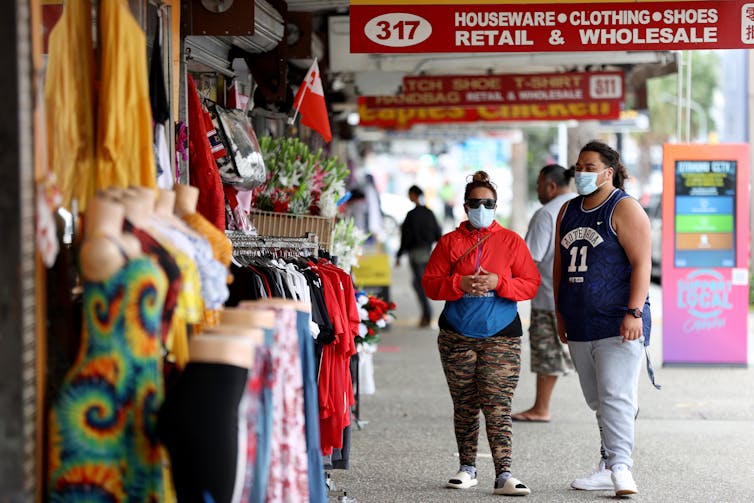
Nevertheless, despite historically high pre-pandemic participation rates, the added-worker effect is back. What is happening in Pasifika communities in Auckland is very reminiscent of the Great Depression. (Refer Covid poverty for hundreds of Auckland’s Pasifika Radio New Zealand, 3 September.) Pasifika – much more than Pākehā – run household economies not unlike those in New Zealand in the 1930s. Indeed, these communities have always had remittance obligations. Now Pasifika teenagers are leaving school in order to help their parents to meet their financial obligations.
Evidential Barriers
The added-worker effect should be statistically visible from the Household Labour Force Survey, showing up as people transiting from ‘not in the labour force’ to either ’employed’ or ‘unemployed’. However, there is a conceptual anomaly which has been built into the definition of ‘not in the labour force’. This is the anomaly of the ‘discouraged worker’; the anomaly that actually led to a technical fall in the unemployment rate for the June 2020 quarter.
The ‘not in the labour force’ statistical category is meant to be a measure of people in ‘retirement’, ‘caregiving’, ‘fulltime education’ and ‘voluntary work’. The statistic is flawed for two reasons. The first reason is that many people may be a mix of these activities, and any evidence of paid employment trumps all of these. Thus retired workers in higher education who are looking after grandchildren and doing voluntary work will be counted in none of these activities if they are doing as much as one hour of paid work, or doing unpaid work in a family business. Thus, the measure has a bias towards counting people as ’employed’. The problem here is that people who belong in multiple statistical boxes – that is, most people in the real world – are being categorised on the basis that they may only be attached to one box.
The second statistical flaw is that unemployed workers who are deemed to be not looking hard enough for paid work, or who are not able to start a new job ‘immediately’, are discarded from the unemployment statistics. These people are called ‘discouraged workers’; they are regarded as ‘voluntarily’ jobless. Their presence means that official unemployment statistics are biased downwards, making unemployment seem to be less than it really is. Many NEETs – ‘not in employment, education or training’ – are, statistically, discouraged workers.
Perhaps of even more concern than the unemployment undercount, discouraged workers (a deduction from the official labour force measure) become more numerous at precisely the same times that additional workers (an increase to the official labour force measure) also become more numerous. Thus, these two important groups cancel each other out in the labour market statistics, rending both invisible.
Statistics are used to inform policy. Flawed concepts and measures inform bad policy. We have no shortage of unimaginative and poorly informed economic policy, from all sides of the political spectrum.
To Finish
The statistics that I first produced in my MA thesis have been used by historians to indicate the scale of ‘unemployment’ in the Great Depression. They are usually cited with qualification, as applying a ‘generous definition’ of unemployment. In my thesis, I did not call them ‘unemployment’ tallies. Rather, I used the nuanced term, ‘residual labour force participation’. In fact, most of the unemployed during the Great Depression would not qualify to be counted as unemployed, if a strict application of modern statistical definitions were to be applied.
The problem is not that unemployment was less of a problem in the Depression than we previously thought. Rather, unemployment in the Depression was a substantially greater problem than either contemporary statistics or modern definitions would have us believe. People did not spend their time applying for jobs, as we understand ‘jobs’ today. Rather they hustled for income; everyone in the many affected families, not just the appointed breadwinner. The trick to understanding the Depression was to see what people were doing, not what they were not doing.
It’s becoming the same today, and not just because of the Covid19 pandemic. The labour market is becoming much more precarious, ‘casual’, fragmented. And many more people than before are in some respects self-employed. Post war labour market statistics – and academic analyses – focus far too much on wage and salary workers – and far too little on the precarious self-employed. So much of what happened in the Great Depression would have been counted today as self-employment rather than as unemployment; it is becoming so again. Casual self-employment – then and now – was often what the unemployed tried to do, because they had no other option.
In the midst of all the stories about China’s oppression in Hong Kong and Xinjiang and its expulsion of foreign journalists, a recent clash on its border with India may pose the greater threat to Asian security.
For the first time in 45 years, shots were fired this week.
This in itself was not unusual. The two sides have been locked in several tense standoffs along the LAC since May.
What makes this confrontation stand out is it involved the first known use of firearms on the border in almost half a century.
What happened?
China and India have accused each other of provoking this confrontation, which occurred in the Rezang-La heights area, just south of Pangong Lake.
According to Indian reports, there were between 30 and 40 Chinese troops involved. Photographs published in Indian media show Chinese soldiers armed with crude Guandao-stylepolearms, as well as standard issue rifles.
It is unclear how many Indian troops were involved or how they were equipped.
Border tensions have been building for months between India and China.Manish Swarup/AP
China claims Indian troops crossed the LAC and “blatantly fired shots” when Chinese border troops moved to deter them. India, has strenuously denied this, saying Chinese soldiers crossed the LAC and were blocked by an Indian forward position, who they then tried to intimidate by firing “a few rounds in the air”.
No troops have been reported injured or killed.
Regardless of which side actually fired the shots, the tactic did not work. Both Chinese and Indian soldiers remain in a stand-off, reportedly only 200 metres apart.
Unravelling rules of engagement
This recent exchange represents a troubling escalation between the two countries. It directly contravenes the rules and norms painstakingly established by China and India to govern behaviour on the border.
Negotiations on the disputed border have always been tough for China and India. The two sides took nearly 12 years of tentative negotiations before signing their first treaty in 1993, in which they agreed to “maintain peace and tranquillity” along the LAC.
Subsequent agreements were reached after negotiations in 1996, 2005 and 2013. These govern military conduct on the border and guidelines for a diplomatic resolution.
The prohibition against the use of weapons along the LAC was first laid out in the 1996 agreement.
Neither side shall open fire, cause bio-degradation, use hazardous chemicals, conduct blast operations or hunt with guns and explosives within two kilometres from the Line of Actual Control.
Until this week, China and India have upheld this agreement, even when previous border patrol confrontations became heated.
However, both sides have been pushing the limits of what the other will tolerate and have trying to exploit loopholes and technicalities for several years now.
Border confrontations have gradually escalated from farcical shoving matches to fully-fledged brawls and stone flinging, which caused injuries in 2017.
This year has seen both sides up the ante, with the introduction of makeshift clubs in a lethal melee at the Galwan Valley in June and China now seemingly equipping some border patrols with polearms.
Earlier this month, Indian media reported India was using new rules of engagement. This change allows its border troops to use whatever means are available for “tactical signalling” against the Chinese.
A dangerous deadlock
As two of the world’s largest militaries – and two nuclear-armed countries – even a limited border war between China and India would be devastating for regional peace and stability. It would likely ruin what little cooperation there is left and potentially pull in third parties, such as Pakistan or the United States.
War between India and China would be devastating.Manish Swarup/AP
It is clear from the flurry of diplomatic activity between China and India over the past months that they feel the gravity of their situation.
But despite both sides proclaiming they seek a peaceful resolution to the ongoing standoffs, a culture of mistrust continues to poison discussions.
China and India’s foreign ministers are scheduled to meet in Moscow on Thursday to discuss the border standoff in person for the first time since the crisis began.
Victoria’s health authorities are now looking overseas for a reprieve following the federal government’s criticism of the state’s coronavirus response.
The state government has enlisted US cloud-based software company Salesforce to administer a data management system in the health department to accelerate contact-tracing efforts.
The government also plans to roll out five new “suburban response units” throughout Melbourne, using local insights and connections to speed up contact tracing.
Secretary of the federal Department of Health, Brendan Murphy, on Monday said an “integrated and very effective tracing regime” could help bring Victoria safely out of lockdown.
But the federal government’s widelytouted but unsuccessful COVIDSafe app has shown how technology alone may not be a solution for public health challenges. So what’s different about the latest digital boost for Victoria?
Streamlined contact tracing is key
Contact tracing involves interviewing patients who have tested positive for COVID-19, to find out who else they came in contact with while infectious.
It’s a vital part of containing an outbreak, as it enables potentially infected people to be tested and isolated before they can infect others.
However, it is labour-intensive, particularly when the number of cases is large. When the capacity of contact-tracing teams is exceeded, delays ensue and effectiveness drops.
Victorian Premier Daniel Andrews said the upcoming Salesforce system would run in conjunction with the state’s 2,600 contact tracers, saving time otherwise spent on manual data entry.
US-based software company Salesforce already has more than 150,000 corporate users globally.zz/STRF/STAR MAX/IPx
The system would provide an electronic interface on which patients and case managers can upload details about where the patient has been, as well as the names, phone numbers and email addresses of their contacts.
The contacts can then be automatically notified by SMS or email, before being approached by the case manager for a more detailed discussion.
The system’s data collection and storage would be targeted at known cases. It would offer several advantages, such as:
contacts can be notified more quickly about their potential exposure to the virus and will know to stay home
suburban response units could more efficiently coordinate their efforts by assigning contacts to specific workers and providing contact logs. This would reduce the risk of multiple case managers following up with the same contacts, or of contacts being missed.
health authorities could have a more up-to-date view of the contact-tracing progress
potential overlaps between cases could be identified and used to prioritise which contacts should be followed up first.
Does the upgrade go far enough?
While the Salesforce system will undoubtedly make contact tracing more efficient and robust, it’s only one of a series of steps that could be automated to help manage outbreaks.
For instance, the system only starts when a person tests positive and health officials are notified. For maximum productivity, this could be done in real time by configuring pathology lab systems to automatically send test results to officials.
This could let them assess the test results of person A against those of their close contacts to better understand how the virus is spreading. Some factors to consider may include:
how many contacts of person A actually got sick (which means negative results matter too)
what kinds of contacts are getting sick. For example, is it only people with whom person A spent a lot of time in close quarters, or also people who happened to be in the same place at the same time?
Victorian Premier Daniel Andrews recently announced Melbourne’s stage 4 lockdown restrictions would be extended to September 28.James Ross/AAP
Also, connecting the system to patient administration systems in hospitals would allow appointments to be automatically scheduled for patient follow-ups, or for testing close contacts.
And integrating the system with electronic records in clinics and hospitals could provide critical insight into how different people respond to the disease.
Answering questions such as “does a patient from a clinic get admitted to hospital?”, “do they have mild or severe illness?” and “how do they respond to treatment?”, would improve doctors’ ability to care for patients.
This level of sophisticated data-sharing goes beyond the current digital capabilities of Victoria’s health-care system. But capturing case information in digital form is a first step towards this vision.
Is it too late to change?
Since experiencing a second wave of COVID-19, Victoria has boosted its contact-tracing workforce. Victorian Chief Health Officer Brett Sutton has reassured people the state can now reach case contacts within 24 hours.
Andrews confirmed the state had rejected an earlier proposal from Salesforce in March, saying:
Sometimes when you are swamped, it is not a great time to move to a new IT platform.
However, the upcoming system is based on Salesforce’s core customer relationship management platform in development since 1999.
Even if the system doesn’t end up being crucial in this pandemic, it could make a huge difference in future epidemics, especially as we enter what US infectious disease scientist Anthony Fauci has described as a “pandemic era”.
Data security and earning the public’s trust
The Robodebt saga has already made us sceptical using automated algorithms on personal data.
To safeguard Australian’s personal data, authorities must go the extra mile to make sure the system is foolproof. Some ways to do this could be:
putting regulations and safeguards in place to ensure data in the system is stored in Australia, only accessible to contact-tracing staff and only used only for intended purposes
opening the system up for assessment by cybersecurity experts before it’s implemented (potentially by providing the software source code)
keeping audit logs of who accessed the data and when, so any breach can be rapidly traced.
If governments want the public to accept technological solutions for public health challenges, they must first show they take our data privacy seriously.
Doing so will be a worthwhile investment – not only for outbreak management but towards digital innovation in public health.
As of September 9, Victoria recorded a total number of 19,688 cases and 694 deaths, according to the state Department of Health and Human Services.James Ross/AAP
Victoria’s health authorities are now looking overseas for a reprieve following the federal government’s criticism of the state’s coronavirus response.
The state government has enlisted US cloud-based software company Salesforce to administer a data management system in the health department to accelerate contact-tracing efforts.
The government also plans to roll out five new “suburban response units” throughout Melbourne, using local insights and connections to speed up contact tracing.
Secretary of the federal Department of Health, Brendan Murphy, on Monday said an “integrated and very effective tracing regime” could help bring Victoria safely out of lockdown.
But the federal government’s widelytouted but unsuccessful COVIDSafe app has shown how technology alone may not be a solution for public health challenges. So what’s different about the latest digital boost for Victoria?
Streamlined contact tracing is key
Contact tracing involves interviewing patients who have tested positive for COVID-19, to find out who else they came in contact with while infectious.
It’s a vital part of containing an outbreak, as it enables potentially infected people to be tested and isolated before they can infect others.
However, it is labour-intensive, particularly when the number of cases is large. When the capacity of contact-tracing teams is exceeded, delays ensue and effectiveness drops.
Victorian Premier Daniel Andrews said the upcoming Salesforce system would run in conjunction with the state’s 2,600 contact tracers, saving time otherwise spent on manual data entry.
US-based software company Salesforce already has more than 150,000 corporate users globally.zz/STRF/STAR MAX/IPx
The system would provide an electronic interface on which patients and case managers can upload details about where the patient has been, as well as the names, phone numbers and email addresses of their contacts.
The contacts can then be automatically notified by SMS or email, before being approached by the case manager for a more detailed discussion.
The system’s data collection and storage would be targeted at known cases. It would offer several advantages, such as:
contacts can be notified more quickly about their potential exposure to the virus and will know to stay home
suburban response units could more efficiently coordinate their efforts by assigning contacts to specific workers and providing contact logs. This would reduce the risk of multiple case managers following up with the same contacts, or of contacts being missed.
health authorities could have a more up-to-date view of the contact-tracing progress
potential overlaps between cases could be identified and used to prioritise which contacts should be followed up first.
Does the upgrade go far enough?
While the Salesforce system will undoubtedly make contact tracing more efficient and robust, it’s only one of a series of steps that could be automated to help manage outbreaks.
For instance, the system only starts when a person tests positive and health officials are notified. For maximum productivity, this could be done in real time by configuring pathology lab systems to automatically send test results to officials.
This could let them assess the test results of person A against those of their close contacts to better understand how the virus is spreading. Some factors to consider may include:
how many contacts of person A actually got sick (which means negative results matter too)
what kinds of contacts are getting sick. For example, is it only people with whom person A spent a lot of time in close quarters, or also people who happened to be in the same place at the same time?
Victorian Premier Daniel Andrews recently announced Melbourne’s stage 4 lockdown restrictions would be extended to September 28.James Ross/AAP
Also, connecting the system to patient administration systems in hospitals would allow appointments to be automatically scheduled for patient follow-ups, or for testing close contacts.
And integrating the system with electronic records in clinics and hospitals could provide critical insight into how different people respond to the disease.
Answering questions such as “does a patient from a clinic get admitted to hospital?”, “do they have mild or severe illness?” and “how do they respond to treatment?”, would improve doctors’ ability to care for patients.
This level of sophisticated data-sharing goes beyond the current digital capabilities of Victoria’s health-care system. But capturing case information in digital form is a first step towards this vision.
Is it too late to change?
Since experiencing a second wave of COVID-19, Victoria has boosted its contact-tracing workforce. Victorian Chief Health Officer Brett Sutton has reassured people the state can now reach case contacts within 24 hours.
Andrews confirmed the state had rejected an earlier proposal from Salesforce in March, saying:
Sometimes when you are swamped, it is not a great time to move to a new IT platform.
However, the upcoming system is based on Salesforce’s core customer relationship management platform in development since 1999. It has already been used in Western Australia, South Australia, New Zealand and 35 US states. This suggests a mature product with the kinks worked out.
Even if the system doesn’t end up being crucial in this pandemic, it could make a huge difference in future epidemics, especially as we enter what US infectious disease scientist Anthony Fauci has described as a “pandemic era”.
Data security and earning the public’s trust
The Robodebt saga has already made us sceptical using automated algorithms on personal data.
To safeguard Australian’s personal data, authorities must go the extra mile to make sure the system is foolproof. Some ways to do this could be:
putting regulations and safeguards in place to ensure data in the system is stored in Australia, only accessible to contact-tracing staff and only used only for intended purposes
opening the system up for assessment by cybersecurity experts before it’s implemented (potentially by providing the software source code)
keeping audit logs of who accessed the data and when, so any breach can be rapidly traced.
If governments want the public to accept technological solutions for public health challenges, they must first show they take our data privacy seriously. Doing so will be a worthwhile investment – not only for outbreak management but towards digital innovation in public health.
As of September 9, Victoria recorded a total number of 19,688 cases and 694 deaths, according to the state Department of Health and Human Services.James Ross/AAP
News that US President Donald Trump was fully seized of the deadly potential of the novel coronavirus, despite his sustained public dismissals, has provoked anger and surprise.
Audio recordings from interviews granted to veteran reporter Bob Woodward expose a clear disconnect between the president’s many public utterances, dating back to January, and those he made to Woodward intended for reporting at a later time.
“You just breathe the air and that’s how it’s passed,” Trump said in a February 7 interview with The Washington Post’s associate editor, before the US experienced its first confirmed coronavirus-related death. “And so that’s a very tricky one. That’s a very delicate one. It’s also more deadly than even your strenuous flus,” he continued. “This is deadly stuff.”
The president’s clarity came ten days after he had received dire warnings from his health and national security advisers to the effect that the world faced a health crisis not seen since the so-called Spanish flu of 1918-19.
Then, speaking to Woodward again on March 19, Trump explained his thinking had been deliberately calculated to “play it down”.
I still like playing it down, because I don’t want to create a panic.
That this president is strategic to the point of deceit will come as no surprise to his critics within America and beyond.
But some may be surprised to learn that, contrary to his ill-informed ramblings about COVID-19 simply disappearing, or being treatable with bright lights and injections of disinfectant, Trump actually did comprehend the medical advice regarding the virus well before it tore a deadly swathe through the American population and overwhelmed its hospitals.
Yet still he did little to co-ordinate a national response. He continued to undermine the kind of public awareness required to drive social distancing.
Whether Trump’s justification of avoiding public panic is the whole truth is itself questionable. It seems more likely that heading into an election year, with the strong US economy as his singular advantage, the president was simply unwilling to brook the economic damage required to fight the virus.
In any event, with the US death toll now expected to surpass 200,000, the decision to deceive Americans in order to limit public harm seems absurd.
Yet governments and their officials have often considered the dangers of public overreaction when disseminating emergency advice.
Sometimes this is because an uncontrolled public clamour would create a secondary crisis, and sometimes because public panic is itself the problem.
In 1974, South Australian Labor Premier Don Dunstan grabbed a loudhailer to address an anxious throng of Hindmarsh Building Society depositors. He assured them their savings were safe, the institution was solvent and it was underwritten by the state treasury.
In October 2008, the Rudd government carefully calibrated its public utterances to avoid causing a run on financial institutions, while nonetheless announcing deposit guarantees for some A$2 trillion in deposits and becoming guarantor for the wholesale funding requirements of Australian banks amid the gathering GFC storm.
Later, it emerged Kevin Rudd and his ministers were getting real-time information suggesting several banks were experiencing abnormal withdrawals, with Suncorp weathering a massive uptick pushing it close to insolvency. It was reported that one business figure allegedly withdrew A$3 million and was taking it across town in a suitcase.
Needless to say, these graphic details were withheld, demonstrably in the interests of financial sector stability and, by extension, the greater public interest.
In that case, fear itself was the contagion.
Yet the emergent COVID-19 pandemic presented precisely the opposite problem. Fear or, less dramatically, public awareness offered the solution.
Health authorities quickly realised that the highest possible level of public observance via enhanced personal hygiene practices presented the only realistic hope of containing the pandemic.
In Australia, state governments, perhaps because they are more accustomed to receiving frontline emergency services briefings, acted quickly to invoke social distancing rules and aggressive health messaging. They introduced some extreme measures such as sporting bans, school closures, travel restrictions and border closures. Police were given extraordinary new powers.
The Commonwealth response was slower and more reluctant – notwithstanding that, by international standards, it appeared relatively front-footed.
Prime Minister Scott Morrison famously resisted many of the states’ more extreme measures. He even advocated attendance at large sporting events while reluctantly foreshadowing incoming limits on public gatherings.
The then chief medical officer, Brendan Murphy, also questioned disruptive measures with border and school closures criticised. Face masks were questioned, too, with the federal government insisting they offered no protection outside health-care settings and were, in any event, unnecessary. On March 9, Murphy told ABC Radio’s Ali Moore:
Well, certainly wearing a mask walking down the streets of Melbourne makes no sense at all because there’s no evidence of community transmission generally […] I’m certainly very opposed to people wearing them in the general community.
Yet increased public awareness came with costs too. Australia garnered international headlines for its run on toilet paper and other essentials, with supermarkets stripped of products, shoppers squabbling and retail staff abused for shortages or store-imposed item limits.
The lesson is that full transparency should be the default position of governments. But there can be an exception when fear itself is the central problem, and when publicly expanding on it would only deepen the crisis.
Flaws in Papua New Guinea’s public health system and the medicine supply chain are because of poor management in the Health Department, with some officers “living extravagant lifestyles far beyond their salary”, according to a new report.
Public Accounts Committee chairman Sir John Pundari yesterday tabled in Parliament the report of an inquiry which began in August last year into the supply, procurement and distribution of medicines but is timely with a rising rate of covid-19 infections.
Sir John said the responsibility “rests primarily on the management” of the department “who are custodians of our medicine supply chain and our people’s health”.
“Our medical supply and distribution systems have been compromised because the (Health Department) allowed this to happen by either complacency, incompetence, design and or greed,” Sir John said.
He said “numerous reports had been received of senior officers of the department directly involved in the procurement of medicines, affording to living extravagant lifestyles, far beyond that which is expected from a normal public servant salary”.
Sir John said the inquiry was about establishing the truth.
“It was about understanding the reasons for the failing procurement, supply and distribution of medicines and medical kits throughout the country,” he said.
‘Deeply saddened by betrayal’ “The committee was deeply saddened that our very own politicians, bureaucrats and senior civil servants in positions of trust and authority have betrayed our own people in allowing greed and corruption to flourish in the procurement, supply and distribution of drugs and medical kits in our country that have resulted in avoidable deaths from curable diseases.
“If ever there was a sector which should be safeguarded by political leaders to ensure that services are provided in an effective and efficient manner, free from exploitation, it is public health.”
He related an “unforgettable and heart-wrenching” picture the committee came across of a rural aid post with a grave next to it.
“[Locals] told us that they carried [the sick man] for miles to the aid post,” he said.
“There was no hope to begin with. But he was their brother. Their father. Their husband. So they carried him anyway.
“Finally at the doors of the aid post, they were told that there was no health worker there anymore.
“Medicines [had] stopped arriving a few months back, so the aid post had been abandoned. [The sick man] looked at their tired and troubled faces and as he lay [dying] he asked them to bury him there so they would not have to carry his body back home.
‘They buried him alone’ “They buried him there alone, away from his land, his village and his family.”
He said the story depicted the truth about the failing health system.
“It needed to come from patients and health workers who regularly see men, women and children dying in front of them while they are helpless to save their lives.
“They tell us the truth.”
The Pacific Media Centre republishes The National articles with permission.
Google and Facebook have launched a nationwide public relations campaign in response to the Australian Consumer and Competition Commission’s draft news media bargaining code.
At first glance, these responses might look like overreactions. For multinational companies with billions of dollars in revenue each quarter, paying for Australian news would be small potatoes.
But their more pressing concern may be that whatever happens in Australia could set a precedent for other countries. Other nations are holding inquiries on how best to regulate big tech platforms, and they are watching developments in Australia very closely.
Both reviews call for new regulations to manage the relationship between platforms and news publishers. The UK specifically mentions a code of conduct. The Canadian inquiry discusses the possibility of a code but also suggests that online platforms could pay money into a fund to support Canadian content (including news).
However, neither government has yet taken up these reforms. One reason for the delay in the UK is that the government there has a busy policy agenda around digital platforms, and is waiting for recommendations from multiple reviews before introducing major regulatory reform.
The second reason is that the UK and Canada are watching and waiting to see what happens in Australia.
Similar countries may adopt similar rules
Watching Australia makes sense. Canada and the UK have similar media systems to Australia. All three countries also share a common law heritage and often turn to each other for policy ideas.
As a result, it would be relatively easy for these countries to translate aspects of the ACCC’s draft bargaining code to their own codes of conduct.
Canada is already being influenced by the Australian reform process. The country been quite active on the international stage and has tried to establish global cooperation around platform regulation through its participation in the International Grand Committee. The Committee has brought together legislators from around the world who are working together to establish baseline regulatory principles for the internet and share policy solutions.
However, Canada is starting to move away from these international discussions and consider national solutions. Canada’s heritage minister Steven Guilbeault recently called on platforms to pay for news content, which suggests Australian developments might be informing Canada’s regulatory response.
Facebook has threatened to stop distributing news on its platform if the Australian reforms go ahead.Patrick Sison / AP
Europe is already pushing Google to pay
Another problem for platforms is that countries without a shared legal heritage with Australia are also pursuing similar reforms. France is the most notable example: in April its competition authority ordered Google to pay publishers for news.
The decision essentially forced Google to engage in a bargaining process like the one proposed in Australia. However, Google has been accused of not bargaining in good faith, and French publishers are returning to the regulators to reset the negotiations.
French publishers have also tried to streamline the process by joining with their German colleagues with the goal of establishing a one-stop shop for bargaining.
An international approach
This combination of active reforms and dormant inquiries helps to explain why Google and Facebook have reacted so dramatically. Australia is engaging in a “world first” regulatory endeavour. However, it is important to remember that Australia is not the only country considering reforms, they are just the first to implement them. The big question is whether other countries are influenced by the Australian response.
The threat of a consistent international approach that would see Google and Facebook pay for news in multiple countries is what has brought the platforms onto the front foot, engaging in a dedicated public relations exercise. The cost of paying for news globally has not been accounted for in their business models, and it’s an expense they are not keen to wear.
On Tuesday, eight young Australians aged 13-17 filed a class action seeking an injunction to prevent federal Environment Minister Sussan Ley approving a new coal project expansion.
They are bringing their case to the Federal Court. They argue if Whitehaven’s Vickery coal mine expansion in New South Wales is approved, it will contribute to climate change which endangers their future.
Saying the environment minister owes the young plaintiffs a duty of care is a novel approach. In their view, signing off on a new coal project will breach that duty. Such an approach to a climate change case has not been tested before in Australia, and would chart new territory if successful.
Although a legal victory would appear difficult on these grounds, the implications of this case are already significant. They show young people, determined to fight for action on climate, will continue to find new ways to hold powerful people to account.
What is the case about?
The case concerns a proposal to construct an open-cut coal mine, about 25 kilometres north of the NSW town of Gunnedah. It’s an extension project, meaning it will expand a mine that has already been approved, increasing its coal production by about 25%, and emissions by 100 million tonnes of greenhouse gases over the life of the project. The coal would be exported.
One of the plaintiffs, Izzy Raj-Seppings, made headlines earlier this year when she was threatened with arrest outside the prime minister’s Kirribilli residence during a school climate strike.AAP Image/Steven Saphore
Like many mining proposals, this one has been divisive. Farmers worry about competing for water, and the local community has expressed concern over the environmental record of the coal company.
Yet in August, the NSW Independent Planning Commission approved the proposal, finding the expansion is in the public interest, given the forecast jobs and revenue. It has not yet received federal approval.
What are the teenagers arguing?
The young plaintiffs are not bringing their case under environmental law, which would be the traditional way to launch a legal challenge objecting to a coal mine.
Environmental law invites government decision-makers to balance competing concerns — such as economic benefits versus environmental impact — with no clear stipulation as to how much weight to give each relevant factor.
There is limited recourse to argue a decision is wrong because the positive and negative impacts were not given particular priority by a minister. This means decision-making on major projects is largely within the political realm.
Environment Minister Sussan Ley has not yet signed off on the approval for the coal project expansion.AAP Image/Lukas Coch
Instead, the plaintiffs are arguing the environment minister shouldn’t approve the coal proposal because doing so would breach a duty of care owed by the minister to protect them from the harmful impacts of climate change. This includes more frequent extreme weather events, and destruction of the natural systems that support human life.
The case has parallels with a landmark Dutch case or the famous Juliana case that was recently quashed in the US, where it was successfully argued in 2019 that the Dutch Government breached its duty of care to its citizens through inadequate action on climate change.
For the Australian case to succeed, the Court will first need to consider whether a duty of care exists in Australian law. There is no statutory duty (under laws created by the parliament), so the Court would need to “find” the duty as existing in common law.
Then, the plaintiffs would need to establish that the duty would be breached by the environment minister signing off on the coal project.
Will it succeed?
Establishing both these things is likely to be very difficult in our legal context. From past cases, we know Australian courts have been reluctant to find a causal link between climate change and individual projects, even large mines. However, this link was found in a NSW case last year.
The court is likely to look closely at the particular relationship between the minister and the vulnerable young people, who will be strongly impacted by climate change but have no voting rights. It will consider whether they represent a particular class of individuals, in relation to which the minister has a responsibility.
One of the plaintiffs’ lawyers recently highlighted a case that potentially paves the way to support this idea. In 2016, the Federal Court found the immigration minister Peter Dutton owed a duty of care to a vulnerable refugee with a history of trauma, who was detained on Nauru.
This case shows how determined young Australians are to fight for climate action.AAP Image/Erik Anderson
One thing in the current case’s favour is that, similar to the Dutch case, the plaintiffs are not seeking monetary compensation. If they were, the difficulty for the courts to determine what future obligation the government might have to pay out young people would, almost undoubtedly, prohibit success.
What’s also interesting about this case, unlike the Dutch case, is that it’s not asking the government for broad-scale policy action on climate change. It’s only concerned with one coal mine approval. This is a more straightforward remedy which a court could be more willing to grant.
Beating the odds
If the case successfully established a duty and that it was breached, this would open up the possibility future coal approval decisions would also breach the duty — somewhat of a Pandora’s box.
Although we will have to wait and see what the Court says, the suit will draw attention to the government’s climate policies, whether or not it succeeds.
If the case succeeds, it might compel the government to stop approving any coal mines that would significantly contribute to climate change. If it doesn’t, it will remind us that it’s up to the government to respond to the threats climate change poses, rather than the courts.
Either way, the teenagers in this case are part of a growing number of people willing to find creative avenues to pursue action, even if it means taking a long shot. And beating the odds is exactly how the law tends to evolve.
In another round of the increasingly bitter exchanges between China and Australia, a columnist for China’s Global Times, Yu Lei, suggested that a further decoupling from China will make former Singapore Prime Minister Lee Kuan Yew’s famous prediction a reality:
The “white trash” debate took place 30 to 40 years ago and caused a lot of hand-wringing.
Yet, contrary to predictions at the time, Australian incomes and living standards have remained comfortably above most of our Asian neighbours.
That’s not because we have performed spectacularly well. Australia ranked 12th in the OECD ranking in the early 1980s and it now ranks 10th or 11th.
But growth rates in Asia have slowed as the easy gains from technological progress have been exhausted.
Although the racially charged imagery of white trash attracted attention, much of the angst in the 1980s was about our standing within the group of rich countries.
Singapore Prime Minister Lee Kuan Yew claimed Australia could become ‘white trash’
The key talking point was that while Australia was thought to have had the world’s highest income per person in the late 19th century, it had fallen to 12th in rankings of rich countries.
I criticised this line of thinking at the time on the grounds that our number one position in the 19th century rested primarily on the demographic structure of what was still a frontier society, dominated by working age males.
In addition, Indigenous workers contributed to output but weren’t counted as part of the population.
Once I adjusted for these factors, Australia turned out to be in the middle of a group of rich countries in the late 19th century, just as it was in the late 20th.
Interestingly, a similar point can be made about Singapore today.
Our ranking hasn’t changed much since the 1980s
While most other Asian countries still have income levels below those in Australia, Singapore appears on lists as one of the richest countries.
This is partly due to the fact that one-third of its workforce is made up of migrant workers, many living in Third World conditions and sending remittances home.
The high number of migrant workers results in a high ratio of employment to measured population (since the families aren’t counted). As well, because migrant worker wages are so low, Singapore’s citizens can afford to hire migrants as domestic servants and for other purposes.
After correcting for these biases, Singapore has about the same income per person as Australia, but with a massively-unequal distribution.
How much does all this matter to the typical Australian family? Hardly at all.
For any given family, living standards depend more on the distribution of income, and on the ups and downs of the labour market, than on variations in Australia’s performance relative to other developed countries, or relative to our Asian neighbours.
Getting domestic policy right on issues like employment and health care is far more important than “international competitiveness” – even more so during the pandemic.
Now let’s turn to the suggestion that, in the absence of more compromise with China on trade and policy issues, we will indeed end up as poor white trash.
We need China, but we’d manage without it
The obvious threat is to our exports and, in particular, iron ore which is our biggest single export and goes mostly to China.
On the face of it, it’s a big deal. Australia exports just over A$100 billion a year worth or iron ore, mostly to China, but only a fraction of this money represents income for ordinary Australians.
The mining industry in Western Australia employs about 100,000 people – less than 1% of Australia’s workforce. Their wages amount to about $10 billion a year.
In addition, major iron ore mining companies pay around $15 billion a year in royalties and company taxes. The combined income flow is about 1% of Australia’s national income.
Iron ore adds just a few percent to our national income
Most of the rest of the industry’s income flows overseas, to pay for imported equipment or as returns to overseas bondholders and shareholders.
And even if the China’s market was closed to Australia, there would be offsets.
Iron ore is a commodity, meaning that if China bought more of it from other producers such as Brazil, there would be less Brazilian iron ore in the market for other customers who would have a greater need for Australian iron ore.
And to the extent that Australian iron ore exports did fall, the Australian dollar would depreciate, making other Australian exports more attractive.
Similar points can be made about other exports to China including Australian tourism and education services.
That’s not to say that we should be complacent about the risks of a breakdown in our trading relationship with China. A loss of 2% of 3 % of national income is comparable to the impact of a standard recession and would entail plenty of economic disruption with accompanying unemployment.
The Oxford vaccine trial at the centre of safety concerns this week highlights the idea that people’s immune systems respond to vaccines differently.
We don’t yet know whether reports of immune complications in one or two trial participants have been linked to the COVID-19 vaccine itself, or if they were given the placebo vaccine.
But it does highlight the importance of phase 3 clinical trials in many thousands of people, across continents. These not only tell us whether a vaccine is safe, but also whether it works for people of different ages or with particular health issues.
So what are some of the immune factors that determine whether any of the 180 or so COVID-19 vaccine candidates being developed around the world actually work?
An effective vaccine should generate long-lasting protective immunity against SARS-CoV-2, the virus that causes COVID-19.
This can be by generating antibodies to neutralise the virus and likely also by helping the immune system memorise and quickly respond to infection.
How vaccines work with your immune system to protect against disease.
We know, from developing vaccines against other viruses, that people’s immune response to a vaccine can vary. There’s every reason to believe this will also be the case for a COVID-19 vaccine.
1. Vaccine type and how it’s delivered
Many COVID-19 vaccine candidates contain parts of the SARS-CoV-2 spike protein to stimulate protective immunity. However, there are many different ways of delivering these proteins to the body, and some may be more effective than others at stimulating your immune system.
For example, the Oxford vaccine combines the spike protein with another virus to mimic the actions of SARS-CoV-2.
Meanwhile, the candidate developed by the University of Queensland contains the spike protein packaged with another compound (an adjuvant) to stimulate the immune system.
Previous infections may prime our immune system to respond differently to vaccination.
For instance, the SARS-CoV-2 virus belongs to a large family of human coronaviruses, four of which are responsible for common colds.
Being exposed to these cold-causing coronaviruses, and developing immune memory cells against them, may mean a stronger or quicker response to a COVID-19 vaccine.
The common cold can also be caused by coronaviruses, and your immune system may be primed to respond.www.shutterstock.com
Some people have poor protective immune responses to COVID-19 vaccine candidates. These people may have existing immunity to the adenovirus used in some vaccines to deliver the SARS-CoV-2 spike protein.
In other words, their body mounts an immune response to the wrong part of the vaccine (the delivery mechanism) and not so much to the characteristic part of the virus (the spike protein).
3. Our genetics
Our genes play a large part in regulating our immune system.
Researchers have already seen sex differences, which are partly governed by genes, in the immune response to the flu vaccine. They have also seen sex differences in the immune response to COVID-19.
So larger clinical trials should help us understand whether men and women respond differently to a COVID-19 vaccine.
People with inherited immune deficiencies may also be unable to generate protective immunity in response to vaccination.
As we get older, changes in our immune system mean we cannot efficiently maintain long-lasting protective immunity; we are less able to make new antibodies in response to infection.
We already know older people are less likely to mount a protective immune response with the flu vaccine.
So we need the data from large trials to verify whether COVID-19 vaccines work in children and elderly people.
5. Lifestyle factors
Diet, exercise, stress and whether we smoke influence our immune response to vaccination. So we can look after our immune system with a healthy lifestyle where possible.
There is also an emerging hypothesis that our gut microbes may influence our immune response to vaccination. But more research is needed to confirm this could occur during COVID-19 vaccination.
A proposed law would give the federal government power to cancel arrangements between foreign governments and Australian states, territories, local councils and public universities.
At first glance, it’s not meant to cover universities’ arrangements with all foreign universities. However, the practical reality is that it could impact all sorts of Australian university arrangements with foreign entities, including universities. These powers have the potential to affect arrangements for joint degrees, staff or student exchange programs, research grant funding, collaborative research and joint conferences, among other things.
It’s fairly clear the Commonwealth has the constitutional power to do this. Nevertheless, the inclusion of Australian public universities in this regime is problematic. (ANU, we regret to advise that you will be subject to this legislation but Bond and Notre Dame, please be advised that you may continue to go forth and make your foreign arrangements as you see fit.)
Universities Australia has expressed “grave concerns” about the potential impact on “tens of thousands of research projects”.
It has been suggested the legislation will only cover arrangements with foreign universities that are “arms of a foreign government”, such as government military universities. However, the bill as tabled creates potential for overreach. This is because the question of whether a university agreement is covered or not will turn on the nebulous determination of whether the foreign university has “institutional autonomy”.
The bill does not define this. The forthcoming rules made under this legislation will set the criteria for assessing the autonomy of foreign universities.
At this point, the criteria are unknown. The explanatory memorandum to the bill suggests they “may include” if a government or political party exerts “control or influence” over “university management, leadership, curriculum and/or research activities”.
The foreign affairs minister (not parliament) will determine the criteria in a legislative instrument. This is a form of rules or regulations that the minister can unilaterally change at any point. (Parliament does have the power to veto these later.)
Even if the criteria for autonomy are fairly clear to understand and remain consistent, this still presents a practical problem for universities. How are universities to determine how the rules might apply to foreign universities whose internal operating arrangements are not publicly available? Even if available, they might not be in English.
And if the federal government is suggesting a foreign university’s autonomy is important, is not the bill setting a double standard that Australian universities may not meet? They are certainly regulated by the federal government’s Tertiary Education Quality and Standards Agency (TEQSA). And government policy changes – such as funding for student places and research block grants, among other things – regularly have direct impacts on public universities.
Indeed, this bill is one just more example of the government’s recent efforts to regulate what universities do and how they do it.
And that’s not the only problem
The powers in this bill are wide-ranging. As a result, the regulatory impact of this oversight and veto regime will be significant.
For a start, the bill seeks to safeguard Australia’s foreign policy “whether or not the policy […] is written or publicly available”. Even the most risk-averse, compliance-inclined Australian entity is going to find it difficult to operate in support of a policy that it knows nothing about.
A 2014 agreement between the Croatian government and Macquarie University to support Croatian studies is one of a huge number of arrangements that would be subject to review under the proposed legislation.Effy Alexakis/Photowrite/AAP
There is a complicated set of statutory definitions. These involve core entities, non-core entities, core arrangements, non-core arrangements and subsidiary arrangements with third parties. Different rules apply for the various combinations of these. This is one of those occasions where a set of Venn diagrams should have replaced the simplified descriptive outlines now common to Commonwealth legislation!
The decision-making process about whether foreign arrangements are inconsistent with Australia’s foreign policy and what happens afterwards is also problematic. The legislation states:
The Minister is not required to observe any requirements of procedural fairness in exercising a power or performing a function under this Act.
And that’s just the start of the imbalance of power.
If the parties affected do not agree with the minister’s decision, they have little recourse. The bill does not provide for merits review – an appeal where the facts can be considered anew, alongside the lawfulness of the decision-making process. It explicitly, in a related bill, excludes review under the Administrative Decisions (Judicial Review) Act 1977.
Proposed government powers to terminate university agreements raise issues similar to the concerns about legislation that terminated Clive Palmer’s damages claim.Dave Hunt/AAP
You would think new powers enabling the Commonwealth to unilaterally terminate arrangements between Australian entities, including universities, and certain foreign entities ought to excite similar concern about the risk for foreign parties in making agreements with Australians.
One thing about this legislation as it stands appears certain: any trust that foreign universities currently place in Australian universities will be at risk when it becomes known the Commonwealth can unilaterally terminate their arrangements.
Night in the Woods is a video game about strange in-between spaces: between youth and adulthood, between a rose-tinted past and an uncertain future.
Released in 2017, it feels especially resonant in a time of COVID-19. Its themes of underemployment, decaying cities and youth disenfranchisement, combined with a mood of uncertainty about the future, presciently capture this moment.
A single player adventure game, the narrative of Night in the Woods begins with the protagonist, anthropomorphic cat-punk Mae, dropping out of university for mental health reasons and returning to her rural hometown. Her father forgets to pick her up from the bus stop, so Mae finds herself walking home through the dense, shadowy woods.
The player navigates Mae through a two-dimensional landscape, including the remnants of an old playground. Essentially, we pilot Mae through the ruins of her childhood.
This sets the tone for the plot ahead: a fractured and bittersweet coming-of-age story where Mae is caught between nostalgia for her youth and the unfriendly reality of the adult world around her.
While there is a supernatural element, for the most part, the game’s eerie, Gothic air captures the existential dread inherent in being a young person in the 21st century.
The game’s setting, Possum Springs, is a fictional town steeped in reality. It sits in America’s Rust Belt, a once booming industrial hub that has fallen into financial hardship as local resources dry up. The adults and old-timers talk about The Good Ol’ Days, and the young people — Mae’s old friends — find themselves either unemployed, or stuck behind retail counters just so they can pay the rent.
Night in the Woods: Infinite Fall.Screen capped from trailer: https://www.youtube.com/watch?v=u17kM8oSz3k
Mae finds herself afloat: she is unemployed and has left her studies, so there is little for her to do except wander around town and try to avoid her own creeping dread. As the player sends Mae exploring, they can poke through the nooks and crannies in Possum Springs and witness Mae’s complicated emotional reactions to what she finds there.
She mourns the ruin of a parade float from her childhood, now left to be eaten by rats in a storage room. She sneers at the war monument in the centre of town. She falls back into self-destructive habits when the sense of nightmarish boredom becomes too much.
As traditional markers of maturity, like buying your first home or settling into a solid career, become less and less accessible, the borders between “youth” and “adulthood” are increasingly blurry.
This has been true for a long time, but Covid conditions have highlighted the strange in-between space many members of the millennial and Z generations occupy.
Mae’s anxiety is not pandemic-related, but as Possum Springs crumbles around her and her dreams become increasingly haunting, she becomes an emblem of her generation.
Through Mae, Night in the Woods asks: what will the future hold, if we can’t possibly go back to the way things were before? What if we can’t rely on the adults, who we assumed had it all figured out and would always protect us? And what is an adult, anyway?
The eventual villains of the piece are a group of old timers who are all too willing to hurt vulnerable people in the name of returning Possum Springs to its former prosperity. This is part of the game’s Gothic horror element, but it is, in a way, also one of its most realistic aspects.
Mae’s loss of faith in the protective authority of adults, the financial stress and disenfranchisement of her friends, and the overall aura of uncertainty make Night in the Woods a raw and harrowing picture of 21st century youth.
But the game also has a hopeful ending, even if things remain shaky. Maybe it is not as simple as saving the day and defeating a great evil. Maybe things will never go back to “The Good Ol’ Days”. But Mae and her friends have each other, and are ready to face the uncertain future with a rebellious fire in their hearts.
The game ends with Mae ready to keep going, which is no mean feat.
Source: The Conversation (Au and NZ) – By Chantal Denise Pagel, Doctoral student | Marine Wildlife Tourism Professional, Auckland University of Technology
Three people were injured last month in separate humpback whale encounters off the Western Australia coast.
The incidents happened during snorkelling tours on Ningaloo Reef when swimmers came too close to a mother and her calf.
Swim encounters with humpback whales are relatively new in the Australian wildlife tourism portfolio. The WA tours are part of a trial that ends in 2023. A few tour options have also been available in Queensland since 2014.
But last month’s injuries have raised concerns about the safety of swimming with such giant creatures in the wild.
But when we interact with wild animals there is always a risk to safety, especially in challenging environments such as open water.
Whales, like other wildlife, may behave unpredictably. Active surface behaviours such as breaching, tail and fin slaps present a significant risk for swimmers and whale watchers.
A humpback whale (1) breaching, (2) head lunge, (3) tail slap and (4) pectoral fin slap can all be a danger to people close by.Chantal Denise Pagel, Author provided
In one of the WA encounters, the nursing female was reported to display pectoral fin and tail slaps. These are potentially threatening due to the size (up to 16 metres long) and power of humpback whales.
These behaviours are frequently observed in social interactions between humpback whales and can present a severe risk of injury to anyone close by, with potentially life-threatening results.
A recent study of the impacts of swimmer presence on humpback whales off Réunion Island (on Madagascar’s east coast in the Indian Ocean) confirmed a high occurrence of aggressive and/or defensive whale behaviour.
The researchers observed flipper and tail fluke swipes and thrashes – sudden movements of a whale’s extremities – especially in mother-and-calf pairs.
Active whale behaviour is exciting to observe, but that flipper can pack a powerful punch.Flickr/Michael Dawes, CC BY-NC
Keep your distance
While the reasons for the Australian incidents are still unclear, a possible explanation could be that the swimming groups approached the whales too closely and ignored the signs the whales did not welcome visitors.
Maintaining a safe distance should be required of any tourists interested in seeing or getting close to unpredictable wildlife, especially in unfamiliar environments.
We cannot expect tourists, who are often first-time whale swim participants, to be able to read and interpret whale behaviour. So it is vital that crew members are skilled and experienced and can end an encounter if it needs to be.
Knowledgeable in-water guides are indispensable in commercial swim-with-whales programs. Yet this is often not a requirement by organisations issuing licenses for such activities.
For example, permits in New Zealand require “knowledgeable operators and staff”, but there is no requirement to have guides in the water during the encounter. People interested in swim-with-whale encounters should choose tour companies that provide in-water guides who join them in their adventure.
We should also question whether interactions with female whales caring for newborn calves should be allowed. Best-practice guidelines advise against interactions where calves are present.
We need to be extra careful when near a mother humpback whale with her calf.Shutterstock/Lewis Burnett
Recent research in the popular whale-swim destination Tonga showed mother-and-calf pairs avoid about one-third of tour vessel approaches by diving for longer periods.
Yet surface resting times are critical for calves. Any decrease in time spent resting for mother-and-calf pairs can affect a calf’s growth rate, overall fitness and chances of survival.
Similar observations were made in Réunion. Three out of four (74%) mother-calf-pairs changed their behaviour to avoid swimmers.
Safety first: for whales and swimmers
The Pacific Whale Foundation is undertaking a study to assess the impact of swimming with humpback whales in Hervey Bay, Queensland, Australia.
This research is to monitor the behaviour of humpback whales, providing critical insights into whether tourism activities add stress to this recovering population.
But research into the suitability of wildlife species used for commercial tourism operations and their health and safety provisions still lacks fundamental depth.
In highly interactive tourism activities such as swim-with-wildlife programmes, tourists should receive education about the risks involved in these “bucket list” experiences. This should include information on animal behaviour and the potential consequences for swimmers.
Furthermore, training tour operators to identify behaviours that may indicate disturbance or have the potential to be harmful to clients is an important additional step towards safer interactions.
Welcome to Evening Report’s A View from Afar:As always, we are joined by political scientist Paul Buchanan to discuss:
1: How Trump told Bob Woodward he intentionally held back how deadly Covid-19 was. We consider how damaging will Woodward’s book RAGE be, for his presidential campaign?
2: How effective is Trump’s culture-wars, race-baiting tactic… VERSUS Biden’s conservative positioning strategy be?
3: AND… What’s behind Trump’s attack on US Military leadership? Is this wedge strategy damaging, for him?
INTERACTION: Remember, if you are joining us LIVE via social media (SEE LINKS BELOW), you can make comments and include questions. We will be able to see your interaction, and include this in the LIVE show.
You can interact with the LIVE programme by joining these social media channels. Here are the links:
New Zealand churches with US links are being blamed for spreading covid-19 misinformation.
Health Minister Chris Hipkins has said some of the 43 people linked to the Mt Roskill Evangelical Fellowship church “mini-cluster” in Auckland were sceptical about the seriousness of the pandemic, as church and community leaders say they face a battle to check the spread of false information.
Pakilau Manase Lua grew up in the Seventh Day Adventist church and said his own friends and family were guilty of spreading conspiracies and false information about covid-19.
“I’ve personally received lots of private messages regarding information that people think is useful but is purely disinformation, either about the virus itself or fear around the vaccine,” he said.
Pakilau, who is the chairman of the Pacific Leadership Forum’s Pacific Response Coordination Team, said this spread was especially rife among those with links to conservative evangelical or pentecostal churches in the United States.
“It’s been spreading like wildfire through social media.”
Losing the battle Media chaplain and Wesleyan Methodist minister Frank Ritchie said some ministers were losing the battle to stem the flow of misinformation among their congregations.
“What I’m seeing is ministers who are doing the right thing, but their people are being indoctrinated online.”
Methodist minister Frank Ritchie … “ministers are doing the right thing, but their people are being indoctrinated online.” Image: RNZ
Some congregation members were angry their minister did not agree with what they were reading on the internet about covid-19, he said.
Researcher Kate Hannah said they were often spread by marginalised people who were historically distrustful of science or government.
But there was hope.
“Good news spreads just as fast as bad news does on social media and on mainstream media,” she said.
‘We can share and talk’ “So we can share and talk about positive things that help people reinforce their trust public health interventions.”
Hannah said the key was to use role models relevant to those communities affected by conspiracies and misinformation, in order to rebuild trust.
Pakilau Manase Lua … “We tell them straight up ‘that’s rubbish’ and ‘here’s the other side’.” Image: RNZ
Pakilau, who set up an online Kava Club during the March lockdown, said the forum was often used to spread fear and misinformation about the coronavirus.
But he was also using it as a space to challenge that, with some success.
“We tell them straight up ‘that’s rubbish’ and ‘here’s the other side’,” he said.
“So we give them the information and evidence and every now and then we’ll have a win, but it is hard because there is so much disinformation out there.
Meanwhile, the Ministry of Health has asked for all 332 members of the Mt Roskill Evangelical Fellowship, and anyone who has been in close contact with them, to be retested for covid-19.
This article is republished by the Pacific Media Centre under a partnership agreement with RNZ.
If you havesymptomsof the coronavirus, call the NZ Covid-19 Healthline on 0800 358 5453 (+64 9 358 5453 for international SIMs) or call your GP – don’t show up at a medical centre.
Ability to pay is the basic principle of tax fairness: people in a similar financial position should pay similar amounts of tax; people who can afford to pay more tax than others ought to pay more tax.
The first proposition is about horizontal equity (similar treatment of similarly placed people). The second relates to vertical equity (different treatment of differently placed people). But identifying what constitutes “similar” and “different” is not science, it’s a matter of social or political judgment.
For example, someone who earns NZ$200,000 a year faces a higher marginal tax rate than someone who earns $20,000 because their situations are different. But someone who earns income from employment is taxed in the same way as someone who earns the same amount from investment because their situations are considered the same.
So, how do the political parties’ proposals measure up from the perspectives of horizontal and vertical equity?
The Greens and TOP both propose expanding the (horizontal) tax base, as Labour did three years ago with its now abandoned capital gains tax (CGT) proposal. This is a basic form of horizontal equity.
ACT proposes broad cuts to income tax and GST. But since none of the minor party policies seem likely to be adopted in their raw form by the next government, for now we must focus on the Labour and National proposals.
A dubious revenue-raising exercise
By focusing on income tax rates, both major parties ignore horizontal equity and focus on vertical equity.
In his speech announcing a new highest marginal rate of 39% for annual incomes over $180,000, finance minister and Labour finance spokesperson Grant Robertson argued the additional revenue (a predicted $550 million) will support COVID-19 recovery.
Robertson did mention fairness in his speech – in relation to multinational corporations not paying their fair share (by reporting profits in low-tax jurisdictions rather than the country they were earned). But despite huge amounts of work by the OECD, we still don’t really know what a fair share means.
Besides, the equity issue that really matters is fair treatment of individuals.
As a pure revenue-raising exercise, the marginal rate increase is dubious. There is ample evidence from Australia that “bunching” of incomes occurs when marginal tax rates increase: while high-salary earners have little option but to pay at the highest rate, we are likely to see many self-employed earners with incomes capped around $180,000.
Similarly, while Inland Revenue has had some success in combating the manipulation of trusts, the opaque nature of such arrangements facilitates tax planning.
Locking in existing unfairness
So, a higher top marginal rate is a gesture of vertical equity. But it does nothing to address the implausible assumption that an extra dollar in the hands of someone earning $70,000 a year is the same as an extra dollar in the hands of someone earning $179,000.
National also proposes improving vertical equity by combating bracket creep. This occurs when tax bands are not adjusted for inflation. While not inherently unfair, bracket creep is somewhat underhanded because it draws more taxpayers into higher tax brackets when the real value of their income hasn’t increased.
Under National’s proposal, the current thresholds would be index-linked and automatically increase. At the current annual inflation rate of 1.5%, then, the threshold for the highest marginal rate would increase next year to $71,050.
This is a modest increase, but over years indexing could be significant. Even so, the change would do little to promote fair treatment between earners at the bottom of the threshold and a person earning $500,000 a year.
Labour argues that its proposal will affect only 2% of people. National says the vast majority of taxpayers would gain some benefit under its policy. The problem is, while both proposals promote modest vertical equity, they lock in existing unfairness in the tax system.
A narrow tax base is the real problem
It may seem intuitively unfair that the current highest marginal tax rate applies at a relatively low level of income, but there is no science to setting tax rates. Economists might argue over whether higher tax rates are disincentives to work or enterprise, but ultimately tax laws are a matter of political judgment.
The real unfairness in New Zealand lies in its narrow tax base. The absence of taxes on general capital gains, capital transfers and wealth all benefit the wealthy, whereas GST disproportionately affects the poor.
If we had an appropriately broad tax base, we could lower income tax rates – the 33% rate on income above $70,000 could be reduced, as could the 15% of GST.
No doubt National can’t risk looking reckless by promising tax cuts during the COVID-19 crisis and recovery, and Labour can’t risk jeopardising its current broad popularity by offering more radical ideas.
But the result of these conservative proposals, even if they are tempered by gestures of vertical equity, is to entrench the horizontal inequity that bedevils the New Zealand tax system.
A banknote has been sitting in my wallet for six months now. As time ticks on, it burns an ever greater hole in my pocket.
At first I felt uneasy spending it, following COVID-19 warnings to pay more attention to hand hygiene and the surfaces we all touch on a daily basis.
Now I have less and less opportunity to do so. While the World Health Organisation has never advised against using cash, more and more businesses are displaying signs that read “We Only Accept Contactless Payment” next to their registers.
A recent global poll conducted by MasterCard – a company with reason to favour card-based payments – found 82% of its users see contactless payments as cleaner than cash.
But while electronic payment may reduce our exposure to germs, it also shows banks, vendors and payment platforms what we do with our money. Social media is awash with posts condemning the forced use of contactless payment for fear of overseers eyeballing spending. Some people are even boycotting stores that won’t accept cash.
The growth of digital transactions exposes yet another aspect of our personal life to, what the social psychologist Shoshana Zuboff has called, “surveillance capitalism”. Financial data is now a valuable raw material that can be bought, sold and refined in the name of profit.
The decline of cash
When the pandemic began, cash had already been on the decline for years. In Australia, demand for coins fell by more than 50% between 2013 and 2019.
For many people, increasing digitisation is synonymous with progress. It can be seen as a way of leaving the cumbersome, historical artefacts of coins and banknotes behind.
COVID-19 has accelerated this move away from cash. Wariness of microbe-ridden banknotes has seen contactless payment become a spontaneous public health standard.
Because cash is a social material, it moves between us, connecting us both financially and physically. The US Federal Reserve even decided to quarantine dollars returning from Asia earlier this year in an attempt to stop the coronavirus crossing its borders.
One perk of paper money is that it does not leave paper trails. Digital money, however, leaves traces in the databases of banks, vendors and platform owners, while governments look keenly over their shoulders.
Tax officials love digital transactions because they make it easier to monitor the nation’s economy. Banks and payment platforms are pleased as well: not only do they collect fees and gain the ability to allow or obstruct transactions, they can also profit from the troves of personal data piling up on their servers.
Internally, banks use this data to offer you other bespoke services such as loans and insurance. But information is also aggregated to better understand wider economic trends, and then sold on to third parties.
At the moment, these data metrics are anonymised but that doesn’t guard against retailers using de-anonymising techniques to attach transactions back to your identity.
Data brokers exist for this very reason: building digital profiles and creating a marketplace for them. This allows retailers to target you with tailored advertisements based on your spending. The devices at everyone’s fingertips become a feedback loop of information in which companies analyse what people have bought and then urge them to buy more.
Having records of every transaction can also be useful for individuals. Companies such as Revolut and Monzo offer “spending analytics” services to help customers manage their money by tracking where it goes each month.
While filling virtual baskets or paying by tapping a card does open up transactions for inspection, there are still ways you can protect your health and your data at the same time.
“Virtual cards” like those provided by privacy.com are one useful tool. These services let users create multiple card numbers for different online purchases that conceal consumption patterns from banks and credit card details from merchants.
Cryptocurrencies might also find a new limelight in the pandemic. Hailed as cash for the internet, the inbuilt privacy mechanisms of Bitcoin, Zcash and Monero could work to mask transactions.
However, finding companies that accept them is challenging, and their privacy capabilities are often overstated for everyday users. This is particularly true when using exchanges and third-party wallet software such as Coinbase.
In brick-and-mortar stores, staying under the radar can be more difficult. Prepaid cards are one option – but you’ll need to buy the card itself with cash if you want to keep your anonymity fully intact. And that takes us back to square one.
Source: The Conversation (Au and NZ) – By Frank Bongiorno, Professor of History, ANU College of Arts and Social Sciences, Australian National University
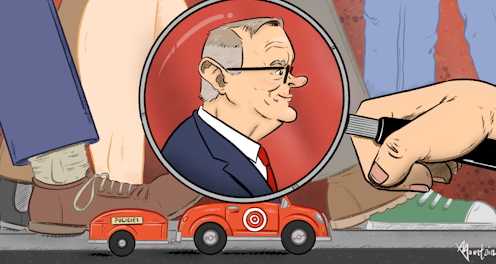
The late historian John Hirst liked to tell students from overseas that Australians are an obedient people. To those of us raised on the idea that we were an anti-authoritarian nation of larrikins, his suggestion seemed mischievous. Hirst explained:
The Australian people despise politicians, but the politicians can extract an amazing degree of obedience from the people, while the people themselves believe they are anti-authority.
Australians are suspicious of persons in authority, but towards impersonal authority they are very obedient.
I have often thought of Hirst’s remarks during the recent weeks of the pandemic. Opponents of the severe Victorian lockdown, contemplating polling that indicates it has broad public support, have suggested people are suffering from Stockholm syndrome – the tendency of hostages to form emotional bonds with their captors.
This seems rather unlikely. A more plausible explanation is that Hirst is right. Citizens are capable of distinguishing between their attitude to the political class, or any particular member of it, and their attitude to those in authority who are doing their best to keep them alive and well.
Hirst, of course, had no problem finding evidence for his proposition. He could cite phenomena as diverse as compulsory voting, random breath testing, bans on smoking in public places and compulsory bike helmets. Most of us only begin to recognise the peculiarity of some of these ways that governments regulate our behaviour when we are outside the country, or if we have come from somewhere else.
Stephen Knight, the literary academic and English migrant, found quite bizarre the intricate regulation surrounding the simple pleasure of having a drink in an Australian pub of the 1960s. Evocatively, he called one of his books Freedom Was Compulsory.
The six o’clock swill might no longer be with us, but for Melbourne residents the eight o’clock curfew – shortly to be pushed to 9 – remains. They won’t be getting a drink in a pub for love or money any time soon.
And for those outside Victoria, try taking a beer out to the footpath outside your local and stand around having a yarn with your mates. See how long you last before you’re told about the licensing laws.
The reality is that most know the rules and few try flouting them. But drinking on the footpath outside a pub is taken for granted in Britain – the evidence can often be discerned outside the said pub the following morning.
Does any of this explain why, at least so far, the great uprising against “Dictator Dan” (Andrews) appears to be at a somewhat formative stage? Most Australians seem to have a utilitarian understanding of their rights.
Judith Brett, in her book From Secret Ballot to Democracy Sausage: How Australia Got Compulsory Voting, called Australia’s political culture “majoritarian and bureaucratic”. We do not generally see our individual rights as trumping government authority. Rather, Brett suggests, our dominant way of thinking and acting owes more to the ideas of the utilitarian Jeremy Bentham: “without government and law there are no rights”.
Perhaps that’s going too far: clearly, the appeal to natural rights – often expressed as human rights – has had a growing influence on our thinking since the second world war. It was there in the 1997 film The Castle, which found in Section 51 (xxxi) of the Australian Constitution support for the proposition that “a man’s home is his castle”.
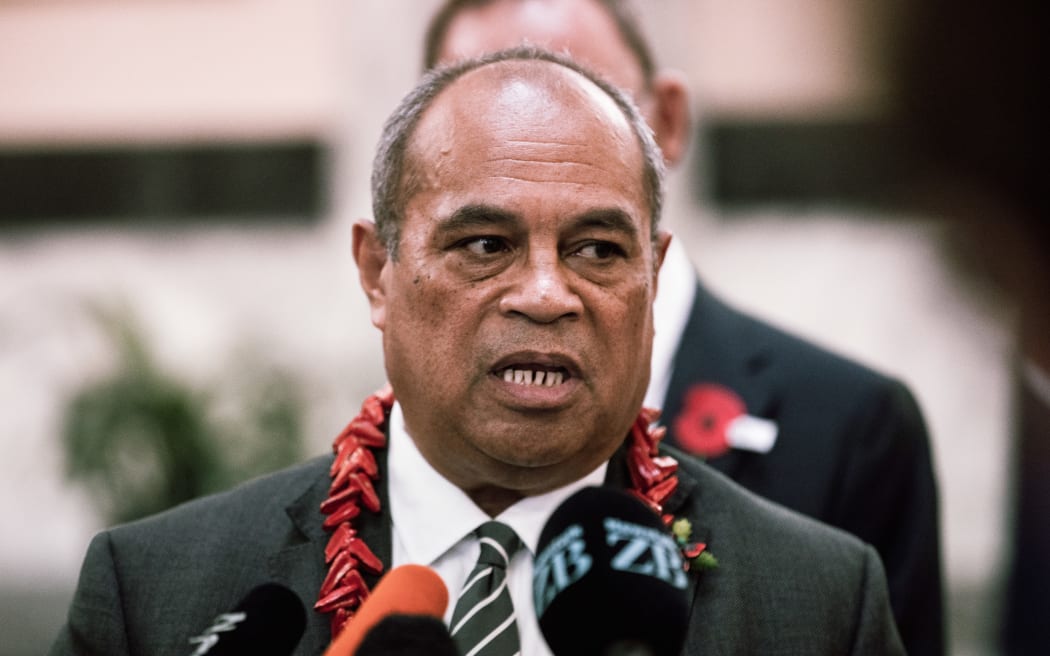
If this seemed an unlikely interpretation, it was still more plausible than the idea the Universal Declaration of Human Rights contained support for a citizen unwilling to don a mask in a Bunnings store. Rights talk is very much a part of Australian public discourse, even if it gives rise to some fairly rough and ready do-it-yourself lawyering.
Historically, Australians have sometimes appealed to their “rights” in countering government or even in justifying peaceful or armed resistance. The so-called Rum Rebellion, which led to the overthrow of Governor William Bligh by the military on January 26 1808, was influenced by the rebels’ belief that Bligh had encroached on their rights – such as their ownership of property. And some were influenced, to some extent, by the ideals associated with the American Revolution.
Similarly, the Eureka uprising on the Ballarat goldfields in 1854 was American-influenced: “no taxation without representation” was the cry of some of those resisting the government’s imposition of a licence tax on them.
Later still, when opponents of conscription during the first world war made their arguments, they often denied the authority of the government to compel individuals to fight against their will.
Some historians have speculated that if the government of the day had tried introducing conscription without a referendum, it would have met with widespread disobedience. Even if it had done so with the force of a “Yes” vote behind it, there might also have been resistance. We’ll never know, because the matter was decided in two referendum votes in 1916 and 1917.
But wartime – and especially the second world war – does provide another indication of Australians’ high tolerance for interference in their daily lives, if they are persuaded that restrictions are necessary for the common good. Rationing, the direction of labour, censorship and conscription for service in the Pacific: these were all features of Australia’s wartime experience.
So far, a majority has stood firm in Victoria as elsewhere in accepting the need for severe restrictions in dealing with the COVID-19 pandemic. It is possible the weeks ahead might test the limits of people’s tolerance. But we should not imagine there is likely to be any erring on the side of disobedience.
None of this means that most Victorians love Daniel Andrews. Nor does it mean they will necessarily vote for him and his party at the next election.
One reason for Australians’ obedience is their majoritarianism. They know that they will have the opportunity, sooner or later, to deliver a thumbs-up or thumbs-down in the conventional manner. At the ballot box.
Every year (except this year) Australian children in Years 3, 5, 7 and 9 sit a standardised literacy and numeracy test — NAPLAN.
When NAPLAN was brought in in 2008, the government argued it would be a way for parents to be involved in their child’s progress, and drive improvement in schools.
We wanted to find out how parents are involved in NAPLAN, so as part of a larger study, we interviewed seven middle-class and five working-class families.
Interestingly, the middle-class parents we spoke to used NAPLAN as a tool designed for them to check on their children’s progress and help them improve. But the working-class parents we spoke to saw NAPLAN as a tool for governments, and didn’t use the results to judge their child’s progress or seek additional help based on the results.
What middle-class parents said
We classed middle-class families as those where at least one parent is employed in a position of substantial authority or that draws on university level skills.
All the middle-class parents we spoke with considered NAPLAN as a tool governments developed for parents. It allowed them the ability to check-up on schools and teachers.
While some parents acknowledged some children were anxious around NAPLAN tests, parents described NAPLAN as an opportunity for their children to develop resilience and competence in response to pressure.
As one parent told us:
for me learning to be in what is a perceived stressful situation, and then dealing with it, is hugely important. I want them to do things that are hard, I want them to see challenges as challenges, things that are not to be hidden away from.
Most middle-class parents said they did some preparation for NAPLAN. This included discussions with children, downloading past papers, and buying and using practice test books. Some parents indicated their children worked with tutors in weeks prior to NAPLAN tests.
Most parents shared NAPLAN results with their children. This happened whether they considered results good or bad.
One parent told us the reports were “really valuable” and an opportunity to “talk through” and “figure out” strengths and weakness. All parents agreed NAPLAN was a valuable tool for this reason.
Middle-class parents said they discussed NAPLAN results with their child.Shutterstock
Where parents considered NAPLAN results weak or not as good as they could be, they engaged their child in activities to help them improve. This included additional work at home, discussions with classroom teachers, and sometimes external tutoring.
But some parents expressed concern at considerable differences between school and NAPLAN reports.
All the middle-class parents we spoke with did not hesitate to approach teachers and principals with concerns around NAPLAN reports.
As one parent said:
teachers do need to be accountable you know, with their teaching if the kids are not doing well and have been previously doing well I want to make sure the school is fulfilling their agreement.
Working-class parents
Working class parents in our study were those in which neither parent works in a position of authority or draws on university certified skills.
All the working-class parents we spoke with saw NAPLAN as a tool for government to assess schools and teachers. Parents did not see NAPLAN testing or reporting as something for them.
One parent said:
It allows government research bodies to understand what’s happening in our schools and how the curriculum is being applied to particular areas […] I don’t think it’s for parents, I would never look to NAPLAN to see how my son’s doing.
Parents in this group generally disagreed with the testing process for kids at that age. And they all expressed concern about the anxiety around the test and potential for negative comparisons.
None of the parents in this group helped their child prepare for NAPLAN, as advised by teachers and schools.
They said they discussed and shared results with children but only if children displayed interest. Some parents deliberately decided to not share reports with their child. As one parent said:
Reading he’s below, and yeah, I don’t think he needs to have any more lack of confidence in himself
None of these parents saw any real value in NAPLAN results. As one parent said, they saw more merit in school reports that “give you more scope than one test”.
Some parents accepted what they described as “mediocre” or “below-average” results as indicative of their child’s natural ability, accepting not all will succeed academically.
Many emphasised the importance of recognising the whole child and strengths outside academic achievement. All parents in this group saw no reason to seek additional help in response to NAPLAN results unless directed by a teacher.
NAPLAN reports did not prompt any of these parents to approach teachers or principal, even if results differed from school reports or previous discussions with teachers. Parents continually emphasised trust in their teacher’s ability and professionalism to interpret and address any issues of concern.
As one parent told us, “I put my faith in the teachers to come and speak to me, not a NAPLAN result.”
Why does this matter?
Our findings echo similar research which indicates middle-class parents are more likely to cultivate opportunities for their children academically, and engage with and question actions of schools and teachers. Working-class parents generally feel teaching and learning is best left with schools and teachers.
These interviews raise some doubts about government claims around NAPLAN’s ability to address inequity or improve results for all children through increased parent involvement at an individual or school level. They may speak, at least somewhat, to government’s inability to disrupt continued education inequity. In this respect it’s possible NAPLAN testing and reporting perpetuates, rather than alleviates, inequities in Australian education.
It was hastily passed by the Western Australian parliament on August 13 in order to legislate away Palmer’s rights under a contract with Western Australia regarding the Balmoral South mining project.
Former High Court judge Michael McHugh upheld those rights in 2014 and 2019 arbitration awards.
The Act declares the contract to have no effect (s9) and declares both arbitration awards to have no effect (s7).
It makes the contract’s arbitration clause “not valid” (s10).
It says Western Australia cannot be sued and has no liability in any project-related dispute (s11).
Rules of “natural justice” (including any duty of procedural fairness) are said not to apply to the West Australian government’s conduct, past or future (s12).
Palmer and associates must indemnify Western Australia against any loss connected with them including reduced funding from the Commonwealth (s14).
Palmer has challenged the statute under Australian law. There’s every chance the case will make it to the High Court.
But even that might not be the end of the matter.
He has also foreshadowed a challenge under international law of the kind allowed under several of Australia’s free trade agreements.
Palmer might say his company is foreign
He says his Balmoral South project is an investment made by Mineralogy International, registered in Singapore (and reportedly perhaps for this purpose), and so is protected under a free trade agreement.
Provisions in such treaties allow foreign investors to seek compensation from Australia for acts of expropriation.
Foreigners get extra rights
They cover not only direct expropriation – where the government acquires property – as do similar provisions in the Australian Constitution, but also indirect expropriation, where a government prevents an investor from exercising property rights.
Australia has only once squarely faced the use of such provisions, after the High Court dismissed a challenge to its 2010 tobacco plain packaging legislation.
Philip Morris Asia’s use of a Hong Kong treaty was found to be an abuse of process.
Philip Morris Asia, a Hong Kong based company which took control of Philip Morris trademarks when Australia was preparing its plain packaging legislation, used a Hong Kong-Australia investment treaty to claim US$4.16 billion for indirect expropriation.
The arbitration tribunal dismissed that claim as an “abuse of process” under customary international law.
Philip Morris Asia was found to have obtained control of the trademarks in order to gain investment treaty protection when the dispute was foreseeable.
The Singapore-Australia Free Trade Agreement further commits Australia to providing the “customary international law minimum standard of treatment to foreigners”.
This “includes the obligation not to deny justice in criminal, civil or administrative adjudicatory proceedings in accordance with the principle of due process embodied in the principal legal systems of the world”.
Why promise additional rights to foreign investors?
Because domestic law may not meet international standards. The extension of such rights can encourage domestic investors press for better local standards.
If Mineralogy International does try to file an investor state dispute claim, it will have to establish that its investment is covered and that it is a foreign investor for the purpose of the treaty.
Australia might invoke a “denial of benefits” provision if Mineralogy International lacks substantial business activities in Singapore.
It might also allege “forum shopping” of the kind Philip Morris Asia was found to have engaged in.
…but those rights are important
This is how international law is supposed to work. As with human rights treaties, nations consent to international standards.
Impartial investor state dispute settlement procedures make a national commitments to investors credible. Exceptions acknowledge abuses of process.
If provisions generate problems, such as costs and delays, Australia can negotiate improvements and review and modernise old treaties.
In a post-credit scene at the end of Bill & Ted Face the Music, the titular couple are old men in a nursing home. Decrepit, they stand up from their beds, pick up their guitars, and, for the first time in the film, the key members of metal band Wyld Stallyns shred with each other.
“That was fun,” says Bill.
“That was good,” agrees Ted.
But shredding is a bit much in a nursing home. “I have to sit down,” says Bill. “Nurse!”
The camera seems to turn back on the series itself in this oddly touching moment. The actors and the film have fondly reflected on the last 90 minutes, but also the 30-odd years between Bill and Ted’s Excellent Adventure (1989) and this latest film.
The old man makeup appears more natural on the two actors than the slacker clothes they’ve been wearing throughout, and we chuckle along with them about the passing of time. It is sentimental, but it’s also sweet.
The moment seems especially poignant for actor Alex Winter, whose career hasn’t exactly been a success since the earlier films. With a faint whiff of melancholy, he seems to gently appraise his return to the big screen, making fun of the fact that he’s a middle aged man revisiting the teenage character that made him momentarily famous.
This scene, more than any other, captures the lyrical and only faintly nostalgic feeling of the film. Bill and Ted are right – it was fun. It was good. Certainly not incisive or critical, and not brilliant. In fact, kind of average, in a relaxed, sleepy way.
Bill and Ted’s Excellent Adventure came out in 1989. 31 years on, Bill & Ted are just as loveable as ever.Orion Pictures

But in an era of relentlessly “clever” films and knowing reboots this light touch sets the film apart. Face the Music is as daggy, as goofy and as peculiarly sweet as its predecessors.
Travelling with time, back and forth
The narrative returns to the prophecy introduced in the earlier films: Bill and Ted will write the ultimate song that will unite the world. Now, though, they’re down-at-heel musicians close to the bottom of tanking careers. Their music is going from bad to worse.
Bill and Ted travel forward through time, visiting themselves in the future in order to steal (from themselves) this ultimate song. But the stakes have been raised: they need this song in order to save the very fabric of reality itself.
Bill and Ted are so grown up, they have daughters who join on the adventure.Orion Pictures
Meanwhile, their daughters Thea (Samara Weaving) and Billie (Brigette Lundy-Paine) travel back through time in order to assemble the ultimate band to perform the song. They pick up Jimi Hendrix (DazMann Still), Louis Armstrong (Jeremiah Craft) and Mozart (Daniel Dorr) before entering ancient history and collecting mythical Chinese flautist Ling Lun (Sharon Gee) and cavewoman percussionist Grom (Patty Anne Miller).
In case this isn’t sufficiently convoluted, the time-travel is coupled with a trip to hell when the entire ensemble (daughters, dads, musicians) are killed by guilt-ridden and inept assassin/robot Dennis Caleb McCoy (Anthony Carrigan).
Of course, Bill and Ted meet Death – again.Orion Pictures
As in Bill & Ted’s Bogus Journey (1991), they meet the bass-playing grim reaper, Death (beautifully played by William Sadler). Death rejoins the band and helps them escape hell.
If this sounds complicated, it is – to a ludicrous degree. But the whole thing is so inoffensively rendered, with such good-humour, it doesn’t matter.
Be excellent to each other
Keanu Reeves is fine as Ted, though it’s a little unsettling watching the character as a middle aged man. The real pleasure is in Winter’s return to the big screen, recognising just how good he is as an embodied comedic performer, a combination of self-assuredness and light touch.
Unlike other series reboots, Face the Music doesn’t become mired in self-referential moments and its own mythologising. It plays more like a bona fide sequel, made in the same style and spirit as its predecessors, than a reboot.
It is refreshingly earnest, and doesn’t feel like a cynical attempt to recycle material and colonise a new wave of eyeballs.
The film’s strangest element is how it makes us time travel back to the late 1980s. Time has passed, and Face the Music is aware of this, but it nonetheless feels like a film from a different era.
Written by previous Bill & Ted writers, Chris Mattheson and Ed Solomon, Face the Music doesn’t play like a retro film in style or tone. It seems completely contemporary, and yet manages to be perfectly in line with its earlier brethren.
As with the previous two films, the music is its weakest part. Mark Isham’s score is unnoticeable and the band’s ultimate song – the one that is supposed to save time and space, reality itself – is an unappealing melange of pop music clichés and “world” music. It’s awful.
But perhaps the film is aware of this. After all, there is an early sequence highlighting the protagonists’ musical ineptitude in which Ted plays the theremin and Bill growls in death metal vocals.
In any case, it’s not much of a criticism. For a film that was destined to do so much wrong, this does a surprising amount right. Time travel as a scientific phenomenon may not exist, but Face the Music proves that time travel, as affect, certainly does.
Bill & Ted Face the Music is in cinemas from today.
Australian Federal Police and ASIO raided two Chinese journalists in June as part of an investigation into foreign interference in Australia.
The previously unpublicised action has come to light via Chinese media reports, in the same week that two Australian reporters fled China amid fears for their security and in a blaze of publicity.
The Global Times, a mouthpiece of the Chinese authorities, said ASIO had questioned the Chinese journalists, seized computers and smartphones, and asked them not to report the incident.
The raids, undertaken under a warrant, were connected to the investigation into allegations of attempted Chinese infiltration of the NSW parliament through the office of NSW Labor state MP Shaoquett Moselmane, and in particular his part-time staffer John Zhang. Both Moselmane and Zhang have denied any wrong doing.
Moselmane is on leave from the parliament and suspended from the ALP.
Part of the investigation was into a group Zhang had on WeChat, a Chinese social media platform, that included the journalists as well as Chinese scholars. The ABC reported on Wednesday that two Chinese scholars on the chat group subsequently had their Australian visas cancelled.
The timing of the raids on the journalists coincided with raids on Moselmane and Zhang.
Asked the Global Times claim, the Chinese embassy in Canberra said in a statement: “We have provided consular support to Chinese journalists in Australia and made representations with relevant Australian authorities to safeguard legitimate rights and interests of Chinese citizens.”
Citing a “source” the Global Times said: “Australia flagrantly infringed on the legitimate rights and interests of journalists from Chinese media and institutions in Australia in the name of a possible violation of Australia’s anti-foreign interference law”.
The Chinese have sat on the information about their journalists for more than two months.
This week the ABC’s Bill Birtles and the Australian Financial Review’s Michael Smith were rushed out of China after Australian government concern for their security.
Last week multiple Chinese security officials arrived after midnight at the homes of Birtles and Smith, in Beijing and Shanghai respectively. They were told they couldn’t leave the country without answering questions.
The men had been making arrangements to depart, on advice from the Australian foreign affairs department, after Australian journalist Cheng Lei, who worked for China’s English-language state broadcaster CGTN, was recently taken into custody.
The Chinese government says Cheng is suspected of activities endangering China’s national security.
Birtles and Smith contacted Australian officials following the late night visits, and were placed under diplomatic protection, with negotiations undertaken to enable them to return to Australia.
The Chinese made the journalists’ exit conditional on their being interviewed. Smith said the interview included some questions about Cheng whom he had only met once, in passing.
In a full-on attack, the Global Times wrote: “Freedom of the press has become political correctness for Australian authorities. When they spread fake information, smear and attack other countries, they call it ‘freedom of the press’, but when they see information they don’t want to see, they choose to crack down for political purposes, experts said.
“Chinese journalists in Australia strictly comply with Australian laws and have good professional conduct.”
The article said that in the past 20 years, “Australia has passed more than 60 rules restricting ‘press freedom’.
“Australia’s major media outlets launched a joint campaign on October 21, 2019 to protest government restrictions on press freedom, by blacking out copy on front pages.
“Australian authorities have not been satisfied with only extending their black hands to domestic media, and have blatantly raided the residences of Chinese journalists in Australia, regardless of the basic norms of international relations and China-Australia relations, analysts said.
“Analysts said what Australia did was not just driven by Australia’s traditional ideological bias, but also showed that it’s a follower of ‘Uncle Sam’”, the Global Times said.
It also accused Australia of having “hyped” the Cheng case.
Source: The Conversation (Au and NZ) – By James Laurenceson, Director and Professor, Australia-China Relations Institute (ACRI), University of Technology Sydney
The Australia-China relationship is unravelling at a pace that could not have been contemplated just six months ago.
In recent days, the ABC’s Bill Birtles and the Australian Financial Review’s Mike Smith were forced to flee China following intimidation by security agencies and the imposition of an exit ban, later lifted following negotiations led by Australian diplomats.
Chinese media outlets then alleged that Australia’s security agencies raided the properties of several Chinese journalists in June in connection with a foreign interference investigation involving NSW MP Shaoquett Moselmane.
With no sign of the political tensions between Australia and China easing, the big danger in all of this is the erosion of the economic and people-to-people ties that were once the glue holding the relationship together.
If this goes, the events of recent days might only be a starting point in a broader bilateral decoupling that offers little prospect for the protection — let alone advancement — of Australia’s national interest.
Cause for optimism amid declining ties
Political tensions between the two countries date back to at least 2017. Apart from a brief “reset” when then-Prime Minister Malcolm Turnbull gave an upbeat speech on China at the University of New South Wales in August 2018, the trajectory of ties at the government level has been downhill since then.
Yet, the economic relationship continued to flourish, with two-way trade growing from $183.5 billion in 2017 to $251.4 billion in 2019.
And people-to-people ties appeared to offer cause for optimism, too.
The number of Chinese students and tourists arriving in Australia showed few signs of peaking.
Vigorous cooperation was seen in other areas, such as Chinese researchers emerging as Australia’s leading partners in producing scientific and research publications.
The belief ‘black hands’ are now at work
In the background, however, there were signs of worrying developments.
Ten years ago, it wasn’t hard for foreign academics to find Chinese colleagues willing to talk openly about politically sensitive issues in a private setting, or even modestly depart from the Chinese government’s line in a public forum, such as an academic conference.
But in June, Frances Adamson, Australia’s former ambassador to China and now head of the Department of Foreign Affairs and Trade, reflected that while China has academics who have spent their lives working on and with Australia,
when I read now what they say publicly, that nuance that existed before is gone.
This unwillingness to depart from the official line stems from the heightened censorship and illiberal turn China has taken in recent years. This has been instigated by the Chinese Communist Party — and in particular, President Xi Jinping — as they have become increasingly paranoid their grip on power is under attack.
China has become increasingly illiberal and bellicose since Xi came to power.Mark Schiefelbein/AP
A prominent Chinese government narrative now alleges “black hands” connected to “foreign forces” are at work trying to undermine the country’s leadership.
This sensitivity has been sharpened by US government rhetoric. In July, US Secretary of State Mike Pompeo stopped not far short of declaring a policy of regime change in China, saying
We must also engage and empower the Chinese people – a dynamic, freedom-loving people who are completely distinct from the Chinese Communist Party.
But changing the CCP’s behaviour cannot be the mission of the Chinese people alone. Free nations have to work to defend freedom.
While the Australian government has deliberately put distance between itself and the Trump administration, Beijing remains wedded to the idea Australia is a US lackey, despite significant evidence to the contrary.
Australians appear to have already been caught up in the consequences.
Academic and blogger Yang Hengjun, a China-born Australian citizen, has been detained since January 2019, accused of “engaging in criminal activities endangering [China’s] national security”.
Yang Hengjun has denied Chinese reports he had confessed to espionage.AP
And last month, the Chinese-Australian journalist Cheng Lei was also detained under suspicion of carrying out “criminal activities” endangering China’s national security.
This came just weeks after the Australian government changed its travel risk advisory to warn Australians might be “arbitrarily detained” in China.
These moves have had a chilling effect on the people-to-people ties that once formed the ballast of China-Australia relations.
PwC’s Asia practice leader, Andrew Parker, said some in the business community are starting to ask the question, “are we actually safe here now”?
Concerns for Chinese academics in Australia, too
But importantly, not all the developments are one-way.
The ABC has reported that two leading Chinese academics in the field of Australian studies were also caught up in the investigation into the alleged Chinese plot to infiltrate the NSW parliament, resulting in their visas being revoked.
One of the academics, Chen Hong, the director of the Australian Studies Centre at East China Normal University, rejected the allegations.
There were signs before the dramatic developments of this week that some Chinese journalists and academics were becoming wary of engaging with foreigners due to rhetoric directed at China, as well as policy actions taken by Australia.
In one of his last stories for the AFR before leaving China, Smith reported that Chinese academics had told him they were cutting off communications out of
fear they will be accused of being Communist Party infiltrators.
Some Chinese observers believe national security concerns are not the only factor in what is unfolding in Australia.
Moselmane’s lawyers are seeking an investigation into whether the media were tipped off before the Australian Federal Police raid on his home in June.
This possibility raises questions about whether the source of the alleged leak saw an opportunity for domestic political gain or to push another barrow, such as adding to Australia-China tensions.
At the same time, academics at Australian universities, many of whom were born in China, have been put under the spotlight in News Corp outlets for allegedly having links to the Chinese government. The fact that none of these academics have to date been identified by Australian law enforcement agencies as having done anything wrong appears to count for little.
It’s becoming clear the fears of being caught up as “pawns in a diplomatic tussle” (as Birtles described it) are real now for journalists, academics and business people — those who used to believe they could continue to work in both countries, without significant concerns about political disputes.
Source: The Conversation (Au and NZ) – By Pep Canadell, Chief research scientist, Climate Science Centre, CSIRO Oceans and Atmosphere; and Executive Director, Global Carbon Project, CSIRO
The Paris climate agreement seeks to limit global warming to 1.5℃ this century. A new report by the World Meteorological Organisation warns this limit may be exceeded by 2024 – and the risk is growing.
This first overshoot beyond 1.5℃ would be temporary, likely aided by a major climate anomaly such as an El Niño weather pattern. However, it casts new doubt on whether Earth’s climate can be permanently stabilised at 1.5℃ warming.
This finding is among those just published in a report titled United in Science. We contributed to the report, which was prepared by six leading science agencies, including the Global Carbon Project.
The report also found while greenhouse gas emissions declined slightly in 2020 due to the COVID-19 pandemic, they remained very high – which meant atmospheric carbon dioxide concentrations have continued to rise.
The world may exceed the 1.5℃ warming threshold sooner than we expected.Erik Anderson/AAP
Greenhouse gases rise as CO₂ emissions slow
Concentrations of the three main greenhouse gases – carbon dioxide (CO₂), methane (CH₄) and nitrous oxide (N₂O), have all increased over the past decade. Current concentrations in the atmosphere are, respectively, 147%, 259% and 123% of those present before the industrial era began in 1750.
Concentrations measured at Hawaii’s Mauna Loa Observatory and at Australia’s Cape Grim station in Tasmania show concentrations continued to increase in 2019 and 2020. In particular, CO₂ concentrations reached 414.38 and 410.04 parts per million in July this year, respectively, at each station.
Atmospheric concentrations of carbon dioxide (CO₂), methane (CH₄) and nitrous oxide (N₂0) from WMO Global Atmosphere Watch.
Growth in CO₂ emissions from fossil fuel use slowed to around 1% per year in the past decade, down from 3% during the 2000s. An unprecedented decline is expected in 2020, due to the COVID-19 economic slowdown. Daily CO₂ fossil fuel emissions declined by 17% in early April at the peak of global confinement policies, compared with the previous year. But by early June they had recovered to a 5% decline.
We estimate a decline for 2020 of about 4-7% compared to 2019 levels, depending on how the pandemic plays out.
Although emissions will fall slightly, atmospheric CO₂ concentrations will still reach another record high this year. This is because we’re still adding large amounts of CO₂ to the atmosphere.
Global daily fossil CO₂ emissions to June 2020. Updated from Le Quéré et al. 2020, Nature Climate Change.
Warmest five years on record
The global average surface temperature from 2016 to 2020 will be among the warmest of any equivalent period on record, and about 0.24℃ warmer than the previous five years.
This five-year period is on the way to creating a new temperature record across much of the world, including Australia, southern Africa, much of Europe, the Middle East and northern Asia, areas of South America and parts of the United States.
Sea levels rose by 3.2 millimetres per year on average over the past 27 years. The growth is accelerating – sea level rose 4.8 millimetres annually over the past five years, compared to 4.1 millimetres annually for the five years before that.
The past five years have also seen many extreme events. These include record-breaking heatwaves in Europe, Cyclone Idai in Mozambique, major bushfires in Australia and elsewhere, prolonged drought in southern Africa and three North Atlantic hurricanes in 2017.
Left: Global average temperature anomalies (relative to pre-industrial) from 1854 to 2020 for five data sets. UK-MetOffice. Right: Average sea level for the period from 1993 to July 16, 2020. European Space Agency and Copernicus Marine Service.
1 in 4 chance of exceeding 1.5°C warming
Our report predicts a continuing warming trend. There is a high probability that, everywhere on the planet, average temperatures in the next five years will be above the 1981-2010 average. Arctic warming is expected to be more than twice that the global average.
There’s a one-in-four chance the global annual average temperature will exceed 1.5℃ above pre-industrial levels for at least one year over the next five years. The chance is relatively small, but still significant and growing. If a major climate anomaly, such as a strong El Niño, occurs in that period, the 1.5℃ threshold is more likely to be crossed. El Niño events generally bring warmer global temperatures.
Under the Paris Agreement, crossing the 1.5℃ threshold is measured over a 30-year average, not just one year. But every year above 1.5℃ warming would take us closer to exceeding the limit.
Global average model prediction of near surface air temperature relative to 1981–2010. Black line = observations, green = modelled, blue = forecast. Probability of global temperature exceeding 1.5℃ for a single month or year shown in brown insert and right axis. UK Met Office.
Arctic Ocean sea-ice disappearing
Satellite records between 1979 and 2019 show sea ice in the Arctic summer declined at about 13% per decade, and this year reached its lowest July levels on record.
In Antarctica, summer sea ice reached its lowest and second-lowest extent in 2017 and 2018, respectively, and 2018 was also the second-lowest winter extent.
Most simulations show that by 2050, the Arctic Ocean will practically be free of sea ice for the first time. The fate of Antarctic sea ice is less certain.
Summer sea ice in the Arctic is expected to virtually disappear by 2050.Zaruba Ondrej/AP
Urgent action can change trends
Human activities emitted 42 billion tonnes of CO₂ in 2019 alone. Under the Paris Agreement, nations committed to reducing emissions by 2030.
But our report shows a shortfall of about 15 billion tonnes of CO₂ between these commitments, and pathways consistent with limiting warming to well below 2℃ (the less ambitious end of the Paris target). The gap increases to 32 billion tonnes for the more ambitious 1.5℃ goal.
Our report models a range of climate outcomes based on various socioeconomic and policy scenarios. It shows if emission reductions are large and sustained, we can still meet the Paris goals and avoid the most severe damage to the natural world, the economy and people. But worryingly, we also have time to make it far worse.
In light of Victoria’s cautious roadmap out of lockdown, with some experts claiming the exit is too fast, and others believing it is unnecessarily slow, the modelling underpinning the decisions is under close scrutiny.
University of Melbourne Professor Jodie McVernon is director of epidemiology at the Doherty Institute, and a modelling expert.
She tells the podcast, “I think the broad qualitative conclusions of the model would have been reached by really any kind of model formulation – that the lower numbers can be driven down, the less likely a resurgence would be”.
This week saw a setback in the progress towards a hoped-for Oxford vaccine, when a clinical trial produced an unexplained illness in one participants.
But McVernon remains optimistic. “I think we will get vaccines. I don’t think we’ll get perfect ones, but I’m hoping we’ll get useful ones – because without vaccines, we only have behaviour to prevent this disease. … So I think [a vaccine will] be one of a suite of things that we’ll be using into the future to control the spread of Covid.”
The pandemic has seen ‘experts’, including public health officials and academics, come centre stage as public figures – as policy heroes but, latterly, also targets for some critics who think their voices are carrying too much influence.
“I would have to say I’m a very reluctantly public figure,” McVernon says.
“[I] was convinced by others early on that it is important …in these times of uncertainty that people are reassured by having the evidence explained.
“If we we do have expert knowledge and we can help to clarify things for the public – I think that’s an important responsibility. Part of having knowledge is sharing that knowledge.”
Only days after the federal government announced a A$1.7 billion vaccine deal to roll out COVID-19 vaccines to Australians in 2021, one of the two candidates has halted its phase 3 trials after a participant became ill.
The AZD1222 vaccine, considered one of the frontrunners in the global race for a COVID-19 vaccine, was developed by the University of Oxford and has been undergoing testing with British-Swedish pharmaceutical company AstraZeneca.
Melbourne-based biotechnology company CSL has committed to producing and supplying more than 30 million doses of the vaccine to Australians if it’s found to be safe and effective.
But this pause in the trials doesn’t necessarily mean it’s not safe. Rather, it indicates the testing is progressing as it should, with due consideration of safety.
What happened?
There’s been no official statement on the nature of the incident that caused the trial to be halted. We only know it was a suspected adverse reaction in a participant in the UK. (Phase 3 trials for the AZD1222 vaccine have been taking place in several countries.)
The New York Times has reported the participant was diagnosed with transverse myelitis, an inflammatory condition than affects the spinal cord and can be sparked by viral infections.
Transverse myelitis is very rare, with between one and eight new cases per million people per year.
Most people will recover, but may be left with some symptoms such as weakness.
In the world of vaccine safety, transverse myelitis is one of several conditions collectively known as a serious acute neurological episode (SANE) temporally associated with vaccination. Others include Guillain-Barré syndrome and acute disseminated encephalomyelitis.
“Temporal” suggests they occasionally occur some time after vaccination, but we don’t know whether the relationship is one of cause and effect. Unfortunately, it’s not always easy to find what caused these conditions, and it’s important to look for other infections that may be associated with the diagnosis.
There are a couple of things worth noting in this case. First, in the UK branch of the trial, not all participants were receiving the AZD1222 vaccine. To ascertain its effectiveness, researchers have given a control group a type of meningococcal vaccine (MenACWY) that has already been licensed. As the trial is double-blinded, we don’t yet know whether the affected participant received the COVID-19 vaccine.
Second, AZD1222 is not a “live-attenuated” vaccine — it’s not made from live SARS-CoV-2 virus. (It does use a chimpanzee adenovirus vector, but this doesn’t replicate or cause disease in humans.) It’s not impossible the transverse myelitis — if confirmed as a diagnosis — was related to the vaccine. But it wouldn’t be possible for the vaccine to cause a COVID-19 infection, which could then spark the myelitis.
Further, phase 2 and 3 trials involve much broader populations than the young, healthy adults who typically participate in early testing. The UK trial of AZD1222 includes people 70 years and older, which naturally increases the risk of temporally associated adverse events.
The University of Oxford vaccine is being tested together with pharmaceutical company AstraZeneca.Alastair Grant/AP
So what next?
AstraZeneca will already be investigating the incident, with input from external regulatory bodies such as the study’s data safety monitoring board, the European Medicines Agency (EMA) and the US Food and Drug Administration (FDA).
These independent bodies will review all parts of the investigation, such as an MRI on the participant to confirm the diagnosis, and look at which of the groups the person was in (whether they received AZD1222 or the other vaccine).
They will try to find out what caused the illness, but this may not be possible. It will be particularly hard to prove the vaccine caused the illness with only one case. Illnesses like transverse myelitis, although rare, have a “background rate” of occurrence already in the community.
The World Health Organisation provides a framework to assess the cause of an adverse event following immunisation. AstraZeneca and the independent bodies monitoring their processes will follow this or similar frameworks to evaluate the event.
Once they’ve reviewed the incident, they will decide whether to resume the trial. Given the impetus to move quickly with this, we’d expect this to happen in a matter of days.
This halt on the trial doesn’t indicate the vaccine isn’t safe — we’ll need to see further evidence before we can ascertain this.
But it does reflect robust processes for a clinical trial. In a sense, this is what phase 2 and 3 clinical trials are designed for — to pick up any potential safety issues and investigate them further.
These sort of things happen occasionally in other clinical trials too. We just don’t hear about it. There’s perhaps never been so much attention on a single clinical trial as there is on the trial of this and other potential COVID-19 vaccines.
We’re not sacrificing safety for speed
In the course of this pandemic, we’ve often heard that fast can’t be safe in the context of a vaccine. We don’t feel that’s the case here.
The reason these trials are moving so fast is largely because recruitment is happening quickly. The phase 3 trials of AZD1222 will have 40,000-50,000 participantsin total.
Beyond the AZD1222 vaccine, we’re seeing open disclosure of processes and transparency around any issues. This includes a pledge from the major pharmaceutical companies to keep safety at the forefront when evaluating COVID-19 vaccines.
Of course, there are exceptions to this — notably the Russian vaccine, which has published some phase 1 data but reportedly gone into widespread use before completing all of the standard safety and effectiveness checks.
In Australia, we follow certain steps to assess the safety of new vaccines. If the trial of the Oxford/AstraZeneca vaccine resumes and it proves safe and effective, Australia’s Therapeutic Goods Administration (TGA) will see the data and interact closely with regulatory bodies around the world to ensure it’s safe to use.
The TGA is also responsible for post-marketing surveillance, which we regard as phase 4. When the vaccine is being rolled out, we continue to monitor for adverse events, and follow these up using both jurisdictional vaccine safety units, such as SAEFVIC in Victoria, and active surveillance systems, such as Smartvax and Vaxtracker.
Source: The Conversation (Au and NZ) – By Monica Barratt, Vice Chancellor’s Senior Research Fellow, Social and Global Studies Centre and Digital Ethnography Research Centre, RMIT University
Lockdown and other public health measures to halt the spread of COVID-19 haven’t driven us all to drink (and other drugs), as many news stories would have us believe.
Our Global Drug Survey released today, which includes replies from more than 55,000 participants, shows a mixed response.
We found some people are increasing their use of alcohol and cannabis, mainly due to boredom, which previous research has found.
But other people have reduced their drinking and drug use now festivals, nightclubs or parties are no longer an option – a trend that has so far gained less attention.
The survey provides a snapshot of changed patterns of alcohol and drug use, drug markets and other drug-related trends during the pandemic.
People from 171 countries responded to the web survey, which was available in ten languages. It was live for seven weeks, spanning May and June 2020.
This report, based on 55,811 responses, includes data from 11 countries where we had the most respondents: Austria, Australia, Brazil, France, Germany, Ireland, Netherlands, New Zealand, Switzerland, United Kingdom, and the United States.
People reflected on how their alcohol and other drug use had changed in the past month (April to May) compared to February 2020, before the COVID-19 pandemic was declared and lockdown restrictions implemented in most countries.
Multiple stories on drinking during COVID-19
The Australian sample of 1,889 people consisted mainly of younger adults (73% were younger than 35). The sample spanned Australian jurisdictions, including 40% from Victoria.
We asked people about how often they drank alcohol, how much they drank in a typical session, and how often they binge-drink, defined as drinking five or more drinks in a session.
Some 39% reported drinking more compared to before COVID-19, whereas a similar number (37%) were drinking less. A total of 17% reported drinking at the same frequency and quantity, while 7% reported a mix of effects.
This challenges the existing narratives that people are mainly drinking more alcohol during lockdown. While we acknowledge many people did drink more, our results showed a varied response.
What’s happening for people who drank less?
Of the Australian people who reported drinking less, this was largely due to a reduction in binge drinking.
Indeed, 37% reported reductions in binge drinking compared with 30% reporting increases in binge drinking, while the remaining 34% reported their binge drinking remained the same.
Looking at the reasons why people in the Australian sample reduced their drinking, the most common reasons were they had less contact with people they normally drink with (77%), less access to the settings where they usually drink (67%) and they don’t like drinking at home or when not out with friends (50%).
It is also worth noting large proportions of the group that drank less reported improvements in aspects of their lives as a result. These include 52% reporting improved finances and 42% reporting improved physical health.
And what about people who drank more?
A total of 39% of the Australians in our sample reported drinking more often, a greater quantity per session, and/or more frequent bingeing.
Drinkers who reported having a diagnosed mental health condition (typically depression or anxiety) were more likely to report increasing their drinking compared to February, before COVID-19 restrictions.
Australians in our sample who increased drinking noted worse outcomes for physical health (55%), mental health (36%), work or study performance where relevant (30%) and finances (26%).
The negative impact on physical and mental health among this group was profound, highlighting the risk of choosing alcohol as a coping strategy for stress, anxiety and depression.
A total of 49% of the Australians we surveyed who used cannabis in the past 12 months said their use had increased compared to February, including 25% who reported their cannabis use had increase “a lot”. The main reasons given for this increase were similar to alcohol: boredom (66%) and having more time (64%).
Over half (55%) of people who used cannabis alone also reported they are now more likely to consume cannabis alone compared to before COVID-19.
Of those who used illegal drugs in the previous 12 months, MDMA, cocaine and ketamine were the most likely to have decreased since before the pandemic. Lack of access to nightclubs, festivals and parties was the most common reason for the change.
Drug market shifts were reported too: including 51% of the Australian respondents saying general availability of illegal drugs had decreased, 29% reporting increases in drug prices, and 17% reporting decreased drug purity.
What are the implications?
The COVID-19 pandemic has had wide ranging impacts on substance use. For some people, who would otherwise have spent a lot of time socialising and working with the public, they may now have more available time and alcohol and other drug use may fill this time.
For others, the lack of access to festivals, nightclubs, parties and other social settings where drinking and drug use typically occurs has resulted in a reduction in binge drinking and the use of drugs like MDMA, cocaine and ketamine.
For some people, the pandemic may have silver linings, as they have reduced their substance use and report better life outcomes.
However, we need to be mindful to support young people when restrictions lift, to encourage people to return to their socialising and partying in a safe way.
There is a risk people whose drinking and drug tolerance has reduced may consume too much and be at risk of overdose when life returns to normal over the coming months.
Australians who would like to drink less can get personalised, anonymous feedback on their drinking via our free Drinks Meter app. You can learn more and download it from www.drinksmeter.com