Page 746

Grattan on Friday: Morrison’s religious discrimination package couldn’t fly on a wing and a prayer

Source: The Conversation (Au and NZ) – By Michelle Grattan, Professorial Fellow, University of Canberra

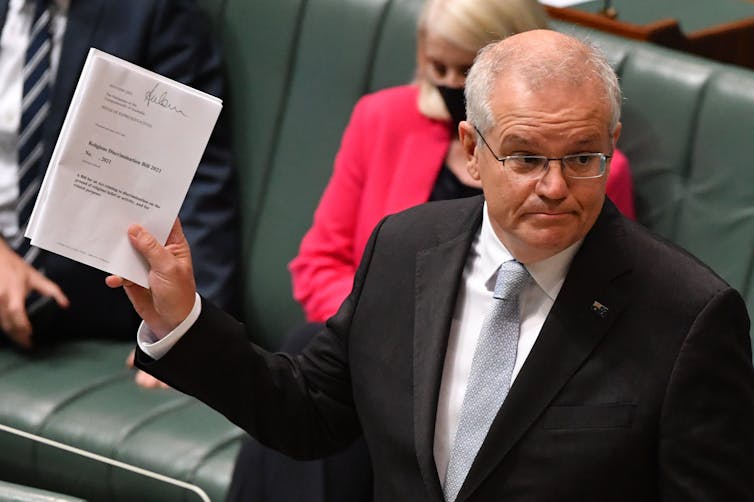
Scott Morrison made three foolish and arrogant assumptions this week when he embarked on trying to push his controversial religious discrimination legislation through parliament.

As a result, he failed in the mission and emerged from Wednesday’s all-night sitting with his authority diminished. With time almost out before the election, this legislation, which he claimed was “very important”, has reached a dead end.

First, Morrison thought he could tactically outplay Anthony Albanese, wedging Labor on an electorally sensitive issue. This smacked of hubris – it is safer to think your opponent just might be smarter than you are.

Second, he underestimated the spine of the moderates in his own party. He was not properly tapped into his backbench, especially those in the leafy suburbs who are under pressure from independent candidates. The moderates have been acquiring a louder voice recently, which became obvious in last year’s climate change debate.

Third, Morrison believed he could rush a complex issue – which he’s had years to deal with – in the high-pressured dying days of the electoral term. The “I am PM – therefore I can” principle doesn’t always work in a close parliament.

This has been another political shambles for Morrison, already beset by bad polling, a crisis in aged care, and leaked texts.

NSW Premier Dominic Perrottet – incidentally, a dedicated Catholic – had some prescient words on Wednesday as the federal government prepared for votes on the religious discrimination and associated legislation.

“I’ve made it very clear that I don’t believe legislation in this space is necessary and I think it can end up creating more problems than it solves,” Perrottet said.

As well as arguing it is needed, Morrison said he was committed to the legislation because he promised it before the last election.

In reality, he has been substantially driven by a quest to keep or win faith-based conservative voters, particularly in ethnic areas in western Sydney. Some Coalition sources believe these votes were an essential component in his 2019 victory.

Albanese desperately requires these votes too – Labor identified after the 2019 election that it had a problem with them – and he certainly can’t afford to lose those already in the ALP’s camp.

So although many in Labor and its base didn’t want a bar of the religious discrimination legislation – Bill Shorten told Parliament “We will rue the day if this legislation passes the Senate” – the opposition leader wrangled a divided frontbench and caucus into supporting it, while pressing amendments.

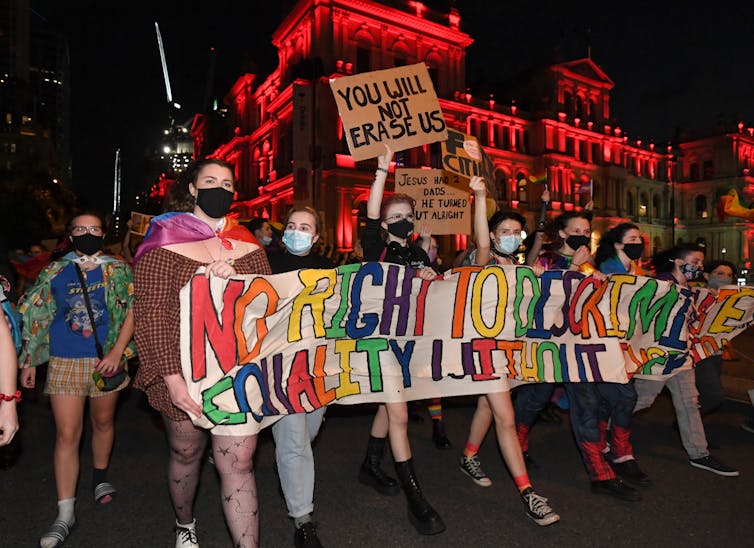
The government’s package included an amendment to the Sex Discrimination Act to prevent gay students being expelled from religious schools.

But that was narrower than an earlier undertaking Morrison gave and it didn’t cover transgender students. The government said it wanted a report from the Law Reform Commission before acting on them, because of what it insisted were the complexities of religious schools dealing with trans students.

The exclusion of transgender children turned out to be a serious flaw in the eyes of some in Liberal ranks.

The moderates asserted themselves, in negotiations on the package before the parliamentary debate, and in the chamber. They were driven by principle but also by their own political imperatives.

Some moderate critics of the bill share Perrottet’s view about the unwisdom of stirring up the religious discrimination issue. They were even more exercised about transgender students being left in limbo.

Morrison twisted arms and gave some sops to try to corral his followers.
Perhaps he thought when push came to shove, his authority would get him through.


Read more:
Liberal revolt removes all discrimination against gay and transgender children


It didn’t. Two Liberal defectors, Bridget Archer and Trent Zimmerman, raised their heads in votes on the main bill, although it eventually passed the House of Representatives unamended.

It was a much worse story for the government on the bill to amend the Sex Discrimination Act. Three more Liberal rebels – Katie Allen, Fiona Martin and Dave Sharma – joined Archer and Zimmerman. The five supported a successful amendment for all students – including transgender – to be protected.

Morrison was left flummoxed and no doubt furious. The government was uncertain how votes would go if the legislation went immediately to the Senate. For hours on Thursday it mulled over its next step.

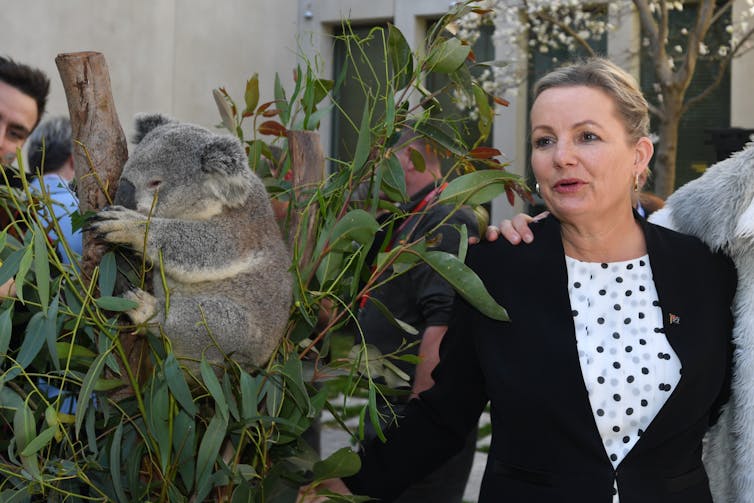
It was consulting stakeholders, according to Assistant Minister to the Attorney-General Amanda Stoker. And counting its numbers, obviously, in this hostile chamber. One of its senators, Andrew Bragg, would have crossed the floor. But in fact, non-government Senate leaders had already decided late Wednesday there wouldn’t be enough time to deal with the legislation on Thursday.

Meanwhile the Australian Christian Lobby declared the government should withdraw the package, saying: “Taking away protections for Christian schools is a price too high to pay for the passage of the Religious Discrimination Bill.”

After a few hours the government shelved the package, and lashed out. Attorney-General Michaelia Cash argued in a letter to her Labor counterpart, Mark Dreyfus, and crossbencher Rebekha Sharkie, who moved the successful amendment, that the change could in fact allow – rather than prohibit – discrimination in religious schools.

The government said this was based on advice from the government solicitor, although the letter did not reference the advice.

Sharkie was unimpressed, describing Cash’s letter as a “ruse”. “Let’s see what’s behind it,” she said, challenging Cash to table the legal advice.

Sharkie smells the same game as the government played years ago when the crossbench rolled it to pass the Medevac law to facilitate the transfer of offshore asylum seekers and refugees to Australia for treatment.

The consensus is the religious discrimination package won’t get through this term. There are only a couple of Senate sitting days left (in budget week), the government doesn’t have the numbers, and the political caravan will have moved on.

As for now, Morrison might argue he tried but was thwarted by Labor. But that can be countered with a question and a proposition.

The question is: “Why did you leave it so late?” The proposition is that, regardless of the legal argy-bargy, when you are promoting anti-discrimination it is difficult to complain you have been stymied by the House of Representatives insisting on removing discrimination against trans kids.

This botched bid to legislate against religious discrimination has been a textbook example of poor policymaking. And that’s leaving aside the problematic nature of the case for the policy in the first place.

The Conversation

Michelle Grattan does not work for, consult, own shares in or receive funding from any company or organisation that would benefit from this article, and has disclosed no relevant affiliations beyond their academic appointment.

ref. Grattan on Friday: Morrison’s religious discrimination package couldn’t fly on a wing and a prayer – https://theconversation.com/grattan-on-friday-morrisons-religious-discrimination-package-couldnt-fly-on-a-wing-and-a-prayer-176892


At home with COVID? 5 easy tips to help you breathe more easily

Source: The Conversation (Au and NZ) – By Clarice Tang, Senior lecturer in Physiotherapy, Western Sydney University

Shutterstock

Shortness of breath, persistent cough and fatigue are common COVID signs and symptoms. And the vast majority of people will be managing their symptoms at home.

As a cardiorespiratory physiotherapist, I help people with heart and breathing problems manage and recover from a range of illnesses.

Here are some simple exercises to help you navigate COVID at home.


Read more:
I’ve tested positive to COVID. What should I do now?


Why should I exercise when I have COVID?

Your body does need some rest when you are sick. However, doing simple, gentle exercises while convalescing with COVID can help improve your symptoms.

People who are older, overweight, or have a chronic condition, such as diabetes, or cardiovascular (heart/circulation) and respiratory (lung) disease, are more likely to have COVID symptoms.

So these groups are among those who would particularly benefit from simple, gentle exercise at home.

1. Relaxed breathing

This exercise is particularly useful if you feel short of breath:

  • get into a stable and comfortable position. Drop your shoulders and breathe in slowly

  • purse your lips (as if you’re blowing through a straw)

  • breathe out slowly and steadily through your mouth

  • repeat the exercise for a minute.

Here’s what relaxed breathing looks like.

You can perform this exercise as often as you like. But stop if you feel dizzy as taking too many breaths in a row will cause light headiness.

Perform the exercise in a room with windows open. If you are feeling hot, you can cool your face with a damp towel while doing it.

Person lying on their side on the bed
Some people will need to lie on their side for this exercise.
WHO

Adopting a comfortable position is key to this exercise. Sitting in a supportive chair may be the easiest for most people.

However, for some people with COVID, sitting in a chair is too strenuous. In these instances, try this exercise in other positions such as lying on your side, as recommended by the World Health Organization.

2. Deep breathing

This can improve oxygen intake and calm your nerves:

  • get into an upright position. Relax your shoulders

  • breathe in deeply through your nose for two to three seconds. Hold your breath for three seconds, if able

  • breathe out through your nose or mouth, whichever is more comfortable

  • repeat the exercise for a minute.

Again, stop if you feel dizzy. You may cough and bring up some phelgm after this exercise. If you do have to cough, cover your mouth with a tissue and dispose of the tissue immediately in a sealed bag after each use. Wash your hands thoroughly after.


Read more:
How to look after your mental health if you’re at home with COVID


3. Lie on your tummy (if you can)

You may have heard from others, such as Harry Potter author JK Rowling, about the benefits of lying on your stomach (proning) during breathing exercises to improve oxygenation.

Person lying on their front on the bed
Lying on your front isn’t for everyone and can be painful.
WHO

Proning is common in hospital for people who need extra oxygen. However, the evidence for proning at home is unclear and it is not for everyone.

As you need to stay on your stomach for at least 30 minutes, some people may find this extremely uncomfortable, especially if they have neck and lower back pain. For these people, sitting upright or lying on their side while doing breathing exercises may be better alternatives.

Nonetheless, if you would like to try proning, here are some tips:

  • do not try proning after a meal

  • choose a firm surface to lie on. Soft beds can make lying on your stomach even more uncomfortable for your back

  • turn your head to the side. Place a pillow under your stomach, feet, arms and head for comfort

  • ensure you have someone with you at all times, especially when trying this for the first time. Both you and your helper should wear a mask to minimise cross-infection

  • do not attempt proning with children under one year old.

4. Move regularly

Even people with relatively mild COVID symptoms may continue to be fatigued after other symptoms have resolved.

Doing simple exercises regularly throughout the day while in isolation can help minimise the effects of reduced mobility during COVID.

You can try sitting on a chair and standing, then repeating that for a minute. Or you could march on the spot for two minutes.

Pacing and prioritising your activities to ensure you do regular activities throughout the day can also help manage your fatigue.


Read more:
What’s a pulse oximeter? Should I buy one to monitor COVID at home?


5. Know when to seek further medical attention

If you or a family member experience chest pain, difficulty breathing despite home management, dizziness, new weakness in your face, arm or leg, increased confusion, difficulty staying awake, or have thoughts of self-harm, you will need to seek urgent medical attention.

You can also use online symptom checkers for advice on your next immediate action, including when to call an ambulance.

If your COVID symptoms last longer than two weeks, see your local doctor. They be may be able to refer you to a pulmonary (lung) rehabilitation service or physiotherapist who specialises in lung conditions.


Read more:
COVID can worsen quickly at home. Here’s when to call an ambulance


The Conversation

Clarice Tang receives funding from Multicultural NSW, Department of Health and Maridulu Budyari Gumal. She is affiliated with Western Sydney University and is a member of the Australian Physiotherapy Association, Thoracic Society of Australia and New Zealand and the American Thoracic Society.

ref. At home with COVID? 5 easy tips to help you breathe more easily – https://theconversation.com/at-home-with-covid-5-easy-tips-to-help-you-breathe-more-easily-176249

How do Olympic freestyle skiers produce their amazing tricks? A biomechanics expert explains

Source: The Conversation (Au and NZ) – By Kevin Netto, Associate Professor, Curtin School of Allied Health and Curtin enAble Institute, Curtin University

Yosuke Hayasaka/AP

There have been some incredible acrobatics on display in Beijing, with Australia’s Jakara Anthony scoring gold in the women’s moguls this week.

How do these athletes pull off such incredible feats of manoeuvrability, and land them (mostly)?

The mechanics of freestyle acrobatics

Freestyle skiers and snowboarders have to produce as much lift-off force as they can before they leave the ground, as it’s impossible to generate lift once airborne.

They do this by optimising their take-off speed before the ramp and extending their knees and hips when they jump. They can also initiate rotation just before take-off, by leaning forwards, backwards, or even slightly sideways.

You’ll have some sense of how this works if you’ve ever tried a somersault or backflip on on a trampoline. But the goal for professional skiers is to control the rotation with acute precision.

The more they lean, the greater the rotational force and the faster their spin will become. This rotational momentum, created just before lift-off, is all the athlete has to execute their aerial trick.

Many trampolines have nets to protect jumpers from the consequences of this going awry. But out on the snow, and with the world watching, there’s little room for error. Perfect posture is very important.

Once they’re in the air, they can start to tune their body to complete the desired manoeuvre. This often involves changing their posture mid-flight, such as by tucking their limbs in tight to increase the rate of spin, as needed for a somersault.

Part of athletes’ training is learning exactly what sort of posture causes what sort of rotation in the air – and how they need to tuck, extend or position their limbs to optimise the rotation. Add skis and poles or a snowboard to the picture, and this exercise becomes much more complex.


Read more:
How snowboarding became a marquee event at the Winter Olympics – but lost some of its cool factor in the process


Twisting and turning

It doesn’t stop there though. Sometimes a somersault will also incorporate twisting – rotation along the long axis of the body. This is where things get even more challenging.

Remember how athletes can’t really create external force in the air? How do they change their rotation if they can’t push or pull against something solid?

Well, this process also begins just as they’re leaving the ground. They will try to set up a second rotation axis before they take-off, leaning slightly to the right or left, or pushing off harder with one foot than the other, to initiate the twist.

If they’re already in mid-air, they may strategically manipulate their arms and hips to change somersault rotation into twisting, or vice versa.

You may have seen an athlete moving their arms and hips in an asymmetrical fashion at the top of their run. That’s not them practising their latest dance move – they’re rehearsing the movements required to change rotation after take-off.

Cats can rotate their torsos incredibly well while in the air. That’s how they land on their feet!

The final step

Now the most important bit: landing safely.

While a freestyle athlete is upside down, in the midst of their trick, they need to simultaneously look for a spot on the ground to plant their feet. You may have noticed them grab their skis or snowboard while looking at the landing.

To slow their twisting, they can spread our their arms. Similarly, to slow down a somersault they’ll spread out their arms and legs to slow the rotation. This is called increasing the moment of inertia.

Once they’re in an extended posture, instinct and gravity do the rest, bringing them safely (mostly) back to earth. Their knees and hips work as natural shock absorbers to help slow their fall. Touch down!


Read more:
Your guide to the best figure skating at the Beijing Winter Olympics – through the eyes of a dancer


The Conversation

Kevin Netto receives funding from industry and government to support his work. He is affiliated with Exercise and Sports Science Australia as a member of their research committee.

ref. How do Olympic freestyle skiers produce their amazing tricks? A biomechanics expert explains – https://theconversation.com/how-do-olympic-freestyle-skiers-produce-their-amazing-tricks-a-biomechanics-expert-explains-176544

Can China use the Beijing Olympics to ‘sportwash’ its abuses against the Uyghurs? Only if the world remains silent

Source: The Conversation (Au and NZ) – By Michael Clarke, Visiting Fellow, Australia-China Relations Institute, University of Technology Sydney

Kazuki Wakasugi/Yomiuri Shimbun/AP

Many issues have cast a shadow over the Beijing Winter Olympics in recent weeks, from China’s controversial “zero-COVID” approach to the looming possibility of a Russian invasion of Ukraine.

One issue should be getting more attention: what I and other scholars are calling the “Xinjiang emergency” – the mass detention of between one million and two million Uyghurs and other Turkic Muslim minorities in China’s western Xinjiang region.

To many observers, China attempted to sportwash its human rights abuses in Xinjiang by selecting a cross-country skier of Uyghur origin to take part in the lighting of the Olympic cauldron during the opening ceremonies of the games.

Although the move attracted criticism from human rights activists, there’s been virtual silence from governments and corporate sponsors on the Uyghur issue since the Olympics began. Without any real action to put pressure on Beijing, China’s propaganda machine will continue to deflect accountability, instead touting the false narrative that Uyghurs enjoy a “peaceful, harmonious and happy life”.

How China is persecuting the Uyghurs

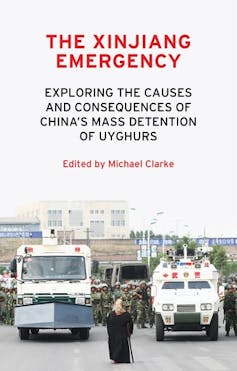
In a recently published book I edited, The Xinjiang Emergency, some of the world’s top scholars on Uyghur history, culture, politics and identity provide a detailed examination of the long-term causes and consequences of China’s repression in Xinjiang.


Manchester University Press

Since the mass detention of Uyghurs began in 2016, it has become clear the Chinese Communist Party (CCP) has embarked on a systematic and coordinated effort to erase Uyghur culture and remake the Uyghurs into pliable and “productive” citizens through “reeducation”.

As part of this process, children have been separated from their parents to be placed in state care, Uyghur women subjected to invasive birth control and sexual abuse, and detainees “graduated” into a system of forced labor.


Read more:
How an independent tribunal came to rule that China is guilty of genocide against the Uyghurs


The state has also prohibited the use of the Uyghur language, script and signage, imposed new legal restrictions on religious practice, razed mosques and other religious sites, used financial inducements to encourage intermarriage with the dominant Han ethnic group, and persecuted the Uyghur intelligentsia.

A high-tech surveillance apparatus has also been erected across Xinjiang to monitor everyday life.

A genocide is taking place

Our group of scholars has concluded the Chinese state’s actions are consistent with the attempted cultural genocide of Uyghurs.

Only a few governments around the world have gone as far as to label it a “genocide”. The French parliament was the latest to do so on the eve of the Olympics, following in the footsteps of the US government and parliaments in Canada, the Netherlands and the UK.

But what has the international community done about it? So far, it has been long on hand-wringing and rhetorical “concern” for Uyghurs, but short on practical measures beyond the sanctions imposed on Chinese individuals and entities responsible for the repression.

A small group of countries also took part in a diplomatic boycott of the Beijing Olympics, but this was largely seen as a symbolic gesture. These countries still sent teams to compete in an event that Chinese President Xi Jinping has declared will

help present China as a positive, prosperous and open nation committed to building a community with a shared future for mankind.

Not since the 1936 Berlin Olympics in Nazi Germany have the games been held amid such a wanton violation of basic human rights. And the CCP’s actions against the Uyghurs have been well-documented for nearly five years.


Read more:
Despite China’s denials, its treatment of the Uyghurs should be called what it is: cultural genocide


Although there is evidence some Uyghurs have been killed in detention, genocides aren’t just defined by mass killings. The CCP’s actions in Xinjiang do meet the criteria for genocide under the UN Convention on the Prevention and Punishment of the Crime of Genocide.

This document deems a range of acts to constitute “genocide” if the intent is to destroy a national, ethnic, racial or religious group, including:

  • causing serious bodily or mental harm to members of the group

  • deliberately inflicting “conditions of life” intended to bring about a group’s physical destruction (such as withholding food, medical care, shelter or clothing)

  • imposing measures intended to prevent births

  • forcibly transferring children to another group.

Protesters outside the Chinese embassy in Seoul.
Protesters rally against the Beijing Olympic Games in front of the Chinese embassy in Seoul, South Korea, this week.
Ahn Young-joon/AP

Moral platitudes or real action?

The failure of the international community to respond to the Uyghurs’ plight speaks to the self interest of governments, multinational corporations and organisations like the International Olympic Committee to retain profitable relations with Beijing. It also shows the hollowness of many governments’ commitments to the much touted “rules-based order”.

Australia’s foreign minister, Marise Payne, for example, made this a priority when she said in June 2020 that Australia was committed to the “norms that underpin universal human rights, gender equality and the rule of law”.


Read more:
Why the Winter Olympics are so vital to the Chinese Communist Party’s legitimacy


This is a sentiment shared by many of the states that have condemned China’s actions in Xinjiang. Yet, it has not been translated into real action likely to increase pressure on Beijing.

Is this trumpeting of a commitment to “universal human rights” little more than a moral platitude? If not, then the international community must ask itself why there has not been stronger action against the largest and most systematic repression of an ethnic or religious minority in the world today.

The Conversation

Michael Clarke has in the past received funding from the Australian Research Council, Australian Political Studies Association, Australian Centre on China in the World (ANU), and the US State Department.

ref. Can China use the Beijing Olympics to ‘sportwash’ its abuses against the Uyghurs? Only if the world remains silent – https://theconversation.com/can-china-use-the-beijing-olympics-to-sportwash-its-abuses-against-the-uyghurs-only-if-the-world-remains-silent-175922

New Zealand is reviewing its outdated conservation laws. Here’s why we must find better ways of getting people on board

Source: The Conversation (Au and NZ) – By Giles Dodson, Senior Lecturer, Humanities and Social Sciences, Massey University

Shutterstock/kavram

Recently, conservation minister Kiritapu Allan described existing legislation as not fit for purpose, and she’s right. The government’s announcement to overhaul conservation policy is welcome news.

There are too many outdated, confusing and inconsistent rules. The system they create is out of step with current values and priorities.

The way we use and view the conservation estate has changed. Different forms of recreation are growing in popularity. Tourism operations have expanded. Community partnerships have flourished. But the potential for conflict has increased, too.

Māori have demanded a greater say, yet there are only weak provisions for Treaty-based iwi co-governance within existing rules. Key pieces of legislation, such as the Marine Reserves Act 1971, are completely out of date.

The government has emphasised our conservation tools need to be updated in light of developments in science to address threats to biodiversity and challenges such as climate change.

In New Zealand, we often equate conservation with sciences such as ecology, wildlife and marine biology. Science is held to be the method for achieving conservation outcomes: protected animals and habitats, the preservation of special areas and correct levels of public access and usage.

Science has certainly moved on since many of our conservation laws were put in place. But so, too, has our knowledge about how to improve decision making through public involvement.


Read more:
Conservation works better when local communities lead it, new evidence shows


Communities, stakeholders and tangata whenua now expect a greater role in shaping how conservation gets done. But under our existing rules, public involvement in conservation policy development is limited to “consultation”.

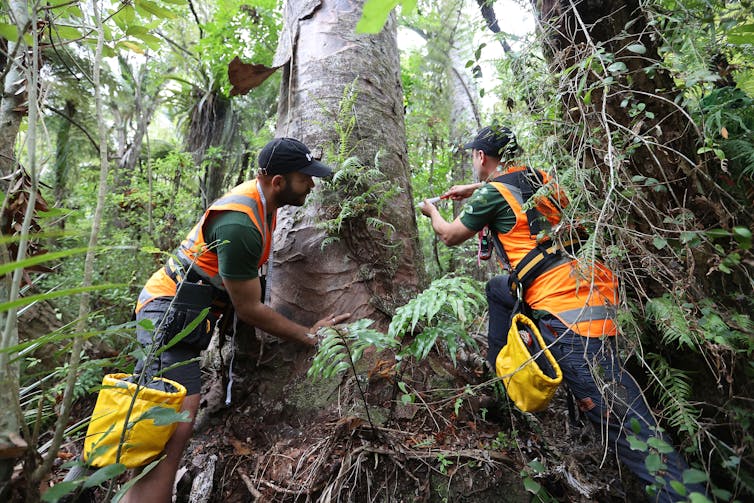
People treating a kauri tree infected with dieback disease.
Māori have demanded a greater say in conservation issues, such as the management of kauri dieback disease.
Fiona Goodall/Getty Images

Conservation is about people and values

The main issues in conservation aren’t animals, plants and places – or biodiversity and environmental stewardship. Conservation is really about people. It is about our values in relation to natural and historic resources.

One way to get a conservation system that can handle the challenge of different values is to build a greater degree of public participation into the new rules, beyond mere consultation.

Public participation is a catch-all term for citizens having a say in shaping the development of conservation policy.

So far, this mainly happens either in the form of written submissions or by attending public meetings. The requirement for this form of participation is baked into key laws, including the Conservation Act 1987. That law requires that conservation plans and strategies, which shape how the Department of Conservation (DOC) works, are publicly notified and the Director-General receives public submissions.

Those who study environmental politics have criticised this as a limited kind of public participation.

Such consultation processes are difficult for people to engage with and frequently dominated by special interests. They can result in people having relatively little impact on the process and can be disempowering and frustrating. Stakeholders often take adversarial positions, especially where issues are complex and uncertain.

Dealing with controversy and complexity

Sometimes the science is incomplete or uncertain. In such cases, policy decisions can result in controversy and reputational damage to DOC.

Even where the scientific support for policy is sound, we see conflicts again and again: in game animal management, endangered species protection, the use of 1080 and the expansion of marine reserves. On occasion, the intensity of opposition to DOC policy has threatened to turn violent.

Stakeholders can feel ignored. Local and traditional knowledge can be valued less than science. And expensive litigation can become the last resort for frustrated stakeholders, as happened recently with tahr management in the South Island.

Indigenous conservation values

Māori, as tāngata whenua, can be strong voices for conservation. They have a special relationship with ancestral lands and waters, taonga species and wāhi tapu in the conservation estate.

But Māori ideas of kaitiakitanga differ from western notions of perpetual protection. Kaitiakitanga is fundamentally about relationships between environments and people, structured around sustainable use.

Locking away resources, being unable to exercise customary rights, or being excluded from decision making can be barriers to Māori support.

The current regime provides only weak mechanisms for Māori to be real partners in the governance of conservation areas. In cases where Māori have secured a greater say in conservation management, it has generally been through special legislation rather than the conservation framework.


Read more:
Ancient knowledge is lost when a species disappears. It’s time to let Indigenous people care for their country, their way


Collaboration with iwi and communities

There are examples of effective conservation collaborations throughout New Zealand. They tend to be operational. Some have been controversial, including corporate sponsorships and community volunteers taking up the slack left by budget cuts.

Conservation volunteers releasing South Island saddlebacks in a protected area.
The Department of Conservation relies heavily on volunteers.
Andrew MacDonald/Getty Images

But DOC has also demonstrated willingness to take a more collaborative, adaptive and Treaty-based approach.

The Fiordland Wapiti Foundation is a stand-out example of community-led game management. Other hunter-led groups have also adopted a collaborative mindset.

In the contested area of marine protection, a multi-stakeholder approach has been implemented in Otago and the West Coast. However, this process has been criticised as narrowly focused on biodiversity and economic values.

Co-designed projects like Raukūmara Pae Maunga offer a new model for DOC, iwi and community collaboration.

Where to from here

The upcoming review presents an opportunity to do things differently, but this will require a willingness to continue to experiment with participatory processes and move beyond mere consultation.

Research suggests effective participation can improve outcomes, if done well, but it’s not a panacea for conflict resolution.

Deepening public participation requires commitment, skills and resourcing. It means DOC investing more in facilitating participatory processes and the public getting involved. Statutory processes will need to be flexible and relevant to communities.

There is no rule book for this, but there are best practices we can learn from. The new rules must require DOC and its partners to experiment and innovate in engaging the public in decision making.

But the foundation for effective and durable conservation policy is a better understanding of the values people hold and our capacity to engage on difficult issues.

The Conversation

Giles Dodson does not work for, consult, own shares in or receive funding from any company or organisation that would benefit from this article, and has disclosed no relevant affiliations beyond their academic appointment.

ref. New Zealand is reviewing its outdated conservation laws. Here’s why we must find better ways of getting people on board – https://theconversation.com/new-zealand-is-reviewing-its-outdated-conservation-laws-heres-why-we-must-find-better-ways-of-getting-people-on-board-174055

Will the government’s $2.2bn, 10-year plan get a better return on Australian research? It all depends on changing the culture

Source: The Conversation (Au and NZ) – By Jared Mondschein, Senior Research Fellow, US Studies Centre, University of Sydney

Over the past few years, the Morrison government has made A$2 billion funding commitments to everything from the critical minerals and rare earths industry to bushfire recovery. Now the government has made yet another $2 billion announcement of an “action plan to supercharge research commercialisation”. It’s a longstanding challenge, one that many said should have been acted on long ago.

This announcement may appear like the many others that came before it, particularly given it’s so close to an election. Nonetheless, this effort may ultimately have an impact on one of the most vexing aspects of Australia’s economy: the lack of research commercialisation.


Read more:
Our unis are far behind the world’s best at commercialising research. Here are 3 ways to catch up


What is the plan?

Most of the money under the plan, some $1.6 billion, will go to a ten-year competitive funding program, “Australia’s Economic Accelerator”. The aim is to help university projects bridge the so-called “valley of death” between early-stage research and commercialisation.

The remaining parts of the plan include:

  • $296 million for 1,800 industry-linked PhDs and 800 industry fellows over the next decade
  • $243.5 million for the previously announced Trailblazer Universities program to create four university-based research and industry hubs around the country – eight universities have been shortlisted
  • $150 million to expand CSIRO’s Main Sequence venture capital firm, which focuses on commercialising Australian research
  • a new standardised intellectual property (IP) framework – providing more uniform IP licensing terms, clauses and agreements – to support more seamless university-industry collaboration.

Is this just another band-aid policy?

On the whole, Australian universities, businesses and science bodies have largely praised the announcement. That’s a fairly uncommon outcome in this increasingly contentious space where finger-pointing is ubiquitous.

If anything, the chief criticism thus far is that the effort is too little and too late for such a sizeable and consequential problem. After all, Australia’s record of research commercialisation remains one of the worst in the developed world. Yet we have world-class research facilities.

Facing a halving of international student numbers in Australia and a Commonwealth government that seemingly went out of its way to exclude the higher education sector from pandemic-related assistance, some may think universities should simply appreciate any help they can get. After all, this is the same government that cut $1.47 billion from the Australian Research Council over the past nine years.


Read more:
Hit hard by the pandemic, researchers expect its impacts to linger for years


Yet, in reality, the $2.2 billion effort is unique not only for the size of the funding but also for its culture-focused reforms.

What’s different about this plan?

At the heart of the plan are steps to bridge the cultural chasm between two exceedingly different institutions: industry and the university sector. It’s perhaps the most important aspect of tackling lacklustre commercialisation.

The research culture of many Australian universities revolves around a mindset of publish or perish. This culture motivates the pursuit of PhDs to further academic knowledge. The focus ultimately prioritises publishing research over producing products and services that solve real-world problems.

The various global rankings of universities and the role of research in those rankings plays a key part in this mentality. A high global ranking enhances prestige, which in turn attracts students, so the logic goes. As a result, academics are encouraged to pursue both quality (highly ranked journals) and quantity (number of papers) in research.


Read more:
Australian universities may be at a turning point in the rankings chase. So what next?


The most consequential impact of the Morrison plan may simply be the disruption of the publish-or-perish culture. The industry-linked PhDs, for example, would force often unwilling partners – industry and academia – to overcome cultural differences and work together on tackling problems.

Of course, there should always be room for blue sky research. However, more links with industry can make both the universities and individual researchers more oriented to practical solutions and commercial realities.

The Trailblazer scheme will create common ground for different stakeholders to work on mutually agreed goals. This process can nurture faith and confidence in each other’s abilities, leading to more productive practice-driven research.

The creation of a standardised IP framework may also help universities, particularly smaller ones with less administrative resources. The challenges of navigating the complex process of commercialisation can stymie collaboration with industry.


Read more:
Who cares about university research? The answer depends on its impacts


Will this plan work?

The Morrison government plan’s proposal to change academic culture is an important step. But its success will depend on how effectively it tackles a mindset that underlies the publish-or-perish culture in Australian universities, and the intentions of the researchers themselves.

It would be a blunder to treat the diverse academic fraternity as one homogeneous group. Academics can have varying levels of motivation, some intrinsic and others extrinsic, that could drive them to become either a pure researcher or research-based entrepreneur.

The increased funding should be appreciated and will surely create incentives for universities to join hands to produce commercial products. But bringing about a change of heart is perhaps the first and more difficult step. The success of the government’s plan depends on it.

The Conversation

The authors do not work for, consult, own shares in or receive funding from any company or organisation that would benefit from this article, and have disclosed no relevant affiliations beyond their academic appointment.

ref. Will the government’s $2.2bn, 10-year plan get a better return on Australian research? It all depends on changing the culture – https://theconversation.com/will-the-governments-2-2bn-10-year-plan-get-a-better-return-on-australian-research-it-all-depends-on-changing-the-culture-176358

NSW byelections preview; federal Coalition rebounds in Essential poll

Source: The Conversation (Au and NZ) – By Adrian Beaumont, Honorary Associate, School of Mathematics and Statistics, The University of Melbourne

AAP/Bianca de Marchi

Four state byelections will occur in NSW on Saturday, with polls closing at 6pm AEDT.

The byelections are in the seats of Bega (Lib, 6.9% margin at the 2019 election), Monaro (Nat, 11.6%), Strathfield (Labor, 5.0%) and Willoughby (Lib, 21.0%). Labor and the Coalition have nominated candidates in all seats except Willoughby, which Labor won’t contest. Willoughby independent candidate Larissa Penn won 9.9% at the 2019 state election.

These byelections are being held owing to resignations. Former NSW Premier Gladys Berejiklian resigned as member for Willoughby, as did former Nationals leader John Barilaro (Monaro) and former Labor leader Jodi McKay (Strathfield). Andrew Constance (Bega) resigned to contest the federal Labor-held Gilmore at the federal election.

ABC election analyst Antony Green says that, owing to COVID, all voters in these four seats will be sent a postal pack, though they can still vote in-person, early or on election day.

Checks that someone who voted in person did not also vote by post will be required, so counting of postal votes will not begin until next Wednesday February 16. If the on-the-night result is at all close, we’ll have to wait until at least then to know the winner.

Most Australian elections use compulsory preferential voting, in which full numbering is required for a formal vote. NSW uses optional preferential, with only a “1” required. Primary votes are more important as about half of preferences exhaust.

I have seen no polls for these byelections, but the Essential poll below suggests that both the federal and NSW governments are recovering from their COVID-inspired nadirs in mid- to late January.

I do not believe these byelections have implications for either the federal election or the next NSW election in March 2023. Byelection swings have little relationship to general election swings. The national and NSW polls will be a far better guide to the results of these elections than byelections.

Green said the Coalition won 48 of the 93 NSW lower house seats in 2019, to 36 Labor, and three each for the Greens, Shooters and independents. Since then, two Coalition MPs have moved to the crossbench owing to accusations of wrongdoing, so the government is technically in minority.

Even if the Coalition lost the three seats they are defending, they would still have a 43-38 seat lead over Labor. It is unlikely they would be forced out of office before the next scheduled election.

Federal Essential poll: Coalition trails by just one point

Essential released voting intentions for their four federal polls conducted in December, January and February. On Essential’s “2PP+” measure that includes undecided, Labor led the Coalition by just 47-46 in this week’s poll, down from 50-43 last fortnight. In the lead-up to the election, Essential will release voting intentions each fortnight, rather than back-releasing after every few months.

The federal government also recovered from its first negative rating on COVID last fortnight, as 40% gave it a good rating for COVID response (up five), and 34% a poor rating (down four).

Other than Victoria and WA, state governments also rebounded, with NSW’s good rating up seven to 44%, SA’s up ten to 53% and Queensland’s up ten to 56%. Victoria’s good rating dropped five points to 42% good and WA’s dropped two to 64%.

57% thought three doses, including a booster, should be required for people to be considered fully vaccinated, while 31% thought two doses were adequate. By 66-17, voters thought social media companies are not doing enough to ensure a safe online environment.

This poll was conducted before Tuesday from a sample of 1,069. Analyst Kevin Bonham said that Essential has been better for the Coalition than Newspoll or Morgan since late 2021. This implies that a Newspoll conducted now would have Labor further ahead than Essential.

However, given this poll, it’s likely the next Newspoll will have Labor’s lead down from their 56-44 last week. And Newspoll could be wrong, as it was in 2019.

COVID has eased rapidly in Australia, with the 7-day rolling average of cases falling from a mid-January peak over 100,000 to about 30,000 now. Daily death rates have also begun dropping. This poll suggests that is much more important to swing voters than what Gladys Berejiklian or Barnaby Joyce texted about Scott Morrison in the last year.

Morgan poll: 56.5-43.5 to Labor

A federal Morgan poll, conducted January 17-30 from a sample of almost 2,800, gave Labor a 56.5-43.5 lead, a 0.5-point gain for Labor since early January. Primary votes were 37.5% Labor (up 0.5), 33% Coalition (down 1.5), 11.5% Greens (down 0.5), 3.5% One Nation (up 0.5), 2% UAP (up 1.5), 8% independents (down 0.5) and 4.5% others (steady).

This poll was taken in mid- to late January, while the Essential poll was conducted in early February. If the Coalition has recovered from its COVID nadir, as Essential suggests, it will show up in the next polls.

The Conversation

Adrian Beaumont does not work for, consult, own shares in or receive funding from any company or organisation that would benefit from this article, and has disclosed no relevant affiliations beyond their academic appointment.

ref. NSW byelections preview; federal Coalition rebounds in Essential poll – https://theconversation.com/nsw-byelections-preview-federal-coalition-rebounds-in-essential-poll-176348

15 things not to do when using a rapid antigen test, from storing in the freezer to sampling snot

Source: The Conversation (Au and NZ) – By Thea van de Mortel, Professor, Nursing and Deputy Head (Learning & Teaching), School of Nursing and Midwifery, Griffith University

Shutterstock

Many of us have taken a rapid antigen test (RAT) or have administered them to our school-aged children.

But how many of us are using them correctly?

Here are 15 pitfalls to avoid if you want to get the most out of your RAT.


Read more:
Taking your first rapid antigen test? 7 tips for an accurate result


1. Storing at the wrong temperature

RATs should be kept at 2-30℃ for them to work as intended.

Storing at higher temperatures means proteins in the tests can be denatured – permanent changes to protein structure, just like when you cook an egg.

Don’t let the kit freeze. This can also damage the kit components.

2. Using straight from the fridge

The reagents (essential test kit ingredients) will not work properly at cold temperatures. Let the kit sit out of the fridge for about 30 minutes before using it.

3. Using an out-of-date test

Always check the use-by date before using, which you’ll find on the carton. Expired tests can contain biological or chemical reagents that have gone off or are denatured.

4. Opening too early

Do NOT open the test items until you are ready to start. Storing the test open can lead to false positives (you can test positive without really having COVID).

5. Taking the test too soon or too late after exposure

A study, which has yet to be reviewed by experts, suggests RATs cannot detect SARS-CoV-2 (the virus that causes COVID-19) until at least day two after exposure. It takes a median of three days to test positive.

RATs also cannot detect the virus later than about seven or eight days after exposure. So don’t wait too long to get tested.

RAT sensitivity (ability to detect a positive case) improves if you take a daily test, over several days.

6. Assuming all tests work the same

Some RATs need nasal swabs, others use saliva. The way virus is extracted from the sample, the number of drops to add to the testing device, and the timeframe to read the results differ between brands.

Familiarise yourself with the instructions, especially if it’s a new brand, or it’s been some time since your last RAT.

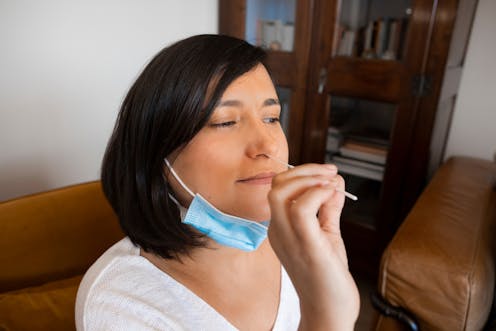
Woman reading instructions while taking rapid antigen test
Read the instructions, especially if it’s a new brand, or it’s been some time since your last test.
Shutterstock

7. Contaminating the test

Do NOT touch the tip of the swab (the soft bit that goes in your nose) with your fingers or allow it to come into contact with other surfaces.

8. Sampling snot

Blow your nose before doing a nasal swab as you don’t want to sample snot. You want to swab the tissue that lines the nasal passages, using the technique below.

9. Swabbing at the wrong angle and depth

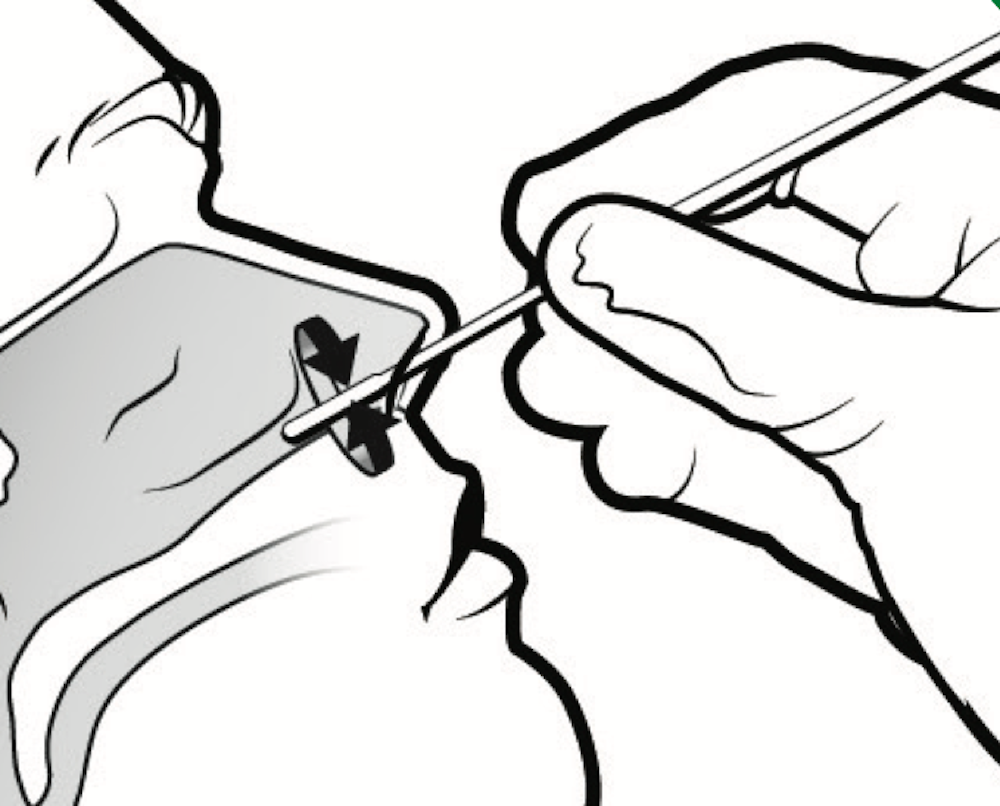
When inserting the nasal swab, you are not trying to swab the inside of your nostril but the tissue further back in the nasal passages.

Correct sampling technique for nasal swab
Are you taking the sample correctly?
health.gov.au/PHLN/CDC

So rather than going directly upwards with the swab, try to go horizontally and about 2-3 centimetres back. Then rotate the swab gently against the walls of the nasal passage the exact number of times your test recommends. Repeat on the other side.

Because it’s easy to get the angle/depth wrong, it’s best for parents or caregivers to take children’s samples. Most RATs shouldn’t be used on children under two years old, so check the instructions if you’re not sure.


Read more:
Go low, go slow: how to rapid antigen test your kid for COVID as school returns


10. Continuing with a bloody swab

Blood on the nasal swab will give you an inaccurate result. Discard the test and do another when bleeding has stopped, or swab only on the side that is not bleeding.

Don’t use a test that requires nasal swabbing if you are prone to nose bleeds. Use a saliva test instead (see below).

11. Eating, drinking, chewing gum, brushing your teeth or smoking before a saliva test

These can give an inaccurate result. So wait 30 minutes before taking a saliva sample.

12. Adding too many or too few drops to the indicator device

Adding the right number of drops will ensure the liquid moves across the test surface in a specific time. If you add extra drops, or too few, you will mess up the timeline and the test will not work properly.

How a RAT – known as a lateral flow test in some countries – works and how molecules move through the kit.

13. Reading the result too early or too late

Read the result at the time listed in the instructions.

Read the test too early and it is likely to give you a false negative result (the test reads negative but you are really positive). Too late and it might indicate you are positive when you are not.


Read more:
How accurate is your RAT? 3 scenarios show it’s about more than looking for lines


14. Misreading the result

When you read your results (at the correct time):

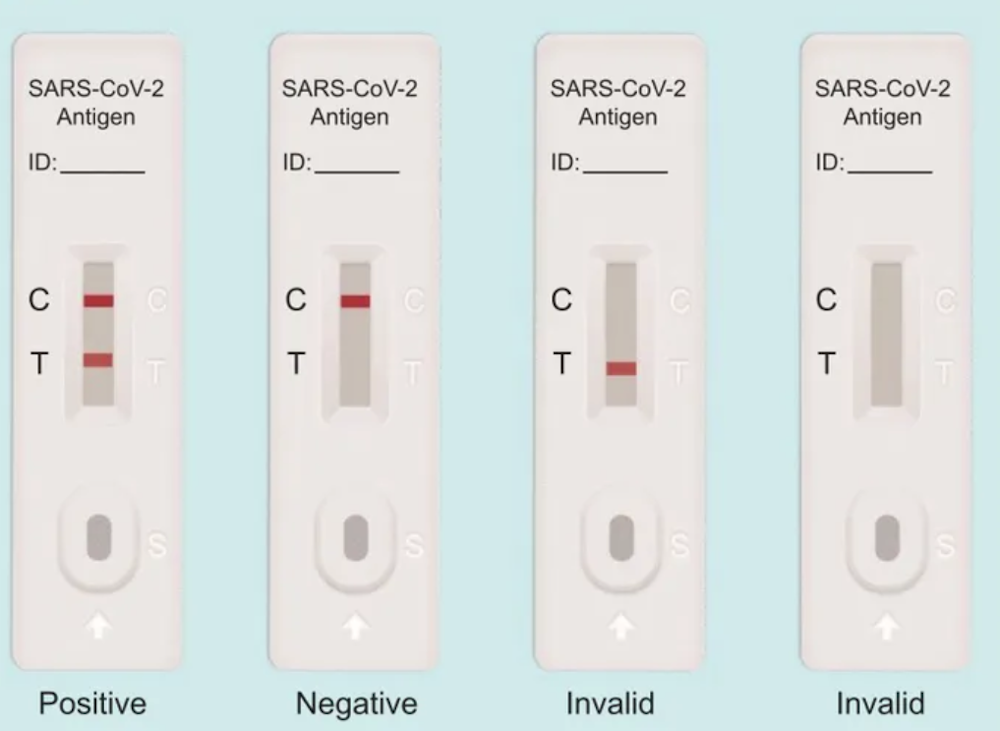
  • two lines means you have tested positive for SARS-CoV-2

  • a line at C (for control) ONLY means the test has worked and you have tested negative

  • a line at T (for test) (or A for antigen, depending on the kit) but NOT C means your test is faulty. Do another one

  • no lines also means your test is faulty and you need to repeat it.

Possible rapid antigen test results
Your test result will look like one of these.
antibodies.com/screenshot

15. Disposing of the kit incorrectly

Seal any components of the kit that have come into contact with your nasal or saliva sample (swab, containers, reagents, test device etc) in the plastic bag provided and dispose in the garbage.

Only place the cardboard carton and paper instructions in recycling.

The Conversation

Thea van de Mortel teaches into the infection prevention and control program at Griffith University.

ref. 15 things not to do when using a rapid antigen test, from storing in the freezer to sampling snot – https://theconversation.com/15-things-not-to-do-when-using-a-rapid-antigen-test-from-storing-in-the-freezer-to-sampling-snot-176364

Time for a reckoning: Cricket Australia, fossil fuel sponsorship and climate change

Source: The Conversation (Au and NZ) – By Brett Hutchins, Professor of Media and Communications, Monash University

Shutterstock

As we head towards the end of the summer sporting calendar, Cricket Australia is facing pressing questions well beyond replacing Justin Langer as coach of the men’s national teams.

Chief among them is the question of climate change. While other sporting codes and teams around the world are starting to use their clout to push for more and faster action, Cricket Australia’s powerbrokers seem to be largely paying lip service to climate action. Meanwhile, many players are taking action.

You might think cricket and climate change have nothing in common. Sadly, that’s not the case. On a practical level, steadily rising temperatures and heightened natural disasters make it harder to play the sport safely over summer. And on a cultural level, fossil fuel power companies have long used sponsorships to “sportwash” their reputations.

It’s time for Cricket Australia to take a stronger stance on climate and turn away from fossil fuel sponsorships.

Is cricket really at risk?

There is clear and growing evidence rising temperatures, bush fire smoke, cyclones, floods and drought brought by climate change are hurting cricket and the health of its players around the world.

That’s to say nothing of sea level rise and stronger hurricanes, which threaten to take chunks out of cricket-mad island nations in the Caribbean. In June last year, Grenada Prime Minister Keith Mitchell called on Cricket Australia and the International Cricket Council to sign on to UN efforts to harness sport for climate action. In response, Cricket Australia said they would look into it. We’ve heard nothing further.

No doubt some readers will baulk at the idea of putting the politics of climate change and cricket together. But if the last century of sporting history has taught us anything, it’s that high level sport and politics go hand-in-hand, from Cold War Olympics, to race relations, to nationalism.

Climate change is the single biggest issue of our time, dubbed “code red for humanity”. It’s an exceptionally well established issue seen across atmospheric, chemical and physical patterns. To tackle it requires a massive collective undertaking. That means politics. But to make big changes requires public buy-in. Sport, which absorbs so much of our attention, has a vital role to play.

Players are taking the lead on climate action

Many of Australia’s leading players – including men’s Test captain Pat Cummins – are not waiting. They are calling for urgent action to protect the sport and the generations of younger players to follow.


Read more:
We need to ‘climate-proof’ our sports stadiums


For Cummins, the realisation was personal. In January 2020, his local cricket club in Penrith sweltered as Western Sydney became the hottest place on earth. Smoke haze from Black Summer megafires forced match cancellations. Two years earlier, Cummins watched as English captain Joe Root was taken to hospital after battling 47℃ heat.

Last week, Cummins launched Cricket for Climate, which will install solar panels on club facilities around the country. He’s not alone in his activism. This is just the latest surge of support for urgent climate action by our athletes. Cricket for Climate follows on from AFL Players for Climate Action, which now has 260 members. On a broader scale, there’s The Cool Down, a national climate campaign led by Emma and David Pocock which has more than 300 top athletes as backers, including cricket’s Alex Blackwell, Rachel Haynes and Sean Abbott.

Our athletes want faster, stronger action. So what’s the hold up?

Cricket Australia supports climate action through the fine work of the Sports Environmental Alliance as an organisational member. But it could do much more.

While Cricket Australia has signed on to Cummins’ new initiative, it has not committed to either of two UN initiatives, Sports for Climate Action Framework or the Race to Zero Initiative.

You’d be hard pressed to find detail on Cricket Australia’s environmental initiatives. There’s no information about this in their current five year plan or their annual report.

There’s no reporting on the “holistic” sustainability strategy the organisation stated it was developing in 2020 in the face of concerns about extreme heat.

The problem of sportswashing and sponsorships

Unfortunately, professional sport is awash with lucrative sponsorships from fossil fuel companies. The main sponsor of our men’s cricket team is Alinta Energy, which owns one of Victoria’s largest coal-fired power plants, Loy Yang B.

While Alinta is moving into wind and solar, its parent company, Pioneer Sail Holdings, is still the sixth highest carbon emitting corporation in Australia as of 2019-2020.

These kinds of sponsorships are coming under increasing scrutiny nationally and internationally, with comparisons drawn between our current fossil fuel corporation sponsorships and tobacco company sponsorships in the 1980s.

Fossil fuel companies seek out the “soft power” of sport as a way to improve their public image and create positive brand associations.

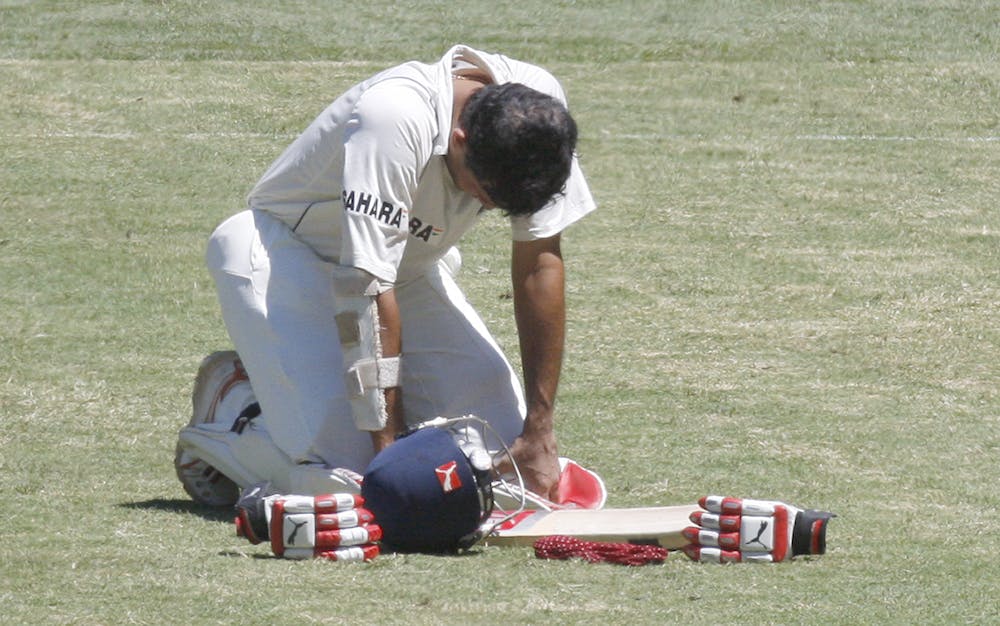
Cricket player suffering from heat exhaustion
India’s Sourav Ganguly suffers from heat exhaustion in the 2007 Test in Australia.
Andrew Brownbill/AP

So what would it take to deny fossil fuel companies this kind of social license? Cricket managers don’t have to look far at all. There’s an excellent example at Rod Laver Arena, just over the train tracks from Cricket Australia’s head office.

In January, Tennis Australia sent shockwaves through sport by cancelling its multi-year sponsorship with their “official natural gas partner” Santos ahead of this year’s Australian Open. The cancellation came after a long campaign targeting “sportswashing”.


Read more:
Sportswashing: how mining and energy companies sponsor your favourite sports to help clean up their image


This sudden shift is positive. It means the comparison with tobacco companies now has real teeth. Remember that in the 1980s, tobacco advertising was everywhere. To reduce the damage done by smoking, Australia progressively denied tobacco companies the social license offered by sponsorships and advertising, as part of a broader push. We need a similar effort to encourage a wholesale shift away from fossil fuels.

The question now for Cricket Australia is simple. How long will it hesitate at the climate crossroads, caught between the health of its players and planet and the fossil fuel interests of its sponsors? The players aren’t waiting. Pat Cummins and many other players are leading the way to a safer future for cricket and those who love it. It’s time for their national governing body to follow them.

The Conversation

The analysis presented here is informed by research funded by the Australian Research Council (DP200103360).

ref. Time for a reckoning: Cricket Australia, fossil fuel sponsorship and climate change – https://theconversation.com/time-for-a-reckoning-cricket-australia-fossil-fuel-sponsorship-and-climate-change-176707

The myth that won’t die: shutting down immigration did not kickstart the economy

Source: The Conversation (Au and NZ) – By Brendan Coates, Program Director, Economic Policy, Grattan Institute

shutterstock

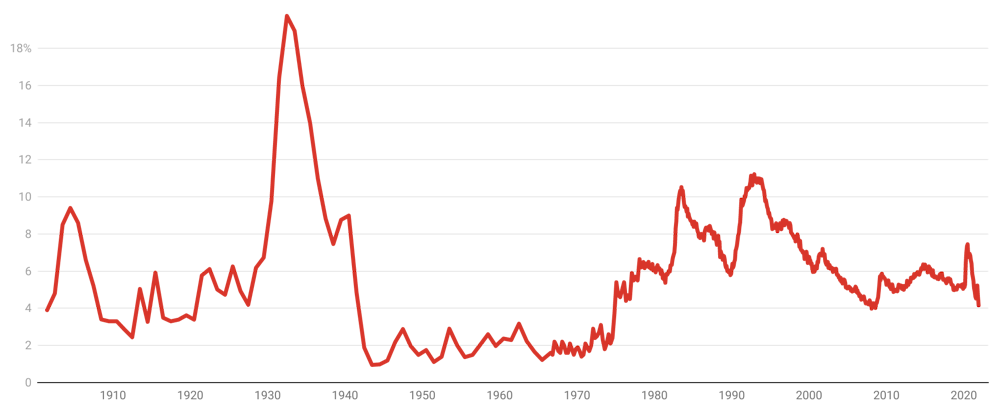
Australia’s unemployment rate – now at 4.2% – is at its lowest in more than a decade. It’s not too far off slipping below 4%, something that hasn’t happened for the best part of half a century.

This good news story has ignited fierce debate over who deserves the credit.

The prime minister and the Reserve Bank governor believe it is them. They delivered both the biggest government stimulus package in history and the lowest interest rates in history.


Australia’s unemployment rate, 1901 to February 2022

Monthly seasonally adjusted data from 1978, quarterly unadjusted data from 1966 to 1978, annual data (collected differently) prior to 1966.
Sources: ABS Labour Force, ABS Labour Force Historical Timeseries, MW Butlin, A Preliminary Annual Database 1900/01 to 1973/74

But others disagree, most notably ACTU Secretary Sally McManus who tweeted last week that the reason unemployment rates were low was closed borders.

It had “nothing to do” with economic management.

So who’s right? No matter how we run the numbers we find it’s economic management. On balance, closed borders might have helped us, but because they prevented Australians from leaving, rather than others from arriving.

Arrivals boost demand as well as supply

New arrivals (often migrants) most certainly do add to the supply of labour. They compete with pre-existing Australians for jobs.

But that’s only half the story.

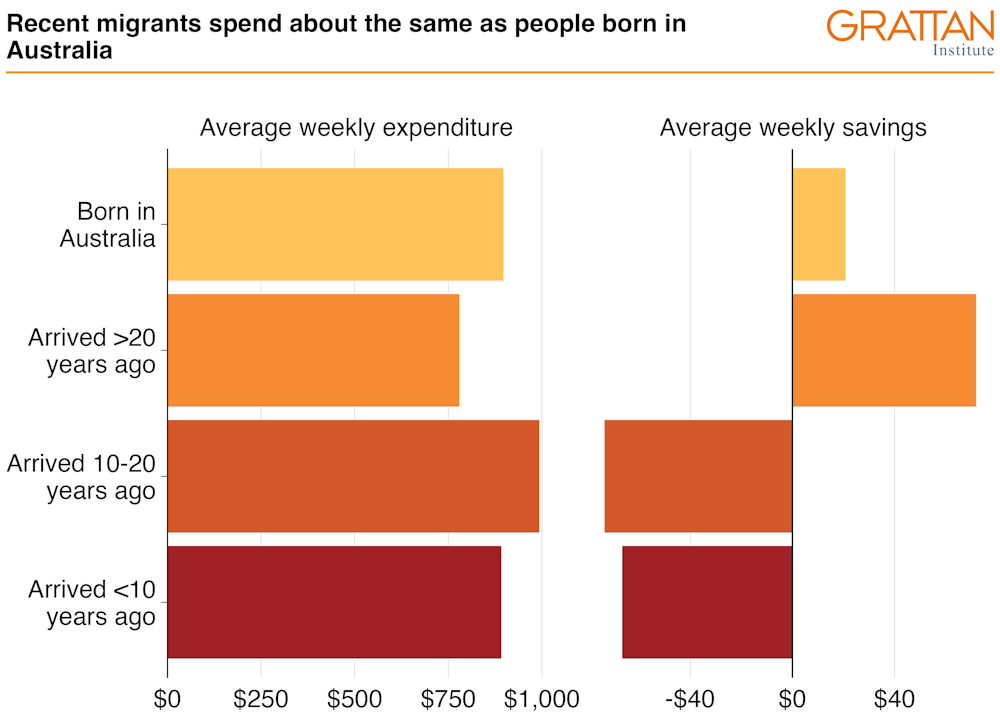
The other half is that new arrivals consume goods and services, for a while at a greater rate than Australians who have been here longer. They save less or run down savings in order to do it.


Read more:
The government is right – immigration helps us rather than harms us


By buying more, they add to the demand for goods and services, and for workers to produce them.

If migrants enter Australia to work, but then spend more than they are paid, they might even create more jobs than they ‘take’.


Bar chart showing the expenditure of people born in Australia is similar to those who have arrived in recent decades. But a second panel shows recent arrivals dissave, spending more than they earn, whereas Australians save a bit.

Grattan Institute analysis of ABS household Expenditure Survey 2016

The net effects are small

Most recent research confirms that migrants both take and create jobs, finding little overall impact on the employment or wages of existing workers.

One study even found temporary skilled migrants boosted the wages of lower-skilled Australians by prompting them to move up into higher-paid jobs.

In an in-depth study conducted in 2016, the Productivity Commission concluded

there was almost no evidence that immigration is associated with worse (or better) labour market outcomes for Australian-born people

Of course, the pandemic is a unique event. Research only takes us so far.

But in Europe and the United States where borders remained open, unemployment also fell to near historic lows, suggesting it was something other than closed borders that did it.

But staff shortages are real

The number of migrants fell dramatically after COVID began. This reduced both the supply of and demand for labour, but the composition affected some industries more than others.

Before the pandemic, about one in six workers in hospitality were temporary migrants, many of them international students.


Read more:
COVID halved international student numbers in Australia. The risk now is we lose future skilled workers and citizens


There are roughly half as many international students in Australia now as in 2019. Working holiday makers, who made up about 4% of the agriculture workforce, are almost entirely absent.

The staff shortages are real. Labour supply in those sectors has dramatically shrunk while demand for their services has continued. Eventually those employers will make other arrangements or the supply of backpackers and international students will resume.

Closed borders helped, by keeping Australians here

Oddly, there was an aspect of closed borders that boosted GDP.

As it happens, Australians spend more overseas each year than Australia makes from tourists coming here.

As economist Saul Eslake points out, banning our population from leaving has been a perverse windfall. Money that would have otherwise been spent overseas has been spent at home.

Bureau of Statistics figures suggest that closing the border might have contributed $28 billion to Australia’s trade balance compared to 2019.

It’s stimulus that mattered

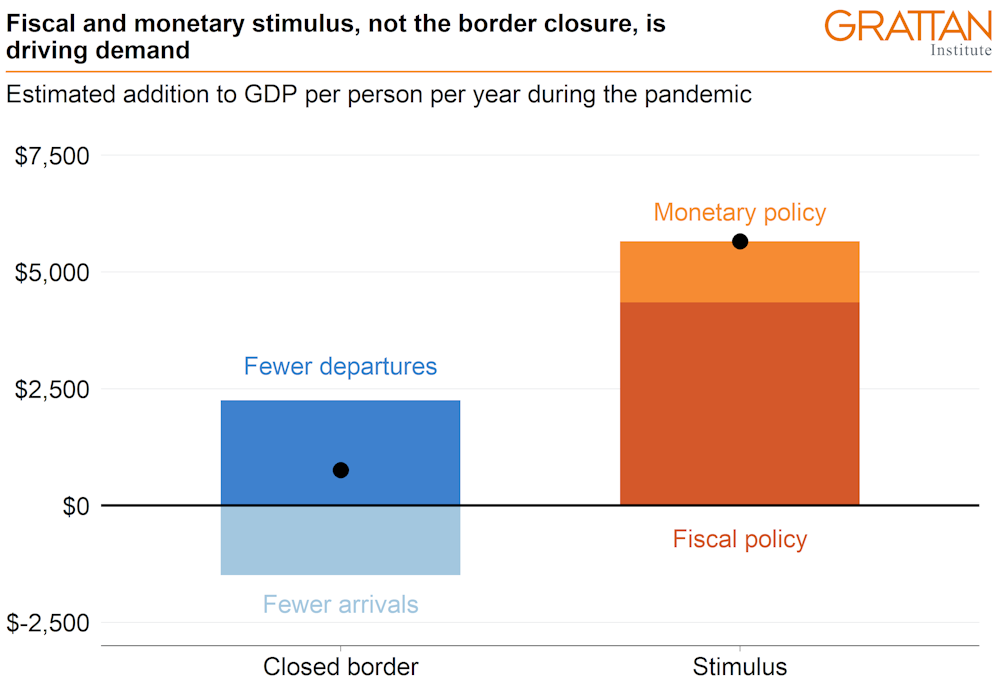
Putting the story together in the chart below, it’s clear that stimulus (both “fiscal” from the government, and “monetary” from the Reserve Bank) boosted the economy far more than did closed borders.

The dark-blue bar captures the decline in spending overseas on travel and education as fewer Australians travelled, while the light-blue bar captures both the decline in spending on Australian education and travel, and the effects of fewer working migrants, as fewer visitors arrived.

Both are swamped by stimulus, which is marked in dark and light orange.


Stacked column chart showing the change in GDP per person due to border closures and stimulus. The effect of fewer departures is mostly offset by fewer arrivals. Monetary and fiscal policy are large in comparison

Estimates are current Australian dollars per person per year and subject to revision. Grattan analysis of ABS 5302.0 and IMF and various RBA publications. Click on link for detailed notes

The Federal Government set aside $291 billion for stimulus payments. Including tax breaks and state government support, the International Monetary Fund comes up with a total of $362 billion.

While some JobKeeper ended up in the hands of shareholders, the scale of the stimulus cannot be denied. Assuming a relatively conservative fiscal multiplier of 60 cents for each dollar of fiscal support, these supports are set to boost Australian gross domestic product by $217 billion, or roughly $8,600 per person.

The Reserve Bank’s actions might have added $70 billion to GDP over two years. Without these supports the economy would have found itself in a huge hole during the pandemic.


Read more:
Unemployment below 3% is possible – if Australia budgets for it


Our low unemployment today is a testament to the success of economic policy.

Attributing it to closed borders runs the risk of leaving us with the wrong lesson the next time the economy turns down.

The Conversation

Grattan Institute began with contributions to its endowment of $15 million from each of the Federal and Victorian Governments, $4 million from BHP Billiton, and $1 million from NAB. In order to safeguard its independence, Grattan Institute’s board controls this endowment. The funds are invested and contribute to funding Grattan Institute’s activities. Grattan Institute also receives funding from corporates, foundations, and individuals to support its general activities, as disclosed on its website.

Alex Ballantyne and Will Mackey do not work for, consult, own shares in or receive funding from any company or organization that would benefit from this article, and have disclosed no relevant affiliations beyond their academic appointment.

ref. The myth that won’t die: shutting down immigration did not kickstart the economy – https://theconversation.com/the-myth-that-wont-die-shutting-down-immigration-did-not-kickstart-the-economy-176457

Meet Vivienne Binns, the Australian artist whose work was called ‘an affront to masculinity’

Source: The Conversation (Au and NZ) – By Julie Shiels, Lecturer – School of Art, RMIT University

Vivienne Binns
Somebody’s every day, somewhere, sometime, 2009. Acrylic paint on canvas. 152 x 183cm
MCA/Tim Herbert

Review: Vivienne Binns: On and through the Surface, MUMA

In 1967, Vivienne Binns blasted onto the art scene with her Vag Dens and Phallic Monuments work at Watters Gallery, Sydney.

The show was universally slammed by the artworld for its provocative and sexual imagery, which, according to art critic Elwyn Lynn “affronts masculinity”.

More than five decades later, we read these works differently.

On entering MUMA, we are blasted by the visual power of her paintings that employed Surrealist, Dadaist and graphic styles to address gender, sexuality and portraiture.

Installation view, Vivienne Binns: On and through the Surface, Monash University Museum of Art, Melbourne, 2022.
Photo: Andrew Curtis

On the other side of the room, a kinetic sculpture, Suggon (1966), is embellished with a pulsating metal scourer suggesting a smile that doubles as a muff of pubic hairs.

The riot of colour and mocking sexuality in these works asserts a bold and confident rebuttal to the male gaze and male entitlement. In the current discourse of women being told off for failing to smile, the room seems to be shouting, “up yours!”


Read more:
Beauty and audacity: Know My Name presents a new, female story of Australian art


Pioneering and transgressive

A survey of Vivienne Binns’ comprehensive legacy and lifetime of breaking art’s institutional rules is long overdue.

Binns has innovated in overlapping fields of community, collaborative, feminist and conceptually based art since the late 1960s, an era that reevaluated womanhood and sexuality.

Vivienne Binns and collaborators, Tower of Babel 1989–, mixed media installation with sound; artworks by numerous artists in wooden boxes supplied by Binns, installed on low floor plinth, approx. 180 x 100 x 50 cm overall.
National Gallery of Australia, Canberra. Gift of the artist 2020. Image courtesy of the artist

After offending the sensibilities of so many at her first exhibition, Binns continued to disregard the orthodoxies of the established art world by working with non-artists, pursuing the belief creativity was a realm for everybody to explore.

During this time, spanning from 1970s to the early 80s, her most notable collaborative project was Mother’s memories, other’s memories (1979-81), conceived to reinterpret “memories drawn from anecdotes, letters, diaries handcrafts, photos from family albums”.

Presented in a postcard carousel, the content, aesthetics and sensibility of the screenprinted postcard broke new ground at time when women’s experiences mainly went undervalued, unobserved and undocumented.

While working on Mother’s memories, other’s memories, Binns also recorded her own mother’s memories in a work called Self-portrait self-image 1980, which consists of an interview and a two-channel slide show, one depicting the life of Joyce Binns, and the other revealing corresponding years in Vivienne’s life.

Vivienne Binns with Toni Robertson and the Tin Sheds Art Workshop, Mothers’ memories.
others’ memories (second version) 1979, screenprint, 53 x 41.2 cm (sheet), 52 x 40.2 cm (image).

National Gallery of Australia, Canberra, Purchased 1982. Image courtesy of the artist.

Art is a human activity

When Vivienne Binns returned to the studio in 1984 she established a painting practice that ignored all institutional orthodoxies.

Instead of pursuing more conventional concerns such as material, style and aesthetics, her work is driven by processes formed over many years doing community projects.

Binns says she uses art to work out how to be in the world, and describes these central tenets as processes and relationships that focus on “how things fit together”.

Vivienne Binns, Thinking of Pattie Larter 2008, synthetic polymer paint on canvas, 72 x 100 cm.
Collection of Christine Gilbertson, Melbourne. Image courtesy of Sutton Gallery, Melbourne

Over nearly 40 years, this approach has been the catalyst for many bodies of work that explore how art and life can intersect.

Binns’ unflinching commitment to stay true to her process-driven methods has meant her wayward practice is difficult to classify and commodify. Throughout her career she has regularly discovered the boundaries of permission to be experimental.

Vivienne Binns, The aftermath and the ikon of fear 1984–85, synthetic polymer paint on canvas, 160 x 160 cm.
Museum of Contemporary Art Australia and Tate, with support from the Qantas Foundation in 2015. Purchased 2020

The second part of this exhibition is dedicated to Binns’ painting. The show elegantly and thematically plots her eclectic styles and her enduring interest in the domestic and the work of women.

She uses design elements, decoration, textiles, fabric, fragments, surfaces and layering to further the idea that art is a human activity not just reserved for artists.

Vivienne Binns. In memory of the unknown artist: lino from the kitchen floor at Lawson NSW 1999, synthetic polymer paint on canvas, 50 x 100 cm.
The University of Queensland, Brisbane. Purchased 2000. Image courtesy of the artist

Bodies of work, such as Memory of the Unknown Artist and Others (1996-), link to her reinterpretations of women’s creative pursuits in the making of tapas, or weavings she encountered during travels in the Pacific.

Binns’ preoccupation with women’s work and spaces are most evident in her ongoing project, the Unknown Artist series (1996-). Starting with a tablecloth that was given to her by a friend, Binns wanted to find a way to reference and remember the unknown creatives who produced these humble items.

In memory of the unknown artist: woven plastic cloth, gift from Ruth Waller 1996, synthetic polymer paint on canvas, 160 × 160 cm.
The State Art Collection, The Art Gallery of Western Australia, Purchased through the Sir Claude Hotchin Art Foundation, Art Gallery of Western Australia Foundation, 1997

In the act of repainting, Binns gets to know the makers through their decision-making processes, their cultural circumstances and their relationship with materials and mechanical processes.

In doing so, she draws our attention to the fact that art is everywhere.

Vivienne Binns, Captain Cook in spinifex green 2002, synthetic polymer paint on canvas, 62.6 x 100.5 cm.
Private collection, Canberra. Photo: Zan Wimberley

Coming up close to these painted surfaces is one of the greatest pleasures of experiencing this show. Unassuming raised patterning techniques hold the eye, each one distinct in behaviour and makeup. Shifts in tone and contrasts in colour and the introduction of ever so subtle further layering of metallic paint, visually enhance and accelerate the affect of the works.

In later works the paint gets thicker. The patterns are wave-like furrows. They have an evenness of mechanical reproduction, but maintain the personality and fluidity of the handmade.

Three last works

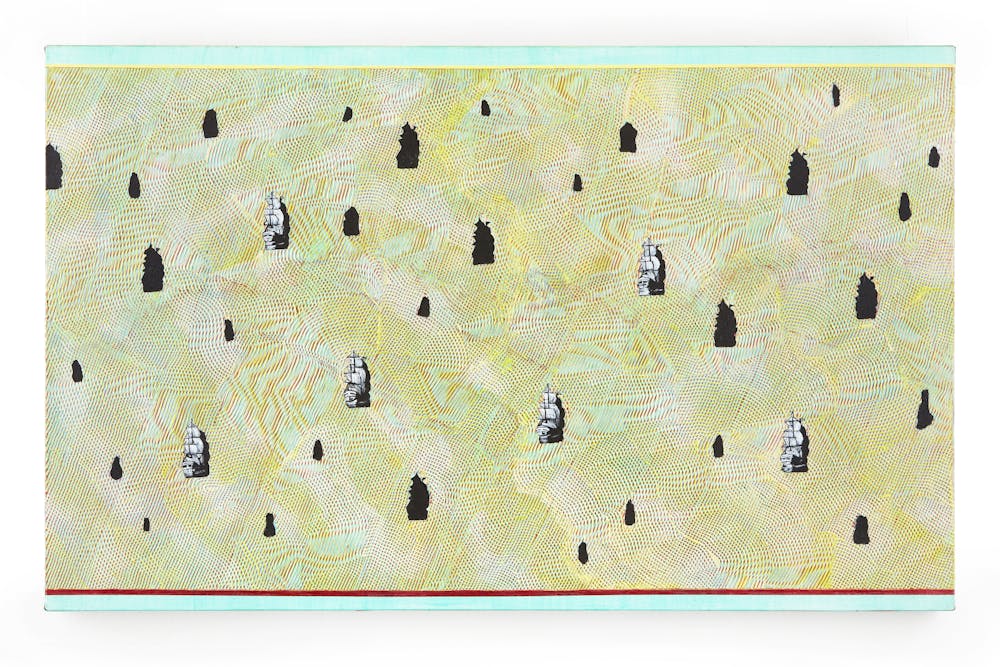
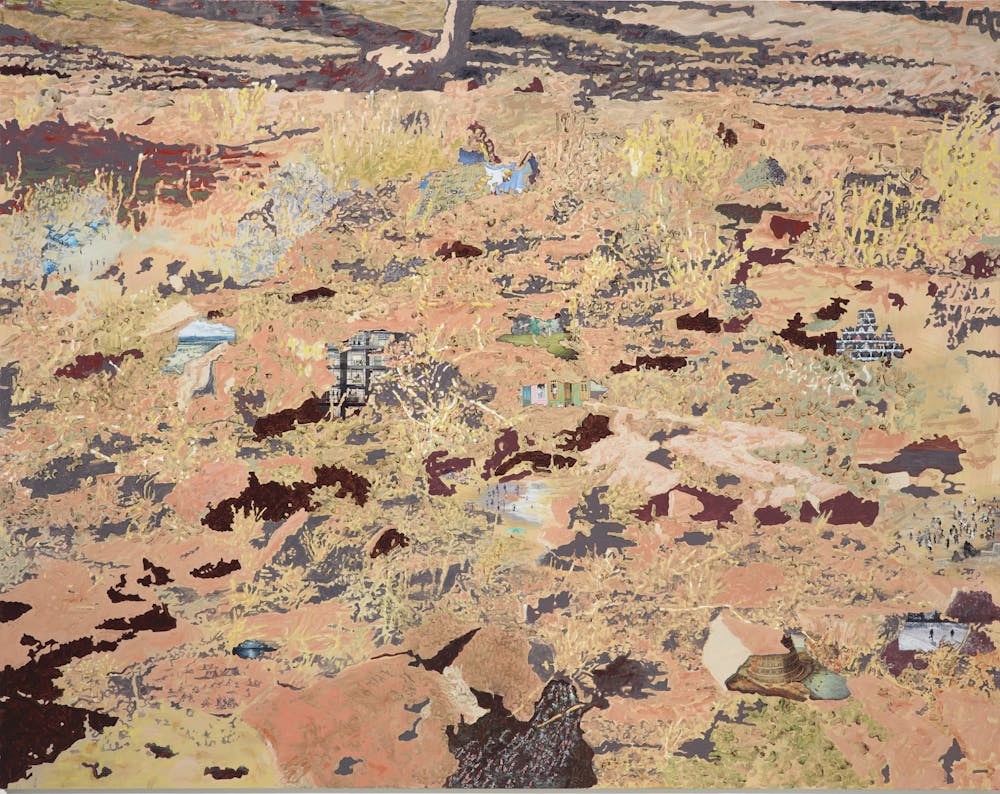
In Somebody’s everyday, somewhere, sometime (2008), Topographica (2009), and Minding clouds (2016), Binns returns to and extends concerns about place and land that started during a Pacific residency.

Topographica 2014, synthetic polymer paint on canvas, 130 × 165 cm.
Art Gallery of New South Wales, Sydney, Contemporary Collection Benefactors 2014

Stepping beyond the domestic, the artist’s signature motifs and complex layering of surface and pattern are applied liberally. Narrative vignettes of world events have been integrated or inserted.

These troubling outward looking works register a noticeable shift to the Binns’ preoccupation.

When Binns retired from teaching in 2012 she said her main job was:

to deal with the process of ageing, understanding that and coming to terms with death.

Binns is still using art to work out how to be in the world. In doing so, she engages us in the same questions.


Vivienne Binns: On and through the Surface is at MUMA, Melbourne, until April 14, then the Museum of Contemporary Art, Sydney, from July 15 to September 25.

The Conversation

Julie Shiels does not work for, consult, own shares in or receive funding from any company or organization that would benefit from this article, and has disclosed no relevant affiliations beyond their academic appointment.

ref. Meet Vivienne Binns, the Australian artist whose work was called ‘an affront to masculinity’ – https://theconversation.com/meet-vivienne-binns-the-australian-artist-whose-work-was-called-an-affront-to-masculinity-175635

Liberal revolt removes all discrimination against gay and transgender children

Source: The Conversation (Au and NZ) – By Michelle Grattan, Professorial Fellow, University of Canberra

In a humiliating rebuff to Scott Morrison, a revolt by Liberal backbenchers has struck down the provisions of the sex discrimination act that allow discrimination against gay and transgender children.

In the early hours of Thursday, five Liberals crossed the floor – Katie Allen, Dave Sharma, Trent Zimmerman, Bridget Archer and Fiona Martin – in defiance of the Prime Minister. The vote was 65-59. The amended bill then passed the House of Representatives.

The rebels had been concerned the government’s much narrower proposed change excluded transgender children.

The amendment was moved by crossbencher Rebekha Sharkie and was identical in wording to one of Labor’s proposed amendments. Sharkie told The Conversation she thought it might have a greater chance of success coming from the crossbench.

Earlier Morrison had told the house there would be “a time and place” to address the situation of transgender children.

He said the Law Reform Commission would consider the protection of these children from discrimination while allowing schools to maintain their ethos. The commission would report in six months. He also named Allen as chair of a House of Representatives select committee on the question.

The government’s proposed change to the sex discrimination legislation was a parallel bill to its religious discrimination legislation.

Labor and two Liberal rebels narrowly failed to amend the religious discrimination bill when Speaker Andrew Wallace used his casting vote to break a tied vote.

Archer and Zimmerman crossed the floor to support a Labor amendment aimed at ensuring existing anti-discrimination protections were not diminished by the protection to be given to “statements of belief”. The vote was 62-62.

The religious discrimination bill passed the house at 4am Thursday, shortly before the revolt over the associated bill. The only amendments to it were those the government made.

Archer, who supported all Labor’s amendments to the religious discrimination bill, also voted against its second reading and its final passage.

Now that they have been lost in the lower house, the opposition will pursue its amendments to the religious discrimination bill in the Senate.

Labor on Wednesday gave support to the controversial bill but said it was flawed and should be amended.

Caucus approved a package of proposed amendments that would

  • prohibit religious vilification

  • make it clear the legislation’s “statement of belief” did not remove or diminish existing protections against discrimination. (The legislation provides that “statements of belief” are legally protected if based on a genuinely held religious view.)

  • ensure in-home aged care providers could not discriminate on the basis of religion in providing services

  • prohibit discrimination against children on the grounds of sexuality or gender identity.

During the House of Representatives debate opposition leader Anthony Albanese tabled a letter Morrison had sent to him late last year in which the PM reaffirmed “there is no place in our education system for any form of discrimination against a student on the basis of their sexuality or gender identity” and said the government would amend the sex discrimination act to remove the provisions allowing this.

Labor said that it would “insist” on any of its amendments that were passed in either house. That could mean, if the government refused to accept them, the legislation bouncing between the houses until one or other side gave way.

The religious discrimination legislation is up against the clock, with the Senate rising on Thursday, and not sitting again until budget week, the last sitting before the election.

Albanese told parliament the legislation was “flawed” but it could be fixed.

He said it should be possible “to enhance protections against discrimination without enhancing discrimination against others”.

“We need shields from discrimination, not swords for discrimination.” 
He said the legislation should be a unifying moment.

But if not amended the bill “will only succeed in driving us apart,” Albanese said.

Morrison has been pulling out all stops to get the religious discrimination legislation through.

But moderate Liberals have had a range of concerns, and much effort had gone into trying to settle backbench doubts and minimise defections.

Zimmerman told the house that he would “part with my party” on the statement of belief provision and the changes to the sexual discrimination act.

Zimmerman said the statement of beliefs “puts religious faith on a pedestal above other rights”. He objected to the changes to the sex discrimination act failing to include protection for teachers and transgender children.

NSW Treasurer Matt Kean tweeted “Trent Zimmerman has been one of my greatest political heroes during my 20 years in the Liberal party. This speech will help everyone understand exactly why.”

Earlier, NSW premier Dominic Perrottet said of the religious discrimination legislation: “I’ve made it very clear that I don’t believe legislation in this space is necessary”. He said it could end up creating more problems than it solved.

Within the Labor frontbench, and in the wider caucus, there was division about over whether the opposition should pursue amendments or oppose the legislation outright.

Former Labor leader, Bill Shorten, who was reported to have argued in shadow cabinet that Labor should oppose the legislation, told the house, “We will rue the day if this legislation passes the Senate” .

The religious discrimination legislation had its origins as a gesture to the losing side after the legislating of marriage equality.

Morrison has hoped to wedge Labor on the issue; Albanese is anxious to avoid the wedge.

The Conversation

Michelle Grattan does not work for, consult, own shares in or receive funding from any company or organisation that would benefit from this article, and has disclosed no relevant affiliations beyond their academic appointment.

ref. Liberal revolt removes all discrimination against gay and transgender children – https://theconversation.com/liberal-revolt-removes-all-discrimination-against-gay-and-transgender-children-176808

Police arrest 3 NZ anti-vax protesters after push through Beehive barrier

Police handcuffed three people after protesters today tried to push through a barrier on the grounds of New Zealand’s Parliament — known as the Beehive.

The group is part of a convoy which travelled to the capital Wellington yesterday to protest against covid-19 vaccine mandates.

After trying to push through the blockade this afternoon, three people were handcuffed and led away.

The crowd then settled and began singing the national anthem.

Earlier, police asked protesters to to dismantle any structures that had been erected on Parliament grounds, such as tents and marquees.

About 100 police formed a ring around the front of Parliament edging up to a line of protesters who had linked arms lining up in front of the Cenotaph war memorial.

In a statement, the ministry said the new community cases were in Northland (8), Auckland (135), Waikato (35), Rotorua (1), Taupō (1), Bay of Plenty (11),Taranaki (1), Palmerston North (2) Wellington (3), Hutt Valley (3), Nelson Marlborough (1), Canterbury (3)

There are 16 cases in hospital, although none are in ICU.

The ministry said there were 46 cases in MIQ reported yesterday, with travellers arriving from India, Sri Lanka, Egypt, Pakistan, UK, Australia, Fiji, Bangladesh, Saudi Arabia, France, USA and the Philippines.

There were 202 new community cases and 63 in MIQ reported yesterday.

There have now been 18,126 cases of covid-19 in New Zealand since the pandemic began and just 53 deaths.

This article is republished under a community partnership agreement with RNZ.

Police handcuff one of the three arrested men at the anti-mandate covid protest on Parliament grounds in Wellington
Police handcuff one of the three arrested men at the anti-mandate covid protest on Parliament grounds in Wellington today. Image: TVNZ screenshot APR

Article by AsiaPacificReport.nz

Covid-19: NZ protesters camped at Parliament warned over trespass

RNZ News

More than 50 police have formed a ring around the front of New Zealand’s Parliament today edging up to a line of protesters who have linked arms lining up in front of the Cenotaph.

One person speaking said he would walk up the Parliament steps at 3pm and get arrested, inviting others in the crowd to join, saying “see you at 3pm” to cheers from the crowd.

The group is part of a convoy which travelled to the capital Wellington yesterday to protest against covid-19 vaccine mandates.

Steel barriers have been put up in front of the protesters.

The crowd was still largely peaceful but some were heckling police and the temperature was starting to rise.

Protesters who spent the night camped on Parliament grounds have been warned they could be issued with a trespass notice.

About 1000 people and hundreds of vehicle converged on Parliament grounds yesterday, and at least 100 people camped overnight.

Trucks and other vehicles are blocking Molesworth Street.

Police issued a statement late last night saying they were monitoring the situation and were talking with the Speaker of the House Trevor Mallard.

The protest scene today outside Parliament. Video: RNZ News

This article is republished under a community partnership agreement with RNZ.

Protesters have been given a letter from the Speaker setting out Parliament’s rules, which prohibit staying overnight on the grounds and ban tents or other structures.

Specific policies mentioned in the letter include leaving the grounds in an orderly manner and not interfering with traffic.

“Participants must assemble within and disperse from the grounds in an orderly manner, and so as to not interfere with the flow of vehicular traffic.”

Police forming a ring around the front of Parliament.
Police forming a ring around the front of Parliament today. Image: Jane Patterson/RNZ

It also mentions that tents and structures are banned from the grounds.

“No erection of tents or any structure is permitted other than hand held signs … structures including tents as mentioned above are not permitted and if not removed when requested, are liable for confiscation.”

Protesters outside Parliament.
Protesters outside Parliament. Image: Jane Patterson/RNZ

It said if the rules were breached people could be trespassed and their equipment confiscated.

“In line with these existing policies, please disassemble any tents or structures and remove them from the grounds. Do not continue protests or demonstrations on the grounds after dark. The breach of the above policies and failure to carry out the actions may result in trespass notices being issued.”

A truck and vans from the convoy covered protest messages.
A truck and vans from the convoy covered in protest messages. Image: Hamish Cardwell/RNZ

There are also campervans parked in nearby streets and the police say Molesworth Street in front of Parliament is not accessible to traffic, and drivers should avoid the area this morning.

It is not clear how long the protesters will be allowed to stay.

Tents set up in the grounds of the law school over the road from Parliament.
Tents set up in the grounds of the law school over the road from Parliament. Image: Hamish Cardwell/RNZ

Wellington City Council is talking with police about their options to deal with cars illegally blocking the roads and footpath near Parliament.

Council spokesperson Richard MacLean said if cars were to be removed there would be resources needed.

He said the council wants to avoid confrontation but are planning for if it were to arise.

Motorists are still being advised to avoid the area if possible.

The scene from the front lawn of Parliament. The media are no longer allowed on the grounds.
The scene from the front lawn of Parliament. The media are no longer allowed on the grounds. Image: Hamish Cardwell/RNZ

This article is republished under a community partnership agreement with RNZ.

Print Friendly, PDF & Email

Article by AsiaPacificReport.nz

Suspension of EMTV’s news chief sparks PNG journo protests

Pacific Media Watch newsdesk

Suspension of the news manager of Papua New Guinea’s major television channel, EMTV, has sparked a flurry of protest from senior news personalities and independent who condemn the apparent political pressure on the broadcaster.

Long standing and experienced news manager Sincha Dimara has reportedly been suspended over news judgement in a move that a former EMTV senior news executive  said “reeks of external influence” on the company’s top management.

“A CEO is a buffer between staff and any external pressure. You need a heart of steel and buckets of bravery to fend off political pressure,” said independent television journalist and blogger Scott Waide.

Waide was himself subjected to unfair suspension over airing a controversial story about then Peter O’Neill government’s purchase of luxury Maseratis for the Asia-Pacific Economic Cooperation (APEC) conference hosted in Port Moresby in 2018. He was later reinstated after an international outcry.

The Maserati saga continues to be a controversy in PNG.

“There is another way to correct coverage that does not ‘fit the aspirations’ of a news organisation — it’s called leadership,” said Waide in response to the Dimara suspension.

“If the CEO is too timid and cannot protect our Papua New Guinean staff, then please resign and go home! This is not the place for you.”

In responses shared on social media, former publisher of the PNG Post-Courier and a regional media consultant Bob Howarth, asked: “What does the Media Council have to say about political meddling in PNG’s struggling ‘free press’ …?”

Another former news executive, Joseph Ealedona, who headed the state broadcaster NBC and was himself involved in controversies, said NBC had built its reputation and integrity for years and “has the people’s protection”.

“It did happen to me but the people’s protest and insistence and the will of senior statesmen and political leaders to right the wrong saw me return for EMTV,” he said.

“in my view, it is just someone trying to protect oneself and fearful of losing privileges and has no guts to say no … and listening to just one or two people.

“I would believe that the PM [James Marape] is not happy with this this, it is at the detriment of the government if allowed to continue, especially when the NGE is around the corner [national general election is in June].

“The freedom of the media is very important to a free democracy but we in the [media] fraternity must carry [on] with utmost respect and do nothing but expose the truth as a responsible profession.”

Ealedona said journalists “must continue to fight against and with the might of the pen”.

He also asked what was the stance of the Suva-based Pacific Islands News Association (PINA) in response.

Print Friendly, PDF & Email

Article by AsiaPacificReport.nz

Latest covid-19 reports roundup across the Pacific

RNZ Pacific

Several hundred more cases of covid in Solomon Islands … Kiribati records first covid death …nearly 12,000 in isolation in New Caledonia … French Polynesia records first covid death in nearly four months … Federated States of Micronesia calls a halt to flights from neighbouring Guam … a partial border re-opening in the Northern Marianas … and Papua New Guinea’s Prime Minister James Marape says he is “doing well” while self-isolating at home from a covid-19 infection.

Several hundred more cases of covid in Solomon Islands
Solomon Islands recorded another 349 cases of covid 19 in the 24 hours to yesterday morning.

Health Minister Culwick Togamana said this took the number of people contracting the virus since the outbreak began last month to 3667.

He said the majority of the most recent cases had been recorded in Honiara where he said there was now very high community transmission.

Kiribati records first covid death
Kiribati has announced its first covid-19 death and 207 new cases in the community.

There are now almost 2000 positive infections, with more than 50 percent of those recorded in the last five days.

The Ministry of Health said the victim was an 80-year-old woman who had been hospitalised at an isolation centre.

The ministry said the woman had only received the first dose of her covid-19 vaccination.

Another woman, who is over 60-years-old, has been admitted and is being monitored at the Bikenibeu Isolation Centre.

The government is advising people to “take extra care and look after their elderly parents and relatives.”

Nearly 12,000 in isolation in New Caledonia
New Caledonia has recorded a further 2343 covid-19 cases in the past 24 hours, raising the number of active cases to nearly 12,000.

38 people are now in hospital, including two in intensive care.

The spread of the omicron variant started a month ago and is yet to peak.

Sixty six percent of the population is vaccinated.

Since September, there have been more than 30,000 recorded infections.

French Polynesia records first covid death in four months
French Polynesia has recorded 1058 new cases of covid-19 over the last 72 hours taking the total to 2974.

One death has been recorded — the first since October, taking the death toll to 637.

More than a third of the covid-19 cases are the omicron variant.

Four people are in hospital and one person in ICU.

The proportion of the population vaccinated is 78.6 percent.

FSM halts incoming repatriation flights
The Federated States of Micronesia has indefinitely stopped all incoming repatriation flights from Guam.

FSM’s Covid-19 Taskforce said the move was in response to the high number of coronavirus infections in the US Territory.

In a statement, the taskforce said it was essential for FSM to improve its vaccination rates before restarting flights to bring back citizens stranded in its neighbouring Guam.

The government said it would provide assistance for citizens who are stuck in Guam, but not provide further details at this stage.

Covid-19 vaccines are mandatory on the islands of FSM — meaning all citizens residing in the FSM must be vaccinated.

FSM’s public health emergency has been extended until the end of May.

Partial border reopening in the CNMI
The Northern Marianas has reopened its borders for fully vaccinated people.

The changes to the border protocols were made possible with 99 percent of CNMI’s eligible population now fully vaccinated, and 53 percent having had booster shots.

CNMI’s Covid-19 Taskforce said all travellers entering the territory by air or sea would no longer be tested on arrival.

Unvaccinated travellers, however, will be required to quarantine at home and get tested at a community based testing site five days after arrival.

All visitors to the Northern Mariana Islands will also need to complete a mandatory health declaration and upload their vaccination status.

Authorities say the health and safety of residents remain the top priority of the government.

The CNMI has recorded more than 6300 cases and 23 deaths.

PNG leader ‘doing well’ in covid recovery
Papua New Guinea’s Prime Minister James Marape says he is “alright” and “doing well” as he self-isolates at home from a Covid-19 infection.

Marape had to cut short his visit to China after he tested positive for coronavirus in Beijing last week.

In a statement yesterday, Marape said “there is nothing seriously wrong with me” and that “vaccination has really helped”.

He said he would be taking a second covid-19 test tomorrow and depending on results would provide an update on Friday on when he would resume his responsibilities.

His deputy Sam Basil is acting prime minister while Marape recovers.

The prime minister is urging fellow PNG citizens to get vaccinated.

PNG has one of the lowest vaccination rates in the world, with less than 3 percent of the population covered.

This article is republished under a community partnership agreement with RNZ.

Print Friendly, PDF & Email

Article by AsiaPacificReport.nz

Temaru defence controversy in Radio Tefana political case revisited

RNZ Pacific

Investigators in French Polynesia have reassessed their case against the pro-independence leader Oscar Manutahi Temaru, who has challenged the seizure of his US$100,000 savings.

The money was taken at the behest of the French prosecutor as part of a probe into the community radio station funding of Temaru’s defence in a trial in 2019.

The highest court in France rejected the move and ordered the investigators to again make the case for seizing the funds.

According to Tahiti-infos, a decision is due on March 8.

The probe into the defence funding was launched after the criminal court in Pape’ete had given Temaru a suspended prison sentence and a US$50,000 fine.

He was found to have benefitted from the funding arrangement for Radio Tefana, which the court said amounted to “undue influence”.

Temaru was implicated as the mayor of Faa’a whose administration paid for the community radio station, which in its turn was fined US$1 million.

Defence wanted case thrown out
The defence wanted the case to be thrown out, saying the prosecution failed to cite a single incident of propaganda on behalf of Temaru’s Tavini Huiraatira party.

At the time, Temaru said the real reason for his conviction was that in the eyes of France he had “committed treason” by taking French presidents to the International Criminal Court over the nuclear weapons tests.

Oscar Temaru
Faa’a mayor and nuclear-free campaigner Oscar Manutahi Temaru during a zoom conference at Auckland University of Technology in 2020 … “The two issues are tied – nuclear testing and our freedom.” Image: PMC screenshot

In court, Temaru asked for the appeal case to be heard after the French presidential election, saying he feared there could be political interference in the judicial process.

He suggested as a date for the appeal court sitting June 29, 2022, which he said was the anniversary date of French Polynesia’s annexation by France, but the court rejected his suggestion and set March 22 as the start date for the week-long trial.

This article is republished under a community partnership agreement with RNZ.

Print Friendly, PDF & Email

Article by AsiaPacificReport.nz

Mary Argue: Why have scholarships dried up for Papuan ‘band of brothers’?

COMMENTARY: By Mary Argue of the Wairarapa Times-Age

In 2016, I was on a yacht in the Bahamas.

Every morning I woke surrounded by postcard-perfect azure water — so crystal clear you could count the sharks sweeping the seafloor.

From my porthole in the laundry, my 1x2m kingdom, I would watch the rain clouds gather in the afternoon and a breeze toss the palm trees 30 metres from anchor.

It was below-deck before the reality TV series existed — Downton Abbey for the 21st century.

I flew home in March, surprising my family with an early return. It turned out being the help on a luxury yacht was not for me.

When I arrived in Aotearoa New Zealand, however, the surprise was mine. There was no room at the inn.

My family had taken in two West Papuan boys who were enrolled at the local high school.

They were part of a group of students at the start of a six-year scholarship programme funded by the Indonesian government.

I bunked in with my brother, sharing a room for the first time since I was 10 years old.

My new Papuan ‘brothers’
The Papuan boys, my new brothers, had shivered through the Wellington summer. Their English was improving daily, but conversation was still a struggle.

Every day they woke and sprinted to catch the school bus. There they spent the whole day surrounded by fast-talking, monotone English voices. At the end of it, they were exhausted but still chipped in at the dinner table, cracking jokes and bravely consuming the foreign cuisine before them.

Our family grew from six to eight.

My youngest brother relished no longer being the baby and took our exchange students under his wing.

After enormous peer pressure, the boys taught us some choice Indonesian swear words, but our ability in their language didn’t progress much beyond that.

They graduated high school, turned 18, went out clubbing, played for the local football team. They embraced New Zealand life and all our family’s quirks.

After four years, they moved from Wellington and enrolled in tertiary education.

This Christmas, they schooled us all in volleyball.

Embassy letter brings bad news
At about the same time, the Indonesian government sent a letter to the embassy in New Zealand.

In it was a list of Papuan students who had “fallen behind” in their studies. These students, they said, would need to be sent home immediately.

One of our Papuan brothers is on this list, a young man almost at the end of his study.

He has an apprenticeship with a local builder lined up, by all accounts, is excelling in his field, as are the other 38 students listed.

The list of names is the fallout of law changes in Jakarta in 2021 that reallocated money away from the Papuan provincial government to the districts. The scholarship fund for the students has dried up.

These victims of politics, however, have taken a stand.

Despite no longer receiving the money to pay their rent and food, they have told the authorities that they will not return and have demanded dialogue with the Indonesian President, Joko “Jokowi” Widodo.

The Asia Pacific Report has investigated the human rights issue, but aside from one or two other outlets, by and large, the New Zealand media have ignored it.

Times-Age will be joining the debate.

Mary Argue is a Wairarapa Times-Age journalist where this commentary was first published. It is republished with permission.

Print Friendly, PDF & Email

Article by AsiaPacificReport.nz

Making change, making history, making noise: Brittany Higgins and Grace Tame at the National Press Club

Source: The Conversation (Au and NZ) – By Michelle Arrow, Professor of History, Macquarie University

As an historian of the Australian women’s movement, the past two years have been extraordinary to witness. Not only are we living through a once-in-a-century pandemic, which has had profoundly gendered effects, we have also experienced a feminist insurgency that has placed the issue of women’s safety, and men’s abuses of power, at the centre of our national conversation.

While many activists, journalists and advocates contributed to this insurgency, it exploded largely thanks to two young women: 2021 Australian of the Year Grace Tame and former parliamentary staffer Brittany Higgins.

Both just 26, both survivors of sexual assault, both abused by men – and institutions – they ought to have been able to trust. Both rejected the expectation they should be shamed into silence about their experiences. In doing so, they have helped to rewrite enduring cultural scripts about sexual abuse and sexual assault.

Their joint address at the National Press Club today was a valedictory speech, a way to mark their extraordinary year in the public eye. But it was also a call to action, a warning against complacency in an election year.

Both made it very clear that, while hearing the voices of survivors of abuse and assault is important, it is not enough. As Higgins noted, the ways we discuss abuse are far too passive,

as if sexual violence falls out of the sky. As if it is perpetrated by no-one.

Of yesterday’s formal parliamentary apology to victims of alleged sexual harassment, assault and bullying, Higgins was grateful, but sceptical:

They are still only words. Actions are what matter.

Tame and Higgins both made passionate pleas for structural change, for measurable action to prevent sexual abuse and assault. Tame called for government to take abuse seriously: to advance consistent national legislative change on sexual offences, and to spend more on preventive education to curb Australia’s alarmingly high rates of abuse and assault. She calculated the government spends 11 cents per student per year on prevention education, because

we currently have a government that is primarily concerned with short-sighted, votes-based funding, not with long-term, needs-based funding.

To those of us used to government by spin, obfuscation and photo ops in high-vis vests, Tame and Higgins’ moral clarity and bluntness are exhilarating. Both vehemently ruled out the possibility of political careers and, indeed, the journalists asking them about their political aspirations seem to misread their social and political role.

They are advocates and activists, who use their public platform to articulate complex issues in clear, direct ways. Tame, in particular, clearly has no intention of playing by anyone else’s rules, as her memorable side-eye to the prime minister at The Lodge demonstrated.

Grace Tame has made it clear she does not intend to play by anyone else’s rules.
Mick Tsikas/AAP

Their speeches also confirmed that their actions had rattled the Morrison government, whose response to them has been ham-fisted at every turn. Tame revealed that in August 2021 a representative of a government-funded organisation (which she declined to name) had asked for her “word” that she would not say anything about the prime minister on the evening before the 2022 Australian of the Year awards. “You are an influential person. He will have a fear,” she was told. She speculated he had “a fear he might lose his position, or, more to the point, his power”. The prime minister’s office later said it had no knowledge of such a call to Tame and the person who made it should apologise.


Read more:
Grattan on Friday: Morrison finds strong women can be tough players


Tame also reminded us the Department of Prime Minister and Cabinet conducted a review of the selection process for Australian of the Year not long after she won the award. This was an attempt at intimidation, as Tame notes, but it also spoke to the government’s dislike of her fearless critique.

Higgins was consistently treated by many in the Morrison government as a political problem to be managed. In the wake of her allegations, the prime minister commissioned not one, not two, but four reviews, all the while dragging his heels on a formal response to Kate Jenkins’s landmark Respect@Work report.

Higgins reminded us that implementing Respect@Work, especially the proposed “positive duty” on employers to provide a safe workplace, would have

impacted every single working woman in the country. And we just kind of let that moment slide by without thinking.

The government has long dealt with Brittany Higgins as a problem to be managed.
Dean Lewins/AAP

Tame and Higgins dissected the government’s performance on gender over the past year. Tame called out Christian Porter’s reliance on a blind trust to fund his unsuccessful defamation case against the ABC. Higgins eviscerated the government’s National Plan to End Violence Against Women and Children for its “vague and lofty” aims, its lack of targets and clear plans. She noted the shocking statistics on domestic violence that

you’ve heard […] rattled off at white-ribbon breakfasts […] They should spur us to do whatever it takes. But instead they’ve become a sort of throat-clearing exercise that we all just kind of tolerate.

Policy action on abuse and assault has been a litmus test for the Morrison government’s views on women. According to Higgins and Tame, it is a test the government has failed at every turn.

In the 1970s, feminist activists told personal stories in public because of their belief that “the personal is political”. Yet victims of sexual assault or abuse typically remained anonymous, because of the shame that was attached to these crimes.

More recently, advocates like Rosie Batty, and now young women including Grace Tame and Brittany Higgins, have personalised these difficult issues, making them harder for politicians to ignore. The #MeToo and #LetHerSpeak movements have centred on survivors and focused on hearing their stories. As Tame said in her NPC address:

How beautiful is freedom of speech? I haven’t always had it.

One of the problems with a movement based on storytelling in public spaces is the brutal toll it exacts on survivors. Tame noted she had spent the past year being “revictimised, commodified, objectified, sensationalised, legitimised [and] gaslit”. As Tarana Burke has pointed out, survivors “shouldn’t have to perform our pain over and over again for the sake of your awareness”.

There are other problems with placing too much emphasis on individuals like Tame or Higgins: two young white women can hardly represent all assault survivors, as Shakira Hussein and others have pointed out. And we must be careful not to confuse justice for individuals with broader structural changes to protect all people from abuse and harassment.

But by speaking truth to power, Higgins and Tame have reinvigorated feminism for a new generation of young women. Back in the 1990s, older feminists worried young women were not taking up the feminist mantle. No-one is saying that now. Teenage girls know Grace Tame’s name, and they admire her courage and her strength.


Read more:
After Brittany Higgins: will the Foster review prevent another ‘serious incident’ at parliament?


As Jess Hill and others have noted, the public face of Australian feminism in the 2010s was dominated by “corporate feminism”: seemingly preoccupied with getting more women on boards rather than raising the wages of low-paid female workers in aged care or childcare, for example.

Sexual harassment is still, shockingly, endemic across Australia, and too many people have experienced sexual abuse and assault. By highlighting this problem – which at its core is about the gendered abuse of power – Tame and Higgins have mobilised a broad constituency of Australian women. They inspired thousands to march for justice and others to run for political office. Maybe they will play a decisive role in this year’s federal election.

As Tame reminded us:

[our leaders] may either be constructive or destructive. But every single one of them is arguably replaceable.


If you or anyone you know needs help, please call 1800RESPECT (1800 737 732).

The Conversation

Michelle Arrow receives funding from the Australian Research Council. She was a campaign volunteer for the ALP at the 2019 election.

ref. Making change, making history, making noise: Brittany Higgins and Grace Tame at the National Press Club – https://theconversation.com/making-change-making-history-making-noise-brittany-higgins-and-grace-tame-at-the-national-press-club-176252

School anxiety in the time of COVID: how parents and teachers can help kids cope

Source: The Conversation (Au and NZ) – By Christine Grové, Educational and Developmental Psychologist & Academic, Monash University

Shutterstock

With COVID-related school closures and long periods of remote learning, many kids across Australia have not physically been at school for most of the past two years. Because of the time away, some children might get extremely upset about going back, some might try to avoid school, while others – at the more severe end – might refuse to go to school altogether.

But where an illness or health problem is not present, it is important to continue to expect your child to be at school.

Kids who struggle going back to school may:

  • be anxious or fearful that “something bad” might happen when they return to school
  • complain about issues with other students or teachers
  • refuse to leave the house to go to school
  • report feeling sick and regularly visiting the nurse or sick bay.

Sometimes complaining of illness or pain can be a way children communicate their worries or anxieties. It is important to help them recognise there are other ways to cope with these feelings.

It’s also important to step in quickly. Missed schoolwork and social experiences snowball, making school avoidance a problem that grows bigger and more difficult to manage.

Here’s how you and your child’s school can help.

1. Create a back to school plan

The first thing to do is talk to your child to find out if anything at school is stopping them from wanting to go. Then talk to their teachers: explain why your child might not want to go – for example bullying, learning difficulties or mental health concerns. Discuss how this is affecting your child. You could ask the school about any strategies they are using or ones they could recommend.

Also, listen to children carefully about what their main worries and concerns are, and what other ways they can tackle problems. Do they feel comfortable asking for help when they are at school? And if not, how can that be better facilitated? For instance, using a card or ticket system the child can exchange for help without having to ask.

Then, with your child’s school, you can set up a back to school plan. Organise a gradual start back. For example, your child might be able to start with a shorter school day or with their favourite subjects, and build up from there.


Read more:
5 tips to help ease your child back into school mode after the holidays


Check to see if there are support staff, like a student well-being officer, school psychologist or counsellor, who can help your child. Ask for regular progress updates on how your child is going.

2. Help your child be more connected

You might also want to include in the plan ways to help increase your child’s sense of belonging to the school. Studies show student anxiety and feelings of not belonging are closely linked. Relationships with teachers and other students are central to feeling a sense of belonging.

If your child is having significant difficulties with attending school, one way to assist could be to help them connect more with their teachers or a staff member. For instance, a teacher could greet them at the gate in the morning. They could also give them a special job to do when arriving such as watering a plant or setting up a classroom.

Child watering plant.
A teacher could ask the struggling student to water a plant in the mornings.
Shutterstock

To can help increase your child’s sense of connection to peers, you could:

  • organise to have another student, perhaps a peer or friend, meet your child in the morning and walk together to the classroom

  • help your child facilitate social interaction with other students particularly if they are having trouble doing this on their own. You might inquire if they have friends at school or if they are playing with others at break times

  • look out for opportunities for play dates with peers during holidays, on weekends or after school. Building friendships in informal play-based ways can help buffer some of the worries a student might have when they are at school.

3. Plan helpful transitions

To help kids transition from home to school, parents and teachers can:

  • put together a box of calming items for students in the early or primary years to go to in a different area (like a quiet space in the library) before going into the classroom. Research shows children can use familiar items as distractions to calm their nerves in stressful situations

  • have a clear transition routine between parents and teachers that is followed each day. A teacher meeting the child at the gate can be part of this routine.

It could help laying out uniforms the night before.
Shutterstock

At home, parents can try to:

  • reduce the stress and hurry of morning routines. If you can, lay out uniforms the night before, and pack lunch boxes too

  • keep the child connected to the school. For instance, if they don’t go to school for a day, ensure they do some school work at home

  • reinforce school is a safe place

  • identify key people at school the student can go to for help (such as five trusted adults).

What if all this doesn’t work?

If these strategies don’t work, and if your child struggles to go to school for weeks or months, an evaluation from a health-care professional, like an educational and developmental psychologist, can help identify if there are more serious concerns at play.

School refusal is a term used to describe children who have ongoing concerns with attending school. Consistently not going to school can be associated with separation anxiety, depression, panic disorder or a specific phobia around attending school.

Only 1-5% of students experience genuine school refusal and they often require therapy, support, medication, or ongoing accommodations to help them.


Read more:
So your child refuses to go to school? Here’s how to respond


In severe cases, other options of schooling may best be suited, like a variation in a school day or homeschooling.

It’s also important to remember children can pick up when their parents are feeling nervous and this can exacerbate their own anxiety. So a big part of the transition process is for parents to model good coping strategies. With time, children will benefit from observing that stress and worry are a part of life, and will hopefully develop their own ways to cope.

There is a different solution for each child, and progress can be slow. Try to be patient too – some children can take a few weeks to adjust. But they will likely be making progress each day, and building the confidence they need to get back to school regularly without the nerves.

If this article has raised concerns for you or someone you know, you can call Kids Helpline on 1800 55 1800, Beyond Blue on 1300 22 4636, or Lifeline on 13 11 14.

The Conversation

Christine Grové is a fellow of the College of Educational and Developmental Psychologists, a member of the Australian Psychological Society, and the American Psychological Association, and a member of The United Nations Association of Australia Academic Network.

Kelly-Ann Allen is the Lead Director of the Global Belonging Collaborative, a Fellow of the Australian Psychological Society and Fellow of the College of Educational and Developmental Psychologists. She holds memberships with the Positive Education Schools Association (PESA), Early Childhood Intervention Australia (ECIA VIC/TAS), the International Positive Psychology Association (IPPA), the Association for Psychological Science, the Society for the Study of School Psychology (SPRCC), the Society of Australasian Social Psychologists (SASP), and the Society for Personality and Social Psychology (SPSP).

ref. School anxiety in the time of COVID: how parents and teachers can help kids cope – https://theconversation.com/school-anxiety-in-the-time-of-covid-how-parents-and-teachers-can-help-kids-cope-176448

Autism is still underdiagnosed in girls and women. That can compound the challenges they face

Source: The Conversation (Au and NZ) – By Tamara May, Senior Research Fellow, Monash University

Shutterstock

Being autistic, but not diagnosed, can lead to a lifetime of struggles and being misunderstood for women.

This issue has been highlighted in the last few years by celebrity women including Hannah Gadsby, Daryl Hannah, British reality star Christine McGuinness and former Australian of the year Grace Tame. By talking about their adult autism diagnosis, they are helping to debunk the myth that autism is for boys and men.

Autism affects thoughts, feelings, interactions and experiences in an estimated one in 70 people. In childhood, autism is now diagnosed in three boys for every one girl (a ratio that has greatly reduced over time). Girls are often diagnosed later than boys, so miss out on opportunities for early support.

Girls who have autism but not a diagnosis grow up not understanding why they are sometimes confused in social situations. They might not be able to make friends as easily as others and can sometimes be targets for bullies. This can lead to lifelong feelings of failure and thinking they have character defects – or being told they do.

These experiences growing up can lead to or interact with post-traumatic stress symptoms in adulthood.


Read more:
Women make up half the disability population but just over a third of NDIS recipients


Girls get diagnosed (and misdiagnosed) with other things

Girls who don’t get diagnosed tend not to have readily observable co-occurring difficulties, such as hyperactivity. But many girls and women receive other (sometimes incorrect) diagnoses instead of, or before, an autism diagnosis.

Our recent case study provides reflections from our perspectives as a psychologist (Tamara) and a late-diagnosed autistic woman (Carol). In the discussion, Carol describes her confusion and challenges growing up, and how they resurfaced following traumatic experiences as an adult.

There is a long-standing bias in the world of mental health to view some symptoms as the domain of males, such as aggressive and externalising symptoms, while internalising symptoms like anxiety are seen as the domain of females.

Clinical observations reveal many women who receive their autism diagnosis in adulthood have had various other diagnoses including anxiety disorders, depression and mood disorders, borderline personality disorder, obsessive compulsive disorder and eating disorders. Where the underlying cause is likely autism, treatments and support need to be tailored to be effective.


Read more:
Hannah Gadsby’s follow-up to Nanette is an act of considered self-care


Undercover autism

Research suggests girls quickly learn to copy others, which has the effect of “masking” or “camouflaging” their difficulties. They might practise making facial expressions in the mirror so they can be ready to make their expressions match upcoming social situations; they may copy other girls to learn how to position their bodies.

They might have an array of scripts to say in different situations, especially when there is a risk of having to engage in “small talk”. They use rule-based approaches rather than intuitively responding in the moment.

Their special interests might be more “acceptable” than those of autistic boys. Think animals, music, books, or just learning and researching, compared to videogames or trains.

Trying to be perfect, or achieve in other areas, can be another response to one’s social difficulties. These strategies can result in autism not even being considered by parents, teachers and clinicians. Compared to boys, girls are observed to have fewer repetitive behaviours such as movements, narrow interests, or ritualised behaviour.

‘People say to me: you don’t look autistic. Here’s what women with autism want you to know. (Iris)’

Getting a diagnosis matters

Not picking up on social situations quickly enough can put women and girls at greater risk of traumatic experiences.

Parents and teachers need better support to identify and understand autism in girls. They may spot girls not picking up social cues or appearing a little behind their peers in some areas. These can be carefully explored. A conversation with a young person about how they navigate social situations can be revealing. Confusion or a rule-based approach may be quickly apparent.

Autistic girls grow into women who may have a very direct style of communication and not pick up on the subtleties of office politics. This can result in them receiving negative professional feedback and reinforce self doubts.

Clinicians too need to be better at understanding how girls and women with autism might get missed. Thinking beyond binary notions of gender is also important – there is more gender diversity in autistic people. Exploring the presentation of non-binary and gender fluid people with autism is an emerging field that could shed further light on autistic presentations.

girl covers face. blurred effect.
Girls with autism may be working hard to copy social cues.
Shutterstock


Read more:
Autism screening tool may not detect the condition in some women


4 ways testing should change

From an autistic woman’s perspective, the diagnostic assessments need rethinking:

  • they should consider autistic strengths and not focus solely on deficits and impairments. Sometimes autism isn’t considered because of the presence of strengths

  • they should incorporate the common lived experiences of autistic women. These have now been well-documented by autistic women, many with successful careers and yet areas of difficulty

  • the differences between the presentation of autism in females and males should be reflected in the diagnostic criteria

  • autistic people should be included in the design and content of diagnostic tests.

The Conversation

The authors do not work for, consult, own shares in or receive funding from any company or organisation that would benefit from this article, and have disclosed no relevant affiliations beyond their academic appointment.

ref. Autism is still underdiagnosed in girls and women. That can compound the challenges they face – https://theconversation.com/autism-is-still-underdiagnosed-in-girls-and-women-that-can-compound-the-challenges-they-face-176036

The stunning recovery of a heavily polluted river in the heart of the Blue Mountains World Heritage area

Source: The Conversation (Au and NZ) – By Ian Wright, Senior Lecturer in Environmental Science, Western Sydney University

Water science researcher Callum Fleming in the Wollangambe River, deep within the World Heritage area Ian Wright, Author provided

For more than 40 years, an underground coal mine discharged poorly treated wastewater directly into the Wollangambe River, which flows through the heart of the Blue Mountains World Heritage area.

Much of this spectacular wild river was chronically polluted, with dangerously high levels of zinc and nickel. Few animals were able to survive there.

My colleagues and I had been calling for tougher regulations to clean-up the wastewater flow since 2014, after we first sampled the river for our research. Finally, with the Blue Mountains community rallying behind us, the New South Wales Environment Protection Agency (EPA) enforced stronger regulations in 2020.

Our latest research paper documents the Wollangambe River’s recovery since. Already we’ve seen a massive improvement to the water quality, with wildlife returning to formerly polluted sites in stunning numbers.

In fact, the long fight for the restoration of this globally significant river is the focus of a new documentary, Mining the Blue Mountains, released this week (and online in coming days).

Trailer for Mining the Blue Mountains.

But while the recovery so far is promising, it remains incomplete. Much more action is needed to return the river to its former health.

How bad was the river?

When the federal government nominated the Blue Mountains to be inscribed on the World Heritage list in 1998, it claimed “some coal mining operations occur nearby, but do not affect the water catchments that drain to the area”.

Our research has shown this not to be true, and the pollution of this river has generated international concern. In 2020, the International Union for Conservation of Nature – an official advisor to UNESCO – identified the coal mine as a major threat to the conservation values of the Greater Blue Mountains World Heritage area.


Read more:
The Blue Mountains World Heritage site has been downgraded, but it’s not too late to save it


So, how bad was the pollution? Our previous survey conducted nine years ago investigated both water quality and river invertebrates – mostly aquatic insects.

Wastewater from the underground coal mine Clarence Colliery entered the Wollangambe River about 1.5 kilometres upstream of the World Heritage area boundary. The nature of the pollution was complex, but of most serious concern was the increased concentrations of nickel and zinc in the river.

Clarence Colliery is an active underground coal mine located close to, and upstream of, the boundary of the Blue Mountains World Heritage Area.
James Patrick Photography, Author provided

These metals were unusually enriched for coal wastewater, with both at concentrations more than 10 times known safe levels. The pollution remained dangerous for more than 20km downstream, deep within the World Heritage area.

Compared to upstream and unaffected reference streams, we found the abundance of invertebrates in the Wollangambe fell by 90%, with the diversity of invertebrate families 65% lower below the mine waste outfall.

There was also a build-up of contaminants into the surrounding foodchain. For example, one of our studies detected metals accumulated in plants growing on the river bank. Another found a build-up in the tissue of aquatic beetles below the mine outfall.

Water scientist Callum Fleming in the headwaters of the Wollangambe River, upstream of the colliery outfall.
Ian Wright, Author provided

Life returns to the river

In 2014 we not only shared our published research findings with the NSW EPA, but also with the Blue Mountains community. This triggered a letter writing campaign from the Blue Mountains Conservation Society urging the EPA to take action.


Read more:
How our research is helping clean up coal-mining pollution in a World Heritage-listed river


After five long years, the EPA finally issued stringent regulations requiring Clarence Colliery to make enormous reductions in the release of pollutants, particularly zinc and nickel, in the colliery waste discharge.

And it worked! We collected samples 22km downstream of the river, and were very surprised at the speed and extent of ecological recovery. Not only has water quality improved, but animals are coming back, too.

The Wollangambe River 22km downstream of the mine waste outfall. This photo was taken in December 2020, when river pollution was falling and invertebrate life was starting to flourish.
Ian Wright, Author provided

The improved treatment resulted in a very significant reduction of zinc and nickel concentrations in the mine’s wastewater, which continues to be closely monitored and publicly reported by the colliery.

The most pollution-sensitive groups of invertebrates – mayflies, stoneflies and caddisflies – had a steep increase (256%) in their abundance compared to when we conducted our earlier research in 2012 and 2013.

This could have positive implications for the surrounding plants and animals, as river invertebrates are a major food source for water birds, lizards, fish and platypus.

Western Sydney University water science researchers Callum Fleming (l) and Ian Wright (r) cooling their feet in the Wollangambe River.
James Patrick Photography, Author provided

However, the road to recovery is a long one. River sediments remain contaminated by the build-up of four decades of zinc and nickel enrichment, up to 2km downstream of the mine outfall.

To help speed up the river’s recovery, contaminated sediment should be removed from the river below the mine outfall, similar to a 12-month clean-up operation conducted after a major spill from the mine in 2015.

Pollution doesn’t often end when mines do

Sadly, there are closed mines in the Blue Mountains that continue to release damaging pollution, such as Canyon Colliery and several in the Sunny Corner gold mine area, as the documentary explores.

Canyon Colliery closed in 1997, and contaminated groundwater continues to be discharged from its drainage shafts into the Grose River, which is part of the Blue Mountains World Heritage Area.

Author Ian Wright looking at the polluted drainage from Canyon mine flowing towards the Grose River.
James Patrick Photography, Author provided

Likewise, most Sunny Corner mines closed over a century ago, and yet severe pollution still seeps from the mines into waterways.

The pollution here is at extreme concentrations and includes arsenic, copper, lead and zinc. It’s dangerous to life in waterways, surrounding soil and contact with this pollution is hazardous to human health.

Sunny Corner is a silver and gold mining area that closed a century ago yet still releases highly contaminated mine drainage.
James Patrick Photography, Author provided

What can we learn from this?

Rehabilitating these closed mines are expensive, and often with limited success. But the Wollangambe River case study is an encouraging sign that clean-up is possible for even the most polluted environments.

Solid independent scientific research and community involvement are critical for these efforts. The community is the eyes and ears of the environment, and has an important role holding industry and government regulators to account.

The environmental regulators, such as NSW EPA, have enormous power to address pollution and trigger positive change. It’s important researchers and the community engages with them – and it helps to be patient as action can take years to happen.

And finally, we congratulate Centennial Coal, the owners of the Clarence Colliery, for making enormous improvements to their operation and complying with tough new environmental regulations.


Read more:
Cutting ‘green tape’ may be good politicking, but it’s bad policy. Here are 5 examples of regulation failure


The Conversation

Ian Wright has received funding from Commonwealth, NSW and local Government groups.. He has also received funding from Blue Mountains Conservation Society, Colong Foundation for Wilderness and Blue Mountains World Heritage Institute.

Jason Reynolds receives funding from ARC and Industry.

Leo Robba receives funding from the Blue Mountains City Council and industry for Planetary Health research.

ref. The stunning recovery of a heavily polluted river in the heart of the Blue Mountains World Heritage area – https://theconversation.com/the-stunning-recovery-of-a-heavily-polluted-river-in-the-heart-of-the-blue-mountains-world-heritage-area-176246

Your guide to the best figure skating at the Beijing Winter Olympics – through the eyes of a dancer

Source: The Conversation (Au and NZ) – By Val Hooper, Associate Professor, and Head of the School of Marketing and International Business, Te Herenga Waka — Victoria University of Wellington

Kyodo via AP Images

For dancers and ex-dancers like myself, the figure skating at the Winter Olympics is a particularly irresistible drawcard: the speed of the skating, the height of the jumps, the delicacy of the movements, the speed of the twirls and the musicality and interpretation of the skaters.

However, there are aspects of figure skating which seem odd to a dancer. Many of the jumps require the skater to be skating backwards before they jump – one would expect them to be facing in the direction in which they are going.

And despite the skater being applauded for maintaining a “good posture”, their overall bearing is bent forward with their bottoms stuck out. This is the antithesis of what a ballet dancer should do!

The costumes are generally glorious, giving the women an impression of fairylike fragility, but sometimes they are just that. Gabriella Papadakis and Guillaume Cizeron (France) learnt this to their dismay in 2018 when the top of Papadakis’ dress came apart, costing them the PyeongChang gold medal.

Skating boots, too, have always seemed very clumsy to my dancer’s eye. There is no ability to elegantly point the feet and consequently no beautifully stretched calf muscles.

Originality is key with the music. Something novel will delight the audience but often we get the same old favourites like Ravel’s Bolero, Tchaikovsky’s Swan Lake and Puccini’s Turandot.

Sometimes the music is so weird and wonderful there is no easily identifiable tune or melody with which the audience can identify – or beat or musical phrasing that is predictable and comforting to the audience. (This is less the case when pairs skate together. The risk of lack of synchronisation is probably too high.)

The expression and musicality of the skater determines the extent to which their skating becomes much more: a vehicle for true passion. Unfortunately, despite being technically brilliant, many skaters lack the ability to portray emotion right from their core and their performance can leave the audience impressed but untouched.

But there are some stars at Beijing who manage to combine their incredible skating skills with a real passion for performance and interpretation of the music. Here are my top skaters to look out for.

Nathan Chen (USA)

Nathan Chen’s musicality is good, but even he admits he is not the most emotional of skaters. Often the emotion expressed in his body and arms just doesn’t follow through to his hands and fingertips, which seem to hang in an uninspired fashion.

But he is the consummate technical skater, already wowing audiences with his quad Lutz-triple toe combination jump in the teams event with a winning score of 111.71

His performance is neat, precise and accurate, executing all the technical aspects superbly and throwing in a number of challenging quad jumps. The latter he executes with blurring speed and neat, solid landings with an erect back.

Jason Brown (USA)

Jason Brown has been described as the “ultimate dancers’ skater”.

Lean and long-limbed with very high leg elevation, he uses his body from the core of his gut right through to the tips of his fingers and feet in the most expressive and captivating manner. He takes his audience with him every moment of the performance.

Unfortunately, he is at a disadvantage to much of his competition, as he typically doesn’t do the high-scoring quad jumps.

Yuzuru Hanyu (Japan)

Yuzuru Hanyu, past winner of two Olympic gold medals, is a good combination of a Chen and Brown – beautiful execution with the dazzling brilliance of quad jumps as well as passionate feeling.

He possesses natural poise so with his upright back and beautifully deep plié when he lands, one never feels in any doubt a rotating jump will not succeed. Plus, his emotion extends right to his fingertips.

This is certainly a contestant to watch.

The Russian women

No one can deny the spectacular performances of all three women on the ROC team: Kamila Valieva (age just 15), Anna Shcherbakova (17) and Alexandra Trusova (17).
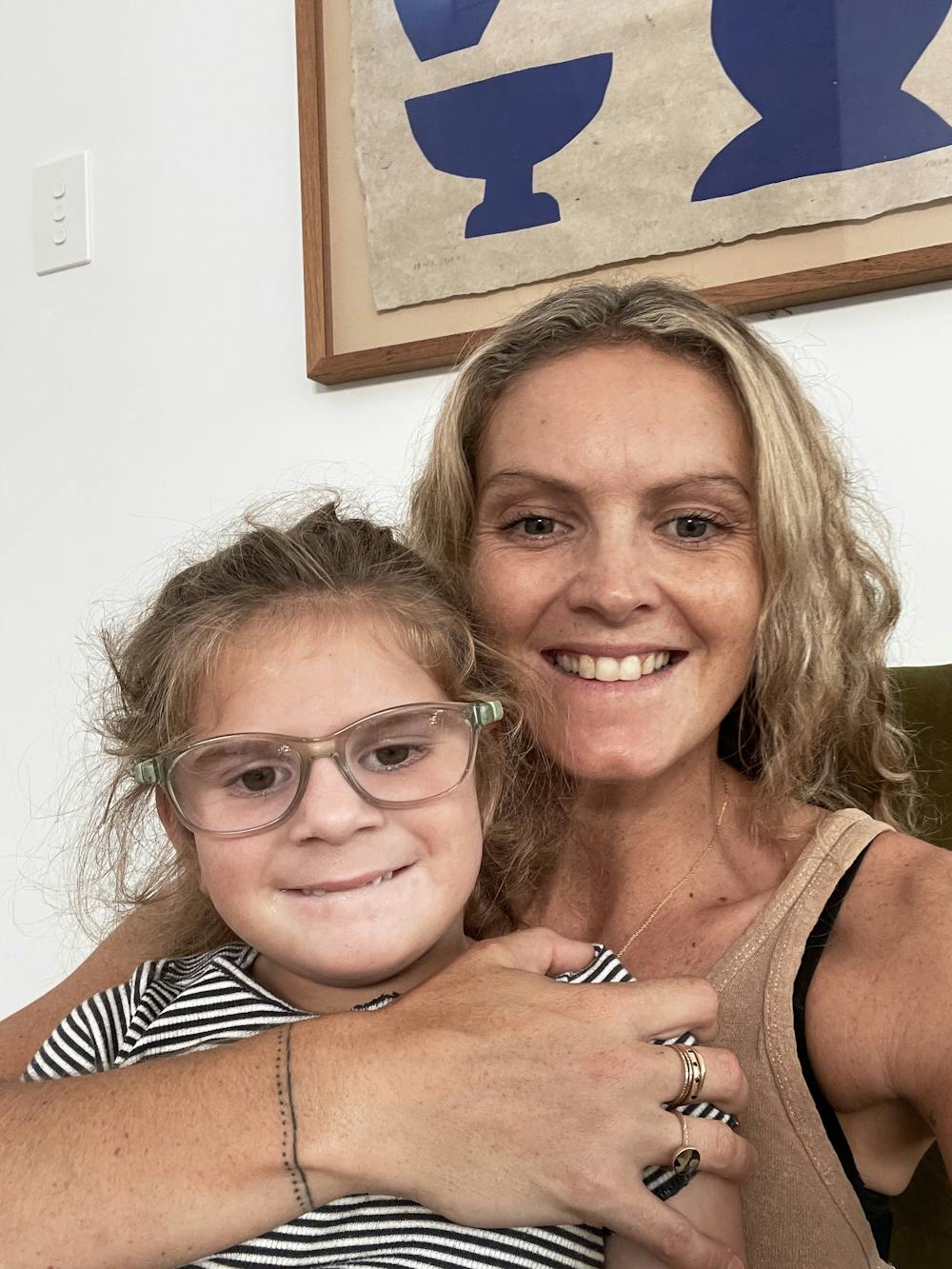
These three young skaters are quite spellbinding. Lean and long-limbed, their superb leg elevation and exquisite feeling is nothing short of astonishing. Add to that some exceptional jumps – including quads – which spin at such a speed they are just a blur as they whizz round.

Small wonder Valieva has already done so well in the teams event.

The skating pairs

While the individual performances are impressive, one should not forget the pairs. The US ice dance pair, Madison Hubbell and Zachary Donohue, have already done themselves proud. Their musicality and feeling, their obvious empathy with one another propelled them easily into the lead in the rhythm component of the teams event. They demonstrate the synchronicity of interpretation of which Torvill and Dean were such masters.

The equally talented Victoria Sinitsina and Nikita Katsalapov (ROC) are snapping at their heels, so this competition will be one to watch.
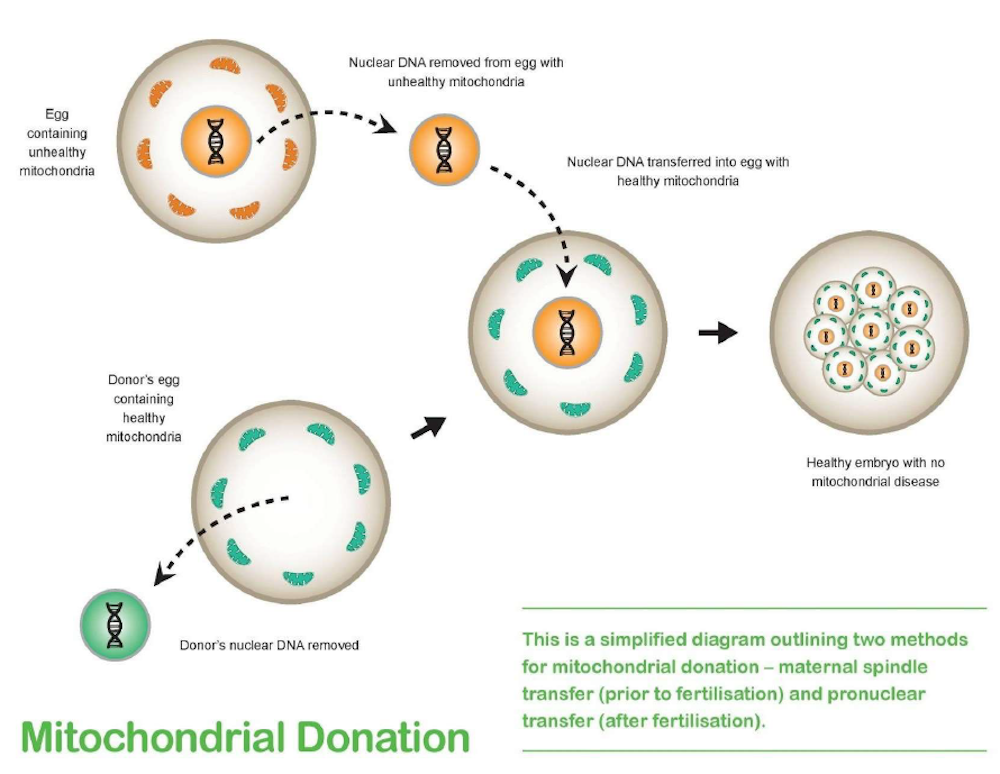
Two other pairs are also worth watching: Gabriella Papadakis and Guillaume Cizeron (France) and Tessa Virtue and Scott Moir (Canada). Both couples are highly skilled technically and provide consistently superb interpretations of their music.

However, Virtue and Scott possess a vivacity that seems to make them sparkle, which to possibly will give them the edge.


Read more:
How snowboarding became a marquee event at the Winter Olympics – but lost some of its cool factor in the process


The Conversation

Val Hooper does not work for, consult, own shares in or receive funding from any company or organisation that would benefit from this article, and has disclosed no relevant affiliations beyond their academic appointment.

ref. Your guide to the best figure skating at the Beijing Winter Olympics – through the eyes of a dancer – https://theconversation.com/your-guide-to-the-best-figure-skating-at-the-beijing-winter-olympics-through-the-eyes-of-a-dancer-176229

How not to build a capital: what Indonesia can learn from other master-planned cities’ mistakes

Source: The Conversation (Au and NZ) – By Dorina Pojani, Senior Lecturer in Urban Planning, The University of Queensland

Nur-Sultan, the master-planned capital of Kazakhstan Shutterstock

In 1900, there were only about 40 capital cities in the world, and now there are nearly 200. About 40% of all countries have also considered relocating their capital as they’ve grown too big – and at least five new capitals are now being planned.

Indonesia just announced the name of its planned new capital, Nusantara, to be built on Borneo island, about 1,300 kilometres away from the current capital, Jakarta.

This move is expected to cost 466 trillion rupiah (A$32.7 billion). About 1.5 million civil servants are expected to relocate to relieve some of the pressure on Jakarta, reducing air pollution, flood risks and the rapid sinking of the city.


Read more:
Does Indonesia really need to move its capital?


Trophy cities: A feminist perspective on new capitals

I have been researching new, master-planned capitals for six years and recently published a new book, Trophy Cities. This book examines seven capitals from a feminist perspective – Canberra (Australia), Brasilia (Brazil), Abuja (Nigeria), New Delhi (India), Nur-Sultan (Kazakhstan), Naypyidaw (Myanmar) and Sejong (South Korea).

Overall, I have been disappointed to see most countries have squandered a unique opportunity to create a “perfect” city on a “clean slate”.

The new capitals created since 1900 have been, for the most part, great planning disasters. They are dreary, overpowering, underserviced, wasteful and unaffordable. In short, they are extremely expensive mistakes.

So, how can Indonesia avoid the pitfalls of its peers? Here are some key lessons from my research.


Read more:
Sexism and the city: how urban planning has failed women


Mistake #1: Creating a city for architecture books

Nearly all new capital city designers – recognised as grand masters – have been men. Imported from far afield, they have projected their own identities onto the capitals they’ve built, promoting design solutions alien to the local context.

Typically, grand spatial schemes dominate new capitals. Expansive public spaces and boulevards, pinned by statues, fountains, obelisks and the like, are common. This monumental style draws from a patriarchal model of European urbanism, which has been evolving since the Renaissance.

Brasilia’s broad boulevards and expansive, empty green spaces.
Shutterstock

At the same time, planners have sought to “modernise” these new capitals, but this has merely translated into standardised, cookie-cutter housing – such as Naypyidaw’s colour-coded towers for Myanmar’s bureaucrats.

A better approach is a co-design process that involves local people from all classes and encompasses different perspectives. Planning controls and zoning restrictions should not be so strict people are forced to live in informal settlements on a city’s periphery.

Women outside a wooden house in Abuja.
Women outside a wooden house for internally displaced people in Abuja, Nigeria.
Shutterstock

Mistake #2: Dominating nature

Another common theme in new capital cities is the idea of taming and even “bettering” nature. New capitals have been built, sometimes against reason, on inhospitable or fragile lands and in harsh climates: marshes, floodplains, jungles, sand dunes and arid steppes.

For example, hectares of savanna vegetation were cleared in central Brazil to quickly build Brasilia. Once the capital was built, tropical plants were introduced from Rio.

Nature has been treated as an inferior entity, which, like women, can be dominated. The colonisation of nature is seen as a triumph of culture and civilisation.

Nature should instead be the basis for design. Planners should consider not only the well-being of residents, but also of the vast diversity of fauna and flora. Nusantara’s planners are obviously ignoring this by building a new capital in the middle of virgin rainforest that is home to endangered species.

Trees being planted on a cleared hillside in Canberra, Australia.
Author provided

Mistake #3: Building a vanity project

The design of new capitals has often reflected the grandiose visions of egotistic leaders and bureaucrats. By building a new capital, they have pursued self-aggrandisement, glorification and immortalisation.

A clear illustration of this is Nur-Sultan, which was named after longtime leader Nursultan Nazarbayev. A monument contains a bronze handprint of Nazarbayev’s, which visitors are invited to touch to be granted a wish.

Gilded handprint of Nursultan Nazarbayev.
The gilded handprint of the first president of Kazakhstan.
Shutterstock

Some capitals have also been relocated to appease leaders’ paranoia and fulfil their militaristic ambitions.

These approaches are risky as well as senseless. If a new city hinges on a single political patron, it’s merely a pointless vanity project.

Public participation and buy-in are critical to ensure the continuity needed to complete such grand projects. Planning should be guided by the needs and wants of the residents rather than politicians’ desires to wield power and majesty.

Mistake #4: Elevating one ethnic or religious group

In multi-ethnic countries, moving a capital city can kindle internal conflicts, ethnic rivalries and political power plays. In some cases, Indigenous peoples have been displaced, with disastrous consequences.

Some new capitals are founded on myths which serve to legitimise and make sacred places that lack history. In some multi-cultural countries, it is unclear whose myths and traditions represent “the nation”.

In Indonesia, some have already questioned the name of the new capital: Nusantara. The name has a Javanese-centric meaning, which critics say defeats the purpose of creating a capital for all Indonesians outside the island of Java.

Similarly, if the iconography of one religion dominates a new capital in a multi-faith nation, this can also sow discord.

Planners of a new capital should critically evaluate proposed designs (and accompanying narratives) to ensure all ethnic and religious groups are included and treated with respect.

Uppatasanti Pagoda dominates Myanmar’s capital, an example of an official religion being placed above all others.
Author provided

Mistake #5: Failing to prioritise gender equality

Even when planners have made efforts to create urban spaces for families, the fundamental assumptions around gender roles and social hierarchies in many new capitals have not been challenged.

This approach must change. The women who populate a new capital need affordable housing, accessible transport, safety and security provisions and free childcare centres within reasonable distances of each other – not imperial grandeur.

Women also need socioeconomic empowerment in new cities. This can be achieved through living wages, affordable health care and education and greater representation in government.

A capital city master plan should be subject to gender impact assessments and gender mainstreaming, that is integrating a gender equality perspective at all stages of the project.

Looking beyond new capitals

We need radical solutions to transform not only urban spaces, but also the greater patriarchal state, society and economy in many countries. The cities of the future should be gender-egalitarian, classless, peaceful, ecological and beautiful, rather than based on greed, hierarchy, imperial visions and competition.

The Conversation

Dorina Pojani has received funding from the Australian Research Council (ARC) and AURIN.

ref. How not to build a capital: what Indonesia can learn from other master-planned cities’ mistakes – https://theconversation.com/how-not-to-build-a-capital-what-indonesia-can-learn-from-other-master-planned-cities-mistakes-175318

A gutful of lunchbox hype – has selling ‘good bugs not drugs’ for kids’ health gone too far?

Source: The Conversation (Au and NZ) – By Christopher Mayes, Senior Research Fellow, Alfred Deakin Institute, Deakin University

Shutterstock

Does your child have a “gut-friendly” lunchbox? It’s Healthy Lunchbox Week, a back-to-school initiative of Nutrition Australia. School lunches are essential for long-term child health and well-being, according to some researchers.

There are even media reports that a “gut-friendly” lunchbox might help protest us against COVID-19.

Many products are now heavily marketed as promoting gut health. How can parents, carers and schools navigate these claims in deciding what children should eat?

What is a gut-friendly lunch?

In recent years, microbiome scientists and nutritionists have drawn attention to the interaction between our diet, the colony of microbes in our gut (microbiota), and our health. We have moved beyond the simple idea of nutrition and health as “energy in, energy out”. Instead, human-gut microbiome research understands our bodies as members of and hosts to multispecies communities.

What exactly is the human microbiome?

A gut-friendly diet consists of foods that build healthy microbiota. Foods with “friendly” or “good” bacteria – yoghurt, kimchi, sourdough and kombucha, for example – are claimed to promote the microbiota colony in our gut, thereby improving overall health.

Excitement surrounding this research is based upon the hope that your gut microbiome might hold the key for countering a range of diseases and conditions. The benefits include better heart health, lower risks of diabetes and obesity, and decreases in depression and anxiety. Some also claim healthy gut microbiota could help fight COVID and other infectious diseases by boosting the immune system.


Read more:
Essays on health: microbes aren’t the enemy, they’re a big part of who we are


Against this backdrop, it’s little surprise the school lunchbox has again been targeted as one way to help solve today’s public health challenges.

The ‘gutification’ of food and diets

Much of the research on microbiomics is in its early stages. There are gaps in scientific knowledge in this field. Still, the focus on the gut and its relation to human health is changing our understanding of food, health and our bodies.

Food corporations have arguably been among the biggest drivers of the gutification of foods. More and more products are labelled using the language and concepts of “gut health”, “mood food” and “immunity boosting”. Yoghurts for children, for example, are marketed using terms such as “probiotics”, “immune boosting” and “strengthening”.

Manufacturers’ marketing is part of a broader trend of using nutrition science in “wellness” industries.

However, some researchers are cautious about the specific health claims made by food corporations. Others have raised concerns that the general advice to consume probiotics could harm some individuals, such as those with an overactive immune system.

The Therapeutic Goods Administration does regulate products like, for example, fecal microbiota transplants. But food-related claims about gut microbiota and health are under-regulated. These products often fall between the cracks of medicine and food regulation and labelling requirements.

Illustration of various types of priobiotic food products
Many food products are marketed by highlighting their health-giving ‘probiotic’ qualities.
Shutterstock


Read more:
Boosting your ‘gut health’ sounds great. But this wellness trend is vague and often misunderstood


Is the ‘immunity-boosting’ lunchbox ethical?

The concern about these products is not just a matter of scientific evidence. In the race to commercialise such products (as with other new food technologies including nano- and biotechnology), the social and ethical dimensions of this burgeoning industry have been neglected.

Industry sees the process of properly considering such questions as slowing down innovation. But it’s vital to answer these social and ethical questions to ensure community expectations and standards related to food science and innovation are upheld.

In these times of heightened anxiety about child health at school, gut-healthy products can give parents and carers a greater sense of control over their child’s health. Yet almost all of the conditions or diseases gut-healthy foods purport to address have complex causes located in a myriad of structural factors. Public health researchers call these the social determinants of health.

Obesity, heart disease and depression are all complex conditions. They are shaped by family history, environment, geography, genetics, economics and education. These factors are beyond the responsibility of individuals and can’t simply be solved by more probiotics.

lunchbox full of healthy food
It might help, but don’t expect a healthy lunchbox to be a cure-all for complex public health problems.
Shutterstock


Read more:
Let’s untangle the murky politics around kids and food (and ditch the guilt)


A major concern within public health ethics is when individuals are made responsible for social or structural problems. It’s like blaming an individual for not using an energy-saving light bulb while the government is supporting new coal mines. Similarly, expecting a school lunchbox to protect a child from diseases doesn’t make up for inadequate public health infrastructure.

This situation risks putting the responsibility for managing a global pandemic on individual carers (as well as requiring parents and carers to navigate science claims). It also sends a confusing message to the community about the nature of infectious disease transmission and prevention. In the absence of widespread vaccination, ventilation, masks and social distancing, “boosted” immunity is not going to protect children or the community.

The gut microbiome is an exciting new area of research. It opens up wide-ranging possibilities for individual and public health. But uncritical acceptance of health claims that over-promise only serves business interests and risks undermining the integrity of the science and overburdening individuals.

As this field develops, the ethical and social dimensions of human-gut microbiome research cannot be left behind.

The Conversation

Kristen Lyons is a member of the Australian Greens, and senior research fellow with the Oakland Institute.

Christopher Mayes and Deana Leahy do not work for, consult, own shares in or receive funding from any company or organisation that would benefit from this article, and have disclosed no relevant affiliations beyond their academic appointment.

ref. A gutful of lunchbox hype – has selling ‘good bugs not drugs’ for kids’ health gone too far? – https://theconversation.com/a-gutful-of-lunchbox-hype-has-selling-good-bugs-not-drugs-for-kids-health-gone-too-far-176251

‘Maeve’s law’ would let IVF parents access technology to prevent mitochondrial disease. Here’s what the Senate is debating

Source: The Conversation (Au and NZ) – By David Thorburn, co-Group Leader, Brain & Mitochondrial Research, Murdoch Children’s Research Institute

Courtesy of Louise Hyslop & Mary Herbert, Univ. Newcastle upon Tyne

The Senate is this week debating “Maeve’s law” – a proposal to legalise access to new assisted reproductive techniques that will reduce the risk of parents passing on mitochondrial disease to their children.

Maeve and Sarah Hood
Maeve with her mother Sarah Hood.
Photo courtesy of the Hood family, Author provided

The legislation, formally called the Mitochondrial Donation Law Reform (Maeve’s Law) Bill 2021, is named after Maeve Hood, a six-year-old Victorian girl who lives with Leigh syndrome – a disorder in which the body’s cells fail to produce enough energy. Tragically, Maeve is unlikely to survive beyond childhood.

This week’s expected vote will be the first conscience vote in the Senate since the historic reforms to allow marriage equality in 2017, and is already being passionately debated.

But the issues raised are unlikely to be new. These reforms have already undergone extensive community consultation and been approved by the House of Representatives.

What is mitochondrial donation?

Mitochondria are energy-producing structures inside cells, which have their own DNA and are separate from the cell nucleus containing the bulk of the cell’s DNA (called “nuclear DNA”). Mitochondrial DNA is inherited entirely from the mother’s egg, so if a mother has mutations in her mitochondrial DNA she is at risk of passing life-threatening conditions to her baby.

Conceiving a baby via mitochondrial donation involves implanting the mother’s nuclear DNA into a healthy egg from which the nuclear genes have been removed, and using this egg for in-vitro fertilisation (IVF) with a sperm. Alternatively, a procedure called pronuclear transfer can be used early in the fertilisation process a few hours after the sperm has entered the egg, but before the parental genomes come together and the fertilised egg officially becomes an embryo.

Schematic diagram of mitochondrial donation

Mito Foundation

A child born via mitochondrial donation would inherit a mixture of their mother’s and father’s nuclear DNA as usually occurs, along with the healthy mitochondrial DNA from the egg donor.

As a result, mitochondrial donation has sometimes been described as creating “three-parent babies”. But “2.002-parent babies” would arguably be more accurate, given there are only 37 mitochondrial genes, compared with at least 20,000 in our nuclear DNA.


Read more:
3-parent IVF could prevent illness in many children (but it’s really more like 2.002-parent IVF)


Australian law currently bans the creation of a human embryo that involves genetic material from more than two people. The ban was introduced almost 20 years ago amid fears IVF and embryo research would lead to “designer babies” and cloning. Maeve’s law would change this situation specifically to allow mitochondrial donation to prevent mitochondrial disease.

Debate around the issue has focused on a range of questions, such as: is there a risk the child could still end up with mutant mitochondrial DNA? Are there ethical issues centred on the unborn baby’s inability to give consent? What are the egg donor’s rights? Does the procedure carry other health or genetic risks?

The expert view

In the United Kingdom, where mitochondrial donation research was pioneered, four scientific reviews by the Human Fertilisation and Embryology Authority and an investigation by the Nuffield Council on Bioethics were conducted between 2011 and 2016. These reviews delivered an overall conclusion that the benefits outweigh the harms if regulated appropriately, and Britain legalised mitochondrial donation in 2015.

In Australia, mitochondrial donation has been considered by a series of inquiries, including a 2018 Senate inquiry and a National Health and Medical Research Council (NHMRC) review, which considered these issues with fresh eyes.

In response, the government drafted Maeve’s law, which underwent a series of reviews and public consultations, and gained the support of 60 leading Australian experts.

Does the public support it?

One challenge in gauging public support is to measure true community sentiment, rather than inviting submissions that merely serve as a forum for people with existing strongly held views either for or against mitochondrial donation.

To address this challenge, researchers convened a citizens’ jury in 2017, and the NHMRC held a citizens’ panel in 2019 to evaluate attitudes to mitochondrial donation. Both offered qualified support for allowing the technology.

What topics are likely to be contentious in the Senate debate?

The Senate will likely revisit amendments that were defeated in the House of Representatives in December. These include a proposal only to allow the technique in which the mother’s DNA is implanted into the donor egg before fertilisation with the father’s sperm.

This suggestion is a response to fears that pronuclear transfer would lead to increased rates of embryo destruction.

But these early fertilised eggs – also called zygotes – do not meet the legal or biological definition of an embryo, and most embryologists do not regard this technique as leading to more loss of embryos than other assisted reproductive technologies. What’s more, banning this approach could greatly compromise the development of mitochondrial donation in Australia.

Zygote undergoing pronuclear transfer
A zygote about to have its nuclear DNA removed and transferred to a donor egg, roughly 20 hours before division to form a two-cell embryo. Arrows show the mother’s and father’s DNA, called ‘pronuclei’. These remain separate until later in the process, hence why the zygote is not considered an embryo.
Courtesy of Louise Hyslop & Mary Herbert, Univ. Newcastle upon Tyne

Maeve’s law will still require researchers to account to NHMRC for eggs and embryos used in their research, to seek ways to minimise the numbers used, and to report to Parliament on an annual basis.


Read more:
Disputes over when life begins may block cutting-edge reproductive technologies like mitochondrial replacement therapies


If not now, when?

While we need to respect differing attitudes to IVF and embryo research, we believe most experts and members of the public recognise the importance of giving couples who are at risk of mitochondrial disease the best chance of having a healthy child.

Maeve’s law has been carefully written to ensure a cautious introduction and evaluation of mitochondrial donation technology. The technology will be in a clinical trial setting for at least ten years, during which time the health of babies born using these techniques will be carefully monitored.

The science supports it. The community support it. People who are affected by mitochondrial disease have long supported it. We call on Senators to support it.

The Conversation

David Thorburn receives funding from NHMRC, MRFF, the US Department of Defense Congressionally Directed Medical Research Program, the Royal Children’s Hospital Research Foundation and the Mito Foundation for research on mitochondrial and other rare diseases. He is a founding Director of the Mito Foundation and a former Chair of its Scientific & Medical Advisory Panel. He was a member of the NHMRC Expert Working Committee on Mitochondrial Donation and engaged with the reviews referred to in this article.

Megan Munsie receives funding from ARC, MRFF, the Novo Nordisk Foundation. She is the Vice President of the Australasian Society for Stem Cell Research, non-executive director of the National Stem Cell Foundation of Australia and a member of ethics and policy advisory committees for several national and international organisations including the International Society for Stem Cell Research (ISSCR). She co-authored recently published ISSCR Guidelines that support clinical research for mitochondrial donation.

ref. ‘Maeve’s law’ would let IVF parents access technology to prevent mitochondrial disease. Here’s what the Senate is debating – https://theconversation.com/maeves-law-would-let-ivf-parents-access-technology-to-prevent-mitochondrial-disease-heres-what-the-senate-is-debating-176668

Placenta with an egg capsule: the strange mechanics of pregnancy in one Australian shark

Source: The Conversation (Au and NZ) – By Alice L Buddle, Research assistant, University of Sydney

Shutterstock

People tend to think of sharks as large, frightening predators with sharp teeth, so it might come as a surprise to learn that some shark babies grow in the same way as humans – attached to the mother by an umbilical cord and placenta.

Our recent research published in the Journal of Comparative Physiology B sheds light on the placenta of the pint-sized Australian sharpnose shark – wherein a thin layer of egg capsule separates the mother’s and baby’s tissues.

Shark pregnancy

There are more than 500 different species of shark, some as small as your hand (like the dwarf lantern shark) and others as big as a bus (such as whale sharks).

The dwarf lantern shark fits in a human hand.
Chip Clark/Smithsonian Institution

Reproduction in sharks is equally varied: some lay eggs, but most give birth to live young. Sharks typically give birth after 11–12 months of pregnancy, but some, such as the frilled shark, are pregnant for more than three years.

In some sharks, a placenta develops during pregnancy. The placenta helps the baby shark breathe, eat and expel waste as it develops inside the mother. Other species of shark don’t have a placenta, and instead their babies feed on egg yolk, secretions, unfertilised eggs or even their own siblings.

Biologists have long been fascinated by reproductive diversity in sharks, but haven’t yet figured out why some sharks have placentas and others don’t.

Baby smooth dogfish (Mustelus canis) attached to its umbilical cord and placenta.
Joshua K. Moyer/ @ElasmobranchJKM (Twitter)

The Australian model for shark pregnancy

In Australia, we have a unique model to understand shark pregnancy: the Australian sharpnose shark (Rhizoprionodon taylori). This small shark is just 70 centimetres long, and lives off the coast of northern Australia.

An adult Australian sharpnose shark is just 70cm long.
CSIRO National Fish Collection

The females get pregnant every summer with five to ten babies (called pups). Shortly after falling pregnant, embryonic development is paused for seven months. During this time (called diapause), the embryos are still just a bundle of cells.

Diapause ensures the babies are born in summer, almost a year later. This is when they stand the best chance of surviving, as water temperature is at its highest and food is abundant.


Read more:
The real reason to worry about sharks in Australian waters this summer: 1 in 8 are endangered


Diapause ends when signals, such as hormones trigger the embryos to resume development. They feed on egg yolk at first, and the placenta takes over about a month later. Placentas connect to the babies by umbilical cords, and transport enough nutrients to allow them to grow 300 times larger over just 4.5 months of development.

When the babies are born, their umbilical cords drop off, leaving them with belly buttons. They can almost immediately hunt and fend for themselves, which is astonishing considering humans are born helpless after nine months of pregnancy.

The diapause period in the Australian sharpnose shark lasts about seven months.
Author provided

Our recent studies looked at how the placenta supports sharpnose babies so effectively during pregnancy.

The unique features of shark placentas

Under the microscope, we discovered the sharpnose placenta is made up of thin layers of cells from the mother and the baby, separated by an extremely thin egg capsule (0.00005 centimetres). Structurally, this is very similar to the placentas of most other sharks.

In Rhizoprionodon taylori mothers, the placenta has a thin egg capsule separating the mother’s and baby’s tissues.
Author provided

The egg capsule in the sharpnose placenta has no pores. But we showed it can still allow small molecules to pass from the mother to her babies, such as oxygen and small nutrients including sugars, amino acids, fatty acids and water. This explains how sharpnose babies can grow so quickly inside the mother’s uterus.

However, the size of the molecule matters – and larger proteins can’t get through the egg capsule. We think the capsule may act as a physical barrier that protects the babies from bacteria in the uterus during pregnancy.

Physically separating the mother’s and baby’s genetically different tissues could also help stop the mother’s immune system from attacking the baby.

Human placentas look completely different to shark placentas – there is no egg capsule and the baby’s tissues are directly bathed in their mother’s nutrient-rich blood.

Yet both function to nourish babies during pregnancy. This similar function is an amazing example of convergent evolution, given humans and sharks are separated by 450 million years of evolution.

Further research into this little Australian shark will help us understand how placentas that evolved independently in different species can perform the same functions during pregnancy.


Read more:
How fussy eating and changing environments led to the diversity of sharks today (and spelled the end for megalodon)


The Conversation

Camilla Whittington receives funding from the Australian Research Council and the University of Sydney

Colin Simpfendorfer receives funding from the Australian Government, the Fisheries Research and Development Corporation, the Shark Conservation Fund, Paul G Allen Philanthropy, Save Our Seas Foundation and the Australian Fisheries Management Authority. He is associated with the IUCN Shark Specialist Group.

Alice L Buddle does not work for, consult, own shares in or receive funding from any company or organisation that would benefit from this article, and has disclosed no relevant affiliations beyond their academic appointment.

ref. Placenta with an egg capsule: the strange mechanics of pregnancy in one Australian shark – https://theconversation.com/placenta-with-an-egg-capsule-the-strange-mechanics-of-pregnancy-in-one-australian-shark-176540

Only 19% of Australians agree religious schools should be able to ban LGBT+ teachers

Source: The Conversation (Au and NZ) – By Douglas Ezzy, Professor of Sociology, University of Tasmania

Dave Hunt/AAP

This week, the religious discrimination bill is finally being debated on the floor of federal parliament.

The bill has prompted disagreements within political parties, within religions and across a wide variety of other stakeholders.


Read more:
As parliament returns for 2022, the religious discrimination bill is still an unholy mess


But what do voters actually think?

A new survey, soon to be published in the Journal of Sociology, shows a majority of Australians do not think religious organisations that provide government-funded public services should be allowed to discriminate against LGBTQ+ people.

The religious discrimination bill

The religious discrimination bill does two key things. First, it protects religious and non-religious people from being discriminated against on the basis of their faith or lack of it. This aim is widely supported.

Scott Morrison holding a copy of the religious discrimination bill.
The religious discrimination bill was introduced to parliament in November 2021.
Mick Tsikas/AAP

Second, it allows religious people and religious organisations to discriminate against other people where the conduct is backed by genuinely-held religious beliefs.

As part of this, the proposed bill would permit discrimination in government-funded services such as religiously-affiliated education, aged care, health care and welfare services. This has been hotly debated.

These parts of the bill give religious people new rights to discriminate and reduce protections already available to LGBTQ+ people, people with disability, single mothers, and unmarried couples.

Our research

Colleagues and I recently conducted a study of Australians’ views about the role of religion in government and public life. We included questions in the Australian Survey of Social Attitudes that ran from February to June 2021 with 1,162 respondents.


Read more:
The debate about religious discrimination is back, so why do we keep hearing about religious ‘freedom’?


First, we asked people a general question about whether they agree or disagree that, “the federal government should advocate Christian values”. About one third agreed (37%), one third disagreed (30%), and one third were unsure (32%).

Unsurprisingly, Christians were more likely to agree (57% of both Anglican and Catholic respondents), and those with no religion were less likely to agree (20%). Coalition voters were more likely to agree (62%) than those identifying with Labor (29%) and those with no party affiliation (31%).

Discrimination against LGBTQ+ people

We also asked how Australians regarded discrimination against LGBTQ+ people by or within faith-based service provision.

We asked whether people agreed or disagreed with the statement: “conservative Catholic, Anglican, Jewish, and Muslim schools should be allowed to refuse to employ a teacher because they are LGBT+”.

The vast majority (73%) of those surveyed disagreed, 19% agreed, and 8% were unsure. Only 17% of women agreed compared to 22% of men.


Made with Flourish

Most respondents also did not see discrimination against LGBTQ+ teachers as a “Christian value”.

Only 20% of Catholics agreed, 25% of Anglicans, and 35% of other Christians. Among Australians who attend religious services at least monthly, less than half (41%) support discrimination against LGBTQ+ teachers within conservative religious schools, and only 25% support discrimination against an LGBTQ+ homeless person by a religiously-affiliated welfare organisation.

Only one quarter (26%) of those who identify with the Coalition support discrimination against LGBTQ+ teachers, even though 62% want the government to advocate Christian values. This suggests that many see discrimination as inconsistent with Christian values.

A similar pattern appears among those who identify with Labor. While 29% want the government to advocate Christian values only 14% support discrimination. Only 19% of those with no party affiliation support discrimination.

Our analysis suggests support for discrimination is more influenced by whether a person has religious beliefs which justify discrimination rather than their political affiliation.

Taxpayer funds are involved

Religious organisations receive billions of dollars of public money. They also employ tens of thousands of people to provide services to the general population. For example, approximately one third of schools in Australia are faith-based schools and Anglicare Sydney alone received more than A$240 million in government subsidies in both 2020 and 2021.

People marching in support of LGBTIQ+ rights.
Key elements of the religious discrimination bill are strongly opposed by LGBTQ+ rights advocates.
Darren England/AAP

Other research demonstrates permitting discrimination causes serious harm. For example, a 2006 Jesuit Social Services study found discrimination in Catholic schools toward same-sex attracted young people resulted in “increased rates of homelessness, risk-taking behaviour, depression, suicide and episodes of self-harm compared to young heterosexuals.”

Our research suggests the majority of Australians strongly reject the sections of the religious discrimination bill that would allow discrimination by government -funded bodies in the name of religion. This is true for Coalition voters and religious Australians.

As MPs debate this complicated and controversial bill – which has many, diverse stakeholders – they should also be considering the views of the broader Australian community.

The Conversation

Douglas Ezzy receives funding from the Australian Research Council for projects on “religious freedom, LGBT+ employees, and the right to discriminate” and “religious diversity in Australia”. He has also received funds from the Tasmanian government’s LGBTI grants program in 2019 as well as Canada’s Social Sciences and Humanities Research Council for a project on “understanding non-religion”. This article is based on a soon to be published paper co-authored by Prof Douglas Ezzy, Prof Lori Beaman, A/Prof Angela Dwyer, Dr Bronwyn Fielder, Rev Angus McLeay, Prof Simon Rice, Dr Louise Richardson-Self.

ref. Only 19% of Australians agree religious schools should be able to ban LGBT+ teachers – https://theconversation.com/only-19-of-australians-agree-religious-schools-should-be-able-to-ban-lgbt-teachers-176454

‘I will never be considered human’: the devastating trauma LGBTQ+ people suffer in religious settings

Source: The Conversation (Au and NZ) – By Joel Hollier, Sessional Academic, University of Sydney

As the government prepares to push through its controversial religious discrimination bill this week, serious questions have been raised about protections for gay and transgender students in faith-based schools.

It comes after Citipointe Christian College in Brisbane faced criticism for sending enrolment contracts to parents with gender and sexuality clauses comparing homosexuality to bestiality and paedophilia. The contract was revoked and the principal has stood aside.

Another private Sydney school also came under fire for a “statement of faith” with its enrolment applications that listed same-sex relationships and transgender identity as being “not acceptable to God”.

These schools are not attempting anything new. The practice of excluding LGBTQIA+ people from religious spaces has a long, winding history.

As a gay man and pastor who previously held a conservative view, I wanted to undertake research to understand the experiences of people who have navigated this complex terrain. I interviewed 24 LGBTQIA+ people who had all spent time in a range of conservative Christian denominations, many of whom had grown up attending religious schools.

You could be forgiven for thinking LGBTQIA+ communities and the church are (as one of my participants said) “like oil and water” – never the two shall mix. But as many as 32% of same-sex couples in Australia identify as Christian, and increasingly, LGBTQIA+ Christians are having their voices heard.

The stories from the participants in my research are, almost across the board, vivid depictions of religious trauma.


Read more:
Only 19% of Australians agree religious schools should be able to ban LGBT+ teachers


Understanding religious trauma

Religious trauma has been defined as “pervasive psychological damage resulting from religious messages, beliefs and experiences”.

Picture the teenage student at a faith-based school who has experienced a dawning realisation they are not neatly heterosexual. In this kind of environment, the student might be told on a regular basis their sexuality is broken and it is a source of shame or the work of Satan. They are warned against ever experiencing intimacy because doing so would be an indication they are not saved and are destined for Hell.

According to my participants, words to this effect are spoken gently by chaplains in the corridors, loudly by peers on the playground and formally by executive staff in the office. Gay people are compared with murderers. Trans people are depicted as threats to the order of society.

Parents absorb these messages and reinforce them, either explicitly or by their resounding silence.

In my research, one participant recounted a talk she heard at a church youth group as a teenager, just as she was just coming to terms with her sexuality.

It was a talk just about relationships […] and point seven of 15 was ‘being gay is not real’. It was such a confronting thing to hear when I was just at the pinnacle of realising what was happening for me, here was someone saying it doesn’t even exist. ‘It’s a disease that can be healed.’

Another young man talked about the trauma of his teenage years when he was forced to attend counselling.

That was probably the lowest point that it ever got, because it was just a constant barrage of being told that I am horrible, that I am never going to amount to anything in life. And because of this small difference, I will never be considered human, never be considered like everybody else, never be loved, never be accepted, never have a wife.

I asked another young woman what she would like Christian leaders to understand. She replied:

They are not being driven to the edge of suicide because of what they believe, but I am, because of how they have treated me.

My research found LGBTQIA+ people may encounter dozens, or even hundreds of these moments, in any given week or month in their daily lives. These are moments when the individual recognises they are not in a safe environment.

Over time, large and small moments like this (often referred to as microaggressions) accumulate and a person’s mental health almost inevitably deteriorates. Research shows young queer people exposed to religiously motivated messages are alarmingly more likely to express thoughts of self-harm and suicidal ideation.

What queer Christians need to feel safe

By virtue of being part of a marginalised community, queer Christians don’t necessarily have the benefit of social supports and protective factors available to the broader population.

The very people who should be providing safety and protection (their parents, teachers and pastors) are, in many cases, actually inflicting the harm. Behavioural scientists recognise this experience as a form of minority stress. As one participant shared,

When you’re in a Christian school, the last thing that you expect is full-on bullying from your own Christian teachers and leaders. They are the ones that you want to reach out to for help, but they were the last people that I wanted to go to and the last people that I felt safe around.

All of this is built on an interpretation of the Bible that asserts God designed all humans to be straight and cisgender – anything else is a form of “brokenness”.


Read more:
New research documents the severity of LGBTQA+ conversion practices — and why faith matters in recovery


It is important to note, however, some of the most critical voices against Citipointe have been other Christians (many of them connected with the school).

This is testament to a large (and growing) portion of the church which has sought to understand the Bible in light of scientific research into the nature of gender and sexuality.

Legislative solutions are only one remedy to the complexities of LGBTQIA+ exclusion. As a society, we must continue to seek to understand these issues without falling into the “Christians versus queer community” trap.

And while identifying these experiences as trauma is vital, the path to healing can only come when queer people feel safe to connect in faith communities without threat of exclusion. Religious leaders must now grapple with how to navigate this path. Change is happening, but the path to inclusion is far from complete.


If you or anyone you know has self-harmed or thought about it, contact Lifeline on 13 11 14 or Kids Helpline on 1800 55 1800.

The Conversation

Joel Hollier does not work for, consult, own shares in or receive funding from any company or organisation that would benefit from this article, and has disclosed no relevant affiliations beyond their academic appointment.

ref. ‘I will never be considered human’: the devastating trauma LGBTQ+ people suffer in religious settings – https://theconversation.com/i-will-never-be-considered-human-the-devastating-trauma-lgbtq-people-suffer-in-religious-settings-176360

Don’t drink milk? Here’s how to get enough calcium and other nutrients

Source: The Conversation (Au and NZ) – By Clare Collins, Laureate Professor in Nutrition and Dietetics, University of Newcastle

Shutterstock

Cow’s milk is an excellent source of calcium which, along with vitamin D, is needed to build strong, dense bones.

Milk also contains protein, the minerals phosphorus, potassium, zinc and iodine, and vitamins A, B2 (riboflavin) and B12 (cobalamin).

As a child I drank a lot of milk. It was delivered in pint bottles to our front steps each morning. I also drank a third of a pint before marching into class as part of the free school milk program. I still love milk, which makes getting enough calcium easy.

Of course, many people don’t drink milk for a number of reasons. The good news is you can get all the calcium and other nutrients you need from other foods.

What foods contain calcium?

Dairy products such as cheese and yoghurt are rich in calcium, while non-dairy foods including tofu, canned fish with bones, green leafy vegetables, nuts and seeds contain varying amounts.

Some foods are fortified with added calcium, including some breakfast cereals and soy, rice, oat and nut “milks”. Check their food label nutrition information panels to see how much calcium they contain.

However, it’s harder for your body to absorb calcium from non-dairy foods. Although your body does get better at absorbing calcium from plant foods, and also when your total calcium intake is low, the overall effect means if you don’t have dairy foods, you may need to eat more foods that contain calcium to maximise your bone health.

Healthy tofu stirfry with leafy greens.
Tofu is just one source of calcium.
Shutterstock

How much calcium do you need?

Depending on your age and sex, the daily calcium requirements vary from 360 milligrams per day to more than 1,000 mg for teens and older women.

One 250ml cup of cow’s milk contains about 300mg of calcium, which is equivalent to one standard serve. This same amount is found in:

  • 200 grams of yoghurt
  • 250 ml of calcium-fortified plant milks
  • 100 grams of canned pink salmon with bones
  • 100 grams of firm tofu
  • 115 grams of almonds.

The recommended number of daily serves of dairy and non-dairy alternatives varies:

  • children should have between 1 and 3.5 serves a day, depending on their age and sex

  • women aged 19 to 50 should have 2.5 serves a day, then 4 serves when aged over 50

  • men aged 19 to 70 should have 2.5 serves a day, then 3.5 serves when aged over 70.

However, the average Australian intake is just 1.5 serves per day, with only one in ten achieving the recommendations.


Read more:
Soy, oat, almond, rice, coconut, dairy: which ‘milk’ is best for our health?


What other nutrients do you need?

If you don’t drink milk, the challenge is getting enough nutrients to have a balanced diet. Here’s what you need and why.

Protein

Food sources: meat, poultry, fish, eggs, nuts, seeds, legumes, dried beans and tofu.

Needed for growth and repair of cells and to make antibodies, enzymes and make specific transport proteins that carry chemical massages throughout the body.

Phosphorus

Food sources: meat, poultry, seafood, nuts, seeds, wholegrains, dried beans and lentils.

Builds bone and teeth, supports growth and repair of cells, and is needed for energy production.

Whole grain loaf of bread.
Whole grains are a source of phosphorus, zinc and vitamin B12.
Shutterstock

Potassium

Food sources: leafy green vegetables (spinach, silverbeet, kale), carrots, potatoes, sweet potatoes, pumpkin, tomatoes, cucumbers, zucchini, eggplant, beans and peas, avocados, apples, oranges and bananas.

Needed to activate cells and nerves. Maintains fluid balance and helps with muscle contraction and regulation of blood pressure.

Zinc

Food sources: lean meat, chicken, fish, oysters, legumes, nuts, wholemeal and wholegrain products.

Helps with wound healing and the development of the immune system and other essential functions in the body, including taste and smell.

Chick pea curry with brown rice.
Legumes such as chick peas contain protein and zinc.
Shutterstock

Iodine

Food sources: fish, prawns, other seafood, iodised salt and commercial breads.

Needed for normal growth, brain development and used by the thyroid gland to make the hormone thyroxine, which is needed for growth and metabolism.

Vitamin A

Food sources: eggs, oily fish, nuts, seeds. (The body can also make vitamin A from beta-carotene in orange and yellow vegetables and green leafy vegetables.)

Needed for antibody production, maintenance of healthy lungs and gut, and for good vision.

Vitamin B2 (riboflavin)

Food sources: wholegrain breads and cereals, egg white, leafy green vegetables, mushrooms, yeast spreads, meat.

Needed to release energy from food. Also supports healthy eyesight and skin.

Vitamin B12 (cobalamin)

Food sources: meat, eggs and most foods of animal origin, some fortified plant milks and fortified yeast spreads (check the label).

Needed to make red blood cells, DNA (your genetic code), myelin (which insulate nerves) and some neurotransmitters needed for brain function.


Read more:
What is a balanced diet anyway?


When might you need to avoid milk?

Reasons why people don’t drink milk range from taste, personal preferences, animal welfare or environmental concerns. Or it could be due to health conditions or concerns about intolerance, allergy and acne.

Lactose intolerance

Lactose is the main carbohydrate in milk. It’s broken down in the simple sugars by an enzyme in the small intestine called lactase.

Some people are born without the lactase enzyme or their lactase levels decrease as they age. For these people, consuming foods containing a lot of lactose means it passes undigested along the gut and can trigger symptoms such as bloating, pain and diarrhoea.

Man holds his stomach after drinking a milky coffee.
Lactose intolerance can cause bloating and pain.
Shutterstock

Research shows smalls amounts of lactose – up to 15 grams daily – can be tolerated without symptoms, especially if spread out over the day. A cup of cows milk contains about 16 grams of lactose, while a 200g tub of yoghurt contains 10g, and 40g cheddar cheese contains less than 1g.

Cow’s milk allergy

Cow’s milk allergy occurs in about 0.5-3% of one year olds. By age five, about half are reported to have grown out of it, and 75% by adolescence. However, one survey found 9% of pre-school children had severe allergy with anaphylaxis.

Symptoms of cow’s milk allergy include hives, rash, cough, wheeze, vomiting, diarrhoea or swelling of the face.

Symptom severity varies, and can happen immediately or take a few days to develop. If a reaction is severe, call 000, as it can be a medical emergency.

Acne

The whey protein in cow’s milk products, aside from cheese, triggers an increase in insulin, a hormone that transports blood sugar, which is released into the blood stream.

Meanwhile, milk’s casein protein triggers an increase in another hormone, called insulin-like growth factor (IGF), which influences growth.

These two reactions promote the production of hormones called androgens, which can lead to a worsening of acne.

If this happens to you, then avoid milk, but keep eating hard cheese, and eat other foods rich in calcium regularly instead.

While milk can be problematic for some people, for most of us, drinking milk in moderation in line with recommendation is the way to go.


Read more:
Is milk good for me, or should I ditch it?


The Conversation

Clare Collins is Laureate Professor in Nutrition and Dietetic at the University of Newcastle, NSW and a Hunter Medical Research Institute (HMRI) n affiliated researcher . She is a National Health and Medical Research Council (NHMRC) Leadership Fellow and has received research grants from NHMRC, ARC, MRFF, HMRI, Diabetes Australia, Heart Foundation, Bill and Melinda Gates Foundation, nib foundation, Rijk Zwaan Australia, WA Dept. Health, Meat and Livestock Australia, and Greater Charitable Foundation. She has consulted to SHINE Australia, Novo Nordisk, Quality Bakers, the Sax Institute, Dietitians Australia and the ABC. She was a team member conducting systematic reviews to inform the 2013 Australian Dietary Guidelines update and the Heart Foundation evidence reviews on meat and dietary patterns.

ref. Don’t drink milk? Here’s how to get enough calcium and other nutrients – https://theconversation.com/dont-drink-milk-heres-how-to-get-enough-calcium-and-other-nutrients-165466

Morrison government spends $50 million saving koalas while taking away their homes

Source: The Conversation (Au and NZ) – By Lachlan G. Howell, Research Fellow | Centre for Integrative Ecology, Deakin University

Zoos Victoria

Federal Environment Minister Sussan Ley is reportedly poised to decide whether some koala populations should be listed as endangered, as new research shows her government continues to approve land clearing in koala habitat.

Analysis released by the Australian Conservation Foundation (ACF) on Tuesday found that in the decade since koalas were declared vulnerable to extinction, the federal government had approved the clearing of 25,000 hectares of the species’ habitat.

It follows the Morrison government’s announcement last month of A$50 million to restore koala habitat, monitor populations and research the animals’ health.

But until the problems of habitat loss and land clearing are addressed, national koala populations will continue to dwindle. And as our recent research shows, much of the new funding is inadequate at the scale required.

koala sits on street sign
Until habitat loss is addressed, koala populations will continue to dwindle.
Australian Koala Foundation

Koala cash-splash

The Threatened Species Scientific Committee, which advises the federal government, has recommended the status of koalas in Queensland, New South Wales and the ACT be upgraded from vulnerable to endangered.

Ley is expected to respond to the recommendation by next month. Listing the koala as endangered would be a serious escalation in its threat status.

The federal government’s recent $50 million of koala funding supports various initiatives. They include:

  • $20 million for large habitat and health protection projects delivered by Indigenous groups, industry, state and territory governments and non-government organisations

  • $10 million for community-led habitat restoration, health and care facilities, and citizen science projects

  • $10 million to extend the National Koala Monitoring Program

  • $2 million to fund applied research in koala health

  • $1 million to fund vet staff and koala care, treatment and triage.

These are important investments. But we see two major issues with the federal government’s approach.

woman stands next to koala
Federal Environment Minister Sussan Ley is expected to decide next month whether to list koalas as endangered.
Mick Tsikas/AAP

Habitat loss: the biggest problem

Until koala habitat is protected, conservation efforts – largely funded by the taxpayer – will continue to be undermined.

Other recent federal koala funding includes $24 million after the Black Summer bushfires.

The NSW government wants to double the number of koalas in that state by 2050. To that end, it pledged $193 million over five years in the current budget. This followed the $44.7 million of koala funding it announced in 2018.

All this comes on top of the millions of dollars in international and national community donations for koala conservation efforts after the Black Summer bushfires.

But the primary driver of koala population decline is the clearing of its habitat. No amount of money can save koalas unless we tackle this.

The ACF research released on Tuesday confirmed the extent of the problem. The federal government approved the clearing of 25,000 hectares of koala habitat in the past decade, comprising 63 projects.

Most were mining projects, followed by land transport and housing developments.

Two recent federal decisions demonstrate this active undermining of koala conservation efforts:

  • approval to clear more than 75 hectares of critical koala habitat for housing west of Brisbane, reportedly in breach of the government’s own policy

  • approval of the Brandy Hill Quarry, which would clear 52 hectares of koala habitat to produce gravel and stone.

These projects were also approved by respective state governments, and were enabled by weak koala protections under both national and state environment laws.


Read more:
Stopping koala extinction is agonisingly simple. But here’s why I’m not optimistic


two koalas sit on pile of logs
By approving land clearing, government’s undermine koala conservation.
WWF

Barely scratches the surface

Second, the federal funding for koala monitoring is inadequate.

We recently modelled the costs of conducting large-scale koala population surveys with methods that could be incorporated into the National Koala Monitoring Program.

We examined the cost of surveying 1.9 million hectares of fire-affected places in NSW considered “high and very high suitability” koala habitat.

We put the price tag at $9.5 million to $11.5 million for on-ground techniques, or about $7 million for efficient and cost-effective drone thermal imaging.


Read more:
Let there be no doubt: blame for our failing environment laws lies squarely at the feet of government


That’s just for one survey round. Even if the 1.9 million hectares was fairly distributed to key sampling areas, which is likely, the surveys must still be repeated at regular intervals to monitor koala populations over time.

The latest funding announcement for the National Koala Monitoring Program brings the total to $12 million since the initiative was announced in 2020. Given the vast extent of the koala’s range across five states and territories, this monitoring funding barely scratches the surface.


Read more:
Drones, detection dogs, poo spotting: what’s the best way to conduct Australia’s Great Koala Count?


koala licks tree
Large-scale koala monitoring programs are expensive.
University of Sydney

The federal government must step up

Koala conservation is largely funded by the taxpayer and koalas receive far more funding than other threatened species.

So it’s only fair to expect this funding to deliver results. To protect the important public and community investment in koalas, the federal government must:

  • review current funding levels and provide adequate investment to support all Australia’s wildlife, including koalas

  • endorse the expert recommendation to list the koala as endangered in parts of Australia

  • finalise the Draft National Recovery Plan for the koala, which has been pending since 2012

  • enforce strong protections for koalas and other native wildlife, with independent oversight. The measures should follow the recommendations in Professor Graeme Samuel’s review of federal environment law.

In this, an election year, the Morrison government has the chance to show Australians it’s committed to saving our threatened wildlife.


Read more:
Heat-detecting drones are a cheaper, more efficient way to find koalas


The Conversation

Lachlan G. Howell is affiliated with Deakin University, the Centre for Integrative Ecology, the University of Newcastle, and FAUNA Research Alliance. Lachlan is funded by the Bushfire and Natural Hazards CRC. Lachlan is a member of the Australasian Wildlife Management Society. Lachlan would like to acknowledge several co-authors on the research study referenced in this article including John Clulow, Neil R. Jordan, Chad T. Beranek and Adam Roff.

Ryan R. Witt receives funding from Taronga Conservation Society Australia, the Mid North Coast Joint Organisation, WWF-Australia’s Regenerate Australia Program, and the Paddy Pallin Foundation administered by the Royal Zoological Society of New South Wales. He is affiliated with the University of Newcastle and FAUNA Research Alliance. Ryan is a member of the Royal Zoological Society of New South Wales, is a scientific associate of Taronga Conservation Society Australia, and is the Australasian board member of the Companion Animals and Non-Domestic Endangered Species Committee of the International Embryo Technology Society.

Shelby A. Ryan receives a Vice-Chancellor’s PhD Training Priority Scheme Scholarship from the University of Newcastle. Her PhD project receives funding from Taronga Conservation Society Australia, the Mid North Coast Joint Organisation, WWF-Australia’s Regenerate Australia Program, The Margaret Middleton Fund for endangered Australian native vertebrate animals administered by the Australian Academy of Science, and the Paddy Pallin Foundation administered by the Royal Zoological Society of New South Wales. She is affiliated with the University of Newcastle and FAUNA Research Alliance.

ref. Morrison government spends $50 million saving koalas while taking away their homes – https://theconversation.com/morrison-government-spends-50-million-saving-koalas-while-taking-away-their-homes-176370

Return-to-school plans overlook chronic teacher shortages outside the big cities

Source: The Conversation (Au and NZ) – By Christopher Hudson, Sessional Instructor, Victoria University, and Doctor of Education candidate, The University of Melbourne

Shutterstock

As students across Australia return to onsite learning, the possibility of Omicron disrupting schools remains high. Commonwealth Chief Medical Officer Paul Kelly has warned transmission of the virus will increase with schools reopening. This may lead to school closures and staff shortages across the country.

Education departments across Australia have developed plans to counter workforce disruptions. Schools can call on pools of retired teachers to help fill the gaps. The plans also include adjusted timetables and collapsed classes in response to staff shortages.

Although these measures may help to keep onsite learning going, they have been decided at a policymaker level through a metro-centric lens. The voices of rural and remote educators have largely been neglected. As a result, the plans fail to consider the existing challenges of staffing rural and remote schools.

The emphasis is on schools remaining open across Australia this year. But it isn’t clear how the national framework that guides the return-to-school plans of the states and territories will deal with the chronic teacher shortages outside the big cities.


Read more:
Test all students and staff twice a week, or only close contacts? States have different school plans – here’s what they mean


For schools in rural and remote Australia, the challenge of teacher shortages is already daunting. If increased COVID-19 transmission through school communities affects their staffing, this will have big impacts on teaching and learning.

A metro-centric response isn’t always going to work for rural and remote schools.

The nearest retired teacher might be 200km away. Rural schools with limited resources can only manipulate timetables so much. Collapsing classes may not always be a reasonable and safe option in rural and remote schools with limited space and capability to do so.

And, in contrast to metropolitan school principals, many rural and remote principals already have a teaching load on top of their leadership role. Any added workload can’t be shifted to them.


Read more:
We need a radical rethink of how to attract more teachers to rural schools


Isolation magnifies staffing challenges

Research shows the significant impact teachers have on student learning outcomes. Continuing to deliver high-impact teaching will be difficult if large numbers of teachers test positive for COVID-19.

The Australian Education Union believes recent changes to the isolation rules for teachers will compromise the safety of the entire school community. If transmission increases in schools, we can’t deny teachers – more than one in five are in the more vulnerable age groups over 55 – the right to focus on their health. Especially when they are overworked and considering leaving the profession in droves.


Read more:
COVID and schools: Australia is about to feel the full brunt of its teacher shortage


Personal and professional isolation is an added challenge for teachers in rural and remote schools. This leads to even more staffing pressure and attrition than in metropolitan schools.

What is needed is an approach that supports all schools in Australia to safely tackle COVID-related staff shortages. It must be done in a way that also ensures high-quality teaching and learning.

City-rural gap threatens to widen

The Australian government-commissioned Independent Review into Regional, Rural and Remote Education (IRRRRE) highlighted the widening achievement gap between metropolitan students and rural and remote students in Australia. Rural and remote students score lower on NAPLAN and PISA tests, are less likely to finish secondary school and are less likely to go on to higher education than students in the major cities.


Read more:
How to solve Australia’s ‘rural school challenge’: focus on research and communities


The exodus of teachers from rural and remote schools restricts the ability of students and their communities to succeed in a globalised and technological world.

Action is now needed to ensure the achievement gap doesn’t widen further.

What needs to be done?

Cover of the 2018 Halsey Report
The Halsey Report: an Independent review into regional, rural and remote education.
APO

The IRRRRE report calls for a national focus on improving teaching and learning in rural and remote schools. The goal is to ensure, regardless of location or circumstances, that every young person in Australia has access to high-quality schooling and employment opportunities. One recommendation is targeted support for recruiting and retaining high-quality teachers for rural and remote schools that are struggling to do this.

Victoria, Queensland, New South Wales, South Australia, Western Australia and the Northern Territory all provide funding and incentives to recruit and retain teachers in rural and remote schools. However, despite 20 years of research into staffing non-metropolitan schools, Australia has not managed to achieve significant long-term improvements in this area.


Read more:
The best way to boost the economy is to improve the lives of deprived students


The first step towards achieving lasting change is for governments to include the voices of rural and remote school educators when deciding how best to keep their schools open this year. Ongoing dialogue and reflection can lead to innovative problem-solving that matches the context in which rural and remote schools operate.

Next, differentiated support needs to be offered to rural and remote schools as part of the nation’s return-to-school plans. Providing additional targeted assistance and resources to keep these schools open is more valuable than the one-size-fits-all metro-centric guidance provided to date.

The Conversation

Christopher Hudson receives funding from the Australian Government Research Training Program Scholarship (Fee Offset)

ref. Return-to-school plans overlook chronic teacher shortages outside the big cities – https://theconversation.com/return-to-school-plans-overlook-chronic-teacher-shortages-outside-the-big-cities-176250

Why there’s no magic jobless rate to increase Australians’ wages

Source: The Conversation (Au and NZ) – By Jim Stanford, Economist and Director, Centre for Future Work, Australia Institute; Honorary Professor of Political Economy, University of Sydney

Shutterstock

With the official unemployment rate now 4.2% – the lowest since 2008 – Prime Minister Scott Morrison has predicted a rate “with a 3 in front of it this year”. The Reserve Bank of Australia agrees, forecasting unemployment below 4% in coming months.

Many economists have been surprised at how quickly employment has rebounded from the effects of COVID-19. Now they are scratching their heads for another reason.

With unemployment so low, why aren’t wages growing more quickly?

Real wages falling

If something is in short supply, its price is supposed to rise. That’s according to conventional economics, which treats the price of labour (wages) much like any other commodity, from pork bellies to rapid antigen tests.

But there is little sign of that happening.

Since 2013, growth in nominal wages (not accounting for inflation) has been weaker than any time since the 1930s, with the average annual rate of 2.1% growth half the typical rate of earlier years.

After grinding to a halt during the lockdowns, wage growth has rebounded – but only to those anaemic pre-pandemic rates (up just 2.2% in the past 12 months). Nominal wages are now lagging well behind consumer prices. Real wages (accounting for inflation) are therefore falling – the opposite of what free-market theory predicts when unemployment is low.


Read more:
Unemployment below 3% is possible for the first time in 50 years – if Australia budgets for it


This outcome puzzles those economists who focus on market forces to explain income distribution. But it’s not surprising to those who consider a broader array of structural, institutional and social determinants of wages.

Unemployment may matter to wage trends, although not necessarily for the same reasons assumed by market-focused theories. But many other factors – including minimum wages, collective bargaining, the award system, and even politics and culture – also explain who gets paid what.

Market-based ideas driving policy

A simple market-based understanding of wages has guided the policy stance of the government and the RBA for a generation.

Both still ascribe, for example, to the concept of a “non-accelerating inflation rate of unemployment” (or NAIRU).


The Non-Accelerating Inflation Rate of Unemployment (NAIRU)

The non-accelerating inflation rate of unemployment (NAIRU).

RBA, CC BY

This refers the lowest unemployment rate achievable without causing wages to grow and inflation to rise. Both keep changing their estimates of its precise level, with the treasury’s most recent calculations putting it at 4.5% to 5% in the years before the pandemic.

One reason the estimates shift is because the concept is impossible to measure. Many countries have abandoned this widely criticised concept. Yet it still underpins Australia’s fiscal and monetary policies.

A gentler approach acknowledges wages will accelerate gradually, instead of taking off suddenly, as unemployment approaches the estimated non-accelerating inflation rate of unemployment (NAIRU).

This relationship is expressed graphically in what is called the Phillips Curve.


The Phillips Curve

The Phillips Curve

RBA, CC BY

As unemployment falls, wage growth should gradually gain steam. That allows policy makers, especially the RBA, to try to guide the economy to a “sweet spot” on the Phillips Curve: with wage growth consistent with the RBA’s inflation target.

Nice in theory, not in reality

Unfortunately for both theories, the expected automatic relationship between unemployment and wages isn’t visible in the real world. Australia’s unemployment rate has fallen through successive estimates of the NAIRU (first 6%, then 5%, now 4%) with no sign of inflationary take-off.

The Phillips Curve is also morphing, changing both its vertical position and its shape. The accompanying figure plots unemployment versus the annual rate of growth in wages.


Wage growth and unemployment, 2000-2021

alt

ABS wage price index and labour force data., CC BY

Before 2013 only a weak relationship was visible between wages and unemployment. Since 2013 the curve has shifted down and flattened, with hardly any discernable connection between unemployment and wages.

Other factors at play

The only way to explain this seeming anomaly is to look at the broader, structural determinants of wages.

No economy simply sets the market loose to determine how much people get paid.

Regulations, institutions and processes mediate the distribution of income across classes, occupations and jobs. They can be used to create a more equitable distribution. Or they can be used to reward certain groups and suppress the incomes of others. Either way, it is institutions and policies – shaped fundamentally by politics and power – that determine how the economic pie gets divided.

Circumstances now provide a telling insight into how important those institutions are – and how dramatically they have changed. The accompanying table compares labour market outcomes and institutional parameters today, to those that prevailed the last time unemployment was below 4%.


Unemployment and wages indicators, 1972 vs 2022.

CC BY

Fifty years ago nominal wages were growing robustly, at more than 10%. Inflation was high (close to 6%) but real wages still rose. Now inflation is half that rate, yet wages are falling behind prices.

This is due to a night-and-day contrast between labour-market institutions then and now.

The minimum wage now is much lower relative to the average. The awards system has been restructured to serve only as a safety net, rather than leading improvements in wages and conditions. Unions and collective bargaining have been decimated, with strikes almost non-existent. Workers’ bargaining power has been further eroded by the spread of part-time work, casual jobs and other non-standard employment, including digital gigs.

Fifty years ago workers had institutional power to win decent wage increases – even when unemployment was relatively high. That power has been steadily and deliberately stripped away through privatisation, suppression of union activity and liberalisation of insecure employment.


Read more:
Top economists expect RBA to hold rates low in 2022 as real wages fall


Higher wages would strengthen household finances, support consumer spending and achieve a fairer distribution of income. But there’s no magic unemployment rate that will deliver that outcome.

If we want higher wages, we must win them through deliberate wage-boosting policies.

The Conversation

Jim Stanford is a member of the Australian Services Union.

ref. Why there’s no magic jobless rate to increase Australians’ wages – https://theconversation.com/why-theres-no-magic-jobless-rate-to-increase-australians-wages-176538

Why the NZ government is right to rule out rent controls as a housing crisis solution

Source: The Conversation (Au and NZ) – By James Graham, Lecturer in Economics, University of Sydney

Shutterstock

Having floated the prospect of introducing rent controls just last week, it seems the government has already ditched the proposal.

In tentatively raising the idea, Associate Minister for Housing Poto Williams pointed out the need for policy solutions to the problem of rapidly rising housing costs. However, Prime Minister Jacinda Ardern has now adamantly stated: “We are not considering rent controls.”

There will undoubtedly be some disappointment at this, given the state of New Zealand’s housing and rental markets. In the year to September 2021, rental rates rose between 3.2% and 7.8%, while annual wage growth was just 2.6%.

On the face of it, controlling rents might be an attractive option for a government looking to tackle declining housing affordability. Unfortunately, the evidence does not support the use of these policies.

Economists have carefully studied rent-control policies for more than 50 years and found they are often ineffective, poorly targeted, and with many unintended consequences.

San Francisco streets and apartments
An expansion of rent control in San Francisco in 1994 led to a 25% decline in available rental units.
Shutterstock

What rent control can’t control

While rent-control policies vary from place to place, one way or another they aim to limit increases in housing costs. For example, New York was once famous for essentially holding rents frozen in time (recall Monica’s apartment in the TV show Friends). Rents in Sweden are negotiated between tenant and landlord associations, and rental rates in Germany are tied to rents on similar housing units.

In the first place, rent control certainly seems to lower the cost of affected rentals. Studies using data from New York in the 1960s show tenants in rent-controlled apartments paid less for their housing than tenants in similar non-controlled apartments.

Similarly, studies of the end of rent control in Massachusetts in 1995 and the introduction of rent control in Germany in 2015 both show reduced rental rates paid by tenants, although these effects appear to have been short-lived.


Read more:
‘Greedy landlord’ stereotype is not true for all in private sector – some use power responsibly


Many other studies, however, show the response of landlords to rent control undermines the goals of the policies. One careful analysis of San Francisco, for example, found an expansion of rent control in 1994 led to a 25% decline in available rental units among the newly rent-controlled apartments.

Rather than lease their units at sub-market rates, landlords either sold property into the owner-occupied market or demolished and reconstructed the apartments to escape rent control. Unfortunately, many apartments that had previously been rented by low-income tenants then shifted into the hands of higher-income tenants and homeowners.

A further problem is that controls can lead to higher rents on non-controlled housing. Research suggests landlords may compensate for losses on their rent-controlled units by raising rents on units not covered by rent controls. Although controls may keep a lid on the cost of individual rentals, they’re unlikely to reduce housing costs overall.

Manhattan apartments
One study of New York showed many tenants were ‘mismatched’ with their rent-controlled apartments.
Shutterstock

Good for some, but not all

There’s no doubt rent-controlled houses are great for tenants – if they can find them. In Sweden, rent-controlled apartments are in such great demand the government manages decade-long waiting lists of prospective tenants.

Of course, renters won’t simply wait in the cold, so existing tenants sublet their apartments to new tenants (without government permission) at prices much closer to market rates. Landlords are also known to charge what are called “key payments” before possession of a rental changes hands.

Part of the reason it’s so hard to find rent-controlled housing is that tenants tend to stick around for much longer than they otherwise would. Studies from San Francisco and Denmark show rent control significantly reduces the likelihood of a tenant moving out of their apartment.


Read more:
Five ways landlords unfairly control people’s lives


While those tenants might be quite happy staying put, there are costs involved. A 2003 study of New York showed many tenants and dwellings were “mismatched”, with their rent-controlled apartments too big, too small or too far from the right amenities.

Tenants subject to rent control can face longer commute times and are less likely to search for work outside their local area if they become unemployed.

Another potential problem is that rent control may discourage landlords from maintaining properties, leading to lower-quality housing for tenants. Massachusetts landlords subject to rent control skimped on upkeep, failing to maintain paint, plaster or damaged floors and walls.

In New York, landlords allowed housing quality to deteriorate faster when the difference between market rents and controlled rents was larger.


Read more:
Rents can and should be reduced or suspended for the coronavirus pandemic


Housing supply remains the best solution

Rent controls could exacerbate New Zealand’s housing issues. Rental accommodation may be harder to find, no less expensive, and in worse condition than many rentals are already today. But this begs the question of what the government should do instead.

The goal should be well-targeted policies that do not significantly disrupt the functioning of the rental housing market. Policies that too readily interfere with the rental market are likely to be worse for tenants than they are for landlords.

Subsidies for low-income households are one possible solution. But, as has been argued elsewhere, accommodation subsidies tend to raise rents further when housing supply is limited.

Rather, the government needs to work faster on fixing the various roadblocks to increasing New Zealand’s housing supply. While this poses significant challenges, they cannot be avoided with a quick-fix policy like rent control.

And while previous governments should have started work on housing supply 20 years ago, the next best time to get started is today.

The Conversation

James Graham does not work for, consult, own shares in or receive funding from any company or organisation that would benefit from this article, and has disclosed no relevant affiliations beyond their academic appointment.

ref. Why the NZ government is right to rule out rent controls as a housing crisis solution – https://theconversation.com/why-the-nz-government-is-right-to-rule-out-rent-controls-as-a-housing-crisis-solution-176460

Word from The Hill: On Scott Morrison’s battle for Religious Discrimination Bill

Source: The Conversation (Au and NZ) – By Michelle Grattan, Professorial Fellow, University of Canberra

As well as her interviews with politicians and experts, Politics with Michelle Grattan now includes “Word from The Hill”, where she discusses the news with members of The Conversation politics team.

This week they discuss the imbroglio over Scott Morrison’s religious discrimination bill, approved by the Coalition on Tuesday after extensive debate but with dissidents threatening its fate in the House of Representatives.

Moderate Liberal MPs have serious concerns: Bridget Archer, who holds the marginal Tasmanian seat of Bass, told Parliament she would not vote for the bill, while Trent Zimmerman, from NSW, in the party room reserved his right not to do so. Meanwhile, Labor has yet to decide its attitude – if it supports the legislation that would ensure its passage.

Amanda and Michelle also discuss Tuesday’s parliamentary apology to victims of bad behaviour in the parliamentary workplace – with Morrison saying “sorry” to Brittany Higgins.

Meanwhile the opposition immediately homed in on the aged care crisis, which saw the government this week sending in the defence forces to help out in facilities.

The Conversation

Michelle Grattan does not work for, consult, own shares in or receive funding from any company or organisation that would benefit from this article, and has disclosed no relevant affiliations beyond their academic appointment.

ref. Word from The Hill: On Scott Morrison’s battle for Religious Discrimination Bill – https://theconversation.com/word-from-the-hill-on-scott-morrisons-battle-for-religious-discrimination-bill-176700

Scott Morrison says ‘sorry’ to Brittany Higgins for ‘terrible things’ that happened

Source: The Conversation (Au and NZ) – By Michelle Grattan, Professorial Fellow, University of Canberra

Scott Morrison has said “sorry” to Brittany Higgins during a parliamentary acknowledgement of victims of bullying, harassment and sexual assaults in the parliamentary workplace.

“I am sorry to Ms Higgins for the terrible things that took place here,” he told parliament.

“The place that should have been a place for safety and contribution, turned out to be a nightmare.”

He said he was also sorry for those who had endured similar things before her in parliament house.

But Higgins had had “the courage to stand, and so here we are. We are sorry for all of these things, and in doing so, each of us take on accountability for change”.

The acknowledgement, made on behalf of a cross-party taskforce and reflecting the parliament, was read to both houses by their presiding officers.

In the House of Representatives, opposition leader Anthony Albanese, Nationals leader Barnaby Joyce and Greens leader Adam Bandt spoke, as did Zali Steggall, member of Warringah on behalf of the crossbenchers.

The statement said: “We acknowledge the unacceptable history of workplace bullying, sexual harassment and sexual assault in Commonwealth parliamentary workplaces”. Such behaviour was unacceptable and wrong, “and we say sorry”.

Higgins watched from the gallery, one of a handful of women activists. Her partner David Sharaz tweeted the women were “last minute invites”. Parliament house is currently closed to the public.

Former Australian of the Year Grace Tame, who was not present in the chamber, tweeted: “How about some proactive, preventative measures and not just these preformative, last-minute bandaid electioneering stunts?”

Morrison said the review into parliament house culture by Sex Discrimination Commissioner Kate Jenkins had found “generations of culture, in this place and in the building before it, of bullying and harassment”.

“A power imbalance over that time that has been exploited. And that exploitation, abuse and harassment has played itself out through terrible traumatic and harrowing experiences. The harassment of staff, particularly female staff, as well as the harassment of female members and senators.”

This had to change and was changing, Morrison said.

Albanese also paid special tribute to Higgins and her courage.

“You have torn through a silence that has acted as the life support system for the most odious of status quos,” he said.

Albanese said to everyone who took part in the Jenkins review that their action “took a level of courage that you should never have needed to show. But you did, and we thank
you for it.

“We also acknowledge everyone who has experienced misconduct but could not take part. Indeed, there are many who are not ready to speak and perhaps never will be.

“I hope that you can take some heart from knowing that this very institution that failed you is at last acknowledging your hurt. Most importantly, we are sorry. On
behalf of the Australian Labor Party, I am sorry.”

“We are committing to change.”

Albanese said Higgins, Tame and others had “found the strength to lift the weight of their own experience and hold it high until no one could look away”.

Higgins and Tame will make a joint appearance at the National Press Club on Wednesday.

The Conversation

Michelle Grattan does not work for, consult, own shares in or receive funding from any company or organization that would benefit from this article, and has disclosed no relevant affiliations beyond their academic appointment.

ref. Scott Morrison says ‘sorry’ to Brittany Higgins for ‘terrible things’ that happened – https://theconversation.com/scott-morrison-says-sorry-to-brittany-higgins-for-terrible-things-that-happened-176686