Page 74

RBNZ governor signs letter of support for US Fed boss Jerome Powell

Source: Radio New Zealand

Jerome Powell, left, and Dr Anna Breman AFP / RNZ

RBNZ governor Anna Breman is one of the international central bankers who have signed a letter supporting US counterpart Jerome Powell, the Reserve Bank has confirmed.

Powell has been back to maintain the Federal Reserve’s independence after being served criminal charges by the Justice department.

President Donald Trump has been pushing for the central bank to drop cash rates.

The letter signed by 14 central bankers so far says Powell has served with integrity and the independence of the bank is a cornerstone of economic stability.

More to come..

– Published by EveningReport.nz and AsiaPacificReport.nz, see: MIL OSI in partnership with Radio New Zealand


Eleven people arrested after ute crashes in Palmerston North

Source: Radio New Zealand

Police officers had seen the vehicle, which was reported stolen, on Pioneer Highway just before 4am on Wednesday. RNZ / Nate McKinnon

Eleven people driving in a ute have been arrested after a crash in Palmerston North early this morning.

Police officers had seen the vehicle, which was reported stolen, on Pioneer Highway just before 4am on Wednesday.

They caught up and signalled the vehicle to stop, which it failed to do.

Before police could pursue, the ute crashed into a traffic light pole, injuring several occupants.

A police spokesperson said 10 youths and a 21-year-old woman, all occupants of the vehicle, were arrested at the scene.

Police are considering charges.

– Published by EveningReport.nz and AsiaPacificReport.nz, see: MIL OSI in partnership with Radio New Zealand

Person who died in Christchurch apartment fire was community housing tenant

Source: Radio New Zealand

The tenant was taken to hospital in a critical condition but later died. Marika Khabazi / RNZ

A person killed following a fire at a Christchurch apartment was a tenant of a community housing provider.

Fire and Emergency (FENZ) and Police were continuing to investigate Tuesday afternoon’s destructive blaze at Korimako Lane in Sydenham.

Four crews were called to the one-bedroom upstairs apartment shortly after 4pm following reports of a fire alarm sounding and the smell of smoke.

The tenant was taken to hospital in a critical condition but later died.

In a statement, Ōtautahi Community Housing Trust tenancy general manager Bob Hardie said it was saddened by the death of one of its tenants.

“Our sincere thoughts are with their family, whanau, friends and neighbours at this very difficult time. Members of our tenancy team were onsite [on Tuesday] and will return [on Wednesday] morning to further support our tenant community and to learn more about the damage to the property,” he said.

“We understand neighbouring homes were not affected by the fire. The cause of the fire is being investigated, and we will assist [FENZ] and police as we can as a landlord. We are unable to comment further while this work continues.”

A FENZ investigator was at the scene on Wednesday morning.

Sign up for Ngā Pitopito Kōrero, a daily newsletter curated by our editors and delivered straight to your inbox every weekday.

– Published by EveningReport.nz and AsiaPacificReport.nz, see: MIL OSI in partnership with Radio New Zealand

How realistic is Mattel’s new autistic Barbie?

Source: Radio New Zealand

Autistic people are so rarely depicted in media and entertainment, it’s no wonder most people don’t really understand much about the neurotype.

So we were pleased to see the launch of autistic Barbie.

Autism is a life-long neurodevelopmental difference, meaning autistic children grow into autistic adults. As autistic researchers, who advocate for the increased meaningful representation of our community, it was a good sign that multinational toy company Mattel worked with an autistic-led advocacy organisation based in the US, the Autistic Self Advocacy Network, in creating this new toy.

The autistic Barbie doll.

Mattel

– Published by EveningReport.nz and AsiaPacificReport.nz, see: MIL OSI in partnership with Radio New Zealand
House prices are up – but what’s going on in Wellington?

Source: Radio New Zealand

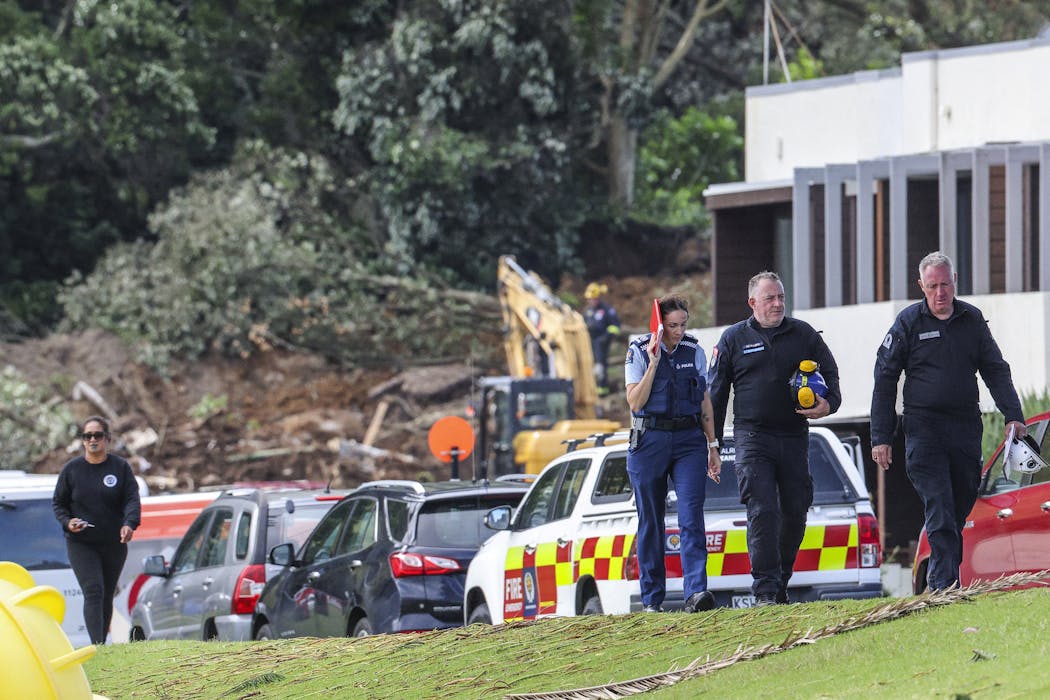
QV has released its latest house price index, showing for the country as a whole, prices were up 1.1 percent over the three months to December. 123RF

Auckland house prices are showing signs of picking up, but Wellington’s continue to fall and increased supply is keeping townhouses cheaper.

QV has released its latest house price index, showing for the country as a whole, prices were up 1.1 percent over the three months to December.

The national average value was now $910,118 – 0.9 percent higher than the same time last year, but still 13.1 percent below the peak of January 2022.

Christchurch prices were up 2.5 percent in the quarter, and Hamilton 2.1 percent. Auckland turned around a decline of 2.2 percent in the October quarter and a 1.1 percent fall in three months to November to lift 0.8 percent.

Wellington was the only main centre where values were still falling, down 0.5 percent.

Invercargill was up 3.3 percent, Rotorua 2.6 percent and Whangārei 2.5 percent.

“A clear majority of the areas we measure recorded quarterly growth, indicating that value movements are now occurring across a broader range of regions,” spokesperson Andrea Rush said.

“With the number of homes for sale nationwide at the highest level in a decade, buyers continue to have the upper hand, with more choice and the ability to negotiate. This is keeping value movements in check, even as activity improves in some areas.

“That dynamic is also contributing to improved affordability in relative terms, particularly for first-home buyers, who remain active across many parts of the country.”

She said apartments and townhouses were under price pressure in Auckland and Christchurch because of high levels of supply as well as higher building and servicing costs, and the fact standalone houses had dropped in price.

There were 35,969 new homes consented in the year ended November 2025, up 7 percent compared with the year before, Stats NZ said.

“In the year to November 2025 multi-unit homes drove the increase in new homes consented,” Stats NZ economic indicators spokesperson Michelle Feyen said. “That’s reflected in the number of townhouses, flats, and units being consented.”

There were 9.6 percent more townhouses, flats and units than a year earlier.

“In many cases, buyers are choosing houses on their own sections – offering more storage, privacy, living space and carparking – over townhouses or apartments that lack these amenities and are often not significantly cheaper to purchase,” Rush said.

“Agents also report that buyers are favouring developments that do offer these features, particularly those in popular locations, over those that lack parking, storage, privacy and outdoor space.”

She said there had been a “reset” in development land values in some areas such as Waitākere, Manukau and Papakura.

“Building costs remain elevated compared to pre-peak levels, alongside higher interest rates, some developers who paid a premium for land during the peak can no longer afford to develop or hold it, resulting in land being resold in some cases at significantly lower prices than originally paid.”

Wellington emptying out

Rush said Wellington prices were now 3.6 percent lower than a year ago, but the 0.5 percent drop was more of a stabilisation than a fall.

“You still are having the impact of job losses in the public sector, people leaving, students leaving, people going overseas. So what you’ve sort of got is an excessive housing supply not only in terms of rentals but also in terms of properties that are on the market and that demand for housing with fewer people looking for housing across the board is seeing pressure on values continue.”

Townhouses are bringing prices down. RNZ/Calvin Samuel

Some parts of the city were 30 percent below their previous peak values. She said that was positive for first-home buyers who wanted to enter the market.

“However interest rates remain much higher than during the previous peak, so servicing debt is still a barrier to potential buyers… But you know, there’s a positive to this. There was a period there where rents were very high in Wellington and house prices were, too. So there’s always a positive side to the reset that we’ve seen since the previous peak.”

Property investment coach Steve Goodey said Wellington felt flat.

“There are some green shoots – there are not as many listings for a summer period as we would normally expect.

“With rental demand, rents have gone down 7 percent to 10 percent meaning landlords are reducing their rents to get a better occupancy… suddenly places are starting to fill up. I had a boarding house with 11 bedrooms and a whole pile of people left before Christmas and I couldn’t get new tenants over Christmas – now it’s back to nine rooms out of 11.

“There’s decent rental demand in Wellington and good quality properties are being snapped up fairly quickly.”

Wellington real estate salesperson Mike Robbers said he was optimistic about the year ahead. The first big round of open homes would happen this weekend, he said. “Normally you find quite a few people milling around… in the last few years the last few weeks of January have generally been quite buoyant.”

Rush said she expected a stable 2025.

“An election year can create a degree of caution and that sometimes restrains activity.

“Buyers and sellers take a more wait-and-see approach. So that tends to happen towards the end of the year during the election year.

“However, as we head into the summer months activity was on the rise previous to Christmas, we do have the situation where across the country we have more properties listed for sale than has been seen in a decade.

“Buyers have plenty of choice, which keeps pressure on prices.”

Sign up for Money with Susan Edmunds, a weekly newsletter covering all the things that affect how we make, spend and invest money.

– Published by EveningReport.nz and AsiaPacificReport.nz, see: MIL OSI in partnership with Radio New Zealand

The World Trade Organization is on life support. Will Trump’s new rules finish it off?

US President Donald Trump raised a fist in defiance after an assassination attempt on his life in Pennsylvania, Saturday, July 13, 2024 (USEDST).

Source: The Conversation (Au and NZ) – By Jane Kelsey, Emeritus Professor of Law, University of Auckland, Waipapa Taumata Rau

Chip Somodevilla/Getty Images

The United States has now withdrawn from 66 international organisations, conventions and treaties, illegally invaded Venezuela, and promoted an “America First” agenda in its new National Security Strategy.

This all signals the collapse of a global system that has operated for the past 60 years. The old world order – driven by hyper-globalisation and US hegemonic power – is in its death throes, but a new era is yet to be born.

We now face a deepening ideological, strategic and military conflict over what shape it will take. The global “free trade” regime, overseen by the World Trade Organization (WTO), is one such battleground.

Largely designed to serve its strategic and corporate interests, the US now sees the WTO as a liability because of the economic ascendancy of China and a domestic populist backlash against globalisation and free trade.

But US antipathy to the current multilateral trade regime is not exclusive to the Trump administration. America has long resisted binding itself to the trade rules it demands other countries obey.

Congress reserved the power to review US membership when it authorised joining the WTO in 1994. Since then, both Republican and Democrat administrations have undermined its operation by:

  • calling for an end to the Doha Round of negotiations launched in 2001

  • breaking the WTO dispute mechanism by defying rulings that go against it, and refusing to appoint judges to the WTO Appellate Body so it is now moribund (effectively allowing rules to be breached)

  • and starving the WTO’s budget during the latest US review of international organisation memberships.

To date, Trump has not withdrawn the US from the WTO. But his administration seeks instead to reinvent it in a form it believes will restore US geostrategic and economic ascendancy.

Rewriting the rulebook

In December 2025, the newly-arrived US Ambassador to the WTO warned its General Council:

If the WTO does not reform by making tangible improvements in those areas that are central to its mission, it will continue its path toward irrelevancy.

“Reform” in this context means abandoning the cornerstone most-favoured-nation rule that requires all WTO members to be treated equally well, which is the bedrock of multilateralism.

The US wants to reinterpret the WTO’s “security exceptions” (which apply to arms trade, war and United Nations obligations to maintain peace and security) to allow countries absolute sovereignty to decide when the exception applies – effectively neutralising the rules at will.

The WTO would also cease to address issues of “oversupply” and “overcapacity”, “economic security” and “supply chain resilience”, which the US believes have enabled China’s growing economic dominance, leaving the way open for unilateral action outside the WTO.

In the stripped-down WTO, decision-making by consensus would be abandoned and multilateral negotiations replaced by deals that are driven by more powerful players on cherry-picked topics.

Unilateral action is not an idle threat. Trump has imposed arbitrary and erratic tariffs on more than 90 countries for a variety of “national and economic security” reasons, demanding concessions for reducing (not removing) them.

Those demands extend way beyond matters of trade, and impinge deeply on those countries’ own sovereignty. There is nothing the WTO can do.

Weaponising tariffs is also not a new strategy. President Joe Biden maintained the tariffs imposed on China during the first Trump presidency, triggering WTO disputes which remain unresolved.

But Trump’s embrace of raw coercive power strips away any chimera of commitment to multilateralism and the model that has prevailed since the 1980s, or to the development of Third World countries that have been rule-takers in that regime.

Where now for the WTO?

Some more powerful countries have bargained with Trump to reduce the new tariffs. China’s retaliation generated an uneasy one-year truce. Brazil held firm against Trump’s politically-motivated tariffs at considerable economic cost. Australia made a side-deal on critical minerals.

The European Union remains in a standoff over pharmaceutical patents and regulating big tech. India has diversified to survive relatively unscathed, ironically forging closer ties with China.

Less powerful countries are much more vulnerable. Among other obligations, the full texts of “reciprocal trade agreements” with Malaysia and Cambodia, signed in October, require them to:

  • replicate US foreign policy and sanctions on other countries

  • consult the US before negotiating a new free trade agreement with a country that “jeopardises US essential security interests”

  • promise to make potentially crippling investments in and purchases from the US

  • involve the US in regulating inward investment and development of Malaysia’s rare earth elements and critical minerals (Malaysia has large unmined repositories, an alternative to China)

  • and not tax US tech giants, regulate their monopolies or restrict data flows.

If implemented, these agreements risk creating economic, fiscal, social and political chaos in targeted countries, disrupting their deeply integrated supply chains, and requiring they make impossible choices between the US and China.

In return, the 2025 tariffs will be reduced, not reversed, and the US can terminate the deals pretty much at will.

This poses an existential question for WTO members, including New Zealand and Australia, at the 14th ministerial conference in Cameroon in late March: will members submit to US demands in an attempt to keep the WTO on life support?

Or can they use this interregnum to explore alternatives to the hyper-globalisation model whose era has passed?

The Conversation

Jane Kelsey is affiliated with a number of international NGOs that monitor and advise on developments in international trade law and the WTO.

ref. The World Trade Organization is on life support. Will Trump’s new rules finish it off? – https://theconversation.com/the-world-trade-organization-is-on-life-support-will-trumps-new-rules-finish-it-off-273216

New Zealand passport drops down global power rankings

Source: Radio New Zealand

The Henley Passport Index for 2026 ranks New Zealand 24th-equal in the world in terms of destinations passport holders can travel to without a prior visa. Customs / supplied

Global rankings show New Zealand’s passport is less powerful than last year.

The Henley Passport Index for 2026 ranks New Zealand 24th-equal in the world in terms of destinations passport holders can travel to without a prior visa.

People with New Zealand passports have easy access to 183 countries, compared to 190 last year. Countries in which travellers can get a visa on arrival are included in the calculation.

The ranking puts New Zealand in the sixth tier, on par with nations such as Croatia, Estonia and Poland and in front of the United Kingdom, Australia and Canada.

Last year New Zealand was in 17th-equal place, in the fifth tier with easy access to 190 countries.

Singapore remains the most powerful passport in the world, with access to 192 countries without a prior visa, followed in second-equal place by Japan and South Korea.

Henley said its rankings were based on “exclusive data from the International Air Transport Association (IATA) – the largest, most accurate travel information database” and enhanced by its own research team.

The top passports were:

  • 192 countries – Singapore
  • 188 – Japan, South Korea
  • 186 – Denmark, Luxembourg, Spain, Sweden, Switzerland
  • 185 – Austria, Belgium, Finland, France, Germany, Greece, Ireland, Italy ,Netherlands, Norway
  • 184 – Hungary, Portugal, Slovakia, Slovenia, United Arab Emirates
  • 183 – Croatia, Czechia, Estonia, Malta, New Zealand, Poland
  • 182 – Australia, Latvia, Liechtenstein, United Kingdom
  • 181 – Canada, 180 Iceland, Lithuania
  • 180 – Malaysia
  • 179 – United States

The weakest passports belonged to Pakistan, Yemen, Iraq, Syria and Afghanistan. Holders of an Afghan passport only have easy access to 24 countries.

Sign up for Ngā Pitopito Kōrero, a daily newsletter curated by our editors and delivered straight to your inbox every weekday.

– Published by EveningReport.nz and AsiaPacificReport.nz, see: MIL OSI in partnership with Radio New Zealand

Young driver going 80km/h over limit hits spikes, collides with oncoming truck

Source: Radio New Zealand

Police say the vehicle hit two sets of road spikes before eventually colliding with an oncoming truck. AFP / Andri Tambunan

A young driver has died in a fiery crash after seen dangerously driving in Hamurana, north of Rotorua.

The silver Lexus, carrying the driver and two young passengers, was reportedly seen cutting people off and driving 80kmh over the speed limit on Tuesday.

Police said the vehicle hit two sets of road spikes before eventually colliding with an oncoming truck.

Bay of Plenty Road Policing Manager, Inspector Phil Gillbanks, says officers and members of the public put themselves at risk to put flames out and save the two passengers.

He said people ran to the scene with extinguishers and about 18 were used to put the fire out.

“Their actions were courageous and saved lives of the trapped passengers.”

The passengers were taken to hospital in a serious condition, while the young driver was found dead at the scene.

Several officers were also treated for minor burns and smoke inhalation.

Gillbanks said police recognised the vehicle as it was of interest following an aggravated robbery in Tauranga on Monday.

A scene examination was completed on Tuesday night and the road was reopened at midnight.

A critical incident investigation is also under way and the IPCA has been notified.

Sign up for Ngā Pitopito Kōrero, a daily newsletter curated by our editors and delivered straight to your inbox every weekday.

– Published by EveningReport.nz and AsiaPacificReport.nz, see: MIL OSI in partnership with Radio New Zealand

Person dead, three critically wounded in Waitārere Beach shooting

Source: Radio New Zealand

Police at the scene at Waitārere Beach, a small settlement 13km south of Foxton. RNZ/Mark Papalii

Warning: This article discusses family harm.

Horowhenua’s mayor says a shooting overnight that left a man dead and three people critically hurt was a family harm incident.

Police were called to a Waitārere Beach address near Levin at about 12.40am on Wednesday.

They found four people with gunshot wounds when they arrived.

Hato Hone St John said it sent two helicopters, two ambulances, one operations manager and two rapid response vehicles to the scene.

Waitārere Beach Road. Google Maps

Manawatū Area Commander Inspector Ross Grantham said a woman and two teenage boys have been taken to hospital in a critical condition. The woman was taken to Palmerston North Hospital by ambulance and the two teenagers were flown to Wellington Hospital.

“Another young person who was at the address is physically unharmed and they are being given wrap-around support,” Grantham said.

He said the gun was found at the scene and a forensic examination of the property will take place on Wednesday.

Police were not looking for anyone else in relation to the shooting. RNZ/Mark Papalii

Access to State Highway 1 from Waitārere Beach Road was closed overnight; however, it has since reopened under traffic management.

Horowhenua Mayor Bernie Wanden told RNZ it was a family harm incident and described the shooting as tragic.

“As far as I am aware, it is only family members who have been involved in this incident,” he said.

Neighbour Elizabeth Taylor told RNZ she was woken up last night by helicopters and lights.

“We thought, ‘What the heck is going on?’” She said.

She said a handful of neighbours gathered in the street.

Police at the scene of the shooting. RNZ/Mark Papalii

Grantham said police were not looking for anyone else in relation to the shooting, and officers would be visible around the area while an investigation is underway.

“This is a shocking incident for Waitārere Beach and the district,” Grantham said.

“This was a confronting scene, and I want to acknowledge the emergency personnel who responded to the call for help.

“We are still in the very early stages of our enquiries, but we are focused on understanding how and why this tragic event occurred.”

Manawatū Area Commander Inspector Ross Grantham RNZ Mark Papalii

He said police will release more information when it becomes available.

The police presence had reduced on Wednesday morning, with two officers and a patrol car parked outside the address.

Another family killing

The latest incident comes just over ten years after a horrific crime shook the small township.

In 2016, 26-year-old Eric McIsaac was sentenced to life imprisonment after he admitted murdering his brother, 10-year-old Alex Fisher, at Waitārere Beach the previous year.

Alex’s body was found after a three-day search involving more than 100 people helped by helicopters, police dog units, search and rescue teams, and Air Force personnel.

McIsaac was sentenced to life in jail with 14 years without parole for the murder.

Where to get help:

  • Need to Talk? Free call or text 1737 any time to speak to a trained counsellor, for any reason
  • Lifeline: 0800 543 354 or text HELP to 4357
  • Suicide Crisis Helpline: 0508 828 865 / 0508 TAUTOKO. This is a service for people who may be thinking about suicide, or those who are concerned about family or friends
  • Depression Helpline: 0800 111 757 or text 4202
  • Samaritans: 0800 726 666
  • Youthline: 0800 376 633 or text 234 or email talk@youthline.co.nz
  • What’s Up: 0800 WHATSUP / 0800 9428 787. This is free counselling for 5 to 19-year-olds
  • Asian Family Services: 0800 862 342 or text 832. Languages spoken: Mandarin, Cantonese, Korean, Vietnamese, Thai, Japanese, Hindi, and English.
  • Rural Support Trust Helpline: 0800 787 254
  • Healthline: 0800 611 116
  • Rainbow Youth: (09) 376 4155
  • OUTLine: 0800 688 5463
  • Aoake te Rā bereaved by suicide service: or call 0800 000 053

If it is an emergency and you feel like you or someone else is at risk, call 111.

Family Violence

Sign up for Ngā Pitopito Kōrero, a daily newsletter curated by our editors and delivered straight to your inbox every weekday.

– Published by EveningReport.nz and AsiaPacificReport.nz, see: MIL OSI in partnership with Radio New Zealand
Heavy rain warning as more 110mm of rain forecast to hit South Island

Source: Radio New Zealand

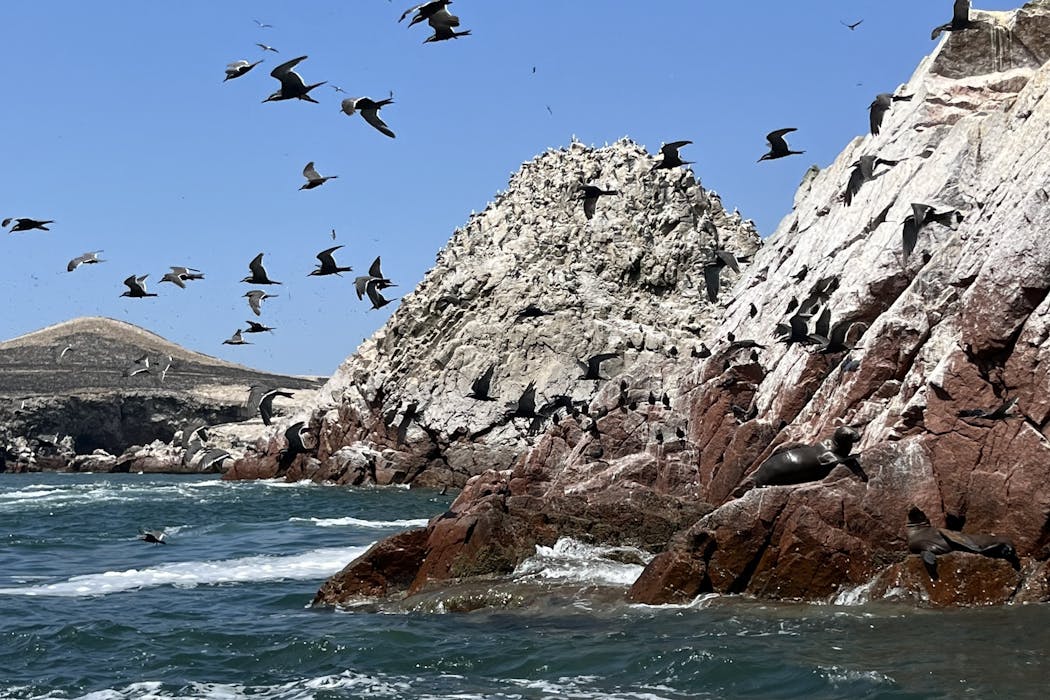
Up to 110 millimetres of rain is expected to fall in the top of the South Island. MetService

Heavy rain is forecast to hit the top of the South Island as a low-pressure system moves in this evening.

MetService has an orange heavy rain warning in place for Marlborough Sounds, Richmond Range and the Rai Valley from 7pm on Wednesday until Thursday afternoon.

Up to 110 millimetres of rain is expected to fall and people in the area are encouraged to prepare by clearing their drains and gutters and avoiding low-lying areas.

Heavy rain watches have also been issued for parts of Nelson, Tasman, Buller, Wellington, the Kaikoura Coast and Marlborough south of the Richmond Range.

MetService said there was a moderate chance of them being upgraded to warnings.

Taranaki has a severe thunderstorm watch in place from 2am until 11pm on Thursday due to a moist unstable northwesterly flow.

Intense, localised rainfall of 25 to 40 millimetres an hour is predicted with the potential for surface or flash flooding.

Sign up for Ngā Pitopito Kōrero, a daily newsletter curated by our editors and delivered straight to your inbox every weekday.

– Published by EveningReport.nz and AsiaPacificReport.nz, see: MIL OSI in partnership with Radio New Zealand

Auckland scientists hope to develop melanoma treatments with million-dollar boost

Source: Radio New Zealand

Molecular basis for melanoma cell motility. (Julio C. Valencia Public Domain)

Scientists at the University of Auckland hope a $1 million grant will help them develop groundbreaking new therapies for deadly skin cancers.

New Zealand has the world’s highest melanoma death rate, with almost 300 people losing their lives to the cancer each year.

Associate Professor of Pharmacology Stephen Jamieson and his team are developing new treatments to kill deadly skin cancers caused by a specific type of gene mutation.

The Winn Trust has granted $1 million for research into melanoma led by Jamieson and Dr Dean Singleton from the university’s Auckland Cancer Society Research Centre and Centre for Cancer Research.

“It just enables us to put all our resources into trying to develop new therapies for melanoma,” Jamieson said.

He is using cutting-edge gene editing technologies to try to develop new treatments to tackle melanomas caused by a mutation of the NRAS gene. This mutation is found in about 15 to 20 percent of melanomas, but there is no specific treatment at present.

“Melanoma is a major issue in New Zealand – with Australia, we have the highest incidence and mortality rates in the world,” he said.

“Immunotherapy can be used to treat melanomas, but if that fails, there are no effective treatment options for NRAS-mutant melanomas and there’s a very poor prognosis – so there’s an urgent need for new treatments.”

Every year, more than 7,000 melanomas are diagnosed and approximately 300 people die from the skin cancer in New Zealand.

Under Jamieson’s supervision, former PhD student Andrea Gu investigated weaknesses in melanoma’s genetic makeup, before making a groundbreaking discovery – that the SHOC2 gene is essential for the growth of melanoma cells with the NRAS mutation.

This research, funded by Cancer Society New Zealand and Cancer Research Trust New Zealand, was published in the journal, Cancer Communications, last year.

Gu won a John Gavin Postdoctoral Fellowship from Cancer Research Trust New Zealand and Melanoma New Zealand to research at the Wellcome Sanger Institute at Cambridge University in the UK. She plans to return to the University of Auckland to share her knowledge.

With $200,000 from Cancer Society New Zealand, Jamieson’s research team plans to investigate billions of compounds to see if they can block the SHOC2 protein and kill melanoma cells with NRAS mutations.

Promising compounds will be tested, with the goal of developing a new drug or combination of drugs to treat this type of melanoma.

Jamieson hopes a new treatment will be ready to test in patients in just over five years.

Singleton’s research is focused on finding out why immunology treatments are not helping about 60 percent of patients with metastatic melanomas – those which have spread from the skin to other parts of the body, such as the lungs, brain or liver.

Melanoma cells were complex and could take many forms, some of which were not recognised by new treatments that used the body’s immune cells to fight cancer, Singleton said, who is a senior lecturer in molecular medicine and pathology.

Singleton hopes discovering how some melanoma cells dodge existing treatments and finding their vulnerabilities might pave the way to developing new treatments with higher success rates.

“Immunology treatments aim to kill melanoma cells, but sometimes they make the cells change. Then cancer cells can hide from the treatment and are less able to be recognised and killed,” he said.

“We’re investigating what’s going on in those different melanoma cell differentiation states and how best to target them.”

Cancer Society Auckland Northland has funded research supervised by Singleton and led by PhD student Claire Palma that is investigating the PHD2 gene and oxygen sensing pathways in melanoma cells. This gene seems like a weak point that drugs could potentially alter to wipe out some melanomas.

“It’s exciting to be involved in this project, which is trying to make new medicines that will block PHD2 and will hopefully work better at killing melanoma cells,” Singleton said.

Both Jamieson and Singleton said a valuable resource powering their search for cures for melanoma is the New Zealand Melanoma living biobank. It holds more than 100 cell lines grown in the lab from samples donated by New Zealand melanoma patients.

Sign up for Ngā Pitopito Kōrero, a daily newsletter curated by our editors and delivered straight to your inbox every weekday.

– Published by EveningReport.nz and AsiaPacificReport.nz, see: MIL OSI in partnership with Radio New Zealand

‘Our food culture wasn’t destroyed, it was buried’

Source: Radio New Zealand

A collective of chefs is working to revive classical Māori cooking knowledge and reconnect Māori to traditional sources of kai.

That includes teaching people to forage for edible native plants including the spicy horopito, fragrant tarata or lemonwood, and kawakawa with its range of culinary and medicinal uses, as well as using traditional cooking techniques such as tīpoti, a type of basket for cooked food.

For chef Joe Mcleod reconnecting people to their classical kai Māori culture and the native flora and fauna that underpins it, happens “one chef at a time”.

– Published by EveningReport.nz and AsiaPacificReport.nz, see: MIL OSI in partnership with Radio New Zealand

From bolts to blue jets, lightning comes in many strange forms

Source: The Conversation (Au and NZ) – By Andrew Dowdy, Principal Research Scientist in Extreme Weather, The University of Melbourne

Lightning has captured people’s fascination for millennia. It’s embedded in mythology, religion and popular culture. Think of Thor in Norse mythology or Indra in Hinduism.

In Australia, lightning is also associated with important creation ancestors such as shown in First Nations rock art.

There are many different types of lightning – and many ways in which it influences our society and environment.

What exactly is lightning?

Lightning occurs due to a buildup of electric charge in clouds. This is similar to when you brush your hair or jump on a trampoline making your hair stand up on end, but to a much more extreme level.

This buildup in clouds happens due to different types of frozen and liquid water bumping into each other in the updrafts and downdrafts that occur due to convection – that is, from hotter air rising and colder air falling. The buildup of electric charge can become so extreme that electricity flows through the air. This is what we see as lightning.

We see the flash of the lightning almost as soon as it happens, but the sound of thunder comes later.

Sound takes about three seconds to travel one kilometre. Counting the time between the flash and the thunder can tell you the distance to the lightning. Just count the number of seconds and divide by three to find the distance in kilometres.

Earth also isn’t the only place where lightning is found. Scientists have also recently detected it on Mars for the first time.

A lightning bolt striking the ground.
Cloud-to-ground lightning is a real risk for human safety, with many deaths globally each year.
Philippe Donn/Pexels

The main types of lightning

There are two main types of lightning found on Earth:

  • Intra-cloud (or cloud-to-cloud) lightning goes from one part of a cloud to another part of a cloud, without ever reaching the ground. It might look like a cloud momentarily glows, often with the whole cloud appearing illuminated, sometimes without seeing the actual thin path that the lightning takes. It occurs when the build-up of electric charge is very different between different parts of a cloud, and is common because the lightning typically doesn’t have to travel far.

  • Cloud-to-ground lightning can occur when the build-up of electric charge becomes very different between a part of the cloud and the ground. This is perhaps the most famous type of lightning. While impressive to witness, cloud-to-ground lightning is a real risk for human safety, causing many recorded deaths each year.

The rare types of lightning

There are also some other rarer, even more spectacular types of lightning:

  • Pyrogenic lightning occurs alongside extreme bushfires in some cases. These fires can sometimes generate lightning in their smoke plumes, known as pyrocumulonimbus clouds. This lightning can then ignite new fires far away as occurred on Black Saturday near Melbourne in 2009. Similarly, lightning can also sometimes occur in other hot plumes such as from volcanic eruptions or nuclear bombs.

  • Upper atmospheric light phenomena related to lightning, also known as “transient luminous events” include sprites, blue jets, ELVEs and PIXIES. Science is still trying to understand details on why these have different characteristic shapes and colours. For example, sprites look like glowing red jellyfish, while blue jets are giant sapphire beams that shoot upwards into the sky. ELVEs look like glowing red halos while PIXIES are flashes of electric blue light atop a thunderstorm.

  • Ball lightning is claimed to have been seen by many people over the years, but similar to claims of other strange things being seen such as the Loch Ness Monster or aliens, it is yet to be scientifically verified. For example, there might be various other explanations for floating balls of light that people see, such as proposed for the Min Min lights in outback New South Wales potentially due to distant car headlights.

Lightning in a warming world

The thunderstorms that cause lightning are often seen as tall billowing clouds known as cumulonimbus. They look like giant cauliflowers floating in the sky, with an anvil shape at their top in mature thunderstorms.

Our recent study on thunderstorms and other weather systems suggests trends since the 1970s towards fewer thunderstorms in northern Australia and more near the southeast. There are still considerable uncertainties around how climate change influences thunderstorms and lightning.

In general, we know warmer air can hold more water vapour, which might help fuel more intense convective storms and lightning.

If more lightning occurs in a warmer world, the increase could in turn create more warming. That’s because lightning splits nitrogen and oxygen molecules in the atmosphere to produce ozone which has a warming effect on the atmosphere. Ozone also contributes to air pollution as it is a respiratory irritant.

However, lightning is far from the main cause of global warming, and more research is needed on these potential feedback processes to understand how important lightning could be in a warming climate.

So next time you are watching the spectacular light show during a storm, you might like to consider the various forms that lightning can take. It is one of the marvels of the world we live in, as well as of other worlds, to be enjoyed – from a safe distance.

The Conversation

Andrew Dowdy receives funding from University of Melbourne, as well as supported by the Australian Research Council including as a member of the Centre of Excellence for 21st Century Weather.

Jennifer Catto receives funding from The Natural Environment Research Council and the US Department of Energy. She is a fellow of the Royal Meteorological Society, and a past member of AMOS.

Robyn Schofield receives funding from the University of Melbourne, the Australian Research Council, Medical Research Future Fund, the Reef Restoration and Adaptation Program and the Murujuga Rock Art Monitoring program. She is a member of expert advisory group of The Safer Air Project, a member of CASANZ, member of AMOS and is past president of the Australian Council of Environmental Deans and Directors.

ref. From bolts to blue jets, lightning comes in many strange forms – https://theconversation.com/from-bolts-to-blue-jets-lightning-comes-in-many-strange-forms-268197

What’s the difference between a sprained ankle and a twisted ankle?

Source: The Conversation (Au and NZ) – By Hunter Bennett, Lecturer in Exercise Science, Adelaide University

Kindel Media/Pexels

After the summer break, you’re ready to get back into exercise. You put on your shoes, pop on your headphones and head out the door on your first run of the new year.

But as you step out onto the footpath, disaster strikes. You trip and land awkwardly.

A sharp pain shoots along the outside of your ankle. Before you know it, your ankle has swollen like a balloon. Did you sprain it or twist it? Is there’s even a difference?

People often use the terms “sprained” and “twisted” ankle interchangeably. But in practice, there is a small difference.

The ankle is complex and vulnerable

The ankle is a complex joint. It’s made up of three bones, the:

  • tibia (the shin bone)
  • fibula (the thinner bone on the outside, next to it)
  • and talus (the bone underneath these two that connects the shin to the foot).

Several strong bands of tissue, known as ligaments, hold these three bones together to keep the joint stable. Several muscles and tendons that surround the ankle also help you maintain balance and allow you to move your ankle.

While the ankle needs to be stable enough to support your weight, it also needs to be mobile enough to allow you to walk, run and jump. This means it can move in a lot of different, and sometimes unexpected, ways.

This also makes it more vulnerable to injury. For example, when you land with your foot turned inwards, a lot of force is placed through a small area on the outside of your ankle, which can lead to injury.

In fact, the ankle is the most commonly injured joint in the lower body.

What is a sprained ankle?

A sprained ankle occurs when the ligaments around the ankle stretch or tear. This most commonly happens when the foot rolls inwards (known as an inversion or a lateral ankle sprain) and ligaments on the outside of the ankle are damaged. However, a sprained ankle can also happen in other ways.

Ankle sprains are typically graded based on their severity:

Grade 1: the ligaments are stretched but not torn or have had a very small tear. There will be minor swelling, and the ankle will be tender to touch.

Grade 2: the ligament is torn, but not all the way through. There will be moderate pain, moderate swelling, and it will hurt to move.

Grade 3: the ligament is completely torn all the way through. There will be significant swelling, bruising and it will be very painful to move.

So an ankle sprain refers to damage to the ankle ligaments.

This is what a clinician will diagnose after assessing your swelling, tenderness and pain. Depending on what they find, they may send you off for an X-ray to make sure you haven’t fractured any ankle bones.

What is a twisted ankle?

A twisted ankle is not a specific diagnosis, but a broad term. It normally relates to the ankle rolling or twisting awkwardly.

In short, you can think of a twisted ankle as how the injury occurred, and a sprained ankle as what the injury is.

You can twist your ankle without spraining it. For example, you might land awkwardly, feel a tweak of pain, but then walk away with no structural damage.

But twisting the ankle has also been linked to more severe injuries, such as ankle breaks and fractures.

How should we treat them?

When it comes to treatment, we should really consider how the ankle feels rather than how it happened.

The first thing is to make sure you haven’t fractured any of the bones in your ankle.

Clinicians use the Ottawa ankle rules to decide whether you need to get an X-ray. This is based on assessing your swelling, tenderness and pain.

If you don’t need an X-ray, the priority is to manage the pain and swelling.

The first step is to temporarily limit the amount of weight you put through your ankle. You can lie on the sofa with a cushion under your ankle or you can use crutches. You might also want to wear some form of compression bandage, which can reduce swelling and reduce pain.

After about 48–72 hours, your ankle will generally start to feel a bit better. This is when you can start doing some basic exercises to restore your ankle’s range of motion, strengthen the muscles around the ankle, and improve balance.

These exercises are important. If you’ve had one ankle sprain, this is the biggest risk factor for having another. These exercises can restore muscle strength and stability back to your ankle, which may help prevent future sprains.

There is some debate about whether the common recommendation to apply ice to the ankle improves recovery. Evidence seems to suggest that simply limiting swelling and starting exercise early will be more effective.

So, is a sprained or twisted ankle the same?

Well, kind of – but not exactly.

Most people who say they twisted their ankle probably had a mild sprain. But not all twisted ankles are sprained ankles.

If you think you have sprained your ankle, it might be worth getting it checked out by a medical professional just in case.

The Conversation

The authors do not work for, consult, own shares in or receive funding from any company or organisation that would benefit from this article, and have disclosed no relevant affiliations beyond their academic appointment.

ref. What’s the difference between a sprained ankle and a twisted ankle? – https://theconversation.com/whats-the-difference-between-a-sprained-ankle-and-a-twisted-ankle-270055

As we begin to assess the fire damage in Victoria, we must not overlook these hidden costs

Source: The Conversation (Au and NZ) – By Sonia Akter, Associate Professor, Crawford School of Public Policy, Australian National University

Devastated by widespread fires, Victoria has declared a state of disaster. More than 500 structures have reportedly been destroyed and 1,000 agricultural properties have been affected. Tragically, there has also been one fatality.

On Monday, the Victorian government announced new assistance payments of up to A$52,250 to help uninsured home owners and renters “re-establish their principal place of residence”.

This builds on a joint state and federal $19.5 million package offering food, emergency housing, mental health support, a recovery hotline, agricultural support and case-specific assistance.

People in impacted areas may also be eligible for the federal Disaster Recovery Payment ($1,000 per adult and $400 per child) and the Victorian government’s Personal Hardship Assistance Program ($680 per adult and $340 per child, up to a family cap of $2,380). They may also be eligible for Disaster Recovery Allowance income support.

All of these supports and payments are important and are being rolled out rapidly. But much more can be done, especially when decision-makers recognise that treating everyone affected by bushfires the same does not actually produce fair outcomes – as our research has shown.

The divide disasters reveal

Many Australians think disaster-hit regions are all, more or less, the same if they suffer the same size of area burned or other immediate measures of fire loss.

But when viewed through a more comprehensive lens, such as key Australian Bureau of Statistics measure of disadvantage data, and for suburbs affected by the most recent fires, a different story emerges.

Harcourt and Longwood sit in the lower half of the the state’s rankings for socio-economic disadvantage. That is, on average, there are proportionally more households in these locations that have lower incomes and fewer financial buffers to cope with a shock like a bushfire.

Yet, in some cases right next door, the localities of Harcourt North, Ruffy and Ravenswood South are ranked among the top most advantaged areas in Victoria.

This isn’t to argue we shouldn’t support all impacted communities. But a uniform $1,000 disaster payment, for example, treats a renter in Harcourt the same as a property owner in Harcourt North.

Most property owners have insurance, some savings and an ability to borrow to tide them over. In contrast, a low-income renter with little or no savings risks falling into a poverty trap. For some, a week of lost wages spirals into rent arrears and long-term debt.

Australia needs to do more about underinsurance

The Victorian government’s newly announced payments of up to $52,250 will go some way to helping uninsured homeowners and renters get back on their feet. But the announcement also highlights a problem it doesn’t solve: underinsurance.

Many households did have insurance, yet their cover may fall far short of today’s rebuild costs. That shortfall will push families to run down savings, take on debt, or stay stuck in expensive rentals, despite having done the “right thing” by being insured.

Underinsurance, especially for disadvantaged households, turns short-term shocks into long-term setbacks. When policy limits don’t match real rebuild costs after years of rising construction prices, families stay in rentals longer and drain savings.

In California, repeated wildfires have pushed some major insurers to stop writing new home policies. Premiums soared, and the state’s last-resort insurance program, the FAIR Plan, ballooned.

After the Los Angeles fires of January 2025, reports documented illegal rent gouging and sharp rent spikes in nearby cities as thousands of people searched for temporary housing.

How we measure hidden costs

In Australia, we typically measure disaster impacts by insured losses and property damage. That’s because those numbers are visible, immediate and easy to collect. But they’re only part of the picture. They show where assets were lost, not where people’s wellbeing took the hardest hit.

Two studies into the 2019-20 Black Summer fires explain why focusing only on assets misses the full story.

First, fires really do discriminate. This is because socio-economic disadvantages raise exposure before the fire and widen gaps after it. More disadvantaged communities are, we found, closer to major burns.

That starting point means having fewer savings and weaker safety nets when bills arrive for clean-up and rebuilding.

Second, further losses after the fires matter. Some are non-economic and they may take time to manifest.

One year after the Black Summer fires, for example, rents in disadvantaged areas had risen by about $20–$26 per week, crowded living conditions increased, and incomes fell. Disadvantaged areas saw more households reporting zero or negative income in the years that followed, widening existing income and wealth gaps.

And fires are not gender neutral. Unpaid domestic work skyrocketed for women everywhere, but for men it rose significantly in disadvantaged, high-burn communities.


Read more:
New research shows Black Summer’s megafires left lasting scars far beyond property damage


What we need to get right

To prevent this natural disaster from becoming an ongoing socio-economic failure, governments need to adjust how they respond to accommodate geographic disadvantages that make it much harder to recover in some locations than others.

Evidence suggests cash support should be determined based on disadvantage and how badly areas were burned, so that economic inequality does not worsen.

Beyond cash, governments must broaden the metrics of measuring bushfire impacts. Official recovery dashboards need to track rent changes, overcrowding and the unpaid work burden for men and women.

As a country, we also need to confront a growing insurance gap by creating rebuild-gap top-ups that account for increasing construction costs and fund “build back safer” standards.

We can and must do better by explicitly considering the hidden and longer-term costs of bushfires and other disasters. If we did, Victoria could rebuild fairer and faster without leaving the most disadvantaged further behind.


If you’ve been impacted by the January 2026 Victorian bushfires, you can find out what support you may be eligible for, either online or by calling the Emergency Recovery Hotline on 1800 560 760 from 9am to 5pm. Press 9 for an interpreter or call for translation help on 131 450.

The Conversation

Sonia Akter receives funding from the Australian Centre for International Agricultural Research (ACIAR).

Manh-Tien Bui and Quentin Grafton do not work for, consult, own shares in or receive funding from any company or organisation that would benefit from this article, and have disclosed no relevant affiliations beyond their academic appointment.

ref. As we begin to assess the fire damage in Victoria, we must not overlook these hidden costs – https://theconversation.com/as-we-begin-to-assess-the-fire-damage-in-victoria-we-must-not-overlook-these-hidden-costs-273218

Why the Heated Rivalry TV series understands gay men better than the book

Source: The Conversation (Au and NZ) – By Harry Stewart, PhD Candidate in Queer Male Romance, Flinders University

HBO

Heated Rivalry, written and directed by Jacob Tierney, has become a massive hit, going viral among gay romance fans and gathering millions of likes on the show’s official TikTok page.

Tierney’s adaptation of Rachel Reid’s 2019 novel turns Reid’s words into a beautiful exploration of queer male love and sex.

Reid’s romance novel was written for a mainly female readership, and it doesn’t quite capture all of the nuances of a gay male relationship. Under a gay male director, the TV series brings a whole new understanding to the intricacies of gay love.

Not just a pretty face

Heated Rivalry follows the romantic relationship between two rising professional hockey players: the Canadian captain of the Montreal Metros, Shane Hollander (Hudson Williams), and the Russian captain of the Boston Raiders, Ilya Rozanov (Connor Storrie).

Reids’ original novel boxes the characters into their corners. Shane is the “pretty” boy who is “like a doll”, naturally “smooth” and “like a swimmer”. Ilya is “masculine” and “big” and has a “muscular chest”, “muscular arms” and “thick, muscular thighs”.

Based on these physical descriptions it comes as no surprise that Shane is the “bottom” in this pairing, depicted as softer in appearance and more emotional. Ilya is the “top” – a more masculine, imposing figure.

Tierney doesn’t change these roles, but instead doesn’t draw attention to how Ilya’s traits are more “manly” and Shane’s more “feminine”. Rather, Tierney focuses on how Shane and Ilya’s personal lives make them who they are – in and out of the bedroom.

Production image: Ilya in the change room.
As Ilya, Connor Storrie gives us a bisexual man who is muscular and masculine – but he is also vulnerable.
HBO

Ilya’s dominance and masculinity in the books isn’t a focal point in the show. Instead, we see more of him as a vulnerable bisexual man who fights against his emotions and his family, but just wants to be held in the arms of a person that he loves.

Shane isn’t just a pretty face for the audience either, with his Asian-Canadian heritage expanded upon. We get the pressures of his identity as a representative figure in the media, and softer moments that he shares with his mother after coming out.

Tierney’s perspective makes the pair fully realised people who are each battling their own demons. He emphasises that queer men’s lives aren’t just full of spicy, sexy moments. Often, our sexuality can be a point of difference in how we are perceived in our careers, family lives, relationships and on the wider world stage.

Production image: the couple have a drink.
Tierney’s perspective makes the pair fully realised people.
HBO

Consent is sexy

One of the biggest changes is how Tierney handles consent. Shane and Ilya have a lot of sex both in the book and in the show. In a famous scene from the book, Shane receives a call from his teammate. Ilya takes it as a chance to perform oral sex on Shane. Reid writes Shane “was soft, so maybe he really didn’t want Ilya to be doing this”, and Shane describes it as “fucking creepy”.

The show adjusts this dubious consent and silent protest. Instead – after slight push back – Shane physically moves into a position that enables Ilya better access to his groin and gives facial clues that imply consent is clear.

Tierney has said adding explicit consent to this scene “makes it hotter”. The line between what is acceptable is far clearer in Tierney’s show than Reid’s book because of these changes.

Production image: the couple in a shower.
By foregrounding consent, Heated Rivalry makes the sex scenes ‘even hotter’.
HBO

Consent is prevalent and very much an expectation in the gay community. Tierney’s lens adds these conversations about consent to the show, and makes it clear that Shane and Ilya are so in-tune with each other that there are boundaries, and that’s still sexy.

Tierney lets Ilya and Shane feel less like tough athletes, and more like two people learning to be vulnerable with each other. Ilya’s character is softened, and portrayed as a kinder masculinity.

In the book, when they both say “I love you”, Ilya is stoic and “scared”. In the show he cries, happily.

In the sex scenes, Tierney peels back layers of tough, male energy and instead focuses on showing a tenderness and emotional depth more aligned with real life gay male relationships. Tierney understands the need for emotion in this scene, and his addition shows an awareness of his gay male viewership’s need for vulnerable, fulfilling queer men on screen.

Finding an audience

In adapting the sex to the screen, Tierney spoke about how he wanted to “script the fuck out of these sex scenes” because he knew fans of the book “love this stuff”. He also wanted to emphasise “horny good sex for gay people on TV”, sex that “is not going to end in misery or AIDS or punishment”.

Tierney’s adaptation honours both the women who will come to the show from the novel, and the show’s new male audience. He understood the show had to be spicy and honour the books, but also be authentically gay.

In this, Tierney follows in the footsteps of other amazing queer male directors and writers, such as Greg Berlanti’s Love, Simon (2018) and Peter Paige’s The Thing About Harry (2020).

Tierney’s Shane and Ilya cry, have good sex, share their hurts and worries, and work through their vulnerabilities together. All while still being active, attractive and complicated queer men.

The Conversation

Harry Stewart does not work for, consult, own shares in or receive funding from any company or organisation that would benefit from this article, and has disclosed no relevant affiliations beyond their academic appointment.

ref. Why the Heated Rivalry TV series understands gay men better than the book – https://theconversation.com/why-the-heated-rivalry-tv-series-understands-gay-men-better-than-the-book-273001

Coroner calls for urgent support for prisoners as parolee dies after 30 years in jail

Source: Radio New Zealand

123RF

Warning: This article discusses suicide.

A coroner is calling for urgent psychological support for prisoners before and after their release, following the death of a man who served almost 30 years of a life sentence for murder.

Lee Rawiri Kohiti was sentenced in 1996 for the murder of his cousin. He was released on parole in May 2025.

Two months later, Kohiti was found dead at the Hamilton parole address he had been living at.

He was 19 when he entered prison.

According to the coroner, on his release at 49 years old, he wasn’t visited by friends or family and he expressed a desire to return to the prison environment.

“His closest support had been his mother; however, her health had deteriorated, and she had recently passed away,” Coroner Bruce Hesketh said.

Kohiti’s death has been ruled a suicide.

It’s a story that’s all to familiar to University of Auckland professor Tracey McIntosh.

“We’ve a parole board that largely looks at risk, with particular focus, as we can understand, on risk to community, but perhaps far less is done in actually determining the risk for individuals, particularly around their wellbeing,” she said.

McIntosh wanted more support on the inside to prepare prisoners for re-integrating into society.

“We’re letting people down … it’s very difficult for me to understand why these people wouldn’t be the highest priority, given that they’ve been in prison for such a long time because of the reasons of what they were convicted with.

“We do need to look at community, Corrections, probation, is there emphasis, particularly in that first six months, on the right things,” she said.

It was a significant and urgent issue, McIntosh said.

“When we think about how we do reintegration, I don’t know if there’s any country that really does integration extremely well, but we certainly, we’ve got so much more work to be done at the reintegration level,” she said.

“If you’re really going to talk about community safety, then it has to be a much broader view, and there has to be a much more nuanced understanding of safety.”

Work with other agencies needed

Coroner Hesketh’s ruling on Kohiti’s death recommended the Department of Corrections work with other agencies to address systemic issues in providing services to prisoners on release.

He also suggested Corrections collaborate with relevant partners to collate and review data on suspected suicide deaths after release, within a relevant time period.

“I add a further recommendation that long-term prisoners should have their cases marked as ‘urgent’ to receive psychological services support in preparation for their release in the critical weeks and months both before and after their release,” he said.

Corrections chief mental health and addictions officer Dr Emma Gardner said there were teams that regularly assess inmates’ risk of suicide.

“If a person becomes unwell after they have left prison, they will be having, if they are on probation, regular connections with their probation officer. That probation officer would be doing wellbeing checks on an individual and if they became concerned about their mental health then they would be able to refer them to services in the community…,” she said.

Gardner said a lot of work had been done for those in prison, such as expanding the mental health services across the prison network.

“We are now starting to turn our attention to ‘what does support in the community look like, how do we ensure that the relevant agencies that are already available out in the community are connecting with our people’, but it’s early days on that work and we’ve got a lot more to do,” she said.

Gardner said the Corrections executive have commissioned a piece of work looking at community support.

She said there was always room for improvement, but that Corrections had done a lot of work over the last four to improve internal services for inmates.

Gardner believed the systemic issues mentioned by the coroner were being addressed.

“We really do take every death in custody very, very seriously, and obviously every death for people on community sentences is an absolute tragedy, and we are really, really focused on doing everything we can to improve the support we offer those people and their whānau.”

Where to get help:

  • Need to Talk? Free call or text 1737 any time to speak to a trained counsellor, for any reason
  • Lifeline: 0800 543 354 or text HELP to 4357
  • Suicide Crisis Helpline: 0508 828 865 / 0508 TAUTOKO. This is a service for people who may be thinking about suicide, or those who are concerned about family or friends
  • Depression Helpline: 0800 111 757 or text 4202
  • Samaritans: 0800 726 666
  • Youthline: 0800 376 633 or text 234 or email talk@youthline.co.nz
  • What’s Up: 0800 WHATSUP / 0800 9428 787. This is free counselling for 5 to 19-year-olds
  • Asian Family Services: 0800 862 342 or text 832. Languages spoken: Mandarin, Cantonese, Korean, Vietnamese, Thai, Japanese, Hindi, and English.
  • Rural Support Trust Helpline: 0800 787 254
  • Healthline: 0800 611 116
  • Rainbow Youth: (09) 376 4155
  • OUTLine: 0800 688 5463
  • Aoake te Rā bereaved by suicide service: or call 0800 000 053

If it is an emergency and you feel like you or someone else is at risk, call 111.

Sign up for Ngā Pitopito Kōrero, a daily newsletter curated by our editors and delivered straight to your inbox every weekday.

– Published by EveningReport.nz and AsiaPacificReport.nz, see: MIL OSI in partnership with Radio New Zealand

‘Dilbert’ comic creator Scott Adams dies

Source: Radio New Zealand

Scott Adams, the creator of the popular comic strip Dilbert, has died, according to an announcement on his social media pages.

Adams, who was 68, announced in May that he’d been diagnosed with an aggressive form of prostate cancer.

Dilbert, a chronicle of the indignities of American office work, was one of the country’s most widely read comic strips from its breakout success in the 1990s until February 2023, when Adams made racist comments against Black Americans, calling them a “hate group” that white people should “get the hell away from,” in response to a dubious poll about whether it’s “OK to be white.” Hundreds of newspapers stopped carrying Dilbert within days, and the strip was soon dropped by its distributor.

Dilbert, a fictional character created by Scott Adams.

Scott Adams, Fair use

– Published by EveningReport.nz and AsiaPacificReport.nz, see: MIL OSI in partnership with Radio New Zealand

Tougher fines for power companies that play unfair a ‘credible deterrent’ – minister

Source: Radio New Zealand

Simon Watts. RNZ/Mark Papalii

Tougher fines are on the way for electricity providers and retailers that breach the rules, in a move to give the Electricity Authority more teeth to maintain a fair and competitive market.

Energy Minister Simon Watts said this year the authority will be able to hand out instant infringement fines of up to $2000 for minor breaches.

And from next year, heavier duty penalties will increase from $2 million to the highest of three options – a $10m fine, 10 percent of a company’s turnover or three times the gain made from the breach.

“This is about being a credible deterrent to not meeting the rules and not playing fairly in the market,” Watts said.

“It’s making sure that the penalties and infringements are significant enough to ensure that they are a credible threat.”

Watts said a stronger Electricity Authority will improve competition and should mean more affordable power.

There have been calls to split the generation and retail arms of the large power companies, with the aim of increasing competition and lowering prices.

Last year the Auckland Business Chamber released a survey showing 49 percent of people wanted power gentailers broken up, and 62 percent wanted the government to underwrite the cost of new electricity generation.

Watts said the new penalties will match what the Commerce Commission can do and allow better monitoring of the electricity market.

“Kiwis are feeling the pressure of high power bills. The government is moving quickly to fix this by strengthening the Electricity Authority, which oversees the electricity market and makes sure power companies play by the rules.”

The changes will require amendments to the Electricity Industry Act.

Watts said good progress had been made on National’s energy plan, announced in October:

  • commenced the first stage of the procurement process for an LNG facility to provide New Zealand with greater security of supply
  • assessed new energy projects under the Fast-Track Approvals process which will increase supply and unlock investment in new generation
  • started work on a new regulatory framework to prevent dry-year shortages that drive up prices.

“These steps are about making sure New Zealand has the affordable, abundant, reliable energy our economy needs,” Watts said.

“It’s critical to have strong leadership at the Electricity Authority to ensure it can support the market to deliver abundant and affordable energy.”

The government has also agreed to the appointment of new members to the Electricity Authority Board.

Sign up for Ngā Pitopito Kōrero, a daily newsletter curated by our editors and delivered straight to your inbox every weekday.

– Published by EveningReport.nz and AsiaPacificReport.nz, see: MIL OSI in partnership with Radio New Zealand

Locals want popular Kerikeri swimming spot reopened

Source: Radio New Zealand

Tommy Lodge backflips from the top of the falls at Charlie’s Rock, on Kerikeri’s Waipapa River. RNZ / Peter de Graaf

Record temperatures in Kerikeri have highlighted a long-standing bugbear in the Northland town – declining access to once-popular swimming spots.

According to MetService, last Saturday’s maximum of 32.3C set a new January record for the town.

That was broken just 24 hours later by Sunday’s high of 32.7C.

Sweltering temperatures send Northlanders, like 17-year Te Moemoea Milne, flocking to streams and waterholes.

“It’s been ridiculously hot. Just boiling,” he said.

When RNZ caught up with him he was cooling off by doing bombs off Charlie’s Rock, a scenic waterfall on Kerikeri’s Waipapa River.

“If I have money, I just ask the boys to come and pick me up and go somewhere. Anywhere with a wharf or any jumping spots.”

Over recent decades, however, the fast-growing town has lost access to beaches due to the coastal property boom and the closure of privately owned roads once used by the public.

The most recent swimming spot to become off-limits is Fairy Pools, on the Kerikeri River, which used to be accessed from a public road in the town centre.

Fairy Pools Lane was closed by the Far North District Council in November 2024 for what was supposed to be a four-month period, due to a major housing development on the surrounding land.

Long-time Kerikeri resident Anne Trussler describes Fairy Pools as “a serene and beautiful place”. RNZ / Peter de Graaf

Late last month, the closure, already three times longer than originally intended, was extended indefinitely.

At the time a council statement said the closure was for safety reasons, and the extension was because the developer’s work programme had expanded.

“Heavy machinery, tree felling, bush clearance, and earthworks in and around the accessway make public entry unsafe,” the council said. To ensure public safety during the ongoing works, a full closure of access to the reserve is required… The extended closure will remain until all major development works have been completed.”

Young swimmers told RNZ that Charlie’s Rock was far superior for its jumping-off places and cool water, but Fairy Pools was close to the town centre and easy to access.

Charlie’s Rock was reached via a 20-minute, bouldery path, which was challenging for less mobile residents.

Tommy Lodge, 17, said Charlie’s Rock was easily the town’s best freshwater swimming spot.

“But Fairy Pools is nice and accessible, real close and still good for a swim.”

He described the closure as “pretty stupid”.

“I reckon it should be open, especially for people that don’t have as much access to cars or transport.”

In recent days, when no tree felling is taking place, the access road to Fairy Pools has been open – though the council sign says it is still officially closed. RNZ / Peter de Graaf

RNZ contacted the Matakana-based developer, Turnstone, and the council for an estimate of when Fairy Pools Lane would officially reopen. Neither had responded before this story was due to be published.

Long-time Kerikeri resident Anne Trussler lamented the loss of what she described as “a serene and beautiful spot”.

She said Fairy Pools was her late father’s favourite place, where he used to take his dog for daily walks. Now she was unable to go there to remember him.

“More and more of these very, very special places, uniquely Kerikeri places, are slowly being denied to us. It’s wrong, and nobody’s really looking out for the people of Kerikeri. So I am deeply concerned.”

Fairy Pools Lane and reserve was until recently surrounded by the Bing property, named after a previous owner, and planted in gum and redwood trees about 90 years ago.

The roughly 20-hectare property, between Kerikeri’s town centre, the Heritage Bypass and Kerikeri River, was sold to a developer in 2021. Transfer of the land was delayed by a legal dispute until 2024.

Plans for the land included up to 350 homes, a “lifestyle village”, new roads, and commercial premises.

Most of the trees have now been cut down but felling is continuing this week alongside the river, prompting a two-day closure of part of the Rainbow Falls Track in the nearby Department of Conservation reserve.

Updated council signs at Fairy Pool Lane in Kerikeri now state the closure of the popular swimming spot is “until further notice”. Supplied

Firefighters were called to at least two fires in the property late last year.

In the most recent blaze, on 14 December, two helicopters and firefighters from five Far North brigades were needed to bring the flames under control.

FENZ said the fire started when high winds fanned a burn pile back into life.

Recent record-breaking temperatures prompted community group Our Kerikeri to compile a list of the town’s remaining swimming spots.

As well as Charlie’s Rock, the list included the pool at the bottom of Rainbow Falls, Waipapa Landing, and waterholes along Wairoa Stream, accessed via a bush track off Cobham Road.

The nearest beach was Wharau Bay, 14km away at the entrance to Kerikeri Inlet.

Sign up for Ngā Pitopito Kōrero, a daily newsletter curated by our editors and delivered straight to your inbox every weekday.

– Published by EveningReport.nz and AsiaPacificReport.nz, see: MIL OSI in partnership with Radio New Zealand

Locals want popular Kerikeri swimming spot Kerikeri reopened

Source: Radio New Zealand

Tommy Lodge backflips from the top of the falls at Charlie’s Rock, on Kerikeri’s Waipapa River. RNZ / Peter de Graaf

Record temperatures in Kerikeri have highlighted a long-standing bugbear in the Northland town – declining access to once-popular swimming spots.

According to MetService, last Saturday’s maximum of 32.3C set a new January record for the town.

That was broken just 24 hours later by Sunday’s high of 32.7C.

Sweltering temperatures send Northlanders, like 17-year Te Moemoea Milne, flocking to streams and waterholes.

“It’s been ridiculously hot. Just boiling,” he said.

When RNZ caught up with him he was cooling off by doing bombs off Charlie’s Rock, a scenic waterfall on Kerikeri’s Waipapa River.

“If I have money, I just ask the boys to come and pick me up and go somewhere. Anywhere with a wharf or any jumping spots.”

Over recent decades, however, the fast-growing town has lost access to beaches due to the coastal property boom and the closure of privately owned roads once used by the public.

The most recent swimming spot to become off-limits is Fairy Pools, on the Kerikeri River, which used to be accessed from a public road in the town centre.

Fairy Pools Lane was closed by the Far North District Council in November 2024 for what was supposed to be a four-month period, due to a major housing development on the surrounding land.

Long-time Kerikeri resident Anne Trussler describes Fairy Pools as “a serene and beautiful place”. RNZ / Peter de Graaf

Late last month, the closure, already three times longer than originally intended, was extended indefinitely.

At the time a council statement said the closure was for safety reasons, and the extension was because the developer’s work programme had expanded.

“Heavy machinery, tree felling, bush clearance, and earthworks in and around the accessway make public entry unsafe,” the council said. To ensure public safety during the ongoing works, a full closure of access to the reserve is required… The extended closure will remain until all major development works have been completed.”

Young swimmers told RNZ that Charlie’s Rock was far superior for its jumping-off places and cool water, but Fairy Pools was close to the town centre and easy to access.

Charlie’s Rock was reached via a 20-minute, bouldery path, which was challenging for less mobile residents.

Tommy Lodge, 17, said Charlie’s Rock was easily the town’s best freshwater swimming spot.

“But Fairy Pools is nice and accessible, real close and still good for a swim.”

He described the closure as “pretty stupid”.

“I reckon it should be open, especially for people that don’t have as much access to cars or transport.”

In recent days, when no tree felling is taking place, the access road to Fairy Pools has been open – though the council sign says it is still officially closed. RNZ / Peter de Graaf

RNZ contacted the Matakana-based developer, Turnstone, and the council for an estimate of when Fairy Pools Lane would officially reopen. Neither had responded before this story was due to be published.

Long-time Kerikeri resident Anne Trussler lamented the loss of what she described as “a serene and beautiful spot”.

She said Fairy Pools was her late father’s favourite place, where he used to take his dog for daily walks. Now she was unable to go there to remember him.

“More and more of these very, very special places, uniquely Kerikeri places, are slowly being denied to us. It’s wrong, and nobody’s really looking out for the people of Kerikeri. So I am deeply concerned.”

Fairy Pools Lane and reserve was until recently surrounded by the Bing property, named after a previous owner, and planted in gum and redwood trees about 90 years ago.

The roughly 20-hectare property, between Kerikeri’s town centre, the Heritage Bypass and Kerikeri River, was sold to a developer in 2021. Transfer of the land was delayed by a legal dispute until 2024.

Plans for the land included up to 350 homes, a “lifestyle village”, new roads, and commercial premises.

Most of the trees have now been cut down but felling is continuing this week alongside the river, prompting a two-day closure of part of the Rainbow Falls Track in the nearby Department of Conservation reserve.

Updated council signs at Fairy Pool Lane in Kerikeri now state the closure of the popular swimming spot is “until further notice”. Supplied

Firefighters were called to at least two fires in the property late last year.

In the most recent blaze, on 14 December, two helicopters and firefighters from five Far North brigades were needed to bring the flames under control.

FENZ said the fire started when high winds fanned a burn pile back into life.

Recent record-breaking temperatures prompted community group Our Kerikeri to compile a list of the town’s remaining swimming spots.

As well as Charlie’s Rock, the list included the pool at the bottom of Rainbow Falls, Waipapa Landing, and waterholes along Wairoa Stream, accessed via a bush track off Cobham Road.

The nearest beach was Wharau Bay, 14km away at the entrance to Kerikeri Inlet.

Sign up for Ngā Pitopito Kōrero, a daily newsletter curated by our editors and delivered straight to your inbox every weekday.

– Published by EveningReport.nz and AsiaPacificReport.nz, see: MIL OSI in partnership with Radio New Zealand

Person dead, three critically wounded in Horowhenua shooting

Source: Radio New Zealand

Waitārere Beach is a small settlement 13km south of Foxton. Google Maps

A person has been found dead and three people are in a critical condition after a shooting overnight in Horowhenua.

Police were called to a Waitārere Beach address near Levin at about 12.40am on Wednesday.

They found four people with gunshot wounds when they arrived.

Manawatū Area Commander Inspector Ross Grantham said a woman and two teenage boys have been taken to hospital in a critical condition. The woman was taken to Palmerston North Hospital by ambulance and the two teenagers were flown to Wellington Hospital.

“Another young person who was at the address is physically unharmed and they are being given wrap-around support,” Grantham said.

He said the gun was found at the scene and a forensic examination of the property will take place on Wednesday.

Access to State Highway 1 from Waitārere Beach Road was closed overnight; however, it has since reopened under traffic management.

Grantham said police were not looking for anyone else in relation to the shooting, and officers would be visible around the area while an investigation is underway.

“This is a shocking incident for Waitārere Beach and the district,” Grantham said.

“This was a confronting scene, and I want to acknowledge the emergency personnel who responded to the call for help.

“We are still in the very early stages of our enquiries, but we are focused on understanding how and why this tragic event occurred.”

He said police will release more information when it becomes available.

– Published by EveningReport.nz and AsiaPacificReport.nz, see: MIL OSI in partnership with Radio New Zealand

ASB Classic: Gael Monfils’ title defence over at first hurdle

Source: Radio New Zealand

Gael Monfils, champion of the ASB Classic in 2025. www.photosport.nz

French tennis player Gael Monfils’ fifth and last appearance at Auckland’s ASB Classic, hasn’t been one for the history books, but his contribution to the tournament down through the years, will live long in the memory.

The 39-year-old was beaten in the first round by Hungarian Fabian Marozsan last night, 7-5 3-6 4-6, in a battle which lasted just on two hours, meaning his title defence was over in the opening round.

The match had a similar feel to the first round matchup between the two in 2024, which Marozsan also won in three sets.

Monfils has finished his Auckland career with a 8-4 record, first coming to the tournament in 2007, when he was beaten in the first round by Spain’s Alberto Martin.

Six years later, he was back for his second visit, which was much more successful.

He won three matches before being beaten by another Spaniard David Ferrer in the semi-finals.

His crowning glory though, was last year, when he won the title, beating Belgium’s Zizou Bergs 6-3 6-4.

“I have, of course, great memories, being playing here in my early age,” he said on Sky Sport after last night’s defeat.

“It’s been a big honour for me to play here in a special country, a great culture. I was very lucky and fortunate last year to win this title. For me, Auckland is in a special place in my heart, so thank you very much.

“You have a lovely country. It won’t be my last time here, that’s for sure. I want my daughter to discover your country. So I’ll be coming, not for tennis, but to visit,” Monfils said.

Monfils’ wife, Ukrainian veteran Elina Svitolina won the ASB Classic women’s tournament on Sunday.

Marozsan, in the meantime, will be back on court tonight in the second round, when he faces Norweigan and second seed Casper Ruud for a spot in the quarter finals.

– Published by EveningReport.nz and AsiaPacificReport.nz, see: MIL OSI in partnership with Radio New Zealand

Person killed, three critically wounded in Horowhenua shooting

Source: Radio New Zealand

Waitārere Beach is a small settlement 13km south of Foxton. Google Maps

RNZ / Nate McKinnon

A person has been found dead and three people are in a critical condition after a shooting overnight in Horowhenua.

Police were called to a Waitārere Beach address at about 12.40am on Wednesday.

They found four people with gunshot wounds when they arrived.

Manawatū Area Commander Inspector Ross Grantham said a woman and two teenage boys have been taken to hospital in a critical condition. The woman was taken to Palmerston North Hospital by ambulance and the two teenagers were flown to Wellington Hospital.

“Another young person who was at the address is physically unharmed and they are being given wrap-around support,” Grantham said.

He said the gun was found at the scene and a forensic examination of the property will take place on Wednesday.

Grantham said police were not looking for anyone else in relation to the shooting, and officers would be visible around the area while an investigation is underway.

“This is a shocking incident for Waitārere Beach and the district,” Grantham said.

“This was a confronting scene, and I want to acknowledge the emergency personnel who responded to the call for help.

“We are still in the very early stages of our enquiries, but we are focused on understanding how and why this tragic event occurred.”

He said police will release more information when it becomes available.

– Published by EveningReport.nz and AsiaPacificReport.nz, see: MIL OSI in partnership with Radio New Zealand

Fears popular heritage area will become forgotten if access bridge not restored

Source: Radio New Zealand

Skippers Bridge. Google Maps

A former museum director fears a popular heritage area in Queenstown will be forgotten about if a crucial access bridge is not restored.

This week, Queenstown Lakes District Council indefinitely closed the country’s highest suspension bridge, Skippers Bridge, due to safety risks.

The bridge is the only access route from Queenstown to Skippers Canyon, where several tourism operators offer four-wheel-drive tours.

The council said inspections revealed issues with the bridge’s suspension cables, and it could not safely assess what load the bridge was currently able to support or its integrity.

Now, the future of the bridge was in the hands of councillors, who would be deciding whether to invest in remediating the bridge during their annual planning process.

David Clarke, a former director of the Lakes District Museum for 34 years, was worried that fixing the bridge would not be a priority.

“It’s the old catchcry that money should only be spent on essential items, and sometimes heritage falls into the area of not being essential, and so you get a decline in heritage buildings and structures.

“That’s a great shame because the proof is in the pudding. Thousands go up there every year to see the gold mining heritage and to cross that bridge.”

He hoped that if driving over the bridge in a vehicle was no longer possible, people might be able to walk or cycle over the bridge.

“I’m hoping they’ll quickly find some money and do the remedial work to open it at least to pedestrians.

“It’s still a bit of a haul to walk from the bridge to the old Skippers Point Township ruins, but at least that would be something and allow people to get through to the backcountry, where there’s some other amazing heritage relics like the old Bullendale powerhouse and the remains of the Bullendale township up the left branch of Skippers Creek.

“There’s also a lot to see at Skippers Point: the cemetery, the old school house, some of the ruins, and it’s just spectacular.”

Clarke said Skippers Bridge, which first opened in 1901, was also a “major feat of engineering”.

“When you consider how remote it is, to get the materials in there, let alone sling the giant cables across the gorge, without helicopters, it’s amazing.”

Clarke hoped council could find money – or use some of the tourist tax to fix it.

“There are other heritage items around the district that are under threat as well. Yes, we need roads, and infrastructure, and sewerage, and water, and all of those things, but once these heritage features are gone, they’re gone forever.

“It’s nice to be able to protect these remnants of the past.”

Sign up for Ngā Pitopito Kōrero, a daily newsletter curated by our editors and delivered straight to your inbox every weekday.

– Published by EveningReport.nz and AsiaPacificReport.nz, see: MIL OSI in partnership with Radio New Zealand

How to talk to your teen if their NCEA results aren’t what they wanted

Source: Radio New Zealand

The nerve-racking wait is over, for better or worse. Thousands of teenagers will be signing on the New Zealand Qualification Authority’s website to check their NCEA exam results today.

As a mother of four, including a 16-year-old receiving her results today, Parenting Place coach Sheridan Eketone is keen for parents and teens to know it’s not an end-of-the-world matter.

“I think a lot of my generation, we hold a lot of weight on these results because that’s how it was in our day, everything hinged on the exam results, and I think the world is shifting.

Parenting coach Sheridan Eketone says parents can support teens to focus on their strengths, and follow that up with lessons on what could have been differently in hindsight.

supplied

– Published by EveningReport.nz and AsiaPacificReport.nz, see: MIL OSI in partnership with Radio New Zealand

NZ’s health data hack needs a proper diagnosis – and a transparent treatment plan

Source: The Conversation (Au and NZ) – By Dylan A Mordaunt, Research Fellow, Faculty of Education, Health, and Psychological Sciences, Te Herenga Waka — Victoria University of Wellington; Flinders University; The University of Melbourne

Getty Images

Two cyber hacks have highlighted the vulnerability of New Zealand’s digital health systems – and the vast volumes of patient data we rely on them to protect.

Following the hacking of Manage My Health – compromising the records of about 127,000 patients – and an earlier breach at Canopy Health, a concerned public is asking how this happened and who is to blame.

The most urgent question, however, is whether it can happen again.

What we know so far

Manage My Health (MMH) – a patient portal used by many general practices to share test results, prescriptions and messages – published its first public notice about a cyber security incident on New Year’s Day.

According to the company, it became aware of unauthorised access on December 30, after being alerted by a partner. It says it immediately engaged independent cyber security specialists and that the compromise was limited to its “Health Documents / My Health Documents” module.

The Office of the Privacy Commissioner confirmed it was notified on January 1 and later published guidance for those affected. The National Cyber Security Centre also issued an incident notice.

MMH has since obtained urgent High Court injunctions that restrain the use or publication of data taken. In its decision, the court described activity patterns consistent with automation, including unusually high-frequency behaviour and repeated access attempts.

While this sheds some light on how the hacker operated, it does not establish which specific technical control failed – or where responsibility ultimately lies.

We have now also learned that a second provider, Canopy Health, experienced unauthorised access to parts of its administrative systems six months ago, with some patients only being notified this week.

Why framing matters

When health data is stolen at scale, it might be tempting to frame it as “cyberterrorism”. That term, however, has a specific and contested meaning.

Security scholar Dorothy Denning’s widely-cited definition limits cyberterrorism to attacks intended to coerce or intimidate in pursuit of political goals, and which cause severe harm – not financially motivated intrusions or large-scale data theft alone. By that standard, the MMH incident does not clearly qualify.

Why does the label matter? Because the way breaches are framed shapes the response.

Casting an incident as “cyberterror” can privilege speed over evidence, and dramatic reassurance over careful diagnosis. It can also encourage what critics describe as “security theatre”: visible but poorly targeted measures that look decisive without necessarily reducing risk.

Research on cyber-threat politics shows that threat narratives influence which problems receive funding, which solutions are prioritised and which questions are ultimately sidelined.

So far, the government’s response has centred on commissioning a review. In announcing it, Health Minister Simeon Brown framed MMH as a privately operated portal used by some general practices, and asked the Ministry of Health to review the response by MMH and Health New Zealand.

That approach makes sense from a stewardship perspective. But it also creates an immediate transparency problem.

If government agencies are part of the system response, a ministry-led review can look like “marking our own homework” unless the terms of reference and independence are explicit.

At minimum, the review needs a transparent method, a clear boundary between facts and assumptions and a public explanation of what evidence will be examined.

An obvious starting point is clarifying who holds the data and who is accountable. MMH’s privacy statement and terms of use outline how information is made available through the portal and the responsibilities of users.

But public sources do not fully set out the underlying hosting arrangements, the role of subcontractors, or how responsibility is allocated between different parties. Without a clear “data custody chain”, accountability becomes diffuse.

What real fixes look like

Offering advice to users – such as that around unique passwords, multi-factor authentication and phishing – may be important, but it is only the baseline.

Preventing a repeat of the MMH breach really depends on controls that operate at system level and can be independently audited.

First, portal operators should maintain a credible vulnerability-disclosure programme that publicly sets out how security issues can be reported, responded to and tracked.

Second, independent testing must be anchored to explicit standards, not general assurances that a system has been externally checked.

Third, governance needs teeth. Procurement contracts should require proof that basic controls are in place, along with clear timelines for responding to incidents and preserving evidence.

A national framework can help here – and New Zealand’s health agencies already publish their own security frameworks.

Finally, communication should be treated as part of security. Clear, consistent notifications reduce confusion and with it the opportunity for scammers to impersonate security.

In the fallout of this debacle, what matters most now is seeing evidence of improvements across the system.

That means being able to see what was fixed and how it was verified, what will be tested next and by whom, and what will change across the wider health sector, not just within a single portal.

For people affected, the immediate priority is to follow official guidance and remain cautious about phishing or impersonation attempts. The government’s advice on Own Your Online is a sensible starting point.

The Conversation

I previously worked for Orion Health until 2017, and have worked in digital health roles in Australia and New Zealand, however these were provider (e.g. hospital and government) rather than vendor/commercial roles.

ref. NZ’s health data hack needs a proper diagnosis – and a transparent treatment plan – https://theconversation.com/nzs-health-data-hack-needs-a-proper-diagnosis-and-a-transparent-treatment-plan-273343

Cost of building a new house set to rise

Source: Radio New Zealand

RNZ

It could become more expensive to build a house this year.

Cotality, formerly known as Corelogic, has released its latest Cordell Construction Cost Index, which shows residential building costs increased by 0.9 percent in the three months to December.

The index is made up of 50 percent materials, 40 percent wage costs and 10 percent other expenses such as professional fees and consenting.

The annual pace of increase rose to 2.3 percent, but is still below its long-term average of 4.1 percent since 2012.

Cotality chief property economist Kelvin Davidson said the pace of growth was constrained.

“We are certainly not seeing the extreme inflation experienced in the post-Covid phase, when the [index] annual growth rate peaked at more than 10 percent in late 2022.

“During that period, there were supply chain issues for key materials such as plasterboard and rising wages also drove up costs significantly.

“However, although they’re not rising to any huge degree at present, costs haven’t seen significant falls either. Following the previous growth phase, the overall level of cost to build a new dwelling remains elevated even though the growth rate has cooled,” he said.

He said confidence was returning to the construction sector.

The number of dwelling consents has started to rise again, and reached 35,500 on a 12-month basis in October.

Davidson said that was a turnaround after a period of stagnation.

“After peaking at more than 51,000 in the 12 months to May 2022, the number of new dwellings consented dropped to a low point between 33,500 and 34,000. We are now seeing a recovery that aligns with anecdotal evidence that builders are becoming busier again.”

Activity would probably pick up with interest rates down, and rules such as loan-to-value ratios and debt-to-income rules making new builds more appealing.

“I don’t think we’ll necessarily see a big rise [in costs] because wages, the labour market is still relatively softer than it was a couple of years ago.

“You wouldn’t think there’d be large wage increases for the builders, but there might be a wee bit more pressure coming through there. And then materials as well, a wee bit more pressure, but again, not that returning post-Covid.”

He said activity could generally trend higher this year and cost pressures could return to normal.

Supplied/ Unsplash – Josh Olalde

Brighter outlook for construction firms

Things were looking up for construction firms, he said.

“There’s always going to be individual experiences and distributional effects in here, but what I hear on the ground and from people I talk to in the construction industry, there is a bit more confidence coming through.

“It takes a while, and it’s been a pretty big downturn for sure, and some developers have done it pretty tough, maybe buying land at the absolute peak value and then seeing interest rates go up and demand for that product come down, prices they could eventually sell it for come down… a big squeeze on margins when you’ve paid top dollar for land, the cost to build has gone up, the eventual selling price has come down. It’s been pretty tricky.

“Some people have obviously done it pretty tough, but I guess the other thing I think you also have to acknowledge is that, yes, it’s been a big downturn, but it was coming off an incredibly high base. So, actually, in the long run context, we’re still building a decent number of properties compared to what we’ve done at the previous troughs.

“So, you know, it’s not all doom and gloom, but at the same time acknowledging that it has been tricky for a lot of builders.”

A period of slower construction cost growth was good for homeowners potentially committing to a build, he said.

“If you sign up for something off the plans and it’s not going to be ready for 12 or 18 months, at least you can kind of have a bit more confidence that it’s not going to run away in the meantime. I think that a bit more stability is probably what people have been hoping for.

“And that is kind of what we’ve seen in the past sort of year or two… I think a lot of people would probably say it’s still expensive to build a house. But the growth rate hasn’t been as fast. So, you know, things have stabilised, have plateaued. And I guess, you know, with interest rates coming down, it just does get a bit more affordable.”

There was a premium for a new build compared to existing houses, he said, but that could reflect the fact that maintenance cost should be lower and the property could be built to higher specifications.

“It stands to reason that new builds will cost a little bit more than existing properties, but then there are those benefits too.”

Sign up for Money with Susan Edmunds, a weekly newsletter covering all the things that affect how we make, spend and invest money.

– Published by EveningReport.nz and AsiaPacificReport.nz, see: MIL OSI in partnership with Radio New Zealand

Jellybeans and water safety: Operation Neptune keeping Waikato boaties safe

Source: Radio New Zealand

Deputy regional harbourmaster Shane Miles. RNZ / Libby Kirkby-McLeod

An estimated 160,000 recreational boaties launch into the waters in and around Waikato each year.

With numbers particularly high over summer time, the Waikato region bolsters its harbourmaster team through Operation Neptune, enabling daily patrols on the lakes, rivers, and coasts of the region.

To staff Operation Neptune, the regular harbourmaster team of nine swelled to up to 27, with volunteers like Nicki Wilson joining the team for a few weeks.

In her regular job, Wilson is a hydrogeologist for the regional council.

This was her second summer working on Operation Neptune.

“The maritime team asked for additional volunteers over the summer period and I thought, oh this sounds like fun,” she said.

Together, deputy regional harbourmaster Shane Miles and Wilson cruise around, survey boaties for Maritime New Zealand, stop people who are breaking the rules, and hand out jellybeans and water safety information.

Giving a tow to a boat with engine problems at Horohoro. RNZ / Libby Kirkby-McLeod

During lunchtime while the sun sparkled off the waters of Waikato River, RNZ jumped onboard.

Starting at Lake Karāpiro, the boat cruised up river and it didn’t take long for Miles to spot a jet ski towing a sea biscuit with both riders on the ski not wearing life jackets.

Miles hailed them, told them what was wrong and asked if they knew that in Waikato jet ski riders must wear life jackets.

“I did, I was just silly,” said the jet ski driver who lived locally.

Miles said there were a few common issues they were looking out for during Operation Neptune.

“Definitely we are looking for people to be wearing life jackets, we are looking for them operating at a safe speed when they are close to shore or by a person in the water, and we are looking that they have got an observer or a third person on board watching when they are towing,” he said.

Regional Council volunteer Nicki Wilson joined the harbourmaster team for a few weeks to help staff Operation Neptune. RNZ / Libby Kirkby-McLeod

The local jet skiers were likely to receive a $200 fine for breaching the life jacket rule, but they did have an observer and the kids on the sea biscuit were all wearing life jackets.

“Are the kids on the back allowed jellybeans since they are wearing life jackets?” asked Miles.

Continuing down the river near Horahora domain, they pull up alongside another jet ski to check in with the driver.

“How old are you guys?” asked Wilson of the two young people on the ski.

There is no national safe practice standard for water skiing and boating in New Zealand. Instead, the rules are set region by region by local council bylaws.

In Waikato, 15 is the legal age to drive a jet ski and these young people got a packet of jellybeans each for knowing and following the rules.

While idling, a boat approached and told the harbourmaster a vessel was in trouble around the bend.

Miles and Wilson cruised over to check it out.

Harbourmaster boat on Lake Karāpiro. RNZ / Libby Kirkby-McLeod

“Everyone happy?” asked Miles as they approach a couple with three young children aboard the drifting boat.

The skipper explained that after a couple of happy hours on the water, the boat engine suddenly stopped responding.

A tow rope was attached and the harbourmaster vessel took the boat back to shore.

The family were all wearing life jackets and three packets of jellybeans were thrown over to the children, putting smiles back on their faces.

With the family safely returned to shore the harbourmaster turned around and headed back up the river to Karāpiro domain to drop RNZ off.

They pass the earlier jet ski near Keeley’s Landing – the mates were still out enjoying the water, and Miles noted everyone was now wearing life jackets.

Sign up for Ngā Pitopito Kōrero, a daily newsletter curated by our editors and delivered straight to your inbox every weekday.

– Published by EveningReport.nz and AsiaPacificReport.nz, see: MIL OSI in partnership with Radio New Zealand

Coroner calls for urgent psychological support for prisoners following death of former inmate

Source: Radio New Zealand

123RF

A coroner is calling for urgent psychological support for prisoners before and after their release, following the death of a man who served almost 30 years of a life sentence for murder.

Lee Rawiri Kohiti was sentenced in 1996 for the murder of his cousin. He was released on parole in May 2025.

Two months later, Kohiti was found dead at the Hamilton parole address he had been living at.

He was 19 when he entered prison.

According to the coroner, on his release at 49 years old, he wasn’t visited by friends or family and he expressed a desire to return to the prison environment.

“His closest support had been his mother; however, her health had deteriorated, and she had recently passed away,” Coroner Bruce Hesketh said.

Kohiti’s death has been ruled a suicide.

It’s a story that’s all to familiar to University of Auckland professor Tracey McIntosh.

“We’ve a parole board that largely looks at risk, with particular focus, as we can understand, on risk to community, but perhaps far less is done in actually determining the risk for individuals, particularly around their wellbeing,” she said.

McIntosh wanted more support on the inside to prepare prisoners for re-integrating into society.

“We’re letting people down … it’s very difficult for me to understand why these people wouldn’t be the highest priority, given that they’ve been in prison for such a long time because of the reasons of what they were convicted with.

“We do need to look at community, Corrections, probation, is there emphasis, particularly in that first six months, on the right things,” she said.

It was a significant and urgent issue, McIntosh said.

“When we think about how we do reintegration, I don’t know if there’s any country that really does integration extremely well, but we certainly, we’ve got so much more work to be done at the reintegration level,” she said.

“If you’re really going to talk about community safety, then it has to be a much broader view, and there has to be a much more nuanced understanding of safety.”

Work with other agencies needed

Coroner Hesketh’s ruling on Kohiti’s death recommended the Department of Corrections work with other agencies to address systemic issues in providing services to prisoners on release.

He also suggested Corrections collaborate with relevant partners to collate and review data on suspected suicide deaths after release, within a relevant time period.

“I add a further recommendation that long-term prisoners should have their cases marked as ‘urgent’ to receive psychological services support in preparation for their release in the critical weeks and months both before and after their release,” he said.

Corrections chief mental health and addictions officer Dr Emma Gardner said there were teams that regularly assess inmates’ risk of suicide.

“If a person becomes unwell after they have left prison, they will be having, if they are on probation, regular connections with their probation officer. That probation officer would be doing wellbeing checks on an individual and if they became concerned about their mental health then they would be able to refer them to services in the community…,” she said.

Gardner said a lot of work had been done for those in prison, such as expanding the mental health services across the prison network.

“We are now starting to turn our attention to ‘what does support in the community look like, how do we ensure that the relevant agencies that are already available out in the community are connecting with our people’, but it’s early days on that work and we’ve got a lot more to do,” she said.

Gardner said the Corrections executive have commissioned a piece of work looking at community support.

She said there was always room for improvement, but that Corrections had done a lot of work over the last four to improve internal services for inmates.

Gardner believed the systemic issues mentioned by the coroner were being addressed.

“We really do take every death in custody very, very seriously, and obviously every death for people on community sentences is an absolute tragedy, and we are really, really focused on doing everything we can to improve the support we offer those people and their whānau.”

Sign up for Ngā Pitopito Kōrero, a daily newsletter curated by our editors and delivered straight to your inbox every weekday.

– Published by EveningReport.nz and AsiaPacificReport.nz, see: MIL OSI in partnership with Radio New Zealand

The new TV shows we’re excited to watch in 2026

Source: Radio New Zealand

There’s a lot to look forward to on the box this year. Critical darlings like Bridgerton, The Pitt, EuphoriaandThe Boys are all returning for new seasons, while old fan favourites like Malcolm in the Middle and Scrubs are being dusted off, spruced up and preparing for the spotlight once again after decades off-screen.

But today, we’re not talking about any of those. No. Instead, we’ve compiled a bunch of the all-new TV shows coming out this year that we think should be on your radar.

‘Sheer panic’: Dual-citizenship Brits have to get UK passport to return

Source: Radio New Zealand

Vince, who moved with Diane from England in 1966, thought: “There’s no way they would penalise me just because I am British.” Supplied

  • Dual New Zealand nationals will need to get a British passport
  • Thousands of travellers are affected
  • Changes come in next month – Brits can no longer use an electronic travel authorisation (ETA)

Dual British-New Zealand citizens are angry and bemused after discovering they have to pay hundreds of dollars to return to their country of birth.

Travel agents are warning that many passengers are unaware of the change, which will come into effect for expat British and Irish dual citizens from next month.

While other visitors can pay $37 for an electronic travel authorisation (ETA), New Zealand passport holders born in Britain will have to travel on a UK passport – and some say it is not straightforward to get one.

Vince and Diane, who live on Auckland’s North Shore, moved from England in 1966.

They were shocked to find they could no longer visit British family and friends without first applying for a UK passport; the last time they used one was 50 years ago. From the end of February, they cannot use their New Zealand passport, as UK citizens will no longer be eligible for ETAs.

Vince, who asked that his surname not be published, did not believe it when he first heard the news.

“I said, no, that’s a load of absolute rubbish. There’s no way they would do that. There’s no way they would penalise me just because I am British. So then I did some research and it is definite that on the 25th of February if you’re a dual citizen and you’re born in Britain, then you have to have a British passport.

“If you as a Kiwi [born in NZ] wanted to go to Britain, no problem at all – just use your Kiwi passport.”

It put British citizens in a worse position in their own country than visa-waiver travellers – such as New Zealand-born citizens using ETAs, he said.

His shock at the cost was matched by his outrage at the bureaucracy involved – including finding a UK passport holder to confirm his identity, form-filling, the possibility of an in-person interview at the embassy in Wellington, and having to post his New Zealand passport.

“If you don’t want to send the passport, which I didn’t, you have to send a photocopy of every page. And they make the point that even if the pages are blank, you’ve got to send a photocopy. So I sent 42 pages, 41 of which were blank. Isn’t that fantastic? So, yeah, this is bureaucracy gone mad.”

Vince considered whether he could get around the rule by hoping authorities assumed he was New Zealand-born – but then realised his NZ passport reveals he was born in the English city of Coventry.

The wait for a new British passport would be worrying for people with travel already booked or who had an emergency, he said.

A new passport seemed a better option than an alternative the UK government is offering – a ‘certificate of entitlement’ costing £589/NZ$1373 compared to £94.50/$220 for an adult passport – but it is still much more than an ETA (£16/$37 for two years), and a lot more work.

“Up until now, it’s cost me around about $600, copious amounts of form filling in, and now we’re still waiting to see what else they want. It has to go by special delivery – there is only one way the post office will accept old passports and that costs $121. Absolutely ridiculous. And we’re in our 80s, we’ll probably only ever go [to England] one more time.”

‘Absolute chaos’

Another Briton – who asked only to be identified as Jane for privacy reasons – said her dual-citizen husband had lived in New Zealand for about 18 years. He was able to travel back with an ETA last time he went, and found out through social media he needs a passport the next time he returns.

They are worried that others who are making urgent trips to see old or dying relatives will find out too late about the rule change, costs and potential timeframes. Hundreds of thousands of people would be affected among Commonwealth countries and elsewhere, said Jane.

“This is what’s happening to so many expats, not just in New Zealand, but all over the world. They’re basically being forced into this because essentially, they’re not going to be able to go back to the country of their birth. And I just think it’s really, really wrong the way it’s been done.

“When you’ve got parents that are older, you have to go back. So we’re fortunate that his [her husband’s] mum is well enough that she can actually come out here, but if God forbid anything happens to her, she’s 80, he needs to be able to get back.”

Their children are NZ citizens by birth so only need a ETA. “So my son has just literally gone on his New Zealand passport,” she said.

“But my husband’s had to go to Warehouse Stationery and get all 40 pages of his New Zealand passport printed out in colour. And then he’s having to post that back along with his expired British passport. And now New Zealand Post are basically charging 120 bucks because they’re insisting it’s got to go registered [post]. So there’s just all this money being made.

“And are you telling me there’s going to be people in the British passport office that are going to sit there leafing through each individual page? I think they’ve really underestimated the volume of work that this is going to actually generate and the mounds of paper.”

She suspected it was a revenue-making exercise, though others feared it was more of a data-grab.

“I was talking to a friend of mine yesterday who’s a travel agent, and she’s in the same situation, she’s got elderly relatives. And she said it’s going to be absolute chaos at the airports in February when this happens, because the people that are aware of it, it’s only the tip of the iceberg.

“I think there’s so many people that are going to get caught out and not being able to board those flights. It’s going to be a nightmare. She said, ‘I don’t ask every customer what passport they’ve got’. There’s people that don’t even use travel agents. So many people nowadays just book the flights themselves.”

No passport, no fly

She recalled the ‘sheer panic’ of realising she needed a US transit visa to get back to New Zealand some years ago.

“It was most stressful few hours of my life,” she said. “And this is what people are going to [go through] when they get to the airport at the end of next month and they’re not going to be allowed to board the plane. And it’ll be the first they’ve heard of it.

“I haven’t got an issue with ETAs because even New Zealand has an ETA now and the US do the whole transit visa. It’s just the fact is they’re forcing people to get these British passports and the rigmarole you have to go through to actually do it.”

For those without a British passport or the option of an ETA, the final option on the table is renouncing UK citizenship, but that is a step too far for many people – and still is not free (£482/$1124 NZD).

“People don’t want to renounce their UK citizenship, but equally they don’t want to be forced into having to jump through all these hoops to travel into a country where you can legally travel into,” said Jane.

Meanwhile, Vince said he had been tempted to arrive with his NZ passport and British birth certificate and seeing whether UK officials would turn him away at the border. He decided against it, as the main obstacle seemed to be getting past through check-in at the airport.

“I’m wondering if somebody in the UK passport office will suddenly realise, ‘hey, we’ve made a huge mistake here’ – because this will affect thousands of people in so many countries,” said Vince. “I mean, Canada, NZ, Australia – it’s going to be bigger than Elvis.”

Reasons for the change

The High Commission in Wellington has been approached for comment.

A House of Commons Library’s research paper published last week said there was no specific legal requirement for British citizens to travel on a British passport, but ‘in practice, pre-departure checks for UK-bound travellers made it difficult to travel to the UK without one’. It provided the following advice and background on why the issue had arisen.

How do British citizens show they have the right to enter the UK?

All British citizens have the right of abode in the UK (meaning, the entitlement to live or work in the UK without any immigration restrictions). This makes them exempt from immigration control. They don’t need an immigration officer’s permission to enter the UK, but they must be able to demonstrate that they have the right of abode.

They are expected to do this by showing a current British passport or a certificate of entitlement of the right of abode: paragraph 12 of the immigration rules and section 3(9) of the Immigration Act 1971.

A certificate of entitlement is an official document which confirms the holder has the right of abode in the UK. The certificate is attached to the person’s foreign passport; a new one is required each time the passport is renewed. It isn’t possible to have more than one certificate at a time, or to have a certificate and a current British passport.

It is significantly more expensive to apply for a certificate of entitlement (£589) than a British passport (£94.50 for adults or £61.50 for under 16s when applying online).

Travelling to the UK without a UK passport or certificate of entitlement

British dual nationals whose other nationality is for a ‘non-visa national country’ (meaning, one which isn’t subject to a UK visit visa requirement) used to be able to travel to the UK using their foreign passport without a certificate of entitlement.

People travelling on a non-British passport demonstrate their permission to travel by using:

  • their digital UK immigration permission (eVisa), if they are resident in the UK;
  • their entry clearance vignette sticker or eVisa, if they are from a visa national country; or
  • their electronic travel authorisation (ETA), if they are visiting the UK and are from a non-visa national country (for example, Australia, Canada, New Zealand, USA or an EU country).

A British dual national travelling on a foreign passport would not have any of those. They would be ineligible for an ETA, eVisa or immigration permission due to their British citizenship.

The Home Office has been advising British dual nationals to travel on a British passport or with a certificate of entitlement for many months. But in practice it has not been strictly enforcing the ETA requirement for non-visa nationals, to allow people time to adjust. Those transitional arrangements will end in early 2026.

From 25 February 2026, the Home Office will be fully applying the ETA requirement. The Home Office is advising British dual citizens to make sure they have a valid British passport or certificate of entitlement if they will be travelling on or after that date. If they don’t, they may not be able to board their transport to the UK.

What can people do if they have an urgent need to travel?

British dual citizens travelling on or before 24 February 2026 should be allowed to board transport to the UK if they have a valid passport for a non-visa national country, due to the transitional arrangements.

British dual citizens whose other nationality is subject to a UK visit visa requirement need to travel with a British passport or certificate of entitlement.

British nationals abroad might be able to apply for an emergency travel document if they have an urgent need to travel and can’t renew or replace their British passport in time. It might be more difficult to get an emergency travel document if the person hasn’t had a UK passport for many years.

Why can’t people prove their right of abode in other ways?

Some people question why they can not use other documents to prove their right of abode and exemption from the permission to travel requirement, such as an expired British passport or a certificate of naturalisation or registration as a British citizen.

Those documents are not listed in the Home Office’s document checking guidance for transport providers. Carriers are unlikely to deviate from the guidance because they can be penalised for bringing inadequately documented passengers to the UK.

Sign up for Ngā Pitopito Kōrero, a daily newsletter curated by our editors and delivered straight to your inbox every weekday.

– Published by EveningReport.nz and AsiaPacificReport.nz, see: MIL OSI in partnership with Radio New Zealand

Demand for staff in Queenstown higher than ever – but people can’t afford to live there

Source: Radio New Zealand

Scotland’s Orla Marshall lives in a van – the only way she had been able to return to Queenstown to work after finding it too costly last winter. RNZ / Katie Todd

Gold Rush: Who’s cashing in on Queenstown? An RNZ series examining the money flowing into Queenstown – and who’s missing out.

Workers are arriving in Queenstown and leaving within weeks because the cost of living is too high, recruiters and unions say.

Despite record-high visitor spending and hundreds of job listings, data shows a growing gap between average pay rates and day-to-day living costs in the district.

Café worker Orla Marshall, from Scotland, was living in a van – the only way she had been able to return to Queenstown after finding it too costly last winter, she said.

She initially rented a room in a flat with her partner in Fernhill at a below-average $220 per week – but it came with “very expensive” heating, she said.

“A lot of our paycheque was going towards that. And we did not necessarily find Queenstown to have higher wages, just higher prices,” she said.

According to Hospitality NZ, hospitality roles in Queenstown paid $28.51 per hour on average – just 2.4 percent higher than elsewhere in the country.

Data from Infometrics showed across the board, the average Queenstown worker earned $69,788 – 12 percent below the New Zealand average.

Meanwhile, both rents and house prices in Queenstown Lakes District were the most expensive in New Zealand.

Rents had risen faster than earnings, to their least affordable rate since 2000, Infometrics data showed – taking an average 27.2 percent of each renter’s income.

Queenstown. RNZ / Kymberlee Gomes

The average weekly rent in Queenstown was $707, compared to the New Zealand average of $573.

Groceries, fuel and other expenses all seemed to carry a Queenstown premium, Marshall said.

“I just cannot comprehend how [employers] expect people to be able to get by on the wages that they offer,” she said.

“If there are customers coming in, tours coming in, they are charging more, they are making more – but they are paying you the same as they would anywhere else, which is quite ridiculous.”

Unite Union regional organiser Simon Edmunds. RNZ / Katie Todd

‘You can do the equation – it does not work’: union

Unite Union regional organiser Simon Edmunds said in the hospitality industry, he knew of people enduring poor rentals or working second jobs to get by.

“There are certainly some businesses that pay minimum wage in Queenstown – $23.50. Paying $300-400 for a room. You can do the equation – that does not work,” he said.

The average hospitality wage of $28.50 or the national living wage of $29 per hour was far from enough, he said.

“It is not just rent – food prices here are crazy expensive. Petrol is expensive … parking is incredibly expensive, and there are no provisions made for workers to get discounts.”

In 2023, workers had been resorting to living in their cars, tents, hostels and couch surfing to get by amid a shortage of rentals, he said.

Now, many were simply choosing other places to live, he said.

“A lot of people end up leaving. There is an awful lot of workers that come here with hopes. That try it out. That find they are just not saving money or even going backwards, and they will leave for somewhere else in New Zealand if they can, or overseas again.”

Remarkable People’s Shauna O’Sullivan. RNZ / Nate McKinnon

Demand for workers ‘crazy’: recruiter

Shauna O’Sullivan, area sales manager for recruitment company Remarkable People, said demand for staff was higher than ever, with hundreds of jobs available.

“It is just crazy busy down here. It is insane. I have been with the company for four years now, and this is the busiest it has ever been,” she said.

“The demand for skilled workers is very high and it is very, very difficult to find those that are staying and can commit to the work that needs to be done.”

She said high turnover was a huge factor in the job market – and she too was seeing people leave roles almost immediately.

“People do seem to be coming through and then leaving quite promptly… we place people into long-term roles and then maybe a week or two later they come back and say, look, I cannot afford to live here,” she said.

Many were looking across the ditch for higher wages.

“We are losing a lot of people to Australia,” she said.

Workers in, workers out

Edmunds said he was not holding out hope for employers to pay their workers more.

Queenstown appeared to be turning into a “high churn” economy, where employers – particularly in the tourism sector – paid poorly but recruited often, he said.

“There are good employers who have long-term staff, but they are a bit far and few between … for a lot of employers, they just accept that that is what you do in Queenstown and have adapted accordingly,” he said.

Edmunds said Queenstown had always been expensive place to live – but it should not just be a playground for the ultra-rich, he said.

“Queenstown can be a place that can have ultra-high-end tourism, beautiful, $20 million mansions and even billionaire bunkers… but what is to stop it from being a place where the people – who actually run it, who actually do the work and keep the shops open, who did right through Covid, who actually are committed long term to the place – actually get some of those rewards as well?”

Sign up for Ngā Pitopito Kōrero, a daily newsletter curated by our editors and delivered straight to your inbox every weekday.

– Published by EveningReport.nz and AsiaPacificReport.nz, see: MIL OSI in partnership with Radio New Zealand

NCEA exam results can be accessed from today

Source: Radio New Zealand

RNZ

More than 150,000 students in New Zealand, Niue and the Cook Islands can access their NCEA exam results today.

They can log into the Qualifications Authority’s website to see how they went.

The authority said students would be able to access their marked NCEA exam papers from 20 January.

It said scholarship exam results and papers would be available from 10 February.

The authority said students who found they had too few credits for an NCEA certificate should talk to their school or to Te Kura the Correspondence School.

It said students could request a review or reconsideration if they believed their answer booklet had not been marked correctly or results were not recorded accurately.

NZQA said students who had misplaced their National Student Number and password should use Awhina, NZQA’s online chatbot, or contact its contact centre on 0800 697 296.

The 2025 results will be closely watched due to some principals’ fears that high-stakes literacy and numeracy requirements will dent pass rates.

Results from last year’s literacy and numeracy tests indicated students’ from poor communities were less likely to pass.

The government is moving to replace NCEA with a new qualification that would be phased in from 2028-2030.

If the government stuck to its timetable, this year’s Year 10 cohort would be the last group to use NCEA and this year’s Year 9’s the first to use the new qualification.

Sign up for Ngā Pitopito Kōrero, a daily newsletter curated by our editors and delivered straight to your inbox every weekday.

– Published by EveningReport.nz and AsiaPacificReport.nz, see: MIL OSI in partnership with Radio New Zealand

From flammable neighborhoods to moral hazards, fire insurance maps capture early US cities and the landscape of discrimination

Source: The Conversation (Au and NZ) – By Jack Swab, Assistant Professor Department of Geography & Sustainability, University of Tennessee

1909 Sanborn map of Suffolk County in Boston, Mass. Library of Congress

Imagine a map that allows you to see what your neighborhood looked like a century ago in immense detail. What you’re thinking of is probably very much like the fire insurance maps produced from the 1860s to the 1970s for insurance companies to identify potential fire risks.

Often referred to as Sanborn maps, after the Sanborn Map Co. that produced them, fire insurance maps were created for every city in the United States with a population greater than 1,000 people. Over a century, more than 50,000 editions of these maps were produced, comprising over 700,000 map sheets – many of which have been scanned and are publicly accessible through the Library of Congress.

1917 Sanborn map of The Hill at the University of Tennessee, Knoxville.
Library of Congress

Genealogists, historic preservationists, historians and urban planners commonly use these maps to understand past urban landscapes. But as a critical cartographer interested in how maps shape how people understand the world, I see these maps differently.

Fire insurance maps supply more than just detailed insights into how neighborhoods looked decades ago. Needing to turn a profit, insurers sought to minimize the amount of risk they underwrote or charged higher premiums to account for risk. These maps provide important clues into how insurance companies understood how risk was distributed across cities, revealing costly biases.

Mapping fire risk

Before zoning and land-use planning, American cities frequently mixed industrial, commercial and residential buildings in the same block. Insurance agents used the immense detail of fire insurance maps to determine whether a property was too risky to underwrite, often weighing the demographics of the neighborhoods with the flammability of the buildings in the neighborhood.

Key to interpreting the Sanborn maps.
Library of Congress

For example, an Atlanta neighborhood called Lightning was a Black, working-class district composed of a mixture of rail yards, noxious industries and residences in 1911. The neighborhood was also an immense fire hazard. Atlanta’s primary trash incinerator stood less than 150 feet from two massive natural gas storage tanks, while two gas processing plants manufactured specialized fuels just feet from homes.

Underwriters would use information from fire insurance maps to understand the local landscape. In these maps, colors correspond to the building’s construction material: pink indicates brick, while yellow indicates wood. Lightning was primarily made from wood, placing the entire neighborhood at risk if a fire broke out.

Fire insurance maps and discrimination

At the same time, fire insurance maps also highlight the social landscape of the neighborhood.

Many buildings in the Lightning fire insurance map are labeled “F.B.,” which stands for “female boarding,” a euphemism for brothels. While brothels were not a fire risk themselves, this code indicated the alleged moral hazard of a neighborhood, or the likelihood that property owners would allow riskier activities to occur on their property that could cost insurers more.

1911 Sanborn map of the Lightning neighborhood of Atlanta, Ga. It’s now Mercedes-Benz Stadium, home to the Atlanta Falcons of the National Football League and the Atlanta United FC of Major League Soccer.
Library of Congress

From this one map, an underwriter could quickly see that Lightning was an extremely risky place to insure. Along with disinvestment from fire insurers, marginalized communities like Lightning also experienced other forms of systemic discrimination. Scholars have documented racial discrimination in car, life and health insurance underwriting.

Indeed, in the 1970s, much of Lightning was purchased under the threat of eminent domain – the legal process through which the government takes ownership of private land for public use – to construct the Georgia Dome, now the site of Mercedes-Benz Stadium.

Although fire insurance maps are no longer used in the insurance industry, they provide researchers one way of seeing how discrimination in fire insurance and urban planning manifested in the United States during the 20th century.

Jack Swab does not work for, consult, own shares in or receive funding from any company or organization that would benefit from this article, and has disclosed no relevant affiliations beyond their academic appointment.

ref. From flammable neighborhoods to moral hazards, fire insurance maps capture early US cities and the landscape of discrimination – https://theconversation.com/from-flammable-neighborhoods-to-moral-hazards-fire-insurance-maps-capture-early-us-cities-and-the-landscape-of-discrimination-271271

Mountain biker spends 24 hours circling Christchurch McDonald’s

Source: Radio New Zealand

Twenty-one-year-old Matthew Fairbrother rode around a Christchurch McDonald’s for 24 hours. Matthew Fairbrother

A Christchurch mountain biker spent 24 hours cycling continuous laps around a McDonald’s drive-through to test his endurance.

Twenty-one-year-old Matthew Fairbrother clocked up 500 kilometres on the ride on Christmas Day, which he described as a “deliberately absurd” endurance challenge.

“I came up with this idea about a year ago and started looking into it and worked out the only day that I could do it was the 25th of December because that’s the only day McDonald’s shuts down,” he said.

“It’s been on my mind the last 12 or so months and it’s just been burning a hole, so I had to go extinguish that fire and get it done.

“There was never a distance goal it was just a time goal. I basically told myself I’d bike for 24 hours or up until I got kicked out. I started at 5am and then I stopped at 5am and over the whole 24 hours I only spent just under two hours not moving.”

Fairbrother said he felt exhausted but satisfied at the end.

He said the ride was intentionally simple and repetitive, and rather than aiming for speed or spectacle, the challenge focused on mental discipline.

“I don’t usually do stupid things like this. At my core I’m a mountain biker, mainly long distance so a lot of the things and events I do are super physically tough, but also mentally tough, so I spend a lot of time by myself in the mountains and most of the time it’s mind over matter,” he said.

“So I guess this was a big test of what my mind and my mental capacity actually has. Physically I knew I could bike for 24 hours non-stop but to do it in the way I did, mentally I’ve never done anything so tough.”

Fairbrother said he got into biking through his family.

“I started mountain biking when I was 12 but the more adventure side of it kicked in at age 16, then at age 17 I went overseas to compete internationally and ever since then I’ve been doing six months overseas competing each year.”

Sign up for Ngā Pitopito Kōrero, a daily newsletter curated by our editors and delivered straight to your inbox every weekday.

– Published by EveningReport.nz and AsiaPacificReport.nz, see: MIL OSI in partnership with Radio New Zealand

Indonesia accused of being ‘unfit’ for UN rights council presidency

Asia Pacific Report

A West Papuan advocacy group has condemned Indonesia over taking up the presidency of the United Nations Human Rights Council, saying it was “totally unfit” and the choice  “makes a mockery” of the office.

Indonesia was the sole candidate for the Asia-Pacific bloc at the council (HRC), which also includes China, Japan and South Korea. It was the group’s turn to propose a leader.

Ambassador Sidharto Reza Suryodipuro succeeds Switzerland and will now lead proceedings at the UN forum for a year after his nomination last week.

However, a statement by a senior official of the United Liberation Movement for West Papua (ULMWP), interim president Benny Wenda, has challenged the nomination, asking: “How can Indonesia lead on human rights, when they are hiding from the world their 66-year occupation of West Papua, with 500,000 men, women, and children dead?”

“How can Indonesia lead on human rights, when their President is a war criminal who is complicit in genocide in East Timor and West Papua?

President Prabowo Subianto “personally tortured East Timorese men, and presided over indiscriminate massacres of Indigenous people from Kraras to Mapenduma”, claimed Wenda whose allegations have been documented in various human rights reports.

‘No apology’
“He has never apologised or been held accountable for his crimes,” said Wenda.

He said Indonesia had not won the presidency due to its human rights record.

“The position rotates around the world, and Indonesia was the only candidate from the Asia Pacific region to put themselves forward,” Wenda said.

“Nonetheless, this appointment makes a mockery of the UN and its claim to uphold international law and human rights.”

Wenda said 105,000 West Papuans were currently displaced due to Indonesian military operations.

“Indonesia holding the presidency of the HRC in 2026 is akin to apartheid South Africa leading it in 1980.”

Instead of leading the HRC, “Indonesia should be a global pariah,” said Wenda.

Refused to admit UN
“For seven years, they have refused to admit the UN High Commissioner for Human Rights [to the Papuan provinces], ignoring the repeated demand of over 110 countries, including all members of the EU commission, the United States, the Netherlands, and the UK.

“In that time, with West Papua closed to the world, they have launched countless military operations in Papua, killing thousands and displacing hundreds of thousands of Indigenous people.”

Indonesia’s Minister for Human Rights is a West Papuan, Natalius Pigai.

Wenda said Pigai had stated that Indonesia would use the HRC position to “counter breaches of international law in Venezuela and elsewhere”.

“What about your own people, Mr Pigai? What about Indonesia’s own back yard?” asked Wenda.

Until the world intervened to stop such “egregious hypocrisy” and recognised the “ongoing occupation, apartheid, and genocide”, there would “be no peace or justice in the Pacific.”

Principal defender
The UN Human Rights Council is the world’s principal defender of vulnerable people worldwide. This is the first time that an Indonesian diplomat has been elected president of the forum.

After his confirmation last Thursday, Ambassador Suryodipuro said Indonesia had been a strong supporter of the council since it began its work 20 years ago, and of the Geneva forum’s predecessor, the Human Rights Commission.

“Our decision to step forward is rooted in our 1945 constitution and that aligns with the purposes and principles of the UN Charter which mandates Indonesia to contribute to world peace based on independence, peace and social justice,” he told delegates.

At the same meeting, delegates also agreed to the appointment of Ecuadorian candidate Ambassador Marcelo Vázquez Bermúdez as vice-president of the council for 2026.

Article by AsiaPacificReport.nz

One dead after Christchurch apartment fire

Source: Radio New Zealand

File photo. RNZ / Rebekah Parsons-King

One person has died after a house fire in Christchurch.

Emergency services were called to an apartment on Korimako Lane just after 4pm on Tuesday after reports of a fire alarm sounding and the smell of smoke.

Police said one person was transported to hospital in critical condition, where they died.

Four crews responded and the blaze was contained at 4:35pm.

Enquiries into the circumstances of the blaze are ongoing.

Sign up for Ngā Pitopito Kōrero, a daily newsletter curated by our editors and delivered straight to your inbox every weekday.

– Published by EveningReport.nz and AsiaPacificReport.nz, see: MIL OSI in partnership with Radio New Zealand

‘Several’ people injured in serious Rotorua crash

Source: Radio New Zealand

A major road in Rotorua has been closed after a serious two-vehicle crash.

Police said several people were injured after two vehicles collided on Tauranga Direct Road between Hamurana Road and Te Waerenga Road at about 5.30pm on Tuesday.

The road is closed while emergency services respond.

Motorists are advised to avoid the area and expect delays.

Sign up for Ngā Pitopito Kōrero, a daily newsletter curated by our editors and delivered straight to your inbox every weekday.

– Published by EveningReport.nz and AsiaPacificReport.nz, see: MIL OSI in partnership with Radio New Zealand

Tennis: NZ pair into ASB Classic quarter finals

Source: Radio New Zealand

New Zealand’s Finn Reynolds and James Watt during their doubles match at the ASB Classic. Andrew Cornaga/www.photosport.nz

New Zealand doubles pairing Finn Reynolds and James Watt have belied their wildcard status to progress to the quarter-finals of the ASB Classic tennis tournament in Auckland.

The local duo beat Belgium’s Sander Gille and Sem Verbeek of the Netherlands in a super tiebreak 6-4 6-7(2) 13-11 on Tuesday on centre court.

Down four points in the tiebreak, the New Zealanders stormed back into the match and secured their first win of the tournament.

The Kiwis said they never doubted they could get a result.

“You always think it’s not over until it’s over you’ve got to play every single point as hard as you can,” Watt said.

Reynolds backed that up.

“You’re definitely aware that you’re not in the greatest position but you always believe you can win. Talk to any player here they’ve all had crazy comebacks or losses going the other way around so you’re never out of it, especially in doubles.”

They had drawn on the crowd’s energy to get them into the next round.

“We’re on a big high right now, the crowd and the atmosphere really got us pumped up at the end there,” Watt said of the post-match emotions.

“We were trying to get some energy going in the first tiebreak and it just felt like we were a little bit flat and even in the super [tiebreak] it was sort of like that too and we just eventually got things going and then we just needed one or two shots to get ourselves really pumped up and the crowd pumped up because it was getting a little quiet.”

Reynolds and Watt will play the winner of match between the third seeds from France, Sadio Doumbia and Fabien Reboul, and Austria’s Alexander Erler and Robert Galloway of the United States who play on Wednesday afternoon.

Tuesday’s match was Watt’s second time on court at his home tournament after he lost in his singles match against American Jenson Brooksby on Monday.

Sign up for Ngā Pitopito Kōrero, a daily newsletter curated by our editors and delivered straight to your inbox every weekday.

– Published by EveningReport.nz and AsiaPacificReport.nz, see: MIL OSI in partnership with Radio New Zealand