Page 722

The budget super giveaway that allows the already wealthy to amass even more tax-free

Source: The Conversation (Au and NZ) – By Peter Martin, Visiting Fellow, Crawford School of Public Policy, Australian National University

shutterstock

One of the strangest, certainly one of the hardest to justify, measures in last week’s budget was called “supporting retirees”.

A better title would have been “supercharging the wealth of those retirees who already have more than enough to live on”.

It flies in the face of the findings of the government’s own retirement income review and legislation it introduced partly in response earlier this year.

It happens not to support the living standards of retirees at all. It will enable some to spend less on themselves than they would have, while enabling those with serious wealth to accelerate the accumulation of even more, tax-free.

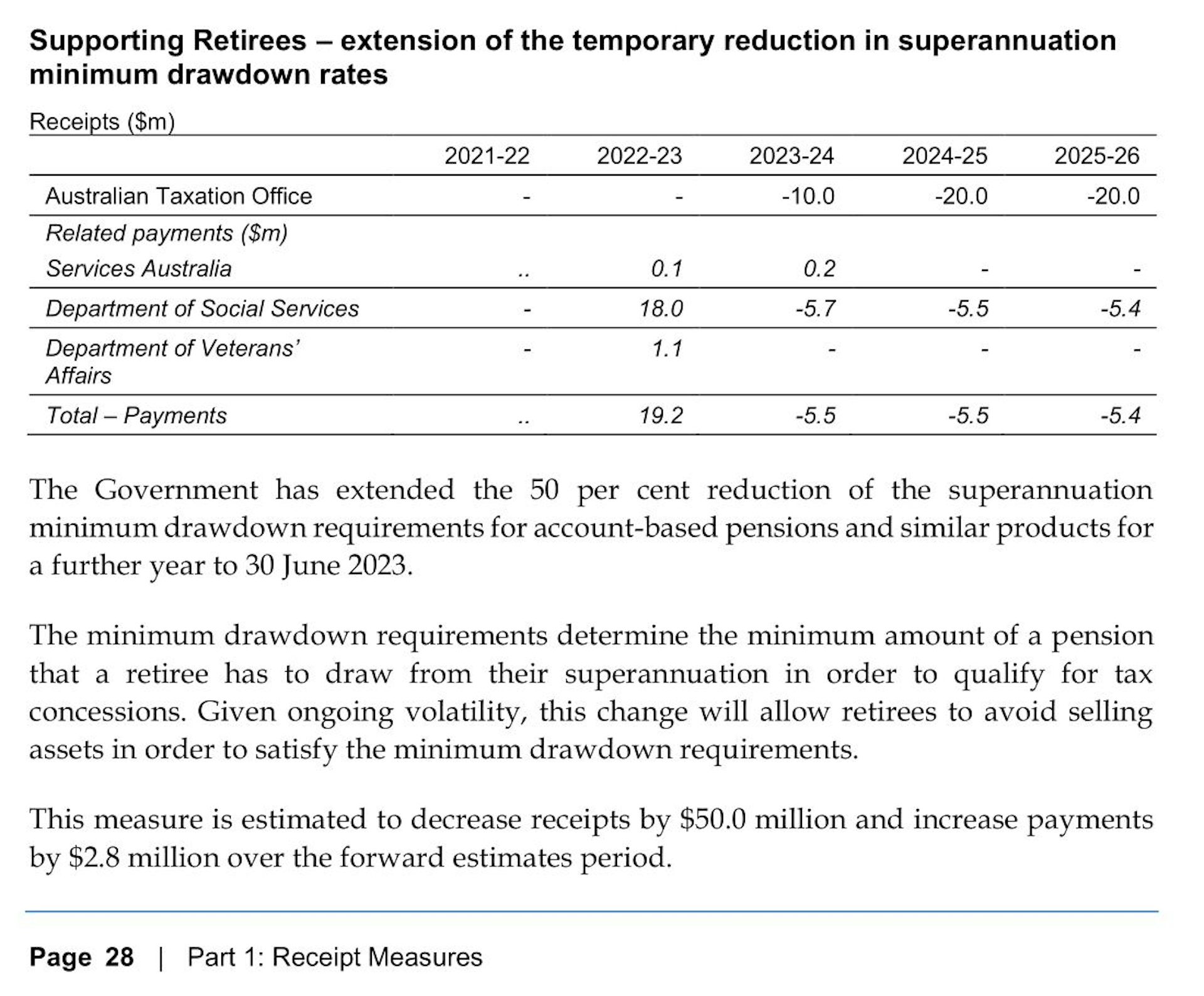
What the measure does is extend a temporary COVID relaxation of the rules requiring retirees to actually withdraw a minimum amount from their super each year, introduced in March 2020 when financial markets were in free-fall.

All retirees are required to withdraw a minimum amount from super each year in order to ensure it isn’t simply used as a vehicle to accumulate tax-free savings that aren’t used.

Retirees have to withdraw a minimum per year

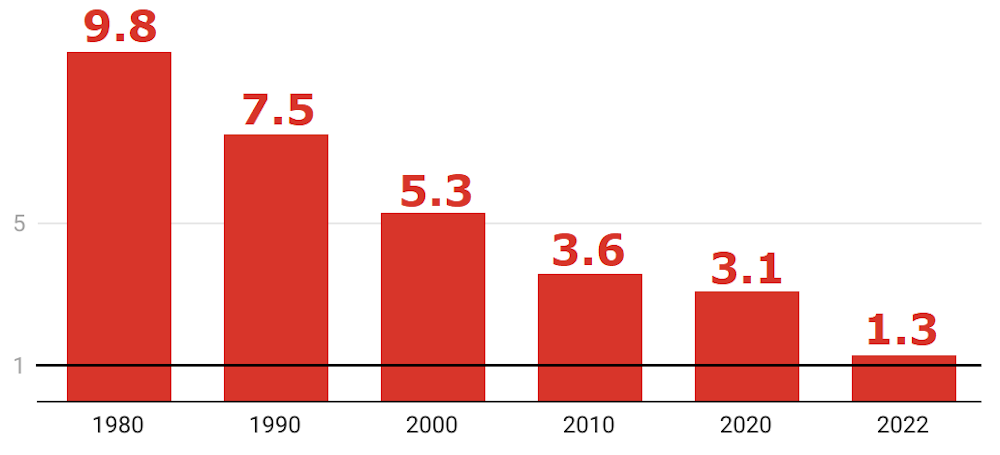
For retirees aged 65-74 the regulated minimum is 5% per year, for those aged 75-79 it is 6% per year and so on, up to retirees aged 95 and over, who are required to withdraw at least 14% per year.

Nothing stops retirees withdrawing more than the regulated minimum, but the review found that in practice the typical withdrawal rate is just above the minimum, because people use it as an “anchor” or guide to what to do.

It identifies the most common misconception about super being that

“the minimum drawdown rate is what the government recommends”

It says another is: “I should only draw down the income earned on my assets, not the capital”. Both set up retirees for a much lower standard of living than they could get.

The review finds that if a middle earner drew down an optimum amount rather than the minimum required, his or her super income would be 20% higher.

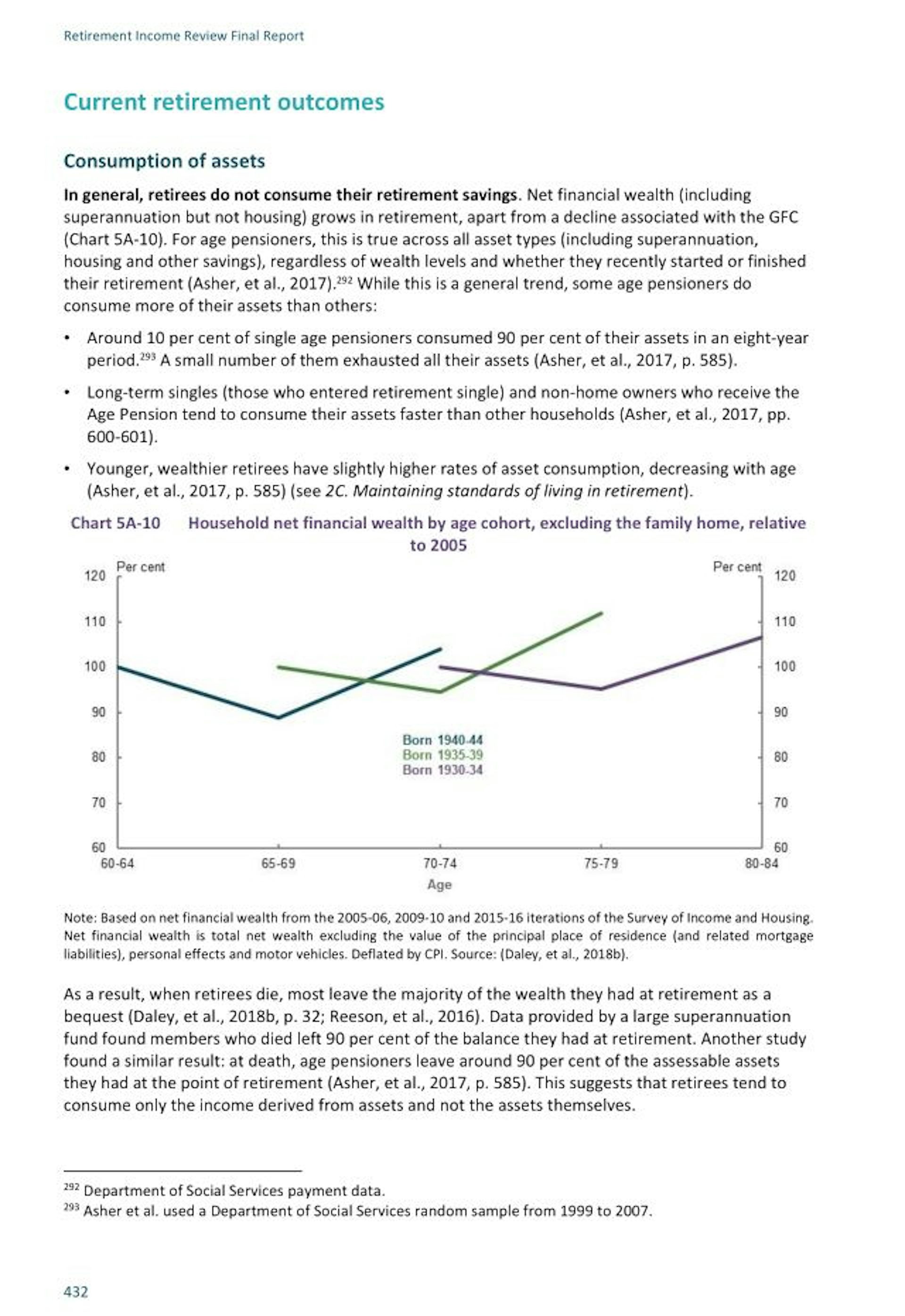
Instead, most retirees “die with the bulk of their wealth intact”. One fund told the review its members who died left 90% of the balance they had at retirement.

Most die with most intact

It’s at odds with the purpose of super, defined by the government as to provide “income in retirement”. In February the government legislated to help make sure this is what funds did. From July they will be required to present to their members with an income strategy, for which bequests “should not be an aim”.

Things changed when the Australian share market collapsed 30% between mid-February and mid-March 2020 as coronavirus took hold.

As a “temporary” measure, Treasurer Josh Frydenberg halved the drawdown requirements, in order to enable retirees to better build up their balances after the storm passed. A similar measure was introduced during the global financial crisis.

The storm passed quickly. Markets began climbing back the day the treasurer made the announcement, and then kept climbing. SuperRatings says in the past year the median balanced super fund has grown 13.4%.


Yet oddly, the government extended the measure in May last year when the market was soaring to new heights, in order to “make life easier for our retirees” and then extended it again on budget night in order to “recognise the valuable contribution self-funded retirees make to the Australian economy”.

It is as if the government has junked the idea that super should actually be used to provide income to the people who accumulate it.

As it happens there is nothing in the drawdown requirements that forces retirees to spend on themselves (and nor could there be). All they do is force retirees to withdraw a minimum amount from the generally tax-free environment that is retiree super, and have it treated like other people’s investments and savings.

Earnings in retiree super untaxed

If retirees aren’t forced to withdraw a minimum, in the words of the retirement income report to the treasurer, large amounts will be held in super “mainly as a tax minimisation strategy, separate to any retirement income goals”.

The only justification offered in budget papers (a weak one) refers to “ongoing volatility” and the need to “allow retirees to avoid selling assets”.

But markets are generally volatile, and it is usually super funds that sell assets, not retirees. It’s as if the measure is directed at self-managed super funds, some of which are rich beyond most of our wildest dreams, certainly far too rich to need to pay out anything but a tiny percentage of their holdings to their members.


Read more:
No longer temporary, the super changes will most help tax dodgers


A freedom of information request by the Australian Financial Review has revealed that 27 such funds hold more than A$100 million each. Its best guess is they are owned by Australia’s wealthiest families.

Of course, most retirees have much lower balances, and are reluctant to withdraw funds for another reason. Perhaps surprisingly, studies examined by the review find that main reason isn’t passing on their inheritance to their children.

Overwhelmingly, retirees are concerned about “outliving their savings”.

Frightened of outliving savings

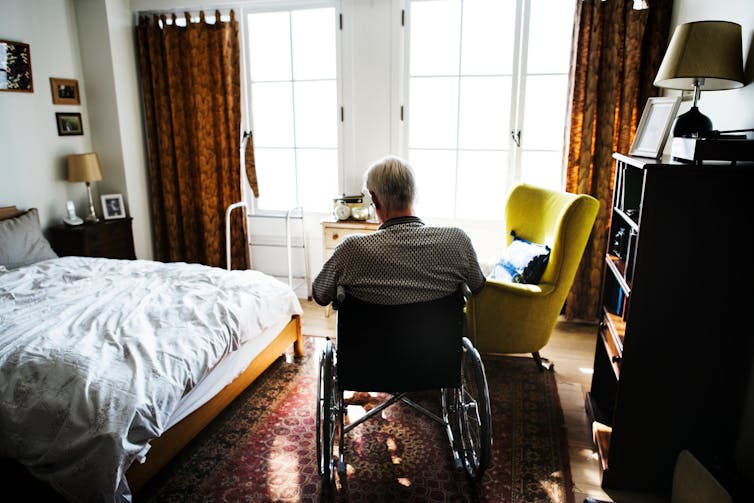
The prospect of inferior aged care or a late health emergency compels most retirees to save far more than they are likely to need, just in case.

Many are unaware of how little end-of-life aged and health care can cost (“especially given the complexity of aged care means-testing arrangements”) and many more want to buy their way out of standard care because of the awful things they have heard, some of it in the aged care royal commission.


Read more:
Labor’s budget reply goes big on aged care, similar on much else


It makes Labor’s budget reply promise of more money for aged care and a nurse on each site 24/7 doubly attractive. It might stop us hanging on to absurd amounts of our super out of fear.

It might allow us to relax and enjoy what could be the best decades of our lives.

The Conversation

Peter Martin does not work for, consult, own shares in or receive funding from any company or organisation that would benefit from this article, and has disclosed no relevant affiliations beyond their academic appointment.

ref. The budget super giveaway that allows the already wealthy to amass even more tax-free – https://theconversation.com/the-budget-super-giveaway-that-allows-the-already-wealthy-to-amass-even-more-tax-free-180582


‘Don’t shove us off like we’re rubbish’: what people with intellectual disability told us about their local community

Source: The Conversation (Au and NZ) – By Phillippa Carnemolla, Associate professor, University of Technology Sydney

Shutterstock

As the federal election approaches, civic engagement is back on people’s minds. But not everyone’s needs are well served in the political sphere – and one of the areas most ripe for improvement is actually at the local government level.

To find out more about their experiences of civic and social participation, we spent 12 months speaking with people intellectual disabilities about how they experience their local communities and the services local government provides.

Our study found there is huge opportunity to incorporate the ideas and opinions of people with intellectual disabilities about their local communities. This would help support greater civic inclusion for all.

Among other things, participants called for for access to better transport options, better maintained public toilets and more pedestrian crossings.

Many told us our focus group was the first time in their lives anyone had asked their opinion about these aspects of their local community.

What we did

Our project team included core members and researchers with intellectual disabilities. We conducted focus groups in six local government areas (a total of 45 people) in a mix of metropolitan and regional areas across New South Wales and Victoria.

To capture the types of improvements to local services and places that people with intellectual disability want to see, we asked participants: what would you change if you were the boss of your local government?

Our findings, published in the journal Sustainability, reveal people with intellectual disabilities are more than capable and willing to contribute to shaping local communities for the better – but are rarely asked about their opinions or experiences.

Our research suggests participation could be improved via several key changes.

1. Ensure accessible information and communication

One person with intellectual disability told us:

if you want us to participate, we need to know what things are happening and when […] and not just the disability events.

This was a common refrain. Many people with intellectual disability want their local government to provide more accessible information, in a range of formats, about what’s happening in the community and most importantly, how to participate.

One person told us:

If I was the boss of my council […] I would text people to let them know that they can call council.

2. Create inclusive employment opportunities

One of the most powerful messages in every focus group we conducted is a call for more employment opportunities. Participants spoke at length about hopes for a job, perhaps even one in local government. One person told us:

We could work at the front desk and be welcoming.

Another said:

I wish I could work but there are not many opportunities.

As one participant put it:

If I was the boss of my local council I would employ people with disability.

A man with intellectual disability waters a garden.
Participants spoke at length about hopes for a job, perhaps even one in local government.
Shutterstock

3, Ensure people feel safe and respected

Unfortunately, we heard many stories of people not feeling safe in their local community.

Participants also told us of many regular exchanges in public where they did not feel welcome or respected. Quotes from the focus groups included:

I wish people were more friendly to people with intellectual disability.

If I was the boss at [my council] I would make sure I listened to people. People don’t listen to me when I have a problem.

Sometimes, when I go to the shops, people just look at me […] I think the council could train people to help people with disability […] and be like ‘OK, are you sure you’re alright with this? We can help you out, if you need more help, just call us back.’ […] Not just shove us off like we are rubbish.

4. Create well-designed built environments

The design and maintenance of accessible public spaces, parks and recreational areas were a regular topic in our discussions.

Participants talked about how we could be improving the experiences of everyone in the community, telling us:

We need more accessible drop-offs right at the library [and pool] […] we have to walk too far and get tired as a group. It caused a problem before because we were always late to the class.

The council should fix our [pedestrian] crossing, they go too fast, someone nearly got hit last week.

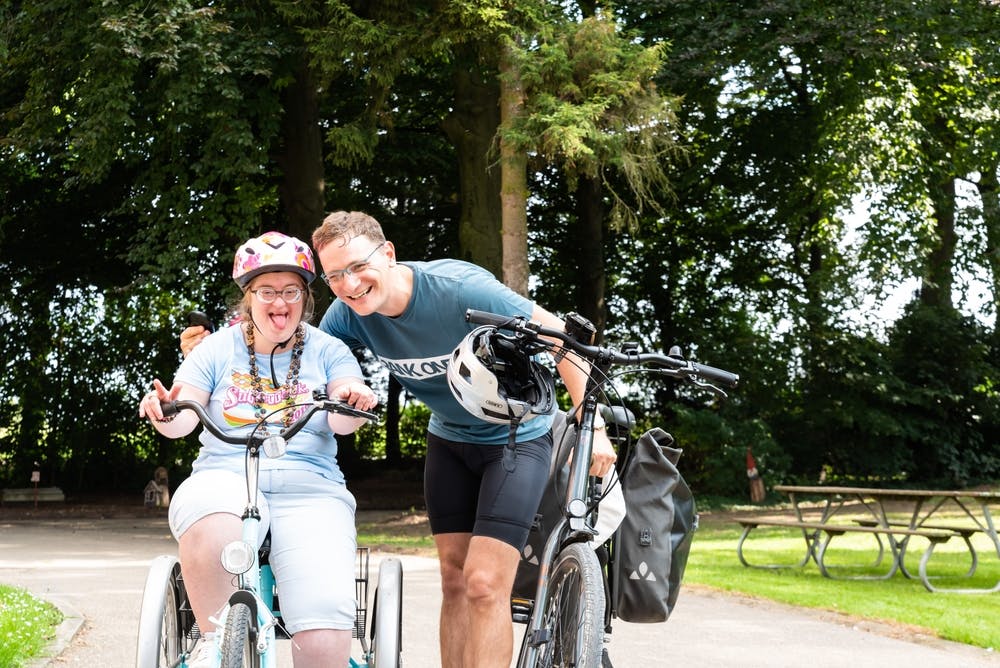
A woman and man with intellectual disability ride bikes along a path.
The design and maintenance of accessible public spaces, parks and recreational areas were a regular topic in our discussions.
Shutterstock

How councils can improve

Local governments and state government departments outline their inclusion plans and outcomes in a Disability Inclusion Action Plan. These plans – based around identified need through local consultations including people with disability, their carers and family – are designed to translate into direct actions by councils to provide more inclusive communities for all.

When we spoke to local government representatives about the findings of our research we found great variation in whether local governments have staff or resources to support inclusion of people with disability. But there is a genuine willingness and desire on their part to do things differently.

Conceptualising what inclusion is, and what it isn’t, is a good start. According to Jack Kelly, a member of our research team, and a person with a disability:

Holding an event once a year for International Day of People with A Disability doesn’t make your council inclusive.

One way to improve the confidence of local governments to engage more often and regularly with diverse local communities, including people with intellectual disabilities, is to provide some practical guidance on inclusive practice. There are myriad resources online to guide such a process.

A group of people with intellectual disability participate in an outdoor activity.
Many people with intellectual disability want their local government to provide more accessible information, in a range of formats, about what’s happening in the community and most importantly, how to participate.
Shutterstock

Looking beyond local government, every civic engagement opportunity, including urban planning processes and voting, is worthy of a review. We must explore ways to make information, communication and processes more inclusive.

Providing information in a range of formats and clearly explaining processes improves opportunities for civic inclusion for everyone, including people with low literacy, culturally and linguistically diverse communities, people with intellectual disabilities and all other communities in between.

But organisations should not rely solely on external resources.

As highlighted by people with intellectual disabilities themselves, inclusive employment represents one of the most important steps forward towards greater social and civic inclusion.

This would not only demonstrate that the contributions of people with disability are valued in their community, but would mean that knowledge and social capital about inclusion can be built from within.

As Justine O’Neill, CEO of Council for Intellectual Disability told us:

Employing people with intellectual disability in roles that support the purpose of the organisation changes attitudes, builds organisational capacity and confidence to be an inclusive employer and results in better informed work.

The Conversation

Phillippa Carnemolla received funding to undertake this research project from the National Disability Insurance Scheme Australia (NDIA) as part of their Information Linkages and Capacity Building Grant Program. Phillippa is also a member of the City of Sydney Inclusion (Disability) Advisory Panel and a Director of the Centre for Universal Design Australia. This story is part of The Conversation’s Breaking the Cycle series, which is about escaping cycles of disadvantage. It is supported by a philanthropic grant from the Paul Ramsay Foundation.

ref. ‘Don’t shove us off like we’re rubbish’: what people with intellectual disability told us about their local community – https://theconversation.com/dont-shove-us-off-like-were-rubbish-what-people-with-intellectual-disability-told-us-about-their-local-community-179479

How r/place – a massive and chaotic collaborative art project on Reddit – showcased the best and worst of online spaces

Source: The Conversation (Au and NZ) – By Andrew Childs, Lecturer, Griffith University

Screenshot, Author provided

Many would be familiar with Reddit as one of the largest social networking sites, with a large group of forums (“subreddits”) catering to almost any interest.

Since the beginning of April, Reddit has played host to a massive collaborative art project called r/place that simultaneously shows us some of the best and worst attributes of cybercultures.

Originally launched in 2017, r/place ran for 72 hours. The lifespan of the new r/place was also short – ultimately lasting for just five days. Beginning initially as a blank canvas, r/place allows users to place one coloured pixel every five minutes (or 20 minutes for unverified accounts) as they attempt to build a collective art piece.

Traversing through r/place takes you for a journey through time, memes and cultures.

At any one moment you might be looking at a Nine Inch Nails logo, the flags of various countries, a QR code linking you to a YouTube video titled The Most Logical Arguments AGAINST Veganism (In 10 Minutes), and a homage to Zyzz – a popular bodybuilding figure who passed away in 2011.

Some artworks on r/place don’t seem to represent anything at all. The sole mission of The Blue Corner is (you guessed it) to have a blue corner depicted on the final art piece.

The artwork constantly changes over its short lifetime. But even if the drawings of some communities may not go the distance, the time lapse videos depicting the ongoing mutation of the canvas has become a key part of this art piece, ensuring all contributions play a vital part in the lifecycle of r/place.

Collaboration – and opposition

r/place shows us the collaborative nature of humans in online spaces. After its emergence in 2017 it was hailed as “the internet’s best experiment yet” and praised for capturing “the internet, in all its wonderful glory”.

This collaborative online art project allows people to express their individuality as well as collective identities formed through interactions with online spaces.

This year’s iteration of r/place, in contrast to the previous version, demonstrates the interconnectivity of communities in digital spaces. No longer is r/place solely reserved for Reddit users. Now, there is clear power in drawing on communities distributed across Twitch, Discord and Twitter.

This influx of communities from all over the internet has not been well-received by all.


Read more:
Our experiments taught us why people troll


There is a belief Twitch streamers are ruining the work of smaller communities and are attempting to sabotage the project.

Instead of being a democratic representation of online communities and their art, the argument goes, Twitch streamers are encouraging their fans, numbered in the hundreds of thousands, to capture hotly contested territory.

Text reads: Dominating r/place watch as nerds lose their marbles over pixels.
Twitch’s xQc has up to 200,000 viewers on his streams where he is encouraging a take-over of r/place.
Screenshot

Factions – such as those formed between Spanish streamers and BTS fans – have become the primary way to ensure power and influence over the art project.

Smaller communities are driven out at the expense of larger influencers with more bargaining power in this pixel warfare.

It is not just individuals taking part in this art project. Many believe “bots” are running rampant, performing automated tasks in a way that is antithetical to the idea of this artwork as a representation of human achievement as opposed to technical prowess.

These examples are just a fraction of the chaos over the internet in the last few days: 4chan operated coordinated attacks on the Trans flag and LGBTQ+ panels, and streamers are receiving an influx of death threats.

The best and worst of us

At its best, r/place is a powerful illustration of strangers coming together about their passions online and the collaborative nature of the internet.

At its worst, it represents everything we have come to dislike about the internet: the exclusion of smaller voices at the expense of influencer cultures, factions between communities, and the toxicity of some cybercultures.

A white screen
The end of r/place.
Screenshot

Whatever the case, this project has been great for boosting Reddit’s publicity as the company goes public.

In its final moments earlier today, users could only place white tiles and watch the spectacle of a once vibrantly coloured collaborative art piece that caused so much chaos among online communities simply transform back into a blank canvas.


Read more:
Computing gives an artist new tools to be creative


The Conversation

Andrew Childs does not work for, consult, own shares in or receive funding from any company or organisation that would benefit from this article, and has disclosed no relevant affiliations beyond their academic appointment.

ref. How r/place – a massive and chaotic collaborative art project on Reddit – showcased the best and worst of online spaces – https://theconversation.com/how-r-place-a-massive-and-chaotic-collaborative-art-project-on-reddit-showcased-the-best-and-worst-of-online-spaces-180662

Dolphins, turtles and birds don’t have to die in fishing gear – skilled fishers can avoid it

Source: The Conversation (Au and NZ) – By Leslie Roberson, Postdoctoral research fellow, The University of Queensland

Getty

In 1987, a biologist went undercover on a commercial tuna fishing vessel. One video he took made headlines around the world: hundreds of dolphins encircled in purse seine nets, drowning in distress.

Before that, few people had given much thought to bycatch – the fish and marine animals caught when trying to catch something else. It was out of sight, out of mind. But now, everyone could see the shocking footage.

In the decades since, some of the most confronting bycatch issues have been solved. Even so, bycatch remains one of the most difficult obstacles to making the world’s seafood more sustainable.

So if better nets and better rules aren’t the full answer, what is? Our new research suggests part of it is the human factor. The more skilled fishers are, the more likely they are to avoid accidental bycatch.

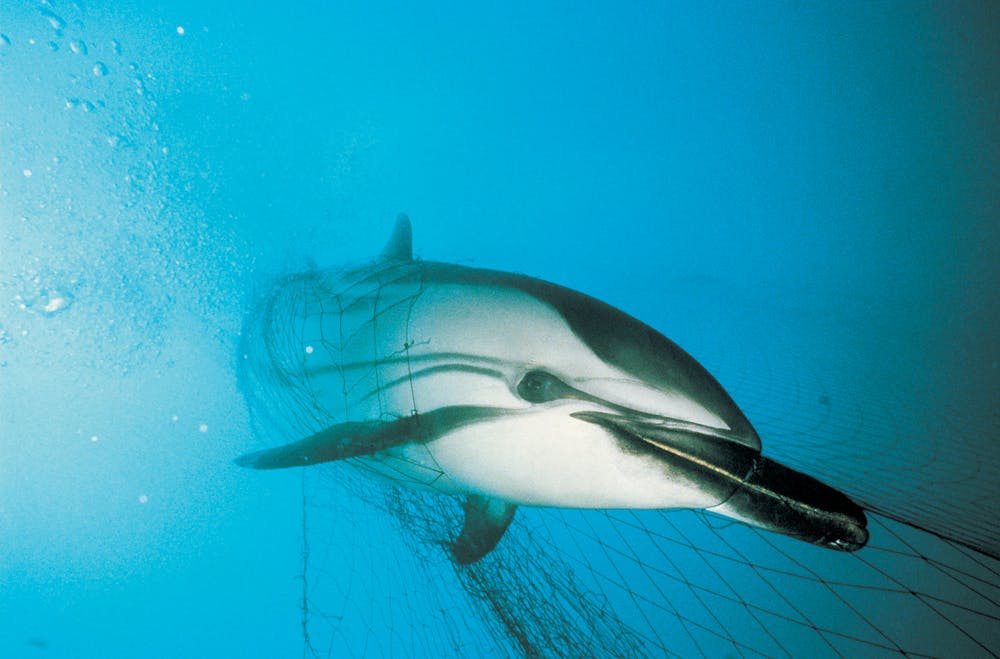
Dolphin stuck in net
Videos of dolphins like this one stuck in nets drew world attention to bycatch.
Getty Images

We need more than technology and top-down solutions

So far, the solutions for bycatch have tended to be technical or regulatory. Think of modified fishing gear so non-target animals can escape, or closing high bycatch areas to fishing during certain seasons or when bycatch exceeds a threshold.

While they can work, these approaches are often expensive, especially for small or lower-value fisheries. They also require increased monitoring and enforcement to ensure fishing fleets follow the rules.

Top-down regulatory approaches are often met with stubborn resistance from fishers. Commercial fishing boat operators may feel they’re being targeted by experts who don’t understand the challenges they face.

Technology and regulation have so far failed to tackle the most challenging bycatch problems.

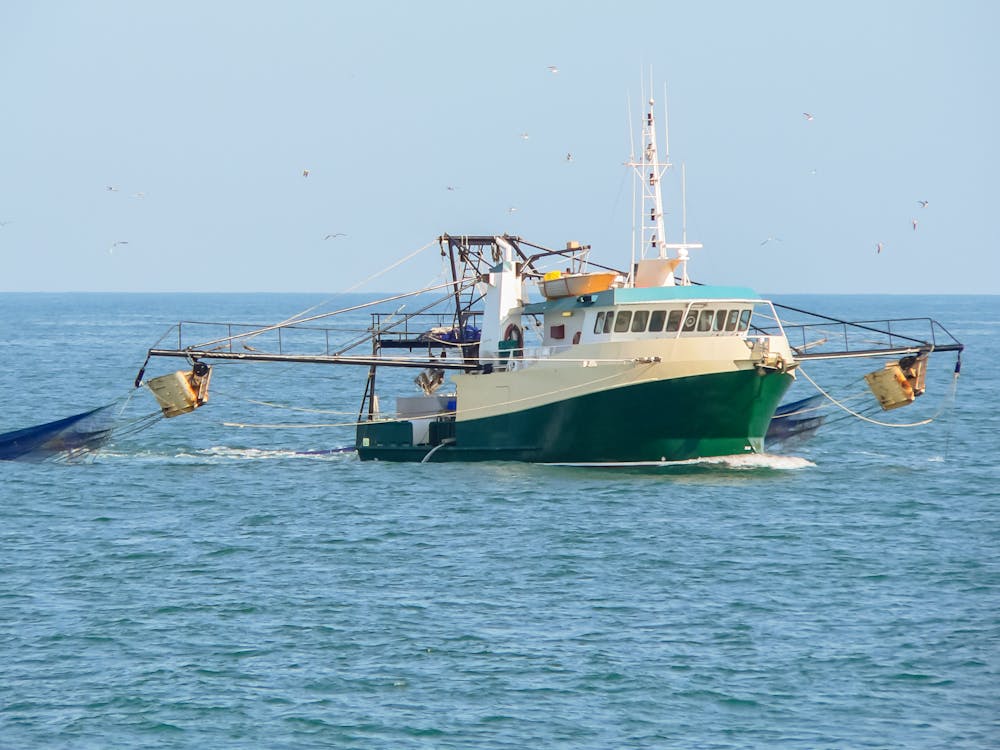
It’s proven very difficult, for instance, for trawlers to stop catching endangered sharks, rays and sea snakes at unsustainable rates – even though the same trawlers now sport clever turtle excluder devices which have slashed sea turtle deaths in northern Australia’s prawn fishery.

prawn trawler Australia
Australia’s prawn trawlers have adopted turtle excluding devices.
Shutterstock

Or consider gillnets, which in Australia continue to catch and kill endangered sawfish, dugongs, and sharks. When fishers change techniques to avoid catching one type of bycatch, they often find bycatch of other species increases.


Read more:
Buy Australian oysters and farmed barramundi: 5 tips to make your feast of summer seafood sustainable


Every now and again, bycatch will resurface in the public mind. You might see grotesque images of lovable sea animals mangled in nets spreading through social media channels as part of a new bycatch campaign.

Progress does exist – but it’s slow, expensive and risks pushback. The prevailing industry attitude is that bycatch should be reduced where possible, but some is inevitable.

How boosting fishers’ skills could cut bycatch further

Many fisheries managers intuitively understand the importance of the human factor in managing environmental issues, such as bycatch. They know the vessels and captains in their fleet. And they know most compliance issues can usually be traced back to a small number of problem vessels.

We put these assumptions to the test in our new research into Australian fisheries, and found it was true.

We found a clear pattern across different locations and types of fishing gear, where specific fishers were able to maintain high target species catch with lower rates of bycatch. In short, skilled fishers can avoid catching dolphins, seabirds, sharks, and other bycatch species.

Bycatch shark
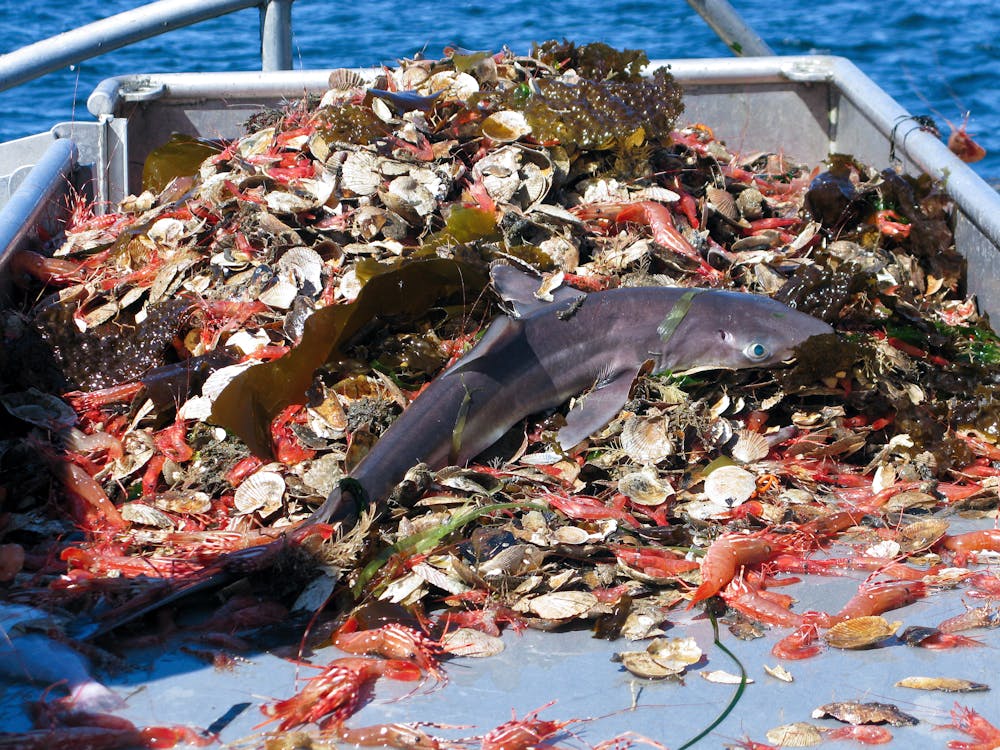
Sharks can still be caught as bycatch.
Getty Images

It was surprisingly difficult to test the managers’ assumptions with data. So how did we show this?

It’s well known that fishing skill varies. As a result, some fishers and boats are consistently more profitable. If fishers have variable skill in catching their target species, it follows they would have variable skill at avoiding bycatch species.

The pattern of varying skill had never been tested against bycatch rates. In part, that’s because we need a lot of data to isolate individual behaviour and skill from many other factors affecting bycatch. For instance, fishers often link high bycatch numbers to environmental factors, such as specific fishing grounds or breeding seasons.


Read more:
There aren’t plenty of fish in the sea, so let’s eat all that we catch


While these factors do affect bycatch levels, we were able to draw out the effect of individual vessels by using robust data sets collected by scientific observers in five major commercial fishing sectors in Australia.

We found a clear signal in the data. Overall, individual vessels drove differences in bycatch rates more than fishing location, season, or year. In each of the five fisheries, we found high performance operators able to consistently achieve a high catch of target species and low bycatch, as well as low performers, who did the opposite. This holds even across fishing gear known for high bycatch globally, such as bottom trawls and gillnets.

We don’t know exactly what fishers are doing to avoid bycatch. Fishing “skill” is likely a mix of experience and knowledge of the environment, ability to effectively manage a crew, operate and maintain gear, and quickly respond to changing conditions at sea. These nuanced behaviours are not recorded in logbooks and are difficult to describe, which means we’ll have to work directly with fishers to really untangle the vessel effect.

Could we upskill our fishers?

Now we know the skill of our fishers matters so much, we have an opportunity to drive bycatch even lower than thought possible. We can challenge the belief bycatch is an unavoidable part of fishing.

Harnessing the skills and knowledge of high-performance fishers can motivate behaviour change in ways more likely to succeed than top-down regulations or new technologies.

We can look at incentives to encourage skilled and experienced fishers to spread their knowledge and abilities. This would raise the bar for low-performing fishers, and help the industry avoid punishments from the actions of a few highly damaging boats.

If we work closely with high-performance fishers, we could see even more innovation in cutting bycatch, as well as other longstanding issues such as waste management and abandoned “ghost nets” which can keep killing for years.

The Conversation

Chris Wilcox receives funding from the Australian Department of Foreign Affairs and Trade, the Great Barrier Reef Marine Park Authority, and philanthropic funders.

Leslie Roberson does not work for, consult, own shares in or receive funding from any company or organisation that would benefit from this article, and has disclosed no relevant affiliations beyond their academic appointment.

ref. Dolphins, turtles and birds don’t have to die in fishing gear – skilled fishers can avoid it – https://theconversation.com/dolphins-turtles-and-birds-dont-have-to-die-in-fishing-gear-skilled-fishers-can-avoid-it-180548

Racism at work: a call to anti-racist action for Australian organisations

Source: The Conversation (Au and NZ) – By Peter Anderson, Executive Director and Professor of Education, Queensland University of Technology

To end racism we must directly engage with workplaces to discuss racism in a way that can deliver solutions. GettyImages

Content warning: This article contains mentions of racial discrimination against First Nations people.


On March 21 2022 the world commemorated the International Day for the Elimination of Racial Discrimination. In Australia, we celebrated Harmony Day instead.

This is one of the greatest indicators of our continuing reluctance to talk about racism, and the silencing of meaningful conversations about it. Instead, we prefer race-neutral language such as “harmony”, “cultural diversity” and “cohesion”, and speak in ways that are celebratory and tokenistic.

Not surprisingly, this silencing of discussions of racism is reflected in our workplaces.

Diversity Council Australia’s (DCA) report launched in March 2022. The report disrupts the silence around racism in Australian workplaces by bringing attention to its prevalence.

The report is largely informed by DCA’s Racism at Work Survey. The survey shows nearly nine in ten employee respondents saw racism as a problem in their workplace; 93% agreed that organisations need to take action to address racism; and only 3% thought organisations should stay out of it.

Importantly, only 27% said their organisations are proactive in preventing workplace racism.

Clearly it’s time to put racism on the agenda – and according to DCA, this starts with using the right language. To combat racism, we must directly engage with workplaces to discuss racism in a way that can deliver solutions.

The report centres the voices of people who have experienced racism, and provides an Australian-specific framework for understanding and addressing it. It also presents the first ever organisationally focused anti-racism tool specifically developed for Australian workplaces.

Challenging racism at work: DCA’s blueprint

DCA’s evidence-based organisational tool for anti-racism unpacks what is happening to embed or “lock” racism in place in Australian organisations (it calls these factors “organisational locks”), and what organisations can do to unlock and help end racism at work (“organisational keys”). However, DCA recognises that systemic racism may also need government intervention.

The organisational tool identifies and packs the various locks and keys that address both interpersonal and systemic racism in workplaces.

Six organisational locks that keep racism in place:

  1. lack of racial literacy
  2. ignoring of lived experience
  3. unknown current state of racism
  4. racially biased recruitment
  5. racially biased recognition and reward
  6. failure to call out racism.

Six organisational “keys” provide for addressing racism:

  1. building racial literacy
  2. centring lived experience
  3. auditing for racial equity
  4. removing racial bias in recruitment
  5. recognition and reward
  6. creating capacity within the workplace for calling out racism.

DCA’s report is a call to action for Australian organisations to start meaningful conversations about racism at work. It is also a call to move away from white-led perceptions of racism that can promote denial, deflections and minimisation of racism. For example aruguments that racism in Australia is not as bad as it was in the are often made to imply that it no longer has significant consequences for those who experience it- by minimising the role and deleterious effects of racism.

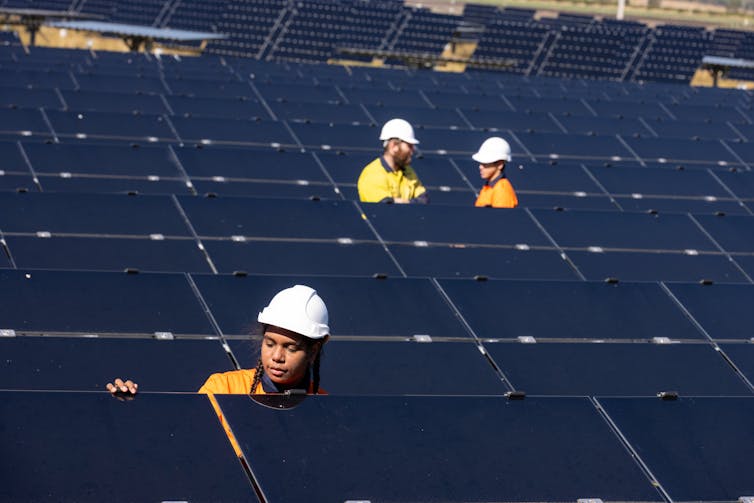
Three people are working with solar panels.
The DCA report shows nearly 9 in 10 employees who responded to the Racism at Work Survey saw racism as a problem in their workplaces.
GettyImages


Read more:
With COVID restrictions easing, should Black professionals have to return to hostile workplaces?


Racial literacy: a key to understanding racism at work

Dominant white-led perceptions of racism in Australia often claim racism is a hard concept to define and grasp. DCA’s research found this is a whitewashed perception of racism, sustained by racial illiteracy.

Racial illiteracy presents as misunderstanding racism beyond its overt forms. This makes it hard to recognise the more insidious, systemic forms embedded in seemingly race-neutral policies, practices and procedures such as preferring to hire candidates with Anglo-sounding names. Blindness to the systemic nature of racism is one of the biggest challenges to addressing and ending racism at work.

Drawing on legal scholar Guinier’s definition of racial literacy, the report defines racial literacy as “the ability to understand what racism is and how it operates in society so we can effectively address it”.

Racial illiteracy can also support the denial of white privilege and feed many deflections around racism. It is common to hear comments such as “oh, it is just a few bad (racist) apples”, as if racism is an exception rather than the norm. Such actions further the silencing of discussions of racism in workplaces.

The key then is increasing racial literacy, especially among organisational leaders who are often people with no experience of racism, as the research by the Australian Human Rights Commission tells us.

DCA’s report gives some practical guidelines for Australian organisations on how to achieve this. For example, building racial literacy must start with critical reflections that involve learning about and exploring one’s own racial identity, blind spots and biases. Building racial literacy must also involve a commitment to anti-racism, such as actively standing up to, and challenging racism.

The key to addressing racism? Centre the voices of lived experience

The paradox of racism at work is that the voices of people who have actually experienced racism are often dismissed and marginalised in discussions of racism. The voices of racially privileged people with lower levels of racial literacy are elevated when, for example, they develop workplace policies and procedures that don’t address racial inequalities. Allyship is appreciated, but it should not take away from the voice and space of those who have experienced racism.

DCA recommends centring the voices of people with lived experiences, especially in leadership because they have an “insider” perspective on racism. This perspective brings valuable and critical insight.

If they are happy to take on this role, leaders with lived experiences of racism can provide advice on strategies and policies for elimination, healing, wellness, racial equity and inclusion. In addition, they can be peer supporters for other people experiencing racism.

DCA’s report shows that racism is alive and well in Australian workplaces. Blaming racially marginalised people for “creating” racism or silencing them is not going to make it go away. Anti-racism is everyone’s business.


Read more:
Racism is a public health crisis – but Black death tolls aren’t the answer


This article was coauthored by Virginia Mapedzahama, Member Education Director, Diversity Council Australia; Jane O’Leary, Research Director, Diversity Council Australia; and Annika Kaabel, Research Manager, Diversity Council Australia.

The Conversation

Peter Anderson receives funding from Australian Research Council. He is also a member of the Diversity Council of Australia’s Indigenous Advisory Committee, Research Committee and co-author of Racism at work report

ref. Racism at work: a call to anti-racist action for Australian organisations – https://theconversation.com/racism-at-work-a-call-to-anti-racist-action-for-australian-organisations-179758

Simulating Earth’s changing climate: why some models exaggerate future warming

Source: The Conversation (Au and NZ) – By Olaf Morgenstern, Principal Scientist — Atmosphere and Climate, National Institute of Water and Atmospheric Research

Shutterstock/Dima Zel

The latest report by the Intergovernmental Panel on Climate Change (IPCC), released overnight, shows a viable path to cutting global emissions by half by the end of this decade.

It follows earlier reports in the IPCC’s Sixth Assessment round, which reiterate that climate change is unequivocal and ubiquitous, humans are to blame and warming will surpass the Paris target to keep warming below 2℃ unless we make deep cuts to emissions.


Read more:
IPCC says the tools to stop catastrophic climate change are in our hands. Here’s how to use them


For its projections of future warming, the IPCC relies heavily on climate models – computer simulations that help us understand how the climate has changed in the past and how it is likely to change in the future under various emissions scenarios.

These models are continuously updated but some new-generation models are “running hot”, showing a notably higher climate sensitivity than previous ones.

According to the IPCC, our planet’s actual climate sensitivity is unlikely to be as large as these models suggest, which raises the question of why we would use them if their climate sensitivities are likely unrealistic.

Estimating climate sensitivity

Climate sensitivity describes how much global temperatures will rise in response to human-caused greenhouse gas emissions. The best estimate is 3℃ of warming for a doubling of pre-industrial carbon dioxide levels, with a likely range of 2.5 to 4℃, but ongoing research aims to narrow this range.

How scientists estimate climate sensitivity.

Several new models, contributed by renowned modelling centres, display climate sensitivities outside this likely range and larger than any models used for the IPCC’s last assessment in 2013. As a consequence, they simulate anomalously large and fast warming during the 21st century.

Critics see climate models generally as flawed attempts at capturing the complexities of the climate system, not good enough as scientific evidence to guide climate policies.

Yes, all climate models have flaws because they are models, not reality. But they are spectacularly successful at capturing past climate change, including the steady march of global warming and the intensification and increasing frequency of floods and droughts that now regularly make headlines. Nevertheless the large sensitivities of some models are a cause of concern.


Read more:
The climate won’t warm as much as we feared – but it will warm more than we hoped


The story starts in the early 2000s, when various satellite measurements were combined to better describe the Earth’s radiation budget – the balance between incoming solar radiation and reflected outgoing visible light and invisible infrared radiation.

A true-colour satellite image of the Earth.
Clouds are difficult to represent in climate models.
Planet Observer/Universal Images Group via Getty Images, CC BY-ND

Based on this, the earlier IPCC report concluded clouds over the Southern Ocean were poorly represented in models, with insufficient sunlight reflected back into space and too much reaching the surface where it warmed the ocean. Later research found many models simulated ice clouds when in fact they should have been liquid clouds.

Simulating water and clouds

This may sound like an elementary problem, but it isn’t. If water comes in very small droplets – as it does in clouds – it can remain liquid down to about -35℃. We call such droplets supercooled.

If the water contains impurities, its freezing temperature can be anywhere between 0℃ and -35℃. Simulating clouds under all conditions is therefore far from trivial.


Read more:
Why clouds are the missing piece in the climate change puzzle


Modelling groups generally succeeded in introducing more supercooled liquid clouds into their latest models and at least partly solved this Southern Ocean cloud problem. But this change weakened an important climate feedback: as the climate warms, liquid clouds become more prevalent at the expense of ice clouds.

Liquid clouds are brighter and more reflective than ice clouds, and under progressive global warming more and more incoming sunlight is reflected back into space, counteracting the warming effect. However by replacing ice with supercooled liquid clouds, newer models weaken this cooling effect. This is the leading explanation for the larger climate sensitivity of many new-generation climate models.

The IPCC’s response

The latest IPCC report didn’t raise the estimate of the planet’s actual climate sensitivity. It cites observational evidence to make the case, including “historical” warming which is very well understood for the past several decades.

Models with a middle-of-the-road climate sensitivity near 3℃ often better reproduce the temperature variations of this historical period than those with a large climate sensitivity.

Further evidence comes from simulations of the Earth’ geological past (thousands to millions of years ago) which saw both much colder and much warmer climates than at present. Geological evidence shows high-sensitivity models exaggerate the temperature swings of this distant past. By the same token, a few very low-sensitivity models are also unlikely to be correct.

The latest report concludes climate sensitivity is now better understood, but it doesn’t go as far as dismissing high-sensitivity models altogether. Instead, it says such models simulate “high risk, low likelihood” futures that cannot be ruled out.

Refining climate models

What does the future hold for climate models? Climate sensitivity is the result of a model’s “tuning” whereby parameters are varied systematically until the model produces an acceptable representation of the well observed climate of the past few decades.

Clearly this process requires refinement. Low, medium, and high-sensitivity models have all passed this test, yet these models project quite different magnitudes of warming for this century.


Read more:
How machine learning is helping us fine-tune climate models to reach unprecedented detail


There is scope for increasing cooperation between institutions, scientific disciplines and countries to rise to this challenge. The latest IPCC report did an excellent job at dealing with this, but clearly better constraining the climate sensitivity in models would further raise confidence in climate projections.

The stakes are high. Climate projections inform expensive and disruptive adaptation and mitigation decisions around the world, including which coastal properties should be abandoned due to rising seas, how quickly we need to wean ourselves off fossil fuels, or how to make agriculture climate resilient and climate neutral while still feeding a growing human population.

Seen against this backdrop, a seemingly innocuous, technical problem in climate modelling takes on outsized importance.

The Conversation

Olaf Morgenstern receives funding from the NZ Ministry for Business, Innovation, and Employment under the Deep South National Science Challenge and under the Strategic Science Investment Fund.

ref. Simulating Earth’s changing climate: why some models exaggerate future warming – https://theconversation.com/simulating-earths-changing-climate-why-some-models-exaggerate-future-warming-178160

How do planets form? A ‘baby Jupiter’ hundreds of light-years away offers new clues

Source: The Conversation (Au and NZ) – By Peter Tuthill, Astrophysicist, University of Sydney

Artist’s impression of a giant planet forming. NASA, ESA, STScI, Joseph Olmsted (STScI)

How do planets form? For many years scientists thought they understood this process by studying the one example we had access to: our own Solar System.

However, the discovery of planets around distant stars in the 1990s made it clear that the picture was much more complicated than we knew.

In new research, we have spotted a hot, Jupiter-like gas giant in the process of forming around a star about 500 light-years from Earth.

This rare babysnap of a planet actually in the process of forming, drawing down matter from a vast disk of dust and gas swirling around its also-infant sun, has opened a window on mysteries that have puzzled astronomers for years.

A scientific triumph?

Scientific inquiry into the origins of Earth and the other planets of our Solar System began in the mid 1700s.

Building on the work of Swedish thinker Emanuel Swedenborg, the famous German philosopher Immanuel Kant proposed that the Sun and its little planetary family all grew from a large rotating primordial cloud; Kant labelled this an “Urnebel”, German for nebula.

This idea was later refined by the French polymath Pierre Laplace, and it has since had many more additions and revisions, but modern scientists think it was basically on the right track. The modern descendent of Kant’s hypothesis, now filled out with detailed physics, can explain most of the observed features of our solar system.

‘Primordial clouds’ of dust and gas that form planets, in the Orion Nebula.
C.R. O’Dell/Rice University; NASA

We can now run computer simulations with all the right settings, and a beautiful digital replica of our solar system will emerge. It will have the right kinds of planets in the right orbits ticking around in clockwork order, just like the real thing.

This model is a triumphant synthesis of threads from geology, chemistry, physics and astronomy, and it seemed to have the bases covered. Until, that is, astronomers confronted it with planets from outside our solar system.

Beyond the Solar System

When the first systems of planets orbiting distant stars were discovered in the mid 1990s, there was immediate controversy and consternation. The new planets didn’t fit the model at all: the rest of the cosmos, it turned out, didn’t care so much what happened here around our little sun.

Since then, there has been a dawning realisation that there may be different pathways to form a planetary system. Among the thousands of planets orbiting other stars that now populate our catalogues, our Sun’s family of planets is even beginning to look a bit unusual.


Read more:
Exoplanets: how the search for life became sexy


Despite this, one of the most basic physical components of the planet-building machinery we believe is responsible for forming giant gassy planets like Jupiter and Saturn has stood the test of time: the idea of “core accretion”.

Core accretion starts with the gases and microscopic dust grains thought to comprise Kant’s typical primordial cloud (which is shaped like a flattened spinning disk with the infant star at the center). Dust grains clump together into successively bigger grains, then pebbles, rocks and on up in a cascade to baby planets or “planetesimals”.

When such a clump gets big enough, it reaches a tipping point. Gravitational attraction now helps the embryonic planet rapidly draw in gas, dust and other clumps, clearing its orbital path and carving a circular gap in the disk.

It is one of the signature triumphs for modern astronomy that exactly the kinds of “disk gaps” predicted by theory are now seen and studied out in the cosmos.

A big crunch

However, there are some things core accretion can’t explain. Massive planets have been spotted orbiting far from their host stars, out in the cold distant reaches.

According to the core accretion theory, such planets should not exist. They are too far out, where orbits move too slowly to run the business of planet-building.


Read more:
Exo-Earths and the search for life elsewhere: a brief history


A new “gravitational collapse” model was formulated to explain these unexpected massive distant planets. The basic idea is that if the primordial disk itself has enough mass, the whole thing can become unstable and collapse to form planets quickly in a big crunch.

This new picture seemed like it could explain the outlier planets, but since all known examples were very old (usually billions of years) this theory has remained just that – a theory. Until now.

A planet is born

Last year, we and our colleagues spotted a massive planet, still in the process of formation, around a star some 500 light-years from Earth.

This star, named AB Aurigae, has become famous in astronomy circles for the beautiful, intricate, spiral disk that surrounds it.

The clumps and waves seen in this disk (and in others like it) are consistent with what one might see if gravitational collapse were occurring. But until now, evidence of a forming planet was missing.

The disk around AB Aurigae. The forming planet is the bright blob at the bottom.
Currie et al. / Nature Astronomy, Author provided

This newly discovered planet – dubbed AB Aurigae b – is embedded within a thick, swirling halo of dust and gas, amid the tell-tale spirals and waves signifying gravitational collapse. The planet is around 93 times as far from its star as Earth is from the Sun, well outside the region in which the traditional core-accretion theory could explain its formation.

This discovery thus provides strong evidence for the alternative theory of gravitational collapse.

The discovery was made using observations from the Subaru Telescope at Mauna Kea, Hawaiʻi, as well as from the Hubble Space Telescope.

Stoked by energy from the violent, rapid formation process, the planet is hot enough to glow (around 2000 ℃). It is this glow that gives away the presence of the planet. At the same time, the swirling gas and dust around the forming planet is seen illuminated by the blueish light of AB Aurigae’s central star.

Bigger and better telescopes

This new discovery provides a critical piece of the planet formation puzzle, but the case is by no means closed.

As our telescopes get bigger and our observational methods get more advanced, we expect to see many more forming planets caught at all stages of their development, as well as fully-formed mature planets like Earth.

And eventually, we can hope to answer the big questions: how did such a weird and diverse range of planetary systems form across the galaxy, what are the conditions like on these new worlds, and how does our own little Solar System fit in among them?

The Conversation

Peter Tuthill receives funding from the Australian Research Council

Barnaby Norris receives funding from the Australian Research Council.

ref. How do planets form? A ‘baby Jupiter’ hundreds of light-years away offers new clues – https://theconversation.com/how-do-planets-form-a-baby-jupiter-hundreds-of-light-years-away-offers-new-clues-180495

Preselection and parachuting candidates: 3 reasons parties override their local branch members, despite the costs

Source: The Conversation (Au and NZ) – By Sukhmani Khorana, Senior Research Fellow, Western Sydney University

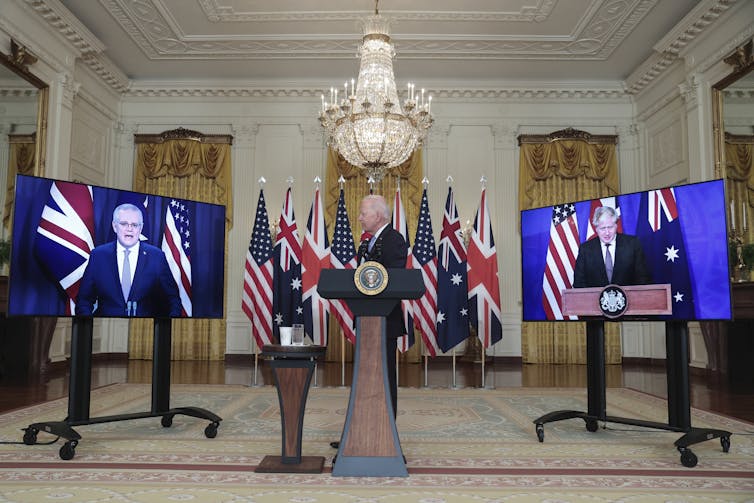
Allegations emerged over the weekend that Prime Minister Scott Morrison used a racist slur in a preselection battle in 2007.

Morrison strongly denies the allegations, which were detailed in two statutory declarations and have been backed by Michael Towke, who was his rival for the seat of Cook at the time.

The issue has brought into focus preselection processes and minority representation in Australian politics.

On this front, and for the second time in under a year, the Labor party has parachuted a “celebrity” Anglo-Celtic politician into a culturally diverse seat in Western Sydney.

Labor is overriding local party members to go with “captain’s pick” Andrew Charlton in Parramatta. An economist and former staffer to Kevin Rudd, Charlton will replace retiring MP Julie Owens in what is considered a marginal seat. This is despite three local South Asian-Australian ALP members already competing for preselection before they decided to withdraw following Albanese’s announcement.

It follows the preselection of Senator Kristina Keneally in Fowler last year (one of the most diverse seats in the country) over local lawyer Tu Le, the daughter of Vietnamese refugees.

There is also an ongoing dispute in the NSW Liberal Party, with many members interested in forcing senior party figures to accept open ballots by local members for preselection over picking their own candidates.

Why are major political parties repeatedly willing to override the mandates of their local branch members? And what needs to change to increase diversity?

Ethnic minorities in #auspol

According to a 2018 report from the Australian Human Rights Commission, only 4.1% of MPs in Australia’s last federal parliament hailed from a non-European background.

The percentage of those with Indigenous ancestry was 1.5%.

This is despite 21% of the total Australian population having a non-European background and 3% identifying as Aboriginal or Torres Strait Islander in the 2016 census.

While there needs to be more research, the reasons behind this include:

  1. outdated preselection processes at local levels

  2. a lack of targeted efforts by major parties beyond tokenism

  3. and broader public perceptions around seeing minority candidates as leaders.

How does preselection work?

Preselection is the process by which a registered political party chooses who will be their endorsed election candidate in any given federal or state seat.

In Australia, preselection processes vary between states and parties.

Often, local party members get to know potential preselection candidates who are usually from the same branch or state, and then cast their vote.

In many cases, voting panels consist of local members and state and central delegates to avoid accusations of “branch stacking”, or having members favour particular candidates over the general interests of the party.


Read more:
Labor ahead 54-46% in post-budget Newspoll, as Morrison rejects claims of racist tactics in his preselection fight


My research

I conducted research on Indian-Australian election candidates for the last NSW state election in 2019, analysing their published interviews and campaign materials. I also interviewed one Labor and one National candidate, both children of Indian migrants.

One of my key findings was that party structures and mechanisms for preselection need to change to allow for local representation.

This is especially needed in seats with a culturally diverse population, which also increasingly have large numbers of branch members hailing from these backgrounds.

My research suggests there’s a hunger for political participation in these communities, but it’s not being met with adequate opportunities for representation.

I also found public attitudes to representation from diverse communities need to shift. Candidates from ethnic minorities need to be more than just token faces in unwinnable seats.

What do other countries do?

Research suggests Australia lags behind Canada and the United States in the political participation and representation of ethnic minorities at all levels of government.

Our culturally diverse population is not reflected in the makeup of our parliament.

Of the three immigrant settler colonies, Canada has been the most successful in increasing the representation of culturally diverse candidates in their House of Commons, from 4% of MPs in 1993, to 9% in 2011, and 14% by 2015.

Research indicates the relative success of Canada and the US is due to specific policies designed to close the representation gaps. For instance, Canada has a proactive approach that recognises the benefits of ethnic minority representation. Canada encourages first-generation migrants to participate in politics through greater access to becoming legal and active citizens.


Read more:
More First Nations people in parliament matters. Here’s why.


It is important to get ethnic minority candidates elected to party structures. If minorities become involved in official decision-making roles in political parties, they’re more likely to form influential networks, set agendas, and mentor future generations of preselection candidates from under-represented backgrounds.

In the UK, an increase in minority representation in 2010 would not have happened without targeted efforts by the main political parties to attract these candidates in seats with both migrant and non-migrant voters.

Why it matters

Research has repeatedly shown the benefits of diversity.

A 2013 study of Black legislators in the United States found they were far more likely to continue responding to requests from out-of-district Black individuals than were their non-Black colleagues.

Similarly, a 2013 article in Parliamentary Affairs found ethnic minority MPs in the UK were more likely to ask questions about the rights of ethnic minorities and immigration issues than their white counterparts.

That is, getting people into parliament from minority groups increases the visibility of their issues, concerns and world-views.

As Abha Devasia, a long-time union worker who was seeking preselection in Parramatta, said:

We can’t talk about multiculturalism as a festival or as something nice in Harmony Week. It’s about allowing us to be part of the decision-making process.

The Conversation

Sukhmani Khorana does not work for, consult, own shares in or receive funding from any company or organisation that would benefit from this article, and has disclosed no relevant affiliations beyond their academic appointment.

ref. Preselection and parachuting candidates: 3 reasons parties override their local branch members, despite the costs – https://theconversation.com/preselection-and-parachuting-candidates-3-reasons-parties-override-their-local-branch-members-despite-the-costs-180125

Does Alcoholics Anonymous actually work?

Source: The Conversation (Au and NZ) – By Nicole Lee, Professor at the National Drug Research Institute (Melbourne), Curtin University

Shutterstock

Alcoholics and narcotics anonymous are 12-step peer support groups where people who have alcohol or other drug problems are supported by others who have had similar problems (“peers”), rather than professionals. They are called 12-step programs because there are 12 steps members are expected to work through.

The 12 steps have a strong religious element including commitments to prayer, making a moral inventory of yourself, making amends to people you’ve harmed, and, once you’ve achieved your “spiritual awakening,” promoting the program to other people in need of help.

Originally designed for people with alcohol and then later other drug problems, they have now expanded to dozens of other compulsive behaviours, including overeating, gambling, sex and hoarding.


Read more:
Trying to cut back on alcohol? Here’s what works


One of the upsides of AA and NA groups is they are very accessible. There are groups running every day in many locations.

But do they really work?

How the 12-step movement started

Twelve step programs started in the 1930s. The founders, a stock broker and a surgeon, developed a system of peer support and then formalised the 12 steps, largely drawn from their own and others’ experience of recovery.

People sitting in a group talking
The 12-step program in Alcoholics and Narcotics Anonymous has a strong religious element.
Shutterstock

The model has remained largely unchanged since then, despite significant advances in our understanding of the brain and of alcohol and other drug problems and their treatment.

It was one of the very early formal treatment options for alcohol problems. It was started around the time of prohibition and the temperance movement when alcohol problems were considered a moral failing.

The 12-step movement took a step beyond the moral view and introduced the idea alcohol and other drug problems were a health issue by framing the problem as a disease.


Read more:
Health Check: what makes it so hard to quit drugs?


The movement believed “alcoholism”, as it was commonly known then, was a progressive disease that could never be cured. That meant abstinence was the only solution.

But there have been no serious candidates for gene, brain or personality differences that reliably predict the development or severity of alcohol or other drug problems. Many people who meet the AA definition of an “alcoholic” have successfully returned to controlled drinking.

We know more about alcohol and other drug dependence now

We now know a range of risk factors contribute to the development of alcohol and other drug problems. Genetics only accounts for about 50% of the risk of developing an alcohol disorder. And although people who have alcohol or other drug problems do sometimes have significant cognitive deficits they generally occur after alcohol and other drug use begins, and they are usually temporary.

There are now newer models, based on decades of research, that are better at explaining the development of alcohol and other drug problems. So this has put the theoretical basis of the 12-step model into question.

The movement has a lot of dedicated fans but there has also been a lot of criticism.

Many people find the program difficult to complete because of the requirements of participation.

There is a strict adherence to abstinence in the program and for this reason some find the process disempowering (Step 1: “We admitted we were powerless over alcohol – that our lives had become unmanageable”).

There is also a strong religious flavour which reflects the movement’s origins at a time when Christianity was much more part of daily life (Step 2: “We came to believe that a Power greater than ourselves could restore us to sanity”).


Read more:
Thinking about taking a break from alcohol? Here’s how to cut back or quit


What’s the evidence base for 12-step programs?

It has been difficult to work out how effective AA and NA are because there has not been a lot of good quality research into them. Many of the results are published by the “fellowship”, as the 12-step movement refers to itself.

And because the 12-step fellowship is by definition anonymous, some members don’t want to participate in studies that might breach the anonymity of the group. The fellowship itself has been, until recently, cautious about allowing interviews or data to be collected by researchers.

Hand with AA chip in the pam reading '10 month recovery'
AA promotes abstinence, when evidence shows many alcohol dependents can go back to controlled drinking.
Shutterstock

It’s also difficult to compare 12-step groups to mainstream treatments, such as cognitive behaviour therapy and motivational interviewing because it is now rare for contemporary treatment to be longer than two to three months at a time. Because alcohol and other drug problems are seen by AA/NA as an incurable disease, participation is a lifetime process.

From what we do know, success at maintaining abstinence is fairly low, even according to the fellowship’s own data. One AA study found only 27% of participants were alcohol-free for up to a year (73% relapse rate) and only 13% maintained abstinence for more than five years. These figures are best case because they only include people who were still members of AA, not people who dropped out of the program. Another analysis estimated a 5-10% success rate at best (90-95% relapse rate).

This is compared to an estimated relapse rate of around 40-60% for mainstream treatment.


Read more:
Want to quit a bad habit? Here’s one way to compare treatments


One of the other criticisms of 12-step groups is that the drop out is quite high – estimated at around 40% in the first year. Mainstream treatment in Australia has a dropout rate of around 34%.

12-step facilitation therapy

A new type of therapy, with the goal of getting people engaged in 12 step programs and reduce drop out, was developed in the 1990s as part of a large research project.

It’s called 12-step facilitation therapy and is delivered by trained treatment professionals. It shouldn’t be confused with AA, which is a self-help program, rather than being therapist-led. They are quite different.

Research shows when delivered according to a strict manual, it’s as effective as other established therapies for alcohol and other drug problems.

It has been found to be slightly more likely to result in continuous abstinence compared to other treatments. This may be because the goal of 12-step facilitation therapy is always abstinence, while other therapies may support a goal of controlled drinking or harm reduction for some heavy and dependent drinkers.

So do 12-step groups work?

If the ideals and goals of 12-step programs appeal to you, it may be able to help maintain abstinence for a period of time. But if not, there is not enough evidence of effectiveness to compel someone to attend.

It is likely the key ingredient in 12-step groups is the peer support, rather than the 12 steps themselves. We know from other types of peer support, and anecdotally from people in recovery, this type of support is helpful and highly valued.

There are other peer support programs now available like SMART Recovery and Hello Sunday Morning, as well as individual peer support workers. These may better suit those who are not aligned with the values and philosophy of AA.


If you are worried about your own or someone else’s alcohol or other drug use, you can contact the national Alcohol and other Drug Hotline on 1800 250 015 for free, confidential advice.

The Conversation

Nicole Lee works as a consultant in the alcohol and other drug sector and a psychologist in private practice. She has previously been awarded funding by Australian and state governments, NHMRC and other bodies for evaluation and research into alcohol and other drug prevention and treatment. She is a member of the Board of Directors of Hello Sunday Morning. She is a Fellow if the Australian Association for Cognitive and Behaviour Therapy and was previously president.

ref. Does Alcoholics Anonymous actually work? – https://theconversation.com/does-alcoholics-anonymous-actually-work-179665

COVID cases are rising but we probably won’t need more restrictions unless a worse variant hits

Source: The Conversation (Au and NZ) – By Tony Blakely, Professor of Epidemiology, Population Interventions Unit, Centre for Epidemiology and Biostatistics, Melbourne School of Population and Global Health, The University of Melbourne

Shutterstock

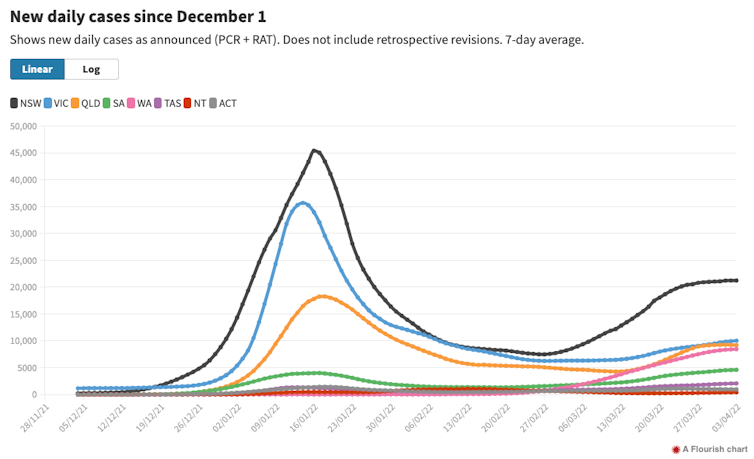
COVID case numbers are tracking up in Australia, with an average of 57,000 new cases recorded each day.

New South Wales is recording around 21,000 cases a day, the highest number in two months, while Victoria has around 10,000 a day.

Some states may be at or close to the peak of this latest wave, with their growth in cases slowing, while others continue to track upwards.

This graph shows the number of daily cases for each state and territory, based on a seven-day average.
COVID19data.com.au

Rising case numbers are due to three factors:

  • Omicron BA.2 – a sub-variant of the original Omicron – has become the dominant strain. BA.2 is more infectious than old Omicron, including among the vaccinated

  • mask mandates in many settings were dropped in New South Wales, Victoria, the ACT and Queensland in late February and early March

  • we’re out out and about more, with a greater number of social contacts each day.

Omicron BA.2 case numbers are unlikely to reach worrying heights requiring reinstating restrictions.

We do, however, need to be ready to respond to new variants which may be more virulent (think Delta or worse, with high hospitalisation and death rates) and highly infectious (think Omicron or worse).


Read more:
BA.2 is like Omicron’s sister. Here’s what we know about it so far


Does it matter that case numbers are currently rising?

Yes. Older people and those with underlying health conditions are at higher risk of hospitalisation and death, and want to avoid COVID infection. For them, it’s important to:

  • keep up-to-date with vaccinations (given they wane in effectiveness)
  • wear high-quality masks when around other people indoors
  • ask visitors to have a rapid antigen test before visiting.

But for the younger and vaccinated, Omicron infection is likely a mild illness.

We don’t yet know how people with Omicron are affected by long COVID. But given it causes less severe disease than Delta and is more of an upper respiratory illness and less likely to infect the lung tissue, long COVID is likely to be less common and less severe.

Therefore, as long as the rising hospitalisation rates do not get to a level that stretches the health system, we don’t need to reinstate restrictions again. Currently, hospital numbers are well shy of overburdening the health system.

There are advantages to Australia’s high levels of immunity through vaccination and infection with Omicron. An infection adds to your vaccine-induced immunity and makes you less likely to be reinfected.

Could lockdowns come back for BA.2?

Greater restrictions are unlikely to be needed to control Omicron BA.2. But we can never say never with COVID-19. If hospitalisation numbers do increase to a level that stretches health services, we may need to turn back on some public health measures. However lockdowns are still unlikely for BA.2.

Woman in mask looks out of the window.
Lockdowns are unlikely to be needed to control BA.2.
Shutterstock

It wouldn’t take many additional public health restrictions to keep case numbers in check, given our increasing population immunity. It could mean, for instance, returning to mask mandates for all indoor environments and encouraging people to work at home.

We do, however, need to be prepared for new variants.


Read more:
COVID mask mandates might be largely gone but here are 5 reasons to keep wearing yours


How easily could a new variant spread?

New variants muscle out existing variants because they are either innately more infectious, or have some immune escape, meaning vaccines or previous infection offer less protection.

But there is no natural selection advantage based on innate virulence (how likely it is to cause severe illness, hospitalisation and death). We just don’t know what the next variant will bring.

We’re lucky the variant that came along just as we were largely vaccinated and ready to open up to the world was Omicron with lower virulence. We may not be so lucky next time.

For arguments sake, let’s imagine a new variant arrives in mid-2022 that is as or more virulent than Delta.

We would expect this new variant to not spread as fast, not infect as many people and not hospitalise and kill as many people as if the variant had arrived in 2020. Our immunity from vaccines and natural infection, while not perfect, should slow its spread and result in less serious illness if infected.

ICU doctors treat COVID patient.
A new variant could place too much stress on our health system.
Shutterstock

However, a new variant could still stress our health systems and society again. So if a new variant arrives that is innately more severe (causing more hospitalisations and death despite our high vaccination and Omicron infection rates), we will probably have to turn some restrictions back on, such as wearing masks indoors and working from home if you can.

We don’t want to have lockdowns again. To avoid that, we need to use the other tools in our toolbox.

What do we need to do to prepare?

If we want to keep society open and ticking along in the face of a new, more infectious and more severe variant, we need planning and action in four key areas:

  • ongoing improvement of ventilation of indoor spaces

  • large stockpiles of rapid antigen tests (RATs)

  • a large stockpile of masks. KN95 and N95 masks reduce a person’s risk of COVID infection by 83%, compared to 56-66% or so for cloth and surgical masks

  • early access to next-generation vaccines that will better protect us against new variants. These should arrive later this year or in 2023 and will be a game-changer for protection.

Distributing ten high quality masks to all Australians aged 12 and older would also be a game changer in a serious outbreak. But to enable this, federal and state governments will need to stockpile 200 million or more KN95 or N95 masks.

Let’s not repeat the policy failure of not ordering RATs in 2021, and be better prepared.

The Conversation

Tony Blakely consults for Moderna. He has received funding for COVID-19 research from the Victorian Government and an anonymous philanthropist.

ref. COVID cases are rising but we probably won’t need more restrictions unless a worse variant hits – https://theconversation.com/covid-cases-are-rising-but-we-probably-wont-need-more-restrictions-unless-a-worse-variant-hits-179969

What will the fuel excise cut save you? Not as much as the Treasurer says

Source: The Conversation (Au and NZ) – By John Hawkins, Senior Lecturer, Canberra School of Politics, Economics and Society and NATSEM, University of Canberra

Shutterstock, CC BY-SA

As an appeal to middle Australia, to the voters politicians routinely describe as working families or battlers, the Morrison government’s centrepiece budget move to halve the fuel excise for six months has obvious attractions.

“A family with two cars who fill up once a week could save around $30 a week or around $700 over the next six months,” declared Treasurer Josh Frydenberg on budget night, a point he’s repeated many times since.

But our calculations show most households, particularly those on lower incomes, won’t gain anything near the amount touted by Frydenberg.

At a cost of about $3 billion, cutting 22 cents in tax from every litre of petrol for six months will disproportionately help wealthy households. The economic gain is doubtful. Depending on what happens with the global oil prices, it may even contribute to inflationary pressures.

Who benefits most?

We’ve calculated the effects of the fuel excise cut on household budgets using a computer model developed by the National Centre For Social And Economic Modelling.

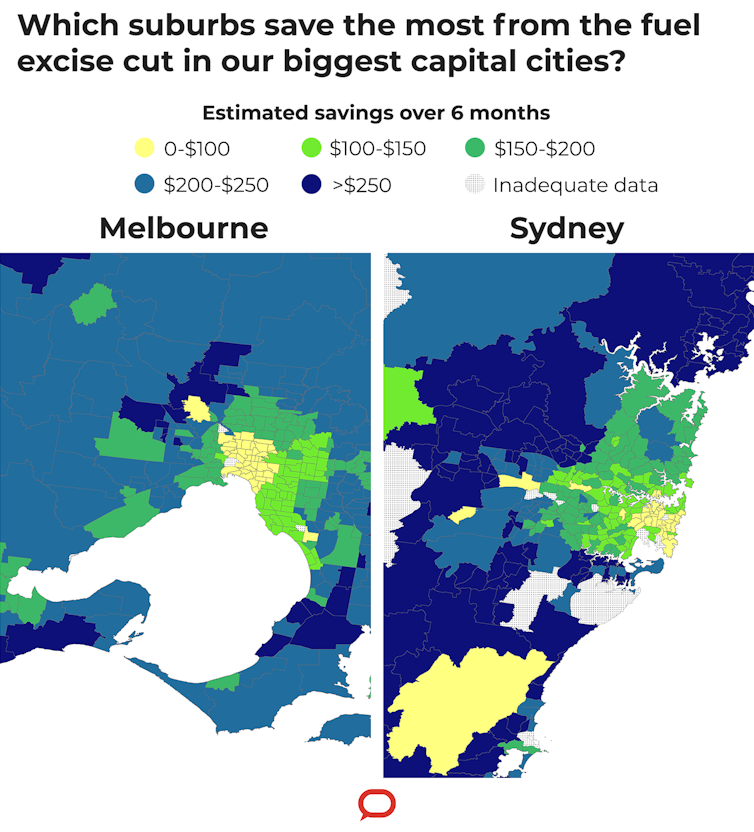
Our results show the six-month cut to the fuel excise will save the average household in inner-urban areas of Sydney and Melbourne about $132. The average households in outer suburbs will save about $242. Those in the outer suburbs of smaller cities will save less as they need to drive shorter distances. The average household in rural and remote areas will save $194.


Author provided/The Conversation, CC BY-ND

These amounts reflect average outcomes across all households, including those with just one vehicle, or no vehicle.

It’s possible some two-car households will save the $700 cited by Frydenberg, but not many. That would require a household spending well over $10,000 a year on petrol, buying about 150 litres a week.

The budget papers themselves say the cut will “deliver an average benefit of around $300 to households with at least one vehicle”.

Why economists oppose the cut

In The Conversation’s pre-budget survey of 46 leading economists selected by the Economic Society of Australia, not one thought cutting the fuel excise a good idea. About a third rated it among the worst possible policies.


Read more:
Cut emissions, not petrol tax; fund childcare, not beer. What economists want from next week’s budget


Their reasons are the uncertain economic benefit and inconsistency with important long-term policy goals to reduce dependence on oil-based imports, lower greenhouse gas emissions and cut government debt.

Frydenberg has promoted the cut as anti-inflationary, reducing consumer prices by 0.25 percentage points in the June quarter. But prices will simply rise by the same amount in the December quarter.

Global fuel prices may fall long before the end of six months. Last week benchmark oil prices fell 13% on news the US will release more from its strategic reserves as well as a truce in the long-running civil war in Yemen.

The United States will be releasing a million barrels of crude oil every day for the next six months from its Strategic Petroleum Reserve.
Eli Hartman/Odessa American/AP

If oil prices drop the government will be adding billions of dollars to the deficit for no real economic gain. It could even be adding to underlying inflationary pressures by increasing household spending, pushing the Reserve Bank to increase interest rates sooner or by more.

Furthermore, while the fuel excise cut is legislated to be in place just six months, history shows governments find it hard to reverse cuts once implemented. In 2001, for example, the government of John Howard was panicked by poor opinion polls to suspend indexation of the petrol excise when prices reached $1 a litre. Indexation was not restored for 14 years, at a cost of more than $40 billion in forgone tax revenue.

Well distributed?

Economists prefer targeted measures, and the problem with cutting the fuel excise is that lot of the benefit will go to sustaining the driving habits of wealthier households.

On average those in the most affluent 40% of households drive about 50% more kilometres than those in the poorest 40%.


Read more:
5 maps that show why free public transport benefits the affluent most


Wealthier households are more likely to have second or third cars, and to have larger cars – such as SUVs – that use more petrol. They also have the money for leisure pursuits such as weekend getaways.

A better approach would be target help to businesses that must buy fuel and to those on low incomes, such as through a cash bonus, leaving it to them to decide if they want to spend on petrol or other things.

This would also help those without a car, those who do not drive much and those with electric vehicles, who all face cost pressures as petrol prices feed into prices at the supermarket.

The Conversation

John Hawkins is a former Treasury officer.

Yogi Vidyattama does not work for, consult, own shares in or receive funding from any company or organisation that would benefit from this article, and has disclosed no relevant affiliations beyond their academic appointment.

ref. What will the fuel excise cut save you? Not as much as the Treasurer says – https://theconversation.com/what-will-the-fuel-excise-cut-save-you-not-as-much-as-the-treasurer-says-180330

Fixed or variable mortgage? The choice of home loan isn’t as simple as you might think

Source: The Conversation (Au and NZ) – By Kevin Davis, Emeritus Professor of Finance, The University of Melbourne

Shutterstock

In times like these, when there is great uncertainty about what will happen to interest rates, borrowers get lots of advice about whether to go fixed or variable. Unfortunately, a lot of it is not well founded.

For example, anyone who tells you to lock a fixed rate mortgage now before rates rise, is basically talking rubbish.

The idea it would necessarily result in you paying less interest over the life of the loan is wrong.

With minor exceptions, banks set their fixed rates based on their expectations of future changes in interest rates. They have armies of economists and analysts factoring all available information to do the calculations.

If they expect general rates to climb, they will set their fixed rates correspondingly higher than their variable rates. If they expect rates to fall, they will set them correspondingly lower.

It’s how the rates they pay are set too. When banks borrow at fixed rates, those are usually based on expectations of future movements in interest rates.

It’s hard to beat the bank

It means that the bank’s expectation of what it will get from a customer over the life of a fixed loan ends up close to its expectation of what it will get from a customer over the life of a variable loan. It gets the same sort of profit either way.

Of course, as a customer you might disagree with the bank’s expectation of future interest rate movements. You might want to back your judgement.

Good luck with it, but I’m not at all sure the typical borrower has the information and analytical skills needed to work these things out better than the typical bank.

It is true that even the banks can (and sometimes do) get it wrong. The future is rarely what has been predicted. But banks are generally less likely to get it wrong than their customers.

Fixed loans can produce nasty surprises too

For borrowers considering whether to go fixed or variable, there are other things to consider. For fixed loans, the monthly payments are locked in for a set number of years. For many that’s a good thing. They know for certain that (over the period the loan is fixed) their payments won’t climb beyond what they expect to pay.

But there’s a danger. When the fixed term expires, what they are charged might jump by quite a lot, as happened in the United States in the leadup to the global financial crisis.

If one bank offers fixed rate loans at a lower margin over its floating rate than does other banks, that may be a case for choosing its fixed rate loan over that of its competitors (if for other reasons you were minded to take out a fixed-rate loan).

But the difference might also reflect a host of other explicit and implicit charges the borrower needs to be aware of. And some banks might be setting rates aimed at exploiting borrowers biased towards one or the other type of loan.


Read more:
The RBA signals the end of ultra-cheap money. Here’s what it will mean


Some small banks might also offer different packages of rates because of a wish to induce borrowers into either fixed or floating rate loans to better reflect characteristics of their funding mix.

But for banks of any substantial size, this is highly unlikely. They are able to use wholesale and derivative markets to manage any interest rate risk from mismatch between assets and liabilities.

The message is to beware of any advice that suggests either fixed or floating is a better deal. Consider what matters for you. Your ability to deal with the risk of changes in your repayment obligations is likely to be more important.

The Conversation

Kevin Davis does not work for, consult, own shares in or receive funding from any company or organisation that would benefit from this article, and has disclosed no relevant affiliations beyond their academic appointment.

ref. Fixed or variable mortgage? The choice of home loan isn’t as simple as you might think – https://theconversation.com/fixed-or-variable-mortgage-the-choice-of-home-loan-isnt-as-simple-as-you-might-think-179960

‘I now pronounce you man … and horse’: the best and most bizarre stories from 35 years of Bold and the Beautiful

Source: The Conversation (Au and NZ) – By Jodi McAlister, Senior Lecturer in Writing, Literature and Culture, Deakin University

IMDB

“Will you turn this around?” soap patriarch Eric Forrester (John McCook) demands, gesturing at a television set. “I need to see it!”

This is the first line of dialogue uttered in the very first episode of The Bold and the Beautiful, which aired on March 23, 1987. Since then, there have been more than 8500 episodes of this fashion-centred daytime soap. This means that, for 35 years now, viewers have been gesturing at their TV sets, needing to see it.

While 35 years is a generous innings for any TV show, this actually makes Bold the youngest of the four remaining American daytime soaps. General Hospital has been on the air since 1963, Days of Our Lives since 1965, and Bold’s sister soap, The Young and the Restless, since 1973.

This should not make Bold and the Beautiful’s success any less remarkable. In the heyday of soap opera, the 1970s–90s, there were usually between 12 and 15 soaps on the air. However, the proliferation of potential entertainment sources, the rise of reality television, and the advent of streaming have pushed soaps into a decline. The last new US soap to be created was Passions in 1999, which lasted only ten years.

The first episode of Bold and the Beautiful aired on March 23, 1987. Since then, there have been more than 8500 episodes.
IMDB

The four remaining soap operas have survived a television climate which is increasingly unfriendly to the form – a phenomenon Australian viewers will be very familiar with, given the recent demise of Neighbours.

For those unfamiliar with it, The Bold and the Beautiful is set in Los Angeles and centres on the lives, loves and numerous fashion shows of the Forrester, Logan and Spencer families.

It has always been popular in Australia: indeed, for its 30th birthday in 2017, The Bold and the Beautiful came to Australia and filmed Steffy Forrester (Jacqueline MacInnes Wood) and Liam Spencer’s (Scott Clifton) third wedding in front of the Sydney Opera House. The show airs at 4:30pm on weekdays on Channel 10.

American actor Katherine Kelly Lang (Brooke Logan) from the Bold and the Beautiful in Sydney in 2007.
Tracey Nearmy/ AAP

I’ve been a dedicated Bold viewer for a very long time. In its 35 years, it has featured many wild, weird and wonderful storylines.

Here’s a non-exhaustive collection of some of my personal favourites.

Honey bear (2008)

During Donna Logan’s (Jennifer Gareis) marriage to Eric Forrester, she had a penchant for referring to him as “honey bear”, much to the displeasure of Eric’s ex-wife and the Forrester family matriarch Stephanie (Susan Flannery).

Stephanie’s sister Pam (Alley Mills) decided to eliminate Donna from the equation in the most metaphorically-apt if not particularly reliable method: following her to a remote cabin, tying her to a chair, covering her in honey, and setting a grizzly bear on her.

She did not succeed, and Pam and Donna eventually became co-receptionists and uneasy friends at Forrester Creations.

Man and horse (2009)

Bold’s most famous love triangle is between Ridge Forrester (Ronn Moss/Thorsten Kaye), Taylor (Hunter Tylo/Krista Allen) and Brooke (Katherine Kelly Lang). Ridge has been married to both women multiple times, but perhaps the most famous of these weddings is an unsuccessful one.

Ridge (Moss) was on the verge of marrying Taylor (Tylo), when Brooke – who had been furiously riding to the wedding on horseback in an effort to stop it – burst in right at the last moment, causing the celebrant to proclaim Ridge and Taylor “man and horse”.

Little Eric (late 1990s–2000s)

Questions over a baby’s paternity (or, colloquially, “who’s the daddy?”) plotlines are a soap opera staple. In the late 1990s, Bold had perhaps its most spectacular example of the trope. Amber Moore (Adrienne Frantz) wasn’t sure if her baby was fathered by Usher Raymond (Usher Raymond) or Rick Forrester (Jacob Young).

Ultimately, her child turned out to be Rick’s, but sadly died at birth. This led to Amber taking the that baby her cousin Becky (Marissa Tait) was putting up for adoption and passing him off as her own. This child, Little Eric, was parented by at least seven people in his time on the show, but has since disappeared from the narrative … although his reappearance as an adult is never off the table.


Read more:
Kissing mannequins: watching The Bold and The Beautiful during a pandemic


Taylor returns from the dead (2002-05)

In the early 2000s, Bold supervillain Sheila Carter (Kimberlin Brown) shot both Brooke and Taylor. Brooke survived, but Taylor did not … or so it seemed. Several years later, Ridge began to see visions of Taylor everywhere. After a very Heathcliff-esque scene where he dug up her grave only to find a mannequin, Taylor revealed to him that she was in fact still alive.

This was Taylor’s second return from the dead. She was rescued by the same person as the first time – Prince Omar Rashid of Morocco (Kabir Bedi).

The Hope mannequin (2020)

The Taylor mannequin made an unexpected return, many years later. When Bold returned to filming under COVID conditions, actors were not allowed within six feet of each other. One of the workarounds the show used to do love scenes were mannequins.


Read more:
I easily clocked 10,000 hours working on Neighbours. Its loss will leave a huge hole in Australian TV – and UK hearts


This led to one of the strangest plots the show has ever attempted, in which a mannequin became an on-screen character. After experiencing head trauma, Thomas Forrester (Matthew Atkinson) began hallucinating that a mannequin who looked exactly like the long-time object of his desires Hope Logan (Annika Noelle) began talking to him. The mannequin eventually professed her love to him, right before ordering him to murder Hope’s husband Liam.

Thomas resisted, however, and he, Hope and Liam currently co-parent Douglas Forrester (Henry Samiri). He still interacts with mannequins in his professional capacity as a fashion designer, but thankfully no longer in his personal life.

There are more wild plotlines to come: Bold was recently renewed until 2024.

Right now, supervillain Sheila has a gun in her hands again. I suspect this time the victim will be her son Finn (Tanner Novlan), stepping in front of a bullet meant for his wife Steffy, rather than Taylor or Brooke – but really, anything could happen, and usually does.

The Conversation

Jodi McAlister does not work for, consult, own shares in or receive funding from any company or organisation that would benefit from this article, and has disclosed no relevant affiliations beyond their academic appointment.

ref. ‘I now pronounce you man … and horse’: the best and most bizarre stories from 35 years of Bold and the Beautiful – https://theconversation.com/i-now-pronounce-you-man-and-horse-the-best-and-most-bizarre-stories-from-35-years-of-bold-and-the-beautiful-180417

IPCC says the tools to stop catastrophic climate change are in our hands. Here’s how to use them

Source: The Conversation (Au and NZ) – By Frank Jotzo, Professor, Crawford School of Public Policy and Head of Energy, Institute for Climate Energy and Disaster Solutions, Australian National University

Shutterstock

Humanity still has time to arrest catastrophic global warming – and has the tools to do so quickly and cheaply, the Intergovernmental Panel on Climate Change (IPCC) has found.

The latest IPCC assessment report, the world’s definitive stocktake of action to minimise climate change, shows a viable path to halving global emissions by 2030.

This outlook is much more favourable than in earlier assessments, made possible by tremendous reductions in the cost of clean energy technologies. But broad policy action is needed to make steep emissions reductions happen.

We each contributed expertise to the report. In this article, we highlight how the world can best reduce emissions this decade and discuss the potential implications for Australia.

letters on blocks reading climate change/chance
Humanity still has time to arrest catastrophic global warming.
Shutterstock

All-in, right now

  • Frank Jotzo, lead author on policies and institutions

The IPCC identifies clean electricity and agriculture/forestry/land use as the sectors where the greatest emissions reductions can be achieved, followed by industry and transport.

Further low-emissions opportunities exist in other areas of production, buildings and the urban sector, as well as shifts in consumer demand. Overall, half the options to cut emissions by 50% cost less than US$20 a tonne.

While the IPCC does not provide a country-level assessment, it is clear Australia has all these opportunities.

The transition to zero-emissions electricity is well underway. Decarbonising industry and transport is a next step. Emerging technologies such as green steel and hydrogen offer Australia new, clean export industries. Fossil fuel use in turn is destined to fall, with coal dropping off particularly quickly.

And Australia’s large land mass provides massive opportunities to remove CO₂ from the atmosphere through plants – and in future, perhaps also through chemical methods.

The IPCC says comprehensive policy packages are needed to make deep emissions cuts happen.


Read more:
IPCC finds the world has its best chance yet to slash emissions – if it seizes the opportunity


It finds carbon taxes and emissions trading schemes have been effective, alongside targeted regulation and other instruments – such as support for research and development, uptake of advanced technologies and removing fossil fuel subsidies.

The report also emphasises the need for continued technological innovation, and to greatly scale up finance for climate action.

It puts weight on the importance of equity, sustainable development and comprehensive engagement across society to avert unmanageable climate change.

That requires climate action to take centre stage in society, involving all manner of groups. Independent institutions such as Australia’s Climate Change Authority have a strong role to play, and business should be actively involved.

So what’s the IPCC’s overriding message? The world’s governments must go all-in on addressing climate change. The opportunities are there and the toolkit is ready.

industrial scene at sunset
Comprehensive policy is needed to produce deep emissions cuts.
J. David Ake/AP

Food for thought

  • Annette Cowie, lead author on cross-sectoral perspectives

To have our best shot at holding warming to 1.5℃, the world must hit net-zero emissions by mid-century.

Agriculture is a big contributor to global emissions. But the IPCC confirms the land also has a central role in getting to net-zero through measures that remove CO₂ from the atmosphere and store it, such as tree planting, soil carbon management and the use of biochar.

Benefits returned to farmers include improved soil fertility and income from carbon trading.

The way we produce and distribute food accounts for more than one-third of global emissions.

The report says one of the biggest individual contributions we can make to reducing emissions is adopting a sustainable, healthy diet and reducing food waste. Such a diet is rich in plant-based food, with moderate intake of meat and dairy.

We can also tackle direct emissions from food production. Manure can be made into biogas and feed additives offer promising ways to reduce livestock methane.


Read more:
The Morrison government wants to suck CO₂ out of the atmosphere. Here are 7 ways to do it


hand holding biochar
Biochar offers a way to store carbon and improve the soil.
Shutterstock

Moving the dial on transport

  • Peter Newman, coordinating lead author on transport

  • Jake Whitehead, lead author on transport

A set of technological solutions now exist to reduce emissions across energy, buildings, cities, transport and to a large extent, industry.

They include solar and wind-based power – now the cheapest form of electricity. They also include batteries and storage, electrified transport and “smart” technology that integrates these measures into zero-emissions solutions.

The IPCC report shows in the past decade, unit costs for solar have fallen by 85%, wind by 55% and batteries by 85%. Never before has the world had such an opportunity to decarbonise.

In recent decades, transport has been the laggard in emissions reduction. But, as the IPCC finds, technologies now exist to change the trajectory. Solar-powered electrification is rolling out for cars, bikes, scooters, buses and trucks.

Continuing advances in battery and charging technologies could enable the electrification of long-haul trucks, including electrified highways.

The IPCC assessed 60 actions individuals can take to reduce emissions. The largest contributions come from walking and cycling, using electrified transport, reducing air travel, as well as shifting towards plant-based diets.

This highlights how our individual choices matter.


Read more:
Thinking of buying an electric vehicle for your next car? Here’s the market outlook and what to consider


Technology alone is not enough to reduce transport emissions. Cities must become more oriented toward public transport, walking and cycling. Effective new ways of doing this include on-demand shuttles, trackless trams and high speed rail.

Governments should provide incentives to supply and use electric scooters, bikes, cars, trucks and buses. This would ensure individuals and businesses who want to reduce their emissions have ways to do so.

The IPCC says cheap green hydrogen will be important to decarbonise aviation, shipping and parts of industry and agriculture. Much work is required in the next decade to bring this solution to fruition.

While government funding is vital to decarbonise transport, this transition also presents significant economic opportunities.

Australia could support transport decarbonisation globally through the mining of critical minerals, as well as the manufacturing, reuse and recycling of electric vehicles.

people cycling and walking
Cities must pivot toward public transport, walking and cycling.
Asanka Brendon Ratnayake/AAP

It’s time to act

Huge untapped potential exists to reduce global emissions quickly.

But the window of opportunity to reduce greenhouse gas emissions to safe levels is closing at an alarming rate. As the IPCC shows, fundamental change to both production and demand is required.

Clearly, business-as-usual is no longer tenable. The IPCC makes one thing patently evident: the time for action is well and truly upon us.


Arunima Malik, Glen Peters, Jacqueline Peel, Thomas Wiedmann and Xuemei Bai contributed to this article. See part one of the article here.

The Conversation

Frank Jotzo is a professor at ANU Crawford School of Public Policy and the ANU Institute for Climate Energy & Disaster Solutions. He is a lead author and contributor to the Summary for Policymakers of the IPCC 6th Assessment Report, and a lead author of the 5th Assessment Report. He has led research projects funded by a variety of funders; none present a conflict of interest on this topic. The Australian government provided funding to support IPCC related activities, while the author’s (and all authors’) activities for the IPCC are not remunerated.

Annette Cowie is a Senior Principal Research Scientist in the climate branch at the NSW Department of Primary Industries, in a addition to her UNE role. She receives research funding from NSW and Commonwealth government programs and rural research and development corporations. She is a member of Soil Science Australia and an adviser to the Australia New Zealand Biochar Industry Group and the Land Degradation Neutrality Fund.

Dr Jake Whitehead is on unpaid leave from his role as a Research Fellow at The University of Queensland. He is a Lead Author of the AR6 Transport Chapter for The Intergovernmental Panel on Climate Change (IPCC), a Member of the International Electric Vehicle Policy Council, and Director of Transmobility Consulting. He has previously received government funding for several sustainable transport projects, including research on both hydrogen and electric vehicles. He is also holds a part-time position as the Head of Policy at the Electric Vehicle Council.

Peter Newman AO is Professor of Sustainability at Curtin University and has been involved in IPCC reports for the past ten years. The Federal Government has provided travel funds for meetings though the past few years have all been on-line. Like all authors in IPCC this is a voluntary activity.

ref. IPCC says the tools to stop catastrophic climate change are in our hands. Here’s how to use them – https://theconversation.com/ipcc-says-the-tools-to-stop-catastrophic-climate-change-are-in-our-hands-heres-how-to-use-them-179654

IPCC finds the world has its best chance yet to slash emissions – if it seizes the opportunity

Source: The Conversation (Au and NZ) – By Thomas Wiedmann, Professor of Sustainability Research, UNSW Sydney

Shutterstock

The world has its best chance yet to reduce greenhouse gas emissions quickly, but hard and fast cuts are needed across all sectors and nations to hold warming to safe levels, the global authority on climate change says.

The Intergovernmental Panel on Climate Change (IPCC) report, released today, says opportunities to affordably cut global emissions have risen sharply since the last assessment of this kind in 2014. But the need to act has also become far more urgent.

The report is the definitive assessment of how well the world is doing in finding solutions to rising temperatures. We each contributed expertise to the report.

Here, we explain key aspects of the findings and what it means for the world, including Australia.

solar farm in rural setting
Opportunities to affordably cut global emissions have greatly increased.
Mick Tsikas/AAP

Earth remains on red alert

  • Glen Peters, lead author on mitigation pathways compatible with long-term goals

The report finds the world has made progress on emissions reduction over the last decade. Growth in greenhouse gas emissions slowed to 1.3% per year in the 2010s, compared to 2.1% in the 2000s.

But global emissions remain at record highs. If policy ambition does not ramp up immediately, warming will shoot past 1.5℃ and be well on the way to 2℃ – failing to meet the temperature goals of the Paris Agreement.

Alarmingly, the world’s current policies put us on track for global warming of between 2.2℃ and 3.5℃ within 80 years. It’s far better than the 4℃ or more feared about a decade ago, but still far from consistent with the Paris Agreement.

To have a 50% chance of keeping global warming to 1.5℃ by century’s end, global CO₂ emissions must halve in a decade, reach net zero in the 2050s and go net negative thereafter.

Methane emissions would also have to halve by 2050 in these scenarios.

Halving global emissions by 2030 is viable and achievable, the IPCC says. But it requires an immediate step change in climate policy across all sectors, countries and levels of government.

Rich nations must make the most rapid emissions reductions. This includes Australia, where a plan for net zero emissions by 2050 falls short of the ambition needed and is not yet backed by policy.

man between two TV screens displaying men's faces
Rich nations must take the greatest climate action.
EPA

More than technology

  • Tommy Wiedmann, lead author on emissions trends and drivers

The report is a comprehensive catalogue of what can be done – but has mostly not yet been done – to avert devastating climate change.

Some trends are encouraging. Some 36 countries have successfully cut greenhouse gas emissions over more than a decade.

And opportunities to cut emissions affordably and cheaply have multiplied enormously since 2014, the report finds.

This is largely due to the plunging costs of renewables, which promises emissions reduction beyond the energy sector in areas such as manufacturing and heavy transport.
We expand on the options here.

But change is not coming fast enough. The report confirms all energy efficiency gains in the last decade have been more than outpaced by economic and population growth.

Technology is not a silver bullet. To have a chance of halving global emissions by 2030, we must use fewer high-carbon products and adopt less emissions-intensive lifestyles. Like all other changes required, these cannot be incremental, the IPCC says.

Australia is blessed with a bounty of renewable energy resources. Used wisely, it could slash domestic emissions and help reduce other countries’ emissions, in the form of zero-emissions energy exports.


Read more:
The power to save the planet is inside us all – how to get past despair to powerful action on climate change


ship at dock with cranes
Australia can capitalise on zero-emissions energy exports. Pictured: a ship which is part of a hydrogen pilot project between Australia and Japan.
AP

No-one gets left behind

  • Arunima Malik, lead author on introduction and framing

In 2016, the United Nations Sustainable Development Goals – an action plan for people, planet and prosperity – came into effect.

Sustainable development meets the needs of the present without compromising future generations. And as the latest IPCC report emphasises, it cannot be achieved without effective climate action.

One Sustainable Development Goal explicitly focuses on tackling climate change. But climate action is linked to all other goals, including those relating to energy, cities, industry, land, water and people.

Emissions reduction policies must be inclusive and avoid unintended consequences such as exacerbating existing poverty and hunger. The transition to a low-carbon world should be equitable and leave no-one behind.

The IPCC report calls for both accelerated climate action and a just transition. This requires well-designed policies at all levels of government, and across all sectors. International co-operation is key.

woman looks at phone, man looks on
Sustainable development must treat all people equitably.
Rodrigo Abd/AP

Is the Paris Agreement working?

  • Jacqueline Peel, lead author on international cooperation

This report is the first to assess the Paris Agreement, which took effect from 2020. Under the agreement, countries submit and update pledges on emissions reduction and adapting to the changing climate.

For these pledges to be achieved globally, high-income countries must help other nations by providing finance, access to clean energy technologies, and other assistance and know-how.

The IPCC identified a shortfall in global climate finance. In particular, high-income countries missed their 2020 target to mobilise $US100 billion per year.

The Paris Agreement is a treaty but the pledges are voluntary. Countries set their own targets and can’t be forced to meet them. So, is it working?

According to this new report, it largely is – albeit slowly. For instance, it has encouraged nations such as Australia to make more ambitious emissions pledges.

It has also enhanced transparency, enabling outside groups, such as those in civil society, to assess countries’ progress.

Other international mechanisms, such as global business partnerships and youth climate protests, are also driving change.

But more must be done to halve emissions this decade.

School strikes are giving momentum to climate action.
Julian Meehan, CC BY-SA

Cities are central

  • Xuemei Bai, lead author on urban systems and other settlements

The IPCC report found around 70% of the world’s greenhouse gas emissions are produced in cities and urban areas. This offers both challenges and opportunities for emissions reduction.

To date, more than 1,000 cities worldwide have signed up to net-zero emission goals, including many in Australia.

To fulfil the Paris Agreement, more cities must step up and work towards goals such as 100% renewable energy, zero-carbon transport, decarbonising construction and improving waste management.

Developing countries are rapidly urbanising, which requires new housing and infrastructure. But doing so in a business-as-usual way could lead to substantial new emissions, the IPCC warns.

City leaders must embrace integrated planning and management to meet the climate challenge. This must be achieved while cities continue their important roles in maintaining social, economic and environmental well-being.

We need all hands on deck: businesses, communities, researchers and citizens.

Hotel with plants down face
We need greener cities with lower emissions.
Shutterstock

Seize the opportunity

This latest report shows how the choices we make now will determine the fate of generations to come – and all life on this planet.

Humanity has already missed so many opportunities to stabilise Earth’s climate. We now have the chance to right some of those past wrongs.

Only an urgent, concerted effort across all sectors and nations, starting today, will deliver the change needed.


Annette Cowie, Frank Jotzo, Jake Whitehead and Peter Newman contributed to this article. See part two of the article here.

The Conversation

Thomas Wiedmann receives funding from the Australian Government, Department of Industry, Science, Energy and Resources, and from the Australian Research Council.

Arunima Malik receives funding from the Australian Government, Department of Industry, Science, Energy and Resources, and from the Australian Research Council.

Glen Peters receives funding from European Union’s Horizon 2020 research and innovation programme under grant agreement Nos. 821003 (4C), 776810 (VERIFY), 820846 (PARIS REINFORCE), and 958927 (CoCO2).

Jacqueline Peel receives funding from the Australian Government, Department of Industry, Science, Energy and Resources and from the Australian Research Council for projects on climate law and governance.

Xuemei Bai receives funding from Australian Government, Department of Industry, Science, Energy and Resources, the National Health and Medical Research Council (NHMRC), The Future Earth, and the Australian National University. She is affiliated with the Earth Commission.

ref. IPCC finds the world has its best chance yet to slash emissions – if it seizes the opportunity – https://theconversation.com/ipcc-finds-the-world-has-its-best-chance-yet-to-slash-emissions-if-it-seizes-the-opportunity-179653

‘Nothing left in the tank’: resigning Tasmanian premier Peter Gutwein deserves credit on COVID and economics

Source: The Conversation (Au and NZ) – By Michael Lester, PhD candidate, University of Tasmania

Liberal premier Peter Gutwein’s resignation, less than a year into his second term, is a seismic shift in Tasmanian politics.

In typical fashion, Gutwein surprised everyone, announcing his resignation today – in his own time and on his own terms, seemingly out of nowhere.

He left saying he had held the “best job in the world”, but the responsibility had taken its toll and he had “nothing left in the tank”.


Read more:
Liberals’ victory in Tasmanian election is more status quo than ringing endorsement


From ‘hard man’ to soaring popularity

Gutwein, first elected to the Tasmanian House of Assembly seat of Bass in 2002, quickly gained a reputation as a Liberal “hard man”.

As treasurer, he was part of the triumvirate with former Premier Will Hodgman, and current Deputy Premier Jeremy Rockliff, who broke a 16-year drought to propel the Liberals into government in 2014.

Gutwein became premier in January 2020 after Hodgman’s shock resignation. His popularity subsequently soared to 70% during 2020 due to his tough “no apologies” COVID response – famously leading to a headline that read: “We have a moat and we’re not afraid to use it”.

Then there was his refusal to bend to demands by the tourism industry and some of his federal Liberal colleagues to reopen the borders. Around the time of his resignation, his popularity as premier still sat at 52%.

Gutwein’s hardline approach with the AFL – insisting on progress towards a Tasmanian-based team before agreeing to continue subsidising Hawthorn and North Melbourne to play games in Tasmania – also resonated with the Tasmanian public.


Read more:
As Tasmanians head to the polls, Liberal Premier Peter Gutwein hopes to cash in on COVID management


Hitting the wall

In 2020, Gutwein scoffed at suggestions he would cash in on his popularity and call an early election. But in March 2021 he did just that, announcing a May 1 election date – a year earlier than it was due.

As a result, the Liberals were returned for a record third term – having never previously won three elections back-to-back in Tasmania.

However, after leading the state’s response to COVID, fighting the election and handing down the state budget, Gutwein was taken to hospital in late August.

That followed what he described as “hitting the wall”, after working for 56 consecutive days – so perhaps today’s announcement should not have come as too much a surprise.

Lasting legacy

While Gutwein’s leadership during COVID most likely will be his lasting legacy, he also deserves credit as treasurer for economic management.

Tasmania’s economy continues to perform strongly relative to other states. In October last year, for example, CommSec rated the improvements in Tasmania’s economic performance as the best in the nation for the seventh quarter in a row.

The National Australia Bank monthly business survey and the Deloitte access economics outlook report for September 2021 also forecast Tasmania’s economy to grow the equal-fastest in the nation during the current financial year.

Gutwein, a social policy moderate, has led the way in pushing for a treaty with the Aboriginal community in Tasmania.

And in March, Gutwein revealed he was a victim of sexual assault as a 16-year-old, stating his support for victims in the Commission of Inquiry into child sexual abuse.

The question now is who will replace Gutwein as premier. His much respected deputy and health minister, Jeremy Rockliff, has shown no ambition to take the top job.

That leaves current minister for resources Guy Barnett and minister for state development, infrastructure and transport Michael Ferguson – both conservatives – as the frontrunners.

Gutwein’s resignation may also open the door for Labor under second-time-around leader Rebecca White, who recently enjoyed a minor resurgence in the polls.

The Conversation

Michael Lester was a political reporter and columnist in Tasmania for about 20 years and served as an adviser to Labor premier Jim Bacon between 1998 and 2002. In December 2021, he was awarded a PhD for research on minority government in Australia.

ref. ‘Nothing left in the tank’: resigning Tasmanian premier Peter Gutwein deserves credit on COVID and economics – https://theconversation.com/nothing-left-in-the-tank-resigning-tasmanian-premier-peter-gutwein-deserves-credit-on-covid-and-economics-180596

Australia has committed $1.6 billion to help research projects become commercialised. Here’s what the money will do

Source: The Conversation (Au and NZ) – By Rajat Roy, Associate Professor, Bond Business School, Bond University

Shutterstock

The federal government is investing $2.2 billion for university research commercialisation which would place “university innovation and industry collaboration front and centre of Australia’s economic recovery.”

Part of this funding includes $1.6 billion over ten years for Australia’s Economic Accelerator – a new competitive funding program to help university projects bridge the so-called “valley of death” – the place between the lab bench or research environment and the marketplace, where many good ideas essentially die.

The government’s funding boost is a step in the right direction. Here’s why it’s needed and how it will work.


Read more:
Scott Morrison pursues commercialisation of Australian research with $2 billion new money


Australia’s commercialisation landscape

Australia is home to world class research universities. While we have breakthrough ideas from our university researchers, we struggle to get ideas originated in our labs to innovative products in the market.

In a February 2021 speech then Education Minister Alan Tudge pointed to Australia’s low rate of invention disclosures, which he said were the “first step in the commercialisation process”. An invention disclosure is a confidential document written by a scientist or engineer for use by a company’s patent department, or by an external patent attorney, to determine whether patent protection should be sought for the described invention.

Tudge said:

[…] survey data shows Australian public research organisations made an average of about 20 invention disclosures in 2016, roughly the same as in 2004 despite the more than fourfold increase in research output. Moreover, Australia’s average rate of 20 invention disclosures compares to more than 40 in Canada, more than 60 in Israel, and over 120 in the US.

Significant barriers to commercialisation including low collaboration among industry and university exist. Another significant barrier is the lack of significant proof of concept funding which plunges many of our brilliant ideas into the “valley of death”.


Read more:
Our unis are far behind the world’s best at commercialising research. Here are 3 ways to catch up


Proof of concept could include a trial of a medication or a prototype of technology to show the feasibility of a product.

All Australian universities engage in research commercialisation effort to a varying extent. While the Group of Eight have more sustained effort and fundings, the resources available at other Australian universities are significantly limited.

Even at the prestigious Group of Eight universities, the level of funding available for proof of concept could only support a limited number of projects each year, mainly for the so called “first tier ideas”. These are premium ideas in leading disciplines such as health which have a higher chance of success. This limits strategic commercialisation capability and impacts the so called second tier ideas, even though these ideas may have potential. It is important to understand what drives university level commercialisation decisions.

Barriers to commercialisation

Let’s say an innovative idea at a certain university needs to be commercialised. To begin with, universities typically screen an idea from three key angles

  1. technical – the nature of the core technology, how it is developing and what it does

  2. intellectual property – how the nature of the project’s intellectual property is developing

  3. commercial – the commercial potential for the technology and the key markets.

Certain universities (such as the University of Queenland) also engage other measures such as the Technology Readiness Level adopted by NASA to assess how ready to market the technology is.

If the idea is attractive enough, the commercialisation arm of the university then decides to help the researchers to develop the intellectual property strategy. The university may also provide some competitive internal proof of concept funding to develop a prototype (such as a working medical device).

Proof of concept can include a prototype to prove the feasibility of the product.
Shutterstock

Other sources of funding exist too. For example, external funding sources such as UniSeed, state and federal government funding or even private capital may be effective to get the idea to a working stage. Challenges still remain beyond this point, especially with regards to finding key markets.

The success of an innovative idea (such as a new technology) is further influenced by adoption from the industry, a key market. Depending on the proof of concept, industry may show an avid interest, or decide to hold off until more evidence is provided. This could be multiple experiments to provide data regarding how the product works.

The majority of the industries in Australia are small and medium sized enterprises. These organisations may not have an absorptive capacity for new technology. These are barriers to commercialisation as well.

Why the federal funding matters

A prototype is the bare minimum of evidence and from a prototype to a product, it could still take several years. Resource support is needed at this phase to see the idea reaches the market as a product. Universities and their pool of creative ideas in the absence of significant proof of concept and subsequent funding may plunge into the so called “valley of death”.


Read more:
Will the government’s $2.2bn, 10-year plan get a better return on Australian research? It all depends on changing the culture


This is exactly where the federal government’s $1.6 billion funding may help. Universities in Australia should be judicious to scan innovative ideas using meaningful frameworks, engage with the market to find strategic partners from the industry and ensure these ideas actually turn into exciting products that can benefit larger society.

The federal government funding can potentially help many of our brilliant ideas avoid the valley of death. This resource support is needed not only to fund the proof of concept, but to further support a working concept to develop into an actual product available in the market.

The Conversation

The authors do not work for, consult, own shares in or receive funding from any company or organisation that would benefit from this article, and have disclosed no relevant affiliations beyond their academic appointment.

ref. Australia has committed $1.6 billion to help research projects become commercialised. Here’s what the money will do – https://theconversation.com/australia-has-committed-1-6-billion-to-help-research-projects-become-commercialised-heres-what-the-money-will-do-180404

With COVID cases still in the thousands, why are some so keen to ditch the things that kept New Zealand safe?

Source: The Conversation (Au and NZ) – By Dougal Sutherland, Clinical Psychologist, Te Herenga Waka — Victoria University of Wellington

GettyImages

Prime Minister Jacinda Ardern has announced New Zealand will remain at the red traffic light setting, but other public health mandates created to control COVID-19 will still be lifted, contributing to the sense that there’s light at the end of the tunnel after two years.

But many New Zealanders are already going further and dropping some of the measures that have kept the country safe.

Anecdotally, an increasing number of people are not wearing masks or keeping their distance from strangers, and large gatherings are becoming more common.

So what is driving this push back to “normal” despite the rising death toll and high infection rate? There are a number of psychological factors that help explain this change in our collective behaviour.

Optimism and sense of threat

“It won’t happen to me” and “it’s only a mild flu” are two statements that have been bandied about, especially in the face of Omicron.

The first of these implies an optimism bias – the belief that bad things won’t happen to you.

While there are some obvious benefits to thinking this way – optimistic people tend to have a more positive mood – it may also lead you to dispense with health-related behaviours such as a wearing masks.

Nurse in protective gear and mask leans into car to swab driver.
Are ‘optimism bias’ and a sense of reduced threat behind the desire to drop precautions?
Kai Schwoerer/Getty Images

The view that Omicron is only a “mild flu” also suggests that for some, their sense of threat from COVID-19 has reduced and, as their feeling of threat reduces, so too does their use of protective measures against contracting the illness.

This optimism bias and a sense of reduced threat may also be complemented by competing values within different groups.


Read more:
Should public health measures like masking continue beyond the pandemic? Data on viral infections shows their benefits


Young adults typically place a high value on socialising, so combining this with a belief you won’t get sick, or at least not much, could easily lead to a disregard of physical distancing measures as we’ve seen recently at Canterbury and Otago universities.

Furthermore, research published in 2020 indicated younger people tended not to wash their hands as much as older people, possibly because they perceive themselves as less at risk. If their perception of risk drops even further, so too could this behaviour.

Social modelling and misinformation

What we see around us is also influencing our own behaviour.

A basic tenet of social psychology is that we model our behaviours on the basis of what we see around us. This social modelling theory helps explain why we’re less likely to scan in or show a vaccine pass if those around us aren’t doing it.

The recent anti-mandate protests at parliament may have emboldened some, who were perhaps ambivalent anyway, to ditch mask wearing after witnessing large groups of people doing the same.

The anti-mandate protests also highlighted the role of misinformation in shaping people’s health related behaviours.

Early studies of COVID-19 combined with previous research about other pandemics has shown that when people are given accurate information about a public health problem they are more likely to engage in health-related behaviours such as hand-washing and mask-wearing.

Conversely, inaccurate information about an illness (that it’s not severe, for example) reduces people’s engagement in behaviours that may reduce its spread.

COVID fatigue and looking forward to the future

The past two years under the grip of COVID-19 have undoubtedly been exhausting for most. There have been widespread reports of the general public being more tired and irritable during this time.

Understandably, people’s anger and irritation has, at times, been directed at the government’s response — for example, questioning the need for repeated lockdowns. This can gradually erode trust in the government and, in turn, increase scepticism of public health messages, with a resulting reduction in compliance with those messages.

As we appear to be approaching the end of the Omicron wave and potentially the worst of COVID-19, many may begin to feel more positive about the future.

Man in red t'shirt that says 'the rules don't apply to me'.
Optimism is one reason people have begun to ditch public health rules. Many don’t believe the virus is real, serious or will effect them.
Adam Bradley/Getty Images

People’s emotional state is a key driver of their perception of risk, perhaps more so than hard data about COVID-19. Our mood helps steer where we pay attention, so feeling more positive about the future may lead us to pay more attention to stories and information that emphasise the importance of getting back our normal lives and all the joy they used to bring.

Flooding ourselves with this type of information can then translate into acting like we used to – for example, socialising with others unfettered by masks or hand-washing.

How do we go the distance?

But we’re not out of the COVID woods yet and New Zealanders need to keep doing things that will reduce the transmission of the virus.

Looking back over the past two years, New Zealanders have generally been hihgly engaged in behaviours designed to protect their collective health. But as our compliance wanes a little, a few subtle nudges may help us get to the finish line in good health.


Read more:
Could Britain be sued for reopening and putting the world at risk from new COVID variants?


Firstly, when people have a strong negative reaction to germs they are more likely to wear a mask. Having illustrations of how COVID is spread – for example, a graphic illustration of someone sneezing and the spread of droplets – may help gross people out enough to put on a mask.

If we’re more likely to do things we think other people are doing, then providing accurate information about high levels of vaccine uptake and mask wearing may provide a model for us to do the same.

Finally, recognising and catering for different values, like having controlled social events for university students, may help meet the needs of different groups without them having to compromise their health behaviours.

It has been a long two years for everyone, but understanding what is driving some to abandon public health measures despite the continued spread of the virus could help improve measures and encourage the “team of five million” to hold the line.

The Conversation

Dougal Sutherland is a Clinical Psychologist at Victoria University of Wellington and an Associate at Umbrella Wellbeing

ref. With COVID cases still in the thousands, why are some so keen to ditch the things that kept New Zealand safe? – https://theconversation.com/with-covid-cases-still-in-the-thousands-why-are-some-so-keen-to-ditch-the-things-that-kept-new-zealand-safe-180496

Below the Line: introducing The Conversation’s new election podcast, hosted by Jon Faine

Source: The Conversation (Au and NZ) – By Benjamin Clark, Deputy Engagement Editor, The Conversation

SARAH RHODES/AAP

From the polls to party spin to election promises, Below the Line is a limited-edition podcast unpacking party lines and policies during the 2022 Australian federal election campaign.

Hosting the conversation is award-winning broadcaster and former ABC Melbourne mornings presenter, Jon Faine, now a Vice Chancellor’s Fellow at the University of Melbourne. He’ll be joined by political scientists Anika Gauja and Simon Jackman from the University of Sydney and La Trobe University’s Andrea Carson, to talk about the issues that matter to you.

Below the Line is brought to you by The Conversation and La Trobe University twice weekly until polling day.

Listen to the first episode, in which our panel discusses personalities and pre-selections, when the election will likely be called, and the most probable election
date. Together, our experts outline the issues that are expected to feature prominently during the campaign and the key challenges for the Coalition seeking re-election for a fourth term in government. And tune in to hear why this election campaign is expected to “get dirty”.

Image credit: Sarah Rhodes/AAP

The Conversation

ref. Below the Line: introducing The Conversation’s new election podcast, hosted by Jon Faine – https://theconversation.com/below-the-line-introducing-the-conversations-new-election-podcast-hosted-by-jon-faine-180565

An easy-going everyman, with vulnerability beneath the bravado: the best performances of Bruce Willis

Source: The Conversation (Au and NZ) – By Ben McCann, Associate Professor of French Studies, University of Adelaide

This year was shaping up to be another busy one for Bruce Willis: three films released already, with another eight in post-production. Willis has become an astonishingly prolific actor, wisecracking his way through direct-to-video genre releases and joining that elite band of 1980s and 1990s multiplex superstars (Nicolas Cage, John Travolta, Sylvester Stallone) whose box office capital had flatlined.

Willis’s recent reviews were uniformly negative. “Phoning it in” became a byword for his post-2012 career choices, after his last critically successful films, Looper and Moonrise Kingdom. Hard Kill (2020), Apex (2021) and A Day to Die (2022) will not live long in the cultural memory.

Willis’s recent decision to step away from acting after a diagnosis of aphasia – a language disorder caused by damage in the area of the brain controlling language expression and comprehension – brings his career to a cruel end.


Read more:
What is aphasia, the condition Bruce Willis lives with?


In his day, Willis could still surprise and tantalise. Terry Gilliam, who, in 12 Monkeys (1995), directed Willis in one of his most complex performances as the time traveller tasked with saving the world from a deadly virus, once described him as “a guy who was vulnerable, a man who’s lost, not the man in charge of the whole thing”.

It is this paradox – helplessness and resilience – that has defined Willis’s screen persona for four decades.

Vulnerability beneath the bravado

In 1988, one of Hollywood’s most laser-focused high concept pitches – NYPD cop saves hostages in a skyscraper on Christmas Eve – gave Willis the chance to hit the stratosphere.

As John McClane in Die Hard he almost single-handedly defined the wise-cracking action hero in the late 1980s, bringing an everyman quality to his roles that made up for in quips and smirks what he lacked in the hardened muscularity of a Jean-Claude van Damme or an Arnold Schwarzenegger.

Willis would return to the Die Hard franchise every few years. The law of diminishing returns inevitably kicked in, but the original played up Willis’s vulnerability beneath the bravado.


Read more:
Nine reasons why Die Hard really is a Christmas film


For a time, Willis could always be relied upon when heroism was wanted. Need someone to climb to the roof of a church and save two kids in the middle of a lightning storm? Wes Anderson, in the delightfully off-beat Moonrise Kingdom (2012), knew just the man.

Need someone to lead a crack team of oil drillers into space and blow up an asteroid headed for Earth? Michael Bay’s Armageddon (1998) – the high watermark of impending planetary disaster films – might not have worked as well were it not for Willis’s deadly seriousness at the centre of this madcap plot.

(And I wonder if it was his idea to have his character introduced by hitting golf balls off an oil-rig and using a Greenpeace protest boat as target practice? It certainly fits the devil-may-care persona Willis honed over his time in Hollywood.)

Willis’s most interesting performances

In Country (1989) is Exhibit A when listing Willis’s bona fides as an actor.

Light years away from John McClane, and a tantalising glimpse of what he was capable of when given a good script and a no-nonsense director, Willis plays a Kentucky Vietnam vet struggling with PTSD.

If this story has been told before, no matter: Willis reins in the mannerisms and the one-liners and fashions something far removed from anything he ever played subsequently: a sad, lonely survivor, withdrawn from the world, passively shuffling through life.

Willis’ role as Butch Coolidge, the ageing boxer in Quentin Tarantino’s epoch-defining neo-noir Pulp Fiction (1994) has perennially been overshadowed by the more showy turns by John Travolta and Samuel L. Jackson. But go back and watch the film again: Willis is both crumpled and brutal, exposed and ruthless.

Tarantino cast him deliberately: “Bruce has the look of a 50s actor. I can’t think of any other star that has that look,” he said.

Willis’ scenes with Ving Rhames in the basement of the sleazy pawn shop sit at the heart of the film, while his interactions with Maria de Medeiros as his girlfriend Fabienne are gentle and blackly comic. It gave Willis’s career a shot of adrenaline, and showed others in Hollywood how star power (and a significant pay cut) could exist within American independent cinema.

We all know the twist to The Sixth Sense (1999) by now. But M. Night Shyamalan’s supernatural thriller should perhaps be better remembered for Willis’s measured and understated performance as Malcolm Crowe, a child psychologist whose patient can talk to the dead.

Malcolm’s assumptions are wrong in this film, just as ours are: one of the most memorable aspects of Willis’s performance is that, as an actor, he knows the twist from the start, but as the character he does not.

The film’s muted visual design and slow-burning pace is mirrored perfectly by the actor. Shyamalan’s camera zooms and tracks drop clues, but Willis never lets on. He would work again with Shyamalan in Unbreakable (2000), a clever twist on the superhero genre.

A career cut short

The aphasia diagnosis now allows us to reflect on his career choices differently. Indeed, as the Los Angeles Times reported, his co-workers have been expressing concerns about his work for many years.

It is a shame we shall not see directors experiment with Willis’s persona and deconstruct it in interesting ways like Michael Mann did with Tom Cruise in Collateral (2004) or Darren Aronofsky with Mickey Rourke in The Wrestler (2008).

It now seems likely Willis’s swansong will be the yet to be released Paradise City, a crime thriller set in Hawaii seeing him reunited with John Travolta nearly 30 years after Pulp Fiction. Let’s see if that self-aware, easy-going, cool vibe remains intact.

The Conversation

Ben McCann does not work for, consult, own shares in or receive funding from any company or organisation that would benefit from this article, and has disclosed no relevant affiliations beyond their academic appointment.

ref. An easy-going everyman, with vulnerability beneath the bravado: the best performances of Bruce Willis – https://theconversation.com/an-easy-going-everyman-with-vulnerability-beneath-the-bravado-the-best-performances-of-bruce-willis-180502

‘Host-directed therapy’ could treat infectious diseases – including COVID – and limit drug-resistance

Source: The Conversation (Au and NZ) – By Christian Doerig, Professor, RMIT University

Shutterstock

Antibiotics, together with antivirals and anti-parasitic drugs, can save the lives of people who’ve contracted an infectious disease. But the rise of drug-resistance means new strategies are needed. At the end of last year, the World Health Organization declared antimicrobial resistance one of the top ten global public health threats facing humanity.

To cause disease, all viruses – including SARS-CoV-2, which causes COVID – must enter our cells and hijack their machinery to reproduce. Likewise, many bacteria and parasites must invade our cells to survive.

One promising area of research is based on the idea that, rather than fighting the pathogen (or bug) itself, we can target enzymes (proteins in human cells that facilitate chemical reactions) it needs to live and multiply. This is called “host-directed therapy”.

Our latest work suggests it could fight malaria and viral infections. Host-directed therapy could also help control pandemic diseases like COVID.


Read more:
Antimicrobial resistance now causes more deaths than HIV/AIDS and malaria worldwide – new study


When a solution became a problem

In the realm of infectious diseases, the mid-20th century brought a sense of euphoria. The newly discovered antibiotics were a dream weapon against bacteria, saving countless lives during the second world war, which would otherwise have been lost to infected wounds. Drugs targeting other pathogens such as malaria parasites also emerged in this period. One example is chloroquine, which was deployed to great effect in the 1950s and made malaria eradication a seemingly reachable objective.

Soon, however, the euphoria subsided. The first cases of bacteria with resistance to penicillin were reported in 1942, just two years after its mass deployment. Then chloroquine resistance in malaria parasites emerged in the 1950s, and soon this wonder drug became ineffective in many parts of the world.

In 2014, the World Health Organization published its first global report on antimicrobial resistance, highlighting concerns this could takes us back to the pre-antibiotic era with respect to bacterial, viral, fungal and parasitic infections.

Anti-infective drugs can rapidly elicit drug resistance. The virus, bacterium or parasite undergoes (by chance!) a mutation so the drug can’t bind to its target enzyme. Since the mutation allows the pathogen to reproduce even in the presence of the drug, the mutant microbe quickly outgrows and replaces the “normal” pathogens, which are all killed by the drug. (Incidentally, a similar phenomenon happens with the targets for vaccines, hence the “escape variants” that make the headlines).

Eventually, this leads to the establishment of drug-resistant disease.

The malaria parasite multiplies inside human red blood cells.
Shutterstock

Turning a strength into a weakness

The lifestyle of viruses and of many bacteria and parasites within cells helps them not only to evade of our immune system, but also to make use of the body’s enzymes inside our cells. For example, recent research has shown that as malaria parasites reproduce inside our red blood cells, they require the activity of enzymes within the host cells to survive.

Host-directed therapy can help by turning the intracellular lifestyle of these pathogens into an Achilles’ heel.

As the infectious agent requires host cell enzymes for survival, we can kill it by using drugs that target host cell enzymes, instead of targeting the pathogen directly (like classical antibiotics do).

The advantage of this is that the new target of the drug is not encoded by the microbe’s DNA – so the pathogen can’t become resistant through a straightforward mutation in its target-encoding DNA. There are other ways for the bug to become resistant (for example, by developing a system that pumps the drug out), but this is not as immediate. So host-directed therapies may remain effective for longer.


Read more:
Have Australian researchers developed an effective COVID-19 treatment? Potentially, but we need to wait for human trials


Several bugs, one therapy?

Another advantage is that many of the host cell enzymes the pathogens need to survive are the same as those that are overactive in other diseases.

One example is the “kinase” family of enzymes. These enzymes are often overactive in cancers and there are more than 70 approved drugs that kill cancer cells by blocking kinases.

We and others tested some of these anticancer agents on malaria-infected red blood cells, and found them very effective at killing the parasite.

Of course, killing pathogens using drugs to block human enzymes raises the problem of secondary effects. We don’t want host-directed therapies to cause problems for the host. This can be alleviated by drug repurposing: using known drugs that already have a good safety profile in clinical trials.

pills in cup
Host-directed therapy could target more than one problem at once.
Adam Nieścioruk/Unsplash, CC BY


Read more:
The fight against TB shifts to fixing the immune system, not only bacteria


In some cases, the same host cell kinase is important for the survival of several different bugs. So host-directed drugs with broad-spectrum properties could treat more than one disease and streamline treatment strategies.

Besides the ongoing antimicrobial resistance crisis, the emergence of new infectious diseases occurs repeatedly, as with COVID – a painful and stark reminder that infectious diseases are far from a solved problem. Host-directed therapies may bring a much-needed contribution to the ongoing fight against diseases, while limiting the emergence of drug resistance.

The Conversation

Jack Adderley receives funding from the Australian National Health and Medical Research Council.

Christian Doerig, Genia Burchall, and Tayla Williamson do not work for, consult, own shares in or receive funding from any company or organisation that would benefit from this article, and have disclosed no relevant affiliations beyond their academic appointment.

ref. ‘Host-directed therapy’ could treat infectious diseases – including COVID – and limit drug-resistance – https://theconversation.com/host-directed-therapy-could-treat-infectious-diseases-including-covid-and-limit-drug-resistance-170647

Coalition and Greens gain in post-budget Newspoll as an Ipsos poll gives Labor a large lead

Source: The Conversation (Au and NZ) – By Adrian Beaumont, Honorary Associate, School of Mathematics and Statistics, The University of Melbourne

AAP/Lukas Coch

This week’s Newspoll, conducted March 31 to April 3 – the days following the March 29 budget –from a sample of 1,531, gave Labor a 54-46 lead, a one-point gain for the Coalition since the last Newspoll, three weeks ago.

Primary votes were 38% Labor (down three), 36% Coalition (up one), 10% Greens (up two), 3% One Nation (steady), 3% UAP (steady) and 10% for all Others (steady).

54% were dissatisfied with Scott Morrison’s performance (down one), and 42% were satisfied (up one), for a net approval of -12, up two points. Anthony Albanese’s net approval dropped three points to -1. Morrison edged ahead as better PM by 43-42 after a 42-42 tie last time. Figures from The Poll Bludger.

The Coalition’s one-point gain may be due to the budget, or other factors since the last Newspoll, like the “mean girls” controversy. There was a softening in Labor’s lead in last week’s pre-budget Morgan poll. The Greens’ two-point gain at Labor’s expense means they have recovered from February’s drop from 11% to 8%.

The polls overall still show a large Labor lead, but Newspoll gives the Coalition some hope. Will the polls narrow during the election campaign?

To allow enough time for senators to be declared elected by the July 1 date for newly elected senators to take their place, a half-Senate election is required by May 21 – see ABC election analyst Antony Green.

It is technically possible to postpone the House of Representatives election, but voters would not like two elections in a few months, and the Coalition would likely suffer at both elections. With a minimum 33-day campaign period, the election must be called in the next two weeks.

I expect more post-budget polls from Essential, Morgan and Resolve on Tuesday, and for the standard Newspoll budget questions to be published.

The Greens have improved their polling performance in the past month.
AAP/Mick Tsikas

Ipsos poll: 55-45 to Labor

Before the 2019 election, Ipsos conducted monthly federal polls for Nine newspapers. After the poll failure at that election, it was booted and replaced by Resolve. But Ipsos will conduct polls for The Financial Review in the lead-up to this election. Ipsos uses a combination of online and live phone polling.

In the first Ipsos poll since the 2019 election, Labor led by 55-45 after undecided voters were excluded. Primary votes were 35% Labor, 31% Coalition, 10% Greens, 4% One Nation, 2% UAP, 8% for all Others, 7% undecided and 2% not enrolled.

The major parties would be higher if undecided and not enrolled were excluded as Newspoll does. Since there isn’t a “don’t know” box at an election, Newspoll’s figures can be compared directly with election results and are preferable.

The headline 55-45 Labor lead is derived from a 51-42 Labor lead with 7% undecided using 2019 election preference flows. A respondent allocated preference flow was 48-37 to Labor with 15% undecided, which would include minor party voters who would not say which major they preferred.

Morrison had a 48-33 disapproval rating, while Albanese was at 32-30 disapproval. Albanese was just ahead of Morrison by 38-37 as preferred PM. 29% thought they would be better off after the budget, 23% worse off and 39% no difference. This poll was conducted March 30 to April 2 from a sample of 2,563.


Read more:
Mixed results for Labor in nine federal seat polls, but a national Morgan poll gives Labor a massive lead


Morgan poll: 55.5-44.5 to Labor

A pre-budget Morgan poll, conducted March 21-27 from a sample of 1,404, gave Labor a 55.5-44.5 lead, a 2.5 point gain for the Coalition since the March 14-20 poll. Primary votes were 35.5% Labor (down two), 33% Coalition (up two), 12.5% Greens (up 0.5), 3.5% One Nation (up 0.5), 1% UAP (steady), 10% independents (down 0.5) and 4.5% others (down 0.5).

A separate Morgan SMS poll, conducted in the two days after the budget from a sample of 1,067, gave Josh Frydenberg a 46-28.5 lead over Morrison as preferred Liberal leader with 14% for Peter Dutton (38.5-31 to Frydenberg in February). Among Coalition voters, Morrison was just ahead by 38-37.5.

Newspoll March quarter aggregate data

Newspoll released its aggregate data for all polls conducted from January to March on March 25. In NSW, Labor led by 54-46, a swing of about 6% to Labor since the 2019 election. In Victoria, Labor led by 58-42, a swing of 5% to Labor. In WA, Labor led by 53-47, a swing of about 8.5%. In SA, Labor led by 59-41, a swing of 8%.

Queensland was the pro-Coalition exception, with the Coalition ahead by 54-46, though that’s still a swing of 4.5% to Labor. Labor had a 55-45 lead among both men and women, and led among all income groups. This included a 55-45 Labor lead among those on $150,000 per year income and above after trailing 53-47 in the December quarter. Figures are from The Poll Bludger.

Queensland remains the outlier in federal polling, with voters favouring the Coalition- but still with a swing to Labor.
AAP/Jono Searle

More on seat polls

In the same post, The Poll Bludger gave his analysis of the two party vote and swings from the 2019 election for the polls of nine federal seats I discussed on March 24. In contrast to national polls, the average swing in these polls was just 2% to Labor since the 2019 election. Four of these nine seats had swings to the Coalition.

KJC Research, which conducted these seat polls, is also known as Telereach and Mediareach. They conducted a seat poll of Wentworth (NSW) for The Conversation’s Wentworth Project from March 19-21 with a sample of 1,036.

Liberal incumbent Dave Sharma led independent Allegra Spender by 51-49 from primary votes of 42% Sharma, 27% Spender, 14% Labor, 9% Greens, 3% Liberal Democrats and 3% UAP.


Read more:
Labor ahead 54-46% in post-budget Newspoll, as Morrison rejects claims of racist tactics in his preselection fight


SA final lower house results

At the March 19 South Australian election, Labor won 27 of the 47 lower house seats (up eight since the 2018 election), the Liberals 16 (down nine) and independents four (up one). That’s a Labor majority of seven.


Read more:
Labor easily wins South Australian election, but upper house could be a poor result


Vote shares were 40.0% Labor (up 7.2%), 35.7% Liberals (down 2.3%), 9.1% Greens (up 2.5%), 3.7% Family First (up 0.6% from the Conservatives in 2018), 2.6% One Nation and 8.7% for all Others – mostly independents (up 3.3%). SA-Best was down 13.9% from 2018 to just 0.2%.

ABC election analyst Antony Green said Labor won the statewide two party preferred vote by a 54.6-45.4 margin, a 6.5% swing to Labor. This is in good agreement with the two final polls, with Newspoll giving Labor a 54-46 lead and YouGov a 56-44 lead. It’s the first time Labor won the two party since 2006, even though they formed government after the 2010 and 2014 elections.

In the upper house, 11 of the 22 seats were up for election by statewide proportional representation with preferences, so a quota was one-twelfth or 8.3%. With all votes counted, Labor has 4.42 quotas, the Liberals 4.14, the Greens 1.09, One Nation 0.51, the Liberal Democrats 0.39, Family First 0.37, Legalise Cannabis 0.25 and Animal Justice 0.18

Four Labor, four Liberals and one Green will be immediately elected. Green expects Labor and One Nation to win the final two seats. Scanning of ballot papers will extend the time before the button is pressed to distribute preferences, which Green does not expect until around Anzac Day (April 25).

French elections and Ukraine

The first round of the French presidential election will be held April 10, with a run-off between the top two candidates on April 24. I wrote for The Poll Bludger Thursday that incumbent Emmanuel Macron has slumped in runoff polls against the far-right Marine Le Pen, though Macron still leads by at least five points.

A poll conducted by a UK pollster in Russia showed that Russians strongly supported the Ukraine invasion and Vladimir Putin.

The Conversation

Adrian Beaumont does not work for, consult, own shares in or receive funding from any company or organization that would benefit from this article, and has disclosed no relevant affiliations beyond their academic appointment.

ref. Coalition and Greens gain in post-budget Newspoll as an Ipsos poll gives Labor a large lead – https://theconversation.com/coalition-and-greens-gain-in-post-budget-newspoll-as-an-ipsos-poll-gives-labor-a-large-lead-180316

‘Ukraine biolabs’: how attempts to debunk a conspiracy theory only helped it spread

Source: The Conversation (Au and NZ) – By Daniel Whelan-Shamy, Senior Research Assistant, Queensland University of Technology

Shutterstock

On February 24, as Russian forces began their invasion, stories of US-funded biolabs and bioweapon research in Ukraine began to spread on social media.

The false claims spread from right-wing circles but became more widespread, and were soon picked up by Fox News host Tucker Carlson. It wasn’t long until the Russian government, which had spread tales of Ukrainian biolabs in the past, adopted the narrative as a belated justification for the invasion.

We studied how the biolabs narrative was amplified on Twitter, and made an unsettling (if not entirely surprising) discovery. Most of those responsible for sending the story viral were trying to debunk it, but only ended up giving it more oxygen.

Debunking gone wrong

We initially set out to look for coordinated groups of conspiracy theorists promoting the bioweapons theory.

To do this, we searched for Twitter accounts that retweeted posts mentioning both Ukraine and biolabs. Then, to see how these accounts were connected to each other, we looked at whether any two accounts retweeted the same thing at the same time. We found 1,469 such accounts, and 26,850 links between them.

In the visualisation of our results below, each dot is an account that retweeted at least one post about Ukraine biolabs. When two accounts retweeted the same thing within a minute of each other on more than one occasion, we draw a line between them.

The Ukraine biolabs conspiracy theory was spread by groups of accounts trying to debunk it.
Daniel Whelan-Shamy

You can see the accounts are split up into clusters of coordinated retweeting behaviour. We found 50 such clusters, and 49 of them were trying to debunk the bioweapon theory. Only one small group (circled in blue) was trying to spread it.

Within other large clusters in this network we saw tweets from accounts working to debunk the bioweapon conspiracy, such as White House press secretary Jen Psaki, the Pentagon, the Kyiv Independent, and Sky News.

Our analysis concludes that those most prominent in spreading the narrative were those trying to debunk it. Most of the clusters were retweeting Psaki (right-hand dotted circle).

Disinformation for everyone

One place to start understanding what’s going on is with the American scholar Kate Starbird’s idea of “participatory disinformation”.

This process often starts with highly visible users (like politicians, celebrities, or opinion leaders) disseminating news to their online audiences.

However, for the biolabs conspiracy theory, the narrative began on alt-tech platform Gab and gained traction on Twitter due to the efforts of a fringe QAnon account. But as discussion was building on Twitter the theory was picked up by Chinese and Russian foreign affairs ministries, culminating in a segment on the Fox News program Tucker Carlson Tonight.


Read more:
Russian government accounts are using a Twitter loophole to spread disinformation


This is how a conspiracy theory becomes “news”. The audiences filter the news through their own world views, which are already influenced by the media they regularly interact with. The audiences build, change and promote these interpretations in their own social networks.

“Grassroots” participants pick up the disinformation going round in their communities, augment and disseminate it; the process recurs in a self-reinforcing feedback loop.

By the time political players such as Psaki or Russian government officials tweet about a conspiracy theory, it doesn’t matter whether they’re trying to dispel it or boost it: they only end up giving it oxygen.

The new conspiracism

If working to debunk false narratives only continues the feedback loop, what else can be done?

Participatory disinformation cycles have helped land us in a crisis about how we as societal groups make sense of the world.

American political scientists Russel Muirhead and Nancy L. Rosenblum call the result of this crisis “new conspiracism”.

Where old-fashioned conspiratorial thinking relied on complex theories to justify its claims, for new conspiracists an idea can be true simply because it’s getting a lot of attention.

The spread of new conspiracism has intensified with the erosion of trust in traditional institutions over recent decades.

Donald Trump and other politicians around the world have worked to accelerate this erosion, but they’re only part of the problem.

A bigger part is that misinformation is lucrative for social media companies, and social media is integral to how we socialise and form opinions.

What can be done?

Time and again we have witnessed conspiracy theories spread on social media, contributing to political polarisation and undermining democratic authority.

It’s time we rethink our media ecosystem and how we regulate it, before trust in democratic institutions and principles decline further.

Addressing this is a Herculean task and it’s not enough for countries to individually legislate and regulate platforms. It needs to be a global effort. Financial sanctions are no longer enough – there needs to be systemic change that disincentivises platforms profiting from mis- and disinformation.

Likewise, politicians and communicators such as Psaki need to be better informed that giving oxygen to these conspiracy theories can have unintended effects; attempts to raise awareness or debunk them can result in worldwide amplification.

For regular users of social media, the advice as always is to think twice before sharing or retweeting.

When a piece of content evokes a strong emotional response this can often be a sign false information is at play. If you really want to share something, taking a screenshot of the content is preferable to further amplification of the source as it cuts the disinformer out of the chain.


Read more:
Fact-checking can actually harm trust in media: new research


The Conversation

Timothy Graham receives funding from the Australian Research Council for his Discovery Early Career Researcher Award (DE220101435), ‘Combatting Coordinated Inauthentic Behaviour on Social Media’. He also receives funding from the Australian Government Department of Defence.

Daniel Whelan-Shamy does not work for, consult, own shares in or receive funding from any company or organisation that would benefit from this article, and has disclosed no relevant affiliations beyond their academic appointment.

ref. ‘Ukraine biolabs’: how attempts to debunk a conspiracy theory only helped it spread – https://theconversation.com/ukraine-biolabs-how-attempts-to-debunk-a-conspiracy-theory-only-helped-it-spread-180403

Chinese students are becoming more politically active in Australian elections – but it comes at a risk

Source: The Conversation (Au and NZ) – By Ye Xue, Research Associate, Australian National University

Chinese international students in Australia have become more politically engaged in recent years, particularly when it comes to student politics on campus.

Even the major Australian political parties are now engaging with Chinese students in federal and state election campaigns.

In fact, over the past decade, politicians in electorates with large Chinese-speaking communities have started to view recruiting Chinese international students as indispensable in order to better communicate with their constituencies.

Although this is a good opportunity for international students to get involved with the local community and culture, it isn’t always beneficial at a time when “China panic” is growing in Australia.

How students are recruited

Traditionally, political parties have recruited university student campaigners through their own clubs on campus, such as the Labor Club, Liberal Club and Conservative Club at the University of Sydney.

Chinese student politics leaders have also become more visible, opening up another recruitment channel for the parties. And many candidates’ campaign teams have become adept at using Chinese social media platforms such as WeChat and Little Red Book to cast a wider net for volunteers.

Recruiters make two promises to attract these students. First, they offer to grant them a volunteer certificate, which looks good on a CV. Second, they offer opportunities to establish connections with Australian political, business and social elites.

Once students are recruited, they are given a brief orientation on the ideology of the party, as well as the rules and regulations around Australian elections. They pick up the rest of the necessary skills on the job.


Read more:
Chinese social media platform WeChat could be a key battleground in the federal election


What the students do for campaigns

I’ve had conversations with some 20 of these Chinese student campaigners as part of my ongoing research on Chinese international students’ political participation in Australia.

The students told me their duties mainly revolve around outreach in Chinese-speaking communities. They hand out flyers, explain policies and knock on doors to canvass for votes and boost voter turnout.

Some students are also tasked with managing public relations for campaigns on Chinese social media. Whenever they see public criticism of their candidate or party, they must try to mitigate the damage. As one of the campaigners told me, “manipulating multiple social media [platforms] is part of our job”.

For example, after I posted a criticism of NSW Opposition leader Michael Daley’s discriminatory remarks about Asian immigration on my WeChat account in 2019, a Chinese student in my contact list who served as a Labor Party campaigner immediately responded and claimed it was fake news generated by Daley’s rival.

Another time, when I complained on WeChat about Labor’s plans for university research funding, another Chinese student campaigner argued with me on the platform.

Interestingly, both students told me afterwards speaking up in defence of the parties was required by their jobs, rather than a reflection of their own positions.

Why Chinese students want to be involved

In my research, the students told me their participation in Australian political campaigns has been motivated by three reasons.

First, they consider campaigns an ideal way to get involved in Australian society and learn about the culture. They can practice their English in the process.

Second, they consider such experience as useful to their CVs, which could help with future academic and career advancement. Those who have returned to China, however, have found this experience to be less relevant in their job searches.

Friendship is the third incentive. Some students said their participation was based primarily on their personal relationship with the candidate or a member of his or her campaign team.

The values and ideologies of the political parties mattered less to these students.
A lack of interest in the core messages of the campaigns often resulted in a lack of long-term, solid commitment to their work.

However, some Chinese students made a strong commitment to their candidate and formally registered as party members. These volunteers are, unsurprisingly, leaders in student politics. Determined to become Australian citizens in the future, they embrace campaigning as an opportunity to launch their own political careers here.


Read more:
Who do Chinese-Australian voters trust for their political news on WeChat?


Problems with their participation

Though many student volunteers do get a lot out of these jobs, there are still some concerns about their involvement in politics.

First, disagreements between parties have frequently spilled over into the Chinese international student community. From my observations at the University of Sydney, Chinese student campaigners from the different camps often fall into bitter quarrels, even though few, if any, of the parties’ policies or initiatives are focused on improving the welfare of international students.

For example, Chinese student candidates who have signed preference deals with the NSW Young Liberals’ candidates have always been labeled as “betrayer of minorities” by their Chinese rivals.

A second concern is with the stigmatisation of Chinese international students in Australian politics, mainly due to the growing worry over the threat of foreign interference in elections.

Some Australian media, think tanks and politicians have depicted Chinese international students as spies for the Chinese government who are seeking to interfere with Australian institutions.

However, none of the evidence cited typically goes beyond the students’ direct involvement in the Australian electoral process. And such influence is, in fact, invited and encouraged by Australian politicians.

Worryingly, Chinese international students could run into legal issues due to their involvement in campaigns. A new foreign influence law sailed through parliament in February aimed at limiting “foreign” persons or entities from fundraising for or directly spending on electioneering – or even authorising electoral matter – to influence a Commonwealth election.

Under this new law, it remains unclear whether political parties are allowed to recruit foreign individuals to assist with their campaigns, and if so, under what conditions.

As long as this vagueness remains, Australian political parties will continue to prioritise pragmatism over principle and exploit this grey area to advance their causes. Chinese international students should be aware of the risks.

The Conversation

Ye Xue does not work for, consult, own shares in or receive funding from any company or organisation that would benefit from this article, and has disclosed no relevant affiliations beyond their academic appointment.

ref. Chinese students are becoming more politically active in Australian elections – but it comes at a risk – https://theconversation.com/chinese-students-are-becoming-more-politically-active-in-australian-elections-but-it-comes-at-a-risk-178529

Australia plans to be a big green hydrogen exporter to Asian markets – but they don’t need it

Source: The Conversation (Au and NZ) – By Andrew Blakers, Professor of Engineering, Australian National University

Shutterstock

In its latest budget, the federal government has promised hundreds of millions of dollars to expand Australia’s green hydrogen capabilities.

Green hydrogen is made by electrolysis of water, powered by solar and wind electricity, and it’s key to the government’s “technology not taxes” approach to meeting its climate target of net-zero emissions by 2050.

The government aims to create a major green hydrogen export industry, particularly to Japan, for which Australia signed an export deal in January. But as our latest research suggests, the likely scale may well be overstated.

We show Japan has more than enough solar and wind energy to be self-sufficient in energy, and does not need to import either fossil fuels or Australian green hydrogen. Indeed, Australia as a “renewable energy superpower” is far from a sure thing.

Japan has plenty of sun and wind

“Green” hydrogen could be used to generate electricity and also to form chemicals such as ammonia and synthetic jet fuel.

In the federal budget, hydrogen fuel is among the low-emissions technologies that will share over A$1 billion. This includes $300 million for producing clean hydrogen, along with liquefied natural gas, in Darwin.


Read more:
Poor policy and short-sightedness: how the budget treats climate change and energy in the wake of disasters


Australia plans to be a top-three exporter of hydrogen to Asian markets by 2030. The idea is that green hydrogen will help replace Australia’s declining coal and gas exports as countries make good on their promises to bring national greenhouse gas emissions down to zero.

Underlying much of this discussion is the notion that crowded jurisdictions such as Japan and Europe have insufficient solar and wind resources of their own, which is wrong.

Our recent study investigated the future role of renewable energy in Japan, and we modelled a hypothetical scenario where Japan had a 100% renewable electricity system.

We found Japan has 14 times more solar and offshore wind energy potential than needed to supply all its current electricity demand.

Electrifying nearly everything – transport, heating, industry and aviation – doubles or triples demand for electricity, but this still leaves Japan with five to seven times more solar and offshore wind energy potential than it needs.

After building enough solar and wind farms, Japan can get rid of fossil fuel imports without increasing energy costs. This removes three quarters of its greenhouse gas emissions and eliminates the security risks of depending on foreign energy suppliers.

Japanese energy is cheaper, too

Our study comprised an hourly energy balance model, using representative demand data and 40 years of historical hourly solar and wind meteorological data.

We found that the levelized cost of electricity from an energy system in Japan dominated by solar and wind is US$86-110 (A$115-147) per megawatt hour. Levelized cost is the standard method of costing electricity generation over a generator’s lifetime.

This is similar to Japan’s 2020 average spot market prices (US$102 per megawatt hour) – and it’s about half the cost of electricity generated in Japan using imported green hydrogen from Australia.

So why is it much more expensive to produce electricity from imported Australian hydrogen, compared to local solar and wind?

Essentially, it’s because 70% of the energy is lost by converting Australian solar and wind energy into hydrogen compounds, shipping it to Japan, and converting the hydrogen back into electricity or into motive power in cars.

Thus, hydrogen as an energy source is unlikely to develop into a major export industry.

What about exporting sustainable chemicals? Hydrogen atoms are required to produce synthetic aviation fuel, ammonia, plastics and other chemicals.

The main elements needed for such products are hydrogen, carbon, oxygen and nitrogen, all of which are available everywhere in unlimited quantities from water and air. Japan can readily make its own sustainable chemicals rather than importing hydrogen or finished chemicals.

However, the Japanese cost advantage is smaller for sustainable chemicals than energy, and so there may be export opportunities here.

What about other countries?

While large-scale fossil fuel deposits are found in only a few countries, most countries have plenty of solar and/or wind. The future decarbonised world will have far less trade in energy, because most countries can harvest it from their own resources.

Solar and wind comprise three quarters of the new power stations installed around the world each year because they produce cheaper energy than fossil fuels. About 250 gigawatts per annum of solar and wind is being installed globally, doubling every three to four years

Densely populated coastal areas – including Japan, Korea, Taiwan, the Philippines, Vietnam and northern Europe – have vast offshore wind resources to complement onshore solar and wind.

What’s more, densely populated Indonesia has sufficient calm tropical seas to power the entire world using floating solar panels.

Will international markets need Australian energy for when the sun isn’t shining, nor the wind blowing? Probably not. Most countries have the resources to reliably and continuously meet energy demand without importing Australian products.

This is because most countries, including Japan (and, for that matter, Australia) have vast capacity for off-river pumped hydro, which can store energy to balance out solar and wind at times when they’re not available. Batteries and stronger internal transmission networks also help.


Read more:
Indonesia could harvest solar energy from 10 billion panels. So where do we put them?


Australia’s prospects

Getting rid of fossil fuels and electrifying nearly everything with renewables reduces greenhouse emissions by three quarters, and lowers the threat of extreme climate change. It eliminates security risks from relying on other countries for energy, as illustrated by Europe’s dependence on Russian gas.

It will also bring down energy costs, and eliminates oil-related warfare, oil spills, cooling water use, open cut coal mines, ash dumps, coal mine fires, gas fracking and urban air pollution.

Australia’s coal and gas exports must decline to zero before mid-century to meet the global climate target, and solar and wind are doing most of the heavy lifting through renewable electrification of nearly everything.

But as our research makes clear, while Australian solar and wind is better than most, it may not be enough to overcome the extra costs and losses from exporting hydrogen for energy supply or chemical production.


Read more:
Red dirt, yellow sun, green steel: how Australia could benefit from a global shift to emissions-free steel


One really large prospect for export of Australian renewable energy is export of iron, in which hydrogen produced from solar and wind might replace coking coal.

This allows Australia to export iron rather than iron ore. In this case the raw material (iron ore), solar and wind are all found in the same place: in the Pilbara.

While hydrogen will certainly be important in the future global clean economy, it will primarily be for chemicals rather than energy production. It’s important to keep perspective: electricity from solar and wind will continue to be far more important.

The Conversation

Andrew Blakers receives funding from the Australian Renewable Energy Agency and similar organisations

Cheng Cheng receives funding from the Australian Renewable Energy Agency and similar organizations.

ref. Australia plans to be a big green hydrogen exporter to Asian markets – but they don’t need it – https://theconversation.com/australia-plans-to-be-a-big-green-hydrogen-exporter-to-asian-markets-but-they-dont-need-it-179381

Despite record job vacancies, Australians shouldn’t expect big pay rises anytime soon – and here’s why

Source: The Conversation (Au and NZ) – By David Peetz, Professor Emeritus, Griffith Business School, Griffith University

Ron Lach/Pexels, CC BY-NC

Something extraordinary has been happening for Australians seeking jobs in the past few months.

The number of vacant jobs on offer has soared to a new all-time high.

Figures released in budget week show there were almost twice as many jobs available in February this year – 423,500 – as in February 2020, before COVID arrived on our shores. And the number of Australians satisfying the ABS that they were “unemployed” was just 563,300, the lowest in 13 years.


More job vacancies for each unemployed person than ever before

Seasonally adjusted.
ABS labour force, job vacancies

What this means is that in February 2022 there were only 1.3 unemployed people chasing each vacant job, the smallest ratio on record — down from three unemployed people for each vacancy in 2020, five for each vacancy in 2000, and seven in 1990.


Number of unemployed people for each vacancy

ABS Job vacancies, Labour force.
ABS Job vacancies, Labour force

The unemployment rate is now just 4%, and is budgeted to fall to 3.75% within months, taking it to a five-decade low.

Our wages aren’t keeping up

Yet wages growth in Australia remains astoundingly low. Now 2.3%, it has been below 2.5% for seven years.

The Reserve Bank says it is targeting wages growth of “three point something”. It has failed to achieve it for the best part of a decade.


The low wage growth, compared with unusually high price growth, means wages growth has slipped 1.2% below price growth over the past year. That means what Australians are earning isn’t keeping up with rising prices.

Budget forecasts that don’t make sense

The budget anticipates price growth of 4.25% in 2021-22 alongside wages growth of 2.75%, meaning Australians’ buying power will shrink even more, by 1.5%.

In the Budget year, 2022-23, it predicts an uptick in wages growth to 3.25% alongside a dip in price growth to 3%, meaning wages would claw back 0.25% of the buying power they lost.


Read more:
Why there’s no magic jobless rate to increase Australians’ wages


And here’s where this year’s budget forecasts don’t make sense.

It forecasts that what we’re seeing right now – price rises outstripping wages growth – is suddenly going to flip: that we’re about to see a slowdown in price inflation, alongside an acceleration in wages growth.

Here’s the odd part of it. On one hand, the Treasury is telling us it expects the unemployment rate to fall further below the “non-accelerating-inflation rate of unemployment” – which by definition means inflation would accelerate. Yet the budget predicts inflation will fall.

It’s a strange and unexplained departure from conventional forecasting.

Employers get to pick what they pay

If price growth merely stays at its current level of 3.5%, the budget’s forecast of 3.25% wages growth means real wages will fall.

And, given most of the budgets since 2014 have overestimated wages growth, it is worth considering what would happen if wages growth has been overestimated once again: real wages would fall still further.

Something weird is happening in the labour market.

With very few unemployed people available for each vacancy, employers ought to be offering higher wages to compete for workers.

But the concept of “monopsony” gives us an idea why that’s not happening.

The core idea of monopsony is that employers can choose (within constraints) the wages they pay their workers.


Read more:
‘Can-do capitalism’ is delivering less than it did. Here are 3 reasons why


If this sounds obvious, I apologise, but it’s very different to the perfect competition model of the labour market once loved by economists, in which wages are set by bargaining in a two-sided market.

When employers offer low wages, they can pay the price with higher staff turnover, unfilled vacancies, absenteeism or poor product quality.

But they still feel they can get away with paying low wages, and leaving many vacancies unfilled. And other employers feel they are forced to keep wages low, due to competing against low-price firms and because their immediate customers (such as supermarkets) insist on low prices.

These employers are able to choose to pay lower wages than in the past because workers are less powerful and their collective bargaining power is less effective than it once was.

Power imbalances keep wages in check

Work is insecure. Many workers face casual employment, contracting, labour hire, franchising or underemployment. Trade union membership has plummeted.


Only 12.7% of male workers are in a trade union in their main job, down from more than 50% at the start of the 1980s. Just 15.9% of women are, down from 43%.

Industrial disputes are at record lows partly because industrial laws have changed, making it extremely difficult for unions to strike for higher wages, and easy for employers to get around them.

Don’t expect any surges in real wages, no matter how tight the labour market is, while this new structure remains.

The Conversation

David Peetz receives funding from the Australian Research Council and, as an academic, has undertaken research over many years with occasional financial support from governments in Australia and overseas from both sides of politics, employers and unions.

ref. Despite record job vacancies, Australians shouldn’t expect big pay rises anytime soon – and here’s why – https://theconversation.com/despite-record-job-vacancies-australians-shouldnt-expect-big-pay-rises-anytime-soon-and-heres-why-180416

The metaverse has been heavily hyped – but it could enable entirely new ways of screen production

Source: The Conversation (Au and NZ) – By Darren Paul Fisher, Assistant Professor, Head of Directing, Department of Film, Screen and Creative Media, Bond University

Disney

Screen production was hit hard by the pandemic, with delayed releases and interrupted or cancelled production. One day we might even get to see Mission Impossible 7.

But, like your typical screen hero, it might just be the metaverse to the rescue. Let us explain.

What is the metaverse, why it is important?

Mark Zuckerberg, CEO of Meta (formally Facebook) presents the metaverse as the future of human interaction where
the alignment of virtual and augmented realities (VR and AR) allows us to work, rest and play via a second virtual life that can be accessed by a screen or overlaid (via special glasses) onto the real world.

But how does this help us make our favourite screen content during a pandemic? Or the next global emergency?

What we can do now

Traditional production relies on cast and crew being in the same location at the same time. The past two years have shown there is a strong need to be able to either shoot films where the cast/crew are in separate locations, or where the production space is partly or wholly in a virtual space (such as The Lion King remake).

What we can do now, even with a nascent metaverse, is significant. The current tools of the trade include technology such as deepfakes that uses machine learning techniques to seamlessly stitch anyone in the world into a video or photo and production computer programs (such as Unreal Engine) that create locations and avatars.

Disney studio The Volume, home to The Mandalorian, uses this latest technology to brilliant effect. In The Mandalorian, high-definition digital screens are attached to the walls and roof, providing background, perfect perspective and light, using a mixture of real and wholly computer-generated imagery.

Working with the caveat that money is no object, here’s how these technologies can currently be deployed when tackling the two most pressing production problems in a post-COVID world.

The Mandalorian (Pedro Pascal) and The Child in Season 2 of The Mandalorian on Disney+.
Disney+

Problem 1: the director in one location, the cast and crew in another

If this was The Lion King remake, director John Favreau could just access the virtual environment remotely using his VR device from his home media room. For other productions, the director can interact with the actor via AR glasses the actor puts on between takes to make it seamlessly appear the director is in the room.

In this way the function of the media room evolves, becoming a home communications hub with an array of cameras and displays. This is already happening and is something big tech is looking to accelerate. Products such as Microsoft’s Mesh for Teams are being rapidly rolled out, where mixed-reality allows for three-dimensional holographic interaction for meetings and collaboration.

Problem 2: the director, star and co-star all in different locations

As of today, we can:

(a) film each actor separately with different crews in front of a green screen, and then match the backgrounds (but the actors will have no interaction).

(b) use AR glasses for the actors to see each other, then digitally remove them as Justice League did with Henry Cavill’s moustache.

(c) use two human stand-ins and use deepfake technology to modify their faces. This is useful if the actors need to touch.

However, all have drawbacks – or, in fact, the same drawback. The actor.

Until we can perfect both the realism of the person and the performance, (just look at the brilliant but not-quite-good-enough Mark-Hamill-less Luke Skywalker in The Book of Boba Fett) the Metaverse will never quite fulfil its potential as a true alternative environment for screen production.

The latest iteration of the young Luke Skywalker was generated from a combination of physical actor (not Mark Hamill) and deepfake technology. It looked physically perfect, but not when “Luke” began talking. This necessitated most of the dialogue to be spoken off-camera. There was also a strong sense of the uncanny valley about the performance, originally named for the negative emotional response towards robots that seem ‘almost’ human.

A de-aged Mark Hamill as Luke Skywalker in Disney’s The Book of Boba Fett.
Disney+

Forward to the future

The day of perfect human avatars could be coming very soon. It was foreseen by novelist/futurist Michael Crichton – not in Westworld or Jurassic Park, but his obscure 1981 film Looker. The story concerns technology that scans and animates actors, allowing them to retire and simply manage their image rights.

In this proposed near future, COVID is not a concern, nor the death of an actor during production. All films can be made like The Lion King, in a virtual environment.

Actors will remote-in from their media rooms to control their avatars, or perhaps not. In the future, Mark Hamill can have two prices: one where he turns up, another where just his digital twin is used, one that can procedurally generate his performance by watching all of his films to work out what acting choices to mimic.

Just because we can, should we?

History shows us new technology is not usually taken up wholesale and old technology never completely dies. Think vinyl. What is more probable is a certain reverse snobbery. Many shows will fully use the metaverse, enabling them to keep shooting despite real-world calamities.

Perhaps a whole new hybrid genre will be formed. Films that might have once been animation can now be photorealistic – call them “live-animations”.

But in a future where most of us will be eating meat grown in a laboratory, only the top restaurants will still be using living animals. The same is likely for screen production: the ultimate prestige picture will be made old-school, real actors really acting against each other in real environments, pandemics and the metaverse be damned.

The Conversation

James Birt is affiliated with the International Organisation for Standardisation and Standards Australia. He is on the editorial board of Springer Educational Technology Research and Development.

Darren Paul Fisher does not work for, consult, own shares in or receive funding from any company or organisation that would benefit from this article, and has disclosed no relevant affiliations beyond their academic appointment.

ref. The metaverse has been heavily hyped – but it could enable entirely new ways of screen production – https://theconversation.com/the-metaverse-has-been-heavily-hyped-but-it-could-enable-entirely-new-ways-of-screen-production-174687

Labor ahead 54-46% in post-budget Newspoll, as Morrison rejects claims of racist tactics in his preselection fight

Source: The Conversation (Au and NZ) – By Michelle Grattan, Professorial Fellow, University of Canberra

Labor’s two-party lead has been cut back slightly, to 54-46%, and its primary vote has fallen in the post-budget Newspoll. But Anthony Albanese would have a strong win if the latest poll were reproduced at the election.

A second poll, done by Ipsos, in the Australian Financial Review, also shows Labor in a good position as Scott Morrison prepares to call the May election.

Newspoll, published in Monday’s Australian newspaper, has Labor’s primary vote on 38%, a drop of 3 points, while the Coalition is on 36%, up a point since the last poll three weeks ago. The Greens have risen 2 points to 10%

Labor’s lead of 54-46% on a two-party basis compares with 55-45% in the previous poll.

The much-awaited Newspoll, in which the government hoped to see a budget bounce, comes as Scott Morrison battles with another controversy about his character – with claims, which he totally denies, that he used the race issue against his opponent in his 2007 preselection.

The Newspoll showed little change in the leaders’ personal ratings.

Satisfaction with Morrison was up a point to 42%; dissatisfaction was down a point to 54%, giving a net rating of minus 12. Albanese’s satisfaction rating was down a point to 43%; dissatisfaction with him increased 2 points to 44%.

On who would be the better PM, Morrison inched a nose back in front from the previous poll’s dead heat. He rose a point to 43%; Albanese was unchanged at 42%. The national poll of 1531 was done Thursday to Sunday. Albanese’s budget reply, in which he announced his aged care policy was Thursday night.

The AFR Ipsos poll of 2563 voters, conducted Wednesday to Saturday, showed only 31% Coalition primary vote, with Labor on 35%, and the Greens on 10%.

When people stated their preferences, this gave a two-party result of Labor 48%, Coalition 37% and 15% undecided.

If the 2019 election preference flow are used, with undecided votes distributed, Labor has a two-party lead of 55-45%.

In the Ipsos poll, Morrison has an approval rating of 33%, with 48% disapproving and 19% uncommitted. Albanese is approved by 30%, disapproved by 32%, with a huge 38% uncommitted, indicating the opposition leader has yet to define himself in the minds of many voters.

Morrison’s has a higher disapproval rating among women than among men -– 51-45%.

As preferred PM, Albanese is a point ahead of Morrison, 38-37%, with a large 25% uncommitted.

The AFR poll found 29% thought they would be better off from Tuesday’s budget, 23% judged they would be worse off and 39% believed it would make no difference to them.

Meanwhile Morrison is waiting for a NSW court decision, expected on Monday, on a challenge brought by a NSW party member to the endorsement of three MPs by a committee appointed by the Liberal party’s federal executive, after the faction-riven NSW Liberal division was at an impasse.


Read more:
Grattan on Friday: Anthony Albanese treads cautious path in navigating around giveaway budget


The decision relates to ministers Sussan Ley and Alex Hawke and backbencher Trent Zimmerman, but an adverse judgement would also affect a raft of candidates for other seats, including some key marginals, announced at the weekend. The candidates were chosen by the committee, compromising Morrison, NSW premier Dominic Perrottet and former Liberal president Chris McDiven.

At the weekend Morrison was fighting off allegations – which he flatly denies – that he used a racist slur against his opponent in his 2007 preselection for his seat of Cook.

The Saturday Paper reported statutory declarations signed in 2016 that claimed Morrison had warned certain preselectors against choosing Michael Towke as the candidate because his Lebanese background would cause a swing against the Liberals in Cook. The Cronulla race riots had occurred less than two years before. Morrison was also accused of spreading a rumour that Towke – a Catholic – was Muslim.

Towke made one of the statutory declarations; the other was from a preselector, Scott Chapman, who was named in Nine’s Saturday report on the statutory declarations.

Towke won the preselection against Morrison and other candidates, but then lost a second ballot that the party ordered.

Speaking to Nine newspapers, Towke at the weekend said: “I stand by the declarations I asserted in my statutory declaration.”

“Amongst many unedifying tactics used to unseat me from my preselection victory for Morrison, racial vilification was front and centre and he was directly involved.”

Morrison on Sunday described the allegations as “quite malicious and bitter slurs”.

“My record of my relationship with the Lebanese Maronite community, in particular, as well as the Lebanese Muslim community, is one that I think stands out amongst any other member of parliament and certainly above any other prime minister of this country,” Morrison said.

Asked at a news conference whether he would be willing to sign a statutory declaration rejecting the claims Morrison said he would. But he went on, “Well no one’s asking for one and I’m not going to court over these matters”.

Pressed on the wide ranging attacks that have been made on his character Morrison blamed individuals who “haven’t liked the answer they’ve got, and so rather than accept that, they have decided to cast all sorts of slings and arrows”.

He said as prime minister “you’ve got to have broad shoulders. People will throw all sorts of mud at you, particularly when you get up close to an election, and they’ll make all sorts of things up because they have other motivations.”

The resurrection of Morrison’s preselection was triggered by the furious denunciation of him in parliament on budget night by Liberal backbench senator Concetta Fierravanti-Wells, who was involved in the Cook dispute at the time, and has just lost her own preselection battle for a winnable spot on the NSW Senate ticket.

She told the Senate:“I am advised that there are several statutory declarations to attest to racial comments made by Morrison at the time that we can’t have a Lebanese person in Cook”.

She also claimed that “having lost the [first] ballot Morrison and his cronies went to [then Labor official] Sam Dastyari to get dirt on Towke, who had been in the Labor party for a period of time whilst at university”.

Further Labor aged care announcement

In an additional policy announcement on aged care, Labor on Sunday said it would place a cap on what users could be charged in home care administration and management fees. It would also require monthly reporting to users about where their fees were going.

The measures would “stop the rorting of home care fees”.
Albanese said: “Labor will restore integrity and transparency to our aged care system. Whether you are in residential care or home care, Australians should have confidence the money they are paying is going where it should – towards their care.”


Read more:
Anthony Albanese offers $2.5 billion plan to ‘fix crisis in aged care’


Last week Albanese announced a $2.5 billion aged care policy, on top of which a Labor government would fund whatever wage rise the Fair Work Commission brings down for workers in the sector.

In another instance of its determination to be a small target, shadow treasurer Jim Chalmers was firm on Sunday that Labor would not change the tax arrangements for trusts. Its plans to do so gave the Coalition grounds for attack in 2019. “We’re not taking that policy to this election,” Chalmers told Sky.

The Conversation

Michelle Grattan does not work for, consult, own shares in or receive funding from any company or organization that would benefit from this article, and has disclosed no relevant affiliations beyond their academic appointment.

ref. Labor ahead 54-46% in post-budget Newspoll, as Morrison rejects claims of racist tactics in his preselection fight – https://theconversation.com/labor-ahead-54-46-in-post-budget-newspoll-as-morrison-rejects-claims-of-racist-tactics-in-his-preselection-fight-180550

Labor’s plans for aged care are targeted but fall short of what’s needed

Source: The Conversation (Au and NZ) – By Hal Swerissen, Emeritus Professor, La Trobe University

Shutterstock

In his budget reply speech this week, opposition leader Anthony Albanese promised a plan to fix the “crisis in aged care”.

Labor’s aged care package includes 24/7 registered nurses for all residential care facilities, better pay for aged care workers, more care, better food for residents, and greater accountability for providers.

The immediate cost of Labor’s commitments is estimated at A$2.5 billion over four years, not including better pay for workers.

That cost is likely to be up to A$4 billion per year, depending on the Fair Work Commission’s decision later this year. The commission is considering aged care worker unions’ case for a 25% pay increase.

But while Labor’s announcements are worthy initiatives, they stop short of the comprehensive plan we need for reform.

What’s the problem?

The Commonwealth took responsibility for aged care from the states 25 years ago.

It then centralised, privatised, commodified and marketised it to drive efficiency and manage its spending, but at the cost of quality and accountability.


Read more:
Quality costs more. Very few aged care facilities deliver high quality care while also making a profit


The results are there for all to see. Increasingly, larger “big box” institutions are riddled with loneliness, poor quality care and isolation from friends, family and the community.

Those who don’t want to go into residential aged care, face year-long waiting lists for home and community care.

The Royal Commission into Aged Care Quality and Safety comprehensively documented the problems with the current system.

Labor’s aged care announcements

Labor’s initiatives in the budget reply are best seen as a downpayment focused on the problems in residential aged care identified by the commission.

The broader structural directions for policy are yet to be addressed. This includes:

  • the balance between residential and home care, as Australians increasingly choose the latter
  • market management and stewardship, as too much emphasis falls on cost and profit for providers and not enough on quality and outcomes for residents
  • the balance between public and private financing, because better care will cost more.
Older man sits in a wheelchair in his bedroom.
Older Australians increasingly want to stay in their own home.
Shutterstock

But Labor’s initiatives for residential care are cleverly targeted.

Staff make up about 70% of residential aged care costs. One way of reducing costs and improving profits is to employ low paid unskilled workers on casual and flexible part time arrangements.

Not surprisingly, this has made aged care unattractive for workers. Quality has suffered and it is increasingly hard to get staff.

Another way to cut costs is to reduce living expenses for aged care residents. On average, one-third of homes still spend under $10 on food for each resident per day.


Read more:
Why is nursing home food so bad? Some spend just $6.08 per person a day – that’s lower than prison


There is little doubt aged care will struggle without a better paid and more skilled workforce, including a greater role for nurses.

In 2015, it was estimated each resident in aged care got about 168 minutes of care a day.

Labor is promising Fair Work wage increases for staff, 215 minutes of care for each resident and round-the-clock nursing support.

What’s in the budget for aged care?

The government promised little new for aged care in its 2022 budget, apart from a continuation of its response to the recent royal commission’s recommendations.

However there is a one-off bonus of A$800 and additional funding for training and to embed pharmacists in aged care facilities.


Read more:
Health budget 2022 spends a little on favoured interest groups but misses a chance for real reform


While COTA (Council of the Ageing), which represents older Australians, largely endorsed the government’s budget and its response to the royal commission, the Australian Aged Care Collaboration, representing major providers, has been much more critical, particularly of the government’s lack of commitment to lift the pay for aged care workers.

In contrast, both consumer and provider organisations have been supportive of Labor’s budget initiatives for aged care.

In general, the aged care sector has criticised the government’s response to the aged care crisis as anaemic: too little, too slow and too late (particularly in relation to COVID).

Throughout the pandemic, there have been repeated calls for the Aged Care Minister, Richard Colbeck to be sacked.

Empty corridor of a large aged care facility.
The government’s response to COVID in aged care was widely criticised.
Shutterstock

None of this was helped by the royal commission’s inability to present a coherent, unified and consistent blueprint.

Not surprisingly, the government cherry-picked an incremental, piecemeal path of least resistance from the commission’s recommendations to shore up, rather than reform, the current system.

A key line in opposition leader’s budget reply speech for aged care was: “we will bring the principle of universal, affordable and quality service to Child Care and to Aged Care”.

Aged care reform remains unfinished business for Labor. It made a start this week but more needs to come.


Read more:
When aged care workers earn $22 an hour, a one-off bonus won’t help


The Conversation

Hal Swerissen is a non executive director of the Murray PHN

ref. Labor’s plans for aged care are targeted but fall short of what’s needed – https://theconversation.com/labors-plans-for-aged-care-are-targeted-but-fall-short-of-whats-needed-180497

VIDEO: A budget and (more) talk of bullying before voters are sent to the polls

Source: The Conversation (Au and NZ) – By Michelle Grattan, Professorial Fellow, University of Canberra

University of Canberra Professional Fellow Michelle Grattan and University of Canberra Associate Professor Caroline Fisher discuss the week in politics.

They canvass Tuesday’s giveaway budget, aimed at enticing back voters who, according to the polls, have strayed from the government in droves, and Anthony Albanese’s budget reply, which targeted aged care for its big policy announcement.

The week also saw Liberal senator Concetta Fierravanti-Wells’ outburst against Scott Morrison, labelling him a bully, and declaring “he is not fit to be prime minister”.

The Conversation

Michelle Grattan does not work for, consult, own shares in or receive funding from any company or organisation that would benefit from this article, and has disclosed no relevant affiliations beyond their academic appointment.

ref. VIDEO: A budget and (more) talk of bullying before voters are sent to the polls – https://theconversation.com/video-a-budget-and-more-talk-of-bullying-before-voters-are-sent-to-the-polls-180493

More permanent skilled visas are a big deal. The government is heading in the right direction

Source: The Conversation (Au and NZ) – By Henry Sherrell, Deputy Program Director (Migration), Grattan Institute

Shutterstock

Migration didn’t rate a mention in Treasurer Josh Frydenberg’s budget speech. But the increase in Australia’s permanent skilled intake that Home Affairs Minister Alex Hawke announced on budget night is a big deal, and one that will leave Australians better off.

The government is shifting the composition of Australia’s permanent skilled migrant intake for 2022-23, moving back towards visas with a track record of selecting younger, skilled migrants best placed to succeed in Australia. At the same time, the total number of skilled visas on offer will rise to 109,900 – about 30,000 more than 2021-22 planning levels.

As the Grattan Institute’s 2021 report Rethinking permanent skilled migration showed, people who gain a permanent skilled visa to Australia typically live and work here for many decades. This means policy decisions affecting who gains a visa in the first place can have compounding effects over many years.

But there are still more changes needed to fix Australia’s migration program – including abolishing some visas programs that don’t make any economic sense, and simplifying the sponsorship process for businesses and migrants.


Australia migration intake by program, 2011 to 2023.

CC BY

There’s a big increase in skilled worker visas

The number of skilled worker visas – allocated via employer sponsorship or the points test – rises to 91,652 in 2022-23, up from 50,900 this financial year.

This comes from both the increase in the number of visas and the composition shift described above. Employer sponsorship will increase 8,000 to a total of 30,000 permanent skilled visas, and the points-tested Skilled Independent category has been tripled to 16,652 visas.

Migrants selected through these programs are highly skilled, and typically earn higher incomes than Australians of similar ages.

They also generate a much larger economic benefit to the Australian community. For instance, Treasury estimates primary holders of permanent employer-sponsored visas pay $557,000 more in taxes than they receive in public services and benefits over their lifetimes. Primary holders of Skilled Independent visas pay $386,000 more in taxes than they can expect to receive in return.


Business investment visas scaled back

Australia’s “buy a visa” scheme, the poorly functioning Business Innovation and Investment Program (BIIP), has been cut from 13,500 visas to 9,500. It should be abolished.

Few investors are financing projects that would not otherwise occur. Few are providing entrepreneurial acumen that will benefit the Australian community, because they are typically less skilled and speak little English.

Grattan Institute research shows people who get this visa are older and earn significantly less than other skilled migrants.


Treasury research published in December 2021 showed each primary visa holder costs Australian taxpayers an average of $117,000 over their life in Australia, due to paying less in tax than their draw on government services and benefits.

The government’s decision to shrink the Business Innovation and Investment Program and reallocate places elsewhere will eventually save taxpayers about $1 billion from this year’s intake alone. That’s a valuable gain for a government grappling with the long-term costs of the pandemic and an ageing population.

Global talent program shrunk

The Global Talent visa program for highly skilled professionals has also been scaled back, from 15,000 to 8,448 places.

Attracting global talent is a worthy goal, but the mechanisms used to select migrants for the program remain unproven. There are few rules – applicants don’t require a sponsoring employer or a firm salary offer – and the rules that do exist are often arbitrary and hard to administer. We don’t know who is being selected or what their incomes are.

Until a more robust evaluation is conducted, scaling back this visa is a good idea.

What the government should do next

The federal government has committed to reviewing the occupation lists that dictate what jobs are eligible for skilled migration visas. It should just scrap them. These occupation lists are cumbersome, vulnerable to lobbying and ineffective.

Instead, employers should be subject to a wage threshold of $70,000 to sponsor workers on a temporary visa and $80,000 to sponsor workers on a permanent visa. Sponsored workers should be paid the equivalent of what Australian workers are paid, to prevent wages being undermined.


Read more:
It’s time Australia dumped its bureaucratic list-based approach to temporary work visas


These changes would better target visas to people with the most valuable skills, and simplify the sponsorship process for firms and migrants.

Points-tested visas, which assess prospective migrants based on their age, qualifications, skills and English proficiency, should be independently reviewed to ensure they give priority to younger, higher skilled workers.

Points should be allocated only for characteristics that suggest an applicant will succeed in Australia. While state-nominated and regional visa holders do better than investors, they still earn substantially lower incomes than employer-sponsored or independent points-tested visa holders.

Australia’s debates about migration policy tend to focus too much on the size of the intake, and not enough on who we choose. But even though it might not have made huge headlines on budget night, our skilled migration program has just taken a big turn for the better.

The Conversation

Grattan Institute began with contributions to its endowment of $15 million from each of the Federal and Victorian Governments, $4 million from BHP Billiton, and $1 million from NAB. In order to safeguard its independence, Grattan Institute’s board controls this endowment. The funds are invested and contribute to funding Grattan Institute’s activities. Grattan Institute also receives funding from corporates, foundations, and individuals to support its general activities, as disclosed on its website. We would also like to thank the Scanlon Foundation for its generous support of this project.

Brendan Coates and Will Mackey do not work for, consult, own shares in or receive funding from any company or organisation that would benefit from this article, and have disclosed no relevant affiliations beyond their academic appointment.

ref. More permanent skilled visas are a big deal. The government is heading in the right direction – https://theconversation.com/more-permanent-skilled-visas-are-a-big-deal-the-government-is-heading-in-the-right-direction-180324

Explainer: what is Ramadan and why does it require Muslims to fast?

Source: The Conversation (Au and NZ) – By Mehmet Ozalp, Associate Professor in Islamic Studies, Director of The Centre for Islamic Studies and Civilisation and Executive Member of Public and Contextual Theology, Charles Sturt University

Shutterstock/Drazan Zigic

Intermittent fasting is now becoming popular, with many promised health benefits. But Muslims have been practising fasting in the lunar month of Ramadan for centuries.

The Ramadan for 2022 will start on Saturday April 2 and go for about 30 days. It is then followed by the three-day celebration of Eid.

Significance of Ramadan in Islamic history

Prior to becoming a messenger of God, Muhammad used to withdraw to the Hira mountain top cave. He would meditate in solitude, away from the polytheistic culture of tribal Mecca for the whole month of Ramadan. We are not sure if this retreat involved fasting at the time.

In 610, when he was 40, he again went to the same mountain top to meditate. Several weeks into the retreat, he experienced an angelic form appearing before him, commanding him to read. He replied he did not know how to read. The angelic form squeezed him tight and repeated the command to read. This continued three times, after which the first five verses of the holy Qur’an was revealed:

Read in the name of your Lord who created humans from a piece of flesh. Read, for your Lord is Most Generous. Who taught humans with the pen. Who taught humans what they do not know.

Muhammad still was not able to read in a conventional way, but he understood that he was being asked to read the book of the universe and learn from it, and also understand that it points to its creator.

This incident marked the beginning of Islam, revelation of the Qur’an and the prophetic mission of Prophet Muhammad.

In 624, when Muslims migrated to Medina to escape persecution, the month of Ramadan was declared holy by virtue of the start of the mission of the Prophet and revelation of the Qur’an. Fasting was instituted in this month as one of the five pillars of Islam as a way for believers to show their thanks to God and reflect on the teachings of the Qur’an and its importance for believers.

The end of Ramadan is marked with the three-day celebration of Eid.
AAP/Dean Lewins

Who observes Ramadan fasting?

The Ramadan fasting involves stopping eating, drinking and sexual intercourse from dawn to sunset. Practitioners can engage in all these acts once fasting is broken and restart fasting the next dawn. The cycle continues for a whole month.

Ramadan fasting is one of the most observed of all the pillars of Islam, with 70-80% of Muslims practising it. It is obligatory for all Muslims, men and women, from the age of puberty. Parents encourage their children to fast for half a day from the age of ten to condition them to fasting.


Read more:
Millions of Muslims prepare to perform the hajj amid calls for a boycott


There are exemptions. Travellers, elderly, sick, pregnant and breastfeeding mothers are exempt from fasting on the condition they make up missing days at a suitable time after Ramadan. The elderly and chronically ill compensate for days not fasted by making a small donation to charity for each day, if they can afford it.

Since fasting is from dawn to sunset, the duration of fasting time changes depending on the season and where a Muslim is located in the world. Near polar regions, fasting can be almost 22 hours in summer or just a few hours in winter.

Spiritual significance and benefits of Ramadan fasting

What may seem to some to be a self-inflicted ordeal has profound meaning for human beings and God, and their reciprocal relationship. God exhibits the perfection of lordship, grace and mercy by making the surface of this Earth a table of blessing, and placing all kinds of sustenance on that table for every creature to enjoy.

In Ramadan, believers show a collective act of worship in the presence of the mighty and universal Mercy as they wait for the divine invitation to the table of blessings at the time of breaking the fast. As the Earth revolves around its axis, the jubilant timeframe is repeated in a continuous manner for the whole month.

Many people forget the fact God is the source of all sustenance. While they readily thank agents of delivery, they forget to remember and thank God as the one who ultimately meets all their needs. God expects the price of thanksgiving for the sustenance he has provided.

True thanksgiving is to know that all sustenance comes directly from God, to acknowledge its value and to feel our own need and dependence on that sustenance.

A fasting person physically feels the value of, and their need for, basic sustenance when they experience the pangs of hunger and thirst. Since a believer fasts for the sake of God, they acknowledge the sustenance, which may be taken for granted, actually comes from God. Therefore, fasting in the Islamic tradition is the best way to show a true and sincere thanksgiving.

During Ramadan, Muslims give thanks for the sustenance God provides.
Shutterstock

Fasting tames the desires. The constant exercise of willpower not to eat, drink or have sexual relations sends a strong message it is the human will, hence the spirit, that is in control.

Fasting is not just about staying hungry or thirsty, it is also to struggle to contain other harmful behaviours. Prophet Muhammad remarked:

Whoever doesn’t give up lying and acting on lies during fasting, then God has no need for him to give up food and drink.

Therefore, the fundamental spiritual benefit of fasting is to exercise the will-power and attain self-control, essential for success in every part of life.


Read more:
How coronavirus challenges Muslims’ faith and changes their lives


Eid celebrations at the end of Ramadan

Fasting has other personal and social benefits. Through fasting, the rich know what it means to be hungry. Hence, the rich will be more inclined to give charity when they fast. The annual Islamic alms (zakat) are usually paid in Ramadan.

Muslims often invite friends and family members to join in the celebration of the break-fast dinners (iftar). The rich organise dinners for the poor.

In the past few decades, Muslim minorities in western countries have started to invite their non-Muslim friends to iftar dinners. Muslim organisations have annual iftar dinners for their associates and supporters.

In Australia, the NSW premier, for example, has been holding iftar dinners for members of the Muslim community and other faith leaders since 2004. Presidents of the US have also held iftar dinners in the White House.

Ramadan has become a cultural event for everyone.

Ramadan culminates in a three-day celebration (Eid al-Fitr), where Muslims offer a special morning prayer, then visit family and friends. Charity, called fitr, is given to the poor to ensure no one is left out of the celebrations and the joy of success that comes with fasting.

The Conversation

Mehmet Ozalp is affiliated with Islamic Sciences and Research Academy.

ref. Explainer: what is Ramadan and why does it require Muslims to fast? – https://theconversation.com/explainer-what-is-ramadan-and-why-does-it-require-muslims-to-fast-180139

Diplomacy is essential to a peaceful world, so why did DFAT’s funding go backwards in the budget?

Source: The Conversation (Au and NZ) – By Melissa Conley Tyler, Honorary Fellow, Asia Institute, The University of Melbourne

Earlier this month, Prime Minister Scott Morrison said Australia faces “its most difficult and dangerous security environment” since the second world war. Labor leader Anthony Albanese has made similar comments.

In 1949, shortly after the war, Australia invested 9% of the federal budget in development and diplomacy. If you applied that proportion today, the Department of Foreign Affairs and Trade would be more than seven times its current size.

In this week’s budget DFAT’s resourcing has gone backwards, with a small increase of A$124 million or 1.6% that is less than indexation. Funding for aid has increased but this is balanced by cuts to other parts of the portfolio, including diplomacy.

This is disappointing if you understand what diplomacy can do.


Read more:
A cost-of-living budget: cuts, spends, and everything you need to know at a glance


‘Total war’ and Ukraine

Let’s look at a situation we have watched play out over the last month: the coordinated international response to Russia’s invasion of Ukraine. This is a an example of diplomacy at work.

How did sanctions happen? Concerned countries spoke to other like-minded countries to agree an approach, then convinced others to come on board.

A meeting of the UN Security Council
The UN Security Council met and discussed Russia and Ukraine on Tuesday.
John Minchillo/AAP

They persuaded countries like the United Kingdom and Italy they could live without Russian oligarchs, and even persuaded Switzerland to break its long-term practice of neutrality and impose sanctions.

They worked with the international banking system on cutting Russia off and shared information across countries to identify targets for individual sanctions.


Read more:
Australia is spending less on diplomacy than ever before – and its influence is suffering as a result


Then came the snowball effect as other companies began to voluntarily exit Russia. The combined effect has been significant, described by a Russian spokesperson as akin to “total war”. Then we have the international condemnation of the invasion, including the overwhelming support for a UN Resolution demanding Russian withdrawal.

This is the work of diplomacy, an area Australian Institute of International Affairs National President Allan Gyngell recently described as being

as difficult, hard-edged and hard-headed as any dimension of government.

Compare the spend

We shouldn’t underestimate the importance of diplomacy to a country’s national interests, but we often do. If you look at the federal budget you get a sense of how little Australia invests in diplomacy and development.

For example, the government has announced an additional 18,000 people for the defence workforce. This increase alone is more than three times the entire staff responsible for diplomacy and development.

To put this in context, if this week’s federal budget was $100, we’d be spending $6 on defence, 72 cents on development and a copper coin on the practice of diplomacy.

Former ambassador James Wise has calculated that of the DFAT budget, only 10% is spent on its policy function after you take out the development program, passports, consular work and infrastructure.

The aid budget has grown

One good news story from the budget is that the international development program did get some love, after years of cuts. This includes:

  • A real increase in the development budget. This is via re-introduction of annual indexation, this year at 2.5%

  • Near-record funding to the Pacific, including a package of $324 million to deal with the social and economic costs of COVID-19

  • A $300 million program focused on women in Southeast Asia

  • Loans to Papua New Guinea and Indonesia for budget support

  • Increased humanitarian funding to the World Food Programme and Red Cross

  • Doubling Australia’s climate finance to $2 billion

It is heartening to see the development budget stabilising. This reflects a recognition that development programs have a huge role to play in shaping the world around us, from infrastructure to public health to climate to emergencies. It also suggests it is seen as a key part of Australia’s engagement with Southeast Asia and the Pacific.

But Australia is still way off the international target for developed countries of 0.7% of gross national income. Even with this week’s increases, Australia is at a low of 0.2%. A decade ago, it was 0.33%.

What is the bigger picture?

While there are positive signs in this budget, it’s important to see the bigger picture. Neither development nor diplomacy are being funded in a way that suggests they are viewed as vital tools for shaping a difficult and dangerous world. This puts Australia out of line with international trends.

The Lowy Institute and many others have long documented Australia’s diplomatic deficit and disrepair. Defence experts also now openly criticise the “woeful neglect of DFAT”, while the Australian Strategic Policy Institute has outlined the costs of this underinvestment:

Australia will be safer, richer, better regarded and more self-respecting if our diplomatic influence is enlarged, not if it remains stunted.

But this advocacy has not yet had an effect, leading former DFAT officer Mercedes Page to call in her post-budget analysis for an end to the “the familiar round of recriminations and calls for more funding”.

Instead of giving up, we should widen the debate so diplomacy and development are not seen as a niche issue, but one that affects all Australians. We all have a stake in not running down key planks in the way Australia interacts with the world.

In these difficult times, Australia needs to respect and resource all the elements of statecraft.

The Conversation

Melissa Conley Tyler is Program Lead at the Asia-Pacific Development, Diplomacy & Defence Dialogue (AP4D), an initiative hosted by the Australian Council for International Development with funding from the defence portfolio.

ref. Diplomacy is essential to a peaceful world, so why did DFAT’s funding go backwards in the budget? – https://theconversation.com/diplomacy-is-essential-to-a-peaceful-world-so-why-did-dfats-funding-go-backwards-in-the-budget-180313

Putting te Tiriti at the centre of Aotearoa New Zealand’s public policy can strengthen democracy – here’s how

Source: The Conversation (Au and NZ) – By Dominic O’Sullivan, Adjunct Professor, Faculty of Health and Environmental Sciences, Auckland University of Technology and Professor of Political Science, Charles Sturt University

GettyImages

ACT party leader David Seymour’s demand that a referendum on Māori co-governance be a bottom line in any coalition agreement with the National Party was, if nothing else, well timed.

With the prime minister confirming public consultation on co-governance will begin this year, the place of te Tiriti o Waitangi (Treaty of Waitangi) in the nation’s life is front and centre once more.

Specifically, Seymour says successive governments’ interpretations of the English language version of te Tiriti – which differs in important ways from the Māori text negotiated at Waitangi in 1840 – is creating an “ethno-state”. He was later reported as saying:

[The government] believes there are two types of New Zealanders. Tangata whenua, who are here by right, and Tangata Tiriti who are lucky to be here.

ACT’s referendum would ask voters to agree that the Treaty means:

  • all citizens of New Zealand have the same political rights and duties

  • all political authority comes from the people by democratic means including universal suffrage, regular and free elections with a secret ballot

  • New Zealand is a multi-ethnic liberal democracy where discrimination based on ethnicity is illegal.

Government ministers, the Māori Party and others have argued Seymour’s policy is itself divisive, and National Party leader Christopher Luxon has ruled out a referendum if he forms a government. But away from the electoral front line, important work on how te Tiriti can be applied at a policy level is already going on.

In 2020, we developed a policy evaluation method called “Critical Tiriti Analysis” (CTA) to address the problem of policy failure by ensuring distinctive Māori voices are heard. We recently explained these ideas to over 300 people at a public seminar.

CTA could be used by co-governance entities, but it doesn’t require them. It is especially relevant at the policy evaluation level, and is being used in government departments and elsewhere to help give Māori people – and their values and expectations – a fair chance of influencing policy decisions.


Read more:
The Crown is Māori too – citizenship, sovereignty and the Treaty of Waitangi


How CTA works

CTA uses five indicators to evaluate policy against te Tiriti’s main elements: the preamble, three written articles and the oral commitment to protect “wairuatanga” (an expression of custom, spirituality and psychological well-being):

Part of the original Tiriti o Waitangi.
Wikimedia Commons, CC BY-SA
  1. The preamble creates an expectation of good government, so CTA asks how policy has been informed by substantive Māori values and expectations, and seeks evidence that Māori are equal or lead parties in the policy process

  2. Article 1 granted the British Crown “kāwanatanga” over non-Māori people in Aotearoa. CTA requires the demonstration of equitable Māori engagement or leadership in prioritising, resourcing, implementing and evaluating policy

  3. Tino rangatiratanga” was promised in Article 2, so CTA requires evidence of meaningful and expert Māori involvement in policy drafting, and measures the influence and authority of Māori values in the policy process

  4. Article 3 of te Tiriti confers the right of Māori to actively engage in and influence policy development, implementation and evaluation. CTA involves evidence of Māori exercising their citizenship as Māori in policy development

  5. And finally, in terms of wairuatanga, CTA seeks policy acknowledgement of the importance of wairua, rongoā and wellness.


Read more:
From Parihaka to He Puapua: it’s time Pākehā New Zealanders faced their personal connections to the past


CTA in practice

In 2020 we used CTA to review the New Zealand Primary Healthcare Strategy. It has since been used to evaluate government policies and practices including cancer control plans and disability strategies.

In 2019, Cabinet published a Te Tiriti o Waitangi/Treaty of Waitangi Guidance which set out questions policy advisers should consider in their advice to ministers. Our CTA review of the guidance suggested te Tiriti might also require asking the following questions:

  • what contributions have Māori people and ideas made to the drafting of this advice?

  • what do Māori say are the issues to consider and their interests in this issue?

  • what evidence is there that this policy preserves Māori authority, peace and good order?

  • could this policy disadvantage Māori in ways that it does not disadvantage others?

  • why is the government (or local government) presuming to make this decision?

  • why does the decision not, in part or whole, belong to the sphere of tino rangatiratanga?

Te Tiriti and liberal democracy

Ultimately, CTA could strengthen the pillars of liberal democracy, which developed precisely because people bring different values, experiences and aspirations to public life. Societies need to find fair and orderly ways of managing those differences. Suppressing them is not liberal and it’s not democratic.

When the ACT party formed a confidence and supply agreement to support a National minority government in 2010, the government agreed that New Zealand would accept the United Nations Declaration on the Rights of Indigenous Peoples.


Read more:
Two inquiries find unfair treatment and healthcare for Māori. This is how we fix it


The declaration says treaties such as te Tiriti (the Māori text) should be honoured and that Indigenous democratic rights are no less important than anybody else’s. It explains how culture, language and resource rights have implications for what freedom and equality actually mean.

However, democracy doesn’t always meet these ideals. Māori have long been excluded from policy-making, leading to poor outcomes in areas like health.

CTA is intended as a mana-enhancing process based on the intent and actual wording of te Tiriti. This focus can help ensure government policies reflect Māori understandings, expectations and aspirations. Because if policy making doesn’t reflect these things, Māori are not politically equal – and that’s not liberal or democratic.


Read more:
Indigenous recognition is more than a Voice to Government – it’s a matter of political equality


Ensuring a Māori voice

These are first steps. Further development of CTA would consider how policy processes could be strengthened and how examples of effective policy making may be replicated.

We particularly want to see an active presence of Māori and Māori values in policy processes. This reflects our belief that effective public policy requires robust, critically and culturally informed engagement with the diversity of Māori policy thought and aspirations.

The CTA rationale involves meaningful Māori input throughout but also calls for a “final word” from Māori in the overall policy evaluation process, which should carry considerable weight.

At the same time, CTA does not diminish anyone else’s right to be well served by government policy. It doesn’t interpret te Tiriti to make anyone else feel “lucky to be here”. But it does provide protections against some people using policy to cause harm to others.

The Conversation

Heather Came receives research grant funding from the Marsden Fund. She is affiliated with STIR: Stop Institutional Racism.

Dominic O’Sullivan and Tim McCreanor do not work for, consult, own shares in or receive funding from any company or organization that would benefit from this article, and have disclosed no relevant affiliations beyond their academic appointment.

ref. Putting te Tiriti at the centre of Aotearoa New Zealand’s public policy can strengthen democracy – here’s how – https://theconversation.com/putting-te-tiriti-at-the-centre-of-aotearoa-new-zealands-public-policy-can-strengthen-democracy-heres-how-180305

Post-Courier blasts Marape for sudden Jakarta junket ‘while Tari burns’

Pacific Media Watch newsdesk

The Post-Courier newspaper today compared Papua New Guinean Prime Minister James Marape to the infamous emperor Nero who fiddled while Rome burned over his controversial one-day Indonesian visit while facing an election in June.

“And [he] was clearly despised by his people,” the paper said in a scathing editorial headlined “Tari burns while Marape fiddles”.

“The frivolities of life abounded in his rule and perhaps, in his greatest haste, when his Rome roared into flames, the adage, ‘Nero fiddles while Rome burns’ has stuck to this day to depict his indifference to the suffering of his people.”

Often used in a critical way, the paper said, the phrase had been applied colloquially to a leader who was “simply irresponsible in the face of responsibility”.

The Post-Courier said there were many examples of this in Papua New Guinea, “none more morbid and clarified as the disappearing act of our Prime Minister James Marape yesterday”.

The newspaper was criticising Marape for taking an entourage of 71 musicians on a sightseeing tour of Jakarta across the border while his “restive electorate of Tari, significant to Papua New Guinea for its oil and gas fields, sparked and is still burning today”.

Pai police barracks torched, 1 dead
One police reservist was reported dead and three houses were torched in an attack by gunmen on the Pai Police Barracks in Tari.

“How irresponsible is that? How can a Prime Minister ignore his own scorching electorate and simply fiddle his way on an overseas trip in the face of a tough upcoming national election?” the Post-Courier asked.

“His political opponents must be fiddling in glee at the very thought of political suicide.

“But the notion of our PM ignoring a serious matter such as Tuesday’s killings and injuring of policemen in his home town of Tari by angry armed locals, and the torching of a police barracks and a settlement, is tantamount to sacrilege of the code of leadership.

“Electing instead to go on a trip is akin to the ancient testament of Nero.

“Simply foolish pride and deserting one’s responsibilities in a time of grave danger is unforgivable.”

The problem with PNG leaders was that only a handful knew and practised their responsibilities with “faithful commitment”.

Marape criticises Post-Courier
Marape retorted with a statement carried by the Sunday Bulletin Facebook page denying that he had “run away from electoral duties”. He criticised the paper for stooping “low” and comparing the “once respected” Post-Courier unflatteringly with past versions.

The prime minister said the Indonesian visit had been long planned and the violence in his Tari-Pori electorate the night before the state visit was coincidental.

“The Post-Courier of today is nowhere like in the past where it had respected editors like Luke Sela, Oseah Philemon and the likes, and equally distinguished reporters,” Marape said.

“The people of PNG yearn for the once-great newspaper of old.

“I do not dictate [to] the newspapers, nor give inducements to reporters and editors, like my predecessor [as prime minister] Peter O’Neill was known for.” I did not run away from responsibilities, far from it.

“Police, and other agencies of government, have been tasked to handle Tari-Pori and other national issues.

“Tari is not burning, as [the] Post-Courier claims.

“Three police houses were torched due to a tribal conflict that had police caught in the crossfire.

“I may be MP for Tari-Pori, but I am Prime Minister of Papua New Guinea, I have a country to run.”

Print Friendly, PDF & Email

Article by AsiaPacificReport.nz

5 tips to make your fuel tank last longer while prices are high

Source: The Conversation (Au and NZ) – By Robin Smit, Adjunct Associate Professor, University of Technology Sydney

Shutterstock

The federal government’s announcement of a halved fuel excise is no doubt music to many people’s ears. Following Tuesday night’s budget release, the excise (a government tax included in the purchase price of fuel) was halved from 44.2 cents per litre to 22.1 cents.


Leer más:
What is petrol excise, and why does Australia have it anyway?


It should provide some respite from high petrol and diesel prices driven by Russia’s war on Ukraine.

However, the cut is only expected to last six months. And Treasurer Josh Frydenberg has said it will take up to two weeks before fuel prices get cheaper (and potentially longer in regional areas).

The costs

Assuming it costs A$2 per litre for petrol and diesel fuel, and an average fuel consumption of about 11 litres per 100 kilometres driven – driving a typical fossil-fueled passenger vehicle right now would cost about 20 to 25 cents per kilometre.

You’re probably quite happy if you own an electric vehicle. With a real-world electricity consumption of 0.15 to 0.21 kWh per kilometre and electricity costs of about 20 to 30 cents per kWh, your cost of driving per kilometre is about 3 to 6 cents. And if you can charge your vehicle’s battery for free with home solar panels, your cost per kilometre is $0.

But for those of us who don’t own an electric vehicle, making the best use of our fuel tanks will be a priority. Here are some ways you can make your vehicle go the extra mile.

1. Use a smaller, lighter car

There are a number of things you can do to reduce your fuel use. The obvious one is to not use your car, but walk or grab your bicycle, if possible.


Leer más:
Thinking of swerving high fuel prices with an e-scooter or e-bike? 5 crucial questions answered


If you do have to drive, try to minimise your total travel distance. One way would be to combine a number of errands into your journey and optimise your route.

The specific vehicle you use also matters. As a general rule of thumb, the larger and heavier your car, the more energy and fuel it will require per kilometre. Choosing a smaller car, rather than a large SUV, will definitely reduce your fuel bill. A large SUV will use almost twice as much fuel per kilometre as a small car.

Research also suggests that for every 100kg increase in vehicle weight, fuel consumption increases by about 5% to 7% for a medium-sized car. So in addition to driving a smaller car, it’s best to reduce your load and avoid driving around with extra weight.

2. Use eco-driving techniques

The way you drive is important too. Eco-driving involves being conscious of your fuel consumption and taking actions to reduce it. There are various ways to do this.

Every time you brake and stop, you have to accelerate again to reach your desired speed. Acceleration uses a lot of energy and fuel, so driving smoothly, anticipating traffic and preventing stops will lead to savings on your fuel bill.

What you want to do is flow with the traffic and keep your distance from other vehicles. It also helps to keep an eye further up the road, so you can avoid obstacles and therefore unnecessary braking and acceleration.

If you’re in the minority of people who own a manual vehicle, drive in the highest gear possible to reduce engine load and fuel use. And if you’re in an automatic vehicle, use the “eco” setting if you have one.

3. Give your engine and climate a break

Another simple tip is stop unnecessary idling with the engine still engaged.
A small car typically uses one litre of fuel per hour while idling, whereas this is close to two litres per hour for a large SUV.

Of course, we idle regularly while waiting in traffic and generally can’t do much about that, other than trying to drive outside peak hours when roads are less congested. In other cases, we can change things. For instance, idling when a vehicle is parked will use up fuel unnecessarily.

4. Turn off the AC

Most people may not realise this, but using your air conditioner can use up quite a bit of extra fuel: somewhere between 4% and 8% of total fuel use. Using the fan instead will require less energy than air conditioning. Or even better, wind down the windows for a bit for fresh air when you are driving in the city.

5. Tend to your tires and consider aerodynamics

It also pays to keep your tires inflated, which can save you between 2% and 4% in fuel use.

Also, your car is designed to be aerodynamically efficient. Anything that changes that, including roof racks, bull bars and bike racks, will come with an additional fuel penalty – particularly at higher speeds, such as on the freeway.

The Conversation

Robin Smit is the founder of Transport Energy/Emission Research.

Nic Surawski has worked on projects funded by city councils, alternative engine design companies, the Australian Coal Association Research Program, the federal Department of Environment and the Department of Climate Change and Energy Efficiency. Nic is a member of the Clean Air Society of Australia and New Zealand.

ref. 5 tips to make your fuel tank last longer while prices are high – https://theconversation.com/5-tips-to-make-your-fuel-tank-last-longer-while-prices-are-high-180134

Our cities are making us fat and unhealthy – a ‘healthy location index’ can help us plan better

Source: The Conversation (Au and NZ) – By Matthew Hobbs, Senior Lecturer in Public Health and Co-Director of the GeoHealth Laboratory, University of Canterbury

GettyImages

As councils and central government consider what cities of the future will look like, a new tool has been developed to map how various features of where we live influence public health.

The Healthy Location Index (HLI) breaks down healthy and unhealthy elements in cities across New Zealand. It offers important lessons for how we plan and modify our cities to increase physical activity levels and tackle important issues such as obesity and mental health.

The obesogenic environment

New Zealand has one of the highest numbers of adults living with obesity in the world and the rates are not improving. Data from 2021 showed a substantial increase in both childhood and adult obesity from the previous year.

Obesity is a major public health concern that is estimated to be responsible for approximately 5% of all global deaths annually. The global economic impact of obesity is estimated at roughly US$2 trillion or 2.8% of global GDP.

Health issues like this are often thought of in terms of personal responsibility. However, this approach diverts focus away from health systems, governments and physical environments.

The global rise in obesity since 1980 has occurred too rapidly for genetic or biological factors to be its root cause. Instead, it may actually just be a normal response to environments that provide easy access to energy-dense, nutrient-poor foods and a range of unhealthy options that require us expending very little energy.


Read more:
Before pregnancy even starts, healthy weight in mums and dads lowers obesity risk in children


Think about it: maintaining good health in our current environment requires a lot of effort. Why? Because healthy choices are often more difficult than convenient ones, be that trying to avoid fast-food outlets or conveniently placed liqour stores, the lack of access to fresh fruit and vegetables, or deciding to cycle rather than drive the car.

This is known as an obesogenic environment and it needs to change.

Man holds two packets of takeaway food while siting in his car.
Access to unhealthy options in a city can increase individual health problems, including rates of type II diabetes.
Phil Walter/Getty

The Healthy Location Index

This change begins with an understanding of how things currently stand, which is where the HLI comes in.

Data used in our index includes quantifying access to five “health-constraining” features: fast-food outlets, takeaway outlets, dairies and convenience stores, alcohol outlets and gaming venues.

We also quantify five “health-promoting” features: green spaces, blue spaces (accessible outdoor water environments), physical activity facilities, fruit and vegetable outlets, and supermarkets.


Read more:
Higher-density cities need greening to stay healthy and liveable


The index provides a rank for every neighbourhood in New Zealand based on access to these positive and negative features.

Out of New Zealand’s three major urban regions, Wellington shows highly accessible health-promoting and health-constraining environments, Auckland offers relatively balanced environments, and Christchurch shows a high proportion of people living in more health-constraining environments.

The Healthy Location Index in Auckland, Christchurch and Wellington.
Lukas Marek and Matthew Hobbs

Environmental injustice

The bigger picture created by the HLI supports previous evidence highlighting a disproportionate number of features that constrain health, such as fast-food outlets and liqour stores in socioeconomically deprived areas.

Of particular concern in the most deprived areas, the distance to health-constraining features was half what it was in the the least deprived areas, highlighting the persistent over-provision of gambling outlets and liqour stores in some parts of the country.

This phenomenon is well known as a form of “environmental injustice” which ultimately stems from a lack of equity in the development, implementation and enforcement of environmental laws, regulations and policies.

The index also highlights how areas of New Zealand with quick and easy access to health-constraining features are worse off in terms of both mental and physical health outcomes such as depression and type II diabetes.

Outside of a liquor store with open door.
The Healthy Location Index maps out the prevalence liquor stores, fast-food restaurants and gambling outlets in a community.
Fiona Goodall/Getty

While the index shows clear evidence that, on average, the most deprived areas of New Zealand often have access to health-constraining features, this finding is not universal. It also varies from place to place.

Wellington and Christchurch both have a decreasing number of health-promoting environments, with growing deprivation. However, there are remarkably more health-constraining places in Christchurch than in Wellington.

Knowledge offers a way to change

This is only our first iteration of the index and we intend to add more features in the future. But we hope the data provided in the index can encourage important conversations to help us better understand how our cities are shaped.

We need to ask whether we really need that additional fast-food outlet or liquor store in the same neighbourhood. We hope the index can help policy makers consider how to shape more health-friendly cities by regulating or adding the right features.

After all, the protection and promotion of public health is a core responsibility of government and it should not be left to individuals, families or communities to create such changes.

The Conversation

Matthew Hobbs receives funding from The New Zealand Health Research Council and A Better Start National Science Challenge/Cure Kids.

Dr Lukas Marek has previously received funding from the Ministry of Health, New Zealand Health Research Council, Cure Kids and National Science Challenges.

ref. Our cities are making us fat and unhealthy – a ‘healthy location index’ can help us plan better – https://theconversation.com/our-cities-are-making-us-fat-and-unhealthy-a-healthy-location-index-can-help-us-plan-better-179763