Page 717

2021 is the year Australia’s international student crisis really bites

Source: The Conversation (Au and NZ) – By Peter Hurley, Policy Fellow, Mitchell Institute, Victoria University

2021 is shaping up as very difficult for universities, as well as the more than 130,000 people whose jobs rely on the international education sector.

In October 2019 almost 51,000 new and returning international students arrived in Australia. In October 2020, this figure had fallen by 99.7% — to just 130.

The Mitchell Institute has previously estimated about 36% of annual international student spending is on property and another 36% is on hospitality and retail. The large drop in international students inside Australia means the many businesses and property owners that rely on international students will continue to suffer.

Australian states had plans to trial the return of some students with quarantine arrangements in place. These included returning 300 international students to South Australia, 350 to the ACT, and setting aside up to 1,000 quarantine places per week in NSW for international students and temporary migrants. Other states hadn’t specified their plans.

But the NSW effort to bring back international students has stalled, while the ACT is still waiting for approval from the Commonwealth and South Australia’s plan has not been finalised. Only the Northern Territory has succeeded in bringing back 63 international students since the borders closed to temporary visa holders in March last year.

But even if all the states had progressed with their plans, there would be nowhere near the amount of international students needed to stem the economic shortfall.

Fewer students coming in than going out

The impact of the coronavirus pandemic on the international education sector differs to other parts of our economy. Employment in industries such as retail and hospitality have recovered slightly from the initial COVID-19 shock.

But the international education sector continues to decline and is yet to reach its lowest point.

While the situation is bleak, there are encouraging signs for renewal.

The concepts of stock (the number of current students) and flow (the number of new students) help understand the nature of the problems facing the international education sector.

Since the start of the coronavirus pandemic, the stock of enrolled international students has become smaller as they finish their courses.

In October 2019, 580,202 international students were enrolled in Australian courses. By October 2020, this had reduced by 13% to 502,206.


Read more: Interactive: international students make up more than 30% of population in some Australian suburbs


The stock has shrunk because the pandemic has interrupted the flow of new international students. This means there are fewer new students replacing those finishing their courses.

There is still some flow of new students into courses. For instance, between July and October 2020 about 25,000 new international students started a course in Australia. But this is much lower than the 100,000 during the same period in 2019.

And from now on, the stock of enrolled international students is likely to continue to fall much more quickly than the flow of new students.

According to Australian government data, about 120,000 international students, or 24% of the enrolled cohort, were due to finish their course between October 2020 and January 2021. With borders remaining closed there is unlikely to be enough students to replace them.

Students outside Australia aren’t spending in the economy

Compounding the problem is that many international student visa holders are outside Australia. In the 2019 calendar year, international education contributed more than $40 billion to the Australian economy. At the end of December 2020, 158,014 out of 543,522 visa holders were not in the country. This means they will not be spending in the wider Australian economy.

The graph below uses Australian government data to show the location of international student visa holders inside and outside Australia since the start of the pandemic. The number of international student visa holders inside Australia has steadily declined.


The number of international student visa holders inside Australia at the end of 2020 (around 385,000) had dropped by almost 195,000 compared to October 2019.

The trials to bring back international students were mostly addressing the issue of existing students (the stock) stranded overseas. Even if they were successful, they would not have had a substantial impact on restarting the flow of new international students into Australia.

What’s the economic impact?

Universities have been affected greatly by the crisis. In 2019, universities reported A$9.8 billion in revenue from international students. Throughout 2020, losses may have been somewhat contained as international students were still finishing their courses.

However, the continued reduction in the stock of international students means 2021 should be the year the financial impact of the crisis will bite.

More than 40% of the sector’s annual student revenue now comes from international students.

Based on a reduction of 30% in higher education international students who have either finished or scheduled to finish their courses before 2021, the university sector can expect at least a A$3 billion reduction in international student revenue this year compared to 2019.

Modelling by Universities Australia shows by 2023, universities stand to lose A$16 billion due to the loss of international students. Previous modelling by the Mitchell Institute shows universities stand to lose up to A$19 billion by 2023.


Read more: Australian universities could lose $19 billion in the next 3 years. Our economy will suffer with them


It is not just a university problem. The graph below shows the enormous growth in the international education sector. It uses data from the Australian Bureau of Statistics (ABS) and breaks down the economic contribution into two groups, tuition fees, and goods and services.


In 2019, the ABS estimates 57% of the A$40 billion that international education contributed to the Australian economy, or A$22.8 billion, came in the form of goods and services spent in the wider economy.

Research from the Mitchell Institute has previously estimated if borders remained closed by mid-2021 there would be a 50% reduction in the number of international student visa holders inside Australia. This would roughly equate to an annual reduction of about A$11.4 billion in spending in the broader economy.

Green shoots of renewal

Despite the extraordinary challenges, there are positive signs. Visa application data shows people are still applying for international student visas.

The graph below compares monthly student visa approvals between January 2018 and November 2020. It excludes those whose last visa was a student visa, to better capture new applicants instead of current students extending or changing their visa.


This graph shows there has been a sharp drop in approvals since April 2020. In April, there was a 78% drop from the number of approvals the year before and an 83% drop in May. However, there has been some stabilisation. In November 2020, visa approvals were around 38% what they were the year before — a drop of 62%.

The fact there are still a significant number of applications and approvals in the current environment is a testament to how Australia remains an attractive prospect for many international students.


Read more: COVID-19: what Australian universities can do to recover from the loss of international student fees


It suggests that if the international education sector can weather the storm of 2021, better times await in 2022 and beyond.

ref. 2021 is the year Australia’s international student crisis really bites – https://theconversation.com/2021-is-the-year-australias-international-student-crisis-really-bites-153180

Why the far-right and white supremecists have embraced the Middle Ages and their symbols

Source: The Conversation (Au and NZ) – By Helen Young, Lecturer, Deakin University

Medievalist references littered the insurrection at the US Capitol on January 6th.

Rudy Giuliani called for a “trial by combat”; the “Q Shaman”, Jacob Chansley (also known as Jake Angeli), was covered in Norse tattoos; rioters brandished a flag with a Crusader cross and the Latin words Deus Vult: a Crusader war cry meaning “God wills it” that has been taken up by the far-right.

These far-right appropriations of the European Middle Ages are important reminders that recent violence has a long history and global scope. Medievalist symbols were displayed at the 2017 Unite the Right rally in Charlottesville. The Christchurch terrorist’s manifesto referred to Norse and Crusading medievalisms.

There are many other examples.

Extremists misinterpret and appropriate medieval culture to suit their own purposes. They add new modern meanings to historical images and ideas and put them in new contexts. To understand why and how, we need to look to the modern world, not the Middle Ages.

Medievalism and whiteness

The association of the European Middle Ages and white identities reflects modern racisms more than medieval realities.

In the late 18th century, nations like England, Germany and France needed new origin stories that accounted for the emerging pseudo-science of race and the support imperialist claims of superiority over peoples they sought to subjugate.

In the 18th Century, white Europeans developed new unscientific definitions of ‘race’, such as in this 1851 map of Johann Friedrich Blumenbach’s five races. Wikimedia Commons

The Middle Ages had been understood as a dark period of barbarism between Classical and modern times, but were re-imagined as the crucible of European whiteness and its variations such as “Celtic” and “Anglo-Saxon”.

The roots of social and cultural institutions were linked to ideas of biological descent.

In the 1700s, the Germanic “Gothic race” was understood, especially by the English and Germans who claimed descent, as having an inherent love of freedom, capacity for violence and respect for women. These supposed qualities were said to have led to the feudal system of government, chivalry and particular cultural aesthetics.


Read more: A scholar of American anti-Semitism explains the hate symbols present during the US Capitol riot


The same ideas were linked to an imagined “Anglo-Saxon race” in the British Empire and its colonies. Racialized ideas about freedom that come from the 18th and 19th century are still influential among white extremists.

In architecture, academia, literature, language and art, whiteness was associated with the Middle Ages in ways that still resonate in 21st century society and culture. Pre-Raphaelite art created a white medievalist aesthetic reflected in modern TV shows like Game of Thrones (2011-19) and The Last Kingdom (2015–).

The pre-Raphaelites reimagined the Middle Ages as a white society, such as in this 1901 painting by Francis Bernard Dicksee. Bristol Culture, CC BY-NC-SA

This association of white racial and cultural identity with the European Middle Ages is still strong in mainstream culture, as well as among extremists. We only need to look at controversies, such as the black British actor Jodie Turner-Smith playing Anne Boleyn.

Why do white supremacists use medievalist symbols?

White extremists take up existing ideas to legitimise their ideologies and false claims about the past. A rigidly structured feudal society ruled through violence by a king and nobility is appealing to fascists.

Most Western nations, including Australia, understand the European Middle Ages as part of their heritage. A copy of the Magna Carta, an English royal charter from 1215 often said to have enshrined trial by jury and other legal freedoms, hangs in Parliament House in Canberra. This makes medievalist symbols useful in allowing extremists to reach across national borders.

Medievalism is everywhere in contemporary Western culture, from entertainment like Vikings (2013-20) and the Assassin’s Creed video game franchise, to home loan and credit card advertisements, political discourse, themed restaurants and much more.

This helps make extremist associations deniable. Hate symbols can be hidden in plain sight when their meaning is open to question.

While Chansey’s tattoos are classed as hate symbols by the Anti-Defamation League (ADL), they also note they are sometimes used by “non-racist pagans”.


Read more: US Capitol riot: the myths behind the tattoos worn by ‘QAnon shaman’ Jake Angeli


Popular culture medievalisms contribute to this deniability and provide opportunities for radicalisation through shared interests.

Former Ku Klux Klan member Derek Black started a section dedicated to Lord of the Rings and fantasy (a major area of popular medievalism) on the white supremacist site Stormfront in the early 2000s specifically to recruit people to white nationalist ideology. He told the New York Times he thought people who liked the “white mythos” of Lord of the Rings could be “turned on by white nationalism”.

More recently, video games and gaming websites — where medievalist material is common — have become major sites of concern for anti-radicalisation practitioners and policy makers because of activity by the far right.

Awareness is needed

Recent years have seen an increase in white extremist violence, including — but not limited to — mass-murderous terror attacks. It is increasingly important that we are aware of hate symbols.

The ADL’s advice to consider context in deciding if a particular use of a symbol is “racist” is not necessarily useful in deciding whether it is a sign of white extremism because of deniability and exploitation of common beliefs.

Medievalist symbols like those displayed at the Capitol have been linked to white European identities for centuries. Their use by violent extremists means that this connection can not be denied, ignored, or thought of as a neutral choice. We must deliberately, actively, and explicitly reject hateful meanings and the violence that goes with them in all aspects of our medievalist modern world.

ref. Why the far-right and white supremecists have embraced the Middle Ages and their symbols – https://theconversation.com/why-the-far-right-and-white-supremecists-have-embraced-the-middle-ages-and-their-symbols-152968

The Oxford vaccine has unique advantages, as does Pfizer’s. Using both is Australia’s best strategy

Image by CDC/ Alissa Eckert, MS; Dan Higgins, MAM - https://phil.cdc.gov/Details.aspx?pid=23312.

Source: The Conversation (Au and NZ) – By Kylie Quinn, Vice-Chancellor’s Research Fellow, School of Health and Biomedical Sciences, RMIT University

On Sunday, federal Chief Medical Officer Professor Paul Kelly said most Australians will be offered a vaccine from Oxford-AstraZeneca.

Australia currently has agreements in place to receive 53.8 million doses of the AstraZeneca shot, and 10 million doses from Pfizer-BioNTech.

So how do these two vaccines compare, how will they be used in Australia, and what can we learn from other vaccines?


Read more: Australia’s vaccine rollout will now start next month. Here’s what we’ll need


Comparing the two

Both the Pfizer and AstraZeneca vaccines induce immunity but in different ways. They both deliver the instructions for how to make a target on the virus for our immune system to recognise the spike protein.

The Pfizer vaccine packages the instructions up in a droplet of fat, while the AstraZeneca vaccine packages the instructions up in the shell of a virus, the adenovirus.

Clinical trials for both vaccines have shown they’re broadly safe.

In terms of efficacy, the Pfizer vaccine protects 94.5% of people from developing COVID.

The AstraZeneca shot protects 70% of people on average — still pretty good and on par with the protection given by a flu vaccine in a good year.

However, the optimal dose and timing of AstraZeneca’s shots is still unclear. One trial reported 62% efficacy, and another 90%, with a low dose for the first shot and/or longer break between doses possibly improving protection. More studies are underway to define this and the Therapeutic Goods Administration, Australia’s regulatory body, will evaluate new data as it comes through.

In any scenario, the AstraZeneca vaccine will still protect the majority of people that receive the vaccine from disease.


Read more: The Oxford/AstraZeneca vaccine is the first to publish peer-reviewed efficacy results. Here’s what they tell us — and what they don’t


While the Pfizer vaccine was more protective in clinical trials, the AstraZeneca vaccine has other advantages that could make it more appropriate for use outside of clinical trials:

From a logistical perspective, the AstraZeneca vaccine has a major advantage. The ability to distribute vaccines can be almost as important as the vaccine’s effectiveness.

The effect of these advantages on the impact of this vaccine shouldn’t be underestimated. We have lots of people to vaccinate, a low disease burden currently, are far away from the rest of the world in terms of shipping, and Australia is a pretty big country, so distribution to rural and remote communities is a massive hurdle.

Australian Chief Medical Officer Paul Kelly at a press conference

Australian Chief Medical Officer Paul Kelly said on Sunday most Australians would receive the Oxford-AstraZeneca COVID vaccine. Lukas Coch/AAP

Efficacy isn’t the only thing we should consider

It can be helpful to look at the flu vaccine as a contrast. The flu vaccine is far from perfect — it provides moderate protection, with effectiveness varying between different groups of people and from season to season. For example, in the 2015/16 season in the United States, the quadrivalent influenza vaccine (which covers four strains) was about 54% effective against laboratory-confirmed influenza.

People know it’s not perfect, but people don’t generally judge whether they’ll receive a vaccine based on its effectiveness alone. We know from talking to the community that many factors influence motivation, especially perceived risk and severity of infection, and confidence in the safety of the vaccine.

Every year, access to flu vaccines is prioritised to those at most risk, such as people with medical conditions, Aboriginal and Torres Strait Islanders and those aged 65 years and older. The public has confidence in this approach. We need to protect those most at-risk first, and we don’t have an issue doing this day-to-day. We now have a similar challenge with the new COVID vaccines.

The best approach for protecting everyone’s health amid the pandemic is to provide different vaccines to different people according to need and availability, at least in the short term. The best vaccine is always the one you can get to the communities that need it before they urgently need it.

Australia’s combination strategy

Because Australia is essentially COVID-free at present, it means we’re in a unique situation that permits a “combination” vaccine strategy.

The Pfizer vaccine is perfect for preventing the most extreme outcomes for people at very high risk of infection or disease: people on the frontlines of the fight against COVID and older people or people with high-risk health conditions.

The AstraZeneca vaccine has the ability to protect a large number of people against disease quickly, because we can make it easily and distribute it quickly.

Person receiving the Oxford-AstraZeneca COVID vaccine in England.
In the short-term, the choice will probably be between a 70% efficacious vaccine or no vaccine for most of us. Steve Parsons/AP/AAP

As a result, Pfizer is likely to be prioritised for people with higher risk and AstraZeneca is likely to be prioritised for everyone else.

We won’t all be able to get the Pfizer vaccine straight away, so for many of us the choice in the short term will be between a 70% efficacious vaccine or no vaccine.

We all stand to benefit from a strategy that protects extremely vulnerable groups from severe disease and aims to rapidly generate immunity in the rest of our community.

There may also be other vaccines that become available. Australia is part of COVAX which can distribute a variety of vaccines, and it also has an agreement for a vaccine made by Novavax, pending the outcome of phase 3 clinical trials. There could be other vaccines that emerge or other agreements developed, and Australia’s strategy will no doubt respond to that.


Read more: Australia’s just signed up for a shot at 9 COVID-19 vaccines. Here’s what to expect


Nevertheless, both the Pfizer and AstraZeneca vaccines are essential tools in our public health toolkit, with vital roles to play in protecting the entire Australian population. We’ll also need to continue to use other public health tools like testing and contact tracing.

Factoring in effectiveness, availability and distribution challenges, a strategy that uses a combination of the two vaccines for Australia is the best of both worlds.


Shane Huntington also contributed to this article. He is Deputy Director, Strategy and Partnerships, Faculty of Medicine, Dentistry and Health Sciences, University of Melbourne.

ref. The Oxford vaccine has unique advantages, as does Pfizer’s. Using both is Australia’s best strategy – https://theconversation.com/the-oxford-vaccine-has-unique-advantages-as-does-pfizers-using-both-is-australias-best-strategy-152976

Why is it so offensive to say ‘all lives matter’?

Source: The Conversation (Au and NZ) – By Karen Stollznow, Research fellow, Griffith University

This week acting Australian Prime Minister Michael McCormack uttered a controversial phrase.

Defending previous comments in which he compared the Capitol riots to the Black Lives Matter protests, he asserted,

All lives matter.

McCormack was widely condemned for his remarks, including by Indigenous Australian activists, Labor and the Greens.

His use of the phrase was reminiscent of One Nation leader Pauline Hanson’s failed attempt to have the Senate endorse a motion that “all lives matter” in 2019. As former Finance Minister Mathias Cormann noted at the time, “you have to consider things in their context”.

As a linguist, who has just published On The Offensive, a book about offensive language, “all lives matter” is a phrase that reveals prejudice.

So, where does the phrase “all lives matter” come from? And given it is of course true that all lives matter, why is the phrase so offensive in today’s context?

Black Lives Matter

“All lives matter” was born out of “Black Lives Matter”. This is a slogan and a social movement in response to racism and violence perpetuated against black people, both historically and in the modern era.

Protester carrying a 'Black Lives Matter' flag
Acting Prime Minister Michael McCormack’s comments about Black Lives Matter have outraged his political opponents. Stuart Villanueva AP/AAP

This can be traced back to a tragic incident almost nine years ago. In February 2012, 17-year-old African-American Trayvon Martin was walking home in Florida, after buying Skittles at a convenience store.

Local resident George Zimmerman reported Martin to police as “suspicious”, then confronted the innocent young man and fatally shot him. Zimmerman claimed the act was in self-defence and was later acquitted.

After this, the hashtag #BlackLivesMatter began to appear on social media, in support of Martin and in protest against social and systemic racism — that is, racism in society and through institutions. This grew into a movement, co-founded by three black community organisers, Alicia Garza, Patrisse Cullors, and Opal Tometi.

Concerns and anger about racism towards black people was reinvigorated more recently after several high-profile, racially charged incidents in the US.


Read more: Black Lives Matter is a revolutionary peace movement


These include the murder of 25-year-old Ahmaud Arbery, a black man who was shot while jogging in a south Georgia neighbourhood, and also the murder of George Floyd.

These tragic events inspired worldwide protests against institutional racism. In Australia, Black Lives Matter marches also called for justice for Indigenous people, including Aboriginal man David Dungay Jr, who died in custody in 2015. There have been more than 430 Indigenous deaths in custody since 1991.

‘All lives matter’

What does it mean to say “all lives matter”?

When the Black Lives Matter motto arose, some people interpreted the phrase as confrontational and divisive. They took it to exclude other races. The phrase “all lives matter” sprang up in response, ostensibly to argue all lives are equal because we are all human beings.

However, Black Lives Matter was not intended to mean that other lives do not matter. In a world where black people are stigmatised, marginalised, and discriminated against, Black Lives Matter simply recognises black lives matter, too.

Not a straightforward phrase

Responding to “Black Lives Matter” with “all lives matter” derails the specific conversation about racism against black people. The phrase is seen to dismiss, ignore, or deny these problems — it shuts down this important discussion.


Read more: The backlash against Black Lives Matter is just more evidence of injustice


US President Donald Trump, Vice President Mike Pence, and other US conservatives like Rudy Guiliani, have used the phrase to criticise the Black Lives Matter movement.

Through its use, “all lives matter” has also become associated with white supremacy, far-right nationalism and racism.

A racist dog whistle

Black Lives Matter is intended to promote the peaceful protest of racism against black people, not only in the US, but worldwide. It also calls for immediate action against systemic and social racism.

Germans gather to protest the death of George Floyd.
People around the world have marched in support of Black Lives Matter. Martin Meissner AP/AAP

When used by black people, “Black Lives Matter” is a declaration that black lives do indeed matter. It is a call for protection and recognition.

When said by allies — supportive people outside of the racial group — “Black Lives Matter” acknowledges that black lives do indeed matter, and says we stand in solidarity with members of black and indigenous communities both locally, and globally.

So, “all lives matter” can be understood as a racist dog whistle — a direct push-back against the Black Lives Matter movement. It is far from an innocent term celebrating the worth of all humanity.

ref. Why is it so offensive to say ‘all lives matter’? – https://theconversation.com/why-is-it-so-offensive-to-say-all-lives-matter-153188

Worried about Earth’s future? Well, the outlook is worse than even scientists can grasp

Source: The Conversation (Au and NZ) – By Corey J. A. Bradshaw, Matthew Flinders Professor of Global Ecology and Models Theme Leader for the ARC Centre of Excellence for Australian Biodiversity and Heritage, Flinders University

Anyone with even a passing interest in the global environment knows all is not well. But just how bad is the situation? Our new paper shows the outlook for life on Earth is more dire than is generally understood.

The research published today reviews more than 150 studies to produce a stark summary of the state of the natural world. We outline the likely future trends in biodiversity decline, mass extinction, climate disruption and planetary toxification. We clarify the gravity of the human predicament and provide a timely snapshot of the crises that must be addressed now.

The problems, all tied to human consumption and population growth, will almost certainly worsen over coming decades. The damage will be felt for centuries and threatens the survival of all species, including our own.

Our paper was authored by 17 leading scientists, including those from Flinders University, Stanford University and the University of California, Los Angeles. Our message might not be popular, and indeed is frightening. But scientists must be candid and accurate if humanity is to understand the enormity of the challenges we face.

Girl in breathing mask attached ot plant in container
Humanity must come to terms with the future we and future generations face. Shutterstock

Getting to grips with the problem

First, we reviewed the extent to which experts grasp the scale of the threats to the biosphere and its lifeforms, including humanity. Alarmingly, the research shows future environmental conditions will be far more dangerous than experts currently believe.

This is largely because academics tend to specialise in one discipline, which means they’re in many cases unfamiliar with the complex system in which planetary-scale problems — and their potential solutions — exist.

What’s more, positive change can be impeded by governments rejecting or ignoring scientific advice, and ignorance of human behaviour by both technical experts and policymakers.

More broadly, the human optimism bias – thinking bad things are more likely to befall others than yourself – means many people underestimate the environmental crisis.

Numbers don’t lie

Our research also reviewed the current state of the global environment. While the problems are too numerous to cover in full here, they include:

  • a halving of vegetation biomass since the agricultural revolution around 11,000 years ago. Overall, humans have altered almost two-thirds of Earth’s land surface

  • About 1,300 documented species extinctions over the past 500 years, with many more unrecorded. More broadly, population sizes of animal species have declined by more than two-thirds over the last 50 years, suggesting more extinctions are imminent


Read more: What is a ‘mass extinction’ and are we in one now?


  • about one million plant and animal species globally threatened with extinction. The combined mass of wild mammals today is less than one-quarter the mass before humans started colonising the planet. Insects are also disappearing rapidly in many regions

  • 85% of the global wetland area lost in 300 years, and more than 65% of the oceans compromised to some extent by humans

  • a halving of live coral cover on reefs in less than 200 years and a decrease in seagrass extent by 10% per decade over the last century. About 40% of kelp forests have declined in abundance, and the number of large predatory fishes is fewer than 30% of that a century ago.

State of the Earth's environment
Major environmental-change categories expressed as a percentage relative to intact baseline. Red indicates percentage of category damaged, lost or otherwise affected; blue indicates percentage intact, remaining or unaffected. Frontiers in Conservation Science

A bad situation only getting worse

The human population has reached 7.8 billion – double what it was in 1970 – and is set to reach about 10 billion by 2050. More people equals more food insecurity, soil degradation, plastic pollution and biodiversity loss.

High population densities make pandemics more likely. They also drive overcrowding, unemployment, housing shortages and deteriorating infrastructure, and can spark conflicts leading to insurrections, terrorism, and war.


Read more: Climate explained: why we need to focus on increased consumption as much as population growth


Essentially, humans have created an ecological Ponzi scheme. Consumption, as a percentage of Earth’s capacity to regenerate itself, has grown from 73% in 1960 to more than 170% today.

High-consuming countries like Australia, Canada and the US use multiple units of fossil-fuel energy to produce one energy unit of food. Energy consumption will therefore increase in the near future, especially as the global middle class grows.

Then there’s climate change. Humanity has already exceeded global warming of 1°C this century, and will almost assuredly exceed 1.5 °C between 2030 and 2052. Even if all nations party to the Paris Agreement ratify their commitments, warming would still reach between 2.6°C and 3.1°C by 2100.

people walking on a crowded street
The human population is set to reach 10 billion by 2050. Shutterstock

The danger of political impotence

Our paper found global policymaking falls far short of addressing these existential threats. Securing Earth’s future requires prudent, long-term decisions. However this is impeded by short-term interests, and an economic system that concentrates wealth among a few individuals.

Right-wing populist leaders with anti-environment agendas are on the rise, and in many countries, environmental protest groups have been labelled “terrorists”. Environmentalism has become weaponised as a political ideology, rather than properly viewed as a universal mode of self-preservation.

Financed disinformation campaigns against climate action and forest protection, for example, protect short-term profits and claim meaningful environmental action is too costly – while ignoring the broader cost of not acting. By and large, it appears unlikely business investments will shift at sufficient scale to avoid environmental catastrophe.

Changing course

Fundamental change is required to avoid this ghastly future. Specifically, we and many others suggest:

  • abolishing the goal of perpetual economic growth

  • revealing the true cost of products and activities by forcing those who damage the environment to pay for its restoration, such as through carbon pricing

  • rapidly eliminating fossil fuels

  • regulating markets by curtailing monopolisation and limiting undue corporate influence on policy

  • reigning in corporate lobbying of political representatives

  • educating and empowering women across the globe, including giving them control over family planning.

A coal plant
The true cost of environmental damage should be borne by those responsible. Shutterstock

Don’t look away

Many organisations and individuals are devoted to achieving these aims. However their messages have not sufficiently penetrated the policy, economic, political and academic realms to make much difference.

Failing to acknowledge the magnitude and gravity of problems facing humanity is not just naïve, it’s dangerous. And science has a big role to play here.

Scientists must not sugarcoat the overwhelming challenges ahead. Instead, they should tell it like it is. Anything else is at best misleading, and at worst potentially lethal for the human enterprise.


Read more: Mass extinctions and climate change: why the speed of rising greenhouse gases matters


ref. Worried about Earth’s future? Well, the outlook is worse than even scientists can grasp – https://theconversation.com/worried-about-earths-future-well-the-outlook-is-worse-than-even-scientists-can-grasp-153091

Sydney Festival review: Sunshine Super Girl is destined to become a legacy piece of Australian theatre

Source: The Conversation (Au and NZ) – By Liza-Mare Syron, Indigenous Scientia Senior Lecturer, UNSW

Review: Sunshine Super Girl, written and directed by Andrea James, Performing Lines and Sydney Festival

Evonne Goolagong Cawley is one of Australia’s greatest sportspeople. She was the top woman tennis player in the world in 1971 (a feat she repeated in 1976), becoming the first Indigenous woman to achieve national and international prominence.

Born in Griffith, New South Wales, Goolagong Cawley ended her career with 82 singles titles, including seven Grand Slam titles. At just 19, she won the French Open singles crown and the Australian Open doubles championships (with Margaret Court), and in 1980 she became the first woman to win Wimbledon as a mother since 1914.

Sunshine Super Girl, written and directed by Yorta Yorta/Gunnaikurnai playwright Andrea James, brings the biography of the Wiradjuri tennis sensation to the stage.

The task of translating a biography to the stage is a difficult one and James constructs a chronological arrangement focusing on key transition periods in Goolagong Cawley’s life. A passionate tennis fan, James is the right person to pen this story for the stage, weaving this history in a way that is both intimate and personal.

Production image, Evonne and Vic sit talking on a bench.
Tuuli Narkle and Luke Carrol hold this story gently and with confidence. Yaya Stempler/Sydney Festival

Created from interviews with Goolagong Cawley – who was very much part of the play’s development — Sunshine Super Girl is a moving account of Goolagong Cawley’s life from her small town tennis competitions in Barellan, NSW, to becoming a world sensation and Grand Slam champion.

A love story at its heart

One by one, the actors enter, warming up in their white tennis outfits. Taking her place on top of the umpires chair, Evonne (Yued/Willman actor Tuuli Narkle) throws a fishing line into the Murrumbidgee river.

Narkle is a little tentative in her opening performance, given only two weeks to rehearse after Murrawarri actor Katie Beckett was injured. But with renowned Wiradjuri actor Luke Carrol by her side playing both local tennis mentor Bill Kurtzman and her professional coach Vic Edwards, the pair hold this story gently and with confidence.

Production image
Sunshine Super Girl uses both text and dance to tell the story. Yaya Stempler/Sydney Festival

Dancers Jax Compton (Wuthathi), Katina Olsen (Waka Waka/Kombamerri) and Kyle Shilling (Bundjalung) provide a seamless choreography (by Olsen and Vicki Van Hout) of tennis postures deconstructing each pose and stance of the body in its attack of the ball, while also performing various sideline characters.

Goolagong Cawley’s parents, siblings, and tennis opponents (Martina Navratilova, Chris Everett Lloyd and Margaret Court) are thinly sketched at best. But Compton’s satirical portrayal of John Newcombe as the reigning men’s champion dancing at the “Wimbledon Ball” is a scene stealer.

Dramatic moments in the play mostly culminate on court, but at the heart of Sunshine Super Girl is the love story between Evonne and Roger Cawley (played by Shilling), a romance that spans the globe and culminates in a return to country.

The audience on two sides of a red tennis court as a stage.
Staged in the traverse, Sunshine Super Girl mimics sitting court-side at a tennis match. Yaya Stempler/Sydney Festival

The tennis court set, designed in the traverse by Mel Lertz, is simple but effective and brought to life by video designer Mic Gruchy’s animated projections.

Karen Norris’ lighting is subtle with light pink and blue tones suggesting the reticent “rock star” status of Goolagong Cawley, but flashing camera lights regularly intrude the softness of this gentle ambience.

Strength of spirit

Having a writer as the show director is always a precarious choice, but not unusual in Indigenous theatre. Having creative control over how an Indigenous story is developed and presented is a key feature of what makes a work Indigenous.

The theatrical framework in which we work is mostly determined by Western and European understandings of theatre narrative structures, plot, characters, stage elements and language. In this, the role of the Indigenous director or playwright is often to provide and support a way of working that embeds Indigenous ways of knowing, seeing, and doing in performance.

Black and white photo of Goolagong Cawley in action
Evonne Goolagong Cawley at Wimbledon in 1971, where she would win her first Wimbledon, weeks after winning the French Open. AP Photo, File

James’ direction is sparse, allowing for the depth and breadth of Goolagong Cawley’s life to be magnified on stage. The more serious moments in the play are tempered by comic relief, reflecting a common cultural response to the casual racism of Australian media and society many Indigenous peoples face.

In attending the opening night performance, I was saddened by the lack of First peoples in the audience. I understand these events are for patrons and supporters of the festival, but I believe having First peoples present at the telling of one of their own stories provides a different experience than one where they are absent. First peoples audiences hold these stories and can offer an extraordinary generosity of attendance.

Sunshine Super Girl is destined to become a legacy piece, one that celebrates our history, reflects on our struggle for equality, and shows how the spirit can overcome in spectacular ways.

Sunshine Super Girl is at Sydney Festival until January 17.

ref. Sydney Festival review: Sunshine Super Girl is destined to become a legacy piece of Australian theatre – https://theconversation.com/sydney-festival-review-sunshine-super-girl-is-destined-to-become-a-legacy-piece-of-australian-theatre-152167

Despite being permanently banned, Trump’s prolific Twitter record lives on

Source: The Conversation (Au and NZ) – By Audrey Courty, PhD candidate, School of Humanities, Languages and Social Science, Griffith University

For years, US President Donald Trump pushed the limits of Twitter’s content policies, raising pressure on the platform to exercise tougher moderation.

Ultimately, the violent siege of the US Capitol forced Twitter’s hand and the platform permanently banned Trump’s personal account, @realDonaldTrump.

But this doesn’t mean the 26,000 or so tweets posted during his presidency have vanished. They are now a matter of public record — and have been preserved accordingly.


Read more: Twitter permanently suspends Trump after U.S. Capitol siege, citing risk of further violence


The de-platforming of Donald Trump

The loss of public access to Trump’s original Twitter posts means every online hyperlink to a tweet is now defunct. Embedded tweets are still visible as simple text, but can no longer be traced to their source.

Adding to this, retweets of the president’s messages no longer appear on the forwarding user’s feed. Quote tweets have been replaced with the message: “This Tweet is unavailable” and replies can’t be viewed in one place anymore.

But even if Trump’s account had not been suspended, he would have had to part with it at the end of his presidency anyway, since he used it extensively for presidential purposes.

Under the US government’s ethics regulations, US officials are prevented from benefiting personally from their public office, and this applies to social media accounts.

Former US ambassador to the United Nations, Nikki Haley, also used her personal and political Twitter accounts to conduct official business as ambassador. The account was wiped and renamed in 2019 once her role ended.

Where did all the information go?

Despite being permanently suspended, Trump’s prolific Twitter record is not lost. Under the Presidential Records Act, all of Trump’s social media communications are considered public property, including non-public messages sent via direct chat features.

The act defines presidential records as any materials created or received by the president (or immediate staff or advisors) in the course of conducting his official duties.

It was passed in 1978, out of concern that former president Richard Nixon would destroy the tapes which ultimately led to his resignation. Today, it remains a way to force governments to be transparent with the public.

And although Trump tweeted extensively from his personal Twitter account created in 2009, @realDonaldTrump, it has undoubtedly been used for official purposes.

From banning transgender military service to threatening the use of nuclear weapons against North Korea, his tweets on this account constitute an important part of the presidential record.

As such, the US National Archives says it will preserve all of them, including deleted posts — as well as all posts from @POTUS, the official presidential account.

The Trump administration will have to turn over the digital records for both accounts on January 20, which will eventually be made available to the public on a Trump Library website.

Still, the president reserves the right to invoke as many as six specific restrictions to public access for up to 12 years.

We don’t know whether Trump will invoke restrictions. But even if he does, grassroots initiatives have already archived all of his tweets.

For example, the Trump Twitter Archive is a free, public resource that lets users search and filter through more than 56,000 tweets by Trump since 2009, including deleted tweets since 2016.

Screenshot taken from https://www.thetrumparchive.com/
The Trump Twitter Archive, started in 2016, is currently one of few extensive online databases providing access to the president’s past tweets. Screenshot

A matter of public record

In 2017, Trump told Fox News he believed he may have never been elected without Twitter — and that he viewed it as an effective means for pushing his message.

Twitter also benefited from this relationship. Trump’s 88 million followers (as of when his account was suspended) generated endless streams of user engagement for the social media giant.

Trump’s approach to using Twitter was unprecedented. He bypassed traditional media channels, instead tweeting for political and diplomatic purposes — including to make important policy announcements.

His tweets set the agenda for US politics during his presidency. For example, they influenced foreign relations between the US and Mexico, North Korea, China and Iran. They were also used to endorse allies and attack rivals.


Read more: Twitter diplomacy: how Trump is using social media to spur a crisis with Mexico


The closest thing to a town square

For all the reasons listed above, the value of Trump’s Twitter record extends beyond historical research. It’s a way to hold him accountable for what he has said and done.

And this will soon be on display as the US Democratic Party looks to impeach him for the second time for “inciting insurrection”.

Trump’s administration of “alternative facts” has continuously stonewalled a number of enquiries — going as far as refusing to testify before Congress on certain matters.

From this frame of view, Trump’s Twitter feed was arguably one of few places where his claims and decisions could really be scrutinised. And indeed, news coverage of the president often relied heavily on this.

Rioters outside the Capitol building
The US Capitol building in Washington was stormed by thousands of pro-Trump rioters on Wednesday. Trump in response tweeted a video in which he called the agitators ‘very special’ and said he loved them. AP

The amplification effect

The media’s reliance on president Trump’s tweets ultimately highlights a key aspect that governs today’s hybrid media system. That is, it’s highly responsive to a populist communication style.

Trump’s use of Twitter indirectly contributed to his election success in 2016, by helping boost media coverage of his campaign. Researchers also observed him strategically increasing his Twitter activity in line with waning news interest.

Through a constant stream of provocative remarks, Trump exploited news values and continuously inserted himself into the news cycle. And for journalists under pressure to churn out content, his impassioned messages were the perfect sound bites.

Now, stripped of his favourite mouthpiece, it’s uncertain whether Trump will find another way to exert his influence. But one thing is for sure: his time on Twitter will go down in history.

ref. Despite being permanently banned, Trump’s prolific Twitter record lives on – https://theconversation.com/despite-being-permanently-banned-trumps-prolific-twitter-record-lives-on-152969

Indonesia’s aviation safety has improved, but a lot remains to be done

Source: The Conversation (Au and NZ) – By Volodymyr Bilotkach, Associate Professor, Singapore Institute of Technology

The Sriwijaya Air Flight 182 disaster serves as a warning for aviation safety regulators, not only in Indonesia but worldwide.

Four minutes after taking off from Jakarta in heavy rain on January 9, the Boeing 737-500 nosedived into the ocean, killing all 62 passengers and crew. The cause of the crash has yet to be determined.

The tragedy has naturally raised questions about Indonesia’s air safety standards. Over the past decade the nation has done much to improve them. But more still remains to be done. As commercial aviation recovers from its COVID stall, regulators will need to focus on aviation safety to ensure the progress is not reversed.


Read more: How air accident investigators turn disaster into a way of saving lives


Explosive growth

Indonesia’s commercial civil aviation sector has experienced explosive growth in the past two decades, with the number of passengers increasing from 10 million in 2000 to 115 million in 2018.

The flight path of Sriwijaya Air Flight 182 before it went missing on January 9 2021.
The flight path of Sriwijaya Air Flight 182 before it went missing on January 9 2021. Flightradar24.com/EPA

This is due to Indonesia’s population and geography. It is the world’s fourth-most populous country (after China, India, and the United States), with more than 270 million people spread over five main islands and about 6,000 smaller islands.

Air travel is the obvious way to get around, and it has become more affordable due to both competition (the government opened the domestic airline industry to competition in the 1990s) and rising incomes (with GDP per capita doubling since 2000).

The International Air Transport Association (IATA) predicts by 2039 Indonesia’s commercial passenger airline market will be the world’s fourth largest.

At the expense of safety?

The explosive growth in Indonesian air travel initially happened, to a certain extent, at the expense of safety. In the 2000s there were more than a dozen serious incidents and several major disasters.

These included Mandala Airlines Flight 91, which in September 2005 crashed into a neighbourhood in Medan, the capital city of North Sumatra, killing 149 people; and Garuda Indonesia Flight 200, which crashed while landing at Yogyakarta, Java in March 2007, killing 20 of the 133 passengers and one crew member.

Workers clear the wreckage of the Garuda Indonesia Boeing 737-400 crash at Adisutjipto International Airport, Yogyakarta, March 11 2007.
Workers clear the wreckage of the Garuda Indonesia Boeing 737-400 crash at Adisutjipto International Airport, Yogyakarta, March 11 2007. WEDA/EPA

In response, the European Union took the rather drastic step of banning all Indonesian carriers from its airspace in July 2007. (This ban was only fully lifted in June 2018.)


Read more: Why pilots don’t always hear alarms


Safety has improved

Improvement in Indonesia’s aviation safety record can be seen in the data provided by the Aviation Safety Network. From 2000 to 2009, there were 27 fatal aviation incidents in Indonesia. From 2010 to 2019, there were 18.

The country has made significant gains in implementing International Civil Aviation Organization (ICAO) standards.

The US Federal Aviation Administration’s International Aviation Safety Assessment Program rates Indonesia as a Category 1 country. This implies Indonesia’s aviation sector conforms to ICAO requirements and allows Indonesian carriers to fly to the US.

At the same time, much work remains to be done to bring Indonesia’s aviation safety level up to that of the OECD nations. Japan, for example, has recorded only five fatal aviation incidents since 2000.

In the US (the world’s largest aviation market before the pandemic) the last crash with similar fatalities to that of Sriwijaya Air Flight 182 was in February 2009, when Colgan Air Flight 3407, a turboprop plane flying between Newark, New Jersey and Buffalo, New York, crashed shortly before arrival, killing all 49 people on board (and one person on the ground).

Colgan Air Flight 3407, a Bombardier Dash-8 Q400 turboprop airliner, crashed into a house on February 12 2009, killing one person on the ground and all 49 passengers and crew on board.
Colgan Air Flight 3407, a Bombardier Dash-8 Q400 turboprop airliner, crashed into a house on February 12 2009, killing one person on the ground and all 49 passengers and crew. David Duprey/AP

Aviation safety globally

Globally, commercial passenger airline regulation can be legitimately proud of the safety record it has achieved.

According to aviation researchers, 2017 was the safest year in commercial aviation history. There were just 79 deaths related to incidents with commercial flights – an impressive record, given airlines carried nearly 4 billion passengers that year. By all metrics, flying in the 21st century has been far safer than in the last two decades of the 20th century.

Regional disparities still persist, however. According to an IATA analysis, Africa and the Commonwealth of Independent States (Russia and eight other former Soviet countries) have considerably worse safety records than other regions. The Asia Pacific region, which includes Indonesia, is about the global average.

How COVID-19 may affect safety

The COVID-19 pandemic has dealt a serious blow to the commercial passenger airline industry. The IATA estimates global passenger volume in 2020 was one-third that in 2019. Return to those levels is not expected before 2023. Whether the industry returns to its pre-pandemic growth trajectory is, at this point, anyone’s guess.

Against this background, my concern is potential of the pandemic to seriously affect the aviation safety culture that took decades to build.

With aircraft sitting idle, pilots remaining on the ground, mechanics and air traffic controllers out of work or underemployed, the question of bringing people and equipment up to speed will be important as travel restrictions lift.


Read more: Once the pandemic is over, we will return to a very different airline industry


The key message for aviation safety regulators, both in Indonesia and worldwide, is simple.

They have have made great progress in building, improving and maintaining safety culture in the industry. But post-pandemic recovery will require an extra sharp focus on aviation safety, above and beyond what has been done before.

This will be especially intense for nations such as Indonesia. The fate of Sriwijaya Air Flight 182 is a reminder of the work still to be done, and the challenges to come.

ref. Indonesia’s aviation safety has improved, but a lot remains to be done – https://theconversation.com/indonesias-aviation-safety-has-improved-but-a-lot-remains-to-be-done-153086

Film review: in My Salinger Year, hope and optimism win out

Source: The Conversation (Au and NZ) – By Anne Maxwell, Professor, School of Culture and Communication, University of Melbourne

Review: My Salinger Year, directed by Philippe Falardeau

In 2014, Joanna Rakoff published a memoir, My Salinger Year, recounting the events of the year she spent working as a “Girl Friday” in Harold Ober Associates – one of New York’s oldest and finest literary agencies.

Rakoff’s sole responsibility was to read the constant stream of fan mail sent to its most famous client, JD Salinger, and to write polite “brush off” letters to their authors.

Rakoff enjoyed at least one encounter with Salinger. The Joanna of Philippe Falardeau’s film adaptation only gets to hear Salinger’s voice courtesy of the phone calls. Nonetheless, these gradually work their magic on Joanna and she comes to appreciate the adoration he inspires in his fans.

As Rakoff remarked in a 2014 interview: “I became a true believer. It was a bit like being inculcated into a cult!”

At first, she scoffed at the god-like awe in which Salinger’s fans and the agency held him, but after reading his books she thought: “I get it, he really is a genius”.

Romantic notions of the literary world

Born in 1919, Salinger is best known for his only novel, The Catcher in the Rye, published in 1951. He followed this novel with several short stories and novellas, including the collection Nine Stories (1953) and Franny and Zooey (1961).

The last work published in his lifetime was Hapworth 16, 1924, published in The New Yorker in 1965. While The Catcher in the Rye remained an erstwhile best seller, Salinger became notoriously reclusive until his death in 2010 at the age of 91.


Read more: Six years on: the enduring influence of J. D. Salinger


Both novel and movie are set in midtown Manhattan in 1996. Computers were only just beginning to appear in American offices. From the art deco design of the agency’s offices (the real Harold Ober Associates was in Madison Avenue) to the small, narrow bookshops with their shelves crammed full of hardbacks, the movie excels at the atmosphere of shabby chic glamour that permeated New York’s literary scene at the time.

The young Joanna, wide-eyed and earnest, is perfectly played by Margaret Walley (daughter of Hollywood actress Demi Moore). Sigourney Weaver as Joanna’s boss and Salinger’s agent, Margaret, is brilliant at playing the neurotic, ageing career woman, at once intimidating and vulnerable.

Director Philippe Falardeau plays up the initial tension between Joanna and her boss: Margaret’s dismissal of new-fangled technology — especially computers — means the agency is caught in a time warp, and Joanna’s letters must be typed on an old typewriter.

Margaret also tries to disabuse her young assistant of any romantic dreams she might have about her job. Being a literary agent, she says it is all about sales and commerce. But Joanna has other ideas. She defies Margaret’s orders and writes personalised replies to Salinger’s fans.

Film still. Margaret smokes, Joanna types.
Margaret’s cynicism is met with wide-eyed optimism by her assistant, Joanna. Palace Films

The fans, she believes, deserve the same thoughtful and passionate response that Salinger’s novels elicit from his readers, a passion which is apparent from their letters. Falardeau presents these letters through a series of imagined conversations between the fans and Joanna.

Youthful dreams

By focusing on the theme of Salinger on the one hand, and the way the year in New York helped Rakoff decide the direction of her life and career on the other, Farlardeau’s movie drastically condenses Rakoff’s narrative while still remaining true to the text.

It is partly because of Salinger’s constant encouragement in their phone calls and her own self belief that Joanna doesn’t lose her dream of becoming a writer. Margaret might be a cynic, but optimism wins out.

Production still: Joanna reads Nine Stories
In learning to love Salinger, Joanna forges her own path as a writer. Palace Films

While the film lacks the sparkling wit of Rakoff’s book, it makes up for in its faithful recreation of 1990s New York and the sensitive way it portrays a young woman’s youthful dreams of becoming a writer — and the first exploratory steps she took in order to get there.

My Salinger Year will warm the hearts of J.D. Salinger fans, and will keep the dream alive for many aspiring creative writers.

My Salinger Year is in cinemas now.

ref. Film review: in My Salinger Year, hope and optimism win out – https://theconversation.com/film-review-in-my-salinger-year-hope-and-optimism-win-out-152087

Enjoy them while you can? The ecotourism challenge facing Australia’s favourite islands

Source: The Conversation (Au and NZ) – By Freya Higgins-Desbiolles, Senior Lecturer in Tourism Management, University of South Australia

I fell for Kangaroo Island from my first visit. I recall standing on a headland on the island’s southern coast, near Remarkable Rocks (a popular tourist site), and being awestruck by the Southern Ocean.

The island (Australia’s third-largest after Tasmania and Melville Island) is one of 16 designated National Landscapes and arguably South Australia’s greatest tourism treasure. Its protected areas (notably Flinders Chase National Park) are home to rare and endangered marsupials and birds.

A year ago, in Australia’s “Black Summer”, bushfires ravaged more than half the island (about 211,000 hectares). Those fires underscored the threat to this and other iconic island destinations.

Both directly and indirectly, humans are endangering these fragile ecosystems through unsustainable development and human-caused climate change.

Kangaroos in burnt bushland on Kangaroo Island, South Australia.
Kangaroos in burnt bushland on Kangaroo Island, South Australia. RSPCA SA/AAP

The most ironic threat is from unsustainable tourism. These islands attract millions of visitors a year keen to experience their natural wonders. Yet often this very “ecotourism” is contributing to their degradation.

How to do better?

Last October I took part in a workshop at which Kangaroo Island’s tourism operators discussed how to do so. 2020 was a difficult year for them, first with the fires, then with the COVID-19 pandemic. But in that adversity they also saw the opportunity to reset “business as usual” and come back better, creating an industry not harming its core asset.


Read more: The end of global travel as we know it: an opportunity for sustainable tourism


A range of ideas came out of our talks applicable to all our island destinations. But there was one key point. Ecotourism should be more than fleeting feel-good experiences. It should not be a “value extraction” but a “values education”, inspiring visitors to go home and live more eco-consciously.

Macquarie island

The paradox of ecotourism is perhaps best exemplified by Australia’s least visited island destination – Macquarie Island, about 1,500 km south-east of Hobart, halfway between New Zealand and the Antarctica.

Just 1,500 tourists a year, rather than hundreds of thousands, are permitted by the Tasmania Parks and Wildlife Service to visit. The island has no hotels, restaurants or souvenir shops. The only buildings are those of the Macquarie Island Station research base and a few isolated field huts for scientists.

The Macquarie Island Research Base.
The Macquarie Island Research Base. Dale Lorna Jacobsen/Shutterstock

Tourists must be content with coming ashore for the day from the 18 small cruise ships that ply these waters in summer. The only hospitality is the traditional station offering of tea and scones.

But what tourists do get is a unique experience. Macquarie is World Heritage listed as the only island made entirely from the earth’s mantle. It also teems with wildlife – multiple species of penguins and seals in their tens of thousands, and birds in their millions.

Royal Penguins and Southern Elephant Seals at Sandy Bay, Macquarie Island.
Royal Penguins and Southern Elephant Seals at Sandy Bay, Macquarie Island. Janelle Lugge/Shutterstock

It’s about as pure an ecotourism experience you can have (if you can afford it). Even so, it still takes resources to get there, including the burning of fossil fuels, contributing to the global warming that is the greatest threat to the environmental integrity of Macquarie Island (and other island ecosystems).

However, the Tasmania Parks and Wildlife Service does at least expect cruise ship operators to “demonstrate their capacity to deliver desirable outcomes” on criteria including minimisation of environmental impacts and communicating to tourists “messages about the natural and cultural values of the island”, including the role they play in its preservation.


Read more: This could be the end of the line for cruise ships


K’gari (Fraser island)

Communicating such messages is something that certainly needs improvement on another World Heritage listed island – K’gari (commonly known as Fraser island), the world’s largest sand island.

About 250 km north of Brisbane, at the southern end of the Great Barrier Reef, the island draws many hundreds of thousands of visitors a year to its beaches, woodlands and rainforests. (There are no recent public statistics on island visitor numbers but in 2017-18 the Fraser Coast region attracted 1,515,000 visitors.)

Rainforest on K'gari.
Rainforest on K’gari. Marco Saracco/Shutterstock

Once the island’s resources were mined and logged. Tourism was meant to be much less exploitative. But a range of organisations including the International Union for Conservation of Nature have highlighted the pressure tourist numbers (along with their vehicles and infrastructure) are placing on K’gari’s landscapes and wildlife.

Communicating to all those visitors the role they play in the island’s preservation appears to be failing. The bushfires that burnt half the island (about 165,500 hectares) over nine weeks between October and December last year allegedly resulted from an illegal camp fire.

K'gari (Fraser Island) bush fires near the Cathedrals camping ground, November 2020.
K’gari (Fraser Island) bush fires near the Cathedrals camping ground, November 2020. QLD Ambulance Service/AAP

Headline-grabbing attacks by the island’s residents dingos – such as in April 2019 when a toddler was dragged from a campervan – have also been credited to rampant irresponsible tourist behaviour (feeding dingoes to get better photos, for example).

Indigenous elders, conservationists and scientists have all pointed to the problem of a mass-tourism model that doesn’t put enough emphasis on educating visitors about the environment and their responsibilities.


Read more: The K’gari-Fraser Island bushfire is causing catastrophic damage. What can we expect when it’s all over?


Rottnest Island

One of our proposals for Kangaroo Island is to reduce the impact of motor vehicles through encouraging more extended walking and cycling experiences.

The value of sustainable transport as the foundation for ecotourism is demonstrated by Rottnest Island, 20 km off the coast of Perth.

The entire island is managed as an A-Class Nature Reserve. Apart from service vehicles and shuttle buses, it is car-free. You can hire a bike or bring your own to get around the island (11 km long and 4.5 km wide). Or simply walk.

The absence of traffic makes a Rottnest holiday a distinctly more relaxed experience. It’s a fair example of slow tourism; and, of course, it is also good for the island’s world famous quokkas, which co-exist with close to 800,000 visitors a year.

Rottnest island has the world’s only sizeable population of quokkas. There are 10,000 to 12,000 quokkas on the island. Grakhantsev Nikolai/Shutterstock

Read more: Before and after: 4 new graphics show the recovery from last summer’s bushfire devastation


Before they are gone

Given a little space, nature is resilient.

After Kangaroo Island’s bushfires a year ago, for example, it was feared a number of endangered species had finally been driven to extinction.

But in two of 2020’s few good news stories, scientists found critically endangered Kangaroo Island dunnarts and little pygmy possums – the world’s smallest marsupial – had survived.

Kangaroo Island pygmy possum.
Kangaroo Island pygmy possum. Ashlee Benc/Kangaroo Island Land for Wildlife, CC BY

But we can’t take that resilience for granted if we keep putting pressure on these fragile ecosystems. We need a better approach to ensure ecotourism isn’t about enjoying these natural wonders before they are gone.

ref. Enjoy them while you can? The ecotourism challenge facing Australia’s favourite islands – https://theconversation.com/enjoy-them-while-you-can-the-ecotourism-challenge-facing-australias-favourite-islands-152679

What’s at stake for NZ in Australia’s case against China at the World Trade Organisation?

Source: The Conversation (Au and NZ) – By Alexander Gillespie, Professor of Law, University of Waikato

With the relationship between China and Australia souring in the past six months, New Zealand’s response will need to be nuanced and careful, but also principled.

First and foremost, we must ensure the dispute between two of our main trading partners stays partitioned from our role within the Five Eyes security alliance. If they become muddied, our economic relationship with China will suffer.

This is complicated by Australia’s recent forthright positions on a number of strategic issues, including an insistence that the World Health Organisation (WHO) conduct a robust inquiry into the origins of COVID-19, and criticism of China’s actions in Hong Kong.

By accident or design, Australia has appeared to be in the front line of Western criticism of Beijing — and has been subjected to a growing list of export restrictions in return.

Chinese authorities have asserted that Australia is unfairly dumping (selling below cost) or subsidising many of its exports, and have imposed tariffs on wines (up to 200%) and barley (up to 80%).

Other export products, such as lobster, have been blocked by more indirect means, such as additional hygiene requirements. Claims of pest threats have affected timber shipments, and meat supply lines have been disrupted by concerns over labelling and health certificates.

Beyond this, coal has been affected by preferential treatment for other producers. Iron ore is the only Australian export that has so far not been targeted — Australia dominates the international market and China has an insatiable demand.

World Trade Organisation headquarters building
WTO headquarters in Geneva: resolution of trade disputes can be a long, drawn-out process. www.shutterstock.com

Why the WTO is vital

Australia has now taken its concerns to the World Trade Organisation (WTO), with barley seen as the best case (although other products may follow). If the consultation process over the next few months fails, a panel will be created to rule on the matter.

There is a lot at stake here, and New Zealand will want to pay close attention because of the wider ramifications. Australia, like New Zealand, has a free trade agreement with China which has seen strong growth since 2015. The value of Australian exports to China has doubled, from AU$75 billion to $150 billion in five years.

China makes up a whopping 30.6% of Australia’s top ten export markets — more than double Japan, the second most important market. At 56% of the total value of those exports, iron ore swamps all other trade streams.

New Zealand has experienced similar growth, with two-way trade increasing from $NZ10 billion in 2007 to over $30 billion today. Around 28% of all New Zealand exports go to China, including more than a quarter of dairy, about half of all meat, and almost two-thirds of wood exports.

But going to the WTO will not be a quick or easy process. It could drag on for years, especially if there are appeals, which is likely given both countries are veterans at this and both are quite litigious.

Australia has been a complainant in nine cases, a respondent in 16, and a third party in 112. China has been a complainant in 21, a respondent in 44, and a third party in 166. By comparison, New Zealand has been a complainant in nine, a third party in 61, but never a respondent.

Both Australia and China have recorded wins and losses. China lost to the European Union but did score a victory over Donald Trump’s trade restrictions. Australia recently lost to Indonesia, and lost earlier to New Zealand with its wrongful biosafety measures keeping our apples out of their market for nearly 100 years. But overall, Australia’s record at the WTO generally suggests more wins than losses.


Read more: China enters 2021 a stronger, more influential power — and Australia may feel the squeeze even more


Supporting a rules-based international order

The good news is that going to the WTO for resolution endorses the rules of international trade law (and a rules-based international order in general) — not an order based on the arbitrary power of the strongest. This is exactly what globalisation should look like.

China, like Australia, publicly professes to be a good member of the WTO. Both have adhered to a temporary appeals process as a way to bypass the Trump administration’s attempts to undermine the WTO’s ability to resolve trade disputes.

While some in the US have cast doubt on China’s compliance with WTO rules, other analyses suggest Chinese compliance with the dispute settlement mechanism is respectable and better than is commonly portrayed.

Indeed, while compliance may sometimes be less than perfect, there are no cases of China simply ignoring rulings against itself.


Read more: Vital Signs: Australian barley growers are the victims of weaponised trade rules


NZ should become a third party

Perhaps the best news is that this dispute has stayed within the trade arena and has not spilled into the area of strategic alliances. This is despite the Five Eyes partners having reportedly discussed widening their focus beyond security to include economic retaliation.

As well as doing what it can to ensure this remains the case, New Zealand (with other interested countries) should seriously consider becoming a third party to the WTO in this dispute.

To do so would mean we would need to demonstrate a “substantial interest” in the case. This need not be only economic, but could involve the impact of the measures in question on the overall trading system.

If we do this, New Zealand should make clear this is not a Gallipoli moment where we are blindly following our ANZAC sibling. Our engagement should be in defence of a higher principle, albeit where trade is the context. Only a rules-based order, premised on international law and independent, binding processes can make the future secure for all players, large and small.

ref. What’s at stake for NZ in Australia’s case against China at the World Trade Organisation? – https://theconversation.com/whats-at-stake-for-nz-in-australias-case-against-china-at-the-world-trade-organisation-153098

Artificial intelligence can deepen social inequality. Here are 5 ways to help prevent this

Source: The Conversation (Au and NZ) – By Tiberio Caetano, Chief Scientist, Gradient Institute, University of Sydney

From Google searches and dating sites to detecting credit card fraud, artificial intelligence (AI) keeps finding new ways to creep into our lives. But can we trust the algorithms that drive it?

As humans, we make errors. We can have attention lapses and misinterpret information. Yet when we reassess, we can pick out our errors and correct them.

But when an AI system makes an error, it will be repeated again and again no matter how many times it looks at the same data under the same circumstances.

AI systems are trained using data that inevitably reflect the past. If a training data set contains inherent biases from past human decisions, these biases are codified and amplified by the system.

Or if it contains less data about a particular minority group, predictions for that group will tend to be worse. This is called “algorithmic bias”.

Gradient Institute has published a paper demonstrating how businesses can identify algorithmic bias in AI systems, and how they can mitigate it.

The work was produced in collaboration with the Australian Human Rights Commission, Consumer Policy Research Centre, CSIRO’s Data61 and the CHOICE advocacy group.

How does algorithmic bias arise?

Algorithmic bias may arise through a lack of suitable training data, or as a result of inappropriate system design or configuration.

For example, a system that helps a bank decide whether or not to grant loans would typically be trained using a large data set of the bank’s previous loan decisions (and other relevant data to which the bank has access).

The system can compare a new loan applicant’s financial history, employment history and demographic information with corresponding information from previous applicants. From this, it tries to predict whether the new applicant will be able to repay the loan.

But this approach can be problematic. One way in which algorithmic bias could arise in this situation is through unconscious biases from loan managers who made past decisions about mortgage applications.

If customers from minority groups were denied loans unfairly in the past, the AI will consider these groups’ general repayment ability to be lower than it is.

Young people, people of colour, single women, people with disabilities and blue-collar workers are just some examples of groups that may be disadvantaged.


Read more: Artificial Intelligence has a gender bias problem — just ask Siri


Bias harms both individuals and companies

The biased AI system described above poses two key risks for the bank.

First, the bank could miss out on potential clients, by sending victims of bias to its competitors. It could also be held liable under anti-discrimination laws.

If an AI system continually applies inherent bias in its decisions, it becomes easier for government or consumer groups to identify this systematic pattern. This can lead to hefty fines and penalties.

Centrelink sign

Centrelink’s now-scrapped robodebt system automatically raised welfare debts against people it predicted were overpaid. If the recipient didn’t provide income evidence, an algorithm generated a fortnightly income figure for them by averaging data available to the Australia Tax Office. These estimates had major errors. James Ross/AAP

Mitigating algorithmic bias

Our paper explores several ways in which algorithmic bias can arise.

It also provides technical guidance on how this bias can be removed, so AI systems produce ethical outcomes which don’t discriminate based on characteristics such as race, age, sex or disability.

For our paper, we ran a simulation of a hypothetical electricity retailer using an AI-powered tool to decide how to offer products to customers and on what terms. The simulation was trained on fictional historical data made up of fictional individuals.

Based on our results, we identify five approaches to correcting algorithmic bias. This toolkit can be applied to businesses across a range of sectors to help ensure AI systems are fair and accurate.

1. Get better data

The risk of algorithmic bias can be reduced by obtaining additional data points or new types of information on individuals, especially those who are underrepresented (minorities) or those who may appear inaccurately in existing data.

2. Pre-process the data

This consists of editing a dataset to mask or remove information about attributes associated with protections under anti-discrimination law, such as race or gender.

3. Increase model complexity

A simpler AI model can be easier to test, monitor and interrogate. But it can also be less accurate and lead to generalisations which favour the majority over minorities.

4. Modify the system

The logic and parameters of an AI system can be proactively adjusted to directly counteract algorithmic bias. For example, this can be done by setting a different decision threshold for a disadvantaged group.

5. Change the prediction target

The specific measure chosen to guide an AI system directly influences how it makes decisions across different groups. Finding a fairer measure to use as the prediction target will help reduce algorithmic bias.

Illustration portraying the input and output of information via a brain.
The effectiveness of an AI system is highly dependent on the quality of data used to train it. Shutterstock

Consider legality and morality

In our recommendations to government and businesses wanting to employ AI decision-making, we foremost stress the importance of considering general principles of fairness and human rights when using such technology. And this must be done before a system is in-use.

We also recommend systems are rigorously designed and tested to ensure outputs aren’t tainted by algorithmic bias. Once operational, they should be closely monitored.

Finally, we advise that to use AI systems responsibly and ethically extends beyond compliance with the narrow letter of the law. It also requires the system to be aligned with broadly-accepted social norms — and considerate of impact on individuals, communities and the environment.

With AI decision-making tools becoming commonplace, we now have an opportunity to not only increase productivity, but create a more equitable and just society – that is, if we use them carefully.


Read more: YouTube’s algorithms might radicalise people – but the real problem is we’ve no idea how they work


ref. Artificial intelligence can deepen social inequality. Here are 5 ways to help prevent this – https://theconversation.com/artificial-intelligence-can-deepen-social-inequality-here-are-5-ways-to-help-prevent-this-152226

You could break espionage laws on social media without realising it

Source: The Conversation (Au and NZ) – By Sarah Kendall, PhD Candidate in Law, The University of Queensland

Did you know you could be charged with spying if you connect with someone who turns out to be a foreign spy on LinkedIn?

Apparently, not enough of us do. Australia’s domestic spy agency ASIO recently launched its first public awareness campaign, warning foreign spies are using social media and professional networking sites to recruit Australians as unwitting agents.

So, how easy is it to commit espionage by simply making connections on social media? How do we know when a line has been crossed between innocent social networking and a national security offence?

Who is at risk?

ASIO warns foreign spies are targeting Australians who have access to sensitive or valuable information, such as national security, government, intellectual property and commercial information.

This could potentially involve public servants, or others with a government security clearance, academics and researchers, and those in sectors like banking and commerce.

If you have access to this kind of information and/or work in one of these professions, then you are at greater risk of committing an espionage offence. But ASIO warns it is not just these professions at risk — everyone must be cautious about what they share online.

Australia’s espionage laws

The United Kingdom’s domestic spy agency, MI5, provides a good explanation of espionage as,

the process of obtaining information that is not normally publicly available, using human sources (agents) or technical means (like hacking into computer systems). It may also involve seeking to influence decision-makers and opinion-formers to benefit the interests of a foreign power.

In 2018, following revelations by ASIO about an “unprecedented” threat of espionage and foreign interference, the federal government introduced a complex scheme of 27 espionage offences. Penalties for these range from 15 years to life in jail.


Read more: Government needs to slow down on changes to spying and foreign interference laws


Australia’s laws include an offence of “preparing for espionage” which makes it a crime to do something which could later result in espionage, such as buying a laptop that could be used for cyber hacking. So this offence could capture conduct with an innocent explanation, provided it could be shown from surrounding circumstances the person intends to later engage in espionage.

Attorney-General Christian Porter described the regime as

strong new laws against those who seek to undermine our national security and our democratic institutions and processes.

But they have been criticised by academics for their complexity and over-reach. For example, they can criminalise the legitimate conduct of journalists and whistleblowers, and rely on a definition of “national security” that not only includes traditional defence matters, but Australia’s diplomatic relations too.

How could you commit an espionage offence?

Unsurprisingly, you would commit espionage if you work for the government and knowingly revealed classified information to a foreign agent via a site such as LinkedIn.

Man logging onto Linkedin
It can be hard to know who you are really talking to online. www.shutterstock.com

You would also be committing espionage if you shared your employer’s trade secrets with a foreign spy via Facebook or WeChat — even if you didn’t think the recipient was a foreign agent.

This is the kind of conduct former CIA officer Kevin Mallory was convicted for in the United States in 2019. He was sentenced to 20 years in prison after selling classified US defence information to someone who messaged him on LinkedIn claiming to be a think tank representative. The representative was actually a Chinese intelligence officer.

Less obvious acts are also a problem

“Preparing for espionage” criminalises a much wider range of conduct. Its purpose is to give law enforcement the power to stop espionage before it occurs. This is the offence you are most likely to break unwittingly on social media.

Connecting with a foreign spy on any social media site opens the door for you to potentially reveal sensitive information to the spy in the future. This could be seen as doing an act in preparation for espionage.

This is especially the case if you:

  • engage in conversation with the spy

  • have access to valuable information of any kind

  • think the person seems even remotely suspicious

  • hand over any sort of information, even if you don’t think it is sensitive.

If charged with this offence, you could face up to 15 years in prison.

How to spot a spy

It is important to recognise the kinds of profiles that may be malicious.

Foreign agents use social media to pose as fake employers or recruitment consultants who offer you “unique” business or career opportunities.


Read more: ASIO chief Mike Burgess says there are more spies in Australia ‘than at the height of the cold war’


These offers usually seem too good to be true, lack detail, and are emphasised as time sensitive or one-off opportunities. The “recruiter” may also be excessively flattering and focus on the role instead of scrutinising you as a candidate. This may involve emphasising perks of the job rather than asking for referees to check your background.

Meanwhile, their real purpose is to gain as much information from you as possible.

They do this by requesting further information about you and your experience, and asking seemingly benign questions. Then they escalate to requests for more sensitive information. They will usually attempt to move you to a different communication platform or set up face-to-face meetings.

As ASIO head Mike Burgess warns,

If a stranger reaches out online, ask yourself if you really know who you are talking to.

How can you protect yourself?

To protect yourself from becoming a target in the first place, there are some simple steps you can follow:

  • include only the lowest level of detail necessary on your online profile

  • only share your CV or details of specific projects with trusted and verified contacts

  • use website settings to control who can view your profile

  • if you have access to sensitive information, don’t make details of your sensitive job roles or employers public.

And if you are contacted by an online profile you suspect may be trying to get sensitive information from you, do not respond. Instead, report the contact to your company’s security adviser or ASIO, then remove them from your network. You cannot “prepare for espionage” if you are not connected to the spy and have not communicated with them.

Ultimately, the message is one of caution. Because the consequences of brief recklessness could include prosecution for a serious national security offence.

ref. You could break espionage laws on social media without realising it – https://theconversation.com/you-could-break-espionage-laws-on-social-media-without-realising-it-151665

Net-zero, carbon-neutral, carbon-negative .. confused by all the carbon jargon? Then read this

Source: The Conversation (Au and NZ) – By Jessica Allen, Senior Lecturer and DECRA Fellow, University of Newcastle

Countries around the world are taking steps to tackle climate change and become net-zero emitters of carbon dioxide (CO₂) by 2050. Most recently, Joe Biden’s presidential election win means the US is the latest nation to adopt the goal.

So what does net-zero mean? Completely eliminating all greenhouse gas emissions? Not necessarily. The “net” part of net-zero means we can still emit CO₂, as long as we offset (or remove) those emissions from the atmosphere by the same amount in other places.

You might have heard a lot of talk about “going net-zero” in the media lately. China recently announced it intends to achieve the goal by 2060. France, the United Kingdom and New Zealand will go net-zero by 2050. In Australia, all states and territories have a net-zero strategy and the federal government is under pressure to make a national commitment.

You might also have heard references to “zero emissions”, “low emissions” and going “carbon-neutral” So let’s get clear on what all these terms mean in practice.

Loy Yang power station at night
Many of Australia’s peers have adopted net-zero emissions targets. Shutterstock

Getting to grips with net-zero

It’s not just countries that can produce net-zero emissions. The term can also apply to a state, city, company or even a single building.

Under a net-zero scenario, emissions are still being generated but they’re offset by the same amount elsewhere. Examples of offset activities include planting trees to absorb CO₂ or using other natural ecosystems to increase carbon stored in the biosphere.

The term “carbon-neutral” is sometimes used instead of net-zero, and they broadly mean the same thing. There are also two specific categories of carbon-neutral technologies that are relevant here:

  • a process that generates CO₂ in a short-term cycle which does not add to global warming. An example of this is bioenergy, where CO₂ is initially absorbed by organic material, then released on conversion to energy. Overall, emissions are stable and there is no net increase in CO₂.

  • a process that generates CO₂ but captures and sequesters (stores) it, rather than releasing it to the atmosphere. An example of this is a coal-fired power plant fitted with carbon capture and storage technology.

Sugar cane in front of electricity infrastructure
Bioenergy is a carbon-neutral technology. Shutterstock

Don’t get confused with these terms

To understand the term “net-zero emissions”, we must also understand what it is not. It should not be confused with the following related, but separate, concepts:

Zero emissions: this refers to a process where no CO₂ is released at all. In fact, in our current global mining and manufacturing system, no technology produces zero emissions.

Technologies such as solar panels and wind energy are often said to be zero-emissions but technically, they’re not. They have what are known as “embedded emissions” – those created in manufacturing the technology. However wind and solar produce no ongoing emissions after installation, unlike fossil fuel energy.


Read more: China just stunned the world with its step-up on climate action – and the implications for Australia may be huge


Carbon-negative: This means removing CO₂ from the atmosphere, or sequestering more CO₂ than is emitted. This might include a bioenergy process with carbon capture and storage.

Low emissions: Generating greenhouse gases at a lower rate than business as usual. Examples include switching from coal-fired to gas-fired power to generate the same amount of electricity, but with fewer emissions.

Wind farm in Western Australia
Wind energy produces no ongoing CO2 emissions. Shutterstock

OK, back to net-zero

There are a few key ways to move to net-zero emissions, which are reflected in most national plans:

  • drastically reduce or eliminate the use of fossil fuels in the energy sector (including transport)

  • improve efficiency and/or develop new technology in other sectors generating emissions but unable to easily reduce them, such as manufacturing and agriculture

  • invest in bio-sequestration (also known as reforestation or tree-planting) and carbon-negative technologies to offset any continuing or unavoidable emissions.

No technology or quantity of trees planted could offset the emissions currently generated globally. That’s why nearly every net-zero plan includes first reducing, and eventually replacing, fossil fuels. Fossil fuels could be used to achieve net-zero with offsets or carbon capture and storage, but in many cases this is not actually the most cost-effective or practical pathway to net-zero.


Read more: The Morrison government wants to suck CO₂ out of the atmosphere. Here are 7 ways to do it


Achieving only the first two points would not take the world to net-zero. Carbon-negative approaches – removing CO₂ from the atmosphere – will also be needed.

Most national plans achieve this through land management techniques such as reforestation. However the amount of CO₂ offset through natural carbon-negative solutions can be difficult to measure. Additionally the long-term delivery of the carbon offsets cannot always be guaranteed – for example, a replanted forest may die or be burnt in a bushfire releasing CO₂ back to the atmosphere.

Other more engineered solutions can also remove CO₂ from the atmosphere. They include the use of biochar – a charcoal-like material added to soil. It promotes microbial activity and soil clumps which prevents organic plant matter breaking down and releasing carbon. But this method is still not perfect.

A handful of biochar.
Biochar helps boost soil carbon stores. Shutterstock

CO₂: problem or opportunity?

Global progress on emissions reduction has been so slow that simply cutting emissions won’t avert a climate catastrophe.

Even if the world manages to achieve net-zero emissions by 2050, we may still blow our “carbon budget” – the amount of CO₂ that can be emitted if Earth’s temperature rise is to stay below 1.5℃ this century. So we must find ways to first eliminate emissions, then remove existing CO₂.

It is foreseeable Earth will one day rely on carbon-negative technologies that draw CO₂ from the air and stabilise it in useful products. For example, direct air carbon capture and storage (which is still under development) could one day remove CO₂ and use it in products such as building materials and plastics.

Such a process would treat CO₂ as a valuable input material – turning Earth’s biggest problem into an opportunity for innovation.

The move towards net-zero is a crucial to avoid a climate catastrophe. And the time to move is not tomorrow or “by 2050” – it’s now.

ref. Net-zero, carbon-neutral, carbon-negative .. confused by all the carbon jargon? Then read this – https://theconversation.com/net-zero-carbon-neutral-carbon-negative-confused-by-all-the-carbon-jargon-then-read-this-151382

No, Twitter is not censoring Donald Trump. Free speech is not guaranteed if it harms others

Source: The Conversation (Au and NZ) – By Katharine Gelber, Professor of Politics and Public Policy, The University of Queensland

The recent storming of the US Capitol has led a number of social media platforms to remove President Donald Trump’s account. In the case of Twitter, the ban is permanent. Others, like Facebook, have taken him offline until after President-elect Joe Biden’s inauguration next week.

This has led to a flurry of commentary in the Australian media about “free speech”. Treasurer Josh Frydenburg has said he is “uncomfortable” with Twitter’s removal of Trump, while the acting prime minister, Michael McCormack, has described it as “censorship”.

Meanwhile, MPs like Craig Kelly and George Christensen continue to ignore the evidence and promote misinformation about the nature of the violent, pro-Trump mob that attacked the Capitol.

A growing number of MPs are also reportedly calling for consistent and transparent rules to be applied by online platforms in a bid to combat hate speech and other types of harmful speech.

The media have conflated this effort with the restrictions on Trump’s social media usage, as though both of these issues reflect the same problem.

Much of this commentary is misguided, wrong and confusing. So let’s pull it apart a bit.

There is no free speech “right” to incite violence

There is no free speech argument in existence that suggests an incitement of lawlessness and violence is protected speech.

Quite to the contrary. Nineteenth century free speech proponent John Stuart Mill argued the sole reason one’s liberty may be interfered with (including restrictions on free speech) is “self-protection” — in other words, to protect people from harm or violence.

Additionally, incitement to violence is a criminal offence in all liberal democratic orders. There is an obvious reason for this: violence is harmful. It harms those who are immediately targeted (five people died in the riots last week) and those who are intimidated as a result of the violence to take action or speak up against it.

It also harms the institutions of democracy themselves, which rely on elections rather than civil wars and a peaceful transfer of power.

To suggest taking action against speech that incites violence is “censoring” the speaker is completely misleading.

There is no free speech “right” to appear on a particular platform

There is also no free speech argument that guarantees any citizen the right to express their views on a specific platform.

It is ludicrous to suggest there is. If this “right” were to exist, it would mean any citizen could demand to have their opinions aired on the front page of the Sydney Morning Herald and, if refused, claim their free speech had been violated.

What does exist is a general right to express oneself in public discourse, relatively free from regulation, as long as one’s speech does not harm others.

Trump still possesses this right. He has a podium in the West Wing designed for this specific purpose, which he can make use of at any time.

Were he to do so, the media would cover what he says, just as they covered his comments prior to, during and immediately after the riots. This included him telling the rioters that he loved them and that they were “very special”.

Trump told his supporters before the Capitol was overrun: ‘if you don’t fight like hell, you’re not going to have a country anymore’. Jacquelyn Martin/AP

Does the fact he’s the president change this?

In many free speech arguments, political speech is accorded a higher level of protection than other forms of speech (such as commercial speech, for example). Does the fact this debate concerns the president of the United States change things?

No, it does not. There is no doubt Trump has been given considerable leeway in his public commentary prior to — and during the course of — his presidency. However, he has now crossed a line into stoking imminent lawlessness and violence.

This cannot be protected speech just because it is “political”. If this was the case, it would suggest the free speech of political elites can and should have no limits at all.

Yet, in all liberal democracies – even the United States which has the strongest free speech protection in the world – free speech has limits. These include the incitement of violence and crime.

Are social media platforms over-censoring?

The last decade or so has seen a vigorous debate over the attitudes and responses of social media platforms to harmful speech.

The big tech companies have staunchly resisted being asked to regulate speech, especially political speech, on their platforms. They have enjoyed the profits of their business model, while specific types of users – typically the marginalised – have borne the costs.

However, platforms have recently started to respond to demands and public pressure to address the harms of the speech they facilitate – from countering violent extremism to fake accounts, misinformation, revenge porn and hate speech.

They have developed community standards for content moderation that are publicly available. They release regular reports on their content moderation processes.

Facebook has even created an independent oversight board to arbitrate disputes over their decision making on content moderation.

They do not always do very well at this. One of the core problems is their desire to create algorithms and policies that are applicable universally across their global operations. But such a thing is impossible when it comes to free speech. Context matters in determining whether and under what circumstances speech can harm. This means they make mistakes.

Where to now?

The calls by MPs Anne Webster and Sharon Claydon to address hate speech online are important. They are part of the broader push internationally to find ways to ensure the benefits of the internet can be enjoyed more equally, and that a person’s speech does not silence or harm others.

Arguments about harm are longstanding, and have been widely accepted globally as forming a legitimate basis for intervention.

But the suggestion Trump has been censored is simply wrong. It misleads the public into believing all “free speech” claims have equal merit. They do not.

We must work to ensure harmful speech is regulated in order to ensure broad participation in the public discourse that is essential to our lives — and to our democracy. Anything less is an abandonment of the principles and ethics of governance.

ref. No, Twitter is not censoring Donald Trump. Free speech is not guaranteed if it harms others – https://theconversation.com/no-twitter-is-not-censoring-donald-trump-free-speech-is-not-guaranteed-if-it-harms-others-153092

Asking people to prepare for fire is pointless if they can’t afford to do it. It’s time we subsidised fire prevention

Source: The Conversation (Au and NZ) – By David Bowman, Professor of Pyrogeography and Fire Science, University of Tasmania

Once again, Australia is on fire. This year it’s the turn of Western Australia and South Australia, where bushfires are threatening homes and lives. In the south of Tasmania, conditions are dry and the region is entering a period of peak fire danger.

In the lead up to every bushfire season, the mantra is the same each year: prepare, prepare, prepare. Remove the fuel load. Clean out the gutters. Mow lawns, tidy gardens, create a burnbreak between bushland and your house. Identify your strengths and weaknesses. Have a plan.

After 40 years studying the interaction between humans and fire, I have seen this mantra rolled out every year — and watched, every year, as it is comprehensively ignored by large numbers of people. Why? Because they are bad or lazy? No.

The fact is asking people to prepare for fire is pointless if they can’t afford to do it. If you don’t have time or money (or both), it doesn’t matter how many times authorities tell you to prepare. It’s not going to happen. What if we had a system, like Medicare, where the cost of these fire prevention measures was subsidised by the public system?


Read more: Friday essay: living with fire and facing our fears


We know the current system doesn’t work

Institutions such as local fire authorities, councils or governments can say “we have done our bit and we expect the community to do their part and manage their risk, their property, their bushfire plan”.

But it’s just passing the problem along to the next person, without considering whether they’re able to actually take up that advice.

For years, authorities have essentially handed people a very formidable and expensive checklist of things to do, right up to the level of retrofitting your house to be compliant with modern building standards. These are significant time and financial investments.

A man cleans leaf litter out of gutters.
Many people are not physically able to get up a ladder to clean gutters and can’t afford to pay someone to do it. Shutterstock

The cost of failing to prepare is huge. Bushfire often spreads by embers landing in a series of unprepared properties. If your neighbours don’t make their home defendable, chances are it may cause your house to burn down.

There are many reasons people don’t prepare, and a key one is affordability. If you’re not physically able to get up a ladder to clean your gutters or mow around your property and remove fuel load — and you can’t afford to pay someone to do it — what are you supposed to do?

You might think, “Well, if people choose to live in a bushfire prone area then that’s their problem. Why should they get subsidies?” But there are many reasons people might not be able to prepare, including poverty, old age, and health issues.

And if they don’t prepare, it won’t just affect them; it could create a vector for the fire to spread to other properties. Research suggests disasters, including fires, are more likely to occur in low socioeconomic areas.

It’s time to look at preventative fire measures the same way we look at preventative healthcare.

Our taxes fund Medicare and public health measures because Australian society recognises it’s cheaper in the long run. It’s cheaper than allowing low-level health problems to fester until they become so threatening they have to be dealt with in the mind-bogglingly expensive emergency department.

In the same way, subsidies for household bushfire preparation would help prevent the vast taxpayer expense incurred for emergency fire-fighting when fire strikes.

What might the system look like?

The system could take many forms.

State governments already give vouchers to citizens to incentivise spending in one area. Think of the NSW government’s Active Kids or Creative Kids voucher systems, or its planned dining and entertainment voucher system.

So why not give vouchers you can use to pay someone to clear your gutters, mow your lawn or clear dry grass and other fuel loads?

Insurers could offer lower premiums to people who take action to reduce fire risk around their home by ember-proofing or installing gutter-guard, for example (in the same way there are insurance benefits if you make your house more resistant to being broken into).

A burnt out house.
Insurers could offer lower premiums to people who take action to reduce fire risk around their home. Shutterstock

Perhaps councils could offer lower rates for low-income people who, in exchange, pay for measures to reduce their fuel load.

Or we could have a bulk-billing system, where you can ask a service provider to assess your home’s risk and do basic fire load reduction, and it’s charged to a Medicare-style system.

To me, these ideas make a lot more sense than more punitive measures being considered in some places, where authorities could clear a fire risk around a house themselves and simply send the bill to the occupant or land owner.

The punitive system just puts more pressure on people who may not be able to afford to reduce their home’s fire risk, much less deal with going to court to dispute a bill they’ve been sent. It also means people are less likely to trust and cooperate with fire authorities.

That sounds expensive

Yes, I know these ideas are expensive. So is Medicare. So is the pension system. So is the public health response that helped Australia drive the COVID-19 epidemic into submission. But they’re worth it, aren’t they?

And do you know what else is expensive? Doing the same thing every year, even though it doesn’t work.

We have just been through an enormously expensive bushfire royal commission. And as fire expert Kevin Tolhurst points out here, we’ve had 57 formal public inquiries, reviews and royal commissions related to bushfires and fire management since 1939. A huge expense to taxpayers.

We know the cost of the Black Summer fires ran into the billions, with costs to the health system, individuals, businesses and emergency services.

Aerial fire suppression aircraft are expensive. Having 100-day firefighting campaign is an extraordinary drain on the public purse — and that’s before you even start counting the cost of economic disruption that comes with it.


Read more: As bushfire and holiday seasons converge, it may be time to say goodbye to the typical Australian summer holiday


It sounds a bit radical

I know! But radical change is what’s needed — and it’s possible. In early 2020, I wrote it was time to re-arrange the Australian school calendar around fire seasons and people said this was crazy. But then a few months later we completely rearranged schooling around the pandemic — an idea that, in January, would have seemed completely unworkable.

It turns out radical change is possible when push comes to shove. And for climate change-related fire risk, push really has come to shove.

Our current system involves telling people to create “a defendable space” around your house. I’ve been on Google Earth to look to at how that’s played out in many bushland suburbs; you don’t need to be a genius to work out there they are not defendable spaces.

Climate change adaptation does feel radical, but it’s also necessary.

If we are sitting round going into a hotter, drier, more fire-prone world, what are we doing if we are not enabling people to adapt?

ref. Asking people to prepare for fire is pointless if they can’t afford to do it. It’s time we subsidised fire prevention – https://theconversation.com/asking-people-to-prepare-for-fire-is-pointless-if-they-cant-afford-to-do-it-its-time-we-subsidised-fire-prevention-151913

Vic, QLD and NSW are managing COVID outbreaks in their own ways. But all are world-standard

Source: The Conversation (Au and NZ) – By Hassan Vally, Associate Professor, La Trobe University

It hasn’t been the start to 2021 many of us wanted. In the past three weeks Victoria, Queensland and New South Wales have dealt with fresh COVID outbreaks, but it’s worth remembering each have faced unique challenges, and tackled them in different ways.
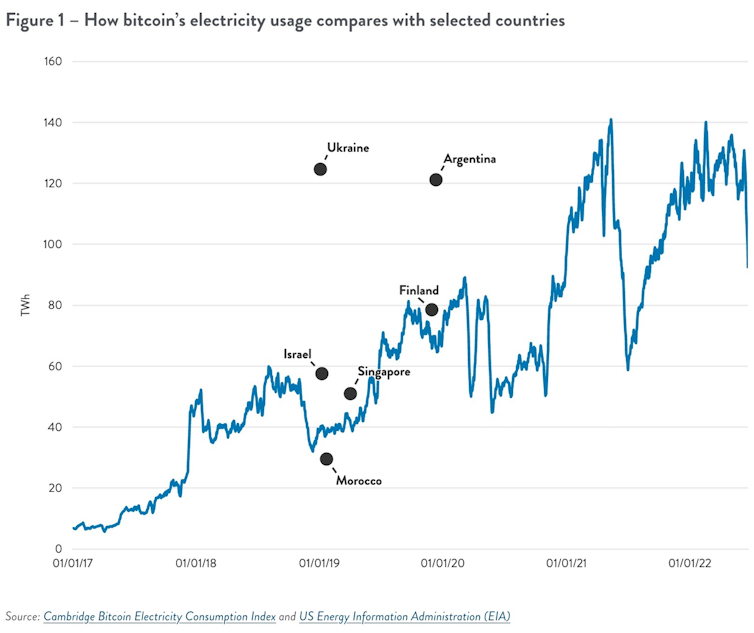
Despite their differences, however, all three have been clear about their intention to aggressively suppress transmission, and all have been effective in their responses.

Significant challenges remain, including the vexed issues of how we define hotspots, manage state borders and deal with threats posed by new COVID strains. And of course, how we deliver the vaccine en masse.

But triumphing over the challenges we’ve faced over the past few weeks should give us confidence as we move to the next phase of the pandemic.

Queensland’s precautionary approach

Queensland’s strategy was clear, decisive, and well articulated. As health authorities explained, the Greater Brisbane lockdown was a circuit breaker aimed at limiting interaction and buying time. This allowed contact tracers to do their job and authorities to learn more about the nature of the outbreak.

The fact it involved a new, more transmissible strain posed a significant threat. And it wasn’t clear, at first, how many chains of transmission had been initiated by the hotel quarantine cleaner who tested positive for it.


Read more: Brisbane’s COVID lockdown has a crucial difference: it aims to squash an outbreak before it even starts


This was no doubt a cautious response informed by the precautionary principle. Given what was at stake, it was justified.

Greater Brisbane’s three-day lockdown ended at 6pm Monday night, and Queensland has recorded just one case of community transmission in the last four days — the partner of the cleaner, who has been in quarantine since January 7 (though could have been infectious in the community for two days prior).

The threat seems to have been averted for now.

We need to wait out the full incubation period for the cleaner’s more than 350 close contacts to see if there are any more cases connected to her, though all of these contacts are in quarantine, and so pose no threat to the broader community.

Queensland Premier Annastacia Palaszczuk wearing a surgical mask
Queensland’s decisive lockdown was justified amid the presence of a more transmissible strain. Darren England/AAP

Victoria showcased its improvement

The Black Rock cluster in Victoria posed a significant risk and required an equally decisive response. It didn’t represent the level of threat Victorians faced at the beginning of its second wave, but given it occurred during Christmas and New Year’s plus the scars Victorians carried from the second wave, the threat couldn’t be underestimated.


Read more: Dear Australia, your sympathy helps, but you can’t quite understand Melbourne’s lockdown experience


The response to this cluster was rapid and decisive. It allowed the Victorian health department to showcase just how much their response capacities had improved in the previous six months. It was incredibly reassuring to see how quickly the public health team was able to establish links, and how quickly they were able to identify contacts of contacts in order to block chains of transmission.

It was a test they passed, and with six consecutive days of no locally acquired COVID cases, Victorians can breathe a collective sigh of relief — for now at least.

While the rapid closing of the border to NSW was an important element of the response, I remain uncomfortable with the scenes we witnessed at the borders, and the notion of Victorian residents being locked out of their homes. I hope that, as we have seen over the previous 24 hours with the new “traffic light” travel system, the government can continue to refine the way it handles this issue.

New South Wales less risk-averse

New South Wales has always appeared to have a greater tolerance for risk when it comes to COVID than other states. Its response has been characterised by a “test, trace and isolate” approach and a reticence to lock down huge areas of Sydney. Lockdowns have been localised and relatively brief.

Many restrictions, however, are still in place — residents of Greater Sydney, Central Coast and Wollongong, for example, can still only have five visitors to the home, including children, and masks are now compulsory in many places. Hotel quarantine remains a vulnerability and refinements continue to be made, in NSW and elsewhere.

Despite its challenges, time and time again the state has shown it can keep virus transmission under control.

The situation it faced with multiple new clusters over the past three weeks could be considered one of its biggest tests. And for the most part, the state seemed to have a reasonable understanding of chains of transmission.

People wearing facemasks at a train station in Sydney
In January, NSW adopted a mandatory mask rule indoors for the first time since the pandemic began. But for the most part, the state has relied on intense contact tracing. Paul Braven/AAP

The way authorities respond to threats must be proportionate, but it’s as much an art as it is a science. Judgement calls must be made, and striking the right balance is not easy when uncertainty is high and luck plays such a huge part.

NSW has seemed to walk this line successfully so far. The latest outbreak did call for more aggressive measures such as a targeted lockdown in the Northern Beaches and the introduction of mandatory mask wearing. Along with testing, tracing and isolating, this has helped bring transmission rates under control.

On the downhill run to the end of this pandemic

There’s still a way to go in the fight against COVID. But unlike other parts of the world, Australia is on the downhill run to the end.

As much as we should be thankful for the good leadership shown by those making decisions, the real thanks is to the community, who have followed the rules and made huge sacrifices to get us where we are now.

Although we will face many challenges over the next year, Australia remains one of the shining lights in the fight against COVID. We are seeing the benefits of our sacrifices now, and will continue to see them for many years to come.

ref. Vic, QLD and NSW are managing COVID outbreaks in their own ways. But all are world-standard – https://theconversation.com/vic-qld-and-nsw-are-managing-covid-outbreaks-in-their-own-ways-but-all-are-world-standard-152974

With COVID-19 mutating and surging, NZ urgently needs to tighten border controls

Source: The Conversation (Au and NZ) – By Nick Wilson, Professor of Public Health, University of Otago

The global COVID-19 pandemic is intensifying, with more infectious variants of the virus, and more rapid spread, especially in countries such as the US and UK. This deterioration has meant a higher number of infected returnees arriving at New Zealand’s MIQ facilities — with 31 new cases in a recent three-day period.

This situation is a particular concern given we know hotels used as managed isolation and quarantine (MIQ) facilities are not designed for infection control due to problems with shared spaces and ventilation.

Indeed, there have been eight border failures identified since early August, 2020, with seven probably associated with failures at MIQ facilities. There have also been many rule breaches in these facilities.

The Simpson and Roche review of the testing and surveillance regime also highlights multiple problems with the national response, although action is underway to address some of these deficiencies and extra funding is being allocated.

Nevertheless, nursing staff at MIQ facilities recently reported persisting concerns with staff shortages.

Recent COVID-19 outbreaks and near-misses in Australia remind us that community spread is a real possibility and could threaten the huge gains from New Zealand’s successful implementation of an elimination strategy.

Reduce numbers of infected arrivals

There are multiple ways New Zealand could greatly reduce the number of infected travellers arriving and entering MIQ facilities, particularly those with more infectious virus variants.

Systematic pre-travel testing requirements have been phased in by many countries and New Zealand has added a requirement for pre-travel PCR testing from January 15.

This process could be made more effective by using a combination of rapid antigen testing and a period of pre-travel quarantine prior to boarding flights (e.g. a five-day stay at an airport hotel combined with rapid antigen testing on arrival at the hotel and just before boarding the flight).

People in masks on hotel balcony
Auckland hotels are still being used as quarantine facilities, despite known problems with ventilation and shared spaces. GettyImages

Antigen testing has several advantages over PCR testing and can provide reasonable diagnostic performance in a screening situation particularly with repeat testing.

The government should also consider a large reduction in travel numbers from high-incidence countries, as has just been implemented in Australia. New Zealand is now accepting higher inbound traveller numbers (about 11,000 per month) than are allowed into all of Australia (about 10,000 per month for a country with five times the population).

Given the seriousness of the current risk, the government could suspend flights from the UK, US, and South Africa immediately. This is what China has done for UK flights, and Japan has recently banned entry to non-resident foreigners from more than 150 countries.


Read more: Coronavirus: few vaccines prevent infection – here’s why that’s not a problem


Such a suspension could then potentially be extended to other countries with out-of-control pandemic spread — especially if pre-flight testing and pre-flight quarantine is not feasible in such countries.

These measures should substantially reduce numbers of infected people boarding flights, the risk of infections on flights to New Zealand (which is well documented), and ultimately the number of infected people arriving and the risks of outbreaks in the community.

The booking system that travellers are using to arrange a space in MIQ facilities as part of their travel planning could be used to help manage these precautions. In the medium term, pre-travel vaccination will become possible and should provide a further way of reducing the risk of importing infection.

Tighten processes at border facilities

Some strengthening of MIQ facility processes has recently occurred (e.g. by the NZ Defence Force) but the government could still consider the following:

  • close MIQ facilities in Auckland (to protect such a key economic centre), or reserve Auckland-based MIQ facilities for relatively low-risk travellers (such as those from Australia)

  • eliminate shared-space use in MIQ facilities, at least until the first test returns a negative result (exercising in rooms only, provision of nicotine patches for smokers)

  • prosecute those who break MIQ rules. Despite many instances of rule-breaking within these facilities, no one has yet been prosecuted.


Read more: Delaying second COVID-19 vaccine doses will make supplies last longer but comes with risks


Fast-track vaccination of border workers

Waiting for a vaccine to arrive in March is too long in our view. The government could explore a fast-track process for vaccinating border control workers. This process would require expedited MedSafe approval and fast-tracked delivery of the vaccine into the country.

Given Australia plans to start vaccinating in February it might be possible to come to a joint arrangement with them. This intervention assumes that vaccination provides some protection against transmitting the infection to others, which is likely but not yet confirmed.

There is a range of other measures that can help New Zealand sustain its COVID-19 elimination status until such time as the population is protected by high vaccine coverage:

  • learn about COVID-19 vaccination roll-out strategies from countries that seem to have done it well so far (e.g. Israel). Unfortunately, many European countries have had a slow start to their programmes

  • upgrade the alert level system so it maximises risk reduction while minimising economic damage

  • mandate that MIQ facility workers and returnees use digital technologies, such as the Bluetooth function on the NZ COVID Tracer app, to facilitate contact tracing in the event of a border failure. Returnees could be required to use such technologies for two weeks after leaving MIQ facilities

  • consider using rapid antigen tests for community testing — which may help counteract the declining number of community tests which are currently far below optimal levels for early detection purposes.

In summary, the global COVID-19 pandemic situation is still deteriorating and may continue to do so for some months. New Zealand’s response needs to be urgently upgraded in the ways outlined here. Failure to adapt to evolving realities puts our successful elimination strategy at risk.

ref. With COVID-19 mutating and surging, NZ urgently needs to tighten border controls – https://theconversation.com/with-covid-19-mutating-and-surging-nz-urgently-needs-to-tighten-border-controls-153078

14 billion litres of untreated wastewater is created each day in developing countries, but we don’t know where it all goes

Source: The Conversation (Au and NZ) – By Jacqueline Thomas, Lecturer in Environmental and Humanitarian Engineering, University of Sydney

To limit the spread of disease and reduce environmental pollution, human waste (excreta) needs to be safely contained and effectively treated. Yet 4.2 billion people, more than half of the world’s population, lack access to safe sanitation.

In developing countries, each person produces, on average, six litres of toilet wastewater each day. Based on the number of people who don’t have access to safe sanitation, that equates to nearly 14 billion litres of untreated faecally contaminated wastewater created each day. That’s the same as 5,600 Olympic-sized swimming pools.

This untreated wastewater directly contributes to increased diarrhoeal diseases, such as cholera, typhoid fever and rotavirus. Diseases such as these are responsible for 297,000 deaths per year of children under five years old, or 800 children every day.

The highest rates of diarrhoea-attributable child deaths are experienced by the poorest communities in countries including Afghanistan, India, and the Democratic Republic of Congo.

Given the global scale of this problem, it’s surprising sanitation practitioners still don’t know where exactly all the human excreta flows or leaches to, due to absent or unreliable data.

Poor sanitation to worsen under climate change

Inadequate sanitation is not only a human health issue, it’s also bad for the environment. An estimated 80% of wastewater from developed and developing countries flows untreated into environments around the world.

If an excess of nutrients (such as nitrogen and phosphorous) are released into the environment from untreated wastewater, it can foul natural ecosystems and disrupt aquatic life.


Read more: Australia’s pristine beaches have a poo problem


This is especially the case for coral reefs. Many of the worlds most diverse coral reefs are located in tropical developing countries.

And overwhelmingly, developing countries have very limited human excreta management, leading to large quantities of raw wastewater being released directly onto coral reefs. In countries with high populations such as Indonesia and the Philippines, this is particularly evident.

A coral reef underwater, with clown fish swimming by.
Sewage discharges in proximity to sensitive coral reefs, particularly in the tropics. Shutterstock

The damage raw wastewater inflicts on corals is severe. Raw wastewater carries solids, endocrine disrupters (chemicals that interfere with hormones), inorganic nutrients, heavy metals and pathogens directly to corals. This stunts coral growth, causes more coral diseases and reduces their reproduction rates.

The challenges of climate change will exacerbate our sanitation crisis, as increased rain and flooding will inundate sanitation systems and cause them to overflow. Pacific Island nations are particularly vulnerable, because of the compounding impacts of rising sea levels and more frequent, extreme tropical cyclones.

Meanwhile, increased drought and severe water scarcity in other parts of the world will render some sanitation systems, such as sewer systems, inoperable. One example is the mismanagement of government-operated water supplies in Harare, Zimbabwe leading to the failure of the sewerage system and placing millions at risk of waterborne diseases.

Even in more developed countries like Australia, increased frequency of extreme weather events and disasters, including bushfires, will damage some sanitation infrastructure beyond repair.

Global targets to improve sanitation

Improving clean water and sanitation have clear global targets. Goal 6 of the United Nation’s sustainable development goals is to, by 2030, achieve adequate and equitable sanitation for all and to halve the proportion of untreated wastewater.

A man emptying a pit latrine in urban Tanzania
A man emptyies a pit latrine in urban Tanzania. Jacqueline Thomas, Author provided

Achieving this target will be difficult, given there is an absence of reliable data on the exact numbers of sanitation systems that are safely managed or not, particularly in developing countries.

Individual studies in countries such as Tanzania provide small amounts of information on whether some sanitation systems are safely managed. But these studies are not yet at the size needed to extrapolate to national scales.


Read more: When bushfires meet old septic tanks, a disease outbreak is only a matter of time


So what’s behind this lack of data?

A big reason behind the missing data is the large range of sanitation systems and their complex classifications.

For example, in developing countries, most people are serviced by on-site sanitation such as septic tanks (a concrete tank) or pit latrines (hole dug into the ground). But a lack of adherence to construction standards in nearly all developing countries, means most septic tanks are not built to standard and do not safely contain or treat faecal sludge.

A hole in the ground, lined with two bricks, and a blue bucket beside it
A typical pit latrine in rural Tanzania. Jacqueline Thomas, Author provided

A common example seen with septic tank construction is there are a lot of incentives to build “non-standard” septic tanks that are much cheaper. From my current research in rural Fiji, I’ve seen reduced tank sizes and the use of alternative materials (old plastic water tanks) to save space and money in material costs.

These don’t allow for adequate containment or treatment. Instead, excreta can leach freely into the surrounding environment.

A white pipe juts out of a blue plastic tank and into the ground.
A ‘non-standard’ septic tank, which uses plastic, in Fiji. Jacqueline Thomas, Author provided

A standard septic tank is designed to be desludged periodically, where the settled solids at the bottom of the tanks are removed by large vacuum trucks and disposed of safely. So, having a non-standard septic tank is further incentivised as the lack of sealed chambers reduces the accumulation of sludge, delaying costly emptying fees.

Another key challenge with data collection is how to determine if the sanitation infrastructure if functioning correctly. Even if the original design was built to a quality standard, in many circumstances there are significant deficiencies in operational and maintenance activities that lead to the system not working properly.


Read more: Sewerage systems can’t cope with more extreme weather


What’s more, terminology is a constant point of confusion. Households — when surveyed for UN’s Sustainable Development Goal data collection on sanitation — will say they do have a septic tank. But in reality, they’re unaware they have a non-standard septic tank functioning as a leach-pit, and not safely treating or containing their excreta.

Fixing the problem

Achieving the Sustainable Development Goal 6 requires nationally representative data sets. The following important questions must be answered, at national scales in developing countries:

  • for every toilet, where does the excreta go? Is it safely contained, treated on site, or transported for treatment?

  • if the excreta is not contained or treated properly after it leaves the toilet, then how far does it travel through the ground or waterways?

  • when excreta is removed from the pit or septic tank of a full on-site latrine, where is it taken? Is it dumped in the environment or safely treated?

  • are sewer systems intact and connected to functioning wastewater treatment plants that releases effluent (treated waste) of a safe quality?

Presently, the sanitation data collection tools the UN uses for its Sustainable Development Goals don’t answer in full these critical questions. More robust surveys and sampling programs need to be designed, along with resource allocation for government sanitation departments for a more thorough data collection strategy.

And importantly, we need a co-ordinated investment in sustainable sanitation solutions from all stakeholders, especially governments, international organisations and the private sector. This is essential to both protect the health of our own species and all other living things.


Read more: Curious Kids: Where does my poo go when I flush the toilet? Does it go into the ocean?


ref. 14 billion litres of untreated wastewater is created each day in developing countries, but we don’t know where it all goes – https://theconversation.com/14-billion-litres-of-untreated-wastewater-is-created-each-day-in-developing-countries-but-we-dont-know-where-it-all-goes-151217

14 billion litres of untreated wastewater is created each day in developing countries, but we don’t know where all of it goes

Source: The Conversation (Au and NZ) – By Jacqueline Thomas, Lecturer in Environmental and Humanitarian Engineering, University of Sydney

To limit the spread of disease and reduce environmental pollution, human waste (excreta) needs to be safely contained and effectively treated. Yet 4.2 billion people, more than half of the world’s population, lack access to safe sanitation.

In developing countries, each person produces, on average, six litres of toilet wastewater each day. Based on the number of people who don’t have access to safe sanitation, that equates to nearly 14 billion litres of untreated faecally contaminated wastewater created each day. That’s the same as 5,600 Olympic-sized swimming pools.

This untreated wastewater directly contributes to increased diarrhoeal diseases, such as cholera, typhoid fever and rotavirus. Diseases such as these are responsible for 297,000 deaths per year of children under five years old, or 800 children every day.

The highest rates of diarrhoea-attributable child deaths are experienced by the poorest communities in countries including Afghanistan, India, and the Democratic Republic of Congo.

Given the global scale of this problem, it’s surprising sanitation practitioners still don’t know where exactly all the human excreta flows or leaches to, due to absent or unreliable data.

Poor sanitation to worsen under climate change

Inadequate sanitation is not only a human health issue, it’s also bad for the environment. An estimated 80% of wastewater from developed and developing countries flows untreated into environments around the world.

If an excess of nutrients (such as nitrogen and phosphorous) are released into the environment from untreated wastewater, it can foul natural ecosystems and disrupt aquatic life.


Read more: Australia’s pristine beaches have a poo problem


This is especially the case for coral reefs. Many of the worlds most diverse coral reefs are located in tropical developing countries.

And overwhelmingly, developing countries have very limited human excreta management, leading to large quantities of raw wastewater being released directly onto coral reefs. In countries with high populations such as Indonesia and the Philippines, this is particularly evident.

A coral reef underwater, with clown fish swimming by.
Sewage discharges in proximity to sensitive coral reefs, particularly in the tropics. Shutterstock

The damage raw wastewater inflicts on corals is severe. Raw wastewater carries solids, endocrine disrupters (chemicals that interfere with hormones), inorganic nutrients, heavy metals and pathogens directly to corals. This stunts coral growth, causes more coral diseases and reduces their reproduction rates.

The challenges of climate change will exacerbate our sanitation crisis, as increased rain and flooding will inundate sanitation systems and cause them to overflow. Pacific Island nations are particularly vulnerable, because of the compounding impacts of rising sea levels and more frequent, extreme tropical cyclones.

Meanwhile, increased drought and severe water scarcity in other parts of the world will render some sanitation systems, such as sewer systems, inoperable. One example is the mismanagement of government-operated water supplies in Harare, Zimbabwe leading to the failure of the sewerage system and placing millions at risk of waterborne diseases.

Even in more developed countries like Australia, increased frequency of extreme weather events and disasters, including bushfires, will damage some sanitation infrastructure beyond repair.

Global targets to improve sanitation

Improving clean water and sanitation have clear global targets. Goal 6 of the United Nation’s sustainable development goals is to, by 2030, achieve adequate and equitable sanitation for all and to halve the proportion of untreated wastewater.

A man emptying a pit latrine in urban Tanzania
A man emptyies a pit latrine in urban Tanzania. Jacqueline Thomas, Author provided

Achieving this target will be difficult, given there is an absence of reliable data on the exact numbers of sanitation systems that are safely managed or not, particularly in developing countries.

Individual studies in countries such as Tanzania provide small amounts of information on whether some sanitation systems are safely managed. But these studies are not yet at the size needed to extrapolate to national scales.


Read more: When bushfires meet old septic tanks, a disease outbreak is only a matter of time


So what’s behind this lack of data?

A big reason behind the missing data is the large range of sanitation systems and their complex classifications.

For example, in developing countries, most people are serviced by on-site sanitation such as septic tanks (a concrete tank) or pit latrines (hole dug into the ground). But a lack of adherence to construction standards in nearly all developing countries, means most septic tanks are not built to standard and do not safely contain or treat faecal sludge.

A hole in the ground, lined with two bricks, and a blue bucket beside it
A typical pit latrine in rural Tanzania. Jacqueline Thomas, Author provided

A common example seen with septic tank construction is there are a lot of incentives to build “non-standard” septic tanks that are much cheaper. From my current research in rural Fiji, I’ve seen reduced tank sizes and the use of alternative materials (old plastic water tanks) to save space and money in material costs.

These don’t allow for adequate containment or treatment. Instead, excreta can leach freely into the surrounding environment.

A white pipe juts out of a blue plastic tank and into the ground.
A ‘non-standard’ septic tank, which uses plastic, in Fiji. Jacqueline Thomas, Author provided

A standard septic tank is designed to be desludged periodically, where the settled solids at the bottom of the tanks are removed by large vacuum trucks and disposed of safely. So, having a non-standard septic tank is further incentivised as the lack of sealed chambers reduces the accumulation of sludge, delaying costly emptying fees.

Another key challenge with data collection is how to determine if the sanitation infrastructure if functioning correctly. Even if the original design was built to a quality standard, in many circumstances there are significant deficiencies in operational and maintenance activities that lead to the system not working properly.


Read more: Sewerage systems can’t cope with more extreme weather


What’s more, terminology is a constant point of confusion. Households — when surveyed for UN’s Sustainable Development Goal data collection on sanitation — will say they do have a septic tank. But in reality, they’re unaware they have a non-standard septic tank functioning as a leach-pit, and not safely treating or containing their excreta.

Fixing the problem

Achieving the Sustainable Development Goal 6 requires nationally representative data sets. The following important questions must be answered, at national scales in developing countries:

  • for every toilet, where does the excreta go? Is it safely contained, treated on site, or transported for treatment?

  • if the excreta is not contained or treated properly after it leaves the toilet, then how far does it travel through the ground or waterways?

  • when excreta is removed from the pit or septic tank of a full on-site latrine, where is it taken? Is it dumped in the environment or safely treated?

  • are sewer systems intact and connected to functioning wastewater treatment plants that releases effluent (treated waste) of a safe quality?

Presently, the sanitation data collection tools the UN uses for its Sustainable Development Goals don’t answer in full these critical questions. More robust surveys and sampling programs need to be designed, along with resource allocation for government sanitation departments for a more thorough data collection strategy.

And importantly, we need a co-ordinated investment in sustainable sanitation solutions from all stakeholders, especially governments, international organisations and the private sector. This is essential to both protect the health of our own species and all other living things.


Read more: Curious Kids: Where does my poo go when I flush the toilet? Does it go into the ocean?


ref. 14 billion litres of untreated wastewater is created each day in developing countries, but we don’t know where all of it goes – https://theconversation.com/14-billion-litres-of-untreated-wastewater-is-created-each-day-in-developing-countries-but-we-dont-know-where-all-of-it-goes-151217

Impeaching Trump a second time is a complex and politically risky act

ANALYSIS: By Markus Wagner, University of Wollongong

President Donald Trump is extremely unlikely to capitulate to pressure to resign in the final days of his presidency. And his Cabinet is equally unlikely to force him out by invoking the 25th amendment of the Constitution, despite calls from the Democrats to do so.

So, in the wake of last week’s insurrection at the US Capitol, which left five people dead and the Trump White House in free fall, the final option available to lawmakers who want to punish the president for his role in encouraging the rioters is impeachment. Again.

The House Democrats introduced an article of impeachment against Trump yesterday for “inciting violence against the government of the United States”.

House Speaker Nancy Pelosi said the Democrats “will proceed” with impeachment proceedings this week if Vice-President Mike Pence does not respond to a separate resolution calling for the Cabinet to invoke the 25th amendment.

This will no doubt be a complicated task in the waning days of the Trump presidency. No US president has faced impeachment twice. And there are many questions about how the process will play out, given Joe Biden will be sworn in as the 46th president of the US in just nine days.

US Congress Speaker Nancy Pelosi
US Congress Speaker Nancy Pelosi says the House “will proceed” with bringing legislation to impeach Trump to the floor this week. Image: The Conversation/J. Scott Applewhite/AP

Impeachment: a two-step process
This is how the impeachment process works under the Constitution. (Trump will be familiar with this since he has already been through it before on charges of abuse of power and obstruction of Congress.)

Impeachment requires both chambers of Congress — the House of Representatives and the Senate — to act. The House has the “sole power of impeachment” for federal officials, and all that is required is a simple majority to initiate proceedings.

The House essentially takes on the role of a prosecutor, deciding if the charges warrant impeachment and a trial.

The Senate is where the actual trial takes place. Under the Constitution, the chamber acts like a court, with senators considering evidence given by witnesses or any other form deemed suitable.

Impeachment managers appointed by the House “prosecute” the case before the Senate and the president can mount a defence. The chief justice of the Supreme Court acts as the presiding officer.

While these proceedings have many of the trappings of an actual court, it is important to bear in mind that impeachment is a political process.

Under the impeachment clause of the Constitution, a president may be removed from office “on impeachment for, and conviction of, treason, bribery, or other high crimes and misdemeanors.”

This language has been the source of considerable debate, with some legal experts, like Trump’s first impeachment lawyer, Alan Dershowitz, arguing that impeachable offences are limited to actual crimes. Others (correctly) disagree.

A "refuse fascism" rally in New York.
A “refuse fascism” rally in New York. Image: The Conversation/STRF/STAR MAX/IPx/AP

Conviction requires two-thirds of senators — a deliberately high threshold to prevent politically motivated impeachments from succeeding. No previous impeachment of a president has ever met this bar: Andrew Johnson (1868), Bill Clinton (1998) and Trump (2019) were all acquitted.

Even though some Republican senators have indicated they would vote in favour of impeachment — or at least be open to it — the number is likely nowhere near enough for conviction.

Complicating factors: time, shifting majorities and a difficult process
With only days left before Trump leaves office on January 20, time is of the essence.

The Constitution does not mandate any particular timeline for the proceedings to take place. Outgoing Senate Majority Leader Mitch McConnell has indicated a Senate trial could not begin before January 19, as the Senate is in recess until then.

Moving that date up would require all 100 senators to agree — an unlikely prospect.

But this may not be an obstacle to starting the process. The Constitution is silent on the question of whether a Senate trial can be held after a president has left office. The 1876 impeachment of War Secretary William Belknap for graft after he left office may serve as precedent.

William Belknap
William Belknap was impeached by the House but acquitted by the Senate. Image: The Conversation/Library of Congress

So, if the House votes to impeach Trump before January 20, a trial could theoretically happen after that date. The maths also change slightly in the Democrats’ favour on that day.

The Democrats will take back control of the Senate, albeit on a 50-50 split with incoming Vice President Kamala Harris casting any tie-breaking vote.

Democrats are pushing for impeachment because the Constitution not only allows conviction, but also provides for barring Trump from holding federal office again. This would thwart his ambitions to run for president in 2024 — a prospect not lost on Republicans with the same goal.

The Constitution does not stipulate how many senators need to vote in favour of disqualifying an impeached official from holding office again, but the Senate has determined a simple majority would suffice.

This tool has also been used sparingly in the past: disqualification has only occurred three times, and only for federal judges.

The bigger hurdle, however, is that it still requires Trump to first be convicted of impeachment by a two-thirds majority in the Senate.

Political implications of impeachment
Biden has remained lukewarm at best to suggestions of a Senate trial after January 20. Such proceedings would allow Trump to style himself a political martyr to his followers even more than is already the case.

This would distract from the critical goals Biden has for his first 100 days and beyond: tackling spiralling COVID infection numbers and the country’s lagging vaccination program, providing immediate financial relief to struggling families, rejoining international climate action efforts and repairing the damage done to the fabric of government by the Trump administration. Last, but not least, it would make confirmation of Biden’s Cabinet picks more difficult.

Achieving these goals while Trump sets off the political fireworks he so cherishes is implausible.

President-elect Joe Biden
President-elect Joe Biden has said impeachment is for Congress to decide. Image: The Conversation/Susan Walsh/AP

The Democrats have floated the idea of impeaching Trump before January 20, but not sending the article of impeachment to the Senate for trial until weeks later — or even longer — to give Biden a chance to get started on these initiatives. But a distraction is a distraction no matter when it happens.

Democrats would also do well to remember that political fortunes can change. It’s understandable to want to punish Trump for his actions, but
rushing into a political trial in the Senate, which Democrats are bound to lose, may have unintended consequences for the future.

What’s to stop the Republicans from pursuing impeachments of future Democratic leaders they disagree with, even in the face of certain defeat in the Senate? This could poison the political atmosphere even further.

Democrats may also want to consider the fact that Trump could face federal charges for allegedly inciting the violence at the Capitol or state charges for urging Georgia Secretary of State Brad Raffensperger to “find” enough votes to overturn his defeat to Biden.

While this outcome is far from certain, the chances of conviction in a court of law would likely prove to be less toxic politically for both Democrats and Republicans alike.


This story has been updated to add Democrats formally introducing an article of impeachment on January 11.The Conversation

By Dr Markus Wagner, associate professor of law, University of Wollongong. This article is republished from The Conversation under a Creative Commons licence. Read the original article.

Print Friendly, PDF & Email

Article by AsiaPacificReport.nz

Tahiti’s covid-19 death tally rises to 122 – 17,000 plus cases

By RNZ Pacific

French Polynesia has recorded another covid-19 death, raising the pandemic’s tally to 122.

There are 46 people with covid-19 in hospital, 21 of them in intensive care.

The first death occurred four months ago at the start of the second wave, which is now reportedly weakening.

So far, more than 17,000 have tested positive for the virus.

All but 62 of the cases were detected after the borders were reopened last July and mandatory quarantine requirements were abolished to boost tourism.

Last November, Asia Pacific Report quoted epidemiologist Dr Pierre-Henri Mallet describing the lack of testing alarming and “dangerous” in the face of the big increase in cases, saying it was possible that “30,000 people [had] already been affected by this virus and one underestimates the number of cases”.

Print Friendly, PDF & Email

Article by AsiaPacificReport.nz

3 reasons to study science communication beyond the West

Source: The Conversation (Au and NZ) – By Lindy Orthia, Senior Lecturer in Science Communication, Australian National University

Ask a science communicator how old their field is. They might say a few decades, or even centuries, because they’re thinking about the Western science communication tradition associated with a scientist-public gap.

These days, we almost exclusively associate science communication with Western science. Yet humans have always communicated knowledge about the world within their own societies and to others. There’s evidence of this going back tens of thousands of years.

Society today should recognise past and ongoing science communication approaches that diverge from the West’s relatively recent ones.

Also, as we have explored in a paper and webinar, we should include this knowledge in science communication histories. Here are three reasons why.

1. Framing science as ‘Western’ is political

The histories we tell are political. Political factors can determine important elements such as where a story begins and ends and what is included or excluded. Histories of science aren’t immune to this.

We often equate science and scientific practice with a gold standard of credibility. But there’s much rhetorical power behind the “science” label.

Some influential 20th-century scholars, such as the late British historian Herbert Butterfield, valorised Western science and judged other sources of human knowledge production as failed attempts.

Others such as Andrew Cunningham, while trying to redress that tendency, defined “science” so narrowly that only the Western version of professional knowledge production applied.


Read more: It’s taken thousands of years, but Western science is finally catching up to Traditional Knowledge


Both these stances denigrate non-Western knowledge systems as lesser, by excluding them from “science”.

They have shaped science communication histories taught today, wherein we mostly ignore the diverse ways in which cultures across the world have communicated knowledge.

Thus, most science communicators lack insight into how these cultures tailored their communication to different audiences, aims and mediums.

Did you know medieval European medical writers regularly used Arabic pseudonyms for their published works to confer prestige?

This was because, at the time, Arabic cultures demonstrated strong leadership in pharmaceuticals and other scientific fields across the Afro-Asian-European landmass.

Or consider the Persian engineers who built ingenious constructions to provide water, air conditioning and refrigeration to desert communities thousands of years ago.

They communicated their technical expertise over generations through spoken word and actions.

Large double-domed stone structures with windcatcher towers.
This is an ancient Ab Anbar from the Iranian desert city of Naeen. It’s a reservoir of drinking water that is part of a qanat water system, kept cool by windcatchers. Wikimedia Commons/Zereshk

Such snippets offer deep insight into myriad science communication cultures. Unfortunately, they’re rarely included in science communication histories today.

To borrow from Peter Pormann, a professor of Classics and Graeco-Arabic Studies at the University of Manchester, this is a case of intellectual amnesia.

It may be historians’ wish to respect diverse cultural categories, since “science communication” is an English term associated with Western culture. But a side effect of this is a profoundly Eurocentric approach.

Ibn Sina cutout from a Tajikistan banknote.
This cutout of Ibn Sina, or Abu Ali Sina, is taken from a Tajikistan banknote. The Persian physician, astronomer and philosopher lived during the Islamic Golden Age and is often regarded the father of early modern medicine. Shutterstock

2. Human cultures are diverse and wonderful

All over the world, different science communication systems have been adapted to different locations, lifestyles, cultures and histories. They are manifestations of a glorious wealth of human expertise and creativity and should be celebrated, not ignored.

Some are poetic, some instructional. Some were used to bridge cultures and some to maintain knowledge throughout generations, over centuries and even millennia.

Māori pūrākau (stories) are one example of a narrative technique for communicating mātauranga (Māori knowledge) about the environment, culture, values and more.

Westerners often dismiss pūrākau as myths. In fact, they encode evidence-based knowledge, gathered and tested over many ages, into a metaphor-driven form of communication.

One pūrākau associated with the Waitepuru stream in the Matatā region of Aotearoa New Zealand describes a “taniwha” — in this case a lizard whose tail flicks from side to side.

Carving of a lizard-like 'taniwha' at the Auckland War Memorial Museum.
The serpent-like taniwah Ureia was guardian of the Hauraki people and, based on different accounts, was said to take the form of a fish or school of fish. WikiCommons

Among this pūrākau’s many meanings is a warning about the stream’s movement over time, indicating where it’s dangerous to build.

The pūrākau encodes complex hydrogeological knowledge that has been observed, tested and communicated over centuries.

The Māori process of constructing knowledge on the evidence of time-honoured experience is, in fact, consistent with Western science’s expectations of evidence-based knowledge.

Yet, strategies such as pūrākau for communicating that knowledge are culturally-specific and unique. Science communicators should pay them attention as part of the rich diversity of global knowledge communication.

3. Science communication should be inclusive

The past few years have seen the science communication discipline come under heavy fire for exclusionary practices.

The strongest supporting evidence comes from University College London science communication researcher Emily Dawson. She worked with low-income ethnic minority communities in London who weren’t heavily involved in science communication practices.

They didn’t visit science centres or museums. Dawson’s work showed “powerlessness” and “cultural imperialism” (feelings of being “othered”) were key reasons why.

Western science museum exhibits incorporating historical narratives may tell stories about the world from a European perspective. This can perpetuate racism and ratify European colonialism.

If European-descended Westerners are the only demographic who see their culture reflected and respected in science communication histories, this can lead to further social exclusion.

For cultural resilience and continuity, we must support knowledge-keepers’ efforts to sustain their science communication practices.

Even where ancient practices are no longer part of a society’s contemporary life, cultural roots still matter.

For instance, many modern Iraqis have great interest in the 2,000-year-old cuneiform cultures of Babylonia and Assyria. Exploring cuneiform science and its communication practices should be on our collective agenda.

Who had access to Babylonian knowledge about lunar eclipses? Within what worldview did Babylonians frame that knowledge?

These are exciting questions we can and should explore, to ensure the science communication histories we learn and teach leave none behind.


Read more: Friday essay: the recovery of cuneiform, the world’s oldest known writing


ref. 3 reasons to study science communication beyond the West – https://theconversation.com/3-reasons-to-study-science-communication-beyond-the-west-152237

Superbugs have an arsenal of defences — but we’ve found a new way around them

Source: The Conversation (Au and NZ) – By Fernando Gordillo-Altamirano, Medical Doctor, PhD Student, School of Biological Sciences, Monash University

Researchers have not discovered any new antibiotics in decades. But our new research, published today in Nature Microbiology, has found a way to give a second wind to the antibiotics we do have.

It involves the use of viruses that kill bacteria.

The problem

Hospitals are scary, and the longer you remain in them, the greater your risk. Among these risks, hospital-acquired infections are probably the biggest. Each year in Australia, 180,000 patients suffer infections that prolong their hospital stays, increase costs, and sadly, increase the risk of death.

It sounds absurd — hospitals are supposed to be the cleanest of places. But bacteria are everywhere and can adapt to the harshest of environments. In hospitals, our increased use of disinfectants and antibiotics has forced these bacteria to evolve to survive. These survivors are called “superbugs”, with an arsenal of tools to resist antibiotics. Superbugs prey on the most vulnerable patients, such as those in intensive care units.

Acinetobacter baumannii is a superbug responsible for up to 20% of infections in intensive care units. It attaches to medical devices such as ventilator tubes and urinary and intravenous catheters. It causes devastating infections in the lungs, urinary tract, wounds and bloodstream.

Treatment is difficult because A. baumannii can produce enzymes that destroy entire families of antibiotics. Other antibiotics never make it past its outer layer, or capsule. This outer layer — thick, sticky, viscous and made of sugars — also protects the superbug from the body’s immune system. In some cases, not even the strongest — and most toxic — antibiotics can kill A. baumannii. As a result, the World Health Organisation named it a critical priority for the discovery of new treatments.


Read more: Rising antibiotic resistance in UTIs could cost Australia $1.6 billion a year by 2030. Here’s how to curb it


A (somewhat) new solution

It’s said that the enemy of your enemy is your friend. Do bacteria have enemies?

Bacteriophages (or phages, for short) are the natural predators of bacteria. Their name literally means “bacteria eater”. You can find phages wherever you can find bacteria.

Phages are viruses. But don’t let that scare you. Unlike famous viruses — such as HIV, smallpox or SARS-CoV-2, the coronavirus that causes COVID — phages cannot harm humans. They only infect and kill bacteria. In fact, phages are quite picky. A single phage normally infects only one type of bacteria.

Electron micrograph image of multiple bacteriophages attached to a bacterial cell wall
Phages attach to the outside of bacteria, initiating the killing process. Dr Graham Beards/Wikimedia Commons, CC BY-SA

Since their discovery in the early 1900s, doctors thought of an obvious use for phages: treating bacterial infections. But this practice, known as phage therapy, was largely dismissed after the discovery of antibiotics in the 1940s.

Now, with the alarming rise of antibiotic-resistant superbugs, and a lack of new antibiotics, researchers are revisiting phage therapy. In Australia, for example, a team lead by Professor Jon Iredell at Sydney’s Westmead Hospital reported in February the safe use of phage therapy in 13 patients suffering from infections by another superbug, Staphylococcus aureus.

We began our study by “hunting” for phages against A. baumannii. From waste water samples sourced from all over Australia, we successfully isolated a range of phages capable of killing the superbug. That was the easy part.

Erasing antibiotic-resistance

When mixing our phages with A. baumannii in the laboratory, they were able to wipe out almost the entire bacterial population. But “almost” was not good enough. Within a few hours, the superbug showed how wickedly smart it is. It had found a way to become resistant to the phages and was happily growing in their presence.

We decided to take a closer look at these phage-resistant A. baumannii. Understanding how it outsmarted the phages might help us choose our next attack.

We discovered that phage-resistant A. baumannii was missing its outer layer. The genes responsible for producing the capsule had mutated. Under the microscope, the superbug looked naked, with no sign of its characteristic thick, sticky and viscous surface.

To kill their bacterial prey, phages first need to attach to it. They do this by recognising a receptor on the surface of the bacteria. Think of it as a lock-and-key mechanism. Each phage has a unique key, that will only open the specific lock displayed by certain bacteria.

Our phages needed A. baumannii‘s capsule for attachment. It was their prospective port of entry into the superbug. When attacked by our phages, A. baumannii escaped by letting go of its capsule. As expected, this helped us decide our next attack: antibiotics.

We tested the action of nine different antibiotics on the phage-resistant A. baumannii. Without the protective capsule, the superbug completely lost its resistance to three antibiotics, reducing the dosage needed to kill the superbug. Phages had pushed the superbug into a corner.

We established a way to revert antibiotic-resistance in one of the most dangerous superbugs.

Looking forward

Phage therapy has already been used in patients with life-threatening A. baumannii infections, with successful results. This study highlights the possibility of using phages to rescue antibiotics, and to use them in combination. After all, two is better than one.

ref. Superbugs have an arsenal of defences — but we’ve found a new way around them – https://theconversation.com/superbugs-have-an-arsenal-of-defences-but-weve-found-a-new-way-around-them-150536

The cicada’s deafening shriek is the sound of summer, and humans have been drawn to it for thousands of years

Source: The Conversation (Au and NZ) – By Eliza Middleton, Invertebrate and behavioural ecology laboratory manager, University of Sydney

Around Australia, the buzz-saw siren of cicadas heralds the beginning of summer. With 237 recorded species of cicada in Australia, almost no area of the country is untouched by their song. Up to 800 species in Australia are still to be scientifically recognised.

Cicadas, however, aren’t unique to Australia: the insects are found all over the world, though they’re most common in tropical regions.

As the world’s loudest insects, the ear-splitting call from the males is a love song to draw their mates near. But humans, too, have been drawn to singing cicadas, with the insects featuring in ancient poetry and literature of different cultures for thousands of years.

So, as we settle into summer, let’s explore the curious life-cycle of cicadas, and how people in ancient Greece and China, in particular, revered them.

The sound of summer

The life of a cicada begins as one of up to 400 eggs laid by a female in the bark of a tree. A nymph (juvenile) cicada hatches, falls to the ground and tunnels into the dirt to begin the majority of its life.

Cicada nymphs will live in the soil for between one and five years, though different species may remain underground in the nymph stage for longer. In the US, for example, one species can live underground for up to 17 years before emerging.

When ready to become adults, nymphs must leave the soil to moult. A split opens along the back of the nymph’s exoskeleton and the adult cicada pushes its way out.

These cicada shells — the ghost of its youth — are often the only evidence we can find of the insect. As an adult, a cicada will eat, sing, mate and die, all in a few weeks.

A dry cicada shell clinging precariously to a post. The shell is fragile with a large split from the head down the back to the abdomen.
The shell left behind as a cicada changes from a nymph to an adult. You can see a large split from the head down the back to the abdomen the adult emerged from. Eliza Middleton

Each species has its own unique call, and the noise can be truly deafening. For perspective, normal conversation between humans is recorded at about 60 decibels. But some cicada species, such as the Greengrocer cicada (Cyclochila australasiae) found along the coast of southeast Australia, can reach 120 decibels.

This is like standing beside emergency sirens. It’s also on the edge of causing pain or injury to human ears, which generally occurs at 130 decibels.

The noise is created by a structure called the tymbal, which works a bit like a drum. The tymbal is a thin membrane stretched across a number of “ribs” creating large chambers. These membranes vibrate rapidly through muscle action, which makes a clicking sound that’s amplified by their hollow abdomen.

After 17 years underground, cicada nymphs emerge in the billions | Planet Earth.

There are more than 3,200 cicada species scientifically described, and many more waiting to be discovered. They belong to the superfamily called the Cicadoidea, which is part of a larger animal group — the order Hemiptera, or the “true bugs”.

Insects in the Hemiptera order, such as aphids, leafhoppers and bed bugs, alongside cicadas, are known for having sucking and piercing mouthparts. This allows them to feed on sap by piercing the tree and drinking from the xylem (plant tissue that transports water and nutrients from roots to stems). This is how both the nymphs and adult cicadas feed — the former feeds off the roots while the latter feeds from the trunk.


Read more: Photos from the field: zooming in on Australia’s hidden world of exquisite mites, snails and beetles


Symbolism and stories

For the people of ancient Greece and China, cicadas were the focus of many beliefs that, despite the separation of East from West, were surprisingly similar. Both cultures admired them.

For the Greeks, the “tettix” was carefree and harmless. For the Chinese, the “tchen” was noble, yet also humble.

A nymph cicada that just emerged from its shell, which lies beside it. Shutterstock

Both societies loved the insects’ incessant call. Greek literature describes their call as “sweet”, such that a friendly cicada, legend says, once replaced the missing note when a string broke on a musician’s lyre. Like they do for us today, the cicadas’ hum also heralded the summer, especially the midday heat.

The Chinese of the Tang dynasty (618 to 906 AD) were so enamoured with the insects’ song, cicadas were caught and sold in small cages as pets. The Greeks may also have kept cicadas, as revealed by epitaphs written after their death, although the captive insects would have quickly died from starvation.

The esteem with which the cicada was held is also reflected in their association with the arts in both cultures.

They were the popular subject of Chinese poetry and paintings. And another Greek story tells us that when the Muses, goddesses of the arts, were born, an ancient race of men sang non-stop until they died, after which they transformed into cicadas.

Jade cicada
Jade cicada from the Han Dynasty, at the Xuzhou Museum. Mary Harrsch/Wikimedia, CC BY-SA

Cicada biology was also noted in these ancient times. In the 4th century BC, Aristotle determined correctly that only the male cicada sings and the cicada’s call was produced by the movement of abdominal membranes. Chinese observers also noted the female’s lack of sound in the 6th century AD.

The insects’ life cycle was of enormous significance to both peoples. The nymphs’ emergence from the earth provided a powerful symbol of Greek “autochthony”, the belief a community had always lived in a particular place as the original inhabitants. And the moulted skin of adult cicadas was a sign of immortality.


Read more: This ancient Chinese anatomical atlas changes what we know about acupuncture and medical history


What’s more, cicadas held similar ornamental values in both ancient China and Greece.

During China’s Han Dynasty (206 BC to 220 AD), jade cicadas were placed in the mouths of the dead. The stone had supposed preservative qualities, while the insect offered the hope of resurrection.

The Greek elite are said to have worn gold cicadas in their hair to signal their ties to Athens. Such ornamentation was also associated with Chinese nobility, in which golden cicadas adorned the hats of Han Dynasty court officials. Intriguingly, this practice was said to have been introduced by outsiders.

We cannot yet say whether such similar beliefs stem from early East-West contact. But the prominent cultural role of the “tchen” and “tettix” is certainly testimony to humanity’s enduring summer love affair with the curious caterwauling cicada.


Read more: Want to teach kids about nature? Insects can help


ref. The cicada’s deafening shriek is the sound of summer, and humans have been drawn to it for thousands of years – https://theconversation.com/the-cicadas-deafening-shriek-is-the-sound-of-summer-and-humans-have-been-drawn-to-it-for-thousands-of-years-152225

What Clive Palmer must now ask himself: would China’s ‘bastards’ buy a mine from him?

Source: The Conversation (Au and NZ) – By Kenneth Yin, Lecturer in law, Edith Cowan University

Colourful mining magnate Clive Palmer’s political ambitions appear to be in tatters. But what of his multibillion-dollar legal ambitions?

On Sunday he announced his United Australia Party will not contest Western Australia’s state election in March – a logical decision given his party attracted just 0.6% of the vote in the November election in his home state of Queensland.

But he has not withdrawn his defamation case in the Federal Court of Australia against Western Australian premier Mark McGowan, over statements including comments about Palmer’s claim for up to A$30 billion in damages from the WA government over a stalled iron ore project.

The damages claim has to do with the WA government imposing conditions in 2012 on a proposal by Palmer’s company Minerology Pty Ltd to develop the Balmoral South Iron Ore mine in the Pilbara. Those conditions, Palmer’s lawyers have argued, meant Minerology was unable to develop the mine, and thus suffered financial loss due to then being unable to sell the project to Chinese interests.

In arbitration proceedings Palmer’s lawyers have won several points in their bid to have these conditions declared invalid. The WA government was sufficiently worried about its exposure to hastily pass, in August 2020, unprecedented “emergency legislation” to prevent Palmer pursuing damages.


Read more: The WA government legislated itself a win in its dispute with Clive Palmer — and put itself above the law


Palmer has since applied to Australia’s High Court to have the WA legislation declared invalid.

But whether the High Court action goes ahead is not the bottom-line question. Even if it does hear his case, and declares the WA legislation invalid, it’s still far from certain Minerology could then go on to win damages.

The ‘first tier’ hurdle: who would buy from him

The legal precedent governing Palmer’s claim for damages are contained in a 1994 High Court decision in Sellars v Adelaide Petroleum. This involved an appeal by Mark Sellars, a director of mining company Poseidon Ltd, and Poseidon itself, against a Federal Court decision that awarded damages to minerals exploration company Adelaide Petroleum due to losses suffered as a result of misleading statements by Poseidon and Sellars.

The High Court ruled against Sellars and Poseidon. The significant point in the decision was the principle the judges explained in making their ruling. A court must, with the advantage of hindsight, look at everything that took place and ask if it was more likely than not (in other words, if there was a 51% chance or more) that, even if wrongdoing occurred, it led to a lost commercial opportunity.

This is the “first tier” to be overcome to recover damages.

Applying the Sellars v Adelaide Petroleum principle to Palmer’s claim, the issue becomes whether, because of the WA governent’s conditions, Minerology more likely than not lost the opportunity to sell the mine to Chinese interests. More pointedly, was it more likely than not Chinese interests would have bought the mine from Palmer?

Sour dealings with Chinese partners

With the benefit of “hindsight”, any court would need to consider Palmer’s history with Chinese business partners.

One of those is his long and bitter legal feud with CITIC Pacific Mining, the powerful state-owned enterprise that operates the Sino Iron project, Australia’s largest magnetite iron ore mine, on Minerology-controlled tenements.

In 2014, Palmer accused CITIC of dudding him on royalty payments. CITIC, in turn, accused Palmer of siphoning off funds to pay for his election campaigns. (Palmer won the Queensland seat of Fairfax at the 2013 federal election, and two UAP candidates, Glenn Lazarus and Jacqui Lambie, won Senate seats.)

China’s leading business publication, Caixin, quoted an unnamed CITIC executive as saying Palmer’s attempt “to swindle money from us” would “have grave consequences for foreign investors and in particular Chinese investors”.

The dispute led to several cases in WA’s Supreme Court. A 2017 ruling awarded Minerology A$200 million in back payments, as well as ongoing royalties then worth about A$400 million a year. (CITIC’s appeal was rejected in 2019). But in 2020 the court threw out Minerology’s case for about A$300 million more from CITIC as an “abuse of process”.

But just as damaging to Palmer’s dealings with the Chinese were his statements on national television in August 2014, in which he said the Chinese government wanted to “take over our ports and get our resources for free”, and called Chinese officials “bastards” and “mongrels”.

Clive Palmer calls the Chinese government bastards on ABC’s Q&A program.

So even if the High Court clears the way for Minerology to pursue its damages claim against the Western Australian government, there’s an argument to be made that Chinese interests would have been more likely than not to decline to do business with Palmer.

If so, Palmer would recover no damages.

The ‘second tier’ hurdle: quantifying the loss

There is also a second-tier hurdle to overcome if a court decides, for all the bad blood, that Chinese interests would have let bygones be bygones and be prepared to deal with Palmer.

In assessing the plaintiff’s actual loss, the court will need to consider every contingency that might affect that loss. It was held in Sellars v Adelaide Petroleum that to calculate the actual damage, what is called the “degree of possibilities” approach must be applied.


Read more: How Clive Palmer could challenge the act designed to stop him getting $30 billion


This approach means the court must look at the price of iron ore at the time the mine would have been ready for sale, what a potential buyer would be prepared to pay for the mine, and thus what loss has been incurred. This cannot be a precise exercise; the court just does its best.

But it’s the first hurdle that Palmer needs to get over first.

So even if he chances his arm in the High Court, and wins, he and his lawyers still have a legal mountain to climb. Establishing his actual entitlement to damages is likely to prove troublesome.

ref. What Clive Palmer must now ask himself: would China’s ‘bastards’ buy a mine from him? – https://theconversation.com/what-clive-palmer-must-now-ask-himself-would-chinas-bastards-buy-a-mine-from-him-152966

What’s next after Bridgerton? 5 romance series ripe for TV adaptation

Source: The Conversation (Au and NZ) – By Jodi McAlister, Lecturer in Writing, Literature and Culture, Deakin University

Bridgerton, Netflix’s lush adaptation of Julia Quinn’s historical romance series, has been viewed by 63 million households since its December 25 premiere, and is Netflix’s fifth biggest original series debut.

On the surface, this is unsurprising — Bridgerton is executive produced by Shonda Rhimes, the mastermind behind hit shows Scandal (2012-18) and Grey’s Anatomy (2005–).

But Bridgerton is also unusual. Its source material is a mass market romance series, a genre largely ignored for screen adaptation.

There are several likely reasons why TV has snubbed romance fiction.

Although a billion-dollar industry, romance fiction is regularly dismissed as trashy, formulaic, and poorly written by people ill-acquainted with the genre.

Additionally, romance series usually feature a different central couple each book. This constant change of the protagonists is difficult to map to a TV series format, and is a challenge Bridgerton will need to navigate in future seasons, as each of the eight Bridgerton siblings has their time in the sun as a romantic lead.

Production still
Romance fiction moves towards happy endings – unlike most television series, which likes to keep the romantic tension in play. Nick Briggs/Netflix

But the disregard of romance fiction is short-sighted. There is a clear market for romance adaptations.

Starz’ Outlander (2014–), based on Diana Gabaldon’s books, is entering its sixth season. Netflix has also produced Virgin River (2019–) and Sweet Magnolias (2020–), based on the series by Robyn Carr and Sherryl Woods, respectively. There is even the streaming service Passionflix dedicated specifically to romance adaptations.

Production still.
Bridgerton is playful with history – Queen Charlotte is played by Golda Rosheuvel. Liam Daniel/Netflix

But Bridgerton seems to represent a tipping point. It has provoked an enormous amount of commentary: on diversity in casting (romantic hero Simon is reimagined as a Black man, and many other roles are played by people of colour), its historical accuracy (to which it has a playful relation – a string version of Ariana Grande’s Thank U Next plays early in the first episode), its relationship to 18th and 19th century romances (Bridgerton is very much not Jane Austen), and its problematic depiction of consent (heroine Daphne significantly violates hero Simon’s consent in one sex scene).

There is clearly a considerable appetite for more material adapted from romance fiction. So what other romance series are ripe for adaptation? Here are my five top picks.


Read more: To the mattresses: a defence of romance fiction


The Brothers Sinister, Courtney Milan

The Suffragette Scandal

Just as each of Quinn’s Bridgerton books follows a different sibling, each book in Milan’s series follows a different member of the Brothers Sinister (Robert, Oliver, Sebastian and honorary member Violet), a club of friends who are all left-handed.

Set in Victorian Britain, these books pair deeply emotional romance with serious social issues and a strong feminist agenda: one heroine is a suffragette, another a brilliant scientist struggling to find a way for her work to be recognised.

Psy-Changeling, Nalini Singh

Silver Silence

This iconic paranormal romance series by New Zealand author Nalini Singh is set in a fantasy world with three races: the Psy, who have immense mental powers but have been conditioned to eliminate emotions; the Changelings, shapeshifters characterised by passionate emotionality; and humans, caught in the battle between the two.

Each book features a new romance within or between members of the three groups, as well as an overarching fantasy plot which spans the series.

Forbidden Hearts, Alisha Rai

Hate to Want You

Rai’s trilogy of contemporary romance novels features a broad soap operatic framing. Once upon a time, the Chandlers and the Oka-Kanes ran a supermarket chain together. In the aftermath of an accident, the Chandlers cut out the Oka-Kanes.

A generation later, dynastic animosity persists, making the protagonists of the first book Hate to Want You, Nicholas Chandler and Livvy Kane, a kind of modern-day Romeo and Juliet. As the series progresses, we not only see three individual couples fall in love, but the two families work to heal the deep rift between them.

Reluctant Royals, Alyssa Cole

A Princess in Theory

Alyssa Cole is currently one of the biggest names in romance fiction.

The Reluctant Royals books are contemporary royal romances: in the first book, A Princess in Theory, heroine Naledi is astonished to find that what she thought was a Nigerian prince scam email was in fact from a real-life African prince to whom she is unknowingly betrothed. The series comprises three novels and two novellas – the novella Once Ghosted, Twice Shy, where royal secretary Likotsi reunites with the woman who broke her heart, is a particular highlight.

Cole’s Loyal League trilogy of historical thrillers set during the US Civil War, focusing on spies seeking to undermine the Confederacy, could also make a brilliant transition to the small screen.

Captive Prince, CS Pacat

Captive Prince

Unlike the series listed above, where each book follows a different couple, this fantasy romance trilogy by Australian author CS Pacat follows one couple throughout.

Damen, the eponymous captive prince, has been usurped and sent as a slave to the prince of an enemy nation, the icy, dangerous Laurent. The two princes have every reason to hate each other, even when they form an uneasy alliance, but they’re drawn to each other just the same. Their relationship is complex and prickly, burning slowly across the course of the series, leading to an epic conclusion, both personally and politically.

ref. What’s next after Bridgerton? 5 romance series ripe for TV adaptation – https://theconversation.com/whats-next-after-bridgerton-5-romance-series-ripe-for-tv-adaptation-152811

Sydney Festival review: politics of care in Force Majeure’s The Last Season

Source: The Conversation (Au and NZ) – By Kate Maguire-Rosier, Honorary Associate, Department of Theatre and Performance Studies, School of Literature, Art, and Media, Faculty of Arts and Social Sciences, University of Sydney

Review: The Last Season, directed and choreographed by Danielle Micich, Force Majeure at Sydney Festival

The only moment bodies touch in Force Majeure’s austere The Last Season comes like an urgent heartbeat. But an embrace between an adult and a child that ought to comfort appears to suffocate and smother, the larger body controlling the other like a puppet.

This sinister touch feels all the more despairing in the context of a pandemic that prohibits tactile exchange, as if touch between people — our last recourse to feeling safe and loved — has lost its goodness.

If touching harms, is there still hope?

The Last Season, directed and choreographed by Danielle Micich in collaboration with Force Majeure’s Youth Company of dancers aged 9 to 14, explores themes of evolution, productivism and care (or rather, a lack of care — or a “crisis of care”, as feminist philosopher Nancy Fraser would put it).

The title is a nod to Vivaldi’s The Four Seasons, to which the work is set and responds. But The Last Season is also a metaphor for the ending of life.

The world before the fall

Micich crafts a world of curious creation and ultimate destruction. Sublime live music by Kelly Ryall colours this world, and words by Tom Wright bring it into being. Damien Cooper’s lighting oscillates between a longing for tenderness and a sense of cold, harsh obstacles.

Pear-shaped sacks hang from the ceiling over the stage. Gentle string music caresses the expansive space, revealed by a soft wash of light: a dreamy new dawn.

The sacks swing like church bells or gumnuts in the wind. Like calves being released from the womb in an amniotic sac, children fall one after the other onto the floor. They wriggle and writhe on the ground.

And so the story starts.

The young performers move nonstop. Repetitive, pulsing and laborious thrusts characterise their movement. In fawn hooded unisex clothing by Marg Horwell, the children shed layers as they mature.

Pamela Rabe in a white ballgown, children in yellow bow.
Pamela Rabe instructs the children in their performance and their maturation, like an old-fashioned headmistress or a strict grandmother. Yaya Stempler/Sydney Festival

An ethereal figure, exquisitely played by Pamela Rabe, materialises centre-stage before the budding tribe. She floats across the stage. Her movement is balletic, her posture regal.

She instructs her students like an old fashioned headmistress or a strict grandmother: “Good. Very good. I am pleased with your learning,” she says.

Dictating the children’s steps, she teaches her class (and the audience) about her purported purpose — to educate these children, she says, into “forces of good.”

The children’s industrial, mechanic movement initially reminds me of Australian Dance Theatre’s cyborgian Devolution, but quickly conjures North Korean parades of civilian power.

The children in singlets and shorts.
As the children mature, they shed layers of their costumes. Yaya Stempler/Sydney Festival

When Rabe exclaims with joy “It’s a labour of love!” I am reminded of the philosopher Eva Feder Kittay’s writings on “dependency work.” Kittay argues dependency is a feature of the human condition: we are all interdependent.

In a lapse of attention, the grandmother character exposes her ego, foreshadowing a rebellion — the children’s dependence on her is doomed to shift.

Comic relief comes in the form of an androgynous weary diva performed with warmth and flair by Paul Capsis.

Two figures in silhouette frame a woman smoking in the light.
Olwen Fouéré strikes the stage like lightning. Yaya Stempler/Sydney Festival

Later, a white-haired wise woman, stunningly portrayed by Olwen Fouéré, strikes the stage like lightning, her beaming white clothing with a black belt evoking a sensei.

She smokes a cigarette in the stillness.

Questions left unanswered

Realising her doomed future, Rabe comes to understand the children are not just hers to direct — they can make their own choices. “I think they can make,” she whispers.

But isn’t creating and producing ultimately good? Why the concern?

Then, I wonder what this production is really asking: where humankind’s over-productivity is causing climate change, is making bad?

In an interview, the director Micich said: “I’m interested in what things we remember and hold onto as value.”

While I am watching, I find myself asking what is the value of being productive? Who benefits? The teacher cares for the children and raises them to be productive but — crucially — on her terms. So what does the teacher value? Mimetic cooperation? No answers are forthcoming.

Rabe directs the children dressed in yellow.
Much of The Last Season is a stimulating, but it is ultimately let down by a disjointed narrative. Yaya Stempler/Sydney Festival

Ultimately, the ideas The Last Season explores are overly abstracted, making the work hard to follow.

But the process of children making art together with adults, as James Thompson explains in his theory of an “aesthetics of care”, is a demonstration of the interdependence that lends performance its strengths.

I wasn’t moved by the characters in this piece, but these performers, particularly the youth company, constituted the hope I was searching for: when the cast took their bows, I was delighted (and relieved) to see the children smile.

ref. Sydney Festival review: politics of care in Force Majeure’s The Last Season – https://theconversation.com/sydney-festival-review-politics-of-care-in-force-majeures-the-last-season-152007

Battlegrounds: highly skilled Black African professionals on racial microaggressions at work

Source: The Conversation (Au and NZ) – By Kathomi Gatwiri, Senior lecturer, Southern Cross University

Highly skilled Black African professionals report experiences of racial microaggressions at work are common and are expressed in a variety of ways. My recent study published in the British Journal of Social Work has found workplaces can be “battlegrounds for racism”.

Microaggressions are defined as:

…brief and commonplace daily verbal, behavioural and environmental indignities, whether intentional or unintentional, that communicate hostile, derogatory, or negative racial slights […] put-downs, or a pattern of disrespect.

Racial microaggressions in the workplace generally take covert or subtle forms, and may be conceptualised as “everyday” or “passive” racism that serve to invalidate or inferiorise the expertise of Black people while positioning white expertise as the standard of “best practice”.

I interviewed 27 Black African professional, most of whom held senior roles working in medicine, academia, nursing, teaching, banking and finance, IT, engineering and social work.

The participants reported feeling the workplace was a site of constant surveillance and scrutiny, where they were often assumed to be “out of place”.

Ongoing professional scrutiny and questioning

When participants were asked to describe their professional experiences in the workplace, including how their expertise was perceived (or responded to), many reported feeling like they were always viewed through a deficit lens. This contributed to their professional expertise being constantly scrutinised and questioned.

Wanjiru*, a senior nurse, reflected:

When (I) report to work […] I will introduce myself… [and say] I am so-and-so and I am working in this ward this afternoon or this morning or this night. They (would) already know… that there is a registered nurse coming. But you still find them questioning, which I don’t see happening – with Caucasian nurses; but they will question me two or three times. And even to make sure that I am [a] registered nurse, they will check my badge to see if my initials read ‘registered nurse’, so I still feel like they do not believe me.

Mukisa, a medical doctor, said when he moved to a regional town, patients would ask not to be treated by him.

The issue was at work [was] patients were refusing to see me because I am Black […]. It was a long time just adjusting, so I had to prove myself to be that kind of a doctor I am […] it took about 12-18 months to really prove that I had the skill that was equivalent with my colleagues or better than my (white) colleagues, so it takes that long. I always say if you are an African, you need to do things ten times better than the locals.

A nurse takes a break in a hospital.
Many of our interviewees described having their professional competence scrutinised and questioned at work. Shutterstock

Nkandu, a senior accountant, reflected:

When you are Black and you are a professional, you have to prove yourself. Any person has to prove themselves, even white people have to prove themselves at work, but I think the biggest difference is with Africans or a Black person like myself, you always have to keep proving yourself, and sometimes that is [not enough].

The patterns of racial microaggressions at work

John, a senior finance expert described how the subtleness of racial microaggressions contributes to the difficulty of “naming the problem.”

There are some subtle discriminatory behaviours (in the workplace). They are so subtle that sometimes you question your mind whether, ‘Am I really seeing these or not?’

Unlike explicit racism, which is obvious and can be easily named, racial microaggressions are benign, hidden and implicit, and therefore harder to “call out” or decipher.

Sally, a microbiologist, said:

Sometimes somebody says something (at work), you think, ‘Oh! Is this because I am African?’ and it just brings that extra pressure [to constantly prove yourself] even when people do not [mean it] negatively.

Vera, a senior social worker, spoke of being left out of workplace group activities, such as an instance when a card being signed for a colleague’s baby shower was passed to everybody except to her.

A woman and man talk at work while looking at an iPad.
Some participants in the study reported having to contend with the assumption Black people in senior positions are hired to fill a ‘diversity quota’. Shutterstock

Microaggressions are also expressed when experienced and highly qualified people of colour are passed over for promotions or to backfill senior positions when an opportunity was present. Julie said:

[…] those opportunities are not very easily given to people of colour unfortunately. I can tell you this, many a time you find [white] people coming from other places to come, fill that position for a month, and go back while you were there, and you are thinking I could do this role.

So, it tends to make you feel not valued and you kind of resolve back to doing the bare minimum because you feel like you may not want to do more because there is no reason for you to do that.

Some reported having to contend with the assumption that Black people in senior positions are hired to fill a “diversity quota”, not due to their qualifications and expertise. Awinja recalled an instance where she and a colleague of colour were told by a Caucasian colleague:

You are very lucky to be be managers … in this organisation’ […] I said, ‘Are we lucky or are we skilled?’ Right now, it is much better than it was before. In the beginning, I think, they saw me as an African or a CALD (culturally and linguistically diverse) person who had just been given a job.

The assumption is that their employment is an undeserved favour and not one that has been earned through merit.

A man speaks while on a Zoom call.
Some interviewees told us they suspected others didn’t take what they said seriously. Shutterstock

‘As soon as they hear you speak’

Microaggressions are also enacted on accents, whereby African accents are considered undesirable in the workplace. The inability to speak colloquial Australian English often disadvantages them because racial stereotypes can summoned through speech.

Banji, a senior academic, reported instances in which:

… you may be speaking in a meeting, and because your accent is African, you can tell that as soon as they hear you speak, … they are quizzical. Looking at some people’s faces, sometimes you just get a sense that they are not taking what you are saying as seriously.

Accent discrimination is a well-documented phenomenon that closes economic doors – especially for immigrants of colour, where English is not their first language.

A doctor and a patient have a chat.
Many Black African professionals report experiencing patterns of racial microaggressions at work in Australia. Shutterstock

The race-free workplace?

Findings from this study reveal the often-accepted narrative of “race-free” workplaces is not supported by many Black African immigrants who report constant, subtle, and covert patterns of racial microaggressions in the workplace.

In their paper Blackness as Burden? The Lived Experience of Black Africans in Australia, researchers Virginia Mapedzahama and Kwamena Kwansah-Aidoo wrote that, for Black people in Australia:

Their [Black] skin, which follows them everywhere, causes them to be seen and treated in negative ways that often causes them discomfort.

This study, which revealed many Black African professionals experience the workplace as a battleground for covert and overt racism, builds on a growing body of research suggesting race complicates the professional identities of Black professionals in Australia – in ways not experienced by their white colleagues.


*Names and identifying features in this article have been changed to protect anonymity.

ref. Battlegrounds: highly skilled Black African professionals on racial microaggressions at work – https://theconversation.com/battlegrounds-highly-skilled-black-african-professionals-on-racial-microaggressions-at-work-149169

Impeaching Trump a second time is a complex and politically risky act. Here’s how it could work

Source: The Conversation (Au and NZ) – By Markus Wagner, Associate Professor of Law, University of Wollongong

President Donald Trump is extremely unlikely to capitulate to pressure to resign in the final days of his presidency. And his Cabinet is equally unlikely to force him out by invoking the 25th amendment of the Constitution, despite calls from the Democrats to do so.

So, in the wake of last week’s insurrection at the US Capitol, which left five people dead and the Trump White House in free fall, the final option available to lawmakers who want to punish the president for his role in encouraging the rioters is impeachment. Again.

House Speaker Nancy Pelosi said today the Democrats “will proceed” with impeachment proceedings this week if Vice President Mike Pence does not immediately respond to a resolution calling for the Cabinet to invoke the 25th amendment.

This will no doubt be a complicated task in the waning days of the Trump presidency. No US president has faced impeachment twice. And there are many questions about how the process will play out, given Joe Biden will be sworn in as the 46th president of the US in just nine days.

Pelosi says the House 'will proceed' with impeachment.
Pelosi says the House ‘will proceed’ with bringing legislation to impeach Trump to the floor this week. J. Scott Applewhite/AP

Impeachment: a two-step process

This is how the impeachment process works under the Constitution. (Trump will be familiar with this since he’s already been through it before on charges of abuse of power and obstruction of Congress.)

Impeachment requires both chambers of Congress — the House of Representatives and the Senate — to act. The House has the “sole power of impeachment” for federal officials, and all that is required is a simple majority to initiate proceedings. The House essentially takes on the role of a prosecutor, deciding if the charges warrant impeachment and a trial.

The Senate is where the actual trial takes place. Under the Constitution, the chamber acts like a court, with senators considering evidence given by witnesses or any other form deemed suitable.

Impeachment managers appointed by the House “prosecute” the case before the Senate and the president can mount a defence. The chief justice of the Supreme Court acts as the presiding officer.

While these proceedings have many of the trappings of an actual court, it is important to bear in mind that impeachment is a political process.

Under the impeachment clause of the Constitution, a president may be removed from office “on impeachment for, and conviction of, treason, bribery, or other high crimes and misdemeanors.”

This language has been the source of considerable debate, with some legal experts, like Trump’s first impeachment lawyer, Alan Dershowitz, arguing that impeachable offences are limited to actual crimes. Others (correctly) disagree.


Read more: Does impeachment need a crime? Not according to framers of the Constitution


Conviction requires two-thirds of senators — a deliberately high threshold to prevent politically motivated impeachments from succeeding. No previous impeachment of a president has ever met this bar: Andrew Johnson (1868), Bill Clinton (1998) and Trump (2019) were all acquitted.

Even though some Republican senators have indicated they would vote in favour of impeachment — or at least be open to it — the number is likely nowhere near enough for conviction.

Trump was acquitted in his first impeachment trial.
Trump was acquitted in a Senate trial in his first impeachment along largely party votes. Erik S. Lesser/EPA

Complicating factors: time, shifting majorities and a difficult process

With only days left before Trump leaves office on January 20, time is of the essence. Pelosi has said the Democrats in the House will start the process this week. They have drafted a resolution listing one article of impeachment for “willfully inciting violence against the government of the United States”.

The Constitution does not mandate any particular timeline for the proceedings to take place. Outgoing Senate Majority Leader Mitch McConnell has indicated a Senate trial could not begin before January 19, as the Senate is in recess until then.

Moving that date up would require all 100 senators to agree — an unlikely prospect.


Read more: ‘Delighting in causing complete chaos’: what’s behind Trump supporters’ brazen storming of the Capitol


But this may not be an obstacle to starting the process. The Constitution is silent on the question of whether a Senate trial can be held after a president has left office. The 1876 impeachment of War Secretary William Belknap for graft after he left office may serve as precedent.

William Belknap was impeached by the House but acquitted by the Senate. Library of Congress

So, if the House votes to impeach Trump before January 20, a trial could theoretically happen after that date. The math also changes slightly in the Democrats’ favour on that day. The Democrats will take back control of the Senate, albeit on a 50-50 split with incoming Vice President Kamala Harris casting any tie-breaking vote.

Democrats are pushing for impeachment because the Constitution not only allows conviction, but also provides for barring Trump from holding federal office again. This would thwart his ambitions to run for president in 2024 — a prospect not lost on Republicans with the same goal.

The Constitution does not stipulate how many senators need to vote in favour of disqualifying an impeached official from holding office again, but the Senate has determined a simple majority would suffice. This tool has also been used sparingly in the past: disqualification has only occurred three times, and only for federal judges.

The bigger hurdle, however, is that it still requires Trump to first be convicted of impeachment by a two-thirds majority in the Senate.

Political implications of impeachment

Biden has remained lukewarm at best to suggestions of a Senate trial after January 20. Such proceedings would allow Trump to style himself a political martyr to his followers even more than is already the case.

This would distract from the critical goals Biden has for his first 100 days and beyond: tackling spiralling COVID infection numbers and the country’s lagging vaccination program, providing immediate financial relief to struggling families, rejoining international climate action efforts and repairing the damage done to the fabric of government by the Trump administration. Last, but not least, it would make confirmation of Biden’s Cabinet picks more difficult.

Achieving these goals while Trump sets off the political fireworks he so cherishes is implausible.

Biden says impeachment is for Congress to decide.
Biden has said impeachment is for Congress to decide. Susan Walsh/AP

The Democrats have floated the idea of impeaching Trump before January 20, but not sending the article of impeachment to the Senate for trial until weeks later — or even longer — to give Biden a chance to get started on these initiatives. But a distraction is a distraction no matter when it happens.

Democrats would also do well to remember that political fortunes can change. It’s understandable to want to punish Trump for his actions, but rushing into a political trial in the Senate, which Democrats are bound to lose, may have unintended consequences for the future.


Read more: ‘America First’ is no more, but can president-elect Biden fix the US reputation abroad?


What’s to stop the Republicans from pursuing impeachments of future Democratic leaders they disagree with, even in the face of certain defeat in the Senate? This could poison the political atmosphere even further.

Democrats may also want to consider the fact that Trump could face federal charges for allegedly inciting the violence at the Capitol or state charges for urging Georgia Secretary of State Brad Raffensperger to “find” enough votes to overturn his defeat to Biden.

While this outcome is far from certain, the chances of conviction in a court of law would likely prove to be less toxic politically for both Democrats and Republicans alike.

ref. Impeaching Trump a second time is a complex and politically risky act. Here’s how it could work – https://theconversation.com/impeaching-trump-a-second-time-is-a-complex-and-politically-risky-act-heres-how-it-could-work-152965

Battlegrounds: highly skilled Black African professionals on racial microagressions at work

Source: The Conversation (Au and NZ) – By Kathomi Gatwiri, Senior lecturer, Southern Cross University

Highly skilled Black African professionals report experiences of racial microaggressions at work are common and are expressed in a variety of ways. My recent study published in the British Journal of Social Work has found workplaces can be “battlegrounds for racism”.

Microagressions are defined as:

…brief and commonplace daily verbal, behavioural and environmental indignities, whether intentional or unintentional, that communicate hostile, derogatory, or negative racial slights […] put-downs, or a pattern of disrespect.

Racial microaggressions in the workplace generally take covert or subtle forms, and may be conceptualised as “everyday” or “passive” racism that serve to invalidate or inferiorise the expertise of Black people while positioning white expertise as the standard of “best practice”.

I interviewed 27 Black African professional, most of whom held senior roles working in medicine, academia, nursing, teaching, banking and finance, IT, engineering and social work.

The participants reported feeling the workplace was a site of constant surveillance and scrutiny, where they were often assumed to be “out of place”.

Ongoing professional scrutiny and questioning

When participants were asked to describe their professional experiences in the workplace, including how their expertise was perceived (or responded to), many reported feeling like they were always viewed through a deficit lens. This contributed to their professional expertise being constantly scrutinised and questioned.

Wanjiru*, a senior nurse, reflected:

When (I) report to work […] I will introduce myself… [and say] I am so-and-so and I am working in this ward this afternoon or this morning or this night. They (would) already know… that there is a registered nurse coming. But you still find them questioning, which I don’t see happening – with Caucasian nurses; but they will question me two or three times. And even to make sure that I am [a] registered nurse, they will check my badge to see if my initials read ‘registered nurse’, so I still feel like they do not believe me.

Mukisa, a medical doctor, said when he moved to a regional town, patients would ask not to be treated by him.

The issue was at work [was] patients were refusing to see me because I am Black […]. It was a long time just adjusting, so I had to prove myself to be that kind of a doctor I am […] it took about 12-18 months to really prove that I had the skill that was equivalent with my colleagues or better than my (white) colleagues, so it takes that long. I always say if you are an African, you need to do things ten times better than the locals.

A nurse takes a break in a hospital.
Many of our interviewees described having their professional competence scrutinised and questioned at work. Shutterstock

Nkandu, a senior accountant, reflected:

When you are Black and you are a professional, you have to prove yourself. Any person has to prove themselves, even white people have to prove themselves at work, but I think the biggest difference is with Africans or a Black person like myself, you always have to keep proving yourself, and sometimes that is [not enough].

The patterns of racial microagressions at work

John, a senior finance expert described how the subtleness of racial microagressions contributes to the difficulty of “naming the problem.”

There are some subtle discriminatory behaviours (in the workplace). They are so subtle that sometimes you question your mind whether, ‘Am I really seeing these or not?’

Unlike explicit racism, which is obvious and can be easily named, racial microaggressions are benign, hidden and implicit, and therefore harder to “call out” or decipher.

Sally, a microbiologist, said:

Sometimes somebody says something (at work), you think, ‘Oh! Is this because I am African?’ and it just brings that extra pressure [to constantly prove yourself] even when people do not [mean it] negatively.

Vera, a senior social worker, spoke of being left out of workplace group activities, such as an instance when a card being signed for a colleague’s baby shower was passed to everybody except to her.

A woman and man talk at work while looking at an iPad.
Some participants in the study reported having to contend with the assumption Black people in senior positions are hired to fill a ‘diversity quota’. Shutterstock

Microagressions are also expressed when experienced and highly qualified people of colour are passed over for promotions or to backfill senior positions when an opportunity was present. Julie said:

[…] those opportunities are not very easily given to people of colour unfortunately. I can tell you this, many a time you find [white] people coming from other places to come, fill that position for a month, and go back while you were there, and you are thinking I could do this role.

So, it tends to make you feel not valued and you kind of resolve back to doing the bare minimum because you feel like you may not want to do more because there is no reason for you to do that.

Some reported having to contend with the assumption that Black people in senior positions are hired to fill a “diversity quota”, not due to their qualifications and expertise. Awinja recalled an instance where she and a colleague of colour were told by a Caucasian colleague:

You are very lucky to be be managers … in this organisation’ […] I said, ‘Are we lucky or are we skilled?’ Right now, it is much better than it was before. In the beginning, I think, they saw me as an African or a CALD (culturally and linguistically diverse) person who had just been given a job.

The assumption is that their employment is an undeserved favour and not one that has been earned through merit.

A man speaks while on a Zoom call.
Some interviewees told us they suspected others didn’t take what they said seriously. Shutterstock

‘As soon as they hear you speak’

Microaggressions are also enacted on accents, whereby African accents are considered undesirable in the workplace. The inability to speak colloquial Australian English often disadvantages them because racial stereotypes can summoned through speech.

Banji, a senior academic, reported instances in which:

… you may be speaking in a meeting, and because your accent is African, you can tell that as soon as they hear you speak, … they are quizzical. Looking at some people’s faces, sometimes you just get a sense that they are not taking what you are saying as seriously.

Accent discrimination is a well-documented phenomenon that closes economic doors – especially for immigrants of colour, where English is not their first language.

A doctor and a patient have a chat.
Many Black African professionals report experiencing patterns of racial microaggressions at work in Australia. Shutterstock

The race-free workplace?

Findings from this study reveal the often-accepted narrative of “race-free” workplaces is not supported by many Black African immigrants who report constant, subtle, and covert patterns of racial microaggressions in the workplace.

In their paper Blackness as Burden? The Lived Experience of Black Africans in Australia, researchers Virginia Mapedzahama and Kwamena Kwansah-Aidoo wrote that, for Black people in Australia:

Their [Black] skin, which follows them everywhere, causes them to be seen and treated in negative ways that often causes them discomfort.

This study, which revealed many Black African professionals experience the workplace as a battleground for covert and overt racism, builds on a growing body of research suggesting race complicates the professional identities of Black professionals in Australia – in ways not experienced by their white colleagues.


*Names and identifying features in this article have been changed to protect anonymity.

ref. Battlegrounds: highly skilled Black African professionals on racial microagressions at work – https://theconversation.com/battlegrounds-highly-skilled-black-african-professionals-on-racial-microagressions-at-work-149169

3 things we can do now to help people with disability prepare for disaster

Source: The Conversation (Au and NZ) – By Michelle Villeneuve, Associate Professor, University of Sydney

People with disability are disproportionately affected by disasters, but have fewer choices when emergencies unfold. Our previous research showed how, for people with disability, natural hazard disasters can mean:

  • loss of power for life-sustaining equipment

  • transportation challenges meaning people have to evacuate without equipment they need

  • nowhere to go because warning information and environments (such as the homes of friends or family, or evacuation facilities) are inaccessible.

Disaster planning for people with disability matters. We perpetuate inequality with every step we don’t take, and risk entrenching disadvantage. And if you make things inclusive for people with disability, you tend to make it inclusive for large swathes of groups also at risk in emergencies, including older people, socially disconnected people and others. Many birds, one stone.

Here are three things that must be done to expand opportunity, choice and control for people with disability when disaster strikes.


Read more: ‘Nobody checked on us’: what people with disability told us about their experiences of disasters and emergencies


1. Listen to and learn from people with disability

It is astonishing how little this happens.

But we will never properly understand, much less remove, barriers that put people with disability at heightened risk during disaster unless we centre on their experience and expertise.

Disabled People’s Organisations can play a significant role in disaster policy, planning and interventions by representing their members and allowing their voices to be heard. These organisations already have in-depth understanding of the factors that increase risk for people with disability in emergencies.

We worked with the Queenslanders with Disability Network representatives from their Peer Leaders program to co-design a disaster preparedness planning guide for people with disability. It’s called the Person-Centred Emergency Preparedness (P-CEP) Workbook.

The guide helps people plan for their own support needs and work with government and emergency managers. This approach is already yielding fruitful new partnerships.

For example, after meeting Queenslanders with Disability Network Peer Leader Peter Tully, an emergency manager at Ipswich Council told us:

We have a lot of work to do with the disaster management team of council to make the emergency relief centres accessible. We want to break down barriers to improve disability-inclusive disaster management.

In partnership with VALID (the Victorian Advocacy League For Individuals With Disability) and Gippsland Disability Advocacy Inc, we are now replicating the Person-Centred Emergency Preparedness Peer Leadership Program in Victoria.

Floodwaters engulf the streets of Ipswich.
Disaster planning means people and organisations are not left scrambling when disaster strikes. Shutterstock

2. Bring community, health and disability support workers to the table

For people who rely on them, community, health and disability support workers can be a crucial asset. In emergencies, they often increase safety and well-being for people with disability.

Through their routine interactions in the community, these service providers know who needs what kind of support. They know the accessible places and spaces. They know what services are available and how people with disability can access them during and after disaster.

Too often, however, community and disability organisations are not adequately prepared for disaster themselves, nor are they integrated into emergency planning.

Government and emergency services can tap into the expertise of local service providers by:

This will develop capability of providers in emergency preparedness, improve service continuity and increase options for people with disability when disasters strike.

People talk about disability planning at a table.
Government and emergency services can tap into the expertise of people with disability and local service providers. www.collaborating4inclusion.org, Author provided

3. Local councils need to take a bigger role

Councils have excellent links to community groups that are crucial to building resilience for people with disability before, during and after disaster.

This year, Mackay Regional Council partnered with our research team, including a Queenslanders with Disability Network Peer Leader. Together, we introduced the Person-Centred Emergency Preparedness toolkit to community, health and disability service providers.


Read more: Bushfire planning leaves behind people with disabilities


Through this project, we identified three ways councils can better collaborate with people with disability and supporting services:

  • create opportunities to learn from groups who have traditionally been left out of emergency management and disaster recovery planning. That means holding workshops and meetings where the aim is to listen to people with disabilities and their support networks.

  • apply for grants to fund inclusive emergency management efforts. Councils often have on staff people who are expert at applying for and getting grants. Use the money to host training, or print and distribute Person-Centred Emergency Preparedness Workbooks. Mackay Regional Council libraries hosted regular events for people to learn about Person-Centred Emergency Preparedness. Council officers were on hand to assist people to make their emergency plan

  • lead by example and use relationships with community groups, sports, schools, churches, and businesses to help residents learn about Person-Centred Emergency Preparedness. The Person-Centred Emergency Preparedness resources can also help people who are ageing at home, have a mental health conditions, a chronic health concern, and/or other support needs.

People meet with representatives of Mackay Regional Council to discuss disaster preparedness.
This year, Mackay Regional Council partnered with our research team, including a Queenslanders with Disability Network Peer Leader. www.collaborating4inclusion.org, Author provided

By adopting the Person-Centred Emergency Preparedness process, Mackay councillors and staff have embraced an inclusive way to build resilience.

Community-level emergency planning is now focused on working together with people with disability and the services that support them. This approach can only help address gaps in preparedness that put people at greater risk in emergencies.

Better systems for disability-inclusive disaster planning not only ensures people get support matched to their needs. It has the added bonus of freeing up the emergency services to focus on responding to the hazard. This keeps the whole community safe.

It increases disaster resilience for everyone.


This article was co-authored by Helen Styles, Resilience and Recovery Officer, Emergency Management at Mackay Regional Council.

ref. 3 things we can do now to help people with disability prepare for disaster – https://theconversation.com/3-things-we-can-do-now-to-help-people-with-disability-prepare-for-disaster-151843

Unis want research shared widely. So why don’t they properly back academics to do it?

ANALYSIS: By Margaret Kristin Merga, Edith Cowan University and Shannon Mason, Nagasaki University

Academics are increasingly expected to share their research widely beyond academia. However, our recent study of academics in Australia and Japan suggests Australian universities are still very much focused on supporting the production of scholarly outputs.

They offer relatively limited support for researchers’ efforts to engage with the many non-academics who can benefit from our research.

One reason engagement is expected is that government, industry and philanthropic sources fund research.

And when academics share their research with the public, industry and policymakers, this engagement is good for the university’s reputation. It can also lead to other benefits such as research funding.

But the work involved in sharing our ideas beyond academia can be diverse and substantial. For example, when we write for The Conversation, it takes time to find credible sources, adopt an appropriate tone, communicate often complex ideas simply and clearly, and respond to editor feedback.

We also need to be able to speak to the media about our findings, and respond to public comments when the piece comes out.

Unis don’t allow for the time it takes
However, as one respondent said in explaining why they were not sharing research with end users beyond academia:

It’s not recognised by uni. So, when it is not recognised, it means that I don’t have any workload for that, and obviously I’m work-loaded for other stuff, and that means that I don’t actually have enough time to do this.

Sharing our findings beyond academia isn’t typically seen as part of our academic workload. This is problematic for academics who are already struggling to find time to do all the things their complex workload requires of them.

Woman types on a laptop
It takes time to write an article or engage with non-academics in other ways, but universities typically don’t treat this work as an integral part of academic duties. Image: The Conversation/Mangostar/Shutterstock

In our research, time and workload constraints were the most often-cited barriers to sharing research beyond academia. One respondent said they saw lots of opportunities to build partnerships with practitioners in their field, but added:

[I] just cannot do that, because I’m doing other things that, in my work, are a priority.

When we spend our time sharing our research with academic readers through journal articles, conference papers and academic books, our employers clearly value and expect these scholarly publications.

These works, and how the scholarly community receives them, have more weight in evaluation of our performance. Last year an Australian academic nearly lost her job for failing to meet a target for scholarly publications.

Our research found Japan-based academics feel a greater weight of expectations than their Australian counterparts to engage with diverse audiences beyond academia.

Universities clearly expect this engagement. Yet they often don’t back it up with support such as workload recognition, resourcing and training.

Universities need to offer better support if they wish to increase academics’ engagement with diverse audiences. They should also consider both the benefits and risks of this engagement.

Academics see the benefits of sharing research
The academics we spoke with valued the benefits of engaging with diverse audiences. They were pleased to see others putting their research to use. Sharing research often helped to secure funding.

They also saw engagement as an opportunity to learn from end users. This helped ensure their research was responding to real-world needs.

Doctor and researcher chat about findings
Engaging with the end users of their research provides valuable feedback for academics. Image: The Conversation/Halfpoint/Shutterstock

Even very early in their careers, many researchers look to engage with audiences beyond academia. In previous research, we found doctoral candidates may opt for a thesis by publication rather than a traditional thesis approach due to their desire to share findings.

What other problems do researchers face?
The early-career researchers we interviewed noted other barriers and risks in sharing their work with diverse audiences. Universities often did not help with these issues.

They described communication skill gaps when seeking to tailor research content for diverse audiences. For example, the way research is communicated to industry experts needs to be different to how it is shared with governments or the general public.

Researchers may need to learn to communicate their ideas in many different forms. They may have to be skilled in producing industry reports, doing television or radio interviews or presenting their findings in professional forums.

Some encountered frustrations when sharing research via the bureaucratic processes of government. For example, a respondent explained:

There’s still that much back and forth because there’s three or four different government departments that are involved in the process and it goes to different people. Some people don’t want it to be changed because they’re vested in the old way of doing things, and then they’ve got to bring ministers up to speed, and then all of a sudden you’re got a new state government that comes in, so that all changes.

Many felt unprepared to deal with the media.

One respondent described being cautious about overstating the impact of their research. In their field, they saw messages claiming: “This is the be all and end all. This will cure cancer.” They were “wary of accidentally going down that path and making a claim bigger than is true”.

Respondents also described risks in sharing controversial and sensitive research beyond academia.

What can universities do?
For respondents in both Australia and Japan, demanding and diverse workloads crowded out opportunities to share findings. Universities cannot just expect engagement responsibilities to be absorbed into an already swollen workload.

If universities are serious about supporting the sharing of research beyond academia, they need to recognise these contributions in meaningful ways. For example, Australian academics usually must meet teaching, research and service requirements in their workloads.

If sharing research with audiences beyond academia were counted toward service, academics could have this work properly taken into account in performance management and when seeking promotion.

Universities can do better at supporting academics to share their research with the public, industry and government. Improving access to training and mentoring to communicate research findings both in academia and beyond would be an important step forward.The Conversation

By Dr Margaret Kristin Merga, senior lecturer in education, Edith Cowan University and Dr Shannon Mason, assistant professor in education, Nagasaki University. This article is republished from The Conversation under a Creative Commons licence. Read the original article.

Print Friendly, PDF & Email

Article by AsiaPacificReport.nz

Covid-19: UK variant raises risk of NZ community transmission, says expert

By RNZ News

New Zealand faces an increased risk of community transmission from the UK strain of covid-19 that is now arriving in the country, says epidemiologist Professor Michael Baker.

There were 31 new imported cases of covid-19 reported today, with the Health Ministry also revealing that 19 people have tested positive for the more infectious UK variant of the virus at the New Zealand border in the past four weeks.

The variant is considerably more transmissible than previous strains but not necessarily any more dangerous for those infected.

First detected in November, the variant has driven a spike in cases in the UK and has now spread across the globe.

The Ministry of Health said today most the 19 cases seen in New Zealand’s managed isolation facilities had come into the country from the UK via the United Arab Emirates (UAE), Qatar or Singapore.

“Infection prevention control protocols are in place for all staff and we can assure the public that there is no increased risk to the community.”

But Dr Baker said there clearly was a risk.

Variant ‘more infectious’
“As soon as you have a variant that’s more infectious it means those with it are more likely to infect people on the flight to New Zealand, more likely to infect other people in managed isolation and the staff that work there.

“If the variant gets into the community, it’s more likely to cause an outbreak and it will be harder to control.”

Dr Baker said the ministry was right that the same strict protocols were being followed at the border, but from a risk assessment point of view the risk has been turned up.

“Pre-flight testing will obviously reduce the amount of positive cases at the border – some countries have banned arrivals from the UK altogether but that’s taking it too far.

“We still need to allow New Zealanders the right to come home, but we do need to put in more effort to reduce the number of infected people getting on flights.”

People should stay home for the week before their flight and be extra cautious when they travel to the airport, he said.

Next focus for defence
“We have a booking system so we know who is coming back to New Zealand as most have arranged their plans months in advance.

“We should be contacting them and giving them advice on what they should and shouldn’t be doing,” Dr Baker said.

He said people often used their time before a flight catching up with friends and family to say goodbye which increased the risk of getting covid-19.

“There’s a vital opportunity in the week before a flight to reduce the chance of getting the virus so that could be the next focus for New Zealand’s defence against it.”

This article is republished under a community partnership agreement with RNZ.

Print Friendly, PDF & Email

Article by AsiaPacificReport.nz

Even with a vaccine, we need to adjust our mindset to playing the COVID-19 long game

Source: The Conversation (Au and NZ) – By Robert Hoffmann, Professor of Economics and Chair of Behavioural Business Lab, RMIT University

Incredibly, a whole year has passed since the first emergence of COVID-19. What looked like a temporary inconvenience at first is turning into a permanent fixture that might forever change life as we knew it before 2020.

But how long will people continue to comply with the measures necessary to overcome the virus as complacency and fatigue set in?

As new outbreaks have cropped up in New South Wales, Victoria and Queensland in recent weeks, governments have responded with stringent new measures to prevent the spread of the virus, including border closures, mask mandates and temporary lockdowns.

In response, there has been some pushback. In Sydney, anti-mask protests are making a comeback, while hundreds partied on Bronte Beach in violation of distancing regulations. Others have absconded from quarantine hotels and airports.

Are these isolated cases, or signs of an increasingly exhausted public growing less tolerant of restrictions with the knowledge of vaccines on the way?

And could this kind of complacency could cost us the war against the virus?

The importance of psychology to winning the war

The absence of medical science would surely lose us the war against COVID-19. But psychology is no doubt equally important if we’re going to win it.

What ultimately stops a highly infectious disease is people’s compliance with the measures that governments put in place. This is why self-isolation, social distancing, curfews, good hygiene and face masks have become ingrained in our daily lives over the past year.

One might think these hard-learned behaviours will become habits that stick no matter how long the pandemic continues. But behavioural science warns us that dashed hopes, uncertainty, changing goalposts and broken credibility can play a major role in how long people strictly follow rules and maintain good habits.

A battle of willpower

The sacrifices that governments are continuing to ask people to make require self-control. Willpower has been likened to a mental muscle that can tire. There is some evidence that exercising self-control takes so much mental effort, it can eventually deplete people’s willpower.

Evidence also shows that as willpower wanes, people are more likely to make decisions that can pose risks to themselves and harm others.

Participants in one study, for instance, were asked to perform a tedious task. For some of these participants, the task was also designed to require more concentration. These participants later registered a higher willingness to take risks.


Read more: Beyond the police state to COVID-safe: life after lockdown will need a novel approach


In another study, a tedious and complex task made participants more likely to behave dishonestly. Depleted willpower undermined their ability to tell right from wrong.

These controversial results from experimental situations may not be directly applicable to today’s circumstances — they may not tell us anything about people’s long-term determination to fight the virus.

However, they do show us how important psychology is when assessing people’s abilities to comply with rules that go against their natural instincts and inclinations.

Panic buying in Brisbane.
A three-day lockdown in Brisbane prompted an immediate flurry of panic shopping. Darren England/AAP

Shifting goalposts and false hope

Performing a task, like following complex COVID rules and regulations, also depends on clear and achievable objectives. Vague or shifting goalposts and a lack of feedback on people’s progress toward a specific goal tend to undermine people’s motivation.

Shifting goalposts and mixed messages have been a consistent feature of governmental responses to COVID-19 — not just in Australia, but everywhere.

This is partly related to our evolving understanding of the virus and the most effective ways to stem transmissions. For instance, there has been much debate about the effectiveness of face masks, which has sown acrimony and confusion.

Governments have also made plenty of mistakes, such as providing incorrect COVID exposure sites to the public or mistranslated or out-of-date information to migrant communities.

All of this has can affect compliance. From a psychological standpoint, consistency plays an important role when it comes to people’s trust in authority and their willingness to follow rules, particularly when it comes to the type of long-term response required in a pandemic.

What people are willing to sacrifice also depends on their expectations. This is why optimism can be such a powerful tool to help people get through hard times. But if optimistic messages from governments begin to sound like false hope, this can have the opposite effect. Dejection can cause many to abandon good habits.

Anyone who took courage from Prime Minister Scott Morrison’s goal of making Australia “whole again by Christmas”, for example, may feel disheartened now that borders are once more closed, just a week into the new year. This could, in turn, sap people’s motivations to continue to behave in the right way.

Many borders are closed again within Australia
Many borders are closed again within Australia just weeks after opening. Dave Hunt/AAP

Balancing the message

As we enter a new year with no end in sight to the pandemic, many will surely wonder what the endgame is. Yes, vaccines will hopefully bring a return to normal life, but this may take considerable time. We may be living with COVID restrictions longer than we think.

What is clear is that government messaging continues to matter greatly. People need to be informed how we are travelling in the fight against the virus and how long the journey will take.


Read more: Australia’s vaccine rollout will now start next month. Here’s what we’ll need


But this kind of messaging must be done with extreme care. Governments face the unenviable task of communicating enough positivity to motivate people to continue the fight without eventually losing credibility when unexpected bad news or delays occur.

With many more months of lockdowns, mask mandates and quarantining in our futures, we all need to manage our expectations appropriately, too. We need to remember the long game is what matters.

ref. Even with a vaccine, we need to adjust our mindset to playing the COVID-19 long game – https://theconversation.com/even-with-a-vaccine-we-need-to-adjust-our-mindset-to-playing-the-covid-19-long-game-152686

Unis want research shared widely. So why don’t they properly back academics to do it?

Source: The Conversation (Au and NZ) – By Margaret Kristin Merga, Senior Lecturer in Education, Edith Cowan University

Academics are increasingly expected to share their research widely beyond academia. However, our recent study of academics in Australia and Japan suggests Australian universities are still very much focused on supporting the production of scholarly outputs. They offer relatively limited support for researchers’ efforts to engage with the many non-academics who can benefit from our research.

One reason engagement is expected is that government, industry and philanthropic sources fund research. And when academics share their research with the public, industry and policymakers, this engagement is good for the university’s reputation. It can also lead to other benefits such as research funding.


Read more: Who cares about university research? The answer depends on its impacts


But the work involved in sharing our ideas beyond academia can be diverse and substantial. For example, when we write for The Conversation, it takes time to find credible sources, adopt an appropriate tone, communicate often complex ideas simply and clearly, and respond to editor feedback. We also need to be able to speak to the media about our findings, and respond to public comments when the piece comes out.

Unis don’t allow for the time it takes

However, as one respondent said in explaining why they were not sharing research with end users beyond academia:

It’s not recognised by uni. So, when it is not recognised, it means that I don’t have any workload for that, and obviously I’m work-loaded for other stuff, and that means that I don’t actually have enough time to do this.

Sharing our findings beyond academia isn’t typically seen as part of our academic workload. This is problematic for academics who are already struggling to find time to do all the things their complex workload requires of them.


Read more: Why the KPIs on university engagement need more thought


woman concentrates as she types on a laptop
It takes to write an article or engage with non-academics in other ways, but universities typically don’t treat this work as an integral part of academic duties. Mangostar/Shutterstock

In our research, time and workload constraints were the most often-cited barriers to sharing research beyond academia. One respondent said they saw lots of opportunities to build partnerships with practitioners in their field, but added:

[I] just cannot do that, because I’m doing other things that, in my work, are a priority.

When we spend our time sharing our research with academic readers through journal articles, conference papers and academic books, our employers clearly value and expect these scholarly publications. These works, and how the scholarly community receives them, have more weight in evaluation of our performance. Last year an Australian academic nearly lost her job for failing to meet a target for scholarly publications.


Read more: What are universities for? If mainly teaching, can they sack academics for not meeting research targets?


Our research found Japan-based academics feel a greater weight of expectations than their Australian counterparts to engage with diverse audiences beyond academia. Universities clearly expect this engagement. Yet they often don’t back it up with support such as workload recognition, resourcing and training.

Universities need to offer better support if they wish to increase academics’ engagement with diverse audiences. They should also consider both the benefits and risks of this engagement.

Academics see the benefits of sharing research

The academics we spoke with valued the benefits of engaging with diverse audiences. They were pleased to see others putting their research to use. Sharing research often helped to secure funding.

They also saw engagement as an opportunity to learn from end users. This helped ensure their research was responding to real-world needs.

Even very early in their careers, many researchers look to engage with audiences beyond academia. In previous research, we found doctoral candidates may opt for a thesis by publication rather than a traditional thesis approach due to their desire to share findings.

Doctor and researcher chat about findings
Engaging with the end users of their research provides valuable feedback for academics. Halfpoint/Shutterstock

Read more: When measuring research, we must remember that ‘engagement’ and ‘impact’ are not the same thing


What other problems do researchers face?

The early-career researchers we interviewed noted other barriers and risks in sharing their work with diverse audiences. Universities often did not help with these issues.

They described communication skill gaps when seeking to tailor research content for diverse audiences. For example, the way research is communicated to industry experts needs to be different to how it is shared with governments or the general public.

Researchers may need to learn to communicate their ideas in many different forms. They may have to be skilled in producing industry reports, doing television or radio interviews or presenting their findings in professional forums.

Some encountered frustrations when sharing research via the bureaucratic processes of government. For example, a respondent explained:

There’s still that much back and forth because there’s three or four different government departments that are involved in the process and it goes to different people. Some people don’t want it to be changed because they’re vested in the old way of doing things, and then they’ve got to bring ministers up to speed, and then all of a sudden you’re got a new state government that comes in, so that all changes.

Many felt unprepared to deal with the media.

One respondent described being cautious about overstating the impact of their research. In their field, they saw messages claiming: “This is the be all and end all. This will cure cancer.” They were “wary of accidentally going down that path and making a claim bigger than is true”.

Respondents also described risks in sharing controversial and sensitive research beyond academia.

What can universities do?

For respondents in both Australia and Japan, demanding and diverse workloads crowded out opportunities to share findings. Universities cannot just expect engagement responsibilities to be absorbed into an already swollen workload.


Read more: After coronavirus, universities must collaborate with communities to support social transition


If universities are serious about supporting the sharing of research beyond academia, they need to recognise these contributions in meaningful ways. For example, Australian academics usually must meet teaching, research and service requirements in their workloads. If sharing research with audiences beyond academia were counted toward service, academics could have this work properly taken into account in performance management and when seeking promotion.

Universities can do better at supporting academics to share their research with the public, industry and government. Improving access to training and mentoring to communicate research findings both in academia and beyond would be an important step forward.

ref. Unis want research shared widely. So why don’t they properly back academics to do it? – https://theconversation.com/unis-want-research-shared-widely-so-why-dont-they-properly-back-academics-to-do-it-151375

The commuter’s paradox: there’s something to gain in the space between home and work

Source: The Conversation (Au and NZ) – By Meg Elkins, Senior Lecturer with School of Economics, Finance and Marketing, RMIT University

For many of us, one of the upsides of 2020 was being freed from the grind of the daily commute.

For the 40% of the workforce able to “telecommute”, COVID-19 social distancing measures saved us an average of about an hour a day – and much more for those of us living in the outer suburbs of cities.

Studies show the morning commute is the least favourite part of the day, and the commute home the third-least favourite (working is the second-least favourite).

Congestion, crowding and unpredictability increase stress and dissatisfaction. The longer it takes, and the more we have to do in the company of others, the more we dislike it.

But it’s also possible to miss aspects of that enforced time between work and home. For all its downsides, the daily commute does have some positives, acting as both a starter button and circuit breaker to differentiate work from home life.

As life returns to “normal” and employers ask us to return to the workplace, thinking consciously about those benefits can help make the most of your commute.

Traffic congestion in Sydney. The average commute time in Australia’s largest city (based on 2017 survey data) is 71 minutes, followed by Brisbane (67 minutes), Melbourne (65 minutes), Perth (59 minutes) and Adelaide (56 minutes). Sergio Dionisio/AAP

A commuting constant

Though we think of commuting as a modern phenomenon, spending time getting to and from work is as old as humanity. Hunting and gathering (going back 200,000 years), farming (about 10,000 years), and living in cities (about 5,000 years) all involved leaving and returning home. These routines seem to have ingrained in us an idea of acceptable travel times.

In 1994 an Italian physicist, Cesare Marchetti, wrote a paper, Anthropological Invariants in Travel Behaviour, on the “quintessential unity of travelling instincts around the world, above culture, race and religion”.

Drawing on the work of Israeli transport analyst Yacov Zahavi, Marchetti proposed humans had always been willing to spend about an hour a day travelling from and to home.


This diagram from Cesare Marchetti’s 1994 paper illustrates how increases in travel speeds increased city sizes while keeping average travel times relatively constant. Cesare Marchetti, CC BY-SA

This idea of commuting time being 30 minutes each way has become known as Marchetti’s Constant. In a 2001 paper, travel researchers Lothlorien Redmond and Patricia Mokhtarian found most people’s ideal commute time was, in fact, less – an average of 16 minutes – but their results also confirmed the dislike of any commute longer than 35 minutes.


Ideal versus actual travel times, according to research by Lothlorien Redmond & Patricia Mokhtarian.
Ideal versus actual travel times, according to research by Lothlorien Redmond & Patricia Mokhtarian. CC BY-SA


Read more: Defying the ‘one-hour rule’ for city travel, traffic modelling drives policy madness


A psychological buffer

The longer the commute times, the more stressed and dissatisfied we feel.

Yet without time between home and work, there’s also a downside. As Marchetti wrote: “Even people in prison for a life sentence, having nothing to do and nowhere to go, walk around for one hour a day, in the open.”

Commuting can be a ritual that helps us psychologically separate home life and work – switching off from personal concerns in the morning, and then detaching from work worries in the evening. A huge body of research over the past four decades show this “psychological distance” is crucial to well-being.


Read more: Exhausted by 2020? Here are 5 ways to recover and feel more rested throughout 2021


Research also shows that switching from our home to work “identities” carries cognitive demands. A buffer between the two can help make this transition.

It is possible to achieve this psychological distancing without a commute, of course – by going for a morning walk and changing into work clothes – but the demands of both family and work responsibilities often mean we don’t make that time.

Making the most of your commute

So we shouldn’t necessarily spurn the return to the daily commute. Yes, there are downsides, but being conscious of the psychological benefits enables you to maximise its benefits.

Rather than thinking of it as dead time, think of it as “me” time.

In the morning, use your commute to plan your day. Research has found this increases satisfaction at work and makes longer commutes more palatable. Maintaining small routines on the way has also been found to help.

In the evening, use the time to unwind with pleasurable activities such as reading, playing mobile games, calling a friend or family member, listening to music or a podcast. These are activities you won’t necessarily have time for once you get home.


Read more: COVID has proved working from home is the best policy to beat congestion


Doing nothing is good too. Many of us have little time for idle thoughts. Here’s a chance to let your mind wander. Free thought time helps to solve problems and inspire creativity.

And, of course, switch to walking or cycling if you can. Along with the “alone” time it gives you, physical activity is strongly associated with higher overall happiness.

You can’t necessarily control the amount of time you spend commuting, but you can control what you get out of it.

ref. The commuter’s paradox: there’s something to gain in the space between home and work – https://theconversation.com/the-commuters-paradox-theres-something-to-gain-in-the-space-between-home-and-work-152887

A sad Papuan human rights tale – the torture and death of Mispo Gwijangge

Asia Pacific Report newsdesk

West Papuans are facing the start of 2021 with sorrowful news about the death of Mispo Gwijangge, a victim of accusations and torture over alleged crimes he did not commit.

Some human rights advocates and lawyers, including Amnesty International Indonesia, have expressed their condolences for his death in Wamena on January 6, reports Tabloid Jubi.

Amnesty International Indonesia says Gwijangge was charged over the killing of 17 PT Istaka Karya workers in Nduga at the end of 2018.

The Papua Advocacy Team found a number of irregularities in the case.

Gwijangge, who was not fluent in the Indonesian language, explained through the help of an interpreter that he did not commit the murders he was accused of.

He said he was in a refugee camp in Wamena when the murder of PT Istaka Karya took place on December 2, 2018. Gwijangge was sentenced to death, even though he was still under age, who should not have been given a death sentence, say advocates.

Michel Himan, one of Gwijangge’s defence lawyers who handled the case, while expressing his deep condolences, said that Gwijangge had been arrested on 12 May 2018. He was only 14 years old when he was detained at the Jayawijaya police headquarters.

In prison cell for 333 days
For 333 days, he remained in a prison cell and was often tortured.

Himan said that without the knowledge of his family Gwijangge had been transferred to Jakarta for “security reasons”, while the trial of another case at the same time went smoothly.

Gwijangge was forced to accept this unjust legal process. He had never committed the murder, say advocates.

Himan, who is known as a prominent young lawyer from Papua in the Indonesian capital, recalls his conversation with Gwijangge at Salemba prison in Jakarta.

“Mispo said, ‘I never went to school. I can’t read and write and have never been out of town, always live in the village, I’ve never been involved as alleged, I don’t know anything.’

“’I just wanted to go home because no one takes care of my mum. My mum is alone in the jungle [temporary refugee camp], Mispo told Himan while staring at the clouds.

“My head is dizzy, and I am worried about my mother, I just wanted to get back to Papua as soon as possilble,” Himan recalls about what Gwijangge told him.

Pneumonia, back pain
Gwijangge was badly sick with pneumonia and back pain as a result of the torture he had received.

“We were all worried about his situation at that time. We have done our best to help him for the sake of healing,” said Himan.

Tabloid Jubi reports that according to Mispo’s older sister with initials DG, Gwijangge had still been traumatised after being arrested in the middle of last year. He was accused of being involved in the murder of dozens of Trans Papuan Highway workers in Nduga regency in early December 2018.

“He didn’t want to take medication. He was worried that someone would try to find fault with him, and then he would be arrested again,” said DG.

Gwijangge’s family decided to take care of him from home.

Nduga refugees volunteer Raga Kogeya said it was natural that Mispo Gwijangge had still been traumatised. The youth had been arrested and accused of crimes he did not commit.

At that time, the threat was the maximum of a death penalty.

Luckily, the panel of judges at the Central Jakarta District Court, who tried the Gwijangge case, rejected all of the charges against him by the public prosecutor.

The judges were willing to consider various irregularities presented by Gwijangge’s legal team. Finally, they decided to drop the prosecution and to free him from detention.

This report has been compiled by a special Pacific Media Watch correspondent. Tabloid Jubi articles are republished with permission.

Print Friendly, PDF & Email

Article by AsiaPacificReport.nz

- ADVERT -

MIL PODCASTS
Bookmark
| Follow | Subscribe Listen on Apple Podcasts

Foreign policy + Intel + Security

Subscribe | Follow | Bookmark
and join Buchanan & Manning LIVE Thursdays @ midday

MIL Public Webcast Service


- Advertisement -
- Advertisement -
- Advertisement -
- Advertisement -
- Advertisement -