Page 712

Giving ex-prisoners public housing cuts crime and re-incarceration – and saves money

Source: The Conversation (Au and NZ) – By Chris Martin, Senior Research Fellow, City Futures Research Centre, UNSW Sydney

Shutterstock

“Going home” is a classic metaphor for exiting prison. But most people exiting prison in Australia either expect to be homeless, or don’t know where they will be staying when released.

Our recent research for AHURI (the Australian Housing and Urban Research Institute) shows post-release housing assistance is a potentially powerful lever in arresting the imprisonment–homelessness cycle.

We found ex-prisoners who get public housing have significantly better criminal justice outcomes than those who receive private rental assistance only.

The benefit, in dollars terms, of public housing outweighs the cost.


Read more:
How we can put a stop to the revolving door between homelessness and imprisonment


The imprisonment-homelessness connection

There is strong evidence linking imprisonment and homelessness. Post-release homelessness and unstable housing is a predictor of reincarceration. And prior imprisonment is a known predictor of homelessness. It is a vicious cycle.

People in prison often contend with:

  • mental health conditions (40%)
  • cognitive disability (33%)
  • problematic alcohol or other drug use (up to 66%) and
  • past homelessness (33%).

People with such complex support needs are often deemed “too difficult” for community-based support services and so end up entangled in the criminal justice system.

Also, prisons are themselves places of stress and suffering. So people leaving prison a high-needs group for housing assistance and support.

There are about 43,000 people in prison in Australia. Over the year there will be even more prison releases (because some people exit and enter multiple times).

According to the latest published data:

  • only 46% of releasees expect to go to their own home (owned or rented) on release
  • more expect to be in short-term or emergency accommodation (44%) or sleeping rough (2%), or
  • they don’t know where they will stay.

Ex-prisoners are the fastest growing client group for Australia’s Specialist Homelessness Services.

Over the past decade, imprisonment rates in Australia have been rising.

Meanwhile, funding for social housing – public housing provided by state governments, and the community housing provided by non-profit community organisations – has been declining in real terms.

We must turn both those trends around.

The difference public housing makes

In our research, we investigated the effect of public housing on post-release pathways. We analysed data about a sample of people with complex support needs who had been in prison in NSW.

The de-identified data show peoples’ contacts before and after prison with various NSW government agencies, including criminal justice institutions and DCJ Housing, the state public housing provider.

We compared 623 people who received a public housing tenancy at some point after prison with a similar number of people who were eligible for public housing but received private rental assistance only (such as bond money).

On a range of measures, the public housing group had better criminal justice outcomes.

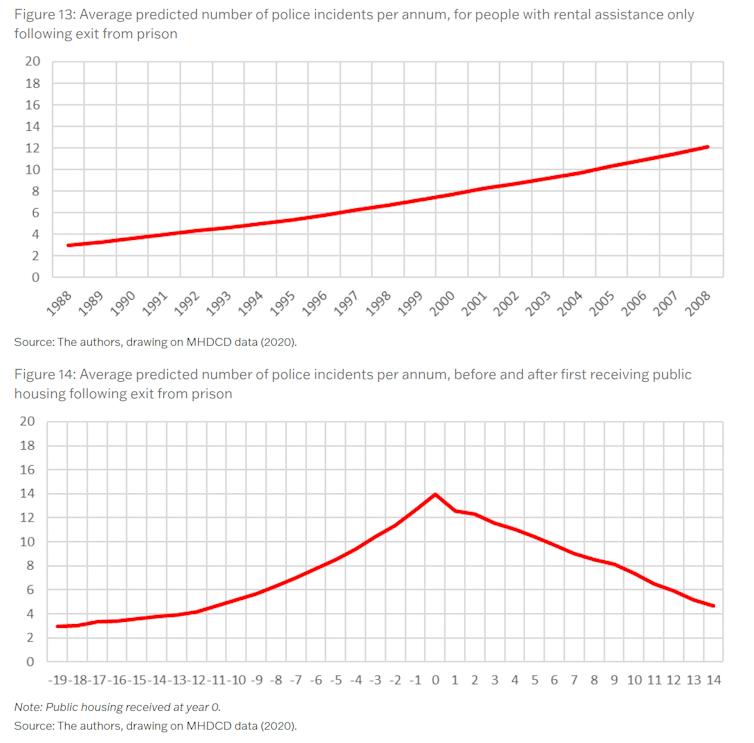
The charts below compare the number of police incidents for each group.

The first chart shows recorded police incidents for the private rental assistance group, which gradually rose over the period for which we have data.

The second chart shows police incidents for the public housing group: they also had a rising trend, until they received public housing (year 0 on the x-axis), after which police incidents went down 8.9% per year.

Charts showing trends in police incidents
Police incidents, private rental assistance and public housing groups.
Authors provided.

For the housed group:

  • court appearances were down 7.6% per year
  • proven offences (being found guilty of something at trial) were down 7.6% per year
  • time in custody was down 11.2% per year
  • time on supervised orders (court orders served in the community, including parole) initially increased, then went down 7.8% per year
  • justice costs per person, following an initial decrease of A$4,996, went down a further $2,040 per year per person.

When we put a dollar value on these benefits, providing a public housing tenancy is less costly than paying Rent Assistance in private rental (net benefit $5,000) or assisting through Specialist Homelessness Services (net benefit $35,000).

Unfortunately, public housing is in very short supply.

For our public housing group, the average time between release and public housing was five years. Others are never housed.

Post-release pathways are fraught

We interviewed corrections officers, reintegration support workers, housing workers, and people who had been in prison, across three states.

They were unanimous: there is a dearth of housing options for people exiting prison.

A Tasmanian ex-prisoner, who lived in a roof-top tent on his car on release, said:

You basically get kicked out the door and kicked in the guts and they say, ‘Go do whatever you need to do, see ya’.

Planning for release is often last-minute. A NSW reintegration support worker told us:

It’s not coordinated. We’ll get a prison ringing up on the day of release saying, ‘Can you pick this woman up?’ on the day of release, when they knew it was coming months in advance. There’s no planning.

A housing worker in Victoria described those next steps as a series of unstable, short-term arrangements, beset by pitfalls:

They could easily be waiting a couple of years, realistically. And for them that’s a long time, and so far off in the distance it’s difficult to conceive of. And a long time in which for things could go wrong in their lives – to be homeless or back in prison, all sorts of things … What they do in the meantime: they couch surf, stay with family, stay in motels, stay in cars/stolen cars, stay with friends, sleep rough, all those things.

A Tasmanian corrections officer told us:

People want to come back to custody because they’ve then got a roof over their head. They don’t have to worry; they’re getting fed, they can stay warm.

It’s not just about housing support

Community sector organisations specialising in supporting people in contact with the criminal justice system, such as the Community Restorative Centre (CRC) in NSW, do extraordinary work providing services and support that aim to break entrenched cycles of disadvantage and imprisonment.

However, this sector’s funding has been turbulent, marked by short-term programs.

In another project by some members of this research team, we saw the difference CRC made to 275 of its clients over a number of years. This evaluation found supported clients had 63% fewer custody episodes than a comparison group – a net cost saving to government of $10-16 million.

These support services would be even more effective if clients had more stable housing. As it is, specialist alcohol and other drug case workers are often spending their time dealing with clients’ housing crises.

Secure, affordable public housing is an anchor for people exiting prison as they work to build lives outside of the criminal justice system.

It is also a stable base from which to receive and engage with support services. It pays to invest in both.


Read more:
Caring for ex-prisoners under the NDIS would save money and lives


The Conversation

Chris Martin receives funding from the Australian Housing and Urban Research Institute (AHURI) and the ACOSS-UNSW Poverty and Inequality Partnership. This story is part of The Conversation’s Breaking the Cycle series, which is about escaping cycles of disadvantage. It is supported by a philanthropic grant from the Paul Ramsay Foundation.

Eileen Baldry receives funding from the ARC, the NHMRC and AHURI. She is affiliated with the Justice Reform Initiative, the NSW Ageing and Disability Commission, the Noffs Foundation and the Public Interest Advocacy Centre.

Patrick Burton is funded by the AHURI and is affiliated with the Justice Reform Initiative, Brain Injury Association of Tasmania and JusTas.

Rebecca Reeve receives funding from the Paul Ramsay Foundation. She is affiliated with the Social Outcomes Lab.

Rob White receives funding from the Australian Housing and Urban Research Institute and is affiliated with the Justice Reform Initiative, Just Desserts (drug court support group) and the Brain Injury Association of Tasmania (criminal justice steering group).

Ruth McCausland receives funding from the Paul Ramsay Foundation, NHMRC, AHURI and Australian Partnership Prevention Centre, and is affiliated with the Community Restorative Centre.

Stuart Thomas receives funding from the ARC, Department of Health, National Mental Health Commission, Mental Health Victoria, Mind Australia, AHURI and ACEM. He is affiliated with the Law Enforcement and Mental Health Special Interest Group of the Global Law Enforcement and Public Health Association. .

ref. Giving ex-prisoners public housing cuts crime and re-incarceration – and saves money – https://theconversation.com/giving-ex-prisoners-public-housing-cuts-crime-and-re-incarceration-and-saves-money-180027

How can we stop fake election news spreading in migrant communities?

Source: The Conversation (Au and NZ) – By Wilfred Yang Wang, Lecturer in Media & Communications Studies, The University of Melbourne

Shutterstock

Concerns about fake news and misinformation spreading on social media among Chinese communities are once again emerging, as they were during the 2019 election campaign.

There have been allegations against both major parties in recent weeks. The ABC reported a group of Liberal Party supporters systematically spread fake news about prominent Labor supporters in the Chinese community via WeChat.

At the same time, a local Labor branch in Queensland is accused of spreading a conspiracy meme against Gladys Liu, the incumbent Liberal candidate of the ultra-marginal Victorian seat of Chisholm and the first ethnic Chinese woman to serve in the House of Representatives.

Liu’s supporters are also not free from controversy. Some were accused of spreading misinformation in Chinese communities during the last federal election.

Drawing on my research on Chinese language media and Chinese communities in Australia, here are are some ways we can tackle fake news in non-English speaking communities.

Fake news and CALD Australians

Fake news is often systematically arranged by interest groups (such as political organisations) to achieve certain goals. This contradicts the popular assumption it’s fragmented or emerges spontaneously.

While every section of the society is subjected to fake news, culturally and linguistically diverse (CALD) communities are often more vulnerable to misinformation.


Read more:
Here’s how disinformation could disrupt the Australian election


It is widely acknowledged mainstream media outlets don’t do a good job of representing or communicating with CALD communities.

We know CALD communities often seek online and informal sources for information – as they did during COVID.

The information gap

Poor English skills can also make it hard for some non-English speakers to access credible authority sources directly.

Even when media outlets translate certain articles, they can lack the nuance to convey critical details.

My as yet unpublished research suggests many Chinese Australians who cannot understand English haven’t been accessing public health messages from government or health authorities during the COVID pandemic.

Instead, they tend to rely on community leaders, friends and family members to make sense of important public messaging, via apps like WhatsApp and WeChat.

This aligns with previous findings that Chinese Australians trust political news on Chinese platforms such as WeChat not because of the platform itself, but because of the people from the similar cultural and linguistic communities they share the platform with.

My research

In my as yet unpublished research, only two of 31 older Chinese Australians I interviewed read English mainstream Australians news daily. The vast majority obtained most of their news about COVID from instant messenger groups, social media platforms such as WeChat, and from sources outside Australia.

None of the participants were aware of the Chinese language version of ABC news. Only around half of the interviewees knew about the SBS Mandarin and Cantonese services, but none were aware of their social media accounts and smartphone apps.

The participants’ feedback shows the failure of mainstream media to engage non-English speaking CALD Australians. This can create a breeding ground for the spread of misinformation, which can potentially distort voters’ decisions and influence election outcomes.

What can we do?

There are several things governments should do in collaboration with communities to help CALD Australians gain direct access to credible news and to become more aware of misinformation.

Promote the ABC and SBS

Both federal and state governments should promote ABC and SBS in-language news, such as SBS Mandarin, especially during important public conversations such as pandemic management and elections.

A good example is SBS’s COVID myth buster portal, which is available in more than 60 languages. This collates culturally appropriate news and information to help CALD communities stay informed about COVID, and serves as a good model for other important topics and events such as an election.

Promoting the ABC and SBS requires a strategic approach. Instead of governments running a mass campaign, which can be costly and ineffective, a better approach would be to co-develop resources and information with the language teams of the respective services. These resources can then be promoted to community leaders for them to disseminate to their communities.

More resources and training should be devoted to support journalists’ cultural literacy.

Digital literacy training

Federal and state governments do fund digital literacy initiatives, such as BeConnected.

But typically these don’t have specific resources and training to support CALD communities.

They’re often too general and lack systematic programs to help CALD Australians learn how to download, operate, and access credible news and information and to improve their political literacy.


Read more:
Chinese social media platform WeChat could be a key battleground in the federal election


Tackling fake news in CALD communities requires partnerships between governments, community groups and media organisations.

There should be a particular focus on digital literacy of community leaders.

And more resources should be devoted to improve journalists’ cultural competence in communicating with CALD Australians.

The Conversation

Wilfred Yang Wang is affiliated with the Centre for Holistic Health, Victorian Multicultural Commission and Knox City Council’s Multicultural Advisory Committee on voluntary basis.

ref. How can we stop fake election news spreading in migrant communities? – https://theconversation.com/how-can-we-stop-fake-election-news-spreading-in-migrant-communities-182119

We’ve pinpointed blood proteins activated in the most severe cases of COVID in children

Source: The Conversation (Au and NZ) – By Conor McCafferty, PhD Student, Murdoch Children’s Research Institute

Shutterstock

In the majority of cases, children who catch COVID won’t end up suffering serious illness. Kids have fewer symptoms, less severe disease, and tend to recover faster than adults.

The best case scenario for children sees them having relatively manageable symptoms, recovering fully, and soon testing negative. As researchers, we wanted to understand why some children have a far worse experience.

If they don’t recover, children with COVID can go on develop two different disorders. The first is Multisystem Inflammatory Syndrome in Children (MIS-C) where patients have painful inflammation on their skin, eyes and even internal organs such as the heart, lungs, and brain. The most fascinating (and confusing) thing about MIS-C is it never occurs in adults, only children. The second disorder is Acute Respiratory Distress Syndrome (ARDS), a life-threatening respiratory failure as a result of serious COVID.

By comparing blood samples from healthy children and those with serious COVID, we identified two sets of proteins that were switched on in kids with these frightening syndromes.


Read more:
Multisystem inflammatory syndrome after COVID in children is rare but makes the body fight itself


Searching for the triggers

We have spent the past two years trying to understand how children’s bodies deal with COVID, and why it is so different from adults. Through our research, we wanted to understand exactly what the virus does to children to trigger a small number of them to develop MIS-C or ARDS, so we could help to figure out new ways of diagnosing or even treating them.

You may have heard of genomics – a scientific technique that can investigate all of a person’s genetic information (their genome) at once. In our study, we used proteomics which allows us to look at hundreds of proteins (the proteome) simultaneously.

Whenever something changes in the body (such as catching a virus like COVID) it can cause changes to your proteome. This helps tell us which systems of the body are affected.

We took blood samples from healthy children (collected at the Royal Children’s Hospital, Melbourne) and compared them to blood samples from children with MIS-C or ARDS (collected at the Hôpital Necker Enfants Malades, France). We performed proteomic experiments on the samples and found hundreds of proteins from each patient.

When we compared the amount of each protein in samples from children with severe COVID to the healthy blood samples, we found there were 85 proteins that changed in MIS-C and 52 proteins that changed in ARDS.


Read more:
Got a child with COVID at home? Here’s how to look after them


Blood clotting and immunity play a role

Listing a set of proteins is just the first step. It’s really important for us to know exactly what functions these proteins have in the body. By understanding the role each of those proteins plays, we can start to understand the biology underneath the disease.

Proteins that control blood-clotting and the immune system were affected in both MIS-C and ARDS patients, telling us these systems play an important role in severe COVID. We were also able to show that children with MIS-C have affected proteins connected to B cells (which help facilitate an immune response) and antibodies (which fight off foreign invaders in the body). Meanwhile, children with ARDS have affected proteins connected to the breakdown of red blood cells (which transport oxygen around the body).

adult uses RAT to test child for covid
Most children who get COVID will only have mild illness.
Shutterstock


Read more:
Do kids get long COVID? And how often? A paediatrician looks at the data


Our work continues

Fortunately, cases of MIS-C and ARDS are rare. But that doesn’t mean we shouldn’t try to understand how they work. Especially when severe COVID is so dangerous for the children affected and frightening for their families.

By narrowing down the potential blood proteins involved in severe COVID from hundreds down to less than 100, we can hone in on developing better diagnostic and treatment information.

This study was part of our larger research aim, which was to understand how COVID impacts adults and children differently.

We’ve already been able to show that platelets (small blood cells that trigger clotting) activate in adults and children, while blood clots formed in children due to COVID are more porous and less stable.


The author wishes to acknowledge the strong collaborations between the University of Melbourne, the Royal Children’s Hospital, the Royal Children’s Hospital Foundation, Murdoch Children’s Research Institute, Hôpital Necker and the Australian Proteome Analysis Facility that made this work possible.

The Conversation

Conor McCafferty does not work for, consult, own shares in or receive funding from any company or organization that would benefit from this article, and has disclosed no relevant affiliations beyond their academic appointment.

ref. We’ve pinpointed blood proteins activated in the most severe cases of COVID in children – https://theconversation.com/weve-pinpointed-blood-proteins-activated-in-the-most-severe-cases-of-covid-in-children-182294

Hospitals only note a person’s intellectual disability 20% of the time – so they don’t adjust their care

Source: The Conversation (Au and NZ) – By Adrian Raymond Walker, Research Officer – School of Psychiatry, UNSW Sydney

Shutterstock

People with intellectual disability only have their disability noted by hospital staff in one in every five hospital admissions, our new study shows.

Recognising someone has a disability is critical to their care. This finding helps explain why many people with intellectual disability do not get hospital care that best meets their needs.

Urgent action is needed to make our hospital system safe, effective and tailored to the needs of around 450,000 Australians living with intellectual disability.

A system of neglect

Our research looked at historical information from hospitals and disability services in New South Wales between 2005 to 2015 (the most recent accessible data).

We found 12,593 adults with intellectual disability who used disability services in this time. In total, these adults went to hospital 80,960 times from 2005 to 2015. But in only 19,261 of these visits did the hospital recognise the person had an intellectual disability.

Intellectual disability is broadly defined as a lifelong condition that affects intellectual skills, behaviour and the ability to perform everyday tasks.

Intellectual disability exists across a spectrum. People with mild intellectual disability might engage in activities like full time work and sport. People with profound intellectual disability may not be able to communicate and require full time care.

Little has changed in the health care system to fix this issue since the data in our research was collected.

In 2008, Australia ratified the United Nations Convention on the Rights of Persons with Disabilities, which protects the right to the highest attainable standard of health without discrimination on the basis of disability. But the reality for Australians living with intellectual disability is starkly different.

Right now, the Royal Commission into Violence, Abuse, Neglect and Exploitation of People with Disability is looking into problems faced by people with disabilities.

Based mainly on evidence from people with intellectual disability on the autism spectrum, the commission found people with cognitive disabilities face neglect in the health system. They found people with disabilities experience higher costs, longer waiting lists, physically inaccessible services and complex medical forms.

A person with intellectual disability may experience delayed diagnosis and inefficiency because of communication difficulties. Health professionals may lack the skills to assess and manage medical conditions when intellectual disability is also present.

Poorer care ends lives sooner

Our previous research has shown gaps in preventative health care, mental health care and in life expectancy. People with intellectual disability die on average 26 years younger than the general population.

Most of this difference in life expectancy is not specifically related to the intellectual disability itself or its causes. Rather, it relates to lifelong health disadvantage, lack of access and failure to manage emerging health conditions.

Potentially avoidable deaths (from conditions that could have been prevented through individualised care or treatment, like viral pneumonia, asthma, or diabetes) are more than twice as likely in people with intellectual disability.

Though Australia has one of the best health care systems in the world, people with intellectual disability experience neglect within it.

Ahead of the upcoming national election, people with intellectual disability are calling out this “deadly discrimination”.

woman in hospital bed
If intellectual disability isn’t noted for patients, they may experience poorer treatment.
Unsplash, CC BY


Read more:
‘Don’t shove us off like we’re rubbish’: what people with intellectual disability told us about their local community


How do we improve recognition?

To improve the recognition of intellectual disability when someone goes to hospital, we would like to see a national health disability indicator in the form of a code. When noted on their health records, this indicator would tell the health care system a patient has an intellectual disability (with the permission of that person), and they might need reasonable adjustments to be made.

This indicator would help make intellectual disability visible in hospitals, and ensure people get the best possible care.

An indicator of this kind is already used in the UK. People with disabilities help set up their own indicators to make sure their needs are met.


Read more:
Mums with an intellectual disability already risk family violence and losing their kids. Coronavirus could make things worse


Reasonable adjustments

Reasonable adjustments are things that need to be done to make health care accessible to a person with disability.

For people with intellectual disability, reasonable adjustments can include adjusting communication, providing extra time and support, and involving the person in choices and decisions. Research shows reasonable adjustments improve care.

In the UK, all hospitals must make reasonable adjustments and the person with disability must be asked about what adjustments they need. Hospitals that do not make reasonable adjustments risk losing accreditation and funding.

In New South Wales, hospitals are meant to make reasonable adjustments for people with disability. However, our study suggests most of the time, when a person with intellectual disability goes to hospital, this does not happen because the hospital remains unaware of their needs.


Read more:
‘I know that you know’ – 5 ways to help people with aphasia to communicate


The Conversation

Adrian Raymond Walker currently works in the Department of Developmental Disability Neuropsychiatry at The University of New South Wales, Sydney. The department receives core funding from the NSW Government Department of Health, and receives grants from multiple sources including the National Health and Medical Research Council.

Julian Trollor receives core funding for his university department from the NSW Government Department of Health. He is also the recipient of multiple grants from national competitive grant bodies including but not limited to the National Health and Medical Research Council. He sits on multiple Commonwealth and State government committees related to the health and wellbeing of people with disabilities.

ref. Hospitals only note a person’s intellectual disability 20% of the time – so they don’t adjust their care – https://theconversation.com/hospitals-only-note-a-persons-intellectual-disability-20-of-the-time-so-they-dont-adjust-their-care-180590

We’ve used a new technique to discover the brightest radio pulsar outside our own galaxy

Source: The Conversation (Au and NZ) – By Yuanming Wang, PhD student, University of Sydney

Artist’s impression of the PSR J0523-7125 in the Large Magellanic Cloud. Carl Knox, ARC Centre of Excellence for Gravitational Wave Discovery (OzGrav), Author provided

When a star explodes and dies in a supernova, it takes on a new life of sorts.

Pulsars are the extremely rapidly rotating objects left over after massive stars have exhausted their fuel supply. They are extremely dense, with a mass similar to the Sun crammed into a region the size of Sydney.

Pulsars emit beams of radio waves from their poles. As those beams sweep across Earth, we can detect rapid pulses as often as hundreds of times per second. With this knowledge, scientists are always on the lookout for new pulsars within and outside our Milky Way galaxy.

In research published today in the Astrophysical Journal, we detail our findings on the most luminous radio pulsar ever discovered outside the Milky Way.

This pulsar, named PSR J0523-7125, is located in the Large Magellanic Cloud – one of our closest neighbouring galaxies – and is more than ten times brighter than all other radio pulsars outside the Milky Way. It may be even brighter than those within it.

Source: Youtube/NASA.

Why wasn’t PSR J0523-7125 discovered before?

There are more than 3,300 radio pulsars known. Of these, 99% reside within our galaxy. Many were discovered with CSIRO’s famous Parkes radio telescope, Murriyang, in New South Wales.

About 30 radio pulsars have been found outside our galaxy, in the Magellanic Clouds. So far we don’t know of any in more distant galaxies.

Astronomers search for pulsars by looking for their distinctive repeating signals in radio telescope data. This is a computationally intensive task. It works most of the time, but this method can sometimes fail if the pulsar is unusual: such as very fast, very slow, or (in this case) if the pulse is very wide.

A very wide pulse reduces the signature “flickering” astronomers look for, and can make the pulsar harder to find. We now know PSR J0523-7125 has an extremely wide beam, and thus escaped detection.

The Large Magellanic Cloud has been explored by the Parkes telescope several times over the past 50 years, and yet this pulsar had never been spotted. So how were we able to find it?

An unusual object emerges in ASKAP data

Pulsar beams can be highly circularly polarised, which means the electric field of light waves rotate in a circular motion as the waves travel through space.

Such circularly polarised signals are very rare, and usually only emitted from objects with very strong magnetic fields, such as pulsars or dwarf stars.

We wanted to pinpoint unusual pulsars that are hard to identify with traditional methods, so we set out to find them by specifically detecting circularly polarised signals.

Our eyes can’t distinguish between polarised and unpolarised light. But the ASKAP radio telescope, owned and operated by Australia’s national science agency CSIRO, has the equivalent of polarised sunglasses that can recognise circularly polarised events.

When looking at data from our ASKAP Variables and Slow Transients (VAST) survey, an undergraduate student noticed a circular polarised object near the centre of the Large Magellanic Cloud. Moreover, this object changed brightness over the course of several months: another very unusual property that made it unique.

This was unexpected and exciting, since there was no known pulsar or dwarf star at this position. We figured the object must be something new. We observed it with many different telescopes, at different wavelengths, to try and solve the mystery.

Apart from the Parkes (Murriyang) telescope, we used the space-based Neil Gehrels Swift Observatory (to observe it at X-ray wavelengths) and the Gemini telescope in Chile (to observe it at infrared wavelengths). Yet we detected nothing.

The object couldn’t be a star, as stars would be visible in optical and infrared light. It was unlikely to be a normal pulsar, as the pulses would have been detected by Parkes. Even the Gemini telescope didn’t provide an answer.

Ultimately we turned to the new, highly sensitive MeerKAT radio telescope in South Africa, owned and operated by the South African Radio Astronomy Observatory. Observations with MeerKAT revealed the source is indeed a new pulsar, PSR J0523-7125, spinning at a rate of about three rotations per second.

Below you can see the MeerKAT image of the pulsar with polarised “sunglasses” on (left) and off (right). If you move the slider, you’ll notice PSR J0523-7125 is the only bright object when the glasses are on.

Our analysis also confirmed its location within the Large Magellanic Cloud, about 160,000 light years away. We were surprised to find PSR J0523-7125 is more than ten times brighter than all other pulsars in that galaxy, and possibly the brightest pulsar ever found.


Read more:
Fifty years ago Jocelyn Bell discovered pulsars and changed our view of the universe


What new telescopes can do

The discovery of PSR J0523-7125 demonstrates our ability to find “missing” pulsars using this new technique.

By combining this method with ASKAP’s and MeerKAT’s capabilities, we should be able to discover other types of extreme pulsars – and maybe even other unknown objects that are hard to explain.

Extreme pulsars are one of the missing pieces in the vast picture of the pulsar population. We’ll need to find more of them before we can truly understand pulsars within the framework of modern physics.

This discovery is just the beginning. ASKAP has now finished its pilot surveys and is expected to launch into full operational capacity later this year. This will pave the way for even more discoveries, when the global SKA (square kilometre array) telescope network starts observing in the not too distant future.


Akncowledgement: We acknowledge the Wajarri Yamatji as the traditional owners of the Murchison Radio-astronomy Observatory site where ASKAP is located, and the Wiradjuri people as the traditional owners of the Parkes Observatory.

The Conversation

Yuanming Wang receives support from the China Scholarship Council, and as a Graduate Student with the University of Sydney and CSIRO Astronomy and Space Science.

David Kaplan receives funding from the National Science Foundation.

Tara Murphy receives funding from the Australian Research Council.

ref. We’ve used a new technique to discover the brightest radio pulsar outside our own galaxy – https://theconversation.com/weve-used-a-new-technique-to-discover-the-brightest-radio-pulsar-outside-our-own-galaxy-180508

Clive Palmer, his money and his billboards are back. What does this mean for the 2022 federal election?

Source: The Conversation (Au and NZ) – By Susan Harris Rimmer, Professor and Director of the Policy Innovation Hub, Griffith Business School, Griffith University

Clive Palmer has had a tough run leading up to the 2022 election campaign.
He faced COVID-19 without the protection of vaccination in March, tripped at his National Press Club speech and reported being knocked unconscious for about 20 seconds when he fell during a rehearsal for his United Australia Party (UAP) campaign launch in April.

Palmer, a dedicated litigant, has also suffered some recent set-backs in the court room.

As it contests the 2022 federal election, is the UAP also on a downward trajectory or will it tap into populist sentiment reacting against vaccine mandates and climate change?

UAP’s influence since 2013

In the first federal election in 2013, Palmer’s share of the primary vote (as the Palmer United Party) was 5.49% nationally and about 11% in Queensland. This was enough to win a single seat in the lower house and three in the Senate.

There was no UAP federal campaign in 2016 due to Palmer stepping back to address the collapse of his Queensland Nickel company. But in 2019, he ran candidates in all lower house seats, winning a total of 3.4% of the national vote. The UAP was well short of the quota to land a Senate spot, even in Queensland.

Nevertheless, the 2019 House of Representatives election saw a record vote of about 25% for minor parties overall, so preferences decided a record number of seats. This means minor parties deserve our serious attention in the 2022 election.

ABC election analyst Antony Green has noted while UAP’s preference flows didn’t significantly affect any results in 2019, its “anti-Labor message and broadcast weight of Clive Palmer’s political advertising” did have an impact.

2022 challenges

The UAP is fielding 22 Senate candidates, including Palmer, and running candidates in every lower house seat. Palmer’s best chance of electoral success is in Queensland, where he is challenging Pauline Hanson, Campbell Newman and the Coalition’s Amanda Stoker for the final Queensland Senate spot.


Read more:
Populism and the federal election: what can we expect from Hanson, Palmer, Lambie and Katter?


Palmer is certainly throwing plenty of money at the campaign, with expectations he will spend A$60-70 million in the lead up to election day. This compares with the unprecedented $84 million he spent in 2019.

This includes huge yellow billboards around the country, (problematically) promising to cap mortgage rates.

But so far, this spend has not delivered a bounce in the polls, and in 2019 it failed to translate into seats.


Read more:
Clive Palmer’s promise to cap mortgage rates at 3% would make it much harder to get a home loan


The UAP share of the primary vote has only slightly increased despite the massive spend at the start of the campaign and the impact of the pandemic. The most recent Newspoll, conducted April 27-30, showed the UAP vote steady at 4%. This is after spending millions on advertising.

Key differences in 2022

The familiar UAP yellow and the big budget is back, but there are some key differences in 2022.

The first is policy. In 2019, the focus of UAP advertising was anti-Bill Shorten and anti-ALP sentiment.

But Palmer launched his 2022 campaign in Coolum, with the unexpected announcement the party would push for the enactment of a bill of rights to “save Australia”.

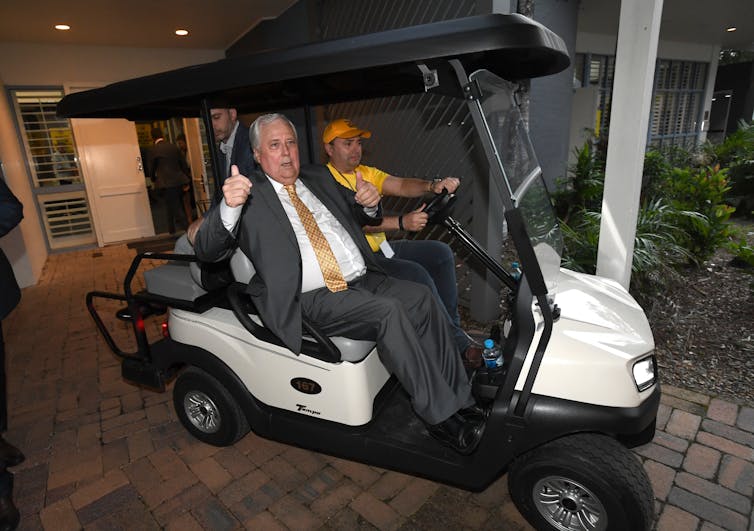
Clive Palmer is driven in a buggy.
Palmer is tipped to spend as much as $70 million on the 2022 election.
Darren England/AAP

Other key UAP policies include maximum 3% interest on home loans, abolishing federal cabinet and bringing Australian super investments back from overseas. There is also a focus on opposing COVID measures, tapping into anger over restrictions and mandates. The focus on “freedom” may entice to voters after a difficult pandemic period for so many.

UAP damaged the ALP vote in 2019, but don’t expect the same thing this time. Palmer has pledged to put the Liberals, Labor and Greens last on how-to-vote cards, diffusing the impact on preferences.


Read more:
Why ‘freedom’ is not the only thing worth fighting for


A new leader

A second key difference in 2022 is new leader Craig Kelly (Palmer is now “chairman”). Former Liberal MP Kelly joined as UAP leader in August 2021, bringing his controversial positions on COVID, coal and climate change with him, as well as a significant following.

But will this help the UAP vote? Kelly has been rated as one of Australia’s “least likeable” politicians. In December 2021, a Resolve Political Monitor survey found only 9% of surveyed Australians had a positive view of Kelly. This was only slightly higher than Palmer, on 8%. Kelly faces a tough road to win his seat of Hughes in 2022 without Liberal Party endorsement against a wide field.

Kelly has also been permanently banned from Facebook for disinformation, limiting his ability to reach supporters.

Legal problems

Beyond the campaign, Palmer (who has listed “litigation” as a hobby) is pursuing and facing distracting court action.

He recently lost a case in the High Court against Western Australia on border closures and has been engulfed in defamation proceedings against WA Premier Mark McGowan.

Palmer is also facing two sets of criminal charges brought by ASIC. The first involves alleged breaches of takeover provisions in the acquisition of his Coolum resort and the second relates to allegations he improperly funded his successful 2013 election campaign.

The ASIC action is due to return to the Brisbane Supreme Court for a two-day hearing on May 31 and June 1. Apart from distracting from his election campaign, it could potentially land Palmer in jail – making the Senate result irrelevant.

What does Palmer actually want?

As political scientist John Wanna has noted, we still don’t really know why Palmer is spending all this time, energy and money on elections:

Is it for political influence or policy influence? To achieve a higher profile? Buying his way to power? To let the ‘established’ political elite know he remains a key player perhaps? Or more genuinely attempting to represent ordinary Australian values, and shift policy contours?

Palmer has displayed a long interest in politics but perhaps he enjoys the game of it all.

And amid ongoing disquiet over his huge election spending, perhaps his
ultimate legacy will be to prompt overdue reform of political advertising regulation.


Read more:
How did politicians and political parties get my mobile number? And how is that legal?


The Conversation

Susan Harris Rimmer receives funding from the Australian Research Council and ONI.

ref. Clive Palmer, his money and his billboards are back. What does this mean for the 2022 federal election? – https://theconversation.com/clive-palmer-his-money-and-his-billboards-are-back-what-does-this-mean-for-the-2022-federal-election-182123

‘It’s shown me how independent I can be’ – housing designed for people with disabilities reduces the help needed

Source: The Conversation (Au and NZ) – By Jacinta Douglas, Professor of Acquired Brain Injury, La Trobe University

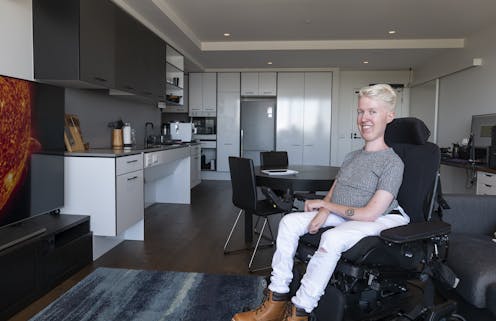
SDA tenant, Tom, in his accessible apartment. Housing Hub, Author provided

The federal government has been warning that the rising cost of the National Disability Insurance Scheme (NDIS) is unsustainable. More than a third of NDIS funding is spent on in-house support provided to 5% of NDIS participants with the highest needs.

Fresh data, released Friday, shows there are 3,435 people under 65 living in aged care, and each month another 44 enter. While there has been a 21% drop in younger people living in aged care, the decline is mostly due to people either dying (562 people) or remaining in aged care until they turn 65, and “ageing out” of the cohort. During 2021, only 30 younger people left aged care to live in Specialist Disability Accommodation (SDA).

Well-designed homes that foster more independent living and increase community connection can potentially reduce support costs and the need for younger people to live in aged care.

Our new research found specialist housing, that incorporates technology and communication tools, improves independence, health, well-being and community integration. New disability housing has enormous potential to improve the effectiveness of paid support and address housing and workforce issues.


Read more:
Labor vows to tackle the NDIS crisis – what’s needed is more autonomy for people with disability


Old homes, vulnerable residents

Adequate housing is recognised as a human right.

Up to two-thirds of disability housing in Australia is old stock that is not fit for purpose and does not meet current standards or foster independence.

Group homes are the main model of housing in Australia for people with disability. Up to six people with disability live together, but they have little or no say in where or with whom they live. They are often separated from the community with few opportunities to engage or belong.

Some group homes resemble “mini-institutions” where the structure of the residents’ daily life is determined by staff rosters, routines and priorities.

The current Royal Commission has found people with disability are vulnerable to neglect and abuse when they are segregated and only engage with paid workers. Independence is not fostered, and there is no drive to reduce paid support over time.

Housing that meets needs

In 2016, the NDIS began to address the shortage of contemporary disability housing in Australia by introducing Specialist Disability Accommodation (SDA payments. These are only for the 6% of NDIS participants with the most specific housing needs.

Disability housing is expected to boom with a A$12 billion hoped sector to deliver housing for over 28,000 NDIS participants.

SDA housing might have extra wide doorways, a hoist in the bathroom and concierge support on call.

The policy has seen a significant increase of new housing for people with disability. Of 2,399 new dwellings built, 50% were apartments integrated into mainstream developments. A further 1,033 apartments are under construction – mostly for single occupants, with a small number grouped together making delivering disability support more efficient.


Read more:
Workforce shortages are putting NDIS participants at risk. Here are 3 ways to attract more disability sector workers


Housing makes a difference

New research published by La Trobe University and the Summer Foundation supports these efforts.

We interviewed 15 people people with disability (neurological disorder or cerebral palsy) and complex needs before and six months to two years after they moved into specialist housing. We found designing with the tenant in mind leads to better outcomes.

Before moving into new SDA apartments, study participants lived in a range of housing including group homes, residential aged care, private rentals and with ageing parents.

After they moved they used an average of 2.4 hours less paid support per person per day.

After moving into her own apartment, Amy told us:

Moving in here has been the biggest change in my life since the onset of my disability. It’s been daunting but also shown me how independent I can be.

‘The day I moved in, I went from room to room thinking: It’s all mine. It’s all mine.’

To date there has been a lack of evidence on the impact suitable housing has on NDIS participants. Without an evidence-based approach, government and housing providers may invest in housing stock that is not fit for purpose but will be with us for decades.

We estimate $1.1 billion would be saved each year in disability support costs if NDIS participants were living in suitable housing, because they would enjoy increased independence and more efficiently delivered support.

Challenges remain

Despite the thousands of accessible homes built so far, the SDA market is being thwarted by the poor administration of the SDA payments by the National Disability Insurance Agency (NDIA).

Some 63% of the anticipated 28,000 NDIS participants have SDA in their NDIS plans and mostly not at the level of support they’d need to move to new housing.

Bureaucratic delays within the NDIA remain the biggest barrier to a thriving SDA market and achieving the federal government’s Younger People in Residential Aged Care targets.

Potential tenants take months or years to navigate the process of requesting SDA and then appealing unfair decisions, the majority of which are overturned. Many NDIS participants give up as they lose hope along the way.

New specialist disability accommodation is part of the solution to a sustainable NDIS, not part of the problem. Our research confirms the NDIA should focus efforts on innovation and evidence-based solutions informed by the needs, preferences and outcomes for NDIS participants.


Read more:
‘It felt like a prison’ – too many young Australians are still stuck in nursing homes


The Conversation

Jacinta Douglas is affiliated with the Summer Foundation through her Professorial role within the La Trobe University, Living with Disability, Summer Foundation Research Partnership.

Di Winkler is the CEO of Summer Foundation and a director of Summer Housing (SDA Provider) which is a separate entity. Both organisations are not for profits. Di is not paid by Summer Housing. The Housing Hub is a social enterprise established but The Summer Foundation.

ref. ‘It’s shown me how independent I can be’ – housing designed for people with disabilities reduces the help needed – https://theconversation.com/its-shown-me-how-independent-i-can-be-housing-designed-for-people-with-disabilities-reduces-the-help-needed-181793

Find out what threatened plants and animals live in your electorate (and what your MP can do about it)

Source: The Conversation (Au and NZ) – By Gareth Kindler, PhD Candidate, The University of Queensland

Gouldian finch Shutterstock

More than 1,800 Australian plants and animals are considered at-risk of extinction, and yet protecting threatened species is almost entirely absent from the current election campaign.

We’ve developed a web app, which launches today, that lets Australians learn which threatened plants and animals live in their federal electorate.

For example, we found the electorate with the most threatened species is Durack in Western Australia, held currently by the Liberal party’s Melissa Price. Some 61 threatened animals and 198 threatened plants live or used to live within its boundaries, such as the Numbat, Gouldian finch and the Western underground orchid.

Our goal is to help users engage with their elected representatives and put imperilled species on the political agenda this election and beyond. We urgently need to convince federal politicians to act, for they hold the keys to saving these species. So what can they do to help their plight?

black-breasted buttonquail
The black-breasted buttonquail is an endangered and declining species found in southern Queensland. It used to be found in northern NSW. To be saved from extinction it needs members from around 29 electorates to work together and champion its recovery.
Patrick Webster, Author provided

Threatened species in your neighbourhood

Our new app, called Threatened Australians, uses federal government data to introduce you to the threatened species living in your neighbourhood.

By entering a post code, users can learn what the species looks like, where they can be found (in relation to their electorate), and what’s threatening them. Importantly, users can learn about their incumbent elected representative, and the democratic actions that work towards making a difference.


Read more:
Fail: our report card on the government’s handling of Australia’s extinction crisis


For example, entering the postcode 2060 – the seat of North Sydney, held currently by the Liberal Party’s Trent Zimmerman – tells us there are 23 threatened animals and 14 threatened plants that live or used to live there.

This includes the koala which, among many others, have seen devastating losses in their populations in recent decades due to habitat destruction.

We’ve also put together data dividing the number of threatened species that live or used to live across each party’s electorates, as shown in the chart below. Labor-held seats are home to 775 of the 1,800-plus threatened species, while Liberal-held seats have 1,168.


Made with Flourish

A seriously neglected issue

The good news is we know how to avert the extinction crisis. Innumerable reports and peer-reviewed studies have detailed why the crisis is occurring, including a major independent review of Australia’s environment laws which outlined the necessary federal reforms for changing this trajectory.

The bad news is these comprehensive reforms, like almost all the previous calls to action on the threatened species crisis, have been largely ignored.

Predictions show the situation will drastically worsen for threatened species over the next two decades if nothing changes.

golden shouldered parrot
The golden shouldered parrot is only found in Queensland. Its entire population is found in the seat of Leichardt and its population has been declining dramatically over the past two decades. The long-term MP for Leichhardt is the Hon Warren Entsch.
Patrick Webster, Author provided

Yet, environmental issues rarely play key roles in federal elections, despite the connection Australians share with the environment and our wildlife.

The health of the environment continually ranks among the top issues Australians care about, and nature tourists in Australia spend over $23 billion per year.


Read more:
Just ten MPs represent more than 600 threatened species in their electorates


So how can we address this mismatch of widespread public desire for environmental action yet political candidates are focused on other issues?

What can local MPs actually do about it?

For change to occur, communities must effectively persuade elected representatives to act. There are a few ways they can exercise their democratic powers to make a difference.

Federal MPs often champion and advocate important issues such as developing new hospitals, schools and car parks in their electorate. By speaking out and advocating for their electorate in parliament and with the media, they can garner the support, such as funding and reform, to deliver change for their electorate.

numbat
The numbat has disappeared across much of the continent in the last two hundred years. Now over 80% of its range now occurs in the electorate of O’Connor in Western Australia. The MP for O’Connor is Mr Rick Wilson.
Shutterstock

Local MPs can help protect threatened species by instigating and voting for improved policy.

Let’s say, for instance, legislation for approving a new mine was before parliament, and the development overlapped with the habitat of a threatened animal.
If protecting a certain plant or animal was on an MPs agenda thanks to the efforts of their community, it would help determine whether the MP votes for such legislation.


Read more:
Frozen sperm and assisted reproduction: time to pull out all stops to save the endangered koala


This has broader applications, too. Making the threatened species crisis a priority for an MP would determine the lengths they would go to for conservation in their electorate and Australia wide.

Threatened species desperately need the required funding alongside the appropriate policy and legislative reform. The current policies are responsible for the threats causing many species to go endangered in the first place.

The app in action.
Threatened Australia, Author provided

Our app can help users engage with the current sitting MP in their electorate with the click of a button, as it helps users write an email to them. It’s time federal representatives were asked about their policies on threatened species and what they plan to do for them in their electoral backyards.

While climate change has, for decades, unfathomably been the subject of fierce debate in the Australian parliament, threatened species can be a cause of unity across the political divide.

We need an honest and urgent dialogue between local communities and their representatives about how to deal with the challenge these species face and what each prospective candidate intends to do about it.


Read more:
1.7 million foxes, 300 million native animals killed every year: now we know the damage foxes wreak


The Conversation

Gareth Kindler receives funding from a Research Training Program scholarship and has received funding from the Centre for Biodiversity and Conservation Science.

James Watson has received funding from the Australian Research Council and National Environmental Science Program. He serves on scientific committees for Bush Heritage Australia and BirdLife Australia and has a long-term scientific relationship with Wildlife Conservation Society.

Nick Kelly has received funding for other work from the Australian Research Council and the Queensland Department of Education.

ref. Find out what threatened plants and animals live in your electorate (and what your MP can do about it) – https://theconversation.com/find-out-what-threatened-plants-and-animals-live-in-your-electorate-and-what-your-mp-can-do-about-it-182044

Beyond electric cars: how electrifying trucks, buses, tractors and scooters will help tackle climate change

Source: The Conversation (Au and NZ) – By Peter Newman, Professor of Sustainability, Curtin University

Shutterstock

When you think of an electric vehicle, chances are you’ll picture a car. But there’s a quiet revolution going on in transport. It turns out electrification can work wonders for almost all of our transport options, from electric bikes to motorbikes to buses to freight trains and even to tractors and heavy trucks. There will soon be no need to burn petrol and diesel in an internal combustion engine.

This matters, because electric transport will be vital in our efforts to stem climate change. If all cars on the road became powered by renewable electricity, we’d cut almost one-fifth of our emissions. We’d also be much better placed to weather spikes in oil prices linked to war, and enjoy cleaner air and quieter cities.

It’s promising news that electric vehicles are shaping up as an election issue at last, with Labor promising a national EV charging network at its campaign launch, and the Greens promising rebates of up to $15,000 for EV purchases, while the Liberal Party last year reversed its previous scepticism and launched a smaller charging network policy.

But this is only the beginning of what’s required. Right now, all the focus is on electric cars. We will need new policy settings to encourage the electrification of all our transport options. And that means getting electric mobility on the radar of our political parties.

Why electric and why now?

Electric vehicles have been around for more than 120 years. They accounted for a third of all cars on US roads in 1900, sought because they were clean and quiet. But their first dawn ended because of the high cost and weight of batteries, leaving internal combustion engines to rule the road.

So what changed? Two things: solar has become the cheapest form of power in human history, and lighter lithium-ion batteries have become vastly cheaper. These remarkable inventions have allowed electric vehicle manufacturers to become competitive. Cheap solar power funnels into the battery of the electric vehicle to provide running costs much lower than those of fossil fuel engines. The much simpler engines also mean vastly lower maintenance costs.

Early electric car
A Borland Electric Model car from the early 20th century.
Wikimedia Commons, CC BY

We’re also seeing major innovations brought across from electric public transport. Over the past two decades, there have been significant advances in smart technology in trains and trams, such as regenerative braking and sensors enabling active suspension. These breakthroughs have been taken up enthusiastically by electric vehicle manufacturers. All electric cars now have regenerative braking, which hugely increases energy efficiency, as well as smart sensors to aid steering, and active suspension, making the cars safer and the ride smoother.

We’re also seeing welcome cross-pollination in the form of trackless trams, which are upgraded buses that boast rail-like mobility. This is made possible based on technologies invented for high-speed rail.

In short, there’s no reason why solar and battery technology has to be limited to cars. All the world’s land-based internal combustion engine vehicles can now be replaced by electric equivalents.

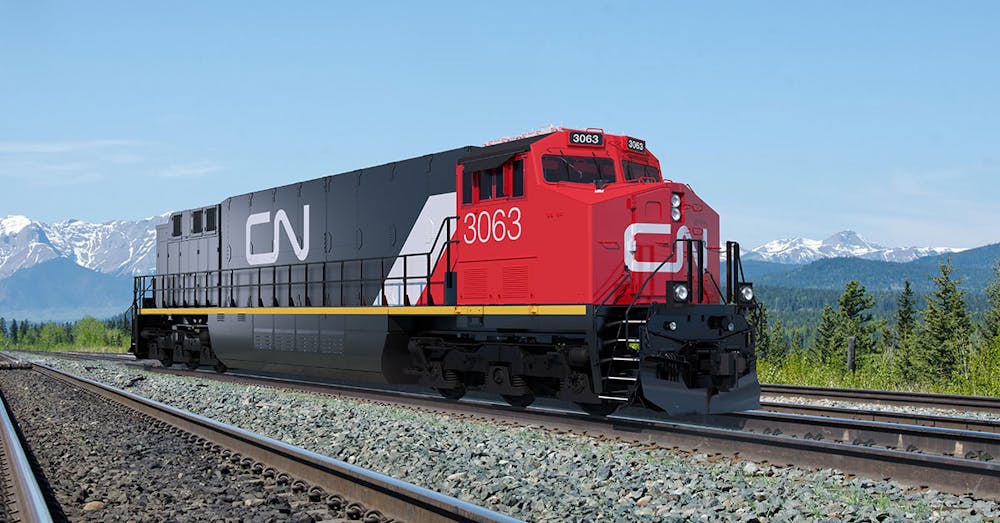
Electric locomotive
Major miner BHP is testing battery-electric locomotives such as this Wabtec model.
Wabtec

Electric mobility is arriving

You’ll already have seen signs of the potential of electric mobility. E-scooters are popping up in major cities, giving people a way to make short trips quickly and cheaply. E-bikes are surging ahead, popular among commuters and families choosing one over a second car. Even this is just the start.

Around the world, electric micromobility (scooters, skateboards and bikes) is growing at over 17% per year and expected to quadruple current sales of US$50 billion by 2030.


Read more:
Revolutionary changes in transportation, from electric vehicles to ride sharing, could slow global warming – if they’re done right, IPCC says


Even without much government assistance, Australians are shifting rapidly to all types of electric vehicle. But for Australia to embrace electric transport as fully as we can, we need the right policy settings. Cars, scooters, motorbikes, trackless trams, buses, trucks, freight trains and farm vehicles can all be part of the transition to the cheapest and highest-quality mobility the world has yet seen.

The policies on offer to date suggest no party has figured out the radical upheaval electrification will bring. Labor’s emission reductions policy of a 43% cut by 2030 gives electric cars only a tiny role, cutting emissions by less than 1%, or four million tonnes out of a total of 448 million tonnes. There’s no mention of other electric modes of transport. Even the Greens have little serious policy analysis of the broader EV options. The Liberals have no mention at all.

Even tractors are going electric, with a key marketing point the ability for farmers to recharge through their own solar arrays.
Fendt

We need comprehensive, broad electric vehicle policy

Given we’re still at the starting line, what’s the best first step? Perhaps the simplest would be to enable Infrastructure Australia to work with the states on creating strategic directions for each electric transport mode. The ACT already has a plan like this for its bus network as part of its shift to a zero-carbon future.

Here’s what good EV policies would consider:

  • Electric micromobility: how to recharge and manage the explosion of electric scooters, skateboards and bikes with appropriate infrastructure, and how to enable the best public sharing systems

  • Electric public transit: how to electrify all buses, passenger trains and mid-tier transit (light rail, rapid transit buses and trackless trams), and how to link net zero urban developments and charging facilities

  • Electric trucks, freight trains and farm vehicles: how to create recharge highways and hubs in train stations, industrial precincts and standalone farm systems, and how to introduce these to the regions to enable net zero mining, agriculture and other processed products.


Read more:
As the world surges ahead on electric vehicle policy, the Morrison government’s new strategy leaves Australia idling in the garage


Each of these modes will also need the same targets, subsidies and regulations as electric cars do, to make possible a swift, clean transition away from petrol and diesel. If we focus only on electric cars, we could end up with cities still full of cars, even if they don’t pollute. By focusing on all transport modes, we will make our cities more equitable, safe and sustainable.

The Conversation

Peter Newman has been the IPCC Co-ordinating Lead Author for Transport over the past 3 years supported only in transport costs by the Federal Department of Industry, Science, Energy and Resources.

ref. Beyond electric cars: how electrifying trucks, buses, tractors and scooters will help tackle climate change – https://theconversation.com/beyond-electric-cars-how-electrifying-trucks-buses-tractors-and-scooters-will-help-tackle-climate-change-182055

Labor says power prices are going up. The Coalition says they aren’t. Who’s right?

Source: The Conversation (Au and NZ) – By Hugh Saddler, Honorary Associate Professor, Centre for Climate Economics and Policy, Australian National University

shutterstoc Shutterstock

“Power prices are going up”, shadow treasurer Jim Chalmers declared last week. But according to energy minister Angus Taylor, “No one’s household power prices have gone up.” So who is right?

With the cost of living at forefront of the election campaign, the competing claims of the government and opposition are over a report showing wholesale electricity prices in Australia’s National Electricity Market surged 67% in the first three months of 2022, and by 141% in the year to the end of March.

Neither Chalmers nor Taylor were technically incorrect in their statements, but each focused on the facts that suited their preferred narrative. So let’s consider the full context.

Increases in wholesale prices

The National Energy Market supplies electricity to about 89% of the Australian population. Though it’s called a national market, it does not include Western Australia, the Northern Territory or western Queensland.

The following graph shows the average wholesale price in the NEM since the first quarter of 2019. Prices in the first quarter of 2022 rose by $35 a megawatt hour (or 3.5 cents a kilowatt hour). This put wholesale prices at their highest level since the first half of 2019.


The next graph shows prices by state since the first quarter of 2020. The three southern states – South Australia, Victoria and Tasmania – had similar increases. Queensland, already with higher average prices, had a bigger increase. New South Wales was in-between.


The report sets out various factors contributing to these price increases. Higher demand for electricity than in the corresponding 2021 quarter was one factor. Most of the other factors, however, relate directly, or indirectly, to the differing mixes of generation in the National Electricity Market’s five state markets.

Share of renewables

The next graph, based on calculations using very detailed operational data, show renewables’ share of wholesale electricity generation by state for the first quarter of 2022. (These numbers exclude rooftop solar’s contribution to total generation.)


Tasmania led the way, with renewables supplying 100% of the wholesale market. Next came South Australia (69%), Victoria (28%), New South Wales (24%) and Queensland (12%).

This clearly shows a correlation between higher wholesale prices and higher reliance on coal-fired generation. In Queensland, coal-fired power stations still account for 70% electricity generation, compared with 66% in New South Wales and 63% in Victoria.


Read more:
4 ways to stop Australia’s surge in rooftop solar from destabilising electricity prices


In the first quarter, AEMO’s report notes there was “record low availability” from black-coal generators in New South Wales and Queensland – the lowest, in fact, “since at least 2002”. This was “due to increased outages (mostly unplanned)”. In other words, coal-fired generators broke down more.

A sudden, unplanned outage will cause the wholesale price to shoot up dramatically. Even though such events are usually short-lived, the prices reached are high enough to materially affect average quarterly prices.

Limited interconnectors between states

A second important factor is limited connection between the National Electricity Market’s five state-based markets.

Interconnector transmission lines allow generators in one state to bid to supply electricity in a neighbouring state. Victoria’s connectors with Tasmania and South Australia are why its prices aren’t more in line with New South Wales and Queensland.

But there aren’t enough connections to equalise wholesale prices across all states. In particular, AEMO’s report identifies the inadequate connection capacity between Victoria and New South Wales.


Australian Energy Market Commission

This is the main reason for such a price separation between the southern and northern states. Wind and solar farms in Victoria and South Australia simply can’t sell more to the higher-priced northern markets.

This is, of course, good for consumers in Victoria and South Australia, because the wind and solar generators must instead sell to their local state markets, driving down prices. But it’s not good for consumers elsewhere, or for the owners of those wind and solar generators.

AEMO says a further problem is insufficient transmission capacity within NSW itself. This means the market operator must sometimes intervene to instruct wind and solar generators in the state’s southwest to curtail output to avoid overloading local transmission lines, endangering system security. Reducing the supply from the lowest cost suppliers in the market will obviously push up average wholesale prices.

A third factor has affected black-coal generators in New South Wales and Queensland, which compete for coal with buyers overseas. (Victoria’s coal-fired generators use poorer quality brown coal, which isn’t exported.)

When international coal prices go up, as they have due to Russia’s invasion of Ukraine, the cost of generating electricity for Australian consumers at these power stations also goes up. Only some coal stations are affected but the effect is large enough to push up the general wholesale price.

Renewable generators, by contrast, are unaffected by volatile international coal prices.


Read more:
War in Ukraine is changing energy geopolitics


What this means for household prices

Labor has promised to establish a public Rewiring the Nation Corporation to accelerate the construction of transmission lines connecting new renewable generators to major electricity markets.

However, Labor’s statements about power prices going up have blurred the distinction between wholesale and retail prices.

The price consumers pay for electricity is a commercial decision of the electricity retailer (with some regulatory constraints). It obviously includes the wholesale price the retailer pays to generators. But in 2021 the wholesale cost was just 35% of the average total price of residential electricity in the NEM.

Wholesale contracts between generators and retailers cover various periods and include various price change provisions, They do not directly mirror spot wholesale prices, which change every five minutes. Retail prices generally change only once a year.

If the increase of 3.5 cents/kWh in the wholesale cost component in the first quarter was passed on immediately and in full to consumers, it would mean a 13% increase in the average retail price.

That hasn’t happened yet, as Taylor correctly said.

However, unless wholesale prices fall dramatically over the next few weeks, they almost certainly will go up from the start of July.

The Conversation

Hugh Saddler does not work for, consult, own shares in or receive funding from any company or organization that would benefit from this article, and has disclosed no relevant affiliations beyond their academic appointment.

ref. Labor says power prices are going up. The Coalition says they aren’t. Who’s right? – https://theconversation.com/labor-says-power-prices-are-going-up-the-coalition-says-they-arent-whos-right-182234

Gentleman pirates, shipwrecks and Stede Bonnet: what Our Flag Means Death gets right about the Golden Age of Piracy

Source: The Conversation (Au and NZ) – By Terry Goldsworthy, Associate Professor in Criminal Justice and Criminology, Bond University

IMDB

HBO’s new show Our Flag Means Death has brought the Golden Age of Piracy to life on TV, chronicling the life of the bumbling gentleman pirate, Stede Bonnet.

Season one mostly focuses on the fictional Stede’s momentous and oddly romantic meeting with the infamous Blackbeard, told through absurd comedy that softens and makes light of the brutality of real piracy.

Stede Bonnet in Our Flag Means Death is a hilarious and sympathetic figure – but who was the real Stede Bonnet from history and just how accurate is the series in depicting the life and times of “the gentleman pirate”?

Our Flag Means Death depicts the historical pirate Stede Bonnet as a foolish, somewhat harmless figure.
IMDB

What was the golden age of piracy?

Pirates have been around since ancient times and still exist today. Julius Caesar was captured by Cilician pirates in 75BC. He was ransomed and released and later returned and defeated the pirates and crucified them as punishment. Piracy still exists today with more than 100 attacks taking place in 2021.

The Golden Age of Piracy, in which Our Flag Means Death is set, is generally accepted to be the period from the start of the 18th century until around 1730.

It was in this period that there was a marked increase in the pirate attacks in the seas of the Indian ocean, and off the coasts of the Americas and Africa, due to a range of factors including a rise in quantities of valuable cargoes being shipped to Europe over vast ocean areas, a decrease in navies policing those waters, and corrupt and inefficient European colonial governments.

Who was Stede Bonnet?

The historical Stede Bonnet was a prosperous plantation owner in Barbados in the early 1700s. Also known as the “Gentleman Pirate”, Stede was described as:

A gentleman that has had the advantage of of a liberal education and being generally esteemed as a Man of Letters.

For reasons unknown, Bonnet in 1717 decided the life of a plantation owner was no longer for him and purchased a small ten-gun sailing vessel, called it the Revenge, and embarked on a career of piracy.

Bonnet immediately distinguished himself by hiring a crew and paying them a wage, something unheard of in the pirate world, where most relied on a share of the booty seized as payment.

Bonnet sailed around the American colonies and captured a number of ships off the Virginia Capes before heading back to the Bahamas. It was then that Bonnet had his fateful meeting with Edward Teach, who is infamously known to history as the villainous Blackbeard.

His relationship with Blackbeard

A news story of the day claimed that on the way to Nassau, Bonnet was involved in a fight with a Spanish man-of-war and his ship was damaged and Bonnet seriously wounded. But some authors discount this, as accounts of such a fight are not recorded in Spanish archives.

Recovering from his wounds, Bonnet ceded command of the Revenge to Blackbeard, who took the ship out raiding to Delaware Bay, where they plundered a number of ships. Authors have described accounts of Bonnet as essentially a passenger on his own ship, playing no role and dressed in a morning gown.

Capture of the Pirate, Blackbeard, 1718, Jean Leon Gerome Ferris, painted in 1920.
Wikipedia

Bonnet and Blackbeard separated for a short time, only to link up again. By now Blackbeard had his own ship, Queen Anne’s Revenge. The wreck of this ship was located in coastal waters off North Carolina in 1996. Bonnet’s crew deserted him to serve under Blackbeard, who put one of his men in charge of the Revenge and kept Bonnet on the Queen Anne’s Revenge a virtual prisoner.

Bonnet was present when Blackbeard blockaded the port of Charles Town in 1718. After leaving Charles Town, Blackbeard and Bonnet travelled to Bath Town where they were granted a pardon by the governor of North Carolina.

Bonnet returned to find that Blackbeard had double-crossed him and dumped most of Bonnet’s crew, stripped the Revenge of supplies and sailed off with the loot.

While history has portrayed Blackbeard as bloodthirsty murderer, the character in this series is more nuanced and complex. More recently, researchers have questioned the murderous portrayal of Blackbeard and suggested he was a literate, well-educated man of social grace – which perhaps gives some credence to Taika Waititi’s portrayal of the pirate in Our Flag Means Death.

Rhys darby Taika Waititi as Blackbeard (left) and Rhys Darby as Stede Bonnet (right).
IMDB

Back to pirating

Seeking revenge but unable to locate Blackbeard, Bonnet returned to his life of piracy. Bonnet hoped to preserve his pardon using an alias and changing the name of his ship. After capturing a number of ships, Bonnet sailed to Delaware Bay with the Revenge and two other ships.

Surrender of Bonnet.
Wikipedia

Authorities learnt that Bonnet had moored in Cape Fear River and the governor of South Carolina sent a naval force. In the ensuing battle, both Bonnet and the naval forces sent to capture him ran aground and sat immobilised for hours, taking pot shots at each other while waiting for the tide to rise. With the rising of the tide, the naval force captured Bonnet and his crew.

Arrest and trial

Bonnet and his crew were taken to Charles Town. Bonnet, being a gentleman, was separated from his crew and with two of his officers was held in loose detention at the home of the town marshal. Some days later Bonnet escaped and went on the run for 12 days before being recaptured. This time he was imprisoned with his crew.

Bonnet was charged with two counts of piracy; he pleaded not guilty and conducted his own defence. He was found guilty by a jury and sentenced to death. Bonnet was hung in Charles Town on 10 December 1718.

As for the treacherous sea dog, Blackbeard, on November 22 1718 he met his own end when he was killed in a fight with naval forces. His head was taken as proof of his death, and displayed by the Virginia governor as a warning to other would-be pirates.

The Conversation

The authors do not work for, consult, own shares in or receive funding from any company or organisation that would benefit from this article, and have disclosed no relevant affiliations beyond their academic appointment.

ref. Gentleman pirates, shipwrecks and Stede Bonnet: what Our Flag Means Death gets right about the Golden Age of Piracy – https://theconversation.com/gentleman-pirates-shipwrecks-and-stede-bonnet-what-our-flag-means-death-gets-right-about-the-golden-age-of-piracy-181945

What to do in a dog attack – and why they hate posties so much

Source: The Conversation (Au and NZ) – By Susan Hazel, Senior Lecturer, School of Animal and Veterinary Science, University of Adelaide

Shutterstock

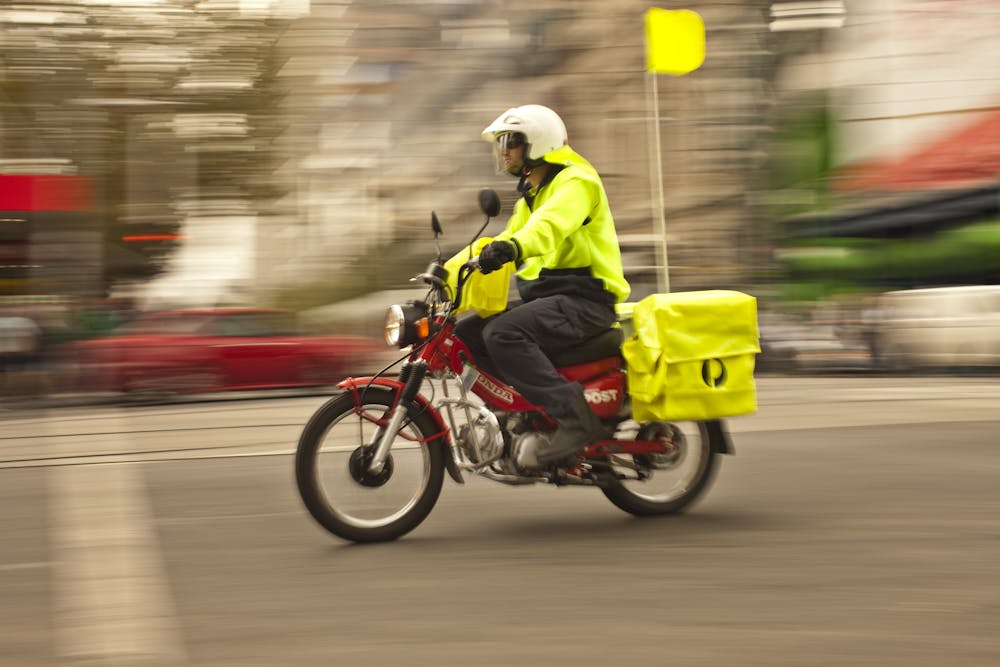
Australia Post workers are suffering more dog attacks than before with 1,170 incidents so far this financial year — up 400 on the same time in 2021.

The delivery service says around five employees are attacked each work day, causing serious injuries and lasting emotional trauma.

What emergency steps should you take if you witness a dog attack? And what should you do if that dog is attacking you?

When dogs attack

While the news from Australia Post is distressing, it’s important to remember that the majority of the millions of dogs in Australia don’t bite. For the dogs that do attack, it’s usually because they are acting on fear or anxiety rather than aggression.

In the centuries since we first domesticated and trained dogs to be our pets and companions, we’ve shaped their natural behaviour so they can share our lives, homes and environment. But we can’t breed or train out all of a dog’s natural instincts: many will protect their space – and will escalate their response if they feel threatened.

We don’t have good national statistics on dog bites. The Australian Companion Animal Council has estimated more than 100,000 people in Australia are attacked by dogs each year, with around 12,000–14,000 of them requiring medical treatment for injuries, and around 10% of those hospitalised.

In the United Kingdom, dog attacks are increasing in adults rather than kids, though the reasons for this are unclear.

UK researchers have found 80% of occupational bites occurred during mail delivery, vet or kennel work, or caring for people who have dogs. In high-risk settings, specialist equipment like an air blaster might be used during an attack. But the general public (and posties) don’t have access to these.


Read more:
From wolf to chihuahua: new research reveals where the dingo sits on the evolutionary timeline of dogs


3 things to do if someone else is being attacked by a dog

Many people picture specific dog breeds as aggressive and more likely to attack, but this is an unhelpful stereotype. The truth is, any type of dog can bite. Here’s what to do:

  1. keep yourself safe. If you intervene, you might get bitten
  2. distract the dog (call out from a safe distance, beep your car horn, spray the animal with a hose if there’s one handy and it’s safe to do so)
  3. call for emergency medical care if necessary.

There are also two important things to do after a dog attack:

  1. provide medical attention. Every dog bite will need medical attention, to treat injury and to prevent infection
  2. report it. Most local councils also require every dog attack be reported. Local authorities may collect evidence, interview witnesses and follow up. They might impose a dangerous dog order or tell the owner to install or repair fencing. Roaming dogs can also be reported and picked up by authorities.

What if the dog is attacking you?

If you see a dog that looks agitated and is running towards you, the most important thing is not to react or scream. Stay calm and avoid eye contact. Move away (out of their space) as calmly and slowly as possible.

If a dog is attacking in full flight, best to stay upright, remain still and call for help. If you have time, placing something between you and them (a clipboard, jacket, wheelie bin) can help. If you end up on the ground, curl up into a ball as tightly as possible.

Most dogs have good “bite inhibition”. If a dog is really scared and an approaching person doesn’t recognise the signs, they will likely bite once as a warning or reaction, but they won’t necessarily keep biting if you can move away.

dog bite wound with bandage pulled back
Dog bites can puncture skin and cause muscle or tendon injury.
Shutterstock


Read more:
A strong-eyed style: what makes Australian muster dogs unique


Why do they hate posties so much?

Dogs don’t hate posties specifically, but many dogs love to chase. Some may chase postal workers on bikes then get overexcited and bite by accident in an overstimulated state. Other dogs may not appreciate strangers entering their space unannounced, and the unpredictability of visits can make things tough too.

Posties might consider taking dog treats on their rounds and throw them each time they visit properties with dogs. This can create a positive association with their daily visit (or sometimes, throwing a handful of treats to distract an approaching dog can help buy time to back away). They could also carry a map and make note of properties with problem dogs, so they can be prepared or owners notified to make arrangements for delivery days.

Many attacks are preventable. In the UK, where postal workers often get bitten when they reach into private mailboxes that are open on the other side, they sometimes use long pegs to push through mail. In the United States, paw stickers have been used to warn postal workers of a dog in the area.

Australia Post recommends keeping your dog in a separate room, on a leash or distracting them with a toy or treat when the postie arrives. They suggest not letting children answer the door in case dogs push their way past. If dogs are outside, they should be kept securely away from the letterbox.

Postal worker on motor delivery bike
Posties are being attacked by dogs in greater numbers.
AAP Image/Australia Post

The Conversation

Susan Hazel is affiliated with the Dog & Cat Management Board of South Australia and the RSPCA South Australia.

Petra Edwards is employed by the RSPCA South Australia.

ref. What to do in a dog attack – and why they hate posties so much – https://theconversation.com/what-to-do-in-a-dog-attack-and-why-they-hate-posties-so-much-182289

How a law change in PNG has fostered prime ministerial incumbency bias

ANALYSIS: By Michael Kabuni and Stephen Howes

Central to the selection of the prime minister in Papua New Guinea following a general election is Section 63 of PNG’s Organic Law on Integrity of Political Parties and Candidates (OLIPPAC), which was passed in 2001 (and then amended in 2003).

Section 63 requires that the Governor-General invites the party with the highest number of MPs following a general election to form the government.

The main aim of the section is to ensure that the appointment of a prime minister after a general election is done in an “orderly way with direct relationship to the way voters expressed their wishes”.

Analysis shows that the passage of OLIPPAC has influenced government formation. First, it has increased the probability that, as is now a legislative requirement, the PM comes from the largest party.

This has happened in all elections since OLIPPAC was legislated (2002, 2007, 2012 and 2017), but only happened in two out of the five pre-OLIPPAC elections (1977 and 1982).

PNG prime minister parties
Table: Kabuni & Howes/DevPolicy

For example, as Table 1 shows, in 1997 the People’s National Congress Party (PNC) had the sixth highest number of MPs but still was able to put forward the successful candidate for PM.

Second, Section 63 also seems to have increased the odds of an incumbent PM being returned. Since the first post-independence election in 1977, five incumbent prime ministers have been re-appointed as PM following one of the country’s nine national elections (see Table 2).

Two developments closely related
The other four times a new prime minister was appointed post-elections. The five times the incumbent was returned are 1977 (Somare), 1987 (Wingti), 2007 (Somare), 2012 (O’Neill) and 2017 (O’Neill). Only two of the five incumbent returns are before the first enactment of OLIPPAC in 2001, and the other three are all post-OLIPPAC.

PNG prime ministers
Table: Kabuni & Howes/DevPolicy

These two developments are closely related. Over the life of the Parliament, MPs tend to join the party of the PM, meaning that that party goes into the election with by far the largest number of MPs. For instance, PNC won 27 seats in 2012, led by the incumbent PM Peter O’Neill, and formed the government.

More MPs joined PNC, and by the time the 2017 elections came around, PNC had 55 MPs. Even though PNC lost 34 sitting MPs, with only 21 getting re-elected, it added seven new MPs in the 2017 elections.

This took PNC’s numbers to 28 MPs, and, after the 2017 elections, it wound up forming the government.

About half the incumbent MPs don’t get re-elected every election, but in general voters do not vote along party lines. Even if they do, and even if there is a swing against the PM’s party, because it has such an advantage going in, it is likely to emerge as the largest party as well.

In 2010, the Supreme Court ruled the restrictions imposed by OLIPPAC on the movement of MPs between parties unconstitutional. This means that MPs can move parties in the period between when they are declared winners following the national election and the appointment of the PM.

What happened in 1987, 1992 and 1997 — when parties with fewer MPs formed the government — could be repeated, Section 63 notwithstanding. All MPs would need to do is submit their letter of resignation to the party that endorsed them for the election, together with a letter of acceptance from the new party they intend to join, to the Registry of Political Parties and Candidates before the election of the PM, and their movement to the new party would become official.

Little incentive to leave
However, we have not seen that happening. This is because there is little incentive for MPs in the largest party to leave if it is likely to become the party of government. Rather, other MPs will join, by joining either the largest party or the governing coalition.

The only incumbent PM not to benefit from the passage of OLIPPAC was, ironically, its architect, Sir Mekere Morauta. He did not go into the election with the largest party, and he certainly did not emerge from it with the largest either.

This should remind us that there is no guarantee that the incumbent PM will be returned post-election. But it does seem that Section 63 has had the unintended consequence of increasing the probability of this happening.

Most view stability as a good thing, but the problem is that the more likely the incumbent is to be returned at the general election, the more pressure there will be to remove him (or perhaps one day her) by a vote of no confidence – since that becomes the only way to do it.

It may be no coincidence that both PMs who have so far benefited from Section 63 (Somare in 2002 and 2007 and O’Neill in 2012 and 2017) lost power mid-term on the floor of Parliament.

Note that the provisions of Section 63 of OLIPPAC do not apply to a vote of no confidence. In a vote of no confidence, any political party (or MP) is eligible to nominate a candidate to contest for the prime minister’s seat. Even an MP without a political party is eligible to be nominated for the PM’s post.

Section 63 was passed with good intentions, but has led to a situation in which increasing stability either side of elections may be reducing it between elections.

Michael Kabuni is a lecturer in political science at the School of Humanities and Social Sciences, University of Papua New Guinea. Dr Stephen Howes is the Director of the Development Policy Centre and a Professor of Economics at the Crawford School. This research was undertaken with the support of the ANU-UPNG Partnership, an initiative of the PNG-Australia Partnership, funded by the Department of Foreign Affairs and Trade. The views are those of the authors only.

Print Friendly, PDF & Email

Article by AsiaPacificReport.nz

Retraction by key Filipino accuser triggers calls to free jailed senator

By Lian Buan in Manila

The retraction of Kerwin Espinosa, one of the main accusers in the Philippines Bilibid drug trade allegations, has drummed up calls from different sectors to free jailed opposition senator Leila De Lima, but the Department of Justice (DOJ) is not budging.

The difficulty with this development is that Espinosa is not involved in the remaining two drug cases against De Lima in the Muntinlupa Regional Trial Court (RTC), either as a respondent or an official witness.

De Lima was earlier acquitted of one of the original three cases.

The controversy emerged as the Philippines entered the last week of campaigning for the presidential election next Monday, May 9.

Espinosa submitted a counter-affidavit to the DOJ last Thursday retracting all his allegations, including paying drug money to De Lima. It was for a separate case, but still related to the Bilibid drug trade, involving the same cast of convicts.

“The previous statements/affidavits of Mr Espinosa which he now recanted were never utilised and will not be used by the prosecution as evidence in the two pending drug cases vs Senator Leila De Lima,” DOJ said in a statement.

Manipulation against staunch critic
While De Lima’s lawyer Filibon Tacardon acknowledges the complication of using to their favour a retraction from Espinosa who is not an official witness, the lawyer pointed out that it still implies illegal maneuvering by the government to jail President Rodrigo Duterte’s staunch critic.

Records show that when the DOJ charged De Lima in 2017, it dismissed the complaint against De Lima and Espinosa “for lack of merit”.

Back then, Espinosa faced what could have been De Lima’s fourth charge after claiming he had paid the senator drug money through Ronnie Dayan.

Although the DOJ dropped Espinosa from the charge and as their witness, the National Bureau of Investigation (NBI) filed a new case against him in December 2021 over a similar story of drug trade in Bilibid. This is the case where Espinosa submitted his latest affidavit retracting his claims against De Lima.

Espinosa said he was coerced and threatened by police and NBI to cooperate with their narrative.

In a dispatch from Camp Crame, De Lima said: “As I have always been saying, all allegations against me invented by the Duterte machine of lies and fabrications would ultimately unravel.”

Perjury against Espinosa?
Groups called on the DOJ to investigate motu proprio, or on its own initiative, Espinosa’s claim of coercion, but Justice Secretary Menardo Guevarra had a different idea in mind —  pursue a perjury charge against Espinosa.

“We will determine that when he faces perjury charges … I will discuss this matter with the panel of prosecutors. Whether or not his testimony is material to the prosecution’s cause, making false statements under oath is a criminal offense,” Guevarra told reporters.

If the prosecution will not use Espinosa’s retraction, the Muntinlupa courts can call him as their own witness, said criminal law professor Ted Te.

“That’s always within the plenary powers of a court — to get to the truth. Can the court ask about context? Yes. Is it relevant? Of course,” said Te.

Tacardon said that it was the defence turn to present in the one case, while the prosecution is wrapping up in the second, which means the defence will present soon.

“As to whether Kerwin Espinosa will be a defence witness has yet to be discussed,” said Tacardon.

Te suggested De Lima’s team should.

“If the defence were to call Espinosa that would be more than enough for reasonable doubt. The question is why should the court allow it to drag on any further?” Te said.

De Lima has been in jail for five years, her trial attracting global political attention, with the United States even mulling a travel ban against her accusers.

Robredo returns to Central Luzon
Meanwhile, Rappler reports presidential candidate Vice-President Leni Robredo has returned to vote-rich regions Central Luzon and Calabarzon with just over a week until the May 9 elections.

In the first leg of her return to these regions, Robredo will barnstorm Bulacan, the fifth most vote-rich province in the country where 2 million votes are up for grabs.

She had earlier secured the endorsement of Bulacan Governor Daniel Fernando.

Lian Buan is a Rappler reporter. Republished with permission.

Print Friendly, PDF & Email

Article by AsiaPacificReport.nz

USP ranking ‘reaffirms standing in the region’, says vice-chancellor

By Wata Shaw in Suva

The University of the South Pacific’s latest international ranking is a “testament to the excellence” that pervades the university, says USP vice-chancellor and president Professor Pal Ahluwalia.

He said this in a statement confirming USP had been ranked 401-600 out of 1406 institutions, with an overall score of 70 out of 100 in The Times Higher Education (THE) impact ranking for 2022.

“It is recognition of the sheer hard work and determination of our researchers,” Professor Ahluwalia said.

“It reaffirms USP’s standing as the premier education institution in the region and this ranking is a testament to the excellence that pervades our university.”

The impact ranking is the only global performance table that assesses universities against the UN Sustainable Development Goals (SDGs) where indicators are carefully calibrated to provide comprehensive and balanced comparisons across four broad areas — research, stewardship, outreach and teaching.

USP scored over 50 (out of 100) in research for SDGs 4, 13, 14, 16 and 17, reflecting the quality and relevance of its publications to the SDGs.

Under SDG four, USP scored highly at over 80 on Lifelong Learning Measures, which highlights lifelong learning opportunities through the provision of public resources, public events, vocational training events, education outreach activities beyond campus, and the existence of policy to ensure access to lifelong learning.

Environmental measures
Under SDG seven, USP scored high, over 70 on Energy Use Density, which is the energy used per floor space of university buildings in 2019.

Under SDG 13, USP scored 100 for Environmental Education Measures that demonstrate activities around local education projects and collaborations on climate change impacts, mitigation and adaptation, including disaster planning reflecting the engagement and collaboration by the university on climate change action locally, regionally and internationally.

USP scored highly at 75 under SDG 14 for Supporting Aquatic Ecosystems Through Action, which includes work on maintaining ecosystems and their biodiversity and over 85 for Local Ecosystem Maintenance.

For University Governance Measures, Working with Government, such as the provision of expert advice to government and participation in government research, and Percentage of Graduates in Law and Civil Enforcement-related courses under SDG 16, USP scored almost 80, 85 and over 75, respectively.

Finally, under SDG 17, which is considered the mandatory SDG, USP scored 100 percent for Relationships to Support the Goals, reflecting USP’s relationships with regional NGOs and international collaborations for SDGs.

The timeframe for data collection for the impact ranking 2022 spanned from January to December 2020 and in some cases, 2019, due to disruptions caused by the covid-19 pandemic.

Wata Shaw is a Fiji Times reporter. Republished with permission.

Print Friendly, PDF & Email

Article by AsiaPacificReport.nz

Climate change: sea levels rising twice as fast as thought in New Zealand

SPECIAL REPORT: By Hamish Cardwell, RNZ News climate reporter

Explosive new data shows the sea level is rising twice as fast as previously thought in some parts of Aotearoa, massively reducing the amount of time authorities have to respond.

The major new projections show infrastructure and homes in Auckland and Wellington — as well as many other places — risk inundation decades earlier than expected.

For example, in just 18 years parts of the capital will see 30cm of sea level rise, causing once-in-a-century flood damage every year.

Previously, councils and other authorities had not expected to reach this threshold until 2060 — halving the time to plan for mitigation or retreat.

The new information comes from a programme comprising dozens of local and international scientists called NZ SeaRise, which also includes GNS Science and Niwa.

It combines data about where land is sinking with the latest international sea-level rise projections.

The new information is a game changer, and will likely have serious consequences for climate adaptation planning, and could impact property prices.

Globally the sea level is expected to rise about half a metre by 2100 — but for large parts of New Zealand it could more than double that because of land subsidence.

Victoria University of Wellington professor and SeaRise programme co-leader Dr Tim Naish said: “We have less time to act than we thought.”

Queens Wharf, Wellington
Queens Wharf, Wellington … a one-in-100 year storm which closes the roads and damages infrastructure could happen every year. Image: RNZ/123rf.com

Wellington: Just 18 years or less before serious effects
Dr Naish said he was surprised how soon impacts would be felt in parts of Auckland and Wellington.

Some areas are sinking 3mm or 4mm a year — about the annual rate at which the sea is rising.

“[This] doubles the amount of sea level rise and it halves the time … you thought you had to deal with the sea-level rise that was in the original guidance documents that councils were using.”

Dr Naish described a case study of the road connecting Petone and Eastbourne in Lower Hutt, which would see 30cm of sea level rise by 2040.

This threshold is important because at that level a one-in-100 year storm which closes the roads and damages infrastructure could happen every year.

He said local and regional councils have been making plans for this threshold to be reached in 2060, giving 20 fewer years to plan and adapt accordingly.

Other places on Wellington’s south coast such as Ōwhiro Bay, Lyall Bay, Seatoun among others are also subsiding.

“You are going to see the impacts of quite damaging sea level rise much sooner than we thought …. roads and properties inundated.”

He said road and rail infrastructure on State Highway 2 at the Korokoro interchange in Petone is another highly vulnerable area.

The largest overall increases in the whole country are on the southeast North Island along the Wairarapa Coast.

Here, the sea level could be be up well over one and a half metres by 2100.

About 30cm of sea level rise is unavoidable because of the amount of climate gases already in the atmosphere.

Wide image of Auckland's skyline
Downtown Auckland … vulnerable places include the waterfront around the bays, Tamaki Drive, and the Viaduct. Image: Simon Rogers/RNZ

Homes and crucial infrastructure in Auckland in the firing line
Dr Naish said vulnerable places in Auckland included the waterfront around the bays, Tamaki Drive, the Viaduct, areas around the Northwestern Motorway at Point Chevalier, St Heliers and Mission Bay.

He said many of these places already have issues during king tides, are close to sea level, and are sinking.

At the Viaduct the land is sinking about about 2.5mm a year.

“That almost doubles the rate of expected sea-level rise and halves the time you have.

“The city council, [and] the port authority are all going to have to start looking closely in terms of their future activities at this new information.”

He said in many parts of Auckland the sea-level would rise 30 to 50 percent faster than what was previously thought.

Meanwhile, he said parts of Thames township is also very vulnerable, and the sinking happening in the Hauraki plains means the stopbanks there have a shorter lifespan than previously thought.

Nelson waterfront from sea
Nelson waterfront … a major worry is the suburb of Richmond and nearby parts which are subsiding at about 5mm a year. Image: Tracy Neal/RNZ

Richmond in Nelson a hotspot
A major worry is the suburb of Richmond and nearby parts in the Nelson area which is subsiding at about 5mm a year.

“That whole area there has been a lot of development, new subdivisions, housing … the airport is very exposed, and that road around [the coast to Richmond] is vulnerable,” Naish said.

He said local and regional councils in the region have known for a long time there could be issues there with sea-level rise.

“There is going to be some really big challenges for that region.”

Online tool lets residents, authorities check
New Zealanders will soon be able to see for the first time how much and how fast sea-level will rise along their own stretch of coast.

The entire coastline has been mapped down to a 2km spacing.

The new advice combines data about where land is sinking with the latest international sea-level rise projections.

It will be an major new tool for councils, businesses and homeowners to assess risk from erosion and floods.

‘Information is power’
Dr Naish said the new data was important information and people should try not to be too overwhelmed.

“Information is power, so don’t be afraid of it.

“We still have time … but we don’t have time to sit on our hands anymore.

“If you’re a [council representative] or you’re a developer, or you’re a decisions maker in the coastal areas of New Zealand you need to start thinking right now what the plan is for adapting to that sea-level rise.

“Yes, it is a bit terrifying but there is still time and I think that is the way to look at it.”

The information is timely, coming hot on the heels of the climate change draft adaptation plan released last week.

It asks for public input on the plans, and on so-called ”managed retreat’” – abandoning areas where it is not possible or financially viable to live any longer.

Uncertainty about predictions laid out in tool
Dr Naish said uncertainty about the predictions were clearly laid out in the tool — but he said there was no question that there would be a response from property owners, the insurance and banking sectors to the new information.

GNS Science Environment and Climate Theme Leader Dr Richard Levy said until now, the risk from sea-level rise has been quite poorly defined for New Zealand.

“Current sea-level projections in the Ministry for the Environment coastal hazards guidance do not take into account local vertical land movements.”

Most of the information about sea-level rise was more or less extrapolated out from the global average.

NZ SeaRise is a five-year research programme comprising local and international experts from Te Herenga Waka-Victoria University of Wellington, GNS Science, NIWA, University of Otago and the Antarctic Science Platform.

It is funded by the Ministry for Business, Innovation and Employment.

Climate change and warming temperatures are causing sea levels to rise, on average, by 3.5 mm per year.

This sea level rise is caused by thermal expansion of the ocean, by melting land based glaciers, and by melting of the Greenland and Antarctic ice sheets.

This article is republished under a community partnership agreement with RNZ.

Print Friendly, PDF & Email

Article by AsiaPacificReport.nz

NZ border reopens to international and Pacific visitors tonight

RNZ News

For the first time in more than two years, New Zealand’s border will reopen to international visitors at midnight tonight.

On 19 March 2020, New Zealand snapped its border shut to anyone without citizenship or residency, before any covid-19-related deaths were recorded.

It was the first time in our history such a move was made, with the ban also including those from the Pacific.

Today, the countdown is on to welcome back vaccinated visitors from 60 visa-waiver countries.

New Zealand’s already reopened the border to vaccinated Australians and some international students.

Air New Zealand chief executive Greg Foran said almost 1000 people will arrive on the first three flights, which will come from Los Angeles, San Francisco, and Fiji.

The airline has been struggling to prepare for the influx in international visitors due to staff recruitment issues.

The Ministry of Health reported 14 more more deaths with covid-19 and a further 8242 new community cases on Friday.

The seven-day rolling average of case numbers was 7540, down from last week’s 8166.

The total number of reported deaths with covid-19 rose to 737

This article is republished under a community partnership agreement with RNZ.

Print Friendly, PDF & Email

Article by AsiaPacificReport.nz

Former PNG election manager for Port Moresby jailed for ballot fraud

PNG Post-Courier

A former election manager for Papua New Guinea’s National Capital District (NCD) who was charged with election fraud for corruptly receiving a large sum of money from a candidate during the 2017 election has been sentenced to seven years in prison by the National Court at Waigani.

National Court judge Justice Teresa Berrigan described the offence as “official corruption of the worst kind” and wants the sentence to serve as deterrent to potential offenders in this year’s election.

“As the country stands on the eve of elections, a severe penalty must be imposed as a clear warning to potential offenders, and to maintain public confidence in the electoral process,” Justice Berrigan said.

The former NCD election manager, Terence Hetinu, was initially arrested and charged on June 27, 2017, after a public complaint was lodged with police about Hetinu’s conduct that day.

He was reported to have carried with him in an electoral commission vehicle a substantial amount of money to be allegedly used for bribing polling officials to support a specific candidate.

When arrested, police found in his possession K184,300 (about NZ$80,000) and a contract agreement which stated that he would be rewarded with a security contract from the National Capital District Commission if he helped a candidate to win the Port Moresby regional seat.

Elections delayed by two weeks
RNZ Pacific reports that the weeks-long elections start with the writs now on May 12.

Electoral Commissioner Simon Sinai announced that the nominations would start that day, finishing on May 19.

Polling is due to start on July 9 and finish on the July 22 — allowing 14 days for polling. The writs are to be returned on July 29.

Republished with permission.

Print Friendly, PDF & Email

Article by AsiaPacificReport.nz

ACCC says consumers need more choices about what online marketplaces are doing with their data

Source: The Conversation (Au and NZ) – By Katharine Kemp, Senior Lecturer, Faculty of Law & Justice, UNSW, UNSW Sydney

Shutterstock

Consumers using online retail marketplaces such as eBay and Amazon “have little effective choice in the amount of data they share”, according to the latest report of the Australian Competition & Consumer Commission (ACCC) Digital Platform Services Inquiry.

Consumers may benefit from personalisation and recommendations in these marketplaces based on their data, but many are in the dark about how much personal information these companies collect and share for other purposes.

ACCC chair Gina Cass-Gottlieb said:

We believe consumers should be given more information about, and control over, how online marketplaces collect and use their data.

The report reiterates the ACCC’s earlier calls for amendments to the Australian Consumer Law to address unfair data terms and practices. It also points out that the government is considering proposals for major changes to privacy law.

However, none of these proposals is likely to come into effect in the near future. In the meantime, we should also consider whether practices such as obtaining information about users from third-party data brokers are fully compliant with existing privacy law.

Why did the ACCC examine online marketplaces?

The ACCC examined competition and consumer issues associated with “general online retail marketplaces” as part of its five-year Digital Platform Services Inquiry.

These marketplaces facilitate transactions between third-party sellers and consumers on a common platform. They do not include retailers that don’t operate marketplaces, such as Kmart, or platforms such as Gumtree that carry classified ads but don’t allow transactions.

The ACCC report focuses on the four largest online marketplaces in Australia: Amazon Australia, Catch, eBay Australia and Kogan. In 2020–21, these four carried sales totalling $8.4 billion.

Online marketplaces such as Amazon, eBay, Catch and Kogan facilitate transactions between third-party buyers and sellers.
Shutterstock

According to the report, eBay has the largest sales of these companies. Amazon Australia is the second-largest and the fastest-growing, with an 87% increase in sales over the past two years.

The ACCC examined:

  • the state of competition in the relevant markets
  • issues facing sellers who depend on selling their products through these marketplaces
  • consumer issues including concerns about personal information collection, use and sharing.

Consumers don’t want their data used for other purposes

The ACCC expressed concern that in online marketplaces, “the extent of data collection, use and disclosure … often does not align with consumer preferences”.

The Commission pointed to surveys about Australian consumer attitudes to privacy which indicate:

  • 94% did not feel comfortable with how digital platforms including online marketplaces collect their personal information
  • 92% agreed that companies should only collect information they need for providing their product or service
  • 60% considered it very or somewhat unacceptable for their online behaviour to be monitored for targeted ads and offers.


Read more:
How one simple rule change could curb online retailers’ snooping on you


However, the four online marketplaces analysed:

  • do not proactively present privacy terms to consumers “throughout the purchasing journey”
  • may allow advertisers or other third parties to place tracking cookies on users’ devices
  • do not clearly identify how consumers can opt out of cookies while still using the marketplace.

Some of the marketplaces also obtain extra data about individuals from third-party data brokers or advertisers.

The harms from increased tracking and profiling of consumers include decreased privacy; manipulation based on detailed profiling of traits and weaknesses; and discrimination or exclusion from opportunities.

Limited choices: you can’t just ‘walk out of a store’

Some might argue that consumers must not actually care that much about privacy if they keep using these companies, but the choice is not so simple.

The ACCC notes the relevant privacy terms are often spread across multiple web pages and offered on a “take it or leave it” basis.

The terms also use “bundled consents”. This means that agreeing to the company using your data to fill your order, for example, may be bundled together with agreeing for the company to use your data for its separate advertising business.

Further, as my research has shown, there is so little competition on privacy between these marketplaces that consumers can’t just find a better offer. The ACCC agrees:

While consumers in Australia can choose between a number of online marketplaces, the common approaches and practices of the major online marketplaces to data collection and use mean that consumers have little effective choice in the amount of data they share.

Consumers also seem unable to require these companies to delete their data. The situation is quite different from conventional retail interactions where a consumer can select “unsubscribe” or walk out of a store.

Does our privacy law currently permit all these practices?

The ACCC has reiterated its earlier calls to amend the Australian Consumer Law to prohibit unfair practices and make unfair contract terms illegal. (At present unfair contract terms are just void, or unenforceable.)

The report also points out that the government is considering proposals for major changes to privacy law, but these changes are uncertain and may take more than a year to come into effect.


Read more:
A new proposed privacy code promises tough rules and $10 million penalties for tech giants


In the meantime, we should look more closely at the practices of these marketplaces under current privacy law.

For example, under the federal Privacy Act the four marketplaces

must collect personal information about an individual only from the individual unless … it is unreasonable or impracticable to do so.

However, some online marketplaces say they collect information about individual consumers’ interests and demographics from “data providers” and other third parties.

We don’t know the full detail of what’s collected, but demographic information might include our age range, income, or family details.

How is it “unreasonable or impracticable” to obtain information about our demographics and interests directly from us? Consumers could ask online marketplaces this question, and complain to the Office of the Australian Information Commissioner if there is no reasonable answer.

The Conversation

Katharine Kemp receives funding from The Allens Hub for Technology, Law and Innovation. She is a Member of the Advisory Board of the Future of Finance Initiative in India, and the Australian Privacy Foundation.

ref. ACCC says consumers need more choices about what online marketplaces are doing with their data – https://theconversation.com/accc-says-consumers-need-more-choices-about-what-online-marketplaces-are-doing-with-their-data-182134

Polls show a jump in the Greens vote – but its real path to power lies in reconciling with Labor

Source: The Conversation (Au and NZ) – By Kate Crowley, Adjunct Associate Professor, Public and Environmental Policy, University of Tasmania

Russell Freeman/AAP

A major poll published yesterday suggests the Greens are set to grow as a political force at this month’s election, showing its primary vote has risen markedly from 10% in 2019 to a current high of 15%.

Recent surveys show large numbers of voters see climate change as their biggest concern, and the jump in Greens’ support indicates the issue is determining how many people plan to vote.

The party goes to next month’s election armed with ambitious, big-spending policies. It strongly fancies its chances in at least five lower house seats and hopes to pick up three more Senate seats.

But for the Greens, the path to real power lies in a hung parliament where they can seek to extract policy concessions from a minority Labor government. The Greens and Labor have a mixed record of working together, but can learn from past experience. So let’s take a closer look at what we can expect from the Greens in a hung parliament.

rows of cupcakes bearing Greens logo
The sweet smell of success: The real path to power for the Greens lies in a hung parliament.
David Crosling/AAP

Seeking the balance of power

Opinion polls earlier in the election campaign put the Greens at between 11% and 13% of the primary vote.

In 2010 they polled 11.76% in the House of Representatives (giving them a shared balance of power) and 13% in the Senate (delivering the balance of power outright).

The 2010 election led to the first federal hung Parliament in 70 years, although these are common outcomes in the states and territories. Labor Prime Minister Julia Gillard’s deal with the Greens in 2010 to form a minority government ended acrimoniously.

Labor leader Anthony Albanese has ruled out such a power-sharing deal this time around, as Bill Shorten did ahead of the 2016 and 2019 elections.

But if a hung parliament does eventuate and Labor refuses a power-sharing deal, it would be left clinging to power, vote by vote. In any case, Labor would have to negotiate support from the Greens and independents in order to govern – and offer a swag of policy concessions in return.

The Greens are also a chance of recapturing the balance of power in the Senate, which means their influence after May 21 may still be significant.


Read more:
Labor’s lead steady in Newspoll and gains in Resolve; how the polls moved during past campaigns


The ability to influence policy is key to the legitimacy and relevance of minor parties such as the Greens.

Under the Gillard Labor minority government, the Greens had significant policy success. They pushed Labor towards a carbon pricing policy that briefly turned around energy emissions growth, and a dental health package for children and low-income earners.

These signature policies were short-lived though; abolished by Abbott Coalition government after the 2013 election.

Some Green initiatives survived, however, such as the Parliamentary Budget Office, the Clean Energy Finance Corporation and the Australian Renewable Energy Agency.

Relations between Labor and the Greens eventually failed once the Gillard government adopted a watered-down mining tax. The Greens also decried Labor’s failure to make headway on environmental protection, national heritage, the Great Barrier Reef, Tasmania’s wilderness, the Murray Darling Basin and more.

So what policy demands can we expect from the Greens this time around?

man and woman shake hands at table
Relations between Labor and the Greens eventually failed.
Alan Porritt/AAP

A big policy agenda

In the case of a hung parliament, the Greens would demand a halt to all new coal, gas and oil projects for at least six months while they negotiate with Labor over climate policy. It would also push for a coal export levy to fund disaster recovery and clean export industries.

In their 2022 electoral platform, the Greens are again aiming high. Their headline policies include:

  • a treaty with First Nations people
  • free dental and mental healthcare
  • wiping out student debt
  • building one million publicly owned, affordable, sustainable homes
  • overhauling labour laws to outlaw insecure work and increase wages.

Should the Greens hold the balance of power, they would likely also call for the next government to urgently release the delayed State of the Environment report, and to implement the recommendations from a 2020 independent review into Australia’s environment laws.

The party’s environment platform offers the usual extensive suite of policies and detailed measures to address the extinction crisis, green jobs, clean water, caring for country, sustainable agriculture, preventing animal cruelty, eliminating single-use plastics and improving ocean health.

As well as phasing out coal, oil and gas, the Green’s climate policy includes:

  • banning political donations from fossil fuel companies
  • installing cleaner, cheaper power for homes and business
  • assisting workers in the clean energy transition
  • funding climate resilience
  • supporting cleaner cars, electricity and manufacturing.

Their energy plan allocates A$17.1 billion to electrify Australian homes, $14.8 billion electrifying small businesses and $12.6 billion installing small-scale solar batteries.


Read more:
If it needs it, Australia can draw on significant experience of minority government


Where next for the Greens?

If the polls are right, the Greens are a chance to reclaim the balance of power in the Senate and to share the balance of power in the House of Representatives.

In the longer term, the Greens aspire to replace Labor in government. But as experience in Tasmania and the ACT shows, Greens ministers can successfully serve in Labor cabinets.

For now, the Greens are nipping at the heels of the major parties. The party’s best prospects for realising its policies in national government lie in reconciling with Labor and learning to work in coalition.


Read more:
Albanese pledges to make gender pay equity a Fair Work Act objective


The Conversation

Kate Crowley does not work for, consult, own shares in or receive funding from any company or organisation that would benefit from this article, and has disclosed no relevant affiliations beyond their academic appointment.

ref. Polls show a jump in the Greens vote – but its real path to power lies in reconciling with Labor – https://theconversation.com/polls-show-a-jump-in-the-greens-vote-but-its-real-path-to-power-lies-in-reconciling-with-labor-181705

People attending GPs aren’t getting all the preventive health care they need. Here’s what could help

Source: The Conversation (Au and NZ) – By Oliver Frank, Senior Research Fellow, Discipline of General Practice, and Specialist General Practitioner, University of Adelaide

Shutterstock

When you go to your usual GP, you probably sit down, tell her your health-care needs or problems, and she advises and discusses with you how you can address them.

But there’s one important aspect missing in many visits to the GP: what you can do to prevent ill health in the future.

Preventive care includes advice, such as to stop smoking or about forthcoming perimenopause; physical examination such as measuring blood pressure, waist circumference or eyesight; tests for high cholesterol or screening mammography (breast X-ray); and treatments such as vaccinations.

We’ve been researching ways GPs and people attending them can be better reminded of relevant preventive health care, and have developed a solution that might help.

What are patients missing?

Just to give a few examples, only about half or fewer eligible Australians currently participate in the national programs to screen for cancer of the bowel, breast or cervix.

Osteoporosis is a condition in which bones become weak and can break easily. It is a major health program that is common in older people, with osteoporotic fractures reducing quality and length of life. Despite this, only about 10% of people at higher risk for osteoporosis are screened for it by their GP.

xray image of hips and pelvis
Osteoporosis can lead to fractures and reduce quality and length of life, but few people are screened for it.
Shutterstock

Invasive pneumococcal infection is serious and sometimes fatal. Our research has found 30% of people under the age of 65 years have chronic health conditions that put them at higher risk of pneumococcal infection, but only 24% of them report having received pneumococcal vaccine.

Why isn’t all recommended preventive care routinely offered?

National guidelines for prevention advise how often different activities should be performed for people of different ages and sexes, making the date on which each relevant preventive activity is due for each person predictable. In view of this, why don’t most people know which preventive activities are recommended for them and when each is due next to be performed? There are a few reasons for this.


Read more:
Focus on prevention to control the growing health budget


One reason is that the guidelines for the prevention, early detection or care of some conditions are complex.

Second, which preventive measures are recommended changes as people age and as their personal and family health history changes.

Preventive care is more likely to be offered in longer consultations, but the Medicare Benefits Schedule provides lower subsidies per minute for longer consultations than for shorter ones. This increases patients’ out-of-pocket costs for longer consultations and discourages patients from seeking, and GPs from offering, longer consultations.

Currently, there is no one place each person can view a list of all of the preventive health measures recommended for them, when each of them was done, and when they are next due.

Our research developed a solution

Most of the electronic clinical record systems used by Australian GPs automatically generate onscreen reminders to GPs about preventive activities. Those reminders cover only a limited range of preventive activities, are not very informative, and GPs can ignore them repeatedly without any accountability.

Most importantly, the reminders are not communicated automatically to the patient. To address this, we are studying the effects of automatically sending SMS messages to patients about preventive activities that are due to be performed.

The messages are sent after the person has made an appointment to see their GP. They tell the person what care is due and advise the person to discuss this in their forthcoming consultation. These reminders empower their recipients and enable them to receive the recommended care with a minimum of additional time, effort or cost.

An example of the text message sent to patients.
Author Provided, Author provided

Our earlier studies of providing information and reminders on paper before consultations found people welcomed receiving this information and acted on them.


Read more:
How physical activity in Australian schools can help prevent depression in young people


GPs’ clinical software systems should be improved to allow and encourage each person to view a comprehensive display of their preventive care updates. Currently, the freely available Doctors Control Panel onscreen reminder software for GPs (used in our research program) comes closest to providing a comprehensive listing of preventive activities recommended for each person, and when they were, or are, due to be performed.

What can you do now?

At least annually, you should ask your usual GP about which preventive activities are recommended for you, when each was last performed with what result or finding, and when each is due to be performed next.

If you plan to do this when you are going to see your usual GP for some other reason, ask for a long appointment so your GP can find and give you this information.

The Conversation

This research has received grants from the RACGP Foundation and Pfizer’s Independent Grants. Oliver Frank has advised the owner of the Doctors Control Panel software on usability, he did not receive payment or any other benefit for this advisory.

ref. People attending GPs aren’t getting all the preventive health care they need. Here’s what could help – https://theconversation.com/people-attending-gps-arent-getting-all-the-preventive-health-care-they-need-heres-what-could-help-181709

For first homebuyers, it’s Labor’s Help to Buy versus the Coalition’s New Home Guarantee. Which is better?

Source: The Conversation (Au and NZ) – By Rachel Ong ViforJ, ARC Future Fellow & Professor of Economics, Curtin University

Shutterstock

Each side is offering something for first homebuyers this election, but the nature of the support is quite different.

The Coalition’s Home Guarantee

The Coalition is promising to expand its Home Guarantee Scheme, also known as its First Home Loan Deposit Scheme. It’ll lift the number of places on offer from 10,000 to 35,000 per year, and reserve another 5,000 places for single parents.

As well, it will boost the highest purchase price the scheme can be used for. In Sydney it will climb from A$800,000 to $900,000; and in Melbourne from $700,000 to $800,000.

The scheme enables buyers with deposits as small as 5% (2% for single parents) to avoid paying the mortgage insurance that is normally required for deposits of less than 20%. The Commonwealth “guarantees” the other 15% to 18%.

Mortgage insurance can cost as much as $30,000 on a $600,000 mortgage.

The guarantee is not a cash payment or a deposit.

Labor’s Help to Buy

Labor’s scheme, announced on Sunday is called Help to Buy and owes something to work done by the Liberal Party’s Menzies Research Centre in 2003 for then Prime Minister John Howard.

Labor’s scheme will offer 10,000 homebuyers the opportunity to share ownership with the Commonwealth which will put in up to 40% of the purchase price for a new home, and up to 30% for an existing home.


Read more:
Older women often rent in poverty – shared home equity could help


As with the Coalition’s Home Guarantee Scheme, eligible homebuyers will avoid the need for lenders mortgage insurance. Under Help to Buy, eligible homebuyers would pay a 2% rather than a 5% deposit.

Labor’s scheme is targeted at lower middle earners on taxable incomes of up to $90,000 for singles and $120,000 for couples, whereas the Coalition’s is available for singles on incomes up to $125,000 and couples up to $200,000.

Shared ownership isn’t new

The United Kingdom has offered such a scheme for decades, as do state governments in Western Australia (Keystart), South Australia (HomeStart) and Victoria (Homebuyer).

The report commissioned by Howard in 2004 found shared ownership “as critical to the welfare of Australian families today as was the emergence of the mortgage market at the turn of the last century”.

A report produced by the Grattan Institute in 2022 found that while it might cost the government money in the short-term, it might save it money on rent assistance longer term if it got more Australians into home ownership.

Despite many attractive features, shared ownership has remained niche worldwide due to its complexities. In the UK, fewer than 1% of households use it.

But shared ownership is complicated

In Labor’s scheme, the Commonwealth wouldn’t charge the owner rent on the portion of the home that it owned, while the owner would be responsible for ongoing costs such as rates and other bills. When the home is eventually sold the Commonwealth will get its money back plus its share of the capital gain.

As in the United Kingdom, at any time the owner can “staircase”, buying more of their property from the Commonwealth, although if prices have risen since the initial purchase, the cost of buying further shares will have also risen.


Read more:
Solutions beyond supply to the housing affordability problem


If the homebuyer’s income exceeds the Help to Buy threshold for two consecutive years, they will be required to repay the government’s financial contribution in part or whole as their circumstances permit.

In other such schemes, owners face restrictions on their freedom to renovate and sub-let their properties. They can also pay more for their mortgages, as not all lenders offer their most competitive loans for such schemes.

Two very different schemes


First Home Loan Deposit Scheme to continue

Regardless of which party gets elected, the Home Guarantee scheme will continue (with more places under the Coalition).

While escaping the cost of mortgage insurance offers buyers a leg up the ladder, most may be close to being able to buy a house without it, meaning it might simply bring forward home purchases rather than assisting people unable to buy.

While the Home Guarantee scheme focuses on the deposit hurdle, Labor’s Help to Buy scheme will help with both deposits and repayments.

Such schemes are complex.

Participants will need to read the fine print to ensure that they are prepared to accept the complications that might arise later.

Labor is also promising a National Housing Supply and Affordability Council and a Housing Australia Future Fund to build more social and affordable housing.


Read more:
$1 billion per year (or less) could halve rental housing stress


In truth, we can’t really hope to make a dent in the housing affordability crisis without hard policy choices such as reforming tax concessions that have pushed up house prices. Labor put forward such measures in 2019. It isn’t this time.

The Conversation

Rachel Ong ViforJ receives funding from the ARC and AHURI. She is the recipient of an ARC Future Fellowship (project FT200100422).

ref. For first homebuyers, it’s Labor’s Help to Buy versus the Coalition’s New Home Guarantee. Which is better? – https://theconversation.com/for-first-homebuyers-its-labors-help-to-buy-versus-the-coalitions-new-home-guarantee-which-is-better-182276

Australia should have a universal basic income for artists. Here’s what that could look like

Source: The Conversation (Au and NZ) – By Jo Caust, Associate Professor and Principal Fellow (Hon), School of Culture and Communication, The University of Melbourne

Frankie Cordoba/Unsplash

While artists struggle to get noticed in the Australian political arena, particularly in the lead up to an election, other nations take their artists more seriously – even seeing them as critical to a successful and vibrant community.

When I talked to artists during the pandemic, it became evident they needed four conditions in place to be able to practice successfully as artists: a regular income, a place to do their work, capacity to do their work and validation of their work.

Without these conditions, productivity and mental health suffer.

The Republic of Ireland has recently instituted a new scheme to provide three-year support for up to 2,000 individual artists, piloting a form of universal basic income.

Artists will be expected to meet at least two out of three qualifying terms to apply for the scheme: have earned an income from the arts, have an existing body of work and/or be members of a recognised arts body, such as a trade union.

Successful artists and creative workers will be given a weekly income of €325 (A$479), and be able to earn additional money without this basic income being affected.

The Irish Minister for the Arts Catherine Martin hopes this first model can be broadened to include all practising Irish artists in the future.

She sees it as a simple and economic method to protect artists from precarious existences while benefiting the community as whole.


Read more:
Could the idea of a universal basic income work in Australia?


International support for artists

The Irish scheme for a universal basic income for artists isn’t the only model.

In the US, several states and private foundations have developed schemes to provide direct support to artists as an outcome of the pandemic.

In May 2021, the City of New York paid 3,000 artists no-strings-attached grants of US$5,000 (A$7,080). Additional grants were provided for public art works, exhibitions, workshops and showcase events.

A man paints
The City of New York gave artists no-strings-attached grants: giving them time to create work.
Flow Clark/Unsplash

In June 2021, the philanthropic Mellon Foundation announced a new program called Creatives Rebuild New York to provide 2,400 New York artists with a guaranteed monthly income of US$1,000 (A$1,415) for 18 months.

The program employed another 300 artists and creative workers on an annual salary of US$65,000 (A$92,000) to work in collaboration with community organisations and local authorities for two years. They will also receive other benefits and dedicated time to work on their artistic practice. Both these programs were designed by artists.

The city of San Francisco provided US$1,000 per month for 130 local artists for six months from mid-2021. Thanks to philanthropic support from Twitter founder Jack Dorsey, the scheme expanded to support 180 artists for 18 months.

The city of St Paul in Minnesota, with a population of just over 300,000, has initiated a program to give 25 artists a guaranteed unrestricted income of US$500 (A$708) per month for a period of 18 months.

Closer to home, the House of the Arts (HOTA) on the Gold Coast recognised the economic dilemma of local artists during the pandemic.

In 2021, they employed four artists to work three days a week for six months on their own creative projects at HOTA. They were given a regular salary, a studio to work in, and were invited to participate in the organisational planning of HOTA.

Could we recreate this in Australia?

In Australia, some artists were eligible for schemes like JobKeeper and JobSeeker during 2020 and into early 2021, which could provide a model for how to support artists with a basic income going forward.

But in 2020-21 the Australia Council only funded 584 individual artists, a drop of nearly 50% since 2012-13.

Ireland’s three-year pilot program for artists will cost the government around €25 million (A$37 million). With a population about a fifth of Australia’s, a similar scheme applied here using the same ratio could provide funding to 10,000 individual artists at a cost of A$185 million over three years.

This would be a drop in the ocean for the Australian federal budget, but it could be a game changer for the community, the arts and artists.


Read more:
Why arts and culture appear to be the big losers in this budget


A universal basic income provides a regular amount of money that allows the individual to live above the breadline. It can transform an individual’s life while having a positive impact on the whole of society.

Schemes that provide an ongoing income to individual artists – such as royalty schemes, lending rights and long-term leasing of artwork by government bodies and corporations – are all important, but the amounts received from them for the majority of artists are usually quite limited.

A woman dancing
An Australian model could support 10,000 artists at a cost of $185 million over three years.
Carolin Thiergart/Unsplash

Just imagine if every Australian arts centre, library, school, university, hospital, local council and government department employed an artist in residence. The artist gets an income while the institution gets an extraordinary input of ideas and imagination that can transform their environment.

We need to stop patronising our artists by giving them tiny grants and making them go through endless hoops and form filling to gratefully receive them.

Artists are essential to our community. It is time to demonstrate – like Ireland and New York – the success of our artists reflects our healthy and vibrant nation, and pay them accordingly.

The Conversation

Jo Caust has previously received from the Australia Council. She is a member of NAVA and the Arts Industry Council (SA).

ref. Australia should have a universal basic income for artists. Here’s what that could look like – https://theconversation.com/australia-should-have-a-universal-basic-income-for-artists-heres-what-that-could-look-like-182128

Labor’s lead steady in Newspoll and gains in Resolve; how the polls moved during past campaigns

Source: The Conversation (Au and NZ) – By Adrian Beaumont, Honorary Associate, School of Mathematics and Statistics, The University of Melbourne

AAP/Lukas Coch

This week’s Newspoll, conducted April 27-30 from a sample of 1,538, gave Labor a 53-47 lead, unchanged since last week. Primary votes were 38% Labor (up one), 36% Coalition (steady), 11% Greens (steady), 5% One Nation (up two), 4% UAP (steady) and 6% for all Others (down three).

51% were dissatisfied with Scott Morrison’s performance (down three), and 44% were satisfied (up two), for a net approval of -7, up five points. Anthony Albanese’s net approval improved three points to -9. Morrison’s lead as better PM narrowed to 45-39 from 46-37.

56% thought it was time for a change of government, while 44% thought the Coalition deserved to be returned. Newspoll figures are from The Poll Bludger.

Last week I anticipated One Nation would increase its support, as polls previously expected One Nation to contest only the 59 of 151 House of Representatives seats they had in 2019, but they are actually contesting 149.


Read more:
Labor retains clear Newspoll lead and large Ipsos lead as record number of candidates nominate


With less than three weeks to go until the May 21 election, both Newspoll and Resolve continue to show Labor in a clear election-winning position.

The best news for the Coalition from these polls is the five-point increase in Morrison’s net approval in Newspoll to -7, despite the negative headlines last week owing to the ABS inflation report. If Morrison can improve his ratings further to about net zero by the election, the Coalition could be returned.

Resolve poll: 54-46 to Labor as Greens surge

A Resolve poll for Nine newspapers, conducted April 26-30 from a sample of 1,408, gave Labor a 54-46 lead by both respondent and previous election preferences, a two-point gain for Labor by respondent preferences since last fortnight’s Resolve poll. This is the first time Resolve has given a two party vote.

Primary votes were 34% Labor (steady), 33% Coalition (down two), 15% Greens (up four), 5% One Nation (up one), 5% UAP (up one), 4% independents (down five) and 4% others (steady). 76% (up three) said they were committed to their current first preference, while 24% (down three) were not yet committed.

This is the first Resolve poll taken since nominations closed. Only independents that appear to be in contention for their seat are now being included in the readout, resulting in a crash for the independents figure.

51% thought Morrison was doing a bad job, and 42% a good job, for a net approval of -9, down five points. Albanese’s net approval was down one point to -11. Morrison led Albanese as preferred PM by 39-33 (38-30 last fortnight).

The Liberals and Morrison maintained a 42-27 lead over Labor and Albanese on economic management (43-23 last fortnight). But on keeping the cost of living low, Labor had a 34-28 lead (31-31 previously).

The polls have Labor in an election-winning position, but Scott Morrison’s approval rating is improving.
AAP/Mick Tsikas

Other interesting polls

In the Ipsos issues monitor for April, cost of living was rated a top issue by 50% (up six since March and 18 since January), healthcare by 39% (steady and down nine) and the economy by 32% (steady and down four).

Labor led the Coalition by 35-27 with 7% Greens on handling cost of living. On healthcare, Labor led by 37-26 with 7% Greens, while the Coalition just led Labor 33-30 on the economy with 7% Greens.

The left-wing Australia Institute polled on Labor and Coalition messages, finding more people agreed with Labor messages than with Coalition ones. This poll was conducted April 19-22 from a sample of 1,002.

How the polls have moved during past election campaigns

I requested this graph from The Poll Bludger, which shows how polls have moved during the three-year period from one election to the next. These graphs go from the 1996-98 term to the 2013-16 term. Polls for the 2016-19 term can be seen at The Poll Bludger. The top graphs for each term are two party preferred and the bottom primary votes.

Poll Bludger’s historical poll charts.

Except for 2019, the final polls were accurate for the other elections covered. In 1998, the Coalition won a House majority despite losing the two party vote by 51.0-49.0.

The Coalition was the government from 1996-2007, Labor from 2007-2013 and the Coalition from 2013 until the present. Perhaps due to the Mark Latham factor, there was sharp late movement to the Coalition government in 2004, and to a lesser extent in 2007.

However, there was sharp late movement to Labor in 2001 as the Coalition’s September 11 bounce wore off. And in 2013, the movement was to the Coalition opposition as Kevin Rudd’s second honeymoon as PM wore off quickly.

In other cases, the major poll movements occurred before the election campaign, and the campaign itself had little impact. There wasn’t much gain for the Coalition in the 2019 campaign polls; the final polls were wrong.


Read more:
As the election campaign begins, what do the polls say, and can we trust them this time?


Inflation up 2.1% in March quarter

The ABS reported March 27 that inflation increased 2.1% in the March quarter, for a 5.1% rate in the 12 months to March, the highest since 2001. Core inflation increased 1.4% in March for a 3.7% annual rate, the highest since 2009.

The 2001 inflation increase was due to the introduction of the GST. We have to go back to 1995 for an equal inflation rate that was not affected by the GST.

The high inflation will put pressure on the Reserve Bank to raise interest rates Tuesday. Inflation is likely a key reason for Labor’s poll lead this year, as voters hate price rises on food and petrol.

Last week’s Morgan poll: 54.5-45.5 to Labor

A Morgan poll, conducted April 18-24 from a sample of 1,393, gave Labor a 54.5-45.5 lead, a 0.5-point gain for the Coalition since the previous week’s poll. Primary votes were 35.5% Coalition (steady), 35% Labor (steady), 12% Greens (down two), 4.5% One Nation (steady), 1.5% UAP (steady), 8% independents (up 1.5) and 3.5% others (up 0.5).

Seat polls: Parramatta and Wentworth

The Poll Bludger reported last Thursday that Redbridge polls for Equality Australia in the NSW seats of Parramatta and Wentworth gave Labor a 55-45 lead in Parramatta (53.5-46.5 to Labor in 2019), and independent Allegra Spender a 53-47 lead in Wentworth over Liberal Dave Sharma.

LGBTIQ+ equality and transgender participation in women’s sport were ranked dead last in both seats as “vote determining issues”. These polls were taken April 19-21 from samples of 800-900 in each seat.

SA upper house final result

Labor won 27 of the 47 lower house seats at the March 19 South Australian election. Preferences for the upper house were distributed electronically April 27. ABC election analyst Antony Green reported that Labor won five of the 11 seats up at this election, the Liberals four, the Greens one and One Nation one.

At the 2018 election, Labor won four of the 11 seats, the Liberals four, SA-Best two and the Greens one. Combined, Labor now holds nine of the 22 seats, the Liberals eight, the Greens two, SA-Best two and One Nation one.

Labor will not be able to pass legislation opposed by the Liberals with the Greens alone, but will also need support from either SA-Best or One Nation.

A quota was one-twelfth of the vote or 8.3%. Final primary votes gave Labor 4.44 quotas, the Liberals 4.13, the Greens 1.08, One Nation 0.51, the Liberal Democrats 0.40, Family First 0.37, Legalise Cannabis 0.25 and Animal Justice 0.18.

Four Labor, four Liberals and one Green were immediately elected. After preferences, One Nation had 0.64 quotas, Labor’s fifth candidate 0.62 and Family First 0.53, with the rest exhausting. Labor won the final seat by 0.09 quotas, with Family First overtaking the Liberal Democrats on preferences.

The Conversation

Adrian Beaumont does not work for, consult, own shares in or receive funding from any company or organisation that would benefit from this article, and has disclosed no relevant affiliations beyond their academic appointment.

ref. Labor’s lead steady in Newspoll and gains in Resolve; how the polls moved during past campaigns – https://theconversation.com/labors-lead-steady-in-newspoll-and-gains-in-resolve-how-the-polls-moved-during-past-campaigns-181953

We’ve created a device that could allow instant disease diagnosis – while fitting inside your phone lens

Source: The Conversation (Au and NZ) – By Lukas Wesemann, Postdoctoral Research Fellow, The University of Melbourne

Shutterstock

Infectious diseases such as malaria remain a leading cause of death in many regions. This is partly because people there don’t have access to medical diagnostic tools that can detect these diseases (along with a range of non-infectious diseases) at an early stage, when there is more scope for treatment.

It’s a challenge scientists have risen to, with a goal to democratise health care for economically disadvantaged people the world over.

My colleagues and I have developed a new method for the investigation of biological cells which is small enough to fit into a smartphone lens.

While we have so far only tested it in the lab, we hope in the future this nanotechnology could enable disease detection in real-world medical settings using just a mobile device. We hope our work can eventually help save millions of lives.


Read more:
World’s first mass malaria vaccine rollout could prevent thousands of children dying


How to investigate a biological cell

Being able to investigate biological cells through optical microscopes is a fundamental part of medical diagnostics.

This is because specific changes in cells that can be observed under a microscope are often indicative of diseases. In the case of malaria, for example, the gold-standard method of detection involves using microscope images to identify specific changes in a patient’s red blood cells.

But biological cells are good at hiding. Many of their internal features are practically transparent and almost invisible to conventional microscopes. To make these features visible, we need to apply tricks.

One way is to introduce some sort of chemical staining, which adds contrast to the transparent features of cells.

Other approaches use a process called “phase imaging”. Phase imaging exploits the fact that light, which has passed through the cell, contains information about the transparent parts of the cell – and makes this information visible to the human eye.

Conventional phase-imaging methods rely on a range of bulky components such as prisms and interference setups, which cost thousands of dollars. Also, expensive and bulky equipment can’t be easily made available in remote regions and economically disadvantaged countries.

Enter nanotechnology

A major scientific effort is currently directed towards leveraging nanotechnology to replace traditional large optical components.

This is being done by creating nanometer-thick devices with the potential for low-cost mass production. These devices could be integrated into mobile devices, such as smartphone cameras, in the future.

In the specific case of phase imaging, scientists have previously only been able to develop systems that:

  • are reliant on time-consuming computational post processing, which makes the process more complex, and doesn’t allow for real-time imaging

  • still use mechanically moving or rotating parts. Because of the space requirements of these parts, they are incompatible with completely flat optical components and ultra-compact integration.

We have developed a device that can perform instantaneous phase-imaging without these limitations. Our solution is only a few hundred nanometers thick, and could be integrated into camera lenses, in the form of a flat film on top of the lens.

How we did it

We inscribed a nanostructure into a very thin film (less than 200 nanometres thick) which enables phase imaging using an effect sometimes referred to as “optical spin-orbit coupling”.

The principle of operation is simple. A transparent object, such as a biological cell, is placed on top of the device. Light is shone through the cell and the previously invisible structure of the cell becomes visible on the other side.

We made a medical diagnostics device less than 200 nanometres thick, which we hope could one day help save millions of lives.
Author provided

In our recent publication in ACS Photonics, we detail how we successfully demonstrated the use of this method in a laboratory environment, with artificially generated transparent objects. The objects were only a few micrometres in size, and therefore comparable to biological cells.

Since this method enables phase imaging, but does not deal with the magnification of small objects such as cells, it currently still requires bulky lenses to provide magnification. However, we are confident in the future our device could be integrated with flat lenses, emerging from other advances in nanotechnology.

Where could it lead us?

A challenge with the current device prototype is the fabrication cost of approximately A$1,000. We used several costly nanofabrication methods that are also used for the fabrication of computer chips.

That said, by leveraging the economies of scale associated with chip production, we believe we may achieve the rapid and low-cost production of this device within the next few years.

So far we’ve only done this work in the lab. Seeing the technology become available in medical mobile devices will require collaboration with engineers and medical scientists who specialise in the development of such tools.

Our long-term vision for the technology is to allow mobile devices to investigate biological specimens in a way that hasn’t yet been possible.

Apart from allowing remote medical diagnostics, it could also provide at-home disease detection, wherein a patient could obtain their own specimen through saliva, or a pinprick of blood, and send the image to a laboratory anywhere in the world.


Read more:
People in Africa live longer. But their health is poor in those extra years


The Conversation

Lukas Wesemann receives funding from the Australian Research Council.

ref. We’ve created a device that could allow instant disease diagnosis – while fitting inside your phone lens – https://theconversation.com/weve-created-a-device-that-could-allow-instant-disease-diagnosis-while-fitting-inside-your-phone-lens-181342

The Nationals have good election prospects – but this does not guarantee Joyce’s leadership

Source: The Conversation (Au and NZ) – By Geoff Cockfield, Honorary Professor in Sustainable Agriculture and Rural Development, University of Southern Queensland

Dominic Giannini/AAP

While the Liberal and Labor parties each face several nail-biting contests, the Nationals have fewer immediate concerns in this federal election.

The party has good prospects of retaining most, if not all of their House of Representative seats and gaining an additional senator. Half of their 16 lower house seats have margins of more than 15% and the remainder are considered safe to very safe.

But this does not mean there will be post-election peace and leadership stability in the Nationals’ party room. Queensland senator Matt Canavan’s latest intervention on climate change also shows the Coalition’s internal “climate wars” are not over.

The central Queensland battleground

There are three seats in central Queensland that Labor has won at least once over the past 15 years, but they all swung heavily to the Liberal National Party in 2019.

Self-appointed party maverick George Christensen is retiring as the MP for Dawson to be a One Nation Senate candidate (but has been allocated an unwinnable position on that ticket). The new Nationals candidate, tomato farmer and Mayor of Whitsunday Council Andrew Willcox, has the right kind of profile and inherited margin of (14.6%) to hold the seat.

Nationals MP Michelle Landry with Prime Minister Scott Morrison
Nationals MP Michelle Landry, pictured with Prime Minister Scott Morrison in 2021, is predicted to hold onto her northern Queensland seat of Capricornia.
Steve Vitt/AAP

To the south, Capricornia was very marginal heading into the last election. But sitting MP Michelle Landry now has a buffer of 12.4% and should be able to hold on. Further south, Flynn has the lowest margin (8.7%) of all Nationals’ seats and Ken O’Dowd is retiring. But the new Nationals’ candidate, Colin Boyce, has a regional profile as a local and state politician.

There is an interesting contest in the very safe seat of Hinkler (14.5%), with Jack Dempsey, the mayor of Bundaberg Regional Council and former state minister in the Newman government, challenging Resources Minister Keith Pitt. Dempsey is running as an independent and now seems somewhat to the political left of Pitt.

In 2019, in all four of these seats, the Nationals candidates benefitted from strong preference flows from minor parties and independents, with One Nation especially enjoying significant support. Minor party votes and preference flows for this region are therefore something to watch on election night.

Threats and opportunities

A possible risk for the Nationals is the central Murray River seat of Nicholls in Victoria. Here the threat is from the Liberal candidate, teacher and farmer Steve Brooks, and perhaps even independent candidate business owner and Shepparton Councillor, Rob Priestly. This follows the retirement of National Party Whip Damien Drum. Each of the Coalition partners has held this seat, so this is shaping up as a three-cornered contest. Water policy is an issue in this region.

As is usual over the past 20 years or so, the Nationals are highly focussed, contesting only a handful of seats they do not hold. To the east of Nicholls, the Nationals would like to gain Indi, but they would need to beat the incumbent, independent Helen Haines, and the Liberals, who held this seat from 1977 to 2010.


Read more:
The budget hands out $21 billion for ‘regional Australia’, but a quarter of it is going to a single project in Queensland


They are nominally competitive in Hunter in NSW, with Labor’s Joel Fitzgibbon retiring and a margin of only 3%, due to a big swing against Labor in 2019. One Nation also polled well (20+%) in Hunter in 2019. The results in Hunter and the central Queensland seats may be some indication of whether pro-coal positioning – now broadened to more general energy issues – has resonance, given the Coalition is formally on the net-zero wagon.

Former local politician Bryce Macdonald is contesting the northern Queensland seat of Kennedy. But former National Bob Katter holds this on a 13.3% margin and is expected to retain the seat he has held since 1993.

The northern NSW seat of Richmond is a former Country Party stronghold, now nominally a marginal Labor seat but the “lifestyler” influx works against the Nationals in that region (which includes Byron Bay). There are also Nationals candidates for Durack (WA) and Barker (SA), but these will almost certainly be retained by the Liberals.

The Nationals and the Senate

This election may see the Nationals welcome its first Indigenous senator in Jacinta Nampijinpa Price, who is leading the Country Liberal Party’s (CLP) Senate ticket for the Northern Territory (assuming she chooses to sit with the Nationals in Canberra). She replaces Sam McMahon, who sat with the Nationals but then quit the CLP in January after internal disputes.

Barnaby Joyce at a press conference with Jacinta Price.
Jacinta Price (right), pictured with Nationals leader Barnaby Joyce, could become the party’s first Indigenous senator.
Aaron Bunch/AAP

McMahon is now standing as a Liberal Democrat candidate. Former NSW Nationals director Ross Cadell is second on the joint party ticket for NSW and should be elected as an additional Nationals senator, despite some adverse publicity at the time of his preselection.

The campaign and beyond

As the campaign progresses, look for three things from the Nationals that reveal much about the operation of the Coalition.

The first is double messaging – one of unity with the Liberals at joint events and under the eye of national media, with much more “independent” messages on the wombat trail.


Read more:
The National Party used to be known for its leadership stability — what happened?


Especially watch for qualification of the net-zero commitment and leveraging of the Ukraine situation to support the continuation of coal mining. This has been particularly evident in comments by Canavan last week who said, “the net zero thing is all sort of dead anyway”. As he campaigns in Flynn, Boyce has also been talking about “wiggle room”.

Secondly, there will be limited invitations for Prime Minister Scott Morrison, or any senior Liberal, to join the Nationals on the campaign trail, with the notable exception of visits to Hunter. They will be distancing themselves from the Liberal brand – Morrison does not have the currency in the bush that he did at the last election, due to both general shifts in perception and particular instances around disaster management for fire and floods.

Thirdly, there will be a focus on the Nationals’ success in extracting concessions from the Liberals during the last term, notably an agreement for construction of two dams in Queensland. As the former Liberal MP, the late Bert Kelly used to say, “at each election I can feel a dam coming on”.

Nationals senator Matt Canavan.
Senator Matt Canavan has been maintaining the Coalition’s ‘climate wars’ during the election campaign.
Dominic Giannini/AAP

Finally, there are some interesting possibilities in regard to the post-election National Party. A minority Coalition government could see the Nationals having to be civil to some urban, teal independents, while an outright loss would open up leadership speculation.

In 2007, both Coalition leaders resigned after the election, though Warren Truss continued as leader after the narrow 2010 loss. Even a clear Coalition win will not necessarily secure Joyce’s leadership of the party. The intersecting divisions based on geography (north versus south), personalities and attitudes to climate change policy remain.

Joyce’s support has been bolstered by perceptions of him as standing up to the Liberals and being an effective retail politicians. Both those things will be tested during and after the campaign.

The Conversation

Geoff Cockfield does not work for, consult, own shares in or receive funding from any company or organization that would benefit from this article, and has disclosed no relevant affiliations beyond their academic appointment.

ref. The Nationals have good election prospects – but this does not guarantee Joyce’s leadership – https://theconversation.com/the-nationals-have-good-election-prospects-but-this-does-not-guarantee-joyces-leadership-181935

Are Australians socially inclusive? 5 things we learned after surveying 11,000 people for half a decade

Source: The Conversation (Au and NZ) – By Kun Zhao, Research fellow, BehaviourWorks Australia, Monash Sustainable Development Institute, Monash University

As Australians across the country prepare to vote, many will be reflecting on what can help build a prosperous and inclusive society.

Over the last five years, we have been measuring social inclusion by surveying more than 11,000 Australians on prejudice, experiences of discrimination, sense of belonging and well-being, contact with diverse groups of people, and willingness to volunteer and advocate for social inclusion.

Our findings, released today in the Inclusive Australia Social Inclusion Index 2021-22, show discrimination remains common for some groups. Australians are identifying less with their country than before and there are signs prejudice towards some groups is dropping.

Social inclusion matters. Research in 2016 found racism alone had an economic cost of A$44.9 billion per year. In 2020, The Brotherhood of St Laurence estimated 1.2 million Australians suffer “deep social exclusion”.

Our report provides a snapshot of a changing Australia and highlights areas to improve our sense of belonging, well-being, and opportunity to have a “fair go”. Here is what we learned:


Read more:
New research shows prejudice still high in Australia, but many people seeking to promote social inclusion


1. Experiences of discrimination remain common, especially for some groups

Half of Aboriginal and Torres Strait Islander peoples surveyed experienced major discrimination in the past two years, such as being unfairly fired from a job. And nearly half experienced “everyday” discrimination at least weekly, such as being called names or receiving poor service.

Over time, we have also seen changes in discrimination alongside significant societal events. We are all too aware of the impact that debate around legislation such as the Racial Discrimination Act can have on members of the communities they are designed to support.

In our own data, during the time of the federal government’s same sex marriage survey in 2017, the percentage of LGBTIQ+ people who experienced “everyday” discrimination jumped from 33% to 46%. Since then, experiences of discrimination have returned to levels seen before the same sex marriage survey.

Experiences of discrimination remain common, especially for some groups.
Author provided.

2. Australians are identifying less with their country and local communities

One emerging trend is the steady decline in Australians’ identification and feelings of belonging with their country and local community.

We measured this by asking respondents how close they felt to or identified with their local community, other Australians, and people all over the world.

While it is tempting to point to the role of the COVID-19 pandemic in influencing this, these changes go back to the start of the index in 2017.

Having a strong social identity with a group is important for taking action to benefit that group – as well as for our own well-being.

Despite identity declining with local community and Australia, it is reassuring that Australians’ identification with people all over the world has remained mostly unchanged, as this has been linked to reduced prejudice, greater empathy, and deeper humanitarian concerns.

3. People who identify with multiple minority groups are more vulnerable

By examining multiple dimensions of diversity simultaneously, our data helps shed light on intersectionality – the fact that different aspects of a person’s identity exposes them to overlapping and reinforcing forms of inequality.

We found people who identified with two or more minority or disadvantaged groups experienced greater levels of discrimination and lower well-being than those identifying with one group alone.

For example, two-thirds of Aboriginal and Torres Strait Islander peoples who were also LGBTIQ+ in our survey experienced major discrimination (such as being discouraged from continuing education) in the last two years.

4. We don’t regularly mix with some groups

A great deal of research in social psychology has pointed to contact with different groups of people as a remedy for prejudice.

Our data also showed the more contact people had with a minority group, the more they perceived that contact as pleasant.

In reality, however, many Australians had limited contact with people from minority groups.

Almost one in five (17%) of respondents reported “never” having any contact with Aboriginal and Torres Strait Islander peoples.

One in five also said they “never” had any contact with religious minorities.

5. Positive signs of change are afoot

In addition to discrimination, we also measured people’s agreement with statements tapping into blatant or subtle prejudice, such as “If young people would only try harder they could be as well off as other Australian people”.

While religious and racial minorities remained the target of high levels of prejudice, this has dropped since the start of the index. In December 2021, 17% of people were highly prejudiced (meaning on average they “moderately” or “strongly” agreed with prejudiced statements) against racial minorities, down from 24% five years earlier.

Another promising finding in our data was the number of people willing to volunteer and take action to ensure that all people are treated equally.

At least half of respondents were “moderately” or “very willing” to speak up when they saw discrimination or validate the experiences of those who had been discriminated against.

This is important because it creates norms that prejudice is not acceptable, and amplifies the voices of minority groups.

As Australians head to the polling booth, hopefully it also means voters will be looking for policies that unite us and support those from minority and disadvantaged groups.


Read more:
Racism is still an everyday experience for non-white Australians. Where is the plan to stop this?


The Conversation

Kun Zhao receives funding from Inclusive Australia, a not-for-profit organisation seeking to improve inclusion in Australia.

Liam Smith, through BehaviourWorks, consults to Inclusive Australia and receives funding from them.

ref. Are Australians socially inclusive? 5 things we learned after surveying 11,000 people for half a decade – https://theconversation.com/are-australians-socially-inclusive-5-things-we-learned-after-surveying-11-000-people-for-half-a-decade-182124

Using BMI to measure your health is nonsense. Here’s why

Source: The Conversation (Au and NZ) – By Nicholas Fuller, Charles Perkins Centre Research Program Leader, University of Sydney

Shutterstock

We’re a society obsessed with numbers, and no more so than when managing our health.

We use smartwatches to count steps and track our daily activity, creating scores for our fitness, and monitor our heart rate and sleep quality to measure our health and well-being.

Doctors can be just as obsessed with numbers, relying on measurements and equations to create scores for our health, one of the most popular of which is the Body Mass Index (BMI).

But BMI – a measure of the relationship between your weight and height – is increasingly under scrutiny. More and more experts are questioning its accuracy and health practitioners’ fixation on using it as a single indicator of health and healthy weight.

Here’s everything you need to know about BMI – and why using it as the sole measure of your health is nonsense, starting with a quick history lesson.

Where did BMI come from, and why is it associated with health?

The concept of BMI was developed in 1832 (yes, almost 200 years ago!) by Belgian statistician Lambert Adolphe Quetelet, who was called on to create a description of the “average man” to help the government estimate obesity numbers among the general population.

Black and white scene of workers in 1895
BMI started as a way to describe the average white man in the 1800s.
Shutterstock

Fast-forward 100 years to the United States, where life insurance companies had started comparing people’s weight to an average population weight for similar individuals to calculate insurance premiums based on a predicted risk of dying.

Annoyed by this somewhat unscientific approach, US physiologist Ancel Keys completed research with 7,000 healthy men using Quetelet’s measure, finding this method was a more accurate and simpler predictor of health that was also inexpensive.

Quetelet’s calculation was subsequently renamed BMI and adopted as a primary indicator of health, thanks to subsequent studies confirming increased risks of heart disease, liver disease, arthritis, some cancers, diabetes and sleep apnoea with increased BMI.


Read more:
Explainer: overweight, obese, BMI – what does it all mean?


Its use soon became widespread, and today, BMI is found everywhere, from the doctor’s surgery to the gym.

How is BMI measured, and what do the scores mean?

The BMI formula is simple, and easy to calculate thanks to the many free BMI calculators available online.

To calculate BMI:

  1. take your weight in kilograms

  2. to get your index, divide your weight by the square of your height in metres.

Your result classifies you into one of four categories describing your body weight in a single word:

• underweight – a BMI of less than 18.5

• normal – a BMI between 18.5 and 24.9

• overweight – a BMI between 25.0 and 29.9

• obese – a BMI of 30 or above.


Read more:
The numbers don’t have it: why measuring won’t lead to better health


So is BMI an accurate measure of health?

In short: no.

While BMI is an accessible and affordable way to screen a person’s health, it shouldn’t be relied on as a single measure of health.

Here’s why.

1. BMI misses a more important measure – body fat percentage

BMI is based on body weight, but a person’s disease risk is linked to body fat, not weight.

While body weight can be a proxy for body fat, there’s an important reason it doesn’t always tell an accurate story: muscle is much denser than fat.

Because BMI calculators can’t differentiate fat from muscle, people can be easily misclassified. At the extreme, BMI has classified athletes in peak fitness condition, such as sprinter Usain Bolt, as almost overweight, and American footballer Tom Brady as obese.

Usain Bolt on the running track
People with lots of muscle mass are often classed as overweight according to BMI.
Shutterstock

2. BMI does not measure body fat distribution

Numerous studies have found people with the same BMI can have very different disease risk profiles, primarily driven by where fat is distributed in their bodies. This is because not all fat is equal.

If you have fat stored around your stomach, your risk of chronic disease is much higher than people who have fat stored around their hips, because this is an indicator of how much visceral fat you have – the type of fat deep inside the belly that increases your risk of stroke, type 2 diabetes and heart disease.

In white populations, a waist circumference of more than 80cm for women and more than 94cm for men is associated with an increased risk of chronic disease, and for Asian populations it is more than 80cm for women or 90cm for men.

3. BMI does not account for demographic differences

The BMI is something none of us like – racist and sexist.

When Quetelet created and Keys validated BMI, they studied largely male, middle-aged Anglo-Saxon populations. Their method prevails, even though BMI’s calculations and classifications are used universally today.

Our bodies, by nature, have some distinct characteristics driven by our gender, including that females generally have less muscle mass and more fat mass than males. We also know muscle mass decreases and shifts around the body as we age.


Read more:
Too fat, too thin? How do you work out your ideal weight?


Research has also confirmed significant differences in body weight, composition and disease risk based on ethnicity. This includes findings from the early 2000s that found on measures for optimum health, people of Asian ethnicity should have a lower BMI, and people of Polynesian ethnicity could be healthier at higher BMIs.

This issue has led to suggested redefined BMI cut-off points for people of Asian ethnicity (where a healthy BMI is less than 23) and Polynesians (where a healthy BMI is less than 26).

So what should we be using instead?

To be clear: weight and health are related, with countless studies demonstrating people who are obese or overweight have an increased risk of disease.

But while BMI can be used as a screening tool, it shouldn’t be the only tool relied on to assess a person’s health and healthy weight.

Instead, we need to focus on measures that tell us more about fat in the body and where it’s distributed, measuring weight circumference, waist-to-hip ratios and body fat to get a better understanding of health and risk.

Doctor measuring woman's waist
Waist circumference is a better predictor of health than BMI.
Shutterstock

We also need to consider the many other ways to measure your health and likelihood of disease, including levels of triglycerides (a type of fat found in your blood), blood pressure, blood glucose (sugar), heart rate, presence of inflammation, and stress levels.

As a single measure, BMI is not a good measure of health – it lacks accuracy and clarity and, in its current form, misses measuring the many important factors that influence your risk of disease.

Although BMI can be a useful starting point for understanding your health, it should never be the only measurement you use.

The Conversation

Dr Nicholas Fuller works for the University of Sydney and has received external funding for projects relating to the treatment of overweight and obesity. He is the author and founder of the Interval Weight Loss program.

ref. Using BMI to measure your health is nonsense. Here’s why – https://theconversation.com/using-bmi-to-measure-your-health-is-nonsense-heres-why-180412

Community healthcare workers were left feeling isolated and under-appreciated during the pandemic

Source: The Conversation (Au and NZ) – By Eleanor Holroyd, Associate Dean International & Engagement, Auckland University of Technology

GettyImages

Aotearoa New Zealand’s community nurses and home and community care assistants have played a crucial yet largely invisible role in the country’s response to the global pandemic.

Across the country, personal care assistants help patients with the activities of daily living while community, district and primary care nurses’ roles include the delivery of complex nursing care and health promotion and health education.

COVID-19 highlighted that many community healthcare workers in Aotearoa had not been adequately prepared for the complexities and new demands on their roles that would emerge during a major public health crisis.

These included the need for additional reporting skills and ongoing assessment of patients’ risk and their own general mental well-being, while protecting themselves, their families and vulnerable and often isolated patients.

The effects of this are highlighted in recent pay disputes, threatened industrial action, attrition and burnout of front line care staff.

Nevertheless, the experiences of community nurses and home and community care assistants have often been overlooked or trivialised in comparison to the experiences of doctors and nurses working in hospitals.

Our research focused on understanding the particular challenges community healthcare workers in Aotearoa faced during COVID and identifying how they could be better supported in future pandemics.

We spoke with 22 community-based health care workers, 15 registered nurses working in public health, district nursing, primary care and mental health, two midwives and five home and community care assistants.

We found the workloads of community healthcare workers often increased substantially. Having become the main source of support for patients left isolated by bubble restrictions, those we spoke to went the extra mile to provide the care their patients needed.

One Māori care assistant told us how working during lockdown involved

needing to do more duties – going the extra mile. I would expect the same type of care for myself. I was brought up this way, being originally gifted as an adopted child to my aunt’s Māori family, it is natural of me to care. So, I went the extra mile. I put laboratory test results in letterboxes and got extra groceries for those living alone.

Woman in mask shaves elderly man.
Community nurses and personal care assistants played an important role in providing healthcare and physical assistance during the global pandemic.
Sladic/Getty Images

Impacts on mental well-being

Doing all this extra work for every patient amounted to many hours of extra work. This workload, coupled with pressure to protect themselves and their families, put strain on personal relationships and sometimes led to a downturn in their mental and emotional well-being, particularly during the initial 2020 lockdown.

When we interviewed community healthcare workers, many described feeling they had to enhance their work duties to be seen as “good carers” or “heroes”, particularly during lockdowns.

Caring for their patients in the community involved caring and worrying about patients and their families during the pandemic. This also had a negative impact on the carers’ families and social lives as well as their mental health.


Read more:
Nurses don’t want to be hailed as ‘heroes’ during a pandemic – they want more resources and support


Despite vigilant monitoring of their personal protective equipment (PPE), the need to safeguard family and community members generated considerable stress and anxiety. Many carers also faced personal isolation and loneliness as a result of lockdown restrictions.

A Pākehā care assistant told us:

I am a home carer for older adults with severe health issues living alone. I needed to shower and dress them as well as feeding some through tubes, plus my 16-year-old son was living with me at home. So, to keep him safe I had three bubbles – I slept in a shed to isolate him, so he was protected in his bubble, then I had all the work bubbles I needed to form with my home-based patients. I did this […] so we would be alright and would not be contaminated. And on top of that people I know looked sideways in the supermarket at me.

Undertaking extra safety protocols also increased workloads considerably, as a Pākehā nurse explained:

It’s giving of yourself and then our workloads increased so much, with extra cleaning, tracing and hygiene protocols. These took so long. That’s why nursing is so exhausting. It’s giving of yourself, then giving more at home, and in our family, and now along comes COVID-19.

Woman in mask holds hand of an older woman.
In 2019, there were 8,300 nurses employed in community care in New Zealand.
Phynart Studio/Getty Images

Improving work conditions

Improvements for community-based healthcare workers must focus on addressing the consequences of increased responsibilities and complexity of the work during a pandemic and recognising that such work often takes place in profound isolation, professionally and personally. Professional and public recognition would go some way to reducing associated stress and anxiety.

We found the negative impacts of experiences during lockdowns often continued once restrictions had been lifted and we make several key recommendations for supporting community-based nurses, and home and community care assistants during respiratory disease pandemics.

First, we must acknowledge the crucial role they play and the stress and anxiety they endure. But at the same time we must demystify the heroism and self-sacrifice projected onto care workers.


Read more:
Overlooked and undervalued, New Zealand’s community caregivers have become the ‘invisible’ essential workers


Other improvements include the timely provision of adequate protective equipment, better remuneration and provision for time off, regular counselling, peer support groups and support with maintaining a healthy work-life balance.

Such measures must extend well beyond lockdowns because the psychological and social effects of stringent pandemic control measures can be long-lasting. While especially valuable during and after a pandemic, these measures should be considered best practice for supporting community healthcare workers at all times.

Above all, it is vital to recognise the specific contributions made by community healthcare professionals during pandemics. Rather than collapsing them into an undifferentiated category of “essential” workers, we must acknowledge these distinct contributions and anticipate them in future pandemic planning.

The Conversation

The authors do not work for, consult, own shares in or receive funding from any company or organization that would benefit from this article, and have disclosed no relevant affiliations beyond their academic appointment.

ref. Community healthcare workers were left feeling isolated and under-appreciated during the pandemic – https://theconversation.com/community-healthcare-workers-were-left-feeling-isolated-and-under-appreciated-during-the-pandemic-180323

Why some beaches, including in Queensland, are getting bigger despite rising sea levels

Source: The Conversation (Au and NZ) – By Daniel Harris, Senior Lecturer in Geography, The University of Queensland

Flinders Beach has been growing since the 1950s Kevin Welsh, Author provided

In a warmer world, rising sea levels could render many coastlines, beaches, and reef islands uninhabitable, or destroy them altogether. The 1.09℃ Earth has warmed since pre-industrial times has already heightened seas by 20 centimetres.

But curiously, research shows some coastlines and even low-lying coral reef islands are actually growing rather than eroding in the face of rising sea levels. This is happening on some beaches in Queensland and New South Wales, along with coastlines in Asia and Africa.

This goes against the general understanding of how climate change impacts the coast and has led to confusion that has been, in part, deliberately sown into public discourse by climate change deniers. So what’s going on?

To examine the phenomenon, we investigated coastal changes using historical aerial photographs and satellite records. We found the observed growth of coastlines is largely linked to the “coastal sediment budget” – the amount of sand, rocks and other sediment moving into and out of the beach over time.

Our results show just how dynamic and complex the coast is, highlighting a need for greater understanding of local coastal changes, even down to individual beaches, when making coastal management plans.

Understanding sediment budgets

To make sense of this phenomenon, we first need to understand sediment budgets. A “positive” sediment budget is when more sand comes to the beach than leaves. A “negative” budget the opposite, when more sand leaves than arrives.

Over time a positive sediment budget drives growth on the coast – and beaches expand further into the ocean.

Sea level rise, on the other hand, erodes sand from the beach and places it elsewhere on the coast. This can lead to a loss of sand from the beach – and the shoreline retreats inland.


Read more:
From enormous tides to millions of shells, here are 6 unique beaches for your summer road trip


So if sea levels are rising across the planet, why are some beaches still getting bigger?

The answer is that for growing beaches, the positive sediment budget currently has a greater impact than erosion from sea level rise. In other words, the amount of sand coming to the coast is greater than the amount lost to sea level rise.

Aerial photo record showing the growing of the coastline in the Gold Coast
Beach change at Coolangatta since the 1930s.
Author Provided. Background images from QImagery.

Beaches in Queensland

We investigated change on the coast of Queensland at 15 beaches stretching from north of Cooktown to Coolangatta, using the aerial photograph record from the 1930’s to present. We also investigated shoreline change globally using the satellite record since 1984.

Despite global sea levels rising 20 centimetres over this time, every beach we investigated in Queensland was growing.

When we looked at coastal changes on at a global scale, we found large parts of entire continents, such as Africa and Southeast Asia, were also growing. This suggests that net positive sediment budgets on the coast are common.

It may be explained by two things. In natural settings, extra sand likely arrives from either deeper sediment located on the continental shelf or from rivers. Human intervention, in the form of coastal development, also drives coastal growth.

Aerial photo record showing the growing of the coastline
Change in Bucasia Beach since the 1950s.
Author Provided. Background images from QImagery.

In Queensland, for example, Bucasia Beach has grown due to the natural input of sediment over time, likely from a nearby river. Meanwhile, Coolangatta Beach in the Gold Coast has grown due to human intervention that placed additional sand on the beach to mitigate and reverse trends of erosion.

At a global scale, parts of China’s coast have grown due to human development on the coast. Other regions, such as Suriname, South America, have grown due to large or fast rivers transporting enormous quantities of sediment to the coast.

Coastal loss and gain in China.
Coastal change in China using the satellite record since 1985.
Author Provided. Background image credits: Esri, World Imagery

These results show that sediment budgets and human intervention can be much greater drivers of coastal change than a relatively small rise in sea level.

However, this doesn’t mean sea level rise driven erosion isn’t a real risk in the future. Instead, we should ask: what happens when, as forecasted, the rate of sea level rise continues to accelerate?

What does this mean for the future?

The Intergovernmental Panel on Climate Change (IPCC) forecasts sea levels to reach up to 1.01 metres higher (relative to the 1995-2014 level) by 2100 if global emissions continue unabated.

What’s more, sea level rise is getting faster. The IPCC found it rose 1.3 millimetres per year during 1901-1971, 1.9mm per year during 1971-2006, and 3.7mm per year during 2006-2018.


Read more:
Sea-level rise has claimed five whole islands in the Pacific: first scientific evidence


This increase in sea level may drive a loss of sediment to the beach that current positive sediment budgets can no longer offset. This could trigger erosion in beaches presently growing.

So it’s important coastlines presently growing aren’t seen as evidence that sea level rise does not drive coastal erosion. Nor that such coasts are free from future erosion risk.

Even if there’s enough sediment to maintain growth on the coast, hazardous erosion and inundation due to storms and cyclones can still occur.

Boats at low tide in Bucasia Beach, Queensland.
Shutterstock

When we seek to understand and mitigate the future impact of sea level rise on the coast we should also ask: when does coastal erosion become hazardous?

Coastal erosion is, by itself, a natural process and is only a problem when human infrastructure or livelihoods are at risk.

The sediment budget and decisions we make on the coast – where we build, where we intervene, and where we don’t – are just as critical as sea level rise in the future.


Read more:
The seas are coming for us in Kiribati. Will Australia rehome us?


Most of Australia’s coast is undeveloped and the positive sediment budget on many beaches will limit future erosion.

If we continue to leave them alone, the risk of future hazardous erosion under climate change is low. If, however, we place people and infrastructure too close to the shoreline and disrupt coastal sediment budgets, we will increase our future climate risk.

The Conversation

Daniel Harris receives funding from the Australian Institute of Marine Science, the Australian Nuclear Science and Technology Organisation, and the Australian and New Zealand International Ocean Discovery Program Consortium.

Dylan Cowley and Yongjing Mao do not work for, consult, own shares in or receive funding from any company or organization that would benefit from this article, and have disclosed no relevant affiliations beyond their academic appointment.

ref. Why some beaches, including in Queensland, are getting bigger despite rising sea levels – https://theconversation.com/why-some-beaches-including-in-queensland-are-getting-bigger-despite-rising-sea-levels-180964

Central banks hunt in packs. Here’s why ours ought to be wary about lifting the cash rate

Source: The Conversation (Au and NZ) – By Steven Hail, Adjunct Associate Professor, Torrens University Australia

Japan Ministry of Finance/Shutterstock.

The Reserve Bank’s cash rate is in the news, and in an unwelcome way for the first time in 11 years.

After a decade in which Australia’s central bank has only moved its cash rate in one direction (down) while trying to ignite inflation, it is now poised to push its cash rate up in a bid to douse those flames.

Central banks hunt in packs – partly because they face the same problems, partly because they are advised by the same sort of economists, and partly because they are, in the words of The Kinks, dedicated followers of fashion.

Inflation has spiked and central banks have pushed up their versions of the cash rate in the United States, the United Kingdom, New Zealand, Canada and elsewhere. So there’s a very good chance we will too.

Apart from anything else, if we didn’t push up our rates when other countries were raising theirs, our currency would sink. So there’s mileage in running with the pack, even if we later discover the pack has been running in the wrong direction.

Fashion statements

From the 1940s to the 1970s, central banks kept interest rates low, relying on heavy financial regulation to limit borrowing, and on fixed or regulated exchange rates to control the value of their currencies.

Followers of fashion.
Elia Zanrosso/Pexels

Then came two wars in the Middle East, in 1973 and 1979, which drove dramatic increases in the price of oil, forcing inflation to spike and fashions to change.

From the early 1980s, monetarism was the fad, so central bankers set targets for growth in their money supplies, and used very high interest rates in an attempt to hit those targets.

They found high interest rates an ineffective tool, partly because governments had just deregulated financial institutions and private banks kept creating money, regardless of how high the central banks pushed up interest rates.

Monetarism, then inflation targeting

But the interest rates helped bring on recessions and mass unemployment.

These at least got inflation back down, even though the inflation genie temporarily escaped from its bottle again in the late 1980s, leading to further hikes in interest rates and another set of recessions.

By the early 1990s, it was clear targeting money supply wasn’t the answer, so the central banks shifted to targeting inflation itself.

“Why hadn’t they thought of that before?” you might ask.

All about the cash rate

In Australia, the Reserve Bank would adjust (or attempt to adjust) the so-called cash rate to speed up or slow down the economy to try and keep inflation within a target band.

The cash rate is the average rate banks pay to lend to each other overnight.

Careful readers will have noted that it is the banks themselves, rather than solely the Reserve Bank, that determine the rate, although the Reserve Bank administers the system though which the trades are made.

That’s why the Reserve Bank’s early announcements about moving the cash rate initially used words such as

the Reserve Bank proposes to operate in the domestic money market this morning with a view to reducing cash rates

By borrowing enough from or lending enough to the private banks, the Reserve Bank could almost always push the cash rate up or down to where it wanted it.

So successful was it in getting the cash rate where it wanted, and so successful did the banks know it could be, that after a while it didn’t need to trade in the market to do it.

It merely had to announce where the cash rate would be, eventually dropping words about “operating in the money market” and simply saying things like

the board decided to increase the cash rate by 25 basis points

A “basis point” is one hundredth of one per cent, meaning 25 basis points is 0.25 percentage points.

Australia’s Reserve Bank adopted an inflation target of 2-3%, “on average, over time”. Other central banks adopted different targets. New Zealand’s target was originally 0-2% and was later lifted to 1-3%. The United States, United Kingdom, European Union and Japan target 2%. Canada targets 1-3%.


Read more:
Inflation hits 5.1%. How long until mortgage rates climb?


Regardless of the exact target, and regardless of the countless times it has been missed, inflation, and expectations of inflation, have stayed low ever since.

It mightn’t be because of the interest rate adjustments, and certainly isn’t only because of them. Other candidates include insecure employment, globalisation, growing inequality and cheap energy; but central bankers like to take the credit.

In 2004, Ben Bernanke, later to become Chair of the US Federal Reserve, spoke of a Great Moderation and said that in his opinion it wasn’t just luck, but the skill of modern central bankers that had brought it about. They had finally cracked it!

Inflation tamed, til it wasn’t

You have probably heard than the last time Australian interest rates were hiked during an election campaign was in 2007, when the cash rate was lifted to what now seems a dizzyingly high 6.75%.

What you might not have heard is that two years later it was half that level, because of the 2008 global financial crisis, which had been around the corner during the election when the rate was hiked.


Read more:
What’s in the CPI and what does it actually measure?


It turned out the central bankers hadn’t cracked it. They had ignored an enormous build-up in private debt and increasingly risky financial behaviour.

For much of the time since, inflation rates have been well below central bank targets, and official interest rates have been going down, down, deeper and down.


The Reserve Bank’s cash rate target hit a record low of 0.1% during the pandemic.

But the flood of money the Reserve Bank pushed out the door by buying government bonds and lending to banks for next to nothing pushed the actual overnight cash rate down even lower, beneath 0.1%, to close to zero.


Official rates in Europe and elsewhere had been negative before the pandemic.

In much of the rest of the world what Australians call the global financial crisis was called the “great recession”, and central bankers threw everything they could at trying to restore inflation after it was over.

They failed, just as Australia’s central bank failed to restore inflation. When COVID struck, inflation had been below the bottom of the Reserve Bank target band for almost all of the previous half decade.


Read more:
Don’t look Up! has a lot to say about economics, much of it useful


This wouldn’t have been a surprise to the iconic 20th-century economist John Maynard Keynes, who is said to have once compared trying to boost an ailing economy by cutting interest rates to “pushing on a string”.

Cutting rates can’t force unwilling businesses and consumers to invest and spend.

What it should tell us is that the relationship between the cash rate and inflation is more complex that the central bankers told us (and themselves) it was. Hiking interest rates far enough will almost certainly bring inflation down, but at a cost.

Rate hikes can be counterproductive

Small increases in interest rates can actually push prices up. Interest rates are a cost to businesses (and to landlords) and can be passed on in prices.

And while pushing up rates reduces the disposable income of those with mortgages to repay (putting downward pressure on spending and prices) it raises the spending power of people such as myself, with savings in term deposits, boosting our ability to spend and push up prices.

Higher interest rates are often thought to discourage business investment, but there is little evidence they do. Investments are driven more by expected sales than the cost of finance.


Read more:
Of the 4 economic wildcards between now and voting day, the first is CPI


What would bring inflation down would be a series of interest rate hikes so big it crashed property and share market prices, or so big it pushed people out of work and brought on a recession.

So the central bank pack ought to tread carefully. If inflation is driven by fossil fuel prices, supply chain disruptions, wars and (looking ahead) climate change, then showing restraint, and addressing the causes of these issues or waiting for them to pass might be a better response than pushing up rates, albeit not one in the central bank tool box.

The best bands don’t play solo

If it genuinely is excessive spending that is pushing up prices, the best tool to address that is fiscal, through budget measures that withdraw spending from the economy or push up taxes.

The March budget did the opposite, handing out a $250 cost of living bonus.

And we ought not forget that central banks and regulators have another tool they can use, which is to tighten the amount of credit by limiting how much financial institutions can lend. Higher interest rates are one of the instruments in the band, but not the only one.

Bands sound better when they are made up of several players, playing several instruments. If you are performing solo, you need to be extremely good.

The Conversation

Steven Hail does not work for, consult, own shares in or receive funding from any company or organization that would benefit from this article, and has disclosed no relevant affiliations beyond their academic appointment.

ref. Central banks hunt in packs. Here’s why ours ought to be wary about lifting the cash rate – https://theconversation.com/central-banks-hunt-in-packs-heres-why-ours-ought-to-be-wary-about-lifting-the-cash-rate-181465

‘High maintenance’ is a red flag on dating apps. Women are still expected to shrink themselves

Source: The Conversation (Au and NZ) – By Lisa Portolan, PhD student, Institute for Culture and Society, Western Sydney University

Mateus Campos Felipe/Unsplash

The term “high-maintenance” is part of everyday speech, and usually refers to a woman who places a high value on her personal image, wants or needs. Often uttered within the context of dating, the implication is the woman in question is too much hard work; an easier, more relatable mate would be preferred.

Rarely, if ever, do we come across the term “high-maintenance man”.

On dating apps, users make split-second decisions, relying on profile pictures to guide them.

In my research into dating apps and heterosexual matches, I found men sought to portray themselves as handsome, muscular – tanned, even – in their profile shots to attract more matches.

Conversely, women sought to portray themselves against a cultural idea.

Women looked to develop profiles which conveyed them as “not high-maintenance.”


Read more:
You can’t have a Hollywood meet cute on a dating app — but is that such a bad thing?


What does ‘high-maintenance’ mean on dating apps?

“High-maintenance” was a slippery and yet sticky category defined by physical and behavioural characteristics.

In her profile photos, the high-maintenance “girl” (as she was often described by the men and women in my research), was likely wearing “too much” make-up, or form-fitting clothes. She would be dressed for a party (or “going out”). She would be pouting at the camera Instagram-style, or toting an expensive handbag.

Once tarnished with the high-maintenance brush, it was difficult to be perceived as otherwise.

Behaviourally, she was perceived as difficult. She wanted things, and expected a high standard. There was a labour involved in dating her, and therefore, a financial burden.

As one male participant indicated:

There are plenty of super attractive girls on dating apps […] but I mean, I can’t afford that sort of thing. It’s too high-maintenance.

Women within my research sought to present themselves as “pretty” but “relatable”. They didn’t want to “intimidate” a potential match through their images and behaviour.

As one female participant indicated, a high-maintenance woman expected too much.

A black woman laughs
Women on dating apps try to make themselves look attractive, but not ‘too much’.
Eye for Ebony/Unsplash

The need to appear attractive and yet not high-maintenance meant women had to conduct a balancing act.

There was a kind of effortless, pretty, nonchalance required:

My everyday look is an oversized tee and very comfy clothes, but on my profile there’s the festival picture where I’m obviously done up and there are two other photos where I’m with friends […] I did feel the pressure where you should at least look pretty, but at the same time you need to look relatable. So I guess at the same time, people aren’t intimidated to approach you.

There is that pressure that you need to look friendly enough, but pretty enough, but not too friendly at the same time. It’s a weird line.


Read more:
When it comes to dating advice, why is it always women who must improve?


Identity management

This kind of identity management is nothing new, particularly on social media. It is distinctly pervasive for girls and young women who are generally represented as having (or being) too little or too much. Too fat or too thin; too clever or too stupid; too free or too restricted.

Here, the line was between sexiness and effortlessness. Female participants felt the urge to look pretty, but also not so pretty that they might scare prospective matches off.

A woman dressed up for a festival
Women might feel most comfortable in track-pants, but they put festival photos on their dating app profiles.
Atikh Bana/Unsplash

Physical attributes, or ways of presenting oneself, were also often conflated with personal behaviours and expectations. In effect women had to portray themselves as naturally pretty, capable, expectation-less, fun-loving, and, most importantly, easy-going.

All to ensure a man’s comfort.

Hidden behind this seemingly insignificant, even innocuous statement, was something far more sinister.

It seemed to describe the multitude of ways women reign themselves in to appease men: not complaining, not demanding too much, not expressing needs, not having expectations for emotional openness or fulfilment.

In effect, not making any of the demands, which are the necessary requirements for an intimacy based on relations of equality and mutuality.

Ultimately, the “high-maintenance” woman was too much to handle – which confirmed known stereotypes that women are expected to be quiet, subservient, opinion-less, and always amenable. That they shouldn’t be difficult.

It hardened feminine mainstays that a woman is required to smile and make nice. Not be too overt, and ultimately not take up too much space.

A certain invisibility was required, even in an online dating space.


Read more:
Looking for love on a dating app? You might be falling for a ghost


The Conversation

Lisa Portolan does not work for, consult, own shares in or receive funding from any company or organization that would benefit from this article, and has disclosed no relevant affiliations beyond their academic appointment.

ref. ‘High maintenance’ is a red flag on dating apps. Women are still expected to shrink themselves – https://theconversation.com/high-maintenance-is-a-red-flag-on-dating-apps-women-are-still-expected-to-shrink-themselves-180113

View from The Hill: Labor strongly ahead in Newspoll and Resolve, as election race enters final half

Source: The Conversation (Au and NZ) – By Michelle Grattan, Professorial Fellow, University of Canberra

Labor’s confidence will be boosted by two polls showing it holding a strong lead, as Anthony Albanese carried off a well-orchestrated party launch in Perth on Sunday.

Newspoll, published in Monday’s Australian, has Labor ahead on a two-party basis by 53-47%, unchanged in a week. A Resolve poll for the Sydney Morning Herald and The Age has a Labor lead of 54-46%, the same as a fortnight before.

In Newspoll, the ALP primary vote lifted a point to 38%, while the Coalition remained steady on 36%. Albanese narrowed Scott Morrison’s margin as better prime minister. Morrison leads 45% (down a point) to Albanese’s 39% (up 2 points).

The Prime Minister had a 5 point positive turnaround in his satisfaction rating, with 44% satisfied with his performance and 51% dissatisfied, for a net rating of minus 7. Albanese’s rating on satisfaction was 40% (up 2) while his dissatisfaction was 49% (down a point), with a net level of minus 9.

In the poll, 56% said it was time for a change of government.

The Resolve poll has Labor steady on a primary vote of 34%, while the Coalition has dropped from 35% to 33% on primaries. The Greens have had a big jump from 11% to 15%.

Morrison leads Albanese as preferred PM 39-33%. This compares to 38-30% a fortnight ago. Morrison’s approval is on 42% and his disapproval is 51%, giving him a net rating of minus 9. Albanese’s approval is 37% while his disapproval is 48%, for a net rating of minus 11.

The dual poll results show that halfway through the campaign, Labor’s election winning leads are holding up, although both government and opposition as well as commentators still regard the contest as volatile. There are considerable regional variations, as well as intense battles where ‘teal’ candidates are fighting Liberals.

The Newspoll of 1538 voters was done April 27-30. The Resolve poll was done April 26-30, surveying 1408 voters.

Labor has reason to be happy with its Sunday formal launch in Perth, which could easily have gone poorly given Albanese was just out of isolation and still suffering some after effects from his bout of COVID.

But he spoke well and his performance was sufficiently energetic to give his campaign momentum. His speech was carefully crafted, with some good attack lines against Scott Morrison.

“Scott Morrison just keeps on scrambling from one photo op to another, boasting that the Australian people know who he is.

“Well, he’s got that right. They don’t think – they know”.

Albanese did not have any show stopping big policy announcement, but rather several modest initiatives. But what he did announce was carefully targeted at particular constituencies and issues.

Policy Launch Commitments – An Albanese government would:

  • Make gender pay equity an objective of the Fair Work Act
  • Cut cost of medication on the PBS by $12.50, making the maximum cost for a script $30
  • Build more electric vehicle charging stations across Australia.
  • Assist low and middle income aspiring home buyers by taking equity in their houses
  • Invest $1 billion into value-adding to Australian resources

He promised to make gender equity a principle in the Fair Work Act and take other action to get a fairer deal for low paid women.

The cut in the cost of prescriptions was a little larger than the one being offered by the government.

His initiative for the government to take equity in house purchases by aspiring homeowners was an acknowledgement of the affordability crisis that is on the minds of many younger Australians.

Building more electric vehicle charging stations is promoting one practical response to the issue of climate change.

And the $1 billion for value adding to Australian resources (out of a $15 billion National Reconstruction fund Labor had already annouced) speaks to the importance of undertaking more processing and manufacturing in Australia.

Albanese’s challenge over the next few days, until he is completely recovered from COVID, will be to maintain the energy level he showed on Sunday and avoid any mistakes.

But as things stand, it’s Morrison who has the more daunting challenge as he remains well behind with the finishing line now less than three weeks away, and the start of pre-polling only one week away.

Both sides will be holding their breaths for Tuesday, when we will know whether interest rates go up immediately or wait for another month. If there’s an immediate rise, that will have an impact on the thinking of some voters, although it’s hard to judge just what that impact would be.

The Conversation

Michelle Grattan does not work for, consult, own shares in or receive funding from any company or organisation that would benefit from this article, and has disclosed no relevant affiliations beyond their academic appointment.

ref. View from The Hill: Labor strongly ahead in Newspoll and Resolve, as election race enters final half – https://theconversation.com/view-from-the-hill-labor-strongly-ahead-in-newspoll-and-resolve-as-election-race-enters-final-half-182282

Albanese pledges to make gender pay equity a Fair Work Act objective

Source: The Conversation (Au and NZ) – By Michelle Grattan, Professorial Fellow, University of Canberra

Anthony Albanese has pledged a Labor government would make gender pay equity an objective of the Fair Work Act and strengthen the Fair Work Commission’s powers to order pay rises for workers in low paid industries dominated by women.

The gender equity promise was one of five initiatives in the opposition leader’s policy speech, delivered to an audience of the Labor faithful in Perth on Sunday.

Paying tribute to care worker’s efforts in the pandemic, Albanese said they were the “arteries of our nation” and must be given “the respect and the investment they deserve”.

A Labor government would set up a care and communities sector expert panel and a pay equity expert panel to improve expertise within the commission.

Two former prime minsters, Paul Keating and Kevin Rudd, were at the launch, and Albanese was introduced by Western Australian Premier Mark McGowan. Newly-elected South Australian Premier Peter Malinauskas was also in the audience.

Education spokeswoman Tanya Plibersek, a very popular Labor figure, was missing from the launch, amid commentary in recent days that she has not been prominent during the campaign. Albanese said earlier in the weekend that Plibersek would be missing because she was representing him at Sunday’s May Day rally in Sydney.

Albanese – who has just emerged from a bout of COVID – told his audience that as prime minister he would want to “work with all premiers, regardless of which party they are from. I want to bring all the states together and get things done for the whole country.”

In other announcements, Albanese said Labor would build more electric vehicle charging stations across Australia, reduce pharmaceutical charges, make it easier for people to purchase houses by having the government take partial equity in them, and invest $1 billion in a fund for value-adding to resources.

He said building more electric vehicle charging stations would close the gaps in the network.

“That means you’ll be able to drive an electric vehicle across the country. Adelaide to Perth, Brisbane to Mount Isa.

“Together with Labor’s already announced electric vehicle discount, we’ll make it easier and cheaper for your next car to be electric.

“Imagine a future where you don’t have to worry about petrol bills”.

On pharmaceuticals, Albanese said Labor would reduce the cost of medication on the Pharmaceutical Benefits Scheme (PBS) by $12.50, making it cheaper for general patients. This would mean the maximum people paid for a PBS script would be $30, a reduction of 29%.

Someone taking one medication a month would save $150 a year. Labor’s changes to the PBS would start on January 1 next year.

The government has also just announced also a cut in the cost of medical scripts – by $10 a script.

Under Labor’s “help to buy” housing initiative, the federal government would provide an equity contribution for 10,000 aspiring home owners annually. The scheme would be available for low and middle income earners.

“If you have saved 2% of you deposit, we will contribute up to 40% of the purchase price of a new home or 30% for an existing home”, Albanese said.

He said the plan “will assist Australians to buy a home with a smaller deposit, smaller mortgage and smaller mortgage repayments.

“An Australian Labor government will help you achieve the great Australian dream of homeownership”.

Albanese also announced that as part of Labor’s proposed national reconstruction fund it would invest $1 billion in developing value-adding products from the nation’s resources.

“We will take resources like lithium and nickle – essential elements of the batteries that will power the vehicles of the future – and instead of shipping them to another country to make batteries, we’ll have what we need to make them right here”.

“We’ll bring manufacturing back home”.

Urging Australians to “vote for a better future”, Albanese said: “As your prime minister I won’t run away from responsibility. I won’t treat every crisis as a chance to blame someone else.

“I will show up, I will step up, I will bring people together. I will lead with integrity and treat you with respect”

The Conversation

Michelle Grattan does not work for, consult, own shares in or receive funding from any company or organization that would benefit from this article, and has disclosed no relevant affiliations beyond their academic appointment.

ref. Albanese pledges to make gender pay equity a Fair Work Act objective – https://theconversation.com/albanese-pledges-to-make-gender-pay-equity-a-fair-work-act-objective-182281

The Wentworth Project: Allegra Spender’s profile rises, but polarises

Source: The Conversation (Au and NZ) – By Michelle Grattan, Professorial Fellow, University of Canberra

Allegra Spender/Facebook; Dave Sharma/Facebook

At the campaign’s halfway point in the highly contested seat of Wentworth, ‘teal’ candidate Allegra Spender has shifted – but polarised – soft voters’ views about her.

Fewer of these voters have changed their opinion of her Liberal opponent, sitting member Dave Sharma. But of those who have, more have a negative opinion of him.

This is our second round of focus group research for the Wentworth Project, sponsored by the University of Canberra’s Centre for Change Governance and The Conversation.

The research was done online on April 27-28 with 15 “soft voters” aged 30-70. All but one participated in the earlier focus group work on April 11-12; there was one replacement participant. The study was done by Landscape Research.

Focus groups are not predictive but are designed to tap into attitudes. In March, the project conducted quantitative research.

Between the two rounds of focus group work, Sharma and Spender had a face-to-face debate hosted by Sky News.

In the earlier focus group round, people were split evenly on a two-candidate basis, with eight leaning towards Spender and seven towards Sharma. They remain evenly divided now – Spender eight, Sharma seven – although three people have swapped their first preferences during the campaign.

A 34-year-old male IT worker, and a 52-year-old male government employee switched from leaning towards Sharma to leaning towards Spender. A 51-year-old woman has switched the other way. The rest of these voters have not changed their leanings.

The younger man explained his move by saying he thought Sharma was “pushing a national agenda to locals and avoiding local issues, whereas Allegra appears to be focusing more on local issues and at the same time linking them to national issues”.

The older man said acquiring a better knowledge of Spender’s education, career, and family history “has increased my level of confidence on where I think she is positioned in the political spectrum”.

The woman “switcher” had moved primarily over her concerns about the possibility of a hung parliament.

Asked which of the two main contenders had run the better campaign, these soft voters divided between those who thought Spender had done so (nine) and a smaller number who thought the campaigns were pretty even (five).

Those who believed Spender was campaigning better mentioned her visibility, intelligent answers to questions, and the way she had handled the Sky debate.

“Sharma seems to be on the defence all the time,” said a 46-year-old part time accountant.

Those who thought the campaign’s too close to call believed both candidates presented well and were visible.

Among the nearly half (seven) whose views of Sharma had changed, more had a worse opinion (five), than a better opinion of him (two).

Those who said their views of Sharma was worse than at the campaign start pointed to the lack of representation of constituents and his association with the Coalition.

“He is just another LNP party man” (older male). “I previously projected my negative views of Scott Morrison onto Dave Sharma but during the campaign it is clear that Dave Sharma is equally incompetent” (39-year-old woman).

Spender has shifted more of these soft voters, in terms of their opinion on her, and only three have the same view of her as earlier.

Seven have come to a better opinion of her, five to a worse one.

Those who have not changed had the same concerns about her – or were satisfied with what they already knew.

Her policies, background, acumen, and presentational style have won approval.

“I had an open view of Spender at the start of the campaign, and have taken notice of her presentation and engagement with the community […] my view of her has grown positively such that I am optimistic that there will be a better chance of her representing the electorate fairly and professionally,” a retired NSW public servant said.

But some are concerned at Spender’s refusal to declare her intentions if there was a hung parliament.

“My view of Spender has diminished. I watched the community debate/Q&A between her and Sharma, and it bothered me that she would not declare which policies or major party she would support if elected,” a 46-year-old university worker said.

A part time receptionist said “absolutely she should declare who she will back […] by not answering the questions I believe it looks like she is hiding something”.

The soft voters are divided on this declaration issue, whether they support Spender or Sharma.

Some see Spender’s refusal to commit as reasonable and even a sign of true independence.

“I don’t think she has to declare her support at this stage. She may need to wait until she is sitting at the table negotiating with both parties as to who makes the best sense to be aligned with. I suspect it would be Labor” (57-year-old male).

The electoral intentions of many of these soft voters are being influenced primarily by their disillusionment with the Coalition government and Morrison, or both of the major parties.

“I have a high level of dissatisfaction with the incumbent government, of particular concern is the internal discord between the Liberals and Nationals and the indifference shown to issues considered important to moderate liberals” (52-year-old male). “I’m very worried that Labor cannot seem to answer questions directly regarding their policies” (48-year-old woman). “Neither the Labor nor Liberal parties seem to have any long term plans for the country” (63-year-old female).

Policy is of primary importance to some. Key issues include trust and integrity, the economy and economic management, and climate change and the environment. Cost of living ranked low.

Figures showing a spike in inflation were released as the focus work was being conducted. But this and the prospect of interest rates rising were not seen as particularly relevant to how these people would vote – they were regarded as largely outside the government’s control.

While many had concerns about the China-Solomons pact, which has been to the fore in the national campaign, it was not generally affecting these participants’ voting intention. There was discussion about the transgender issue that has blown up around the Liberal candidate Katherine Deves in Warringah but it was seen as irrelevant to Wentworth.

Asked about the likely outcome of the election in Wentworth if a poll had been held this week, nine of these soft voters thought Spender would win, three thought Sharma would win, and three were unsure.

“Dave Sharma by a small margin. Whilst Allegra Spender has been running a good campaign, she is not as popular as the previous independent [Kerryn Phelps]” (62-year-old male). “Allegra Spender – as people are fed up with Scott Morrison and they see her as almost a Liberal” (61-year-old female). “I suspect Spender may have the edge but it’s hard to know when preferences are taken into account […] I think Wentworth will be very close” (68-year-old female).

The Conversation

Michelle Grattan does not work for, consult, own shares in or receive funding from any company or organisation that would benefit from this article, and has disclosed no relevant affiliations beyond their academic appointment.

ref. The Wentworth Project: Allegra Spender’s profile rises, but polarises – https://theconversation.com/the-wentworth-project-allegra-spenders-profile-rises-but-polarises-182275

French Pacific vote supports Macron for president but a drop in turnout

RNZ Pacific

The French Pacific territories have shown their support for President Emmanuel Macron at the polls, but with a much lower voter turnout than has been usual.

Macron captured 61 percent of New Caledonia’s votes overall in the presidential election final stage last Sunday, while far-right candidate Marine Le Pen scored 39 percent.

Across New Caledonia’s provinces, Macron took 75 percent of the votes in Loyalty Island, 61 percent in the South, and 64 percent in the North.

Voter turnout varied across the provinces with the South recording the biggest turnout, 44 percent. In contrast, the North only recorded 15 percent and the Loyalty Islands a mere 5 percent.

The low turnout in the North and Loyalty Islands may be the result of the high numbers of pro-independence supporters in those electorates.

Pro-independence voters may have boycotted this election, as they did the final independence referendum in December 2021.

This year, during the first round of the presidential election, pro-independence leaders urged supporters to back left-wing candidates ahead of centrist Macron or any perceived right-wingers.

Call to boycott second round
Pro-independence leaders also urged supporters to boycott the second round.

In French Polynesia, the election results were more polarised between Le Pen and Macron.

Macron won 51 percent of the territory’s total votes which equated to 31 out of 48 districts.

Marine Le Pen’s total voters were only 3000 less than Macron; she won 48 percent of the overall vote and 17 districts.

Figures show Le Pen going from 12,000 votes for the first round to 28,000 votes in the second round. She obtained the majority of votes in several districts of the island of Tahiti.

The highest voter turnout was recorded in the Marquesas Islands, Gambier Islands, and Tuomotu Islands. Hikueru Atoll recorded an 85 percent turnout.

The Mayor of Faa’a, Oscar Manutahi Temaru, said many voters he had spoken to, including police officers and teachers, were not voting for Macron.

In contrast, Wallis and Futuna voters were extremely supportive of Macron. The President won 67 percent of the vote, while 32 percent voted for Le Pen.

This article is republished under a community partnership agreement with RNZ.

Print Friendly, PDF & Email

Article by AsiaPacificReport.nz

West Papua food estates threaten indigenous people, warns TAPOL

Asia Pacific Report newsdesk

Plans to establish “food estates” were announced by the Indonesian government at the beginning of the covid-19 pandemic because, it said, it wanted to ensure Indonesia’s food security.

But as AwasMIFEE! and TAPOL show in their new report released today, Pandemic Power Grabs: Who benefits from Food Estates in West Papua?, these plans would seem to benefit agro-industrial conglomerates and oligarchs with close connections to figures in the government.

Based on previous and current plans, food estates could lead to ecological ruin and further sideline the indigenous population in West Papua, says the report.

The report details planned food estates and the involvement of the Ministry of Environment and Forestry.

A second linked report will examine in more detail the involvement of the Ministry of Defence and the military in food estates.

Pandemic Power Grabs argues that the strong support for corporate plantation agriculture by the government in southern Papua and in other areas of Indonesia has the potential to increase corruption.

The Minister of Environment and Forestry has also seemingly backed off commitments to stop deforestation in Indonesia made at the COP26 summit in Glasgow in 2021.

Long-term impacts of Merauke failure
In the same week that the Indonesian government banned palm oil exports in the face of a global shortage of cooking oils, the report shows that while plans in southern Papua from 2007 for a Merauke Integrated Food and Energy Estate (MIFEE) failed, MIFEE had serious long-term impacts.

As the report states, MIFEE became a “major enabling factor behind the growth of oil palm plantations in the area which have severely impacted [on] West Papuan communities socially, economically and ecologically.”

The report includes:

  • A chronology of past top-down agricultural development plans in West Papua
  • How plans for food estates could potentially lead to the flourishing of corruption
  • How this potential corruption is being facilitated by new legislation which gives new powers to the central government to grab land for food estates, also circumventing environmental safeguards
  • That the growth of the plantation industry in West Papua over the last decade has highlighted many of the potential negative consequences indigenous people are likely to suffer under the current plans
  • That it is not only indigenous communities’ livelihoods that are threatened by food estates but also their culture.

‘Enduring land grabs’
TAPOL chairperson Steve Alston commented: “Communities in southern Papua province have for more than 15 years had to endure land grabs and clearances for massive plantations.

“We have supported local NGOs to campaign for indigenous peoples’ rights and AwasMIFEE! has publicised and tirelessly reported on the situation.

“But despite it being within its power to review and halt food estates, the Indonesian government has failed to listen to local communities. They have been promised jobs on plantations but then sidelined as transmigrants from other parts of Indonesia have replaced them.

“The food security reasoning for food estates is actually very thin, what we’re seeing instead is cultivation of cash crops for exports, with the government taking a role to support this goal.

“In a time of global crisis for food production, we urge the government to act now to halt plans for food estates which dispossess Papuans of their land, lead to deforestation and will eventually ruin the land of Papua.”

Print Friendly, PDF & Email

Article by AsiaPacificReport.nz