Page 699

National reconciliation centre to help lead national systemic change

Source: The Conversation (Au and NZ) – By Andrew Gunstone, Executive Director Reconciliation Strategy and Leadership, and Professor Indigenous Studies, Swinburne University of Technology

GettyImages

Each year, National Reconciliation Week is bookended by three major milestones in the nation’s reconciliation journey.

May 26, commemorated before National Reconciliation Week, is National Sorry Day, the anniversary of the release of the Bringing Them Home report in 1997.

May 27 marks the 1967 Referendum that enabled the Commonwealth government to make laws for Aboriginal and Torres Strait Islander peoples, and for Aboriginal and Torres Strait Islander peoples to be counted in the Census.

June 3 observes the 1992 Mabo decision that overturned the myth of terra nullius – “land belonging to no one” – and recognised the existence of native title.

The Council for Aboriginal Reconciliation established National Reconciliation Week in 1996. Since 2001, Reconciliation Australia has led the week and the reconciliation movement more broadly. This work embodies the “people’s movement” called for at the 1997 Australian Reconciliation Convention.

Today’s (2 June) launch of the National Centre for Reconciliation Practice will further national understandings of reconciliation beyond this allocated week in June. Through a range of programs, the centre will explore areas such as self determination, cultural safety, and Indigenous Knowledges.


Read more:
‘More than a word’: practising reconciliation through Indigenous knowledge-sharing in tourism


Reconciliation movement

The reconciliation movement has garnered significant engagement from national, state and territory, and local reconciliation bodies.

This has included commitments to Reconciliation Action Plans from 2000 organisations with a reach of 4 million people, including workplaces, schools, universities, clubs, local councils, and many other organisations across the country.

Reconciliation Action Plans articulate an organisation’s commitment to reconciliation through measures such as increasing the employment of Aboriginal and Torres Strait Islander people in their organisation. These plans also examine how to make workplaces culturally safe through actions such as cultural training and additional learning, and encouraging engagement with Aboriginal and Torres Strait Islander businesses.

However, the nation currently faces some crucial moments in its reconciliation journey. We have the opportunity to address long-standing reconciliation-related areas, including Indigenous rights, treaties, truth telling and reparative justice.

The Uluru Statement from the Heart invites the nation to address Voice, Treaty and Truth, a vital step on our reconciliation journey. The Yoorrook Justice Commission has been established in Victoria as the country’s first truth-telling body. Victoria, the Northern Territory and Queensland are also working towards state and territory-based treaties.


Read more:
Reconciliation Week: a time to reflect on strong Indigenous leadership and resilience in the face of a pandemic


National Centre for Reconciliation Practice

Committed to this vision of reconciliation, Swinburne University is today launching the National Centre for Reconciliation Practice. Swinburne’s 2020-23 Elevate Reconciliation Action Plan’s primary commitment is the national centre, which is the first of it’s kind in Australia.

Led by Andrew Gunstone (this article’s lead author), the National Centre engages with a broad range of reconciliation matters. The National Centre also explores how Aboriginal and Torres Strait Islander peoples and non-Indigenous peoples can collaborate in the national reconciliation journey.

The Centre does this through engagement, outreach, education and research activities. In particular four research programs led by Swinburne Aboriginal and Torres Strait Islander academics. Each program relates to key areas of Swinburne’s Reconciliation Action Plan and concerns elements critical for sustainable reconciliation.

The programs are Cultural Safety, led by Wiradjuri scholar Sadie Heckenberg; Indigenous Knowledge, led by Yarra Yarra/ Yorta Yorta/ Ngarai illum Wurrung man Andrew Peters; Indigenous Rights, led by Garrwa scholar Emma Gavin; and Reconciliation Movements, led by Wiradjuri scholar Wendy Hermeston.

The National Centre is engaging with Reconciliation Australia, industry, communities, academia and governments to help lead national systemic change in reconciliation, with a range of current projects:

  • Documenting the history of the Australian reconciliation movement to better understand current reconciliation matters.
  • Working with Reconciliation Australia to develop several national RAP and reconciliation impact measurement tools.
  • Working with Reconciliation Australia to create industry-focused online training modules on Reconciliation Action Plans and reconciliation.
  • Working with Reconciliation Victoria to examine attitudes in the Victorian reconciliation movement on reconciliation matters.
  • Creating online teaching modules on decolonising and Indigenising higher education and vocational education.
  • Working with Ember Connect on empowering Aboriginal and Torres Strait Islander women in spaces of education.

Institutions, national, state and local governments each have a role in genuinely and tangibly committing to reconciliation and making their organisations culturally safe for Aboriginal and Torres Strait Islander people.

As a nation, we must ensure real commitment to Aboriginal and Torres Strait Islander self-determination. We must acknowledge the nation’s dark past so we can walk together in the present, as the Uluru Statement from the Heart calls for, “in a movement of the Australian people for a better future”.

The Conversation

Andrew Gunstone is Executive Director of Reconciliation Strategy and Leadership and leads the National Centre for Reconciliation Practice at Swinburne University. He receives funding from the Australian Research Council and the Department of Education. He is Co-Chair of Reconciliation Victoria.

Andrew Peters works for Swinburne University as a Senior Lecturer in Indigenous Studies, and is a Research Lead for the National Centre for Reconciliation Practice.

Emma Gavin works for Swinburne University and is a Research Lead for the National Centre for Reconciliation Practice.

Sadie Heckenberg is a Research Lead within Swinburne’s National Centre for Reconciliation Practice. She receives funding from the Australian Research Council, is the President-Elect of the National Aboriginal and Torres Strait Islander Higher Education Consortium and sits on the ARC’s College of Experts. She is affiliated with the National Tertiary Education Union, as the Victorian representative on the Aboriginal and Torres Strait Islander Policy Committee.

Wendy Hermeston works for Swinburne University and is a Research Lead (Reconciliation Movements), for the National Centre for Reconciliation Practice.

ref. National reconciliation centre to help lead national systemic change – https://theconversation.com/national-reconciliation-centre-to-help-lead-national-systemic-change-183434


Should Australia introduce menstrual leave? Yes, but we need other period-friendly policies as well

Source: The Conversation (Au and NZ) – By Sarah Duffy, Senior Lecturer, School of Business, Western Sydney University

Jodie Cook/Unsplash

Spain recently announced plans to legislate menstrual leave. This is extra leave for those who experience severe period pain.
The decision has sparked public debate about whether Australia should introduce a similar scheme.

More than 90% of women under 25 report regular period pain and there is little evidence it reduces with age.
At least one in nine women and those assigned female at birth also have endometriosis, and many have to reduce their work hours to manage their symptoms.

But while Australians should have access to menstrual leave, they also need period-friendly policies they can access first. A “menstrual policy” offers an employer-endorsed pathway to manage symptoms in the workplace.

For office workers, this would ideally include: working where most comfortable within the office and the use of heat packs, where helpful; flexible working arrangements to reduce the impact of period pain; as well as access to paid leave.


Read more:
Balancing work and fertility demands is not easy – but reproductive leave can help


Which countries already have menstrual leave?

Menstrual leave has been around for a century. In 1922, the Soviet Union enacted protective labour laws to guard the menstrual health of women workers to “fulfil their reproductive and maternal functions”.

Japan introduced seirikyuuka (menstrual leave) in 1947. The battle for these rights began as early as 1928, when women transport workers demanded change due to inadequate sanitary facilities. It exists today, but has low uptake and generates resentment from colleagues.

Woman with long brown hair types on a laptop at her desk.
Some menstrual leave programs have been in place for decades and have their pros and cons.
Mimi Thian/Unsplash

Similarly, Indonesia introduced a menstrual policy in 1948, however some Indonesian women are frustrated that their right to access menstrual leave is not upheld consistently.

In 2020, Vietnam granted women an extra half an hour break, three days a month (fully paid) for those who are menstruating. However, they offer a bonus payment to those women who don’t take any leave.

History shows us that in addition to policy, education needs to accompany any proposed policy to reduce discrimination, uneven application and hesitancy around uptake.

What has Spain proposed?

Spain may become the first European country to introduce menstrual leave for women who experience severe period pain. If the proposed legislation passes, those who menstruate will have access up to three days of paid leave per month.

But a medical certificate must be supplied. For those working in low-paying jobs, the cost of obtaining a medical certificate could outweigh the benefit.

So what are the alternatives?

Australian organisations are leading the world in this space. Future Super and Modibodi have introduced menstrual policies, rather than menstrual leave alone. Their policies are based on a menstrual and menopause policy developed by the Victorian Women’s Trust.

The policy encourages organisations to offer staff flexibility in managing when they work and where they work to best manage their symptoms. They also urge staff to modify their workstation by sitting in a more comfortable location and using a heat pack as necessary.

The final support for employees is the right to access paid leave that they don’t have to pay back, or provide a doctor’s certificate to access.

Woman puts her head in hands.
Mentrual policies should offer staff flexibility to manage their symptoms.
Shutterstock

Of course, this approach won’t fit all sectors, especially mining or construction sites. Working from home, flexible start times, or modifying your work station, is often impossible.

However, a menstrual policy that mandates all employees have access to hot water, soap and a hygienic place to dispose of period products, could go a long way. This might seem basic, but unfortunately these provisions are not always available to women working in trades.

Women in the service industry face a different set of challenges. They often don’t have a choice about when they can go to the toilet, and may struggle to afford period products or the doctor’s visit required to access sick leave.

For these workplaces, providing free period products, allowing easier access to toilet breaks, and removing the need for a doctors certificate could make a substantial difference.


Read more:
Supporting menstrual health in Australia means more than just throwing pads at the problem


Essentially, a menstrual policy should prompt employers to consider how their workplace can be reasonably adapted to support those who want to work while navigating menstruation and support those who temporarily just can’t.

This needs to be done in a way that is sensitive to social, cultural and class-based differences. How it will be perceived by the portion of the workforce who don’t menstruate also needs to be considered.

What are the risks?

Despite the potential benefits of menstrual leave for Australia, if introduced, this policy will exist in a society that (in some quarters) shames menstruation and sees it as something to hide.

Some people worry those who access a menstrual policy may seem unreliable, likely to abuse leave provisions, or be considered too expensive to employ.


Read more:
Does gender equality suffer when women get menstrual leave?


Menstruators may face workplace discrimination and harassment to access the leave. In Indonesia, for example, people have been asked to remove their underwear to “prove” they were menstruating.

If given a choice, it’s likely people experiencing severe menstrual pain would rather not need additional supports. But they do. A menstrual policy is a necessary step towards supporting women and people who menstruate to stay in the workforce.

The Conversation

Mike Armour receives funding from Endometriosis Australia and Western Sydney University in relation to endometriosis and the workplace. He is the chair of Endometriosis Australia’s Clinical Advisory Committee.

Emilee Gilbert, Michelle O’Shea, and Sarah Duffy do not work for, consult, own shares in or receive funding from any company or organization that would benefit from this article, and have disclosed no relevant affiliations beyond their academic appointment.

ref. Should Australia introduce menstrual leave? Yes, but we need other period-friendly policies as well – https://theconversation.com/should-australia-introduce-menstrual-leave-yes-but-we-need-other-period-friendly-policies-as-well-184146

Will things be better for LGBTIQ+ people under Labor? Here’s what the new government has promised

Source: The Conversation (Au and NZ) – By Paula Gerber, Professor of Human Rights Law, Monash University

Australia under Scott Morrison didn’t feel like a very safe place for LGBTIQ+ people.

So will this change under the new Albanese government? The answer appears to be a resounding “yes”.

Let’s examine Labor’s election promises on policies affecting the LGBTIQ+ community.


Read more:
Word from The Hill: Scott Morrison defends Katherine Deves (again), but slips up on surgery detail


A steady stream of attacks

Under the Morrison government, LGBTIQ+ people were subjected to a steady stream of attacks, including:

  • Peter Dutton banning the defence department and serving military personnel from holding morning teas where staff wore rainbow clothing to mark the International Day Against Homophobia, Biphobia, Interphobia and Transphobia (IDAHOBIT), on the basis that this constituted a “woke agenda”

  • Morrison refusing to ban the expulsion of school students from religious schools on the basis of their sexual orientation or gender identity

  • A refusal to protect teachers at religious schools from being fired because of their sexual orientation or gender identity

  • Three separate attempts to pass the Religious Discrimination Bills, widely considered a sword with which to attack LGBTIQ+ people rather than a shield to protect people of faith from discrimination

  • Morrison supporting Katherine Deves, the Liberal candidate for Warringah, despite her repeated, spiteful attacks on trans people

  • Morrison endorsing Tasmanian Senator Claire Chandler’s Save Women’s Sports Bill that sought to exclude trans women from single-sex sports.

These assaults had the cumulative effect of making sexual and gender minorities feel like outsiders at best, and unwelcome intruders in the Coalition government’s heteronormative, cisgender vision of Australia at worst.

This, coupled with the prejudice and persecution trans people are already subjected to, has contributed to serious harm to the mental health of LGBTIQ+ people.


Read more:
The religious discrimination bill is not just words – it will make LGBTIQ+ Australians sick


What has Labor promised?

One easy and long overdue reform Labor has committed to is counting LGBTIQ+ people in the next census (in 2026). Although the 2021 census asked all sorts of personal questions about income and health conditions, there was no opportunity for LGBTIQ+ people to record their sexual orientation, gender identity or intersex status.

The Australian Bureau of Statistics had drafted and tested such questions but left them out of the census following then Assistant Treasurer Michael Sukkar expressing “a preference” that such questions not be included.

Collecting data about diversity in sexual orientation, gender identity and intersex status provides LGBTIQ+ people with a sense they’re seen and included. It’s also vital to the development of appropriate evidenced-based policies and reforms.

Another commitment by Labor ahead of the election was to amend anti-discrimination laws so that all students are protected from discrimination on any grounds, and all teachers are protected from discrimination at work (while maintaining the right of religious schools to preference people of faith in the selection of staff).

This is a long overdue reform. Too many teachers have been sacked because of their sexual orientation.

Labor has also made commitments to greater consultation and funding for LGBTIQ+ health services, and to address the unique health issues and barriers accessing health services LGBTIQ+ Australians face.

It’s easy to compare Labor’s policies relating to LGBTIQ+ people to those of the previous government, and be delighted with the positive changes. However, using the Morrison government as the benchmark is setting the bar way too low. A more appropriate yardstick is that developed by Equality Australia, who used a traffic light system to evaluate the parties’ policies. It found while Labor’s policies are much better than the Coalition’s, there’s still room for improvement.

Can the Greens influence policy?

The Greens have committed to significantly more protections for the LGBTIQ+ community than Labor.

Although Labor has secured a majority in the lower house, it doesn’t control the Senate. The Greens look set to have 12 senators in the upper house, which places them in a strong negotiating position to secure the implementation of their LGBTIQ+ policies.

While some of the Greens’ policies relate to matters that fall within the jurisdiction of the states rather than the federal government (for example, banning conversion practices), they also have policies the Albanese government would do well to adopt.

This includes having a federal minister for equality. Such ministries exist in Victoria and the UK, and help promote equality of opportunity for everyone.

The Greens also advocate for the appointment of a LGBTIQ+ Human Rights Commissioner within the Australian Human Rights Commission (AHRC), joining other specialist commissioners such as the Race Discrimination Commissioner.

This would be a valuable addition to the AHRC, strengthening its capacity to proactively respond to discrimination on the basis of sexual orientation, gender identity and intersex status.

This is particularly important at this time. We are seeing an increase in violent attacks on LGBTIQ+ people in the US following a sharp rise in anti-LGBTIQ+ laws being debated in nearly 40 of the 50 states.

These developments are a wake-up call for what could happen in Australia if we become complacent.

A tipping point?

Albanese’s victory speech gives us a sense that the treatment of LGBTIQ+ people is about to change dramatically.

The new prime minister said he wants Australia to be a country where “no matter where you live, who you worship, who you love or what your last name is, that places no restrictions on your journey in life”. Now we need to pay close attention to see whether the new government not only delivers on its election promises, but also works with the Greens to see some of their policies implemented.

June is Pride Month – an opportunity to honour the 1969 Stonewall Uprising in New York. The Stonewall riots were a tipping point for the gay liberation movement in the United States. This Pride Month may be a tipping point for the Australian LGBTIQ+ community; a new government that values equality, diversity and respect for all people, is certainly a cause for celebration.

The Conversation

Paula Gerber does not work for, consult, own shares in or receive funding from any company or organization that would benefit from this article, and has disclosed no relevant affiliations beyond their academic appointment.

ref. Will things be better for LGBTIQ+ people under Labor? Here’s what the new government has promised – https://theconversation.com/will-things-be-better-for-lgbtiq-people-under-labor-heres-what-the-new-government-has-promised-184139

Why do I need to pee more in the cold?

Source: The Conversation (Au and NZ) – By Christian Moro, Associate Professor of Science & Medicine, Bond University

Shutterstock

You’re taking a stroll through the park on a cold winter’s morning, when it hits you – the need to find a bathroom, and quick! This didn’t used to happen in summer.

Is there something about winter that makes us need to pee more?

We study the bladder and lower urinary tract. Here are two main explanations for what’s going on.


Read more:
Why are my hands and feet always cold? And when should I be worried?


1. Our lifestyle changes

In summer, we tend to be outside and more active. We sweat more (to lose heat) and it’s easy to become dehydrated if we don’t drink enough water.

This impacts the amount of free fluid our body is willing to excrete, and our urine volume is often reduced because of this.

In winter, we’re often indoors, around water sources, so we are more likely to be hydrated, less active, and to sweat less. As such, we tend to have more free fluid to excrete via our urine.


Read more:
Curious Kids: if our bodies are happy at 37℃, why do we feel so unhappy when it’s too hot outside?


2. Our body wants to avoid losing too much heat

If we become cold very quickly, the body protects our internal organs in a number of ways.

One is “cold-induced diuresis”, or an increase in urine excretion in response to the cold.

Initially, blood is diverted away from the skin to avoid losing its heat to the outside air. This means more blood ends up flushing through your internal organs.

In particular, blood rushes to your kidneys in a greater volume and at a higher pressure. This increases the amount the kidneys need to filter. As a result, your rate of urine excretion increases.


Read more:
Why is it so cold right now? And how long will it last? A climate scientist explains


What should I do?

Our diet, age, blood pressure, and personal situation can all impact how much we urinate.

Could you have a small bladder? Or an overactive bladder?

Producing more urine can also be a sign of hypothermia. This is your body responding to the cold as a stressor, so act quickly. Find somewhere away from the cold, and slowly warm up your body.

If the increased urine is also accompanied by other symptoms, such as extensive shivering, breathing difficulties, or confusion, seek medical attention immediately.


Read more:
Health Check: why do some people feel the cold more than others?


Keep up the fluids in winter too

If you’re out in the cold, you may not feel thirsty. Nonetheless, be sure to drink plenty of fluids during the day. Although it may be tempting to avoid drinking so you don’t need to keep rushing to the bathroom, this can lead to dehydration.

Smiling woman wearing yellow puffer jacket holding water bottle
Keep drinking fluids, even in winter.
Shutterstock

If you’re often out in the cold in light gear, and you find this increases your urinary output, there can be impacts over the long term.

Frequent urination can be detrimental to your body’s natural salt balance (particularly sodium and potassium). So be sure to maintain a healthy diet.

It does seem like a bit of a balancing game. The key, however, is to avoid stressing your body this way when it’s cold. To do this, be sure to dress appropriately and keep warm.


Read more:
Forget heatwaves, our cold houses are much more likely to kill us


What if you don’t notice a difference?

Although the body has mechanisms to make you urinate more in the cold, not everyone notices peeing more in winter.

If you keep warm, there’s no reason to think your body would often be “shocked” into responding to cold temperatures.

In fact, when tracked in research studies, it has been common for researchers to record no difference in urinary output between the seasons.

What about the urine?

It’s not just the volume of urine that might be different in winter. The composition can change too.

The body excretes a higher amount of calcium in the urine during winter.

This is more likely due to lifestyle during cold seasons rather than anything internal. We tend to be less active in winter, gain extra weight, and eat more salty, preserved and processed foods.

This means there can be a higher risk of developing kidney stones during winter for people who are susceptible.

So as the weather cools down, be sure to maintain a healthy lifestyle, stay warm, and don’t forget to stay hydrated, even when it’s cold.


Read more:
Curious Kids: why is urine yellow?


The Conversation

The authors do not work for, consult, own shares in or receive funding from any company or organisation that would benefit from this article, and have disclosed no relevant affiliations beyond their academic appointment.

ref. Why do I need to pee more in the cold? – https://theconversation.com/why-do-i-need-to-pee-more-in-the-cold-184236

Here’s a scheme Labor should ditch in its bid to boost productivity. It’s the ‘patent box’

Source: The Conversation (Au and NZ) – By Beth Webster, Director, Centre for Transformative Innovation, Swinburne University of Technology

Shutterstock

Australia’s new treasurer Jim Chalmers says his biggest priorities include boosting productivity and business investment.

If so, he would be wise not to follow in the footsteps of his predecessor Josh Frydenberg, who tried for more than a year to introduce Australia’s first so-called Patent Box before the legislation lapsed ahead of the election without a vote.

First introduced in Ireland in the early 1970s, and adopted later in countries such as France, Spain, China and the United Kingdom, patent boxes are said to get their name from a box on the tax form that companies tick if they have income deriving from intellectual property, which is taxed at a discounted rate.

Former treasurer Josh Frydenberg, wanted to tax income from patents at a lower rate.

The theory is that if such income is taxed less, international corporations will do more of their research and development in Australia.

When announced in the 2021 budget, the discount was to be limited to income from patents on medical and biological technologies, although (also before the bill became law) the 2022 budget announced plans to extend it to agricultural and low emission technologies.

Income derived directly from patents in these fields was to be taxed at just 17%, instead of the prevailing company tax rate of 30%.

Doubts ahead of time

Doubts were expressed ahead of time. In 2015 the industry department’s office of the chief economist said while a patent box tax break would certainly increase
the number of patent applications filed, most of the extra ones were
“likely to be opportunistic” (filed on inventions that would have taken place without patents).

Any extra patent fees collected were unlikely to offset the tax lost.

And the advice had a broader point. Rewarding investors well after risky research had been undertaken was unlikely to do much to encourage such research.

Research and development tax credits, on the other hand, provide tax breaks at time the research is being funded, according to one Australian study, creating A$1.90 of research for each dollar of tax lost.


Read more:
‘Patent boxes’ are said to boost innovation. The evidence says they don’t


Supporters of the concept point to the Australian biotech company CSL Limited, which set up a new plant in Switzerland rather than Australia in 2014 in part because Switzerland had a patent box and Australia did not.

Critics observe that income from patents is highly mobile, meaning it can be easily separated from real inventive activity moved across borders.

One study found 40% of multinational profits had been moved from one location to another on the basis of tax rather than where the profits were made.


Read more:
Artificial ‘inventors’ are pushing patent law to its limits


Another study noted that businesses can get the tax breaks by acquiring patents eligible for patent box treatment without doing the patentable research.

A review of the UK scheme published in November 2021 identified “abuse and boundary-pushing” and made a number of recommendations designed to refocus it on activity actually taking place within the UK.

Tinkering, not transformation


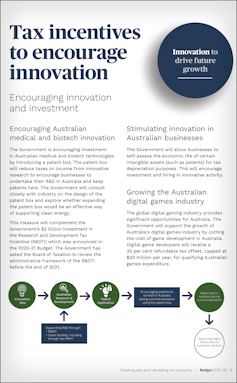
Information Sheet, 2021 Budget

The scheme Frydenberg put forward had safeguards.

It was to be limited to income derived from patents issued after budget night 2021, which meant (at least at first) it would be limited to income derived from new patents.

Licensees of patents would not be eligible, only firms that held the patent themselves.

And, where patents were filed overseas, they had to be owned in Australia, and the underlying research had to have occurred in Australia.

Labor has given no guarantee it will proceed with the scheme announced in the past two budgets and not yet legislated.

There are reasons why it should not. Australia’s really big productivity gains, in the 1990s and early 2000s, had more to do with reforming or replacing lacklustre industries than with patents.

Australia is on the cusp of yet another transformation, into a low-carbon energy producer and exporter. This is where our focus should be, rather than on tinkering with tax support for innovations that might take place regardless.

The Conversation

Beth Webster receives funding from the Australian and Victorian departments of industry and trade and the Australian Research Council.

ref. Here’s a scheme Labor should ditch in its bid to boost productivity. It’s the ‘patent box’ – https://theconversation.com/heres-a-scheme-labor-should-ditch-in-its-bid-to-boost-productivity-its-the-patent-box-181464

O’Neill warns Marape over ‘improper’ eleventh hour China meeting

PNG Post-Courier

Opposition People’s National Congress leader Peter O’Neill is urging Papua New Guinea’s Prime Minister James Marape and the government to refrain from signing any agreements with China when their foreign minister visits Port Moresby today.

“Now is not the right time,” the former prime minister said of the visit by Chinese Foreign Minister Wang Yi, and of any likely deals to be struck between the two countries.

Using more diplomatic words, he said: “A foreign minister of any nation visiting our country is an honour and as a gracious host, PNG would welcome the opportunity to showcase our culture, country, and investment opportunities, especially with a world superpower such as China.”

“Democratic processes such as National General Elections only come around every five years in PNG and the small window of eight weeks of our election timetable should be preserved without international, high-level visits,” he said.

The Chinese top government envoy, who is State Councillor and Foreign Minister, jets into Port Moresby just after midday today for a short visit to meet Prime Minister Marape and Foreign Minister Soroi Eoe.

China and PNG will sign off on a Green Sustainable Development Policy which also covers Trade and Investment and Energy, among other issues.

Foreign Affairs Secretary Elias Wohengu said yesterday that the visit would be brief as he would arrive in the night and would head back to China after meeting Eoe and paying a courtesy call on Marape.

Bilateral meeting tomorrow
He said that the official bilateral meeting would be held on Friday morning with Eoe.

“The meeting will be minister-plus nine on both sides,” Wohengu said.

“Thirty minutes after the meeting, he will make courtesy call on Prime Minister James Marape before he flies out of the country to China.

“He will sign one agreement, which is the Green Sustainable Development Policy.

“On the security status of PNG, we will deal with it ourselves.

“He is coming back on his return trip to China from his Pacific Islands Forum ministers meeting which was held yesterday, co-chaired it physically out of Suva.

PNG the ‘last lap’
“So on his return lap, his last country visit is PNG before he flies out.

“He was in Fiji and also visited other Pacific Island countries.

“There has been resentment over Pacific Agreement on security matters.”

China has said it is willing to make joint efforts with PNG to inject stronger impetus into the overall development of relations between China and the Pacific Island countries.

“Both as developing countries, China is also willing to, together with Papua New Guinea, strengthen strategic coordination, and jointly voice maintenance for multilateralism and support for free trade in various international arenas,” it has said.

O’Neill said in his statement that writs for the elections were issued on May 12 dissolving the current Parliament and Members of Parliament were now contesting the election and should not sign any agreements on behalf of the State, particularly with China.

“All election related preparations have been made or should have been made well in advance and any donations of security equipment or agreements for China to provide security or election support this late in the timetable is improper,” he said.

‘Superpower tensions’
“Tensions in the region between global superpowers from the West and China are driving foreign leaders to give a high amount of attention to the Pacific.

“These tensions that exist between larger countries are not our doing and we should not be unnecessarily caught up as these larger nations shadowbox.

“We desperately need partnerships with high quality investors to lift the standards of living for our people, but they must comply with our procurement laws and be done in a transparent way to ensure the best returns for our people.

“There are some Chinese companies and, indeed, some Singaporean and Australian companies, who have not been subject to normal procurement procedures that warrant urgent investigation.”

O’Neill said Marape should not have encouraged this visit which draws PNG into a regional and global matter that it does not have any business on choosing sides.

  • Papua New Guinea’s general election is July 9-22.

Republished with permission.

Print Friendly, PDF & Email

Article by AsiaPacificReport.nz

As Wong makes her mark in the Pacific, the Albanese government should look to history on mending ties with China

ANALYSIS: By Tony Walker, La Trobe University

Foreign Minister Penny Wong’s decision to embark on a diplomatic offensive to outflank China in the Pacific within days of being sworn in has yielded what appears to have been an early success.

Whether Wong’s intervention gave Pacific leaders pause about a wide-ranging economic and security pact with China or they would have baulked anyway, the fact is Australian diplomacy can claim a dividend.

In the process, the country appears to have a new foreign minister who will engage in more creative and activist foreign policy then her predecessor.

Chinese Foreign Minister Wang Yi’s extensive tour of the Pacific has been aimed at extending Beijing’s influence in the region at a moment when regional leaders had grown restive about Australia’s commitment to its immediate neighbourhood.

The Morrison government’s equivocation on climate has not sat well with leaders of the Pacific’s micro-states.

Chinese Foreign Minister Wang Yi
Chinese Foreign Minister Wang Yi’s tour of the Pacific has come at a time when regional leaders were unsure of Australia’s commitment to its neighbourhood. Image: AAP/AP

Wong’s mission appears to have succeeded on three important fronts:

  1. it has reassured Pacific neighbours that a new Labor government will do more than pay lip service to their concerns about climate and other issues
  2. Wong has made it clear Canberra will not be reticent in contesting Beijing’s influence in the region
  3. her mission has enabled her to assert her own authority early over the foreign policy and security reach of her portfolio.

This latter aspect will be important in how and in what form Australia responds to Chinese overtures aimed at achieving a re-set in relations.

Labor governments have long managed the relationship well
In one respect, the new Labor government has history on its side.

This year marks the 50th anniversary of the establishment of diplomatic relations between Canberra and Beijing.

All these years later, another Labor government has the opportunity to re-set Australia’s relations with the dominant regional player at a moment when the Indo-Pacific is undergoing profound change.

Few would reasonably argue against the proposition that a “re-set” is overdue after years of drift and ill-will under the Morrison government.

The question for Prime Minister Anthony Albanese and his national security team is how to proceed in a way that conforms with Australia’s national interest, is faithful to its values, and enables Canberra’s voice to be inserted in regional councils.

Wong has, for some time, been sketching out a more creative foreign policy approach — evident in her Pacific initiative — that will seek to expand Australia’s regional relationships and, where appropriate, take the lead in alignment with the country’s national interest.

In this sense, the joint communique on December 21 1972, signalling the establishment of diplomatic relations between Australia and the People’s Republic of China, makes interesting reading.

Unlike Richard Nixon’s Shanghai communique of 1972, which fudged the Taiwan issue, the Whitlam government document is explicit.

The Australian government recognises the Government of the People’s Republic of China as the sole legal Government of China, acknowledges the position of the Chinese Government that Taiwan is a province of the People’s Republic of China, and has decided to remove its official representation from Taiwan before 25 January, 1973.

Albanese and his security policy team can be sure this document will not be gathering dust in a Chinese Foreign Ministry archive.

China’s attachment to anniversaries is one of the more notable features of its diplomacy. These occasions may be used for political purposes, but history weighs heavily on Beijing’s foreign policy calculations.

Albanese government should jump on the promise of a thaw
When Prime Minister Li Keqiang promptly sent a congratulatory message to Albanese on the latter’s success in the recent election, Labor’s historic shift towards Beijing back in 1972 will not have been overlooked.

The wording of Li’s message was pointed. It said, in part, that China was:

ready to work with the Australian side to review the past, face the future, uphold principles of mutual respect, mutual benefit.

Beijing talks a lot about “mutual respect” and “mutual benefit”. These are phrases that are, more often that not, designed to deflect criticism of China’s human rights abuses and other bad behaviour.

But taken together with overtures for a “re-set” by the new Chinese ambassador in Canberra, Xiao Qian, Beijing has clearly decided it is in China’s interests to turn the page on a sour period between the countries.

Asked at his press conference after the conclusion of Quad talks in Tokyo about his response to the conciliatory message from Li, Albanese simply said:

I welcome that. And we will respond appropriately in time when I return to Australia.

In other responses to questions about troubled relations with China, the new prime minister has said it is up to Beijing to start removing sanctions on Australian exports.

These Albanese responses are prudent. There is no point in rushing to acknowledge such overtures. However, he would be making a mistake if he seeks to prolong what has the makings of a thaw.

He might remind himself that virtually all of Australia’s western allies, including America, have working relations with Beijing that enable officials to engage in a constructive dialogue, despite differences.

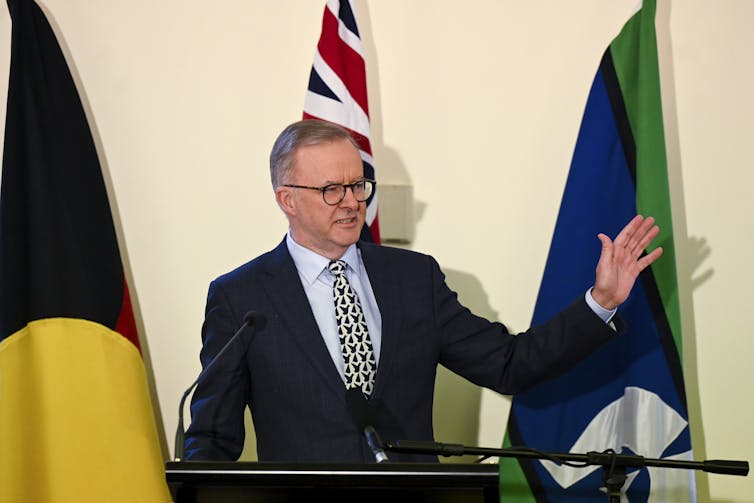
Australian Prime Minister Anthony Albanese
Australian Prime Minister Anthony Albanese’s responses to China so far have been prudent. Image: Lukas Coch/AAP

Australia’s first ambassador to China, Stephen Fitzgerald, has some wise counsel for the new government in Canberra about how to better manage relations with Beijing.

Australia under a Labor government must now return to diplomacy, talking with the PRC, for which it is ready and putting away the megaphone of gratuitous criticism, insult and condemnation which were the hallmarks of Morrison’s China policy. If we do this, there will be many issues on which we can have constructive engagement.

One of these issues can — and should — be the continued detention in China of two Australian citizens, the journalist Cheng Lei and the democratic activist Yang Hengjun. Progress towards their release should be a condition of improved relations, along with removal of punitive tariffs on imports of such items as wine and barley.

Finally, Albanese’s security policy team should pay particular attention to US Secretary of State Anthony Blinken’s landmark foreign policy speech delivered to the Asia Society in Washington on May 26.

In that speech, Blinken laid down guidelines for the conduct of relations with Beijing in a world whose foundations are shifting. His words bear repeating as a template for Canberra’s own interactions with Beijing.

We are not looking for conflict or a new Cold War […] We don’t seek to block China from its role as a major power […] But we will defend [the international order] and make it possible for all countries – including the United States and China – to coexist and co-operate.

Blinken’s attempts to define a workable China policy should be regarded in the same vein as another important statement delivered 17 years ago by then Deputy Secretary of State Robert Zoellick in New York. In that speech, Zoellick said:

We now need to encourage China to become a responsible stakeholder in the international system.

Blinken’s and Zoellick’s interventions, two decades apart, are important guardrails for a constructive relationship with China.The Conversation

Dr Tony Walker is a vice-chancellor’s fellow, La Trobe University. This article is republished from The Conversation under a Creative Commons licence. Read the original article.

Print Friendly, PDF & Email

Article by AsiaPacificReport.nz

Church bells, police sirens mark 60 years of Samoa’s independence

RNZ Pacific

Church bells and police sirens rang out across Samoa at midnight to herald the start of 12 months of nationwide celebrations for the 60th year of independence from New Zealand.

Prime Minister Fiame Naomi Mata’afa, who is the chair of the Independence Committee, raised the flag of freedom at a ceremony this morning, along with a 21-gun salute by police.

Fiame announced earlier that only local dignitaries were invited to this morning’s event.

Chief Executive Officer of the Ministry of Prime Minister and Cabinet, Agafili Shem Leo, told media that foreign dignitaries and overseas guests were expected at the main celebrations in September, after international borders open in August.

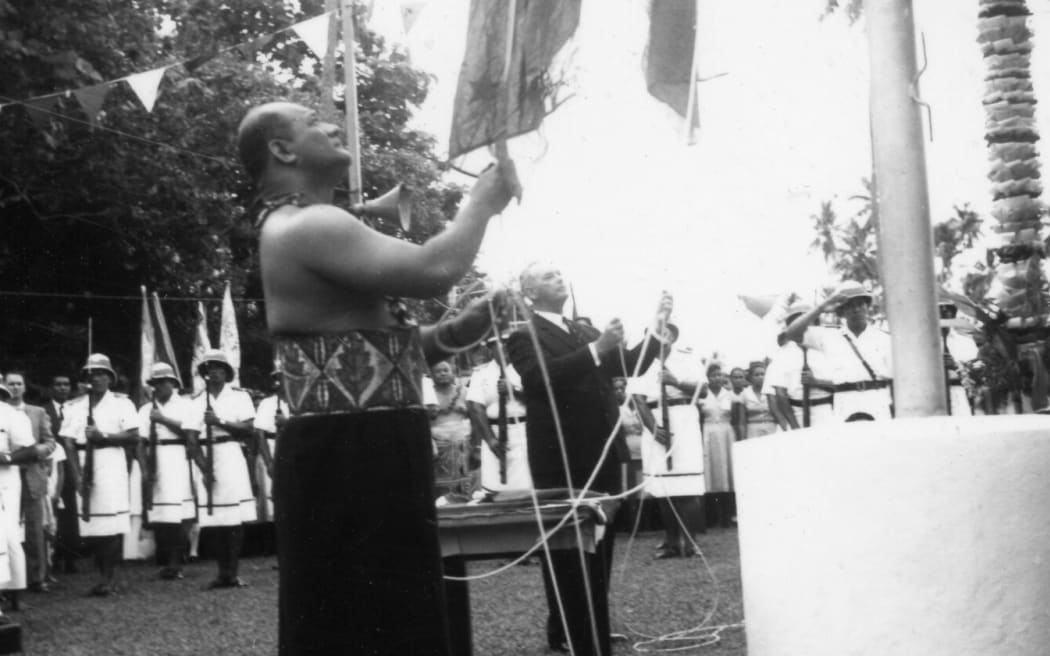
Fiame Mata'afa Faumuina Mulinu'u II and Keith Holyoake lower the trustee flags on Sāmoan Independence Day, 1 January 1962.
Fiame Mata’afa Faumuina Mulinu’u II and Keith Holyoake lower the trustee flags on Samoan Independence Day, 1 January 1962. Image: Archives New Zealand

At the same time, the annual Teuila Festival will be revived after being on hold for the last three years because of the measles outbreak and then the coronavirus pandemic.

The organising committee had asked all villages and districts to plan and hold their celebrations during the 12 months of celebrations.

This article is republished under a community partnership agreement with RNZ.

Print Friendly, PDF & Email

Article by AsiaPacificReport.nz

PNG’s energy minister, supporters flee for their lives in elections attack

By Shirley Mauludu in Port Moresby

Papua New Guinea’s Energy Minister Saki Soloma and his supporters had to run for their lives when they were attacked by rival candidate supporters in Okapa station on Friday with the national elections due in July.

His supporters were also injured when they protected Soloma from being harmed as they ran helter-skelter.

The mob then set fire to Soloma’s five vehicles that were used for a rally and visit to a market area.

Recalling his life-threatening ordeal, Soloma, who is also the Okapa MP, said: “We were on our way to the market area at about noon when we spotted a huge crowd of supporters at a rally.

“They were unfriendly and did not seem to want us there. A bottle was then thrown at my convoy of vehicles and all hell broke loose.

“We jumped out of our vehicles and ran for our lives.

“When the assailants could not find us, they torched all our vehicles.

‘Bad precedent for elections’
“The attack and burning of my convoy of vehicles is a bad precedent for general elections.

“I’d like to think that it was pre-planned.

“Objects like catapults were also used in the attack.

“My supporters fled in all directions.

“Some received knife wounds but no lives were lost.

“Everyone should be allowed to campaign peacefully and freely.

“Papua New Guineans should also be allowed to make their choice and cast their ballots safely.”

Warning against taking law into own hands
Soloma said he advised and cautioned his supporters to refrain from taking the law into their own hands.

PNG Energy Minister Saki Soloma
Energy Minister Saki Soloma … ran for his life when opponents attacked his convoy of five vehicles and set them on fire during an election campaign rally. Image: The National

“I have spoken to the provincial police commander. I understand police are investigating,” he said.

“I am very sorry that this had happened.

“It is all a reckless, irresponsible behaviour and jealousy.

“I appeal to other candidates to demonstrate leadership and ensure peace is restored for Papua New Guineans to exercise their right to choose and cast their ballots safely.”

Eastern Highlands commander Superintendent Michael Welly said those responsible would be dealt with accordingly.

Meanwhile, Electoral Commissioner Simon Sinai warned that anyone caught pulling down or burning campaign posters and election materials or paraphernalia would be fined or imprisoned.

Shirley Mauludu is a National newspaper reporter. Republished with permission.

Print Friendly, PDF & Email

Article by AsiaPacificReport.nz

Temaru hits back over probe in pro-independence Radio Tefana case

RNZ Pacific

French Polynesia’s pro-independence leader and mayor of Faa’a, Oscar Temaru, says double standards are at play in probing him over the payment of his legal defence.

Temaru commented on being held for six hours last week for questioning over the Faa’a Council’s decision to pay his legal bill in a 2019 court case, which is still under appeal.

The prosecution claimed the payment amounted to an abuse of public funds and that Temaru should have paid for the expense with his own money.

A lawyer acting for Temaru said the council was obliged to cover the mayor’s bill, describing last week’s brief detention of Temaru as a bid to tarnish him.

Temaru said such cover had for example been extended to the former chief-of-staff of Nicolas Sarkozy, Claude Gueant.

As part of the probe, the prosecutor in 2020 ordered the seizure of Temaru’s US$100,000 personal savings — a move being challenged by Temaru.

The probe drew criticism as his defence team risked court action for accepting funds that the prosecutor claimed were unduly allotted to Temaru’s benefit.

Prosecutor’s move challenged
One lawyer, David Koubbi, raised the prosecutor’s move with a 22-member agency which rules on professional ethics.

In the 2019 court case, Temaru and two others were given suspended prison sentences and fines in the criminal court in Pape’ete.

Mayor of Faa'a Oscar Temaru
Mayor of Faa’a Oscar Temaru … being punished because in the eyes of France he “committed treason” by taking French presidents to the International Criminal Court over nuclear weapons tests. Image: Tinfos 30

They were convicted for exercising undue influence over funding arrangements for a community station, Radio Tefana, which supports Temaru’s pro-independence political party Tavini Huiraatira.

In what was his first conviction, Temaru was given a six-month suspended prison sentence and a US$50,000 fine.

The current and former chairs of the board of the association which runs Radio Tefana, Heinui Le Caill and Vito Maamaatuaiahutapu, had also been given suspended jail sentences of one and three months, respectively.

Radio Tefana was fined US$1 million.

Maamaatuaiahutapu said it would have been easier to blow up the station with dynamite instead of having a trial.

US$1m fine five times radio’s budget
Le Caill said the station’s US$1 million fine was five times its budget, meaning the station was unable to pay and would have to close.

At the time of the trial, Temaru said if he had to be convicted, he should be jailed for life.

After sentencing, Temaru said he was being punished because in the eyes of France he “committed treason” by taking French presidents to the International Criminal Court over nuclear weapons tests.

The case was appealed two years ago but has been deferred four times and is now due to be heard on August 29.

This article is republished under a community partnership agreement with RNZ.

Print Friendly, PDF & Email

Article by AsiaPacificReport.nz

Catcalls, homophobia and racism: we studied why people (and especially men) engage in street harassment

Source: The Conversation (Au and NZ) – By Bianca Fileborn, Senior Lecturer in Criminology, The University of Melbourne

Shutterstock

“Hey sexy.”

“Smile!”

“Hey ladies, can I watch?”

“Can I have your number?”

A growing body of research shows public harassment is among the most prevalent forms of sexual and gender-based violence. Street harassment can include homophobic, transphobic, racist and ableist actions, as well as overtly hostile and aggressive behaviour.

Yet, we know very little about who harasses and why they do it. Typically, harassment is perpetrated by strangers, is often fleeting, and can include behaviours welcome in other contexts, such as asking for someone’s number.

In our recent work, we asked participants about why they think people (mostly men) harass others in public space. This centres the expertise and knowledge of those targeted for harassment.


Read more:
How to get consent for sex (and no, it doesn’t have to spoil the mood)


Street and public harassment are among the most prevalent forms of sexual and gender-based violence.
Shutterstock

Who does it?

Unsurprisingly, participants said they were either solely or disproportionately harassed by men, reflecting what we know about gender-based violence broadly.

However, a few participants discussed experiencing harassment from women. This was typically in relation to non-sexualised harassment, for example racist, homophobic and transphobic abuse.

There was less agreement on which “types” of men harass. For example, some people said they were most commonly harassed by younger men, older men, men by themselves and men in groups.

Some participants mentioned factors such as age, race and class in describing harassers. “Tradies” were commonly identified; one participant told us “it’s always tradies”, while another described her experiences as the “classic tradies yelling at school girls sort of stuff”.

Some thought men from particular cultural or racial backgrounds were more likely to harass, though others stressed most harassment they experienced was from white Australian men.

However, the focus on particular “types” of men in some responses – such as “tradies”, “bogans”, “creepy old men” and men of colour – also provides insights into who is viewed as more likely to engage in harassment.

Participants often inadvertently perpetuated power inequalities such as classism and racism in the ways they described harassers.

It is important to recognise these are not “neutral” accounts. Perceptions of harassment are shaped by our internalisation of stereotypes and our lived experiences. This is particularly so when what “counts” as harassment can be highly subjective and context-dependent.

So, why did participants think men harass others in public spaces?

Perceptions of harassment are shaped by our internalisation of stereotypes.
Shutterstock

Because they’re ‘stupid, sleazy, losers’

Participants offered a range of explanations for why men harass. At an individual-level, men who harass were often depicted as “other” or “deficient” in some way.

Terms such as “stupid”, “creepy”, and “losers” were commonly used to describe men who harass. One participant said “men are just creeps and that’s what they do”, while another thought “that’s their escape from their crappy lives”.

Younger men were more likely to be described as “bored” or doing it for a laugh:

Often it’s like the younger guys that are in groups that are just being silly and have the done up cars and completely attention seeking.

As white, cisgender, heterosexual men typically do not experience harassment to the extent women and LGBTQ+ people do, and are not generally socialised to be fearful for their safety in public, participants felt men were unable to understand why their actions might be threatening to women in public spaces.

These explanations tended to “other” certain types of men as deviant “monsters”, or implied harassment occurs as a result of individual character flaws.

Some participants challenged the idea men didn’t know what they were doing.
Shutterstock

Because they’re blokes

Participants viewed harassment as a way for men to “perform” their masculinity, and as an expression of gendered power, alongside other forms of power relating to whiteness and heteronormativity. As one (male) participant put it: “So why did he do it? Because he’s a fucking bloke”.

In other words, harassment provided men with an avenue to express power over women and other men (particularly men who were not seen to be doing their masculinity “appropriately”):

I think it’s just men sort of showing themselves as the superior gender by…dehumanising the female gender […] we can degrade you and you just have to accept it.

Harassment was also a way for men to bond with other men, something referred to as “homosociality”. Reflecting on his own experiences of participating in harassment as a teenager, one male participant said:

It’s hey look at me, I can shout out to that lass, and it’s alright, and that makes me a fella, that makes me a bloke, and that makes me a bigger bloke than you lads.

Because they can: the normalisation of street harassment

Many participants thought men harass because there were no consequences for their behaviour:

Because it’s such a socially acceptable thing at this point for people to harass women and think it’s like a compliment […] I think a lot of men actually don’t realise that what they’re doing is harassment.

Others felt harassment was excused as a form of “locker room banter” and as a case of “boys will be boys”. These responses illustrate the ways street harassment is culturally sanctioned and able to flourish.

Many participants thought men harass because there were no consequences for their behaviour.
Shutterstock

Why do they do it? It’s complicated

Our participants’ explanations of why men harass paint a complex and multifaceted picture. While harassment is firmly situated in the spectrum of violence against women, a more holistic approach is needed addressing homophobic, transphobic, racist and ableist harassment.

It’s clear street harassment requires interventions targeting individual, cultural and structural drivers.

The normalisation of street harassment requires urgent attention, so this behaviour is no longer excused.


Read more:
LGBTQ+ people are being ignored in the national discussion on family and sexual violence


The Conversation

Bianca Fileborn receives funding from the Australian Research Council to undertake research on street and public harassment (DE190100404)

Sophie Hindes does not work for, consult, own shares in or receive funding from any company or organisation that would benefit from this article, and has disclosed no relevant affiliations beyond their academic appointment.

ref. Catcalls, homophobia and racism: we studied why people (and especially men) engage in street harassment – https://theconversation.com/catcalls-homophobia-and-racism-we-studied-why-people-and-especially-men-engage-in-street-harassment-183717

Here’s a scheme Labor should ditch its bid to boost productivity. It’s called a ‘patent box’

Source: The Conversation (Au and NZ) – By Beth Webster, Director, Centre for Transformative Innovation, Swinburne University of Technology

Shutterstock

Australia’s new treasurer Jim Chalmers says his biggest priorities include boosting productivity and business investment.

If so, he would be wise not to follow in the footsteps of his predecessor Josh Frydenberg, who tried for more than a year to introduce Australia’s first so-called Patent Box before the legislation lapsed ahead of the election without a vote.

First introduced in Ireland in the early 1970s, and adopted later in countries such as France, Spain, China and the United Kingdom, patent boxes are said to get their name from a box on the tax form that companies tick if they have income deriving from intellectual property, which is taxed at a discounted rate.

Former treasurer Josh Frydenberg, wanted to tax income from patents at a lower rate.

The theory is that if such income is taxed less, international corporations will do more of their research and development in Australia.

When announced in the 2021 budget, the discount was to be limited to income from patents on medical and biological technologies, although (also before the bill became law) the 2022 budget announced plans to extend it to agricultural and low emission technologies.

Income derived directly from patents in these fields was to be taxed at just 17%, instead of the prevailing company tax rate of 30%.

Doubts ahead of time

Doubts were expressed ahead of time. In 2015 the industry department’s office of the chief economist said while a patent box tax break would certainly increase
the number of patent applications filed, most of the extra ones were
“likely to be opportunistic” (filed on inventions that would have taken place without patents).

Any extra patent fees collected were unlikely to offset the tax lost.

And the advice had a broader point. Rewarding investors well after risky research had been undertaken was unlikely to do much to encourage such research.

Research and development tax credits, on the other hand, provide tax breaks at time the research is being funded, according to one Australian study, creating A$1.90 of research for each dollar of tax lost.


Read more:
‘Patent boxes’ are said to boost innovation. The evidence says they don’t


Supporters of the concept point to the Australian biotech company CSL Limited, which set up a new plant in Switzerland rather than Australia in 2014 in part because Switzerland had a patent box and Australia did not.

Critics observe that income from patents is highly mobile, meaning it can be easily separated from real inventive activity moved across borders.

One study found 40% of multinational profits had been moved from one location to another on the basis of tax rather than where the profits were made.


Read more:
Artificial ‘inventors’ are pushing patent law to its limits


Another study noted that businesses can get the tax breaks by acquiring patents eligible for patent box treatment without doing the patentable research.

A review of the UK scheme published in November 2021 identified “abuse and boundary-pushing” and made a number of recommendations designed to refocus it on activity actually taking place within the UK.

Tinkering, not transformation


Information Sheet, 2021 Budget

The scheme Frydenberg put forward had safeguards.

It was to be limited to income derived from patents issued after budget night 2021, which meant (at least at first) it would be limited to income derived from new patents.

Licensees of patents would not be eligible, only firms that held the patent themselves.

And, where patents were filed overseas, they had to be owned in Australia, and the underlying research had to have occurred in Australia.

Labor has given no guarantee it will proceed with the scheme announced in the past two budgets and not yet legislated.

There are reasons why it should not. Australia’s really big productivity gains, in the 1990s and early 2000s, had more to do with reforming or replacing lacklustre industries than with patents.

Australia is on the cusp of yet another transformation, into a low-carbon energy producer and exporter. This is where our focus should be, rather than on tinkering with tax support for innovations that might take place regardless.

The Conversation

Beth Webster receives funding from the Australian and Victorian departments of industry and trade and the Australian Research Council.

ref. Here’s a scheme Labor should ditch its bid to boost productivity. It’s called a ‘patent box’ – https://theconversation.com/heres-a-scheme-labor-should-ditch-its-bid-to-boost-productivity-its-called-a-patent-box-181464

How the 2022 federal election may finally signal an end to ‘White Australia’

Source: The Conversation (Au and NZ) – By Andrew Jakubowicz, Emeritus Professor of Sociology, University of Technology Sydney

AAP/Lukas Coch

Despite years of critique, the Australian national parliament has been overwhelmingly white and male, unlike the country as a whole. But something changed at the 2022 election – most clearly around racism and sexism. How might this play out in the negotiations to come?

The Whitlam government supposedly ended the White Australia policy in 1973. For 50 years though, White Australia has hung on in the elite structures – Commonwealth cabinets, the High Court and the ABC board, for example – even while changing at state and especially local levels.

Prior to the 2019 election, I argued we would realise down the track that:

Election 2019 was the last White Australia election, in which Euro-Australians dominated the parliamentary seats and both major party leaderships, and where xenophobia was the insistent leitmotif of the Right.

If this election marks an ending for White Australia, we would expect to see changes in voting, representation and policy.

Just before the 2022 election, the BBC asked why the Australian parliament was so white (and male). Sydney Policy Lab director Tim Soutphomassane recently noted:

A celebration of cultural diversity has never been accompanied by a sharing of Anglo-Celtic institutional power.

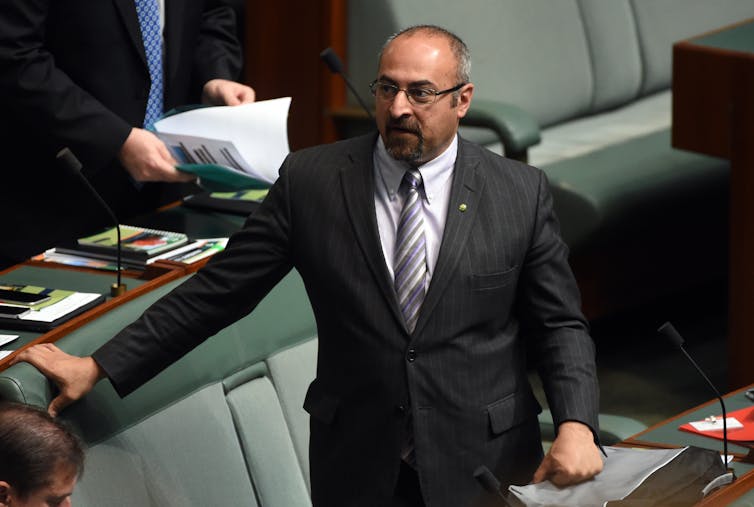
Labor MP Peter Khalil said last November that Australian politics was still swamped by an “Anglo Boys club”. Opting to describe himself as one of the 21% of the population who were NIPOCs (non-Indigenous people of colour), he reflected on years of racism and marginalisation he had experienced inside the ALP and in the wider world.

Peter Khalil has previously described Australian politics as an ‘Anglo boys club’.
Mick Tsikas/AAP

At the 2022 election, the trajectories of change differed from each other along almost every conceivable parameter that was not old white male: middle-aged, well-off white women took elite Liberal urban seats from men. Younger people of colour, usually women, took many of the new Labor seats. Smart, mainly young white people took the seats that were turning Green. White Australia was fragmenting along race and gender fault-lines. Meanwhile, the LNP was left with almost only older white guys in the House.


Read more:
We’re about to have Australia’s most diverse parliament yet – but there’s still a long way to go


Voting

The election demonstrated the salience of specific ethnicity in contributing to voters’ decisions in many seats, while the more general concern about rising racism played out for a more diverse electorate. “The Chinese vote” has been the focus of many newspaper articles reflecting on the effect of the Morrison government’s bellicose rhetoric towards China and how safe Chinese-ancestry voters felt with the conservatives.

The Tally Room blog has argued there was a significant shift towards the ALP (or, better put, away from the Liberals) in electorates where the China-ancestry vote was significant. Where the opportunity existed for an Asian-Australian candidate for the ALP, they were usually successful.

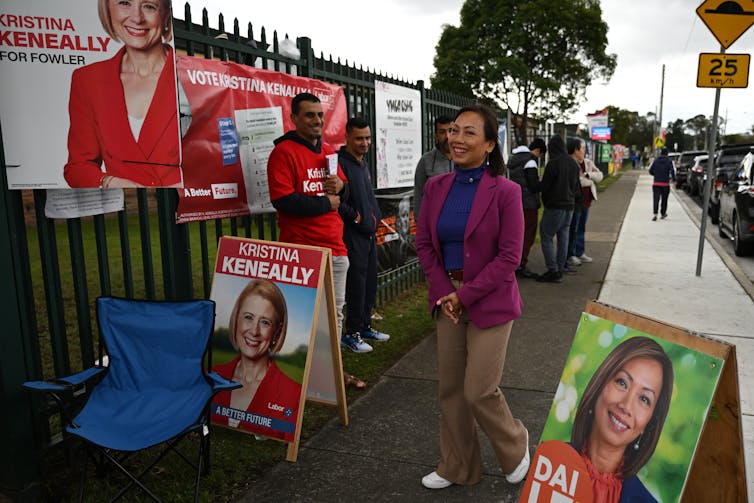
In Fowler, which is a very multicultural electorate with a large Vietnamese community (many with Chinese ethnicity), Labor’s vote dropped by nearly 19% after the party parachuted in Kristina Keneally. The local independent Dai Le picked up nearly all those previously ALP votes, while also taking nearly all the votes that left the Liberals (13%).

The Senate vote in Fowler for the ALP also dropped significantly (8%) from 2019, while the Liberal vote rose slightly. In effect the loss of this formerly safe ALP seat in New South Wales almost cost the party a secure majority.

The key electorates where an apparent anti-Liberal shift in the Chinese-ancestry vote was determinate included Bennelong, Reid and Parramatta in NSW, Chisholm, Higgins and Kooyong in Victoria, and Tangney in Western Australia. Some benefited Labor; others the independents.

Independent Dai Le won the Sydney seat of Fowler after Labor parachuted in Kristina Keneally as its candidate.
AAP/Dean Lewins

Representation

Peter Khalil (Wills, Vic) and Anne Aly (Cowan, WA) had been fairly lonely rank-and-file non-European members of the ALP caucus until the election. Aly (her origin is Egyptian Muslim) worked tirelessly during the long COVID lockdown in Perth to build opportunity for candidates of colour.

In Perth, Sam Lim (a Malaysian-Chinese immigrant) took Tangney with a 11% swing, building on his deep links with communities throughout Perth as a police liaison officer during the lockdown.

Zaneta Mascarenhas, born in Kalgoorlie, whose parents arrived from Goa in 1979, took Swan with a 12% swing. Aly herself increased her vote in Cowan by nearly 10%.

In NSW, Labor’s Jerome Laxale, the popular former Labor mayor of Ryde whose parents were Francophones from Mauritius and Le Reunion, achieved an 8% swing against the Liberals in Bennelong. He repeated the victory Maxine McKew had achieved against John Howard in 2007, also with strong Chinese and Korean support.

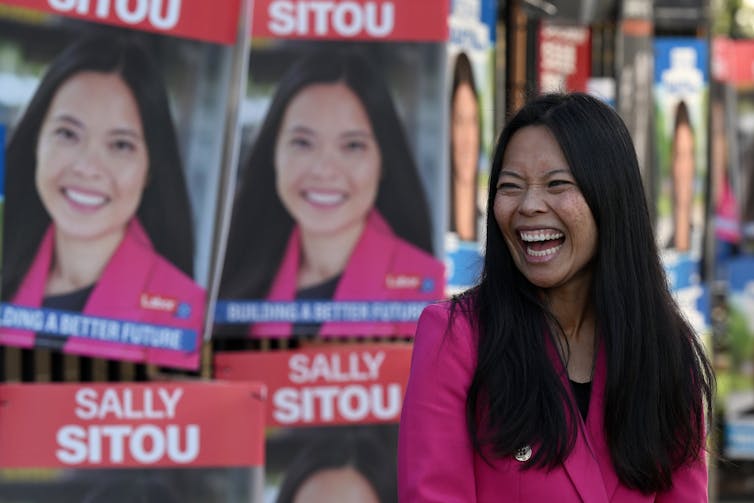
In Reid, popular local candidate Sally Sitou, of Lao Chinese background, reclaimed the seat for the ALP with an 8% swing, on a base of very strong Chinese support.

In Victoria, both seats that went to the ALP were won by “ethnic background” candidates. In Chisholm, Greek-background Carlina Garland saw a 7% swing away from Gladys Liu, though only 4% went to the ALP. In Higgins, Michelle Anada-Rajah, a Tamil born in Sri Lanka, saw a 6% swing away from Liberal Katie Allen. Meanwhile, the ALP held-seat of Holt went to Cassandra Fernando, also born in Sri Lanka.

In summary, of the ten or so seats the ALP won from the Liberals across the country, six were won by “ethnic candidates”, four of whom were people of colour. On the other hand, the seven new “teal” seats, though all won by women, are all now represented by white Australians. How might this matter?

Sally Sitou won the Sydney seat of Reid for the ALP with an 8% swing.
Dean Lewins/AAP

Policy

The ALP released its diversity policy under the names of Katy Gallagher (Finance) and Andrew Giles (Multicultural Affairs) two days before the vote and well after most of the pre-polls and postal votes had been cast.

The statement appears pulled out of the 2021 Multicultural Engagement Taskforce Report chaired by Khalil. Two critical additions include a commitment to a multicultural framework review, which will have to consider whether Australia should have a Multicultural Act (which is Greens policy), and a re-assessment of the standards for measuring Australia’s diversity.

The COVID pandemic and the failures to protect multicultural communities have foregrounded the urgency of these issues.


Read more:
We need to collect ethnicity data during COVID testing if we’re to get on top of Sydney’s outbreak


It is unlikely the LNP or the teal independents will push these concerns to the top of the to-do list. However, the new ALP NIPOCs and Dai Le will have a major investment in exactly that dynamic, creating with Aly (now a minister and a symbol for the prime minister of a new diversity) and Khalil a significant bloc. The Greens have multicultural legislation ready to go.

The new government’s best-known leaders are Anthony Albanese and Penny Wong, two surnames drawn from the deep hinterland of multicultural Australia. Perhaps White Australia is finally on its way out.

The Conversation

Andrew Jakubowicz has received funding from the Australian Research Council for research on cultural diversity and politics, and on cyber-racism. He publishes the website “Making Multicultural Australia” (http://www.multiculturalaustralia.edu.au). During the COVID pandemic he has been a consultant on cultural diversity to local government and the Disability Royal Commission, and is a member of the Commonwealth Health Department advisory committee on COVID and CaLD.

ref. How the 2022 federal election may finally signal an end to ‘White Australia’ – https://theconversation.com/how-the-2022-federal-election-may-finally-signal-an-end-to-white-australia-183915

Can you be overweight and healthy?

Source: The Conversation (Au and NZ) – By Nick Fuller, Charles Perkins Centre Research Program Leader, University of Sydney

Shutterstock

One of the most contentious questions asked in the health community today is whether you can be overweight and healthy.

This question – sometimes framed using the term “fat but fit” – has preoccupied medical researchers for decades, fuelling numerous studies both supporting and debunking the concept.

The debate revolves around whether a physically active overweight or obese person can still be considered metabolically healthy – that is, they have good blood pressure, cholesterol and insulin levels.

As a health professional and obesity expert, my response to this question often surprises: I believe a person can indeed be overweight and healthy. Here’s why.

1. Weight and health are not perfectly correlated

As I discussed in my article on the Body Mass Index (BMI), a person’s weight doesn’t always tell the full story of their health.


Read more:
Using BMI to measure your health is nonsense. Here’s why


While being overweight increases an individual’s risk of a range of health issues, including heart disease, stroke, diabetes and some cancers, many studies have shown a person’s disease risk is linked not to weight, but to body fat and where it’s distributed in the body.

While BMI calculators provide a starting point for assessing body fat, the BMI is not an accurate measure of health because it doesn’t explain where fat is distributed in the body.

People with a high amount of visceral fat – a type of especially unhealthy fat stored around the stomach, close to the organs – have a higher risk of disease than people who hold body fat around their hips.

Woman in workout gear
If you are physically fit and don’t have a high amount of visceral fat, your weight category might be less important.
Shutterstock

It’s also important to remember muscle is much denser than fat – another thing the BMI can’t measure.

Therefore, if a BMI calculator classifies you as overweight or obese, but you’re physically fit, have a healthy diet and lifestyle, and fat stored around your hips, you could be healthier than someone with a BMI in the “normal” range if they don’t exercise or eat a balanced diet.

2. Weight and fitness are not perfectly related either

We’ve been conditioned to believe being overweight is directly associated with being unfit. But it’s inactivity, not our weight, that directly impacts our fitness levels.

Indeed, numerous studies have used exercise testing to show that some overweight and obese people have high cardiovascular fitness and strength levels. The difference? These people engaged in regular physical activity.

Regular exercise will improve your fitness, no matter what you weigh. Sadly, more than half of the Australian population don’t even do the 30 minutes of exercise needed five days a week to stay healthy and alive, let alone help them manage their weight.


Read more:
Just because you’re thin, doesn’t mean you’re healthy


3. Lifestyle is more important than a number on the scales

It may sound obvious, but healthy behaviours – not weight – make us healthy.

While understanding and managing the relationship between our weight and health is important, we need to remember other factors influence good health too. Top among these are getting enough exercise, eating a healthy and balanced diet, reducing stress, and improving our sleep quality.

Woman stretching
Getting enough exercise, eating a healthy and balanced diet, reducing stress and improving our sleep quality are integral to maintaining good health.
Shutterstock

How to be healthy at any weight

You can do several simple things right now to support your overall health, no matter what you weigh.

Mix up your exercise routine

It’s indisputable that exercise has enormous health benefits. Alongside improving your heart health, regular activity improves muscle strength and mobility, reduces stress levels and promotes better sleep and energy levels.

To encourage more exercise, take up something you enjoy, no matter what it is. But make sure to include variety, as doing the same routine every day is a surefire way to get bored and avoid activity, and can also make it hard to hit your goals.


Read more:
Viewpoints: can you be healthy at any weight?


It’s also important to look for ways to incorporate incidental activity in your daily routine. Our sedentary lifestyles are literally killing us, with experts suggesting a week of physical inactivity has the equivalent personal health cost of smoking 20 cigarettes.

Introducing more activity can be as simple as taking the stairs instead of the lift, parking the car a little bit further away from our destination, or switching off the robot vacuum cleaner and taking on the housework ourselves.

Improve your sleep

Getting the recommended seven to nine hours of shuteye we need each night will significantly benefit your health. The good news is it’s easy to dramatically improve your sleep quality by taking simple steps to support good sleep hygiene. Start with the “no blue light after twilight” rule, switching off your devices early to boost your body’s secretion of sleep-inducing hormones such as melatonin.

Man going for a hike
Find exercise you enjoy doing – like a hike in nature.
Shutterstock

Retrain your brain to manage your stress

Stress will adversely impact your health, often encouraging unhealthy dietary habits and contributing to chronic conditions such as high blood pressure.

Contrary to popular belief, alcohol isn’t a good way to deal with stress! Instead, take up more beneficial activities to relieve stress, such as exercise and meditation.

The bottom line

Your weight does matter when it comes to your overall levels of health. It’s just not the only thing that matters, and it’s not always necessary to achieve the definition of a “healthy weight” category.

We should all be engaging in healthier lifestyle habits – whatever our weight.

The Conversation

Dr Nick Fuller works for the University of Sydney and has received external funding for projects relating to the treatment of overweight and obesity. He is the author and founder of the Interval Weight Loss program.

ref. Can you be overweight and healthy? – https://theconversation.com/can-you-be-overweight-and-healthy-182219

Why big university surpluses underscore the need to reform how they are funded and governed

Source: The Conversation (Au and NZ) – By Damien Cahill, Associate Professor in Political Economy, University of Sydney

The election of a new Labor federal government probably drew sighs of relief across the higher education sector. University staff and students will be hoping for a more sympathetic approach than they received from the Coalition government.

Tertiary education lobby groups have already put forward their wish lists and funding priorities. Yet the case for increasing funding might be a harder sell now that several universities have announced staggeringly large surpluses in their annual reports.


Read more:
Labor’s promised universities accord could be a turning point for higher education in Australia


So how big were these surpluses?

The University of Sydney’s A$1.04 billion operating surplus stands out. But the biggest universities’ annual reports all show healthy surpluses. Monash, UNSW and Queensland have reported surpluses of more than $300 million.

While some universities, such as La Trobe, reported operating losses, many other universities around the country also recorded surpluses, including some that aren’t far off Sydney’s result in relative terms. Examples include Charles Sturt (a 21% surplus of $143 million) and Newcastle (a 19% surplus of $185 million).

The new government is already committed to fiscally expansive policies in areas such as the National Disability Insurance Scheme (NDIS), aged care and early childhood education. In an inflationary environment, it might be tempted to take a light-touch approach to university funding – scrap the Coalition’s incoherent Job-Ready Graduates Package and let universities look after themselves.

After all, despite regularly decrying the damage done by the Morrison government, Labor in opposition made few concrete policy commitments to universities beyond the welcome addition of 20,000 student places.


Read more:
Labor offers extra university places, but more radical change is needed


However, the latest university surpluses actually highlight, rather than diminish, the case for more public funding, and indeed for broader reform of university governance and finances. The key to understanding this lies in the market-based sources of revenue that underpinned these surpluses.

Take the University of Sydney. According to its annual report, the surplus was:

“mainly due to increases in overseas student enrolments, strong investment performance and non-recurring items including the Commonwealth Government’s $95.1 million Research Support Program contribution and the net gains from the disposal of property assets”.

International student fee income increased by about $250 million. Investment returns were up by almost $400 million.

It was a similar story elsewhere. Newcastle University reaped $119 million in additional investment income and UNSW $117 million. Many universities also profited from selling their shares in international student placement business IDP Education.

On the downside, the University of Wollongong lost $169 million after terminating its contract with a private student accommodation provider it had been underwriting.

Remember, these are public institutions

Bear in mind that these universities are public institutions. They are created by acts of parliament. A public agency accredits and regulates their degree-conferring ability.

Public universities have legislated responsibilities to serve public ends. Yet they resemble profit-driven corporations in their financial governance.

This has been evident during the past two years. Having been denied JobKeeper by the Coalition government, universities savagely cut staff. First casuals, then fixed-term staff, and then staff on ongoing contracts.


Read more:
After 2 years of COVID, how bad has it really been for university finances and staff?


In response to what loomed as a short-term drop in income from international students, university leaders took the corporate route. They restructured aggressively, losing incalculable expertise and institutional memory and throwing thousands of staff into unemployment. This process boosted “profits”, with employee expenses down at many universities.

Given the composition of university governing councils – about one-third of members are from the corporate sector – it’s hardly surprising a for-profit orientation has come to dominate.

What is the role of federal funding?

Federal funding settings have played a role. Successive federal governments have refused to fund the full costs of university teaching and research.

Government funding accounts for a little over half of higher education revenue, if government HELP contributions are included. This creates an incentive for university chiefs to pursue private sources of revenue to make up the shortfalls. Consistent with the corporate approach, the risks arising from market exposure have been devolved to staff by loading up on insecure employment (nearly 70% of the higher education workforce) and rolling workplace restructures.

Surplus revenues are earmarked for infrastructure investment or “to shield the University against unforeseen circumstances”, as the University of Sydney annual report states. Except, as we saw over the past two years, when “unforeseen circumstances” arose, staff bore the brunt to preserve balance sheets.


Read more:
Here’s what the government and universities can do about the crisis of insecure academic work


What can governments do?

Such perverse dynamics are out of place at a public institution. And this is the point at which federal policy can play a positive role. Increased and stable federal funding would reduce the incentive for university chiefs to pursue market-based sources of revenue and help avoid the wild budget gyrations of recent years.

But, given the corporate orientation of university governing boards, this would do little in and of itself to fix problems such as chronic job insecurity and increasing workloads.


Read more:
2 out of 3 members of university governing bodies have no professional expertise in the sector. There’s the making of a crisis


Governance structures are a state responsibility. However, federal legislation can nonetheless influence universities’ internal resource allocation. The work of the Senate Select Committee on Job Security provides a good starting point.

The committee sought to place responsibility on universities, as public institutions, to achieve positive employment outcomes. It recommended:

“as a condition of receiving public funding, universities […] set publicly available targets for increasing permanent employment and reducing casualisation”.

It also argued the government should legislate to improve the ability of unions to inspect the records of universities with respect to potential wage theft.

Such an approach is well within the remit of government. It could steer universities towards more positive outcomes for employees, students and the broader community. As it stands, university vice-chancellors seem to be saving for a rainy day, when a typhoon is sweeping across the sector.

The Conversation

Damien Cahill is Secretary of the National Tertiary Education Union NSW.

ref. Why big university surpluses underscore the need to reform how they are funded and governed – https://theconversation.com/why-big-university-surpluses-underscore-the-need-to-reform-how-they-are-funded-and-governed-183977

Top Gun: Maverick is a film obsessed with its former self

Source: The Conversation (Au and NZ) – By Erin Harrington, Senior Lecturer in English and Cultural Studies, University of Canterbury

Skydance Media

Legacy films are more than a sequel: they hand franchises down to a new generation of viewers, passing a cultural baton.

At the opening night screening I attended of Top Gun: Maverick, when the lights went down, someone loudly whispered “let’s go!” – a perfect evocation of such films’ sense of expectation and repetition.

Films can’t entirely escape their contexts.

Top Gun (1986), an arena rock concert of a film, paints hot-shot US Navy aviator Lt Pete “Maverick” Mitchell (Tom Cruise) as a charismatic all-American rebel. He doesn’t play by the rules, but knows how to be loyal when it counts.

Maverick and his best friend Lt Nick “Goose” Bradshaw (Anthony Edwards) train at the elite Naval Fighter Weapons School, dubbed TOPGUN, which schools the “best of the best” in aerial dog-fighting.

Accompanied by a hyper-masculine soundtrack of screaming electric guitars and thudding synths, the reckless Maverick must negotiate his grief at Goose’s accidental death, his rivalry with Lt Tom “Iceman” Kazansky (Val Kilmer) and the long shadow of his father’s reputation – before beating out enemy fighters and getting the girl.

In this new film, Maverick, now a test pilot, is reluctantly recalled to TOPGUN to train top graduates in a seemingly impossible mission of global importance – or be grounded forever.

A film obsessed with itself

Like recent legacy hits such as the third Star Wars trilogy, Blade Runner 2049 and The Matrix: Resurrections, Top Gun: Maverick is a film obsessed with its earlier self.

It’s still a competition film with exhilarating action and flight sequences. It matches many of the original film’s narrative and emotional beats. It restages key moments and re-imagines others.

The film revisits old characters, reworks the original score and incorporates earlier footage into flashbacks. It surrounds the characters with photographs of their younger selves. It even rolls its end credits over the same burnt orange skies.

Legacy films always have an implicit relationship with the older films’ ideas and politics, and the conditions of their creation.

Top Gun heralded a new, powerful relationship between Hollywood and the US Department of Defense that persists today. Producers Jerry Bruckheimer and Don Simpson had pitched a film to the Pentagon based on journalist Ehud Yonay’s 1983 article Top Guns well before any screenplay was written.

The US Navy was actively seeking a beneficial project to support. The Navy offered significant practical support and had input into the script, and the film was regarded as a seductive recruitment tool.


Read more:
Top Gun: Maverick’s age shouldn’t stop him as a test and fighter pilot, but his lifestyle might


The TOPGUN program

The TOPGUN program was established by the US Navy in 1969 to train elite pilots in response to aerial combat failures during the Vietnam War. The 1986 film helped rehabilitate the US military’s image in popular culture after Vietnam.

The film expressed vibrantly the jingoistic patriotism of the Reagan era. The Americans are noble good guys who don’t shoot first. The “bogeys” are faceless antagonists, their red star insignia and Soviet MiGs marking them part of a Communist threat.

The geopolitics of Top Gun: Maverick are vague, even chaste. The baddies are an unnamed power that has developed a secret uranium enrichment facility deep within a mountainous region. They are a threat to NATO allies, have superior technology, and anonymous soldiers – and that’s it.

Tom Cruise in his white t-shirt still looks like a present-day James Dean.
Skydance Media

This doesn’t affect the action, but the mission is backdrop to a small-scale, human story about bridging intergenerational divides, coming to terms with the past and re-establishing familial bonds.

It is inoffensive enough to cater to Hollywood’s global audience. Beyond mention of contemporary American pilots spending more time dropping bombs from on high than engaging in aerobatic dogfights, and passing references to Iraq and Bosnia, this is a military film largely devoid of war.

It has a pervasive sense of naivete. Tom Cruise in his white t-shirt still looks like a present-day James Dean. It is nostalgic more for images and stories of loyalty and heroism than the murky conditions of conflict.


Read more:
Top Gun: How fighter jet pilots withstand high G


What is the conflict?

The thrumming, sexualised, objectophilic tension of the first film centred on the sweaty, muscular white bodies of its cast and similarly muscular images of military technology.

The disciplined, diverse cast of young fighter pilots of Top Gun: Maverick are up against a more insidious foe: skilled human pilots are replaced by unmanned drones.

Maverick, we are told, is a fossil – the last of his kind. We hear time is the pilots’ greatest adversary; Maverick is about to be grounded for good; the future is coming and Maverick isn’t it. But Maverick’s heroism persists in his concern for people, their families and their jobs.

Production image
It’s not the plane that matters – it’s the American pilot.
Skydance Media

We are repeatedly told superior technology is one thing, but it’s not the plane that’s important. It’s the (American) pilot and their instincts.

Maverick is Tom Cruise, the singular ageing movie star-hero hybrid. The film is a celebration of film itself. This is a proper blockbuster of old that can bring in the punters at cinemas.

In the film’s dynamic climax, Maverick seeks to demonstrate just how powerful the old gear, and the old ways, still are. It’s not subtle.

In Top Gun, the takeaway message was constant vigilance was a means of upholding American exceptionalism. In this film, we hear the end might be coming, but there is still much more in the tank.

That may well be the case for the traditional action blockbuster, which is one of the United States’ greatest global exports. But well after the end of the “American Century”, and at a time of significant domestic and global disruption, this might be a more nuanced and complicated statement than intended.

The Conversation

Erin Harrington does not work for, consult, own shares in or receive funding from any company or organisation that would benefit from this article, and has disclosed no relevant affiliations beyond their academic appointment.

ref. Top Gun: Maverick is a film obsessed with its former self – https://theconversation.com/top-gun-maverick-is-a-film-obsessed-with-its-former-self-179461

National income is climbing, but the share going to wages is shrinking: 6 graphs that explain the economy

Source: The Conversation (Au and NZ) – By John Hawkins, Senior Lecturer, Canberra School of Politics, Economics and Society and NATSEM, University of Canberra

Shutterstock

Australia’s economy edged closer back towards normal in the three months to March, growing by 0.8% in the quarter (which is towards the upper end of economic growth before COVID hit in early 2020) and 3.3% over the year to the March (which is somewhat higher than before the pandemic).

The economy is now 4.5% bigger than before the COVID pandemic started. This is a stronger recovery than experienced in the United States, the European Union, the United Kingdom, South Korea and Canada.

Japan’s economy remains smaller than it was before COVID.


Consumer spending grew an impressive 1.5% in the March quarter, and 4% over the year, spurred by a further easing of restrictions and a renewed desire to travel.

Spending on travel services surged 60%. Car sales jumped 13%.


Helping fund the increased spending was a further dip in the household saving ratio, slipping from 13.4% to 11.4% of income.

As seen on the graph, it is still much higher than it was in the four decades before COVID, giving it room to fall further if consumers remain confident.


The drop in unemployment to a half-century low of 3.9% has lifted consumer confidence and spending, although the jump in inflation to 5.1% and the first of several interest rate hikes have damped confidence more recently.

Government spending, notably on health care, contributed to economic growth.


Read more:
Inflation hits 5.1%. How long until mortgage rates climb?


The Bureau of Statistics noted a surge in imported rapid antigen tests.

Construction was weak, both for business and housing, partly reflecting shortages of skilled labour.

Sharing the cake

The closest measure of total average well-being we can get from the national accounts is real net national disposable income per capita.

While this climbed 1% in the March quarter, it doesn’t necessarily mean the typical Australian household is better off.

What matters is how the cake is divided between wages and profits.


The Russian attack on Ukraine drove up commodity prices, driving the ratio of export prices to import prices to a record high.

This lifted the profits of Australian mining companies 25%.

The share of national income going to profits climbed to an all-time high of 31.1%.


As a result, even though more of the population was in work than ever before, the share of national income going to wages sunk to a near all-time low of 49.8%.

Before COVID the wages share was 53%. At the start of the 2000s it was 56%.


Working out the reasons for the downward trend in the share of national income going to wages, and how to get it higher, will be an important priority for the new government.


Read more:
At 3.9%, Australia’s unemployment rate now officially begins with ‘3’


The Conversation

John Hawkins has been an economic analyst and forecaster in the Reserve Bank of Australia and the Australian Treasury.

ref. National income is climbing, but the share going to wages is shrinking: 6 graphs that explain the economy – https://theconversation.com/national-income-is-climbing-but-the-share-going-to-wages-is-shrinking-6-graphs-that-explain-the-economy-183916

Australia has more women in cabinet than ever before: what difference will diversity make?

Source: The Conversation (Au and NZ) – By Louise Chappell, Scientia Professor, UNSW Sydney

Luka Coch/AAP

Prime Minister Anthony Albanese’s first cabinet is Australia’s most diverse ever. Not only do women comprise ten of 23 cabinet ministers (or about 43%), many have diverse race, ethnic and religious backgrounds.

The broader ministry boasts many firsts, including Penny Wong as Australia’s first foreign minister with an Asian background, Linda Burney, the first female Indigenous cabinet minister, and Anne Aly, the first female minister with a Muslim background.

A photo of the incoming Minister for Aged Care and for Sport Anika Wells walking through Parliament House with her three young children seems emblematic of the changes brought by the election.

While falling short of 50/50 representations, this is a cabinet that better represents the country it serves. It is widely welcomed and long overdue.

Australia has been lagging behind

For many years, Australia has lagged behind the rest of the world in gender equality in both parliament and cabinet.

In January 2022, 33% of Scott Morrison’s cabinet were female. In 2021, the Inter-Parliamentary Union ranked Australia 73rd of 193 countries for gender parity in the national parliament. This was up from 90th in 2019 but significantly down from 29th under Kevin Rudd in 2008.


Read more:
View from The Hill: Record 10 women in Albanese cabinet, and surprise move for Plibersek to environment


With the incoming Albanese government, we have almost caught up to those countries we like to compare ourselves with. In 2021, women held 50% or more of ministerial positions in seven OECD countries: Austria, Belgium, Canada, Finland, France, Spain, and Sweden, while New Zealand’s cabinet had 40%.

Merit and the ministry

For decades, Australia stuck to the mantra that ministerial recruitment should be made on “merit” rather than gender.

This thinking belongs to an outdated political culture, where women can only access positions of political power with the approval of their male colleagues. But it still exists. New deputy Liberal leader Sussan Ley, when talking about the need to attract more women to the party, has flagged the “issue of merit”.

Minister for Early Childhood Education
As Minister for Early Childhood Education Anne Aly becomes the first Muslim woman to be a part of the ministry.
Mick Tsikas/AAP

If the 2022 federal election has taught us anything, it is that Australians had run out of patience with the status quo, and the electorate is now demanding politicians look like the country they serve – whether in traditional parties or as independents.

However, people are taking note that we are not at gender parity yet. The first media question for Albanese after announcing his ministry on Tuesday night was:

What will it take to get 50/50 representation of women in cabinet, in the ministry? Would you like to see the factional caucuses put forward 50/50 for your consideration in the future? How far away is Australia from that level of representation?

The importance of leadership

Claire Annesley’s book with Karen Beckwith, and Susan Franceschet, Cabinets, Ministers and Gender, shows significant changes in women’s representation often result from pre-election pledges made by a leader. For example, Canadian Prime Minister Justin Trudeau pledged a parity cabinet ahead of his election in 2015 and achieved this goal. The pledge is a powerful tool because many leaders are fully empowered to make their ministerial selections.

Albanese is on record as saying “Australia should be leading the world in equality between women and men”. While he did not make a pledge for gender equality in cabinet during the campaign, the ALP Constitution does have affirmative action rules which set out an objective “to have 50% women at all levels in the Party organisation, and in public office positions the Party holds” with a minimum percentage requirement of 45% from 2022 and 50% from 2025.

However, Labor leaders have traditionally relied on the party factions to nominate ministers that are then agreed to by caucus. As the late Labor minister Susan Ryan has noted, factional politics have been a significant barrier to women gaining access to senior positions.

Even with quotas, the factional “king makers” have shaped Albanese’s cabinet. This was not without “a kerfuffle” according to political journalist Katharine Murphy, who reported “the right faction was in danger of not complying with Labor’s affirmative action rules”. This resulted in some surprise last-minute ministerial appointments.

Look at the lineup

An important feature of Albanese’s cabinet is not just the diverse range of women who now sit at the table, but the prestigious portfolios which they hold.

The appointment of Wong to foreign affairs, Clare O’Neil to home affairs and Gallagher to finance place women at the centre of government power. Women are also leading ministries with large spending responsibilities, including Amanda Rishworth who has been appointed minister for social services. In contrast, some have been disappointed by Tanya Plibersek’s surprise shift from education to environment.


Read more:
Our new parliament will have record numbers of women – will this finally make it a safe place to work?


The test of the new cabinet is to see what difference diversity makes. To what extent will the experiences of these ministers bring new priorities, innovative solutions and accountability to Australian government?

Two areas hold promise. The allocation of the women’s portfolio to Gallagher is important, given she jointly holds the finance portfolio and has oversight over key budget decisions. At the very least, we should expect as a priority a renewed whole-of-government women’s budget statement, led from a key central agency.

Linda Burney is sworn in as Minister for Indigenous Australians.
Linda Burney is Australia’s first First Nations woman in cabinet.
Lukas Coch/AAP

The second area of promise is Burney’s appointment as minister for Indigenous Australians. As an expert in Indigenous affairs, and someone with a strong commitment to the implementation of the Uluru Statement of the Heart, Burney may well oversee the signature reform of this government: a constitutionally enshrined First Nation’s Voice to Parliament.

The incoming cabinet also has a new and potentially game-changing resource in the new parliament. The lower house has the highest number of female MPs ever, at 38%. The crossbench – the largest of any parliament – also includes many women independent members who want to see action on integrity, climate change and women’s rights.

There is an enormous opportunity now for the government to draw on the expertise of this crossbench to drive important changes through parliament and recast the gender status quo of Australian politics.

The Conversation

Louise Chappell receives funding from Australian Research Council

Claire Annesley does not work for, consult, own shares in or receive funding from any company or organisation that would benefit from this article, and has disclosed no relevant affiliations beyond their academic appointment.

ref. Australia has more women in cabinet than ever before: what difference will diversity make? – https://theconversation.com/australia-has-more-women-in-cabinet-than-ever-before-what-difference-will-diversity-make-183538

I’m getting older, how can I prevent falls?

Source: The Conversation (Au and NZ) – By Anne Tiedemann, Professor of Physical Activity and Health, University of Sydney

Shutterstock

Falls are common. Each year one in every three people aged over 65 will fall. Around one in ten falls lead to serious injury. Most of us have a friend or relative who has experienced an injury from a fall and know what a life-changing event it can be.

The most common serious injuries are fractures and brain injuries. Falls can also result in a loss of confidence, which can lead to restriction of activity and a lower quality of life. Many older people never regain their pre-fall level of function and might even struggle to keep living by themselves.

The consequences of falls cost Australia a staggering $4.3 billion every year. The good news is 20-30% of falls among older Australians can be prevented.


Read more:
‘I tell everyone I love being on my own, but I hate it’: what older Australians want you to know about loneliness


Why do we fall in older age?

Falls happen when there is a mismatch between our physical abilities and the immediate demands of the environment or activity being undertaken.

Falls become more common as we get older because as we age, there is a natural decline in muscle strength, balance and vision, all of which are important for helping us stay upright.

The risk of falls is increased by certain medical conditions (such as Parkinson’s disease, dementia and stroke) and certain medications (such as sleeping tablets).

But this doesn’t mean falls are inevitable.

Exercise makes the most difference

Exercise that aims to improve balance and leg strength is the most effective in preventing falls.

Older people doing yoga
Exercise for strength and balance should be done often.
Shutterstock

This means exercise that is carried out while standing (not while seated), with the feet positioned close together or while standing on one leg (if safe to do so), while performing controlled movement of the upper body (leaning and reaching movements, for example).

Balance training combined with strength training for the major muscle groups is most effective.

These exercises need to be tailored to individual abilities. Middle-aged people with good physical function will benefit from harder exercises (such as functional training at a gym or boot camp incorporating squats and step-ups).

Effective exercises for people with impaired physical function or frailty will follow the same principles but should be modified for safety and effectiveness. These include everyday activities such as standing up from a seated position without using arms for support, walking up and down stairs, walking in one line, stepping over obstacles or balancing on one leg.


Read more:
The search to extend lifespan is gaining ground, but can we truly reverse the biology of ageing?


For lasting impacts, it’s important this type of exercise is done often. The World Health Organization recommends incorporating these exercises two to three times a week as part of the 150-300 minutes a week of moderate activity recommended for improving health.

Not everyone enjoys exercising, which means some people struggle to prioritise it. It’s very important to know nobody is ever “too old” to start exercising, and benefits are gained at any age. But don’t hold off to start exercising either – the earlier we start to build our strength and balance, the better off we will be in our older years.

Starting small and building up the amount and intensity of activity, and choosing something enjoyable, are the best ways to start. If you can’t reach a high dose of exercise initially, any amount is better than nothing.

Woman sitting in chair. Woman pushing herself up with her legs. Woman standing.
Simple sit-to-stand exercises can improve strength and balance.
Shutterstock

If you like exercising in a group, consider finding a local program and invite a friend along for added support and social connection. Your state government or local council should have their classes listed online.

If you’re not sure where to start, the best thing to do is to seek professional help to select exercises that suit your abilities and health conditions. Talk to your GP, local physio or exercise physiologist.

What else can we do to prevent falls?

In addition to exercise to improve balance and strength, other actions that can reduce the risk of falls include talking to your doctor or pharmacist to review your medications, seeing a podiatrist if you have painful feet, and maximising the safety of your home environment by installing adequate lighting and grab rails, and ensuring walkways are free from clutter and liquid spills.

Man with his GP
If you have had a fall or are worried about mobility, talk to your GP.
Shutterstock

Falls are not inevitable as we age. We need investment in strategies to help older Australians stay active and independent, and avoid falls. Despite knowing what works to avoid them, we have no national policy or strategy to implement and fund fall prevention programs. Doing so would not only help older Australians, but the budget bottom-line too.


Read more:
Grace and Frankie is the longest running series on Netflix – and a show for women who don’t see themselves on television


The Conversation

Anne Tiedemann receives funding from the National Health and Medical Research Council.

Cathie Sherrington receives funding from the National Health and Medical Research Institute.

Kim Delbaere receives funding from the National Health and Medical Research Council. Kim Delbaere is the President of the Australian and New Zealand Falls Prevention Society.

ref. I’m getting older, how can I prevent falls? – https://theconversation.com/im-getting-older-how-can-i-prevent-falls-182043

Should you feed child guests dinner? What #Swedengate tells us about food culture and social expectations

Source: The Conversation (Au and NZ) – By Timothy Heffernan, Postdoctoral fellow, UNSW Sydney

Shutterstock

From meatballs and cakes to soups and seafood, Sweden is known for its hearty cuisine. It’s also renowned for its quality of life, topping many countries in happiness, equality and social connection.

Perhaps this is why news on Reddit and Twitter that Swedes don’t feed child guests dinner caused a stir online. As one poster explained, while over at a friend’s house as a child, the family ate dinner together – and the friend was expected to wait.

Some Swedes supported these claims, saying unannounced child guests often weren’t accounted for in meal planning, that it could be down to class, or food wasn’t offered “out of respect” for the parents of the visiting child – they might have planned dinner which would then be “wasted”.

Who is allowed to go without in a prosperous and inclusive society was debated under the hashtag #Swedengate, and ignited discussion about expectations of hospitality in Sweden and further abroad.

The anthropology of food

The act of eating is steeped in cultural practice. Food and eating possess cultural meanings that impose order on what is eaten, when, how and by whom.

Social anthropologists have long studied how people eat and what this says about cultural norms.

In the 1960s, Claude Lévi-Strauss’ work among Brazilian Indigenous peoples highlighted ingrained cultural habits about food preparation and how these practices can inform a culture’s system of knowledge.

In the 1980s, Pierre Bourdieu’s analysis of French society showed how a person’s ability to exercise “good taste” is connected to the operation of power and their position in society.

The company we keep during mealtimes has also been explored by anthropologists. Maurice Bloch famously quipped:

in all societies, sharing food is a way of establishing closeness, while, conversely, the refusal to share is one of the clearest marks of distance.

It is easy to observe this in our own lives. We prefer to eat with friends rather than strangers. It is possible to sit too closely to people we don’t know and sometimes not sit closely enough to loved ones. There are observable differences in expected behaviours when consuming finger food versus a sit-down dinner.

The kindness of a meal

The #Swedengate controversy demonstrates how cultural norms regulate behaviour and produce expectations.

In Australia – and seemingly most countries, accounting for the ensuing discussion on Reddit and Twitter – we believe physical presence should lead to a meal invitation.

As Lévi-Strauss wrote, eating with others is based on reciprocity: receiving guests is repaid through offering a meal.

Twitter users quickly suggested meals were similarly not offered to unaccounted for children in other Nordic countries, with comparisons made to more “hospitable” areas of Europe and Asia.

Connections were also made with Nordic Viking culture from antiquity and how a meal or gift was similar to a debt.

There is limited evidence of the honour and debt practices of the Vikings bearing on contemporary Nordic culture. But we can clearly see how differences in eating practices can highlight the different meanings different communities attach to sharing a meal.


Read more:
In America’s sandwiches, the story of a nation


Sharing meals in Iceland

The culture of not extending an invitation to guests for dinner is certainly not standard across all Nordic cultures.

In research I conducted among Icelandic families after the 2008 global financial crisis, I observed the way I was received at mealtimes as a cultural “outsider”.

At one gathering, I sat as an invited guest among a family of seven spaced out around a large dining table, highlighting the formality of the afternoon.

At another event, a farewell party, several people known to one another crowded around a four-seat kitchen table, picking at food on a few plates. The closeness of bodies at this event gestured at its informality and social intimacy.

But meals aren’t always to be shared. One woman I interviewed recalled her decision to walk out of a restaurant when a banker associated with the economic crisis arrived:

I just looked at him and walked out. We don’t forgive or forget, not these men. Most people wouldn’t scream or anything, we’re a little more polite. We walk away. They can have the restaurant to themselves.

The meaning of a meal

The offer or denial of a meal can be telling of social relations. #Swedengate shows how invites can be dependent on historical precedent, parental expectation or food wastage.

Localised norms have existed in all cultures across history. Denial isn’t necessarily an act of inhospitality – it just points to cultural norms, contested as they may be, as seen through the #Swedengate controversy.

Hasty judgements about food and eating are not always accurate. Deeper meanings have always been behind mealtime offerings.

Perhaps what is most interesting about #Swedengate is not what it tells us about Sweden, but what it tells us about ourselves.


Read more:
Will European countries ever take meaningful steps to end colonial legacies?


The Conversation

This research was supported by the Australian Government’s Research Training Program (RTP). Timothy Heffernan is also affiliated with ANU College of Health and Medicine as a research assistant.

ref. Should you feed child guests dinner? What #Swedengate tells us about food culture and social expectations – https://theconversation.com/should-you-feed-child-guests-dinner-what-swedengate-tells-us-about-food-culture-and-social-expectations-184142

Word from The Hill: Albanese’s ministry mixes stability and surprise

Source: The Conversation (Au and NZ) – By Michelle Grattan, Professorial Fellow, University of Canberra

As well as her interviews with politicians and experts, Politics with Michelle Grattan includes “Word from The Hill”, where she discusses the news with members of The Conversation politics team.

In this podcast Michelle and politics + society editor Amanda Dunn canvass Anthony Albanese’s ministry, with its record number of women in cabinet but one woman, Tanya Plibersek, having her portfolio unexpectedly switched.

Peter Dutton, on being elevated to Liberal leader, flagged he’d pitch to the suburbs and small business. Meanwhile the Nationals showed that holding all the party’s seats (and winning an extra one) doesn’t guarantee the leader keeps his job. Barnaby Joyce was dispatched, in favour of the rather less flamboyant David Littleproud, to the relief of many Liberals.

Meanwhile, Anthony Albanese will be off to Indonesia next week, in his second overseas trip since winning office.

The Conversation

Michelle Grattan does not work for, consult, own shares in or receive funding from any company or organization that would benefit from this article, and has disclosed no relevant affiliations beyond their academic appointment.

ref. Word from The Hill: Albanese’s ministry mixes stability and surprise – https://theconversation.com/word-from-the-hill-albaneses-ministry-mixes-stability-and-surprise-184244

With diesel $2 a litre and a new leader, the Nationals could pivot on climate to focus on energy independence

Source: The Conversation (Au and NZ) – By Geoff Cockfield, Honorary Professor in Sustainable Agriculture and Rural Development, University of Southern Queensland

Shutterstock

You might look at the recent election result and conclude it was a reasonable one for the National Party. Its MPs held their seats despite several swings against them, and gained strength within the Coalition, after the Liberal Party suffered major losses.

But as the leadership change yesterday makes clear, the National Party has internal tensions. Its new leader David Littleproud must work out how to approach climate action, given the party’s regional heartland has tended to be sceptical of anything smacking of environmentalism.

Arguing that climate change isn’t happening or is insignificant is no longer viable, given farmers are on the front line in adapting to new climate regimes.

Littleproud has staked a claim to the middle ground. That’s understandable, given the north-south divide sometimes apparent in the parliamentary party room over personalities, differences in state party priorities and regional development strategies, including coal and gas.

Over the next three years, we can expect the Labor government to accelerate the shift to renewables and electric vehicles. Littleproud will have his work cut out for him in getting his party to accept the idea of an energy transition.

But it could be possible. The Nationals could reset and focus on new regional jobs in renewables and energy independence for farmers to avoid soaring diesel costs. Or they could keep preaching the word of coal. While electorally successful in central Queensland in 2019, this may have limited resonance come 2025.

Pro-coal Nationals may have to change tack

The Coalition won in 2019 in an upset, with the Nationals focusing on resources seats in Queensland and New South Wales. While the same rhetoric probably helped the Nationals keep such seats, it did not resonate more widely even in the coal electorate of Hunter they hoped to win from Labor.

Within the party, the coal crowd is vocal, but doesn’t represent all views. In Queensland, the Nationals tend to be pro-coal and support the big-personality style of former leader Barnaby Joyce. But southern MPs such as Victoria’s Darren Chester follow the Victorian party’s lead in focusing on agricultural and rural community development through infrastructure and business development – even though Chester lives in coal territory in Gippsland. Some NSW Nationals MPs are little affected by coal, while some further north have to deal with constituents who are angry over gas exploration on farmland.


Read more:
New Nationals leader Littleproud says ‘sensible centre’ is where elections are won


The pro-coal push is also about ideological positioning, signalling that the Nationals stand for “traditional” nation-building industries and oppose the “impractical” ideas of the Greens.

It’s not just signalling though. Given the lack of broad plans for regional development in Australia, long-term coal jobs can be appealing. Modest business grants, road repairs and toilet blocks at election time are no substitute for major investment. It’s no wonder regional politicians want to secure these big investments.

So could we see the Nationals change course? Littleproud may have sniffed the winds of change, perhaps aided by some retirements from Queensland at this recent election. The Coalition has finally endorsed the concept of net-zero greenhouse emissions, with National support secured through major concessions from the Liberals.

Plenty of rural residents have no great love for extractive industries. Three years of Labor government will likely shift climate and energy policy signficantly. Private investment in coal-fired power stations will also fall.

It will be tricky to change course. If the Nationals move away from traditional resources and fossil fuels, what will they focus on? Could they pivot to focusing on renewables and directing cheap, clean energy into agricultural and rural communities? They would have support from the changing demographics of the bush, given so many city-dwellers have fled the city during COVID. But it would be a painful shift for party traditionalists.

We don’t have to talk about climate change to take action

One answer might be to avoid talking about climate change, and focus on energy transitions to cut soaring electricity and fuel costs. Diesel at A$2 a litre is hitting farmers hard. High fuel costs also make fertiliser more expensive.

If Littleproud is up for it, he could focus on energy independence for farmers, backing rural renewable co-operatives as a form of country self-reliance, and promote hydrogen and electric tractors and solar/battery-powered farms to save money and protect farmers from forces the Nationals cannot control, such as war in Europe.

Solar and cows on farm
Energy independence for farmers could be one way for the Nationals to refocus.
Shutterstock

Some farmers are already powering pumps with solar energy and switching smaller vehicles to battery-electric. There’s a pathway emerging, but accelerating the rural transition requires sustained effort.


Read more:
From field to store to plate, our farmers are increasingly worried about climate change


When you live in a regional area, as I do, you come across three responses to climate change. One is outright scepticism. This has dropped over time, as the older generations have retired and climate events have intensified.

Most people fall into the second group, who know the climate has changed but don’t focus much on the cause. And then you have the front-foot brigade such as Farmers for Climate Action, who are researching and trialling different methods of plant breeding, changing water collection to catch what water is now available, and finding new ways to keep moisture in the soil and manage irrigation more smartly.

In short, many farmers are already adapting to climate change, whether they use that name or not. They have to. They’re cropping more flexibly. Wine growers are moving around the country, chasing specific climatic conditions. No matter what they say publicly, they’re adapting.

Even if Littleproud is forced to double down on support for coal, change will soon be forced on him. Environmental tariffs from major trading partners such as the European Union could put in place a carbon “tax” on our exports and those of other nations where carbon pollution is not priced.

That will hurt farmers, who will see their exports cost more and sell less. This poses a real predicament for the Nationals. How will they balance coal, agriculture and the cost of living and farming in rural Australia?

The Conversation

Geoff Cockfield does not work for, consult, own shares in or receive funding from any company or organisation that would benefit from this article, and has disclosed no relevant affiliations beyond their academic appointment.

ref. With diesel $2 a litre and a new leader, the Nationals could pivot on climate to focus on energy independence – https://theconversation.com/with-diesel-2-a-litre-and-a-new-leader-the-nationals-could-pivot-on-climate-to-focus-on-energy-independence-183828

There’s one big reason wages are stagnating: the enterprise bargaining system is broken, and in terminal decline

Source: The Conversation (Au and NZ) – By Anthony Forsyth, Distinguished Professor of Workplace Law, RMIT University

Real wages in Australia have been stagnating for the better part of a decade. Now, with higher inflation, they’re declining. So what can the new Albanese government, having campaigned hard on the previous government’s failures, do about it?

Making a submission to Australia’s industrial relations umpire, the Fair Work Commission, to lift the minimum hourly wage from A$20.33 to A$21.36, is one thing. If that push is successful, it would help the 2% of workers paid the minimum wage, as well as the 23% (about 2.2 million workers) on awards, whose rates would also lift.


Read more:
Lifting the minimum wage is anything but reckless – it’s what low earners need


But there’s a bigger systemic problem the Albanese government needs to address – a flaw designed and implemented by a previous Labor government. Enterprise bargaining, the mechanism introduced 30 years ago for workers to collectively negotiate better wages and conditions, is broken.

It’s failing low-paid workers lacking bargaining power in particular, and is a big part of the reason for such poor wages in female-dominated professions such as aged care and child care.

Origin of enterprise bargaining agreements

Enterprise bargaining was introduced during the Hawke-Keating Labor era in the early 1990s, in partnership with the Australian Council of Trade Unions and the support of employer groups.

The Business Council of Australia had lobbied strongly for an enterprise focus for negotiating employment conditions, on the basis it`was the best way to tie wage claims to gains in productivity.

Prime Minister Paul Keating extols enterprise bargaining in parliament on June 24 1992.

After 30 years, though, enterprise bargaining is in terminal decline, with ten years of shrinking agreement coverage in line with stagnant wages growth.

Research by labour law and policy experts Andrew Stewart, Jim Stanford and Tess Hardy published in May shows the total number of enterprise agreements fell by more than half between 2013 and 2021 (from 23,500 agreements to 10,000).

Worse, the share of employees covered by a current enterprise agreement declined from an average of 27% in 2012 to just 15% by late 2021. This is shown in the following graph.


Australia Institute, The Wages Crisis Revisited, CC BY-ND

The Australian Industry Group and other business representatives blame this on the Fair Work Commission’s strict approach to the “better off overall test” and other statutory protections of employees’ interests in agreement-making.

Unions see it differently. In their view, the reason enterprise bargaining is in free-fall is because of design flaws in the current laws, meaning workers have very limited negotiating power and employers can “game” the system to avoid their obligation to bargain.

The main problem: enterprise bargaining was designed for an economy that no longer exists.


Read more:
Cabinet papers 1992-93: the rise and fall of enterprise bargaining agreements


Workplaces have changed

Allowing employees and unions to only bargain and take industrial action for an agreement with a single business, or part of a business, works fine with large worksites, such as factories, with hundreds or thousands of workers with the same employer.

But these types of workplaces are increasingly rare. Now, many employers in sectors such as food production, logistics, warehousing, building management and “big box” retail stores have hived off large parts of their operations, and workers, to other entities.

They’ve used labour hire, independent contracting and outsourcing to distance themselves from responsibility for minimum employment standards – and collective bargaining.

To lift wages, workers need the boost to bargaining power that comes from being able to negotiate – and strike – across entire industries.

Labour hire workers must be able to bargain not just with the agency that technically employs them, but with the business for whom they are working – such as Amazon, which has relied heavily on outsourced labour in its Australian operations.

Workers who clean and provide security services in commercial buildings need to have the capacity to pursue pay increases from the lead firms that ultimately control labour’s share of profits.

What Labor has promised to do

Federal Labor’s 2021 national policy platform contains a commitment to “improve access to collective bargaining, including where appropriate through multi-employer collective bargaining”.

It notes this access is a particular issue for low-paid employees lacking industrial power, and that the Fair Work Act does not adequately facilitate it.

These points, however, were not mentioned in the run-up to the election. Nor did the Australian Council of Trade Unions make an issue of it, in contrast to its “Change the Rules” campaign between 2017 and 2019.

Instead, Labor pledged to address other problems in the enterprise bargaining system: the weak requirements for employers to negotiate in “good faith”, and the ease with which employers can have agreements terminated.

However, the Albanese government may well be pushed to “go bolder” – not just by unions but also the Australian Greens, whose 2022 election policy states:

Workers should be free to collectively bargain at whatever level they consider appropriate and with whoever has real control over their work, whether at a workplace, industry, sector or other level.

The Greens’ platform also states:

Workers should have the right to engage in industrial action, including the right to strike, consistent with international law and not limited to artificially restricted bargaining periods.

The government may not need Greens’ support to pass legislation in the House of Representatives, but it will need it in the Senate.

So expect the future of enterprise bargaining, along with properly tackling insecure work, to be a hot topic for the government’s planned jobs summit.

With employers already talking up the need for productivity gains to underpin any changes, we’ll have to wait and see how serious the new government is about fixing a broken bargaining system.

The Conversation

Anthony Forsyth is affiliated with the Centre for Future Work (Australia Institute) and the Migrant Workers Centre in Victoria. He has received funding from the Australian Research Council Linkage Program (industry partners: Australian Council of Trade Unions & The Union Education Foundation).

ref. There’s one big reason wages are stagnating: the enterprise bargaining system is broken, and in terminal decline – https://theconversation.com/theres-one-big-reason-wages-are-stagnating-the-enterprise-bargaining-system-is-broken-and-in-terminal-decline-183818

Why are my hands and feet always cold? And when should I be worried?

Source: The Conversation (Au and NZ) – By Christian Moro, Associate Professor of Science & Medicine, Bond University

Shutterstock

Do you, or someone you know, often complain of having constantly cold hands and feet? In most cases, this is not a problem, and simply due to the body maintaining its temperature.

For our bodies, blood is a fantastic store of heat. By diverting blood to the skin, heat is transferred to the outside air, helping to cool us down. This is why we might look a bit “flushed” on a hot day.

On the other hand, when we are feeling cold, the blood vessels in our skin narrow so less blood is diverted there. Less blood means less warmth, and this becomes particularly noticeable in the hands and feet.

It’s a normal process, and shows that our body is doing its job of maintaining a normal internal temperature and protecting our organs.

Normally, the feeling is only temporary. But if someone always has cold hands and feet, even when their body is quite warm, it could be a sign that something else is contributing.

Ever put your cold feet on someone else to warm them up?
Shutterstock


Read more:
Why do my armpits smell? And would using glycolic acid on them really work?


Could there be other causes?

Anything that induces a narrowing of blood vessels can impact how warm your extremities feel.

This could be from causes such as Raynaud’s phenomenon, in which some blood vessels going to the extremities temporarily narrow.

People with Raynaud’s typically present with very pale and cold fingers or toes.

In some cases, it is not clear why people exhibit symptoms of Raynaud’s. In other instances, it may be a result of more serious underlying causes, such as an immune deficiency or associated with high blood pressure.

People with Raynaud’s typically present with very pale and cold fingers or toes.
Shutterstock

But other factors could also be behind unusually cold hands. Anything that blocks blood getting through the vessels can result in colder extremities.

For example, people with uncontrolled diabetes have a higher chance of fatty deposits forming inside blood vessels, making them narrow and hard, and inhibiting blood flow.

Trauma or tissue damage could also result in inhibited blood flow to the area. If someone has undergone hand or arm surgery, or had a past injury, it may impact how warm their extremities feel.

Another possible cause is anaemia, which can impair the transport of oxygen-rich blood around the body and result in cold hands and feet.

Smoking can also be behind a case of icy fingers and toes; nicotine causes the blood vessels to narrow and reduces blood flow.

Ever poured a cup of tea chiefly because you want to warm your hands?
Christian Moro


Read more:
Curious Kids: why do our toes and fingers get wrinkly in the bath?


When is it a concern?

Under normal circumstances, cold hands and feet are not a worry.

But just keep in mind that it’s due to a reduced blood supply reaching the extremities. Over time, this can result in brittle nails, dry or cracked skin, discoloured skin, and a feeling of tingling or numbness in the areas.

These regions may also be less sensitive when cold; and it can even become quite painful to use your fingers or feet when they are ice cold.

A reduced blood supply might make the hands and feet slower to heal if injured, potentially allowing infections to persist and grow.

Over time, inhibited blood flow can also damage the nerves as well. The impact on the nerves, alongside increased risks of infection, can sometimes result in the requirement for amputations.

So if consistently cold hands and feet are a worry, it’s always worth mentioning this to your family doctor.


Read more:
What causes dry lips, and how can you treat them? Does lip balm actually help?


What should I do about my cold hands and feet?

If you do start to feel a temporary chill in your extremities, stick to the basics. You can:

  • pop on a pair of thick socks; this is also beneficial for sleep, as research shows warming up the feet can help with sleep quality

  • wear gloves or mittens

  • wash your hands in warm water and immediately dry them afterwards

  • avoid abrupt changes in temperature by wearing layers of warm clothing to maintain your core temperature

  • steer clear of air-conditioned rooms where possible and find cozy spots in the sun during the day.

If you do start to feel a temporary chill in your extremities, stick to the basics.
Shutterstock

In the long term, improving your circulation is key. It helps warm your hands and feet, by ensuring the body efficiently pumps blood to where it needs to go.

This can be achieved with daily exercise, moving around at regular intervals during the day, and stretching your arms and legs. And of course, maintaining a healthy diet.

This way, even if you get a temporary chill, you’ll be back to warm in no time!

The Conversation

The authors do not work for, consult, own shares in or receive funding from any company or organization that would benefit from this article, and have disclosed no relevant affiliations beyond their academic appointment.

ref. Why are my hands and feet always cold? And when should I be worried? – https://theconversation.com/why-are-my-hands-and-feet-always-cold-and-when-should-i-be-worried-184154

Caring for Country means tackling the climate crisis with Indigenous leadership: 3 things the new government must do

Source: The Conversation (Au and NZ) – By Bhiamie Williamson, Research Associate & PhD Candidate, Australian National University

The election of a new Australian government offers a once-in-a-generation opportunity to promote the self-determination of Indigenous peoples to Care for Country.

Indigenous peoples have been leading Australia’s response to the climate crisis, such as by harbouring deep-time knowledge of the land and water, and managing the land through cultural burning. Yet climate change continues to erode our cultural heritage and threatens our ongoing connection to Country.

In its pre-election budget, the former Coalition government committed A$636 million to expand the Indigenous ranger program and Indigenous Protected Areas. The new parliament, with its greater hunger for climate action, can think even bigger and create a new, exciting and just agenda.

I have previously written about ways everyday Australians can support Indigenous people to heal Country. Here, I lay out practical steps and big ideas that expand the realms of possibility in this new parliamentary era.


Read more:
‘Although we didn’t produce these problems, we suffer them’: 3 ways you can help in NAIDOC’s call to Heal Country


What Indigenous people have at stake

Climate change and industrial development – dams, land clearing, mining, urban development and more – are bringing more native wildlife to the edge of extinction and are degrading the environment they, and we, rely on.

This environmental damage impacts the ability of Indigenous peoples to remain connected to Country, as our ancestors have before us.

Compounding this is the disproportionate impact bushfires, floods and other disasters have on Indigenous peoples.

For example, 6.2% of those affected by the recent flooding in regional areas outside Sydney were Aboriginal and Torres Strait Islander people, despite making up just 3.3% of the general population.

Adding to this is damage feral animals, invasive weeds, and unmanaged fire inflict on biodiversity, cultural values, and the overall health of ecosystems.

These crises disrupt Indigenous peoples ways of life. They degrade or destroy our cultural heritage and natural resources such as plants, grasses, native timber, and clean running water, which provide a basis for our peoples to practice culture.

In this way, Indigenous peoples have much at stake in a changing climate, perhaps more so than others, and in ways that are different to all others.


Read more:
Strength from perpetual grief: how Aboriginal people experience the bushfire crisis


Caring for Country

Indigenous peoples have enormous capacity to make Australia more resilient to the climate crisis, as we have an extraordinary database of cultural knowledge reaching back to ancient climate change events.

In Victoria, Gunditjmara people have kept knowledge of Australia’s last volcanic eruption, estimated to have occurred 37,000 years ago. While off the coast of Western Australia, Aboriginal groups maintain knowledge of camps their ancestors occupied off the continental shelf.

Deep History of Sea Country: Investigating the seabed in Western Australia.

Our peoples continue to draw on and apply this long history of knowledge to manage land and seascapes today.

Contemporary Caring for Country programs – ranger groups, Indigenous Protected Areas, and co-management arrangements – are now key elements in defending Australia’s biodiversity from further degradartion.

This includes developing extensive management plans to protect native species, managing invasive weeds and feral animals, and exploring economic development opportunities such as renewable energy investment.


Read more:
The world’s best fire management system is in northern Australia, and it’s led by Indigenous land managers


Aboriginal ranger groups have also had a demonstrable impact in reducing bushfires and protecting biodiversity throughout northern and central Australia using cultural burning. Indeed, Indigenous fire management here is one of Australia’s most effective emissions reduction practices.

And during the 2019-2020 bushfires in western Victoria, Gunditjmara people and local fire authorities worked together to respond to a large bushfire, safeguarding both Gunditjmara and non-Indigenous values.

Where to now?

The significant increase in funding for Caring for Country programs in the pre-election budget was welcomed by all sides of politics. Now, with a new Labor government, we must ensure this immense and generational opportunity is not squandered.

Caring for Country programs are complex operations. What works for one community, at one point in time, may not work in others. Yet the programs I’ve observed generally share three common pillars:

  1. Environmental management: restoring ecosystems for greater biodiversity and to mitigate against threats

  2. Community development: ensuring we have the infrastructure, skills, capabilities, and funding to implement projects

  3. Indigenous governance: supporting and resourcing groups to come together, discuss important matters, and make and enact decisions


Read more:
Like many disasters in Australia, Aboriginal people are over-represented and under-resourced in the NSW floods


Expanding Caring for Country programs requires the knowledge and skills of these three interrelated pillars. This has traditionally been the strong point of a properly resourced federal environment department, one with collegial relationships with front-line Indigenous land managers.

This work also requires a “two-toolbox” approach: harnessing Indigenous and western science, and working together respectfully and collaboratively. These skills should be front of mind for a federal public service seeking to support Caring for Country.

Time to think big

As people uniquely impacted by – and with demonstrable knowledge and practices to mitigate against – climate change, Indigenous peoples must be at the table in all climate change talks.

We cannot allow climate change mitigation and adaptation to become another colonial process of dispossession and disempowerment.

Everyone stands to lose when Indigenous people are locked out of climate change discussions including, for instance, in recent reports from the Intergovernmental Panel on Climate Change.

Excluding our voices will inevitably mean opportunities will pass us by, or negatively impact us, even when we’re expected to contribute our knowledge and skills to support larger climate mitigation and adaptation efforts.

Here are three practical ways the new parliament can address climate change and promote Indigenous self-determination and development simulatenously:

  1. Formally recognising Caring for Country as a key pillar in Australia’s response to the climate crisis through policies and legislation

  2. Committing all Australian national parks and protected areas to have some form of joint management with Traditional Owners within ten years

  3. Drawing these and other opportunities together in a National Indigenous Climate Mitigation and Adaptation Strategy.

These changes will take time. But supporting them will lay a foundation of stone and establish a generation of unbridled opportunity.

The door is open for an ambitious parliament to consider climate change and justice as tandem pursuits. Doing so opens opportunities to address climate change, heal Country and, perhaps most importantly, heal the relationships between Indigenous and non-Indigenous peoples.


Read more:
IPCC reports still exclude Indigenous voices. Come join us at our sacred fires to find answers to climate change


The Conversation

Bhiamie Williamson is a director of the environmental charity Country Needs People. Bhiamie co-chairs the development of the National Strategy for Just Adaptation through Future Earth Australia.

ref. Caring for Country means tackling the climate crisis with Indigenous leadership: 3 things the new government must do – https://theconversation.com/caring-for-country-means-tackling-the-climate-crisis-with-indigenous-leadership-3-things-the-new-government-must-do-183987

Why is it so cold right now? And how long will it last? A climate scientist explains

Source: The Conversation (Au and NZ) – By Andrew King, Senior Lecturer in Climate Science, The University of Melbourne

The sun rises over Lake Crackenback on a cold morning in New South Wales. Shutterstock

Anyone living in the southeast of Australia will have noticed the chill that has set in the last few days. After relatively mild conditions last week, an early blast of winter has arrived.

These temperatures are well below average, even for the middle of winter.

So why is it so cold? And how long is the chill going to last?


Read more:
‘One of the most extreme disasters in colonial Australian history’: climate scientists on the floods and our future risk


Temperature failed to reach double digits over swathes of southeast Australia on Monday.
Bureau of Meteorology

An Antarctic blast

Much of southeastern Australia is currently under a cold air mass that has come from the south.

This is because a low pressure system that brought heavy rain, strong winds, and even a possible tornado to South Australia, has moved eastwards.

Air moves clockwise around low pressure systems in the Southern Hemisphere, so low pressure over Tasmania and the Tasman Sea means we have strong southerly and south-westerly winds over Victoria and New South Wales.

This weather map for 4am on May 31 shows the low pressure to the southeast of Australia and cold fronts and troughs crossing the region.
Bureau of Meteorology

As the low pressure moves east, cold fronts and troughs have crossed the region. This has led to most of southeast Australia experiencing rain or snow.

While a high pressure system briefly dominates our weather on Thursday, a new low brings cold and wet conditions again through the weekend. Another cold front is forecast to cross Tasmania, Victoria and southern New South Wales on Friday night.


Read more:
‘A vigorous cold front’: why it’s been so cold this week, with more on the way


How unusual is this?

For many Australians this cold snap will have been an unpleasant shock to the system. But it is not unusual to have cold spells bringing wet and windy conditions to Tasmania, Victoria and New South Wales.

However, this cold air outbreak has come quite early and has brought significant rain totals and persistent below-average temperatures.

For example, Melbourne is forecast to have nine days in a row where maximum temperatures are below long-term averages.

That includes five days where the daytime highs are more than 3℃ cooler than normal.

Daily maximum temperature anomalies relative to 1900-2021 for the same calendar date. May 30-31 are based on observed data while June 1-7 are based on forecast data. The 1900-2021 climatology is calculated from the Melbourne Regional Office (1900-2013) and Olympic Park (2014-) observations collected by the Bureau of Meteorology. Note, the Olympic Park site is slightly cooler on average than the Regional Office.
Author provided

Melbourne’s daytime temperatures are highly variable in summer – days over 30℃ as well as days where it doesn’t reach 20℃ are pretty common.

But at this time of year and throughout winter our daytime temperatures are much less variable.

The cold temperatures we’re seeing right now are only a few degrees below normal, but five days in this cold spell are in the bottom 10% of daytime temperatures we have seen at this time of year.

The cold weather is widespread across southeast Australia and is bringing significant early winter snowfall to some ski resorts.

Is this a sign for a cold winter to come?

Today is the first day of meteorological winter which covers June, July and August. With cold weather already here and forecast to persist over the coming days, does that mean we can expect a particularly cold winter?

The Bureau of Meteorology’s seasonal outlook suggests cooler than normal conditions are likely over the interior of the continent.

This is remarkable since the average conditions the seasonal outlook is compared with are for 1981–2018. Over the last few decades Australia has warmed significantly making cooler than average conditions more unusual.

Colder than average daytime temperatures are forecast over much of the continent this winter.
Bureau of Meteorology

The rainfall outlook is for widespread wetter-than-average conditions this winter.

This continues the pattern of rainy conditions we’ve seen in recent months which resulted in the devastating floods seen in February and March in southeast Queensland and coastal New South Wales especially.

The seasonal outlook is for a wet winter over most of Australia too.
Bureau of Meteorology


Read more:
‘One of the most extreme disasters in colonial Australian history’: climate scientists on the floods and our future risk


Australia’s climate is most strongly tied to conditions in the Pacific and Indian Oceans in winter and spring.

This increases skill in the Bureau of Meteorology’s seasonal outlooks compared with warmer times of year.

The cool and wet outlook is related to the persistent La Niña and the forecast development of a negative Indian Ocean Dipole (a natural climate phenomenon that influences rainfall patterns around the Indian Ocean).

Both of these phenomena are associated with warmer ocean temperatures near Australia, and are conducive to more moisture over the continent and stronger low pressure systems over southern Australia.

This in turn raises the probability of wetter than normal conditions and suppressed daytime temperatures.

Cold air outbreaks like we’re currently seeing over southeast Australia are a normal part of our cool season weather.

The outlook suggests we may see more of these cold spells than normal in winter 2022.


Read more:
A wet winter, a soggy spring: what is the negative Indian Ocean Dipole, and why is it so important?


The Conversation

Andrew King receives funding from the National Environmental Science Program.

ref. Why is it so cold right now? And how long will it last? A climate scientist explains – https://theconversation.com/why-is-it-so-cold-right-now-and-how-long-will-it-last-a-climate-scientist-explains-184155

Meet the world’s largest plant: a single seagrass clone stretching 180 km in Western Australia’s Shark Bay

Source: The Conversation (Au and NZ) – By Elizabeth Sinclair, Senior Research Fellow, The University of Western Australia

Rachel Austin, Author provided

Next time you go diving or snorkelling, have a close look at those wondrously long, bright green ribbons, waving with the ebb and flow of water. They are seagrasses – marine plants which produce flowers, fruit, and seedlings annually, like their land-based relatives.

These underwater seagrass meadows grow in two ways: by sexual reproduction, which helps them generate new gene combinations and genetic diversity, and also by extending their rhizomes, the underground stems from which roots and shoots emerge.

To find out how many different individual plants are growing in a seagrass meadow, you have to test their DNA. We did this for meadows of ribbon weed seagrass called Posidonia australis in the shallow sun-drenched waters of the Shark Bay World Heritage Area, in Western Australia.

The result blew us away: it was all one plant. One single plant has expanded over a stretch of 180 km making it the largest known plant on Earth.

We collected shoot samples from ten seagrass meadows from across Shark Bay, in waters where the salt levels range from normal ocean salinity to almost twice as salty. In all samples, we studied 18,000 genetic markers to show that 200 km² of ribbon weed meadows expanded from a single, colonising seedling.

Underwater photo showing scuba diver and some equipment with seagrass.
Sampling Posidonia.
Rachel Austin, Author provided

How did it evolve?

What makes this seagrass plant unique from others, other than its enormous size, is that it has twice as many chromosomes as its relatives. This makes it what scientists call a “polyploid”.

Most of the time, a seagrass seedling will inherit half the genome of each of its parents. Polyploids, however, carry the entire genome of each of their parents.

There are many polyploid plant species, such as potatoes, canola, and bananas. In nature they often reside in places with extreme environmental conditions.

Polyploids are often sterile, but can continue to grow indefinitely if left undisturbed. This seagrass has done just that.

How old is this plant?

The sandy dunes of Shark Bay flooded some 8,500 years ago, when the sea level rose after the last ice age. Over the following millennia, the expanding seagrass meadows made shallow coastal banks and sills through creating and capturing sediment, which made the water saltier.

There is also a lot of light in the waters of Shark Bay, as well as low levels of nutrients and large temperature fluctuations. Despite this hostile environment, the plant has been able to thrive and adapt.

Aerial photograph showing coastline and shallow waters filled with dark seagrass meadows.
The shallow, salty waters of Shark Bay.
Angela Rossen, Author provided

It is challenging to determine the exact age of a seagrass meadow, but we estimate the Shark Bay plant is around 4,500 years old, based on its size and growth rate.

Other huge plants have been reported in both marine and land systems, such as a 6,000-tonne quaking aspen in Utah, but this seagrass appears to be the largest to date.

Other huge seagrass plants have also been found, including a closely related Mediterranean seagrass called Posidonia oceanica, which covers more than 15 km and may be around 100,000 years old.


Read more:
100,000-year-old seagrass could be the world’s oldest organism


Why does this matter?

In the summer of 2010–11, a severe heatwave hit land and sea ecosystems along the Western Australian coastline.

Shark Bay’s seagrass meadows suffered widespread damage in the heatwave. Yet the ribbon weed meadows have started to recover.

This is somewhat surprising, as this seagrass does not appear to reproduce sexually – which would normally be the best way to adapt to changing conditions.


Read more:
Climate change threatens Western Australia’s iconic Shark Bay


Flowers emerging from Posidonia australis seagrass.
Angela Rossen, Author provided

We have observed seagrass flowers in the Shark Bay meadows, which indicates the seagrass are sexually active, but their fruits (the outcome of successful seagrass sex) are rarely seen.

Our single plant may in fact be sterile. This makes its success in the variable waters of Shark Bay quite a conundrum: plants that don’t have sex tend to also have low levels of genetic diversity, which should reduce their ability to deal with changing environments.

However, we suspect that our seagrass in Shark Bay has genes that are extremely well-suited to its local, but variable environment, and perhaps that is why it does not need to have sex to be successful.

Even without successful flowering and seed production, the giant plant appears to be very resilient. It experiences a wide range of water temperatures (from 17℃ to 30℃ in some years) and salt levels.

Despite these variable conditions and the high light levels (which are typically stressful for seagrass), the plant can maintain its physiological processes and thrive. So how does it cope?

We hypothesize that this plant has a small number of somatic mutations (minor genetic changes that are not passed on to offspring) across its 180 km range that help it persist under local conditions.

However, this is just a hunch and we are tackling this hypothesis experimentally. We have set up a series of experiments in Shark Bay to really understand how the plant survives and thrives under such variable conditions.

Underwater photo shows labelled seagrass plants on the seabed.
Transplant experiments.
Martin Breed, Author provided

The future of seagrass

Seagrasses protect our coasts from storm damage, store large amounts of carbon, and provide habitat for a great diversity of wildlife. Conserving and also restoring seagrass meadows has a vital role in climate change mitigation and adaptation.

Seagrasses are not immune from climate change impacts: warming temperatures, ocean acidification and extreme weather events are a significant challenge for them.

However, the detailed picture we now have of the great resilience of the giant seagrass of Shark Bay provides us hope they will be around for many years to come, especially if serious action is taken on climate change.

The Conversation

Elizabeth Sinclair receives funding from the Australian Government’s National Environmental Science Program (NESP) Marine Biodiversity Hub and Australian Research Council.

Gary Kendrick receives funding from the ARC, through ARC Discovery Grants, and the Australian National Environmental Science Program (NESP) Marine Biodiversity Hub

Martin Breed receives funding from the Australian Research Council.

Jane Edgeloe does not work for, consult, own shares in or receive funding from any company or organisation that would benefit from this article, and has disclosed no relevant affiliations beyond their academic appointment.

ref. Meet the world’s largest plant: a single seagrass clone stretching 180 km in Western Australia’s Shark Bay – https://theconversation.com/meet-the-worlds-largest-plant-a-single-seagrass-clone-stretching-180-km-in-western-australias-shark-bay-184056

In the animal kingdom, mating calls and pheromones can attract a mate – or a canny predator

Source: The Conversation (Au and NZ) – By Thomas White, Senior lecturer, University of Sydney

Shutterstock

Reproduction is the ultimate goal in life for most animals, but securing a mate is hard work. You must not only find a potential suitor, but hold their attention, identify yourself, and advertise your quality.

To achieve this, animals use “sexual signals”. These conspicuous displays or ornaments help beat out the competition in the contest for mates. And some of the most beautiful aspects of the animal world have evolved for this purpose.

Sexual signals are costly, though, and not just in terms of the energy it takes to sing or dance. One seemingly obvious and profound cost is predation. The idea is simple. Just as your private phone call may be overheard by nosy passersby, so too may the bright colours and loud calls of sexual displays catch the eyes and ears of predators seeking a meal.

From the shimmering wings of butterflies, to the sweet songs of birds, we admire these signals in other species daily – even though they’re not meant for us. So how often are they intercepted by predators? And is the risk equal across all kinds of signals?

My colleagues and I sought to answer these questions in a recent publication. We found the dangers to signallers are real, although much more varied than we once thought.

Animals use colours, calls, and smells to attract mates, but do they also attract predators? Pictured: Anolis sagre (left), Pseudacris crucifer (right)
Ryan Hagerty/USFWS

Eavesdropping on private conversations

Biologists describe the illicit interception of sexual signals as “eavesdropping”, and it has been formally studied since at least Charles Darwin. The Tungara frogs of Central and South America are a classic example; their loud mating calls attract the unwanted attention of parasitic flies in search of a blood meal.

To make sense of the wealth of work available on this topic we scoured the literature for every published study of predatory eavesdropping, and found 78 in total. Most were similar in design, in that they placed fake models of animals or their signals out in the wild and recorded how often these were attacked by predators.

After statistically combining the results of these studies we found that, as expected, communicating with mates does increase the risk of being predated. Animals bearing sexual signals were roughly five times more likely to be attacked than those that were not actively signalling.

Digging deeper, however, we discovered the risk of being eaten depends on how the animals are communicating with each other. Those that use calls or pheromones to attract mates are in far greater danger than those using visual displays, which surprisingly experience no increased risk at all.

Two colourful butterflies sit on leaves, facing away from one another.
There are a few possible reasons for why visual displays to attract mates do not increase predation risk as much as some other signals.
Author provided


Read more:
Here’s how we proved that tropical birds are more colourful – and why colour helps them survive


Not-so-risky business

The dangers of booming calls or strong pheromones are intuitive enough, but why do bold colours not raise the risk of being eaten? We suspect there are two related reasons.

One is that most predators are fussy eaters. Even those with broad diets such as insect-eating birds and lizards prefer to eat familiar prey, and only rarely try new things. Since most animals present their sexual displays intermittently, colourful ornaments may be unfamiliar to predators, who will then avoid them out of caution.

The other possible reason is that many animals use vivid colours as warning signals. Consider the striking black and red abdomens of redback spiders, which advertise the fact that they are dangerous and well defended. Predators may be generally wary of conspicuous patterns, then, since the animals bearing them are often more trouble than they’re worth.

So what do these results tell us about the evolution of communication? For one, we might expect visual displays to be more conspicuous and elaborate than other types of signals such as calls or pheromones, given predators pose little threat in the face of extravagance.

And in populations where predation is a persistent threat, we should expect to find that adaptive evolution favours the use of less risky signals, such as colour or motion (or the abandonment of signalling altogether). We can see this take place among the Pacific field crickets of Hawaii, where males have lost the ability to sing in response to intense predation by parasitic flies.


Read more:
Tug of war between survival and reproductive fitness: how chameleons become brighter without predators around


Weaponizing the language of sex

Predators aren’t the only ones interested in eavesdropping on prey; humans are too. Pests such as aphids and grasshoppers are not only a nuisance in our gardens, but also wreak havoc on Australian crops to the tune of hundreds of millions of dollars each year.

Dozens of tiny green aphids are seen sitting on a holey leaf.
Aphids cause hundreds of millions of dollars’ worth of damage to Aussie crops each year.
Shutterstock

Enterprising researchers have shown we can hijack the sexual signals of these pests to combat them in two ways. One is by using said signals to attract and trap the pests themselves, as in the case of artificial acoustic signals mimicking field crickets and grasshoppers.

Or we can tap into the existing interests of predators to lure them toward pests in greater numbers. This has proven effective in managing aphids, for example, where we now commercially synthesise the sex pheromones of females. This attracts predatory wasps which lay their eggs inside the aphids, and ultimately kill them.

Of course, our study only offers a brief guide to bio-inspired pest management. More generally, it shines new light on what was thought to be a fundamental cost of sex, and shows that while attracting mates can be a dangerous game, it depends entirely on how you play.

The Conversation

Thomas White receives funding from the Hermon Slade foundation and the Australian Research Council.

ref. In the animal kingdom, mating calls and pheromones can attract a mate – or a canny predator – https://theconversation.com/in-the-animal-kingdom-mating-calls-and-pheromones-can-attract-a-mate-or-a-canny-predator-184011

Labor’s promised universities accord could be a turning point for higher education in Australia

Source: The Conversation (Au and NZ) – By Gavin Moodie, Adjunct Professor, Department of Leadership, Higher and Adult Education, OISE, University of Toronto

This essay is longer than our usual articles, so please set aside a little extra time to read and enjoy.


Australian higher education could arrive at a turning point in the next three years. Not because the incoming Albanese government is likely to increase funding greatly. And not because it has ambitious plans to change higher education.

The reason is likely to be the universities accord promised by Labor. The turning point is likely to emerge from rebuilding shared understandings of how to manage the pressures that built up over the past decade and how to negotiate a transition to a different higher education sector over the next decade.

These pressures have fractured a sense of a common purpose within the sector and among its interest groups.


Read more:
3 big issues in higher education demand the new government’s attention


Pressures for a new settlement

Pressures for a new settlement in higher education arise not just from the replacement of a government widely perceived within the sector as being unsympathetic to it, though that didn’t help. The new government’s appointment of former University of Melbourne vice-chancellor Glyn Davis to head the Department of the Prime Minister and Cabinet has been welcomed as a positive sign.

We have seen relations fracture along three lines:

  • between university staff and many of their managements that they regard as exploitative
  • between students and universities that they see as driven to maximise “profits”
  • between communities and government and universities that they consider to be self-serving.


Read more:
‘Universities are not corporations’: 600 Australian academics call for change to uni governance structures


The sources of these tensions are substantial long-term and widespread changes in the nature of higher education, its relations with work, its globalisation, the transforming role of research, broader economic and social changes, and their management by universities and governments.

Accords past and imminent

As Labor’s shadow education minister, Tanya Plibersek foreshadowed the universities accord in August 2021. She said:

“The accord would be a partnership between universities and staff, unions and business, students and parents, and, ideally, Labor and Liberal, that lays out what we expect from our universities. […]”

“The aim of an accord would be to build consensus on key policy questions and national priorities in a sober, evidence-based way, without so much of the political cut and thrust. Building that consensus should help university reform stick. […]”

“The accord process would be led by the minister with advice from a small group of eminent Australians from across the political spectrum. No aspect of the higher education system will be out of bounds.”

Labor leader Anthony Albanese stressed this change in approach in his election victory speech. He promised to “seek our common purpose and promote unity”, “find that common ground” and “work in common interests with business and unions”.

Albanese has often said he wants to emulate the consensus style of governing of Bob Hawke, the Labor prime minister from 1983 to 1991.

The promise of a universities accord consciously invokes the Prices and Incomes Accord, the series of agreements negotiated by the Hawke government from 1983 to 1991. Those accords traded off pay rises for increases in the “social wage” such as Medicare, pensions and unemployment benefits and, eventually, superannuation.


Read more:
Australian politics explainer: the Prices and Incomes Accord


Plibersek didn’t seem to contemplate a grand bargain in higher education, but said last August a Labor government would want the accord to address “big questions”.

“There are big questions that need to be answered about how higher education is structured and funded – so that it can keep offering affordable, high-quality teaching and produce world-class research, and so that knowledge translates to prosperity and jobs. We must look at the whole system rather than tinkering around the edges if we want to make sure we have the educated workforce necessary to drive economic growth. Australia’s future prosperity depends on it.”

Participation is still growing

These questions emerge as Australia absorbs its transition over the past half century from elite higher education (less than 16% participation) to mass participation (16%-50%).

Australia and other wealthy countries are now moving towards universal access to higher education (more than 50% participation). The UK government, for example, removed controls on student numbers in England from 2015. Australia lifted caps on funded enrolments from 2012 to 2017.

No government in Australia is likely to reinstate demand-driven funded student places soon. However, enrolments are likely to expand to accommodate growing numbers of school leavers and increased social, occupational and economic aspirations to undertake higher education.

Public universities currently offer 82% of higher education, TAFE and other vocational colleges 10%, non-university higher education institutions 6% and private universities 2%. Whether this is the ideal balance will presumably be one of the “big questions” for the accord to consider.


Read more:
Who’ll teach all the students promised extra TAFE places? 4 steps to end staff shortages


Education and work

The expansion of higher education has been fuelled by human capital theory, the idea that education increases productivity and, in turn, incomes. Nonetheless, concerns persist that Australia has too many graduates who are not well matched to their jobs and still less to future employers’ needs.

This is due in part to employers’ substantial cuts in their investment in their employees’ induction and training since the 1990s in Australia, Canada, the UK and the USA.

The gaps in the mythical conveyor belt from education to work have been one cause of students’ disenchantment, leading to the insistence by them, employers and governments that universities produce “job-ready graduates”.

Further narrowing the supply of graduates to meet predicted labour force needs does not improve the match between education and work. Apart from anything else, there’s the changing demand and structuring of jobs in the labour market to consider. But it would be good to develop a more sophisticated understanding and management of the relations between higher education and work.


Read more:
Pandemic widens gap between government and Australians’ view of education


Research and innovation

Universities have also benefited from the idea of a linear relation between research, experimental development, innovation and economic development. And, again, it has narrowed and distorted university research’s priorities, funding and management. The relations between research and innovation are far more complex and uncertain than the linear model assumes.

And just as some argue that Australia relies too heavily on its comprehensive teaching and research universities for higher education participation, so it relies too heavily on these universities for applied research and development.

Governments and others should stop pressuring universities to fill gaps in innovation. Australia already has many of the elements of a sophisticated innovation ecosystem. They need more careful tending and stronger support.

The rise of international education

Australian universities were at first reluctant to expand international enrolments when they were allowed and then required to charge these students full fees, another Hawke government decision. However, these enrolments had started to increase strongly by the time Labor lost office in 1996.

Now, of course, international education is such a success that it is deeply enmeshed in and supports universities’ core activities, especially research.

Universities, their staff and their students managed shocks magnificently during the pandemic. The dependence on international students doesn’t make universities as vulnerable as some feared before COVID, but it is still a serious weakness.

How the other half thinks

Australia performs relatively well in higher education equity research, policy and implementation. There is also a relatively good understanding of how economic, social and educational inequalities shape inequality in higher education, and how higher education may ameliorate it.

Like many other countries, Australia builds higher education policy on redressing the disadvantages of under-represented groups. But perhaps a different type of inequity remains unaddressed. Brexit and Trumpism have shown around 30% of adults are deeply alienated from the pursuit of rational inquiry from evidence.

A similarly sizeable body of Australians seems to be alienated from higher education and its values.

Many unionists and employers constructed competency-based training from the 1990s to “teacher proof” vocational education. It may be worth considering how higher education may serve those who are alienated or at least disengaged from further education.

And what about funding?

HECS income-contingent loans, an Australian policy innovation introduced by the Hawke government, have partly financed the transitions from elite to mass higher education and towards universal access. While universities are as keen for increased funding as governments are to cut it, there is no crisis in Australian higher education financing.


Read more:
Universities had record job losses, but not as many as feared – and the worst may be over


But tensions about financing will increase as participation increases. A major advance may be more structural than financial, by having most increases in higher education enrolments in TAFE institutes. These already offer high-quality baccalaureates and have campuses across the country.

Decision-making and employment structures

The transition to mass higher education was governed by the managerialism and later the metricisation or datafication of higher education so despised by academics.

Clearly, there is scope for improving government direction and oversight of higher education, and for improving universities’ own decision-making. There are legitimately different views on the balance between collegial and managerial governance of universities. However, examples of universities’ wage theft and exploitative employment practices reflect problems with many universities’ management.

Australian universities have a very high reliance on casual employment, even more so than in many other areas of the economy. Indeed, the growth of insecure alongside secure employment in universities and colleges reflects a dualisation of employment protections in many OECD countries, as part of a general liberalisation of employment regulation.

This suggests the need for more comprehensive protections against insecure employment throughout the economy.


Read more:
Here’s what the government and universities can do about the crisis of insecure academic work


An early test of government

Many other substantial issues confront Australian higher education. It is hard to see the accord addressing all of these.

An early indication of the new minister and government’s governing style will be the extent to which the most important issues to be addressed are identified just within government, in private consultations with privileged “stakeholders”, or openly with students, staff and the public.

The Conversation

Gavin Moodie has received various research grants from bodies funded by the Australian and state governments, and was employed by Australian universities for 35 years. He is currently employed by the University of Toronto and is a co investigator on a grant funded by the Social Sciences and Humanities Research Council of Canada.

ref. Labor’s promised universities accord could be a turning point for higher education in Australia – https://theconversation.com/labors-promised-universities-accord-could-be-a-turning-point-for-higher-education-in-australia-183810

Toss aside those high heels: how Jurassic World’s Claire Dearing lights a path for women in action films

Source: The Conversation (Au and NZ) – By Travis Holland, Senior Lecturer in Communication, Charles Sturt University

The Jurassic Park and Jurassic World series of films have long featured iconic female characters.

Laura Dern’s Dr Ellie Sattler from the 1993 original has been lauded as “a female heroine unlike any other”. Julianne Moore’s Dr Sarah Harding from 1997’s The Lost World was equally as competent and compelling.

Bryce Dallas Howard’s Claire Dearing in Jurassic World (2015) initially provoked different reactions, critiqued for wearing in heels while deep in the jungle.

But we think these heels – and the rest of her outfits – are actually one of the most interesting things about Dearing, neatly tracking her character arc across the three films.

When audiences first meet Dearing she is presented with two major characteristics: she is a bad aunt, and she is in charge of major components of the dinosaur theme park’s operations.

Dearing ignores calls from her sister to schedule a visit to the park by her nephews, Zach (Nick Robinson) and Gray (Ty Simpkins), and then palms the boys off to her assistant.

Meanwhile, she is entertaining park investors, leading them on a rapid-fire tour of lab facilities while pitching the introduction of a new attraction.

Over the course of Jurassic World and its sequel Fallen Kingdom (2018), Dearing went on to become an action star. The soon-to-be-released Jurassic World: Dominion promises more of the same.


Read more:
Jurassic World: if you make a monster it will always bite back


A boss in heels

The first shot of Dearing in Jurassic World pans up her body – heels, a white skirt, a neat shirt – as she arrives for a meeting with the three investors, repeating her speaking notes in a detached tone.

In the following shots, Dearing commands the space and attention of both the investors and the camera. She rattles off facts about the park’s turnover and coming attractions.

This is a woman in charge.

Throughout the film, Dearing largely remains in charge of responding to the chaos unfolding as the fearsome Indominus rex escapes. She commands the park’s staff, makes the decision to shut down and evacuate all guests and, eventually, to release the Tyrannosaurus rex in a bid to combat the Indominus.

The white suit that Dearing wears when introduced in Jurassic World becomes increasingly dishevelled as the film’s dinosaurs make their presence felt and her role moves from office to jungle.

In a somewhat comedic scene, she makes a point of altering her clothing to a form more “acceptable” to raptor trainer Owen Grady (Chris Pratt) – tying her shirt off and rolling up her sleeves before he will allow her to help find her lost nephews.

But those heels remain.

They feature as Dearing, no longer in a white business shirt and instead wearing an improbably clean lavender tank top, lures the Tyrannosaurus to confront the Indominus.

This is the outfit Dearing wears as she closes out the film, now with a few carefully placed scraps of dirt and dust from the action that has unfolded around her, as she reunites with her sister, nephews … and Owen Grady.

No longer the white-clad businesswoman, Dearing is now more in tune with her family and the people around her, having reckoned with the dangers of nature.


Read more:
From outsized dinosaurs to outrunning hot lava in Jurassic World: Fallen Kingdom


The making of an action star

In Fallen Kingdom, Dearing has established the Dinosaur Protection Group, a charity devoted to protecting the creatures at the centre of the Jurassic films.

In this role she is managing staff, running lobbying efforts, and directing missions to capture and transport dinosaurs in the face of pending doom for their island home.

Early shots of Dearing in Fallen Kingdom also have her in heels.

Howard insists the choice was hers, telling USA Today:

It was originally written for me to wear sneakers. And I was like, ‘No, no, no, no. I am going to wear heels.’

In revisiting the heels, the character (and actor) claims typically feminine traits, even as she transitions more into the action hero role.

As the film develops, Dearing leads an expedition to the island to save its dinosaurs despite the dangers. Here, she wears a jungle-green shirt and tank top with a khaki jacket and boots.

Still later, Dearing dons a heavy gun designed to lure the new hybrid dinosaur – the Indoraptor – and helps Grady lead the creature to its death.

Dearing’s clothing in the sequel is more suited to the running, jumping, driving and shooting role than the white business suit from Jurassic World. She is no longer the uptight business woman; she is now a saviour.

This evolution appears set to continue in Dominion.

She appears jumping across rooftops and crawling through the jungle in a green shirt and versatile pants while pursued by dinosaurs new to this film.

Jurassic World: Dominion features multiple strong female characters. Laura Dern’s Dr Ellie Sattler returns, joined by teenager Maisie Lockwood (Isabella Sermon) and pilot Kayla Watts (DeWanda Wise).

We no longer have one woman in heels. As Dearing sheds her unsuitable footwear and is joined by a team of women, the films finally show us female action stars can be featured for what their bodies can do – rather than what they look like.


Read more:
Sci-fi and Jurassic Park have driven research, scientists say


The Conversation

Travis Holland has received a Jurassic World toy from Mattel/Universal and appeared in a review video.

Lisa Watt does not work for, consult, own shares in or receive funding from any company or organisation that would benefit from this article, and has disclosed no relevant affiliations beyond their academic appointment.

ref. Toss aside those high heels: how Jurassic World’s Claire Dearing lights a path for women in action films – https://theconversation.com/toss-aside-those-high-heels-how-jurassic-worlds-claire-dearing-lights-a-path-for-women-in-action-films-182334

Resurgent COVID-19, flu and other viruses are pushing New Zealand’s health system to the limit – and now winter is coming

Source: The Conversation (Au and NZ) – By Matthew Hobbs, Senior Lecturer in Public Health and Co-Director of the GeoHealth Laboratory, University of Canterbury

Getty Images

As Aotearoa New Zealand heads into the colder winter months, the pressures on our health system and staff are growing significantly.

On top of the ongoing impact of COVID-19, flu cases have begun to spike.

Conditions are also primed for potential outbreaks of other illnesses including measles, whooping cough and respiratory syncytial virus (RSV).

If we are to weather the coming storm, there will need to be a recommitment to public health measures that slow the spread of respiratory infections, as well as a renewed drive for widespread vaccination.

The first wave of Omicron swept through Aotearoa New Zealand in late February and March.

Unfortunately, as seen in many other countries, the fall in case numbers has been much slower than the rise, with infections reaching a plateau in all age groups.

Hospitalisations for or with COVID-19 are starting to rise towards their previous peak in younger age groups.

Case numbers have been driven by a high number of infections in young people between the ages of 10 and 29 years old. But the elderly have borne the brunt of hospitalisations, largely due to the higher risk of severe outcomes for older adults.

Age stratification aside, persistent inequities have also left Māori and Pasifika at the sharp end of the outbreak both in terms of cases and severe outcomes.

Hospitalisation rates and reinfections are rising in many age groups, mirroring trends seen elsewhere.

An unwanted COVID-19 resurgence

New Zealand can expect another resurgence of COVID-19 this winter.

While 95% of New Zealand has received the second dose of the vaccine, one of the highest rates in the world, fewer have received a booster. We also have lower than optimal levels of childhood vaccination.

Long COVID will add a layer of complication for our medical services.

A recent report by the US Center for Disease Control (CDC) suggests one in five COVID-19 survivors aged 18 to 64 years old, and one in four survivors aged 65 years and above, experienced at least one condition that might be attributable to previous COVID-19 infection.

Despite being labelled as one of this generation’s disability challenges, there is currently no test for long COVID.

Worryingly, COVID-19 deaths in Australia have started to trend upwards. Evidence from Australia has shown that the overwhelming majority of people are dying from, not with, COVID-19.

There has been a recent increase in COVID-19 related deaths in Australia.
Our world in data

Winter will bring more than COVID-19

Health professionals are not just worried about COVID-19. The flu and other viruses are also expected to hit hard this year.

Thanks to closed borders, managed isolation and quarantine, and lockdowns, the last time New Zealand experienced a flu season was in 2019.

We are now more vulnerable to the virus. There has already been a reported surge in Dunedin.

In response, the government has made two million vaccines available and has the widened eligibility for people to get vaccinated for free.

Unfortunately, there is growing concern that part of the population may not get vaccinated due to immunisation fatigue, or may be unable to due to structural inequities in access to vaccines.

As with COVID-19, looking across the Tasman can help us understand what is likely to happen in New Zealand.

Much like New Zealand, flu rates in Australia have, until now, been very low due to closed borders.

The latest Australian national surveillance for influenza shows a steep rise in rates of the flu, as well as rising hospital and ICU admissions.

Lab notifications in Australia for influenza show a steep pre-winter surge nationally, comparable to 2017 and 2019.

Vaccination gaps exist for other diseases

Before the COVID-19 pandemic even started, our research highlighted declines in childhood immunisation for vaccine-preventable diseases.

Public health officials are now noticing further significant declines in routine childhood immunisations.

Maintaining high immunisation coverage in the current COVID-19 disease circulating environment.
Dr Anna Howe, The Immunisation Advisory Centre, University of Auckland

In April, the World Health Organization reported a 79% increase in measles cases in the first two months of 2022.

Meaningfully addressing long-standing inequities in childhood vaccination programmes takes on new urgency in the face of these vaccination gaps.

Lessons can also be learned from the COVID-19 vaccination programme regarding the success of handing leadership to Māori and Pasifika community providers to improve vaccination rates.

The health system is under unprecedented pressure

We have long been warned that an underfunded health system might struggle with a seasonal surge in demand.

Pressure points have appeared across the country. On May 23, Dunedin Hospital’s COVID-19 ward was at capacity. Two days later, Nelson Hospital also hit capacity limits, leading to temporary ambulance ramping at the emergency department.

Canterbury District Health Board, Hawke’s Bay District Health Board, and MidCentral District Health Board have recently urged people to consider alternative care for minor conditions to help alleviate the pressure.

Community health providers are also struggling to meet demands.

What can you do?

During the winter, we spend more time in indoor spaces with inadequate ventilation. We are also becoming more complacent with our mask wearing as policies relax.

In the future, vaccines will need to improve.

But for now, it’s important to remember that three doses of the COVID-19 vaccine remain effective against hospitalisation even for newer variants, as well as lowering the risk of infection.

But there are things we can all do to avoid the worst this winter has to offer, including to:

  • ventilate indoor spaces – especially in crowded rooms
  • wear appropriate masks where social distancing is not possible, particularly indoors
  • get vaccinated against COVID-19, which helps to protect you from the most severe form of COVID-19, as well as protecting others by decreasing transmission. Other routine vaccinations for flu and measles will also be important to consider.

Finally, workplaces should continue to support people to stay home and isolate if required.

The Conversation

Dr. Matthew Hobbs receives funding from the New Zealand Health Research Council, Cure Kids/A Better Start National Science Challenge and IStar. He was also previously funded as a researcher by the New Zealand Ministry of Health.

Lukas Marek has previously received funding from the Ministry of Health, New Zealand Health Research Council, Cure Kids and National Science Challenges.

Alex Kazemi does not work for, consult, own shares in or receive funding from any company or organisation that would benefit from this article, and has disclosed no relevant affiliations beyond their academic appointment.

ref. Resurgent COVID-19, flu and other viruses are pushing New Zealand’s health system to the limit – and now winter is coming – https://theconversation.com/resurgent-covid-19-flu-and-other-viruses-are-pushing-new-zealands-health-system-to-the-limit-and-now-winter-is-coming-183536

View from The Hill: Record 10 women in Albanese cabinet, and surprise move for Plibersek to environment

Source: The Conversation (Au and NZ) – By Michelle Grattan, Professorial Fellow, University of Canberra

Anthony Albanese has switched Tanya Plibersek from education to environment and promoted Clare O’Neil into the plum home affairs ministry in a 23-member cabinet that contains a record 10 women.

There are 13 women in the ministry overall, and 19 across the total frontbench (including assistant ministers), which has seen a more extensive shakeup of Labor’s team than Albanese flagged before the election.

Announcing his line-up on Tuesday night, Albanese declared Labor would hold the NSW regional seat of Gilmore – which the Liberals had hoped to win with former NSW minister Andrew Constance – giving his government 77 seats in the House of Representatives. This is one more than the 76 required for a majority.

“What this means is that the Coalition failed to take a single seat from the Australian Labor Party at the election,” Albanese said.

Earlier, at the first meeting of the new caucus, Albanese set his troops’ sights on a second term with a bigger majority.

In the campaign Albanese suggested most of his shadow ministers would have the same portfolio in government.

Asked why the changes are more substantial he pointed to the election loss of two frontbenchers, Kristina Keneally, who was shadow for home affairs, and Terri Butler, the shadow environment minister.

But he has taken the opportunity to go further.

Plibersek’s move to environment and water is a surprise, and there will be some disappointment in the education sector, where she was respected by stakeholders.

She has lost responsibility for women, which has recently increased in importance and prominence as a policy area. This goes to the finance minister, Katy Gallagher, adding to the heavy load she will carry as a key minister in budget preparation.

The fact Albanese did not have Plibersek, who is popular with the public, campaigning with him much was widely commented upon in the run-up to the election.

Labor sources said Plibersek had not wanted or asked to be moved. But she said on Facebook on Tuesday night she was “delighted” to be appointed a cabinet minister with responsibility for the environment and water and “I look forward to the challenge”.

Jason Clare, who received extensive praise for his performance as a campaign spokesman, has been given education.

As anticipated, Deputy Prime Minister Richard Marles takes defence. He was defence spokesman for a substantial time in opposition but moved to national reconstruction to boost Labor’s pre-election firepower.

Brendan O’Connor, shadow defence minister before the election, becomes minister for skills and training.


Read more:
Labor likely to get a friendly Senate and secures House of Representatives majority


A number of senior ministers continue in their opposition areas. Chris Bowen is minister for climate change and energy. Mark Butler has health and aged care. Tony Burke adds employment to workplace relations and the arts, which he held in opposition.

Mark Dreyfus will be attorney-general, a position he held in the last Labor government, and now has the urgent task of preparing the blueprint for the national integrity commission Labor has promised to legislate by year’s end.

Bill Shorten also has continuity, becoming minister for the NDIS as well as minister for government services. Catherine King remains in infrastructure and Michelle Rowland in communications.

Don Farrell, who had to make way for Keneally’s ambition to be Labor’s deputy senate leader, has regained that position and becomes trade minister. He retains special minister of state.

Amanda Rishworth takes on social services. Julie Collins, who struggled in agriculture in opposition, will have housing, homelessness and small business.

Linda Burney is minister for Indigenous Australians, with Patrick
Dodson, who will not be on the frontbench, appointed special envoy for reconciliation and the implementation of the Uluru Statement from the Heart.

Albanese stressed this was a priority for his government, particularly its plan for a constitutional referendum to enshrine a Voice to Parliament.

O’Neil and Murray Watt fill the cabinet vacancies left by Keneally and Butler.

O’Neil, from Victoria, has been shadow for senior Australia’s and aged care services in the outer shadow ministry in opposition. Her promotion to the sprawling home affairs portfolio will see her in the inner circle of national security ministers.

Watt, who was high profile during the floods, becomes minister for agriculture, fisheries and forestry. He continues in emergency management, after being opposition spokesman.


Read more:
Albanese appoints former University of Melbourne vice-chancellor Glyn Davis to head PM&C


Three women join the outer ministry.

Kristy McBain, who won the vital Eden-Monaro byelection during the last term, has regional development, local government and territories. Anne Aly, from Western Australia, becomes minister for early childhood education and minister for youth. Anika Wells, from Queensland, becomes minister for aged care and minister for sport.

Under Labor’s system the factions choose who is in the ministry, which is ratified by caucus, and the prime minister allocates the portfolios.

Albanese said the new parliament would sit in the last fortnight in July.

Several ministers, including Foreign Minister Penny Wong, Treasurer Jim Chalmers, Gallagher and Marles were sworn in last week. The full ministry will be sworn in Wednesday morning.

Albanese told the caucus meeting he wanted to “grow” the numbers in the government at the next election.

“If we can keep our discipline, implement the program which is there, there is no reason why we can’t continue to be even more successful,” he said.

He told his news conference the government was determined “to not waste a single day in office”.

On the promotion of Kristy McBain ahead of people who had been in caucus longer, Albanese recalled he had personally approached her to run for the by-election. “If we hadn’t have won that seat of Eden-Monaro, politics might have been a bit different,” he said.

Asked about the move of Plibersek he highlighted the Murray Darling Basis plan. “It’s very important that that actually get delivered. Tanya is someone who can get things done. She’s an experienced former minister as well as a former shadow minister.”

Noting that many of his ministers had served in the previous Labor government, Albanese said his was “the most experienced incoming Labor government in our history since federation”.

The Conversation

Michelle Grattan does not work for, consult, own shares in or receive funding from any company or organisation that would benefit from this article, and has disclosed no relevant affiliations beyond their academic appointment.

ref. View from The Hill: Record 10 women in Albanese cabinet, and surprise move for Plibersek to environment – https://theconversation.com/view-from-the-hill-record-10-women-in-albanese-cabinet-and-surprise-move-for-plibersek-to-environment-184191

With a return to Labor government, it’s time for an NDIS ‘reset’

Source: The Conversation (Au and NZ) – By Helen Dickinson, Professor, Public Service Research, UNSW Sydney

Labor’s election win sees a return of the National Disability Insurance Scheme (NDIS) to the control of the party that first passed legislation for it. Bill Shorten’s appointment as NDIS Minister makes him responsible for the scheme he championed and helped establish.

Many in the disability community feel the NDIS has moved a long way from its initial design and recent proposals have created a rift between the scheme and those it is supposed to serve.

Getting the NDIS back on track will be a big task but we have some sense of what Labor’s plan will be given its campaign commitments.

First priority: rebuild trust

Over the last few years it has become clear that things are not well with the NDIS.

The former government spoke widely about its concerns NDIS costs would blow out over the next decade. While committing to fully funding the scheme in the last budget, a number of changes have been undertaken in recent years aimed at curbing spending.

Last year the National Disability Insurance Agency (NDIA – the agency that runs the NDIS) created a taskforce to cut growth in funding packages and participant numbers. Around the same time we saw a failed proposal for the introduction of Independent Assessments.

Many participants reported significant cuts to their budgets, forcing them to miss out on essential supports and their family members to give up work.

About one in ten participants dispute planning decisions, resulting in an internal review. Participants going through this process are much less likely to be successful now than in the past. Between January 2021 and March 2021, 70% of these reviews saw changes to plans. Just 12 months later, only 21% were successful.

Participants and supporters report the NDIA justifies its decisions on the basis the requested supports are not “value for money” and a lack of evidence. Faced with unsuccessful reviews, participants have increasingly turned to the Administrative Appeals Tribunal (AAT) with the number of appeals in the first quarter of 2022 some 244% higher than in the same quarter of 2021. By the end of April, NDIA’s legal spend had reached A$41 million for the financial year to date.

Man in wheelchair at desk talks to female colleague
The new government has committed to more staff with disability within NDIA.
Getty/Edwin Tan


Read more:
Labor vows to tackle the NDIS crisis – what’s needed is more autonomy for people with disability


Haves and have-nots

The NDIS is an incredibly important source of support for people with disability but in recent years a large gap has opened between those who make it on to the scheme and those who don’t. Of the 4.4 million Australians with disability, only around 12% are eligible for the NDIS.

The original intent was that all levels of government would continue to provide supports for Australians with disability who were not eligible for the NDIS. But we have seen governments withdraw funding from these services such as Partners in Recovery funded by the then Commonwealth government for people with severe mental illness. This has seen some people with disability with no services or incurring significant out-of-pocket expenses to pay for supports such as allied health.


Read more:
From glasses to mobility scooters, ‘assistive technology’ isn’t always high-tech. A WHO roadmap could help 2 million Australians get theirs


6 NDIS election promises, now mandated

Labor has outlined six strategies it hopes will return the scheme “to its original vision” because being on the NDIS shouldn’t be like “having a second full time job”.

1. Removing the NDIA staff cap
While originally designed to have just under 11,000 staff, under the Abbott government the number of staff at the NDIA was restricted to 3,000. While this has been gradually lifted it is still well short of the amount needed, meaning external labour hires are widely used.

2. Fewer lawyers, less waste
Labor committed to reducing the use of external lawyers such as those associated with tribunal hearings. They will also seek to cut down on waste through criminal activities and fraud.

3. Better planning
Labor will streamline the planning process to ensure plans are more “efficient, fair and investment focused”.

4. Justifying cuts to plans
There has been a commitment to stop arbitrary cuts to plans and to introduce an expert review process to sort out disagreements. This should reduce the number of people who are forced to take the government to tribunal.

5. Regional service improvements
In regional areas of Australia, there are often insufficient numbers of providers to deliver services to those with plans, leaving some individuals with allocated funds but no ability to use them. Nationally the average proportion of allocated budgets spent sits at about 71%, in East Arnhem this sits at just 38%.

6. Collaboration with people with disability
Labor committed to co-designing changes with people with disability. Previously proposed initiatives have been formulated without their input. Labor also promised more people with disability on NDIA’s board. It is likely the new minister will seek to remove the current chief executive officer and to employ more people with disability at senior levels in the agency.


Read more:
‘It’s shown me how independent I can be’ – housing designed for people with disabilities reduces the help needed


What to look for

More money for advocacy and changes to improve disability access housing and support have been promised. Importantly, there is also a commitment to bridge the gulf between people with disability who don’t get on to the NDIS and those who do.

Once the short-term personnel changes are effective and staffing shortfalls (including the lack of staff with disability) are addressed, the sector can reassess. We will see whether these initiatives rebuild trust with the community and move away from the defensive dynamic that has developed.

The Conversation

Helen Dickinson receives funding from Australian Research Council, National Health and Medical Research Council, ACT government and Commonwealth governments, CYDA and WISE.

Anne Kavanagh receives funding from Australian Research Council, National Health and Medical Research Council, and the Victorian, Queensland and Commonwealth governments, and WISE. She is past member of the National Disability Insurance Agency Independent Advisory Council.

ref. With a return to Labor government, it’s time for an NDIS ‘reset’ – https://theconversation.com/with-a-return-to-labor-government-its-time-for-an-ndis-reset-183628

Will a Labor majority stunt climate action? If the government wants a second term, more climate ambition is essential

Source: The Conversation (Au and NZ) – By John Quiggin, Professor, School of Economics, The University of Queensland

Labor will form a majority government with a climate policy carefully calibrated to provide a clear point of distinction with the Coalition, while doing as little as possible to alienate any significant group of voters.

While Labor’s emissions reduction target is stronger than the Coalition’s, Labor refused to commit to any policies phasing out domestic use of coal, oil and gas, or any restrictions on exports.

For the record number of Australians who voted for Greens and independent candidates, the prospect of a Labor majority may be a worrying sign climate action in Australia will be stunted.

Winning majority government means Labor doesn’t have to negotiate with crossbenchers to control the House of Representatives, though it will need Green and independent support to get legislation through the Senate.

Indeed, the strong pro-climate vote this election means a more ambitious policy will be needed if Labor is to have any hope of retaining majority government for a second term.

Here are a few ways the government can bolster its emission reduction policies.

Setting a meaningful target

The different 2030 emissions reduction targets of each party is the issue attracting most attention so far.

Existing policies, largely implemented by state governments, will likely reduce Australia’s emissions by around 35%, relative to 2005 levels. Labor has promised a reduction of 43%, which will require only marginal enhancements to existing national policies.

Initially, at least, Labor will probably resist any push from the Greens to raise their stated target. But this won’t last.

Labor will surely set a higher target by the next election. If the aim is to secure the support of teal independents, the target could jump to a 60% cut by 2030. This would still present Labor as the moderate alternative to the Greens target of 75%.

And if Labor is serious about pushing for Australia to co-host the United Nations’ Conference of Parties (COP) with Pacific island neighbours, the government will need to commit to a more ambitious target even before the next election.

For the moment, however, what matters is not the symbolism of a target, but the policies needed to get us there.

Labor has tied its hands with a clear rejection of any economy-wide carbon price, and with a commitment to maintain coal exports as long as there’s a market for them.

As a result, it will need to adopt a sector-by-sector approach, strengthening Labor’s policies in all areas.

Labor’s electricity policy is weak

Labor’s electricity policy centres on Rewiring the Nation, a public corporation similar in concept to the Clean Energy Finance Corporation.

The idea is to use the borrowing power of the public sector to finance private investment in upgrading the national electricity grid, enabling the connection of more solar and wind generators. This is a useful initiative, but more is needed.


Read more:
Expect more power price hikes – a 1970s-style energy shock is on the cards


Developments since the election have raised the possibility of a more rapid decarbonisation of the electricity system.

First, it has become clear failures in coal-fired power stations and high prices paid by generators for coal and gas will lead to higher electricity prices for consumers?.

We’ve seen this both in the default offers set by the Australian Energy Regulator, and in the prices offered by competing retailers, some of whom may drop out of the market altogether.

Second, the failure of the proposal to demerge AGL Energy – Australia’s biggest corporate polluter – raises the prospect these plants will close well ahead of schedule.

Labor can respond to these developments substantively by increasing the capacity of Clean Energy Finance Corporation to support the success of solar and wind investments. One immediate move in this direction would be to cancel the Hunter Power Project, a gas-fired power station at Kurri Kurri proposed for construction over the next couple of years.

It can also break with the previous government rhetoric by emphasising the benefits of rapidly transitioning to low-cost renewable technology, rather than seeking to maximise the life of existing coal and gas plants, let alone building new ones.

As part of this shift, Labor should break with the Morrison government’s misconceived idea of a gas-led recovery.

Improving the safeguard mechanism

To reduce emissions from industry, Labor is relying on a beefed-up version of the so-called “safeguard mechanism” it will inherit from the previous government. This mechanism creates a carbon price, though in its weakest possible form.

Businesses covered by the mechanism are encouraged to reduce emissions over time, and are required to buy carbon offsets if they don’t achieve sufficiently rapid reductions.

The policy could be improved by expanding the number of businesses covered, accelerating the planned rate of reduction and tightening up the requirements for offsets.


Read more:
No, Mr Morrison – the safeguard mechanism is not a ‘sneaky carbon tax’


A total overhaul of transport policy

Labor’s biggest difficulties relate to transport, particularly to electric vehicles. Australia is at the back of the pack in the global shift to electric vehicles, but Labor’s election policy consists of little more than some tweaks to sales taxes.

What’s needed is for Australia to follow the rest of the developed world in imposing a fuel efficiency requirement on new vehicles. This should lead to a phase-out date for the sale of internal combustion engine cars, as has already been announced by Britain.

Unfortunately, Labor ruled out a fuel efficiency requirement before the election. It seems that despite former Prime Minister Scott Morrison already disowning his 2019 jibe about electric vehicles abolishing the weekend, Labor strategists were still too scared to touch the idea.

Australia is reliant on overseas suppliers of petrol, and our reserve stocks are not held here, but are based on stocks held in the United States.

Thus, we are vulnerable to a cut-off in supplies. Added to this is the large increase in global oil prices associated with Russia’s invasion of Ukraine.

Perhaps the best response here would be a major public inquiry leading to a complete reset of policy. The goal of electrification should be central to the terms of reference of such a policy.

The need for urgent action on climate has become increasingly evident in recent years, but has had little impact on Australian government policy. Action is now an electoral imperative for Labor, if it is to retain majority government after the next election.


Read more:
Australians could have saved over $1 billion in fuel if car emissions standards were introduced 3 years ago


The Conversation

John Quiggin is a former Member of the Climate Change Authority

ref. Will a Labor majority stunt climate action? If the government wants a second term, more climate ambition is essential – https://theconversation.com/will-a-labor-majority-stunt-climate-action-if-the-government-wants-a-second-term-more-climate-ambition-is-essential-184136

Australia’s biggest economic threat isn’t home-grown. It’s a recession, originating in the United States

Source: The Conversation (Au and NZ) – By Peter Martin, Visiting Fellow, Crawford School of Public Policy, Australian National University

two come

A recession in the US usually brings on a recession in the rest of the world, although not always in Australia.

Australia has escaped a global recession twice in the past 50 years.

We avoided the early-2000s so-called tech-wreck recession, and we avoided the so-called “great recession” during the global financial crisis.

Amid ominous talk about yet another US-led global recession, there’s a chance we could escape for a third time.

But it will require being prepared to change our budget and interest settings in a heartbeat. That’s something our new treasurer Jim Chalmers – who many don’t realise was an advisor to the treasurer during the global financial crisis – knows a good deal about.

The hunt for savings, now and then

Right now, Chalmers and finance minister Katy Gallagher say they are going line by line through the budget to look for waste and rorts. They’ll find a lot.

That’s how it was 15 years ago for another new treasurer, Wayne Swan, and his finance minister Lindsay Tanner.

Swept into office with Prime Minister Kevin Rudd in 2007, in an election marked by plummeting unemployment, a mid-campaign interest rate hike, and growing inflation, they identified A$3 billion they could cut without blinking.

It was, said Tanner, “just for starters”.

Cuts are easy – at first

Incoming governments can always find savings because their priorities are different, and because the outgoing government has grown used to spending big.

Desperate to stay in office, the Howard government shovelled $500 cheques to senior citizens on its way out. The Morrison government handed them $250 cheques, dressed up as cost of living payments.

Chalmers and Gallagher say they’ll save $350 million instantly by removing funds from the Coalition’s marginal-seat-focused community development program, and millions more by axing the $500 million regionalisation fund announced in the March budget before it gets started.

But circumstances can change

But even before Swan and Tanner had handed down their first budget in 2008, they were confronted by realities that made them wince.

As Swan tells it, he took a call at 6.30am, while sheltering in his car from bucketing rain near a beach on Queensland’s Sunshine Coast, from US Treasury Secretary Hank Paulson.

It was January 10 2008, one year into the US sub-prime mortgage crisis. Fifty US mortgage companies had declared bankruptcy. Paulson had asked for the call.

As Swan remembers it, Paulson told him:

Look, if we can avoid a meltdown in house prices, then we might be able to see a way through this.

That was a very big “if”, Swan thought, later writing he suspected the aside might be the real reason for the call.

“It seemed a dicey prospect that the health of the entire US economic system was underpinned by the housing market stabilising,” Swan wrote. What if the US housing market didn’t recover?


Jim Chalmer’s account of how Australia avoided recession.

Swan sought advice from Australia’s treasury, which warned him the risks to the global economy from the US housing market were “substantial”.

From that day on, Swan performed a balancing act – as Chalmers, then the treasurer’s advisor, later wrote.

On one hand, Australia was facing accelerating inflation, which would necessitate higher interest rates and “savage across-the-board” spending cuts.

On the other hand, by the end of the 18 months it would take for those spending cuts to really hurt, the world might be in crisis.

Swan withdrew the harshest cuts, warned in his budget speech about “economic turbulence” and looked on in dread as the Wall Street giant Lehman Brothers collapsed and the globe slid into recession.

A US recession is entirely possible

Fast forward to 2022, and the US economy was once again in trouble, even before Russia invaded Ukraine on February 24.

Inflation had climbed above 7% for the first time since the 1979 oil crisis. It is now above 8% and the US Federal Reserve is ramping up interest rates in an increasingly desperate attempt to contain it.

The world’s leading economic journalist, Martin Wolf, believes it won’t be able to do it without bringing on a recession.


Read more:
Fed hopes for ‘soft landing’ for the US economy, but history suggests it won’t be able to prevent a recession


If the entire United States can be made to spend less, it will indeed restrain global prices. (This isn’t true for Australia, which has too few people to affect the global price of commodities such as oil.)

But it is enormously hard to get right; all the more so if Americans decide to spend the savings they’ve built up during COVID.

Wolf says the Federal Reserve has to run the risk of recession in order to tame inflation. It has to “screw up its courage and do what it takes”.

Treasury is on to it

Chalmers and his officials are attuned to what’s happening overseas.

There’s speculation China’s zero-COVID lockdowns are sending its economy backwards – though there’s also speculation that, even if that’s happening, it’s unlikely to be reflected in China’s official figures.

After briefings with treasury officials, Chalmers warned last week that while commodity prices have been stronger than expected, there was no guarantee that would remain the case by the October budget.

The Conversation

Peter Martin does not work for, consult, own shares in or receive funding from any company or organisation that would benefit from this article, and has disclosed no relevant affiliations beyond their academic appointment.

ref. Australia’s biggest economic threat isn’t home-grown. It’s a recession, originating in the United States – https://theconversation.com/australias-biggest-economic-threat-isnt-home-grown-its-a-recession-originating-in-the-united-states-184058

Electricity from the cold ocean depths could one day power island states

Source: The Conversation (Au and NZ) – By Rosalind Archer, Professor, Griffith University

Shutterstock

In the tropics, the deep sea is cold and the sea surface is very warm. That temperature difference can be harnessed and turned into electricity. If we can improve the technology, this method of producing power could be a godsend for island nations reliant on expensive and polluting diesel for their power.

For more than a century, researchers have explored the idea of ocean thermal energy conversion. There’s nothing fundamentally new to the idea of extracting power from temperature differences. In fact, the underlying technology is similar to the way coal, gas and geothermal power plants create electricity, by using vapour to spin a turbine.

The challenge is finding the right spot, where the temperature differences make it worthwhile. That means relatively close to the equator – think north of Papua New Guinea, the Philippines and off the coast of southern Japan.

At present, pilot plants are only able to generate a fraction of what a large wind turbine can. But on the positive side, ocean thermal plants can generate power 24 hours a day.

Deep sea looking to surface
The deep sea is much colder than the surface.
Shutterstock

How does it work?

These power plants operate by running liquids with low boiling points, such as ammonia, through a closed loop. The heat from warm sea water (between 20 and 30℃) heats the liquid until it turns into vapour and can be used to spin a turbine. Then, the vapour is exposed to cold sea water (around 5℃), which turns it back into a liquid so the cycle can continue. To get this cold water, these plants have pipes stretching down 600 metres into the deep sea.

The benefits of the system are clear: it’s a closed loop, heated and cooled by heat exchangers with no discharge of the fluid to the ocean. And it’s available at all times, in contrast to the well known intermittency challenges of better developed renewable technologies like solar and wind.


Read more:
Small tropical islands could become the world’s first 100% renewable nations


The downside is at present, the technology isn’t ready for prime time. A pilot plant in Hawaii installed by Makai Ocean Engineering in 2015 has a capacity of 100 kilowatts. That’s 20–30 times less than a typical wind turbine when operating, or the equivalent of around 12 solar arrays on homes or small businesses in Australia.

The main technical challenge to overcome is getting access to the large volumes of cold seawater required. Makai’s pilot uses a pipe one metre in diameter which plunges 670 metres into the ocean depths.

To scale up to a more useful 100 megawatt plant, Makai estimates the pipe would have to be ten metres in diameter and go as deep as one kilometre. This kind of infrastructure is expensive, and must be built to withstand corrosion and cyclones.

If the plants are built offshore, the cost of transmission lines adds to overall expense. Makai estimates 12 commercial scale offshore plants could cover Hawaii’s total electricity needs.

If OTEC plants can be built large enough, the cost will come down. But there’s another challenge too. To get close to wind and solar’s cost – now as low as 1–2 cents per kilowatt hour – ocean thermal plants would need around four Niagara Falls worth of water flowing through the system at any one time.

Why is such a huge volume of water required? In short, a thermodynamic bottleneck. The physics of any energy conversion mean it’s impossible to convert all the heat energy into mechanical work like spinning the turbine. This efficiency issue is a real challenge for ocean thermal plants, where the energy conversion process has a relatively small temperature difference between warm and cool seawater. In turn, that means only a very small percentage of the heat energy in the seawater is converted to electricity.

ocean thermal energy plant
Makai’s Ocean Thermal Energy Conversion pilot plant in Hawaii can produce 100kw of power.
Wikimedia Commons, CC BY

Could OTEC find a use despite the cost and technical challenges?

While these plants couldn’t compete with wind and solar in large mainland markets, they could have a role for the small island states dotting the Pacific and Caribbean, as well as islands far from the main grid, such as Norfolk Island or many of the smaller Indonesian islands.

Island nations, in particular, tend to have high retail electricity prices, low electricity demand and a reliance on imported diesel for electricity generation. Researchers from Korea and New Zealand have made the case that OTEC could be a viable source of baseload power for island states – but only after more pilot plants are built to help perfect the design of larger plants.


Read more:
Many small island nations can adapt to climate change with global support


If I was tasked with helping an island state produce its own clean energy, I would first look at geothermal, a more mature technology with better economics. That’s because the areas most favourable for OTEC plants typically have significant potential for geothermal electricity, produced by drilling wells on land and using high temperature fluids from those wells.

Still, OTEC could play a useful role tackling several challenges at once. Take cooling. You can take the cool seawater and use as a form of air conditioning, as two resorts in French Polynesia are doing. You can also use this cool water in aquaculture to raise cold-water fish such as salmon, or as a way of keeping surface water cool during marine heatwaves threatening fish farming in New Zealand. It may even be possible to use OTEC plants to produce hydrogen as an export commodity in small island states.

To meet our urgent emission reduction goals, it is worth exploring all renewable energy options.

We shouldn’t write off OTEC just yet. At this stage, however, it’s hard to see how ocean thermal plants can become competitive with better established renewables, such as wind, solar and even geothermal, given the vast volumes of cold seawater required. File this under “has potential, but needs more work”.

The Conversation

Rosalind Archer does not work for, consult, own shares in or receive funding from any company or organisation that would benefit from this article, and has disclosed no relevant affiliations beyond their academic appointment.

ref. Electricity from the cold ocean depths could one day power island states – https://theconversation.com/electricity-from-the-cold-ocean-depths-could-one-day-power-island-states-180413

Is my dog too cold? How cold is too cold for a walk? Here’s how to tell

Source: The Conversation (Au and NZ) – By Melissa Starling, Postdoctoral researcher, University of Sydney

Shutterstock

As winter sets in, you might be wondering: how do you know if your dog is warm enough? And how cold is too cold to take them for a walk?

It’s a tricky one; much depends on their natural coat. We go through this question on a daily basis in my household in winter because one of my dogs is small and hasn’t got much coat – she is currently wearing a jumper and on my lap, under a blanket.

But the majority of breeds are probably OK in most Australian temperatures. In many ways, it’s easier to keep a cold dog with a thin coat warm than to keep a hot, thick-coated dog cool when the mercury climbs.

That said, there are some good general rules to follow to ensure your canine friends don’t suffer when an Antarctic blast hits.

Skedaddle keeps warm under a blanket.
Jane Howard


Read more:
How hot is too hot? Here’s how to tell if your dog is suffering during the summer heat


Some guidelines to follow

My rule of thumb is to feel their extremities. If I can feel their ears or feet are a bit chilly to touch, that suggests their core temperature might be a bit low.
Then I would provide a coat or put the heater on (if we’re staying in).

Much depends on whether your dog has a double coat or not – many dogs do. You can see if your dog has an undercoat by parting their hair and seeing if there is a downy layer of pale hair between the glossy top coat and the skin.

Breeds that have a double coat include most kelpies, cattle dogs, German shepherds, and huskies. Some breeds, like Samoyeds, have really dense undercoats and can tolerate cold really well. A dog with a thick undercoat doesn’t need anything more to stay warm on a cold day.

If your dog has a single coat, you might need to think a bit more carefully about the cold. Breeds in this category include maltese, cavaliers, greyhounds, whippets, and staffies.

In addition to coat, also consider the golden rule of surface area to volume ratio.

Smaller animals have more surface area for their weight than larger animals, which means they have more surface area to lose heat from compared to a dog that is bigger and heavier.

Small, lean dogs will generally struggle with the cold a bit more than other dogs for this reason. For example, Italian greyhounds are much more vulnerable than regular greyhounds.

If we feel cold then they probably do too. A thicker coat helps slow down heat loss, which is good if you live in a cold environment, but not so great if you live in a warm environment.

Wheaten terrier puppy Cookie has thick fur.
Lucy Beaumont

What behaviours can we look for?

If your dog is shivering, hunched with tail tucked, trying to tuck their paws in close to their body or lift them off the cold ground, they’re uncomfortably cold.

If the dog is being still, they are at more risk of getting cold. For example, we wrap our smallest dog in a blanket when she’s in the car – but once she’s running around, she seems to generate enough heat to stay comfortable.

At home, pay attention to where the dogs are sleeping. If they are curled up in a tight ball on the thickest bed they can find, or nuzzling under blankets, they are trying to keep themselves warm.

My small dog has learned to show me if she wants a jumper on by wagging her tail and sticking her head in it if I hold it out to her. So we might be able to teach our dogs to answer the question “Do you want another layer on?”

If dogs are not sleeping well at night or getting up a lot in the wee hours, it’s a good idea to check how cold they feel and try offering them some warmer sleeping options.

If you’ve got a dog in the yard, make sure they have access to shelter and a bed to get them off the cold ground, especially when there is a cold wind.

Greyhounds, which have short fur and little body fat, really feel the cold. Here is Walnut wearing her warm pyjamas.
Anthea Batsakis

Letting your dog choose

In Australia, a cold day is generally easier to manage for dogs than a hot day.

So yes, you could have an Italian greyhound as a pet in southern Tasmania, as long as you add layers when needed and maybe accept they are going to sleep in bed with you under the covers.

I like to let dogs choose, as much as possible, what they need to manage their core temperature.

For example, you might provide a bed with a cover, or extra bedding and blankets on a cold day, so they can use what they need and move away from it when they have warmed up enough.

Once I put a jacket on my dog, she is unable to take it off herself, so I am relying on being able to tell somehow that she doesn’t want it on anymore.

Still, this is an improvement on her simply climbing into my jacket with me all the time, which she still does sometimes even when she’s got her own extra layers on.

Sometimes you just want to cuddle up to a warm friend, though. It’s hard to argue with that!

Walnut, a two-year-old greyhound, wearing a warm, waterproof coat on a walk near Kinglake, Victoria.
Anthea Batsakis

The Conversation

Melissa Starling owns an animal behaviour consulting business called Creature Teacher.

ref. Is my dog too cold? How cold is too cold for a walk? Here’s how to tell – https://theconversation.com/is-my-dog-too-cold-how-cold-is-too-cold-for-a-walk-heres-how-to-tell-184141

Like the gig economy, crypto gaming is sold with promise of convenience and riches. In practice it’s deeply exploitative

Source: The Conversation (Au and NZ) – By Ben Egliston, Postdoctoral research fellow, Digital Media Research Centre, Queensland University of Technology

Shutterstock

Video games are increasingly incorporating blockchains, the decentralised databases that underpin cryptocurrencies, as well as NFTs and other “digital assets”. New games are emerging expressly to support blockchain technology, while traditional games are being updated to incorporate blockchains.

As of October 2021, “crypto gaming” accounted for more than half of the blockchain activity over that quarter. At the same time, a treasury inquiry has led to consumer groups calling for regulation in the crypto market.

Crypto evangelists say blockchains are the future of gaming, and crypto gaming is ushering in “Web3” – the so-called next iteration of the internet built on blockchain technology. How true are these promises?

How video games use blockchains

The advent of crypto gaming roughly coincides with the rise of the Ethereum blockchain, launched in 2015.

Ethereum emerged as a platform for building and hosting of decentralised apps (applications designed to run on a blockchain, rather than a singularly owned computer network), as well as ownership over digital assets within those apps.

Video games have a history of sophisticated virtual economies. Games such as World of Warcraft and EVE Online – where items are bought and sold for virtual currencies – became a popular test case for these Ethereum features.

A gamer plays World of Warcraft on a PC, with just their arm and the screen visible.
World of Warcraft players can use in-game currency to trade items such as mounts, weapons, pets and armor, and can convert this back to fiat.
Shutterstock

The promise of ‘retaining value’

A common model in crypto games is to include two types of crypto tokens. One is a governance token, which generally allows players a say in the governance of a game, and in some instances a share in its revenue. The other is a utility token, which is used to perform certain actions within the game.

Game assets (such as a sword or an e-sports trading card) can also take the form of non-fungible tokens (NFTs), with each unique token represented on the blockchain.

It’s common for NFTs and governance tokens to double as speculative assets that can be bought and sold across crypto or NFT exchanges. But it’s questionable whether they have any fundamental value. Many gaming tokens are at best volatile and at worst worthless.

Yet proponents of crypto gaming try to sell it as the future. Take crypto venture capitalist and Reddit cofounder Alexis Ohanian, who says crypto gaming will allow players to “actually earn value” through accruing assets that have some value in traditional or “fiat” money.

In essence, he says people would no longer need to “waste time” gaming for leisure. Crypto gaming advocates often don’t understand why one might play games for no reason other than to have fun or unwind (or myriad other motivations).

In the crypto gaming vision, play becomes the act of seeking “valuable” tokens, and extending the game into a 24/7 market that pressures players to constantly seek profit. This marketisation of all activity is the very thing that has turned so many off of crypto gaming, and crypto more broadly.

The notion of retaining value is also framed in terms of developers and audiences being better remunerated for making and playing games. On game-distribution platforms such as Phantasma, developers deposit a given amount of the platform’s cryptocurrency in exchange for having their game hosted.

But it’s difficult to see how this differs from the current model, in which distributors charge a flat fee. In fact, hosting in exchange for cryptocurrency is arguably more problematic when you consider that token prices are subject to volatility.


Read more:
Apple, Google and Fortnite’s stoush is a classic case of how far big tech will go to retain power


Some people, including Web3 advocate Greg Isenberg, believe blockchain-enabled games might redistribute some of the revenue generated by game companies to players.

Players create value for these companies through practices such as “modding” (which refers to modifications, and other in-game activities), and even by contributing to a game’s culture.

Isenberg and others claim blockchains would provide a reliable record of players’ contributions, and therefore help set up a base for remuneration.

Playing to earn

An increasingly common pitch from blockchain game projects is “if tokens are valuable, then play itself can become a form of work”. Players can “play to earn” (commonly referred to as “P2E”).

The best known example is Axie Infinity, a Pokémon-style game where playing yields tokens that (at least at some point) had a high monetary value.


Read more:
Microsoft buys Activision Blizzard: with the video game industry under new management, what’s going to change?


In one podcast on P2E games (hosted by the venture capital fund Andreesen Horowitz, which has invested heavily in them), Gabby Dizon, the co-founder of a P2E gaming guild, claimed P2E was a “way to escape … economic hardship”.

Like the gig economy, P2E promises convenience, flexibility and prosperity at a time of widespread immiseration. Also like the gig economy, it’s deeply exploitative in practice.

As recently reported, Axie and other companies like it have a setup in which players must buy an expensive NFT before they can even start playing and participating in the P2E model.

A popular business tactic among some wealthy investors is to lease out their Axies (which are linked to NFTs) and take a cut of any money made by players, many of whom are from developing countries such as the Philippines. The result? All but the best players end up earning below minimum wage.

Responses from industry

Some traditional game developers have embraced blockchains. Last year, French gaming giant Ubisoft launched its own crypto gaming platform called Quartz.

Others have been reluctant. Big distributors including Valve have rejected blockchains, whereas Epic Games has embraced them under strict conditions.

Many indie game developers have pushed back, saying blockchains (and particularly NFTs) are scams that have a disastrous environmental impact, and which exacerbate the negative effects of capitalism.

A crash in the crypto market earlier this month has seen most crypto gaming tokens lose value. Yet this hasn’t deterred fervent investment.

More importantly, ups and downs in the crypto market don’t affect the fundamental problems in the value proposition of crypto gaming.

While blockchains and Web3 are viewed as an investment opportunity by large tech companies and investment funds, ordinary people continue to get scammed out of their money.

The Conversation

Ben Egliston does not work for, consult, own shares in or receive funding from any company or organization that would benefit from this article, and has disclosed no relevant affiliations beyond their academic appointment.

ref. Like the gig economy, crypto gaming is sold with promise of convenience and riches. In practice it’s deeply exploitative – https://theconversation.com/like-the-gig-economy-crypto-gaming-is-sold-with-promise-of-convenience-and-riches-in-practice-its-deeply-exploitative-181714

The Greens’ election wins are not so surprising when you look at Queensland’s political history

Source: The Conversation (Au and NZ) – By Jon Piccini, Lecturer in History, Australian Catholic University

Aboriginal and Torres Strait Islander readers are advised this article contains names and an image of deceased people.


Victories of three Greens candidates in the federal election have thrown political certainties into doubt.

While the “teal wave” in Sydney and Melbourne blue-blood electorates resulted from the Liberal Party’s rightward drift, Green wins in inner-city, youthful seats of Griffith, Brisbane and Ryan defy simple explanation. After all, isn’t Queensland the “deep north”, a bulwark that secures conservative hegemony?


Read more:
Good timing and hard work: behind the election’s ‘Greenslide’


While there is of course some truth here, Queensland historian Humphrey McQueen long ago diagnosed this perspective as a “state of mind”. Queensland’s “hillbilly dictatorship” excuses Southern critics, in McQueen’s interpretation, “from doing much about what is wrong in their own states”.

It also conveniently ignores the long history of Queensland left-wing radicalism, obscuring the continuities that underlay last Saturday’s result.

The Red North

Queensland was, of course, the birthplace of the Australian Labor Party. The Australian Workers Union (AWU) that emerged from a wave of shearers’ strikes in the 1890s was the party’s backbone in Queensland, ensuring it stayed in office for 40 almost uninterrupted years (1915-57).

Racism was the AWU’s modus operandi. It worked diligently to expel South Sea Island labourers in the 1900s and then treated the southern European – and primarily Italian – migrants who replaced them with contempt. As historian Diane Menghetti explained, this racism was fertile ground for the Communist Party, which established one of its strongest branches in the nation among the multicultural sugar cane workers of the far north, many of whom were refugees from fascism.

The Toiler, Publication of the Brisbane District Group of the Communist Party of Australia, 1924.
National Library of Australia

Their struggle, particularly for decent conditions in that dangerous industry, was depicted in Jean Devanny’s 1936 novel Sugar Heaven. It also saw Australia’s only Communist member of parliament – Fred Paterson – elected to the Queensland Legislative Assembly. Elected twice (in 1944 and 1947), Queensland Labor employed the gerrymander that premier Joh Bjelke-Peterson would later exercise with such aplomb to redistribute Paterson’s electorate.

‘A community of the left’

Seen as a millstone by the left today, Queensland’s resources sector has long been host to radicalism.

In 1964, an unprecedented 32-week strike and lockout at the Mt Isa Mines was led by anarchist Pat Mackie. Soon expelled from the AWU and fired from his job at the mines, Mackie’s militant challenge saw a state of emergency declared in the regional town. Mackay’s leadership garnered national infamy, and an attempted deportation to his native New Zealand.

Eddie Koiki Mabo outside the Communist Party’s North Queensland Conference, 1965.
National Archives of Australia

At the same time, Indigenous activists were forging links with white unionists that would fundamentally shape Australian history. The Cairns Aboriginal and Torres Strait Islander Advancement League, an Indigenous-led rights organisation, was founded in 1960 – a time when such organisations were led by well-meaning whites. The league flourished amid what historian Sue Taffe calls a “community of the left” in that small Queensland town.

The Communist Party’s local branch, although much depleted since the 1930s, was still a substantial player in the local trade unions – particularly on the wharves. It also favoured self-determination for Indigenous peoples in line with decolonisation struggles in Asia and Africa.

Led by Joe McGuiness and Gladys O’Shane, the Cairns league forged a close working relationship with the Communists on the basis that, as O’Shane put it:

Stirring up prejudices between the coloured people and the whites…cause[s] divisions among the workers thereby […] break[ing] down hard-won conditions.

Many activists, including Eddie Koiki Mabo – a member of the Communist-controlled Waterside Workers Federation – first became politically active in the Cairns League. It is also worth noting that in the 2022 election, O’Shane’s daughter Pat outpolled the United Australia Party in the far north seat of Leichhardt, as candidate for the tiny Socialist Alliance.

Radical Brisbane?

To understand the Greens’ successes in southeast Queensland, then, it is insufficient to say Brisbane is a city that has outgrown its state. If anything, Brisbane has long mirrored the broader state’s rebellious streak.

This is evident in the right to march campaigns of the 1960s and 1970s, anti-uranium and nuclear weapons actions in the 1980s, as well as climate marches and Indigenous rights protests today.

Poster debunking Queensland’s so-called ‘Conservatism’
Copyright Sam Wallman 2021, Commissioned by Overland Journal. Used with permission

It is instead fruitful to pull out some continuities between then and now. The campaign waged by the Queensland Greens reflects two vital traditions. One was pointed out by Greens councillor Jonathon Sri:

Queensland is not a conservative state. It is an anti-establishment state where voters have a healthy scepticism of authority and of whoever they perceive as being ‘in charge’.

Furthermore, the campaigns in inner Brisbane were based not on speaking over people, but to them about the material issues that affect their lives. Rental prices, the unaffordability of dental care, and of course climate change, were these campaigns’ key talking points.

By seeking to mobilise as many people as possible around unifying, radical demands, these campaigns show the “Red North’s” continued legacy today.

The Conversation

Jon Piccini has campaigned for the Queensland Greens at previous elections

ref. The Greens’ election wins are not so surprising when you look at Queensland’s political history – https://theconversation.com/the-greens-election-wins-are-not-so-surprising-when-you-look-at-queenslands-political-history-184049

80% of all cancers are on the skin. What happens if I have one?

Source: The Conversation (Au and NZ) – By Katie Lee, PhD Candidate, The University of Queensland

Shutterstock

Two in three Australians will have a skin cancer in their lifetime, nearly all of them basal cell carcinomas (BCC), squamous cell carcinomas (SCC) or melanomas.

If the spot removed was more like a sore or lump than a mole, it’s likely your doctor is talking about basal or squamous cell carcinoma, also called keratinocyte cancer or non-melanoma skin cancer. (See our piece on melanomas, which look more like moles, here).


Read more:
The doctor says my mole is a melanoma. What happens next?


About 80% of all cancers treated in Australia are skin cancers – most of which are BCCs or SCCs. But because BCCs and SCCs are not notifiable diseases, there is no official tracking system for them.

It’s difficult to know how many are diagnosed each year, but based on Medicare data, there are more than 900,000 treatments for BCC and SCC each year – some of these will be separate treatments of the same cancer.

Although they are less likely to be fatal than melanoma (around 560 deaths per year in Australia) the sheer number of them costs more than A$700 million a year to diagnose and treat.

When diagnosed early, BCCs and SCCs are usually straightforward to treat. But don’t be complacent. Left untreated, they will grow wider and deeper, as much as 20cm across. They will invade and destroy surrounding tissue, even bone.

Vector showing different cancer examples

Shutterstock

What’s the treatment?

The treatment path for SCCs and BCCs is much less clear-cut than for melanomas. There are few firm guidelines and many treatment options, but here are the most common tactics.

Excision is the first-line treatment because it is the most likely to be curative and prevent recurrence, and the tumour can be sent to a pathologist for microscopic examination.

The pathology report will indicate if there are any signs of an unusually aggressive variant of the tumour, and if the whole tumour and a safety margin of surrounding healthy skin has been removed. If not, your doctor will remove a bit more to ensure the whole tumour is gone. The safety margin size depends on the size, type and location of the tumour, and can range from 2mm to 1cm.

A cancerous sore
A basal cell carcinoma.
Shutterstock

Many BCCs and SCCs require only a simple excision to cure. However, those on delicate parts of the face with many nerves and small muscles, or close to bones and cartilage, are difficult to safely cut out. If they have grown down into underlying fat, muscle or bone, surgery might not be appropriate.

The right treatment in this case depends on the size and location of the tumour, whether it has well-defined or blurry edges, is scar-like or gelatinous. Informed patient preference is also important. Your doctor may freeze the tumour off, cut it out with a sharp scoop and cauterise the wound, or prescribe a cream that encourages a strong immune reaction or reacts with light to damage the cancer cells.

Your doctor may also refer you to a specialist for radiotherapy, which involves a very targeted dose of radiation, generally x-rays, to kill the tumour by damaging its DNA, and is performed by a specialist radiation oncologist.


Read more:
Health Check: do I need a skin cancer check?


Can it spread?

If the pathology report shows the cancer has invaded a nearby nerve, or if you have painful, tingling or crawling symptoms indicating a nerve is compromised, more aggressive excision or radiotherapy might be suggested. In the case of SCC, you may also be offered an MRI scan to see how far it has spread.

In this case you will be referred to a radiation oncologist to discuss whether radiotherapy would be helpful. Radiotherapy may also be considered if a BCC has invaded underlying bone, or if there is evidence of BCC cells in the nearby lymph nodes.

It’s extremely rare for BCC to spread away from the original site: only about 0.1% spread into the rest of the body. However, if it is very thick, has returned multiple times, or has other aggressive features, your doctor may also refer you to a specialist to examine your lymph nodes.

Red, scaly spot on the skin
A squamous cell carcinoma on the skin.
Shutterstock

SCCs are somewhat more likely to spread, but due to the lack of compulsory reporting it’s difficult to tell the actual rate. Some studies report about 4% of SCCs spread to the lymph nodes, but these are often drawn from higher-risk cases, so the true rate is likely to be lower.

Your doctor may refer you for lymph node examination if your SCC was more than 2cm wide, or has spread into the fatty tissue just below the skin. SCCs on the head and neck, those with poorly defined edges, tender, inflamed lesions and lesions sitting at the edge of the lips may also require more attention.


Read more:
Why does Australia have so much skin cancer? (Hint: it’s not because of an ozone hole)


What follow-up is needed?

Your GP or dermatologist will want to see you for regular full-body skin checks after your initial treatment. This is because 44% of people with a basal cell carcinoma and 18% with a squamous cell carcinoma will have another one.

How often the checks are recommended depends on the original location, pathology report and treatment choice, but is usually once a year. You will also be taught what to look out for so you can bring any suspicious skin spots to your doctor early.

People with strongly suppressed immune systems, such as organ transplant recipients, need to take special care to have regular checks for skin cancers as their immune systems will not be doing their regular job of finding and destroying all sorts of cancers at an early stage. Regular checks can reduce skin cancer-related ill-health and deaths by as much as a third in organ transplant recipients.


Read more:
Common lumps and bumps on and under the skin: what are they?


In areas of skin that have significant UV damage and signs of early superficial skin cancers, your doctor may suggest a “field treatment” to remove the damaged skin cells. The most common is a cream used for four weeks, but other options include laser treatment.

It’s never too late to reduce your risk of further keratinocyte cancers. Recent research has shown taking up sun-smart behaviour – slip, slop, slap, seek and slide – even late in life, significantly slows down the rate of new skin cancers and in some cases even seems to allow the body to heal some precursor lesions.

The Conversation

Katie Lee receives funding from the National Health and Medical Research Council.

H. Peter Soyer is a shareholder of MoleMap NZ Limited and e-derm consult GmbH, and undertakes regular teledermatological reporting for both companies. He is a Medical Consultant for Canfield Scientific Inc, MoleMap Australia Pty Ltd, Blaze Bioscience Inc, and a Medical Advisor for First Derm. He holds an NHMRC MRFF Next Generation Clinical Researchers Program Practitioner Fellowship (APP1137127) and several other NHMRC and MRFF grants. He is a Board Member of Melanoma and Skin Cancer Trials Limited and the Queensland Skin and Cancer Foundation. He is employed by The University of Queensland and works as Visiting Medical Officer at Metro South HHS.

Erin McMeniman does not work for, consult, own shares in or receive funding from any company or organisation that would benefit from this article, and has disclosed no relevant affiliations beyond their academic appointment.

ref. 80% of all cancers are on the skin. What happens if I have one? – https://theconversation.com/80-of-all-cancers-are-on-the-skin-what-happens-if-i-have-one-182414