Page 675

Twenty years on, the International Criminal Court is doing more good than its critics claim

Source: The Conversation (Au and NZ) – By Matt Killingsworth, Senior Lecturer in International Relations, University of Tasmania

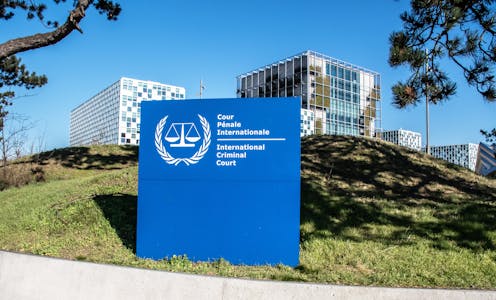
Under pressure: the ICC headquarters in The Hague. Shutterstock

When the International Criminal Court began operating 20 years ago this month, its existence reflected a unique historical and political epoch. Buoyed by the successful creation of war-crimes tribunals for the former Yugoslavia and Rwanda, delegates to the conference in Rome that created the court were optimistic for the future of international law.

They believed the new post–cold war political order could be underpinned by widely observed international laws and a form of global justice that wasn’t decided by powerful states.

Remarkably, all the countries of South America and large numbers of African states signed the Rome Statute establishing the ICC. They did this knowing they were likely to be the focus of its investigations, but encouraged by the hope that justice would extend to the powerful global north. Crucially, the UN Security Council was not given a monopoly on referring cases to the court.

Once the ICC became operational, however, this optimism quickly dissipated. The court took until 2006 to start its first trial and a further six years to announce its first conviction. Indeed, in its 20 years of operation, with a total budget of nearly €1.5 billion (A$2.2 billion), it has made only ten convictions and four acquittals.

Over that period, African countries became increasing disaffected with the court, not only accusing it of “hunting Africans” but also expressing frustration at its inability and lack of will to hold the United States and other major powers to account.

Frustrating performance

Some of the critics misrepresented the ICC’s institutional and jurisdictional limitations. But the fact it took until 2016 to open an investigation outside Africa (in Georgia) reinforced the view that the court is a neo-colonial, Western-influenced institution.

Further frustration arose from the ICC’s focus on “low hanging fruit” and its failure to pursue sexual and gender-based crimes in particular. More recently, the decision by the court’s appeals chamber to reverse the ICC’s conviction of Jean-Pierre Bemba Gombo, commander-in-chief of the Mouvement de Libération du Congo, raised concerns about the court’s ability to prosecute high-ranking public officials.

But perhaps the critics’ greatest frustration with the ICC is its perceived failure to hold the United States (and Israel, to a lesser extent) to account. However, much of this frustration represents a misunderstanding about the court’s legal reach. Neither the US nor Israel is a signatory to the Rome Statute, and the US could veto any attempt to initiate a referral through the UN Security Council.

Critics gained some satisfaction when it was announced the ICC prosecutor’s office would investigate American military and intelligence personnel who allegedly used “torture, cruel treatment, outrages upon personal dignity, and rape” in Afghanistan. That hope evaporated when a new prosecutor, Karim Khan, announced the investigation would no longer focus on those alleged crimes.

Great expectations

These concerns about the ICC are the result of two factors outside the ICC’s control: the refusal of some countries to sign the Rome Statute and the increased expectations generated when the court was created.

Nowhere is this more evident than in the current Ukraine–Russia conflict. Almost as soon as Russia invaded Ukraine, questions were being asked about how the instigators of the war might be investigated, and ultimately punished, for committing a crime of aggression.

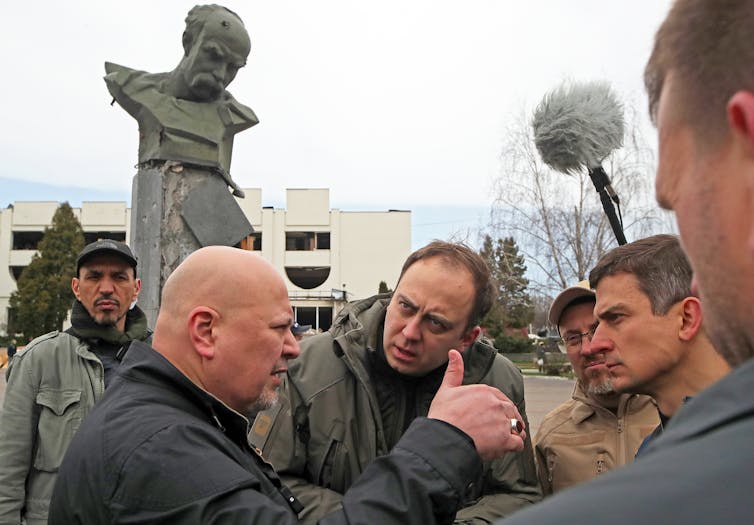
ICC offical in Ukraine
ICC prosecutor Karim Asad Ahmad Khan QC (left) pictured near Borodianka’s Taras Shevchenko monument, damaged during the Russian invasion, in northern Ukraine.
Pavlo Bagmut/Ukrinform/Future Publishing via Getty Images

The Ukraine conflict is not a straightforward matter for the ICC. It has the power to investigate Russia for crimes it commits in Ukraine because Ukraine has accepted the ICC’s jurisdiction (though without signing the Rome Statute). But it can’t prosecute Russia for the crime of aggression because the Russian government hasn’t signed the statute.

More broadly, the fact that an unprecedented number of countries have referred the Ukraine invasion to the ICC is evidence of the court’s ongoing importance.

The atrocities committed by the Syrian government (also a non-signatory, and a close ally of Russia) during the conflict in that country also fall outside the ICC’s jurisdiction.

But courts in France, Germany and Sweden, under the principle of universal jurisdiction, have investigated and prosecuted Syrian individuals. This includes regime intelligence officers, suspected of serious crimes.


Read more:
Russia’s Ukraine invasion is slowly approaching an inflection point. Is the West prepared to step up?


Indeed, the existence of the ICC and other new international mechanisms has encouraged an unprecedented collation of evidence about atrocities committed in Syria. This has been done in the hope that those responsible will one day be held to account.

The ICC has had one other important effect. The spectre of a possible ICC investigation into crimes allegedly committed by Australian SAS troops in Afghanistan was a clear factor in the Australian Defence Force’s decision to launch its own investigation. Before the ICC was created, no such incentive existed for national defence forces to investigate the behaviour of their own personnel.

The ICC isn’t perfect. Created in a unique period of cooperation, its operations now reflect the more state-centric and less cooperative world we inhabit. To condemn it solely because of its low prosecution rate would be short-sighted. Instead, we should appreciate the central role it has played in creating expectations that global justice can be realised.

The Conversation

Matt Killingsworth does not work for, consult, own shares in or receive funding from any company or organisation that would benefit from this article, and has disclosed no relevant affiliations beyond their academic appointment.

ref. Twenty years on, the International Criminal Court is doing more good than its critics claim – https://theconversation.com/twenty-years-on-the-international-criminal-court-is-doing-more-good-than-its-critics-claim-186382

Not just ramps and doorways – disability housing is about choosing where, how and who you live with

Source: The Conversation (Au and NZ) – By Robert Cameron, Associate Lecturer/Researcher, The University of Western Australia

Getty

Home ownership among young people is falling sharply, while renters face worrying insecurity. Nowhere is this more pronounced than for the 4.4 million Australians living with a disability and, in particular, the 660,000 plus Australians with an intellectual disability.

For the majority of these people, owning a home is impossible without financial support from their families. With the loss of this support, they can find themselves in precarious or even abusive situations. Stuck in a cycle of temporary accommodation or forced into group homes (or even nursing homes) with little control over where and who they live with.

If the entire premise of the National Disability Insurance Scheme (NDIS) is to give people more choice and autonomy over their lives, then that must extend to people’s fundamental needs for appropriate housing. To uphold the access and inclusion rights of people with a disability, their housing needs must be a priority.

One alternative gaining traction in Australia is the co-design, co-living model which could offer a range of benefits for people living with a disability.


Read more:
‘It’s shown me how independent I can be’ – housing designed for people with disabilities reduces the help needed


Living at the end of the road

People in Australia living with a disability have less access to services, social activities, and green spaces compared to people without a disability.

Over the last decade, market-driven approaches to disability housing in Australia have favoured cost effectiveness and replication, leading to limited design diversity, innovation and choice.

At a planning level, this has produced socially isolated dwellings with inadequate consideration of mobility, access to nature, and access to community spaces and services.

We know the built environment around us can have positive and negative effects on our health – from determining activity levels, to food access, to our contact with nature and social spaces. It also affects the air we breathe, water we drink and shelter from the elements.

Residents of highly green neighbourhoods, for instance, have 1.37 and 1.6 times greater odds of better physical and mental health than those who perceive their neighbourhood as less green.

Profit-driven design

In general, commercial housing developments are not accessible. Designs are driven by costs and wide scale trends.

When required, housing may meet the minimum accessibility requirements but almost never considers the end-user needs. This can create inappropriate environments, which then require modification for individuals – a wasteful and costly approach.

Even housing with the express design purpose of being accessible can fail. A recent survey found only 44% of accessible housing complied with the Liveable Housing Design Guidelines.

Conversely, when we focus on successful housing projects for people living with a disability, we see common architectural features: inviting communal spaces; private individual dwellings; commercial opportunities for residents; and on-site support.

Well-designed buildings “speak” to their environments too – be it the footpath or the grove – and foster community connection.


Read more:
Labor vows to tackle the NDIS crisis – what’s needed is more autonomy for people with disability


Could co-housing be the answer?

Many recipients of the NDIS would like to live independently in their own home but with easy access to onsite support.

A connected model could be the answer. Co-housing is the idea of semi-communal living that includes shared facilities and public space, self-governance, and design input from potential residents.

Studies show how health and well-being is improved by living in deliberate and dedicated co-housing. This may be explained by greater social inclusion and less loneliness.

People in co-housing also have reduced care needs compared to those living in conventional circumstances – 13% of residents compared to 22%, a gap which widens significantly with age. More research is needed, but there also seems to be a link between less chronic disease and lower impairment and co-housing.


Read more:
With a return to Labor government, it’s time for an NDIS ‘reset’


These ideas in practice

We were involved as designers of a proposed co-housing project in Perth’s south-east in Western Australia. The idea was instigated by the clients and families of Building Friendships, a disability service provider that facilitates social outings and short trips to assist with developing life skills through community interactions.

The project uses co-site selection and co-design sessions with end-users to create better design outcomes and build social capital from the beginning.

artist's image of proposed housing development with trees around
The Perth project is based on a co-housing model.
Author provided

The design includes 20 private pod houses with a central hub where residents gather, cook, socialise, and learn new skills including gardening in an existing and successful veggie growing enterprise. There are also on-site support services.

The project draws inspiration from domestic projects such as Walumba Elders Centre in Warman, WA, and international examples such as the Group Home on Hilltop in Hachioji, Japan.

At the heart of these examples lies good locations, good buildings, and opportunities to live alongside others: community, amenity and quality of space. This shouldn’t really be unusual or remarkable. Fundamental to this approach is simply raising the bar for people living with a disability to that of everyone else.

The Conversation

Rob Cameron, Emily Van Eyk, and Dan Martin are the designers of the Perth Hills co-housing project mentioned in this article.

This article has been produced with the assistance of the Alastair Swayn Foundation – alastairswaynfoundation.org

ref. Not just ramps and doorways – disability housing is about choosing where, how and who you live with – https://theconversation.com/not-just-ramps-and-doorways-disability-housing-is-about-choosing-where-how-and-who-you-live-with-183523

Researchers trained an AI model to ‘think’ like a baby, and it suddenly excelled

Source: The Conversation (Au and NZ) – By Susan Hespos, Psychology Department at Northwestern University Evanston, Illinois, USA and Professor of Infant Studies at MARCS Institute, Western Sydney University

Shutterstock

In a world rife with opposing views, let’s draw attention to something we can all agree on: if I show you my pen, and then hide it behind my back, my pen still exists – even though you can’t see it anymore. We can all agree it still exists, and probably has the same shape and colour it did before it went behind my back. This is just common sense.

These common-sense laws of the physical world are universally understood by humans. Even two-month-old infants share this understanding. But scientists are still puzzled by some aspects of how we achieve this fundamental understanding. And we’ve yet to build a computer that can rival the common-sense abilities of a typically developing infant.

New research by Luis Piloto and colleagues at Princeton University – which I’m reviewing for an article in Nature Human Behaviour – takes a step towards filling this gap. The researchers created a deep-learning artificial intelligence (AI) system that acquired an understanding of some common-sense laws of the physical world.

The findings will help build better computer models that simulate the human mind, by approaching a task with the same assumptions as an infant.

Childish behaviour

Typically, AI models start with a blank slate and are trained on data with many different examples, from which the model constructs knowledge. But research on infants suggests this is not what babies do. Instead of building knowledge from scratch, infants start with some principled expectations about objects.

For instance, they expect if they attend to an object that is then hidden behind another object, the first object will continue to exist. This is a core assumption that starts them off in the right direction. Their knowledge then becomes more refined with time and experience.

The exciting finding by Piloto and colleagues is that a deep-learning AI system modelled on what babies do, outperforms a system that begins with a blank slate and tries to learn based on experience alone.


Read more:
Artificial intelligence can deepen social inequality. Here are 5 ways to help prevent this


Cube slides and balls into walls

The researchers compared both approaches. In the blank-slate version, the AI model was given several visual animations of objects. In some examples, a cube would slide down a ramp. In others, a ball bounced into a wall.

The model detected patterns from the various animations, and was then tested on its ability to predict outcomes with new visual animations of objects. This performance was compared to a model that had “principled expectations” built in before it experienced any visual animations.

These principles were based on the expectations infants have about how objects behave and interact. For example, infants expect two objects should not pass through one another.

If you show an infant a magic trick where you violate this expectation, they can detect the magic. They reveal this knowledge by looking significantly longer at events with unexpected, or “magic” outcomes, compared to events where the outcomes are expected.

Infants also expect an object should not be able to just blink in and out of existence. They can detect when this expectation is violated as well.

A baby makes a comical 'shocked' face, with wide eyes and an open mouth.
Infants can detect when objects seem to defy the basic laws governing the physical world.
Shutterstock

Piloto and colleagues found the deep-learning model that started with a blank slate did a good job, but the model based on object-centred coding inspired by infant cognition did significantly better.

The latter model could more accurately predict how an object would move, was more successful at applying the expectations to new animations, and learned from a smaller set of examples (for example, it managed this after the equivalent of 28 hours of video).

An innate understanding?

It’s clear learning through time and experience is important, but it isn’t the whole story. This research by Piloto and colleagues is contributing insight to the age-old question of what may be innate in humans, and what may be learned.

Beyond that, it’s defining new boundaries for what role perceptual data can play when it comes to artificial systems acquiring knowledge. And it also shows how studies on babies can contribute to building better AI systems that simulate the human mind.

The Conversation

Susan Hespos does not work for, consult, own shares in or receive funding from any company or organisation that would benefit from this article, and has disclosed no relevant affiliations beyond their academic appointment.

ref. Researchers trained an AI model to ‘think’ like a baby, and it suddenly excelled – https://theconversation.com/researchers-trained-an-ai-model-to-think-like-a-baby-and-it-suddenly-excelled-186563

Is Vladimir Putin the greatest Russophobe of all?

Source: The Conversation (Au and NZ) – By Robert Horvath, Senior lecturer, La Trobe University

Sinister terminology: Russian President Vladimir Putin in the Kremlin last month.AP Photo/, Pool) READ LESS

Alexander Zemlianichenko/Pool/AP

No concept is more central to Vladimir Putin’s propaganda today than “Russophobia”. Internationally and on the home front, his propagandists claim they are fighting “Russophobes”, enemies motivated by a visceral hatred of Russia’s culture and people. Last month, the Russian foreign ministry sanctioned 121 Australians (including me) for “forming the Russophobic agenda in this country”.

According to Putin, Russophobia is nothing less than an existential threat. Ukrainian Russophobia, he claimed last December, is a first step towards an anti-Russian genocide. On the eve of the war, he denounced “extreme nationalism’ for taking the form of “aggressive Russophobia and neo-Nazism”.

Then, as missiles began falling on Ukrainian cities, and Bucha and Mariupol became synonyms for atrocities, the spectre of Russophobia became both a justification for war and an explanation for international sanctions.

What is obscured by Putin’s conflation of Russophobia and neo-Nazism is the sinister lineage of his own vocabulary. Even as he was claiming to de-Nazify Ukraine, Putin was using terms that had been coined, shaped and popularised by the Russian far right.

What’s in a word?

The modern usage of the term Russophobia can be traced to Igor Shafarevich, a Soviet-era dissident. Shafarevich’s long 1982 essay, Rusofobiya, was a response to a debate raging in samizdat (underground dissident literature) about the connection of the Soviet regime to the pre-revolutionary past. What incensed Shafarevich was how some participants in this debate depicted Russian history as a continuum of despotism stretching back via Stalin to Ivan the Terrible.

Shafarevich’s rebuttal of these “Russophobes” drew on the work of French conservative historian Augustin Cochin, who portrayed the French Revolution as a struggle between the “Small People”, the radical thinkers inhabiting salons and masonic lodges, and the “Great People”, the vast majority of the population.

Igor Shafarevich
The creator of ‘Russophobia’, Igor Shafarevich.
Wikimedia, CC BY-SA

In Shafarevich’s account, Russophobes were analogues of Cochin’s “Small People”. But he also added an anti-Semitic smear. On the basis of a misleading selection of texts, he alleged that Russophobia was dominated by Jewish intellectuals whose hatred of Russia was inflamed by the Talmud and guilt about the role of Jews in the Bolshevik Revolution.

Shafarevich’s essay attracted little attention until the collapse of censorship during Mikhail Gorbachev’s reforms. When a nationalist journal published Rusofobiya in 1989, it triggered an acrimonious debate between pro-Western liberals and Russian nationalists about the safest road out of totalitarianism.

This debate intensified after the collapse of the Soviet Union. Boris Yeltsin’s new democratic government was opposed by a “red–brown” coalition of neo-Stalinists and radical nationalists. Shafarevich was their leading ideologue. In the streets and in parliament, red–brown leaders used “Russophobia” as a rallying cry to denounce liberal reform and spread an anti-Semitic message about prominent reformers.

A grievance and a weapon

This struggle culminated in “Bloody October” in 1993, a constitutional crisis and the defeat of a red–brown uprising. The carnage ended Shafarevich’s political career, but Russophobia remained a powerful mobilising cause for anti-Western extremists of the left and the right.

On the left, the Communist Party expanded its definition of Russophobia to include hostility towards the Stalinist past. On the right, radical nationalists, traditionalist culture warriors and conservative clerics built reputations by fulminating against Russophobes.

Despite their political defeat in 1993, red–brown forces influenced the ideological agenda of the Putin regime. On the one hand, they waged a war of attrition against “systemic liberals”, advocates of market reforms and legislation targeting neo-Nazis. On the other, they became enablers of Putin’s crackdowns, vilifying pro-democracy campaigners in return for funding and access to the state media.

This collaboration intensified during the crisis that stretched from the massive pro-democracy protests in 2011–12 to Russia’s first attack on Ukraine in 2014.

Pussy Riot
Transgressors: members of the Russian radical feminist group Pussy Riot at the Christ the Saviour Cathedral in Moscow in July 2012.
Sergey Ponomarev/AP

In a bid to divide its opponents, the Kremlin posed as a defender of traditional values and focused popular anger on the anti-Putin performance by Pussy Riot in Moscow’s Christ the Saviour Cathedral. That transgression of sacred territory was misrepresented as a blasphemous assault on Russian traditions.

In the process, “Russophobia” was transformed from a grievance of radical extremists into a tool of state power. This shift was consecrated by a major conference on “Russophobia and the Information War against Russia” in September 2015 at Moscow’s Kremlin-owned Presidential Hotel. Never before had such a cross-section of Russia’s elite assembled to discuss Russophobia as a matter of political consequence.


Read more:
Russia’s Ukraine invasion is slowly approaching an inflection point. Is the West prepared to step up?


What attracted less attention was that this forum was the brainchild of Aleksei Kochetkov, a militant whose career had begun in the red–brown opposition, as a member of a neo-Nazi party Russian National Unity (RNU). At the time, he boasted that RNU had chosen the swastika because it was a symbol of struggle “against world Jewry, the basic enemy of our people, an infection or a bacteria”.

Like many far-right militants, Kochetkov made a career under Putin as a facilitator of dictatorship. His speciality was “zombie election monitoring”, the enlistment of foreign extremists to legitimise unfair elections. Now he was influencing the regime’s information wars.

The greatest Russophobe?

The domestic crackdown that followed the invasion of Ukraine offered Kochetkov a new opening. After Putin vowed to cleanse Russian society of “scum and traitors”, Kochetkov returned to the Presidential Hotel for a conference on Internal Russophobia as a Threat to Russian Statehood. In his keynote address, he lambasted the enemy within – those who wanted to destroy the Russian state and bury the Russian people under its wreckage.

This conference marked a kind of apotheosis of Shafarevich’s ideas. The irony is that the anti-Russophobia crusade, which began as a rejection of stereotypes about Russia as a crucible of totalitarianism, has become a justification for a new totalitarianism.

As Putin pulverises the independent media, civil society and cultural institutions, his struggle against Russophobia is destroying the most humane tendencies in Russian culture. In the process, he has become the greatest Russophobe of all.

The Conversation

Robert Horvath receives funding from the Australian Research Council.

ref. Is Vladimir Putin the greatest Russophobe of all? – https://theconversation.com/is-vladimir-putin-the-greatest-russophobe-of-all-186642

Banning artificial stone could prevent 100 lung cancers and 1,000 cases of silicosis, where dust scars the lungs

Source: The Conversation (Au and NZ) – By Renee Carey, Senior Research Fellow, Curtin University

Shutterstock

Silica dust is a very fine dust produced when products such as bricks, concrete and pavers are cut or drilled. Artificial stone, which is used mainly for kitchen benchtops, is a particularly potent source of silica dust.

Breathing this dust into the lungs can cause severe long-term damage. This can result in breathing difficulties, scarring of the lungs (silicosis) and lung cancer.

In our recently published report, we estimate that without action, Australian workers would develop more than 10,000 future lung cancers and almost 104,000 silicosis cases during their lifetime due to their exposure to silica dust. This is around 1% of all future lung cancers in the Australian adult population.

However, banning artificial stone would reduce silica exposure and could prevent 100 lung cancers and almost 1,000 silicosis cases over the lifetime of these workers.


Read more:
Explainer: what is silicosis and why is this old lung disease making a comeback?


Re-emergence of an old disease

Silica dust is a serious hazard in Australian workplaces. Around 7% of Australian workers are at risk of breathing it in. Exposure is most common in miners and construction workers.

For the last 60 years, silicosis was very rare in Australia. Due to the increased use of artificial stone, we are now seeing a re-emergence of this terrible disease.

In response to the resurgence of silicosis, the Australian government set up a taskforce to improve the health and safety of those working with silica dust. Its final report, from June 2021, recommended further analysis on how best to protect artificial stone workers.

This is now under way, with Safe Work Australia releasing a regulatory impact statement for consultation. This statement looks at a number of options to reduce exposure to silica and the cost of these over the next ten years.

Safe Work Australia concluded these measures would only need to save about five people a year from silicosis in order for these options to be cost effective.

While this is a good start, there’s scope to do much more. Banning artificial stone is among the recommendations suggested by the taskforce but not currently supported by government and not being considered by Safe Work Australia.

Assessing the harm

To estimate the harm caused by silica dust at work, we used a method which calculates how many additional disease cases would occur in workers exposed to silica dust in one year – in this case, the year 2016.

We used past exposure surveys and recent reports from New South Wales and Victoria to estimate how many workers were exposed to silica dust nationwide.

Then we modelled how many lung cancers and silicosis cases would occur during the lifetimes of these workers.

We then looked at possible ways to reduce exposure to silica dust, including wet cutting, reducing worker access to dusty areas, using good quality and well-fitted respirators, as well as banning artificial stone.

While this modelling isn’t yet published in a peer-reviewed journal, it has been peer-reviewed by others in the field.

Reducing the harm

We found banning artificial stone could prevent 100 lung cancers and almost 1,000 silicosis cases.


Read more:
Engineered stone benchtops are killing our tradies. Here’s why a ban’s the only answer


We also looked at other control measures which could be implemented in the interim.

Setting up exclusion zones around areas where artificial stone is cut, using well-fitted respirators, wetting artificial stone while cutting it, and using on-tool dust extraction while cutting artificial stone could prevent cases of lung cancer and silicosis, but not as many as a complete ban.

Man cuts stone.
Well-fitting respirators can reduce the risk.
Shutterstock

Unfortunately, a ban on silica dust in other industries such as mining isn’t possible. However, exposure can be reduced. Stopping workers from entering areas near crushers on mine sites would prevent 750 lung cancers and almost 7,500 silicosis cases.

If we were able to reduce exposure in the mining industry to that experienced by the general population, we could save more than 2,300 lung cancers and over 20,000 silicosis cases.

Reducing silica dust would save lives

Overall, ensuring compliance with engineering controls and respiratory equipment could prevent more than 400 workers from developing two terrible diseases.

These cases can only be prevented if there is 100% compliance with control measures. This is a level of compliance much higher than what we’re currently seeing in Australian workplaces.

A licensing system for artificial stone businesses such as that underway in Victoria might go some way to improving compliance, but the effects of this remain to be seen.


Read more:
Renovating your kitchen? Help Australia’s tradies avoid silicosis by not choosing artificial stone


However, if we banned artificial stone, we could save up to 700 more young workers from developing these diseases. If we tried to eliminate silica dust exposure in other industries, we could prevent even more disease.

Clearly, much more needs to be done to protect our workers from these ultimately preventable lung diseases.

The Conversation

This report was commissioned by the Australian Council of Trade Unions (ACTU).

Lin Fritschi does not work for, consult, own shares in or receive funding from any company or organisation that would benefit from this article, and has disclosed no relevant affiliations beyond their academic appointment.

ref. Banning artificial stone could prevent 100 lung cancers and 1,000 cases of silicosis, where dust scars the lungs – https://theconversation.com/banning-artificial-stone-could-prevent-100-lung-cancers-and-1-000-cases-of-silicosis-where-dust-scars-the-lungs-182420

Climate change is white colonisation of the atmosphere. It’s time to tackle this entrenched racism

Source: The Conversation (Au and NZ) – By Erin Fitz-Henry, Deputy Coordinator – Anthropology, Development Studies & Social Theory, The University of Melbourne

Shutterstock

“Climate change is racist”. So reads the title of a recent book by British journalist Jeremy Williams. While this title might seem provocative, it’s long been recognised that people of colour suffer disproportionate harms under climate change – and this is likely to worsen in the coming decades.

However, most rich white countries, including Australia, are doing precious little to properly address this inequity. For the most part, they refuse to accept the climate debt they owe to poorer countries and communities.

In so doing, they sentence millions of people to premature death, disability or unnecessary hardship. This includes in Australia, where climate change compounds historical wrongs against First Nations communities in many ways.

This injustice – a type of “atmospheric colonisation” – is a form of deeply entrenched colonial racism that arguably represents the most pressing global equity issue of our time. Several upcoming global talks, including the Pacific Islands Forum this week, offer a chance to urgently elevate climate justice on the global agenda.

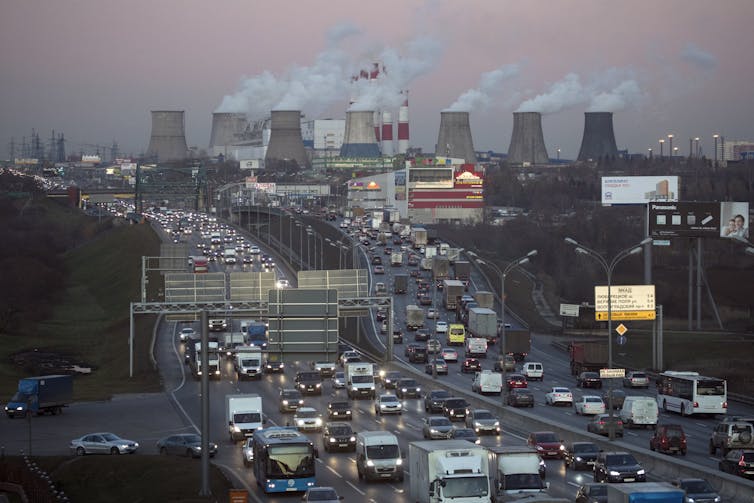
urban scene with cars and coal stacks
Rich nations must prioritise climate justice.
AP/Pavel Golovkin

‘Not borne equally’

The effects of climate change are not borne equally between everyone on the planet, and this problem will only worsen. Black people, people of colour and Indigenous people often face the most dire consequences in a warming world.

For example, research suggests global warming of 2℃ would leave more than half of Africa’s population at risk of undernourishment, due to reduced agricultural production. This is despite Africa having contributed relatively little to greenhouse gas emissions.

Climate injustice also manifests closer to home. The Lowitja Institute, Australia’s national body for Aboriginal and Torres Strait Islander health research, says climate change:

disrupts cultural and spiritual connections to Country that are central to health and wellbeing. Health services are struggling to operate in extreme weather with increasing demands and a reduced workforce.

All these forces combine to exacerbate already unacceptable levels of ill-health within Aboriginal and Torres Strait Islander populations.


Read more:
Aboriginal and Torres Strait Islander population has increased, but the census lacks detail in other facets of Indigenous lives


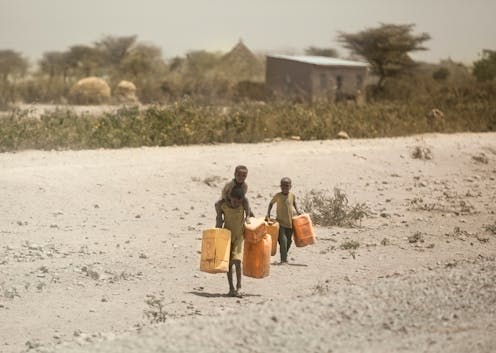
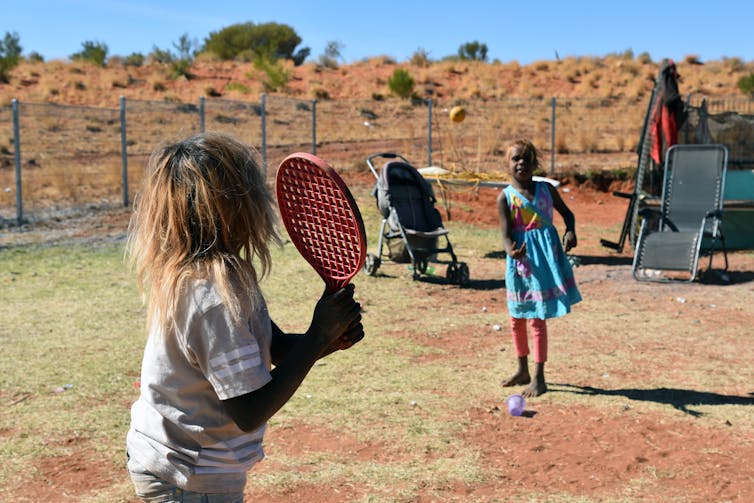
two children play ball game in desert scene
Climate change disrupts Indigenous Australians’ connections to Country.
Lucy Hughes Jones/AAP

Failure at Bonn

Last month, the continued failure on the part of rich white countries to take responsibility for this injustice was on full display at the United Nations climate meetings in Bonn, Germany.

There, governments failed to make any significant progress towards compensation for “loss and damage”. According to Oxfam, loss and damage collectively refers to:

the consequences and harm caused by climate change where adaptation efforts are either overwhelmed or absent.

At Bonn, the G77 (a coalition of 134 developing countries) and China wanted financing for a so-called “loss and damage facility” put on the official agenda at the COP27 climate conference in Egypt in November this year. This facility would comprise a formal body to deliver funding to developing nations to cope with the consequences of climate change.

But the United States and the European Union opposed the move, fearing they would become liable for billions of dollars in damages.


Read more:
How racism and classism affect natural ecosystems


Concerns around “loss and damage” have been long plagued global climate negotiations.

In 2013, the Warsaw International Mechanism for Loss and Damage was established at COP19. Climate activists hoped it would usher in a new era of climate justice. But almost a decade on, there’s still no clear path to the financing required.

And rich white countries continue to distance themselves from all language of compensation or reparation for both historic and contemporary emissions.

This refusal continues long histories of European racism, including the deeply racialised processes of large-scale extraction that fuelled and sustained the Industrial Revolution from the outset.

Sugar plantations throughout the Caribbean were worked for generations by Africans who were enslaved, generating massive profits for Europeans that were then invested and reinvested in energy-intensive industrial infrastructure. This infrastructure helped fuel the global emissions that remain in the atmosphere today.

British industrialisation would simply not have been possible without the stolen land and uncompensated labour acquired through colonisation and slavery. Compensation for this plunder was never provided.

And today, the emissions it initiated are doubling back on those whose land and labour made them possible.

Climate change at the centre of reparations

Calls for reparations for colonialism and slavery have grown rapidly over the past few years – particularly as a result of the Black Lives Matter movement in the US and UK.

Some European states have begun to take responsibility and provide redress for colonial theft, violence and displacement.

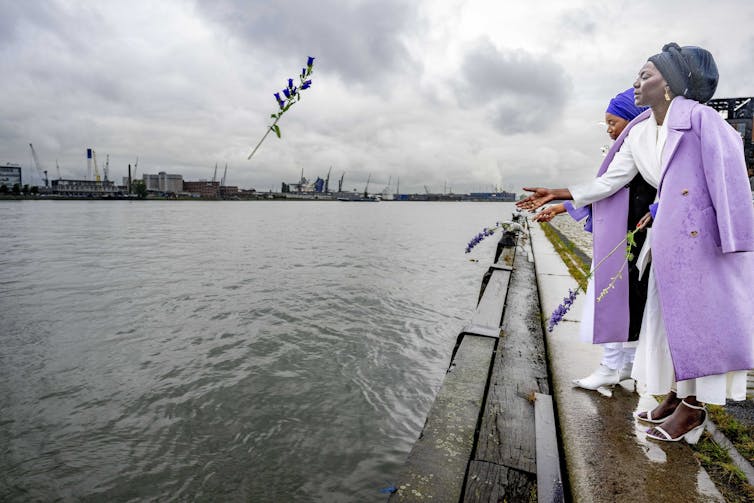
two women throw flowers into the water
European states have begun to take responsibility for colonial violence. but this must extend to climate justice.
Robin Utrecht/EPA

These efforts are laudable. But there’s an urgent need to focus this sentiment on climate change – and in particular, to supercharge demands for climate reparations.

The Pacific Islands forum this week provides an opportunity for Australia to undertake climate reparation, by committing new finance for the loss and damage incurred by poorer Pacific nations under climate change.

UN Special Rapporteur Philip Alston recently said the world risks a new era of “climate apartheid”. In this scenario, tens of millions of people will be impoverished, displaced and hungry, while the rich buy their way out of hardship.

Going into COP27 in November, negotiators from the US, the EU and Australia must prioritise loss and damage finance. Failing to do so will only further solidify climate injustice.


Read more:
Will Australia’s new climate policy be enough to reset relations with Pacific nations?


The Conversation

Erin Fitz-Henry does not work for, consult, own shares in or receive funding from any company or organisation that would benefit from this article, and has disclosed no relevant affiliations beyond their academic appointment.

ref. Climate change is white colonisation of the atmosphere. It’s time to tackle this entrenched racism – https://theconversation.com/climate-change-is-white-colonisation-of-the-atmosphere-its-time-to-tackle-this-entrenched-racism-185579

From shopping lists to jokes on the fridge – 6 ways parents can help their primary kids learn to write well

Source: The Conversation (Au and NZ) – By Anabela Malpique, Senior Lecturer, Edith Cowan University

www.shutterstock.com

Learning how to be a confident and communicative writer is one of the most important skills students learn at school.

But NAPLAN results show a significant decline in Australian students’ writing performance. Research for the period to 2018, shows year nine students performed nearly 1.5 years behind the average student in 2011.


Read more:
Writing needs to be taught and practised. Australian schools are dropping the focus too early


International studies have also raised concerns about students’ writing performance, stressing the need to learn more about how writing is taught in primary schools.

So, what is happening in Australian primary classrooms? And what can parents do to help their children learn to write at home?

Our new research

In 2020, we surveyed 310 primary teachers around Australia. Through an online questionnaire, we asked teachers about the time children spent writing in their classrooms and what types of activities they did to teach writing.

While this has been studied at the state level, this is the first national survey in Australia about the teaching of writing to primary students.

While no classroom is the same, the Australian Education Research Organisation recommends primary students should spend at least one hour per day – or 300 minutes (five hours) a week – doing writing activities and being taught writing.

School students share their work.
Students need to learn how to spell, but also write clearly, plan and revise their work.
www.shutterstock.com

Most teachers in our survey said their students usually spent about three hours a week on writing activities in their classrooms. But responses varied considerably, with some teachers reporting only 15 minutes of writing practice per week and others reporting 7.5 hours per week.

Most teachers spent more time teaching spelling (about 88 minutes) than any other writing skill. They spent an average of 34 minutes teaching handwriting, 11 minutes teaching typing, 35 minutes teaching planning strategies, and 42 minutes teaching children strategies to revise their texts.

While the development of spelling skills is obviously important, the lack of attention given to planning and reviewing a piece of writing is concerning.

Research shows children who plan and revise their texts end up writing much higher quality pieces of writing. However, studies also show that unless children are taught how to do this, they rarely do it.

How much are families asked to help?

In our survey, we asked teachers about the use of 20 different strategies for teaching writing. But strategies to promote writing at home with parental support were the least reported.

Almost 65% of teachers we surveyed never asked students to write at home with the support of a family member. Meanwhile about 77% said they rarely (once a year) or never asked parents or carers to read their children’s written work.

Teacher writing on a whiteboard.
Almost 80% of surveyed teachers said their rarely or never asked parents to read a students’ written work.
www.shutterstock.com

This is concerning as research shows parental involvement helps children build their writing skills.

So, our findings show a need for teachers and families to work together more. As well as the need to provide families with more guidance about what they can do to support children as developing writers.

What can families do?

If you want to do more to help your child learn to write and write well, there are many things you can do in your every day life at home. Here are some recommendations to consider:

1. Get your kids to write for a reason

It doesn’t matter how small the task is. Encouraging children to write for a clear purpose is key. It can be a simple reminder note, a message to go in someone’s lunch box, a shopping list or a birthday card.

2. Write together for fun

Encourage family activities that make writing fun. Create jokes, riddles, stories, rhyming lists, and anything else you can think of!

3. Display writing done in the family

Use the fridge, family noticeboard or calendar. This shows children how writing works in our lives and how important it is and how it is valued.

4. Get your kids to read you their writing

Ask children to read their writing aloud. This shows your kids you are interested in what they are doing. Also, when children read their written work aloud, they will inevitably notice some mistakes (so it’s like revising their work).

5. Be encouraging

When working on writing skills with your child, make sure you are positive. You could say things such as, “I noticed that you really focused on your writing” or “I really like how you used [that word]”. Also recognise any progress in their writing efforts, “I noticed that you checked your capital letters”.

6. Take the initiative at school

Talk to your child’s teacher about what you are doing at home and ask for suggestions about what your child needs to further develop their writing skills.


Read more:
‘I’m in another world’: writing without rules lets kids find their voice, just like professional authors


The Conversation

Anabela Malpique receives funding from Collier Charitable Foundation (ID1749)

Debora Valcan, Deborah Pino Pasternak, and Susan Ledger do not work for, consult, own shares in or receive funding from any company or organisation that would benefit from this article, and have disclosed no relevant affiliations beyond their academic appointment.

ref. From shopping lists to jokes on the fridge – 6 ways parents can help their primary kids learn to write well – https://theconversation.com/from-shopping-lists-to-jokes-on-the-fridge-6-ways-parents-can-help-their-primary-kids-learn-to-write-well-186216

‘Sometimes I don’t have the words for things’: how we are using art to research stigma and marginalisation

Source: The Conversation (Au and NZ) – By Priya Vaughan, Postdoctoral research Fellow, UNSW Sydney

There’s growing recognition that creative pursuits like painting, singing or dancing can have a positive impact on physical and mental health, can lessen isolation, and can increase connection to community.

Creative activities can also be an effective and safe way to learn about people’s life experiences, especially those that are upsetting or hard to talk about.

Our team uses art as a research tool to help increase understanding about mental health and well-being, and to build better systems of care and support.

We are using art to learn about stigma and marginalisation as a result of mental distress, disability or a refugee background. We collaborated with 35 people who identify as women, who have told us that making art and being creative is a powerful tool for self-empowerment.


Read more:
We still stigmatize mental illness, and that needs to stop


Giving voice to the unsaid

Women who experience mental illness, disability or who have a refugee background routinely experience stigma and discrimination.

This can have profound impacts, including reduced quality of life, barriers to accessing health care, reduced employment prospects, reduced access to affordable housing and diminished opportunity to experience motherhood.

The experience of stigma and discrimination often remains invisible. It can be upsetting to talk about and hard to describe. Creative activities, like making art, can help bring these experiences to light. Art can offer a way to express things that are tricky to say out loud.

As one participant in our study reflected:

Sometimes I don’t have the words for things … [art was] a really alternative way to express something without having to necessarily have the words for it.

Art can act like a mnemonic (prompting memories and recollections), can help people feel relaxed and safe when exploring upsetting experiences, can help people feel in control of their own stories, and enables them to share these stories in ways they feel comfortable with.

In our research we used a form of art creation called “body mapping”.

Body mapping involves tracing your body onto a large piece of paper or fabric and then decorating this outline by drawing, painting, sewing, collage and writing.

The body maps that participants created are visually striking, and each one tells a unique life story. These body maps were used as a jumping-off point to discuss the themes and experiences they encompass.

Mapping stigma

Participants explored the way stigma exists on a spectrum, ranging from subtle (indifference or ignorance) to overt (bullying, verbal and physical abuse). One participant wrote the words “now let’s add stigma” to her map to represent the way stigma had made it hard and scary to seek medical support.

When we spoke about her map, she told us:

I thought mental illness was like you’re locked away in a psych ward and left to die, that there is no help […] that’s what I got from social media and television.

Another participant represented her body as a multicoloured jigsaw puzzle to symbolise the “many fragments and pieces that makes you, you”. The jigsaw also represented her experience of healthcare, with doctors only seeing one piece of her and not acknowledging or offering support for other pieces.

As she reflected:

People with disabilities are people first and they too have mental health needs just like the rest of the world. And I think that for far too long this cohort of people have been overlooked and underrepresented.

Stigma was often identified as the reason participants felt the need to hide their feelings or pretend they were not struggling.

One participant drew two bodies on her map to represent this:

That is showing that you do work to the point of exhaustion everyday to make sure that you’re presenting in an appropriate way, but actually behind the scenes is what people don’t see.

Participants also used maps to celebrate their strength, resilience and the positive influences in their lives like friends, family, pets and nature. Making art was a common positive influence.

Participants saw art as an avenue for self-expression, meditation, relaxation and a way to process feelings. Participants also told us making art as part of the research project allowed them to take stock and reflect on their experiences.

They also used the research as an opportunity to reach new artistic heights. As one participant reflected:

My body map is by far the greatest piece of art I have created.

The power of art

An important takeaway from this work is the power and importance of art in well-being, health and social inclusion.

Participants remarked that they wished body mapping workshops, or other free creative activities, were regularly accessible.

Having a safe, supportive space to be creative and share their experiences with others was affirming and therapeutic. Art was a powerful way to share stories, shine a light on injustice, and encourage empathy and respect for difference.

A participant said it best when they remarked:

it’s empowering for everybody to have a voice [through art] and to be able to tell their story. That’s powerful.


Read more:
‘It’s given me love’: connecting women from refugee backgrounds with communities through art


The Conversation

The “Women marginalised by mental health, disability, or refugee background” project team are Yamamah Agha, Jill Bennett, Alise Blayney, Katherine Boydell, Angela Dew, Ainslee Hooper, Bronwen Iferd, Julia Lappin, Caroline Lenette, Cindy Lui, Apuk Maror, Jacqui McKim, Akii Ngo, Jane Ussher, Priya Vaughan, Ruth Wells, Yassmen Yahya.

This story is part of The Conversation’s Breaking the Cycle series, which is about escaping cycles of disadvantage. It is supported by a philanthropic grant from the Paul Ramsay Foundation.

Alise Blayney works for the Black Dog Institute as a Lived Experience Research Assistant for the Women and Body Mapping Project.

Katherine M Boydell is Professor at The Black Dog Institute in Sydney. She receives funding from the Australian Research Council, Suicide Prevention Australia, Rapid Applied Research Translation (RAFT) program, Medical Research Future Fund, NHMRC, and the Jibb Foundation.

ref. ‘Sometimes I don’t have the words for things’: how we are using art to research stigma and marginalisation – https://theconversation.com/sometimes-i-dont-have-the-words-for-things-how-we-are-using-art-to-research-stigma-and-marginalisation-183819

Times have changed: why the environment minister is being forced to reconsider climate-related impacts of pending fossil fuel approvals

Source: The Conversation (Au and NZ) – By Laura Schuijers, Deputy Director, Australian Centre for Climate and Environmental Law and Lecturer in Law, University of Sydney

Shutterstock

A non-profit group is imploring the new federal environment minister Tanya Plibersek to consider the climate change impacts of 19 fossil fuel projects currently pending approval, drawing on a rarely used legal provision that will require her to reconsider the findings of her predecessors.

The minister will be forced to either confirm or revoke previous decisions that the fossil fuel projects – which propose to extract new coal or gas – aren’t likely to have a significant impact on Australia’s protected species and places.

The group that issued the 19 requests, the Environment Council of Central Queensland, argues the projects will contribute to climate change. This will, in turn, harm the threatened and migratory species, wetlands, heritage sites, and marine areas protected under Australia’s environmental law, the EPBC Act.

So what makes this intervention important?


Read more:
Greater gliders are hurtling towards extinction, and the blame lies squarely with Australian governments


The environment is changing rapidly

The legal term for the type of request issued by the environment council is a “reconsideration request”. Made under section 78A of the EPBC Act, reconsideration requests depend on “substantial new information”.

Here, this includes the latest climate science and evidence about how Australian species and places are responding to climate change.

For example, the situation for a species like the Eyre Peninsula southern emu-wren, whose habitat has been decimated by bushfire is more dire than it was just a few years ago, making any new impact more significant.

Similarly, the Great Barrier Reef has now suffered its fourth mass bleaching event since 2016. Further climate change could bring this iconic ecosystem closer to collapse.

The environment council and its team argue that essentially all matters protected under the EPBC Act are vulnerable to the effects of fossil fuel projects, not just species and areas next door to mine sites.

Their logic is that every project unearthing new fossil fuels to be extracted and burned over a long period of time will make an important contribution to climate change. As we transition toward net-zero emissions, every tonne of emissions counts.

In turn, climate change will significantly impact Australia’s heritage and biodiversity. The environment council want to make sure this is factored into any final approval decision.


Read more:
‘Existential threat to our survival’: see the 19 Australian ecosystems already collapsing


What happens now?

Now the requests have been made, the minister is legally obliged to reconsider the projects in light of climate change.

If the minister confirms the previous decisions that there aren’t likely to be significant impacts on protected species and places, despite the new information, she can go ahead and approve or reject the projects based on the information she already had. However, this could then be challenged in the Federal Court.

So, what might the court say? Would it find that climate-related impacts to protected species and places are relevant to fossil fuel approvals?

This depends on the interpretation of key terms “likely”, “significant”, and “impact”.

Under the EPBC Act, the word “likely” means “a real and not remote chance or possibility”. It doesn’t equate to a probability over 50%.

“Impact” can include an indirect impact, which might occur at a different place and time to the project, including in the future. An impact doesn’t have to be wholly caused by a project to be relevant.

That said, there hasn’t yet been an authoritative judicial interpretation of the definition of this term. This means we don’t know if the court would find that climate-related impacts to biodiversity and heritage are impacts of fossil fuel projects. Arguably, it certainly could.

What we do know is that the word “significant” calls for the courts to consider the context of an impact. The context here is an extinction crisis that’s being exacerbated by a climate crisis.

If the minister does decide the projects are likely to significantly impact Australia’s threatened species and protected places, she’ll revoke the original decisions. This would trigger a process to procure sufficient information to better inform a final approval decision.

What does this mean for the law and for future approvals?

The EPBC Act came into force more than two decades ago, without any reference to climate change. Yet, it’s the law we’ve got to protect the environment.

Recognising that fossil fuel projects are likely to harm the Australian environment would mean climate change would need to be taken into account for new extraction proposals in future.

Specifically, the plight of threatened species and protected places would be broadly relevant to all final coal and gas approval decisions. The minister could still approve new projects, but she’d have to be mindful of the broad-ranging impacts to biodiversity and heritage.


Read more:
Australia’s environment law doesn’t protect the environment – an alarming message from the recent duty-quashing climate case


Whatever the ultimate result, this challenge will help elucidate a potential link between the EPBC Act and climate change.

This includes clarifying the responsibility fossil fuel projects have over climate-related harm to the environment, now climate change is well and truly manifest.

The Conversation

Laura Schuijers has previously been supported by Australian Research Council funding and has volunteered for Environmental Justice Australia.

ref. Times have changed: why the environment minister is being forced to reconsider climate-related impacts of pending fossil fuel approvals – https://theconversation.com/times-have-changed-why-the-environment-minister-is-being-forced-to-reconsider-climate-related-impacts-of-pending-fossil-fuel-approvals-186715

Women’s job opportunities in the spotlight at Albanese’s summit

Source: The Conversation (Au and NZ) – By Michelle Grattan, Professorial Fellow, University of Canberra

Ensuring equal opportunities and pay for women is one of the wide range of topics laid down for the federal government’s jobs summit, to be held September 1-2.

About 100 invitees will come from business, unions, civil society groups, and other levels of government. The summit was flagged by Anthony Albanese in the election campaign, and he and Treasurer Jim Chalmers announced details on Monday.

It is modelled on the Hawke economic summit of 1983, although it will only run half as long.

Some of the summit’s outcomes could be implemented in the October budget.

Individual ministers will lead the work in particular areas.

Minister for Women Katy Gallagher will co-ordinate work on the women’s labour market. Employment Minister Tony Burke will lead the job security and wages area.

Other areas will be led by Home Affairs Minister Clare O’Neil (migration); Social Services Minister Amanda Rishworth (workforce participation and barriers to employment); Skills and Training Minister Brendan O’Connor (skills and training); and Industry Minister Ed Husic (renewables, digital and manufacturing).

Apart from women’s employment, topics for the summit include

  • keeping unemployment low and boosting productivity and incomes

  • promoting secure well-paid jobs and strong, sustainable wages growth

  • expanding employment opportunities, including for the most disadvantaged

  • addressing skills shortages and getting the skills mix right

  • improving migration settings

  • maximising jobs and opportunities from renewable energy, tackling climate change, the digital economy, the care economy and a “Future Made in Australia”.

An employment white paper will be produced following the summit, led by Treasury. It will be informed by the summit’s outcomes, but there will also be a call for public submissions and community consultations. The white paper would be completed in about a year.

Albanese told a news conference there was “a lot of good will and real enthusiasm” from business groups and the ACTU to make the summit a success.

“I’ve said before that people have conflict fatigue. People want less argument and they want more solutions. My government is determined to deliver that.”

Chalmers said the challenges in the economy were “thick on the ground, but so are the opportunities”. The summit was about “picking the brains of people around Australia”.

He said the government changed hands at a time of rising inflation, falling real wages, labour shortages and the attendant challenges.

“We owe it to the Australian people to try and find that common ground so that we can reach the common objectives together. That’s what the summit will be about.”

“Our goal is to build a better trained workforce, boost incomes and living standards, and try to create more opportunities for more people in more parts of Australia.”

Invitations will be sent out about the start of August and discussion papers will be issued.

The Business Council of Australia said this was “a chance to seize the opportunity and end the deadlock on workplace relations, restore the Hawke-Keating enterprise bargaining system to lift productivity and let Australians earn more.

“And, we need a migration system that fills workforce shortages across the economy with the right targeting and incentives.”

The ACTU said the summit was “an opportunity to fix an underfunded and neglected skills sector, ensure that migration is providing opportunities rather than exploitation and address a broken bargaining system which has failed to deliver wage growth for almost a decade and has inflicted real wage cuts on workers during a cost of living crisis”.

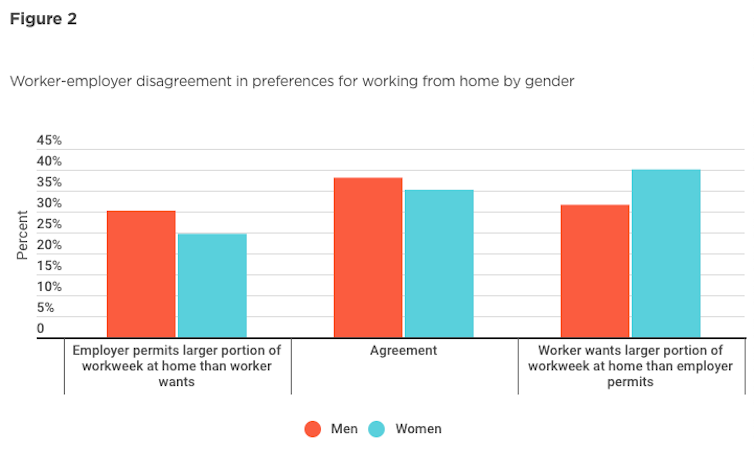
Meanwhile, the Melbourne Institute’s Taking the Pulse of the Nation report, released Monday, found a significant difference between employers and employees over working from home, as well as a gender difference among workers.

Figure 2

“Over one third of workers would like to spend more time working from home than their employer would permit,” the survey found.

“Women are 25% more likely than men (8 percentage point difference) to want to spend more time working from home than their employer would allow.

“This is not because women are more likely to be caregivers. A 7-percentage point gender gap remains even after accounting for having children in the household.”

The Conversation

Michelle Grattan does not work for, consult, own shares in or receive funding from any company or organisation that would benefit from this article, and has disclosed no relevant affiliations beyond their academic appointment.

ref. Women’s job opportunities in the spotlight at Albanese’s summit – https://theconversation.com/womens-job-opportunities-in-the-spotlight-at-albaneses-summit-186743

COVID has changed our exercise habits, but it doesn’t have to be for the worse

Source: The Conversation (Au and NZ) – By Ben Singh, Research fellow, University of South Australia

Shutterstock

During the pandemic, some people found their level of exercise greatly reduced, whereas for others it was a catalyst to increase their physical activity.

With the widespread switch to working from home, incidental physical activity was reduced. Some people took this newly freed up time as an opportunity to add exercise to their day, with online fitness programs and health apps reporting a boom.

However the early impetus to exercise appears to have been short-lived for many, with a study comparing activity levels between the first and second waves of COVID in Victoria finding most people reported a reduction in their physical activity levels the second time around due to a lack of motivation.

A systematic review found that overall, COVID has reduced physical activity and increased sedentary behaviour, and the effects could be lasting.

Now restrictions have eased, use of organised fitness venues are yet to return to pre-pandemic figures. A survey of gym members found that in Australia, 47% of previous gym members hadn’t returned to the gym following lockdowns.

Ongoing concerns about COVID have led to caution about returning to public spaces such as gyms. But also, with many people changing their exercise habits and setting up home gyms during lockdowns, it’s become much more convenient working out at home.


Read more:
Heading back to the gym? Here’s how you can protect yourself and others from coronavirus infection


It’s clear for many of us COVID changed how and how much we exercise. But the changes don’t necessarily have to be for the worse.

Is exercising at home as good as going to the gym?

People who switched to online workouts, fitness apps and home-gyms during COVID report their workouts are less intense, less satisfying, less enjoyable and they felt less motivated compared with attending fitness venues.

Phone screen showing a weight and bicep curl
Fitness apps had a boom in popularity during the height of the pandemic.
Shutterstock

In addition to the physical effects, people report missing the social aspects, camaraderie, and escapism of the gym. In-person classes also offer the benefits of supervision and instruction, which can help ensure workouts are completed safely and effectively.

However, online workouts, fitness apps and near-home workouts are likely here to stay, and offer numerous benefits, such as greater accessibility (no need to travel to the gym) and convenience, making it easy to fit in a workout while juggling work and family responsibilities.


Read more:
Regaining fitness after COVID infection can be hard. Here are 5 things to keep in mind before you start exercising again


How to ensure a good workout from home

1. monitor your intensity. If you think about your exertion on a scale of one to ten, where one is very light activity and ten is your maximal exertion, aim for a four to six.


2. make it enjoyable. Choosing an exercise you enjoy will help you stick with your program. Try out different types of exercise until you find something you like (YouTube and apps are a great source of inspiration). If you hate lifting weights, try body weight exercises.

3. stay motivated with a clear fitness goal. For example, you might decide you want to be able to do ten push-ups in four weeks, or run five kilometres in six months. Then you can devise a plan to gradually reach your goal.

4. commit to your workouts by planning how much you’re going to do. This can include committing to a certain duration (such as jogging for 30 minutes) or number of repetitions (for example 20 push-ups), and not stopping until it’s achieved.

5. exercise with a friend or family member. Pre-planning your workouts and exercising with a support person means you’re more likely to do them.


Read more:
Why some people find it easier to stick to new habits they formed during lockdown


6. aim to achieve the national guidelines. This involves performing 150 to 300 minutes of moderate activity each week, such as brisk walking, cycling or swimming. You should also aim for strength exercises at least twice per week, such as push-ups, squats and lifting weights.

7. purchasing equipment such as hand-held weights, resistance bands, and even a weight bench can be a great investment and can add variety to your home workouts. However, you can still achieve a great home workout with household items. For example, putting your feet or hands on a chair to do push-ups.

8. minimise your risk of injury. It’s important to always take the time to do a proper warm-up, stretch regularly, and ensure you are using appropriate technique, especially when lifting weights. There are plenty of free apps and videos online which can guide you.

9. use virtual reality to make your workout a bit more exciting. There are various apps and online programs that let you train in virtual worlds, ranging from walking or jogging from Zombies to exercise biking in a virtual world. The early evidence to support virtual workouts for improving motivation and adherence looks promising.

The Conversation

Carol Maher receives funding from the National Health and Medical Research Council, the Medical Research Future Fund, the National Heart Foundation, the South Australian Department for Innovation and Skills, the South Australian Department for Education, Healthway and Hunter New England Local Health District.

Ben Singh does not work for, consult, own shares in or receive funding from any company or organisation that would benefit from this article, and has disclosed no relevant affiliations beyond their academic appointment.

ref. COVID has changed our exercise habits, but it doesn’t have to be for the worse – https://theconversation.com/covid-has-changed-our-exercise-habits-but-it-doesnt-have-to-be-for-the-worse-181493

Equivalent to 1,800 tonnes of TNT: what we now know about the meteor that lit up the daytime sky above New Zealand

Source: The Conversation (Au and NZ) – By James Scott, Associate Professor in Geology, University of Otago

This image shows meteors that skimmed the atmosphere during just one night in March this year. Author provided

Meteorites hit New Zealand three or four times a year, but the fireball that shot across the sky above Cook Strait last week was unusual.

It had the explosive power of 1,800 tonnes of TNT and was captured from space by US satellites. It set off a sonic boom heard throughout the southern parts of the North Island.

Witnesses described a “giant bright orange fireball” and a flash that left a “trail of smoke that hung around for a few minutes”.

The fireball was most likely caused by a small meteor, up to a few metres in diameter, traversing Earth’s atmosphere. It was one of only five impacts of greater than a thousand tonnes of energy globally in the past year. Most meteors are tiny, creating “shooting stars” that only briefly skim the atmosphere.

The fragmentation of the meteor produced a shock wave strong enough to be picked up by GeoNet, a network of earthquake seismometers, with a flash bright enough to be recorded by a global lightning-tracking satellite. The Metservice’s Wellington radar picked up the leftover smoke trail south of the tip of the North Island.

But what is the chance of finding any of the its fragments, or meteorites, that dropped to Earth?

As part of Fireballs Aotearoa, a recently established collaboration between the universities of Otago and Canterbury and the astronomy community to track down freshly fallen meteorites, we are deploying specialised night-sky meteor cameras across New Zealand.

Fireballs Aotearoa’s meteor cameras only operate at night, but the compiled witness reports reveal the July 7 fireball travelled from northwest to southeast and most likely fragmented over the ocean. Unfortunately, any meteorites are therefore probably inaccessible.

Meteorites on Earth

Earth mainly gets meteorites from the asteroid belt, the Moon and Mars. They range from those only visible with a microscope to gigantic ones, such as the roughly 10km-wide meteorite that triggered the extinction of dinosaurs 65 million years ago.

Meteorites are scientific goldmines. Some contain material from before the Sun formed. Others tell us about the history of the young Sun’s planet-forming disk, when dust circulating around it began to clump into larger rocks and, eventually, planets.


Read more:
As the Perseverance rover lands on Mars, there’s a lot we already know about the red planet from meteorites found on Earth


Lunar meteorites show the Moon originated from the collision of a small planet with Earth. Martian meteorites tell us about the surface and interior of our closest planet. We don’t even need to send a spaceship.

If a meteor is recorded by several night-sky cameras, then its trajectory can be calculated and any resulting meteorites potentially located. The trajectory also tells us the meteor’s pre-impact orbit, allowing us to estimate where in the Solar System it originated.

How to help find a meteorite

New Zealand has nine known meteorites. Although the fireball wasn’t seen, the most recent was the Auckland meteorite that crashed through an Ellerslie roof in 2003. Our analysis shows this rock belongs to the ordinary chondrite group and therefore was part of a small asteroid only slightly younger than the Sun.

Last year, the British citizen-led fireball network UKFall captured footage of an enormous fireball over southern England. The debris was located on a driveway in Winchcombe, Gloucestershire – where the owner initially assumed someone had emptied their barbecue.

Now on display in the Natural History Museum in London, the Winchcombe meteorite turned out to be a type incredibly rare on Earth.

It is similar to the 5g of material returned in 2020 from asteroid Ryugu by the Hayabusa 2 spacecraft, except the meteorite gave scientists a hundred times as much to work with.


Read more:
What are asteroids made of? A sample returned to Earth reveals the Solar System’s building blocks


Although the Wellington fireball on July 7 probably didn’t drop a meteorite on land, the next one might. And you can join the meteorite hunt by reporting any sightings to Fireballs Aotearoa.


We would like to acknowledge Jim Rowe and Jeremy Taylor, our colleagues at Fireballs Aotearoa, for help with compiling this article.

The Conversation

James Scott receives funding from the MBIE Participatory Science Platform to build and deploy nightsky cameras across Otago.

Michele Bannister receives funding from the Royal Society of New Zealand Te Apārangi to explore small worlds throughout the Solar System.

ref. Equivalent to 1,800 tonnes of TNT: what we now know about the meteor that lit up the daytime sky above New Zealand – https://theconversation.com/equivalent-to-1-800-tonnes-of-tnt-what-we-now-know-about-the-meteor-that-lit-up-the-daytime-sky-above-new-zealand-186636

Richer schools’ students run faster: how the inequality in sport flows through to health

Source: The Conversation (Au and NZ) – By Vaughan Cruickshank, Program Director – Health and Physical Education, Maths/Science, Faculty of Education, University of Tasmania

Shutterstock

Cross-town sporting rivalry between the kids from the wealthy school and those from the country school – or the poorer suburbs – has been fodder for Hollywood movies such as Friday Night Lights, McFarland USA, Coach Carter, The Mighty Ducks and Hoosiers. We like to believe sport is the great leveller and privilege doesn’t matter once you enter the arena or sports field. Yet our study indicates this isn’t true. Educational advantage carries over into sporting participation and success.

This finding matters for reasons other than sport. Sport promotes physical activity, and the gaps in participation and success go some way towards explaining disparities in the health of students from advantaged and disadvantaged backgrounds.

Our findings suggest better funding and resourcing for government schools, particularly those in areas of low-socieconomic status (SES), could make a substantial difference to supporting healthy active lifestyles for all Australian students.


Read more:
Aussie kids are some of the least active in the world. We developed a cheap school program that gets results


What was the focus of the study?

Our study looked at the sporting success of primary schools in Tasmania. Inequalities related to differences in school funding, infrastructure and academic outcomes have been studied. Yet sporting success had remained largely unexamined.

Of course, wealthier schools have advantages in terms of sporting infrastructure and equipment. And students from low-SES backgrounds are much less likely to undertake physical activity that requires indoor facilities, costly infrastructure or equipment, or access to water or snow.

Therefore, we looked at the least resource-intensive and highest-participation sporting event on the primary school calendar, the cross-country running carnival. In Tasmania all primary schools send their best runners to compete at their regional event, and potentially on to the state-wide competition. A school is placed on the combination of its three fastest runners’ finishing times in each age and sex division.

We had access to the results from the 55 government primary schools in the southern (greater Hobart) regional association, and 130 primary schools that took part in the state carnivals over ten years. We matched these data with each school’s population, educational advantage and geography.


Read more:
Our ‘sporting nation’ is a myth, so how do we get youngsters back on the field?


What did the study find?

While there were some outliers in some years, overwhelmingly the study found the participation and success of schools depended on three factors: size, geographic region and educational advantage.

It makes sense that the larger schools did better than the smaller schools because they had more runners to choose from.

What we found concerning was, regardless of size, there was a direct correlation between a school’s relative educational advantage and its success in running carnivals. The richer they were, the faster they ran. This was true at both the regional and state carnivals.

The state-wide event also enabled us to look at each school’s success when compared to its geographic location. We found that geography, as well as educational advantage, determined participation rates. The more remote the school, the less often it sent runners to the state carnival.

What can be done about these disparities?

It’s deeply concerning that the socioeconomic status of schools has a direct impact on students’ success in cross-country running, and that the school’s location can determine their opportunities to participate. Previous research has found disadvantaged students and rural communities have poorer health than their wealthier and more urban peers.

Subsidising families’ sport-related costs or giving vouchers could help students from lower-income communities take part in sport, get coaching and increase their participation in events. Partnerships between schools and clubs could also help reduce physical activity inequalities and barriers such as transport, as well as promote lifelong connection to community sport.


Read more:
How sport can help young people to become better citizens


Unhappy boy being checked by a doctor
Lower rates of physical activity among children from low socioeconomic backgrounds have consequences for their health.
Shutterstock

However, complex challenges such as reducing structural inequality and improving children’s health require more than just money.

Schools could consider increasing the formal and informal opportunities they offer their students to play sport and be physically active. Research shows attending a school with many sporting opportunities can reinforce positive attitudes to physical activity.

Low-SES students have poorer health as a result of lower rates of physical activity. School and community programs to promote active and healthy lifestyles in low-SES communities are essential. Examples of programs that could be extended to more schools include the national Sporting Schools program and Live Life Well @ School in New South Wales and Walk to School in Victoria.

These programs have:


Read more:
The kids who’d get the most out of extracurricular activities are missing out – here’s how to improve access


Education can improve health literacy

Efforts to increase physical activity among students need to be backed up by education about the benefits. Students need to know how they can take ownership of maintaining their own health and well-being.

People with higher education are more likely to seek, understand and act on health information and services, including messages that promote physical activity. In other words, they have greater health literacy. Schools could consider programs focused on developing health literacy among their students.

HealthLit4Kids is one such program. It aims to halt negative intergenerational health behaviours by providing children with the tools to better understand their own health. It is operating in some Tasmanian schools and could be scaled up to benefit more students and their families.

Initiatives like these would help reduce some of the inequalities that have influenced the findings of this study.


This article is part of The Conversation’s Breaking the Cycle series, which is supported by a philanthropic grant from the Paul Ramsay Foundation.

The Conversation

Vaughan Cruickshank does not work for, consult, own shares in or receive funding from any company or organisation that would benefit from this article, and have disclosed no relevant affiliations beyond their academic appointment. This article is part of The Conversation’s Breaking the Cycle series, which is about escaping cycles of disadvantage. The series is supported by a philanthropic grant from the Paul Ramsay Foundation.

Jeffrey Thomas and Kira Patterson do not work for, consult, own shares in or receive funding from any company or organisation that would benefit from this article, and have disclosed no relevant affiliations beyond their academic appointment.

ref. Richer schools’ students run faster: how the inequality in sport flows through to health – https://theconversation.com/richer-schools-students-run-faster-how-the-inequality-in-sport-flows-through-to-health-185681

Census data shows poorest seats voted Coalition; byelections or polls from four states

Source: The Conversation (Au and NZ) – By Adrian Beaumont, Election Analyst (Psephologist), The Conversation

AAP/Dean Lewins

The Poll Bludger covered findings from the 2021 Census on June 30. The most striking finding was that the Coalition won the ten seats with the lowest household income at the federal election. These seats are all in regional Australia.

This validates my pre-election article, in which I said that whites without a university education in regional areas would continue to move to the Coalition. Labor won this election owing to swings against the Coalition in the cities, but no regional seat changed hands, and those that came closest to changing were all Labor-held.


Read more:
Final 2022 election results: Coalition routed in cities and in Western Australia – can they recover in 2025?


Nine of the ten seats with the top household income were in NSW – the tenth was Canberra in the ACT. Teal independents won four, the Liberals four and Labor two (Canberra and Sydney). Labor won nine of the ten seats with the highest percentage of non-English speakers; the exception was Kristina Keneally’s loss in Fowler.

The top ten seats for percentage of people aged 20 to 34 were all won by Labor and the Greens, while the Coalition won seven of the ten seats with the highest percentage of people aged 65 and over.

COVID lockdowns hit Victoria’s population particularly hard, as it dropped 1.5% in 2021. This has put Victoria in danger of losing two seats from its current 39 when state entitlements are determined for the next election in the middle of 2023. NSW could also lose a seat, with the beneficiaries likely to be WA and Queensland.

Essential and SEC Newgate federal polls

An Essential poll, conducted in the days prior to June 28, had 44% strongly supporting the Fair Work Commission’s announced 5.2% increase for the minimum wage, with 23% somewhat supporting, 9% somewhat opposed and 6% strongly opposed, for total support over opposition of 67-15.

45% thought Australia’s electricity and gas crisis was due to years of neglect, 35% due to unpredictable factors such as the Ukraine war and COVID, and 20% due to opposition to renewables.

49% thought the government should implement the policies it took to the election regarding emission targets, while 30% thought the government should be more ambitious.

80% thought it important for Australia to have a close relationship with the US, 78% with Pacific nations, 76% with European Union nations, 58% China and just 33% Russia.

The Poll Bludger reported an SEC Newgate poll on Monday that was conducted June 23-27 from a sample of 1,201. “Nearly four out of ten” said the new government had done an excellent or good job so far, 31% fair and 26% poor or very poor.

57% expected the economy to worsen in the next three months, up from 36% in May, with just 8% expecting the economy to improve, down from 13%. Cost of living was rated extremely important by 68% (up five), moving ahead of healthcare (61%, down three). By 42-23, voters favoured Labor over the Coalition to handle cost of living.

Bragg (SA) byelection: Libs hold, but with a 2.5% swing to Labor

A byelection in the South Australian Liberal-held state seat of Bragg occurred July 2. The Poll Bludger’s results show a Liberal win by 55.6-44.4, a 2.5% swing to Labor since the March 2022 election. Primary votes were 50.5% Liberals (down 3.3%), 30.0% Labor (up 1.3%) and 14.9% Greens (up 2.2%).

On election day booth votes, which were the only votes counted on election night, the Liberals had only led by 50.9-49,1, but they increased their vote share by a large 4.7% after pre-poll and postal votes were counted.

The byelection was caused by the resignation of Liberal Vickie Chapman after the Liberals lost the March election. Bragg is an inner metro seat that has SA’s highest median household income. At the March election, there was an 8.8% swing to Labor in Bragg that reduced the Liberal margin to the lowest it had been before the byelection.

Queensland YouGov poll: 50-50 tie

A YouGov poll for The Courier Mail, reported by The Poll Bludger, had Labor and the LNP tied at 50-50, a two-point gain for the LNP since February. Primary votes were 38% LNP (steady), 34% Labor (down five), 14% Greens (up four) and 10% One Nation (up two).

45% approved of Labor Premier Annastacia Palaszczuk’s performance (down five) and 39% disapproved (up three), for a net approval of +6, down eight points. LNP leader David Crisafulli was at 31% approve (up five) and 23% disapprove (down five). Palaszczuk led as better premier by 41-28. This poll was conducted June 23-30 from a sample of 1,044.

Victorian Morgan poll: 59.5-40.5 to Labor

The Victorian election is in late November. A Morgan SMS poll, conducted June 30 to July 2 from a sample of 1,710, gave Labor a 59.5-40.5 lead, unchanged since last November. Primary votes were 43.5% Labor (down 1.5), 29.5% Coalition (up 0.5), 12% Greens (up 1.5), 2% UAP (down two) and 13% for all Others (up 1.5).

Labor Premier Daniel Andrews had a 63.5-36.5 approval rating, unchanged from November. He led Liberal leader Matthew Guy by 64.5-35.5 as better premier.

I am dubious about this poll as Morgan has been the most Labor-friendly pollster, and the Victorian result for Labor at the federal election was below this poll by about five points, with big swings to the Coalition in safe outer metro Labor seats, presumably due to Andrews’ handling of COVID.

NSW Essential poll: Coalition leads Labor 37-33 on primary votes

The NSW state election is in March 2023. An Essential poll reported in The Guardian gave the Coalition 37% of the primary vote and Labor 33%. Unfortunately the report does not mention other parties’ primary votes. This poll was conducted over five days after the June 21 state budget from a sample of 700.

Liberal Premier Dominic Perrottet had a 49% approval rating and a 35% disapproval rating (net +14), while Labor leader Chris Minns was at 39% approval, 22% disapproval (net +17).

Boris Johnson has resigned. How is the next Conservative leader elected?

After being abandoned by Cabinet, Boris Johnson resigned as UK Conservative leader last Thursday, but will remain caretaker PM until a new leader is elected. Johnson has been embroiled in scandals, UK inflation is up 9.1% in the 12 months to May and the Conservatives lost two seats at recent byelections.

To elect a new leader, Conservative MPs vote in rounds with the lowest polling candidate eliminated each round, until there are just two left. Those final two go to the Conservative membership, which votes by mail. In the first round, there will be a 5% threshold for all continuing candidates, and 10% in the second round.

To be certain to make the final round, a candidate needs one-third of the MPs’ vote. The membership is more right-wing than MPs, so if a right-wing candidate makes the final two, that candidate could win.

These are the rules that applied at the 2019 Conservative leadership election. Elections to the 1922 committee that sets the rules will occur Monday UK time.

The Conversation

Adrian Beaumont does not work for, consult, own shares in or receive funding from any company or organisation that would benefit from this article, and has disclosed no relevant affiliations beyond their academic appointment.

ref. Census data shows poorest seats voted Coalition; byelections or polls from four states – https://theconversation.com/census-data-shows-poorest-seats-voted-coalition-byelections-or-polls-from-four-states-186115

Changes to the way Oranga Tamariki is monitored risk weakening children’s rights and protections – what should be done?

Source: The Conversation (Au and NZ) – By Claire Breen, Professor of Law, University of Waikato

Getty Images

A new law designed to improve oversight of the agencies charged with protecting children and young people is making its way through parliament. As it stands, there are serious concerns about how effective it will be once enacted.

The Oversight of Oranga Tamariki System and Children and Young People’s Commission Bill 2021 is described as providing for independent monitoring and complaints oversight for Oranga Tamariki, and greater advocacy for children’s and young people’s issues generally.

These are laudable goals, but of the 403 submissions to the select committee hearing submissions on the bill, 311 oppose the proposed law changes. Only eight are in favour, with the rest neutral.

The bill’s proposed changes are problematic for a number of reasons. One is that the bill still does not incorporate the United Nations Convention on the Rights of the Child into domestic legislation. This would mean the convention rights would become part of the law of Aotearoa New Zealand.

One of the clear benefits of this would be that children’s rights – especially their rights to health, housing and food – would be more readily enforceable through the national courts. In other words, it would be easier to hold the government to account for its actions or inaction.

Changing roles and responsibilities

The question of accountability becomes all the more important because the bill contains major changes to how the rights, interests and well-being of young New Zealanders are protected.

It proposes the establishment of an Independent Monitor of Oranga Tamariki that will assess how the child welfare agency is supporting children, young people and their whānau. It will replace the Independent Children’s Monitor, which was established as an independent crown entity in 2018.


Read more:
The state removal of Māori children from their families is a wound that won’t heal – but there is a way forward


The new monitor will be a departmental agency within the Ministry of Education. This move has been criticised for undermining the independence of the new monitor.

The bill also proposes that the Office of the Ombudsman will be the sole body responsible for investigating and resolving complaints on matters regarding the application of the Oranga Tamariki Act.

This is particularly contentious because so far the Children’s Commissioner has had that role.

UNICEF website
The reforms still don’t incorporate the United Nations Convention on the Rights of the Child into domestic law.
Getty Images

Reduced powers and weaker oversight

The transfer of investigative powers to the Ombudsman is not the only major change to the Children’s Commissioner, whose office will be replaced by a Children and Young People’s Commission.

The new commission will continue to promote and advance the interests and well-being of children and young people, but its role is weaker.

In particular, unlike the current Children’s Commissioner, it will not be able to advise on establishing complaints mechanisms for children or monitor the types of complaints made.


Read more:
Children had no say in New Zealand’s well-being budget, and that matters


Stripping the new commission of any powers to deal with complaints has a much wider impact on the application of children’s rights in Aotearoa New Zealand.

If the new commission is not able to advise the multitude of organisations that work with children and young people about how to make a complaint, this will significantly limit the extent to which the government can be held accountable for any failure to protect children’s rights overall.

Less scrutiny of government actions

The UN Committee on the Rights of the Child has already expressed concern at the system of protecting children’s rights in Aotearoa.

In 2016, it recommended the Children’s Commissioner be given adequate resources to receive, investigate and address complaints from children. The new commission would appear to be a step in the opposite direction.

The UN also recommended that Aotearoa New Zealand commit itself to the complaints mechanism of the convention, which would allow children to complain to the UN committee about breaches of their rights.

The government is examining whether it will sign up to the complaints mechanism.

But its level of commitment to the complaints process looks questionable if the new Children and Young People’s Commission, as a body charged with promoting the rights, interests and well-being of New Zealand children, cannot investigate complaints.

Children with their arms raised
Incorporation of the Children’s Rights Convention into domestic law would provide children with a clear legal mechanism to uphold their rights.
Getty Images

Bad timing

All these changes come at a time when young New Zealanders face declining physical and mental health, educational achievement and living standards, while the high levels of poverty and violence they experience persist.

For many young people, these outcomes are exacerbated by multiple forms of discrimination. More can and must be done.

Incorporation of the Children’s Rights Convention into domestic law would provide children in Aotearoa New Zealand with a clear legal mechanism to uphold their rights.

Even if the government continues with its (widely opposed) plan to give monitoring and investigative powers regarding Oranga Tamariki to the Independent Monitor and the Ombudsman only, it must restore the powers of the Children and Young People’s Commission to scrutinise the government’s effectiveness in protecting the remaining range of children’s rights.

The Conversation

Claire Breen does not work for, consult, own shares in or receive funding from any company or organisation that would benefit from this article, and has disclosed no relevant affiliations beyond their academic appointment.

ref. Changes to the way Oranga Tamariki is monitored risk weakening children’s rights and protections – what should be done? – https://theconversation.com/changes-to-the-way-oranga-tamariki-is-monitored-risk-weakening-childrens-rights-and-protections-what-should-be-done-186305

The next breakthrough tool in biology? It’s maths. Here are some ways mathematical biology is helping change the world

Source: The Conversation (Au and NZ) – By Jennifer Flegg, Associate Professor in Applied Mathematics, The University of Melbourne

Shutterstock

Biology is rich in patterns. You’ll find them everywhere – from the number of petals on a flower (which generally correspond to a number in the Fibonacci sequence), to the number of vertebrae in mammals (giraffes, humans and quokkas all have seven neck vertebrae). Even many viruses follow patterns and have symmetry in their shells.

Mathematics is, at its core, the science of patterns. Patterns can be subtle. So without using maths to formally describe and understand them, we could miss them completely.

For a long time, biological research had largely progressed without the advanced mathematical modelling that has now become core to physics, engineering and climate science. But this is changing.

Mathematical biology is a growing field which promises to revolutionise microbiology, biotechnology, evolutionary biology and health care. With maths, scientific breakthroughs that previously required years of trial-and-error experimentation (and tonnes of waste) can be achieved in a fraction of the time.

Here are some of the latest advances being made in mathematical biology.


Read more:
We’ve discovered a new rule of nature. It explains why animals’ pointy parts grow the way they do


Viruses and the natural world

As children, most of us would have played rock, paper, scissors, that game where rock crushes scissors, scissors cut paper and paper covers rock.

Well, the same maths we use to describe rock, paper, scissors can also be used to predict the cycle of dominance between animal species in a region that allows their coexistence. For example, there are three varieties of side-blotched lizards in south-western United States. Each variety has an advantage over one of the others, and a disadvantage to the third.

A male side-blotched lizard sits diagonally on a rock
Each variety of the side-blotched lizard has distinct advantages and disadvantages compared to the others.
Shutterstock

Maths has also been at the forefront of our fight against COVID-19. If you watch the news you’ve probably heard of R0, a mathematical concept that indicates if an epidemic will occur. When R0 is greater than 1 the number of infections rises. With R0 less than 1 the epidemic will eventually die out.

This crucial concept in infectious disease epidemiology is a result of the power of maths and statistics to detect patterns in data that are too subtle to notice otherwise. It has been the key to predicting and managing the spread of the COVID-19 virus. What’s perhaps less well known is maths is also being used to:

  • design viruses to kill cancer cells, such as by making combination therapies to treat ovarian cancer
  • design interventions to help eliminate malaria
  • identify the cause of antimicrobial resistance
  • create clean drinking water for developing nations and arid regions
  • unlock the inner workings of living cells.


Read more:
How to flatten the curve of coronavirus, a mathematician explains


Whole cell models

We’re now at the onset of a new era in biology – one in which we can build mathematical models to comprehensively describe an individual biological cell in order to predict its fate. This is called the “whole cell model”. It allows us to compute the life of a cell and is helping us understand how the human body works.

One writer for The New Yorker magazine called the quest to understand the intracellular world the “final frontier”. And despite the field still being in its infancy, potential applications are everywhere.

Imagine for a moment if we could build a mathematical replica model of the inner cellular workings of the Methicillin-resistant Staphylococcus aureus (MRSA), a bacterial superbug that doesn’t respond to standard antibiotics.

With a whole cell model of MSRA, we could use computer simulations informed by biological experiments to engineer new ways of both preventing and treating MRSA bacterial infections. This would add another layer of defence in our fight against resistant superbugs.

The benefit of whole cell modelling extends to cancer treatment too. For example, cancer immunotherapy relies on using a patient’s own immune system to fight the cancer. If we had a complete cell model of immune cells, we could fine-tune specific anti-tumour responses to improve therapies against cancer – and do so without any invasive exploration of the patient.

Clean water

Beyond health care, whole cell models are giving us methods to provide clean water for agriculture and food production. Effective water treatment produces high-quality water by removing microorganisms, organic matter and micropollutants.

However, buildup of the removed biological matter will cause the filters to become blocked by a layer of biological material, or “biofilm”. The biofilm must be removed for the filtration process to work again. In water desalination plants, around one-quarter of the running costs are attributed to the removal of biofilms — it’s a big problem.

Whole cell models will allow us to dissect the mechanisms underpinning how biofilms form. We’ll then be able to identify suitable targets to inhibit biofilm formation in the first place, or destroy biofilms once they’re created, to restore the integrity of the water supply.

This is just one of many examples. Being able to understand, predict and control the behaviour of cells will fast-track discoveries in biotechnology and health care, ensuring a healthier, more secure and prosperous future for everyone.


Read more:
COVID-19 heightens water problems around the world


The Conversation

Jennifer Flegg receives funding from the Australian Research Council (ARC).

Michael P.H. Stumpf has received funding from the Biotechnology and Biological Sciences Research Council.

ref. The next breakthrough tool in biology? It’s maths. Here are some ways mathematical biology is helping change the world – https://theconversation.com/the-next-breakthrough-tool-in-biology-its-maths-here-are-some-ways-mathematical-biology-is-helping-change-the-world-186209

Australian Labor isn’t alone. Parties of the left are making a comeback

Source: The Conversation (Au and NZ) – By Rob Manwaring, Associate Professor, Politics and Public Policy, Flinders University

One aspect of May’s federal election has been strangely overlooked: Labor’s win follows a pattern among the main centre-left parties in Europe and comparable countries. Traditional social democratic and labour-based parties are resurgent, and now hold office (on their own or in coalition) across all of Scandinavia and in Germany, Spain, Portugal and New Zealand.

Where the past decade has been dominated by talk of a crisis of the left, the debate is increasingly shifting to the crisis of the right.

The picture isn’t uniform, of course. Some countries have experienced the de facto demise of their main centre-left party. We might call this the “PASOKification” syndrome, after the sharp loss of support for Greece’s PASOK party, but it extends to other parts of Europe.

The Netherlands’ once-dominant Labour Party was placed sixth in last year’s election, with just 5.7% of the vote. France’s main party of the left, the Socialist Party, was reduced to just 6.4% in the first round of the 2017 presidential elections and just 1.7% this year.

British Labour, meanwhile, lost the 2010, 2015, 2017 and 2019 elections. Despite the toxicity that surrounds the Conservative government, Labour leader Keir Starmer remains unpopular and unlikely to win the next election.

In Belgium and Italy, the left’s situation is less bleak, though its main parties are far from hegemonic. In the highly fragmented Belgian system, the Flemish and Walloon socialist parties are part of the seven-party (yes, seven!) “Vivaldi coalition”. Italy’s Democratic Party is part of the current Draghi-led national unity government, and in more recent times has held the prime ministership.

Outside Europe, the new “pink tide” in South America has seen, for example, 35-year-old Gabriel Boric win Chile’s presidential election.

Why the bounce back?

Some common factors help us understand the partial return of the left.

First, the vote share of the two main centre-right and centre-left parties has declined in most of these countries, yet the centre-left can still assemble a majority where the electoral system enables it.

Australian Labor’s record low primary vote of 32.6% is part of that trend, with centre-left parties in Norway, Sweden and Spain now capturing between 25% and 30% of the vote. And even when parties win larger vote shares (as in Portugal), they have usually needed coalition partners. Nevertheless, centre-left parties remain a fixture in many party systems, and have found ways of getting back into office.

Second, the reinvigorated centre-left parties – including Anthony Albanese’s Labor – share common policy positions. We might sum them up as a “back to basics” strategy, with a clear focus on improved wages and conditions, job security and reinvigorated public institutions.

Albanese’s win has parallels with the victory of Olaf Scholz’s Social Democrat–led “rainbow coalition” in Germany. As one commentator described it:

Scholz ran an uncluttered campaign based on simple promises: a higher minimum wage, stable pensions, more affordable housing and a carbon-neutral economy.

Social democrats have sought to (mildly) rebuild public institutions. The Danish Social Democrats have pledged to increase public and welfare spending by 0.8% per year for five years. Jacinda Ardern’s NZ Labour government has increased the minimum wage. Antonio Costa’s recent majority government in Portugal was built on a coalition united in seeking to reverse the austerity measures that followed the eurozone crisis.

Common features …

This “new” minimalist social democracy has several entwined elements. First, the incoming governments have captured a mood, amplified by the pandemic, that centre-right governments have neglected key public goods.

Second, these centre-left governments have turned away from “third way” policies associated with leaders like Bill Clinton and Tony Blair. As catalogued here, centre-left parties have turned leftwards since the 1990s and 2000s. Many of their party manifestos have a renewed focus on tackling inequality and increasing welfare spending.

Finland’s Prime Minister Sanna Marin
Modern social democracy: Finland’s Prime Minister Sanna Marin at an EU summit in Brussels last month.
Olivier Matthys/AP

Third, the centre-left parties have been gradually “greening”. Many are seeking to make renewables part of their reinvigorated industry and manufacturing agendas.

As Albanese and his colleagues know, this is a delicate balancing act, aimed at protecting employees in fossil-fuel-intensive industries while setting out modest climate targets. This “balance” seems to be hitting the electoral sweet spot by capturing public demand for action while allaying fears about the speed of transition – even if the targets fail to keep up with the science.

The final element is the longstanding “feminisation” of the parties. Many are reaping the rewards of the struggles by feminist MPs, allies and members to improve representation. It’s no coincidence that four of Scandinavia’s five current centre-left prime ministers are female. The centre-left parties look modern and representative, and most have strong gender policies, especially on issues like the gender pay gap.

… And one significance difference

It’s worth noting a key difference between Australian Labor and its resurgent counterparts. Many centre-left parties in Europe have made strong pledges to invest in their welfare states – in part to see off the welfare chauvinism of radical right challengers. In New Zealand, the Ardern government has announced a new unemployment insurance scheme.

The dynamics seem different in Australia, and Labor apparently sees little electoral value in shifting from its “modest” welfare agenda.

One important lesson for Labor is that in almost all the cases internationally, the centre-left has had to learn to govern in partnership with other key players. This will be a pressing issue for Albanese as he deals with a record crossbench in both houses. It could even determine how long Australia’s centre-left party governs.

The Conversation

Rob Manwaring does not work for, consult, own shares in or receive funding from any company or organisation that would benefit from this article, and has disclosed no relevant affiliations beyond their academic appointment.

ref. Australian Labor isn’t alone. Parties of the left are making a comeback – https://theconversation.com/australian-labor-isnt-alone-parties-of-the-left-are-making-a-comeback-185484

Who you are and where you live affects your likelihood of getting, and surviving, cancer

Source: The Conversation (Au and NZ) – By Ian Olver, Professorial Research Fellow. School of Psychology, Faculty of Health and Medical Sciences, University of Adelaide

Shutterstock

As part of a series on cycles of disadvantage, supported by a philanthropic grant from the Paul Ramsay Foundation, we’re publishing three articles on the social determinants of health. They look at how factors like income, where you live and your background affect your risk for cancer, dementia and heart disease.


In Australia, the likelihood of living for at least five years after being diagnosed with cancer has risen from 51% to 70% over the past 30 years. But not everyone has the same opportunity.

Similarly, the risk of developing cancer differs depending on where you live, how well off you are, and the wealth and social situation of your parents.

How your socioeconomic group affects your cancer risk

If you live in a socially disadvantaged area – determined by low salaries from mainly unskilled labour, high unemployment and low education levels – you have an overall 5% higher chance of developing cancer than those living in the most advantaged areas. Your survival is also likely to be 20% lower if you develop cancer.

Why?

Some of the difference is those with fewer resources are more likely to have lifestyles with more cancer risk factors when compared to the most advantaged.


Read more:
Your pay, postcode and parents affect your heart disease risk


Disadvantaged people are three times more likely to smoke tobacco than the most advantaged, and more likely to be obese due to less access to good nutrition and green spaces to exercise.

Disadvantaged groups are also less likely to participate in cancer screening. These programs help detect cancer before symptoms occur (when it is more curable). Precancerous lesions can be also removed to prevent the development of cancer.

Some of the difference is because those in the lowest socioeconomic group have fewer resources to access health care and cancer prevention. They may be less able to take time off work to see doctors and seek treatment, less able to afford scans and prescription medication, and less able to afford preventive measures such as lots of fresh vegetables to eat or sunscreen to wear every day.

How where you live affects your cancer risk

Disadvantage is also found in those living in remote areas. There may be fewer employment opportunities and less income. People in remote areas may have less access to general practitioners and must travel for diagnostic scans and treatment.

Although for some cancers such as lung, head and neck, and cervical cancer the incidence is higher in very remote and remote areas, the overall cancer risk is lower than other areas when all cancers are combined.

Woman in headscarfe holding a drip
Social factors such as income and education level affect your cancer risk.
Shutterstock

The Australian Cancer Atlas gives detail by postcode. It must be carefully reviewed so adjustments are made in suburbs with older populations which would have more cancers because cancers are more common as people age.

When this is done, some “hot spots” reveal other causes of cancer. For example, the north coast of New South Wales has a high incidence of melanoma. The likely cause is people there spend more time at the beach and doing outdoor activities exposed to the sun. However, living in a suburb with a healthy environment and plenty of opportunity for outside exercise may reduce the risk of other cancers, such as bowel cancer.


Read more:
Your pay, postcode and parents affect your heart disease risk


Some associations are harder to explain.

While breast cancer rates tend to be high in disadvantaged areas, some affluent suburbs also have high rates. Here, the explanation may be that many professional women establish a career and delay having children until later in life, which puts them at a higher risk of breast cancer than women who have children at younger ages.

Who your parents are and where you come from affects your cancer risk

Many lifestyle factors that increase the risk of cancer can be changed. But the risk may begin right back with your parents. Leaving aside genetics and inheriting cancer-causing genes, your ethnicity and family lifestyle can also influence cancer risk.

An estimated 30% of Australians were born overseas. In general, they are healthier than adults born in Australia, but the chance of developing cancer increases over time as they adopt the diet and lifestyle of the Australian population.

Those born overseas face challenges such as language and cultural barriers to accessing the health system. For example, fewer migrants participate in cancer screening programs.

The cancer rate for First Nations Australians is 1.7 times that of non-Indigenous Australians.

Some of this increased risk comes from living remotely, but more than half of the risk of developing cancer can be attributed to social and economic disadvantage.

This can be shown in lifestyle factors such as higher rates of smoking, which are three times that of the general population. Obesity is also more common, with fresh fruit and vegetables often harder to come by in remote areas.

As well as ethnic background and Indigenous status, who your parents are has other effects on your cancer risk. Parents’ education level can influence health literacy – that is, their understanding of the health system and public health messages, the importance of prevention and screening, and healthy lifestyles.

Parental attitudes to introducing alcohol to you as a child, or their smoking behaviour, may have set a pattern for your subsequent behaviours. There is even some research showing parenting style, such as being over-protective, is associated with increased cancer in males – although much more research is needed to establish a link and explanation.

Identifying these risk factors is important in helping individuals, governments and policy-makers shape strategies for reducing the burden of cancer.

The Conversation

Ian Olver receives funding from the National Heath and Medical Research Council and Australian Research Council. He chairs the board of the Sax Institute, the strategic advisory group for adolescents and young adults at Canteen and is a board member of the Jodie Lee foundation and is a member of the Cancer monitoring advisory group of the AIHW.

ref. Who you are and where you live affects your likelihood of getting, and surviving, cancer – https://theconversation.com/who-you-are-and-where-you-live-affects-your-likelihood-of-getting-and-surviving-cancer-184140

Your pay, postcode and parents affect your heart disease risk

Source: The Conversation (Au and NZ) – By John Glover, Director of Public Health Information Development Unit (PHIDU), Torrens University Australia

Shutterstock

As part of a series on cycles of disadvantage, supported by a philanthropic grant from the Paul Ramsay Foundation, we’re publishing three articles on the social determinants of health. They look at how factors like income, where you live and your background affect your risk for cancer, dementia and heart disease.


Most of us know our risk of heart disease increases as we age, and it’s more common in men. But are you aware the risk of heart disease, and of death from heart disease, is greater if you’re Indigenous or of low socioeconomic status? And do you know it’s also a leading cause of illness and death among women?

Most people are not aware your risk of heart disease is greatly affected by who you are. But this does not have to be the case. And there are things we can do about it.


Read more:
Who you are and where you live affects your likelihood of getting, and surviving, cancer


First, what do we mean by ‘heart disease’?

Heart and vascular disease encompasses a range of conditions that can cause angina (chest pain), heart attack and stroke (bleeding or blockages in the brain).

Commonly, this group of conditions is referred to under the broader term of “heart disease”. It’s frequently used interchangeably with the term “cardiovascular disease”.

Cardiovascular disease remains the leading cause of death worldwide.

How many people does it affect?

The Australian Bureau of Statistics estimates 1.2 million Australians aged 18 and over (6.2% of the adult population) had one or more conditions related to heart, stroke or vascular disease in 2017–18.

Heart disease was the main cause of more than half a million hospitalisations in 2019–20, or 5% of all hospitalisations.

And, in 2020, a fifth of all deaths in Australia were attributable to heart disease (33,052 deaths), of which 50% were due to ischaemic heart disease, the most common type of heart disease in which major blood vessels of the heart are damaged.

Almost a quarter (24%) of deaths from heart disease were premature (the person died before they reached 75 years of age); for ischaemic heart disease the proportion was 27%.

Old couple preparing food
The risk of heart disease increases as we age.
Shutterstock

Does it affect some more than others?

Heart disease impacts everyone differently and is related – among other characteristics – to our age, sex, socioeconomic status and Indigenous status.

The prevalence of heart disease increases rapidly with age, affecting 11.3% of adults aged 65 years and over, and is substantially higher, at 17.5%, in those aged 85 years and over. While more men than women have heart attacks, strokes and vascular disease, the risk in women is largely under-recognised.

Although the prevalence of heart, stroke and vascular disease between adults living in the most and least disadvantaged socioeconomic areas is not significantly different, the premature death rate from heart disease in the most disadvantaged areas is a statistically significant 2.4 times that in the least disadvantaged areas.

The rate of heart, stroke and vascular disease among Aboriginal adults is more than twice that of non-Indigenous adults.

Of greater concern is that the rate of premature death (in this case deaths before 65 years of age) from heart disease in the Indigenous population is four and a half times that in the non-Indigenous population.

Couple walking down the street
The rate of heart, stroke and vascular disease among Aboriginal adults is more than twice that of non-Indigenous adults.
Shutterstock

And the premature death rate from heart disease in very remote areas is 2.4 times that of the major cities areas. For ischaemic heart disease, the gap is wider, at 3.2 times.

While this is partly due to the fact these areas have a higher proportion of Aboriginal people – who are at higher risk – distance itself also adds to the lack of access to timely and appropriate care.

What affects heart disease risk?

Aside from age and sex, there are many risk factors for heart disease, several of which are modifiable. These include tobacco smoking, insufficient physical activity, poor diet and nutrition, obesity and high blood pressure.

These risk factors are also more prevalent among more disadvantaged populations, for whom the data consistently show higher rates of hospitalisation and death, including premature death, from heart disease.

Access, in particular related to distance from hospitals, adds another dimension to the outcome for those with heart disease, in particular for Aboriginal and Torres Strait Islander people living remotely.

What can we do about it?

Better and more focused primary health care is the way forward. But if the investment is only in emergency centres and GPs charging a fee for service, it will not make a difference to preventable illness and death – at least not for those with the poorest outcomes. Funding for community-controlled primary health care services and centres, with multidisciplinary staff including GPs, would be an immediate help. Such a big-picture idea should not be too great a challenge for a reinvigorated federal government.

Heart health education campaigns exist. However, it’s usually those with access to health care, resources and time who change their behaviour following such campaigns. Those who live “hand-to-mouth” are less able to worry about things not in their immediate present.

That’s why addressing systemic and social determinants of health, with a considered primary health care approach, are of the utmost importance. Those with fewer resources need access to secure housing, transport, quality early learning and schooling, secure jobs and a welfare net above the poverty level.

Not only would these address their socioeconomic disadvantage, but also chronic stress, which is a major influence on heart health.

The Conversation

John Glover receives funding from the Australian Government Department of Health.

Sarah McDonald receives funding from the Australian Government Department of Health.

ref. Your pay, postcode and parents affect your heart disease risk – https://theconversation.com/your-pay-postcode-and-parents-affect-your-heart-disease-risk-183125

No wonder no one wants to be a teacher: world-first study looks at 65,000 news articles about Australian teachers

Source: The Conversation (Au and NZ) – By Nicole Mockler, Associate Professor of Education, University of Sydney

Shutterstock

Remember when former Morrison government minister Stuart Robert lashed out at “dud” teachers? In March, the then acting education minister said the “bottom 10%” of teachers “can’t read and write” and blamed them for declining academic results.

This is more than just a sensational headline or politician trying to get attention. My research argues the way teachers are talked about in the media has a flow-on effect to how people feel about becoming a teacher, and how current teachers see their place in the community.

So, when we talk about the shortage of teachers in Australia, we also need to look at media coverage of teachers in Australia.

My new book examines how teachers have been represented in the print media for the past 25 years. When you look at the harsh criticism and blame placed on teachers, it’s no wonder we are not attracting enough new people to the profession and struggling to retain the ones we have.

My research

In a world-first study, I explored how school teachers have been portrayed in Australian print media from 1996 to 2020. I looked at more than 65,000 media articles from all 12 national and capital city daily newspapers, including all articles that mentioned teacher and/or teachers three times or more.

With an average of 50 articles per week for 25 years, and a total word count of more than 43 million, my analysis is one of the largest of its kind.

Newspaper front pages.
The study looked at more than 43 million words written about teachers over 25 years.
April Fonti/AAP

While a lot has been written about teachers in the media over the years, this is the first study to systematically analyse such a large number of articles, representing such a complete collection of stories about teachers in newspapers, published over such a long time.

So what did I find? A lot. But here are three key findings that are critical when it comes to the way we think and talk about teachers and their work.

We are fixated on ‘teacher quality’

First, my research charts the rise and rise of attention to “teacher quality”, especially between 2006 and 2019. This period covers the start of the Rudd-Gillard “education revolution”, which reframed education in Australia as all about “quality”. It ends with the start of COVID, when reporting on teachers and education temporarily concentrated on home schooling.

My analysis found the focus on “quality” was far more on teachers than, say, teaching approaches, schools, schooling, education systems or anything else.

The graph below shows my tracking of the three most common uses of “quality”.

Made with Flourish

Why is this an issue? It puts the emphasis on the purported deficiencies of individual teachers rather than on collective capacity to improve teaching.

It detracts from system quality – the systemic problems within our education system. “Teacher quality” is a way for politicians to place the blame elsewhere when they should be committing to addressing the root cause of these problems: inadequate and inequitable funding, excessive teacher workload, unreasonable administrative loads, or teachers being required to work out of their field of expertise.

Teachers’ work is made out to be simple (it’s not)

The second key thing I found is media reporting on teachers consistently talks about their work as simple and commonsense, as though all decisions made by teachers are between two options: a right one and a wrong one.

The phrase “teachers should” appears about 2,300 times in my database. Examples include, “teachers should be paid according to how their students succeed”, “teachers should not adopt a cookie-cutter approach to learning”, “teachers should arrive in classes prepared” and “teachers should not be spending time organising sausage sizzles”.


Read more:
‘We are not in this alone’: stressed teachers find hope in peer-support model used by frontline health workers


Research conducted in the 1990s, and still widely referred to by scholars, found teachers make roughly 1,500 decisions in the course of every school day.

Recent research, including some I’m currently doing with colleagues, suggests teachers’ work has greatly intensified and accelerated over the past 30 years. So it’s likely 1,500 decisions per school day is now a very conservative estimate.

These decisions include everything from “what texts will we focus on in English next term?” to “should I ditch what I’d planned for this lesson so we can keep having this conversation because the students are absorbed by it?”.

Teacher shows class letters on a whiteboard.
Research in the 1990s found teachers made about 1,500 decisions a day. It is likely to be much more now.
Dan Peled/AAP

It also includes social decisions, such as “do I intervene right now and potentially escalate what’s going on at the back of the classroom or just keep a close eye on it for now?”.

Every single one of those decisions is complex. And yet, in media coverage, claims of what “all teachers” or “every teacher” can, should or could do come thick and fast.

Teaching is relentlessly difficult, and while not everyone needs to understand that – in the same way not everyone needs to understand exactly how to conduct brain surgery – we do need to pay some respect to the 300,000 or so Australian teachers who navigate the profession every day. Just because the complexity may not have been evident to us in our 13 years as school students doesn’t mean it wasn’t there.

Teacher-bashing is the norm

Finally, I found stories about teachers were disproportionately negative in their representations. I did find “good news” stories in my research but they were outnumbered by articles that focused on how teachers, collectively and individually, don’t measure up.

This included the linking of “crises” to “poor quality” teachers. Take, for example, former education minister Christopher Pyne’s comment that:

[…] the number one issue, in terms of the outcomes for students, is teacher quality, in fact [the OECD] said eight out of ten reasons why a student does well in Australia or badly is the classroom to which they are allocated. In other words, the teacher to whom they are allocated.

In other words, “teacher-bashing” is the norm when it comes to stories about teachers in the Australian news media.

The PR around teaching needs to change

As we consider what to do to improve teacher numbers in Australia, we need to think about the way we talk about teaching and teachers in the media.

If all people hear is that teachers are to “blame” for poor standards and they should be finding their demanding, complex jobs easy, this is hardly likely to encourage people into the profession. Nor does it give those already there the support and respect they need to stay.


Read more:
Read the room, Premier. Performance pay for teachers will make the crisis worse


The Conversation

Nicole Mockler receives funding from the Australian Research Council.

ref. No wonder no one wants to be a teacher: world-first study looks at 65,000 news articles about Australian teachers – https://theconversation.com/no-wonder-no-one-wants-to-be-a-teacher-world-first-study-looks-at-65-000-news-articles-about-australian-teachers-186210

Do Australians pay too much income tax? 6 charts on how we rank against the rest of the world

Source: The Conversation (Au and NZ) – By Peter Whiteford, Professor, Crawford School of Public Policy, Australian National University

Shutterstock

Australians pay too much income tax – or so some argue.

The Australian Financial Review’s economics editor, John Kehoe, for example, has noted:

Australians are paying more personal income tax as a share of government revenue than any other advanced economy, except for the high-taxing Scandinavian welfare state of Denmark.

And the day after the federal election, the AFR editorialised:

Too heavy reliance on taxing productive workers and business earnings blunts incentives to work, save and invest.

Perhaps even more stinging is that the AFR considers New Zealand to have a better income-tax system. New Zealanders pay 10.5% on their first NZ$14,000 (then 17.5% up to NZ$48,000), while Australians enjoy a tax-free threshold up to A$18,200. The AFR says this:

creates tax-penalty work disincentives that partly explain New Zealand’s approximately 5% higher rate of workforce participation than Australia.

Are these issues really a problem? If there is a case for tax reform, what sort of reform?

High individual income tax

In 2019 (the most recent year for which the OECD has complete statistics), Australia ranked second among OECD member on personal income tax as a share of total taxes.


In fact, it has ranked second or third in 36 of the past 40 years, and fourth in the other four years, swapping places with New Zealand and the United States.

But that’s just part of the picture

Overall, Australia’s level of taxation, measured as a proportion of GDP, is relatively low – 27.7% to the OECD average of 33.4%.


That makes Australia the 29th lowest-taxing nation of the OECD’s 38 members.

Other nations have social security taxes

The main reason Australia ranks so highly on individual income tax levels is because Australians don’t pay separate social security taxes.

Australia, New Zealand and Denmark fund social security from general government revenue. The other 35 OECD nations levy specific taxes on employers and employees to fund social security systems (unemployment support, age and disability pensions etc)

These account for an average 25.9% of total tax revenue, or close to 9% of GDP, across the OECD.


Employee social security contributions are very similar to income taxes. They are generally collected the same way as income taxes, and counted as direct taxes on households or individuals in income surveys.

Though employers also pay social security taxes, evidence suggests about two-thirds of these are effectively paid by employees through lower wages.

In fact, if we add together personal income taxes and social security contributions, then Australia, rather than having the second-highest share of income taxes in the OECD, has the eighth-lowest.


What about superannuation?

Some say Australia’s compulsory superannuation scheme, in which employers pay 10.5% of an employee’s wage as super, should be counted in these tax measures, because it is similar to social security contributions in other countries.

12 other OECD countries have mandatory employer-paid private pension schemes.

Employers pay this money directly into private accounts, not to the government, so it doesn’t meet the definition of a tax.

But for argument’s sake we can factor in super payments using “tax wedge” data.

Combining mandatory payments

A tax wedge is the ratio between the amount of taxes paid by an average worker (assumed to be single without dependents) and the corresponding total labour cost for the employer.

The important point here is that wedge data include both what employers pay as mandatory private payments and as mandatory payments into government social security.

On this measure, Australia’s direct tax burden is the 11th lowest in the OECD.


So claims we have very high shares of personal income taxes are only part of the picture. Superannuation does not change the story significantly.

So what about New Zealand?

New Zealand does collect more revenue through consumption taxes – 12.5% of GDP in 2019, compared to 7.3% for Australia.


But it still collects more in income taxes – 12.4% of GDP compared to 11.6%. Its total level of taxation is 33.4% of GDP, compared to 27.7% for Australia.

The case for tax reform

Even so, there are things to learn from New Zealand.

Australia’s system could be structured better. As Louis XIV’s finance minister, Jean-Baptiste Colbert (1619-1683), said, the art of taxation is about “plucking the goose as to obtain the largest possible amount of feathers with the smallest possible amount of hissing”.

Income taxes are highly visible. This may make us more ready to believe we are highly taxed. There is a case for considering tax reforms that deliver adequate revenue more fairly.

New Zealand is in the process of this change, with its proposed Social Unemployment Insurance scheme being funded by a 1.39% levy on employers and workers.


Read more:
Beyond GDP: Jim Chalmers’ historic moment to build a well-being economy for Australia


Last month the Australian Treasury’s secretary, Steven Kennedy, said in a speech it was possible for the government to spend more on things “that improve lives”, such as higher-quality aged care and disability services, “while reducing pressures arising from poorly designed policies”:

We will need a tax system fit for purpose to pay for these services, that appropriately balances fairness and efficiency. This is achievable.“

Given the inevitable challenges of an ageing population, climate change and international uncertainty, anything that moves the national conversation on from misleading comparisons with other nations can only help.

The Conversation

Peter Whiteford receives funding from the Australian Research Council. He is a Fellow of the Centre for Policy Development.

ref. Do Australians pay too much income tax? 6 charts on how we rank against the rest of the world – https://theconversation.com/do-australians-pay-too-much-income-tax-6-charts-on-how-we-rank-against-the-rest-of-the-world-185223

It’s not nostalgia. Stranger Things is fuelling a pseudo-nostalgia of the 1980s

Source: The Conversation (Au and NZ) – By Tom van Laer, Associate Professor of Narratology, University of Sydney

Netflix

The 1980s are back, and nowhere more so than in the nostalgia-filled season four of Stranger Things.

Kate Bush’s Running up that Hill is the current number-one hit on Spotify. Since Stranger Things’ season finale, Metallica’s Master of Puppets has joined Bush at the top of the charts.

Mullets are making a comeback. Billy Hargrove (played by Perth’s Dacre Montgomery) has been rocking the hairstyle, as have Miley Cyrus and Little Mix’s Leigh-Anne Pinnock. The famed 1980s banana hair clip is back, as well as the perm(anent wave) which Nancy (Natalia Dyer) and Karen Wheeler (Cara Buono) sport this season.

Dacre Montgomery as Billy in Stranger Things.
Netflix

A key feature of contemporary marketing is the development of products and services that feature a new theme on an old idea. Called “retromarketing”, it is the relaunch or revival of a product or service from a historical period, which marketers usually update to ultramodern standards of functioning, performance or taste.

Sure, nostalgia sells – but what retromarketers really try to induce are feelings of “pseudo-nostalgia”.

We call it pseudo-nostalgia because younger consumers of these revived products and services have never experienced the original. Generation Z will not have been there, done that.

In fact, they are buying retrotastic products and services that sometimes have little relation to 1980s reality whatsoever.


Read more:
Ethereal, evocative, and inventive: why the music of Kate Bush spans generations


More of the 1980s

Stranger Things costume designer Amy Parris and her team have collaborated with Quiksilver on five apparel collections based on 1980s fashion. Founded in Torquay, the surf-inspired clothing brand was an integral part of the eighties look.

It’s not only Stranger Things harking back to the 1980s. Ghostbusters: Afterlife (2021) not only brought back the much-loved movies, but also recreated the Stay-Puft Marshmallow Man as “Mini-Pufts” for a new set of consumers.

Thor: Love and Thunder also has a distinct eighties-adventure vibe, taking the Beastmaster (1982), Conan the Barbarian (1982) and eighties Californian graffiti as visual inspiration to great effect and amusement.

Playing the part

Of course, Generation Z, born after 1996, cannot actually be nostalgic for the 1980s.

As young consumers become pseudo-nostalgic for the 1980s, they look to evoke that decade through “compensatory reconsumption”: they immerse themselves in eighties pop culture to cope with their wistful affection and sentimental longing for this period of the past. Consuming 1980s-esque products and services allows them to pretend they were really a part of that historical period.


Read more:
‘Satanic worship, sodomy and even murder’: how Stranger Things revived the American satanic panic of the 80s


For fans of Stranger Things, buying retrotastic products and services helps fans go to the 1980s in their mind’s eye and empathise with their beloved characters.

This recreation of the eighties leads to a transformation of the decade itself.

TV series and movies like Stranger Things, Ghostbusters and Thor transform consumers’ relationship with the historical time. As one person we interviewed put it:

The original canon is not immune to what I have lived. It is no longer possible to distinguish between what you live […] from what you [see] in the original.

To put it another way, when zoomers feel nostalgic for the 1980s, they play at being a part of that decade. They see themselves as experts with an authentic understanding of the historical period and its associations.

Painful memories or something new to love?

It isn’t all mullets and pop songs.

The 1980s were also the height of the Trabant car, the national car of the German Democratic Republic in the days before the fall of the Berlin Wall.

The laughing stock of Europe, the “Trabi” was a small but sturdy car that could barely muster 100 kilometres per hour. Due to the communist planned economy, it could take more than ten years after ordering to finally take delivery of the car.

So, it may be a bit of a surprise that an electric Trabant nT or “newTrabi” has been unveiled as a concept car. Better equipped than the old Trabi, in true capitalist style it would come with all the mod cons.

A yellow Trabant
Is the Trabant really a car we want to bring back?
Wikimedia Commons

Is the association with the old Trabi too comic or painful? Or will drivers love the newTrabi as a symbol of where East Germany started and how far it has come?

If Quiksilver’s collections are any sign, drivers will love the newTrabi. Even just a year ago, it was hard to imagine neon or oversized clothing ever coming back into fashion – but now the Quiksilver/Stranger Things collaboration has seen a neon purple hat and this pastel mishmash of a nylon oversized windbreaker sell out worldwide.

The 1980s are back – but it is worth remembering these are not the true 1980s. No matter how great the fashion faux pas, consumers who embrace the current 1980s revival will go to that time through pseudo-nostalgia and compensatory reconsumption.

The Conversation

The authors do not work for, consult, own shares in or receive funding from any company or organisation that would benefit from this article, and have disclosed no relevant affiliations beyond their academic appointment.

ref. It’s not nostalgia. Stranger Things is fuelling a pseudo-nostalgia of the 1980s – https://theconversation.com/its-not-nostalgia-stranger-things-is-fuelling-a-pseudo-nostalgia-of-the-1980s-186389

Progressive Legislators Call to Cut Aid to Northern Triangle

Source: Council on Hemispheric Affairs – Analysis-Reportage

Print Friendly, PDF & Email

By Patrick Synan
Boston

As the trial of former Honduran President Juan Orlando Hernández proceeds,[1] as Guatemalan Attorney General María Consuelo Porras begins her controversial second term,[2] and as the state of exception in El Salvador enters its 3rd month[3], progressive members of Congress and the Senate maintain concerns about police and military funding for governments in the Northern Triangle.

In April, 11 Representatives signed a letter to House Appropriations State and Foreign Operations Subcommittee Chair Barbara Lee requesting an end to funds promised under the Central American Regional Security Initiative (CARSI).[4] This follows a bill introduced in the Senate calling for a 5-year suspension of U.S. aid to Honduras. Presently, neither motion has enough support to move forward.[5]

CARSI failed to improve security

The reasons for such proposals merit consideration. The primary concern listed in each document is the fragility of human rights in the region, but the letter to the State and Foreign Operations subcommittee also explicitly addresses costs. CARSI is expensive and counterproductive, it argues. Literature from human rights organizations like Human Rights Watch (HRW)[6] and The Inter-American Commission on Human Rights supports these claims.[7]

According to John Lindsay-Poland, who has researched the sale of U.S. arms in Latin America for decades, “evidence is strong that CARSI failed to improve security for people in Honduras, Guatemala and El Salvador, as evidenced by the massive numbers of people who fled during the period of CARSI, at great risk, and that instead CARSI strengthened corrupt anti-democratic governments in those countries. Most of the funds did not go to military and police forces, but benefited economic elites there. Whether CARSI caused the worsening situation or not, it’s at the least been a waste of funds.”[8]

Meanwhile, those who find value in CARSI’s continuation argue that its problems are more nuanced. Charles Call, non-resident Senior Fellow at Brookings, calls it “cherry picking to pull out CARSI (…) separate from the overall engagement with Central America.” According to Call, a more holistic review of U.S. policy in the region reveals “an approach that is highly technical and ignores the political dimension.”[9]

CARSI began as the Central American component of the Mérida Initiative in the last year of the Bush administration, but it was rebranded shortly after Obama took office.[10] According to the State Department one-pager, its objectives were to:

  • Create safe streets for the citizens of the region;
  • Disrupt the movement of criminals and contraband to, within, and between the nations of Central America;
  • Support the development of strong, capable, and accountable Central American governments;
  • Re-establish effective state presence, services and security in communities at risk; and
  • Foster enhanced levels of coordination and cooperation between the nations of the region, other international partners, and donors to combat regional security threats.[11]

The multi-million-dollar aid package remains in effect, despite over a decade of deteriorating human rights conditions, ongoing border insecurity and the consolidation of criminal infrastructure in much of the region.

Real accountability, non-existent

In Honduras, while the new presidency of Xiomara Castro is a positive development, the state bureaucracy remains occupied by countless Hernández loyalists.[12] In Guatemala, President Giamattei has reappointed Attorney General Consuelo Porras after her first term produced the arrest or exile of nearly every anti-corruption or anti-impunity investigator working at the national level, most notably special prosecutor Juan Francisco Sandoval.[13] In El Salvador, President Nayib Bukele has embarked on a project of dismantling democratic institutions like the Supreme Court[14] and strengthening the state’s security apparatus, most recently through the state of exception, which enables law enforcement to jail arbitrarily.[15] Each of the three countries receives millions in U.S. military and police aid each year through CARSI, but no serious accountability measures exist to ensure this money is used to accurately identify, capture, and fairly prosecute the perpetrators of serious crimes.

The U.S. federal government has been conspicuously critical of each country in the past year. Vicepresident Kamala Harris voiced her disapproval when Bukele fired Supreme Court judges and the country’s chief prosecutor.[16] Secretary of State Anthony Blinken announced the government’s designation of Consuelo Porras as a “corrupt and undemocratic actor” earlier this month.[17] Meanwhile, the Department of Justice’s indictment of former President Juan Orlando Hernández alleges he “corrupted the legitimate institutions of Honduras, including parts of the Honduran National Police, military, and National Congress.”[18] Nonetheless, despite U.S. concern, designations, or outright criminal charges, the State Department’s police and military funding for regimes in the Northern Triangle has risen steadily.

Honduras

The case of U.S. funding for the Honduran military and police is particularly curious. CARSI coincided with the country’s 12-year descent into lawlessness. The State Department, meanwhile, never made a move to turn off the faucet.

The total disintegration of the rule of law in Honduras began abruptly on June 28, 2009 when then-president Manuel Zelaya was removed from office in a military coup. Zelaya’s increasingly progressive policies were not favored by the landed elite and corporate interests operating in the region. In the year leading up to his ouster, he had unilaterally ordered a 60% increase in the minimum wage and issued a public opinion survey on whether to form a Constituent Assembly.[19] His removal ushered in 12 years of illegitimate rule by the conservative National Party, whose leaders famously declared Honduras was “open for business[20] shortly after coming to power.

The degree to which the U.S. State Department was complicit in the coup is debatable. By referring to the ouster as only a coup and not a military coup, then Secretary of State Hillary Clinton performed a delicate legal maneuver to avoid placing the United States in a predicament where by law Congress was obligated to withhold military funding.[21] Authors like Alexandra Gale at COHA have remarked on the United States’ “selective indignation” towards dictatorships in Latin America, arguing that “Washington has endorsed (…) a range of military dictatorships in Panama, Honduras, and Guatemala, when they were seen as strategic geopolitical allies.”[22] By not condemning the Honduran coup, the U.S. continued to sponsor a regime that deliberately engaged in human rights abuses for the sake of international business.

In the 1996 HRW World Report, Honduras received substantial praise for “establishing accountability for gross human rights violations that occurred in the 1980s.”[23] Also in the Honduras section of the report are seven paragraphs dedicated to U.S. policy. This subsection opens by reiterating that Honduras “has taken important and courageous steps to account for the horrific history of Battalion 3-16,” the CIA-trained unit of the Honduran army responsible for a litany of high-profile political assassinations. It then admonishes the U.S., which “has still to do the same.”

This is the last time Honduras appears in a World Report until 2010, a year after the military ouster of Manuel Zelaya, the country’s last democratically elected president at the time, and over a year after CARSI was instated. The nature of the abuses described in subsequent reports progressively worsens; furthermore, each new edition devotes increased text to address prior violations that had not previously been revealed. One particularly enlightening case takes place in the Bajo Aguán valley, in eastern Honduras. According to the 2012 Report:

“More than 30 people were killed between January and August 2011 in the Bajo Aguán valley, a fertile palm oil-producing zone in northern Honduras. A long-simmering land conflict erupted in May when peasants occupied land being cultivated by large privately owned agricultural enterprises. Many victims were members of peasant associations who were allegedly gunned down by security guards working for the enterprises. In addition, four security guards were shot and killed in August 2011, when individuals armed with assault rifles and other arms reportedly tried to take over a ranch. In the absence of criminal investigation, the circumstances of each incident remained unclear. By September no one had been charged for the killings in the Bajo Aguán region.”[24]

The 2013 Report on the Bajo Aguán is virtually a repeat of 2012, only the victim tally was doubled.[25] In the 2014 Report, the 2012 number was tripled.[26] By 2015, after less than a year of the Hernández administration, the case of the Bajo Aguán was replaced by a general section about population displacement, which owes largely to a concern that doesn’t appear in prior World Report analyses of Honduras: gang violence.[27]

A survey of HRW Reports on Honduras reveals two key points: one, that CARSI funding was practically simultaneous with the breakdown of security in Honduras, which law enforcement was either unsuccessful in preventing or actively promoting; two, the emergence of rampant gang violence in Honduras was a post-CARSI phenomenon, which contradicts the State Department’s allegations that such funding was necessary to stop it.

Honduras drew unprecedented attention from other watchdog organizations as well. Prior to the coup, Honduras had not featured on the Inter-American Commission on Human RIghts’ annual reports for nearly a quarter of a century, its last appearance pertaining to an individual case of citizenship dispute and a case of two missing persons.[28] By contrast, the IACHR covered post-coup Honduras for 5 consecutive years and returned to include it in its 2016 and 2021 reports. Furthermore, the IACHR published 4 observation reports on Honduras in 2009, 2010, 2015 and 2019.

Predictably, each of the reports addresses the illegitimacy of the coup regime and the escalation of violence in the Bajo Aguán. However, certain sections of these texts go on to address the systemic changes that took place to consolidate the National Party’s control in spite of widespread popular resentment. A 2015 observation report expressed concern over the weakened legitimacy of the police and the increasing presence of military forces throughout the country:

“The national police have lost the trust of citizens due to a lack of effective response, allegations of corruption, and links to organized crime. For this reason, the State has focused its efforts on legal and institutional reforms through which the Armed Forces have been gaining participation in functions that do not necessarily correspond to their nature, related, for example, to regular citizen security tasks. Various actors interviewed during the visit referred to the existence of a growing process of militarization to address insecurity, and therefore a greater presence of the military in the areas of greatest conflict, as well as an “open fight against organized crime,” without a clear process to strengthen the national police. Within this framework, the Military Police was created, as well as a group of judges and prosecutors of national jurisdiction whose objective is to accompany the Military Police to ensure that their actions are framed by law. These judges and prosecutors do not have sufficient guarantees of independence and impartiality to hear known human rights violations by members of said Police. Based on its analysis, the IACHR has identified a series of concerns, among others, that military forces carry out activities that do not imply the defense of the country but rather enforce the law, issues that should correspond to the police.”[29]

The expansion of military power and purview in Honduras is one of the ways in which the National Party has maintained its political influence in spite of the leftward agenda of the newly elected Castro administration. It is also a source of concern when it comes to the current government’s stability. Allison Lira, director of the Honduras program for the Witness for Peace Solidarity Collective, says, “there continues to be a very serious risk of another coup in Honduras…the military structure is still very much aligned with the interests that led to the [2009] coup in the first place.”[30] Essential to the Honduran military structure, of course, is the economic support it receives from the United States through programs like CARSI.

Guatemala

Guatemala, typically the largest recipient of CARSI funds,[31] has appeared yearly on the World Report since the 1990’s. Prior to 2010, reports generally portrayed a society engaged in a hard struggle to heal after decades of civil war. However, a continuing feature of this struggle was the state’s inability to hold the military accountable for crimes against civilians. Reports from 2006 to 2009 open with virtually the same five paragraphs:

“A dozen years after the end of Guatemala’s brutal civil war, impunity remains the norm when it comes to human rights violations. Ongoing violence and intimidation threaten to reverse the little progress that has been made toward promoting accountability. Guatemala’s weak and corrupt law enforcement institutions have proved incapable of containing the powerful organized crime groups that, among other things, are believed to be responsible for attacks on human rights defenders, judges, prosecutors, and others.

Guatemala continues to suffer the effects of an internal armed conflict that ended in 1996. A United Nations-sponsored truth commission estimated that as many as 200,000 people were killed during the 36-year war, and attributed the vast majority of the killings to government forces.

Guatemalans seeking accountability for these abuses face daunting obstacles. Prosecutors and investigators receive grossly inadequate training and resources. The courts routinely fail to resolve judicial appeals and motions in a timely manner, allowing defense attorneys to engage in dilatory legal maneuvering. The army and other state institutions resist cooperating fully with investigations into abuses committed by current or former members. And the police regularly fail to provide adequate protection to judges, prosecutors, and witnesses involved in politically sensitive cases.

Of the 626 massacres documented by the truth commission, only three cases have been successfully prosecuted in the Guatemalan courts. The third conviction came in May 2008, when five former members of a paramilitary “civil patrol” were convicted for the murders of 26 of the 177 civilians massacred in Rio Negro in 1982.

The July 2005 discovery of approximately 80 million documents of the disbanded National Police, including files on Guatemalans who were murdered and “disappeared” during the armed conflict, could play a key role in the prosecution of those who committed human rights abuses during the conflict. By October 2008 …the country’s Human Rights Ombudsman’s Office had processed seven million of those documents, primarily related to cases presently under active investigation. The office plans to open the first part of the archive in 2009.”[32]

Each of these documents identifies a perpetually weak judicial system and frightened civil societies fumbling in the shadow of an untouchable military and police force. Furthermore, the nearly identical text over four years suggests that no immediate improvements were likely without international pressure. But it isn’t obvious how channeling funds to an army that “resist[s] cooperating” and police who “routinely fail to provide adequate protection” would solve these issues. Subsequent reports do not tell a tale of success.

Far from being a repeat of the previous four years, the 2010 World Report shows an even further decline in the state of human rights in Guatemala. The summary of the section reads:

“Guatemala’s weak and corrupt law enforcement institutions have proved incapable of containing the powerful organized crime groups and criminal gangs that contribute to Guatemala having one the highest violent crime rates in the Americas. Illegal armed groups, which appear to have evolved in part from counterinsurgency forces operating during the civil war that ended in 1996, are believed to be responsible for targeted attacks on civil society actors and justice officials. More than a decade after the end of the conflict, impunity remains the norm when it comes to human rights violations. The ongoing violence and intimidation threaten to reverse the little progress that has been made toward promoting accountability.”[33]

Rather than aiding military and law enforcement officials in addressing violence and organized crime, CARSI coincided with the strengthening of “illegal armed groups” with ties to military forces. The 2011 Report describes military efforts to address gang violence resulting in “social cleansing.” In other words, the detention and/or disappearance of union organizers and social activists,[34] The 2012 Report describes similar activity.[35]

According to the 2013 Report, “President Otto Pérez Molina (…) increasingly used the Guatemalan military in public security operations, despite the serious human rights violations it committed during the country’s civil war.”[36] This tendency was identified again in 2014.[37] In 2015, HRW found that a force of 20,000 armed service members was active in a country whose territory measures 42,000 square miles.[38]

In a 2015 observation report, the IACHR echoes HRW’s concerns about the state’s overreliance on the military to address domestic security challenges; in response it recommends a “return to the police reform agenda, specifically the plan named ‘The Police We Want.’”[39] This is a particularly intriguing recommendation because “The Police We Want” is published by USAID, the organization through which CARSI funds are channeled. However, further IACHR reporting offers no indication that its recommendation was followed.

The USAID plan was supposed to operate from 2012 to 2020, but in 2014 a new framework for police reform emerged. The Integral Police Model for Community Security (MOPSIC) prioritized community-oriented policing (COP). According to Arturo Matute of the University of the Valley of Guatemala, it was popular among some of the largest foreign aid organizations operating in Guatemala.

“The donor community has backed preventive strategies in the police through the years, including the development of MOPSIC. The U.S. has provided the largest amounts of financial support through the Bureau of International Narcotics and Law Enforcement Affairs (INL) and the United States Agency for International Development (USAID).”[40]

Despite the promising nature of the framework, however, the rollout of MOPSIC has been weak. Matute observes that presently, “police agents are scarcely trained in it.”[41]

Despite the inefficacy of police reform, there were some advances in the justice system between 2013 and 2019. The World Reports during this timeframe applaud a series of high-level convictions. In 2013, former president Efrain Ríos Montt was found guilty of crimes against humanity and genocide. In 2015, Otto Pérez Molina was implicated in a tax fraud scandal and resigned. The major force behind this discovery was the International Commission against Impunity in Guatemala (CICIG), a UN-led investigative team operating in Guatemala since 2006 with a mandate to examine high level corruption cases. The 2016 World Report acknowledged this significant step forward along with restrictions on U.S. aid to Guatemala under the Consolidated Appropriations Act of 2014 (this provision had a limited effect on CARSI funds).[42] For a few short years, accountability appeared on the horizon.

The IACHR also expressed some cautious optimism in its 2015 report, writing: “ The IACHR notes changes in favor of a society committed with human rights, promoted by the work of public officials compromised with justice and human rights defenders as well as social leaders. The support of international human rights agencies, as well as the International Commission against Impunity in Guatemala (CICIG, for its acronym in Spanish), has been critical to those efforts.”[43]

The momentum dissipated, however, in 2018 when Jimmy Morales “flanked by military and police officers, announced that he would not renew CICIG’s mandate when it expire[d] (…) in September 2019. The following week, he announced that he had prohibited CICIG Commissioner Iván Velásquez—who was on a work trip abroad—from re-entering the country.”[44] This was the beginning of a political purge that only advanced in both speed and intensity during the Giamattei administration under the Attorney Generalship of Consuelo Porras.

The current state of Guatemala is quite grim. Far from witnessing a reduction in crime and gang violence since CARSI was first enacted (despite the package’s stated purpose of addressing these problems), the country now faces a regime dedicated to erasing the branches of state that could make any positive difference. Like Secretary Blinken, the most recent HRW World Report condemns the dissolution of anti-corruption institutions by Consuelo Porras and Giamattei. Neither the White House nor Human Rights Watch, however, mentions the uninterrupted flow of military funding.[45]

El Salvador

Until recently, El Salvador has hardly featured in the yearly reports from HRW and the IACHR. The reasons for this gap are unclear. However, reports from 2019 onward illustrate a disappointing decline in the state of human rights, largely perpetrated by the state, despite ongoing funding from the United States.

The 2019 HRW World Report reads a lot like the reports from Guatemala and Honduras with respect to the deployment of the military in domestic affairs. It also addresses the discrepancies that abound in the state’s system of reporting deaths at the hands of security forces.

Since taking office in 2014, President Salvador Sánchez Cerén has expanded the military’s role in public security operations, despite a 1992 peace accord stipulation that it not be involved in policing. Killings of alleged gang members by security forces in supposed “armed confrontations” increased from 142 in 2013 to 591 in 2016.[46]

The placement of the phrase “armed confrontations” in quotes presumably refers to a reporting phenomenon in El Salvador, where practically any death at the hands of police was identified as the result of a confrontation, even when the victims were not in any position to defend themselves. El Faro editor Oscar Martínez details some of these curious blunders in his most recent book, Los muertos y el periodista, saying that “any ‘confrontation’ where no police were injured or they didn’t give access to the crime scene was a massacre.”[47] In three years, the number of Salvadorans killed in operations of this kind more than quadrupled.

At the same time, U.S. bilateral aid to El Salvador appears to have escalated in kind. In 1996, HRW identified a decline in U.S. assistance, with $27 million being spent between the years 1992 and 1995 on the nascent peace process, whereas the 2019 Report estimated $42 million was delivered in the prior fiscal year alone[48]. Much of this funding was withheld in 2019, according to the Government Accountability Office, which states that CARSI was cut by over 176 million dollars to penalize El Salvador, Guatemala, and Honduras for the migrant crisis. GAO documentation, however, only identifies staffing cuts for non-State/non-INL projects. As far as program cuts, the percentage of funding withheld from social programs is nearly twice that withheld from State/INL programs.[49] The 2021 World Report subtly addresses this discrepancy when it notes that “the U.S. appropriated over $72 million in bilateral aid to El Salvador, particularly to reduce extreme violence and strengthen state institutions [italics added]” in the previous fiscal year, up from $62 million the year before.[50]

Despite steadily increasing security aid, the 2020 World Report once again identifies a rise in “confrontation” killings, stating that: “Salvadoran police and soldiers killed 1,626 people from 2010 through 2017. Authorities claimed that more than 90 percent of the victims were gang members and that nearly all were killed in ‘confrontations.’”[51] The IACHR published similar findings in its 2021 report, claiming:

“Civil society organizations have stated that, within the last five years, at least 2,173 armed clashes have been recorded, which have led to the death of 1,930 people. Out of these casualties, 96.8 percent were citizens who were identified as gang members according to the official sources. By the end of 2019, the number of recorded conflicts since 2014 rose to 2,514, in which 2,025 people died, out of whom 1,957 were civilians and 68 were police or military officers. In addition to the high number of civilians killed when compared to the number of state agents who were murdered over the same period of time, according to an analysis carried out by the University Observatory for Human Rights of the Central American University, the fatality rate in these clashes was alarming and “clearly indicative of the excessive use of lethal force. Thus (…) the number of dead people (193) was allegedly higher than the number of injured people (76) among those identified as ‘criminals or gang members.’”[52]

The 2021 World Report notes significant declines in homicides, but simultaneously remarks on egregious attacks on democratic processes and institutions. The introduction describes how then newly elected president Nayib Bukele “entered the Legislative Assembly with armed soldiers in an apparent effort to intimidate legislators into approving a loan for security forces.”[53] The 2022 World Report details the nature of Bukele’s assault on the judicial sector, explaining that he “removed and replaced all five judges of the Supreme Court’s Constitutional Chamber, as well as the attorney general (…) appointed five new judges to the Supreme Court, in violation of the process established in the constitution (…) [and] passed two laws dismissing all judges and prosecutors over 60 years of age or with 30 or more years of service.”[54]

Bukele is not the military or the police, but his repeated and drastic power grabs consolidate his control over how these forces are deployed. His influence thus far over law enforcement is ethically dubious. El Faro, one of the most established Salvadoran press agencies, has linked the lowered homicide rate in 2020 to negotiations between government leaders and gang leaders who received protections, privileges, and in some cases even freedom.[55] The 2023 Report is likely to address the state of exception and the unprecedented rise in homicides that directly preceded it.

Rooting Out Corruption

“It’s not at all true that an increase in human rights violations is due to CARSI,” says Professor Call. The problem, in his view, is corruption and the slowness of U.S.-led efforts to recognize and penalize it; the aid itself, however, is a gesture of goodwill, without which peace in the region would be far more challenging to secure. As for the Senate bill to suspend aid to Honduras, Call says, “it’s stupid, period,” adding that the newly-elected Castro government is “moving in the right direction.”[56]

Call’s perspective is emblematic of the more moderate view that is likely to prevail in Congress when the budget for FY23 is passed: the dedication of funds to governments in the Northern Triangle is an otiose debate topic for most U.S. policymakers; among moderates, the more appropriate question is how to root out bad actors, whose actions dilute the efficacy of programs funded by plans like CARSI.

A number of arguably effective measures exist, such as indictments and extradition, the Engel list, support and expansion of DEA-vetted units, community violence prevention (CVP) programs, and more frequent and thorough reviews of the kinds of military and police training programs the U.S. pays for in Central America. The extent to which such measures can be fully executed is limited by certain key factors. “It’s just unfortunate,” Call states, “the attorney general in all three countries is not someone who’s committed to fighting corruption (…) and is quite committed to impunity in Guatemala and El Salvador.”[57] So far, the Engel list has not weakened commitments of this kind.

According to former U.S. ambassador to Guatemala, Stephen Macfarland, however, it’s still too soon to draw any conclusions about the efficacy of U.S. policy in Central America. In an interview in February with CNN en español, he explained:

“The warning signs [in Guatemala] have gone basically unheard by politicians and shamefully the economic elite. If one thinks of what has happened in Honduras with Juan Orlando Hernández, all that is an investigation that did not begin with (…) the president, but rather with other drug traffickers (…) during three consecutive governments in the United States, that investigation went on. So Guatemalans need to ask themselves: how different are they from Honduras? I would say, in many respects, Guatemala is worse.”[58]

Macfarland implies that impunity has a lifespan, and like former president Hernández of Honduras, Guatemalan president Giamattei and his administration will one day face justice themselves. Bukele, as well. It’s a matter of time and patience. For the Senators and Congresspeople calling to suspend CARSI funding, however, time and patience have run out.


Sources

[1] “Juan Orlando Hernández: Honduran ex-leader pleads not guilty”, https://www.bbc.com/news/world-latin-america-61393266.amp

[2] “Guatemalan prosecutor labeled corrupt by U.S. gets tapped for new term”, https://www.reuters.com/world/americas/guatemalan-prosecutor-labeled-corrupt-by-us-gets-tapped-new-term-2022-05-17/

[3] “El Salvador extends state of emergency amid gang crackdown”, https://www.aljazeera.com/news/2022/5/26/el-salvador-extends-state-of-emergency-amid-gang-crackdown

[4] “Letter to Chairwoman Lee”, https://cispes.org/sites/default/files/quill_-_letter_l3588_-_suspend_security_assistance_to_northern_triangle_in_fy23_-_version_1_-_04-26-2022_11-14_am.pdf

[5] “S.388 – Honduras Human Rights and Anti-Corruption Act of 2021”, https://www.congress.gov/bill/117th-congress/senate-bill/388

[6] This article examines World Reports from the 1990’s up to the present day and finds an overall decline in the state of human rights in the Northern Triangle. An archive of HRW World Reports is accessible at https://www.hrw.org/previous-world-reports

[7] This article also considers the less frequently published yet far deeper analyses of the human rights situations in El Salvador, Honduras and Guatemala issued by the Interamerican Commission on Human Rights; it finds police and military repression are consolidated practices in each state and inevitably result in the denial of basic freedoms, including the right to life.

[8] Correspondence with the author

[9] Interview with the author.

[10] “MÉRIDA INITIATIVE The United States Has Provided Counternarcotics and Anticrime Support but Needs Better Performance Measures”, https://www.gao.gov/assets/gao-10-837.pdf

[11] “The Central American Regional Security Initiative: A Shared Partnership”, https://2009-2017.state.gov/documents/organization/183768.pdf

[12] “How Honduras’s Congress Split in Two”, https://foreignpolicy.com/2022/02/01/honduras-congress-split-crisis-xiomara-castro-inauguration-corruption-libre-national-party/

[13] “Guatemala’s Former Top Anti-Graft Prosecutor Decries Arrest Warrant”, https://insightcrime.org/news/guatemalas-former-top-anti-graft-prosecutor-decries-arrest-warrant/

[14] “US concerned over removal of top Salvadoran judges”, https://www.bbc.com/news/world-latin-america-56970026.amp

[15] “El Salvador Declares State of Exception in Response to Wave of Murders”, https://www.coha.org/el-salvador-declares-state-of-exception-in-response-to-wave-of-murders/

[16] “Kamala Harris Rejects Actions of the President of El Salvador”, https://www.telesurenglish.net/amp/news/US-Rejects-Democracy-Violations-In-El-Salvador-20210503-0003.html

[17] “Designation of Attorney General Maria Consuelo Porras Argueta de Porres for Involvement in Significant Corruption and Consideration of Additional Designations”, https://www.state.gov/designation-of-attorney-general-maria-consuelo-porras-argueta-de-porres-for-involvement-in-significant-corruption-and-consideration-of-additional-designations/

[18] “United States of America v. Juan Orlando Hernández”, https://www.justice.gov/usao-sdny/press-release/file/1496096/download

[19] Cunha Filho CM, Coelho AL, Pérez Flores FI. A right-to-left policy switch? An analysis of the Honduran case under Manuel Zelaya. International Political Science Review. 2013;34(5): 526.

[20] “Honduras is Open for Business”, https://www.coha.org/honduras-is-open-for-business/

[21] “González: Hillary Clinton’s policy was a Latin American crime story”, https://www.nydailynews.com/news/national/gonzalez-clinton-policy-latin-american-crime-story-article-1.2598456

[22] “The State Department’s Selective Indignation to Undemocratic Elections in Latin America”, https://www.coha.org/the-state-departments-inconsistent-and-ineffective-response-to-the-undemocratic-proliferating-through-latin-america/

[23] “Human RIghts Watch World Report 1996”,  https://www.hrw.org/reports/1996/WR96/Americas-08.htm#P719_175896

[24] “Human Rights Watch World Report 2012”, https://www.hrw.org/world-report/2012

[25] “Human Rights Watch World Report 2013”, https://www.hrw.org/world-report/2013

[26] “Human Rights Watch World Report 2014”, https://www.hrw.org/world-report/2014

[27] “Human Rights Watch World Report 2015”, https://www.hrw.org/world-report/2015

[28] “Informe Anual de la Comisión Interamericana de Derechos Humanos 1984-1985”, http://www.cidh.oas.org/annualrep/84.85sp/Indice.htm

[29] “Situación de derechos humanos en Honduras”, ​​https://www.oas.org/es/cidh/informes/pdfs/Honduras-es-2015.pdf

[30] Mendez Gutierrez, Maria José, “Delegation Report Back: Lessons from Central American Resistance & Diasporic Solidarity,” Youtube video, 5:11, posted by “closethesoa,” May 24, 2022, https://www.youtube.com/watch?v=uiImEOIRJr8

[31] “CARSI IN GUATEMALA: Progress, Failure, and Uncertainty”, https://www.wilsoncenter.org/sites/default/files/media/documents/publication/CARSI%20in%20Guatemala.pdf

[32] “Human Rights Watch World Report 2009”, https://www.hrw.org/world-report/2009

[33] “Human Rights Watch World Report 2009”, https://www.hrw.org/world-report/2010

[34] “Human Rights Watch World Report 2011”, https://www.hrw.org/world-report/2011

[35] “Human Rights Watch World Report 2012”, https://www.hrw.org/world-report/2012

[36] “Human Rights Watch World Report 2013”, https://www.hrw.org/world-report/2013

[37] “Human Rights Watch World Report 2014”, https://www.hrw.org/world-report/2014

[38] “Human Rights Watch World Report 2015”, https://www.hrw.org/world-report/2015

[39] “Situación de derechos humanos en Guatemala: diversidad desigualdad y exclusión”, https://www.oas.org/es/cidh/informes/pdfs/Guatemala2016.pdf

[40] Matute, Arturo 2020. “Possibilities of Advancing Police Reform in Guatemala through Community -Oriented Policing,” Journal of Human Security, Librello publishing house, vol. 16(2), pages 97-110.

[41] Matute, Arturo 2020. “Possibilities of Advancing Police Reform in Guatemala through Community -Oriented Policing,” Journal of Human Security, Librello publishing house, vol. 16(2), pages 97-110.

[42] “Human Rights Watch World Report 2016”, https://www.hrw.org/world-report/2016; “ Central America Regional Security Initiative: Background and Policy Issues for Congress”, https://sgp.fas.org/crs/row/R41731.pdf

[43] “Informe Anual 2015”, https://www.oas.org/es/cidh/docs/anual/2015/doc-es/InformeAnual2015-Cap4-Guatemala-ES.pdf

[44] “Human Rights Watch World Report 2019”, https://www.hrw.org/sites/default/files/world_report_download/hrw_world_report_2019.pdf

[45] “Human Rights Watch World Report 2022”, https://www.hrw.org/sites/default/files/media_2022/01/World%20Report%202022%20web%20pdf_0.pdf

[46] “Human Rights Watch World Report 2019”, https://www.hrw.org/sites/default/files/world_report_download/hrw_world_report_2019.pdf

[47] Martinez, Los Muertos y el Periodista (Barcelona: Editorial Anagrama, 2021) 30.

[48] “Human Rights Watch World Report 1996”, https://www.hrw.org/reports/1996/WR96/Americas-05.htm#P451_111820; “Human Rights Watch World Report 2019”, https://www.hrw.org/sites/default/files/world_report_download/hrw_world_report_2019.pdf

[49] “NORTHERN TRIANGLE OF CENTRAL AMERICA: The 2019 Suspension and Reprogramming of U.S. Funding Adversely Affected Assistance Projects”, https://www.gao.gov/assets/gao-21-104366.pdf

[50] “Human Rights Watch World Report 2021”, https://www.hrw.org/sites/default/files/media_2021/01/2021_hrw_world_report.pdf

[51] “Human Rights Watch World Report 2020”, https://www.hrw.org/sites/default/files/world_report_download/hrw_world_report_2020_0.pdf

[52] “The Human Rights Situation in El Salvador 2021”, https://www.oas.org/en/iachr/reports/pdfs/2021_ElSalvador-EN.pdf

[53] “Human Rights Watch World Report 2021”, https://www.hrw.org/sites/default/files/media_2021/01/2021_hrw_world_report.pdf

[54] “Human Rights Watch World Report 2022”, https://www.hrw.org/sites/default/files/media_2022/01/World%20Report%202022%20web%20pdf_0.pdf

[55] “Audios de Carlos Marroquin revelan que masacre de marzo ocurrió por ruptura entree Gobierno y MS”,  https://elfaro.net/es/202205/el_salvador/26175/Audios-de-Carlos-Marroqu%C3%ADn-revelan-que-masacre-de-marzo-ocurri%C3%B3-por-ruptura-entre-Gobierno-y-MS.htm

[56] Interview with the author

[57] Interview with the author

[58] “La gente tiene hambre saber tras la investigación ‘Guatemala Testigo Protegido’”, https://www.audacy.com/cnnespanol/podcasts/conclusiones-23356/la-gente-tiene-hambre-de-saber-tras-la-investigacion-guatemala-testigo-protegido-segun-periodista-de-el-faro-1258204965


Shooting of Shinzo Abe is a huge shock for Japan and the world

Japan Prime Minister Shinzo Abe, at the Prime Minister's Official Residence the Kantei, in Tokyo, Aug. 18, 2017. (DOD photo by U.S. Navy Petty Officer 1st Class Dominique A. Pineiro).

Source: The Conversation (Au and NZ) – By Craig Mark, Professor, Faculty of International Studies, Kyoritsu Women’s University

EDITOR’S NOTE: Former Japanese Prime Minister Shinzo Abe has died after being shot during a speech in Nara, Japan. A man has admitted to shooting the former PM during a campaign event in the city of Nara, police say.

Japan is reeling from the assassination of its longest-serving former prime minister, Shinzo Abe. He was campaigning for the ruling Liberal Democratic Party for the Upper House elections due on Sunday, in the city of Nara in western Japan, when he was shot from behind with an apparently home-made sawn-off shotgun.

The alleged assailant, reportedly a 42-year old local man, was arrested at the scene. There is no known motive at this time, but there are reports the suspect is a former member of the Japanese Maritime Self-Defense Forces.

Abe was seen lying bleeding on the ground, before being taken to a nearby hospital by helicopter. Emergency services reported him as being in a state of cardiac arrest.

Political violence, and gun violence in general, is extremely rare in postwar Japan, so this incident has deeply shocked the Japanese public. Gun ownership is tightly regulated, and mostly restricted to registered hunters.

There have been occasional shootings by organised crime groups, typically targeting each other, but Japan has consistently had low rates of violent crime.

Far-right groups have been responsible for a few attacks on politicians in the postwar period: in 1990, the then mayor of Nagasaki, Hitoshi Motoshima, was shot and wounded; and in 1960 Inejirō Asanuma, leader of the opposition Japan Socialist Party, was stabbed and murdered.

In the pre-war era, democratic politicians found themselves subject to frequent attacks and intimidation by militarists. Prime Minister Inukai Tsuyoshi was murdered by Imperial Navy officers in an attempted coup on May 15 1932.

Abe’s political legacy

Abe, 67, is the grandson of former prime minister Nobusuke Kishi, and was a scion of the conservative Liberal Democratic Party, which has been in government for most of the postwar era. His first stint as prime minister lasted roughly a year, from 2006 to 2007, before he resigned due to ulcerative colitis following his party’s poor performance in the 2007 Upper House elections.

He made a remarkable political comeback in 2012, reclaiming the leadership of the Liberal Democratic Party and winning the general election that December. Abe won national elections in 2014 and 2017, entrenching his power over the weak and divided opposition parties.

He introduced his signature economic policy, “Abenomics”, based on massive deficit spending, quantitative easing and attempts at structural reform. However, twice raising the consumption tax undermined these attempts to lift the Japanese economy out of its decades-long stagnation.

A member of the ultranationalist lobby group Nippon Kaigi, Abe carried out a far-reaching transformation of Japanese foreign and defence policy, reinterpreting the pacifist Article 9 of the Constitution, to allow greater overseas deployment of the Self-Defense Forces.

His government increased defence spending annually, and in 2015 the Diet (the Japanese parliament) passed controversial security bills that allowed the Self-Defense Forces to participate in collective defence operations with allied countries, particularly the United States but potentially also Australia, India and the United Kingdom.

Abe originally raised the concept of the Quad security partnership between Japan, the US, Australia and India, and in 2016 formalised the phrase “free and open Indo-Pacific” as Japan’s main foreign policy goal to preserve the US-led rules-based liberal order in international relations.

His longevity in office saw him become one of the most experienced world leaders, and he used his foreign policy experience to steadily manage the US alliance, handling the erratic President Donald Trump through “golf diplomacy”.

Abe was able to maintain fairly stable relations with neighbouring China, Japan’s largest trading partner, despite the long-running territorial dispute over the Senkaku Islands (claimed as the Daioyus by China). Relations with South Korea remained poor, however, due to disputes over historical issues stemming from Japan’s colonial rule of Korea.

A member of the largest conservative faction in the Liberal Democratic Party, Abe’s dominance over the party and Japanese politics began to erode when the ruling coalition lost its two-thirds majority in the 2019 Upper House election. A long-running series of nepotism scandals also dented his public standing; investigations by public prosecutors led to charges against some of Abe’s associates and political staff, although Abe himself was never indicted.

While Japan coped fairly well with the COVID pandemic, largely due to cooperation with recommended health measures by the public, Abe’s government came under increasing criticism for a series of inept pandemic responses as the economy went into a sharp recession. Abe’s ill-health returned, and he resigned in August 2020, replaced the following month by his former chief cabinet secretary, Yoshihide Suga.


Read more:
How Shinzo Abe has fumbled Japan’s coronavirus response


Abe remained in the Diet, and last year became the leader of the Hosoda faction, after backing his former foreign minister and current prime minister Fumio Kishida in the race to become the party’s leader.

Situation still developing

In response to this tragedy, the Liberal Democratic Party has requested that its candidates cease campaigning, and opposition party politicians have also announced they will suspend campaign activities.

Kishida has returned to the prime minister’s office to monitor the situation, but at the time of writing, there has been no announcement about voting arrangements for the Upper House election, due to proceed on Sunday July 10.

In pre-election polling, the Liberal Democratic Party was expected to win a comfortable majority, in partnership with its junior partner, the Komeito party.

The 2022 Upper House election will now remain under the shadow of one of the most disturbing events in Japan’s modern political history.

The Conversation

Craig Mark does not work for, consult, own shares in or receive funding from any company or organisation that would benefit from this article, and has disclosed no relevant affiliations beyond their academic appointment.

ref. Shooting of Shinzo Abe is a huge shock for Japan and the world – https://theconversation.com/shooting-of-shinzo-abe-is-a-huge-shock-for-japan-and-the-world-186640

Why is Boris Johnson still UK prime minister and how might he be replaced?

Source: The Conversation (Au and NZ) – By Anne Twomey, Professor of Constitutional Law, University of Sydney

While it has been widely reported that Boris Johnson has resigned as the United Kingdom’s prime minister, he has instead resigned as leader of the Conservative Party. Johnson has stated he will remain in office as prime minister until a new party leader is chosen.

As the Conservative Party’s leadership process is long and involved, Johnson could conceivably remain prime minister for months. This is problematic, as 59 ministers and parliamentary secretaries have already resigned.

This raises two possibilities. Either there will be major disruption in government, with a new ministry comprised of the remnants of the Conservative Party MPs who are prepared to work with Johnson, resulting in an influx of inexperienced short-term ministers. Or we will see ministers who have previously resigned due to their lack of confidence in the prime minister returning to office to serve for months under a man they don’t trust or respect. Neither is a recipe for good government.

Could an interim prime minister be appointed?

In the UK, the power to appoint a prime minister rests with the Queen. This is one of the few powers the Queen exercises without being advised by ministers. But she does not have complete discretion, as conventions still govern how she must act.

Convention requires that the prime minister is the person most likely to command the confidence of the House of Commons, parliament’s lower house. Typically, this is the leader of the political party that holds a Commons majority.

It is less obvious who this person is when the majority party has lost confidence in its leader, and the process of choosing a new leader could take months. The issue of filling a temporary vacancy in the prime ministership has more commonly arisen when a prime minister has died suddenly while in office. This hasn’t happened in recent times in the UK, but the Australian experience below provides examples.

3 ways to choose an interim prime minister

If the formal process of choosing a successor is long, three different approaches have been taken to appointing someone to fill the office in the interim.

The first is to say the Queen should automatically appoint the deputy prime minister as prime minister, so no personal discretion is exercised. The Queen’s vice-regal representatives took this approach, for example, in South Africa in 1958 and Nova Scotia in 1954.


Read more:
The fall of Boris Johnson: any democracy should look to his case and ask if it is enabling machiavellian leaders


It is accepted in the UK, however, that the office of deputy prime minister doesn’t give an automatic right of succession to the prime ministership. One reason is this would usurp the Queen’s discretion.

The other is that if the deputy prime minister were to be a contender in the party election for the leadership, it might be seen as royal favouritism to appoint him or her as prime minister in the interim. Some have suggested that the current UK Deputy Prime Minister, Dominic Raab, might be a contender for the party leadership, while others have suggested he has ruled himself out.

The awkwardness of this uncertainty shows why there can be no conventional rule that whoever is the deputy fills the temporary prime ministerial vacancy. The UK Cabinet Manual confirms that no such rule applies.


Read more:
Boris Johnson resigns as prime minister – here’s who could replace him


The second approach is not to appoint an interim prime minister, but instead to follow the existing procedures for when the prime minister is on leave or ill. In such cases, another minister would fulfil any necessary functions of the prime minister in an acting capacity.

This happened in New Zealand in 1974 when Prime Minister Norman Kirk died. The deputy prime minister, Hugh Watt, fulfilled the prime minister’s functions in an acting capacity (without formally becoming prime minister) until the vacancy was filled. The New Zealand Cabinet Manual states that where the process of choosing a new leader is lengthy, the deputy prime minister acts as prime minister in a temporary capacity until the leadership of the government is determined.

The third approach is to appoint a respected party elder, who’s not a contender for the party leadership, to be prime minister on the understanding he or she will resign as soon as the party leader is chosen.

What happens in Australia?

There have been three instances of a prime minister dying in office in Australia.

In 1939, when Joseph Lyons died, there was no deputy prime minister as Robert Menzies had recently resigned from that office. The Governor-General appointed Earle Page, the leader of the Country Party, as prime minister until a new leader of the United Australia Party was chosen.

In 1945, when John Curtin died, he was replaced by the deputy prime minister, Frank Forde, until the Labor Party chose Ben Chifley as its leader.

In 1967, when Harold Holt went missing, the situation was more complex for three reasons.

  1. there was no clear death or resignation, so Holt’s appointment as prime minister had to be formally terminated by the Governor-General

  2. the deputy leader of the Liberal Party, William McMahon, was a contender for the leadership of his party

  3. the deputy prime minister and leader of the Country Party, John McEwen, distrusted McMahon and refused to work with him.

The Governor-General, having discussed the issues with the Attorney-General and the Chief Justice, appointed McEwen as prime minister on the basis he would resign once a new Liberal leader was chosen.

There is no fixed rule

While people feel comfort in imagining there is a fixed rule and no discretion in such circumstances, this isn’t true. Any decision as to who should be appointed will depend upon the particular circumstances.

A wise head of state would seek to appoint a senior, respected minister, who was not a contender for the party leadership but who could command the support of all factions of the cabinet and government in the interim period while a leadership contest ensued.

It would be preferable if the cabinet could agree on such a person and present a single recommendation to the Queen, as this would help satisfy her that she was meeting the convention of appointing the person most likely to command the confidence of the House of Commons and that her action wouldn’t be politically contentious.

But for this to happen, there must still be a vacancy in the office to fill. Johnson may have suffered a political death, but is still physically alive and continues to hold the office of prime minister. Unless he resigns or is dismissed (for example, if he were defeated in a no-confidence vote in the House of Commons but still refused to resign), he will remain in office even without the trust and support of his ministers who have resigned in droves.

The Conversation

Anne Twomey has received funding from the Australian Research Council and occasionally does consultancy work for governments, parliaments and inter-governmental bodies.

ref. Why is Boris Johnson still UK prime minister and how might he be replaced? – https://theconversation.com/why-is-boris-johnson-still-uk-prime-minister-and-how-might-he-be-replaced-186631

7 things the Australian Research Council review should tackle, from a researcher’s point of view

Source: The Conversation (Au and NZ) – By Craig Jeffrey, Professor of Geography, The University of Melbourne

Shutterstock

Federal Education Minister Jason Clare this week announced a review of the Australian Research Council (ARC). The review will require thorough reflection, both on a set of key principles to guide research funding and on the nitty-gritty of ARC operations.

As academics who receive ARC grant funding and act as reviewers for this organisation, we have seven suggestions for rethinking the ARC.

1. Include a close discussion of the independence of the ARC from government.

The former government’s acting education minister, Stuart Robert, vetoed six grants late last year that had been approved through the ARC’s review system. It was not the first time this happened, and it raised pressing concerns about perceived or actual political interference. In a joint statement, Australia’s Learned Academies said these concerns risked undermining the standing of the ARC, Australia’s research sector, and processes of academic recruitment and retention in Australia more broadly.


Read more:
ARC grants: if Australia wants to tackle the biggest issues, politicians need to stop meddling with basic research


2. Rethink the relationship between the ARC and industry.

Last December, the former government signalled key changes at the ARC. These included a move to ensure at least 70% of grants under its linkage projects scheme connect closely with the government’s six national manufacturing priorities. Several other research schemes already cater to Australia’s manufacturing priorities. The move risks squeezing the funding available for basic research.

More worryingly, the Morrison government also announced a move to involve industry representatives in assessing research funding applications. The Academy of Social Sciences expressed concern that the government also planned to expand the ARC College of Experts (which helps the ARC identify research excellence) to include people without academic research expertise.

Some commentary from non-academics on applications may be appropriate. However, including non-academics in key parts of the assessment process risks undermining a fundamental principle understood globally: researchers with specialist expertise should be responsible for assessing research.

This is not simply an issue of ensuring the best research is funded. It also guarantees that scholarly experts with the appropriate ethical and technical (including safety-related) knowledge scrutinise proposed research.


Read more:
‘Disappointment and disbelief’ after Morrison government vetoes research into student climate activism’


3. Review the overall funding of the ARC.

The review should assess how the current funding for the ARC equates with peer countries and the Australian government’s continued focus on innovation.

The overall success rate of applications for ARC grants dropped from just over 30% in 2002-07 to exactly 20% in 2017-22.

For two of the ARC’s flagship schemes – Laureate Fellowships and Future Fellowships – the success rates in 2021 were 10% and 15%, respectively. The success rate for applications in the social and behavioural sciences for Laureate Fellowships over 2020 and 2021 was just 4.5% (44 applied, two were funded).

Success rates of 20% or less are not indicative of a healthy research environment. Many superb applications are going unfunded.


Read more:
3 big issues in higher education demand the new government’s attention


4. Consider how the ARC might strengthen its international reach and influence.

It would be worthwhile to examine whether the ARC could develop partnerships with research councils in other countries, as do many other research councils globally. The ARC might also make more use of international reviewers.

In addition, the review should consider whether the overwhelming emphasis on “national interest” in the ARC process is appropriate in our increasingly global and interconnected world. What about international or global interest as a highlighted criterion?


Read more:
National interest test for research grants could further erode pure research


5. Reconsider the application process for ARC schemes to reduce unnecessary burdens on academics and universities.

Academics are commonly spending six months preparing a detailed 60-page application in a competition for grants in which only 20% and sometimes just 5% are funded. Every line item must be detailed, right down to exhaustively listing each relevant seminar that one might have to attend.

This is time that academics could be putting into research, supporting students and engaging with external stakeholders.

One possibility would be to make more use of a process than begins with expressions of interest. A two-page “aims and scope” submission could be used to whittle down applications to a core of promising proposals, with those researchers invited to make a full bid. This approach might increase the ARC’s administrative costs, however, and so requires careful thought.

Another possibility might be to bar scholars who submit low-ranked applications from reapplying for the same project for a period of time. A system like this has its downsides, but reduces the burden on the reviewing system – it is worth debating.

There have also been well-publicised delays in announcing ARC grant outcomes. The Discovery Project outcomes due in October or November 2021 were not announced until December 24. The ARC should work to provide clear and consistent guidance on when outcomes will be provided to researchers. In some cases, researchers’ jobs are at stake.

6. Reflect on how reviewers are chosen.

The academic review process for the ARC is sound and should be defended against the type of dilution discussed under point 2. However, anecdotally, some colleagues have found some reviewers lack the disciplinary and methodological expertise relevant for particular applications. There may be scope for considering how reviewers are chosen.

Feedback is another area that requires careful consideration. At present, applicants receive no qualitative information on the rationale for the final assessment panel’s decision.

7. Think about how the ARC can rebuild trust with scholars in Australia and internationally.

Some scholars have publicly resigned from the College of Experts in protest at ministerial vetoes of research grants. We have heard of others who are refusing to review grant applications due to current concerns about the ARC.

Such resignations and reluctance detract from the capacity of scholars to secure a rigorous assessment of their ideas through the ARC. This has broader negative implications for the academy.

Ensuring that front-line academics are part of the newly announced review could be one important way to rebuild trust.

The Conversation

Craig Jeffrey receives funding from the Australian Research Council. Grant ID: DP200102424. Craig Jeffrey also conducts reviews of grant applications for the Australian Research Council.

Jane Dyson reviews applications for and receives funding from the Australian Research Council. Grant ID: DP200102424.

ref. 7 things the Australian Research Council review should tackle, from a researcher’s point of view – https://theconversation.com/7-things-the-australian-research-council-review-should-tackle-from-a-researchers-point-of-view-186629

Will Australia’s new climate policy be enough to reset relations with Pacific nations?

Source: The Conversation (Au and NZ) – By Wesley Morgan, Research Fellow, Griffith Asia Institute, Griffith University

Shutterstock

Prime minister Anthony Albanese is hoping his government’s more ambitious climate policy will help reset Pacific relations when he meets with island leaders next week.

Hosted by Fiji, this year’s Pacific Islands Forum will be the first in-person leaders summit since the 2019 Pacific Islands Forum in Tuvalu, which saw his predecessor Scott Morrison trying to water down a Pacific regional climate declaration. In the aftermath of that bruising summit, Fijian prime minister Frank Bainimarama told waiting media partnering with China was preferable to working with Morrison.

Since then, geostrategic competition between China and the United States has intensified. This contest looms over this year’s Pacific Islands Forum. China is seeking new security arrangements with island countries, while the US and its allies are stepping up their engagement with Pacific nations.

But while Australia worries about China, most Pacific nations are more worried about climate change on their doorstep. A new Climate Council report endorsed by a group of prominent Pacific leaders says committing to more ambitious climate action is key to Australia’s claim to be the Pacific’s security partner of choice.

Security will be high on the agenda

Why is security suddenly important? Because the Pacific has become a region of geostrategic competition for the first time in decades.

China has become more powerful. That’s seen it invest in an ocean-going navy and seek new security arrangements with Pacific countries. Australian security officials have been particularly worried Beijing could use infrastructure loans to secure a Chinese naval base in the Pacific.

In April, Solomon Islands signed a security deal with China which – if it is anything like the draft leaked online – contains provisions that allow for Chinese military presence and ship resupply.

The deal has changed the dynamic of a region long aligned with the West (notwithstanding Pacific concerns about decolonisation and the impact of nuclear testing).

solomon islands prime minister china
Chinese Premier Li Keqiang and Solomon Islands Prime Minister Manasseh Sogavare at a 2019 ceremony in Beijing.
Thomas Peter/AP

While Solomon Islands leaders say they have no intention of allowing a Chinese base or an ongoing security presence in the country, concerns remain.

Foreign Minister Penny Wong – who meets with Pacific foreign ministers today to iron out the final agenda for the Forum meeting – wants leaders to discuss the controversial security deal. She says Pacific security should be a matter for the “Pacific family”.


Read more:
Glasgow showdown: Pacific Islands demand global leaders bring action, not excuses, to UN summit


In May, China’s foreign minister Wang Yi toured the Pacific hoping to secure a regional security deal with island countries. The proposal was politely declined by island leaders, who explained there was no regional consensus on the deal. Undeterred, Wang Yi proposed a meeting with Pacific foreign ministers next week, on exactly the same day Albanese meets island leaders at the Pacific Islands Forum.

Tackling the region’s key threat: climate change

Pacific island leaders argue growing tension between the US and China does little to address climate change, which they are adamant is the region’s single greatest threat.

For decades, Pacific leaders have called for recognition that climate change is a threat to their nations akin to war. During the first UN Security Council debate on climate change in 2007, Pacific Islands Forum countries argued the impacts of a warming planet for island nations were “no less serious than those faced by nations and peoples threatened by guns and bombs”.

In June this year, Fiji’s defence minister Inia Seruiratu told a regional security dialogue that

machine guns, fighter jets, grey ships and green battalions are not our primary security concern. Waves are crashing at our doorsteps, winds are battering our homes, we are being assaulted by this enemy from many angles.

Today’s report from the Climate Council backs what island leaders are saying: climate change is the single greatest threat to the region.

low lying village Pacific
Climate change is an ever-present threat to Pacific nations.
Shutterstock

If the world is to have a reasonable chance of achieving the goals of the Paris Agreement, and ensuring the survival of all Pacific island countries, global emissions must be halved by 2030. A wealthy country like Australia, with high emissions and vast untapped renewable resources should be aiming to reduce emissions to 75% below 2005 levels by 2030, according to the report.

Optimism and wariness

Australia’s new climate policies have been met by Pacific island countries with a mixture of optimism and wariness.

Albanese has pledged to cut emissions by 43% by 2030. While this brings Australia closer to the rest of the developed world, this target by no means leads the pack. Most other developed countries have promised to cut emissions by at least 50% this decade. Labor’s 43% cut should be the floor for Australia’s ambition, not a ceiling.

The new Australian government wants to co-host the annual UN climate summit with Pacific island countries, potentially as soon as 2024. While this is a positive sign, Australia cannot assume Pacific leaders will automatically support it.

Pacific island countries want to see Australia doing more to move beyond coal and gas and committing new finance to help island countries to deal with the growing impacts of climate change (including unavoidable loss and damage).

Albanese will have the chance to hear Pacific concerns in Suva next week. It will be the start of an ongoing conversation. If the Australian government listens carefully, and takes meaningful action on climate, it will strengthen its claim to be the Pacific’s security partner of choice.


Read more:
In the wake of the China-Solomon Islands pact, Australia needs to rethink its Pacific relationships


The Conversation

Wesley Morgan is a senior researcher with the Climate Council.

ref. Will Australia’s new climate policy be enough to reset relations with Pacific nations? – https://theconversation.com/will-australias-new-climate-policy-be-enough-to-reset-relations-with-pacific-nations-184833

VIDEO: Albanese tightens ministerial code, banning shareholdings and blind trusts

Source: The Conversation (Au and NZ) – By Michelle Grattan, Professorial Fellow, University of Canberra

University of Canberra Professorial Fellow Michelle Grattan and University of Canberra Assistant Professor Caroline Fisher discuss the week in politics.

This week Michelle and Caroline look at whether the political demise of Boris Johnson will affect our bilateral relations with the United Kingdom, and the fresh signs of the possible thaw in the China-Australia relationship. They also canvass the criticism of Anthony Albanese for his overseas travel, and the NSW premier’s defence of the PM.

On the domestic front, the NSW floods saw smoother federal-state co-ordination than happened in the last floods. In other news, Albanese has tightened the ministerial code of conduct, and Education Minister Jason Clare spoke on Labor’s plans for higher education.

The Conversation

Michelle Grattan does not work for, consult, own shares in or receive funding from any company or organisation that would benefit from this article, and has disclosed no relevant affiliations beyond their academic appointment.

ref. VIDEO: Albanese tightens ministerial code, banning shareholdings and blind trusts – https://theconversation.com/video-albanese-tightens-ministerial-code-banning-shareholdings-and-blind-trusts-186634

Raising the age of criminal responsibility is only a first step. First Nations kids need cultural solutions

Source: The Conversation (Au and NZ) – By Lorelle Holland, PhD Candidate, The University of Queensland

In some Australian states, children can legally be detained from the age of ten years old. This has led to over-policing and over-incarceration of Aboriginal and Torres Strait Islander children. First Nations children represent 50% of youth incarcerated during 2021.

Incarcerating children can cause irreparable harm, particularly for those who have complex health and social needs. Children who are removed from their families and communities during crucial stages of development and placed in youth detention are exposed to a form of social control, stigmatisation and criminalisation that in many cases inflicts lifelong harm.

Indigenous voices are seeking not just to raise the age of criminal responsibility to 14 years, but to implement an Indigenous-led model of care that provides culturally appropriate early childhood holistic care. In addition, addressing social issues of poverty, employment and access to health and housing would help provide stable lives for otherwise at-risk children.


Read more:
Reunifying First Nations families: the only way to reduce the overrepresentation of children in out-of-home care


Complex needs of children are not being met

The Australian Institute of Health and Welfare conducted a study monitoring the rates of young people in detention from June 2017 to June 2021. It found Indigenous children aged 10-17 were 20 times more likely to end up incarcerated than non-Indigenous youth, as of June 2021.

The 11th strategy of the “Commonwealth’s Closing the Gap Implementation Plan” describes a target of 30% reduction in the incarceration rate of Aboriginal and Torres Strait Islander youth by 2031. This target fails to include meeting the United Nations guidelines to raise the age of criminal responsibility to at least 14 years.

According to research, detaining a child to manage their behaviour does not prevent crime. Rather, it can restrict future employment and education opportunities and impede their ability to thrive as children. Incarceration of a child worsens a child’s experiences of trauma, and may lead to drug and alcohol misuse, homelessness and housing instability and mental distress, and increases their chances of adult incarceration. Adolescents who have been in youth detention have a 5-41% chance of dying from suicide, violence and drug overdose compared with those who have not been incarcerated.

The freedom of Aboriginal and Torres Strait Islander children’s lives will continue to be restricted while racialised health and justice systems exist in Australia. Racial discrimination surrounding Indigeneity increases the surveillance of young people’s behaviour and heightens the risk of incarceration.

Evidence suggests youth with complex neurodevelopmental and mental health needs, trauma, substance misuse and social disadvantage are overly represented in the youth justice system. Consistent and culturally appropriate developmental and mental health diagnostic assessment, support and interventions throughout Australia is largely absent for Aboriginal and Torres Strait Islander children undergoing criminal justice proceedings.

Australia’s slow journey to raise the age of criminal responsibility

In 2019, the Australian Council of Attorneys-General were tasked with setting up a working group to work towards raising the age of criminal responsibility from 10 to 14 years nationally. However, it has been left to the discretion of states and territories to implement the necessary policy and legislative changes:

Queensland has failed to act on its own commissioned reports that describe the vulnerability of children exposed to the youth justice system and the need to raise the age of criminal responsibility to at least 14 years of age. One such report includes the Atkinson Youth Justice Report.

Currently, the support for raising the age of criminal responsibility from 10 to 14 years in Queensland has received little bipartisan political support, despite widespread community support for change.


Read more:
In My Blood It Runs challenges the ‘inevitability’ of Indigenous youth incarceration


Young people need community-led solutions, not incarceration

Incarcerating Aboriginal and Torres Strait Islander children violates the UN Convention on The Rights of a Child and the UN Declaration of the Rights of Indigenous people.

The UN provides further principles of inclusion to “leave no one behind”. This agenda addresses the need to eliminate poverty, exclusion, inequalities and vulnerabilities in disadvantaged communities. Incarceration does not do this.

Further marginalising Aboriginal and Torres Strait Islander children who misbehave feels like another example of Australia’s legacy of oppressing First Nations Peoples. Ending child detention and pursuing community-led solutions to children’s behavioural issues would better ensure these children are not left behind.

The Yiriman project in Western Australia is an example of a community-led program in which Elders help care for troubled youth in remote locations to teach them bush skills, connect with their culture and identity, and help them get their lives on track and stay out of prison.

First Nations Courts such as the Koori Court help identify need and provide delayed sentencing options that deliver culturally appropriate programs away from detention.


Read more:
Victoria’s prison health care system should match community health care


All state and territory governments in Australia should abide by the UN guidelines to raise the minimal age of criminal responsibility and deliver on policies that leave no-one behind. Children aged 10-14 are still growing as people, and deserve a chance to thrive and to have special legal protections during childhood.

Recommendations from Aboriginal and Torres Strait Islander Peoples need to be heard and respected. Governments should consult with First Nations organisations about how best to address vulnerable children’s needs, and take steps to avoid incarcerating them. If Australia is serious about its intention to “close the gap” we need a future in which no child up to the age of 14 is detained, excluded from society and left behind.

The Conversation

Lorelle Holland receives funding from The National Health and Medical Research Council (NHMRC) Post Graduate Scholarship (PGS) and has received The Australian Academy of Science Douglas and Lola Douglas Scholarship in Medical Science for 2022 during her PhD studies. I do not have affiliations with any organisation that is in conflict with the views based on research evidence expressed in The Conversation piece.

Maree Toombs receives funding from the National Health and Medical Council (NHMRC)

ref. Raising the age of criminal responsibility is only a first step. First Nations kids need cultural solutions – https://theconversation.com/raising-the-age-of-criminal-responsibility-is-only-a-first-step-first-nations-kids-need-cultural-solutions-186201

Greater gliders are hurtling towards extinction, and the blame lies squarely with Australian governments

Source: The Conversation (Au and NZ) – By Darcy Watchorn, PhD Candidate, Deakin University

The southern and central greater glider, the world’s largest gliding marsupial, was officially listed as “endangered” this week, with the species facing a very high risk of extinction.

In just six years, the number of greater gliders has declined at a staggering rate, going from no conservation listing at all, to “vulnerable”, and now to “endangered”. During this time, the destruction of their forest habitat in eastern Australia has continued.

Greater gliders are among thousands of native species under threat of extinction. Already this year, for example, the yellow-bellied glider was listed as vulnerable nationally, and koala populations across Queensland, New South Wales and the Australian Capital Territory were listed as endangered.

A key reason is that Australia’s environmental laws and practices are outdated and offer little meaningful protection to threatened plants and animals. To avoid a future in which greater gliders are nothing more than a memory, we must immediately stop destroying their habitat.

The plight of the greater glider

Greater gliders are beautiful, fluffy, cat-sized possums with large ears, long tails and claws. They have fur-covered membranes that enable them to glide up to 100 metres between trees.

Like koalas, greater gliders feed almost exclusively on eucalypt leaves. But, unlike koalas, greater gliders require mature forests with tree hollows to sleep in and rear young.

In 2020, scientists discovered there are actually three species of greater glider: the northern greater glider (now vulnerable), as well as the central and southern greater gliders, although these two are not officially recognised by the federal government as separate species yet.

The conservation advice following this uplisting to endangered indicates an overall rate of population decline exceeding 50% over a 21-year period – that’s just three generations of greater gliders.

Greater gliders were once abundant along Australia’s east coast. However, 200 years of forest clearing and logging has steadily reduced their habitat and numbers. This legacy of disturbance has amplified the impact of recent bushfires on remaining forest and glider populations.

For those who have stood on bare ground in recently logged or burnt forest, you know the silence of a once thriving ecosystem is chilling. The sense of loss is overwhelming.


Read more:
Australia has failed greater gliders: since they were listed as ‘vulnerable’ we’ve destroyed more of their habitat


The last six years

In 2016, before we knew three species existed, the greater glider was listed as “vulnerable” under Australia’s key environment law: the Environment Protection and Biodiversity Conservation (EPBC) Act.

The conservation advice back then stated that stopping their decline required a recovery plan, and “existing mechanisms are not adequate to address these needs”. However, no such plan has ever been developed and implemented.

Logging and land clearing continued unabated. In fact, our recent study found that after this listing, destruction of greater glider habitat actually increased in Queensland and NSW, and remained consistently high in Victoria.

Then, in the summer of 2019 and 2020, the catastrophic Black Summer bushfires struck, razing around 30% of greater glider habitat. Still, logging and land clearing continued.

A NSW government report revealed that in 2020, 51,400 hectares of woody vegetation was cleared.

So, it’s not terribly surprising that only six years on from the 2016 “vulnerable” listing, central and southern greater gliders have been nationally listed as endangered.

Controllable threats continue

Climate change also poses a considerable threat to the greater glider, in terms of both the increasing risk of fire and rising temperatures, particularly in NSW and Victoria.

While the impacts of these threats will be ongoing and are challenging to mitigate, they can be addressed by urgently and significantly reducing greenhouse gas emissions.

Cutting down forests, however, is a threat that could be stopped immediately.

Unfortunately, native forest logging continues in NSW and Victoria. And in Queensland, a new coal mine will destroy thousands of hectares of greater glider and koala habitat.

It’s clear the EPBC Act is ineffective at protecting forest-dwelling species. One reason is due to so-called “regional forest agreements” established in the mid-1990s as a compromise between warring environmentalists and the forestry industry.


Read more:
Native forest protections are deeply flawed, yet may be in place for another 20 years


Under these agreements, a range of logging operations around Australia are exempt from federal environment laws. They need only comply with state regulations, removing a layer of potential protection for threatened species.

Failure to implement legislation that protects our biodiversity is incredibly shortsighted.

Not only does it mean many essential ecological processes on which we depend will be irreversibly disrupted, but the joy of encountering unique wildlife – shaped by millions of years of evolution – may be lost forever too.

What needs to change?

Being listed as endangered does nothing to boost protection for Australian species unless meaningful policies and legislated protection measures are actually implemented in response.

The failure of state governments to act appropriately on the recommendations of the 2016 vulnerable listing is evidence of this.

Often, attempts to conserve greater gliders and other forest mammals take the form of artificial hollow provisioning (including nest boxes) or reforestation. While these measures can be valuable, they are far from silver bullets.

It’s not possible to provide nest boxes across the 5 million hectares of greater glider habitat that burned in the Black Summer fires. Nor can they replace the thousands of hectares of habitat logged each year.

At best, nest boxes are a localised stopgap. At worst, they can be completely ineffective, and can even be used to greenwash environmentally destructive projects or delay appropriate action.


Read more:
Artificial refuges are a popular stopgap for habitat destruction, but the science isn’t up to scratch


Similarly, reforestation will do little in the short term for a species that depends on old-growth forest. It can take well over 100 years for trees to form hollows in which greater gliders can shelter.

Rather than band-aid solutions that don’t address the cause of decline, meaningful legislated change is required to protect our biodiversity. Australia must strengthen its environment laws and transition towards a timber supply from certified plantations.

Western Australia has already committed to end native forestry by 2024. The Victorian and NSW governments must do better, and end native forest logging immediately, or see more greater gliders, koalas and other endangered forest mammals perish.


Read more:
To fix Australia’s environment laws, wildlife experts call for these 4 changes — all are crucial


We cannot wait until they’re listed as critically endangered to take serious action.

We’ve been lucky enough to share peaceful, cool nights in an ancient forest, surrounded by greater gliders, their bright yellow eyes shining, before they launch into the night and glide out of view. We want future generations to experience this too.


The authors are grateful for the contributions of Kita Ashman, an ecologist at the World Wildlife Fund, to this article.

The Conversation

Darcy Watchorn receives funding from the Hermon Slade Foundation, Parks Victoria, the Conservation and Wildlife Research Trust, the Ecological Society of Australia, the Victorian Environmental Assessment Council, and the Geelong Naturalists Field Club. He is a member of the Ecological Society of Australia and the Society for Conservation Biology Oceania.

Luke Emerson has previously received funding from the University of New England to perform research on greater gliders and other arboreal marsupials. He was formerly employed by the The Arthur Rylah Institute for Environmental Research to conduct arboreal marsupial surveys, which included the greater glider.

ref. Greater gliders are hurtling towards extinction, and the blame lies squarely with Australian governments – https://theconversation.com/greater-gliders-are-hurtling-towards-extinction-and-the-blame-lies-squarely-with-australian-governments-186469

Shanty towns and eviction riots: the radical history of Australia’s property market

Source: The Conversation (Au and NZ) – By Helen Dinmore, Research Fellow, University of South Australia

A family standing outside a tin shack called Wiloma during the Great Depression, New South Wales, 1932

Skyrocketing property prices and an impossible rental market have seen growing numbers of Australians struggling to find a place to live.

Recent images of families pitching tents or living out of cars evoke some of the more enduring scenes from the Great Depression. Australia was among the hardest hit countries when global wool and wheat prices plummeted in 1929.

By 1931, many were feeling the effects of long-term unemployment, including widespread evictions from their homes. The evidence was soon seen and felt as shanty towns – known as dole camps – mushroomed in and around urban centres across the country.

How we responded to that housing crisis, and how we talk about those events today, show how our attitudes about poverty, homelessness and welfare are entwined with questions of national identity.


Read more:
‘I couldn’t see a future’: what ex-automotive workers told us about job loss, shutdowns, and communities on the edge


Shanty towns and eviction riots

Sydney’s Domain, Melbourne’s Dudley Flats and the banks of the River Torrens in Adelaide were just a few places where communities of people experiencing homelessness sprung up in the early 1930s.

Some lived in tents, others in makeshift shelters of iron, sacking, wood and other scavenged materials. Wooden crates, newspapers and flour and wheat sacks were put to numerous inventive domestic uses, such as for furniture and blankets. Camps were rife with lice, fevers and dysentery, all treated with home remedies.

Some people lived in tents in the Domain during the Depression of the 1930s.
Knights, Bert/State Library of Victoria

But many Australians fought eviction from their homes in a widespread series of protests and interventions known as the anti-eviction movement.

As writer Iain McIntyre outlines in his work Lock Out The Landlords: Australian Anti-Eviction Resistance 1929-1936, these protests were an initiative of members of the Unemployed Workers Movement – a kind of trade union of the jobless.

As explained by writers Nadia Wheatley and Drew Cottle,

With the dole being given in the form of goods or coupons rather than as cash, it was impossible for many unemployed workers to pay rent. In working class suburbs, it was common to see bailiffs dumping furniture onto the footpath, pushing women and children onto the street. Even more common was the sight of strings of boarded up terrace houses, which nobody could afford to rent. If anything demonstrated the idiocy as well as the injustice of the capitalist system it was the fact that in many situations the landlords did not even gain anything from evicting people.

The Unemployed Workers Movement goal was to

Organise vigilance committees in neighbourhoods to patrol working class districts and resist by mass action the eviction of unemployed workers from their houses, or attempts on behalf of bailiffs to remove furniture, or gas men to shut off the gas supply.

Methods of resistance were varied in practice. Often threats were sufficient to keep a landlord from evicting a family.

If not, a common tactic was for a large group of activists and neighbours to gather outside the house on eviction day and physically prevent the eviction. Sometimes this led to street fights with police. Protestors sometimes returned in the wake of a successful eviction to raid and vandalise the property.

Protestors went under armed siege in houses barricaded with sandbags and barbed wire. This culminated in a series of bloody battles with police in Sydney’s suburbs in mid-1931, and numerous arrests.

It’s not just what happened – it’s how we talk about it

Narratives both reflect and shape our world. Written history is interesting not just for the things that happened in the past, but for how we tell them.

Just as the catastrophic effects of the 1929 crash were entwined with the escalating struggle between extreme left and right political ideologies, historians and writers have since taken various and even opposing viewpoints when it comes to interpreting the events of Australia’s Depression years and ascribing meaning to them.

Was it a time of quiet stoicism that brought out the best in us as “battlers” and fostered a spirit of mateship that underpins who we are as a nation?

Or did we push our fellow Australians onto the streets and into tin shacks and make people feel ashamed for needing help? As Wendy Lowenstein wrote in her landmark work of Depression oral history, Weevils in the Flour:

Common was the conviction that the most important thing was to own your own house, to keep out of debt, to be sober, industrious, and to mind your own business. One woman says, ‘My husband was out of work for five years during the Depression and no one ever knew […] Not even my own parents.’

This part of our history remains contested and narratives from this period – about “lifters and leaners” or the Australian “dream” of home ownership, for example – persist today.

As Australia’s present housing crisis deepens, it’s worth highlighting we have been through housing crises before. Public discussion about housing and its relationship to poverty remain – as was the case in the Depression era – emotionally and politically charged.

Our Depression-era shanty towns and eviction protests, as well as the way we remember them, are a reminder that what people say and do about the housing crisis today is not just about facts and figures. Above all, it reflects what we value and who we think we are.

The Conversation

This research was funded by an Australian Postgraduate Award from the Australian federal government.

ref. Shanty towns and eviction riots: the radical history of Australia’s property market – https://theconversation.com/shanty-towns-and-eviction-riots-the-radical-history-of-australias-property-market-185129

How a new art project in Bathurst is embracing the many identities of the town

Source: The Conversation (Au and NZ) – By Suzie Gibson, Senior Lecturer in English Literature, Charles Sturt University

Kate Smith

For many, Bathurst’s Mount Panorama is exclusively a car racing venue. For Indigenous Australians it is a place called Wahluu, where First Nations women once offered their sons for tribal initiation.

It is a cherished Wiradyuri territory that hosts dreaming and creation stories. Earlier this year, further development on the site was blocked, with the federal government acknowledging the cultural significance of the location for the Wiradyuri people.

In some respects, the conflicting identity of Bathurst’s mountain can be reconciled through the forms of masculinity it represents: the male-centric sport of car racing – so central to the town’s present-day image – and the rite of passage of young Aboriginal men into adulthood.

Now, a new art project, Fast Cars & Dirty Beats is navigating these cultural differences by fostering a sense of community.

Created by artistic director Kate Smith, Fast Cars & Dirty Beats embraces Mount Panorama’s/Wahluu’s dual identity that, for some, is representative of a cultural divide between black and white Australia. Smith’s vision is not culturally constrained, but rather expressive of a location that is complex and multicultural.

Liaising with Bathurst Wiradyuri Elders, Smith and her artistic collaborators have developed a series of community-focused projects revolving around the cultural significance of Wahluu/Mount Panorama.

One of these initiatives, Mountain Tales, was launched on the first of July as part of Bathurst’s Winter Festival. Mountain Tales is the culmination of a year-long community engagement connecting local schoolchildren, teachers and parents with skilled craftspeople and musicians, fashioning decorative lanterns and the cultivation of a drumming community.


Read more:
Explainer: what are ‘regional arts’ and why do they matter?


A lantern procession

Although it was raining for the July launch, more than 300 locals formed a dramatic lantern procession on the cold winter’s night.

I was swept up in the pageantry unravelling across the CBD, eventually settling at Bathurst’s historical Tremain’s Mill. Here the community proudly displayed their beacons of light, paying homage to the Chinese presence in Bathurst since the 1800s.

Supporting the procession, Rob Shannon’s drummers created a collective heartbeat, fostering a sense of joy and belonging.

After this ceremony of light and sound, members of the community told stories about the significance of Mount Panorama/Wahluu. Yarns were shared concerning the mountain being a place where locals experienced a first kiss or participated in some youthful skylarking.

A paper lantern in the shape of a car.
Cars are central to Australia’s image of Bathurst – but they’re not the whole story.
Kate Smith

Wiradyuri Elder Wirribee Aunty Leanna Carr-Smith explained to the group how the area plays host to both women’s and men’s business. But such stories are only for the ears of Indigenous women and men.

There is a secrecy about Wahluu. Some stories are off limits to white Australians.

Wiradyuri Ngayirr Ngurambang – Sacred Country

The most breathtaking project launched at the Mountain Tales event is Aunty Leanna/Wirribee and Nicole Welch’s collaboration with Smith, Wiradyuri Ngayirr Ngurambang – Sacred Country, a film emblazoned across Tremain’s Mill.

The old mill precinct is a reminder of colonisation and its violence. For this occasion it operated as a backdrop through which Indigenous and non-Indigenous Australians connected. Beaming the film’s panoramic landscapes across this built environment juxtaposed the two cultures.

Considering the urgency of global warming, the film brings together drone footage of Wahluu/Mount Panorama and aerial photography of other Indigenous landscapes in the region. It is an ethereal perspective. The soundscape is as rich and textured as the landscape, conveying an extraordinary, yet fragile, beauty.

Film still.
Projected onto the wall of Tremain’s Mill, Wiradyuri Ngayirr Ngurambang – Sacred Country is a meeting of Indigenous landscapes with colonial Australian history.
Kate Smith

Wiradyuri Ngayirr Ngurambang – Sacred Country also explores shared understandings between First Nations and non-First Nations women. Their interracial connection is enacted through a seamless editing style that bridges the Tarana landscape to the Wahluu/Macquarie River, and then eventually to Wahluu/Mount Panorama.

The film’s boundless landscapes evoke an all-embracing hospitality that traverses cultural differences. Sometimes the imagery creates vaginal shapes that feminises the country. The land and its creatures come across as alive and vibrant.

Sky and earth are mirrored, inspiring our contemplation of eternity and the Indigenous custodianship of Country.

Departing later that night, I pondered eternity. One lifetime is nothing compared to 65,000 years of Indigenous connection to Country. This awareness was both profound and comforting. But the night of collective celebration and storytelling also encouraged me, and no doubt others, to delight in life’s briefest moments.

Wiradyuri Ngayirr Ngurambang – Sacred Country is playing at Tremain’s Mill, Bathurst, until July 17.


Read more:
Buried tools and pigments tell a new history of humans in Australia for 65,000 years


The Conversation

Suzie Gibson does not work for, consult, own shares in or receive funding from any company or organisation that would benefit from this article, and has disclosed no relevant affiliations beyond their academic appointment.

ref. How a new art project in Bathurst is embracing the many identities of the town – https://theconversation.com/how-a-new-art-project-in-bathurst-is-embracing-the-many-identities-of-the-town-185860

Some uni students want to be more than employees, but we’re neglecting these would-be entrepreneurs

Source: The Conversation (Au and NZ) – By Amir Ghapanchi, Senior Lecturer and Course Chair, Master of Project Management, Victoria University

Shutterstock

Australia’s higher education system is, more or less, focused on training people who will work for others’ companies. This “employee mindset” leads students to have a vision of being recruited as an employee in a good company after they graduate. It can stop students from thinking outside the box and so becomes an obstacle to entrepreneurial innovation.

The GUESSS Project (Global University Entrepreneurial Spirit Students’ Survey) reports on entrepreneurial aspirations and students’ underlying drivers of this career choice in more than 50 countries. The 2018 GUESSS Global Report found only 9% of all students intended to become an entrepreneur right after they completed their studies. This figure had increased to 17.8% of students by the time of the 2021 GUESSS Global Report.

In Australia, the share of direct intentional founders (students who intend to be entrepreneurs right after their studies) increased from 9.1% in 2018 to 16.1% in 2021.

This significant shift in just three years calls for higher education institutions to respond to students’ entrepreneurial intentions. It points to a need to offer curriculum that helps develop their entrepreneurial skills.


Read more:
Albanese promises support for young entrepreneurs to develop startups


How can universities foster entrepreneurs?

Recent research has shown entrepreneurship education can boost students’ creativity and entrepreneurial capability, thus supporting their entrepreneurial aspirations. Another study found “a statistically significant relationship between management students’ entrepreneurship education, attitude towards entrepreneurship and entrepreneurial intention”. The researchers urged universities to provide training modules for students with an interest in being entrepreneurs.

According to the 2018 GUESSS report, universities can play a significant role when it comes to entrepreneurship. The 2021 GUESSS report sheds more light on this with the finding:

“Entrepreneurship education and the entrepreneurial climate at the university are key determinants of entrepreneurial intentions and activities.”

The report also notes:

“The ventures run by the students are mostly very young and very small. Still, the entrepreneurs are rather happy with their performance.”


Read more:
From student to start-up – how a PhD can boost budding businesses


Adding entrepreneurial skills to the curriculum

In response to this gap in the curriculum, we developed an initiative in the postgraduate project management course at Victoria University. Working with Michael Jackson, a previous graduate who became an entrepreneur and established two project management firms before retirement, we created a project that required students to work in groups to develop a proposal for a project management start-up. The group approach was consistent with the findings of the 2021 GUESSS report, which said:

“Founding teams are of crucial relevance for both nascent and active founders. Only around one-third of all firms have been created without a co-founder.”

This initiative challenged students and took their skills to a whole new level. Their feedback was very positive. One student said:

“I found [this initiative] to be exceedingly realistic with a practical approach in trying to start a new business. The professors provided an eye-opening glimpse into the realities of the work life and the opportunities that it offers.”

Another student said:

“Applying the theory with a real-world example was great. It also helps for those with aspirations of starting a PM [project management firm] in the future.”

Another team member noted:

“This assignment helped me to understand what factors to consider and analyse before starting a business and how to apply the project management principles in real life.”

I did a follow-up with members of the group with highest project performance, which produced further insights. The group leader said:

“I’ve always wanted to start my own business […] There are several variables involved in launching a firm and the assignment helped us understand and close any gaps.”

Among the challenges the group had faced during the project were disagreements on some tasks, and the need for constant communication among team members.


Read more:
The push for ‘researcher entrepreneurs’ could be a step backward for gender equity


What are the key success factors?

Various factors contributed to the success of the top performer group. Effective communication and team spirit were among the most important. Although the top-performing team had members from different backgrounds, they seemed to have created a common language by having regular meetings.

Another important factor is “problem-solving” ability. No group effort can be undertaken without any problems. Encountering problems in a group project is not bad in itself, but being unable to solve such problems is a major weakness.

Having a capable team leader is another success factor. One member of the top-performing group appreciated having a team leader who paid attention to details and was very patient with everyone. The student said the group leader made an extra effort to explain the work required to team members who had difficulty understanding the project requirements.

Ability to think outside the box is another success factor. The students had to put aside many of their preconceptions and apply themselves to problems as they arose. One student said this project made them think outside the box while making sure their plan was realistic and practical.

The Conversation

Amir Ghapanchi does not work for, consult, own shares in or receive funding from any company or organisation that would benefit from this article, and has disclosed no relevant affiliations beyond their academic appointment.

ref. Some uni students want to be more than employees, but we’re neglecting these would-be entrepreneurs – https://theconversation.com/some-uni-students-want-to-be-more-than-employees-but-were-neglecting-these-would-be-entrepreneurs-185604

‘They’re nice to me, I’m nice to them’: new research sheds light on what motivates political party donors in New Zealand

Source: The Conversation (Au and NZ) – By Max Rashbrooke, Research Associate, Institute for Governance and Policy Studies, Te Herenga Waka — Victoria University of Wellington

Shutterstock

Proposed changes to New Zealand’s political donation rules have put the spotlight on donors who give thousands and the motivations they have for their generosity. Our current research into New Zealand’s political donations system aims to shed light on this often obscure process.

Last year, just over NZ$2.73 million was donated to ten of New Zealand’s 15 registered political parties.

Current rules require the public disclosure of any donations over $15,000. The government has proposed dropping this public disclosure threshold to $1,500 (a move opposed by both the National and Act parties).

The proposed reforms to the political donation rules follow Serious Fraud Office investigations into the handling of donations received by the National, Labour and NZ First parties. All three investigations have resulted in court proceedings, with the first case just ended with the judge reserving his decision.

Given the apparent confusion and disputed legal requirements around transparency, a basic question needs to be asked: why do wealthy New Zealanders donate to political parties?

The motivation for political donations

As part of our research into political donations, we have interviewed several party donors across the political spectrum.

We asked them why they donate, whether they expect to exert any sort of influence from their donation, and what views they have on other features of the current system, such as the disclosure of their name and the size of their donation.


Read more:
What do businesses get in return for their political donations?


Our interviewees were not concerned about transparency. Having each given over $30,000, their names were published online within ten days of their donation.

All accepted this transparency as a necessary part of a democratic system. Some even believed it had positive effects, for instance in encouraging others to donate.

New Zealand flag in front of the Beehive
Three of New Zealand’s political parties have been the subject of investigations by the Serious Fraud Office.
P A Thompson/Getty Images

Self-interest or public interest?

Our interviewees’ reasons for donating varied. Most invoked some desire to “participate”. Participation took different forms – from supporting a party that had similar values to the donor, to just being part of the political process.

Perhaps unsurprisingly, academic research suggests political influence is expected from donations – although supporting existing policies is also a factor. But the donors we spoke to said they did not gain extra influence as a result of their donation, nor did they seek it.

A couple of cautions are in order, however. The fact they were willing to be interviewed by researchers may suggest our interviewees were more comfortable with their donations than other donors might be.

Second, even while insisting they did not gain extra influence, some made other comments suggesting some level influence was a consequence of the donation. One noted interactions with multiple prime ministers and party leaders, some of them directly connected to fundraising. Such figures had, for instance, been to the donor’s house for meals.


Read more:
New Zealand politics: how political donations could be reformed to reduce potential influence


Another donor said making a large donation would generate the opportunity to arrange a direct meeting. Even if policy is not explicitly discussed in such contexts, donors and politicians are clearly building close relationships.

These are the conditions in which the interests and beliefs of political leaders may gravitate towards those of donors, especially since ordinary voters do not generally get such privileged access.

Some donors alluded to such closeness. One said, speaking of the party to which they donate, “They are nice to me, and I’m nice to them.”

Another acknowledged that while donations were made in self-interest, “The self-interest is [seen as] public interest.” That is, donors rationalise actions designed to further their own interests by arguing this overlaps perfectly with the public interest, even though such a correlation is far from guaranteed.

Voting sign
Beyond the donation rules there are other electoral reforms being proposed, and review of the Electoral Act.
Getty Images

Do our rules need to be more robust?

Some would argue the process for regulating donations works, evidenced by the ongoing court cases. However, those cases were triggered by whistleblowers, not because of regulatory oversight in the first instance. We cannot rely on whistleblowers to report all instances of alleged wrongdoing.

Much electoral reform work is currently taking place, including the contested changes to donation disclosure rules and a wider independent review of the Electoral Act.


Read more:
Money makes world of politics go round, and keeping it clean isn’t simple


With two more donations-related court cases to come this year, pressure is mounting for changes to the way political parties are funded.

Such reform appears necessary to create greater transparency about donations and ensure that trust in Aotearoa New Zealand’s political funding system is not permanently eroded.

The Conversation

Max Rashbrooke receives funding from the Gama Foundation Governance and Policy Studies Endowment Fund.

Lisa Marriott receives funding from the Gama Foundation Governance and Policy Studies Endowment Fund.

ref. ‘They’re nice to me, I’m nice to them’: new research sheds light on what motivates political party donors in New Zealand – https://theconversation.com/theyre-nice-to-me-im-nice-to-them-new-research-sheds-light-on-what-motivates-political-party-donors-in-new-zealand-185574

Humans are aggressive, sometimes too much – could ‘moral enhancement’ technologies offer a solution?

Source: The Conversation (Au and NZ) – By Cohen Marcus Lionel Brown, Sessional Academic, University of Wollongong

Shutterstock

It’s a mistake to think problematic aggression is limited to those with psychiatric disorders. Healthy people have also the capacity for impulsive violence – and resulting “morally” poor behaviour.

Traditionally, moral development has been facilitated by social institutions such as religion, education and societal convention. But technology could change this.

If scientists could identify the predictors of reactive aggression, bio-medicine may offer ways to improve the moral behaviour of those more at risk of problematic aggression.

This concept of “moral enhancement” is strongly contested. Bioethicists ask: can, and should, biomedical interventions be used to make people “morally” better?

We need a lot more research before we can weigh up the practical and ethical feasibility of aggression-reducing techniques. But exploration in this space is well under way.

What is ‘moral enhancement’?

Broadly, moral enhancement refers to the use of bio-medicine to improve moral functioning. Some suggested methods include decreasing bias, increasing empathy, improving self-control and enhancing intelligence.

While this may seem like science fiction, consider the other types of human enhancement that already exist.

Transhumanists are acquiring new modes of perception through seismic sensors, neural implants and magnetoreception devices. Smart drugs are used for purported cognitive benefits such as memory and alertness – and brain-computer interfaces are fusing mind and machine.


Read more:
Super-intelligence and eternal life: transhumanism’s faithful follow it blindly into a future for the elite


It’s not a huge leap, then, to imagine we could target the biological processes that mediate our social behaviours.

Of course, moral enhancement is controversial, and bioethicists disagree over its feasibility and ethical implications. Could it work? And under what conditions (if any) might it be justified?

My latest research explores a proposal I think is underappreciated: that moral outcomes could be improved by reducing aggression.

Everyday aggression

Aggressive disorders have long been treated by medical practitioners. But this is usually confined to psychiatric cases, and we know aggression is more widespread than clinical and forensic statistics reflect.

Research indicates only half of non-fatal violence is reported, with around 72% of unreported cases being assaults that don’t cause severe injury. But just because aggression may fall outside a clinical scope, that doesn’t mean it’s not morally problematic.

Everyday aggression plays out in familiar settings. Violence flares up in professional sports. Parental outbursts at youth matches aren’t uncommon; we’ve seen several examples of mums and dads physically assaulting referees and umpires.

An angry women with dark hair in a driver's seat screams and raises a fist.
It can come as a shock when seemingly sensible people lose it in traffic,
Shutterstock

In 2014, one-punch attacks became so frequent in Australia, media outlets deemed them an “epidemic”. Then there’s road rage, which accounts for numerous cases of injury and property damage each year.

These examples tell us aggression pervades almost every forum of human activity. They suggest otherwise healthy people have the capacity to lose themselves to episodic violence. And perhaps some of us pose a greater hazard than others – without necessarily knowing it.

If we can identify risk-predictors of impulsive aggression, we may be able to prevent some of this spontaneous harm before it’s inflicted.

How do we classify aggression?

Psychology defines aggression as any behaviour intended to cause harm. This excludes consensual harm which a person desires for some greater good, such as surgery or tattooing.

Aggression comes in two broad varieties: reactive and instrumental. Reactive aggression is described as “hot-blooded” and involves extreme anger in the face of a threat. Instrumental aggression is “cold-blooded” and involves calculated acts with low emotional arousal.

While both types of aggression can overlap, each has a distinct neurophysiological signature. Reactive aggression activates “primal” parts of the brain, while instrumental aggression recruits more evolved areas in the neocortex.

Morally speaking, there’s reason to think reactive aggression is more hazardous than other forms. That doesn’t mean instrumental aggression isn’t worrisome. In fact, it’s involved in some of the most damaging conditions such as criminal psychopathy.

But reactive aggression is different because it lacks higher-order cognition. It engages the relatively basic limbic system – the region of the brain which deals with behavioural and emotional reactions. It also shuts down the prefrontal cortex, which is responsible for rational decision-making.

A close up of football players huddled loosely on a field, mid-game
Aggression is a common feature in many sports. It’s not always problematic in this context, but it can be.
Shutterstock

What can be done?

Precise biomarkers of reactive aggression haven’t yet been established, but scientists have identified some key contributors. These include a range of genes, receptors, neurochemicals related to serotonin and dopamine, hyperactivity of the amygdala, and reduced brain matter in particular regions.

Certain biomedical procedures show promise. Neuromodulation techniques have been found to lower aggression by directly altering brain activity. One example involves a painless procedure in which electrodes are placed on a person’s head to excite or inhibit a specific part of the brain.

Researchers have suggested we could use such technology on young people with conduct disorders to prevent problematic behaviour in adulthood.

Another emerging technique is psychedelic-assisted therapy. Working with therapists, patients use substances such as LSD, MDMA, and psilocybin to access altered states of consciousness and positively shape values, thoughts and behaviour. Early clinical trials have shown impressive results for treating conditions including addiction, depression, and post-traumatic stress disorder.

Gene-based strategies such as CRISPR also offer hope for therapeutic and enhancement purposes. These work by inserting genetic material into a person’s body to modify or replace unwanted genes. Most gene therapies are still in early trial stages. They’ll need much more evaluation before they can used safely and ethically on humans.

Importantly, there are questions over whether moral enhancement is already happening, such as when we take drugs that change our brain chemistry. If so, should we simply think of new moral enhancement strategies as a part of existing pre-emptive medical treatments?

A jar of 'happy pills' sits against a light blue background, with a silver cap unscrewed
We already know of the many benefits antidepressants provide. Should such medicine be considered a form of ‘moral enhancement’?
Shutterstock

The barriers

There are major challenges in implementing any of the above techniques to target aggression. One is non-specificity: the neural structures involved in aggression are also implicated in states such as fear, reward, motivation and threat-detection.

Also, antisocial behaviours can’t simply be associated with one or two genes. They’re a result of a complex genetic architecture in which hundreds of genes, or even thousands, interact with a person’s environment and lifestyle.

Even if we could safely target the determinants of reactive aggression, there are lingering practical and ethical considerations. For one, not all aggression is antisocial. Aggression is often necessary for acts of protection and self-defence.

People can also have mixed motivations, meaning different aggression types can be present in a single act. To complicate things further, some researchers argue for additional classifications such as “micro-”, “prosocial” and “appetitive” aggression.

Any moral enhancement proposals must consider the impact on the person, their character and sense of self. Additionally, there are concerns around autonomy, personal freedom and the possibility of coercive treatment.

These factors would need to be carefully weighed against the potential benefits of moderating an individual’s aggressive tendencies.

Moving forward, we need to learn more about the moral significance of different types of aggression, how they present in an individual’s actions, and how they’re reflected in their biology.


Read more:
Neuralink’s monkey can play Pong with its mind. Imagine what humans could do with the same technology


The Conversation

Cohen Marcus Lionel Brown does not work for, consult, own shares in or receive funding from any company or organisation that would benefit from this article, and has disclosed no relevant affiliations beyond their academic appointment.

ref. Humans are aggressive, sometimes too much – could ‘moral enhancement’ technologies offer a solution? – https://theconversation.com/humans-are-aggressive-sometimes-too-much-could-moral-enhancement-technologies-offer-a-solution-186119

Russia’s Ukraine invasion is slowly approaching an inflection point. Is the West prepared to step up?

Source: The Conversation (Au and NZ) – By Matthew Sussex, Fellow, Strategic and Defence Studies Centre, Australian National University

Vladimir Putin’s invasion of Ukraine has finally delivered him something approaching a minor victory. With his forces recently taking control of Lysychansk, Russia now controls virtually all of Luhansk oblast (province).

That’s one of the two Donbas provinces the Kremlin has decided to “liberate”, in rapidly-adjusted war aims made necessary by its botched assault on Kyiv in February 2022.

That it took Putin so long – some 130 days since his invasion, and over eight years after the Kremlin engineered an uprising there – to capture the easternmost province of Ukraine speaks volumes for the poor performance of the Russian military, both in terms of tactics and capability. But it’s enough for the Kremlin to consider an operational pause before trying to capture the rest of the adjoining Donetsk province.

This lull before the next phase of a long attritional campaign will be a test of Ukrainian resolve, Russia’s ability to resupply, and the West’s strategic patience.

Luhansk loss a serious setback for Ukraine

Anecdotal reports of its combat fatalities and injuries suggest Kyiv is understating its losses. Its need for artillery shells is diminishing stockpiles among Western donors.

Ukraine is using around 5-6,000 artillery shells a day. That’s equivalent to shooting off the United State’s entire yearly production of artillery rounds every ten days or so.

But Russia’s armed forces have been churning through a far vaster number of artillery rounds: an estimated 60,000 per day, around ten times what Ukraine is using. That has raised questions about how long Moscow can sustain such a pace. Recognising this, the Ukrainian military has begun targeting Russian ammunition dumps using a US-supplied “HIMARS” multiple launch rocket system in order to destroy munitions stores before they’re used.

Putin’s forces are also becoming rapidly depleted of personnel. Having already emptied its garrisons along the Finnish border to replenish losses in Ukraine, Putin’s future “operational pauses” will draw on increasingly older and weaker equipment and individuals. Russia’s parliament has recently raised the maximum age for military service from 40 years to 65 years.

Coastline an inflection point

Beyond Luhansk and Donetsk, the pattern is more mixed.

In the country’s south, for instance, Ukrainian counter-offensives around the city of Kherson seek to open corridors to recapture coastal cities vital to Kyiv’s ability to export grain. Even if it’s successful, Kyiv will then have to tackle the question of how to lift the Russian naval blockade in the Black Sea, to which it has no easy answer.

Control of Ukraine’s coastline is the real strategic inflection point around which the outcome of the war turns. Putin’s plan is to deny Ukraine access to the sea, turning whatever survives the war into a landlocked rump state. That scenario would leave Ukraine shrunken, weak and reliant on the West for aid and reconstruction.

Darkly illustrating how that might play out, Andrey Shushentsov – the Valdai Program Director and Dean of the School of International Relations at MGIMO University – this week gave an instructive interview for the Valdai Club. This is a Kremlin-sponsored organisation known for pumping out Putin-friendly narratives.

Shushentsov painted Volodomyr Zelenskyy as acting “like an unbridled Cossack Ataman” who “personifies the party of war”.

He foresaw a catastrophic Ukrainian collapse due either to military defeat, a disaster at Ukraine’s nuclear facilities, or the destruction of gas pipelines supplying Europe.

The result, Shushentsov claimed, would be Western disillusionment due to fears of nuclear war and high energy prices. All that would remain of Ukraine would be an “anti-Russian enclave”.

This combination of veiled nuclear threats, assertions about the weakness of European publics and confident predictions of a collapse in Western support have been an ongoing feature of Russian messaging since its invasion, and a transparent window into its hopes and intentions.

That’s why it remains critical NATO states do not waver.

NATO’s strengthened resolve

Thankfully NATO has finally come to terms with the fact Moscow cannot somehow be managed. At its Madrid Summit on June 29, the alliance adopted a new strategic concept which unambiguously moved Russia from a potential future partner to its main threat.

NATO has:

After the summit, the formal NATO accession bids by Sweden and Finland were signed. Their fast-track membership applications are expected to be confirmed in as little as six months.


Read more:
China, Russia and climate change: why Australia’s place at the NATO Summit was so important


One of the more notable supporters of Ukraine has been Australia – indeed, more than some NATO members. Prime Minister Anthony Albanese attended the NATO Summit as part of the Asia-Pacific Four, comprising Australia, Japan, Korea and New Zealand.

His subsequent visit to Kyiv to meet Zelenskyy and tour the sites of human rights atrocities by Russian troops also resulted in an extra A$100 million in military assistance. That included Bushmaster protected mobility vehicles, armoured personnel carriers and drones.

Continuing the commitment of the previous Morrison government, Albanese also announced:

As long as it takes?

These developments certainly indicate a strengthened commitment by NATO and its partners to confront Russian aggression. But they still leave open the question of lasting support for Ukraine, making the supply of much-needed weapons systems a matter for individual member states.

In that context Albanese’s pledge to support Ukraine for “as long as it takes” is a welcome one. But Australian assistance will always be more symbolic than those capable of performing the real heavy lifting, especially the US, Germany, UK, and France.


Read more:
Russia’s Ukraine invasion won’t be over soon – and Putin is counting on the West’s short attention span


Thus far, NATO unity remains remarkable. It has certainly rendered false Putin’s assumption the West would fold quickly.

But as his war in Ukraine drags on, Putin will be increasingly banking on the West’s famously limited attention span to reassert itself, and that it will eventually lose interest in assisting Kyiv.

For the sake of NATO’s credibility, Europe’s security and Ukraine’s future, it’s vital Putin is proven wrong once again.

The Conversation

Matthew Sussex has previously received funding from the Australian Research Council, the Carnegie Foundation and various Australian government agencies. He has previously been a non-resident Fellow at the Lowy Institute.

ref. Russia’s Ukraine invasion is slowly approaching an inflection point. Is the West prepared to step up? – https://theconversation.com/russias-ukraine-invasion-is-slowly-approaching-an-inflection-point-is-the-west-prepared-to-step-up-186388

For many NZ scholars, the old career paths are broken. Our survey shows the reality for this new ‘academic precariat’

Source: The Conversation (Au and NZ) – By Leon Salter, Postdoctoral Fellow, Massey University

Shutterstock

As in many Western countries, New Zealand’s universities have become increasingly reliant on casual and temporary employees to run classes and undertake research. The situation is becoming critical, both for young academics themselves and for the country in general.

The problem has been recognised in a recent OECD report as affecting the well-being of individual researchers and undermining national capacity to undertake vital research “necessary to address urgent societal challenges”.

The New Zealand government has also recognised the issue, acknowledging recently in its Te Ara Paerangi – Future Pathways green paper that “early career researchers are particularly vulnerable to career uncertainty and precarity”. Submissions on this and related issues are now being reviewed.

But focusing only on early career researchers (ECRs) creates a false separation between teaching and research, given our Education and Training Act stipulates the former should be informed by the latter.

In turn, this implies the system is comfortable with students being taught by workers on precarious, short-term contracts, with little professional development or hope of career progression.

Our report, Elephant in the Room: Precarious Work in New Zealand Universities, is based on a survey of 760 academics on fixed-term or casual contracts (including both postgraduate students and those with PhDs) across New Zealand’s eight universities. It shows the majority are stitching together a mix of short-term research and teaching contracts in an attempt to make ends meet.

Rather than being called “early career researchers”, we argue the term “academic precariat” better reflects the reality of a highly skilled workforce defined by insecure, short-term contracts, coupled with a sense of disposability and marginalisation.

A two-tier system emerges

The traditional (but never formalised) ECR model is based on two years spent on a single fixed-term, postdoctoral research position, before a move to a permanent lecturer post.

Due to underfunding and the increasing corporatisation of university management structures, however, both postdoctoral and permanent lecturer posts are increasingly rare in New Zealand, particularly outside the “STEM” subjects (science, technology, engineering and mathematics).

The introduction of the Performance-Based Research Fund (PBRF) in 2003, which provides 20% of funding for universities based on assessments of individual staff members research performance, has also contributed to an increase in the use of precarious contracts.


Read more:
Beyond the black hole of global university rankings: rediscovering the true value of knowledge and ideas


This is because casual or short-term contractors reduce the teaching burden on PBRF-assessed staff, so the latter can focus on their research outputs. This has seen the emergence of a two-tier system where permanent academic staff effectively have their careers sustained by an army of casualised academic workers.

Rather than this being a short-term hardship, the two-tiered system has translated into academics spending years – sometimes entire careers – cycling through contracts that leave them with no security and little autonomy or professional development.

At the same time, they are highly vulnerable to changes in student demand or funding from research grants.

Lack of professional development

Our survey results show a majority of participants (62%) had been employed on precarious contracts (casual or fixed-term) for more than two years, with nearly a third (28.9%) for more than five years.

A total of 60% also reported their contracts were the most precarious types: either casual, with no guarantee of ongoing work (25%), or a fixed-term of less than six months (35%). Less than a quarter (22%) had contracts lasting 12 months or more.


Read more:
Where has the joy of working in Australian universities gone?


This means they must take on multiple contracts to get by, with nearly half (47.8%) taking on three or more employment agreements in the past 12 months.

Unsurprisingly, with multiple short-term contracts being the norm, nearly half (44.9%) of all survey participants said they had no access to any form of professional development in their roles.

Only 26.3% of participants had access to performance reviews, 21.4% to peer reviews or mentoring, and just 12.5% to formal role-specific upskilling.

Many early career academics work multiple jobs with few professional development opportunities.
Getty Images

Precarious and insecure

We also found some evidence this system reinforces structural racism, echoing other research arguing that academic pathways for Māori and Pasifika aren’t working.

In our survey, over three-quarters of both Māori (77.4%) and Pasifika (76.9%) participants were currently enrolled students (compared to 51.9% of the overall sample), taking teaching or research contracts to supplement their studies.

The majority of those students (47.6% of Māori and 57.7% of Pasifika) were enrolled in non-PhD courses (compared with just 25.8% of Pākehā). PhD study is the recognised path into academia, and the need to take on multiple precarious contracts while studying is impeding that path for Māori and Pasifika students.


Read more:
Māori and Pasifika scholars remain severely under-represented in New Zealand universities


Even greater numbers of international students reported being employed on casual or fixed-term contracts of less than six months than the general survey participants (67% compared to 60%).

At the same time, over half (56.7%) of international students expressed a lack of confidence they would have sufficient ongoing academic work in the next 12 months, and relied on personal savings (63.8%) and accepting extra work even when it risked jeopardising the completion of their degrees (60.9%).

At the same time, one third of survey participants (33.7%) had personally experienced discrimination, bullying or harassment, or otherwise felt unsafe in their workplace. Women (36.3%), people aged over 50 (46.5%), Māori (42.9%), Pasifika (50%), “other” ethnicities (47.6%), and people who were deaf or disabled (47.3%) were over-represented in this cohort.

A broken path

The survey also enquired into health and well-being in the context of a pandemic and the additional workloads involved in the move to online learning, combined with universities signalling cutbacks and redundancies due to the loss of international student revenue.

Participants were asked to rate their current stress levels out of ten, with the mean being 6.94. Some 43% of participants reported high to very high stress levels (8-10). Most troublingly, 30% disclosed a mental illness. These participants reported one of the highest mean stress levels (7.39) of any subgroup.


Read more:
Here’s what the government and universities can do about the crisis of insecure academic work


Feelings of isolation and lack of support from managers were widespread, as over a quarter (27.6%) of staff with a mental illness suggested they had no understanding at all of who to approach for support.

Overall, our report provides compelling evidence that the traditional career path of early career researchers is now largely broken. This is causing significant harm to those who attempt to take it, while reinforcing existing inequities.

Ultimately, if allowed to continue, this reality will severely compromise the country’s future capacity to keep and grow the best researchers.

The Conversation

Leon Salter is Spokesperson for Tertiary Education Action Group Aotearoa (TEAGA) and Academic Delegate for the Massey University branch of the Tertiary Education Union (TEU).

ref. For many NZ scholars, the old career paths are broken. Our survey shows the reality for this new ‘academic precariat’ – https://theconversation.com/for-many-nz-scholars-the-old-career-paths-are-broken-our-survey-shows-the-reality-for-this-new-academic-precariat-186303

‘Screen time’ for kids is an outdated concept, so let’s ditch it and focus on quality instead

Source: The Conversation (Au and NZ) – By Kate Highfield, Senior Lecturer, Deputy Head of School (ACT and regional NSW), Australian Catholic University

www.shutterstock.com

It is school holidays in Australia and, in many parts of the country, it’s also raining and bitterly cold. This means many children are stuck indoors and many parents will be grappling with how much “screen time” their kids are having.

As as early childhood researcher and parent to a four-year-old, this is a question I am asked a lot. How much screen time is too much? Should I be worried about how much my child is watching?

If I had magic powers, I would get rid of the concept of screen “time”. We need to be talking about screen quality instead.

Parents find it very tricky to stick to the guidelines

There are international and national guidelines around screen time, depending on the age of children.

In Australia, no more than one hour of screen time a day is recommended for two- to five-year-olds. For five- to 17-year-olds it is no more than two hours of sedentary screen time per day (not including schoolwork).

But research indicates many Australian parents find the current “time-based” regulations difficult to comply with. The Royal Children’s Hospital 2021 child health poll found too much screen time was parents’ number-one health concern about their kids. More than 90% of surveyed parents said it was a “big” problem or “somewhat” of a problem.

But the idea that we need to focus on the “time” aspect is an outdated one. It only measures quantity and not the quality of what children are watching. This is not to suggest a free-for-all (sorry, kids!). Instead, we need to look at what our kids are watching and how they are watching it.

Moving beyond ‘screen time’

Longstanding research highlights the importance of the first years of life, with clear links between children’s early childhood experiences and their ongoing mental and physical health.

Small child looks at a tablet.
Play is a huge part of a child’s learning and development.
www.shutterstock.com

We also know that play and physical activity are vital to development and so, if you are using screens, it should only be one part of a child’s life. But let’s consider the following scenarios:

  • Jenny (aged 4) watches Spiderman with her older brother. She only watches for a few minutes but during this period views a dramatic fight scene.

  • Bryce’s (aged 5) friend Lucas has moved interstate. Bryce regularly spends 20 minutes video chatting to Lucas. They talk about toys, play hide-and-seek, and occasionally send emojis.

  • Leo (aged 6) and his aunt are watching Sing. They watch the movie for more than 60 minutes, singing along to the music. Leo actively talks about the characters for days after viewing, commenting that Meena (a character with stage fright) had to keep trying to be brave.

Each of these examples, among all those that occur in Australian homes every day, show different uses of “screens”. Yet, as researchers, we often put these in the same bucket, labelled “screen time”.

Researchers are looking at how kids can best use screens in our increasingly digital world. But we also need popular discussions to move beyond inflexible ideas that only encourage parental guilt.

What does quality screen use look like?

There are two main strategies to focus on. The first is to engage with what your child is watching or playing.

The research calls this “co-viewing” or “co-engaging”. This idea focuses on using children’s engagement with television and games as a chance to talk, promote language and build comprehension.

After or during viewing, parents could ask children to explain what they watched. For example, “wow, you watched some PAW Patrol today, what were you noticing?” or “I see you’re loving Hey Duggee, which parts do you like?”.


Read more:
‘Making up games is more important than you think’: why Bluey is a font of parenting wisdom


This also gives us a chance to say if something doesn’t align with your values: “they fight a lot in Ninjago, it is better to talk about your problems than fight about them”. This also allows you to teach your kids to be critical about the media they watch.

You choose what your kids watch

The second strategy it to make active choices about what your kids watch. This means we can select content that supports learning and matches our values. This doesn’t mean every show has be blatantly educational but there are a lot of programs out there that can help kids grow and develop their skills.

For example, in my house, Numberblocks has created an interest in early numeracy and Bluey promotes physically active play, emotional resilience and self-regulation. Dino Dana and Andy’s Dinosaur Adventures connect children to the prehistoric world, and of course Play School continues to be a favourite.

Other families report video games such as Mario Kart promote fine motor skills and teamwork. Of course, a “dose” of Peppa Pig or something else just for fun is OK sometimes, too, in the same way adult viewers might veg out with Bridgerton or James Bond movies.

The message here is that parents and carers can make conscious choices about quality. This means that rather than just turn on the TV or iPad and walk away, we need to need to engage with what our kids are watching and playing.


Read more:
The coronavirus lockdown is forcing us to view ‘screen time’ differently. That’s a good thing


The Conversation

Kate Highfield consults for ABC Kids, with a focus on supporting healthy technology use in play and learning. With colleagues, she receives or has received funding from the Australian Research Council.

ref. ‘Screen time’ for kids is an outdated concept, so let’s ditch it and focus on quality instead – https://theconversation.com/screen-time-for-kids-is-an-outdated-concept-so-lets-ditch-it-and-focus-on-quality-instead-186462

Grattan on Friday: Albanese is pursuing harmony but consensus has its limits

Source: The Conversation (Au and NZ) – By Michelle Grattan, Professorial Fellow, University of Canberra

It was a sharp contrast. Similar disasters, very different politics.

Responding to the NSW and Queensland floods earlier this year, Scott Morrison couldn’t put a foot right. Complaints abounded – over the Commonwealth’s response, and his own.

In this week’s NSW disaster, federal-state relations have been much smoother (acknowledging that things can fray somewhat as the clean-up goes on).

The Albanese government learned from watching its predecessor’s problems. Murray Watt has made a (so far) effective transition from vociferous critic to activist emergency management minister, anxious to anticipate what’s required.

A notable feature has been the very positive response of NSW Premier Dominic Perrottet. As the federal opposition and other critics hoped to score a political point, the Liberal premier had the Labor prime minister’s back.

Appearing at a joint news conference with Anthony Albanese on Wednesday, Perrottet praised the “great co-ordination” between the two levels of government. “To have the ADF, 100 ADF, on the ground very, very quickly was pleasing. And I think that also inspires and instils confidence in our local communities.”

He made it clear (with a nod to diplomacy) that the latest response was much better than the earlier one, and had little truck with critics’ attempts to claim Albanese (in Ukraine at the weekend, without communications) hadn’t been in touch fast enough. “As soon as he could, he picked up the phone to call me.”

Accepting that a swallow does not a summer make, this instance of federal-state harmony is encouraging.

The pandemic drove significant changes in Australia’s federation, especially by empowering the states, albeit without any formal alteration in the distribution of responsibilities. We are yet to see whether lasting changes will come out of that experience. But if the Albanese government wants to promote its various reforms, as much harmony as possible with the states, and especially the bigger states, will be vital.

For his part Perrottet, facing a very difficult election early next year, has an incentive to get on with a popular new federal government. He doesn’t want fights on two fronts.

Where possible, the PM will bring his declared aim of a “consensus” approach to his dealings with the states – which could all be Labor on the mainland if Perrottet loses. Albanese wants a “reset” in the federation.

A “reset” and a consensus approach are already being pursued in higher education by Education Minister Jason Clare, who outlined his plans at a Universities Australia conference this week.

Political players and commentators have noted a feeling among many people after the election of what’s described as “relief”. Nowhere is this more evident than in the university sector.


Read more:
Jason Clare promises ‘reset’ of government’s relations with universities


The Coalition hardly tried to disguise its hostility to universities. It decided they were rich enough not to need JobKeeper, so they were excluded from that assistance. Some did have plenty of resources, but not all. And the pandemic delivered a body blow to the lucrative revenue flow from overseas students. There have been extensive job cuts.

The former government also had ideological issues with universities. They were seen as incubators for left-wing ideas. It wanted them much more directly tied into the jobs market. It reshaped its funding, imposing heavier course fees on humanities students.

Clare will announce in coming months a group to lead Labor’s proposed “accord” process to chart future directions for the universities. This will involve a broad range of stakeholders, and amounts to a major new inquiry into the sector.

Tanya Plibersek, who’d been expected to hold the education portfolio, summarised Labor’s desired approach when she was shadow minister. “The aim of an accord would be to build consensus on key policy questions and national priorities in a sober, evidence-based way, without so much of the political cut and thrust. Building that consensus should help university reform stick.”

But Andrew Norton, professor in the practice of higher education policy at the Australian National University, says the word “accord” carries “the implication we’re going to seek agreement between conflicting views and interests rather than pursue a coherent new policy direction based on rigorous analysis”.

While the collaborative approach is welcome, potential tension points are obvious, especially when the government will be under heavy budgetary constraints for years to come.

A coming test for consensus will be the September jobs summit. This will be an ideas-gathering exercise, but the government will also want to shape it as a prelude to the October budget, and that would require some common messages.

The summit needs to reach a degree of agreement on the immediate problems, probably not so difficult given the acute labour market shortages. To what extent, however, will participants be able to coalesce around solutions, for example the desirable level of migration?

In a bold or foolhardy gesture, depending on your view, Albanese has indicated he won’t be deterred by a failure to reach consensus in one of the most sensitive policy areas he faces. This is the plan to hold a constitutional referendum this term to enshrine an Indigenous Voice to Parliament.


Read more:
Dreyfus ends prosecution of lawyer over alleged leaking about Australian spying in against Timor-Leste


In a recent interview with The Australian, the prime minister said: “You don’t need a consensus but you need a broad agreement, firstly, among First Nations leaders and then, secondly, you would seek to get as broad a political agreement as possible for a referendum.

“So that doesn’t mean that any group would have veto power because my concern is that unless there is a referendum in the foreseeable future, then the momentum will be lost.” If the Coalition was opposed, “we would consider that as a factor but not necessarily a decisive one”.

The conventional wisdom is that, given the difficulties of getting any referendum through and the dismal history of attempts, bipartisanship would be essential for the success of this one. Speaking on Sky on Thursday, opposition spokesman Julian Leeser was non-committal about the Coalition’s likely position.

The costs of failure on something so fundamental would be high. The defeat of the 1999 referendum on the republic put the issue off the agenda for a generation (so far).

It would be extremely risky for Albanese to go to the people without consensus across the major parties.

On the other hand, it might be that his threat to do so would increase the pressure on the opposition. Certainly it would intensify what will be a very difficult debate within it. Would the Coalition really want to withhold its support, and by doing so fuel division in the community?

It’s too early to say. But we can say this referendum is shaping up as the highest-stakes social issue of this parliamentary term.

The Conversation

Michelle Grattan does not work for, consult, own shares in or receive funding from any company or organisation that would benefit from this article, and has disclosed no relevant affiliations beyond their academic appointment.

ref. Grattan on Friday: Albanese is pursuing harmony but consensus has its limits – https://theconversation.com/grattan-on-friday-albanese-is-pursuing-harmony-but-consensus-has-its-limits-186561

Dreyfus ends prosecution of lawyer over alleged leaking about Australian spying in against Timor-Leste

Source: The Conversation (Au and NZ) – By Michelle Grattan, Professorial Fellow, University of Canberra

The Albanese government has acted quickly to abandon the prosecution of Bernard Collaery, who was charged in relation to the leaking of information about Australia’s alleged spying in Timor-Leste.

Attorney-General Mark Dreyfus said that in taking this decision “I have had careful regard to our national security interest and the proper administration of justice.

“It is my view that the prosecution of Mr Collaery should end”.

He said the “decision to discontinue the prosecution was informed by the government’s commitment to protecting Australia’s national interest, including our national security and Australia’s relationships with our close neighbours.”

Collaery, 77, is a former ACT attorney-general.

He was the lawyer of the whistleblower known as Witness K, a former ASIS officer.

Witness K received a suspended sentence in 2021 after pleading guilty to conspiring with Collaery to reveal information about the alleged spying.

Collaery was due to face trial in October on charges alleging breaches of the Intelligence Services Act.

The alleged Australian government spying was at the time of 2004 negotiations between the two countries over oil and gas reserves in the Timor Sea. The Australian Secret Intelligence Service – Australia’s foreign spy service – allegedly had listening devices in East Timor’s cabinet room in Dili.

Dreyfus told a news conference on Thursday this was “an exceptional case. Governments must protect secrets and our government remains steadfast in our commitment to keep Australians safe by keeping secrets out of the wrong hands.

“The long-standing practice of government has been to neither confirm nor deny claims made about intelligence matters and I will strictly adhere to that practice.”

He said prosecutions involved “a balancing of interests. The balance of interests can change over time and this is such a case.

“The consent of a former attorney-general was required to commence the prosecution of Mr Collaery. Having had regard to our national security, our national interest and the administration of justice, today I have determined that the
prosecution should end.”

The proceedings against Collaery have been surrounded by secrecy, with the former government arguing they should be heard largely in private. .

Collaery’s home and office were raided in 2013.

At the time he in representing East Timor in The Hague in its action against Australia.

Independent Andrew Wilkie, welcoming Dreyfus’s action, said: “The fact that Mr Collaery was being prosecuted in the first place was a grave injustice and an outrageous attack on the legal profession, particularly considering he was simply a lawyer doing his job.

“The Australian government is the real villain in this case, having made the appalling decision to spy on East Timor which is one of the poorest countries in south-east Asia.

“While someone should be answering to a court, it certainly should never have been the ASIS whistle-blower and his lawyer.”

Crossbencher Rebekha Sharkie said: “Since I stood on the steps of the Canberra Magistrates Court in September 2018, I have been calling for the prosecution of Bernard Collaery to be abandoned.”

She said the decision “to pursue this politically-motivated prosecution is an embarrassment to the rule of law in Australia”.

“At no point during this wretched affair has there been a clear and persuasive argument for why pursuing this case is in the public interest.”

The Conversation

Michelle Grattan does not work for, consult, own shares in or receive funding from any company or organization that would benefit from this article, and has disclosed no relevant affiliations beyond their academic appointment.

ref. Dreyfus ends prosecution of lawyer over alleged leaking about Australian spying in against Timor-Leste – https://theconversation.com/dreyfus-ends-prosecution-of-lawyer-over-alleged-leaking-about-australian-spying-in-against-timor-leste-186555