Page 611

Disappointed by your year 12 result? A university expert and a clinical psychologist share advice on what to do next

Source: The Conversation (Au and NZ) – By Tim Pitman, Senior Research Fellow, Curtin University

Cottonbro Studio/Pexels

Over this week and next, year 12 students around Australia will receive their exam results. This is a time of great expectations and intense pressure for many young people.

For some, their individual subject marks and university admission rank (ATAR) will be a cause for celebration. But others will be dealing with disappointment and perhaps concern, if they didn’t receive what they were hoping for.

Here, a higher education expert and a clinical psychologist share their advice on how to handle your results.


‘Don’t lose sight of what you want to do’

Associate Professor Tim Pitman, higher education policy expert and senior research fellow, Curtin University

First, take a breath. It’s not the end of the world and you’re definitely not the first student to have received a grade that was less than they were hoping for. Countless students have been in this position before you and have gone on to study, and succeed, in higher education.

The second thing to remember is, don’t lose sight of what you want to do. If you’re passionate about a certain degree or profession, it’s better to take some extra time and effort to get there, than do something else that your heart might not really be in.


Read more:
Don’t stress, your ATAR isn’t the final call. There are many ways to get into university


If they haven’t told you already, ask your university what options are available to having your offer reconsidered. These might include:

  • applying for some form of special consideration. Most universities have processes to take into account significant factors that affected your academic performance, for example illness, study load and work commitments

  • sitting some form of alternative admissions test, such as the Special Tertiary Admissions Test

  • submitting a portfolio of academic achievements and qualifications, other than your ATAR, to demonstrate your readiness for university. Some universities also consider informal and non-formal learning (such as work-based experience)

  • enrolling in a summer program run by the university before the start of semester. There may even be a longer bridging program, preparing you to start in second semester or the following year.

Young man on the phone with a notepad.
Talk to your preferred university about what your options are.
Shutterstock

If none of these options are available to you, they might be available at another university, which offers the same course. You might be able to start at that university then switch to your preferred university after passing a certain number of subjects – and get credit for those subjects. And who knows, you might end up preferring your new university!

You could also consider enrolling in a vocational educational course, such as TAFE, that could count towards your preferred course. Again, check with your university what courses are eligible, and if you will receive any credit for your studies.

And again, remember you are not the first person in this position and there are still plenty of options available to you.


‘A single number does not and will not define who you are’

Dr Madeleine Ferrari, clinical psychologist and lecturer, Australian Catholic University

After the build-up and expectations from family, friends, school, and especially ourselves, receiving a grade you don’t want is tough. There’s no downplaying this, it is hard. This situation is likely to trigger a range of self-critical thoughts, uncomfortable feelings and avoidant behaviours. An avoidant behaviour, which is triggered by shame or embarrassment, may include wanting to withdraw and not see or speak to others.

This is completely normal and to be expected. It is helpful to normalise and validate these reactions. Make space for them and experiment with healthy ways to express them.

It might be watching a sad movie and letting yourself have a good cry, or putting pen to paper and writing anything that comes to mind. You could call a friend you trust, go for a run, or use art, music or boxing to move these feelings from inside our bodies to the external world. The more we express them, the less we carry them and the less they control us.

Young woman lying on the floor, with headphones on.
Listening to or playing music can help you express your feelings in healthy ways.
Shutterstock

However, there is one reaction to keep an eye out for – self-criticism. If left unchecked, it can make you susceptible to mental ill-health and psychological distress. Psychologist’s view self-criticism as toxic. There’s a difference between thinking, “I’m disappointed with this grade, next time I’d approach study differently” compared to, “I’m disappointed with this grade, it’s all my fault, I’m useless, I’ll never amount to anything”.


Read more:
Self-compassion is the superpower year 12 students need for exams … and life beyond school


Give your self-critical voice a name (mine’s called Voldemort), and label it when it pops up. This will help you notice and get some space from it. When you do catch Voldermort flaring up, rather than believing them, gently ask yourself, would you say these things to a good friend who you cared about? What would you say instead? You deserve the same kindness and support.

This is called self-compassion. And when times are tough – such as receiving a disappointing grade – self-compassion can help keep things in perspective.

Self-compassion is treating ourselves with non-judgemental understanding, acceptance, encouragement, warmth, and wanting the best for ourselves. It creates a protective buffer in times of stress, and becoming more self-compassionate is linked with fewer anxiety, stress and depression symptoms.


Read more:
You’ve got a friend: young people help each other with their mental health for 3.5 hours every week


A single number does not and will not define who you are. It may not feel like it right now, but you will survive this, and as time passes, the sting of the number will fade. It will simply be another experience in the library of memories about yourself and you will start to have more confidence you can survive tough situations.

Difficult moments can be a powerful opportunity from a clinical psychologist’s perspective. Surviving such moments forms the building blocks for resilience you will carry across your life.

If this article has raised issues for you or someone you know, you can call Lifeline on 13 11 14 or Kids Helpline on 1800 55 1800.

The Conversation

Tim Pitman receives funding from the National Centre for Student Equity in Higher Education

Madeleine Ferrari does not work for, consult, own shares in or receive funding from any company or organisation that would benefit from this article, and has disclosed no relevant affiliations beyond their academic appointment.

ref. Disappointed by your year 12 result? A university expert and a clinical psychologist share advice on what to do next – https://theconversation.com/disappointed-by-your-year-12-result-a-university-expert-and-a-clinical-psychologist-share-advice-on-what-to-do-next-196289

How FXT Australia was able to get away with claiming it was ‘ASIC-licenced’

Source: The Conversation (Au and NZ) – By Pamela Hanrahan, Professor of Commercial Law and Regulation, UNSW Business School, UNSW Sydney

When cryptocurrency exchange FTX Group collapsed in the Bahamas last month, its local subsidiaries FTX Australia Pty Ltd and FTX Express Pty Ltd fell over too.

The Australian companies were placed into administration on November 11 and within days the Australian Securities and Investments Commission (ASIC) had suspended the Australian financial service licence FTX Australia had held since March 2022.

The fact that FTX Australia had an Australian financial service came as a surprise to some people, who had wrongly assumed everything crypto-related was beyond the reach of Australia’s regulators.

It also raised questions – including for Assistant Treasurer Stephen Jones – about how FTX Australia managed to acquire its Australian financial services licence, and how ASIC seemed to have missed the chance to intervene sooner.

And it draws wider attention to the 20-year-old licensing system and what an Australian financial service actually means for the firms that have them.

Licensed to do what, precisely?


FTX Trading Limited

When FTX commenced operations in Australia this year, its media release was headed: “FTX launches fully registered and licensed Australian operations”.

But what exactly was it licensed to do?

The Australian financial service (AFS) licensing regime in place since the late 1990s authorises each firm to do specified things, in relation to specified financial products, for specified clients.

Each firm’s licence is different, and what is required by ASIC is different depending on what the firm is authorised to do.

FTX Australia’s licence authorised it to deal in, make a market for, and provide general advice relating to derivatives and foreign exchange contracts to retail and wholesale clients. That’s it.

Note that crypto-assets are not specified, nor is running a crypto-asset exchange.

The jury is still out globally on whether crypto-assets (as distinct from investments derived from crypto-assets) are financial products at all.

It is possible to think of them as like gold bullion or fine art – or pet rocks – where the asset itself is not a financial product, but a financial product might be constructed from it.

If a cryptocurrency is not a financial product, then licensing laws can’t apply, which might explain why one of the two firms set up in Australia – FTX Express, which operated the crypto-exchange – was not AFS licensed.


Read more:
‘I thought crypto exchanges were safe’: the lesson in FTX’s collapse


The lesson is that knowing a firm has an AFS licence only takes you so far, and often not very far at all.

Unless you check the specific authorisations, there’s no way of knowing how little the firm you are dealing with is licensed to do.

And ASIC-regulation doesn’t involve prudential regulation, which is directed at the stability of the company itself, ensuring among other things that it should be able to meet its financial commitments under reasonable circumstances.

Prudential regulation is the job of the Australian Prudential Regulation Authority, which regulated neither FTX Australia nor FTX Express.

Licences for sale

FXT Australia’s ASIC licence was originally granted to someone else entirely back in 2008. A series of takeovers meant it passed through a number of hands until it ended up with FXT in March this year.

While an original applicant has to satisfy rigorous checks, this hasn’t always been the case for subsequent purchasers.

ASIC has known for years that its ASF licences were ending up in new hands when companies were bought and sold. In 2017, it asked the government’s ASIC Enforcement Review Taskforce to recommend changes to the law that would allow it to revisit an AFS licence when its owners changed.

The change that was eventually legislated in 2020 only required licensees to notify ASIC when a licence changed hands, within 30 days.

It did not require ASIC to approve the change in control.

Limited ASIC powers

ASIC is able to inquire further to determine whether there is reason to believe a new licensee was likely to contravene its statutory obligations or is “fit and proper” – but it is not required to do so.

If it finds either that the licensee is likely to contravene its obligations or that it is not fit and proper, it is able to suspend or cancel the licence after giving the new owners a fair hearing.


Read more:
How ‘bad credit’ lender Cigno has dodged ASIC’s grasp


But such inquiries have not become routine. Most of the (hundreds of) licensee purchases notified each year seem to go through to the keeper, as did FTX’s.

Even if ASIC had reviewed FTX’s purchase of the licence in March 2022, it might well have found no grounds to revoke it, given the very limited range of activities it authorised.

The FTX collapse may result in ASIC changing its attitude to change-of-control transactions involving AFS licensees, for which it might need more resources.

But even if that happens, clients would still be well advised to take care to understand exactly what “AFS licensed” really means.

The Conversation

Pamela Hanrahan does not work for, consult, own shares in or receive funding from any company or organisation that would benefit from this article, and has disclosed no relevant affiliations beyond their academic appointment.

ref. How FXT Australia was able to get away with claiming it was ‘ASIC-licenced’ – https://theconversation.com/how-fxt-australia-was-able-to-get-away-with-claiming-it-was-asic-licenced-196361

Sex, comedy and vulnerability: Latecomers on SBS is an important shift in disability representation

Source: The Conversation (Au and NZ) – By Anna Hickey-Moody, Professor of Media and Communication, RMIT University

SBS

The SBS drama Latecomers is an insightful, witty and superbly produced exploration of the fragility of human life and the fear of rejection that accompanies the human need for intimacy.

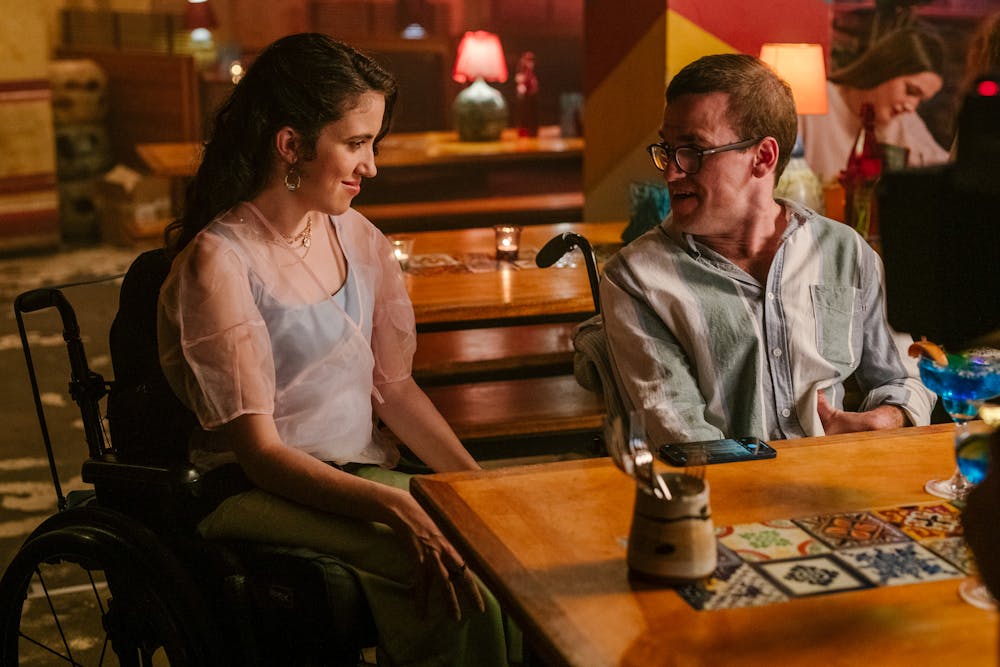
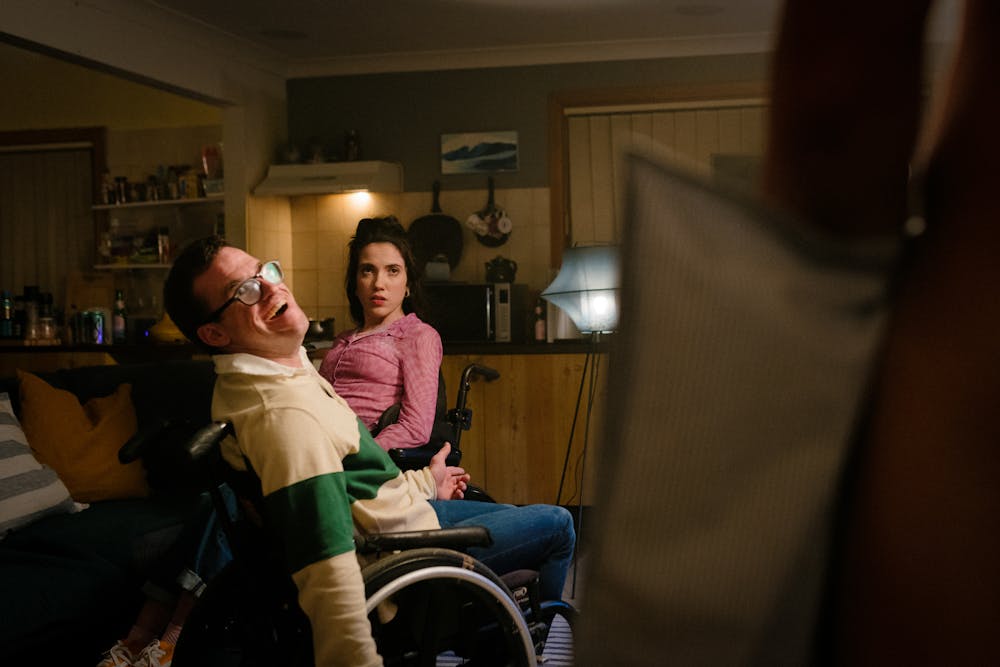
Starring Angus Thompson (as Frank) and Hannah Diviney (as Sarah), actors with cerebral palsy, the show’s most distinctive appeal is how it explores the fear of rejection which accompanies all attempts at intimacy: successful or otherwise.

Globally, the screen industry has struggled to employ actors with a disability. Films such as Breathe (2017), Me Before You (2016), Margarita with a Straw (2014), The Diving Bell and the Butterfly (2007) and many others all employ actors without a disability in disabled roles.

Latecomers, however, stars actors with a disability playing characters with a disability. It is a joy to see.

Actors with a disability need to be included in screen media more often. Latecomers is particularly important because of the way it considers sex, pleasure and disability.

Disability, sexuality and sex in Australian cinema

Perhaps the one of the most significant early Australian films about living with a disability is Annie’s Coming Out (1984), an adaption of a book written by Rosemary Crossley and Anne McDonald based on a true story exploring the life of children with a disability who are institutionalised by their parents.

Annie’s Coming Out was significant because of the performance given by Tina Arhondis, an actor with cerebral palsy who was cast to play the role of Annie.

The film follows Annie’s institutionalisation and misdiagnosis as intellectually and physically disabled, before the realisation she has no intellectual disability.

Her physical therapist fights to have her released and succeeds.

The history of institutionalising people with a disability in Australia begins with colonisation. European settlers brought their asylums with them. Intellectually disabled people together with physically disabled people were also included in these group homes. By 1841, one eighth of the population in South Australia relied on public relief. The Adelaide Destitute Asylum was full beyond capacity.

Similar reliance on asylums characterised life for people with any kind of disability in Perth (Freemantle Asylum), Melbourne (the Ballarat Asylum and later the Kew Idiot’s Ward), Sydney (Parramatta, Callan Park, Gladesville Asylums). Intellectual disability was slowly extracted from psychiatric illness in the late 19th century.

By 1887 three million Australians were registered as “insane”, but institutions still housed people with “incurable” disabilities and women who had post natal depression. For example, in 1898 children with intellectual disability began being moved out of the Adelaide lunatic asylum.

It was not until the 1970s that institutional living began to be critiqued. De-institutionalisation took place unevenly over the 1980s and 1990s. In 1981, 195,243 people lived in health and welfare institutions in Australia. By 1991, this number had dropped to 168,940 and it continued to fall.


Read more:
By naming ‘Pennhurst’, Stranger Things uses disability trauma for entertainment. Dark tourism and asylum tours do too


The film Dance Me to My Song (1998) also looked at women with disabilities in institutional living facilities. Written by the late Heather Rose, an actor and screen writer with cerebral palsy, the film explores Julia’s sexuality and her complicated relationship with her abusive carer.

The rates of sexual abuse of women with disabilities in institutional living facilities in Australia were alarming. Primarily instigated by male carers working in institutions, the forced sterilisation of women with disabilities in institutions became a way of “managing” – hiding – this abuse.

If women could not become pregnant there was no material evidence the abuse was taking place. Women were not only stripped of the right to choose to have sex, they have their reproductive rights taken away in an effort to cover up systemic sexual abuse.

Even today, one in four Australian women with a disability have experienced sexual violence after the age of 15, compared with 15% without disability.

This is the context in which Latecomers’ presents its exploration of disability and sexuality.

Just as Dance Me to My Song spoke to themes of power, sex and sexual control, Latecomers looks at the role of sex and sexuality in the lives of disabled people. But here, we get to join in with friendships, humour, the fear of rejection and the excitement of sex. We also get to laugh at the failure of sex at times.

Hannah Diviney and Angus Thompson in Latecomers.
Renata Dominik/ SBS


Read more:
‘What matters is hope, freedom and saying who you are.’ What LGBTQ+ people with intellectual disabilities want everyone to know


Witty approaches to disability and sex

Latecomers begins with a date. Angus Thompson’s Frank doesn’t care about a nice meal, or interesting conversation, Frank just wants to get drunk and get laid.

In trying to achieve these goals, Frank is keen to pursue the strategy made popular by generations of Australian men – tell Hannah Diviney’s Sarah she is “unfuckable”.

This statement has a complexity specific to Sarah and Frank’s disabilities that makes it more powerful than it might otherwise be. However, women who are both disabled and not disabled will relate.

These relationships are complicated by power relationships surrounding disability and these tensions play out as the show continues.


Renata Dominik/ SBS

Sarah ditches Frank for a nice guy, (Patrick Jhanur) who likes her for her wit and intelligence and who doesn’t want to tell his mates all about sex. In a media landscape characterised by sexual fantasies, I am personally relieved to see a sex scene that is not played out between two able-bodied white people.

It is a welcome change to see disabled people enjoying sex on screen. May we see much more of it.

Latecomers is a tonic for the pain and loneliness that is part of all our embodied lives – and an important step forward in how the stories of people with a disability are told on screen. Released in the same year that neurodivergent actor Chloé Hayden from Heartbreak High won the AACTA best actress audience choice awards, Latecomers signals a shift in consumer taste.

The Conversation

Anna Hickey-Moody receives funding from funding from the Australian Research Council. She grew up in Australia with a father who was severely disabled and has been researching questions of disability, gender and representation since her late teens.

ref. Sex, comedy and vulnerability: Latecomers on SBS is an important shift in disability representation – https://theconversation.com/sex-comedy-and-vulnerability-latecomers-on-sbs-is-an-important-shift-in-disability-representation-195931

Is it ever okay for journalists to lie to get a story?

Source: The Conversation (Au and NZ) – By Andrea Carson, Associate Professor, Department of Politics, Media and Philosophy, La Trobe University

Shutterstock

In a time of falling trust in the news media, it is vital journalists do not engage in news-gathering methods that further harm their credibility. Thanks to the rise of social media, misinformation and disinformation are rampant. Trust in news matters, so we can tell fact from fiction. Without it, democracy suffers.

In our new book, Undercover Reporting, Deception and Betrayal in Journalism, we ask whether deception is ever an acceptable method for journalists to use. In other words, is it ever okay to lie to a target to get a story?

We find it can be ethically justifiable under very specific conditions. We offer a six-point checklist for journalists (and the audience) to test if deception and betrayal are warranted.

Deception is one of the most common ethical problems in journalism. It ranges in seriousness from misrepresentation to the use of undercover reporting.

In fact, it is so common that some argue it is inherent in what journalists do. The late American writer and journalist Janet Malcolm, for instance, in her renowned book The Journalist and the Murderer, said in her opening paragraph:

Every journalist who is not too stupid or too full of himself [sic] to notice what is going on knows that what he does is morally indefensible. He is a kind of confidence man, preying on people’s vanity, ignorance, or loneliness, gaining their trust, and betraying them without remorse.

While we argue Malcolm pushes her argument too far, we present a range of case studies that show not only the range of deceptive practices in contemporary journalism, but also their seriousness.

Three of the case studies are drawn from high-profile undercover operations or acts of deception.

One concerns the use by Cambridge Analytica of data gathered by Facebook on 87 million of its users worldwide. These data were used to influence elections in several countries, including the United States in 2016.

Another involved the infiltration by Al Jazeera of the National Rifle Association in the US. It then repeated this with the One Nation party in Australia in 2019.

The third case is the deception and betrayal inflicted on thousands of innocent people in Britain by Rupert Murdoch’s News of the World newspaper in hacking their mobile phones. This is perhaps the most egregious example of journalists failing their ethical duty in Britain in the past century.

From our examination of these cases, including interviews with key journalists, and building on the work of two distinguished American journalists and scholars, Bill Kovach and Tom Rosenstiel, we developed our six-point framework for assessing the ethical justification for the use of undercover techniques, including those of masquerade and entrapment.


Read more:
Hacking trial verdict: Coulson guilty and Brooks cleared, but end of an era for the red tops


Using this test, we concluded that the operation against Cambridge Analytica was ethically justified. It told the public important truths that we would not otherwise have known. The most notable of these was that Cambridge Analytica was in the business of interfering in sovereign elections – a direct threat to democratic wellbeing.

News of the World hacking the phone of murdered schoolgirl Milly Dowler is an example of when deception in journalism is completely unjustifiable.
Facundo Arrizabalaga/EPA/AAP

But we also find that the operations against the NRA and One Nation were not justifiable; nor in any way could the phone hacking of celebrities and ordinary citizens such as the murdered schoolgirl Milly Dowler ever be justified to produce stories for News of the World.

Our framework consists of these six questions:

  1. Is the information sufficiently vital to the public interest to justify deception?

  2. Were other methods considered and was deception the only way to get the story?

  3. Was the use of deception revealed to the audience and the reasons explained?

  4. Were there reasonable grounds for suspecting the target of the deception was engaged in activity contrary to the public interest?

  5. Was the operation carried out with a risk strategy so it would not imperil a formal investigation by competent authorities?

  6. Did the test of what is “sufficiently vital” to the public interest include an objective assessment of harm or wrongdoing?

We consider a further case study to look at other aspects of deception and betrayal.

It concerns the deceptive conduct that goes under the general name of “hybrid journalism”. This is where advertising is presented in a way that is difficult to distinguish from news.

It goes under a variety of names such as “branded content”, “sponsored content” or “native advertising”. More recently, another label has come into fashion: “From our partners”. Reputable platforms use typography that distinguishes this from news content, but less reputable ones make it difficult to discern one from the other.

Journalists also engage in a range of more everyday deceptive practices. These include failing to declare oneself as a journalist; attempting to ingratiate oneself with a person by feigning a romantic interest in them; agreeing to publish information known to be untrue in order to serve the interests of a valued source; and ambushing a subject by having a microphone open or a camera rolling when the subject has no reason to think they are being recorded.

As these case studies show, deception and betrayal in journalism take many forms, and the ethical decisions surrounding them are far from straightforward. However, they are not inherent to the practice of journalism. Whether they are justifiable must be closely scrutinised, because the public’s trust in the media is at stake.

The Conversation

Andrea Carson receives funding from the Australian Research Council.

Denis Muller does not work for, consult, own shares in or receive funding from any company or organisation that would benefit from this article, and has disclosed no relevant affiliations beyond their academic appointment.

ref. Is it ever okay for journalists to lie to get a story? – https://theconversation.com/is-it-ever-okay-for-journalists-to-lie-to-get-a-story-196358

NZ’s proposed pumped storage hydropower project will cost billions – here’s how to make it worthwhile

Source: The Conversation (Au and NZ) – By Alan Brent, Professor and Chair in Sustainable Energy Systems, Te Herenga Waka — Victoria University of Wellington

Getty Images

Greater electrification of the economy is an essential part of Aotearoa New Zealand’s climate policy, as set out in the emissions reduction plan.

But the national electricity system depends heavily on the fluctuating storage capacity of hydropower lakes, which makes the country prone to energy shortages during dry years.

The NZ Battery Project aims to address this. One of the options being investigated is the Onslow pumped storage hydropower (PSH) scheme.

Landscape image of Onlsow lake
The Onslow project will comprise a 60km² reservoir in the existing Onslow and possibly Manorburn basins.
Author provided, CC BY-SA

A feasibility study is due to be completed and cabinet is expected to decide early in the new year whether to continue to the next phase of establishing a detailed business case.

Pumped storage hydropower is an established technology. It accounts for more than 94% of the globally installed energy storage capacity.

Worldwide, pumped storage hydropower has been ramping up. In 2021, 4.7GW capacity was added, up from 1.5GW in 2020. If it continues, the Onlow project will be one of the largest PSH schemes in the world, adding up to 1.5GW of generation capacity.

The proposed scale of the Onslow project requires a considerable investment – at least NZ$4 billion. To justify this, we argue the scheme should be seen as a public-good and multi-purpose asset. It would not only support electricity generation but also address water and other sustainability priorities in the face of climate change.


Read more:
Batteries of gravity and water: we found 1,500 new pumped hydro sites next to existing reservoirs


Making the investment worthwhile

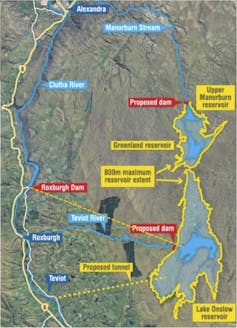
Map of the reservoirs of the Onslow pumped hydro project
The Onslow project is expected to generate and store at least 5 terawatt/hour each year.
Author provided, CC BY-SA

Pumped storage hydropower is well known to be a cost-competitive option for energy storage. While the capital expenditure is high, the cost of the energy is one of the lowest, at 20-40 cents per kWh. Return on investment in pumped storage hydropower is considerably better than for conventional batteries.

The Onslow project is also likely to qualify for a climate bond because its carbon emissions may reasonably be under the limit of 50gCO₂/kWh. To achieve this, it must use renewable energy resources for the pumping and its construction footprint has to be reduced.

Other environmental and social impacts (and opportunities) also need to be addressed. This includes the planting of an indigenous forest around the reservoir to prevent sediment erosion.

A multi-purpose asset

The Onslow infrastructure provides a way of managing dry years by storing water during rainy periods.

It can also participate as a conventional electricity generator. This will have implications for the wholesale electricity market because variability (from renewable generators) is currently mitigated by existing hydropower and fossil-fuel generation.

From a technical perspective, the challenge for Transpower is to maintain a consistent frequency and voltage in the power network. The Onslow infrastructure will assist with frequency regulation for the entire electricity network.

It offers a fast-acting and large-scale dynamic load, as is the case for other pumped storage hydropower projects such as the UK’s Coire Glas project or France’s Grand Maison. Both are also located remotely in the network similar to Onslow.

Globally, PSH schemes are viewed as multi-purpose assets. The Wivenhoe Dam (in Queensland, Australia) is a lower reservoir for a pumped storage hydropower scheme and provides drinking water and flood mitigation for Brisbane.

Another example is the hydropower infrastructure of the Durance Valley in France. It was designed, built and regulated to guarantee the operator provides drinkable water (740 million cubic metres per year) for 5 million inhabitants. It also supplies water to more than 170,000 hectares of cultivated lands (1.5 billion cubic metres per year in a dry season), generates reliable low-carbon electricity (for over 2 million people per year) and protects the valley from extreme flooding – and it’s become a visitor attraction, drawing 2.5 million tourists annually.


Read more:
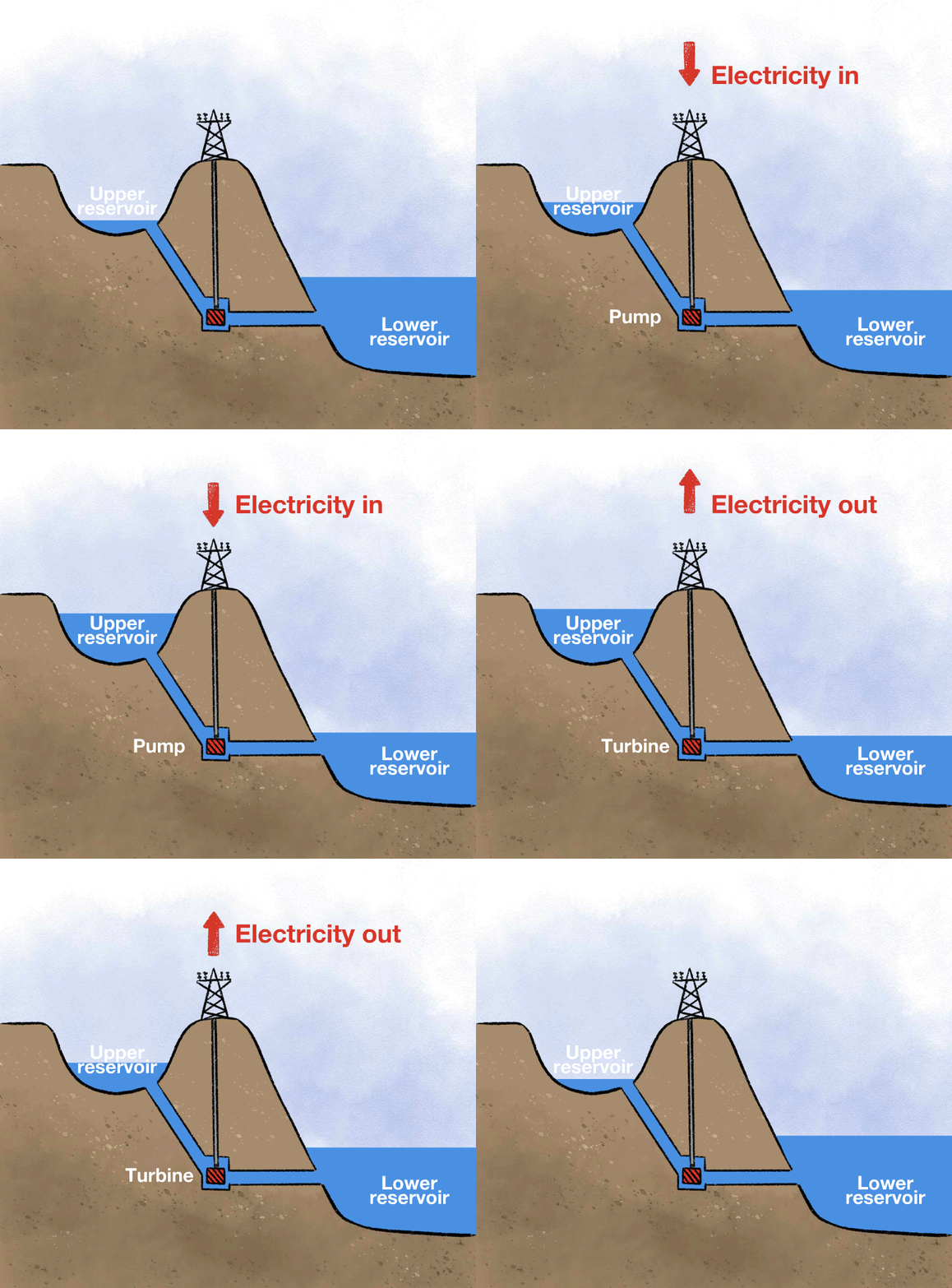
Batteries get hyped, but pumped hydro provides the vast majority of long-term energy storage essential for renewable power – here’s how it works


Onslow would offer similar water-management services. It could be delivering fresh water to Dunedin and other towns in the area, potentially free water to surrounding farmers and flood protection for towns along the Clutha River.

Another benefit is the regeneration of the Waiau and Waitaki rivers by freeing capacity (and water) from the Manapouri hydro system and the lakes at Tekapo and Pukaki.

Hydropower schemes are also viewed as territorial objects or public management tools. The schemes in the Drac Valley in the French Alps are a good example. While some of the agricultural land in the alpine valley was lost, the real estate values have increased substantially. Recreational activities now provide the main income for the area, estimated at €3 million (NZ$5 million) over five years.

The schemes have an enormous impact on local economies. The operators pay local taxes and provide employment, including local subcontracts, worth an estimated NZ$88 million.


Read more:
How to ensure the world’s largest pumped-hydro dam isn’t a disaster for Queensland’s environment


The Onslow project would obviously bring employment opportunities (more than 1,000 direct and more indirect) during the construction and throughout its operation. But it could also provide financial benefits to the local community in the form of a local tax paid by the operator to maintain roads and infrastructure networks (telecom, water, energy) as well as other public services.

To ensure Onslow manifests as a sustainable, public-good asset requires careful upfront co-ordination to avoid complications. If the project goes ahead and is managed well, Onslow may become a long-lasting asset that offers the opportunity to diversify a low-carbon, self-resilient economy in Aotearoa New Zealand.

The Conversation

Gregory Guyot is affiliated with IAHR (International Association for Hydro-environment, Engineering and Research).

Alan Brent does not work for, consult, own shares in or receive funding from any company or organisation that would benefit from this article, and has disclosed no relevant affiliations beyond their academic appointment.

ref. NZ’s proposed pumped storage hydropower project will cost billions – here’s how to make it worthwhile – https://theconversation.com/nzs-proposed-pumped-storage-hydropower-project-will-cost-billions-heres-how-to-make-it-worthwhile-195430

Women are 50–75% more likely to have adverse drug reactions. A new mouse study finally helps explain why

Source: The Conversation (Au and NZ) – By Laura A. B. Wilson, ARC Future Fellow, Australian National University

danilo.alvesd/Unsplash

Compared to men, we know much less about how women experience disease.

Biomedical research helps us understand the timeline of diseases and how we can treat them. In the past, most of it has been conducted on male cells and experimental animals, such as mice. It has been assumed the results from such “pre-clinical” research on males apply to females too.

Yet men and women experience disease differently. That includes how diseases develop, the length and severity of symptoms, and the effectiveness of treatment options.

Smaller bodies?

Although these differences are now widely acknowledged, they are not fully understood. And women are often worse off as a result.

This is the case for prescription drugs. Women experience around 50-75% more adverse reactions than men. This results in many drugs being pulled from the market due to concerns over health risks for women.

Drug reactions in women have been argued to be due to sex differences in body weight rather than differences in how the drug works in the body.

Therefore, it’s thought that if drug doses are adjusted according to body weight, women will often receive lower doses than they do now – which may alleviate adverse reactions.

But that may not be the case.

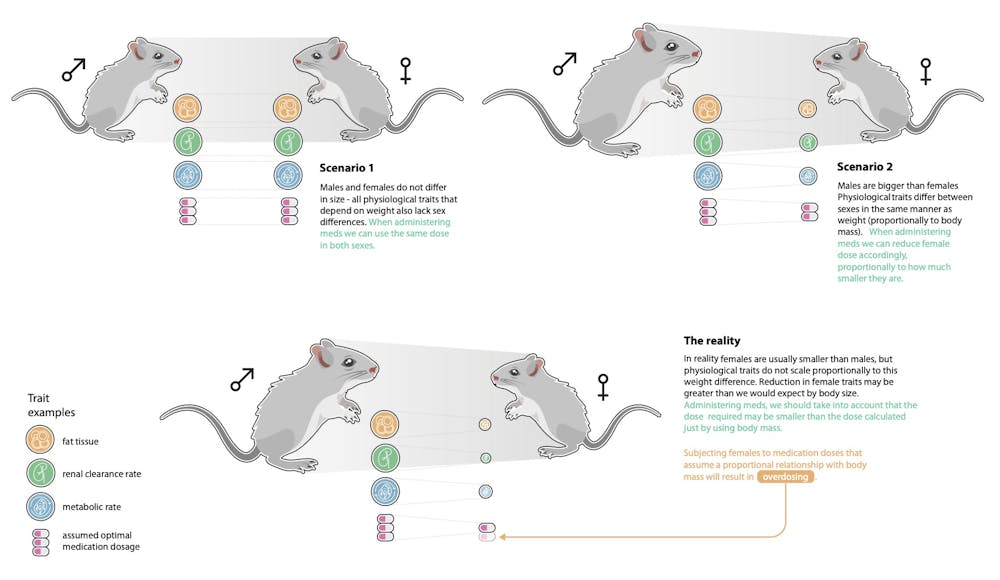
In new research published today in Nature Communications, we show this basic assumption in biomedicine – that females are “smaller versions” of males – is not supported for most pre-clinical traits (things like glucose levels, for example).

So, drug reactions in women are unlikely to be alleviated simply by adjusting the dose to one’s body weight.

Adverse drug reactions are common and costly for healthcare

Basing women’s healthcare decisions based on research conducted on men – and vice versa – has potentially profound consequences. In the case of adverse drug reactions, the impacts are significant from both a clinical and economic perspective.

A recent study estimated that 250,000 hospital admissions in Australia each year are medication related, costing the healthcare system around $1.4 billion annually.


Read more:
As pharmaceutical use continues to rise, side effects are becoming a costly health issue


Drug reactions have also been shown to lengthen hospital stays. In a large UK study, patients admitted to hospital with an adverse drug reaction stayed for a median of eight days.

Women often cite adverse reactions as the reason for discontinuing medications. If weight-adjusted dosing of drugs could reduce adverse drug reactions, we would see women receive greater potential benefit from the healthcare system.

The weight of evidence

But what evidence do we have that weight adjustment will work? The US Food and Drug Administration (FDA) has already recommended dosage changes for women for some drugs (such as the sleep drug zolpidem). Additionally, weight-adjusted dosing for some antifungal drugs and antihypertensive drugs appears to work.

On the other hand, drug reactions are strongly linked to what the drug does in the body in women , and less so in men. There are also many documented differences in physiology between men and women that relate to how drugs are absorbed and cleared by the body, and not to body weight.

To get to the bottom of this, a broad scale approach is needed. We borrowed a method routinely used in evolutionary biology, known as “allometry”, where a relationship between a trait of interest and body size is examined on a log scale.

We applied allometry analyses to 363 pre-clinical traits in males and females, comprising over two million data points from the International Mouse Phenotyping Consortium.

We focused on one of the most common disease model animals: mice. We asked whether sex differences in pre-clinical traits – such as fat mass, glucose, LDL cholesterol – could be explained by body weight alone.


Read more:
Got high cholesterol? Here are five foods to eat and avoid


Our analyses recovered sex differences in many traits that cannot be explained by body weight differences. Some examples are physiology traits, such as iron levels and body temperature, morphology traits such as lean mass and fat mass, and heart traits such as heart rate variability.

We found the relationship between a trait and body weight varied considerably across all the traits we examined, meaning that the differences between males and females could not be generalized: females weren’t simply smaller versions of males.

Ignoring these differences in some cases, such as measures of blood cells, bone and organs, could result in missing a lot of the population variation for a particular trait: up to 32% for females and 46% for males.

This complexity means we need to consider sex differences for drug dosing on a case-by-case basis.

A chart illustrating the comparison between male and female mouse body size and the resulting effects
Results of allometry analyses demonstrate that just adjusting the dose for weight is not sufficient to alleviate adverse effects.
Szymon Drobniak

One size does not fit all

In an era where personalised medicine interventions are within reach, and patient-specific solutions are on the horizon, we now know that sex-based data are much needed to advance care in an equitable and effective manner.

Our study uncovers the ways in which males and females can vary across many pre-clinical traits, indicating that biomedical research needs to focus more closely on measuring how and in what ways the sexes differ.

Particularly, when a relationship between sex and drug dose is uncovered, our data suggest dose-response is likely to be different for males and females.

The methods in our study could help clarify the nature of these differences and provide a path forward to reducing drug reactions.


Read more:
The evolutionary history of men and women should not prevent us from seeking gender equality


The Conversation

Laura A. B. Wilson receives funding from the Australian Research Council.

Shinichi Nakagawa receives funding from the Australian Research Council.

ref. Women are 50–75% more likely to have adverse drug reactions. A new mouse study finally helps explain why – https://theconversation.com/women-are-50-75-more-likely-to-have-adverse-drug-reactions-a-new-mouse-study-finally-helps-explain-why-195358

Will AI decide if you get your next job? Without legal regulation, you may never even know

Source: The Conversation (Au and NZ) – By Natalie Sheard, Lawyer and PhD Candidate, La Trobe University

Shutterstock

The use of artificial intelligence (AI) and other automated decision-making tools in recruitment is on the rise among Australian organisations. However, research shows these tools may be unreliable and discriminatory, and in some cases rely on discredited science.

At present, Australia has no specific laws to regulate how these tools operate or how organisations may use them.

The closest thing we have is new guidance for employers in the public sector, issued by the Merit Protection Commissioner after overturning several automated promotion decisions.

A first step

The commissioner reviews promotion decisions in the Australian public sector to make sure they are lawful, fair and reasonable. In the 2021-22 financial year, Commissioner Linda Waugh overturned 11 promotion decisions made by government agency Services Australia in a single recruitment round.

These decisions were made using a new automated process that required applicants to pass through a sequence of AI assessments, including psychometric testing, questionnaires and self-recorded video responses. The commissioner found this process, which involved no human decision-making or review, led to meritorious applicants missing out on promotions.


Read more:
Algorithms can decide your marks, your work prospects and your financial security. How do you know they’re fair?


The commissioner has now issued guidance material for Australian government departments on how to choose and use AI recruitment tools.

This is the first official guidance given to employers in Australia. It warns that not all AI recruitment tools on the market here have been thoroughly tested, nor are they guaranteed to be completely unbiased.

AI recruitment tools risky and unregulated

AI tools are used to automate or assist recruiters with sourcing, screening and onboarding job applicants. By one estimate, more than 250 commercial AI recruitment tools are available in Australia, including CV screening and video assessment.

A recent survey by researchers at Monash University and the Diversity Council of Australia found one in three Australian organisations have used AI in recruitment recently.

The use of AI recruitment tools is a “high risk” activity. By affecting decisions related to employment, these tools may impact the human rights of job seekers and risk locking disadvantaged groups out of employment opportunities.

Australia has no specific legislation regulating the use of these tools. Australia’s Department of Industry has published AI Ethics Principles, but these are not legally binding. Existing laws, such as the Privacy Act and anti-discrimination legislation, are in urgent need of reform.

Unreliable and discriminatory?

AI recruitment tools involve new and developing technologies. They may be unreliable and there are well-publicised examples of discrimination against historically disadvantaged groups.

AI recruitment tools may discriminate against these groups when their members are missing from the datasets on which AI is trained, or when discriminatory structures, practices or attitudes are transmitted to these tools in their development or deployment.

There is currently no standard test that identifies when an AI recruitment tool is discriminatory. Further, as these tools are often made outside Australia, they are not attuned to Australian law or demographics. For example, it is very likely training datasets do not include Australia’s First Nations peoples.

Lack of safeguards

AI recruitment tools used by and on behalf of employers in Australia lack adequate safeguards.

Human rights risk and impact assessments are not required prior to deployment. Monitoring and evaluation once they are in use may not occur. Job seekers lack meaningful opportunities to provide input on their use.

While the vendors of these tools may conduct internal testing and auditing, the results are often not publicly available. Independent external auditing is rare.

Power imbalance

Job seekers are at a considerable disadvantage when employers use these tools. They may be invisible and inscrutable, and they are changing hiring practices in ways that are not well understood.

Job seekers have no legal right to be told when AI is used to assess them in the hiring process. Nor are they required to be given an explanation of how an AI recruitment tool will assess them.


Read more:
Artificial intelligence can deepen social inequality. Here are 5 ways to help prevent this


My research has found this is particularly problematic for job seekers with disabilities. For example, job seekers with low vision or limited manual dexterity may not know they will be assessed on the speed of their responses until it is too late.

Job seekers in Australia also lack the protection available to their counterparts in the European Union, who have the right not to be subjected to a fully automated recruitment decision.

Facial analysis

The use of video assessment tools, like those used by Services Australia, is particularly concerning. Many of these AI tools rely on facial analysis, which uses facial features and movements to infer behavioural, emotional and character traits.

This type of analysis has been scientifically discredited. One prominent vendor, HireVue, was forced to cease the use of facial analysis in its AI tool as a result of a formal complaint in the United States.

What’s next?

The Services Australia example highlights the urgent need for a regulatory response. The Australian government is currently consulting on the regulation of AI and automated decision-making.

We can hope that new regulations will address the many issues with the use of AI tools in recruitment. Until legal protections are in place, it might be best to hold off on the use of these tools to screen job seekers.

The Conversation

Natalie Sheard does not work for, consult, own shares in or receive funding from any company or organization that would benefit from this article, and has disclosed no relevant affiliations beyond their academic appointment.

ref. Will AI decide if you get your next job? Without legal regulation, you may never even know – https://theconversation.com/will-ai-decide-if-you-get-your-next-job-without-legal-regulation-you-may-never-even-know-196282

‘I want people to be afraid of the women I dress’: the celebrated – and often controversial – designs of Alexander McQueen

Source: The Conversation (Au and NZ) – By Peter McNeil, Distinguished Professor of Design History, UTS, University of Technology Sydney

Installation view of T he Widows of Culloden collection, autumn winter 2006 – 07 in Alexander McQueen: Mind, Mythos, Muse on display at NGV International from 11 December 2022 – 16 April 2023. Headpieces by Michael Schmidt Photo: Sean Fennessy

Alexander McQueen: Mind, Mythos, Muse was first conceived at the Los Angeles County Museum of Art.

That museum, like many around the world, is being completely redeveloped to embrace not just spectacular new buildings, but new attitudes towards museum collections.

Gone are the boundaries between materials, forms, cultures, nationalities and hierarchies of the arts. No more gallery of, say, “18th century North American silver” or “Medieval and Renaissance art in the European North”. Instead, arts from varied times, places and hierarchies all sit together.

An exhibition of the work of Alexander McQueen (1968-2010) was an interesting response to this challenge of a new museum, which also highlighted the relatively late arrival of fashion as a category worthy of study in the global museum.

It paired garments by McQueen – many specially donated by one woman collector – with the rich Los Angeles County Museum of Art collections in order to suggest the ways in which McQueen had generated his ideas.

Now the exhibition has come to the National Gallery of Victoria, with most of the McQueens on display here donated by Melbourne fashion philanthropist Krystyna Campbell Pretty.


Read more:
The gothic vision at the heart of Alexander McQueen’s savage beauty


Flourishing postmodernism

This new show is extensive. We have 120 McQueen looks and 80 other works of art. Paintings and decorative arts star in this show, notably the spectacular Jean-Baptiste Greuze painting of a young French actress in Turkish-style dress, on loan from Los Angeles.

Jean-Baptiste Greuze (France, Tournus, 1725-1805) France, circa 1790 Paintings Oil on canvas 46 x 35 ¾ in. (116.8 x 90.8 cm) Frame: 58 ½ × 45 in. (148.59 × 114.3 cm) Gift of Hearst Magazines (47.29.6)
© Museum Associates/LACMA

The visual pairings, which range from 18th century English porcelain figures to lavish Russian gold-woven cloths, drive much of the tempo.

Important loans from the Los Angeles County Museum of Art are joined by treasures from the NGV, including a spectacular Morris embroidered wall cloth and the Netherlandish flower paintings that contain within them the idea of memento mori – remember that you die.

Morris & Co., London (retailer) Henry Holiday (designer) Catherine Holiday (embroiderer) Hanging 1887 linen, silk (thread) 190.0 × 98.5 cm.
National Gallery of Victoria, Melbourne Purchased, 1976

Lee Alexander McQueen was born in 1968, so he was young in the 1980s, absorbing all the flashes of art, design and culture in which postmodernism flourished.

Working-class, McQueen did not first go to art school as his middle-class counterparts might. Instead, he apprenticed in Savile Row, the epicentre of bespoke British tailoring, mastering the cut of jackets and trousers.

He became so technically proficient that when he applied to tutor technique at art school he was invited to enrol in a Masters.

And so the celebrated – and often controversial – McQueen high fashion design was born.

Installation view of Look 30, coat from the Dante collection, autumn-winter 1996-97 on display in Alexander McQueen: Mind, Mythos, Muse at NGV International from 11 December 2022 – 16 April 2023. Headpiece: Michael Schmidt.
Photo: Tom Ross

An immersive experience

As well as new ways of dressing for women, McQueen gave us new ways of representing fashion: high concept runways, fashion films, live screenings and putting Paralympian Aimee Mullins on the runway, generating new modes of beauty.

At the NGV we have a fully immersive experience and bold scenography.

Installation view of Alexander McQueen: Mind, Mythos, Muse on display at NGV International from 11 December 2022 – 16 April 2023. Headpieces and shoes by Michael Schmidt.
Photo: Sean Fennessy

“Mythos” examines three collections through the filter of mythology and theology. McQueen loved to make the present strange by incorporating elements from religious practice, even prejudice, from the past.

Everything from angels to demons, from witch burning to Catholic rites might be incorporated for design, fabrication or the runway.

These go past simply being artistic source material to generate new ways of looking and appearing for women. “I want people to be afraid of the women I dress,” he said.

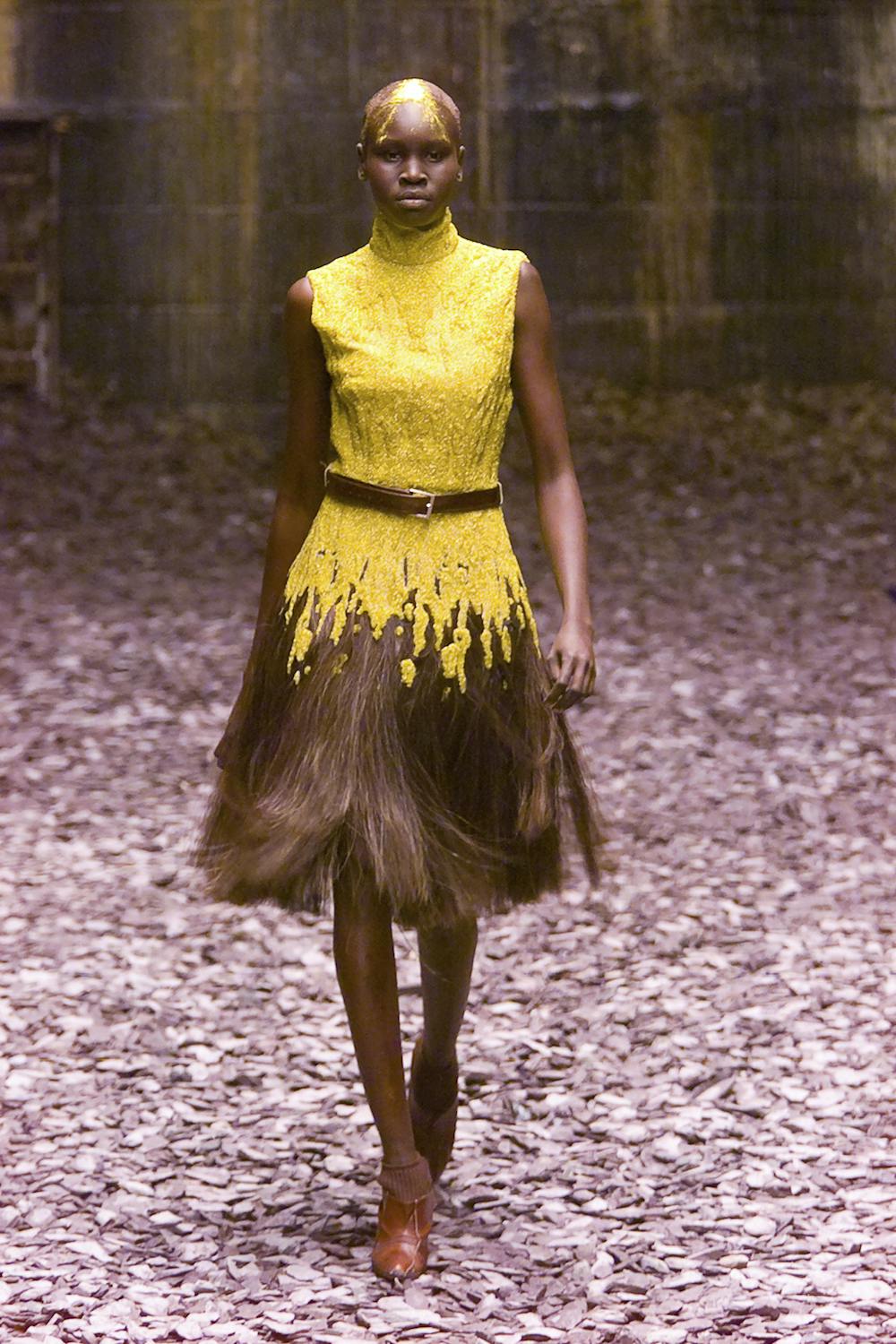
Alexander McQueen Look 37, Eshu collection, autumn–winter 2000–01 © Alexander McQueen.
Photo: Giovanni Giannoni, Vogue, © Condé Nast Model: Alek Wek

This exhibition celebrates McQueen’s technical bravura across both tailoring and soft dressmaking, two categories of making clothes that were often conducted separate from the other in the west.

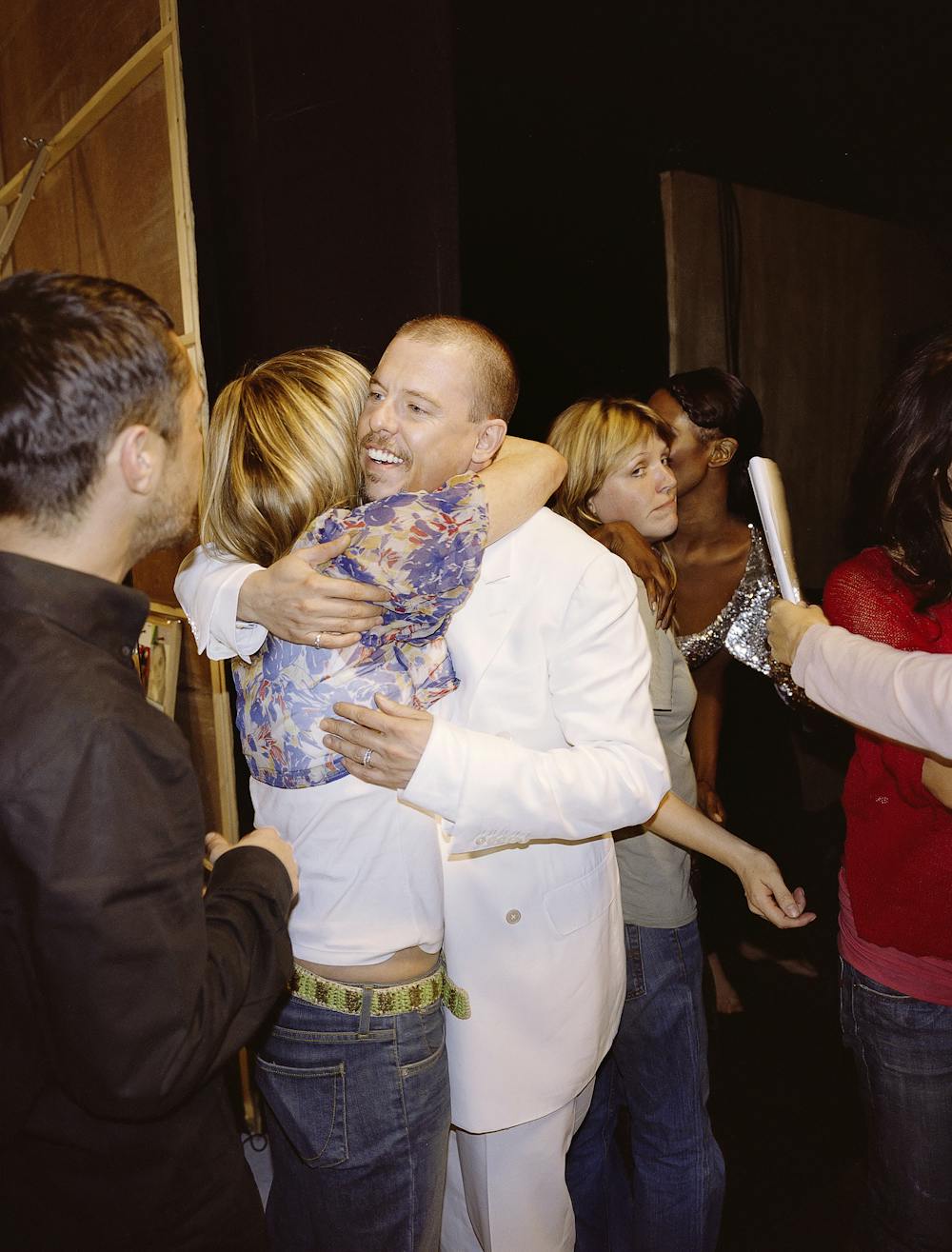
Intimate backstage photographs are shown, indicating how the clothes were really worn by models and friends. Here the “muse” is no longer a house model or elegant confidant, but rather a whole set of cultural reflections.

The third and final section is called “Fashion Narratives”. Here we see a visual imagination ranging across Siberia, Tibet and other exotic locales.

Installation view of Scanners autumn-winter 2002-2003 in Alexander McQueen: Mind, Mythos, Muse on display at NGV International from 11 December 2022 – 16 April 2023. Headpiece by Michael Schmidt.
Photo: Sean Fennessy

McQueen might, in this section, be accused of cultural appropriation, but this would be unfair.

Rather than appropriation, his fashion designs were about fantasy, and fantasy put to good ends, making things from gender to place to sexuality off centre or strange, so we are aware of the fragile accord we have between our identities and our appearances.

As Catherine Brickhill, the first designer employed by McQueen to work on his label notes in the catalogue, McQueen:

delved deep into the differences between our culture and other cultures. It wasn’t cultural appropriation, but an openness to and curiosity to be explored and celebrated.

Other narratives in this section include the most controversial ones that swirled around McQueen, notably Highland Rape collection, in which McQueen suggested the appearance of Scottish widows during the Highland Wars in ripped and tattered clothes.

Woman in a ripped blue dress
Alexander McQueen Slashed dress, Highland Rape collection, autumn-winter 1995-96 © Alexander McQueen.
Photo: Vogue, © Condé Nast

It would be as silly to accuse McQueen of misogyny here as it would to claim Elsa Schiaparelli hated women for dressing them in ripped dresses suggestive of assault or accident in the 1930s.

Instead, McQueen gives us clothes not just as theatre but as “choreographed deception”, in which male and female elements come together to cancel the other out.

Beyond good

In an era of increasing specialisation, vocational training and narrow fields of research and investigation, this exhibit shows us how a great designer goes beyond good.

Alexander McQueen backstage at Pantheon as Lecum collection, autumn–winter 2004–05 show.
Courtesy the photographer Photo © Robert Fairer

It shows us how his vision extended well beyond clothes to how they were imagined, and how women might imagine themselves, at all times.

When you wear trousers with a very low rear; slip on a digitally printed fabric or has allusions to nature – crystals, leaves, water; wear an asymmetrical outfit with slightly extended shoulders; don impossible shoes to your New Year’s party; or put on an eyeshadow that makes you look like a hummingbird: McQueen was there first.

Alexander McQueen: Mind, Mythos, Muse is at NGV International, Melbourne, until April 16 2023.


Read more:
Clothes women wanted to wear: a new exhibition explores how Carla Zampatti saw her designs as a tracker of feminism


The Conversation

Peter McNeil will lead a tour for Academy Travel to view the McQueen exhibition in February 2023.

ref. ‘I want people to be afraid of the women I dress’: the celebrated – and often controversial – designs of Alexander McQueen – https://theconversation.com/i-want-people-to-be-afraid-of-the-women-i-dress-the-celebrated-and-often-controversial-designs-of-alexander-mcqueen-194731

Thousands more Australians died in 2022 than expected. COVID was behind the majority of them

Source: The Conversation (Au and NZ) – By Adrian Esterman, Professor of Biostatistics and Epidemiology, University of South Australia

Shutterstock/David L Young

Last month, the Australian Bureau of Statistics (ABS) released a report of mortality statistics. It showed that from January to July 2022, there were 17% more deaths (16,375) than the average expected for these months.

This historical average is based on an average of the deaths for 2017, 2018, 2019 and 2021. They did not include 2020 in the baseline for 2022 data because it included periods where numbers of deaths were significantly lower than expected. The difference between the expected number of deaths based on historical data, and the actual number, is called “excess deaths”.

However, as the ABS points out in its report, using previous years as the predictor for the expected number of deaths does not take into account changes in population age structure over time, or potential improvements in mortality rates.

As we will see, the excess deaths this year were likely lower than the ABS estimate – but still overwhelmingly related to COVID and its effects on health.


Read more:
There are still good reasons to avoid catching COVID again – for one, your risk of long COVID goes up each time


A different approach

Last week, the Australian Actuaries Institute released its report looking at excess deaths. Actuaries are statisticians who specialise in assessing risk, and most often work for insurance companies, superannuation funds, banks or government departments.

Unlike the ABS, the actuaries’ report adjusts the expected deaths for differences in age distributions over time using a method called “direct age-standardisation”.

The report also uses a counterfactual approach which basically asks, what would the number of deaths have been in the absence of the pandemic? Their comparison between recorded and expected deaths is likely to be more accurate than the ABS comparison.

What the actuaries saw

Both the Actuaries Institute report and the ABS separate COVID deaths into two categories:

  • deaths from COVID, where COVID is listed as the primary or underlying cause of death

  • deaths with COVID, where the underlying cause of death has been determined as something other than COVID, but the virus was a contributing factor.

The Actuaries Institute report shows 13% excess mortality for the first eight months of 2022 (approximately 15,400 deaths), substantially lower than the ABS estimate for the first seven months.

Just over half of the excess mortality – 8,200 deaths, are deaths from COVID. Another 2,100 deaths are deaths with COVID. The remaining excess of 5,100 deaths makes no mention of COVID on the death certificate.

black hearse at cemetery
COVID was not listed on thousands of death certificates, but was still likely a factor in many.
Shutterstock/Rose Makin


Read more:
Even mild COVID raises the chance of heart attack and stroke. What to know about the risks ahead


So what is the likely cause of those non-COVID excess deaths?

The actuaries’ report gives the following possible explanations for excess deaths not listed as from or with COVID:

Long COVID and interactions with other serious health conditions

A previous COVID infection can cause later illness or death. We know COVID is associated with higher risk of death from heart disease, cancer and other causes.

But a doctor tasked with completing a death certificate may not identify a link between the death and a COVID infection months earlier. Therefore, it seems likely some deaths were due to late COVID effects.

Delayed deaths from other causes

Deaths from respiratory disease in 2020 and 2021 were lower than expected. This is presumably due to public health measures like mask wearing. While those measures were in place, people caught fewer respiratory diseases. Some people may have died earlier had their systems been stressed by respiratory disease during this time. So, some of the reported non-COVID excess deaths may be due to the catch-up effect of those people succumbing to underlying illnesses.

Delays in emergency care

Around Australia, our health systems are under pressure, with staff absences due to COVID, ambulance ramping, and bed blocks in our acute hospitals.

Unfortunately, there have been cases of people dying while waiting for an ambulance. It could be that people with conditions such as heart disease, cancer or diabetes may not be getting lifesaving emergency care due to these factors.


Read more:
COVID death data can be shared to make it look like vaccines don’t work, or worse – but that’s not the whole picture


Delays in routine care

Over the pandemic period we have seen delays in people seeking routine health care or attending screening tests for breast and cervical cancer.

There have also been delays in elective surgery. And people may have have been avoiding health-care settings due to fear of catching COVID. These delays in routine care may have led to deaths that would have been prevented in previous years.

person getting blood pressure checked
Many people have delayed routine health checks since the start of the pandemic.
Shutterstock

Pandemic lifestyle changes

There is evidence in Australia and the United Kingdom a higher proportion of people made less healthy lifestyle choices during lockdowns, such as drinking more alcohol and exercising less. Higher risks for childhood obesity were also noted. We could be starting to see the impact of these changes.

Undiagnosed COVID

It is almost certain some of the excess deaths are from unidentified COVID. Unfortunately in Australia, we have no firm data on the percentage of undiagnosed COVID cases, and even less on how that percentage might have changed over time.

So, the good news is the ABS excess death estimate of 17% more deaths in the first eight months of this year is likely an over-estimate, with the true rate closer to 13%. Of this 13%, some 7% are deaths from COVID, 2% are deaths with COVID, and much of the remaining 4% is likely to still be COVID-related in some way.

Last week, there were 219 COVID-related deaths reported. If the actuaries’ analysis is accurate, then the true number of COVID-related deaths last week was closer to 250 – a sobering thought as we approach the festive season.


Read more:
We were on a global panel looking at the staggering costs of COVID – 17.7m deaths and counting. Here are 11 ways to stop history repeating itself


The Conversation

Adrian Esterman receives funding from the MRFF, the NHMRC and the ARC.

ref. Thousands more Australians died in 2022 than expected. COVID was behind the majority of them – https://theconversation.com/thousands-more-australians-died-in-2022-than-expected-covid-was-behind-the-majority-of-them-196281

‘An arts engagement that’s changed their life’: the magic of arts and health

Source: The Conversation (Au and NZ) – By Tully Barnett, Senior lecturer, Flinders University

Shutterstock

In 2007, a life-changing encounter at South Australia’s Flinders Medical Centre became the catalyst and symbol for a national arts and health movement.

A young woman, Becky Corlett, was being transported through the hospital where an artist-in-residence, Rebecca Cambrell, was painting a mural. Becky had suffered a stroke and cardiac failure. She had stopped eating and was non-responsive even to family. When Becky passed the mural, however, she made a noise of interest.

Cambrell instinctively drew Becky closer and gave her a paint brush. To everyone’s surprise, Becky started adding dabs of paint to the canvas, and then she smiled. The wonder of this moment only dawned on Cambrell when she turned around.

“Her parents were convinced that the moment she touched that paintbrush, something was triggered inside Becky that made her want to live”, remembers Cambrell.

Becky’s story is just one of many collected in our new report Telling the Story of Arts in Health in South Australia.

What is ‘arts and health’?

Arts and health is broadly defined as using arts practice to deliver health outcomes, be they specifically targeted interventions or general wellbeing benefits.

Arts and health work comes in many forms. It can be play about mental health issues in rural areas. It can be a university competition to design solutions to community wellbeing challenges. It can be the integration of art throughout an entire hospital to create a calming environment.

A giant, colourful sculpture in a hospital foyer.
Art can be integrated throughout a hospital.
Shutterstock

In an interview with us, design researcher Jane Andrew said the breadth of arts and health work means participant involvement can range “from passively viewing to making to being in the environment”.

The benefits are diverse. A 2019 World Health Organisation study looking at over 900 peer-reviewed publications found arts and health can do everything from encouraging health-promoting behaviours to supporting end-of-life care.

The diversity of the arts and health field is represented by the perspectives of our report’s 47 interviewees. We spoke to arts therapists, managers of hospital-based arts and health programs, government arts agency staff, CEOs of local health networks and former ministers. We asked them about their past experiences with arts and health, the present challenges and opportunities for the field, and how best to advance this work in the future.


Read more:
How psychological aspects of healing are important for hospital design


Art and health in Australia

Although benefits of the arts to health have been recognised for millennia, the formal field of arts and health work first emerged across South Australia and the rest of the nation through the community arts movement of the 1970s and the rise of health promotion in the 1980s.

The establishment of the Flinders Medical Centre’s Arts in Health program in the late 1990s provided a major step for the field into health settings, and the program remains an innovative leader today.

The former director of the program, Sally Francis, recalled how, “on a regular basis” the program would have “three, four, five stories of someone who has been critically ill and had an arts engagement that’s changed their life.”

An elderly man in a wheelchair paints.
Engaging with art and health can be a life-changing experience.
Shutterstock

But Becky Corlett’s story had, as Francis describes it, a “huge and far-reaching effect” on arts and health in Australia. Days after Becky’s first painting experience, former South Australian Minister of Health and Assistant Arts Minister, John Hill, visited the hospital:

I was just walking along, and I saw the painting going on and there was this little girl busily doing art. […] Her parents came up to me and had tears in their eyes. […] She was reconnected with life.

Inspired by this encounter, Hill and Francis led a push to have arts and health formally recognised by the state and then federal government. The National Arts and Health Framework was officially endorsed in 2014.

This historic statement declared the Australian federal, state and territory governments’ recognition of and support for the field. The framework aimed to raise awareness of arts and health, and to encourage government departments and agencies across the country to integrate arts and health work into their services.

However, it did not make any funding or legislative requests, meaning no permanent arts and health policy followed its endorsement.


Read more:
Brain research shows the arts promote mental health


What next for arts and health?

Next year marks ten years since the framework’s endorsement.

While there is continuing good work in this space across the country, our interviewees believe arts and health remains underutilised. Community artist Lisa Philip-Harbutt told us there is a lack of “connection between all the various things that people are doing” – different arts and health projects often aren’t speaking to each other.

To regain momentum for the field, interviewees recommend developing educational pathways for prospective arts and health workers, conducting a review and update of the National Arts and Health Framework to embed it in policy, and establishing research partnerships between universities and arts and health programs.

The hope is that the next generation of leaders will be inspired by witnessing arts and health’s life-changing power.

According to Deborah Mills, a key driver of the National Arts and Health Framework:

If you want passionate advocates, they have to have a visceral understanding of what creative activity does.


Read more:
Online arts programming improves quality of life for isolated seniors


The Conversation

Tully Barnett receives funding from the Australian Research Council

Joanne Arciuli currently receives funding from the Australian Research Council, The Channel 7 Children’s Research Foundation, and the Ian Potter Foundation.

Alexander Cothren does not work for, consult, own shares in or receive funding from any company or organisation that would benefit from this article, and has disclosed no relevant affiliations beyond their academic appointment.

ref. ‘An arts engagement that’s changed their life’: the magic of arts and health – https://theconversation.com/an-arts-engagement-thats-changed-their-life-the-magic-of-arts-and-health-196212

How many Australians are going hungry? We don’t know for sure, and that’s a big part of the problem

Source: The Conversation (Au and NZ) – By Katherine Kent, Lecturer in Public Health, Western Sydney University

Shutterstock

Growing numbers of Australians are reported to be struggling to put enough healthy food on the table every day as the cost of living soars. But Australia doesn’t collect enough data on food insecurity. The lack of data makes it difficult for policymakers to grasp the extent of the problem, let alone take effective action to solve it.

Food insecurity can range from being anxious about not having enough food in the house, to eating cheaper, less healthy foods due to a lack of money, to regularly skipping meals and going hungry.

Estimates from before 2020 suggested between 4% and 13% of the general Australian population were food insecure and 22% to 32% of the Indigenous population, depending on location. A recent study found levels of food insecurity are worse than before the COVID pandemic.

In Australia, food insecurity is usually due to financial hardship. This can be a result of low wages, unexpected bills, or inadequate government support payments.

Food insecurity has a powerful influence on health. It leads to worse physical and mental health in both adults and children. And the impacts get worse as the severity of food insecurity increases.


Read more:
‘I’m scared we won’t have money for food’: how children cope with food insecurity in Australia


Some Australians turn to food charity for temporary relief. But little is being done to change the root causes of food insecurity.

In response, Australia’s leading food insecurity researchers have joined forces to develop the Household Food Security Data Consensus Statement. To be launched on December 14, the statement calls for Australia to use a reliable and internationally comparable measure of food insecurity. It proposes using the full-length, 18-question United States Department of Agriculture Household Food Security Survey Module.

If you don’t measure it, you can’t mend it

Having enough food is a basic human right. Yet despite Australia producing enough food for three times its population size, not all Australians have enough.

Federal, state and territory governments do not regularly measure and report on food insecurity. This leaves researchers, organisations and policymakers short of information about Australians experiencing food insecurity.

The information we have has been collected using many different measurement tools. This means we can’t easily compare the results.

And these existing tools often underestimate the true level of food insecurity. This is because they don’t ask enough questions about the range of experiences of food insecurity, such as eating poor-quality food, or worrying about running out of food.


Read more:
‘If only they made better life choices’ – how simplistic explanations of poverty and food insecurity miss the mark


To fill the gap, we often turn to data collected by the emergency and community food sector. However, food security policy and government responses must be supported by independent, rigorous data collection. That’s the only way to ensure we have an accurate picture of food insecurity in the whole population.

Without this data, people in power seem to have no motivation to act in a timely way to prevent Australians experiencing food insecurity.


Read more:
Hunger in the lucky country – charities step in where government fails


What can be done about these problems?

Other high-income countries, like Canada and the USA, have regular and reliable monitoring systems. These countries measure food insecurity every one to two years. Their reliable data enable them to respond with targeted policies.

Australia can learn from these countries. Regular, high-quality data about food insecurity will support action at all levels of society. It will help ensure policy responses are timely and targeted.

The solutions are many and varied. Actions might include:

  • collaborations at the local level – for example, Western Australia’s Food Community project is working with community members to develop place-based solutions in different regions

  • emergency food relief

  • school-based initiatives such as meal programs that provide food and help children understand healthy eating

  • education programs that develop nutrition knowledge and cooking skills in people at risk of food insecurity

  • broad policy interventions, including increasing government support payments.


Read more:
Australian schools are starting to provide food, but we need to think carefully before we ‘ditch the lunchbox’


A call to properly monitor food insecurity in Australia

Regular national monitoring of food insecurity will mean we have enough good information about Australians’ experiences of food insecurity. We can then use this information to take action that helps those struggling to afford basic necessities like food.

The consensus statement being issued this week will be used in conversations with people in positions of power to shine a light on the importance of measuring food insecurity.

The US Household Food Security Survey Module recommended in the statement is a freely available measurement tool. It takes a few minutes to complete, has been translated into several languages and is relatively easy to use. Importantly, it can measure food insecurity in households with both adults and children.

We know food insecurity is a growing problem in Australia. What we need now is for all levels of government to commit to regularly monitoring food insecurity. Only then can targeted responses be developed.

No one in Australia should go hungry.

The Conversation

Katherine is a member of the Nutrition Society of Australia and is affiliated with the Australian Right to Food Coalition.

Fiona McKay is affiliated with the Public Health Association of Australia (Victoria Branch)

Miriam Williams is affiliated with the Australian Right to Food Coalition.

Stephanie Godrichis affiliated with Edith Cowan University’s Centre for People, Place and Planet. Stephanie receives funding from Healthway and the Western Australian Future Health Research and Innovation Fund, which is an initiative of the WA State Government. Stephanie was previously a national co-convenor for the Right to Food Coalition.

Sue is a member of Dietitians Australia and is affiliated with and convenes S.H.A.R.E (Solutions supporting Household Food Security in Australia through Research and Evidence) Collaboration.

ref. How many Australians are going hungry? We don’t know for sure, and that’s a big part of the problem – https://theconversation.com/how-many-australians-are-going-hungry-we-dont-know-for-sure-and-thats-a-big-part-of-the-problem-195360

‘I thought crypto exchanges were safe’: the lesson in FTX’s collapse

Source: The Conversation (Au and NZ) – By Paul Mazzola, Lecturer Banking and Finance, Faculty of Business and Law, University of Wollongong

Shutterstock

Anthony* (a friend) called a few weeks ago, deeply worried.

A deputy principal of a high school in Queensland, over the past year he spent hundreds of thousands of dollars buying cryptocurrencies, borrowing money using his home as equity.

But now all his assets, valued at A$600,000, were stuck in an account he couldn’t access.

He’d bought through FTX, the world’s third-biggest cryptocurrency exchange, endorsed by celebrities such as Seinfeld co-creator Larry David, basketball champions Steph Curry and Shaquille O’Neal, and tennis ace Naomi Osaka.

With FTX’s spectacular collapse, he’s now awaiting the outcome of the liquidation process that is likely to see him, 30,000 other Australians and more than 1.2 million customers worldwide lose everything.

“I thought these exchanges were safe,” Anthony said.

He was wrong.

Not like stock exchanges

Cryptocurrency exchanges are sometimes described as being like stock exchanges. But they are very different to the likes of the London or New York stock exchanges, institutions that have weathered multiple financial crises.

Stock exchanges are both highly regulated and help regulate share trading. Cryptocurrency exchanges, on the other hand, are virtually unregulated and serve no regulatory function.

They’re just private businesses that make money by helping “mum and dad” investors to get into crypto trading, profiting from the commission charged on each transaction.

Indeed, the crypto exchanges that have grown to dominate the market – such as Binance, Coinbase and FTX – arguably undermine the whole vision that drove the creation of Bitcoin and blockchains – because they centralise control in a system meant to decentralise and liberate finance from the power of governments, banks and other intermediaries.

These centralised exchanges are not needed to trade cryptocurrency, and are pretty much the least safe way to buy and hold crypto assets.

Trading before exchanges

In the early days of Bitcoin (all the way back in 2008) the only way to acquire it was to “mine” it – earning new coins by performing the complex computations required to verify and record transactions on a digital ledger (called a blockchain).

The coins would be stored in a digital “wallet”, an application similar to a private bank account, accessible only by a password or “private key”.

A wallet can be virtual or physical, on a small portable device similar in appearance to a USB stick or small phone. Physical wallets are the safest because they can be unplugged from the internet when not being used, minimising the risk of being hacked.

A physical digital wallet is the safest way to store your cryptocurrency.
Shutterstock

Before exchanges emerged, trading involved owners selling directly to buyers via online forums, transferring coins from one wallet to another like any electronic funds transfer.

Decentralised vs centralised

All this, however, required some technical knowledge.

Cryptocurrency exchanges reduced the need for such knowledge. They made it easy for less tech-savvy investors to get into the market, in the same way web browsers have made it easy to navigate the Internet.

Two types of exchanges emerged: decentralised (DEX) and centralised (CEX).

Decentralised exchanges are essentially online platforms to connect the orders of buyers and sellers of cryptocurrencies. They are just there to facilitate trading. You still need to hold cryptocurrencies in your own wallet (known as “self-custody”).

Centralised exchanges go much further, eliminating wallets by offering a one-stop-shop service. They aren’t just an intermediary between buyers and sellers. Rather than self-custody, they act as custodian, holding cryptocurrency on customers’ behalf.

Exchange, broker, bank

Centralised exchanges have proven most popular. Seven of the world’s ten biggest crypto exchanges by trading volume are centralised.

But what customers gain in simplicity they lose in control.

You don’t give your money to a stock exchange, for example. You trade through a broker, who uses your trading account when you buy and deposits money back into your account when you sell.

A CEX, on the other hand, acts as an exchange, a brokerage (taking customers’ fiat money and converting it into crypto or vice versa), and as a bank (holding customer’s crypto assets as custodian).

This is why FTX was holding cash and crypto assets worth US$10-50 billion. It also acted like a bank by borrowing and lending cryptocurrencies – though without customers’ knowledge or agreement, and without any of the regulatory accountability imposed on banks.

Holding both wallets and keys, founder-owner Sam Bankman-Fried “borrowed” his customers’ funds to prop up his other businesses. Customers realised too late they had little control. When it ran into trouble, FTX simply stopped letting customers withdraw their assets.

The power of marketing

Like stockbrokers, crypto exchanges make their money by charging a commission on every trade. They are therefore motivated to increase trading volumes.

FTX did this most through celebrity and sports marketing. Since it was founded in 2019 it has spent an estimated US$375 million on advertising and endorsements, including buying the naming rights to the stadium used by the Miami Heat basketball team.

FTX Arena in Miami.
FTX Arena in Miami.
Lynne Sladky/AP

Such marketing has helped to create the illusion that FTX and other exchanges were as safe as mainstream institutions. Without such marketing, it’s debatable the value of the cryptocurrency market would have risen from US$10 billion in 2014 to US$876 billion in 2022.


Read more:
Why sports sponsorship is unlikely to save cryptocurrency firms from ‘crypto winter’


Not your key, not your coins

There’s an adage among crypto investors: “Not your key, not your coins, it’s that simple.”

What this means is that your crypto isn’t safe unless you have self-custody, storing your own coins in your own wallet to which you alone control the private key.

The bottom line: crypto exchanges are not like stock exchanges, and CEXs are not safe. If the worst eventuates, whether it be an exchange collapse or cyber attack, you risk losing everything.

All investments carry risks, and the unregulated crypto market carries more risk than most. So follow three golden rules.

First, do some homework. Understand the process of trading crypto. Learn how to use a self-custody wallet. Until governments regulate crypto markets, especially exchanges, you’re largely on your own.

Second, if you’re going to use an exchange, a DEX is more secure. There is no evidence to date that any DEX has been hacked.

Lastly, in this world of volatility, only risk what you can afford to lose.


Read more:
Crypto: what could more regulation mean for the future of digital currencies?


*Name has been changed.

The Conversation

The authors do not work for, consult, own shares in or receive funding from any company or organisation that would benefit from this article, and have disclosed no relevant affiliations beyond their academic appointment.

ref. ‘I thought crypto exchanges were safe’: the lesson in FTX’s collapse – https://theconversation.com/i-thought-crypto-exchanges-were-safe-the-lesson-in-ftxs-collapse-195800

A new study shows NZ’s young minorities feel racism differently – wealth or being able to ‘pass’ as white makes a difference

Source: The Conversation (Au and NZ) – By Sonia Lewycka, Epidemiologist, Oxford University Clinical Research Unit (OUCRU)

Getty Images

Racism in Aotearoa New Zealand has been increasingly under the spotlight in recent years. The 2019 Christchurch mosque attacks amplified conversations about racial equality that continued in the wake of the Black Lives Matter protests.

But racism is a complicated topic and not all minorities experience it in the same way or to the same extent. As our recent research found, financial wealth and a person’s ability to “pass” as white can have a significant impact on how they experience racism. This challenges the conventional wisdom that systemic and interpersonal racism affects all minorities equally.

Recently, the government and other agencies have explicitly prioritised efforts to address racism. In 2022, the government launched the National Action Plan Against Racism, which is committed to progressively eliminating racism in all its forms.

But there is lack of agreement on what racism looks like, and consequently what constitutes effective anti-racism action. In part, this is because racism is largely still defined by histories of colonisation, although societies like New Zealand have transformed socially, culturally and demographically.

In the context of our work, racism can be broadly understood as prejudice that racial or ethnic minority groups experience within personal relationships and social institutions.

A different lived experience

Our research focused specifically on the experiences of racism among New Zealand’s “ethnic” youth – peoples from Asia, Latin America, Africa and the Middle East.

Ethnic youth make up about 17% of New Zealand’s total youth population. Many are either themselves migrants or children of migrants. There are significant disparities in visa, residency and socioeconomic status among them – from permanent, well-settled and affluent, to temporary, precarious and disadvantaged.

We argued against the assumption that all ethnic youth are equally discriminated against based solely on their ethnicity. This oversimplifies the experience of racism.


Read more:
Whiteness is an invented concept that has been used as a tool of oppression


Given the diversity of ethnic migrants, we wanted to identify the factors that protected them or, alternatively, made them more vulnerable to racism.

To investigate this, we used the concept of “flexible resources” – assets or attributes that individuals possess (for example, wealth, family name, personal traits and physical features) that could act as buffers against racism.

In our study, we focused specifically on the wealth of minorities, the effect of their skin tone, and their ability to “pass as white”.

Wealth and whiteness

We examined if wealth and whiteness could protect against the race-based disadvantages ethnic youth experience. Specifically, we looked at poverty, emotional and mental distress, issues with healthcare access, bullying and discrimination by teachers, police and health providers.

We used longitudinal data from the Youth2000 survey series of over 20,000 New Zealand secondary school students (aged 13-19), collected between 2000 and 2019.

We found that, compared to their European peers, ethnic minorities experienced higher levels of poverty, overt interpersonal racism and poorer health outcomes. Both wealth and whiteness provided protections against these forms of racism, but in strikingly different ways.


Read more:
Social inclusion is important in Aotearoa New Zealand — but so is speaking honestly about terrorism


Wealthier ethnic youth were less likely to experience the effects of institutional racism. This means they lived in affluent neighbourhoods, attended better-resourced schools and had fewer worries about meeting daily basic needs.

Ethnic youth from poorer backgrounds struggled on all these counts. This struggle persisted across generations.

Perceived whiteness provided protections against interpersonal racism. Ethnic minority youth who were white-passing were less likely to report being discriminated against by those in authority.

Although our study largely focused on ethnic migrant youth, our analysis also included Māori and Pasifika. The beneficial effects of wealth and whiteness were similarly evident among them.

Whiteness offers more protection

We also compared wealth and whiteness to see which of the two was more significant in protecting against racism. Quite strikingly, our results showed that being perceived as white was more protective than having wealth for New Zealand’s ethnic minority youth.

Our study significantly advances research on racism and wellbeing – showing the limitations of a one-size-fits-all approach. We need more nuanced understandings of racism, wealth and whiteness when designing anti-racism interventions.

Based on the evidence, there is a strong case for economic support – through scholarships and free healthcare – to ensure upward social mobility of minorities.

However, funding alone is not enough.

In what may be a first in New Zealand, we provide quantitative evidence for “colourism”, or biases against dark skin tones. Thus, anti-racist interventions should include wider education against the implicit and widespread advantage of whiteness in society.

Racism is an enduring form of oppression of minorities. But in today’s ethnically diverse societies it manifests in a range of ways. Researchers, policymakers and activists interested in eliminating racism must reckon with its historical continuities as much as its contemporary complexities.

The Conversation

Sonia Lewycka receives funding from the Medical Research Council, UK, and Wellcome,

Rachel Simon-Kumar receives funding from Royal Society of New Zealand’s Marsden Grant; MBIE-Endeavour Fund; Health Research Council.

Roshini Peiris-John receives funding from Health Research Council of New Zealand.

ref. A new study shows NZ’s young minorities feel racism differently – wealth or being able to ‘pass’ as white makes a difference – https://theconversation.com/a-new-study-shows-nzs-young-minorities-feel-racism-differently-wealth-or-being-able-to-pass-as-white-makes-a-difference-194722

Showdown between two former coup leaders in fight for Fiji’s democracy

By Ravindra Singh Prasad in Suva

It is an ironic fact in Fiji, a multiethnic Pacific nation of under one million people, that coups don’t work and ultimately lead to constitutional reforms and democratic elections.

As Fiji goes to the polls this Wednesday, the choice is between choosing one former coup leader or another to govern Fiji for the next five years.

Both fought the same battle in 2018, and the incumbent Prime Minister Josaia Voreqe Bainimarama won in an election considered largely free and fair.

The two combatants are Prime Minister Bainimarama and his challenger Sitiveni Rabuka, a former prime minister.

Bainimarama staged a coup in 2006 when he was the commander of the Republic of Fiji Military Forces (RFMF), and after changing the constitution, he was elected as prime minister twice in 2014 and 2018 in national elections.

Rabuka, at the time a lieutenant colonel in the Fiji Military, staged two coups in 1987, claiming to reassert ethnic Fijian supremacy.

Following the adoption of a constitution in 1990 that guaranteed indigenous Fijian domination of the political system, he formed the Soqosoqo ni Vakavulewa ni Taukei (SVT) political party of indigenous Fijians and won two elections in 1992 and 1994 to become prime minister.

Rabuka lost power
Rabuka lost power at the 1999 election, and he was succeeded ironically by the Fijian Labour Party leader Mahendra Chaudhry who fought the elections on a nonethnic platform and became Fiji’s first Indo-Fijian Prime Minister.

A few months later, in May 2000, he was ousted by businessman George Speight with the help of rogue troops.

Significantly, Speight was not a soldier and was backed by only one faction of the army. He was sentenced to life imprisonment and remains in jail. Both Bainimarama and Rabuka were clever and powerful enough after their coups to ensure that Fiji’s constitution was rewritten to absolve them of any legal wrongdoing.

Fiji is a unique country where a Hindu Indian population known here as “Indo-Fijians” have established themselves as part and parcel of the country.

Their ancestors were brought to the islands as indentured labour by the British to work in the new sugar cane plantations. But now they have established themselves in the business sector and in politics, so much so that the economic czars of both political camps are Indo-Fijians.

The four coups of the 1980s and 1990s led to a massive out-migration of Indo-Fijians and their ratio of the population has now dropped from 50 per cent in 1987 to about 35 per cent. Ethnic tensions have in recent years diluted with the Bainimarama government’s “One Fiji” policy and the recognition of the role Indo-Fijians have played in building modern Fiji.

Though race politics is still in the background, Bainimarama and Rabuka are fighting the forthcoming elections on mainly an economic platform, with the incumbent government arguing that they have protected Fiji better than many other countries of its size from global economic currents of recent years.

Economic ‘volcano’
However, Rabuka’s opposition alliance is arguing that Fiji is in the grip of an economic volcano about to erupt.

The December 14 general election is being contested by 342 candidates from nine political parties. Bainimarama’s ruling FijiFirst Party (FFP) and Rabuka’s Peoples’ Alliance Party (PAP) will each contest 55 seats, while the National Federation Party (NFP) led by former University of the South Pacific’s economics professor Biman Prasad will field 54 candidates.

Rabuka and Prasad have formed a strong political alliance and have been campaigning together for months leading up to this election. If the PAP-NFP alliance wins, Prasad is expected to be Rabuka’s Deputy Prime Minister and Finance Minister.

Meanwhile, Bainimarama’s Deputy Prime Minister, Attorney-General and Minister for the Economy, Aiyaz Sayed-Khaiyum—an Indo-Fijian Muslim—has been accused of running the government for Bainimarama and expanding the influence of Indo-Fijian Muslims with money from Arabs at the expense of the Hindu Indo-Fijians.

Rabuka and Prasad have been campaigning across the country, asking the people to vote out the FijiFirst government to rid Fiji of the “damaging legacy of Voreqe Bainimarama and Aiyaz Sayed-Khaiyum”.

They are offering a “consultative government” and a democracy — as opposed to Sayed-Kahiyum’s “dictatorship”.

The message seems to have hit a chord, even though the Fiji economy has not been doing badly compared to many other countries, and Rabuka is strongly tipped to win a close election.

‘Unstoppable’, claims leader
“We are unstoppable all over the land,” Rabuka said at a recent election rally in Lautoka, an Indo-Fijian stronghold.

“We are ready to make history on December 14,” he added, “tell the people about our plans and keep emphasising that they are the centre of our mission.”

In an interview with Fiji Live, Professor Prasad revealed that if his party forms the next government with the PAP, Sitiveni Rabuka would be the Prime Minister, despite any party having more seats than the other after the election.

He confirmed that the two parties have decided that between the two of them, they will form the government, and that is the bottom line. Prasad is optimistic that they will win substantially more seats in this election and will be in a very strong position when they form the government with their partners, the PAP.

Something that is worrying Fijians is whether an unfavourable result for the government would trigger another coup. Bainimarama’s 2013 constitution has given the Fijian military constitutional rights to be its custodian:

“It shall be the overall role of the Republic of Fiji Military Forces to ensure at all times the security, defence and wellbeing of Fiji and all Fijians.”

It goes on to say the armed forces will perform its “Constitutional Role locally and also ready to tackle the modern-day security challenges brought about by Climate Change, Radicalism and Transnational Crime”.

Honouring democracy
In an address on December 5, the RFMF commander, Major-General Jone Kalouniwai, ordered his soldiers to honour the democratic process by respecting the outcome of the votes in the 2022 general election. This comment has been widely welcomed across the political spectrum.

Fiji Labour Party Leader Mahendra Chaudhry says the statement by Major-General Kalouniwai is reassuring for the party.

He told Fiji Broadcasting Corporation that FLP was twice robbed of its mandate to govern by coups executed or supported by the military.

People’s Alliance deputy party leader Manoa Kamikamica said: “Major-General Ro Jone Kalouniwai has voiced what the bulk of Fiji want to hear — which is, we wait for the ballot box to decide.”

Professor Prasad said: “That’s an absolutely fantastic statement from the commander, and I want to thank him because everybody who believes in democracy, who believes in good governance, who believes in a free and fair election, will respect the outcome of the election.”

In a commentary published by the Fiji Times, Professor Wadan Narsey, a senior economist and political analyst in Fiji, expressed some views that reflective many of the voters, which may ultimately tip the scales of who governs after next week.

He argues that under the 2013 Constitution, the government has been able to stifle freedom of expression by the public and the media, with a large section of the taxpayer-funded public media being brought under the control of the government, effectively acting as government propaganda and to attack opposition parties and MPs.

Proper dialogue promised
“There were no such restrictions or control in the Rabuka government era, and these are unlikely to happen in the Rabuka/Prasad era,” argues Professor Narsey.

He points out that “in his recent public statements, Rabuka has promised to govern through discussion, dialogue, proper debate and compromise when necessary”.

He points out that the views of the people are not respected, even though Fiji is functioning under a “democracy”.

The government has arrested those who express views that the government does not like.

Pointing out to the MOU between PAP and NFF, Professor Narsey believes “they would not rule by fear or imposition of two men’s views on the whole country.

“They would focus on providing good health services, education, water and infrastructure like roads and electricity, which have all been failures under the current government, despite massive expenditures using borrowed money”.

“Whether it is a yearning for improvements to infrastructure, construction and allocation of school quarters, assistance to construct a bridge, issues on education, or discussions over manifestos, it is encouraging to note that many Fijians are actually making an effort to be part of the voting process,” The Fiji Times noted in an editorial last week.

“Now, as we look ahead to next Wednesday, there is a sense of ownership in the air. There appears to be a willingness to cast a ballot. There is a willingness to be part of the process,” The Fiji Times added.

Ravindra Singh Prasad is a correspondent of InDepth News (IDN), the flagship agency of the International Press Syndicate. This article is republished with permission.

Print Friendly, PDF & Email

Article by AsiaPacificReport.nz

Amnesty condemns mass arrests of West Papuans on Human Rights Day

Amnesty International

Amnesty International Indonesia and Amnesty International Australia have condemned the repression used against the people in West Papua when they were commemorating Human Rights Day yesterday — December 10, which marks the signing of the Universal Declaration of Human Rights.

Indonesian authorities made 116 arrests and injured at least 17 people during multiple forced dispersals of rallies in the lead up to and during December 10 in four regencies across West Papua.

“We are appalled to hear about these mass arrests. Many were arrested when the rally had not even started,” Amnesty International Indonesia executive director Usman Hamid said.

“This shows Indonesian authorities’ utter disregard of West Papuans’ right to peaceful assembly.

“Criminalising them for simply peacefully exercising such right will only breed further resentment and distrust. That discriminatory treatment against them has to stop,” said Hamid.

“People all over the globe commemorated Human Rights Day. The fact that West Papuan people could not enjoy the same right, shows that there is a human rights emergency in West Papua.”

Amnesty International Australia national director Sam Klintworth said: “Australia needs to demand accountability from Indonesian authorities, especially as they are recipients of so much Australian aid.”

23 arrested in Wamena
On December 8, 23 people in Wamena were arrested for several hours when they were distributing leaflets for people to join the Human Rights Day rally.

On December 10, forced dispersals and mass arrests took place in Wamena and Jayapura.

In Jayapura, 56 people were arrested and at least 16 people were known to be injured during forced dispersals in multiple locations.

In Wamena, 37 people were arrested and at least one person was injured when the multiple rallies were forcibly dispersed.

Also on December 10, a rally in Sorong was forcibly dispersed, and the protest in Manokwari was blocked by police.

Most of the protesters were members of the West Papua National Committee (Komite Nasional Papua Barat – KNPB), a peaceful grassroots organisation campaigning for the right to self-determination.

Article 19 of the International Covenant on Civil and Political Rights (ICCPR), which Indonesia has ratified through Law No. 12/2005, explicitly guarantees the right of any person to hold opinions without interference.

Freedom of peaceful assembly is also guaranteed under Article 21 of the ICCPR.

Amnesty International does not take any position regarding political status within Indonesia, including calls for independence.

However, the organisation believes that the right to freedom of expression includes the right to peacefully advocate for independence referenda, or other political positions.

Print Friendly, PDF & Email

Article by AsiaPacificReport.nz

Did physicists make a wormhole in the lab? Not quite, but a new experiment hints at the future of quantum simulations

Source: The Conversation (Au and NZ) – By Sam Baron, Associate Professor, Philosophy of Science, Australian Catholic University

Shutterstock

Scientists made headlines last week for supposedly generating a wormhole. The research, reported in Nature, involves the use of a quantum computer to simulate a wormhole in a simplified model of physics.

Soon after the news broke, physicists and experts in quantum computing expressed scepticism that a wormhole had in fact been created.

Media coverage was chaotic. Outlets reported that physicists had created a theoretical wormhole, a holographic wormhole or perhaps a small, crummy wormhole, and that Google’s quantum computer suggests wormholes are real. Other outlets soberly offered the news that no, physicists didn’t make a wormhole at all.

If this has you confused, you’re not alone! What’s going on?

Wormholes and entanglement

The Universe is vast. It’s so big that travelling from one side to the other by conventional means is impractical.

Wormholes are a kind of loophole: shortcuts between two regions of the Universe that might allow one to traverse vast distances in a much shorter time. Wormholes are permitted by Einstein’s theory of relativity, but none have ever been found in nature.

An illustration showing a wormhole joining points in space.
A wormhole is a hypothetical ‘shortcut’ between two regions of space.
Shutterstock

Recently, physicists have been toying with the idea that wormholes are related to another phenomenon, known as entanglement.

Entanglement is a peculiar, quantum phenomenon involving particles. When particles are put into an entangled state, measurement of one particle seems to affect the other particle immediately. This is the case even when the two particles are too far apart for causation to be possible.

Some physicists have suggested that a wormhole may just be a way of describing a certain kind of quantum entanglement. If correct, this would forge a link between two prominent theories of physics: quantum mechanics and general relativity.

General relativity explains how gravity works, and describes the Universe on large scales. Quantum mechanics explains the other fundamental forces, and describes the Universe on very small scales.

Illustration showing two glowing particles connected by faint lines.
In quantum mechanics, ‘entanglement’ is a kind of link between particles that may be quite distant from one another.
Shutterstock

Both are extremely successful theories. However, they are yet to be reconciled into a single, unified theory.

A unified theory would preserve the insights of both quantum mechanics and general relativity, while at the same time providing an account of how gravity works in the quantum domain, something we don’t currently understand.

Because wormholes are distinctive of general relativity, and entanglement is distinctive of quantum mechanics, the potential similarity between them is exciting. It suggests the two theories may, at some level, be describing the very same thing.

Quantum gravity on a chip?

How would we look for this potential similarity between wormholes and entanglement?

Well, we know how to entangle particles experimentally. We’ve been doing that for some time.

So we can try to build a particular kind of quantum system: one that can be described using the same physics we use for wormholes. If we can build such a system in the lab and it behaves like a wormhole, it would support the idea that entanglement and wormholes are two sides of the same coin.


Read more:
Explainer: quantum computation and communication technology


In quantum computers, the basic components can be put into various quantum states that can be used to run quantum experiments. So, it seems they present an opportunity to test the relationship between wormholes and entanglement.

This is perhaps why it was reported that physicists had used a quantum computer to generate a wormhole. But that does not seem to be what actually happened, though understanding why is not straightforward.

Not a wormhole

What physicists did was organise the basic components of a quantum computer into a specific quantum state. They were then able to transfer information from one part of the computer to another through the quantum system.

The quantum system, and the way the information was transferred, can be described using a particular model in physics. According to this model, the kind of information transfer that occurred within the computer is descriptively similar to the way that something passes through a wormhole.


Read more:
What are wormholes? An astrophysicist explains these shortcuts through space-time


However, the model being used has at least two limitations.

First, it appears to make unrealistic assumptions about the physics of our world. It assumes, in particular, that spacetime – the fabric of the Universe – has certain properties that it may not have.

Second, the model has been simplified to describe a simple system that can be implemented with a quantum computer. Such a simplified model may be physically inaccurate.

So while we can describe what happened within the computer as though it were a wormhole, using a specific kind of model, it is unclear whether the model represents the world as we know it.

Experiment and simulation

Some commentators have offered a different reason to be sceptical that a wormhole was created: it was just a simulation. As one critic put it, taking the system to be a wormhole “is like claiming that playing the videogame Portal involves creating an actual wormhole because it depicts something akin to the theoretical concept onscreen”.

We must indeed be careful about drawing inferences about reality from simulations. However, the quantum aspect of this simulation makes it more like an experiment than the ordinary simulation you might run on an everyday computer.

So it seems the simulation may legitimately tell us something about the quantum system it is simulating. However, the problem remains that we can only interpret the system as a wormhole in a specific, potentially unrealistic model of physics.

No wormholes, but still impressive

So we should perhaps be sceptical that any wormholes were created. Still, there is reason to be impressed.

For one thing, the team used machine-learning techniques to simplify the model they were using to simulate it in a useful way.

The use of machine learning to produce the simplified model is neat, and we should expect to see more uses of machine learning like this in the future.

It’s also important that a quantum computer was used to run the type of quantum experiment at issue. That this can be done at all opens the way toward running further experiments. This may open up an experimental paradigm that can be used to make progress in physics.

There is also the possibility – albeit rather distant – that some aspect of the model that was used to describe the quantum system will be vindicated. This may lead to the discovery of a relationship between quantum entanglement and wormholes in the future.

But this remains very speculative.

The Conversation

Sam Baron receives funding from the Australian Research Council.

ref. Did physicists make a wormhole in the lab? Not quite, but a new experiment hints at the future of quantum simulations – https://theconversation.com/did-physicists-make-a-wormhole-in-the-lab-not-quite-but-a-new-experiment-hints-at-the-future-of-quantum-simulations-195816

Is my RAT actually working? How to tell if your COVID test can detect Omicron

Source: The Conversation (Au and NZ) – By Thea van de Mortel, Professor, Nursing, School of Nursing and Midwifery, Griffith University

Shutterstock

You’ve tested negative for COVID using a rapid antigen test (RAT), but are a close contact of a positive family member and have symptoms. So you might be wondering if you’re really COVID-negative or if the test is working as well as it should.

There are many reasons why your RAT may not give you the results you expect. But one factor is whether RATs can detect the Omicron variant of SARS-CoV-2 (the virus that causes COVID).

We know the virus has mutated during the pandemic. So health authorities and researchers are investigating whether RATs can still detect the more recent versions of the virus.

The good news is, based on the limited data released, all RATs meant for use at home in Australia that have been independently tested so far seem to be able to detect Omicron. The bad news is that not all RATs have been independently tested yet. Yours might be one of those.


Read more:
15 things not to do when using a rapid antigen test, from storing in the freezer to sampling snot


What do mutations have to do with RATs?

RATs diagnose COVID infection by detecting specific viral proteins. So there are concerns that as the virus evolves and produces altered viral proteins, this may affect the tests’ ability to diagnose COVID as well as they detected previous variants.

Whether RATs can adequately detect Omicron has been raised by authorities and researchers in various countries including The Netherlands, Belgium and Chile, as well as Australia.

One Australian study
tested six RATs on Delta, and Omicron lineages BA.4, BA.5 and BA.2.75. The researchers found the kits performed equally well across the different samples at higher viral loads (higher concentrations of the virus), although one kit’s overall sensitivity fell below minimum sensitivity requirements.

However, some international studies have found RATs are less able to detect Omicron, particularly when viral loads are lower.


Read more:
My RATs are negative but I still think I might have COVID. Should I get a PCR test?


So what’s the case in Australia?

Australia’s regulator, the Therapeutic Goods Administration (TGA), initially relied on test data provided by RAT manufacturers to determine the test kit met World Health Organization standards for acceptable sensitivity (ability to detect a positive case).

The TGA also requires manufacturers to send updated test data as new variants arise to demonstrate their test still meets those WHO standards.

But the TGA has also commissioned independent testing of RATs to verify how well they detect the more recent COVID variants.

They are tested for their ability to detect the wild-type virus (the original strain), the Delta variant, and the Omicron variant. The TGA does not state which specific lineages (descendents) of Omicron are included in the testing.

As it completes its analysis on individual tests (or groups of tests), the TGA reports them in a table that’s publicly available, which will be updated as more data come in.


Read more:
From Centaurus to XBB: your handy guide to the latest COVID subvariants (and why some are more worrying than others)


What does the table tell us?

You can look up the brand name, manufacturer and batch number of the RAT you have at home. Look for those labelled “self-tests” (more on the different types of tests and their results later).

The most important columns in the table are those that indicate whether the kit passed its independent validation. Look for four ticks to indicate the kit meets minimum standards for detecting the original virus, Delta and Omicron variants, and has passed the quality test. A cross indicates is has not passed that component of the validation.

Haven’t found a result for your RAT?

If a product comes in two versions – a self-test and a type of test used in health-care facilities known as a point-of-care test (POCT in the table) – only one may be tested.

If that’s the case, the symbol † means testing was only done on one version and you can use those results for your test. Look for a matching registration number to make sure you’re comparing like with like.

The final column indicates what type of data the manufacturer has provided. Some manufacturers have tested the sensitivity of their kits for Omicron lineages BA.4 and BA.5.


Read more:
Why are there so many new Omicron sub-variants, like BA.4 and BA.5? Will I be reinfected? Is the virus mutating faster?


What does the table not tell us?

Just because your test has no ticks or crosses against it, this doesn’t mean it can’t detect Omicron. It could be that the independent validation has yet to be completed or uploaded to the table. So the jury is out.

The table also does not tell us what lineages of Omicron were tested for, although in some cases the manufacturer has supplied clinical test data.

The table data were only current as of October. Seeing as the number of cases of sub-variant infections has risen since then, so we don’t really know if that is impacting on the sensitivity of even those tests that have recently been validated.


Read more:
What can we expect from this latest COVID wave? And how long is it likely to last?


I’ve grappled with the table, now what?

If your brand of RAT has the ticks, particularly for Omicron, it has been assessed has having an acceptable sensitivity. If you are buying a RAT, check the table to see if that brand has been tested for sensitivity to the Omicron variant.

If your test has been sitting in a cupboard for months, check the expiry date before you use it. Also consider whether it has been stored at the correct temperature during that time (the instruction leaflet will tell you what that is).


Read more:
How accurate is your RAT? 3 scenarios show it’s about more than looking for lines


The Conversation

Thea van de Mortel teaches into the Griffith University Master of Infection Prevention and Control program.

ref. Is my RAT actually working? How to tell if your COVID test can detect Omicron – https://theconversation.com/is-my-rat-actually-working-how-to-tell-if-your-covid-test-can-detect-omicron-196210

Genetic research confirms your dog’s breed influences its personality — but so do you

Source: The Conversation (Au and NZ) – By Melissa Starling, Postdoctoral researcher, University of Sydney

Shutterstock

Over thousands of years of firm friendship between humans and dogs, we have successfully created about 350 different breeds. We’ve relied on terriers for hunting, sheepdogs for herding, and all for companionship – but how much are dog personalities defined by their breed?

In a new paper, researchers from the United States zoomed into the genetic codes of more than 4,000 different dogs, and surveyed 46,000 pet owners. They identified many genes associated with behaviours typical of certain breeds, such as the tendency for terriers to catch and kill prey.

Their findings ultimately suggest the type of breed does indeed explain many aspects of a dog’s unique personality.

But dog owners also play an enormous role in shaping their dog’s personality – such as whether they’re playful, tolerant of others, attention-seeking or quick to bark. So let’s take a closer look at how you can raise a good canine citizen.

Sleepy greyhound lying on the floor
Greyhounds are examples of sighthounds, which have keen vision and are extremely fast.
Derek Story/Unsplash, CC BY

What the research found

Dog breeds are a fascinating window into selective breeding, and some behaviour patterns we see in different breed groups – for example, herding and retrieving – are difficult to explain. The new US paper gives us hints as to how some of those patterns may have emerged.

The researchers analysed DNA samples from more than 200 dog breeds. Based on DNA data, they managed to whittle these down to ten major genetic lineages, including terriers, herders, retrievers, sighthounds, scenthounds, and pointers/spaniels.

Each lineage corresponds to a category of breeds historically used for tasks, such as hunting by scent versus sight or herding versus protecting livestock.

This means breeds that are not closely related, but bred for the same purpose, may share common sets of genes. This has been very difficult to show in the past.

jack russel digging a hole
Jack Russell terriers are characterised by high predatory chasing.
Shutterstock

For example, the paper identifies herding breeds, such as Kelpies or border collies, as characterised by high “non-social fear”, which is fear of environmental stimuli such as loud noises, wind or vehicles. Terriers, such as Jack Russells, are characterised by high predatory chasing. And scenthounds, such as Beagles, by low trainability.

These align with what these dogs were bred for: herding breeds for their high environmental awareness and sensitivity, terriers for chasing and killing prey, and scenthounds for their independent focus on non-visual signals (scent).


Read more:
Is your dog happy? Ten common misconceptions about dog behaviour


The researchers take a more detailed look at herders, because of their easily identifiable and usually innate behaviour of herding.

Interestingly, the gene found to be common among sheepdogs – called EPHA5 – has also been associated with anxiety-like behaviours in other mammals, as well as attention-deficit/hyperactivity disorder (ADHD) in humans. The researcher team says this might explain the breed’s high energy and tendency to hyperfocus on tasks.

Dogs herding ducks at a fair in Tennessee, US.

What dog owners need to know

The fact dog behaviour varies with breed has generally been accepted among researchers for a while, to varying degrees. But it’s important not to discount how a dog’s upbringing can also shape their personality.

In fact, a different genetic study earlier this year suggested that while a dog’s lineage is one influencer of behaviour, it’s probably not the most important.

Those researchers stress that dog behaviour is influenced by many different genes that existed in dogs before breeds were developed, and these genes are present in all breeds. They argue modern breeds are mainly distinguished by their looks, and their behaviour is likely more heavily influenced by environmental factors such as upbringing and learning history, than genetics.


Read more:
Profound grief for a pet is normal – how to help yourself or a friend weather the loss of a beloved family member


So what does that mean for dog owners? Well, while a dog’s behaviour is influenced by its breed, there’s much we can do to shape a good canine companion.

This work is particularly important over the first one to two years of a dog’s life, starting with early socialisation when they’re puppies. They should be exposed to all the stimuli we want them to grow up accepting, such as kids, vehicles, other animals, pedestrian malls, weekend sport, travelling and grooming.

We then need to continue training and guiding dogs to behave in ways that keep them and others safe as they grow up. Just as human children and teenagers need guidance to learn how to make good decisions and get along with others, so our dogs need the same guidance through adolescence to adulthood (usually around age two).

Puppy in flower bushes
A good canine companion is shaped over the first one to two years of their life.
Hendo Wang/Unsplash, CC BY

While breed alone might not be a good predictor of the behaviour for any individual dog, it’s certainly sensible to pay attention to what breeds were originally bred for. The new study supports that sentiment. Those behavioural patterns that helped dogs do their original job for humans are probably still strong in the population.

That means if you already own backyard chickens or pocket pets such as rabbits, think carefully before adopting a terrier, and plan what you’ll do if the terrier wants to hunt your small animals.

If you live in the city or an apartment block where the environment is constantly busy, this is likely to be very challenging for a herding breed. And if you want a dog super responsive to you, scenthounds are probably not a great bet.

Dog sits among chickens
Selecting a dog that will work with your lifestyle is a probability game.
Shutterstock

Selecting a dog that will work well with your lifestyle is a probability game. It’s perfectly possible to find a very responsive and trainable scenthound, or a terrier that can live peacefully with, for instance, pet rats.

But if that’s something you specifically need from a dog, play the odds by starting with a breed developed for that lifestyle. Then pour lots of time and effort into socialisation and training.

Dogs are mostly what we make of them, and they repay the effort we put into their behaviour tenfold.


Read more:
How hot is too hot? Here’s how to tell if your dog is suffering during the summer heat


The Conversation

Melissa Starling owns Creature Teacher, an animal behaviour consulting business.

ref. Genetic research confirms your dog’s breed influences its personality — but so do you – https://theconversation.com/genetic-research-confirms-your-dogs-breed-influences-its-personality-but-so-do-you-196274

‘There’s a lot of places where you can’t be seen’: how bullying can be invisible to adults

Source: The Conversation (Au and NZ) – By Ben Arnold Lohmeyer, Lecturer in Social Work (Youth), Flinders University

Shutterstock

Content warning: this article contains explicit language.


School bullying is a huge and distressing problem. In 2015, 43% of Australian year 8 students experienced bullying each month. A 2022 Mission Australia survey of Australians between 15 and 19 found 47% were “extremely” or “somewhat” concerned about bullying.

The picture is similar overseas. In 2020, the World Health Organization reported one in three students around the world aged 11-15 years suffered bullying in the preceding month.

Despite all the research about bullying, it is rare to hear directly from young people about what bullying looks like in their everyday lives. A lot of school bullying research also relies on large-scale but shallow survey techniques.

In a new research project, I spoke to 11 young people in South Australia. Over multiple interviews and focus groups, I listened to their school bullying experiences. My approach gave young people time to think about and reflect on their experiences and provide deep insights.

My research

I asked two small groups of young people to talk with each other about what bullying and violence looked like in their school, how they define bullying and violence, and what could be done about it.

One group of young people came from a private high school and the other was from an alternative education program for disengaged young people. Some of the most striking things both groups discussed were the places and times where bullying happens.

This was not necessarily where adults or teachers expect it to happen.

Bullying happens in places where adults aren’t looking

Two students told stories about the secluded places in and around schools where bullying happens, as well as students’ creativity about finding them. As Drew* told me:

there’s a lot of places where you can go and you can’t be seen […] we literally kind of went around looking for all the places which were just really secluded in the school […] we found way more than we were expecting to. And then we just realised like, wow, it’s a lot of places where people could just do not good stuff here.

Similarly, Alex said bullying did not often happen in the schoolyard because “the teachers are around”.

But it can [happen] on social media, at say where people go to catch their buses after school and stuff, that’s really common […] after you leave the school gates. And everyone’s catching buses home and stuff in places where people drink alcohol obviously, the bay and in town that’s like really common.

But it can happen out in the open

Some participants talked about spaces in schools that encourage bullying or violence. These were public places, but did not necessarily have a teacher around. Two interviewees talked about “the spine”, a long corridor through their school. As Mason said:

there is a long hallway down the entire school […] And because the hallway that went through the school was only about, I’d say, four people wide […] they [bullies] would just line up and just try and bump people out of the way.

Owen noted that students were aware of the dangers of this area.

you see a group of kids come through the spine […] and you’d be like, ‘oh what’s happening?’, and they’d be like, ‘oh someone is gonna go start a fight over here, let’s go’, and then it’s just like, ‘oh ok’.

These comments show how the shape and size of spaces in schools can encourage bullying and violence. This suggests the planning and architecture of a school can make a big difference in bullying.

And it can even happen around teachers

Classrooms and schoolyards where teachers are present are expected to be safe spaces. But the young people in our research said bullying can be hidden by the expectation that young people should deal with these problems themselves, or that this behaviour is normal. As Owen explained:

if you’re a victim, it can and can’t be stopped. Like you can, you can stop it but like, it’s seen as [being] a pussy, if you’re going to go to the teacher all the time and be like, ‘This kid’s bullying me’. But like, you know, if a cunt is just being annoying, then just go. Go to the teacher and just be like, ‘Nah fuck that guy, like he’s being a dick’, like 24-7.

Although there did seem to be limits to students’ violence or bullying around adults. This is particularly the case in classrooms or alternative school spaces with lots of teachers and extra support around. As Drew described:

the point is, there are literally teachers around nearly everyone […] So, if you were going to bully someone in there, you’re literally a fucking idiot.

We need a better understanding of bullying

Young people in this research talked about how bullying is hidden by physical buildings and social expectations in schools. To tackle this problem, research and policy need to move beyond interventions just focused on individuals (that is, victims, perpetrators and bystanders).

We also need to listen closely to young people’s experiences of physical and social space. This could help us understand not only when and where bullying happens, but also why bullying is sometimes invisible to adults.


*Names have been changed

If this article has raised issues for you or your child, you can call Lifeline on 13 11 14 or Kids Helpline on 1800 55 1800.

The Conversation

Ben Arnold Lohmeyer does not work for, consult, own shares in or receive funding from any company or organisation that would benefit from this article, and has disclosed no relevant affiliations beyond their academic appointment.

ref. ‘There’s a lot of places where you can’t be seen’: how bullying can be invisible to adults – https://theconversation.com/theres-a-lot-of-places-where-you-cant-be-seen-how-bullying-can-be-invisible-to-adults-195926

‘I thought crypto exchanges were safe’: the lesson for everyone in FTX’s collapse

Source: The Conversation (Au and NZ) – By Paul Mazzola, Lecturer Banking and Finance, Faculty of Business and Law, University of Wollongong

Shutterstock

Anthony* (a friend) called a few weeks ago, deeply worried.

A deputy principal of a high school in Queensland, over the past year he spent hundreds of thousands of dollars buying cryptocurrencies, borrowing money using his home as equity.

But now all his assets, valued at A$600,000, were stuck in an account he couldn’t access.

He’d bought through FTX, the world’s third-biggest cryptocurrency exchange, endorsed by celebrities such as Seinfeld co-creator Larry David, basketball champions Steph Curry and Shaquille O’Neal, and tennis ace Naomi Osaka.

With FTX’s spectacular collapse, he’s now awaiting the outcome of the liquidation process that is likely to see him, 30,000 other Australians and more than 1.2 million customers worldwide lose everything.

“I thought these exchanges were safe,” Anthony said.

He was wrong.

Not like stock exchanges

Cryptocurrency exchanges are sometimes described as being like stock exchanges. But they are very different to the likes of the London or New York stock exchanges, institutions that have weathered multiple financial crises.

Stock exchanges are both highly regulated and help regulate share trading. Cryptocurrency exchanges, on the other hand, are virtually unregulated and serve no regulatory function.

They’re just private businesses that make money by helping “mum and dad” investors to get into crypto trading, profiting from the commission charged on each transaction.

Indeed, the crypto exchanges that have grown to dominate the market – such as Binance, Coinbase and FTX – arguably undermine the whole vision that drove the creation of Bitcoin and blockchains – because they centralise control in a system meant to decentralise and liberate finance from the power of governments, banks and other intermediaries.

These centralised exchanges are not needed to trade cryptocurrency, and are pretty much the least safe way to buy and hold crypto assets.

Trading before exchanges

In the early days of Bitcoin (all the way back in 2008) the only way to acquire it was to “mine” it – earning new coins by performing the complex computations required to verify and record transactions on a digital ledger (called a blockchain).

The coins would be stored in a digital “wallet”, an application similar to a private bank account, accessible only by a password or “private key”.

A wallet can be virtual or physical, on a small portable device similar in appearance to a USB stick or small phone. Physical wallets are the safest because they can be unplugged from the internet when not being used, minimising the risk of being hacked.

A physical digital wallet is the safest way to store your cryptocurrency.
Shutterstock

Before exchanges emerged, trading involved owners selling directly to buyers via online forums, transferring coins from one wallet to another like any electronic funds transfer.

Decentralised vs centralised

All this, however, required some technical knowledge.

Cryptocurrency exchanges reduced the need for such knowledge. They made it easy for less tech-savvy investors to get into the market, in the same way web browsers have made it easy to navigate the Internet.

Two types of exchanges emerged: decentralised (DEX) and centralised (CEX).

Decentralised exchanges are essentially online platforms to connect the orders of buyers and sellers of cryptocurrencies. They are just there to facilitate trading. You still need to hold cryptocurrencies in your own wallet (known as “self-custody”).

Centralised exchanges go much further, eliminating wallets by offering a one-stop-shop service. They aren’t just an intermediary between buyers and sellers. Rather than self-custody, they act as custodian, holding cryptocurrency on customers’ behalf.

Exchange, broker, bank

Centralised exchanges have proven most popular. Seven of the world’s ten biggest crypto exchanges by trading volume are centralised.

But what customers gain in simplicity they lose in control.

You don’t give your money to a stock exchange, for example. You trade through a broker, who uses your trading account when you buy and deposits money back into your account when you sell.

A CEX, on the other hand, acts as an exchange, a brokerage (taking customers’ fiat money and converting it into crypto or vice versa), and as a bank (holding customer’s crypto assets as custodian).

This is why FTX was holding cash and crypto assets worth US$10-50 billion. It also acted like a bank by borrowing and lending cryptocurrencies – though without customers’ knowledge or agreement, and without any of the regulatory accountability imposed on banks.

Holding both wallets and keys, founder-owner Sam Bankman-Fried “borrowed” his customers’ funds to prop up his other businesses. Customers realised too late they had little control. When it ran into trouble, FTX simply stopped letting customers withdraw their assets.

The power of marketing

Like stockbrokers, crypto exchanges make their money by charging a commission on every trade. They are therefore motivated to increase trading volumes.

FTX did this most through celebrity and sports marketing. Since it was founded in 2019 it has spent an estimated US$375 million on advertising and endorsements, including buying the naming rights to the stadium used by the Miami Heat basketball team.

FTX Arena in Miami.
FTX Arena in Miami.
Lynne Sladky/AP

Such marketing has helped to create the illusion that FTX and other exchanges were as safe as mainstream institutions. Without such marketing, it’s debatable the value of the cryptocurrency market would have risen from US$10 billion in 2014 to US$876 billion in 2022.


Read more:
Why sports sponsorship is unlikely to save cryptocurrency firms from ‘crypto winter’


Not your key, not your coins

There’s an adage among crypto investors: “Not your key, not your coins, it’s that simple.”

What this means is that your crypto isn’t safe unless you have self-custody, storing your own coins in your own wallet to which you alone control the private key.

The bottom line: crypto exchanges are not like stock exchanges, and CEXs are not safe. If the worst eventuates, whether it be an exchange collapse or cyber attack, you risk losing everything.

All investments carry risks, and the unregulated crypto market carries more risk than most. So follow three golden rules.

First, do some homework. Understand the process of trading crypto. Learn how to use a self-custody wallet. Until governments regulate crypto markets, especially exchanges, you’re largely on your own.

Second, if you’re going to use an exchange, a DEX is more secure. There is no evidence to date that any DEX has been hacked.

Lastly, in this world of volatility, only risk what you can afford to lose.


Read more:
Crypto: what could more regulation mean for the future of digital currencies?


*Name has been changed.

The Conversation

The authors do not work for, consult, own shares in or receive funding from any company or organisation that would benefit from this article, and have disclosed no relevant affiliations beyond their academic appointment.

ref. ‘I thought crypto exchanges were safe’: the lesson for everyone in FTX’s collapse – https://theconversation.com/i-thought-crypto-exchanges-were-safe-the-lesson-for-everyone-in-ftxs-collapse-195800

Tradition and innovation: how we are documenting sign language in a Gurindji community in northern Australia

Source: The Conversation (Au and NZ) – By Jennifer Green, Postdoctoral Fellow In Australian Sign Languages, The University of Melbourne

Some people are surprised when they first hear about Australian Indigenous sign languages.

While the broader community is increasingly aware of the richness of First Nations spoken languages, sign has generally been below the radar until recently. Yet sign languages are widespread, culturally valued and of great antiquity.

Sign appears in records that go back to the early days of colonisation. Some even speculate that the handshapes found in some forms of rock art in Australia and other parts of the world may be evidence of age-old forms of signing or signalling.

Indigenous sign languages are mainly used by hearing people. They vary across the country, and there are differences in the size of their vocabularies, with an upper limit of well over 1,000 signs, as Adam Kendon found for the Warlpiri people from the Tanami Desert.

People in the Gurindji community of Kalkaringi in northern Australia call their sign language “Takataka”.

Takataka is used across the generations, and young children learn some signs and simple sign phrases before they talk. Sign is used to show respect for particular kin relations.

In times of bereavement or “sorry business” certain relatives of the deceased observe bans of silence. Gurindji wangu (widows) sign to metaphorically “keep the volume down” by not talking.

Sign is useful when hunting, not because wild animals are dangerous for humans, but because speaking could scare them off. Sign is also used when people are visible to each other yet out of hearing range, for example to communicate between people in cars about who is going where.

Documenting Gurindji sign language

Between 2016 and 2018, we worked closely with the local art centre, Karungkarni Art, to make video documentations of Takataka. Our recently published study is the first description of Gurindji sign.

We also made educational resources for signs. We created a set of posters and a series of short films for ICTV.

One of the posters illustrates some common kin signs. The sign for ngaji (father, also used for some aunts, nephews and nieces) is formed by touching the chin.

The sign for ngumparna (husband) and mungkaj (wife) is formed by touching the back of one hand with the palm of the other.

Apart from signs for people there are signs for plants, animals, and places, as well as signs for recent phenomena such as police and money.


Read more:
The 14 Indigenous words for money on our new 50 cent coin


Signs of the times

Pointing is another important part of the communicative toolkit at Kalkaringi, and it almost always accompanies discussions of locations, both near and far. People point in the correct direction, even to places out of sight.

Using accurate pointing to locate places and objects is also reflected in the spoken language. As is the case for many other Indigenous peoples, Gurindji speakers use the cardinal terms north, south, east and west to describe where things are, rather than the words left and right. It is not uncommon to hear sentences like “The flour is to the west of the sugar on the shelf”.

Another way the Gurindji demonstrate their anchoring in the world is in their signs for time. Relating times of day to the position and path of the sun is one time-reference strategy found in some sign languages of the world. Other sign languages may use the front and back of the body, or its left and right sides to distinguish past and future.

In Takataka, “tomorrow” is signed with an arced movement of the hand from east to west, as if tracking the sun and fast forwarding through the day. “Yesterday” is signed with a similar arc sweeping from west to east – a “day in reverse”.

Cassandra Algy demonstrates the signs for ‘tomorrow’ and ‘yesterday’ on an east-west axis.

Other Gurindji signs, and signs from other language groups, can be found on iltyem-iltyem, a website dedicated to the signing practices of Indigenous peoples from across Central and Northern Australia.

Diversity of sign languages

Takataka is not related to Auslan, the most widespread deaf community sign language used in Australia. However, some influences from Auslan can be seen in recent innovations to Gurindji sign.

One mother of a deaf Gurindji child told us how lucky she was to discover pictures of Auslan fingerspelling in the telephone directory in the early 1990s. The mother learnt the system herself and then went on to teach her child and their classmates.

The study of Australian Indigenous sign languages contributes to the worldwide picture of diversity in sign languages and shows how the human genius for communication enlists useful resources to fulfil changing needs.

Change and innovation is a characteristic of all human languages, signed languages being no exception.


Read more:
The origins of Pama-Nyungan, Australia’s largest family of Aboriginal languages


The Conversation

Jennifer Green received funding from an ARC (Australian Research Council) Fellowship (DE160100873), and from the ARC Centre of Excellence for the Dynamics of Language (CoEDL) (CE140100041).

Felicity Meakins received funding from an ARC (Australian Research Council) Fellowship (FT170100042), and from the ARC Centre of Excellence for the Dynamics of Language (CoEDL) (CE140100041).

Cassandra Algy does not work for, consult, own shares in or receive funding from any company or organisation that would benefit from this article, and has disclosed no relevant affiliations beyond their academic appointment.

ref. Tradition and innovation: how we are documenting sign language in a Gurindji community in northern Australia – https://theconversation.com/tradition-and-innovation-how-we-are-documenting-sign-language-in-a-gurindji-community-in-northern-australia-194524

‘Huge distress’: Postgrad students feel impact of AUT academic staff cuts

RNZ Nine To Noon

Postgraduate students are petitioning Auckland University of Technology over academic staff cuts — saying it is hugely disruptive and will impact on New Zealand’s research sector.

AUT planned to cut 170 academic positions — those affected had until last Thursday to take voluntary redundancy or face a compulsory layoff.

The petition states the criteria for selecting which staff would go was based on “unjust” and “flawed” performance criteria — something backed by the Tertiary Education Union (TEU) which is taking legal action against AUT on similar grounds.

The criteria included “teaching” and “research” on disputed grounds, but ignored “supervision” and “community service”, vital components of academic workloads.

The petition says that it is “to reinstate AUT academic staff who have been made redundant based on unjust and flawed performance criteria.

“This decision heavily impacts [on] postgraduate and undergraduate students who were not considered in this process. Numerous academic staff members who are integral to the success of students and the university have been made redundant and we urge the AUT senior leadership team to reinstate them.”

RNZ’s Susie Ferguson talks to TEU organiser Jill Jones, and two PhD students: “Sarah”, and Melanie Welfare, who have both signed the petition requesting AUT reinstate staff.

  • Pacific Media Watch reports that the journalism programme, which celebrates 50 years of teaching media tomorrow, is among those sectors hit by the AUT layoffs.

This article is republished under a community partnership agreement with RNZ. 

Print Friendly, PDF & Email

Article by AsiaPacificReport.nz

Fiji elections: Rabuka – ‘What I’m doing now is a vision’

By Ella Melake in Suva

The People’s Alliance leader Sitiveni Rabuka in Fiji says he is ready to use all the experience and knowledge he has gained in his 74 years to lead the country to peace.

Speaking to a packed audience during a rally at Nasinu Sangam School, Narere, Nasinu, on Thursday night, the former prime minister and first coup leader said he was contesting Wednesday’s 2022 general election for the sake of his great grandchildren.

“What I’m doing now is not instinct, what I’m doing now is a vision,” he said.

FIJI ELECTIONS 2022
FIJI ELECTIONS 2022

“I want to serve the country. I’d like to lead a nation of harmony where people live together in harmony because I’m thinking of my great grandchildren.

“I want them to enjoy life in a country that has so many races, so many religions, so many faiths, but I want them to be happy in a multifarious, multireligious and multiracial society.

“Come away from our race and religion and gender and all those compartmentalisations we build, we think of — we’re just human. We’re human beings. We want to enjoy life. We’re going to be here for only a short while.”

Rabuka told those present that he was “74 but blessed”.

‘The scars of life’
“I’ve played a lot of dangerous sports but I’m still here, I walk with a limp, go along like a boat that’s rocking in the ocean, but those are the scars we bear when we go through life.

Today's Sunday Times front page 11122022
Today’s Sunday Times front page . . . the Fiji general election is in three days. Image: APR screenshot

“With all that comes experience. With all that comes knowledge, with all that comes wisdom and what’s the use then if you take all the experience and wisdom to the grave without contributing anything to the future generation.”

He said the country was not where it should be and that Fiji had gone backwards.

“We should be way ahead of where we are because we build upon the achievements and efforts of our past governments, that’s what growth is all about.

“We just build on what the previous leaders have done.”

  • The Fiji general election is on December 14.

Ella Melake is a Fiji Times reporter. Republished with permission.

Print Friendly, PDF & Email

Article by AsiaPacificReport.nz

Mediawatch: NZ public media merger meets growing resistance as clock ticks

Prime Minister Jacinda Ardern’s hints this week that reforms will be pared back in 2023 — and an untidy interview by Broadcasting Minister Willie Jackson — has added to scepticism about the Aotearoa New Zealand government’s public media plan.

But while the media have aired angst about editorial independence, trust and costs, the opportunities have barely been addressed — or the consequences of sticking with the status quo.

“Do you think you’ve got too much on?” Newshub political editor Jenna Lynch asked the prime minister last Wednesday in one of several set-piece sit-downs with the media.

“Yeah, I do. So over the summer, we will be thinking about areas that we can pare back,” Prime Minister Ardern replied.

Lynch reckoned the creation of the new public media entity — Aotearoa New Zealand Public Media (ANZPM) — could be one of them.

“Are you ready for the RNZ/TVNZ merger to be dropped?” she subsequently asked Broadcasting Minister Jackson.

“I don’t know what you’re talking about. We’re committed to it and things are going well,” he replied bullishly.

But when asked if he was 100 percent sure, he answered with a question: “Do you know something else?”

Merger ‘not number one’
Ardern told Newsroom this week that “the merger is not number one on the government agenda”.

She also told its political editor Jo Moir a lot of people say they do not have a view on the merger because “there isn’t a lot of information out there about it”.

Yet it is almost three years since her government decided to do this — after which almost all the planning was behind closed doors until this year.

One opportunity to explain it last weekend went begging when Jackson appeared on TVNZ’s Q+A show. It was also the first time any TVNZ programme had addressed the merger outside of brief mentions in daily news bulletins.

It was condemned as a “trainwreck” by pundits and political rivals and added to perceptions the ANZPM plan had gone off the rails.

On The AM Show the next day, Ardern cited the potential collapse of RNZ as a reason for the merger, though as Gordon Campbell pointed out on Scoop.co.nz — RNZ will not collapse unless a government actually decides to collapse it.

But it was public support for the ANZPM project that was collapsing, according to a widely-reported Taxpayers Union-commissioned poll. Stuff reported 54 percent of poll respondents “did not want the state broadcasters to merge”.

(The Taxpayers Union does not want that either and campaigns against it on the grounds that it is wasteful spending).

‘Unsure’ about plan
Stuff also reported a quarter of people polled were “unsure” about the plan – and no wonder, when there has been so little in the media about what it might offer or how it could be improved, but plenty about the opposition to it among media (some with their own vested interests) and opposition political parties’ calls for it to be scrapped.

Stuff political editor Luke Malpass called the plan “a dog of a concept” and Today FM’s Duncan Garner urged the prime minister to suspend the plan immediately.

Newstalk ZB’s HDPA told her listeners “if Labour were smart they’d kill the merger”, while comparing the plan for two media outlets to the one for Three Waters.

She was not the only one.

In the NBR, Brigitte Morton said the RNZ-TVNZ merger was political repeat of Three Waters missteps. (Morten is a director for law firm Franks Ogilvie and has previously disclosed on RNZ the firm has clients taking legal action over Three Waters).

NBR political editor Brent Edwards — formerly political editor at RNZ —  told Morten in an online interview that other countries — including Australia — have joined-up multimedia public media networks paid for by the public. So why not us?

“Australia and Britain are much bigger media markets so whilst you might have giants like the BBC, you’ve still got enough space for other big players to be quite influential,” Morten replied.

More complaints about ABC
“And having worked in Australian politics, there are much more complaints about the ABC than I’ve ever seen about TVNZ and RNZ,” Morten said.

The ABC is targeted by some politicians, the hostile Murdoch press and other media rivals — but it has shown it has the power to resist attacks and push back against political interference. And the public that actually pays for it seems to value it.

The ABC tracks public perceptions of its performance and value three times a year across the country and this year’s approval improved on last year’s.

Seventy eight percent of surveyed Australians believed the ABC performed a valuable role; the same proportion said ABC provided good quality TV and two thirds said it provided shows they personally liked to watch and hear.

Nine in 10 said the ABC’s online stuff was good. They were less keen on ABC radio, but it still had the approval of a clear majority.

The ABC 2022 annual report says “it continues to outperform commercial media in the provision of news and information about country and regional Australia” among both city and country and regional populations.

The study also found 77 percent of Australian adults aged 18-75 years trusted the information the ABC provided — significantly higher than the levels of trust recorded for internet search engines, commercial radio, commercial TV, newspaper publishers and Facebook.

But no-one has asked New Zealanders if they would like something like ABC or BBC in place of RNZ and TVNZ.

The government has yet to make a strong case for ANZPM to the public. This week the minster’s office said he was “not available this week” to discuss it on Mediawatch. (Next week he is in Europe).

‘Problem in search of a solution’
Meanwhile, vocal critics like Newstalk ZB’s Heather du Plessis-Allan say the plan “smacks of hidden agendas”.

“There is no plausible explanation for why we need this merger. What is the problem we’re trying to fix?” she asked on ZB.

One problem is we are spending almost as much as public money per capita on public media as Australia now – but getting nothing like as comprehensive a service from it.

The two networks the government plans to replace both attract core audiences that skew older than the national population – not a good sign for the future.

Stuff’s Glenn McConnell noted the Taxpayers Union survey from last month revealed higher levels of support for the media merger among people aged 18 to 39.  A third of them supported it, a third opposed it, and the other third were unsure.

But while there has been a lot of media heat about that Willie Jackson TVNZ interview last weekend, one with the National Party leader on Morning Report last Wednesday may prove even more significant. For the first time, Christopher Luxon definitively said he would undo the media merger if his party wins the 2023 election.

“It’s important that TVNZ continues its commercial model. We’ve seen incredibly good media operations – like NZME, a commercial organisation that has done incredibly and TVNZ could continue to do the same,” Luxon told RNZ’s Jane Patterson later that day.

The opposition seems committed not just to preserving the status quo – but even restoring it — even if it is costly to do so.

Next month, it will be three years since an advisory group, including TVNZ and RNZ executives, first declared the status quo was not an option and persuaded Cabinet a new entity was the way to go.

Since then, the government and the existing entities have not found a way — or the willingness – to persuade the public of that — or their political opponents, wedded to a system within which a highly-commercial state-owned TVNZ is already effectively operating on a not-for-profit basis.

TVNZ already overlaps online with the much smaller RNZ — which has sold land, buildings and even grand pianos in recent years to maintain its services, even as government funding across the media swelled to more than $300 million a year currently.

The current government says it is committed to public media but has not committed much to its only real national public broadcaster since 2017 (until Budget 2022 when it allocated ANZPM $109m a year from 2023 to 2026).

Independent of each other, RNZ and TVNZ will also be even more vulnerable in the future to other media picking off their audiences, while hundreds of millions public dollars will still be sunk into various media with — potentially — less and less impact.

Even if merging RNZ and TVNZ is not best solution, the longer-term consequences and cost of that could end up being greater than opponents believe — financially as well as in terms of political risk and public opinion which sway pundits and politicians alike.

This article is republished under a community partnership agreement with RNZ. 

Article by AsiaPacificReport.nz

Fiji elections: People ‘not powerless’ in real democracy, says Naidu

By Felix Chaudhary in Suva

People are not powerless in a “real” democracy, says prominent Suva-based Fiji lawyer Richard Naidu.

Speaking to The Fiji Times during an interview, Naidu – who writes a weekly column for the newspaper – outlined why citizens should take an active interest in politics.

“I think people have got to understand that they are not powerless in a real democracy,” he said.

FIJI ELECTIONS 2022
FIJI ELECTIONS 2022

“They’re not powerless. They have to think about the health of their parents and education of their kids and why there’s no water in the taps, and ultimately that all comes back to politics, but they have to actually believe that they can do something about it.

“You know, in countries like Australia and New Zealand, the UK, members of Parliament, ministers — even the prime minister — they’re out every weekend, meeting their constituents. Constituents are asking them to deliver things.”

Naidu said the MPs in those countries understood that if they did not work for the people, they would be thrown out at the next election.

He added that was the accountability aspect of a democracy which allowed people and ordinary citizens to get close to government through the members of Parliament.

  • The Fiji general election is on December 14.

Felix Chaudhary is a Fiji Times journalist. Republished with permission.

Print Friendly, PDF & Email

Article by AsiaPacificReport.nz

Australia announces ‘Magnitsky’ sanctions against targets in Russia and Iran. What are they and will they work?

Source: The Conversation (Au and NZ) – By Amy Maguire, Associate Professor in Human Rights and International Law, University of Newcastle

Manuel Balce Ceneta/AP/AAP

Foreign Affairs Minister Penny Wong chose Human Rights Day to announce Magnitsky-style sanctions against 13 Russian and Iranian individuals and two entities, in response to egregious human rights abuses.

Wong has described these sanctions as a means of holding human rights abusers to account, in situations where dialogue has proven ineffective.

What are Magnitsky sanctions?

Magnitsky sanctions are named after Sergei Magnitsky, a Russian lawyer who was killed in prison for exposing corruption. Unlike more traditional sanctions targeting nation states, Magnitsky sanctions freeze the assets of targeted individuals and prevent them from travelling freely.

Sanctions are a well-known tool of the modern international legal system. They are referenced in Article 41 of the United Nations Charter, in the context of the Security Council’s role to protect international peace and security.

The Security Council may decide what measures not involving the use of armed force are to be employed to give effect to its decisions, and it may call upon the Members of the United Nations to apply such measures. These may include complete or partial interruption of economic relations and of rail, sea, air, postal, telegraphic, radio, and other means of communication, and the severance of diplomatic relations.

The trade and financial embargo imposed on Iraq following its 1990 invasion of Kuwait was a prominent example of such sanctions. But sanctions against nation states may be blunt instruments impacting far beyond those responsible for violations of international law. The sanctions against Iraq under Saddam Hussein had dire humanitarian impacts for the Iraqi population.

Magnitsky sanctions are novel in comparison – they target individuals and entities accused of perpetrating human rights abuses. The goal is to have a deterrent effect on the type of human rights abuser who funnels and flaunts wealth around the globe and offers support to corrupt and aggressive regimes.

Human rights barrister Geoffrey Robertson has described Magnitsky sanctions as a “Plan B” for human rights. He envisages widespread cooperation among nation states to ostracise “people obnoxious enough to bear responsibility for torture and mass murder or for making massive profits out of child labour or modern slavery”. He writes:

International criminal law may not work well, but lists of particularly bad people, declared as such by tribunals of like-minded nations, checking and adopting each other’s decisions, would produce an international rogues’ gallery of people and companies to be denied entry and denied access to services and financial facilities.

Magnitsky sanctions under Australian law

The Australian government has had the power to issue autonomous sanctions since parliament passed the Autonomous Sanctions Act in 2011. These are sanctions imposed by Australia unilaterally, rather than through the United Nations.

In 2021, parliament amended this legislation to include Magnitsky-style sanctions powers.

These new powers permit the Australian government to issue “thematic sanctions”. These are sanctions that target particular issues, including serious human rights abuses, threats to international peace and security, and malicious cyber activities.

Australia first imposed Magnitsky sanctions in March this year. These targeted 39 Russian individuals who Australia held responsible for the corruption that Magnitsky exposed or for his torture and death.

But earlier this week, Australia was criticised for failing to use its Magnitsky powers since the initial announcement in March. Human Rights Watch called on Australia to coordinate with other nations and ensure the widest possible net is cast around human rights abusers.

Targets of Australia’s second round of Magnitsky sanctions

Australia’s Consolidated List of targets has not yet been updated to show all those sanctioned on December 10.

Wong noted some targets are complicit in the oppression of the people of Iran and recent violent crackdowns on protesters. Six Iranian individuals have been sanctioned, including Hossein Ashtari – commander-in-chief of the Iranian police. Australia also sanctioned the Basij Resistance Force and Iran’s hardline “morality police”.


Read more:
What are Iran’s morality police? A scholar of the Middle East explains their history


Other targets include seven individuals Australia identifies as connected to the attempted assassination of Russian former opposition leader, Alexei Navalny.

Beyond the human rights context, Australia is also targeting Iranian individuals and entities supplying drones to Russia for use in its illegal war in Ukraine.

Wong said:

The Australian Government calls on countries to exert their influence on Russia to end its illegal, immoral war. Australia stands with the people of Ukraine and with the people of Iran. We employ every strategy at our disposal towards upholding human rights – ranging from dialogue and diplomacy to sanctions – consistent with our values and our interests.

What can Magnitsky sanctions achieve?

The United States passed the first Magnitsky law in 2012. This first law was Russia-focused, but it was followed in 2016 by the Global Magnitsky Human Rights Accountability Act. Sanctions have since been issued against numerous targets from several countries.

One identified benefit is the capacity to target individuals without rupturing relations with their home state.

Complementary laws were subsequently passed by Canada, the United Kingdom and the European Union. One strategy of the Magnitsky sanctions regime is to build a cumulative effect, with multiple countries sanctioning the same targets to effectively constrain their finances and movement.

Most of these laws are very new. It is too early to judge how effective Magnitsky sanctions may prove to be. One obvious benefit to thematic sanctions is that they can allow swifter action in response to human rights abuses. When a country like Australia has a thematic sanctions regime in place, it can act simply by adding new names as appropriate.

But the focus on individuals rather than nation states does not protect the implementing state from political repercussions. Australia has been reluctant to impose sanctions against Chinese officials responsible for human rights abuses in Xinjiang. It has been urged to join other countries in that context to shield itself from exposure to Chinese state reprisals.

Australia is clearly taking a cautious and incremental approach to its early use of Magnitsky sanctions powers. Human rights advocates will apply pressure on the Australian government to expand its ambitions.

The Conversation

Amy Maguire does not work for, consult, own shares in or receive funding from any company or organization that would benefit from this article, and has disclosed no relevant affiliations beyond their academic appointment.

ref. Australia announces ‘Magnitsky’ sanctions against targets in Russia and Iran. What are they and will they work? – https://theconversation.com/australia-announces-magnitsky-sanctions-against-targets-in-russia-and-iran-what-are-they-and-will-they-work-196346

Fiji elections: SODELPA has ‘sold its soul’, says Rabuka

By Felix Chaudhary in Suva

The People’s Alliance party leader Sitiveni Rabuka claims the Social Democratic Liberal Party (SODELPA) “has sold its soul” in secretly “working in cahoots” with the FijiFirst party after SODELPA lodged a complaint against the alliance with the Fijian Elections Office yesterday.

Rabuka claimed the complaint against the People’s Alliance on the reinstatement of the Great Council of Chiefs and abolishment of the soli ni yasana proved that SODELPA no longer worked in the best interests of the iTaukei but for the benefit of the FijiFirst party.

In a statement yesterday, he claimed the complaint had shown that “not only is the SODELPA president aligned with FijiFirst and Bainimarama, SODELPA, through their general secretary as the authorised officer of the party, is now working behind the scenes to fix the marriage”.

FIJI ELECTIONS 2022
FIJI ELECTIONS 2022

However, SODELPA general secretary Lenaitasi Duru said the party believed the People’s Alliance had not fulfilled a requirement of the Electoral Act regarding the declaration of funds to finance their manifesto.

“We are just following the law, the Act, the provisions that are there, we have done it so we expect everybody that’s putting out a manifesto to do it,” he said.

At a media conference yesterday, Supervisor of Elections Mohammed Saneem said the complaint was not grounds for deregistering the People’s Alliance.

He said they had asked the PA to provide a response.

“No, the party can’t be deregistered,” Saneem said.

However, he said the PA might be referred to the Fiji Independent Commission Against Corruption for failure to comply with Section 116.

He said the party had until today to respond to the FEO.

  • The Fiji general election is on December 14.

Felix Chaudhary is a Fiji Times journalist. Republished with permission.

Print Friendly, PDF & Email

Article by AsiaPacificReport.nz

Power package: $3 billion for ‘targeted and temporary’ relief on bills

Source: The Conversation (Au and NZ) – By Michelle Grattan, Professorial Fellow, University of Canberra

original Dan Himbrechts/AAP

The federal government will provide up to $1.5 billion – to be matched by states and territories – for “targeted and temporary” relief on power bills for low and middle income households and small businesses.

Under a four-part package announced by Prime Minister Anthony Albanese after Friday’s national cabinet, the assistance will be built into households’ bills rather than being a cash handout.

Albanese said this was so it was deflationary, rather than inflationary.

The help, lasting a year, will be delivered by states and territories.

It will go to people receiving Commonwealth income support, pensioners, Commonwealth Seniors Health Card holders, and those receiving Family Tax Benefit A and B. It will also be directed to small-business customers of electricity retailers.

‘Hundreds of dollars’ in bill relief

The government says it will provide hundreds of dollars in bill relief to eligible families and businesses.

Amounts will vary between jurisdictions, with details still to be worked out. “It will not be the same plan in each state and territory, given each of them have different systems,” Albanese told a news conference. Power prices are not as high in some jurisdictions.

After the details are signed off by national cabinet by March, the assistance will start in the second quarter of next year, as winter looms.

In other measures, the federal government will impose a 12-month gas price cap of $12 a gigajoule on new wholesale gas sales by east-coast producers.


Read more:
Will price caps on coal and gas bring power prices down? An expert isn’t so sure


There will be a mandatory code of conduct for the wholesale gas market that includes a “reasonable pricing” provision.

Federal parliament, which had finished for the year, will be recalled on Thursday to pass the necessary legislation.

NSW and Queensland will introduce a temporary price cap on coal used for electricity generation of $125 a tonne. Where the cost of production is higher, the federal government will provide support.

In a statement, Albanese, Treasurer Jim Chalmers and Energy Minister Chris Bowen said the average family would be $230 worse off next year without the government’s energy price relief plan.

They said that combined, the gas and coal measures were estimated to:

  • dampen predicted gas price rises by 2 percentage points in 2022-23 and 16 percentage points in 2023-24

  • reduce the impact of forecast electricity price rises of 36% in 2023-24 by 13 percentage points – preventing the $230 increase an average household would have seen otherwise

  • reduce expected inflation in 2023-24 by about a half percentage point.

Extraordinary times, and measures

Albanese said these were extraordinary times requiring extraordinary measures.

These are actions that wouldn’t have been contemplated by governments in normal times.

He hailed the agreement as an example of the “Commonwealth working hand in hand with states and territories”.

The deal has involved much wrangling with the NSW and Queensland governments, which stood to lose revenue. The NSW government, facing an election early next year, agreed to forgo royalties provided there was cost of living assistance.

Previously the federal government has resisted giving cost of living relief citing budget pressures as well as high inflation.

Albanese stressed the funding would not be inflationary.

The appropriate way to pay it is through state governments because that is how you take money off people’s bills, rather than provide cash payments. And that is important so that you have a deflationary impact, rather than inflationary.

Asked how much of the budget’s forecast two-year 56% rise in power prices the package would undo, Albanese said:

What it will do is put downward pressure on those increases which were envisaged.

He said there had already been some downward pressure as a result of the Commonwealth flagging it would act.

The final part of the package includes a capacity investment scheme agreed by energy ministers on Thursday, to ensure supply reliability. The federal government has agreed to underwrite investment in dispatchable renewable storage and generation.

Friday’s national cabinet was held virtually, with Albanese isolated at Kirribilli House with COVID.

Industry groups respond

The Business Council of Australia welcomed the help for households and small businesses. But it warned that “without careful management the long-term consequences of dramatic intervention could end up making the problem much worse”.

The Australian Industry Group described the deal as “messy but good for users”.

The Australian Petroleum Production & Exploration Association’s chief executive, Samantha McCulloch, said: “A gas price cap will force prices higher for households and businesses because it will kill investment confidence and reduce future supply.

“This heavy-handed, radical intervention has been conducted with no prior consultation with industry to consider specific measures and warn of potential risks to Australia.”

Chalmers said it “was a pretty remarkable effort by Albanese to line all that up from iso”.

The Conversation

Michelle Grattan does not work for, consult, own shares in or receive funding from any company or organization that would benefit from this article, and has disclosed no relevant affiliations beyond their academic appointment.

ref. Power package: $3 billion for ‘targeted and temporary’ relief on bills – https://theconversation.com/power-package-3-billion-for-targeted-and-temporary-relief-on-bills-196292

New study reveals gender bias in sport research. It’s yet another hurdle to progress in women’s sport

Source: The Conversation (Au and NZ) – By Courtney Walton, Research Fellow & Psychologist, Mental Health in Elite Sports, The University of Melbourne

Throughout history, sports have been guilty of prioritising certain groups at the exclusion of others. There has been a pervasive idea that being an athlete requires the demonstration of traditionally masculine traits. Any individual not doing so was, and often still is, susceptible to being harassed, sidelined, or ostracised.

Indeed, femininity has historically been considered nonathletic. Research finds some athletes describe a perception that being a “woman” and an “athlete” are almost opposing identities.

For these reasons and more, women’s sport has been held back in ways that men’s sport has not. While progress is certainly now being made, our new research, published this week, finds large gender gaps persist in sports research.

We found sport psychology research studies – which inform the strategies athletes use to reach peak performance – have predominantly used male participants.

For example, across the sport psychology research we looked at between 2010 and 2020, 62% of the participants were men and boys. Further, around 22% of the sport psychology studies we examined had samples with only male participants. In contrast, this number was just 7% for women and girls.

Women may experience sport and exercise differently from men. As in other areas of medicine, an evidence base that’s predominately informed by men’s experiences and bodies will lead to insufficient, ineffective outcomes and recommendations for women.

Some progress has been made

Progress in women’s sport is evident, and continues every year. Gender gaps across recreational and professional sport are slowly narrowing.

Girls’ involvement in sport continues to grow, with the number participating in high school sports in the United States increasing by 262% between 1973 and 2018. In Australia, participation in sport among women and girls between 2015-2019 grew at a faster rate than among men and boys.

Improved opportunity and exposure has also occurred in professional settings, and public interest has increased significantly. For example, the 2020 Women’s Cricket World Cup saw attendance records tumble, with the final played at the MCG in front of 86,174 fans.

Many sports now enter a complex new era of professionalisation, as we’re seeing in AFLW.

Despite positive trends, critical issues remain.


Read more:
The Tokyo Olympics are billed as the first gender equal Games, but women still lack opportunities in sport


Gender bias in research

Any growth in women’s sport must be supported by the underlying evidence base that informs it.

As mental health researchers in the field of elite sport, we aim to make real-world impacts through rigorous applied research. Our team has previously explored gendered mental health experiences among elite athletes, finding women report more significant symptoms of mental ill-health and more frequent negative events like discrimination or financial hardship.

Research like this is critical for informing the services and systems which support peak performance. But the research has to represent its target, or else progress will be limited.

It’s now well understood that the field of medical and scientific research is rife with examples of the ways in which unequal participation by gender has caused negative health effects. With men’s experiences and bodies considered the norm, inaccurate understanding of causes, tools, and treatments have been frequent.

Medical and scientific research in sport is not exempt.

Our findings

As sports become increasingly competitive and pressurised, sport psychology is critical to supporting athletes within these high-stress environments.

Following concerns about gender bias in scientific research, we wanted to understand whether the field of sport and exercise psychology was appropriately representative.

We recorded the gender of study participants across research published in key sport and exercise psychology journals in 2010, 2015 and 2020, to estimate gender balance over the last decade. This included studies on topics such as: physical and mental health, personality and motivation, coaching and athlete development, leadership, and mental skills.

Across more than 600 studies and nearly 260,000 participants, there were significant levels of gender imbalance.

This imbalance varied, depending on the area being investigated. While sport psychology research focuses on performance and athletes, exercise psychology is more focused on areas of health and participation. Our findings showed that the likelihood of including male rather than female participants in sport psychology studies was almost four times as high as for exercise psychology.

We also identified that those studies which specifically explored themes relating to performance (such as coaching, mental skills, or decision-making) all featured samples with fewer women and girls, as compared to those focused on topics like health, well-being, or activism.

What our findings mean

Our findings, along with those of others, hint at a number of worrying conclusions.

Women and girls in sport are likely to be instructed in strategies and approaches informed by research that does not sufficiently represent them.

Among many factors, topics like coaching methods, injury management, and performance psychology are critical to sports performance. For some or all of these, women athletes’ experiences may differ from those of men.

Changes to policy have made a significant difference to gender equity in sport. But researchers and funding bodies must follow suit, ensuring we develop the understanding and methods to properly represent all groups we seek to serve. Only then can women’s sport truly flourish.

The Conversation

Courtney Walton receives funding through a McKenzie Postdoctoral Research Fellowship at the University of Melbourne. He advises a number of elite sports codes and organisations nationally.

Caroline Gao receives salary support from the Department of Health, State Government of Victoria for unrelated projects. She is an investigator on projects funded by NHMRC, NIH, HCF and MRFF. She is affiliated with Orygen and Monash University.

Simon Rice receives funding from the NHMRC, MRFF and The University of Melbourne. He advises a number of elite sports codes and organisations internationally.

ref. New study reveals gender bias in sport research. It’s yet another hurdle to progress in women’s sport – https://theconversation.com/new-study-reveals-gender-bias-in-sport-research-its-yet-another-hurdle-to-progress-in-womens-sport-196027

Will price caps on coal and gas bring power prices down? An expert isn’t so sure

Source: The Conversation (Au and NZ) – By Bruce Mountain, Director, Victoria Energy Policy Centre, Victoria University

Shutterstock

In a bid to arrest escalating power prices, Australia’s federal, state and territory governments have agreed to impose caps on the wholesale price of coal and gas.

Announcing the decision after National Cabinet met on Friday, Prime Minister Anthony Albanese said parliament would be recalled next week to pass the necessary legislation. He indicated there was enough crossbench support for this to be a formality.

There will also be $1.5 billion to subsidise electricity bills for households and small businesses. This will be administered by state and territory governments starting in April 2023, and for households it will be subject to means tests.

For the next year, coal used in Australia cannot be sold in wholesale markets for more than $125 a tonne. Gas used in Australia cannot be sold in wholesale markets for more than $12 a gigajoule.

At the time of writing, the short-term (spot) market price for coal at the Newcastle export terminal was $580 a tonne. Gas could be bought at the Wallumbilla hub near Brisbane for $22 a gigajoule.

With such a big gap between spot coal and gas prices and the announced caps, can we expect much lower gas and electricity prices?

In short, maybe or maybe not.

The aphorism “the devil is in the detail” is made for questions like this. This is because of the complex ways domestic coal and gas markets are linked to export markets, how supplies are contracted, and the lack of publicly available information on supply and demand in these markets.


Read more:
5 policy decisions from recent history that led to today’s energy crisis


Effect on coal price

The majority of Australia’s coal-fired electricity generators get their coal from nearby mines. Much of this coal cannot be exported, either because of its low quality (such as the brown coal of Victoria’s Latrobe Valley) or because the transport infrastructure doesn’t exist.

This “mine mouth” coal is therefore unaffected by export prices. Its price is based on extraction and delivery costs, plus a margin (of course). In all cases this is well below the $125 per tonne cap.

There are exceptions. Two of Queensland’s eight coal-fired generators – the government-owned Stanwell and the privately owned Gladstone – are supplied by mines able to divert some coal to export markets.

In NSW, coal from most of the mines that supply the state’s six coal-fired stations can, to varying degrees, be diverted. But much of this supply is already contracted for years ahead, so the export price is unlikely to be an accurate estimate of the price power stations will pay.

As best we know, only the Eraring station, near Newcastle in NSW’s Hunter region, is currently paying a price higher than the cap.

In the National Energy Market covering eastern Australia the price of the most expensive generator sets the price all generators receive. The coal price cap is therefore likely to make a difference to wholesale electricity prices when the Eraring power station is setting the market price.

This happens about 30% of the time, according to the publicly available data. So capping the coal price Eraring will pay much below what it is now paying could have a big effect on electricity prices.

But there’s a caveat. How will Eraring’s coal supplier respond?

Will it continue to supply coal at the lower capped price? Or will it decide to divert that coal to more lucrative export markets?

If the former, we can reasonably say the cap will reduce electricity prices.

If the latter, we could potentially be facing a supply crisis, with much higher electricity prices. If Eraring, the largest generator in eastern Australia, sits idle for want of coal to burn, more expensive gas generators (if available) will have to take its place.

Effects on gas price

What about gas? It’s a similar story to coal, although diverting gas to the export market is easier than for coal (because gas is much easier to move than coal and the pipeline network is much more extensive than the coal freight network).

As a result, domestic spot gas prices are more closely linked to export prices.

Like the coal price cap, the gas price cap is much lower than spot gas price. So the question is whether gas suppliers will sell uncontracted gas at the capped price, or politely decline.

The government hopes the Heads of Agreement with gas suppliers will ensure supply. It remains to be seen whether such a deal will ensure supply at a much lower price than we see in the gas markets today, at least for spot market purchases.


Read more:
Hey minister, leave that gas trigger alone – it may fire up a fight with foreign investors


Imperfect information

None of this is to suggest the decision to impose price caps is necessarily flawed.

I do not have the necessary information about the existing situation, or accurate foresight of what lies ahead, to pass a categorical judgement. Presumably neither do any of our governments. None of us can confidently predict success or failure.

At the media briefing to announce the policy, Albanese was asked to quantify the effect on prices. He wisely refused to name a number, but insisted the policy would place “downward pressure” on prices. Presumably the government intends that the rebates (to be funded by federal taxpayers and the jurisdictions) will kick in if the wholesale caps don’t work as hoped.

Are there obviously better solutions?

Orthodox economists would suggest these challenges should be handled outside the market (for example through coal and gas export taxes, which would provide income to bail out exposed customers).

Sounds easy, but here too many devils lurk in the details.

The Conversation

Bruce Mountain does not work for, consult, own shares in or receive funding from any company or organization that would benefit from this article, and has disclosed no relevant affiliations beyond their academic appointment.

ref. Will price caps on coal and gas bring power prices down? An expert isn’t so sure – https://theconversation.com/will-price-caps-on-coal-and-gas-bring-power-prices-down-an-expert-isnt-so-sure-196277

There are still good reasons to avoid catching COVID again – for one, your risk of long COVID goes up each time

Source: The Conversation (Au and NZ) – By Ashwin Swaminathan, Senior Lecturer at the Australian National University Medical School, Australian National University

AP Photo/Mark Lennihan

Like Canadian Prime Minister Justin Trudeau and Mexican President Andrés Obrador before him, Prime Minister Anthony Albanese has been infected with COVID for a second time.

In the middle of this year’s fourth Omicron wave, Albanese’s reinfection should not come as a surprise. Population antibody surveys have shown roughly half of Australian adults had had COVID at least once by mid-2022.

With Christmas parties and much-needed holidays beckoning, how much effort should we be putting in to avoid COVID a second (or third) time?

Studies suggest we should care about this, as each reinfection can increase the risk of poorer health outcomes into the future.

What are the risk factors for reinfection?

The United Kingdom’s COVID Infection Survey recently published an analysis of people testing positive for COVID again between June and October 2022, when the BA.4 and BA.5 Omicron subvariants were circulating widely.

They found reinfection rates were higher in those who had a very mild initial bout of illness and who’d had their second or third vaccine more than 90 days prior (suggesting waning immunity).

Interestingly, they also found reinfection rates were higher 14 days or more following a fourth vaccine dose than they were 14–89 days after a third dose. This is likely related to the qualification for the additional dose being an older and more chronically unwell population, compared with the three-dose regime recommended for a broader (healthier) population.



Read more:
If you think scrapping COVID isolation periods will get us back to work and past the pandemic, think again


What are the health risks of reinfection?

For most viral infections (such as chickenpox or measles), when we get infected a second or further time, the symptoms and complications are fewer (or absent altogether) compared with the initial illness. This is due to the body’s long-lasting and protective immune system responses.

Whether this holds true for infection with SARS-CoV-2 (the virus that causes COVID) has been an open question due to its immune-evading ability, made possible by rapidly emerging mutations. The Australian government has just released its issues paper as part of its inquiry into long COVID and repeated COVID infections.

Research published last month in the peer-reviewed journal Nature Medicine offers the best evidence to date on the health risks of COVID reinfection.

These researchers used the enormous US Department of Veteran’s Affairs national database to compare around 440,000 veterans who had one infection with around 40,000 who’d had two or more infections. They also compared them against an uninfected control group (around 5 million people).

They found the reinfected people had a higher risk of poor health – from death and hospitalisation from any cause, through to fatigue and organ-specific issues (respiratory and heart health, neurological problems, mental health and digestive issues).


Read more:
Even mild COVID raises the chance of heart attack and stroke. What to know about the risks ahead


What’s more, the risk increased with each new infection. So, those who’d had three infections had worse health outcomes compared with those who’d had COVID twice. And the latter group had worse health than those who’d only been infected once.

The link with worse outcomes was strongest in the first 30 days after their reinfection but was still evident six months later. Many of these persisting ailments, such as fatigue, poor concentration or breathlessness, are consistent with what we call long COVID syndrome.

It is important to note this research, though large and with important findings, is based on a US veteran population that is predominantly male, older (average age 60) and white. This means there will be differences in underlying health conditions and vaccination coverage compared with the wider population.


Read more:
When does COVID become long COVID? And what’s happening in the body when symptoms persist? Here’s what we’ve learnt so far


Bottom line

These studies don’t mean that people feel sicker with the reinfection episode compared with their first – the severity of illness is related to the particular COVID variant, how much virus got into your respiratory tract (“the dose”) and your vaccination status. In many cases, the subsequent infection is “milder” than the initial one.

However, the Nature study does suggest repeated COVID infection can trigger a wide range of health problems down the track through biological pathways that scientists are still trying to unravel. So, getting infected again is best avoided.

Get yourself up-to-date with COVID vaccinations. We know that vaccinations protect against severe COVID illness (needing to be in hospital for oxygen or dying from COVID pneumonia). They also provide some modest protection against reinfection.

With the current wave of infections, be sensible in crowds and public transport and wear a mask. Protect vulnerable contacts, such as the elderly or immunosuppressed, by staying away if you have symptoms.

The end-of-year party and holiday season will bring more invitations to social events and travel. Taking sensible precautions to prevent reinfection will protect our future health.

The Conversation

Ashwin Swaminathan does not work for, consult, own shares in or receive funding from any company or organisation that would benefit from this article, and has disclosed no relevant affiliations beyond their academic appointment.

ref. There are still good reasons to avoid catching COVID again – for one, your risk of long COVID goes up each time – https://theconversation.com/there-are-still-good-reasons-to-avoid-catching-covid-again-for-one-your-risk-of-long-covid-goes-up-each-time-196041

An update on the ‘good governance coup’ – political will, corruption in Fiji

In 2006, Fiji’s current Prime Minister, Voreqe Bainimarama, seized power from a government that had been elected only seven months earlier. Named the “good governance coup”, the takeover was justified by concerns about corruption as well as racism.

Sixteen years later, Fiji is about to go to the polls for the third time since Bainimarama took power. One question voters may well ask is: has the good governance coup delivered on its promise to address corruption?

In this article we argue that, while there have been some gains, political will towards anti-corruption efforts in Fiji appears to be running out of steam.

FIJI ELECTIONS 2022
FIJI ELECTIONS 2022

While the phrase “good governance coup” is an oxymoron, there are signs that the government’s subsequent anti-corruption efforts have borne fruit.

The Worldwide Governance Indicators find that Fiji’s Control of Corruption percentile ranking has improved, from 60 in 2007 to 67.3 in 2021. This is better than Papua New Guinea (25) but lower than Micronesia (70) and Tuvalu (73).

In 2021, the country scored 55 out of 100 (with a score of 100 equating to clean and 0 very corrupt) and ranked 45 out of 180 countries on its first appearance in over a decade on Transparency International’s Corruption Perceptions Index.

On this index Fiji ranks better than neighbours Solomon Islands (score: 43/100), Vanuatu (45/100) and PNG (31/100). Fiji’s score was slightly better than the east African island nation Mauritius (which scored 54/100).

Corruption concerns Fijians
Fiji’s citizens are concerned about corruption. In a recent Global Corruption Barometer survey, 68 percent of respondents across the country said that corruption is a big problem in government; 61 percent said it was a big problem in the private sector.

However, the same survey found that bribery rates are low — 5 percent of respondents said they paid a bribe to get a service in the previous 12 months, compared to 64 percent of respondents from Kiribati.

Still, our analysis suggests these relatively positive results could be undermined by dwindling political will towards key anti-corruption organisations. To understand the level of political will towards anti-corruption efforts, we calculate the relative amount of funding for key state-based anti-corruption organisations (we’ve written more about this approach in relation to PNG and Solomon Islands).

To do so, we draw on over a decade of publicly available budget documents.

In 2007, the Bainimarama regime established the Fiji Independent Commission Against Corruption, known as FICAC, which became a key symbol of the good governance coup. FICAC has been accused of being politically motivated — in the lead up to the 2022 election the agency questioned the leader of the People’s Alliance (PA) party, Sitiveni Rabuka, and charged PA deputy leaders Lynda Tabuya and Dan Lobendahn with vote buying and breach of campaign rules.

If it wins the election, the PA party has recently pledged to phase out FICAC within 100 days of forming office.

While complaints to FICAC have significantly increased since it was established, it only responds to a small fraction.

FICAC spending declining
Though budgeted to receive an increase of F$2.2 million in real terms in the 2022-23 budget, our analysis shows that the government’s actual spending on FICAC has been declining.

In 2010 the government spent 0.5 percent of its budget on FICAC, which had halved by 2020-21. (It is budgeted to bounce back slightly in 2022-23, rising to 0.28 percent.) In real terms, spending on FICAC dropped by F$2.6 million between 2010 and 2020-21.

Similarly, spending on the Attorney-General’s Chambers reduced from 0.26 percent of the budget in 2010 to 0.12 percent in 2020-21 (in real terms, spending reduced by F$1.7 million). It is budgeted to receive 0.14% by 2022-23, but given a history of underspending it is likely this agency will receive less than what has been promised.

On a somewhat brighter note, the Office of the Auditor-General received a slightly higher proportion of the budget over the past decade: the government spent 0.15 percent of the budget on this agency in 2010 and 0.16 percent in 2020-21 (an increase of F$1.8 million in real terms).

This is set to dip back down to 0.15 percent by 2022-23. Despite not losing financial ground, as one of us (Neelesh) argues, Fiji’s Auditor-General faces questions about the office’s independence and impact.

Diminishing political will towards key state-based anti-corruption organisations is also evidenced by what is not in the budget. Despite the 2013 constitution providing for the establishment of an Accountability and Transparency Commission — which is supported by civil society groups — the government has not provided the funding required to establish this agency. (In the 2022-23 budget it provides a paltry F$20,000 for this agency, which pales in comparison to the F$10.5 million budgeted for FICAC.)

In February 2021, Attorney-General Aiyaz Sayed-Khaiyum explained that the budgetary allocation for the Accountability and Transparency Commission would not be forthcoming as a bill outlining its responsibilities had not been approved by Parliament. This is still the case.

Financial backing for police
The government has increased financial support to the country’s police force. Spending on the police increased from 4.9 percent in the 2010 budget to 5.7 percent in 2020-21 — an increase of F$78 million in real terms.

In comparison, in its 2020 budget the Papua New Guinean government spent just over 2 percent on its police force, and this is budgeted to fall to 1.6 percent by 2022. Fiji’s police, however, have their own problems with corruption.

The Global Corruption Barometer survey found that, compared to other institutions, more people thought the police, along with members of Parliament, were involved with corruption. Cuts to key anti-corruption organisations may exacerbate this.

Further reforms are clearly needed. Beyond being well funded and staffed, anti-corruption agencies need to be independent and publicly accountable, which suggests the need for multi-stakeholder oversight involving politicians, the business community and civil society.

This could mean reforming — through greater oversight and the involvement of independent stakeholders — rather than abolishing FICAC. Establishing and funding an independent Accountability and Transparency Commission to investigate permanent secretaries and others holding public office could also help.

Whatever the outcome of the 14 December election, the next government will need to quickly establish (or re-establish) its anti-corruption credentials if Fiji is to build on any gains it has already made in the fight against corruption.

Grant Walton is a fellow at the Development Policy Centre and the author of Anti-Corruption and its Discontents: Local, National and International Perspectives on Corruption in Papua New Guinea; Husnia Hushang is school administrator at the ANU Research School of Economics, and a research assistant at the Development Policy Centre; and Neelesh Gounder is senior lecturer in economics and deputy head of school (research) in the School of Accounting Finance and Economics at the University of the South Pacific, Suva. This article is republished from the Devpolicy Blog under a Creative Commons licence.

Article by AsiaPacificReport.nz

Marape blasts foreign media, claiming ‘fake news’ on mining conference

The Sunday Bulletin

Papua New Guinea’s Prime Minister James Marape says it is very disappointing that foreign-owned media in the country continue to run “fake news”.

He said this after an editorial in the Malaysian-owned National on Wednesday claimed that former Australian Foreign Minister Julie Bishop had “rubbished” Papua New Guinea at the PNG Mining and Petroleum Conference in Sydney this week.

“Nothing could be further from the truth,” said Marape, who attended the Sydney conference on Monday.

The National's controversial "Stay at home" editorial 08-12-2022
The National’s controversial “Stay home” editorial on Wednesday. Image: APR screenshot

“The people of Australia and PNG demand an apology from The National for what seems to be a deliberate attempt to damage good relations between our two countries,” he said.

“Even PNG Chamber of Mines and Petroleum president Anthony Smaré, who organised the conference, is bewildered at where The National got this information from.

“Such lies, propagated by foreign-owned media in PNG, will only damage the good relations between Australia and PNG that have existed long before they came in.

“The 1000-plus people who packed the Hilton Hotel in Sydney never heard a bad word from Julie Bishop, who even after leaving politics, continues to be a very good friend of PNG.

‘Selling point for PNG’
“Her speech at the conference on Monday was a selling point for PNG.”

Prime Minister Marape was also disappointed that people of PNG believed the National editorial.

“It is also very disappointing that Papua New Guineans, even the well-educated ones, believed The National editorial which spread like wildfire on social media,” he said.

“Those many good Papua New Guineans in Sydney on Monday for the conference will dispel this myth.”

Marape said he had never controlled media in PNG, which is mostly foreign-owned, since becoming Prime Minister in 2019.

“Never once did I budge into newsrooms at late hours or call editors, like my predecessor Peter O’Neill was known for, and demand that news stories be pulled down,” he said.

“These foreign-owned media should be grateful for this and tell the truth, rather than lies, about a country in which you are a guest.

“My government will be encouraging more PNG ownership of mainstream media in 2023 and beyond.”

The editorial in The National, owned by the Malaysian logging company Rimbunan Hijau, said on 7 December 2022:

Stay home and clean up
Perhaps Papua New Guineans can learn a thing or two from the Sydney, Australia, conference last week.

The National logoFormer Australian Foreign Minister Julie Bishop, long used to Papua New Guinea and its talkative politicians, did not mince words.

She fairly told Papua New Guinea: “Stop begging for aid.

“Stop begging for investment.

“You have been independent 47 long years.

“You have sufficient resources.

“About time you did something of your own.”

That would have been sobering.

Lesson one – Stop begging for aid.
At the last review of Australia’s aid to PNG, the aid bill from that direction had reached K28 billion [NZ$12.5 billion].


That amount will easily now be up to K50 billion.


What lasting infrastructure has the aid money built?


What import replacement industry has aid assisted in standing up?


How has aid fared in lowering infant and maternal mortality or reduced poverty or improved living standards.


These are quantifiable and verifiable factors on the human and economic indexes.


If the present indexes are negligible or dropping, then the most important question of all is: Where has all the aid money gone?


Lesson two: Stop begging for investment.

You attract foreign direct investment by the incentives you offer, by the taxation regime you have, by the stable political climate you offer and security for investment and safety of employees that is in place.


Do not go on foreign investment missions until these issues are sorted out at home.


Do not go ask for investors if you have not started up Wafi Golpu, Papua LNG, Pnyang LNG and Porgera gold mine.


Nobody is blind or a fool.


Everybody is well aware what goes on in PNG.


Lesson three: Think trade, not aid or loans.

When you think in that direction you think about what you must grow or produce at home for trade.

You must think markets, volumes, quality and sustainability.


You must think about local manufacturing industries and growth of service industries.


Lesson four: Enough talking, time for action.

Do we need to even need an explanation for this last lesson?

When you look at the lessons proffered here, you can easily see that much of the things that need doing must be done in the country.


Even PNG’s neighbours are tiring of hearing PNG talking about this plan or that plan or whatever other plan without seeing any of the plans bearing fruit.


Since Somare broached the 8-Point Plan in 1973 and the five National goals and Directive Principles have been written into the Preamble of the National Constitution, PNG has been planning forever but never getting up to work the plans.


It has been forever asking others to do the things it itself seems loathe to do.


These others, Australia being a principal partner in this, are now telling us: enough is enough.


It is time the globe-trotting ceased and the trips to expos stopped.


Putting Julie Bishop in the line-up of speakers also means the conference organisers thought the time was ripe for some straight talking.


Stay home and clean up the backyard.

Print Friendly, PDF & Email

Article by AsiaPacificReport.nz

New review aims to ensure education is ‘a right’ across the Pacific

By Jan Kohout, RNZ Pacific journalist

A new initiative has been launched in 15 Pacific Island countries to improve educational standards.

The Pacific Regional Inclusive Education Review was launched last week with each country having their own national surveys with the assistance of community groups, NGOs and stakeholders.

It has has been signed by Cook Islands, Federated States of Micronesia, Fiji, Kiribati, Nauru, Niue, Palau, Papua New Guinea, Marshall Islands, Samoa, Solomon Islands, Tokelau, Tonga, Tuvalu and Vanuatu.

The Pacific Disability Forum comprises one of the many networks used to complete the survey, and it has roots in 21 countries.

Its main objective is to ensure children, including those living with disabilities, access quality learning.

The Forum’s CEO, Setareki Macanawai, said the review allowed for an understanding of the current issues within education across the region.

“[The purpose is] to have a shared understanding, and I think this is what this review has done. It has provided a lens-key, a good starting point. A good starting point condition for us in the Pacific to then develop a shared understanding of what inclusive education should look like for us in the Pacific.”

Making education accessible
Macanawai also said it was hard to make education accessible in the region due to various pre-conditions.

“There is a lot of stigma, there is a lot of discrimination broadly and generally across the Pacific in the different cultures and societies which is a pre-condition that makes it hard to create an inclusive education for all, particularly those with impairments,” he said.

Representatives meeting to discuss inclusive education in the region.
The biggest challenge to inclusive education in the Pacific is limited access or children living in poor housing. Image: UNICEF Pacific/2022/Temakei/RNZ Pacific

The review is conducted by UNICEF Pacific and the Pacific Regional Inclusive Education Taskforce.

UNICEF Pacific’s Chief of Education Programme Anna Smeby said the biggest challenge to inclusive education in the Pacific is limited access or children living in poor housing.

We know that challenges can be in physical access, teaching approaches and availability of extra support, and it can be in the inclusiveness of the environment which means the infrastructure, but also social and emotionally whether it is a welcoming environment,” she said.

“Improving policy for inclusive education, building and strengthening to adapt and differentiate instruction, the resource in classroom so that they have the resources they need and improving school infrastructure, bringing inclusive education leaves us to learn from each other both the shared challenges and the promising practices.

Vulnerable groups
“Vulnerable groups include learners with a disability or some sort of impairment, commonly students in remote places who do not have access to full-cycle schooling and students who have missed earlier learning but also gifted and talented students that need additional support in different ways,” Smeby said.

The collaboration between the 15 countries, regional partners, and the Pacific Inclusive Education Taskforce, supports Sustainable Development Goal 4 to achieve quality education for all and to build a pathway for all children to a productive and healthy adulthood.

UNICEF Pacific’s Deputy Representative Roshni Basu said countries needed to include the review’s recommendations into its policies urgently.

“UNICEF is committed to ensure that all children of our Pacific shores are able to enjoy their right to inclusive, and of course quality, education.

I urge all countries to maximise effort and commitment to translate the review findings into concrete investments for inclusive education.”

This article is republished under a community partnership agreement with RNZ. 

Print Friendly, PDF & Email

Article by AsiaPacificReport.nz

Fiji elections: Voting villagers say they ‘want a government that can help us’

By Repeka Nasiko in Suva

Malake villagers in the Ra of western Fiji have flocked to their polling station eager to vote for a government who will have the interests of their community.

Nailati Rogolea, who ferried his entire family yesterday on a fiberglass boat to Malake Island from their settlement in Naria, said choosing the next government that could address issues they faced was important to his family.

“We want to choose someone that will not only listen to their people but also look after them,” he said.

FIJI ELECTIONS 2022
FIJI ELECTIONS 2022

“The previous government has been good. They have done a lot but there is still a lot to be done to help us.

“For example, I am a boat owner and this is my main source of income.

“There is no proper jetty at the Malake landing where my people often come to rest and wait for the next boat to take them to the island.

“We have waves coming into the village and threatening houses near the shore.

Every day life affected
“Some of these things are affecting every day life in the village.

“So we need someone that will help us get the work done.”

Also accompanying Rogolea was Inise Verevune who agreed that the Malake jetty did not have proper facilities to cater for their people.

“We need a place to come and rest while waiting for our boat to the island,” he said.

“This is why I wanted to come and vote.

“I want a government that can help us.”

Repeka Nasiko is a Fiji Times reporter. Republished with permission.

Print Friendly, PDF & Email

Article by AsiaPacificReport.nz

Looking back from beyond the Moon: how views from space have changed the way we see Earth

Source: The Conversation (Au and NZ) – By Alice Gorman, Associate Professor in Archaeology and Space Studies, Flinders University

A new view of Earth and its place. NASA

A photograph taken by NASA’s Orion spacecraft has given us a new perspective on our home planet.

The snap was taken during the Artemis I mission, which sent an uncrewed vehicle on a journey around the Moon and back in preparation for astronauts’ planned lunar return in 2025.

We get pictures of Earth every day from satellites and the International Space Station. But there’s something different about seeing ourselves from the other side of the Moon.

How does this image compare to other iconic views of Earth from the outside?

Earthrise

In December 1968, three astronauts were orbiting the Moon to test systems in preparation for the Apollo 11 landing. When they saw Earth rise over the lunar horizon, they knew this was something special. The crew scrambled to find colour film in time to capture it.

Excerpt from the Apollo 8 flight transcript, at the moment the crew observed the Earth rise.
NASA

Photographer Galen Rowell called the resulting image “the most influential environmental photograph ever taken”.

Six years earlier, biologist Rachel Carson’s book Silent Spring drew public attention to how human industries were harming terrestrial ecosystems. The book ignited the environmental movement and laid the ground for the reception of Earthrise.

Earthrise.
NASA

The economist Barbara Ward, author of Spaceship Earth and one of the founders of sustainable development, said:

Above all, we are the generation to see through the eyes of the astronauts the astonishing ‘earthrise’ of our small and beautiful planet above the
barren horizons of the moon. Indeed, we in this generation would be some
kind of psychological monstrosity if this were not an age of intense, passionate, committed debate and search.

She saw Earthrise as part of the underpinning of a “moral community” that would enable a more equitable distribution of the planet’s wealth.

Blue marble

The last Apollo mission took place in 1972. On their way to the Moon, the astronauts snapped the whole Earth illuminated by the Sun, giving it the appearance of a glass marble. It is one of the most reproduced photographs in history.

The Blue Marble.
NASA

Like Earthrise, this image became an emblem of the environmental movement. It showed a planet requiring stewardship at the global scale.


Read more:
The first photograph of the entire globe: 50 years on, Blue Marble still inspires


The Blue Marble is often used to illustrate the Gaia hypothesis, developed by James Lovelock and Lynn Margulis in the 1960s and ’70s. The hypothesis proposes that Earth is a complex self-regulating system which acts to maintain a state of equilibrium. While the theory is not widely accepted today, it provided a catalyst for a holistic approach to Earth’s environment as a biosphere in delicate balance.

The impression of a single, whole Earth, however, conceals the fact that not all nations or communities are equally responsible for upsetting the balance and creating environmental disequilibrium.

Pale blue dot

Our farthest view of Earth comes from the Voyager 1 spacecraft in 1990. At the request of visionary astronomer Carl Sagan, it turned its camera back on Earth for one last time at a distance of 6 billion kilometres.

Pale Blue Dot, updated by Kevin M. Gill using modern image-processing techniques, 2020.
NASA

If Blue Marble evoked a fragile Earth, Pale Blue Dot emphasised Earth’s insignificance in the cosmos.

Sagan added a human dimension to his interpretation of the image:

Consider again that dot. That’s here. That’s home. That’s us. On it, everyone you love, everyone you know, everyone you’ve ever heard of, every human being that ever was, lived out their lives.

Rather than focusing on Earth’s environment, invisible from this distance, Sagan made a point about the futility of human hatred, violence and war when seen in the context of the cosmos.

Tin can, grey rock, blue marble

Now, on the cusp of a return to the Moon 50 years after Blue Marble was taken, the Orion image offers us something different.

Scholars have noted the absence of the photographer in Earthrise, Blue Marble and Pale Blue Dot. This gives the impression of an objective gaze, leaving out the social and political context that enables such a photograph to be taken.

Here, we know what is taking the picture – and who. The NASA logo is right in the centre. It’s a symbol as clear as the US flag planted on the lunar surface by the Apollo 11 mission.

A photo showing a white spacecraft in the foreground, with the Moon and Earth in the background.
A new view of Earth and its place.
NASA

The largest object in the image is a piece of human technology, symbolising mastery over the natural world. The spacecraft is framed as a celestial body with greater visual status than the Moon and Earth in the distance. The message: geopolitical power is no longer centred on Earth but on the ability to leave it.

Elon Musk sent an identical message in photographs of his red Tesla sportscar, launched into solar orbit in 2018, with Earth as the background.


Read more:
A sports car and a glitter ball are now in space – what does that say about us as humans?


But there’s a new vision of the environment in the Orion image too. It’s more than the whole Earth: it shows us the entire Earth–Moon system as a single entity, where both have similar weighting.

This expansion of the human sphere of influence represents another shift in cosmic consciousness, where we cease thinking of Earth as isolated and alone.

It also expands the sphere of environmental ethics. As traffic between Earth and the Moon increases, human activities will have impacts on the lunar and cislunar environment. We’re responsible for more than just Earth now.

Our place in the cosmos

Images from outside have been powerful commentaries on the state of Earth.

But if a picture were able to bring about a fundamental change in managing Earth’s environment and the life dependent on it, it would have happened by now.
The Orion image does show how a change of perspective can reframe thinking about human relationships with space.

It’s about acknowledging that Earth isn’t a sealed spaceship, but is in dynamic interchange with the cosmos.

The Conversation

Alice Gorman is a member of the Advisory Council of the Space Industry Association of Australia and Co-Chief Investigator of the International Space Station Archaeological Project.

ref. Looking back from beyond the Moon: how views from space have changed the way we see Earth – https://theconversation.com/looking-back-from-beyond-the-moon-how-views-from-space-have-changed-the-way-we-see-earth-195650

Does Australia need new laws to combat right-wing extremism?

Source: The Conversation (Au and NZ) – By Keiran Hardy, Senior Lecturer, School of Criminology and Criminal Justice, Griffith University

Lukas Coch/AAP

At the National Press Club this week, Home Affairs Minister Clare O’Neil flagged that Labor would propose changes to Australia’s counter-terrorism laws. She cited an increase in diverse threats beyond religious fundamentalism, a trend towards lone-actor, low-sophistication attacks, and more younger people being radicalised.

Specifically, she referred to the threat of right-wing extremism, which in 2021 was approaching 50% of ASIO’s caseload. She did not suggest the laws will be “overhauled”.

However, O’Neil hinted that changes to criminal law could target specific ways that extreme right-wing groups organise themselves compared to groups such as al-Qaeda or Islamic State.

Since the September 11 terrorist attacks, Australia has enacted at least 96 counter-terrorism laws, amounting to more than 5,500 pages of legislation. So do we need any more laws, or changes to existing laws, to combat right-wing terrorism?

Australia’s counter-terrorism laws

Australia has the largest collection of counter-terrorism laws in the world. This reflects a strong belief in legality: that powers and offences should be written into the statute books and not be left to arbitrary executive power. But it also shows how readily Australian governments have responded to evolving threats with ever-increasing powers.

Our counter-terrorism laws contain countless criminal offences and powers of surveillance, interrogation and detention. As an example, a control order can require a child as young as 14 to obey a curfew and wear an electronic monitoring bracelet to protect the public from a terrorist act or prevent support for terrorism.


Read more:
Before 9/11, Australia had no counter-terrorism laws, now we have 92 — but are we safer?


Most of the offences and powers rely on a broad statutory definition of terrorism. A “terrorist act” means harmful conduct or a threat that aims to: (1) advance a political, religious or ideological cause; and (2) intimidate a government or section of the public.

Importantly, this definition is ideologically neutral – as are all the laws. They do not mention Islamist or right-wing terrorism.

The laws apply equally to these and other terror threats, no matter the ideology. A white supremacist who prepares or commits a terrorist act faces life imprisonment in the same way as a religious fundamentalist.

What changes might be made?

We won’t know the details of Labor’s proposed changes until next year.

The government might ask parliament to tweak the definition of a “terrorist organisation” in Division 102 of the federal Criminal Code. A terrorist organisation is one that is directly or indirectly preparing a terrorist act (or that advocates a terrorist act).

Various offences stem from this definition. It is a crime, for example, to recruit for a terrorist organisation or be a member of one.

The Australian government maintains a list of proscribed (banned) terrorist organisations. Of the 29 currently listed, only three adhere to far-right ideology.

This reflects a longer history of Islamist terrorism, though Australia has also lagged our closest allies in banning right-wing extremist groups.


Read more:
‘It’s almost like grooming’: how anti-vaxxers, conspiracy theorists, and the far-right came together over COVID


Some features of these groups can make banning them difficult. Their membership structures, ideological demands and support for violence can be less clear compared to groups like al-Qaeda and Islamic State, which have committed and encouraged terrorist acts all around the world.

Right-wing extremist groups hold divisive rallies, exploit protests, spread racist sentiment and encourage hatred against minorities – but most of these acts do not constitute terrorism.

Far-right groups hold rallies and inflame racism, but most of these acts do not constitute terrorism.
David Crosling/AAP

Expanding the definition of a terrorist organisation could capture right-wing extremist groups that are dangerous to society but do not obviously engage in or support terrorist acts.

Another possibility is that Labor could seek to ban Nazi and other hate symbols that such groups commonly use. New legislation in Victoria, which comes into force at the end of this month, makes it an offence punishable by 12 months’ imprisonment to publicly display the Nazi swastika (Hakenkreuz).

The state offence will not apply to the hundreds of hate symbols used by right-wing extremists, but it sends an important message that neo-Nazi ideology holds no place in Australian society. It provides a legal mechanism to counter threats of right-wing extremism in a way that the federal counter-terrorism laws currently do not.

Are changes needed?

Australia’s counter-terrorism laws are already extensive and apply to all types of terrorism, so no obvious strategic gaps need to be filled. If a criminal offence or power is needed to combat terrorism, Australia already has it and more.

Minor changes to Division 102 could target specific features of right-wing extremism compared to Islamist terrorism. Federal laws could supplement emerging state laws by outlawing hateful symbols used by right-wing extremists and other terrorist groups.

However, more right-wing groups could be proscribed under the laws as they currently stand. Decisive action to ban internationally recognised right-wing extremist groups, combined with a national inquiry into hate crime law and its reporting, would send a strong message. Australia’s extensive counter-terrorism laws need not be further expanded.

The Conversation

Keiran Hardy does not work for, consult, own shares in or receive funding from any company or organisation that would benefit from this article, and has disclosed no relevant affiliations beyond their academic appointment.

ref. Does Australia need new laws to combat right-wing extremism? – https://theconversation.com/does-australia-need-new-laws-to-combat-right-wing-extremism-196219

Breaking news: making Google and Facebook pay NZ media for content could deliver less than bargained for

Source: The Conversation (Au and NZ) – By Peter Thompson, Associate Professor of Media Studies, Te Herenga Waka — Victoria University of Wellington

Getty Images

Broadcasting Minister Willie Jackson’s announcement of planned legislation requiring big online platforms such as Google and Meta/Facebook to “pay a fair price” to New Zealand news media for their content was welcomed by many as much-needed support for local journalism.

But there are good reasons to be cautious. Such deals can lack transparency, provide few guarantees of where revenues go, and may offer little protection of the public interest.

The government’s move follows Australia’s 2021 News Media Mandatory Bargaining Code and Canada’s proposed Online News Act. Both require the online giants to reach compensation agreements with news providers or be subject to mediation or arbitration by state regulators.

The Australian model initially provoked Facebook into temporarily refusing to link to Australian news content. But it quickly capitulated, and the model has been hailed as a success in a Treasury review that cites over 30 commercial agreements. Some reports suggest the platforms will pay over A$200 million a year to the news sector.

There’s no question traditional media business models – particularly newspapers – have been eroded by advertising shifting online. According to New Zealand industry figures, newspapers enjoyed a 40.7% share of the total domestic advertising spend (NZ$606 million) in 2001. By 2011 this had declined to 26.7% ($582 million), and by 2021 it was just 10.4% ($331 million, including newspaper websites).

Digital advertising wasn’t even measured in 2001. By 2011, it represented 15.1% of New Zealand’s advertising turnover ($328 million) and by 2021 “digital only” accounted for 50.2% ($1.62 billion).

Where does the money go?

As governments have shown increasing resolve to intervene and ensure some of the digital platforms’ huge revenues are reinvested in content, the platforms have acted to limit the scale and scope of regulatory measures.

Google News Showcase, for example, now pays monthly fees to seven New Zealand news providers. Meta/Facebook, on the other hand, appears to be reducing its commitments to such deals.


Read more:
Canada eyes Australia’s media code to pay for news but wants more ‘transparency’


But these bilateral arrangements would seem to have superseded the Commerce Commission’s recent decision to authorise the News Publishers’ Association application to permit collective bargaining between local news media and the platforms.

In the US, similar bargaining provisions in the Journalism Competition and Preservation legislation appear to have been withdrawn following opposition from Facebook.

Given New Zealand’s proposed legislation is intended to incentivise such agreements, do these developments mean it’s too little, too late?

There are several limitations to “voluntary” payment arrangements, even with the prospect of a statutory shotgun wedding in the background. Although the Australian mandatory bargaining code appears to have driven payment agreements without resort to mediation, no minimum level of subsidy is specified. It only requires the platforms to negotiate in “good faith”.


Read more:
Local newspapers are vital for disadvantaged communities, but they’re struggling too


There is also little transparency in bilateral commercial agreements, and the outcomes depend largely on what the platforms themselves deem acceptable. Although larger news organisations might carry some weight in negotiations, smaller operators (if they’re covered at all) will likely be forced to accept whatever crumbs fall from the rich platforms’ table.

Perhaps most importantly, there is no guarantee any platform payments to news media will actually be invested back into public interest news content. There is nothing to prevent corporate shareholders pocketing the proceeds. Even if it is directed into news, it could merely subsidise partisan or populist reporting.

Where’s the public interest?

The policy principles underpinning mandatory bargaining need examining. Yes, the notion that the news sector deserves to be compensated is superficially appealing – commercial sustainability of the fourth estate is the policy rationale.

But determining the right level of compensation is complicated because the costs and benefits on both sides are so ambiguous.

News media provide content that generates audience traffic, but the platforms make that content discoverable and direct users to the source websites. Moreover, the decline in news revenues began before the ascendency of the platforms, and different platforms benefit differently from hosting and sharing news content.


Read more:
The old news business model is broken: making Google and Facebook pay won’t save journalism


The dominance of the platforms in monetising online traffic isn’t really based on their “poaching” of news; it’s their ability to harvest user data and their control of the algorithms governing online content discovery. Crucially, such considerations fall outside mandatory bargaining frameworks.

In this respect, commercial remedies focused solely on the news sector risk overlooking the wider issue. The public as a whole might merit compensation for the market failures and social harms inflicted by the way social media and content discovery portals operate.

The Australian Treasury review of the mandatory bargaining code acknowledged several public interest criticisms, but these were quarantined as issues that fell outside the scope of the policy.


Read more:
Chokepoint Capitalism: why we’ll all lose unless we stop Amazon, Spotify and other platforms squeezing cash from creators


Who gets the bargain?

But there’s another key reason to be cautious about mandatory bargaining legislation. Even if it did offer a modest benefit to local news producers, it would come with a significant political opportunity cost. In short, it would inhibit any move toward a more substantial regulatory framework – such as a digital services tax.

Such a model would arguably have a greater public benefit. That’s because an independent agency like NZ On Air could collect and disburse the revenue – ensuring the money supported public interest content.

If a digital levy was introduced on top of mandatory bargaining legislation, however, the platforms would claim – with some justification – they are being taxed twice.

At the same time, news media may well prefer a guaranteed direct subsidy from a platform funding agreement when the alternative is taking their chances with a larger but contestable revenue source like the Public Interest Journalism Fund.

The wrong legislation will make it more difficult to introduce wider regulatory measures to support the news media and protect the public interest. We should be careful we don’t get less than we bargain for.

The Conversation

Peter Thompson has previously received funding from:
The Ministry for Culture and Heritage,
NZ On Air,
The Department of Internal Affairs,
The Department of Canadian Heritage.

His is a board member of the Better Public Media Trust

ref. Breaking news: making Google and Facebook pay NZ media for content could deliver less than bargained for – https://theconversation.com/breaking-news-making-google-and-facebook-pay-nz-media-for-content-could-deliver-less-than-bargained-for-196030

Why do cats knead?

Source: The Conversation (Au and NZ) – By Susan Hazel, Senior Lecturer, School of Animal and Veterinary Science, University of Adelaide

Shutterstock

“Kneading” is when cats massage an object with the front paws, which extend and retract, one paw at a time.

This massaging action, named for its resemblance to kneading dough, is repeated rhythmically. You may have spotted your cat kneading and wondered how on Earth they developed such a behaviour.

So, why do cat’s knead? Does it tell us anything about how they’re feeling and is there anything you can do if they’re painfully kneading you while sitting on your lap?

Video: Andrea Harvey.


Read more:
Do hypoallergenic cats even exist? 3 myths dispelled about cat allergies


The evolutionary background of kneading

Cats first begin to knead when just tiny kittens, still nursing from their mother. Kneading is associated with suckling, which helps stimulate a mother cat’s milk supply through the release of oxytocin and likely evolved for this reason.

Kneading also has another evolutionary advantage. It can be used as a form of tactile and pheromone communication between kitten and mother.

Cats have scent glands in their soft paw pads, and when they knead, these glands release pheromones (chemical messages used to communicate).

Kneading on their mother releases pheromones associated with bonding, identification, health status or many other messages.

One of these, known as “cat appeasing pheromone”, is released by the sebaceous glands round the mammary glands.

Pheromones are not only important for bonding between the mother and young. Cat appeasing pheromone also has the potential to treat aggression in mature cats.

A kitten kneads the covers on a bed.
Kneading can be used as a form of tactile and pheromone communication between kitten and mother.
Shutterstock

If kneading is a kitten behaviour, why is my adult cat still doing it?

While kneading evolved to stimulate milk supply and express chemical and tactile messages between kitten and mother, it’s also a common behaviour in adult cats, because of something called neoteny.

Neoteny is when an animal retains their juvenile physical or behaviour traits into adulthood. It’s likely these traits are advantageous for cats when needing to socialise with humans and other cats or animals in the household.

Kneading, in particular, may be retained into adulthood because it can help communicate messages.

Kneading on your lap is a cat’s way of saying “we’re affiliated” or “you’re in my social group”. Or, to be very human about it, “you’re my person”.

We may also reinforce kneading by rewarding our cat with attention when they do it.

Some cats like to knead on soft or woollen blankets while also sucking on the material, as if from a teat. This may be relaxing or soothing for the cat because of this association.

A cat kneads the bed
We may also reinforce kneading by rewarding our cat with attention when they do it.
Shutterstock

What does kneading say about how our cats are feeling?

In most cases, kneading likely indicates your cat is comfortable.

However, if the kneading (and especially sucking) occur very frequently, for a long time, appear compulsive or are beginning to damage your cat’s paws, legs or mouth, it may be a sign your cat is stressed or in pain and needs to see a vet.

Kneading and sucking can become compulsive, a particular problem in Siamese and Birman cats.

Some cats don’t knead at all. Just like people, cats are individuals and like to show that they are comfortable or affiliated with you in their own ways.

A cat kneads a dog
Kneading likely indicates your cat is comfortable.
Giphy.

Help! My cat kneading is hurting my legs

Kneading is a normal behaviour that may be an important part of your cat feeling bonded with you. If your cat’s claws are getting a little too involved for your liking then invest in a thick blanket that you can cover your legs with. Avoid telling them off or kicking them off your lap.

Instead, reward kneading where the claws are kept to a minimum by showing more attention via patting or handing out a food treat when your cat is kneading the way you would like them to.

You can even add in a cue to request the claws go away. Something short like “pads!” would be a good option. Simply associate the word and a food reward with the behaviour you want.

And if you need your cat more than they knead you, that’s OK too.


Read more:
Why does my cat kick litter all over the place? 4 tips from cat experts


The Conversation

Susan Hazel is affiliated with the Dog & Cat Management Board of SA, RSPCA SA and Animal Therapies Ltd.

Julia Henning does not work for, consult, own shares in or receive funding from any company or organisation that would benefit from this article, and has disclosed no relevant affiliations beyond their academic appointment.

ref. Why do cats knead? – https://theconversation.com/why-do-cats-knead-192743