The Social Democratic Liberal Party (Sodelpa) today decided to go into a coalition government in Fiji with the People’s Alliance and the National Federation Party, reports Fijivillage News.
Sodelpa vice-president Anare Jale announced that 13 management board members voted for the People’s Alliance/NFP coalition led by Sitiveni Rabuka while 12 votes backed the FijiFirst party of incumbent prime minister Voreqe Bainimarama.
Jale told news media Sodelpa was ready to be part of the government with the Alliance and NFP.
According to Fijivillage, Sodelpa leader Viliame Gavoka said democracy had won and the party had observed the process to its fullest.
Gavoka said it was very close again and came “down to the wire”.
He said Sodelpa made the decision fully committed, ensuring that it had the best interest for the people of Fiji, reported Fijivillage.
Police Commissioner Brigadier-General Sitiveni Qiliho said this today in a statement.
Yesterday, People’s Alliance general secretary and registered officer Sakiasi Ditoka lodged a police complaint against Sayed-Khaiyum, alleging comments he made during a news conference this week incited racial hatred, violence and communal antagonism.
Commissioner Qiliho said the complaint had been handed over to the CID and that investigators were conducting their analysis before the next course of action was decided.
Sodelpa meeting Meanwhile, Talebula Kate reports that members of the media covering the Sodelpa management board meeting at the Southern Cross Hotel in Suva have now been allowed near the hotel but remain outside the premises on the public walkway.
This development came after media members had been standing in the rain for more than 30 minutes some distance away from the hotel entrance.
Media personnel are allowed into the meeting venue but can only stand outside.
Today’s meeting is for members of the Sodelpa management board to vote for the party they will form a coalition with to form the next Fiji government over four years.
Ian Chuteis a Fiji Times reporter. Republished with permission.
The news of a hot chilli sauce shortages earlier this year – due to high temperatures and drought in agricultural regions – prompted warnings to stock up on supplies or forego adding this flavor to your food. But what prompts people to want to do this in the first place?
We are usually born with an aversion to the sensations like the taste of chilli on our tongue. This isn’t surprising because the key ingredient in chilli is a compound called capsaicin, which causes a painful and even burning sensation when it comes into contact with sensitive areas of our skin, eyes and mouth. Little wonder that it is also a key ingredient in pepper spray.
But in smaller, tolerable amounts, we can adapt to the sensations evoked by chilli and find them desirable.
Chilli can even act as a natural opiate, making our bodies release endorphins in a similar way to a “runner’s high”.
A taste sensation
We react to capsaicin because we have a family of receptors in sensory nerves lining the epithelial (outer) layers of our skin, naso-oral and gastrointestinal tract. These bind to the capsaicin and relay signals to our brain.
These receptors are temperature sensitive and respond to heat in addition to being activated by capsaicin.
In the case of biting into a chilli pepper, the release of capsaicin onto our tongue generates a sensation that ranges from mild tingling to burning heat, depending on the degree to which we have adapted to it.
What distinguishes the sensation compared to other flavours – for example, salty, sweet and bitter – is that it continues long after we have swallowed the mouthful of food containing the chilli. This is because capsaicin is soluble in fat so it is not easily washed off from its receptors on our tongue and mouth by drinking water. In this way, the sensation can intensify with further mouthfuls of chilli-containing food.
We experience capsaicin as a burning sensation that is amplified when the temperature of the food is hot. Our brain interprets this as both pain and excessive warmth, which is why our facial skin flushes and we start to sweat.
Well, firstly, all that burning increases saliva production, a response that dilutes the heat as well as enhancing the ability to chew the food. This also dissolves and spreads other flavours in food around the tongue, which enhances the perception of these flavours.
Some volatile organic compounds with flavour can also rise up from the back of the mouth to the nasal sensors when the food is swallowed. Think of the pungent hit of wasabi that comes with sushi or the complex mix of aromas in a Thai red curry. Relatively bland food like rice has its flavor increased by the addition of chilli.
Another factor is that endorphins are released in response to the painful stimulus, which provide their own pain-numbing and mood-enhancing effects. This is a similar situation to people who get addicted to running – the effect of endorphins released by prolonged or intense exercise is to reduce feelings of pain and make us feel good.
People may increase their consumption of chilli as their response to capsaicin receptors adapts and they develop more tolerance and preference for the taste and its effects.
However, it is possible to have too much chilli, shown in the link between high daily consumption of chilli (more than 50 grams – or three or four tablespoons – per day) and declines in memory.
Endorphins in a bottle or torture test? Shutterstock
COVID and taste
One thing people have noticed as a frequent side-effect of COVID infection and some antiviral treatment is that their sense of taste and smell is temporarily reduced or lost.
While this eventually recovers in most people, it can go on long after the initial illness. This loss of the ability to smell and taste flavours in food (anosmia and ageusia) leads to reduced enjoyment and quality of life.
Researchers have focused on the mechanisms through which the different COVID variants affect olfactory neurons (the parts of the brain that process and respond to smell) and supporting cells in order to find treatments.
These include smell training using essential oils, which may assist people whose smell remains impaired longer than a month post-COVID. Chilli might also assist, as a taste enhancer.
One study by a meals company of 2,000 diners with COVID found 43% of them were increasing the amount of chilli and other spices they were adding to food to amplify the flavour of meals. Danish experts say eating foods like chilli might be useful to provide sensory stimulation to diners when their sense of smell isn’t quite up to scratch.
Michael Mathai does not work for, consult, own shares in or receive funding from any company or organisation that would benefit from this article, and has disclosed no relevant affiliations beyond their academic appointment.
This year’s FIFA men’s World Cup has cast a media spotlight on Qatar’s human rights record. The tournament also offered an opportunity to draw attention to the current protests in Iran surrounding the mistreatment of women.
Qatar’s imbalance in rights and treatment of women in particular has been called out. Discrimination against women has long been enshrined in Qatari law, including unclear rules on male guardianship. This means Qatari women face inequities and lack of access to basic freedoms.
Although Iran was not a host country, the World Cup has been an opportunity for people to protest the treatment of women in Iran following the death in custody of Kurdish-Iranian woman Mahsa Amini. Iranian footballer Amir Reza Nasr Azadani was this month sentenced to death for joining in protests against the country’s clerical establishment.
Host nations of large sports events are often called out by the international public for their track record on human rights. If they fall short of human rights expectations they are increasingly accused of “sportswashing” – enhancing their reputation by leveraging the goodwill associated with sport.
While Australia is unlikely to be accused of sportswashing to the same extent as nations like Qatar, should we be? As we prepare to co-host (with New Zealand) the 2023 FIFA women’s World Cup, will the world bring focus to Australia’s treatment of women?
In 2017, amid mounting criticism of its decision to award the 2022 tournament to Qatar, FIFA, the international governing body of football, adopted a Human Rights Policy with the aim of encouraging member countries to respect and protect all human rights. However, FIFA stands accused of failing to adhere to its own human rights commitments.
This includes FIFA praising Russia for hosting a successful tournament in 2018, despite the country doing little to hold that nation to account for abuses of foreign workers, repression of LGBTQIA+ people and its persecution of Ukraine.
Is Australia levelling the playing field for women?
It’s important to note that unlike Qatar and Iran, Australia doesn’t have constitutional or legally formalised repression of women or sexual minorities. However, women (especially First Nations women) in Australia still navigate deeply entrenched inequities and disadvantage for a range of reasons.
This is why in the lead-up to Australia co-hosting the Women’s World Cup, the nation needs to look at its own gender inequities. For example, Australia is currently ranked 43rd in the world by the World Economic Forum for gender equality. In contrast, our 2023 Women’s World Cup hosting partners New Zealand ranks fourth.
One woman a week dies in Australia as a consequence of intimate partner violence. One in two Australian women have experienced sexual harassment in their lifetime. It’s been estimated violence against women costs the Australian economy $21.7 billion a year. Migrant, refugee and First Nations women are at greater risk.
Australia’s lack of progress is also reflected in Australian men having been found to hold some of the most sexist and misogynistic views in the world. This research found more men in Australia believe “it’s a woman’s obligation to have sex with her boyfriend or husband even if she doesn’t feel like it” than men in any of the 30 countries surveyed.
Inequity against women is also present in workplaces. Despite legislative and other apparent protections, inequities against women are weaved into the very fabric of our nation. From the private domain, workplaces to the law and public office, masculine (typically white) privilege is retained.
At the current rate of progress, it will take more than 200 years for Australian women to achieve pay equity with men.
First Nations women disproportionately affected by inequity in Australia
Through Australia’s Legacy ‘23 plan to increase diversity in professional sport, there is an opportunity for First Nations women and gender-diverse people to participate in football. While a great sporting opportunity, how will this materially or culturally benefit these First Nations people in the long term?
First Nations peoples’ public participation in sport is not enough, as academics Toni Bruce and Emma Wensing have found in their research. They analysed the reception to Cathy Freeman’s success at the Sydney Olympics, and found that widepsread media coverage of Freeman’s achievements did nothing to change the country’s racial attitudes towards Aboriginal people.
While widespread media coverage of participation in sport is certainly a great opportunity for some First Nations people in Australia, it could be considered a form of sportswashing, where media use sport and sporting achievements to distract from bigger issues. For example, in 2016–17, Indigenous women in Australia reported three times as many incidents of sexual violence and accounted for one in three family violence hospitalisations, and were more likely to be killed due to assault.
Australia has voluntarily entered into human rights treaty commitments including the Elimination of All Forms of Discrimination Against Women (CEDAW).
As it stands, we aren’t doing enough to honour this commitment. Uplifting women will have positive cultural and economic effects that benefit all Australians, we’re on the same team after all. To build women’s strengths Australia could start by investing in meaningful amounts of paid parental leave. First Nations people must also be valued and empowered to address inequities affecting them.
Perhaps some rules of the game need changing? Or maybe the goalposts need to be shifted altogether. Calling foul on workplace harassment, eliminating the gender pay gap, reducing violence against Indigenous women and enabling women to progress are rights Australia has sworn to practice and protect.
This would be a win for everyone.
Sonya Pearce works with Homelessness NSW and is Consultant for DVSM RAP PLAN, and received grants from PAUL RAMSAY FOUNDATION and UTSB.
Alison Pullen, Hazel Maxwell, Michelle O’Shea, and Sarah Duffy do not work for, consult, own shares in or receive funding from any company or organisation that would benefit from this article, and have disclosed no relevant affiliations beyond their academic appointment.
New Zealand Parliament Buildings, Wellington, New Zealand.
New Zealand Politics Daily is a collation of the most prominent issues being discussed in New Zealand. It is edited by Dr Bryce Edwards of The Democracy Project.
French Polynesia’s pro-independence leader Oscar Temaru has accused the environment minister of defamation over seabed mining.
Last week, Environment Minister Heremoana Maamaatuaiahutapu claimed Temaru’s party Tavini Huiraatira did not support an assembly vote on a seabed mining moratorium because Temaru had signed a mining contract with China when he was president.
Temaru denied this, saying it had never been a policy of Tavini Huiraatira party to “sell off the country or its soul”.
The moratorium called for a block on any activity until more is known as there had to be evaluations to understand the risks seabed mining posed to the environment.
Temaru said his party did not support the assembly’s moratorium text because it did not tie mining rights to decolonisation.
The Tavini wants the moratorium linked to a 2016 UN resolution which urges the administering power to guarantee the permanent sovereignty of the people of French Polynesia over its natural resources, including marine resources and submarine minerals.
While Temaru’s party wants to formalise recognition of the property rights of French Polynesia, France considers the exclusive economic zone of French Polynesia to be a French national asset.
Huge economic zone French Polynesia’s exclusive economic zone (EEZ) is more than 4.7 million sq km and accounts for almost half of the water surface under French jurisdiction.
Temaru said the UN process called on France to respect the territory’s right to sovereignty over all resources, including those at sea.
He said under French law, the state could claim French Polynesia’s resources if they were declared of strategic value.
Paris believes it has the rights to the territory’s seabed and continental shelves, which are thought to be rich in rare earths.
Three years ago, France submitted a claim to extend the continental shelves in French Polynesia by almost a quarter of a million sq km.
The submission had been made in New York at the Commission on the Limits of the Continental Shelf in the presence of Maamaatuaiahutapu.
Obligations to indigenous In 2019, a lawyer of the group Blue Ocean Law Julian Aguon said that while France had designs to exploit seabed resources it also had fiduciary obligations as by law the indigenous people had permanent sovereignty over natural resources.
He said France was a party to both the International Covenant on Civil and Political Rights and the International Covenant on Economic, Social, and Cultural Rights, which were binding treaties.
Aguon said a precedent was set by the International Court of Justice when it ruled in favour of Nauru which challenged Australia for breaching trusteeship obligations over phosphate mining.
This article is republished under a community partnership agreement with RNZ.
The Carina star-forming region imaged by the JWST.NASA
It is no exaggeration to say the James Webb Space Telescope (JWST) represents a new era for modern astronomy.
Launched on December 25 last year and fully operational since July, the telescope offers glimpses of the universe that were inaccessible to us before. Like the Hubble Space Telescope, the JWST is in space, so it can take pictures with stunning detail free from the distortions of Earth’s atmosphere.
However, while Hubble is in orbit around Earth at an altitude of 540km, the JWST is 1.5 million kilometres distant, far beyond the Moon. From this position, away from the interference of our planet’s reflected heat, it can collect light from across the universe far into the infrared portion of the electromagnetic spectrum.
This ability, when combined with the JWST’s larger mirror, state-of-the-art detectors, and many other technological advances, allows astronomers to look back to the universe’s earliest epochs.
As the universe expands, it stretches the wavelength of light travelling towards us, making more distant objects appear redder. At great enough distances, the light from a galaxy is shifted entirely out of the visible part of the electromagnetic spectrum to the infrared. The JWST is able to probe such sources of light right back to the earliest times, nearly 14 billion years ago.
The Hubble telescope continues to be a great scientific instrument and can see at optical wavelengths where the JWST cannot. But the Webb telescope can see much further into the infrared with greater sensitivity and sharpness.
Let’s have a look at ten images that have demonstrated the staggering power of this new window to the universe.
1. Mirror alignment complete
Left: The first publicly released alignment image from the JWST. Astronomers jumped on this image to compare it to previous images of the same part of sky like that on the right from the Dark Energy Camera on Earth. NASA/STScI/LegacySurvey/C. Jacobs
Despite years of testing on the ground, an observatory as complex as the JWST required extensive configuration and testing once deployed in the cold and dark of space.
One of the biggest tasks was getting the 18 hexagonal mirror segments unfolded and aligned to within a fraction of a wavelength of light. In March, NASA released the first image (centred on a star) from the fully aligned mirror. Although it was just a calibration image, astronomers immediately compared it to existing images of that patch of sky – with considerable excitement.
2. Spitzer vs MIRI
This image shows a portion of the ‘Pillars of Creation’ in the infrared (see below); on the left taken with the Spitzer Space Telescope, and JWST on the right. The contrast in depth and resolution is dramatic. NASA/JPL-Caltech (left), NASA/ESA/CSA/STScI (right)
This early image, taken while all the cameras were being focused, clearly demonstrates the step change in data quality that JWST brings over its predecessors.
On the left is an image from the Spitzer telescope, a space-based infrared observatory with an 85cm mirror; the right, the same field from JWST’s mid-infrared MIRI camera and 6.5m mirror. The resolution and ability to detect much fainter sources is on show here, with hundreds of galaxies visible that were lost in the noise of the Spitzer image. This is what a bigger mirror situated out in the deepest, coldest dark can do.
3. The first galaxy cluster image
SMACS 0723 galaxy cluster – from Hubble on the left, and JWST on the right. Hundreds more galaxies are visible in JWST’s infrared image. NASA/STSci
The galaxy cluster with the prosaic name of SMACS J0723.3–7327 was a good choice for the first colour images released to the public from the JWST.
The field is crowded with galaxies of all shapes and colours. The combined mass of this enormous galaxy cluster, over 4 billion light years away, bends space in such a way that light from distant sources in the background is stretched and magnified, an effect known as gravitational lensing.
These distorted background galaxies can be clearly seen as lines and arcs throughout this image. The field is already spectacular in Hubble images (left), but the JWST near-infrared image (right) reveals a wealth of extra detail, including hundreds of distant galaxies too faint or too red to be detected by its predecessor.
4. Stephan’s Quintet
Hubble (l) and JWST (r) images of the group of galaxies known as ‘Stephan’s Quintet’. The inset shows a zoom-in on a distant background galaxy. NASA/STScI
These images depict a spectacular group of galaxies known as Stephan’s Quintet, a group that has long been of interest to astronomers studying the way colliding galaxies interact with one another gravitationally.
On the left we see the Hubble view, and the right the JWST mid-infrared view. The inset shows the power of the new telescope, with a zoom in on a small background galaxy. In the Hubble image we see some bright star-forming regions, but only with the JWST does the full structure of this and surrounding galaxies reveal itself.
The so-called Pillars of Creation is one of the most famous images in all of astronomy, taken by Hubble in 1995. It demonstrated the extraordinary reach of a space-based telescope.
It depicts a star-forming region in the Eagle Nebula, where interstellar gas and dust provide the backdrop to a stellar nursery teeming with new stars. The image on the right, taken with the JWST’s near-infrared camera (NIRCam), demonstrates a further advantage of infrared astronomy: the ability to peer through the shroud of dust and see what lies within and behind.
6. The ‘Hourglass’ Protostar
The ‘hourglass protostar’, a star still in the process of accreting enough gas to begin fusing hydrogen. Inset: A much lower resolution view from Spitzer. NASA/STScI/JPL-Caltech/A. Tobin
This image depicts another act of galactic creation within the Milky Way. This hourglass-shaped structure is a cloud of dust and gas surrounding a star in the act of formation – a protostar called L1527.
Only visible in the infrared, an “accretion disk” of material falling in (the black band in the centre) will eventually enable the protostar to gather enough mass to start fusing hydrogen, and a new star will be born.
In the meantime, light from the still-forming star illuminates the gas above and below the disk, making the hourglass shape. Our previous view of this came from Spitzer; the amount of detail is once again an enormous leap ahead.
7. Jupiter in infrared
An infrared view of Jupiter from the JWST. Note the auroral glow at the poles; this is caused by the interaction of charged particles from the sun with Jupiter’s magnetic field. NASA/STScI
The Webb telescope’s mission includes imaging the most distant galaxies from the beginning of the universe, but it can look a little closer to home as well.
Although JWST cannot look at Earth or the inner Solar System planets – as it must always face away from the Sun – it can look outward at the more distant parts of our Solar System. This near-infrared image of Jupiter is a beautiful example, as we gaze deep into the structure of the gas giant’s clouds and storms. The glow of auroras at both the northern and southern poles is haunting.
This image was extremely difficult to achieve due to the fast motion of Jupiter across the sky relative to the stars and because of its fast rotation. The success proved the Webb telescope’s ability to track difficult astronomical targets extremely well.
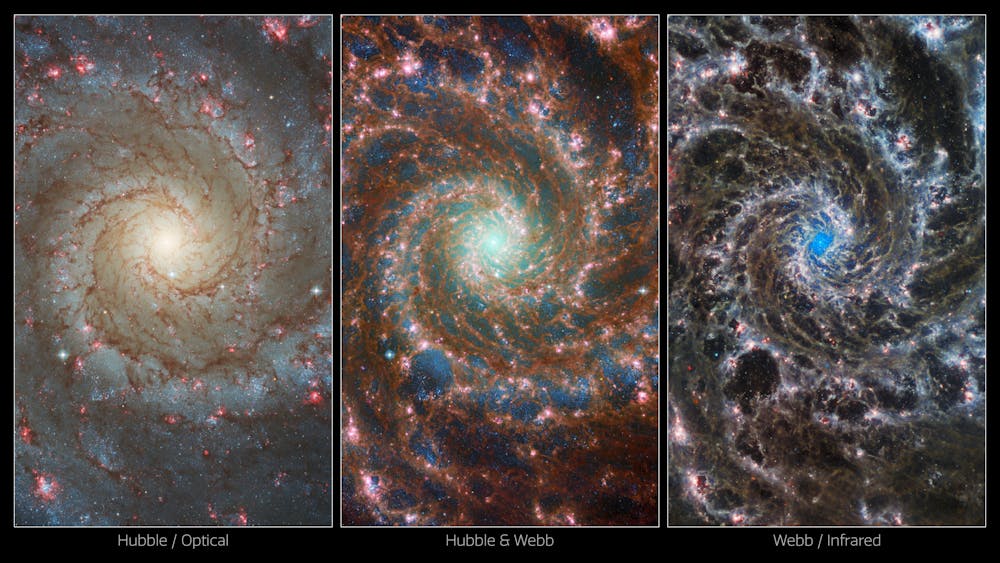
8. The Phantom Galaxy
Hubble visible light (l), JWST infrared (r) and combined (middle) images of the ‘Phantom Galaxy’ M74. The ability to combine visible light information about stars with infrared images of gas and dust allow us to probe such galaxies in exquisite detail. ESA/NASA
These images of the so-called Phantom Galaxy or M74 reveal the power of JWST not only as the latest and greatest of astronomical instruments, but as a valuable complement to other great tools. The middle panel here combines visible light from Hubble with infrared from Webb, allowing us to see how starlight (via Hubble) and gas and dust (via JWST) together shape this remarkable galaxy.
Much JWST science is designed to be combined with Hubble’s optical views and other imaging to leverage this principle.
9. A super-distant galaxy
A ‘zoom in’ on a galaxy from one of the universe’s earliest epochs, when the universe was only about 300 million years old (the small red source visible in the centre of the right panel). Galaxies at this distance are impossible to detect in visible light as their emitted radiation has been ‘redshifted’ far into the infrared. NASA/STScI/C. Jacobs
Although this galaxy – the small, red blob in the right image – is not among the most spectacularly picturesque our universe has to offer, it is just as interesting scientifically.
This snapshot is from when the universe was a mere 350 million years old, making this among the very first galaxies ever to have formed. Understanding the details of how such galaxies grow and merge to create galaxies like our own Milky Way 13 billion years later is a key question, and one with many remaining mysteries, making discoveries like this highly sought after.
It is also a view only the JWST can achieve. Astronomers did not know quite what to expect; an image of this galaxy taken with Hubble would appear blank, as the light of the galaxy is stretched far into the infrared by the expansion of the universe.
10. This giant mosaic of Abell 2744
An image of the galaxy cluster Abell 2744 created by combining many different JWST exposures. In this tiny part of the sky (a fraction of a full Moon) almost every one of the thousands of objects shown is a distant galaxy. Lukas Furtak (Ben-Gurion University of the Negev) from images from the GLASS/UNCOVER teams
This image is a mosaic (many individual images stitched together) centred on the giant Abell 2744 galaxy cluster, colloquially known as “Pandora’s Cluster”. The sheer number and variety of sources that the JWST can detect is mind boggling; with the exception of a handful of foreground stars, every spot of light represents an entire galaxy.
In a patch of dark sky no larger than a fraction of the full Moon there are umpteen thousands of galaxies, really bringing home the sheer scale of the universe we inhabit. Professional and amateur astronomers alike can spend hours scouring this image for oddities and mysteries.
Over the coming years, JWST’s ability to look so deep and far back into the universe will allow us to answer many questions about how we came to be. Just as exciting are the discoveries and questions we can not yet foresee. When you peel back the veil of time as only this new telescope can, these unknown unknowns are certain to be fascinating.
Where there are players and a game to be won, you can expect some “rough and tumble” on the sporting field. But when do the bumps become a problem for players? And what can we do to protect them from traumatic brain injury?
Submissions are open for Australia’s senate inquiry into concussions and repeated head trauma in contact sports, with findings to be reported by mid year. The inquiry was borne out of growing concern about the long-term impact of such injuries, whether they can cause chronic brain problems and the liability of sporting organisations.
Head impacts are not uncommon in some sports, particularly contact sports like football and rugby, or combat sports such as boxing and mixed martial arts. Minor head injuries are also relatively common in military settings.
While much of the inquiry’s focus will be on professional players and leagues, local teams and young players should also look out for its findings.
The severity of head injuries varies widely, depending on factors including the velocity and the angle of impact between the head and the ground or another player. The brain can also be injured when there is no impact, such as in a whiplash injury.
Appropriate assessment, diagnosis and rehabilitation is important since severe brain injury can occur with repeated impacts and have lifelong consequences regarding a person’s ability to learn, work, communicate and socialise.
Mild traumatic brain injury, also referred to as “concussion”, may not have initial signs and symptoms that appear as debilitating as severe brain injury. But appropriate rehabilitation can still be challenging. And researchers are exploring whether repeated concussion can lead to serious problems.
The senate inquiry’s terms of reference include an examination of “the lack of a consistent definition of what constitutes ‘concussion’”.
While some sources define concussion as a temporary unconsciousness or confusion caused by a blow to the head, the Centres for Disease Control and Prevention is more specific, describing it as:
a type of traumatic brain injury caused by a bump, blow, or jolt to the head or by a hit to the body that causes the head and brain to move rapidly back and forth. This sudden movement can cause the brain to bounce around or twist in the skull, creating chemical changes in the brain and sometimes stretching and damaging brain cells.
Adding to the challenge for clinicians dealing with assessment and rehabilitation, are the active attempts of athletes, to get an “all clear” status quickly. Some may pass tests of balance or memory even though they have not recovered fully.
Current “return to play” guidelines vary across sporting codes. The Australian Football League guidelines outline a 24–48 hour period of rest as part of a minimum 12-day break, supervised activity and medical clearance before returning to play.
The National Rugby League has a similar guideline with a minimum of seven to eight days before a player can return to play. It states they should have returned to normal daily activities, such as work or school, without symptoms and the decision to play should be made by a medical practitioner.
It’s unclear how well these safety protocols flow down to semi-professional, club and junior competitions.
Concussion in children has been treated in the same way as adults in the past, though some suggest management should be more conservative for developing brains.
Long-term effects
Scientific investigation into the long-term effects of mild traumatic brain injury is relatively new.
Based on a small number of autopsies, researchers have suggested a link between early onset dementia among retired National Football League athletes in the United States and their history of head impacts. However, more recent research is showing the link between concussion and dementia remains tenuous.
The danger appears to be largely due to repeated impacts over long periods. Some research suggests a link between repeated mild traumatic brain injury and a neurodegenerative condition called chronic traumatic encephalopathy, which can impair thinking, reasoning and memory. More research is needed to confirm this link.
The challenge with sport-related head injuries is that the athlete, their coach, manager and sponsors typically want them to remain in the contest or return to it as quickly as possible.
When an athlete – or amateur or junior player – returns to sport too soon, his or her skills may be compromised. Vision can be affected, balance, coordination and decision-making may be less than perfect. These deficits increase the danger of another similar injury.
So can begin a downward spiral into repeated injuries and the potential development of chronic problems later in life.
When an athlete does experience a concussion, a monitored rehabilitation program should include graded exercise, beginning at a very low level (such as 15 minutes walking daily) and gradually increase in intensity, with tests of balance, memory and manual dexterity every three to four days. Any symptoms such as headache, fogginess or poor sleep quality should be monitored.
Once the athlete has fully recovered, a maximal exercise test called the Buffalo Concussion Treadmill Test can be performed. This involves gradually increasing the intensity of treadmill running to maximal, or near maximal, effort. If this does not induce any symptoms, the athlete can be cleared to play by their medical practitioner.
Slow progress
There has been some progress to protect players. Some contact sports have altered their rules to reduce the chances of mild traumatic brain injury and impose heavy penalties for head high tackles. Mandatory rest periods after injury have been outlined by the AFL. Junior soccer leagues have removed “heading” (where the player strikes the ball with their head) for younger players entirely and rugby has altered tackle rules to improve player safety.
Understanding the potential short- and long-term effects of concussion on brain health and quality of life is very important. Hearing from people who have experienced mild traumatic brain injury through sport or other incidences helps us to develop better protocols.
Coaches, first aiders, players and parents of players should be aware of the dangers of mild traumatic brain injury and the importance of an appropriate return to play plan. This can reduce the likelihood of further injuries and their long-term effects, and extend players’ years on the field.
Andrew Lavender does not work for, consult, own shares in or receive funding from any company or organization that would benefit from this article, and has disclosed no relevant affiliations beyond their academic appointment.
Greater conservation efforts are needed to protect Antarctic ecosystems, and the populations of up to 97% of land-based Antarctic species could decline by 2100 if we don’t change tack, our new research has found.
The study, published today, also found just US$23 million per year would be enough to implement ten key strategies to reduce threats to Antarctica’s biodiversity.
This relatively small sum would benefit up to 84% of terrestrial bird, mammal, and plant groups.
We identified climate change as the biggest threat to Antarctica’s unique plant and animal species. Limiting global warming is the most effective way to secure their future.
Climate change is the biggest threat to Antarctica’s unique plant and animal species. Shutterstock
Threats to Antarctic biodiversity
Antarctica’s land-based species have adapted to survive the coldest, windiest, highest, driest continent on Earth.
The species includes two flowering plants, hardy moss and lichens, numerous microbes, tough invertebrates and hundreds of thousands of breeding seabirds, including the emperor and Adélie penguins.
Antarctica also provides priceless services to the planet and humankind. It helps regulate the global climate by driving atmospheric circulation and ocean currents, and absorbing heat and carbon dioxide. Antarctica even drives weather patterns in Australia.
Some people think of Antarctica as a safe, protected wilderness. But the continent’s plants and animals still face numerous threats.
Chief among them is climate change. As global warming worsens, Antarctica’s ice-free areas are predicted to expand, rapidly changing the habitat available for wildlife. And as extreme weather events such as heatwaves become more frequent, Antarctica’s plants and animals are expected to suffer.
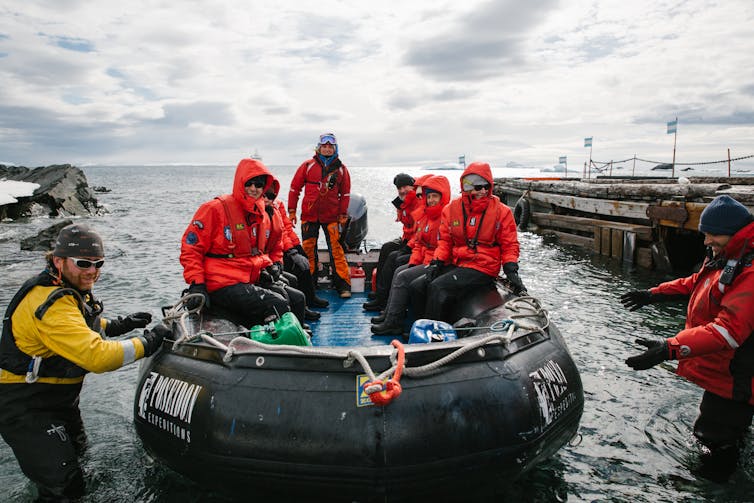
What’s more, scientists and tourists visiting the icy continent each year can harm the environment through, for example, pollution and disturbing the ground or plants. And the combination of more human visitors and milder temperatures in Antarctica also creates the conditions for invasive species to thrive.
So how will these threats affect Antarctic species? And what conservation strategies can be used to mitigate them? Our research set out to find the answers.
Antarctica’s ice-free areas are expected to expand under climate change. Shutterstock
What we found
Our study involved working with 29 experts in Antarctic biodiversity, conservation, logistics, tourism and policy. The experts assessed how Antarctica’s species will respond to future threats.
Under a worst-case scenario, the populations of 97% of Antarctic terrestrial species and breeding seabirds could decline between now and 2100, if current conservation efforts stay on the same trajectory.
At best, the populations of 37% of species would decline. The most likely scenario is a decline in 65% of the continent’s plants and wildlife by the year 2100.
The emperor penguin relies on ice for breeding, and is the most vulnerable of Antarctica’s species. In the worst-case scenario, the emperor penguin is at risk of extinction by 2100 – the only species in our study facing this fate.
Climate change will also likely wreak havoc on other Antarctic specialists, such as the nematode worm Scottnema lindsayae. The species lives in extremely dry soils, and is at risk as warming and ice-melt increases soil moisture.
Climate change won’t lead to a decline in all Antarctic species – in fact, some may benefit initially. These include the two Antarctic plants, some mosses and the gentoo penguin.
These species may increase their populations and become more widely distributed in the event of more liquid water (as opposed to ice), more ice-free land and warmer temperatures.
Gentoo penguins are predicted to benefit from climate change. Jasmine Lee
So, what to do?
Clearly, current conservation efforts are insufficient to conserve Antarctic species in a changing world.
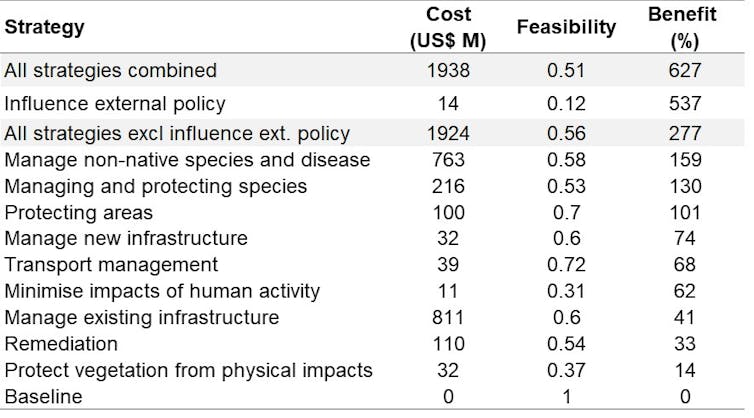
The experts we worked with identified ten management strategies to mitigate threats to the continent’s land-based species.
Management strategies for conserving Antarctic species. Jasmine Lee
Unsurprisingly, mitigating climate change (listed as the “influence external policy” strategy) would provide the greatest benefit. Reducing climate change to no more than 2℃ of warming would benefit up to 68% of terrestrial species and breeding seabirds.
The next two most beneficial strategies were “managing non-native species and disease” and “managing and protecting species”. These strategies include measures such as granting special protections to species, and increasing biosecurity to prevent introductions of non-native species.
Strong biosecurity measures are needed to ensure human visitors to Antarctica don’t bring invasive species. JOHN BOZINOV
How much would it all cost?
The United Nations’ COP15 nature summit concluded in Canada this week. Funding for conservation projects was a core agenda item.
In Antarctica, at least, such conservation is surprisingly cheap. Our research found implementing all strategies together could cost as little as US$23 million per year until 2100 (or about US$2 billion in total).
By comparison, the cost to recover Australia’s threatened species is estimated at more than US$1.2 billion per year (although this is far more than is actually spent).
However, for the “influence external policy” strategy (relating to climate change mitigation) we included only the cost of advocating for policy change. We did not include the global cost of reducing carbon emissions, nor did we balance these against the much greater economic costs of not acting.
As Antarctica faces increasing pressure from climate change and human activities, a combination of regional and global conservation efforts is needed. Spending just US$23 million a year to preserve Antarctica’s biodiversity and ecosystems is an absolute bargain.
Jasmine Lee received funding from the Royal Commission for the Exhibition of 1851, the Holsworth Wildlife Research Endowment, an Australian Government Research Training Program Scholarship, and the Australian Antarctic Science Program (project 4297).
Iadine Chadès receives funding from the NSW Department of Planning, Industry and Environment (Saving our Species program, the Biodiversity Conservation Trust), the Queensland Department of Environment and Science, the NHMRC Centre of Research Excellence (CRE) SPECTRUM, and from the Machine Learning and Artificial Intelligence Future Science Platform (CSIRO).
Justine is funded through the Australian Research Council Special Research Initiative – Securing Antarctica’s Environmental Future. She has previously received funding from the Australian Antarctic Science Program.
She is also a director of Homeward Bound Projects Pty Ltd and a director of the Landscape Recovery Foundation.
Justine was employed by the Australian Antarctic Division as a Principal Research Scientist in 2022, on a part time appointment
When the British colonised Australia they assumed terra nullius, “nobody’s land”, and aqua nullius, “nobody’s water”. In 1992, terra nullius was overturned – but aqua nullius remains.
Aqua nullius denies the existence of Indigenous peoples’ own water governance principles, laid down through ancestral “first laws”. These customary laws are carried through songlines, trade routes and ceremony, embedded in a deep reciprocal economy of sharing. First laws guide the custodianship of living waters, with attention to intergenerational equity.
Living waters – from rivers, to ancient aquifers to wetlands – are sacred and alive. As the source of energy to animate Country, living waters are critical to Indigenous Peoples’ collective survival. The responsibility of caring for waters (and land) are a central concern of Indigenous Peoples – but this responsibility is thwarted by aqua nullius.
Queensland, Northern Territory and Western Australia have sought to distribute water rights to Indigenous people by establishing “Indigenous (or Aboriginal) water reserves”, setting aside a portion of water from the consumptive pool for Indigenous people’s future use.
In our new policy brief, we unpack the benefits and limitations of these reserves. As it stands, the policy measure alone does not deliver justice for Indigenous peoples. A broader approach is needed.
The right to water
Indigenous people must be able to access water in their territories if they so choose.
A United Nations declaration recognises the right to water for Indigenous people. Yet First Nations water holdings in Australia and elsewhere are abysmally low. For example, Indigenous people or organisations hold less than 0.2% of surface water entitlements in the Murray Darling Basin.
In the struggle against aqua nullius, Indigenous people’s right to make decisions about water on Country is a priority. But importantly, when we talk about “water rights” for Indigenous people, the rights to access and use water is only one aspect.
The bigger picture problem is that the decision-making power over water remains with governments, and this power is not shared with Indigenous people.
We agree aqua nullius is unacceptable and must change. Establishing Indigenous water reserves is one option, but it’s far from clear it will deliver what Indigenous communities need.
Living waters – from rivers, to ancient aquifers to wetlands – are sacred and alive. Shutterstock
Water allocation plans define the consumptive pool – that is, how much water can be taken each year for consumptive purposes, such as for drinking supplies or irrigation.
There are at least 19 Indigenous water reserves across Northern Australia. This approach has not yet been adopted by other Australian states and territories.
A major limitation of Indigenous water reserves is their narrow scope. In the NT and WA, their overall purpose is to provide economic opportunities for Indigenous people. Queensland reserves generally provide water to help Indigenous people achieve both economic and social aspirations.
A focus on using water for commercial purposes risks other crucial items – such as ensuring sufficient water for Country and to maintain ecosystem health – falling off the agenda, upholding the unacceptable status quo.
There are two main reasons Indigenous water reserves should not be viewed solely through a market-based lens.
First, water in Indigenous reserves in the Northern Territory are only distributed when there is surplus water. The Central Land Council has stated:
in the majority of cases where the SAWRs [Strategic Aboriginal Water Reserves] should be available, the water resources have been fully or over-allocated and there is no water available for SAWR.
In other words, if there is no water surplus left, as determined by Australian governments, then the reserve is considered “notional”: in reality, non-existent.
Second, land tenure rules and regulations are being used to determine the allocation to Indigenous water reserves.
For example, in the Northern Territory, Indigenous holders of non-exclusive possession native title (that is, native title that co-exists with other forms of land tenure, such as a pastoral lease) are ineligible for water reserves.
This splits native title holders into those with water and those without, based on native title rules, creating an unfair division.
Arbitrary rules about who is eligible for Indigenous water reserves does not respond to the injustice of land and water stolen or forcibly acquired from Indigenous nations. In response to this failing, the Northern Land Council noted it:
has been disappointed that one of its key recommendations throughout the development of the [Aboriginal Water Reserve] was not adopted through the legislative amendment – that is, that eligibility should be broadened to encompass Aboriginal people and communities who have neither land rights nor exclusive native title.
Are there any benefits?
In contrast with top-down and arbitrary water allocation planning policies, water reserves can also be established through Indigenous land use agreements. A negotiated agreement between Indigenous groups and Australian governments, potentially has more scope to respond to past injustice and deliver meaningful benefits.
This is because it’s a negotiated settlement intended to be between partners, rather than a top-down “one size fits all” process for an entire state or territory.
One possible example is the Yamatji Southern Regional Corporation (YSRC) lease of water to sand mining company Perpetual Resources in 2020. It is the first agreement between the WA government and an Indigenous nation to establish a negotiated access to water with an Indigenous Water Reserve.
This agreement is the first of its kind and demonstrates how our Strategic Aboriginal Water Reserve can generate opportunities and economic benefits for the Yamatji Nation.
Missing details
An holistic approach is needed to ensure water rights support living waters, the environment, and spiritual and cultural connections. If Indigenous water reserves are to benefit Indigenous people, then governments must listen and negotiate in good faith with Indigenous nations.
When applied in water allocation plans, Indigenous water reserves must be part of a cohesive and comprehensive approach – one that delivers sovereignty for water to Indigenous nations and responds to the gross injustice and lie of aqua nullius.
Importantly, Indigenous water reserves need to be one part of a bigger-picture approach to water justice if aqua nullius is to be overturned.
The Water Justice Hub receives funding from the Australian Research Council Laureate Fellowship FL190100164.
Anne Poelina is the volunteer Chair with the Martuwarra Fitzroy River Council. She does not own, share or acquire any benefits from the Martuwarra Fitzroy River Council. She is the Managing Director (Volunteer) of Madjulla Inc. Indigenous Not for Profit Organisation based in the Kimberley, WA. She is also a member of the Aboriginal Water Group (AWG) advising the WA Department of Water and Environmental Regulations; a member of the Commonwealth Aboriginal Water Interest; and of the Murray Darling Basin (MDB) inaugural First Nations appointment to its independent Advisory Committee on Social, Economic and Environmental Sciences.
Quentin Grafton receives research funding from the Australian Research Council.
Each year, New Zealand imports about 2 million tonnes of palm kernel expeller (PKE), a by-product of palm-oil processing in Indonesia and Malaysia, to feed dairy cows, at a cost of NZ$800 million.
But our research shows PKE contains concentrations of some elements that may be harmful to cows.
We analysed the chemical composition of several batches of PKE imported into New Zealand over two years. We found it contained concentrations of iron, magnesium and phosphorus that exceeded safe levels for dairy cattle health. Some batches contained concentrations of aluminium, copper, sulphur and potassium within 90% of their safe limits.
These elements may have both positive and negative effects on the health of dairy cows and soils. But there is no monitoring and our research shows the chemical composition of different batches imported into New Zealand is highly variable.
PKE may be a source of fertilising nutrients into soils. It contains high concentrations of phosphorus, which will improve pasture growth when deposited on the soil in animals’ manure.
However, the concentrations of iron, aluminium, potassium and sulphur in PKE may cause nutrient imbalances in dairy cows. The actual effects on dairy farms, soils and milk are yet unknown. Other evidence suggests these chemical elements, when eaten by cows, may end up in milk.
Currently, environmental regulations require farmers to quantify every input to their farms in order to meet nutrient budgets to stay within freshwater quality standards. When the composition of PKE changes batch by batch, it becomes very difficult to quantify farm inputs and meet farm-nutrient budgets.
Fonterra and Synlait, two of New Zealand’s largest dairy companies, actively discourage the use of PKE because it can change milk composition, giving it a higher fat content.
However, it remains widely used due to feed shortages. Potentially, PKE use could be offset by reusing some of the more than 2 million tonnes of food and food-processing waste New Zealand produces annually.
Palm kernel expeller is a by-product of palm oil processing. Shutterstock/Yogie Hizkia
Palm oil production
Even if PKE were proven to be beneficial to New Zealand agriculture, there is still the ethical question of whether New Zealand should be supporting an industry with unsustainable production patterns.
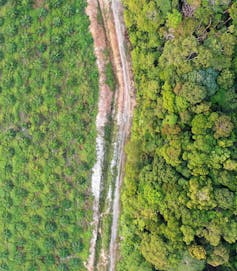
The production of palm oil has been linked todeforestation in tropical rainforests in Indonesia, as more and more land is needed to produce this increasingly common commodity used in everyday foods and personal-care products.
Even when PKE is certified by the Roundtable on Sustainable Palm Oil – a certification program for palm oil growers, suppliers and users – researchhas shown this palm oil is no different to any other in terms of social, environmental and economic outcomes for people and the environment.
The production of palm oil has been linked to deforestation in tropical rainforests in Indonesia. Shutterstock/Rich Carey
In 2015 and 2019, Indonesia gained media attention for forest fires to clear land for palm oil production, resulting in air pollution in neighbouring countries.
An audit by the Indonesian government in 2018 found 81% of palm oil plantations were breaching environmental regulations. Breaches included failing to obtain permits, not complying with sustainability standards and encroachment into surrounding protected forests.
New Zealand’s support of this industry is controversial, especially when there are potential alternatives.
Possible alternatives to PKE
New Zealand imports more PKE than the European Union. There are possible alternatives made in New Zealand that currently end up in landfill, including biowaste from the food and beverage sector. This waste includes leftover products from potato processing, wine making, brewing and other food-processing industries.
By importing PKE, New Zealand is forgoing the opportunity to use these locally produced waste materials as animal feeds and to avoid greenhouse gas emissions produced when they are sent to the landfill.
There is an opportunity here to repurpose food waste and the nutrients it contains for New Zealand’s primary sector. This is the subject of ongoing research at the University of Canterbury, Lincoln University, Manaaki Whenua Landcare Research and ESR.
Hadee Thompson-Morrison received funding from the Centre for Integrated Biowaste Research funded by the Strategic Science Investment Funding from Ministry of Business, Innovation and Employment, New Zealand (contract C03X1701). She is affiliated with Darwin Animal Doctors and Sumatra Community & Conservation Trust.
Sally Gaw previously received funding from Auckland Regional Council, Tasman District Council and Waikato Regional Council to investigate accumulation of trace elements in agricultural soils.
Brett Robinson does not work for, consult, own shares in or receive funding from any company or organization that would benefit from this article, and has disclosed no relevant affiliations beyond their academic appointment.
Many parents want to encourage their children to be creative. This is not just about training the next Archibald Prize winner. Young people develop important emotional and cognitive skills when they make art.
But at the same time, it can be tricky to know where to start. Or how to overcome the fear of a big clean up.
I am a visual artist and art educator of big and small people. Here are some ways to support your child to set up their own art studio at home.
All you have to do is make a space for them, supply the materials and not get too hung up on the mess!
How to set up a kids studio
First, you need to set up a space or a “kids studio”. Ideally, this is a place where your child can make and leave work in progress.
Artists need time to mull over ideas. If they have to pack up their work at the end of each session, it disrupts the creative process. Artists like to make, take a break, think and go back to their work in spurts. Spurts can be five minutes or five hours.
A ‘studio’ could simply be a corner of a table. Madalyn Cox/Unsplash
Not everyone has a separate backyard studio in their home. So your studio could be the dining table or a corner of the lounge room. You can always cover the studio with a tablecloth to signify it is “closed” during dinner or for other activities.
Another excellent option is an easel. Standing at an easel to paint and draw helps the artist see their work better, as it allows them to stand back and look at the proportions of what they are doing.
Kids are also happy to make on the floor! A simple mat can help designate a studio space. The important thing is your child can come and go as the urge takes them.
And you don’t need special lights. Natural light is best as it doesn’t distort the colours and forms you are working with.
How can you encourage them to start?
Under the Reggio Emilio teaching philosophy, the environment around a child plays a central role in the process of making learning meaningful.
One way to encourage your child to begin creating is to place freshly sharpened pencils in a jar (not a box that needs opening) on the table with some paper and a provocation. This could be some shells or anything you know your child might find curious. This becomes an offering to “come and draw here”.
This video shows you how to make a mythical beast.
You could also have a construction area with a pile of cardboard next to masking tape (which children can tear themselves), scissors and a fully loaded stapler and a few images of houses as a provocation.
You might like to consider having a wet area and a dry area. Painting, gluing and clay work happen in the wet area and cutting and drawing happen in the dry area.
While it’s great to set up spaces for your child, remember they are the ones using it. So, one way of encouraging them is to invite them to set up and design the space with you. This means they are invested in where things go (and putting things away).
Basic materials for your studio
Pencils
Steiner schools know that using quality art materials enhances the creative process. I love the pencils from German brand Lyra. Prismacolor pencils are another excellent brand.
Invite your child to draw with a jar of sharp pencils. Debby Hudson/Unsplash
I also love Lyra’s stubby fat graphite sticks. These are good for all ages (from one and up) because they are sturdy and easily gripped. They also change when you add water, the graphite turns to paint – changing the drawing into a painting!
Good quality pencils will need to be sharpened less, break less when they are dropped and will last a very long time. You can also replace individual pencils, so in the long run it is more economical.
Paper
Good quality paper also makes a difference. The feeling of a pencil dragging across a rough or smooth surface promotes a sensory feeling that you do not get from inferior quality materials.
Little children will go through paper very quickly. Shutterstock
I like to use heavy watercolour paper. Look for paper thickness (200 to 300gsm) and feel the texture. You are looking for a nice surface (touch lots of paper and you will begin to know what a nice surface feels like). Canson make good water colour pads and you can find something similar at most art shops.
But sometimes all you need is a packet of A3 copy paper or a roll of butchers paper (which you can get from IKEA or Officeworks).
As influential professor of art education Viktor Lowenfeld noted, children under four are in the “scribbling” phase of their artistic development. So, young children will burn through paper.
Paint
IKEA make great acrylic and watercolour paints and the colours are vibrant.
Watercolours are easily ‘woken up’ with water. Nick Collins/Pexels
I particularly like to use watercolours because they are like magic. They have a beautiful effect as they wash together, and they don’t dry up into blobs of plastic and destroy brushes (if you don’t clean them straight away). It’s easier to come and go from your work without the palaver of “getting the paints out”.
When watercolours dry up, you just “wake them up from their sleep” with water.
Brushes
Use soft bristle brushes for water colour and firm bristle brushes for acrylic paint.
Try to provide an assortment of sizes, of short and long handles and shapes such as round and flat. This will help your young artist explore a range of different marks.
You can get brushes from art stores but also Officeworks and IKEA. Examine the bristles closely: long soft floppy bristles or hard plastic ones are terrible to use and take the fun out painting.
Use recycled materials where possible
Art materials don’t have to cost the earth and you can be sustainable. Save magazines, newspapers, catalogues, flyers and cardboard boxes as they provide endless open-ended opportunities for making.
Things to say and NOT to say
As adults we tend to have decided what we can and can’t do. But do not say things to your child such as, “I can’t draw” or “I’m no good at art”.
Role model a positive can-do attitude and show your child that you can try anything (and it doesn’t matter whether you are “good” or not).
Try the ‘Exquisite Corpse’ drawing game.
I like to give my students practical skills they can apply to open-ended activities. That is, there is no prescribed outcome. This is important to keep in mind. If you set your child up with a certain activity but they do something completely different – this is not wrong or bad.
It seems counterintuitive, but avoid saying things such as, “that’s beautiful” or “that’s pretty”. Art isn’t just about making beautiful things it’s also about expressing yourself or trying to make sense of the world. It is a process as much as a product. So, don’t get hung up on the final art work.
So, instead of saying, “Oh that’s a great drawing of a giraffe”, ask them, “what were you thinking about when you made this?”
Keep in mind, there’s also a good chance it’s not even a giraffe! Very young children can change what they are drawing along the way. They might start out drawing their family but end up drawing something completely different. And when you show them the drawing after a week they might have a completely different explanation for the artwork.
So, don’t “correct” your child if they colour outside of the lines or draw something you can’t immediately understand. By the same token, never finish your child’s work for them.
A final word on mess
Creativity can (and should!) look really messy. It’s important to give your child the opportunity to make a mess in order to discover new possibilities, generate ideas and think through materials.
This can understandably be off-putting for parents. But if you have a designated area, then hopefully you can relax and know you are providing your child space to grow and develop creative and critical skills they need for now and in the future.
Naomi Zouwer shows you how to make a zine.
You can find more activities and suggestions on Naomi Zouwer’s YouTube channel.
Naomi Zouwer does not work for, consult, own shares in or receive funding from any company or organization that would benefit from this article, and has disclosed no relevant affiliations beyond their academic appointment.
There were nearly 300 water engineer positions advertised on recruitment website Seek last month. The high demand for these specialist engineers bodes ill for the government’s Three Waters reform, which will rely heavily on experts the country currently doesn’t have in the required numbers.
The shortage mirrors the situation in other construction fields. Time and again, staff shortages have affected major infrastructure projects in New Zealand. It’s a chronic problem that needs addressing urgently.
Water engineers specialise in the design, construction and management of wastewater, drinkable water and stormwater systems. They will have typically completed a four-year engineering degree, usually civil or environmental engineering, before specialising. Competency can take an extra five years.
Currently, these specialists are in very high demand internationally. Companies regularly compete to employ engineers with five or more years’ experience, offering excellent wages and conditions. There is simply not a large enough pool of water engineers in New Zealand, and the situation is set to get worse.
A global skills shortage
The government announced the Three Waters reform program in July 2020, with the enabling (and contentious) legislation passed in December this year. It represents a radical reshaping of water, wastewater and stormwater delivery – renewing, consolidating and building a new integrated system across New Zealand.
The cost of the work is hard to determine, but is estimated to be between NZ$120 billion and $185 billion over the next three decades.
This massive infrastructure investment will clearly require a large number of staff, including unspecified numbers of engineers. A Department of Internal Affairs analysis estimates the reforms will create 6,000 to 9,000 jobs over the next 30 years.
Engineering New Zealand has outlined the need for specialised engineers that will arise from the water sector reforms. And a recent report from workforce strategists We Are Water also put a spotlight on the urgent and significant recruitment challenges:
Transformation will require thousands of new workers to design and complete capital projects and to operate the reformed industry.
To complete the Three Waters reforms, then, New Zealand will need to train more water engineers. This will take time, so the obvious next step is to look overseas. But New Zealand is competing for these specialists during a global shortage of engineers.
Water engineers and civil engineers with land development experience are on Immigration New Zealand’s “green list” for fast-track residency. It has estimated 1,500 more engineers will be needed across a range of specialities each year just to match economic growth – let alone replace those who retire or change careers.
Recruit and retain
The Association of Consulting Engineers New Zealand (ACENZ) released a report in 2021 outlining the need for 2,100 new engineers in the next 12 months.
Skills shortages can be solved with upskilling and retraining. But for water engineers, this would take a minimum of one year of specialised education or in-house company training.
Better pay and more attractive packages can help, too. But in a fiercely competitive environment, retention depends on a company’s resources, and retaining staff doesn’t actually increase the pool of available engineers.
Overseas recruitment and immigration are time-consuming, even when there isn’t an international shortage of engineers. Foreign-trained engineers would also need to complete some retraining to be familiar with New Zealand conditions.
Unless the government acts quickly, it’s hard to see how Three Waters will be started and progressed in a timely manner.
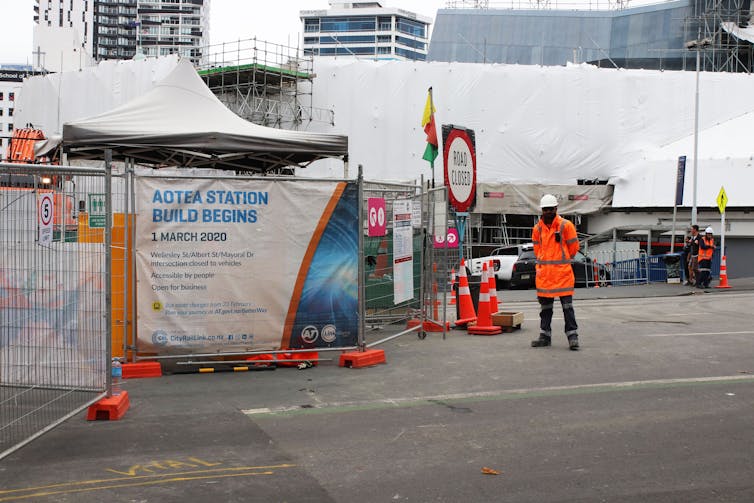
Major New Zealand construction projects like the Auckland City Rail Link are often affected by skills shortages. Getty Images
Deeper than Three Waters
Skills shortages in engineering are a perennial industry problem. New Zealand needs to balance the capacity and capability of the construction sector with all the national construction demands.
The construction sector in general faces frequent challenges in delivering the proposed national pipeline of construction work, a situation exacerbated by frequent stresses and shocks, including operating in the post-COVID environment.
Our government-funded research program CanConstructNZ has identified a need to focus on the overall sector, including planning for the entire pipeline of work and balancing this with sector capacity and capability to deliver projects.
To achieve this balance we need robust data, collected from the sector, which clearly identify capacity and capability. We can then match this data to forward work programs. CanConstructNZ is working with the Construction Sector Accord, Infrastructure NZ and the New Zealand Infrastructure Commission to help achieve this.
We have already identified that many government projects are delayed or postponed because of unfilled skills gaps in the construction sector. Without adequate long-term planning and good data, when huge projects like Three Waters disrupt the industry, skills shortages are the predictable outcome.
Suzanne Wilkinson receives funding from the Endeavour Programme, Ministry of Business, Innovation and Employment.
Rod Cameron is an independent consultant who receives funding from the Endeavour Programme, Ministry of Business, Innovation and Employment.
Source: The Conversation (Au and NZ) – By Siobhan McHugh, Honorary Associate Professor, Journalism, Consulting Producer, The Greatest Menace, Walkley-winning podcast, University of Wollongong
It’s been a strange year for podcasts. Serial, the original 2014 blockbuster from the United States, was back in the news when its protagonist, Adnan Syed, had historic murder charges against him “vacated”. But Serial’s update episode glossed over the flaws in their original reporting, gaps instead plugged by the rival lawyer-hosted podcast Undisclosed.
In Australia, The Teacher’s Pet gave oxygen to the cold case of Lynette Dawson, but what a judge called its “prejudicial, sensationalist and inflammatory” style could have caused the eventually convicted murderer, Chris Dawson, to escape prosecution.
It was a reminder that podcasts can be most powerful when they tap into deeply personal material – but this raises high ethical stakes. My picks for 2022 handle sensitive content with care and flair.
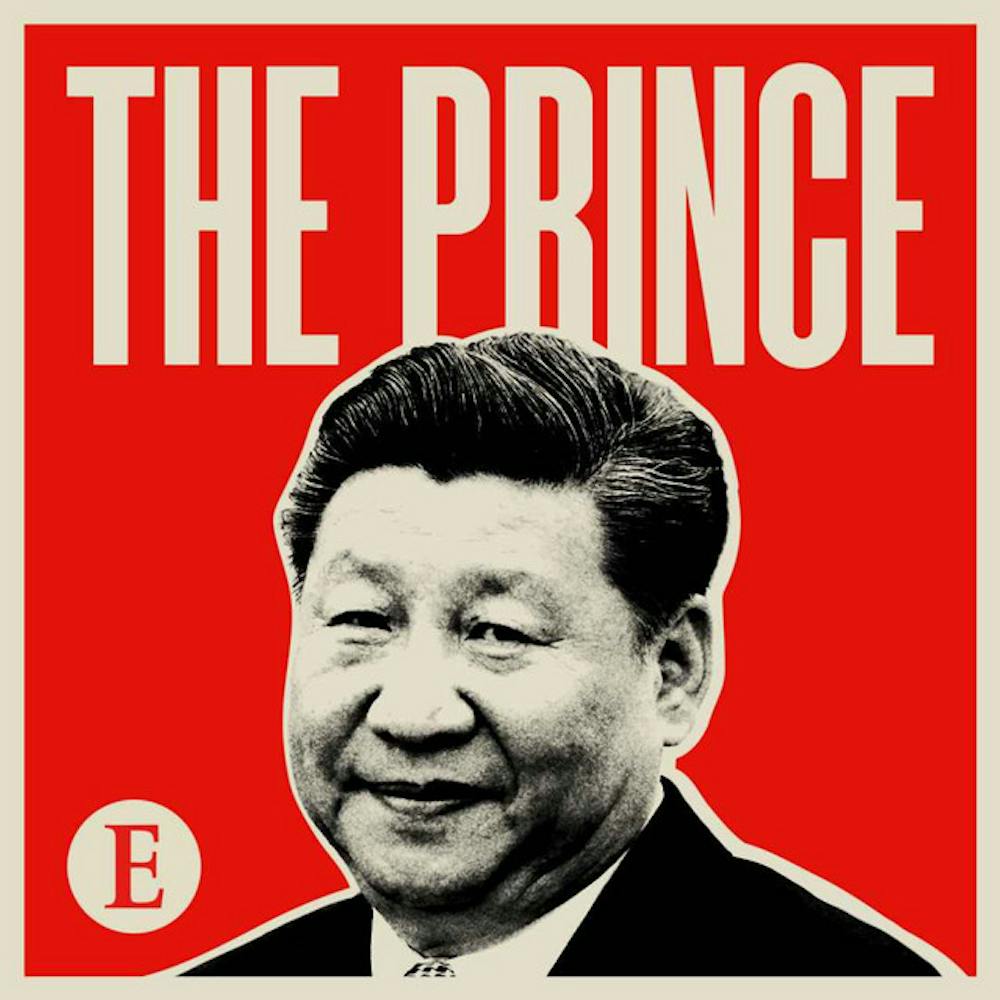
This series delivers a satisfyingly 3D profile of Chinese President Xi Jinping, arguably the most powerful man in the world.
In one gobsmacking clip from 1993, his wife, Peng Liyuan, reassures a TV presenter that her husband contentedly plays second fiddle to her, a celebrated pop singer.
Engagingly hosted by Australian-Chinese journalist, Sue-Lin Wong, the series is anchored by strong archival tape and solid interview talent, but it is the structure that shines. Unlike the many rambling, self-indulgent podcasts out there, each episode addresses a clearly delineated theme, with tight scripting and deft production helping to weave an illuminating picture of Xi’s unwavering journey from minor official to autocratic leader.
This podcast by Louisa Lim (who grew up in Hong Kong) and a team at ABC Radio National, starts slowly but builds to a stirring portrait of a subversive Hong Kong graffiti artist, Tsang Tsou-choi, and the struggle by Hong Kongers to avoid being subsumed by the totalitarian forces of Xi’s China.
SPOILER: in one electrifying moment, Lim crosses the line from journalist to activist. I cheered.
This extraordinary series by Australian-Hungarian filmmaker Laura Nagy is partly an exploration of an internet community that’s into ASMR (Automated Sensory Mediated Response, a tingling feeling of wellbeing that can come from whispered voices and sounds). It’s also a #MeToo reclamation, and most searingly, unsparing memoir, as Nagy details her excoriating relationship with her ex-boyfriend, the repulsive Caleb.
Made through the lockdown years, Pillow Talk captures the sweet digital intimacy that ASMR devotees co-create via audio messages to assuage loneliness and mental health issues – material masterfully crafted to swirl around Nagy’s at times playful, at times harrowing, but ultimately uplifting true story.
Companion: Lights Out, intriguing, creative, sound-rich “documentary adventures” from the brilliant indie UK production house, Falling Tree. The Saigon Tapes episode is a marvel of montage.
The ultimate family history of the 1970s US radical movement known as The Weather Underground, this podcast is beautifully written by host Zayd Dohrn, whose parents declared war on the US government and tried to build a social revolution.
Zayd’s mother, Bernardine Dohrn, went from law student to what the FBI termed “the most wanted woman in America”. His father, Bill Ayres, moved from being a teacher to gearing up to build bombs and brawl with police.
Now a successful playwright and creative writing academic, Zayd does not shy away from challenging his parents on how they thought they could combine being on the run with raising a child (him). Excellent use of archive and candid interviews make for a compelling investigation – though oddly, the emotional register remains mostly low.
Companion: Who Was Michael X is a fascinating portrait of a West Indian-British activist in the United Kingdom in the same period, who took his name from his US hero, Malcolm X.
Scottish journalist Audrey Gillan (Tara and George, On The Ground) shows her trademark combination of Glasgow grit, empathy and tenacious burrowing for the deeper story in this reappraisal of a murder investigation she had worked on as a young reporter in the 1990s.
“Bible John” was a serial killer who preyed on working-class women who frequented a Glasgow dance hall in the 1960s. Working with close colleagues including the writer Andrew O’Hagan, Gillan teases out the nuances of the victims’ lives, overturning the patronising and misogynistic framing by contemporary police and press, and restoring the women’s full human dignity.
Companion: Bloodguilt examines the chilling story of Richard Burroughs, a former Navy sailor who committed suicide in Perth in 2014. A posthumous message stated he had killed three people, with scant legal consequences.
With a finely balanced mix of determination and delicacy, hosts Dan Box (Bowraville) and Kate Wild (Code of Silence) expose the racial, class and other prejudices around the victims, which prevented their cases receiving justice.
This slickly produced podcast investigates the suspicious death in New York in 1985 of US-Cuban performance artist Ana Mendieta, who fell from the 34th floor of the apartment she shared with her husband, sculptor Carl Andre.
Hosted by prominent curator, Helen Molesworth, the podcast interrogates themes of power, race and gender in the moneyed and overwhelmingly white art world, then and now. (Episode 6 is the narrative climax: the following episode charts worthy but unsurprising data on the art world’s lack of diversity, better delivered as website notes.)
Companion: For Who is Daniel Johns, host Kaitlyn Sawrey had rare access to the eponymous former Silverchair frontman. She and co-creators Amelia Chappelow and Frank Lopez piece together a revealing and at times touching portrait of a troubled artist who found fame too young and has been struggling to cope since.
Siobhan McHugh gave a masterclass in narrative podcasting to the Sydney Writers Festival 2022, which was attended by Sue-Lin Wong, host of The Prince. The podcaster Audrey Gillan is featured in McHugh’s book, The Power of Podcasting: Telling Stories Through Sound (Columbia University Press 2022).
The Liberal Party’s review of its election rout has highlighted the party’s broad and deep problem with the female vote, but shied away from recommending quotas to elect more women.
Like Labor’s recent post-mortem, the Liberal analysis also points to the key importance of voters’ negative perceptions of Scott Morrison in his government’s election loss.
Prepared by former party director Brian Loughnane and senator Jane Hume, the Liberal report, released today, presents a stark picture of extensive political and organisational failure.
“Put simply, by the time of the election the Coalition had lost control of its brand,” the report says. “We were not in control of the politics, and we were unable to frame the electoral contest.”
Morrison’s “standing with voters deteriorated significantly through 2021 to become a significant negative. The Prime Minister and the Party were seen as ‘out of touch’.
“The leadership choice between Scott Morrison and Anthony Albanese became the most influential driver of voting intention during the campaign period.”
In the year before the election, “there was a loss of political capital and an accumulation of negative issues” for the government.
These included lost political focus due to the demands of the pandemic; allegations of the poor treatment of, and attitude toward, women; scandal, disunity and instability in the government; the government’s longevity and its lack of a clear forward agenda; and faults of state divisions of the party.
To rebuild, the report says, the Liberals must establish a “strong, grassroots presence”, state executives must act in the party’s electoral interests, the parliamentary team must be united and disciplined, and campaigning must be significantly improved.
In an important message as the party struggles against not just Labor but the new “teal” wave, the review declares the Liberals mustn’t give up on any of the seats lost to the teals in May. It also warns teal candidates could threaten other seats in future.
Surveying the Liberals’ current parlous electoral position, the review says: “The Party has lost nearly all of its inner metropolitan seats: 13 seats lost, 6 to Labor, 5 to Teal, 1 to Green, and 1 to redistribution. The Coalition now holds 4 [of the 44 inner metropolitan seats].
“The Party has not held or provided any gains in outer metropolitan seats: 5 seats lost; 3 to Labor, 1 to Teal, 1 to Green. The Coalition now holds 16.
“Of particular concern in the results is that in seats with high numbers of female professional voters, the Liberal Party only holds three of the top 30 seats where previously it held 15. In the top 50 seats by female professionals, the Liberal Party only holds 10 seats where previously it held 25.”
Overall, the party “performed particularly poorly with female voters, continuing a trend that has been present since the election of 1996”.
A majority of women preferred Labor across all age segments, the report says.
The Liberals’ two-party preferred vote was the weakest among women aged 18-34. Women aged 35-54 were the most likely segment to move from the Liberals, and women in this age group were the most likely segment to vote independent.
“Liberal defectors in Teal seats were highly likely to agree with the statement that ‘the treatment or attitude toward women within the Liberal Party had a strong influence on my vote’.”
The review says that if the Liberal party “is to fully reflect the Australian community the objective must be to improve the level of female members, particularly younger women, and to increase the level of representation of women as successful members of parliament, not just as candidates.
“The Party must therefore ensure that all Divisions are working to increase female membership, particularly of women under 50. The Party must also ensure there is a much larger number of high-quality female candidates contesting key, winnable seats at the next election.
“It is expected that by broadening the membership base with young women, and retaining them, that this will assist in identifying strong pre-selection candidates.”
The review recommends a target of 50% female representation in the party’s parliamentary ranks within ten years or three terms.
But it does not suggest imposing quotas for female candidates or MPs, as Labor has. There have been calls from some Liberals for quotas, but also strong resistance within the party to having them.
Urging a robust fightback against the teals, the report says: “The Party must concede no seat and must vigorously contest the Teal seats at the next election.
“This will require the strongest possible candidate in each seat and a rebuilding of the Party infrastructure in each seat. It will also require specific strategies for each seat,” it says.
“The Liberal Party must monitor Teal statements and commitments as they will be the basis for future candidates campaigning against Teal incumbents.
“In addition, public comments by Teal campaign leaders are foreshadowing the possibility of Teal campaigns in additional seats currently held by the Coalition at the next election.
“The Party should be conscious of candidates as they are announced and work with Liberal incumbents to develop plans to counter these future candidates’ campaigns.”
The review recommends that for teal seats, the party begins searching early for possible candidates with strong community credentials.
The review urges action to win back the support of Chinese-Australians, who swung against the Morrison government. It recommends the parliamentary party should “develop an outreach programme for Party MPs and Senators to [culturally and linguistically diverse] communities, in particular the Chinese Australian community” as well as reviewing “the need for the appointment of additional staff with bilingual language skills”.
Michelle Grattan does not work for, consult, own shares in or receive funding from any company or organisation that would benefit from this article, and has disclosed no relevant affiliations beyond their academic appointment.
The agent that contaminated baby spinach, prompting the recent national recall, has been revealed. It’s a weed, not deliberate misadventure or a chemical contaminant.
The culprit is thornapple, otherwise known as jimsonweed or, to give it its scientific name, Datura stramonium.
Multiple cases of poisoning, now extending into their hundreds, have been reported across numerous Australian jurisdictions in the past couple of weeks, following the consumption of baby spinach.
“Toxidromes” are patterns of symptoms that give medical responders clues to what agent might be responsible for a poisoning. Not all types of poisoning come with their own toxidrome, but of those that do, anticholinergic poisoning is one of the most colourful and well-characterised.
There would be very few medical students who would not be familiar with some version of the mnemonic
red as a beet, dry as a bone, blind as a bat, mad as a hatter, hot as a hare, full as a flask.
This reflects the characteristic flushing, drying up of sweating and saliva, dilation of pupils, “altered mental state”, fever and, in some occasions, urinary retention. Additional features can include stomach cramps. An “altered mental state” can manifest as delirium, hallucinations, agitation, restlessness or confusion, together with possible changes in speech and gait, among other effects.
All of these affects are due to toxins that block the action of an essential neurotransmitter (chemical messenger in the nervous system), acetylcholine and its receptor.
These are vital cogs in the autonomic nervous system, the maintenance janitor of our nervous system. Fundamental as it is to our survival, it is hardly a surprise that any disturbance of its function results in fairly dramatic effects.
It is also similarly not that surprising that humans have known about plant materials that exert these effects for as long as humans have been interested in using plants for either therapeutic or nefarious purposes.
Titian’s Woman with a Mirror is thought to depict use of deadly nightshade to dilate the pupils. Sailko/Wikimedia, CC BY
Tropane alkaloids are both valuable, and potentially dangerous, compounds with a rich history.
Ancient Egyptians reportedly burned henbane and inhaled its smoke as one of the earliest treatments for asthma.
Deadly nightshade was used in Renaissance Italy as both a poison and as a cosmetic agent, with drops of extract used to dilate the pupils of wealthy ladies. Titian’s Woman with a Mirror is thought to depict this.
Then there were the naked soldiers
Thornapple has its own peculiar story, which is impossible to confirm but may give us clues to the origin of its other name, jimsonweed.
There is a widely reported story from colonial times in Jamestown, Virginia, where British soldiers were sent to quell an uprising in Bacon in the 1600s.
The soldiers prepared a meal from the plant and shortly afterwards, were entirely incapacitated. They were, apparently “stark naked … sitting up in a corner, like a monkey, grinning and making mows at them”. Another of the affected soldiers would “fondly kiss, and paw his companions”.
This was regarded as a something of a worry in an armed expeditionary force. So the plant earned the additional names “devil’s snare” or “devil’s trumpet”.
Plants from the Datura genus and it’s closely related, woody cousin, angel’s trumpet, are widely grown for their decorative flowers around Australia. Occasionally some people deliberately consume them for their hallucinogenic effects, with misadventure requiring medical intervention not uncommon.
Every year, poisons centres and emergency departments around the country are involved in managing these recreational overdoses.
Accidental overdoses, such as the one affecting the baby spinach crop, are less common but not unheard of. One such outbreak was reported in Italy earlier this year.
Unfortunately, thornapple is a hardy plant, with seeds that can reputedly last several decades. Without constant agricultural vigilance, contamination of plants meant for human consumption remains a possibility.
For those not anticipating the effects, poisoning can be quite disturbing, not just from the obvious physical effects, but from the disconcerting hallucinations. Fortunately, the treatment of such exposures, once identified, is usually relatively straightforward.
Given the characteristic toxidrome, and the efficiency of modern poisons information centres, outbreaks and sources can be identified very rapidly, and the public protected from further exposure, as has been the case here.
David Caldicott has previously been the recipient of an NH&MRC partnership grant.
Former federal MP Dr Kerryn Phelps has talked this week about the medical problems she and her wife had after their COVID-19 vaccinations around 18 months ago.
In her submission to the parliamentary inquiry into long COVID, Phelps said her wife Jackie Stricker-Phelps had ongoing neurological problems after her first vaccine. Phelps herself experienced breathlessness and blood-pressure fluctuations after her second dose.
This has prompted public discussion about severe side effects, known as “adverse events”, after COVID-19 vaccines.
We’re vaccine experts and while we can’t specifically comment on Phelps’ concerns, here’s how adverse events are tracked, confirmed and prevented.
Understanding new health concerns
In any new large vaccine rollout, some people will experience a serious medical problem in the period after the new vaccine is given, and wonder “was it from the vaccine?”.
This is particularly the case when the problem has an uncertain cause, is not well understood or is only recently described. People naturally want to know the cause of a problem.
Good vaccine safety systems address these questions. The condition occurring in a window of time after vaccination is an obvious criterion. But other factors are crucial when determining whether one thing caused another.
It’s important to consider these other factors, because not everything that happens after a vaccine is due to the vaccine. Heart attacks, strokes, new autoimmune diseases, and death can all occur shortly after a vaccine. The key question is whether a vaccine caused or worsened the risk of a condition.
Strong vaccine safety systems are designed to identify and investigate potential new health issues related to a vaccine.
Safety assessments start early in product development then proceed to clinical trial assessments. Clinical trials, including for COVID-19 vaccines, compare a group who receive the vaccine with another receiving a placebo (or another vaccine).
These trials are large – around 20,000-30,000 people are closely monitored for many months – but can only detect relatively common side effects.
Initial clinical trials can only detect relatively common side effects. CDC/Unsplash
More than 13 billion COVID-19 vaccine doses have been given globally. As vaccines are given to the wider population, many countries (including Australia) monitor for rare and serious side effects.
Safety monitoring has occurred across the whole populations in more than 190 countries. Detailed epidemiological studies have also included many millions of people. These studies look at whether the risk of a condition is increased in people shortly after vaccination, compared to other times or in unvaccinated people.
So what have they found?
Some rare but serious events caused by COVID-19 vaccines were detected within months of the vaccine rollout.
Thrombosis with thrombocytopenia syndrome is a serious but rare clotting disorder. It occurs in around one in 50,000 doses of the AstraZeneca COVID-19 vaccine, with 173 cases reported in Australia. This was rapidly reported and its detection shaped the COVID-19 vaccine rollout.
Myocarditis (inflammation of the heart muscle) has been seen more frequently, particularly in teenage boys and young men after mRNA vaccines (around two to ten cases for every 100,000 second Pfizer COVID-19 vaccine doses). While most people with myocarditis related to vaccine have mild symptoms and recover over days or weeks, a small number have more serious disease or prolonged symptoms.
Other rare conditions related to COVID-19 vaccines include anaphylaxis, Guillain-Barré syndrome and immune thrombocytopenia. However, the risk for these events is lower than the serious risks from COVID-19 itself in the absence of vaccination.
There are many “signals” or suggestions that other conditions are linked to COVID-19 vaccines. A recent study, for example, suggests a common syndrome call postural orthostatic tachycardia syndrome (POTS) occurred after vaccination but was five times more common after COVID-19 itself. However, as the authors of the study pointed out, further studies are needed.
Other signals have not been substantiated by evidence at all.
Australia monitors and assesses vaccine safety through the Therapeutic Goods Administration (TGA) and health departments, with close involvement of independent vaccine safety scientists and a range of clinical experts, by:
1) Asking clinicians and patients to report any adverse event after vaccination to the TGA
The TGA examines many severe adverse events in detail, sometimes through an expert panel. Others are tracked and classified to see if they’re being reported at unusually high rates.
The TGA has processed more than 136,000 reports for COVID-19 vaccines up to mid-November 2022. Not all reports represent events caused by the vaccine but reporting helps identify unusual patterns, including by comparing rates of a condition after vaccination to that seen usually in the population without vaccines (the background rate).
The TGA acknowledges receipt of reports but does not routinely give feedback on individual cases. In some cases, the person reporting is contacted if further information is required to either complete or assess the adverse event report.
2) Using active surveillance systems including AusVaxSafety
Researchers survey millions of people at regular intervals after vaccination to look for new signals and publish fortnightly real-time reports.
These reports and peer-reviewed studies show COVID-19 vaccines have a very good safety profile, including in people with a range of pre-existing medical conditions. These people benefit most from vaccination as they are at highest risk of complications from COVID-19.
3) Monitoring for conditions that could theoretically be a risk after vaccination
This occurs in all phases of vaccine development, clinical trials and program rollouts, often using specially designed studies and long term follow-up.
We need to monitor for adverse events is several different ways. Shutterstock
4) Getting information and safety reports from other countries, multinational groups and vaccine manufacturers
This is done continuously. Thrombosis with thrombocytopenia syndrome (the rare clotting disorder), for example, was first reported in Europe and myocarditis in Israel.
5) Looking at studies using large electronic health databases to check for for positive or negative links between vaccination and health conditions
These types of studies showed no link between measles, mumps and rubella vaccines and autism. They must take into account many factors, such as having COVID-19 itself.
A recent Danish study, yet to be peer-reviewed, for example, showed fewer new health problems four months after Omicron infection in people given a booster compared to those given only two doses of COVID-19 vaccine.
6) Using a national network of specialist clinicians to support GPs and specialists to assess patients with complex immunisation questions
This includes questions about health conditions before or after vaccines, and how to approach additional vaccine doses.
What if you have an adverse effect after vaccination?
The first thing to do is report it. Either patients or clinicians can report adverse events to the TGA.
Second, ensure your health care is managed by a GP and/or specialist who can investigate all possible causes, and seek expert support as needed.
When rare adverse events are shown to be caused by a vaccine, people should be compensated.
In August 2021, the Australian government announced a scheme to support individuals suffering from serious health conditions caused by a COVID-19 vaccination, joining many other countries in doing so.
Despite the slow implementation, no-fault vaccine compensation is a key component of a comprehensive vaccine safety program. We recommend ensuring this scheme is optimised and also includes all vaccines, not just those for COVID-19.
Transparency is essential
It’s important to have open and evidence-informed discussions about the benefits and risks of vaccination – both for COVID-19 and other vaccine-preventable diseases.
Vaccines are clearly life-saving. A recent study estimated there were 20 million fewer deaths in the first year of program rollout thanks to COVID-19 vaccines.
However, a key to achieving high coverage is confidence, which requires transparency about vaccine safety, as well as factual and empathic communication.
Kristine Macartney receives salary in her role as the Director of the National Centre for Immunisation Research and Surveillance (NCIRS). NCIRS receives funding from the Australian and state and territory government departments of health and DFAT, the WHO, Gavi the Vaccine Alliance, the NHMRC and MRFF. She is a member of the WHO Global Advisory Committee on Vaccines (GACVS), the Australian Technical Advisory Group on Immunisation (ATAGI) and the Advisory Committee on Vaccines (ACV) and other advisory groups.
Allen Cheng receives funding from the Australian Health and Medical Research Council. He is the Chair of the Advisory Committee for Vaccines (advising the Therapeutic Goods Administration) and is a member of the Australian Technical Advisory Group on Immunisation.
Christopher Blyth receives funding from the NHMRC and MRFF. He is a member of the COVID-19 SITAG and past member of the Australian Technical Advisory Group on Immunisation.
Julie Leask receives funding from the World Health Organization, UNICEF, NHMRC and the National Centre for Immunisation Research and Surveillance. Funds go to her institution. She has previously received a sitting fee from the Therapeutic Goods Administration for participation in an expert advisory group.
New Zealand Parliament Buildings, Wellington, New Zealand.
New Zealand Politics Daily is a collation of the most prominent issues being discussed in New Zealand. It is edited by Dr Bryce Edwards of The Democracy Project.
Source: The Conversation (Au and NZ) – By George Siemens, Co-Director, Professor, Centre for Change and Complexity in Learning, University of South Australia
ktsdesign/Shutterstock
In August 1955, a group of scientists made a funding request for US$13,500 to host a summer workshop at Dartmouth College, New Hampshire. The field they proposed to explore was artificial intelligence (AI).
While the funding request was humble, the conjecture of the researchers was not: “every aspect of learning or any other feature of intelligence can in principle be so precisely described that a machine can be made to simulate it”.
Since these humble beginnings, movies and media have romanticised AI or cast it as a villain. Yet for most people, AI has remained as a point of discussion and not part of a conscious lived experience.
AI has arrived in our lives
Late last month, AI, in the form of ChatGPT, broke free from the sci-fi speculations and research labs and onto the desktops and phones of the general public. It’s what’s known as a “generative AI” – suddenly, a cleverly worded prompt can produce an essay or put together a recipe and shopping list, or create a poem in the style of Elvis Presley.
While ChatGPT has been the most dramatic entrant in a year of generative AI success, similar systems have shown even wider potential to create new content, with text-to-image prompts used to create vibrant images that have even won art competitions.
AI may not yet have a living consciousness or a theory of mind popular in sci-fi movies and novels, but it is getting closer to at least disrupting what we think artificial intelligence systems can do.
Researchers working closely with these systems have swooned under the prospect of sentience, as in the case with Google’s large language model (LLM) LaMDA. An LLM is a model that has been trained to process and generate natural language.
At the centre of all this is the question that has been growing in urgency since the Dartmouth summer workshop: does AI differ from human intelligence?
What does ‘AI’ actually mean?
To qualify as AI, a system must exhibit some level of learning and adapting. For this reason, decision-making systems, automation, and statistics are not AI.
AI is broadly defined in two categories: artificial narrow intelligence (ANI) and artificial general intelligence (AGI). To date, AGI does not exist.
The key challenge for creating a general AI is to adequately model the world with all the entirety of knowledge, in a consistent and useful manner. That’s a massive undertaking, to say the least.
Most of what we know as AI today has narrow intelligence – where a particular system addresses a particular problem. Unlike human intelligence, such narrow AI intelligence is effective only in the area in which it has been trained: fraud detection, facial recognition or social recommendations, for example.
AGI, however, would function as humans do. For now, the most notable example of trying to achieve this is the use of neural networks and “deep learning” trained on vast amounts of data.
Neural networks are inspired by the way human brains work. Unlike most machine learning models that run calculations on the training data, neural networks work by feeding each data point one by one through an interconnected network, each time adjusting the parameters.
As more and more data are fed through the network, the parameters stabilise; the final outcome is the “trained” neural network, which can then produce the desired output on new data – for example, recognising whether an image contains a cat or a dog.
The significant leap forward in AI today is driven by technological improvements in the way we can train large neural networks, readjusting vast numbers of parameters in each run thanks to the capabilities of large cloud-computing infrastructures. For example, GPT-3 (the AI system that powers ChatGPT) is a large neural network with 175 billion parameters.
What does AI need to work?
AI needs three things to be successful.
First, it needs high-quality, unbiased data, and lots of it. Researchers building neural networks use the large data sets that have come about as society has digitised.
Co-Pilot, for augmenting human programmers, draws its data from billions of lines of code shared on GitHub. ChatGPT and other large language models use the billions of websites and text documents stored online.
Text-to-image tools, such as Stable Diffusion, DALLE-2, and Midjourney, use image-text pairs from data sets such as LAION-5B. AI models will continue to evolve in sophistication and impact as we digitise more of our lives, and provide them with alternative data sources, such as simulated data or data from game settings like Minecraft.
AI also needs computational infrastructure for effective training. As computers become more powerful, models that now require intensive efforts and large-scale computing may in the near future be handled locally. Stable Diffusion, for example, can already be run on local computers rather than cloud environments.
The third need for AI is improved models and algorithms. Data-driven systems continue to make rapid progress in domain after domain once thought to be the territory of human cognition.
However, as the world around us constantly changes, AI systems need to be constantly retrained using new data. Without this crucial step, AI systems will produce answers that are factually incorrect, or do not take into account new information that’s emerged since they were trained.
Neural networks aren’t the only approach to AI. Another prominent camp in artificial intelligence research is symbolic AI – instead of digesting huge data sets, it relies on rules and knowledge similar to the human process of forming internal symbolic representations of particular phenomena.
But the balance of power has heavily tilted toward data-driven approaches over the last decade, with the “founding fathers” of modern deep learning recently being awarded the Turing Prize, the equivalent of the Nobel Prize in computer science.
Data, computation and algorithms form the foundation of the future of AI. All indicators are that rapid progress will be made in all three categories in the foreseeable future.
George Siemens does not work for, consult, own shares in or receive funding from any company or organisation that would benefit from this article, and has disclosed no relevant affiliations beyond their academic appointment.
American popular culture dominates international markets. Among its most enduringly successful products are police dramas and movies. Many of these feature frequent and overwhelmingly positive depictions of police gun violence – a popular example, and a favourite at this time of year, is Die Hard.
These works are, of course, fictions. But popular fictional depictions of policing can have real-world consequences for police and communities.
Our new book chapter, published in November, argues that continued exposure to frequently repeated media tropes and narratives can affect public perceptions and expectations of policing.
In many parts of the world, policing is becoming more militarised. Even in Great Britain and New Zealand, two of the small number of jurisdictions where police do not routinely carry firearms, the appetite for armed policing has increased. This shift is justified by police in the name of ensuring safety.
But there’s no clear empirical evidence that routinely armed police are less likely to be killed or injured in the line of duty, or that communities whose police routinely carry firearms are safer.
On the contrary: our research indicates that a more armed and aggressive style of policing is associated with lower levels of safety.
Weapon product placement
Most of us are familiar with product placement – the use of identifiable products and brands in media. When the products are relatively harmless, such as sunglasses or luggage, the practice is arguably relatively innocuous.
But there’s greater concern when the products are inherently more risky, such as alcohol and tobacco, where their use can be harmful in the real world.
On-screen depictions of smoking have become steadily more restricted.
But less attention has been given to the sponsored use of recognisable branded firearms, particularly in United States’ police procedural dramas and movies. We call this “weapon product placement”.
Firearms company Glock has its weapons prominentlyfeatured in many US TV dramas and movies, so much so that in 2010, a branding website gave Glock a “lifetime achievement award for product placement”.
Product placement can have a significant and long-lasting influence on behaviours, expectations, and popular understandings. Prior to the restrictions introduced during the 1990s, smoking on TV and in movies was often synonymous with glamour, sophistication and success. US police-based dramas and movies now present firearms as essential for successful policing.
On-screen police gun violence is often revered
A study of US TV programming between 2000 and 2018 found the rate of gun violence has increased in popular TV dramas – both in absolute terms, and as a proportion of the violence in these programs.
Depictions of police gun violence in US movies and TV dramas typically reflect the well-worn US National Rifle Association mantra: “the only thing that can stop a bad guy with a gun, is a good guy with a gun”.
Viewers of US police-focused dramas and movies are exposed to frequent and extreme gun violence by police officers. Much of it is presented as essential, positive and heroic.
But such valorisation risks eroding the public’s understanding of the crucial doctrine of minimum-force policing. This requires police officers to use the minimum force necessary to bring a situation under control.
On-screen glorification of police gun violence can create unrealistic and undesirable public expectations of how police go about their work, and how critical incidents should be resolved.
Police-focused movies and TV shows rarely include realistic depictions of the consequences of a shooting, such as wounded people screaming. There’s typically little consideration of the potential for police shooting the wrong person, or a person who has a mental illness, or a person assumed to be an offender because of racial or other stereotyping.
The human consequences of gun violence – pain, suffering, loss – are usually acknowledged only when one of the “good guys” is hurt or killed. The overall effect is to dehumanise those depicted as “bad guys” and to present their deaths as being of little consequence.
Excessive force
Too often, this dangerous perception plays out in real-world policing.
Yet research examining public perceptions of US police gun violence has found respondents typically support the use of deadly force.
Media priming
Do these media tropes contribute to a belief that firearms are central to effective policing? And do they contribute to instances of police aggression in the real world?
There’s no simple causal link between the fictional presentation of police gun violence and specific actions in the real world. Indeed, the effects of screen depictions of police gun violence are complex, nuanced and multidimensional.
However, the associations between media priming and copycat behaviours are well documented. That is, people can perceive what they view (such as how police behave in a TV drama) as being indicative of real life, and some may even act out what they see on screen.
Imitation is a key learning tool. We derive such learning from many sources, including family and friends, and also broader social and cultural influences.
Our research suggests that the prominent use of firearms by police within US TV and movies, and the particular ways in which their use is depicted, can affect public perceptions and expectations of policing. For example, it might lead to a belief that it’s appropriate for police, in almost any scenario, to arrive with their firearms drawn and ready to discharge.
Despite the publicity surrounding high-profile unlawful killings, one study found respondents who watched US crime shows were more likely (than those who do not view such shows) to believe that force is only used by police officers when necessary.
Serving and potential future police officers are also viewers of TV and movies. Our contention is that the widespread and positive depictions of a firearms-focused, aggressive yet heroic style of fictional policing has the capacity to influence the way in which police officers themselves behave.
Ultimately, real-world evidence confirms that minimum-force policing is safer and often more effective than the style of policing so colourfully depicted in US police dramas and movies such as Die Hard.
The authors do not work for, consult, own shares in or receive funding from any company or organization that would benefit from this article, and have disclosed no relevant affiliations beyond their academic appointment.
Progress towards Australia’s new emissions target of a 43% reduction by 2030 (from 2005 levels) has been decidedly mixed. Emissions in the electricity sector have fallen in recent years, but the upward trend in another major sector, transport, is set to continue.
There is a widespread view, implicitlyencouraged in some states, that transport emissions can simply be reduced by more use of electric vehicles powered from renewable energy sources. On the contrary, reducing overall transport emissions will require policy reform and infrastructure investment on many fronts.
Recent decades, though, have been marked by a lack of action. The 2022 International Energy Efficiency Scorecard shows how far Australia has fallen behind. Overall, Australia ranked 18th out of 25 of the world’s largest energy users, and 23rd for transport.
On five of the nine criteria for assessing transport, Australia scored zero points. These were: no 2025 fuel economy standards; poor on light vehicle average fuel economy; low electric vehicle sales share; no heavy vehicle fuel economy standard; and no smart freight programs.
The federal government has acknowledged effective vehicle fuel-efficiency standards are long overdue. And, as the source of 45% of all pre-COVID transport emissions, reducing emissions from cars is important – but it’s only part of the solution.
It will take years for more efficient cars and electric vehicles to replace the current less energy-efficient ones. Recent experience also suggests more than high petrol prices will be needed to reduce vehicle travel and emissions.
Reducing transport emissions was the subject of reports produced by the Bureau of Infrastructure, Transport and Regional Economics (BITRE) up to 2009. Proposals included “no regrets” measures such as more freight on rail, while effective road pricing reform (to strengthen the connection between travel distance and costs to drivers) was judged to “offer the largest potential for reducing greenhouse gas emissions from transport”.
Only a few measures were implemented, such as energy labelling of cars and 50km/h urban speed limits. As a result, BITRE data show overall transport emissions (excluding electric rail) increased some 19% from 2005 to 2019 (before temporary COVID-related reductions). There were increases of 16% from cars, 16% from articulated trucks and 50% from domestic aviation.
To turn this around, the federal government has set up a Net Zero Unit. The minister responsible for transport, Catherine King, acknowledged:
“Achieving our government’s emissions reduction targets on the path to net zero by 2050 will require concerted action to drive emissions lower across the transport sector.”
In a recent consultation paper for the forthcoming National Electric Vehicle Strategy, the ministers’ foreword noted:
“Today, Australians are being sold some of the highest-emitting cars in the world. On average, new passenger vehicles in Australia have around 20% higher emissions than the United States, and around 40% higher emissions than in Europe. We need to catch up to the rest of the world when it comes to transport emissions.”
Measures that have worked overseas include better public transport (which was effective during the 2010s in Australia) and congestion pricing (charging drivers for travel at peak traffic times) in major cities.
A further measure, recommended 20 years ago by state transport ministers, was to move from high annual registration fees to higher fuel excise. This would mean people who drive their cars less are not subsidising those who drive their cars more. New Zealand has adopted this approach.
New Zealand has also adopted an Emissions Reduction Plan that includes “a focus on reducing reliance on cars and delivering considerable change in walking, cycling and public transport. The transport actions set a target to reduce vehicle kilometres travelled by the light vehicle fleet by 20%, by 2035.”
This ambitious target is complemented by other measures, including land-use planning to reduce the distances people need to travel to get to work, services and amenities.
Britain and Europe have introduced similar strong measures.
Shifting freight to rail and sea
As has often been said, “without trucks, Australia stops”. However, the convenience of moving freight by trucks, which has been boosted over the past three decades by a much-improved road system and larger and heavier trucks, comes with many costs.
One cost is the impact of more trucks on the roads. A further cost is higher emissions. Trucks use three times the energy and so produce three times the emissions of a given freight task done by rail or sea.
I have calculated that if rail were to regain a 50% share of the freight on the Sydney-Melbourne route alone, it would cut emissions by over 300,000 tonnes a year. This is the equivalent of taking about 100,000 cars off the road.
Although domestic flights were producing just 9% of all pre-COVID transport emissions in Australia, a 50% increase in aviation emissions from 2005 to 2019 demands government action to limit further growth. This will be a challenge given Australians’ reliance on flying between capital cities and to regional centres.
Globally, as the International Energy Agency has noted:
“Rail transport is the most energy-efficient and least carbon-intensive way to move people and second only to shipping for carrying goods.”
One corridor where an improved train service competes with regional aviation is Bundaberg to Brisbane. On many other corridors, such as Canberra to Sydney, more frequent and faster trains would be well received and would reduce emissions.
In the longer term, a dedicated high-speed rail service – electric trains moving at over 250km per hour – will be needed between Melbourne and Sydney. In the medium term, track upgrades and tilt trains offer scope to cut the travel time from 11 to about six hours within four years.
Australia needs to act with urgency on all fronts – cars, freight and aviation – to get transport emissions on track for net zero.
Philip Laird owns shares in some transport companies and has received funding from the two rail-related CRCs as well as the ARC. He is affiliated, inter alia, with the Chartered Institute of Logistics and Transport, the Railway Technical Society of Australasia and the Rail Futures Institute. The opinions expressed are those of the author.
The incumbent FijiFirst government’s appeal was beginning to wane and voters deserted the party “because of what they saw as their authoritarian, non-inclusive, controlling and vindictive style of leadership”, says a leading Fijian academic with an international reputation.
Professor Steven Ratuva, director of the New Zealand-based University of Canterbury’s Macmillan Brown Centre for Pacific Studies, said: “The writing was on the wall for the Voreqe Bainimarama-led party for some time”.
“People could hardly openly complain and criticise the government as one would expect in a democracy, fearing the consequences,” he said.
A coalition of the People’s Alliance Party and National Federation Party with 26 seats combined with Sodelpa’s crucial three seats claims that it has a majority in the expanded 55-seat Parliament for Sitiveni Rabuka to lead as Prime Minister.
Referring to the internal issues erupting within the kingmaker Social Democratic Liberal Party (Sodelpa), Professor Ratuva said it was time to respect the wishes of voters rather than the “hunger for power” and grievances of individual political players.
He said the Sodelpa split which led to the formation of the People’s Alliance was unfortunate “with lots of bruised souls and egos who harboured very deep resentment and clamour for vengeance”.
The issue was a complex mixture of “traditional vanua politics, personality power struggle and liumuri (backstabbing)” that was now unashamedly being played out in public.
In this series, our writers introduce us to a favourite painting.
I often wonder if this mystical painting depicts a “happy ending” for the artist.
Else Blankenhorn (1873–1920) painted Allegory with Imperial Couple during her stay at a mental hospital. The daughter from a wealthy family in Karlsruhe in Southern Germany, Blankenhorn suffered from nervous breakdowns at the age of 26. This led to her first admission for treatment at the private Bellevue Sanatorium in Switzerland in 1899, where she was diagnosed with schizophrenia.
Blankenhorn had received a musical education in her childhood, but it was only in the sanatorium in 1908 that she started to paint and draw.
In only 12 years, Blankenhorn created around 450 artworks. Among them are numerous watercolour and gouache works, expressive drawings, vibrant paintings as well as photographs, embroideries and musical compositions.
Despite her extensive and versatile oeuvre, Blankenhorn has received limited attention from the art world. She created her artworks in mental hospitals at a time when artworks made by inpatients were generally regarded as clinical case studies, valued for their use in psychiatry and not for their artistic qualities.
Institutionalised female artists were even more at a disadvantage compared with men. Creations by women beyond traditional “female handicrafts” were largely ignored and often thrown away by institutional staff. Some female artists and their works were only recently discovered.
Most of Blankenhorn’s artworks tell a similar story of love, in which the artist plays a significant role. Allegory with Imperial Couple is perhaps one of her most important artworks, and maybe even the point of culmination for the artist herself.
What strikes me first when looking at the Allegory with Imperial Couple is the expressive colours.
Surrounded by bright reds, oranges and blues, the silhouette of a winged female body appears in the centre of the oil painting. With her dress tinted in a strong vermillion, the woman almost seamlessly merges with the jagged shapes in the left middle ground, resembling a fire.
Her face is not defined, yet emphasised by rings in different blues that surround her head, reinforcing the mysterious atmosphere of this artwork.
The woman’s appearance strongly contrasts with the figure on her right. Painted in white and different tones of blue, a man seems to float into the image space. This time, the face is accentuated. Both figures appear to hold hands. Who is this contrasting couple?
I am intrigued by this painting’s enigmatic aura. In her artworks, Blankenhorn painted and drew scenes from her imagined life. By the strong, almost dramatic contrasts in colour and figures, one can sense the importance of this depicted scene for Blankenhorn.
Self-portraits
Blankenhorn believed herself to be married to the German Emperor Wilhelm II. He assigned to his “wife in spirit” the responsibility to resurrect and nourish all the married couples that are buried, but not deceased.
Blankenhorn produced a multitude of original banknotes, with the value of many billion thalers (a unit of currency in Germany until 1908) and sometimes of ever larger sums such as “centuplons”, “quadruplons” and “seidublons of Marks”. These were all invented currencies by Blankenhorn with which she aimed to finance her imagined mission.
Most of these imaginative banknotes feature angelic, hybrid creatures that resemble the artist. The shadowy female figure at the centre of the Imperial Couple shows similarities to other self-representations of Blankenhorn in the woman’s body posture, prolonged neck and shape of the head, as in her self-portrait as a singer.
Given what we know about Blankenhorn’s inner world, we can identify the male figure next to her in the painting as the Emperor, with his characteristic moustache and the white robe adorned with stellar and round ornaments.
While His Majesty remains in a seemingly transcendental space, the “Empress Else of Germany”, as Blankenhorn named herself, appears to float down. Her red wings are hanging downwards, her left hand is reaching out to an enigmatic couple at the left bottom corner.
Cut by the lower image border, we see the upper body and the astonished facial expression of a figure painted in earthy tones. On top is another female. Both are holding hands. Her undefined, stretched-out body seems to levitate. She only appears to be held back by the heavy weight of a tombstone at the bottom.
A powerful upward movement emanates from this couple, generated by the figures’ arrangement on a diagonal line that runs through the painting. I am fascinated how everything in this painting suddenly appears in motion, as if heading towards a climax.
A reclusive artist
The fact Blankenhorn depicted this moment makes the painting so special. While the production of her numerous banknotes was likely a means to an end for Blankenhorn to be able to fulfil her imagined life task, Allegory with Imperial Couple shows the final resurrection of the buried loving couples through Blankenhorn, her mission’s completion.
Of course, we will never know if Blankenhorn saw her life’s assignment as completed, nor if this painting is an expression of her final achievement.
Blankenhorn died from cancer in 1920. There is still much unknown about this reclusive artist.
Else Blankenhorn – a Retrospective Exhibition is at The Prinzhorn Collection museum in Heidelberg, Germany until January 22 2023.
Daniela Mueller does not work for, consult, own shares in or receive funding from any company or organisation that would benefit from this article, and has disclosed no relevant affiliations beyond their academic appointment.
An award-winning professor of sport, leadership and governance has criticised her university’s handling of recent redundancies of 170 academic staff, saying a “rethink” is needed.
Professor Lesley Ferkins, director of Auckland University of Technology’s Sports Performance Research Institute and professor of sport, leadership and governance, told RNZ Nine to Noon that AUT’s senior management had lost the trust of staff.
Interviewed by Kathryn Ryan, Professor Ferkins said that if AUT continued on its current path it would “end in absolute disaster’.
Professor Lesley Ferkins . . . current path will “end in absolute disaster”.
She said the university needed to draw on the “collective wisdom” of the academic staff.
Professor Ferkins has kept her job in the restructure, but has written an impassioned letter to vice chancellor professor Damon Salesa and the leadership team denouncing the redundancy process as lacking in transparency sound leadership values.
Last month, Professor Ferkins was named the Sport Management Association of Australia and New Zealand (SMAANZ) Distinguished Service Award winner.
Returning to ERA AUT returned to the Employment Relations Authority today as part of its plans to make 170 academic staff redundant.
Yesterday, after a legal bid by the union representing teaching staff, the authority found the university’s process for issuing redundancy notices was flawed and breached the collective agreement.
It found that volunteers for redundancy should have been called for once specific positions were identified as surplus, but this did not happen.
In a letter to staff yesterday, AUT’s group director of people and culture Beth Bundy said AUT’s view of the findings differed from that of the Tertiary Education Union (TEU).
She said the university would return to the ERA today to seek clarification and hoped to have that by tomorrow.
This article is republished under a community partnership agreement with RNZ.
Former Supervisor of Elections Jon Apted says that the coalition formed by the Social Democratic Liberal Party with the People’s Alliance/National Federation Party should be able to successfully elect a Prime Minister at the first sitting.
He said that with the 2022 General Election over and FFP tied with the PA/NFP coalition at 26 seats each and Sodelpa holding three critical seats, there were a number of steps to be taken in the process of forming the next government.
“Once the Electoral Commission formally conducts the allocation of seats, they will publicly declare the names of the candidates who have been elected,” he said.
“They also endorse those names on the writ of election that was earlier issued to the Commission by the President and return the writ to the President.” Apted said under section 67 of the Constitution, the President must then call Parliament to meet within 14 days.
“This can be any date within the next two weeks.
“Under the Constitution, he needs to act on the advice of the current Prime Minister. The President has no power to act in his own judgment.”
Swearing in new members Apted said under the Constitution where no party had won an outright majority of seats, the sitting PM and Cabinet remained in office until the first meeting of Parliament.
“At that first meeting, the SG must first swear in the new members who then elect the Speaker.
“The Speaker comes from outside Parliament. A candidate or candidates would be nominated by the members of the parties in Parliament. The Speaker must be elected by a simple majority of votes. Assuming that everyone turns up and is sworn in, that means that the new Speaker must have the support of at least 28 new MPs.”
Apted said once the Speaker was sworn in, he or she would preside over the selection in Parliament for who is to be the PM under section 93 of the Constitution.
“The Speaker first calls for nominations. If only one person is nominated and seconded, that person automatically becomes the PM. However, if there is more than one nominee, a vote must be taken.
“If a nominee gets more than 50 per cent of all the members of Parliament, then they will be PM. If no one gets more than 50 per cent, then a second vote must be held within 24 hours.
“The assumption is that lobbying will go on during this period.
“If after the second vote, someone has more than 50 per cent, he or she will be PM. If not, there has to be a third vote within 24 hours.”
Apted said if no one gets more than 50 per cent in the third vote, then the Speaker has to notify the President that Parliament is unable to elect a PM, and the President must within 24 hours dissolve Parliament and issue a new writ of election for a fresh election.
However, in reality with Sodelpa agreeing to form a coalition with the PAP/NFP coalition, that coalition should be able to successfully elect a PM at the first sitting, Apted said.
Felix Chaudharyis a Fiji Times journalist. Republished with permission.
When a recent study implicated forest fires set by early Māori in a hemisphere-wide rise in emissions, it ignited controversy.
The incriminating evidence comes from Antarctic ice cores containing so-called refracted black carbon – essentially far-flung soot derived from wildfires in the southern mid-latitudes.
The strongest response, coming from Māori scholars, raised concerns about ignored local knowledge and cultural perspectives.
Inadvertently, these responses have diverted attention from some flaws in the fundamental science, which mean the evidence doesn’t stack up with the headline conclusion.
My research scrutinises palaeo-ecological records to show that burning across southern New Zealand had already declined by the time the ice cores record the peak in black-carbon levels (from 1,600-1,700AD). Instead, this period coincides with increased burning across Patagonia, at the time of early European settlement there, and in southwest Tasmania.
Mismatched periods of burning
The original study shows the highest black-carbon levels in ice cores from the Antarctic Peninsula between 1,600AD and 1,700AD, following an earlier rise from background levels that started around 1,300AD.
The researchers used a two-step approach to finding the most likely culprit. First, they used atmospheric circulation patterns and known regions of substantial vegetation cover to narrow down the list of potential sources to sizeable landmasses south of 40° South. That leaves three suspects: Patagonia, Tasmania and southern New Zealand (essentially the South Island/Te Waipounamu).
Then, they interrogated each of the three suspects by examining records of charcoal from local lake sediments that, just like Antarctic ice, have accumulated evidence of changing environmental conditions over time.
From these interrogations, the investigation concluded the charcoal records from Patagonia and Tasmania didn’t match the Antarctic black-carbon pattern. But early Māori, they argue, have no such alibi as it is well established the initial settlement of Te Waipounamu, commencing around 1,300AD, was accompanied by extensive forest clearance by fire.
But there’s a problem. While charcoal records from Te Waipounamu consistently show extensive early burning from around 1,300AD, the phase was very brief. The most extensive damage and maximum emissions are likely to be confined to what has been dubbed the initial burning period, commencing in the late 13th century and lasting only about 50 years.
By 1,600AD, when the phase of peak black-carbon levels begins in Antarctic records, the emissions from forest fires in southern New Zealand have long since declined.
These and other changes in Māori land use during the brief course of New Zealand prehistory are well established in archaeological and palaeo-ecological records.
Early Māori moved with the climate
Intriguingly, climate change was a factor for early Māori. The decline in burning following the initial burning period, around 1,400AD, coincides broadly with the Little Ice Age and with abandonment of traditional settlements in southern regions, presumably in response to less hospitable climates.
While early Māori must have contributed to the rising black-carbon levels in Antarctica from 1,300AD, they have a solid alibi for the ultimate crime: the peak levels of black carbon from 1,600AD to 1,700AD.
Which returns us to the burning question: If not Māori, then who?
Patagonia is the obvious suspect. It is just a relative stone’s throw from the Antarctic Peninsula (in comparison to New Zealand). It also has greater potential for biomass burning because of its larger, vegetated landmass, more drought-susceptible climate and larger population.
It was not by accident that Magellan named its southern tip Tierra del Fuego (Land of Fire) when first sighted in 1,520AD, at a time when black-carbon levels were rising in Antarctic Peninsula ice. Of course, Magellan was paving the way for the subsequent European colonisation of Patagonia, which introduced a new dimension for fire from 1,600AD.
With this conundrum in mind, I have conducted my own interrogation of Patagonian fire history. After helpful discussions with Patagonian scientists and historians, I have found at least eight published charcoal records that contradict the one record used in the original study.
This map of Patagonia south of 40° South provides locations of eight charcoal record sites that show increased biomass burning from 1,600 to 1,700AD. Author provided, CC BY-ND
These records attest to high levels of burning across Patagonia, accompanying the early European settlement phase and coinciding with peak levels of black carbon in Antarctic ice.
This is also true for Tasmania. Again, a single record (Lake Vera) was selected in the original study to represent the regional fire history and to eliminate Tasmania as a candidate for the peak in black-carbon emissions. But a composite record from 14 sites in southwest Tasmania shows higher levels from 1,600AD to 1,800AD than at any other time during the previous 600 years.
So has justice been served in this case? Or, as I would argue, is there a case for a retrial in which a wider spectrum of humanity – and not just one brief cultural phase – is implicated in the Antarctic black carbon whodunnit?
Rewi Newnham does not work for, consult, own shares in or receive funding from any company or organisation that would benefit from this article, and has disclosed no relevant affiliations beyond their academic appointment.
The pavlova is a summer icon; just a few simple ingredients can be transformed into a beautifully flavoured and textured dessert.
But despite its simplicity, there’s a surprising amount of chemistry involved in making a pavlova. Knowing what’s happening in each step is a sure-fire way to make yours a success.
So exactly what does it take to make the perfect pavlova? Let us break it down for you.
Egg whites
Egg white is basically a mixture of proteins in water. Two of these proteins, ovalbumin and ovomucin, are the key to forming a perfect foamy meringue mixture.
Whipping the egg whites agitates the proteins and disrupts their structure, causing them to unfold so the protein’s interior surface is exposed, in a process known as denaturing. These surfaces then join with one another to trap air bubbles and turn into a stable foam.
Egg yolk must be completely removed for this process to work. Yolk is mostly made of fat molecules, which would destabilise the protein network and pop the air bubbles. It only takes a trace amount of fat, or even just a greasy bowl, to disrupt foam formation.
You should always whip your egg whites in a clean glass or metal bowl. Plastic bowls are more likely to hold leftover grease.
Having any trace of fat in your meringue will limit your ability to form a stable foam, so be careful when separating your eggs. Shutterstock
Sugar
A traditional pavlova uses sugar – a lot of it – to provide texture and flavour. The ratio of sugar to egg white will differ between recipes.
The first thing to remember is that adding more sugar will give you a drier and crispier texture, whereas less sugar will lead to a softer and chewier pavlova that won’t keep as long.
The second thing is the size of the sugar crystals. The larger they are, the longer they’ll need to be whipped to dissolve, and the greater the chance you will overwork the proteins in your meringue. Powdered icing sugar (not icing mixture) is preferable to caster or granulated sugar.
If you do happen to overbeat your meringue (which may end up looking clumpy and watery) you can try to save it by adding another egg white.
Acid
Many pavlova recipes call for adding cream of tartar or vinegar. Cream of tartar is also known as potassium hydrogen tartrate, which you may have seen in the form of crystals at the bottom of a wine glass.
These acids act as a stabilising agent for the meringue by aiding in the unfolding of the egg white proteins. More isn’t always better, though. Using too much stabiliser can affect the taste and texture, so use it sparingly.
Tartaric acid is the most abundant acid in grapes, so you might sometimes see crystals of potassium hydrogen tartrate at the bottom of a wine glass. Shutterstock
Heat
Cooking a pavlova requires a very slow oven for specific chemical reasons. Namely, egg white proteins gel at temperatures above 60℃, setting the meringue.
At higher temperatures a chemical reaction known as the Maillard reaction takes place in which proteins and sugars react to form new flavourful compounds. We can thank the Maillard reaction for many delicious foods including roasted coffee, toast and seared steak.
However, excessive Maillard reactions are undesirable for a pavlova. An oven that’s too hot will turn your meringue brown and give it a “caramelised” flavour. Recipes calling for pavlova to be left in the oven overnight may actually overcook it.
At the same time, you don’t want to accidentally undercook your pavlova – especially since uncooked eggs are often responsible for food poisoning. To kill dangerous bacteria, including salmonella, the pavlova’s spongy centre must reach temperatures above 72℃.
An alternative is to use pasteurised egg whites, which are briefly heated to a very high temperature to kill any pathogens. But this processing may also affect the egg white’s whippability.
Substitute ingredients
People love pavlova, and nobody should have to miss out. Luckily they don’t have to.
If you want to limit your sugar intake, you can make your meringue using sweeteners such as powdered erythritol or monk fruit. But, if you do, you may want to add some extra stabiliser such as cornflour, arrowroot starch, or a pinch of xanthan gum to maintain the classic texture.
Also, if you want a vegan pavlova, you can turn to the chickpea instead of the chicken! Aquafaba – the water collected from tinned or soaked beans – contains proteins and carbohydrates that give it emulsifying, foaming and even thickening properties. Egg-free pavlova recipes typically replace one egg white with about two tablespoons of aquafaba.
Although chickpeas may not come to mind when you picture pavlova, their aquafaba can be used to replace egg white. Shutterstock
And for those of you who don’t do gluten, pavlova can easily be made gluten-free by using certain stabilising agents.
All that’s left is to get creative with your toppings and decide what to do with those leftover yolks!
Nathan Kilah has previously received payment to write an article on the chemistry of eggs in COSMOS Magazine, published by the Royal Institution of Australia.
Chloe Taylor does not work for, consult, own shares in or receive funding from any company or organization that would benefit from this article, and has disclosed no relevant affiliations beyond their academic appointment.
Ride-share company Uber has just rolled out an option to book vehicles equipped with a children’s car seat across Melbourne. Uber is also considering allowing unaccompanied children to use its service.
In Australia, a recent study found most parents remain unwilling to let their children use a ride-share service unaccompanied. (Uber policy, like most ride-sharing companies, currently requires a solo passenger to be over 18.) There appears to be more acceptance in countries such as the United States where child-specific ride-shares are more widespread.
Many time-poor families are desperate for better alternatives to having to drive their children everywhere they need to go. There are indeed high social, economic and environmental costs associated with parental taxis.
But outsourcing this role to ride-share services is not the best solution. It will reinforce an over-reliance on cars, which is demonstrably harmful for children’s health and wellbeing.
The Australian study identified several factors that mattered to parents. These included:
being able to decide the route of the vehicle
who is able to drive and ride in the vehicle
the presence of a designated adult waiting at the child’s destination
technological features such as GPS tracking and two-way cameras to communicate with the child during the trip.
Clearly, a few roadblocks need to be overcome before these services gain broader appeal for families with children in Australia. But what would be the impact if they did go ahead? We should consider both the problems these services could solve and the problems they might create.
“Busy parents” is a phrase that comes up often when talking about children’s transport challenges and solutions. Child-specific ride-sharing seems to be a logical response to that problem. And Uber is not the the first car service for kids in Australia.
However, the benefits gained from these “care-drivers” (driver/babysitter) are likely to be offset by new anxieties for parents.
In particular, parents worry about their children’s safety in the company of an unknown adult. When it comes to trusting a service to transport unaccompanied children, Australian research found parents were more likely to voice concerns about ride-share services than autonomous vehicles.
This is likely to remain the case despite technologies enabling real-time monitoring of the child and other desired features of the ride-share vehicle. And these surveillance technologies raise additional ethical questions.
Children’s dependence on cars to get around also affects their health. The risks range from road safety issues, noise and air pollution to being less active physically. A ride-share service for children would reinforce their families’ car dependence and the associated health issues.
Any child-specific ride-share service is also likely to magnify existing social and economic issues. To name a few:
the services would tend to be exclusive in nature, being more accessible for those who are well-off and able-bodied
passive commuting in cars would become even more passive in the absence of adults known to the children, further reducing their opportunities to construct their social identities and develop independence and self-reliance – parents, too, could have fewer opportunities to interact with each other and the broader community at school or sport events
both parents and children place a high value on the togetherness aspect of family trips to schools and extra-curricular activities, even when travelling by car. Child-only ride-share services would reduce the time spent together.
Child-only ride services might relieve parents of driving duties but would reduce the time families spend together. Shutterstock
The heavy reliance on private cars by families with children is one of the key challenges facing most WEIRD (Western, educated, industrialised, rich and democratic) countries. The emergence of ride-share services for children highlights the difficulties with children’s lifestyles dominated by the need to get to extra-curricular activities, often at non-local places.
Like any profit-driven approach, this kind of service raises concerns about exploitation of system-wide weaknesses. In this case, it’s the transport challenges faced by families with children.
These “solutions” also undermine various policies and programs that aim to create more socially and environmentally just communities. These include, for example, local living policies – such as so-called 20-minute neighbourhoods – which are central to most planning strategies across Australia.
Allowing unaccompanied kids to travel in high-tech, ride-share vehicles might help some parents in the short term. In the long term, though, it will create more complex problems. These parallel many of the well-reported issues associated with lives and societies shaped by the car – known as automobility.
Happier and healthier children should be the lens to look through at any new approaches to how children get around. Plenty of equitable and cost-effective solutions exist. The most obvious involve creating the social and environmental conditions for safe and convenient walking, cycling and public transport.
Having these solutions available instead of having to drive children would help time-poor families. And children can use all these transport options in groups, which eases safety concerns. There are, for example, walking school buses and bike trains.
People and cities have much to gain from a move away from a narrow view of technology – such as retrofitting cars for monitoring and controlling children. Instead, we can use technology to promote healthier, greener and more equitable ways of getting around.
Hulya Gilbert does not work for, consult, own shares in or receive funding from any company or organization that would benefit from this article, and has disclosed no relevant affiliations beyond their academic appointment.
Immigration New Zealand’s recent announcement that all medical doctors would be included on the straight-to-residence pathway doesn’t quite give the full picture. In fact, “all” only includes those doctors who can have their medical registration approved before coming to New Zealand.
For many foreign-trained doctors already living here, the obstacle preventing them from working isn’t immigration – it’s medical licensing. If more is not done to streamline and speed up the licensing process, New Zealand risks losing prospective doctors to countries that make the process easier.
But as of mid-November, more than 50 foreign-trained doctors who have met the Medical Council’s standards are still caught in a bottleneck, waiting for supervised hospital positions that will allow them to be provisionally registered before their exam pass expires.
Furthermore, some of them have already been offered jobs in those same countries with “comparable health systems”. So why can’t they get registered in New Zealand?
Competent and comparable
Potentially hundreds of other doctors already in New Zealand are also waiting to take the required local clinical skills exam (NZREX), which is only open to 30 people at a time. The exam has only been offered four times – instead of the usual nine – in the past three years, with only one currently scheduled for 2023.
A few hundred doctors may not sound like much, but patients are being turned away from GPs all over New Zealand. Up to half of practices are not accepting any new patients.
Just one GP can safely have around 1,400 patients on their books, although this number is currently up to 2,500 for many overworked GPs.
Dr Orna McGinn, Chair of the New Zealand Women in Medicine (NZWIM) Charitable Trust, recently surveyed almost a thousand doctors working in New Zealand. McGinn noted that doctors’ concerns around a medical workforce crisis have been dismissed and diminished.
Doctors who trained overseas are especially struggling to be heard. As part of my research, I’ve spoken to more than 20 foreign-trained doctors living in New Zealand, most of whom aren’t yet able to work here.
As one doctor said to me of those who have been offered jobs in “competent” and “comparable” countries like Australia, the UK and Ireland:
If a doctor can work in the UK, why can’t they work here? The same doctor is not welcome here.
Starting from scratch
Another doctor I spoke to asked:
Why are they giving permanent residency to skilled migrants and then asking them to start from scratch?
Yet another respondent described how they had moved to New Zealand with their spouse as skilled migrants, with their medical degree contributing points towards the shared visa application. More than five years later – and after passing the NZREX – they were still waiting for their provisional registration.
A New Zealand doctor, who trained in a “non-comparable” health system, has also passed NZREX and was considering a job offer in the UK:
I grew up in New Zealand, I am a New Zealand citizen […] but if I can’t work as a doctor here then I’ll go to the UK, Australia or the US and work for 33 months – then I’ll consider if I want to come back here or not.
Returning with 33 months’ recent experience in a “comparable health system” like the UK would allow them to skip the bottleneck faced by other foreign-trained doctors. But that’s only if they decide to return.
A common sentiment shared by many of the foreign-trained doctors I spoke to was summarised by one doctor’s advice to other NZREX candidates thinking of coming to New Zealand: “Don’t waste your time”.
Simple solutions?
This situation is a “lose-lose” not only for our over-burdened medical workforce and these individual doctors, but also for the New Zealand public who experience delays in accessing medical care.
That said, there are some relatively simple solutions to this thorny issue. In August, the Minister of Health announced two new pilot programmes for NZREX doctors.
The first is a bridging programme that doesn’t guarantee a job offer at the end of it for participants. The other will allow eight to ten doctors who want to be GPs to complete some of their supervised work placements in GP clinics where there is more capacity to support them, rather than in hospitals.
This will be life-changing for the lucky individuals who get the positions, but still leaves many behind. As a pilot programme, there is also no guarantee that this will be expanded any time soon.
The Medical Council of New Zealand has also just proposed two options for doctors who are eligible for general registration in the UK. But even if the proposed changes are approved, NZREX doctors living in New Zealand would need to spend at least one year in the UK, or end up in the same bottleneck for supervised work they are in now.
Right now, the NZREX pathway to licensing that exists on paper is virtually impossible without a stroke of luck.
New Zealanders should be pushing for further change. At a minimum, there should be viable supervised pathways for all doctors who demonstrate the required knowledge through international and local exams, as well as more exam offerings.
Perhaps the most striking thing about my conversations with NZREX doctors was their frequent use of the phrase “second class citizens” to describe their experience here.
But NZREX doctors in New Zealand don’t need our pity. They need respect, recognition and the ability to utilise their skills. These are considered highly sought after in other “comparable health systems” and would surely be invaluable to those New Zealanders waiting in line for healthcare.
Johanna Thomas-Maude does not work for, consult, own shares in or receive funding from any company or organisation that would benefit from this article, and has disclosed no relevant affiliations beyond their academic appointment.
A glass or two of champagne with Christmas lunch. A cool crisp beer at the beach. Some cheeky cocktails with friends to see in the New Year. There seem to be so many occasions to unwind with an alcoholic drink this summer.
But if you’re taking certain medications while drinking alcohol, this can affect your body in a number of ways. Drinking alcohol with some medicines means they may not work so well. With others, you risk a life-threatening overdose.
Here’s what you need to know if you’re taking medication over summer and plan to drink.
After you take a medicine, it travels to the stomach. From there, your body shuttles it to the liver where the drug is metabolised and broken down before it goes into your blood stream. Every medicine you take is provided at a dose that takes into account the amount of metabolism that occurs in the liver.
When you drink alcohol, this is also broken down in the liver, and it can affect how much of the drug is metabolised.
Some medicines are metabolised more, which can mean not enough reaches your blood stream to be effective.
Some medicines are metabolised less. This means you get a much higher dose than intended, which could lead to an overdose. The effects of alcohol (such as sleepiness) can act in addition to similar effects of a medicine.
Whether or not you will have an interaction, and what interaction you have, depends on many factors. These include the medicine you are taking, the dose, how much alcohol you drink, your age, genes, sex and overall health.
Women, older people and people with liver issues are more likely to have a drug interaction with alcohol.
Many medicines interact with alcohol regardless of whether they are prescribed by your doctor or bought over the counter, such as herbal medicines.
1. Medicines + alcohol = drowsiness, coma, death
Drinking alcohol and taking a medicine that depresses the central nervous system to reduce arousal and stimulation can have additive effects. Together, these can make you extra drowsy, slow your breathing and heart rate and, in extreme cases, lead to coma and death. These effects are more likely if you use more than one of this type of medicine.
Medicines to look out for include those for depression, anxiety, schizophrenia, pain (except paracetamol), sleep disturbances (such as insomnia), allergies, and colds and flu. It’s best not to drink alcohol with these medicines, or to keep your alcohol intake to a minimum.
2. Medicines + alcohol = more effects
Mixing alcohol with some medicines increases the effect of those medicines.
One example is with the sleeping tablet zolpidem, which is not to be taken with alcohol. Rare, but serious, side effects are strange behaviour while asleep, such as sleep-eating, sleep-driving or sleep-walking, which are more likely with alcohol.
3. Medicines + craft beer or home brew = high blood pressure
Some types of medicines only interact with some types of alcohol.
Examples include some medicines for depression, such as phenelzine, tranylcypromine and moclobemide, the antibiotic linezolid, the Parkinson’s drug selegiline, and the cancer drug procarbazine.
Drinking craft beer this summer? This can interact with some drugs to raise your blood pressure. ELEVATE/Pexels, CC BY-SA
These so-called monoamine oxidase inhibitorsonly interact with some types of boutique and artisan beers, beers with visible sediment, Belgian, Korean, European and African beers, and home-made beers and wine.
These types of alcohol contain high levels of tyramine, a naturally occurring substance usually broken down by your body that doesn’t ordinarily cause any harm.
However, monoamine oxidase inhibitors prevent your body from breaking down tyramine. This increases levels in your body and can cause your blood pressure to rise to dangerous levels.
4. Medicines + alcohol = effects even after you stop drinking
Other medicines interact because they affect the way your body breaks down alcohol.
If you drink alcohol while using such medicines you may you feel nauseous, vomit, become flushed in the face and neck, feel breathless or dizzy, your heart may beat faster than usual, or your blood pressure may drop.
This can occur even after you stop treatment, then drink alcohol. For example, if you are taking metronidazole you should avoid alcohol both while using the medicine and for at least 24 hours after you stop taking it.
An example of where alcohol changes the amount of the medicine or related substances in the body is acitretin. This medication is used to treat skin conditions such as severe psoriasis and to prevent skin cancer in people who have had an organ transplant.
When you take acitretin, it changes into another substance – etretinate – before it is removed from your body. Alcohol increases the amount of etretinate in your body.
This is especially important as etretinate can cause birth defects. To prevent this, if you are a woman of child-bearing age you should avoid alcohol while using the medicine and for two months after you stop taking it.
One of the most common myths about medicines and alcohol is that you can’t drink while using the contraceptive pill.
It is generally safe to use alcohol with the pill as it doesn’t directly affect how well birth control works.
But the pill is most effective when taken at the same time each day. If you’re drinking heavily, you’re more likely to forget to do this the next day.
Alcohol can also make some people nauseous and vomit. If you vomit within three hours of taking the pill, it will not work. This increases your risk of pregnancy.
Contraceptive pills can also affect your response to alcohol as the hormones they contain can change the way your body removes alcohol. This means you can get drunk faster, and stay drunk for longer, than you normally would.
Yes you can drink while on the pill. But if you vomit within a few hours of taking it, the pill won’t work. Shutterstock
Otherwise, it is generally safe to use alcohol with antibiotics, as alcohol does not affect how well they work.
But if you can, it is best to avoid alcohol while taking antibiotics. Antibiotics and alcohol have similar side effects, such as an upset stomach, dizziness and drowsiness. Using the two together means you are more likely to have these side effects. Alcohol can also reduce your energy and increase how long it takes for you to recover.
If you plan on drinking alcohol these holidays and are concerned about any interaction with your medicines, don’t just stop taking your medicines.
Your pharmacist can advise you on whether it is safe for you to drink based on the medicines you are taking, and if not, provide advice on alternatives.
Associate Professor Wheate in the past has received funding from the ACT Cancer Council, Tenovus Scotland, Medical Research Scotland, Scottish Crucible, and the Scottish Universities Life Sciences Alliance. He is a Fellow of the Royal Australian Chemical Institute, a member of the Australasian Pharmaceutical Science Association, and a member of the Australian Institute of Company Directors. Nial is the chief scientific officer of Vairea Skincare LLC and a Standards Australia panel member for sunscreen agents.
Jessica Pace does not work for, consult, own shares in or receive funding from any company or organisation that would benefit from this article, and has disclosed no relevant affiliations beyond their academic appointment.
Source: The Conversation (Au and NZ) – By Robert Glasser, Honorary Professor, Institute for Climate, Energy & Disaster Solutions, Australian National University
In an address to the National Press Club this month, Home Affairs Minister Clare O’Neil expressed deep concern about the national security implications of climate change.
“When Home Affairs was created, the discussion about climate change and national security was largely academic. Indeed, it was derided by the former government,” O’Neil said. “Just five years on, climate change is a recognised, growing part of Australia’s national security picture.”
Such a grave threat requires a flexible, nuanced and comprehensive national response. It should recognise the complex risks associated with cascading natural disasters, and draw on the knowledge and experience of all Australians.
Climate change, and associated disasters such as bushfires, are a national security threat. Sean Davey/AAP
A confronting reality
In her address, O’Neil said climate change posed a number of threats to the region. In particular, she said Australia and its neighbours were vulnerable to “massive movements of people that may become unmanageable” – especially if they occur alongside food and energy shortages.
The increased frequency of natural disasters were, O’Neil said, “a hugely consuming exercise for government and the community” which, in itself, posed a national security risk.
The Albanese government has sought to better understand the security threats posed by the climate crisis. One of its first acts of government was to commission a climate risk assessment from the Office of National Intelligence.
Home Affairs Minister Clare O’Neil said climate change will trigger ‘massive movements of people’ in the region. Lukas Coch/AAP
We need a better plan
Assessing looming climate risks is important – but it won’t be enough. The government must urgently develop a comprehensive, well-informed and fair plan to reduce the risks, by adapting to climate change.
For instance, it fails to take account of emerging complex risks such as important connections between international and domestic climate impacts. O’Neil’s address recognised these risks, saying:
Imagine a future January, where we see a Black Saturday-size bushfire in the southeast, a major flood in the north, then overlay a cyberattack on a major hospital system in the west. Our country would be fully absorbed in the management of domestic crises. Then consider how capable we would be of engaging with a security issue in our region.
A revised national adaptation strategy would recognise and prepare for these complex risks.
Australia’s current adaptation plan calls for a national assessment of climate impacts and progress on adaptation measures. But it doesn’t contain a mechanism to ensure this happens, nor did it state how often the assessments should occur. A well-designed evaluation plan would rectify this.
The Morrison government claimed its strategy was informed by public and expert engagement. But these discussions should not just be a one-off. The process should be ongoing, enabling us to improve as we go.
As Australia manages domestic climate crises, we may struggle to engage with a security issue in the region. Diego Fedele/AAP
A true national dialogue
National security reports – such as that the federal government commissioned on climate risk – should remain classified. But Australia’s overall climate responses will be less efficient, effective and equitable if only developed behind closed doors in the conference rooms of government departments.
Climate change will increasingly affect every Australian. It will require a whole-of-society response, bringing to bear the knowledge and resources of all.
A major dialogue across Australia – under the banner of national action on climate adaptation – could be a game-changer. It should have three main objectives.
First, it should educate the public about climate challenges ahead. This includes sharing an unclassified version of the climate risk assessment. This authoritative document would counteract other dubious sources of information.
Second, the dialogue should collect examples of innovative climate adaptation from across the country. Many inspiring initiatives are underway in the private sector, civil society organisations and local government, as well as by individuals.
Every region in Queensland, for example, now has a locally led “resilience strategy” outlining anticipated hazards and how they will be addressed.
Similarly, many farmers across Australia are using climate-smart practices that adapt farming systems to the changing climate. This reduces risk, increases crop and livestock production and cuts greenhouse gas emissions.
Third, the dialogue should engage the public in identifying responses to challenges identified in the risk assessment. The “wisdom of the crowd” is generally overlooked and underappreciated by governments. But engaging the public can help identify important responses to climate risks that would otherwise be overlooked.
A project by the Australian National University (ANU) is doing just this. It is partnering with stakeholders in river catchments around Australia to identify nature-based solutions to climate-related flooding.
The ANU is also co-leading an initiative around Lismore to develop citizen-based data collection and communication on rain and creek levels in upper catchment areas. This will provide timely information to communities downstream so they can respond when floods are imminent.
The adaptation plan should educate the public about climate challenges that lie ahead. Dave Hunt/AAP
Emissions reduction still matters
A national conversation on climate adaptation should involve diverse participants in structured dialogue, and be conducted with mutual respect.
Such an initiative would be world’s best practice, and further strengthen the Albanese government’s climate credentials as Australia seeks to host the United Nations’ global climate talks in 2026.
None of this takes away from the pressing need to rapidly reduce global greenhouse gas emissions. If Earth’s climate warms by 2℃ or more, the scale of the climate hazards – and the cascading harms to society – will far overwhelm any steps we take to adapt.
So as well as adapting to climate change, the federal government must also increase its own emission reduction ambition, and advocate for other nations to follow suit.
Robert Glasser works for ASPI, which receives funding from DFAT to analyse climate and security risks in the region.
Mark Crosweller and Mark Howden do not work for, consult, own shares in or receive funding from any company or organisation that would benefit from this article, and have disclosed no relevant affiliations beyond their academic appointment.
In a year marked by record-smashing floods, fires, heatwaves and droughts, the urgent need to act on climate change has never been more apparent. And yet, the International Energy Agency (IEA) has found coal burning for electricity generation will reach record levels this year.
Why? Largely because rising natural gas prices, due to sanctions on Russia, is driving demand for less expensive coal to fill the gap in energy supply. The report finds Russia’s invasion of Ukraine has “sharply altered the dynamics of coal trade, price levels, and supply and demand patterns in 2022”.
The good news, however, is the world’s coal use has peaked – and will soon rapidly decline. This is because new solar and wind power station capacity is being installed 18 times faster than new coal. In many countries such as Australia, retiring coal power stations are being replaced by solar and wind.
Coal use in Australia’s National Electricity Market (NEM) peaked in 2008. Since then, the proportion of coal in the NEM electricity mix has fallen from 86% to 59%, and this decline is accelerating.
So why is Australia ahead of the pack in weaning itself off coal? And what lessons can we offer the rest of the world?
What the report found
The IEA report, released last week, suggests global coal use will rise 1.2% this year, surpassing 8 billion tonnes for the first time and the previous record set in 2013. Indeed, China, India and Indonesia, the three largest coal producers, will all hit production records this year.
If there’s a silver lining, we’ve reached peak coal, and it’s only down from here. However, severe climate damage will result from a prolonged tail end of the coal industry.
The IEA found despite high prices for coal, there is no sign of big investment in export mining projects. And this, it says, “reflects caution among investors and mining companies about the medium- and longer-term prospects for coal”.
Thus, new solar and wind capacity is being deployed 18 times faster worldwide than net new coal capacity. So it follows that solar and wind generation will rapidly overtake coal generation, as most existing coal power stations will grow old and retire before 2050.
In many countries – such as Australia, the United States and Germany – old coal power stations are being retired faster than new coal power stations are being built. In most countries, new renewable generation capacity (mostly solar and wind) is being installed much faster than net new coal capacity.
Policy changes around the world has also reduced investment in new coal power stations. For example, the Asian Development Bank no longer lends to build new coal-fired power stations.
The cost of coal per tonne has increased from around US$100 before 2021 to US$400 now. This is also supressing interest in the construction of new coal power stations.
Solar and wind generators dominate new power station construction. Solar and wind generators comprise three quarters of global net new generation capacity, and 99% of new capacity in Australia. This is because they are cheap compared with fossil, nuclear and other renewable technologies.
This market dominance of solar and wind is compelling evidence that they’re the most competitive and practical method of deploying new electricity generation capacity today. Power generation from solar photovoltaics, for instance, increased by 22% last year compared to 2020 levels.
By 2031, at current solar deployment growth rates of 20-25% per annum, we expect the global installed capacity of solar energy to pass the combined capacity of nuclear, hydroelectricity, gas and coal.
Australia is the global pathfinder
Australia is a global solar and wind pathfinder. As solar and wind power rapidly ousts coal, we’re demonstrating how decarbonising the electricity sector is relatively straightforward.
In Australia, solar and wind production in the National Electricity Market rose from nearly zero in 2008, to 9% in 2017, and to 26% in 2022.
The federal government wants renewables to comprise 82% of electricity in the National Electricity Market by 2030. Hydro currently accounts for about 7% of the market, leaving 75% for solar and wind. The rest – 18% – would come from coal and fossil gas combined.
On a per capita basis, Australian solar generation per capita is about double that of its nearest rivals – Germany, Japan and the Netherlands.
Along with most of the global population, Australia is located in the Earth’s so-called “sunbelt” (less than 40 degrees of latitude). In this region, sunshine is abundant. For northern countries outside of the sunbelt, wind energy (including offshore wind) is abundant.
To supply energy all year round, electricity from solar and wind generation needs to be stored for later use. This problem has been solved thanks to the development of pumped hydro and storage batteries.
Where Australia must do better is to stop allowing new fossil gas mining projects for export, which are greenhouse intensive both when the gas is burnt and also because of leakage of methane – a potent greenhouse gas. Gas supplies only 7% of generation in Australia’s National Electricity Market.
A solar and wind energy future
Most countries have vastly more solar and/or wind than needed to meet their energy needs without relying on imports – even densely populated countries such as Japan, Indonesia and Nepal. Sourcing most energy supplies from their own solar and wind boosts nations’ resilience in the event of war, pandemics, natural disasters and trade disruption.
The compelling economic advantage of solar and wind is now clear. But in many countries, there are impediments to their rapid deployment.
This includes fossil fuel subsidies, and a lack of an open electricity market that allows the low cost solar and wind to be discovered by the energy market.
Solar and wind are by far the most prospective options to achieve deep and rapid decarbonisation. Australia is leading the way, and the rest of the world must soon follow.
Source: The Conversation (Au and NZ) – By Gavin Moodie, Adjunct Professor, Department of Leadership, Higher and Adult Education, OISE, University of Toronto
Shutterstock
A merger between the universities of Adelaide and South Australia has been talked about for years.
The idea is now officially back on the table, with both universities agreeing to work on a feasibility study.
What will this mean for the university landscape in Australia?
The 3 South Australian universities
There are three public universities in South Australia: the University of Adelaide, University of South Australia and Flinders University.
All three are the result of Australia-wide mergers of universities and colleges of advanced education in the 1990s as part of the “Dawkins revolution,” led by former federal education minister John Dawkins.
Two University of Adelaide and University of South Australia campuses are right next to each other in the Adelaide CBD. Shutterstock
The idea of more merges has remained popular amongst some policymakers. There have been proposals to amalgamate Flinders University with earlier versions of the University of South Australia. There was also talk of Flinders “returning to mother” as a campus of the University of Adelaide.
Proposals to merge the universities of Adelaide and South Australia were seriously considered in 2012 and 2018. Then, one of the main aims was to form a very big university. This was despite the fact both universities were then around or just below the median size for Australian universities, of almost 23,000 equivalent full-time students and bigger than the average United Kingdom and United States university.
Since then, the University of South Australia has grown to 25,767 and the University of Adelaide to 23,162 full-time equivalent students.
A ‘vanity project’?
As Australian National University higher education expert Andrew Norton notes, South Australia has a history of “higher ed vanity projects”.
In the 2000s, the state government subsidised the US Carnegie Mellon University, UK Cranfield University and University College London to establish campuses in Adelaide. The dream was to establish Adelaide as a “university city”. In 2004, then foreign minister Alexander Downer (and South Australian) said he wanted Adelaide to become the “Boston of Australia”, as “one of the education centres of the Asia-Pacific region”.
The current merger proposal was spurred on by the new Labor state government. One of its election policies was a commission to consider whether a merger would be in the state’s interests. The policy says,
The harsh truth is that each of our universities alone are too small and too undercapitalised to make it into the list of top international universities.
The policy argues a top ranked university would be more attractive to students. This is true for international students, who are attracted to universities’ prestige and the liveliness of the city in which they are based. Most of the prominent international league tables rank universities by volume rather than the intensity of their research, favouring bigger universities.
So, the merged university would be ranked higher in most international league tables and likely attract more international students. In turn, this would expand the state’s economy and develop Adelaide as another type of university city.
Is this really a good idea?
But a merger is not without risks. Each university has a distinct history and orientation and amalgamating them would substantially reduce the diversity of institutions in the state.
The University of Adelaide was the third Australian university, established in 1874, and has a very strong tradition of research intensity and scholarly and cultural enrichment.
The University of South Australia was established in 1991 from a combination of colleges and technical institutes, some of which also originate from the late 19th century. Its strong traditions are in technical and applied studies and research.
A merger would also reduce competition and choice for students. Of the 41 undergraduate study areas on the University of South Australia’s website, 13 are also offered by the University of Adelaide. These choices are likely to be reduced following a merger.
Flinders University declined an invitation to join the current merger, and will presumably present itself as a boutique alternative to its neighbouring behemoth.
What will this mean for other states?
The other most obvious candidate for a merger is the ACT. Here, the Australian National University is of reasonable size of aboout 17,300 equivalent full-time students, but the University of Canberra has (for an Australian university) a modest 11,500 equivalent full-time students.
There was a proposal to merge these universities in 1990s. But the universities had different ambitions. The ANU is one the most research-intensive universities in Australia, while the University of Canberra has had a strong commitment to professional education.
The other obvious candidate is Western Australia, where Curtin University has 35,000 equivalent full-time students, but the other public universities are from 17,000 to 20,000 equivalent full-time students. However, the state government has other, bigger options for economic development, such as mining.
Twelve of the 13 smallest universities in Australia have very distinctive missions or locations which makes amalgamation either very unlikely to be accepted by their governing body or unlikely to yield any benefits without closing an important regional campus.
For example, the University of Notre Dame Australia (9,700) is a private, Catholic university, Charles Darwin University (8,000) is based in the Northern Territory and the University of Divinity (700) works in partnership with churches and religious orders.
So the Adelaide University merger seems unlikely to be followed in other states. But if it happens in South Australia, it will make a distinctive university, whose formation and development would be interesting to watch.
Gavin Moodie does not work for, consult, own shares in or receive funding from any company or organization that would benefit from this article, and has disclosed no relevant affiliations beyond their academic appointment.
Financial contagions can be triggered easily, if conditions are right. First one financial institution falls and then others follow, like a chain of falling dominoes.
The cinder that sparked the global financial crisis in 2007 is considered by many to have been a March 14 briefing by executives of the Lehman Brothers’ investment bank.
Under intense questioning from financial analysts, the executives admitted the bank had overstated the value of billions of dollars in subprime mortgages.
This news saw Lehman Brothers’ stock price crash, and led to investors losing faith in the entire edifice of complex financial deals that had been so profitable for banks and brokers.
As share prices fell, more investors scrambled to sell their stock, driving prices even lower. The contagion spread through global share, property and derivative markets.
Of course, it was a crisis waiting to happen. It took years to create the rickety system that collapsed under pressure. It was going to happen sooner or later. But it still needed a trigger.
We’re at a similar point in cryptocurrency markets.
2022’s major collapses
This year has seen several major crypto-related collapses.
In July the US-based crytocurrency lender Celsius, with assets valued at US$12 billion in May, went bankrupt.
Then in November, FTX – one of the world’s biggest cryptocurrency exchanges, valued at $US32 billion at the beginning of 2022 – collapsed, taking with it the assets of 1.2 million customers.
Binance fears
Crypto owners are spooked, waiting for the next exchange to drop.
Last week it looked as if that might be the world’s biggest cryptocurrency exchange, Binance, after customers withdrew US$1.9 billion of assets in 24 hours.
To put that in perspective, that’s just 3.5% of the US$55 billion in assets Binance reported it was holding on December 18. Binance says withdrawals have settled down.
But the panic was real enough – apparently triggered by some large depositors interpreting a trading halt for one of Binance’s listed coins as signifying something more serious.
Fears of something amiss at Binance led to customers withdraw US$1.9 billion in 24 hours. Shutterstock
Centralised exchanges are a risk
In any market crisis there’s always an underlying problem that provides the fuel for a cinder to spark.
In this case the problem is that Binance and other other centralised crypto exchanges (known as CEX) are riskier than other ways to store crypto assets.
There are good reasons for any crypto owner, after seeing what happened with FTX, another centralised exchange, to withdraw their assets.
The lesson from FTX is that if you don’t have self-custody of your crypto assets, you have no real control.
Centralised cryptocurrency exchanges are more like banks than exchanges. They act as custodians, holding customers’ crypto or fiat currency, similar to holding money in a bank account.
But banks are regulated – in part to minimise the disastrous “bank runs” that occurred regularly in the past.
This includes a global regulatory framework known as the Basel prudential guidelines, introduced in 1988 to ensure every bank holds enough capital and sufficient liquidity to meet withdrawals. It also requires banks to report financial information on a regular basis.
We take all this for granted. But it didn’t happen magically. It’s a function of careful planning based on strict minimum liquidity and capital requirements imposed by banking regulators.
Containing the next crisis
Banks are closely supervised because they hold most of the money in the economy. For the economy to function it is vital that people can store money safely and securely, and accessed when required.
We need the same oversight of cryptocurrency.
Every centralised crypto exchange is in danger if customers’ withdrawals exceed its liquid assets. If it can’t cover withdrawals, it must freeze customers’ accounts. At that point the end is nigh. This is what happened with FTX – albeit the person making the most problematic withdrawals was founder Sam Bankman-Fried.
The next big crypto collapse is not a question of “if” but “when” – and whether governments can work quickly enough to build the regulatory buffers to stop collapse leading to contagion.
It may not be possible to avert a crisis, but it can be contained.
Paul Mazzola does not work for, consult, own shares in or receive funding from any company or organisation that would benefit from this article, and has disclosed no relevant affiliations beyond their academic appointment.
The public bar at Hancock’s Essendon Hotel, photographed around 1938. Harold Paynting Collection, State Library of Victoria.
The “six o’clock swill” is one of the best known terms in Australian history. It captures the unedifying drinking habits of a 50-year period from the first world war until the 1960s, when hotel bars closed at 6pm in the south-eastern states of Australia.
Six o’clock closing legislation was impelled by wartime patriotism and austerity, and a temperance mood which aimed for the prohibition of alcohol.
You may have heard the myth that the six o’clock swill – and the excessive drinking it supported – led to the tiles which are so common in Australian pubs.
According to architectural historian J.M. Freeland in his 1966 book, after this early closing time was introduced, pubs became “no more than high-pressure drinking-houses”.
Freeland wrote about how these pubs became “disembowelled” and refurbished with tiles and linoleum to accommodate the “herds pressing for a place at the bar”.
Petty’s Hotel on York St, Sydney, just before the six o’clock closing in the early 1940s. Mitchell Library, State Library of New South Wales
long, slops-wet bars which men could rest an elbow on as they drank standing up, lavatory-style floors and walls so they could be hosed down when the pub closed for the night.
These men linked the tiles which had become a mainstay in Australian pubs directly to this six o’clock closing, and the need to hose them down after the swill.
But would it lessen the “Australianness” of the 20th century pub if we understood the “lavatory” tiles a little differently?
In fact, little renovation of pubs was done in the first decade of six o’clock closing. Publicans of the time faced considerable uncertainty surrounding licensing laws, and so were reluctant to spend money on expensive structural changes.
They didn’t know if the influence of the temperance movement would increase, or if Australia would go down the path of the United States and introduce Prohibition. Local option polls in which people voted to decide if their suburb would be “wet” or “dry” also hung as a threat over publicans’ heads.
Much of the remodelling and rebuilding of pubs happened in the second half of the 1930s, as Australia came out of the Depression and cheaper materials and lower property prices encouraged investment in pubs.
Pubs which underwent major structural changes or were demolished and rebuilt were usually owned by breweries.
The Regent Hotel on Broadway, Sydney, in 1933 with the Tooths brewery building behind. City of Sydney Archives
In New South Wales, where Tooheys and Tooth & Co vied for market dominance, the modernisation of their pubs was a conscious effort to woo patrons. Architectural journals like Building, Decoration and Glass and Architecture regularly featured moderne-style brewery hotels.
Pubs had always tried to keep up with modern building techniques. As the earliest wattle and daub or wooden pubs were demolished to make way for sturdier structures, many included modern features like electricity. But for every handsome hotel with lacework, pressed metal ceilings and dado tiles, there were dozens of small pubs, especially in country areas, that lacked basic amenities like running hot and cold water.
The Commercial Hotel in Rockhampton, photographed around 1917. John Oxley Library, State Library of Queensland. Neg 78244
At the same time, pubs were closely controlled through liquor licensing laws. The state-based Licensing Boards could compel a pub to renovate or, worse, force it to close.
‘The acme of cleanliness’
In the 1920s and 1930s, the boards adopted a modernising policy based on progressive reform. They targeted kitchens, bathrooms/toilets and bars, making publicans replace grimy, dusty surfaces with materials like rubber, linoleum and tiles.
Tiles were part of a broader hygiene discourse. They were not unique to pubs in the south-eastern 6pm closing states. Public buildings like swimming pools, hospitals and cafeterias used tiles. When Myer’s Emporium opened its caféteria in Adelaide in 1928, it was remarked the “spotless white-tiled walls and the electric refrigerators ensured the acme of cleanliness”.
The cafeteria of the original Buckleys building of Coles Melbourne Store No. 4, 1934. State Library Victoria
Mrs F.K. Thomas, the licensee of the Newtown Hotel, Brisbane, was commended for her judicious renovation with cream, blue and orange tiles on the exterior walls and green and deep cream tiles on the interior walls. This made for “cleanliness and hygiene”.
The Charing Cross, Sydney (1936), designed by Tooth’s architect Sidney Warden, featured cream wall tiles and tiled recesses in the public bar to replace the “old wooden mug shelf of earlier days”.
Cinemas and office buildings, like Melbourne’s landmark Nicholas Building (1926), used tiles. Sydney’s underground train stations used wall tiles throughout (like London’s Underground, New York’s subway and the Paris Metro). External tiles were also a feature of brewery pubs built around the turn of the century in Britain.
One of the bars in the Burlington Hotel, Sydney, 1953. City of Sydney Archives, CC BY-NC-SA
As tile historian Hans van Lemmen comments, tiles are not a modern architectural feature. The Ancients used terracotta, marble and ceramic tiles, while Dutch Delftware tiles were popular in Europe and the north American colonies from the 17th century onwards.
In the 19th century, industrial mass production made glazed wall tiles cheaper for both utilitarian and decorative uses. At the same time, the emerging awareness of sanitation and hygiene prompted the wider use of tiles as a way to manage germs and dirt. Tiles were easier to clean than plaster and wood. They were also more durable and colourful than traditional materials.
These days, the popular imagination might associate pub tiles with piss and vomit, even if the architectural move was more about general hygiene than the dangers of the six o’clock swill. Certainly, a pub with wall tiles was easy to clean, and breweries were keen to play-up the sparkling modernity of tiled bars.
After all, what would the swill pub have been like without tiles?
Tanja Luckins does not work for, consult, own shares in or receive funding from any company or organization that would benefit from this article, and has disclosed no relevant affiliations beyond their academic appointment.
Many members of Auckland’s Fiji community say they are “delighted and relieved” by last week’s general election result.
Coup leader turned prime minister Voreqe Bainimarama seems set to lose his position after 16 years in office — eight years as dictator and the other half as elected prime minister.
An opposition coalition formed by the People’s Alliance, National Federation, and Sodelpa parties will replace FijiFirst as the country’s new government, led by another former coup leader Sitiveni Rabuka — now returning to the role as a democratically chosen leader.
Yesterday was a day of celebration for some members of the local community — some of whom migrated to New Zealand because of Bainimarama’s leadership.
“The [previous government] was hopeless, I’ll tell you what,” said the owner of an Auckland shop.
“All sorts of media freedom, union movements, all these things were taken away. I hope the new government can bring back that freedom.”
‘We need democracy’ The new government gave him hope for Fiji’s future, the shop owner said.
“We need democracy to take its course, and I think this is the time,” he said.
“[The coalition] will make a good Cabinet and they will have a better way of running the government, a government that listens to the people.”
But others were more sceptical. An owner of a Fiji restaurant said the coalition had a lot to prove.
“Let’s see what happens, there are big promises being made,” he said. “A three-member coalition, that’s worrying for us, who’s going to be making those big decisions?”
People’s Alliance Party leader Sitiveni Rabuka (centre) joins hands with the coalition partners, Biman Prasad, leader of the National Federation Party, and Anare Jalu (blue bula shirt), chair of the Social Democratic Liberal Party. Image: Saeed Khan/AFP/RNZ Pacific
‘True democracy’ opportunity University of Canterbury sociologist Professor Steven Ratuva said the new leadership had an opportunity to bring back true democracy.
“Although we’ve had democratic elections, the style of leadership hasn’t been very democratic.
“It’s a great opportunity to see whether it’s possible to reconfigure the governance process towards a more democratic system.”
The excitement within the community was palpable, Ratuva said.
Professor Steven Ratuva . . . “It’s a statement against [Bainimarama’s] style of governance, which has been seen to be authoritarian and vindictive. Image: Steven Ratuva/RNZ Pacific
“It’s very significant,” he said. “Bainimarama’s government has been around since the coup in 2006. It’s a [statement] against his style of governance, which has been seen to be authoritarian and vindictive.”
The new coalition, however, was in a precarious spot just hours earlier.
Only 16 of Sodelpa’s 30-member management board voted for the alliance, splitting the party down the middle.
“It was very, very close,” Dr Ratuva said. “Which means that the faction in Sodelpa that supported FijiFirst, they’re probably not finished yet, they’re probably thinking up something.”
Dr Ratuva said the election was not a done deal, and more would be seen in the coming days.
When the election was finalised, he said, the real work would begin.
“The new coalition will have to do a lot of reform, in terms of reimagining and reframing the new governance process in Fiji for the future,” he said.
“It’s a coalition of three parties, they will have to draw together all those intellectual, political, professional resources to rebuild from there.
“We’ll see what happens in a year, but there’s a lot of promise.”
Ardern in ‘wait-and-see’ approach Prime Minister Jacinda Ardern said she was taking a wait-and-see approach over the Fiji election, but the foreign minister had already congratulated the new government.
Ardern said she would wait until “the dust settled” before contacting Rabuka.
When asked whether the result could cause civil unrest, Ardern said she was not concerned and that New Zealand’s role was simply to observe and support Fiji.
Foreign Minister Nanaia Mahuta sent a tweet congratulating Rabuka on forming a coalition.
New Zealand looked forward to “working together to continue strengthening our warm relationship”, Mahuta said.
This article is republished under a community partnership agreement with RNZ.
The ruling FijiFirst party is refusing to concede the 2022 general election, saying it can only be called after the election of the prime minister on the floor of Parliament.
Its general secretary Aiyaz Sayed-Khaiyum said that under the Fiji constitution the government was still in place and Voreqe Bainimarama remained the prime minister.
Sayed-Khaiyum — who is also caretaker Attorney-General — told local media the prime minister’s role and the power of the government would not change until the election of a new prime minister was held on the floor of Parliament.
Sayed-Khaiyum also questioned the validity of the newly announced opposition coalition between the People’s Alliance, National Federation Party and Sodelpa.
He said concerns raised by the resigned Sodelpa general secretary, Lenaitasi Duru claiming “anomalies” in the voting process, had to be considered.
Sayed-Khaiyum said he looked forward to resubmitting FijiFirst’s coalition proposal to the management board of the party should it see fit to sit again.
But he said the final say on who would become the next prime minister of Fiji would only be determined on the floor of Parliament.
Fiji’s president must call Parliament within 14 days of the writ of elections being returned, which took place in a ceremony on Monday at Government House.
This article is republished under a community partnership agreement with RNZ.
Internal disagreements have resurfaced within Sodelpa, Fiji’s kingmaking party, less than 24 hours after it announced it was forming a coalition government with the People’s Alliance and the National Federation Party.https://t.co/YzVPPsRwEb
Claims of irregularities in the vote to create a new coalition government formed in Fiji have emerged.
Internal disagreements have resurfaced within Sodelpa, Fiji’s kingmaking party, less than 24 hours after it announced it was forming a coalition government with the People’s Alliance and the National Federation Party.
The latest turn of events has resulted in the party’s general secretary Lenaitasi Duru tendering his resignation on Tuesday night to the party’s management board following his concerns about “anomalies” in the voting process to elect a coalition partner.
Sodelpa’s 30-member board was split with 16 in favour of the new coalition and 14 in favour of teaming up with Fiji First.
Prior to stepping down Duru had written to Fiji’s president, Wiliame Katonivere, seeking deferment of the first Parliament sitting.
“This request is based on the Sodelpa constitutional anomalies of members that participated in the vote to determine our coalition partner to form government from December 2022,” Duru said in the letter.
He added: “Given the importance of this process in choosing our next government, we therefore wish to advise that the initial result taken by the board is null and void.”
According to local media reports Duru is still the general secretary of the party as his resignation will come into effect after 30 days.
RNZ Pacific has contacted Sodelpa for comment.
No Parliament sitting today Meanwhile, the Parliament office has confirmed that there will be no sitting today, as they have not received any proclamation from the president.
The president must call Parliament within 14 days after the writ of elections is returned.
Speaking to RNZ Pacific last night, Sodelpa’s main negotiator, Anare Jale, said the coalition agreement signed by the three parties is a legally binding document.
Jale said the basis of the agreement is for the three Sodelpa MPs to vote along party lines in favour of People’s Alliance leader Sitiveni Rabuka to be Fiji’s next prime minister.
This means if any of the three candidates fail to do so, then according to the 2013 Fijian Constitution, they will lose their parliamentary seat.
“The coalition is solid. The party is solid. We have decided on a decision, and the provision of the Constitution is very clear. When the party decides on a decision to be taken by them in Parliament, they have to respect that.”
Meanwhile, New Zealand’s Foreign Minister has endorsed the new government.
In a tweet, Nanai Mahuta offered her congratulations to PA-NFP-Sodelpa and Sitiveni Rabuka on forming a coalition to lead the people.
She also said she looks forward to working with the new government to continue strengthening the warm relationship.
Congratulations to PA-NFP-SODELPA/ Sitiveni Rabuka on forming a coalition to lead the 🇫🇯 people. 🇳🇿 looks forward to working together to continue strengthening our warm relationship #duavata#mahitahi#kotahitanga
After 72 hours of negotiations ended yesterday, the Social Democratic Liberal Party finally chose the People’s Alliance party and National Federation Party as its coalition partners ending the 16 years of domination by 2006 coup leader Voreqe Bainimarama.
Speaking to the media outside Yue Lai Hotel in Suva last night, Sodelpa head of negotiations team and vice-president Anare Jale said it was not an easy decision to make.
The negotiations team from the ruling FijiFirst Party was led by its party leader and Prime Minister Voreqe Bainimarama. He was accompanied by FijiFirst general secretary Aiyaz Sayed-Khaiyum.
“The management board has been meeting for two hours today [Tuesday],” Jale said.
He said they made the decision following presentations from the FijiFirst Party, the People’s Alliance Party and National Federation Party.
“A secret ballot was conducted. There were about 30 members of the management board who voted.
14-16 split vote “The decision was 14 voted for FijiFirst Party and 16 vote for the People’s Alliance Party.
“Sodelpa will form a coalition with the People’s Alliance Party and National Federation Party to form a new government.
Sodelpa vice-president Anare Jale (from left), PAP leader Sitiveni Rabuka, NFP leader Professor Biman Prasad and Sodelpa former president Ro Teimumu Kepa shaking hands after the coalition agreement signing yesterday. Image: Atu Rasea/The Fiji Times
“We have finally came to a decision and it has not been a very easy decision, it took us few days to decide on the way forward for the party, especially the choice of who we are going to form a coalition with to form the next government.
“It was a huge responsibility for Sodelpa and we are so grateful that the end has now come.”
He said the decision was a tough one.
“The decision was taken into account with presentations made to the negotiating team of Sodelpa which we have been receiving over the last three days.
“We analysed the presentations given, we went back to the management board to report to them.
Rabuka for PM The negotiation team of the People’s Alliance Party was led by party leader Sitiveni Rabuka, who will become the new prime minister. Also a former coup leader, Rabuka was Fiji’s prime minister from 1992 to 1999.
Questions sent to FijiFirst party leader Voreqe Bainimarama and Sayed-Khaiyum remained unanswered when this edition went to press. RNZ Pacific also faced unanswered questions. The FijiFirst Facebook page has not been undated for four days.
The former Sodelpa leader, Ro Teimumu Kepa, said the negotiations were not easy.
Speaking at the news conference last night, she said the lengthy meeting was an indicator of how serious and crucial the meeting was.
“It has not been an easy 72 hours,” Ro Teimumu said.
“We’ve had three management board meetings but that is an indicator of how serious and how crucial and how important it was for us to make the right decision.
“We are factoring in the stability of our country, the way the people have asked us to look at the areas that we needed to look at in terms of where we were to vote today.
“We hope that the way ahead is going to be one that will bring good news to people in terms of the stability of our country, all the things that we’ve been mindful of and complaining about for the last 16 years.”
Ro Teimumu also took time to thank her party supporters.
“I would like to thank our Sodelpa supporters who came through and gave us three seats, which became very crucial in terms of determining the way ahead.
“We wish our parliamentarians especially the new coalition — that is the People’s Alliance Party, and the NFP and Sodelpa — we wish them all the best and we just ask you to keep them in your prayers.”
Rakesh Kumar is a Fiji Times reporter. Republished with permission.
Jubilant scenes in Suva tonight greeted Fiji’s kingmaker party Sodelpa as it announced it will form a coalition with the People’s Alliance-National Federation Party to form a new government, bringing an end to FijiFirst’s eight-year rein.
It also closes a chapter on 16 years of political dominance of the 2006 coup leader turned Prime Minister Voreqe Bainimarama.
The decision was made in a secret ballot by Sodelpa’s 30 member management board with 16 voting in favour of the PAP-NFP alliance and 14 voting in favour of FijiFirst.
The first sitting of Parliament is tomorrow when the new prime minister — expected to be former coup leader and ex-prime minister Sitiveni Rabuka — will be elected.
Party leaders of Fiji’s new coalition government – Professor Biman Prasad (from left, National Federation Party), Viliame Gavoka (Sodelpa) and Sitiveni Rabuka (People’s Alliance). Image: RNZ Pacific
Bainimarama has yet to concede the elections — RNZ Pacific has contacted his FijiFirst party for comments.
Sodelpa’s chief negotiator, Anare Jale said their decision to side with PAP-NFP had not been taken lightly and they had given full consideration to the offers from all parties.
“It has taken days to decide on the way forward for the party,” Jale said.
“Especially the choice of the partner for whom we are going to form a coalition with to form government.”
Sodelpa’s kingmaker position came about after a contentious national election count which saw PAP leader Sitiveni Rabuka calling into question the integrity of the electoral system.
But now in the driving seat, Rabuka said it was a past issue.
“We thank the Electoral Commission, although we [had] some difficulties with them in the beginning….But now let it roll over. I’m sure we can all turn our back on that and work together,” Rabuka said.
Since the election results were released on Sunday Sodelpa’s management board has been going back and forth between the negotiating teams for the two prospective coalition partnerships.
This came to a head this afternoon with back-to-back presentations from the two camps before the secret ballot was taken.
Rabuka to be prime minister The new coalition has selected the PAP leader, Sitiveni Rabuka, to be its prime minister.
He will be elected during the first sitting of the new Parliament tomorrow.
This was confirmed by the National Federation Party leader, Professor Biman Prasad, shortly after Sodelpa’s management board announced its chosen coalition partner this afternoon in Suva.
“Official communication will be sent to his Excellency the President, confirming that the PAP-NFP-Sodelpa government is ready to lead under the new prime minister Sitiveni Rabuka,” Professor Prasad said.
The coalition leaders said they were pleased to be able to give the people of Fiji this early Christmas present — a strong and united coalition government.
This article is republished under a community partnership agreement with RNZ.