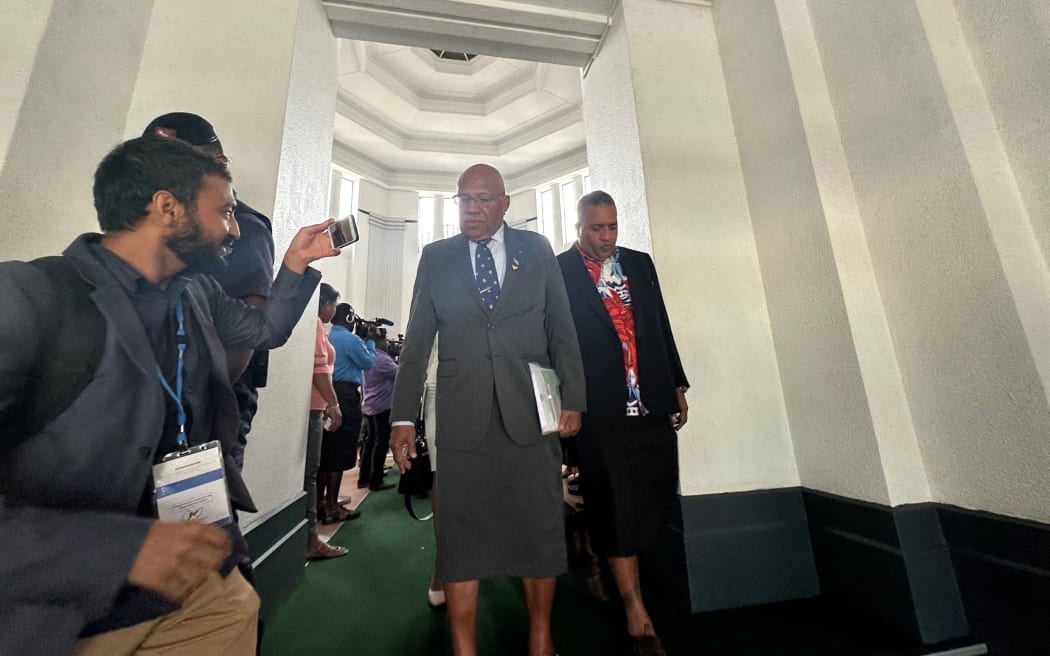
Fiji’s new Minister for Women, Children and Poverty Alleviation, Lynda Tabuya, plans to use surveys and online platforms as an integral part of her ministry
During her official welcome yesterday along with her assistant minister, Sashi Kiran, Tabuya said that over the years she had made it her life goal to help those less fortunate.
She was happy that she could continue what she loved to do on a national stage in helping all Fijians.
“As an integral part of my ministry, I plan on asking you — the citizens of Fiji — about the best way forward utilising surveys and online platforms,” Tabuya said.
“One of the foundations for building a better Fiji is providing equal opportunities to all Fijians irrespective of age, gender, physical ability or income level.”
To promote inclusivity and development, her ministry would continue to serve all Fijians through:
The care and protection of children
Greater policy intervention for older persons and persons with disability
More innovative and targeted income support to families living or caught in the cycle of poverty; and
Promoting gender equality and empowering women to reach their full potential.
Tabuya looked forward to strengthening and building on good partnerships with organisations whose activities and outputs support the ministries strategic objectives and those who provide services in the area of child protection and safeguarding, older people, people with disability, gender equality, women’s empowerment and ending violence against women and girls.
“During the turmoil of the last couple of months, the hymn ‘We Shall Overcome’ was often used as a source of inspiration,” she said.
“At this juncture, Fiji faces daunting poverty levels and incidences of domestic violence, but despite all these challenges I believe with God’s help and everyone working together, we shall overcome.
“I’m looking forward to working for the most disadvantaged in our society and together rebuilding Fiji into the way the world should be.”
Talebula Kateis a Fiji Times journalist. Republished with permission.
National Capital District Governor Powes Parkop is stable and recovering at the Gold Coast University Hospital in Australia, according to his wife Jean Parkop and close family members.
The relieving news comes following Governor Parkop’s medivac from Papua New Guinea to Australia after he suffered complications arising from a cardiac procedure that led to internal bleeding and caused a very tense few days for his family, supporters and residents of Port Moresby city.
Sensationalised news of Governor Parkop’s illness and hospitalisation went viral on social media but the Post-Courier was reliably informed of it last Wednesday evening.
By Thursday morning, he was moved from Port Moresby General Hospital to the Pacific International Hospital (PIH) where he was receiving treatment.
Initially, it was claimed that Governor Parkop had suffered a stroke. By Friday morning, word reached the Post-Courier that he would be medivaced to Australia for further treatment.
However, the Post-Courier was made aware that the medivac would be done in the afternoon.
On Friday, December 23, surrounded by wife Jean, nieces, nephews, grandchildren and extended relatives, Governor Parkop was escorted out of PIH and driven to Jackson’s International Airport where he was medevaced to the Gold Coast, Australia, arriving just after 9pm.
Soon after touchdown in Australia, doctors relayed to his family in PNG that he had been stabilised that evening.
An EMTV news item on Governor Parkop’s recovery.
A press statement from the family on Sunday confirmed that the medevac to Australia was on a recommendation from the PIH.
“We thank the hard working staff, doctors and nurses of Port Moresby General Hospital’s (POMGEN) Emergency Department and Intensive Care Unit (ICU) for receiving him and providing immediate attention and care for our father,” the statement said.
“The specialist surgeons, nurses and staff of Pacific International Hospital (PIH), we thank you for providing great treatment and concern.” Miriam Zarriga is a PNG Post-Courier reporter. Republished with permission.
I remember, as a child, being fascinated by how just seven simple wooden triangles and other shapes could offer endless entertainment. Unlike LEGO, the Tangram pieces do not snap together, and unlike the pieces of a jigsaw puzzle, they do not form a painted picture.
Instead, Tangram invites you to fit all the pieces together to form countless varieties of shapes. You can make your own shapes or you can try to form shapes that others have created. For instance, here’s one way to form a swan shape using Tangram pieces:
This is one of several ways to make a swan shape using Tangram. Can you find another? Shutterstock
But it’s not the only way to make a swan. Can you find others? If you do not have the physical puzzle at hand, you can use a virtual version of Tangram.
Tangram is accessible and yet challenging, and an excellent educational tool. It’s still used in schools today to help illustrate mathematical concepts and develop mathematical thinking skills. It even features a paradox or two.
Tangram is one of many rearrangement puzzles that have appeared throughout the ages. The earliest known rearrangement puzzle, the Stomachion, was invented by Greek mathematician Archimedes 2,200 years ago and was popular for centuries among Greeks and Romans.
It consists of 14 puzzle pieces that can fit together in the form of many different shapes. There are 536 different ways to fit the pieces together as a square.
Then there’s the Eternity Puzzle, released in 1999, which consists of 209 blue puzzle pieces that together form a big circle-like shape. It was very popular and sold 500,000 copies worldwide, perhaps due to the 1 million British pounds promised to whoever first solved it.
Less than a year later, the mathematicians Alex Selby and Oliver Riordan solved the puzzle and claimed the prize. The creator of the puzzle, the controversial Christopher Monckton, said at the time he had to sell his house to raise the prize money.
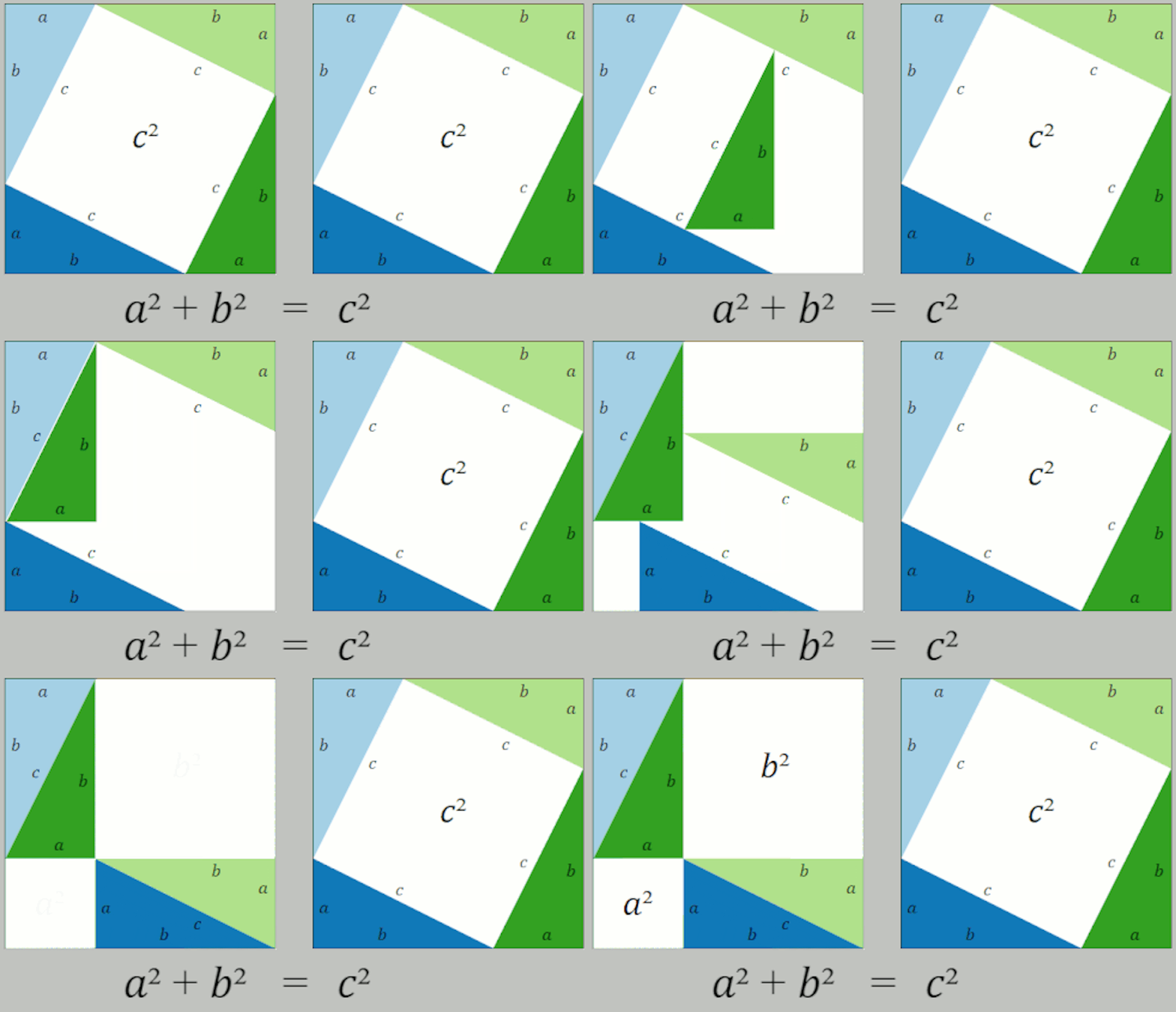
The origins of Tangram stretch back to the third century Chinese mathematician Liu Hui. Among many other accomplishments, Liu Hui used rearrangements of geometrical shapes to elegantly explain mathematical facts such as the Gougu Rule, also known as Pythagoras’ Theorem.
This rearrangement approach to geometry was later evident in the creation of 12th century Chinese banquet tables (rectangular tables designed to be arranged into patterns that might please or entertain dinner guests).
The Tangram was popularised as a puzzle game around the year 1800. Shutterstock
The Tangram craze
According to The Tangram Book by Jerry Slocum and other authors, the Tangram was popularised as a puzzle game around the year 1800.
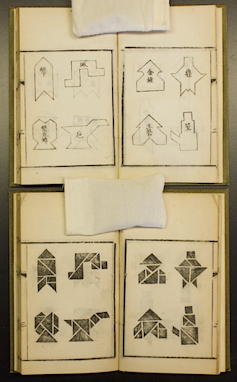
They report the inventor, an unknown Chinese person using the pen name Yang-Cho-Chu-Shih (“Dimwitted recluse”), published Ch’i chi’iao t’u (“Pictures Using Seven Clever Pieces”), a book containing hundreds of Tangram puzzle shapes.
Patterns from a Tangram puzzle and solution books, China c. 1815 (British Library 15257.d.5, 15257.d.14) British Library
This sparked a craze for the game in China. Other Tangram puzzle books were soon published, with some eventually making their way to Japan, the United States and England, where they were translated and extended.
During 1817-18, the Tangram craze spread like wildfire to France, Denmark and other European countries. Worldwide interest in Tangram has endured ever since.
An educational tool harbouring a paradox or two
The lasting popularity of Tangram might partly be due to it allowing so many shapes with so few pieces.
For most people, though, Tangram is just a fun and creative challenge.
There are also some Tangram “paradox” puzzles discussed in The Tangram Book and elsewhere online, where Tangram pieces are arranged to make two seeming identical shapes (but where one appears to have a leftover piece).
Source: The Conversation (Au and NZ) – By Emma Beckett, Senior Lecturer (Food Science and Human Nutrition), School of Environmental and Life Sciences, University of Newcastle
The holidays are often called the “silly season” – a time when we eat, drink and be merry. But these holiday indulgences can lead to feelings of guilt and fear that we’ve undone all the healthy habits from the rest of the year. But how much do you really need to worry about the impacts of holiday overeating?
There are studies that show weight gain can and does occur in the silly season. But on average it’s not as dramatic as diet culture would have us believe, coming in at about 0.7kg.
Importantly, much of this research comes from the northern hemisphere where the major holidays coincide with winter. And these studies focus on weight, not health. Weight is just a marker that’s convenient to measure, but health is more complicated.
While it’s harder to study, nourishing our souls with foods that connect us to our loved ones and our traditions is just as important as the role food plays in nourishing our bodies.
Homeostasis is a scientific term that describes how systems self-regulate. The word comes from the ancient Greek words for “similar” and “steady”.
In living things it means that biology can adapt to changes to keep things in their normal constant state. Essentially, our body is always making little constant biological changes to help things stay the same. This is how we regulate things like our body temperature, blood sugar, blood pressure and other systems important for survival.
The principles of homeostasis also apply to our eating and metabolism. If we eat more for one or two holiday feast days (or even weeks) our biology works to minimise the impacts. This is also why losing weight on restrictive diets can be hard – homeostasis means as we reduce our energy intake our bodies adjust to using less energy.
So for most people, discrete periods of indulgence aren’t likely to be the major determinants of health outcomes. It’s more likely the patterns we follow most of the time will influence our long term health.
Biology and social norms both mean restrictive diets are hard to maintain long-term. Some people are more successful in maintaining a balanced diet when indulging is allowed.
And now science has helped you to relax a little, a few words of caution.
Staying hydrated by alternating with non-alcoholic beverages helps reduce how much you drink and how bad a hangover is, but it won’t eliminate the risks.
Drinking too much over the festive season is not without risk. pexels/karolina grabowska, CC BY
Food safety risks
Festive eating, with sharing, travelling and over-crowded fridges increases our risks of food poisoning. Summer holidays also bring the added risk of heat.
You want to share food and joy, not germs, so remember your basic food safety rules like hand washing, avoiding cross contamination of uncooked meats and other foods, storing food chilled, and heating thoroughly.
It’s also a good idea to make sure you talk to your guests or hosts about food allergens to make sure everyone has a safe holiday feast.
The bottom line
What we eat is a big part of determining our health, but adding a side serving of guilt to your festive feast isn’t healthy either.
For true healthy choices, focus on balance and moderation for the bulk of the year and for most of your choices, but social and cultural eating is part of balance.
Enjoying your celebration foods doesn’t need to mean throwing away all your healthy habits, but healthy eating and healthy indulgence can co-exist if we let it.
Emma Beckett has received funding for research or consulting from Mars Foods, Nutrition Research Australia, NHMRC, ARC, AMP Foundation, Kellogg, and the University of Newcastle. She is a member of committees/working groups related to nutrition or the Australian Academy of Science, the National Health and Medical Research Council and the Nutrition Society of Australia.
Source: The Conversation (Au and NZ) – By Marta Hernandez-Jover, Professor in Veterinary Epidemiology and Public Health, Charles Sturt University
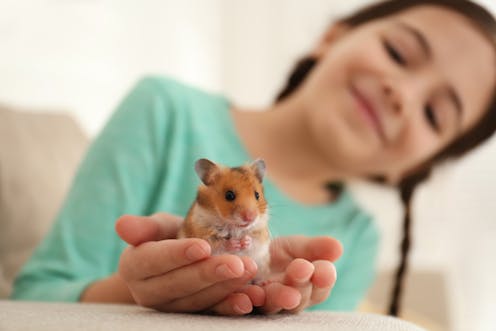
Shutterstock
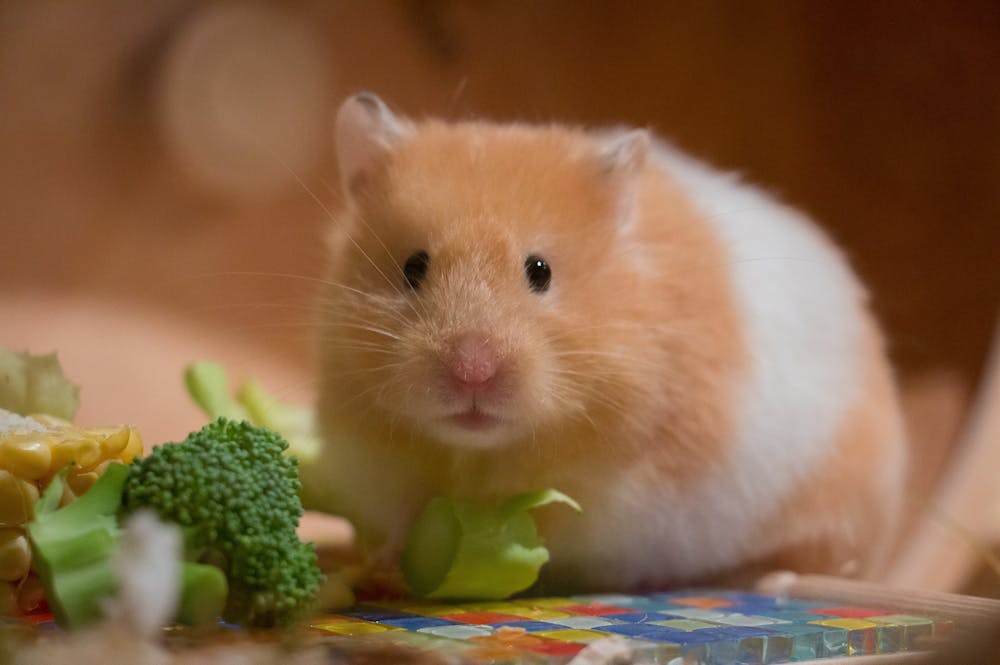
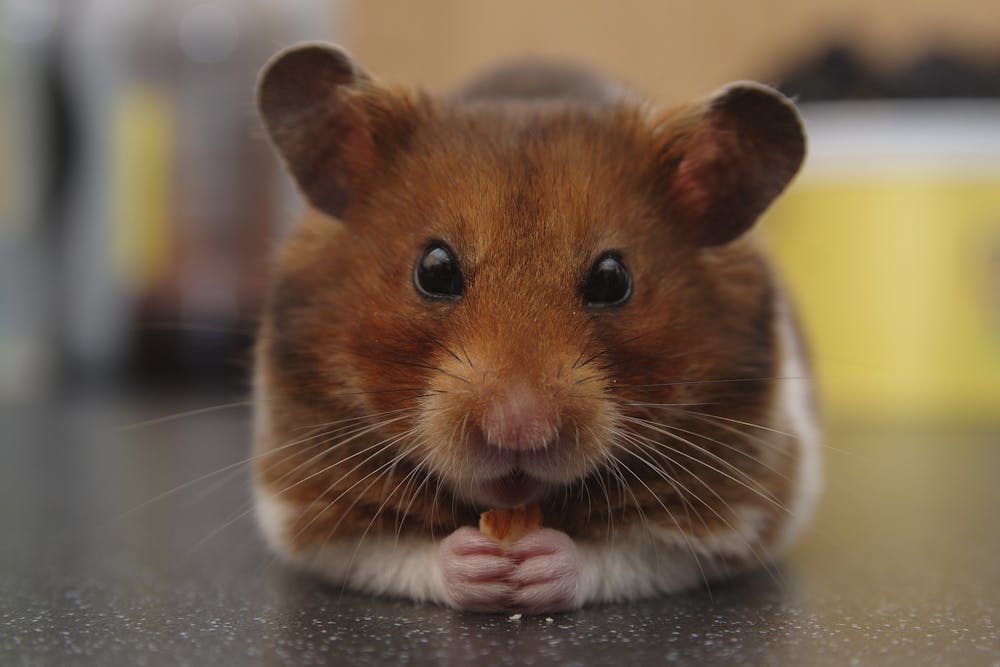
Kids on TV and in movies always seem to be keeping hamsters and gerbils as pets. They’re small, look cute, and don’t need to be taken for a walk. So why don’t we all have hamsters and gerbils as pets in Australia?
The answer: biosecurity and biodiversity.
Gerbils are not allowed to be imported into Australia for any purpose. And while certain hamsters can technically be imported live, this is only strictly for tightly controlled research purposes.
Here’s what you need to know about why hamsters and gerbils could pose a biosecurity and biodiversity risk in Australia.
Hamsters and gerbils threaten not just native Australian animals, but also plants and broader ecosystems.
Hamsters and gerbils originate from arid and semi-arid environments, to which they are well adapted.
Considering roughly 70% of Australia is arid or semi-arid land, hamsters and gerbils could survive and become a pest in the wild.
One study found hamsters can also successfully establish populations in and around cities, adapting quickly to urban environments. Only a few animals need to escape into the wild, survive and breed for a small problem to turn into a very big one.
That’s because hamsters can reach reproductive maturity quite early, at about one month old. They can produce up to five litters a year, and each litter can have more than ten pups.
Gerbils reach reproductive maturity at just a few months old, can have up to eight pups in a litter and, as one veterinary manual put it, “begin mating again almost immediately after the female gives birth”.
If they are released or escape into the wild, hamsters and gerbils would compete with our native rodents for the same food resources.
They could also pose a risk of disease introduction, with both being a significant risk to the survival of our native animals.
Australia has many native rodent species that have been here for millions of years. They are diverse and ecologically important, and represent approximately a quarter of all species of Australian mammals.
However, in the past 200 years there has been a significant decline in the number of species, with many becoming extinct. Our native rodents are, in fact, among our most threatened groups of native mammals.
If hamsters and gerbils became established in the wild in Australia, the consequences could be very significant.
So Australia considers the overall risk to be too high, and importation of these animals as pets is not allowed.
Importation of the Golden or Syrian hamster for research purposes is allowed, but this requires a permit and the animals must be kept in high-security facilities. Gerbils and hamsters have been used in scientific research for a long time (and more recently as animal models to study COVID-19).
The Australian government’s Live Import List, which shows the plant and animals allowed to be imported live into Australia, is reviewed regularly, and a lot of work goes into assessing the risks to Australia from exotic species.
These risks are weighed against the potential economic and social benefits of those species and a decision is made to protect Australia’s environment and agriculture, which are unique in the world.
These safeguards are part of Australia’s biosecurity system.
By supporting this system through small actions, like accepting that we can’t always have any pet species we might like, we are each doing our part to protect Australia’s environment, economy and way of life.
Marta Hernandez-Jover receives funding from the Australian Research Council and the Rural Research and Development Corporations
Andrew Peters is affiliated with the Wildlife Disease Association and was previously a Management Committee member and Deputy Chair of Wildlife Health Australia.
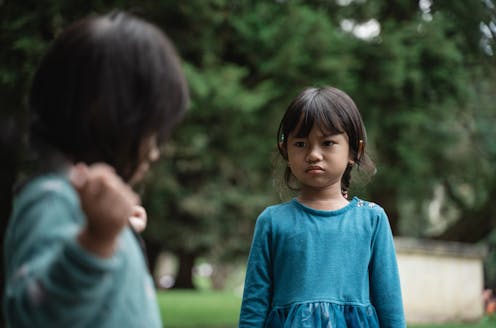
All children argue. And while this can be tedious for parents and carers, it’s not necessarily a problem.
Conflict can help develop social skills, including learning to negotiate, and accommodate the needs of others.
But if the conflict is physical, if there is any distress, or if children are stuck in a loop of unproductive complaints (“no, it’s mine!”), adults can step in to help restore the peace.
Usually, adults intervene by trying to establish the cause of the problem and then providing a solution. But this type of intervention is not as effective as involving children in the process.
A chapter in our new book on how to talk with preschool-aged children suggests four steps to help them solve arguments.
1. Remove the conflict object
If kids are fighting about a toy, remove it momentarily so they can concentrate on finding a solution. Pavel Danilyuk/Pexels
Preschool-aged children mostly argue about objects. That is, who can touch, move or play with the object, who was playing with it first, and how the object is supposed to be used.
Intervention won’t work if children are locked in tug of war over who had the blocks or marbles first. By asking for the object and removing it from any child’s “ownership” (perhaps just temporarily), adults can redirect children’s attention to finding a solution. Trying saying something like: “Let’s put the marbles all together in the middle, and talk about it.”
2. Forget about blame
Children will be eager and able to explain what happened, who did what to whom, and how they have been offended.
It can be useful to establish what happened to establish moral accountability (if, for example, one child has ignored another’s reasonable request) or to know more about how each child feels their rights have been infringed. We should acknowledge, rather than ignore the position of each child. Children hold opposing views and alternate accounts – this is the reason for the conflict in the first place. But we don’t need to evaluate these accounts.
To move from conflict to cooperation, the focus needs to shift to talking about a solution. For example: “What can we do to make this fair?”
Young children have a strong sense of fairness, and are quick to identify when things are “not fair”. Encouraging children to consider what’s fair invites solutions that take into account other children’s perspectives.
Solutions imposed by adults don’t work well when children are then left to their own devices again.
Take this example from an Australian study of playground interactions in the first year of school: two five-year-olds complain to a teacher about other children interrupting their play.
Children can have good, practical ideas about what will work amongst their peers. Charlein Gracia/Unsplash
The teacher suggests they explain they were using the area, and to invite the others to join their play rather than take over. This seems sensible advice. But as they walk away, one of the children says to her friend, “yeah, that’s not gonna work”.
It’s important to remember that children are expert members of their own peer culture – they create and navigate relationships and rules with other children. Ask them what might work. Inviting ideas from children supports them to arrive at solutions independently.
4. Seek consensus and then supervise
Moving to the next step, you could ask children, “What have we decided to do?”
Having asked each child to contribute their ideas means they have buy-in, even if their suggestion does not prevail. Contributing their own ideas means children have invested in the resolution. After brainstorming ideas, ask the children which solution they will choose or they could even “vote”.
Rather than walking away once children have agreed on a compromise, it’s then a good idea to stay nearby to encourage children to stick to their agreement.
Modelling solutions, and enacting how to reach a compromise is part of children’s learning about how to be in the world.
If we just tell kids what to do all the time, it means they don’t learn how to compromise or negotiate with others. In fact, some research has shown educators can disrupt the peacemaking process that children might otherwise navigate by themselves.
Parents are knowledgeable about their own children’s lives, but in many ways, children understand their peers better than adults do. Understanding how children’s interactions actually work, helps us provide more useful advice. So the adult’s role in an argument is not to attribute blame or hand the marbles back to the kid who cries the loudest. Rather it is to help children to recognise the needs of others in finding a fair solution.
Amelia Church does not work for, consult, own shares in or receive funding from any company or organisation that would benefit from this article, and has disclosed no relevant affiliations beyond their academic appointment.
Seema and her husband did quite well when they first opened a samosa stall in the local market of a town in Bihar state, northeastern India.
But then other vendors found out who Seema was.
They yelled at her customers for buying her samosas. They threatened her husband for “polluting” the market by selling food prepared by her. She put up with it for months before giving up.
What had Seema done wrong? She had been born a Dalit, a member of the “untouchables”, the lowest group in India’s ancient and now officially obsolete caste system.
Seema didn’t look, talk or behave any differently. But someone had found out her family name, which indicated she was descended from pig farmers, a job only done by Dalits. That was enough.
A rigid occupational hierarchy
While there is some debate about British colonialism amplifying it, the origins of India’s caste system go back thousands of years, and are deeply entwined in Hinduism, the religion followed by about 80% of India’s population.
Caste is essentially the stratification of people into a rigid occupational hierarchy.
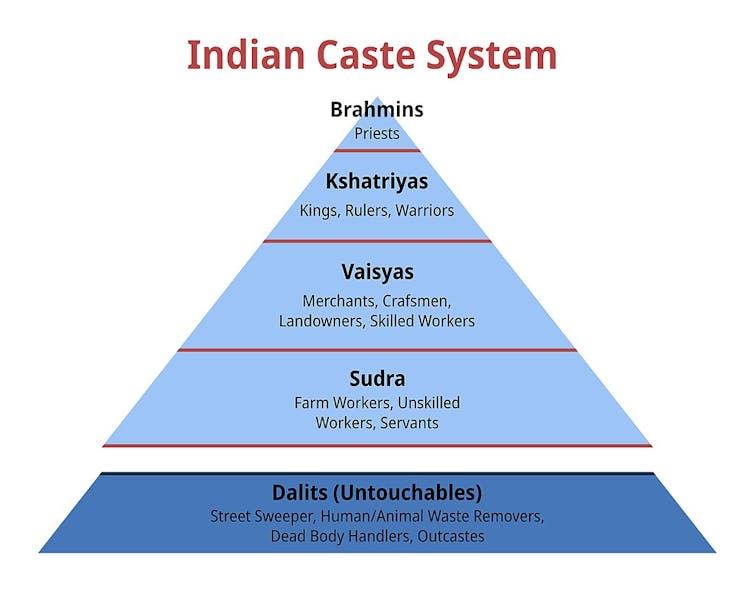
According to the Manusmriti, considered one of Hinduism’s most important books of law, people are born into one of four castes, depending on their conduct in past lives.
The most virtuous come back as Brahmins, the caste of priests and scholars. Next are the Kshatriyas, who are ascribed to be rulers and warriors. Third are the Vaishya, the artists and traders. Fourth are the Shudras, only good enough to do manual labour.
Below all of them are the Dalits, the “untouchables”, excluded from all jobs except the worst-paid and most degrading – on the pretext of maintaining the spiritual purity of those in higher castes.
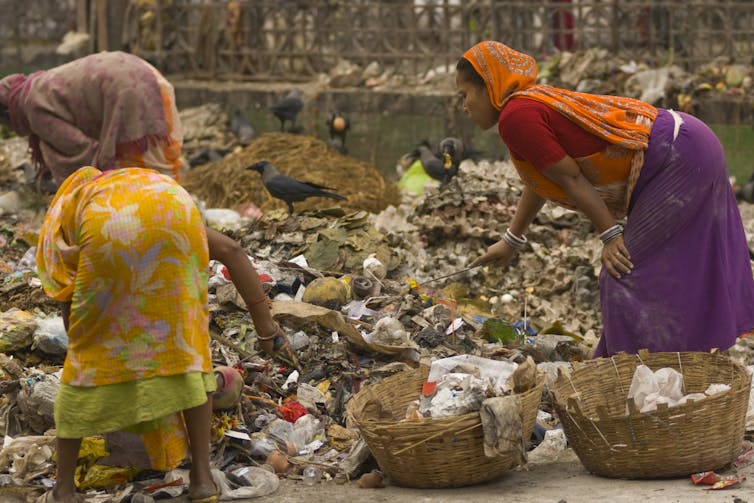
Dalit women continue to do much of India’s worst work, such as picking over garbage dumps for scraps to recycle. Shutterstock
India officially outlawed caste-based discrimination in 1950. But it continues to be a fact of life for the estimated 200 million of India’s 1.4 billion population who are Dalits.
They are even discriminated against when applying for programs established to help them.
The plight of Dalit women
I met Seema in the summer of 2019, through a non-government organisation that provides vocational training to women.
It was about two years since she’d given up her stall. Now she was completing a cooking course. From the course she would gain a certificate she hoped would improve her chances of getting a microloan from a government bank, backed by the Reserve Bank of India and offered to people who lack the collateral that institutional lenders usually require.
A microloan might be enough to buy a sewing machine to start a clothes-mending business, or to buy cows to sell milk and cheese. Seema’s plan was to relocate to a bigger city and start a restaurant.
Seema Ghasi wanted a microloan to set up a somosa stall. Shutterstock
She had already applied for a microloan 18 months before, with no success.
When she enquired about her application’s status, she said, staff at the bank brushed her off with comments such as “we have to be extra careful with some applicants”, “I can tell just by looking at your name here on the first page that doing business will be tricky for you” and “I don’t think it’s in your blood”.
My research suggests this is a common experience for Dalit women.
The problem with microloans
Since being pioneered by economist Muhammad Yunus and the Grameen Bank in Bangladesh in the 1970s, microloan programs have been embraced as a poverty-reduction policy in many developing nations, including India.
Microloans are offered by for-profit, not-for-profit and government-owned banks. The Reserve Bank of India regulates the sector and acts as a guarantor of microloans given by banks under national government-sponsored poverty alleviation schemes.
For Dalit women, the Reserve Bank of India underwrites incentives including interest rates about half that offered to other women.
In Bihar I interviewed almost 30 Dalit women completing vocational courses to improve their prospects for a microloan. I asked them the same question: why had they not succeeded?
The typical response was an uncomfortable silence, then tears, and then a story of being humiliated when applying for a microloan – of help being refused when filling in a form, of being told not to sit on the same chairs as other bank customers, and of their application being rejected for no good reason.
Research by myself and associates, analysing the microloan-lending decisions of 43 branches of a major bank with more than 2 million microloan customers, found 66% of rejected applications were from Dalit women.
All these rejections contravened the Reserve Bank of India’s guidance that Dalit application be decided at a higher level – presumably to avoid the discrimination at the branch level.
Caste certificates
Dalit women face a catch-22. To qualify for a program to assist Dalits, they had to prove they’re a Dalit by supplying a government-issued caste certificate.
But this certificate then became the means for them be identified as Dalits and discriminated against.
The women I interviewed told me how much attitudes changed when bank staff saw their caste certificates. They were called “freeloaders” and “privileged”.
Dalit women, being at the bottom end of the social and patriarchal hierarchy, will seldom request a reassessment. They have already been hit with a double whammy of caste and gender discrimination, and the instruments put in place to help them have become bureaucratic weapons to perpetuate this exploitation and ostracism.
There are no simple solutions, but the first step is to understand the extent of the problem. A full audit by the the Reserve Bank of India of microfinance programs and their treatment of Dalit women is the obvious place to start.
India’s history has its fair share of nice ideas failing in practice. The work to end discrimination against Dalits will take decades. Seema may never live to see the day when revealing her family name doesn’t risk disgust.
But there’s still a chance for Seema’s two young children to live in such a world.
Kanika Meshram does not work for, consult, own shares in or receive funding from any company or organisation that would benefit from this article, and has disclosed no relevant affiliations beyond their academic appointment.
Traditional banks in New Zealand have long served as gatekeepers of customers’ data. This is about to change with the arrival of what’s called “open banking”, set to arrive in New Zealand by 2024.
In essence, open banking is where a traditional bank makes client and transaction data available to another financial service provider. This provider then uses the information to find the best deal for customers.
The government recently agreed to establish a consumer data rights framework (CDR), paving the way for open banking in New Zealand.
As the country prepares for this new way to do banking, we can learn a great deal from the experiences of Europe and the United Kingdom – particularly in relation to concerns over governance and the security of data.
The benefits of open banking
Open banking is gaining global recognition as it helps integrate new financial service providers into the financial ecosystem, making it more sustainable, efficient, agile and innovative.
For someone with several accounts across different banks, open banking will allow them to check all their transactions in a single interface through account aggregator applications. The customer will then be able quickly move funds between their accounts.
With the help of artificial intelligence, the same application can help customers organise their finances by suggesting financial products with better rates and conditions.
As far as small- and medium-sized entrepreneurs are concerned, open banking enables them to control their cash flow better, reconcile payments and manage inventories. Open banking also allows business owners to integrate their financial information with their accounting service provider.
Learning from the European experience
But as we embark on this brave new world, what can we learn from the experiences of those countries that have already introduced open banking? Helpfully, there are two recent reports from the UK and Europe that illustrate some of the benefits and pitfalls of the process.
Open banking emerged in July 2013 as part of the European Commission’s revised Payment Services Directive 2 (PSD2) proposal. Open banking is now a global initiative where the UK and continental Europe are seen as global leaders. In Europe alone, there are at least 410 third-party providers.
In May 2022, the UK’s Competition and Markets Authority published the results of an investigation into their open banking experience.
The authority’s investigation raised concerns over corporate governance failures, the late delivery of accounts, management of conflicts, procurement, value for money, and it identified the need for human resource improvements.
The issues mainly related to governance failures at the Open Banking Implementation Entity (OBIE).
The OBIE was charged with overseeing the implementation and the performance of open banking by the nine largest banks in the UK. This governance structure led to too much power being vested in a single trustee, with insufficient checks and balances on their decisions. In addition, there were failings in the risk management system and internal controls.
The UK government has recognised the problem and is in the process of reinforcing OBIE’s governance structure.
Recently, the European Commission held public consultation on its 2013 directive and the commission’s work on open banking. Most of the respondents were concerned about sharing financial data due to a lack of trust – stemming from concerns over privacy, data protection and digital security. There was a general sense of not being able to control how their data was used.
Some 84% of people responding to the public consultation believed there were security and privacy risks in giving service providers access to their data.
Moreover, 57% of respondents believed financial service providers that hold their data only sometimes ask for consent before sharing that data with other financial or third-party service providers.
The need for clear regulation
The European and UK experience highlights the issues related to the implementation of open banking and public perception. The New Zealand government should carefully consider the governance and data security issues raised by the two reports.
It is crucial to develop an effective board oversight and risk management strategy. A consent management tool should be introduced to build trust and transparency. There should also be a high-level system in which all data holders and users are adequately monitored and supervised.
Implementing open banking in New Zealand should result in a shift of power from traditional banks towards a vigorous financial technology sector. It should also create opportunity for traditional banks to innovate and become much more responsive to customer needs.
If we get it right, open banking will ultimately mean New Zealanders are better served by their financial system.
The authors do not work for, consult, own shares in or receive funding from any company or organisation that would benefit from this article, and have disclosed no relevant affiliations beyond their academic appointment.
Ever get the feeling that time is standing still, that your life’s on repeat, that everything’s just another rerun of a mediocre TV show?
Well, this might be because it is – at least when it comes to the American cinematic media ecology, with the majority of the most-hyped Hollywood films for 2023 being sequels and reboots.
One would be forgiven for giving up on our Hollywood dreams and turning to other regions – Europe, Australasia, South Korea – for film fare.
Even if there are a handful of substantially original films slated for 2023, it’s difficult not to be snarky when major studios continue to show such contempt for the intelligence of viewers.
So, what do we have to “look forward to” in 2023?
Major franchise films
If you love superhero franchises, there are some notable releases in 2023. Two of them look watchable, including a new Ant-Man movie – this is one of the Marvel series that is bearable, largely due to their light touch and charming leads – this time co-starring Michelle Pfeiffer and Bill Murray, and the sequel to the excellent animation film of 2018, Into the Spiderverse, Spiderman: Across the Spiderverse.
There’s also a new Guardians of the Galaxy film – Vol. 3 – which fans of Guardians of the Galaxy series will probably rush out to see (these people must exist, given the scale of these films!), a new Shazam movie, which promises to be as enthralling as its antecedent, and a sequel to the inoffensive Captain Marvel, The Marvels – its name sounds like a parody of current cinema trends.
If that doesn’t scratch your superhero itch, there’s Aquaman and the Lost Kingdom, directed by the supremely stylish James Wan.
There are some other notable non-superhero sequels.
There’s a new Magic Mike movie, again directed by Steven Soderbergh, who seems perpetually to be coming out of retirement to direct more movies, this one co-starring Salma Hayek and set in London. There’s Fast X, the new Fast and the Furious movie, the tenth entry in a franchise that has historically produced some solid action films but whose last couple of entries have started to feel a little dusty. There’s the appropriately-named Legally Blonde 3, a continuation of the story of ditzy but brilliant law student then lawyer Elle Woods (Reese Witherspoon), a character with some charm in the first film but whose schtick had become tedious by the second outing.
Director Denis Villeneuve’s Dune: Part I was a technically accomplished sci-fi fantasy epic, but Part II, scheduled to be released in November, promises to be less engaging as the best characters (and actors) were killed off in Part I.
There’s Scream 6, the second Scream film since the death of horror maestro Wes Craven and the attempted series “reboot” (is there a more annoying word?) with Scream (2022), the first not to star series anchor Neve Campbell as the harangued and courageous Sidney Prescott.
For some bizarre reason, there’s yet another Ghostbusters movie being released in 2023. Actually, it’s not bizarre at all, the sequel and reboot, especially of nostalgic 80s fare, have become virtual mints, printing money for studios with minimum creative effort. There’s also a new Transformers film coming – Rise of the Beasts – this time without Michael Bay directing, there’s a new John Wick film, and, perhaps weirdest of all, Indiana Jones and the Dial of Destiny. This is the first one to not be directed by Spielberg and promises very little, though it may be mildly interesting to see Antonio Banderas and Mads Mikkelsen in an Indiana Jones film.
More minor – but, probably, no less profitable – sequels include a new Creed movie, Creed III, directed by actor Michael B. Jordan, Evil Dead Rise, a new entry in the Evil Dead series, Mission Impossible: Dead Reckoning, Part One (as though it isn’t annoying enough to have to see countless sequels, now we have to see sequels in multiple parts, thanks Harry Potter), The Nun 2 – the cleverly-named sequel to the banal and unfrightening schlocker The Nun, Insidious: Fear of the Dark, directed by series actor Patrick Wilson, Murder Mystery 2, the sequel to the disappointing Netflix film of 2019 starring Jennifer Aniston and Adam Sandler, a Hunger Games prequel, The Ballad of Songbirds & Snakes – why settle for four movies when you can make five? – Book Club 2: The Next Chapter, The Equalizer 3, The Expendables 4, and Saw X!
Perhaps the sole sequel I am eagerly anticipating is Meg 2: The Trench. The Meg was one of the most delightful shark romps in years, and the sequel once again stars diver-turned-action man Jason Statham and is directed by Ben Wheatley, who has made some of the most unnerving films of the last decade (Kill List, A Field in England, In the Earth). Wheatley has a cinephile’s sense of genre and spectacle, so Meg 2 at least promises to be pleasurable.
Other major releases
People will be queuing up, I’m sure, to see contemporary auteur Christopher Nolan’s treatment of the biography of atomic bomb scientist J. Robert Oppenheimer, Oppenheimer. Nolan is one of the most pretentious directors around, and his films are deeply conservative, but Oppenheimer is a striking enough character that it would be hard to sap the energy out of his story.
Similarly, Martin Scorsese is doing another biopic, this time of Theodore Roosevelt, with perennial Scorsese collaborator Leonardo DiCaprio in the lead role.
There’s a new Guy Ritchie spy caper – Operation Fortune: Ruse de Guerre, starring Ritchie stalwart Jason Statham, along with Aubrey Plaza and Hugh Grant, who has really reinvented himself in recent years, embracing the kind of dissolute sociopathic prat that always lurked under the façade of his good guy roles in films like Notting Hill.
One of the few releases that genuinely generates interest is the Barbie feature film, starring Margot Robbie and Ryan Gosling. Films based on toys are notoriously terrible, and there’s no reason to think this won’t be, but it will be fascinating to see how flavour of the month director Greta Gerwig (responsible for one of the more inept films of recent years, Little Women) makes a film out of the Barbie toy and legend.
Ryan Gosling as Ken in Barbie (2023). WARNER BROS. PICTURES
Notable more minor releases
Even if major Hollywood productions seem to be tied up now, much of the time, to multimedia money-generating franchises (are many people over the age of five really excited to see Paw Patrol: The Mighty Movie or Neil Blomkamp’s film Gran Turismo, based on the video game, both coming out in 2023?), there are some smaller films coming out of the US in 2023 that look promising.
Blumhouse are a hit and miss company – they’ve released some solid horror films over the last couple of decades, but also more than their share of didactic and irritating tripe – but M3GAN, a Child’s Play-type film about an AI doll that becomes self-aware and overprotective of its owner looks good.
Similarly, the bluntly-titled Plane promises to be an engaging genre film. Starring Gerard Butler and directed by genre filmmaker Jean-François Richet (Blood Father), it follows a pilot trying to escape after an emergency landing in a hostile region in the Philippines.
Indie-philes will probably be interested in the new coming of age film When You Finish Saving the World, the directorial debut of actor Jesse Eisenberg, released by A24, and also in A Good Person, written and directed by actor Zach Braff and starring Florence Pugh and Morgan Freeman.
There’s Shotgun Wedding, made by Amazon, a throwback to the high-romcom era starring J Lo and Josh Duhamel, and Cheech Marin (!) – watching it should at least be a weird experience, like stepping into a time-machine and winding up in the late 90s.
80 for Brady also promises to be a curio, given it’s produced by Tom Brady, stars Tom Brady as Tom Brady, and is about a group of seniors who take a road trip to Houston to watch their hero Tom Brady. Brady, of course, no longer plays gridiron in the NFL – so why not continue his career playing it in the movies? The cast of this one is good, and it’s nice to see Sally Field in a big film again, along with Lily Tomlin, Jane Fonda and Rita Moreno. Even if their output has been at best mixed over the last decades, it should be rewarding to see a gang of pre-MTV pros acting on the big screen.
What else might be worth watching?
The weirdest (or is it most inspired?) title award for 2023 goes to the slasher film, Winnie-the-Pooh: Blood and Honey – “slasher film” and “Winnie-the-Pooh” not usually going together. Cocaine Bear, a bizarre true story directed by comic actor Elizabeth Banks about a bear that went berserk after ingesting a large amount of cocaine is close behind.
Chevalier, a biopic of “Black Mozart” Chevalier de Saint-Georges, the horror comedy Renfield, Next Goal Wins, directed by Taika Waititi about the Samoan soccer team trying to qualify for the 2014 FIFA world cup, Challengers, a sports romcom directed by Luca Guadagnino, The Blackening, a woke horror parody with a ho-hum premise, and Harold and the Purple Crayon, the long-awaited film version of the popular children’s book may also be worth checking out in 2023.
But, all in all, there is not much promise on the horizon as far as American cinema goes, for the next year at least. Luckily films from the sound era go back nearly a hundred years, and many of the best have been released on physical media and streaming services, so it will be easy to watch these instead.
Ari Mattes does not work for, consult, own shares in or receive funding from any company or organisation that would benefit from this article, and has disclosed no relevant affiliations beyond their academic appointment.
Fiji lawyer and former human rights activist Imrana Jalal has offered a “warning” to her motherland that should people be investigated, prosecuted or dismissed, it must be done within the rule of law.
In a social media posting on her Facebook page, Jalal wrote: “A WARNING to ourselves in Fiji — it’s very important that if people are going to be investigated, dismissed, prosecuted or asked to resign voluntarily (without coercion) whether in a State-Owned Enterprise (SOE) or otherwise; or a commission of inquiry be set up, example, to look at the judiciary, that this all be done within the rule of law.
“There should be no victimisation or targeted prosecutions unless there is genuine evidence by independent investigators.
“I speak with authority on this having been targeted by the former regime personally.
“If we do otherwise, then we are no better than the corrupt regime [that has been] in power for the last 16 years.
“We need to start off the right way or we are tainted from the beginning.”
Jalal, a former Fiji human rights commissioner and previously a gender specialist with the Asia Development Bank, asked those calling for heads to roll to “be careful”.
‘Give our fragile democracy a chance’ “Be cautious. Refrain from this type of diatribe. No good will come of it. There can be no restoration to the rule of law like that,” she said.
“Let the government slowly make its way. Give them a chance: step by step we can restore our fragile democracy.”
Prominent Suva lawyer Graham Leung voiced similar sentiment, calling on Fijians to be patient and follow the law. He added that due process must be followed in dismissing or removing people from office.
“Arbitrary and unlawful dismissals must be avoided at all costs. There are constitutional processes for removal for some posts,” Leung said on his Facebook social media page.
“In some cases, there are legally binding contracts in place. Negotiations for early termination of contracts can take place by mutual agreement. These should be carried out professionally without malice or bad faith.
“We would be no better than the last government if we did this. Due process will take time.
“You cannot rectify and address 16 years of bad governance overnight. The change we all voted for will not happen at the press of a button.
“I urge the people of Fiji celebrating the new government’s victory and the removal of the previous authoritarian government to be patient. We will get there eventually.
“Let us not, in the excitement of the change, lose our sense of reason, fairness and logic.
“I completely accept that those [who] have broken the law must be held personally accountable, whether in the courts or according to law.”
Timoci Vulais a Fiji Times reporter. Republished with permission.
Fiji Prime Minister Sitiveni Rabuka has already started work to achieve the People’s Alliance-led coalition 100-day plan outlined in its manifesto.
He recognises that things such as cost of living, water and electricity outages are existing issues that can be solved after a thorough review and consultative process.
In its manifesto, the party had stated it would consult on price control on basic and zero-rated VAT food items.
During an interview with The Fiji Times, he also voiced plans to grow the economy to a level whereby the revenue and expenditure could “harmonise continuously”.
“We cannot immediately effect reductions because the revenue forecast has been done in the last budget,” he said.
“At the moment, we do not see any signs of any sudden increase in our revenue so we do not want to suddenly increase some of the expenditures and we’ll probably run out this budget according to the forecast, and then bring in those measures that we would like to achieve [with] the budget target for the full budget year.
“But that’ll be after the 100 days. Those that can be done within the 100 days, we’ll have to do.”
Rabuka said he had already met with the permanent secretary of the Prime Minister’s Office and expected an informal Cabinet sitting on Thursday where they would be briefed on the country’s economic situation.
Shayal Devi is a Fiji Times journalist. Republished with permission.
This year was another huge one for Local Democracy Reporting, with our reporters at the forefront of uncovering some of the biggest stories in their regions.
Felix Desmarais in Rotorua exposed hitherto secret plans by the council to revoke the reserve status of seven council reserves, paving the way for new housing to be built on them, including social housing.
It became a major election issue with residents using the ballot to choose candidates opposed to the plan, which was subsequently canned by the new council.
Steve Forbes covered the chaos created by understaffed and overstretched Emergency Departments, with a deep dive in to the death of a patient who visited Middlemore Hospital.
He was first with a damning independent report that found the ED was “an unsafe environment for both patients and staff”.
It was a year of climate change-induced severe weather, and LDR reporters produced numerous stories on how councils were coping, or not, when it came to putting back together what Mother Nature had torn apart.
Flooding this year continued to represent an existential threat to Westport after the devastating inundation seen last year as well. Brendon McMahon’s stories have reflected the reality on the ground, such as the predicament faced by residents on Snodgrass Road who had been left out of a proposed flood protection scheme.
Nelson clean-up Nelson reporter Max Frethey has kept readers up to date as that city deals with its own clean-up after devastating downpours in August, which left the city with a repair bill of between $40 million and $60 million, the biggest in its 160-year history.
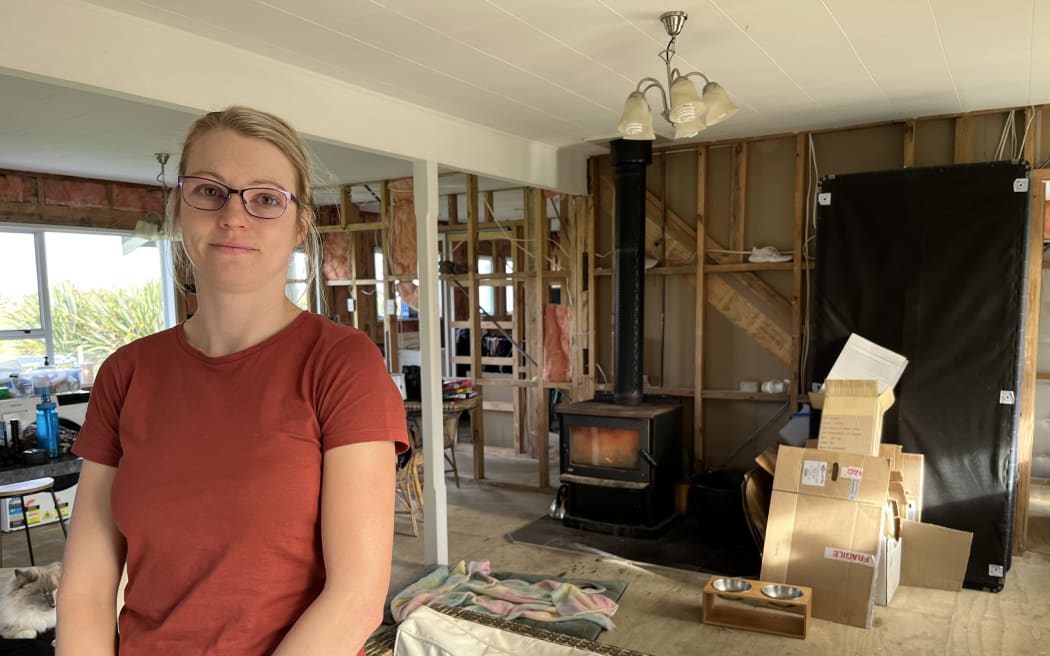
Sarah-Lee Smith inside her flood-damaged Snodgrass Rd home in Westport. Image: Brendon McMahon/LDR
The weather kept Marlborough’s Maia Hart busy this year as well in a region with communities still cut off or with limited access due to damage caused a year ago.
But it was her story on the resilience of elderly Lochmara Bay resident Monyeen Wedge that really captured readers’ attention. Living alone, she went three days without power and was forced to live off canned food.
The pandemic and the response of health authorities and councils continued to be an area of inquiry for LDR in 2022, and none more so than Moana Ellis in Whanganui.
While high vaccination rates amongst pākehā protected thousands from the worst affects of the Omicron wave, it was a battle for DHBs to reach many Māori, who already had a distrust of health authorities. Moana’s reporting ensured these communities were not forgotten.
In one of LDR’s most read stories of 2022, Alisha Evans uncovered the extent of bureaucratic overreach in Tauranga when through traffic was discouraged on Links Ave with the help of a fine. A glitch led to infringements being issued to drivers living as far away as the South Island who had never even visited the city.
Reporters have documented the good and the bad of people’s interactions with vulnerable ecosystems. North Canterbury’s David Hill shone a light on the wonton destruction of endangered nesting birds in the region’s braided river beds by 4WD enthusiasts.
Community efforts While Mother Nature was the winner following a series of stories from Taranaki’s Craig Ashworth on community efforts to protect dwindling stocks of kaimoana, which finally resulted in a two-year long rāhui.
The national roll out of flexible median barriers, aka “cheesecutters”, caused consternation in Whakatāne where Diane McCarthy talked to police who said they would struggle to pass drivers on their way to emergencies and farmers driving slow-moving tractors worried about extra levels of road rage from slowed-up motorists.
The dire state of the country’s water infrastructure is magnified in places like Wairarapa, with its small ratepayer base and decades old pipes and sewage treatment. There was no better illustration of this than Emily Ireland’s reporting on Masterton’s use of its Better Off funding where it was pointed out a mum was using a council provided portaloo to potty train her toddler because sewage was backing up in the town system whenever there was heavy rain.
The human impact of decisions around water infrastructure was also brought in to sharp relief in Ashburton reporter Jonathan Leask’s excellent reporting. He took up the cause of a couple and their three children who were shut out of moving in to their dream home due to high nitrate levels limiting the building of any more septic tanks.
One of the biggest changes around council tables this year was the election of Māori ward candidates, with half of all councils now having these. Northland’s Susan Botting has been first out of the blocks reporting on the new dynamics at play, starting with Kaipara mayor Craig Jepson’s ban on karakia to open meetings. The ban was hastily reversed, but led to the largest hikoi in Dargaville for some time.
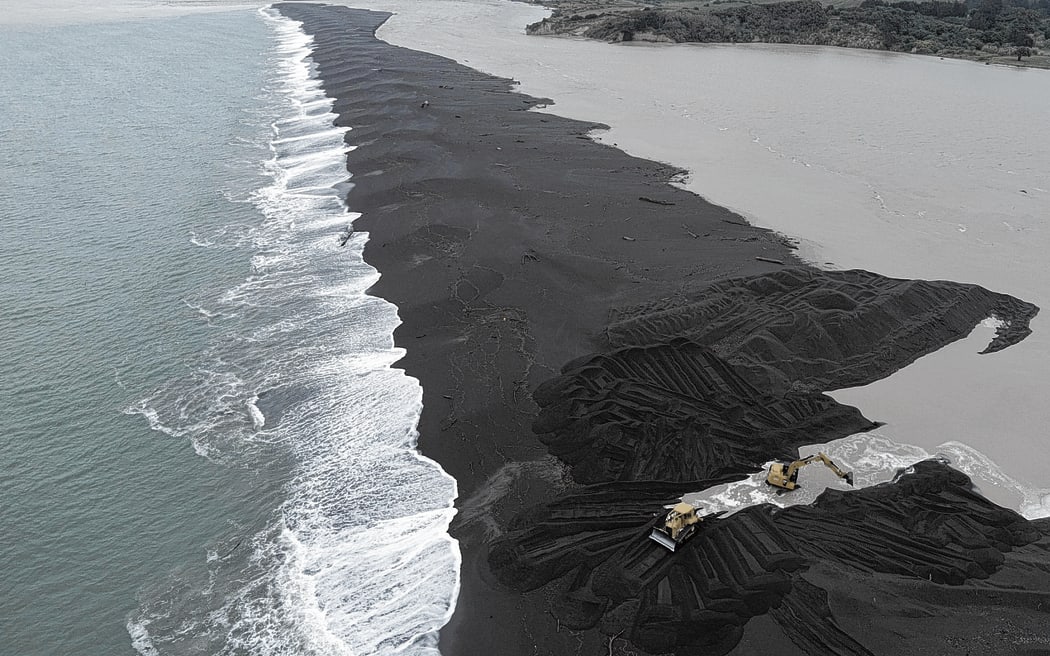
Hamish Pryde and a worker from Pryde Contracting were busy opening up the Wairoa River mouth last month in an effort to avert a flooding disaster for the township and low-lying areas. Image: Hawke’s Bay Regional Council/LDR
As with all of LDR’s reporters, choosing just one stand out story from the many fine pieces published throughout the year is almost impossible. None more so than Tairāwhiti reporter Matthew Rosenberg.
But no wrap of 2022 would be complete without mention of his story on bulldozer driver Hamish Pryde. The 65-year-old helped save Wairoa from a dangerously high river by negotiating already badly flooded paddocks and opening up a sand bar so the river could drain out to sea.
As Matthew says, “not all heroes wear capes, some drive bulldozers”.
Local Democracy Reporting is Public Interest Journalism funded through NZ On Air. Asia Pacific Report is a partner in the project.
The lead-up to the holiday period is often referred to as the silly season — but it is when offenders get serious; burglary ratestend to increase during the festive season.
Why? Homes around this time of year are often full of Christmas presents, so there is a lot of new merchandise to attract burglars. And sometimes people also break into houses looking to steal food and goods they need, or items they can pass on as gifts – and burglars know there’s a good chance the home will be empty during the holiday season.
Our research has focused on finding out more about why offenders commit burglary, what they’re looking for, and how they decide which house to target. Here’s what you need to know.
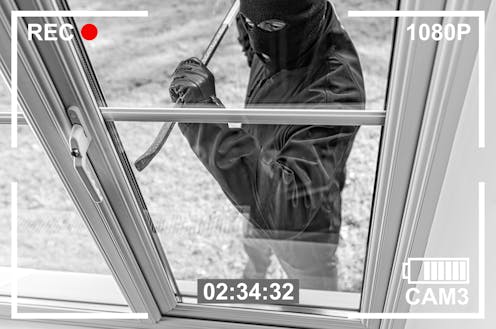
The lead-up to the holiday period is often referred to as the silly season — but it is when offenders get serious. Shutterstock
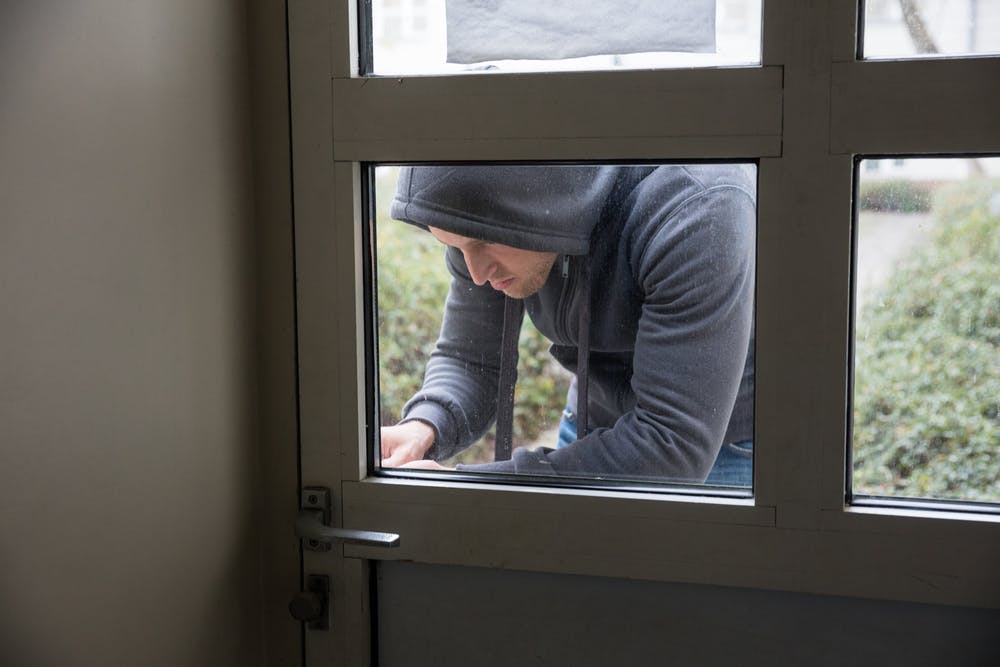
Burglars tell us they choose houses that are easy to access, often looking out for unlocked windows and doors.
Some kind of cover is important, too. Are there large or overgrown plants they can hide behind? Are they hidden from view of main roads or neighbours?
Finally, they want the burglary to be worth it; ideally, they want valuables that are easy to access, conceal and sell on. Examples include online package deliveries, small electronics, jewellery, cash or gift vouchers.
Any valuables visible from windows or left in gardens or driveways are considered fair game.
Protecting your home while you are away
Over the holiday period many of us take some well-deserved time away, so how can you reduce the risk of burglary while you’re out of town? It helps to understand what “types” of burglars there are.
We sort burglars into three categories:
“opportunists” are not out to burgle but will if they see something they fancy
“searchers” are planning to burgle but have not selected the premises yet; and
“planners” are more professional and will watch or “case” a property in preparation for a burglary.
To best deter opportunists, keep valuables out of sight. Garage doors should stay shut and don’t leave empty cardboard boxes lying around near the bins. These empty boxes advertise your new Christmas acquisitions, and should be kept out of sight away from the kerb until bin day.
Don’t make it obvious you’re out of town. Shutterstock
To reduce the risk of becoming a target for searchers, lock your doors and windows. Remove hiding places from your front door or rear access so they cannot remain hidden while breaking into the house.
We also know searchers look for houses that are obviously empty of people. If you’re going away, ask someone to put out and bring in your bins and collect your mail, so a loaded letterbox doesn’t advertise an empty home.
Planners usually target homes that will produce a significant haul but are deterred by sophisticated security systems and alarms. They can often recognise a decoy security camera for what it is.
All burglars we’ve interviewed have reported not liking dogs, alarms, neighbours or anyone who could potentially identify them.
Our previous research shows burglars are aware of old tricks such as leaving a radio or light on constantly while you are away. Instead, you could try using timer-based indoor lights that come on in the evenings.
You should also resist the urge to announce your holiday plans on social media, and make sure your home contents insurance is up to date and you have individual items photographed and insured.
Older children home alone during the holidays? Make a plan
School holidays are long and most parents’ annual leave won’t doesn’t cover the entirety of the school break. That means older children are often left home alone while their parents are at work, particularly in January. It’s important you speak to your children about how to reduce the risk of your house becoming a target while they are home alone.
If your children are coming and going during the school holidays, make sure they know how to lock up the house and remind them not to leave their valuables in view.
It is common for young people to leave new bikes, skateboards and scooters outside the front door. Put reminders up so they remember to take them inside, or out of view.
When young people return home, teach them to take notice of anything that looks out of place. If they suspect someone has been in the house, tell them not to enter but go to a trusted neighbour, call their emergency contact, or contact the police. That way they stay safe and do not interrupt a crime in progress and put themselves in danger.
Our recent research showed when young people target a house, the most common method they use is to knock on the door and see if someone is home. If it looks like someone is coming to the door, they run.
We quite often tell young people at home not to open the door when parents and caregivers are out. You might consider whether you feel comfortable with them making it clear someone is home (by calling out or making some noise inside) but not opening the door. It’s up to you to develop a strategy you and your children feel comfortable with.
The authors do not work for, consult, own shares in or receive funding from any company or organisation that would benefit from this article, and have disclosed no relevant affiliations beyond their academic appointment.
Source: The Conversation (Au and NZ) – By C Raina MacIntyre, Professor of Global Biosecurity, NHMRC Principal Research Fellow, Head, Biosecurity Program, Kirby Institute, UNSW Sydney
It’s bushfire season. So you might be wondering about the best way to protect yourself from the health impacts of smoke.
Guidelines suggest wearing respirators, avoiding outdoor air and avoiding vigorous activity outdoors. Many people use the cheaper option of a surgical mask during bushfires. But there has never been a clinical trial to measure how well these interventions work. That’s why our group is looking into it.
In the meantime, here’s what you can do to reduce your exposure to bushfire smoke.
Australia’s 2019/2020 summer bushfires resulted in more than 400 estimated deaths and thousands of hospitalisations from smoke exposure.
You don’t have to have a lung condition to suffer the ill-effects of bushfire smoke. Breathing difficulties, eye irritation and heart attacks are among the well-documented short-term impacts.
But people with asthma, emphysema, chronic bronchitis and other lung conditions are particularly susceptible to smoke exposure, triggering asthma attacks and breathing difficulties.
This was the typical pattern we saw during our own research, conducted during the same bushfire season. We showed smoke exposure caused ill health in people with and without existing lung disease.
However, we found people under 65 had a higher risk of ill health after smoke exposure than older people. This may be because younger people tend to go outdoors more during bushfires.
If you live in an area potentially affected by bushfire smoke, the first thing to do is to get an early alert about fires and smoke using one or more apps. Examples include, the Fires Near Me app or the AirRater app for air quality.
You can also use a visual method to assess air quality. This involves identifying a landmark on the horizon about 5 kilometres away and noting if it becomes hazy. This would be the trigger for using a respirator or avoiding outdoor air.
2. Stay inside if it’s safe
Try to avoid exposure to smoke, avoiding outside air and staying indoors if it is practical and safe to do so. Vigorous exercise outdoors can be dangerous as it results in greater smoke inhalation and risks to the heart and lungs.
Close all doors and windows, set air-conditioning to recirculate, and seal gaps under or around doors, windows and wall vents with towels, blankets or plastic.
Unfortunately, these instructions are the opposite of what to do if there is COVID at home, when you would want fresh air in the house. If that is the case, wear a mask indoors in common areas and social distance from the person with COVID.
Most people who need to go outside during a bushfire can use some type of disposable respirator to filter the smokey air.
You will have seen people wearing these P2, P3 or N95 respirators to protect themselves and others from SARS-CoV-2, the virus that causes COVID.
These and other types of disposable respirators filter very fine particles and fit closely around the face. Choose one with a full band around the back of the head (rather than ear loops) as these provide a better fit.
Some disposable respirators have valves, which means they filter inhaled air but allow you to exhale more comfortably. This option may help people with asthma or lung disease to breathe more comfortably. If you have COVID, though, wearing a respirator with a valve does not reduce the risk of you infecting others, because the air you breathe out through the valve is unfiltered and contaminated.
Respirators will filter particles larger than 0.3 microns (micrometres). However, they may not filter smaller particles contained in smoke, which is why avoiding outside air is still important.
People who live in bushfire-prone areas may want to consider a type of respirator they can clean and re-use when needed, known as an elastomeric respirator. Their filters need to be changed at specified intervals.
An elastomeric mask, such as this one, can be re-used. Shutterstock
If you have trouble getting one of the mentioned respirators, you can use a disposable KN95 respirator. However, these have ear loops and do not fit well around the face, so air can leak through.
Surgical masks are not likely to protect you because they are so loose. But medical-grade ones provide good filtering. For this to be effective, wear one with a mask brace or clip to provide a better fit and to help prevent air leaking in from the sides.
In a nutshell
Be prepared by downloading an app to monitor bushfires and air quality near you, and stocking up on good quality respirators ahead of time if you can. You can re-use these if they are not visibly soiled or damaged.
Staying out of the smoke is also important, particularly if you have asthma, emphysema and other lung disease. Young people may be less aware of the health effects of smoke exposure, and even people without lung disease can experience ill health due to smoke.
Do you have asthma, emphysema, chronic bronchitis or bronchiectasis? Do you live in an area in Australia affected by bushfires or bushfire smoke (including metropolitan areas)? You may be eligible to be part of our study into the best way to protect yourself from bushfire smoke.
C Raina MacIntyre has consulted for mask companies including Detmold and Ascend. She receives funding from the NHMRC and the MRFF currently.
With energy prices and temperatures both rising, keeping cool in summer is an increasingly costly challenge for many Australians. Energy bills are predicted to increase by 50% over the next two years, adding to the cost-of-living crisis. For some, this creates stark choices between paying energy bills or putting food on the table.
Many households will have to contend with high temperatures this summer, and it’s getting hotter by the year. Last summer Onslow, Western Australia, endured the highest temperature ever recorded in Australia at 50.7℃. Research suggests climate change will lead to summer temperatures as high as 50℃ becoming common in Sydney and Melbourne.
Australians need to take the risks of heat seriously and do what they can to keep their homes cool. As the World Health Organization points out, energy and health are inextricably linked.
So, while energy policy often focuses on managing costs and reducing energy use in the name of climate action, we should not forget the impacts of heat on health and wellbeing. Fortunately, there are things Australians can do to keep cool this summer while managing their energy bills.
Based on our research and the available evidence, our team has developed several resources including newsletters, videos and brochures on managing energy use while staying cool.
A mix of approaches can help strike a balance between staying comfortable and keeping costs down.
Here are our top ten tips:
1. Insulate your home.Insulation is often the most practical and effective way to make a home more energy-efficient. It’s a barrier to heat gain in summer (and loss in winter). Sealing gaps around windows, doors, walls and floors can make a big difference.
2. Shade helps keep your home cool. External shading of windows can block up to 90% of unwanted heat gain. Awnings, adjustable shutters and trees (ideally deciduous so they don’t block winter sun) and vegetation around windows can help block out the summer sun.
3. Close windows, curtains and blinds during the day. Blocking the sunlight stops heat from getting into your home. Thermally insulated double-glazed or secondary-glazed windows also help, as do honeycomb/solar blinds and blackout curtains with white backing.
4. Open doors and windows when the air is cooler outside. Opening up the house at the right times helps cool it down when the building is retaining heat during a warm spell. The coolest part of the day is usually between 4am and 7am, so if you are an early riser this is a good time to open up and let cool air in. Cool breezes often occur in the late afternoon or early evening, providing another good opportunity to cool your home.
5. Stay hydrated. Hydration is important for health and wellbeing, especially during summer. If you don’t drink enough water, you can start to feel unwell including symptoms of tiredness and headaches. Women need about eight cups or 2 litres, and men need about ten cups or 2.5 litres of fluid every day. Beverages with alcohol, caffeine or sugar are not as good for keeping you hydrated – water is best!
6. Wear suitable clothing. Natural fabrics such as cotton and linen absorb sweat and allow air to circulate against your skin. These are much better than synthetics, which can leave you feeling hot and uncomfortable.
7. Personal cooling practices can help. Using a spray bottle or a wet washcloth for your face and neck can help take the edge off the heat, as can a lukewarm bath or shower. Rest, if possible, during the hottest part of the day – usually 11am-4pm. Vigorous physical activity at these times on hot days can be damaging for your health.
8. Visit cool public places. When your home gets too hot, air-conditioned sanctuaries include shopping malls, libraries, galleries and eateries.
9. Switch on fans. Fans are a cheap and effective way to keep cool. The air flow provides a similar improvement to comfort as reducing the air temperature by around 3℃. Direct the air flow to your face because the face has so many receptors on it. If the outside temperature is lower than in your home, place your fan next to an open window to draw in cool air.
10. Think twice about switching on air conditioners. An air conditioner typically uses ten times more energy than a fan. Try using a fan in combination with an air conditioner. This means you can set the air conditioner to a higher temperature in summer (add at least 3℃) and still benefit. The combined cost will be far lower than running the air conditioner alone set at a lower temperature. For efficient air conditioning, your home or room should be well sealed and well insulated, and windows should be shaded from the sun.
Don’t underestimate the humble fan – it can be very effective. Shutterstock
Keeping cool can protect your health
If, to save on energy costs, households don’t cool their homes, the consequences can be more serious than being a bit uncomfortable.
Our research found energy consumption is important for families to care for children, cook and eat well, and live comfortably in the family home. We also found that for older Australians energy is vital for preventing ill health and death, managing illness or disease, supporting good mental health and sustaining social relationships. But our research shows people worry about the costs and need support to use energy to maintain their health and well-being.
Heat exposure can cause dehydration, heat exhaustion and stress. It can also worsen existing health problems such as heart and lung disease. As a result, heatwaves significantly increase hospital admissions and deaths, killing 354 people in Australia between 2000 and 2018.
Hot nights can also cause poor sleep and have harmful impacts on mental health. So, to protect your health, do what you can to keep cool this summer.
Ross Gordon has received funding from The Australian Research Council, Energy Consumers Australia, and the Commonwealth Government. Ross is a member of the World Health Organization Technical Advisory Group on Behavioural Insights and Sciences for Health.
Gordon Waitt receives has received funding from The Australian Research Council, Energy Consumers Australia, and the Commonwealth Government.
Theresa Harada receives funding from the Australian Research Council and Energy Consumers Australia.
Whether they’re stealing your chips or screeching at your picnic table, seagulls are a hallmark of Australian summers. But how much do you really know about them?
In Australia, the most common species of seagull is the silver gull (Larus novaehollandiae), which is found throughout the continent. People in southern Australia may have also seen its larger, dark-winged cousin, the Pacific gull (Larus pacificus).
And in fierce competition with the Pacific gull is the kelp gull (Larus dominicanus), which established itself in Australia in the 1940s and is found in all states.
Here are four fascinating facts about seagulls that might make you see them a little differently.
Seagulls are a hallmark of Australian summers. Shutterstock
1. Seagulls thrive in cities
Gulls are part of “Laridae” family of seabirds and are found worldwide. While they’re synonymous with the sea, they can also thrive inland, particularly in urban areas.
Life in urban areas can be hard for birds. Without natural habitat, birds must learn to live among human-made infrastructure. However, gulls have adapted well to our highly modified landscape.
For example, research has found gulls are highly tolerant to urban disturbances, such as loud traffic and industrial noise as well as pedestrian and vehicle traffic. They have even adapted their nesting behaviour to use, for instance, ovals and flat roofs on buildings.
Gulls have a large brain relative to their body. Research suggests birds with larger brains can more successfully adapt to changing habitats and colonise new environments.
Seagulls thrive in cities. Shutterstock
An interesting study last year tested the intelligence of ring-billed gulls, which are predominately found in Canada and northern United States.
Researchers attached a piece of sausage to a string, and placed it inside a clear box. Some 75% of the 138 gulls tested attempted to solve the task by pulling the string to bring the food closer, and 25% were successful.
This study shows gulls are curious and try to solve problems – both skills that serve them well in the urban jungle.
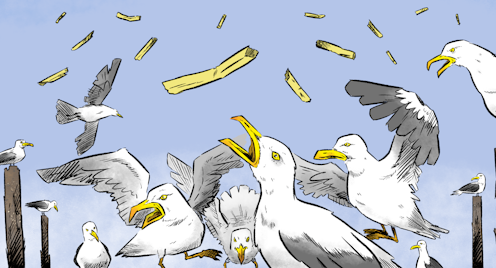
Gulls are opportunistic feeders, meaning they will try almost any food they encounter. They’re renowned for stealing food from other gulls and even from us, a behaviour called “kleptoparasitism”.
A 2019 study showed herring gulls, found along the shores of western Europe and the UK, are aware of the direction of the human gaze. The herring gulls in the study more quickly snatched up food placed near a person, when the person was looking away from the gull.
Other research looked at how herring gulls interacted with food after they watched a person handle it. It found the gulls were much more likely to peck at food a human had handled, rather than food that hadn’t been touched.
Silver gulls in Australia have a diverse range of natural prey. This includes cnidarians (such as jellyfish), squids, insects, fish, frogs, small birds such as sparrows and wrens, plants and, when possible, small rodents.
Gulls, especially silver gulls, are also expert scavengers, and often exploit landfills. A study from 1993 recorded 6,000 silver gulls per hour leaving a single urban landfill site in Wollongong in Australia.
A more recent study in 2012 found a kelp gull breeding colony in the De La Guardia Islands of Patagonia, Chile, is sustained by food from an inland rubbish tip.
When conditions are right and food is plentiful, gulls can breed all year around. Peak breeding season for silver gulls is roughly between August and November and they lay one to four eggs.
Seagulls are traditionally found sleeping and nesting on flat beaches. Some gull species, including Australia’s silver gull, may create “nest scrapes” – shallow depressions in the the ground lined with, for instance, leaves and other vegetation.
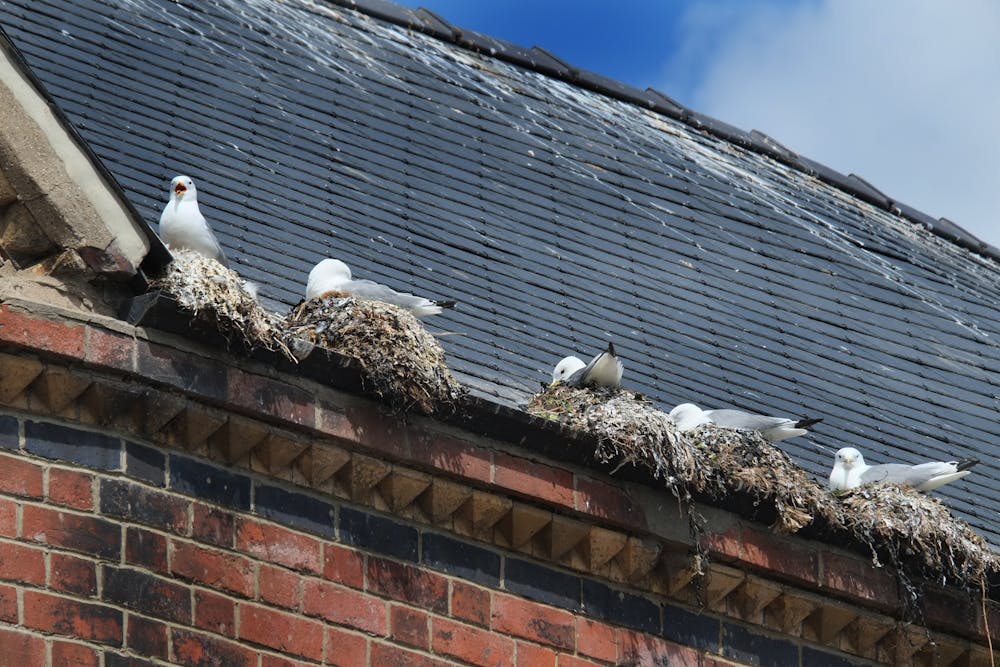
Silver gulls prefer to nest in islands. But as urban development encroaches into their habitat, seagulls have adapted to roost and nest in a range of places. Their simple nest design means they can nest in grass cricket pitches, ovals, car parks, low shrubs between rocks and even flat roofs.
Seagulls nesting in a gutter in the UK. Shutterstock
The downside for ground-nesting birds such as gulls is that they’re especially vulnerable to human disturbances, such as lawnmowers, pedestrians and their dogs, and even footy games.
Still, gulls seem to make it work. The abundance of human food seems to benefit breeding birds – a Tasmanian study on silver gulls in 2008 found urban males were heavier and had greater body condition then non-urban male gulls. Interestingly no difference were detected between females.
Further research is need to see how successful urban silver gulls are at breeding and raising young on human food.
Cats (both pet and feral) are a downside to urban life for gulls. Foxes and wild dogs can also pose a significant threat.
This is where team works come in. When silver gulls detect a predator, they work together using aerial group defence tactics to drive away the threat.
Black-headed gulls mobbing a crane.
One anti-predator strategy is called social mobbing. This is where a group of gulls unite to harass a potential enemy – such as a cat or fox – by flying towards it and making alarm calls, until it goes away.
Some gulls might even vomit or defecate on the predator, with startling accuracy.
Grainne Cleary does not work for, consult, own shares in or receive funding from any company or organisation that would benefit from this article, and has disclosed no relevant affiliations beyond their academic appointment.
An official communication will be sent to Fiji’s President confirming the new People’s Alliance, National Federation Party and Sodelpa government is ready to lead under the new Prime Minister, Sitiveni Rabuka.
NFP leader Professor Biman Prasad said the leaders were pleased to give Fijians a Christmas present of a strong and united coalition government ready to respond to their call for change.
“People have chosen a new way, a new path, and a new government and we the coalition partners — now the People’s Alliance, the NFP and Sodelpa — promise the people of Fiji that a new era will be starting as the new government takes on the power in this country.”
People’s Alliance leader Sitiveni Rabuka thanked Fijians, saying they had voted for change and the coalition had given them that.
He also thanked outgoing FijiFirst Prime Minister Voreqe Bainimarama and his cabinet for running the affairs of the nation for the past 16 years.
“Losing the election is not the end. I lost in 1999 and I kept trying. I’ve been given the opportunity this time, once in 2018 and again this time and different party. Play your cards right. Lead your team well and work hard.”
Sixteen members of the Sodelpa management board voted in favour of PAP and NFP, while 14 voted for FijiFirst.
Outgoing Prime Minister Voreqe Bainimarama on TVNZ News . . . lost the numbers game. Image: TVNZ screenshot APRjubilant Fijians in Suva celebrating the change of government. Image: TVNZ screenshot APR
Exiled University of the South Pacific vice-chancellor Professor Pal Ahluwalia says he is thrilled at the prospect of returning to Fiji.
Speaking to The Fiji Times from Los Angeles in the United States yesterday, he said Prime Minister Sitiveni Rabuka — when he was in opposition — made a commitment to pay Fiji’s outstanding debt of $90 million to USP and to allow him to return to Fiji.
“Mr Rabuka said it, National Federation Party leader Professor Biman Prasad said it, and the Social Democratic Liberal Party leader also said it,” Professor Ahluwalia said.
“So it’s part of all three parties’ manifestos and part of their public statements, so we as a university are delighted that this amount that has been outstanding for so long will finally come to the university.
“It’s excellent news, not just for the Fijian students but for the entire region because the region has been carrying Fijian students for quite a while and there will now be a chance for us to do a lot of things that we have deferred and not been able to do, particularly issues around maintenance.
“It also means we can now aggressively look for quality academic staff.”
Rabuka issued a statement on Boxing Day saying the prohibition order against Professor Ahluwalia had been lifted and he was welcome to travel to Fiji at any time.
Professor Ahluwalia and his wife Sandra Price claimed that on Wednesday February 3, 2021, 15 people made up of immigration officials and police stormed into their USP home and forcefully removed them at about 11.30pm.
They claimed they were driven the same night to Nadi International Airport and deported on the morning of Thursday, February 4, to Australia.
The FijiFirst government on February 4, 2022 issued a statement that the Immigration Department had ordered Professor Aluwahlia and his partner Sandra Price to leave Fiji with immediate effect following alleged “continuous breaches” by both individuals of Section 13 of the Immigration Act.
Government said under Section 13 of the Immigration Act 2003, no foreigner was permitted to conduct themselves in a manner prejudicial to the peace, defence, public safety, public order, public morality, public health, security, or good government of Fiji.
Fiji now ‘free country’ RNZ Pacific reports that Finance Minister Professor Biman Prasad said all three parties in the coalition had promised this in their election campaigns and manifestos.
The former FijiFirst government have withheld the payments since 2019 over a protracted battle with Professor Ahluwalia, now operating in exile out of Samoa.
“They didn’t like a man who was doing the right thing who exposed corruption within the university,” Professor Prasad said.
“And it has done you know, to some extent, terrible damage not only to the university, but also the unity in the whole region.”
In July, the two unions representing staff at the university said the Fiji government owes the institution F$78.4 million and the debt has increased since then.
“Well, I can’t tell you the timetable, but all I can say is…that the university will receive the appropriate funding, as well as the government will pay what is due as a result of the previous government withholding the grant to the university,” Professor Prasad said.
His revelation comes after the government statement by Prime Minister Rabuka inviting Professor Ahluwalia to return to Fiji.
Personal apology Rabuka said he wanted to apologise to Professor Ahluwalia in person upon his arrival for the way he had been treated by Fiji.
The prime minister has also invited the widow of exiled Fijian academic, Professor Brij Lal, who passed away on Christmas Day last year to bring home his ashes for burial at Tabia near Labasa.
Professor Prasad said they look forward to welcoming home more Fijians and expatriates exiled during Voreqe Bainimarama’s 16-year-reign.
“Fiji is now a free country. We will welcome everyone who wants to come to Fiji. No one should fear about any kind of vindictiveness or harassment,” Professor Prasad said.
“That is what we promised during our campaign, and that is what this government will deliver.”
Felix Chaudhary is a Fiji Times reporter. Republished with Fiji Times permission. This article is also republished under a community partnership agreement with RNZ.
Former New Zealand prime minister Helen Clark is supporting aid agencies’ decision to halt operations in Afghanistan, and a UN official has urged the Taliban to reverse its ban on women humanitarian workers.
It said the move, which was condemned globally, was justified because some women had not adhered to the Taliban’s interpretation of Islamic dress code for women.
The news led to the beginning of a withdrawal by organisations such as the Norwegian Refugee Council, Save the Children, and Unicef.
Former Prime Minister of New Zealand Helen Clark . . . “It’s a huge violation of human rights of women.” Image: RNZ News
Clark, who also used to head the UN Development Programme, said the aid agencies were forced to suspend their services or yield to an oppressive policy.
She condemned Afghanistan’s banning of female humanitarian workers.
“It’s a huge violation of human rights of women. Where do you draw the line? If the organisations simply capitulated to this edict from the Taliban, they would be seen to be going along with a huge violation of women’s rights,” she said.
“So it is important that big organisations are speaking out now as they have, and are saying they will suspend their operations while this policy holds.
“The problem is the Taliban and these horrible hostile decisions that they’re taking towards women.”
Clark said the Taliban had tried to present itself as more legitimate than the last time it ruled Afghanistan, but a leopard did not change its spots.
She expected the Taliban leadership would face strong ongoing pressure from the UN and other entities, and they would see the consequences of foreign aid groups withdrawing.
Afghan men stand in queues to receive food aid from a non-governmental organisation in Kabul on Christmas Day 2022. Image: RNZ/AFP
UN calls for Taliban to reverse the decision A senior UN official has urged Afghanistan’s Taliban administration to reverse the ban on female humanitarian workers, and charities fear it will worsen winter hardships.
“Millions of Afghans need humanitarian assistance and removing barriers is vital,” UNAMA said in the statement, adding that its acting head and humanitarian coordinator Ramiz Alakbarov had met with Economy Minister Mohammad Hanif.
The directives barring women from working at NGOs came from Hanif’s ministry.
The orders did not apply directly to the United Nations, but many of its programmes were carried out by NGOs subject to the order.
Four major global NGOs, whose humanitarian efforts had reached millions of Afghans, announced they were suspending operations on Sunday. Other smaller NGOs had also announced suspensions, including UK-based Islamic Relief Worldwide.
The NGOs said they were unable to run their programmes without female staff.
More than half of Afghanistan’s population relied on humanitarian aid, according to aid agencies. Basic aid was more critical during the mountainous nation’s harsh winter.
Two spokesmen for the Taliban administration did not respond to queries on the suspension of humanitarian programmes.
NGOs were also a critical source of employment for tens of thousands of Afghans, particularly women, as the local economy had collapsed following the withdrawal of US-led foreign forces and the Taliban takeover last year.
One such employee, a 27-year-old female aid worker in western Afghanistan who asked for her identity to be concealed because she feared retribution, said that her NGO had shut its office on Saturday and she could not go to work.
The NGO, funded by a Western country, worked with women in the agriculture sector, helping them set up sustainable incomes.
She said she was worried that losing her job would have a huge impact on her family because she was a single woman and the sole breadwinner.
Her father was dead and her mother was a housewife, she said, adding that she supported four sisters, three of whom were university students who could not complete their degrees since the Taliban administration barred women from attending university last week.
This article is republished under a community partnership agreement with RNZ.
Each December, Christmas, Hanukkah and Kwanzaa, among others, take over our thoughts and our wallets as we participate in ceremonies our ancestors have practised for as long as we can remember. These are all example of traditions. And in most cases, traditions are accompanied by rituals.
What’s the difference?
In scientific terms, a “tradition” refers to the passing down of customs and beliefs from one generation to the next. A “ritual”, on the other hand, is a series of actions performed according to a prescribed order, and which is often embedded in a larger symbolic system, such as religion or philosophy.
For example, while celebrating birthdays is a tradition, blowing out the candles on a cake is a ritual. Similarly, while getting married is a tradition, exchanging vows is a ritual.
New rituals can be created at any time. To become tradition they only need to be understood and replicated by a wider community.
Communities around the world have different rituals practised during weddings, often passed down through generations. Shutterstock
And it’s not just in grand gestures that humans practise rituals; some are so embedded into our everyday lives we no longer recognise them. The very particular way someone makes their tea or coffee in the morning is a ritual they enact daily.
Basically, rituals are everywhere. That raises the question: why do we have them at all?
Ritual behaviour has very deep origins in humanity. However, tracking these origins and their development is difficult as rituals often leave little or no physical traces behind for archaeologists to find.
Thus far, the best evidence for ancient rituals is the deliberate burial of loved ones. The oldest example is found at Mt Carmel in Israel, where some 130,000 years ago a Neanderthal woman was laid to rest by her community.
Mt Carmel in Israel is the site of the oldest known human burial. A Neanderthal woman was laid to rest here some 130,000 years ago. Michelle Langley
Archaeologists also suggest the extensive use of coloured pigments (particularly bright red) to paint bodies, objects and rock walls points to the practice of “symbolic” behaviour, including ritual. The oldest reliable evidence for colourant use dates to between 500,000 and 310,000 years ago and comes from several archaeological sites in southern Africa.
Another type of evidence that is often intrinsically tied to rituals and traditions is musical instruments. Bone flutes dating back to about 42,000 years ago have been found in Western Europe. How long people have used the very first instruments – the human voice, clapping hands and stomping feet – remains unknown.
This bone flute, found at the German Palaeolithic site of Hohle Fels, is at least 42,000 years old. Jensen/University of Tubingen
Rituals play a very important role in human communities for a number of reasons.
First, rituals help reduce individual and collective anxieties, especially when we ourselves, our family, or our whole community is facing uncertain times or crisis.
Research has shown that by praying or singing together we feel connected and supported and our anxiety is reduced. This may explain why Parisians were moved to sing together as they watched their beloved Notre Dame Cathedral burn in 2019.
Parisians sing together as Notre Dame burns – a spontaneous ritual to deal with an unexpected crisis.
Rituals also help reduce anxiety by allowing us to feel control over our surroundings. For instance, new parents may be anxious about protecting their baby. Rituals that welcome the infant into the family and community help them feel they’ve done everything possible – including drawing on supernatural protection – to ensure their child’s wellbeing.
Second, rituals bring people together to celebrate or otherwise mark important life milestones. Births, graduations, marriages and deaths are all marked by rituals and traditions across the globe. These events provide a time and place to gather and encourage people to renew their bonds with friends and family.
These bonds are especially important in times of bad luck, which helps explain why the incentive to maintain them has endured through human history.
Imagine living tens of thousands of years ago, when human communities were much smaller and often lived farther apart. If a volcano erupted, the resulting destruction could mean plant and animal resources – essential food and materials needed for survival – would not be available for months, or perhaps years.
You would then have to rely on the bonds you maintained with neighbouring communities through shared rituals. Such bonds would encourage the sharing of resources until circumstances improve.
Finally, rituals help us remember and share huge amounts of cultural information. By learning a format or pattern of behaviour through ritual, we can absorb information and recall it later more easily.
This approach works astonishingly well to ensure information is passed down orally over long periods. Thus far, the oldest story dated using scientific methods is the Aboriginal Gunditjmara people’s story of the Budj Bim volcano eruption, which occurred 37,000 years ago in what is now south-western Victoria.
Being able to retain information about changes in the landscape, its plants, animals and people ultimately increased the likelihood that your family would not only survive – but thrive.
Rituals will remain
Without rituals, and the traditions in which they become embedded, it is unlikely humanity would have advanced to its current state of cultural and technological development.
We wouldn’t have been able to continually gather and share information, maintain bonds over extensive geographical areas, or make it through difficult periods.
Despite being surrounding by increasingly complex technologies, rituals today remain more important than ever. With extreme weather events and conflicts continuing to displace people all over the globe, they will act as an essential social glue that holds our communities together.
Michelle Langley is an Associate Professor of Archaeology in the Australian Research Centre for Human Evolution (ARCHE) and the School of Environment and Science at Griffith University.
Every parent knows kids spend their time differently when they’re on holidays. Our new research found out just how differently.
During the school term, kids get up around 7am, get into their uniforms, make their way to school, eat food from their lunchboxes or canteens, play at recess and lunch, have PE lessons, sit and get bored or excited in class, and then head home. Their day is highly structured.
However during school holidays, all this goes out the window. Our new research shows in the summer holidays, kids are getting less physical activity, more screentime, and eating more junk food and less fruit than they do during term time.
We asked 358 children aged nine to 11 years from 24 primary schools across Adelaide to wear an activity band for four weeks across the school year and one week during the summer holidays. At the same time, we asked the children to tell us about the activities they did and what they ate.
From the activity band data, we found during the summer holidays, kids sit for an extra 27 minutes, and spend 12 minutes less doing physical activity. From asking the kids about the activities they did, we found kids get 73 minutes more screen time each day, they spend an extra 22 minutes in cars, buses and trains, and 23 more minutes eating or grooming. They also spend an extra 16 minutes just chilling (sitting listening to music or doing nothing).
These findings mean their overall energy expenditure is about 13% lower. We also found kids’ diet quality is lower — more junk food and about half a serve less fruits each day than in school time.
More physical activity and less screen time are linked to better physical and mental health, higher levels of fitness, better school grades, and lower risk of becoming overweight. Overweight and obesity in childhood can lead to an increased risk of developing type 2 diabetes, problems sleeping, and low self-esteem.
During the school year kids don’t gain much weight, but they do in the summer holidays. We found on average, all participating kids’ weight increased six times faster during the summer holidays than during term time. In fact, if kids lived every day like they do when they’re on summer holidays, they’d put on an extra 6 kilograms a year. Kids are also losing fitness, and their mental health and wellbeing suffer over the summer holidays.
These effects are worse in children from poorer, less educated backgrounds, and kids who are already overweight.
How can we maintain the benefits of kids being at school, during the holidays?
Some have called for shorter school holidays. But Australian summer holidays are quite short by world standards. Parents in Australia might welcome the four weeks enjoyed by Singaporean students, and children the 14 weeks endured by parents in Egypt.
In the United States and Europe, many children go to summer camps in the summer holidays. These can be overnight camps, where kids stay overnight, or day camps where kids go home at the end of each day. The length of these camps varies widely and can be short (1 to 2 weeks), mid-length (3 to 5 weeks) or the full summer session (7 weeks or more).
Research has shown where kids go to a summer camp daily (Monday to Thursday) for six weeks over the summer, kids are more active, less stationary and eat healthier diets on the days they go to summer day camp, compared to the days when they stay at home. These camps may be residential or day camps, and may combine physical activity with specific learning activities, such as coding, art or drama.
Families may also try getting their kids outdoors. Research has shown kids are likely to be more active when they are outdoors. Families may also try getting their kids to do something physically active before allowing them screen time – this could even be doing chores like mopping the floor.
Families may try to add extra structure to their children’s holiday days, but it’s pretty hard to resist the opportunity to sleep in, snack and binge on Netflix and video games, when the content is precisely designed to keep kids watching.
Big problems need bold solutions – is it time for school administrators and policy makers to reconsider the length of the school holidays, or the lack of summer holiday programming, for the sake of our kids’ health?
Summer holiday programming might come from a variety of organisations such as sports and activity clubs, schools, religious organisations, museums and art galleries, disability groups, as well as the private sector which also offers summer camps.
Some ways to get everyone out of the house and moving could include the family enjoying a day out at the zoo, going climbing at [Tree Climb], spending the day swimming and sliding at your local aquatic centre, or spending time with the animals at Hahndorf’s Farm Barn.
Amanda Watson receives funding from the National Health and Medical Research Council.
Carol Maher receives funding from the Medical Research Future Fund, the National Health and Medical Research Council, the National Heart Foundation, the SA Department for Education, the SA Department for Innovation and Skills, Healthway, Hunter New England Local Health District, the Central Adelaide Local Health Network, and LeapForward.
Tim Olds receives funding from the Australian Research Council and the National Health and Medical Research Council.
For Australians, memories of childhood Christmas often include gifts, prawns and shooing uninvited buzzing guests away from the pavlova.
But have you ever wondered why the air is full of bugs some years and almost empty in others? Insect populations boom and bust frequently.
This year is our third successive La Niña, and a wet summer is forecast yet again for Australia’s east.
Wet, warm weather is ideal for many of the insects, spiders and slugs that share our homes and gardens. That means we’re likely to have a very buggy Christmas.
Aren’t all the insects dying?
As we heat up the planet and take over natural areas, invertebrate species are responding in unpredictable ways. Many species are in trouble: researchers have warned of an insect apocalypse facing flying bugs like wasps, butterflies, and beetles in densely populated Europe.
Subsequent research has drawn less drastic conclusions, and some American researchers claim that population sizes haven’t significantly changed overall, with some species booming and others dying off.
Researches warn of a decline in populations of butterflies and other insects in Europe. Shutterstock
Longer term, climate change and human takeover pose real challenges for many bugs – but not all.
When ecosystems tip out of balance, the most adaptable species find opportunities despite – or because of – unpredictable and changing conditions. Consider the locust swarms vast enough to blot out the sun and threaten crops in many East African nations.
So what should you look for? Here are four creepy crawlies that might arrive at your place more often this summer.
Huntsman spiders
Although spiders have shared our houses for thousands of years, huntsmans have rarely been popular roommates. That’s probably because of their heart-stopping habit of skittering across the wall when you least expect them.
Despite this, most of Australia’s 155 huntsman species are shy and rarely aggressive. They generally live solitary lives, although female huntsman spiders will actively guard their egg sacs after mating – and protect the up to 200 spiderlings which hatch from them.
Like many introverts, huntsman spiders prefer the indoors – especially in bad weather, when they like to enter houses and cars to get out of the rain. This is actually good news, believe it or not. Having huntsman spiders in residence means you’ll have less cockroaches and mosquitoes.
So be ready not to freak out. With recent heavy rains and the predicted influx of roaches and mozzies this summer, you can expect to see a few more eight-legged off-lease roommates than usual.
Huntsman spiders are often flat, to hide under bark and in rock crevices. Shutterstock
Mole crickets
Nicknamed the platypus of insects, mole crickets look like several different creatures jammed together. Seeing one aboveground is always a shock. The shovel-like forelegs. The yabby-like carapace. The surprising size of it.
Don’t panic. These minibeasts are meant to be here. They live happily across Australia, preferring life beneath well-watered vegetation. They use their leg-shovels to dig tunnel networks where they can lay their eggs. After young adults dig their tunnels, they come to the surface in spring to find a mate.
Mole crickets look like mash-ups of other creatures. Wikimedia, CC BY
So why are you likely to see them in summer? Rain. When heavy rain hits, underground creatures have to activate contingency plans. Tunnels and rain don’t mix. For mole crickets, that means digging upwards through sodden ground and clambering across the surface looking for higher ground.
You’ve probably heard the male mole cricket’s persistent chirping on rainy evenings as he looks for a mate. Their characteristic call is so loud it’s sometimes confused with a frog. The powerful sound is due to clever engineering. Mole crickets sculpt a horn-shaped burrow to maximise their noise. Think of it as building an underground bugle.
European Earwigs
European earwigs are harmless despite their pincers. Wikimedia, CC BY
European earwigs are everywhere in Australia’s temperate south – even though they’re not from here. These invasive pinchy bugs from Europe are unmistakable, with elongated abdomens topped with forcep-like pincers. Most of our 85 earwig species are natives, but you’re likely to see the European variety.
Their name may come from the Old English phrase “ear wiggler”, which in turn comes from an enduring belief that earwigs invade people’s ears when you sleep. Thankfully, this is false. When researchers tested this story, they found earwigs weren’t interested. It’s actually cockroaches that can sometimes get stuck inside our ears.
While earwig pincers can hold onto human skin, they don’t usually hurt. The pincers are used for courting, defence, and catching prey. Earwigs are omnivores, eating plants and critters.
Rainy winters boost earwig numbers, as the increased rainfall keeps burrows moist. This helps their eggs and nymphs to survive and ensures plenty of plants for them to eat.
This winter was our wettest nationwide since 2016. This means conditions are perfect for an earwig bonanza. Researchers say grain-growing areas outside Melbourne and Adelaide are prime real estate for earwig expansion.
Red triangle slugs
These gaudy gastropods live happily in urban vegetation along the Queensland and New South Wales coastline. Australia’s largest native land slug can be cream, greyish-green, yellow or orange-red, but you’ll know them from the distinctive red triangle shield on their back. While it might not look it, this is actually camouflage. It helps these nocturnal slugs blend in with leaf litter.
Red triangle slugs are hard to miss – especially in large numbers. Shutterstock
After rain, these slugs come out of hiding and slurp up moisture through their skin, leaving a slimy mucus trail. It’s not just for gliding along – it’s defence. Their mucus acts like a slug superglue, with scientists finding it’s strong enough to stick predators like green tree frogs firmly in place.
They’re already popping up in Brisbane backyards, but there are more to come, given ideal conditions for the growth of the algae these slugs eat.
These four species are set to boom. But what about the iconic Christmas beetle?
Christmas beetles
If you can remember the 1980s and 1990s, chances are you have fond childhood memories of these metallic beauties clinging to your screen door, or buzzing indignantly as they try to turn themselves right side up on your driveway.
These days, Christmas beetles don’t seem to arrive in large numbers. There are 36 species of these shiny scarab beetles nationwide, but sightings are falling.
We don’t know the full story, but we have clues. Almost one in four of Australia’s native eucalyptus species are now threatened with extinction, with some populations dropping by half due to land clearing and urbanisation.
That’s a major problem for Christmas beetles. Their larvae depend on plant roots and the adults emerge after thunderstorms to snack on eucalyptus leaves. Two key species they like to eat – yellow box and fuzzy box – have just been listed as threatened.
Without intervention, such sightings will become increasingly rare.
If you do see Christmas beetles this summer, you can help by logging your sighting on the iNaturalist beetle count to help scientists understand where these Christmas favourites are still visiting.
Erin Siostrom does not work for, consult, own shares in or receive funding from any company or organization that would benefit from this article, and has disclosed no relevant affiliations beyond their academic appointment.
Driving home recently, I encountered a familiar sight: four dining chairs on the kerb waiting for some sucker to rescue them. Loading them into the car (sucker!) I wondered: how long were these chairs in shed limbo-land before finally getting kicked to the kerb?
When a wooden chair goes a bit wonky, it feels counter-intuitive to throw it away when it’s mostly OK. It’s often demoted to the shed, with the optimistic thought: “The wood is still good. Maybe it could be fixed.”
But will you really fix it? Sell it? Give it? Keep it? Nah. Chuck it.
Chucking has become easy – and socially acceptable. The pressure to de-clutter, galvanised by the Marie Kondo tidying-up craze, can feel moralistic. “Just chuck it already!” we say to ourselves, or our partners.
Kondo’s books (more than 13 million sold) implore us to discard ruthlessly any item that doesn’t immediately “spark joy”, with Kondo urging us to:
not be distracted by thoughts of being wasteful […] to get rid of what you no longer need is neither wasteful nor shameful […] so, arm yourself with plenty of garbage bags and prepare to have fun!
Kondo promotes throwing things “away” or “out” without addressing where exactly that nebulous place is.
These items do not disappear when flung into the ether. They land quite concretely in expanding landfills that degrade landscapes and ecosystems, taint water supplies, and pump out methane as carbon is released during decomposition.
In a world of unbridled consumerism, we are experiencing a waste crisis. We dispose of tremendous amounts of furniture while consuming masses of new furniture, all in the midst of global timber supply shortages.
Even buying well-crafted, locally made “green” furnishings from sustainably harvested timber doesn’t stop our chucked-out things from rotting in landfill.
In my research, I have spoken to craftspeople, academics, community organisers, and environmental activists about furniture waste. The message is consistent: try to keep what already exists circulating in the world.
Waste as a cultural construct
Waste is often described as “matter out of place”. What we define as rubbish is a matter of perspective. It’s a cultural construct.
A wonky chair may be only negligibly different to its original state. But even if still functioning, or easily repaired, it becomes worthless once worn or wobbly.
This loss of value is reflected in waste collection policies and op-shops. It’s simple to book a council pickup collection or donate to an op-shop. It’s just so easy to get rid of things.
But either that chair is in good serviceable condition and is diverted from the waste stream for reuse, or it’s deemed rubbish and sent to the pit. There is no middle ground for easily repairable items.
If a chair is an antique, finely crafted, or of sentimental value, people tend to make the effort and spend money on expert restoration work.
But it can be hard to justify that for an ordinary chair.
Sandie Parkes, founder and owner of the Canberra Green Sheds, is awash in chairs to the point where they intermittently need to cull them, saying:
Every day we are offered about ten times more chairs than we can possibly sell.
Few people know where to begin with fixing a wooden chair. Ashley Eriksmoen, Author provided
Learning to repair
Few people know where to begin with fixing a wooden chair. But many community groups teach such skills. Two Sheds Workshops in Canberra and Bega has woodworking and upholstery classes for women and children to learn basic skills and boost confidence.
Jess Semler, Two Sheds Workshop’s Canberra manager, told me, told me repair “doesn’t have to be a convoluted or long process. There is no one right way to fix something.” Once the process is demystified, students can work out how to fix other things, bringing creativity and playfulness to the process.
Greg Peters, key conservator of Patinations Conservation Service in Canberra, reiterated that for everyday, mass-produced furniture with no inherent historical or financial value, most repairs are actually relatively simple if you just “give it a go”, learn from the internet and remember there’s usually nothing to lose in trying.
Don’t have the tools? Ask around. Dr Niklavs Rubenis, a senior lecturer in object design at the University of Tasmania, suggests tapping into the collective knowledge of communities by asking neighbours for advice, or to borrow and share tools.
One positive global trend is the proliferation of repair cafes, where volunteers and clients can drop-in to pop-up repair events.
Griffith University’s Professor Leanne Wiseman researches the international Right to Repair movement, and is part of the Australian Repair Network. Wiseman counts about 100 repair cafes in Australia, most of which are listed here, operated mostly by volunteers bringing their own equipment.
Time poor or not keen to repair? Try posting on Facebook Marketplace or your local Facebook Buy Nothing group. You might connect your old chair to someone keen to fix it or harvest its usable timber for creative reuse.
My practice as an artist involves re-purposing abandoned chairs into works of critical design, which provokes viewers to rethink everyday objects.
My work: The Dream, or The view from here is both bleak and resplendent. David Paterson of Dorian Photographics, Author provided
The chairs I rescued recently were made from dark stained wood. The look was dated, and the white seats were stained, but structurally, the chairs were in good nick. I will be deconstructing them and shaping parts into leafy stems to make new sculptural works that return the wood to plant and tree-like forms, like I did in my recent work for Sculpture by the Sea in Bondi. Another chair set saved from the pit.
I get it. Holidays and new year’s resolutions often mean big clean-ups. But before you chuck out good or almost-good things for the sake of decluttering, ask yourself if there’s a less wasteful option. (And if you really must get new chairs, consider finding quality second-hand chairs that will last).
Think before you chuck. Shutterstock
Nobody is saying you should become a hoarder. But not everything needs to be Marie Kondo-ed just because it doesn’t “spark joy”. Make peace with old items, even if they’re a bit dated. They can often be spruced up with a bit of glue, paint or fresh upholstery. Think carefully before you throw out something good or fixable as part of a furious spring clean.
When I bring furniture into my house, I think of it like a pet – something that should be cared for and not discarded on a whim. Furniture can last for generations if we just let it.
Ashley Jameson Eriksmoen has received funding from Australia Council for the Arts, ArtsACT, Melbourne Art Foundation, Transport Canberra and City Services. She is a board member of the non-profit Greenwood Global.
In 1994, the Australian federal government finally extended recognition to Australian South Sea Islander people as a distinct cultural group. This recognition was important: racism put Australian South Sea Islanders at a disadvantage, yet there was little public recognition of the unique circumstances they and their ancestors had experienced and survived.
The same year opens Black Snow, a six-part drama on Stan. Isabel “Izzy” Baker (Talijah Blackman-Corowa) is murdered on the way home from her school formal. Local cops decide the murderer was likely a seasonal worker passing through town, and drop the case.
But when a time capsule created by the school leavers is opened 25 years later, a letter from Isabel provides new leads.
The action unfolds in the shadow of a bronze statue of sugar planter James Ashford – a stand-in for Robert Towns for whom Townsville is named.
Isabel’s death, the botched investigation and cover-up reflect that 1994 was only the beginning of a much-needed reckoning with the history of forced labour in Australia.
An Australian history of slavery
Isabel’s letter brings detective James Cormack (Travis Fimmel) to town. He’s a cold-case specialist from the city with baggage of his own. Cormack butts heads with the local senior sergeant who would rather the skeletons of the past stay firmly in the closet.
But Cormack befriends the town’s rookie cop, Dale Quinn (Gulliver McGrath). Quinn conveys to the audience both police procedure, and the appalling labour practices of the 19th century and the more recent past.
Despite having grown up in the town, Quinn has to google James Ashford when the statue is vandalised. “I never knew we had slavery in Australia,” he says mournfully.
There was plenty of forced labour in Australia, not least of Indigenous people. Also at the heart of Australia’s history of slavery are the lives of South Sea Islanders.
62,000 South Sea Islanders were shipped to Australia to work on plantations. State Library of Queensland
Some 62,000 people were shipped to Australia between 1863 and 1904, mostly to Queensland, where they worked mainly in the sugar trade.
These workers hailed from islands in what are now New Caledonia, Vanuatu, the Solomon Islands and east of Papua New Guinea. Some were abducted, while others came after signing dubious contracts.
All were treated somewhere between poorly and viciously. They suffered the highest death rate by far of any contemporaneous immigrant group to Australia.
Such ignorance of this history is not for a lack of trying on the part of Australian South Sea Islander people.
In the nearly 30 years since government recognition, they have made a concerted effort to educate people in Australia and beyond about their history and culture.
The creator and initial producers, who are white, strove to make Black Snow a genuinely collaborative effort.
Kaylene Butler, a descendant of a trafficked man from Vanuatu, signed on as a producer. Boyd Quakawoot, of mixed Indigenous and South Sea Islander ancestry, joined the writing team. Cinematographer Murray Lui was born and raised in the Torres Strait. Marion Healy contributed her valuable expertise as a cultural and historical consultant.
There is a sense of a genuine collaborative effort behind Black Snow. Stan
The involvement of Australian South Sea Islander creatives is evident right from the title sequence, co-designed by Australian South Sea Islander visual artist Jasmine Togo-Brisby.
Singer-songwriter Ziggy Ramo, who also appears as the character Ezekiel, created the music with composer Jed Palmer. Their work included a recording trip to Tanna Island, Vanuatu.
The cast includes 14 Australian South Sea Islander actors. Considering that 12 of them are appearing on screen for the first time, the power of the acting – especially leads Talijah Blackman-Corowa (Isabel) and Jemmason Power (Hazel) – is remarkable.
The show portrays the central place of faith and the church in the community. And although the pastor is Isabel’s father, the community really revolves around the Australian South Sea Islander women.
The gentle and deep friendship between Isabel’s mother (Seini Willett) and aunt (Lisa Blackman), and the way they resolve conflicts between others, is particularly affecting.
A fight for recognition
The scenes in 1994 showcase the Australian South Sea Islander community, but in the present-day scenes Cormack takes centre stage. The casting of Fimmel risked a problematic “white saviour” narrative, but the show carefully balances the two timelines to centre the stories of the Australian South Sea Islanders.
Black Snow steers away from a white saviour narrative. Stan
It has been a long fight for recognition in Australia.
Women like Faith Bandler and Patricia “Patsy” Corowa were a part of an intricately connected global Black Power movement. From the late 1960s, activists in Australia collaborated with Black activists in the Pacific, Caribbean, United States and elsewhere to fight for rights and power.
This struggle is ongoing and remains global. Isabel includes a Black Power salute in a mural she paints in her last weeks alive. In the present-day, Isabel’s niece Kalana (an excellent Eden Cassady) expresses solidarity with the Black Lives Matter movement. She leads a small group of teenage activists to repeatedly graffiti Ashford’s statue with red paint and the chilling figure of 62,000.
Our hauntings
The show has an important message about conditions today for Pacific workers who are vital to Australia’s farming sector.
Current labour regulation prioritises employers’ profit over seasonal Pacific workers’ rights.
This pacy murder mystery reminds us slavery and exploitation are not safely in the past. Their legacies remain, and should haunt us all.
Clare Corbould has received funding from the Australian Research Council. She is a member of the Australian Greens. She has collaborated previously with artist Jasmine Togo-Brisby, mentioned in this article.
Hilary Emmett is a member of the UK Labour Party. She has collaborated previously with artist Jasmine Togo-Brisby, mentioned in this article.
The greenlight has been given to University of the South Pacific vice-chancellor, Professor Pal Ahluwalia, and Dr Padma Lal, to return to Fiji by Prime Minister Sitiveni Rabuka.
Exiled Professor Ahluwalia currently resides in Samoa and Dr Lal in Australia.
Rabuka has made it clear today that both of them are free to enter the country.
“I am ready to meet Dr Lal and Professor Ahluwalia personally,” he said.
“I will apologise on behalf of the people of Fiji for the way they were treated.”
Dr Lal had been prevented from coming to Fiji with her husband’s ashes for them to be taken to his birthplace at Tabia, near Labasa.
First anniversary Today marks the first anniversary of Professor Lal’s death.
Rabuka said prohibition orders against Professor Brij Lal and Dr Lal, as well as Professor Ahluwalia, were “unreasonable and inhumane” and should never have been made.
He had promised his government would bring to an end the injustices suffered by Professor Ahluwalia, and Professor Lal.
“I received a clarification today from the Department of Immigration that neither Dr Padma Lal nor Professor Ahluwalia were the subject of written prohibition orders,” he said.
Josefa Babitu is a Fiji Sun reporter. Republished from the Fiji Sun.
Fiji’s new Deputy Prime Minister and Minister for Finance Professor Biman Prasad says the good policies of the government that are in place will continue.
He said policies would only change through consultation and dialogue.
“People understand the policy direction of the new government,” Professor Prasad said.
“But that does not mean that tomorrow, we’re going to change every policy or everything that was being done or has been done in the past.
“We will review — we will look at those policies. Good policies that are there will continue.
“It will never be about changing policies willingly without thinking through, without consultation, without dialogue.”
He said one of the hallmarks of the style of the new government would be to make policies with appropriate consultation, appropriate evidence and through dialogue.
“So that the implementation of the policy is not only simple, easy, but also that people understand generally the impact of those policies,” Professor Prasad said.
“So yes, we will do this with humility with understanding and keep good policies and build on good policies that are there.”
Rakesh Kumar is a Fiji Times reporter. Republished with permission.
Fiji has finally reached the other side of the long and winding road that was the 2022 general election and can enjoy the festive season with a new leader decided.
Sitiveni Rabuka is Fiji’s first new leader in 16 years, but the work has only just begun for his three-party coalition government.
Rabuka was elected with 28 votes to 27.
“It was a very close margin,” Social Democratic Liberal Party (Sodelpa) youth forum president Ben Daveta said.
From the polls to Parliament, every decision was balanced on a knife’s edge.
Then it took the king-makers Sodelpa two split-votes to choose a coalition partner — and even in the final secret ballot to elect a prime minister, someone in the opposition ranks voted for the other side.
It has been a frantic time, Daveta said.
“Well, first of all, I’ve really been trying to get my breath for the last few minutes and it was nerve-wracking.
Former coup leader Sitiveni Rabuka emerges after being named prime minister of Fiji. Image: RNZ Pacific
“Democracy came through, their prayers came through.”
Prominent Sodelpa member and democracy advocate Pita Waqavonovono said this is the way forward.
He expressed a sense of excitement to “make Fiji better again”.
Pita Waqavonovono (left) and Ben Daveta … “Democracy came through, their prayers came through.” Image: Kelvin Anthony/RNZ Pacific
“It is time for us to have a real democracy and FijiFirst has shown an unwillingness to govern democratically,” Waqavonovono said.
In its first 100 days Rabuka’s government must find a way to unite Fijians and tackle the challenges of a nation emerging from the pandemic.
Congratulations sent to Fiji Congratulatory messages continue to pour in for Rabuka.
Congratulations to the new PM, SLR, of Fiji and the Coalition. Vinaka vakalevu to the outgoing government of former PM , FVB and Fiji First for your service to our region. Best wishes to the people of Fiji as they witnessed the peaceful transfer of powers, a democratic process.
Congratulations to Hon. Sitiveni Rabuka @slrabuka on his assumption of office as Prime Minister of Fiji. We believe our bilateral relations will be further strengthened to better benefit our two countries and peoples.@FijianGovtpic.twitter.com/AIeRkHrqyj
The Embassy of France congratulates @FijianGovt on the conduct of the General Elections. Best wishes to the new Prime Minister Honorable @slrabuka, @alliancefj@nfpfiji@SODELPAHQFiji and all elected Members of Parliament in their high offices.
Pacific Islands Forum Secretary-General Henry Puna congratulated Sitiveni Rabuka on his appointment as Prime Minister of the Republic of Fiji.
“Fiji has come through a general election and its subsequent parliamentary milestone and can now fully enjoy the full measure of this festive season,” Puna said.
Former Prime Minister Voreqe Bainimarama . . . acknowledged for his leadership as the Chair of the Pacific Islands Forum. Image: Samuel Rillstone/RNZ Pacific
Puna also acknowledged former Prime Minister Voreqe Bainimarama for his leadership as the Chair of the Pacific Islands Forum (PIF).
Puna thanked Fiji for upholding the values of peace and goodwill as Pacific leaders together work towards a productive and successful 2023.
This article is republished under a community partnership agreement with RNZ.
Source: The Conversation (Au and NZ) – By David Bean, Senior Lecturer in Microbiology and Fermentation Technology, Federation University Australia
Shutterstock
Drinking alcohol has been part of Australian culture for at least 240 years, and perhaps millennia prior.
In recent years, however, there’s been a growing trend towards opting for low- and no-alcohol versions of traditional drinks. Just check out the soft drink aisle of your supermarket if you need proof.
Non-alcoholic drinks have been on the market for decades, but for a long time their range was limited and, in most cases, the flavours were inferior to their alcoholic counterparts.
Now online retailers (some of which specialise in non-alcoholic drinks) are stocking up to 100 different low- or no-alcohol beers and a similar number of non-alcoholic wines – with the majority produced in Australia.
What’s behind the big boom in this side of the industry? And where might it go from here?
With a rise in demand, most global beer brands now offer zero-alcohol substitutes. Shutterstock
It all starts with fermentation
Alcoholic beverages are produced via microbes, most commonly yeasts, which convert sugars to ethanol (alcohol) in the process of fermentation.
In addition to producing ethanol, fermentation also leads to other desirable flavour changes. This means the fermentation process is integral to the flavour of beer and wine, and we can’t just forgo it to make low- and no-alcohol drinks.
Consider the difference between unfermented grape juice and wine: it’s not merely the presence of alcohol that creates the flavour profile of wine!
As such, the production of most non-alcoholic wine and some non-alcoholic beer starts with the typical fermentation process, after which the alcohol is removed using a few different advanced systems.
High-tech systems changed the game
The two most common ways to produce no-alcohol beer and wine involve filtration and distillation. Both systems are technologically advanced and expensive, so they’re usually only used by larger producers.
In membrane filtration – and specifically one technique called “reverse osmosis” – beer and wine are pumped under pressure through filters with holes so small they separate compounds based on their molecular size. Relatively small molecules such as water and ethanol pass through, but others can’t.
The water is continuously added back to the mix of the larger “flavour” compounds to reconstitute the beer or wine. This process is continued until all the ethanol is removed.
Another process is distillation, in which compounds are separated based on the temperature at which they boil. Therefore, distillation requires heat, and heat changes the flavour of beer and wine – leading to a less desirable product.
To minimise the impact on flavour, the distillation used to make no-alcohol products happens under very low pressures and in a vacuum. In these conditions ethanol can be removed at around 35℃-40℃, as opposed to 80℃ under atmospheric pressure. This is based on the same principle that dictates why water boils at a lower temperature at altitude than it does at sea level.
A wide variety of beer styles are now available in alcohol-free forms. Shutterstock
Small brewers are becoming master craftspeople
While the increase in low- and no-alcohol beer production reflects consumer preference, it’s also partially driven by the wide range of craft beers now available.
Many craft breweries in Australia are producing delicious low-alcohol beer without additional expensive equipment. They do this by carefully manipulating the fermentation process using two main methods.
In the first method, brewers intentionally reduce the amount of simple sugars available for the yeast. With less sugar to use, the yeast produces less ethanol.
There are a few ways to achieve this, including using a higher- or lower-than-normal temperature during mashing (the process of extracting simple sugars from the barley grain). The brewer can also stop the fermentation process early, before too much sugar is converted into alcohol.
The brew deck at Federation University has all the tools to make a great brew, including conical fermentation vessels. Federation University, Author provided
The second method involves using different yeasts. Traditionally most beers have been produced using the yeast Saccharomyces. This genus has been domesticated over millennia to make beer, wine and bread.
But there are thousands of species of yeast, and some aren’t adept at producing ethanol as a byproduct. These yeasts are gaining popularity in the production of low-alcohol beers. They still provide the flavour compounds we expect, but with very low levels of alcohol (sometimes even lower than 0.5%).
Although most yeast strains are likely to be commercially available and previously described, some breweries are still secretive about the exact strain they use to produce low-alcohol beers.
There are various companies dedicated to developing new yeast strains for the brewing market. Besides using naturally sourced strains, two strains can be cross-bred to create hybrids. Shutterstock
Soon you’ll barley notice a difference
It’s difficult to make low- and no-alcohol beer or wine that tastes exactly like the full-strength counterparts. That’s because ethanol contributes to the flavour profile of alcoholic drinks, and it’s more evident in wine (typically about 13% alcohol) than beer (about 5%).
The removal of ethanol and water also leads to the removal of compounds with smaller molecules and volatile compounds (chemicals that vaporise under normal atmospheric conditions) – although manufacturers do their best to add them back to the final product.
Similarly, changing mash conditions or using unconventional yeast strains for low-alcohol beer also leads to different flavour profiles than those achieved through a “normal” process.
Despite these challenges, producers are constantly improving their products. Our preliminary investigations have shown even some experienced beer drinkers can’t tell non-alcoholic beers apart from their alcoholic counterparts.
So if the mood or circumstance warrants it, don’t hesitate to try a low- or no- alcohol beer or wine this festive season (or throughout the year). You may be surprised by how the range and quality of these products has improved. And of course, the benefits are obvious.
The authors do not work for, consult, own shares in or receive funding from any company or organization that would benefit from this article, and have disclosed no relevant affiliations beyond their academic appointment.
We’ve all been at a work or family gathering when someone has offered a seemingly authoritative statement about the way the law operates.
Without some knowledge of the field of law, listeners may simply nod their heads sagely and tut-tut about the perceived inadequacies and injustices that have been revealed.
But there are many misconceptions about the law. Here are 8 common falsehoods.
1. If people laugh at my joke then it’s not sexual harassment
This is not correct. Sexual harassment is defined as any unwelcome sexual behaviour that makes a person feel offended or humiliated, where that reaction is reasonable in the circumstances.
A survey by the Australian Human Rights Commission found over the past five years, one in three workers experienced sexual harassment in their workplace. The survey found reporting of workplace sexual harassment remains alarmingly low, at only 18%.
Women (41%) were far more likely than men (26%) to experience harassment. More than three-quarters of harassers were men.
In November, the federal parliament passed the Respect@Work bill which creates a positive duty on all employers to implement measures to prevent sexual harassment.
2. I don’t have to give my name and address to police, as I have a right to silence
The right to remain silent when questioned by police is a fundamental protection provided by the common law. However, this right is not absolute, and does not mean you don’t have to give them certain personal information.
Legislation in every Australian jurisdiction gives police the right to ask for details that will assist their enquiries. For example, in South Australia, you must provide your full name, date of birth and address if a police officer has reasonable cause to suspect you have committed or are about to commit an offence, or if you may be able to assist in the investigation of an offence.
It’s an offence to refuse to give police your personal details, or if you provide false or misleading information. Police can also ask you to identify drivers of motor vehicles in which you’re travelling. But they can’t demand that you answer any further questions, and must give you a caution that anything you might say may be later used in evidence.
Where there has been a violent arrest, or the arrested person is unable to appreciate or understand their rights, the caution must be repeated once the arrested person has settled down or sobered up.
3. My boyfriend moved in with me a year ago and left last week, so now I have to give him half of my assets
For a person in a de facto relationship to be successful in any property settlement, they must satisfy the Family Court that:
the relationship has lasted at least two years
or the parties have had a child together
or the relationship was registered under a state or territory relationship registration scheme
or one party has made substantial financial or non-financial contributions to the other party and that serious injustice would result if an order were not made.
Also, there’s no presumption of a 50:50 split in Australian family law. In determining a just and equitable division of property, the court will consider the parties’ respective assets, the contributions each party has made to the relationship, and each party’s future needs.
4. I’m not responsible for things others write on my Facebook
While it may be hard to believe, you may still be liable for things others post on your social posts, even if you don’t know about them.
In 2021 the High Court ruled that media companies could be liable for defamatory comments made by readers on their Facebook posts. The ruling extends beyond Facebook and likely applies to any social media platform including Instagram, TikTok, Twitter and LinkedIn.
It also extends beyond media companies and covers businesses and private individuals, including those running online community groups and forums, such as administrators of Facebook groups.
But watch this space – state and territory attorneys-general have just given in-principle agreement to amend defamation laws to protect “internet intermediaries” such as social media administrators. The details are yet to emerge but are not likely to defend egregious comments that should have been noticed and removed by a person posting on their own social media platforms.
Under current case law, you’re responsible for what others write on your social media posts. Shutterstock
5. I can leave my kids in the car for a few minutes so long as I leave a window open
This is not true. While every jurisdiction in Australia has slightly different laws, it’s generally an offence to leave a child unattended in a car regardless of whether they suffer any distress or injury.
Any police attention, and charges that may flow from that, will depend on the circumstances of the alleged neglect, including the ambient temperature, the extent of child distress (if any), and the proximity of the driver including the time taken for them to, for example, pay for fuel.
6. I can urinate in public if it’s on my back tyre
If this was once the law with horses and drays, it is no longer the law today. Any such displays in public (especially in a built up area) can amount to “offensive behaviour” and can be prosecuted.
However it’s entirely contextual. For example, marathon runners who receive urgent calls from Mother Nature would be unlikely to be prosecuted.
7. Saying you wish Charles would cark it so William can be king is treason
The offence of treason still exists, but one must do more than declare disparaging (or even treacherous) thoughts about the reigning monarch to excite the authorities into prosecuting.
The Commonwealth Criminal Code section 80.1 sets out what amounts to treasonous behaviour. You really have to be serious about acting on your declarations before the treason threshold is reached.
8. Australian consulates overseas are Australian territory
This is a common misconception. Article 31 of the Vienna Convention on Consular Relations provides some protection to consular premises from outside intrusion.
This includes a rule that the police of the host state can’t enter consular premises without the consulate country’s permission, unless it’s an emergency. But this doesn’t turn the consulate into Australian territory.
Rick Sarre is an office bearer in the Dunstan sub-branch of the SA Labor party.
Sarah Moulds receives occasional funding from the Law Foundation of South Australia Australia. She is the Director of the volunteer-based Rights Resource Network of South Australia and a member of the Law Society of South Australia.
Juliette McIntyre, Lisa Parker, and Michelle Fernando do not work for, consult, own shares in or receive funding from any company or organization that would benefit from this article, and have disclosed no relevant affiliations beyond their academic appointment.
A rally to free John Zarb, December 1968.Search Foundation and the State Library of New South Wales
One of the first moves of the newly elected Whitlam Labour government in December 1972 was to free seven men imprisoned for their beliefs. Their crime had been refusal to comply with the National Service Act, a so-called “lottery of death” that sent some 15,300 young Australians to fight in Vietnam. Two hundred of them never came home.
The issue of national service – often dubbed “the draft” following American vernacular – was perhaps the most powerful in the anti-war movement’s arsenal. “Draft resisters” mobilised public sentiment with their heroic stands, respectable mothers campaigned to “Save our Sons” and, as I explore in a newly published book chapter, the Australian wing of Amnesty International classed these men as “prisoners of conscience”.
Today, Australia grapples again with the question of criminalising conscience. Laws in several Australian states impose harsh penalties on the use of “direct action” by climate change activists. Fifty years ago, similar questions of a right to disobey sparked fierce debates: where should the legal limits of conscience lie?
University students protest the National Service Act outside the Anzac Memorial in Hyde Park, Sydney. Courtesy of the Search Foundation and State Library of New South Wales
In Australia, it is a crime not to kill
National service was re-introduced in Australia in 1964, with a previous scheme having quietly ended in 1959. The first “nashos” were committed to Vietnam in 1966. The scheme was highly selective – by its end some 800,000 20-year-olds had registered and less than 10% had been “called up”.
Opposition to national service emerged almost immediately, through such groups as the Youth Campaign Against Conscription. In November 1966, Sydney schoolteacher Bill White became the first person imprisoned for failure to comply with the act. He had applied for conscientious objector status almost a year earlier, but been denied because he did not fit the strict criteria.
Public outrage played a part in White’s early release in December 1966, but over time penalties became more harsh. John Zarb, a part-time postman, received a two-year sentence in October 1968 for refusing to comply with his call-up notice. His opposition to the Vietnam war only, rather than war in general, made him ineligible for objector status.
These moral-political stances encouraged further opposition. As well as releasing jailed objectors, Whitlam’s incoming government threw out cases against 350 individuals. For the anti-war movement, these cases demonstrated the conflict’s contradictions. As one activist leaflet put it: “In Australia, it is a crime not to kill.”
The politics of conscience
To a nascent human rights movement, however, the issue was not as clear-cut. Amnesty International, founded by the British lawyer Peter Benenson in 1961, established an early foothold in Australia. A Victorian section was founded in March 1962, and groups in other states soon followed.
One of the group’s appeals was its rejection of “Cold War” politics. By adopting “prisoners of consciences” from the first, second and third worlds, they could claim impartiality, while the use of letter writing as a tactic invoked the power of global opinion.
Yet the definition of a prisoner of conscience in the group’s early years proved controversial. To meet Amnesty’s definition, a prisoner needed to have been jailed for crimes of opinion and have not advocated violence. Infamously, this definition excluded Nelson Mandela. For Amnesty, the question of whether objectors like White or Zarb should be considered prisoners of conscience divided the Victorian and New South Wales sections.
Draft Resisters Union meeting, 1972. Courtesy of the Search Foundation and State Library of New South Wales
The Victorians believed those who “register for national service and apply for exemption”, but whose “applications fail either through some apparent miscarriage of justice or because the law does not presently encompass their objections […] are prima facie eligible for adoption”. However, those who “basically refuse to co-operate with the National Service Act” merely “maintain a right to disobey a law which they believe to be immoral” – and adopting them would “seriously damage […] our high repute”.
The New South Wales section condemned this “legalistic interpretation”. Instead, it insisted “the Non-Complier in gaol for conscientiously held […] views suffers no less than one who has tried in vain to act ‘according to the law’ ”. The Victorians’ belief that Amnesty should accept some degree of compulsion in democratic societies was also challenged: conscription was in fact a universal problem that occurred on both sides of the “Iron Curtain”.
Is it right to resist?
In the end, the views of the New South Wales section won out. Amnesty sections around the world adopted Australian non-compliers.
This clash of principles reminds us that human rights have never been straightforward. Rather, these ideas have long been open to contest and reinterpretation. From today’s vantage point, it also seems the Victorian section’s belief that the right to disobey could be limited was wildly optimistic.
Indeed, the sentencing of climate protester Deanna “Violet” Coco to 15 months in jail for the crime of disrupting traffic in New South Wales shows that the questions posed by Amnesty in the 1960s are very much still with us. The climate emergency is in many ways the Vietnam of today’s young people. The 50th anniversary of the release of resisters to that conflict should give today’s decision-makers pause for thought.
Jon Piccini does not work for, consult, own shares in or receive funding from any company or organisation that would benefit from this article, and has disclosed no relevant affiliations beyond their academic appointment.
Source: The Conversation (Au and NZ) – By Meg Elkins, Senior Lecturer with School of Economics, Finance and Marketing and Behavioural Business Lab Member, RMIT University
Shutterstock
Nudging – the idea that simple changes to how a choice is presented can lead people to make better decisions – has been one of the most popular ideas to emerge from economics in the past two decades.
But nudging is now under attack, entangled in the bitter partisan dispute over pandemic policy responses.
Since the idea was popularised in the 2000s, governments – particularly democratic ones – have been enthusiastic about the potential to “nudge” people towards choices that are better for them and society – be it recycling, exercising more, eating more healthily or gambling more responsibly.
Every individual transaction that has a social cost is what economists call an “externality” – a textbook scenario for some form of government intervention into the market.
Nudges promise interventions that are both cheap and benign. They may be as simple as changing the layout of a bill statement or painting racetrack lines to challenge you to take the stairs rather than an escalator.
Track lines at Jungfernstieg station in Hamburg, Germany.
But the use of nudges during the COVID pandemic – whether to encourage people to wear face masks or to present statistical information on the effectiveness of vaccines – has made nudges controversial.
Media outlets such as the Daily Telegraph and The Epoch Times have characterised nudges as “psychological tricks” and “manipulation” to “increase compliance”.
Such framing suggests widespread misunderstanding about what nudges are, how they work, and what they can achieve.
What are nudges?
To recap, a “nudge” is about making a socially desirable decision easier or more attractive. That is all.
A classic example is organ donation. Most people support it. But few make the effort to “opt in” to donation schemes attached to driver’s licences. Making schemes “opt-out” has increased donor rates from less than 20% to 98%.
Nudge, by Richard Thaler and Cass Sunstein. Yale University Press
They are clear that changing “choice architecture” should never limit options or significantly change incentives to choose any particular option.
In other words, anything that limits free choice is not a nudge:
To count as a mere nudge, the intervention must be easy and cheap to avoid. Nudges are not mandates. Putting fruit at eye level counts as a nudge. Banning junk food does not.
This potential – to influence behaviour without limiting individual choice – has led democratic governments to establish dedicated units, drawing on behavioural research, to advise on “choice architecture”.
The United Kingdom was first in 2010, creating a Behavioural Insights Team within the UK Cabinet Office. The United States, Australia, Canada, the Netherlands, Germany, Singapore and Japan have followed. In 2018 the OECD counted more than 200 institutions globally applying behavioural insights to public policy.
Like other government agencies, these units are publicly accountable. They are not secret and clandestine as some critics have claimed. Indeed, the attempt to portray them as such has required a considerable twisting of facts.
For example, the “secret documents” the Daily Telegraph claimed it needed a Freedom of Information request to “reveal”, were actually available on the website of the NSW Behavioural Insights Unit.
You can read how the unit framed choices for youths to wear face masks here, and about its behavioural strategies to increase COVID testing here.
How well do nudges work?
Ironically, the attempt to paint nudges as sinister is occurring at the very time the effectiveness of nudges is being hotly debated within academia.
An analysis of more than 200 nudging studies published in December 2021 found the average effect of nudges was “small to medium”.
A subsequent study published in June 2022 was even less positive. It argued the results of the December 2021 paper were due to “publication bias” – with journals being more likely to accept papers reporting the effectiveness of nudges.
Other researchers argue that real interventions tend to be less effective than the experiments academics do in their labs.
A January 2021 analysis of 126 nudge trials in the US involving 23 million people found nudges, on average, increased good choices from 17.2% to 18.6% – a 1.4 percentage-point effect. This compared with academic studies finding nudges increased good choices by 8.7 percentage points.
To say nudges are useless is to jump the gun. This is a developing practice. Trial and error is part of its development. We may find nudges useless in particular areas or circumstances, but highly effective for some things, or if done in a certain way.
Multiply even small positive effects of low-cost nudges by millions of people and there’s an easy case to make for the value of nudges that only change a small percentage of behaviour.
Equally, to say nudges are some sinister form of brainwashing is fanciful. There’s absolutely no evidence they can manipulate you to make a choice against your better judgement or own self-interest.
Yes, nudges are designed to influence. They can correctly be described as a form of “libertarian paternalism”. But in essence they are no different to the nudges we give ourselves, from strategically placed “notes of self”.
Portraying them as manipulative and deceptive seems to have less to do with reality than with the desire to paint particular COVID policies, and government actions more generally, in an unfavourable light.
If a nudge supported a bad policy then, yes, the nudge would be bad. But those
seeking to nudge us to towards that view ought to make their case on the merits of those policies, not on misinformation.
Swee-Hoon Chuah served a secondment to the Behavioural Economics Team of the Australian Government (BETA) in 2019.
Meg Elkins and Robert Hoffmann do not work for, consult, own shares in or receive funding from any company or organization that would benefit from this article, and have disclosed no relevant affiliations beyond their academic appointment.
What do you think of when you hear the word “immersive”?
It conjures up different things for different people. For some, it’s a simple feeling you get hitting the beach, the pool or even the floatation tank.
For others, it’s immersion through imagination – through books, theatre, exhibitions or the cinema.
For the more tech-savvy, immersion may involve picking up their phone, turning on a game console and grabbing a controller or strapping on a head-mounted display to enter a different reality.
All these interpretations are correct. Immersion is sensorial. It hits one or more of your senses – sight, hearing, touch, smell and taste. It makes you physically engage, interact and navigate with and through an experience.
Here are five different methods to immerse you this summer beyond jumping into the ocean.
For the uninitiated, augmented reality is a way to interact with digital content superimposed and interacting with the real world, usually through your mobile device.
While augmented reality hasn’t had a considerable impact post the heady days of 2016 and Pokémon GO, the team behind that worldwide smash haven’t been resting on their laurels.
Ingress Prime is an excellent option for those coming from the Pokémon experience, with a more adult open-ended story and elements of “capture the flag” mixed with old-fashioned geocaching.
During game play, you pick a team and your phone is transformed into a “scanner”, and local landmarks are turned into “portals”. Two teams compete to claim ownership of these portals.
And their brand new app Peridot, currently in beta, will be familiar to Tamagotchi owners, here with a few twists. You get to raise, care for and even breed your virtual pet with other player’s pets in order to avoid extinction.
But unlike Tamagotchis of old, you can take these creatures for virtual walks, as you explore the actual, physical world around you.
See that fancy flatscreen television sitting in the corner of the lounge? Chances are that if it was purchased in the early to mid-2010s it may have been part of the push for 3D TVs and may have even come with a bunch of 3D glasses similar to the ones you might get at the cinema.
There are some great hidden 3D gems you can watch at home.
The Young and Prodigious T. S. Spivet (2013), is a lovely example of a road movie, as our ten-year-old protagonist travels across the country to accept an award from the Smithsonian for inventing a perpetual motion machine.
Slightly more adult is Long Day’s Journey Into Night (2019), which plays like a Lynchian dream for most of its running time and features an astonishing hour-long 3D sequence presented as a single take as the film’s protagonist wanders through town.
Finally, the 2018 Oscar winner for animated feature, Spider-Man: Into the Spider-Verse is a downright trippy and loopy experience if you can find it in 3D.
3. Escape rooms
Immersive experiences don’t have to take in technology.
In an escape room, a small team bands together to solve a series of puzzles to “escape” from the “room” these puzzles are set in.
You can find many different escape rooms in almost all Australia’s capital cities. My personal favourite is the Cipher Room in Sydney’s inner west and their monochrome, film noir inspired Marlowe Hotel.
My advice is to dress up in black and white to make for a completely immersive experience, as you and your friends solve a series of clues in order to break into the hotel and retrieve some incriminating documents.
4. Virtual reality games
While embracing new tech, why not get your retro-gaming fix simultaneously?
Older gamers might remember the classic 1990s CD-Rom adventure Myst, where the player explores a mysterious island solving puzzles along the way (also serving as inspiration for thousands of escape rooms across the globe).
The game has now been re-imagined for virtual reality as a free-roaming adventure and has never looked better.
Fans of 2000s consoles systems will get a kick from Psychonauts in the Rhombus of Ruin which continues the wacky Tim Burton-esque aesthetics of the classic Psychonauts (2005), picking up the story from the end of the first adventure and taking it into new dimensions and levels.
As per the original game you take on the role of Raz, as you use his psychic powers to solve a series of puzzles to escape the Rhombus of Ruin. Terrific for a bit of lazy afternoon casual gameplay.
Fans of first-person shooters will dig the multi award-winning Half-Life: Alyx.
This is the game to play if you want to sweat it out, as you run around fighting against aliens that have taken over the Earth. Alyx’s storyline serves as a prequel to Half-Life 2 (2004), and features some hilarious voice acting from Rhys Darby as the character Russell. Highly recommended.
James Cameron has finally finished his sequel to 2009’s Avatar, and the best way to experience Avatar: The Way of Water is going to be the fully immersive experience of 4DX, a cinema experience available in most capital cities. The technology blends on-screen images with synchronised motion seats and environmental effects such as water, wind, fog, fragrance, snow and more.
Cameron’s film should offer a completely immersive experience, using the 4DX cinema’s synchronisation of 3D visuals, motion simulation and fog effects. Especially given the flying and underwater sequences, the wind and water effects should make for a completely immersive experience over summer.
Gregory Ferris does not work for, consult, own shares in or receive funding from any company or organization that would benefit from this article, and has disclosed no relevant affiliations beyond their academic appointment.
As 2022 draws to a close, I would like to thank everyone who has supported the West Papuan struggle this year. To our worldwide solidarity groups, including those within Indonesia, to Alex Sobel and the International Parliamentarians for West Papua (IPWP), the International Lawyers for West Papua, to our friends in the Basque Country and Catalonia, the Pacific Conference of Churches, the government of Vanuatu and all our supporters in the Pacific: my deepest thanks.
The struggle for West Papuan liberation is a struggle for humanity, dignity, and fundamental rights. By supporting us, you are making history in the fight against modern day colonialism.
2022 was a difficult year for West Papua. We lost great fighters and leaders like Filep Karma, Jonah Wenda, and Jacob Prai. Sixty-one years since the fraudulent Act of No Choice, our people continue to suffer under Indonesian’s colonial occupation.
Indonesia continues to kill West Papuans with impunity, as shown by the recent acquittal of the only suspect tried for the “Bloody Paniai’” massacre of 2014.
Every corner of our country is now scarred by Indonesian militarisation. This month, nearly 100 West Papuans on Yapen Island were displaced from their villages by a sudden wave of military operations. Along with tens of thousands of West Papuans displaced since 2019, they will be forced to spend Christmas in the forest, as refugees in their own lands.
We continue to demand that Indonesia withdraw their military from West Papua in order to allow civilians to peacefully return to their homes.
In July, we signed an historic Memorandum of Understanding with our Melanesian brothers and sisters in Kanaky, strengthening the bonds of friendship and solidarity that have always connected our two movements.
In October, countries including Australia, Canada, and the US called for immediate investigation of rights abuses in West Papua at the UN, while the Marshall Islands called for West Papuan self-determination. Throughout the year, we have continued to build up our infrastructure on the ground.
We are ready to reclaim the sovereignty that was stolen from us and govern our own affairs.
To all West Papuans, whether in exile, prison, in the bush or the refugee camps, I say your day will come. Though the road to freedom is long and hard, we are making incredible progress at all levels.
One day soon we will celebrate Christmas in an independent West Papua. Until then, we must be strong and united in our struggle. As our national motto says, we are One People with One Soul.
To everyone around the world reading this message, I urge you to remain steadfast in your support for West Papua. Please pray for all West Papuans who cannot celebrate this Christmas, whether in Yapen Island, Nduga, Puncak Jaya, or elsewhere. Until we win our freedom, we need your solidarity.
On behalf of the ULMWP and the people of West Papua, thank you and Merry Christmas.
Benny Wenda Interim President ULMWP Provisional Government
United Liberation Movement for West Papua (ULMWP) solidarity workers in London, United Kingdom. Image: ULMWP
Former coup leader and ex-prime minister Sitiveni Rabuka was today elected Fiji’s new prime minister, winning 28 votes to Voreqe Bainimarama’s 27.
The secret ballot vote in Parliament ends Bainimarama’s reign as leader of the country after 16 years. Bainimarama has dominated Fiji politics since he staged the 2006 military coup.
Today’s result was met with jubilant celebrations in the capital Suva with similar scenes playing out across the country on social media.
Rabuka, who staged Fiji’s first two military coups in 1987 and previously served from 1992 to 1999 as an elected prime minister, described himself as “humbled” as he left to be sworn in.
Breaking – Sitiveni Rabuka speaks to media first time after being elected Fiji’s new prime minister. He says he feels “humbled” as he makes his way to the President’s office to get sworn in. #FijiPolpic.twitter.com/C6XxeDpUxQ
Rabuka now heads a three-party coalition government consisting of his People’s Alliance, the National Federation Party led by Professor Biman Prasad and the kingmaking Sodelpa Party, led by Viliame Gavoka.
Gavoka had this to say to reporters following the vote:
‘Democracy has won’ “Democracy has won. We live in a wonderful country.”
The NFP’s Dr Prasad said his party was happy to work with everyone and even the opposition.
Former Prime Minister Voreqe Bainimarama . . . defeated after 16 years heading the Fiji government. Image: RNZ Pacific
Bainimarama appears to have conceded defeat peacefully, and spoke to reporters.
“I want to thank the supporters of FijiFirst,” he said. “We still are the biggest political party in there, so I want to thank them for that.”
“This is democracy, and this is my legacy, the 2013 Constitution,” he said.
Breaking – Frank Bainimarama thanks the FijiFirst supporters and says “this is democracy and this is my legacy. The 2013 Constitution.” #FijiPolpic.twitter.com/irLMTdHIRV
Bainimarama was asked if he would be opposition leader, and laughed and said, “I hope so.”
Cabinet named soon Rabuka is expected to announce the members of his cabinet in the coming days.
Where the three Sodelpa MPs end up will be the first indication of what was agreed to in the coalition negotiations.
Tuvalu’s Minister for Foreign Affairs Simon Kofe was one of the first foreign politicians to congratulate Rabuka.
This article is republished under a community partnership agreement with RNZ.
Congratulations to 🇫🇯’s new Prime Minister Hon. Sitiveni Rambuka. Congratulations also to the new Speaker of the House Ratu Naiqama Lalabalavu and Deputy Speaker Hon Lenora Qereqeretabua @lenoraqfj. Looking forward to working with the new Government. 🇫🇯🤝🇹🇻
Thousands of people will be cancelling their Christmas Day plans thanks to the invisible grinch, covid-19.
Leading epidemiologist Professor Michael Baker estimates 85,000 people will be in isolation by then.
He says gathering outdoors or in well-ventilated spaces is key to limiting the Christmas spread of covid — and testing beforehand.
“No-one will thank you for turning up and infecting other people, particularly if there are vulnerable people there. This is a time to be responsible and test if you have got symptoms, and then act accordingly.”
Crunching the numbers, Professor Baker said we could expect about 12,000 new infections on Christmas Day, based on the daily average of reported cases, plus the same number again of unreported ones.
Covid Modelling Aotearoa programme co-leader Dion O’Neale agreed.
“We’re sitting at the peak of a relatively decent-sized wave at the moment, so definitely lots of people will end up missing Christmas because they’re a confirmed case and will have to isolate.”
“They just don’t report a case when they’re having a fun time, that’s almost certainly happened this week with schools knocking off and a bunch of people leaving work.”
‘We have had to actually cancel Christmas’ One Auckland man, who wished to remain anonymous, said Covid had slipped through the chimney at his house – he had two family members who tested positive this week.
“Sadly we have had to actually cancel Christmas. We had been really looking forward to getting together with my sister and her kids for a big family get-together… and I had to phone her yesterday and say, ‘Look, I’m really sorry we can’t do it, it’s all off’.”
They would take Christmas Day as it came and delay their family gathering.
“We’re just going to have to try and make it as nice as we possibly can, depending how people are feeling. It could be that some people are feeling unwell.”
Auckland woman Melanie Bruges will get out of isolation in time to celebrate Christmas Day with family.
“We’re having family over on Christmas Day on Sunday, so I’m going to keep a really low-profile until then. We’ll probably test on Christmas Day before everybody comes over.”
If her husband or their seven-year-old tested positive, they would postpone.
“We’ve got five grandparents around for Christmas Day and we wouldn’t want them to be exposed to anything just for the sake of a meal. We can always put it off.” Free biscuit not worth the risk For the thousands who were flying to their Christmas Day destination, O’Neale said it paid to be cautious and mask-up.
“Is it really diminishing your travel experience if you don’t get your free glass of water and a dry biscuit on the plane? Would you rather have a dry biscuit or covid?”
Professor Michael Baker . . . “A matter of making small changes in how you do things just to make it a lot safer for everyone.” Image: RNZ News
He and Professor Baker did not want the grinch to steal Christmas.
“It’s absolutely essential for your health, wellbeing and enjoyment of life to get out and reconnect with your family and friends and have an enjoyable summer, that is so important,” Professor Baker said.
“Covid should not get in your way at all, and it’s a matter of making small changes in how you do things just to make it a lot safer for everyone.”
This article is republished under a community partnership agreement with RNZ.
This was the message to Fiji from kingmakers Social Democratic Liberal Party (Sodelpa) management board member and MP Tanya Waqanika after their meeting in Suva ended this evening.
Asked whether her Christmas wishes meant good news for the people of Fiji, she responded: “Free at last.”
Waqanika was one of the 26 management board members who participated in the secret ballot — which voted in favour of a coalition with the People’s Alliance and the National Federation Party, the second time in barely 72 hours that the board backed the coalition.
This vote confirms the end of 16 years of domination of Fiji politics by 2006 coup leader Voreqe Bainimarama — half as the military leader and the rest as an elected FijiFirst party prime minister.
It will usher in a new era with coalition rule and 1987 coup leader and former prime minister Sitiveni Rabuka heading the government.
‘Anomalies’ forced new vote In Tuesday’s vote, the numbers were 16-14 in favour of the People’s Alliance-led coalition. However the validity of that vote was challenged over claimed “anomalies”.
Party vice-president Anare Jale said the next step now was to work on a coalition agreement.
Sodelpa vice-president Anare Jale speaks to news media in Suva tonight to announce their coalition with the People’s Alliance Party-NFP. Image: Timoci Vula/The Fiji Times
He said that agreement would detail all the information and work that would be taking place today and during the holidays.
“Hopefully, something will be concluded and signed on Wednesday next week,” Jale said at the press conference after the day-long Sodelpa meeting.
Timoci Vulais a Fiji Times reporter. Republished with permission.
#LATEST Fiji’s kingmaker, Sodelpa has announced it’s joining Sitiveni Rabuka-led People’s Alliance-National Federation (PA-NFP) coalition to form the next government.https://t.co/57wLytvuHf
The Social Democratic Liberal Party (Sodelpa) today decided to go into a coalition government in Fiji with the People’s Alliance and the National Federation Party, reports Fijivillage News.
Sodelpa vice-president Anare Jale announced that 13 management board members voted for the People’s Alliance/NFP coalition led by Sitiveni Rabuka while 12 votes backed the FijiFirst party of incumbent prime minister Voreqe Bainimarama.
Jale told news media Sodelpa was ready to be part of the government with the Alliance and NFP.
According to Fijivillage, Sodelpa leader Viliame Gavoka said democracy had won and the party had observed the process to its fullest.
Gavoka said it was very close again and came “down to the wire”.
He said Sodelpa made the decision fully committed, ensuring that it had the best interest for the people of Fiji, reported Fijivillage.
Police Commissioner Brigadier-General Sitiveni Qiliho said this today in a statement.
Yesterday, People’s Alliance general secretary and registered officer Sakiasi Ditoka lodged a police complaint against Sayed-Khaiyum, alleging comments he made during a news conference this week incited racial hatred, violence and communal antagonism.
Commissioner Qiliho said the complaint had been handed over to the CID and that investigators were conducting their analysis before the next course of action was decided.
Sodelpa meeting Meanwhile, Talebula Kate reports that members of the media covering the Sodelpa management board meeting at the Southern Cross Hotel in Suva have now been allowed near the hotel but remain outside the premises on the public walkway.
This development came after media members had been standing in the rain for more than 30 minutes some distance away from the hotel entrance.
Media personnel are allowed into the meeting venue but can only stand outside.
Today’s meeting is for members of the Sodelpa management board to vote for the party they will form a coalition with to form the next Fiji government over four years.
Ian Chuteis a Fiji Times reporter. Republished with permission.
The news of a hot chilli sauce shortages earlier this year – due to high temperatures and drought in agricultural regions – prompted warnings to stock up on supplies or forego adding this flavor to your food. But what prompts people to want to do this in the first place?
We are usually born with an aversion to the sensations like the taste of chilli on our tongue. This isn’t surprising because the key ingredient in chilli is a compound called capsaicin, which causes a painful and even burning sensation when it comes into contact with sensitive areas of our skin, eyes and mouth. Little wonder that it is also a key ingredient in pepper spray.
But in smaller, tolerable amounts, we can adapt to the sensations evoked by chilli and find them desirable.
Chilli can even act as a natural opiate, making our bodies release endorphins in a similar way to a “runner’s high”.
A taste sensation
We react to capsaicin because we have a family of receptors in sensory nerves lining the epithelial (outer) layers of our skin, naso-oral and gastrointestinal tract. These bind to the capsaicin and relay signals to our brain.
These receptors are temperature sensitive and respond to heat in addition to being activated by capsaicin.
In the case of biting into a chilli pepper, the release of capsaicin onto our tongue generates a sensation that ranges from mild tingling to burning heat, depending on the degree to which we have adapted to it.
What distinguishes the sensation compared to other flavours – for example, salty, sweet and bitter – is that it continues long after we have swallowed the mouthful of food containing the chilli. This is because capsaicin is soluble in fat so it is not easily washed off from its receptors on our tongue and mouth by drinking water. In this way, the sensation can intensify with further mouthfuls of chilli-containing food.
We experience capsaicin as a burning sensation that is amplified when the temperature of the food is hot. Our brain interprets this as both pain and excessive warmth, which is why our facial skin flushes and we start to sweat.
Well, firstly, all that burning increases saliva production, a response that dilutes the heat as well as enhancing the ability to chew the food. This also dissolves and spreads other flavours in food around the tongue, which enhances the perception of these flavours.
Some volatile organic compounds with flavour can also rise up from the back of the mouth to the nasal sensors when the food is swallowed. Think of the pungent hit of wasabi that comes with sushi or the complex mix of aromas in a Thai red curry. Relatively bland food like rice has its flavor increased by the addition of chilli.
Another factor is that endorphins are released in response to the painful stimulus, which provide their own pain-numbing and mood-enhancing effects. This is a similar situation to people who get addicted to running – the effect of endorphins released by prolonged or intense exercise is to reduce feelings of pain and make us feel good.
People may increase their consumption of chilli as their response to capsaicin receptors adapts and they develop more tolerance and preference for the taste and its effects.
However, it is possible to have too much chilli, shown in the link between high daily consumption of chilli (more than 50 grams – or three or four tablespoons – per day) and declines in memory.
Endorphins in a bottle or torture test? Shutterstock
COVID and taste
One thing people have noticed as a frequent side-effect of COVID infection and some antiviral treatment is that their sense of taste and smell is temporarily reduced or lost.
While this eventually recovers in most people, it can go on long after the initial illness. This loss of the ability to smell and taste flavours in food (anosmia and ageusia) leads to reduced enjoyment and quality of life.
Researchers have focused on the mechanisms through which the different COVID variants affect olfactory neurons (the parts of the brain that process and respond to smell) and supporting cells in order to find treatments.
These include smell training using essential oils, which may assist people whose smell remains impaired longer than a month post-COVID. Chilli might also assist, as a taste enhancer.
One study by a meals company of 2,000 diners with COVID found 43% of them were increasing the amount of chilli and other spices they were adding to food to amplify the flavour of meals. Danish experts say eating foods like chilli might be useful to provide sensory stimulation to diners when their sense of smell isn’t quite up to scratch.
Michael Mathai does not work for, consult, own shares in or receive funding from any company or organisation that would benefit from this article, and has disclosed no relevant affiliations beyond their academic appointment.
This year’s FIFA men’s World Cup has cast a media spotlight on Qatar’s human rights record. The tournament also offered an opportunity to draw attention to the current protests in Iran surrounding the mistreatment of women.
Qatar’s imbalance in rights and treatment of women in particular has been called out. Discrimination against women has long been enshrined in Qatari law, including unclear rules on male guardianship. This means Qatari women face inequities and lack of access to basic freedoms.
Although Iran was not a host country, the World Cup has been an opportunity for people to protest the treatment of women in Iran following the death in custody of Kurdish-Iranian woman Mahsa Amini. Iranian footballer Amir Reza Nasr Azadani was this month sentenced to death for joining in protests against the country’s clerical establishment.
Host nations of large sports events are often called out by the international public for their track record on human rights. If they fall short of human rights expectations they are increasingly accused of “sportswashing” – enhancing their reputation by leveraging the goodwill associated with sport.
While Australia is unlikely to be accused of sportswashing to the same extent as nations like Qatar, should we be? As we prepare to co-host (with New Zealand) the 2023 FIFA women’s World Cup, will the world bring focus to Australia’s treatment of women?
In 2017, amid mounting criticism of its decision to award the 2022 tournament to Qatar, FIFA, the international governing body of football, adopted a Human Rights Policy with the aim of encouraging member countries to respect and protect all human rights. However, FIFA stands accused of failing to adhere to its own human rights commitments.
This includes FIFA praising Russia for hosting a successful tournament in 2018, despite the country doing little to hold that nation to account for abuses of foreign workers, repression of LGBTQIA+ people and its persecution of Ukraine.
Is Australia levelling the playing field for women?
It’s important to note that unlike Qatar and Iran, Australia doesn’t have constitutional or legally formalised repression of women or sexual minorities. However, women (especially First Nations women) in Australia still navigate deeply entrenched inequities and disadvantage for a range of reasons.
This is why in the lead-up to Australia co-hosting the Women’s World Cup, the nation needs to look at its own gender inequities. For example, Australia is currently ranked 43rd in the world by the World Economic Forum for gender equality. In contrast, our 2023 Women’s World Cup hosting partners New Zealand ranks fourth.
One woman a week dies in Australia as a consequence of intimate partner violence. One in two Australian women have experienced sexual harassment in their lifetime. It’s been estimated violence against women costs the Australian economy $21.7 billion a year. Migrant, refugee and First Nations women are at greater risk.
Australia’s lack of progress is also reflected in Australian men having been found to hold some of the most sexist and misogynistic views in the world. This research found more men in Australia believe “it’s a woman’s obligation to have sex with her boyfriend or husband even if she doesn’t feel like it” than men in any of the 30 countries surveyed.
Inequity against women is also present in workplaces. Despite legislative and other apparent protections, inequities against women are weaved into the very fabric of our nation. From the private domain, workplaces to the law and public office, masculine (typically white) privilege is retained.
At the current rate of progress, it will take more than 200 years for Australian women to achieve pay equity with men.
First Nations women disproportionately affected by inequity in Australia
Through Australia’s Legacy ‘23 plan to increase diversity in professional sport, there is an opportunity for First Nations women and gender-diverse people to participate in football. While a great sporting opportunity, how will this materially or culturally benefit these First Nations people in the long term?
First Nations peoples’ public participation in sport is not enough, as academics Toni Bruce and Emma Wensing have found in their research. They analysed the reception to Cathy Freeman’s success at the Sydney Olympics, and found that widepsread media coverage of Freeman’s achievements did nothing to change the country’s racial attitudes towards Aboriginal people.
While widespread media coverage of participation in sport is certainly a great opportunity for some First Nations people in Australia, it could be considered a form of sportswashing, where media use sport and sporting achievements to distract from bigger issues. For example, in 2016–17, Indigenous women in Australia reported three times as many incidents of sexual violence and accounted for one in three family violence hospitalisations, and were more likely to be killed due to assault.
Australia has voluntarily entered into human rights treaty commitments including the Elimination of All Forms of Discrimination Against Women (CEDAW).
As it stands, we aren’t doing enough to honour this commitment. Uplifting women will have positive cultural and economic effects that benefit all Australians, we’re on the same team after all. To build women’s strengths Australia could start by investing in meaningful amounts of paid parental leave. First Nations people must also be valued and empowered to address inequities affecting them.
Perhaps some rules of the game need changing? Or maybe the goalposts need to be shifted altogether. Calling foul on workplace harassment, eliminating the gender pay gap, reducing violence against Indigenous women and enabling women to progress are rights Australia has sworn to practice and protect.
This would be a win for everyone.
Sonya Pearce works with Homelessness NSW and is Consultant for DVSM RAP PLAN, and received grants from PAUL RAMSAY FOUNDATION and UTSB.
Alison Pullen, Hazel Maxwell, Michelle O’Shea, and Sarah Duffy do not work for, consult, own shares in or receive funding from any company or organisation that would benefit from this article, and have disclosed no relevant affiliations beyond their academic appointment.