Page 6

Alleged Northland trade school burglars caught

Source: Radio New Zealand

Senior Sergeant Clem Armstrong. RNZ / Peter de Graaf

Two men are due in a Northland court on Tuesday after a school burglary police described as a “kick in the guts” for students.

The break-in, on 6 March, targeted the trades academy at Northland College in Kaikohe, where students learn the skills needed to forge careers in agriculture. Items taken included farm tools, tables, a fridge and a compressor, worth more than $5000.

Senior Sergeant Clem Armstrong said the burglary was a setback for the school and for students.

“It’s a kick in the guts for these kids because the items stolen were tools they use to gain their farming skill set,” he said.

CCTV footage from the school helped police identify one of the alleged offenders, Armstrong said.

He said a search at the 38-year-old’s home uncovered the stolen compressor and some of the stolen tools.

Armstrong said the 38-year-old named his alleged co-offender, aged 39, who was quickly located by the same officers and arrested for breach of bail. Police found the stolen fridge and tables at his home.

Armstrong said the recovered items were collected from the station by farming academy staff on 20 March.

“Unfortunately we didn’t recover every single item, but the school was rapt that A, their complaint was taken seriously, B, people were held to account, and C, some of those items were returned.”

Armstrong said the arrests would act as a deterrent to anyone else targeting the Kaikohe community.

The two men were charged with burglary and remanded in custody when they appeared in the Kaikohe District Court. They were due back before a judge on 31 March, when they were expected to apply for bail.

Armstrong put the arrests and recovery of some of the school’s property down to good teamwork.

During the second search, Armstrong said police found another man, aged 38, with pre-packaged bags of cannabis and scales. He was arrested and charged with possession of cannabis for supply.

Armstrong said he had himself attended Northland College as a boy and one of his brothers had gone through the school’s farm academy. His brother went on to manage a large farm in Rangitīkei, and now ran a “massive” ranch in Idaho in the US.

The college, on Mangakahia Road, has its own dairy farm, forestry block and a mānuka honey operation.

Sign up for Ngā Pitopito Kōrero, a daily newsletter curated by our editors and delivered straight to your inbox every weekday.

– Published by EveningReport.nz and AsiaPacificReport.nz, see: MIL OSI in partnership with Radio New Zealand


Teenage rugby star Braxton Sorensen-McGee re-signs with NZ Rugby

Source: Radio New Zealand

The Black Ferns celebrate a try to Braxton Sorensen-McGee (C). Photosport

Teenage star Braxton Sorensen-McGee will chase glory in both sevens and fifteens after recommitting to New Zealand Rugby to the end of 2027.

The 19-year-old’s primary focus will be with the Black Ferns Sevens, but the new deal gives her the chance to also represent the Black Ferns.

Sorensen-McGee is in her debut season for the Black Ferns Sevens, who successfully defended their World Series title earlier this month.

She will make her return to fifteens through Super Rugby Aupiki, with the aim of joining the Blues Women’s squad from round two.

She will be available for the Black Ferns, who kick off their year with the O’Reilly Cup Test against Australia in Auckland in August.

Braxton Sorensen-McGee. www.photosport.nz

She could also be selected for the historic clash against the Springbok Women’s team in Johannesburg in September, October’s three-Test home series against France and an end of year Northern tour.

Sorensen-McGee said she’s stoked to be able to continue in both codes.

“I’ve been loving my first season with the Black Ferns Sevens and the opportunity to play on the world series with my sevens’ sisters. This environment has helped me grow so much as a player and as a person, and I’m excited about what’s still ahead.

“But I’ve also set some goals in fifteens and feel like I’ve got more to offer in the Blues and Black Ferns jerseys. I’m looking forward to challenging myself in both formats and doing everything I can to contribute to those teams.”

Sorensen-McGee debuted for the Black Ferns in 2025 and was one of New Zealand’s best players at the women’s Rugby World Cup, where they finished third.

She won World Rugby’s Women’s 15s Breakthrough Player of the Year award, before going on to make her Black Ferns Sevens debut during the 2025-26 World Sevens series.

Black Ferns Sevens Head Coach Cory Sweeney said Sorensen-McGee’s re-signing was great news.

“Braxton is an exciting athlete and an important member of our environment, so we’re thrilled to have her recommit through to the end of 2027.

“She has a strong skillset, a real competitive edge and a huge appetite to learn. What’s especially pleasing is her desire to keep growing, and this contract gives her the ability to do that while maintaining her core focus with the Black Ferns Sevens.”

Braxton Sorensen-McGee scores against South Africa, 2025. www.photosport.nz

NZR head of women’s high performance Hannah Porter said it was nice to be able to come up with a deal that allowed Sorensen-McGee to play both sevens and fifteens.

“Braxton’s re-signing is great example of how we can provide flexibility for our leading female athletes to pursue their goals across the year.

“Her primary commitment remains with the Black Ferns Sevens, but we’re delighted we can also create opportunities for her to contribute to the Black Ferns programme during an important international season and reconnect with the Blues Women in Super Rugby Aupiki.

Sign up for Ngā Pitopito Kōrero, a daily newsletter curated by our editors and delivered straight to your inbox every weekday.

– Published by EveningReport.nz and AsiaPacificReport.nz, see: MIL OSI in partnership with Radio New Zealand

‘I guess’: Chris Hipkins places trust in government to secure fuel supplies

Source: Radio New Zealand

Labour leader Chris Hipkins. RNZ / Marika Khabazi

Labour’s Chris Hipkins has thrown his support behind the government’s moves to explore ‘tickets’ and temporary offshore fuel storage as the Iran conflict deepens.

Associate Energy Minister Shane Jones and Finance Minister Nicola Willis on Monday said there had been an “unsolicited proposal” from a commercial operator to “do a swap” which would give New Zealand access to more refined fuel.

But there was concern that fuel – though voluminous – would not be suitable for New Zealand’s needs, and could take a long time to get here, possibly 45 days.

“We consume 24 million litres a day – about 50 percent is diesel, about 30 percent is petrol, and the remainder is aviation fuel,” Jones told Morning Report on Tuesday.

“And we believe – subject to the right deal – the tickets, as you put it, the virtual fuel, the put options we have, would equate to about 960 million litres of fuel. So if you do the mathematics, it’s quite a long period of time.”

Shane Jones. RNZ / Samuel Rillstone

Jones would not name the operator that made the suggestion.

“The challenge is we hold the options in America, Japan, and I think the UK, and that feedstock has to be compatible with how the refineries in Southeast Asia work because that’s the closest site in terms of bringing fuel here.

“So it would be a transfer, it would be a trade, it would be refined, and obviously the successful party or perhaps one of the existing fuel companies would continue to bring the fuel into New Zealand.”

Jones said the government had also received an unsolicited proposal to set up a “floating terminal off Marsden Point”.

“A large vessel, we’re told, is capable of 120 million litres, and then they call the other vessels slightly smaller milk-run vessels, and they’re up for 40, 50, 60 million, and those vessels are capable of going into some of our smaller ports, and they could pull up there as well.”

The Labour leader said prioritising supply over demand was the right thing to do “at the moment”.

“Doing everything that they can to avoid there being a supply shock is the right focus for them. So that should include looking at tickets and whether we should be exchanging tickets that we currently hold for crude oil, for refined oil, for example – that’s the right thing for them to focus on.”

That included a potential temporary storage facility.

“Anything they can do to smooth supply – that includes storing more fuel here. It means securing more fuel from further afield. Bearing in mind that cashing in those tickets will often involve buying fuel that comes from further afield than we normally buy our fuel from, so it’ll take longer to get to New Zealand.

“So those are all difficult balances for the government to make in terms of when the right time is to pull those particular levers. But they’ll have much better information than we publicly can see. And so, you know, we have to, I guess, place our trust in them to make the right calls.”

Marsden Point. RNZ / Peter de Graaf

But they should also be planning “for the worst” too, Hipkins added.

“Aim for the best and certainly do everything we can to achieve the best outcome, which is not having a supply shock, but plan for the worst in the event that it happens anyway.”

Rationing difficulties

Hipkins questioned how easily a rationing regime could be put in place, as the higher levels of the government’s national fuel plan prescribe.

“If we get to a point where we are having to actively ration the fuel that we have available, we need to know now what that’s going to look like. So who’s going to have access? Who’s not going to have access? And the sooner people know that, the sooner they can make their own contingency plans.”

He said the Covid-19 experience showed the importance of detail when it came to defining who was in what group, for example essential workers.

“This is a different scenario, very different to Covid, but how will people access the fuel? So do they just show up to any petrol station? Is it the forecourt attendant who’s going to determine whether they’re eligible or not? How is that actually going to work in practice?”

Chris Hipkins in 2022 during his time as minister of health with Sir Ashley Bloomfield. Pool / Stuff / Robert Kitchin

Aside from supply, Hipkins said both the government and private sector could reduce demand by encouraging working from home where possible.

“I acknowledge there’s a downside to that, particularly for hospitality businesses and the CBDs, some upside for hospitality businesses out in the suburbs. But there will be an impact on that. But being flexible now and allowing people to make pragmatic choices now will make a difference.”

He accused the government of raising public transport prices. A subsidy allowing half-price public transport subsidy was put in place by Labour in response to price spikes following the Russian invasion of Ukraine and falling use following Covid-19, to expire.

The subsidy for people 25 and over was allowed to expire in 2023, while Labour was still in power, and for everyone else in 2024, following the coalition taking over.

“Anything we can do to encourage people onto public transport is welcome,” Hipkins said.

“The government cut the reductions in public transport that we had put in place. So we made it much cheaper to use public transport and they increased the fares again.

“I’d like to see a focus on making public transport more widely available and cheaper for people, because, regardless of just this crisis, generally speaking, public transport is a good cost of living option.”

Sign up for Ngā Pitopito Kōrero, a daily newsletter curated by our editors and delivered straight to your inbox every weekday.

– Published by EveningReport.nz and AsiaPacificReport.nz, see: MIL OSI in partnership with Radio New Zealand

Apple at 50: eight technology leaps that changed our world

Source: The Conversation (Au and NZ) – By Nick Dalton, Associate Professor in the School of Computer Science, Northumbria University, Newcastle

In the early 1970s, the idea of an ordinary person owning a computer sounded absurd. Computers back then were more like aircraft carriers or nuclear power plants than household appliances – vast machines housed in data centres operated by teams of specialists, serving governments, universities and large corporations.

Then came Apple.

Founded on April 1 1976 by “college dropouts” Steve Jobs and Steve Wozniak, the Silicon Valley startup did not invent computing. What it did was arguably more important: it helped turn computing into a personal technology.

Before Apple, computers were largely sold in kit form. Jobs saw that people wanted them pre-assembled and ready to run. The earliest Apple I units, featuring handmade koa wooden cases, now sell for hundreds of thousands of dollars.

As an early Apple adopter and app developer, here’s my selection of the company’s (and Jobs’s) most significant technological achievements over the last 50 years.

Apple II – beige yet distinctive

Early personal computers were more curiosities than practical tools. The Apple II, launched in June 1977, introduced something new: style. Even its colour – beige! – was distinctive, contrasting with the black metal boxes common at that time.

The use of colour graphics was both new and exciting, and the keyboard felt satisfying to use. A simple speaker, with only a single-bit output, was ingeniously coaxed into producing tones and even speech-like sounds. The design revolution stretched as far as the packaging: Jerry Manock, Apple’s first in-house designer, placed the machine in a moulded plastic case which looked sleek and professional.

The mouse – a whole new way of interacting

By 1979, the 24-year-old Jobs – sensing that tech giant IBM was catching up with Apple – went looking for the next big thing. The photocopier company Xerox, wanting pre-IPO shares in Apple, offered a visit to its nearby research labs as an inducement. Jobs realised that researchers such as Alan Kay at Xerox’s Palo Alto research centre were creating the next generation of computing interfaces.

Central to this was a device invented by Kay’s mentor, Douglas Engelbart, at Stanford University in the mid-1960s and nicknamed “the mouse”. Engelbart’s vision of computers as machines to augment the human mind inspired Kay and colleagues to create graphical displays in which users interacted with scrollbars, buttons, menus and windows.

Macintosh – dawn of the modern product launch

Jobs thought anyone should be able to use a computer. In January 1984, the first Apple Mac pushed this idea to new extremes. The traditional need for obscure computer commands (and manuals) vanished. Early adopters such as myself felt we just knew how to do everything.

But the Mac’s launch was not just another technological leap for Apple. It also inspired the now-familiar cultural moment of the modern product launch. Following a teasing Super Bowl advert directed by Ridley Scott, Jobs used a 1,500-seat theatre on January 24 to create a stage performance centred on a single charismatic presenter. Jobs let a small, square and still-beige computer (then known as Macintosh) out of its bag – and it began speaking for itself, to rapturous applause.

Video: MacEssentials.

Pixar – Jobs’s side hustle

In its first decade, Apple grew at an exceptional rate – but it also came close to financial collapse on several occasions. This led to one of the most dramatic moments in Apple’s history when, in May 1985, the company forced Jobs out.

A year later and now in charge of the startup NeXT Inc, Jobs bought a division of George Lucas’s film company which was soon rebranded as Pixar. Its RenderMan software generated images by distributing processing across multiple machines simultaneously.

Pixar, jokingly referred to as Jobs’s “side hustle”, would become one of the world’s most influential (and valuable) animation production companies, having released the first fully computer-animated feature film in Toy Story (1995).

Toy Story (1995) official trailer.

iMac – a meeting of minds

After a failed attempt to develop a new operating system with IBM, Apple eventually bought Jobs’s company NeXT. In September 1997, he returned to Apple as interim CEO with the company “two months from bankruptcy”. The move, though welcomed by many Apple users, terrified some of its employees. Jobs quickly began firing staff and shutting down failed products.

During this restructuring, he visited Apple’s design studio and immediately hit it off with young British designer Jony Ive. Their meeting of minds led to the 1998 candy-coloured translucent iMac. Essentially smaller, cheaper NeXT machines, iMac (the i stood for internet) also kicked off another Apple habit: abandoning ageing technology. The floppy disk drive was ditched in favour of a CD drive – a move heavily criticised at the time, but later widely copied.

Video: TheAppleFanBoy – Apple & Computer Archives.

iPod – 1,000 songs in your pocket

For Apple, computing was always about more than, well, computing. In 2001, the company began focusing on processing sound and video, not just text and pictures. By November that year, it had released the iPod – a personal music player capable of storing “1,000 songs in your pocket”, compared with a maximum of 20-30 on each cassette tape in a Sony Walkman.

The iPod used an elegant “click wheel” to operate the screen. Music was synced through a new application called iTunes. By 2005, people were using iTunes to manage audio downloaded automatically from the internet using a process called RSS. This in turn put the pod in podcasting.

Video: xaviertic.

iPhone – a computer in everyone’s hands

By 2007, many mobile phone companies had approached Apple about merging the iPod with their phones. Instead, on January 9, Jobs unveiled Apple’s most ambitious product yet: a combined phone, music player and Mac computer – all at the size of a handset with no physical keyboard and huge screen.

Most media “experts”, from TechCrunch to the Guardian, predicted the iPhone would bomb. Steve Ballmer, then CEO of Microsoft, mocked the US$500 price tag, saying nobody would buy it. In fact, 1.4 million iPhones were sold by the end of the year – and over 3 billion more since then. This truly put a computer into everyone’s hands – and opened the door to social media as we know it today.

Video: Mac History.

App Store’s software revolution

By mid-2008, the iPhone enabled third-party developers the chance to to create a dizzying range of new applications. At the same time, the App Store – launched on July 10 2008 – addressed one of the most complex problems: how to distribute and commercialise these “apps”. Historically, they were often copied and distributed freely. The App Store changed this, using strong encryption to ensure the copy sold could only be used by that specific user, thus eliminating software piracy.

By establishing the first (eponymous) App Store, Apple changed the way people discover and purchase software. This led to an explosion of apps and a simple but powerful idea: whatever you wanted to do, someone, somewhere, had already built it. Apple captured this shift in a slogan that became part of everyday language: “There’s an app for that”.

Time and again, this extraordinary company has anticipated the value of opening up computing to everyone. Happy birthday, Apple.

ref. Apple at 50: eight technology leaps that changed our world – https://theconversation.com/apple-at-50-eight-technology-leaps-that-changed-our-world-279541

Heat shield safety concerns raise stakes for Nasa’s Artemis II Moon mission

Source: The Conversation (Au and NZ) – By Ed Macaulay, Lecturer in Physics and Data Science, Queen Mary University of London

The astronauts Reid Wiseman, Victor Glover, Christina Koch and Jeremy Hansen are preparing to launch into space on a trajectory that will make them the first humans to travel to the Moon in over half a century.

Their 10-day mission, known as Artemis II, loops around the Moon but will not land. It will see them travel 4,700 miles (7,600 kilometres) beyond the lunar far side in Nasa’s Orion spacecraft. As such, the four astronauts will travel further from Earth than any humans before them.

The quarter-of-a-million mile Artemis II expedition is audacious, but it’s the last five minutes of the mission that might be the most cause for concern for the safety of the astronauts.

An uncrewed test of the Orion spacecraft in 2022 first highlighted problems with the heat shield. This is the part of Orion that bears the brunt of the searing heat the capsule experiences during re-entry through Earth’s atmosphere.

When engineers examined the Orion heat shield from 2022’s Artemis I mission, they found large chunks of material had been lost. The worry was that, should this happen again on the crewed Artemis II mission, it could expose the interior of the capsule to dangerously high temperatures.

Technicians at Kennedy Space Center applied more than 180 blocks of ablative material to Orion’s heat shield. NASA/Isaac Watson

Since the earliest days of human spaceflight, engineers have protected capsules from the extreme heat of re-entry with so-called “ablative” heat shields, made from material that’s designed to burn away evenly as the capsule scorches its way through the atmosphere.

To meet the demands of the reusable space shuttle, Nasa developed an incredible heat shield system made from ultra-light tiles of glass-coated silica fibres. While this heat shield had extraordinary thermal properties, it was also exceptionally fragile, and required exhaustive maintenance after every shuttle mission.

It was damage to this fragile and exposed protection system that caused the tragic loss of space shuttle Columbia in 2003. For the Artemis programme, Nasa has returned to the concept of an ablative heat shield.

Artist’s impression of Orion re-entering Earth’s atmosphere. Nasa

The heat shield for the Orion capsule is composed of a material called Avcoat, based on the material originally developed for the Apollo programme. Although Nasa considered other, newer materials for the Orion heat shield, they ultimately decided on the material that had been proven in flight by the Apollo missions.

However, the structure of Orion’s heat shield differs from those used during Apollo. The Apollo heat shield comprised a singular honeycomb matrix of about 320,000 individually filled hexagonal segments. To make the heat shield for Orion more efficient and reproducible to manufacture, Nasa has opted for a configuration of around 180 individual blocks.

This heat shield was first tested in 2014 when an uncrewed Orion capsule was launched to an apogee of 3,600 miles by a Delta IV rocket. The capsule blazed through the atmosphere on its return at a temperature of about 2,200°C (4,000°F), but the heat shield proved itself capable of withstanding such an inferno.

Large chunks of the heat shield were lost (red circles) during the Artemis I mission in 2022. Nasa

The next test of the Orion capsule was the Artemis I mission in 2022. This was the first flight of the powerful Space Launch System rocket, and an uncrewed demonstration of the mission planned for Artemis II. Hurtling through Earth’s atmosphere from a far greater distance than the first test, the spacecraft reached temperatures of around 2,800°C (5,000°F). It’s here that the first concerns about the Avcoat heat shield were raised.

Instead of burning away evenly over the whole surface, parts of the Artemis I heat shield were lost unexpectedly in uneven chunks. This uneven ablation makes modelling the thermal loads of re-entry more unpredictable, and raises the possibility that the Orion capsule could be exposed to dangerous levels of heating.

The Artemis II crew members (left to right): mission specialist Jeremy Hansen CSA (Canadian Space Agency), mission specialist Christina Koch, pilot Victor Glover, and commander Reid Wiseman (Nasa).

The Artemis II crew members (left to right): mission specialist Jeremy Hansen CSA (Canadian Space Agency), mission specialist Christina Koch, pilot Victor Glover, and commander Reid Wiseman (Nasa). Nasa/Isaac Watson

On investigation, the cause of this uneven ablation was found to be irregular releases of gases trapped within the heat shield material, compounded by the “skip re-entry” profile adopted by the mission.

In the skip profile, Orion first grazes the edge of the atmosphere to slow down. It then uses the aerodynamic lift of the capsule to skip back out of the atmosphere, before re-entering for its final descent to Earth. The skip profile is so named because it somewhat resembles a stone skipping across a pond.

Nasa investigators found that, when heating rates decreased during the period between dips into the atmosphere, thermal energy accumulated inside the Avcoat material. This led to the build up of gases and, in turn, the internal pressure – causing cracks and the uneven shedding of material.

Based on the lessons from Artemis I, Nasa has adopted a number of measures to protect the crew of Artemis II. For the first crewed mission of the programme, Nasa has kept the Avcoat heat shield material, but updated the design of the blocks to help the gases to escape during re-entry.

Furthermore, instead of the skip profile, Nasa has now opted for a more direct re-entry mode for the Orion capsule. This reduces the uncertainty in the heating profile and means less time at peak temperatures for trapped gases to damage the heat shield, but also means that the crew will be subjected to increased deceleration on re-entry.

Ex-Nasa engineers’ concerns about the Artemis II heat shield (ABC News)

Safety first

At the height of the drama in the film Apollo 13, flight director Gene Kranz famously declares to the team at mission control that “failure is not an option”.

Although the line was in fact the product of the film’s screenwriters, it’s become not just the second-most quotable line from the film, but also somewhat of a mantra at Nasa itself.

Nowhere is this more true than with the heat shield of Artemis II. During the final phase of the Artemis II mission, there’s no backup, no contingency, and no chance of escape. The four astronauts on board will be depending on a few inches of resin-coated silica to shield themselves from temperatures approaching half that of the surface of the Sun.

Orion spacecraft for Artemis II mission
The Orion spacecraft crew module for the Artemis II mission is pictured at Nasa’s Kennedy Space Center in Florida, April 2024. Nasa/Amanda Stevenson

Human spaceflight has always brought with it calculated risks, but it has also provided a uniquely human perspective on our place in the cosmos. The Artemis II mission will make its crew the first humans in over half a century to observe the blue marble of planet Earth in its entirety with their own eyes.

The crew will carry with them the hopes and aspirations of a whole new generation of explorers. They will be depending on the meticulous work of thousands of scientists and engineers for their safe return, bringing with them a renewed human perspective on not just the Moon, but the planet we all call home.

ref. Heat shield safety concerns raise stakes for Nasa’s Artemis II Moon mission – https://theconversation.com/heat-shield-safety-concerns-raise-stakes-for-nasas-artemis-ii-moon-mission-275853

First European case of H9N2 bird flu reported in Italy – what you need to know

Source: The Conversation (Au and NZ) – By Ed Hutchinson, Professor, MRC-University of Glasgow Centre for Virus Research, University of Glasgow

The first human case of H9N2 influenza virus (bird flu) has been reported in Europe. A human infection was recorded by the Italian Ministry of Health on March 25, 2026.

As an influenza virologist, I can explain what this means and why I am not particularly worried by it – yet.

What do we know about this case?

The patient was infected outside of Europe before travelling to the Lombardy region of northern Italy. Lombardy’s welfare councillor Guido Bertolaso has reported that the patient is a boy with underlying health conditions who was diagnosed after returning from a visit to Africa.

Fortunately, his infection hasn’t made him seriously unwell, but he has been placed in hospital isolation in the San Gerardo hospital in Monza. Italian public health authorities diagnosed H9N2 influenza virus infection using laboratory tests that detect the virus’s genetic material.

What is H9N2 influenza virus?

H9N2 influenza viruses are influenza A viruses. This large group of viruses includes two of the viruses causing human seasonal influenza (H1N1 and H3N2) as well as many other viruses that infect birds.

H9N2 influenza viruses are classified as “low pathogenicity avian influenza viruses”. “Low pathogenicity” refers to their ability to cause disease in poultry (avian influenza is a major threat to poultry farming), but it is unusual for H9N2 to cause anything other than mild illness in humans.

H9N2 is not well suited to infecting humans, and when it does manage to do so it tends to be through direct contact with poultry in heavily contaminated environments. Although this was the first human case in Europe, hundreds of human H9N2 cases have been recorded previously, mainly in China, but also in other countries across Asia and Africa.

People in protective suits attending a turkey farm where avian influenza had broken out.
There are regular outbreaks of avian influenza on poultry farms. TLF/Shutterstock.com

What is the level of risk to humans?

Hopefully, the infected patient will make a good recovery. At the moment, the wider risk to humans is very low.

Why is this? Virologists look for multiple factors when assessing if an isolated human infection with an animal virus is likely to cause wider problems – in the worst case a pandemic, which avian influenza viruses have caused repeatedly in the past. This case of H9N2 currently shows no signs of this.

We know that this particular strain of influenza virus would need to acquire mutations in order to become well adapted to growing in humans. As a precaution, Italian public health authorities have traced contacts of the patient to confirm there was no onwards transmission. At the moment, it seems very unlikely that this will go any further.

However, there is a wider picture. There are many influenza viruses out there that are much more unpleasant than H9N2. Most troubling is the ongoing worldwide outbreak of H5N1 avian influenza viruses, which are much more pathogenic and are showing a troubling tendency to infect mammals.

An isolated case of H9N2 influenza in Europe may not be a major problem itself, but it is a reminder that we need to remain vigilant in monitoring the unpredictable behaviour of avian influenza viruses.

ref. First European case of H9N2 bird flu reported in Italy – what you need to know – https://theconversation.com/first-european-case-of-h9n2-bird-flu-reported-in-italy-what-you-need-to-know-279574

George Eliot is best known for Middlemarch, but she also wrote an early work of science fiction

Source: The Conversation (Au and NZ) – By Jessica Murray, Lecturer, The University of Western Australia

George Eliot – the pen name of Victorian novelist Mary Ann Evans – is celebrated today as a writer of realist novels: Adam Bede (1859), The Mill on the Floss (1860), Middlemarch (1871) and Daniel Deronda (1876).

We don’t tend to associate her with science fiction. But in 1859, as she was embarking on her career as a novelist, Eliot published a short science-fiction novel titled The Lifted Veil.

Mary Shelley’s Frankenstein (1818) is often credited as the first “science fiction” novel, but in the mid-1800s the term was rare. It was used to describe literature depicting aspects of current scientific thought. It became popular as a genre term in the late 19th century, when it was applied to the work of speculative writers, such as Jules Verne and H.G. Wells.

The Lifted Veil is science fiction in both senses. It complicates our view of Eliot as a realist writer and provides an insight into the scientific aspects of her later realist work.

The Lifted Veil is a first-person account of the life of a man named Latimer who is writing his story because he knows he is soon to die. Following a severe illness as a young man, his sensitivity has heightened into an ability to access the minds of others and see into the future.

Latimer’s extrasensory abilities are not imagined as scientific advances. Instead, he is forced into a scientific education to remedy his deficiencies (he describes himself as “sensitive and unpractical”), while secretly reading poetry and literature.

Possessing a keenly poetic sensibility without the talent to vent it, Latimer develops what feels to him “like a preternaturally heightened sense of hearing, making audible a roar of sound where others find perfect stillness”.

Sympathy and literature

Essential to Eliot’s realism was the idea of sympathy. As a teenager, she was intensely evangelical. She criticised her older brother for attending the theatre, refused to read novels (except for those of Sir Walter Scott), and once devolved into hysterics at a party after hearing secular music.

George Eliot – François D’Albert Durade (c.1849) National Portrait Gallery, Public domain, via Wikimedia Commons

In her twenties, however, her relationship with Christianity grew complicated. Eliot ceased believing in the miraculous elements of the Bible. Influenced by new works of German philosophy, which she translated into English, she began to see relationships between human beings as the cornerstone of morality.

To grow morally and intellectually, for Eliot, meant widening our experience beyond our narrow individual lives, entering into the experiences of others very different from us.

She saw literature – particularly the realist novel – as uniquely capable of extending our sympathies, because literature can make us feel as well as think. An important aspect of her realism is her subtle depiction of the inner lives of her characters. She criticised Charles Dickens for what she saw as his “frequently false psychology”.

In Eliot’s masterpiece, Middlemarch, the drama arises from the characters misreading one another. They cannot unveil the mystery of each other’s minds. The narrator famously observes that if we possessed a “keen vision and feeling of all ordinary human life […] we should die of that roar which lies on the other side of silence”.

In one of Middlemarch’s most sophisticated plotlines, a young doctor, Lydgate, falls in love with a beautiful young woman named Rosamond. Lydgate is idealistic and ambitious, but his capacity for sympathy is curtailed because his perception of women has been shaped, in part, by popular literature and poetry. He conflates Rosamond’s exterior beauty with her inner life and so overlooks her egoism and superficiality.

When Lydgate thinks about Rosamond, there is a light touch of satire in the way his thoughts take on the flowery qualities of a romance. The marriage, unsurprisingly, is a disaster. Between Lydgate and Rosamond there is “a total missing of each other’s mental track”.


Read more: George Eliot’s Middlemarch: egoism, moral stupidity, and the complex web of life


Science and evolution

A list of Eliot’s reading over her life shows astonishing breadth. She read – in multiple languages – history, theology, classics, poetry, novels and philosophy. A significant portion of her reading comprised works of geology, physiology, physics and evolutionary theory.

George Henry Lewes, woodcut from an issue of Popular Science Monthly (1876). Public domain, via Wikimedia Commons

Eliot’s partner George Henry Lewes (to whom she was, scandalously, not married) was part of a new school of physiological psychology, influenced by the evolutionary theory of Charles Darwin. Lewes theorised groupings of different neural processes, involving the relations of senses, feelings, mental images and language.

Variations of the phrase “stream of consciousness” are first used in Lewes’ writing, although it is often attributed to later writers. Eliot and Lewes influenced each other in their conceptions of psychology.

Eliot’s realist novels were closely engaged with different strands of 19th-century science. Contemporary readers sometimes criticised her use of language and metaphors drawn from science. A review in the Spectator from 1872 begins:

We all grumble at Middlemarch; we all say that the action is slow, that there is too much parade of scientific and especially physiological knowledge in it.

Such criticism did not deter Eliot. Her writing offers insight into the blended familiarity and strangeness of 19th-century science, as well as its uncanny proximity to fiction. In her final novel, Daniel Deronda, she draws an explicit connection between the speculative work of literature and scientific hypothesising:

Men can do nothing without the make-believe of a beginning. Even science, the strict measurer, is obliged to start with a make-believe unit.

This opening foreshadows the novel’s experimental form, which begins in the middle of the narrative.

Psychology and literature shaped each other

The word “psychology” at this time could suggest different mixtures of philosophical and physiological approaches to the mind and brain. As literary scholar Sally Shuttleworth has shown, literature and psychology shaped one another in the 19th century. Examples from Eliot’s novels were used as case studies in psychological texts.

Articles and lectures in the fields of medicine and physiological psychology addressed problems such as where to locate the soul in the body and whether conscience had its own “special ganglionic centre in the brain”.

Psychiatrists (then called “mental scientists”) were aware of the limits of their physiological knowledge. Addressing the many gaps in empirical enquiry involved speculative work, often influenced by philosophy and theology.

The Lifted Veil envisions the possibility of hearing “that roar on the other side of silence” – that is, fully accessing the minds of others.

Latimer’s foresight initially arises from language: the word “Prague” precipitates a stream of mental images and associations which create his first vision of the future. He experiences the mental process of others as fragmentary “obtrusions” on his mind: “a stream of thought rushed upon me like a ringing in the ears not to be got rid of”.

Rather than spurring human connection, Latimer’s abilities become a source of Gothic melodrama, as there is no longer anything hidden or uncertain in his life. His “superadded consciousness” seems to open “the souls of those who were in a close relation to me”, but this causes him “intense pain and grief”:

the rational talk, the graceful attentions, the wittily-turned phrases, and the kindly deeds, which used to make the web of their characters, were seen as if thrust asunder by a microscopic vision, that showed all the intermediate frivolities, all the suppressed egoism, all the struggling chaos of puerilities, meanness, vague capricious memories, and indolent make-shift thoughts, from which human words and deeds emerge like leaflets covering a fermenting heap.

Latimer becomes obsessed with a woman named Bertha, because she is the only exception. The combined uncertainty and physical attraction that Latimer experiences leads to a deep infatuation:

I could watch the expression of her face, and speculate on its meaning; I could ask for her opinion with the real interest of ignorance; I could listen for her words and watch for her smile with hope and fear.

Yet there is no real affinity between them. She is “keen, sarcastic, unimaginative, prematurely cynical”. She is contemptuous of the literature Latimer loves.

This sole element of mystery dissolves. Latimer eventually sees into Bertha’s inner self, which appears to him as “a blank prosaic wall”. It was perhaps the “negation of her soul” that had arrested his insight for so long. Bertha’s growing suspicion that Latimer has some way of knowing her inner thoughts only intensifies her hatred.

Eliot was writing at a time when “science fiction” was beginning to evolve into a genre exploring possible future advances in science. The Lifted Veil has some qualities of science fiction in this sense. During his time at school, Latimer becomes friends with a youth he calls Charles Meunier, whose intellectual passion is science.

Meunier returns at the end of the novel as a brilliant scientist, specialising in the “psychological relations of disease”. Meunier is present when Bertha’s maid, Mrs Archer, becomes fatally unwell. He asks Latimer’s permission to perform an experiment. Human blood transfusions were a new form of medical treatment in the 1800s. But Meunier wants to wait until after Mrs Archer is dead before he transfuses his own blood into her arteries.

The transfusion momentarily restores Mrs Archer to life – “the eyelids quivered, and the soul seemed to have returned beneath them” – in time to expose Bertha’s concealed intention to poison Latimer. The experience awakens Meunier to the experience of life as more than “a scientific problem”.

Latimer’s motivation for writing his story, we realise, is to win the sympathy of readers after his death, which he failed to obtain from those close to him in life.

ref. George Eliot is best known for Middlemarch, but she also wrote an early work of science fiction – https://theconversation.com/george-eliot-is-best-known-for-middlemarch-but-she-also-wrote-an-early-work-of-science-fiction-269379

Making home loan switching easier without lawyers

Source: Radio New Zealand

RNZ

BNZ says its new home loan refinancing solution will make it easier to move banks without having to pay legal fees.

Generally, a lawyer is required to move a home loan from one bank to another.

But BNZ said its process would take care of the legal documentation and let people move their home loan directly.

The bank said it was designed for simple refinancing only.

“If a customer’s refinancing needs are more complex or they require legal advice, engaging a lawyer will still be necessary,” said BNZ executive customer, product and services, Karna Luke.

“But for many home loan customers, it will mean fewer hurdles to jump through, and more money left in their pocket.”

Switching numbers risen while banks competed with cashback incentives to tempt customers from other lenders.

ANZ’s offer of 1.5 percent cashback for new business at the end of last year prompted a significant jump in the number of people changing banks.

Loan Market adviser Karen Tatterson said BNZ’s offer was interesting. She said Kiwibank offered a similar facility.

“There is an inherent financial benefit for clients refinancing using this service as it removes their direct legal cost. A key factor will be if BNZ continues to offer the full cash contribution to clients,” she said.

“This offers a simpler, more cost efficient process for refinancing, and it will be interesting to track the usage in the initial stages.”

Sign up for Money with Susan Edmunds, a weekly newsletter covering all the things that affect how we make, spend and invest money

– Published by EveningReport.nz and AsiaPacificReport.nz, see: MIL OSI in partnership with Radio New Zealand

Terrible timing but pending power price increase justified – Commerce Commission

Source: Radio New Zealand

The Commerce Commission believes the electricity price increase is justified. RNZ

The Commerce Commission is warning households that the price of power is set to increase about 5 percent.

Retailers have started notifying customers – citing maintenance and upgrades, higher wholesale prices, gas supply decline, and inflation.

In February, Consumer NZ warned that power prices could rise at least 5 percent this year saying that was a conservative estimate.

There was a 12 percent increase in power prices in 2025 and as of 1 April last year the amount lines companies could charge increased. The first step was predicted to be the biggest but there could still be changes year on year through to 2030.

While Commerce Commission chairperson Dr John Small believed the increase was justified, he acknowledged it came at a terrible time.

He also said the monopoly, as well as the generation and retailing component, played a part.

“We are satisfied that the price increases are actually needed,” Small told Morning Report.

“They need to manage very efficiently, but they do need to keep investing in the capacity that they need to provide reliable service.”

Small hoped that something like electricity suppliers being split into generators and retailers would happen.

“It’s really important for us, with our competition hat on, to make sure that something a little bit like this happens, so that the generators are not favouring their own retail arm when they’re selling electricity.”

In the mean time, he suggested using a price comparison tool to shop around.

Sign up for Ngā Pitopito Kōrero, a daily newsletter curated by our editors and delivered straight to your inbox every weekday.

– Published by EveningReport.nz and AsiaPacificReport.nz, see: MIL OSI in partnership with Radio New Zealand

Deputy PM David Seymour outlines 5 lessons learned from Covid in addressing NZ’s fuel response

Source: Radio New Zealand

The Deputy Prime Minister is pointing to parts of the Covid-19 pandemic response the government will avoid in navigating potential fuel shortages, saying “our long-term future must not be eroded by short-term political theatrics”.

David Seymour, who was highly critical of parts of the previous government’s pandemic response, spoke to the Wellington Chamber of Commerce on Tuesday morning about “the event affecting every part of business right now”.

He said there was no point pretending the conflict in Iran was “abstract or somebody else’s problem” given the impact it had on an “isolated island nation like ours”.

He referenced current fuel stocks as being robust, and said “if, and only if, there is a risk of running out, would we go to demand-side restrictions”.

Seymour then outlined five lessons to learn from the Covid period, saying it would be “mad to ignore a live experiment in politics and policy during a scary global situation” given the country was facing another global event that “could be scary”.

David Seymour. RNZ / Samuel Rillstone

1. Avoid the time trap

He said the first and most important lesson was not to let the situation “warp time”.

He said during Covid, the daily press conferences made “24 hours seem like a year” and the “first 24 minutes we spent waiting to hear the day’s figures felt like a month”. He also said the fiscal situation was the “most obvious time warp victim”.

To date during the current global situation, he said the financial support announced by the government in response to the current crisis was targeted, timely, temporary and funded.

2. Balancing human needs

Seymour said he was still astonished at how quickly education was “glossed over” during Covid.

“How educated the population is will trump any other variable across a generation. But, in the Covid time trap we abandoned it,” he said.

Seymour said he did not think students should be learning from home because of the fuel crisis, “because we cannot afford to put education back at the bottom of the totem pole after working so hard to get students back at school”.

He said education would not be sacrificed if the government needed to move to demand-side rationing.

3. Do it with, not to, the people

Seymour said the Covid response “took on its own momentum” and by the end of 2021, “we’d been in a state of crisis management for 18 months”.

“Many others felt the response was being done to rather than with them,” he said.

That was why the current government had been working “double time” behind the scenes to “keep fuel supply up and be ready to manage demand as a last resort”.

“Rather than jumping to the podium, we are quietly making plans we hope to never use.”

He also encouraged businesses to come directly to the Ministry for Regulation with suggestions for where regulations could be relaxed.

4. Remember we’re all human, all New Zealanders

He said when it came to democracy, the Covid response was a lesson in “what not to do”.

“People accepted the suspension of democracy and the rule of law so easily.”

He said any move to ration demand or limit normal activity would affect millions of New Zealanders, so people were entitled to know the rules and legal basis for them.

“Otherwise, you risk ignoring the fourth lesson, and people feel they haven’t been listened to. That’s when you get riots on the lawns of Parliament.”

5. Learn from the world, and don’t reinvent the wheel

He said New Zealand’s isolation was a big factor in the current fuel situation, similar to Covid.

“Then, we had several weeks’ notice as each variant crawled across the globe. Today, we’re tracing back ships coming to Marsden Point from Korean and Singaporean refineries, and then the ships going to those refineries.”

He said if the government could see what was coming, it could take time to prepare, and watch what others did to plan New Zealand’s response.

“We should never be too proud to learn from another country. We’re pretty good, but we don’t have a monopoly on wisdom.”

He concluded these lessons mattered because the government could not let “today’s crisis erode our country’s future”.

“Fiscal discipline is what stops the first shock being followed by a second one.

“So, when we say do not take your eye off the fiscals, we are not changing the subject,” he said.

He said with “cool heads” the government could respond to fuel shortages from the war without committing the “knee-jerk mistakes made during Covid”.

“We cannot prevent every external shock. But we can make sure New Zealand responds with fiscal discipline and common sense.”

Sign up for Ngā Pitopito Kōrero, a daily newsletter curated by our editors and delivered straight to your inbox every weekday.

– Published by EveningReport.nz and AsiaPacificReport.nz, see: MIL OSI in partnership with Radio New Zealand

Fuel cost jumps $40 in a week: Who’s feeling it most?

Source: Radio New Zealand

At an average price of $3.42 a litre for 91, it would cost an average household buying 43 litres of fuel a week nearly $150. RNZ / Unsplash

It now costs a typical household $40 more to fill up their car than it did last week – and people in some of the country’s more remote and lower-income areas may be feeling it most.

Ipsos’s latest mobility report, which covers 31 countries, showed New Zealanders were particularly reliant on their cars. Across the world an average 43 percent said it would be impossible to live without a car, but that rose to 51 percent in New Zealand.

Another 36 percent said they could live without their vehicle but preferred to have it.

Across the 31 countries, 39 percent of respondents said their primary mode of transport was car – but that rose to 66 percent in New Zealand, ahead of 64 percent in the United States.

That may be an issue when oil prices are rising fast.

Data from the Ministry of Transport shows car dependence may not be evenly spread across the country.

It indicates that while Auckland, Wellington and some of the east coast of the North Island have low levels of light vehicle usage – between 6489 and 8611 vehicle kilometres travelled per person per year, Northland, Waikato, Southland and the west coast of the South Island all had high usage, above 10,423.

Simplicity chief economist Shamubeel Eaqub said many people in regional areas were not driving much but those who were, would drive a lot.

He said the price shock of rising fuel prices would hit those who had to drive more and did not have transport alternatives.

“Essentially the provincial parts of New Zealand are really quite dependent and they’re quite sensitive to those changes in prices… I was talking to somebody in Taranaki, they drive almost an hour to get to work every day. There’s no other way to get there.”

He said, at an average price of $3.42 a litre for 91, it would cost an average household buying 43 litres of fuel a week nearly $150.

“That’s up $40 from last week… when I look at where refined prices are in Singapore and Korea, we’re probably looking at [getting to] $3.80.”

He said that would mean $165 a week for households on fuel before they bought any other essentials.

“That’s the bit that really worries me, this is not the first thing that has happened. Since 2019, the cost of necessities has gone up by about $300 a week.”

He said that included food, electricity and insurance.

“Whatever income gain you’ve had, a huge chunk of that has been taken out.”

Jake Lilley, policy director for Fincap, the financial mentor network, said it would not be surprising if car use was higher in places where incomes were lower, because the strain of vehicle costs was something that often came up in data and conversations with financial mentors.

“We have often commented that transport is essential for people’s health, well-being and social participation. In many places a whānau will need access to a vehicle to meet these essential needs and this is often one of the biggest strains on balancing a household budget when seeing a financial mentor for support. Whānau might also find it hard where public transport is available to juggle school pickups, work and income appointments, medical appointments, managing any disability someone in the whānau may have and getting to work on time without access to a vehicle.”

Ipsos also found public transport was less well regarded here – 57 percent said it was accessible compared to 62 percent globally and 59 percent said it was safe compared to 62 percent on average across the world.

Sign up for Money with Susan Edmunds, a weekly newsletter covering all the things that affect how we make, spend and invest money.

– Published by EveningReport.nz and AsiaPacificReport.nz, see: MIL OSI in partnership with Radio New Zealand

Search underway after person goes overboard from ferry in Cook Strait

Source: Radio New Zealand

Kaiārahi ferry. File photo. Supplied / Regan Ingley

A search is underway for a person that went overboard from an Interislander ferry on the Cook Strait overnight.

A KiwiRail spokesperson said the incident happened from its Kaiārahi ferry.

Police said they were alerted to the incident about 2.20am on Tuesday.

They said while they are trying to locate the person, they’re are not seeking anyone else in relation to this matter.

Sign up for Ngā Pitopito Kōrero, a daily newsletter curated by our editors and delivered straight to your inbox every weekday.

– Published by EveningReport.nz and AsiaPacificReport.nz, see: MIL OSI in partnership with Radio New Zealand

Do peptides improve workout performance? A nutrition expert explains the science

Source: The Conversation (Au and NZ) – By Leonidas Karagounis, Professor Research Translation & Enterprise, Australian Catholic University

Peptides are widely marketed as a kind of “holy grail” for workout recovery and physical performance.

You may have seen advertisements online claiming these supplements can significantly boost muscle growth, eliminate joint pain, and accelerate recovery times.

As the prevalence of joint-related issues such as osteoarthritis rises, many people are also turning to these “nutraceuticals” in hope of finding a more natural alternative to traditional medications.

But what does the science say about peptides – specifically collagen peptides and whey-derived peptides? Do they really offer a performance edge, or is the polished marketing little more than high-protein hype?

Wait, what are peptides?

Peptides are short chains of amino acids, the fundamental building blocks of protein in our bodies. They are essentially “pre-digested” protein fragments.

Unlike whey protein, which is readily digested and absorbed by the body, collagen protein can’t be easily digested due to its very large and complex structure (much larger than whey protein).

However, as peptides are much smaller molecules and are more easily absorbed, you should only look for collagen supplements that are sold in peptide form.

The production of peptide supplements typically involves a process called enzymatic hydrolysis. During this process, collagen protein obtained from cow hide or fish scales, for example, is treated with specific enzymes called proteases.

These proteases act like biological scissors. They essentially snip the long protein chains into tiny fragments, which are the peptides.

Because of this processing, peptides have a much lower molecular weight (smaller size) than their parent proteins. This allows them to be more easily absorbed in the small intestine, transported through the bloodstream and used wherever there is a need, such as in muscles, tendons and joints.

So, do they work?

Research into peptides for workouts provides a mixed but interesting picture.

When it comes to pure muscle growth (known as hypertrophy), peptides derived from whey protein are generally considered superior to those derived from collagen.

However, in a study published in 2022, the authors concluded that after a ten-week resistance training program in young adults who ingested either whey protein or collagen peptides enriched with an amino acid known as leucine, whey was better in terms of increasing muscle size. But both proteins resulted in similar gains in strength and power.

Collagen peptides also show significant promise in athletic performance improvement when combined with vitamin C. This is because collagen peptides require vitamin C to help them better incorporate into their necessary structure, resulting in stronger collagen formation in tissues.

A 2021 trial involving male athletes found that vitamin C-enriched collagen peptides improved explosive power during squats and jumps, likely by increasing the stiffness and efficiency of the “springs” in our tendons.

Unlike whey peptides, collagen peptides are rich in glycine and proline. These amino acids specifically support tendons, ligaments and cartilage.

Research suggests taking 15 grams of collagen peptides in combination with vitamin C roughly 60 minutes before a workout may stimulate the production of new collagen in these tissues. This potentially protects against injury.

Studies have also demonstrated that ingesting 20g of collagen peptides daily can help reduce muscle soreness. It can also accelerate the recovery of muscle function after strenuous exercise.

Many of these studies, however, are small in scale. Small-scale clinical trials are limiting because the relatively low number of participants reduces the ability to apply the results to the broader population.

These studies also vary in the type of peptide provided, resulting in mixed findings.

This is important because the actual peptide sequences (the order of the specific amino acids found in the peptides) and size of the peptides can vary significantly between brands.

This means the benefits of one product may not apply to another.

It’s also worth remembering that once the peptides are absorbed into our blood stream, our body uses them wherever they are most needed – not necessarily in the skin, joints or other specific areas people may be hoping to target.

What are the risks?

For most of the general population, peptides are considered safe and well-tolerated.

Because they are often derived from food sources, the body processes them much like any other dietary protein.

The primary concern relates to contamination from the source.

For example, in the case of marine-sourced collagen peptides, there might be potentially harmful chemicals present in the fish species from which the collagen has been extracted.

This is not exclusive to collagen. It also applies to other marine-sourced supplements, such as omega 3 fish oils.

Research has also found some marine-sourced collagen products may contain low levels of mercury and arsenic. However, these were within the European Union’s regulatory limits, and average daily doses were consistently below what is defined as tolerable daily intakes.

ref. Do peptides improve workout performance? A nutrition expert explains the science – https://theconversation.com/do-peptides-improve-workout-performance-a-nutrition-expert-explains-the-science-276965

Public health providers have to obey strict cyber security rules – so should private contractors

Source: The Conversation (Au and NZ) – By Gehan Gunasekara, Professor of Commercial Law, University of Auckland, Waipapa Taumata Rau

Following a series of significant health data breaches, the government released a cyber security strategy and action plan to establish a national framework for responding to escalating cyber threats.

The strategy covers New Zealand’s critical infrastructure, from the electricity grid to transport, financial payment systems and the health sector. The government held consultations with each sector this week.

We argue better regulatory oversight is particularly urgent for the health sector.

Late last year, more than 120,000 New Zealanders had their medical records compromised when the patient data portal Manage My Health was hacked.

Then in February, the prescription app MediMap was taken offline after patient information was found to have been altered in a cyber attack.

These security breaches have damaged trust in New Zealand’s entire health system. They are being investigated as part of a government review and an inquiry by the privacy commissioner.

To stop this from happening again, the government must require all parties holding, transferring or sharing health data to be subject to regulatory oversight and mandatory audits, regardless of whether they are in the private or public sector.

Lack of a single cyber security law

From a public standpoint, the distinction between public healthcare providers and their private IT service providers is immaterial.

This is reinforced by section 11 of the Privacy Act, which says healthcare providers remain responsible for information handled on their behalf, even when using IT service providers.

However, a clause in the Health Information Privacy Code also lists IT providers as “health agencies” which may result in confusion as to which agency is ultimately responsible.

Currently, New Zealand has no single piece of legislation that mandates enforceable minimum cyber security requirements. There are no explicit, binding due-diligence requirements in primary legislation for choosing IT services, beyond general privacy and security obligations.

We argue this needs to change.

Current issues with health data

When patients change doctors, their old records don’t disappear. They can remain on whichever system their previous practice used for many years.

One patient reported their medical files were still uploading to Manage My Health two years after their doctor’s practice stopped using the platform.

While providers are legally required to protect and manage this information, there is limited proactive auditing. Patients may not be notified unless or until a serious incident occurs.

Section 11 of the Privacy Act should be strengthened to require clear auditable contractual commitments between providers and those acting on their behalf to store or process information.

Government agencies face strict rules because New Zealand’s protective security requirements mandate how government departments must handle sensitive information. If data needs protection when held by the government, it needs equal protection when held by contractors.

In the UK, any public or private organisation accessing patient data held by the public health system must complete a mandatory data security and protection toolkit annually. In the US, federal audits of healthcare providers are conducted under the Health Insurance Portability and Accountability Act.

Another example is Finland, which responded swiftly to a 2020 data breach at the private psychotherapy centre Vastaamo, mandating security audits for all healthcare providers, with no exceptions.

Vastaamo’s system, holding records of 33,000 psychotherapy patients, had stored sensitive data without encryption. Investigations found Vastaamo’s patient database was exposed through very weak administrator access controls and inadequate network restrictions, and that the system had not been subject to effective external security audits.

Since Finland strengthened and broadened mandatory external security audits for those handling patient information, no breach on the same scale has been reported. New Zealand should follow a similar approach.

As we await the findings from the inquiry and review on how the breaches occurred, the government should consider the following points:

Data storage and sovereignty

If data is stored on foreign-owned servers, foreign laws may apply regardless of the physical location. This is particularly relevant when we consider the implications for Māori data.

Due diligence and mandatory oversight

Government agencies must follow clear and auditable processes before trusting private vendors with patient data.

All private companies handling sensitive health data are already categorised as health agencies and must comply with the conditions of the Health Information Privacy Code 2020. Clear guidance should be given to doctors and health providers to help them determine whether they should entrust patient data to private companies.

Historic data

At present, rules regarding the retention and deletion of health data are found across multiple legislative codes. The ability to delete data is limited. We need better transparency and supervision across the system.

We argue New Zealand needs mandatory security audits for all healthcare data systems. We hope the government will enforce this.

ref. Public health providers have to obey strict cyber security rules – so should private contractors – https://theconversation.com/public-health-providers-have-to-obey-strict-cyber-security-rules-so-should-private-contractors-279300

Focusing on how and why you eat – not just what – may be the key to healthy eating

Source: The Conversation (Au and NZ) – By Nina Van Dyke, Associate Professor and Associate Director, Mitchell Institute, Victoria University

When most people think about “healthy eating”, they usually focus on what they eat. That might mean trying to eat more fruit and vegetables or less fast food, or counting calories.

But there’s a lot more to healthy eating than just dietary intake. Behaviours and attitudes around food are also important.

Take, for example, orthorexia nervosa, which is an obsessive preoccupation with consuming only “healthy” foods. If healthy eating only means ingesting healthy foods, then people with orthorexia are super healthy.

But people who live with this eating disorder often struggle with relationships and report poor quality of life, among other issues.

Research suggests that shifting the focus from food itself to our experience of eating can have a range of health benefits. Let’s take a look.

Why are we so obsessed with diet?

Equating “healthy eating” with “healthy diet” may have taken off in the early 1980s with panic over the “obesity epidemic” in Western countries – defined as a rapid rise in the prevalence of people in the population with a body mass index (BMI) of 30 or greater.

But causes of obesity are complex and poorly understood, with numerous possible explanations beyond simply what a person eats. And admonishing overweight people to eat “healthier” has done nothing to reduce population rates of obesity.

There is some evidence that this fixation on weight has resulted in increased rates of disordered eating and eating disorders – both of which involve problematic eating behaviours and distorted attitudes towards food, weight, shape and appearance.

Clearly, something needs to change in how we think about healthy eating.

Listening to your body

A growing body of research on intuitive eating has found this approach has an array of health benefits.

Intuitive eating means trusting internal body cues that tell us when, what and how much to eat. For example, tuning into your stomach growling telling you it’s time to eat, or noticing feeling full or satisfied, or that you may crave certain foods because your body wants specific nutrients (such as protein after exercising).

Studies have shown this approach can lead to better physical and mental health as well as better diet quality, and is associated with lower BMIs.

Research also shows eating at regular intervals and eating with other people also lead to better overall health and diet.

But if you find it hard, you’re not alone

Most of us are surrounded by food environments that make healthy eating difficult.

Unhealthy food environments promote overeating and encourage us to override our innate signals of hunger and fullness.

When we’re surrounded by cheap and accessible sugary snacks, fast foods and large portions – and lots of marketing – it can be hard to develop a positive relationship with food.

The issue is particularly acute for people in more disadvantaged communities.

For example, in our research with rural Australians about food and eating, most told us they wanted to eat more healthily, but found it difficult for many reasons, These included busy schedules and the cost of healthier food.

Habits and emotional eating can also make healthy eating difficult.

So, what works?

For most people, healthy behaviours and attitudes to eating mean a balanced, flexible and non-judgmental approach, without fear of “bad” foods. It means paying attention to hunger and fullness cues.

But it also means recognising that food is a source of social and cultural connection. A healthy attitude to food doesn’t ignore nutritional information – it incorporates this knowledge into a broader and more joyous approach to eating.

Here are three suggestions to get you started.

1. Recognising signs of hunger and fullness

These may differ from person to person. Can you hear your stomach start to growl or your energy begin to dip? Is it a while since you ate? And while eating, is there a point where the hunger has gone away and you no longer feel a strong desire to continue eating? Some people find using hunger and fullness scales useful.

2. Reframing “bad” foods

Is there a food you really like but don’t eat because you consider it “bad” or “forbidden”? Try incorporating a small amount into your next meal or snack. You may find that doing so brings greater joy to your eating while simultaneously taking away its power.

3. Eating with people

If you normally eat by yourself or “grab and go”, see if there’s a way to plan more time for meals and include other people – whether this is more family meals or group lunches with coworkers.

But some people have to follow a specific diet

People with medical conditions that require a particular type of diet – such as those with diabetes or coeliac disease – need to follow that advice. But they may still be able to have healthy behaviours and attitudes towards food even within these constraints.

For example, one 2020 study of people with type 2 diabetes found that more intuitive eaters had better control of their blood sugar levels.

The bottom line

So – if you don’t have a medical condition that prevents it – go ahead and have some of that birthday cake. And then listen to your body when it tells you you’ve had enough.

If you feel that you have an unhealthy relationship with food that is interfering with your life, please contact your GP to discuss your options. You may also want to contact the Butterfly Foundation for support.

ref. Focusing on how and why you eat – not just what – may be the key to healthy eating – https://theconversation.com/focusing-on-how-and-why-you-eat-not-just-what-may-be-the-key-to-healthy-eating-273019

Strongest evidence yet that vaping likely causes cancer

Source: The Conversation (Au and NZ) – By Bernard Stewart, Professor, Paediatrics and Child Health, UNSW Sydney

As early as the 1880s, there was evidence that smoking tobacco damaged your lungs. But it took almost 100 years to definitively show that smoking causes lung cancer.

So, what about vapes?

Until now, most research that has looked at the cancer risk for people using vapes, also known as electronic or e-cigarettes, has mainly focused on their role as a gateway to smoking tobacco. This is because we know people who vape are more likely than non-smokers to take up smoking.

But whether they cause cancer by themselves has been unclear. There are still no long-term studies. But now a comprehensive review of the evidence I conducted with colleagues, published today, has found vaping likely causes oral and lung cancers.

What we looked at and what we found

Given there is no long-term research on whether vaping directly causes cancer, we had to look for effects on the body that we know are linked to cancer.

We identified all peer-reviewed research published between 2017 and mid-2025 that looked at health impacts of vapes considered indicative of potential cancer causation.

The aerosol that vapers inhale contains a complex range of chemicals, including nicotine and its byproducts, and vapourised metals. This aerosol demonstrates almost all of the ten “key characteristics of carcinogens” identified by the World Health Organization.

Blood and urine analyses from vapers confirmed they had absorbed chemicals from e-cigarette chemicals that we know are linked to cancer. These studies revealed nicotine and its breakdown products present in their bodies, including carcinogenic (cancer-causing) metals from the heating element and organic compounds from vapourising e-liquids.

There is no doubt vaping alters tissues in the mouth and lungs. We found evidence of mutations in DNA from the mouth and lungs in those who vaped, which is further evidence of carcinogen exposure.

There was also evidence of changes to cancer biomarkers in the lung and mouth tissue of vapers. Cancer biomarkers are changes in cell or molecular structure that precede a tumour developing. Some of these can be observed under a microscope, such as inflammation, while others such as oxidative stress are detected by molecular analysis.

We also examined experiments on mice which found the aerosols in vapes caused lung cancer, as well as cases reported by dentists who thought that oral cancers in certain individual patients (who didn’t smoke) were caused by them vaping.

Our review did also examine studies that had addressed the possibility vaping may cause cancer. However none of these covered the wide range of evidence we had assessed.

What this means

The evidence shows nicotine-based vapes are likely to cause oral and lung cancer. We just don’t yet know how many cases it will cause.

But in the evidence we looked at, there was rising concern, and a significant shift in the conclusions that had been drawn.

Between 2017 and 2019, researchers tended to say there wasn’t enough evidence to conclude that vapes cause cancer. This included papers that typically looked at cancer biomarkers and carcinogenic mechanisms.

By 2024 and 2025, almost without exception, authors were expressing concern. They noted that the idea vaping has a lower cancer risk than smoking could no longer be supported, given the evidence we now have.

Our study, which looks at cancer caused by vapes in their own right, marks a new approach to what we know about the link between cancer and vaping.

What we still don’t know

We still don’t have direct evidence that there are more cancer cases than expected among people who vape.

The fact it took 100 years to demonstrate that smoking causes cancer indicates it will take decades to make a similar case for vaping. And it will be challenging, because definitive proof will depend on a population of people who only vape, not people who smoke and vape.

So we need large and carefully planned studies, which will then allow us to monitor and detect cancer early, and precisely determine if it is caused by – or worsened by – vaping. Lives can be saved by these means, but only if this research is funded and started now.

ref. Strongest evidence yet that vaping likely causes cancer – https://theconversation.com/strongest-evidence-yet-that-vaping-likely-causes-cancer-279550

Is E10 fuel bad for my car? And could it save me money?

Source: The Conversation (Au and NZ) – By Zachary Aman, Professor of Chemical Engineering, The University of Western Australia

Fuel has become a precious, and increasingly expensive, commodity.

The ongoing Middle East conflict has effectively closed the Strait of Hormuz, cutting off 20% of the world’s oil supplies. This, coupled with tit-for-tat attacks on key energy infrastructure across the region, has sent fuel prices soaring.

In Australia, petrol and diesel bowsers have already started running dry. And the country’s leading motoring organisation is now urging drivers to fill up with E10 fuel, in an effort to conserve our national fuel supplies.

So what exactly is E10? And could it help ease the current fuel crisis?

Remind me, what’s E10?

E10 is a type of fuel made from a mixture of regular unleaded petrol and ethanol. Ethanol is a highly flammable liquid produced when sugars from plants, such as corn or sugarcane, are fermented into ethyl alcohol or ethanol.

To make a batch of E10, you combine nine parts petrol with one part ethanol. So the “E” stands for ethanol and the “10” indicates how much of it is in the blend. Given ethanol costs less than regular petrol, E10 is generally cheaper than other fuel types.

E10 fuel contains 3% less energy than other low-grade petrols. This means if you swap regular unleaded for E10, you’d need about 3% more E10 to travel the same distance. So while E10 is often cheaper at the bowser, it’s likely any savings will be balanced out by the need to fill up more often.


Read more: Oil, petrol, gasoline: a chemical engineer explains how crude turns into fuel


Could it damage my car?

Both ethanol and regular unleaded petrol can be ignited. So blending these two liquids to make E10 produces a fuel that is compatible with modern combustion engines.

However, the inclusion of ethanol increases the octane rating of the fuel. The octane rating is based on how quickly a fuel ignites in a standard combustion engine. So the higher the octane rating, the more stable the fuel and the less likely it is to damage engine cylinders and rods.

But if you have an older car, it may be best to avoid using E10. This is because engines built before 2000 are generally incompatible with this type of fuel. Ethanol can degrade older seals and fuel lines, which are often made of plastic and rubber not designed for exposure to ethanol. Importantly, E10 is not suitable for use in petrol carburettors. These devices, which pump a mixture of fuel and air into combustion engines, are only found in older cars.

So the idea that E10 damages cars likely comes from its effect on older vehicles. But for cars with engines made after 2000, E10 is generally safe to use.


Read more: The rise of diesel: but how cheap and clean is it?


Is E10 better for the environment?

Research suggests the combustion of E10 could reduce greenhouse gas emissions by up to 5%, depending on how the ethanol is produced.

Crops such as sugarcane, commonly used in Brazilian and some Australian ethanol, absorb significant amounts of carbon dioxide as they grow. This can help offset the emissions produced from the combustion of E10. In contrast, corn-based ethanol, which is mostly found in the US, has a negligible impact on carbon dioxide emissions. Sitting in the middle is ethanol made from wheat. Research suggests this kind of ethanol may slightly reduce greenhouse gas emissions.

But this variability means some people broadly view E10, and its apparent environmental benefits, with scepticism.


Read more: It’s not hoarding: farmers need to buy huge amounts of diesel to keep our food secure


What about the global fuel crisis?

Over the past 14 years, demand for E10 fuel has declined by about 44%. But this trend could turn around, as the prolonged closure of the Strait of Hormuz forces governments around the world to consider alternatives to diesel and regular petrol.

For countries which import most of their crude oil and refined petroleum products, encouraging the production and use of E10 may slightly reduce the strain on domestic fuel supplies. This is because adding up to 10% ethanol increases how much regular petrol is available. However, this assumes residents have engines that are compatible with lower-grade fuels. And it would only be useful if countries can produce their own ethanol, instead of relying on imported ethanol.

In Australia, we import the vast majority of our diesel. This makes us extremely vulnerable to fuel shocks, including the crisis we’re currently experiencing. We meet about 20% of our national fuel demand with domestic supplies. However, only a portion of that fuel is produced in the form of unleaded petrol which is suitable for E10 blending.

Australia produces nearly all of the ethanol we consume domestically, in any given year. This includes ethanol used in E10 fuel. Increasing our domestic ethanol production, involving both our agricultural and manufacturing sectors, could help conserve a small percentage of our national petrol supplies. This is because the E10 blending process must happen at the point of refining, so we can only add ethanol to the petrol we produce in Australia.

If every Australian switched to using E10, this would save roughly 2% of the 20% of petrol we produce domestically. Every saving matters in a global fuel crisis. However, our current reliance on fossil fuels such as coal and gas limits the potential benefits of switching to E10.

So if you do switch from diesel or petrol to E10, you may see a slight reduction in your fuel costs and emissions. However, this decision is unlikely to take much pressure off our limited fuel supplies. For that we need effective policy and, ultimately, a swift end to the current Middle East conflict.

ref. Is E10 fuel bad for my car? And could it save me money? – https://theconversation.com/is-e10-fuel-bad-for-my-car-and-could-it-save-me-money-279081

‘Mum and Dad both finished school in Year 10’– how to help first-in-family students graduate from uni

Source: The Conversation (Au and NZ) – By Sally Patfield, Lecturer, Teachers and Teaching Research Centre, School of Education, University of Newcastle

Each year, about 30% of new undergraduates in Australia are the first in their families to go to university.

This means their parents do not have a university-level qualification. Often, they also don’t have any siblings or relatives who have gone to uni as well.

So these students must navigate a new and unfamiliar pathway. National data shows they are not only less likely to go to uni, but they are also less likely to graduate than those with university-educated parents.

Our new research provides insights into how we can support first-in-family students to complete their university studies.

A new focus on completion

Until very recently, federal government university funding has tended to focus more on getting students to enrol.

This year, a new “needs-based” funding model encourages universities to better support students from underrepresented backgrounds to graduate.

First-in-family students can be considered an “umbrella” equity category, as students often fall into multiple equity groups. For example, they may be Indigenous, come from a regional area and a low socioeconomic background.

On top of this, they face educational disadvantage by being newcomers to higher education. In many cases, these students are the first in their families to finish school.

On the one hand, this means first-in-family students are educational trailblazers. On the other, they can’t rely on family members to guide them on this journey.

Our new research

Since 2017, we have been conducting research with first-in-family students across Australia, Austria, Ireland and the United Kingdom, looking at what actually helps these students to persist in their studies.

Our latest paper, published this month, includes interviews with 174 first-in-family students from across diverse age ranges, locations, study disciplines and life circumstances.

Despite varied contexts, these students consistently described three powerful internal drivers drawn from their backgrounds that helped them to succeed: a strong work ethic, defying the expectations of others, and wanting a better life.

This shows us first-in-family students often have significant personal strengths as they begin their studies.

A strong work ethic

Many of the first-in-family students in our research drew on a deeply ingrained sense of effort and perseverance, often learned from their family.

While students expected things could be difficult at university, they saw their progress as dependent on their own hard work rather than talent or entitlement. This resulted in them approaching university as something that had to be earned, rather than a given. As one interviewee told us:

[It’s] something that we were taught when we were younger that if you really want something, nothing in life is ever going to be handed to you on a silver platter […] that’s probably because of that working class ethic in our family, just to never give up – where there’s a will, there’s a way.

Defying the expectations of others

For these students, their persistence at university was also driven by a strong internal motivation to challenge the way they were perceived by others.

University represented an important space to demonstrate their capability, intelligence, and worth, particularly when they had faced discouragement or negativity from family members and partners. Staying at university therefore came to represent more than just getting a degree:

There was a stage where I just went, ‘I actually think I can do this and I want to prove to everyone – especially my husband – that I’m not this silly, dumb person that can’t put one foot in front of the other’.

Wanting a better life

The third internal driver was students’ desire for change. University was not simply about finding a job, but about securing stability, reducing risk and changing life trajectories – both for themselves and often for their families.

For these students, any short-term hardship during university was justified by the longer-term outcomes believed to come from a degree:

Mum and Dad both finished [school] in Year 10. We come from a low socioeconomic background so I always just wanted to be better. Not better, but I don’t know, have more opportunity I guess.

What’s needed now

Our research shows how first-in-family students have the determination and aspiration to succeed.

However, as we argue in our paper, universities often rely on students’ own efforts to persist in their studies, hoping they will compensate for systems not designed with them in mind.

For many of the first-in-family students in our research, struggle was seen as a normal part of life. This means universities shouldn’t put the onus on students to reach out for help – as they are not likely to do so.

What can universities do

Our research suggests there are several proactive changes universities can make to help first-in-family students stay and complete their studies. These include:

  • routine check-ins from course coordinators and key professional staff.

  • making academic and social support part of the first-year curriculum.

  • opt-out, rather than opt-in, academic skills development, so students can learn the ropes of university study and life.

Academic staff also need time and support to monitor students’ progress and intervene early if there is an issue.

More flexibility will also help

A shift towards flexible student pathways is also required. Not everyone can afford to study full-time and finish a degree in the set timeframe. Many students need to work to support themselves, particularly those who are first-in-family.

Universities could look at simplifying transitions between full-time and part-time study and making part-time enrolment a more visible and legitimate option. Having full-time study as the “default” can create pressure to remain enrolled full-time, even when it might be unsustainable.

They can also ensure that if a student repeats a course, it triggers personalised academic support and enrolment advice, rather than this being framed as a failure.

Now is the time to redesign systems so persistence becomes a shared responsibility, rather than relying on students’ capacity to quietly carry the load.

ref. ‘Mum and Dad both finished school in Year 10’– how to help first-in-family students graduate from uni – https://theconversation.com/mum-and-dad-both-finished-school-in-year-10-how-to-help-first-in-family-students-graduate-from-uni-279323

Why does chocolate cost so much this Easter, when cocoa’s price is at a 3-year low?

Source: The Conversation (Au and NZ) – By Vinh Thai, Professor of Logistics and Supply Chain Management, School of Accounting, Information Systems and Supply Chain, RMIT University

An Easter bunny for $10. A box of 20 hollow Easter eggs for $18. A 100g block of plain dark chocolate for $8.50.

Even last year, such high prices wouldn’t have been surprising. Cocoa prices spiked to all-time highs above US$12,000 per ton in 2024.

But the price of cocoa then fell through most of 2025. It was trading at around US$3,165 per ton on March 28, back to where it was around three years ago.

Why doesn’t that lower cocoa price mean cheaper chocolates on our shelves this Easter?

What’s the price of cocoa now?

Cocoa prices began rising in 2023, but really took off in early 2024, surging to an all-time high. That rate of growth was even faster than the US stock market and cryptocurrency bitcoin.

There were multiple factors behind that sharp rise. These included intense rains and heat hitting harvests in West Africa – which grows around two-thirds of the world’s cocoa – as well as disease, fertiliser issues, and other supply disruptions. The United Nations Trade and Development agency said climate change contributed to those smaller harvests and rising costs.

Since then, cocoa’s price has come down significantly – though after a price bounce only last month, industry website Confectionery News warned:

For manufacturers, the latest price swing is yet another reminder that volatility is the new normal in cocoa markets.

Cocoa-free chocolate

Confectionery makers have responded to the last few years of higher prices by reformulating more of their products to use less cocoa.

Many of the world’s biggest chocolate makers are working on lab-grown, fermented and upcycled “cocoa” – or even cocoa-free chocolate.

But that work to research and develop cocoa alternatives also comes with a cost. We’re yet to see how commercially viable those alternatives will be.

What about the price of chocolate?

It’s understandable why consumers get frustrated with higher chocolate prices – especially at Easter, the biggest chocolate sales period of year.

And, as consumer advocates have long pointed out, Easter chocolates often come with a higher price tag. Consumer group Choice’s latest annual assessment of Easter egg prices found some chocolate eggs on sale this Easter are smaller but more expensive for the second year in a row.

But this Easter, shoppers may be asking another question – given cocoa costs have plunged, why hasn’t the shelf price of all chocolates on our supermarket shelves also fallen?

The short answer is time.

While the current price of cocoa is down from its highs, even as recently as December last year, the price was about double what it is now.

Especially for the biggest producers, at least some of the cocoa or cocoa products used to make chocolate being sold now would have been bought when prices were still at much higher levels.

Some key cocoa products used in chocolate making, such as cacao nibs, can last for many years if stored in the right cool, dry conditions.

When large commercial chocolate makers are calculating their profits and losses, and setting their chocolate prices, they have to factor in what they’ve already paid for ingredients – not the current prices.

In other words, it’s still too soon to expect the full savings from the recent cocoa price drop to be passed on.

Cocoa is also not the only cost to consider in chocolate prices. While some other key ingredients such as sugar have come down in price in recent years, others such as vegetable oil (often used as a cheaper alternative to cocoa butter) have risen. Then there’s everything from labour and energy costs, to packaging and transport.

Think about packaging alone. If you buy chocolates with any kind of plastic packaging, that plastic was made from petrochemicals. Those petrochemicals are derived from oil and natural gas, and are crucial in making up more than 6,000 everyday products.

As a result of the Middle East war, packaging makers have already warned consumers to expect price hikes on future food, groceries and medications because of “unprecedented disruptions” to resin supplies, used to make plastic.

The outlook for chocolate prices

There is some good news. The International Cocoa Organization has reported global cocoa supplies are back in surplus again, thanks to better weather. An even bigger surplus is forecast for the 2025-26 growing season.

There’s also been slower demand for cocoa, which could keep the price at lower levels.

Looking ahead, it is possible we could see some slight reduction in chocolate prices towards the end of 2026 and moving into 2027.

But chocolate is also a perfect example of just how our global food systems are closely intertwined with much bigger geopolitical and logistical factors. Like so much else, what we pay for chocolate next year will depend at least partly on how long the current Middle East war and global oil crisis drags on.


Read more: What’s the difference between Easter egg chocolate and regular chocolate?


ref. Why does chocolate cost so much this Easter, when cocoa’s price is at a 3-year low? – https://theconversation.com/why-does-chocolate-cost-so-much-this-easter-when-cocoas-price-is-at-a-3-year-low-279209

NT rock art thousands of years old sheds new light on the mysterious Tasmanian tiger

Source: The Conversation (Au and NZ) – By Paul S.C.Taçon, Chair in Rock Art Research and Director of the Place, Evolution and Rock Art Heritage Unit (PERAHU), Griffith University

Extinct animals have long fascinated people around the world – from dinosaurs, to giant kangaroos, to enormous flightless birds and almost unimaginable sea creatures.

But one of the most intriguing is the Tasmanian tiger, also known as the thylacine (Thylacinus cynocephalus).

These large dog-like animals with stripes on their backs once roamed throughout the Australian mainland. But when Europeans colonisers arrived, thylacines were only found in Tasmania, hence the name Tasmanian tiger.

alt

The earliest European drawing of a Tasmanian devil (top) and a Tasmanian tiger/thylacine (bottom) by George Prideaux Harris in 1808. Wikimedia (Harris, G.P. 1808. Two new Didelphis species from Van Diemen’s Land. Transactions of the Linnean Society of London 9:174–178, Figure 1)

Our team of researchers has been documenting depictions of thylacines and other creatures at rock art sites in Arnhem Land, Northern Territory, for decades.

Today, we publish new research on rock art in north-west Arnhem Land, including 14 rock paintings of thylacines and two of Tasmanian devils. A few of these paintings were previously known but not described, while others were identified by our team over the past three years.

A painting of a Tasmanian devil in an Awunbarna cave-like site, in a north-west Arnhem Land style of a few thousand years ago. In the enhanced version, made using a program called DStretch, barbed lines that may represent spears are more evident. Paul S.C. Taçon, Author provided (no reuse)

Besides rock art, we also examined recent paintings on bark, paper and canvas – as well as information from Aboriginal elders. Our findings emphasise how thylacines are still important to Arnhem Land Aboriginal communities today.

Memories of a curious creature

Scientists studying fossil remains suggest the thylacine became extinct on the Australian mainland about 3,000 years ago. The Tasmanian devil disappeared from the continent about the same time. Dingoes, humans and ancient climate change have been implicated in their demise.

The last known thylacine in Tasmania died in Hobart’s Beaumaris Zoo in 1936, but reports of tiger sightings in rugged, remote parts continued. Recent research suggests the thylacine may have persisted in Tasmania until the 1980s.

In the mid-1800s, Aboriginal people in Tasmania told settlers many things about thylacines, including that they had a powerful swimming ability, much like domestic dogs.

In the 1900s, rock paintings and engravings of thylacines were recorded at various locations on mainland Australia, especially in the north of the continent. Arnhem Land is particularly rich in images of this curious creature.

While making a digital tracing of a rock painting, co-author Joey Nganjmirra identifies the subject as a thylacine.

Paintings in red, white and yellow

Our research focuses on rock paintings from Awunbarna (Mount Borradaile) and Injalak Hill (near Gunbalanya), east of the East Alligator River that separates Arnhem Land from Kakadu National Park.

Map showing the location of Awunbarna (Mt Borradaile) and Injalak Hill, Northern Territory, Australia. Andrea Jalandoni, Author provided (no reuse)

Since 2018, we have been working with local Aboriginal community members to record hundreds of rock art sites in each location – some of which include thylacine paintings.

North-west Arnhem Land is well known for its rich galleries of rock paintings. These have been made over at least the past 15,000 years and feature unique styles and subject matter. Our new findings add to the region’s cultural and scientific importance.

The thylacine and devil paintings we examined were made in various Aboriginal art styles. They were usually made with red and sometimes yellow ochre in various styles. The oldest were made about 15,000 years ago, while others were made at various times since.

Two of the paintings were made using white pipe clay (kaolin) with red ochre.

Red and white painting of a thylacine, Main Gallery, Injalak Hill and enhanced version. Paul S.C. Taçon, Author provided (no reuse)

One red and yellow thylacine painting had fine white cross-hatching added to its body within the past few hundred years.

The white pigment does not last long and easily flakes off. It is coarse and sits on the rock surface rather than penetrating and staining the way red ochre does. Most paintings with white are less than 1,000 years old.

This suggests some depictions of the two extinct species are more recent than we might have expected.

The yellow and red Injalak Hill thylacine (top) and a lab-processed version (bottom). Fine white hatched lines were added to the body in the past few hundred years. Ben Dyson, Author provided (no reuse)

Rock art depictions of thylacines are much more numerous and widespread across mainland Australia than Tasmanian devils. Including our new findings, only 25 Tasmanian devil images have been documented – versus more than 160 thylacine depictions.

Thylacines may have survived much longer in pockets of northern Australia than Tasmanian devils, but were likely also more culturally important.

An Awunbarna thylacine in the Large Naturalistic style, about 15,000 or more years old. A painting of a macropod has been superimposed over it. Paul S.C. Taçon, Author provided (no reuse)

At three rock art sites we recorded pairs of thylacines. Some Aboriginal elders we worked with had stories about Ngalyod (Rainbow Serpents) having two thylacines as pets that would swim in rock pools where Ngalyod resided.

The tails of the thylacines are shown in a few different positions – and some thylacines are depicted with teeth.

These variations don’t seem to be linked to the style or age of the work. It’s more likely they relate to different ways paintings were used to pass on information about the animal.

An Injalak Hill Large Naturalistic style thylacine with sharp teeth (top), and a lab-processed version (bottom). Craig Bangarr, Author provided (no reuse)

Stories passed down through generations

Contemporary artists in western Arnhem Land have long been inspired by these paintings and related stories. Today, they continue to portray the thylacine across various forms of media. They also have a name for thylacines: Djankerrk.

A thylacine painting on canvas made in 2017 by Kunwinjku artist Nicodemus Nayilibidj with bold stripes above an area of fine cross-hatching (private collection) Paul S.C. Taçon, Author provided (no reuse)

The thylacine lives on in western Arnhem Land, not as a living animal or a ghost from the past, but as a creature that still has present day relevance. Our new research, conducted in collaboration with community members, contributes towards our understanding of what makes the thylacine so meaningful.

ref. NT rock art thousands of years old sheds new light on the mysterious Tasmanian tiger – https://theconversation.com/nt-rock-art-thousands-of-years-old-sheds-new-light-on-the-mysterious-tasmanian-tiger-278670

Forestry industry unsure if it’s included in national fuel plan

Source: Radio New Zealand

The Forest Owners Association said there was concern in the industry that it was not specifically noted in the national fuel plan. Nick Monro

A forestry group wants the industry to be listed as critical in the government’s national fuel plan, saying it’s crucial to regional economies and supports other key sectors.

The plan lists agriculture as a critical customer for fuel that would be prioritised under a fuel supply crisis, but does not specifically mention the forestry industry.

Forest Owners Association chief executive Elizabeth Heeg told Morning Report on Tuesday there was concern in the industry that it was not specifically noted in the plan.

“The guidance that came out with the revised fuel plan on Friday did say that it’s food supply and primary production that would be prioritised during time-critical periods, but we’re just looking for assurance that forestry is included in that primary production.”

She pointed to time-critical work such as clearing trees felled in storms before they attracted fungus, ruining their usability as timber.

“But we also were a critical part of the food supply chain. You know, pallets are either made out of plastic, wood and we’re not seeing a lot of plastic come into the country right now where those supply chains are threatened by the crisis. So wood pellets are going to be quite critical to food shipping as well as wood crate and building materials.

“So we’ve got an element to play in supporting the other economically important services.”

She said there was 1.8 million hectares of forestry requiring active management, and it was “really difficult to turn that off and on, because you end up having impacts to both the forest and to the mills and the infrastructure that supply those pallet makers”.

“Look, I think we’re committed to working with the government and working within our own supply chain to try and make it economic where we can and to work across to keep things turned on, but to recognise where we need to make some efficiencies. But it’s a really difficult situation, with some mills that have closed in the last two years. We’re under a lot of pressure.”

Sign up for Ngā Pitopito Kōrero, a daily newsletter curated by our editors and delivered straight to your inbox every weekday.

– Published by EveningReport.nz and AsiaPacificReport.nz, see: MIL OSI in partnership with Radio New Zealand

Police investigate reported hit-and-run in South Auckland

Source: Radio New Zealand

RNZ

Police are investigating a report of a hit-and-run in South Auckland on Tuesday.

They were called to Johnstones Road in the suburb of Ōtara after a pedestrian was hit by a car around 5.30am.

Upon arrival, police were not able to locate the victim – and witnesses at the scene saw the car leaving the area.

The Eagle helicopter located the car a short time later in Māngere and were speaking with the occupant.

Enquiries were ongoing to establish the exact circumstances around what occurred, police said.

Sign up for Ngā Pitopito Kōrero, a daily newsletter curated by our editors and delivered straight to your inbox every weekday.

– Published by EveningReport.nz and AsiaPacificReport.nz, see: MIL OSI in partnership with Radio New Zealand

Teen running star Sam Ruthe selected for first New Zealand team

Source: Radio New Zealand

New Zealand runner Sam Ruthe PHOTOSPORT

Teen running star Sam Ruthe headlines a 12-strong New Zealand athletics team to contest the World Under-20 Championships later this year.

Ruthe has been selected in his first international team and will contest the 1500 metres at the meeting in Eugene, Oregon in August.

The competition is a week after the Glasgow Commonwealth Games which Ruthe is also hoping to compete at.

Ruthe has enjoyed a headline-grabbing past year, culminating in breaking John Walker’s New Zealand mile record and running a world Under-18 best of 3:48.88 in Boston.

The 16-year-old is currently the number one-ranked athlete for 2026 in the U20 men’s 1500m.

Boh Ritchie who is an 800m specialist, alongside 400m star Madeleine Waddell, return for their second World U20 Championships, having both competed at the 2024 edition in Peru.

The 2026 World Under-20 Championships return to Hayward Field, Eugene, for the first time since 2014.

The 2014 Championships saw Eliza McCartney break onto the global stage for the first time, earning bronze in the women’s pole vault. Since the 2014 championships, Hayward Field has been completely rebuilt and in 2022, hosted the World Athletics Championships.

The NZ Team for the 2026 World Athletics Championships

  • Kendra Scally-Tu’i – 100m & 200m
  • Madeleine Waddell – 400m Coach: Sonia Waddell
  • Boh Ritchie – 800m Coach: Angela Russek
  • Scarlett Robb – 1500m & 3000m Coach: Graeme Holden
  • Bronwen Rees-Jones – 3000m Steeplechase Coach: Steve Rees-Jones
  • Karmen Maritz – Shot Put & Discus Coach: Mike Schofield
  • Sam Ruthe – 1500m Coach: Craig Kirkwood
  • Joe Martin – 800m Coach: Ian Moini
  • George Wyllie – 1500m Coach: Craig Kirkwood
  • Connall McClean – 800m Coach: Hamish Meacham
  • Manaia Christiansen – Shot Put Coach: John Eden
  • Austin McDougal – Shot Put & Discus Coach: Mike Schofield

Sign up for Ngā Pitopito Kōrero, a daily newsletter curated by our editors and delivered straight to your inbox every weekday.

– Published by EveningReport.nz and AsiaPacificReport.nz, see: MIL OSI in partnership with Radio New Zealand

Live: Deputy PM David Seymour on New Zealand’s fuel response

Source: Radio New Zealand

The Deputy Prime Minister is pointing to parts of the Covid-19 pandemic response the government will avoid in navigating potential fuel shortages, saying “our long-term future must not be eroded by short-term political theatrics”.

David Seymour, who was highly critical of parts of the previous government’s pandemic response, spoke to the Wellington Chamber of Commerce on Tuesday morning about “the event affecting every part of business right now”.

He said there was no point pretending the conflict in Iran was “abstract or somebody else’s problem” given the impact it had on an “isolated island nation like ours”.

He referenced current fuel stocks as being robust, and said “if, and only if, there is a risk of running out, would we go to demand-side restrictions”.

Seymour then outlined five lessons to learn from the Covid period, saying it would be “mad to ignore a live experiment in politics and policy during a scary global situation” given the country was facing another global event that “could be scary”.

David Seymour. RNZ / Mark Papalii

1. Avoid the time trap

He said the first and most important lesson was not to let the situation “warp time”.

He said during Covid, the daily press conferences made “24 hours seem like a year” and the “first 24 minutes we spent waiting to hear the day’s figures felt like a month”. He also said the fiscal situation was the “most obvious time warp victim”.

To date during the current global situation, he said the financial support announced by the government in response to the current crisis was targeted, timely, temporary and funded.

2. Balancing human needs

Seymour said he was still astonished at how quickly education was “glossed over” during Covid.

“How educated the population is will trump any other variable across a generation. But, in the Covid time trap we abandoned it,” he said.

Seymour said he did not think students should be learning from home because of the fuel crisis, “because we cannot afford to put education back at the bottom of the totem pole after working so hard to get students back at school”.

He said education would not be sacrificed if the government needed to move to demand-side rationing.

3. Do it with, not to, the people

Seymour said the Covid response “took on its own momentum” and by the end of 2021, “we’d been in a state of crisis management for 18 months”.

“Many others felt the response was being done to rather than with them,” he said.

That was why the current government had been working “double time” behind the scenes to “keep fuel supply up and be ready to manage demand as a last resort”.

“Rather than jumping to the podium, we are quietly making plans we hope to never use.”

He also encouraged businesses to come directly to the Ministry for Regulation with suggestions for where regulations could be relaxed.

4. Remember we’re all human, all New Zealanders

He said when it came to democracy, the Covid response was a lesson in “what not to do”.

“People accepted the suspension of democracy and the rule of law so easily.”

He said any move to ration demand or limit normal activity would affect millions of New Zealanders, so people were entitled to know the rules and legal basis for them.

“Otherwise, you risk ignoring the fourth lesson, and people feel they haven’t been listened to. That’s when you get riots on the lawns of Parliament.”

5. Learn from the world, and don’t reinvent the wheel

He said New Zealand’s isolation was a big factor in the current fuel situation, similar to Covid.

“Then, we had several weeks’ notice as each variant crawled across the globe. Today, we’re tracing back ships coming to Marsden Point from Korean and Singaporean refineries, and then the ships going to those refineries.”

He said if the government could see what was coming, it could take time to prepare, and watch what others did to plan New Zealand’s response.

“We should never be too proud to learn from another country. We’re pretty good, but we don’t have a monopoly on wisdom.”

He concluded these lessons mattered because the government could not let “today’s crisis erode our country’s future”.

“Fiscal discipline is what stops the first shock being followed by a second one.

“So, when we say do not take your eye off the fiscals, we are not changing the subject,” he said.

He said with “cool heads” the government could respond to fuel shortages from the war without committing the “knee-jerk mistakes made during Covid”.

“We cannot prevent every external shock. But we can make sure New Zealand responds with fiscal discipline and common sense.”

Watch David Seymour’s full speech in the player above.

Sign up for Ngā Pitopito Kōrero, a daily newsletter curated by our editors and delivered straight to your inbox every weekday.

– Published by EveningReport.nz and AsiaPacificReport.nz, see: MIL OSI in partnership with Radio New Zealand

Chiefs lock Josh Lord aims for global events as he re-signs with NZ Rugby

Source: Radio New Zealand

All Black Josh Lord www.photosport.nz

Chiefs lock Josh Lord has a couple of big international events on his radar which helped in his decision to stay in New Zealand.

Lord has extended his contract with New Zealand Rugby, the Chiefs and Taranaki through to the end of 2029.

The 25-year-old second rower said it was an easy decision.

“It’s a big few years coming up with the All Blacks, we have the South African tour, the World Cup and the Lions as well,” Lord said.

“And Hamilton, the Chiefs and Taranaki are home. This is where I’ve had the opportunity to grow and get better as a person. Four more years here is going to be good for my family and my footy.”

Lord debuted for the Chiefs in 2021 and became an All Black the same year with a Test debut against the USA.

Josh Lord of Taranaki. Kerry Marshall / www.photosport.nz

An ACL injury ruined his 2022, but returned the following year to play Super Rugby and for the All Blacks.

He has played 12 Tests, 37 games for the Chiefs and 34 games for Taranaki since his provincial debut in 2019.

Chiefs head coach Jono Gibbes said it was terrific to have Lord re-commit to the club as he has a promising future.

“He is a player with a great range of skills and with his physical abilities has shown that he is comfortable at the international level. To have someone like him in our team for the upcoming seasons is exciting. His was an important signature for us and our region.”

Sign up for Ngā Pitopito Kōrero, a daily newsletter curated by our editors and delivered straight to your inbox every weekday.

– Published by EveningReport.nz and AsiaPacificReport.nz, see: MIL OSI in partnership with Radio New Zealand

The strategically-placed aid game

Source: Radio New Zealand

Prime Minister Christopher Luxon and Tonga’s Prime Minister Lord Fatafehi Fakafanua meet a drug sniffing dog during a police and transnational crime event in Nuku’alofa. The Pacific Detector Dog Programme is a recipient of NZ foreign aid. Ben Strang/ AFP

Giving aid to shore up your strategic position in the world isn’t the way to go about it, says an expert – because your aid won’t help if you’re not trying to help

If New Zealand’s foreign aid programme focused only on need, most of our money would go to sub-Saharan Africa. Instead, the lion’s share goes to the Pacific.

That’s not necessarily a bad thing, according to foreign aid expert Terence Wood, but it’s not purely based on largesse, either.

“Geo-strategic thinking is starting to motivate where we focus our aid and that’s just not a good driving force for aid-giving, you really want to be thinking about need, not who you perceive your threats to be,” says Wood.

“If you want to give aid effectively you really need to prioritise it based on the needs of developing countries and not your own geo-strategic preoccupations. Your aid won’t help if you’re not trying to help. And once upon a time New Zealand had pretty good motivations for giving its aid … its aid was more likely to help .. [but] the new cold war with China in the Pacific is undermining the quality of our aid, and that’s quite depressing.”

In the case of aid sent to the Pacific, “there are both good and bad reasons” for doing so.

“The good reason is that we have strong historical ties with the Pacific, or some Pacific countries, and then also it’s just kind of good aid practice to specialise in one part of the world. If you don’t spread yourself too thin you can build up country or regional expertise.

“The bad reason is that we are increasingly preoccupied with China’s presence in the Pacific.”

And it’s not just governments’ reasons for aid spending that are changing. Increasingly, countries are reducing their aid and backing out of commitments.

“Globally [the World Food Programme] had a 40 percent cut in our funding in 2025, and that’s massive. We were at 10 billion and we are now at about six billion. So it is a collective trend as opposed to an individual one,” says Samir Wanmali, the World Food Programme’s regional director for Asia and the Pacific region.

Much has been reported on the US dropping out of commitments, but Wanmali says globally, there’s been a “progressive reduction” in funding from OECD Development Assistance Committee (DAC) countries, most notably from Europe.

He puts some of that down to post-covid budgets, and also to the war in Ukraine.

“I should also note that New Zealand and Australia have actually maintained your funding, so you have not reduced.”

But that’s funding to WFP – which is only a small part of the picture.

A report released last October by the Australian foreign think tank The Lowy Institute painted a grim picture. It said that over the next two years, New Zealand is expected to reduce foreign aid funding by about 35 percent.

Aid contributions are generally measured compared to the size of an economy, in a metric called the ODA over GNI (official development assistance over gross national income.)

“Generosity should really be measured compared to what you’re able to give,” says Wood.

“New Zealand’s never been a particularly generous aid donor.

“It’s around the median of OECD countries but it’s not particularly good and it’s also going to fall, as our aid budget falls, we’re going to end up looking worse on that metric.”

The same report said that Australia is filling the gap, making up about half of the funding to the Pacific region.

But Wood says that Australia’s not doing so well either.

“Australia gives a lot more aid than us in an absolute sense because it’s got a much larger economy but on the ODA over GNI metric it actually scores quite a lot worse. So they are more tight fisted than us – at least at present – we may overtake them in the race to the bottom though.”

Wood says that countries – including New Zealand – sometimes manipulate the figures.

“Often countries like New Zealand really are trying to cook the books.”

He says climate change is considered a ‘cross-cutting’ issue, and some aid can be claimed as helping countries adapt to climate change.

“It’s that type of aid where an awful lot of greenwashing goes on.

“So the New Zealand government will claim that all sorts of things that have really got very little relationship to helping countries adapt to climate change are in some way related to that.

“When we are presenting at international fora and so on we want to seem like a country that is concerned with these things but we don’t want to fork out any extra money.”

Check out how to listen to and follow The Detail here.

You can also stay up-to-date by liking us on Facebook or following us on Twitter.

– Published by EveningReport.nz and AsiaPacificReport.nz, see: MIL OSI in partnership with Radio New Zealand
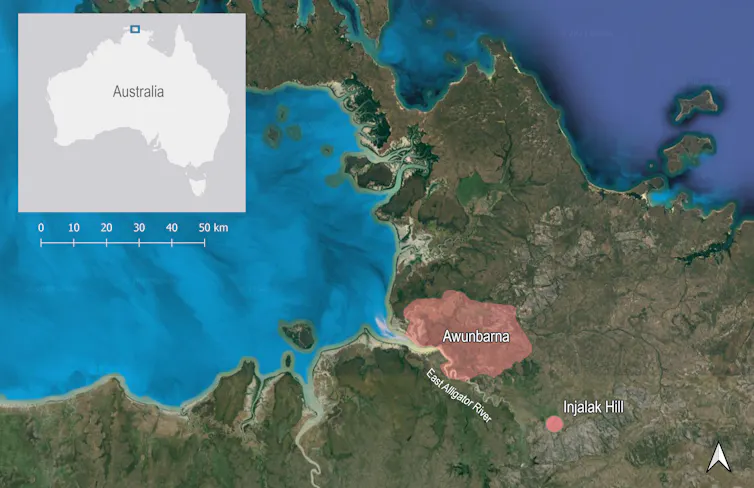
Cricket: Black Caps welcome back three pace bowlers for tour of Bangladesh

Source: Radio New Zealand

New Zealand bowler Will O’Rourke Andrew Cornaga/www.photosport.nz

Canterbury pace bowler Will O’Rourke returns to the Black Caps’ white-ball set-up for the upcoming tour of Bangladesh but his aim is to be playing test cricket again.

O’Rourke’s last game was for New Zealand against Zimbabwe in a test in Bulawayo in late July last year when he suffered a back stress fracture.

The 24-year-old has been named in a 15-player squad for the three ODI and three T20I series in April.

Also returning from injuries are fellow pace bowlers Matt Fisher and Blair Tickner.

O’Rourke will play the three ODIs, Fisher (shin) returns for the T20Is, and Tickner (ankle) has been named in both squads.

O’Rourke, who has played 11 tests since his debut in 2024, is hoping to get to England for the test series in July and the test series in Australia next summer.

“I obviously love the test cricket stuff, it is special to be a part of the test group,” O’Rourke said.

“It is so tough to win test games so we put a high price on that.”

He said the tour of Bangladesh will help.

“Put a decent performance out in Bangladesh and hopefully put my name forward for England.”

Head coach Rob Walter said it was pleasing to see the return of several players.

“With the amount of cricket being played in the modern game, having depth in our bowling stocks is key. Having players of this quality come back is great for our side.”

Off-spinning allrounder Dean Foxcroft has earned his recall to the white-ball side since his most recent T20I cap in April 2024.

Test captain Tom Latham will lead the side, with regular white-ball captain Mitch Santner unavailable due to his IPL commitments.

Black Caps ODI Squad to Bangladesh

  • Tom Latham (C) – Canterbury
  • Muhammad Abbas – Wellington Firebirds
  • Adithya Ashok – Auckland Aces
  • Kristian Clarke – Northern Districts
  • Josh Clarkson – Central Stags
  • Dane Cleaver – Central Stags
  • Dean Foxcroft – Central Stags
  • Nick Kelly – Wellington Firebirds
  • Jayden Lennox – Central Stags
  • Henry Nicholls – Canterbury
  • Will O’Rourke – Canterbury
  • Ben Sears – Wellington Firebirds
  • Nathan Smith – Wellington Firebirds
  • Blair Tickner – Central Stags
  • Will Young – Central Stags

Black Caps T20I Squad to Bangladesh

  • Tom Latham (C) – Canterbury
  • Katene Clarke – Northern Brave
  • Kristian Clarke – Northern Brave
  • Josh Clarkson – Central Stags
  • Dane Cleaver – Central Stags
  • Matt Fisher – Northern Brave
  • Dean Foxcroft – Central Stags
  • Bevon Jacobs – Auckland Aces
  • Nick Kelly – Wellington Firebirds
  • Jayden Lennox* – Central Stags
  • Tim Robinson – Wellington Firebirds
  • Ben Sears – Wellington Firebirds
  • Nathan Smith – Wellington Firebirds
  • Ish Sodhi – Canterbury Kings
  • Blair Tickner – Central Stags

*Potential format debut

Sign up for Ngā Pitopito Kōrero, a daily newsletter curated by our editors and delivered straight to your inbox every weekday.

– Published by EveningReport.nz and AsiaPacificReport.nz, see: MIL OSI in partnership with Radio New Zealand

Fuel industry welcomes government’s moves to increase capacity, says it won’t help overnight

Source: Radio New Zealand

Waitomo fuel chief executive Simon Parham. Supplied / Waitomo

Fuel industry leaders are welcoming the government’s moves to increase fuel capacity, but say while it will help with long-term concerns price spikes are a bigger worry.

With the fuel crisis in its fifth week, the government is moving to shore up storage as an insurance policy in case of supply line failures by announcing plans to access more supply as well as getting more storage tanks into service.

“While fuel importers do continue to indicate confidence in near-future orders and while they are already exploring alternatives to Asia as a source of fuel supply, we believe that some residual risk remains,” Finance Minister Nicola Willis said.

She said Cabinet had agreed to explore additional options to guard against the risk of disrupted fuel supply, and was now “actively seeking proposals for New Zealand refined fuel imports on arrangements that would support additional purchase of stocks through to June”.

The government was assessing a series of unsolicited proposals from businesses to help increase supply, including to trade New Zealand’s access to fuel types the country was unable to use – like crude oil, which would need to be refined – for types it could.

On the fuel storage front, Associate Energy Minister Shane Jones confirmed officials were exploring two proposals, including to get some of the unused storage capacity at Marsden Point operating again after the former refinery was downsized to an import-only terminal.

Associate Energy Minister Shane Jones (L) and Finance Minister Nicola Willis give an update on the fuel situation on 27 March. RNZ / Samuel Rillstone

Waitomo fuel chief executive Simon Parham told RNZ more storage would help in the long-term, but would not bring prices down.

“Through the April, May and even into the June window, stock seems to be on the water, there’s been no cargoes cancelled and no ships turned around, so supply looks like it’s steady but it seems to me they want that little extra insurance.

“Looking at extra storage options in New Zealand is also the right thing to do but we’ve just all got to be realistic that that will come at a cost and someone’s got to pay for it.

“Extra storage here, it won’t help with the cost, it just gives us that little bit more resilience in the long term should these supply shocks happen again.”

Automobile Association fuel spokesperson Terry Collins said more capacity would take time and money to build, and ensuring consistent supply needed to be the priority, with the main risks closely linked to what happens in Iran.

“Channel infrastructure, which was a part of the old refinery, has got additional storage, they’ve offered it to the government, but there’s a lag between getting it ready and the immediacy of what’s happening internationally.

“What we could see, possibly, is in a very short period of time spikes and pressure on fuel [prices] coming in here that we do not have time to address by building or refurbishing storage.

“Really it’s about can we get enough to keep what we’ve got going, now.”

He said the threat of further escalation was making markets nervous.

Automobile Association fuel spokesperson Terry Collins said more capacity would take time and money to build. RNZ / Paris Ibell

Hoarding leading to shortages

The government again repeated its warning that “minor hoarding” was leading to shortages at service stations in some regions, including Ōpōtiki, Southland and Nelson.

AA’s Terry Collins said fear of losing out was part of the problem.

“Because of their fear, they think about ‘oh, I’m in an area this could happen’ and by their actions it makes it a self-perpetuating action.”

Waitomo’s Simon Parham said suppliers were doing their best.

“We’re always managing our forecasts, one month, two months, even six months out … that’s what we do day in, day out to make sure products get to service stations,” he said.

“We have seen that increase in demand, admittedly it’s starting to taper off a bit now because that demand has been pulled forward and we’re starting to see a lag – and also prices doing what price does when it gets too high, it causes demand destruction.

“There’s plenty of product there, but it’s not always in the places where you need it.”

He said the most useful regulations for the government to cut would be around heavy-vehicle permits.

“You have to apply on an individual truck and an individual route basis, and what that means is it’s admin-heavy, it takes two to three weeks to get this all approved, and so it really reduces your flexibility in the system.”

Sign up for Ngā Pitopito Kōrero, a daily newsletter curated by our editors and delivered straight to your inbox every weekday.

– Published by EveningReport.nz and AsiaPacificReport.nz, see: MIL OSI in partnership with Radio New Zealand

Fuel industry welcomes government’s moves to increase capacity, say it won’t help overnight

Source: Radio New Zealand

Waitomo fuel chief executive Simon Parham. Supplied / Waitomo

Fuel industry leaders are welcoming the government’s moves to increase fuel capacity, but say while it will help with long-term concerns price spikes are a bigger worry.

With the fuel crisis in its fifth week, the government is moving to shore up storage as an insurance policy in case of supply line failures by announcing plans to access more supply as well as getting more storage tanks into service.

“While fuel importers do continue to indicate confidence in near-future orders and while they are already exploring alternatives to Asia as a source of fuel supply, we believe that some residual risk remains,” Finance Minister Nicola Willis said.

She said Cabinet had agreed to explore additional options to guard against the risk of disrupted fuel supply, and was now “actively seeking proposals for New Zealand refined fuel imports on arrangements that would support additional purchase of stocks through to June”.

The government was assessing a series of unsolicited proposals from businesses to help increase supply, including to trade New Zealand’s access to fuel types the country was unable to use – like crude oil, which would need to be refined – for types it could.

On the fuel storage front, Associate Energy Minister Shane Jones confirmed officials were exploring two proposals, including to get some of the unused storage capacity at Marsden Point operating again after the former refinery was downsized to an import-only terminal.

Associate Energy Minister Shane Jones (L) and Finance Minister Nicola Willis give an update on the fuel situation on 27 March. RNZ / Samuel Rillstone

Waitomo fuel chief executive Simon Parham told RNZ more storage would help in the long-term, but would not bring prices down.

“Through the April, May and even into the June window, stock seems to be on the water, there’s been no cargoes cancelled and no ships turned around, so supply looks like it’s steady but it seems to me they want that little extra insurance.

“Looking at extra storage options in New Zealand is also the right thing to do but we’ve just all got to be realistic that that will come at a cost and someone’s got to pay for it.

“Extra storage here, it won’t help with the cost, it just gives us that little bit more resilience in the long term should these supply shocks happen again.”

Automobile Association fuel spokesperson Terry Collins said more capacity would take time and money to build, and ensuring consistent supply needed to be the priority, with the main risks closely linked to what happens in Iran.

“Channel infrastructure, which was a part of the old refinery, has got additional storage, they’ve offered it to the government, but there’s a lag between getting it ready and the immediacy of what’s happening internationally.

“What we could see, possibly, is in a very short period of time spikes and pressure on fuel [prices] coming in here that we do not have time to address by building or refurbishing storage.

“Really it’s about can we get enough to keep what we’ve got going, now.”

He said the threat of further escalation was making markets nervous.

Automobile Association fuel spokesperson Terry Collins said more capacity would take time and money to build. RNZ / Paris Ibell

Hoarding leading to shortages

The government again repeated its warning that “minor hoarding” was leading to shortages at service stations in some regions, including Ōpōtiki, Southland and Nelson.

AA’s Terry Collins said fear of losing out was part of the problem.

“Because of their fear, they think about ‘oh, I’m in an area this could happen’ and by their actions it makes it a self-perpetuating action.”

Waitomo’s Simon Parham said suppliers were doing their best.

“We’re always managing our forecasts, one month, two months, even six months out … that’s what we do day in, day out to make sure products get to service stations,” he said.

“We have seen that increase in demand, admittedly it’s starting to taper off a bit now because that demand has been pulled forward and we’re starting to see a lag – and also prices doing what price does when it gets too high, it causes demand destruction.

“There’s plenty of product there, but it’s not always in the places where you need it.”

He said the most useful regulations for the government to cut would be around heavy-vehicle permits.

“You have to apply on an individual truck and an individual route basis, and what that means is it’s admin-heavy, it takes two to three weeks to get this all approved, and so it really reduces your flexibility in the system.”

Sign up for Ngā Pitopito Kōrero, a daily newsletter curated by our editors and delivered straight to your inbox every weekday.

– Published by EveningReport.nz and AsiaPacificReport.nz, see: MIL OSI in partnership with Radio New Zealand

Can emissions shrink while the economy grows?

Source: Radio New Zealand

(File photo) Unsplash

A new report suggests it might be possible for New Zealand’s economy to still grow and reduce emissions at the same time.

Many have thought it can’t be done, but the Sustainable Business Council has been on a mission to prove otherwise.

The membership organisation released research which had shown moving to a low emissions economy, instead of relying only on the carbon price pathway, could help to increase GDP by $22 billion by 2035 and $33 billion by 2050. By 2035, emissions could have reduced by 6 percent a year and 22 percent by 2050.

The council’s chief executive Mike Burrell said the growth numbers rely on developing a holistic system, something that was already happening in small like-minded economies like the Netherlands, Denmark and Singapore.

“If you’ve got stable and enduring policies, if you’ve got abundant renewable energy, if you accelerate your innovation and your productivity, and you’ve got a credible carbon price, these things act together,” he said.

“They reduce costs, they lift efficiency, they strengthen your long run competitiveness, and importantly, act as a system, not a series of independent policy levers.”

Burrell said examples of good policy already exist in the way we manage other economic levers and they don’t require all sides of politics to agree on everything.

“If you think about something for example, the superannuation fund or independent monetary policy that came as a result of leadership by the government of the day,” he said.

“The government of the day said ‘we’re going to take a medium term view and we’re going to set this out,’ and subsequent governments went, ‘hey, do you know what that was? A great idea that’s really good for New Zealand’s growth. Let’s stick with that.’”

Burrell said the current oil shock had once again exposed the New Zealand economy’s weaknesses and a consistent policy approach is more important than ever.

“What we’re saying is here’s an opportunity to make New Zealand’s economy more resilient, for us to have the ability to drive our economy where we’ve got more control over over the kind of energy we produce.

“The idea of being more affluent isn’t to be prosperous for prosperity sake, it allows you more choices.”

Sign up for Ngā Pitopito Kōrero, a daily newsletter curated by our editors and delivered straight to your inbox every weekday.

– Published by EveningReport.nz and AsiaPacificReport.nz, see: MIL OSI in partnership with Radio New Zealand

Carpooling is picking up steam – what’s the best way to do it?

Source: Radio New Zealand

With little reprieve in sight for fuel prices, the government is mooting the promotion of carpooling and public transport if the National Fuel Plan moves into another phase.

Interest in carpooling is taking off. Auckland-based entrepreneur Saveun Man’s app, Carpoolin, has seen the highest number of registered users this month.

Kāpiti Coast resident Marcie Turnbull joined a new Facebook group for carpooling, which grew from 30 members to hundreds in the space of a week.

Carpooling can be promoted among your own communities – like workplaces, school parents, gyms, libraries and neighbours. (File image)

Unsplash / A.C.

– Published by EveningReport.nz and AsiaPacificReport.nz, see: MIL OSI in partnership with Radio New Zealand

Government subsidies not enough to cover student numbers, universities say

Source: Radio New Zealand

Universities say government subsidies aren’t enough to cover all of their students. RNZ / Richard Tindiller

Universities have revealed they are missing out on millions of dollars in government subsidies because there is not enough money to cover all of their students.

Seven universities told RNZ they collectively carried several thousand un-subsidised domestic students last year and expected more of the same this year.

The students paid fees but the universities missed out on government contributions starting at $7287 per student in the cheapest undergraduate courses.

It happened because the government did not provide the Tertiary Education Commission (TEC) with enough funding for all enrolments in 2025 or 2026 – a situation expected to repeat in 2027.

Auckland, AUT, Waikato, Massey, Victoria, Lincoln and Canterbury told RNZ they had unfunded domestic students last year and/or this year.

In addition Lincoln and AUT said TEC reduced their funding allocation this year though AUT said that was partly because its 2025 funding was increased to meet high demand.

Auckland said 1662 or five percent of its 31,302 domestic EFTS (equivalent full-time students) last year were not subsidised though the commission topped up its funding in some areas.

It said it was too early to provide numbers for this year.

Victoria University said two percent or nearly 300 of its domestic EFTS were unfunded last year and it could not comment on this year’s position yet.

Victoria University said two percent or nearly 300 of its domestic EFTS were unfunded last year. RNZ / Samuel Rillstone

Waikato University said it exceeded its agreed 2025 funding allocation of $100 million by 7.3 percent, meaning its 9222 domestic EFTS included several-hundred who would otherwise have attracted $7.3m in government funding.

It said this year its funding cap for domestic students was set at 110 percent and it was negotiating with the commission to exceed that.

Massey University said 92 of its 12,760 domestic EFTS last year were not funded because the university exceeded its allocation.

It said it was expecting to enrol 13,195 domestic EFTS this year with about 260 unfunded.

Canterbury University said it absorbed the cost of some unsubsidised students in 2025, but was still finalising the final figures and it was too early to confirm 2026.

Lincoln said it had 165 unfunded EFTS last year and expected 42 this year.

AUT said it exceeded its agreed enrolments by seven percent last year and 3.7 percent of its 16,723 domestic EFTS in 2025 were unfunded.

The university said it reduced new enrolments but had applied to again enrol up to 107 percent this year.

“In early 2026, AUT applied to TEC to enrol up to 107 percent – largely to accommodate ongoing growth in pipeline (Years 2-4) for students we already have an existing commitment to,” it said.

“It is in New Zealand’s interest that they graduate. Improved retention, a measure of student success, has been a key performance measure for all TEOs [tertiary education organisations], but there is currently not sufficient funding to support the increase in returning EFTS, along with levels of demand from new entrants.”

Otago University said all of its 2025 domestic EFTS were funded and this year it was experiencing 4.3 percent growth.

“We will not know how many, if any, unfunded EFTS we will carry until we have had further discussions with the TEC,” it said.

Otago’s director of strategy, analytics and reporting David Thomson said this year’s significant growth was “highly probable and predictable”.

He said the 2025 Year 13 school leaver cohort was significantly larger than in 2024 or any other recent year; academic achievement across universities had improved resulting in improved retention; and relatively high unemployment typically caused higher levels of progression to tertiary study, and higher retention.

Otago University said it was experiencing 4.3 percent growth. RNZ / Nate McKinnon

Lincoln larger than ever

Lincoln University vice-chancellor Grant Edwards told RNZ the university had a record number of students.

“We currently have about three-and-a-half-thousand full-time equivalent students here in New Zealand of domestic and international students and we also operate transnational education on joint programmes, which will be approaching about 400 offshore full-time equivalent students as well,” he said.

“That’s a head count of about five-and-a-half-thousand students at this point in time, which is the largest the university has ever been in its history.”

Despite the growth, Edwards said Lincoln needed to make staff cuts because of “very strong signals” that domestic student funding was likely to be constrained in future.

He said TEC had indicated the university could lose funding for courses that were not priority areas.

Edwards would not say what those areas were or how much funding might be cut.

Meanwhile, he said Lincoln enrolled un-subsidised students last year and this year.

He said the numbers were significant enough for the university to try to focus enrolments into areas that were government priorities.

He said Lincoln was fortunate because its core focus of land-based subjects aligned well with the government’s priorities.

Sign up for Ngā Pitopito Kōrero, a daily newsletter curated by our editors and delivered straight to your inbox every weekday.

– Published by EveningReport.nz and AsiaPacificReport.nz, see: MIL OSI in partnership with Radio New Zealand

Where does New Zealand’s fuel come from and how does it get here?

Source: Radio New Zealand

Across the country, petrol has surpassed $3.30 a litre on average. RNZ / Unsplash

Until a few weeks ago you might have been forgiven for never thinking about where fuel comes from, other than the petrol station.

But given international uncertainty, a greater focus was going into what happens before you put the hose into your car at your local.

A global fuel crisis, limited supply and a sharp realisation Aotearoa sits at the bottom of the world, was being caused by the US and Israel’s ongoing war on Iran.

It’s hugely disrupted key supply chains and pushed Brent crude over $115 a barrel pushing the price at the pump up.

In New Zealand it’s created panic buying, huge queues and possibly even sabotage of an Auckland fuel line.

Firefighters work to contain a diesel leak in Auckland on Monday. Kim

But fuel had a long road to travel before it made it to New Zealand petrol stations.

Enroute to the shores of New Zealand, refined fuels sit in tankers, the biggest of them arriving at former refinery, Marsden Point.

The AA’s Terry Collins said as it’s a deep-water port, it could take the largest ships – up to 120 million litres.

There were nine other import terminals and two inland terminals in New Zealand – Wiri in Auckland and Woolston in Christchurch.

Mount Maunganui, Wellington and Lyttelton could receive medium-sized ships that carried 40 to 50 million litres of liquid fuels

Napier, New Plymouth, Nelson, Timaru, Dunedin and Bluff were the smaller regional terminals.

Collins said the tankers deliver the refined product from the ships to what is called ‘tank farms’ or storage tanks.

“You’ll see them perhaps Seaview in Wellington and Marston Point, obviously.

“They have big tanks, steel tanks, and generally what they do is they have what’s known as a sinking lid on them. That’s to contain the vapor as they go down.”

From here, fuel was sent around the country by road.

“They have a trucking system where the drivers turn up, pick up the fuel, and then deliver them to the service stations to be used in our vehicles.

“Depending on who they’re delivering to, a schedule of service stations where they drive around and discharge compartments of fuel, different fuel into each of the underground tanks and service stations.”

Or in the case of Marsden Point, fuel was sent through a special pipeline from Ruakaka to Auckland – ending up in the Wiri Terminal and Auckland Airport for further distribution.

Marsden Point. (File photo) RNZ / Peter de Graaf

“They’ll send down various products through the pipeline, but maybe diesel at one stage, maybe petrol at another.

“And that’s used to basically maintain the storage around the Auckland area, being the largest city in New Zealand.”

Collins said the storage tanks were like a dam with water flowing in and water flowing out.

“The level will go up and down, depending on how often the ships arrive and the shipping schedules.

“But the demand is usually fairly consistent, which is that flow out from it.”

Some fuel starts to go off after about three months, but Collins said that doesn’t happen because nothing sits for that long.

He reiterated it was not a good idea to store fuel for that very reason.

On top of the main and regional fuel terminals there were also smaller tankers that go rurally to farms and mining sites.

Refineries optimised for certain oil

Before the fuel even makes it to our shores, it must be refined.

Since the closure of the Marsden Point Oil Refinery in 2022, New Zealand imported all its refined fuel.

Before it’s refined, it starts off as crude oil, sourced mainly from the Middle East, particularly Saudi Arabia and the UAE.

An oil field in Saudi Arabia. (File photo) Reuters/CNN Newscource

Refineries in South Korea, Singapore and Malaysia need to get their hands on it before it can turn it into essential fuels (gasoline, diesel, jet fuel, heating oil), petrochemicals, and materials like plastics, rubber, asphalt.

New Zealand gets 80 percent of its fuel supply from just South Korea and Singapore.

However Collins said it’s not so simple, since the trouble in the Middle East takes away key supplies.

“Refineries aren’t all equal and oil isn’t all equal.

“We know it’s been a bit of a concern because they had been sourcing a lot from that market and because the refineries are optimized to use that type of fuel.”

He said it’s their decision where they get the crude oil from, but it may not be the kind that makes it the best for their refinery.

“Their decision is like asking the Kellogg’s company where they get their corn for their corn flakes.

“They need corn for their flakes, but some corn makes better cereal than others.”

Sign up for Ngā Pitopito Kōrero, a daily newsletter curated by our editors and delivered straight to your inbox every weekday.

– Published by EveningReport.nz and AsiaPacificReport.nz, see: MIL OSI in partnership with Radio New Zealand

All Whites looking beyond history-making farewell win

Source: Radio New Zealand

All Whites Eli Just and Kosta Barbarouses. www.photosport.nz

If the All Whites did not have bigger challenges on the horizon a history making win over Chile might have been more than a footnote in the broader plan.

Wanting a statement victory on home soil during a send-off ahead of the Football World Cup, a 4-1 win over a team from a region as strong as South America was a way to do it. Even if the visitors were down to 10 men after 27 minutes.

The All Whites had not beaten a South American team in 19 previous attempts.

New Zealand had not beaten any team in their last eight games.

The last time the All Whites scored more than three goals was a year ago.

While Chile failed to qualify for the World Cup, a win over the world number 55 side is a scalp that Darren Bazeley’s side can take confidence from as they look ahead to a group at the World Cup that includes Iran, Egypt and Belgium.

Immediately after the game at Eden Park, Bazeley had mixed feelings about how the Fifa Series had played out after a disappointing loss to Finland on Friday.

“We wanted to win both games,” Bazeley said.

“We don’t get too carried away with tonight, we didn’t get too carried away with the Finland result. We know these games are what they are and we still know we’ve got a lot of work to do before the World Cup.”

All White Joe Bell wants wins. Andrew Cornaga/www.photosport.nz

Timing can be everything and winning can be a habit and experienced midfielder Joe Bell believed the All Whites were going to peak at the right moment.

“It takes time changing that mentality when you play against teams like Chile and these top opponents to recognise that it’s beyond an expectation to perform against them and maybe get a draw, it’s the drive to try to get wins and results.

“We’re going to take confidence from it. I think we’ve been building in confidence, and it’s been a long journey that we’re trying to time correctly going into the World Cup, that we’re a little bit more result-focused now than the performance.”

Goal scoring had been one of the All Whites’ challenges in recent times. So to get four different players’ names on the scoresheet – Kosta Barbarouses, Eli Just, Ben Waine and Jesse Randall – was not only good for the individuals who were wanting to make an impression ahead of the naming of the World Cup squad but also for a team playing without their injured captain and leading goalscorer Chris Wood.

“I’m not expecting some magic pill that suddenly we’re going to start scoring four goals every game, but I think we’re going to take a lot from this game,” Bell said.

“I think we can all agree that we looked far more aggressive, we were creating more chances, and that’s been something that we’ve been focused on for a long time now.

“So we’re going to have to stay focused, take the learning points, and just continue it.”

Match referee Michael Oliver shows Dario Osoria of Chile the red card against the All Whites. Andrew Cornaga/www.photosport.nz

The memory of the upset win over Chile on a drizzly Monday night in Auckland in front of over 13,000 fans, many of whom were supporting Chile, will be fresh in the players’ minds when they reconvene with the national side in June.

Bazeley points out that whenever the team goes into camp they look at their last performance. Even though he thinks the team will have learnt more from the Finland loss than the Chile result, the win will still get plenty of video review time.

“It’s not easy playing against 10 men. Sometimes that becomes even harder, especially against a South American team that’s probably got the ability to play with 10. So I thought we were pretty comfortable doing that,” Bazeley said.

But not every player who will be part of the review will have played in the victory.

By mid-May Bazeley has to have finalised his 26-man World Cup squad and with six players missing the Fifa Series through injury, some players who were involved in the two games in Auckland will not be at the World Cup.

Bazeley said all players were getting the same message when it came to World Cup selections.

“We’re in contact with the wider group of players that we monitor.

“These guys were here with us but they’re not receiving different messages to players that are not here, including Chris Wood and other players on that long list.

“We’ll be close to confirming our pre-World Cup schedule soon, because we’re close to confirming another [warm up] game.

“Then we’ll get the dates of when the squad needs to be selected by and obviously get that out to the players so everybody knows.”

Sign up for Ngā Pitopito Kōrero, a daily newsletter curated by our editors and delivered straight to your inbox every weekday.

– Published by EveningReport.nz and AsiaPacificReport.nz, see: MIL OSI in partnership with Radio New Zealand

Nurses caring for killer mistakenly believed he was there for ‘respite’

Source: Radio New Zealand

Leslie Raymond Parr killed his mother in 2024, more than two decades after killing his partner Fiona Maulolo in 1997. Supplied

Nurses caring for a killer at a forensic inpatient unit mistakenly believed he was there for “respite” as his notes were not accessible to them, a review into his care has revealed.

This meant the man, Leslie Parr – who killed his ex-partner in 1997 – did not receive a “comprehensive” mental state assessment required to identify any underlying symptoms of psychosis.

Five days after he was released back into the community he killed again, this time his mother.

The review also revealed that Parr, who had a diagnosis of schizophrenia and substance use disorder, tested positive for cannabis when he was admitted to the facility.

RNZ earlier revealed Leslie Raymond Parr killed his mother in 2024, more than two decades after killing his partner Fiona Maulolo in 1997.

Do you know more? Email sam.sherwood@rnz.co.nz

The revelations of a second killing prompted the Chief Victims Advisor to call for a Royal Commission of Inquiry into forensic mental health facilities.

Fiona Maulolo Supplied

A “high-level” summary report into the case was released by Health New Zealand after the Supreme Court dismissed Parr’s application for leave to appeal a decision declining name suppression.

The report said Parr, referred to as “Person A”, had a diagnosis of schizophrenia and substance use disorder (mainly cannabis and alcohol).

Parr was released back into the community in 2012 as a special patient to independent living under the care of the Forensic Community Mental Health Team (FCMHT). Then, in 2021, his legal status was changed from special patient to being managed under the Mental Health Act under a Community Treatment Order.

The order required a patient to attend for treatment and accept treatment as prescribed. However, he was also no longer subject to the same restrictions as a special patient and had declined to continue with urinary drug screening (UDS) tests, did not want FCMHT to engage with whānau; had declined consent to whānau being provided with a copy of his wellness plan and had declined home visits by the FCMHT.

On 23 May 2024, Parr was arrested following an assault of a relative. The report said the co-response team contacted the Mental Health After Hours Team and after a crisis mental health assessment Parr was admitted to an inpatient stay at Stanford House, an extended secure forensic inpatient unit, for a period of assessment.

He remained as an inpatient for a week before being discharged to resume community care under the FCMHT on 30 May.

A follow-up appointment was arranged for 4 June. He arrived about midday and was administered his usual medication.

Later that afternoon a relative called Parr’s case manager to raise concerns about Parr’s mental health.

The case manager provided the relative with the responsible clinician’s phone number and updated them of the relative’s concerns. An appointment with Parr’s clinician was organised for 48 hours later.

In the early hours of 5 June Parr was arrested for killing his mother a day prior.

The report included the findings and recommendations of an external review of services provided by Central Forensic Mental Health Services team(CFMHS), an internal review of the services provided by Stanford House by Whanganui Mental Health Services, and a services review by the FCMHT, CFMHS and Whanganui Mental Health Services more broadly.

The findings of the internal review of services provided by Stanford House said the admission process was “safe” with the appropriate outcome of a directed period of admission.

“Some aspects of the procedure were identified as ‘grey areas’ needing clarification for future admissions”.

However, there was a “lack of clarity of the location and purpose of admission”.

The responsible clinician who was employed by CFMHS entered notes into the Mental Health, Addiction and Intellectual Disability Service (MHAIDS) patient system.

“The notes were not accessible to the Stanford House nursing staff and they did not see the Responsible Clinician’s assessment of Person A or the plan for the admission.

“This led to a misinterpretation by the staff that Person A was at Stanford House for respite/reset and did not receive the comprehensive mental state assessment that was required to identify any underlying symptomatology of psychosis.”

The review recommended establishing a process to ensure intentions of the psychiatrist, the Director of Area Mental Health Services and responsible clinician around admission location to Stanford House and the purpose are clearly communicated to all staff.

It also recommended working with the Mental Health Medical Directors with oversight of MHAIDS and Whanganui clinicians to develop a standardised section of the admission documentation to include a comprehensive plan to cover the first 48 hours of assessment, care and treatment on admission.

The review also found that Stanford House staff were not recently trained or experienced in providing the more acute forensic care required for patients who, like Parr, were admitted urgently unplanned.

“Documentation of mental state assessments was inconsistent across shifts. Evaluating underlying aspects of mental state for any clinician viewing consecutive shifts documentation of mental state was not achievable because there was insufficient detail recorded.

“The inpatient care plans are not fit for purpose and lacked sufficient details in goals, interventions, and evaluations significantly limiting the effectiveness of assessment and observation and the overall depth of the understanding of ‘what was going on for Person A’.”

It was recommended the Stanford House nursing staff were upskilled in thorough, more acute mental state assessment and consistent documentation of the acute forensic patient.

The review also revealed that when Parr was admitted to Stanford House on 23 May he was directed to provide a UDS sample. This was the first time he’d been directed to do so since December 2022 as testing was no longer required or made a condition once he ceased being a special patient. He had also “consistently refused” to consent when being asked to previously.

“The sample taken at Stanford house tested positive for cannabis.”

The review recommended ensuring community forensic pathway patients were “well supported” by Alcohol and Other Drug (AOD) clinicians if they have or develop substance use problems.

It was also recommended they engage all community clinicians in discussion regarding a successful way of negotiating with patients, at the time of reclassification, that would “motivate and move them” to provide urine drug screens when there was a high suspicion of alcohol and other drug use.

There was also “limited face to face whānau involvement” in Parr’s wellbeing plan.

“Family were not present at discharge hui despite having valuable insight into Person A’s substance use and daily challenges.

“Standards emphasise the expectation of active involvement of patient’s whānau in their care where possible.”

The findings of the external review, which the report said was still being finalised, included that FCMHT did not uphold MHAIDS Whānau Framework and Whānau Participation Policy and that there was an absence of senior medical staff and diffuse clinical leadership.

“Throughout and prior to the period of investigation there was a lack of a specialist psychiatrist within the FCMHT.”

Concerns were also raised in the review regarding the model of forensic community care.

“There was discrepancy between senior leadership views of the role and purpose of the forensic community team and those of clinicians. There were also differences in understanding and expectations regarding urine drug screens (UDS).”

There was also no agreed Service Level Agreement in place that described the relevant roles and responsibilities of Whanganui District and CFMHS in the care of forensic community clients in Whanganui.

“Due to well-established and collegial relationships, all parties worked in a coordinated manner through the review period. However, the complexity of the interservice relationships created gaps in service delivery.”

The review also found that not all FCMHT team members who interacted with Parr documented the interactions in the notes on a regular basis.

The external review had four “positive findings” including that FCMHT staff made “good efforts” to integrate key information across the separated clinical records of CFMHS and Whanganui District.

The review also said after Parr killed his mother there was “excellent collaboration” by all parties including police and crisis mental health services to ensure Parr was “safely transferred to an appropriate acute forensic inpatient setting as quickly as possible”.

Several recommendations had been identified as a result of the reviews. They were grouped into six themes including whānau engagement, clinical leadership and senior medical staff and model of forensic community care.

In response to questions from RNZ on Monday about the report HNZ national director of mental health and addictions Phil Grady said the reviews identified the practical and legal challenges of enforcing urine drug screening for people receiving care in the community under a Community Treatment Order.

“As a result, the reviews recommended that services clearly set out expectations and processes for urine drug screening for all relevant clients. Work to implement this recommendation is underway.”

In relation to nursing staff believing Parr was at Stanford House for “respite”, Grady said the reviews characterised this is a “system and process issue, rather than an individual failure”.

He said the reviews also highlighted several “improvement areas to reduce the risk of similar misunderstandings in the future”.

“The reviews found that a gap in information‑sharing contributed to misinterpretation of the purpose of the admission and affected how assessment processes were carried out during the admission period.

“These findings form part of the overall learning from the reviews and underpin several of the recommendations focused on assessment processes, documentation, and communication between services. Health NZ is actively progressing implementation of review recommendations.”

Chief Victims Advisor Ruth Money told RNZ on Monday she remained “very concerned about the length of time these reviews and then subsequent implementation of actions take”.

“Each review identifies similar issues to the last, which is why an independent inquiry across all regions that establishes nationwide best practice and improvement actions that are mandatory is my continuing advice to the Government.

“While this environment is complex, the multiple incident reports highlight that tragic events like this are preventable. Improvements should be made proactively, not reactively after someone has been tragically killed.”

Grady earlier said HNZ recognised that questions had been raised about aspects of Parr’s care and the decisions made at the time.

“These were complex clinical decisions based on the information available, and the external review has carefully examined those concerns.

“Where the review has identified areas that could be clearer or stronger, such as expectations around drug screening, information sharing, and clinical oversight, we are acting on those findings to improve consistency and strengthen practice across the service.”

An external review of the care Parr received was being finalised.

“We are committed to implementing any recommended changes so that we continue to strengthen the quality and safety of the care we provide.”

Director of Mental Health Dr John Crawshaw earlier said once the external review is available, he would consider whether any further actions were required.

Sign up for Ngā Pitopito Kōrero, a daily newsletter curated by our editors and delivered straight to your inbox every weekday.

– Published by EveningReport.nz and AsiaPacificReport.nz, see: MIL OSI in partnership with Radio New Zealand

Care workers’ unions take Health NZ to court over travel costs as petrol prices soar

Source: Radio New Zealand

Great Barrier Island care worker Kerris Adlam. Supplied

Care workers’ unions are taking legal action against Health NZ, with carers in remote areas saying the price of petrol is so high they are losing money visiting their more remote clients.

The Public Service Association (PSA) and E tū have jointly filed an Employment Relations Authority claim against the health agency on the basis that it is illegal for employers to dictate how workers spend their money, yet the agency requires workers to pay for fuel and car maintenance.

The health agency denies carers are their employees, telling RNZ vehicle matters were the responsibility of third-party contracted providers.

Great Barrier Island workers driving hundreds of kilometres to see remote clients

Support worker Kerris Adlam lived on Great Barrier Island, where the price of petrol had reached $4.50 a litre, and diesel was not far behind.

She worked for Aotea Family Support Group, a charitable trust whose clients ranged from the injured or elderly, to those with mental health issues, to those needing palliative care – basically, anyone who had been allocated care hours by Te Whatu Ora.

Unable to afford the travel costs, Adlam told RNZ she had recently pared back her hours to three days a week, and was now driving a total of 164 kilometres, seeing three to four patients a day.

“I’ve budgeted myself now $60 a week for diesel, and now it doesn’t cover my costs”, she said.

Right now, Health NZ covered some of the fuel costs – namely, travel between clients. But it did not cover the cost of getting to that first client or getting home again, or taking the client to the supermarket or appointments.

The health agency funds the trust, which pays the carers.

By Adlam’s maths, she was getting just over 50 cents per kilometre, which did not come close to covering her costs.

“I jam as many people in as I can,” she said. “And the problem with that is […] I’m having to lump those care hours together, which means in the long run, their care is kind of unbalanced.

“Some people might need multiple visits during the day, but you just can’t do it, you can’t justify it, because you don’t get paid – you’re paying to have a job.”

She said care worker’s salaries had been low for a number of years now, and the price of fuel had just widened the gap.

“We’re not asking for a massive pay raise, we just want to be paid fairly. Which is, if it costs that much to go to someone’s place, then you pay them it.”

If not, some carers might start refusing to travel to far-away clients.

“We’re going to start seeing tragedies, we’re going to start seeing people not getting the care they need.”

Aotea Family Support Group general manager Angeline Young explained that mileage to travel between clients was covered, but trips to the first client of the day and home from the last were not.

Nor were trips to take clients to the supermarket or appointments.

“A lot of our clients don’t actually have vehicles,” she said. “We don’t have a public transport system on the island, so unless the care worker is taking them, they don’t get to go.”

While some carers were doing it tough, Young said she would not let affect their clients.

“If I can’t get more money out of Health New Zealand, I will use our crisis fund, because that’s what it’s there for.”

The charity had recently trailed a shuttle service for seniors to travel from the end of the island to the middle, using a small amount of one-off funding, which had been successful.

That could be expanded out, Young said, to take the burden of acting as a taxi off care workers.

Unions take legal action on basis of Wages Protection Act

The PSA and E tū were seeking a declaration from the Employment Relations Authority that Health NZ had not complied with the Wages Protection Act, affecting about 23,000 home support workers.

They were arguing that since HNZ was the funder of all home support workers, it was in a legal sense the controlling third party and therefore in breach of the section which said employers were not entitled to impose any requirement on any workers about how wages were spent.

According to the court documents, care workers were paid amounts ranging from the minimum wage up to approximately $29.10 an hour.

PSA national secretary Fleur Fitzsimons. RNZ / Samuel Rillstone

PSA national secretary Fleur Fitzsimons said by forcing workers to fund their own vehicle costs and accepting a mileage allowance that had not been increased in four years, the health agency was effectively dictating how workers’ wages were spent.

“These workers are providing an essential public service, funded by Health NZ,” she said. “They are among the lowest-paid workers in the country and had their pay equity claim cancelled. Yet they are the only publicly funded workers required to supply and maintain such significant tools of their trade as a car.”

They were seeking a declaration from the ERA that Health NZ had not complied with the Wages Protection Act.

She said Health NZ had the power to lift the mileage rate – which had not changed since 2022 – and it should do so with urgency.

HNZ denies care workers are their employees, puts onus back on providers

In a statement, HNZ’s Martin Hefford, acting director for funding, community and mental health, denied that care workers were employees of the health agency.

“In situations where Health New Zealand purchases home and community support services, the workers are employed by the contracted provider, not by Health New Zealand,” he said.

“The use of vehicles, and other employment agreement terms are a matter for the third-party provider that employs the workers.”

He said HNZ’s current funding arrangements recognised cost pressures faced by providers and their workforces, including fuel costs.

“Health New Zealand is currently considering funding settings for 2026/27, including the impact of rising fuel prices on third party providers.”

Sign up for Ngā Pitopito Kōrero, a daily newsletter curated by our editors and delivered straight to your inbox every weekday.

– Published by EveningReport.nz and AsiaPacificReport.nz, see: MIL OSI in partnership with Radio New Zealand

Maritime NZ detains Bluebridge’s Connemara ferry in Wellington after inspection

Source: Radio New Zealand

Bluebridge ferry the Connemara berthing at Picton wharf, helped by a tug, after earlier hitting the wharf while attempting to berth. RNZ/Anthony Phelps

Maritime NZ has detained Bluebridge’s Connemara at its Wellington berth after more than a week of cancelled crossings.

It has been 10 days since a technical fault forced the suspension of the ship’s services.

Connemara – which usually sailed four times daily – had not crossed the Cook Strait since 21 March, with cancelled sailings leaving passengers frustrated and scrambling to find alternative travel.

Maritime NZ said Connemara was detained following a “Port State Control Inspection” on Friday.

“As a result of findings identified from the inspection process, a decision has been made to detain the ferry.

“Currently, the ferry is berthed at Wellington, and the detention notice means it cannot sail until the notice has been lifted,” it said.

Neither Bluebridge nor Maritime NZ provided details on what the technical fault was.

StraitNZ Bluebridge spokesperson, Will Dady confirmed the detention but still hoped to return Connemara to scheduled services by Tuesday evening.

“We’d like to again apologise and reassure our customers we’re doing everything we can to get back to our regular service as soon as possible.”

A spokesperson for Maritime NZ said Bluebridge was responsible for making the repairs and sailings could only resume once the detention noticed had been lifted.

They said Maritime NZ appreciated the impact of continued cancellations on people and freight.

“Once the issues have been rectified and checked and approved by its classification society surveyor, its flag state (Bahamas), and our inspectors, we will remove the detention.”

Sign up for Ngā Pitopito Kōrero, a daily newsletter curated by our editors and delivered straight to your inbox every weekday.

– Published by EveningReport.nz and AsiaPacificReport.nz, see: MIL OSI in partnership with Radio New Zealand

How many self-employed people are earning less than minimum wage?

Source: Radio New Zealand

Many self-employed people are earning less than the median wage. (File photo) 123RF

Self-employment is not proving a path to higher incomes for many New Zealanders, new data from Inland Revenue shows.

Many self-employed people were earning less than the median wage, and more than half of those for whom it was their main income stream were not even earning the minimum.

The data supplied to RNZ shows the median income among people who report wages or salaried income in the 2024 tax year was $62,115.

Self-employed people whose self-employed income was more than 50 percent of their taxable income had a median income of less than $45,000.

People reporting business income, and self-employment as a lesser part of their income, had median incomes in line with wage and salary earners.

More business income-earners were at the top end of the income scale.

Inland Revenue said 70 percent of people who reported self-employment income as more than 50 percent of their taxable income were earning less than the median income of all workers, compared to 58 percent of those earning wages and salaries and 55 percent of those with business income making up the majority of their earnings.

In addition, 53 percent of those who were primarily self-employed were earning less than the median wage.

Infometrics chief forecaster Gareth Kiernan said it could reflect the progression of a new business.

“When a person starts out, some will form companies, but many will just work for themselves – and then as their workload increases, they start to take on other people and/or progress to a different trading model, meaning that they shift into the business income categories instead.”

At the University of Otago, economist Dr Murat Ungor said there was a clear skew in the data.

Dr Murat Ungor. (File photo) Supplied

“The lower-income pattern emerges specifically when you narrow the focus to the unincorporated self-employed.

“Their overall median is $50,446, and among those for whom self-employment makes up more than half of total income, it falls further to $44,721; below even the all-individuals median of $45,232.

“By contrast, those who combine self-employment with wages report a much healthier $54,875. The skew, in other words, is concentrated among people whose primary source of income is self-employed income/sole-trader activity.

“Roughly seven in ten people who depend mainly on self-employment report taxable incomes below the national median wage, compared with fewer than six in ten wage earners. One might interpret this as a meaningful gap.”

He said there could be an element of how income was reported affecting the data.

“A salaried employee earning $70,000 typically reports close to that full amount as taxable income, whereas a sole trader invoicing $100,000 or more may deduct vehicle expenses, home office costs, depreciation, subcontractor payments, and prior losses before arriving at a taxable figure, which might land in the $40,000 to $60,000 range despite strong underlying turnover.

“The remainder of the gap reflects genuine earnings volatility. Seasonal work, contract gaps, business start-up losses, and part-year trading all make annual taxable income look weaker for sole traders than for wage earners with stable PAYE salaries.”

He said tough economic conditions recently probably amplified patterns that were already present.

“The lower-income skew among primarily self-employed individuals seems to be a persistent structural feature of how sole-trader income is measured and reported. That said, difficult economic conditions would make it more pronounced, increasing the share of people in the early-loss or low-revenue phase at any given time.”

He said some of the people reporting income of less than $20,000 a year, for example, could be early in their business life.

“Interest rates were high throughout this period as the Reserve Bank sought to reduce inflation by constraining demand, and economic growth was low or even negative in each quarter.

“Someone launching a business in that environment would plausibly show low or nil taxable income in their first filing, not because the business model is flawed, but simply because the conditions were tough and start-up costs absorbed early revenue.

“In general, in many countries, when employment markets tighten, some people move into self-employment not entirely by choice. This kind of reluctant or necessity-driven self-employment tends to produce lower and more volatile incomes than planned entrepreneurship. It seems reasonable that this pattern could also apply to New Zealand during a difficult economic cycle.”

Simplicity chief economist Shamubeel Eaqub said there could be a lot of variation in people’s experience of self-employment.

Simplicity chief economist Shamubeel Eaqub. (File photo) Supplied

“There some industries like arts, recreation, where you have to be a self-employed person to be able to do your job, right? If you think about, you know, if you’re a personal trainer, for example.

“And the issue with that data is that we just don’t have any idea what it is that they do, whether it requires a lot of capital outlay, if it doesn’t, how long they work, that kind of stuff.”

He said any costs that were being claimed to reduce income would be business costs reducing what people earned.

“It’s interesting that those people who tend to own businesses tend to have incomes that are a bit more top-heavy versus those who tend to be self-employed and wage earners are somewhere in the middle.”

Hnry chief executive James Fuller said income was not always the primary reason for pursuing self-employment, and when combined with those who earned business income, self-employed people were on average earning more than those working for other people.

Hnry chief executive James Fuller. (File photo) Supplied/Hnry

“While the varied nature of self-employment, encompassing a wide range of sectors and job types including, but not limited to, midwives, personal trainers, doctors, tradies, travel and tourism, gig workers, contractors, and side hustlers, makes it challenging to definitively provide the average earnings of a self-employed person; the data from Stats NZ relating to the income of those who are self-employed and do not have employees is the most representative and reliable measure of earnings across various sectors.

“Findings in the independent Sole Trader Pulse show that many sole traders consider factors beyond earnings in their decision to be self-employed, the October 2025 STP revealed that 46 percent said they had chosen to be self-employed to avoid being employed by someone else altogether and data from June 2025 showed that 76 percent valued the flexibility to choose the way they worked, as a result of being a sole trader.”

He said a desire for more flexibility, control and work-life balance were often drivers in the decision to pursue self-employment.

Sign up for Money with Susan Edmunds, a weekly newsletter covering all the things that affect how we make, spend and invest money

– Published by EveningReport.nz and AsiaPacificReport.nz, see: MIL OSI in partnership with Radio New Zealand

Economic recovery likely delayed until 2027 due to Middle East conflict – report says

Source: Radio New Zealand

ASB has re-written its economic forecasts. (File photo) 123RF

  • ASB rewrites forecasts because of Middle East conflict
  • Slashes 2026 growth forecast to 1.3 pct from 2.9 pct
  • Raises inflation forecast to 4.2 pct mid year, before gradually easing
  • Duration of conflict will dictate severity of economic shock
  • RBNZ faces growth-prices dilemma
  • RBNZ expected to focus beyond short term shock, hold rates until year end

The economic recovery has likely been delayed until next year because of the Middle East conflict, according to a new report from ASB.

The bank joined other local forecasters in downgrading the economic outlook, with significant cuts to growth, higher inflation, lower investment, household consumption, and higher unemployment.

ASB chief economist Nick Tuffley said before the conflict and consequent surge in oil prices the economy was ready for a modest recovery through the year supported by lower interest rates and easing inflation pressures.

“With the new headwinds of higher fuel prices and potential fuel scarcity, that recovery is now unlikely to take place until 2027.”

Tuffley said the economy was set to contract in the three months ended June, with annual growth falling to 1.3 percent from its previous forecast of 2.9 percent as higher fuel prices hit consumer spending, disrupt tourism and lower business investment.

At the same time inflation was forecast to rise to 4.2 percent in the June quarter before gradually easing to the high 3 percent level early next year.

He said the severity of the impact depended on how long the conflict lasted and that was like asking “how long is a piece of string”.

“If the conflict eases sooner than expected, the outlook would improve quickly. But for now, households and businesses need to be prepared for a tougher, more uncertain period.”

At this stage ASB was forecasting elevated energy prices through to September.

RBNZ dilemma

Tuffley said the conflict has also given the Reserve Bank (RBNZ) a challenge between higher inflation and inflation expectations, and the hit to growth.

He said the RBNZ governor Anna Breman had recently signalled the central bank would be inclined to “look through” the immediate short term inflation impact

ASB was sticking to its pre-conflict forecast that the official cash rate would likely be raised by the end of the year.

Tuffley said the RBNZ had been looking to the slack in the soft economy to counter inflation pressures, but this had not yet occurred with inflation at 3.1 percent at the end of last year, which was not a good starting point to cope with the oil price shock.

“In time, the OCR is still likely to go up, but we don’t see the RBNZ rushing,” Tuffley said, but adding the risks were skewed to the downside.

Sign up for Ngā Pitopito Kōrero, a daily newsletter curated by our editors and delivered straight to your inbox every weekday.

– Published by EveningReport.nz and AsiaPacificReport.nz, see: MIL OSI in partnership with Radio New Zealand

Iran war brings risks and opportunities, investment manager says

Source: Radio New Zealand

The war in Iran continues to unsettle global financial markets, including New Zealand’s NZX top 50 index. Quin Tauetau

The war in Iran continues to unsettle global financial markets, including New Zealand’s NZX top 50 index, which fell 1.4 percent on Monday.

Amova Asset management’s global asset team had been briefing investors as it worked through various war scenarios, risks, and opportunities across global and local equities, as well as fixed income markets.

Amova New Zealand’s portfolio manager Alan Clarke said the impact was being felt in equity markets around the world, but also in the bond market, putting upward pressure on long-term interest rates.

He said the closure of the Strait of Hormuz had been a potential threat for decades, and its closure had proved the point for countries all around the world.

“New Zealand, thankfully, is sort of insulated from a lot of this, but not from the energy shock, if it is to play out as a big problem for the next few months,” he said, adding bigger markets had taken a harder hit than New Zealand.

“Once the conflict is over, the markets will quickly recover.

“This is a bigger short term hurdle to get over, but there’s plenty of positive news out there in the longer term as well.”

Clarke said there were a number of global companies that had been oversold in recent weeks, since the war began.

“A lot of the names that have been sort of oversold, are some really good quality businesses and a whole bunch of industries that, you know, pretty good, long-term earnings, growth outlooks and trading at valuations we haven’t seen for a few years. So that’s an opportunity.”

Sign up for Ngā Pitopito Kōrero, a daily newsletter curated by our editors and delivered straight to your inbox every weekday.

– Published by EveningReport.nz and AsiaPacificReport.nz, see: MIL OSI in partnership with Radio New Zealand