Page 593

The coal whack-a-mole: getting rid of coal power will make prices fall and demand rise elsewhere

Source: The Conversation (Au and NZ) – By Hao Tan, Associate Professor, Newcastle Business School, University of Newcastle

Shutterstock

The fight against climate change is full of inconvenient truths. The latest? Coal is going to be harder to get rid of than we had hoped. Every victory like the rejection of Clive Palmer’s proposed Rockhampton coal mine seems to be offset by coal’s gains elsewhere.

Potsdam Institute experts this week published research suggesting we have less than 5% chance of actually ending coal use by 2050. That would make the Paris Agreement goal of keeping global heating under 1.5℃ all but impossible.

Why? Supply and demand coupled with domestic policies and priorities. While coal power is likely to drop sharply, coal use will rebound in other sectors, according to the research. Why? As some countries move to clean energy, the price of coal will fall. Once coal is cheaper, other countries or domestic sectors such as steelmaking are likely to seize the opportunity and buy more. The researchers estimate for every 100 joules of coal not burned in power plants, an extra 54 joules will be burned in other sectors, in a trend they dub “coal leakage”.

Leakage poses a new challenge, just as the world seems set to accelerate climate action. The only answer? Accelerate even faster.

Fossil fuels are extraordinarily resilient

What this study tells us is our current efforts won’t be enough – even with the current tailwinds of Europe’s gas crisis and plunging renewable costs.

In 2017, nations at the annual United Nations climate talks launched the Powering Past Coal Alliance in an effort to speed up action. But according to the Potsdam research, efforts by the 48 nations and 49 sub-national regions involved could be counterproductive.

That’s because members of this alliance haven’t taken steps to avoid the risk of rebound coal use – even elsewhere in their own economies.

Depressingly, this is part of a trend. The fossil fuel sector is proving powerfully resistant to change. The world keeps on burning more fossil fuels despite the COVID lockdown drop in 2020. Coal burning increased by 6.3% in 2021, and the International Energy Agency estimates this figure will have increased again by 1.2% in 2022 to reach a historic high.

Russia’s invasion of Ukraine saw coal use soar, as Europe weaned itself off Russian gas. Germany had to delay its plans to quit coal power within 15 years and fire up coal plants again over the winter, while Japan’s reliance on coal has only grown in recent years.

In developing countries, coal is seen as a cheap, convenient and proven way to power the economy. China is far and away the world’s largest coal user – and producer. The downside has been terrible air pollution. That forced the government to force millions of households to replace coal with natural gas or electricity for heating, while supercharging its renewable sector, which now produces almost 30% of its electricity.

But as China’s economy slows and energy shortages increase, the government has backtracked and approved 300 million tonnes of new coal production capacity in 2022, on top of 220 million tons of capacity added in 2021. That’s more than all of Australia’s coal exports in 2021 (478 million tonnes).

New coal power projects have also been boosted, with 65 gigawatts of new coal power projects approved by the Chinese government in the first 11 months of 2022 – more than three times the capacity approved in 2021.

It’s no wonder coal and other fossil fuel producers are enjoying windfall profits. Australian coal exporters earned A$45 billion over 2021–22 thanks to soaring prices in the international market.
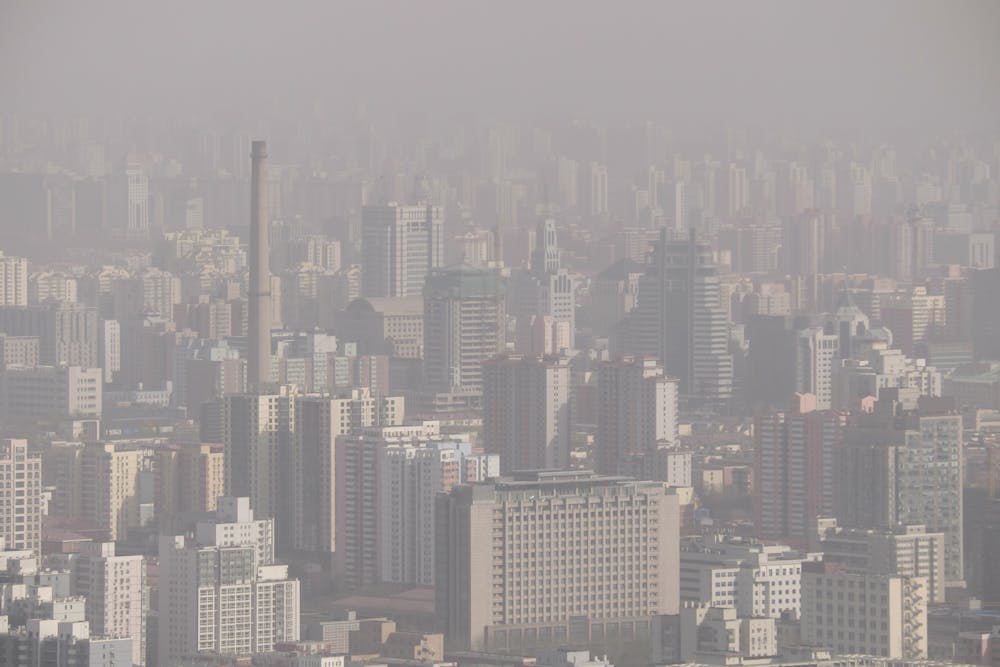
china air pollution
China has tried to shift away from coal burning to cut air pollution – but last year moved to mine more than before.
Shutterstock

What about the huge investment in renewables?

You might read this with your heart sinking and think – wait, wasn’t 2022 the first year the world invested more than US$1 trillion (A$1.44 trillion) in clean energy? How can coal rebound while we switch to clean energy?

Yes, we’ve seen stunning and welcome growth in green energy technologies and related industries. This has been driven by government policies, corporate demand for clean energy and the ever-increasing market competitiveness of solar, wind and offshore wind.


Read more:
Tensions and war undermine climate cooperation – but there’s a silver lining


Unfortunately, what this new research tells us is that both are true. Renewables are racing ahead. But the world’s demand for energy grows and grows as nations get richer and the population grows. To phase out fossil fuels remains the hardest challenge we face. The solutions will have to be hashed out politically.

After all, we now have almost all the technologies we need to stop burning fossil fuels. (Aviation, cargo ships and steelmaking are some of the hardest sectors to clean up.)

What do we do?

Put simply, we’re almost out of time. Any delay in ending our reliance on coal and keeping those carbon-dioxide dense rocks safely stored in the ground is extremely dangerous.

Sustained political effort does work. Even though Germany had to reopen some coal plants, their reliance on coal for electricity fell from 60% in 1985 to below 30% in 2020.

To end coal means clamping down on free-riders. Australia is a good case study. The companies which own our doddering old coal stations are heading for the exit as quickly as they can. Even the newest coal power stations are expected to have shorter lifetimes than anticipated. But to date, there’s been little effort to ensure coal doesn’t simply get burned in, say, steelworks.

Internationally, developed countries should offer greater financial incentives to help developing countries switch to renewables. In 2021, rich countries offered billions to South Africa to quit coal. Last year, they made a similar offer to Indonesia. This is welcome – but we need more.

Worldwide, 770 million people still live without access to electricity. For years, China used this as a justification for funding coal plants overseas. But in 2021, President Xi Jinping announced this would end.

Moves like this are essential. We can’t simply expect markets to end the burning of coal as quickly as we need. That means we’ll need policies to do the work.

To nail down the coffin on fossil fuels, we have to embrace what economists call “creative destruction” – the ability for technologies to disrupt the old and create the new. Coal and oil ended centuries of reliance on horses for transport. Now it’s time to end our reliance on fossil fuels – to destroy the old and make room for the new.


Read more:
6 reasons 2023 could be a very good year for climate action


The Conversation

Hao Tan receives funding from the Australia Research Council (ARC) Discovery Project 2019-2023. He previously received fundings from the Academy of the Social Sciences in Australia, from Enova Community Energy Ltd, and funding from the Confucius Institute Headquarters under the “Understanding China Fellowship” in 2017.

ref. The coal whack-a-mole: getting rid of coal power will make prices fall and demand rise elsewhere – https://theconversation.com/the-coal-whack-a-mole-getting-rid-of-coal-power-will-make-prices-fall-and-demand-rise-elsewhere-199305

Learning to read for pleasure is a serious matter – NZ schools should embrace a new curriculum

Source: The Conversation (Au and NZ) – By John Milne, Senior Lecturer in Education, Auckland University of Technology

Getty Images

Until now, the New Zealand Curriculum has focused almost exclusively on the development of technical reading skills. Simply reading for pleasure hasn’t been a priority, which makes its inclusion in the draft version of a refreshed curriculum particularly welcome.

There is no question that basic reading skills are a necessary component of education. But too narrow a focus on skills alone has not served the children and young people of New Zealand well. The broader intent of Te Mātaiaho: the refreshed New Zealand Curriculum, released late in 2022 with the inclusion of reading for pleasure, is an important step towards remedying this.

If the goal of literacy education is to encourage young people to want and choose to read, then enjoyment needs to be supported and valued alongside skill. Being able to read words, reading competently for meaning, and wanting to read are not the same things.

Rates of reading for pleasure have been in decline, alongside reading achievement as measured by international assessments. So for those who realise the value of reading for pleasure, its inclusion in the draft curriculum as an essential practice is especially welcome.

Pleasure as well as skill

The presence of reading for pleasure in the curriculum will require schools and teachers to ensure it is happening. They cannot define some children as readers and others as not, or leave reading for pleasure to chance.

Our research for the Pūtoi Rito Communities of Readers initiative, and later using data from the Growing Up in NZ (GUiNZ) longitudinal study, challenges the view that reading for pleasure is a pastime for quiet, passive individuals sitting alone. Reading for pleasure is an inherently social activity.


Read more:
Kiwi kids who read for pleasure will do well in other ways – it’s everyone’s responsibility to encourage them


We have previously identified the importance of reading for pleasure and its connection to a range of better social and educational outcomes for tamariki and rangatahi, both as individuals and as members of the wider community. These include better academic performance and positive wellbeing, and more positive connections to the rest of society.

Te Mātaiaho requires children to be sharing their reading experiences with others from the beginning of schooling. By the end of year six, learners are expected to be members of communities of readers.

School leaders and teachers will therefore need to ensure sufficient time and priority is given to these activities. In the recent past, pressure to develop competent (but not necessarily motivated) readers has led to teaching focused on skill development, leaving little time for enjoyment.

Reading as social activity

To meet the new curriculum goals, teachers first need an understanding of reading for pleasure and those who engage in it – including that those who do it are active, social people in other ways.

Recent analysis of the GUiNZ data, up to and including eight years of age, has shown those more likely to read frequently outside school were also more likely to attend other organised and interest-based activities, such as arts and sports. These activities were also related to greater levels of enjoyment of reading.

Children less likely to be engaged in reading for enjoyment could also be active, but their activity was less goal-directed. A similar pattern is seen in their use of electronic devices. Children who weren’t reading for pleasure spent more time on their devices, often passively consuming media.

Those who read for enjoyment more often did spend time online, but in active engagement with online material. The overall picture is one of readers as active people engaged with the world around them, and reading for pleasure as a purposeful social activity.

Putting it into practice

The fact readers are active people should not be a surprise. We have known for some time that good reading is goal-directed and strategic. Studies that have looked at individual reading styles and dispositions have identified that good readers are not focused on decoding text, compared with those focused on mastering the process of reading itself.


Read more:
After a year of digital learning and virtual teaching, let’s hear it for the joy of real books


Early reading instruction therefore needs to avoid sucking the fun out of reading. It should focus on developing readers who value and enjoy reading, with all the personal and societal benefits that go with it.

For those in social groups (often boys) where active pursuits such as sports are valued more highly, a view of reading as something for quiet passive individuals is particularly problematic. The evidence shows that reading should be portrayed as part of an active lifestyle, not an alternative to it.

Teaching styles that privilege skills and don’t actively promote the enjoyment of reading for its own sake have been called “pedagogies of poverty”. They are often used where learners are facing challenges with reading, yet further alienate those children from the enjoyment of reading.

Given the inclusion of reading for pleasure in Te Mātaiaho, those approaches will not meet the demands of the refreshed curriculum. It’s important, too, that the explicit inclusion of reading for pleasure doesn’t become a missed opportunity. This happened in the UK, where teaching did not change to match a curriculum that included reading for pleasure.

The Ministry of Education needs to be mindful of this risk as it develops a common practice model that will map and guide the teaching of reading laid out in Te Mātaiaho. The progress made so far must not be lost or diminished at this crucial stage.

The Conversation

John Milne receives funding from the Ministry of Social Development and the National Library of New Zealand.

Celeste Harrington receives funding from the Ministry of Social Development and the National Library of New Zealand.

Jayne Jackson receives funding from the Ministry of Social Development and the National Library of New Zealand.

Ruth Boyask receives funding from Ministry of Social Development and National Library of New Zealand.

ref. Learning to read for pleasure is a serious matter – NZ schools should embrace a new curriculum – https://theconversation.com/learning-to-read-for-pleasure-is-a-serious-matter-nz-schools-should-embrace-a-new-curriculum-198664

What if Opal and Myki became one? It’d help more of us than you’d think

Source: The Conversation (Au and NZ) – By James Bushell, PhD Candidate and Research Associate, Institute of Transport and Logistics Studies, University of Sydney

Shutterstock

Melburnians know Myki, Sydneysiders know Opal. These two electronic ticketing systems for public transport may be streets ahead of what they replaced, but are now decidedly old-fashioned compared with systems elsewhere in the world.

In the Netherlands you can buy a single card and use it on public transport anywhere in the country. In Japan you can buy a card to travel on the majority of public transport options.

Why can’t Australian public transport work the same, starting with Myki and Opal?

These two systems cover about 40% of Australia’s population. Melbourne and Sydney are the two cities most visited by international and domestic tourists, and travel between the two cities is one of the world’s busiest routes.

Research shows the easier it is to use public transport, such as through integrated ticketing, the more people will use it. It stands to reason more travellers will use public transport if they can use the card they already have in their wallet or purse. Few Australians hold more than the card from their home city.


Upgrading Opal and Myki

Now is the time to do something about this, before NSW and Victoria spend hundreds of millions of dollars upgrading (and reduplicating) Opal and Myki.

The NSW government committed almost A$570 million in its last budget to upgrade Opal. The Victorian government is looking at options to upgrade Myki and will sign a new contract with an operator this year. The current contract is worth about $100 million a year. How much it will commit to upgrading the system is still unknown, but it is reasonable to assume it’s comparable to NSW.

You can only imagine the duplication happening in these parallel processes.

Moving to a system as in the Netherlands and Japan is not without its challenges. It means overcoming the same constitutional arrangements and state-based cultures that once led to incompatible rail gauges, and why we have state-based driver’s licences and vehicle registrations.

But the potential benefits of national integrated ticketing include lower ticketing costs and ease of transport access, leading to better service provision, cheaper fares and overall greater public transport use.

woman holds a phone to a reader at a train station ticketing barrier
Japan and the Netherlands have shown what’s possible with public-transport ticketing integration.
Shutterstock

Implementing account-based systems

Both NSW and Victorian governments are touting the benefits of moving from their wallet-based systems to what are known as “account-based systems”.

Instead of buying a standalone card (which you or anyone else can use), account-based systems tie your card (or credit card, or “tappable” device) to your travel account. You can pay using a credit card in some cities in Australia (Melbourne isn’t one of them – one reason for the Myki upgrade) but they are just a payment mechanism, without other benefits.

Account-based ticketing brings with it a far more powerful back-end system upgrade, providing better fare and payment flexibility and data collection.

Most importantly it can enable greater integration between transport operators. Data collected on how and when people use public transport enables operators to better plan and integrate services. For travellers combining several transport legs, it could mean cheaper fares. For operators in the system, it could open new ways of working together to make better journeys for passengers. This greater collaboration may also lead to benefits we can’t yet predict.

Yet there appears to be no attempt to discuss collaboration across state lines.


Read more:
Victorians won’t miss myki, but what will ‘best practice’ transport ticketing look like?


Travellers want compatible systems

Our research, using a survey of 715 people in across all capital cities (except Darwin), indicates intercity travellers would choose public transport over private car options at a ratio of about two to one, if given the option to use their home card when travelling in another city.

It may be argued public transport in Australia is very different to the Netherlands or Japan, notably in terms of population densities. But similar single account systems are also under development in New Zealand, Britain and California.

So how do we get a common system?

Constitutional arrangements are not insurmountable. And while there are differences between Australia’s cities, they are not so wildly different that ticketing needs differ. The basics of tapping on and off for most trips are the same. Fares are programmable.

The greater challenge will be in overcoming the institutional inertia of state-based bureaucracies.

The first step is for the states (and territories) to talk to one another and develop a common understanding of the benefits of collaboration. Starting with NSW and Victoria makes sense, though it is also worth starting a conversation about a national system.

The challenge will be for states to look past their immediate self-interest, and for transport ministers to agree on the same policy directions.

But this is all quite possible. They’ve done it before, as evidenced by the fact you can now get a train from Melbourne to Sydney without needing to change at the border. Though that did require some federal intervention.

The Conversation

James Bushell is affiliated with the University of Sydney.

He received a PhD scholarship which was in part funded by Metro Trains Melbourne.

ref. What if Opal and Myki became one? It’d help more of us than you’d think – https://theconversation.com/what-if-opal-and-myki-became-one-itd-help-more-of-us-than-youd-think-197684

Review bombing is about power, politics and revenge – but it’s not about art

Source: The Conversation (Au and NZ) – By Claire Whitley, PhD Candidate, Flinders University

HBO

In the video game turned HBO adaptation The Last of Us, human survivors must contend with hordes of zombie-like “infected” called “clickers” in a battle for survival. Now, the show itself is facing a similar problem: disgruntled fans of the adapted video game are using the simple act of “clicking” to sabotage the show’s success.

The Last of Us has become the latest in a growing number of media franchises to fall victim to the nefarious fan practice of “review bombing”. On the surface, it seems an unlikely target. So why did it attract the ire of its own fans?

Spoilers ahead for The Last of Us episode three.

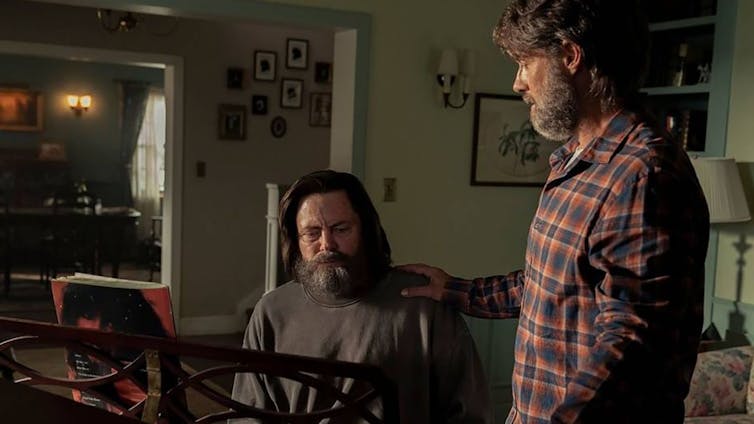
The third episode of HBO’s adaptation of the popular video game was met with near-universal critical acclaim when it was released, with particular praise reserved for its moving depiction of the relationship between Bill (Nick Offerman) and Frank (Murray Bartlett). Although minor characters in the game, The Last of Us devoted much of its feature-length episode to developing Bill and Frank’s romance through a collection of intimate moments spanning their first meeting to their joint suicide.

In a scene from _The Last of Us_, Bill sits at the piano and Frank stands next to him, placing a hand gently on his shoulder.
Bill (Nick Offerman) and Frank (Murray Bartlett) in the third episode of The Last of Us.
Liane Hentscher/HBO

The result was lauded as “magical” and “masterful” television.

Elsewhere on the internet, however, angry fans were mobilising to ensure their voices were heard through an increasingly common practice called review bombing.

What is review bombing?

Review bombing occurs when scores of like-minded internet users flock to aggregator sites like Rotten Tomatoes and Metacritic to leave low ratings and negative reviews. Often, these attacks are coordinated, and one person may use multiple accounts to further skew numbers.

Similar tactics are also used to organise mass disliking or downvoting on sites like YouTube. Up until 2021, the most disliked video on YouTube was a dubious honour bestowed upon all manner of content, including overly catchy children’s songs, Justin Bieber’s divisive song Baby, and controversial movie trailers that often featured women or underrepresented groups in major roles, as in Ghostbusters: Answer the Call.

The trailer for Ghostbusters: Answer the Call became the most-disliked movie trailer on YouTube in 2016 following a campaign of downvoting from fans unhappy with the all-female cast.

Review bombing has its roots in online fan communities. When the internet was first rolled out for general public use, fans were some of the first to carve out special spaces dedicated to sharing knowledge about their favourite media objects. Where it was once hoped that these communities could be havens for marginalised groups who felt underrepresented or pushed out of their favourite media franchises, the anonymity of the internet has emboldened particular factions to voice their opinions through increasingly intense methods.

Sometimes, this can have somewhat constructive results. An allegedly fan-driven campaign demanding the release of Zack Snyder’s cut of Justice League was successful in getting the movie released on HBO Max in 2021.

At other times, however, it has manifested in practices like review bombing. While there is nothing nefarious in itself about leaving a critical review when you haven’t enjoyed a show or film, review bombing generally doesn’t come from a desire to meaningfully engage with art.

It most commonly occurs when longtime fans feel that their ownership of their favourite media franchise has been wrested away from them to soothe the political sensibilities of a more “sensitive”, “PC” or “woke” contemporary audience.

Often, users have not even seen the media they’re reviewing. If they have, their objections are generally based on a perception that their favourite franchise or character has been fundamentally tampered with rather than a particular creative choice.


Read more:
The Rings of Power is suffering a racist backlash for casting actors of colour – but Tolkien’s work has always attracted white supremacists


The power of review bombing

There’s also a strategic element to this practice. Even if a show or film has excellent critical reviews – which is often the case with media targeted by review bombers – it is hoped that the drastically low audience score will deter potential viewers. This, in turn, will presumably affect the show’s audience numbers or the film’s box office returns.

At the very least, scores of negative reviews will serve as a PR nightmare for streamers and studios trying to get their content to break through an increasingly fragmented media landscape.

To this end, industry has started to intervene. In 2019, Rotten Tomatoes made it impossible for users to post audience reviews before a film’s release date in an effort to curb review bombing.

Who and what gets review bombed?

Review bombing is often targeted at media aimed at and made by women, people of colour, and the LGBTIQ+ community. It is no coincidence that despite being praised for its faithful adaptation of the game, a gay love story has made The Last of Us a target.

It also most often happens to media with large and dedicated fan bases. The Lord of the Rings spin-off Rings of Power was review bombed because it dared to cast black actors as elves and other mythical creatures, causing Amazon Prime to temporarily suspend user-generated reviews on its site. Marvel’s She-Hulk: Attorney At Law series, which was directed, written and produced by women, was similarly targeted.

It’s tempting to dismiss review bombing as a desperate act that occurs in an echo chamber and ultimately has no effect. However, its significance is clear – particularly in an increasingly online world. Ultimately, it serves as another obstacle for marginalised artists and reinforces longstanding hierarchies of power in the industry.

The Conversation

Claire Whitley does not work for, consult, own shares in or receive funding from any company or organization that would benefit from this article, and has disclosed no relevant affiliations beyond their academic appointment.

ref. Review bombing is about power, politics and revenge – but it’s not about art – https://theconversation.com/review-bombing-is-about-power-politics-and-revenge-but-its-not-about-art-199005

Haven’t had COVID or a vaccine dose in the past six months? Consider getting a booster

Source: The Conversation (Au and NZ) – By Sathana Dushyanthen, Academic Specialist & Lecturer in Cancer Sciences & Digital Health| Superstar of STEM| Science Communicator, The University of Melbourne

CDC/Unsplash

Australians aged 18 and over will be eligible for a COVID booster from February 20 if they have not had a vaccine dose or infection in the past six months.

This means people aged 18–29 who have had all eligible doses will be able to get their fourth dose and those over 30 will be able to get their fifth dose. Children aged 5–17 will be eligible for a booster if they have an underlying health condition but boosters will not be rolled out to other children at this stage.

Across Australia 72.4% of the population over 16 years of age is fully vaccinated, meaning they have had least three doses of the original vaccine. But a recent poll found fewer people were willing to get a booster dose.

So why get a booster?


Read more:
Millions of Australians still haven’t had their COVID boosters. What message could convince them now?


COVID is still circulating in the community

Over the last week, 18,590 cases of COVID were reported across Australia, an average of 2,656 cases per day. However not everyone tests for COVID or reports positive results, so the true number of cases is likely much higher.

The number of COVID hospitalisations and ICU cases has decreased compared to the previous week, to 1,838 and 53 cases respectively. Across aged care, there are roughly 198 cases this week.

While these numbers seem low, Australia also reported 226 COVID deaths in the last week of January 2023.

As winter approaches and we head inside into indoor spaces with poor circulation, we set up a perfect incubator for the virus and are likely to see case numbers rise.

You need to keep topping up your COVID immunity

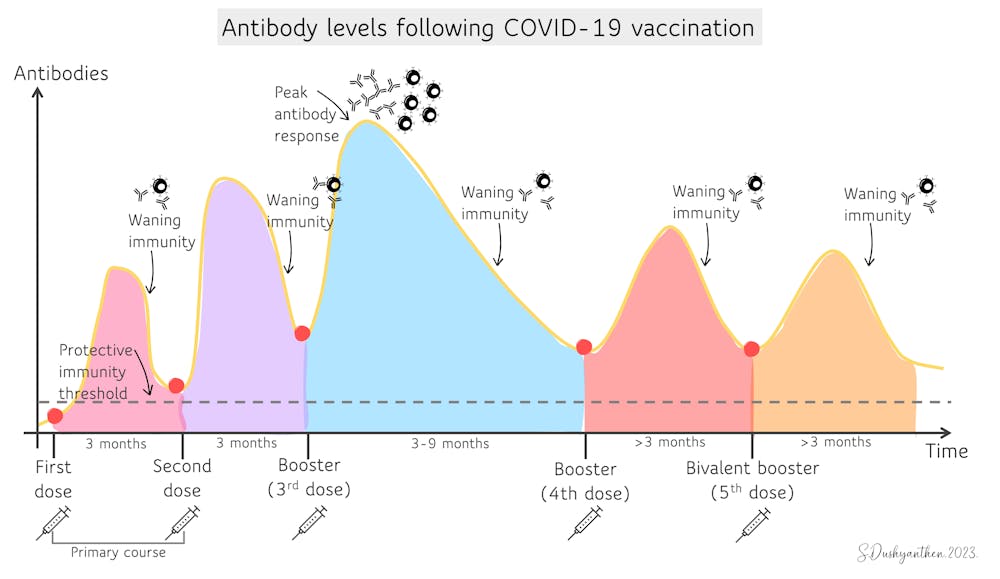
Protection against COVID wanes over time. So, how many doses you have had seems to matter less than how long ago your last shot was.

Booster doses help strengthen immunity against COVID. They lower the risk of infection, severe disease and hospitalisation. However, immunity wanes at approximately four to five months after vaccination.

Antibodies after COVID-19 vaccination.
S.Dushyanthen, 2023

In an observational study from the United States, vaccine effectiveness against hospitalisation within five months of receiving the booster mRNA COVID vaccine dose was 79% during BA.1/BA.2 and 60% during the BA.4/BA.5 period. This decreased to 41% and 29% five months after vaccination.

It is still possible to contract and spread COVID after a booster dose, but breakthrough infections are often less serious.

I’ve already had COVID, so why get a booster?

The majority of Australians have had COVID at least once. By the end of August 2022, two-thirds of adults had previously been infected.

New research shows “hybrid” immunity, resulting from vaccination and contracting COVID, can provide partial protection against reinfection for up to eight months.


Read more:
How long does protective immunity against COVID-19 last after infection or vaccination? Two immunologists explain


Hybrid immunity provides 97.4% protection against severe disease or hospitalisation for six to 12 months after an infection and vaccination.

However, immunity acquired by booster vaccination alone seems to fade somewhat faster.

Does it matter what vaccine you get?

Currently, there are a few vaccines available in Australia. These include: Pfizer, Moderna, Novavax and AstraZeneca.

Pfizer and Moderna both have bivalent vaccines against the original strain and BA.1. These are available for use as a booster, with four million doses currently available and another ten million arriving this month.

Pfizer and Moderna have had their BA.4/BA.5 version provisionally approved, however, they’re not yet available in Australia.

All available vaccines are anticipated to provide some benefit. However, Omicron-specific mRNA booster vaccines are preferred, as it seems to provide slightly better protection against severe disease than boosters using the original formulation.

Whichever vaccine you get, a booster will help protect you against severe disease symptoms, hospitalisations and reduce your chances of long COVID. It will also help to protect others around, especially if they are older, immunocompromised or from a vulnerable population.

When should I get it?

The date of your last COVID vaccine is on your COVID digital certificate accessed via Medicare or My Health Record.

If you decide to get a booster, it takes approximately 14 days for immunity to kick in. Antibody levels begin to drop after three months, before declining more steeply after four to six months.

While COVID is different to the seasonal flu, rates of COVID have previously increased over winter. There have even been reports of double infection, “flurona”.

The Australian Technical Advisory Group on Immunisation (ATAGI) particularly recommends anyone at risk of severe illness from COVID – people aged 65 years and above, or younger adults who have underlying medical conditions, disability or complex health needs – should get a 2023 booster dose.

How will I feel afterwards?

Vaccine side effects are common, such as pain and swelling at the injection site, fatigue, headache, joint or muscle pain and fever or chills. These subside within one to two days.


Read more:
Do COVID boosters cause more or fewer side effects? How quickly does protection wane? Your questions answered


A few rare adverse side effects have been reported, such as thrombosis with thrombocytopenia syndrome (blood clotting disorder), myocarditis (inflammation of the heart muscle), anaphylaxis (allergic reaction), Guillain-Barré syndrome (immune system attacks nerves) and immune thrombocytopenia (low clotting disorder).

While these are rare events, it is important to know about them.

You can book your COVID booster now through the Vaccines Clinic Finder or SMS “Hey EVA” (Easy Vaccine Access) to 0481 611 382, a simple callback service to book COVID vaccines.

The Conversation

Sathana Dushyanthen does not work for, consult, own shares in or receive funding from any company or organization that would benefit from this article, and has disclosed no relevant affiliations beyond their academic appointment.

ref. Haven’t had COVID or a vaccine dose in the past six months? Consider getting a booster – https://theconversation.com/havent-had-covid-or-a-vaccine-dose-in-the-past-six-months-consider-getting-a-booster-199096

Who is perpetrating domestic, sexual and family violence?

Source: The Conversation (Au and NZ) – By Michael Flood, Professor of Sociology, Queensland University of Technology

shutterstock

Some 1.6 million women (17%) and 548,000 men (6.1%) in Australia aged 15 or older have experienced physical or sexual violence from a current or previous cohabiting partner. This means significant proportions of the population in Australia have perpetrated domestic or sexual violence.

There are no national Australian data on people’s perpetration of domestic or sexual violence. While we have good data on violence victimisation, we know far less about violence perpetration.

The State of Knowledge Report on Violence Perpetration, released today, reviews the current data and research on who perpetrates domestic, family, and sexual violence, how, and why, in order to enhance national efforts to end this violence. Here’s what it found.

Data from victims and police

One of the consistent findings from victimisation data, legal system data, and survey self-reports is that most violence is perpetrated by men.

Among all people in Australia who have suffered violence, nearly all have experienced violence from a male perpetrator (95% of male victims and 94% of female victims). Around one quarter of all victims have experienced violence from a female perpetrator (28% of male victims and 24% of female victims).

The vast majority of perpetrators of homicide in Australia – 87% – are male. Three-quarters (75%) of all victims of domestic violence reported the perpetrator as male and 25% reported the perpetrator as female. Among all victims of sexual violence aged 15 or older, six times as many people reported violence by a male perpetrator as by a female perpetrator.

As most victims do not formally report to authorities, police and legal data are limited sources of information on perpetration. Police data tend to capture only the most severe cases, legal definitions vary across Australia, and existing data are shaped by the over-policing of First Nations and ethnic minority communities.

Man and woman holding hands
Most perpetrators of violence are male and most victims are female.
Shutterstock

Self-report data

Another stream of data comes from surveys in which people report on their own use of violent behaviours. A key issue here is that most self-reported data on domestic violence relies only on asking individuals if they or their partners have ever committed any violent acts from a specified list (slapping, kicking, punching, and so on).

Popular measures such as the Conflict Tactics Scale do not also ask about severity, frequency, impact (injury or fear), intent, whether the acts were in self-defence, or their history and context. They omit sexual violence, stalking, other violent acts, and violence after separation.

Much self-reported data on domestic violence do not measure the pattern of power and control exerted by an individual over their intimate partner or former partner, although many researchers and advocates see this as defining domestic violence.

Studies of domestic violence that use the Conflict Tactics Scales or other similar, acts-based measures tend to find males and females perpetrate aggression against intimate partners at similar rates, or in some instances that women report higher rates of perpetration than men.

Such studies also often find substantial proportions of people have used at least one type of aggression or abuse against a partner. For example, in a US study among university students, 18% of men and 34% of women reported perpetrating physical aggression towards their partners and 98% of both men and women reported perpetrating psychological aggression.

Apparent findings that men and women are using domestic violence at similar rates must be interpreted with caution, for four reasons.

First, most studies are just “counting the blows”, measuring any use of a set list of violent acts. They may lead to false positives or over-reporting, including of harmless and innocuous behaviours.

Second, there is evidence men are less likely than women to report their own use of violence.

Third, women’s violence is more often in self-defence than men’s.

And fourth, even where overall rates of the use of various violent acts are similar among males and females, males’ use of violence typically is more frequent, severe, fear-inducing, injurious, and harmful than females’ use of violence.

Gender contrasts in rates of perpetration are far stronger for sexual violence. Boys and young men have significantly higher rates of sexual violence perpetration than girls and young women, as documented in reviews of studies among teenagers and young people.

Significant numbers of males have perpetrated sexual violence. For example, close to one-third (29%) of men at universities in the USA and Canada reported having perpetrated sexual violence. In a multi-country self-report study in the Asia-Pacific, proportions of men reporting they had perpetrated some form of rape against a woman or girl ranged from 10% to 62%.


Read more:
Pregnant women are at increased risk of domestic violence in all cultural groups


Perpetrators in society

People’s use of violence often starts young. Substantial proportions of adolescents perpetrate dating violence against their intimate partners and ex-partners. US studies find the average age of first perpetration of sexual violence by males is 16.

Few perpetrators are held to account for their crimes. The vast majority of perpetrators of domestic and sexual violence do not ever come to the attention of police or legal systems.

Perpetration is driven by risk factors at the individual, relationship, and community levels. Prevention efforts must address childhood exposure to domestic and family violence, violent and sexist norms, peers’ condoning of violence, community disadvantage, and other factors.

We need to know far more about perpetrators and perpetration. We need national data on the extent and character of people’s use of domestic and sexual violence. We need well-designed methods that capture the character, breadth, severity, impact, and contexts of violence perpetration. We need research on female and LGBT perpetrators and on diverse forms of violence. We need to know more about the risk and protective factors that either feed into perpetration or protect against it.

Without this information we do not know where best to target interventions against perpetration effectively, when to intervene early, and whether Australia’s efforts to reduce the use of violence are making progress.


Read more:
Women who suffer domestic violence fare much worse financially after separating from their partner: new data


The Conversation

Michael Flood has received funding from the Australia Research Council, Australian Primary Health Care Research Institute Foundation, Jesuit Social Services, Victorian Government, and Victorian Health Promotion Foundation.

Chay Brown receives funding from ANROWS and the Australian National University.

Lula Dembele received payment from QUT (who was sponsored by PwC) as co-author of the report this article references. Lula is affiliated with the Independent Collective of Survivors. Lula is sole director of Accountability Matters Project Pty Ltd, lived experience consultant for ANROWS, lived experience advisor for the Department of Health and the Department of Social Services, and works for the Women’s Trauma Recovery Centre, as Director Lived Expertise, Government Relations, and Advocacy.

Kirsti Mills does not work for, consult, own shares in or receive funding from any company or organisation that would benefit from this article, and has disclosed no relevant affiliations beyond their academic appointment.

ref. Who is perpetrating domestic, sexual and family violence? – https://theconversation.com/who-is-perpetrating-domestic-sexual-and-family-violence-192606

A story for every place, not jobs and growth: Revive reflects global trends in policy – cultural and otherwise

Source: The Conversation (Au and NZ) – By Justin O’Connor, Professor of Cultural Economy, University of South Australia

Federal Labor is engaged in urgent reform, making up for the “lost decade” under the Coalition. The Voice, industrial relations, climate change, universities, health, Asian-Pacific diplomacy, research and development are all undergoing significant policy review. We can now add the new National Cultural Policy, dubbed Revive.

The reference points since the launch of the policy have been Whitlam and Keating, both for their reforming energies and their love of the arts. But it is worth putting this into an international context.

Australia’s lack of a cultural policy was often seen as a throwback to some philistine past, provoking a toe-curling culture cringe at the thought of how this might look overseas. But the Coalition was in fact adopting a right-wing politics that began with the mid-1990s US Republican Party, then picked up in the United Kingdom, across the European Union and beyond.

If party lines in culture were string quartets versus some pop-modernism combo, the new conservative dispensation was happy to reject art.

In doing this they could pose as populists, setting the huddled masses of the suburbs against the metropolitan elites.


Read more:
‘Arts are meant to be at the heart of our life’: what the new national cultural policy could mean for Australia – if it all comes together


A creative nation

Labor’s new cultural policy harks back to the ill-fated 2013 Creative Australia and to 1994’s fondly remembered Creative Nation.

Creative Nation set an international benchmark for a new kind of cultural policy thinking, embracing commercial popular culture alongside the arts. This combination was seized upon by UK New Labour for its creative industries rebranding in 1998.

Flagging by the time Conservatives got back into power in 2010, the whole idea was briefly revived after Brexit.

The head of the UK Arts Council, Peter Bazalgette, got creative industries inserted into Theresa May’s 2017 industrial policy, and the British Council actively courted China as a growth non-EU market. “Getting Brexit done” and the pandemic put an end to all this.

In 2013, still in the post-financial crisis doldrums, Creative Australia was a policy wonk document with little to set the blood racing.

Revive addresses a cultural sector that feels battered and unloved with grace and aplomb. The arts are essential to a democratic society, and they are for everyone.

First Nations First is the most significant new addition, marking where we have moved even in a decade.

There is money, not transformative but significant, and a set of new agencies. The absence of economic justification stands out, as does the way creative industries has dropped out of the big picture rhetoric.

A story for every place, not jobs and growth.

This too reflects a global trend. Jim Chalmers’ essay in The Monthly placed the nation squarely at the heart of a post-neoliberal world.

Investment in health, education and social services, along with the green transition, will require a more active, even entrepreneurial state.

This is of a piece with the post-pandemic centre-left, from US President Joe Biden and his French counterpart Emmanuel Macron, to UK Labour leader Keir Starmer and the German Greens.

In Europe these “green new deals” have come with promises of greater funding for culture, other than in those with a strong right-wing contingent such as Italy, Sweden and many former Eastern bloc countries. In the austerity-headed UK cultural funding is set to be cut, while the US is talking about rejoining UNESCO.


Read more:
Humanising capitalism: Jim Chalmers designs a new version of an old Labor project


Facing inequalities

In September 2022 UNESCO, the UN’s lead body on culture, held a cultural policy conference in Mexico City. They saw a world marked by:

climate change and biodiversity loss, armed conflicts, natural hazards, uncontrolled urbanisation, unsustainable development patterns, as well as the erosion of democratic societies – [leading] to an increase in poverty, inequalities in the exercise of rights and a growing divide in access to digital technologies.

This is no longer the exciting, globalised marketplace in which a dynamic creative economy was going to float all boats. The new vision was “culture as a global public good” and for the UN to pursue a cultural goal in addition to the 17 Sustainable Development Goals adopted in 2015.

The next steps for UNESCO are not clear. “Global public goods” can mean a commitment to a revived and robust public culture, or to the kind of state-led investment in skills, infrastructure and accessible finance that has underpinned the global creative industries policy script for two decades.

Revive’s visionary talk is about art and storytelling, connection to country and culture, but the rebranded Australia Council, Creative Australia, is straight out of the neoliberal playbook.

Creative Australia has an expanded remit to engage with the commercial and philanthropic sector, just as Chalmers sees an expanded social services delivered by ethically motivated “impact investors”. The grounds on which this enlargement will take place are not addressed, although chief executive Mark Collette was very enthusiastic about creative industries in the post-launch Australia Council seminar.

The first step

The cultural sector long abandoned the utopian promise of creative hubs and Macbook-driven start-ups.

Rather than creative entrepreneurship, workers in the sector are now talking about co-operatives, unionisation, gig worker platforms and other forms of collective organising. The pandemic radically shifted debates on the social function of culture and the welfare of artists in East Asia.

The new Centre for Arts and Entertainment Workplaces looks set to be a site of contest, as the reality of exploitation in both the subsidised and commercial sector is given a new visibility.

The curtain has been drawn on neoliberalism but, as economist John Quiggin made us all aware, its zombie form still lives on.

Revive is the first step into a new global landscape for which we barely have a language. This has to come not from government but from those working in the cultural sector itself.


Read more:
Pay, safety and welfare: how the new Centre for Arts and Entertainment Workplaces can strengthen the arts sector


The Conversation

Justin O’Connor receives funding from the Australia Research Council

ref. A story for every place, not jobs and growth: Revive reflects global trends in policy – cultural and otherwise – https://theconversation.com/a-story-for-every-place-not-jobs-and-growth-revive-reflects-global-trends-in-policy-cultural-and-otherwise-198871

It’s near impossible to get good data on water use in New Zealand. This raises questions about public accountability

Source: The Conversation (Au and NZ) – By Julia Talbot-Jones, Senior lecturer, Te Herenga Waka — Victoria University of Wellington

Shutterstock/Dr Ajay Kumar Singh

As New Zealand’s new Prime Minister Chris Hipkins embarks on reprioritising policies to focus on “bread and butter issues”, the details of the contentious Three Waters reforms remain unclear.

The reforms represent a radical reshaping of water, wastewater and stormwater management, with the aim of building a new integrated system across New Zealand. The legislation passed in December last year, but the PM has promised a “reset”.

Whatever the final details, a study conducted by Motu Economic and Public Policy Research highlights the need for improved environmental reporting to help deliver urban water supply security.

Our research aims to answer the question of whether water metering and pricing have any impact on water consumption in Aotearoa New Zealand. This should be a straightforward question to answer. But our data collection process has exposed gaps that obscure public accountability and limit the potential for evidence-based policy.

No central database to collate data

Data on urban freshwater use is not easily accessible in Aotearoa New Zealand. There is no central database or governing authority that collates information about demand and supply.

Instead, freshwater is managed by local authorities which have a range of processes and frameworks for collecting information on water consumption within their jurisdiction.

Data can be obtained (by researchers or the public) through requests under the Local Government Official Information and Meetings Act (LGOIMA). This process involves asking councils for information they may have on file, but that isn’t accessible to the public.

Councils have 20 working days to respond and can either provide the information, request an amendment or extension, or refuse the request if it is perceived as beyond their capacity. Councils can also demand a fee be paid to collate the information if it is poorly organised and difficult to gather.


Read more:
Auckland floods: even stormwater reform won’t be enough – we need a ‘sponge city’ to avoid future disasters


Disappointing dearth of water information

Our data collection process involved issuing LGOIMA requests to 67 local and district councils across the country. The information requested included monthly consumption and production data that could then be adjusted for seasonal variation, particularly droughts or floods.

We asked councils to provide records that went as far back as possible. We also asked for any records of leaks and institutional information such as whether meters were used or what pricing models (flat pricing or volumetric pricing) were in place and when these mechanisms were introduced.

The information we received was disappointing and points to a lack of public accountability.


Read more:
With the Three Waters reforms under fire, let’s not forget that safe and affordable water is a human right


Of the 67 local and district councils approached, 88% were unable to provide us with data that met our request. Most provided information that was spotty, inconsistent, aggregated and only went back two years.

Seven councils refused to fill our request, citing limited capacity. Nine said they could provide the information at a fee, with some charging several thousands of dollars.

There were only eight councils which did provide us with full records, some tracing back to the 1980s. This shows comprehensive data collection by local authorities is possible, whether meters are in place or not. But if high-quality data is largely absent, this raises questions about how we can design policy to ensure it delivers benefits for communities and the environment.

How to close the data gap

Evidence-based or evidence-informed policy is the gold standard of policy making. If decision makers are unable to access data, it reduces their capacity to make policy recommendations likely to deliver welfare improvements for the communities they serve.

Despite its clean and green image, Aotearoa New Zealand has a poor history of environmental reporting, monitoring and enforcement. If decision makers don’t have an up-to-date understanding of what is happening in the environment, any management systems they design are unlikely to be very successful.

With the ongoing reform of drinking water, wastewater and stormwater services, we need to think critically about ways to improve institutional design to help address some of the data gaps that pervade Aotearoa New Zealand’s freshwater records.

We suggest local authorities should be provided with a data-collection template that is comparable across regions and over time. If the management of drinking water, wastewater and stormwater is centralised as part of the Three Waters reforms, developing consistent approaches to data gathering, storage and dissemination across the four proposed government entities should be a priority.

Data – facts, records or measures – are fundamental to initiating any research, validating models, estimating trends and monitoring changes over time. There should be no mismanagement or financial barriers to consistent collection and access.

As pressures on freshwater resources increase, access to basic data is critical to ensure Aotearoa New Zealand can deliver urban water security for all.

The Conversation

Julia Talbot-Jones is an Affiliate of Motu Economic and Public Policy Research. The research referred to in this article is funded by the Aotearoa Foundation.

Thomas Benison is a Research Analyst at Motu Economic and Public Policy Research. The research referred to in this article is funded by the Aotearoa Foundation.

ref. It’s near impossible to get good data on water use in New Zealand. This raises questions about public accountability – https://theconversation.com/its-near-impossible-to-get-good-data-on-water-use-in-new-zealand-this-raises-questions-about-public-accountability-198983

ChatGPT is a data privacy nightmare. If you’ve ever posted online, you ought to be concerned

ChatGPT

Source: The Conversation (Au and NZ) – By Uri Gal, Professor in Business Information Systems, University of Sydney


Shutterstock

ChatGPT has taken the world by storm. Within two months of its release it reached 100 million active users, making it the fastest-growing consumer application ever launched. Users are attracted to the tool’s advanced capabilities – and concerned by its potential to cause disruption in various sectors.

A much less discussed implication is the privacy risks ChatGPT poses to each and every one of us. Just yesterday, Google unveiled its own conversational AI called Bard, and others will surely follow. Technology companies working on AI have well and truly entered an arms race.

The problem is it’s fuelled by our personal data.


Read more:
Everyone’s having a field day with ChatGPT – but nobody knows how it actually works


300 billion words. How many are yours?

ChatGPT is underpinned by a large language model that requires massive amounts of data to function and improve. The more data the model is trained on, the better it gets at detecting patterns, anticipating what will come next and generating plausible text.

OpenAI, the company behind ChatGPT, fed the tool some 300 billion words systematically scraped from the internet: books, articles, websites and posts – including personal information obtained without consent.

If you’ve ever written a blog post or product review, or commented on an article online, there’s a good chance this information was consumed by ChatGPT.

So why is that an issue?

The data collection used to train ChatGPT is problematic for several reasons.

First, none of us were asked whether OpenAI could use our data. This is a clear violation of privacy, especially when data are sensitive and can be used to identify us, our family members, or our location.

Even when data are publicly available their use can breach what we call textual integrity. This is a fundamental principle in legal discussions of privacy. It requires that individuals’ information is not revealed outside of the context in which it was originally produced.

Also, OpenAI offers no procedures for individuals to check whether the company stores their personal information, or to request it be deleted. This is a guaranteed right in accordance with the European General Data Protection Regulation (GDPR) – although it’s still under debate whether ChatGPT is compliant with GDPR requirements.

This “right to be forgotten” is particularly important in cases where the information is inaccurate or misleading, which seems to be a regular occurrence with ChatGPT.

Moreover, the scraped data ChatGPT was trained on can be proprietary or copyrighted. For instance, when I prompted it, the tool produced the first few paragraphs of Peter Carey’s novel “True History of the Kelly Gang” – a copyrighted text.

ChatGPT doesn’t consider copyright protection when generating outputs. Anyone using the outputs elsewhere could be inadvertently plagiarising.
ChatGPT, Author provided

Finally, OpenAI did not pay for the data it scraped from the internet. The individuals, website owners and companies that produced it were not compensated. This is particularly noteworthy considering OpenAI was recently valued at US$29 billion, more than double its value in 2021.

OpenAI has also just announced ChatGPT Plus, a paid subscription plan that will offer customers ongoing access to the tool, faster response times and priority access to new features. This plan will contribute to expected revenue of $1 billion by 2024.

None of this would have been possible without data – our data – collected and used without our permission.

A flimsy privacy policy

Another privacy risk involves the data provided to ChatGPT in the form of user prompts. When we ask the tool to answer questions or perform tasks, we may inadvertently hand over sensitive information and put it in the public domain.

For instance, an attorney may prompt the tool to review a draft divorce agreement, or a programmer may ask it to check a piece of code. The agreement and code, in addition to the outputted essays, are now part of ChatGPT’s database. This means they can be used to further train the tool, and be included in responses to other people’s prompts.

Beyond this, OpenAI gathers a broad scope of other user information. According to the company’s privacy policy, it collects users’ IP address, browser type and settings, and data on users’ interactions with the site – including the type of content users engage with, features they use and actions they take.

It also collects information about users’ browsing activities over time and across websites. Alarmingly, OpenAI states it may share users’ personal information with unspecified third parties, without informing them, to meet their business objectives.


Read more:
Everyone’s having a field day with ChatGPT – but nobody knows how it actually works


Time to rein it in?

Some experts believe ChatGPT is a tipping point for AI – a realisation of technological development that can revolutionise the way we work, learn, write and even think. Its potential benefits notwithstanding, we must remember OpenAI is a private, for-profit company whose interests and commercial imperatives do not necessarily align with greater societal needs.

The privacy risks that come attached to ChatGPT should sound a warning. And as consumers of a growing number of AI technologies, we should be extremely careful about what information we share with such tools.


The Conversation reached out to OpenAI for comment, but they didn’t respond by deadline.

The Conversation

Uri Gal does not work for, consult, own shares in or receive funding from any company or organisation that would benefit from this article, and has disclosed no relevant affiliations beyond their academic appointment.

ref. ChatGPT is a data privacy nightmare. If you’ve ever posted online, you ought to be concerned – https://theconversation.com/chatgpt-is-a-data-privacy-nightmare-if-youve-ever-posted-online-you-ought-to-be-concerned-199283

How can the health regulator better protect patients from sexual misconduct?

Source: The Conversation (Au and NZ) – By Bill Madden, Adjunct Professor, Australian Centre for Health Law Research, School of Law, Queensland University of Technology

Shutterstock

This week’s ABC Four Corners investigation revealed the Australian Health Practitioner Regulation Agency (Ahpra), or tribunals determining such complaints, allowed a number of doctors sanctioned for sexual misconduct to resume practising.

The ABC suggests almost 500 practitioners from a range of health professions, many of whom are doctors, have come to Ahpra’s attention for “boundary violations” since 2010. Boundary violations is the generic term for health practitioner sexual behaviour problems, the most serious of which is sexual assault of a patient.

According to the ABC, about one-third of the 500 practitioners remain registered with Ahpra or have been returned to the register.

Health Minister Mark Butler has ordered a rapid review of whether recommendations from previous reviews have been properly implemented. He told the ABC:

If that framework is falling short of protecting patient safety, then Australians rightly expect governments at all levels to work to strengthen it.

So what is the framework? What reforms have been recommended previously? And what needs to happen now to protect patients?


Read more:
Who is our health regulator, AHPRA, and does it operate effectively?


Breaching doctors’ code of conduct

The Medical Board of Australia, which governs doctors, has a code of conduct. It tells doctors that good medical practice involves never using your professional position to establish or pursue a sexual, exploitative or other inappropriate relationship with anybody under your care. This includes those close to the patient, such as their carer, guardian, spouse or the parent of a child patient.

Even if a patient consents to sexual contact, the power imbalance between the patient and the health professional nevertheless means the sexual contact is probably inappropriate. More detail appears in guidelines specific to sexual boundaries between doctors and patients.

Similar ethical guidance appears in the United Kindom and New Zealand.

Doctor types on laptop next to a stethoscope
Doctors receive plenty of advice on what is and isn’t appropriate or ethical conduct.
Shutterstock

What happens if a clinician assaults a patient?

Mandatory reporting rules mean health professionals have an obligation to report sexual misconduct by their peers, generally to Ahpra. Failure to do so may itself be unsatisfactory professional conduct.

Of course, a patient may make a direct complaint of sexual misconduct to Ahpra or to local health-care complaints organisations.

Immediate action can be taken by Ahpra (or other bodies in New South Wales and Queensland) pending proceedings being brought against health practitioners in various tribunals across Australia.

Those proceedings will determine if a boundary violation occurred and provide for an appropriate response, which may prevent the health practitioner from practising or may impose lesser constraints, such as mentoring or education.


Read more:
Rape, sexual assault and sexual harassment: what’s the difference?


Patients may also report sexual assault (or other offences such as possession of child abuse materials) to the police, which may lead to criminal prosecution and possible imprisonment. Convicted health practitioners may then not be able to obtain clearance for working with children, making it very difficult if not impossible to continue work as a doctor or other health practitioner.

Patients suffering injury (usually mental harm) can seek compensation by suing the health practitioner and, in some cases, their hospital or clinic.

Patients rarely sue Ahpra for failing to take prompt and appropriate regulatory steps. There is perhaps only one reported case involving Ahpra, which settled before a hearing.

What’s going wrong?

Patient sits on hospital bed, texting
Patients and doctors say the process takes too long.
Unsplash/Alexander Grey

Incidents of health professionals sexually assaulting patients are of course deeply concerning. But whether anything is “going wrong” with the current regulatory system may be debated.

Patients in different states have access to different information about health practitioners – this could be improved. Patients and doctors have also reportedly complained that the processes of Ahpra, the tribunals or the courts can take “too long”.

Whether permitting some health practitioners to return to practice after boundary violations is appropriate requires careful scrutiny of the history of the complaint.

And as mentioned in the ABC program, health practitioners, patients and Ahrpa could well benefit from more research about what is and is not working to protect patients.

How can we better protect patients?

Ahpra, which only come into existence in 2010, has taken steps to improve how it responds to boundary violation complaints.

In 2016, the Medical Board of Australia and Ahpra commissioned an independent review into the use of chaperones to protect patients. The aim of a chaperone is to have an independent person present to supervise a doctor. Unfortunately the review reported chaperones did not adequately protect patients:

Chaperone conditions are not wholly effective to prevent patients being exposed to harm and, in some cases, sexually assaulted. Their use is largely confined to private medical practice. The system relies on inadequately informed and trained chaperones, many in a conflicted situation by being employed by the practitioner they are to observe and report on.

Chaperones are still used today in some circumstances, but probably less often.

A National Health Practitioner Ombudsman has been established to investigate complaints and make recommendations to improve the regulation of Australia’s health practitioners. Its work is probably not well known, but it does publish its reports and submissions.

Ahpra has also recently invited feedback from health practitioners, employers and members of the public on the future uses of the data it collects and stores. It sought views on publishing additional information about health practitioners and their practice on the public register. The feedback process finished only recently, so we do not yet know what the outcome will be.

For boundary violation cases, there may be an argument for more transparency. This would include information about the constraints imposed on health practitioners remaining publicly visible on the Ahpra public register permanently, even if the practitioner’s period of suspension, supervision, or the like, eventually lapses.


Read more:
A doctor’s sexual advances towards a patient are never ok, even if ‘consensual’


Perhaps transparency of information is an area for attention more broadly. The ABC reported that only in NSW is information made publicly available when suspended health practitioners apply to return to practice. Arguably, this should be rolled out to the other Australian jurisdictions.

If patient protection cannot be confidently maintained, especially with “repeat offender” health practitioners, we may see calls for a “one strike and you are out” provision. This would mean health practitioners found to have serious or multiple boundary violations may never be permitted to return to practice.

This would be a serious step, but further research on the operation of the current system may assist in assessing the merit of that type of law reform.

The Conversation

Bill Madden is a lawyer in private practice.

ref. How can the health regulator better protect patients from sexual misconduct? – https://theconversation.com/how-can-the-health-regulator-better-protect-patients-from-sexual-misconduct-199173

NSW pokies reforms will do much to limit problem gambling and money laundering

Source: The Conversation (Au and NZ) – By Charles Livingstone, Associate Professor, School of Public Health and Preventive Medicine, Monash University

Bianca de Marchi/AAP

The New South Wales government has embraced a sweeping set of reforms to the state’s massive poker machine business. These reforms are centred on a “cashless gaming” system linked to pre-commitment. This system will require those who wish to use pokies in NSW to register for an account, provide high-integrity ID, set a limit for their pokie losses, and link this to a personal bank account.

Why is this needed?

NSW is effectively the heartland of Australia’s pokie business. In 2022, the 89,000 poker machines in NSW’s clubs and pubs are expected to rake in A$7.5 billion.

Much of this money comes from areas of significant disadvantage. In western and south-western Sydney, the local government areas of Fairfield and Canterbury-Bankstown, for example, are on track to contribute over $1.2 billion of that alone, or an average of $2,785 per adult.

Pokies, or gaming machines, are now clearly recognised as Australia’s most harmful gambling form. A recent research paper calculates that pokies are responsible for between 52% and 57% of Australia’s serious gambling harm. Pokies in pubs and clubs are also responsible for 51% of gambling losses overall – $13 billion per year.

Other gambling forms lag far behind this distressing calculus. Wagering on races and on sports, for example, contributes between 20% and 25% of the gambling harm total.

What does pre-commitment do?

Pre-commitment involves a requirement that every person who registers for an account to use pokies in NSW must set a personal limit on their pokie losses, tied to a certain period of time – a day, week, month or year. Limits may be lowered at any time, but only increased once every seven days.

The Tasmanian government recently announced it would roll out such a system from 2024. In Tasmania, there will be pre-set limits. These are $100 per day, $500 per month, and $5,000 per year.

The NSW proposals do not include any pre-set limits, although this is open to consideration. An expert working group and multi-departmental taskforce will fine-tune multiple aspects of the proposal.

In any event, people need to be supported via the system software and venue staff to set reasonable limits. Staff need training and support to do this, and protection from venue managers pushing for maximum profits.


Read more:
Government’s new gambling taglines are a start, but go nowhere near far enough


Cashless systems, tied to a single bank account and requiring a high standard of identification, will make money laundering via pokies very difficult. The digital trail will ensure any suspicious activity can be red-flagged by law enforcement authorities. Subject to a warrant, police can identify and investigate data for individuals concerned.

This will be the only way such data can be used. Neither government nor venues will have access. Individuals will be able to see their own records. This of itself is an important harm-minimisation initiative.

A cashless system on its own won’t help people with harmful gambling habits better manage, or stop, their gambling. NSW Opposition Leader Chris Minns has repeatedly asserted that cashless gaming will lead to more problems. He has referred to Victorian research that he claims demonstrates this.

However, the research in question was focused on moving to cashless gaming on its own, in the context of Victorian regulators permitting “tokenisation” of gambling credits. It did not consider the merits of linking pre-commitment to such systems. Indeed, the report found:

Many of the benefits of cashless gaming have been conflated with the benefits of other gambling harm-minimisation tools (e.g. player tracking, pre-commitment effects have been confused with the effects of cashless gaming).

However, linking pre-commitment and a cashless system will be a major step towards reducing gambling harm and eliminating this form of money laundering.
The system will also require regular breaks in pokie use (for example, a 15-minute break after 90 minutes of use). We know from the first round of tobacco restrictions some years ago that taking a break allows time for reflection. When people are “in the zone” on a poker machine, their rationality is suspended. But away from the machine, reality has a chance of intervening.

Being forced to take a break from pokie playing is an important circuit-breaker for problem gambling.
Mick Tsikas/AAP

Pre-commitment, in effect, gives people a new tool to manage their gambling. It’s important to remember that even those suffering under the influence of a serious gambling addiction have lucid moments – away from the machines.

The new system will allow people to give effect to their best intentions, including includes those who wish to stop gambling. The new system will be linked to a statewide self-exclusion register, meaning those who wish to self-exclude can do so effectively for the first time. This is a major breakthrough in itself.

If the system is “future proofed”, as it should be, it must have capacity to incorporate regular reminders of how much the user has lost over their sessions of pokie use. Where gambling activity demonstrates a likely pattern consistent with increasing harm, that should be flagged, and players should be sent an automated text or email suggesting avenues for assistance.

Regular statements of activity need to be available (as with online gambling) and tailored warning messages may be much more effective than bland requests to “gamble responsibly”. All of these should be available via this system.

There is also $350 million on offer to encourage clubs to diversify their revenue sources and to provide incentives to join the rollout of the new system. Large clubs in NSW often rely on poker machines for 80% or more of their total revenue. This is a major reason clubs are reluctant to embrace reform.

Old machines need to be replaced

The new system is to be rolled out over a five-year time-frame. This is almost certainly longer than needed. The majority of pokies in NSW can be retrofitted with hardware and software to make the system work as intended.

However, there are 30,000 or so machines that are too old. This will include machines that continue to allow $10,000 to be inserted at once – perfect for money laundering. Such machines need to be replaced as a high priority. Unless this is achieved quickly, they will be magnets for money laundering’s last hurrah through pokies.

Pokies in NSW are all linked by a statewide monitoring system. This is used mostly to protect revenue, but can be enhanced as necessary to incorporate the proposed system.


Read more:
Pubs and clubs – your friendly neighbourhood money-laundering service, thanks to 86,640 pokies


So … will it work?

The technical issues are serious, but not overly difficult. Victoria has been running a voluntary pre-commitment system for years without technical problems. Unfortunately, because it’s voluntary, it is little used.

A universal system is far preferable. Strong evidence from Norway indicates it will reduce gambling harm. It is almost certain it will produce a dramatic reduction in pokies-based money laundering.

If implemented (a big if, relying on the Perrottet government’s re-election) these reforms will be highly significant. For the first time in NSW since pokies were introduced in 1956, pokie gamblers will be able to manage their gambling effectively. And money laundering at the local pub or club will become a thing of the past.

The Conversation

Charles Livingstone has received funding from the Victorian Responsible Gambling Foundation, the (former) Victorian Gambling Research Panel, and the South Australian Independent Gambling Authority (the funds for which were derived from hypothecation of gambling tax revenue to research purposes), from the Australian and New Zealand School of Government and the Foundation for Alcohol Research and Education, and from non-government organisations for research into multiple aspects of poker machine gambling, including regulatory reform, existing harm minimisation practices, and technical characteristics of gambling forms. He has received travel and co-operation grants from the Alberta Problem Gambling Research Institute, the Finnish Institute for Public Health, the Finnish Alcohol Research Foundation, the Ontario Problem Gambling Research Committee, the Turkish Red Crescent Society, and the Problem Gambling Foundation of New Zealand. He was a Chief Investigator on an Australian Research Council funded project researching mechanisms of influence on government by the tobacco, alcohol and gambling industries. He has undertaken consultancy research for local governments and non-government organisations in Australia and the UK seeking to restrict or reduce the concentration of poker machines and gambling impacts, and was a member of the Australian government’s Ministerial Expert Advisory Group on Gambling in 2010-11. He is a member of the Lancet Public Health Commission into gambling, and of the World Health Organisation expert group on gambling and gambling harm.

ref. NSW pokies reforms will do much to limit problem gambling and money laundering – https://theconversation.com/nsw-pokies-reforms-will-do-much-to-limit-problem-gambling-and-money-laundering-199382

Albanese government tackles housing crisis on 3 fronts, but there’s still more to do

Source: The Conversation (Au and NZ) – By Hal Pawson, Professor of Housing Research and Policy, and Associate Director, City Futures Research Centre, UNSW Sydney

Shutterstock

The Albanese government’s housing package moved a step closer to delivery with the recent release of draft legislation. The bills are expected to be tabled in parliament soon. After a decade of general federal disengagement from housing policy (first home ownership being the main exception), this is more than welcome.

At the same time, the proposed laws don’t give enough priority to the need for a coherent approach to a complex housing system. Multi-faceted problems such as homelessness, unaffordable rents, mortgage stress and a lack of social housing demand joined-up solutions. Housing knowledge and policy-making capacity within government have been badly eroded and must be restored.

The draft legislative package comprised three bills (and a helpful explanatory memorandum):

  • National Housing Supply and Affordability Council Bill

  • Housing Australia Future Fund Bill

  • Treasury Laws Amendment (Housing Measures) Bill.

Beyond this, the National Housing and Homelessness Plan now being developed by the government should provide the vital strategic framework that has been so glaringly absent. This means it could be even more important than the measures in the draft bills. Arguably, the plan should also be enshrined in law.


Read more:
Homeless numbers have jumped since COVID housing efforts ended – and the problem is spreading beyond the big cities


What’s good about the package?

In our submission on the draft package, we commend the progress towards reasserting Commonwealth leadership on housing. State and territory commitments and actions are vital, too, in confronting Australia’s mounting and complex housing challenges. But federal engagement and ambition are essential to make any significant and lasting progress.

The National Housing Supply and Affordability Council promises to restore the foundation for evidence-based policy once provided by the former National Housing Supply Council.

Similarly, after more than ten years of negligible investment in new social and affordable housing, the $10 billion Housing Australia Future Fund is certainly a laudable commitment. However, the aim of building 30,000 new social and affordable housing units over five years is relatively modest. We estimate current unmet need for social housing equates to 437,000 households.

The recent National Housing Accord on expanded construction output could also play a meaningful role. Full details are yet to be released.

Vertical bar chart showing state-by-state changes in social housing stock and population

Chart: The Conversation. Data: Author provided from Productivity Commission Reports on Government Services, Australian Bureau of Statistics, CC BY


Read more:
1 million homes target makes headlines, but can’t mask modest ambition of budget’s housing plans


And what will it take to fix the housing system?

As argued in our book, the declining performance of Australia’s housing system is not just a matter of historically miserly government funding. It’s also a result of policymaking failure.

That failure reflects the long-term deterioration and fragmentation of governmental capacity in this realm. At both federal and state levels, the past 25 years have seen the progressive disappearance or downgrading of ministerial housing portfolios and associated departments. At the same time, housing policy has been increasingly viewed as a narrowly defined subset of welfare policy.

These changes have eroded housing policy knowledge and policymaking capacity within government. They’re an aspect of the hollowing out of government across many policy fields in Australia and overseas. Arguably, it has had particularly far-reaching impacts on housing in Australia.

Partly for these reasons, the proposed upgrading of the National Housing Finance and Investment Corporation to a national housing agency, Housing Australia, is another commendable aspect of the legislation.

What more should the government do?

Potentially more of a game-changer than the measures in the draft bills is the promised National Housing and Homelessness Plan. Since housing is a complex and interactive system, micro-measures targeting selected aspects of that system are liable to have minimal or even counter-productive impacts. Housing therefore demands strategic policymaking (rather than an incremental or reactive approach).

This is why Australia should emulate the Canadian government by enshrining the National Housing and Homelessness Plan in law. Doing so would reduce the risk of a future administration emasculating or abandoning the structure.

As for the three draft bills, a crucial enhancement would be to strengthen the status, capacity and responsibilities of Housing Australia.

Here we again take inspiration from across the north Pacific. The Canada Mortgage and Housing Corporation (CMHC) has played a crucial strategic role as a national housing agency over decades. The UK’s Scottish Homes (1989-2001) and Housing Corporation (1964-2008) were similarly influential in informing, co-ordinating and delivering housing policy. Importantly, they also championed housing within government.


Read more:
The market has failed to give Australians affordable housing, so don’t expect it to solve the crisis


With these examples in mind, there is a strong case for Housing Australia to be:

  • given a wider analytical and research role to inform policymaking and support the National Housing Supply and Affordability Council

  • tasked with formulating the National Housing and Homelessness Plan and co-ordinating its implementation and review

  • made responsible for the progress and oversight of the National Housing Accord

  • charged with informing the re-negotiation of the National Housing and Homelessness Agreement between the Commonwealth, states and territories.

In short, to boost the chances that the current housing policy impetus can be sustained, the proposed institutional reforms must be both strengthened and embedded.

The Conversation

Hal Pawson receives funding from the Australian Housing and Urban Research Institute, the Australian Research Council, the Queensland Council of Social Service and Crisis UK. Hal Pawson is a Board Director of Community Housing Canberra

ref. Albanese government tackles housing crisis on 3 fronts, but there’s still more to do – https://theconversation.com/albanese-government-tackles-housing-crisis-on-3-fronts-but-theres-still-more-to-do-198509

Two major announcements about Australia’s defence force are imminent. Here’s what to expect

Source: The Conversation (Au and NZ) – By John Blaxland, Professor, Strategic and Defence Studies Centre, Australian National University

The United States’ shooting down of a Chinese spy balloon off the coast of South Carolina over the weekend points to international security affairs being on a knife edge.

It follows a surge in crises and tensions over the past few years, including Russia’s invasion of Ukraine, prompting the Albanese government to commission an accelerated Defence Strategic Review in August 2022. This is expected to be handed to the government as early as this week, and the government’s response to the review is expected in March.

Albanese is also scheduled to meet with US President Joe Biden and UK Prime Minister Rishi Sunak in the US next month to deliver the much anticipated AUKUS announcement, detailing Australia’s submarine plans. A US Congressman has recently suggested it could provide Australia with a jointly-operated submarine while we wait for the eventual acquisition of nuclear-powered subs.

So how did we get here, and what can we expect from these upcoming announcements?

How did we get here?

In 2007, Kevin Rudd, sensing the need to bolster Australia’s defence, initiated the Defence White Paper, which was published in 2009. This called for replacement submarines, but the Global Financial Crisis derailed the plan.

Another White Paper was released in 2016 under Tony Abbott, then again in 2020 under Scott Morrison.

By then, the rhetoric was sharper-edged and more regionally focused, recognising “grey zone” competition in the air, sea and land, as well in space and online.


Read more:
‘Hybrid warfare’: Nord Stream attacks show how war is evolving


Yet for all that, Australia has little to show for it, with no new submarines and a boutique defence force that looks much like that retained over the preceding half century.

The Department of Defence appears to have had little sense of urgency to muscle up, belying the rhetoric of official pronouncements on increased defence spending. Some acquisitions have occurred, but essentially they’ve replaced like for like, with only incremental increases.

The assumption has long been that there’s no real threat to Australia within the next ten years. Failing this, Australia would look after itself and its immediate neighbourhood and make only niche and carefully calibrated force contributions to calls for support further afield.

But this thinking is now being challenged. There’s growing recognition of the need for urgency to prepare for potential threats in a dynamic and more uncertain security environment.

Accepting the Morrison legacy

The federal government has accepted the defence legacy of the Morrison government, including

  • the Pacific Step-up, increasing Australia’s diplomatic presence in the region

  • the Quadrilateral network (“the Quad”), which involves India, Japan, Australia and the US collaborating in tackling security, economic and health issues, and contesting China’s regional dominance

  • and AUKUS, a technical agreement between Australia, the US and UK to supply Australia with nuclear-powered submarines and other hi-tech military systems.

Advanced surveillance technology has meant diesel electric submarines can no longer undertake long transits without being detected. A partial surfacing for a “snort” to recharge batteries is unavoidable, even for transits between Australian ports, but is now detectable. Without stealth, a submarine is redundant. That’s why there’s a push for nuclear-powered subs, which can operate underwater for far longer than their diesel electric counterparts.

The Albanese government accepts the rationale for these initiatives. But it’s had to recover from the collateral damage caused by Morrison’s blunt implementation of AUKUS and the Pacific Step Up that downplayed regional environmental concerns, offended France, upset Indonesia, and infuriated China.

Confronting China and Russia

While the new Labor government has adopted a less antagonistic tone, it remains wary of China’s aggression and its “no limits” friendship with Russia.

The rationale for the Defence Strategic Review was reinforced by events including

Chinese President Xi Jinping’s rhetoric calling for preparations for war over Taiwan suggests his patience is wearing thin.

Though its assertive displays of power doesn’t mean it wants war, at least not yet. Its approach seems inspired by notions of “unrestricted warfare”, referring to media, political and legal warfare (perhaps best described as “unrestricted competition”), as opposed to conventional military battle.

Its reminiscent of ideas espoused by ancient Chinese strategist Sun Tzu, who said “To subdue the enemy without fighting is the acme of skill”.


Read more:
China does not want war, at least not yet. It’s playing the long game


Defence’s acquisition stasis

In light of these challenges, the Albanese government is right to make the Defence Strategic Review a priority. The key questions are, of course: what will it recommend, how quickly will it be enacted, and how much will it cost?

Defence industry insiders have suggested to me privately that the Department of Defence is in stasis, waiting for the report to be endorsed by government before proceeding – a process which may take years.

Few expect a dramatic surge in funding.

Meanwhile, plans to acquire armed drones and armoured vehicles have been cancelled or delayed rather than accelerated.

There seems to be a freeze on purchasing decisions in anticipation of the results of the review. The problem is reinforced by issues with Defence’s acquisition arm, which struggles to deliver efficient, effective and timely projects.

The recently announced purchase of new Blackhawk helicopters and high mobility artillery rocket systems suggest otherwise, but they were decisions that effectively predate the review.

Meanwhile, the Australian ship building industry faces a “valley of death” experience. Australia has planned to build nine new warships in South Australia as part of the future frigates program, but the industry is waiting for a not-yet finalised design to materialise.

Major multinational corporations can sustain this process. But Australian-owned small to medium enterprises, so critical for a sustainable defence industry, are buffeted by the uncertainty and delays.

What’s next?

The Defence Strategic Review is expected to emphasise the AUKUS nuclear-powered submarines as a priority, along with guided weapons and explosives.

As the government weights up its options, it should consider all aspects of national security, including climate change and governance problems. It should also consider mounting a national and community service scheme to more inclusively engage a broad element of society in response to the suite of emerging challenges.

The Conversation

John Blaxland has previously received funding from the Australian Signals Directorate in the Defence portfolio for an official history, but that was cancelled in 2020.

ref. Two major announcements about Australia’s defence force are imminent. Here’s what to expect – https://theconversation.com/two-major-announcements-about-australias-defence-force-are-imminent-heres-what-to-expect-198511

The TGA has approved certain psychedelic treatments: the response from experts is mixed

Source: The Conversation (Au and NZ) – By Paul Liknaitzky, Head of Clinical Psychedelic Research, Monash University

Collaborative care teams will need to be established for safe treatment. Author provided

A few days ago, the Australian drug regulator – the Therapeutic Goods Administration (TGA) – surprised experts around the world when it announced the approval of certain psychedelic treatments.

From July this year, the TGA will permit authorised psychiatrists to prescribe psilocybin (found in “magic mushrooms”) for treatment-resistant depression, and MDMA (found in “ecstasy”) for post-traumatic stress disorder.

I head up Australia’s first clinical psychedelic lab, where we develop psychedelic-assisted therapies for treating various mental illnesses, test their safety and effectiveness, explore how the treatments work, and train therapists.

I’ve witnessed, up close, the rapidly accelerating developments within the field and in positive public sentiment, over a few short years. But this surprising announcement may have devils – and angels – in the detail.


Read more:
AI maps psychedelic ‘trip’ experiences to regions of the brain – opening new route to psychiatric treatments


In from the wilderness

Just a few years ago, Australia had no psychedelic research, almost no professional interest, and negligible public awareness of the clinical potential of these treatments.

The first psychedelic trial in Australia was approved in 2019. We established the country’s first clinical psychedelic lab in 2020. And by the end of 2023 there will be more than 15 active clinical psychedelic trials nationwide.

While the TGA’s announcement was hailed as groundbreaking, there are actually a handful of places where psychedelic-assisted therapies have been approved for very limited clinical use outside of research trials (for example, compassionate or expanded access programs in the United States, Canada, and Israel, and a version of authorised prescribers in Switzerland).

But this is the first time a government has changed the way these drugs are formally classified (“scheduled”). This may turn out to be a distinction without difference, as only so-called “authorised prescribers” will be approved to use these drugs outside of trials; or instead, it may turn out to be be a watershed moment with dramatic effects on the field globally.

mushrooms grown in red lit natural environment
Only certain types of mushrooms produce psilocybin.
Shutterstock

Emerging evidence

Emerging evidence shows that, when used alongside psychotherapy, certain psychedelic drugs can be safe to administer and produce large, rapid and sustained benefits for a range of addiction and mental health conditions. These include post-traumatic stress disorder, depression, end-of-life distress, alcohol use disorder, and nicotine dependence.

While there are some important research limitations associated with these studies, the results have been compelling.


Read more:
Alberta’s new policy on psychedelic drug treatment for mental illness: Will Canada lead the psychedelic renaissance?


Cautious optimism

Since the announcement, I’ve spoken with numerous clinicians and researchers working in psychedelic trials in Australia, and all have expressed mixed reactions to the TGA news.

There’s excitement: about drug policy progress; about potential access for more people in need; about the prospect of being able to offer patients more suitable and tailored treatment without the constraints imposed by clinical trials and rigid protocols.

And then there are concerns: that evidence remains inadequate, and moving to clinical service is premature; that incompetent or poorly equipped clinicians could flood the space; that treatment will be unaffordable for most; that formal oversight of training, treatment, and patient outcomes will be minimal or ill-informed.

Many professionals working at the coalface are concerned that soon-to-be prescribers, therapists, and decision-makers probably don’t know that they don’t know about some of the essential elements of safe and effective psychedelic therapy.


Read more:
Latest trials confirm the benefits of MDMA – the drug in ecstasy – for treating PTSD


Angels or devils

The TGA announcement cites promising evidence as the basis for its decision. However, its approach does not appear to account for factors that may be key to this evidence base, and leaves some critical questions unanswered. Here are a few things to watch:

Who treats?

The TGA decision permits only authorised psychiatrists to administer this treatment, and states “the product must not be supplied to other practitioners who prescribe or administer the product”.

While psychiatrists are an important part of a collaborative care model, they will need substantial psychedelic training to deliver this complex form of drug-augmented psychotherapy. What will constitute adequate psychedelic training is unlikely to be clarified, nor is there a requirement for practitioners to be supervised by psychedelic experts.

Psychedelic therapies are so dissimilar to general psychiatry that simply trusting that psychiatrists “have the training and expertise […] to appropriately treat” patients using psychedelics is ill-informed.

Moreover, any requirement to have psychiatrists attend all treatment sessions (dosing days typically last eight hours and a typical treatment model involves about 40 hours of therapy) will make this even less affordable.

Any prospective authorised prescriber will need extensive training and ongoing supervision from credible professionals who have experience delivering psychedelic therapy, and should establish collaborative care teams with qualified psychologists and psychotherapists.

Who is treated?

The evidence for safe and effective psychedelic treatments comes from trials with very strict eligibility criteria. Over 90% of applicants to these trials are typically excluded.

Trials are cautious, in part because we know these treatments can destabilise people, exacerbate certain symptoms, and increase suicidality. The excellent track record of safety across almost all modern psychedelic trials has been established in the context of extensive screening.

Authorised prescribing will open up the eligibility to a greater diversity of help-seekers. This is a good step, but should be well-informed, and taken with caution and transparency.

What does treatment involve?

Since 1999, clinical psychedelic trials have delivered psychotherapeutic support before, during, and after the drug administration, with one to three dosing sessions. The TGA decision does not mandate any of this, advising “there does not currently appear to be any established treatment protocols”.

This is a misunderstanding. While treatment protocols across trials are not all the same, they certainly exist, and there is considerable overlap in the therapeutic approaches used. Improved protocols will be developed over time, but a sensible approach is to start with an approximation of what has been done in trials that have shown safe and effective outcomes.

Are patients informed before they consent?

Practitioners need to make informed decisions about any departure from precedent, and be transparent about those details with patients.

For example, if a prescriber does not provide therapy, does not have psychedelic training or supervision, or offers more than three dosing sessions, patients need to know which aspects of their treatment sit outside the evidence base.

Wider prescribing will effectively entail a “community-based experiment”, and a basic right of all patients is that they are able to make informed decisions about their treatment.

chemical molecule
MDMA has been approved for treatment of PTSD.
Shutterstock

A brave new world?

There are many other questions worth grappling with over the next five months, including those regarding appropriate oversight and patient protection, affordability and reimbursement, and public expectations and awareness.

I feel cautiously optimistic that many more Australian patients may be able to access safe and effective psychedelic treatments, and that the Australian mental health care sector has an opportunity to learn how best to deliver them.

To those planning to work in this space in Australia, I urge you to start or continue climbing the steep learning curve with curiosity, to organise reputable training, support, and resources from those already doing the work, and to establish appropriate systems of governance, oversight, and transparency.

There’s so much potential here, plenty at stake, and work to be done.


If this article has raised issues for you, or if you’re concerned about someone you know, call Lifeline on 13 11 14.

The Conversation

Paul Liknaitzky has received research funding from Incannex Healthcare Ltd, Dr Nigel Strauss, and the Multidisciplinary Association for Psychedelic Studies. He is a member of the Medical Advisory Board of Incannex Healthcare Ltd.

ref. The TGA has approved certain psychedelic treatments: the response from experts is mixed – https://theconversation.com/the-tga-has-approved-certain-psychedelic-treatments-the-response-from-experts-is-mixed-199290

‘We need to restore the land’: as coal mines close, here’s a community blueprint to sustain the Hunter Valley

Source: The Conversation (Au and NZ) – By Kimberley Crofts, Doctoral Student, School of Design, University of Technology Sydney

Shutterstock

The decline of the coal industry means 17 mines in the New South Wales Hunter Valley will close over the next two decades. More than 130,000 hectares of mining land — nearly two-thirds of the valley floor between Broke and Muswellbrook — will become available for new uses.

Restoring and reusing this land could contribute billions of dollars to the Hunter economy, create thousands of full-time jobs and make the region a world leader in industries such as renewable energy and regenerative agriculture that improves soil and water quality and increases biodiversity and resilience. But to unlock these future opportunities, we must first clean up the legacy of the past.

Report cover with photo of a large open cut coal mine in the foreground and mountains in the background. The title of the report sits over the blue sky and says 'Afte the coal rush, the clean up. A community blueprint to restore the Hunter'.
The Hunter community blueprint is out today.
Author provided/Hunter Renewal

Last year community organisation Hunter Renewal asked people across the Hunter Valley about their priorities. They told us they want the Hunter to become a thriving natural environment, a more vibrant and attractive place to live with connected communities, and a diverse and resilient economy.

These community priorities, and their implications for land use planning, are outlined in a report published by Hunter Renewal today: After the coal rush, the clean-up. A community blueprint to restore the Hunter. This blueprint could be a model for other Australian communities planning their transition away from fossil fuels.


Read more:
NSW’s biggest coal mine to close in 2030. Now what about the workers?


How were priorities identified?

We began by analysing more than 170 documents from government, academia and industry about post-mining land use, planning and related issues. From this, a first draft of principles and recommendations for action was created.

The draft was put to a panel of ecological, social and technical experts from the University of Newcastle. Wanaruah/Wonnorua Elders and other First Nations peoples also advised on this draft.

Hunter community members then reviewed and revised a second draft through a series of workshops, interviews and an online survey. They included land holders, students, business owners, mine rehabilitation experts, Indigenous knowledge holders and renewable energy workers.


Read more:
3 local solutions to replace coal jobs and ensure a just transition for mining communities


Rehabilitation and restoration

Hunter residents want mined lands to be restored to support biodiversity and clean industries such as regenerative farming, renewable energy, and other industries that regenerate rather than extract.

To ensure this restoration happens, stronger legal obligations would ensure mining companies cannot walk away from their obligations, leaving voids in the landscape that become a perpetual hazard to human and environmental health. As one resident said:

Mining companies shouldn’t be allowed to have a free pass at everything and get as much funding via subsidies as they do from the government.

Planning and governance

People said that for the Hunter landscape to be restored at the scale required, planning and policy mechanisms will have to be well co-ordinated. An independent and locally based Hunter Rehabilitation and Restoration Commission could do this. It could work alongside the already proposed Hunter Valley Transition Authority.

The community suggested increasing coal-mining royalties to pay for this co-ordinated work. Mining companies would then be the ones that foot the clean-up bill.

In NSW, the royalty rate for open-cut coal is just 8.2% of the resale value. That’s too low for what is required. As another resident said:

We shouldn’t underestimate the size of the task and true cost and effort of rehabilitation of multiple large mines over decades. This is an opportunity to repurpose the land and the physical and social infrastructure.


Read more:
How to transition from coal: 4 lessons for Australia from around the world


Community involvement

Successful mine closure and relinquishment requires that affected communities and stakeholders are meaningfully involved at every stage of planning and implementation. Yet true involvement is rare

People in the Hunter want to see greater community involvement mandated to ensure new developments benefit their communities for the long term. As one Hunter resident said:

The mines have privatised all the profits and socialised all the costs […] We want to be involved from the beginning as equals.


Read more:
‘We want to be part of that movement’: residents embrace renewable energy but worry how their towns will change


First Nations

In Australia all mines are on Indigenous land and over 60% of mines are near to Indigenous communities. Yet Indigenous people are less likely to benefit economically from mining operations than non-Indigenous people.

Hunter residents said this needs to change. One way to do this is to return mining land to Traditional Owners, especially unmined buffer lands.

Making decisions with First Nations people from the outset for new projects will help to overcome the systemic disadvantage in Australia since colonisation. It will also build a knowledge base for change. As one Hunter resident said:

There is so much to be gained in recognising and understanding the land management practices of the local Aboriginal people, based on 60,000 years of observation and science dealing with the oldest continent on the planet.


Read more:
Australia’s next government must start talking about a ‘just transition’ from coal. Here’s where to begin


Climate and environment

Plants and animals need connected ecosystems that allow them to move, adapt and survive. People in the Hunter want a region-wide system of biodiversity corridors. The transition from coal is an opportunity to set up a system that will give the region’s native species a fighting chance in a warming world.

As one resident told us:

Rehabilitating the land to ensure biodiversity is restored is the most important thing to ensure the native plant species can grow back and allow the native animals to return. We need to restore the land to try and reverse the human impacts on the site as much as possible.

Dawn of a cleaner future

The coal industry has had it pretty good in this region for generations. We need a focus now on cleaning up the mess so a new, cleaner future can emerge. This requires a new approach to planning and development in partnership with local communities.

The consultative approach behind the Hunter community blueprint demonstrates the value of including a wide range of perspectives in planning for a post-coal future.

What this set of prioritised recommendations shows is that the people of the Hunter understand the complexity of the task and want to be part of planning it. It will require new laws and well-resourced public agencies capable of managing restoration and ensuring coal companies pay their dues and clean up after themselves.

The Conversation

Kimberley Crofts contributed to the Community Blueprint discussed in this article.

Liam Phelan contributed to the Community Blueprint discussed in this article.

ref. ‘We need to restore the land’: as coal mines close, here’s a community blueprint to sustain the Hunter Valley – https://theconversation.com/we-need-to-restore-the-land-as-coal-mines-close-heres-a-community-blueprint-to-sustain-the-hunter-valley-198792

Whether it’s a new teacher or class – here’s what to do when your child is not loving it

Source: The Conversation (Au and NZ) – By Sarah Jefferson, Senior Lecturer in Education, Edith Cowan University

Shutterstock

The first signs were the half-eaten lunches coming home from high school. This was in stark contrast to the primary school years, where the box looked as if a demolition team had run through it with only a few crumbs left.

The problem was finally disclosed over a quiet chat before bedtime when we did our routine of “best, worst, funniest” thing that day. My child confided they really didn’t like their new maths class and because they were so anxious about it, they’d stopped eating lunch.

Irrespective of whether it’s daycare, preschool, primary or high school, the news your child doesn’t like their new school, teacher, class – or all of the above – is always tough. Research also shows a child’s sense of belonging at school affects their motivation, engagement and wellbeing. So it is important not to dismisss your child’s concerns.

How should parents approach this situation?

Try debriefing and reviewing

Many businesses and organisations use after action reviews to debrief after an event or project and learn from them.

Children walking to school with parents.
If your child does not like their teacher or class, try doing an ‘after action review’.
Dean Lewins/AAP

A modified version of this tool can help you take an objective approach to the news your child is very unhappy with an element of their school life. You can adjust the level of your language and discussion based on the age of your child.

1. What is happening?

Asking your child to describe what is going on prompts them to think through what is actually happening and gives you some useful context. If, for instance the class is happening late on a Friday afternoon, that may go some way to explaining why people are not their best selves at this time.

2. What went well?

This can tell you what your child can continue doing or what they are enjoying at school. Perhaps it was mat time at primary school, or they liked the person they sat next to in history class.

3. What went wrong?

This helps identify the area for improvement or what specifically needs fixing.

Perhaps your child is still getting used to changing classrooms and classes at high school. Or the can’t keep up with what the teacher is saying. Maybe there was a miscommunication.

What not to do

Unless there is a safety or serious wellbeing issue, it is highly unlikely changing your teacher and/or opting out of certain lessons will be your answer.

While avoiding might seem like a straightforward answer, like many things with anxiety, this reinforces a reward pathway in the brain that simply makes the anxiety worse and often harder to resolve down the track.

Generally it’s useful to take a watch-and-see approach. This is particularly the case at the start of the school year where so many things and people are new.


Read more:
You can’t fix school refusal with ‘tough love’ but these steps might help


Also think about these things

Think about making time to talk to your child’s teacher (not to say your child doesn’t like them, but to note they are struggling to get into the school year). A nicely-worded email is another way to approach this.

It is helpful for teachers to know if one of their students isn’t happy or at ease in their class. If the teacher doesn’t know about an issue, they can’t work to fix it.

Also consider encouraging social events after school or on weekends with other kids and parents (depending on your child’s age). Building social networks outside school can ease anxiety in school.


Read more:
Back-to-school blues are normal, so how can you tell if it’s something more serious?


In rare instances, there may be a serious issue that needs significant intervention. If that’s the case, your school has senior teachers – such as year-level coordinators or the principal – you can contact. It will also have other support processes, such as access to school counsellors.

In the case of my child, it turned out some well-timed group activities over the next few lessons helped them make a new friend. The lunchbox starting coming home empty again.

In most cases, simply listening to and not dismissing your child’s concern will go a long way to help them through this time. As American education writer, Parker J Palmer notes:

The human soul doesn’t want to be advised or fixed or saved. It simply wants to be witnessed — to be seen, heard and companioned exactly as it is.

The Conversation

Sarah Jefferson does not work for, consult, own shares in or receive funding from any company or organisation that would benefit from this article, and has disclosed no relevant affiliations beyond their academic appointment.

ref. Whether it’s a new teacher or class – here’s what to do when your child is not loving it – https://theconversation.com/whether-its-a-new-teacher-or-class-heres-what-to-do-when-your-child-is-not-loving-it-199288

Titanic at 25: like the ship itself, James Cameron’s film is a bit of a wreck

Source: The Conversation (Au and NZ) – By Daryl Sparkes, Senior Lecturer (Media Studies and Production), University of Southern Queensland

Disney

When it was released 25 years ago, James Cameron’s Titanic was enormous. It made stars of its two leads, Leonardo DiCaprio and Kate Winslet. Reviews overwhelmingly heaped praise not only on the technical aspects of the film but also the acting and storyline.

In 1997, Titanic was, in the oft-quoted line from the film, “king of the world!”

At the time we were all swept up in the romantic tale of Jack Dawson and Rose DeWitt Bukater, the star-crossed lovers whose infatuation on the doomed ship ended when Jack made the ultimate sacrifice, freezing in the icy Atlantic to save his truly beloved.

But over the years, critics and audiences alike have re-examined the film and found, like the ship itself, it is a bit of a wreck.

When it was originally released, a small number of critics deeply disliked Titanic.

Today, more and more people are re-evaluating their originally positive response to the film and are changing their opinions. From the characters, to the story, to the ending, there are a number of issues with Titanic that appear questionable at best, and deeply unsettling at worst.

It’s even gone far enough that some critics are calling it the worst film ever made – but that may be taking it too far.

An unhealthy obsession

At the beginning of the film, we find upper-class Rose being forced into marriage with “Cal” Hockley by her widowed mother, Ruth, to save the family fortune and keep their status in society. So unhappy with her situation, Rose decides to jump from the ship. She is rescued by the penniless drifter, Jack.

So begins the plot of the film as the pair constantly run and hide from the authorities to be together.

Jack’s relentless pursuit of Rose around the ship is obsessive. We learn virtually nothing about the character of Jack Dawson apart from him being a poor orphaned artist, he wants Rose, and he will do anything to have her – even though they’ve only known each other for a few days.

Is this a healthy relationship?

Rose is only 17 years old and possibly too inexperienced to identify a stalker or manipulator. Influenced by Jack’s charm, Rose turns against her mother, fiancé and pretty much everyone else in her life. And how could she not? On board the Titanic, almost every wealthy and upper-class person is portrayed as a villain while the people in third class, or steerage, are shown as a salt-of-the-earth, decent and virtuous. Rose’s fiancé is at every turn just a mean, callous man who cares nothing for Rose or for anyone but himself.

Even when the ship is sinking, the officers on board discriminate against the steerage passengers, ensuring only the well-to-do board the lifeboats – just one of the many historical inaccuracies.

All of the upper-class characters we meet on Titanic get little screen time, apart from when they are being desultory, cruel or malicious. They appear two-dimensional, lacking meaningful emotions.


Read more:
Titanic on screen – why A Night to Remember is the definitive film on the ship


True love?

One of the main themes of the film, that true love goes on beyond death, also appears overly sentimental and simplistic in modern times. We understand young teens often lack maturity in relationships and often mistake lust or infatuation for love.

Would Jack and Rose’s relationship have lasted if Jack had survived? He was broke with no visible means of support. She was 17. Their love affair is a fantasy of no responsibility while on board the ship. Where would it have gone in the real world?

This directs us to another issue. Rose survives the sinking and goes on to marry another man and have a family with children and grandchildren. However, when Rose dies at the end of the film her “spirit” descends to the wreck of the ship where she is reunited with the “love of her life” Jack.

Surely this is a slap in the face to her deceased husband and family. She lived her entire life with these people, yet the film ends up with Rose in the afterlife with someone she knew for a few days.

Filled with holes

Often, critiquing films with modern sensibilities can be unfair. However, Titanic includes a fair number of issues that, even considered with the social mores of the time in which it was made, appear problematic.

This does not take away from the enjoyment many people have gained from the film over the years, and its technical brilliance. But it does give increased weight to the critics who spoke against the film in 1997.

Like the ship itself, the film Titanic is a relic of a different time. Revisiting it can make you wonder why you never noticed the holes in it in the first place.


Read more:
Titanic at 25: how James Cameron captured 1990s anxieties with pure golden-age Hollywood style


The Conversation

Daryl Sparkes does not work for, consult, own shares in or receive funding from any company or organisation that would benefit from this article, and has disclosed no relevant affiliations beyond their academic appointment.

ref. Titanic at 25: like the ship itself, James Cameron’s film is a bit of a wreck – https://theconversation.com/titanic-at-25-like-the-ship-itself-james-camerons-film-is-a-bit-of-a-wreck-199171

Former FBC head’s pay package – ‘We have proof’, says Amrit

By Ian Chute in Suva

Fijian Broadcasting Corporation (FBC) board chairman Ajay Bhai Amrit says he has receipts to prove former FBC chief executive officer Riyaz Sayed-Khaiyum received an annual package of $387,790 including benefits and entitlements.

He said this worked out to $32,315 a month and that the board had evidence in the form of payslips and Sayed-Khaiyum’s contract.

Sayed-Khaiyum had denied the amount disclosed was what he received in salary.

In response to media queries about going public with Sayed-Khaiyum’s salary, Amrit said the people owned FBC as the public broadcaster and they had every right to know where and how their money was being spent.

He also said the $93 million that FBC received over the past 14 years would be closely scrutinised to see where the money went — a process which he said could take weeks.

Responding to a question from the media on claims made by Sayed-Khaiyum that the government left FBC “short changed”, Amrit said the corporation could not continue without government funding.

Government funding was about $11.2 million a year — almost $1 million per month.

The Fiji Times front page 070223
The Fiji Times front page today . . . the ongoing FBC debate.

Amrit said since the ex chief executive had taken the reins at FBC, it had received about $93 million in public service broadcasting funds, but it would not be known for some time whether the funds were used for public service broadcasting or for other things.

“It takes quite a long time to work out where that money is going, how it came in, what it was used for, and 100 percent we need to work on this but it will take weeks,” he said.

“It’s not a simple situation where I can sit down and say hold on, this money went yeah there, everywhere.

“It was used for various means so we’ve got to find out.”

Amrit said some of FBC best customers were government departments.

Ian Chute is a Fiji Times reporter. Republished with permission.

Print Friendly, PDF & Email

Article by AsiaPacificReport.nz

PNG military ‘won’t sit back’ after soldiers ambushed, warns chief

PNG Post-Courier

PNG Defence Force Commander Major-General Mark Goina says “appropriate force” will be dealt to the gunmen who ambushed and wounded two soldiers in Saugurap, Enga Province, last week.

In a statement Major-General Goina said: “A section from the PNGDF contingent deployed in Enga Province were on routine duty, conducting clearance patrol to Laiagam when it sighted a vehicle of interest in vicinity of Saugurap at around 2pm on 1 February 2023.”

The suspects upon sighting the PNGDF soldiers closing in on them got out of their vehicle and escaped into the bush with high powered weapons — M16, SLR, AK as reported.

This prompted the troops on the scene to pursue further with subsequent clearance and search of the vehicle of interest, he said.

The intent was to search the vehicle and bring it to Wabag Police Station for further action.

“Suspects withdrew, then reinforced and fired shots at the soldiers,” Major-General Goina said.

“It was an ambush as the suspects took the high ground on both sides to their advantage. Contact lasted for under 2 hours. Suspects also cut trees to block off troops from withdrawing.

Two soldiers wounded
“During the shootout, two PNGDF personnel were wounded. One sustained an injury (bullet wound) below his chin. The other member; was shot through his mouth with an exit wound through his gum.

“The member was brought to Wabag General Hospital and underwent minor surgery the same night and is in a stable condition. Both members are from Second Royal Pacific Islands Regiment, based in Moem Barracks, Wewak, East Sepik Province.”

Major-General Goina said: “It is reported also that the vehicle of interest was the same one that was used during the killing of 11 locals in [the] vicinity of Tole/Kaiap a fortnight ago.

“As CDF, I am very concerned about ongoing criminal activities and no respect and adherence to the rule of law in the Enga Province.

“The PNGDF will not sit back and let criminal elements undermine the authority of the state.”

Collaborating with the police and in accordance with law,  Major-General Goina said, “we will deploy an appropriate force to deal with those responsible for ambushing the members of the PNGDF on [an] authorised task.”

Republished from the PNG Post-Courier with permission.

Print Friendly, PDF & Email

Article by AsiaPacificReport.nz

Word from The Hill: Government should set date for Voice to start talking

Source: The Conversation (Au and NZ) – By Michelle Grattan, Professorial Fellow, University of Canberra

As well as her interviews with politicians and experts, Politics with Michelle Grattan includes “Word from The Hill”, where she discusses the news with members of The Conversation’s politics team.

In this podcast Michelle and politics + society editor Amanda Dunn discuss the Reserve Bank’s latest (but not last) interest rate rise, Lidia Thorpe’s defection to the crossbench, which potentially benefits Jacqui Lambie, the reintroduction of alcohol bans in Alice Springs and other Northern Territory communities, and Peter Dutton’s tactics on the Voice.

The Conversation

Michelle Grattan does not work for, consult, own shares in or receive funding from any company or organisation that would benefit from this article, and has disclosed no relevant affiliations beyond their academic appointment.

ref. Word from The Hill: Government should set date for Voice to start talking – https://theconversation.com/word-from-the-hill-government-should-set-date-for-voice-to-start-talking-199404

RBA warns of at least 2 more interest rate rises in coming months, as the economic outlook worsens

Source: The Conversation (Au and NZ) – By Peter Martin, Visiting Fellow, Crawford School of Public Policy, Australian National University

Reserve Bank Governor Philip Lowe. Lukas Coch/AAP

Australia’s cash rate has hit 3.35%, after the Reserve Bank raised interest rates for the ninth time in a row – and signalled more interest rate pain ahead. The 0.25 percentage point rise adds A$90 a month to a $600,000 variable mortgage.

Ahead of Tuesday’s statement from the Reserve Bank board, there was talk of just one more 0.25 point rate hike this year.

That was the view of traders in the money market, who had priced loans on the basis that the bank’s cash rate would climb just 0.35 points further after being lifted to 3.35% on Tuesday, before plateauing and then falling.

No longer. The statement released after Tuesday’s board meeting included this carefully-considered plural:

The Board expects that further increases in interest rates will be needed over the months ahead to ensure that inflation returns to target and that this period of high inflation is only temporary.

The reference was to “increases”, not an “increase”, and to those increases in the months ahead, implying (at least) two more increases within months.

Within minutes, traders adjusted their prices to a peak in the cash rate of 3.9%, rather than 3.7% – which coincidentally was around the average forecast of participants in The Conversation’s economic survey at the start of the week.


Read more:
Higher interest rates, falling home prices and real wages, but no recession: top economists’ forecasts for 2023


The bank is lifting rates even though it thinks inflation is heading down.

In a preview of its full set of forecasts to be released on Friday, it said it expected inflation to slide from its present 7.8% to 4.74% by the end of this year, and to around 3% by mid-2025, which is also in line with the forecasts of the Conversation’s panel.


The steam is coming out of inflation partly because of interest rate hikes here and overseas, and partly because the global effects of Russia’s invasion of Ukraine are fading.

US Federal Reserve Chair Jerome Powell.
EPA

Last Wednesday, the head of the US Federal Reserve Jerome Powell (the equivalent of Australia’s Reserve Bank Governor Philip Lowe) began talking about “disinflation”.

“We can now say, I think for the first time, that the disinflationary process has started,” he told a press conference, and to underline the point he used the word “disinflation” ten more times in 44 minutes.

US inflation has been falling since the middle of last year, from a peak of 9.1% in June to 6.5% in December.

Powell says inflation is falling mainly because the global shortages of goods and commodities caused by Russia’s invasion of Ukraine have been “fixed”.

But inflation is also falling because of the work Powell has done. In the US, the Federal Funds rate (similar to our Reserve Bank cash rate) has climbed from something near zero to 4.5% in the space of a year, denting consumer spending.

Disinflation abroad, weak wage pressure at home

In Australia, figures released by the Bureau of Statistics on Monday show spending fell in the three months to December – not in absolute dollar terms, because December is always a big month, but compared to what would have been expected given the end of the year.

Continuing to hold up inflation in the US and in the UK – but not in Australia – has been very high wages growth. Higher prices have become baked into higher wages, which have been fed into higher prices, which have in turn fed back into higher wages.

Not here. Whereas in the US and the UK wage growth has topped 6%, here it is officially 3.1% – way below what would be needed to hold up inflation.


Read more:
‘Zombie’ wage deals have hurt Australians for years. Here’s how new industrial relations laws could finally end your wage pain


In part, we’ve a former Labor government to thank for the absence of a wage-price spiral.

Prime Minister Paul Keating steered Australia toward enterprise bargaining at the start of the 1990s, locking many of us into wage agreements that are only struck once every three or so years, and are unable to respond quickly to prices.

So why is the Reserve Bank determined to whack inflation further, rather than watch it slowly die?

Perhaps to send a message that it is really, really serious, and that it is not a good idea to get relaxed about spending, thinking the worst will soon be over.

Bleak times ahead

Between the lines though, the bank is hinting it’s likely to soon ease off.

Its statement says rate increases affect the economy “with a lag” and that Australians on fixed-rate mortgages have yet to feel the full effect of the cumulative increases since May.

The bank’s assessment of the economy after the increases are over is bleak.

It says it expects GDP growth to slow to only 1.5% during 2023 and 2024, which is an even more dismal forecast than the International Monetary Fund’s, which has economic growth of just 1.6% this year, climbing to a historically-low 2.2% by 2026. The Conversation’s forecasters expect 1.7%, climbing to 2.5%.

The RBA’s forecast would mean income per person barely increases for years to come (although the unemployment rate would stay below 5%), a condition that before COVID was known as secular stagnation.


Read more:
Politics with Michelle Grattan: Treasurer Jim Chalmers answers critics of his ‘values-based capitalism’


This would mean the economic resources Australian governments needs to provide the services we’re likely to need (such as to get to net zero emissions, and to deal with climate change) are going to be harder to come by.

It’s what Treasurer Jim Chalmers intends to spend much of 2023 readying us for.

Later this month Chalmers will release a revamped tax expenditures statement, setting out the scope to wind back tax breaks, including those for profits made selling high-end family homes. That’s something Chalmers says he isn’t considering, but which the IMF has recommended.

And then later in the year, he will release the first intergenerational report to properly spell out the financial costs of climate change – right through to 2063.

2023 is going to be quite a year.

The Conversation

Peter Martin does not work for, consult, own shares in or receive funding from any company or organization that would benefit from this article, and has disclosed no relevant affiliations beyond their academic appointment.

ref. RBA warns of at least 2 more interest rate rises in coming months, as the economic outlook worsens – https://theconversation.com/rba-warns-of-at-least-2-more-interest-rate-rises-in-coming-months-as-the-economic-outlook-worsens-199272

The new climate denial? Using wealth to insulate yourself from discomfort and change

Source: The Conversation (Au and NZ) – By Hannah Della Bosca, PhD Candidate and Research Assistant at Sydney Environment Institute, University of Sydney

Shutterstock

While the days of overt climate denial are mostly over, there’s a distinct form of denial emerging in its stead. You may have experienced it and not even realised. It’s called implicatory denial, and it happens when you consciously recognise climate change as a serious threat without making significant changes to your everyday behaviour in response.

Much research has focused on how we intellectually distance ourselves from the unpleasant realities happening around us. What requires greater attention is how we may engage in climate denial by seeking out spaces of sensory comfort and using them to shield ourselves as the world unravels outside our window.

Denial, thought of in this way, is entirely sensible. My colleagues and I asked residents around the Western Sydney suburb of Penrith – famously the hottest place on Earth during the Black Summer of 2019-20 – about their experiences during heatwave conditions. Unsurprisingly, sensory denial is central to how they cope with extremes – primarily by using air conditioning.

Those without access to aircon resorted to wetting towels, or using fans and spray bottles. While these low-cost strategies are actually more sustainable than aircon, people don’t like them as much. Given the opportunity, we’re likely to engage in sensory climate denial as a way to insulate ourselves from experiences of climate change.

Hot sun
If you could flee a heatwave, of course you would. But it’s a risk to pretend climate change isn’t happening.
Shutterstock

Why do our sense matter when it comes to climate denial?

We tend to think of climate denial as a delaying tactic used by fossil fuel advocates. This is not wrong, given climate denial was strategically created and fostered by politicians and coal, oil and gas companies with vested interests in stalling action and deflecting responsibility.

Researchers have historically linked climate denial to inadequate knowledge, sociopolitical biases or emotional defence. Other researchers have focused on beliefs, psychological barriers, and moral disengagement.


Read more:
Climate change hits low-income earners harder – and poor housing in hotter cities is a disastrous combination


But focusing on how and why we think overlooks the main way we actually respond to our environments: our bodies. The role of our senses and their influence on our everyday behaviour tends to be overlooked in social and political thought. Reckoning with climate change inaction demands we return to our senses. Here, we find climate denial is more than just a political tool.

Within our communities, it’s the way in which different segments of society are able to maintain a physical sense of normalcy and comfort, while others bear the brunt of climate disasters.

A heatwave in Western Sydney in 2016-17 reflects this clear divide, as colleagues and I found in earlier research.

People who lived in households without aircon were hit hard by the heat. It affected their bodies and emotions, making them fatigued, sometimes nauseous, anxious and stressed. It was hard for them to do anything other than swelter or seek out spaces of relief where possible. In contrast, people with aircon were far less affected, or even unbothered by the heat. They knew there was a heatwave, but it didn’t directly affect them.

One resident told us of trying to sleep without aircon:

If you only get maybe three or four hours sleep – and it’s not good sleep – … it’s like, “I can cope today.” (By) the third sleep, it’s like, “Please keep away from me” … And every day after that just gets worse and worse.

Another resident told us of the relief she felt at being able to leave her overheated house, taking her kids and staying at a friend’s house with both air conditioning and a pool. “It was like a holiday,” she said.

Both groups were being entirely rational in seeking relief from the overwhelming heat in whatever ways they could. Those without aircon longed for the relief it would bring.

For those with aircon, their main concern was the cost of running it. While this is a burden, the fact this was their main worry indicates aircon worked. Their relative wealth shielded them.

Why does this matter?

If we use technologies like aircon to avoid dealing with the root causes of climate change, we are in denial.

As the world heats up, demand for air conditioning has skyrocketed. The International Energy Agency has estimated that by 2050, up to two-thirds of the world’s households will have installed aircon, particularly in China, India and Indonesia.

As a privatised answer to a public problem, aircon reliance has been normalised to the point of invisibility. When we use our air conditioners to fend off a heatwave, we can overwhelm the power grid and trigger local blackouts. Worse, with today’s energy sources, our need for sensory comfort causes yet more emissions to be pumped into the atmosphere. On a street level, air conditioners make your house colder and the outside air warmer still.

standing fan
During heatwaves, people try fans, wet towels and spray bottles – but prefer aircon.
Shutterstock

This pattern of sensory comfort for wealthier people is systemically reinforced in for-profit housing developments, while lower-income rentals and public housing are legally and financially excluded. These residents are forced to rely instead on evacuation shelters or spending hours in airconditioned shopping centres.

This kind of denial, then, is tied to forms of privilege. To be able to literally shut out climate disruption and pretend everything is normal speaks to our universal desire to live in comfort and without pain. But as the climate warps, this is possible only for some.

If you had the opportunity, of course you would shut yourself and your loved ones away from the disruption, discomfort and danger of heatwaves, floods and bushfires.

The risk is we anaesthetise ourselves to what’s really going on. Inequality is rampant in Australia and worldwide, and people without the means to insulate themselves will suffer the most.

To tackle sensory climate denial means understanding that immunity to climate disruption is a temporary fantasy. As our ecosystems and climatic stability crumble, this kind of denial will inevitably vanish.


Read more:
High energy costs make vulnerable households reluctant to use air conditioning: study


The Conversation

Hannah Della Bosca does not work for, consult, own shares in or receive funding from any company or organisation that would benefit from this article, and has disclosed no relevant affiliations beyond their academic appointment.

ref. The new climate denial? Using wealth to insulate yourself from discomfort and change – https://theconversation.com/the-new-climate-denial-using-wealth-to-insulate-yourself-from-discomfort-and-change-199101

Earthquake footage shows Turkey’s buildings collapsing like pancakes. An expert explains why

Source: The Conversation (Au and NZ) – By Mark Quigley, Associate Professor of Earthquake Science, The University of Melbourne

Mustafa Karali / AP

A pair of huge earthquakes have struck in Turkey, leaving more than 3,000 people dead and unknown numbers injured or displaced.

The first quake, near Gaziantep close to the Syrian border, measured 7.8 in magnitude and was felt as far away as the UK. The second occurred nine hours later, on what appears to be an intersecting fault, registering a magnitude of 7.5.

Adding to the devastation, some 3,450 buildings have collapsed, according to the Turkish government. Many of the modern buildings have failed in a “pancake mode” of structural collapse.

Why did this happen? Was it simply the enormous magnitude and violence of the quake, or is the problem with the buildings?


Read more:
Turkey-Syria earthquake: a seismologist explains what just happened


Thousands of years of earthquakes

Earthquakes are common in Turkey, which sits in a very seismically active region where three tectonic plates constantly grind against one another beneath Earth’s surface. Historical records of earthquakes in the region go back at least 2,000 years, to a quake in 17 CE that levelled a dozen towns.

The East Anatolian Fault zone that hosted these earthquakes is at the boundary between the Arabian and Anatolian tectonic plates, which move past each other at approximately 6 to 10 mm per year. The elastic strain that accumulates in this plate boundary zone is released by intermittent earthquakes, which have occurred for millions of years. The recent earthquakes are thus not a surprise.

Despite this well-known seismic hazard, the region contains a lot of vulnerable infrastructure.


Read more:
Earthquakes don’t kill, our collapsing structures do. So how can we build them to stay up?


Over the past 2,000 years we have learnt a lot about how to construct buildings that can withstand the shaking from even severe earthquakes. However, in reality, there are many factors that influence building construction practices in this region and others worldwide.

Poor construction is a known problem

Many of the collapsed buildings appear to have been built from concrete without adequate seismic reinforcement. Seismic building codes in this region suggest these buildings should be able to sustain strong earthquakes (where the ground accelerates by 30% to 40% of the normal gravity) without incurring this type of complete failure.

The 7.8 and 7.5 earthquakes appear to have caused shaking in the range of 20 to 50% of gravity. A proportion of these buildings thus failed at shaking intensities lower than the “design code”.

There are well-known problems in Turkey and elsewhere with ensuring safe building construction and adherence to seismic building codes. Similar building collapses have been seen in past earthquakes in Turkey.

An aerial photo of a collapsed building.
A known problem: a collapsed apartment building after the 1999 earthquake in Izmit, Turkey.
Hurriyet / AP

In 1999, a huge quake near Izmit saw some 17,000 people dead and as many as 20,000 buildings collapse.

After a quake in 2011 in which hundreds of people died, Turkey’s then prime minister, Recep Tayyip Erdogan, blamed shoddy construction for the high death toll, saying: “Municipalities, constructors and supervisors should now see that their negligence amounts to murder.”

Reconstruction

Even though Turkish authorities know many buildings are unsafe in earthquakes, it is still a difficult problem to solve. Many of the buildings are already built, and seismic retrofitting may be expensive or not considered a priority compared to other socio-economic challenges.

However, reconstruction after the quake may present an opportunity to rebuild more safely. In 2019, Turkey adopted new regulations to ensure buildings are better equipped to handle shaking.

While the new rules are welcome, it remains to be seen whether they will lead to genuine improvements in building quality.

In addition to substantive loss of life and infrastructure damage, both earthquakes are likely to have caused a myriad of environmental effects, such as ruptured ground surfaces, liquified soil, and landslides. These effects may render many areas unsafe to rebuild on – so reconstruction efforts should also include planning decisions about what can be built where, to lower future risks.

For now, aftershocks continue to shake the region, and search and rescue efforts continue. Once the dust settles, reconstruction will begin – but will we see stronger buildings, able to withstand the next quake, or more of the same?


Read more:
Earthquake in Turkey and Syria: how satellites can help rescue efforts


The Conversation

Mark Quigley does not work for, consult, own shares in or receive funding from any company or organisation that would benefit from this article, and has disclosed no relevant affiliations beyond their academic appointment.

ref. Earthquake footage shows Turkey’s buildings collapsing like pancakes. An expert explains why – https://theconversation.com/earthquake-footage-shows-turkeys-buildings-collapsing-like-pancakes-an-expert-explains-why-199389

NZ’s health system has been under pressure for decades. Reforms need to think big and long-term to be effective

Source: The Conversation (Au and NZ) – By Robin Gauld, Pro-Vice-Chancellor and Dean, University of Otago

Getty Images

As New Zealand’s COVID cases rose in 2021, we were warned the virus would put significant pressure on our health system. But, in reality, New Zealand’s medical system has been struggling for a long time.

Over and over again, the media have put the spotlight on the struggling health-care system and the impact these issues have on individual patients and their families as well as, of course, staff.

In some situations, waiting list delays, stretched services and overworked staff have resulted in serious outcomes, including death. For New Zealanders who are missing out on treatment, or facing years-long delays, the insufficient care can cause significant stress and inhibit their ability to contribute to our economy and society.

For others, our struggling public health system can take a financial toll, by forcing people to gather all the money they can to pursue treatment in the private sector.

The long wait

Recently, the media focus has turned to New Zealand’s worsening access to non-urgent surgery.

As of last October, 30,000 people were waiting longer than four months for surgery, up from 27,500 in May when the Planned Care Taskforce was formed to cut national surgical waiting times.

At the same time, a further 38,000 New Zealanders had been waiting longer than the four-month target for being seen by a specialist for an initial assessment, up from 35,000 in May.

On the upside, there had been a reduction from 5,500 to 3,500 in those waiting over a year for surgery.

The enduring postcode lottery

The data highlighted major differences in access and care by region – the so-called “postcode lottery”.

The situation is unacceptable and was never anticipated or expected in a country with universal access as a fundamental guiding principle for health care. This principle means everyone should be treated in a timely manner without any barrier to or inequality in access.

These rising waiting lists, lengthy emergency department waiting times and uneven access can’t be blamed on COVID-19 alone. The pandemic has simply added to the pressures and revealed more starkly the multiple cracks in our health system.

A history of pressures

The issues across our health system are long-standing and attempts over the past three decades to resolve the fundamental issues have had mixed results.

In the early 1990s, the government set up the Committee on Core Health Services. The goal of the committee was to ensure patients with non-urgent needs were treated in order of priority. Assessment involved scoring patients based on need. The committee also aimed to eradicate the postcode lottery.


Read more:
NZ’s medical licensing system is still a major hurdle for desperately needed foreign-trained doctors


Since then, subsequent governments have made significant changes to the health system, including introducing district health boards (DHBs) in 2001 and then the dismantling of these boards with the creation of Te Whatu Ora in 2022.

While there have been periodic improvements to the system with these changes, the basic problems recently highlighted by the media have persisted thanks to a constant and reactive game of catch-up.

Underlying problems

To be clear, the professionals providing care in New Zealand are outstanding and superbly trained. They work within a context, however, that persistently lets them down and is deeply stressful for all.

The basic issue is lack of long-range planning or solid investment in health care, affecting the entire public health-care system and all who rely on it.

Planning is usually reactive rather than establishing a solid foundation for the future.

Investments in hospitals and workforce are largely within a short-term framing, dictated by funding availability and yesterday’s needs. This means facilities are often inadequate and workforce shortages are ongoing. Hospital staff have been regularly asked to reduce expenditure to prevent budget blowouts.

It is also no secret that New Zealand is historically heavily reliant on foreign-born-and-trained health professionals.

There is no specialised long-range health planning group working in government; we badly need one, with deep expertise and connections to global networks.

System-wide solutions

There is also a historic lack of focus on system-wide solutions. We should be looking at how we use all resources in the health system – public and private – to collectively deliver on needs.

Moving to a system-wide approach would have wide-ranging implications, from how we fund health care through to health professional training.

This could mean lifting the lid on health professional regulation and allowing different professionals to take on work that is currently limited to specialists, for example.


Read more:
ACC’s policy of not covering birth injuries is one more sign the system is overdue for reform


General practice also needs strengthening within the health system, along with hospitalists – specialists trained in hospital general practice.

Finally, there is a pressing need to embrace “operational excellence”, a set of practices aimed at systematically improving the quality and organisation of services. If anything, New Zealand’s health system and services currently exhibit the direct opposite of operational excellence.

The health reforms under way, led by Te Whatu Ora, offer the opportunity to address our health-care system’s key weaknesses by embracing long-range planning and operational excellence. Let’s hope we achieve this for the sake of our patients, health professionals and future generations.

The Conversation

Robin Gauld receives funding from the Health Research Council of New Zealand.

ref. NZ’s health system has been under pressure for decades. Reforms need to think big and long-term to be effective – https://theconversation.com/nzs-health-system-has-been-under-pressure-for-decades-reforms-need-to-think-big-and-long-term-to-be-effective-198495

The cancer gap between First Nations and non-Indigenous people is widening – but better data could help

Source: The Conversation (Au and NZ) – By Kalinda Griffiths, Scientia lecturer, UNSW Sydney

Getty/Marianne Purdie

Cancer figures provide stark evidence of the gap between the health of Aboriginal and Torres Strait Islander people and non-Indigenous people in Australia. The difference is confronting – and it’s increasing over time.

Cancer is the leading broad cause of death for Aboriginal and Torres Strait Islander people, accounting for 3,612 deaths (23% of deaths). Indigenous Australians are 14% more likely to be diagnosed with cancer. They are 20% less likely to survive at least five years beyond diagnosis.

While the likelihood of dying from cancer in the general population declined by 10% from 2010 to 2019, it increased by 12% for Aboriginal and Torres Strait Islander people.

These figures highlight major challenges for the federal government’s stated aim to close the life expectancy gap in a generation. But data will also be critical to meeting this goal.

Accurate and relevant data

There continues to be limited visibility in the needs of Aboriginal and Torres Strait Islander people with cancer.

The recent World Cancer Day, with its theme to “Close the care gap”, comes at a pivotal moment in our nation’s history, with momentum building towards a Voice to Parliament.

Makarrata – treaty or agreement-making – has the potential to have a profound and positive impact on the health and healing of Aboriginal and Torres Strait Islander communities. At both the federal and state levels, the dialogue, yarning and truth-telling arising from this process acknowledges the history and trauma of dispossession, and its impact on generations of Aboriginal and Torres Strait Islander people.

Much of this discussion is embedded in the need for constitutional recognition of Aboriginal and Torres Strait Islander peoples’ unique and enduring cultures, and better supporting leadership in their own affairs.

Viewing these aspirations through the prism of cancer care reveals a complex array of barriers to recognition and leadership. Systemic racism and limitations in appropriate, culturally safe health-care services continue to negatively impact Aboriginal and Torres Strait Islander peoples’ experiences and outcomes.

Aboriginal and Torres Strait Islander people experience limited access to health services within Western systems, as well as discrimination within those systems. This results in a lack of trust when dealing with governments and service providers.

Part of the solution will be gaining a more accurate picture of cancer outcomes. While statistics tell us the proportion of Aboriginal and Torres Strait Islander people with cancer who die is increasing, the reality is likely far worse. Research shows Aboriginal and Torres Strait Islander cancer reporting is underestimated. One reason is the lack of identification of Aboriginal and Torres Strait Islander people in official health data.

A New South Wales study found 16% of Aboriginal and Torres Strait Islander people were not reported on official hospital admissions data. There is a range of reasons for this, including whether or not services ask the required Standard Indigenous Question and the propensity or willingness for Aboriginal and Torres Strait Islander people to identify in the services they attend.

There have been a range of efforts to improve Aboriginal and Torres Strait Islander identification within the data, including linking multiple official data sources. But this is still yet to be appropriately implemented by governments.

people getting chemo treatment
Patients may not be asked whether they are Indigenous – or be unwilling to share this information on hospital admission.
Shutterstock


Read more:
The first Indigenous COVID death reminds us of the outsized risk NSW communities face


Tracking everyone’s cancer experiences

Appropriate measures that reflect the experiences and needs of Aboriginal and Torres Strait Islander people with cancer are desperately needed.

There have been some promising developments in this area, including the What Matters 2 Adults study, which identifies factors important to the wellbeing of Aboriginal and Torres Strait Islander people. There’s also been work to measure the cancer care experiences of Aboriginal and Torres Strait Islander people. But these tools are not used routinely in health-care services, which limits culturally relevant assessment of patients to improve their care.

Bridging the care gap requires health and cancer care services to provide culturally competent and safe health-care systems.

There have been some notable developments since the first review into Aboriginal and Torres Strait Islander cancer research and reporting in 2003. These include Cancer Council Australia convening the first ever round table on Aboriginal and Torres Strait Islander cancer in 2004, followed by the first national round table on Priorities for Aboriginal and Torres Strait Islander Cancer Research in 2010.

The latter brought together leading experts, Aboriginal and Torres Strait Islander cancer survivors and community members, and representatives from Aboriginal and Torres Strait Islander-controlled organisations.

At the policy level, the Optimal Care Pathways for Aboriginal and Torres Strait Islanders was released in 2018 along with an implementation plan in 2020.

The ongoing development of the Australian Cancer Plan by Cancer Australia is informed by the Leadership Group on Aboriginal and Torres Strait Islander Cancer Control. The National Aboriginal Community Controlled Organisation is also developing a national cancer plan, and there are state and territory plans in development to better support the community-controlled sector.


Read more:
Aboriginal people near the Ranger uranium mine suffered more stillbirths and cancer. We don’t know why


Embedding equity

If we are going to change the trend and close the cancer care gap, we need to embed equity as a core element within health systems and services. This will ensure appropriate resources are allocated to identify Aboriginal and Torres Strait Islander people in the data, as well as developing measures important to their cancer care.

We need to work to better understand and eliminate the barriers and challenges Aboriginal and Torres Strait Islander people face. We can do this through supporting Aboriginal and Torres Strait Islander voices and leadership in research, education and health.


Read more:
Explainer: what are cancer clusters?


The Conversation

Kalinda Griffiths receives funding from the National Health and Medical Research Council and the Australian Research Council. She is also Thinker in Residence at the Australian Health Promotion Association. She is Research and Education Lead, Aboriginal and Torres Strait Islander Health at the Victorian Comprehensive Cancer Centre Alliance.

ref. The cancer gap between First Nations and non-Indigenous people is widening – but better data could help – https://theconversation.com/the-cancer-gap-between-first-nations-and-non-indigenous-people-is-widening-but-better-data-could-help-199186

Politics with Michelle Grattan: Senator Malarndirri McCarthy on Alice Springs and the Voice.

Source: The Conversation (Au and NZ) – By Michelle Grattan, Professorial Fellow, University of Canberra

Alcohol bans are being reimposed on Northern Territory Indigenous communities, as the federal and territory governments grapple with intractable problems in Alice Springs and elsewhere in the NT.

The situation in Alice Springs and the surrounding communities has come into the national news at the same time as debate ramps up about this year’s referendum for an Indigenous Voice to Parliament.

In this podcast, Michelle talks with Malarndirri McCarthy, Labor senator for the Northern Territory and Assistant Minister for Indigenous Australians. McCarthy is a former journalist and also served in the territory parliament, including as minister for children and families.

McCarthy argues for the bans, which the NT government previously described as “race-based”. “What we’ve witnessed over the last few weeks in particular are scenes that show us that the urgency that’s required does need a circuit breaker […] there is no doubt we do have issues with alcohol across the Northern Territory, but I’m also seeing it on our borders as well with Western Australia and also with Queensland.

“There’s a deeper issue here about what is the future for these Australians who require jobs, who require hope for what the future looks like, but also require a safe place for their children and families to grow up in.”

Asked her perspective, as a former minister for children, on the dilemma involved in deciding whether and when to remove Indigenous children at risk, McCarthy says: “One of the things I worked very closely on when I had the portfolio in the Northern Territory government as families minister was the absolute importance of the kinship structure. That when a child is in a dire situation with their mother, with their father, that they have other options within their family network […] It’s something I do. I look after three children in a very kinship environment. You know, an eight year old and twins who are nine.

“Of course, if a child is at risk, whatever that risk, they must be removed to be safe.”

Is this the right time for a referendum and how confident is she about its passing? “This is the right time, 2023, to embark on this journey. I know it’s going to be tough. It’s already started out that way […] but I do believe that in the goodness of our country. I have this deep abiding optimism that no matter how tough it gets, you know, I do essentially believe Australians are good people at heart and that we will get to the other side of this.”

“Treaty” was a theme of the recent Invasion Day protests. How quickly would the government pursue a treaty after it passed the Voice? “We’ve already begun conversations around a Makarrata Commission and what that may possibly look like, we’ve been engaging with state and territory ministers or premiers and chief ministers about the work they’re doing towards treaty in their respective jurisdictions.”

If the referendum succeeds, there has been a suggestion the Voice might not be operating until 2025. Pressed on the timetable McCarthy is blunt. “Well, it’s been a long time over the last ten years for this process, and I think people have been very patient and very particular about their research and about the work that they’ve done. I would think that 2025 would be better than 2035.”

The Conversation

Michelle Grattan does not work for, consult, own shares in or receive funding from any company or organization that would benefit from this article, and has disclosed no relevant affiliations beyond their academic appointment.

ref. Politics with Michelle Grattan: Senator Malarndirri McCarthy on Alice Springs and the Voice. – https://theconversation.com/politics-with-michelle-grattan-senator-malarndirri-mccarthy-on-alice-springs-and-the-voice-199306

Yes, masks reduce the risk of spreading COVID, despite a review saying they don’t

Source: The Conversation (Au and NZ) – By C Raina MacIntyre, Professor of Global Biosecurity, NHMRC Principal Research Fellow, Head, Biosecurity Program, Kirby Institute, UNSW Sydney

Pexels/Uriel Mont

The question of whether and to what extent face masks work to prevent respiratory infections such as COVID and influenza has split the scientific community for decades.

Although there is strong evidence face masks significantly reduce transmission of such infections both in health-care settings and in the community, some experts do not agree.

An updated Cochrane Review published last week is the latest to suggest face masks don’t work in the community.

However there are problems with the review’s methodology and its underpinning assumptions about transmission.

The Cochrane Review combined randomised controlled trials (RCTs) using meta-analysis. RTCs test an intervention in one group and compare it with a “control” group that doesn’t receive the intervention or receives a different intervention. A meta-analysis pools the results of multiple studies.

This approach assumes (a) RCTs are the “best” evidence and (b) combining results from multiple RCTs will give you an average “effect size”.

But RCTs are only the undisputed gold standard for certain kinds of questions. For other questions, a mix of study designs is better. And RCTs should be combined in a meta-analysis only if they are all addressing the same research question in the same way.

Here are some reasons why the conclusions of this Cochrane Review are misleading.

It didn’t consider how COVID spreads and how masks work

COVID, along with influenza and many other respiratory diseases, is transmitted primarily through the air.

Respirators (such as N95s) are designed and regulated to prevent airborne infections by fitting closely to the face to prevent air leakage and by filtering out 95% or more of potential infectious particles.


Read more:
High-filtration masks only work when they fit – so we created a new way to test if they do


In contrast, surgical masks are designed to prevent splatter of fluid on the face and are loose-fitting, causing unfiltered air to leak in through the gaps around the mask. The filtration of a surgical mask is not regulated.

In other words, respirators are designed for respiratory protection and cloth and surgical masks are not.

The review starts with an assumption that masks provide respiratory protection, which is flawed. An understanding of these differences should inform both studies and reviews of those studies.

The studies addressed quite different questions

A common mistake in meta-analysis is to combine apples and oranges. If apples work but oranges don’t, combining all studies in a single average figure may lead to the conclusion that apples do not work.

This Cochrane Review combined RCTs where face masks or respirators were worn part of the time (for example, when caring for patients with known COVID or influenza: “occasional” or “targeted” use) with RCTs where they were worn at all times (“continuous use”).

Because both SARS-CoV-2 and influenza viruses are airborne, an unmasked person could be infected anywhere in the building and even after an infectious patient has left the room, especially since some people have no symptoms while contagious.

Clinicians in PPE pulls up her gloves
The results will depend on whether they’re occasionally or continuously used.
Unsplash/Viki Mohamad

Most RCTs of masks and N95s included in the review have not had a control arm – therefore finding no difference could indicate equal efficacy or equal inefficacy.

Studies examining wearing a surgical mask or respirator (such as an N95) only when in contact with sick people or when doing a high-risk procedure (occasional use) have generally shown that, when worn in this way, there is no difference.

An RCT comparing occasional versus continuous use of respirators in health care workers showed N95 respirators and surgical masks were equally ineffective when only worn occasionally by hospital workers. They had to wear them all the time at work to be protected.

We also combined only apples and apples in a meta-analysis of two RCTs conducted in exactly the same way and measuring the same interventions and outcomes. We found N95 respirators provide significant protection against respiratory infections when surgical masks did not, even against infections assumed to be “droplet spread”.

Most trials addressed only half the question

Face masks and respirators work in two ways: they protect the wearer from becoming infected and they prevent an infected wearer from spreading their germs to other people.

Most RCTs in this Cochrane Review looked only at the former scenario, not the latter. In other words, the researchers had asked people to wear masks and then tested to see if those people became infected.


Read more:
As viral infections skyrocket, masks are still a tried-and-true way to help keep yourself and others safe


A previous systematic review found face masks worn by sick people during an influenza epidemic reduced the risk of them transmitting the infection to family members or other carers. Preventing an infection in one person also prevents onward transmission to others within a closed setting, which means such RCTs should use a special method called “cluster randomisation” to account for this.

Data from a RCT of N95 respirator use by health workers showed even their unmasked colleagues were protected. Yet some of the trials included in the review did not use cluster randomisation.

The new paper combined health and community settings

This is another apples-plus-oranges issue. Different settings have widely differing risks of transmission, since airborne particles build up when sick patients are exhaling the virus in underventilated, crowded settings especially if many infected people are present (such as in a hospital).

A genuine protective effect of masks or respirators shown in a RCT in a high-risk setting will be obscured if that trial is combined in a meta-analysis with several other RCTs that were conducted in low-risk settings.

A large RCT in the community in Bangladesh found face masks reduced the risk of infection by 11% overall and 35% in people over 60 years. In contrast, in hospitals, N95 reduce risk by 67% against bacterial infections and 54% against viral infections.

Viruses like influenza also vary substantially from year to year – some years there is very little influenza, and if a RCT is conducted during such a year, it will not find enough infections to show a difference. The review failed to account for such seasonal effects.

But did they actually wear the mask?

The authors of the Cochrane Review acknowledged compliance with masking advice was poor in most studies. In the real world, we can’t force people to follow medical advice, so RCTs should be analysed on an “intention to treat” basis.

For example, people who are prescribed the active drug but who choose not to take it should not be shifted to the placebo group for the analysis. But if in a study of masking, most people don’t actually wear them, you can’t conclude that masks don’t work when the study shows no difference between the groups. You can only conclude that the mask advice didn’t work in this study.

Woman fits a facemask
People don’t always wear masks when advised to do so.
Pexels/Polina Tankilevitch

There is a great deal of psychological evidence on why people do or don’t choose to comply with advice to mask and how to improve uptake. The science of masking needs to separate the impact of the mask itself from the impact of the advice to mask.

Mask-wearing goes up substantially to over 70% if there is an actual mandate in place.

It didn’t include other types of research

A comprehensive review of the evidence would also include other types of study besides RCTs. For example, a large systematic review of 172 various study designs, which included 25,697 patients with SARS-CoV-2, SARS, or MERS, concluded masks were effective in preventing transmission of respiratory viruses.

Well-designed real-world studies during the pandemic showed any mask reduces the risk of COVID transmission by 50–80%, with the highest protection offered by N95 respirators.


Read more:
Which mask works best? We filmed people coughing and sneezing to find out


Many lab-based studies have shown respirators are superior to masks at preventing airborne respiratory infections and the incremental superiority from a single to two layered cloth mask to a three-layered surgical mask in blocking respiratory aerosols.

Yes, masks reduce the spread of COVID

There is strong and consistent evidence for the effectiveness of masks and (even more so) respirators in protecting against respiratory infections. Masks are an important protection against serious infections.

Current COVID vaccines protect against death and hospitalisation, but do not prevent infection well due to waning vaccine immunity and substantial immune escape from new variants.

A systematic review is only as good as the rigour it employs in combining similar studies of similar interventions, with similar measurement of outcomes. When very different studies of different interventions are combined, the results are not informative.

The Conversation

C Raina MacIntyre receives funding from mask manufacturer Detmold for testing of their masks and is on an advisory board for mask manufacturer Ascend. She receives funding from Sanofi for investigator-driven influenza research, and from NHMRC and MRFF. She has been an expert advisor for Ontario Nurses Association (ONA) In the matter of a proceeding under the Labour Relations Act, 1995 between ONA and Hamilton Health Sciences Corporation.

Abrar Ahmad Chughtai had testing of filtration of masks by 3M for his PhD. 3M products were not used in his research. He also has worked with Paftec on research in respirators (no funding was involved).

Dr Fisman has served as an expert witness for the Ontario Nurses Association and the Elementary Teachers’ Federation of Ontario in legal challenges related to safer working conditions in healthcare and schools. Dr. Fisman has served on advisory boards for Pfizer, Astrazeneca, Merck, Seqirus and Sanofi vaccines against SARS-CoV-2, influenza, and S. pneumoniae. He holds current funding from the Canadian Institutes for Health Research and Health Canada.

Trish Greenhalgh receives funding from UK National Institute for Health and Care Research and the NIHR School for Primary Care Research. She is affiliated with University of Oxford and University of Oslo. She has served as an unpaid adviser tot he philanthropic fund BALVI and is a member of Independent SAGE.

ref. Yes, masks reduce the risk of spreading COVID, despite a review saying they don’t – https://theconversation.com/yes-masks-reduce-the-risk-of-spreading-covid-despite-a-review-saying-they-dont-198992

A tenth of all electricity is lost in the grid. Superconducting cables can help

Source: The Conversation (Au and NZ) – By Ian Mackinnon, Professor and Director, Centre for Clean Energy Technologies and Practices, Queensland University of Technology

Superconducting cables transmit electicity without losses Shutterstock

For most of us, transmitting power is an invisible part of modern life. You flick the switch and the light goes on.

But the way we transport electricity is vital. For us to quit fossil fuels, we will need a better grid, connecting renewable energy in the regions with cities.

Electricity grids are big, complex systems. Building new high-voltage transmission lines often spurs backlash from communities worried about the visual impact of the towers. And our 20th century grid loses around 10% of the power generated as heat.

One solution? Use superconducting cables for key sections of the grid. A single 17-centimetre cable can carry the entire output of several nuclear plants. Cities and regions around the world have done this to cut emissions, increase efficiency, protect key infrastructure against disasters and run powerlines underground. As Australia prepares to modernise its grid, it should follow suit. It’s a once-in-a-generation opportunity.

What’s wrong with our tried-and-true technology?

Plenty.

The main advantage of high voltage transmission lines is they’re relatively cheap.

But cheap to build comes with hidden costs later. A survey of 140 countries found the electricity currently wasted in transmission accounts for a staggering half-billion tonnes of carbon dioxide – each year.

These unnecessary emissions are higher than the exhaust from all the world’s trucks, or from all the methane burned off at oil rigs.

Inefficient power transmission also means countries have to build extra power plants to compensate for losses on the grid.

Labor has pledged A$20 billion to make the grid ready for clean energy. This includes an extra 10,000 kilometres of transmission lines. But what type of lines? At present, the plans are for the conventional high voltage overhead cables you see dotting the countryside.

System planning by Australia’s energy market operator shows many grid-modernising projects will use last century’s technologies, the conventional high voltage overhead cables. If these plans proceed without considering superconductors, it will be a huge missed opportunity.

How could superconducting cables help?

Superconduction is where electrons can flow without resistance or loss. Built into power cables, it holds out the promise of lossless electricity transfer, over both long and short distances. That’s important, given Australia’s remarkable wind and solar resources are often located far from energy users in the cities.

High voltage superconducting cables would allow us to deliver power with minimal losses from heat or electrical resistance and with footprints at least 100 times smaller than a conventional copper cable for the same power output.

And they are far more resilient to disasters and extreme weather, as they are located underground.


Read more:
Explainer: what is a superconductor?


Even more important, a typical superconducting cable can deliver the same or greater power at a much lower voltage than a conventional transmission cable. That means the space needed for transformers and grid connections falls from the size of a large gym to only a double garage.

Bringing these technologies into our power grid offers social, environmental, commercial and efficiency dividends.

Unfortunately, while superconductors are commonplace in Australia’s medical community (where they are routinely used in MRI machines and diagnostic instruments) they have not yet found their home in our power sector.

One reason is that superconductors must be cooled to work. But rapid progress in cryogenics means you no longer have to lower their temperature almost to absolute zero (-273℃). Modern “high temperature” superconductors only need to be cooled to -200℃, which can be done with liquid nitrogen – a cheap, readily available substance.

liquid nitrogen truck
High temperature superconductors can be cooled just with liquid nitrogen.
Shutterstock

Overseas, however, they are proving themselves daily. Perhaps the most well-known example to date is in Germany’s city of Essen. In 2014, engineers installed a 10 kilovolt (kV) superconducting cable in the dense city centre. Even though it was only one kilometre long, it avoided the higher cost of building a third substation in an area where there was very limited space for infrastructure. Essen’s cable is unobtrusive in a metre-wide easement and only 70cm below ground.

Superconducting cables can be laid underground with a minimal footprint and cost-effectively. They need vastly less land.

A conventional high voltage overhead cable requires an easement of about 130 metres wide, with pylons up to 80 metres high to allow for safety. By contrast, an underground superconducting cable would take up an easement of six metres wide, and up to 2 metres deep.


Read more:
The national electricity market is a failed 1990s experiment. It’s time the grid returned to public hands


This has another benefit: overcoming community scepticism. At present, many locals are concerned about the vulnerability of high voltage overhead cables in bushfire-prone and environmentally sensitive regions, as well as the visual impact of the large towers and lines. Communities and farmers in some regions are vocally against plans for new 85-metre high towers and power lines running through or near their land.

Climate extremes, unprecedented windstorms, excessive rainfall and lightning strikes can disrupt power supply networks, as the Victorian town of Moorabool discovered in 2021.

What about cost? This is hard to pin down, as it depends on the scale, nature and complexity of the task. But consider this – the Essen cable cost around $20m in 2014. Replacing the six 500kV towers destroyed by windstorms near Moorabool in January 2020 cost $26 million.

While superconducting cables will cost more up front, you save by avoiding large easements, requiring fewer substations (as the power is at a lower voltage), and streamlining approvals.

transmisison towers down
Unprecedented windstorms in early 2020 took down six transmission towers in western Victoria.
Ausnet, CC BY

Where would superconductors have most effect?

Queensland. The sunshine state is planning four new high-voltage transmission projects, to be built by the mid-2030s. The goal is to link clean energy production in the north of the state with the population centres of the south.

Right now, there are major congestion issues between southern and central Queensland. Strategically locating superconducting cables here would be the best location, serving to future-proof infrastructure, reduce emissions and avoid power loss.


Read more:
A clean energy grid means 10,000km of new transmission lines. They can only be built with community backing


The Conversation

Ian Donald Richard Mackinnon receives funding from the Australian Renewable Energy Agency and serves on the Queensland Government Hydrogen Task Force.

Richard Taylor receives funding from the DMTC and is the director of a superconductor startup company.

ref. A tenth of all electricity is lost in the grid. Superconducting cables can help – https://theconversation.com/a-tenth-of-all-electricity-is-lost-in-the-grid-superconducting-cables-can-help-199001

Learning grammar is just as important as it always was but the way we teach it has changed

Source: The Conversation (Au and NZ) – By John Munro, Professor, Faculty of Education and Arts, Australian Catholic University

Shutterstock

Many students are returning to school this year face a renewed focus on grammar. Just before Christmas, the NSW curriculum was overhauled to include the “explicit teaching of grammar, sentence structure and punctuation in high school”.

This comes amid concerns about literacy levels, particularly among teenage boys. Last month, a major Productivity Commission report on schools also criticised nationwide literacy (and numeracy) standards.

With so many online tools now available to help us write, why is grammar still important?

What is grammar?

Grammar is the backbone of any language. We use the rules of grammar to structure words into sentences and sentences into longer speech and writing others can understand us.

A row of books on a shelf.
Grammar is the backbone of any language.
Syd Wachs/Unsplash

Examples of grammatical rules in English are locating an adjective before the noun to which it refers, and using “who” to refer to previously-mentioned human subjects in a sentence.

There is no universal system of grammar rules. For example, in French, adjectives usually follow the noun to which they refer, and it forms the future tense differently from English. Grammar rules are only useful when all users of the language know how to use them.

In English you can also express the one idea in several different ways. Suppose you want to tell someone about an event. You could say “Bill pushed Tom”, “Tom was pushed by Bill”, “It was Bill who pushed Tom”, or “Bill pushed Tom, didn’t he?” These examples differ in the grammatical rules they use.

The actual grammatical rules we use at any time depend on the social context. How we talk about an idea with colleagues may differ from how we talk about the same idea at home. We also write and speak in different ways.

Does it matter?

Many older people will recall being explicitly taught grammar at school. But this fell out of fashion because it was judged to be relatively ineffective in enhancing the use of grammar in spoken or written communication.

Student learns back from desk with a book on their face.
We have spell check and writing tools, but still need to understand how words should be structured.
Cottonbro Studio/Pexels

You may believe that with AI tools – such as writing assistant Grammarly – and computers, we don’t need to learn grammar.

But learning grammar is as important as it always was. To use grammar, the rules need to be in our brains, not in our hands. Devices can assist our brains but not replace them.

Without grammar, it is hard to communicate effectively. We might, for example, recognise individual words in what someone says but we would be less able to understand the links between them.

Research suggests children’s grammar predicts their reading comprehension later. For example, grammatical knowledge at four years of age predicts reading comprehension two years later. It also affects children’s social competence, self-confidence and identity, because it helps them see that they can communicate meaningfully and get positive feedback for what they say.

How do children learn it?

We can learn grammar both by immersion and by explicit teaching, that is, simply by experiencing its use in specific situations and by specific instruction.

Young children learn grammatical knowledge gradually. Most children begin to say and understand strings of two and three words around the age of two, without specific teaching. They learn it by being exposed to language in their everyday environment.

A mother helps a small child with a drink.
Children begin to learn grammar from young age.
Shutterstock

The speech they hear is usually accompanied by meaningful actions in particular events. For example, they hear “more milk?” when milk is being offered. The actions help them learn how to fit the language to the meaning or function.

What they say and understand shows they can use grammatical rules or patterns. However, they are usually unable to say precisely what these rules are.

Some linguists believe immersion works because the human brain has an innate capacity to learn language.

Gradually children learn more complex grammatical structures. Older children and adults may not become aware of the explicit rules of grammar – and this isn’t necessary to use them.


Read more:
AI is changing scientists’ understanding of language learning – and raising questions about an innate grammar


How can you teach it?

Many readers may have been taught grammar by analysing random sentences into their component parts. At school, you may have had to identify the nouns or adverbs and to arrange them accordingly.

But this approach had little impact on literacy or oral language development.

There are lots of different ways to teach grammar but effective teaching today uses the following techniques:

  • it takes account of the grammatical patterns and rules the child already uses

  • it introduces grammatical rules in specific contexts or events that are meaningful for the child. If you are teaching the passive voice, and using the example of the “cat chased the dog” show a picture of a picture of where a cat chases a dog

  • acting out sentences using a new rule as the first step in learning the new rule

  • arranging a set of words into sentence using the new rule

  • helping the student use the new rule in their everyday speech and writing to show they understand it.

The aim is to teach both the rules and to help students use them in their everyday communication.

If you want to help your child with grammar, talk to your child’s teacher. They can direct you to most appropriate materials (there are plenty online) that are relevant to what your child already knows and work with what is being done at school.


Read more:
4 ways to teach you’re (sic) kids about grammar so they actually care


The Conversation

John Munro. has in the past been a chief investigator on ARC-funded projects

ref. Learning grammar is just as important as it always was but the way we teach it has changed – https://theconversation.com/learning-grammar-is-just-as-important-as-it-always-was-but-the-way-we-teach-it-has-changed-196285

What’s behind the door? The best narrative twists in television and film, and why we love them

Source: The Conversation (Au and NZ) – By Debra Dudek, Associate professor, School of Arts and Humanities, Edith Cowan University

Universal

Life is full of surprises – some pleasant and some painful – but there can be no surprises without expectations. We expect the sun to come up every morning. We expect our dog to bark every time someone comes to the door. We expect to be able to leave the house without risk of a viral infection.

People tell and consume stories to understand themselves and the world in which we live. We seek stories that provide a safe place to experience fearful situations and to think about how we might respond if we were in the place of the characters.

M. Night Shymalan’s new movie Knock at the Cabin, for instance, presents a situation in which a set of parents are given a choice to save their family or to save the world. They must sacrifice one member of their family, so all humanity can survive.

No one expects to have to make this type of choice. The knock at their cabin door is not a pleasant surprise.

With Knock at the Cabin opening in Australian cinemas this week, now is a good time to reflect on some of the best narrative twists in television and film.

The ‘well-made surprise’

In her book Elements of Surprise: Our Mental Limits and the Satisfactions of Plot, cognitive scientist Vera Tobin argues that surprises in stories tell us about our biases and mental shortcuts. In other words, stories provide important clues about the way people think.

In her book, Tobin analyses what she calls the well-made surprise:

A well-made surprise plot is one that aims to produce a flash reinterpretation of events together with the feeling that the evidence for this interpretation was there all along – the surprise should be not merely unexpected but also revelatory.

Tobin suggests five interlocking ways that stories create surprise: frame shifts, the managed reveal, finessing information, burying information, and the pleasure of the text.

Some famous twists are discussed/ spoiled in this article.

The frame shift and Ned Stark’s head

A frame shift is when stories invite viewers to form an expectation about certain information, and then reveal a different frame as the correct one.

Michael Schur’s hilarious and smart series The Good Place relies on a frame shift for its famous initial narrative twist, but Game of Thrones offers up one of the most surprising televisual frame shifts.

The Red Wedding episode and the return of Jon Snow were somewhat surprising, but the tone of the series was set the moment Ned Stark was beheaded in the penultimate episode of the first season. The story set up Ned to be the hero of the series, and with the character played by the well-known actor Sean Bean, the expectation was that he would be the main character of the series. When his head hit the ground, the frame shifted. Now no characters were safe.

The managed reveal and Buffy the Vampire Slayer

The managed reveal is how stories present revelations in a way that invites audiences to accept new information as a more convincing interpretation of the events in the story than the one they had before.

The discovery in The Empire Strikes Back that Darth Vader is Luke Skywalker’s father is one of the great managed reveals. One of my favourites, however, is the heartbreaking reveal in Buffy the Vampire Slayer that Angel has lost his soul after experiencing a moment of true happiness the first time he has sex with Buffy.

His literal manifestation into a creature without a soul embodies a metaphor for everyone who experiences the unpleasant surprise of waking up one morning to find their partner transformed into someone painfully unrecognisable.

Finessing information and Poker Face

Finessing information is how stories provide seemingly false information in a way that a truer account may be revealed later.

The new television series Poker Face, starring Natasha Lyonne and created by Rian Johnson of Knives Out fame, may pay tribute to Colombo, but its finessed uncovering of clues provides multiple pleasurable twists in each episode.

Although audiences know who the killer is from the beginning of the episode, the process by which Lyonne’s Charlie Cale uncovers the clues and solves the murder takes the audience on twists and turns that include new and surprising information along the way.

Burying information and The Sixth Sense

Burying information is when stories hide information that in retrospect has been there all along. Tobin analyses The Sixth Sense most fully in her section on frame shifts – but, as she states, the film buries information too.

It is also hard to go past David Fincher’s Fight Club and Bryan Singer’s The Usual Suspects for films that bury information, which upon multiple viewings provide hints that show how the surprise twist ending has been embedded into the story.

In the final ten minutes, both films invite audiences to unravel clues about the identity of the main character.

In Fight Club, when Edward Norton’s character shoots himself in the face, Brad Pitt’s Tyler Durden disappears from the story, revealing he was an imaginary alter ego.

In The Usual Suspects, Kevin Spacey’s Verbal Kent misleads the police in a manner similar to how the film tricks the audience. As Sergeant Jeff Rabin says [about his messy desk] just before the clues are revealed, “It all makes sense when you look at it right. You gotta like stand back from it, you know?”

The pleasures of the text and Heartstopper

Pleasures of the text, or encouraging emotional involvement, is the immersive and emotional conditions of experiencing stories.

In my current research on film and TV adaptations, I point to Netflix’s Heartstopper as a story that makes emotions visible through the use of animated iconic doodles – such as leaves, hearts, and stars – from the graphic novels upon which the TV series is based. These animations float and flutter across the screen to highlight peak emotional moments of the story and provide audiences with visual surprises that twist at the heartstrings.

At the other end of the emotional spectrum is John Krasinki’s A Quiet Place. With its use of silence, the film immerses audiences into the tension of the story world, in which the smallest sound may mean death.


Read more:
Heartstopper depicts queer joy – here’s why that can bring about complicated feelings for those in the LGBTIQ community


Whether it is a knock at a cabin door, a frame shift from heaven to hell, or a boyfriend who turns evil, surprises in life and narrative twists in stories invite us to reconsider what we think we know.

The Conversation

Debra Dudek does not work for, consult, own shares in or receive funding from any company or organization that would benefit from this article, and has disclosed no relevant affiliations beyond their academic appointment.

ref. What’s behind the door? The best narrative twists in television and film, and why we love them – https://theconversation.com/whats-behind-the-door-the-best-narrative-twists-in-television-and-film-and-why-we-love-them-198998

Bacteria use life’s original energy source to thrive in the ocean’s lightless depths

Source: The Conversation (Au and NZ) – By Chris Greening, Professor, Microbiology, Monash University

Sunset over New Zealand from the ocean sampling voyage Guy Shelley/Monash University, Author provided

There are more than a billion bacteria in just one litre of seawater. How do all of these organisms find the energy and nutrients they need to survive?

In the nutrient-rich waters near the surface of the ocean, the primary energy source is sunlight, which drives photosynthesis, the transformation of light energy into chemical energy. In much of the open ocean, however, a lack of nutrients limits photosynthesis, and in the deep ocean it ceases altogether as there is no sunlight.

Despite this, microbes have found a way to live throughout the vast and dark ocean. How do they do it?

As we report in Nature Microbiology, many ocean bacteria in fact gain energy from two dissolved gases, hydrogen and carbon monoxide, in a process called chemosynthesis. This hidden but ancient process helps maintain the diversity and productivity of our oceans.

When the lights go out, chemosynthesis prevails

We aimed to identify the preferred energy sources of microbes in the world’s oceans.

Humans and other animals depend on eating organic foods, while plants rely on photosynthesis. In contrast, microbes use a myriad of energy sources: solar, organic, and inorganic.

Many eat high-energy gases such as hydrogen and even carbon monoxide, which is poisonous to us. They do so by using special enzymes called hydrogenases and carbon monoxide dehydrogenases.


À lire aussi :
Antarctic bacteria live on air and make their own water using hydrogen as fuel


The world’s oceans contain quite a lot of dissolved hydrogen and carbon monoxide due to various biological and geological processes. Given this, we predicted these gases would be key energy sources for oceanic microbes.

A white boat with 'Polaris II' and 'University of Otago' on the side travels across the ocean
Ocean samples were collected on the University of Otago’s Polaris II research vessel.
Benchill/Wikimedia Commons

During our five-year study, we surveyed the capabilities and activities of the microbes present in the world’s oceans. We sampled seawater from diverse sites, spanning tropical islands to subantarctic waters. Public data from the global Tara Oceans study were also analysed.

Using a technique called metagenomic sequencing, we discovered the genetic blueprints of all the microbes in our ocean samples. We also took chemical measurements during the expeditions, analysed bacterial cultures, and used mathematical modelling to understand how the bacteria were getting their energy.

In all the samples we analysed, microbes were using enzymes to gain energy from hydrogen and carbon monoxide. As we expected, photosynthesis was the main source of energy in coastal surface waters – but gas-eating microbes grew more common further away from shore and in the deeper ocean.

In nutrient-poor waters, chemosynthesis may be the main strategy for obtaining energy.

Two men collect oceanic water samples for microbial analysis.
Collecting water samples during an oceanic voyage.
Guy Shelley/Monash University, Author provided

Eight distantly related groups, or phyla, of bacteria made the enzymes to use hydrogen and carbon monoxide. Clearly chemosynthesis is a far more widespread strategy in the oceans than previously thought!

Hydrogen and carbon monoxide aren’t the only chemical energy sources supporting ocean bacteria. Building on previous work by others, we found ammonia, sulfide and thiosulfate were also widely used.

Together, all these inorganic energy sources allow diverse microbes to prosper even in the darkest and most nutrient-poor regions of the ocean. As we have previously reported, chemosynthesis even allows a “microbial jungle” to form beneath the ice sheets of Antarctica.

An ancient trait that remains surprisingly widespread today

Chemosynthesis is less well known than photosynthesis, but it has much more ancient roots. Leading theories on the origin of life suggest hydrogen – produced in hydrothermal vents devoid of sunlight – was the first energy source for life. Photosynthesis likely evolved much later, providing the oxygen in the atmosphere that supports human life.

Some ecosystems still exist today that are primarily driven by chemosynthesis, most notably “black smokers”. Here, inorganic energy sources released from underwater volcanoes support complex microbially driven ecosystems, which include giant tube worms (you might have seen these on David Attenborough’s Blue Planet). But it’s conventionally thought that most ecosystems today are either directly or indirectly driven by photosynthesis.

Our findings suggest the situation is more complicated. By presenting the first report of hydrogen consumption in open oceans, we reveal unexpected similarities of marine microorganisms today to their ancient ancestors.

Chemosynthesis remains highly active today and provides a lifeline for oceanic microbes when photosynthesis is low.

The hydrogenases that modern marine bacteria use to consume hydrogen appear to be directly descended from the ancient catalysts that supported the first life. But through billions of years of evolution, they’ve adapted to the lower hydrogen and higher oxygen levels of today.

The sun sets over the ocean, viewed from a boat at sea
Sunset over New Zealand during an ocean sampling voyage.
Guy Shelley/Monash University, Author provided

Interestingly, hydrogen and carbon monoxide appear to have distinct roles for ocean bacteria.

Hydrogen-consuming microbes grow using the slow, steady feed of energy provided by this gas. These bacteria are often ultrasmall and adapted to life with minimal energy, as reflected by our experiments with the polar bacterium Sphingopyxis alaskensis.

In contrast, carbon monoxide is primarily a “last resort” energy source for bacteria lacking light or organic carbon. It provides enough energy to survive until a better meal, but doesn’t allow for much growth. This agrees with previous work showing carbon monoxide dehydrogenase supports survival, but not growth, of various bacteria.

Bacterial survival in a changing world

Through our studies of the oceans and many other environments, it’s now clear that chemosynthesis is a universal process and microbes are actually quite flexible in their diets. Such insights improve our understanding of how ocean microbes survive, produce and consume nutrients, and adapt to their environment.

In turn, we are better able to predict how they may respond to a changing climate and other pressures. The deep ocean, often considered Earth’s “final frontier”, no doubt holds many other secrets big and small.


À lire aussi :
They say we know more about the Moon than about the deep sea. They’re wrong


The Conversation

Chris Greening receives funding from the Australian Research Council, National Health & Medical Research Council, Human Frontiers Science Program, Australian Antarctic Division, and Monash University.

Rachael Lappan receives funding from the Australian Research Council and Monash University.

Zahra F. Islam receives funding from the Australian Academy of Sciences and the University of Melbourne.

ref. Bacteria use life’s original energy source to thrive in the ocean’s lightless depths – https://theconversation.com/bacteria-use-lifes-original-energy-source-to-thrive-in-the-oceans-lightless-depths-199177

Prime Minister Hipkins welcomes less politics, more commemoration on Waitangi Day

RNZ News

New Zealand Prime Minister Chris Hipkins has described today’s Waitangi Day dawn service as moving and says he welcomes the shift away from a focus on politics.

Hundreds of people gathered before dawn to commemorate 183 years since Te Tiriti o Waitangi was signed.

Hipkins said the national day had a greater focus on reflection and celebration than years ago.

The criticism that politicians had come to Waitangi in the past and used Māori as a way to increase their votes was a fair one, he said.

Hipkins said he saw his role as lighting the path forwards and not playing in the uncertain space where politicians could create fear and division.

“I think Māori have often been used as a way for politicians to whip up votes in other parts of the population and that’s something that I find abhorrent.”

Trend for less politics
Asked to compare this year’s Waitangi commemorations to previous years, Hipkins said in the last five years there had been a trend for less politics on Waitangi Day.

“I think there’s been a trend in the last five and a half years or so . . . for a bit less politics on Waitangi Day and a bit more reflection and a bit more commemoration and a little bit more celebration and I really welcome that.”

Prime Minister Chris Hipkins speaking at Waitangi.
Prime Minister Chris Hipkins talking to the media at Waitangi today. Image: Jane Patterson/RNZ News

Hipkins said he first attended Waitangi commemorations at Waitangi about 15 years ago and overall he had always found it “to be a pretty positive experience”.

As prime minister his role was “to try and preserve a sense of unity and common purpose,” Hipkins said.

“It’s easy to create division when it comes to race relations and we’ve seen that in the past; governments have tried to to avoid that, it tends to have come from those who are not in government who are trying to get into government and I think that’s most unfortunate.”

National Party leader Christopher Luxon said New Zealand was an intelligent country that could engage in proper debates.

“I think what I’ve seen in reaction to some of our positions, say on co-governance, is you end up with some lazy sort of baseless accusations of racism frankly,” he said.

“Because that’s not what I’m doing, I’m having a conversation to say I’m interested in the ends of advancing all Māori and all non-Māori . . .  the means by which I do that may be different.”

The fact that National does not support co-governance of public services should not be misinterpreted as the party lacking ambition or aspirations for Māori in New Zealand, he said.

Open discussion needed
A lot of New Zealanders were scared to talk about the treaty and our history, we needed good honest relations to take place, Hipkins said.

“We have to create sort of safe spaces for people to say what they think. I think we get into dangerous territory when people stop saying what they think because they’re worried what the response to that might be and then you just perpetuate misunderstanding.

“I think when you create an environment where people can say what they think and other people can challenge that and people don’t have to feel offended or confronted by that.”

The signing of Te Tiriti o Waitangi was a bold vision, Hipkins said.

“If we go to the spirit of what they were trying to accomplish, I think they were trying to accomplish an ability for us all to live here together, to all prosper together without conflict.”

The goal of the treaty was to try to avoid the conquest and conflict that occurred during settlement of some other countries during the mid-1800s, he said.

The history of Aotearoa shows this attempt was somewhat limited and conquest and conflict still followed, Hipkins said.

But the goal was a very noble one and the ongoing importance of the treaty recognises that it was a goal that was worth striving for, Hipkins said.

‘You just can’t beat . . . hearing the diversity’ – Tipene
Last year covid forced the cancellation of the dawn service and other official Waitangi events.

Waitangi National Trust Board chair Pita Tipene was asked what it was like to have to the events back on, and the crowds back at Waitangi.

“I think when people say he aha te mea nui o te ao, he tangata, he tangata, he tangata, when I was here with my mokopuna last year and we were the only ones here due to covid, and we had our own karakia.”

“Funnily enough, it was a similar bleak sort of a morning.

“You just can’t beat having so many people, a throng of people, hearing different voices, hearing the diversity, but feeling the unity that everybody is seeking.”

History was also made this today with the delivery of the first Muslim prayer at the dawn service, from Labour MP Ibrahim Omer.

“We look at Te Tiriti of Waitangi as being between Māori and European or Pākehā, but we really need to be thinking much, much more of the other ethnicities in our country that make up a multicultural tapestry of our nation,” he said.

“How we view it is that we have tangata whenua, or people of the land, and tangata Tiriti, which is the broad application of all people who have come here over time.”

Luxon defends ‘little experiment’ statement
Luxon spoke at Waitangi yesterday, but missed the dawn service today, instead opting to go to an event at the Takapuna Boat Club in Auckland.

One part of Luxon’s speech yesterday caused some controversy: “We started on the 6th of February 1840 as a little experiment, and look at us now — the 21st century success story able to tackle the challenges that come our way.”

Today, Luxon clarified that he did not mean to say that the treaty was an experiment.

“What we’ve done here in New Zealand is incredibly special, I mean if you think about the goodwill of those people who were here negotiating that treaty, it was unprecedented in many ways.”

Looking at what happened in other countries and how they have developed over time the treaty that had been done in New Zealand was incredibly special, he said.

“So it was a brave experiment to set up a treaty as a foundation for a whole new country, that didn’t happen if you think about it pre-1840 around the world.”

The intention was great, but the Crown did not honour its obligations and that was what a lot of New Zealand’s modern history had been about in terms of trying to deal with that issue, Luxon said.

Treaty settlements, Ngāpuhi and rangatiratanga
Asked about the concept of rangatiratanga, or the right of Māori to rule themselves, Hipkins said he was comfortable with the notion of “by Māori for Māori”.

In education there had been significant expansion of things like kura kaupapa Māori and in health some progress was being made in a by Māori for Māori approach, he said.

“I think the government can be a better partner, we can have a better relationship, we can work together better when it comes to all things Māori.”

Hipkins said the Ngāpuhi settlement was likely to be one of the most complex and difficult to achieve, but it was important to continue to approach it “with good faith and good will”.

“We’ve still got a process that we’re going through, what I can provide assurance about though is that the Crown will approach that with good faith and we want to get a settlement, so that’s a pretty good starting point.”

Luxon defended National’s goal that all treaty settlements should be completed by 2030.

Having a deadline made a government focus on getting that job done, he said.

“Treaty settlements are full and final, I mean the individual settlements are full and final, not to be opened up and discussed again.”

He acknowledged that everyone had a lot of work to do in terms of digesting the latest Waitangi Tribunal report on the Ngāpuhi claim.

On rangatiratanga, Luxon said there was one sovereign state here in New Zealand and it was the government.

Equity and equal opportunity
Equity and equal opportunity were two concepts that politicians needed to spend more time talking about, Hipkins said.

“Equal opportunity doesn’t guarantee an equal outcome, but equal opportunity also in itself isn’t necessarily equity because if you’re starting from a very different place then the opportunity in front of you might be the same, but your ability to take up that opportunity might be vastly different.”

For example, a child who starts school and already has a good base of education will be ahead of a child starting school with no education base, Hipkins said.

So treating them exactly the same in the classroom is not equity, although it might be equal opportunity, he said.

To try and address this in the education sector the government had just changed the way schools were funded to allow targeted additional funding to schools with equity challenges, and the same would be done for early childhood centres, he said.

National rejects co-governance of public services
Luxon said National was very supportive of co-management arrangements and it had led to better outcomes.

“But when it comes to the provision of national public services, from a government that’s accountable to all New Zealanders, and those services are designed to deliver to people in need, we think the better way is to have a single system of delivery.”

But there could be innovation within that system to ensure services were being delivered to those communities that needed it, he said.

Luxon said he was focused on outcomes which were targeted on the basis of need which could be delivered through many organisations which would do a much better job than central government would.

This article is republished under a community partnership agreement with RNZ.

Print Friendly, PDF & Email

Article by AsiaPacificReport.nz

Kalsakau wants Melanesian staff to work at MSG secretariat

By Hilaire Bule, RNZ Pacific Vanuatu correspondent in Port Vila

Vanuatu’s prime minister has stressed any future employment within the Melanesian Spearhead Group (MSG) Secretariat must be from MSG member countries.

Prime Minister Ishmael Kalsakau, who is also chair of the MSG Secretariat, made the statement following the recruitment of two Indonesian consultants to work in the MSG secretariat in Port Vila.

“We must first look within our region if we have people with required skills,” Kalsakau said.

“If the Melanesian region does not have those skill sets for any upcoming job, then we can look beyond our region,” he said.

Kalsakau’s remarks to MSG Director-General Leonard Louma come after members of the Vanuatu Free West Papua Association staged a protest outside the secretariat in Port Vila against the hiring of Indonesian consultants.

Louma had said at the time that the agency was aiming to strengthen its capacity, which included the recruitment of two Indonesian nationals filling the roles of a private sector development officer and a manager of arts, culture and youth programme.

Louma said the secretariat had been directed to reprioritise its activities and was now positioning itself to meet the demands and expectations of the leaders.

Vanuatu support for West Papua
He also added that saying only Melanesians should work at the MSG Secretariat was like saying that only Pacific Islanders should work at the Pacific Islands Forum Secretariat, adding it was “disingenuous” to suggest such a notion.

But, the Free West Papua Association in Vanuatu said hiring the Indonesians made a mockery of the support Vanuatu had given West Papua for many years.

However, Indonesia has associate membership status in the MSG. The granting of this status has been criticised by Pacific civil society groups due to the ongoing conflict between Indonesia’s military and the West Papua liberation army, and human rights violations.

The United Liberation Movement for West Papua (ULMWP) has observer status in the Melanesian Spearhead Group and is actively seeking full membership.

This article is republished under a community partnership agreement with RNZ.

Print Friendly, PDF & Email

Article by AsiaPacificReport.nz

Yamin Kogoya: The fate of Papua’s governor Enembe – where is he now?

SPECIAL REPORT: By Yamin Kogoya

On Friday 10 February 2023, it will be one month since the Papua Governor Lukas Enembe was “kidnapped” at a local restaurant during his lunch hour by the Corruption Eradication Commission (KPK) and security forces.

The crisis began in September 2022, when Governor Enembe was named a suspect by the KPK and summoned by Indonesia’s Mobile Brigade Corps, known as BRIMOB, after being accused of receiving bribes worth one million rupiah (NZ$112,000).

Since the governor’s kidnapping, Indonesian media have been flooded with images and videos of his arrest, his deportation, being handcuffed in Jakarta while in an orange KPK (prisoner) uniform, and his admission to a heavily armed military hospital.

Besides the public display of power, imagery, morality and criminality with politically loaded messages, the governor, his family, and his lawyers are still enmeshed in Jakarta’s health and legal system, while his health continues to steadily deteriorate.

His first KPK investigation on January 12 failed because of his declining health, among other factors such as insufficient or no concrete evidence to be found to date.

During the first examination, the governor’s attorney, Petrus Bala Pattyona, stated his client was asked eight questions by the KPK investigators. However, all eight questions,  Petrus stressed, had no substance to relevant matters involved — the alegations against the governor.

None of the questions from the KPK were included in the investigation material, according to the attorney. Enembe’s health condition was the first question asked by the investigator, Petrus told Kompas TV.

“First, he was asked if Mr Lukas was in good enough health to be examined? His answer was that he was unwell and that he had had a stroke,” Petrus said.

But the examination continued, and he was asked about the history of his education, work, and family. According to the governor’s attorney, during the lengthy examination no questions were asked about the examination material.

To date, authorities in Jakarta continue to question the governor and others suspected of involvement in the alleged corruption case, including his wife and son.

Meanwhile, the governor’s health crisis is causing a massive rift between the governor’s side, civil society groups and government authority.

Governor Lukas Enembe pictured in a montage
Governor Lukas Enembe pictured with two Indonesian presidents – with current President Joko Widodo (top left) and with previous President Susilo Bambang Yudhoyono (top right). Bottom left the Governor is quoted saying: “I will plant a tree of new life and new civilisation”. Image” Montage: YK/APR

Fresh update
“The governor of Papua is critically ill today but earlier the KPK still forced an examination and wanted to take him to the Gatot Subroto Hospital, owned by the Indonesian Army; the governor refused and requested treatment in Singapore instead” said the governor’s family last Thursday (February 2), after trying to report the mistreatment case to the country’s Human Rights Commission, who have been dispersed by the Indonesian military and police.

It appears, they continued, that the Indonesian Medical Association (IDI) and Gatot Subroto Hospital did not transparently disclose the real results of the Papua governor’s medical examination.

Instead, they hid and kept the governor’s illness quiet. As a result, Lukas Enembe was forced to undergo an investigation by the KPK.

Angered by this treatment, the governor’s team said, “only those who are unconscious and dead to humanity can insist that the governor is well.”

They said that IDI, Gatot Subroto Hospital and KPK had “played with the pain and the life” of Papua’s Governor Lukas Enembe.

“Still, the condition hurts. The governor complained that in KPK custody, there was no appropriate bedding for sick people. Earlier today, the governor’s family complained about the situation to the country’s human rights commission, but they refused to accept it.

“That’s where the governor is, and that’s where we are now. They even call for security forces to be deployed at the human rights office as if we were committing crimes there,” the governor’s family stated.

“Save Lukas Enembe and save Papua. Papuans must wake up and not be caught off guard. They keep the governor in KPK’s facilities even though he is very ill,” the statement continued.

Grave concerns
In his statement, Gabriel Goa, board chair at the Indonesian Law and Human Rights Institute, criticised the Human Rights Commission. He said he questioned the integrity of the chair of the National Human Rights Commission, Atnike Nova Sigiro, for not independently investigating the violations of the rights of the governor by the KPK.

Goa stated that he had “never seen anything like this” in his 20 years of handling cases related to violations of human rights.

This was the first he had seen the office of Human Rights Commission involving security forces attending victims seeking help. The kind of treatment that is being perpetrated against Indigenous Papuans is indeed of a particular nature.

Goa warned: “If this is ignored, and something bad happens to Governor Lukas Enembe, the Human Rights Commission and KPK Indonesia will be held responsible, since victims, their families, and their legal companions have made efforts as stipulated by law.”

Despite these grave concerns for the Governor’s health and rights violations, the deputy chair of the KPK, Alexander Marwata, stated: “Governor Enembe is well enough to undergo the KPK’s investigation and doesn’t need to go to Singapore.

“The Indonesian authority says Gatot Subroto Hospital and IDI can handle his health needs, institutions the governor and his family refused to use because of the psychological trauma of the whole situation.”

Governor Lukas Enembe montage 2
Images of the harsh treatment of Governor Lukas Enembe after the KPK “kidnapped” him on 10 January 2023. Image: Montage 2/YK/APR

‘Inhumane’ treatment of Enembe condemned
In response to Jakarta’s mistreatment of Governor Enembe, Papua New Guinea’s Vanimo-Green MP Belden Namah condemned Jakarta’s “cruel behaviour”.

Namah, whose electorate borders Papua province, said it was very difficult to ignore this issue because of Namah’s people’s traditional and family ties that extend beyond Vanimo into West Papua.

According to the PNG Post-Courier, he urged the United Nations to investigate the issue, particularly the manner in which Governor Enembe was being treated by the Indonesian government.

The way PNG’s Namah asked to be investigated is the way in which Jakarta treats the leaders of West Papua — cunning deceptions that undermine their efforts to deliver their own legal and moral goods and services for Papuans.

This manner of conduct was criticised even last September when the drama began.

Responding to the way KPK conducted itself, Dr Roy Rening, a member of the governor’s legal team, stated the governor’s designation as a suspect had been prematurely determined.

This was due to the lack of two crucial pieces of evidence necessary to establish the legitimacy of the charge within the existing framework of Indonesia’s legal procedural code.

Dr Rening also argued that the KPK’s behaviour in executing their warrant, turned on a dime. The governor was unaware that he was a suspect, and that he was already under investigation by the KPK when he was summoned to appear.

In his letter, Dr Rening explained that Governor Enembe had never been invited to clarify and/or appear as a witness pursuant to the Criminal Procedure Code. The KPK instead declared the governor as a suspect based on the warrant letters, which had also changed dates and intent.

Jakarta’s deceptive strategies targeting Papuan leaders
There appears to be a consistent pattern of Indonesia’s behaviour behind the scenes as well — setting traps and plotting that ultimately led to the kidnapping of the governor, the same manner as when West Papua’s sovereignty was kidnapped 61 years ago by using and manipulating the UN mechanism on decolonisation.

As thousands of Papuans guarded the governor’s residence, Jakarta employed two cunning ruses to kidnap the governor, the humanist approach and what the Jakarta elites now proudly refer to as “nasi bungkus” (“pack of rice strategy”).

A visit by Firli Bahuri, chair of KPK, to the governor in Koya Jayapura, Papua, on 3 November 2022, was perceived as being “humane”, but it was a false approach intended to gain trust, thereby weakening the Papuan support for their final attack on the governor.

Recently leaked information from the governor’s side alleged that the chair had advised the Governor to put his health first, allowing him to travel to Singapore for routine medical check-ups as he had in the past.

KPK, however, stated that it had never said such things to Governor Enembe during that meeting.

With hindsight, what seemed to have resulted from the KPK chief’s visit to the Governor’s house had “loosened” the governor’s defence.

This then, processed by Indonesian intelligence began keeping a daily count of the number of Papuan civilians guarding the governor’s house by calculating the number of “nasi bungkus” purchased to feed the hungry guardians of the Governor.

Moreover, critics say information was fabricated regarding an alleged plan for the ill Governor to flee overseas through his highland village in Mamit a few days prior to the kidnapping which would justify this act.

Kidnapping, sending into exile, imprisoning, and psychologically torturing of Papuan leaders within the Indonesia’s legal system may be part of Indonesia’s overall strategy in maintaining its control over West Papua as its frontier settler colony.

In order to achieve Jakarta’s objectives, eliminating the power and hope emerging from West Papuan leaders appears to have been the key strategy.

Victor Yeimo’s fate in Indonesia
Victory Yeimo, a Papuan independence figure facing similar health problems, has also been placed under the Indonesian judiciary with no clear outcome to date.

He faces charges of treason and incitement for his alleged role in anti-racial protests that turned into riots in 2019, following the attack on Papuan students in Surabaya by Indonesian militia.

Yeimo provided a key insight into how this colonial justice system operated in a short video that recently appeared on Twitter. He explained:

“Although I have not been charged, but I have already been charged with the law, as if I wanted to be punished, so I have been sentenced. It appears as if the decision has already been made. Ah, this seems unfair to me and is a lesson to the Papuan people. You [Indonesia] decide whether or not there is legal justice in this country?

“Does the law in this country provide any guarantees to Papuans so that we feel we are proud to live in the Republic of Indonesia? If the situation is like this, I am confused.”

Tragically, choices and decisions of existence for Papuan leaders like Governor Enembe and Victor Yeimo are made by a shadowy figure, camouflaged in a human costume, incapable of feeling the pain of another.

Yamin Kogoya is a West Papuan academic/activist who has a Master of Applied Anthropology and Participatory Development from the Australian National University and who contributes to Asia Pacific Report. From the Lani tribe in the Papuan Highlands, he is currently living in Brisbane, Queensland, Australia.

Print Friendly, PDF & Email

Article by AsiaPacificReport.nz

Tongan politician, democracy reformer and scholar Dr Sitiveni Halapua dies

By Kālino Lātū, editor of Kaniva News

Dr Sitiveni Halapua, former deputy leader of Tonga’s Democratic Movement, has died aged 74.

Born on February 13, 1949, he was a respected academic, a pioneer of Tonga’s democratic reforms and pioneer of a conflict resolution system based on traditional practices.

Halapua earned a doctorate in economics from the University of Kent in the UK and went on to lecture in economics at the University of the South Pacific in Suva, Fiji.

He was director of the Pacific Islands Development Programme at the East-West Centre at the University of Hawai’i for more than 20 years.

It was while working at the East-West Centre that he developed a conflict-resolution system based on the Polynesian practice of Talanoa, known as the “Talanoa conflict-resolution” system.

It has been used in the Cook Islands, Fiji and Tonga.

In November 2005, Dr Halapua was appointed to the National Committee for Political Reform, aimed at producing a plan for the democratic reform of Tonga.

Blame over report
In October 2006 the commission recommended a fully elected Parliament. He later accused Prime Minister Feleti Sevele’s of hijacking the report and blamed this for the 2006 Nuku’alofa riots, which destroyed much of central Nuku’alofa.

Dr Halapua was elected to Parliament as a People’s Representative for Tongatapu 3 in the 2010 elections.

Four years later, he was ousted as candidate for the Democratic Party after party leader and Prime Minister ‘Akilisi Pohiva’s newspaper, Kele’a, accused him of being at the centre of a plot to seek the premiership.

As Kaniva News reported at the time, Kele’a claimed that three Democratic Party members, including People’s Representatives Semisi Tapueluelu and Sione Taione planned in 2012 to replace Pohiva with fellow parliamentarian Dr Sitiveni Halapua.

Kele’a alleged that the plan was made in 2012 when the Democratic government lodged a motion of no confidence against the Prime Minister, Lord Tu’ivakano.

Both Taione and Halapua denied the story.

Relations between Pohiva and Halapua had been strained since October 2013 when Dr Halapua abstained from voting for a bill that would have let the Prime Minister be popularly elected.

Popular bill lost
The bill was laid before the Tongan Parliament by Democrat MP Dr ‘Aisake Eke and had received massive support from many of the 17 popular electorates, nine of which elected Democrat Members of Parliament. However, the motion was lost 15-6.

Dr Halapua’s abstention drew strong criticisms from the local media and the Democrats.

Kele’a lashed out at Dr Halapua’s behaviour, with the editor saying he no longer trusted him as one of the front benchers of the party.

Dr Halapua had long been an advocate of what he called Pule’anga Kafataha or “Coalition Government”.

Under the proposal all parliamentarians, whether nobles or commoners, would work together as a coalition.

In 2010 Halapua told Kaniva News that Democratic Party Parliamentarians voting as members of a coalition could elect a noble rather than his party leader, ‘Akilisi Pohiva, but still keep their allegiance to Pohiva and the Democratic Party.

After he was removed as a Democrat candidate, Dr Halapua said he would stand as an independent at the next election, but did not run. He stood unsuccessfully in the 2017 election.

Republished from Kaniva Tonga with permission from the authors.

Print Friendly, PDF & Email

Article by AsiaPacificReport.nz

NZ’s Waitangi Day 2023 – why Article 3 of the Treaty deserves more attention in the age of ‘co-governance’

ANALYSIS: By Alexander Gillespie, University of Waikato; Claire Breen, University of Waikato, and Valmaine Toki, University of Waikato

The heated (and often confused) debate about “co-governance” in Aotearoa New Zealand inevitably leads back to its source, Te Tiriti o Waitangi. But, as its long-contested meanings demonstrate, very little in the Treaty of Waitangi is straightforward.

Two versions of the 1840 document were written, one in English and one in te reo Māori.

About 540 Māori, including 13 women, had put their names or moko to the document. All but 39 signed the Māori text.

But the differences in the translations were so significant that there has been debate ever since about what much of this agreement actually meant, especially Articles 1 and 2.

Article 3, on the other hand, attracts less controversy — which is interesting, because it was and is critical to debates such as the one swirling around co-governance. In effect, Article 3 acted as a mechanism by which the fundamental rights and privileges of British citizenship would be afforded Māori.

New Zealand’s first Governor, William Hobson (c. 1840) . . . The promise of these rights and privileges [under Article 3], coupled with Articles 1 and 2, conferred a fundamental commitment of a partnership [between the Crown and Māori], in which the two sides could be expected to act reasonably, honourably and in good faith towards each other. Image: Getty Images/The Conversation

In the English language version, the Crown promises the Queen’s “royal protection and imparts to them all the Rights and Privileges of British Subjects”. In te reo, the Crown gave an assurance that Māori would have the Queen’s protection and all rights accorded to British subjects.

The promise of these rights and privileges, coupled with Articles 1 and 2, conferred a fundamental commitment of a partnership, in which the two sides could be expected to act reasonably, honourably and in good faith towards each other.

Although there were many British laws, practices and principles in existence by this time, four particularly stand out.

Participation
The ideal was that laws reflected the community (or a portion of it at least) and were made with the participation and consent of citizens. This was a long-standing principle, in that law and governance could not be something arbitrary or controlled absolutely by one person.

There had been efforts to control royal abuses of power since the Magna Carta in 1215 and the establishment of a “common council of the kingdom”, by which high-ranking community leaders could be summoned to discuss important matters.

Later, the 1688 Bill of Rights required free and frequent parliaments which would contain the right of free speech within them (parliamentary privilege in today’s terms). This meant representatives could speak without fear. Monarchs could no longer suspend laws on a whim, levy taxes at their pleasure, or maintain a standing army during peacetime without the permission of Parliament.

The anomaly that only about 5 percent of British citizens (wealthy and entitled men) could actually vote for members of Parliament was not resolved until legal reform in the early 1830s. This began the expansion of the political franchise and the widening of control over Parliament.

The British Houses of Parliament in the 1800s
The British Houses of Parliament in the 1800s, source of the laws underpinning the articles of Te Tiriti o Waitangi. Image: Getty Images/The Conversation

Individual rights
All were deemed equal in the eyes of the law, and the delivery of justice with integrity could be expected. Clause 39 of the Magna Carta stated:

No free man shall be seized or imprisoned, or stripped of his rights or possessions, or outlawed or exiled, or deprived of his standing in any other way, nor will we proceed with force against him, or send others to do so, except by the lawful judgement of his equals or by the law of the land.

Clause 40 added: “To no one will we sell, to no one deny or delay right or justice.” The Habeas Corpus Act of 1679 required a court to examine the lawfulness of a prisoner’s detention, thus preventing unlawful or arbitrary imprisonment.

The Bill of Rights prohibited excessive penalties, cruel and unusual punishment, and the imposition of fines or penalties before convictions. It also guaranteed the right for all citizens to petition, where they could complain or seek help from the authorities, without fear of punishment.

Tolerance and a free press
After the Reformation, religious tolerance among British subjects took centuries to develop. The 1701 Toleration Act allowed some tolerance of the public practising of different religions, although the monarch could never be Catholic. But it was not until 1829 that Catholics — and some other faiths — could even be elected to Parliament in Britain.

The importance of tolerance can be seen in the oral promise made by Governor William Hobson at the time of the signing the Treaty: all established religious faiths would be tolerated in New Zealand, “and also Māori custom shall be alike protected by him”.

Although an oral commitment, to many signatories it was just as binding as the written words.

Public debate and the role of a free press was another important privilege. Although British laws governing libel, blasphemy and sedition were continued after 1688, there was a clear trend toward expanding liberty, allowing both booksellers and newspapers to proliferate.

This helped build the modern belief in the Fourth Estate, and that the media would act as a positive influence on decision makers.

Forward together
Despite the fine sounding language of Article 3 and all the expectations that went with it, the reality was that for many decades after 1840, the promised rights and privileges did not arrive for everyone.

The governor, followed by the early stages of representative government, ruled with a near absolute power that crushed dissent. The law itself was often used to target the rights and privileges of Māori, with some of the darkest examples occurring during and after the New Zealand Wars/Ngā Pakanga o Aotearoa.

Equality for most was largely a chimera, tolerance was elusive, and the press did not act as a brake on atrocious decision making.

Thankfully, the world is different today. Positive change has happened through successive generations of Māori defending the rights guaranteed in 1840, the Waitangi Tribunal, and the critical questioning of early and contemporary government policies by Māori, politicians, community leaders, media and scholars.

There have been official apologies, compensation and redress, although only a portion of what was alienated has been returned.

As we move forward and look for new ways to work together to achieve equal and equitable partnership based on Te Tiriti o Waitangi, it is important to remember the relevance of Article 3 and what it continues to offer in a modern context.The Conversation

Dr Alexander Gillespie, professor of law, University of Waikato; Dr Claire Breen, professor of law, University of Waikato, and Valmaine Toki, professor of law, University of Waikato. This article is republished from The Conversation under a Creative Commons licence. Read the original article.

Print Friendly, PDF & Email

Article by AsiaPacificReport.nz

Richard Naidu: It’s your freedom – so speak up and step up

COMMENTARY: By Richard Naidu in Suva

Five weeks on from Christmas Eve, I think most of us are still a bit stunned at what has happened in Fiji.

A new government came to power in dramatic circumstances.

It took not one but two Sodelpa management board meetings to change it, with razor-thin margins.

The same drama extended into Parliament.

There was definitely a bump in the road when the military openly expressed concern about the speed of change.

But that was navigated smoothly.

One other thing stood on a razor-thin margin.

Nobody in Fiji should forget it.

‘Rule of law’
A little thing called “rule of law”.

In a Fiji Times column last week, I tried to capture the idea of this.

First, the idea that the law is more important than everyone, including the government.

But second, the idea that the law is more than just rules and regulations which restrict us.

Rule of law means also that the government is bound to respect ordinary people’s rights and freedoms.

That rule of law was seriously at risk under the FijiFirst government.

Things had gotten to the point where, using bullying and fear, unafraid of the courts or any other institution which might restrain it, the FijiFirst government just did what it wanted.

In its last year of power, the only restraint on FijiFirst was the fact that an election was coming.

Turned on opponents
Had it won that election, FijiFirst would have turned its guns on the only opponents it had left — the opposition political parties, the independent news media and the few non-government organisations that continued to criticise it.

Fiji would have fallen firmly into that growing group of countries now called “democratic dictatorships” — places which have elections and the other trappings of democracy, but which in truth severely restrict the democratic rights and freedoms of their people.

Four key officials holding important constitutional positions — the Chief Justice, the Commissioner of Police, the Commissioner of Corrections and the Supervisor of Elections — have been suspended inside of four weeks.

That tells us one of two things.

Either the new government is particularly vengeful.

Or there are complaints against these officials that date back to the FijiFirst party’s time in power and which are only now coming to light.

After all, they’ve hardly had time to offend us under the new government.

And if these are in fact complaints about things which happened long ago, we must ask — why were they not actioned under the FijiFirst government?

No one dared complain
Or was fear of the government so pervasive that no one dared to complain against these officials — and the complaints are only being made now?

We need to know about these complaints.

Yes, each of these officials is innocent until proven otherwise.

But they are public officials, occupying some of the most powerful and critical positions in the country.

The decisions they make concern our most basic rights and freedoms — whether or not we spend a night in a cell, whether (and when) we will get a ruling on our employment dispute, or whether we are able to vote.

So we, the public, have a right to know what they are accused of.

What has changed?

The overwhelming sentiment for most of us — at least those around me — is a new sense of freedom.

Doesn’t change things
For many of us, that does not really change things from day to day.

Not everyone has the compelling urge to air their opinions on everything (in newspaper columns or elsewhere).

But it is simply the fact that if you want to rant about something on Facebook, you’re not worrying about what the government will think.

Most of us, day to day, are not worrying about whether we will be unfairly held for 48 hours in a jail cell.

Yet only two years ago in the covid crisis, the police were doing that to hundreds of people.

We are not worrying about whether we will be arrested for saying something which will “cause public alarm”.

Yet, every time an NGO or opposition political party leader issued a public statement in the last 10 years, this was a constant worry.

But much of the real damage done was at the next level down — the level where ordinary people like us want to get things done.

This week I met a small group of distinguished doctors.

Climate of fear
I heard with some amazement about the climate of fear which predominated in the Ministry of Health.

Criticism was not permitted.

In November last year, the permanent Secretary for Health publicly told politicians to “leave the Health Ministry alone”.

Nobody, he said, should talk about it.

Nobody should “undermine” it — because it was on the cusp of great things.

One senior medical specialist who famously criticised the state of our hospitals in The Fiji Times was immediately banned from entering them.

This was hardly a hardship — he was only volunteering his skills for free.

But what about all the patients who he was looking after?

He recounted to me, with some wonder the bureaucratic memo-writing process that is now being followed to bring him back.

Cash and volunteers
The International Women’s Association has cash and volunteers ready to improve women’s and children’s health at CWM Hospital.

We are talking about basic things, like hot water and decrepit bathrooms.

How do you run hospital wards without hot water?

IWA’s mistake was to make these deficiencies public on social media.

So the Health Ministry stopped talking to IWA.

Only with the change of government is IWA allowed to openly communicate with the Ministry of Health about what it wants to do — instead of whispers to officials on their gmail accounts.

For years, I have marvelled at the stupidity of the edicts issued from Ministry of Education headquarters.

Schools may not fund-raise without permission.

Schools may not invite speakers to their school assemblies without permission.

Schools may not run extracurricular classes for students without their permission.

‘In name of equality’
The policy seems to be “in the name of equality, we must all be equally dumbed down”.

As the Education Ministry pursued the government’s mad obsession with our “secular state”, schools owned by religious bodies cannot choose their own school heads, even if they pay for them and save the government money.

Education and health are critical issues for all of us.

The government can’t deliver everything.

Governments by nature are unwieldy, bureaucratic and slow (sometimes for good reason, because they have to carefully manage public funds and follow other laws).

So people have to get involved.

Get involved

We also have to get involved on a wide swathe of other issues such as poverty, domestic violence, drug abuse, crime and economic opportunities.

Criticism not welcome
These are all things which, for the past 15 years, we were told, the government had under control — like “never before”.

Our input — and certainly our criticism — were not welcome.

Let’s be clear about our new government.

We might be glad that it’s there.

And we should never take for granted the rights and freedoms it has restored to us and the refreshing new attitude it brings after 15 years.

But soon the honeymoon will end, the shine will come off and we will all have to get down to the work (which never ends) of solving our deep social and economic problems.

The expectations on the new government are huge.

Everybody wants every problem to be solved and every complaint to be answered.

We want every crook who has received an unfair benefit to be (as we now always seem to say) “taken to task”.

Same huge debt
The new government has the same huge debt, the same shortage of cash and the same lack of resources the old government did.

It can move some money around and change some priorities — but it can never solve every problem.

But a government that is prepared to tolerate criticism has at least one advantage over one that is not.

It can hear from real people about where the real problems are.

That’s why freedom of expression is not just a nice thing to have.

It’s actually important to tell us what is going on.

This government, like the old one, will gradually become more complacent and unresponsive as it becomes burdened with the ordinary business of administration.

And that is why every democracy — at least every real one — prizes freedom.

Freedom to march
Freedom for people to criticise, to march in the street, to take the government to court, without being punished for it.

These are some of the tools we use to hold the government to account, to remind the politicians that it is about us, not them, and to embarrass the politicians into action.

But just as important is the responsibility on us not just to talk — but also to act.

Our new freedom also means freedom to get involved.

What are the things that are important to us?

Is it health?

Education?

Child poverty?

Prison reform?

Our local environment?

So what will we do?

Don’t take it for granted
We don’t need to be part of some official committee or NGO to fight for the things that are important to us.

We don’t need the government’s permission to hold a public forum to talk about problems and solutions.

After 15 years we need to be able to say to our leaders: “We’re in charge here. This is what we want. You work for us.”

They won’t always listen — but that’s what freedom is.

It was a close-run thing on Christmas Eve — but freedom is what we got.

So let’s not take it for granted.

Let’s use it.

Richard Naidu is a Suva lawyer who is fairly free with his opinions. The views in this article are not necessarily the views of The Fiji Times. Republished with permission.

Print Friendly, PDF & Email

Article by AsiaPacificReport.nz

Gallery: After Auckland’s flash floods, it’s community clean-up time

By Red Tsounga

Another house done, and onto the next . . . Volunteers working in Mount Roskill community over the past few days helping those suffering from Auckland’s flash flood devastation have done us proud.

Tremendous work by everybody. Here are some random photos of our volunteer teams on the job.

Many thanks to everybody who has contributed.

Thanks to sponsors Chicking for supporting the community with hot meals for families in motels and volunteers.

And also thanks to Karla for the Bunnings Warehouse New Zealand donating safety equipment for the volunteers helping the community.

  • Need help, please contact these numbers:
    Accommodation support: 0800 222 200
    Clothes, bed, and blankets etc: 0800 400 100
  • Photographs by Red Tsounga and Ernestina Bonsu Maro
Print Friendly, PDF & Email

Article by AsiaPacificReport.nz