Page 590

What kinds of people ‘catfish’? Study finds they have higher psychopathy, sadism, and narcissism

Source: The Conversation (Au and NZ) – By Evita March, Senior Lecturer in Psychology, Federation University Australia

Shutterstock

Online dating has revolutionised romance, creating more opportunities to meet potential partners than ever before.

However, alongside the benefits is the risk of abuse, harassment, and exploitation. In late January this year, the Australian government convened a national roundtable on online dating to explore what could be done to improve safety.

Alarming figures compiled by the Australian Institute of Criminology showed three out of four Australian dating app users who responded to the survey had experienced sexual violence on dating apps in the last five years.

One such harm is “catfishing” – when someone creates, or steals, an identity with the purpose of deceiving and exploiting others.

In a study by myself and Cassandra Lauder at Federation University, we wanted to find out what psychological traits were common among people who conduct behaviours associated with catfishing. We surveyed the perpetration of catfishing behaviours in nearly 700 adults.

We found a cluster of psychological traits that are associated with catfishing – known as the “dark tetrad” of personality. This includes psychopathy, sadism, narcissism, and Machiavellianism.

So what are these traits, and how can you spot a potential romance scam?

What’s catfishing again?

What differentiates catfishing from phishing and other online scams is the lengths the catfisher will go to to deceive and exploit their targets. Often, this includes establishing long-term relationships – with some accounts of these relationships lasting over a decade.

For many of these scams, the goal is often financial exploitation. According to the Australian Competition and Consumer Commission (ACCC), in 2019 Australians reported just under 4,000 romance scams, costing Australians over A$28 million. In 2021, that number was just over $56 million.

However, not all catfishing scams involve financial exploitation. In some cases, there may appear to be no real reason why the victim-survivor was psychologically exploited and manipulated – a form researchers have termed social catfishing.

The experience of catfishing can cause significant psychological and financial damage to the victim-survivor.


Read more:
It’s not about money: we asked catfish why they trick people online


The ‘dark tetrad’

In our study, we recruited a sample of 664 participants (55.8% men, 40.3% women, 3.9% other/missing) via social media. We asked participants to indicate how often they perpetrated a range of catfishing-related behaviours. This included “I orchestrate online scams” and “I present inaccurate personal information online in order to attract friends or romantic partners”.

We also assessed participants on a range of personality traits commonly associated with antisocial behaviour, known as the “dark tetrad” of personality.

This included

We found people who perpetrated catfishing behaviours had higher psychopathy, higher sadism, and higher narcissism. Sadism in particular was a very strong predictor of catfishing behaviours.

We also found that men were more likely than women to catfish.

It’s worth noting that in this research, participants filled out the survey themselves, meaning the data are what we call “self-reported” in research. As we asked people if they performed socially undesirable behaviours such as interpersonal manipulation, exploitation, and deception, a key issue is that people may not be entirely honest when responding to the survey. This could lead to bias in the data.

We addressed this by measuring participants’ “social desirability” – the degree to which a person conceals their true self to look good to others. We used this measure in all of our findings to reduce some of this potential bias.

Previous research found those who catfished cited motivations such as loneliness, dissatisfaction with physical appearance, identity exploration, and escapism.

Knowing why people might catfish could be empowering for catfishing victim-survivors. Although the above motives may certainly still play a part, our findings add to the story.

6 signs of a potential romance scam

We found people who perpetrate catfishing behaviours are more likely to be callous, egotistical, lack empathy, and – importantly – enjoy harming other people. This suggests that not all catfishers are necessarily indifferent to the harm they could cause. Indeed for some, harm could be the goal.


Read more:
From psychopaths to ‘everyday sadists’: why do humans harm the harmless?


There are other practical ways to identify a possible online romance scam. I have been researching antisocial online behaviours for almost a decade. Drawing on The Psychiatry Podcast, and in collaboration with the Cyberpsychology and Healthy Interpersonal Processes Lab at Federation University, here are six signs of a potential catfishing scenario:

  1. They contact you first.
    It’s unusual for the victim-survivor to have made the initial contact. Typically, the catfisher will make the first contact.

  2. They are too good to be true.
    Great profile? Check. Good looking? Check. Maybe even educated and rich? Check. The catfisher wants to look good and lure you in.

  3. Love bombing.
    Prepare yourself for the pedestal you are about to be put on. The catfisher will shower you with compliments and protestations of love. It’s hard not to be flattered by this amount of attention. You may also find terms of endearment are common – saves the catfisher having to remember all those different names.

  4. They never call.
    There’s always something that will get in the way of phone calls, video calls, and meetings.

  5. Strange communication.
    There may be typos, delayed or vague responses. Something about this communication feels a bit off.

  6. They ask for money.
    Money isn’t always the goal of the catfisher. But any of the signs above combined with asking for money should be a red flag. Don’t make any decisions before talking to someone – a trusted friend or family member. Often, people on the outside have a clearer view of the situation than those who are involved.

The Conversation

Evita March does not work for, consult, own shares in or receive funding from any company or organisation that would benefit from this article, and has disclosed no relevant affiliations beyond their academic appointment.

ref. What kinds of people ‘catfish’? Study finds they have higher psychopathy, sadism, and narcissism – https://theconversation.com/what-kinds-of-people-catfish-study-finds-they-have-higher-psychopathy-sadism-and-narcissism-198755
Beyond roads, rates and rubbish: Australians now expect local councils to act on bigger issues, including climate change

Source: The Conversation (Au and NZ) – By Mark Chou, Associate Professor of Politics, Australian Catholic University

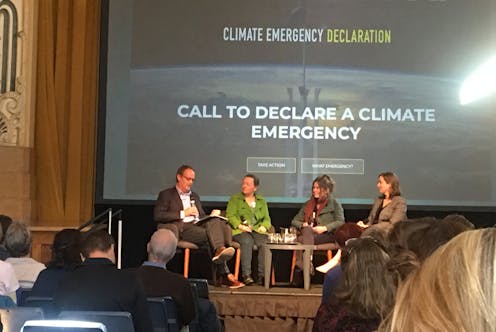
Darebin City Council was the first to declare a climate emergency. John Englart/Flickr, CC BY-SA

News headlines about local government in Australia often have a familiar storyline: councils should stick to their “core purpose […] to collect rubbish, fix local roads and keep rates down”. However, our newly published research shows most Australians expect more from their local councils, and that includes climate action.

Yet councils still tend to find themselves on the receiving end of public criticism when they veer from delivering “services to property” to activities that fall under the “services to people” category. They attract headlines like The Guardian’s “Council of war: how much should local government stray from roads, rates and rubbish?” and the Courier Mail’s “Stick to collecting rubbish – not spreading it”.

In one respect, it’s easy to understand why. The 537 local councils around Australia are creations of state and territory statutes. Until relatively recently, they were restricted to administering a select number of services to property. They are not mentioned in the Commonwealth Constitution and sit squarely at the bottom of our federal hierarchy.

This is why when we do hear about local government it’s usually in relation to the “three Rs” (roads, rates, and rubbish). It’s also why, as experts in governance like A.J. Brown observe, the tier of government closest to Australians remains “the poor cousin if not ‘lame duck’ in the Australian federal system”, despite having “grown rapidly
in capacity and importance”.

But to what extent do Australians really think local councils should stick to the three Rs?

Our national survey during June and July 2022 asked 1,350 Australians this question. The results are presented in our report about the changing role of local government. Most people surveyed agreed their local councils should engage with bigger, contentious issues.

Australians see a bigger role for their local councils

Australians now have an expansive view of the role of local government. More than nine in ten respondents, for instance, believed local councils should:

  • advocate for the needs of the local community (93%)

  • reflect local community values (93%)

  • deliver services that contribute to a healthier and fairer society (91%).

Interestingly, almost as many Australians were of the view that political parties should play a greater role in local government (69%) and local government should have more power (66%) as those who felt it should focus only on providing basic services – the three Rs (70%). And 83% of respondents agreed local government should be a place where the local community can debate national issues.

What we see challenged, then, are three longstanding ideological underpinnings of Australian local government. These are:

  • the ratepayer ideology that underlies the focus on the three Rs

  • the localist ideology that places the suburb and neighbourhood as the sole focus of local politics

  • the ideology of political neutrality or “opposition to politics in local government”.

Social services matter too

Australians still identify traditional services to property as the most important for local councils to provide. However, there’s a growing appreciation that a more diverse array of socially oriented services are important as well, as the chart below shows.

These council activities range from health and the promotion of the local area to community development, youth services and lobbying higher governments. It’s clear Australians now agree with one of the touchstone findings of the 2003 Hawker parliamentary report that “[l]ocal governments’ roles […] are diverse”.

Contentious issues aren’t off-limits

Australians also believe their local councils should engage with contentious issues, even those that were once well beyond their remit.

We’ve seen in recent years a growing number of local councils around the country have been shaking off the “lame duck” moniker. They are jumping headfirst into ideologically contentious issues like same-sex marriage, Australia Day, the climate emergency and pill testing. In almost all cases, media and state and federal governments have accused councils taking these actions of over-reach.

But our survey showed Australians want their local councils to act on these issues.

Take climate change, for instance. We found 80% of respondents broadly agreed local government should engage with this issue. Even when it came to the more controversial act of declaring a climate emergency, which close to one-fifth of Australian local councils have already done, 75% of respondents still felt that was right.

Read together, these findings show the cliched debate about local government and the three Rs, still favoured among some media and policy pundits, may have had its day. We need a new and more expansive debate that reflects the role local councils play in Australia today.

The Conversation

The authors do not work for, consult, own shares in or receive funding from any company or organisation that would benefit from this article, and have disclosed no relevant affiliations beyond their academic appointment.

ref. Beyond roads, rates and rubbish: Australians now expect local councils to act on bigger issues, including climate change – https://theconversation.com/beyond-roads-rates-and-rubbish-australians-now-expect-local-councils-to-act-on-bigger-issues-including-climate-change-199861

Fetal alcohol spectrum disorder is tragic but not new. How should fresh funding tackle it in the NT?

Source: The Conversation (Au and NZ) – By Elizabeth Elliott, Professor of Paediatrics & Child Health and Director of the Australian Paediatric Surveillance Unit, University of Sydney

Getty/Jamie Grill

In recent weeks, the Australian and Northern Territory governments announced new funding to address the longstanding, much-publicised challenges facing Central Australia.

The promised A$250 million adds to an earlier commitment of $48 million and aims to tackle problems faced by residents in Alice Springs and Central Australia from many angles, including strategies to reduce alcohol-related violence, harms and crime.

Included is a commitment to “improve the response to fetal alcohol spectrum disorder (FASD) by the health and justice sectors”.

This is an important goal, but it is a big ask – the problems are complex and they are not new. FASD often goes undiagnosed and can cause severe and lifelong problems.


Read more:
Alcohol warning labels need to inform women of the true harms of drinking during pregnancy


The heart of many problems

Alcohol is behind or has been linked to many of the current problems in Central Australia, including the recent wave of crime and violence. Some believe this followed the relaxation in July 2022 of the Stronger Futures laws that limited access to alcohol in many NT communities for more than a decade.

In communities where alcohol use is high, a focus on FASD is warranted. In Alice Springs, communities are calling for action.

Alcohol and pregnancy

FASD is a condition that affects people exposed to alcohol before birth and causes problems with motor skills, behaviour or learning, or a mix of these.

FASD is a result of alcohol’s ability to cross the placenta, so maternal and fetal blood alcohol concentrations rapidly reach the same level. Prenatal exposure to alcohol may disrupt development of the brain (neurodevelopment) and other organs in the unborn child. People born with FASD can have severe neurodevelopmental problems that may be accompanied by birth defects and have lifelong ramifications.

Worldwide, rates of FASD in the general population are estimated at 1–5%, but we lack data in the general Australian population. Internationally, several identifiable groups are at high risk of FASD – children in foster and adoptive care, in orphanages, mental health facilities, juvenile justice, and some Indigenous groups.

Consistent with these data, high rates of FASD have been recorded in remote Australia (one in five) and in juvenile detention (one in three).

But FASD is not selective. It occurs across all socioeconomic levels and racial groups in society.


Read more:
FactCheck Q&A: does Australia have some of the highest rates per capita of fetal alcohol syndrome in the world?


Often underdiagnosed

Alcohol use in pregnancy is common throughout Australia. In cohort studies from our major cities, about 60% of pregnant women report drinking alcohol – often before realising they are pregnant. A pattern of high-risk drinking is reported in some remote communities. However, the Australian household survey suggests more educated, more affluent mothers are more likely to drink throughout their pregnancy.

FASD has significant economic costs – through its impact on health, education, out-of-home care and justice systems. However, its social impacts are immeasurable.

Children born with FASD are often slow to develop the social skills and language, motor skills and attention, academic skills and impulse control that would otherwise help them achieve at school and contribute in their community.

They may strive to keep up with their peers but are often easily led and may be unable to distinguish right from wrong. With good support at home and school, children with FASD can thrive. Without it, children and young people may drop out of school and some fall into a pattern of crime.

It is telling that many incarcerated children and youth have never had a thorough medical and psychosocial assessment, and many have undiagnosed FASD. So, their strengths and needs have too long gone unrecognised and they have missed opportunities for vital early treatment.

The challenges of FASD are compounded by early-life trauma. We must revert from a punitive to a therapeutic approach for these vulnerable children.

Every moment matters in your pregnancy.

The focus so far

For more than a decade, the Australian government has partnered with clinicians, researchers and others and has made a major contribution to addressing FASD.

After two national inquiries, we have a National Strategic Action Plan for FASD and a national FASD Advisory Group to monitor implementation of its recommendations. The Australian Guide to the Diagnosis of FASD has bolstered clinicians’ skills, and the FASD Hub website is a valuable resource.

Local resources for primary and early childhood educators and justice professionals, funded multidisciplinary clinics, the National Organisation for FASD website and helpline, a FASD registry to monitor trends, and a vibrant research network have collectively raised awareness and improved diagnosis and support for people living with FASD and their families.

However, FASD is still inadequately managed within the health and justice sectors in remote regions, including the NT, which are overwhelmed by the needs.

What the new funds could achieve

We need a systematic approach to identify all children with developmental and learning vulnerability and offer them treatment at the earliest possible opportunity. In any such child, we need to consider FASD and explore whether there might be a history of prenatal alcohol exposure.

We must increase our screening and diagnostic capacity – not only in specialised services, but in the places of first contact with health services: primary care, midwifery and community paediatric practices, in remote regions.

We also need trained professionals, available locally, to assist families to join the National Disability Insurance Scheme. But there is also a need for accessible services, including where remote families live, so they can spend the support funds they are allocated.

The need for culturally appropriate and trauma-informed services to support people with FASD and their families goes without saying. Training of more Aboriginal and Torres Strait Islander health workers is essential.

Prioritise prevention

Prevention efforts must be at the fore in the effort to address FASD. We must understand that disadvantage and historic trauma, addiction, and partner drinking and violence are among the most common drivers of alcohol use in pregnancy, and shift the blame away from women. In turn, the drivers of disadvantage – inadequate housing, education and vocational opportunities, transport and access to good-quality education and health care – must be addressed. Australians must also relinquish their tolerant attitudes to binge drinking.

From July 2023, pregnancy warning labels will feature on all Australian alcohol products. Importantly, Australia’s first public awareness campaign – Every Moment Matters – is currently being rolled out nationally. It includes resources for the public, women at risk, and health professionals. And the Strong Born resources will be launched next week for Aboriginal and Torres Strait families and service providers.

All these efforts must be underpinned by legislation and strategies proven to reduce alcohol harms. Although unpopular, we must continue to push for restrictions on advertising and promotion of alcohol, appropriate taxation and pricing, and limit-setting on the number and opening hours of liquor outlets, especially in our most vulnerable communities.

The Conversation

Elizabeth Elliott receives grant funding from the NHMRC, MRFF, the Ian Potter Foundation, Healthway WA, the NDIS, the Australian Government, NSW Health. She is on a number of committees related FASD including government, NGO and academic committees.

ref. Fetal alcohol spectrum disorder is tragic but not new. How should fresh funding tackle it in the NT? – https://theconversation.com/fetal-alcohol-spectrum-disorder-is-tragic-but-not-new-how-should-fresh-funding-tackle-it-in-the-nt-199673

To prepare for future pandemics, we can learn from the OECD’s top two performers: New Zealand and Iceland

Source: The Conversation (Au and NZ) – By Leah M. Grout, Assistant Professor, University of Vermont

Shutterstock/Iryna Inshyna

A Royal Commission of Inquiry into New Zealand’s COVID response began work this month, with a goal to prepare the country for future pandemics.

It will focus on lessons not only from New Zealand’s pandemic experience but also from other countries and jurisdictions.

Early in the pandemic, it became clear some countries had higher numbers of COVID deaths than others. New Zealand and Iceland had the lowest mortality among high-income nations: placed first and second in the OECD for lowest excess mortality as of June 2022, respectively.

A previous article outlined lessons from both Iceland and New Zealand in September 2020. In a recently published study, we extended this comparison through to June 2022.

At the beginning of the pandemic, both countries rapidly implemented similar control measures, including testing, contact tracing, isolation and quarantine, gathering limits and physical distancing. Both nations were relatively slow to require mass masking.

A graph showing the excess death rate for New Zealand, Iceland and a range of other countries

Our World in Data, CC BY-SA

Rapid border management was likely easier in these countries because both are island nations with only one (Iceland) or a few (New Zealand) international airports. However, both nations had to work quickly to increase testing and contact tracing capacity and purchase additional personal protective equipment for healthcare workers.

But apart from these measures, the two nations pursued different strategies.


Read more:
COVID-19 and small island nations: what we can learn from New Zealand and Iceland


Elimination or mitigation

Iceland did not implement an elimination strategy and instead focused on mitigation, even though community transmission was eliminated early on. Iceland’s response did not involve the use of lockdowns or official border closures.

Meanwhile, New Zealand initially planned to follow a mitigation strategy, but then shifted quickly to an elimination strategy early in the pandemic. It employed the use of a strict lockdown and largely closed its international border (though low levels of essential travel continued with two weeks of quarantine for returning citizens at the border).

One of Auckland's managed isolation and quarantine facilities
All arrivals in New Zealand had to spent two weeks in a managed isolation and quarantine facility.
Adam Bradley/SOPA Images/LightRocket via Getty Images

Elimination seeks to reduce transmission to zero within a defined jurisdiction. By comparison, control strategies like suppression aim to keep case numbers low to minimise illness and death. Mitigation implies lighter controls, more calibrated towards preventing health systems becoming overwhelmed.

In New Zealand, the elimination strategy worked in the early stages of the pandemic and allowed for a return to near-normal life for most people in the country. That was until late 2021, when an outbreak of the Delta variant led the government to shift to a suppression strategy.

Then, following a wave of the Omicron variant in early 2022, New Zealand began to reopen its border in stages, marking a shift to mitigation.


Read more:
The costly lesson from COVID: why elimination should be the default global strategy for future pandemics


The economic costs of the pandemic

Iceland and New Zealand both introduced economic interventions shortly after the first COVID cases were detected. Government provision of financial assistance as a proportion of GDP in 2020 and 2021 was twice as high in New Zealand as in Iceland.

Despite economic support measures, both nations saw a contraction in GDP in 2020, although much greater in Iceland (-8·27% vs -1·22%). Iceland also experienced a higher peak unemployment rate (7·2% vs 5·3%), but with a quick rebound in 2021. This difference may in part reflect Iceland’s stronger reliance on its tourism sector, but it’s also possible the measures taken in New Zealand were more effective for supporting its economy.

There were many similarities between Iceland’s and New Zealand’s responses. Both nations had existing universal healthcare coverage and pandemic plans targeted towards influenza. However, neither country had a dedicated national institution to respond to infectious diseases.

There was clear communication involving regular briefings by senior officials in both Iceland and New Zealand. This included daily press briefings that were nationally broadcast and early communications about the pandemic framed as a shared threat. In Iceland the phrase “we are all civil protection” was commonly used, while in New Zealand, there was frequent reference to the “team of five million”.

Scientists also played a particularly prominent role in the response. There was a high level of public trust in the response in both countries, especially early in the pandemic.

Differences in vaccination and testing

Iceland performed much better than New Zealand with vaccination, beginning its campaign several months earlier. The slow progress with vaccination in New Zealand was a point of criticism at the time (along with delays in reaching Māori and Pasifika) and should be an area of focus for the Royal Commission of Inquiry.

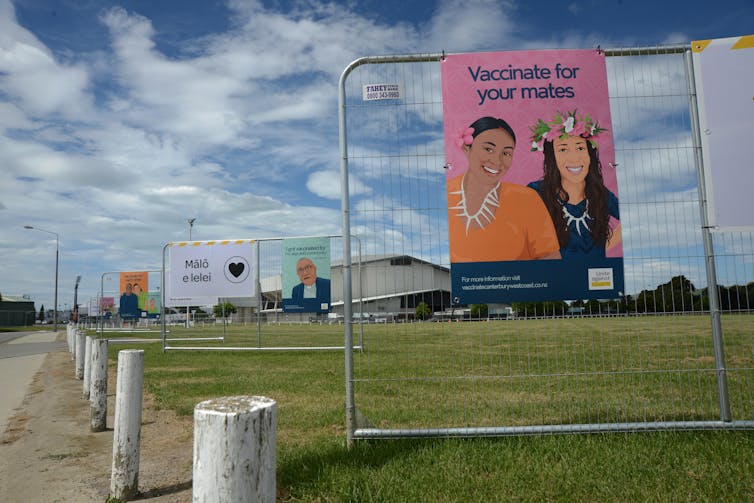
A sign inviting Pasifika to get vaccinated
New Zealand’s vaccination campaign was slow to reach Māori and Pasifika.
Shutterstock/Lakeview Images

Nevertheless, New Zealand did catch up to Iceland. By June 2022, both countries had similar vaccination coverage rates. Differences in the timing of vaccination probably had little net effect.

Iceland’s success at keeping COVID cases and deaths relatively low without the use of stringent restrictions led to the question of whether New Zealand could have achieved similar results without a border closure and lockdowns.

It seems to us unlikely New Zealand could have achieved similar results without substantially increasing testing capacity. Iceland conducted almost four times more tests (per 1000 population) than New Zealand during the study period. This increase in capacity was made possible in part by collaboration with deCODE Genetics.

While efforts to increase testing capacity in New Zealand progressed rapidly in the first year of the pandemic, a backlog developed during the initial stage of the Omicron wave in early 2022 because many laboratories were overwhelmed by the number of tests.


Read more:
The keys to preventing future pandemics


Considering the impact of alternative pandemic responses is challenging, but country comparisons can give some clues. Also, disease modelling suggests that had New Zealand delayed implementing its lockdown, the first pandemic wave would have been larger and taken longer to control. Elimination might have become impossible.

Overall, many of the pandemic control measures deployed by Iceland and New Zealand appeared successful. Features of the responses in both countries could potentially be adopted by other jurisdictions to address future pandemic threats. Indeed, some of us have argued elimination should be the default strategy for future pandemics above a certain severity.

The Conversation

Funding for this work was received from the University of Otago (grant number ORG 0122-0623) and the Health Research Council of New Zealand (grant number 20/1066).

Amanda Kvalsvig’s employer, the University of Otago, receives funding for her research on Covid-19 and other infectious diseases from the Health Research Council of New Zealand and the New Zealand Ministry of Health.

Jennifer Summers receives funding from the Ministry of Health to conduct Covid-19 research and funding for this work was received from the University of Otago (grant number ORG 0122-0623).

Magnús Gottfreðsson collaborates with deCODE Genetics on academic research related to infectious diseases, including Covid-19. He has also provided consultations to Gilead Sciences in the past.

Michael Baker’s employer, the University of Otago, receives funding for his research on Covid-19 and other infectious diseases from the Health Research Council of New Zealand and the New Zealand Ministry of Health.

Nick Wilson does not work for, consult, own shares in or receive funding from any company or organisation that would benefit from this article, and has disclosed no relevant affiliations beyond their academic appointment.

ref. To prepare for future pandemics, we can learn from the OECD’s top two performers: New Zealand and Iceland – https://theconversation.com/to-prepare-for-future-pandemics-we-can-learn-from-the-oecds-top-two-performers-new-zealand-and-iceland-198973

The largest structures in the Universe are still glowing with the shock of their creation

Source: The Conversation (Au and NZ) – By Tessa Vernstrom, Senior research fellow, The University of Western Australia

Tessa Vernstrom using Planck data, Author provided

On the largest scales, the Universe is ordered into a web-like pattern: galaxies are pulled together into clusters, which are connected by filaments and separated by voids. These clusters and filaments contain dark matter, as well as regular matter like gas and galaxies.

We call this the “cosmic web”, and we can see it by mapping the locations and densities of galaxies from large surveys made with optical telescopes.

We think the cosmic web is also permeated by magnetic fields, which are created by energetic particles in motion and in turn guide the movement of those particles. Our theories predict that, as gravity draws a filament together, it will cause shockwaves that make the magnetic field stronger and create a glow that can be seen with a radio telescope.

In new research published in Science Advances, we have for the first time observed these shockwaves around pairs of galaxy clusters and the filaments that connect them.


Read more:
Explainer: radio astronomy


In the past, we have only ever observed these radio shockwaves directly from collisions between galaxy clusters. However, we believe they exist around small groups of galaxies, as well as in cosmic filaments.

There are still gaps in our knowledge of these magnetic fields, such as how strong they are, how have they evolved, and what their role is in the formation of this cosmic web.

Detecting and studying this glow could not only confirm our theories for how the large-scale structure of the Universe has formed, but help answer questions about cosmic magnetic fields and their significance.

Digging into the noise

We expect this radio glow to be both very faint and spread over large areas, which means it is very challenging to detect it directly.

What’s more, the galaxies themselves are much brighter and can hide these faint cosmic signals. To make it even more difficult, the noise from our telescopes is usually many times larger than the expected radio glow.

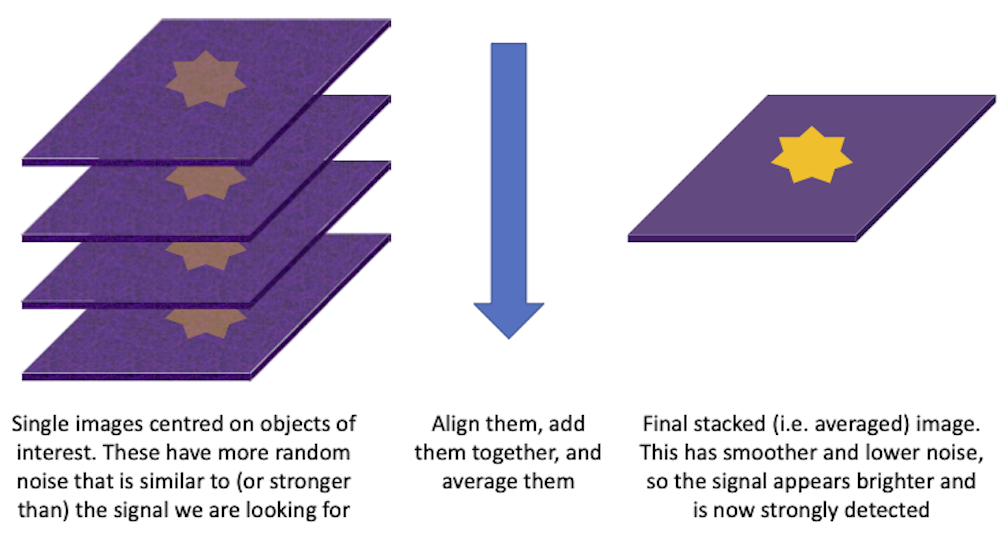
For these reasons, rather than directly observing these radio shockwaves, we had to get creative, using a technique known as stacking. This is when you average together images of many objects too faint to see individually, which decreases the noise, or rather enhances the average signal above the noise.

A diagram showing a stack of several faint images next to a single sharper version of the image.
‘Stacking’ many images together can make the signal of interest brighter than the background noise.
Tessa Vernstrom, Author provided

So what did we stack? We found more than 600,000 pairs of galaxy clusters that are near each other in space, and so are likely to be connected by filaments. We then aligned our images of them so that any radio signal from the clusters or the region between them – where we expect the shockwaves to be – would add together.

We first used this method in a paper published in 2021 with data from two radio telescopes: the Murchison Widefield Array in Western Australia and the Owens Valley Radio Observatory Long Wavelength Array in New Mexico. These were chosen not only because they covered nearly all the sky but also because they operated at low radio frequencies where this signal is expected to be brighter.

In the first project, we made an exciting discovery: we found a glow between the pairs of clusters! However, because it was an average of many clusters, all containing many galaxies, it was difficult to say for sure the signal was coming from the cosmic magnetic fields, rather than other sources like galaxies.

A ‘shocking’ revelation

Normally the magnetic fields in clusters are jumbled up due to turbulence. However, these shock waves force the magnetic fields into order, which means the radio glow they emit is highly polarised.

We decided to try the stacking experiment on maps of polarised radio light. This has the advantage of helping to determine what is causing the signal.


Read more:
A thread of the cosmic web: astronomers spot a 50 million light-year galactic filament


Signals from regular galaxies are only 5% polarised or less, while signals from shockwaves can be 30% polarised or more.

In our new work, we used radio data from the Global Magneto Ionic Medium Survey as well as the Planck satellite to repeat the experiment. These surveys cover almost the entire sky and have both polarised and regular radio maps.

Stacking cluster pairs: the two dark spots aligned vertically are the clusters and show depolarisation due to turbulence, while the outer areas and the area between the clusters is highly polarised.
Tessa Vernstrom using Planck data, Author provided

We detected very clear rings of polarised light surrounding cluster pairs. This means the centres of the clusters are depolarised, which is expected as they are very turbulent environments.

However, on the edges of the clusters the magnetic fields are put in order thanks to the shockwaves, meaning we see this ring of polarised light.

We also found an excess of highly polarised light between the clusters, much more than you would expect from just galaxies. We can interpret this as light from the shocks in the connecting filaments. This is the first time such emission has been found in this kind of environment.

We compared our results with state-of-the-art cosmological simulations, the first of their kind to predict not just the total signal of the radio emission but the polarised signal as well. Our data agreed very well with these simulations, and by combining them we are able to understand the magnetic field signal left over from the early Universe.

Cosmological simulation showing the gas temperature, radio emission from shocks, and magnetic field lines. Credit: F Vazza (Univ Bologna) / D Wittor (Hamburger Sternwarte) / J West (NRC) / ICRAR.

In future we would like to repeat this detection for different times over the history of the Universe. We still do not know the origin of these cosmic magnetic fields, but further observations like this can help us to figure out where they came from and how they have evolved.


Read more:
We found some strange radio sources in a distant galaxy cluster. They’re making us rethink what we thought we knew.


The Conversation

Tessa Vernstrom works for the International Centre for Radio Astronomy Research at the University of Western Australia and is also affiliated with CSIRO Space & Astronomy.

Christopher Riseley works for Alma Mater Studiorum – Università di Bologna. He is also affiliated with the Istituto Nazionale di Astrofisica (INAF) and CSIRO Space & Astronomy. He is supported by funding from the European Research Council (ERC) under the ERC Starting Grant ‘DRANOEL’, number 714245.

ref. The largest structures in the Universe are still glowing with the shock of their creation – https://theconversation.com/the-largest-structures-in-the-universe-are-still-glowing-with-the-shock-of-their-creation-199785
Young people may decide the outcome of the Voice referendum – here’s why

Source: The Conversation (Au and NZ) – By Intifar Chowdhury, Associate Lecturer, School of Politics and International Relations, Australian National University

A referendum on a First Nations Voice to Parliament is set to be held in the second half of this year. Australians will be asked if they agree to a constitutional amendment to give First Nations people a voice in government decisions that directly affect them. This body aims to circumvent complicated bureaucracy, address consistently poor life outcomes, and improve the services and support of Indigenous communities in Australia.

Given young Australians, mostly progressive and most engaged in issue-based politics, helped swing the 2022 election, it is likely their support will be crucial to the “yes” campaign.

Why is youth support crucial?

Historically, Australians have been reluctant to change the Constitution. Only eight out of 44 referendums carried, with no successful constitutional change since 1977. For the referendum to be successful, the proposed alteration must pass by a “double majority”: this means a majority of voters nationwide and a majority of voters in a majority of the states (that is, at least four out of six states).


Read more:
Changing the Australian Constitution is not easy. But we need to stop thinking it’s impossible


The 1967 referendum had the highest ‘yes’ vote in history, garnering over 90% support.
State Library of South Australia

But referendums are not bound to fail. Since the referendum is inherently an issue-based vote, the success in the past depended heavily on the issue. Previously, campaigns have been more successful when they focused on principles or outcomes, rather than on the technical and procedural issues concerning particular amendments.

For example, the 1967 referendum on Indigenous constitutional recognition scored the highest percentage of votes (90.77%) in favour of any referendum. In contrast, the 1999 referendum to change Australia from a constitutional monarchy to a republic did not garner majority support from any state.

Since young Australians are more inclined to policy voting than partisan voting, educating young people about the issue will be vital for the Voice referendum. Further, young voters may help inform older non-Indigenous people – the group most likely to vote “no” in the referendum.


Read more:
What will young Australians do with their vote – are we about to see a ‘youthquake’?


What’s in it for the young person?

For a young Indigenous Australian, an Indigenous Voice to Parliament is important for two key reasons.

First, the national Voice would have a youth advisory group – as one of two permanent groups – that is expected to focus on improving Indigenous peoples’ educational, psychological, health, economic and other social outcomes. Second, and more broadly, it gives a voice to their communities, which all levels of government are obliged to consult.


Read more:
The Voice referendum: how did we get here and where are we going? Here’s what we know


For a non-Indigenous young person, the proposed body will play an important role in educating and explaining what has happened and is still happening to Aboriginal and Torres Strait Islander peoples. Cobble Cobble woman Allira Davis, co-chair of the Uluru Youth Dialogue, said the essential but “harsh business of truth-telling” has been lacking in national conversations, although this is “changing among younger generations of non-Indigenous Australians”.

Why are young people likely to vote in favour?

In a recent nationally representative survey, Australians were asked: “If a referendum were held to recognise Indigenous Australians in the Constitution, would you support or oppose such a change to the Constitution?” Young Australians, aged 18-34, strongly supported a constitutional amendment for Indigenous recognition.


Made with Flourish

Data from the 2022 Australian Election Study (AES) show that, compared to older age groups, the youngest voter group is most likely to “strongly support” and least likely to “strongly oppose” the referendum.

An analysis of the latest enrolment data from the Australian Electoral Commission (AEC) shows that millennials and Gen Z make up about 43% of the electorate. This indicates a major generational replacement as the polls are being populated with more progressive, younger voters.


Read more:
Will multicultural Australians support the Voice? The success of the referendum may hinge on it


Although lifecycle theories oppose this idea and predict people become more conservative as they age, this may not apply to millennials and younger people. Evidence from the AES suggests millennials are not becoming more conservative as they get older and are sticking with left-of-centre parties.

Made with Flourish

Extending the findings in the figure above, and analysing the AEC enrolment data, it is evident that a majority of states (except Tasmania) reflect the high percentage of youth population. That means there is a fair chance mostly progressive young people and younger generations may be driving the “yes” vote in the referendum.

But there is still opposition

Some young people, especially those affiliated with the Liberal Party, raise mixed views about the referendum, demanding more clarity on the proposal in its current form. That is, most do support the need to recognise the historical wrong done to Indigenous communities, but they are not supportive of the approach because, as a young Liberal said, isolating a group for benefits or harm “is inherently wrong and should be opposed”.

Plus, there are both right and left-wing opponents of the Voice. Therefore, we must be cautious in thinking a progressive individual will definitely vote “yes”.

Historically, one of the biggest threats to referendums has been a “no” campaign run by a major political party. A strong opposition, or lack of bipartisan approval, may render voters vulnerable to scare campaigns.

Young people – mostly those who haven’t yet had a chance to participate in a referendum – already have a low level of understanding of constitutional matters. But given they are more likely to strongly support the Indigenous cause than their older counterparts, a transparent and thorough public education campaign is much needed to gather informed youth support.

The Conversation

Intifar Chowdhury does not work for, consult, own shares in or receive funding from any company or organisation that would benefit from this article, and has disclosed no relevant affiliations beyond their academic appointment.

ref. Young people may decide the outcome of the Voice referendum – here’s why – https://theconversation.com/young-people-may-decide-the-outcome-of-the-voice-referendum-heres-why-199599

Children can now report rights violations directly to the UN – it’s progress, but Aotearoa New Zealand still needs to do more

Source: The Conversation (Au and NZ) – By Claire Breen, Professor of Law, University of Waikato

Getty Images

The latest report into the rights of children in Aotearoa New Zealand has painted a mixed picture of how the country treats young people.

The UN Committee on the Rights of the Child recently published its sixth review into how Aotearoa New Zealand is implementing its obligations under the UN Convention on the Rights of the Child 1989.

The good news is that Aotearoa New Zealand has made progress in the seven years since the last review. But despite decades of warnings, the country is still failing too many of its children and young people, particularly those in state care, living in poverty, with disabilities, and those who end up in the justice system

On the positive side, measures such as establishment of the Ministry for Children (Oranga Tamariki) in 2017, the passing of the Children, Young Persons, and Their Families (Oranga Tamariki) Act 2017, the Child Poverty Reduction Act 2018 and the development of the Child and Youth Wellbeing Strategy 2019 were welcomed by the writers of the report.

Aotearoa New Zealand has also voluntarily implemented the convention’s communications procedure, allowing children to take complaints about rights violations directly to the committee.

A long list of failures

But while Aotearoa New Zealand’s progress was commended, the bulk of the report was devoted to the country’s ongoing failure to fully implement the internationally established rights of young people.

Among the key concerns requiring urgent attention were:

  • the persistent discrimination against children in vulnerable situations

  • the persistent rates of abuse, neglect and violence against children

  • the rights of children in state care and the disproportionate levels of harm experienced by these children


Read more:
New Zealand is violating the rights of its children. Is it time to change the legal definition of age discrimination?


  • the higher levels of risk or violence and abuse that children with disabilities are exposed to, as well as the higher levels of deprivation, poverty and inadequate housing, and the lower levels of enrolment in education or training programmes they experience

  • the rates of children living in poverty and experiencing food insecurity, homelessness and unstable or overcrowded housing resulting in poorer health and education outcomes

  • the minimum age of criminal responsibility – just 10 years old in New Zealand – as well as the failure to separate children and adults in detention, the indefinite period for which some young people can be remanded in police custody, and the automatic transfer of young people charged with serious offences to the adult justice system.

The committee expressed concern at the persistent over-representation of tamariki and rangatahi Māori in most of these areas of key concern. The committee also noted that Pasifika children, LGBTI children and children with disabilities were more likely to be in vulnerable situations.

The issues are not new

Many of these concerns had already been identified in Aotearoa New Zealand’s last report, in 2016. Indeed, many of these issues were a matter of concern when Aotearoa New Zealand first reported to the committee in 1997.

Not only have the committee’s concerns been highlighted in the past, but the report’s findings come from Aotearoa New Zealand’s own data on children.

The committee considered a 2021 report submitted by the Aotearoa New Zealand government, along with other reports from national institutions such as the Children’s Commissioner and non-governmental organisations.


Read more:
The state removal of Māori children from their families is a wound that won’t heal – but there is a way forward


The committee then discussed the state of children’s rights in Aotearoa New Zealand with a government delegation at the UN headquarters in Geneva. The most recent meeting between New Zealand and the committee took place in late January.

Why the review process matters

The UN Convention on the Rights of the Child is an international, legally binding agreement. It has been formally accepted by 196 countries, making it the most widely accepted human rights treaty.

The convention established the UN Committee on the Rights of the Child, a body of 18 independent experts that monitors its implementation in the states that have accepted it.

Regular reporting to the committee is a requirement of the convention. These reviews allow for the nature of children’s rights and states’ obligations to be spelled out.

Over the decades, the reviews have built up a picture of how Aotearoa New Zealand’s children’s rights are violated by discrimination, deprivation and (sometimes deadly) violence. The reviews continually identify what the government must do to prevent these breaches and how to remedy their consequences.

What must the government do now?

A few overarching themes can be identified amongst the dozens of recommendations made by the committee.

Firstly, the convention’s rights and obligations must be incorporated into Aotearoa New Zealand law. Children should also be able to participate meaningfully in the design and implementation of all laws, policies and programmes regarding their rights.

Children whose rights have been violated need greater access to more child-friendly complaints mechanisms.


Read more:
10 is too young to be in court – NZ should raise the minimum age of criminal responsibility


Additionally, more data needs to be collected to create a fuller picture of the situation of all Aotearoa New Zealand children and their rights. More resources also need to be allocated to the protection of children and the national budget needs to more strongly reflect a child rights-based approach.

But perhaps the best place to start is for the government to fulfil one of its obligations and publicise the findings of this latest review, as well as publicising the fact that children can now complain to the UN when their rights have been violated.

The Conversation

Claire Breen does not work for, consult, own shares in or receive funding from any company or organisation that would benefit from this article, and has disclosed no relevant affiliations beyond their academic appointment.

ref. Children can now report rights violations directly to the UN – it’s progress, but Aotearoa New Zealand still needs to do more – https://theconversation.com/children-can-now-report-rights-violations-directly-to-the-un-its-progress-but-aotearoa-new-zealand-still-needs-to-do-more-199677

New national autism guideline will finally give families a roadmap for therapy decisions

Source: The Conversation (Au and NZ) – By Andrew Whitehouse, Bennett Chair of Autism, Telethon Kids Institute, The University of Western Australia

Shutterstock

Australian’s first national guideline outlining the best ways of providing clinical support to autistic children and their families will be launched in Canberra today.

The guideline, which we co-authored with others, represents a landmark moment for autism in Australia. It is the culmination of a decades-long effort to build better evidence into clinical practice for autistic children.

For the first time, families of children with autism will have a clear description of what is and what is not safe and effective clinical practice, and a roadmap to empower their choices.


Read more:
Treating suspected autism at 12 months of age improves children’s language skills


Autism in Australia

Autism became a formal diagnosis in Australia with the introduction of the third edition of the Diagnostic and Statistical Manual in 1980. But it was not until 1994 it was diagnosed in large numbers. Today, autism is diagnosed in more than 1% of people.

The most common types of therapies or supports for autistic children are focused on supporting their learning, participation, and wellbeing. This might involve directly teaching the child learning strategies, or changing the environment around the child. For many children, these therapies are used at the same time as prescribed medication.

There is good evidence to underpin the safety and effectiveness of many such therapies. However, like all areas of health and medicine, it can be hard to ensure measures are rolled out in the same way in different settings and locations. This can lead to confusion for children and families, and expose them to clinical therapies that may be ineffective or harmful.

With the increased focused on evidence-based medicine over the past two decades, there have been important steps taken to provide better guidance to clinicians and policymakers about what represents good practice. However, until now there hasn’t been an evidence-based guide they can refer to that brings together international expertise and research evidence.


Read more:
We examined the research evidence on 111 autism early intervention approaches. Here’s what we found


84 recommendations

We developed the new guideline at the Autism CRC – established in 2013 as the world’s first national, cooperative research effort focused on autism across the lifespan. It brought together a group of researchers, clinicians, and autistic people, who consulted with more than 1,000 community members.

These community voices were then combined with evidence from three systematic reviews of international research to develop 84 recommendations.

The recommendations are presented as statements that describe key elements of practice. Clinicians follow these to deliver evidence-based therapies. Some examples are:

  • Practitioners should have relevant qualifications, be regulated, work within their scope of practice with appropriate supervision, and engage in continuing professional development
  • practitioners should engage in open and regular communication with other practitioners, the child’s educators, and other service providers, with appropriate consent, to ensure supports are coordinated
  • practitioners should ensure the child and family understand the rationale for recommended supports, along with potential benefits, costs, and alternative options.

The recommendations will help clinicians work with children and families to set therapy goals, select and deliver the most appropriate therapies to meet those goals, and then monitor therapies to ensure they are safe and effective.

young children working at drawing table
What works for one autistic child may not work for another.
Shutterstock

What does the guideline mean for clinicians and families?

Providing therapies to autistic children can be complex, and involves the consideration of many factors. A therapy approach that may be appropriate for one autistic child, may be quite unsuitable for another child.

For example, some children may receive benefit from learning to talk with the help of a technology device. Other children may not benefit from this approach and learn best through verbal conversations only.

Similar considerations may apply to where a therapy is delivered (in a clinic, in the home, or in the community), how it is delivered (individually or in a group), and through what means (in person or via screen or telephone).

The new guideline gives a step-by-step process to help clinicians consider these factors in a logical and systematic way. This helps clinicians understand the unique factors of each child and their family, and to turn this knowledge into the most effective plan to support them.

So for families, the guideline represents a roadmap for engaging with therapy.

Preventing parents from being overwhelmed

At the time of a child’s autism diagnosis, the amount of information for families to understand and act upon can be overwhelming. Many families are very well supported by the clinicians they are seeing, but many also resort to searching the internet to find answers to their questions.

The guideline will help families understand what evidence-based therapy looks like, and how they can use this information to navigate the best pathway for their child.

We hope this will inform and empower families to feel confident making decisions in the best interests of their child’s learning, participation and wellbeing.


Read more:
An autism minister may boost support and coordination. But governments that follow South Australia’s lead should be cautious


What to watch for next

While the guideline is not mandatory, it has important implications for government systems such as the National Disability Insurance Scheme (NDIS).

At a time when there is concern about how the NDIS can best support its participants, this new document provides evidence-based guidance.

The best next step would be for the NDIS to adopt this guideline. This would give NDIS participants and their families a much better chance of supporting autistic children to flourish.


Read more:
Bedtime strategies for kids with autism and ADHD can help all families get more sleep


The Conversation

Andrew Whitehouse is the Research Strategy Director of the Autism CRC. Andrew Whitehouse receives funding from the National Health and Medical Research Council, the Autism CRC, and the Angela Wright Bennett Foundation.

The National Guideline discussed in this article was authored by David Trembath, Andrew Whitehouse, Kandice Varcin, Hannah Waddington, Rhylee Sulek, Sarah Pillar, Gary Allen, Katharine Annear, Valsamma Eapen, Jessica Feary, Emma Goodall, Teresa Pilbeam, Felicity Rose, and Natalie Silove.

David Trembath currently receives funding from the Autism CRC, and his position is co-funded by Griffith University and CliniKids, Telethon Kids Institute.

ref. New national autism guideline will finally give families a roadmap for therapy decisions – https://theconversation.com/new-national-autism-guideline-will-finally-give-families-a-roadmap-for-therapy-decisions-199786

Trees can be weeds too – here’s why that’s a problem

Source: The Conversation (Au and NZ) – By Gregory Moore, Senior Research Associate, School of Ecosystem and Forest Sciences, The University of Melbourne

John Jennings/Flickr, CC BY

When we think of weeds, often what comes to mind are small, quick-growing plants such as the dandelions or couch grass we might find in our gardens. You may not think of trees as being weedy.

But trees can be weeds too. They can spread quickly, showering an area in seeds and pushing out other species. Even species native to Australia can be a problem when they’re introduced to other areas.

It’s worth knowing the most common weedy trees so you can avoid planting them – or take them out before they get large and expensive to remove.

Which overseas trees can be weeds?

In many parts of Australia, the common Monterey pine (Pinus radiata) is a serious weed. Native to the United States, it’s widely planted in forestry plantations and as windbreaks on farms. Renowned for rapid growth, these pines seed prolifically and spread easily. Their needles contain chemicals that stop other plants growing beneath them.

Camphor laurel (Cinnamomum camphora), a tree native to China, Japan and Taiwan, can dominate moist environments and force out other species. It was once planted widely to give shade, especially in southeastern Queensland. Cities such as Toowoomba still have streets lined with them. But these trees are major weeds on farms. Every part of the plant is toxic to aquatic life.

Sunlight shining on the leaves of a desert ash (Fraxinus angustifolia)
Desert ash (Fraxinus angustifolia) is a common European tree that spreads readily.
Guilhem Vellut/Flickr, CC BY

Similarly, desert ash (Fraxinus angustifolia) was once planted as a street tree across Australia’s southeast. But this common European tree showers spiralling wind-borne seeds over a wide area, and can spread by suckers too. It outcompetes native trees and invades nature reserves.

Jacarandas are hugely popular with many Australians, especially when they are in full flower, but they can be hard to control in South Africa and parts of Australia.


Read more:
Pulling out weeds is the best thing you can do to help nature recover from the fires


Not all weedy trees are prolific seeders. Some reproduce from suckers to create dense thickets of woody growth. Many of our native Acacia or wattle species sucker prolifically after fire and floods. A single tree in your garden can give rise to a thicket of hundreds of small trees that are difficult to eradicate.

The iconic willow (Salix) was once widely planted along waterways to stop erosion. Unfortunately, they grow very rapidly from pieces of a tree that break off and take root in moist soil. These thirsty trees quickly spread along thousands of kilometres of creeks and rivers. It’s now illegal to sell almost any willow species, except for less-invasive ones such as the weeping willow.

Our trees can be pests overseas

Australia’s own broad-leafed paperbark (Melaleuca quinquenervia) has become a major weed tree in Florida’s famous Everglades, creating dense thickets and crowding out native species. It’s similarly devastating in Madagascar.

A dense thicket of broad-leafed paperbark (Melaleuca quinquenervia)
Broad-leafed paperbark (Melaleuca quinquenervia) is a native Australian plant causing issues in Florida.
Forest and Kim Starr/Flickr, CC BY

Even our beloved river red gum is a problem in southern Africa, where it spreads easily, while the Tasmanian blue gum has spread so widely in California that its detractors dub it the “gasoline tree” for its ability to intensify fires.

Even native trees can be pests

Trees don’t have to come from overseas to be considered weeds. Sweet pittosporum (Pittosporum undulatum) occurs naturally in Victoria and New South Wales. Even so, it’s considered weedy in parts of both states, as well as in Western Australia, New Zealand, parts of Africa, and the United States.

This tree engages in chemical warfare, its fallen leaves suppressing rival species. Currawongs and common mynahs eat its fruit and spread the seeds in their droppings.

A sweet pittosporum (Pittosporum undulatum) ladden with orange fruits
Sweet pittosporum (Pittosporum undulatum) is native to Australia but is causing issues in other parts of Australia where it does not occur naturally.
jakub303/flickr, CC BY-NC-ND

The once widely loved Cootamundra wattle (Acacia baileyana), with its golden orb flowers and grey leaves, is now considered a weed outside its native range in NSW.


Read more:
Planning to plant an Australian native like wattle? Read this first — you might be spreading a weed


What can be done about these trees?

Which trees are most likely to become weeds? Those that reproduce quickly, grow fast, tolerate different soils and climates, have fruit or seeds dispersed by animals and birds, and are able to force out native tree species.

It’s far better we stop new species from becoming weeds rather than to try to control them once they’re here.

But for those species already in the soil, we’re left with control measures. In many places, government agencies can direct you to remove weed species. Local governments can ban the planting of certain weedy species and require land owners to remove such species at their own expense.

Our efforts here often have had little effect. Some plants regulated as weeds in the 1800s never became weedy; others long considered weeds remain so and some have become even bigger problems. Some Northern Hemisphere thistles were proclaimed weeds more than a century ago, but have since proved not to be a major problem. African boxthorn (Lycium ferocissimum) is still a problem, despite being a listed and controlled weed for more than a century.

Botanists have tried to tackle the issue by breeding varieties of attractive but weedy trees with far fewer fruit and seeds. You can now buy safer varieties of maple (Acer), black locust (Robinia pseudoacacia), white cedar (Melia azedarach) and liquidambar.

So next time you’re looking to plant a new tree in your garden, look into whether the species is OK for the area. You could also consider joining a local group involved in caring for parks and reserves and help remove any weedy trees.

The Conversation

Gregory Moore does not work for, consult, own shares in or receive funding from any company or organisation that would benefit from this article, and has disclosed no relevant affiliations beyond their academic appointment.

ref. Trees can be weeds too – here’s why that’s a problem – https://theconversation.com/trees-can-be-weeds-too-heres-why-thats-a-problem-182599

40 years on, does Australia need another Prices and Incomes Accord?

Source: The Conversation (Au and NZ) – By Tim Harcourt, Industry Professor and Chief Economist, University of Technology Sydney

Andrew Chapman/National Library of Australia

The election of the Hawke Labor government on March 5 1983 began an era of once-in-a-century economic reforms that opened the Australian economy to world. It floated the dollar, eliminated controls on international capital flows, and dismantled the high tariffs that protected local manufacturers from imports. It refocused Australia’s international trade and foreign policy on the Asia-Pacific region.

But perhaps its most striking innovation was in place even before it was elected: a historic agreement with the Australian Council of Trade Unions, known as the Prices and Incomes Accord (or “the Accord”), announced on February 22 1983.

Under this deal, the union movement agreed to curb demands for higher wage rises in exchange for increases in the “social wage”. Accordingly, the Hawke government introduced measures such as universal health insurance and superannuation, and more funding for education and training, child care and social security.

Seven versions of the accord would be signed over the next 13 years – the last one under Paul Keating, who replaced Hawke in 1991.

By providing the foundations for fewer strikes and curbing the inflationary effect of wage demands, the accord arguably contributed more than any other Hawke-Keating-era reform to setting up Australia for almost three decades without a recession (defined as two consecutive quarters of negative GDP).

Is there a case for the Albanese government to resurrect the accord process? Yes, even though circumstances are very different now.


Read more:
Australian politics explainer: the Prices and Incomes Accord


‘Bringing Australia together’

The accord was the centrepiece of Hawke’s 1983 campaign. He wanted to avoid the mistakes a decade before of the short-lived Whitlam government, whose economic policies were tailored to the long postwar boom but unsuitable for the stagflation (high inflation and high unemployment) engendered by the oil supply crisis of the mid-1970s.


Australia was still suffering from this stagflation in 1983, with double-digit inflation, and unemployment rising towards 10%. The accord promised to fix this, and end the industrial conflict under the Fraser government (1975-83). Hawke’s election slogan “Bringing Australia together” said it all.


That Hawke was able to deliver this deal was due to his close relationship with the ACTU, having been its president from 1969 to 1980. As a trade unionist, he was confrontational. As aspiring prime minister, he stressed consensus. Whitlam would later quip to me: “Bob Hawke’s greatest advantage as prime minister was that he didn’t have to deal with Bob Hawke as ACTU president.”


Read more:
What I learned from Bob Hawke: economics isn’t an end itself. There has to be a social benefit


Hawke also benefited from the support of economics-trained unionist Bill Kelty, who became ACTU general secretary in 1983. With Accord Mark II, signed in September 1985, Kelty convinced the unions to accept wage discounting after a sharp devaluation in the Australian dollar to avoid higher import prices (leading to more wage-price inflation). In return, workers got tax cuts to boost take-home pay.

Not everyone in the union movement appreciated the accord. The head of the militant Building Workers Industrial Union, Tom McDonald, told me:

The accord enabled unions – particularly the left – to focus on the creation of wealth as well as the distribution of wealth. In its very essence, the accord prepared the Australian workforce for globalisation and got us out of stagnation.

Even Keating was initially an accord sceptic. He considered it a rerun of the incomes policies of Britain’s Wilson-Callaghan Labour governments of the 1970s. But he ended up a self-proclaimed “accord warrior”, working closely with Kelty.

Is it time for a new accord?

Attempting to fully replicate the accord’s template would be a mistake.

Economic and political conditions in 2023 are very different to 1983. While inflation is a problem, there is no stagflation. Unemployment is at historically low levels, and fears of a wages explosion have failed to materialise. The Reserve Bank of Australia expects real wages will continue to fall.

This is in part because union power has been so greatly reduced. In 1983, nearly 50% of the workforce was unionised. Now, it is 12.5% – and in the private sector just 8%. So any deal with the ACTU just wouldn’t have the same effect.

But there are grounds for the Albanese government to emulate the spirit of consensus that underpinned the accord, forging a grand bargain between unions, employer groups and other stakeholders.

This would be similar to Germany’s industrial relations model, which characterises employers and unions as “social partners”, working cooperatively with government.

A new accord would help because employers are fearful that the Albanese government’s industrial relations reforms – notably expanding the capacity for multi-enterprise collective bargaining – will lead to a wage explosion.


Read more:
What the compromise IR deal means for wage negotiations, and pay rises


To achieve a deal in which unions cap their demands in exchange for social-wage benefits, the government could offer to make dental care part of Medicare, increase unemployment payments, or invest more in early childhood education.

That way, employers could rest easy about industry bargaining. Workers would know they are getting benefits as valuable as a pay rise. Such a pact would help keep inflation in check, taking pressure off the Reserve Bank of Australia to curb inflation through interest-rate hikes.

A new accord could even include reforming the mess of federal and state taxation and distribution, and the major economic policy making and advisory institutions such as the RBA and the Productivity Commission.

The 1983 accord was a great success because it was the right suite of policies at the right time. Forty years later, Albanese and his treasurer, Jim Chalmers, have an opportunity to forge an accord-like framework fit for conditions now.


This article was co-authored by Jerome Fahrer, a former economist with the Reserve Bank of Australia and now director of ACIL Allen Consulting.

The Conversation

Tim Harcourt was a Research Officer with the ACTU during the Hawke Keating Labor Government

This article was co-authored with Jerome Fahrer, Director of ACIL Allen

ref. 40 years on, does Australia need another Prices and Incomes Accord? – https://theconversation.com/40-years-on-does-australia-need-another-prices-and-incomes-accord-199784

Buildings tumbling, survivors living in tents: medieval descriptions of an 1114 CE earthquake in present-day Turkey and Syria feel eerily familiar

Source: The Conversation (Au and NZ) – By Beth Spacey, Associate Lecturer, The University of Queensland

A depiction of an earthquake in a 14th-century Apocalypse. British Library

The catastrophic earthquakes of February 6 2023 in Turkey and Syria are so far known to have claimed the lives of over 41,000 people. This number will likely grow as rescue and recovery efforts continue.

The region has known earthquakes before. In the past century alone, Turkey has seen nearly 20 earthquakes of a magnitude 7.0 or above.

Seismic activity is so frequent in this area because it sits on three continually grating tectonic plates. This means the region has a history of earthquakes that stretches far beyond the previous century.

While we might expect that the voices of those who survived these earlier earthquakes have been lost to history, this isn’t strictly true. Some have survived.


Read more:
Why have so many earthquakes hit Turkey and Syria?


The earthquake of 1114 CE

One of the cities that has been hit hardest by the 2023 quake is Antakya in southern Turkey.

This is not the first earthquake to devastate Antakya. It was struck by another deadly tremor just over 900 years ago, in the early hours of November 29 1114 CE, or 508 AH in the Islamic calendar.

This earthquake is now known as the Marash earthquake, named for one of the worst-hit cities. One contemporary, an Armenian priest called Matthew of Edessa, estimated it killed 40,000 people in Marash alone.

Antakya is roughly 160km southwest of Marash and also suffered devastation. Much of what we know about the earthquake comes from texts that were either written in Antakya or name the city as one that was most significantly affected.

A depiction of the sixth seal (an earthquake) from a 13th century Apocalypse.
British Library

At the time of this quake, the geopolitical map of the region looked very different from today. It was the Middle Ages, and Antakya – then known as Antioch – was the capital of the Principality of Antioch.

Written accounts from medieval West Asia record several earthquakes. The quake of 1114, however, stands out both for the impact it had on people at the time, and for its continued importance for decades after.

Even at a distance of 900 years, accounts of the 1114 earthquake reveal historical societies went about recording natural disasters in terms that remain poignantly resonant.


Read more:
What early Christian communities tell us about giving financial aid at a time of crises


Contemporaries recorded the disaster

In the aftermath of the 1114 earthquake, Christian and Muslim chroniclers in the region set about committing the disaster to writing.

In this period, to write something down was to make a serious statement: this is important and needs to be remembered. Writing was, and remains, a powerful tool.

Walter, chancellor of Antioch in the first half of the 12th century, recorded how the quake struck in the dead of night.

An earthquake depicted in a 14th century Apocalypse manuscript.
British Library

He describes a scene that seems horrifyingly familiar: of people trapped in collapsed buildings as they slept, others who couldn’t be found, and survivors in the streets who raised their hands to the heavens and cried out in despair.

He wrote:

In the streets, in courtyards, in gardens, in groves, and in other deserted dwelling places, [the people of Antioch] took tents for homes.

In present-day Jerusalem, 500km to the south, Fulcher of Chartres – the chaplain to King Baldwin I – wrote his own description of the quake.

It was, Fulcher says, the worst earthquake anyone had ever known:

[The earthquake] shook the region of Antioch so that it demolished to the ground most of the towns, either whole or in part, houses as well as walls, and in the collapse some of the people perished, suffocated.

Between Antioch in the north and Jerusalem in the south lies the city of Damascus in present-day Syria. In 1114, it was ruled by the Turkish governor Tughtakin.

According to the Damascene administrator Ibn al-Qalānisī, who lived and worked in the city, the quake shook the earth and terrified the people.

Remembrance across space and time

The 1114 earthquake and its impacts were not quickly forgotten. It became infamous far beyond the area where it had struck. This is probably thanks in large part to the efforts of those who recorded it in the aftermath.

In the early 13th century, nearly 100 years later, the great chronicler Ibn al-Athīr was composing his al-Kāmil fit-Tārīkh (The Complete History) in Mosul, more than 600km east of Antioch.

Ibn al-Athīr described the 1114 earthquake in his chronicle:

In this year [508 AH] in Jamada II [the month of November], there was a strong earthquake in Al-Jazira area, Al-Sham and others, causing a wide destruction at Al-Ruha, Harran, Samsat, Balis and others, and many people killed under debris.

As far away as England, 13th-century chroniclers such as Roger of Wendover continued to record the 1114 earthquake. Roger briefly noted that in 1114:

An earthquake destroyed part of the city of Mamistra, not far from Antioch, together with two castles.

The historical accounts of the 1114 quake give us a rare insight into human responses to natural disasters 900 years ago, especially processes of recording and remembering.

Then, as now, their impact could make an indelible mark on a region’s collective memory.


Read more:
Secondary crises after the Turkey-Syria earthquakes are now the greatest threat to life


The Conversation

Beth Spacey has previously received funding from the Arts and Humanities Research Council.

ref. Buildings tumbling, survivors living in tents: medieval descriptions of an 1114 CE earthquake in present-day Turkey and Syria feel eerily familiar – https://theconversation.com/buildings-tumbling-survivors-living-in-tents-medieval-descriptions-of-an-1114-ce-earthquake-in-present-day-turkey-and-syria-feel-eerily-familiar-199866

Papuan cat-and-mouse over NZ pilot taken captive by ‘freedom’ rebels

BACKGROUNDER: By David Robie

Papuan independence rebels are playing a desperate game of cat and mouse with Indonesian authorities over their hostage taking last week with a New Zealand pilot caught in the middle.

Christchurch-raised Philip Mehrtens, 37, a pilot for the national feeder airline Susi Air owned by a former cabinet minister and with Jakarta government supply contracts, was seized by rebels last Tuesday, February 7, shortly after he had touched down at the remote Paro airstrip near Nduga in the Papuan highlands.

Five Indigenous Papuans on board the aircraft were set free and the plane was set on fire.

After initial reports saying the authorities were trying to pinpoint the actual place where the rebels are in hiding and that a rescue operation is under way, the West Papua National Liberation Army (TPNPB) played a trump card today by releasing “proof of life” video footage and photos.

“Papua Merdeka!,” said Mehrtens in one of the obviously coached video messages. “The Papuan military have taken me captive in the fight for Papuan independence,” he added hesitantly while surrounded by a group of armed rebels.

Dressed in a denim jacket, he also wore a black tee-shirt displaying a clenched fist in the colours of the West Papuan Morning Star flag, banned under Indonesian law. The tee also sported the slogan “Papua Merdeka” (Papuan Freedom).

The rebels have gone to great pains to make it appear their captive is relaxed and in good health.


A video of the “proof of life” messages from the TPNPB rebels.       Source: Times on YouTube

High stakes
The stakes are high with the Papuan rebels trying to attract world attention to their cause for independence, “forgotten” by the world for more than the past half century.

But analysts warn that there is a risk of a tragic outcome if a botched rescue takes place as happened the last time Indonesian security forces raided rebels of the Organisasi Papua Merdeka (OPM – Free Papua Movement) who had seized hostages at Mapenduma in 1996, also in the Papuan highlands.

Although in that operation on 15 May 1996 nine hostages were freed, two were killed by the captors while eight OPM guerrillas were killed and two captured.

he Susi Air plane seized by the Papuan rebels
The Susi Air plane seized by the Papuan pro-independence rebels at the remote Paro airstrip and then set ablaze. Image: TPNPB

Six days earlier another rescue bid had ended in disaster when an Indonesian military helicopter crashed killing all five soldiers on board.

Originally, on 8 January 1996, 29 members of a World Wildlife Fund research mission had been seized. However, the rebels promptly released 19 captives while holding 11 – four British, two Dutch and five Indonesians.

There were also international repercussions with the International Red Cross (ICRC) being accused of collaborating with the Indonesian military – later admitted by Jakarta after it was reported that they had used a white helicopter that had been involved in negotiations with soldiers on board.

White mercenaries were also accused of being part of the operation.

Rebel leader Kelly Kwalik had dropped a plan to release the remaining hostages, accusing the ICRC of not honouring their agreement. “We took the researchers hostage because we had no other way for our cause to be acknowledged,” he told the New Internationalist.

Human rights violations
The rescue raid mounted by Kopassus special forces – codenamed Operation Cenderawasih (Bird of Paradise) — was under the command of general Prabowo Subianto, son-in-law of the President Suharto.

Prabowo was two years later dishonourably discharged from the military over allegations of human rights violations. Today he is a politician and Minister of Defence under President Joko Widodo.

The Papuan rebels are trying to reverse the narrative that is projected by Jakarta that the Melanesian provinces of Papua and West Papua (now increased to five) adjoining the independent country of Papua New Guinea are an integral part of Indonesia and those Indigenous people resisting are “terrorists”.

The rebels and also peaceful groups seeking self-determination argue that a 1969 referendum with 1025 handpicked voters supervised by the United Nations in the former Dutch colony voting “unanimously” for Indonesian rule in a so-called Act of Free Choice was a “sham”.

The lesson from this latest hostage-taking crisis, according to Australian academic Dr Camellia Webb-Gannon, who is author of Morning Star Rising: The Politics of Decolonisation in West Papua, is that there needs to be serious negotiations.

Echoing some of the demands of the rebels, she wrote in a backgrounder on the deeper issues of Indonesian colonialism that New Zealand, Australia – both accused of collaborating militarily with Jakarta — and other governments needed to seriously engage about human rights violations in Papua.

Webb-Gannon admitted it may not be enough to resolve the current crisis, “but it would be a long overdue and critical step in the right direction.”

Avoiding disproportionate response
As she stressed, negotiations for the release of Mehrtens must be handled carefully to “avoid further disproportionate responses” by the Indonesian military.

“The kidnapping is not justified, but neither is Indonesia’s violence against West Papuans — or the international community’s refusal to address the violence.”

There are other Papuan pro-independence players that are seeking a peaceful path to self-determination, such as the United Liberation Movement for West Papua (ULMWP) that is seeking to become a full member of the Port Vila-based Melanesian Spearhead Group (MSG).

Exiled leader Benny Wenda issued a statement offering his “deepest sympathies” to the friends and family of hostage Mehrtens.

“At the same time, the ULMWP executive reiterates and reassures the New Zealand government and the world that we are [committed] to a peaceful, diplomatic approach,” he said in his statement condemning the Indonesian divide and rule policies.

“Our roadmap is very clear: we are pursuing the unified West Papuan goal of Merdeka – national liberation – peacefully, through diplomatic political mechanisms.

“We must not lose sight of the fact that Indonesia uses this kind of violence as part of a distinct strategy of occupation.

Stronger colonial grip
“Their aim is to intensify militarisation in West Papua as a way of strengthening their colonial grip on our land.”

Wenda highlighted how Indonesia’s Parliament had last year passed a law creating three new provinces in West Papua, as part of the renewal of the 2001 ‘Special Autonomy’ programme.

“West Papuans overwhelmingly reject ‘Special Autonomy’, more than 700,000 of us having signed a petition against it. Provincial division is a justification for increased militarisation in West Papua, pure and simple,” he said.

“By creating new administrative divisions, Indonesia justifies the establishment of new colonial infrastructure and new military posts.

“They do not want dialogue or peaceful protest — they want chaos and violence, for West Papua to remain a war zone.

“As our land is militarised and destroyed, our people are forcibly displaced.

“Depopulation is another key part of Indonesia’s colonial strategy: by removing West Papuans from our ancestral lands, they allow for massive exploitation of our natural resources.”

100,000 Papuans displaced
Wenda said that up to 100,000 West Papuans had been internally displaced since 2019, including close to half of Nduga’s entire population.

“They continue to live in the bush, deprived of education, food, and adequate medical facilities, unable to return to their homes.

“Indonesia labels us as terrorists while committing state terrorism in our lands.”
The ULMWP’s peaceful demands are:

  • The withdrawal of all Indonesian troops from West Papua;
  • Immediate access to West Papua for the UN High Commissioner for Human Rights;
  • Cancellation of ‘Special Autonomy’, including the new provincial division; and
  • An immediate referendum on independence.

“The kidnap of a foreign pilot naturally brings West Papua to the attention of international media,” Wenda said. “But West Papuans are tortured and murdered daily by Indonesian forces, and international media are banned from seeing it.”

New Zealand diplomats meeting with Indonesian military officers at Timika
New Zealand diplomats meeting with Indonesian military officers at Timika in the Papuan highlands. Image: Jubi News

Meanwhile, Jubi News reports three New Zealand diplomats and two staff of the Indonesian Ministry of Foreign Affairs have travelled to Timika, the capital of Mimika Regency, in the new Central Papua province this week to check on progress with the rescue operation.

They met military officers, including the commander of Timika region, Lieutenant-General Nyoman Cantiasa. He appealed for “international support” to discuss the crisis with the UN High Commissioner for Human Rights.

Hopefully, a peaceful resolution can be found.

Print Friendly, PDF & Email

Article by AsiaPacificReport.nz

NZ Defence Force starts supplying stricken Wairoa with food, water

RNZ News

A NZ Defence Force operation was beginning tonight to supply Wairoa in New Zealand’s North Island with food and water after being cut off by Cyclone Gabrielle floodwaters.

A rapid relief team flown in by the airforce was organising a drop of bottled water for 3000 people from a helicopter this evening.

Prime Minister Chris Hipkins said the team was also providing BBQ meals for a similar number of people, and would provide 300 to 500 food packages in the morning.

They will only stop cooking if they run out of people to feed or run out of food, Hipkins said

Three airforce helicopters also carried out evacuations in Hawke’s Bay today.

The army has deployed a logistics support team of 100 people and 30 vehicles to Hawke’s Bay, while the air force today surveyed damage along the East Coast.

The HMNZS Manawanui was expected to arrive at first light in Gisborne, delivering water supplies to small communities on its way.

Water treatment plant
The Defence Force will also take a water treatment plant to Wairoa, with the HMNZS Te Mana delivering further drinking water.

NZDF now has more than 700 people involved in relief efforts, along with four aircraft, seven helicopters, two ships and 58 trucks.

MetService said heavy rain would continue to hit central New Zealand until Thursday with high waves along East Coast.

Earlier, Hawke’s Bay Civil Defence reported Wairoa (pop. 8000) had been completely cut off overnight and had only one day worth of food and enough drinking water for two days.

In a statement, the Civil Defence branch said the town had lost lifelines to Napier and Gisborne, including power, phones, internet and roads.

A National Emergency Management Agency (NEMA) representative was on route to Wairoa via helicopter from Napier overnight to support the team and the response effort.

With power restored to most of Wairoa by 5pm, with the exception of Mahia/Tuai, the key concern for the welfare of the community was be dwindling food and water supplies, Civil Defence said.

Relying on air supplies
Controller Liz Lambert said that with the loss of roads, they would be relying on supplies coming in by air.

“Wairoa only has one day’s worth of food, and enough drinking water for two days. We have made a request to NEMA for enough food and water to supply the district for seven days.”

Much of Hawke’s Bay remained flooded as the region braced for continued rain, Civil Defence said.

Evacuations in the wider Hawke’s Bay on Tuesday took place in Ruataniwha, Waihirere and Ormond Rd, Haumoana, Eskdale, Taradale, Porangahau village, Waipawa township, Waipukura, Awatoto, Te Awa, Brookfield and Wairoa.

Police and FENZ have carried out numerous rescues and continue to respond to stranded residents, according to Civil Defence.

Evacuation Centres were activated at Taihoa Marae, War Memorial Hall and Presbyterian Hall. An Evacuation Centre in Nuhaka has been established at the Mormon Church.

Evacuation centres are in operation in Central Hawke’s Bay, Hastings, Napier and Wairoa with additional sites being added as required.

Power outages
In Hastings and Napier, the cause of power outages has been linked to the flooding of the Redclyffe substation causing the Transpower network to go down, Civil Defence said.

“Unison reported outages for 60,000 customers across Hastings, Havelock North, Napier, north along east coast to Tūtira and south to Waimārama. It is expected to take some time before power is fully restored across the region.

A number of the region’s cell towers are being operated on battery supply allowing some network coverage although this is still intermittent. Mobile communications are still out in Wairoa with response teams relying on radio and FENZ communicating via satellite.

A number of bridges remain impassable and there is still no access between Hastings and Napier.

This article is republished under a community partnership agreement with RNZ.

Print Friendly, PDF & Email

Article by AsiaPacificReport.nz

Snakes can hear you scream, new research reveals

Source: The Conversation (Au and NZ) – By Christina N. Zdenek, Post-doctoral Research Fellow, Venom Evolution Lab, The University of Queensland

Christina Zdenek, Author provided

Experts have long understood that snakes can feel sound vibrations through the ground – what we call “tactile” sensing – but we’ve puzzled over whether they can also hear airborne sound vibrations, and particularly over how they react to sounds.

In a paper published today in PLOS ONE, we conclude snakes use hearing to help them interpret their world, conclusively dispelling the myth that snakes are deaf to airborne sound.

Our research, which included 19 different snakes from seven species, reveals that not only do snakes have airborne hearing, but that different species react differently to what they hear.


Read more:
7 reasons Australia is the lucky country when it comes to snakes


How snakes respond to airborne and ground-borne sounds

Although seeing and tasting (the air) are the main ways snakes sense their environment, our study highlights that hearing still plays an important role in snakes’ sensory repertoire.

This makes sense from an evolutionary perspective. Snakes are susceptible to predators including monitor lizards, cats, dogs and other snakes. Hearing is an important sense for predator avoidance, as well as injury avoidance (such as being trodden on).

A coastal taipan sits at the centre of a large black and white grid on the ground.
The coastal taipan was one of 19 snake species used in our research.
Christina Zdenek, Author provided

For our experiments, we collaborated with the Queensland University of Technology’s School of Creative Practice to fit-out a soundproof room and test one snake at a time.

Using silence as our control, we played one of three sounds, each including a range of frequencies: 1–150Hz, 150–300Hz and 300–450Hz. For comparison, the human voice range is about 100–250Hz, and birds chirp at around 8,000Hz.

In a previous study, researchers hung western diamondback rattlesnakes (Crotalus atrox) in a steel mesh basket and observed their restricted behaviours in response to sound frequencies between 200Hz and 400Hz. Other researchers surgically implanted electrodes into the brains of partially anaesthetised snakes, detecting electrical potentials in response to sound up to 600Hz.

But our research is the first to investigate how multiple snake species respond to sounds in a space where they can move freely. We also used an accelerometer to detect whether the sounds produced ground vibrations. In this way we confirmed the snakes were indeed registering airborne sounds, and not just feeling ground vibrations.

A coastal taipan near a sugarcane farm in Queensland.
Chris Hay

Do snakes move toward or away from sound?

Most of the snakes exhibited very different types of behaviours in sound trials compared to the control.

Woma pythons (Aspidites ramsayi) – a non-venomous snake found throughout Australia’s arid interior – significantly increased their movement in response to sound and actually approached it. They exhibited an interesting behaviour called “periscoping”, in which snakes raise the front third of their body in a manner that suggests curiosity.

In contrast, three other genera – Acanthophis (death adders), Oxyuranus (taipans) and Pseudonaja (brown snakes) – were more likely to move away from sound, signalling potential avoidance behaviour.

Death adders are ambush predators. They wait for their prey to come to them using the lure on their tail (which they wiggle to look like a worm), and they can’t travel quickly. So it makes sense they trended away from the sound. For them, survival means avoiding being trodden on by large vertebrates such as kangaroos, wombats or humans.

A common death adder (Acanthophis antarcticus) in an ambush position at Mount Glorious, Queensland.
Christina N. Zdenek

Brown snakes and taipans are active foragers that rapidly pursue their prey during the day. This means they may be vulnerable to daytime predators such as raptors. In our experiments, both of these snakes appeared to have acute senses. Taipans in particular were likely to display defensive and cautious behaviours in response to sound.

Coastal taipans displayed cautious behaviours in response to sound.

Can snakes hear us?

Our study further debunks the myth that snakes are deaf. They can hear – just not as well as you or I. Snakes can only hear low frequencies, roughly below the 600Hz mark, whereas most of us can hear a much wider range of frequencies. Snakes probably hear muffled versions of what we do.

So, can snakes hear us? The frequency of the human voice is about 100–250Hz, depending on sex. The sounds we played in our trials included these frequencies, and were played at a distance of 1.2m from the snakes, at 85 decibels. This is the amplitude of a loud voice.

The snakes in our study responded to this sound, and many significantly so. So it’s probably safe to say snakes can hear people speaking loudly or screaming. That doesn’t mean they can’t hear someone talking (a normal conversation is about 60 decibels) – we just didn’t test sound at that noise level.


Read more:
Here’s how we track down and very carefully photograph Australia’s elusive snakes


The Conversation

Christina N. Zdenek receives funding from the Australian Research Council and works for the Australian Reptile Academy.

ref. Snakes can hear you scream, new research reveals – https://theconversation.com/snakes-can-hear-you-scream-new-research-reveals-199958

Snakes can hear you talking about them, new research reveals

Source: The Conversation (Au and NZ) – By Christina N. Zdenek, Post-doctoral Research Fellow, Venom Evolution Lab, The University of Queensland

Christina Zdenek, Author provided

Experts have long understood that snakes can feel sound vibrations through the ground – what we call “tactile” sensing – but we’ve puzzled over whether they can also hear airborne sound vibrations, and particularly over how they react to sounds.

In a paper published today in PLOS ONE, we conclude snakes use hearing to help them interpret their world, conclusively dispelling the common myth that snakes are deaf to airborne sound.

Our research, which included 19 different snakes from seven species, reveals that not only do snakes have airborne hearing, but that different species react differently to what they hear.


Read more:
7 reasons Australia is the lucky country when it comes to snakes


How snakes respond to airborne and ground-borne sounds

Although seeing and tasting (the air) are the main ways snakes sense their environment, our study highlights that hearing still plays an important role in snakes’ sensory repertoire.

This makes sense from an evolutionary perspective. Snakes are susceptible to predators, such as monitor lizards, cats, dogs and other snakes. Hearing is an important sense for predator avoidance, as well as injury avoidance (such as being trodden on).

A coastal taipan sits at the centre of a large black and white grid on the ground.
The coastal taipan was one of 19 snake species used in our research.
Christina Zdenek, Author provided

For our experiments, we collaborated with the Queensland University of Technology’s School of Creative Practice to fit-out a soundproof room and test one snake at a time.

Using silence as our control, we played one of three sounds, each including a range of frequencies: 1–150Hz, 150–300Hz and 300–450Hz. For comparison, the human voice range is about 100–250Hz and birds chirp at around 8,000Hz.

In a previous study, researchers hung western diamondback rattlesnakes (Crotalus atrox) in a steel mesh basket and observed their restricted behaviours in response to sound frequencies between 200Hz and 400Hz. Other researchers surgically implanted electrodes into the brains of partially anaesthetised snakes, detecting electrical potentials in response to sound up to 600Hz.

But our research is the first to investigate how multiple snake species respond to sounds in a space where they can move freely. We also used an accelerometer to detect whether our sounds produced ground vibrations. In this way we confirmed the snakes were indeed registering airborne sounds, and not just feeling ground vibrations.

A coastal taipan near a sugarcane farm in Queensland.
Chris Hay

Do snakes move toward or away from sound?

Most of the snakes exhibited significantly different types of behaviours in sound trials compared to the control.

Woma pythons (Aspidites ramsayi) – a non-venomous snake found throughout Australia’s arid interior – significantly increased their movement in response to sound and actually approached the sound. They exhibited an interesting behaviour called “periscoping”, in which snakes raise the front third of their body in a manner that suggests curiosity.

In contrast, three other genera – Acanthophis (death adders), Oxyuranus (taipans) and Pseudonaja (brown snakes) – were more likely to move away from sound, signalling potential avoidance behaviour.

Death adders are ambush predators. They wait for their prey to come to them using the lure on their tail (which they wiggle to look like a worm), and can’t travel quickly. So it makes sense they trended away from the sound. For them, survival means avoiding being trodden on by large vertebrates such as kangaroos, wombats or humans.

A common death adder (Acanthophis antarcticus) in an ambush position at Mount Glorious, Queensland.
Christina N. Zdenek

Brown snakes and taipans are active foragers that rapidly pursue their prey during the day. This means they may be vulnerable to daytime predators such as raptors. In our experiments, both of these snakes appeared to have acute senses. Taipans in particular were likely to display defensive and cautious behaviours in response to sound.

Coastal taipans displayed cautious behaviours in response to sound.

Can snakes hear us?

Our study further debunks the myth that snakes are deaf. They can hear – just not as well as you or I. Snakes can only hear low frequencies, roughly below the 600Hz mark, whereas most of us can hear a much wider range of frequencies. Snakes probably hear muffled versions of what we do.

So, can they hear us? The frequency of the human voice is about 100–250Hz, depending on sex. The sounds we played in our trials included these frequencies, and were played a distance of 1.2m from the snakes at 85 decibels. This is the amplitude of a loud voice.

The snakes in our study responded to this sound, and many significantly so. So it’s probably safe to say snakes can hear people speaking loudly or screaming. That doesn’t mean they can’t hear someone talking (a normal conversation is about 60 decibels) – we just didn’t test sound at that noise level.


Read more:
Here’s how we track down and very carefully photograph Australia’s elusive snakes


The Conversation

Christina N. Zdenek receives funding from the Australian Research Council and works for the Australian Reptile Academy.

ref. Snakes can hear you talking about them, new research reveals – https://theconversation.com/snakes-can-hear-you-talking-about-them-new-research-reveals-199958

Hogwarts Legacy’s game mechanics reflect the gender essentialism at the heart of Harry Potter

Source: The Conversation (Au and NZ) – By Prema Arasu, Postdoctoral research fellow, The University of Western Australia

Warner Bros. Games

The controversial and keenly anticipated open-world role-playing game Hogwarts Legacy was released a week ago, and reviews have been mixed. Some have praised the sweeping expanses of Hogwarts castle and its surrounds, and others have criticised its stagnant loot-collection mechanics. Much of the discourse has centred on tensions and expression around gender.

The game has been subject to controversy regarding the anti-trans remarks made by the Wizarding World franchise’s creator, Harry Potter series author JK Rowling.

Many reviews are prefaced by denouncements of Rowling and her views on gender, while some Harry Potter fans argue that the work should be separated from its originator.

Rowling has written about her “deep concerns about the effect the trans rights movement”. The inclusion of a trans character and other gender-inclusive elements by the developers, such as character creation mechanics, show that tensions around gender expression also manifest in Hogwarts Legacy.

Gender in Harry Potter

The Wizarding World of Harry Potter, on which Hogwarts Legacy is based, is deeply structured around a patriarchal gender binary. The in-world equivalents for male and female are “wizard” and “witch”, respectively, but the default term for someone who uses magic is wizard – much as the word “man” refers to both the gender and the human species.

Anxieties about men in female spaces appear in Harry Potter and the Order of the Phoenix, in which Ron attempts to enter the girls’ dormitory. The staircase magically transforms into a slide and he is ejected. No such system exists for the boys’ dormitories.

A metaphorical kind of identity-essentialism is built into the Sorting Hat process of Hogwarts as well. At the age of 11, new students of Hogwarts are “sorted” into a school house. Their house determines what colours they wear, whom they share living spaces with, and whom they have their classes with, and it inevitably becomes a huge part of their identity during their time at Hogwarts and into their adult lives. This decision is made by a sentient hat who looks into each peri-pubescent child’s mind and decides their fate forever.

Transitioning house is not an option.

Gender in Hogwarts Legacy

So how does Hogwarts Legacy metabolise all of this? Hogwarts Legacy supposedly features the first transgender characterin the Wizarding World franchise, a witch named Sirona Ryan, who is the proprietor of the Three Broomsticks.

The game’s character creation system approaches gender in a way that suggests it is trying to distance itself from Rowling, by ostensibly allowing players to create their own trans player characters.

But I think it is slightly more complex than this.

Hogwarts Legacy is an open world role-playing game (RPG), meaning the player starts the game by creating their own character before the story begins.


Read more:
Harry Potter and the legacy of the world’s most famous boy wizard


Conventionally, RPG character creation starts with choosing a sex for your character. This determines what their body will look like, and often limits the cosmetic options for hairstyle and clothing. It also usually determines the pitch of your character’s voice during gameplay and the pronouns with which your character is referred to by others during cinematic cutscenes.

More recently, RPGs are incorporating slight changes to their character creation systems to make them more inclusive. In 2022’s Game of the Year, Fromsoft’s Elden Ring, players can choose between “Body A” or “Body B” in place of male or female.

Similarly, in Hogwarts Legacy, players begin by choosing a starting appearance from a selection of presets, half of which are wearing skirt versions of the starting outfit, and half wearing trousers. Players then go on to modify facial features, hairstyle and voice.

Players also name their own characters. Because of how voice-acted cutscenes work in games, the player character is never referred to by their customised name. The player character is always spoken of using they/them pronouns, or called “the child”.

In this, players can chose from a variety of gendered characteristics, and are in many ways non-binary. But when this is done, players are asked to select whether they are a “witch” or “wizard”. An on-screen note indicates that this determines which dormitory they are placed in.

Once the game begins, players may make some cosmetic modifications to their character but cannot change their gender, much as they cannot change their house.

Although Hogwarts Legacy’s developers have incorporated mechanics to make the game more inclusive, the world in which it is set is a product of its creator’s views.

The Conversation

Prema Arasu does not work for, consult, own shares in or receive funding from any company or organisation that would benefit from this article, and has disclosed no relevant affiliations beyond their academic appointment.

ref. Hogwarts Legacy’s game mechanics reflect the gender essentialism at the heart of Harry Potter – https://theconversation.com/hogwarts-legacys-game-mechanics-reflect-the-gender-essentialism-at-the-heart-of-harry-potter-199604

Could buccal massage – the latest celebrity beauty trend – make you look older, not younger?

Source: The Conversation (Au and NZ) – By Bronwyn Hemsley, Professor of Speech Pathology, University of Technology Sydney

Alexander Egizarov/Shutterstock

Meghan, Duchess of Sussex, reportedly had it before marrying Prince Harry. Jennifer Lopez is also apparently a fan. We’re talking about a type of facial called a “buccal massage”.

But what exactly is a buccal massage? Does it really sculpt the face, as claimed? Are there risks? Could it actually make your skin look “looser” and older?

You probably won’t be surprised to hear there isn’t evidence from rigorous controlled scientific studies to show buccal massage gives you a more contoured look.

But talking about it can raise awareness about our facial muscles, what they do, and why they’re important.


Read more:
Does Amber Heard really have the world’s most beautiful face? An expert explains why the Golden Ratio test is bogus


What is buccal massage? Does it work?

Buccal massage (pronounced “buckle”) is also called “intra-oral” massage. The term “buccal” comes from the Latin “bucca” meaning “cheek”.

In buccal massage, a beautician inserts their fingers into the buccal cavity – the space between your teeth and the inside of your cheeks – to “massage and sculpt your skin from the inside”.

They apply pressure between the thumb (on the outside the mouth), and pinch and move fingers (inside the mouth), to stretch and massage the muscles.

You can also perform it on yourself, which may give you better control over stopping if it hurts.

But could all of this (rather expensive) action really change the shape of your face, or how it looks, feels, or moves?

It’s extremely unlikely, since the shape of your face is influenced by a lot more than your muscles. Any claims of buccal massage providing any lasting impact or “uplift” on the contours of the face are purely anecdotal.

In the absence of controlled trials reporting on the effects of buccal massage, it’s unlikely stretching your skin and oral or facial muscles in this way will provide any lasting benefit.

That’s possibly because buccal massage is “passive” – the muscles are only moving by the effort of the beautician.

In contrast, “active” movement of face muscles, through a program of face exercises, was associated with some improvements to facial appearance in a small study of middle-aged women.


Read more:
Friday essay: the ugly history of cosmetic surgery


But facial massage and stretching can help some

External massaging or stretching muscles in the face, however, can help some people with certain medical conditions affecting the jaw, or how the mouth opens.

This includes people with trismus. This is when the temporomandibular joint – where the jawbone meets the skull – can be so tight it’s hard to open your mouth.

Face massage can also provide some relief for people with jaw clenching or bruxism (teeth grinding) when it relaxes the muscle and reduces tension.

Health professionals might also prescribe mouth and face stretches and exercises for someone recovering from facial burns. This is to make sure that, as someone heals, their skin is flexible and muscles mobile for the mouth to open wide enough and move properly. Being able to open your mouth wide enough is vital for eating and tooth brushing.


Read more:
Why do I grind my teeth and clench my jaw? And what can I do about it?


Is buccal massage safe?

As there is no scientific research into buccal massage, we don’t know if it’s safe or if there are any risks.

The firm touch, squeezing and movement of another person’s fingers on the sensitive mucous membrane (moist lining) inside your mouth could be both uncomfortable and off-putting. This action will also stimulate your salivary glands to produce saliva, which you’ll need to spit or swallow.

As buccal massage involves a beauty therapist’s fingers being inside your mouth, infection prevention and control measures, including excellent hand hygiene, is essential.

It would also be interesting to know whether or not buccal massage could actually further loosen your skin and make you look older, sooner.


Read more:
COVID or COVID vaccination can cause dermal fillers to swell up


Your face muscles are important

Anatomical drawings of the face, from front and two sides
Your face muscles affect how we look, eat, drink and communicate.
Shutterstock

Regardless of whether buccal massage has any effect, it’s a chance to talk about our face muscles and why they’re important.

We often take them for granted. We may not think about keeping these muscles “supple”, and they don’t usually feel “stiff” unless we hold a smile for long periods, grind our teeth, or have a medical condition affecting the face, jaw or mouth.

There are more than two dozen, muscles in our face, most in pairs, one on either side of the face.

They’re a vital part of who we are, shaping our appearance, and allowing us to make facial expressions, lower and raise our jaw and the corners of our mouth, smile, blow a kiss, speak, suck and swallow.

Face muscles help define the shape of our face and our identity. It’s no wonder we can struggle with age-related changes that affect how our face looks.


Read more:
Let’s face it, first impressions count online


3 cheers for our buccinators

The buccinator muscles, which buccal massage moves, are vital to our survival. The buccinator is one of the first muscles to contract when a baby suckles.

These muscles lie deep beneath the skin of the cheeks and are important for a number of reasons:

The buccinator muscles
We have two buccinator muscles, one either side of our face.
Shutterstock
  • their main function is to help us eat. They contract to help move food between the teeth for chewing. We can squeeze our buccinator muscles to push food back into the mouth from the sides

  • they help us puff out our cheeks, blow out a candle, or blow a trumpet

  • when they contract, they move your inner cheek out of the way of your teeth. Without them, you’d bite your cheek every time you closed your jaw

  • they help keep your teeth in place.

In a nutshell

Buccal massage mightn’t make your face look “sculpted”. It probably comes with infection risks, and we know little about its safety.

But if nothing else, the buccal massage trend has highlighted just how important our face muscles really are.

The Conversation

Bronwyn Hemsley receives funding from the Australian Research Council and the University of Technology Sydney

Amy Freeman-Sanderson receives funding from he University of Technology Sydney.

Helen L. Blake does not work for, consult, own shares in or receive funding from any company or organisation that would benefit from this article, and has disclosed no relevant affiliations beyond their academic appointment.

ref. Could buccal massage – the latest celebrity beauty trend – make you look older, not younger? – https://theconversation.com/could-buccal-massage-the-latest-celebrity-beauty-trend-make-you-look-older-not-younger-198990

Why do men who kill their families still receive sympathetic news coverage?

Source: The Conversation (Au and NZ) – By Denise Buiten, Senior Lecturer in Social Justice and Sociology, University of Notre Dame Australia

Rick Egan/AP/The Salt Lake Tribune

As the number of mass shootings in the United States this year continues to grow, so too have family murder-suicides. It is only February, and already at least three families have been shot and killed by men who took their own lives afterwards, following a string of similar such killings in 2022.

While public mass shootings are roundly condemned in the US and generate intense debate in the media about gun control, my research has found that family mass shootings tend to receive a different, more varied kind of coverage.

Although gun control is sometimes talked about, the coverage often points to other causes – mental illness or the acts of violent men. Sometimes, they are simply portrayed as mysteries.

Compared to public mass shootings, perpetrators of family killings or “familicide” are also more likely to receive sympathetic coverage. Family members or friends sometimes ask what could lead a seemingly “loving” or “devoted” father to kill his family, shifting the focus from the victims’ lives to that of an anguished man.

Such reporting profoundly silences victims and insinuates that perpetrators lack control over their actions. It also fails to provide the proper context to help us understand such hideous acts of violence.


Read more:
Why do men kill their families? Here’s what the research says


Glowing obituary sparks a backlash

On January 4, Michael Haight shot and killed his five children – Macie, Briley, Ammon, Sienna and Gavin – his wife Tausha, and Tausha’s mother, Gail Earl, before killing himself.

The role of mental illness in family violence was discussed in some news reporting and social media commentary on the case. This reflects similar trends in coverage of familicides in Australia and Ireland.

Perhaps most alarmingly, however, The Spectrum newspaper in Utah ran a glowing obituary for Haight, in which he was described as a doting father who “cherished” each of his children and “lived a life of service”. Its publication was met with backlash and subsequently removed.

As Haley Swenson wrote for Slate,

Perhaps the statement that ‘Good dads, good men, do not hurt, do not shoot, and do not kill their families’ feels so obvious and uncontroversial it shouldn’t need to be made. The Haight case suggests it may be worth saying out loud after all.

Families and friends cannot always provide a complete picture

Research has shown that family murder-suicides are routinely reported in a way that decontextualises them from the broader issue of domestic and family violence. Instead, these cases are often framed as unforeseeable family tragedies.

As Haight’s obituary demonstrates, such sympathetic reporting is often shaped by the understandably complex responses of grieving family, friends and community members.

When Peter Miles shot and killed his wife Cynda, adult daughter Katrina and Katrina’s four children – Taye, Rylan, Arye and Kadyn – in Western Australia in 2018, friends spoke of his struggles with depression.

Katrina’s former partner and the father of the children who were killed initially talked about his “love” for Miles:

I still love who Peter was. If it wasn’t for him, I wouldn’t have Katrina, I wouldn’t have her kids

It’s not some random guy off the street who’s taken them away from me – he gave them to me and now he’s taken them away

If it had to happen, there is no better person than that.

When Fernando Manrique killed his two children, Elisa and Martin, wife Maria and himself in their New South Wales home in 2016, statements provided by neighbours and at the family’s funeral also contributed to crafting a sympathetic picture in the news.

Manrique was cast as a father struggling from the “economic, social and psychological stresses” of caring for Elisa and Martin, who had autism.

In the direct aftermath of killings like these, the emotions of families and friends are still raw. People who have lost loved ones in this way often wish to “suspend analysis to enable [their] grief and loss to be felt”.

And as more details come to light and people process their grief, their responses may change.

This is why media outlets shouldn’t rely on these sources alone when reporting on familicides. In the absence of experts to provide context on what drives men to kill their families, an over-reliance on grieving families and friends can often present a one-sided picture of the suspect that doesn’t tell the whole story.

Why violent tendencies sometimes go unnoticed

One reason these cases are perceived as happening “out of the blue” or due to mental illness is that the men are not always seen as violent or dangerous. It is common for perpetrators to hide these tendencies from those around them.

The coronial inquest into the NSW familicide, for instance, found that psychological stress from raising an autistic child likely had nothing to do with the killings. Manrique had begun planning the killings after Maria announced her intention to separate.

Tausha, her children, and mother were similarly killed two weeks after she filed for divorce from Haight. He had also been investigated for child abuse after his daughter, Macie, told police he had choked her, was verbally abusive to Tausha and exhibited controlling behaviours.

A history of domestic violence is common in familicides. Even in cases without a known history of abuse, perpetrators are driven by many of the same dynamics – a need for control and sense of entitlement over the fate of the family in decidedly patriarchal terms.

Neither good men nor aberrant monsters

These days, sympathetic coverage of perpetrators is often met with a swift rebuke.

This is encouraging. Sometimes, though, criticism of sympathetic coverage can devolve into a “monster narrative”, in which perpetrators are framed as monsters, and little more.

Familicide is not the act of “nice” but ill men deserving of sympathy, nor monsters devoid of all human feeling or social context. Research suggests perpetrators commonly experience both intense, often painful emotions and a powerful sense of entitlement to control.

Setting up a binary between violent men and distressed men is unhelpful. It reinforces assumptions that violent men are always easy to identify, and that men who are experiencing distress cannot also be violent.

News reporting on familicides should focus on the humanity of the victims and hold perpetrators accountable, while not ignoring the way everyday gender norms contribute to legitimising this violence in the minds of perpetrators.

The Conversation

Denise Buiten does not work for, consult, own shares in or receive funding from any company or organization that would benefit from this article, and has disclosed no relevant affiliations beyond their academic appointment.

ref. Why do men who kill their families still receive sympathetic news coverage? – https://theconversation.com/why-do-men-who-kill-their-families-still-receive-sympathetic-news-coverage-198066

Liberals likely to win Aston byelection; Voice support increases in Essential poll

Source: The Conversation (Au and NZ) – By Adrian Beaumont, Election Analyst (Psephologist) at The Conversation; and Honorary Associate, School of Mathematics and Statistics, The University of Melbourne

Mick Tsikas/AAP

On February 9, Liberal Alan Tudge announced he would resign from politics, setting up a byelection in his Victorian seat of Aston. A date for the byelection is still to be determined.

Former Liberal Treasurer Josh Frydenberg, who previously represented Kooyong (VIC) until his defeat by teal independent Monique Ryan at the 2022 election, has ruled himself out of contesting this byelection.

At the federal election, Tudge defeated Labor by 52.8-47.2, a 7.3% swing to Labor since 2019. With Labor still polling well above its national 2022 election two party result of 52.1-47.9, the 2.9% swing required for Labor to win Aston appears to be achievable.

However, The Poll Bludger says Labor’s record at byelections in opposition-held seats in its first year of government has been disappointing. There were six byelections during the first year of the Hawke Labor government, and Labor failed to make ground in any of them.

In 2007, the first year of the Rudd Labor government, the Nationals had a 6.1% swing in their favour at the Gippsland byelection. Both Hawke and Rudd were very popular at the time of these byelections, but Labor was unable to convert honeymoon polling into success at byelections.

Aston was first created with the expansion of parliament in 1984, and Labor won it in 1984 and 1987. The Liberals gained Aston in 1990 as the result of an anti-Labor swing in Victoria, and have held it comfortably since.

In the first two elections in Aston, it was more pro-Labor than Victoria overall – see the ABC graph. But the Liberals have performed better in Aston than in Victoria since 1990, with the gap a record 13.2 points in 2019, higher than 12.2 points in 2004. This gap shrank to 7.6 points in 2022 (Liberals at 52.8% in Aston and 45.2% in Victoria).

Analyst Kevin Bonham said a government has not gained a seat at a byelection since 1920, but governments do much worse in their own seats at byelections than in opposition seats owing to the loss of the previous MP’s personal vote. The average swing at opposition-held seats that both major parties contested is 1.2% to the opposition.

If Labor is still polling massive national leads when the byelection is held, they have a chance to win Aston. But Labor’s performance at byelections that were held early in the Hawke and Rudd governments implies the Liberals should retain the seat.

Essential poll: Greens gain before Thorpe’s defection

In the previous Essential poll that would have been conducted before Lidia Thorpe’s defection from the Greens on February 6, Labor led by 55-40 on Essential’s measure that includes undecided (53-42 previously). Primary votes were 33% Labor (down one), 30% Coalition (down one), 17% Greens (up three), 6% One Nation (down two), 9% for all Others (up one) and 5% undecided (steady).


Read more:
Lidia Thorpe’s defection from the Greens will make passing legislation harder for Labor


In other questions
from this poll of 1,000 people, voters supported the Indigenous Voice to parliament by 65-35 (63-37 in December). Greens voters supported the Voice by 89-11 and Labor votes by 77-23. Coalition votes were opposed by 59-41, while Others were narrowly in favour by 52-48.

Asked to describe conviction of vote, 38% said they were hard “yes”, 26% soft “yes”, 14% soft “no” and 21% hard “no”. By 37-30, voters said they did not feel well-informed about the Voice.

Respondents were asked to rate Albanese and Dutton on a scale from 0 to 10. Responses of 0-3 were counted as negative, 4-6 as neutral and 7-10 as positive. Albanese had a 47% positive, 22% negative rating (46-23 in late November), while Dutton’s ratings were 35% negative, 26% positive (33-28 previously).

By 55-18, voters were satisfied with their current overall level of happiness and by 41-20 they were satisfied with their job security. However, they were dissatisfied with their financial security by 39-38, dissatisfied with climate change and the environment by 44-23 and dissatisfied with housing affordability by 52-20.

Morgan poll: 56.5-43.5 to Labor

The weekly Morgan poll, conducted February 6-12, gave Labor a 56.5-43.5 lead, a two-point gain for the Coalition since the previous week. Labor is now three points below their mid-January peak of a 59.5-40.5 lead in this poll. Primary votes were 37% Labor, 33.5% Coalition, 12.5% Greens and 17% for all Others.

A drop in Morgan’s weekly consumer confidence gauge to the lowest level since April 2020 after the Reserve Bank increased interest rates probably explains Labor’s drop.

NSW Essential sub sample: Perrottet’s ratings improve

The New South Wales election will be held on March 25. In Essential’s NSW sub sample of at least 300, Liberal Premier Dominic Perrottet’s ratings were 51% approve, 33% disapprove (47-36 in late January). Labor leader Chris Minns was at 38% approve, 25% disapprove (38-27 previously).

The Conversation

Adrian Beaumont does not work for, consult, own shares in or receive funding from any company or organisation that would benefit from this article, and has disclosed no relevant affiliations beyond their academic appointment.

ref. Liberals likely to win Aston byelection; Voice support increases in Essential poll – https://theconversation.com/liberals-likely-to-win-aston-byelection-voice-support-increases-in-essential-poll-199395

Massive outages caused by Cyclone Gabrielle strengthen the case for burying power lines

Source: The Conversation (Au and NZ) – By Timothy Welch, Senior Lecturer in Urban Planning, University of Auckland

Getty Images

Another extreme weather event has highlighted the weak points in New Zealand’s critical infrastructure. As Cyclone Gabrielle ripped across the North Island, nearly 225,000 people lost power.

The cause is relatively obvious: many houses and buildings are connected to the power grid by overground power lines. Overhead wires, a common sight around many suburbs, are highly vulnerable to extreme weather events. When the winds pick up, limbs and trees fall, and power lines are dragged down.

But one solution is equally obvious: bury the power lines. With the threat of more frequent storms of increasing intensity, the risk to households, businesses and personal safety demands this option be seriously considered.

Power outages mean more than just the inconvenience of a dark house or a dead mobile phone battery. Many things we rely on, like fibre internet, home WiFi or even our ability to make emergency calls, depend on an electrical connection.

Loss of power puts refrigerators and freezers full of valuable food at risk. And many people rely on electricity for lifesaving medical devices in their homes. Battery backup only offers a short-term solution. When the power goes out, lives and livelihoods are put in danger.

Costs and benefits

Perhaps the main argument against burying power lines is the cost. And it’s true, putting thousands of kilometres of cable underground isn’t cheap. The fact is, reliable infrastructure is expensive.

However, while overhead power lines are cheaper to install in the short term, they carry a higher maintenance cost and are less reliable – especially in storms. If the cost to households and businesses from a loss of power is also considered, the economics of burying power lines become much more palatable.


Read more:
Cyclone Gabrielle: how microgrids could help keep the power on during extreme weather events


Another argument against burying power lines is that in areas prone to earthquakes, underground lines are more vulnerable or more difficult to repair. This was certainly the case in the Canterbury earthquakes a decade ago.

However, studies have shown that better routing and reinforcement of underground lines can mitigate that risk. Major earthquakes are also far less common than weather events that damage overhead wires.

Earthquake-prone Japan recently announced a plan to bury 4,000km of powerlines by 2025. In shaky California, one utility company plans to spend US$10 billion burying power lines to prevent fires.


Read more:
Flood warning: NZ’s critical infrastructure is too important to fail – greater resilience is urgently needed


Denmark, Switzerland, Germany and the Netherlands have all buried most of their power lines. Unsurprisingly, they also have the lowest “system average interruption duration index” (SAIDI) values – a measure of the average duration of power outages per customer.

All four countries have a SAIDI value of less than 25, meaning the average customer experienced a power outage of fewer than 25 minutes. By comparison, Auckland’s electric distribution business Vector has a SAIDI of 161.9; Christchurch’s Orion scored 57.4; while the country overall averaged over 204 minutes per customer for an outage.

Overhead power lines are also a risk to the workers who fix them after storm damage.
Getty Images

Spend now, save later

There are other good safety reasons for burying power lines, too. Even without trees nearby, power lines can arc in high winds, causing showers of sparks to rain down and potentially ignite fires. This happened in 2020 with the Lake Ōhau Alpine Village fire that burned 5,000 hectares and 65 structures and caused NZ$35 million in insurance losses.

Broken power lines carry massive voltages, which can maim or kill people. Falling power poles crush people and cars. Single-vehicle crashes into power poles also frequently result in critical and fatal injuries, and large power outages.

Utility poles can obstruct or narrow footpaths, making paths less accessible, particularly for people in wheelchairs. Overhead wires are often cited as an eyesore, and trimming trees around power lines is both ugly and damaging to the trees.


Read more:
Slippery slopes: why the Auckland storm caused so many landslides – and what can be done about it


Right now, however, the most pressing reason for burying power lines is visible all around. At this point, it’s not clear how extensively cyclone Gabrielle damaged the power lines, but it will likely take days or weeks, not hours, to restore power to everyone.

In the coming weeks, workers will fan out across the North Island into precarious locations, lifted high above the ground in cherry pickers to mend lines and restore power. The work puts their own health and safety at risk, and we could eliminate this danger too with underground power lines.

Clearly it isn’t a good option for everywhere. High-powered transmission lines that bridge large spans in undeveloped areas are likely not viable economic candidates for under-grounding. But the long-term benefits of burying lines in cities and towns far outweigh the upfront costs. It should be given serious consideration before the next “storm of the century” hits.

The Conversation

Timothy Welch does not work for, consult, own shares in or receive funding from any company or organization that would benefit from this article, and has disclosed no relevant affiliations beyond their academic appointment.

ref. Massive outages caused by Cyclone Gabrielle strengthen the case for burying power lines – https://theconversation.com/massive-outages-caused-by-cyclone-gabrielle-strengthen-the-case-for-burying-power-lines-199949

Cyclone Gabrielle: Wairoa cut off amid NZ devastation, woman dies after bank collapses on home

RNZ News

The extent of devastation caused by Cyclone Gabrielle in Aotearoa New Zealand is still unfolding with vast areas of the North Island flooded, at least 2500 evacuated and Wairoa cut off by phone and road.

Power is now mostly back on in the northern Hawke’s Bay town but its 8000 residents have no phone service, only one day’s worth of food and enough drinking water for two days, after the Wairoa River burst its banks.

Wairoa District Council is communicating with the outside world via satellite.

An air force plane will fly over the town today to assess the damage.

A woman died overnight in Putorino, in northern Hawke’s Bay after a bank collapsed onto her home, Hawke’s Bay Civil Defence said.

Thousands of people are out of their homes in other areas from Tairāwhiti to Hawke’s Bay and Tararua on the eastern coast, and Dargaville, Muriwai, Piha and Karekare in the west.

MetService said heavy rain would continue to hit central New Zealand until Thursday with high waves along the east coast.

This article is republished under a community partnership agreement with RNZ.

Print Friendly, PDF & Email

Article by AsiaPacificReport.nz

Curious Kids: why do we think there is a possible Planet X?

Source: The Conversation (Au and NZ) – By Sara Webb, Postdoctoral Research Fellow, Centre for Astrophysics and Supercomputing, Swinburne University of Technology

Shutterstock

Why do we think there is a possible planet X? – Courtney, Year 5, Victoria

Hi Courtney, what a great question!

Our Solar System is a pretty busy place. There are millions of objects moving around – everything from planets, to moons, to comets and asteroids. And each year we’re discovering more and more objects (usually small asteroids or speedy comets) that call the Solar System home.

Astronomers had found all eight of the main planets by 1846. But that doesn’t stop us from looking for more. In the past 100 years we’ve found smaller distant bodies we call dwarf planets, which is what we now classify Pluto as.

The discovery of some of these dwarf planets has given us reason to believe something else might be lurking in the outskirts of the Solar System.


Read more:
Curious Kids: Why does it matter if Pluto is a planet or a dwarf planet?


Could there be a ninth planet?

There’s a good reason astronomers spend many hundreds of hours trying to locate a ninth planet, or “Planet X”. And that’s because the Solar System as we know it doesn’t really make sense without it.

Every object in our Solar System orbits around the Sun. Some move fast and some slow, but all move abiding by the laws of gravity. Everything with mass has gravity, including you and me. The heavier something is, the more gravity it has.

A planet’s gravity is so large it impacts how things move around it. That’s what we call its “gravitational pull”. Earth’s gravitational pull is what keeps everything on the ground.

Also, our Sun has the largest gravitational pull of any object in the Solar System, and this is basically why the planets orbit around it.

It’s through our understanding of gravitational pull that we get our biggest clue for a possible Planet X.

Unexpected behaviours

When we look at really distant objects, such as dwarf planets beyond Pluto, we find their orbits are a little unexpected. They move on very large elliptical (oval-shaped) orbits, are grouped together, and exist on an incline compared to the rest of the Solar System.

When astronomers use a computer to model what gravitational forces are needed for these objects to move like this, they find that a planet at least ten times the mass of Earth would have been required to cause this.

If Planet X is real, it’s probably a gas giant like Neptune.
NASA/Caltech/R. Hurt (IPAC), CC BY

It is super-exciting stuff! But then the question is: where is this planet?

The problem we have now is trying to confirm if these predictions and models are correct. The only way to do that is to find Planet X, which is definitely easier said than done.

The hunt continues

Scientists all over the world have been on the hunt for visible evidence of Planet X for many years now.

Based on the computer models, we think Planet X is at least 20 times farther away from the Sun than Neptune. We try to detect it by looking for sunlight it can reflect – just like how the Moon shines from reflected sunlight at night.

Moon shining in full
The Moon shines at night because it reflects light from the Sun. If there is a Planet X, we’re hoping the light it reflects is how we’ll find it.
Shutterstock

However, because Planet X sits so far away from the Sun, we expect it to be very faint and difficult to spot for even the best telescopes on Earth. Also, we can’t just look for it at any time of the year.

We only have small windows of nights where the conditions must be just right. Specifically, we have to wait for a night with no Moon, and on which the location we’re observing from is facing the right part of the sky.

But don’t give up hope just yet. In the next decade new telescopes will be built and new surveys of the sky will begin. They might just give us the opportunity to prove or disprove whether Planet X exists.

Astronomers explain their reason for thinking there is a ninth planet. Credit: California Institute of Technology.

The Conversation

Sara Webb does not work for, consult, own shares in or receive funding from any company or organisation that would benefit from this article, and has disclosed no relevant affiliations beyond their academic appointment.

ref. Curious Kids: why do we think there is a possible Planet X? – https://theconversation.com/curious-kids-why-do-we-think-there-is-a-possible-planet-x-195016

As Syrians were trapped beneath the rubble, a broken UN system was held hostage by the Assad regime

Source: The Conversation (Au and NZ) – By Dara Conduit, ARC DECRA Fellow, The University of Melbourne

Ghaith Alsayed/AP

While international teams poured into Turkey to mount a furious search and rescue effort following the massive earthquake on February 6, the response on the other side of the border in Syria was catastrophically slow.

For days, Syrians remained stuck under the rubble in sub-zero temperatures waiting for help. However, the only vehicles that crossed the border from Turkey were trucks ferrying the bodies of the dead home for burial.

When the United Nations finally delivered aid to rebel-controlled northwest Syria four days after the quake, incredulous rescuers lamented that it appeared to have been packed for delivery before the earthquake. It contained less critically-needed supplies like nappies, instead of heavy machinery or disaster response supplies.

It took a full week for the Syrian government, which frequently blocks aid delivery to its opponents, to finally agree to open two additional border crossings from Turkey to allow more aid into northwestern Syria. But for many, this would come too late.

In the end, politics stood in the way of a humanitarian response that could have saved hundreds, if not thousands, of lives. The disaster unfolding before our eyes is almost entirely man-made.

An aid system mired in corruption and authoritarian politics

The more than decade-long Syrian civil war has reached something of a stalemate, but Bashar al-Assad’s regime has never regained control of the entire country.

While regime-held territory, including the cities of Aleppo, Latakia and Hama, sustained significant damage and loss of life in the quake, the worst affected part of the country is the rebel-controlled northwest, home to 4.6 million people.

Two-thirds of them have been displaced from other parts of Syria. And 4.1 million people were in desperate need of humanitarian assistance before the earthquake struck.

As of February 12, more than 4,400 people had been killed and 7,600 injured in the region. Thousands more remain missing, presumed dead.

Getting supplies into this part of Syria is not a new problem. The international community has struggled to get aid in throughout the war, leaving people increasingly vulnerable to a tragedy like the recent earthquake.

Aid is normally delivered to people via a country’s central government. However, in 2014, the UN Security Council passed a resolution to allow humanitarian assistance to be delivered to Syrians via four international border crossings, in order to help those beyond the reach of the UN’s Damascus-based aid program.

The Security Council has had to renew the resolution every six to 12 months, but following veto threats by Russia, humanitarian assistance was reduced to just the Bab al-Hawa crossing between Turkey and northwest Syria in 2020.

Trucks loaded with UN humanitarian aid for Syria at the Bab al-Hawa border crossing with Turkey last week.
Ghaith Alsayed/AP

Russia maintains aid should be delivered via Damascus now that the war is mostly dormant. The regime, however, has been accused of stealing donations, manipulating foreign exchange rates to siphon off half of every aid dollar that’s donated, and withholding childhood polio vaccines from opposition-held territory.

The regime approved just nine UN aid deliveries between Damascus and northwest Syria between August 2021 and November 2022, highlighting the region’s almost-total dependence on aid coming across the border from Turkey.

Although experts have long argued the UN could legally use other border crossings, it has followed the Security Council resolutions to the letter.

The UN has also remained tight-lipped on the frustrations of its dealings with Damascus, apparently believing that preserving its relationship with Assad’s regime is essential to continuing the aid flows to the millions who need it inside government-controlled Syria and what little makes it to the rebel areas.

This has given the Assad regime obscene influence over aid delivery and made the UN complicit in one of the gravest failures of the international humanitarian system in recent history.


Read more:
Turkey-Syria earthquake: the challenge of delivering aid in a disaster zone


Wasting time on politics

The earthquake damaged the road leading to the Bab al-Hawa crossing, delaying urgent shipments of equipment and aid for days.

Syria’s UN ambassador, meanwhile, wasted no time in predictably declaring that Syria welcomed all international aid, provided it was directed via Damascus.

Always looking for an opportunity to exploit the suffering of its own people, the regime then cynically called for sanctions relief on the government, even though many experts argued humanitarian aid was already exempt from sanctions.


Read more:
Turkey-Syria earthquake: Assad blames west as agencies struggle to get aid to his desperate people


The US nevertheless announced a six-month suspension of sanctions to speed up aid deliveries. And legal experts renewed their calls for the UN to use the other functioning Turkish border crossings not damaged by the quake.

True to form, though, the UN maintained the status quo. When the Assad regime begrudgingly approved the use of two more border crossings from Turkey for the next three months, UN Secretary-General António Guterres could do little more than “welcome” the news.

Syrian President Bashar al-Assad meeting with Martin Griffiths, UN under-secretary-general for humanitarian affairs, in Damascus this week.
Syrian Presidency via Facebook/AP

While the additional crossings will temporarily increase the drip-feed of aid across the border, there had been no UN aid deliveries at all from Damascus to the rebel-held northwest at the time of writing.

Time was ultimately a luxury that Syrians did not have. While the UN danced around politics and convention, Syrians died under the rubble. A heartbroken Raed Saleh, the head of the White Helmets, who undertook much of the search-and-rescue efforts, said:

I want to begin with my apologies and deep regret to all families in all parts of Syria whose relatives we could not reach alive; just thinking about it pains our hearts. We were fighting helplessness and time to reach people alive.

The lack of adequate equipment is a big reason for this helplessness, but we swear to you that we worked and did our best.

Aid should go to groups on the ground instead

Correcting the UN’s failures is essential to preventing further loss of life.

First, the UN must find a way to protect its humanitarian mission from being held hostage by regimes that are indifferent to the plight of their own people.

While both Russia and Syria share much blame for weaponising aid, this crisis has been many years in the making and it is essential the UN takes responsibility for failing to challenge the status quo. It must now establish permanent humanitarian corridors to prevent further avoidable catastrophes.

Next, donor countries must reconsider their aid budgets given the UN system is failing to serve those most in need.

As the priorities in Syria now shift to recovery and reconstruction, wealthy states must funnel aid dollars to trusted partners on the ground in northwestern Syria, such as the White Helmets, Molham Team and Syrian Relief and Development. Individual donors should do the same.

These groups have almost single-handedly carried out the earthquake response so far, and will continue to do the heavily lifting for the foreseeable future.

Syria is on the brink of a secondary humanitarian disaster as a result of the lack of safe housing, electricity, sanitation and drinking water during a freezing winter. Now is the time for the international community to make things right by investing in reconstruction that benefits the Syrian people, rather than lines the pockets of Assad and his cronies.

The Conversation

Dara Conduit receives funding from the Australian Research Council.

ref. As Syrians were trapped beneath the rubble, a broken UN system was held hostage by the Assad regime – https://theconversation.com/as-syrians-were-trapped-beneath-the-rubble-a-broken-un-system-was-held-hostage-by-the-assad-regime-199778

Secondary crises after the Turkey-Syria earthquakes are now the greatest threat to life

Source: The Conversation (Au and NZ) – By Aaron Opdyke, Senior Lecturer in Humanitarian Engineering, University of Sydney

The death toll from the Turkey and Syria earthquakes has continued to climb, with more than 37,000 lives lost. This staggering number is likely to grow even higher over coming days as the rubble is cleared. The disaster is now among the top five most deadly earthquakes globally in the past two decades.

Much of the focus has centred on the immense loss of life in the immediate aftermath of the earthquakes. But many lives will still be at risk in the months to come. While hard to track, we know from other cases that death tolls rise because of a lack of adequate medical care, clean water and shelter following disasters.

These secondary crises can have devastating impacts, as past disasters around the world have shown.


Read more:
Turkey-Syria earthquakes: shallow depth of main shocks is a key reason why they’ve been so devastating


Toll can soar long after disaster strikes

In Puerto Rico after Hurricane Maria in 2017, the immediate official count of 64 fatalities was adjusted to nearly 3,000 in the following six months. This tragic increase was attributed to deteriorating health conditions driven by the loss of infrastructure and basic services.

In northwest Syria, conflict spanning more than a decade has left infrastructure in tatters. The World Bank estimated in 2017 that more than a third of Syria’s housing stock had been damaged or destroyed in the conflict.

In a sign of the precarious state of buildings before the earthquake, a five-storey building collapsed last month, killing 16 people. Many blast-damaged buildings present an ongoing risk now that the quake has further destabilised them.

The earthquakes also come against the backdrop of a cholera outbreak. The disease was already affecting parts of Syria, but had received little attention.

After the 2010 Haiti earthquake, a cholera outbreak brought in by humanitarian workers took almost a decade to stamp out. There were more than 820,000 cases and nearly 10,000 lives lost.


Read more:
UN finally apologises for bringing cholera to Haiti – now it must match its words with funds


Last week’s earthquake has also occurred amid freezing winter conditions. Many displaced families are out in the cold after losing their homes. Temperatures in Kahramanmaraş – the epicentre of the magnitude 7.8 earthquake – and across quake-affected regions are plunging to -5°C at night.

Erecting adequate shelter to protect people from the cold must be a central focus of the evolving humanitarian response.


Read more:
Turkey-Syria earthquakes: a seismologist explains what has happened


Syrians were already in dire need

The situation in Syria was already dire before the earthquake. In northwest Syria, 90% of the 4.6 million people living there already were relying on humanitarian assistance to meet their basic needs.

Humanitarian access to northwest Syria remains complicated. There has been only a single aid border crossing, at Bab al-Hawa, brokered by the United Nations Security Council. As a sign of the difficulties accessing opposition-held areas of Syria, only two aid conveys had been able to cross from Turkey in the past week.

UN aid chief Martin Griffiths admitted shortcomings in reaching those in need:

We have so far failed the people in north-west Syria. They rightly feel abandoned. Looking for international help that hasn’t arrived.

Over the weekend, the United States approved a 180-day exemption on sanctions for disaster aid to Syria, paving the road for alternative pathways to reach opposition-held areas. However, Syrian government calls for all humanitarian assistance to be delivered through the government are fraught with issues given its track record of diverting aid over the past decade.


Read more:
Turkey-Syria earthquake: Assad blames west as agencies struggle to get aid to his desperate people


A long road to recovery

As rescue operations stretch into the second week, communities are already looking toward recovery. Turkish President Recep Tayyip Erdoğan has promised to rebuild areas hit by the earthquakes within a year. Syrian communities face the added challenge of rebuilding from conflict.

Lessons from similar disasters teach us affected communities have just started on a long road towards recovery and rebuilding.

As the continued challenges of humanitarian access make clear, it is important for local organisations working in northwest Syria to be at the centre of the response. The Syrian Red Crescent, Syrian Civil Defence (White Helmets) and other local organisations have played a vital role during the past decade of conflict and will no doubt do so again in coming weeks and months.

The recent earthquakes offer an opportunity to break through political barriers that have stifled rebuilding in Syria. However, the underlying vulnerability that compounded this disaster will not be resolved quickly. It is deeply embedded in social and political systems in both Syria and Turkey.


Read more:
Turkey-Syria earthquake: how disaster diplomacy can bring warring countries together to save lives


What can you do to help?

It can be tempting to donate goods, but consider giving cash to support humanitarian efforts, instead of sending physical items. Cash allows humanitarian organisations to adapt to rapidly changing needs, while also giving households flexibility to decide on their own priorities.

The Syria Cross-Border Humanitarian Fund is enabling humanitarian partners, particularly Syrian organisations on the ground, to access some of the hardest-to-reach areas affected by this disaster.

The Conversation

Aaron Opdyke consults for the Global Shelter Cluster on disaster recovery.

ref. Secondary crises after the Turkey-Syria earthquakes are now the greatest threat to life – https://theconversation.com/secondary-crises-after-the-turkey-syria-earthquakes-are-now-the-greatest-threat-to-life-199682

How to get your kids to talk about their feelings

Source: The Conversation (Au and NZ) – By Elizabeth Westrupp, Associate Professor in Psychology, Deakin University

Annie Spratt/Unsplash

Emotions are core to our human experience, but seeing “negative” emotions in our children – anger, fear, jealousy, envy, sadness, resentment – can make us uncomfortable.

Strong emotions in our kids may trigger our own emotional reactions, and we may feel lost about the best way to respond.

Many of today’s adults grew up not talking about emotions. But as modern parents, we’re told we need to teach our children about their feelings to build their resilience. So how can you encourage your children to talk about their feelings?

Research shows kids learn about emotions in four key ways: our parenting, how we explicitly teach them, our behaviour and the family environment.


Read more:
My kid is biting, hitting and kicking. I’m at my wit’s end, what can I do?


1) Our parenting helps kids name, express and manage emotions

As parents, we play an important role in helping children name, express and manage their emotions.

But this is often not easy. We might be comfortable teaching our children to recognise when they are hungry, tired and thirsty, but be focused on stopping children’s sadness, fears or anger, rather than on teaching about these emotions.

Everyone feels a range of emotions, and the “negative” emotions are not inherently bad. Emotions are signals that are important for our survival and help us to understand ourselves and our world. Children often “act out” their emotions, rather than talking about how they feel.

Dad talks to his son about emotions
Everyone feels a range of emotions.
Max Harlynking/Unsplash

When we teach kids that all emotions are healthy, they learn to trust themselves, feel more comfortable sharing their feelings, and view emotions as brief experiences that pass.

So, what should we say in the moment?

  1. Start by describing what you see or observe. “You sound sad/angry?” or “You are looking a little quiet.”

  2. We often don’t know exactly what our child is feeling. Be tentative and check: “You look frustrated, is that right?”

  3. Validate: “That situation was really hard, no wonder you’re frustrated.”

  4. When our child is upset, we don’t need to say much. Try to listen and connect through eye contact and gentle touch. As University of Houston professor of social work and author Brené Brown reminds us, it is not about having the right words, but instead about offering support and connection.

  5. Avoid trying to fix (problem-solve) or distract your child when they are emotional. Support kids to acknowledge and “sit with” their feelings.

  6. Older children and teens may learn how to start masking their emotions, so we might only see their challenging behaviours. Imagine their behaviour is the tip of an iceberg, caused by emotions under the surface. Try connecting with their emotion rather than focusing only on the behaviour, “You slammed your door, are you feeling upset?”

Picture of an iceberg submerged in water, with the word
Challenging behaviours are often just the tip of the iceberg. Recognising what lies beneath the surface can help children learn about emotions and identify important needs.
Teachers Tuning in to Kids/Tuning in to Teens Whole
School Approach

2) Parents can explicitly teach kids about emotions

When everyone’s calm (not when you or your child are upset), we can teach kids about emotions.

We can start conversations about emotions based on almost anything your child is interested in, a TV show, video game, movie, or book they’re reading. A great movie for starting the conversation is Inside Out.


Read more:
Inside Out shows well-being isn’t just about chasing happiness


Watching emotions in fictional characters normalises emotions as a universal experience and helps kids to recognise more subtle types of emotions and different ways to express and manage emotions.

For older kids who’ve become more self-conscious, try having these discussions when not directly looking at them, in the car, or during an activity (walking, kicking a ball, watching a movie together). Some kids open up more at bedtime. Try to listen more and talk less.

3) Children watch and learn from us

Many of us grew up in families where parents did not teach us about emotions, or they were poor role models for expressing emotions in healthy ways.

If this is the case, it’s common to view emotions as bad and unhelpful, and believe it’s not good to dwell on feelings.

As a result, it can be hard to watch our children experiencing strong negative emotions. If you’re feeling triggered by your child’s emotion, it will help to pause. You can leave the room if necessary. It’s healthy to role-model to kids taking a break when we feel overwhelmed.

Mother and child walk
Parents can explain how they were feeling in certain situations.
James Wheeler/Unsplash

If we make a mistake as parents and act in ways we’re not proud of, this is a great opportunity to model to our kids how to make amends.

Explain what you were feeling, that your actions were not okay, and apologise. This gives kids a template for making amends themselves, which is a critical relationship skill.

If you often struggle managing your own emotions, learning about emotions is a good start. Two great books are:

  1. Permission to Feel (Marc Brackett)
  2. The A to Z of Feelings (Andrew Fuller and Sam Fuller).


Read more:
Anxiety can look different in children. Here’s what to look for and some treatments to consider


4) Kids are affected by relationships in the family

Emotions are contagious. Kids are affected by other relationships in the family, including conflict between parents.

Remember, conflict is a healthy human experience and cannot be eliminated.
Instead, it’s important to show kids healthy conflict, where we all express emotions in a respectful way.

It’s also important that kids see healthy conflict resolution.

Where can you get help?

Here are three evidence-based parenting programs focused on helping parents teach children about emotions:

  • Tuning in to Kids/Teens focuses on the emotional connection between parents/carers and their children, from toddlers to teens

  • Partners in Parenting is designed to help you raise your teenager 12-17 years to prevent depression and anxiety

  • Circle Of Security Parenting improves child development by strengthening the parent-child attachment when children are aged 0-12 years.

The Conversation

Associate Professor Elizabeth Westrupp receives funding from the National Health and Medical Research Council (NHMRC, GNT2019442)

Dr Christiane Kehoe is co-author on the Tuning in to Kids suite of programs and receives royalties from the sale of the facilitator manuals used by clinicians who deliver the parenting groups.

ref. How to get your kids to talk about their feelings – https://theconversation.com/how-to-get-your-kids-to-talk-about-their-feelings-194336

‘Forever chemicals’ have made their way to farms. For now, levels in your food are low – but there’s no time to waste

Source: The Conversation (Au and NZ) – By Ravi Naidu, Laureate Professor, University of Newcastle

Shutterstock

They stop your food from sticking to the pan. They prevent stains in clothes and carpets. They help firefighting foam to extinguish fires. But the very thing that makes “forever chemicals” so useful also makes them dangerous.

Forever chemicals – the catchier name for the class of chemicals known as PFAS, per- and poly-fluoroalkyl substances – don’t break down in the environment. Since we invented and began using them in the 1940s, these chemicals have stuck around, contaminating water and soil. And when they make it into our bodies, they can bind to proteins and accumulate in organs, which may increase your cancer risk or damage your health. Major manufacturers are now facing lawsuits over the potential health impact of the chemicals.

How do they make it into your body? There’s been a lot of concern over their presence in drinking water. But there’s another risk – food. Like many countries, Australia has long used biosolids as fertiliser. Made from processed stormwater and sewage, this soil-like substance adds vital nutrients to our notoriously poor soils.

The problem is, forever chemicals are now in biosolids. Even though the levels are low, authorities are expected to soon make a precautionary change to regulations which would prevent the use of biosolids, as we now understand crops can accumulate these chemicals and pass them on to us.

Thankfully there are ways of making these chemicals harmless.


Read more:
‘Forever chemicals’ are everywhere – here’s what you need to know about them


How exactly do these chemicals get into our food?

Most of Australia’s biosolids are used on farms as a type of fertiliser. While it might sound icky, this substance is vital. Similar to compost made with human waste, it’s processed by bacteria and dried for at least three years. So, it’s not that different from using cow or sheep manure on your garden.

Biosolids help maintain soil structure and help sequester carbon from the atmosphere. They’re essential for growing crops in Australia’s nutrient-depleted soils as they provide plants with nutrients and trace metals.

biosolids
Biosolids are a form of compost made from treated human waste.
Shutterstock

That’s why it’s so unfortunate forever chemicals have found their way here. PFAS was first discovered in biosolid waste in Australia in the early 2000s. The way it gets there is via domestic and industrial wastewater, which flows through stormwater drains and ends up being turned into biosolids at treatment plants.

Authorities are concerned PFAS may become more concentrated in future as we cycle it through our water and fertilisers, into our food, into our bodies, back through our waste systems and then eventually back to our fertilisers and so on.

If the chemicals are present only at very low levels, you might wonder if it matters. But these chemicals accumulate up the food chain. For example, a corn crop may contain only trace elements of PFAS chemicals. But if the corn is then fed to pigs, the pigs will end up with higher levels of PFAS over time.

We, too, are storing these chemicals in our bodies. The more we eat food with trace levels of PFAS, the more we accumulate – and the greater the health risk. That’s why prospective bans are being looked at – not just here, but around the world.

What should we do?

You might think we should immediately ban biosolids use on farms. Unfortunately, if we did that, there would be major flow-on effects.

Biosolids boost the sustainability of farming. Without them, small to medium crop farmers across Australia would have to buy more expensive fertiliser, which is usually synthetically produced from fossil fuels such as natural gas. What’s more, prices have soared, due to energy turbulence and war.

So banning biosolids would put food costs up even more. Water authorities providing biosolids would also need to stockpile them until we find new ways of processing this valuable resource. Stockpiling is expensive and not a permanent solution.

We need to be realistic. Rather than labelling all biosolids as contaminated PFAS waste, the government’s new plan should ideally lay out ways to minimise damage done by forever chemicals in biosolids.

Can we make these chemicals harmless?

Yes.

One option is to chemically lock PFAS chemicals, which means plants can’t absorb them – and can’t pass them on. Products which chemically lock PFAS are already available, and represent a relatively cheap solution to the problem.

This is precisely how we’ve handled trace levels of cadmium – a toxic heavy metal – in farming soils: we lock the cadmium away so it’s not available for plants to absorb.

Another option is to turn biosolids into biochar. If you heat up biosolids to very high temperatures without oxygen, the PFAS will break down and become harmless. All you’re left with is very useful biochar, a nutrient rich charcoal-like substance useful as fertiliser – and as a way to tackle climate change by storing carbon in the soil.

While water authorities are researching better ways of tackling the problem, it’s clear we’ll need a national and well-coordinated approach.

What can you do?

This isn’t a problem created by consumers, but there are ways to protect yourself.

non-stick pan PFAS
Non-stick pans can have hidden dangers.
Shutterstock

While some cookware manufacturers no longer use PFAS chemicals, many still do. If it isn’t labelled PFAS-free then consider choosing stone, stainless steel, cast-iron or aluminium cookware instead. Unlabelled cookware is likely to have a coating of forever chemicals, which can wash down the drain – or cook into your food.

We still don’t have proper labelling of products containing PFAS. Many of us may be eating PFAS or smearing them on our skin without even realising. That’s because, worldwide, these chemicals aren’t being properly labelled.

Now that we’ve opened this chemical Pandora’s box, we can never fully close it. Forever chemicals will always be in our environment to some degree.

The challenge now is to use science, policy and consumer choices to reduce the levels as much as possible.

The Conversation

Ravi Naidu receives funding from the Australian Research Council.

ref. ‘Forever chemicals’ have made their way to farms. For now, levels in your food are low – but there’s no time to waste – https://theconversation.com/forever-chemicals-have-made-their-way-to-farms-for-now-levels-in-your-food-are-low-but-theres-no-time-to-waste-192402

Future home havens: Australians likely to use more energy to stay in and save money

Source: The Conversation (Au and NZ) – By Kari Dahlgren, Research Fellow Emerging Technologies Research Lab, Monash University

Shutterstock

Soaring energy costs are a major factor in Australia’s cost-of-living crisis. The conventional wisdom is people will reduce their energy use in response to rising prices – and this may be the case for the most vulnerable households. However, our research published today suggests rising costs of living are more likely to increase household energy use as people economise by doing more at home.

Our research shows people relate to energy through what it helps them do: feed the family, clean the house and stay healthy, comfortable and entertained. Energy itself is rarely the first consideration. When we understand energy as embedded in everyday life, the simple laws of supply and demand become complicated.

For example, in the face of the cost-of-living crisis, households are investing in home luxuries, our research shows. Rather than spending money on outside activities, it’s going into upgrades and technologies that bring them fun, comfort and safety.

Many are adding air conditioning, air filtration, pools, spas, heated outdoor entertaining areas and bar fridges. They are adding or renovating sheds and outdoor areas to create extra living space. All these changes increase their energy use.

Drawing on a four-year study of households in Victoria and New South Wales, our research developed four scenarios of everyday life in 2030 and 2050. In two scenarios, the home takes on an even more essential role in everyday life. This has significant implications for both energy forecasts and social inequality.


Read more:
Older Australians on the tough choices they face as energy costs set to increase


Why are people doing this?

Many people reason investing in a home cinema, kitchen appliance, spa or bar is more affordable than going out all the time. Setting up a home office may also be cheaper and more convenient than commuting.

For example, research participants Haruki and Sara (both pseudonyms) were converting a disused shed into a recreation space, complete with a television, video games, refrigerator, heating and cooling, and an electric drum kit. It would be a space where their three children spend their free time, but also serve as an office for Sara to teach music.

COVID-19 lockdowns were a strong impetus for these trends. Many people’s homes became their main site of work and play. They were schools, workplaces and gyms all in one. They also become a haven from the airborne threats outside.

Some might expect these trends to reverse with COVID restrictions lifted and the cost of living soaring. However, our research shows these expectations of the home are continuing and accelerating.


Read more:
Flexibility makes us happier, with 3 clear trends emerging in post-pandemic hybrid work


As activities like going on holidays, or going out for dinner, become more expensive, investing in the home makes sense. Staying home, even if it involves higher energy costs or buying new appliances, may still mean big savings for the overall household budget.

Our in-depth research provides a nuanced view of how diverse consumers will engage with the energy system beyond merely responding to energy prices. This evidence can help the sector improve forecasting and energy future scenarios. We provide resources to help incorporate aspects of our scenarios into industry modelling.

4 scenarios of everyday life in 2030 and 2050

Our team at Monash University’s Emerging Technologies Research Lab developed the Scenarios for Future Living report. It presents four scenarios of everyday life – two each in 2030 and 2050.

The scenarios are based on qualitative research with households in Victoria and New South Wales for the Digital Energy Futures project, as well as national data from the Energy Consumer Behaviour Survey. We studied people’s everyday routines, priorities and future visions, including the use of emerging digital and energy technologies. The scenarios also draw on broader demographic, technological, economic and environmental trends and the latest climate science.

One 2030 scenario, called “Creature Comforts”, envisions a world where, in response to rising living costs, households invest in consumer electronics and home upgrades. Energy use remains high as households seek to create a comfortable and safe haven.

2030 scenario ‘Creature Comforts’.
Illustration by Stephen Elliget (https://epicsteve.com/)/Digital Energy Futures: Scenarios for Future Living Report


Read more:
Top 10 tips to keep cool this summer while protecting your health and your budget


The 2050 scenario, “Hunkering Down”, takes this trend further. Homes are optimised to provide a safe, productive and comfortable refuge from extreme weather and climate change. Institutions regularly close due to more frequent extreme weather events. People who can afford housing and technology upgrades stay home, where additional spaces and advanced equipment enable most work, school, exercise and entertainment activities.

2050 scenario ‘Hunkering Down’.
Illustration by Stephen Elliget (https://epicsteve.com/)/Digital Energy Futures: Scenarios for Future Living Report

In the second 2030 scenario, “Sharing the Load”, households continue to invest, where possible, in solar panels, household batteries and electric vehicles. They prioritise being resourceful and generous with excess power by sharing it with others.

2030 scenario ‘Sharing the Load’.
Illustration by Stephen Elliget (https://epicsteve.com/)/Digital Energy Futures: Scenarios for Future Living Report


Read more:
How to maximise savings from your home solar system and slash your power bills


In the second 2050 scenario, “Sunrises and Siestas”, institutions and society adapt to climate change through policy and community initiatives and infrastructures. The home remains important to people’s safety and comfort – but there are more services and technologies that ease the financial pressures on households due to their energy use.

2050 scenario ‘Sunrises and Siestas’.
Illustration by Stephen Elliget (https://epicsteve.com/)/Digital Energy Futures: Scenarios for Future Living Report

Energy planning must take account of inequalities

To bring these scenarios to life, we created narratives for three households: a wealthy and technology-savvy suburban household, a low-income renter, and a retired rural household. Following these households across each scenario reveals the varying impacts on households of different socio-economic and geographic backgrounds.

Wealthy households can afford to insulate themselves from external threats. They manage changing conditions by upgrading their homes. In contrast, people without the means to invest in such upgrades are left exposed to rising costs and extreme weather conditions.

Our research has critical implications for energy policymakers and industry. It underscores the need for a sophisticated, comprehensive approach to considering people’s lives, social change and household investment. Energy planning must account for how various futures can amplify or reduce inequities.


Read more:
Energy poverty in the climate crisis: what Australia and the European Union can learn from each other


The Conversation

Kari Dahlgren and the Digital Energy Futures Research was funded by the Australian Government through the Australian Research Council’s Linkage Projects funding Scheme (‘Digital Energy Futures’ project number LP180100203) in partnership with Monash University, Ausgrid, AusNet Services and Energy Consumers Australia.

Yolande Strengers receives funding from the Australian Government through the Australian Research Council’s Linkage Projects funding Scheme (‘Digital Energy Futures’ project number LP180100203) in partnership with Monash University, Ausgrid, AusNet Services and Energy Consumers Australia.

ref. Future home havens: Australians likely to use more energy to stay in and save money – https://theconversation.com/future-home-havens-australians-likely-to-use-more-energy-to-stay-in-and-save-money-199672

The rise of ChatGPT shows why we need a clearer approach to technology in schools

Source: The Conversation (Au and NZ) – By Leslie Loble, Industry Professor & Paul Ramsay Foundation Fellow, University of Technology Sydney

Jonathan Kemper/Unsplash

ChatGPT and its powerful capacity to generate original text has taken the education sector by surprise. Not only are universities hurrying to adapt to it, schools are also grappling with this new technology.

NSW and most other states blocked the tool in public schools, to protect students from possible misinformation and curb cheating. But South Australia has allowed use of ChatGPT, in part so students can better learn and understand the potential and risks of artificial intelligence.

The range of responses to ChatGPT shows how education has yet to figure out the best way to use such tools.

ChatGPT is also just the latest example of technology coming into classrooms. Education technology (or “edtech)” is a common – and rapidly growing – part of day-to-day learning. But we need to understand it better.

Edtech in Australian schools

The global edtech market is estimated to be worth about US$300 billion (A$432 billion). More than one billion students globally are expected to use edtech by 2025. Google and Microsoft are major players, but investment is also increasingly fueled by China, India and the European Union.

Edtech includes teaching support platforms, with sample lesson plans, tasks, games and tests. It also includes AI-backed personalised learning tools to help with maths, literacy and other school subjects. As of 2019, Australian teachers were using an estimated 250 different types of edtech, although there is no reliable number of how many use AI.


Read more:
The ChatGPT chatbot is blowing people away with its writing skills. An expert explains why it’s so impressive


We already know some of these edtech tools are having positive results, including in disadvantaged areas. Studies suggest adaptive tutoring, which adjusts to the precise needs and level of the individual student, is especially promising.

Edtech also allows for more personalised assessment. As students move through a lesson answering questions, they can automatically get feedback, find additional instruction and branch into easier or harder content as needs be. Most importantly, teachers get detailed insight to student progress that allows them to adjust their teaching to better match what students need.

But despite these advancements, we also know edtech delivers the best results when the tools are based on proven teaching techniques. Poorly designed tools also can undermine education. In the United States, national funding laws now push school districts to make sure edtech and other teaching tools are independently evaluated for positive impact.

There are significant risks to these tools as well, especially around privacy and the marketing of student and teacher data collected when they use the tech. These risks increase if autonomous AI is behind the tool.

How can we prepare for more edtech in schools?

With a rapidly expanding edtech market, it’s easy for teachers and parents to be confused about what’s on offer, how to use it and whether it will help students learn.

ChatGPT highlights quickly products are emerging and how quickly education systems will need to respond. We need governments to be shaping what and how technology is used in classrooms to ensure high quality, safe products and avoid being caught by surprise.

Globally, some steps are underway. The EU has adopted a comprehensive digital education plan, the US has created a dedicated national edtech office, and the United Kingdom and Singapore want to use edtech to tackle specific learning needs.


Read more:
As more biometric data is collected in schools, parents need to ask these 10 questions


What Australia needs to do

Australia also needs to ramp up government leadership in managing the opportunities and risks that come with this edtech. This includes:

  • quality requirements for the tech itself – including evidence it is based on education research

  • professional learning and support for schools and teachers using it

  • regulation and transparency around how student data will be collected, stored and used.

Independent websites in the US are also helping schools and families find high-quality learning resources (including digital tools). For example, EdReports assists teachers to evaluate curriculum materials, while Evidence for ESSA reviews the quality of research behind claimed edtech impact.

What next

A growing body of research shows that high-quality education technology can be a powerful tool to improve student outcomes, particularly for students facing education disadvantage.

But not all edtech tools work well and much depends on how schools use them.

The most important impact of ChatGPT may be to galvanise governments and education systems to ensure Australian schooling can proactively and properly use edtech in our classrooms.

The next National School Reform Agreement offers the perfect opportunity to do this. This agreement ties federal, state, and territory funding mechanisms to lifting student learning outcomes. It is currently being negotiated and is due in December 2024.

It is important we use the opportunities provided by edtech, rather than edtech using us.


Read more:
Why is tech giant Apple trying to teach our teachers?


The Conversation

Leslie Loble receives funding from University of Technology, Sydney. She is affiliated with Paul Ramsay Foundation, which previously has provided funding for her fellowship and is a board member of the Australian Education Research Organisation and the Copyright Agency.

ref. The rise of ChatGPT shows why we need a clearer approach to technology in schools – https://theconversation.com/the-rise-of-chatgpt-shows-why-we-need-a-clearer-approach-to-technology-in-schools-199596

Cartoon detectives: how Australia’s most famous cartoon was lost and found – twice

Source: The Conversation (Au and NZ) – By Robert Phiddian, Professor of English, Flinders University

A man hangs, precariously, high above the street, holding onto the girder of an unfinished skyscraper. Around his ankles, a second man holds on for dear life.

This is no scene of drama, but hilarity. The second man has pulled down the first’s pants in his desperation to hold onto life, and is lost in laughter. Grimacing, the first man growls:

For gorsake, stop laughing: this is serious!

Published in 1933, this is Australia’s most famous cartoon, drawn by Stan Cross.

Labelled an instant classic, bizarrely, this cartoon has twice been lost. Not only was the original artwork missing for eight decades, the National Library of Australia’s Trove database holds no record of its first newspaper publication.

These disappearances – and the diligent detective work required by those who recovered the cartoon – demonstrate deep flaws in the way Australia maintains our rich cartoon heritage.

Lindsay Foyle, longtime editorial cartoonist and honorary historian of the Australian Cartoonists’ Association, has been on the elusive cartoon’s trail for decades. With him, we recently published what we hope is the definitive account of its attempts to dodge the cartoon detective and escape the national record.

The search for the original

“Stop laughing” was published on July 29 1933 in Smith’s Weekly, known for its anti-authoritarian and nationalist stance.

Smith’s was a key part of a raucous Australian cartooning culture, then dominated by weekly publications whose cartoons provided both social commentary and political satire.

The production process started with a reader suggestion given to a young artist, and Smith’s lead cartoonist, Stan Cross, setting out to mentor him.

Cross became engrossed and finished the artwork and reworked the accompanying joke himself. Smith’s advertised and sold copies of the cartoon to meet huge public demand – inadvertently creating many false leads in the eventual search for the artwork.

Despite its instant popularity, the original artwork soon disappeared. Foyle’s many attempts to track it down, alongside ex-Smith’s staff and other cartooning historians were unsuccessful until 2014.

That year, at a community market on the central coast of New South Wales, a man approached cartoonist Rob Feldman to ask if he had heard of Cross’ cartoon.

It emerged Cross had given the original to Smith’s company secretary Arthur Ayers soon after publication. It had remained with the family for nearly 80 years.

Foyle and leading amateur comics scholar Nat Karmichael went on an expedition, and immediately recognised this as the original. They put the owner in contact with the National Library of Australia, where the restored artwork is now housed.


Read more:
In praise of the cartoonist – solitary, studious and searing


And the search for the digital

While tracking down the original is vital in art-historical terms, the most significant state of an editorial cartoon is really how it was first published in print.

From this perspective it is the second, digital disappearance of “Stop laughing” that raises the biggest concerns about Australia’s cartoon archive.

Original copies of historical newspapers are challenging to access, but in 2022 we expected it would be easy to find a digital copy of the cartoon through Trove, which digitises Australian newspapers and magazines.

But we found no sign of the cartoon at all in the July 29 1933 copy of Smith’s, or on any nearby date.

The first appearance of Cross’ famous cartoon is not until August 12, labelled “reprinted by request” and advertising copies for sale.

How had “Stop laughing” gone missing again? Was it all a marketing hoax from the 1930s – was it really only published for the first time in August, the requests for reprints being fake?

The real answer is almost as interesting. It was due to a minor but consequential theft from the newspaper collection of the State Library of New South Wales.

When transferring their print copy of the July 29 1933 Sydney edition to microfilm later in the 20th century, it had been noted by a careful archivist that pages three and four were missing, and so they were substituted with pages from the Queensland edition.

This new, hybrid edition then made its way onto Trove.

It was then “Stop laughing” disappeared from Trove’s digital archive. In fact, it had never been there.

The interstate editions – printed earlier to allow for transportation time – had published the cartoon on page 16. This might not have been an issue had the cartoon been published on the same page as in the Sydney version. However, it seems in the hours between editions, the editor decided to move this “instant classic” forward, and to size it up for greater effect. The substitution of pages three and four from Queensland created a hybrid with no trace of the cartoon.

A search of what is possibly the last surviving intact copy of the original NSW edition – held at the State Library of South Australia – allowed us to rediscover “Stop laughing” as it was originally published, and as seen by no one for decades.

It sits proudly on page three, larger than any other single-frame cartoon we’ve seen printed in Smith’s.

Preserving the archive

Australians pride themselves on their history of editorial cartooning.

We take the anti-authoritarian, larrikin nature of the humour, the relative freedom with which cartoons are published, and the good humour of those lampooned as signs of the health of our democracy.

And yet, we are surprisingly careless with our cartoons. There is no real rhyme or reason to what we keep, where we keep them, or how easy they are to find.

The dual disappearances of “Stop laughing”, decades apart, expose the patchiness and inaccessibility of Australia’s cartooning archive. There is an urgent need for a solution that develops and sustains the national collection, to preserve and make accessible our rich national cartoon heritage.


Read more:
Trove’s funding runs out in July 2023 – and the National Library is threatening to pull the plug. It’s time for a radical overhaul


The Conversation

The authors would like to thank Lindsay Foyle, who collaborated with us on this article. All are now in receipt of funding from the ARC for the “Cartoon Nation” Discovery Project.

Robert Phiddian receives funding for this project from the Ross Steele AM Fellowship at the State Library of New South Wales..

Richard Scully receives funding from the Australian Research Council. He is affiliated with Australian Cartoonists’ Association.

Stephanie Brookes has previously received funding from JERAA, the Journalism Education and Research Association of Australia.

ref. Cartoon detectives: how Australia’s most famous cartoon was lost and found – twice – https://theconversation.com/cartoon-detectives-how-australias-most-famous-cartoon-was-lost-and-found-twice-194450

Word from The Hill: Defence review goes to government; Dutton’s apology for boycotting Sorry; Phil Lowe under fire

Source: The Conversation (Au and NZ) – By Michelle Grattan, Professorial Fellow, University of Canberra

As well as her interviews with politicians and experts, Politics with Michelle Grattan includes “Word from The Hill”, where she discusses the news with members of The Conversation’s politics team.

In this podcast Michelle and politics + society editor Amanda Dunn discuss the landmark Defence Strategic Review, handed to the government on Tuesday, which Defence minister Richard Marles describes as the “single most important re-evaluation of Australia’s strategic posture in the last 35 years”. The review, not yet released, comes ahead of a major speech on national security Anthony Albanese will deliver at the National Press Club next week.

They also canvass Peter Dutton’s Monday apology for boycotting Kevin Rudd’s 2008 Apology to the Stolen Generations, and the pile-on targeting Governor Phil Lowe over the Reserve Bank’s aggressive interest rates policy to bring down inflation.

The Conversation

Michelle Grattan does not work for, consult, own shares in or receive funding from any company or organisation that would benefit from this article, and has disclosed no relevant affiliations beyond their academic appointment.

ref. Word from The Hill: Defence review goes to government; Dutton’s apology for boycotting Sorry; Phil Lowe under fire – https://theconversation.com/word-from-the-hill-defence-review-goes-to-government-duttons-apology-for-boycotting-sorry-phil-lowe-under-fire-199891

Farmed salmon or chicken? Environmental footprint research can guide eco-conscious consumers

Source: The Conversation (Au and NZ) – By Caitie Kuempel, Lecturer, Griffith University

shutterstock.com

Switching from meat to plant-based protein is one way to reduce greenhouse gas emissions and consume less of the planet’s natural resources.

But while chicken and salmon are often considered better choices than red meat, how do we calculate their true impacts?

In our new research, we set out to quantify the environmental footprint of broiler (meat bird) chicken and farmed salmon production, considering greenhouse gas emissions, nutrient pollution, land or sea disturbance, and freshwater use.

With a more comprehensive understanding of the pressures on the environment from these food production systems, we can confirm both are better than beef or pork, and chicken is slightly better than salmon, but neither is as responsible as plant-based foods.

Environmental pressures add up

Environmental pressures from broiler chicken and farmed salmon occur not only on the farm where the animals are raised but also at the source of the feed.

Both chicken and salmon are typically fed legumes and grains such as soybean and wheat, as well as fishmeal and oil from herrings, anchovies and sardines. That’s why their environmental footprints cover both land and sea.

While farmed salmon and chicken are among the most environmentally efficient fed animal products from their respective realms, their production nevertheless puts considerable pressure on the environment.

Fish farm worker holds scoop of pelleted feed for feeding rainbow trout and salmon.
Farmed salmon can be fed legumes and grains such as soybean and wheat, as well as fishmeal and oil from herrings, anchovies and sardines.
from www.shutterstock.com

Major sources of greenhouse gas emissions include energy used in these intensive farming operations, and methane and nitrous oxide from animal excrement. Farms can manage these emissions by choosing to use renewables, reducing energy use by being more efficient, and better managing animal waste.

Disturbance considers the land and sea area taken up by farm infrastructure as well as the area used to produce feed. On land, feed disturbance is more straightforward as land clearing displaces habitats and animals to grow crops. For fisheries, it is more complex since different types of fishing gear cause different levels of disturbance to habitats and fish are caught.

Freshwater is used to irrigate crops, provide drinking water for animals, and service water for cleaning pens and cooling animals.

Nitrogen and phosphorus from animal excrement and synthetic fertilisers can pollute the surrounding environment. Run-off or discharge into waterways is a major source of nutrient pollution, which can cause algal blooms.

We combined these four pressures into a single metric and mapped its distribution across the world.

This allowed us to understand where and how much environmental pressure chicken and salmon production exert on the environment to better inform food system sustainability.

Global environmental footprints: where does Australia stand?

We found farmed chicken and salmon have huge environmental footprints, but the vast majority (95%) were concentrated in just 5% of the world. The countries with the largest “chicken footprints” are the United States, China and Brazil. For salmon, Norway, Chile and the United Kingdom top the list. These countries are also the largest producers.

Aerial of salmon fish farms, Grand Manan Island, New Brunswick, Canada
Salmon farms can be found all over the world, but Norway, Chile and the UK are the largest producers.
from www.shutterstock.com

Australia seems to have more environmentally friendly farms for both chicken and salmon, compared with other countries.

For chicken, Australia just scrapes into the top 20 biggest producers (out of 224 chicken-producing countries) but is in the top tier for environmental efficiency at the farm site. We define efficiency as the environmental pressure per tonne of food produced.

For salmon, Australia is the sixth-largest producer (out of 11 commercially producing countries) and has the second best efficiency. Maintaining or improving this efficiency now and in the future will help make Australia a leader in sustainable food production.

Australia mostly produces crops for chicken and salmon feed, rather than marine ingredients. Several countries produce similar levels of feed with better feed efficiency scores, so there is room for improvement.

Chicken or salmon?

Compared with salmon, chicken has lower environmental efficiency across all categories except freshwater use. This can partly be explained by the bird’s life cycle: six or seven chickens can typically be produced in the same location in a given year, taking 6-8 weeks to reach slaughter weight, whereas salmon can take 12-24 months to reach harvestable size (excluding the land-based freshwater period).

Farmed chicken eating chicken food
Chicken farms can be highly intensive food production systems, relying on the animal’s rapid reproduction and growth rate.
from www.shutterstock.com

Higher greenhouse gas emissions for salmon are likely due to the large source of greenhouse gas emissions form salmon waste in the form of nitrous oxide. Higher disturbance in salmon can be traced back to the large footprint of fishmeal and fish oil production from capture fisheries used in feed. We assumed no freshwater use in on-farm production of salmon, only crop feed production, explaning chicken’s higher freshwater use.

On the question of whether it’s better to eat one or the other, it’s worth considering local conditions and effects on the environment. High freshwater use in a drought prone area, for example, is likely to have more detrimental effects on habitats and species nearby.

In general, fed animals have higher environmental footprints than non-fed products such as crops and shellfish. But if you like to eat meat, then chicken and salmon are both good options compared with beef and pork.

Pathways to sustainability

Feed was a large source of environmental pressure in our study, accounting for 78% of broiler chicken and 67% of salmon pressures.

Some might be surprised that chicken has an environmental footprint in the sea. That’s because more than 520,000 tonnes of fishmeal and fish oil is used to feed chickens.

Similarly, salmon has a footprint on land. We found some 2.3 million tonnes of crops such as soybean and wheat were used in their feed.

Reducing the pressure on the environment from salmon and chicken farming would require changes to feed ingredients, where feed is sourced, or production areas. For example, because we included ocean disturbance from fisheries in our metric, we found that crops are generally more environmentally efficient feed ingredients than fishmeal or fish oil. However, this switch would likely increase the competition for resources, such as land and water, from these two production systems.

Novel feed ingredients such as microalgae, bacteria or insects have the potential to replace fish in feed, further reducing pressure on the environment from salmon and chicken farming, but cost of feed and affects on nutrition also need to be considered.

Manure management could also play a bigger role, as it contributes to both nutrient pollution and greenhouse gas emissions.

Blurring the lines between the land and sea

Our study provides fresh perspective to the debate around food system sustainability, with a big-picture view of the four main environmental pressures from chicken and salmon farming.

These production systems bridge the divide between land and the sea. Raising chickens involves extracting resources from the marine environment as well as cropland. Similarly, salmon are fed from both the ocean and the land.

This leads to questions over resource competition, production advancements in aquaculture relative to chicken production, and how changes in feed choice or availability may alter the footprints of these food sectors in the future.

But for now, on the important question of what to eat for dinner, it’s fair to say that both farmed salmon and chicken are environmentally friendly options, with chicken only slightly ahead on the sustainability stakes.

Of course, if you really want to do the right thing by the planet, you might like to reduce your meat intake and seek plant-based protein sources.


Read more:
Environmental footprint calculators have one big flaw we need to talk about


The Conversation

Caitie Kuempel does not work for, consult, own shares in or receive funding from any company or organisation that would benefit from this article, and has disclosed no relevant affiliations beyond their academic appointment.

ref. Farmed salmon or chicken? Environmental footprint research can guide eco-conscious consumers – https://theconversation.com/farmed-salmon-or-chicken-environmental-footprint-research-can-guide-eco-conscious-consumers-199773

Australians need good financial advice more than ever to pay for soaring interest rates. Here’s how to get it

Source: The Conversation (Au and NZ) – By Peter Martin, Visiting Fellow, Crawford School of Public Policy, Australian National University

Shutterstock

Hundreds of thousands of us who took out fixed-rate mortgages in 2020 and 2021 are about to be hit with massive increases in payments.

After nine successive interest rate increases and at least two more to come, even those of us on variable rates will soon be paying as much as A$1,000 a month more.

With such an uncertain economic outlook, should we switch our super fund’s investment strategies from “growth” to “conservative”? Should we rent rather than buy while home prices fall?

We need answers to our financial questions – but they’re now much harder to get.

Five years ago, Australia had 28,000 financial advisers. Today there are 16,000. That’s according to a review of financial advice commissioned by the previous government and released by the Albanese government last week.

Thousands of advisers are leaving the industry each year. The ones that remain are charging far more than they used to – $3,710 is said to be common, up 48% in five years, and enough to turn many people away.

So how did it come to this? And what does the new report recommend we do to make it easier for more Australians to get good, more affordable financial help?

Fixing rorts, where even dead people paid a price

This is a story about how Australia, under successive Labor and Coalition governments, let aiming for what’s perfect get in the way of what’s good. Up until I read the Quality of Advice Review last week, I was guilty of doing it too.

For years, I argued we should make financial advice perfect: delivered by genuinely professional advisers, who weren’t receiving kickbacks from firms wanting access to our money. I also argued we should pay for that advice in full upfront, because, whatever the cost, the advice will save us money in the long run.

We needed to do something. Back before a series of explosive Four Corners reports and the 1999 Hayne royal commission into the financial services industry, advisers and the funds they pushed us towards sucked money out of our accounts and presented us with options that made money for them – rather than us.


Read more:
Royal commission scandals the result of poor regulation, not literacy


The consequences were shocking. Dead people were being charged for financial advice, and even for life insurance. Gym instructors and other “introducers” were used to lure people into products that charged unnecessarily high fees.

The professionals we now call investment advisers used to be called insurance salesmen. They were paid through commissions to beguile us into signing up for products that charged high fees and paid them high ongoing commissions.

Unintended results of tougher standards

Ahead of the Hayne royal commission, things began to change.

The Rudd Labor government outlawed commissions and introduced legislation requiring advisers to “place clients’ interests ahead of their own”. After winning government, the Coalition tried to undo the changes, before adopting just about the lot after Hayne reported.

It’s now illegal for financial advisers to accept commissions (although mortgage brokers and people who sell insurance still can) and illegal to offer advice that isn’t in the “best interests” of the customer taking almost everything into account. This makes it all but impossible for bank tellers and super funds to offer advice.

So I have been having second thoughts about the arguments I once made for no commissions, best interests, and lots of disclosure documents – especially after reading the Quality of Advice Review. Ironically, its release was largely drowned out by coverage of Australians’ growing financial stress.

The report’s author Michelle Levy is a senior lawyer and expert on superannuation, life insurance, distribution and financial services law.

As well as being a partner at Allens, she’s also a parent – and knows more than most how vile predatory financial advisers can be.

During the royal commission, we heard about a man with Down syndrome who was signed up for life insurance over the phone, even though he lived on a pension, had no dependants and could not afford the premiums.

In her review, Levy discloses that she has a daughter who, “like this gentleman”, lives with a disability and has bank accounts, but does not know the difference between $10 and $1,000, does not know how to use a credit card, or what superannuation is.

Levy writes that her daughter ought to be able to rely on her bank and super fund to assist her.

She says by stopping firms from providing advice that isn’t perfect, we’ve inadvertently stopped our financial institutions from providing advice that is “good”. We have made it hard for human beings to help each other.

Why ‘good’ might be a better benchmark than ‘best’

So Levy wants to allow super funds and banks to offer advice which is “good” but isn’t comprehensive, in the same way as sales assistants are able to offer advice on clothes and mechanics are able to offer advice on cars.

Good advice does not mean “okay advice” or “good enough” advice, she says.

It is unlikely to be good advice to recommend a poorly performing superannuation product. It will not be good advice to recommend that a person who is unable to pay their mortgage open a term deposit.

If the advice isn’t good, the full force of the existing law will come down on the person who provides it (the maximum penalty for an individual is $1.11 million). But it needn’t be comprehensive; not every piece of financial advice needs to be a lifetime plan.

What Levy is proposing, and what the government is now considering, is more subtle than what we are doing at the moment – which is simply banning self-interested parties from giving advice.

Levy wants to allow the self-interested to give advice, while ensuring it “also serves the interests of their customers”.

In the meantime, if you need financial advice, the National Debt Helpline is one of a number of places that can help. You can request a free, confidential meeting with a financial counsellor on 1800 007 007.


Read more:
Why would you dump a requirement for financial advisers to give advice that’s in their client’s best interests?


The Conversation

Peter Martin does not work for, consult, own shares in or receive funding from any company or organisation that would benefit from this article, and has disclosed no relevant affiliations beyond their academic appointment.

ref. Australians need good financial advice more than ever to pay for soaring interest rates. Here’s how to get it – https://theconversation.com/australians-need-good-financial-advice-more-than-ever-to-pay-for-soaring-interest-rates-heres-how-to-get-it-199739

‘Just ask us, come and see us’. Aboriginal young people in the Northern Territory must be listened to, not punished

Source: The Conversation (Au and NZ) – By Holly Doel-Mackaway, Senior lecturer, Macquarie University

The media frenzy about the “crime wave” in Mparntwe (Alice Springs), and the way the Northern Territory and federal governments are responding, are cause for serious concern.

Everyone has the right to be safe, and crime in Alice Springs must be addressed. But alcohol bans won’t work, nor will punitive, tough-on-youth crime laws.

Previous research interviewing Aboriginal children and young people (aged between 10 and 17 years old) whom the Intervention was supposed to help and protect, about the 2007 Northern Territory Emergency Response, said the Intervention’s alcohol bans were ineffective and did little to improve their lives, but the bans did shame their communities.

So far, government responses to the situation in Alice Springs echo the same rapid, non-consultative approach to law-making that occurred during the Intervention.


Read more:
Here’s some context missing from the Mparntwe Alice Springs ‘crime wave’ reporting


Media moral panic led to the Northern Territory Intervention

The media’s reporting on Alice Springs over the past few weeks is reminiscent of the role the media played in garnering social and political support for the Howard government’s 2007 Northern Territory Emergency Response, commonly known as the Intervention.

Six days after the release of the Little Children Are Sacred report in 2007, the federal government rushed the passage of the Intervention legisation without warning and without consultation with Aboriginal people. Through suspending several laws including the Racial Discrimination Act, measures such as income management, and alcohol and pornography prohibition were implemented in certain areas.

Persistent governmental failure to uphold Aboriginal young people’s human rights is one of the core drivers of the social problems in Alice Springs. Defunding youth and family support services and ignoring young Aboriginal people’s voices are key examples of this.

Yet blame for the problems in Alice Springs is being directed toward young Aboriginal people while the systemic drivers of the alleged “crime wave” are overlooked.


Read more:
Alcohol bans and law and order responses to crime in Alice Springs haven’t worked in the past, and won’t work now


What young people said

Every young person in this study said alcohol bans and the huge signs placed at the entrance to select communities and town camps (that said “NO LIQUOR”) negatively impacted their lives.

A young woman (16 years old) said the signs “make communities look bad. They don’t respect the community”. Another young person (13 years old) said of the signs: “They’re racist”.

Several young people said the “NO LIQUOR” signs were erected even though their community was a self determined “dry community”. Other young people spoke about the fact their parents did not drink alcohol and they had never seen alcohol consumed in their home. Yet these young people and their families were still subjected to the humiliating blanket alcohol regulations under the Intervention.

A blue and white road sign that reads
One of the prohibition signs as part of the 2007 Northern Territory Intervention.
Wikimedia Commons, CC BY-SA

It’s time to listen to communities

The Intervention was predicated on false and racist ideas about Aboriginal people, and in particular children, their families and communities. Yet even given its original objectives to “protect” Aboriginal children from harm, and reduce or eliminate alcohol use, it still failed to achieve these objectives.

What it did do was worsen intergenerational trauma for Aboriginal people and enabled the expansion of harmful policies against Aboriginal communities and their children, leading to sharp increases in the removal of Aboriginal children from their families into the child protection and juvenile detention systems in the NT.

The NT Chief Minister Natasha Fyles’ describes “alcohol-related harm” as the Northern Territory’s “biggest social challenge”. Yet Aboriginal children in this research said upholding Aboriginal people’s human rights, especially children’s rights, is the Northern Territory’s biggest social challenge, about which the United Nations agrees.

The recent knee-jerk alcohol ban goes against the government’s messaging about the Indigenous Voice to Parliament. If the government is serious an Indigenous Voice to Parliament will be more than a symbolic gesture, they must start listening to the voices of Aboriginal communities, including those not yet old enough to vote.

Law-making with Aboriginal young people

Governments must consult with Aboriginal people before making any laws that may impact them. More than half the Indigenous population in Australia is under 24 years of age, which makes consulting with young people even more urgent and significant.

The Aboriginal young people interviewed in this study understood how laws and policies will impact them and urged the government to support their active participation in these processes.

Young Aboriginal people in this study expressed a desire to be involved in making “white-fella law” and said their involvement could produce “better laws” that are more attuned to Aboriginal culture and their community’s needs. And yet, these same young people confirmed they had never been asked for their views about any proposed policy that will impact their lives (such as the Intervention and alcohol regulations) by any government official. Significantly, they said they felt valued, listened to and heard in their family, community and school.

Governments should respond to the call from a young person (16 years old) in this research, when she invited Australian governments to: “Just ask us. Come and see us”.

Continuing laws and policies that deepen racial discrimination against Aboriginal people will only do further harm to Aboriginal communities, impacting children and young people for generations to come.


The authors thank Professor Susan Page, Professor Thalia Anthony, Dr Carolyn Adams and Teresa Somes for their feedback on this article.

The Conversation

Holly Doel-Mackaway received funding from Macquarie University to undertake the research reported in this article.

Bhiamie Williamson does not work for, consult, own shares in or receive funding from any company or organisation that would benefit from this article, and has disclosed no relevant affiliations beyond their academic appointment.

ref. ‘Just ask us, come and see us’. Aboriginal young people in the Northern Territory must be listened to, not punished – https://theconversation.com/just-ask-us-come-and-see-us-aboriginal-young-people-in-the-northern-territory-must-be-listened-to-not-punished-199297

A rose by any other name – how roses and cut flowers became a symbol of love and luxury

Source: The Conversation (Au and NZ) – By Peter McNeil, Distinguished Professor of Design History, UTS, University of Technology Sydney

Wikimedia Commons

Before the creation of international systems of cultivation and the ability to move goods by air freight, flowers matched the pattern of the seasons. Roses on Saint Valentine’s Day were something unexpected, and very expensive.

In very old age, in 1989, the late Queen Mother wrote a letter about her youth:

I remember dancing with a nice young American at Lady Powis’ ball in Berkeley Square (aged 17) and the amazement and thrill when the next day a huge bunch of red roses arrived! In those days flowers were very rare!

Where does the tradition of flower gifts come from and do they pose risks for an ecologically aware world today?

Vase of Flowers in a Window, Ambrosius Bosschaert (1618)
Public Domain

Roses in culture and society

A Roman murdered for his religion on February 14, AD 269, St Valentine was promoted by Geoffrey Chaucer in the 14th century as a figure of courtly romance. The red rose therefore signals blood and sacrifice as well as devotion. The tradition of flowers having anything to do with love came to the West much later than the classical world.

Many of our beautiful roses descend from enormously tall, single-petalled specimens originally found in south central and northern China. Simple versions are also found in Europe and North Africa. They required crossings and hybridisation to produce the many lush varieties we enjoy today. We could say the flower that we call natural has been for centuries a product of conquest, commerce and commerce.

The rose – so spectacular for its thorny beauty – was all over early floral decorations. In Greek mythology it was woven into the fabric that Andromache made for Hector at the time of his death in Troy.

Commercial trade in flowers began as early as Hellenistic times. Egypt grew mass-produced blooms and shipped them long-distance for ritual, including wearing garland crowns.

Hector and Andromache – Giovanni Antonio Pellegrini (1675-1741)
Wikimedia Commons

Early Christians were suspicious of flowers

Greek and Roman men and women wore floral crowns later presented as offerings to the dead. This was too pagan for the early Christian Church. St Jerome and St Ambrose were suspicious about flowers on tombs. They raised concerns of luxury. The rose was doubly suspect as it was linked to the Crown of Thorns worn at the Crucifixion. The evil Roman Emperor Heliogabalus was said to have smothered his diners with roses and violets released from a false glass ceiling. Exotic flowers were about decadence, not virtue.

The foundations of botany emerged within both ancient China and Greece.
Knowledge of plants plummeted after the fall of the classical world in the West. Islam and the Near East were less disrupted by the decline of cities and had rich traditions of cultivation and botanical trade, notably in the 8th and 9th centuries AD. The rose appears stylised in the famous Persian carpets.


Read more:
The rich history of our love affair with luxury


China, called by plant collectors the “flowering land”, had one of the most diverse floral resources, a result of its geology and great horticultural expertise encouraged by the literati class. From China came the azalea, the camellia, chrysanthemum, magnolia and new types of rose.

In China flowers were uniformly positive. “Hua” can mean a blossom, a firework, a decorative border or a cotton print, or it can refer to women and courtesans. Han ladies wore large flowers in their hair, either fresh or artificial, and their make-up included flowers and petals. Courtesans, some of whom worked on flower-filled barges, were named after blooms.

Roses were rehabilitated in the Christian West in the 12th century. Within Gothic art, the stained-glass rose window of the cathedral itself resembled that flower.

A detail of Chinese artist Ma Yuan’s On a Mountain Path in Spring. 1190-1225 CE. Ink and colour on silk. (National Museum, Taipei, Taiwan).
Public Domain

Men liked flowers as much as women

Thirteenth-century French romances describe young men wearing clothes embroidered with flowers, and during this period the Paris guild of hatters produced hats for men decorated with peacock feathers and fresh flowers. Young men decorating their straw hats with flowers in summer remains a tradition at the famous English school Eton.

Flower painting emerges as an independent European form in the Ghent-Bruges School of manuscript decorators after 1475. Many Flemish painters specialised in paintings of the Virgin surrounded by a garland or wreath. The inclusion of bees, butterflies, insects and worms was a reminder of the transience of life, a memento mori.

Flowers underlined the contrast between internal and external beauty typical of classical sources. Sixth-century Roman philosopher Boethius wrote:

The beauty of things is fleet and swift, more fugitive than the passing of flowers in Spring”. Here is the explanation why we are so fascinated by flowers, they are about life, but at the same time, death and decay.

By the 17th century, flowering plants were established as essential luxuries for rulers and merchants. Collectors and patrons travelled between notable botanical centres including Prague, London, Leiden, Brussels, Antwerp, Middleburg, Milan and Paris to engage with this new science and form of collecting. This, the ethnologist Jack Goody claims, was an expert system that led to floriography – the European language of flowers. The red rose is love, the white rose devotion.

French Rose and Apple, Joris Hoefnagel (1561–1562).
Wikimedia Commons

‘Too true, too perfect’: nineteenth-century fashion and flowers

In 19th-century Paris the flower market expanded to a twice-weekly format with corner booths, spiced with the erotic charms of the flower sellers who worked the streets.

Large blooms such as lilacs, Easter lilies and the large, perfumed Bourbon roses were the height of luxury. Flowers had shorter seasons and were scarcer than now, although the rich endeavoured to force plants in their private hothouses. The cult of flowers was significant. There were 100 florists in St Petersburg in 1912 – trains carried out-of-season blooms up on the St Petersburg-Paris-Nice express.

A flower market on the Seine by George Fraipont.
Wikimedia Commons

Mature women were not to use real flowers, the prerogative of youth, but rather artificial ones dispersed in their textiles and made in ornamental fabrics.

Today, flowers can be purchased at corner supermarkets every day. Most of what you see in stores is not grown locally. Much of it has been grown in South America or South Africa, shipped up to the Dutch wholesale markets, then flown back to the southern hemisphere. Flower cultivation uses large amounts of water and pesticides and often proceeds with low-paid labour in the developing world. Many of us could grow a few flowers ourselves, and get back to the simplicity of our grandparents’ generation, when flowers were scarce and also cherished.

If your flowers have not arrived for Valentines’ Day, remember this: Mizza Bricard, who worked for Christian Dior in the 1950s, once noted:

when a man asks who is your favourite florist, say my florist is Cartier.

The Conversation

Peter McNeil received funding on Luxury from The Leverhulme Trust. The opening of this essay has been workshopped with Prof Giorgio Riello.

ref. A rose by any other name – how roses and cut flowers became a symbol of love and luxury – https://theconversation.com/a-rose-by-any-other-name-how-roses-and-cut-flowers-became-a-symbol-of-love-and-luxury-199776

Wind-powered cargo ships are the future: debunking 4 myths that stand in the way of cutting emissions

Source: The Conversation (Au and NZ) – By Christiaan De Beukelaer, Senior Lecturer in Culture & Climate, The University of Melbourne

Concept image from Oceanbird, CC BY-SA

Sailing cargo ships are making a genuine comeback.

Japanese bulk carrier MOL is operating a wind-assisted ship. American food giant Cargill is working with Olympic sailor Ben Ainslie to deploy WindWings on its routes. Swedish shipping company Wallenius is aiming for Oceanbird to cut emissions by up to 90%. The French start-up Zephyr & Borée has built the Canopée, which will transport parts of European Space Agency’s Ariane 6 rocket this year.

I researched the decarbonisation of the shipping industry. While doing fieldwork aboard the Avontuur, a wind-propelled cargo ship, I even got stuck at sea for five months – because of the pandemic, not because the winds failed.

Commercial carriers are due to set sail with WindWings this year.


Read more:
Shipping must accelerate its decarbonisation efforts – and now it has the opportunity to do so


Sailing towards zero emissions

Like every other sector, the shipping industry needs to decarbonise in line with the Paris Agreement, but its emissions continue to grow. In 2018 the International Maritime Organization (IMO) set a first-ever target of halving shipping emissions between 2008 and 2050.

It was an important, but inadequate, first step. Climate Action Tracker calculates that halving emissions is not nearly enough to keep global warming below 1.5℃.

And yet the scientific consensus is that 1.5℃ is the real upper limit we can risk. Beyond that, dangerous tipping points could spell even more frequent disasters.

Luckily, the IMO will revise its strategy this July. I and many others expect far more ambition – because zero shipping emissions by 2050 is a necessity to keep the 1.5℃ limit credible. That gives us less than three decades to clean up an industry whose ships have an average life of 25 years. The 2050 timeline conceals that our carbon budget will likely run out far more quickly – requiring urgent action for all sectors, including shipping.

The Oceanbird project aims to reduce a ship’s emissions by up to 90%.


Read more:
Ships moved more than 11 billion tonnes of our stuff around the globe last year, and it’s killing the climate. This week is a chance to change


Research has confirmed the potential of wind propulsion.

The maths is simple. Shipping accounts for one billion tonnes of carbon dioxide a year, almost 3% of global greenhouse gas emissions. If wind propulsion saves fossil fuels today, the dwindling carbon budget stretches a little further. This, in turn, buys more time to develop alternative fuels, which most ships will need to some extent. Once these fuels are widely available, we’ll need less of them because the wind can provide anything from 10% to 90% of the power a ship needs.

Some commentators aren’t easily convinced, but I found most objections to wind-propelled shipping are based on four myths that can be easily debunked.

Myth 1. Wind ships are a thing of the past, for good reason

Wind ships may remind us of 19th-century tea clippers and, worse, of the slave trade and colonial exploitation. But returning to wind propulsion doesn’t mean going back in time.

New wind-powered ships use a blend of new and old technology to harness the wind where it is most common: at sea. This reduces the need for fossil fuels and for new alternative fuels that will require investment and space for new landside infrastructure, both to generate electricity and to transform this power into fuel.

Even if research into sailing cargo ships all but stopped in the late 19th century, engineering, materials science, yacht racing and aerospace design have yielded major innovations that are being used for cargo ships.


Read more:
Sail GP: how do supercharged racing yachts go so fast? An engineer explains


The historic tea clipper Cutty Sark
Wind-propelled ships today are a very different proposition from 19th-century tea clippers like the Cutty Sark.
Shutterstock

Myth 2. The wind is unreliable, so ships won’t arrive on time

The wind may seem fickle when standing on the beach. But at sea the trade winds that powered globalisation have remained stable. Indeed, the most common trade routes are still well-served by the prevailing winds.

Weather forecasting has also improved massively since the last days of sail. And weather routing software helps find the best course to take better than anyone could in the 19th century.

While the wind may not be as predictable as a steady flow of heavy fuel oil, technological advances have taken a lot of uncertainty out of sailing. The wind is also free and unaffected by fluctuating oil prices.

Myth 3. Sails cannot work on all types of ships

It’s true not all types of ships would work with sails, rotors or kites mounted on their decks. This can be due to the type of ship, as the largest container ships can’t easily accommodate sails, for example. It can also be because of where or how vessels operate – the windless waters of the doldrums and tight ferry schedules do pose challenges.

However, the argument that wind propulsion isn’t viable because some ships can’t use it is like claiming that commuting by bike is not a realistic option because not everyone can do so.

Meanwhile, the race between Veer Voyage and Windcoop to build the first wind-powered container ship is on. So, perhaps such ships can use sails, after all.

Myth 4. If it makes so much sense, we’d already be doing it

The 1970s oil crisis drove an upswing of interest in wind propulsion. Conferences in Delft (1980) and Manila (1985) heralded a new dawn for wind ships. But as oil prices dropped, interest waned.

Wind has had a hard time competing with cheap heavy fuel oil – the toxic sludge that refineries have no other use for. Wind propulsion has remained a niche part of the sector because shipping companies don’t have to pay the real environmental and societal costs of burning fossil fuels.

But a global carbon price is likely to be applied soon to international shipping (the European Union’s Emissions Trading Scheme already includes shipping). This creates a financial incentive for non-polluting means of propulsion.


Read more:
Global carbon emissions at record levels with no signs of shrinking, new data shows. Humanity has a monumental task ahead


What are we waiting for?

The added complexity of using wind propulsion and weather routing software is a small trade-off to decarbonise shipping.

The International Windship Association reports that more than 20 commercial cargo ships already use “wind-assist” technologies that are retrofitted on existing vessels. The first purpose-built modern sailing cargo ship, Canopée, will start operations this year.

Photograph of newly launched wind-powered ship in the water at dock.
Canopée has been launched and wingsails will soon be installed before her first journey transporting parts of the Ariane 6 rocket launcher.
Kapitel/Wikimedia Commons, CC BY-SA

While shipping is a conservative industry, with few companies willing to be first movers, many more wind-propelled vessels will be launched in the next years.

For shipping companies, the biggest risk now isn’t making a daring investment – it’s not investing in a sustainable future at all.


Christiaan De Beukelaer’s new book, Trade Winds: A Voyage to a Sustainable Future for Shipping, is out now.

The Conversation

Christiaan De Beukelaer receives funding from the ClimateWorks Foundation and the Australian Research Council.

ref. Wind-powered cargo ships are the future: debunking 4 myths that stand in the way of cutting emissions – https://theconversation.com/wind-powered-cargo-ships-are-the-future-debunking-4-myths-that-stand-in-the-way-of-cutting-emissions-199396

Cyclone Gabrielle: how microgrids could help keep the power on during extreme weather events

Source: The Conversation (Au and NZ) – By Soheil Mohseni, Postdoctoral Research Fellow in Sustainable Energy Systems, Te Herenga Waka — Victoria University of Wellington

Fiona Goodall/Getty Images

Tens of thousands of homes and businesses are left without power as Cyclone Gabrielle batters New Zealand’s North Island, causing widespread damage to the power network.

The government has declared a national state of emergency (for only the third time in New Zealand history) to coordinate efforts across the regions most affected.

The grid operator Transpower has declared a grid emergency following the loss of power in some regions, advising people “should be prepared to be without power for days to weeks, rather than hours”.

This once again emphasises the vulnerability of centralised power systems to increasingly severe weather events. It is crucial for communities to adopt more resilient energy solutions that can withstand such challenges in the face of a changing climate.

The cyclone is the second significant weather event to hit Auckland and the upper North Island in just a few weeks, following record rainfall and flooding last month.

Our research explores how renewables-based microgrids and peer-to-peer (P2P) energy trading can help mitigate these impacts and increase energy independence and security.


Read more:
Microgrids: how to keep the power on when disaster hits


Vulnerability of centralised power systems

Centralised power systems rely on large power plants and transmission grids. They are susceptible to single points of failure, making them vulnerable to extreme weather events.

Cyclone Gabrielle and the recent flooding in Auckland, which both resulted in widespread power outages, are prime examples of this.

Microgrids (small collections of power-generating assets, often run by communities) and P2P energy systems hold promise for sustainable and resilient energy. Microgrids are self-sufficient and can operate independently or in conjunction with the larger grid. They can run on different types of renewable energy sources, including solar, wind and hydro power.

This illustration shows a typical grid-connected microgrid.
Author provided, CC BY-SA

Microgrids are ideal for communities far from the main grid or in areas prone to extreme weather.

P2P energy systems allow individuals and communities to generate, share and trade energy among themselves. This creates a decentralised energy market and allows for more efficient energy use and distribution.

Case studies

Many microgrid and P2P energy projects across the world show the potential of these solutions. In rural India and sub-Saharan Africa, microgrids powered by solar energy provide electricity to remote communities not connected to the main power grid.

The Brooklyn Microgrid in New York City is also a shining example of a successful project. It allows residents to generate energy, share it and trade it with others in their community. This creates a more efficient and sustainable energy market.


Read more:
Small communities could be buying, selling and saving money on electric power right now – here’s how


Another successful microgrid and P2P energy project can be found in the town of Rock Port, Missouri. There, a community microgrid was established after a tornado destroyed the town’s electricity infrastructure. It is powered by wind and solar and provides stable and reliable energy for the community, even during times of extreme weather.

Hurricane Maria, which devastated Puerto Rico in 2017, serves as a stark reminder of the importance of energy independence and resilience. It caused widespread destruction to the island’s energy infrastructure and left residents without power for months. In the aftermath of the storm, many communities on the island have turned to microgrids as a solution to their energy needs.

As part of its recovery following Hurricane Maria, the Puerto Rican town of Adjuntas is installing solar-based microgrids.

Cost effectiveness and social acceptability

Our research shows that microgrids, both grid-connected and off-grid, can be cost effective when optimised. In Aotearoa New Zealand, they can be on par or even more cost effective than traditional power.

Our case studies from Aotea Great Barrier Island, Rakiura Stewart Island and the town of Ohakune demonstrate this.

The implementation of microgrids and P2P energy systems in these areas has the potential to improve energy resilience and save communities money in their electricity bills.

The social desirability and acceptability of these technologies are crucial factors and will determine their success and widespread adoption. Public perception can sometimes be a barrier to their implementation.


Read more:
Long power outages after disasters aren’t inevitable – but to avoid them, utilities need to think differently


For example, microgrids often require significant amounts of land for the installation of renewable energy sources, such as solar panels or wind turbines. However, some communities may resist the development of these projects due to concerns over land use.

The visual impact on the surrounding area or the potential disruption to wildlife habitats can also be reasons for resistance.

In these cases, it is important for project developers and local authorities to engage with communities. They need to address their concerns and promote a greater understanding of these technologies and their benefits to build support for these projects.

Demonstration projects can also showcase the capabilities and benefits of microgrids and P2P energy solutions. Involving the local community in the development and ownership can increase their social acceptability.

The Conversation

Alan Brent is affiliated with Victoria University of Wellington, a chartered member of Engineering New Zealand and an executive committee member of The Sustainability Society.

Soheil Mohseni does not work for, consult, own shares in or receive funding from any company or organization that would benefit from this article, and has disclosed no relevant affiliations beyond their academic appointment.

ref. Cyclone Gabrielle: how microgrids could help keep the power on during extreme weather events – https://theconversation.com/cyclone-gabrielle-how-microgrids-could-help-keep-the-power-on-during-extreme-weather-events-199665

‘No indication of aliens’: spy balloon saga continues to surprise amid rising US–China tension

Source: The Conversation (Au and NZ) – By Peter Layton, Visiting Fellow, Griffith Asia Institute, Griffith University

Chad Fish / AP

Over the past week, the US has realised and revealed that an active fleet of Chinese spy balloons has been operating across the northern hemisphere for several years.

This all started to become apparent when a Chinese balloon, some 60 metres high and carrying a sensor payload of more than a tonne, was sighted by people in offices and homes in Billings, Montana. The white balloon, highlighted against a bright blue sky, was described as like a second moon.

The saga continues to evolve. After the balloon was shot down off the South Carolina coast, three more objects were similarly engaged in northern Alaska, Canada’s Yukon Territory and over one of the Great Lakes. All three were flying inside territorial airspace.

The nature and origin of these objects is still unclear. US officials say the objects were not manoeuvring or communicating, helpfully noting “there is no indication of aliens or extraterrestrial activity”.

These four shoot-downs are the first in the history of the US-Canadian North American Aerospace Defense Command, originally set up during the early Cold War. In the background, another large Chinese spy balloon was understood to be overflying Costa Rica, Colombia and Venezuela.

A purposeful, ongoing program

The first balloon has already had several impacts. It quickly led to the cancellation of US Secretary of State Antony Blinken’s planned visit to Beijing of which much was hoped.

A minor domestic ruckus erupted as Republicans accused the Biden administration of being soft on China by not shooting the balloon down as early as possible. Congress voted 419-0 to condemn “the Chinese Communist Party’s use of a high-altitude surveillance balloon over United States territory as a brazen violation of United States sovereignty”.

Lastly, the US blacklisted a Chinese research institute and five aviation and defence companies, cutting them off from accessing American technology. The implication is the equipment recovered from the first balloon’s wreckage has revealed the blacklisted organisations were involved in building it.

A photo showing people hauling white cloth aboard a boat at sea.
The US recovered wreckage from the shot-down balloon.
US Navy / Mass Communication Specialist 1st Class Tyler Thompson / EPA

As more comes to light each day, China’s spy balloon program appears purposeful, well-planned, well-funded and ongoing. This was not a slapdash activity by some freelancing Chinese group but a highly organised military activity, at least partly conducted from Hainan Island on the edge of the South China Sea.

The program is likely to continue with its main focus being electronic surveillance, in particular mapping the civil and military communication networks of other countries, presumably to aid monitoring and possible later intrusions. The Pentagon noted that over the past several years Chinese balloons have been spotted operating over Latin America, South America, South-East Asia, East Asia and Europe.

Global wind patterns mean these operations are likely to be restricted to the northern hemisphere unless the balloons are launched off Chinese naval ships.

Hunting balloons

Detecting and shooting down such balloons requires a well-organised national air defence system that most countries do not have. Nevertheless, the sudden shooting down of three more objects immediately after the first suggests the US may have gleaned critical intelligence as it tracked the first balloon while it flew across America.


Read more:
Chinese spy balloon over the US: An aerospace expert explains how the balloons work and what they can see


The first balloon was sending data via a wireless link back to China. This link may be commonly used across the program. Knowledge of the technical characteristics of this link may have allowed the US to locate and track other balloons.

The US is sharing its newly acquired intelligence about the balloons with its allies, partners and friends. This will help others counter Chinese spy balloons over their countries.

An escalating trend

There are some implications for international relations.

First, the Chinese Communist Party doesn’t appear to mind irritating other countries. Much of what the spy balloons are doing can just as easily be done by surveillance satellites, of which China has some 260 in orbit.

In contrast, the balloons are inherently provocative. The response from the Chinese Foreign Ministry and the party’s mouthpiece the Global Times has been to deny, obfuscate and confuse, complain about the US for shooting down the first balloon, and claim the US has sent many similar balloons into Chinese airspace.

A man in a suit stands at a podium.
Chinese Foreign Ministry spokesperson Wang Wenbin said more than 10 US high-altitude balloons have flown in Chinese airspace during the past year without permission.
Liu Zheng / AP

Second, the great hopes that post-COVID China would shift from the wolf-warrior diplomacy of the past several years to become a more responsible member of the international community seem dashed. Instead, an escalating trend seems apparent, when considering other recent Chinese “grey zone” incidents . Looking forward, China seems set on “pushing the envelope” in a future where it is increasingly bellicose.

Bad signs for future crises

The balloon saga has also revealed that, in a crisis, China may be unable to adequately manage a fast-developing situation. The party apparatus may be good at implementing detailed long-range plans, but less adept at managing problems that arise quickly.

In this crisis, only the Americans seem actively involved; the statements from Beijing are at best pro forma, and certainly not meaningful interaction.

US Defense Secretary Lloyd Austin reportedly called China on a dedicated, mutually agreed crisis line, but Chinese Defence Minister Wei Fenghe declined to speak to him. This is a bad omen.


Read more:
Beyond spy balloons: here are 7 kinds of intelligence spies want, and how they get it


In a future US–China crisis only one side might be trying to manage the situation. The Chinese side might again freeze, with senior leaders playing the silent, nobody-home card.

The balloon saga continues helping to drive US-China relations downwards. China’s top leaders appear apathetic, while America’s hawks seem vindicated. It’s a win-win, as Xi Jinping always talks about, but not for the wider world.

The Conversation

Peter Layton does not work for, consult, own shares in or receive funding from any company or organisation that would benefit from this article, and has disclosed no relevant affiliations beyond their academic appointment.

ref. ‘No indication of aliens’: spy balloon saga continues to surprise amid rising US–China tension – https://theconversation.com/no-indication-of-aliens-spy-balloon-saga-continues-to-surprise-amid-rising-us-china-tension-199769

NZ declares national emergency as Cyclone Gabrielle unleashes fury across North Island

The national state of emergency is declared.     Video: RNZ News

The declaration, signed at 8.43am, will apply to the six regions that have already declared a local State of Emergency — Northland, Auckland, Tairāwhiti, Bay of Plenty, Waikato, and Hawkes Bay.

A national state of emergency gives the National Controller legal authority to apply further resources across the country and set priorities in support of a national level response.

Speaking to media at the Beehive, McAnulty said Tararua District had also declared a state of emergency.

‘Significant disaster’
“This is a significant disaster with a real threat to the lives of New Zealanders,” he said.

“Today we are expecting to see more rain and high winds. We are through the worst of the storm itself but we know we are facing extensive flooding, slips, damaged roads and infrastructure.

“This is absolutely not a reflection on the outstanding work being done by emergency responders who have been working tirelessly, local leadership, or civil defence teams in the affected areas.

“It is simply that NEMA’s advice is that we can better support those affected regions through a nationally coordinated approach.”

He said the National Emergency Management Agency (NEMA) met with local civil defence teams early this morning and heard that a national state of emergency would be beneficial for them.

It allowed the government to support affected regions, coordinate additional resources as they are needed across multiple regions and help set the priorities across the country for the response, he said.

“Our message to everyone affected is: safety first. Look after each other, your family and your neighbours. Please continue to follow local civil defence advice and please minimise travel in affected areas.

‘Don’t wait for services’
“If you are worried about your safety — particularly because of the threat of flooding or slips — then don’t wait for emergency services to contact you.

“Leave, and seek safety either with family, friends, or at one of the many civil defence centres that have been opened.”

He said iwi, community groups and many others had opened up shelters and were offering food and support to those in need.

“I also want to acknowledge that there have been reports of a missing firefighter – a volunteer firefighter — who is a professional and highly trained but left their family to work for their communities and the search continues.

“Our thoughts are with the FENZ staff and their families.”

Acting Civil Defence Director Roger Ball said we have had multiple weather warnings and watches in place and the effects of the cyclone will continue to be felt across the country today.

He said that if other regions or areas declared local states of emergency, they would be added to the national declaration.

“Under a state of national emergency, myself as the director and my national controller have authority to direct and control the response under the Civil Defence Emergency Management Act, including allocation of resources and setting priorities.”

He said no effort would be spared.

This article is republished under a community partnership agreement with RNZ.

Flooding of a main road near Waimauku in the Auckland region
Flooding on a main road near Waimauku in the Auckland region. Image: Marika Khabazi

Article by AsiaPacificReport.nz

Our neurodata can reveal our most private selves. As brain implants become common, how will it be protected?

Source: The Conversation (Au and NZ) – By Christina Maher, Researcher, University of Sydney

Shutterstock

“Hello world!”

On December 2021, these were the first words tweeted by a paralysed man using only his thoughts and a brain-computer interface (BCI) implanted by the company Synchron.

For millions living with paralysis, epilepsy and neuromuscular conditions, BCIs offer restored movement and, more recently, thought-to-text capabilities.

So far, few invasive (implanted) versions of the technology have been commercialised. But a number of companies are determined to change this.

Synchron is joined by Elon Musk’s Neuralink, which has documented a monkey playing the computer game Pong using its BCI – as well as the newer Precision Neuroscience, which recently raised US$41 million towards building a reversible implant thinner than a human hair.

Eventually, BCIs will allow people to carry out a range of tasks using their thoughts. But is this terrific, or terrifying?

How do BCIs work?

BCIs can be non-invasive (wearable) or invasive (implanted). Electrical activity is the most commonly captured “neurodata”, with invasive BCIs providing better signal quality than non-invasive ones.

The functionality of most BCIs can be summarised as passive, active and reactive. All BCIs use signal processing to filter brain signals. After processing, active and reactive BCIs can return outputs in response to a user’s voluntary brain activity.

Signals from specific brain regions are considered a combination of many tiny signals from multiple regions. So BCIs use pattern recognition algorithms to decipher a signal’s potential origins and link it to an intentional event, such as a task or thought.

One of the first implanted BCIs treated drug-resistant seizures in some of the 50 million people with epilepsy. And ongoing clinical trials signal a new era for neurologically and physically impaired people.

Outside the clinical realm, however, neurodata exist in a largely unregulated space.


Read more:
Elon Musk claims his Neuralink brain chip could ‘cure’ tinnitus in 5 years. But don’t hold your breath


An unknown middleman

In human interaction, thoughts are interpreted by the person experiencing and communicating them, and separately by the person receiving the communication. In this sense, allowing algorithms to interpret our thoughts could be likened to another entity “speaking” for us.

This could raise issues in a future where thought-to-text is widespread. For example, a BCI may generate the output “I’m good”, when the user intended it to be “I’m great”. These are similar, but they aren’t the same. It’s easy enough for an able-bodied person to physically correct the mistake – but for people who can only communicate through BCIs, there’s a risk of being misinterpreted.

Moreover, implanted BCIs can provide rich access to all brain signals; there is no option to pick and choose which signals are shared.

Brain data are arguably our most private data because of what can be inferred regarding our identity and mental state. Yet private BCI companies may not need to inform users about what data are used to train algorithms, or how the data are linked to interpretations that lead to outputs.

In Australia, strict data storage rules require that all BCI-related patient data are stored on secure servers in a de-identified form, which helps protect patient privacy. But requirements outside of a research context are unclear.

What’s at risk if neurodata aren’t protected?

BCIs are unlikely to launch us into a dystopian world – in part due to current computational constraints. After all, there’s a leap between a BCI sending a short text and interpreting one’s entire stream of consciousness.

That said, making this leap largely comes down to how well we can train algorithms, which requires more data and computing power. The rise of quantum computing – whenever that may be – could provide these additional computational resources.

Current BCIs aren’t advanced enough to quickly and reliably interpret a stream of thoughts — but a growth in computational power may allow this in the future.
Shutterstock

Cathy O’Neil’s 2016 book, Weapons of Math Destruction, highlights how algorithms that measure complex concepts such as human qualities could let predatory entities make important decisions for the most vulnerable people.

Here are some hypothetical worst-case scenarios.

  1. Third-party companies might buy neurodata from BCI companies and use it to make decisions, such as whether someone is granted a loan or access to health care.

  2. Courts might be allowed to order neuromonitoring of individuals with the potential to commit crimes, based on their previous history or socio-demographic environment.

  3. BCIs specialised for “neuroenhancement” could be made a condition of employment, such as in the military. This would blur the boundaries between human reasoning and algorithmic influence.

  4. As with all industries where data privacy is critical, there is a genuine risk of neurodata hacking, where cybercriminals access and exploit brain data.

Then there are subtler examples, including the potential for bias. In the future, bias may be introduced into BCI technologies in a number of ways, including through:

  • the selection of homogeneous training data

  • a lack of diversity among clinical trial participants (especially in control groups)

  • a lack of diversity in the teams that design the algorithms and software.

If BCIs are to cater to diverse users, then diversity will need to be factored into every stage of development.

How can we protect neurodata?

The vision for “neurorights” is an evolving space. The ethical challenges lie in the balance between choosing what is best for individuals and what is best for society at large.

For instance, should individuals in the military be equipped with neuroenhancing devices so they can better serve their country and protect themselves on the front lines, or would that compromise their individual identity and privacy? And which legislation should capture neurorights: data protection law, health law, consumer law, or criminal law?

In a world first, Chile passed a neurorights law in 2021 to protect mental privacy, by explicitly classifying mental data and brain activity as a human right to be legally protected. Though a step in the right direction, it remains unclear how such a law would be enforced.

One US-based patient group is taking matters into its own hands. The BCI Pioneers is an advocate group ensuring the conversation around neuroethics is patient-led.

Other efforts include the Neurorights Foundation, and the proposal of a “technocratic oath” modelled on the Hippocratic oath taken by medical doctors. An International Organisation for Standardisation committee for BCI standards is also under way.


Read more:
Neuralink put a chip in Gertrude the pig’s brain. It might be useful one day


The Conversation

Christina Maher does not work for, consult, own shares in or receive funding from any company or organisation that would benefit from this article, and has disclosed no relevant affiliations beyond their academic appointment.

ref. Our neurodata can reveal our most private selves. As brain implants become common, how will it be protected? – https://theconversation.com/our-neurodata-can-reveal-our-most-private-selves-as-brain-implants-become-common-how-will-it-be-protected-197047

Our research has shown Indigenous peoples’ needs cannot be understood and met, without Indigenous voices

Source: The Conversation (Au and NZ) – By Penny Taylor, Researcher, University of Tasmania

Opponents of an Indigenous Voice to parliament say the Voice is merely symbolic and another pointless layer of bureaucracy. They say that what is needed are “practical measures”.

However decades of government-led “practical measures” have achieved little measurable progress and in some cases, caused considerable harm to Indigenous communities. So the question is, will the Voice, in delivering Indigenous perspectives direct to parliament, make any practical difference to outcomes for Indigenous peoples?

Indigenous people have long been calling for more Indigenous-informed solutions. The current debate on alcohol bans in the Northern Territory is just one recent example.

Our research has found including the perspectives of Indigenous people can disrupt long-held assumptions behind previously accepted policy measures. This indicates mechanisms such as the Voice could help deliver better policy by building better understanding of Indigenous affairs.

We did 180 interviews with 44 Indigenous people in Darwin from diverse socio-economic, age, and gender groups. They spoke about aspects of Australian society they perceive to be harmful to race-relations, and therefore to the wellbeing of Indigenous peoples.

This kind of attention to Indigenous perspectives is central to the proposed structure of the Voice. The current design proposal ensures local and regional voices will have their say.


Read more:
The 1881 Maloga petition: a call for self-determination and a key moment on the path to the Voice


Whose voices are currently being heard in parliament?

Australia’s public and policy spaces are dominated by white Australians, who make up nearly all decision-makers and trusted authorities. By comparison, Indigenous people are underrepresented in every major sphere of influence. This results in top-down, paternalistic policies that have little connection with the reality of Indigenous peoples’ lives.


Studies show that when political discourse and policy development is dominated by one group’s experiences and worldview, it results in racial biases and blind spots. This limits policy discussions and proposed solutions. Failure to incorporate Indigenous perspectives has contributed to decades of misinformed, ineffective policy. The Northern Territory Intervention is a prime example.

One of the participants of our research reflected on this, saying:

they think they understand our values but they don’t understand anything at all. Like, you know, they make all these assumptions without even consulting or discussing or communicating with us anything, you know, of our values or our interests or what we know.

Indigenous voices are important to policy

The observations of the participants in our research illustrate how the lived experience of Indigenous peoples can better inform policies about what issues need to be addressed.

For example, our study found the broader population’s ignorance of Indigenous people was one of the standout problems brought up by participants. This includes ignorance of Indigenous cultures, Australian history, and the complexities of its consequences for Indigenous peoples. Participants said they feel there is a low awareness of the extent of this ignorance in the non-Indigenous population.

One participant stated:

I think there’s a lot of goodwill there, however, with that goodwill, understanding or knowledge doesn’t necessarily go with it…

It is their experience that this ignorance contributes to racist and culturally unsafe attitudes and behaviours – the harms of which are well documented. Participants said their response to this is to disengage and withdraw from spaces dominated by non-Indigenous people. This includes spaces of education, employment, and essential services. This is an issue because it is often assumed, based on misguided stereotypes, that Indigenous people are unmotivated to engage in education and employment. However unsafe environments are a contributing factor.

From this perspective, policies focused on increasing Indigenous participation – including through punitive measures – misunderstand the nature of the problem. Instead, education measures to “close the gap” in Indigenous health and wellbeing need to be broadened to include education of the non-Indigenous population in the areas identified above.

The participants’ perspectives raise many challenges to current policy, and state what is needed is not for Indigenous people to become more like white Australia but for there to be a mutual appreciation of the value of both worldviews and to find ways to work together.


Read more:
The Voice referendum: how did we get here and where are we going? Here’s what we know


The Voice could be good policy

The views of the research participants confirm the goals of the Uluru Statement from the Heart: if policy is to succeed, it must respond to the lived experience of Indigenous peoples.

Because we live it, we see it, whereas, if you don’t live it, you don’t see it.

Our research suggests Indigenous people need to be given space to speak frankly about their lives and for their views to be heard by policy makers. This creates opportunity for better-informed policies and systemic change.

Indigenous people have long demanded a voice to inform policies that affect them. Since invasion, their perspectives have largely been excluded, with disastrous consequences.

The referendum is the result of enormous grassroots efforts by Indigenous people to achieve this basic right. By establishing a national platform that delivers Indigenous voices direct to parliament, the Voice could finally achieve this.

The Conversation

Dr Penny Taylor has received funding from the Australian Research Council and an Australian Government Research Training Program Scholarship.

Daphne Habibis has received funding from the Australian Research Coucil. She is a volunteer with From the Heart.

Kellie Pollard has received funding from ARC, and is a member of the ARC College of Experts.

ref. Our research has shown Indigenous peoples’ needs cannot be understood and met, without Indigenous voices – https://theconversation.com/our-research-has-shown-indigenous-peoples-needs-cannot-be-understood-and-met-without-indigenous-voices-199286