Page 55

New Zealand should look overseas to address social media harm, committee lead says

Source: Radio New Zealand

Parliament’s Education and Workforce Committee has release its final report into the harm social media causes for young people online. RNZ

A leading member of the government’s inquiry into social media harm says New Zealand wants to be a ‘fast follower,’ not a leader.

Parliament’s Education and Workforce Committee has released its final report on the inquiry into the harm social media causes for young people, offering recommendations including banning under-16 year olds from social media.

The report found while New Zealand had multiple pieces of legislation related to online content regulation – such as the Harmful Digital Communications Act – there was no specific legislation regulating online platforms for user safety.

But committee acting chair National MP Carl Bates told Morning Report it was important that New Zealand followed the lead of other countries.

“We would look at what’s happening overseas, we would implement what’s working or what seems to be working, and recognise that if we follow in the footsteps of international changes it will be easier for international platforms and players to work with New Zealand in solving these problems,” he said.

All the review’s recommendations should be taken “in the context of New Zealand being a fast follower rather than trying to lead the way internationally” to try and solve some of these issues, he said.

He said the platforms themselves were offered the opportunity to give feedback.

“There was a range of feedback that came from the platforms, we heard their view on how they’re addressing to solve the online challenges that occur for both young New Zealanders and New Zealanders alike,” he said.

“However, we clearly as a committee felt that could go further and the recommendations reflect that.”

Bates said the recommendations were wide-ranging.

“The key recommendations were across a range of things, to make the point that this isn’t about solving online harm by doing one thing,” he said.

“The social media ban for under-16 year olds is part of that, but it also talked about banning ‘nudify apps’ and considering the regulation of algorithmic transparency by online platforms, establishing a national regulator.”

Those ‘nudify apps’ used AI deepfake technology to generate fake naked images of a person from a photograph or video, and were a particular concern for the committee.

“Another part is regulating deepfake technology, but it requires a flexible regulatory approach. That’s why part of the recommendations of the committee recognise that an online regulator needs to be able to be responsive to the changes in technology over time,” Bates said.

“One of the recommendations is to review the legislative framework we have in New Zealand because clearly that was created in a time that these apps and this online technology didn’t exist, so there is an absolute need to update the legislative framework.

“And the report also says regulation would send a clear signal that New Zealand is open to the beneficial uses of AI generated content, such as the cat and the piano maybe, but does not accept that being developed without a very real regard to the harm they can cause.”

Sign up for Ngā Pitopito Kōrero, a daily newsletter curated by our editors and delivered straight to your inbox every weekday.

– Published by EveningReport.nz and AsiaPacificReport.nz, see: MIL OSI in partnership with Radio New Zealand


Hezbollah − degraded, weakened but not yet disarmed − destabilizes Lebanon once again

Source: The Conversation (Au and NZ) – By Mireille Rebeiz, Chair of Middle East Studies, Dickinson College

The fragile peace in Lebanon was already showing serious strains in the first months of 2026 – and then came the U.S.-Israeli strikes in Iran.

After the killing of Iran’s supreme leader, Ayatollah Ali Khamenei, Hezbollah – a Shiite paramilitary group and Iranian proxy operating from Lebanon – retaliated by launching rockets into the north of Israel. Israel responded with fresh strikes on Hezbollah targets in south Lebanon, Beirut and the Bekaa Valley in the east.

Hezbollah is not the force in Lebanon it once was. Yet as an expert in Hezbollah affairs, I believe the group still maintains the potential to drag Lebanon into conflict and chaos.

Hezbollah is in no position to play an effective role as an ally to Iran in its war with the U.S. and Israel. But the threat of its actions destabilizing Lebanon is real – as is the fear of Israel and Syria using the pretext of Hezbollah’s response now to launch ground invasions and occupy parts of Lebanon.

A failed ceasefire

Hezbollah’s decision to support Iran is in line with the core tenets of the group.

Inspired by the 1979 Iranian Revolution, Hezbollah came into existence in 1985 with the publication of a manifesto that detailed its aims for the region. It pledged allegiance to the supreme leader of the Iranian Revolution, Ruhollah Musavi Khomeini, and vowed to fight the Israeli occupation of Lebanon and the Palestinian territories.

Having dominated internal politics and dictated foreign policy for the best part of 40 years, it has been seriously degraded since October 2023, with Israeli strikes taking out much of its leadership. Many in Lebanon hoped that the grip Hezbollah held would soon be a thing of the past.

On Nov. 27, 2024, Israel and Hezbollah agreed to a ceasefire following almost a year of Hezbollah attacks, in solidarity with Hamas, and heavy Israeli shelling in response.

As part of the plan, Hezbollah would withdraw north of the Litani River and Israeli troops would withdraw from southern Lebanon within a 60-day period.

Brokered by the U.S., the agreement was never fully implemented. In fact, Israel kept bombing Lebanon almost on a daily basis while claiming that the Lebanese army is not working fast enough to disarm Hezbollah.

The laying down of Hezbollah’s arms was another term in the ceasefire plan but has been difficult to implement. The Lebanese army recently announced entering an “advanced stage” of the disarmament plan and is currently focused on expanding its presence in the south of Lebanon. But Israel expressed dissatisfaction with the pace of disarmament and claimed that Hezbollah is rearming faster than it was being disarmed.

Meanwhile, Hezbollah’s secretary general, Naim Qassem, has repeatedly said that the group will not agree to a full disarmament and withdrawal north of the Litani River while Israel continues striking Lebanon.

In fact, since November 2024, Israel Defense Forces targeted Lebanon with 855 strikes. February 2026 alone was marked by 44 strikes – and this was before the current war began.

Earlier this year, speaking in a televised address, Qassem declared that the group would not remain neutral if Israel goes to war against Iran. True to his word, Hezbollah started shelling Israel right after the killing of Khamenei.

But that move has been heavily criticized by other voices in Lebanon who accuse the group of putting Iran’s interests ahead of Lebanon’s and, in effect, killing off a peace process that was already under massive strain.

Dragging a nation into conflict

This is not the first time that Hezbollah has dragged Lebanon into an armed conflict, nor the first time it has rejected the state’s call to disarm.

In July 2006, demanding the release of Lebanese prisoners in Israel, Hezbollah fighters entered Israeli territory, kidnapping two Israeli soldiers and killing three. This led to a 34-day war, the loss of 1,000 civilian lives, the weakening of Lebanon’s economy and significant damages to its infrastructure.

Then, after the Oct. 7, 2023, attacks by Hamas – and despite the Lebanese state’s numerous calls to remain neutral – Hezbollah vowed solidarity with the Palestinian militants and joined its fight against Israel. What followed was months of tit-for-tat attacks with Israel that escalated into a full-blown war in September 2024.

The Lebanese government has been keen to distance itself from Hezbollah’s actions in the current conflict.

In response to Hezbollah’s shelling of northern Israel, the Lebanese cabinet on March 2 outlawed Hezbollah’s military activities.

This is a first for Lebanon. Almost half a century ago, Lebanon implicitly legalized Hezbollah and agreed to share security responsibilities – which is almost always exclusively within the hands of the state – with Hezbollah, a nominally nonstate entity.

What impact the ban will have, if any, remains to be seen. It certainly did not seem to make an immediate difference, as Hezbollah continued with its military activities in support of Iran.

Sectarian violence

While intended as a step toward isolating Hezbollah and building a stronger state of Lebanon, the recent ban on Hezbollah’s military activities risks exacerbating Lebanon’s sectarian divide.

It comes at a time when Lebanon and the wider region is going through serious challenges that have left Shiite communities outside Iran feeling vulnerable.

The rise of sectarian violence against Alawites – an offshoot of Shiite Islam – in neighboring Syria is a source of concern to many.

And in Lebanon, the Shiites, who make up a third of Lebanon’s population, suffered the most from both Israel’s 40-year occupation of the south and the 2024 war.

As ayatollah, Khamenei was seen as one of the leading spiritual leaders of all Shiites, not just in Iran. His killing and the fact that most Shiites in Lebanon live in the areas that have been heavily targeted by Israel in recent days – south Lebanon, southern Beirut and the Bekaa Valley – will further lead into the narrative that they are a community under threat.

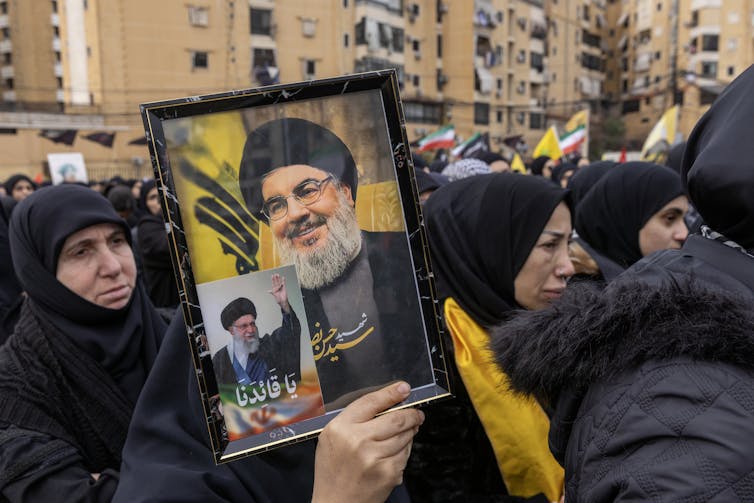
Women in black Muslim dress hold a picture of a man with a beard.
A woman holds a picture of Hezbollah’s former leader, Hassan Nasrallah, and Iran’s former supreme leader, Ayatollah Ali Khamenei, on March 1, 2026, at Ashoura Square in southern Beirut, Lebanon. Daniel Carde/Getty Images

My concern is that tasked with disarming the group, the Lebanese army could be drawn into confrontation with Hezbollah fighters.

Lebanon has a history of such clashes. A serious sectarian confrontation occurred in May 2008 when the Lebanese government attempted to dismantle Hezbollah’s private telecommunications network and remove key security officials from Beirut airport.

Hezbollah responded with a swift and violent takeover of West Beirut, which is predominantly Sunni Muslim. Fighters clashed and killed about 110 civilians.

Lebanon was then on the brink, but the Lebanese army’s decision not to get involved in street battles prevented a turn toward civil war.

Ground invasions

But sectarian violence has long dogged Lebanon – and anything that risks the country’s fracturing is to the detriment of all Lebanese people, not just the Shiites. The country is already suffering from a severe economic crisis and only recently came out of a prolonged period of political paralysis, during which Hezbollah blocked successive attempts to install a president.

Having made steps toward putting in place a functioning government after the 2024 ceasefire, the other fear, alongside civil strife, is invasion from the north and the south.

The Syrian military has significantly reinforced its presence along the northern border with Lebanon. Thousands of Syrian troops were deployed to supposedly secure the border and prevent the infiltration of Hezbollah militants in Syria. However, many Lebanese fear that Syria may want to invade and occupy parts of Lebanon, like it did during the Lebanese civil war.

As for Israel, it is already bombing Lebanon. And Israeli military spokesman Brig. Gen. Effie Defrin said in a public address that it is keeping “all options on the table,” including a potential ground invasion of Lebanon.

It follows growing interest in Israel of an expansionist policy toward lands around the current state. In February, Israeli extremists illegally entered south Lebanon and called for its occupation. This also occurred back in December 2024. And in a recent interview, Mike Huckabee, the U.S. ambassador to Israel, seemed to express support for Israel’s expansionist agenda, suggesting that “it would be fine” for Israel to take chunks of Middle East “land.”

Hezbollah’s violent death throes?

The U.S.-Israeli strikes on Iran have again shone a light on how much of Lebanon’s future is premised on regional shifts and developments that exacerbate internal divides.

Hezbollah has for the past 40 years been a focus of this dynamic. For months, observers have – for good reason – suggested the Iran-backed group was on its last leg. Instead, it looks like the group might again bring Lebanon to its knees.

ref. Hezbollah − degraded, weakened but not yet disarmed − destabilizes Lebanon once again – https://theconversation.com/hezbollah-degraded-weakened-but-not-yet-disarmed-destabilizes-lebanon-once-again-277327

International students securing rentals without seeing them

Source: Radio New Zealand

International students are increasingly renting private apartments in central Auckland as demand for university accommodation soars. RNZ / Yiting Lin

University student Piki Wang has inspected 20 apartments in central Auckland since January, carefully checking living spaces for signs of dampness, pouring through recent utility bills to get a rough idea of monthly costs and assessing building security.

But Wang is not looking for an apartment for herself – she has been hired to inspect the property by fellow students located thousands of kilometres away in China.

Armed with smartphone gimbals and WeChat video calls, the 23-year-old works as a “proxy viewer” – part of a growing, pay-per-view microeconomy on social media platform RedNote.

Remote property inspectors such as Wang are helping to plug a housing gap that many international tertiary students are increasingly facing.

With university accommodation oversubscribed, many incoming students are pushed into a private rental market that is difficult to navigate from abroad.

Students from China face additional hurdles due to the “great firewall of China”, which makes it difficult – if not impossible – to do proper due diligence when searching for a private apartment.

Numerous apartment options are available in central Auckland. RNZ / Yiting Lin

It’s an issue that Yixin Fan, a first-year student at the University of Auckland, encountered firsthand.

“The main problem isn’t knowing what kind of house to look for, but how to find one in the first place,” Fan said.

International students typically receive official offers to attend courses and subsequent visas only a few weeks before the semester starts, which leaves many searching for private accommodation in a scramble.

Fan, 18, attempted to find accommodation through Trade Me but kept coming up against requests from prospective landlords for local credit histories, references and mandatory in-person viewings.

Locked out of inspections, Fan hired a proxy viewer – a decision he says ultimately spared him from renting a poorly ventilated converted storage space.

The barriers Fan faced in his search have expanded a remote viewer’s role beyond simple inspections.

While they are primarily hired to assess properties, Wang said offshore students often relied on her for basic guidance on how renting works in New Zealand, from application processes to setting up utilities and so forth after arrival.

The University of Auckland manages around 4500 beds for students. RNZ / Yiting Lin

University accommodation shortage

University accommodation in Auckland is in high demand, with capacity limited each year.

Auckland University of Technology manages around 900 beds.

The University of Auckland manages about 4500 beds, but international students only make up around 8 percent of residents in its first-year halls.

As demand outstrips supply, many students are locked out.

Anby Zhou, a committee member of the Chinese Postgraduate Society, said some students in China had set alarms so they could apply the moment applications opened.

However, she said, many still missed out.

Both universities state they provide housing support through websites, orientation programmes and agency referrals.

While the University of Auckland recommends its own halls for a supported transition, Auckland University of Technology supplies a non-endorsed list of off-campus apartments.

However, student advocates say these largely static resources offer limited practical guidance for offshore searches.

International students are increasingly feeling locked out of university accommodation in central Auckland. RNZ / Yiting Lin

Left without a dedicated, interactive channel to navigate the private rental market, many new arrivals either absorb the cost of transitional hotels or scour social media platforms for alternative options.

Such alternative options can easily be found on RedNote.

The social media platform’s open system allows unlicensed brokers and tenants looking to sublet a portion of their lease – many operating from overseas IP addresses – to flood the platform with listings and charge opaque fees.

Agents in New Zealand offering remote viewing services are also using the platform to find potential clients.

Fan says he was contacted by seven or eight agents during his search for accommodation, facing rental and service fees of around 780 yuan (approximately $175) per match.

Wang paid a similar 800-yuan fee to an offshore agent when securing her first Auckland apartment.

Numerous apartment options are available in central Auckland. RNZ / Yiting Lin

Dispute resolution

From time to time, incoming students who have secured private accommodation from abroad before travelling to New Zealand find an issue with the property upon arrival.

Zhou recalled cases in which offshore students signed leases based on misleading photos, only to find the properties unlivable upon arrival.

Excessive noise from neighbours and poor security are also common complaints.

In such disputes, students who have typically paid a bond to secure the property can find themselves in a bind.

The Real Estate Authority confirmed it had limited jurisdiction over domestic property managers and virtually no authority over unlicensed offshore brokers.

Students in private rental accommodation were instead advised to contact the Ministry of Business, Innovation and Employment’s Tenancy Services, although anyone who had signed a sub-lease arrangement also faced additional vulnerabilities.

Paul Coggan, manager of tenancy practice and stewardship at MBIE, said provisions of the Residential Tenancies Act could apply to subleases, even in cases where agreements were informal or bonds paid through overseas apps such as WeChat.

However, he said, there was a catch.

If the person who had signed the original tenancy agreement lived in the same property, those who have signed the sublease were typically classified as a “flatmate” – meaning the protections of the Residential Tenancies Act might not apply.

Numerous apartment options are available in central Auckland. RNZ / Yiting Lin

And even where tenancy regulations do apply, recovering money from landlords, property managers or fellow leaseholders is often difficult.

Landlords are legally required to lodge all bonds with Tenancy Services within 23 working days, but this step is frequently ignored by unlicensed brokers.

If a student arrives to find conditions uninhabitable, Tenancy Services says there is “no immediate way for a tenant to terminate their fixed-term tenancy”.

The only legal option was to lodge a complaint with the Tenancy Tribunal.

However, many international students are unable to wait weeks for a Tenancy Tribunal hearing, leaving them with no option but to vacate the property, forfeiting their bond entirely.

Universities acknowledge the existence of this parallel rental market, although their guidance remains focused on official options.

Auckland University of Technology said it was aware of incoming students requesting inspections by proxy and social media platforms to find accommodation.

However, the university maintained its advice, encouraging students to “directly interact and connect with official accommodation services and property management agencies”.

– Published by EveningReport.nz and AsiaPacificReport.nz, see: MIL OSI in partnership with Radio New Zealand

Donald Trump replaces Homeland Security chief Kristi Noem

Source: Radio New Zealand

By Ted Hesson, Reuters

Kristi Noem is being moved to a new role. TIMOTHY A. CLARY / AFP

One of the top officials overseeing President Donald Trump’s immigration crackdown, US Homeland Security Secretary Kristi Noem, will leave her role, US President Donald Trump said on Thursday (US time).

It’s a major staffing move that raises questions about the direction of the Republican president’s immigration agenda.

“I am pleased to announce that the Highly Respected United States Senator from the Great State of Oklahoma, Markwayne Mullin, will become the United States Secretary of Homeland Security (DHS), effective March 31, 2026,” Trump wrote on Truth Social.

Noem will serve as “Special envoy for The Shield of the Americas,” Trump said.

Noem, a former governor of South Dakota, became one of Trump’s most high-profile Cabinet secretaries with social media posts that portrayed immigrants in harsh terms, highlighting cases of alleged criminal offenders and using vitriolic language.

She faced criticism in January when she quickly labelled two US citizens fatally shot by federal immigration agents in Minneapolis as committing “domestic terrorism.”

Videos that emerged after the deaths undercut the assertion by Noem and other Trump officials that the two deceased – Renee Good and Alex Pretti – were violent aggressors.

The public backlash for the deaths led the Trump administration to move to a more targeted approach to immigration enforcement in Minnesota after months of sweeps through US cities that led to violent clashes with residents opposing the crackdown.

Democrats in the US House of Representatives moved to impeach Noem and at least two Republicans in Congress called for her to lose her job after the incidents.

During congressional hearings in March, Democrats and some Republicans criticized Noem for her approach to the immigration crackdown and management of DHS, including concern over a US$220 million (NZ$373m) ad campaign that heavily featured Noem.

The staffing change raises questions about whether the Trump administration could seek to intensify its mass deportation push or retreat to a more targeted approach.

Under Noem’s leadership, masked immigration agents surged into Los Angeles, Chicago and Washington, DC., scouring neighborhoods and Home Depot parking lots in search of possible immigration offenders.

The popularity of Trump’s immigration approach fell as agents detained US citizens and tear-gassed streets in an attempt to drive up deportations, which last year fell short of the administration’s goal of 1 million per year.

AFP/Kamil Krzaczynski

Strong embrace of Trump’s hardline immigration approach

While Noem, 54, served as a prominent proponent of Trump’s agenda, White House Deputy Chief of Staff Stephen Miller, a long-time Trump aide, controls Trump’s immigration policy.

Noem was quickly confirmed to lead the 260,000-employee Department of Homeland Security in January 2025 after Trump took office. On social media, she referred to immigrants convicted of crimes as “scumbags” even as the number of non-criminals arrested by immigration authorities rose under Trump.

She joined immigration enforcement operations on the ground in New York City and visited a maximum-security prison in El Salvador where Venezuelan immigrants deported by the Trump administration were being held without charges or access to lawyers.

The number of migrants caught trying to illegally cross the US-Mexico border plummeted under Trump’s restrictive policies, a steep drop after high levels of illegal immigration under former President Joe Biden, a Democrat.

Noem, reflecting Trump’s agenda, also took steps to cut legal immigration programmes and increase vetting. She ended several Temporary Protected Status programmes that provided work permits to hundreds of thousands of immigrants from Venezuela, Haiti and other nations, drawing legal challenges.

After an Afghan immigrant was accused of attacking National Guard members in Washington, DC, Noem said she recommended that Trump place “a full travel ban on every damn country that’s been flooding our nation with killers, leeches, and entitlement junkies.”

Critics said Noem demonised immigrants and promoted an immigration enforcement strategy that targeted non-criminal, working immigrants and families.

During Noem’s tenure, the number of deaths in immigration detention rose to a two-decade high while staff in DHS oversight offices were slashed sharply.

-Reuters

– Published by EveningReport.nz and AsiaPacificReport.nz, see: MIL OSI in partnership with Radio New Zealand
Review: Maggie Gyllenhaal’s The Bride! falls apart

Source: Radio New Zealand

From the punctuation in the title of The Bride! you might think you’re about to see something exhilarating.

Director Maggie Gyllenhaal’s Frankenstein-inspired romance has all the parts for what should be a monster of a film: big-name lead actors who deliver, a retro creature-feature setup, a Bonnie and Clyde plot, gorgeous costumes and make-up, delightful art deco sets, a brilliant score and dance numbers.

But no matter how much its creators work to breathe a spark of life into it, the bits of its plot are so loosely stitched together it feels like it’s falling apart not longer after it arrives.

This video is hosted on Youtube.

– Published by EveningReport.nz and AsiaPacificReport.nz, see: MIL OSI in partnership with Radio New Zealand

Australia’s official plan for AI safety isn’t much more than a single dot point. Will it be enough?

Source: The Conversation (Au and NZ) – By José-Miguel Bello y Villarino, Senior Research Fellow, Sydney Law School, University of Sydney

Last week, one of Australia’s leading artificial intelligence (AI) researchers, Toby Walsh, warned Australia’s lack of guardrails for AI is putting young people at risk of being “sacrificed for the profits of big tech”.

Walsh’s remarks came after the government scrapped its own proposal to establish an advisory body of AI experts. Instead, the government offered its National AI Plan, which, among others, stresses investment in data centres, telecommunications infrastructure, and workforce training.

The plan also envisages an “AI Safety Institute” (currently recruiting staff), and also some internal AI transparency measures for the public sector. Transparency results so far have not been great.

What does it all add up to for AI regulation in Australia?

What are other countries doing?

The European Union has attracted attention for its AI Act, which already prohibits such things as using AI systems to exploit vulnerable groups or individuals. However, Europe is struggling to implement rules on high-risk AI uses that are not prohibited.

Several governments in Australia’s region are also passing AI laws, mainly to give themselves the powers to respond when they deem it necessary.

South Korea, Japan and Taiwan – none of them minor AI players – all have newly minted laws, which are meeting the expected pushback from industry.

Not everyone has comprehensive rules

There are countries without any kind of comprehensive AI regulation, including the United States and the United Kingdom.

In the US, president Donald Trump has even prohibited most state-based regulation in relation to private AI uses. Despite the anti-safeguards language, the government has quietly retained strong safeguards for federal use of AI.

The UK has followed an even more erratic path, to end up in a similar place to Australia. Incapable of deciding what to do, it has tried to provide technical (non-legal) safeguards. This has been done through the creation of the first AI Safety (now Security) Agency, hailed by some, derided by others.

The dilemma of control

The differences in approach between countries are not surprising. Governments face the dilemma of control described by English technology scholar David Collingridge almost 50 years ago:

when [regulatory] change is easy, the need for it cannot be foreseen; when the need for change is apparent, change has become expensive, difficult and time consuming.

What’s more, Australia has limited regulatory clout regarding AI. It is not a significant global AI player in the way it is, for example, in mining, so its influence is limited.

Facing these uncertainties, what should Australia be doing?

Australia’s plan for AI safety

One certainty is that erratic behaviour is not a great option. We have good evidence that regulatory predictability matters for innovation.

In a recent speech, Australia’s Assistant Minister for Science, Technology and the Digital Economy, Andrew Charlton acknowledged this:

one of the important insurance policies we have is regulatory certainty, underpinned by clear principles with broad buy-in.

So, what is the government’s plan?

The official plan to keep Australians safe is a section (action 7) in the National AI Plan. It argues existing Australian frameworks “can apply to AI and other emerging technologies”.

In other words, AI systems and tools can be covered by the rules we already have, such as consumer protections against all misleading and deceptive practices. The government suggested this option back in 2024. (We have previously argued this view, favoured by the Productivity Commission, is not well supported and was not our preferred option.)

Problems with the plan

However, the challenges for applying existing laws, which the government identified years ago, have not gone away.

As we identified in 2023, the existing regulatory frameworks have limitations when it comes to AI.

AI systems are complex, they can act semi-autonomously, and it can be difficult to understand why they do what they do. This makes it very hard to effectively attribute liability or responsibility for AI risks or harms using existing laws and processes.

Regrettably, those limitations have not been addressed systematically – if at all.

Fragmented rules and limited resources

As things stand, the regulatory landscape is highly fragmented and uncertain.

For instance, there are at least 21 mandatory (or quasi-mandatory) state and federal policies about the use of AI in government. Courts have so far had little opportunity to clear things up, with almost no test cases in crucial areas of existing law, including negligence, administrative law, discrimination law, and consumer law.

The new plan is accompanied by a clear commitment to monitor the development and deployment of AI “and respond to challenges as they arise, and as our understanding of the strengths and limitations of AI evolves”.

The issue is: how will that monitoring happen? Will the government really “empower every existing agency across government to take responsibility for AI”?

Dealing with issues such as privacy, consumer protection, anti-discrimination will take money and commitment and a degree of coordination between agencies we have not witnessed to date.

An uncertain future

For predictability, signals matter. A lot.

If there is a change in government in the US in 2028, will that change how Australia regulates AI – in the same way the beginning of the Trump presidency coincided with the abandonment of Australia’s mandatory AI guardrails proposals?

Is a laissez-faire regulatory approach creating predictability, when we have so many stalled and part-completed regulatory processes?

The government seems to expect courts, government agencies, businesses and individuals to work out on their own how to retrofit old laws and institutions to a new technological landscape.

There is some hope for regulation of automated decision-making in the public sector (promised after the Robodebt Royal Commission). For the rest, it’s a “wait and see” approach to AI regulation. We’ll have to wait and see if it works.

ref. Australia’s official plan for AI safety isn’t much more than a single dot point. Will it be enough? – https://theconversation.com/australias-official-plan-for-ai-safety-isnt-much-more-than-a-single-dot-point-will-it-be-enough-276962

New rules and high expectations: can Oscar Piastri break Australia’s F1 drought?

Source: The Conversation (Au and NZ) – By Dan van den Hoek, Senior Lecturer, Clinical Exercise Physiology, University of the Sunshine Coast

The Australian Grand Prix launches the 2026 Formula 1 (F1) season at Melbourne’s Albert Park on Sunday.

While the US strikes on Iran forced many teams to change their travel plans, organisers are confident the event will go ahead without a hitch.

There is plenty to look out for as the F1 world turns its attention towards Melbourne: the season-opening race is the first of a new era, with changes to technical regulations, while Australian Oscar Piastri is ready to challenge for the drivers’ championship as the crowd watches to see if he can break a lengthy drought on home soil.

Key changes to technical regulations

While the cars will look similar to last season’s, they will be vastly different.

The core aim of the new regulations is to make racing more competitive and increase passing.

Compared with 2025, this year’s cars are smaller, more agile and use more electric power.

The Drag Reduction System (DRS) – an adjustable rear wing device to promote overtaking – has been phased out after being introduced in 2011.

Active aero is now part of the regulations – not just a grey area that teams have tried to exploit.

Active aero allows drivers to change the position of the front and rear wing to produce high drag for cornering (increasing downforce, grip and braking performance), or low drag to deliver more speed on straights.

The biggest regulation changes apply to the power units. The cars will keep their 1.6 litre, turbocharged V6 engines, but the hybrid system will be rebalanced, resulting in a roughly equal split between combustion and electric power.

With almost three times greater electrical power (an increase from 120 kilowatts to 350kW) available, drivers will need to manage the battery charge and deployment.

The cars are smaller and lighter than last season, with the wheelbase reduced by 200 millimetres (to a maximum of 3,400mm), total width reduced by 100mm (1,900mm max), and minimum vehicle weight by 30 kilograms, down to 768kg.

These changes are designed to increase agility and encourage more overtaking opportunities.

Why F1 made these changes

Technical resets are part of the competitive lifecycle in F1.

F1 teams build and unveil a new car every season because technical regulations are updated, and because the pace of development means last year’s design is unlikely to be fast enough to be competitive.

Major technical regulation resets happen every few years and 2026 is one of those bigger shifts.

Changes to technical regulations can improve racing, increase opportunities for previously struggling teams, and ensure innovation stays at the forefront.

Each revision challenges engineers to interpret the regulations with limited data, enabling early innovators to gain a competitive advantage.

This unpredictability can reinvigorate fans’ appeal as new contenders emerge.

The 2026 changes are also aimed at supporting sustainability ambitions.

F1 has committed to net zero carbon emissions by 2030, and the use of sustainable fuels reflects this. These commitments could help inform the development of new technologies that find their way into road cars, too.

What will the racing look like?

The lighter, smaller cars may produce more dynamic racing, particularly on narrower street circuits where the smaller cars are more manoeuvrable.

The introduction of active aero should also add a tactical layer, as drivers adjust their wing settings to balance cornering grip and straight line speed.

The increased electrical output of the power units though have raised concerns from some, including four-time world champion Max Verstappen, that F1 racing might resemble Formula E.

Formula E cars run exclusively on battery electrical systems, making energy management central to race strategy: drivers must balance speed with battery conservation, often lifting off the throttle early to regenerate energy through braking.

With battery management, electrical regeneration and deployment all becoming more strategic than before, we will have to wait and see.

Piastri’s weight of expectation

After coming agonisingly close to winning the World Drivers’ Championship last season, the hopes of a nation hang with Piastri.

Australia has produced F1 world champions (Jack Brabham and Alan Jones) but has never produced a winner of the Australian Grand Prix.

Since its move from Adelaide (1985–95) to Albert Park in 1996, the Australian race has opened the F1 season on 23 occasions, meaning it has been the debut race for many drivers.

While many drivers have been successful in their home races – including German Michael Schumacher (four victories at Hockenheim), UK driver Lewis Hamilton (eight wins at Silverstone) and Verstappen from the Netherlands (three victories at Zandvoort) – none of these have coincided with the first race of a season and the implementation of new technical regulations.

Piastri will have to manage the weight of expectation combined with the demands of driving a new car under new regulations, adding a substantial psychological load in his pursuit of a home race win.

His calm and analytical approach to racing should position him well to find early performance in the new car.


Read more: What happens to F1 drivers’ bodies, and what sort of training do they do?


But it’s not just about the driver – team performance and competitors’ adaptation will all play a role in whether Piastri is crowned champion at the end of the season.

The stage is set

So, the stage is set in Melbourne for the next chapter of F1, with Piastri Australia’s best title chance in recent times.

Changes to technical regulations rarely produce a predictable outcome. Drivers and teams go through periods of learning and experimenting to find performance.

The Australian Grand Prix is more than the start of a new season. It is the beginning of a new competitive landscape, where local fans will wait with bated breath to see whether Piastri can finally break the Australian GP hoodoo.

ref. New rules and high expectations: can Oscar Piastri break Australia’s F1 drought? – https://theconversation.com/new-rules-and-high-expectations-can-oscar-piastri-break-australias-f1-drought-276624

A ‘good death’ has a price – and a new study shows not everyone in palliative care can afford it

Source: The Conversation (Au and NZ) – By Henrietta Byrne, Postdoctoral Research Fellow, Sydney Centre for Healthy Societies, University of Sydney

You would hope for your dying days to be full of calm and care. But our research with people who are dying shows this is far from the reality for many people.

Instead, financial stress plays a huge and increasing role in who can afford a “good death”.

What we did

In our recent study, we interviewed 18 people nearing the end of life in a palliative care unit, as well as six family members and carers, and 20 palliative care professionals.

We asked what it was like to be dying, to care for someone at the end of life, and to work in palliative care.

Palliative care is for people of any age who have a life-limiting illness. This means they have little or no prospect of a cure. So the goal is to prioritise comfort and living well as they approach the end of their life.

In Australia, palliative care is meant to be mainly free, with most costs covered by state and federal governments, as well as private health insurance.

But our research shows the patchwork of public and private funding means many people are confused and overwhelmed about how to pay for this essential care.

But first, how does palliative care work?

Palliative care can be provided at home or in hospital, a hospice or residential aged care.

Who pays for palliative care depends on where it’s being provided (for example, in the private or public hospital system) and whether the patient has private health insurance.

Australia’s health system is a complex hybrid of public funding, private insurance, charity and out-of-pocket payments.

For dying people and their families, navigating this system can be bewildering.

Previous research has explored how palliative care is funded in Australia. But until now we haven’t heard much directly from patients, carers and workers about how this affects them.

‘It’s expensive being ill’

Our research took place at a specialist palliative care unit in a major city hospital.

People working in the unit told us the activity-based funding model – where hospitals are paid for the number and mix of patients they treat – puts the focus on efficiency, rather than quality of care.

Patients spoke about not wanting to leave behind debt, while carers described confusing and stressful costs.

Patients and families told us they often enter palliative care confused by the patchwork of short-term subsidies, waiting lists for government support packages and gaps they must fill themselves.

For example, some people we interviewed said they had been paying out-of-pocket for medications and essential equipment such as oxygen, which they expected government supports to cover.

But securing government funding, such as the Support At Home program, End-of-Life Pathway or Carer Payment, can sometimes take months to organise.

And once secured, this funding is only available for fixed periods of time. This means patients who live longer than expected can be left without financial security.

Diane*, a community team nurse, told us:

We’ve had people who’ve been referred to us [for end-of-life care] and they were told six weeks [until death], and two years down the track they’ve done their superannuation, they’ve spent it all, […] they’ve got no money left and they’ve still got to pay electricity and things like that. […] And they go, ‘Well, what do I do now?’

Emily* told us her first worry when she got to the palliative care unit was not about dying, but whether the cost would impact her kids:

I didn’t want the children to be loaded with any more debt [because of] me. I would rather [die] on the bench in the park […] the last thing you want to leave them is debt.

Another participant, Kevin*, put it bluntly:

It’s expensive being ill.

Participants who were dying also described feeling pressure not to “outstay their welcome” in a palliative care unit because “the beds are needed” or “the insurance won’t keep paying”.

Alana*, who described herself as a “long-hauler” in the unit, said:

Let’s face it, it’s a business. And I know that. They’re not getting as much money from me as they would for patients coming in and out.

Patients were acutely aware that in the current health system, time is money.

The cost of visiting

For family and friends, their concerns were less about medical bills and more about the price of simply being present.

Jane*, whose elderly mother was dying in the unit, noted the prohibitive cost of parking on site:

They make you pay $20 a day. Your loved one’s dying. Really? […] I’m petrified when I stay overnight […] ‘when does [the parking] run out? I’d better go down and repay’.

Financial stress also impacted whether families could make funeral arrangements. A senior nurse, Patricia*, recounted:

They would say, ‘I don’t have a funeral director. I don’t think we are able to pay for the cost for the funeral. Can you arrange something?’

Death is an economic – not just medical – issue

Our research reveals how money, and worrying about it, can affect people’s experiences when nearing the end of life.

To ensure everyone can access a death free from financial stress, we first need to talk more openly about how money factors into dying.

More accessible government funding for palliative care patients and carers could help ensure everyone has an equal chance of a good end of life. This should be available for as long as people need, rather than on fixed terms.


*Names have been changed for privacy.

ref. A ‘good death’ has a price – and a new study shows not everyone in palliative care can afford it – https://theconversation.com/a-good-death-has-a-price-and-a-new-study-shows-not-everyone-in-palliative-care-can-afford-it-274202

New modelling shows renewable electricity can meet NZ’s future demand – without importing gas

Source: The Conversation (Au and NZ) – By Alan Brent, Professor and Chair in Sustainable Energy Systems, Te Herenga Waka — Victoria University of Wellington

The government’s plan to import liquefied natural gas (LNG) has raised questions about whether this is the best approach to strengthening New Zealand’s energy security, not least because the conflict in Iran highlights price volatility.

Our analysis suggests it is not. And it casts doubt on the logic of imposing a levy on electricity to fund an LNG terminal, which the government expects to be operational in 2028.

That’s because New Zealand also has a goal to achieve 100% renewable electricity generation by 2030, which means it would be unlikely to need gas in the long term.

We examined whether a fully renewable grid could meet growing electricity demand as the economy decarbonises, and whether the system would be sufficiently resilient during dry years – the conditions that led to an energy security crisis in 2024.

We found existing commitments to invest in renewable electricity generation and storage systems to buffer fluctuations in supply could meet, and even exceed, future demand.

As a first step, we modelled the expected annual electricity generation and investment information provided by the Electricity Authority about renewable projects expected to be ready in 2030.

We assumed new solar, wind and geothermal projects would provide generation profiles similar to the assets already on the grid in 2024. We then asked what would be expected from hydropower to stabilise the intermittent generation of the other renewable sources.

We found that without offshore wind, the added renewable capacities would not be enough to meet a high-end scenario of a 34% increase in electricity demand projected by the Ministry of Business, Innovation and Employment.

Demand would exceed the maximum hydropower available (around 5.3 gigawatts) for 474 hours (5%) of the year in 2030. On 28 days (8% of the year), hydro lake reservoirs would reach their minimum levels.

Our model also shows hydro lake reservoirs would deplete at a faster rate during winter in 2030 than they did in 2024, when they reached low levels towards the end of winter. They would also recover faster, however.

But if offshore wind projects are added to the model, it shows New Zealand would need significantly less hydro electricity generation in 2030 compared to 2024.

There would still be instances during winter when demand would exceed maximum hydro power capacity. However, for up to 65% of the year, hydro electricity generation would not be required because other renewables would meet or exceed total demand.

Hydro levels would be kept full for almost the entire year, unlike in 2024.

Storage is crucial

We also modelled the required storage capacity and associated power output for both short-term and long-term needs to stabilise a 100% renewable grid.

Short-term refers to minutes and hours during any energy deficit and is usually covered by battery storage systems.

However, a renewable grid would also require long-term buffers to secure electricity generation for days or weeks, for example during dry years when lake reservoirs are depleted.

This could be achieved through pumped hydro systems, which use excess grid power to pump water to an upper reservoir so it can be released through turbines to generate electricity during high demand.

Since current investment plans for electricity generation don’t include any new hydro projects, our model assumes capacity from hydro generation in 2030 to be similar to 2024.

We found that even without offshore wind, there would be excess energy generated that could be stored and discharged when continuous supply is insufficient.

For the high-end scenario of a 34% increase in electricity demand, we found the maximum short-term power requirements would be 1.45 gigawatts over an hour. That is equivalent to about 15 of the newest commissioned utility-scale battery system at the Ruakākā Energy Park, which have a maximum power output of 100 megawatts.

However, the required long-term storage for normal years (2.58 gigawatts over around 600 hours, or 1.58 terawatt hours) is about a third of the potential requirement during a dry year of 4.5 terawatt hours. This suggests New Zealand would need significant additional long-term storage.

How to keep the power on

New Zealand could avoid power shortages during dry years by combining battery systems with pumped hydro schemes.

For batteries, New Zealand already has a regulatory roadmap in place. For long-term storage, a private consortium has applied for a fast-track consent to revive the scrapped pumped-hydro project at Lake Onslow. This project alone could cover the entire long-term storage needs, or several smaller projects could provide the necessary capacity.

As of February this year, the grid operator Transpower had more than 24 gigawatts of renewable generation and battery energy storage systems in various stages of development. At the end of 2025, nearly 500 megawatts of utility-scale battery projects were underway or scheduled in the next two years.

Our findings echo comments by industry leaders that New Zealand may well be overbuilding capacity. Enough battery capacity will be added to stabilise intermittent generation, and the existing hydro power capacity will cater for long-term storage in a normal year.

For growth in electricity demand beyond 2030, a variety of long-term energy storage technologies such as compressed air energy and advanced flow batteries are expected to become competitive and enter the market.

The government plans to fund the construction of a new LNG terminal through a levy on electricity. Our findings raise the question of why the country would put a levy on power to pay for infrastructure that in all likelihood the electricity sector won’t actually need.

ref. New modelling shows renewable electricity can meet NZ’s future demand – without importing gas – https://theconversation.com/new-modelling-shows-renewable-electricity-can-meet-nzs-future-demand-without-importing-gas-277215

We thought inbred koalas were at risk of extinction. But what we discovered upends genetic conventions

Source: The Conversation (Au and NZ) – By Andrew Weeks, Associate Senior Research Scientist, The University of Melbourne

If you follow media coverage of koalas, you could be forgiven for feeling confused.

Recent stories describe a “koala paradox”: endangered in the north of Australia, abundant in the south; genetically diverse in some regions, genetically depleted in others.

Koalas populations are often described simultaneously as being in crisis, or overabundant. These accounts attempt to capture the complexity of this species across different histories and geographic locations. But they also reveal a deeper problem with how we assess genetic risk in wildlife (the likelihood a population will go extinct because it has lost too much genetic diversity).

Our new [research] shows relying too heavily on genetic indicators – how genetic diversity and inbreeding are measured – can be misleading. And we found the koala to be a powerful case study for a much broader lesson in conservation.

In koalas, as populations expand, genes are mixed and matched in new ways, creating new genetic variation. Desley Whisson

The assumption we rarely question

Conservation often rests on a simple logic: a population crash – a rapid and steep decline in population size – reduces genetic diversity and increases inbreeding. Genetically diverse populations, meanwhile, are believed to be more resilient and less susceptible to decline.

This logic is not wrong, but it is incomplete.

It treats genetic health as static, rather than a dynamic outcome shaped by how populations grow or shrink over time. Koalas provide a useful test. Different populations have experienced very different histories; from extreme collapse followed by rapid recovery, to slower but ongoing decline.

What we found and what their DNA reveals

We analysed DNA from 418 koalas sampled across 27 populations in Queensland, New South Wales and Victoria. This allowed us to reconstruct their population history and size over time. We also examined how different genetic variants respond to population decline and recovery. What emerged was surprising.

Koala populations with higher genetic diversity, particularly those in northern Australia, tended to carry more harmful variants. They also showed declining population sizes. In contrast, populations that had passed through severe historical crashes but were now expanding, showed signs of genetic recovery.

This does not mean population crashes are harmless. They are dangerous and can be irreversible. But it does mean they are not always evolutionary dead ends.

A koala walking along with a joey on its back.

Our study makes the point that low genetic diversity does not automatically imply high extinction risk. Desley Whisson

Why recovery can start before diversity rebounds

The key lies in how DNA responds when populations grow rapidly. Generally speaking, when populations expand, recombination (the reshuffling of genetic material each generation) spreads new genetic combinations through the population. This breaks up inherited blocks of DNA and generates new genetic variation. In turn, this can increase a population’s ability to adapt, allowing numbers to grow faster than traditional genetic indicators might suggest.

In koalas, this process is clearly visible. As populations expand, genes are mixed and matched in new ways, creating new genetic variation. Many traditional genetic indicators fail to detect these changes. However, our analyses can reveal them.

This suggests genetic indicators of diversity can lag behind the true health of a population, and sometimes mislead conservation assessments. A population may appear genetically depleted if we rely only on these indicators, even while its diversity is quietly being rebuilt. Conversely, a population can look genetically healthy while its population size is actually becoming unstable, putting that diversity at risk over time.

Correcting a common misconception

Victorian koala populations are often portrayed as genetically compromised because they experienced an extreme population crash in the past. Our results show a more nuanced picture.

Victorian populations still carry the genetic signature of this extreme crash, when fewer than 1,000 koalas remained in the wild. However, many are now on a path to genetic recovery. At the DNA level, their genes are being reshuffled and new genetic variation is appearing. This represents the early stages of genetic recovery, not genetic collapse.

The greater long-term concern is for populations that are rapidly declining but still appear genetically healthy. If population size collapses, genetic diversity can be lost very quickly.

Why this matters beyond koalas

Our results suggest the picture for koalas is more nuanced than previously thought. Southern “inbred” populations are growing again and gaining genetic diversity, whereas northern populations are shrinking, regardless of how genetically diverse they appear today.

This matters far beyond koalas. Many threatened species have experienced population crashes, translocations or reintroductions (such as on French Island and Kangaroo Island) and rapid environmental change. If we judge their future using static genetic indicators, we risk getting the picture wrong, both about their risk of genetic decline and their chance of recovery.

What matters just as much is the direction a population is heading. Is population size rising or falling? Are new genetic variants appearing or disappearing? Is recombination boosting their evolutionary potential, or being choked by small population size?

Rethinking genetic risk

One of the most important messages from our study is this: low genetic diversity does not automatically imply high extinction risk. And high genetic diversity does not guarantee safety. Genetic indicators only make sense when we consider the population’s history, and whether its numbers are rising or falling. Without that context, even well-intentioned conservation decisions can miss the mark.

Koalas, so often used as symbols of the conservation crisis, offer something rare: direct evidence that genetic recovery is possible, and insight into how to detect it early.

If conservation genomics is to guide policy effectively, it must move beyond static genetic indicators. We need to start tracking where populations came from and where they are headed, not just where they are now.

ref. We thought inbred koalas were at risk of extinction. But what we discovered upends genetic conventions – https://theconversation.com/we-thought-inbred-koalas-were-at-risk-of-extinction-but-what-we-discovered-upends-genetic-conventions-276981

Meet ‘Tous’ — an entirely new genus of mammal we identified. Here’s why it’s so exciting

Source: The Conversation (Au and NZ) – By Erik Meijaard, Honorary Professor of Conservation, University of Kent

Mammals are not especially diverse. Roughly 6,800 mammal species are known to exist, compared with about 8,800 species of amphibian, 11,000 species of bird and 12,500 of reptile. Yet when most people picture biodiversity, they often think of charismatic mammals first: pandas, orangutans, elephants or tigers.

That visibility comes with scrutiny. Mammals are among the best-studied organisms on Earth – and among the most threatened. On the international inventory of the conservation status of species, more than one in four mammal species is classified as vulnerable, endangered or critically endangered.

Because they are so intensively researched, it’s genuinely rare for scientists to find and formally describe a new mammal species. The discovery of the olinguito (Bassaricyon neblina) made global headlines as the first new carnivorous mammal identified in the Americas in 35 years.

In 2017, DNA evidence revealed the world had not six species of great ape, but seven, when the Tapanuli Orangutan (Pongo tapanuliensis) was found to be distinct. It was the first new great ape species described in nearly a century.

Describing a new species is exciting enough. But identifying an entirely new genus is something else altogether. A genus is a taxonomic group covering more than one species, sitting one level above a species in the Linnaean taxonomic classification system, established by Carl Linnaeus. For example, in the scientific name Homo sapiens, Homo is the genus (or genera in plural).

There are only about 1,300 genera of living mammals worldwide. Discovering a totally new genus of mammal happens only a few times a year, if that; some stunning examples include Nagasorex, a distinctive shrew from Nagaland, India in 2025; Paucidentomys, a Sulawesi rodent in 2012; and Laonastes, a rock rat from Laos in 2005.

So, creating a new genus is a rare event and a real privilege. But that is exactly what we just have done – describing a new genus of a small gliding possum in Indonesian Papua.

Finding a Lazarus species

Our story begins with a single photograph.

In 2015, a plantation worker in Indonesian Papua (the western half of the island of New Guinea) caught an unfamiliar tree-dwelling marsupial and took several pictures. We cannot name him, as the location has to be kept secret.

He was part of a citizen science-based biodiversity monitoring project which asked plantation workers to photograph or record the sounds of wildlife they encountered during their work.

This is first photograph of Tous ayamaruensis. This animal was released by the plantation worker who found it, so until now there is no actual museum specimen for this new species. Note the folded patagium, the skin flap these possums use to glide between trees.

The large-eyed, brownish, furry creature, with unfurred ears, superficially resembled an Australian greater glider. But there were clear differences. The photos showed an obvious patagium, or gliding membrane, and a prehensile tail, furred to the top, except for a naked area on the lower side.

The animal did not match any known species from the island of New Guinea. When we examined the images, we realised it closely resembled a possum known only from a handful of fossil bones. These fossils, initially named Petauroides ayamaruensis, had been discovered decades earlier in archaeological sites in West Papua and more recently in Papua New Guinea.

The bones were from a small member of a group of Australian gliding possums called hemibelidines, or ringtail possums. Until recently, this lineage was thought to exist only in eastern Australia. But on the huge, biologically diverse island of New Guinea, there was no sign of its existence. Scientists presumed it had gone extinct around 6,000 years ago.

The photo was evidence this was not the case. What we were looking at appeared to be a “Lazarus species”: one that had vanished from the fossil record, only to reappear alive.

Other famous “Lazarus” examples include the Coelacanth, a large species of fish thought to be extinct for 66 million years until it was rediscovered off the South African coast in 1938.

Meet the new genus, Tous

To confirm our suspicions, we analysed the photographs and made careful comparison with the fossil teeth from Papua and new partially fossilised material from a different location in PNG. The size and shape of mammal teeth and their cusps are very important in distinguishing species. Our analysis of fossil and photographs strongly suggested these all referred to the same animal.

To confirm it, we drew on knowledge shared by local Indigenous landowners who have always known about this animal – it is sacred to some tribal groups in the region.

This confirmed the animal was not only a surviving individual of the fossilised possum, but distinct enough to require an entirely new genus, which we have named Tous.

“Tous” is a local vernacular term applied to this forest species, which is locally recognised as distinct from smaller gliders. During interviews with traditional landowners, elders identified the animal in photographs as “Tous wansai”, distinguishing it from other similar arboreal marsupials.

That makes this discovery exceptionally rare. Establishing a new genus means identifying a lineage that has been evolutionarily separate for millions of years.

In this case, the evidence suggests Tous is from an ancient branch of the possum family tree, one that once extended from Australia to New Guinea, and today survives in a small, vulnerable corner of the Papuan forests. Traditional knowledge indicates Tous roots in tree hollows in the tallest rainforest trees. Like Australia’s greater glider, it is vulnerable to logging.

Protecting the new species

It is this vulnerability that concerns us most. When we formally described Tous, we did not disclose the precise location the original photograph came from. We are unfortunately not able to identify the local Indigenous landowners for similar reasons. With its large forward-facing eyes, soft fur and prehensile tail, Tous is undeniably appealing to wildlife traffickers.

In an era of social media–driven wildlife trade, that appeal can be dangerous. Newly discovered species have sometimes been pushed toward exploitation almost as soon as they are announced. There were, for example, only 22 years between the rediscovery of the Javan rhinoceros in Vietnam in 1988 and its confirmed extinction because of poaching in 2010.

The typical lowland forest habitat where the new species is found is under increasing pressure from agricultural expansion.

Protecting Tous will not be straightforward. We still don’t know its full range, but all evidence suggests it is restricted to a small region of New Guinea where lowland forests are under pressure from logging and agricultural expansion. Even in the photos, you can see logging debris and planted oil palm in the background. Local people told us it forms a pair and is monogamous, producing a single baby in a year. This likely low reproduction rate means it is especially vulnerable to hunting and habitat loss.

The knowledge that led us to this discovery came not only from fossils and photographs, but from local communities who have known this animal for generations.

If conservation builds on that knowledge, and if communities benefit from keeping wildlife alive rather than harvesting it, then Tous may have both a past and a future.

ref. Meet ‘Tous’ — an entirely new genus of mammal we identified. Here’s why it’s so exciting – https://theconversation.com/meet-tous-an-entirely-new-genus-of-mammal-we-identified-heres-why-its-so-exciting-277235

Fertiliser costs are soaring amid war in the Middle East. Will your grocery bill follow?

Source: The Conversation (Au and NZ) – By David Ubilava, Associate Professor of Economics, University of Sydney

Conflict between the United States, Israel and Iran has now led to the effective closure of the Strait of Hormuz, a key shipping route through which a fifth of the world’s oil passes.

But oil is not the only important commodity that has been disrupted. The Middle East is a key supplier of fertiliser, exporting some 45% of global supply.

Since the beginning of the conflict, the price of urea, a key source of nitrogen used in agriculture, has surged by about 25%, similarly dramatic to the spike in crude oil prices.

This is unwelcome news for Australia, which is a large importer of urea. With effectively no domestic urea production, Australia is fully exposed to global supply shocks.

For farmers, the crisis is not just of affordability, but potentially availability as well. And the timing is far from perfect, with winter crop planting starting soon.

Consumers almost always feel a major oil shock shortly afterwards at the fuel pump.

But if there’s a major shock for fertiliser to grow wheat, do consumers soon see rising prices of bread, flour and beer?

Usually not – and here’s why.

A key ingredient for crops

Urea is a key fertiliser used for agricultural production globally. It’s a concentrated source of nitrogen, widely used by farmers to boost crop and pasture growth.

Australia used to produce some of its own urea. But after fertiliser giant Incitec Pivot shut down its Gibson Island manufacturing facility (near Brisbane) in 2022, the country was left with virtually no domestic production.

A major new fertiliser plant, Perdaman’s Project Ceres (in Western Australia), isn’t expected to come online until 2027.

Right now, more than half of Australia’s urea imports come from United Arab Emirates, Qatar and Saudi Arabia. These countries are all impacted by the conflict and shipping disruption.

Close-up of a person's hand holding granular urea fertiliser.

Granular urea fertiliser. Uma Shankar sharma/Getty

How will farmers respond?

Economic theory makes a straightforward prediction: when the price of an input (such as fertiliser) rises, holding everything else constant, it becomes optimal to produce less.

In the present scenario, without close substitutes, one might expect a sustained fertiliser shock would reduce agricultural production and lead to higher prices for consumers.

This is unlikely to happen, however, and there are several reasons for it.

We have been here before

To begin, we have been here before. In this century alone, urea prices have surged substantially on two occasions: first in the late 2000s, then again in the early 2020s.

Focusing on wheat – one of Australia’s key exports, which relies on fertiliser for its production – in both instances, the price spikes were followed by an increase in production.


This may sound perplexing. But this price relationship isn’t like that of crude oil and petrol, where the former input is the main ingredient of the latter final output. While crucial, urea and other fertilisers are just some of many inputs used to grow food.

Indeed, the key input in agricultural production is weather. Much of the variability we see in agricultural yields is driven by climatic shocks rather than costs of fertilisers or other inputs.

Other cogs in the machinery

A recent study found in high-income countries such as Australia, commercial agricultural producers are both able and willing to absorb increased input costs.

It also found, perhaps surprisingly, neither fertiliser demand nor farm profitability were substantially affected by the 2021–2022 fertiliser price surge. An important part of the reason why was high agricultural commodity prices, especially cereal crops (such as wheat).

This neatly aligns with the theory we referred to earlier. Even though fertiliser prices spiked, other factors (such as grain prices) did not remain constant. This somewhat balanced out the effect rising fertiliser costs may have had on production.

Your grocery bills

So, what does all of this mean for the price of bread, meat, rice and other staples in your shopping trolley?

Various bags of bread on table.

Will higher fertiliser prices push up the price of bread? micheile henderson/Unsplash

The Reserve Bank of Australia says it’s “too early to say” what the conflict could mean for inflation.

Certainly, if the disruption persists for a long time, the burden of the fertiliser shortage will fall on many Australian farmers.

But even if that happens, in high-income countries such as Australia the price of food is largely determined by the cost of processing, packaging and marketing – not the prices paid to farmers.

A surge in urea prices, in and of itself, may not drive food prices higher. But it won’t help ease other inflationary pressures, either.

ref. Fertiliser costs are soaring amid war in the Middle East. Will your grocery bill follow? – https://theconversation.com/fertiliser-costs-are-soaring-amid-war-in-the-middle-east-will-your-grocery-bill-follow-277511

Amanda Seyfried’s ‘prosthetic butthole’ isn’t a joke – costuming nudity is important for actors

Source: The Conversation (Au and NZ) – By Emily Brayshaw, Honorary Research Fellow, School of Design, University of Technology Sydney

Amanda Seyfried wears a “prosthetic butthole” in her new movie, The Testament of Ann Lee.

She told BBC Radio 2:

This movie needed to be graphic, so I wore a prosthetic butthole. […] It was cool. It was exciting. I was pregnant and naked, but I wasn’t naked at all. And at the end of the movie I was standing in front of a burning building with just a merkin. I felt so free.

On the surface, Seyfried’s comments might seem like a case of TMI. Audiences generally only see costume as a tool that helps to create and support a narrative. But costume also performs the important, invisible technical function of a quasi-body the actor inhabits to transform into their character.

Actors have intimate interactions with their costume that audiences don’t notice, including personal physical experiences of warmth, cold, comfort, coverage, restriction or movement.

But some roles can require the actor to portray intense emotional vulnerability, or distressing events, which can leave them feeling anything from mildly embarrassed to deeply traumatised.

By creating a costume that can be taken off, even when the character appears to be naked, costume designers help create an important separation between the role and the actor.

Taking care of the actor

Historically, actors have often been expected to do whatever appalling things the director demanded of them, regardless of the consequences to their physical or mental health.

Actors have also been expected to manage their own emotions in these roles. While many have different processes to help them exit the role, they still rely on theatre and film professionals like stage managers, dressers and directors to help manage their sources of emotion and distraction.

An important part of leaving the character behind involves taking off the costume at the end of a play or scene. But if your own naked body is the character’s costume in a scene, then how can you take it off?

Every actor has a different approach. Some don’t mind appearing nude for laughs, while others might use body doubles for sex and nude scenes, which provides them with a surrogate body.

The newer job of intimacy coordinators has developed in the past 15 years to help protect actors on stage and set. These are professional advocates who establish the ground rules, look out for the actors’ physical and emotional wellbeing, and assist with the choreography during scenes that require intimate touching, nudity or sex.

Actors and intimacy coordinators collaborate closely with the costume department to ensure the actor will be protected during nude and sex scenes with the right type of coverage.

Costume designing for ‘nudity’

Costume departments have a host of garments, accessories, prosthetics and hacks to protect an actor’s dignity in nude and sex scenes. These include modesty patches, fake nipples, stick on bras, strapless thongs and pouches that cover the genitals. These can be attached to the body with fashion tape or kinesiology tape.

The devices are made to match the actor’s skin tone and can be padded with a thick material (think yoga mat fabric) or made from a hard plastic to mitigate the impact of being touched or grabbed. Other costume hacks, such as merkins, have been around for hundreds of years.

The use of these devices means you won’t see the actor’s actual private parts or pubic hair; you’ll see the character’s.

This crucial distinction gives the actor a body they can take off.


Read more: Skims has put merkins back on the fashion map. A brief (and hairy) history of the pubic wig


Creating Ann Lee’s naked body

The Testament of Ann Lee covers the life of the founder of the Shaker faith over three decades and shows how she used her religious faith to process the pain and grief of physical tribulations, sexual abuse and the loss of her children, and to inspire others.

Seyfried has described the role of Ann Lee as “fucking daunting” and “really scary”, and has said the part needed to be graphic to show the strength of Lee’s faith in the face of extreme adversity.

Towards the end of the film, local thugs who do not want the Shakers to establish a church near their village attack Lee and her fellow worshippers at night and burn down their church. The thugs strip Lee and beat and humiliate her, accusing her of being a man and of being a witch. Ann Lee’s naked body is on display in front of the burning church during the brutal scene.

This is the scene where Seyfried wore a merkin and the “prosthetic butthole” – likely a modesty sticker, or a strapless, skin-toned thong with the merkin on the front that covered the vulva, perineum and anus.

The pubic wig is seen but the fake anus is not. But wearing them meant Seyfried could focus on the intensity of her acting and fully embody Lee in the scene, without worrying about her own dignity.

The modesty garments also gave Seyfried a body she could take off, leaving any potential for personal trauma, embarrassment or pain from playing Ann Lee behind her.

ref. Amanda Seyfried’s ‘prosthetic butthole’ isn’t a joke – costuming nudity is important for actors – https://theconversation.com/amanda-seyfrieds-prosthetic-butthole-isnt-a-joke-costuming-nudity-is-important-for-actors-277233

Former MP Jackie Blue quits National to join Opportunity party

Source: Radio New Zealand

Jackie Blue has also been the Equal Employment Opportunities Commissioner. Supplied

Former MP Jackie Blue has resigned her National Party membership and joined The Opportunity Party.

Blue was a member of the cross-party People’s Select Committee on Pay Equity.

She says the government’s handling of the Equal Pay Amendment Act 2025 was her “breaking point”.

Blue will join Opportunity to mentor new leader Qiulae Wong.

She is praising Wong for having the courage to enter “the nasty business of politics”.

More to come…

– Published by EveningReport.nz and AsiaPacificReport.nz, see: MIL OSI in partnership with Radio New Zealand

A rival to the cheese roll? The story of the Hawke’s Bay meatball

Source: Radio New Zealand

This story was first published ahead of the 2025 Meatball Festival. From Friday to Sunday Hastings will host the second annual Meatball Festival. First Up spoke to the town’s chief meatball officer.

Those unfamiliar with Hawke’s Bay’s humble meatball imagine Italian mince with red sauce. The actual description isn’t that mouth-watering, but the crumbed golden sphere filled with whipped, fatty meat offers an unexpected yet comforting morning tea delight.

Unlike its celebrated sibling, the Southland cheese roll, the Hawke’s Bay meatball has remained a local treat on the East Coast – a fact that irks me as a self-declared meatball enthusiast and a champion of its supernatural creaminess.

Growing up in Te Matau-a-Māui, a white bakery paper bag, translucent with oil, was a symbol of a trip to town and a meatball. Friends who now live abroad insist the moment they touch down on Napier’s tarmac it’s time to visit BJs bakery for a meatball.

– Published by EveningReport.nz and AsiaPacificReport.nz, see: MIL OSI in partnership with Radio New Zealand

Britney Spears arrested in California

Source: Radio New Zealand

Britney Spears was arrested Wednesday night (local time), according to information from Ventura County, California authorities.

Booking information obtained by CNN shows that the pop superstar was stopped by the California Highway Patrol (CHP) around 9.30pm, was booked shortly after 3am, Thursday and later released.

CHP public information officer Ryan Ayers confirmed to CNN via phone on Thursday that Spears was arrested on suspicion of driving under the influence (DUI).

Her vehicle was towed, according to the arrest information.

“This was an unfortunate incident that is completely inexcusable,” a representative for Spears told CNN in an email. “Britney is going to take the right steps and comply with the law and hopefully this can be the first step in long overdue change that needs to occur in Britney’s life. Hopefully, she can get the help and support she needs during this difficult time.”

“Her boys are going to be spending time with her,” the representative said. “Her loved ones are going to come up with an overdue needed plan to set her up for success for well being.”

It is not the first time Spears has had legal issues.

The following year she was hospitalized for a psychiatric evaluation. Her father, Jamie Spears, was subsequently granted what was initially temporary conservatorship over her assets.

That conservatorship was later extended and lasted for 13 years, prompting fans to start a “Free Britney” movement aimed at ending it.

It was terminated in 2021 and since then Spears has mainly been seen through posts on her social media accounts, often in videos of her dancing posted to Instagram. Her account was unavailable Thursday.

Spears is scheduled to appear in court on 4 May.

– Published by EveningReport.nz and AsiaPacificReport.nz, see: MIL OSI in partnership with Radio New Zealand
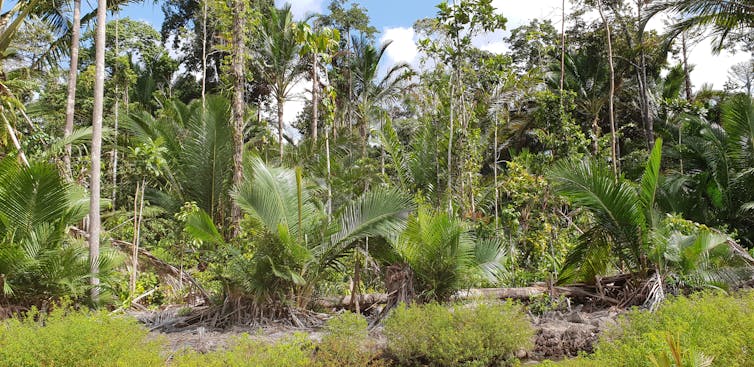
Watch: NZ woman’s brazen meth-smuggling attempt discovered at Sydney border

Source: Radio New Zealand

A New Zealander is one of two women facing an Australian court after an alleged attempt to import 38 kilograms of methamphetamine by hiding it under some towels in suitcases.

In December, an Australian and the New Zealander, both aged 35, were stopped for a targeted bag exam by Sydney border officials after arriving from Singapore, a joint statement from the Australian Border Force (ABF) and the Australian Federal Police (AFP) said.

Upon inspecting the women’s luggage, ABF officers found dozens of vacuum-sealed bags of a crystallised substance, concealed underneath a small layer of towels.

Dozens of vacuum-sealed bags were found hidden underneath towels. Supplied / Australian Federal Police

Testing returned an initial positive result for methamphetamine.

The two women were arrested and later charged with one count each of importing a commercial quantity of methamphetamine. The offence carries a maximum penalty of life imprisonment.

They were due to reappear at Sydney’s Downing Centre this week.

An x-ray of the suitcases. Supplied / Australian Federal Police

ABF Superintendent Elke West said officers were attuned to emerging trends, observing passenger behaviour and “using intelligence-led targeting” to assess who or what might be a threat.

“Our ABF officers are seizing significant quantities of illicit drugs at the border, removing profits from the hands of criminals and stopping their corrupt business model in its tracks,” Supt West said.

“Organised crime groups will run the gauntlet and attempt to smuggle in their illicit goods by any means possible, and that includes exploiting young vulnerable travellers.”

AFP Detective acting Inspector Trevor Robinson said the consignment was worth “thousands of dollars in criminal profit” and stopping it prevented “immeasurable harm”.

Border officials found 38 kilograms of methamphetamine. Supplied / Australian Federal Police

Sign up for Ngā Pitopito Kōrero, a daily newsletter curated by our editors and delivered straight to your inbox every weekday.

– Published by EveningReport.nz and AsiaPacificReport.nz, see: MIL OSI in partnership with Radio New Zealand

Kurahaupō waka goes on display at Masterton’s Aratoi Museum

Source: Radio New Zealand

[brightcove] https://players.brightcove.net/6093072280001/default_default/index.html?videoId=6390401519112

For the first time in several years the modern Kurahaupō waka has gone on public display after being moved overland from Levin to Aratoi Museum in Masterton.

The waka was built and launched to celebrate 150 years of the Treaty of Waitangi in 1990 and while it was not designed to be a replica of the waka which brought people to Aotearoa it has served as a vessel to bring their descendants together.

Piri Te Tau was one of the kaihoe (paddlers) aboard Te Waka Wairua o Kurahaupō in 1990. He said it was a new experience for many of them.

“I had never been at Waitangi before 1990, and the huge amount of people that were there, but the huge number of waka that was there. I think there was 30-something waka there that year, so that was huge for me. I’m a country boy, totally gobsmacked about the amount of people and the amount of whakawhanaungatanga that goes with that type of thing. It was brilliant.”

The waka was born out of the Kurahaupō Waka Society in the late 80s, a partnership between three iwi descended from the original waka, Ngāti Apa, Muaūpoko and Rangitāne.

The modern Kurahaupō waka has gone on public display for the first time in several years. RNZ / Samuel Rillstone

Te Tau said the waka was completed around January 1990. And although many of the paddlers from different iwi did not know each other the bond between them was immediate, he said.

“It was launched over in Horowhenua. We did all our training on the Lake Horowhenua, and that was very, very compacted. And most of us were novices. Well, I won’t say novice, we’d never done this before. But it was so exciting and innovative because we had a plastic fantastic, and we knew that we would get some critique from our peers, but we loved it. And so the day we went to Waitangi was the beginning of the real journey to take our waka up to Waitangi, the place where it all happens, in our humble view anyway, we’d never been there before.”

The hull of the waka was made from fiberglass rather than wood which caused some debate, he said. However the wooden embellishments, including the prow and stern, were carved from tōtara by tohunga whakairo Kelly Kereama.

“We weren’t trying to replicate the original Kurahaupō waka, because as we understand the original Kurahaupō waka was a double hull. We weren’t trying to do that, we were wanting to do a contemporary waka … because this was associated with three iwi, we wanted to be able to share it amongst ourselves, and a waka and fibreglass seemed to be the ideal thing for us.”

Piri Te Tau. RNZ / Samuel Rillstone

Te Waka Wairua o Kurahaupō is usually housed in Levin among the iwi of Muaūpoko.

“One thing that this waka has given us is that faith in our ability to make things happen. It’s not called the Waka Wairua for nothing … First of all we had to go over to tono for it from our whanau in Muaūpoko. They supported the kaupapa, and they assisted us in preparing to transport it over,” Te Tau said.

Te Tau said when they arrived to pick it up he could not stop crying, even once the waka was on board the truck.

“As it happened, it was just like, you know how they say that Moses cleared the waves. Well this happened on the day that we went over to Muaūpoko. It just went so smoothly. It was amazing.”

Te Waka Wairua o Kurahaupō is usually housed in Levin among the iwi of Muaūpoko. RNZ / Samuel Rillstone

The waka being put on display at Aratoi is a prelude to a Rangitāne iwi exhibition – Tino Rangitānetanga – which opens in May.

Aratoi Wairarapa Museum of Art and History director Sarah McClintock said opening a Rangitāne iwi exhibition at the museum had been years in the making.

The waka was being housed in a specially designed space in the museum’s courtyard, with temporary roofing to protect it from the rain.

“As much the waka loves water. We don’t want it to be flooded with water. So we wanted to protect it for the five months it’s here. But getting it from where it lives in Levin, onto the back of a massive truck, through over the big roads in the middle of the night, getting it here, then a crane to get it off because it’s heavy. And then getting it into the space created a lot, it was weeks of work,” she said.

Aratoi Wairarapa Museum of Art and History director Sarah McClintock. RNZ / Samuel Rillstone

McClintock said the Tino Rangitānetanga will display the history, the present and the future of Rangitāne in Wairarapa.

The waka arriving at Aratoi was a teaser of how exciting that exhibition was going to be, but also a signal of the journey that the community, the museum and the iwi were on together, she said.

“We want this space to be their space, not that they’re occupying Aratoi, but they become part of Aratoi, that it becomes a safe space, a home for Rangitāne. And we know that they’ve felt that to an extent, but this really makes an incredibly strong and powerful message to everyone that we’re not about telling the story through a lens from any perspective other than Rangitāne’s.”

Te Tau said the iwi had been talking about holding an exhibition for about eight or nine years. It would be a chance for whānau to bring their taonga out, because many whānau had taonga at home but did not know how to care for it, did not know how to get it repaired and did not know how to store it.

“So it’s not just about showing our taonga, it’s about caring for them, it’s about when you need to have them repaired or better stored, it’s all of that stuff as well. Plus the feeling that we get from the whānau, and this is only the first four days it’s been on display, is one of a sense of belonging,” he said.

The hull of the waka is made from fiberglass rather than wood. RNZ / Samuel Rillstone

Rangitāne o Wairarapa kaumātua Mike Kawana said it had been very humbling to open the waka up to the public and see its reaction.

“We’ve had some great, great feedback from the whole community, not just our Māori whānau, not just those who have a connection to the waka and those who descend from the tūpuna of the waka, but from the whole community in terms of the experience that they have … listening to the kōrero, the history.

“You know, although it’s not an exact replica of the Kurahaupō waka, the name we’ve sort of utilised and been talking about over the last couple of weeks is He Waka Wairua and largely because of the journey that it’s taking those of us who are here as far as our own history, our own connection to our waka is concerned, along with other iwi who also connect and that’s Mauaūpoko, Ngāti Apa, and of course our other Rangitāne areas, Manawatū, Tamaki nui-ā-Rua, Rangitāne o Wairau anō hoki.”

Te Waka Wairua o Kurahaupō is on display at Aratoi in Masterton until 19 July, with the Tino Rangitānetanga exhibition opening on 2 May.

The wooden embellishments, including the prow and stern, were carved from tōtara by tohunga whakairo Kelly Kereama. RNZ / Samuel Rillstone

Sign up for Ngā Pitopito Kōrero, a daily newsletter curated by our editors and delivered straight to your inbox every weekday.

– Published by EveningReport.nz and AsiaPacificReport.nz, see: MIL OSI in partnership with Radio New Zealand

Second Oranga Tamariki boot camp will see youth stay four months instead of three

Source: Radio New Zealand

Oranga Tamariki’s second boot camp will have 10 teenagers volunteering to live at Palmerston North’s youth justice facility. 123RF

Oranga Tamariki’s second boot camp that begins on Monday next week will be longer in the lock-up phase and have more staff but still have only pilot status.

The second military-style academy (MSA) would, like the first camp, have 10 teenagers volunteering to live at Palmerston North’s youth justice facility but they would be there for four months instead of three.

They would go out into the community, supervised, for the rest of the year.

The second would, like the first, be run without the legislation to establish permanent bootcamps going through Parliament yet, though the bill was introduced to Parliament almost 18 months ago.

“It will build on the 2024/25 pilot,” said Oranga Tamariki (OT) online.

The legislation was to give judges the sentencing option and set up a category of youth offenders they could use it on.

A review of the pilot camp in 2024 found it was too thin on clinical staff.

OT told RNZ it had learned from that.

“There will be consistent therapeutic support throughout both the residential and community phases,” it said in a statement.

The camps were part of government’s moves to reduce serious crime by teenagers but opposed by the opposition.

Both whānau and the rangatahi had agreed to take part in the second one, the agency’s Dean Winter said.

They had to be eligible under the bill, with histories of serious and repeat offending, and be on a supervision order.

The Oranga Tamariki (Responding to Serious Youth Offending) Amendment Bill was introduced to Parliament in late 2024 and had a select committee report last May but has not had a second reading.

It would also set up a young serious offender or YSO category for 14-17 year-olds where the Youth Court was “satisfied on reasonable grounds that the young person is likely to reoffend and previous interventions have been unsuccessful”.

Winter said the teenagers would get life skills like budgeting, cooking, household maintenance, applying for a job and completing an interview, getting a bank account and starting the process to get a driver’s licence.

This was on top of “intensive physical, mental wellbeing and cultural support aspects”.

Iwi provider Best Care (Whakapai Hauora) that worked in the pilot had helped OT design the second academy.

OT made no mention of Defence Force involvement.

The NZDF resisted running the boot camps from very early on and recoiled from government comments about how involved it was.

Officials early on advised the government that softer-style boot camps were better, and a strict discipline model was “likely to be detrimental to young people”.

“The pilot programme evaluation showed promising results in driving change for participants,” OT said.

“The second programme will incorporate lessons learnt from the pilot and will provide further learnings to assist in the implementation of MSA programmes once the YSO legislation is passed.”

Budget 2025 put $33 million into the camps.

Sign up for Ngā Pitopito Kōrero, a daily newsletter curated by our editors and delivered straight to your inbox every weekday.

– Published by EveningReport.nz and AsiaPacificReport.nz, see: MIL OSI in partnership with Radio New Zealand

How do you know if your beach is okay to swim at?

Source: Radio New Zealand

After a couple of days of rough weather and some heavy rain, beaches all around Wellington’s south coast and in the inner harbour have been slapped with an unsuitable for swimming status.

The problem isn’t confined to the capital. Many Auckland’s beaches are often unswimmable after rain, and Christchurch is looking at a plan to divert wastewater into the ocean outfall pipe as the council struggles to control a stench from fire-damaged treatment ponds at Bromley.

RNZ/Charlotte Cook

Why do some of us remember dreams and others say they ‘don’t dream’?

Source: Radio New Zealand

Some mornings, you wake up and the dream is right there. Clear and vivid. You might still feel the emotion in your chest, and it can take a few minutes to remember where you are and what was real.

Other mornings, you open your eyes and there is nothing. Just a quiet sense of having slept.

You might know people who think they do not dream. However, the reality is we all do. Sometimes we have many in one night.

Dreams can sometimes feel highly emotional, dramatic or unusually vivid.

Getty Images / Unsplash

House seriously damaged in overnight fire in Southland

Source: Radio New Zealand

RNZ / Samuel Rillstone

A home is seriously damaged after a fire in Southland overnight.

Fire and Emergency says the property in Mataura, near Gore, was well alight by the time crews arrived at about 9.15pm on Thursday.

A spokesperson says nobody was home, but the house suffered extensive damage and fire crews had to call for backup from another station.

The blaze was under control by 10pm, but fire crews remained at the scene until midnight.

Police have had a scene guard in place overnight until a fire investigator arrives later this morning.

Sign up for Ngā Pitopito Kōrero, a daily newsletter curated by our editors and delivered straight to your inbox every weekday.

– Published by EveningReport.nz and AsiaPacificReport.nz, see: MIL OSI in partnership with Radio New Zealand

NZ travel agents helping clients escape Middle East conflict

Source: Radio New Zealand

RNZ

Travel agents are helping their New Zealand clients get out of the Middle East.

It has been almost a week since the US and Israel began bombing Iran, which is carrying out retaliatory strikes on US bases and embassies.

Most commercial flights are not operating, with much of the region’s airspace closed.

Paul Diamond from Wendy Wu Tours said the company was helping to evacuate six New Zealand clients from Egypt.

“They were due to carry on through to Jordan. But obviously, with the travel warnings out, we decided that it was only right for the safety of the passengers to cancel the Jordan part of the trip and to find ways to get them home early.”

He said the clients were booked on upcoming flights from Cairo to Auckland via China.

He said one of their clients was not able to evacuate via London because of recent changes to immigration rules, meaning dual citizens can no longer use a foreign passport to enter the UK.

“We couldn’t reroute them back through the UK because even though they were born in Britain, they didn’t have a British passport with them. They only had their New Zealand passport. With the new immigration changes, EgyptAir told us that they wouldn’t be able to get on the flight to transit through London because they would have had to go through customs.”

He said they had rerouted or cancelled all tours going through the Middle East since the conflict broke out, affecting about 500 of their clients across New Zealand, Australia, and the UK so far.

“We won’t operate our tours, and we won’t send passengers through any country if there is a travel warning that says to avoid non-essential travel. We always cancel our tours and make other arrangements while those warnings are in place.

“We’re going to see a lot of disruption, not just for us, but for a lot of people looking to travel to Europe that have got their tickets booked with Middle Eastern carriers, which, since Covid, have been one of our main routes to get New Zealanders over to Europe.”

Flight Centre general manager Heidi Walker said some New Zealanders had been able to get on flights from Dubai to Sydney.

Flight Centre NZ general manager Heidi Walker. Supplied / Flight Centre

“We’ve been in daily correspondence with Emirates in New Zealand and many of the other airlines as well. They’ve been helping us get people onto the limited flights that are departing. Emirates has managed to get a few flights from Dubai into Australia, and those have been really beneficial to everyone trying to get out of there.”

She could not say how many clients were in the Middle East currently, but about 100 had planned to travel via Dubai in March.

“We’re reaching out to those customers who have booked with us to make sure that we can find the best solution for them. Everyone is a little bit different about what they want to do and where they need to get to.

“We are saying to everybody to make their own decisions, to not rush into any decisions. We’re trying to give them all the information that we have and refer them to where they can find information about the safety of the destination that they’re travelling to.”

She said there was no firm date on when Dubai to Auckland flights would resume.

“The message from Emirates, which I fully support, is that when it is safe to be able to travel, then they will look at that. But until the point where it’s safe, they won’t be resuming those flights.

“At the moment, the Dubai-Sydney flights are definitely filling our requirement to help New Zealanders out of Dubai.”

Sign up for Ngā Pitopito Kōrero, a daily newsletter curated by our editors and delivered straight to your inbox every weekday.

– Published by EveningReport.nz and AsiaPacificReport.nz, see: MIL OSI in partnership with Radio New Zealand
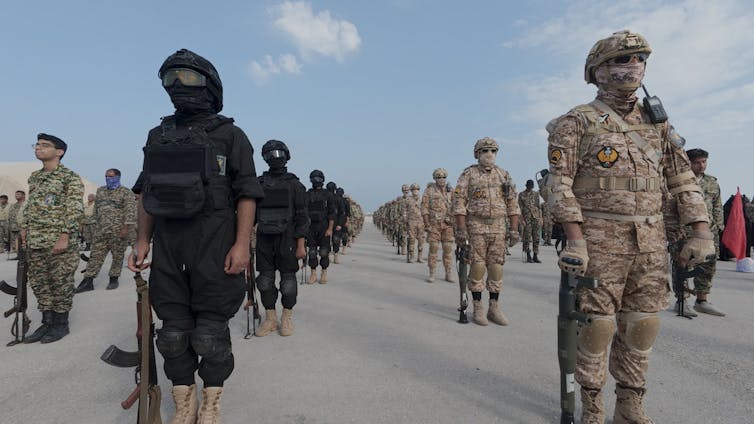
What to know about the war in Iran

Source: Radio New Zealand

A man makes his way through debris littering a street following airstrikes in central Tehran, on March 4, 2026. AFP

A look at the history, the players, and the early stages of global fallout from the war in Iran

Acclaimed New Zealand foreign correspondent Anna Fifield was on the ground in Iran across two years as the Financial Times’ Tehran correspondent, allowing her to gain a deep understanding of the country’s history and political complexities.

So, she’s not surprised the long-simmering stand-off between Iran, the United States, and Israel has exploded into open war or that the ripple effects are being felt far beyond the Middle East.

She talks to The Detail about the war, which began over the weekend, when the US and Israel targeted Iranian military and strategic sites with coordinated strikes, after tensions over Tehran’s nuclear ambitions and regional militia support reached a breaking point.

Iran immediately retaliated with missile and drone attacks, and since Sunday, civilian casualties have mounted, global markets have wobbled, and disruption around the vital Strait of Hormuz has raised concerns about fuel prices and supply chains worldwide.

The impact is being felt in New Zealand.

So, with growing military, political, and economic fallout, The Detail looks at what led to the war in the first place.

“This is not the first time that the United States has intervened in Iran to try to bring about regime change, and it was not successful the first time round either,” says Fifield.

“In 1953, there was a democratically elected Prime Minister, [Mohammad] Mosaddegh, who the US and the UK actually overthrew because he was trying to nationalise the oil company at the time … and the US and the UK didn’t like the idea.”

That oil company is now known as BP.

“As in so many conflicts, this all comes back to the oil, so they overthrew him and reinstalled the Shah of Iran, who was a monarch who had been unseated there. He was very unpopular … he was very corrupt, and this directly led to the Iranian revolution in 1979 and the overthrow of the Shah, of the monarchy, and the installation of the Islamic State.

“So in many ways, the very existence of the Islamic State of Iran is a direct result of the US.”

She says this time around, there are three main players – Iran, Israel, and the US, which “Iran continues to call ‘the great Satan’”.

“Over the intervening decades and especially under the leadership of the supreme leader Ayatollah Ali Khamenei, who was killed on Saturday, they have become more and more hardline in terms of developing a nuclear programme, supporting other groups aimed at destabilising the regions, such as Hamas and Hezbollah, and the Houthis in Yemen, and really trying to assert themselves in the Middle East.

“Iran does not agree with the right of the state of Israel to exist, so Iran and Israel have been at loggerheads ever since as well.”

Israel’s Prime Minister Benjamin Netanyahu AFP

This, she says, does not sit well with Israel’s Prime Minister Benjamin Netanyahu.

“So the tensions between Iran and Israel are very long-standing and have been simmering for decades; both of them see the other as an illegitimate regime.”

Then, she says, there is the US, whose relationship with Iran remains equally volatile.

“There has been ongoing burbling animosity there. Last year, we saw the limited strikes and 12-day war in June when Israel and the US went in together and took out a lot of Iran’s nuclear material, buried a lot of it under the rubble and really neutralised it as that threat. So this has been going on for a long time.”

Then, in January this year, thousands of Iranian anti-government protestors were killed by security forces during nationwide protests. That, in part, gave Trump a window to strike last weekend.

Back here, in New Zealand, Prime Minister Christopher Luxon has taken a cautious line, calling for de-escalation while reiterating New Zealand’s opposition to nuclear proliferation. He has ruled out any military involvement and focused on the safety of Kiwis in the region.

But that response has drawn criticism, with opponents arguing the government should take a clearer stand on the legality and morality of the strikes.

“I think trying to strike a balance between condemning what is happening in Iran and saying ‘we have no love for that regime and what it stood for, but there are still rules and laws that have to be applied’, I think that’s where the government, and other governments, have struggled,” says Newsroom associate editor Sam Sachdeva.

For now, New Zealand is watching from afar – but in a globalised world, wars rarely stay contained. If oil prices spike, markets tumble, or the conflict spreads further, the impact will be felt here too.

And as missiles fly in the Middle East, the diplomatic balancing act in Wellington is only just beginning.

Check out how to listen to and follow The Detail here.

You can also stay up-to-date by liking us on Facebook or following us on Twitter.

– Published by EveningReport.nz and AsiaPacificReport.nz, see: MIL OSI in partnership with Radio New Zealand

How has Country Calendar lasted 60 years on NZ TV?

Source: Radio New Zealand

Taking the gravel road less travelled is one of the great joys of New Zealand’s longest running TV show, Country Calendar.

The iconic show, which has arguably the country’s most recognisable theme tune, celebrates its 60th birthday this weekend.

Host and director Dan Henry says Country Calendar has covered just about every corner of the country in that time “and some properties we’ve been to two or three times”.

“I really enjoy those stories where you get to go somewhere that you would got no business driving up, or to a part of the country that’s just a little bit inaccessible.”

– Published by EveningReport.nz and AsiaPacificReport.nz, see: MIL OSI in partnership with Radio New Zealand

Why travel insurance might not help right now

Source: Radio New Zealand

Travellers are being warned to check what they are actually covered for by insurance. RNZ

Travellers are being warned to check what they are actually covered for by insurance if they cancel travel plans due to the conflict in the Middle East.

Insurance and Financial Services Ombudsman Karen Stevens said people should make sure they understood what they could claim for before they cancelled their insurance policies.

The conflict had closed many areas of airspace and meant a number of flights had been cancelled.

Many travel policies do not cover anything to do with the outbreak of war, civil disobedience or riot. That includes flights, accommodation or rebooking costs.

“I think most people don’t think about how the insurance is going to respond before they cancel,” Stevens said.

“They’ve got to be very careful before they just go ahead and cancel things.”

She said people should talk to their airlines first, or their accommodation providers, to see if they could get a refund or credit, or change their arrangements.

“A lot of people are still travelling or want to continue to travel, it’s just that because of the travel alerts and so forth and because of what’s going on in the Middle East they can’t go that way.

“But a much better suggestion for them is to actually start with the airline than it is to just cancel and then think that they can rely on the insurance cover because in most cases they will not be able to.”

Insurance would also not cover situations where people cancelled out of concern.

She said her scheme had dealt with many situations in which people had changed their minds about travelling and not been able to claim.

Stevens said she expected to receive complaints.

“I think to try and avoid those complaints, the best thing people can do is understand what they are covered for before they make any claims or before they decide to do anything about the travel arrangements. They really need to know if the insurer is going to provide the cover or they’re going to say an outright no as soon as the claim is made.”

Sign up for Money with Susan Edmunds, a weekly newsletter covering all the things that affect how we make, spend and invest money.

– Published by EveningReport.nz and AsiaPacificReport.nz, see: MIL OSI in partnership with Radio New Zealand

Several top Kiwi netballers undecided on Silver Ferns future

Source: Radio New Zealand

From top-left clockwise, Te Paea Selby-Rickit, Jane Watson, Whitney Souness, Gina Crampton. Photosport

Several top Kiwi netballers preparing to play in Australia’s Suncorp Super Netball (SSN) league are still undecided about whether they will make themselves available for the Silver Ferns ahead of the sport’s biggest events.

Nine current and former Silver Ferns will test themselves in the Australian league this year, widely regarded as the world’s toughest domestic netball competition. It comes after Netball NZ loosened its eligibility rules last year, allowing players based overseas to remain eligible for the Silver Ferns through a formal exemption process.

Among the group snapped up by Australian franchises are several players who have elected not to make themselves available for national selection in recent years – Gina Crampton, Jane Watson and Te Paea Selby-Rickit.

The veteran trio each told RNZ they remain undecided on whether they would put their hands up for the black dress ahead of July’s Commonwealth Games and the 2027 World Cup.

Crampton, who is returning to the court with the NSW Swifts following the birth of her first child, joked she is just focused on “remembering how to play netball again”, while Selby-Rickit and Watson said they planned to take the season as it comes.

The loss of experienced players from the Ferns’ selection pool has raised concerns about squad depth in recent seasons.

Former Silver Ferns captain Ameliaranne Ekenasio. Marty Melville / PHOTOSPORT

Last year skipper and frontline star Ameliaranne Ekenasio stepped aside from the captaincy and made herself unavailable for the international season, saying she needed a break. Her decision came amid a turbulent 2025 season that saw Dame Noeline Taurua stood down as coach following an employment dispute with Netball NZ.

Ekenasio, who turned down offers in Australia to play for the Pulse in this year’s ANZ Premiership, has not ruled out a return to the black dress.

Remembering how to play again

Crampton admits she thought her chance of playing in the most competitive league in the world might have passed her by.

“I probably resided to that fact that that could have been the end. Last year before I fell pregnant I was really excited to play in the SSN, the world leading competition and now getting that opportunity again is very exciting, it’s a little bit daunting for sure. But even just being involved with a club like the Swifts, who have been historically very successful, I’m just excited to be involved and I can’t wait to see how we go this season,” Crampton said.

The specialist wing attack will play alongside Silver Ferns starting shooter Grace Nweke, who effectively forced Netball New Zealand to revisit its eligibility rules when she joined the Swifts last year.

The national body subsequently loosened its rules, which saw six players apply for and granted exemptions to still be able to play for the Silver Ferns.

Crampton and her partner Fa’asiu Fuatai have been based in Sydney since early 2024. That year Crampton was signed as a training partner with the Giants, and played one game as injury cover. The Giants then signed her on a full contract for the 2025 season before Crampton found out she was pregnant.

Gina Crampton last played for the Stars in the ANZ Premiership. Photosport

An opening came up at their cross town rivals for the 2026 season when Australian Diamond and New South Wales stalwart Paige Hadley announced she was pregnant.

Having given birth to baby boy Reggie just seven months ago, Crampton said pre-season had been tough.

“Sort of had a bit of and up and down journey so far, had a few niggles pop up and things. I guess it was a bit of a learning curve on the return after having a baby, but feel like I’m in a good place now, which has been really cool to get back into things and try and remember how to play netball again.”

After the 2023 World Cup where the Silver Ferns finished a disappointing fourth, Crampton took extended leave to join her rugby playing partner in New York, before they moved to Australia.

Would she consider making herself available for the Silver Ferns again?

“Oh gosh, I’m not sure I think you have to say whether you want to be available for selection or not and I haven’t said anything yet,” Crampton laughed. “So I’m not sure, it seems all a bit far away I guess in terms of just having a baby as well, so maybe something to think of.”

As a former Ferns captain Crampton said it was hard seeing the team surrounded in controversy at the back end of last year with the shock suspension of coach Dame Noeline Taurua.

Crampton spent most of her Silver Ferns career under Taurua, who was reinstated after a 51-day stand-off.

“That was really tough, obviously you could see the impact it had on the girls and how I guess everyone reacted to that but I think the awesome thing to see was how they banded together and they had a huge international season. Not being so close to it anymore, didn’t know exactly what was going on but I think the best thing that came out of it was how the girls played those games.”

Unexpected career twist

Te Paea Selby-Rickit was a Tactix stalwart. Photosport Ltd 2021

Shooter Te Paea Selby-Rickit said she had enjoyed a better work-life balance over the past two years since stepping away from international netball after several years.

The 34-year-old arguably had the best domestic season of her career last year when she was a key cog in the Tactix side, which claimed a maiden domestic title.

Selby-Rickit is not sure yet if she will make herself available for the Silver Ferns, who have a huge two years ahead.

“I’m just trying to see how this season goes, if the body is all good and I’m still enjoying my netball I might make myself available but at this stage it’s 50/50, still thinking about it. Obviously a big couple of years and they’d probably want a couple of years of commitment so it’s a big decision whether I can commit to that or not but it’s definitely an option but waiting to see how I go,” Selby-Rickit said.

Playing in the SSN is an unexpected career twist for Selby-Rickit.

“Even over the last couple of years when I wasn’t playing for the Silver Ferns I didn’t really consider it, I thought it probably wouldn’t happen. But I’ve always loved watching SSN and admired it and wondered what if? So when the opportunity came up I couldn’t say no.”

No end date

Jane Watson was a key part of the Silver Ferns defensive end at the 2019 World Cup. © Photosport Ltd 2019

Watson has also got a career refresh after signing with the Sydney based Giants. The defender was in strong form for the Tactix last year when the side finally broke its title drought.

“Having played for them for so long, actually getting a win, in previous years we’d been very close, it was a very special moment for the club and the fans and all the people that came before us would have been stoked with that as well,” Watson said.

Watson thought 2025 was going to be her last year of elite netball before the Giants reached out to her just before the ANZ Premiership finals.

The 35-year-old, who has been joined in Sydney by her partner and three-year-old daughter, is not putting an end date on her career.

“I thought that I was supposed to be finishing a couple of years ago so who knows whether this is the last year or not we’ll just have to see what happens.”

Post the 2023 World Cup, Watson played two series for the Silver Ferns later that year but has not made herself available for the black dress since. But the 66-Test cap Silver Fern told RNZ that she has not retired from international netball.

Souness targets Silver Ferns recall

Whitney Souness spent several seasons with the Pulse in the ANZ Premiership. PHOTOSPORT

Former Silver Fern Whitney Souness also signed with the Giants, and was recently named captain before her first SSN season.

The 44-test midcourter missed out on Silver Ferns selection last year and is determined to push for inclusion before July’s Commonwealth Games.

“Not making it last season it was quite tough, it had been a hard season in the ANZ. For me it was probably the best time to go, I think it came at the right time for me to really push myself and what better way to do that than in the SSN competition so it’s been good timing for me to work my butt off and hopefully get back in that squad,” Souness said.

Knowing that she wanted to be considered for Silver Ferns selection, the 30-year-old applied for and was granted an exemption by Netball New Zealand.

“It was a bit of a different process, it was new, a lot of us had come over here so it was a bit of a different situation for me because I hadn’t made the squad so just a lot of comms with me and Netball New Zealand to make sure that I was available to still be part of the squad and have the opportunity to be part of it.”

Kiwis playing in 2026 SSN

  • *Grace Nweke – NSW Swifts
  • *Kelly Jackson – Queensland Firebirds
  • *Maddy Gordon – Queensland Firebirds
  • *Kate Heffernan – Adelaide Thunderbirds
  • *Karin Burger – Sunshine Coast Lightning
  • *Whitney Souness – Giants
  • Jane Watson – Giants
  • Te Paea Selby-Rickit – Queensland Firebirds
  • Gina Crampton – NSW Swifts

* Have been granted an exemption

Sign up for Ngā Pitopito Kōrero, a daily newsletter curated by our editors and delivered straight to your inbox every weekday.

– Published by EveningReport.nz and AsiaPacificReport.nz, see: MIL OSI in partnership with Radio New Zealand

Adam Hall grateful family and friends will see him in his last Paralympics

Source: Radio New Zealand

Adam Hall will be competing in his sixth Winter Olympics in Milan this month. PHOTOSPORT

Sixth Paralympics in, Wānaka’s Adam Hall knows exactly how rare this moment is.

The 38-year-old para alpine skier is preparing for what will likely be his final Winter Paralympics in Italy. But for the first time in his decorated career, he’ll have a full family cheering squad on the sidelines.

Hall and fellow Kiwi Corey Peters make up New Zealand’s two-strong Paralympic team, and both head to the Italian Alps as genuine medal contenders. But for Hall, this campaign carries an extra layer of meaning.

Born with spina bifida, Hall burst onto the global stage with gold in the men’s standing slalom at Vancouver in 2010. Eight years later he reclaimed the title at PyeongChang, adding to a haul that also includes three Paralympic bronze medals.

Now, with nearly two-thirds of his life spent on snow, he said perspective comes easily.

He said he is full of gratitude for those around him, including team-mates and coaches, who have supported him. As for many top athletes though it is family who sacrifice most.

Hall’s seven year old daughter Gracelynn will watch her father race in person for the first time, alongside his wife Elitsa – herself a two-time US Winter Paralympian.

With travel restrictions during the last games because of Covid, Hall’s family and friends are making the most of seeing him in action this time.

“To have our daughter there watching is something special and she is at an age now where hopefully she’ll be able to remember that experience,” Hall told RNZ.

Adam Hall has been competing on the international stage for more than two decades. Photosport Ltd 2018 www.photosport.nz

Hall also has the in-laws, cousins and an old childhood mate from his days growing up in Outram among his supporters.

He calls the Kiwi Paralympic squad “a small but mighty team” who spend a lot of their time away from family and is hoping to reward them with another podium finish in Italy.

“I’m just missing a silver so we’ll see if we get the full set or not.”

His specialist event is the slalom but he’ll also line up in the giant slalom.

“The competition is so tight now and the margins are getting smaller and I’ve said this before that no matter what colour, if it’s a bronze or silver it feels just as good as gold.

“Can’t be too fussy about the colour but we do strive to be on top.”

Hall is familiar with the Italian Alps and closely followed the Winter Olympics with interest as he’ll be skiing on the same slopes around Cortina.

“For us we call the Olympics the test event, jokingly, they kind of iron everything out before the big show.”

The big show for Hall starts with the GS on March 13 followed by the Slalom on the 15th.

Sign up for Ngā Pitopito Kōrero, a daily newsletter curated by our editors and delivered straight to your inbox every weekday.

– Published by EveningReport.nz and AsiaPacificReport.nz, see: MIL OSI in partnership with Radio New Zealand

Super Rugby preview: Barrett and D’Mac back, old rivals do battle

Source: Radio New Zealand

The Brumbies are winning the race after three rounds of Super Rugby. Brett Phibbs/Photosport

The Brumbies have galloped out of the gates, and after three rounds lead the Super Rugby field.

The two-time champs sit six points clear of the best placed New Zealand side the Chiefs, with the Waratahs still in second.

It was a rough week for Kiwis teams, the sole side to taste victory, the comeback kings, the Crusaders who picked up their first win of the season in a humdinger in Hamilton.

Despite the defeat, the Chiefs can count themselves almost a lock for try of the season, after Etene Nanai-Seturo’s length of the field stunner.

The Chiefs continue their run of derbies, though should expect an easier encounter on Friday night against an out of sorts Moana Pasifika.

Tana Umaga’s men were woeful against the Force, and they now find themselves at the bottom of the ladder with a wounded and dangerous Chiefs outfit awaiting.

The Hurricanes were dealt a cruel hand in Lautoka, forced to not only battle the heat but the wet in ‘sauna’ like conditions against the Drua.

They look to bounce back in an enticing clash in Sydney against the Waratahs, fresh off two wins and a bye.

The Highlanders were also luck-less in Brisbane, and head back under the roof to host the Force on Saturday afternoon.

The match of the round without a doubt is at Eden Park as two of Super’s greatest rivals go to battle.

The Crusaders turned around a poor start to their campaign with their 43-33 victory while the Blues had their hearts broken by the Brumbies.

Selection notes

All Black first five’s Beauden Barrett and Damian Mackenzie return for his first matches of the season.

Tupou Vai’i will skipper the Chiefs in the absence of Luke Jacobson Wallaby Lalakai Foeketi will get his first at centre. Augustine Pulu will make his debut for Moana Pasifika with Joel Lam and Tyler Pulini also to debut form the bench.

Angus Ta’avao returns for the Highlanders while the promising Lucas Casey has been left out of the 23.

All Black hooker Codie Taylor also returns for the Crusaders while Rivez Reihana is back at first five, with Taha Kemara dropping to 15, Will Jordan earning a rest.

Injury ward

Brett Cameron’s season has been confirmed to be over, while Ruben Love’s ankle is still anywhere from two to four weeks away from match fitness.

Luke Jacobson sits the week out with a hip complaint while Brodie McAlister will be back for week five. Moana have a packed casualty ward with Jimmy Tupou, Julian Savea, Lalomilo Lalomilo, Israel Leota and William Havili all out.

The Blues are low on locking stocks with Laghlan McWhannell and Patrick Tuipulotu both unavailable. Crusaders hooker George Bell suffered a foot injury last week and will be at least two weeks away.

Key stats

  • The Chiefs are 7-0 against Moana Pasifika.
  • Moana Pasifika have conceded 35 tries across their last four away games.
  • Hurricanes are on an eight game winning streak against the Waratahs.
  • Lehi Fineanganofo has scored eight tries across his last six starting appearances.
  • The Highlanders are on a six-game losing streak against teams from Australia.
  • Timoci Tavatavanawai has broken 36 tackle in his last five matches.
  • The Blues have won just once from their past ten encounters with the Crusaders at Eden Park.

Team lists

Chiefs vs Moana

Kick-off: 7:05pm Friday March 6

FMG Stadium, Hamilton

Live blog updates on RNZ

Chiefs:

1. Benet Kumeroa. 2. Samisoni Taukei’aho. 3. Reuben O’Neill. 4. Seuseu Naitoa Ah Kuoi. 5. Tupou Vaa’i, who will captain the side. 6. Samipeni Finau. 7. Jahrome Brown. 8. Wallace Sititi. 9. Cortez Ratima. 10. Damian McKenzie. 11. Leroy Carter. 12. Quinn Tupaea, who is vice-captain. 13. Lalakai Foketi. 14. Emoni Narawa. 15. Liam Coombes-Fabling.

Bench: 16. Tyrone Thompson. 17. Ollie Norris. 18. George Dyer. 19. Josh Lord. 20. Simon Parker. 21. Te Toiroa Tahuriorangi. 22. Josh Jacomb. 23. Kyle Brown.

“It’s a very strong team for a game where we need to respond after we got a punch in the nose by the Crusaders.” – Chiefs coach Jonno Gibbs.

Moana Pasifika:

1. Abraham Pole 2. Millennium Sanerivi 3. Chris Apoua 4. Tom Savage 5. Allan Craig 6. Miracle Faiilagi (c) 7. Semisi Paea 8. Semisi Tupou Ta’eiloa 9. Augustine Pulu (debut) 10. Jackson Garden-Bachop 11. Solomon Alaimalo 12. Ngani Laumape 13. Tevita Latu 14. Tevita Ofa 15. Glen Vaihu

Bench: 16. Samiuela Moli 17. Malakai Hala-Ngatai 18. Lolani Faleiva 19. Ofa Tauatevalu 20. Ola Tauelangi 21. Joel Lam debut 22. Patrick Pellegrini 23. Tyler Pulini (debut.)

“The Chiefs always bring a great challenge and we know that we need to be accurate and come out strong from the start. As a team we’re focused on trusting what we can do and going out there and executing our game plan.” – Moana coach Fa’alogo Tana Umaga

Waratahs vs Hurricanes

Kick-off: 9:35pm Friday March 6

Allianz Stadium, Sydney

Live blog updates on RNZ

Hurricanes:

1. Xavier Numia 2. Asafo Aumua (vc) 3. Pasilio Tosi 4. Warner Dearns 5. Isaia Walker-Leawere 6. Devan Flanders 7. Du’Plessis Kirifi (c) 8. Peter Lakai 9. Cam Roigard 10. Callum Harkin 11. Fehi Fineanganofo 12. Jordie Barrett 13. Billy Proctor 14. Bailyn Sullivan 15. Josh Moorby

Bench: 16. Jacob Devery 17. Siale Lauaki 18. Tevita Mafileo 19. Brad Shields 20. Brayden Iose 21. Ereatara Enari 22. Lucas Cashmore 23. Jone Rova

“They’re coming off a bye week, so they’ll be ready to go. We feel really prepared. We’ve travelled well and recovered well from Fiji.” – Hurricanes coach Clark Laidlaw.

Highlanders vs Western Force

Kick-off: 4:35pm Saturday March 7

Forsyth Barr Stadium, Dunedin

Live blog updates on RNZ

Highlanders:

1. Ethan de Groot (CC) 2. Jack Taylor 3. Angus Ta’avao 4. Oliver Haig 5. Mitch Dunshea 6. Te Kamaka Howden 7. Veveni Lasaqa 8. Nikora Broughton 9. Folau Fakatava 10. Cameron Millar 11. Jona Nareki 12. Timoci Tavatavanawai (CC) 13. Jonah Lowe 14. Caleb Tangitau 15. Jacob Ratumaitavuki-Kneepkens

Bench: 16. Soane Vikena 17. Daniel Lienert-Brown 18. Sosefo Kautai 19. Will Stodart 20. Sean Withy 21. Adam Lennox 22. Reesjan Pasitoa 23. Tanielu Tele’a

“We need to build on our start to the season, lift a notch or two, and convert more of the pressure we’re applying into points.” – Highlanders coach Jamie Joseph.

Blues vs Crusaders

Kick-off: 7:05pm Saturday March 7

Eden Park, Auckland

Live blog updates on RNZ

Blues:

1. Ofa Tu’ungafasi 2. Kurt Eklund 3. Marcel Renata 4. Josh Beehre 5. Sam Darry 6. Torian Barnes 7. Dalton Papali’i (c) 8. Hoskins Sotutu 9. Finlay Christie 10. Stephen Perofeta 11. Caleb Clarke 12. Pita Ahki 13. AJ Lam 14. Codemeru Vai 15. Zarn Sullivan

Bench: 16. James Mullan 17. Mason Tupaea 18. Sam Matenga 19. Che Clark 20. Anton Segner 21. Taufa Funaki 22. Beauden Barrett 23. Xavi Taele

“The Crusaders are always a quality side and these contests carry a bit of extra edge. It’s special to be back at home in front of our supporters. We know the lift that Eden Park gives us and the boys are looking forward to putting in a big performance.” – Blues coach Vern Cotter

Crusaders:

1. George Bower 2. Codie Taylor 3. Fletcher Newell 4. Antonio Shalfoon 5. Jamie Hannah 6. Dom Gardiner 7. Ethan Blackadder (VC) 8. Christian Lio-Willie 9. Noah Hotham 10. Rivez Reihana 11. Sevu Reece 12. David Havili (c) 13. Leicester Fainga’anuku 14. Chay Fihaki 15. Taha Kemara

Bench: 16. Manumaua Letiu 17. Finlay Brewis 18. Seb Calder 19. Will Tucker (Crusaders Debut) 20. Corey Kellow 21. Kyle Preston 22. Xavier Saifoloi 23. Dallas McLeod

“One win doesn’t make a season, but the energy was great and everyone’s done a great job keeping things grounded as we look forward to heading up to Eden Park.” – Crusaders coach Rob Penney.

Sign up for Ngā Pitopito Kōrero, a daily newsletter curated by our editors and delivered straight to your inbox every weekday.

– Published by EveningReport.nz and AsiaPacificReport.nz, see: MIL OSI in partnership with Radio New Zealand

‘Record speaks for itself’: Blues battle mental block against Crusaders

Source: Radio New Zealand

Blues coach Vern Cotter said despite the Crusaders’ domination, the rivalry is still very much alive. Brett Phibbs / www.photosport.nz

The Blues need no reminding that the Crusaders have had their number in recent times.

The side has lost 10 of their last 12 encounters with the Cantabs, with the rivalry becoming heavily one sided.

So, is there a mental barrier for the Blues?

Coach Vern Cotter admits there might be.

“It’s a question we ask ourselves. We know it’s one of the hardest teams in the world to play against. Since I’ve been here, I think we’ve only won once. So the record speaks for itself, and that’s the challenge that the players have in front of them, but they don’t want to have a negative mindset. They want to be able to play the game, be decisive, and have a bit of fun out there. I think that’s key to making sure that we move forward. I think we will surprise a few.”

Cotter said despite the Crusader’s domination, the rivalry is still very much alive.

“Everybody wants to beat the Blues, and of course the Crusades are the team that have been, over the last eight years, the best performing team. So yeah, of course the rivalry is there.”

If last week’s heated Chiefs and Crusaders encounter was any indication, there is no love lost between the Kiwi franchises.

“There’s ultimately massive respect. I think that’s probably the key thing you have in and around when you play them or other teams in New Zealand. And the first thing you know is it’s against your rival mates and people want to show up and walk away with the win at the end. So that adds a little bit of spice into it obviously.”

However, Cotter is under no illusions about the task that awaits his men.

“They’re just so tough, and last week we saw the championship team that’s in them. What they did to the Chiefs was impressive. So we know it’s going to be tough, they’re a team that just find parts of your game to exploit at any moment. So being focused and fully connected will be important if we want to get the result we want.”

Helping with those connections, Cotter welcomes back the experience of Beauden Barrett for the crucial clash.

“It’s nice to have him back because he has a curious brain and he’s a perfectionist. So having him in and around the team, he asks a lot from his team-mates. And although he is short of a run, I think when he gets out there, he’ll definitely want to put his mark in the game.”

In the wake of the announcement that Dave Rennie will take on the All Blacks coaching job and his comments about having no loyalty to incumbents, Cotter said the approach would help motivate players sitting on the fringe of selection.

“I think it’s probably one of the reasons he was given the job is that he can walk in and have a look objectively at every player and make his assessment on them. He watches a lot of rugby. So when he comes together, you’ll get an indication of how he wants the game to be played when you see his first selection, and that’ll be fascinating to see how that unfolds for each of the teams in New Zealand.”

Sign up for Ngā Pitopito Kōrero, a daily newsletter curated by our editors and delivered straight to your inbox every weekday.

– Published by EveningReport.nz and AsiaPacificReport.nz, see: MIL OSI in partnership with Radio New Zealand

MSD can now legally claw back welfare payments

Source: Radio New Zealand

The law change means ACC claimants will incur debts for supplementary supports they sought while waiting on an outcome with the Accident Compensation Corporation.

The coalition has passed legislation to legalise long-standing MSD policy of clawing back welfare payments from ACC claimants.

The law change – passed after the High Court ruled the policy illegal – means ACC claimants, including sexual abuse survivors, state abuse survivors and those with birth injuries, will incur debts for supplementary supports they sought while waiting on an outcome with the Accident Compensation Corporation.

Advocates have already launched a petition to change the legislation to “ensure equity, fairness and also remove the retrospective elements inserted by the Amendment Bill.”

The legislation passed yesterday afternoon with support from National, ACT and New Zealand First.

Labour – which withdrew its support for the bill after Select Committee stage, voted against it with the Greens, Te Pāti Māori and independent MPs Mariameno Kapa-Kingi and Tākuta Ferris.

Third reading

Minister for Social Development Louise Upston wasn’t there for the final reading of the legislation.

Standing in her place, National’s James Meager told the House the High Court ruling meant those who received backdated ACC payments were better off than those who received the same payments at the time they requested it.

“These decisions highlight inconsistencies between legislation and long-standing policy but they do not reflect the principles of a targeted welfare system that provides assistance based on need.

“They also create inequities across ACC recipients in the welfare system.”

Labour’s Willie Jackson – who had called for changes such as a carve out for state abuse survivors – said the Minister had made a “real attempt” to find bipartisan buy-in for the bill but parties could not find a way through.

“It’s with disappointment we were unable to find a way through…we had a couple of meetings with the Minister, we put up some options in terms of where we should go, particularly with some of the people who were being hurt by this bill.

“She was particularly sympathetic to some of the examples that we were given but it seems that her officials find it all just too impossible, I’m not sure why they find it so impossible sometimes to actually worth things through, given these were officials who have worked with both National and Labour governments through the years.

The Greens’ Ricardo Menéndez March said the bill was a joke.

“How can this be a bill about fairness and equity when it entrenches a practice that puts some of our most injured and traumatised people in large debts?

“This government may be making it legal but it does not make it right.”

ACT’s Parmjeet Parmar said it was good the bill was being rushed through.

“It’s a very important issue. We have to. Otherwise we will not be doing justice to those who are going to be affected.”

New Zealand First’s David Wilson said the bill was not easy but his party supported MSD having discretion “to look at these cases”.

“It would be fair to say that our party has wrestled with some of the issues here, quite a lot.”

“We want to ensure that any complainants to ACC are not unfairly disadvantaged.”

Te Pāti Māori’s Orrini Kaipara said the bill would deepen hardship for survivors of sexual abuse, state abuse and those who suffer most.

“It represents a profound breach of justice, fairness and the Crown’s obligations to protect the wellbeing of whānau under Te Tiriti o Waitangi.”

Sign up for Ngā Pitopito Kōrero, a daily newsletter curated by our editors and delivered straight to your inbox every weekday.

– Published by EveningReport.nz and AsiaPacificReport.nz, see: MIL OSI in partnership with Radio New Zealand

Amnesty International calls for corporations to take responsibility for social media harm

Source: Radio New Zealand

National’s committee lead on an inquiry into social media harm for young people, Carl Bates. VNP/Louis Collins

A human rights organisation is backing calls for the government to set up an independent regulator for online safety.

A parliamentary select committee on Thursday released its report following an inquiry into social media harm for young people.

Among its recommendations to the government and the private sector was a ban on social media for under-16s, the creation of a national regulator to ensure platforms were safe, and regulating deepfake technology.

Amnesty International Aotearoa New Zealand’s Lisa Woods said it was vital there was a watchdog in place.

“It’s really important that we’ve got a regulator that is continually monitoring what’s happening, continually monitoring ‘do we have the right laws in place? Are they effective, or do they need to be changed’.”

Woods said it was critical any regulator would need to be able to impose penalties against social media companies for it to be effective.

The New Zealand government had explored options of a social media ban after Australia implemented one, with National keen to progress with one before the end of this term.

Woods said Amnesty International New Zealand opposed a social media ban for under-16-year-olds, because it did not address the root causes of harm.

“Platforms are being designed to promote content that drives engagement, regardless of harmful effects, so just removing someone from social media, is not taking care of platform design.”

Woods said banning social media for young people placed the burden of safety on young people and parents while allowing platforms to continue their business models.

National’s committee lead on the inquiry Carl Bates said the committee’s report was a step towards “ïmportant, timely action”, and that lead Minister Erica Stanford would now consider the recommendations.

He said the report made clear the harm young New Zealanders were facing from online platforms was “significant”, “fast-moving” and occurring on a global scale.

Sign up for Ngā Pitopito Kōrero, a daily newsletter curated by our editors and delivered straight to your inbox every weekday.

– Published by EveningReport.nz and AsiaPacificReport.nz, see: MIL OSI in partnership with Radio New Zealand

NZTA considers U-turn on 100k speed limits for SH1, SH57 south of Levin

Source: Radio New Zealand

Speldhurst Residents Committee chair Roger Parton was delighted by the proposal to change the speed limits back. RNZ / Jimmy Ellingham

The Transport Agency (NZTA) is considering a U-turn on 100-kilometre speed limits put in after they were reduced by the former Labour-led government south of Levin.

Last year State Highway 1 and State Highway 57 south of the Horowhenua town had speed limits increased from 80 kilometres per hour after the transporting agency was directed to consult on the changes.

Over half of the people who submitted backed upping the speeds, but many in the local community warned against the changes, including the local council.

During the period the road has had a 100-kilometre speed limit in place one person died in a crash.

When it was 20 kilometres lower between 2020 and 2025 no one died on the road.

NZTA has since announced it had opened consultation to put the speeds back down.

It would also put up variable speed limits outside Tukorehe Marae and Wehi Wehi Marae.

Waka Kotahi director regional relationships Linda Stewart told RNZ the reversal came from community concerns.

“NZTA has received a considerable amount of feedback from the local community, iwi and freight operators that the 100km/h speed limit is not appropriate in these locations.”

Stewart said there had also been concern from the Speldhurst Country Estate on State Highway 75 and that a major expansion at the village meant it would soon accommodate more than a thousand residents.

Molly Page lived near State Highway 57 and said the speed limits should not have gone up.

“It is a dangerous piece of road and we know that because how many accidents have there been?”

Molly Page has fought the Transport Agency before over the speed limit. RNZ / Jimmy Ellingham

Page said State Highway 57 travelled past the country estate Speldhurst which had elderly residents.

“As you get older it is just a fact that reaction times are much slower and putting that road up to 100 kilometres … it is just unsafe.”

Speldhurst Residents Committee chair Roger Parton was delighted by the proposal to change the speed limits back.

“Just watching the traffic going past at 100 kilometres and the big trucks going 90 [kilometres] and you have got people coming out of the retirement village onto the public road.

“It is a disaster waiting to happen.”

Horowhenua Deputy Mayor David Allan said the speed reductions were “better late than never”.

“It is a shame that they were reinstated to 100 kilometres in the first place, council opposed it at that time, and we welcome any proposal to reduce the speed limits.”

Transport Minister Chris Bishop. RNZ/Marika Khabazi

Transport Minister Chris Bishop told RNZ the road was and is safe, but given the scale of development happening in the area NZTA had assessed that some sections of the highway may need lower speed limits.

In July RNZ reported Ngāti Tukorehe Tribal Committee chairperson Pikitia Heke said pleas to keep the stretch of highway at the 80 kph speed limit had “fallen on deaf ears”.

At that time Alicia Miratana a descendent of Ngāti Wehiwehi and who lived in Manakau said speed affected how Wehi Wehi Marae operated.

“We have our kaumātua that no longer walk to the marae it is just too unsafe for them, we don’t allow our tamariki to walk home from the marae it is not for them. But the biggest fear we have for Ngāti Wehiwehi is that we have a kōhanga reo on our marae.”

Consultation would end 9 April.

Sign up for Ngā Pitopito Kōrero, a daily newsletter curated by our editors and delivered straight to your inbox every weekday.

– Published by EveningReport.nz and AsiaPacificReport.nz, see: MIL OSI in partnership with Radio New Zealand

Reverse mortgage or retirement village: Which will give you the retirement you want?

Source: Radio New Zealand

Jo Murphy says she very much regrets moving into a retirement village as early as she did.

She said she sold her freehold home at least 15 years too soon.

“It was a neat little brick home on a nice quiet side road in Waikanae… the garden and the drive took hard work to keep tidy but I was fit and well, I had established some beloved plants. The labour – with hindsight – was beneficial and the property looked good too.

“Maybe I was simply lonelier than I thought … I had lots of activities so I didn’t put my finger on it being loneliness.

“I badly wanted to take that reverse mortgage but I also was thinking about my daughter who’s clued up on finances. She was a senior dealer for a while in the money market, and I could feel her disapprobation… so I stalled.”

She has since moved through three retirement villages in two parts of the country and said her capital had been eroded to the point where she could not buy another home if she left. The villages charged an initial fee for an occupation right agreement as well as ongoing fees.

“I had no idea until I wasn’t in my own home how much agency you lose in your day-to-day life. A lot of decisions are made around you. In this particular instance where I am now… I live with their constant vibration.”

She has been distressed by ongoing noise in her unit but was not able to do anything about it.

Planned work had not happened as promised, she said. Other people who were considering making a similar move need to think about what they were giving up, she said.

It is something that many people around the country are weighing up, particularly if they have built up good levels of equity in their homes but are struggling with the rising cost of living.

Property law expert Joanna Pigeon said people who were “asset rich and cash poor” often found it tough to stay in their homes when the cost of rates, insurance and other expenses increased.

But she said there were things to weigh up, whichever path someone took, and there could have been drawbacks if Murphy had opted for the reverse mortgage.

Heartland, for example, charges a variable interest rate – currently 7.75 percent – on reverse mortgage lending. This compounds because repayments are not made until the property is sold. Pigeon said this could mean equity reduced quickly.

“I would encourage people considering whether to have a reverse mortgage to have legal advice, and to also if suitable discuss with their family. Sometimes family members may prefer to assist if they can to assist with the preservation of equity in a property.

“The decision whether to go into a retirement unit or remain in a home with a reverse mortgage will always depend on age, stage and health situation. Care may be required at a later date, and if equity is eroded by a reverse mortgage it may reduce options if say a fall necessitates care needs etc. It is impossible to have a crystal ball for potential needs in the future. These potential issues need to be discussed and a decision made in the circumstances. Reverse mortgages are a product to enable a person to remain in their home, but the pros and cons need to be weighed up.”

Retirement Village Residents Association president Brian Peat said he chose a retirement village because he needed to find something quickly when he returned from Queensland.

He said it was not common for people to regret moving into a village but it was a “huge step into the unknown” for residents.

“”It is certainly a different lifestyle and some adjust but others don’t.”

Michelle Palmer, executive director of the Retirement Villages Association, said there were about 53,000 people in retirement villages around the country and 130 moved in every week.

“However, we recognise village living isn’t for everyone. That’s why we encourage anyone considering a move to visit different villages, talk to residents and have conversations with family and friends.

“It is also a legal requirement under the Retirement Villages Act to obtain independent legal advice before signing an agreement. “

She said Murphy’s experience was not typical and she was disappointed and surprised that none of the villages had met her expectations.

“The residents I speak with tell me they value the sense of community, companionship and security villages provide, along with the peace of mind that comes from a low-maintenance lifestyle. They tell me how much they love the village amenities and activities. For many, access to hospital-level care, should they need it, is also an important consideration.

“Some older New Zealanders do choose options such as a reverse mortgage to remain in their home. However, many residents appreciate that in a retirement village, exterior maintenance, lawns, rates and often building insurance are managed by the operator. In many cases, retirement villages also have fixed weekly fees so that provides greater financial certainty.

“As people age, the responsibilities associated with owning a house can become more physically demanding and a financial burden, so having them taken care of provides real reassurance.”

Heartland Bank general manager of retail and reverse mortgages, Will White, said there had been a 15 percent increase in reverse mortgage business in the past six months. There are now more than 26,000 people with a Heartland reverse mortgage.

He said reverse mortgages were popular when prices increased and people had more equity to draw against. They were still popular now, in a weaker housing market, when people struggled with the cost of living and rising rates.

He said people who were under the age of 60 would not be able to access a reverse mortgage. “The earlier you get the reverse mortgage, the more interest you will pay.”

But he said there were many customer protections in place that were not there 20 years ago.

“People rightly have a long memory and there’s this idea that debt’s going to be left to the children, you no longer own your own home… all those things are false but it’s always important for us to make sure we get those messages out there that it’s a different product than people remember.”

Sign up for Money with Susan Edmunds, a weekly newsletter covering all the things that affect how we make, spend and invest money

– Published by EveningReport.nz and AsiaPacificReport.nz, see: MIL OSI in partnership with Radio New Zealand

‘I know she’d be really proud’ – NZ’s first Pasifika heritage All Blacks coach

By Koroi Hawkins, RNZ Pacific editor

The All Blacks have their first coach of Pasifika heritage.

Dave Rennie has been given the job, replacing the ousted Scott Robertson.

Rennie’s Cook Islands heritage comes via his mother, who hails from Titikaveka on Rarotonga, and Rennie even played a non-test match for the country in 1990.

Asked about his heritage in his first press conference as All Blacks head coach, he paid tribute to his mother’s legacy.

“She was hardworking, inspirational and . . . she had a massive impact on me and my brothers and sisters. I know she’d be really proud,” Rennie said.

“I’m honoured to represent the Cook Islands.”

Congratulations have come in from near and far, with Cook Islands Prime Minister Mark Brown, calling Rennie’s appointment a powerful moment for young Cook Islanders.

“As a son of Takitumu he carries our Cook Islands heritage with him,” Brown wrote on social media.

‘Powerful moment’
“As patron of the Cook Islands Rugby Union, I know how powerful this moment is for our young players. When they see one of our own standing at the helm of the All Blacks they see what is possible.”

Wellington Samoa Rugby Union president Leiataualesa Ken Ah Kuoi said it was time a Pacific person was recognised at the very top level.

Leiataualesa said as a Pacific person in the Aotearoa rugby space he was very proud.

“Of course it will have an impact, a huge impact, to players [and] administrators of rugby,” he said.

“We talk about diversity in rugby in New Zealand and this is a clear message that a Pacific person can do the job.”

Dave Rennie will take up the role in June, with his first assignment in July when the All Blacks host France, Italy and Ireland for three tests in New Zealand.

‘Fair bit of diversity’
When asked in Wednesday’s press conference if his connection with Pasifika players was an important part of what he did, Rennie said having a connection with all the players is important.

“We’ve got a fair bit of diversity within the group and I think the ability to celebrate that is important.”

The 62-year-old former Chiefs coach and coach of the Wallabies said he’s “really clear” on how he wants the team to play.

“We have a lot of talent here,” he said.

“Coaching the All Blacks is an incredible honour. I’m extremely proud to have been entrusted with this role and understand the expectations that come with it.”

This article is republished under a community partnership agreement with RNZ.

Article by AsiaPacificReport.nz

NZ Defence Force planes prepare to fly to Middle East for evacuations

Source: Radio New Zealand

A plume of smoke rises after a strike on the Iranian capital of Tehran on 5 March, 2026. AFP / ATTA KENARE

Follow the latest with our live blog above

Foreign Minister Winston Peters says when conditions allow, NZDF planes will help New Zealanders get to locations where they can get on commercial flights home.

He says they will not be long flights.

The minister says at the speed at which potentially thousands of people need to be moved, it’s better they are taken to a safer place as fast as possible.

The Ministry of Foreign Affairs and Trade said 3171 New Zealanders were registered with its service SafeTravel in the region.

Sign up for Ngā Pitopito Kōrero, a daily newsletter curated by our editors and delivered straight to your inbox every weekday.

– Published by EveningReport.nz and AsiaPacificReport.nz, see: MIL OSI in partnership with Radio New Zealand

Who is Mojtaba Khamenei, Iran’s presumed next supreme leader? And would he bring change – or more brutal suppression?

Source: The Conversation (Au and NZ) – By Mehmet Ozalp, Professor of Islamic Studies, Head of School, The Centre for Islamic Studies and Civilisation, Charles Sturt University

The death of Iran’s supreme leader, Ali Khamenei, during the holy month of Ramadan marks one of the most consequential turning points in the history of the Islamic Republic of Iran.

His successor, widely expected to be his son Mojtaba Khamenei, represents both continuity and contradiction in the revolutionary system established after the Iranian Revolution in 1979.

At stake is not only who leads Iran, but what the Islamic Republic has become, nearly half a century after the revolution that promised an end to dynastic rule.

Who is Mojtaba Khamenei?

Mojtaba Khamenei is a cleric who has spent most of his career outside public office but close to power, working within the Office of the Supreme Leader. He was often seen as a gatekeeper and powerbroker rather than a public political figure with a formal portfolio.

At 17, he briefly served in the Iran–Iraq war. He only began attracting public attention in the late 1990s, by which time his father’s authority as supreme leader was firmly established.

Over time, his reputation has centred on two key features. The first is a close relationship with Iran’s security establishment, particularly the Islamic Revolutionary Guard Corps (IRGC), and its hardline networks.

The second is a strong opposition to reformist politics and Western engagement.

Critics have linked him to the suppression of protests following the disputed 2009 presidential election. He is also believed to have wielded influence over Iran’s state broadcasting organisation, giving him indirect control over parts of the country’s information landscape and state narrative.

In 2019, the first Trump administration sanctioned Mojtaba, accusing him of acting in an official capacity on behalf of the supreme leader despite holding no formal government position.

Mojtaba’s legitimacy as leader

Iran’s constitution dictates that the Assembly of Experts (an 88-member clerical body) selects the supreme leader.

The assembly lists the religious, political and leadership qualifications of possible candidates. But in practice, it is not a neutral electoral body. Candidates for the assembly itself are vetted through institutions ultimately shaped by the supreme leader’s orbit, and its deliberations are opaque.

This creates a familiar Iranian scenario – the constitution supplies the choreography, while the security-clerical establishment supplies the music.

That matters when assessing why Mojtaba is seen as a viable supreme leader amid critiques he lacks the senior religious standing traditionally associated with the office.

A mid-ranking cleric, he was only given the title ayatollah in 2022. The title is necessary to become supreme leader, so the promotion signalled he was being groomed to take over from his ageing and ill father.

The revolution’s founding myth was clearly anti-dynastic. After toppling the shah, the revolution’s leaders rejected hereditary rule.

To many Iranians, a son following his father as supreme leader looks like an ideological backslide. The regime appears more like a theocratic monarchy, less the famous “guardianship of the jurist”.

Yet, it is also important to be precise. Mojtaba cannot inherit the position by bloodline alone. The assembly must select him.

Still, political systems can become dynastic without rewriting constitutions. Dynastic outcomes emerge when informal power networks, such as family ties, political patronage, security ties, and control over the media, can make one candidate appear more natural, safe or inevitable.

That has essentially been the Mojtaba story in Iran for years: a man who built influence not by winning elections, but by managing the gate to the most powerful office in the country.

The circumstances of Ali Khamenei’s death add another layer of significance and, ironically, legitimacy to Mojtaba’s ascension.

Iraqi Shiites carry a replica of a coffin of Iranian Supreme Leader Ayatollah Ali Khamenei during a symbolic funeral in Najaf, Iraq. Anmar Khalil/AP

For many Shi’a Muslims, being killed during Ramadan carries deep symbolic resonance. The first imam of Shi’ism, Ali ibn Abi Talib, was assassinated during the dawn prayer in Ramadan in 661 CE, an event still commemorated each year by Shi’ite Muslims.

Shi’ite historical memory places strong emphasis on martyrdom. In particular, the death of Husayn ibn Ali, a grandson of the Prophet Muhammad, at Karbala in 680 CE, symbolises the struggle between justice and oppression.

Because of this tradition, violent deaths of leaders in the past and today are framed within a broader narrative of sacrifice and resistance.

Iran’s revolutionary ideology has long drawn on these themes. If the state presents Khamenei’s death in this light, it could strengthen a narrative of martyrdom and defiance.

This, in turn, gives his son Mojtaba an aura of religious legitimacy that is very strong in the Shi’ite Muslim psyche.

How different would he be from his father?

This is the most consequential question for Iran. The answer is likely less different than many might expect.

Ali Khamenei was a figure of the revolutionary generation. His authority rested on ideological legitimacy, decades spent amassing and consolidating power, and his ability to arbitrate between competing factions. Over time, he became the system’s final referee.

Mojtaba Khamenei, by contrast, is often portrayed as a product of the security establishment, rather than a public theologian or statesman. He is known less for speeches or religious authority than for his influence and the networks he has built behind-the-scenes coordination.

If that assessment is correct, the shift would be from a leader who balanced institutions to one who may lean more heavily on the might of the IRGC. This would deepen an existing trend toward the securitisation of Iranian politics.

In a period of war and instability, regimes typically prioritise continuity and control. Mojtaba’s appeal to the establishment, therefore, appears to rest on several factors:

  • his close ties to the IRGC and intelligence networks
  • his long experience inside the supreme leader’s office
  • his ideological alignment with hardline positions sceptical of reform and Western engagement.

A figure trusted by the most powerful security institutions also reduces the chance of power struggles or fragmentation at the top.

IRGC members participating in a military drill in the Persian Gulf in February, before the war broke out. Sepahnews/EPA

What might this mean for the war?

A new supreme leader rarely produces an abrupt ideological shift, especially during a military conflict. Continuity is the more likely outcome.

Mojtaba Khamenei’s profile suggests a more security-centred style of leadership with three possible ways forward.

First, domestic control may harden. Given Mojtaba’s reported ties to the security establishment, unrest is more likely to be met with swift repression rather than political accommodation.

Second, the IRGC could expand its influence in regional affairs, given how closely aligned Mojtaba is with the guards.

Third, any negotiations with the West would likely be tactical rather than transformative. They would be framed as a strategic necessity rather than an ideological shift.

And given the fact his father was killed in US-Israeli airstrikes, this will only reinforce a more hardline posture toward both countries.

In short, Iran under Mojtaba Khamenei would likely remain confrontational in rhetoric, but pragmatic when regime survival is at stake.

ref. Who is Mojtaba Khamenei, Iran’s presumed next supreme leader? And would he bring change – or more brutal suppression? – https://theconversation.com/who-is-mojtaba-khamenei-irans-presumed-next-supreme-leader-and-would-he-bring-change-or-more-brutal-suppression-277483

Politics with Michelle Grattan: South Australian election special

Source: The Conversation (Au and NZ) – By Michelle Grattan, Professorial Fellow, University of Canberra

South Australians are heading to the ballot box on March 21. If polls are correct, Peter Malinauskas’s Labor government will win in a landslide.

Polling also indicates One Nation has pulled ahead of the Liberal Party in the state, making it the first test of whether One Nation’s recent surge in national polls can translate into votes – and seats.

To talk about how the campaign is going so far and to explain some distinct features of the South Australian system, we speak to four locals:

  • Flinders University’s Associate Professor of Politics and Public Policy, Rob Manwaring
  • former federal minister and incoming national Labor president, Kate Ellis
  • Opposition Leader Ashton Hurn
  • former Liberal Senator turned One Nation’s lead upper house candidate, Cory Bernardi.

A ‘once-in-a-generation premier’: Manwaring

Flinders University’s Rob Manwaring says Labor is not taking the election win for granted and was still “trying to pinch strategic moments”, like poaching the MotoGP from Victoria. Manwaring says the premier’s personal popularity has been a key to Labor’s success.

I just wouldn’t underestimate just the charisma and the political leadership of Peter Malinauskas. He has been described by others as a sort of once-in-a-generation style politician.

[…] Largely he’s been sort of quite untouchable [… although] the debacle over, for example, Adelaide Writers Week and the disinvitation to a particular writer and the fallout from that, that actually proved perhaps there was some overreach by the premier […] But politically, there’s no damage.

As for One Nation, Manwaring predicts the party could win one or two seats in the lower house and “at least two spots” in the upper house, based on current polling. But he says seats alone are not the only way to measure One Nation’s success at this election.

I think that One Nation nationally will be looking at South Australia as a test bed to say they are riding high nationally […] I think they will be looking at the South Australian campaign to see what’s working and what’s not. And it’s a striking development too, because One Nation has had so little […] history in South Australia.

Voters ‘flirting’ with One Nation should think again: Hurn

Ashton Hurn, who took over as Liberal leader with only around 100 days before the election, says she and her team “are working to ensure that everyone knows what we stand for”.

You just have to be focused on speaking with as many people as you possibly can. Something that I’m always mindful of is Winston Churchill. He said that a politician complaining about the media is like a sailor complaining about the sea, or thereabouts. And so I just try and focus on what I can control and that’s my movements on the ground, getting to businesses, getting to every corner of the state as much as I possibly can.

The opposition leader says that while “the polls are pointing in a certain direction […] it’s not over until it’s over”.

I’m focused on […] getting the important things right, like affordability in SA, the healthcare system, which, of course, was such a dominant issue at the last election that the premier went to the election urging people to vote like their life depends on it and now he barely mentions the ramping word. So just getting back to the basics, I feel that’s what people are wanting.

As for the challenge from the Liberals’ right flank from One Nation, Hurn says:

We’re dealing with One Nation in the same way that we would deal with all minor parties. And I say that not because I’m ignorant to what I see in the polls. But it’s one thing to be sending a message to the major parties. It’s another thing to vote for minor parties come election day.

So we’re really clear about what we stand for. We’re the only party that is interested in defeating the ALP. And I just encourage anyone who’s flirting with the idea of voting One Nation to give the Liberals another look.

Aiming for ‘a couple’ of upper house seats: Bernardi

Cory Bernardi, One Nation’s lead upper house candidate, says he and his team are “running to give a voice to a great many South Australians who think the major parties have left them behind”.

They think the Liberal and Labor parties are basically the same, they care more about themselves than they care about outcomes for the electorate, and we’re giving them a strong voice. But we’ve also got a solid policy backing behind us. We know what we want to do, we know what we want to influence.

Bernardi says One Nation’s priorities include opposing “all race-based legislation”, including repealing South Australia’s Voice to Parliament; abandoning “net zero”; and lowering the cost of living, such as by removing state government stamp duty from general insurance contracts.

Bernardi also defends recent comments One Nation leader Pauline Hanson made about no “good” Muslims. He says “I’m 100% supportive about her comments in respect to the cultural integration and immigration mix in this country”.

Bernardi says while “predictions are fraught with error”, he won’t be surprised if a likely Labor government can get their legislation through the next parliament. But he says “I’d like to think we might be able to get a couple [of seats] in the upper house”.

With so many in the race, expect complicated results: Ellis

Incoming national Labor president Kate Ellis says “a huge split in the right and a number of independents and a fracturing of the vote […] makes this a little more unpredictable than other elections”.

Asked about the SA premier’s pro-immigration stance, Ellis says Malinauskas hasn’t been “kowtowing to One Nation”, despite the party’s surging support in the polls.

He’s actually leading an intelligent conversation about the fact that we need immigration, our economy needs immigration. But also everyday families need immigration across a whole range of employment areas, where otherwise we just wouldn’t find the workers.

[…] The rise of One Nation here is really interesting, in that I’m seeing it in metropolitan areas where I see people that were once locked-in Liberal voters wearing One Nation t-shirts and caps when they’re at the local farmers market. Like it’s quite noticeable and quite new and different.

I think the thing we don’t know is we’ve seen the polls, but we also know that it’s going to be really complex here in terms of results. We have a huge number of candidates, I think it’s a record high, the number of candidates running in seats across the state. But we also have a number of independents and some quite strong independents. So we know that disillusioned voters may be looking elsewhere. But I don’t know where those votes are going to land in the end.

ref. Politics with Michelle Grattan: South Australian election special – https://theconversation.com/politics-with-michelle-grattan-south-australian-election-special-277502

Grattan on Friday: would Labor be supporting this war if it were in opposition?

Source: The Conversation (Au and NZ) – By Michelle Grattan, Professorial Fellow, University of Canberra

When Canadian Prime Minister Mark Carney addressed federal parliament on Thursday his well-crafted speech had one gaping hole. It did not mention the huge issue dominating world attention – the United States-Israeli strikes on Iran and the subsequent ever-widening conflict that has engulfed the region.

Both Carney and Anthony Albanese were quick to back the action at the weekend. But their endorsements would have been given reluctantly. Despite Australia and Canada being close American allies and members, with the US, of the Five Eyes intelligence sharing agreement, neither leader was accorded any prior notice of the attack.

Elaborating after his initial reaction, Carney said: “we took a position because we view the nuclear threat and the export of terrorism of Iran over decades as one of the gravest threats to international peace and security. In that limited sense we supported that aspect. That is not a blank cheque. That is not us participating.”

Albanese has been equally anxious to keep a distance while providing backing. He has refused, for example, to be drawn into the debate about the strikes seeming to flout international law.

Rewind to 2003 and the Iraq war. Labor was in opposition and came out strongly against the action. Albanese said at the time: “we do need regime change in some places of the world – it would certainly be good thing in Iraq – but it should be brought about peacefully”.

We might ask: if Labor were in opposition now, would it be against the American-Israeli action? Quite possibly.

In power, however, Albanese would have judged his government had no viable choice but to back Donald Trump’s action.

Critics argue that, given the nature of the Trump administration, Australia should unwind its alliance with the US. The Albanese government rejects that view as not in Australia’s long term interests – even if it were practical, given the now-advanced integration of our defence forces, to say nothing of AUKUS.

When Albanese finally secured a meeting with the US President last year, he established what seemed a reasonable rapport.

(Of course this can disappear in an instant, as British Prime Minister Keir Starmer found this week. When Starmer didn’t cooperate with Trump’s wishes in the Middle East conflict Trump turned nasty, saying, “This is not Winston Churchill that we’re dealing with”.)

In deciding his government’s stand on the US-Israeli action, Albanese would have been mindful of not harming the relationship he has established. An angry Trump could lash out – as he did against Spain. Trump declared “we’re going to cut off all trade with Spain” after that country said it would not allow the US to use jointly-run air bases in Spain for the Iran operation.

Albanese knew quiescent caucus members would suck up any doubts they had about backing the war. Politically, the main issue the government has had to cope with is some criticism of whether it has been doing enough to help stranded Australians get home.

As petrol prices started to rise – a hot button for the average person – Treasurer Jim Chalmers, who received some good news this week with a small uptick in Australia’s growth, quickly turned his attention to the economic implications of the conflict, amid work on the May 12 budget.

“The full consequences of this conflict are uncertain, but they’re likely to be substantial,” Chalmers said. “We already had challenges in our economy with inflation and global economic uncertainty, and what we’re seeing in the Middle East will make those challenges harder rather than easier, and this will be a key focus of the budget.”

Independent economist Chris Richardson’s judgement is that the conflict will be “a small economic negative and a smaller budget positive”.

“Conflict in the Middle East leads to spikes in both uncertainty and energy prices,” Richardson said in a social media post.

“Both of those will lower world growth, though perhaps not much.

“They’ll also drag on the Australian economy, though we do get a couple of offsets. The weaker world will weigh on industrial commodity prices, such as iron ore. But there are boosts underway to both energy commodities such as gas (where we are big producers) and fear commodities such as gold (ditto).

”[In net terms] that leaves the Australian economy feeling some pain (growth and jobs both a tad weaker), while still adding to overall national income (income from gas and gold both higher). The Australian economy is running faster than it can sustain right now, so a mild growth negative isn’t much of a problem.“

The new war has predictably worsened the fraying of social cohesion we’ve seen since 2023.

There was celebration among the local Iranian community, who welcomed the US-Israel strikes and fervently hope the conflict will lead to regime change.

But some mosques held or planned memorials for Iran’s slain Ayatollah Ali Khamenei. New South Wales premier Chris Minns strongly condemned them. That invited an extraordinary blast from the Liberal mayor of Liverpool Ned Mannoun who accused Minns of having a “fetish with attacking the Islamic community”.

There were calls for funding to be halted to Muslim bodies involved in the memorials. A $670,000 grant to a Melbourne organisation was cancelled.

Weeks before, Minns had cancelled the premier’s Iftar dinner. The state government said this was after consultation with Muslim community leaders. The Australian Federation of Islamic Councils this week said the decision “reflects the growing breakdown in the relationship between the Minns Government and the Muslim community” in the state.

“The reality is that the event would likely have faced a significant boycott from community leaders and organisations, which speaks volumes about the depth of frustration within the community,” the federation said.

Minns, questioned about police last month moving on praying Muslims, this week admitted to a “strained” relationship with the Muslim community.

“We want to rebuild the relationship, not just with me personally or the government or the Labor party, but with the civic institutions […] I don’t want to be in a situation where I’m antagonising the Muslim community, particularly during Ramadan.”

The sentiment is right, but overseas and local events have become wrecking balls for social harmony, and there are no obvious answers for repairing the damage.

ref. Grattan on Friday: would Labor be supporting this war if it were in opposition? – https://theconversation.com/grattan-on-friday-would-labor-be-supporting-this-war-if-it-were-in-opposition-277242

Rugby: Moana Pasifika relocate to Rotorua

Source: Radio New Zealand

Moana will host the Chiefs at Rotorua International Stadium on April 11. Photosport

Moana Pasifika will not play in the Pacific Islands this season, and have instead been forced to move one of their matches to Bay of Plenty.

The franchise announced on Thursday that the match scheduled to be played in Tonga, has been relocated to Rotorua.

Moana will host the Chiefs at Rotorua International Stadium on 11 April.

Nuku’alofa was originally intended as the venue for this fixture, but financial barriers once again blocked Moana going to the islands.

Under minimum broadcast standards, staging a Super Rugby game in Tonga requires transporting roughly three tonnes of equipment into the country at a cost of $600,000 – an expense the club must cover themselves.

It was a tough pill to swallow for Moana, who also had to cancel their Tonga visit in 2024 due to floodlight issues.

“It’s not a small undertaking to go over there and put on a game for our people. But that doesn’t mean that we’re not going to try and get there again. We just know we’ve got to do a bit more work and be able to hold a game there,” coach Fa’alogo Tana Umaga told RNZ.

However, Moana remain optimistic.

Moana Pasifika CEO, Debbie Sorensen said Bay of Plenty was a “win-win for both teams.”

“While we are sad we can’t take this game to Tonga, we do know that our fans and our community are everywhere – including in the Bay of Plenty region. I know Rotorua will also welcome the visit by the Chiefs.”

Sign up for Ngā Pitopito Kōrero, a daily newsletter curated by our editors and delivered straight to your inbox every weekday.

– Published by EveningReport.nz and AsiaPacificReport.nz, see: MIL OSI in partnership with Radio New Zealand