Page 523

Author, ambassador, commentator, critic? It’s not always easy to earn a crust as a former PM

Source: The Conversation (Au and NZ) – By Frank Bongiorno, Professor of History, ANU College of Arts and Social Sciences, Australian National University

Lukas Coch/AAP

Few Australians are losing sleep over how Scott Morrison is going to earn a crust after politics. Few outside the federal Coalition, at any rate. His continuing presence on the opposition backbench serves as a distraction from the present and reminder of the past. Unfortunately, that past keeps intruding on the present – most recently, in the form of the robodebt royal commission report. There is no reason to believe relief is in sight.

Morrison’s prime ministership was a landmark in one respect that is rarely noticed. Leaving aside the independently wealthy Malcolm Turnbull, Morrison is the first prime minister originally elected to parliament under the post-2004 superannuation arrangements for politicians. These were the result of a decision made by the Howard government, as a defensive measure against an insurgent Labor Party under Mark Latham, to end the gold-plated scheme that had politicians getting a pension for life once they had been in parliament for eight years, with further generous benefits for ministers.

Of course, former prime ministers receive many other goodies, such as office facilities and free travel, but that does not earn them a living. Morrison is just 55, with a young family. He does not seem short of a quid, but it is easy to see why he might be reluctant to surrender his parliamentary salary without having something else lined up.

He has been shopping himself around and seems to imagine a future on the lecture circuit. That is potentially a nice little earner for an ex-leader, as Tony Blair and Bill Clinton have shown. But as US vice-presidential candidate Senator Lloyd Bentsen might have put it if he were still around: “Scott, you’re no Bill Clinton”. The opportunities for a former Australian prime minister to play wise elder statesman seem unpromising.


Read more:
‘He played his ukulele as the ship went down’: Frank Bongiorno on the political year that was


Bill Clinton, like all former US presidents, remains “Mr President”, but it is different under a parliamentary system. There is no obvious role for a former Australian prime minister to play. Nor is there an obvious career path for them to take to keep themselves in the manner that they presumably see as befitting their status. If you are wealthy, like Turnbull or Kevin Rudd, there is nothing to worry about. But matters are more complicated for others. Even Robert Menzies relied on benefactors to help him acquire a home in Melbourne after spending 16 years in the Lodge.

So, what have our ex-prime ministers done with their post-prime ministerial lives? Five never had to face the dilemma. Joseph Lyons and John Curtin died in office, and Harold Holt disappeared at sea. Ben Chifley died as opposition leader in 1951, after losing an election to Menzies in December 1949. Alfred Deakin tragically lost his mind.

Even Sir Robert Menzies was a little strapped after leaving office.
National Museum of Australia

Edmund Barton, our first, went to the High Court, but he is unique in following that course. Several have assumed diplomatic appointments. High commissioner in London was popular in the early decades of last century, and a natural progression given that prime ministers, not external affairs or foreign ministers, had primary responsibility for relations with the United Kingdom. George Reid, Andrew Fisher, Joseph Cook and Stanley Melbourne Bruce all took on this role. Reid subsequently entered the House of Commons for the Conservative Party for a brief period before his death. Bruce distinguished himself as high commissioner for over a decade, taking in the latter years of the Depression and the second world war before he went to the House of Lords as Viscount Bruce of Melbourne.

The practice of sending ex-prime ministers on major diplomatic postings fell into disuse. The Hawke government appointed Gough Whitlam to Paris as ambassador to UNESCO, but Rudd’s recent appointment to Washington is otherwise a departure from patterns established since the second world war.

Efforts to gain a prestigious international role have usually produced disappointment. Malcolm Fraser failed in a bid to become secretary-general of the Commonwealth, but he did serve on the eminent persons group trying to end apartheid in South Africa and chaired the international relief agency, CARE Australia. The even more exalted role of secretary-general of the United Nations eluded Rudd.

Kevin Rudd missed out as UN general-secretary, but has since been appointed Australia’s US ambassador.
Mick Tsikas/AAP

Others have tried business. Bob Hawke’s recent biographer, Troy Bramston, reports that he “made a lot of money in the 1990s and 2000s”, with China a focus. Hawke had excellent business connections stretching back to his time at the ACTU, and made the most of them. In general, his business activities, combined with his criticisms of his successor Paul Keating, did little to restore his reputation. Keating himself pursued business opportunities, taking an interest in Sydney planning issues, and has now emerged as the harshest public critic of AUKUS.

Most write memoirs, which can be lucrative. Menzies, Whitlam, Hawke, John Howard, Julia Gillard and Turnbull did well with sales; Rudd less so. Fraser also wrote books as he became more critical of the Liberal Party he once led. Howard and Gillard have continued to write, while Gillard was a founder and remains chair of the Global Institute for Women’s Leadership, established at King’s College London and now also based at the Australian National University (ANU). She has interested herself in girls’ education. Whitlam was a visiting fellow at the ANU for a time after politics.
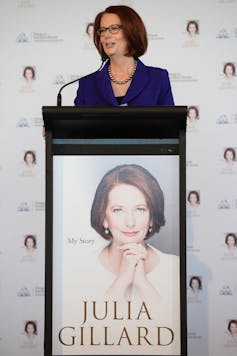
Writing a memoir can be a lucrative option for ex-PMs.
Dean Lewins/AAP

The problem for ex-prime ministers today is that the dynamics of political careers have changed. Politics was once essentially a profession; now, it is more commonly a stage in a career and those leaving the job are often only in their fifties.

Billy Hughes was for a time Australia’s longest-serving prime minister, in the role from late 1915 through to early 1923. But these were but a few years in a political career that stretched from his election to the New South Wales parliament as an early Labor member in 1894, to serving in the House of Representatives with several parties from 1901 through to his death in 1952. Another Billy, McMahon, continued in parliament for almost decade after his defeat at the 1972 election, offering commentary on his own side of politics that was rarely cherished.

Ironically, the greatest harm McMahon did to his party after 1972 was an ill-timed resignation that saw his seat of Lowe go to Labor. But when prime ministers deposed by their own side have stayed on – Hughes, John Gorton, Rudd and Tony Abbott – they can do their successors a little or a lot of damage.

Gorton appeared in a whisky ad, and Whitlam advertised pasta sauce and telephones. Morrison made his career in marketing and gained a public profile over the controversial “Where the bloody hell are you?” Australian tourism ad.

A master spruiker, perhaps the answer to Morrison’s dilemma lies under his nose.

The Conversation

Frank Bongiorno does not work for, consult, own shares in or receive funding from any company or organisation that would benefit from this article, and has disclosed no relevant affiliations beyond their academic appointment.

ref. Author, ambassador, commentator, critic? It’s not always easy to earn a crust as a former PM – https://theconversation.com/author-ambassador-commentator-critic-its-not-always-easy-to-earn-a-crust-as-a-former-pm-209401
‘Humanity’s signature’: study finds plastic pollution in the world’s lakes can be worse than in oceans

Source: The Conversation (Au and NZ) – By David Hamilton, Professor, Griffith University

A world-first study has found concentrations of plastics in some lakes are higher than in the most contaminated parts of oceans, demonstrating the extent to which plastics have invaded Earth’s ecosystems.

In a study released today, researchers sampled 38 lakes and reservoirs around the world, including in Australia, the United States, United Kingdom and Europe. Plastics and microplastics were found at every site, including very remote locations.

Lakes are sentinels for human activity. Many lakes are already suffering from issues such as algal blooms, deoxygenation, over-extraction and drying. Plastic contamination adds yet another threat to these highly stressed ecosystems.

The plastics problem

After plastics enter the environment, they generally break up and become smaller and smaller. Eventually they become microplastics – defined as particles less than 5 mm in size.

Plastic takes decades to disappear. It can harm ocean and aquatic life and contaminate water used by humans.

Plastics can be washed into lakes from the adjacent land areas. Lake water can sit for a long time without being flushed out, allowing plastics to accumulate.
We don’t yet know much about whether microplastics are absorbed by filter feeding organisms such as clams, mussels and zooplankton, and how plastics affect the food chain.

Plastic debris is widespread in freshwater ecosystems. But much of the focus has been on marine ecosystems, and knowledge of the scope of the problem in lakes and reservoirs has been hampered by a lack of appropriate data. Our research set out to close this gap.


Read more:
Plastic pollution threatens birds far out at sea – new research


What we did

A global team of scientists, of which we were part, examined the abundance and type of plastic debris in freshwater ecosystems. Surface waters were sampled in 38 lakes and reservoirs across 23 countries (mostly in the Northern Hemisphere) and six continents.

Importantly, we used a standardised collection and analysis method, including very fine plankton nets to sample the plastic debris. These steps allowed for comparisons between lakes.

Broadly, we found plastic debris in all lakes studied. Most plastics were in the microplastic size range. However, concentrations varied widely.

Some 21 lakes had low concentrations – below one particle per cubic metre (m³). Of the remainder, 14 lakes had concentrations between one and five particles per m³ and three lakes had concentrations higher than five particles per m³.

Forest Lake in Brisbane was the Australian study site. It’s a popular urban lake used by many people for recreation. This lake had three plastics particles per cubic metre, ranking it sixth worst among the 38 lakes sampled.

The three most polluted lakes were, in order, Lake Lugano (Switzerland, Italy), Lake Maggiore (Italy) and Lake Tahoe (US).

In each of these lakes, plastic concentrations reached or exceeded those in “floating garbage patches” – marine areas collecting large amounts of debris, such as the Great Pacific Garbage Patch. These ocean areas were previously thought to be the worst cases of plastic pollution in water environments.

These three polluted lakes – as well as the heavily contaminated Lough Neagh in Northern Ireland – are also important sources of drinking water for local communities.


Read more:
Whales and dolphins found in the Great Pacific Garbage Patch for the first time


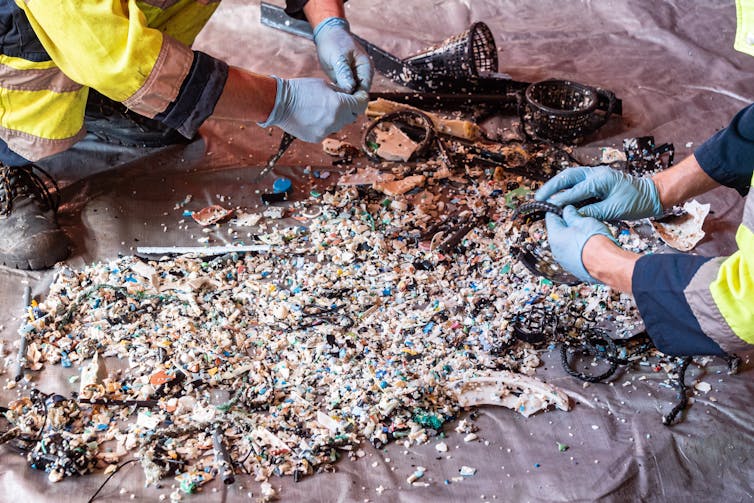
hands sorting plastic debris
A crew sorting plastic debris collected from the Great Pacific Garbage Patch in 2019.
The Ocean Cleanup

Where is the plastic coming from?

The second part of our study sought to identify the landscape factors affecting the abundance and type of plastic debris.

More than 90% of the plastic particles belonged to two shape categories: fibres and fragments. We even found textile fibres in lakes and reservoirs in remote areas with limited human presence, such as Avery Lake in the US state of Michigan.

Our analysis indicated two types of lake are particularly vulnerable to plastic contamination: those in highly urbanised and populated areas, and those with a large surface area.

The most common colour of plastic particle was black (30%), followed by transparent (24%), blue (18%) and white (13%). The low concentrations of particles in bright colours, such as red, suggests these more visible plastics may have been mistaken by aquatic organisms for food, and ingested.

So what next?

Marine environments are generally considered the final resting place for plastic debris. But our research confirms plastic concentrations in freshwater ecosystems can be higher than those in oceans.

Our results indicate that lakes play a major role in the global plastic cycle. This points to an urgent need to develop management policies to reduce plastic pollution in freshwater lakes. This, in turn, will help prevent plastics from entering waterways and ending up in marine systems.

We don’t know how much plastic debris ends up in water supplies. We suggest this gap be addressed as soon as possible, and the ecological harm caused by microplastics should become a global management and research priority.

Our study also underscores the urgent need for coordinated, systematic monitoring of plastic pollution.

Sadly, it seems no lake can be considered truly “pristine” with respect to plastic pollution. Our research serves as yet another unfortunate reminder of humanity’s indelible signature on nature.


Read more:
We have no idea how much microplastic is in Australia’s soil (but it could be a lot)


The Conversation

David Hamilton receives funding from the Australian Research Council.

Mohammadhassan Ranjbar receives funding from the Australian Research Council.

Justin Brookes does not work for, consult, own shares in or receive funding from any company or organisation that would benefit from this article, and has disclosed no relevant affiliations beyond their academic appointment.

ref. ‘Humanity’s signature’: study finds plastic pollution in the world’s lakes can be worse than in oceans – https://theconversation.com/humanitys-signature-study-finds-plastic-pollution-in-the-worlds-lakes-can-be-worse-than-in-oceans-209487

Another assault on Country and its precious species has begun at Binybara/Lee Point

Source: The Conversation (Au and NZ) – By John Woinarski, Professor of Conservation Biology, Charles Darwin University

In federal Environment Minister Tanya Plibersek’s first major speech, she said:

If we continue on the trajectory that we are on, the precious places, landscapes, animals and plants that we think of when we think of home may not be here for our kids and grandkids.

Yet, as you read this, the bulldozers are poised to destroy habitat for threatened species, subvert traditional cultural values and jeopardise a fabulous aspect of Darwin’s natural environment at Lee Point/Binybara. The government’s decision to approve this loss shows a continuing disregard for nature, cultural heritage and the legacy our descendants will inherit.

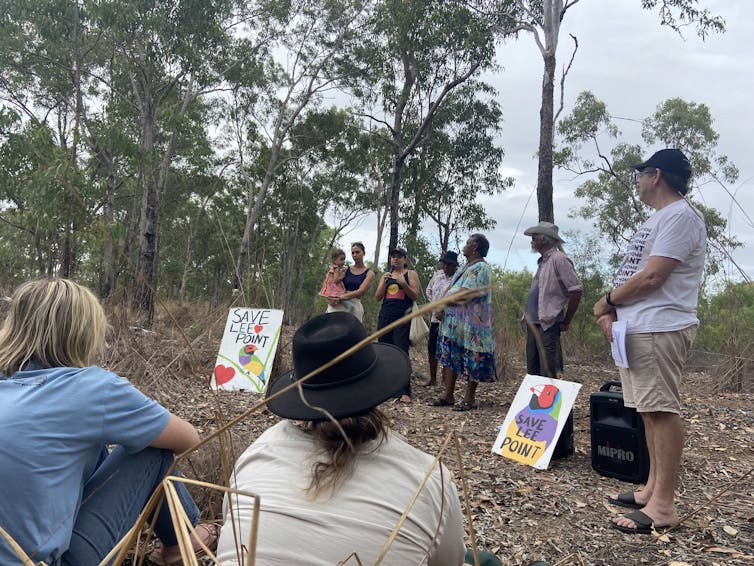
The battle to protect Binybara – as it is known to its Traditional Owners – has galvanised the local community. But the issues at stake are much broader and expose the tick-a-box nature of our unsatisfactory environmental laws.

The clearing of over 100 hectares of savanna woodland at Binybara for a defence housing development was first approved in 2019. When endangered Gouldian finches turned up in their hundreds last year, Plibersek agreed to reconsider the approval.

But in June this year the minister decided the development could proceed with a few more conditions. Last week, Traditional Owners, Darwin locals and ecologists from a nearby conference watched as the first trees were felled.

On Friday there was a reprieve: a ten-day pause to consider the Larrakia people’s concerns.


Read more:
97% of Australians want more action to stop extinctions and 72% want extra spending on the environment


What’s at stake?

The conflict between conservation or destruction at Binybara has global, national and local contexts.

The shoreline near the proposed housing is a globally significant site on the flyway of many shorebirds that migrate from eastern Asia to Australia each year. These birds face threats from habitat loss and degradation across their range. Their numbers are in steep decline.

Northern Australia has to date provided some respite from disturbance for these travellers. But an 800-home development would increase human activity and disturbance at a site already under pressure.

eastern curlews taking flight
Critically endangered eastern curlews, which are highly sensitive to disturbance, are among the shorebirds found near the site.
Shutterstock

The national context is that most of our threatened species continue to decline. It’s often a result of an ongoing series of small losses – a patch of bushland cleared here, a population lost there. We cannot reduce the risks of extinction, let alone restore biodiversity, if these losses continue.

Binybara’s incredible richness of birds is valued by locals and tourists alike. Regarded as one of the world’s most beautiful birds, the Gouldian finch’s presence on the outskirts of Darwin is a particular blessing. The proposed development will jeopardise this population, particularly by destroying trees whose hollows provide potential nest sites.

The project’s environmental impact statement acknowledged it would also have a significant impact on another endangered species, the black-footed tree-rat. Tree felling would likely cause deaths of individuals and loss of hollows on which the species depends.


Read more:
Land clearing and fracking in Australia’s Northern Territory threatens the world’s largest intact tropical savanna


A deep cultural significance

The Larrakia people’s deep and rich cultural ties to this area stretch back millennia. For them, Binybara is a sacred place.

It’s here that their ancestor Binybara transforms into a bird to fly out to see her husband Darriba Nungalinya.

The birdlife, from the migrating shorebirds to the owls, kites, eagles and Gouldian finches, is integral to the ecosystems and to the cultural fabric and story of this place. Generations of Larrakia people have lived, hunted, gathered foods, sourced materials and performed ceremonies here.

Binybara Traditional Owners speak at a rally on site.
Martine Maron, Author provided

The woodlands provide foods such as the bowit-jba or bush potato (Brachystelma glabriflorum), datbing-gwa or sugarbag, green plum (Buchanania obovata), milky plum (Persoonia falcata), emu berry (Grewia retusifolia), possum (gutjgutjga), wallaby (milulu-la) and goanna (damiljulberreba).

Eucalyptus miniata timber is used for didjeridoo, harpoons, walking sticks, digging sticks and good firewood. Eucalyptus tetrodonta provides medicine and bark canoes. The bark and timber are also used for traditional houses. Erythrophleum chlorostachys (delenyng-gwa) leaves are used for smoking ceremonies and the inner bark for medicine to treat sores and deep wounds.

Hibiscus tiliaceus (lalwa) is a source of string for ropes, nets and harpoons. Its straight stems are used for fishing spears. Casuarina equisetifolia provides digging sticks for turtle eggs, firewood and beach shade. The paperbark from Melaleuca species (gweybil-wa) is used for cooking, bedding and roofing material, dugout canoes and rafts, while the leaves have medicinal uses.

Timber from the calendar plant, Acacia auriculiformis (gwalamarrwa), is used for clapsticks, while the pods are used medicinally. Dance practice for funerals happens here, using gwalamarrwa leaves.

It’s likely shell middens, artefact scatters and clay pits will need to be surveyed. There is a possible burial site in the area, a well and a registered sacred site at the tip of Lee Point. Tree burials, where the deceased was placed in a tree, may have taken place, so there may be scarred trees here.

The ten-day reprieve is due to an emergency application sought by the Traditional Owners under the federal Aboriginal and Torres Strait Islander Heritage Protection (ATSIHP) Act. They ask for a management plan to protect their cultural heritage to be developed with their input and that of experts and Darwin locals who value this place.


Read more:
Recognising Indigenous knowledges is not just culturally sound, it’s good science


A(nother) failure of national environment law

The main change to the approval was to require plans be developed to offset the loss of 94 hectares of Gouldian finch habitat. What those offsets are – or whether they are even possible – is not yet known.

This kind of “backloading” of offset conditions is highly risky. By the time the difficulty of finding a suitable offset site becomes clear, it is often too late – the habitat is gone.

Just two weeks ago, Plibersek ordered an audit of 1,000 environmental offset sites. “It’s not clear whether offset arrangements prevent environmental decline,” she said.


Read more:
Developers aren’t paying enough to offset impacts on koalas and other endangered species


What we do know is that old-growth habitat features, such as tree hollows, are irreplaceable. And inherently place-based cultural values cannot be offset. This is ever more important as the Northern Territory moves to ramp up land clearing for cotton growing and gas development.

Another new condition is to maintain a 50-metre buffer zone around a dam where the finches drink. It’s a tokenistic measure, as the finches disperse hundreds of metres to feed and further to nest in old-growth hollow trees, like those in the areas to be cleared.

The case of Binybara exemplifies many of the failings of the Environment Protection and Biodiversity Conservation (EPBC) Act identified by the Samuel review. The test of the government’s promised reforms to the EPBC Act will be whether decisions like this continue to be made, leading to the loss of irreplaceable habitats and sacred cultural heritage.

Right now, the future of Binybara hangs by a thread.


Read more:
Get the basics right for National Environmental Standards to ensure truly sustainable development


The Conversation

John Woinarski receives has received funding from the Australian government’s National Environmental Science Program. He is a councillor with the Biodiversity Council and a member of the board of the Australian Wildlife Conservancy.

Lorraine Williams is an elder of the Larrakia Danggalaba clan, the Traditional Owners who sought an emergency application under the federal ATSIHP Act to halt the development.

Martine Maron has received funding from various sources including the Australian Research Council, the Queensland Department of Environment and Science, Bush Heritage Australia, and the Australian government’s National Environmental Science Program. She is a member of the Wentworth Group of Concerned Scientists, a councillor with the Biodiversity Council, a member of the board of the Australian Wildlife Conservancy and BirdLife Australia, and a governor of WWF-Australia.

ref. Another assault on Country and its precious species has begun at Binybara/Lee Point – https://theconversation.com/another-assault-on-country-and-its-precious-species-has-begun-at-binybara-lee-point-209335

Plastic pollution in some NZ lakes is comparable to northern hemisphere lakes in highly populated areas, global study finds

Source: The Conversation (Au and NZ) – By Deniz Ozkundakci, Associate Professor of Lake and Freshwater Science, University of Waikato

Shutterstock/Troy Wegman

The level of microplastic pollution in New Zealand lakes is comparable with those in the US or Europe, despite much lower population densities, according to our global analysis of plastic pollution in freshwater lakes and reservoirs.

Globally, our results show two types of lakes are particularly vulnerable to plastic contamination: those in densely populated and urbanised areas and large lakes with long water retention times.

In some lakes, we found plastic fragments are accumulating at higher concentrations than in the so-called “garbage patches” in the ocean.

Of the three New Zealand lakes included in the study – Rotorua, Taharoa and Wiritoa – microplastic pollution was highest in Lake Rotorua, equal to lakes in the northern hemisphere with much larger populations living along their shores.

Our study is the first to develop a standardised protocol for looking at microplastics in lakes and across a range of environmental conditions. This allows us to quantify the pollution, compare lakes and extrapolate results from these case studies to other systems.

Globally, lakes in or near built-up areas were significantly more polluted than those in less populated areas. But not a single lake in this study was unaffected by plastic pollution, no matter how far it was from human activity.

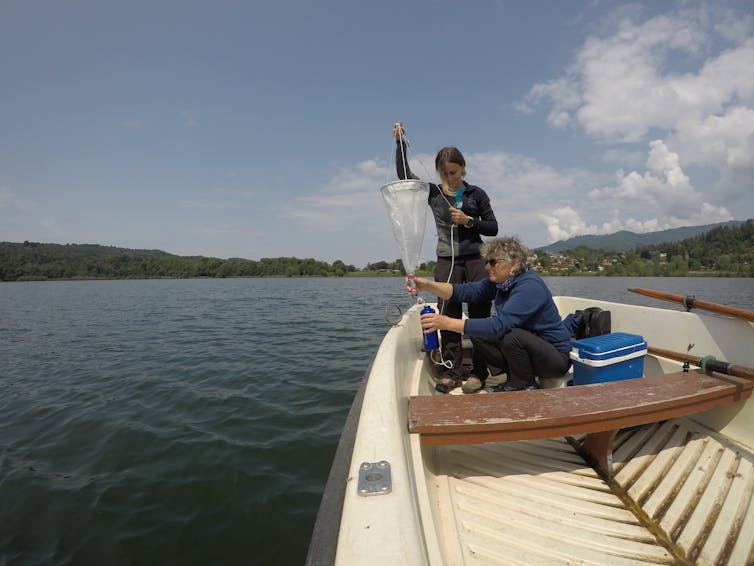
Two women take samples from a boat on a lake.
All lakes in this study showed microplastic pollution, but lakes in more populated areas generally had higher levels.
Veronica Nava, CC BY-SA

The findings for New Zealand lakes are disappointing for a country that prides itself on a green image. Discovering this much plastic in lakes is a reflection of our current state of environmental ethics and stewardship.

We need to become more aware of the effects of our use of products with short life cycles to lessen the environmental degradation that results from their disposal.


Read more:
‘Humanity’s signature’: study finds plastic pollution in the world’s lakes can be worse than in oceans


Lakes as sinks for pollution

The global lake ecological observatory network (GLEON) collected samples for our analysis. The samples cover 38 lakes across 23 different countries and six continents.

While a lot of research has investigated microplastic pollution in the ocean, there are very few studies on microplastics in freshwater ecosystems. But most lakes are long-term sinks for contaminants and pollutants, including microplastics.

We specifically measured levels of small plastic particles, from microplastics to macroplastics, measuring 5-10mm in diameter.

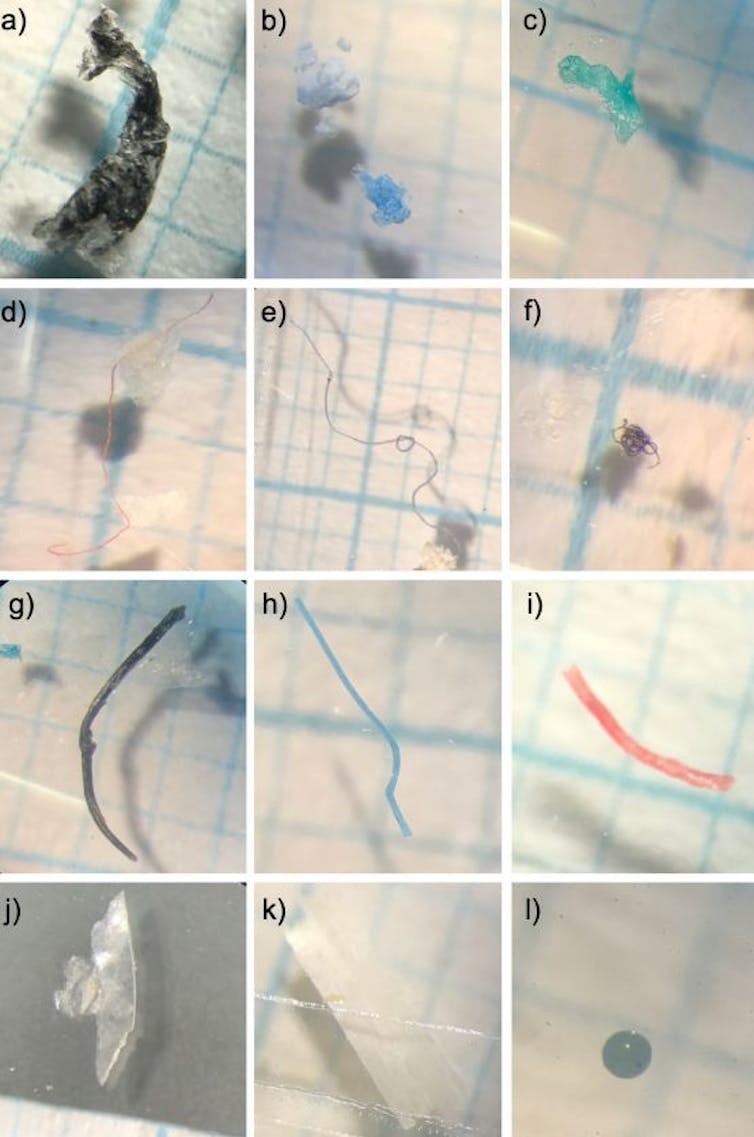
Images of different shapes of plastic particles collected in water samples, showing fragments (a–c), fibre (d–f), filaments (g–i), film ( j,k) and pellets (l).
Images of different shapes of plastic particles collected in water samples, showing fragments (a–c), fibre (d–f), filaments (g–i), film (j,k) and pellets (l).
Author provided, CC BY-SA

We found mostly fragments and fibres of plastics that are generally considered easy to recycle – not the hard-to-recycle plastics currently being phased out in New Zealand.

This means we have to investigate more closely how these easily recyclable plastics remain in the environment and get into lakes. But the issue of plastic debris in lakes is severely understudied in New Zealand.


Read more:
My art uses plastic recovered from beaches around the world to understand how our consumer society is transforming the ocean


Ecological impacts

We collected and filtered hundreds of thousands of litres of water to have representative samples for each lake.

Some of the smaller fragments, which were predominant in the samples, are small enough to be ingested by various organisms, mostly fish and filter feeders such as freshwater mussels.

I worry that we underestimate the effects of plastics on the food web. Although our samples represent a snapshot, we know New Zealand lakes are home to a diversity of native and introduced fish and mussels, some of which are harvested.

Plastic pollution in lakes could also impact sources of drinking water. We are concerned about growing evidence of chemical leaching from plastics into water.


Read more:
Restoring the Great Lakes: After 50 years of US-Canada joint efforts, some success and lots of unfinished business


One of the most important things we should take away from this work is that it serves as an early warning. To identify the extent of plastic pollution across New Zealand lakes, a nationwide baseline survey, using the same standardised methodology, would be a good starting point.

The next step would be to better understand the sources and identify any hotspots of microplastics to inform management to reduce the level of pollution.

The Conversation

Deniz Ozkundakci receives funding from the Bay of Plenty Regional Council and currently holds the Toihuarewa Waimāori – Bay of Plenty Regional Council Chair in Lake and Freshwater Science.

ref. Plastic pollution in some NZ lakes is comparable to northern hemisphere lakes in highly populated areas, global study finds – https://theconversation.com/plastic-pollution-in-some-nz-lakes-is-comparable-to-northern-hemisphere-lakes-in-highly-populated-areas-global-study-finds-209509

New findings show a direct causal relationship between unemployment and suicide

Source: The Conversation (Au and NZ) – By Jo-An Occhipinti, Assoc. Professor and Head of Systems Modelling, Simulation & Data Science, Brain and Mind Centre, University of Sydney

Shutterstock

Studies using traditional statistical methods have long indicated a link between unemployment and suicide. But until now it has been unclear if this relationship is causal. That is, even though the suicide rate is higher among the unemployed, can we definitely say unemployment directly leads to suicide?

We now can. Using advanced analytic techniques borrowed from ecology we have found clear evidence of a causal relationship.

Based on Australian Bureau of Statistics data on underutilised labour and suicide rates, we estimate that unemployment and underemployment in the 13 years from 2004 to 2016 directly resulted in more than 3,000 Australians dying by suicide – an average of 230 a year.

These findings have profound political, economic, social and legal implications, particularly in light of government and central bank policies that “require” unemployment.

How we detected causality

To test for causal effects of unemployment and underemployment on suicide, we applied a technique known as convergent cross mapping.

This method has been developed over the past decade to detect causality in complex ecosystems. Among other things, it has been used to study and show causal relationships between carbon dioxide and global warming, and how different parts of the brain affect each other. The period of our study (2004 to 2016) was bound by the quality of available data.


Challenging economic orthodoxies

A clear relationship between unemployment and suicide challenges governments and institutions to take greater responsibility for the impact of policies and actions. It challenges the ethics of ideas that require some level of unemployment for economic efficiency.

For example, last month the Reserve Bank of Australia’s deputy governor, Michele Bullock, said the unemployment rate would have to rise to curb inflation. The central bank expects the unemployment rate to rise to 4.5% by the end of 2024. The current rate is 3.6%, with a further 6.3% of workers underemployed.

As Bullock noted, “full employment” to most people means that anyone who wants a job can find one. But most economists believe there is a need for a certain level of unemployment to prevent inflation.

This level is known as the Non-Accelerating Inflation Rate of Unemployment (NAIRU). It’s a theoretical concept, so there’s no way to be sure what the level should be, but before the pandemic the consensus was that it was about 5%.


Read more:
With unemployment steady at 3.5%, inflation fears shouldn’t stop Australia embracing a full employment target


Impetus for far-reaching reform

These findings of the human cost of joblessness bolsters the case for policies to achieve full employment as well as reduce the negative consequences of unemployment, through providing a liveable income and strengthening mental health systems.

Why should the unemployed face deprivation, stigmatisation and despair when unemployment is a consequence of deliberate policy decisions?

We hope our findings will spur discussions about expanding unemployment benefits and labour market reforms to achieve greater job security. We also hope to provoke a deeper conversation about the design of the economy and how it values people, beyond simply making money.

Building on the ideas of University of Queensland economist John Quiggin, the Mental Wealth initiative is proposing a social participation wage. Set at the rate of a liveable wage, it would recognise the social value of unpaid volunteer work, civic participation, environmental restoration, artistic and creative activity, and activities that strengthen the social fabric of nations.


Read more:
Meet the Liveable Income Guarantee: a budget-ready proposal that would prevent unemployment benefits falling off a cliff


Legally there are implications concerning duty of care and the obligation of governments and institutions to safeguard the wellbeing of the population. These findings should contribute to discussions about legal frameworks relating to employment, work health and safety, discrimination and human rights.

A direct causal relationship between unemployment and suicide demands a re-evaluation of policies, a prioritisation of full employment, adequate social safety nets to prevent poverty, mental-health system reform, and greater urgency in shifting to a wellbeing economy.

The Conversation

Jo-An Occhipinti is Managing Director of Computer Simulation & Advanced Research Technologies, an international alliance of centres of excellence in systems modelling to inform health and social policy. She also receives philanthropic funding from BHP Foundation for implementation of the ‘Right care, first time, where you live’ program working to strengthen youth mental health systems.

Adam Skinner is supported by philanthropic funding from The Grace Fellowship, and from other donor(s) that are families affected by mental illness who wish to remain anonymous.

Professor Ian Hickie is the Co-Director, Health and Policy at the Brain and Mind Centre (BMC) University
of Sydney. The BMC operates an early-intervention youth services at Camperdown under contract to
headspace. He is the Chief Scientific Advisor to, and a 3.2% equity shareholder in, InnoWell Pty Ltd.
InnoWell was formed by the University of Sydney (45% equity) and PwC (Australia; 45% equity) to
deliver the $30 M Australian Government-funded Project Synergy (2017-20; a three-year program for
the transformation of mental health services) and to lead transformation of mental health services
internationally through the use of innovative technologies.

Yun Ju Christine Song receives funding from BHP Foundation for the implementation of the ‘Right care, first time, where you live’ program working to strengthen youth mental health systems.

ref. New findings show a direct causal relationship between unemployment and suicide – https://theconversation.com/new-findings-show-a-direct-causal-relationship-between-unemployment-and-suicide-209486

The French Revolution executed royals and nobles, yes – but most people killed were commoners

Source: The Conversation (Au and NZ) – By Claire Rioult, PhD candidate in Early Modern History, Monash University

Wellcome Collection

For a lot of people, mention of the French Revolution conjures up images of wealthy nobles being led to the guillotine. Thanks to countless movies, books and half-remembered history lessons, many have been left with the impression the revolution was chiefly about chopping off the heads of kings, queens, dukes and other cashed-up aristocrats.

But as we approach what’s known in English as Bastille Day and in French as Quatorze Juillet – a date commemorating events of July 14 in 1789 that came to symbolise the French Revolution – it’s worth correcting this common misconception.

In fact, most people executed during the French Revolution – and particularly in its perceived bloodiest era, the nine-month “Reign of Terror” between autumn 1793 and summer 1794 – were commoners.

As historian Donald Greer wrote:

[…] more carters than princes were executed, more day labourers than dukes and marquises, three or four times as many servants than parliamentarians. The Terror swept French society from base to comb; its victims form a complete cross section of the social order of the Ancien régime.


Read more:
What is Bastille Day and why is it celebrated?


The ‘national razor’

The guillotine was first put to use on April 15 1792 when a common thief called Pelletier was executed. Initially seen as an instrument of equality, however, the guillotine soon acquired a grim reputation for its list of famous victims.

Miniature guillotine, French revolution era, Musée Carnavalet.
Les musées de la ville de Paris

Among those who died under the “national razor” (the guillotine’s nickname) were King Louis XVI and Queen Marie Antoinette, many revolutionary leaders such as Georges Danton, Louis de Saint-Just and Maximilien Robespierre. Scientist Antoine Lavoisier, pre-romantic poet André Chénier, feminist Olympe de Gouges and legendary lovers Camille and Lucie Desmoulins were among its victims.

But it wasn’t just “celebrities” executed at the guillotine.

While reliable figures on the definitive number of people guillotined during the Revolution are hard to find, historians commonly project between 15,000 and 17,000 people were guillotined across France.

The bulk of it occurred during the the Reign of Terror.

When the decision was made to centralise all (legal) executions in Paris, 1,376 people were guillotined over just 47 days, between June 10 and July 27 1794. That’s about 30 a day.

The bulk of the executions occurred during the The Reign of Terror.
Bibliothèque nationale de France

The guillotine wasn’t the only method

However, the guillotine represents just one way people were executed.

Historians estimate around 20,000 men and women were summarily killed – either shot, stabbed or drowned – during the Terror across France.

They also estimate that in just under five days, 1,500 people died at the hands of Parisian mobs during the 1792 September massacres.

More broadly, around 170,000 civilians died in the civil Wars of the Vendée, while more than 700,000 French soldiers lost their lives across the 1792-1815 period.

The vast majority of these people killed were ordinary French men and women, not members of the elite.

Overall, Greer estimates 8.5% of the Terror’s victims belonged to the nobility, 6.5% to the clergy, and 85% to the Third Estate (meaning non-clerics and non-nobles). Women represented 9% of the total (but 20% and 14% of the noble and clerical categories, respectively).

Priests who had refused to take the oath of loyalty to the Revolution, émigrés who had fled the country, hoarders and profiteers who made the price of bread much dearer, or political opponents of the moment, all were deemed “enemies of the Revolution”.

Why was so much blood shed during the Reign of Terror?

The paranoia of the regime in 1793–94 was the result of various factors.

France fought at its borders against a coalition led by Europe’s monarchs to nip the revolution in the bud before it could threaten their thrones.

Meanwhile, civil war ravaged the west and south of France, conspiracy rumours circulated across the country, and political infighting intensified in Paris between opposing factions.

All these factors led to a series of laws voted up in late 1793 that enabled the expedited judgement of thousands of people suspected of counterrevolutionary beliefs.

The measures contained in the infamous “Law of Suspects” were, however, relaxed in the summer of 1794 and completely abolished in October 1795.

Queen Marie Antoinette led to her execution on a horse-cart on the 16th of October 1793.
The fate of Queen Marie-Antoinette and its many depictions in pop culture has influenced how many people think of the Revolution.
Aquatint with engraving by C. Silanio after Aloisin, 1793/Wellcome Collection

How the focus came to be on beheaded nobility

For many people, however, mention of this period of French history leads to the vision of a bloodthirsty Revolution indiscriminately sending to their death thousands of nobles.

This is largely influenced by the fate of Queen Marie-Antoinette and its many depictions in pop culture.

British counter-revolutionary propaganda in the 1790s and 1800s also helped popularise the idea that aristocrats were martyrs and the main victims of revolution executioners.

This representation was mostly forged via the abundant publication in the 19th century of memoirs and diaries of survivors and relatives of victims, usually from the social and economic elite fiercely opposed to the Revolution and its legacy.

A broader legacy

Beyond the guillotine and the Reign of Terror, the legacies of the revolution run far deeper.

The revolution abolished entrenched privileges based on birth, imposed equality before the law and opened the door to emerging forms of democratic involvement for everyday citizens.

The Revolution ushered in a time of reforms in France, across Europe and indeed across the world.

The Conversation

The authors do not work for, consult, own shares in or receive funding from any company or organisation that would benefit from this article, and have disclosed no relevant affiliations beyond their academic appointment.

ref. The French Revolution executed royals and nobles, yes – but most people killed were commoners – https://theconversation.com/the-french-revolution-executed-royals-and-nobles-yes-but-most-people-killed-were-commoners-200455

Health research must be ethical – we can do more to make sure that’s the case for young trans people and their families

Source: The Conversation (Au and NZ) – By Cristyn Davies, Research Fellow in Child and Adolescent Health, Faculty of Medicine and Health, University of Sydney

Shutterstock

Monday’s Four Corners program on gender affirming care highlighted concerns about research undertaken with 79 young trans people and their families who sought help at the Children’s Hospital Westmead.

Since the Four Corners episode, the New South Wales health minister has announced a review of the scientific evidence related to health care for young trans people.

One family who took part in the research featured in the ABC program expressed shock and distress at how they and others in their community were represented and how the study was framed when it was published. The research suggested links to family trauma and dysfunction and high rates of “desistance” (defined in the research as the resolution or disappearance of gender-related distress).

The program raised important questions about ethical research. What are the obligations of researchers and ethics committees to ensure the best outcomes? How can we ensure ethical principles for young trans people and their families are met – especially when they might see research as one of few avenues for accessing care? How do young trans people and their families know when they should or shouldn’t sign up?


Read more:
Family support protects trans young people – but their families need support too


Obligations and oversight

In Australia, a human research ethics committee must assess research conducted with people before it’s given the go-ahead. These committees are often located in universities, government departments and hospitals. They include a chairperson, members of the public and people with expert knowledge and current experience in research.

Ethics committees aim to ensure research proposals meet ethical principles and guidelines. These say research should be respectful, culturally safe and undertaken in the best interest of the individuals and communities.

Marginalised communities, in particular, need culturally safe research. This includes trans young people, many of whom experience anxiety and depression as a result of stigma and discrimination.

Ensuring research participants are culturally safe means they feel accepted and are socially, emotionally and physically protected from harm when participating in health research. Cultural safety includes recognising research participants may have more than one marginalised identity, such as young Aboriginal trans people or young trans people with a disability.

Researchers and ethics committees also must ensure research is conducted ethically. Doing research responsibly includes being open and honest in developing, undertaking and accurately reporting research findings.


Read more:
Yes, words can harm young trans people. Here’s what we can do to help


What about young trans people and their families?

“Do good”, “do no harm”, and “nothing about us without us” are fundamental ethical principles. Accordingly, it is expected research with young trans people and their families is undertaken ethically, responsibly and with integrity.

Young trans people and their families need to be involved throughout the research process. Partnerships must be established before research proposals are submitted to ethics committees for approval. Working in partnerships with trans children, young people, their families, and communities builds mutual trust, respect, and accountability.

When young trans people and their families are not meaningfully included as research partners, research findings can be misinterpreted. This can cause harm to young people and their families.

The Wellbeing, Health & Youth engagement framework co-produced with young people from different marginalised groups presents a set of values and practical questions for researchers that promote ethical engagement with young people. These include looking at how co-design can create an approach that is youth-centred, strengths-based and focused on
maximising opportunities for health and wellbeing.

When engagement includes mutual trust and accountability, diversity and inclusion, and equity and responsiveness, participants and their loved ones are unlikely to feel shock at how their experiences are presented.

How can young trans people and their families assess research ethics?

Participants should be presented with clear information about what the study will involve and the implications of participation. Before deciding on whether to participate in research, young trans people and their families should know their rights in research settings including the right to complain and what happens to their personal data if they withdraw.

Helpful questions to ask before consenting to participate in research include:

  • do the researchers have expertise in trans children and young people’s health?
  • what organisations do they work for?
  • why are they doing the research?
  • how connected are they to the communities they are researching?

Participation in research should be a choice. It should not involve any kind of coercion, such as feeling that not participating in the research would mean a person would not get the same access to gender-affirming health care.

Young person wearing makeup
Young person Brock was interviewed by Four Corners and is receiving gender-affirming care.
ABC Four Corners: Mat Marsic

Robust research is needed

Young trans people and their families experience significant marginalisation and health inequity.

Robust research is vital to reducing this health inequity and improving the health and wellbeing of young trans people.

To ensure this research is of the highest standard, ethics committees must have the expertise to uphold ethical principles in research involving trans children and adolescents. They may need more training and should seek independent guidance from subject experts, including from people with lived experience.

As the Four Corners program shows, high-quality guidelines specifically for research with trans people, including children and adolescents, are urgently needed.

The Conversation

Cristyn Davies reports voluntarily being co-chair of the Human Rights Council of Australia; co-chair of the Child and Youth Special Interest Group for the Public Health Association of Australia; a board director of the Australian Association of Adolescent Health; an ambassador to Twenty10 Incorporating the Gay and Lesbian Counselling Service of New South Wales; and co-chair of the research committee for the Australian Professional Association for Trans Health.

Rachel Skinner is affiliated with the NSW Ministry of Health, Sydney Children’s Hospitals Network, Australian Association of Adolescent Health, Society of Adolescent Health and Medicine, Australian Professional Association of Transgender Health

Sav Zwickl works for the Trans Health Research Group, Department of Medicine (Austin Health), The University of Melbourne and is affiliated with the Australian Professional Association for Trans Health.

Kerry H. Robinson does not work for, consult, own shares in or receive funding from any company or organisation that would benefit from this article, and has disclosed no relevant affiliations beyond their academic appointment.

ref. Health research must be ethical – we can do more to make sure that’s the case for young trans people and their families – https://theconversation.com/health-research-must-be-ethical-we-can-do-more-to-make-sure-thats-the-case-for-young-trans-people-and-their-families-209522

Australia can learn from the UK’s experience by making banks pay for scam losses

Source: The Conversation (Au and NZ) – By Muhammad Al Mamun, Senior Lecturer in Finance, La Trobe University

Shutterstock

British banks will soon be required to reimburse customers who fall victim to authorised push payment fraud – where a scammer convinces you to authorise a payment, generally by masquerading as a legitimate business or person.

The new rules from the UK’s Payment Systems Regulator are intended to incentivise all businesses involved in payments to take more action against scam activity, with reimbursement costs split 50:50 between the bank that sends and the bank that receives the payment.

There is a strong case that banks and other payment providers in Australia (and New Zealand) should be made to do the same. Scam-related losses are soaring, and banks are falling short of detecting, stopping and recovering losses.

In 2022 Australians lost at least $3.1 billion to scams – an 80% increase on 2021. The Australian Competition and Consumer Commission says the actual losses were far higher, because about 30% of victims don’t report their loss to anyone.

While the biggest losses came from investment scams (totalling $1.5 billion), payment redirection scams – where a scammer impersonates a business or individual asking for payment – amounted to A$224 million.

Among the most vulnerable groups are older people (25% of losses were reported by those aged 65+), people with a disability (6% of reported losses), and people from culturally and linguistically diverse communities (almost 10% of reported losses).


Read more:
Australians lost more than $3bn to scammers in 2022. Here are 5 emerging scams to look out for


What are Australian banks doing?

No regulations oblige Australian banks to reimburse scam victims, though some banks
have self-governed reimbursement policies.

While banks have dedicated fraud teams to prevent scams and support victims, the most recent review of the four major banks’ processes by the Australian Investments and Securities Commission, published in April, says they detected and stopped just 13% of scam payments.

Reimbursement policies and practices varied from bank to bank but the overall rate was low – ranging from 2% to 5%.

The review described the banks’ approaches to liability, reimbursement and compensation as “inconsistent and generally very narrow”.

Why the UK has made banks responsible

The greater obligations being imposed on British banks follows attempts by the UK’s Payment Systems Regulator to improve consumer protections through a voluntary code of conduct.

Introduced in May 2019, this voluntary code was intended, under certain conditions, to ensure the reimbursement of victims of “authorised push payment” scams. These conditions included the customer taking reasonable care and notifying any scam incident to the bank.

It had modest success, with 46% of reported scam losses being reimbursed between 2020 and 2022.

But the Payment Systems Regulator wants 95%. So it has pressed for a mandatory reimbursement scheme. Under the new provisions money must be reimbursed within 48 hours of a fraud being reported.

The idea is to get banks to put more effort into detecting and preventing scams.

Overall, the UK has accepted the need for a more regimented regulatory approach over a market-based one.

A more pragmatic approach needed

While the Australian Investments and Securities Commission’s own reports have revealed the sorry state of scam prevention, management, and reimbursement practices at major banks, the regulatory body is still not walking in the footsteps of the UK. It is instead advising banks to improve their governance and scam management practices.

The Australian Banking Association, which represents the banking sector, has strongly argued against regulation supporting mandatory reimbursement. It has even suggested this could increase scamming losses because of the risk customers will take less care if they know any losses will be covered by their bank. It has called for greater personal responsibility in preventing scam losses.

But such an argument ignores the effects of the digitisation push by financial service providers, which has made scamming so much easier. Scammers are also becoming more sophisticated.


Read more:
Scams, deepfake porn and romance bots: advanced AI is exciting, but incredibly dangerous in criminals’ hands


The statistics speak for themselves. Scamming losses are increasing. Recovery rates are meagre. A more pragmatic approach based on this reality and banks’ fiduciary responsibilities is needed.

The Conversation

Muhammad Al Mamun does not work for, consult, own shares in or receive funding from any company or organisation that would benefit from this article, and has disclosed no relevant affiliations beyond their academic appointment.

ref. Australia can learn from the UK’s experience by making banks pay for scam losses – https://theconversation.com/australia-can-learn-from-the-uks-experience-by-making-banks-pay-for-scam-losses-209585

Dutton wants Australia to join the “nuclear renaissance” – but this dream has failed before

Source: The Conversation (Au and NZ) – By John Quiggin, Professor, School of Economics, The University of Queensland

Shutterstock

Last week, opposition leader Peter Dutton called for Australia to join what he dubbed the “international nuclear energy renaissance”.

The same phrase was used 20 years ago to describe plans for a massive expansion of nuclear. New Generation III plants would be safer and more efficient than the Generation II plants built in the 1970s and 1980s. But the supposed renaissance delivered only a trickle of new reactors –  barely enough to replace retiring plants.

If there was ever going to be a nuclear renaissance, it was then. Back then, solar and wind were still expensive and batteries able to power cars or store power for the grid were in their infancy.

Even if these new smaller, modular reactors can overcome the massive cost blowouts which inevitably dog large plants, it’s too late for nuclear in Australia. As a new report points out, nuclear would be wildly uncompetitive, costing far more per megawatt hour (MWh) than it does to take energy from sun or wind.

The nuclear renaissance that wasn’t

Early in the 21st century, the outlook for nuclear energy seemed more promising than it had in years. As evidence on the dangers of global heating mounted, it became clear that the expansion of coal-fired power in the 1990s – especially in Asia – had been a mistake.

And despite the prevalence of slogans such as ‘Solar not Nuclear’, the cost of solar and wind energy was then too high to make fully renewable systems a reality.

The rise of Generation III and III+ designs promised to eliminate or at least greatly reduce the risk of accidents like those at Three Mile Island and Chernobyl.

The time seemed right for a nuclear renaissance – especially in the United States. Between 2007 and 2009, 13 companies applied for construction and operating licenses to build 31 new nuclear power reactors. But all but two of these proposals stayed on paper.


Read more:
Can nuclear power secure a path to net zero?


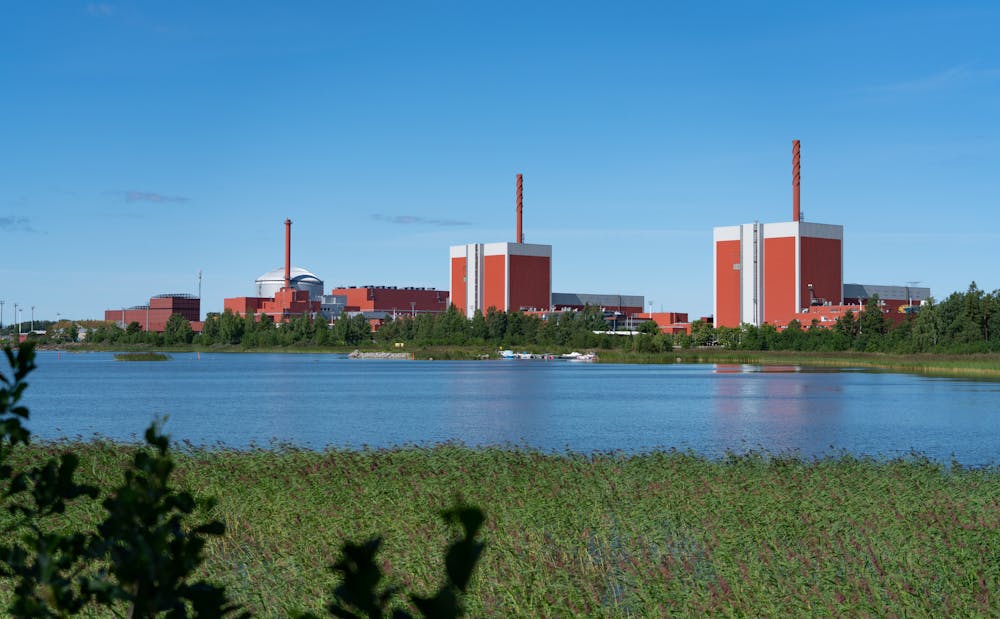
The first, in Georgia, is expected to be completed this year after running way behind schedule and way over budget. The other project in South Carolina was abandoned in 2017 after billions of dollars had already been poured into it. The same disastrous cost and time blowouts have hit new reactors in France (Flamanville, 10 years behind schedule), Finland (Olkiluoto, which opened this year after a 14 year delay) and the UK (Hinkley Point C, still under construction with cost and time blowouts).

China has built a trickle of new nuclear plants, commissioning three or four a year over the last decade. China currently has about 50 gigawatts (GW) of nuclear power capacity. This pales into insignificance compared to the nation’s extraordinary expansion of solar, with 95-120 gigawatts of additional capacity expected this year alone.

Olkiluoto nuclear
Finland’s new Unit 3 reactor only came online this year as part of its Olkiluoto plant after a major delay.
Shutterstock

Nuclear falls short on cost, not politics

What went wrong for nuclear? Despite the claims of some nuclear advocates, the renaissance in the 2000s did not fall short because of political resistance. Far from it – the renaissance had broad political support in key markets.

And, unlike in the 1970s where intense anti-nuclear sentiment was tied to fears of nuclear war, environmentalists in the 2000s had refocused on the need to stop burning carbon-based fuels. Anti-nuclear campaigns and protest marches were almost non-existent.

What stopped the nuclear noughties was a bigger problem: economics. Governments looking at nuclear saw the cost and time over-runs and decided it wasn’t worth it.

As megaproject expert Bent Flyvbjerg has shown, cost overruns like these are typical. First of a kind nuclear plants offer an extreme example of the problem. To date, no Generation III or III+ design has been produced at scales large enough to iron out the inevitable early problems.

At the same time, other energy sources were growing in importance. The United States found ways of tapping its unconventional shale gas reserves.

All the while, solar and wind were getting cheaper and cheaper, driven by generous subsidies from European governments such as Germany and manufacturing economies of scale in China. Solar and wind production ramped up exponentially, growing around 30% a year every year since the beginning of the century.

In Australia, the writing was on the wall by 2007, when an inquiry found new nuclear power would struggle to compete with either coal or renewables. A string of subsequent inquiries have come to precisely the same conclusion.

Could it be different this time?

To make nuclear viable these days, advocates believe, means making it safe, cheap and easy to build. No more megaprojects. Instead, build small reactors en masse on factory production lines, ship them to where they are needed and install them in numbers matching the needs of the area.

Advocates hope the efficiency of factory production will offset the lower efficiency associated with smaller capacity. Ironically, off-site mass production and modular installation is the basis of the success of solar and wind.

To date, the most promising is NuScale’s VOYGR. Like all small modular reactor designs, the VOYGR has yet to be produced and the US company has no firm orders. It does have preliminary agreements to build six reactors in Utah by 2030 and another four in Romania.

solar farm
Solar and wind are modular systems, built in factories. So you can add more capacity easily.
Shutterstock

If all are built, that’s still less than the capacity of a single large Gen III plant. More strikingly, it’s about the same as the new solar capacity installed every single day (~710 MW) this year around the world.

Even with US government subsidies, NuScale estimates its power would cost A$132 per MWh. In Australia, average wholesale prices in the first quarter of 2023 ranged from $64 per MWh in Victoria to 114 per MWh in Queensland.

So why, then, is Australia’s opposition still talking about new nuclear? Dutton claims Australia’s future nuclear submarines to be built under the AUKUS deal are “essentially floating SMRs”. This is a red herring – while submarine reactors are small, they are not modular.

The simplest answer is political gain. Announcements like this yield political benefits at low cost.

The US, UK and France have decades of experience in nuclear power, even if failures outnumber successes. So yes, there is a slim chance the latest “nuclear renaissance” will succeed in these countries.

But in Australia, promises to create a nuclear power industry from scratch based on as yet unproven technologies and in competition with cheap renewables is simply delusional.


Read more:
If the opposition wants a mature discussion about nuclear energy, start with a carbon price. Without that, nuclear is wildly uncompetitive


The Conversation

John Quiggin is a former Member of the Climate Change Authority. He has given evidence to Royal Commissions and Parliamentary inquiries into nuclear power over the past decade.

ref. Dutton wants Australia to join the “nuclear renaissance” – but this dream has failed before – https://theconversation.com/dutton-wants-australia-to-join-the-nuclear-renaissance-but-this-dream-has-failed-before-209584

What’s in a name? Quite a lot if it’s prosecco, parmesan or mozzarella

Source: The Conversation (Au and NZ) – By Steven Greenland, Professor in Marketing, Charles Darwin University

Shutterstock

Prosecco might evoke warm summer evenings while prosciutto conjures scenes of generous platters at a casual weekend lunch. But would “sparkling wine” or “thinly sliced ham” have the same impact?

Australian producers would argue they wouldn’t and are fighting a push by the European Union to stop them from using these and other terms which indicate the geographical origin of numerous cheeses, wines and other foodstuffs now widely produced in Australia.

This stoush over using European names for locally made products has stalled this week’s trade talks, with the EU refusing Australia better access to their markets unless Australia agrees to rebrand its products.

Prime Minister Anthony Albanese said Australia was keen to conclude the trade agreement but would not sign a deal that wasn’t in Australia’s interests. He is strongly backed by the National Farmers’ Federation and food producers.

So why does Europe want to control the use of food names?

Consumers increasingly want to know their foods’ provenance. They also pay premiums for guarantees about origin and quality. There has been a corresponding rise in so-called geographical indicator registrations, with the 3500th listed earlier this year.

Items included on the EU Geographical Indications register cover different foodstuffs that are either applying for or have been accepted for having their geographic origin related name protected from being used for similar foods produced elsewhere.

Europe has the highest number of registered products, with most relating to wine, agricultural products and foodstuffs, as well as spirits and beers.

Champagne is among those with a widely recognised connection to its place of origin which assures consumers about the regional and cultural values as well as the products’ characteristics and quality.

Unidentified person filling glasses with prosecco.
Sparkling wine doesn’t have the same cache as prosecco or Champagne.
www.shutterstock.com

Like high value household product brand names (for example, Coca-Cola which has been valued at US $97.88 billion) geographical indication registered names also attract substantial dollar values.

This is because of strong international awareness, familiarity, and appeal among consumers. The geographic indicator name often attracts a price that can easily be double that of a similar but non-registered product.

Registered products can therefore bring in significant revenue to the European Union member countries. They contribute to regional development by stimulating tourism and by helping to reverse population decline often experienced in rural areas.

Like household brands, the names which indicate a product’s origins, are recognised as intellectual property. They have consequently become an integral part of international trade agreements.

What would Australia gain by agreeing to European product names?

In return for complying with European Union demands, Australian producers would gain access to European markets of [445 million people ] with a GDP of $24 trillion.

The lost opportunity of non-compliance is best illustrated by Brexit. Since Brexit, UK exports to Europe have fallen and UK farmers have faced significant challenges finding alternative markets.

If Australia agrees to the European Union’s conditions to get a trade deal through then producers will need to rename some of their products.

This would be a large and costly exercise but might give local producers an opportunity to capitalise on the growing consumer demand for locally sourced food and promote Australia’s unique geographical brand values.

Recent research conducted by Charles Darwin University reveals some of the unique brand values of Australian agri-food products, including unique selling points of products from the Northern Territory.

Selling points included the unique climate, soil and traditional community values as selling points.

Australia’s reputation for quality and ethically produced goods was also important. Such values may lead to Australia developing more of its own geographical indication registration requirements in the future.

Rather than fight the rising tide of European Union registrations, the Federal government might embrace the trend, in conjunction with renewed promotion of Australia’s geographical brand benefits.

Should the government choose to comply with Europe’s demands then producers will need support to rebrand some of their products. Government and departments such as CSIRO should be keen to support this as it can only strengthen Australia’s agri-food sector’s international reputation.

The Conversation

The CDU research report mentioned in the article relates to a market opportunity analysis led by Steven Greenland. This is part of the ongoing Government funded Northern Australia Food Technology Innovation (NAFTI) project investigating avenues for developing food manufacturing capability in Northern Australia (https://www.cdu.edu.au/news/supporting-northern-australia%E2%80%99s-agricultural-and-food-manufacturing-capability)

ref. What’s in a name? Quite a lot if it’s prosecco, parmesan or mozzarella – https://theconversation.com/whats-in-a-name-quite-a-lot-if-its-prosecco-parmesan-or-mozzarella-209505

Period shame stops countless girls from continuing sport. The Women’s World Cup can help break this stigma

Source: The Conversation (Au and NZ) – By Michelle O’Shea, Senior Lecturer, School of Business, Western Sydney University

In the lead up to the first FIFA Women’s World Cup hosted in the Southern Hemisphere, host nations Australia and Aotearoa New Zealand are forging other firsts, including efforts to break the shame, stigma and taboo that continue to shroud periods.

In April, both teams unveiled new kits that included period leak protections, together with materials and tailoring that specifically respond to the needs of high performance women footballers.

New Zealand has also swapped out its traditional white shorts for teal blue to help combat period anxiety.

Similar changes are occurring across the global sporting landscape, albeit more slowly in some quarters.

Despite initial reluctance, last year the All England Club relaxed the long-held tradition that Wimbledon players wear all white, so women can now wear dark undershorts.

In rugby, the Irish national women’s team have permanently switched white shorts for navy, while New Zealand referees are no longer required to wear white shorts.

The impact of these changes should not be underestimated. The shame and taboo associated with periods stops many young girls from continuing sport, and misinformation about menstruation affects the performance and health of countless elite athletes. The 2023 FIFA Women’s World Cup is an opportunity to dispel period myths and put a focus on the specific needs of athletes who menstruate.

Women athletes aren’t small men

Women’s elite sport continues to be professionalised, yet their training protocols have often been based on research evidence derived from male cohorts.

This research doesn’t consider the physical and psychological changes that women athletes may experience at each phase of the menstrual cycle, nor how that may affect peak performance.

Research into how the menstrual cycle affects the performance of women athletes is growing. Teams are employing methods to work with the period cycle, rather than against it.

Reigning FIFA Women’s World Cup champions the United States say that menstrual tracking is one of their performance weapons.


Read more:
New study: much of what we’re told about gym exercises and resistance training is from studies of males, by men


No longer a mark of honour

Ignoring and generalising the needs of women athletes not only hurts performance, but can damage health.

Overly intense training can cause some athletes to stop having periods. This has often been considered normal by coaches and a mark of honour among athletes themselves. Indeed there’s a dangerous notion in many high performance sporting cultures that the absence of menstruation equates to an ideal elite athlete.

But this can lead to serious health consequences, including a condition called RED-S – relative energy deficiency in sport. Symptoms include periods stopping or becoming irregular, reduced performance, mood changes, and recurrent illnesses and injuries including stress fractures.

Australian research involving 112 women elite and pre-elite athletes found almost 80% of participants demonstrated at least one symptom consistent with RED-S. Nearly 40% experienced at least two symptoms.

Like women in other workplaces, elite athletes are often reluctant to discuss the impact of their periods fearing assumptions they are a liability in team environments, less capable, and not deserving of development opportunities.

Change is happening, albeit slowly

Across some high performance pathways, road maps are being developed to specifically support women athletes. For example, the Australian Institute of Sport launched an initiative in late 2019 to “improve female athlete specific knowledge and systems of support”. And in March, the South Australian government started its “I’m an athlete. Period” campaign which aims to promote positive menstrual health in sport.

Many women athletes themselves have started to speak up about the taboo associated with menstruation and are lobbying for change.

Earlier this year, decorated Australian Olympic swimmer Cate Campbell shared the performance struggles she has experienced managing her periods.

While her training and nutrition regimens were monitored with precision, the absence of information and access to a network of women’s health professionals saw her suffer a near career-ending injury.

To try and manage her periods, she had a contraceptive bar inserted into her arm, which is meant to be inserted into the fat layer above the muscle. But because she’s an elite athlete, she has a very low body fat percentage, so the bar was inserted next to her muscle. A botched attempt to retrieve the bar caused her permanent nerve damage.

She’s now using her profile to raise awareness of women’s health issues and to try and reduce the taboo around periods.

Girls’ barriers to sport

Puberty, and the start of periods, is a time when girls’ participation in grassroots sport falls off sharply.

A UK survey of more than 4,000 teenagers published last year found there are complex barriers and deep-rooted negative attitudes affecting girls’ enjoyment of sport, including period shame and body image issues.

It found, of girls in the survey who used to be sporty, 78% said they avoided sport when they had their period, and 73% of this cohort said they didn’t like others watching them take part in physical activity.

Of girls who avoided exercise on their periods, 73% said it was due to pain and 62% did so out of fear of leakage.

Various state governments are investing in grassroots sport facilities that better attend to the needs of women. But many facilities continue to lack basic amenities including menstrual bins.


Read more:
Celtic FC leads way in tackling period poverty, now other clubs need to follow


An important way to address these issues is for sporting clubs to develop “period positive” cultures.

Clubs should undertake measures such as:

  • providing comfortable and period-friendly uniforms

  • supplying sanitary bins and ample period products for free

  • and having open discussions about periods and how they may impact athletes.

These can help girls and women be empowered to manage their periods in ways that will enable them to continue their participation and not feel ashamed or embarrassed.

With the world cup media spotlight, we have an unprecedented opportunity to break menstrual shame, silence and taboo.

The Conversation

The authors do not work for, consult, own shares in or receive funding from any company or organisation that would benefit from this article, and have disclosed no relevant affiliations beyond their academic appointment.

ref. Period shame stops countless girls from continuing sport. The Women’s World Cup can help break this stigma – https://theconversation.com/period-shame-stops-countless-girls-from-continuing-sport-the-womens-world-cup-can-help-break-this-stigma-205570

Reserve Bank Governor Lowe announces changes to bank’s operations as cabinet readies to approve who will lead it

Source: The Conversation (Au and NZ) – By Michelle Grattan, Professorial Fellow, University of Canberra

Reserve Bank Governor Philip Lowe has announced a raft of reforms the bank will make following the recent review of its operations, as the government prepares to announce who will lead it after his term expires in September.

Lowe also reiterated that interest rates – held steady by the bank this month – might have to rise further to combat inflation.

It is generally expected Lowe will be replaced, when Treasurer Jim Chalmers takes his recommendation to cabinet. Contenders for the post include secretary of the finance department Jenny Wilkinson, bank deputy governor Michele Bullock, treasury secretary Steven Kennedy, head of the Australian Bureau of Statistics, David Gruen, and former RBA deputy governor Guy Debelle.

The government has accepted all the review’s recommendations in principle. They include having two boards – a Monetary Policy Board with greater economic expertise to set monetary policy, and a Governance Board to oversee corporate governance.


Read more:
Reserve Bank to have two boards after overhaul by inquiry


Lowe, speaking at an Economics Society business lunch in Brisbane, when questioned said once again that he would be honoured to continue in his post if asked.

Chalmers said on Wednesday that he would soon take to cabinet his recommendation on the governorship.

In the changes the bank’s board has approved, from next year the board will meet eight times a year, rather than the present 11 times. The board meetings will also be longer.

“The less frequent and longer meetings will provide more time for the board to examine issues in detail and to have deeper discussions on monetary policy strategy,” Lowe said.

In other changes, the governor will face the media after each board meeting to explain its decision on rates. The post-meeting statement will be in the name of the board, rather than the governor, as at present.

All board members will have the opportunity to attend an internal staff meeting some time before a board meeting, allowing them to question a broader range of staff.

The board will oversee the bank’s research agenda as it relates to monetary policy and aspects of financial stability.

Lowe said some other recommendations from the review were being left for after “the legislative process has been completed and the new Monetary Policy Board is up and running”. The review suggested this take office in July 2024.

These recommendations include the publication of an unattributed vote count on decisions; all board members making public appearances to discuss their thinking and decisions on monetary policy, and the establishment of an expert advisory group to engage with the board.

“In my view, it is right to allow the new board to consider these issues and make its own decisions,” Lowe said.

On interest rates, Lowe was – as usual – adamant that the bank would do whatever was needed to bring down inflation to the target range of 2-3%.

“Our priority remains to ensure this period of high inflation is only temporary,” he said. “If high inflation were to become entrenched in people’s expectations, it would be very costly to reduce later, involving even higher interest rates and a larger rise in unemployment.

“It is for these reasons that the board is resolute in its determination to return inflation to target within a reasonable timeframe and will do what is necessary to achieve that.”

Chalmers told reporters the governor appointment “is one of the biggest appointments that the government will make. It’s a big job and it’s a big call.” He said he had had discussions about the appointment with shadow treasurer Angus Taylor.

Lowe will be with Chalmers at the G20 finance ministers meeting in India early next week.

The Conversation

Michelle Grattan does not work for, consult, own shares in or receive funding from any company or organisation that would benefit from this article, and has disclosed no relevant affiliations beyond their academic appointment.

ref. Reserve Bank Governor Lowe announces changes to bank’s operations as cabinet readies to approve who will lead it – https://theconversation.com/reserve-bank-governor-lowe-announces-changes-to-banks-operations-as-cabinet-readies-to-approve-who-will-lead-it-209597

The Zaporizhzhia nuclear power plant is a ‘dirty bomb’ waiting to happen – a nuclear expert explains

Source: The Conversation (Au and NZ) – By Tilman Ruff, Honorary Principal Fellow, School of Population and Global Health, The University of Melbourne

Planet Labs PBC/AP

After the explosion at the Kakhovka Dam in Ukraine last month, many Ukrainians feared the Zaporizhzhia nuclear power plant could be next.

These concerns have been heightened in recent weeks as both Ukraine and Russia have accused each other of planning an attack of the plant, which has been under Russian control since March 2022.

The International Atomic Energy Agency (IAEA) has not found any evidence of explosives in recent inspections, but also said it had yet to be granted access to all parts of the huge plant.

So, how serious are the risks of an attack at the power plant? And how disastrous would this be for Ukraine and the wider world?

Europe’s largest nuclear power plant

Construction of the Zaporizhzhia power plant began in 1981. Five reactors were commissioned between 1984-89, and a sixth in 1995. The reactors are more modern than the graphite-moderated reactors at Chernobyl, and are similar to the pressurised water reactors in widespread use in the United States and Europe.

The plant is Europe’s largest, built on the southern bank of the Kakhovka Reservoir on the Dnipro River, from which it draws its cooling water. Before the Russian invasion, Ukraine generated about half its electricity from 15 nuclear power reactors across four sites, with Zaporizhzhia generating almost half of this.

The plant has cooling ponds for spent nuclear fuel, which require continuous power and water (like the reactors themselves). It also has a dry cask storage facility for spent reactor fuel when it no longer requires continuous water cooling.

The total amount of highly radioactive nuclear fuel in the Zaporizhzhia reactors and spent fuel pools is 2,204 tons.


Read more:
Could the Ukraine dam attack pose risks to the Zaporizhzhia nuclear power plant? Experts explain


How quickly a meltdown could happen

Barely a week after the invasion began, Russian forces captured Zaporizhzhia. During heavy combat, a fire broke out in a training facility, while other parts of the plant were damaged.

In September 2022, the plant was fully disconnected from the electricity grid. Five reactors were put into cold shutdown. The sixth was maintained in hot shutdown at around 200 degrees Celsius, producing steam for the plant.

The Ukrainian nuclear regulator ordered a cold shutdown of this reactor last month, but this has not happened. Extensive maintenance work on the reactors is overdue.

The fuel inside nuclear reactors needs continuous, active cooling for many months after a reactor shutdown because of the heat that continues to be produced by the decay of hundreds of different fission products. The longer the fuel is inside a nuclear reactor, the more radioactive it becomes. That is why when fuel is removed from a reactor, it still requires continuous, active cooling for years.


Read more:
Kakhovka dam breach raises risk for Zaporizhzhia nuclear plant – receding waters narrow options for cooling


The world saw in dramatic fashion in Fukushima, Japan, in 2011 what can happen when continuous, active cooling of nuclear reactors is disrupted.

More than 70% of the total radioactivity at the Fukushima power plant was in the spent fuel ponds, which have none of the carefully engineered containment layers that reactors typically have.

In his classic 1981 book Nuclear Radiation in Warfare, Nobel Peace Prize-winning physicist Joseph Rotblat documented how

in a pressurised water reactor, the meltdown of the core could occur within less than one minute after the loss of coolant.

The radioactivity released from damaged spent fuel ponds could be even greater than from a meltdown at the reactor itself, he wrote.

His study makes clear that a military attack on a reactor or spent fuel pond could release more radioactivity – and longer-lasting radioactivity – than even a large (megaton range) nuclear weapon.

As nuclear physicist Edwin Lyman makes clear, if the Zaporizhzhia reactor cooling was interrupted, there might be a day or two before the spent fuel began to overheat and degrade.

The melting reactor core would then collapse onto the floor inside its steel primary containment vessel and melt through to the floor of the building. Large amounts of radioactive gases and aerosols would be released into the environment, potentially explosively.

The radioactive release could possibly be at Chernobyl-scale or even larger amounts if multiple reactors and spent fuel ponds were involved. This could then spread across borders and continents with the wind, rivers and currents, and come down in hotspots in rain and snow.

Ukrainian emergency workers check the radiation level of bus passengers during training in Zaporizhzhia last month.
Evgeniy Maloletka/AP

A nuclear plant under continuous assault

The Russian invasion of Ukraine is the first time war has engulfed operating nuclear plants and, in a real sense, weaponised them as potential radiological weapons, or “dirty bombs”.

As IAEA Director General Rafael Grossi has documented, Zaporizhzhia has been under comprehensive and unprecedented assault. This has included:

  • repeated shelling of the plant

  • frequent interruption of the critical electricity supply to the plant, forcing operators to rely on emergency diesel generators as the last line of defence

  • a full-scale occupation by Russian troops, with far fewer than the normal staff working at gunpoint under extreme psychological and physical duress

  • the facility being turned into a military base laden with heavy weapons and surrounded by landmines and other explosives.


Read more:
Russian shelling caused a fire at a Ukrainian nuclear power plant – how close did we actually come to disaster?


Then, on June 6, the explosive breach of the Kakhovka Dam jeopardised the plant’s ultimate source of cooling water.

The other three nuclear power plants in Ukraine have also experienced interruptions to their electricity supply. In addition, other nuclear facilities have been shelled, struck by missiles or otherwise damaged.

A wake-up call to the dangers of nuclear power

Some nuclear experts have inappropriately downplayed the risk of deliberate or accidental breach of the containment structures at Zaporizhzhia.

However, the IAEA and independent experts have highlighted the very real risk of a catastrophe.

Russia has already launched large-scale attacks on civilian infrastructure in Ukraine, including its energy grid. Evidence also suggests it was behind the dam explosion. We cannot discount that Russia might resort to turning Zaporizhzhia into a radiological weapon, despite how close the plant is to its own territory.

Russia’s ongoing failure to agree to the IAEA plea to establish a demilitarised zone in and around Zaporizhzhia also does not inspire confidence.

The reality is that as long as nuclear power plants continue to operate, we are frighteningly vulnerable not only to severe accidents, but also to the weaponisation of these facilities. This is now all too clear at Zaporizhzhia.

No other energy technology is associated with such extreme safety and security risks. If Zaporizhzhia were a wind farm or solar array, the risk of a severe accident with global and intergenerational consequences – not to mention weapons proliferation or intractable waste issues – would be precisely zero.

The Conversation

Tilman Ruff is affiliated with International Physicians for the Prevention of Nuclear War, the International Campaign to Abolish Nuclear Weapons Australia, the Victorian International Humanitarian Law Advisory Committee, Australian Red Cross, the
Initiative for Peacebuilding, Faculty of Arts, University of Melbourne, and the Internet Peace Prize Award Committee of the Sunfull Foundation, South Korea.

ref. The Zaporizhzhia nuclear power plant is a ‘dirty bomb’ waiting to happen – a nuclear expert explains – https://theconversation.com/the-zaporizhzhia-nuclear-power-plant-is-a-dirty-bomb-waiting-to-happen-a-nuclear-expert-explains-209236

The toxic gossip train: what Colleen Ballinger teaches us about YouTubers and inappropriate relationships with young fans

Source: The Conversation (Au and NZ) – By Edith Jennifer Hill, Associate lecturer, Flinders University

Miranda Sings

On June 29, YouTuber Colleen Ballinger posted a video to her channel “apologising” to fans in response to recent allegations made against her. Ballinger had been accused of creating inappropriate relationships with her underaged fans, grooming and exploitation, all of which she has denied.

Many YouTubers have used the platform to apologise. So many, in fact, that a genre of apology videos has formed. Users of the platform now have expectations around what an apology video should look like, many of which fall into the genre of apology broadly. Ballinger, however, subverted genre expectations when she sung her apology.

In the apology video, Ballinger sat in front of the camera and sung to the audience. Unlike many other apologies on the platform, including a former one of Ballinger’s, the YouTuber did not address the specific allegations made against her. Instead, she speaks (sings) to her audience in an accusatory tone, stating it doesn’t matter what she says, people just want to be entertained.

Ballinger rose to stardom on YouTube after she created the character Miranda Sings in 2008. Her two YouTube channels, Colleen Ballinger and Miranda Sings have 8.5 million and 10.7 million subscribers, respectively. Her massive online fame led to a Netflix show, Haters Back Off, collaborations with other YouTubers, a podcast and a multiple live shows.

Academic Kate Douglas explores how apology videos on YouTube have become so popular that they are often the subject of parody. This has been the case with Ballinger, as countless videos on YouTube, TikTok and Instagram make fun of Ballinger’s “apology”.

Some users are speculating this has quickly become a key piece of internet history. Specific lines of Ballinger’s video have been made into memes, including the now infamous “toxic gossip train”.

The story has surpassed YouTube’s somewhat insular community and reached mainstream media.

Boundaries with fans

Ballinger’s most popular videos are when she plays her character, Miranda Sings. Intended to be a portrayal of an “egotistical, weird” singer, Ballinger’s character has been heavily criticised.

Part of Miranda’s character is that she has an inappropriate, incestuous relationship with her uncle that is misunderstood by clueless Miranda. The humour supposedly stems from Miranda’s misunderstanding of social boundaries and norms such as referring to anything remotely grownup as “porn”.

A former writer’s assistant on the Netflix show Haters Back Off explained how uncomfortable they were with the story line of Miranda and Uncle Jim, describing it as “stomach churning”.

Ballinger had a group chat with her fans called “Colleeny’s weenies”. The chat, made up of predominantly underage fans at the time, shared memes, spoke with Ballinger, and talked between themselves about Miranda Sings. Alleged screenshots released by former fans show Ballinger responding in the group chat.

The group chat is a small part of a long list of Ballinger’s allegedly inappropriate actions. She has previously apologised online for sending one fan, Adam McIntyre, lingerie when he was 13 years old, and in the same (now deleted) video apologised for her portrayal of racial stereotypes.

This week, fellow YouTuber Trisha Paytas addressed rumours that Ballinger had subscribed to her sex work website and allegedly shared her content without permission. Former fans of Ballinger have alleged that she distributed this explicit content in group chats with underage fans, as well as among her friends at “viewing parties”.

Unfortunately, Ballinger is not the only YouTuber who has been brought into the spotlight for inappropriate relationships with fans.

Shane Dawson has been accused of having inappropriate fan relationships (along with a long list of other transgressions). Videos resurfaced in 2020 of him asking an underage fan to twerk for him on a live video, as well as kissing young fans on the lips at meet-and-greets.

In 2014, YouTubers Sam Pepper and Tom Milsom were both accused of serious misconduct, including allegations of coercing sexual activity and explicit photos from underage fans.

Fans and fandom

Fandoms are groups of people who are dedicated fans to a particular person, show or aspect of internet culture. Academic Tracey Nearmy explores how fandoms are places where people share interests, but she says they “can also be spaces of invisible emotional attachments: private ‘friendships’ with real or imagined characters”.

In the case of Ballinger, many of her fans shared their obsession not only with her, but with the character she portrayed, Miranda Sings.

Repeat contact with an online personality can form what media scholar Janice Peck terms a “parasocial relationship”.

These relationships can make social media users feel like they have a connection, or know a content creator like they are a friend. This can lead to complex feelings and attachments, and are all the more dangerous for children who are in the process of forming identities and learning boundary-setting behaviours themselves.

The toxic gossip train

Watching the apology video, it is clear Ballinger’s audience is predominately children. Titled “hi.”, it shows Ballinger on her couch in a black top, holding a ukulele. In the song, now infamously known online as the “Toxic Gossip Train”, Ballinger sings that her team has “strongly advised” her not to say what she wants, but they never said she couldn’t sing it. And sing she does.

Other than singing her “apology” video, Ballinger breaks the genre conventions in another way. She doesn’t actually apologise.

Ballinger sings, “Many years ago, I used to message my fans. Not in a creepy way like many of you are trying to suggest. It was more of a loser kind of way”. She goes on to say “The only thing I’ve ever groomed is my two Persian cats. I’m not a groomer, I’m just a loser, who didn’t understand I shouldn’t respond to fans”.


Read more:
Celebrities can be cancelled. Fandoms are forever


Ballinger clearly articulates her position in the video: she believes the online discourse around her is founded in cancel culture, not fact, despite multiple records of her alleged actions. She sings:

What oh you don’t care oh okay I thought you wanted me to take accountability but that’s not the point of your mob mentality, is it? No, your goal is to ruin the life of the person you despise while you dramatise your lies and monetise their demise.

Ballinger’s video highlights the massive responsibility that online personalities have to interact with their fans appropriately.

The Conversation

Edith Jennifer Hill does not work for, consult, own shares in or receive funding from any company or organisation that would benefit from this article, and has disclosed no relevant affiliations beyond their academic appointment.

ref. The toxic gossip train: what Colleen Ballinger teaches us about YouTubers and inappropriate relationships with young fans – https://theconversation.com/the-toxic-gossip-train-what-colleen-ballinger-teaches-us-about-youtubers-and-inappropriate-relationships-with-young-fans-209118

Why is eczema sometimes treated with a diluted bleach bath? And what do I need to know before trying it?

Source: The Conversation (Au and NZ) – By Michael Freeman, Associate Professor of Dermatology, Bond University

Shutterstock

Diluted bleach baths are a common treatment doctors and nurses use for patients with more severe eczema. It is important to note they may not replace other treatments and may not be suitable for everyone.

This treatment should only ever be used under the guidance of a dermatologist or doctor, who can advise if it’s appropriate and tailor the dilution ratio to suit the individual’s condition.

So why and how does it work for some eczema sufferers? And what should one know before trying it?


Read more:
I’ve always wondered: why do we get dark circles under our eyes?


Germs can colonise damaged eczema skin

Eczema is a genetic condition that causes a person’s skin to be easily inflamed by certain triggers, such as hot water or soaps. The person’s skin barrier becomes damaged and itchy, allowing germs to get established and cause even more problems.

The most common germ found in the damaged eczema skin is staphylococcus aureus. Certain toxic materials known as “membrane-bound vesicles” are released by the staph germ, which causes an even more profound reaction in the skin, worsening the eczema. Treating – or at least reducing – the amount of staph in the skin can help the eczema recover.

When eczema is very active, the skin literally bubbles with fluid and can begin to weep. Bacteria love to colonise and infect this type of eczema. This process is known as “impetiginisation”.

When this process occurs without eczema, it is called impetigo (also known as school sores).

A solution of water and sodium hypochlorite (in other words, bleach) will rapidly kill germs. And we know from studies on wounds that simple washing of a wound reduces the number of bacteria.

So it’s likely a gentle washing action is part of the effect, in some cases, and could be made more effective with subtle water jets.

For example, using a water squeeze toy for young children to create a gentle wash of water could help remove some of the build-up of body fluids in the broken eczema areas.

This would obviously need to be done very gently so it was not uncomfortable. Friction and rubbing of eczema – particularly with cloths and towels – generally makes things much worse.

Friction and rubbing can make eczema worse.
Shutterstock

Reducing inflammation

Researchers have also shown sodium hypochlorite can reduce inflammation in the skin. This is another reason the treatment is recommended.

Eczema often involves a vicious cycle of inflammation, where redness and increasing itchiness leads to scratching and even more irritation. The skin breaks even more and the eczema worsens, leading to yet more inflammation.

A diluted bleach bath can help break this vicious cycle.

The bleach should be diluted in the bathwater to ensure it is safe for your skin.
Shutterstock

You need to know what you’re doing

Diluted bleach bath instructions need to be tailored to the eczema, so don’t try it at home unless you’ve been advised by a dermatologist or doctor. An example of how to perform a bleach bath might look like this:

1. Dilution ratio: The bleach should be diluted in the bathwater to ensure it is safe for your skin. A typical dilution ratio may be ½ cup (120 ml) of household bleach (containing 5-6% sodium hypochlorite) per 150 litres of lukewarm water. However, the exact dilution ratio may vary based on the severity of your eczema, age and other factors. Children may need less bleach in their bath. Check with your doctor because getting the ratio wrong can cause pain and harm.

2. Soak time: The recommended soak time in the bleach bath is usually around ten minutes. During this time, gently pat or submerge your affected skin areas in the water. Avoid scrubbing or rubbing the skin vigorously, as it may further irritate or damage the skin.

3. Rinse thoroughly: After the designated soak time, carefully rinse off the bleach solution from your body with cool water. Make sure to remove all traces of the bleach, as residual bleach left on the skin may cause irritation.

4. Moisturise: After the bath, promptly apply a moisturiser or emollient to your skin while it is still slightly damp. This helps lock in moisture and maintain hydration, which is crucial for eczema management.

5. Frequency: The frequency of bleach baths can vary depending on your specific condition. Typically, they are done two to three times a week, but this may vary.

6. Monitoring and follow-up: It is essential to monitor your skin’s response to bleach baths. If you notice any increased redness, irritation or discomfort, discontinue the baths and talk to your dermatologist.


Read more:
How to treat scars at home – and hopefully make them disappear


The Conversation

Michael Freeman does not work for, consult, own shares in or receive funding from any company or organisation that would benefit from this article, and has disclosed no relevant affiliations beyond their academic appointment.

ref. Why is eczema sometimes treated with a diluted bleach bath? And what do I need to know before trying it? – https://theconversation.com/why-is-eczema-sometimes-treated-with-a-diluted-bleach-bath-and-what-do-i-need-to-know-before-trying-it-208363

Solomons PM’s ‘I’m back home’ comment in Beijing ‘shameful’, says Wale

RNZ Pacific

Solomon Islands opposition leader Matthew Wale has accused the country’s Prime Minister, Manasseh Sogavare, of mocking Solomon Islanders.

On Monday, Solomon Islands signed nine deals with China, including an agreement on police cooperation to upgrade the relation between the two nations.

Sogavare arrived in Beijing on Sunday and reportedly told Chinese officials: “I am back home.”

Wale said it was shocking to hear such a statement on foreign soil in light of Sogavare’s pledge during last week’s national day celebrations to pursue an independent foreign policy that did not take sides in the geopolitical struggle between China and the United States.

He said it was offensive for other nations that Solomon Islands had links with to hear such a statement.

“It was indeed surprising to hear this from the Prime Minister,” Wale said.

“For a Prime Minister to imply that China is his home is undiplomatic and shameful,” he said.

Transparency lack ‘outrageous’
The opposition leader also said the lack of transparency in nine new agreements the Sogavare signed with China was “outrageous”.

Wale claimed that some government ministers were not aware of the deals and he questioned whether cabinet had agreed to them.

He said the Prime Minister’s recent actions in China had pushed Solomon Islands further into the spotlight in the geopolitical struggle between the superpowers.

This article is republished under a community partnership agreement with RNZ.

Print Friendly, PDF & Email

Article by AsiaPacificReport.nz

After being a ‘welcome guest’ at NATO, NZ now needs to consider what our partnership with the alliance really means

Source: The Conversation (Au and NZ) – By Alexander Gillespie, Professor of Law, University of Waikato

Mustafa Kamaci/Getty Images

As a “welcomed guest” at the latest NATO summit in Lithuania, New Zealand Prime Minister Chris Hipkins had a front-row seat for debates over Ukrainian membership, the role of countries outside NATO’s traditional geographic boundaries, the ongoing threat of China, military spending and an accelerating nuclear arms race.

The NATO meeting reaffirmed the alliance’s “iron-clad commitment to defend each other and every inch of allied territory at all times, protect our one billion citizens, and safeguard our freedom and democracy”.

But the meeting also highlighted an evolving alliance that recently expanded to include Finland, with Sweden expected to join in the coming months.

It is worthwhile considering this direction, succinctly outlined by the official communiqué issued at the summit’s conclusion, and what it will mean for New Zealand.

Ukraine told ‘not now’

The war in Ukraine coloured everything at the NATO summit.

The unequivocal condemnation of Russia heard in Lithuania was not new. But the underlining argument, that Russia was clearly in the wrong, must fully withdraw from all of Ukraine’s internationally recognised borders and those responsible for crimes must face justice, was important.

These points show what NATO’s conditions for peace look like.


Read more:
Nato: Vilnius summit will reflect fresh sense of purpose over Ukraine war – but hard questions remain over membership issues


NATO’s decision not to give Ukraine a pathway to membership was also key.

To invite Ukraine now would have created a direct route to global conflict. To be offered a pathway, where membership could be given when the war was over, would give Putin every justification to never end the conflict to prevent NATO expanding to Russia’s border.

Despite this disappointment for Ukraine, NATO will increase the cooperation and assistance given to the country.

And this is where New Zealand will need to do more. Our support for Ukraine in financial, military, diplomatic and humanitarian terms has been good. But it will need to be better to fall in line with NATO expectations of its partners.

Threads of connection winding us tighter to NATO

Geographically, New Zealand can not be a full member of NATO. But New Zealand has become a “partner”, making up an Indo-Pacific cohort that includes Australia, Japan and the Republic of Korea – known as IP4.

The communiqué from the summit emphasised the region’s impact on Euro-Atlantic security and our shared commitment to upholding international law and the rules-based international order.


Read more:
Why is NATO expanding its reach to the Asia-Pacific region?


It’s important to note the IP4 shared security obligations stem from bilateral treaties and not any one collective agreement. Bilateral relations tie the United States to Japan, South Korea and Australia. For New Zealand, we are tied to to this alliance via our neighbours across the Tasman.

An additional thread being woven through the group is the AUKUS alliance, which could ultimately include partnerships with Japan and South Korea. While full membership of AUKUS is ruled out by our long-standing nuclear-free policy, New Zealand has expressed interest in joining the second tier of the alliance, which would give us access to a new generation of weaponry.

China continues to loom large

Since late 2020, the IP4 cohort has been galvanised around the shift in the global balance of power and the rise of the People’s Republic of China (PRC).

While remaining “open to constructive engagement with the PRC”, NATO’s latest communiqué warned China against giving support to Russia and took aim at China’s efforts to undermine global stability.

Broadly, NATO members said the PRC’s ambitions challenged the alliance’s interests, security and values. In particular, the communiqué focused on China’s efforts to subvert the international order via its control of key technological and industrial sectors, critical infrastructure, and strategic materials and supply chains.

The 2% target

The other thread that ties NATO and the partner countries together is military spending. The original goal was that each NATO country spend 2% of its gross domestic product (GDP) on the military.

At Lithuania, NATO emphasised the need for partners to invest “at least 2% of GDP on defence” and “that in many cases, expenditure beyond 2% of GDP will be needed in order to remedy existing shortfalls and meet the requirements across all domains arising from a more contested security order”.

This will be a challenge for New Zealand. Military spending makes up just 1.5% of our GDP. The other IP4 partners have all crossed this 2% threshold, or shall do soon.

The nuclear umbrella

For New Zealand, the hardening of the “nuclear umbrella” could also be a sticking point.

Via the communiqué, NATO said it was “ready and able to deter aggression and manage escalation risks in a crisis that has a nuclear dimension”. NATO also announced intentions to strengthen “training and exercises that simulate conventional and […] a nuclear dimension of a crisis or conflict”.

The alliance emphasised the importance of “the United States’ nuclear weapons forward-deployed in Europe” and reaffirmed “the imperative to ensure the broadest possible participation by allies concerned in NATO’s nuclear burden-sharing arrangements to demonstrate alliance unity and resolve”.

Although NATO remained committed to allies supporting existing disarmament, arms control and non-proliferation agreements and commitments, the exit of Russia from many agreements, and non-participation of other countries, have forced a rethink.

[…] the Treaty on the Prohibition of Nuclear Weapons […] stands in opposition to and is inconsistent and incompatible with the alliance’s nuclear deterrence policy, is at odds with the existing non-proliferation and disarmament architecture, risks undermining the NPT, and does not take into account the current security environment.

NATO called on its partners and all other countries to

[…] reflect realistically on the ban treaty’s impact on international peace and security […] and join us in working to improve collective security through tangible and verifiable measures that can reduce strategic risks and enable lasting progress on nuclear disarmament.

For a country like New Zealand, which made conclusion of the Treaty on the Prohibition of Nuclear Weapons a priority, this is a powerful rebuke.

The Conversation

Alexander Gillespie does not work for, consult, own shares in or receive funding from any company or organisation that would benefit from this article, and has disclosed no relevant affiliations beyond their academic appointment.

ref. After being a ‘welcome guest’ at NATO, NZ now needs to consider what our partnership with the alliance really means – https://theconversation.com/after-being-a-welcome-guest-at-nato-nz-now-needs-to-consider-what-our-partnership-with-the-alliance-really-means-209316

What is ‘AI alignment’? Silicon Valley’s favourite way to think about AI safety misses the real issues

Source: The Conversation (Au and NZ) – By Aaron J. Snoswell, Research Fellow in AI Accountability, Queensland University of Technology

Laura Ockel / Unsplash

As increasingly capable artificial intelligence (AI) systems become widespread, the question of the risks they may pose has taken on new urgency. Governments, researchers and developers have highlighted AI safety.

The EU is moving on AI regulation, the UK is convening an AI safety summit, and Australia is seeking input on supporting safe and responsible AI.

The current wave of interest is an opportunity to address concrete AI safety issues like bias, misuse and labour exploitation. But many in Silicon Valley view safety through the speculative lens of “AI alignment”, which misses out on the very real harms current AI systems can do to society – and the pragmatic ways we can address them.

What is ‘AI alignment’?

AI alignment” is about trying to make sure the behaviour of AI systems matches what we want and what we expect. Alignment research tends to focus on hypothetical future AI systems, more advanced than today’s technology.

It’s a challenging problem because it’s hard to predict how technology will develop, and also because humans aren’t very good at knowing what we want – or agreeing about it.

Nevertheless, there is no shortage of alignment research. There are a host of technical and philosophical proposals with esoteric names such as “Cooperative Inverse Reinforcement Learning” and “Iterated Amplification”.

There are two broad schools of thought. In “top-down” alignment, designers explicitly specify the values and ethical principles for AI to follow (think Asimov’s three laws of robotics), while “bottom-up” efforts try to reverse-engineer human values from data, then build AI systems aligned with those values. There are, of course, difficulties in defining “human values”, deciding who chooses which values are important, and determining what happens when humans disagree.

OpenAI, the company behind the ChatGPT chatbot and the DALL-E image generator among other products, recently outlined its plans for “superalignment”. This plan aims to sidestep tricky questions and align a future superintelligent AI by first building a merely human-level AI to help out with alignment research.

But to do this they must first align the alignment-research AI…

Why is alignment supposed to be so important?

Advocates of the alignment approach to AI safety say failing to “solve” AI alignment could lead to huge risks, up to and including the extinction of humanity.

Belief in these risks largely springs from the idea that “Artificial General Intelligence” (AGI) – roughly speaking, an AI system that can do anything a human can – could be developed in the near future, and could then keep improving itself without human input. In this narrative, the super-intelligent AI might then annihilate the human race, either intentionally or as a side-effect of some other project.


Read more:
No, AI probably won’t kill us all – and there’s more to this fear campaign than meets the eye


In much the same way the mere possibility of heaven and hell was enough to convince the philosopher Blaise Pascal to believe in God, the possibility of future super-AGI is enough to convince some groups we should devote all our efforts to “solving” AI alignment.

There are many philosophical pitfalls with this kind of reasoning. It is also very difficult to make predictions about technology.

Even leaving those concerns aside, alignment (let alone “superalignment”) is a limited and inadequate way to think about safety and AI systems.

Three problems with AI alignment

First, the concept of “alignment” is not well defined. Alignment research typically aims at vague objectives like building “provably beneficial” systems, or “preventing human extinction”.

But these goals are quite narrow. A super-intelligent AI could meet them and still do immense harm.

More importantly, AI safety is about more than just machines and software. Like all technology, AI is both technical and social.

Making safe AI will involve addressing a whole range of issues including the political economy of AI development, exploitative labour practices, problems with misappropriated data, and ecological impacts. We also need to be honest about the likely uses of advanced AI (such as pervasive authoritarian surveillance and social manipulation) and who will benefit along the way (entrenched technology companies).

Finally, treating AI alignment as a technical problem puts power in the wrong place. Technologists shouldn’t be the ones deciding what risks and which values count.

The rules governing AI systems should be determined by public debate and democratic institutions.

OpenAI is making some efforts in this regard, such as consulting with users in different fields of work during the design of ChatGPT. However, we should be wary of efforts to “solve” AI safety by merely gathering feedback from a broader pool of people, without allowing space to address bigger questions.

Another problem is a lack of diversity – ideological and demographic – among alignment researchers. Many have ties to Silicon Valley groups such as effective altruists and rationalists, and there is a lack of representation from women and other marginalised people groups who have historically been the drivers of progress in understanding the harm technology can do.

If not alignment, then what?

The impacts of technology on society can’t be addressed using technology alone.

The idea of “AI alignment” positions AI companies as guardians protecting users from rogue AI, rather than the developers of AI systems that may well perpetrate harms. While safe AI is certainly a good objective, approaching this by narrowly focusing on “alignment” ignores too many pressing and potential harms.


Read more:
Calls to regulate AI are growing louder. But how exactly do you regulate a technology like this?


So what is a better way to think about AI safety? As a social and technical problem to be addressed first of all by acknowledging and addressing existing harms.

This isn’t to say that alignment research won’t be useful, but the framing isn’t helpful. And hare-brained schemes like OpenAI’s “superalignment” amount to kicking the meta-ethical can one block down the road, and hoping we don’t trip over it later on.

The Conversation

Aaron J. Snoswell does not work for, consult, own shares in or receive funding from any company or organisation that would benefit from this article, and has disclosed no relevant affiliations beyond their academic appointment.

ref. What is ‘AI alignment’? Silicon Valley’s favourite way to think about AI safety misses the real issues – https://theconversation.com/what-is-ai-alignment-silicon-valleys-favourite-way-to-think-about-ai-safety-misses-the-real-issues-209330

Small ocean critters use their poo to help seaweeds have sex

Source: The Conversation (Au and NZ) – By Reina Veenhof, PhD Candidate in kelp ecology, Southern Cross University

Shutterstock

Finding a good partner in life is a tricky endeavour, so imagine how much more difficult this task becomes when you’re rooted in the ground.

For most land plants, the inability to move means they have to find clever ways of transporting fertile material to suitable mates. In the millions of years it took for land plants to evolve, they developed intricate and unique relationships with animals that have allowed them to successfully colonise almost every landmass on the planet.

Think of flowers luring in pollinators with the sweet scent of nectar, bristly seedpods travelling on the fur of passing animals, or seeds passing through the digestive tracts of birds and grazers to germinate in their poo.

Reina Veenhof working in the lab with gametophytes and tiny ocean grazers.

These animal-plant interactions are often mutually beneficial, or “mutualistic”. The animal gets a reward in the form of fruit or nectar, while the plant gets to disperse its pollen or seeds over a much greater distance than it would have achieved alone.

Mutualism between plants and the animals that eat them was thought to be a unique adaptation to life on land. Underwater, movement from currents and buoyancy take care of the dispersal and fertilisation of seaweeds and marine plants. Seaweeds don’t need animals to spread their seed far and wide – or so it was thought.

Our new research challenges this assumption by showing examples of mutualism among seaweeds and animals. It adds to a growing body of evidence that suggests the ability to use animals to fertilise, and spread fertile material, may not be exclusive to land plants.

From spore to kelp

Last year, researchers at the Sorbonne University found that isopods (marine invertebrates about 2-4cm in length) can increase fertilisation success in the red seaweed Gracilaria.

As the isopods feed on small algae growing on the red seaweed, seaweed sperm attaches to their bodies. They then carry this sperm to female seaweeds, which can fertilise exposed eggs. In return, the isopods get a meal and protection from predators.

This year, our team found several examples of how much larger seaweeds have sex with the help of tiny animals.

A juvenile long-spined urchin (Centrostephanus rodgersii) consuming kelp gametophytes.
Reina Veenhof

Kelps are the largest seaweeds in our coastal environments. They provide habitat and shelter for many other species – but their reproduction has been somewhat of a mystery.

They have what is called a biphasic life cycle, where two separate living organisms alternate to complete the life cycle. The organisms that form their reproductive life stage are called gametophytes.

Gametophytes grow from spores released by adults. Male and female gametophytes make sperm and eggs, and when they fertilise they produce baby kelp that develop into adults.

However, gametophytes are microscopic in size (about 0.5mm). Being this small, you might imagine finding another gametophyte to fertilise would require incredible luck. After all, the ocean is very large, and gametophytes need to be as close as 1mm to fertilise successfully.

It has been assumed gametophytes must exist in high densities in the ocean, and this is why successful fertilisation occurs.

The micro snail, Anachis atkinsoni, eats microscopic kelps which then fertilise in its poo.
Reina Veenhof

Fertilisation through poo

Initially, our team was curious about whether tiny grazers would suppress fertilisation success in kelps by eating gametophytes.

Adult invertebrate grazers, such as snails and urchins, can drastically damage kelp forests. So we wanted to find out if juveniles played a similar role. To our surprise, we found the opposite.


Read more:
Sea urchins have invaded Tasmania and Victoria, but we can’t work out what to do with them


For our research, we fed gametophytes to juveniles of two urchin species, Tripneustes gratilla and Centrostephanus rodgersii, as well as the micro-snail Anachis atkinsoni.

We found the gametophytes could survive through the grazers’ intestinal tracts. We kept the pooed-out gametophytes for a few weeks, and eventually noticed lots of baby kelps growing from the the poo of Tripneustes gratilla and Anachis atkinsoni. We’re not sure why there were no baby kelps growing from the poo of Centrostephanus rodgersii (a species that overgrazes kelps in Tasmania).

Moreover, none of the gametophytes kept outside of the poo were fertilised. This means being eaten by tiny critters, and ending up in their poo, is somehow beneficial for kelp sex.

We don’t know exactly why this is. We think it may be due to increased proximity of gametophytes through ingestion, or the effect of some chemical cue from the poo itself.

Where did animal-mediated reproduction begin?

Finding repeated examples of animal-mediated fertilisation in the ocean indicates this process might have originated underwater and not, as previously thought, on land.

In evolutionary terms, seaweeds are a lot older than land plants. So perhaps the unique relationship between animals and seaweed reproductive biology was passed on to land plants.

Alternatively, it could be animal-mediated fertilisation independently evolved multiple times throughout plant evolution, both on land and underwater.

Urchin poo and small baby kelps growing out of them.
Reina Veenhof

In either case, our findings are changing the way we look at seaweed-herbivore interactions. Seaweed grazers often get a bad rap for causing devastating loss in kelp and seaweed habitats.

Here, we highlight a positive impact: a grazer-seaweed story with a happy ending! Small grazers may fulfil an important role in seaweed reproduction, by making sure microscopic gametophytes in the big ocean can find each other and make babies.

In the end, it’s all about sex! Seaweed sex, that is …


Read more:
Can seaweed save the world? Well it can certainly help in many ways


The Conversation

Reina Veenhof receives funding from the Holsworth Wildlife Research Endowment.

Curtis Champion receives funding from the Fisheries Research and Development Corporation. He works for NSW Department of Primary Industries.

Melinda Coleman receives funding from The Australian Research Council. She works for NSW Department of Primary Industries.

Symon Dworjanyn receives funding from The Australian Research Council. He works for Southern Cross University.

ref. Small ocean critters use their poo to help seaweeds have sex – https://theconversation.com/small-ocean-critters-use-their-poo-to-help-seaweeds-have-sex-207905

‘I feel guilty for feeling like that.’ One fifth of breastfeeding women report an aversion response

Source: The Conversation (Au and NZ) – By Melissa Morns, Ph.D. Candidate Public Health, University of Technology Sydney

Shutterstock

The benefits of breastfeeding are widely recognised, and many women find it an enjoyable and bonding experience. Women also often face challenges that can make it difficult to breastfeed, such as sore nipples or mastitis.

Women sometimes also experience more complex breastfeeding challenges, such as a breastfeeding aversion response – negative feelings that last throughout the feeding session and conflict with the woman’s desire to breastfeed.

Women describe these feelings as overwhelming, uncontrollable and confusing. For some mothers it can be visceral, like “fingernails down a chalkboard”. One woman described it as “intense”:

[…] it was both a mental and physical feeling like you want to throw your child off. You just can’t feel this feeling like you’ve got something crawling underneath your entire skin, that’s why this felt like you wanted to rip your skin off and just, you know, escape it.

Such descriptions make it clear breastfeeding aversion response is different from breastfeeding pain and dysphoric milk ejection reflex, which are both negative breastfeeding sensations that typically happen only during the first few minutes of the feeding session and then stop.


Read more:
Why do nurse home visits stop a few weeks after giving birth? Extending them to 2 years benefits the whole family


How I came to research breastfeeding aversion

I experienced breastfeeding aversion when tandem breastfeeding my toddler and newborn. At the time I had completed a masters in public health, and read the book Adventures in Tandem Nursing by Hilary Flower, which described feelings of tandem breastfeeding aversion. Tandem feeding is when siblings who are not twins are breastfeed, either together or at different times.

In 2013 I started a small online support group for nursing aversion. In 2016, a research study described negative sensations while breastfeeding. But research about this breastfeeding challenge remains limited.

Our recent study of 5,511 Australian breastfeeding women, found breastfeeding aversion response may be common, and as many as one in five women reported having experienced it. Those who are more at risk are women feeding their first infant, tandem and pregnant breastfeeding mothers, and women breastfeeding around the time of ovulation and menstruation. Further research is needed to investigate if some mothers describe feeling breastfeeding aversion with their newborn as a result of other breastfeeding issues such as nipple pain.

Breastfeeding aversion response can negatively affect maternal identity, and some women in my research describe feeling unsupported and isolated.

It felt like it was something that I was doing wrong, like that it was something that was wrong with me. When I first hadn’t heard of anyone having it, then I was like, why am I experiencing this? Like, why doesn’t anybody else seem to be experiencing it? Why do people say it’s so enjoyable when I am finding it so tough?

At this point, we don’t know what causes breastfeeding aversion response or whether it is linked to hormones, nutritional status, or evolutionary and genetic factors.

Women who experience breastfeeding aversion response often have difficulty finding understanding and support from others. Practical support from others can help women to continue breastfeeding, including those who are tandem feeding a toddler and newborn.

In our research, one woman described how her husband provided practical support.

[He] would recognise what was happening and would take [child one] away and distract him with something, like ‘let’s go check a letterbox’ or ‘let’s go and feed the chickens’. While I stayed inside and fed [child two] quietly without someone hassling me for that feeding session.

With helpful support and understanding, many women who experience breastfeeding aversion response can continue to breastfeed and go on to have an overall positive breastfeeding experience.

woman breastfeeding baby and older child at the same time
Those breastfeeding their first baby or tandem feeding an older child might be at greater risk.
Shutterstock


Read more:
Breastfeeding is tough: new research shows how to make it more manageable


What helps?

Some women in our research said taking a magnesium supplement helped them continue breastfeeding. Others used personal distraction while breastfeeding, such as focusing on their phone. Setting breastfeeding boundaries with older children also helped.

Mothers who experience breastfeeding aversion and are supported to continue to breastfeed and achieve their personal breastfeeding goals can report an overall positive breastfeeding experience.

Many health professionals are not familiar with complex breastfeeding challenges and so those who are experiencing breastfeeding aversion may feel isolated. The Australian Breastfeeding Association or an accredited lactation consultant can provide support.


Read more:
Why breastfed babies have improved immune development – new findings


The Conversation

Melissa Morns was the recipient of an Australian Government Research Training Program Stipend Scholarship.

ref. ‘I feel guilty for feeling like that.’ One fifth of breastfeeding women report an aversion response – https://theconversation.com/i-feel-guilty-for-feeling-like-that-one-fifth-of-breastfeeding-women-report-an-aversion-response-208938

Turning the housing crisis around: how a circular economy can give us affordable, sustainable homes

Source: The Conversation (Au and NZ) – By Ralph Horne, Associate Deputy Vice Chancellor, Research & Innovation, College of Design & Social Context, RMIT University

Landcorp’s White Gum Valley development is a sustainable housing project in WA. Josh Byrne & Associates

Households across Australia are struggling with soaring energy and housing costs and a lack of housing options. Mixed with a climate crisis, economic volatility and social inequality, it’s a potent set of policy problems. Australia needs a circuit-breaker – a bold national project to tackle the climate crisis and support households by shifting to a more sustainable housing industry.

This is a project based on circular economy principles. The emphasis is on reducing materials and resources, optimising building lifespan, designing for reuse and zero waste, and regenerating nature. By getting the most out of finite resources, we can minimise waste and shrink our carbon footprint.

Our research for the Australian Housing and Urban Research Institute (AHURI) applies these principles to housing. We developed a comprehensive strategy for the sector’s transition to a circular economy. It gives priority to local jobs, access to affordable housing, resilient and functional design, and carbon-neutral, energy-efficient operation.


Read more:
Building activity produces 18% of emissions and a shocking 40% of our landfill waste. We must move to a circular economy – here’s how


Solving two problems at once

The circular economy offers answers to the dual challenges of housing affordability and sustainability. These solutions work across households, renters and owners.

Both the climate crisis and the human right to adequate housing demand urgent policy responses. Despite this, new energy-efficiency standards that the nation’s building ministers had agreed would take effect in October this year have since been delayed in a majority of states.

Standards are the key to unlocking the shift needed to deliver housing that is both affordable and sustainable. In combination with fiscal and financial policy frameworks, business support schemes and education and training, the housing industry can develop its capacity to embrace and exceed standards. Australian households and the planet will benefit.


Read more:
7-star housing is a step towards zero carbon – but there’s much more to do, starting with existing homes


How can Australia lift its game?

Housing policymakers across Asia and Europe are actively pursuing circular economy goals. As a result, Australia can learn from a wide range of circular economy approaches. Using better designs, techniques and materials, we can readily reduce the carbon footprint of our housing.

As the AHURI report details, a step change of comprehensive housing reforms that lead to more affordable housing and energy bills can also deliver greater resilience and social justice. The strategy identifies four areas of reform:

  • assign a higher value to the sustainability of housing
  • shift market processes
  • tilt investment flows by providing incentives for circular housing designs and projects
  • build the sector’s capacities to deliver sustainable outcomes.
The four areas of reform in a national circular economy housing strategy.
Informing a strategy for circular economy housing in Australia/AHURI, Author provided


Read more:
Our buildings are driving us closer to ‘climate hell’ – how do we get back on course to net zero?


Our research also recognises the specific forms of housing and the supply chains of materials to build them. These forms include residential neighbourhoods and precincts, new and renovated apartments, and social housing.

Internationally, we see a growing number of “eco-precincts” – walkable, sustainable, mixed-use developments. However, these are still seen as niche experiments, individual and not joined together across neighbourhoods.

Australian apartment building standards also leave much room for improvement. Robust and specific regulations to embed the circular economy in the construction, use and reuse of apartment buildings would provide clarity for the industry.

Apartment projects typically involve major developers and lenders. As a result, success with circular economy practices in this part of the housing sector can be a catalyst for adopting them more widely.

And because a high proportion of apartments are rented in Australia, higher energy standards for rental properties can help counter increasing energy poverty.

In social housing, tenant preferences are rarely considered in sustainable retrofits. Circular economy retrofitting delivers benefits for both landlords and tenants, through better design and lower bills.

Energy efficiency and alternative energy technologies have largely driven sustainable retrofit activity in Australia. Less attention has been paid to other circular economy housing priorities. Much more work must be done to extend housing lifespans and ensure passive design as standard practice, drawing on natural sources of heating and cooling such as sunshine and ventilation.


Read more:
Australia is facing a 450,000-tonne mountain of used solar panels. Here’s how to turn it into a valuable asset


We lack adequate data tracking material stocks and flows through the housing sector, including for retrofits. This applies to both new and recycled/reused materials in the construction and demolition waste streams.

Our analysis shows the use of concrete in housing continues to increase. This means concrete-related emissions are increasing too. Better data systems to track material flows would give us a clearer picture of where to target efforts to reduce embodied carbon in housing.


Read more:
A third of our waste comes from buildings. This one’s designed for reuse and cuts emissions by 88%


Towards a national strategy

Radical decarbonisation is needed. It won’t happen without big shifts in practices and materials.

Circular economy housing is a social project as much as a regulatory reform. Success depends on buy-in to the whole process across all levels of government, civil society, private sector and education and training institutions.

Simply relying on market demand to drive the supply of circular goods and services neglects the nature of current supply chains and the weakness of consumer voices. In particular, the one in three households that are tenants have little say in how sustainable their housing is. Stronger partnerships between governments, private developers and local communities are needed to deliver the scale of change required.

The housing industry can step up, with the support of policy incentives, to embrace leading circular economy practice. Housing has a big role to play in the economy-wide changes needed to achieve sustainable use of materials and net-zero emissions.

The Conversation

Ralph Horne has received funding from various organisations including the Australian Research Council, Victorian Government and various industry partners. He led the research underpinning this article which was funded by the Australian Housing and Urban Research Institute: ‘PRO 53280 – Inquiry into housing in a circular economy’. The AHURI report was co-authored by researchers at RMIT University (Ralph Horne, Louise Dorignon, Julie Lawson, Trivess Moore, Tony Dalton), UNSW (Hazel Easthope, Hal Pawson), University of South Australia (Stefanie Dühr), University of Adelaide (Emma Baker) and University of Tasmania (Peter Fairbrother).

Julie Lawson receives funding from the Australian Housing and Urban Research Institute and co-operates with Housing Europe which supports a circular approach to affordable and inclusive housing.

Louise Dorignon has received funding from various organisations including the Australian Housing and Urban Research Institute and various industry partners.

Trivess Moore has received funding from various organisations including the Australian Research Council, Australian Housing and Urban Research Institute, Victorian Government and various industry partners. He is a trustee of the Fuel Poverty Research Network.

ref. Turning the housing crisis around: how a circular economy can give us affordable, sustainable homes – https://theconversation.com/turning-the-housing-crisis-around-how-a-circular-economy-can-give-us-affordable-sustainable-homes-208745

Climate change threatens to cause ‘synchronised harvest failures’ across the globe, with implications for Australia’s food security

Source: The Conversation (Au and NZ) – By Douglas Bardsley, Associate professor, University of Adelaide

Tanja Esser, Shutterstock

New research shows scientists have underestimated the climate risk to agriculture and global food production. Blind spots in climate models meant “high-impact but deeply-uncertain hazards” were ignored. But now that the threat of “synchronised harvest failures” has been revealed, we cannot ignore the prospect of global famine.

Climate change models for North America and Europe had previously suggested global warming would increase crop yields in the short term. Those regional increases were expected to buffer losses elsewhere in global food supply.

But new evidence suggests climate-related changes to fast flowing winds in the upper atmosphere (the jet stream) could trigger simultaneous extreme weather events in multiple locations, with serious implications for global food security.

I have been examining opportunities to manage agricultural risk for 25 years. Much of that work involves learning how agricultural systems can be made more resilient, not only to climate change but to all shocks. This involves understanding the latest science as well as working with farmers and decision-makers to make appropriate adjustments. As the evidence on climate risk mounts, it’s clear Australia must urgently adapt and rethink our approach to global trade and food security.

Building resilience to shocks

Unfortunately, the global food system is not resilient to shocks at the moment. Only a few countries such as Australia, the US, Canada, Russia and those in the European Union produce large food surpluses for international trade. Many other countries are dependent on imports for food security.

So, if production declines rapidly and simultaneously across big exporting countries, supply will decrease and prices will increase. Many more people will struggle to afford food.

The prospect of such synchronised harvest failures across major crop-producing regions emerges during northern hemisphere summers featuring “meandering” jet streams. When the path of these fast flowing winds in the upper atmosphere shifts in a certain way, the likelihood of extreme events such as droughts or floods increases.

The researchers studied five key crop regions that account for a large part of global maize and wheat production. They compared historical events and weather to modelling. Yield losses were mostly underestimated in standard climate models, exposing “high-impact blind spots”. They conclude that their research “manifests the urgency of rapid emission reductions, lest climate extremes and their complex interactions […] become unmanageable”.

Free trade or food sovereignty

Australia has been a big advocate for free trade, reducing barriers to trade such as tariffs and quotas. But the new research revealing the climate risk to food security should trigger a change in policy.

We have already experienced the limitations of an over-reliance on trade to access food. The system has wobbled during the COVID pandemic and the global financial crisis of 2008, when millions of people were thrown back into food insecurity and poverty.

Encouraging free trade in agriculture has not significantly improved global food security. In 1995, the World Trade Organisation implemented the Agreement on Agriculture to liberalise agricultural trade. That agreement constrained the ability of national governments to protect their agricultural industries, and many more people have become food insecure since its introduction.

Australia needs to reconsider its short-term focus on the advantages of selling goods internationally. Conceptualising food more as a human right than a commodity might initiate such a shift.

The global poor do not have the buying power to influence market demand and increase food supply for their benefit. As they face hardship, many are becoming angry, sparking conflict and undermining food security further.

The long-term goal needs to be a global food system that will be resilient to shocks, including climate change. Trade policy may need to respond by allowing governments to prioritise sovereign food security in a world dominated by risk.

The colourful Kathmandu food market in Nepal, 2010
Many people around the world are still dependent on local markets, such as this one in Kathmandu, for access to food.
Douglas Bardsley, Author provided

Huge implications for Australia

Prior to the COVID pandemic, the Australian Bureau of Agriculture and Resource Economics was spruiking the nation’s food security. But it isn’t that simple. Even though there has been a lot of food available across Australia since early 2020, access has declined. Local food insecurity increased as the pandemic disrupted supply chains, with rising poverty on one hand and inflation on the other.

Climate change risks are likely to dwarf the impacts of COVID on Australian food systems.

Australian agriculture is highly exposed to climate change because rainfall and temperatures are so strongly influenced by El Niño. The drying phase of the El Niño Southern Oscillation is expected to strengthen with climate change.


Read more:
Climate change means Australia may have to abandon much of its farming


As atmospheric circulation changes, global weather patterns are shifting towards the poles. This is partly why early modelling of climate change in the cold-constrained agricultural systems of North America projected production would increase with global warming. But not anymore.

In Australia, modelling has rarely suggested the country would benefit from climate change. The Murray-Darling Basin, the heart of the nation’s food bowl, is expected to suffer warming, drying, reduced streamflow and more extreme events.

Australian agriculture is also highly sensitive to climate shocks because it is mostly rainfed – literally dependent on water that falls from the sky. Projected increases in droughts, evaporation and reduced average rainfall are going to challenge production systems.

Recent floods have also had shown how extreme weather events can have widespread impacts on agriculture and food prices. La Niña “rain bombs” (flash flooding from short duration, heavy rainfall events) damaged oranges and mandarin crops in 2022, downgrading produce.


Read more:
Supermarket shelves were empty for months after the Lismore floods. Here’s how to make supply chains more resilient


To reduce the risk we need to adapt. Until recently, it was only rising land prices that enabled many Australian agribusinesses to remain viable for long periods of poor terms of trade.

Australian agriculture’s ability to withstand shocks relies on a range of structural factors that need more recognition, including:

  • our research and development capacity, which has been eroding with stagnant public investment

  • the sustainable management of key resources, such as the waters of the Murray-Darling and high-quality agricultural land, both of which we have struggled to protect

  • the resilience of farming communities, even though many are lacking key services and support.

A lucky country facing turbulent times

Australia is fortunate to be one of the few countries that produces more food than it needs, but it has other responsibilities towards global food security. Policy will need to respond to the new understanding of how food security will be affected by climate change.

There are a number of ways Australia could respond to the new evidence. To drive that change, there needs to be a new level of awareness of the true extent of the risks to agriculture.

On a global scale, governments may need to rethink their strong advocacy for food trade liberalisation.

Locally, Australia will need to invest in adaptation to ensure that agriculture, and our food systems more broadly, are resilient to the gathering storm, because this one will be like nothing we have ever seen.


Read more:
The future of agriculture: why unis must prepare students to secure both our food and our planet


The Conversation

Douglas Bardsley receives funding from the Federal Government through the Australian Research Council and the Australian Centre for International Agricultural Research.

ref. Climate change threatens to cause ‘synchronised harvest failures’ across the globe, with implications for Australia’s food security – https://theconversation.com/climate-change-threatens-to-cause-synchronised-harvest-failures-across-the-globe-with-implications-for-australias-food-security-209250

What would history look like if women were the main characters? Gold Diggers gives us a very funny, refreshingly accurate answer

Source: The Conversation (Au and NZ) – By Katrina Place Dernelley, Historian and Heritage Consultant, La Trobe University

ABC

In the small Victorian goldfields township of Kingower in 1860, two women, the “notorious” Hobart Town Annie and Tipperary Poll, thrashed a man who had accused the pair of theft.

He was rescued by a crowd, at whom Annie and Poll began pitching bottles.

“Women are allowed an amount of latitude here,” concluded a contemporary newspaper report.

I was reminded of Hobart Town Annie and Tipperary Poll – keepers of a house “not of good repute” – when watching the new ABC series Gold Diggers. Not to sully the good names of Gold Diggers’ indomitable heroines, naturally.

As a screen representation of history, Gold Diggers is often refreshingly accurate.

Gold Diggers displays the demographically diverse population, layers of dirt and grime (women on the diggings wrote of daily struggles associated with dust and mud “up to the knees”), the variety of dwellings from canvas tents and bark huts to mansions, the potential for violence, interracial relationships and the often easy vulgarity.

In the 19th century and into the 20th century, historians entrenched male-centred and mythologised Australian histories. But contemporary feminist historians have been challenging these notions.

Somewhat surprisingly, comedies like Gold Diggers may well help them with the task.

Sepia photograph: one man, a few huts.
The cleared goldfields landscape of Maldon, where Gold Diggers was filmed at Porcupine Village. Thomas Hannay, High Street, Maldon, Tarrengower, 1861.
State Library of Victoria

Golden girls

Gold Diggers tells the story of Gert (Claire Lovering) and Marigold “Goldie” Brewer (Danielle Walker), arriving optimistic and intent on a good time to Dead Horse Gap on the diggings in 1853, apparently on the lam. This puts them among the many with convict origins who flocked to the goldfields, embracing the opportunity for riches and reinvention.

In Dead Horse Gap, Gert and Marigold think themselves the only single ladies expecting to claim a pair of well-heeled husbands (“newly minted dumb-dumbs”).

In reality, the sisters would have been among the boatloads of single women who travelled to the Victorian goldfields to secure a new husband and a new life.

Played as a farce (reminiscent of theatricals common on the goldfields) Gold Diggers is almost accidentally accurate in its extremes.

Gert and Goldie are seeking refinement but are helplessly attracted to the tawdry. This reflects historical depictions of women’s opposite roles on the goldfields, either helpmate or playmate. In fact, most women were complicated, neither totally one of these tropes nor the other.

Even the seemingly absurd name of Dead Horse Gap is closely aligned with at least two 1850s goldfields, Dead Horse Flat (near Bendigo) and Dead Horse Gully (near Ballarat). There is even a Dead Horse Gap, 500 km north-east of the goldfields, in Kosciuszko National Park.

While some historians persist in depicting the early Victorian goldfields as a predominantly masculine, transient and overtly-exuberant environment, the truth was more nuanced.

The goldfields attracted people of all classes, genders and nationalities. Single men, single women and newlyweds all made their way to the Victorian diggings.

Unlike many other international rushes where men typically travelled alone from overseas, women and families were already in the colony. Established families, therefore, were able to travel on to the goldfields quickly and relatively easily.

Illustration: women climbing onto a pier.
John Leech, Alarming Prospect. The Single Ladies Off to the Diggings, 1853.
State Library of Victoria


Read more:
Flashers, femmes and other forgotten figures of the Eureka Stockade


‘Wife material is a heavy fabric’

Gold Diggers presents an answer to a question I often return to: what would history look like if women were the main characters?

Much of history has been written on men, by men. Feminist historians of the goldfields are working to relocate women back into their own stories.

As the colonial newspaper reported of Hobart Town Annie and Tipperary Poll, women were often allowed an amount of latitude on the diggings. This formed part of its appeal for women, young and old.

My own research focuses on the goldfields as a domestic landscape, a place of women and home and family. In February 1852, for example, Englishwoman Mary Ann Allen travelled to the Forest Creek diggings with her husband and eight children. The youngest was aged only five.

Rather than stay behind with her young family in Melbourne, Mary Ann chose to be an equal participant in the adventure.


Read more:
Hidden women of history: how mother of 8, Mary Anne Allen, made do on the goldfields amid gunshots, rain and sly grog


Clare Wright’s powerful The Forgotten Rebels of Eureka situates women as critical participants in the political, social and domestic landscape of the 1854 Eureka Stockade. In Wright’s portrayal, women are central to the action of Eureka, not helpless bystanders – much like the Brewer sisters’ determination to “rise up” to both the occasion and the situation.

In 1856, Englishwoman Fanny Finch, the subject of Kacey Sinclair’s research, was one of the first known women to vote in an Australian election.

Making the feat even more striking, Finch was of African heritage, a goldfields businesswoman and a single mother of four: a notable example of a diversity that is hard to trace in the archives. While much is known from the archives about the white and Chinese settlers on the goldfields, little is known about those of other backgrounds, other than the fact they were there.


Read more:
Hidden women of history: Australia’s first known female voter, the famous Mrs Fanny Finch


In Gold Diggers, Vic (Perry Mooney) and Molly (Kartanya Maynard) provide this often missing voice for women of colour on the diggings. Molly shines as the pithy activist and self-care advocate of Dead Horse Gap, admonishing the colonists to “do better”. It’s not all action, as Molly reminds Vic, “resting is resistance”.

Illustration: men and tents in the foreground, houses in the background.
John Allan, Forest Creek, Mount Alexander, from Adelaide Hill, c1851.
State Library of Victoria

Girls like us

The possibilities of reinvention and wealth attracted people from all over the globe. Subsequently, the goldfields became a microcosm of a diverse society.

All living cheek-by-jowl, all intent on leveraging an opportunity they may not be presented with again. All hoping – as with Gert and Goldie – they would claim a new future.

The Brewer sisters’ farcical, theatrical exaggerations show us enticing glimmers of an underrepresented reality.

The Conversation

Dr Katrina Place Dernelley currently works for Heritage Victoria. Heritage Victoria was recently provided government funding to progress the World Heritage nomination for the Victorian Goldfields. The author is not associated with this project.

ref. What would history look like if women were the main characters? Gold Diggers gives us a very funny, refreshingly accurate answer – https://theconversation.com/what-would-history-look-like-if-women-were-the-main-characters-gold-diggers-gives-us-a-very-funny-refreshingly-accurate-answer-209225

Global temperature rises in steps — here’s why we can expect a steep climb this year and next

Source: The Conversation (Au and NZ) – By Kevin Trenberth, Distinguished Scholar, NCAR; Affiliate Faculty, University of Auckland

Getty Images

Global warming took off in the mid-1970s when the rise in global mean surface temperature exceeded natural variability. Every decade after the 1960s has been warmer than the one before and the 2010s were the warmest on record. But there can be a lot of variability from one year to the next.

Now, in 2023, all kinds of records are being broken. The highest daily temperatures ever recorded globally occurred in early July, alongside the largest sea surface temperature anomaly ever.

This graph shows daily estimates of global surface temperatures (top) and sea-surface temperatures (bottom). The 2023 values are dark and 2022 are orange.
Temperatures on land and the ocean surface are breaking records this year, as shown in these graphs of daily estimates of global surface temperatures (top) and sea-surface temperatures (bottom).
Author provided, based on NOAA analyses, processed by University of Maine, CC BY-SA

June had its highest global mean surface temperature, according to preliminary analysis. The extent of Antarctica’s sea ice has been at a record low. Meanwhile, atmospheric carbon dioxide concentrations continue to increase at rates that show no sign of slowing.

Evident consequences include torrential downpours in some parts of the world which contrast with excessive heatwaves and wildfires in other locations, notably recently in Canada.

But global mean surface temperature does not continue relentlessly upwards. The biggest increases, and warmest years, tend to happen in the latter stages of an El Niño event.

Human-induced climate change is relentless and largely predictable. But at any time, and especially locally, it can be masked by weather events and natural variability on interannual (El Niño) or decadal time scales.

The combination of decadal variability and the warming trend from rising greenhouse gas emissions makes the temperature record look more like a rising staircase, rather than a steady climb.

This graph shows global mean surface temperatures, annual departures from 20th-century averages, with pre-industrial values indicated by a dashed line. Green lines depict approximate regimes stepping to higher and higher values, with an expected upward step at the end.
Rather than rising steadily, global temperatures climb in steps, usually at the end of an El Niño event.
Author provided, based on NOAA data, CC BY-SA


Read more:
Why are so many climate records breaking all at once?


Sources of variability

Atmospheric carbon dioxide concentrations continue to climb relentlessly upwards despite the Paris Agreement and the many countries and organisations (cities, companies) that have made good on their commitments to cut emissions.

Unfortunately for the planet, some nations, including China and India, have continued to burn coal and install coal-fired power stations whose emissions more than offset gains elsewhere.

But the rise in temperature follows a step-like progression. The warmest year in the 20th century was 1998, following the 1997-98 major El Niño. Then the warming paused and the so-called “hiatus” in global warming from 2001 to 2014 led climate change deniers to become vociferous in proclaiming global warming was a myth.

The major El Niño event in 2015-16 changed that. 2015 became the warmest year on record, ending the hiatus, only to be surpassed by 2016, which remains the warmest calendar year so far in many records.


Read more:
Global average sea and air temperatures are spiking in 2023, before El Niño has fully arrived. We should be very concerned


A lot of year-to-year variability is associated with El Niño events. But it is more than that. Further analysis reveals that the Pacific decadal variability, sometimes referred to as the Pacific Decadal Oscillation or Inter-decadal Pacific Oscillation, resulted in changes in the amount of heat sequestered at various ocean depths.

The Pacific Decadal Oscillation may be thought of as a northern-hemisphere version of the Inter-decadal Pacific Oscillation.

With the Pacific Decadal Oscillation, there were major changes in Pacific trade winds, sea-level pressure, sea level, rainfall and storm locations throughout the Pacific and Pacific-rim countries. These changes extended into the southern oceans and across the Arctic into the Atlantic.

The effects are greatest in winter in each hemisphere. There is good but incomplete evidence that changes in winds alter ocean currents, ocean convection and overturning, resulting in changes in the amount of heat sequestered deep in the ocean during the negative phase of the Pacific Decadal Oscillation.

Accordingly, during the positive phase of the Pacific Decadal Oscillation, more heat is deposited in the upper 300m of the ocean, where it can influence global temperatures. During the negative phase, more heat is dumped below 300m, contributing to the overall warming of the oceans but lost to the surface.

During El Niño, heat stored at depth in the western tropical Pacific is moved around and returns to the atmosphere, providing a mini global warming.

Temperatures rising

Research shows that ocean heat content increases more steadily than surface air warming and is a better metric to show that global warming continues.

Sea-level rise comes from both the expansion of the ocean as it warms and the melting of land-based ice (glaciers and ice sheets in Greenland and Antarctica). This puts more water into the oceans. Fluctuations occur as rainfall is partitioned differently between land and the ocean, with more rain on land during La Niña events.


Read more:
Ocean heat is off the charts – here’s what that means for humans and ecosystems around the world


The ocean covers 70% of the Earth. Because most of it is in the southern hemisphere, which experiences winter in June to August, the highest values for sea-surface temperatures occur in March, at the end of southern summer. But as land temperature variations are much larger, the highest global mean surface temperatures occur about July.

With a new El Niño emerging and prospects that it could be another major event, are we about to experience the next step up the stairs? Already in 2023, sea-surface temperatures emerged in April as the highest on record and values are running 0.2℃ above previous highs.

This set the stage for June to have record high surface air temperatures globally. In early July, they hit the highest values on record.

We can expect 2023 to emerge as the warmest year to date. But sea-surface temperatures during El Niño events tend to peak about December and have the greatest influences in the subsequent two months. That sets the stage for 2024 jumping up the staircase to the next level, perhaps to 1.4℃ above pre-industrial levels, with likely daily incursions over 1.5℃.

Once the next La Niña event comes along, there’ll again be a pause in the rise, but values will never quite go back to previous levels.

The Conversation

Kevin Trenberth does not work for, consult, own shares in or receive funding from any company or organisation that would benefit from this article, and has disclosed no relevant affiliations beyond their academic appointment.

ref. Global temperature rises in steps — here’s why we can expect a steep climb this year and next – https://theconversation.com/global-temperature-rises-in-steps-heres-why-we-can-expect-a-steep-climb-this-year-and-next-209385

Explainer: what is the ‘tort of misfeasance’ and how might it apply in the case of robodebt?

Source: The Conversation (Au and NZ) – By Honni van Rijswijk, Senior Lecturer in Law, University of Technology Sydney

Lukas Coch/AAP

The final report of the robodebt royal commission has revealed the full extent of one of the most egregiously harmful acts our government has ever committed against some of the most vulnerable Australians.

At the end of her scrupulous examination of the robodebt scheme, commissioner Catherine Holmes concluded by stating that the people behind robodebt caused extraordinary harm “through venality, incompetence and cowardice”.

Holmes also reluctantly concluded that a compensation scheme for these harms is not practicable. However, a sealed section of the report has been sent to relevant agencies that details potential civil and criminal claims that may be brought against former ministers and public servants.

What are the potential legal avenues available?


Read more:
View from The Hill: The ‘sealed’ chapter of the Robodebt report should be released


Misfeasance in public office

The report stated that “elements of the tort of misfeasance in public office appear to exist”.

Misfeasance occurs where:

1. there is an abuse of public power or authority by a public officer. This first requirement is not contentious: there is an abundance of evidence documented in the report and elsewhere that robodebt was unlawful. But this is not sufficient. Misfeasance requires further that the public officer:

2. either knew that they were abusing their power/authority or were recklessly indifferent to that fact and

3. they acted or omitted to act either with malice (the intention to harm), the knowledge of the probability of harm, or with a conscious and reckless indifference to the probability of harm.

The second and third requirements are more difficult to prove. Courts are generally more likely to find that public officers acted in error rather than with knowledge and malice.

In fact, this is what the federal court found in an earlier class action concerning robodebt. In 2020, Gordon Legal brought a class action representing all victims of robodebt, with the federal court approving a $1.8bn settlement with the previous federal government in June 2021.

Justice Bernard Murphy described robodebt as a “shameful chapter” in public administration, but he did not believe there was sufficient evidence to prove the government knew the scheme was unlawful when it was established:

There is little in the materials to indicate that the evidence rises to that level […] I am reminded of the aphorism that, given a choice between a stuff-up, even a massive one, and a conspiracy, one should usually choose a stuff-up.

This class action facilitated the return of money taken unlawfully under robodebt. But it did not provide damages for distress in part because of the absence of this evidence. It is important these damages be claimed, because harms to victims extended far beyond the theft of their funds, extending to loss of job opportunities and their homes, damage to mental and physical health, and the loss of at least two lives to suicide.

The findings outlined in the report suggest that contrary to Justice Murphy’s findings, this was not just a stuff up: at a minimum, this was misfeasance.

The final report found that:

The beginning of 2017 was the point at which Robodebt’s unfairness, probable illegality and cruelty became apparent. It should then have been abandoned or revised drastically, and an enormous amount of hardship and misery […] would have been averted. Instead the path taken was to double down, to go on the attack in the media against those who complained and to maintain the falsehood that in fact the system had not changed at all.

The royal commission report specifically criticised Scott Morrison in his role as social services minister. It found, for example, that “Mr Morrison allowed cabinet to be misled”. Stuart Robert, the government services minister, was criticised for using false figures about robodebt’s accuracy to publicly defend robodebt.

The report is scathing of Kathryn Campbell, the former department of human services secretary, on multiple points, finding that “when exposed to information that brought to light the illegality of income averaging, she did nothing of substance”.

The report was also damning of Alan Tudge, the human services minister in 2017: “Mr Tudge’s use of information about social security recipients in the media to distract from and discourage commentary about Robodebt’s problems represented an abuse of that power”.

Robodebt was based on shaming and degrading welfare recipients, supported by the government’s narrative (at one point, Tudge said “We’ll find you, we’ll track you down and […] you may end up in prison”.)

This narrative, the stressors of being pursued by debt-collectors, and the financial deprivations all caused significant trauma to its victims.

The tort of misfeasance allows for the pursuit of aggravated damages, which are punitive damages for egregious conduct, because of the shameful behaviour of so many people involved, and the horror of the scale of harm they caused.

We believe there is strong evidentiary support for claims in misfeasance in public office and victims should be encouraged to make claims. We are encouraged to hear a class action is already being considered on this basis.

Criminal prosecutions?

Additionally, the sealed section of the final report recommends referrals of individuals for civil and criminal prosecution. Civil compensation is significant, but it does not have the expressive power of the criminal legal system to communicate right and wrong.

But how might this work?


Read more:
Robodebt royal commissioner makes multiple referrals for prosecution, condemning scheme as ‘crude and cruel’


Senior public officials may be prosecuted for abuse of public office, which is punishable by up to five years prison. The offence requires that the official engages in conduct with the intention of either dishonestly obtaining a benefit for themselves or dishonestly causing a detriment to another person. There is plenty of evidence in the report that some politicians and senior public servants could be liable for criminal charges.

The harms caused by robodebt are overwhelming, heartbreaking and horrific in both their scope and impact. As a community, we should be examining the report carefully, particularly the recommendations, to ensure nothing like this happens again.

We should also be examining the report carefully to ensure every individual and entity responsible for this harm is brought to account through the full force of the law. The many victims of the scheme, as well as their families and friends, deserve nothing less than complete justice.

The Conversation

The authors do not work for, consult, own shares in or receive funding from any company or organisation that would benefit from this article, and have disclosed no relevant affiliations beyond their academic appointment.

ref. Explainer: what is the ‘tort of misfeasance’ and how might it apply in the case of robodebt? – https://theconversation.com/explainer-what-is-the-tort-of-misfeasance-and-how-might-it-apply-in-the-case-of-robodebt-209507

What’s behind Australia’s $1 billion defence deal with Germany?

Source: The Conversation (Au and NZ) – By Peter Layton, Visiting Fellow, Griffith Asia Institute, Griffith University

Kay Nietfeld/DPA/AP

Early last year, German Chancellor Olaf Scholz declared Russia’s invasion of Ukraine a major historical turning point – a zeitenwende.

That turning point continues to play out. On the eve of this week’s NATO summit in Lithuania, Berlin and Canberra announced a deal that will send more than 100 Boxer armoured fighting vehicles from Australia to Germany – not the other way around, as had been the case when Australia bought about 100 Leopard tanks in the mid-1970s.

This unique deal, worth more than A$1 billion, is driven by the demands for a rapid German rearmament after the strategic shock of Russia’s invasion of Ukraine. Germany doesn’t have adequate military production capacity to meet its suddenly pressing new defence needs.

Prime Minister Anthony Albanese then added to the German deal by declaring an Australian Air Force Boeing E-7A Wedgetail surveillance aircraft would be based at Ramstein Air Force Base in Germany for six months, starting in October.

This aircraft will be part of NATO surveillance of the alliance’s eastern flank, in particular European logistical hubs supporting Ukraine. These could be threatened by air incursions from Russia or Belarus if the war escalates.

The Wedgetail will be able to detect aircraft approaching the Baltic states or Poland in the east. It can then determine their likely intent and whether they are friendly or not. Then, if necessary, an airborne air defence fighter aircraft could be vectored to intercept the intruder.

This task has been carried out by NATO’s E-3 AWACS aircraft, but these planes were bought in the 1980s and have very low reliability. The Wedgetail is only a decade or so old and is much easier to maintain and keep in the air.

With this move, Australia will now share the burden of continual air patrols in Eastern Europe made necessary by the Russian invasion.

Bringing Germany and Australia closer together

The Boxer is an eight-wheeled armoured vehicle fitted with a 30-millimetre automatic cannon. It is operated by a crew of three and able to carry eight solders in its rear cabin.

The Boxers are built at a facility just outside Brisbane. In late 2018, the German arms manufacturer Rheinmetall won a $4.28 billion contract to build 211 Boxer Combat Reconnaissance Vehicles for the Australian Army. As part of the contract, the Australian government mandated Rheinmetall build the majority of the vehicles in Australia.

The new Boxers being built for Germany will be based on the Australian Army’s reconnaissance vehicle design, but given a different name: “heavy weapon carrier infantry”. The first deliveries will be made in 2025.

The Boxer deal helps to bring Germany and Australia closer at a time when Berlin is increasingly interested in Indo-Pacific defence matters.

In 2021, a German warship visited the northern Indian Ocean and western Pacific in a long deployment, and the following year, the German air force joined in an air defence exercise in Darwin.

In late June, Germany released its first National Security Strategy, which called China a “partner, competitor and systemic rival” and observed that competition with China has “increased in the past years”.

And later this month, Germany will send more than 200 soldiers to participate in the
Talisman Sabre, a large, multinational, military exercise in eastern Australia. It will be the first time Germany participates in the drills.


Read more:
Why is NATO expanding its reach to the Asia-Pacific region?


Why the deal matters to both countries

The Boxer deal is also appealing domestically to both leaders.

For Scholz, buying vehicles from the factory of a German arms manufacturer in Australia is more attractive than buying US-made arms. Moreover, the deal would seem pivotal in ensuring Rheinmetall Defence Australia is now chosen over South Korea’s Hanwha to build 129 new Infantry Fighting Vehicles for the Australian Defence Force (ADF).

For Albanese, the Boxer deal is one of Australia’s largest defence export orders ever, which will create hundreds of jobs.

It will also ameliorate some dissatisfaction in the defence industry over the recent Defence Strategic Review. Of note, the review saw no place for vehicles like the Boxer in the Australian Defence Force of the future, and certainly not in local production.

However, the deal will have some direct effects on the defence force in the short term. Fulfilling the German order will probably delay Boxer deliveries to the ADF at a time when quickly increasing its capabilities is considered important.

Moreover, sending a surveillance aircraft to Europe will take it away from Australia’s area of principal strategic interest. However, the Ramstein air base is a very large American facility, so this move will also help support the burgeoning Australia-US military alliance.

Australia was Boeing’s first customer for the Wedgetail aircraft in the early 2000s. Some will hope NATO will now look favourably at also buying them from the US. This could help lower the overall operating costs of the fleet. Larger fleets gain economies of scale and reduce individual maintenance costs.

Could more deals be forthcoming?

These deals were announced even before the NATO summit, so could there be more to come?

Australia is reportedly in negotiations to potentially give up to 41 old Hornet fighter jets to Ukraine. Ukraine is apparently interested in the retired jets, if perhaps only to spur others into gifting it a much larger number of F-16s.

This is all somewhat missing the forest for the trees, however. Russia’s war has now dragged on past the 500-day mark. It is reasonable to assume Ukraine will need more support from NATO and its allies. And as the war drags on, it is diverting attention away from the Indo-Pacific, where Australia’s core geostrategic focus lies.

But Australia will remain on the hook for more aid until the war ends. Boxers and Wedgetails are fine in their own way, but the main game remains defeating Russia and driving it out of Ukraine. With that, the historical turning point would be complete.


Read more:
Australia is not giving Ukraine the military support it needs – sending our retired jets would be a start


The Conversation

Peter Layton does not work for, consult, own shares in or receive funding from any company or organisation that would benefit from this article, and has disclosed no relevant affiliations beyond their academic appointment.

ref. What’s behind Australia’s $1 billion defence deal with Germany? – https://theconversation.com/whats-behind-australias-1-billion-defence-deal-with-germany-209490

Chalmers ‘measures what matters’ – tracking our national wellbeing in 50 indicators

Source: The Conversation (Au and NZ) – By Michelle Grattan, Professorial Fellow, University of Canberra

Australia’s first national “wellbeing framework”, to be released by Treasurer Jim Chalmers within weeks, will provide about 50 indicators of how Australians are doing, that will then be tracked over time.

The Measuring What Matters statement will be around the themes of “healthy, secure, sustainable, cohesive, and prosperous”, Chalmers said in a speech in Melbourne delivered late Tuesday.

“Measuring What Matters is about getting a better sense of how our people are tracking – what we’re doing well and what we need to do better,” he said.

The wellbeing framework “will help us track our journey towards a healthier, more sustainable, cohesive, secure, and prosperous society that gives every person ample opportunity to build lives of meaning and purpose”.

Chalmers said the traditional economic metrics – GDP, income, employment – didn’t tell the whole story. Other things also mattered.

These included the population’s health, the environment, how much time people spent working, at home, with their children, in traffic – and also “whether people feel connected to each other, or not”.

The government has consulted widely in putting together the framework, and received more than 280 submissions, as well as drawing on international experience. New Zealand is one of the countries with a “wellbeing budget”, introduced in 2019.

Chalmers said he wasn’t expecting “everybody to agree with every element of our approach. There will be a range of views and plenty of commentary on what we’ve chosen to include and what we haven’t. Any framework which seeks to capture the core components of wellbeing is bound to need refining over time.”

In his speech, Chalmers stressed “responsible economic management and compassion are complementary, not at odds”, describing he government as one of “hard heads and warm hearts”.

He said the government’s efforts to strengthen the budget “have not in any way come at the expense of helping people.

“The bigger surplus is in addition to, not instead of, cost of living relief. In fact, our responsible economic management gives us room to deliver permanent increases to Commonwealth income support payments,” he said, pointing to measures in the May budget.

The government was fighting inflation with responsible economic management “that underpins targeted cost of living relief”. His speech comes when polling shows increasing pressure on the government over the cost of living and calls for it to do more.

Chalmers said the government was also reforming institutions including the Reserve Bank, the Productivity Commission, and the public service.

“The mean-spirited madness that underpinned Robodebt will never happen again,” he said.

“We will, once and for all, do away with this idea that our society is made up of ‘lifters and leaners’, ‘workers and shirkers’.”

Soon after the wellbeing framework is unveiled, Chalmers will release the latest Intergenerational Report.

“That will give us a big picture view of the things that we’ll need to manage and maximise to improve the wellbeing of our people over time.”

This will be followed by the Employment White Paper – “a roadmap for a more inclusive, dynamic labour market that makes the most of people’s talents”.

The Conversation

Michelle Grattan does not work for, consult, own shares in or receive funding from any company or organisation that would benefit from this article, and has disclosed no relevant affiliations beyond their academic appointment.

ref. Chalmers ‘measures what matters’ – tracking our national wellbeing in 50 indicators – https://theconversation.com/chalmers-measures-what-matters-tracking-our-national-wellbeing-in-50-indicators-209520

Indonesia is suppressing environmental research it doesn’t like. That poses real risks

Source: The Conversation (Au and NZ) – By Bill Laurance, Distinguished Research Professor and Australian Laureate, James Cook University

Shutterstock

In September last year, several leading scientists were effectively banned from further research in Indonesia’s vast tropical forests, where most had been working for decades.

Their sin? In large part, producing research suggesting the Bornean orangutan was in trouble – and following it up with an opinion piece which countered the government’s assertion the species was rebounding.

These researchers clearly angered someone powerful. Soon, the influential environment and forestry ministry circulated a letter accusing the scientists of writing with “negative intentions” that could “discredit” the government. They were to be barred from the forests.

My colleagues and I have published new research exploring the risks of this response from Indonesia’s government.

borneo deforestation
Forests are still falling in Indonesia, but the rates of loss have declined.
Shutterstock

Worrying — and surprising

Indonesia’s reaction is a worrying sign. The island nation has a fast-growing population and economy, as well as spectacular biodiversity and one of the world’s largest areas of tropical forests. But its growing population and economy have been putting pressure on the natural world for decades.

Indonesia’s combativeness is also surprising. In recent years, forest destruction has declined by two-thirds, following government clamp-downs on illegal logging, forest burning and felling for plantations. This is a remarkable achievement.


Read more:
Research reveals shocking detail on how Australia’s environmental scientists are being silenced


So why the recent crackdown on the researchers? It’s likely to be precisely because Indonesia has been doing better environmentally. Its leaders want their progress to be recognised, not criticised.

But while it’s important scientists are fair – and do recognise welcome progress when it happens – it’s even more important governments let scientists do their work, even if the results we report are not what they want to hear.

This isn’t the first time Indonesia has tried to silence environmental scientists. Three years ago, researcher David Gaveau was deported from Indonesia after publishing estimates of wildfire extent much larger than those reported by the government.

For local and overseas researchers in Indonesia, the pressure is clear. Many privately say to us and other colleagues that they feel coerced to publish good news, or at least avoid bad news.

Governments must be open to warranted criticism

Conservationists and researchers have long run up against suppression or even violence in developing nations with large forest tracts, such as Brazil, Colombia, the Philippines and the Democratic Republic of the Congo.

That’s because there’s huge pressure on these forests. Demand for economic development often leads to exploitation of remaining forests.

While Indonesia’s forest management is improving in some ways with deforestation clampdowns, there are still very real areas of concern.

In recent decades, huge swathes of forest have been felled and converted into palm oil and wood-pulp plantations. The rush for critical minerals underpinning the green transition, such as nickel, are damaging fisheries and rivers.

And then there are the roads, which are expanding dramatically across Indonesia. A road is a spike driven into the natural world. Once a road is in place, the forest opens up like a flayed fish. Bulldozers, chainsaws and mining equipment can come in. It’s a devastating dynamic.

road palm oil
When roads push into forests, it’s far easier to convert them to plantations or log them.
Shutterstock


Read more:
Alternative data: setting the record straight on the scale of Indonesia’s 2019 fires


In the past few decades, Indonesia has been plagued by environmental catastrophes, from massive forest loss to lethal smoke plumes from vegetation burning.

To avoid being blindsided by future environmental catastrophes, Indonesia needs a dynamic and open scientific community – one that isn’t being pressured to toe the government’s line.


Read more:
How Indonesia’s election puts global biodiversity at stake with an impending war on palm oil


The Conversation

Bill Laurance receives funding various scientific and philanthropic organisations. He is the director of the Centre for Tropical Environmental and Sustainability Science at James Cook University in Cairns, Australia. He also founded and directs ALERT — the Alliance of Leading Environmental Researchers & Thinkers — a science and conservation advocacy group.

ref. Indonesia is suppressing environmental research it doesn’t like. That poses real risks – https://theconversation.com/indonesia-is-suppressing-environmental-research-it-doesnt-like-that-poses-real-risks-202629

Voice support slumps in Essential poll; LNP leads in Queensland

Source: The Conversation (Au and NZ) – By Adrian Beaumont, Election Analyst (Psephologist) at The Conversation; and Honorary Associate, School of Mathematics and Statistics, The University of Melbourne

Bianca de Marchi/AAP

An Essential poll, conducted July 5-9 from a sample of 1,125, had “yes” to the Indigenous Voice to parliament leading by 47-43, with 10% undecided. There has been a methods change from previous Essential polls that had no undecided option.

The last Essential Voice poll in June gave “yes” a 60–40 lead, in contrast to a 51–49 “no” lead from Resolve in a poll conducted at the same time.


Read more:
Resolve first national poll to have ‘no’ ahead in Voice referendum, but Essential has ‘yes’ far ahead


The graph below shows the “yes” lead or deficit in 2023 Voice polls from Newspoll, Resolve, Essential and Morgan pollsters. If the pollster used a forced choice, I have used the forced choice result. The poll result dates are the last dates of fieldwork. There are trendlines for all pollsters. I used the statistical software Minitab for this graph.

2023 Voice polls.

The trajectories of Resolve and Newspoll are similar, while Essential has been the most friendly pollster for “yes”. The last Morgan Voice poll was taken in May. While Essential still has “yes” ahead, there is now a clear down trend in “yes” support in this poll.

Other Essential results: Labor leads by 51–44

In Essential’s two party measure that includes undecided, Labor led by 51–44 (52–42 last fortnight). This is Labor’s narrowest lead in Essential since March. Primary votes were 32% Labor (steady), 32% Coalition (up two), 14% Greens (steady), 8% One Nation (up one), 1% UAP (down one), 8% for all Others (steady) and 5% undecided (down one).

By 71–22, voters thought the government could make a lot or a fair amount of difference to the cost of living. Capping prices for electricity and gas was the most pupular option for addressing the cost of living, with 73% saying it would make a difference and the government should do it.

On Australia’s stumping of Jonny Bairstow in the second Ashes Test, 48% thought the Australians were totally justified, 27% said they wouldn’t have done it but the English need to get over it, 9% “same old Aussies, always cheating” and 16% “what’s the Ashes?”.

Be sceptical of claims of existential crises for current opposition parties

A paper for the Centre for Independent Studies is claiming that the Coalition will struggle to win future elections owing to lack of movement to the right among younger generations as they age. But when the Coalition unexpectedly won the 2019 election, there were claims of an existential crisis for Labor.

Internationally, there were claims of an existential crisis for United Kingdom Labour after the Conservatives won a clear majority at the UK 2019 election, but Labour is leading in current UK national polls by about 20 points.

In June I wrote that in continental Europe, the right is advancing, and in the United States Donald Trump has a narrow lead over Joe Biden. This is occurring despite the generational effects the CIS paper claims will damage the Coalition.

If there’s a problem for the Coalition in Australia, it’s probably due to the high percentage of our population that lives in big cities.


Read more:
Will a continuing education divide eventually favour Labor electorally due to our big cities?


Last fortnight’s Essential poll

In last fortnight’s Essential poll, voters were asked to rate Albanese, Dutton and Greens leader Adam Bandt from 0 to 10. Ratings of 0–3 were counted as negative, 4–6 as neutral and 7–10 as positive. Albanese had a 36–27 positive rating, down from 41–24 in May. Dutton’s ratings improved to 34–27 negative from 35–23. Bandt was at 38–21 negative.

Respondents were asked whether the government was doing enough, not enough or too much to address various issues. Relieving cost of living pressures had the highest score for not enough (75% not enough, 20% enough, 5% too much). Ensuring affordable and secure rentals rated 69% not enough, 25% enough, 6% too much. Environmental issues had about 40% saying the government was doing enough.

Federal parliament was rated fourth out of five options for ensuring work is a safe place for women, behind the public service, private companies and sporting clubs and ahead of only the entertainment industry.

LNP leads in Queensland Freshwater poll

The next Queensland state election will be held in October 2024. A Freshwater poll for The Financial Review, conducted June 29 to July 2 from a sample of 1,065, gave the Liberal National Party a 52–48 lead over the incumbent Labor government. Primary votes were 40% LNP, 34% Labor, 11% Greens and 15% for all Others with no separate figure provided for One Nation.

LNP leader David Crisafulli led Labor incumbent Annastacia Palaszczuk as better premier by 45–44. It’s unusual for an opposition leader to hold a better PM/premier lead. Poll figures are from The Poll Bludger.

An April YouGov Queensland poll gave the LNP a 51–49 lead, although Resolve still had Labor ahead, but Resolve has skewed to Labor federally and in state polls since the May 2022 federal election.


Read more:
Labor gains in Newspoll but Voice support slumps in other polls; NSW final results and Queensland polls


Labor has governed in Queensland since early 2015, but federally, Queensland is the most conservative state. It was the only state the Coalition won at the 2022 election. By the October 2024 state election, Labor will have governed for almost ten years, so there could be an “it’s time” factor.

The Poll Bludger reported Sunday that “no” to the Voice led in this Queensland-only poll by 50–36 including undecided, or 58–42 excluding undecided.

The Conversation

Adrian Beaumont does not work for, consult, own shares in or receive funding from any company or organisation that would benefit from this article, and has disclosed no relevant affiliations beyond their academic appointment.

ref. Voice support slumps in Essential poll; LNP leads in Queensland – https://theconversation.com/voice-support-slumps-in-essential-poll-lnp-leads-in-queensland-208578

Why is it so hard for Local Aboriginal Land Councils to develop land when the public needs are huge?

Source: The Conversation (Au and NZ) – By Naama Blatman, Research Theme Fellow, Urban Living Futures & Society, Western Sydney University

Some of the largest landowners across New South Wales are Local Aboriginal Land Councils. Given the acute needs for housing and infrastructure, it’s time the state government enabled these land councils to play a greater role in development.

According to the Greater Cities Commission’s outgoing chief commissioner, Geoff Roberts, Local Aboriginal Land Councils (LALC) are the largest landowners in three of the region’s six cities from Newcastle in the north to Wollongong in the south.

Roberts told me the commission’s strategic plans simply cannot be carried out without embedding in them Aboriginal values and perspectives. “We cannot move forward, without going back.” And by back, he meant returning to where it all began with European invasion.

In April, the commission set up the First Nations Advisory Panel to “help identify strategic issues in the planning system that work against First Nations people’s aspirations and […] provide advice regarding system-level change to address these challenges”.

Government can learn a lot from the commission’s approach. Recognition is growing within the state government that good development – for housing and commercial purposes, in transport, or within cultural precincts – requires reckoning with the past by partnering with Indigenous communities to deliver the future city. This has led to policies such as the Connecting with Country Framework and the Aboriginal Land State Environmental Planning Policy.

Yet good intentions have been slow to deliver results.

I have been researching the work and policy environment of Local Aboriginal Land Councils since 2020 and found they face three kinds of planning and development roadblocks in Greater Sydney: legal and bureaucratic, political, and relational.


Read more:
How can Aboriginal communities be part of the NSW renewable energy transition?


Legal and bureaucratic challenges

Aboriginal land councils are member-based organisations established under the Aboriginal Land Rights Act 1983 (NSW). Membership is open to all adult Aboriginal people in each council’s area.

These councils have the right to claim Crown land that is not lawfully used or occupied, or needed for an essential public purpose, among other things.

Land councils can sell, lease and/or develop the claimed land, and are bound by planning laws and regulations like any other landowner. However, land councils are different since they own land acquired through a compensatory framework to redress severe historical dispossession.

In practice, NSW’s 120 Local Aboriginal Land Councils face mounting difficulties, both in claiming land and in planning, developing and using their land to benefit their communities and the public.

A 2021 review found long delays in determining land claims across NSW. Over 38,000 claims awaited the minister’s determination – roughly 70% of the total made in the 40 years since the law took effect. Around 60% were five or more years old.

At the current rate, it will take 22 years to determine existing claims. And land under claim cannot be developed.


Read more:
In NSW there have been significant wins for First Nations land rights. But unprocessed claims still outnumber the successes


Land councils also find it incredibly difficult to activate successfully claimed land. Typically, it’s disused Crown land on the fringes of suburbs and towns.

At times, this land is downzoned as “conservation” after its transfer to the land council. Land councils must then prepare expensive planning proposals to rezone the land as residential, straining their limited resources.

Recognising these difficulties, in 2019 the NSW government introduced a policy permitting land councils to submit development delivery plans for approval by the planning minister. These measures are designed to approach Aboriginal land development strategically and holistically, rather than in a piecemeal way. Their long-term impact is yet to be seen.

Political challenges

Some are unhappy with the “special treatment” of land councils and with their development agenda. Sometimes objections to development come from Traditional Owners and Custodians of the land.

This is partly due to the distinction observed by historian Heidi Norman that emerged between “Aboriginal owners” and “land council members” following the Commonwealth Native Title Act 1993. In my interviews, policymakers and bureaucrats have expressed confusion about adhering to cultural protocols while also dealing fairly and professionally with Aboriginal landowners.

But more often it’s non-Indigenous residents who oppose Aboriginal land development. One example, reported as an “Aboriginal land rights test case”, involves a proposed development in Belrose in Sydney’s Northern Beaches.

Local MPs, residents and councillors have opposed the plan to develop 71 hectares of bushland as a 450-lot subdivision. They cite environmental reasons, pressures on infrastructure and fire risks. First submitted to the Department of Planning in 2014, the plan became a state election issue this year.

A revised proposal gained a so-called “Gateway” preliminary approval last month. Opposition is bound to continue through the long approval process.

Relational challenges

Many land councils are land-rich, but most are cash-poor. They are understandably reluctant to sell land. This means they have to find partners to realise their development plans.

The main model for land council developments is joint ventures with private or state-owned developers. Co-design and co-management of projects requires partnerships built on strong relationships. Despite a willingness to engage, both government and industry often lack understanding of the issues land councils face. As a senior planning department official told me:

That conversation and engagement to understand how you put that cultural overlay and the trauma and the healing into the [planning] strategy […] that is a long, ongoing conversation. And you can’t force it. It has to be organic, and it has to be [based] on trust and rapport. But no government workflow or business case [operates on that timeline].

Due to this misalignment of approaches and frequent public sector personnel changes, the conditions for meaningful collaboration are rarely met.


Read more:
Indigenous communities are reworking urban planning, but planners need to accept their history


Land councils can be development allies

NSW Premier Chris Minns recently announced incentives for large developers to build higher, denser housing in Sydney. “State significant developments” will be fast-tracked, bypassing local councils and planning panels.

Land councils own large areas of land in areas of immense need. Unlike profit-driven developers, they champion social and economic justice. Yet land councils still face major barriers to development.

What if the government considered land councils as allies in the struggle to meet housing and other needs? Development that properly considers where and how to build and for whose benefit would be better for both Indigenous communities and the rest of the public.

The Conversation

Naama Blatman receives funding from The Urban Studies Foundation (https://www.urbanstudiesfoundation.org/).

ref. Why is it so hard for Local Aboriginal Land Councils to develop land when the public needs are huge? – https://theconversation.com/why-is-it-so-hard-for-local-aboriginal-land-councils-to-develop-land-when-the-public-needs-are-huge-195366

Workers hate office noise – but is using headphones to shut out colleagues the solution?

Source: The Conversation (Au and NZ) – By Libby (Elizabeth) Sander, MBA Director & Assistant Professor of Organisational Behaviour, Bond Business School, Bond University

Shutterstock

Is it OK to wear headphones in the office? Do they help get work done, or is wearing them considered rude and damaging to the office vibe.

While it might be easy to dismiss our headphone-wearing colleagues as unfriendly, the increase in usage is symptomatic of another issue entirely.

As staff have returned to the office post-lockdown, they have been confronted with the thing employees dislike most about open plan offices according to research: noise.

Modern knowledge work demands the psychological ability to focus and concentrate for lengthy periods. That is hard to do when colleagues are having impromptu meetings next to your desk, or discussing their weekends as you struggle to hit a looming deadline.

Noise and distraction

Open-plan office noise has significant implications for both employee wellbeing and performance.

Our research found relatively moderate levels of open-plan office noise caused a 25% increase in negative mood and a 34% increase in physiological stress.

In addition to making employees more stressed and cranky, noisy open-plan offices reduce performance. Research shows employees in quieter one-person offices perform 14% better on a cognitive task than employees in open plan offices.


Read more:
Like to work with background noise? It could be boosting your performance


Like closing the office door

Wearing headphones all day is likely to signal the office environment is too noisy or distracting. It can also indicate the dynamics of the team’s interaction is ineffective.

Since most employees no longer have the luxury of closing their office door, headphones have emerged as an alternative. They provide a way for employees to make it clear they don’t want to be interrupted, and to block out noise.

For others, using headphones to listen to music can help reduce anxiety. This was supported in a 2021 workplace discrimination hearing in the United Kingdom where the tribunal ruled in favour of an anxious worker who wanted to wear them.

And while noise-cancelling headphones do not improve cognitive performance, they do increase the user’s perceptions of privacy.

This is significant because when employees cannot control noise they feel a loss of privacy, and excessive stimulation can lead to frustration, anger and withdrawal.

What about workplace collaboration?

In many open-plan offices, the drive for increased interaction and collaboration comes at the expense of the ability to focus and concentrate.

When distraction makes it hard for employees to focus, cognitive and emotional resources are depleted. The result is increasing stress and errors, undermining performance.

When employees can’t concentrate on their work, their desire to interact and collaborate with others is reduced.

Man wearing headphone and typing on laptop while others around him talk.
Workplace success is often influenced by our ability to interact.
Shutterstock

While focussed work is important, success in modern workplaces is often driven by how well individuals interact with each other and with the organisation.

Workplaces that provide more frequent and higher-quality contact with others have been shown to have improved communication and collaboration on tasks, job satisfaction and social support.

And our social environment plays a significant role in our ability to be proactive and motivated.

When employees wear headphones, opportunities to connect with colleagues, share ideas and build social relationships are reduced. But people are still likely to interact more with their colleagues than if they work from home because they can attend meetings and go out for coffee.

What can organisations do?

With hybrid work – where employees work some of the week at home and the rest in the office – now more widespread, employees are more likely to come to the office for social interaction and face-to-face collaboration with their colleagues.

However, this has to be balanced with the need for focused work.

Organisations can deal with this in several ways. They can provide effective acoustic treatments in the workplace and by ensure the design and layout of the office provides sufficient spaces for employees to retreat from noise.


Read more:
Open plan offices CAN actually work, under certain conditions


An example of this can be found in LinkedIn’s San Francisco office. The entire space has been redesigned since the start of the pandemic with a range of different work zones including ones specifically designated for quiet, and others to encourage collaboration and social interaction.

Communicating expectations and monitoring behaviour at the team level is also important.

Research shows it takes about 23 minutes to get back on task after an interruption. Being constantly interrupted by impromptu questions and random conversation will not only reduce productivity but can lead to withdrawal.

The frequency and purpose of planned interaction will differ between teams based on individual differences and on the type of work being undertaken.

In some teams this may happen hourly, in others it may be much less frequent. Communicating individual needs amongst the team and setting times for discussions can reduce the number of distracting interruptions.

By establishing effective team communication strategies and providing workers with well-designed spaces that enable focused work, employees may be less likely to use headphones for long periods, therefore enhancing opportunities for knowledge sharing, problem solving and team interaction.

The Conversation

Libby (Elizabeth) Sander does not work for, consult, own shares in or receive funding from any company or organisation that would benefit from this article, and has disclosed no relevant affiliations beyond their academic appointment.

ref. Workers hate office noise – but is using headphones to shut out colleagues the solution? – https://theconversation.com/workers-hate-office-noise-but-is-using-headphones-to-shut-out-colleagues-the-solution-209134

NZ music schools under threat: we need a better measure of their worth than money

Source: The Conversation (Au and NZ) – By Dugal McKinnon, Associate Professor, Composition and Sonic Arts, Te Herenga Waka — Victoria University of Wellington

Getty Images

Funding for the arts and tertiary education in Aotearoa New Zealand has long been insufficient. Run the two together, as is happening this year, and we find ourselves at a precarious junction.

Arts and humanities departments in general are threatened by job and course losses due to the university underfunding crisis. In music education alone, the cuts have already been extensive.

Te Auaha, Te Pukenga’s creative campus in Wellington, has folded most of its music programmes. The Auckland campus of the Music and Audio Institute of New Zealand (MAINZ) is closing too.

Schools of music at Auckland, Waikato and Otago universities have all gone through significant restructuring over the past decade. Massey University’s creative programmes may be under review. The future of the New Zealand School of Music at Te Herenga Waka-Victoria University of Wellington is also uncertain.

The country’s creative and critical culture of music will be substantially diminished as a result. How can we sustain vibrant popular, classical, jazz, electronic and experimental music scenes without the institutions that nurture and produce musical talent?

Other measures of wealth

Music shapes and helps us understand who we are as people and as a culture.
As the pioneering New Zealand composer Douglas Lilburn put it, we need “a music of our own, a living tradition of music created in this country”.

Or as musician and producer Hinewehi Mohi said more recently: “We need music and we need waiata Māori to really tie us together and create a sense of cultural identity and nationhood.”


Read more:
Starved of funds and vision, struggling universities put NZ’s entire research strategy at risk


It may be a truism to say music and other art forms are a public good, but it’s a truth nonetheless. And in tough times the arts become nothing less than an essential service. Studies from Finland and Germany have shown how
music helped people maintain a sense of community and wellbeing during pandemic lockdowns.

Even just bingeing on streaming services involves consuming the artistic labour of composers, sound designers, dialogue editors and scores of production creatives. In other words, we need the arts and artists, whether or not we’re conscious of it.

Furthermore, the Treasury’s Living Standards Framework now recognises values beyond the purely fiscal, and that “wealth” and “capital” have broader meanings “not fully captured in the system of national accounts, such as human capability and the natural environment”.

Hinewehi Mohi: ‘create a sense of cultural identity and nationhood’.
Getty Images

Short-term fixes and long-term harm

The social and economic benefits of music are well established, and were substantiated in the key findings of the Ministry of Culture and Heritage’s 2022 Valuing the Arts report.

The rewards are both social and individual. Educators, psychologists and employers are well aware of music’s cognitive, intellectual and behavioural benefits – including how group music making develops teamwork, empathy and grit, all components of resilience.


Read more:
We need to break the cycle of crisis in Aotearoa New Zealand’s arts and culture. It starts with proper funding


A rapidly changing world requires young performers, composers, technologists and thinkers who are able to keep pace. Short-term solutions to financial problems, however, can cause long-term harm.

Cuts to the New Zealand School of Music, and other similar programmes across the country, will have broad repercussions, diminishing the depth and breadth of music education. The creative industries will be starved of young talent (echoing labour shortages in other sectors).

Theatre faces the same destructive spiral. In a larger society, some damage might be absorbed. In a country of five million it becomes palpable.

Better funding models

The current tertiary funding model uses staff-student ratios as the primary funding metric. But this doesn’t work for music or any discipline where teaching and learning take place in small groups, intensively, often involving one-to-one tuition.

The argument that music and theatre courses should be cut because of low enrolments is perverse. A low staff-student ratio, along with specialist facilities and equipment, are beneficial for developing both individual talent and outstanding teamwork. Similar needs and costs are not challenged in science education, nor should they be in arts.

This kind of teaching can be time and labour intensive for students and teachers, but it is the only way to produce the results that define excellence. Students don’t learn to perform, compose or engineer compelling music in generic lecture theatres alongside hundreds of others.

Similarly, box-office returns and gross revenues aren’t great measures of true artistic, experiential and cultural value. Stadium shows may indicate commercial viability, but musicians and audiences thrive in intimate settings where new ideas and material can be tested and real rapport established.


Read more:
The show must go on, but it’s time to re-think how we fund the arts in NZ


Music and value

We clearly need a more nuanced and holistic measure of the value of arts and education than the simply financial. As Robert Kennedy famously said of GDP:

It measures neither our wit nor our courage, neither our wisdom nor our learning, neither our compassion nor our devotion to our country, it measures everything in short, except that which makes life worthwhile.

To that end, the Tertiary Education Commission, the government’s main interface with the sector, should reflect the Treasury’s Living Standards Framework when accounting for the broader social contribution of higher education.

Various precedents already exist in the form of international measures such as the Genuine Progress Indicator, the UN’s Human Development Index, the Thriving Places Index and the OECD’s Better Life Index.

All in various ways try to incorporate the importance of community, culture, work-life balance and overall life satisfaction. It should come as no surprise that wellbeing and participation in music are closely correlated.

The Conversation

Dugal McKinnon works for the New Zealand School of Music Te Kōki, Victoria University of Wellington-Te Herenga Waka.

ref. NZ music schools under threat: we need a better measure of their worth than money – https://theconversation.com/nz-music-schools-under-threat-we-need-a-better-measure-of-their-worth-than-money-209323

Humans set budgets when facing an uncertain future. So do ants 

Source: The Conversation (Au and NZ) – By Daniele Carlesso, PhD Candidate, Macquarie University

Simon Garnier

Imagine you are looking for a parking spot at a crowded event. You find one far from your destination. Do you decide to take it, or invest more time into hunting a better spot which may or may not exist?

You might resolve this decision by “budgeting”: limiting the resources (time) you will spend looking for a better option before settling for the inferior one. This strategy, which allows us to cut our losses when things don’t pan out as we had hoped, is commonly used when we cannot know the payoff of our choices in advance.

Making decisions under uncertainty is a problem we all face. In new research published in the Proceedings of the National Academy of Sciences, we show weaver ants (Oecophylla smaragdina) – much like humans – manage it by budgeting their investment into a task with an uncertain payoff.

Weaver ants bridge gaps with their own bodies

Weaver ants link their bodies together to form bridge-like structures called “hanging chains”, which they use for crossing gaps encountered along trails. Chains span several times the size of an individual ant and, most strikingly, are self-organized.

This means chains are formed without the help of leaders or external blueprints. Instead, each individual responds solely to its surroundings and local interactions with neighbours.

Understanding self-organization is central to understanding collective behaviour in animal groups – from flocks of birds to insect swarms – and other systems, including human crowds and traffic flow.

Chains are a gamble

Building a chain comes at a cost to the colony. Ants in the chain can’t participate in important colony tasks such as defending the nest and foraging. The cost of the chain is proportional to its length: longer chains are more costly, as they keep more ants occupied.

Chains provide a major benefit too: they allow ants to explore areas that would otherwise be inaccessible, which may offer food sources to the colony. Whether an area contains a profitable resource, however, is unknown to the ants until the chain has been completed.

Three photos showing a chain of ants slowly growing downward from one platform to another.
A chain grows as new ants arrive and join the collective attempt to reach the ground below.
Daniele Carlesso, Author provided

This makes chain-building a gamble. Colonies must invest capital (a number of ants) into forming a chain, which may or may not pay off.

In our study we asked whether, like humans, ants budget their investment into a task when the payoffs are unknown. We expected ants would stop forming chains when the gap to be bridged became too tall, as the cost of the chain would become too great.

A simple mechanism for a complex decision

We initially challenged ants to bridge vertical gaps of 25mm, 35mm and 50mm in height. Ants could comfortably form chains within this range, which allowed us to precisely determine the rules they use to build chains.

A detailed analysis of the ants’ behaviour revealed that joining and leaving events happen primarily in the lowest part (1cm) of chains. This indicates that ants are unable to leave their position if one or more individuals start hanging from them.


Read more:
Bridges, highways, scaffolds: how the amazing engineering of army ants can teach us to build better


We then found ants decide how long to stay in a chain by visually assessing their distance from the ground below. The closer to the ground, the longer an ant remains in the chain.

Chain formation is thus modulated by a simple rule: each ant remains in the chain for a length of time proportional to her distance to the ground, and remains stuck in place if one or more ants start hanging from her. The ant will then be able to move only if the other ant(s) leave.

Ants bridging a 50mm gap. Daniele Carlesso.

Can this rule predict a distance beyond which ants stop forming chains? We answered this question using a mathematical model, which predicted ants should stop forming chains when the gap is taller than 89mm.

To confirm these predictions, we asked ants to form chains over gaps of 110mm – a distance well beyond the threshold predicted by our model. As expected, ants never formed chains over these gaps.

Tricking ants into investing more

If ants use vision to assess their distance from the ground, we should be able to trick them into building very long chains (greater than 90mm) by keeping the ground at a constant distance from the bottom of the chain.

We ran an additional experiment where we could lower the platform ants had to reach using a slider. As the chain grew, we lowered the platform, keeping it just out of reach of the ants. Using this apparatus, we tricked ants into forming chains as long as 125mm.


Read more:
Bees are astonishingly good at making decisions – and our computer model explains how that’s possible


Similar to when we set ourselves a time limit for finding parking, ants set a distance limit before giving up. And they do so using a simple rule – remain in the chain for a length of time proportional to your distance to the ground.

Our results reveal how simple rules can guide groups in making adaptive collective decisions in the absence of payoff information. Not only does this help us understand ants – it also provides an algorithm for decision-making in uncertain scenarios, which can be applied in multi-agent artificial systems such as swarm robotics.

The Conversation

Daniele Carlesso receives funding from Macquarie University.

ref. Humans set budgets when facing an uncertain future. So do ants  – https://theconversation.com/humans-set-budgets-when-facing-an-uncertain-future-so-do-ants-209327

The true origins of the world’s smallest and weirdest whale

Source: The Conversation (Au and NZ) – By Nic Rawlence, Senior Lecturer in Ancient DNA, University of Otago

Skull of Caperea marginata. Author provided

The pygmy right whale, Caperea marginata, is the weirdest whale you’ve probably never heard of.

It is the smallest of the living baleen whales and restricted to the Southern Hemisphere.

Its tank-like skeleton is unique among whales, and its ecology and behaviour remain virtually unknown. Even its mitochondria – the power plants of the cell – seem to be ticking differently.

Because Caperea is so unusual, its evolutionary relationships have long been a bone of contention.

Our new study in the international Marine Mammal Science journal finally solves this enduring mystery.

You are what you eat?

For 150 years, anatomists considered Caperea a relative of right whales.

Then came the age of DNA, and Caperea was reinterpreted as a distant cousin of rorquals, which include the mighty blue whale, humpback and minke whale.

Many scientists remained unconvinced, however, leading to decades of acrimonious debates over bones, fossils and molecules.

The smallest baleen whale, Caperea marginata, compared to the largest: the blue whale, Balaenoptera musculus.
Carl Buell, Author provided

For more than a century, the case for Caperea being a right whale seemed sound. Sure, it looked weird and small, but its feeding strategy was a dead ringer.

Like right whales, Caperea uses long, finely-fringed baleen plates to skim tiny crustaceans from seawater. Also like right whales, it has a hugely arched snout to accommodate its long baleen, which water and prey stream past continuously during feeding.

Now compare this to rorquals. Unlike Caperea, they feed in short bouts during which they engulf enormous amounts of water and prey in expandable throat pouches. They then expel the water through their short, coarsely-fringed baleen and trap any prey inside the mouth.

The implications of this brief comparison are obvious: Caperea resembles right whales far more than it does rorquals, and so must have the same evolutionary origin.

Morphology versus molecules

Molecular data for Caperea first became available in the 1990s and immediately challenged the traditional view. Time and again, genes allied Caperea with rorquals, rather than right whales.

Such disagreements are normal in science and do not diminish the importance of anatomy, which, after all, remains the only way to study the 99% of species that are already extinct. But anatomical family trees have a nemesis: convergence.

Convergent evolution happens when unrelated species evolve similar traits. Just think of the streamlined bodies of sharks, whales and the extinct ichthyosaurs. Could this be what happened to Caperea?

As molecular evidence mounted, geneticists began to accept Caperea as a distant rorqual relative. Anatomists, however, disagreed.

Fuelling the debate was the fact that only some of the DNA of Caperea had actually been sequenced. Interpreting such a subset is risky, as each gene can have its own unique evolutionary history.


Read more:
Northern exposure: fossils of a southern whale found for the first time in the north


Also unhelpful was the deplorable fossil record of pygmy right whales. Sometimes, key fossils can settle evolutionary debates, as happened in 2001 when two pivotal finds confirmed the origin of whales from hoofed mammals.

Caperea, however, remains largely alone. Even though its lineage is undoubtedly ancient, we only know of six related fossils worldwide.

With both traditional genetic and fossil approaches at a loss, where else was there to turn? Enter genomics.

What our DNA testing revealed

Genomics studies all of an organism’s DNA – its entire molecular blueprint. DNA ultimately determines body shape, so comparing genomes should either corroborate anatomical family trees or expose the effects of convergence.

Sequencing genomes is costly and took a long time to achieve at scale. Even so, recent years have seen huge advances and produced genomes for most baleen whales. Except, you guessed it, the elusive Caperea.


Read more:
Genome and satellite technology reveal recovery rates and impacts of climate change on southern right whales


Here is where our study comes in. Using a sample from a stranded individual from South Australia, we finally sequenced the genome of the pygmy right whale.

Unbeknown to us, a separate research group in Europe had had the same idea. Both teams published their results within a few weeks of each other.

Crucially, their conclusions were the same: Caperea is indeed related to rorquals like the blue whale. Its similarities with right whales are the result of similar feeding strategies, rather than genetics.

The skull of Caperea resembles that of right whales because both need to accommodate long baleen plates for skim feeding. Their similarities are the result of convergent evolution.

So what is Caperea really?

Proving that Caperea is not a right whale raises another question: why is it so unlike its rorqual cousins?

The fossil skull of the Late Miocene cetotheriid Piscobalaena nana from the Muséum National d’Histoire Naturelle.
Felix Marx, Author provided

To start answering this, we need to consider the great antiquity of Caperea‘s ancestry. Molecular dating suggests it diverged from other whales at least 14 million years ago, and perhaps much earlier. The oldest recognisable fossils, however, are just 10 million years old.

What, then, fills the gap? One possibility is that Caperea sprang from the cetotheriids, an ancient family of whales once thought to be extinct.

Many palaeontologists remain sceptical about this idea and instead have clung to the traditional grouping of Caperea with right whales. But anatomical data sets will now need to be re-examined to weed out the effects of convergence.

What this process might reveal remains unclear, of course, but cetotheriids are certainly back in the running.

New insights might also come from new fossils or ancient proteins. Whereas DNA completely breaks down after about a million years, proteins can persist far longer – maybe just long enough to test ideas like Caperea’s cetotheriid origin more rigorously.


Read more:
Empty mollusc shells hold the story of evolution, even for extinct species. Now we can decode it


The Conversation

Nic Rawlence receives funding from the Royal Society of New Zealand Marsden Fund.

Felix Georg Marx received funding from an EU Marie Skłodowska-Curie Global Postdoctoral fellowship.

Ludovic Dutoit does not work for, consult, own shares in or receive funding from any company or organisation that would benefit from this article, and has disclosed no relevant affiliations beyond their academic appointment.

ref. The true origins of the world’s smallest and weirdest whale – https://theconversation.com/the-true-origins-of-the-worlds-smallest-and-weirdest-whale-208279

The furry puss caterpillar’s venom packs a painful punch. Now new research shows it came from an unlikely source

Source: The Conversation (Au and NZ) – By Andrew Walker, Postdoctoral Research Fellow, Institute for Molecular Bioscience, The University of Queensland

Donald W. Hall, Author provided

Did you know venom – a toxic substance injected by one animal into another – has evolved around 100 times?

In our laboratory at the University of Queensland, my colleagues and I study all kinds of venomous animals. One reason we do this is to find new molecules that can be used in medicines, or as bio-friendly insecticides.

Scientists have used venom toxins from snakes, spiders and scorpions in various medical contexts, including to lower blood pressure, protect against stroke, and label tumours during surgery.

There are several other groups of venomous animals, such as assassin bugs and robber flies, which have been largely neglected – yet their venom may prove to be just as useful to humans.

In research published today in the Proceedings of the National Academy of Sciences, our team investigated the venom from a group of caterpillars called asp caterpillars, which are notorious for their ability to cause excruciating pain. They’re also called puss caterpillars since they sport long, soft hairs that have been dubbed “toxic toupées”.

We were surprised to find the main painful toxins in asp caterpillars belong to a family of molecules usually found in disease-causing bacteria. We discovered that a gene that codes for this kind of toxin hopped from bacteria to the ancestors of moths and butterflies millions of years ago, in a phenomenon called horizontal gene transfer.

Float like a butterfly, sting like a bee

The insect group Lepidoptera, which we usually think of as butterflies and moths, are my favourite venomous animals. Interestingly, it’s always the larval forms (caterpillars) that are armed with venom, and not the adults. We think this is because caterpillars are particularly helpless against predators, and therefore need special defences.

This is also why venom has evolved multiple times just within Lepidoptera. Unlike most arthropods, which use venom for hunting, caterpillars are among a select few (including bees) that use it purely to defend themselves from predators.

However, the venom of some of these caterpillar groups, including asp caterpillars, has never been examined with modern methods.

When touched, the tips of the smooth cylindrical venom spines break, injecting venom.
Author provided

Evolution by horizontal gene transfer

People who have been stung by asp caterpillars have described the feeling as being similar to “touching burning coals” or “being hit with a baseball bat”. We set out to find what this venom contains and how it can inflict such incredible pain.

Asp caterpillars aren’t found in Australia, so I had to travel to Florida to collect them from oak and elm trees. Although I couldn’t return with live individuals (due to the threat of invasive species), with the help of some US researchers I was able to bring some venom and preserved caterpillars back to the lab for analysis.

We used a variety of imaging and molecular techniques to build a picture of where the venom is made, what kinds of toxins it contains, and how those toxins produce pain.

Surprisingly, when we looked at the structures of the main pain-causing toxins, we found they belonged to a toxin group usually produced by bacteria, including disease-causing bacteria such as E. coli and salmonella. These caterpillar toxins work by punching holes in cells – the same mechanism the bacterial toxins use to inflict damage on humans.

When we analysed the family tree of the toxins in detail, we found a gene that codes for this kind of toxin had “hopped” from a bacterium to the ancestors of butterflies and moths hundreds of millions of years ago.

These hopping events are called horizontal gene transfer to distinguish them from the vertical transfer of genes from parents to offspring. These events are very rare.

In the case of asp caterpillars, DNA from the infecting bacteria would have not only had to come into contact with the ancestral caterpillar, but also get incorporated into its DNA, inside the cells that would become sperm or eggs (and be passed on to subsequent generations).

We know of only a few examples of the horizontal gene transfer of venom toxins.

Harnessing nature’s resources

Our study shows evolution and life are weirder and more complex than we usually assume. Beyond this, projects like this can also help us discover new ways in which venom toxins may benefit humans and the environment.

For example, toxins that make holes in cell membranes are already being investigated for their ability to deliver lifesaving drugs to the inside of cells.

Another potential application is in engineering toxins that could punch holes in cells to selectively kill cancer cells, while leaving normal cells intact. Our ability to develop such new technologies depends on discovering and understanding the molecular resources that exist in nature.


Read more:
Ever wondered who’d win in a fight between a scorpion and tarantula? A venom scientist explains


The Conversation

This work was funded through the Australian Research Council through Discovery Project DP200102867.

ref. The furry puss caterpillar’s venom packs a painful punch. Now new research shows it came from an unlikely source – https://theconversation.com/the-furry-puss-caterpillars-venom-packs-a-painful-punch-now-new-research-shows-it-came-from-an-unlikely-source-209329

‘Just leave me alone!’ Why staying connected to your teenager is tricky but important

Source: The Conversation (Au and NZ) – By Elise Woodman, Social Work Researcher and Lecturer, Australian Catholic University

Shutterstock

Parenting teenagers can feel daunting. With high rates of youth mental health diagnoses and persistent messages about adolescents’ desire for independence, parents and carers are searching for ways to support their kids and have a relationship with them.

Family connectedness – the sense of belonging and closeness that can be present in families of all shapes and sizes – can protect young people’s wellbeing and mental health.

Feeling connected to family can provide a stable foundation for positive development and building a sense of self. Family connection helps young people feel secure and supported at home as they cope with the changes of adolescence and explore the world and relationships around them.

But it’s not always easy to foster when the teenager in your life says they want you to leave them alone. Here are some ideas to try.

Pushing away but wanting connection

Our previous research involved interviews with young people, who told us that although their words and actions sometimes push relatives away, they need and value time with family much more than we might realise.

Similar research suggests young people still want family involvement, despite sometimes sending mixed messages. In 2020, 80% of 15–to-19 year olds surveyed rated family relationships as very or extremely important.

Here’s what young people told us they wanted family to do.

1. Be present in their lives

Time with family members is important to young people. Connections are built by being engaged with your teenagers during the mundanity of life – while washing the dishes together, sharing meals or driving places.

Young people need to see you are genuinely interested in their lives. Ask open-ended questions and remember the important things they tell you. A good first step is putting away your phone – yep, just like we keep telling them to.

Do not assume changes in their mood are just due to hormones or neurological shifts. Teenagers in our research told us sometimes they hide away in their bedrooms because their parents are focused on work and not mentally present to connect with.

When life gets busy, be explicit that you value time with them and want more of it.

If you are not living with your young person, showing a consistent interest in their lives is crucial to maintaining your connection.

2. Share in each other’s interests

Common interests naturally support time together and engaged conversations.

Ask about the things they care about. Spend time together doing the things they enjoy – op-shopping, hiking, watching movies. Think about ways they can enjoy their interests at home – cook a meal or watch a movie together.

3. Value them for who they are right now

Young people want to feel valued as an important part of the family and have their individuality and ideas respected.

They are used to adult opinions being valued above their own and appreciate you taking their views seriously and being willing to change your mind.

Our research revealed different ways to show you respect and accept them. Young people want you to accept their friends, notice their strengths, and be trusted with subject and career choices. They definitely do not want to be compared to their siblings.


Read more:
Why the tween years are a ‘golden opportunity’ to set up the way you parent teenagers


4. Balance freedom and boundaries

For many young people, being given independence is a sign of trust and helps them feel more connected.

Even young people recognise they can be given too much independence and, in the long term, see reasonable boundaries as a sign of care.

Negotiate fair boundaries with your young person, develop mutually agreed consequences and talk things through calmly when things do not go to plan.

Adult man and teenagers sitting on bridge outdoors
Doing things together is powerful.
Shutterstock


Read more:
Teenage brains are drawn to popular social media challenges – here’s how parents can get their kids to think twice


You don’t have to do it alone

I often hear parents express guilt about how they parent. But parents are not solely responsible for family connection. Young people and the wider family also play an important role.

Supportive relationships with siblings, extended family and close friends extend their network of support. You can support and encourage these relationships with others by keeping communication open and suggesting opportunities to spend time together.


Read more:
How can I help my teen quit vaping?


Hang in there!

Do not let your idea of adolescent independence stop you from engaging with the young people in your life – they value staying connected with family, even if they do not always show it.

Even if connections have become strained, most young people will be open to new efforts to connect. As they grow, you can think about moving towards interdependence and a more mutually supportive relationship.

And just like the younger stages of infancy and childhood, this too shall pass. As teenagers move towards adulthood, most young people will become clearer and more expressive about how they value you and your relationship.

The Conversation

Jessica Ross and Thomas Schaefer assisted with the preparation of this piece.

ref. ‘Just leave me alone!’ Why staying connected to your teenager is tricky but important – https://theconversation.com/just-leave-me-alone-why-staying-connected-to-your-teenager-is-tricky-but-important-208847

New Australian laws for ‘engineering’ the ocean must balance environment protection and responsible research

Source: The Conversation (Au and NZ) – By Kerryn Brent, Senior Lecturer, Adelaide Law School, University of Adelaide

GizemG, Shutterstock

The Australian Labor government has introduced a bill to regulate “marine geoengineering” – methods to combat climate change by intervening in the ocean environment.

The bill would prohibit listed marine geoengineering activities without a permit.

Scientists are already experimenting with ways to store more carbon in the ocean or shield vulnerable ecosystems. They include ocean fertilisation and marine cloud brightening. But these proposals are yet to be deployed beyond small-scale outdoor tests. Further research is needed.

These technologies offer huge potential to combat climate change. But large-scale marine geoengineering could also cause harm. Targeted laws are needed to both enable crucial research and protect the marine environment. So does the bill to amend the Sea Dumping Act strike the right balance?

A closeup of phytoplankton (microscopic marine algae)
Phytoplankton, also known as microalgae, provide food for a wide range of sea creatures including shrimp, snails, and jellyfish.
lego 19861111, Shutterstock

Getting to grips with marine geoengineering

Interest in marine geoengineering has grown over several decades as the climate crisis has worsened. Removing CO₂ from the atmosphere is now necessary to achieve “net-zero” emissions and limit global warming to 1.5℃. But marine geoengineering proposals also present risks to the marine environment.

The Southern Ocean – which extends from Australia’s southern coast to Antarctica – has been identified as a suitable location for ocean fertilisation. This involves feeding iron dust to marine algae. Through the process of photosynthesis, the algae pull CO₂ from the atmosphere, which is potentially stored in the deep ocean.

Another proposal is modifying acidity in oceans. Oceans naturally absorb large amounts of CO₂, which is making the water more acidic. Ocean acidification harms marine life, especially animals with shells. It also limits the amount of CO₂ that can be stored. A technology that essentially adds “antacids” to the ocean“ could help counteract this and enable the oceans to store more.

Other proposals seek to reduce the damage from marine heatwaves. “Marine cloud brightening” seeks to limit coral bleaching on the Great Barrier Reef, by spraying sea-salt particles into clouds. The idea is to make the clouds whiter, to better reflect sunlight away from the ocean and limit further warming of the water.


Read more:
Geoengineering the Great Barrier Reef needs strong rules


With help, the oceans could play an even bigger role in stabilising the climate. But there are concerns about unintended consequences of deliberately intervening. For example, ocean fertilisation could decrease water oxygen levels and “rob” neighbouring waters of nutrients, reducing marine productivity.

Marine geoengineering could also distract from efforts to cut emissions at source.

A cross-section of ocean showing different types of carbon capture, such as ocean fertilisation
An overview of marine carbon dioxide removal methods.
Rita Erven/GEOMAR, CC BY

Strong rules to protect the marine environment

With this new bill, the Australian government has taken an important first step towards regulating marine geoengineering.

The bill involves proposed amendments to the Environment Protection (Sea Dumping) Act. It would introduce a permit system for legitimate scientific research activities.

Environment Minister Tanya Plibersek has said of the bill:

Regulating this type of activity, though a robust application, assessment and approval permitting process, would ensure that only legitimate scientific research activities exploring options to reduce atmospheric CO₂ can proceed. This amendment also provides for regulating other potentially harmful marine geoengineering research activities should they emerge in the future.

The bill implements Australia’s international obligations under the London Protocol, a marine pollution treaty that prohibits the dumping of waste at sea without a permit.

It follows a parliamentary inquiry that recommended Australia ratify these international rules. Australia’s support may encourage other countries to adopt these rules and make them legally binding.

Countries negotiated these rules in response to plans by private companies in the 2000s to conduct ocean fertilisation for profit. They decided new international rules were needed to protect the ocean. Currently, only ocean fertilisation is listed, and hence regulated, under these rules. But other activities may be listed in future.

The bill makes it an offence to place matter into the ocean for marine geoengineering without a permit. Permits may only be granted for scientific research activities. At present, these rules apply just to ocean fertilisation, as it is the only activity listed under the London Protocol.

If the bill is passed as it currently stands, commercial deployment of marine geoengineering cannot be conducted either in Australian waters or from Australian vessels.

Harsh criminal penalties will apply to people who conduct marine geoengineering without a permit. Offenders face 12 months imprisonment and/or a fine of up to $68,750.

The bill also establishes offences for loading and exporting material to be used for marine geoengineering without a permit.

Rules limit financial incentives for research

Prohibiting marine geoengineering deployment may be appropriate now. But without future prospects for deployment there may be little incentive to invest in research.

The treaty rules ban ocean-based research directly leading to financial and/or economic gain. This protection is important for building public trust and advancing the public interest. But broad prohibition could hamper marine geoengineering research for economic purposes such as eventual carbon crediting and trading. It could also call into question government subsidies and tax incentives encouraging private research investment.

The parliamentary inquiry did not consider the implications of the new rules for Australia’s carbon markets, or on research to save the Great Barrier Reef.

Changes could affect research to save the reef

Since 2019, the Australian government has invested in marine cloud brightening and other interventions to protect the reef from heat stress and coral bleaching. The first outdoor experiments were conducted in 2020.

The effectiveness of marine cloud brightening is yet to be demonstrated at scale. But modelling suggests a combination of marine cloud brightening and crown-of-thorns starfish control could help protect the reef until 2040.

The treaty rules do not currently apply to marine cloud brightening. However, countries are currently considering adding marine cloud brightening to the list of regulated activities. This could allow research but prohibit deployment. The government should evaluate how this could affect its investment in marine cloud brightening research and associated programs.

Australia’s marine environment is already suffering from warming and acidification. Appropriately-managed marine geoengineering activities may help reduce the damage and/or mitigate climate change.

The treaty’s environmental safeguards are important to ensure the risks from ocean fertilisation activities are rigorously evaluated.

The current bill favours risk management, which is appropriate at the early stages of research and development. But by ruling out future deployment, Australia may undermine incentives to advance research.


Read more:
Australia has introduced a new bill that will allow us to ship carbon emissions overseas. Here’s why that’s not a great idea


The Conversation

Kerryn Brent receives funding from Australian Research Council, and Green Adelaide. She is affiliated with the Australian Forum for Climate Intervention Governance.

Jan McDonald receives funding from the Australian Research Council. She is affiliated with the Biodiversity Council, the Centre for Marine Socioecology, and the Australian Forum for Climate Intervention Governance.

Manon Simon receives funding from the Australian Research Council. She is affiliated with the Centre for Marine Socioecology.

ref. New Australian laws for ‘engineering’ the ocean must balance environment protection and responsible research – https://theconversation.com/new-australian-laws-for-engineering-the-ocean-must-balance-environment-protection-and-responsible-research-209036

New transmission lines are controversial for nearby communities. But batteries and virtual lines could cut how many we need

Source: The Conversation (Au and NZ) – By Lasantha Meegahapola, Associate Professor, RMIT University

Shutterstock

Australia’s power grid was built to transport power from coal-fired power stations or the Snowy Hydro scheme to large cities and industrial precincts. The large transmission lines were designed with generation supply and demand, the shortest routes, and cost in mind.

But this ageing grid isn’t designed to cope with a green future where power flows into the grid from solar farms and windfarms on land and out at sea. To cope, Australia’s energy market operator is proposing over 10,000 kilometres of new transmission lines, linking major renewable precincts with the cities.

The problem? No one likes having large, unsightly lines built near them. There’s already been strong pushback from communities near sites slated for new power lines. Community resistance has now forced the federal government to launch a review of how transmission projects are approved.

The good news is, some alternatives to large-scale transmission lines have come of age. Grid-scale battery banks have already proven their use to store intermittent flows of green electricity for later. And we may be able to build more lightly if we adopt dynamic line rating, which means letting more power flow through when, say, cold winds cool the lines and stop them overheating. Western Australia – which has its own grid – is having success with microgrids as a way to avoid having to send power long distances.

gippsland power lines
Most of Australia’s transmission lines were built decades ago, like these in Gippsland, Victoria. Some rural communities are already resisting proposals for new high voltage lines.
Shutterstock

How can we minimise new transmission lines?

Coal power was concentrated in coal-rich areas such as the LaTrobe Valley in Victoria and the Hunter Valley in New South Wales.

But the best renewable resources are often located in different places. That means a green grid has to connect new renewable zones such as Victoria’s Murray River zone and New South Wales’ Illawarra zone. (Some coal areas, like the LaTrobe Valley, will be able to take advantage of resources such as offshore wind and pair this with existing transmission infrastructure).

We will have to build some new transmission infrastructure. That’s unavoidable. But we can do this cleverly and minimise the impact on communities and landowners.

How? Battery banks allow us to store energy for later use. So if new transmission lines are built leaner and smaller, we could use these grid batteries to store excess energy and transmit it later.


Read more:
A clean energy grid means 10,000km of new transmission lines. They can only be built with community backing


Dynamic line rating offers another way to reduce the scale of new transmission lines.

Every transmission line is rated to a certain power capacity. A key factor limiting how much electricity can flow through a given line is heat. As electrons move, they produce heat. Too high a current and the line will overload.

But if, say, the wind is blowing strongly, it can cool the power lines and let them carry more capacity. That’s especially useful in a grid with a lot of wind energy flowing in. When the weather conditions are right, it could mean carrying as much as 20% more current.

Aren’t grid batteries more about reliability?

At present, large-scale lithium batteries are the most technically viable way to store electricity relatively cheaply. These are already up and running. South Australia’s Hornsdale battery was one of the first, but other states are now joining in. Victoria recently installed a new big battery on the site of a former coal power station.

To date, these batteries have mainly been used to firm up output and boost system reliability.

But they can do more. We can use them as virtual power lines, storing excess power close to a renewable zone and transmitting it to another storage system close to cities and towns as the peak load arrives.

The virtual power line concept has been adopted in Germany and Chile to relieve transmission systems at risk of congestion when bursts of renewable power arrive.

We can even use them as virtual reservoirs, storing energy from hydro plants for later transmission.

How can we put these to use?

It’s in everyone’s interests to minimise how many new transmission lines we build. For the government, being able to reduce the size of the build means savings – and less demand on our already stretched workforce. And for local communities, it means some – but not all – new lines could be avoided.

How do we make it a reality? Essentially, by embedding these new approaches into the way we plan for the electricity grid of the future. When considering any new transmission lines, planners should assess whether part of the needed transmission capacity could instead be provided by virtual powerlines in the form of batteries, and whether the area is suitable for dynamic line rating schemes.

If we integrate these methods of making the most out of our grid’s capacity, we could keep the number of new lines to the minimum while ensuring we can take clean power from where it’s produced to where it’s needed.


Read more:
To hit 82% renewables in 8 years, we need skilled workers – and labour markets are already overstretched


The Conversation

Lasantha Meegahapola does not work for, consult, own shares in or receive funding from any company or organisation that would benefit from this article, and has disclosed no relevant affiliations beyond their academic appointment.

ref. New transmission lines are controversial for nearby communities. But batteries and virtual lines could cut how many we need – https://theconversation.com/new-transmission-lines-are-controversial-for-nearby-communities-but-batteries-and-virtual-lines-could-cut-how-many-we-need-208018

Streaming services are removing original TV and films. What this means for your favourite show – and our cultural heritage

Source: The Conversation (Au and NZ) – By Marc C-Scott, Senior lecturer in Screen Media, Victoria University

Disney

Streaming services have dramatically transformed the media landscape, allowing consumers unparalleled access to vast libraries of content. However the streaming landscape has become far more crowded in the past few years.

This increase in competition has created many challenges for streaming services and resulted in many services recently reporting losses of both subscribers and profits.

As part of recent challenges, multiple services have removed TV and film from their libraries – in many cases, meaning they are gone forever, inaccessible to any fan.

This has sparked debates and raised questions about consumers’ access to content and the future positioning of streaming within the broader media landscape.

Content removal: for the consumer experience or just a tax write-off?

One of the key changes we have seen by streaming services is the removal of content from their libraries. While changes to a streaming service’s content library is not new, it has become a bigger talking point recently in the context of profit loses.

Previously, content has been usually removed from streaming services due to licensing agreements. This removal means that the particular television series and films are no longer available to view on that streaming service, but may reemerge on another streaming service as the licensing shifts.

But the more recent content removal discussion raises questions associated with streaming services – and their overarching corporations – wanting to save money. This can be done through the removal of content, which the corporation can write off as losses.

This not only impacts consumer access, but also impacts actors, writers, directors and other creatives involved in the production. This is due to the fact that if the profits are less, then the residual payments (fees paid when TV shows and films are broadcast) made to the creatives involved in the production are also lowered.

The removal of content is not particular to any streaming service. Hulu wiped shows such as Alaska Daily and The Company You Keep from its service after they were cancelled following a single season.

Programs that were removed after being cancelled on Disney+ have included
Big Shot, Diary of a Future President, Just Beyond, The Mighty Ducks: Game Changers, The Mysterious Benedict Society, The World According to Jeff Goldblum, Turner & Hooch and Willow.

What needs to be considered with many of these is that they are “originals”, meaning they were created by Disney for Disney. The removal of original content from streaming services, in most instances, means they will not be accessible to viewers anywhere.

As part of the removal of programs, Disney recently reported it would take a US$1.5 billion write-down from the axed content. More content is expected to disappear in upcoming quarters, which could also include original content.

Has the streaming bubble burst?

In late 2022, many streaming services reported both subscriber and financial losses. For Netflix, this was the first time it had reported a loss of subscribers.

It was reported Netflix lost 200,000 subscribers worldwide, the complete opposite of Wall Street’s expectation that the service would add 2.5 million subscribers. This is despite still making a profit in that period.

But Netflix was not alone in the shedding of subscribers. Disney+ lost 2.4 million subscribers in the final quarter of 2022. This was only exacerbated by the loss of 3.8 million subscribers to its Disney+ Hotstar streaming services (the Disney+ service offered in India and parts of Southeast Asia).

Warner Bros Discovery also reported a financial loss of US$217 million across its streaming services.


Read more:
Netflix and other streaming giants pay to get branded buttons on your remote control. Local TV services can’t afford to keep up


The impact on viewers and creators

The removal of TV and films from streaming penalises creators financially, but it also removes their means to use past work “as a calling card to help land future gigs”.

Eliza Skinner, head writer for Earth to Ned, which was removed from Disney+, says they were not aware of the decision until seeing it reported in an article. Skinner also noting that she doesn’t own a physical copy of the show, making it even more difficult to use the program for future work.

There appears to be a recent shift in content licensing across streaming services. HBO has just signed a deal with Netflix, that has seen Issa Rae’s Insecure launch on Netflix. Band of Brothers, The Pacific, Six Feet Under and Ballers will also be available on Netflix as part of the deal.

This is a significant shift in the previous approach by streaming services to create “originals” as a way to increase subscriptions. This new approach, could result in content being available across multiple streaming services and/or other subscription television.

Too many chefs in the production kitchen

The Independent Film & TV Alliance says there are a myriad of third-party contractual relationships and licenses which need to be negotiated and put in place when it comes to streaming rights.

The alliance also notes that “distributors are licensed exclusively for their country, language and release platform”. This results in major national distributors taking all rights for their country. This can result in content being available in countries at different times and across varying platforms.

For television series, licensing and agreements can become extremely complicated when multiple studios are involved across multiple seasons.

Arrested Development is a prime example of the interwoven complexities. Disney’s 20th Television unit owned the underlying rights and produced seasons one to three, with Netflix producing the last two seasons. This resulted in the first three seasons streaming on Disney’s Hulu service, while Netlfix had all five on its service.

Netflix announced this year that it would be removing all five seasons of the TV series due to licensing issues.

This is further complicated if you look at this from an Australian perspective. When season five premiered internationally on Netflix, it premiered on Foxtel in Australia. This was due to a “first run” agreement Foxtel had signed many years prior to Netflix’s involvement.

Will there be resurgence of physical media?

Thankfully if you are an Arrested Development fan, you can purchase DVDs for seasons one to four in Australia. That is, if you can find a store that sells physical media – Kmart removed the sale of physical media more than five years ago.

But for much of the new content being produced, physical media are not available. This means consumers will not be able to access the content once it has been removed from a streaming service.

But for all the content only going to streaming platforms, there must be a plan associated with archiving it and allowing consumer access. Already much of our film and television programs have been lost in the past – for example prior to 1947 there was no way to properly record a live television broadcast.

Even when they are recorded, this technology will only last for a period of time, something the National Film and Sound Archive knows only too well.

There is a perception that digital lasts forever and therefore is easily archived. But are we seeing history repeat itself? Will original streaming content follow a similar path to old film and television content and be lost forever?

The Conversation

Marc C-Scott does not work for, consult, own shares in or receive funding from any company or organisation that would benefit from this article, and has disclosed no relevant affiliations beyond their academic appointment.

ref. Streaming services are removing original TV and films. What this means for your favourite show – and our cultural heritage – https://theconversation.com/streaming-services-are-removing-original-tv-and-films-what-this-means-for-your-favourite-show-and-our-cultural-heritage-208746