Page 520

Politics with Michelle Grattan: Jason Clare on Australia’s education challenges

Source: The Conversation (Au and NZ) – By Michelle Grattan, Professorial Fellow, University of Canberra

New Education Minister Jason Clare is travelling the country taking soundings in the education sector.

This, he says, is “the best way to get across this big, vast portfolio that stretches from the education of our youngest children right through to the incredible work our brilliant postgraduate people are doing in our universities.

“What am I hearing? What am I learning? I get the impression that a lot of people are desperate for re-engagement with the government.”

Outlining his plans for an Australian Universities Accord, Clare says there’s a desire for the government “to work with our universities, not just our vice-chancellors, but everybody who works in our universities and harness all of the skills and expertise that sit within our universities. I don’t think we do enough of that.”

One of Clare’s main imperatives is to address equity issues. “It’s in our collective interest as a country to make sure that more people – wherever they live, whether their skin is black or white, whether their parents are rich or poor – get access to university, and when they get there that they stay there and get a qualification.”

He strongly argues that “there’s more work we need to do in helping young people get access to university.

“I’m conscious […] that all the answers don’t lie at the front door of the university. The work that we do long before someone is old enough to go to university – that’s critical here. But universities can help answer this question too. What are the things we do from the age a child is born and until they’re five, that set them up for success? Because if we narrow the gap in opportunity there, the impact will be enormous come university.”

The COVID pandemic has had a major impact on Australia’s international education program. “International education was crushed by the pandemic – when the borders shut, that shut out students.”

Australia’s international education program is “an incredible national asset, extraordinarily important for the Australian economy. Before the pandemic [it was] something like $40 billion. [It’s] now about half that. We’ve got to rebuild it. It’s important not just because of the money it makes us, but because of the goodwill that it provides for us.”

There is currently a “backlog of visa applications. International students [are] hungry to get back to study here in Australia, particularly ahead of semester two. And there’s work that we need to do there to assist in that processing task.”

One of the most pressing issues in education is the teacher shortage, which includes the challenge of retention,

“It’s about what we do to encourage people to stay being teachers. In all of the conversations I’ve had with educators, they’ve made this point to me time and time again – that people are feeling burnt out mid-career and that they’re hanging up the boots and leaving teaching. We’re expecting the shortage of teachers to get worse and worse in the years ahead. Something like 4,000 teachers short of what we need by 2025.”

The Conversation

Michelle Grattan does not work for, consult, own shares in or receive funding from any company or organisation that would benefit from this article, and has disclosed no relevant affiliations beyond their academic appointment.

ref. Politics with Michelle Grattan: Jason Clare on Australia’s education challenges – https://theconversation.com/politics-with-michelle-grattan-jason-clare-on-australias-education-challenges-186473

PNG leader Marape confirms son arrested over money in suitcase

RNZ Pacific

Papua New Guinea’s Prime Minister James Marape has confirmed reports his eldest son is one of two men arrested in relation to a suitcase found with US$440,000 at a domestic airport in the Highlands province of Hela last weekend.

The arrests occurred after police became suspicious of the suitcase amid heightened security in preparation for the general election which began on Monday.

One of the men arrested is Mospal Marape.

James Marape told media as he cast his first vote on Monday that his son had no association with the luggage.

“The person who was transporting the money is the director of a construction company in Hela Province. Knowing there are checks at the airport, he brought the money, for him he felt the money was legal,” Marape said.

“He was transporting money for his company. He was being picked up and police felt the money was suspicious on the eve of an election.”

Marape dismissed rumours the money was linked to his campaign.

“I don’t need the fund for the elections. Police have kept the fund.

‘Voting here without fund’
“I’m voting here without the help of the fund. Some think that it’s a link and influenced by me, far from it.

“That fund is not needed. We’re running elections on Friday.

PNG Prime Minister James Marape
PNG Prime Minister James Marape … “Some think that it’s a link [with the elections] and influenced by me, far from it.” Image: RNZ Pacific

“The message to my people is vote with no condictions. And as sitting prime minister, personally I want people to vote whether they value the office of prime minister or not.”

In an interview from Tari with the Post-Courier’s Miriam Zarriga, Marape said that rumours going around were “false” and that he “does not need the money”.

“People are saying the money was meant to assist me. I can confirm that it is not my money, I do not need that money and I did not charter that flight,” Marape said.

“It is a company charter and for safety reasons they run checks at the airport, because my son was in the vicinity, police rounded up all of them.

“My son was part of a security detail that was providing security to reporters who had travelled to Komo and the Hides Gas site.

‘Two nights in the cell’
“Just like any citizen, if police feel you are a suspect, they will lock you up and the process will follow.

“Just because he is my son, I have never gone to the police and demanded his release, just like everyone else he stayed two nights in the cell, initiated bail and now the due process is being followed.

“It is not illegal money but money for the company [which] uses the money to pay their workers. Most people don’t prefer banks because of fees.

They would rather receive cash.

“I have gone to polling without the use of that money as I have no use for it.”

Police confirmed that the main suspect in the incident had been allegedly released without any charges laid.

However, the money was still being held by police as an exhibit.

This article is republished under a community partnership agreement with RNZ.

Print Friendly, PDF & Email

Article by AsiaPacificReport.nz

Tahitian pro-independence MP slams ‘bad signal’ for French Pacific

RNZ Pacific

France’s abolition of the status of an overseas minister has received mixed reactions in both France and its overseas territories, with a pro-independence Tahitian member of the National Assembly condemning the “bad signal”.

The position was abolished in yesterday’s government reshuffle and replaced with a minister delegate, a post given to Jean-Francois Carenco.

He will work alongside Interior Minister Gérald Darmanin.

A French Polynesian member of the French National Assembly, Moetai Brotherson, said the change of of status “sends a bad signal to the overseas territories”.

“We remember the way Mr Darmanin sent forces to Guadeloupe. We also remember the declarations [against independence] in New Caledonia,” he said.

Brotherson said the new representatives were unknown to French Polynesia and New Caledonia, adding he would rather have a single minister exercising full power over the overseas territories.

Negative reactions also came from the French right-wing opposition’s Marine Le Pen as well as overseas territory officials.

Newly elected MP in favour
However, a newly elected New Caledonian French National Assembly member and anti-independence politician, Nicolas Metzdorf, said he supported this new move.

“An association of overseas territories minister and minister of interior is excellent news for our territories,” he said.

“It is a demonstration that Emmanuel Macron considers the overseas territories in the same way as mainland France.”

Darmanin and Carenco are set to tour all of the overseas territories, starting with a visit to Reunion on Thursday.

Darmanin said he put the institutional questions of New Caledonia at the top of his priorities.

“I think of the subject of ecology but also institutional questions,” he said.

“I think of New Caledonia and the Ministry of the Interior that has for a long time pondered on the subject with many colleagues there. There is a clear need for two ministers to take care of the overseas territories.”

Resigned after one month
The previous minister, Yael Braun-Pivet, resigned last month after just one month in office to successfully run for the presidency of the French National Assembly.

Carenco was Secretary-General of New Caledonia in 1990 and 1991.

Last December, New Caledonia voted against independence in the third and final referendum under the Noumea Accord.

The vote was boycotted by the pro-independence side which refuses to accept the result as the legitimate outcome for the indigenous Kanak people to be decolonised.

It regards the rejection of full sovereignty at the ballot box as the Noumea Accord’s failure to entice the established French settlers to join it to form a new nation.

However, the anti-independence camp says the three “no” votes are the democratic expression of the electorate to remain part of France.

Paris wants to draw up a new statute for a New Caledonia within France and put it to a vote in New Caledonia in June 2023.

This article is republished under a community partnership agreement with RNZ.

Print Friendly, PDF & Email

Article by AsiaPacificReport.nz

Papua New Guinea goes to the polls amid controversy over missing names

By Frank Rai in Port Moresby

Papua New Guinea went to the polls yesterday to begin electing the 11th national Parliament only to find out that there were names missing on the common roll while some polling stations were short of ballot papers around the country.

The distribution of ballot papers and the common roll update has been an issue over the past few months with the Electoral Commission continuing to provide assurance. But this was not the case yesterday.

In Lae, former four-term Lae MP Bart Philemon was turned away at his Butibam village polling booth because his name was not on the common roll.


Stefan Armbruster reports from Tari on the opening day of the PNG election.
Video: SBS News

“If this can happen in an urban village in Lae city, how can we be sure if people living in the vast remote areas around the country are casting their votes?,” he asked.

“Are they or will they exercise their fundamental democratic right which comes only after 5-years?”

Reports from other centres around the country included East New Britain, Central, Northern, Hela and Morobe provinces also facing the same issues yesterday.

Several locations in Central Province, voters had to argue with polling officials because their names were not on the common roll and these were the voters who had voted in the 2017 general election.

Central provincial police commander Superintendent John Midi confirmed that several commotions between voters and election officers had been reported at various locations in Hiri Koiari electorate.

‘Explain for peace’
“It is to due to ballot papers and voters which only the PNG Electoral Commission officials assigned to these areas have the powers to explain for peace among people during polling,” Superintendent Midi said.

Meanwhile, Philemon said the Electoral Commission had five years to update the common roll and to ensure that all eligible citizens were listed but it had failed the people of this country.

“I fail to understand the Electoral Commission failing its primary responsibility to update the roll,” he said.

The former MP said the Electoral Commission cannot in uncertain terms deny the fundamental democratic rights of its citizens to elect their leaders which falls every five years.

Philemon said the incompetency of public servants in the government workforce was a contributing factor not only to elections but other issues affecting health, education, transport infrastructure, law and order as well.

Frank Rai is a PNG Post-Courier reporter. Republished with permission.

Print Friendly, PDF & Email

Article by AsiaPacificReport.nz

Migration offers an urgent fix for the skills we need right now, but education and training will set us up for the future

Source: The Conversation (Au and NZ) – By Pi-Shen Seet, Professor of Entrepreneurship and Innovation, Edith Cowan University

Shutterstock

Australia is facing serious labour and skills shortages both now and in the longer term. The immediate priority is to help employers fill current vacancies. In the longer term, the government needs to ensure its investments in education and training prepare Australia for future skill needs and opportunities arising from rapid technological change and other grand challenges like climate change.

The new minister for skills and training in the Albanese government, Brendan O’Connor, is faced with competing calls to increase the skilled migrant intake and to invest in education and training to meet the demand for skilled workers.

Decisions are typically framed in an “either-or” way in largely Western, Anglo-Saxon societies such as Australia. Polarisation becomes the norm. We see this in the portrayal of Australia’s employment and skills problems in the media and by various interest groups.

On one side is the call for more immigrants, whether temporary or permanent, by the main industry and employer groups. Based on Australia’s experience over the past couple of decades, migrants will generally be the quicker and cheaper option to ease the shortages employers are facing now. However, many of these are general shortages of workers who may be unskilled or semi-skilled.

Relying on migrants to solve skills or labour shortages may only be a quick fix. It also serves to reinforce current practices and problems. And that doesn’t position Australia well for future industries.

On the other hand, the trade unions, Reserve Bank and Grattan Institute have argued that going back to the previous migration settings may only reinforce the negative effects of minimal real wage growth for Australian workers. It’s also likely to reinforce the exploitation and underemployment of migrants.

For example, the federal parliamentary inquiry into a modern slavery act found certain industries (like horticulture) exploited temporary migrants, backpackers and international students through “wage theft”. This happened when profit margins were squeezed and Australian workers were reluctant to do those jobs.


Read more:
Migration is a quick fix for skills shortages. Building on Australians’ skills is better


And research shows an over-reliance on migration risks entrenching outdated industries and slowing Australia’s economic transition as part of the Fourth Industrial Revolution. This revolution is being driven by technology becoming embedded in societies through the fusion of multiple technologies into what are known as cyber-physical systems.

But investing in education, skills and training can take years to deliver a significant return. Typical apprenticeships already take up to four years. The move towards higher apprenticeships to foster skills in advanced industries may take even longer.

What has changed since the pandemic?

Research has found many employers, especially small and medium-sized enterprises, lack the resources or resilience to survive external shocks for very long. And they no longer have government COVID-19 support schemes like JobKeeper to keep them afloat.

The former Coalition government planned to throw money at the skills problem. Its 2022 budget allocated more than A$2.5 billion to vocational education and training (VET) policies to help fill skills gaps.

It’s unclear how much the new Labor government is prepared to stick to those plans or even to bring forward investments that were mostly back-loaded until after 2023-24. A large budget deficit and inflation are compounding the difficulties.

Immigration may have been an effective solution in the past. Today, things may not be that simple.

For one thing, migrant source countries like China are still restricting international travel by their citizens due to ongoing COVID-19 restrictions. Many of Australia’s traditional source countries have long delays in issuing travel documents.

Australia also faces increased competition from other developed countries like the Unite States, United Kingdom and Canada, which have made themselves more attractive for migrants. These countries were less restrictive during the pandemic, giving them a head-start on Australia, which closed its borders.


Read more:
International student numbers hit record highs in Canada, UK and US as falls continue in Australia and NZ


So what are the solutions?

As both the Business Council of Australia and O’Connor have recognised, Australia doesn’t have the luxury of adopting a binary approach – migration or training. Both are necessary.

First, it needs to attract migrants and make it easier to enter Australia to reverse the outflow caused by issues like the lack of JobKeeper support for temporary migrant workers.

Second, it must invest urgently in education, skills and training for growth industries of the future. These include renewables, healthcare and Industry 4.0. The latter is the result of the cyber-physical transformation of manufacturing – for example, 3D printing needs advanced materials with internet-linked printers, which are increasingly intelligent and autonomous.


Read more:
‘I will never come to Australia again’: new research reveals the suffering of temporary migrants during the COVID-19 crisis


Other stakeholders should work together to design and invest in education and training solutions too. These stakeholders include major employers, state and territory governments, trade unions, vocational education and university providers.

Besides streamlining the migration process, federal, state and territory governments need to quickly refresh their National Agreement for Skills and Workforce Development.

Industry, vocational education and university providers should collaborate on micro-credentialled offerings These short courses are a way to rapidly upskill both domestic and international workers. This can help fill current gaps without the long lag effects associated with traditional educational qualifications.


Read more:
Microcredentials: what are they, and will they really revolutionise education and improve job prospects?


Employers may also need to change their mindsets. Instead of employing only fully qualified employees they may have to take on ones who require ongoing support for lifelong learning.

Finally, while there may be good opportunities in the current job market in so-called traditional industries, potential employees should not take the easy route of stereotypical careers. Younger people should explore and invest in training and education for careers that will be opened up by disruptive technologies. Examples include automation, artificial intelligence, robotics, machine learning and digitalisation.

Australia has to take a more creative approach. We need to use the post-COVID and post-election opportunities to overcome current shortages and make sure the economy can respond to future challenges.


Read more:
If you’re preparing students for 21st century jobs, you’re behind the times


The Conversation

The authors do not work for, consult, own shares in or receive funding from any company or organisation that would benefit from this article, and have disclosed no relevant affiliations beyond their academic appointment.

ref. Migration offers an urgent fix for the skills we need right now, but education and training will set us up for the future – https://theconversation.com/migration-offers-an-urgent-fix-for-the-skills-we-need-right-now-but-education-and-training-will-set-us-up-for-the-future-186374

Photos from the field: diving with Tasmania’s rare and elusive red handfish, your new favourite animal

Source: The Conversation (Au and NZ) – By John Turnbull, Postdoctoral Research Associate, UNSW Sydney

John Turnbull, Author provided

Environmental scientists see flora, fauna and phenomena the rest of us rarely do. In this series, we’ve invited them to share their unique photos from the field.

On the surface, it looks like any other bay near Hobart. But beneath the calm waters live a small population of one of the rarest and most endangered fish in the world: the red handfish.

I was diving in early 2020 with a small crew of some of the best handfish hunters on the planet, people who had monitored and nurtured knowledge of this tiny creature over recent years.

We laid out a series of “swim lanes” using survey tapes, which we would then search painstakingly in our wetsuits and SCUBA gear. We would take perhaps an hour to drift along each 50 metre lane, carefully moving seaweed and peering into each little nook for elusive handfish.

Here you can see the swim lanes we marked out using survey tape.
John Turnbull, Author provided

Towards the end of my first lane, I found one. Nestled between two seagrass plants, the little fish with its seemingly oversized hands stared up at me.

I marked it with a bright yellow flag so the research team could record the little critter in all its glory. This involved collecting essential scientific information, such as length and photographs of both sides of the fish, all the while avoiding disruption to it and its environment.

In this photo, you can clearly see the fluffy lure on the red handfish’s head.
John Turnbull, Author provided

There are just two small areas near Hobart, and therefore in the world, where the red handfish is known to still live, amounting to a wild population of around 100 adults.

Earlier this year, the species was thankfully earmarked for federal conservation funding, but more must be done to stop this otherworldly creature from continuing to vanish.


Read more:
These underwater photos show Norfolk Island reef life still thrives, from vibrant blue flatworms to soft pink corals


Red handfish are cryptic and bizarre

Red handfish (Thymichthys politus) are a contradiction – this species is just several centimetres long, partly camouflaged yet trimmed by flashes of bright red. They are cryptic, and use their enlarged pectoral fins resembling human hands to walk across the seafloor, rather than swimming in the water column.

Handfish are a type of anglerfish. They are ambush predators, which means they prefer to sit and wait among seaweed, sponges and other cover for their prey to swim past, before they strike.

To help attract their prey – such as small fish and invertebrates – they have a fluffy lure on their forehead.

This is another species of anglerfish, called the Bare Island anglerfish (Porophryne erythrodactylus), which is endemic to a small region of NSW.
John Turnbull, Author provided

With so few left, the red handfish is extremely vulnerable to any pressures impacting the two areas it’s found in.

This includes habitat loss (driven largely by a boom in native urchins overgrazing seaweed), pollution and other urban impacts.

Direct disturbance by humans such as boating, anchoring and possibly diving are also potential threats, particularly during breeding season. And climate change impacts, such as warming waters, also play a big role in the decline of the species.

A close-up shot of a purple urchin
Increases in native urchin numbers are removing handfish habitat.
John Turnbull/flickr, Author provided
A red handfish manifesting warrior yoga pose as it navigates its complex reef habitat.
Jemina Stuart-Smith, Author provided

The red handfish aren’t Australia’s only handfish, with the southeast of the continent home to 14 different species.

One, the Ziebell’s handfish, lives deeper than the red handfish and we know even less about its conservation status. Another, the spotted handfish, lives in the Derwent estuary and nearby, with a population of fewer than 3,000 individuals.

Both of these species, along with the red handfish, are critically endangered.

The decline of the spotted handfish has been in attributed to the invasive Northern Pacific seastar and heavy metal contamination.
John Turnbull, Author provided
A close-up shot of a red handfish tucked under algae
A red handfish tucked under algae.
John Turnbull/flickr, Author provided

How we’re protecting them

Recent government funding will help build resilience against threats to wild red handfish populations. This conservation effort includes re-building wild populations through a captive-rearing and release program known as “head-starting”.

This strategy involves collecting eggs from the wild, and nurturing the young in captivity. There, they have unlimited food, and they’re protected from predators and harsh conditions.

Baby red handfish
Only a few millimetres in size, this baby red handfish represents one of 71 juveniles that hatched successfully at the Institute for Marine and Antarctic Studies in 2020.
Jemina Stuart-Smith, Author provided
An adult red handfish we observed on survey stands, poised between seagrass blades.
Jemina Stuart-Smith, Author provided

Once big enough, handfish are released back into the wild, and monitored through dive surveys which identify individual fish through their unique pattern of spots, similar to the way we use fingerprints.

As well as using this finger-printing technique, we’re also using ultra-sound to help us identify fish gender, which we’re otherwise unable to do by sight alone. This information will help us implement a captive-breeding program so we can continue our re-wilding program, and will also allow us to establish a captive insurance population.

A close-up of a red velvet fish sitting among seaweed and coral
Surveys turn up other interesting finds, such as this rare red velvet fish sitting among green and red algae in red handfish habitat.
John Turnbull/flickr, Author provided

We’re also working on restoring the fish’s habitat and mitigating direct disturbances through a SCUBA diver/snorkeller education and awareness program, called Handfish Guardians.

Early habitat restoration efforts have included working with divers to remove urchins, but we now plan to couple this with seaweed restoration trials. Through these efforts, researchers hope to halt the decline of red handfish.

But to truly safeguard this species from extinction and increase their numbers, we need longer-term efforts. This includes ongoing mitigation of urban impacts and restoration of ecosystem balance that can only be achieved through improved habitat management.


Read more:
Photos from the field: why losing these tiny, loyal fish to climate change spells disaster for coral


The Conversation

Jemina Stuart-Smith receives funding from the Department of Agriculture, Water and the Environment, Sustainable Marine Research Collaboration Agreement, National Geographic Society, and Sea World Research and Rescue Foundation.

John Turnbull does not work for, consult, own shares in or receive funding from any company or organisation that would benefit from this article, and has disclosed no relevant affiliations beyond their academic appointment.

ref. Photos from the field: diving with Tasmania’s rare and elusive red handfish, your new favourite animal – https://theconversation.com/photos-from-the-field-diving-with-tasmanias-rare-and-elusive-red-handfish-your-new-favourite-animal-180962

Is netball actually bad for knees and ankles? What does the research say?

Source: The Conversation (Au and NZ) – By Sallie Cowan, Senior Research Fellow and Musculoskeletal Physiotherapist, La Trobe University

Netball is one of the biggest team sports in Australia with more than 1.2 million men, women and children playing each week, underpinned by a nationwide footprint of more than 4,000 community clubs.

Across the world more than 20 million people play netball in more than 70 countries. And it’s not just for young women; men play in mixed and male only competitions, 5-7 year olds play in the NEtSetGO program and older players play in the Walking Netball competition.

Despite its popularity, netball continually gets bad rap for joints. Time and time again in physiotherapy clinics, we hear patients say, “I have bad knees because I used to play netball” or “I’m scared of letting my child play netball – isn’t it terrible for joints?”

The research, however, shows a more nuanced story.

Yes, there is a risk of injuring yourself while playing netball but the overall risk of serious injury is relatively small – and far outweighed by the benefit of being fit, active and part of a team.

What are the knee and ankle risks with netball?

Unlike other court-based sports, netball has strict rules on footwork.

Players can only take one and a half additional steps after receiving the ball.

They’re also restricted to certain areas of the court, depending on which position they’re playing.

The sudden braking required of netball players requires good strength, body control and footwork.

A recent systematic review reports netball injuries in people aged over 15 predominantly occur in the lower limb, particularly the ankle and knee. Ligament sprains are the most common injury.

Ankle injuries are more common than knee injuries, the systematic review found. And younger players tend to experience more upper limb injuries (such as fractures) than lower limb injuries.

There are more injuries in matches than in training. Pain at the front of the knee-cap is also very common in adolescent girls who participate in jumping and pivoting sports such as netball.

Insurance claim data indicates damage to the ACL (anterior cruciate ligament, a major stabiliser of the knee) represents about 13% of the most serious netball injuries presenting to emergency departments.

This equates to a rate of only one injury for every 2,500 participants. However, this figure likely underestimates the actual injury rate as many people with these injuries go straight to their GP or local physiotherapist (rather than hospital).

The limited data available makes it hard to accurately indicate the injury rate in community netball. But in similar court-based sports (such as handball or basketball), the ACL injury rate is one in every 100-200 players per calendar year.

Though ACL injuries are rare, they are a serious injury often requiring time off work or study and are costly to the individual and the health care system via increased risk of arthritis.

So is netball terribly much worse than other sports for joint injury risk? We don’t have enough data to conclusively answer this question. But what we can say from the limited evidence available is the overall risk of knee and joint injury in community netball is low.

Can anything be done to reduce injury risk for netballers?

Yes! There is great evidence injury prevention programs work, reducing ACL injuries in female athletes by up to 67%, other knee injuries by up to 50%, and all lower limb injuries by 30%.

Netball even has its own injury-prevention program, known as the KNEE program (KNEE stands for knee injury prevention for netballers to enhance performance and extend play).

The KNEE Program is an on court warm-up program aimed at all levels of netball. It aims to improve the way players run, change direction, jump and land (as this is how many knee and ankle injuries happen).

For pain at the front of the knee-cap (patellofemoral pain), there is also great evidence that exercises that strengthen the hip and knee muscles – combined with advice about activity modification – can help.

For adolescents, patellofemoral pain often occurs during periods of rapid growth, but it is important to see a health professional for exercises and advice, as one in three continue to experience pain 12 months down the track.

Yes there are risks with netball, but the benefits far outweigh them

As a fast moving non-contact sport, netball is fantastic way to keep active, improve hand eye coordination and reap the physical, mental, and social benefits of participating in a team sport.

Being physically fit and strong can improve your health and reduce your risk of illness.

Knees in particular like to be exercised; recreational runners have healthier knees than those who lead a sedentary lifestyle.

Participation in sport is particularly important for adolescent girls, who are dropping out of sport at alarming rates.

Girls who do play sport have a more positive body image and better states of psychological well-being.

Being part of a team also helps girls enjoy shared experiences, reduce isolation and be part of something bigger than themselves.

Many sports provide similar benefits but all sports have some risks. If you or your children enjoy netball, keep playing – the overall benefits of netball outweigh the possible risks.

Importantly, netball in Australia can serve as a vehicle for empowerment, providing strong female roles models to inspire current and future generations.

The Conversation

Kay Crossley receives funding from the National Health and Medical Research Council to investigate knee injuries in sport

Brooke Patterson and Sallie Cowan do not work for, consult, own shares in or receive funding from any company or organisation that would benefit from this article, and have disclosed no relevant affiliations beyond their academic appointment.

ref. Is netball actually bad for knees and ankles? What does the research say? – https://theconversation.com/is-netball-actually-bad-for-knees-and-ankles-what-does-the-research-say-183619

Australians lost $2b to fraud in 2021. This figure should sound alarm bells for the future

Source: The Conversation (Au and NZ) – By Cassandra Cross, Associate Dean (Learning & Teaching) Faculty of Creative Industries, Education and Social Justice, Queensland University of Technology

Shutterstock

Australian consumers and businesses lost more than A$2 billion to scams in 2021, according to the Australian Competition and Consumer Commission’s (ACCC) annual Targeting Scams report released on Monday. This figure should sounds alarm bells – it’s more than double the $851 million reported lost in 2020.

The increase in losses was primarily driven by a doubling of investment fraud losses, from $328 million to $701 million, and a substantial increase in payment redirection fraud, from $128 million to $227 million. Scamwatch alone received more than 286,000 reports.

So what does the latest report tell us about the current state of play for fraud in Australia? And perhaps more importantly, what can be done?

The rise of crypto scams

Cryptocurrencies have played a major role in fraud losses this year. They’re largely responsible for the surge in investment fraud losses, with many victims being persuaded to invest their funds in fake or non-existent crypto schemes.

The request to invest funds in a crypto scheme raises fewer red flags than a request to directly send money to someone. In the former, the victim believes they’re potentially making genuine returns.

Cryptocurrencies are still new and somewhat of a novelty, and offenders can leverage this to exploit victims.
Shutterstock

Cryptocurrencies have become the most popular payment method across all fraud types. This is likely due to the difficulty of tracking crypto payments.

Cryptocurrency is also having a significant impact on romance fraud. Romance fraud itself appears steady – with victims reporting $142 million lost in 2021, compared to $131 million in 2020.

However, offenders are increasingly using these fake online relationships as a recruitment mechanism for attracting investments in fraudulent crypto schemes. This is known as “romance baiting” or “cryptorom”.

Who are the victims?

Research indicates all demographics are vulnerable to fraud, but not all are equally vulnerable. 2021 saw increased losses for older people, Indigenous Australians, people from culturally and linguistically diverse (CALD) communities and those with a disability.

For example, people aged 65 and older reported $82 million lost, up from $38 million the year before. It’s clear the most vulnerable in society are being hugely impacted.

Businesses are also being decimated through payment redirection schemes, or “business email compromise fraud”. In these cases, offenders infiltrate businesses and intercept payments and invoices from customers and suppliers. This can result in severe financial losses, as seen in the real estate industry.

The ongoing impacts of COVID

The COVID-19 pandemic has been a significant disruptor since March 2020. Lockdowns and isolation requirements have driven a global shift towards online activity. Cybercrime has flourished – and fraud is no exception.

The pandemic impacted fraud in several ways. There are COVID-themed frauds targeting Australians, with a focus on vaccines, personal protective equipment and contact tracing. There are also pet scams trying to capitalise on people’s desire to purchase furry, four-legged companions.


Read more:
Fake COVID-19 testing kits and lockdown puppy scams: how to protect yourself from fraud in a pandemic


The pandemic also shifted the fraud profile of the Australian population. The continual state of anxiety that has characterised the past two-and-a-half years, coupled with financial and relational strain, has people worn-down.

This means fraud approaches that may not have worked prior to the pandemic are now more likely to succeed. And this provides a context to understanding the massive losses in 2021.

What can we expect now?

Despite the magnitude of losses reported, the sad reality is very few of these reports will result in consumers getting their money back. Even fewer will result in a criminal justice outcome. This will leave most victims frustrated and angry with the legal system having not met their expectations.

Fraud poses distinct challenges for police and other agencies. Offenders don’t use their real identities and will often commit offences across multiple jurisdictions, making it difficult to catch and prosecute them.

Disruption and prevention are the key to making any inroads in reducing fraud losses. This is challenging work, and arguably more must be done given the recent escalation in losses.

A collective responsibility

It’s important to remember that behind the statistics are individuals who have lost money and, in many cases, suffered considerably. The impact of fraud isn’t restricted to financial loss; it reverberates across the physical, emotional and relational aspects of our lives.

Prevention advice for individuals is to remain vigilant, ask questions and do their own research. Having strong passwords and up-to-date software are important, but will do little to deter a motivated offender.

Fraud is largely a human problem. So we need to better understand the psychological techniques used by offenders and develop targeted ways to fight back.

It’s also time the government took fraud more seriously and invested resources and expertise into reducing losses to individuals, businesses and society at large. Australia currently has no current co-ordinated fraud strategy to mitigate, prevent or respond to losses.

There is a clear need to develop better education and prevention materials that account for the diversity in victimisation. Knowing that certain demographics are more likely to be victimised highlights the need to create resources tailored to these individuals.

The latest ACCC report should be an unmissable warning sign. On its current path, Australia is headed for even greater losses than the $2 billion mentioned above. At what point will we finally act?


Read more:
Beware of bushfire scams: how fraudsters take advantage of those in need


The Conversation

Cassandra Cross has previously received funding from a variety of government and non-government organisations.

ref. Australians lost $2b to fraud in 2021. This figure should sound alarm bells for the future – https://theconversation.com/australians-lost-2b-to-fraud-in-2021-this-figure-should-sound-alarm-bells-for-the-future-186459

What it means to identify as Indigenous in Australia, and how this might have contributed to the increase in the census

Source: The Conversation (Au and NZ) – By Julie Andrews, Professor Indigenous Research & Convenor of Aboriginal Studies, La Trobe University

There are now almost one million Indigenous people in Australia, according to the 2021 Census.

The estimated Indigenous population of 983,300 people in August 2021 has increased from 798,000 in 2016. This translates into population growth of around 4.6% per year, accelerating from 3.5% between 2011 and 2016.

This rapid increase is much faster than can be accounted for by births alone. It also reflects changes to how people answer the question on “Aboriginal or Torres Strait Islander origin” in the census.

What does this mean for Indigenous identity? The census defines Indigenous people as those of Aboriginal and/or Torres Strait Islander origin, not according to skin colour or Indigenous community recognition.

However, there is a strong case for the census to better recognise Indigenous identities according to the structures meaningful to Indigenous peoples in Australia today.


Read more:
Aboriginal and Torres Strait Islander population has increased, but the census lacks detail in other facets of Indigenous lives


A rapidly growing population

Between 2016 and 2021, the number of people directly recorded in the census as being of “Aboriginal or Torres Strait Islander origin” increased from 649,200 to 812,700. However, this is an undercount of the Indigenous population, as it doesn’t include the Indigenous people who are among the 1.2 million Australians who either didn’t answer the Indigenous status question on the census form or didn’t return a form at all. After adjusting for this, the Australian Bureau of Statistics (ABS) estimates the Indigenous population is more like 983,000. However, we will focus on the census count, for which more data is currently available.

The increase in the census count of 163,500 Indigenous people can only partly be accounted for by the 85,900 Indigenous babies born between 2016 and 2021 and counted in the census. Further, according to life expectancy statistics, we expect around 14,700 Indigenous people who were counted in 2016 to have since passed away.

Adding these two together, we calculate that if the Indigenous population had changed only because of births and deaths between 2016 and 2021, the census count would have reached only 720,400 in 2021, not 812,700. This leaves an “unexplained” increase of 92,300.

Understanding the population increase

Three different factors contribute to this “unexplained” population increase.
The first is that census coverage changes. If Indigenous households are becoming more willing to participate in the census, or the ABS is reaching more Indigenous households, this could contribute to the “unexplained” increase. But according to the ABS’s report, this does not seem to be the case.

The second factor is migration: if more Indigenous people returned to Australia from overseas than left between 2016 and 2021, this could contribute to the increase.

The third is net identification change, whereby people who previously did not state they are of “Aboriginal and/or Torres Strait Islander origin” in the census now choose to do so.

Of these three factors, net identification change appears to be the largest contributor.

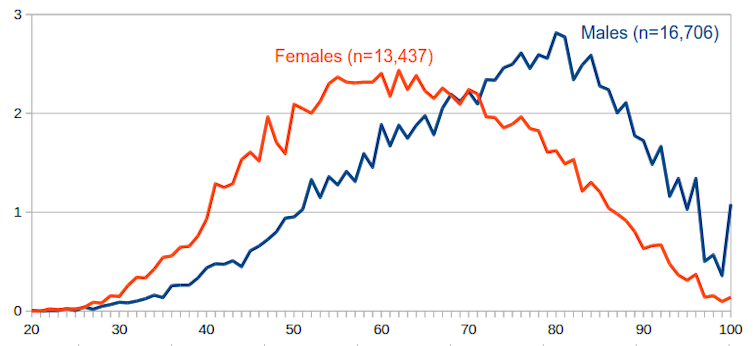
The increase in the number of Indigenous people aged 65 or older from 31,000 in 2016 to 47,700 in 2021 has been widely remarked upon. Around 71% of this increase can be accounted for by Indigenous population ageing and mortality, with 29% remaining unexplained by demographic factors.

In other age groups, identification change is a larger contributor to population increase. High levels of identification change among children continues a trend from previous censuses, possibly due to the form being filled out on children’s behalf by different adults in different years.

Made with Flourish

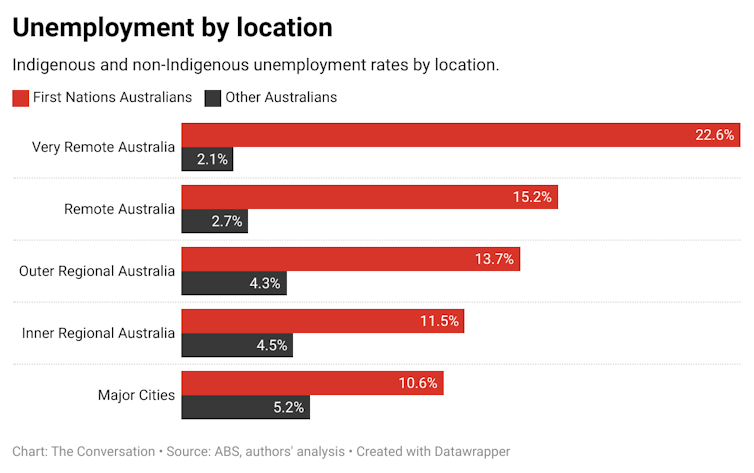
Population growth is most significant in New South Wales and Queensland, with 68.9% of total Indigenous population increase and 71% of unexplained population increase occurring in these two states. In the Northern Territory, the Indigenous population is actually smaller than expected based on the 2016 Census.

Made with Flourish

How do people identify as First Nations?

The question here is, why do Indigenous people identify in the census when it is a voluntary process? In my research on Aboriginal Melbourne, Aboriginal people were very thoughtful when they chose whether or not to identify as Aboriginal in the Census — or even whether to complete the Census at all.

Many Indigenous people identify in the census because they feel there are few negative consequences from doing so and they’re not being forced to. For them, the census is a safe place to “tick the box” and identify privately. Others feel it is their duty to represent their community through a population count and consider that participating will not impact on their claims to sovereignty. Some feel that times have changed, and where once perhaps they may have felt embarrassed to identify as Indigenous, this is no longer the case — this could be contributing to the increase in the population.

There is also resistance from First Nations people to participate in the census, which stems from early government policies and life experiences, such as child removal and incarceration. Some Aboriginal people from Melbourne consider the census to be another form of government surveillance.

First Nations identity has become subject to a public debate. First Nations scholar Bronwyn Carlson argues increasing census counts aren’t necessarily evidence of a population increase, but rather just statistical methods catching up with reality. She has also highlighted the fact the census doesn’t capture Indigenous ways of living.

This can result in a mismatch between what the census measures and different views of what it means to be Indigenous or First Nations. The census defines Indigeneity in terms of self-reported “origin” or ancestry. This is a very different criterion to the government-preferred “working definition”, which states an Indigenous person is someone accepted as an Aboriginal and/or Torres Strait Islander person by Indigenous community members.

Indigenous identity is made of many things today: pride, kinship knowledge, language revival, history, music, art, connection to Country, caring for Country, and the cultural responsibilities of educating our people and, for some, the wider population too. These things are not measured in the Census.

Social media has been a great reinforcer of identity and kinship connections. This has made it easier for younger generations to identify with each other and Elders, and to find out if they are related.

First Nations Elders are proud of the achievements of their community, such as rapper Briggs, actress Leah Purcell, and sportspeople like Ashleigh Barty and Paddy Mills. Whatever the Census has to say, identity is something First Nations people understand and define for themselves.

The Conversation

Julie Andrews receives funding from Australian Research Council.

Francis Markham does not work for, consult, own shares in or receive funding from any company or organisation that would benefit from this article, and has disclosed no relevant affiliations beyond their academic appointment.

ref. What it means to identify as Indigenous in Australia, and how this might have contributed to the increase in the census – https://theconversation.com/what-it-means-to-identify-as-indigenous-in-australia-and-how-this-might-have-contributed-to-the-increase-in-the-census-185954

Can a new department head get the politics out of infrastructure? (And is that a good idea anyway?)

Source: The Conversation (Au and NZ) – By James C. Murphy, Lecturer & Tutor (Teaching Intensive) in Politics and Public Policy, The University of Melbourne

Federal infrastructure policy has been rife with controversy for years: from the sports rorts scandal and dubious commuter car parks to overpriced land for the second Sydney airport. So notorious did the excesses become that they convinced the Morrison government’s critics to campaign for a strong anti-corruption commission during the May election.

Little wonder, then, that the Albanese government has brought in a new broom to head its infrastructure department.

Jim Betts replaces Simon Atkinson, a Morrison-appointed career bureaucrat who held the job through all those recent scandals. Like Atkinson, Betts is a long-time public servant, but he comes to the job straight from the state rather than federal bureaucracy.

Betts served first in Victoria’s Transport Department, where he was eventually secretary, then took the helm of Infrastructure New South Wales, and more recently headed the NSW Planning Department. So he takes on his new job with decades of experience in state infrastructure policymaking.

Where the action is

It is significant that Betts brings state rather than federal experience: infrastructure is a different kettle of fish at the state level. It is state governments that usually design, prioritise and build infrastructure projects. The federal government’s main role is to decide which projects to bankroll (the exceptions to this, like the National Broadband Network, don’t exactly shower the feds in glory).

Because of Australia’s chronic vertical fiscal imbalance, the states can rarely pay for the projects themselves: they are hopelessly reliant on the feds to turn their infrastructure fantasies into concrete reality, and compete desperately against one another for funds.


Read more:
Shovel-ready but not shovel-worthy: how COVID-19 infrastructure projects missed the opportunity to transform the way we live


Still, the infrastructure initiative normally lies with the states, and so that’s where much of the lobbying by vested interests and pressure groups takes place – and where the jockeying plays out between departments for their pet project to become the state’s submission for federal cash.

As my new study of Melbourne’s notorious East-West Link shows, this is the kind of politics Jim Betts knows intimately. At the helm of Victoria’s Transport Department for much of that saga, he saw how intense the politics of infrastructure can become.

Indeed, I suspect Betts’s long experience of state infrastructure policy might even incline him to accept the key finding of my book: that infrastructure is not afflicted by politics but is inherently and inescapably political.

Infrastructure necessarily involves public money, public space and visions of the public good. It is one of the more concrete ways citizens encounter public policy and one of the go-to yardsticks by which they judge the competence of a government. It is not something that can be administered scientifically or apolitically; there are no objectively right or wrong answers about what to build, just trade-offs and contested values.

When governments choose infrastructure priorities and build things, there are always winners and losers, there are always disputes, there are always votes on the line, and there are always competing visions being endorsed or crushed.

This means the mission of many reform enthusiasts – to “take the politics out of infrastructure” – is misguided. No independent authority or auditor has the power to do that, no matter how many priority lists they publish and no matter how much they name and shame governments for spending money in their own political interests.

Indeed, Betts would have seen during his time at Infrastructure New South Wales that such hopes are foolish. When the politics are compelling, governments will always ignore advisory bodies.

Behind closed doors

Betts’s experience across Victoria and NSW might help reform in another direction. When he worked in Victoria – from the 1990s until mid-2013 – the state had no long-term infrastructure plan, save for the Brumby Labor government’s attempt at a transport plan in 2009, which was quashed a year later by the Baillieu Coalition government.

Victoria still doesn’t have a proper long-term plan. Instead, it has ad-hocery writ large: billions upon billions spent on a “Big Build” program with no guiding logic. Projects frequently seem to come out of nowhere in surprise announcements, with all the lobbying and jockeying having occurred behind closed doors. The public tends to find out only once the sods are about to be turned.


Read more:
Victoria needs a big-picture transport plan that isn’t about winners v losers


By contrast, NSW did have long-term plans when Betts worked there. Plenty of things in those plans were and still are bitterly contested, and many aspects of the state’s infrastructure governance have been deeply problematic. But at least plans have been out there for people to see and contest.

Public, long-term plans change things. The lobbying and pressuring and organising can’t hide in the shadows. The politicking is out in the public arena; the next project (and the next and the next) is at least out there in outline for all to see and debate.

Betts would have seen up-close the difference plans can make. And he could, in his new position, urge the federal government to make long-term plans a prerequisite for federal infrastructure dollars.

Transparency over denial

Requiring that states have good-quality, public, long-term infrastructure plans before they can expect federal funds would be a game-changer. Plans can’t cure all that ails Australian infrastructure policymaking – there are good plans and bad plans, democratic plans and plans that serve narrow interests. But they would be a good start.


Read more:
Will the population freeze allow our big cities to catch up on infrastructure?


Plans force governments to build a rationale not for this or that project but for a whole vision; they force governments to explain their trade-offs and assumptions; and they force governments to think beyond the next election. They articulate the goals being pursued and defend the choice of winners and losers. If they’re done well, they generate buy-in and legitimacy — things desperately lacking in many infrastructure undertakings these days.

Far from taking the politics out of infrastructure, good plans lay the politics of infrastructure bare.

That is the kind of change to infrastructure policy-as-usual we need to see in Australia: not attempts to deny or hide the politics, but an effort to be honest about it instead, and deal with it head-on.

The Conversation

James C. Murphy does not work for, consult, own shares in or receive funding from any company or organisation that would benefit from this article, and has disclosed no relevant affiliations beyond their academic appointment.

ref. Can a new department head get the politics out of infrastructure? (And is that a good idea anyway?) – https://theconversation.com/can-a-new-department-head-get-the-politics-out-of-infrastructure-and-is-that-a-good-idea-anyway-185876

More rented, more mortgaged, less owned: what the census tells us about housing

Source: The Conversation (Au and NZ) – By Rachel Ong ViforJ, ARC Future Fellow & Professor of Economics, Curtin University

On the surface, the latest census tells us home ownership has changed little over the past five years. Between the 2016 census and this census in 2021, the share of Australians owning their homes remained steady at about 66%.

The proportion renting also changed little, climbing from 30% to 30.6%.

But a closer look reveals bigger long-term changes.


Read more:
More of us are retiring with mortgage debts. The implications are huge


While the proportion owning has slipped only two percentage points from 68% to 66% between 1996 and 2021, the proportion owning outright (without a mortgage) has plummeted from 42% to 31%.

The proportion mortgaged is nine percentage points higher. The proportion renting is four percentage points higher.

Most of the shift occurred between 2001 and 2006, which were the early years of the sustained home price boom.

As prices climbed, more Australians rented, and owner occupiers took on larger mortgages that took longer to pay off.


It’s the under 40s for whom things have changed the most

In younger age groups, the proportion owning a home has dived.

Between 1996 and 2021, the share of owners in households headed by 25-34 year olds sank from 50% to 43%.

This is part of a long-term decline that began in 1981.

Home ownership rates have also dived among Australians aged 35-44 and 45-54 too, but at a slower pace than for Australians aged 25-34.


A customised data report prepared by the Australian Bureau of Statistics shows home ownership rates among Australians aged 65+ ticked up from 78.4% to 79.4% between 2016 and 2021 after sliding in the previous two censuses.

The downward trend in home ownership among the young and the upward trend in mortgaged rather than outright ownership show no signs of reversing, despite significant spending on first homebuyer subsidies and guarantees.

It depends on where you live

The changes have not been uniform throughout the country.

In South Australia, Western Australia and Tasmania the proportion of households renting has barely changed since 1996. In the Northern Territory and Australian Capital Territory it has slipped.

But in Victoria the proportion of households renting has jumped 3%, in NSW it has jumped 4%, and in Queensland 3%.


The proportion of households owning outright unmortgaged has fallen 10-12% in Queensland, Victoria and NSW, 8% in South Australia and Western Australia, 6% in Tasmania, 3% in the ACT, and is unchanged in the Northern Territory.

Back in 1996, Victoria had the highest share of outright ownership at 44%. It is now below 32%, less than Tasmania (37%) and South Australia (33%).


A shift towards apartments

The proportion of households occupying freestanding houses fell from 82% to 72% between 1996 and 2021.

The proportion housed in apartments climbed from 8% to 14%

The shift has been more evident among owners than renters, suggesting buyers have to make greater sacrifices to obtain a home than they used to.

A shift towards agents

Not only are more of us renting (up from 28% in 2006 to 31% in 2021) but more of us are doing it through real estate agents.

Whereas in 2006 half of all rental properties were rented through agents, by 2021 it was two-thirds. Over the same 15 years, the share of rental homes rented from a state or territory housing authority slid from 15% to 10%.

The share of rental housing provided by the community sector changed little.


Much unknown

The census mainly provides population-wide snapshots, rather than tracing people through time.

This makes it hard to tell the extent to which people are moving out of home ownership and then back into it (and sometimes out of it again), along the lines suggested by my own research using data from the Household, Income and Labour Dynamics in Australia (HILDA) survey.


Read more:
No longer a one-way street, home ownership is becoming porous


Nor does it provide much insight into whether the growing numbers of Australians having to rent will eventually own (mortgaged) homes.

Research by myself and colleagues in Britain and United States points to a “catch-up” in which Americans and Australians denied home ownership when young attain it later in life.

One thing the census puts beyond doubt is that more of us are renting and more of us are mortgaged rather than owning outright compared with 20 years ago.

The Conversation

Rachel Ong ViforJ is the recipient of an Australian Research Council Future Fellowship (project FT200100422). She also receives funding from the Australian Housing and Urban Research Institute.

ref. More rented, more mortgaged, less owned: what the census tells us about housing – https://theconversation.com/more-rented-more-mortgaged-less-owned-what-the-census-tells-us-about-housing-185893

Concerns over TikTok feeding user data to Beijing are back – and there’s good evidence to support them

Source: The Conversation (Au and NZ) – By David Tuffley, Senior Lecturer in Applied Ethics & CyberSecurity, Griffith University

amrothman from Pixabay, CC BY-SA

When English statesman Sir Francis Bacon famously said “knowledge is power”, he could hardly have foreseen the rise of ubiquitous social media some 500 years later.

Yet social media platforms are some of the world’s most powerful businesses – not least because they can collect massive amounts of user data, and use algorithms to turn the data into actionable knowledge.

Today, TikTok has some of the best algorithms in the business, and a suite of data-collection mechanisms.

This is how it manages to be so addictive, with some 1.2 billion users as of December 2021. This number is expected to rise to 1.8 billion by the end of the year.

It’s against the background of these huge numbers that the US Federal Communications Commission (FCC) wrote a strongly worded letter to the chief executives of Apple and Google last Tuesday, urging them to remove TikTok from their app stores on the grounds that the company – or more precisely its Chinese parent ByteDance – can’t be trusted with US users’ data.

What are the concerns?

In his letter, FCC commissioner Brendan Carr says:

TikTok is owned by Beijing-based ByteDance — an organisation that is beholden to the Communist Party of China and required by the Chinese law to comply with the PCR’s [(People’s Republic of China)] surveillance demands.

TikTok’s privacy policy says it won’t sell personal information to third parties, but reserves the right to use information internally for business development purposes. That internal use may include use by its parent company, ByteDance.

TikTok US has repeatedly denied breaching US data privacy regulations. It says user data are stored on US servers and not shared with ByteDance. But Carr says these measures fall short of guaranteeing the privacy of US users:

TikTok’s statement that ‘100% of US user traffic is being routed to Oracle’ (in the US) says nothing about where that data can be accessed from.

Following robust questioning by US senators, TikTok has admitted its US-stored data are in fact accessible from China, subject to unspecified security protocols at the US end.

Australian users also have their data stored on US servers, with backups in Singapore. But it’s not known whether these data – which could include users’ browsing habits, images, biographical information and location – are subject to the same safeguards as the US data.

Leaked audio

The unusually blunt language from Carr may have been occasioned by leaked audio obtained by Buzzfeed from more than 80 internal TikTok meetings.

According to a Buzzfeed report from mid-June, China-based employees of ByteDance have repeatedly accessed non-public data about US TikTok users. The tapes overwhelmingly contradict TikTok’s earlier data privacy assurances.

For example, in a September 2021 meeting a senior US-based TikTok manager referred to a Beijing-based engineer as a “master admin” who “has access to everything”. That same month a US-based staffer in the Trust and Safety Department was heard saying “everything is seen in China”.

In short, the recordings corroborate the claim that China-based employees have often accessed US data, and more recently than earlier statements asserted.

Might it all be harmless?

On the one hand TikTok is in the business of entertaining users, with a goal to keep them on the platform and expose them to targeted advertising. On the other hand, TikTok can be used to spread misinformation and influence users to their detriment.

It has been shown to host COVID conspiracy theories and other medical misinformation, and was reportedly used with a goal to influence Kenya’s general elections coming up in August.

Seen in this weaponized context, the US government’s strenuous objections to TikTok come into clearer focus.

Moreover, past events have also raised good reason to suspect Chinese actors of mass data harvesting online.

In 2020, Australian media outlets reported on a data leak from Zhenhua Data, a Chinese company with clients including the Chinese government and the People’s Liberation Army.


Read more:
Keep calm, but don’t just carry on: how to deal with China’s mass surveillance of thousands of Australians


The leak was said to contain data on more than 35,000 Australians – including dates of birth, addresses, marital status, photographs, political associations, relatives and social media accounts. This information was gathered from a range of sources, including TikTok.

Would banning TikTok be effective?

Removing TikTok from Google’s and Apple’s app stores can only be done on a country-by-country basis. India banned the platform in June 2020.

If the Australian government were to make the TikTok domain inaccessible from Australia, it could still be accessed through a virtual private network (VPN). A VPN service allows users to create a secure private network within a public one, thus disguising their country of origin. It’s the same tool that allows file-sharing on Pirate Bay and access to other countries’ Netflix programs.

But even if TikTok was banned in Australia and had access removed, or if users mass-terminated their accounts, existing data on the company’s US and Singapore-based servers would remain there. And we now know these data are accessible to TikTok’s parent company, ByteDance, in Beijing.

What should TikTok users do?

Like any technology, TikTok itself is neither good nor bad. But the way in which it’s used creates potential for both.

The best defence with any potentially dangerous technology is to approach it with healthy scepticism and share as little as possible. In the case of TikTok (and other social media) this may involve:

  • not disclosing your full name
  • not disclosing your age and birthday
  • not disclosing your physical location (including through pictures or video)
  • turning off the “suggest your account to others” setting.

You can also request an account deletion. But don’t expect TikTok to delete all the data associated with it. That’s TikTok’s data now, and you agreed to handing it over when you signed up.


Read more:
China could be using TikTok to spy on Australians, but banning it isn’t a simple fix


The Conversation

David Tuffley does not work for, consult, own shares in or receive funding from any company or organisation that would benefit from this article, and has disclosed no relevant affiliations beyond their academic appointment.

ref. Concerns over TikTok feeding user data to Beijing are back – and there’s good evidence to support them – https://theconversation.com/concerns-over-tiktok-feeding-user-data-to-beijing-are-back-and-theres-good-evidence-to-support-them-186211

‘Quite irreparable damage’: child family violence survivors on how court silenced and retraumatised them

Source: The Conversation (Au and NZ) – By Camilla Nelson, EG Whitlam Research Fellow, Whitlam Institute within Western Sydney University, and Associate Professor, University of Notre Dame Australia

Shutterstock

Nobody spoke to Donna* or her sister in the lead up to the family court decision that ordered the children to spend time alone with their father, who was violent. Donna was eight.

Later, after the children told the court’s Independent Children’s Lawyer their father had been “drinking a lot” when he was with them and made “threats to kill”, the judge appointed a supervisor to ensure the children would be physically “safe” from any further violence that might occur. Donna explains,

[…] so, they thought it was safe, but it wasn’t […] we were just terrified of him. Really, really scared …

Donna, now in her 30s, says the court’s disregard generated emotional harm that was “more traumatic” than the serious family violence leading up to court:

[…] when you come from a situation of family violence as a child, your mother is your place of safety – generally – and when mum [is] removed […] you know, those times I was made to spend time with him without her was terrifying. And that was probably more traumatic than the years and years of trauma leading up to that.

After about two years of court-enforced contact, Donna’s father physically assaulted the court-appointed supervisor in front of Donna and her sister, and the judge agreed to lift the orders.

But the psychological damage would resurface later in Donna’s adult life:

[…] when I was 20, 21, I think […] I started to have flashbacks, and that’s when I realised that I needed to get some help because I couldn’t sleep because I just kept having flashbacks.

I spoke to Donna as part of a project for the Whitlam Institute within Western Sydney University.

Based on the research for my book Broken: Children, Parents and Family Courts, the project combines a podcast and policy paper with 12 recommendations designed to create a family law environment able to learn from children’s experience – one based in children’s rights.

What the research found

In Australia, it’s a criminal offence to identify a party to a family law proceeding, including adults who went to court when they were children.

This means survivors of family violence who were subject to Federal Circuit or Family Court orders when they were children are unable to speak – online or in the media – unless they mount an expensive legal action seeking the court’s permission. If they are successful, they can only speak on the terms the court imposes.

As a consequence, successful applications usually involve cases where the media is willing to pay the legal costs.

Quite simply, the court cannot see the impact of its decisions on children’s lives. It is unable to learn from its mistakes. It has no mechanism through which children’s experiences can be used to inform structural change. And children are forced to live with the consequences.

During the writing of this report, I traced the cases of seven adults whose families went to court when they were children. All were child survivors of family violence, and two were survivors of child sexual abuse. The length of litigation varied from two to ten years, including one participant who reported she didn’t have a memory from her childhood that didn’t include the family courts.

While each survivor had difference experiences, they raised common themes. They told me they felt powerless, distressed at being disbelieved, ignored or “kept in the dark”. They said they felt traumatised by the way in which legal actors executed the court’s orders.

They told me about the long-term social, emotional and financial impacts of litigation on their families. They explained this trauma resurfaced in their adult lives.

The cases of the people I spoke to were litigated between 1990 and 2010. Similar themes emerged in the Australian Institute of Family Studies 2018 report, based on interviews with children between the ages of ten and 17 about legal matters that were mostly finalised between 2016 and 2017.

What I found suggests the issues raised by older survivors are also being raised by younger survivors. This suggests the silencing of children is deeply embedded in the adversarial practices of the courts, in the ideologies of the legal profession and in institutional culture.

Nikos*, in his 20s, spent seven years of his childhood in the Federal Circuit and Family Courts. He never got to speak to the Independent Children’s Lawyer:

[…] what I wanted, and what I thought would be better for me was completely irrelevant to the courts.

Ten years after litigation has ended, Nikos can still name the lawyer who refused to speak to him as a child. He said a central problem was that the court’s adversarial system created a forum through which family conflict could be escalated and extended.

Anna*, in her 30s, also says the court made everybody “fight all the time”. She says:

I honestly think that even though my dad was extremely violent, family court made it so much worse.

Anna explains:

Because mum was very angry and very inconsistent with me. But I think she would not have been like that if family court was not happening. If the court had just said in the first place, ‘Look, your dad’s really dangerous, don’t see him,’ she would have been a lot more settled and not under the same financial pressure. So, I think that we would have had a much better upbringing.

As the decade-long litigation escalated, Anna’s relationship with her mother became increasingly “difficult”:

I thought afterwards that probably the most unaddressed issue is how badly family court affected the relationship between my mum and I. [My mother] wasn’t the main perpetrator of family violence, and she did try to protect us from it, but because she couldn’t when the court ordered her to send us to dad’s house, it really has caused quite irreparable damage.

The litigation in Anna’s case lasted until she was 14. When the court handed down its final decision, she ran away from home.

The problem, Donna explains, is that:

Your fate is in the hands of these strangers […] I actually used to, you know, envision myself as a child just walking in there and screaming at them and telling them the truth, you know, and telling them that he is really dangerous. But, you know, not being heard. So what’s the point?

12 recommendations

My report makes 12 recommendations, including that:

  • there must be a less hostile context in which to hear legal matters which affect children

  • family law decision-making processes must be anchored in children’s rights

  • adults who went to court when they were children should not be silenced.

They’re designed to create a simpler and more affordable family law system that reduces harm to children and young people.

This requires the court to provide a child safe environment in which it’s possible for children and young people to speak freely about their safety concerns and be taken seriously.


*Names have been changed and transcripts redacted to remove identifying details as required by law.

The Conversation

This policy project has been funded by the Whitlam Institute within Western Sydney University. This story is part of The Conversation’s Breaking the Cycle series, which is about escaping cycles of disadvantage. It is supported by a philanthropic grant from the Paul Ramsay Foundation.

ref. ‘Quite irreparable damage’: child family violence survivors on how court silenced and retraumatised them – https://theconversation.com/quite-irreparable-damage-child-family-violence-survivors-on-how-court-silenced-and-retraumatised-them-185198

Incarcerated people with disability don’t get the support they need – that makes them more likely to reoffend

Source: The Conversation (Au and NZ) – By Sophie Yates, Research Fellow, UNSW Sydney

People with disability are over-represented in prison and some are criminalised because of behaviours related to their disability. But they are unlikely to have their disability recognised or adjusted for, and the connection between the National Disability Insurance Scheme (NDIS) and the criminal justice system has long been problematic.

We wanted to understand some of the service gaps for people in prison with disability, and what can be done to improve supports. We interviewed 28 people who worked at the intersection of disability and the criminal justice system (such as disability service providers, lawyers and advocacy workers).

Our findings painted a picture of a group disadvantaged both inside prison and after release, who need much more support to avoid being criminalised again and again.


Read more:
Victoria’s prison health care system should match community health care


How many people in prison have disability?

People with disability – particularly intellectual disability – are overrepresented in prisons, but there are no reliable statistics on what percentage of people in prison have disability.

This is because disability definitions vary, prisons have not traditionally been good at identifying people with disability, and people may not recognise or be willing to admit they have a disability. In fact, not knowing about their disability and not being able to access supports can be the reason people end up in prison in the first place.

Prevalence of intellectual disability in prison is estimated as anywhere between 4.3% – using administrative data – to about 30%, when people are screened or anonymously surveyed. This compares to about 3% in the wider population.

People we spoke to said identification of people with disability in the criminal justice system is improving, but there is still a long way to go. Common disability types encountered included intellectual or cognitive disability, acquired brain injury, psychosocial disability (difficulties arising from mental illness), hearing loss, and combinations of all these.

Disability supports in prison

People with disability in prison may need support with physical or cognitive tasks just as they do in the community. This could include help with showering, reading documents, filling in forms, understanding rules, completing programs, participating in their criminal justice proceedings, or making complaints if something goes wrong.

Most interviewees agreed the best-case scenario for most people with disability was to be housed in disability-specific prison units with staff who have disability training or other relevant qualifications. However, they noted these units are not available at every prison and there is high demand for limited beds.

So, people with disability are typically housed in mainstream prison units or in segregation or protective custody. Both scenarios pose risks such as victimisation by other inmates or exacerbation of symptoms.

Interviewees reported that outside of disability-specific units, there is very little disability support available in prison, including lack of adjustment to prison programming to make it suitable for those with low literacy or intellectual disability. This means that people with disability sometimes have to rely on support from other people in prison for their daily needs, which can be problematic.

What about the NDIS?

Day-to-day disability support in custody is entirely the responsibility of corrective services. This means people who might be eligible for quite a lot of NDIS support in the community get a significantly reduced service in custody, which is inconsistent with Australia’s human rights obligations and has consequences for their ability to stay out of contact with the justice system after release.

The NDIS does allow some forms of support (mainly aimed at transition back into the community) to be delivered inside prisons. However, this is at the discretion of prisons. Our interviewees told us things are improving, but it’s still rare for people to get any kind of NDIS services while in custody.

There can also be funding disputes because the NDIS will only fund supports related to disability and not criminal offending, but those are tricky to untangle.

For most people, interviewees agreed, it’s more like a pause button gets hit on their plans until they are released.


Read more:
Life sentences – what creative writing by prisoners tells us about the inside


Problems continue after release

Once people with disability leave prison, they continue to face significant barriers in accessing NDIS services. Some people do get pre-release planning, but others will be released with no understanding of how to re-start or use their plans.

Many people in this situation have difficulty understanding, admitting or explaining their support needs.

Specialist support coordinators trained to work with these clients can help, but aren’t widely available.

Further, in a market-based system like the NDIS, service providers can choose who they work with. If providers don’t want to operate inside prisons, or with certain client groups who have challenging behaviours, they don’t have to.


Read more:
Art by Indigenous prisoners can forge links with culture and a future away from crime


Where to from here?

Prisons need better and more consistent identification of people with disability, more specialised disability units, and better support for those with disability housed in the mainstream population.

This includes a genuine effort to adjust all programs for the needs of people with cognitive disability or low literacy.

While NDIS rules and access for those in custody have been improving, significant work still needs to be done to ensure people in prisons get consistent and fair access to their NDIS entitlements. People need planning and support well before their release dates to prepare them adequately for re-entering the community.

More specialist support coordinators, more funding for advocacy services, and a provider of last resort would assist with making sure this complex needs group receives the care necessary to avoid the “revolving door” of the criminal justice system.

The Conversation

Caroline Doyle is the President of Prisoners Aid (ACT).

Shannon Dodd and Sophie Yates do not work for, consult, own shares in or receive funding from any company or organisation that would benefit from this article, and have disclosed no relevant affiliations beyond their academic appointment.

ref. Incarcerated people with disability don’t get the support they need – that makes them more likely to reoffend – https://theconversation.com/incarcerated-people-with-disability-dont-get-the-support-they-need-that-makes-them-more-likely-to-reoffend-185395

‘We are not in this alone’: stressed teachers find hope in peer-support model used by frontline health workers

Source: The Conversation (Au and NZ) – By Anne Southall, Lecturer in Inclusive Education and Trauma, La Trobe University

Shutterstock

Teachers are burning out and leaving the profession in unprecedented numbers. Classrooms and workloads are challenging, made worse by staff shortages, and teachers are stressed. Student welfare needs to be prioritised, but the educators supporting them need support too.

A model of peer support used by front-line health workers could provide a way forward. Results of a three-year trial in three regional Victorian primary and specialist schools are promising, our research shows. All 40 participants said it improved their mental health and workplace culture, and increased their ability to cope with the demands of working in challenging conditions.

Our model enables principals, teachers and support staff to take the time to reflect together on their work, which involves complex and often challenging relationships with students, parents and other members of the school community. As one teacher, Karen*, said:

“We put the personal side first. And we put our safety first and our emotional well-being first over the academic side and the teaching, which then filtered out because we were comfortable, and we felt safe and looked after. That filtered out into our roles and we were able to do our job.”


Read more:
Could more online learning help fix Australia’s teacher shortage?


Many teachers are at breaking point

The pandemic has caused more than two years of upheaval for educators through school closures and the return to work after remote learning. Burnout, staff turnover and extreme teacher shortages have followed.

But it may not be just the COVID-19 experience that accounts for this. A 2018 survey of 18,234 staff at public schools in New South Wales found 60% of teachers were already reporting unacceptably high work stress.


Read more:
Read the room, Premier. Performance pay for teachers will make the crisis worse


Teachers have long been required to draw on their emotional resources every day. But, as interviewee Sally, a primary school teacher, told us, they “can’t keep giving from an empty bucket”.

Darren told us they want time with their peers dedicated to “thinking more deeply about what is going on in the classroom and really going deeper into it”. They want “to be able to acknowledge how you actually really feel and not have to hide it”, Paul added.

The burdens of being a caring profession

During the pandemic, teachers who became critical front-line workers began to show signs of exhaustion and burnout.

While the focus has been on prioritising student well-being, an important consideration has been overlooked.

When students are anxious and depressed, their educators worry about them, our soon-to-be-published research shows. And there is a catch-22 at play here. The more an educator cares, the more intense the emotions they experience when students are disengaged, falling behind or not coming to school.

In turn, how teachers are feeling directly affects their students – the stress can be “contagious”. In this way teachers’ concerns can inadvertently contribute further to negative classroom experiences.


Read more:
Schools will now be required to support well-being, but the standards aren’t clear on what that means


So how do reflective circles help?

Teacher concerns and emotions can be processed in more effective ways using what we call the Reflective Circle Education Model (RCEM). It draws from similar forms of peer support in other professions.

Teachers analyse their professional experiences and personal reactions and, with small groups of colleagues, explore other ways of viewing them. This approach leads to personal and professional growth and better teaching practices, instead of a destructive cycle of exhaustion and deteriorating classroom climate.

Studies show that if teachers suppress their true emotions it leads to greater overall burnout. Despite this evidence, education systems are yet to provide embedded structures to support teachers’ needs.

What sets reflective circles apart is its more restorative approach. Members of the team can share different perspectives in a way that leads to personal growth and change. The focus is on building relationships and self-awareness rather than on content and curriculum, or accountability and performance.


Read more:
What does equity in schools look like? And how is it tied to growing teacher shortages?


Small groups with four to six members explore an experience they have had at school. Each member completes a personal reflection from a structured series of questions before they come together in the reflective circle. There, each person begins by sharing a summary of their reflection. The other members of the group then explore the experience, offering other insights or perspectives.

For example, one teacher was struggling with their anger towards a student who “had been riding one of our bikes and threw the bike into the shed, damaging several other bikes. I was furious with him. I thought he should be more grateful. When I went to do the online reflection, though, I realised something: his mother had died and when he went to live with his grandmother, she died shortly after and I thought – why should he be grateful for an hour on a bike? It was a real revelation to me. It has changed the way I think about him and certainly changed the way I react to him.”

The second phase of the circle is designed to integrate these other meanings into new ways of thinking. It involves more questions to help work out new approaches to try.

Each participant decides what they will share and the actions they want to take in future.

This pilot research is consistently reporting all participants find value in not only sharing their emotions but also realising others are feeling the same way.

As participant Priah said:

“We walk out that door after reflective circles on cloud nine. And it doesn’t matter how deep and serious the conversations are, I walk out feeling like something has lifted off my shoulders, we are not in this alone.”


* All names are pseudonyms to protect trial participants’ privacy.

The Conversation

The authors do not work for, consult, own shares in or receive funding from any company or organisation that would benefit from this article, and have disclosed no relevant affiliations beyond their academic appointment.

ref. ‘We are not in this alone’: stressed teachers find hope in peer-support model used by frontline health workers – https://theconversation.com/we-are-not-in-this-alone-stressed-teachers-find-hope-in-peer-support-model-used-by-frontline-health-workers-185683

How Solntsepyok, a brutal 2021 propaganda film, primed Russians for war with Ukraine

Source: The Conversation (Au and NZ) – By Greg Dolgopolov, Senior Lecturer in Film, UNSW Sydney

Screenshot/YouTube

The war in Ukraine is as much a bloody conflict as it is a propaganda war.

The doublespeak in Russian media is that there is no war, that the Bucha massacre was staged by Ukrainians and that Russians and Ukrainians are united in liberating Ukraine from NATO and nationalists.

It is impossible to determine to what extent audiences are deceived. There are numerous individual protests on social media, but most Russian media consumers want to believe the authorities.

While many were caught off guard by the February 2022 invasion, if we had paid more attention last year, we would have noticed the fictional feature film Solntsepyok (directed by Maksim Brius and Mikhail Vasserbaum, 2021). Titled “Sunbaked” in English, this film set the propaganda machine in action to prepare Russian audiences for war.

After a very brief theatrical release and a massive promotional campaign, the film screened on the government run NTV channel in August 2021 and is now widely available on Russian streaming services.


Read more:
Putin’s brazen manipulation of language is a perfect example of Orwellian doublespeak


A brutal war film

The film begins on a hot sunny day in May 2014 in the self-proclaimed Luhansk People’s Republic. A couple of cars full of unshaven criminals senselessly murder a group of villagers, steal their watches, rape the women and brutally bash a baby into a wall.

The Novozhilov family, on their way to Russia, get caught up in this mayhem. The borders are closed. There is no way out. The father, Vlad Novozhilov (Aleksandr Bukharov), is an Afghan War veteran with no appetite to carry a gun again. He enlists as a paramedic driver to help with the fatalities.

For some strange reason, in Solntsepyok, the Ukrainian army shells its own villages indiscriminately. That absurd message is clearly important in the propaganda war.

Elsewhere, volunteers from all over Ukraine are heading into special training camps to learn combat techniques to fight the separatists. These Ukranians are shown as caricatures: right-wing skinheads and folk costume wearing psychopaths.

The film features caricatures of right-wing skinheads.
Screenshot/YouTube

Young men, high on the success of the February Maidan protests in Kyiv – a protest against the government forging closer ties with Russia, rather than the European Union – are getting ready to take up arms, although it is not clear who they want to fight.


Read more:
Why Ukrainians are ready to fight for their democracy


A web of lies

Film critic Dmitri Sosnovski, from the government newspaper Rossiyskaya Gazeta, called Solntsepyok “a heartbreaking film” that

shows the war in all of its ugliness, without edits, without unnecessary sentimentality, with ruthless, simply unbearable frankness, as a reliable story about what happened to Russians at the very borders of the Russian Federation.

But the film is riddled with errors. Alexei Petrov, an officer with the Ukrainian Armed Force, calls the film “propaganda trash”. In a YouTube video he points out all the lies featured in the film.

The first lie comes up in the title credits, where an assertive voiceover narration says “the [Ukranian] government was overthrown” after the Maidan protests.

In fact, the Ukrainian parliament in 2014 called for early elections and the formation of an interim unity government. They granted full amnesty to protesters and sought to impeach then-President Yanukovych, who fled to Russia. For a government overthrow, this was rather orderly.

The film falsely claims Ukrainian nationalists were calling for genocide of Russian citizens. It links anti-Russian sentiment with the descendants of Hilter Youth. It features a cigar chomping American general who promises the US will turn Ukraine into a land without Russians. There were no US generals in Ukraine in 2014.

This is a brutal war film that is purposefully confusing, devised to prime Russian audiences for rationalising the invasion through a series of ethnic caricatures and lies.

Confusion reigns

It is hard to tell who are the good guys and who are the baddies in Solntsepyok. The film is about Vlad resisting before eventually taking up arms for the pro-Russian militia separatists.

The audience is positioned to be on the side of the separatists. We see the conflict from their perspective, but it is confusing: there are so many different belligerents.

Solntsepyok’s propaganda is designed to confuse the audience, entertain with action and dramatic moral choices and overwhelm. The audience is constantly emotionally manipulated.

One character, the bespectacled Gurevich (performed by the celebrated Vladimir Ilin) lovingly rehearses a song about a bright future with a children’s choir. Suddenly, a Ukrainian missile strikes the school. He is the only survivor.

Innocent children are among the numerous victims of the film.
Screenshot/YouTube

Battered and shell shocked, he turns up at the pro-Russian militia office demanding to be enlisted. He is totally unsuited for war but he has a motivation: children were murdered indiscriminately.

In perhaps the most powerful scene of the film, Vlad has a heated exchange with his teenage son, Ilya (Gleb Borisov), who tells him he wants to stay and fight with the separatists. As he walks off, Vlad grabs him:

Do you know what war is? It is not romantic and it’s not heroic. War is fear. Fear is not thinking that you will be wounded or killed. If you are wounded, you’ll feel pain, but no fear! If you are killed, you’ll feel nothing. Fear is when, around you, your mates are being killed and you can’t do anything!

After his son and wife are killed in an indiscriminate bombing, Vlad finds salvation by picking up a gun and walking with his new comrades.

This imagery primed the Russian audience for the future war. Although Vlad resisted taking up arms he was forced to abandon his moral position when he had lost everything that he held sacred. He had no other choice.

Solntsepyok is a textbook example of propaganda. Connections to the truth are not as important as the ideology of shaping a motivation for war.


Read more:
Russia’s Ukraine invasion won’t be over soon – and Putin is counting on the West’s short attention span


The Conversation

Greg Dolgopolov previously organised the Russian Resurrection Film Festival.

ref. How Solntsepyok, a brutal 2021 propaganda film, primed Russians for war with Ukraine – https://theconversation.com/how-solntsepyok-a-brutal-2021-propaganda-film-primed-russians-for-war-with-ukraine-185701

Nation-building or nature-destroying? Why it’s time NZ faced up to the environmental damage of its colonial past

Source: The Conversation (Au and NZ) – By Olli Hellmann, Senior Lecturer in Political Science and International Relations, University of Waikato

National Library of New Zealand, CC BY-NC-ND

The ways in which New Zealand remembers European colonisation have changed markedly in recent years. Critics have been chipping away at the public image of Captain James Cook, the New Zealand Wars have been included in the new compulsory history curriculum, and streets honouring colonial figures have been renamed.

However, while New Zealand is slowly recognising the historical injustices suffered by Māori, the same reappraisal hasn’t extended to the natural environment. The dramatic transformation of “wild untamed nature” into “productive land” by European settlers in the 1800s continues to be widely celebrated as a testament to Kiwi ingenuity and hard work.

My soon-to-be published research, based on a survey of 1,100 people, suggests this narrative could be partly responsible for New Zealanders’ apparent complacency on climate change compared to other countries.

Essentially, it appears those who refuse the “taming of nature” narrative – and instead recognise the 19th century as a period of environmental destruction – are more likely to have what psychologists call an “environmental self-identity”.

The findings further suggest that changing individual behaviour as a strategy to tackle environmental threats (as recommended in the Climate Commission’s 2021 report) might mean addressing how we communicate the history of environmental change in schools, museums and at public heritage sites.

In particular, this might mean framing what happened in the 1800s as more about loss than achievement.

‘Taming nature’: clearing bush in the Coromandel, late 19th century.
Unknown photographer, via Wikimedia Commons

A story of progress or decline?

Prior to human settlement, Aotearoa New Zealand had been isolated from other landmasses for around 60 million years. The result was the evolution of a unique ecosystem that was highly vulnerable to disturbances.

Māori arrived around 1300 and brought with them invasive mammals: the Polynesian dog (kurī) and the Pacific rat (kiore). Through widespread burning, Māori – either intentionally or accidentally – destroyed large areas of forest in drier eastern parts of Te Wai Pounamu (South Island) and Te Ika a Māui (North Island).

Moreover, archaeological research suggests a number of bird species were hunted to extinction, including moa and adzebill.


Read more:
A new farming proposal to reduce carbon emissions involves a lot of trust – and a lot of uncertainty


European settlers began arriving in large numbers after the signing of the Treaty of Waitangi in 1840. On the back of (often dubious) purchase deals, the introduction of private property laws and forceful confiscation, vast areas of Māori land ended up in European hands.

What followed was a classic example of what’s been called “ecological imperialism”. Much of the remaining forest was transformed into grassland for sheep and cattle. Acclimatisation societies introduced other familiar animals and plants from Europe.

Purposefully and accidentally introduced species – such as stoats and ship rats – wreaked havoc on the native wildlife. Within a few decades of European colonisation, several birds went extinct, including the huia, the piopio and the laughing owl. European capitalism also had a devastating impact on seal and whale populations.

Veneration of the pioneers: a mural by artist Mandy Patmore depicts bushmen at their camp with the Waitakere Ranges in the background.
Auckland Libraries Heritage Collections, CC BY-NC

A “usable past”

Despite the long history of environmental change, it is the transformation of the landscape in the 1800s that occupies the most prominent place in New Zealand’s collective memory, relative to other periods. The reason is fairly simple: the era provides what memory scholars call a “usable past” – usable because it helps to construct a distinctive New Zealand identity in the present.

Similar to historical events such as the signing of the Treaty of Waitangi and the Gallipoli campaign, the “taming of nature” in the 1800s is remembered as an experience that forged the nation. European settlers – in particular the bushmen who cleared the forest to make way for farms and pastures – are portrayed as the prototypical New Zealander.


Read more:
Uncovering the stories my family forgot, about a past still haunting Aotearoa New Zealand


Their hard work and “number eight wire” ingenuity still define popular versions of the national character today. And media continue to portray the countryside as the “real” New Zealand, including in advertisements and television shows.

It should be stressed this is largely a narrative of the European settler majority. For Māori communities, the transformation of the landscape under European colonialism is more a story of decline than progress. Māori memories of environmental change in the 1800s are intertwined with memories of colonial violence and dispossession.

Most New Zealand farms were once dense bush that was cleared by burning and logging.
Getty Images

Memory shapes environmental attitudes

My survey sought to explore whether different interpretations of New Zealand’s environmental history shape people’s attitudes towards nature, and whether those interpretations make it more or less likely that people see themselves as someone who acts in an “environmentally friendly” way – the environmental self-identity mentioned earlier.

A key finding is that those respondents who pinpointed the 1800s – rather than Māori settlement or the second half of the 20th century – as the most destructive period of environmental change were most likely to describe themselves as environmentally friendly.


Read more:
Plastic Free July: recycling is the ambulance at the bottom of the cliff. It’s time to teach kids to demand real change from the worst plastic producers


For Māori respondents, this is perhaps not entirely surprising. An awareness of injustices suffered in the 1800s tends to go hand in hand with a strong spiritual connection with the land and a sense of responsibility towards nature.

More significant is that European New Zealanders who recognise the environmentally destructive role of 19th-century settlers were more likely to identify themselves as environmentally friendly than those who point to other periods in history.

It appears those European New Zealanders who acknowledge the environmental destruction caused by their ancestors feel a greater responsibility to fix these mistakes in the present.


Read more:
New Zealand should celebrate its remarkable prehistoric past with national fossil emblems – have your say!


How we remember the past matters

To encourage more pro-environmental behaviours, the survey results suggest New Zealand needs to move away from narratives that glorify environmental change of the early colonial era as an expression of national character.

Such interpretations of history reinforce ideas that get in the way of achieving a sustainable future. They promote a strongly utilitarian perspective on our relationship with the environment. Nature is reduced to a commodity to be exploited in the pursuit of human interests.

New Zealand has taken the first steps to work through its violent political past, but this process also needs to include colonialism’s devastating effects on the environment.

Rather than remembering the transformation of the landscape by European settlers as a nation-defining moment, public history should encourage an examination of human complicity in the destruction of nature. Hopefully, this can help transform such understanding into present-day environmental action.

The Conversation

Olli Hellmann does not work for, consult, own shares in or receive funding from any company or organisation that would benefit from this article, and has disclosed no relevant affiliations beyond their academic appointment.

ref. Nation-building or nature-destroying? Why it’s time NZ faced up to the environmental damage of its colonial past – https://theconversation.com/nation-building-or-nature-destroying-why-its-time-nz-faced-up-to-the-environmental-damage-of-its-colonial-past-185693

PNG Defence Force arrive in New Ireland for election duties

Inside PNG News

Forty-Two Papua New Guinea Defence Force staff have arrived in Kavieng for the national general election operations.

New Ireland Provincial Police Commander Chief Inspector Felix Nebanat said this brought the total number of joint security forces up to 400 in the province.

Papua New Guinea’s general election began yesterday.

” I am grateful to see the troops in the province. This will surely support and ensure the election is free safe and fair” said Chief Inspector Nebanat.

Chief Inspector Nebanat assured New Irelanders that the joint forces would be out in numbers to carry out their constitutional duty to serve during this time.

“I assure that people will be able to exercise their democratic right to participate by turning up at polling areas and elect their leader, ” Nebanat said.

The New Ireland police chief also said that briefing for security forces had been done with teams ready for despatching to Namatanai and Kavieng as polling neared.

Chief Inspector Nebanat said the sister forces would work together to ensure the national election in New Ireland was successfully completed and delivered.

“I commend the men and women of the joint forces who are on duty to serve.
Despite delays in logistics beyond our control, the local police are spearheading the operation with continues communication,” said Chief Inspector Nebanat.

Republished with permission.

Print Friendly, PDF & Email

Article by AsiaPacificReport.nz

New Caledonia’s Backes joins French government in citizenship post

RNZ Pacific

The president of New Caledonia’s Southern Province Sonia Backès has been given a post in France’s reshuffled and enlarged 42-member government.

The prime minister Elisabeth Borne appointed her as the secretary of citizenship within the interior ministry, which has integrated the overseas ministry.

The reshuffle means that the position of overseas minister has been abolished and replaced with a minister delegate, a post given to Jean-Francois Carenco.

The previous minister, Yael Braun-Pivet, resigned last month after just one month in office to successfully run for the presidency of the French National Assembly.

Backès said that while joining the French Interior Ministry she would retain her position as president of the Southern Province.

She is the first politician from New Caledonia to become part of the government of France.

This year, she spearheaded a merger of four anti-independence parties in New Caledonia to support the election campaign for President Emmanuel Macron’s Renaissance party in last month’s election of a new French National Assembly.

Both of New Caledonia’s seats in Paris were won by her coalition’s candidates.

This article is republished under a community partnership agreement with RNZ.

Print Friendly, PDF & Email

Article by AsiaPacificReport.nz

Rates rise to 1.35% – and there’s no stopping now the RBA’s on a mission to whip inflation

Source: The Conversation (Au and NZ) – By Isaac Gross, Lecturer in Economics, Monash University

Shutterstock

There was no suprise in the board of the Reserve Bank of Australia lifting interest rates at its July meeting. The only question was by how much.

Would it be a “regular” increase of 25 basis points? Or a double-whammy of 50. The markets tipped the double, and were proved right. The central bank lifted its cash rate target from 0.85% to 1.35% – taking Australia’s official interest rate to its highest level since July 2019.

This is sign of how seriously governor Philip Lowe and his fellow board members regard the threat of domestic inflationary pressures and a hot labour market to economic stability. Expect more action to follow.

Not all inflation is international

The primary reason the decision is the surge in inflation across the Australian economy.

In part rising prices have been driven by events overseas – principally Russia’s war on Ukraine pushing up oil and food prices.


Read more:
1970s-style stagflation now playing on central bankers’ minds


But it’s not just a supply issue. Rising demand for goods and services in Australia are contributing just as much to the bank’s expectation that inflation, having surpassed 5% in the March quarter, will reach 7% by the end of 2022.


Evidence of this can be seen in the Australian Bureau of Statistics’s latest report on inflation. It shows that, even excluding food and fuel, prices across the economy rose by 4% over the past year.

My own analysis of these numbers suggests most of the current inflation surge is being driven by higher demand. This is something best solved by tighter monetary policy (to restrict spending) and thus higher interest rates.

On top of rising prices, Australia’s labour market is also running piping hot. The unemployment rate of 3.9% is the lowest level in 40 years.

The number of businesses looking to hire new workers is at an all-time high, with 27% having difficulties filling positions, according to the Australian Bureau of Statistics.

This strong demand for labour is putting upwards pressure on wages, which will keep inflation high if not offset with higher interest rates.

Further hikes likely

A big challenge the Reserve Bank of Australia faces when setting interest rates is that inflation data from the Australian Bureau of Stastistics is only published every three months.

Overseas counterparts have the benefit of monthly inflation data. But at its July meeting the RBA board had to rely on inflation data published in late April. The RBA is flying somewhat blind until the next inflation report in June. What that report shows will be a key factor as to how high interest rates will rise over the rest of the year.

Last month the financial markets expected the cash rate would eventually peak at about 4% in 2023. They’ve since reduced this forecast to a high of 3.3%.

Still this would push the average interest rate that home buyers are paying on their mortgage to more than 5%.

The market predictions imply the RBA board will, over the five monthly meetings it has left in 2022, increase interest rates by an average 0.33 percentage points each time.


Read more:
Sky-high mortgages, 7.1% inflation, and a 20% chance of recession. How the Conversation’s panel sees the year ahead


Some doubt rates will rise that high that fast. But over the past year the markets have been much better at forecasting interest rates than economists and the Reserve Bank’s own guidance. We should ignore these market signals at our peril.

So expect – and plan for – interest rates to increase every month for the rest of the year.

The Conversation

Isaac Gross does not work for, consult, own shares in or receive funding from any company or organisation that would benefit from this article, and has disclosed no relevant affiliations beyond their academic appointment.

ref. Rates rise to 1.35% – and there’s no stopping now the RBA’s on a mission to whip inflation – https://theconversation.com/rates-rise-to-1-35-and-theres-no-stopping-now-the-rbas-on-a-mission-to-whip-inflation-186212

Word from The Hill: People’s pockets hit again, with rate rise and floods set to boost veggie prices

Source: The Conversation (Au and NZ) – By Michelle Grattan, Professorial Fellow, University of Canberra

As well as her interviews with politicians and experts, Politics with Michelle Grattan includes “Word from The Hill”, where she discusses the news with members of The Conversation politics team.

Michelle and Peter Browne from the Politics + Society team discuss Anthony Albanese’s visit to Ukraine, and the desirability of Australia reopening its embassy there as soon as it can. More generally, Australia’s diplomatic presence has slipped and needs to be beefed up.

With the PM now home, he’s off to the flood affected areas of NSW. Labor has learned from the former government’s experience, and has acted quickly to get in resources, seeking to avoid the criticism Scott Morrison faced in the earlier floods.

Meanwhile the Reserve Bank has again increased interest rates, with the cash rate rising by half a percentage point. Also hitting people’s pockets – the latest floods will have some impact on fresh food prices.

The Conversation

Michelle Grattan does not work for, consult, own shares in or receive funding from any company or organisation that would benefit from this article, and has disclosed no relevant affiliations beyond their academic appointment.

ref. Word from The Hill: People’s pockets hit again, with rate rise and floods set to boost veggie prices – https://theconversation.com/word-from-the-hill-peoples-pockets-hit-again-with-rate-rise-and-floods-set-to-boost-veggie-prices-186387

With The Tenant of Wildfell Hall, the Sydney Theatre Company gives us a Brontë adaptation for our moment

Source: The Conversation (Au and NZ) – By Vanessa Smith, Professor of English, University of Sydney

Sydney Theatre Company/Prudence Upton

Review: The Tenant of Wildfell Hall, directed by Jessica Arthur for the Sydney Theatre Company

“You know when it’s the autumn of 1827, and you’re sitting in a church, having the wrong sort of existential crisis?” Gilbert Markham (Remy Hii) asks the audience at the beginning of Emme Hoy’s compelling theatrical adaptation of Anne Brontë’s The Tenant of Wildfell Hall (1848).

He is reminding us we are in a period drama – something easy to forget with this very modern-feeling tale of addiction, domestic abuse, child custody battles and female artistic self-reclamation.

Brontë’s novel marked the death throes of the Regency marriage plot, skewering those Byronic heroes (think Jane Eyre’s Rochester) beloved of Anne’s older sisters Charlotte and Emily Brontë.

At its centre is a disastrous union between a budding artist, Helen Lawrence (Tuuli Narkle) and a villainous, oddly infantile rake, Arthur Huntingdon (Ben O’Toole).

At the centre of the play is the disastrous union between the artist Helen and a villainous Arthur.
Sydney Theatre Company/Prudence Upton

The novel’s grim account of alcoholic domestic entrapment did not impress early reviewers, who condemned it as “coarse”, “disgusting”, “brutal” and “revolting”.

Nonetheless, sales were strong enough for Anne Brontë (publishing under the pseudonym Acton Bell) to pen a preface for a second edition only a few weeks after its release.

In this preface, she defended the work as an exercise in “unpalatable truth”, and a warning. The preface’s rejection of the “delicate concealment of facts — this whispering ‘Peace, peace’ when there is no peace” is articulated directly by Helen towards the end of Hoy’s adaptation.


Read more:
Why Charlotte Brontë still speaks to us – 200 years after her birth


A radical novel

Brontë’s novel was formally as well as thematically radical: a composite of documents and discourses, from letters and journals to gossip and slander.

It is framed as a correspondence between two venerable “old boys”: Markham and his brother-in-law Halford, who, having grown apart, seek to resuscitate their friendship through an exchange of intimate confidences.

Gilbert’s letters take the reader “back with me to the autumn of 1827”, to the village of Linden-Car (the play’s Lindenhope), where the arrival of a mysterious widow, Helen Graham, has prompted intrusive interest from the local community.

The new tenant of Wildfell Hall, a dilapidated mansion on the outskirts of the village, is a gifted painter, supporting herself and her young son Arthur (Danielle Catanzariti) by the sale of her artworks.

Helen supports herself and her son through the sale of her artworks.
Sydney Theatre Company/Prudence Upton

Helen’s close relationship with her landlord Frederick Lawrence (Anthony Taufa) – who will eventually prove to be her brother – provokes a violent attack on Frederick by the increasingly infatuated Gilbert, as well as scurrilous speculation from the village gossips.

Eventually Helen, who is beginning to share Gilbert’s romantic feelings, hands him her journal. It reveals that her husband Arthur Huntingdon is still living, and details the abuse that has led her to abscond with her child to her deceased father’s home of Wildfell Hall.

Overlapping timelines, parallel characters

Brontë’s somewhat awkward structure requires readers to accept that Gilbert has transcribed Helen’s entire journal, with minor redactions, into the text of his exchange with Halford – effectively reducing her words to a prop for their homosocial exchange.

Hoy’s more dexterous handling of the novel’s shifting perspectives runs the two marriage plots together, alternating between Gilbert and Helen’s burgeoning romance and Helen and Huntingdon’s collapsing marriage, scene for scene.

Lindenhope and Huntingdon’s estate are represented by a single, morphing set, with the revolving stage physically transposing characters between settings. Elizabeth Gadsby’s responsive stage design accentuates the unsettling parallels between the behaviours of the two male leads, whose love languages seem equally underwritten by gendered power.

There is something unsettling in the male leads.
Sydney Theatre Company/Prudence Upton

Doubled roles, including the dazzling Nikita Waldron as the coquettish, fortune-chasing Eliza Millward of Lindenhope and Annabella Willmont, Huntingdon’s mistress, and Steve Rodgers as both the village’s (here wonderfully comic) Reverend Millward and Huntingdon’s sleazy comrade Walter Hargrave (referred to, in one of Anne Brontë’s most brilliant put downs, as “a glow worm amongst worms”) underline this reciprocity.

Perhaps the most interesting pairing is Anthony Taufa’s combined portrayal of Frederick Lawrence and Huntingdon’s crony Lord Lowborough. Both are represented as men struggling with legacies of bullying.

As Hoy’s script emphasises, there’s a bit of each character in the other: heroes and villains are not so easily disentangled within a culture of toxic masculinity.

Happy endings

Hoy and director Jessica Arthur are gifted translators of the novel to the stage, and of its proto-feminist message to our post #metoo moment.

Frequent nods to Phoebe Waller-Bridge’s metatheatrical dark comedy Fleabag bring to light both the anachronistic directness of Anne Brontë’s original and its complex reflexivity.

A period piece, there is nonetheless something entirely modern to this production.
Sydney Theatre Company/Prudence Upton

Yet ultimately, Hoy is more optimistic than Brontë, handing out happier endings all round.

The coquettish Annabella, whom Brontë consigned to “penury, neglect, and utter wretchedness”, becomes one of Helen’s articulate proto-feminist posse, an indefatigable sexual adventurer.

Gilbert Markham is granted a capacity for explicit self-reflection and change. He, too, recognises a double, in Arthur Huntingdon, and vows to alter his narrative:

We tell ourselves we’re not like them. That men like him are monsters. Separate. Not like us. But – he was familiar. When I read your diaries, he was familiar. And I do not want him to be. I won’t.

Recast, redemptively, as feminist ally, Gilbert in the end seems to know when it’s the winter of 2022, and you’re on a theatre stage, having the right sort of existential crisis.

The Tenant of Wildfell Hall is at the Roslyn Packer Theatre until July 16.


Read more:
Fleabag’s feminist rethinking of tired screenwriting tools


The Conversation

Vanessa Smith does not work for, consult, own shares in or receive funding from any company or organisation that would benefit from this article, and has disclosed no relevant affiliations beyond their academic appointment.

ref. With The Tenant of Wildfell Hall, the Sydney Theatre Company gives us a Brontë adaptation for our moment – https://theconversation.com/with-the-tenant-of-wildfell-hall-the-sydney-theatre-company-gives-us-a-bronte-adaptation-for-our-moment-186298

We are on the brink of losing Indigenous languages in Australia – could schools save them?

Source: The Conversation (Au and NZ) – By Lisa Lim, Associate Professor in Linguistics, Curtin University

Of the world’s 7,000 languages, it is estimated 50% to 90% will no longer be spoken in the next 50 to 100 years. The majority under threat are languages spoken by Indigenous peoples around the world: one is lost every two weeks.

One of the world’s fastest rates of language loss is in Australia. Indigenous languages in Australia comprise only 2% of languages spoken in the world, but represent 9% of the world’s critically endangered languages.

More than 250 Indigenous languages and over 750 dialects were originally spoken. However, as some experts estimate, only 40 languages are still spoken, with just 12 being learned by children.

First Nations educator Jacquie Hunter, who contributed to this article, has worked at One Arm Point Remote Community School in Ardiyooloon in Australia’s northwest for 17 years. She told us “kids know words, but not sentences” of their Bardi language. She estimates within the next few years, “we won’t have any more fluent speakers around to teach us those full sentences in our language”.

This is a pattern repeated in Indigenous communities nationwide.

Linguists have long recognised this urgency and policy-makers have recently begun to take action. Most notably, this year marks the start of the United Nations’ International Decade of Indigenous Languages (following on from 2019’s International Year of Indigenous Languages).

It aims to draw global attention to the critical endangerment of indigenous languages, and engage stakeholders and resources for their preservation, revitalisation, and promotion.


Read more:
Invisible language learners: what educators need to know about many First Nations children


Loss of language has significant impacts on Indigenous communities

The United Nations Permanent Forum on Indigenous Issues, has noted how the threat to languages is a direct consequence of “colonialism and colonial practices that resulted in the decimation of indigenous peoples, their cultures and languages”.

These involved policies of dispossession and discrimination. This is further exacerbated by globalisation and the rise of a small number of culturally dominant languages, such as English.

More than 4,000 of the world’s languages are spoken by Indigenous People. With their disappearance, we will see a loss of linguistic diversity, and diverse cultures and worldviews. Important connections between Indigenous languages and cultural identities may also be broken.

The relationship between language and culture is complex. Cultural values and ways of thinking can still be conveyed via a new language — an example is found in Kriol (an English-based contact language with features from Aboriginal languages). Nonetheless, in many communities, language and culture are closely intertwined. As Jacquie Hunter also told us, “We have our culture, a strong culture – but without language how you supposed to keep it going?”

Language is also key to sustainability. Local languages are crucial for collaboration with local communities. And loss of Indigenous languages means loss of much traditional ecological knowledge, including strategies for sustainable living.

For example, Indigenous ecological knowledge in Australia includes Aboriginal seasonal knowledge, and traditional uses of flora and fauna.

This holds the key to natural resource management, such as cultural burning in fire management. But such knowledge risks being lost if Indigenous languages do not continue being passed down to the next generation.


Read more:
Caring for Country means tackling the climate crisis with Indigenous leadership: 3 things the new government must do


What role does education play?

Globally, the lack of support for minority languages in the mainstream school system poses one of the greatest threats to indigenous languages. Research has found that the more someone is educated in the mainstream system, the less the use of their indigenous language.

Yet schools can provide rich environments for supporting diversity. Australia has seen some promise here in recent years.

Aboriginal language programs from pre-school to year 12 are developing in all states — Western Australia and New South Wales are good examples of this.

A 2022 poll of about 650 primary school students found they wanted to learn an Indigenous language – ahead of other, foreign languages.

Schools like One Arm Point Remote Community School in WA integrate traditional culture and knowledge into the curriculum through the inclusion of Elders, rangers, and community members. Students create material in the Bardi language, Australian English and Aboriginal English. One outcome was the national award-winning book Our World: Bardi Jaawi Life at Ardiyooloon.


Read more:
Indigenous languages matter – but all is not lost when they change or even disappear


What can we do in the Decade for Indigenous Languages?

For decades, linguists have been documenting Indigenous languages alongside community, creating digital archives, and producing learning resources. A good example is the Bardi app. But teachers and students want to “listen with our ears to the Elders speaking it”, as Jacquie Hunter explains.

The demand for Indigenous language teachers has been a longstanding issue. In recent years, more funding has been allocated. The new federal government has pledged A$14 million over the next three years, to bring First Nations teachers to around 60 schools. In remote Aboriginal schools, like One Arm Point, funding could be used to bring Elders and resources into the school to keep the language going.

Linguistics researchers also play a role. In collaboration with local schools, we want to work with teachers and students to research the situation of Indigenous languages and ways to broaden their use to protect them from being lost.

We also want to look more at how Aboriginal English and Kriol, as well as using more than one language, can be more valued in the classroom.

Greater awareness will — hopefully — bring greater action. Watch this space. Watch this decade.

First Nations educator Jacqueline Hunter contributed to this article.

The Conversation

The authors do not work for, consult, own shares in or receive funding from any company or organisation that would benefit from this article, and have disclosed no relevant affiliations beyond their academic appointment.

ref. We are on the brink of losing Indigenous languages in Australia – could schools save them? – https://theconversation.com/we-are-on-the-brink-of-losing-indigenous-languages-in-australia-could-schools-save-them-184736

Diphtheria is back in Australia, here’s why – and how vaccines can prevent its spread

Source: The Conversation (Au and NZ) – By Frank Beard, Associate professor, University of Sydney

Shutterstock

An unvaccinated toddler from the far north coast of New South Wales is in intensive care after catching respiratory diphtheria (diphtheria of the throat). A six-year-old close family contact is also infected.

These are the first cases of respiratory diphtheria in children seen in Australia since 1992.

What is diphtheria and how is it spread?

Diphtheria is a potentially deadly infection caused by toxins produced by certain strains of Corynebacterium bacteria.

Respiratory diphtheria causes severe swelling of the throat and neck, which can block the airway and cause breathing problems.

The bacterial toxin can also damage the heart, kidneys, brain and nerves. The bacteria can also cause skin sores, which are not as serious as respiratory diphtheria.

The diphtheria bacteria spread through respiratory droplets, for example, from coughing or sneezing. They can also spread through touching skin sores.

How is it prevented?

In Australia, vaccines containing diphtheria toxoid (an inactivated form of the toxin) are provided free on the National Immunisation Program (NIP), with three doses initially at two, four and six months of age.

These are six-in-one combination vaccines which also provide protection against pertussis (whooping cough), tetanus, polio, hepatitis B and Haemophilus influenzae type b (Hib) infection, which causes meningitis (inflammation of the lining of the brain) and septicaemia (blood poisoning).


Read more:
Have you had your diphtheria vaccines? Here’s why it matters


Booster doses for diphtheria, tetanus and pertussis are provided under the National Immunisation Program at 18 months, four years and at around 12 years of age (through school-based immunisation programs). It’s important to get all these booster doses as immunity tends to decrease over time.

Adult boosters are also recommended but not funded by the National Immunisation Program.

How is it treated?

Antibiotics are given to people with diphtheria but may not have much impact on the disease once established.

Specialised treatment with diphtheria antitoxin (DAT) is often required to counteract the effects of the toxin. DAT needs to be given early in the illness (within 48 hours).

However there are global shortages of DAT due to decreased production over recent decades.

It was once a big killer

Diphtheria was once among the top-ten causes of child death. There were more than 4,000 deaths from diphtheria in Australia between 1926 and 1935.

Diphtheria cases fell dramatically following the introduction of vaccines in the 1940s.

Child touches their sore neck
Diphtheria respiratory infection causes swelling of the throat and neck.
Shutterstock

Diphtheria is now rare. Prior to the two recent cases in NSW, there had been no cases of respiratory diphtheria in children in Australia since 1992. There were 38 cases of skin diphtheria reported between 2011 and 2019, affecting both children and adults. Over the same period, there were seven cases of respiratory diphtheria, all of which were in adults. Two unvaccinated adults died from respiratory diphtheria in 2011 and 2018.

Why are we seeing diphtheria now? What role does travel play?

Anyone unvaccinated against diphtheria is at risk of disease. Diphtheria vaccination rates in Australian children have been high at over 90% since 2000 and are currently around 95%.

People born before 2000 are more likely to be under-vaccinated, as vaccination rates were lower when they were growing up.


Read more:
Health Check: which vaccinations should I get as an adult?


There is also a particular risk from travel to countries where diphtheria remains more common, including Southeast Asia, Papua New Guinea, states of the former Soviet Union and eastern European countries.

Diphtheria vaccination prevents disease but doesn’t fully prevent people carrying the bacteria in the back of their throat without symptoms. It is possible for fully vaccinated people to spread the bacteria to unvaccinated contacts, including when they return from overseas travel.

Increases in diphtheria are a now a real risk as vaccination rates have declined globally.

We are also at increased risk of other diseases, such as measles, now international travel has restarted. Measles cases have surged globally in part due to COVID pandemic-related disruption to routine immunisation programs in many parts of the world. UNICEF and the World Health Organization have warned of a perfect storm of conditions for measles outbreaks.

A recent measles case in a traveller was the first in Australia since March 2020.

What can you do?

Ensuring people of all ages are up-to-date with their vaccines is key.

Parents should ensure children get all their routine vaccinations on time – this will provide strong protection against serious diseases like diphtheria and measles.

Nurse vaccinates toddler
Vaccines provide strong protection against diphtheria.
Shutterstock

People of all ages should also be up-to-date for vaccines, particularly if travelling overseas. Beyond childhood, the Australian Immunisation Handbook recommends a diphtheria vaccine booster dose for:

  • adults at 50 and 65 years of age

  • people of any age who are more than ten years since their last dose and travelling to a country where health services are difficult to access.

  • people travelling to high-risk countries if it has been more than five years since the last dose.

Ensuring support to low- and middle-income countries, particularly those in our region, to strengthen their immunisation programs, including via catch-up campaigns for measles and other vaccines, is also key to protecting us all.


Read more:
Diphtheria could become a problem again thanks to new variants and antimicrobial resistance


The Conversation

Kristine Macartney is the Director of the National Centre for Immunisation Research and Surveillance (NCIRS). NCIRS receives funding from the Australian Government Departments of Health and Foreign Affairs and Trade, the NSW Health Department and other state/territory health departments . We also receive funding from the NHMRC, MRFF, the World Health Organisation, Gavi the Vaccine Alliance and other non-pharmaceutical sources.

Frank Beard and Noni Winkler do not work for, consult, own shares in or receive funding from any company or organisation that would benefit from this article, and have disclosed no relevant affiliations beyond their academic appointment.

ref. Diphtheria is back in Australia, here’s why – and how vaccines can prevent its spread – https://theconversation.com/diphtheria-is-back-in-australia-heres-why-and-how-vaccines-can-prevent-its-spread-186348

‘Patently ridiculous’: state government failures have exacerbated Sydney’s flood disaster

Source: The Conversation (Au and NZ) – By Jamie Pittock, Professor, Fenner School of Environment & Society, Australian National University

For the fourth time in 18 months, floodwaters have inundated homes and businesses in Western Sydney’s Hawkesbury-Nepean Valley. Recent torrential rain is obviously the immediate cause. But poor decisions by successive New South Wales governments have exacerbated the damage.

The town of Windsor, in the Hawkesbury region, has suffered a particularly high toll, with dramatic flood heights of 9.3 metres in February 2020, 12.9m in March 2021 and 13.7m in March this year.

As I write, flood heights at Windsor have reached nearly 14m. This is still considerably lower than the monster flood of 1867, which reached almost 20m. It’s clear that standard flood risk reduction measures, such as raising building floor levels, are not safe enough in this valley.

We’ve known about the risk of floods to the region for a long time. Yet successive state governments have failed to properly mitigate its impact. Indeed, recent urban development policies by the current NSW government will multiply the risk.

We knew this was coming

A 22,000 square kilometre catchment covering the Blue Mountains and Western Sydney drains into the Hawkesbury-Nepean river system. The system faces an extreme flood risk because gorges restrict the river’s seaward flow, often causing water to rapidly fill up the valley after heavy rain.

Governments have known about the flood risks in the valley for more than two centuries. Traditional Owners have known about them for millennia. In 1817, Governor Macquarie lamented:

it is impossible not to feel extremely displeased and Indignant at [colonists] Infatuated Obstinacy in persisting to Continue to reside with their Families, Flocks, Herds, and Grain on those Spots Subject to the Floods, and from whence they have often had their prosperity swept away.

Macquarie’s was the first in a long line of governments to do nothing effective to reduce the risk. The latest in this undistinguished chain is the NSW Planning Minister Anthony Roberts.

In March, Roberts reportedly revoked his predecessor’s directive to better consider flood and other climate risks in planning decisions, to instead favour housing development.

Roberts’ predecessor, Rob Stokes, had required that the Department of Planning, local governments and developers consult Traditional Owners, manage risks from climate change, and make information public on the risks of natural disasters. This could have helped limit development on floodplains.

Why are we still building there?

The Hawkesbury-Nepean Valley is currently home to 134,000 people, a population projected to double by 2050.

The potential economic returns from property development are a key driver of the lack of effective action to reduce flood risk.

In the valley, for example, billionaire Kerry Stokes’ company Seven Group is reportedly a part owner of almost 2,000 hectares at Penrith Lakes by the Nepean River, where a 5,000-home development has been mooted.

Planning in Australia often uses the 1-in-100-year flood return interval as a safety standard. This is not appropriate. Flood risk in the valley is increasing with climate change, and development in the catchment increases the speed of runoff from paved surfaces.

The historical 1-in-100 year safety standard is particularly inappropriate in the valley, because of the extreme risk of rising water cutting off low-lying roads and completely submerging residents cut-off in extreme floods.


Read more:
To stop risky developments in floodplains, we have to tackle the profit motive – and our false sense of security


What’s more, a “medium” climate change scenario will see a 14.6% increase in rainfall by 2090 west of Sydney. This is projected to increase the 1-in-100 year flood height at Windsor from 17.3m to 18.4m.

The NSW government should impose a much higher standard of flood safety before approving new residential development. In my view, it would be prudent to only allow development that could withstand the 20m height of the 1867 flood.

No dam can control the biggest floods

The NSW government’s primary proposal to reduce flood risk is to raise Warragamba Dam by 14m.

There are many reasons this proposal should be questioned. They include the potential inundation not just of cultural sites of the Gundungarra nation, but threatened species populations, and part of the Blue Mountains World Heritage Area.

The cost-benefit analysis used to justify the proposal did not count these costs, nor the benefits of alternative measures such as upgrading escape roads.

Perversely, flood control dams and levee banks often result in higher flood risks. That’s because none of these structures stop the biggest floods, and they provide an illusion of safety that justifies more risky floodplain development.

The current NSW transport minister suggested such development in the valley last year. Similar development occurred with the construction of the Wivenhoe Dam in 1984, which hasn’t prevented extensive flooding in Brisbane in 2011 and 2022.

These are among the reasons the NSW Parliament Select Committee on the Proposal to Raise the Warragamba Dam Wall recommended last October that the state government:

not proceed with the Warragamba Dam wall raising project [and] pursue alternative floodplain management strategies instead.

What the government should do instead

The NSW government now has an opportunity to overcome two centuries of failed governance.

It could take substantial measures to keep homes off the floodplain and out of harm’s way. We need major new measures including:

  • preventing new development
  • relocating flood prone residents
  • building better evacuation roads
  • lowering the water storage level behind Warragamba Dam.

The NSW government should help residents to relocate from the most flood-prone places and restore floodplains. This has been undertaken for many Australian towns and cities, such as Grantham, Brisbane, and along major rivers worldwide.

Relocating residents isn’t easy, and any current Australian buyback and relocation programs are voluntary.

I think it’s in the public interest to go further and, for example, compulsorily acquire or relocate those with destroyed homes, rather than allowing them to rebuild in harm’s way. This approach offers certainty for flood-hit people and lowers community impacts in the longer term.

It is patently ridiculous to rebuild on sites that have been flooded multiple times in two years.


Read more:
Sydney’s disastrous flood wasn’t unprecedented: we’re about to enter a 50-year period of frequent, major floods


In the case of the Hawkesbury-Nepean Valley, there are at least 5,000 homes below the 1-in-100-year flood return interval. This includes roughly 1,000 homes flooded in March.

The NSW government says a buyback program would be too expensive. Yet, the cost would be comparable to the roughly $2 billion needed to raise Warragamba Dam, or the government’s $5 billion WestInvest fund.

An alternative measure to raising the dam is to lower the water storage level in Warragamba Dam by 12m. This would reduce the amount of drinking water stored to supply Sydney, and would provide some flood control space.

The city’s water supply would then need to rely more on the existing desalination plant, a strategy assessed as cost effective and with the added benefit of bolstering drought resilience.

The flood damage seen in NSW this week was entirely predictable. Measures that could significantly lower flood risk are expensive and politically hard. But as flood risks worsen with climate change, they’re well worth it.

The Conversation

Jamie Pittock provides pro bono advice to a number of non-government environmental organisations.

ref. ‘Patently ridiculous’: state government failures have exacerbated Sydney’s flood disaster – https://theconversation.com/patently-ridiculous-state-government-failures-have-exacerbated-sydneys-flood-disaster-186304

How the US Supreme Court has become right-wing, and do recent decisions give Democrats hope at the midterms?

Source: The Conversation (Au and NZ) – By Adrian Beaumont, Election Analyst (Psephologist), The Conversation

The US Supreme Court’s annual term usually finishes at the end of June, so late June is when the most important decisions are likely to be announced.

On June 23, the Court struck down a New York state law that restricted carrying of guns outside the home. On June 24, it denied a constitutional right to an abortion, overturning its own Roe v. Wade ruling in 1973. On June 30, it ruled against the Environmental Protection Agency’s (EPA) regulations on fossil fuels.

From an international viewpoint, the EPA ruling is the most significant. Other countries can set their own gun and abortion laws, but climate change mitigation efforts require international co-operation. According to a May 2021 report, China had 27% of global greenhouse gas emissions in 2019, with the US second with 11% of emissions.

How did the Supreme Court become right-wing? Unlike Australia, judicial appointments in the US are politicised. Democratic presidents will try to appoint left-wing judges and Republican presidents will try to appoint right-wing judges.

Supreme Court judges are lifetime appointments. Presidents nominate judges who are subject to confirmation by only the US Senate, not the House of Representatives.

Until late 2020, the Court had a 5-4 right majority, but Chief Justice John Roberts sometimes sided with the left, most famously in the June 2012 decision that upheld Barack Obama’s Affordable Care Act (Obamacare).

In February 2016, right-wing Justice Antonin Scalia died. Obama was still president at the time, and replacing Scalia would have given the left a 5-4 majority. But Republicans controlled the Senate, and majority leader Mitch McConnell denied a vote for Obama’s nominee, Merrick Garland.

McConnell’s ruthlessness was rewarded when Donald Trump unexpectedly defeated Hillary Clinton at the November 2016 presidential election. Trump nominated Neil Gorsuch to replace Scalia, and his nomination was confirmed by the Republican-controlled Senate in April 2017.

In July 2018, right-wing Justice Anthony Kennedy retired. After a vicious confirmation fight that involved allegations of rape, Kennedy was succeeded by Trump’s nominee Brett Kavanaugh in October 2018.

At the November 2018 midterm elections, Democrats gained control of the House, where all 435 seats are up for election every two years. But senators have six-year terms, with one-third up every two years. The seats up in the Senate last had elections in 2012, a great year for Democrats. Republicans gained two net Senate seats in 2018 to extend their control.

In September 2020, left-wing Justice Ruth Bader Ginsburg died. McConnell ruthlessly rammed Trump’s nominee, Amy Coney Barrett, through the Senate in late October, shortly before the November 2020 election that Trump lost.

This is how we’ve now got a 6-3 right Supreme Court: Obama did not get a chance to replace the right-wing Scalia, while Trump had three nominees approved, including Ginsburg’s replacement.

Left-wing Justice Stephen Breyer announced he would retire at the end of the current term, and President Joe Biden’s nominee, Ketanji Brown Jackson, was confirmed by the now Democratic-controlled Senate in April. Jackson has now replaced Breyer, but she replaced a left-wing judge, so the 6-3 right majority remains.

Supreme Court is historically unpopular, but so is Biden

A Gallup poll conducted in June before the major decisions were announced, had 25% expressing a great deal or quite a lot of confidence in the Supreme Court, down from 36% in June 2021. That’s the lowest confidence in the Court in Gallup’s polling, which goes back to 1973; the previous low was 30% in 2014.

A FiveThirtyEight article last Friday cited seven polls that asked whether voters approved or disapproved of the June 24 abortion ruling. Disapproval led in all seven polls by seven to 23 points, with an average lead of 15.6.

The bad news for Democrats is Biden’s ratings are at a near-record low compared to past presidents. In the FiveThirtyEight aggregate, 55.9% disapprove of Biden’s performance and 39.2% approve (net -16.7).

That’s worse than Trump, who had a -10.2 net approval at this stage of his presidency. Since presidential approval polling began with Harry Truman (president from 1945-53), Biden only beats Truman at this stage of previous presidencies. Truman fell to -19.0 net before rebounding into positive net approval.

Inflation and the resulting drop in real wages explain a large amount of Biden’s unpopularity. US inflation increased 1.0% in May alone for a 12-month rate of 8.6%, the highest since 1981. Real weekly earnings dropped 0.7% in May and are down 3.9% in the 12 months to May.

As well as economic factors, I believe a perception that Biden has been weak in both the Afghanistan withdrawal in August 2021 and the current Russian invasion of Ukraine has damaged his ratings.

Midterm elections will be held in early November, with all 435 House seats and one-third of the Senate up. FiveThirtyEight has Republicans leading Democrats by 2.0% in the race for Congress, little changed from before the abortion ruling.

While the currently close polls give Democrats hope, they do not yet account for Republican efforts to tie Democratic candidates to the unpopular Biden, or for greater Republican likelihood to vote. The FiveThirtyEight House model gives Republicans an 87% chance of winning control from Democrats.

In the Senate, there are elections for 35 of the 100 seats – 34 are regular elections that were last up in 2016 and one is a byelection in the safe Republican Oklahoma. Republicans will be defending 21 seats and Democrats 14. The Senate is currently 50-50, with Democrats in control on Vice President Kamala Harris’ tie-breaking vote.

Although Republicans need just one net Senate gain to win control, their defence of 21 seats to 14 for Democrats makes it harder for them than the House. FiveThirtyEight gives Republicans a 55% chance of winning the Senate.

In my opinion, the economy is likely to be far more important to most voters than abortion. Democrats are still likely to be thumped at the midterms owing to the economy.

Long-term electoral trends look bleak for Democrats

In April I calculated the percentage of people living in cities of over 100,000 population in four countries: the US, Australia, the UK and Canada. 68% of Australians lived in cities of over 100,000 population, but only 29% of Americans.


Read more:
Will a continuing education divide eventually favour Labor electorally due to our big cities?


In the US, high income white people have moved to “suburbs” outside cities, and these swung to Democrats in 2020, helping Biden win.

Like the Australian Senate, the US Senate has the same number of senators for each state (12 in Australia, two in the US), and this makes it highly malapportioned, with high-population states like California, Texas, Florida and New York getting the same number of senators as the lowest population states.

Analyst Nate Silver said in May that this means the US Senate has a large skew towards groups that are trending towards Republicans (rural and small town voters).

In the US overall, suburban and urban voters make up 52% of the population, to 48% for rural and small town voters. But in the average state, rural and small towns make up 61% of the population, while suburban and urban voters have just 39%.

In 2024, Democrats will be defending 23 Senate seats and Republicans just 10; these will include Democratic defences in Montana, Ohio and West Virginia, which Trump won easily in both 2016 and 2020.

If Republicans gain a permanent lock on the Senate, they will be able to deny future Democratic presidents legislative or judicial wins. The US could be heading for a future where only Republican presidents are able to govern effectively.

UK Conservatives lose two seats at byelections

I covered the June 23 UK Wakefield and Tiverton & Honiton byelections for The Poll Bludger. The Conservatives lost Wakefield to Labour and T&H to the Liberal Democrats. Also covered: the collapse of Israel’s government that was formed to keep Benjamin Netanyahu out, and Colombia elected a left-wing president for the first time.

The Conversation

Adrian Beaumont does not work for, consult, own shares in or receive funding from any company or organisation that would benefit from this article, and has disclosed no relevant affiliations beyond their academic appointment.

ref. How the US Supreme Court has become right-wing, and do recent decisions give Democrats hope at the midterms? – https://theconversation.com/how-the-us-supreme-court-has-become-right-wing-and-do-recent-decisions-give-democrats-hope-at-the-midterms-186281

The ABS’s notion of the average Australian makes little sense. Here’s why

Source: The Conversation (Au and NZ) – By Murray Goot, Emeritus Professor of Politics and International Relations, Macquarie University

What does “the average Australian” look like? After every census, this is one of the questions people like to see answered.

Average on one measure or on several? If the latter, would “average Australians” number in the millions, as most inquirers no doubt assume? Or would the “average” turn out to be atypical – a very small number, even a group that doesn’t actually exist?

What is the answer offered by the Australian Bureau of Statistics? According to Teresa Dickinson, deputy national statistician at the ABS, “our average Australian” in 2021 was “a female aged 30 to 39 years, living in a coupled family with children, in a greater capital city area, with a weekly family income of $3,000 or more”.

Let’s call this set of characteristics an identikit – a bit like the artist’s sketch of the wanted person distributed to police officers as they go about the business of identifying the “person or persons of interest”.

An average of what?

In what sense is Dickinson’s identikit valid, let alone useful?

One problem is that the features she has chosen to highlight are not necessarily the features others would choose. Dickinson builds her portrait along six dimensions: sex (controversially, the census largely steered clear of gender), age, relationship status, family composition (a measure to which some Indigenous scholars have taken exception), location and household income.

A very different portrait could have been built around – or included – education, religion, ancestry, parents’ country of birth, employment status, hours spent doing unpaid work, registered married status, dwelling structure, number of registered motor vehicles, and so on.

Because Dickinson is addressing a question without context, the arbitrary nature of her choices is inevitable. The case for including fewer than six dimensions – or a different six – is neither weaker nor stronger than the case for including more than six.

Another problem is that the ABS average treats categorical variables (sex, location, relationship status, family composition) as if they were continuous variables (like age and income). If one individual earns $30 a week, another $60, and a third $45, it makes sense to say that their average weekly income is $45. But if three individuals live in Brisbane, two in Perth and one in Wollongong, it makes no sense to say that on average the six live in Perth – or, indeed, anywhere.

Although she talks of averages, Dickinson’s identikit is actually based on modes (the most frequently occurring charateristics). This leads her to include some groups while excluding others, even when the differences are very small.

The inclusion of women (50.7% of the population) and the exclusion of men (49.3%) is the most obvious and consequential example. Another example: the inclusion of women aged 30–39 but the exclusion of women aged 20–29, 40–49 and 50–59 despite the differences in the size of each of these cohorts probably being no more than two percentage points.


Read more:
The seven deadly sins of statistical misinterpretation, and how to avoid them


What is most striking, however, is Dickinson’s failure to say whether her identikit applies to a large number of Australians – the “typical” Australian of popular imagination – or to only a small number.

Typically, identikits cover a much smaller proportion of the population than those who create them – or are taken in by them – might think. The greater the number of variables, the fewer the number of individuals they represent. Given a sufficient number of variables – which needn’t be a large number – the proportion of the population that an identikit represents can drop to zero.

Diminishing returns

In any identikit, the least common characteristic among the population is what sets the upper limit on the number the identikit could ever encompass. In Dickinson’s, the least common characteristic appears to be women aged 30–39. According to the census, people aged 30–39 made up 14.5% of the population. So, women aged 30–39 are likely to have constituted around 7%. If that’s the upper limit, it’s pretty low.

Yet the numbers that fit the identikit can only be a fraction of this. From the 7%, we need to subtract “coupled families without children” (38.8% of all families) and people who don’t live in “a greater capital city area” (33.1% of the population). This could reduce the proportion that fits the identikit to around 3 or 4% of the population, depending on the overlap between “coupled families without children” and people who don’t live in “a greater capital city area”.


Read more:
Why happiness is becoming more expensive and out of reach for many Australians


If we now add those with an average weekly family income of $3,000 or more – 24.3% of those in “occupied private dwellings” (though fewer, presumably, if one includes the homeless, among others) – the proportion of the population to which the identikit applies very likely drops to something like 1%.

Even that may not do the story justice. Had Dickinson sought to identify the modal age within her 30–39 age range – a move that would have been entirely consistent with the logic of her enterprise – the number of people that matched her identikit might suddenly have become vanishingly small. A similar result would have emerged if she had chosen the modal income range among those with an average weekly family income of $3,000 or more.

Thanks to the census, we can say that in Australia: there are slightly more women than men; marginally more women aged 30–39 than in any other ten-year age group; and so on. What we can’t say is that the average Australian is: “A female aged 30 to 39 years…” If it can’t be said, the ABS shouldn’t even be thinking of saying it.

The Conversation

Murray Goot does not work for, consult, own shares in or receive funding from any company or organization that would benefit from this article, and has disclosed no relevant affiliations beyond their academic appointment.

ref. The ABS’s notion of the average Australian makes little sense. Here’s why – https://theconversation.com/the-abss-notion-of-the-average-australian-makes-little-sense-heres-why-186296

Sri Lanka scrambles for aid – but Australia still seems preoccupied by boats

Source: The Conversation (Au and NZ) – By Niro Kandasamy, Lecturer in History, University of Sydney

When Sri Lankan Prime Minister Ranil Wickremesinghe conceded ten days ago that the Sri Lankan economy has “completely collapsed”, his words would have come as no surprise to the island’s 22 million people.

With the country enduring its worst economic crisis since independence, authorities continue to scramble for aid from the international community. Families have been forced to skip meals and limit portion sizes. “If we don’t act now,” the United Nations has warned, “many families will be unable to meet their basic food needs.”

In a move to curb dire food shortages, authorities have approved a four-day working week for public sector workers so they can “engage in agricultural activities in their backyards or elsewhere as a solution to the food shortage that is expected”.

Tamil fishers in the north of the island are facing starvation because they lack paraffin to power their boats. Women whose livelihoods depend on occasional work on the boats face even grimmer circumstances. One of them, a 59-year-old Tamil woman who lost five of her children in the civil war, is living off donations, leftover fish and the vegetables she picks from the side of the road.

From July 10, the government will no longer sell fuel to ordinary people because it won’t have enough currency to pay for it. Frustration is palpable across the island. The deployment of the military is only adding to the distress. In one case, Sri Lankan troops opened fire on people queuing for petrol after motorists clashed with troops; four civilians and three soldiers were wounded.

Aid over geopolitical strategy

Sri Lankan authorities are turning to the international community for assistance. An official visit to Russia this week will attempt to secure discounted oil. Much of the world might be slamming Russia over its invasion of Ukraine, but Sri Lanka is no longer in a position to be choosy about who it deals with.

So far this year, India has been Sri Lanka’s main source of assistance. The Indian government has signalled a willingness to go beyond the US$4 billion in loans, swaps and aid to support its neighbour. The political winds seem to be swaying away from China and in India’s favour.

At the Future of Asia conference in Tokyo in May, Sri Lankan President Gotabaya Rajapaksa pleaded for medical, food and fuel donations. But his appeal came at a low point in Sri Lanka–Japanese relations.

Earlier in his presidency, Rajapaksa had cancelled key Japanese-funded infrastructure projects, including a US$1.5 billion light rail project for Colombo and the US$700 million-plus East Container Terminal project at the country’s main port, which Japan, India and Sri Lanka had agreed on before Rajapaksa came to power.

At the Tokyo conference Japan agreed to provide US$1.5 million through the World Food Program for three months’ essential food supplies, but remained tight-lipped about other support.


Read more:
What’s happening in Sri Lanka and how did the economic crisis start?


The United States has announced a series of assistance measures since the crisis set in, including US$120 million in loans to small and medium businesses – which risks adding to the country’s debt crisis – US$27 million to Sri Lanka’s dairy industry and US$5.75 million in humanitarian assistance. At the G7 summit in Madrid last Tuesday, President Joe Biden pledged a further $20 million to feed 800,000 children through a school nutrition program.

A team from the International Monetary Fund, meanwhile, was in Sri Lanka last week to discuss a $3 billion bailout under the fund’s Extended Fund Facility. The scheme is designed to assist countries experiencing serious payment imbalances. While the team said it expected negotiations about the terms of the bailout to reach agreement in the “near term”, it concluded Sri Lanka’s economy “is expected to contract significantly in 2022”.

Sri Lanka also plans to hold a donor conference with India, China and Japan. Around US$5 billion is needed over the next six months to cover the basic needs of its people.

Australia needs to reconsider how it supports its Indian Ocean neighbour

Australia will provide A$50 million to Sri Lanka to meet urgent food and healthcare needs. “Not only do we want to help the people of Sri Lanka in its time of need,” Foreign Affairs Minister Penny Wong said on June 20, “there are also deeper consequences for the region if this crisis continues.”

But Australia’s priorities are quite different from the concerns of ordinary Sri Lankans. A new Fisheries Monitoring Centre, jointly launched by the Australian and Sri Lankan governments, will install tracking devices on more than 4,000 Sri Lankan fishing vessels, which can be used in the “early identification” of “irregular vessel movements”.

Australia’s priority is “supporting Sri Lanka’s efforts to strengthen its border management capacity”, according to a statement from the Australian high commission in Colombo. The centre continues Australia’s historical disregard for the plight of people seeking asylum outside Sri Lanka.


Read more:
Australia’s temporary visa system is unfair, expensive, impractical and inconsistent. Here’s how the new government could fix it


These are some of the poorest and most persecuted people in the country, fleeing from Vavuniya, Kilinochi, Mullaithivu and Trincomalee and other Tamil-majority areas ravaged by the civil war.

In recent weeks, people escaping Sri Lanka by boat have been intercepted at sea by Australian authorities and returned without adequate assessments of their asylum claims. The UN refugee agency, UNHCR, has previously said that Australia’s “enhanced assessments”, which don’t properly consider individual needs for protection, “potentially place Australia in breach of its obligations under the Refugee Convention and other international law obligations”.

The federal opposition claims boats are arriving in Australia because of the change of government. But people have also been fleeing to other destinations, such as India and the Middle East. Some have relatives in Indian refugee camps; others have family contacts in Tamil Nadu.

As one Tamil activist explains: “There is panic and anxiety about tomorrow.” The exodus could continue for quite some time yet.

The Conversation

Niro Kandasamy is a volunteer at the Tamil Refugee Council.

ref. Sri Lanka scrambles for aid – but Australia still seems preoccupied by boats – https://theconversation.com/sri-lanka-scrambles-for-aid-but-australia-still-seems-preoccupied-by-boats-186293

Australia is heading for its third Omicron wave. Here’s what to expect from BA.4 and BA.5

Omicron Variant. Image via WIKIMEDIA.ORG.

Source: The Conversation (Au and NZ) – By Adrian Esterman, Professor of Biostatistics and Epidemiology, University of South Australia

Shutterstock

Australia is heading for its third Omicron wave in the coming weeks, as BA.4 and BA.5 become the dominant COVID strains.

BA.4 and BA.5 are more infectious than previous COVID variants and subvariants, and are better able to evade immunity from vaccines and previous infections. So we’re likely to see a rise in case numbers.

So what are BA.4 and BA.5? And what can we expect in this next phase of the pandemic?

How did it start? BA.1, BA.2 and BA.3

Omicron started off as three subvariants (that is, a group of viruses from the same parent virus), all appearing in late November 2021 in South Africa: BA.1, BA.2, and BA.3.

The three are genetically different enough that they could have had their own Greek names. But for some reason, this did not happen, and the World Health Organization designated them as subvariants of Omicron.

BA.1 rapidly took over from Delta in Australia in early January this year, forming a massive wave of cases, peaking at more than 100,000 a day.

However, BA.2 is even more transmissible than BA.1, and Australia saw a second wave of cases, this time caused by BA.2. This wave peaked in early April at more than 60,000 cases a day.

The first and second Omicron waves peaked in early January and early April.
Covid19data.com.au

When were BA.4 and BA.5 detected?

BA.4 was first detected in January 2022 in South Africa. BA.5 was also detected in South Africa, in February 2022.

Both appear to be offshoots of BA.2, sharing many identical mutations. They also have many additional mutations likely to impact transmission.

They are talked about together because mutations in their spike protein (the bit that latches on to human cells) are identical. (For brevity, I refer to them as BA.4/5.)

However, they do differ in some of the mutations on the body of the virus.


Read more:
Why are there so many new Omicron sub-variants, like BA.4 and BA.5? Will I be reinfected? Is the virus mutating faster?


How transmissible are BA.4/5?

We measure how contagious a disease is by the basic reproduction number (R0). This is the average number of people an initial case infects in a population with no immunity (from vaccines or previous infection).

New mutations give the virus an advantage if they can increase transmissibility:

  • the original Wuhan strain has an R0 of 3.3

  • Delta has an R0 of 5.1

  • Omicron BA.1 has an R0 of 9.5

  • BA.2, which is the dominant subvariant in Australia at the moment, is 1.4 times more transmissible than BA.1, and so has an R0 of about 13.3

  • a pre-print publication from South Africa suggests BA.4/5 has a growth advantage over BA.2 similar to the growth advantage of BA.2 over BA.1. That would give it an R0 of 18.6.

This is similar to measles, which was until now was our most infectious viral disease.

Mother puts sanitiser on her masked kids' hands
BA.4/5 are as contagious as measles.
Shutterstock

How likely is reinfection?

BA.4/BA.5 appear to be masters at evading immunity. This increases the chance of reinfection.

Reinfection is defined as a new infection at least 12 weeks after the first. This gap is in place because many infected people still shed virus particles many weeks after recovery.

However, some unfortunate people get a new infection within the 12 weeks, and therefore are not counted.

Likely, there are now tens of thousands of Australians into their second or third infections, and this number will only get bigger with BA.4/5.

How high are case numbers likely to rise?

Around Australia, we are starting to see a third wave of cases because of BA.4/5.

The effective reproduction number, or Reff tells us, on average, how many people an infected person will pass it on to, given the immunity in the population. All Australian states and territories now have a Reff greater than 1, meaning that even with the current levels of immunity, we are seeing an exponential growth in case numbers. This will inevitably lead to an increase in hospitalisation and deaths.

The second Omicron wave due to BA.2 was not as high as the first one caused by BA.1, probably because there were so many people infected with BA.1, that the ensuing immunity dampened the second wave down.

This third wave may not be as high as the second for the same reason.

How severe is the disease from BA.4/5?

A recent pre-print publication (a publication that has so far not been peer-reviewed) from a Japanese research group found that in lab-based, cell-culture experiments, BA.4/5 was able to replicate more efficiently in the lungs than BA.2. In hamster experiments, it developed into more serious illness.

However, data from South Africa and the United Kingdom found that their BA.4/5 wave didn’t see a major increase in severe disease and death.

This is possibly because of the high rates of immunity due to previous infections. Our high rates of vaccine-induced immunity might have a similar protective effect here.

Will BA.4/5 change long COVID?

At this stage, we do not know whether any of the Omicron subvariants differ in their ability to cause long COVID.

However, we do know that full vaccination (three doses for most people) does provide some protection against long COVID.


Read more:
Triple vaccination seems to reduce the chance of long COVID – but we still need to prepare for a jump in cases


How protective are our vaccines against BA.4/5?

Each new subvariant of Omicron has been better able to evade immunity from vaccination than its predecessor.

Although current vaccines based on the Wuhan strain will still provide some protection against serious illness and death against BA.4/5, they are unlikely to provide much, if any, protection against infection or symptomatic disease.

Nurse prepares COVID vaccine
Existing vaccines are unlikely to provide much protection against infection.
Shutterstock

What about new vaccines?

The good news is second-generation vaccines are in clinical trials. Moderna is trialling a vaccine containing mRNA against the original Wuhan strain and Omicron BA.1.

Early results are very promising, and likely to give much better protection against BA.4/5.

But this third Omicron wave – along with a very severe flu season – will likely see our hospitals struggling even more over the next few weeks.

If things get bad enough, state and territory governments might be forced to reintroduce face mask mandates in many settings – in my opinion, not such a bad thing.


Read more:
Flu may be back, but COVID is far from over. How do they compare?


The Conversation

Adrian Esterman does not work for, consult, own shares in or receive funding from any company or organisation that would benefit from this article, and has disclosed no relevant affiliations beyond their academic appointment.

ref. Australia is heading for its third Omicron wave. Here’s what to expect from BA.4 and BA.5 – https://theconversation.com/australia-is-heading-for-its-third-omicron-wave-heres-what-to-expect-from-ba-4-and-ba-5-185598

How Australia’s gig workers may remain contractors under Labor’s reforms

Source: The Conversation (Au and NZ) – By David Peetz, Professor Emeritus, Griffith Business School, Griffith University

Shutterstock, CC BY-SA

Uber Australia’s historic agreement with the Transport Workers’ Union, on the need to regulate the gig economy, is the first step in fundamental reform of gig work. It suggests the direction the Albanese government will to take to deliver better conditions for gig workers.

The “statement of principles” agreed to between Uber and the union supports “regulatory certainty for platforms” and “minimum benefits and standards for platform workers who aren’t engaged as employees”. It does not agree that gig workers should be classified as employees instead of independent contractors.


Read more:
What’s driving Uber’s historic agreement with the TWU on gig work


The response of federal workplace relations minister Tony Burke to the agreement suggests the government will take the same route – not changing the classification of gig workers but giving the federal industrial relations umpire, the Fair Work Commission, the power to set minimum standards for gig workers in “employee-like work”.

A precedent for this approach comes from New South Wales provisions enabling regulation of payments to owner-drivers of trucks. Those provisions have been in place for more than 40 years, and have inspired the proposal before the Queensland parliament to regulate the work of independent courier drivers.


Read more:
A new definition of ‘worker’ could protect many from exploitation


Leaving gig workers as contractors

There are good reasons to aim to regulate gig economy workers as contractors, rather than attempting to bring them under the umbrella of being employees.

Yes, their relationship with platforms can look an awful lot like an employment relationship – hence the reason for court cases supported by the Transport Workers’ Union seeking to have gig workers deemed employees.


Read more:
An employee, not a contractor: unfair dismissal ruling against Deliveroo is a big deal for Australia’s gig workers


As the saying goes, if it looks, swims and quacks like a duck, it probably is a duck.

But the outcome of trying to define gig workers as employees has been mixed. Around the world these attempts have sometimes succeeded, sometimes not.

Roadblocks to becoming employees

Platform companies have worked against these attempts, leveraging the fact quite a number of gig workers like to imagine themselves as independent, self-employed people, as well as customers’ preference for cheap services.

The best (but not only) example is their success against California’s AB5 law, passed in 2019, that tightened the rules for companies to hire workers as independent contractors.

Uber and rival Lyft first threatened to suspend operations in California rather than comply with the law. They then teamed up with other platform companies such as DoorDash and spent a reported US$200 million in 2020 to secure and a win a “ballot proposal” (known as Proposition 22) exempting app-based transportation and delivery companies from the new law.

Workers rally in August 2019 in support of California's proposed AB5 law to stop companies categorise workers as independent contractors. The law was passed, but Uber and other platform companies bankrolled a successful attempt in 2020 to be exempt from t
Workers rally in August 2019 in support of California’s proposed AB5 law to stop companies categorise workers as independent contractors. The law was passed, but Uber and other platform companies bankrolled a successful attempt in 2020 to be exempt from the law.
Rich Pedroncelli/AP

A Californian court has since found Proposition 22 unconstitutional, but it remains in place pending an appeal.

Even when a rule is devised to interpret the contracts that gig workers sign as employment contracts, gig companies could amend their contracts to get around that.


Read more:
Redefining workers in the platform economy: lessons from the Foodora bunfight


But in the end, a company such as Uber will adhere, grudgingly, to most standards that are imposed on it — other than defining its workers as employees. Thus it has accepted training requirements in Quebec (after first threatening to quit the Canadian province), fare regulation in Massachusetts and driver accreditation requirements in several jurisdictions.

Regulating contractors as contractors

Regulating gig work without redefining gig workers as employees is not just politically easier, and hence more sustainable. It is can also more effective policy.

It enables regulation to be tailored to circumstances. For example it may mean applying an hourly wage rate in one sector, and a piece rate of some sort in another.

For example, a New York state inquiry into how to regulate passenger transport came up with an amount expressed like taxi charges – that is, dollars per kilometre travelled – drivers needed to be paid to earn the equivalent of the state’s minimum wage (taking into account waiting times, average speeds and so on).

Different panels of the Fair Work Commission could determine different forms of gig economy regulation for different industries.

Legislation does not need to specify how regulation should be expressed. It just needs to make sure that the Commission has all the power it needs, to regulate in whatever way it sees fit.

Levelling the playing field

The Transport Workers’ Union – which has a number of former officials in the Albanese government – has a long history of successfully promoting regulation of safety conditions for independent contractors (such as truck owner-drivers) without rebadging workers as employees.

In the 1970s, for example, it persuaded the Wran government in NSW to introduce amendments to the NSW Industrial Relations Act that have made roads safer.

The Albanese government does not need to legislate specific regulation. It just needs give the Fair Work Commission the power it needs to regulate in whatever way it sees fit, setting a minimum hourly rate or something else.

The law must also direct the commission to set minimum standards in a way that ensures gig workers are paid as much as comparable award-covered employees, taking account of expenses. (Contractors often pay for costs that, if they were employees, would be covered by their employer.) This sort of direction is important to ensure neutrality between the costs of using employees or contractors.

The Conversation

As a university employee, David Peetz undertook research over many years with occasional financial support from governments from both sides of politics, employers and unions. He has been and is involved in several Australian Research Council-funded and approved projects. He was an adviser to the inquiry that led to the Queensland legislation that is referred to in the fourth paragraph of this article. However, he has no financial interest in any other aspect of this article.

ref. How Australia’s gig workers may remain contractors under Labor’s reforms – https://theconversation.com/how-australias-gig-workers-may-remain-contractors-under-labors-reforms-186197

‘Satanic worship, sodomy and even murder’: how Stranger Things revived the American satanic panic of the 80s

Source: The Conversation (Au and NZ) – By Michael David Barbezat, Research fellow, Australian Catholic University

Netflix

From Kate Bush to Russian villainy, Season Four of Stranger Things revives many parts of the 1980s relevant to our times. Some of these blasts from the past provide welcome nostalgia. Others are like unwanted ghosts that will not go away. The American Satanic Panic of the 1980s is one of these less welcome but important callbacks.

In Stranger Things season four, some residents of the all-American but cursed town of Hawkins hunt down the show’s cast of heroic misfits after labelling them as satanic cultists. The satanism accusation revolves around the game Dungeons and Dragons and the protagonists’ meetings to play it with other unpopular students at their high school as part of the Hellfire Club.

Mistaking a harmless game played by a pack of nerds for a satanic conspiracy, the athletic and popular Jason Carver wrongly blames its players for the very real supernatural horrors at the heart of the plot.

Eddie Munson in Stranger Things is at the centre of a satanic panic in season four.
Netflix

Satanic worship, sodomy, suicide, and even murder!

The false link in the show between Dungeons and Dragons and an occult conspiracy is based on real history. In the 1980s, TV pundits, politicians, and religious leaders really thought the game was an entry point to satanic worship and an imagined vast conspiracy of satanic cults that supposedly permeated the United States and the entire world.

In the first episode, Eddie, the leader of the Hellfire Club and its Dungeons and Dragons game, derisively recites absurd accusations made at the time. These panicked allegations suggested Dungeons and Dragons promoted “satanic worship, sodomy, suicide, and even… murder!” During the season, Eddie himself becomes the victim of similar accusations.


Read more:
Pornography, the devil and baboons in fancy dress: what went on at the infamous historical Hellfire Club


Occult rituals, orgies and human sacrifices

The campaign against Dungeons and Dragons was part of a larger hysteria about a supposed enormous conspiracy, frequently called today the Satanic Panic.

Central to it was the idea that networks of cults were conducting occult rituals, orgies, and human sacrifices, involving the abuse and murder of children. This ritual abuse was similar to the claims made in an influential but discredited book, Michelle Remembers (1980).

Michelle Remembers written by Lawrence Pazder & Michelle Smith.
Wikipedia

Stories like Michelle Remembers popularised the idea of large, inter-generational satanic networks that were taking down American society from inside. Specialists tie the proliferation of belief in this conspiracy to anxieties resulting from accelerating social changes.

These included women surging into the workforce, increasingly sensationalised crime reporting, the “decay” of traditional values, and the rise of the religious right in America.

An atmosphere of panic

Belief in satanic conspiracy during the 1980s and 1990s destroyed many lives. Especially in North America, there were hundreds of accusations that resulted in numerous trials. Recent books and podcasts explore specific cases such as Martensville, Saskatchewan or the McMartin Preschool near Los Angeles.

At McMartin, it was alleged that hundreds of children had been sexually abused at underground orgies. Even in an atmosphere of panic, the evidence was insufficient to secure any convictions.

Accusations elsewhere frequently tried credulity, suggesting the murder of preposterous numbers of children and infants. These claims were false. For example, a 1994 study examined 12,000 accusations of organised satanic ritual abuse. It concluded there was no evidence for organised satanic cults that sexually abuse children.

At McMartin, it was alleged that hundreds of children had been sexually abused at underground rituals.
Wikimedia

Studies of specific accusations, such as at McMartin, often emphasise how adult investigators created accounts of abuse that fit their preconceptions of satanism. They did it, often unknowingly, by getting suggestible children to say what they expected to hear.

The models of ritual abuse investigators reproduced have a history. Early modern witch hunts are one frequently cited analogue, but the similarities run much deeper and further back in time. The secret meetings, orgies, and ritual abuse attributed to modern cults correspond to what Norman Cohn called the nocturnal ritual fantasy. Similar, accusations were made against witches, Christian heretics, Jews, and early Christians.

Satanic panic today

As author David Frankfurter suggests, the many different versions of supposed demonic conspiracies display patterns. One of the most worrisome and ironic is that historically verifiable atrocities take place not at the hands of non-existent cults – but rather during mistaken attempts to destroy them.

One atrocity is the minimisation of the real abuse of children. By tying it to imagined conspiracies, delusions like the Satanic Panic avoid grappling with the actual social structures that facilitate abuse.

The Satanic Panic, or demonic occult conspiracy theory, is still with us. Actually, it has taken on new forms, as part of Pizzagate or QAnon. Believers of both conspiracies frequently allege that their social and political enemies ritually abuse children following ancient tropes of cult evil.

As in the past, such accusations can justify violence ironically performed in the name of eradicating evil. Belief in discredited, but familiar, demonic conspiracies makes it likely this familiar mistake will happen again.

The Conversation

Michael David Barbezat does not work for, consult, own shares in or receive funding from any company or organisation that would benefit from this article, and has disclosed no relevant affiliations beyond their academic appointment.

ref. ‘Satanic worship, sodomy and even murder’: how Stranger Things revived the American satanic panic of the 80s – https://theconversation.com/satanic-worship-sodomy-and-even-murder-how-stranger-things-revived-the-american-satanic-panic-of-the-80s-186292

Papua New Guinea voters head to the polls to choose from 3600 candidates

RNZ Pacific

Voting in the Papua New Guinea general election begins today.

Voters will elect 118 members of Parliament, including governors of the 22 provinces, from the 3600-plus candidates nominated.

There are 6000 polling teams in the 22 provinces.

There have also been reports that polling in the capital, Port Moresby has been delayed.


Papua New Guinea’s caretaker Prime Minister James Marape appealed to the nation to pray for peace and calm ahead of polling.

Electoral Commissioner Simon Sinai said the polling dates would differ according to the regions and provinces.

Electoral Commission headquarters.
Electoral Commission headquarters in Port Moresby … 3600-plus candidates and 6000 polling teams in the 22 provinces. Image: Johnny Blades/RNZ Pacific

He said most of the polling would take place on 11-12 July, and not go beyond 15 July, to give time for counting officials to do their jobs before the return of writs.

Jame Marape said voters must treat their duty to choose their leaders seriously.

Police Commissioner David Manning said callers can call the hotline number 1-800-500, which has five lines available 24 hours a day until 31 August to help people with election questions.
PNG Pandemic Response Controller David Manning
Police Commissioner David Manning … briefing on elections hotline number. Image: EMTV

All police complaints to the hotline will be referred to the Joint Security Task Force Command Centre for assessment before the information is forwarded to the various police commands around the country to take further action.

Commissioner Manning said during the election period members of the security forces, especially police will be heavily engaged in election security operations so the people are not given the assurance that someone will be there to listen to them.

He said all commands from around the country were being positioned to provide security for polling when it commenced.

Commonwealth Observers Group
The Commonwealth Observer Group (COG) is in Papua New Guinea and has begun the assessment of the electoral process.

Chaired by the former President of Nauru, Baron Waqa, the group is composed of nine eminent people from across the Commonwealth. They include specialists in politics, elections, civil society, academia as well as the media.

The Commonwealth Observer Group (COG) are in Papua New Guinea
The Commonwealth Observer team … nine eminent people from across the Commonwealth and specialists in politics, elections, civil society, academia and media are included. Image: The Commonwealth

As part of its work to support the election the group will now meet various stakeholders, including political parties, the police, civil society groups, citizen observer and monitor groups, and the media.

During the 21 days of polling, the group will observe the opening, voting, closing, counting and results in management processes. The interim statement of its preliminary findings will be issued on 24 July.

The group will then submit its final report for consideration by the Commonwealth Secretary-General, who will, in turn, share it with the Papua New Guinea government and other stakeholders. The group is scheduled to leave Papua New Guinea by 31 July 2022.

The Commonwealth Observer Group members are:

  • Baron Divavesi Waqa – Chairperson, former President of Nauru
  • Dr Nicole George, university lecturer and researcher, the University of Queensland, Australia
  • Makereta Komai, editor, Pacific Islands News Association, Fiji
  • Luamanuvao Dame Winifred Laban, assistant vice-chancellor (Pasifika), Victoria University of Wellington, New Zealand
  • Makereta Vaaelua, Deputy Returning Officer (DRO), Electoral Commission of Samoa, Samoa
  • Hendrick Gappy, former Chairman, Seychelles Electoral Commission, Seychelles
  • Johnson Honimae, chief executive officer, Solomon Islands Broadcasting Corporation (SIBC), Solomon Islands
  • Emeline Siale Ilolahia, executive director, Pacific Islands Association of Non-Governmental Organisations (PIANGO), Tonga
  • Wilson Toa, country manager, Vanuatu Balance of Power, Vanuatu

This article is republished under a community partnership agreement with RNZ.

Print Friendly, PDF & Email

Article by AsiaPacificReport.nz

PNG security detain man with K1.56m in suitcase as elections begin

By Miriam Zarriga in Port Moresby

A man was held by Papua New Guinean security personnel in Hela Province on Saturday after he was found to have in his possession K1.56 million (about NZ$715,000) in cash carried in a suitcase.

The man, who police identified as a local, allegedly told security personnel that the money was “to fund the polling”.

Papua New Guinea’s general election begins today.

However, when he was questioned further, he recanted his initial statement and said the cash was “for his company”.

Police Commissioner David Manning said that investigations continue into the cash possession and what it was meant for.

Security sources said they were tipped off about the cash in the flight for Komo.

About 30 men disembarked and were searched by security personnel.

Clutching a suitcase
During the search, security personnel noticed the suspect clutching a suitcase as hand luggage.

When security personnel opened the suitcase, they found the bundles of cash in K50, K100 and K20 notes.

They took the suspect to Komo police station and then transferred with the cash to Tari police station.

It is expected he will be taken to Mt Hagen where he will be charged by police.

Police will continue their investigations.

Miriam Zarriga is a PNG Post-Courier reporter. Republished with permission.

Print Friendly, PDF & Email

Article by AsiaPacificReport.nz

OPM day – celebrating the 1971 Papuan ‘independence proklamasi’

COMMENTARY: By Benny Wenda

We celebrated the 51st anniversary of the independence declaration of the Free Papua Movement (OPM) at Markas Victoria on July 1, 1971.

The declaration, signed by Seth Rumkoren and Jacob Prai — who sadly passed away last month — was a direct rejection of Indonesian colonialism.

It sent a powerful message to Jakarta: “We, the people of West Papua, are sovereign in our own land, and we do not recognise your illegal occupation or the 1969 ‘Act of No Choice’.”

West Papua's Benny Wenda
West Papua’s Benny Wenda (left) with PNG journalist Henry Yamo at the Pacific Media Centre on his visit to New Zealand in 2013. Image: Del Abcede/APR

From that moment on, we have been struggling for the independence of West Papua. Through guerilla warfare, the OPM has helped keep the flame of liberation alive. They are our home guard, defending our land and fighting for the sovereignty that was stolen from us by Jakarta.

This day is an opportunity for all West Papuans to reflect on our struggle and unite with determination to complete our mission. Whether you are exiled abroad, in a refugee camp, a member of the West Papua Army, or internally displaced by colonial forces, we are all united in one spirit and determined to liberate West Papua from Indonesian oppression.

The OPM laid the foundations for the political struggle [that] the Provisional Government is now fighting. As expressed in our constitution, the provisional government recognises all declarations as vital and historic moments in our struggle.

Having declared our provisional government, our cabinet, our military wing, and our seven regional executives, we are ready to take charge of our own affairs.

Two new announcements
I also want to use this moment to make two new announcements about our provisional government.

First, I am announcing the formation of a new government department, the Department of Intelligence Services. As with our existing departments, it will operate on the ground in occupied West Papua, and reinforce our challenge to Indonesian colonialism.

In addition, I am announcing that we have appointed an executive member for each of the seven regional bodies we established in December 2021. With every step forward, we are building our capacity and infrastructure as a provisonal government.

Over 50 years on from the 1971 proklamasi, our people’s mission is the same.

We refuse Indonesian presence in WP, which is illegal under international law. We do not recognise “Special Autonomy”, five new provinces, or any other colonial law; we have our own constitution.

I again reiterate my call for President Joko Widodo to sit down with me and discuss an independence referendum. This remains the only pathway to a peaceful solution.

Benny Wenda, Interim President, United liberation Movement of West Papua (ULMWP) Provisional Government.

Print Friendly, PDF & Email

Article by AsiaPacificReport.nz

No more excuses: restoring nature is not a silver bullet for global warming, we must cut emissions outright

Source: The Conversation (Au and NZ) – By Kate Dooley, Research Fellow, Climate & Energy College, The University of Melbourne

Nico Smit/Unsplash, CC BY

Restoring degraded environments, such as by planting trees, is often touted as a solution to the climate crisis. But our new research shows this, while important, is no substitute for preventing fossil fuel emissions to limit global warming.

We calculated the maximum potential for responsible nature restoration to absorb carbon dioxide in the atmosphere. And we found that, combined with ending deforestation by 2030, this could reduce global warming 0.18°C by 2100. In comparison, current pledges from countries put us on track for 1.9-2℃ warming.

This is far from what’s needed to mitigate the catastrophic impacts of climate change, and is well above the 1.5℃ goal of the Paris Agreement. And it pours cold water on the idea we can offset our way out of ongoing global warming.

The priority remains rapidly phasing out fossil fuels, which have contributed 86% of all CO₂ emissions in the past decade. Deforestation must also end, with land use, deforestation and forest degradation contributing 11% of global emissions.

The hype around nature restoration

Growing commitments to net-zero climate targets have seen an increasing focus on nature restoration to remove CO₂ from the atmosphere, based on claims nature can provide over one-third of climate mitigation needed by 2030.

However, the term “nature restoration” often encompasses a wide range of activities, some of which actually degrade nature. This includes monoculture tree plantations, which destroy biodiversity, increase pollution and remove land available for food production.

Indeed, we find the hype around nature restoration tends to obscure the importance of restoring degraded landscapes, and conserving existing forests and other ecosystems already storing carbon.

A monoculture tree plantation in Norway of spruce trees.
Havardtl/Wikimedia, CC BY-SA

This is why we applied a “responsible development” framework to nature restoration for our study. Broadly, this means restoration activities must follow ecological principles, respect land rights and minimise changes to land use.

This requires differentiating between activities that restore degraded lands and forests (such as ending native forest harvest or increasing vegetation in grazing lands), compared to planting a new forest.

The distinction matters. Creating new tree plantations means changing the way land is used. This presents risks to biodiversity and has potential trade-offs, such as removing important farmland.

On the other hand, restoring degraded lands does not displace existing land uses. Restoration enhances, rather than changes, biodiversity and existing agriculture.


Read more:
5 big ideas: how Australia can tackle climate change while restoring nature, culture and communities


The potential of nature restoration

We suggest this presents the maximum “responsible” land restoration potential that’s available for climate mitigation. We found this would result in a median 378 billion tonnes of CO₂ removed from the atmosphere between 2020 and 2100.

That might sound like a lot but, for perspective, global CO₂ equivalent emissions were 59 billion tonnes in 2019 alone. This means the removals we could expect from nature restoration over the rest of the century is the same as just six years worth of current emissions.

Based on this CO₂ removal potential, we assessed the impacts on peak global warming and century-long temperature reduction.

We found nature restoration only marginally lowers global warming – and any climate benefits are dwarfed by the scale of ongoing fossil fuel emissions, which could be over 2,000 billion tonnes of CO₂ between now and 2100, under current policies.

But let’s say we combine this potential with a deep decarbonisation scenario, where renewable energy is scaled up rapidly and we reach net zero emissions globally by 2050.

Then, we calculate the planet would briefly exceed a 1.5℃ temperature rise, before declining to 1.25-1.5℃ by 2100.

Of course, phasing out fossil fuels while restoring degraded lands and forests must also be coupled with ending deforestation. Otherwise, the emissions from deforestation will wipe out any gains from carbon removal.


Read more:
COP26: global deforestation deal will fail if countries like Australia don’t lift their game on land clearing


Given this, we also explored the impact of phasing out ongoing land-use emissions, to reach net-zero in the land sector by 2030.

As with restoration, we found halting deforestation by 2030 has a very small impact on global temperatures, and would reduce warming by only around 0.08℃ over the century. This was largely because our baseline scenario already assumed governments will take some action. Increasing deforestation would lead to much larger warming.

Taken together – nature restoration plus stopping deforestation – end-of-century warming could be reduced by 0.18℃.

Is this enough?

If we enter a low-emissions pathway to limit global warming to 1.5℃ this century, we expect global temperature rise to peak in the next one to two decades.

As our research shows, nature restoration will unlikely be done quickly enough to offset the fossil emissions and notably reduce these global peak temperatures.

A significant increase in deforestation would see significant levels of global warming.
Kai Bossom/Unsplash, CC BY

But let us be clear. We are not suggesting nature restoration is fruitless, nor unimportant. In our urgency to mitigate climate change, every fraction of a degree of warming we can prevent counts.

Restoring degraded landscapes is also crucial for planetary health – the idea human health and flourishing natural systems are inextricably linked.

What’s more, protecting existing ecosystems – such as intact forests, peatlands and wetlands – has an important immediate climate benefit, as it avoids releasing the carbon they store.

What our research makes clear is that it’s dangerous to rely on restoring nature to meet our climate targets, rather than effectively and drastically phasing out fossil fuels. We see this reliance in, for instance, carbon offset schemes.


Read more:
Now we know the flaws of carbon offsets, it’s time to get real about climate change


Retaining the possibility of limiting warming to 1.5℃ requires rapid reductions in fossil fuel emissions before 2030 and global net-zero emissions by 2050, with some studies even calling for 2040.

Wealthy nations, such as Australia, should achieve net-zero CO₂ emissions earlier than the global average based on their higher historical emissions.

We now need new international cooperation and agreements to stop expansion of fossil fuels globally and for governments to strengthen their national climate pledges under the Paris Agreements ratcheting mechanism. Promises of carbon dioxide removals via land cannot justify delays in these necessary actions.

The Conversation

Kate Dooley receives funding from One Earth Philanthropy.

Zebedee Nicholls received funding from One Earth Philanthropy and receives funding from the European Union under the Horizon 2020 Program. He is also a co-founder of Climate Resource, which connects governments and businesses with the latest climate science.

ref. No more excuses: restoring nature is not a silver bullet for global warming, we must cut emissions outright – https://theconversation.com/no-more-excuses-restoring-nature-is-not-a-silver-bullet-for-global-warming-we-must-cut-emissions-outright-186048

Thousands of giant crabs amass off Australia’s coast. Scientists need your help to understand the phenomenon

Source: The Conversation (Au and NZ) – By Elodie Camprasse, Research fellow in spider crab ecology, Deakin University

Julian Finn/Museums Victoria

Am I not pretty enough? This article is part of The Conversation’s series introducing you to little-known Australian animals that need our help.


Every winter in shallow waters off Australia’s southern coast, armies of native spider crabs appear in their thousands. They form huge underwater piles, some as tall as a person. These fascinating crustaceans are on a risky mission – to get bigger.

Crabs cannot simply grow like humans and other soft-bodied creatures. They must break free from their shells, expand their soft flesh and harden a new shell – all while dodging hungry predators on the hunt for a soft, easy meal.

This moulting process leaves crabs clumsy and uncoordinated, making any escape tricky. That’s thought to be one reason they clump together in such big numbers – to keep each other safe.

The spectacular gatherings attract tourists from interstate and overseas and have even been featured in a BBC documentary. But despite all this attention, scientists know very little about these quirky creatures. We need your help to investigate.

A spider crab on sand
There’s still much to learn about spider crabs.
Julian Finn/Museums Victoria

Safety in numbers

Southern Australia’s spider crabs (Leptomithrax gaimardii) are usually orange to red-brown. They can reach 16cm across their shell and 40cm across their legs, and are commonly known as great spider crabs.

Spider crabs are believed to be widely dispersed in deeper waters. But they’re most visible to humans when they congregate near shore in winter, and occasionally at other times of year.

Once together, spiders shed their old shells in a synchronised act thought to take about an hour. The crabs stay together until their new hard shells form, which probably takes a few days.

The aggregation can last a few weeks. Soft crabs are thought to take refuge in the middle of the piles, protected by crabs yet to moult.

Afterwards, spider crabs return to deeper waters and their solitary lives, leaving the seafloor littered with discarded shells.


Read more:
A tiny wasp could save Christmas Island’s spectacular red crabs from crazy ants


Freshly moulted spider crab next to its old shell
A freshly moulted spider crab, left, next to its old shell.
Elodie Camprasse

Plenty of mysteries to solve

Spider crab aggregations have been officially reported along the Victorian and Tasmanian coasts. Historically, most winter sightings have been reported on the Mornington Peninsula – particularly near the Rye and Blairgowrie piers.

Anecdotal evidence suggests the gatherings can also happen elsewhere. For instance, an aggregation was reported this year on the western side of Port Phillip Bay.

But there’s still so much we don’t know about spider crabs, such as:

  • how many spider crabs are out there?
  • how many gather en masse?
  • how long do the crabs stay?
  • what signals do crabs use to know it’s time to come together?
  • why do the crabs aggregate at one location in several consecutive years then not return?

Most spider crab gatherings seem to occur in winter, but they’re known to come together at other times. For example, aggregations in late spring, midsummer and early autumn have been reported in parts of Port Phillip Bay and elsewhere Victoria and Tasmania.

Those aggregations don’t seem related to moulting – in fact, we have no idea why they occur!

Source: Elodie Camprasse.

We need your help

To better understand spider crab aggregations, a citizen science project called Spider Crab Watch has been launched.

We’re inviting everyone – including divers, fishermen, swimmers and boaters – to report where they see spider crabs, alone or in groups. We’d also love to hear from people who come across discarded spider crab shells on the beach, because that indicates an aggregation occurred nearby.

The reports will help us determine the habitats and conditions suitable for spider crab aggregations. We welcome sightings from Port Phillip Bay and across the Great Southern Reef, where spider crabs live. The reef spans the southern part of Australia from New South Wales to Western Australia and Tasmania.


Read more:
From counting birds to speaking out: how citizen science leads us to ask crucial questions


Logging a sighting is a quick process. Just report the date, time and location of the spider crabs, and answer a few questions. Photos are not essential but always welcome.

We’re also using traditional research to solve these mysteries. This includes underwater surveys, spider crab tagging and the use of timelapse cameras to capture images of spider crabs and their predators at sites where aggregations are expected.

After the aggregations, the images captured will be uploaded to a web portal. Interested people from around the country (and the world) can then analyse the images to help us count spider crabs and identify their predators.

If that interests you, sign up for Spider Crab Watch updates.

This program and the broader research is supported by funding from the Victorian government.

spider crab aggregation below divers
Scientists want people to report where they see spider crabs.
Elodie Camprasse

Understanding our oceans

The aims of this research go far beyond spider crabs. Scientists also want to know if spider crab gatherings help predators maintain healthy populations.

Huge stingrays, seals, seabirds and some sharks are often spotted near aggregation sites. But we need more information to understand how crab aggregations affect animals at the top of the food chain.

Spider crabs have captured the imagination of ocean lovers for decades – yet we know so little about their lives.

This project will help us gather information on this amazing natural spectacle and the role it plays in the marine environment.


Read more:
Octopus, crabs and lobsters feel pain – this is how we found out


The Conversation

Dr Elodie Camprasse receives funding from the Victorian government.

ref. Thousands of giant crabs amass off Australia’s coast. Scientists need your help to understand the phenomenon – https://theconversation.com/thousands-of-giant-crabs-amass-off-australias-coast-scientists-need-your-help-to-understand-the-phenomenon-183342

Free period care products in Queensland schools is just a first step. Remote communities need access to these items as well

Source: The Conversation (Au and NZ) – By Nina Lansbury, Senior Lecturer, School of Public Health, The University of Queensland

In Australia, most states have introduced initiatives to provide people who menstruate with free period care products in public schools.

The Queensland government’s recent announcement of free period care products for state schools is excellent progress.

However, there is value in enhancing the program by providing reusable products to reduce waste to landfill, by educating boys and other students who don’t menstruate, and tailoring this initiative appropriately for remote and Indigenous People who menstruate.


Read more:
First Nations people in the NT receive just 16% of the Medicare funding of an average Australian


Australia’s period care has come a long way

Australia has come a long way since our 2017 article about Indigenous girls potentially missing school in remote communities each month due to a range of period care challenges. The article was read by 25,000 people. It attracted a strong and positive response from Indigenous readers as well as politicians, policy makers and community groups all seeking to change the situation.

Our article began an important and ongoing Indigenous health collaboration towards ensuring all Indigenous and remote people who menstruate have access to information and products every month.

Proud Aboriginal and Torres Strait Islander woman, businesswoman and public health researcher, Minnie King, from remote Western Cape York Peninsula in Queensland invited non-indigenous public health researcher, Nina Lansbury, to collaborate on a locally-led, Traditional Owner-guided period care project in the region, called Dignity Everyday.

The Dignity Everyday project was based near Nannum Beach in remote Western Cape York Peninsula, Queensland.

Challenges with period care in remote Australia

Our “Dignity Everyday” community research project identified a strong need for the provision of period care products and for delivery of appropriate personal development information to young people who will or do menstruate. In our project, female students described 16 barriers for managing periods. We divided these into four main areas: their living situation; knowledge, culture and behaviour; discomfort and public life; and finances.

The results from this study highlighted three missing parts from the Queensland government’s new announcement that could address many of these barriers.

#1 Environmentally-friendly reusable period care products have arrived… but not everywhere

Firstly, distributing reusable period care products needs to be considered. In recent years, reusable period care products such as menstrual cups, reusable sanitary pads, and period pants have become more available for urban and online purchase. However, they are difficult to obtain in remote areas.

Reusable pads and a menstrual cup.
Reusable pads and menstrual cups are options that create less landfill waste and save money on disposable products.
shutterstock

We recently distributed donations of 1,000 new pairs of reusable period pants and 250 reusable menstrual pads to girls and women during women-only yarning circles in Queensland’s Mapoon, Napranum and Weipa. Initial feedback has been strong in terms of being more discreet (the pants look like normal undies and the pads look like handkerchiefs), having low waste (there is no need for a bin or landfill), and removing cost (they can be used for around five years).

#2 Supporting boys to build their knowledge and awareness of menstruation

Secondly, the government needs to ensure the involvement of boys in period care education. Female students in our yarning circles in Western Cape recommended this as a way for boys to build their awareness and therefore reduce teasing and stigma. In response to this, and in the company of a male local Indigenous educator and four other male teachers, we held discussion sessions with middle and senior high school boys. These information sessions were well received by the boys. When we described the girls’ challenges, the boys provided a range of supportive suggestions on how they could support their mothers, sisters, and girlfriends.


Read more:
First periods can come as a shock. 5 ways to support your kid when they get theirs


#3 Community engagement by invitation only

Finally, community-led programs work best for Indigenous and remotely-located students as they are locally and culturally appropriate. Rather than adapting an urban school program for rural and remote students, our “Dignity Everyday” collaboration in Western Cape sought a best practice approach to community engagement.

We engaged firstly with senior Indigenous women on the issue and Traditional Owners provided advice for project design and implementation. Permission to engage in the local school was secured through the Department of Education. Products were donated by period care charities and companies. The communication always focuses on strengths – not deficits. The research team returns to community at their invitation.

The outcome is a culturally-sensitive, location-focused and ongoing collaboration that was described by the supportive school principal as a “premium program”.

Period care is complex but recent initiatives like that from the Queensland premier enable people who menstruate to manage with dignity and ease every month. Such initiatives can be enhanced by also providing reusable products, widening the conversation to boys and ensuring that remote and Indigenous community voices are central to all programs in which community are involved.

The Conversation

Nina Lansbury currently receives research funding from the NHMRC and the University of Queensland. The period care products disseminated through these projects were donated by Share the Dignity, Modibodi and Days 4 Girls.

Minnie King does not work for, consult, own shares in or receive funding from any company or organisation that would benefit from this article, and has disclosed no relevant affiliations beyond their academic appointment.

ref. Free period care products in Queensland schools is just a first step. Remote communities need access to these items as well – https://theconversation.com/free-period-care-products-in-queensland-schools-is-just-a-first-step-remote-communities-need-access-to-these-items-as-well-185700

Why we talk about computers having brains (and why the metaphor is all wrong)

Source: The Conversation (Au and NZ) – By Tomas Fitzgerald, Lecturer in Law, Curtin University

A brainy machine? Shakey, the world’s first AI-based robot. SRI International

It is a truth, universally acknowledged, that the machines are taking over. What is less clear is whether the machines know that. Recent claims by a Google engineer that the LaMBDA AI Chatbot might be conscious made international headlines and sent philosophers into a tizz. Neuroscientists and linguists were less enthused.

As AI makes greater gains, debate about the technology moves from the hypothetical to the concrete and from the future to the present. This means a broader cross-section of people – not just philosophers, linguists and computer scientists but also policy-makers, politicians, judges, lawyers and law academics – need to form a more sophisticated view of AI.

After all, how policy-makers talk about AI is already shaping decisions about how to regulate that technology.

Take, for example, the case of Thaler v Commissioner of Patents, which was launched in the Federal Court of Australia after the commissioner for patents rejected an application naming an AI as an inventor. When Justice Beech disagreed and allowed the application, he made two findings.

First, he found that the word “inventor” simply described a function and could be performed either by a human or a thing. Think of the word “dishwasher”: it might describe a person, a kitchen appliance, or even an enthusiastic dog.

Nor does the word “dishwasher” necessarily imply that the agent is good at its job…

Second, Justice Beech used the metaphor of the brain to explain what AI is and how it works. Reasoning by analogy with human neurons, he found that the AI system in question could be considered autonomous, and so might meet the requirements of an inventor.

The case raises an important question: where did the idea that AI is like a brain come from? And why is it so popular?

AI for the mathematically challenged

It is understandable that people with no technical training might rely on metaphors to understand complex technology. But we would hope that policy-makers might develop a slightly more sophisticated understanding of AI than the one we get from Robocop.

My research considered how law academics talk about AI. One significant challenge for this group is that they are frequently maths-phobic. As the legal scholar Richard Posner argues, the law

provides a refuge for bright youngsters who have “math block”, though this usually means they shied away from math and science courses because they could get higher grades with less work in verbal fields.

Following Posner’s insight I reviewed all uses of the term “neural network” – the usual label for a common kind of AI system – published in a set of Australian law journals between 2015 and 2021.

Most papers made some attempt to explain what a neural network was. But only three of the nearly 50 papers attempted to engage with the underlying mathematics beyond a broad reference to statistics. Only two papers used visual aids to assist in their explanation, and none at all made use of the computer code or mathematical formulas central to neural networks.

By contrast, two-thirds of the explanations referred to the “mind” or biological neurons. And the overwhelming majority of those made a direct analogy. That is, they suggested AI systems actually replicated the function of human minds or brains. The metaphor of the mind is clearly more attractive than engaging with the underlying maths.

It is little wonder, then, that our policy-makers and judges – like the general public – make such heavy use of these metaphors. But the metaphors are leading them astray.

Where did the idea that AI is like the brain come from?

Understanding what produces intelligence is an ancient philosophical problem that was ultimately taken up by the science of psychology. An influential statement of the problem was made in William James’ 1890 book Principles of Psychology, which set early scientific psychologists the task of identifying a one-to-one correlation between a mental state and a physiological state in the brain.

Working in the 1920s, neurophysiologist Warren McCulloch attempted to solve this “mind/body problem” by proposing a “psychological theory of mental atoms”. In the 1940s he joined Nicholas Rashevsky’s influential biophysics group, which was attempting to bring the mathematical techniques used in physics to bear on the problems of nueroscience.

Key to these efforts were attempts to build simplified models of how biological neurons might work, which could then be refined into more sophisticated, mathematically rigorous explanations.


Read more:
We’re told AI neural networks ‘learn’ the way humans do. A neuroscientist explains why that’s not the case


If you have vague recollections of your high school physics teacher trying to explain the motion of particles by analogy with billiard balls or long metal slinkies, you get the general picture. Start with some very simple assumptions, understand the basic relations and work out the complexities later. In other words, assume a spherical cow.

In 1943, McCulloch and logician Walter Pitts proposed a simple model of neurons meant to explain the “heat illusion” phenomenon. While it was ultimately an unsuccessful picture of how neurons work – McCulloch and Pitts later abandoned it – it was a very helpful tool for designing logic circuits. Early computer scientists adapted their work into what is now known as logic design, where the naming conventions – “neural networks” for example – have persisted to this day.

That computer scientists still use terms like these seems to have fuelled the popular misconception that there is an intrinsic link between certain kinds of computer programs and the human brain. It is as though the simplified assumption of a spherical cow turned out to be a useful way to describe how ball pits should be designed and left us all believing there is some necessary link between children’s play equipment and dairy farming.

This would be not much more than a curiosity of intellectual history were it not the case that these misconceptions are shaping our policy responses to AI.

Is the solution to force lawyers, judges and policy-makers to pass high school calculus before they start talking about AI? Certainly they would object to any such proposal. But in the absence of better mathematical literacy we need to use better analogies.

While the Full Federal Court has since overturned Justice Beech’s decision in Thaler, it specifically noted the need for policy development in this area. Without giving non-specialists better ways of understanding and talking about AI, we’re likely to continue to have the same challenges.

The Conversation

Tomas Fitzgerald has received funding from the WA Bar Association. He is a member of WA Labor and the NTEU.

ref. Why we talk about computers having brains (and why the metaphor is all wrong) – https://theconversation.com/why-we-talk-about-computers-having-brains-and-why-the-metaphor-is-all-wrong-185705

To stop risky developments in floodplains, we have to tackle the profit motive – and our false sense of security

Source: The Conversation (Au and NZ) – By Brian Robert Cook, Associate professor, The University of Melbourne

In the aftermath of destructive floods, we often seek out someone to blame. Common targets are the “negligent local council”, the “greedy developer”, “the builder cutting corners”, and the “foolish home owner.” Unfortunately, it’s not that simple, as Sydney’s huge floods make clear.

In flood risk management, there’s a well-known idea called the “levee effect.” Floodplain expert Gilbert White popularised it in 1945 by demonstrating how building flood control measures in the Mississippi catchment contributed to increased flood damage. People felt more secure knowing a levee was nearby, and developers built further into the flood plains. When levees broke or were overtopped, much more development was exposed and the damages were magnified. “Dealing with floods in all their capricious and violent aspects is a problem in part of adjusting human occupance,” White wrote.

The levee effect shows why it’s so hard to reduce flood risk, even in areas hit hardest by this year’s record-breaking floods. The NSW town of Lismore had a 10 metre levee, experience dealing with many floods, and a flood risk management plan. It was devastated regardless.

To tackle flood risk, we have to respond to the social, political, economic, and environmental factors that drive development and occupation of floodplains.

Social factors: we love living near water

Around the world, people like to live near water – even if it might flood. Waterfront properties and those with river views command significantly higher prices. In addition, Australians view home ownership as a rite of passage, a key marker of adulthood as well as an economic investment. People will prioritise home ownership over concerns about living in a floodplain – especially when the house is part of a government approved development.

Political economy factors: money can drive decision making

Developing flood-prone areas generates profits, not just in monetary terms, but also through social and political capital. When developments are proposed, flood risk is assessed using the 1% annual exceedance probability line. This line, colloquially known as the 100-year flood event, defines land with a 1% chance of experiencing a flood each year.

The act of drawing this line creates more valuable and less valuable lands. Land owners on the boundary have an incentive to argue for change, sometimes based on how the 1% line is modelled. Developers can – and have – argued certain blocks should be acceptable for development. This can be appealing to local councils eager to encourage economic development and expand their tax base. When boundaries shift and less valuable land is converted into residential land, developers are rewarded with higher profits – while communities and future homeowners take a step closer to the next flood.

Figure 1: Lismore, NSW with areas within the 1 in 100 year flood line shown in light blue. Dark blue lines show where levee wall structures have been built. Source: Lismore City Council.

In some cases, like Lismore, developers building inside the 1% line are permitted to install mitigation measures, such as by infilling land, raising floor levels, building embankments, and installing large pumps. They are usually required to also build an additional 500 mm of freeboard above the 1% flood level.

Job done? Not quite. When a developer successfully argues for the redesignation of ‘flood-prone’ to ‘developable’, this sets a precedent that strengthens future development proposals. More developments create more risk, causing new flood control measures to be proposed, which are justified on the basis of encouraging more investment and development. The cycle continues.

Landsat satellite time-lapse of developments in flood zones of Lismore, NSW (1984-2022). False-colour images highlight developments in yellow. Dr. Tim Werner.

When a developer converts flood-prone land into homes, they own the consequences a flood might bring to them. But when that building is sold, liability for flood damages is transferred to the new owner. It is common to portray such owners as naive or irresponsible, but they’re purchasing a home approved by the council on the basis of expert modelling.

The home owner pays their rates, like everyone else, and has every right to assume professionals have determined the safety of the development. When large-scale floods hit, those owners are as entitled as anyone to government assistance and relief.

This final act of goodwill – extremely difficult for any government to refuse – effectively shifts the costs of disaster mitigation, relief, and recovery to the Australian taxpayer. As John Handmer has argued, “flood risk is characterised by private sector profit while the costs are borne by the public sector, individuals and small business.”

Environmental factors: warping nature means more reliance on engineering

Floods are valuable, natural processes. In many farming regions, a bumper crop follows floods due to additional moisture and deposited nutrients.

But when parts of the environment are turned to concrete, the ability of the land to absorb flood waters drops and engineering protections become even more necessary.

Dams, embankments, storm drains, and pumps which protect developments are only effective to a point. Such structures effectively eliminate small scale floods, which would have otherwise helped to recharge aquifers, raise the level of “green water” stored in soils, deposit sediments, aid soil fertility, and prevent compaction and subsidence.

As a result, engineering solutions stop small-scale flooding and its accompanying benefits, while failing to prevent large-scale floods – and giving a false sense of security to floodplain residents.

What can be done?

To some degree, we’re all implicated in a system encouraging some people to profit by building flood-prone housing. When houses flood, it is the public who subsidises these developments with disaster relief and structural flood mitigation.

As climate change shifts the traditional boundaries of flood-prone areas, we face the pressing need to confront the forces driving us to develop floodplains.

A key first step is to harden boundaries and limit opportunities to ‘nibble’ into floodplains. Holding developers and builders accountable to home owners even after the sale would be beneficial, though such arrangements are virtually unprecedented.

Evacuation or abandonment of floodplains is inevitable. Lismore’s voluntary house purchase scheme is aimed at removing flood-prone structures inside the area prone to 1 in 20 year floods. Despite efforts like this, floodplain withdrawal has only succeeded a handful of times – and those gains are often quickly erased.

For now, Australians living in flood-prone areas should consider making their homes more flood-resilient to limit the impacts of small and medium floods, given these are likely to expand geographically due to climate change.

Nationally, Australia must tackle the hidden incentives causing encroachment if we are to avoid settling in areas where we cannot safely live.

The Conversation

Brian Robert Cook receives funding from Melbourne Water.

Tim Werner receives funding from the Australian Research Council (ARC).

ref. To stop risky developments in floodplains, we have to tackle the profit motive – and our false sense of security – https://theconversation.com/to-stop-risky-developments-in-floodplains-we-have-to-tackle-the-profit-motive-and-our-false-sense-of-security-184062

- ADVERT -

MIL PODCASTS
Bookmark
| Follow | Subscribe Listen on Apple Podcasts

Foreign policy + Intel + Security

Subscribe | Follow | Bookmark
and join Buchanan & Manning LIVE Thursdays @ midday

MIL Public Webcast Service


- Advertisement -
- Advertisement -
- Advertisement -
- Advertisement -
- Advertisement -