Page 517

Australians reject discrimination that is based on religious belief: new research

Source: The Conversation (Au and NZ) – By Kate Gleeson, Associate Professor of Law, Macquarie University

Shutterstock

Since the change of government at the May federal election, the fate of the contentious religious discrimination legislation remains unclear.

There is bipartisan consensus that Commonwealth legislation should protect individuals of different faiths from discrimination in the workplace and elsewhere.

But Prime Minister Anthony Albanese has not committed to a timeline to enact any new legislation. His government has also stepped away from controversial areas of this policy promoted under the Morrison government that focused on “religious freedoms”.

The new government may be closer to the public mood.


Read more:
A ‘Christian nation’ no longer: why Australia’s religious right loses policy battles even when it wins elections


Results of the 2022 Australian Cooperative Election Study (ACES) confirm that voters do not see religious discrimination a significant issue. Only a minority (27%) agree that “Australians who hold religious beliefs face a lot of discrimination”. A majority either disagree (31%) or are neutral (42%). Clear majorities oppose protections of religious freedom seen as discriminating against LGBTIQ+ individuals.

Much of this controversy has centred on schools. Since the advent of anti-discrimination laws in the mid-1970s, religious schools have benefited from exemptions allowing them to refuse to employ staff or accept students based on their sexuality or gender identity — if this is contrary to the ethos of the school.

Despite these exemptions, campaigns to strengthen “religious freedoms” intensified following marriage equality legislation in 2017. The debate was further inflamed by the sacking of rugby player Israel Folau for posting social media comments about gay people and others, in line with his Christian faith, in 2019.


Read more:
How might an apology feature in the new religious freedom bill?


In response, the then prime minister, Scott Morrison, drafted “religious freedoms” bills in 2019 and 2021. The latter was based on an election promise to override state and territory laws to protect “statements of belief” made by individuals “in accordance with doctrines, tenets, beliefs or teachings of their religion”.

The bill was dramatically shelved in February 2022. Five moderate Liberal MPs crossed the floor in the House of Representatives. They objected to the bill’s protections for potentially anti-LGBTIQ+ commentary without any accompanying commitment to protect transgender children from exclusion from schools. The bill was doomed to fail in the Senate.

The storm triggered by Israel Folau’s social media posts sparked an ongoing debate about religious discrimination.
David Crosling/AAP

The conservative Australian Christian Lobby in turn targeted moderate Liberals in the election campaign, portraying them as opponents of religious protection.

Our new data reinforce the extent of voter resistance to aspects of the “religious freedoms” agenda in the lead-up to the election.

The ACES asked voters a series of questions about religious schools and conditions for staff and students. A clear majority (67%) disagreed that “religious schools should be able to refuse to employ staff based on their sexual orientation”. Only 15% agreed.

Almost identical results were reported for the statement about refusing to “employ staff because of their transgender identity” (65% disagreed and 16% agreed). Voters also disagreed by very similar margins that religious schools should be able to “exclude students based on their sexual orientation” or “their transgender identity”.

There were predictable demographic differences for all four statements. Women consistently expressed disagreement in the 74% to 79% range. Men also disagreed, but with smaller majorities (56% to 59% range). Younger voters were most inclined to express disagreement, while the majority of voters aged 65 and over also registered disagreement.

These findings suggest Morrison misjudged the electoral mood. He defended the Liberal candidate for Warringah, Katherine Deves, whose views on sports and transgender identity generated backlash against the Coalition.

If the Coalition was looking to win conservatives in outer-metro electorates, its efforts did not succeed on election night.

Indeed, 39% of respondents to the ACES agreed that “Australian politics is too focused on the rights of religious people”. Only 21% disagreed with the statement, and 40% expressed a neutral view.

US-style religious politics appear to have limited appeal in a country with a growing distance from organised religion. Last month’s Census results showed 39% of Australians do not identify as religious.

Responding to a similar question in ACES, 49% identified as non-religious. At the same time, Australians appear on board with sexual and gender diversity. They reject protections for religious organisations to exclude people from employment and schooling on these bases.

No doubt the Albanese government will be weighing this reality as it considers its next steps in addressing religious discrimination in law.

Survey note: The Australian Cooperative Election Survey (ACES) is a collaborative project involving Australian universities that used YouGov panel data and methodologies to study the 2022 federal election. The survey was fielded online in May 2022 with an overall sample of 5,988 voters and 1,044 voters for the religion module. Data were weighted to reflect the population and the methodology is detailed here.

The Conversation

Kate Gleeson has received funding in the past from the Australian Research Council

Robert Ross has received funding from The John Templeton Foundation.

Shaun Wilson receives funding from the Australian Research Council.

ref. Australians reject discrimination that is based on religious belief: new research – https://theconversation.com/australians-reject-discrimination-that-is-based-on-religious-belief-new-research-186751

When can I get my next COVID booster or fourth dose? What if I’ve recently had COVID? Can I get my flu shot at the same time?

Source: The Conversation (Au and NZ) – By Jack Feehan, Research Officer – Immunology and Translational Research, Victoria University

Shutterstock

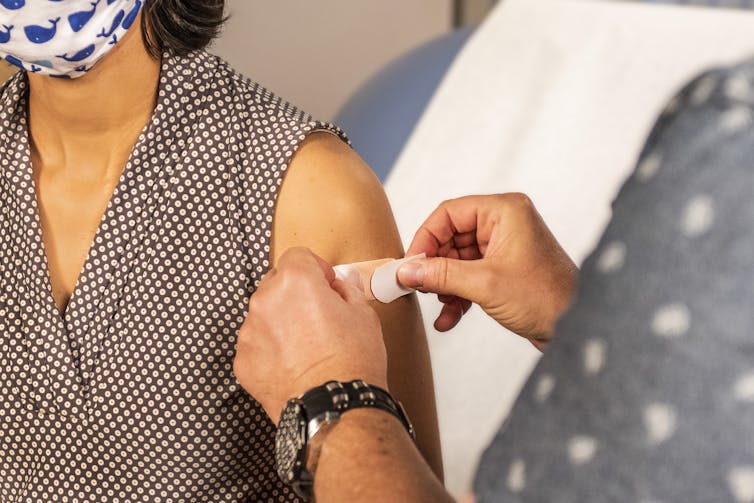
COVID cases are surging across Australia. The rise of the BA.4 and BA.5 sub-variants of Omicron, and the rapid increase in COVID hospitalisations, has prompted policymakers to expand fourth dose vaccine eligibility.

If you’re aged 30 or over, you can now receive an additional COVID booster (a fourth dose), three months after your first booster (third dose). And you can get it at the same time as your flu shot.

If you’ve recently had COVID, you’ll need to wait three months before getting boosted.

If you’re aged under 30, you’re not yet eligible.


Read more:
Access to a second COVID booster vaccine has been expanded to people 30 years and over


New variants present new challenges

The current COVID vaccines are based on the original strain of SARS-CoV-2, the virus that causes COVID. The more mutations the variants amass, the less the antibodies produced by vaccination can target it.

In the context of the BA.4 and BA.5 variants, this is exacerbated further, as even immunity from previous Omicron infection is less effective at protecting against future infections. This makes it possible for people with so called “hybrid” immunity – from vaccines and infection – to be re-infected.

This has driven the government to revise the timeframes around post-infectious immunity, as we are likely to see significant numbers of people reinfected after only a short period of time.

Immunity wanes after your third dose

Immunity provided by COVID vaccines diminishes over time. A third dose of vaccine provides good initial protection against Omicron. But immunity wanes after three to six months, meaning it’s less able to prevent infection.

Protection against severe disease remains stronger but still reduces slowly over time.

Waning immunity from vaccination is a particular concern for those aged over 55, as immunity in older age groups decreases faster and further.

Protection from a fourth dose

Given neither three doses nor infection appears to offer significant protection against BA.4 and BA.5, a fourth dose is the best way to prevent infection and severe disease, as well as helping to manage health system demand.

Initial data from Israel, which has been very aggressive in its roll out of additional doses, shows rates of Omicron infection and severe disease are lower after a fourth dose, compared with after three doses.

The protection against infection decreased rapidly, however. After six weeks, it had diminished, but still offered some protection. Importantly, protection against severe disease did not decrease over the six-week study period.

Israelis in masks get on and off a train
Israel has led the world in distributing fourth doses.
Shutterstock

As yet, there is no evidence available on the direct effects of a fourth vaccine dose on BA.4 and BA.5, (as the Isaeli study covered the original Omicron variant). A first booster (third dose) has been shown in preliminary data to generate immunity against the new variants, but it waned rapidly.

Based on this data, and the ongoing excellent safety profile of the vaccines, Australia’s immunisation advisory group, ATAGI, recommends Australians aged over 50 receive a fourth dose over winter. They join the existing eligible groups: immunocompromised adults, those living in care facilities, and adults with chronic or complex health conditions.

ATAGI has also authorised the vaccine to be given to those from 30-49, as it is safe and likely to be effective. However, it notes the benefits in this cohort, on a population level, are less certain. People in this age bracket are advised to consider personal circumstances when deciding whether to get a second booster – such as vulnerable people around them and occupations where they are at high risk of contracting or transmitting disease, such as aged care or hospitality.


Read more:
Here’s why you might need a 4th COVID vaccine dose this winter


When should I get it?

The best time to get your fourth dose is as soon as you’re eligible and able to, as COVID case numbers are currently rising across Australia.


Our World in Data

Don’t wait to get a booster so you’re better protected at the end of winter. This may lead to a more rapid community spread in the meantime, and blunt the impact of the booster campaign.

The infection risk is already high, making rapid action more important, particularly for those over 50, whose immunity from boosters administered in 2021 is already significantly diminished. Being vaccinated now will confer at least some immunity throughout winter.

What if I’ve recently had COVID?

If you have recently had COVID, you need to wait at least three months before receiving a fourth dose.

In this period, immunity is likely to be similar or greater than those who have been vaccinated, so you are still protected to a degree, but it’s possible to be infected.

Once the three months have passed, you can, and should, get a booster, as reinfection rates with BA.4 and BA.5 are high.

What about the flu?

The 2022 influenza season in Australia has been a particularly bad one thus far. The good news is that you can safely receive both the COVID and flu vaccines together – at the same time.

Decreasing rates of the flu in the community will relieve significant pressure on a health care system already stretched by COVID, making it a strong priority.


Read more:
Flu may be back, but COVID is far from over. How do they compare?


The Conversation

The authors do not work for, consult, own shares in or receive funding from any company or organization that would benefit from this article, and have disclosed no relevant affiliations beyond their academic appointment.

ref. When can I get my next COVID booster or fourth dose? What if I’ve recently had COVID? Can I get my flu shot at the same time? – https://theconversation.com/when-can-i-get-my-next-covid-booster-or-fourth-dose-what-if-ive-recently-had-covid-can-i-get-my-flu-shot-at-the-same-time-186830

Australia’s central climate policy pays people to grow trees that already existed. Taxpayers – and the environment – deserve better

Source: The Conversation (Au and NZ) – By Andrew Macintosh, Professor and Director of Research, ANU Law School, Australian National University

Shutterstock

The federal government has launched an independent review of Australia’s central climate policy, the Emissions Reduction Fund, after we and others raised serious concerns about its integrity.

The review will examine, among other issues, whether several ways of earning credits under the scheme lead to genuine emissions reductions.

One method singled out for scrutiny involves regrowing native forests to store carbon from the atmosphere.

Our new analysis suggests the vast majority of carbon storage credited under this method either has not occurred, or would have occurred anyway. Here we explain why.

man in suit  speaks in front of flags
Climate Change Minister Chris Bowen has announced a review of the Emissions Reduction Fund.
Steven Saphore/AAP

The background

The Emissions Reduction Fund provides carbon credits to projects that reduce greenhouse gas emissions. For the past decade, it has been the centrepiece of Australia’s climate policy.

Under the fund, projects that reduce emissions receive carbon credits that can be sold to the federal government and private entities that are required, or choose to, offset their emissions.

We are experts in environmental law, markets and policy. The lead author of this article, Andrew Macintosh, is the former chair of the Emissions Reduction Assurance Committee, the government-appointed watchdog that oversees the Emissions Reduction Fund’s methods.

Earlier this year, we went public with details of serious integrity issues in the scheme. One main concern involves a method known as “human-induced regeneration of a permanent even-aged native forest”.

This method accounts for almost 30% of the carbon credits that have been issued, roughly 30% of registered projects, and more than 50% of carbon credits contracted for sale to the federal government.


Read more:
We blew the whistle on Australia’s central climate policy. Here’s what a new federal government probe must fix


steam flows from chimney
Companies can offset emissions by buying carbon credits under the scheme.
Shutterstock

Problems with the method

Under the method, landholders get credits for regenerating native forests by changing the way they manage their properties.

When the method was created, it was assumed projects would be located in areas where vegetation had previously been cleared, and where grazing and repeated clearing were suppressing regrowth.

But most projects have been located in parts of Australia’s arid and semi-arid rangelands where native vegetation has never been cleared (because it is not economic to do so).

There are two main problems with the method and how it’s been applied. We outline these below.


Read more:
Climate change is white colonisation of the atmosphere. It’s time to tackle this entrenched racism


Map of Australia showing locations of human-induced regeneration projects.
Clean Energy Regulator map showing locations of human-induced regeneration projects. Google satellite image, accessed 20th May 2022.
https://data.gov.au/data/dataset/erf_project_mapping

Problem 1: trees existed before projects began

First, data published by the regulator shows proponents have been allowed to include a substantial number of mature trees in the areas for which they receive carbon credits. This has led to substantial over-crediting – in simple terms, the carbon abatement is not real.

So how has this occurred?

Under the method, proponents do not have to measure tree growth – they estimate it using a model.

The model assumes all trees in the forest begin regenerating at the same time when the project activities start. The modelled tree growth starts slowly, then accelerates to peak when the forest is young and vigorous. It then slows as the expanding trees compete with each other.

The model cannot be validly applied to estimate tree growth in areas where substantial numbers of pre-existing mature trees exist. But this is what’s happening.

As a consequence, proponents are being issued credits for growing trees that were already there when the projects started.

fence and field with trees in background
Proponents measure tree growth using a model.
Shutterstock

Problem 2: rain is making trees grow, not the project activities

The method is based on the premise that changes in land management are necessary to regenerate the forests. But our analysis shows that, where trees are regenerating, it is due mainly to rainfall.

Almost all current projects seek to regenerate forests by reducing grazing pressure. For this to make sense, grazing would need to be responsible for dramatically reducing the prevalence of trees in the rangelands. It would also have to be possible to regenerate these “lost” forests by reducing grazing pressure. Neither of these are true.

For more than 30 years, there has been a heated debate in ecological and natural resource management circles about the causes of “woody thickening” (or increasing density of native trees and shrubs) in grazing areas. The two dominant, competing hypothesis are that woody thickening is:

  • caused by grazing and an accompanying reduction in vegetation burning

  • a cyclical phenomena in which vegetation slowly accumulates over time, especially following runs of wet years, until a drought causes woody plant cover to stabilise or decline.

There’s no material evidence or support for the notion that grazing alone (in the absence of clearing) has significantly reduced tree cover over vast areas of the rangelands.

In fact, every year, between 200,000 and 400,000 hectares of land cleared for grazing is re-cleared. This demonstrates that grazing is rarely sufficient on its own to stop regrowth without mechanical or chemical interventions to kill trees.


Read more:
No more excuses: restoring nature is not a silver bullet for global warming, we must cut emissions outright


rain in puddle with trees in background
Evidence strongly suggests woody vegetation in the rangelands fluctuates according to rain cycles.
Alan Porritt/AAP

Restoring integrity

Regeneration of native forests in cleared areas is a valid and desirable way to reduce emissions and generate carbon credits.

But the human-induced regeneration method is deeply flawed. It has led to credits being issued for tree growth that is not real, or would have occurred anyway.

The review, to be led by former chief scientist Ian Chubb, is a chance to restore integrity to this method and ensure that credits are only issued for legitimate regeneration projects.

Because as climate change worsens, Australians need to know our most important climate policy is both value for money, and delivering real environmental gains.

The Clean Energy Regulator, which operates the Emissions Reduction Fund, did not respond to The Conversation’s request for comment on the authors’ claims. However in a previous statement it said:

Prof Macintosh and his colleagues have not engaged with the substance of the ERAC’s comprehensive response papers on human induced regeneration … The government has said it will undertake a review of the ERF and details will be announced shortly. We do not wish to pre-empt the scope of the review or its findings. We welcome the review and look forward to engaging substantively with the review process once it commences.

The Conversation

Andrew Macintosh is a Director of Paraway Pastoral Co. Ltd, a pastoral company that undertakes projects under the Emissions Reduction Fund.

Don Butler receives funding from the federal Department of Agriculture, Water and the Environment. He also works with the Queensland Department of Environment and Science as a science advisor for natural capital programs..

Megan C Evans receives funding from the Australian Research Council through a Discovery Early Career Research Award and has previously been funded by the Department of Agriculture, Water and the Environment, WWF Australia, and the National Environmental Science Program’s Threatened Species Recovery Hub.

ref. Australia’s central climate policy pays people to grow trees that already existed. Taxpayers – and the environment – deserve better – https://theconversation.com/australias-central-climate-policy-pays-people-to-grow-trees-that-already-existed-taxpayers-and-the-environment-deserve-better-186900

Don’t expect schools to do all the heavy lifting to close the education divide between the big cities and the rest of Australia

Source: The Conversation (Au and NZ) – By John Halsey, Professor, School of Education, Flinders University
Shutterstock

Students in regional, rural and remote Australia have been behind their urban counterparts on almost every recognised measure of successful schooling for decades. This is unacceptable and has to change.

To achieve this change, it will be vital to draw on and build the neglected capacities of parents, families and communities to improve student achievements at school. The National School Reform Agreement between the Commonwealth, states and territories aims to lift student outcomes across Australia. But the current five-year agreement, which runs to the end of 2023, almost entirely ignores the lives of students outside schools.

The world outside the school fence is where students spend most of their time. What’s happening and not happening there directly impacts their motivation and ability to learn. Education policies and practices have to embrace this reality.

Vertical bar chart showing  Australian Year 12 certification rates for major city, inner and outer regional and remote locations

Chart: The Conversation. Data: ACARA/DESE 2020, CC BY

Schools can’t do it all on their own

Now under review by the Productivity Commission, the next National School Reform Agreement will have to respond to the diversity of school locations and communities, especially in regional, rural and remote areas. It should include a strong focus on building the capacity of these communities to help improve learning.

To date, we have seen the intensification of schooling via curriculum changes, micro-managing teaching and learning, and growing accountability and administration workloads. It’s clearly not working for students in regional, rural and remote areas.

All the pressure has been on schools to do the heavy lifting. That’s neither sustainable nor effective.

The review is an opportunity to radically rethink what needs be done to close the schooling gaps across the country.


Read more:
National curriculums don’t always work for rural and regional schools


Local disadvantage feeds into schooling

The 2021 Dropping Off The Edge report by Jesuit Social Services looks at disadvantage around Australia. Little has changed since the last Dropping Off The Edge report in 2015. Most disadvantaged communities are in regional, rural and remote locations.

The report reveals, yet again, the profound effects of poverty, family disruptions and conflict, and an absence of hope and positive role models on achievements and opportunities beyond school.

Most efforts to improve education across the board have focused on what happens in schools. These efforts include modifying what students learn, changing assessments, varying teaching methods, increasing ICT and more.

While this work needs to continue, there is more to be done. Student achievements and opportunities are shaped by a diverse blend of in-school, home and community factors, the interactions between them and knowledge of what is happening in the wider world. For some students this productive dynamic is missing, or operates minimally.

The reasons are many and varied. They include poor health and diet. It is very hard, perhaps impossible, for students to focus on learning if they feel hungry and are often unwell or “out of sorts”.

These difficulties are compounded if their home life is stressful and chaotic, there is a long history of unemployment and underemployment, and another problem always seems to be just around the corner.

In short, what’s going on outside the school fence has a large impact on what happens in school. It’s time to release this handbrake on students reaching their potential.


Read more:
How to solve Australia’s ‘rural school challenge’: focus on research and communities


Policy ignores what goes on outside schools

The Productivity Commission is reviewing three reform directions in the National School Reform Agreement:

  1. supporting students, student learning and student achievement
  2. supporting teaching, school leadership and school improvement
  3. enhancing the national evidence base.

For each of the reform directions there are national policy initiatives. These directions and initiatives are very school-focused.

The agreement does not refer at all to the contributions that parents, families, communities and social and personal relationships make to student achievements. The diversity of learning contexts and locations, especially in regional, rural and remote areas, is also mostly invisible.

Ignoring what is going on and continuing to ramp up pressures on schools to do all the heavy lifting will lead to the next Dropping Off The Edge report in five years’ time again showing little or no change.


Read more:
Return-to-school plans overlook chronic teacher shortages outside the big cities


It’s time to focus on community solutions

The next National School Reform Agreement must include a strong focus on community capacity-building to improve learning.

This is fundamentally about tapping into existing opportunities or creating new ones to make students’ out-of-school lives richer, more optimistic, more stable and better supported for learning.

Where multiple disadvantages are at play, capacity-building requires sensitivity and persistence to develop local expertise and resilient working relationships with individuals and families. Critically, what is learnt needs to be fed back into reforming systemic policies and practices.

In addition to education experts, this means drawing on health services, enterprises and employment, justice and policing, local governance, parents and residents, linked to each school or cluster of schools.

Flexibility is essential as community capacity-building can vary enormously on the ground. It might involve individuals or small teams of trusted adults who are 24/7-go-to people “no matter what”, or start-up enterprises such as local construction and hospitality programs linked to tourism opportunities, or music and arts events, and more.

Sport can play a vital role, particularly when participants are recognised and valued for more than being a good player.

Enlisting young people to become skilled emergency volunteers is another way to build the capacities of individuals and communities. This training can be a bridge to formal learning.


Read more:
Why rural Australia is facing a volunteer crisis


Community capacity-building requires substantial long-term funding. Importantly, local improvements produce many offsetting benefits by boosting school completion rates, employment, health, local optimism and general well-being, while reducing youth crime and incarceration.

Education that fully engages young people and nurtures and builds their capacities throughout their formative years is a very sound investment. It will be repaid many times over a lifetime.


This article is part of The Conversation’s Breaking the Cycle series, which is supported by a philanthropic grant from the Paul Ramsay Foundation.

The Conversation

John Halsey was engaged by the Australian Government in 2017 to undertake a review into regional, rural and remote education in Australia. His report was presented to government in January 2018. This article is part of The Conversation’s Breaking the Cycle series, which is about escaping cycles of disadvantage. The series is supported by a philanthropic grant from the Paul Ramsay Foundation.

ref. Don’t expect schools to do all the heavy lifting to close the education divide between the big cities and the rest of Australia – https://theconversation.com/dont-expect-schools-to-do-all-the-heavy-lifting-to-close-the-education-divide-between-the-big-cities-and-the-rest-of-australia-186586

6 ways governments drive innovation – and how they can help post-pandemic resilience

Source: The Conversation (Au and NZ) – By Alicia (Lucy) Cameron, Senior Research Consultant, Data61

Shutterstock

The COVID-19 pandemic has had an enormous impact on the global economy, with the total cost likely to exceed US$12.5 trillion dollars according to International Monetary Fund estimates.

At the same time, the crisis has accelerated huge changes in the way we live and work, and the adoption and invention of new technologies.

Policymakers and leaders in science and industry are pinning their hopes on further innovation to drive economic recovery.

It is a good plan, but stimulating innovation is not easy. I have studied attempts to stimulate local innovation around the world over the past century, and found six broad approaches, each with strengths and weaknesses.

1. Place

This is the development of specialised high-tech clusters or hubs (think the next Silicon Valley). There is good evidence high-tech clusters are crucial for national competitiveness.

Industrial clusters (and cities more generally) are centres of innovation, productivity, skills development and new enterprise creation. Clusters aid both co-operation and competition between firms, build local supply chains, and can create regional brands such as watches from Geneva or suits from Savile Row.

Silicon Valley in California may be the world’s most successful high-tech cluster.
Shutterstock

Many governments have tried to create these clusters from scratch with public research institutions, creating science and technology parks, or providing financial and other incentives. Only a few of these attempts have succeeded.

Attempts to accelerate existing or emerging industry clusters have been more successful. Building new industry clusters is also incredibly costly, and can take decades to pay dividends.

2. Culture

This approach seeks to build an innovative, entrepreneurial environment through enhancing lifestyle, culture, and public amenity. It seeks to create a “people climate” where residents can experiment, build, share knowledge and form creative partnerships. This should also attract and retain the young, creative, educated wealth-builders of the future.

Attempts to revitalise inner-city areas can backfire, driving out the young and creative people they were meant to attract.
Shutterstock

Urban revitalisation projects worldwide have followed this approach. These projects repurpose downtown and inner-city areas into hip and trendy environments which encourage incidental interactions, casual conversations and group learning.

However, lifestyle enhancement doesn’t always lead to more innovation. It can lead to rapid gentrification, which displaces creative communities who can no longer afford the rising rents.

3. Skills

Another way to boost innovation is to increase the local level of valuable skills. This can be done by attracting skilled migrants or training up the local population.

The problem with focusing on skills alone is that people are mobile. Skilled people will leave if they’re not provided with ongoing opportunities, or if the financial, lifestyle or creative rewards are higher elsewhere.

Global competition for highly educated or skilled people with experience in creating successful ventures or products is becoming fierce.

However, skills-led approaches to innovation can be powerful as part of the “triple helix model” which integrates research, government, and industry. Critically, skills development needs to be matched with local opportunity.

4. Mission

US president John F Kennedy announced the US moonshot in 1961, but the mission was carried on by his successors.
NASA

The mission-based approach pools private and public funding and skills to tackle a mid- to long-term challenge. The most famous example is the US moonshot: the 1961 mission to send a person to the Moon and back by 1970.

NASA had funding for the moonshot over three presidencies. The mission succeeded, and in the process it developed several new technologies and products.

Since that time, “mission statements” have become common in business and government. Governments and NGOs use missions and targets to inspire action on a range of challenges, from net-zero commitments and the UN’s Sustainable Development Goals to developing vaccines for global pandemics in under 100 days.

However, missions can run into trouble through lack of ongoing funds, unclear goals, competing interests, and the generation of unintended consequences. Missions can also divert funding from curiosity-driven “blue sky” research, which has been responsible for some of the greatest scientific breakthroughs of all time.

5. Finance

One crucial element in boosting innovation is increased funding for research and development, universities and other research institutions, and commercialising new technologies. However, the relationship between increased funds and increased innovation is complicated.

As countries become more advanced, spending on innovation can become less efficient. Once early gains have been achieved from adopting existing technologies, further advances can only come from the more expensive and riskier processes of creating and commercialising new technology.

This pays off for countries with large markets and existing levels of high productivity, but is harder for other countries.

The venture capital that enables many emerging companies to expand rapidly is highly geographically concentrated. Venture capital also tends to focus on a few sectors, including the information technology and pharmaceutical industries.

6. Technology

This approach uses government spending to provide purpose and funding for new and emerging technologies such as drones, AI, blockchain, and robotics.

When governments engage with innovative local companies early, building their capabilities and co-developing technology applications, it can be good for government and industry. Government gets more modern services, while industry has a strong client.


Read more:
Australia’s future depends on science. Here’s what our next government needs to do about it


This approach has built some of the largest and most successful innovation hotspots in the world, including Silicon Valley. The downsides of this approach are that it can gamble with funds allocated for other government purposes, embarrass governments when things go wrong, and relies on government being able to rigorously assess new technologies.

No magic bullet

Success in building vibrant, innovative areas at a local level is crucial for boosting and growing the national economy. None of these six approaches alone will be a “magic bullet” for innovation and economic recovery.

So what will work? Paying close attention to local contexts, and balancing all of these approaches: mixing and matching for local circumstances, while focusing on national productivity, technology development, and future markets.


Read more:
China’s ‘innovation machine’: how it works, how it’s changing and why it matters


The Conversation

Alicia (Lucy) Cameron does not work for, consult, own shares in or receive funding from any company or organisation that would benefit from this article, and has disclosed no relevant affiliations beyond their academic appointment.

ref. 6 ways governments drive innovation – and how they can help post-pandemic resilience – https://theconversation.com/6-ways-governments-drive-innovation-and-how-they-can-help-post-pandemic-resilience-186910

Breakthrough in gas separation and storage could fast-track shift to green hydrogen and significantly cut global energy use

Source: The Conversation (Au and NZ) – By Ying Ian Chen, Director, ARC Research Hub for Safe and Reliable Energy, Deakin University

Shutterstock

In 2016, experts writing in Nature listed seven breakthroughs in how we process chemicals that could change the world for the better. We believe we’ve just ticked one of those off the list.

We found a highly efficient and entirely novel way to separate, purify, store and transport huge amounts of gas safely, with no waste.

Why is this breakthrough so important? We believe it will help overcome the key challenge of hydrogen storage by allowing us to safely store and transport huge quantities of green hydrogen as a solid at a fraction of the energy cost. This will allow us to accelerate uptake of green hydrogen, as well as allow oil refineries to use much, much less energy, and make processing many other gases easier.

Right now, breaking crude oil into petrol and other gases in oil refineries relies on the hugely energy intensive process of cryogenic distillation. This accounts for up to 15% of the world’s energy use. By contrast, we estimate our new method would cut this energy use by up to 90%.

This method offers the world a solid storage method for gases with a far higher capacity than any previous material. The absorbed gases can be recovered via a simple heating process leaving both the gases and the powder unchanged, allowing for immediate use or re-use.

Night scene of refinery
Oil refineries use vast amounts of energy to turn crude oil into gas, petrol and diesel.
Getty

What did we find?

The breakthrough is so significant – and such a departure from accepted wisdom on gas separation and storage – that our research team repeated our experiment 20 to 30 times before we could truly believe it ourselves.

So how does it work? Our new approach uses a new method called “ball milling” to store gas in a special nanomaterial at room temperature. This method relies on mechanochemical reactions, meaning machinery is used to produce unusual reactions.

The special ingredient in the process is boron nitride powder, which is great for absorbing substances because it is so small yet has a large amount of surface area for absorption.

To make this work, boron nitride powder is placed into a ball mill – a grinder containing small stainless-steel balls in a chamber – along with the gases that need to be separated. As the chamber spins at progressively higher speeds, the collision of the balls with the powder and the wall of the chamber triggers a special mechanochemical reaction, resulting in gas being absorbed into the powder.

In this process, steel balls spun at high speed work to separate gases.

Better, one type of gas is always absorbed more quickly, separating it out from the others, and allowing it to be easily removed from the mill. You can repeated this process over several stages to separate out the gases you want, one by one. You can store the gases in the powder for transport, and separate them back into gas. And better still, boron nitride powder can be used to carry out the same gas separation and storage process up to 50 times.

The process requires no harsh chemicals and creates no by-products. It doesn’t require energy-intensive settings like high pressure or low temperatures, offering a much cheaper and safer way to develop things like hydrogen powered vehicles.

This ball-milling gas absorption process uses around 77 kilojoules per second to store and separate 1,000 litres of gases. That’s roughly the energy needed to drive the average electric vehicle 320 kilometres. It’s at least 90% less energy than the cryogenic distillation method used in oil refineries.


Read more:
Oil companies are going all-in on petrochemicals – and green chemistry needs help to compete


That’s why we believe this breakthrough may tick off one of the seven chemical separation method improvements which could change the world – specifically, improving separation of olefin-paraffin, a key part of the petrochemical industry.

This is the culmination of 30 years work in nanomaterials and mechanochemistry by researchers at Deakin University’s Institute for Frontier Materials.

How will this help us switch to clean energy?

The gas crisis facing Australia’s east coast has drawn attention to our reliance on these fuels. In response, there have been growing calls to hasten the switch to cleaner gas fuels such as green hydrogen.

The problem is storage. Storing enormous quantities of hydrogen for practical use is very challenging. At present, we store hydrogen in a high-pressure tank or by cooling the gas down to a liquid form. Both require large amounts of energy, as well as dangerous processes and chemicals.

Hydrogen filling station korea
While nations like Korea have pursued hydrogen, the challenges of storage have slowed down uptake.
Shutterstock

That’s where this method could help accelerate uptake of hydrogen, by enabling safe and efficient solid-state storage technology on a large scale. When stored as a powder, hydrogen is extremely safe. To retrieve the gas, you simply heat the powder in a vacuum.

This new process can achieve unprecedented gas storage capability, well above any known porous materials. For instance, our new process can store 18 times more acetylene than the highest uptake achieved by metal-organic frameworks, another approach using porous materials.

The remarkably high gas storage capability is due to the novel way gas molecules stick to the powder during the ball milling process, which does not break the gas molecules.

For this process to be able to scale, however, we have to perfect the milling process. There’s a sweet spot in milling which creates the weaker chemical reactions we want – without producing stronger reactions which can destroy the gas molecules. We will also have to figure out how to get the best storage rate for each material based on milling intensity and pressure of the gases.

With industry support, our novel process can be scaled rapidly to provide practical solutions to ensure we never have to face another gas crisis – and can speed up decarbonisation.


Read more:
Green hydrogen is coming – and these Australian regions are well placed to build our new export industry


The Conversation

Ying Ian Chen receives funding from the Australian Research Council.

Srikanth Mateti receives funding from Australian Research Council

ref. Breakthrough in gas separation and storage could fast-track shift to green hydrogen and significantly cut global energy use – https://theconversation.com/breakthrough-in-gas-separation-and-storage-could-fast-track-shift-to-green-hydrogen-and-significantly-cut-global-energy-use-186644

Fiji women condemn Bainimarama government’s ‘silence’ on West Papua

By Rusiate Baleilevuka in Suva

A Fiji women’s advocacy group has condemned their government for remaining silent over the human rights violations in West Papua amid the Pacific Islands Forum being hosted by Prime Minister Voreqe Bainmarama this week.

Fiji Women’s Crisis Centre (FWCC) coordinator Shamima Ali with other staff members and activists made the criticisms at a ceremony raising the independence flag Morning Star, banned in Indonesia.

The women raised the flag of West Papua on Wednesday to show their solidarity.

West Papua's Morning Star flag-raising in Suva
West Papua’s Morning Star flag-raising in Suva this week. Image: Fijivillage

Ali said this ceremony was done every Wednesday to remember the people of West Papua, particularly women and girls who were “suffering twofold” due to the increased militarisation of the two provinces of Papua and West Papuan by the “cruel Indonesian government”.

She said this was a perfect time since all the Pacific leaders were in Fiji for the forum but the Fiji government stayed silent on the issue.

Ali added that with Fiji as the chair of the forum, Prime Minister Voreqe Bainimarama should have negotiated for West Papua to be on the agenda.

Wenda appeals to Pacific Islands Forum
Meanwhile, United Liberation Movement of West Papua interim president Benny Wenda has appealed to Pacific leaders to show “timely and effective leadership” on the great issues facing the Pacific — “the human rights crisis in West Papua and the existential threat of climate change”.

“West Papua is a green land in a blue ocean. Our blue Pacific has always united our peoples, rather than dividing them,” he said in a statement.


Shamima Ali speaking out on West Papua in Suva. Video: Fiji Village

“In this spirit of Pacific solidarity, we are grateful for the support our Pacific family showed for our struggle in 2019 by calling for Indonesia to allow the UN High Commissioner for Human Rights, Michelle Bachelet, to visit West Papua.”

However, Indonesia continued to undermine the forum by refusing to allow a UN visit to take place.

“For decades, we have been crying that Indonesia is bombing our villages and killing our people, but we have been ignored,” Wenda said.

“Now, the world is taking notice of our struggle. The United Nations has shown that up to 100,000 West Papuan civilians have been internally displaced by Indonesian military operations in the past three years alone.

“They have fled into the bush, where they lack access to shelter, food, water, and proper medical facilities. This is a rapidly worsening human rights disaster, requiring immediate attention and intervention by the United Nations.

“Indonesia hears the increasing calls for a UN visit, but is employing delaying tactics to avoid exposing their crimes against my people to the world.”

Rusiate Baleilevuka is a Fijivillage reporter.

Print Friendly, PDF & Email

Article by AsiaPacificReport.nz

Pacific Islands Forum launches new 2050 strategic blueprint

RNZ Pacific

The Pacific Islands Forum has launched a new longterm strategy to address present and future challenges faced by Pacific peoples.

The “2050 Strategy for the Blue Pacific Continent” was endorsed by regional heads of governments as the curtains fell on the 51st Forum Leaders’ summit in Suva.

“As Pacific leaders, our vision is for a resilient Pacific region of peace, harmony, security, social inclusion and prosperity, that ensures all Pacific peoples can lead free, healthy and productive lives,” the 2050 strategy’s leaders’ vision states.

Forum chair and Fiji’s Prime Minister Voreqe Bainimarama said the new regional blueprint “is about who we are”.

“The 2050 Strategy is about what we share in common, our challenges and our opportunities about what we need to do together. This is why the 2050 Strategy focuses on our people,” Bainimarama said.

“It is our people who have sent us here to deliberate on their behalf and we owe them strategic response to their greatest challenges especially our youth, our children and grandchildren, who will inherit this strategy and our collective ambitions.”

Bainimarama said the “climate crisis, socio-economic development challenges, slow economic growth and geopolitical competition” were major issues faced by the region”.

‘Must work together’
“We must work together. The 2050 Strategy will serve as our guide for the decades to come, setting out our longterm vision, key value to guide us and key thematic areas and strategic pathways that will pave our shared trajectory as a region.”

He also acknowledged that successful implementation of the strategy will require that “our dialogue and development partners, regional agencies, and international agencies understand and align their development plans to the strategy and engage with us on this basis”.

According to the strategy, the Blue Pacific is about Pacific peoples, their faiths, cultural values, and traditional knowledge.

The 36-page document outlines 10 commitments across seven interconnected thematic areas most crucial for the sustainable longterm development of the region.

The focus areas include political leadership and regionalism, people-centred development, peace and security, resource and economic development, climate change and disasters, ocean and environment, and technology and connectivity.

Forum Secretary-General Henry Puna said the new plan was about Pacific regionalism “which is not an easy thing to progress”.

“Pacific regionalism is more than a set of activities,” Puna said.

“It is vital that the 2050 Strategy guide our collective activities and actions as we address our challenges and exploit our strengths and our opportunities.”

With the 2015 strategy now endorsed, the forum will focus on its delivery and implementation.

“My promise is to ensure that we take the strategy forward as it is intended,” Puna said.

This article is republished under a community partnership agreement with RNZ.

Print Friendly, PDF & Email

Article by AsiaPacificReport.nz

Grattan on Friday: Albanese needs to step up (and mask up) to help create a new mindset to meet the COVID crisis

Source: The Conversation (Au and NZ) – By Michelle Grattan, Professorial Fellow, University of Canberra

Anthony Albanese received his fourth COVID jab this week. A commendable example to the community, now that eligibility for the “winter shot” has been widened.

Well, commendable up to a point. Noticeably, neither Albanese nor the health worker wielding the needle was wearing a mask, and the prime minister quickly came in for some flak.

Masks are currently a front-line topic in the debate about how we deal with the new COVID wave that is seeing an average of 45 deaths a day, taking deaths this year alone north of 8,000.

Earlier this week Victoria’s acting chief health officer recommended mandating masks in a number of settings, only to be rebuffed by the state health minister, Mary-Anne Thomas. She said it “was not the most effective way to get the message out about the importance of mask wearing”.

Masks have been a political and ideological football throughout the pandemic.

Unlike in many other countries, pre-COVID you’d not see Australians masked up except in hospitals and the like, so we weren’t used to them.

In the early stages of the pandemic, before the way COVID is transmitted was clearly understood, there was vigorous dispute among health experts about their efficacy.

Later, the general population accepted them, with various degrees of willingness or reluctance.

Some people dislike masks because of their inconvenience. One gets that.

But, more peculiarly, for the political right masks have become a culture war rather than a matter of effectiveness. Stephen Reicher, professor of psychology at the University of St Andrews, writing in the Guardian, argues that some who hold a certain world view see masks as “a potent symbol of control: they are muzzles”. What these people reject “is less the mask and more the political and scientific establishment that proposes it”.

Given current public opinion, the mandating of mask wearing will stay limited. But in view of their place in the anti-COVID tool box, it would be helpful if politicians remembered to lead the way when appropriate.

We have reached a hinge point in the pandemic, and the weeks ahead present a huge challenge for political leaders. The community has moved on from COVID. But COVID has not moved on from the community. It has dug in.

A mind reset is needed. But that’s hampered by many in the public and in the political class being unwilling to accept that we haven’t “pushed through” to “live with COVID” in a safe sort of way. To the extent we are “living with COVID” we are accepting a crisis in the hospital system and a level of deaths that, if it had occurred in 2021, would have generated a massive reaction.

The earlier wisdom was that when the population was highly vaccinated, the situation would be under control. But it hasn’t worked out like that.

Vaccination is limiting the seriousness of the illness for most; it cuts deaths in relative terms.

But it hasn’t been successful against transmission, which means the virus is spreading like wildfire (currently hundreds of thousands have it). In absolute numbers, many people are getting quite sick, and there will be a good deal of “long COVID”.

The Albanese government has launched initiatives, including a campaign to urge boosters and action on anti-virals. But it’s like chasing a fleet-footed tiger.

And the government has refused to extend the emergency payment for workers forced to stay home, or the free RATs for concession card holders. It cites the budget. But we can imagine what Labor would be saying if it were still in opposition. There is some stirring within Labor ranks, with NSW Opposition Leader Chris Minns and federal backbencher Mike Freelander (a doctor) saying the emergency payment should be restored.

The new situation has caused havoc with what in 2020 was that (mostly) widely welcomed line from politicians that “we follow the expert advice”.

It’s been a roller coaster for the experts. Lauded and leaned on initially, they then ran into rougher times. They argued among themselves. They were dragged into the politics and demonised by critics who thought the politicians were listening too much to them.

Now we’re seeing the politicians grabbing back their agency, as the experience of the Victorian health official showed. More problematic, the politicians, including federal Health Minister Mark Butler, are making it clear the experts have to operate in the real world of where we’re up to with community opinion.

While this seems sensible at one level, things become complicated. When we get a piece of “expert” advice, do we assume it’s unadulterated, or a sort of shandy – containing a dash of “real world” lemonade?

There is also some counter-intuitive action at the “expert” level. With large numbers of deaths occurring in aged care homes, the NSW chief health officer, Kerry Chant, this week signed a public health order making it no longer mandatory for visitors to these facilities to be vaccinated. This is in line with the situation in Victoria and Queensland but the timing seemed odd.

It came as the Australian Health Protection Principal Committee (AHPPC), consisting of federal and state chief officers, last week reminded “individuals, employers and governments” of their shared responsibility to minimise the impact of COVID.

The question is whether political leaders have either the will or the ability to inject new urgency and potency into the fight against COVID, given the only practical weaponry in this time of pandemic fatigue is “light touch” ammunition.

Brendan Crabb, director of the Burnet Institute, who is highly critical of how the pandemic has been allowed to run away, says leaders and health ministers at national and state levels should admit the mistakes of this year.

“For the last six months we just tried to protect the old and the immunocompromised,” he says. “We didn’t address transmission.”

Any sort of mea culpa mightn’t be so hard at the federal level, where the new government can blame the former one, but it’s another matter in Victoria and NSW, where governments face elections soon.

Beyond that, Crabb is essentially arguing for more energy to be put into the struggle against transmission. He points to the Biden administration intensifying its efforts, and the AHPPC’s exhortation.

Business doesn’t like a strong focus on COVID, even though fast transmission is doing it immense damage. Even if we are well beyond lockdowns and (mostly) beyond mandates, business fears the impact of, for example, Victorian advice this week for people to work from home. But Crabb argues business should be in favour of a range of these less drastic measures to try to keep transmissions low, because it suffers from the high rates of infection.

Crabb says that “bringing the community along” is crucial. “A part of that, of showing you’re serious, is leaving no one behind.” He says making available high-quality masks, RATs and support to isolate “are not only essential if the interventions are to take hold, they are the litmus test of the government’s seriousness.

“COVID is one of the biggest issues the country faces at the moment, but the country doesn’t know it.”

To elevate that awareness Albanese – who has agreed to a national cabinet meeting on Monday on COVID – will need personally to become much more central in the messaging.

The Conversation

Michelle Grattan does not work for, consult, own shares in or receive funding from any company or organisation that would benefit from this article, and has disclosed no relevant affiliations beyond their academic appointment.

ref. Grattan on Friday: Albanese needs to step up (and mask up) to help create a new mindset to meet the COVID crisis – https://theconversation.com/grattan-on-friday-albanese-needs-to-step-up-and-mask-up-to-help-create-a-new-mindset-to-meet-the-covid-crisis-187023

Sri Lanka’s crisis is not just about the economy, but a long history of discrimination against minority groups

Source: The Conversation (Au and NZ) – By Niro Kandasamy, Lecturer in History, University of Sydney

Sri Lanka is in the grip of an economic, political and humanitarian crisis.

In a remarkable display of anger on Saturday, thousands of protesters disregarded government curfews, rampant military and police presence to storm the presidential palace and the prime minister’s residence, demanding their resignations.

It came as the Rajapaksa government halted the sale of fuel to ordinary people. It is the first country to do so since the global oil crisis in 1979.

For several months, Sri Lankans have suffered shortages of food, fuel and other critical supplies. Schools have been closed for several weeks. Other services are operating at critically reduced capacity.

Hours before the protest, President Gotabaya Rajapaksa fled the country without resigning. Instead, he appointed Prime Minister Ranil Wickremesinghe, from the opposition United National Party (UNP), as the interim president. It’s a move that has further angered protesters.

In his first actions as president, Wickremesinghe declared a state of emergency across the island. He ordered the military to “do whatever is necessary to restore order”. Protesters are being met with tear gas by the police and shots are being fired by the military, yet they continue to occupy his residence and the streets.


Read more:
Sri Lanka scrambles for aid – but Australia still seems preoccupied by boats


Who is Ranil Wickremesinghe?

Wickremesinghe is deeply despised by protesters, with many of them critical of his close relationship with the Rajapaksa family. But he also has a long history of discrimination and militarisation against the Tamils.

Wickremesinghe was first elected to parliament in 1977. He was prime minister from 1993 to 1996 and has held senior positions within the United National Party (UNP), including further terms as PM, ever since.

A centre-right party, the UNP has fanned ethnic tensions, overseeing numerous attacks against the Tamils – in 1977, 1979, 1981 and 1983. The party also orchestrated the colonisation of the north and east of the island, altering the ethnic composition and forcibly evicting Tamils from their homes.


Read more:
Why do Tamil asylum seekers need protection — and why does the Australian government say they don’t?


Like Rajapaksa, Wickremesinghe has close ties to the military. This includes its current chief, Shavendra Silva, who is barred from entering the US due to his role in the massacre of Tamils in 2009. Wickremesinghe rejected the UN Expert Panel report that outlined Sri Lankan government atrocities against the Tamils.

As prime minister during the 2019 Easter bombings, Wickremesinghe admitted he and his government had failed to act on intelligence communicated by India. This lapse resulted in the deaths of over 250 people in bomb blasts across the island. He stated: “India gave us the intelligence but there has been a lapse in how we acted on that.”

Ranil Wickremesinghe has been appointed Sri Lankan prime minister, outraging protesters.
Eranga Jayawardena/AP/AAP

The damage caused by Sinhalese Buddhist nationalism

Politicians like Wickremesinghe and Rajapaksa have been put in positions of political power by the majority Sinhalese people due to their Sinhalese Buddhist nationalist ideology, which has resulted in a long history of discrimination and rioting against minorities on the island. This position of power has allowed these leaders to grow their personal wealth, while mismanaging the economy and ultimately bankrupting the country.

Within the Sinhalese Buddhist ideology, anyone who is not Sinhalese-Buddhist is excluded. Since the country’s long civil war ended, all major Sri Lankan parties have rejected criticisms of the Sri Lankan state, including international calls for investigations into human rights violations and war crimes committed against the Tamils.

Rajapaksa’s refusal to resign, despite mass protests, is an indictment of his authoritarianism, which can also be attributed to Sinhalese Buddhist nationalism.

In fact, the Sri Lankan constitution grants Buddhism foremost power, paving the way for ongoing discrimination against marginalised groups. This discrimination began in 1956, when Prime Minister S.W.R.D. Bandaranaike implemented the Sinhala Only Act, making Sinhalese the official language of the island and forcing Tamils out of key employment sectors.

As political expert Neil DeVotta explains of Sri Lanka’s road to political ruin:

It was nationalism that enabled governance rooted in meritocracy to be supplanted by ethnocracy, which over time has led to kakistocracy – governance by a country’s worst citizens.


Read more:
What’s happening in Sri Lanka and how did the economic crisis start?


A bleak outlook

Anti-government protesters will continue to express their fury on the streets. But if they are going to push for meaningful political change, their demands must be representative of everyone on the island, especially those who have been historically marginalised by successive Sri Lankan governments.

An impassioned plea from a young Tamil protester urged the majority Sinhalese community to pay attention to the patterns of the past:

The Conversation

Niro is a volunteer at the Tamil Refugee Council

ref. Sri Lanka’s crisis is not just about the economy, but a long history of discrimination against minority groups – https://theconversation.com/sri-lankas-crisis-is-not-just-about-the-economy-but-a-long-history-of-discrimination-against-minority-groups-186747

3.5% unemployment: Australia’s jobless rate at its lowest since 1974

Source: The Conversation (Au and NZ) – By Jeff Borland, Professor of Economics, The University of Melbourne

Shutterstock

It’s not an academic way to start an article about Australia’s latest jobs numbers, but all I can think is “wow”.

The official unemployment rate in June fell to 3.5%. It’s almost 50 years – August 1974, to be exact – since it was lower.


How we got there was through more people getting hired: 88,400 people compared with 60,600 the month before.

This reduced total unemployment by 54,300, even as the labour force swelled by 34,200 to 14,093,000.

90,000 new jobs a month

After the hit to employment in 2021 from shutdowns due to the Delta variant of COVID-19, there was always going to be a rebound. But the strength is amazing. Since October last year, employment has grown, on average, by more than 90,000 people a month.

We can compare this with what happened during the initial recovery from the onset of COVID-19, from May 2020 to January 2021.


That recovery came after a much bigger loss of jobs compared with late 2021. This makes the past eight months more impressive. With less opportunity for catch-up, slower growth could reasonably have been expected.

Climbing job vacancies

Along with a record-high proportion of the population employed – 64.4% – there is a record-high proportion of vacant jobs: 3.4%.


Exceptional growth in the demand for labour is encouraging people to join (or rejoin) the labour force. The proportion of the population in work or looking for work in June rose to 66.8%.

But also record sickness

Offsetting more people wanting to work, however, is more people being away from work ill.

In the first six months of 2022, on average, 5.2% of workers did fewer hours than usual due to illness. This compares to 3% in the same months from 2017 to 2019.


It’s likely some employers are needing to hire extra workers to cover for increased rates of absenteeism due to COVID-19 or the flu, adding to demand.

So what about wages?

The puzzle in all this is wages growth. How can we have unemployment so low and yet so little evidence of stronger wages growth?

Even with record low unemployment and record high job vacancy rates, in the 12 months to the end of March, wages grew by just 2.4%. This compares with prices (inflation) growing by 5.1%. Real wages therefore declined by 2.7%.


This lack of “market” response is most likely due to Australia’s institutional arrangements for wage-setting. These arrangements make some lag in wages responding to demand inevitable.


Read more:
Why there’s no magic jobless rate to increase Australians’ wages


About 35% of employees are on enterprise bargaining agreements, which are renegotiated on average every two to three years. Those agreements might have annual wage increases built in, but based on the labour market as it was when the collective agreement was struck.

About 23% of employees are on awards – and increases to these are set by the Fair Work Commission just once a year.

Nevertheless, the Fair Work Commission’s decision last month to lift wages for award workers by up to 5.2% shows that wages do eventually reflect labour market conditions. A higher rate of wage growth should also happen progressively for workers covered by collective agreements, as employers adjust their expectations about what they need to pay to keep and attract employees.


Read more:
This 5.2% decision on the minimum wage could shift the trajectory for all


Still, fears that wage increase will get out of hand, leading to a wage-price spiral as in the 1970s, are exaggerated.

Many factors have changed. In the 1970s, Australia had “pattern bargaining” – whereby if one group of workers got a big wage increase it would pretty much automatically flow to all other workers. This is no longer the case. Moreover, the decline in union representation, and the rise of technology and globalisation, have all made it more difficult for workers to bargain for higher wages.

The Conversation

Jeff Borland receives funding from the Australian Research Council.

ref. 3.5% unemployment: Australia’s jobless rate at its lowest since 1974 – https://theconversation.com/3-5-unemployment-australias-jobless-rate-at-its-lowest-since-1974-186917

NFP party chief’s challenge to FijiFirst over election complaint – ‘bring it on!’

By Meri Radinibaravi in Suva

“Bring it on!” That’s the challenge from National Federation Party (NFP) general-secretary Seni Nabou to FijiFirst party general-secretary Aiyaz Sayed-Khaiyum in the wake of a complaint he made to Supervisor of Elections Mohammed Saneem about a video by a New Zealand-based NFP supporter.

Nabou claimed the video was extracted from a live stream of the party’s last rally in the lead up to the 2018 General Election at Rishikul Primary School and it had been “edited”.

At a press conference on Tuesday evening, Sayed-Khaiyum said he had sent a letter of complaint to Supervisor of Elections (SoE) Mohammed Saneem.

He said it was in reference to a video circulating on social media where Auckland-based NFP supporter Ahmed Bhamji was seen saying that the “Tertiary Education Loan Scheme (TELS) is a lifetime slavery”.

NFP general-secretary Nabou said the image submitted by Sayed-Khaiyum to the SoE had been “deliberately edited to show only Mr Bhamji because the full image, which we have provided as evidence, proves beyond any doubt when the statement was made”.

“The evidence he has submitted shows it was extracted from a “Vote for Change” Facebook page,” Nabou said.

‘Free from dictatorship’
She said the NFP has never been associated with the “Vote for Change” page and all their official social media pages had been submitted to the SoE.

Nabou said the video was extracted from a live stream of the party’s last rally in the lead up to the 2018 general election at Rishikul Primary School.

“Whatever it is, bring it on. We will not be trampled nor derailed from our vision to once again make Fiji a land of hope and opportunity, free from the dictatorship and thuggery of two-man rule.”

Meri Radinibaravi is a Fiji Times reporter. Republished with permission.

Print Friendly, PDF & Email

Article by AsiaPacificReport.nz

Kiribati ‘cooking something with China’, says ex-Kiribati president

By Eleisha Foon, RNZ Pacific at the Pacific Islands Forum in Suva

Former Kiribati President Anote Tong suspects a major agreement is “cooking” between Beijing and Tarawa after the country’s decision to quit the Pacific Islands Forum.

Kiribati President Taneti Maamau’s “surprise” announcement to abandon its membership from the region’s premier policy and political body at the 51st Forum Leaders’ meeting this week has heightened concerns the Micronesian nation is moving closer to China.

“I know they are cooking something with China,” Tong, who led the atoll island nation from 2003 to 2016, said.

“I think it would have started with the reopening of the Phoenix Island Protected Area.”

The Phoenix Islands Protected Area is the largest designated marine protected area in the world, spanning almost 400,000 sq km in the South Pacific Ocean, midway between Australia and Hawai’i.

Sources have told RNZ Pacific that a possible deal may include exclusive access to Chinese vessels to the Protected Area.

Tong believed the move by the Maamau government suggested that it hoped to “gain from being isolated from the region” by striking a deal directly with China.

‘Totally unexpected’
“It’s totally unexpected. I did not think it was in our nature, in our character, to do something quite so radical like that,” he said.

The Kiribati government is under financial pressure due to the economic impacts of covid-19 and the current drought.

“I know that the government is in a serious problem with the escalating budget which is not sustainable,” Tong said.

He said it should not come as a surprise if the government was talking about a deal directly with the Chinese about the Phoenix Islands.

“I have seen expressions in the past in which the president [Maamau] confirmed China was going to assist in the development of Canton Islands … a former US military base and it was in closer proximity to Hawaii. So, we are very strategically located,” he said.

“It is the reason why Kiribati may have withdrawn from the Pacific Island Forum.”

Chinese Foreign Minister Wang Yi and Kiribati President Taneti Maamau
Chinese Foreign Minister Wang Yi and Kiribati President Taneti Maamau in May 2022 … Kiribati moving closer to China. Image: RNZ File

Blamed on China
Meanwhile, Kiribati’s opposition leader Tessie Lambourne is blaming Kiribati’s decision to withdraw from the Forum on pressure exerted by China.

The former diplomat told The Guardian she was “shocked and extremely disappointed” by the government’s move.

Lambourne said she believed the decision was influenced by China, and that the Maamau administration was weak, vulnerable and greatly indebted to Beijing.

She said someone seemed to be telling the Kiribati government that the country did not need regional solidarity.

“I’m embarrassed because what we are saying is that we are not in the fold … we are outside,” she told The Guardian.

“And why are we outside? I think it’s us who keep ourselves out … because we are not engaged or engaging.”

China brushes off claims
China, however, has denied allegations that it has anything to do Kiribati’s decision, saying it “does not interfere in the internal affairs of Pacific Islands countries”.

Kiribati said it did not feel its concerns over the leadership rift had been listened to following the special meeting hosted by the forum chair Fiji in June, and as a consequence it had no other alternative but to leave.

Federated States of Micronesia President David Panuelo said that while it was not known if China was exerting its influence to force Kiribati out of the forum “we hope to find out soon”.

Panuelo said there was a lot of work put into the Suva Agreement to achieve a reform package which would see that the forum was “much strengthened”.

“Our aim is to open the doors and continue to invite Kiribati because when one member is not on board, it is not quite over yet,” he said.

Tong said he “completely disagrees” with Maamau’s reasoning.

“I am not so sure that it really provides the justification for the kind of reaction to just withdraw like that,” he said.

“There should have been a lot of room to manoeuvre the discussions in Suva. There is so much at stake in losing membership of the forum. I cannot imagine how Kiribati would win by having taken that step.”

Tong also raised concerns about the recent visit by China’s foreign minister to Tarawa.

“The Chinese foreign minister went through here for a few hours last month and there was a deal signed,” he said.

“Nobody knows what that deal is. And so that is maybe part of the whole process.”

This article is republished under a community partnership agreement with RNZ.

Print Friendly, PDF & Email

Article by AsiaPacificReport.nz

Pacific leaders urged to look at Kiribati president’s concerns for unity

By Wanshika Kumar in Suva

Pacific leaders really need to look seriously at the concerns raised by the President Taneti Maamau of Kiribati, resulting in the country’s withdrawal from the Pacific Islands Forum.

This is the view of Tuvalu’s Foreign Minister Simon Kofe, who said he was saddened by the turn of events.

“It came by surprise to us, but I think in the spirit of solidarity and unity, we really need to look seriously at the concerns raised by the President of Kiribati and I’m sure it’s going to be discussed this week by the leaders,” he said.

Samoan Prime Minister Fiame Naomi Mata’afa said the forum meeting was significant considering the leaders had not met for the past two years.

“The issue was, first and foremost, the unity of the region, bringing back the northern members, so I think we’re fairly successful in that,” she said.

“We hope they will come back to the fold and we need to understand what’s happening with Kiribati.”

PIF Secretary-General Henry Puna said that after the forum meeting the forum would approach Kiribati to address its concerns.

‘The forum family has challenges’
“Like in any family, the forum family has its challenges and we might not agree on everything all the time, but what is important is that when disagreements do arise, we have the grace to get together and talk,” he said.

“Make time because you know in the Pacific way, talanoa is absolutely critical, that’s what we are looking forward to, to engage with the President and governing people of Kiribati so that we can find a way forward.

“I believe by talking, you can resolve any problem and so give us time and I’m sure that our leaders are very keen to engage with Kiribati and to find a way to embrace them back into the forum family.”

Wanshika Kumar is a Fiji Times reporter. Republished with permission.

Print Friendly, PDF & Email

Article by AsiaPacificReport.nz

In NSW there have been significant wins for First Nations land rights. But unprocessed claims still outnumber the successes

Source: The Conversation (Au and NZ) – By Lydia McGrady, PhD Candidate, University of Technology Sydney

shutterstock

For First Nations people, land is the most important aspect of life and well-being. Successful land rights claims for Aboriginal and Torres Strait Islander peoples are the result of years of protest and advocacy.

This success led to the creation of land rights Acts across Australia. However, the recent figures of unprocessed land claims in New South Wales point to failures in the processes of land rights for Aboriginal communities.

Successful land rights claims lead not only to rights to land, but also to the ability to provide health and housing services for Aboriginal communities. When land rights claims are denied or prolonged, First Nations Peoples’ health and well-being can suffer, from not being allowed ownership of their own Country.

In approving land rights for First Nations People, there is potential for economic independence for communities through the establishment of more community-led land councils, with revenue providing for community benefit programs.


Read more:
WA’s new Aboriginal Heritage Act keeps mining interests ahead of the culture and wishes of Traditional Owners


So what’s happening in NSW?

In NSW, the creation of land councils across the state led to the successful granting more than 3,000 land rights claims. However, this is just a fraction of the number of unprocessed claims, of which there were reportedly 37,000 as of 2020 – many of them having been lodged more than a decade earlier.

The number in 2022 has climbed higher still, and is now 38,200.

Based on the current rate of approvals, it would not be until 2044 that these claims would be processed. These claims impact more than 1.12 million hectares of land.

The auditor-general’s 2022 report suggests neither the NSW Department of Premier and Cabinet nor the NSW Department of Planning and Environment has the resources needed to process all these land rights claims in a timely manner.

The NSW Department of Planning and Environment may not been meeting its statutory requirement to process claims resulting in ongoing delays. This has resulted in Aboriginal land councils and communities being denied rights to land because their claims remain unprocessed for many years.

Without land rights claims being processed, communities may lack access to basic services and economic development as well as being denied their rights to land.


Read more:
A history of destruction: why the WA Aboriginal cultural heritage bill will not prevent another Juukan Gorge-like disaster


A history of fighting for our land

The issue of land rights for First Nations peoples claims stretches back many decades. However, there have been responses from affected communities that have provided positive outcomes.

One example is the Wave Hill strikes in 1966 began as a call for wages and grew into advocacy which demanded the return of land. This land was given back by Prime Minister Gough Whitlam in 1972. After the failure of the Gove land rights case, the Whitlam government launched the Woodward Commission to examine how land could be given back to Aboriginal communities. The result was the first land rights Act passed by the Fraser government in 1976. This allowed for the purchase of land by the government or granting of Crown lands for claims to be held for Aboriginal communities.

Similar Acts were then passed in the following years, including the Aboriginal Land Rights Act 1983 (NSW). Through this Act, land councils were created which could make claims to land as compensation for communities and to promote economic growth. The Act in NSW, however, only allows the claiming of Crown land – that is, unoccupied land held by the state.

Legislative challenges

The land claims must refer to land that is not impacted by native title, so it is essential to know the difference between land rights and native title.

Land rights are classified as claims to land made by Aboriginal land councils, whereas native title are claims by Traditional Owners. The establishment of native title was a result of the Mabo (No. 2) decision and led to the creation of the Native Title Act 1993. Land rights legislation predates this and can often lead to overlap between land rights and native title claims which can impact various cultural groups’ claims to Country.

Aboriginal land councils are organisations created by the Act and run by community leaders, whereas Traditional Owners have a traditional claim to land based on ongoing occupation.


Read more:
The NSW government needs to stop prosecuting Aboriginal fishers if it really wants to Close the Gap


Improvements to the land claims process

However the 2022 report lists possible improvements to allow for the processing of land rights claims. These suggestions include improved governance, a ten-year plan, staff education programs and procedural updates to the registrar system.

The NSW Department of Planning and Environment should also have better communication and cooperation with land councils. This would be the greatest improvement to the process ensuring First Nations land councils are able to be heard.

Local Aboriginal Land Councils have described the ongoing failing as a lack of transparency. However, there are some positives emerging.

In mid-2020 the NSW Department of Planning and Environment created an Aboriginal Land Strategy Directorate, increased staffing and set targets. This resulted, in the second half of 2021, the granting of 207 claims, many more than previous years.

In addition, consultation with Aboriginal land councils has resulted in the prioritising of claims. Despite this, many more claims need to be processed. It leads to hope that the latest 2022 auditor-general report will lead to more substantial policy reform.

The Conversation

Lydia McGrady does not work for, consult, own shares in or receive funding from any company or organisation that would benefit from this article, and has disclosed no relevant affiliations beyond their academic appointment.

ref. In NSW there have been significant wins for First Nations land rights. But unprocessed claims still outnumber the successes – https://theconversation.com/in-nsw-there-have-been-significant-wins-for-first-nations-land-rights-but-unprocessed-claims-still-outnumber-the-successes-186121

Sore throats suck. Do throat lozenges help at all?

Source: The Conversation (Au and NZ) – By David King, Senior Lecturer in General Practice, The University of Queensland

Shutterstock

It’s hard to get through a winter without suffering sore throat, but luckily they normally get better within a few days.

Sore throat is a common symptom of COVID and its newer variants. And of course, many sore throats are caused by viral colds or flu, so they can be treated at home.

The most common treatment is probably throat lozenges – but do they really work any better than sucking on a hard lolly?

Why does my throat hurt so much?

A sore throat can fall anywhere between slight discomfort to a sensation of “swallowing razor blades”. Occasionally it hurts so much to swallow that people dribble saliva from their mouths, rather than swallowing it.

Bacteria and viruses can invade the thin moist skin (mucosa) lining the throat. This kills many lining cells and triggers inflammation, which appears as redness, swelling and increased secretions.

Infections in the nose also cause thick mucus to travel down the back of the throat and cause further irritation. This is referred to as “post-nasal drip”. A blocked nose causes reliance on mouth breathing, which tends to dehydrate the already inflamed throat. Ouch.

woman lies sick in bed with remedies and medications at bedside
Post nasal drip can be one cause of a dry, sore throat.
Shutterstock


Read more:
When RAT-testing for COVID, should you also swab your throat?


What do lozenges do?

Lozenges are a solid medication intended to be dissolved or disintegrated slowly in the mouth. They consist of one or more active ingredients and are flavoured and sweetened to make them pleasant tasting. Hard lozenges are generally formed using sucrose or other sugars similar to the process for hard candy confections.

There are many active ingredients added to lozenges, including antiseptics; pain relievers; menthol and eucalyptus oil; cough suppressants such as dextromethorphan and soothing compounds. “Cough drops” and sore throat lozenges are almost identical but may contain different proportions of these ingredients.

Different brands of lozenges advertise a confusing choice of formulations. It is more common now to see brands with “triple action” ingredients that promise to be anaesthetic (to numb pain), antiseptic (to kill germs) and anti-inflammatory (to reduce redness).

Unfortunately, clinical trials directly comparing the benefit of different medication types for most common conditions (head to head trials) are rarely undertaken. This is likely due to the added complexity of such trials compared with placebo controlled trials, and medication research often being funded by the pharmaceutical manufacturer of the products. So, we have to rely on indirect comparisons instead.

The traditional approach to treating sore throat is to assume lozenges or gargling with antiseptics will reduce sore throat by treating the infection causing it.

However, a limited number of trials of antiseptic lozenges (such as Strepsils and Betadine lozenges) produced only a small reduction in sore throat pain (a difference of one unit in a ten-point pain scale compared with placebo). So they do seem to provide a small degree of relief, and continue to be sold.

More and more brands are including other medications beyond antiseptics in their range of throat lozenges

woman gestures to sore throat.
A sore throat can make swallowing painful.
Shutterstock


Read more:
Health Check: do cough medicines work?


Checking the effects

There are some other explanations for the apparent effectiveness of any treatment for a self-limiting infection. How do we know if the symptom or infection would have lasted longer if we hadn’t used that treatment? To tell, we’d need a control group who didn’t receive the treatment, and a large sample size to overcome the role of chance causing the difference.

Relief might come from something other than the active ingredient. After all, sucking on a sweet, hard lozenge could soothe a dry throat by increasing saliva release. To test this effect, we’d need a true placebo medication – identical in every respect apart from the active ingredient.

Several well-designed and well-conducted controlled clinical trials show some active ingredients provide significantly better pain relief than placebo lozenges. These medications fall into two main groups: local anaesthetics (such as benzocaine) and anti-inflammatory agents (flurbiprofen).

A study comparing benzocaine lozenges, (now offered in many brands of lozenges) to placebo lozenges found quicker pain relief (20 minutes for benzocaine compared to more than 45 minutes for the placebo). More study participants felt relief using the medication, though very few reported complete pain relief.

A systematic research review found nine studies that supported the benefit of flurbiprofen lozenges (available in Australia in Strepfen Intensive lozenges) for a range of sore throat conditions. In one of the reviewed studies, flurbiprofen produced greater reductions in sore throat pain (47%) as well as difficulty swallowing (66%) and swollen throat (40%) over the first 24 hours compared with placebo.

One of the common sore throat treatments sold in Australia is Difflam, which contains the anti-inflammatory medication benzydamine. One clinical trial found a greater than two point reduction in the ten point pain scale by day three in those using Benzydamine versus placebo.

young person sprays throat
Some people prefer throat sprays.
Shutterstock

Are lozenges better than sore throat sprays?

A study using radioactive labelled medication demonstrated more prolonged and complete delivery of medication in the mouth for lozenges compared to spray and gargle. This seems to be the basis for the claim that sprays are less effective than lozenges.

However, drawing conclusions from such evidence is less accurate than a study that directly compares the effectiveness of the various modes of delivery on actual pain. One study compared flurbiprofen and found similar pain relief benefit between lozenges and spray.

So the choice of delivery method can be based on personal preference, including the taste of the product.

The takeaway

Sore throat lozenges and sprays provide some additional relief for the pain of sore throat, particularly those with anti-inflammatory or local anaesthetic ingredients. They are often combined with an antiseptic agent, which may or may not add any significant benefit.

Used as directed, these agents seem safe and have negligible adverse effects. They are also affordable and readily available.

But this shouldn’t stop us using other treatments we know also soothe sore throats, such as a small spoonful of honey.


Read more:
How to actually fix a lost voice, according to science (hint: lemon and honey doesn’t work)


The Conversation

David King does not work for, consult, own shares in or receive funding from any company or organisation that would benefit from this article, and has disclosed no relevant affiliations beyond their academic appointment.

ref. Sore throats suck. Do throat lozenges help at all? – https://theconversation.com/sore-throats-suck-do-throat-lozenges-help-at-all-184454

Heat yourself, not your house: how to survive winter with a 15℃ indoor temperature

Source: The Conversation (Au and NZ) – By Robert Nelson, Honorary Principal Fellow, The University of Melbourne

shutterstock

How high should you put the heating up over winter? If you don’t mind the bills and ecological impact, you have the encouragement of the World Health Organization to keep the house warm. They recommend an indoor temperature of at least 18°, declaring that you face health risks at lower temperatures. This advice is echoed by the Australian government. The tone of some reports is monitory and severe.

Based on these instructions, anyone would feel a reflex to bump up the thermostat. But before you brace for the bill-shock amid soaring energy prices, consider a different approach. Some people cope positively with the freeze and others face deep winter with panic. Given the range of psychological responses, I can only imagine there would be a difference in how people’s health would fare. If I’m full of dread at the prospect of feeling chilly, this stress could aggravate existing health issues.

It is entirely possible to avoid heating your entire house to 18℃ to stay warm. If you view your cold house as a project, you can take pleasure in the power of staying warm in your modern cave, while remembering that we evolved to withstand the cold with fewer options than we have today.

Staying warm in a cold house

Over the last couple of winters, I’ve discovered many strategies for comfortable living at lower room temperatures. To add to traditional methods such as multiple layers of clothing and physical activity, there are now excellent appliances to fend off the chill. Personal heating devices have become rightly popular, such as electrical heated throw rugs to warm your clothing rather than ambient air.

These new devices – think a more flexible electric blanket – are extremely efficient. Canberra energy efficiency enthusiast David Southgate found using these devices rather than heating the air cut his heating bill by 95%.

electric throw
Electric throw rugs and other personal heating devices are gaining popularity.
Shutterstock

Personally, I have found adequate clothing makes a temperature of 15℃ acceptable. In fact, dressing warmly poses more risk of overheating with low levels of activity. It’s satisfying to create your own warmth rather than rely on artificially supplied warmth. You start to notice thermodynamic properties of clothing that you’d never appreciate by relying on a thermostat.

If you wear a hooded gown, you’ll find not only that your ears are warm from being covered, but your uncovered face becomes flushed. That’s because warmth generated by your body wafts upward to escape through the aperture of the hood. As a result, the air that you breathe is also warm.

When it comes to clothing, we can equate warmth simply with insulation. In turn, we assess the insulating qualities of textiles with their thickness or air-trapping abilities. We often tend to overlook the design of the clothing, which plays a key role in funnelling body warmth to exposed skin. The archetype of the hood was known two millennia before thermostats in both Greece (the garments μαφόρτης and κάλυμμα) and Rome (the garments cucullus, lacerna and tunica palliolata). They’re just as effective today.

Wearing a cowl won’t warm up your hands; but if the rest of you is warm – especially your feet – your exposed hands will benefit by the circulation. For anyone unconvinced by this assurance, fingerless gloves are a backstop.

The way medical science has catastrophised indoor temperatures lower than 18℃ wouldn’t be so bad if it were only incurious and unimaginative. Alas, there are alarming ecological consequences of a population believing that they’ll automatically get sick in the cold.

Carbon emissions from domestic heating are significant. You get a picture from gas bills in Queensland, which go up 1.4 times from summer to winter. In colder states, the figure is much higher: 3.5 times in Victoria and 5.2 times in nippy Tasmania. We have to scrutinise if we really need our thermostats pegged at 18℃.

Before we accept recommendations on indoor temperatures by medical authorities, we need to know if the science has grappled with different experiences of cold.

Future research must distinguish between people in a cool room who feel cold and miserable or feel protected against cold by a range of practical measures.

Understanding the effect of these variables is urgent, because current authoritative guidance pushes us into heating our houses more than we have to. For most of the world, that means burning fossil fuel.

The Conversation

Robert Nelson does not work for, consult, own shares in or receive funding from any company or organization that would benefit from this article, and has disclosed no relevant affiliations beyond their academic appointment.

ref. Heat yourself, not your house: how to survive winter with a 15℃ indoor temperature – https://theconversation.com/heat-yourself-not-your-house-how-to-survive-winter-with-a-15-indoor-temperature-185587

Sendit, Yolo, NGL: anonymous social apps are taking over once more, but they aren’t without risks

Source: The Conversation (Au and NZ) – By Alexia Maddox, Research Fellow, Blockchain Innovation Hub, RMIT, RMIT University

Shutterstock

Have you ever told a stranger a secret about yourself online? Did you feel a certain kind of freedom doing so, specifically because the context was removed from your everyday life? Personal disclosure and anonymity have long been a potent mix laced through our online interactions.

We’ve recently seen this through the resurgence of anonymous question apps targeting young people, including Sendit and NGL (which stands for “not gonna lie”). The latter has been installed 15 million times globally, according to recent reports.

These apps can be linked to users’ Instagram and Snapchat accounts, allowing them to post questions and receive anonymous answers from followers.

Although they’re trending at the moment, it’s not the first time we’ve seen them. Early examples include ASKfm, launched in 2010, and Spring.me, launched in 2009 (as “Fromspring”).

These platforms have a troublesome history. As a sociologist of technology, I’ve studied human-technology encounters in contentious environments. Here’s my take on why anonymous question apps have once again taken the internet by storm, and what their impact might be.

A series of screens advertising various features of the 'NGL' app.
The app NGL is targeted at ‘teens’ on the Google app store.
Screenshot/Google Play Store

Why are they so popular?

We know teens are drawn to social platforms. These networks connect them with their peers, support their journeys towards forming identity, and provide them space for experimentation, creativity and bonding.

We also know they manage online disclosures of their identity and personal life through a technique sociologists call “audience segregation”, or “code switching”. This means they’re likely to present themselves differently online to their parents than they are to their peers.

Digital cultures have long used online anonymity to separate real-world identities from online personas, both for privacy and in response to online surveillance. And research has shown online anonymity enhances self-disclosure and honesty.

For young people, having online spaces to express themselves away from the adult gaze is important. Anonymous question apps provide this space. They promise to offer the very things young people seek: opportunities for self-expression and authentic encounters.

Risky by design

We now have a generation of kids growing up with the internet. On one hand, young people are hailed as pioneers of the digital age – and on they other, we fear for them as its innocent victims.

A recent TechCrunch article chronicled the rapid uptake of anonymous question apps by young users, and raised concerns about transparency and safety.

NGL exploded in popularity this year, but hasn’t solved the issue of hate speech and bullying. Anonymous chat app YikYak was shut down in 2017 after becoming littered with hateful speech – but has since returned.

A screenshot of a Tweet from @Mistaaaman
Anonymous question apps are just one example of anonymous online spaces.
Screenshot/Twitter

These apps are designed to hook users in. They leverage certain platform principles to provide a highly engaging experience, such as interactivity and gamification (wherein a form of “play” is introduced into non-gaming platforms).

Also, given their experimental nature, they’re a good example of how social media platforms have historically been developed with a “move fast and break things” attitude. This approach, first articulated by Meta CEO Mark Zuckerberg, has arguably reached its use-by date.

Breaking things in real life is not without consequence. Similarly, breaking away from important safeguards online is not without social consequence. Rapidly developed social apps can have harmful consequences for young people, including cyberbullying, cyber dating abuse, image-based abuse and even online grooming.

In May 2021, Snapchat suspended integrated anonymous messaging apps Yolo and LMK, after being sued by the distraught parents of teens who committed suicide after being bullied through the apps.

Yolo’s developers overestimated the capacity of their automated content moderation to identify harmful messages.

In the wake of these suspensions, Sendit soared through the app store charts as Snapchat users sought a replacement.

Snapchat then banned anonymous messaging from third-party apps in March this year, in a bid to limit bullying and harassment. Yet it appears Sendit can still be linked to Snapchat as a third-party app, so the implementation conditions are variable.

Are kids being manipulated by chatbots?

It also seems these apps may feature automated chatbots parading as anonymous responders to prompt interactions – or at least that’s what staff at Tech Crunch found.

Although chatbots can be harmless (or even helpful), problems arise if users can’t tell whether they’re interacting with a bot or a person. At the very least it’s likely the apps are not effectively screening bots out of conversations.

Users can’t do much either. If responses are anonymous (and don’t even have a profile or post history linked to them), there’s no way to know if they’re communicating with a real person or not.

It’s difficult to confirm whether bots are widespread on anonymous question apps, but we’ve seen them cause huge problems on other platforms – opening avenues for deception and exploitation.

For example, in the case of Ashley Madison, a dating and hook-up platform that was hacked in 2015, bots were used to chat with human users to keep them engaged. These bots used fake profiles created by Ashley Madison employees.


Read more:
‘Anorexia coach’: sexual predators online are targeting teens wanting to lose weight. Platforms are looking the other way


What can we do?

Despite all of the above, some research has found many of the risks teens experience online pose only brief negative effects, if any. This suggests we may be overemphasising the risks young people face online.

At the same time, implementing parental controls to mitigate online risk is often in tension with young people’s digital rights.

So the way forward isn’t simple. And just banning anonymous question apps isn’t the solution.

Rather than avoid anonymous online spaces, we’ll need to trudge through them together – all the while demanding as much accountability and transparency from tech companies as we can.

For parents, there are some useful resources on how to help children and teens navigate tricky online environments in a sensible way.


Read more:
Ending online anonymity won’t make social media less toxic


The Conversation

Alexia Maddox does not work for, consult, own shares in or receive funding from any company or organisation that would benefit from this article, and has disclosed no relevant affiliations beyond their academic appointment.

ref. Sendit, Yolo, NGL: anonymous social apps are taking over once more, but they aren’t without risks – https://theconversation.com/sendit-yolo-ngl-anonymous-social-apps-are-taking-over-once-more-but-they-arent-without-risks-186647

How do we teach young people about climate change? We can start with this comic

Source: The Conversation (Au and NZ) – By Gemma Sou, Vice Chancellor’s Research Fellow, RMIT University

Gemma Sou, Author provided

We know young people are “angry, frustrated and scared” about climate change. And they want to do more to stop it.

However, the school system is not set up to help them address their concerns and learn the information they seek.

There are no explicit mentions of climate change in the Australian primary school curriculum and it is mainly taught through STEM (science, technology, engineering, mathematics) subjects in high school.


Read more:
How well does the new Australian Curriculum prepare young people for climate change?


More broadly, the main ways we talk about climate in the community and media are focused on science and economics. They tend to involve abstract ideas such as “the planet is warming” or “rainfall is more unpredictable”. While these are important components, they overlook the social, cultural and psychological ways people around the world are affected by climate change.

So, how can we better support schools and teachers to approach climate change in a way that will suit young people’s interests and concerns?

Our comic

We are geography and environment researchers who have written a comic that looks at how people around the world experience climate change. This is aimed at high school students, but will also appeal to university students and the broader public.

Called Everyday Stories of Climate Change, it looks at the ways low-income families have had to adapt to climate change in five countries across three continents.

It begins with a student, waking up in Australia and heading to school. Here the teacher notes that climate change is impacting people around the world, “today we are going to explore some of these places”.

The comic introduces students to the global effects of climate change through the day-to-day stories of people around the world – starting with one very close to their own.
Gemma Sou/Author provided, Author provided

For example, in Bangladesh, sea-level rise has contributed to the salinity of the local river. So women must walk hours to get fresh water from another river. In Puerto Rico, after hurricane Maria, people struggle to get nutritious food and the streets are too dirty for the kids to play outside. In Barbuda, the government is trying to displace people from their lands, so that private businesses can build luxury hotels after hurricane Irma.


Gemma Sou, Author provided

The characters in the comics are fictionalised but their stories are based on research – via interviews and surveys – the comic authors did about people’s experiences of climate change in Bolivia, Puerto Rico, Barbuda, South Africa and Bangladesh.

The importance of stories

Researchers have long argued we need to put a human face on climate change and communicate in ways that resonate with people. This means, we need to do more than present a graph or rattle off statistics.

Comics are an effective way to put a human face on issues because they allow us to show first-person narratives and experiences. This can create both understanding of the issues and evoke empathy in readers.


Gemma Sou, Author provided

The comic is deliberately engaging and accessible. By showing real people going about their lives, it also challenges patronising ideas about people and places adversely impacted by climate change in the so-called “global south,” which often portrays them as “helpless” victims.

The comic also allows people to see the tangible, everyday ways people around the world live with, respond to and adapt to climate change.

For example, the family in Puerto Rico raise their own chickens and grow their own vegetables so they can eat the food they want during food shortages after hurricane Maria. In drought-stricken Cape Town, people save the bathwater for the garden and plant drought-tolerant aloes.

Real world problems (and solutions) help students to understand the impact climate change is having and how people affected are already adapting.
Gemma Sou, Author provided

It is important to show these solutions as research suggests it gives people a sense of agency and hope they can adapt to climate change.

Parents, teachers and students can download the comic for free here and here.


Everyday Stories of Climate Change is a collaboration between Gemma Sou (RMIT University), Adeeba Nuraina Risha (BRAC University), Gina Ziervogel (University of Cape Town), illustrator Cat Sims and the Geography Teachers’ Association of Victoria.

The Conversation

Gemma Sou receives funding from the Economic and Social Research Council and the Royal Geographical Society-IBG

Adeeba Nuraina Risha receives funding from BRAC Institute of Governance and Development (BIGD), BRAC University

Gina Ziervogel receives funding from AXA Research fund.

ref. How do we teach young people about climate change? We can start with this comic – https://theconversation.com/how-do-we-teach-young-people-about-climate-change-we-can-start-with-this-comic-186740

Labor promised a new committee of 15 young people to guide policy. So who gets picked, and how?

Source: The Conversation (Au and NZ) – By Lucas Walsh, Professor and Director of the Centre for Youth Policy and Education Practice, Monash University

Shutterstock

The federal government has announced Anne Aly is Australia’s new minister for youth. This will restore youth consultation to government decision-making after the abolition in 2013 of the Youth Advisory Council and the Office for Youth.

Labor has promised a new youth engagement model driven by a steering committee of up to 15 young people.

Getting this panel of 15 young people right will be crucial to its effectiveness. Here are three factors to consider.

1. Young Australians are diverse

Generation Z (10–24 years old) represents about 18% of Australia and about 30% of the Aboriginal and Torres Strait Islander population.

(Looking at an older cohort of young people, Australian Bureau of Statistics data show about 3.2 million young people aged between 15–24 years made up 12% of the Australian population in 2020).

Made with Flourish

ABS data show 74.5% of young people lived in major cities, 16.6% lived in inner regional areas and 8.9% live in outer regional, remote and very remote areas. So including voices from regional, rural and remote Australia on the government youth advisory committee will be important.

According to 2019 data, about a quarter of young people aged 15–24 were born overseas; 9.3% had a disability; just over half (51%) were male, 49% female; and 6.1% identified as gay, lesbian or having another sexual orientation.

Other Australian Bureau of Statistics data is notably limited. Questions in the recent census were not inclusive of a wider spectrum of gender and sexuality.

So, finding 15 people who can advise on behalf of such a diverse constituency is no easy feat.

2. The population is changing

The demographic makeup of Australia is shifting. From 1971 to 2020, the population of people aged 15–24 grew from 2.3 million to 3.2 million.

But sustained low fertility and increased life expectancy has also meant their proportion relative to the Australian population is declining.

In 2021 we released our Australian Youth Barometer, which drew on a survey of more than 500 Australians aged 18-24, and interviews with 30 more about health, education, employment, money, housing, food, safety and citizenship.

We found just under a quarter of young people are pessimistic about having children in the future.

Young people remain a significant proportion of the population and their choices will continue to shape the future demographic makeup of Australia. The 15-person youth advisory committee should seek to reflect the range of views among Australian young people on issues such as family and future.

3. Who puts their hand up?

Who typically volunteers to participate on such a steering committee? Attempts at youth representation sometimes skew towards those most likely to self-nominate, such as the highly educated, articulate and confident.

But often it’s those least likely to put their hand up whose voice we need to hear the most.

Voices from disadvantaged backgrounds can be particularly absent.

The government’s approach must reflect the diversity of young people, include voices less commonly heard and address the big-ticket items identified by young people.
Shutterstock

The stakes are high for young people

As Labor notes:

younger people now face a future of high underemployment, depleted retirement savings, significant barriers to education and training, and a rent and housing affordability crisis.

While youth underemployment has slightly fallen recently, it remains pervasive. Australia also has the fourth-highest incidence of part-time employment in the OECD.

65% of Australians believe owning a home is no longer an option for most young Australians.

Climate change looms large. An Australian Institute for Disaster Resilience survey of 1,447 Australians aged 10–24 found more than 80% of participants above the age of 16 were concerned about climate change.

Looking at data from the 2021 Australian Youth Barometer, 20-year-old Rebecca from our Youth Reference Group said many young people feel ignored and so turn to

protesting and using social media to share their voices and enact their agency. It is important that the diversity of young people’s voices are being listened to, encouraged, and supported.

Young people are also acutely aware – and critical – of the standards set by politicians.

One female survey respondent, aged 21, said:

In parliament there are people who are getting sexually assaulted and the government doesn’t say jack shit about it […] You don’t understand the dangers of being a woman.

Many young people don’t feel that politicians actually listened or respected them.

As one young Indigenous person told us in a different piece of research:

[politicians] have no respect for Aboriginal people […] There was a big debate about ‘was this country settled’ […] It wasn’t settled, it was invaded.

Going beyond the committee

It’s encouraging that the new government is seeking to engage with young people, which strikes a different note to their predecessors (remember when politicians told School Strike 4 Climate Action protesters to “stay in school”?)

The new government has vowed to engage with young people in a way that goes

beyond the committee, by incorporating local forums, workshops, and town halls for young Australians to directly engage in debate and offer their perspectives and ideas.

This is promising; too often, young people’s voices are sought in tokenistic or symbolic ways.

But the government’s approach must reflect the diversity of young people, include voices less commonly heard and address the big-ticket items identified by young people.

As one 20-year-old from Victoria told us:

Obviously, we’re going to be the future leaders, presidents, prime ministers and treasurers and all that, so we have to make sure that we have our priorities set now, going into the future, so that when we do take over, we know what plans and goals to achieve and what action to take.


Read more:
Growing up in a disadvantaged neighbourhood can change kids’ brains – and their reactions


The Conversation

Lucas Walsh is a Chief Investigator of The Q Project, a partnership between Monash University and the Paul Ramsay Foundation investigating and improving the use of research by educators. This story is part of The Conversation’s Breaking the Cycle series, which is about escaping cycles of disadvantage. It is supported by a philanthropic grant from the Paul Ramsay Foundation.

ref. Labor promised a new committee of 15 young people to guide policy. So who gets picked, and how? – https://theconversation.com/labor-promised-a-new-committee-of-15-young-people-to-guide-policy-so-who-gets-picked-and-how-186037

RATs for flu exist – should we be self-testing for that too?

Source: The Conversation (Au and NZ) – By Stavros Selemidis, Professor of Pharmacology, RMIT University

Shutterstock

Flu season has begun uncharacteristically early this year, and so far we’ve seen around 187,000 laboratory-confirmed cases, 1,323 hospitalisations, and 113 deaths.

The risk of infection from either COVID or influenza this winter will be very high. The risk of being infected with both at the same time will also be significant, and will likely put a huge strain on our already overburdened health system.

A large number of people who get the flu do not get tested, unless the symptoms are severe. Early detection of flu can improve treatment to prevent significant illness, particularly in the young, elderly and immunocompromised.

A simple RAT test, the same as the ones we’ve become accustomed to using for COVID, could potentially help in detecting the virus early, and stopping the spread of flu.

How do flu RATs work?

RATs are short for rapid antigen tests and they can quickly test whether a person has Influenza A or B – two of the most common strains of flu virus.

The test is designed to pick up the presence of specific antigens of the flu virus, which when detected produce a coloured band to indicate a positive test result, similar to the line you’ve seen on your COVID RATs.

At the moment, RAT tests for flu are not widely available, are expensive compared to the COVID tests, and most suffer problems with sensitivity and/or specificity (their ability to detect positive cases) that need further work and testing. However, this could change if there was more demand for flu RATs.

Woman in hospital bed with mask on
Antivirals reduce the risk of hospitalisation in flu patients.
Shutterstock

Could flu RATs make a different to rates of flu and illness from flu?

Influenza and COVID cause similar symptoms, however, the drugs we have to manage these diseases require a precise identification. This is critical, as it governs what type of antiviral drug is given.

Current flu RATs are most sensitive up to four days after symptom onset. A positive detection during this period can facilitate a quicker treatment strategy with antivirals, as these drugs have a narrow window of therapeutic opportunity.

If a patient tests positive for flu, they can then receive Tamiflu, the antiviral recommended for flu cases, which reduces the risk of hospitalisation.

However this must be taken within two days of infection (when symptoms emerge) for it to be effective. Everyone can get Tamiflu but they require a prescription, which makes it difficult to get the drug within the two-day window needed to be effective.

Tamiflu would not work against COVID, which requires a different antiviral for elderly and otherwise unwell patients, such as Paxlovid.

A flu RAT would benefit people at risk of severe illness such as babies, young children, the elderly and the immunocompromised. This would increase the chance of early detection to enable treatment, and it could also give us more accurate figures of the number of people with flu each season.

Flu RATs could also help in the management of outbreaks in high-risk communities such as aged care, nursing homes, schools and day care. A quick detection of flu could assist in measures to reduce the chances of transmission by antiviral treatment and isolation, as we’ve seen with COVID.


Read more:
New ad urges us to ‘take on winter’ by getting COVID and flu vaccines. But it misses some key things


Are flu RATs available in Australia?

There are currently no flu RATs approved by the Therapeutic Goods Administration (TGA) in Australia, for public use at home. The TGA has approved eight tests that are used only in a clinical setting, and these are designed to detect both flu and COVID.

We need to lobby the government to action TGA approval of home flu RATs, as public demand will help drive this process. The TGA will require time and money to test and develop the RATs to a high standard.

Therefore we can’t expect Australian-based RATs for this flu season, but given we are now all so comfortable with at-home antigen testing, testing for flu is the logical next step.


Read more:
Flu may be back, but COVID is far from over. How do they compare?


The Conversation

Stavros Selemidis receives funding from National Health and Medical Research Council of Australia.

Doug Brooks receives funding from National Health and Medical Research Council.

John O’Leary receives funding from National Health and Medical Research Council.

ref. RATs for flu exist – should we be self-testing for that too? – https://theconversation.com/rats-for-flu-exist-should-we-be-self-testing-for-that-too-185602

We lost the plot on COVID messaging – now governments will have to be bold to get us back on track

Source: The Conversation (Au and NZ) – By Stephen Duckett, Honorary Enterprise Professor, School of Population and Global Health, and Department of General Practice, The University of Melbourne

Overall, Australian governments managed the first two years of the COVID pandemic well. Border closures and state actions such as lockdowns averted 18,000 deaths in 2020 and 2021.

This came at a cost in terms of separation of families and friends because of border closures, disruption to schooling and economic activity, and individual stress.

The public supported these measures and thought state governments had managed the pandemic well. Support for the Commonwealth government was also high until mid-2021, when the bungled vaccine rollout caused support to plummet.

Now, we are in the grip of a fresh COVID wave. Hospital systems and ambulance services are under severe strain, not just because of an increase in patients, but because the virus has decimated their own workforces. Governments now appear to be much more reluctant to introduce measures to curb its spread, a big difference from the start of the pandemic in 2020.

So, how did it come to this?

Contest of values and rhetoric

Despite the much-vaunted national cabinet, for most of 2020 and 2021 there was no coherent national leadership of COVID-19 response. Then-Prime Minister Scott Morrison and other federal ministers downplayed COVID risks and undermined state public health measures. They attacked lockdowns, state border closures and school shutdowns, while dog-whistling to anti-vaxxers.

This weakened the states’ social licence to pursue effective public health measures.

The differences between the Commonwealth and state governments were in part due to different weighing of the risks of COVID. In 2020 and for the first half of 2021, there was either no vaccine or not enough vaccines, and the prevalent virus strain was quite virulent. As a result, other public health measures were key to controlling the pandemic and minimising hospitalisations and deaths.

In the earlier stages of the pandemic, the federal and state governments took very different approaches.
Mick Tsikas/AAP

But from the middle of 2021, the rhetoric and messaging changed. Led by the Commonwealth government, there was increasing talk of “living with COVID”, reducing restrictions and reopening borders, with the underlying assumption being that, with vaccines, the pandemic was under control. Even the advent of the Omicron wave in late 2021 didn’t lead to a reset, as it was dismissed as “mild”.

There have also been ideological differences throughout the pandemic. Morrison preferred “personal responsibility” to mandates, the latter of which was viewed pejoratively. Individual responsibility is a comfortable position for conservative politicians who tend to minimise the role for government.

In contrast, the very essence of public health is that it is an organised response by society, to quote a standard definition of the field.


Read more:
How has COVID affected Australians’ health? New report shows where we’ve failed and done well


The federal electoral context

By early 2022, the effect of undermining the social licence was increasingly prevalent. The public, especially those that who had borne the brunt of the more extensive public health measures, were tired of lockdowns. The evidence about vaccine waning had not yet become apparent, so reliance on vaccines was seen as the appropriate principal public health response. “Living with COVID” was becoming the dominant narrative.

Around the same time, anti-vaxxers had begun to get organised and protested against any public health measures. States sniffed the wind and began to roll back their restrictions.

A Melbourne joke from 2021 went like this:

Question: what is the hardest part of a one-week snap lockdown?
Answer: Week five.

The federal Coalition attempted to paint Labor as the party that would reintroduce lockdowns and border closures. The Labor opposition did not want to talk about the pandemic to avoid that bullet.

By 2021, anti-vaccination rallies were making loud protests about public health measures.
Bianca de Marchi/AAP

Post-election politics

This long history is necessary context for the confusion we see today. Despite its defeat at the election, the Morrison government’s pandemic legacy is hindering Australia’s ability to manage the pandemic because of the weakening of the social licence to regulate.

Labelling the more transmissible Omicron variant as mild hasn’t helped, as low average severity coupled with high incidence still leads to overburdened hospitals. The Morrison rhetoric of personal responsibility has proved hard to shift as well. It is certainly seductive – “it is your job to protect yourself and if you don’t, tough luck, you will wear the consequences”.

Of course, that position assumes we are all perfectly rational decision-makers and we bear the full cost of our decisions. Neither is true. We tend to discount future consequences of our decisions, and we are unrealistically optimistic about the chances of getting COVID and its consequences.

Just one person’s infection can have a big impact on others – for example, if they are hospitalised, that impedes access to hospital beds for others – so the cost of poor choices by one person potentially falls on others too.

The public health messaging is also confusing. If I have had only two doses, am I “fully vaccinated”? Does “individual responsibility” involve my lugging a very heavy HEPA filter to ensure clean air in any room I go into? Is the Omicron variant genuinely mild? If so, why do we see all those stories about hospital problems?

And what is the right thing to do about masks? Are cloth masks any good? Or should we all have N95s? And should they then be subsidised? And if masks are “strongly recommended”, why are they not mandated?

It all comes back to the COVID social licence. What proportion of the public will accept a mask mandate? If the public is not convinced of the threat or benefit to themselves and others, compliance will be low. This means public health leaders need to talk up collective responsibility and collective benefit, the antithesis of the individual responsibility mantra. This has been missing from the national response.

Talking up individual responsibility means leaders don’t have to lead or shape collective behaviour. Media hype about regulatory fatigue, a fraught catch-all concept where the evidence is still developing, hasn’t helped either.

Both New South Wales and Victoria face elections in the next 12 months. Neither government wants to be attacked as the government of lockdowns and mandates when the risks of not acting have been downplayed for so long.


Read more:
How the pandemic has brought out the worst — and the best — in Australians and their governments


So where to from here?

Public health messaging over the past six months has been woeful. Political leaders are sometimes seen in masks, but mostly not. There has been little messaging about third and fourth doses, and so we have poor third-dose rates, despite what we now know about vaccine waning. The “Omicron is mild” message has led to a “no worries mate” insouciance among the public.

But political and public health leaders must now exercise leadership. Public health requires collective action, not simply a reliance on the easy cop-out of individual responsibility. This will require a carefully planned transition from the discredited positions that have made a public response so much harder now than it was a year ago, and consistent positions across party lines that put the public’s health ahead of cheap political shots.

Leaders need to adopt a more nuanced approach to responding to COVID, jettisoning the simplistic all-or-none dichotomy.

Finally, the mainstream media also need to resile from their knee-jerk rejection of any public health action as akin to lockdowns and economic catastrophe.

The Conversation

The authors do not work for, consult, own shares in or receive funding from any company or organisation that would benefit from this article, and have disclosed no relevant affiliations beyond their academic appointment.

ref. We lost the plot on COVID messaging – now governments will have to be bold to get us back on track – https://theconversation.com/we-lost-the-plot-on-covid-messaging-now-governments-will-have-to-be-bold-to-get-us-back-on-track-186732

Albanese just laid out a radical new vision for Australia in the region: clean energy exporter and green manufacturer

Source: The Conversation (Au and NZ) – By John Mathews, Professor Emeritus, Macquarie Business School, Macquarie University

Shutterstock

Gone are the days when the federal government would cheer on Australia’s fossil fuel exports to the exclusion of all else, while seemingly doing everything in its power to hold back the switch to renewables.

Now we have a new government, the clean energy transition is accelerating. Labor is framing the transition not just as decarbonisation but as a green economic boom through manufacture of electrolysers, green steel, green cement and green fertiliser. If successful, this will amount to a green industrial revolution.

This radical new vision was laid out in Prime Minister Anthony Albanese’s speech this week to the Sydney Energy Forum. He proposed a new era for Australian energy industries and exports as well as using our wealth of renewables to drive deeper involvement in our region.

It makes good commercial and climate sense for the federal government to target the Indo-Pacific for this green industrial revolution, since the region is already the world’s leader in clean energy investments.

As of 2021, our region accounts for over 80% of the world’s private investment in clean energy. India, China, Japan, Korea, Indonesia and Pacific nations are natural partners for Australia in this new green push as well as leaders creating the market for clean energy and green products.

What does this actually look like?

For a sign of what’s to come, look to the massive Sun Cable project, launched four years ago with early funding by Australian billionaires Mike Cannon-Brookes of Atlassian and Andrew Forrest of Fortescue Minerals Group.

The project’s ambitious goal is to become the first intercontinental exporter of renewables, by generating massive amounts of energy from solar farms in the Northern Territory and transmitting it to energy-hungry Singapore through a 4,200 km-long high voltage undersea cable. Government backing will help it progress faster.

The project has gained strong support from both territory and federal governments, and is now attracting support from the Indonesian and Singaporean governments. Indonesia’s government has given in principle approval for the cable’s undersea route through its national waters and has approved the undersea survey permit. There will be spillover benefits, such as $A1.5 billion earmarked for a marine repair base in Indonesia.

Sun Cable and other renewable megaprojects, such as Western Australia’s proposed Asian Renewable Energy Hub, show the move away from reliance on fossil fuel exports is actually happening. The Albanese government has signalled its intention to promote clean energy exports as well as green industrial development across the Indo-Pacific.

Our research project on the clean energy shift in north-east Asia has captured the progress made by major regional economies China and Korea in powering ahead with their own green transitions since the 2000s. These ongoing transitions offer major opportunities, such as exporting Australian-made green hydrogen to fuel cars in these countries.

Our clean and green transition is bigger than just renewables

Since Labor took office, we’ve heard a lot about our future as a renewables superpower. Often overlooked is the fact this would mean not just generating renewable electricity and green hydrogen at vast scale but also investing in new industries and processes to grasp as many opportunities as we can.

This would mean investing in upstream industries such as solar array fabrication and electrolyser manufacture, as well as downstream industries such as green steel, green cement and green fertiliser. These new green products would be produced using locally generated supplies of green hydrogen and cheap clean renewable power, as economist Ross Garnaut has outlined.

Green energy is no longer a niche concern. Australia’s largest companies are leading the way.

Andrew Forrest’s new spin-off company, Fortescue Future Industries, has begun constructing a $1 billion project building green hydrogen manufacturing components, cabling and renewable generation in central Queensland. This single project is expected to double the global production capacity of green hydrogen. It will make Queensland home to a new green hydrogen fuel and components export industry.


Read more:
Will Australia’s new climate policy be enough to reset relations with Pacific nations?


If our new government can pull this off and turn vision to reality, we could embrace a new green growth economy and begin our own green industrial revolution.

Better yet, Australia could finally make full use of its abundant land and renewable resources to fast-track the clean economic development of our Indo-Pacific neighbours.

power lines
Generating and transmitting green power could be a major boon to Australia.
Shutterstock

Green energy comes with security and geopolitical benefits

For decades, Pacific nations have seen climate change as the single greatest threat to their people. As a result, Australian investment in exportable renewables will become a key diplomatic tool as geopolitical competition between China and the US intensifies in our region.

China isn’t standing still either. Until recently, China focused its regional aid and investment on traditional infrastructure projects such as airports, roads and stadiums. Now Beijing is ramping up its climate responses to the region, with climate change issues at the top of the agenda at the China-Pacific Islands forum held in 2019.

In light of China’s growing green activism in the Pacific, the Australian government has a lot of ground to make up.

It should start with a major rethink of Australia’s traditional approach to financing energy projects, which has seen us support fossil fuel power in the region.

We can no longer keep propping up fossil fuels, with the costs of this support not only environmental, but geostrategic as well. Partnering with China on Pacific projects, as Pacific minister Pat Conroy has flagged, could also help.

Albanese’s speech this week was promising. He laid out a very different role for Australia in our region – one where our regional engagement policy is in line with a new domestic policy on climate goals, and where renewable energy provides a means of deepening regional cooperation on tangible investment projects. Now comes the hard part: delivery.


Read more:
South Korea’s Green New Deal shows the world what a smart economic recovery looks like


The Conversation

John Mathews receives funding from the Australia Research Council (ARC) Discovery Project 2019-2022.

Elizabeth Thurbon currently receives funding from the Australia Research Council (ARC), the Academy of Korean Studies (AKS), and the Commonwealth Department of Defence. She has previously received funding from The Korea Foundation and the Academy of the Social Sciences in Australia (ASSA). She is currently a Fellow of The Asia Society (sponsored by the Commonwealth Department of Foreign Affairs and Trade) and a member of the Research Committee of the Jubilee Australia Research Centre.

Hao Tan receives funding from the Australia Research Council (ARC) Discovery Project 2019-2022. He previously received funding from the Academy of the Social Sciences in Australia, and funding from the Confucius Institute Headquarters under the “Understanding China Fellowship” in 2017.

Sung-Young Kim receives funding from the Australia Research Council (ARC) and has previously received funding from the Academy of Korean Studies (AKS). He is on the Executive Committee of the Australian Political Studies Association (APSA) and also on the Executive Committee of the Korean Studies Association of Australasia (KSAA).

ref. Albanese just laid out a radical new vision for Australia in the region: clean energy exporter and green manufacturer – https://theconversation.com/albanese-just-laid-out-a-radical-new-vision-for-australia-in-the-region-clean-energy-exporter-and-green-manufacturer-186815

China’s big tech problem: even in a state-managed economy, digital companies grow too powerful

Source: The Conversation (Au and NZ) – By Joanne Gray, Lecturer in Digital Cultures at The University of Sydney, University of Sydney

China’s digital economy has advanced rapidly over the past two decades, with services, communications and commerce moving online.

The Chinese government has generally encouraged its citizens to accept digital technologies in all aspects of daily life. Today China has around a billion internet users.

China has made clear it aims to be a global leader in digital infrastructure and technologies. Leadership in digital tech has been deemed critical to China’s future economic growth, domestically and internationally.

Like Western countries, China has seen the rise of a handful of dominant digital platform or “big tech” internet companies. We studied China’s recent efforts to regulate these companies, which may hold lessons for Western nations trying to manage their own big tech problems.

China’s ‘big four’ tech companies

China’s biggest tech firms are Baidu, Alibaba, Tencent and Xiaomi (often collectively called BATX for short). Broadly speaking, Baidu is built around search and related services, Alibaba specialises in e-commerce and online retail, Tencent focuses on messaging, gaming and social media, and Xiaomi makes phones and other devices.

Like their Silicon Valley counterparts Google, Amazon, Facebook and Apple (or GAFA), the BATX companies dominate their competitors. This is largely thanks to the enormous network effects and economies of scale in data-driven, online business.

The BATX businesses (again, like GAFA) are also known for gobbling up potential competitors. In 2020, Tencent reportedly made 168 investments and/or mergers and acquisitions in domestic and international companies. Alibaba made 44, Baidu 43 and Xiaomi 70.

The tech crackdown

In the past 18 months or so, the BATX companies have come under increased scrutiny from the Chinese government.

In November 2020, an IPO planned for Ant Group, an affiliate of Alibaba, was effectively cancelled. Ant Group was forced to restructure after Chinese regulators “interviewed” the company’s founder.

The following month, Alibaba’s Ali Investment and Tencent’s Literature Group were fined RMB 500,000 (about A$110,000) each for issues relating to anti-competitive acquisitions and contractual arrangements.

At the same time, China’s General Administration of Market Supervision opened a case against Alibaba for abuse of its dominant market position in the online retail platform services market.

In March 2021 more fines were issued including to Tencent and Baidu. They were fined RMB 500,000 each for anti-competitive acquisitions and contractual arrangements.


Read more:
Facial recognition for gamers, app store bans for Didi: what’s behind China’s recent crackdown on big tech?


Then in April 2021, Chinese authorities met with 34 platform companies, including Alibaba and Tencent, to provide “administrative guidance sessions” for internet platforms. That month Alibaba was also fined a spectacular RMB 18.228 billion (around A$4 billion) and Tencent another RMB 500,000 for anti-competitive practices.

In July 2021, Chinese authorities prohibited a merger between two companies that would have further consolidated Tencent’s position in the gaming market.

The government’s efforts are ongoing. Earlier this week, regulators imposed new fines on Alibaba, Tencent and others for violating anti-monopoly rules about disclosing certain transactions.

What’s motivating Chinese authorities to intervene?

The evolution of China’s digital giants shows how data-driven markets work on a “winner takes all” basis in both state-managed and capitalist economies.

The BATX companies now wield significant social and economic power in China. This conflicts with China’s ideological commitment to state-managed social order.

In January 2022, President Xi Jinping called for stronger regulation and administration of China’s digital economy. The goal, he said, was to guard against “unhealthy” development and prevent “platform monopoly and disorderly expansion of capital”.

State-orchestrated social order is not possible where there is an excessive accumulation of private power.

China’s digital policy agenda is designed to achieve strong economic growth. However, the Chinese Communist Party also seeks to maintain strong state control over the structure and function of digital markets and their participants to ensure they operate according to Chinese values and Chinese Communist Party objectives.

What can we learn from China’s approach to ‘big tech’?

How can we regulate digital platforms, particularly to improve competition and public oversight? This remains a largely unsolved public policy challenge.

Australia and the EU, like China, have demonstrated significant willingness to take up this challenge.

In Europe, for example, where the US platforms dominate, policymakers are actively seeking to achieve independence from foreign technology companies. They are doing this by improving their own domestic technology capacities and imposing rules for privacy, data collection and management, and content moderation that align with European values and norms.


Read more:
China’s tech and finance crackdown is a challenge to western ideas that cuts across developing world


While the EU and China are aiming at very different goals, both are willing to take a significant role in regulating digital platforms in accordance with their stated economic, political and social values.

This stands in stark contrast to the situation in the US, which has so far had little appetite for meaningfully restricting the behaviour of tech companies.

In theory, China’s centralised political power gives it space to try different approaches to platform regulation. But it remains to be seen whether Chinese authorities can successfully overcome the tendency for monopolies to form in digital markets.

If China succeeds, there may be valuable lessons for the rest of the world. For now we must wait and watch.


Read more:
TikTok and geopolitics: how ‘digital nationalism’ threatens to entrench big tech


The Conversation

Joanne Gray has previously received research funding from Meta Platforms Inc. formerly known as Facebook Inc.

Yi Wang does not work for, consult, own shares in or receive funding from any company or organisation that would benefit from this article, and has disclosed no relevant affiliations beyond their academic appointment.

ref. China’s big tech problem: even in a state-managed economy, digital companies grow too powerful – https://theconversation.com/chinas-big-tech-problem-even-in-a-state-managed-economy-digital-companies-grow-too-powerful-186722

A trade deal with the EU makes sense for NZ, but what’s in it for Europe? Symbolically, a lot

Source: The Conversation (Au and NZ) – By Serena Kelly, Senior Lecturer, National Centre for Research on Europe, University of Canterbury

NZ PM Jacinda Ardern and EU Commission President Ursula von der Leyen after their meeting on June 30. Getty Images

It’s easy to understand New Zealand’s motivation for securing a free trade agreement (FTA) with the European Union (EU). What’s less apparent is why the EU chose to pursue the agreement with a small and distant country, currently ranked its 50th most important trading partner.

By contrast, the EU is New Zealand’s fourth largest trading partner (after China, Australia and the US). And although the deal has been criticised by some in the dairy and meat industries, it is still expected to be worth an extra NZ$1.8 billion per annum to the New Zealand economy by 2035.

But the trade deal, announced in late June during Prime Minister Jacinda Ardern’s European visit (during which she also attended a NATO summit), has been hard won.

It went through 12 negotiation rounds in the face of various challenges and distractions for the EU: Brexit, EU opposition to New Zealand agricultural exports, the global pandemic and the war in Ukraine. All of which suggests more than just economic motivations were at play for the 27 EU member states.

Digging deeper, then, we can see several significant strategic considerations for the European Union that demonstrate some of its current thinking, not only about the direction of its global trade policy but also its international ambitions.

The EU back on track

Negotiations between the EU and New Zealand were formally launched in 2018 (alongside a yet-to-be concluded EU–Australia FTA). At the time, New Zealand was one of only a handful of countries that had neither concluded nor was negotiating a preferential trading relationship with the EU.

The EU fast-tracked New Zealand and Australian negotiations as a counter to the perceived trade protectionism represented by Brexit and the Trump presidency in the US.


Read more:
Some see NZ’s invite to the NATO summit as a reward for a shift in foreign policy, but that’s far from accurate


With a population of five million and a GDP of just US$250 billion, New Zealand doesn’t represent much financially for the EU. Symbolically, however, it has wider significance.

The agreement has been called a “welcome and much-needed resumption of an ambitious EU trade agenda”. This had been hampered by member state resistance to ratifying the FTA with the South American regional trade bloc Mercosur, increased protectionism due to the pandemic, and EU trade sanctions against Russia.

Climate change and security

The EU has also hailed the agreement as containing the “most ambitious sustainability commitments in a trade agreement ever”. The inclusion of mutually sanctionable commitments to the Paris Agreement, is part of strengthening the EU’s claim to be a world leader in climate change policy.

The EU already has some of the strongest climate policies in the world, with around 87% of its citizens agreeing “the EU should set ambitious targets to increase renewable energy and support energy efficiency”.


Read more:
Behind the ‘inclusive’ window dressing, the NZ-UK free trade deal disappoints politically and economically


Although the EU was a leading voice in the Paris Agreement, it is trickier to persuade non-member countries to follow its own high environmental standards. This FTA will set a new standard, not only for the EU but also the world.

A voice in the Indo-Pacific

Perhaps most importantly, though, closer cooperation with New Zealand can strengthen the EU’s place in the increasingly fraught Indo-Pacific, a region where it has already named New Zealand as one of its partners.

EU and New Zealand officials often play up their shared values of democracy, human rights and the rule of law. And the EU is an important stabiliser in the rules-based international system that remains so important for small states like New Zealand.

EU cooperation with like-minded countries in the Pacific is a key factor in its pursuit of recognition and legitimacy in a region that is increasing in geo-strategic importance.


Read more:
German election: the race to replace Angela Merkel and why it matters to New Zealand


The EU launched its Indo-Pacific strategy in 2021, following the example of Australia (2016) and the US (2017), and New Zealand’s own Pacific Reset (2018).

And while New Zealand is a small country, it enjoys a broadly positive international image through its independent foreign policy, and is an important regional player. It is a member of the Pacific Islands Forum, and was the first country in the world to sign an FTA with China.

Benefits beyond trade

The establishment of the AUKUS pact in 2021 further elevated the significance of New Zealand’s importance as an Indo-Pacific partner to the EU, involving as it did the withdrawal of Australia from a contract to buy French submarines.

That deal had been viewed by France as the cornerstone of its own approach to the region. Its collapse has somewhat soured Australia’s relationship with one of the EU’s key players.

For all these reasons, then, the EU-NZ FTA can be viewed as a positive development that cements an economic relationship as well as emphasising common values, goals and benefits beyond purely monetary gains.

While potentially economically advantageous to New Zealand – and not without its critics – it can be understood as a signal of the EU’s intention to extend its global influence beyond trade, staking a claim as a political and security actor of real significance.

The Conversation

Serena Kelly receives funding from the Erasmus+ Programme of the European Union. She is affiliated with the New Zealand Institute of International Affairs and the European Studies Association of Australia and New Zealand.

Mathew Doidge receives funding from the Erasmus+ programme of the European Union. He is affiliated with the European Studies Association of Australia and New Zealand (ESAANZ).

ref. A trade deal with the EU makes sense for NZ, but what’s in it for Europe? Symbolically, a lot – https://theconversation.com/a-trade-deal-with-the-eu-makes-sense-for-nz-but-whats-in-it-for-europe-symbolically-a-lot-186637

Paws for thought: the pros and cons of a pet-friendly office

Source: The Conversation (Au and NZ) – By Janette Young, Lecturer in Health Promotion, University of South Australia

Shutterstock

For you and your pooch a pet-friendly workplace may seem a no-brainer.

More of us are facing pet separation anxiety than ever before. Dog ownership surged with pandemic lockdowns and working from home. Now, with the boundaries between work and home already so blurred, shouldn’t every inclusive, caring employer embrace an open-doggy-door policy?

What’s the harm? After all, isn’t there a growing body of research showing the benefits of pets in the workplaces?

Maybe. Yes, pets certainly can bring benefits to the workplace. These include reducing stress
and improving social interaction and job satisfaction.


Read more:
Pet therapy: how dogs, cats and horses help improve human wellbeing


But the same studies showing benefits, and that most people support pet-friendly workplace, also highlight the risks, hazards and concerns that must be considered for a pet-friendly workplace to be inclusive, equitable and sustainable.

Smiling young usinesswoman playing with golden retriever dog in office
It is important to be able to care for your dogs while working without much disturbance.
Shutterstock

Dogs aren’t for everyone

Not everyone loves dogs. Some people just don’t like them, and a small percentage fear them – a condition called cynophobia.

A commonly reported number of how many this affects is 5% of the population, but this is likely US-specific, with rates differing by country and culture. Global studies suggest about 3.8% have a lifetime animal phobia (2% of men, 5.4% of women), including dogs and cats.

About 10–20% of the global population are allergic to dogs or cats. This rate is increasing.

But 100% of workers have a right to feel safe and not have their health compromised at work.

This doesn’t automatically rule out a pet-friendly policy, but it does require exploring and addressing all these issues adequately.


Read more:
Understanding dog personalities can help prevent attacks


Equity matters

Does everyone get to bring their pet to work?

If the boss can because they have a separate office but those sharing a open-plan space can’t, it’s likely to cause resentment.

The time spent petting, feeding or taking a dog for toilet breaks may also stoke negative feelings among some colleagues.

A dog near Google headquarters
Google has allowed its employees to bring their dogs to work since 2018.
Shutterstock

What about those with other types of pets? Some cats also suffer separation anxiety. Parrots (budgerigars, cockatiels, conures and others) also form strong attachments to humans and can become highly stressed when left alone.

Getting to work is also an equity issue. In many countries a pet-friendly workplace will require driving to work, because only registered assistance animals are allowed on public transport and in public spaces. It’s unfair if the only workers able to take advantage of a pet-friendly workplaces are those who can drive.

Bernese Mountain Dog laying on the floor of the train
In most cities only registered assistance animals are allowed on public transport.
Shutterstock


Read more:
How the presence of pets builds trust among people


What’s in it for the dog?

Even though most dog owners want to take their dog to work, it’s very important to ask if that really is in your pet’s best interest.

Yes, dogs are a highly social species; and yes, your dog likes to be around you. But, like humans, not every dog is a people person. For some dogs home is their safe space. Even with their “human” they may be stressed away from it.

Dogs, being sensitive to human emotions, may well feel stressed by your workplace if it also stresses you.

Other animal issues to consider include the presence of other dogs.

Organisational factors

A workplace therefore needs to consider multiple factors to make a pet-friendly policy work.

It needs to ensure the feelings of all workers have been considered, and whether the policy favours some at the expense of others.

In needs to ensure the work space is suitable for both human and animal well-being and hygiene. Though dogs’ space needs vary enormously, even the smallest dog needs space out of walkways and kick zones – being under a desk is not really suitable – as well as ready access to water bowls and outdoor toileting areas.

French Bulldog puppy lying on bed under desk in office whilst owner works
Having dogs under desks is not ideal.
Shutterstock

It needs policies codifying expected standards of behaviour – both human and animal. This may include requiring proof of proper socialisation, such as a certificate of basic obedience.

It needs procedures mapping out all contingencies. Owners should be responsible for cleaning up after their dogs and ensuring they do not cause disruption. But whose insurance will cover potential animal or human injuries, or damage to property? Do workers’ compensation policies cover animal-related incidents?

How to make pet-friendly work

It may seem we’re focusing on barriers to workplaces being dog-friendly. But assessing and addressing all the risks makes the likelihood of success much greater.

A useful document to help work through all the issues is the Pets at Work Tookit (funded by pet food maker Mars Petcare) which covers things from making a case to senior management to how to create a workplace pet policy.

Another useful document is the Safe Animal Friendly Environments multi-species companion-animal risk management tool developed in 2021 by University of South Australia researchers for the UK’s Society for Companion Animal Studies.

Though designed specifically to promote people entering aged care to keep their pets, this document includes a comprehensive list of risks, responsibilities and mitigation actions.

Small dog under desk in office.
A pet-friendly workplace requires a pet-friendly policy.

So if taking your dog to work appeals to you, chat to your colleagues, identify the issues and put a policy in place.

It may prove to be a great thing for your colleagues, you and most of all your dog.

The Conversation

Janette Young has received funding from the not-for-profit Society for Companion Animals (UK) to develop a multi-species risk management tool for including companion animals in communal care settings. She is a Director of Animal Therapies Ltd.

Saravana Kumar does not work for, consult, own shares in or receive funding from any company or organisation that would benefit from this article, and has disclosed no relevant affiliations beyond their academic appointment.

ref. Paws for thought: the pros and cons of a pet-friendly office – https://theconversation.com/paws-for-thought-the-pros-and-cons-of-a-pet-friendly-office-185761

How the James Webb deep field images reminded me the divide between science and art is artificial

Source: The Conversation (Au and NZ) – By Cherine Fahd, Associate Professor of Visual Communication in the School of Design, University of Technology Sydney

NASA/STScI, CC BY-SA

The first task I give photography students is to create a starscape.

To do this, I ask them to sweep the floor beneath them, collect the dust and dirt in a paper bag and then sprinkle it onto a sheet of 8×10 inch photo paper. Then, using the photographic enlarger, expose the detritus-covered paper to light. After removing the dust and dirt, the paper is submerged in a bath of chemical developer.

In less than two minutes, an image slowly emerges of a universe teeming with galaxies.

I love it when the darkroom fills with the sound of their astonishment the moment they realise the dust beneath their feet is transformed into a scene of scientific wonder.

I was reminded of this analogue exercise when NASA’s James Webb Space Telescope shared the first deep field images. The public expression of wonder is not unlike that of my students in the darkroom.

But unlike our makeshift starscapes, the Deep Field images capture an actual galaxy cluster, “the deepest, the sharpest infrared view of the universe to date.”

This imaging precision will help scientists to solve the mysteries in our solar system and our place in it.

But they will also inspire continued experiments by artists who address the subject of space, the universe and our fragile place in it.


Read more:
Two experts break down the James Webb Space Telescopes’s first images, and explain what we’ve already learnt


Creating art of space

Images of the cosmos afford considerable visual pleasure. I listen to scientists passionately describing the information stored in their saturated colours and amorphous shapes, what the luminosity and shadows are, and what lurks in the deep blacks that are spotted and speckled.

The mysteries of the universe are the stuff of science and of the imagination.

Throughout history, artists have imagined and created proxy universes: constructions that are lyrical and speculative, alternate worlds that are stand-ins for what we imagine, hope and fear is “out there”.

A group of five galaxies that appear close to each other in the sky
The James Webb Space Telescope’s image of Stephan’s Quintet.
NASA/STScI, CC BY-SA

There are the photo-real drawings and paintings of Vija Celmins. The night sky painstakingly drawn or painted by hand with extraordinary detail and precision.

There is David Stephenson’s time lapse photographs that read as lyrical celestial drawings reminding us that we are on a moving planet. Yosuke Takeda’s ambiguous star bursts of colour and light. Thomas Ruff’s sensuous star photos made through the close cropping of the details of existing science images he bought after failing to be able to capture the cosmos with his own camera.

There’s also the incredible work of the Blue Mountains based duo Haines & Hinterding where polka dots become stars, black pigment is the night sky, bleeding coloured ink is a gas formation. They make rocks hum and harness the sun’s rays so we can hear and smell its energy.

These artworks highlight the creative drive to draw on science for the purposes of art. The divide between science and art is an artificial one.


Read more:
How making a film exploring Indigenous stories of the night sky enriched my perspective as a scientist


Pictures of our imaginations

The Webb telescope shows science’s capacity to bring us images that are aesthetically imaginative, expressive and technically accomplished but – strangely – they don’t make me feel anything.

Science tells me these shapes are galaxies and stars billions of years away, but it isn’t sinking in. Instead, I see a fabulously constructed landscape like James Nasmyth’s famous moon images from 1874.

In my imagination, I picture the Webb images as made of fairy lights, coloured gels, mirrors, black cloth, filters and photoshop.

A planetary nebula, seen by the Webb telescope.
NASA/STScI, CC BY-SA

Art’s stand-ins invade my psyche. When I look at the deep field and planetary nebula, I remember that even these “objective” machine made images are constructed. The rays of light, holes and gases are artistic experiments in photographic abstraction, examining what lies beyond vision.

Imaging technology always transforms what is “out there”, and how we see it is determined by what is “in here”: our own subjectivity; what we bring of ourselves and our lives to the reading of the image.

The telescope is a photographer crawling through the cosmos, making more of the unseen seen. Giving artists more references for appropriation, imagination and also critique.

While scientists see structure and detail, artists see aesthetic and performative possibilities for asking pressing questions that concern the politics of space and place.

Art in space

Webb’s images present a renewed opportunity to reflect on the work of American artist Trevor Paglen, who sent the world’s first artwork into space.

Paglen’s work examines the political geography that is space and the ways in which governments aided by science use space for mass surveillance and data collection.

The background of space is black. Thousands of galaxies appear all across the view
The deepest and sharpest infrared image of the early universe ever taken.
NASA/STScI, CC BY-SA

He created a 30 metre diamond-shaped balloon called the Orbital Reflector, supposed to open up into an enormous reflective balloon and be seen from Earth as a bright star. It was rocketed into space on a satellite, but the engineers could not complete the sculpture’s deployment due the unexpected government shutdown.

Paglen’s artwork was criticised by scientists.

Unlike astronomers, he wasn’t trying to unlock the mystery of the universe or our place in it. He was asking: is space a place for art? Who owns space, and who is space for?

Space is readily available to government, military, commercial and scientific interests. For the time being, Earth remains the place for art.


Read more:
James Webb telescope: a scientist explains what its first, amazing images show – and how it will change astronomy


The Conversation

Cherine Fahd does not work for, consult, own shares in or receive funding from any company or organisation that would benefit from this article, and has disclosed no relevant affiliations beyond their academic appointment.

ref. How the James Webb deep field images reminded me the divide between science and art is artificial – https://theconversation.com/how-the-james-webb-deep-field-images-reminded-me-the-divide-between-science-and-art-is-artificial-186818

How China’s creeping influence undermines Pacific media freedom

ANALYSIS: The restrictions on Pacific news media during Chinese Foreign Minister Wang Yi’s recent Pacific trip are only the most recent example of a media sector under siege, writes Shailendra Singh.

For the Pacific news media sector, Chinese Foreign Minister Wang Yi’s recent eight-nation South Pacific tour may be over, but it should not be forgotten. The minister and his 20-member “high-level” delegation’s refusal to take local journalists’ questions opened a veritable can of worms that will resonate in Pacific media circles for a while.

However, Wang’s sulky silence should not be seen as isolated incident but embedded in deeper problems in media freedom and development for the Pacific.

Besides dealing with their own often hostile national governments and manoeuvring through ever-more restrictive legislation, Pacific media is increasingly having to contend with pressure from foreign elements as well.

China is the most prominent in this regard, as underscored by Wang’s visit, but there have been other incidents of journalist obstruction involving countries like Indonesia as well.

What is particularly appalling is how some Pacific governments seem to have cooperated with foreign delegations to stop their national media from asking legitimate questions.

Fijian journalist Lice Mavono’s account of the extent to which local Fijian officials went to limit journalists’ ability to cover Wang’s visit is highly troubling. In scenes rarely seen before, Wang and Prime Minister Voreqe Bainimarama’s joint press conference was apparently managed by Chinese officials, even though it was on Fijian soil.

When some journalists defied instructions and yelled out their unapproved questions, a Chinese official shouted back at them to stop. One journalist was ordered to leave the room with a minder attempting to escort him out, but fellow journalists intervened.

Journalists obstructed
Similar behaviour was witnessed at the Pacific Islands Forum-hosted meeting between Wang and forum Secretary-General Henry Puna, where Chinese officials continued to obstruct journalists even after forum officials intervened on the journalists’ behalf.

The Chinese officials’ determined efforts indicated that they came well prepared to thwart the media. It also conveyed their disrespect for the premier regional organisation in the Pacific, to the point of defying forum officials’ directives.

However, what should be most concerning for the region as a whole is the way this episode exposed the apparent ability of Chinese officials to influence, dominate, and even give instructions to local officials.

This is all the more disturbing as China is ramping up its engagement with Pacific governments. Consequently, longstanding questions about China’s impact on the region’s democratic and media institutions become even more urgent.

Indeed, just weeks after Wang’s visit, Solomon Islands media reported that Prime Minister Manasseh Sogavare, in an extraordinary gazette, announced that the government would be taking full financial control of the state broadcaster, Solomon Islands Broadcasting Corporation (SIBC).

There are fears that this arrangement — which draw comparisons with the Chinese state-owned broadcaster CCTV — will give the government far more control over SIBC, potentially both editorially and in its day-to-day management.

This is troubling given Sogavare’s antagonism towards the SIBC, who he has accused of giving more airtime to government critics than to officials. Veteran Solomon Islands journalist Dorothy Wickham condemned the move, stating: “We now don’t have a public broadcaster!”

Additional steps
This trend indicates the need for additional steps to strengthen media rights by, among other things, boosting journalist professional capacity. This is simply because good journalists are more aware of and better able to safeguard media rights.

To this end, one area that clearly needs work is a greater focus on reporting regional events effectively. As major powers jostle for influence, and Pacific politics become ever more interconnected, what happens in one country will increasingly affect others.

Journalists need to be aware of this and more strongly frame their stories through a regional lens. However, this will not happen without focused and targeted training.

In this context, media research and development is an oft-overlooked pillar of media freedom. While all kinds of demands are made of Pacific journalists and much is expected of them, there seems to be little regard for their welfare and not much curiosity about what makes them tick.

To get an idea of how far behind the Pacific is in media research, it is worth considering that there has only been one multi-country survey of Pacific journalists’ demography, professional profiles and ethical beliefs in 30 years.

This recent, important research yielded valuable data to better understand the health of Pacific media and the capabilities of Pacific journalists.

For instance, the data indicates that Pacific journalists are more inexperienced and under-qualified than counterparts in the rest of the world. In addition, the Pacific has among the highest rate of journalist attrition due to, among other things, uncompetitive salaries, a feature of small media systems.

Conditions ignored
So, while governments make much of biased journalists, they conveniently ignore the working conditions, training, education, and work experience that are needed to increase integrity and performance.

In other words, the problems in Pacific media are not solely the work of rogue elements in the news media, they are structural in nature. These factors are not helped by draconian legislation which is supposedly intended to ensure fairness, but in fact only further squeezes already restricted journalists.

This situation underscores the need for further research, which can identify and offer informed solutions to the problems in the sector. Yet, scholarships and fellowships for Pacific media research are as rare as hen’s teeth.

Furthermore, Wang’s Pacific visit and China’s activities in the region are a wake-up call for regional media as to the urgent need for capacity-building. Any remedial actions should be informed by research and need to consider problems in a holistic manner.

As we have seen, “band-aid’ solutions at best provide only temporary relief, and at worst misdiagnose the problem.

This China fiasco is also a reminder to care about Pacific journalists, try to understand them and show concern for their welfare. We should not regard journalists as merely blunt instruments of news reporting.

Rather, a free and democratic media is the lifeblood of a free and democratic Pacific.

Dr Shailendra B Singh is the head of journalism at the University of the South Pacific and a research fellow at the Australian National University. This article was first published by ANU’s Asia and the Pacific Policy Society Policy Forum and is republished here with the author’s permission.

Print Friendly, PDF & Email

Article by AsiaPacificReport.nz

US tells Pacific leaders it will ‘deepen commitment’ to the region

RNZ Pacific

United States Vice-President Kamala Harris has assured Pacific Islands Forum Leaders meeting in the Fiji capital Suva that Washington will “significantly deepen” its engagement in the region.

Harris joined the regional leaders today to announce half a dozen new commitments to signal America’s renewed commitment to the region.

The commitments included the establishment of embassies in Kiribati and Tonga, tripling the funding for economic development and ocean resilience, and the appointment of the first-ever US envoy to the Pacific Islands Forum.

She said the US recognised that it had not provided the “diplomatic attention and support” to Pacific nations in recent years.

But she said that would now change.

“We will significantly deepen our engagement in the Pacific Islands. We will embark on a new chapter in our partnership, a chapter with increased American presence, where we commit to work with you in the short and long term to take on the most pressing issues that you face,” she said.

“The United States is a proud Pacific nation and has an enduring commitment to the Pacific islands which is why President Joe Biden and I seek to strengthen our partnership with you.

‘Support that you deserve’
“We recognise that in recent years the Pacific Islands may not have received the diplomatic attention and support that you deserve. So, today, I am here to tell you directly, we are going to change that.

“In this region and around the world, the United States believes it is important to strengthen the international rules based order. To defend it, to promote it and to build on it.

“These international rules and norms have brought peace and stability to the Pacific for more than 75 years.

“Principles that importantly state that the sovereignty and terriotorial integrity of all states must be respected. Principles that allow all states big and small to conduct their affairs free from aggression or coercion.

“At a time when we see bad actors trying to undermine the rules-based order we must stand united. We must remind ourselves that upholding a system of laws, institutions, and common understandings … well, this is how we ensure stability and indeed prosperity around the world.

“We will continue to work with all of you and all of our partners and allies to craft new rules and norms for future frontiers grounded in our shared values of openness, transparency and fairness.

“All of us convened we recognise there is so much we can do together. We have a strong foundation and we will build on this and embark in a new chapter – all in the spirit of partnership, friendship and respect.”

Tripled funding
Harris also said the US planned to triple funding for economic development and ocean resilience for Pacific islands.

She said a request would go to the US Congress for US$600 million.

“Sixty million dollars per year for the next 10 years. These funds will help strengthen climate resilience, invest in marine planning and conservation and combat illegal unreported and unregulated fishing and enhance maritime security.”

The forum Secretary-General Henry Puna welcomed the commitment from the United States, saying it was a good sign of friendship.

“That was very refreshing and also very reassuring that the Americans are fully committed to re-engaging with the Pacific in a meaningful and substantive way.”

Fiji’s Prime Minister Voreqe Bainimarama has commended the United States for its renewed intentions.

US policies welcomed
Bainimarama said he and fellow leaders welcomed policies such as appointing a designated US envoy to the forum.

“I think it’s clear to see that the US is certainly looking more like the Pacific partner that we have traditionally held it to be. We look forward to deeper engagement to support our development and build our capacity at the regional and national level,” he said.

Last year, President Joe Biden was the first US president to address the forum Leaders, which was followed up by a visit to Fiji by Secretary of State Antony Blinken to launch the America’s Indo-Pacific strategy.

Harris said Washington planned to build on this foundation in the months and years ahead.

This article is republished under a community partnership agreement with RNZ.

Print Friendly, PDF & Email

Article by AsiaPacificReport.nz

Indonesia sues PNG for K105m over storage of ‘illegal’ oil shipments

By Melisha Yafoi in Port Moresby

The Indonesian government has filed a K105.6 million (US$30 million) writ against Papua New Guinea, naming two senior officials as persons of interest toward the illegal shipments of hazardous materials.

The two officials named are acting managing director for Conservation and Environment Protection Authority (CEPA) Gunther Joku and State Solicitor Daniel Rolpagarea.

Republic of Indonesia’s Ministry of Environment and Forestry-Basel Protocol’s Department’s Chief Compliance Officer Siti Muhammad told the Post-Courier they had been given the cold shoulder by the PNG government over the issue.

Last week the Indonesian government, in a letter addressed to the CEPA’s’s acting managing director Gunther Joku demanded that the PNG government pay a fine of K105.6 million (US$30 million) in 14 days for the management and storage of six illegal oil shipments.

Muhammad said that by 1 August 2022 PNG would be required to seek written approval from Indonesia Environment prior to the loading of any oil-related products, including but not limited to HS 1511 – Palm Oil HS 2710 – Crude Oil.

“We have advised Sime Darby (Malaysia) of the new process required effective August 1 2022 toward any oil palm shipments which transit through our waters and Indonesia Customs is advising PNG customs as such,” she said.

“It is my intent to ensure that any shipments coming from Papua New Guinea are monitored and checked for correct information due to the ongoing mislabeling issues.

Filed a writ
“We have filed a writ against the State of Papua New Guinea, naming Mr Gunther Joku and Mr Daniel Rolpagarea as persons of interest toward the illegal shipments of Hazardous Materials from Papua New Guinea and they will be advised in due course and requested to attend the hearing in Jakarta.”

Muhammad said they were currently planning a ban on any oil shipments through Indonesian waters either to or from PNG until such a time they had assurance that the products which were being claimed, were indeed what were being shipped.

This includes oil palm and crude oil.

“The waters of Indonesia are critical to the Asia-Pacific region and we acknowledge that on the previous instance of PNG causing a spill from an illegal shipment, no recognition or rectification was provided,” Muhammad said.

“Our waters provide transit for fuel to Australia, New Zealand and the Pacific. Closing our waters due to an issue from Papua New Guinea will see the entire Indo-Pacific shut down and provide an unthinkable security risk to the region.

“Many countries will suffer if our waterways are blocked due to this occurrence. Indonesia will not take such risks purely because Papua New Guinea lacks the interest to implement programs which she has signed to.”

Melisha Yafoi is a PNG Post-Courier reporter. Republished with permission.

Print Friendly, PDF & Email

Article by AsiaPacificReport.nz

Politics with Michelle Grattan: Health Minister Mark Butler warns COVID wave will worsen

Source: The Conversation (Au and NZ) – By Michelle Grattan, Professorial Fellow, University of Canberra

With COVID cases surging in a new wave and half the winter still ahead, the news from Health Minister Mark Butler isn’t good.

“We haven’t reached the peak of the wave yet,” he tells the podcast. “Case numbers are going to continue to climb over the coming weeks […] and as a result, hospitalisations are going to continue to climb as well.”

The response, he says, is “a question of balance”.

People accept “that wearing a mask does reduce transmission”, but “we’re not going to move into lockdowns. We’re not going to see very broad-based mandates or government orders.”

Health authorities, as much as political leaders, recognise that “to get a balanced community response, you need to have a mix of targeted mandates”.

“We’ve had them all through the course of this year. So, for example, visitors to aged care facilities, to health facilities, public transport, aeroplanes – either where there is very high risk of transmission or where there is a population at high risk of severe illness.”

“You will continue to see those targeted mandates, I think, for some time. But beyond that, there is really strong advice, clear advice given to people about about using the common sense lessons that we’ve learnt over the last couple of years.”

“What we don’t want to end up with is a position where the community thinks government is being heavy handed or just continuing a situation which the community tolerated very well over [..] the first two years of the pandemic, but I think is starting to reach the end of their tether about.”

He defends not extending payments to workers forced to stay at home with COVID. “They are hard decisions for government not to continue those emergency payments. But as a number of us, from the Prime Minister to the Treasurer and myself, have made clear over the last few days, we’ve taken the hard view that we simply can’t continue emergency payments, very expensive emergency payments, forever with the budget that’s one trillion dollars in debt.”

“We’ve all hoped and maybe concluded that maybe this thing’s over. And every time that’s been the case, this virus has mutated again. It’s become more infectious. It keeps coming back. And so we are moving into a different phase of the pandemic where we recognise that the virus is endemic in Australia. It’s deeply established. We’ve got millions of people [who] have had it, hundreds of thousands of people have it today. And we need to find a response to the pandemic that reflects that, that we have moved out of an emergency phase.”

The pandemic has put huge pressure on already faltering hospital systems.

“We are going to have to have a good, long, hard talk to states about the position of the hospital system. The head of Prime Minister and Cabinet and his colleagues that head the premiers’ departments, are working on that right now.”

“But we also need to recognise that a lot of the pressure on our hospitals reflects the running down of general practice, the running down of aged care staffing arrangements, and as the Commonwealth has responsibility directly for those areas the best thing we can do in the immediate term to relieve pressure on our hospitals is to rebuild general practice, to strengthen Medicare and to put nurses back into nursing homes.”

Health ministers have agreed to meet on a monthly basis, and “to have a very early meeting dedicated just to these [health] workforce challenges”.

The problems facing the caring economy will be discussed at the September 1-2 jobs summit. “We know that the engine room of jobs growth really over coming years and decades will come from the health sector, the aged care, disability and early childhood sectors. So there will be a strong discussion, strong representation at the jobs summit around the care economy.”

The Conversation

Michelle Grattan does not work for, consult, own shares in or receive funding from any company or organisation that would benefit from this article, and has disclosed no relevant affiliations beyond their academic appointment.

ref. Politics with Michelle Grattan: Health Minister Mark Butler warns COVID wave will worsen – https://theconversation.com/politics-with-michelle-grattan-health-minister-mark-butler-warns-covid-wave-will-worsen-186915

Two experts break down the James Webb Space Telescopes’s first images, and explain what we’ve already learnt

Source: The Conversation (Au and NZ) – By Karl Glazebrook, ARC Laureate Fellow & Distinguished Professor, Centre for Astrophysics & Supercomputing, Swinburne University of Technology

NASA/JWST

Today we saw the release of the first batch of images taken by the James Webb Space Telescope. This is something we have both been waiting on for nearly 25 years. Back in those days, we were analysing the first Hubble images of the distant universe, and the details they revealed were shocking compared to anything we’d seen in ground-based images.

It seems the bar has been raised once again, and Webb is set to herald a new age for astronomy and space research. Its large mirror helps it produce images that are two to three times sharper than Hubble’s, and which go much deeper into space (which means it can see fainter sources).

Webb can also see far redder infrared wavelengths, opening up a new view on the universe. This is especially important to study the early universe due to “cosmological redshift”, a process which refers to the stretching of light (with the expansion of the universe) as it travels across cosmic space.

It’s also useful for studying fascinating sources such as planets going around nearby stars, and the regions where stars form.

We’ve written before about the tremendous technical challenges involved in the construction of Webb and its journey into orbit. Now, with the long-awaited first images in our hands, let’s take a look at what they show.


Read more:
NASA’s James Webb Space Telescope has reached its destination, 1.5 million km from Earth. Here’s what happens next


Intense clarity

In a sneak peak, US President Joe Biden yesterday presented the very first image of Webb’s “deep field”. This is the massive galaxy cluster SMACS-0723 that contains thousands of galaxies clustered around a central super-bright galaxy squatting at the centre.

The giant southern cluster SMACS 0723 was captured by Webb.
NASA, ESA, CSA, and STScI

You’ll immediately notice the many elongates arcs, representing background galaxies which have been “gravitationally lensed” as a result of the cluster’s mass. In other words, the huge forces of gravity at play have resulted in the light from the galaxies becoming distorted (stretched) and amplified, providing a highly enhanced image of the distant universe.

The clarity is astonishing, especially in terms of the structure of the lensed images. Here’s a zoomed-in look at one tiny region, compared with an image of similar exposure time from Hubble:

A comparison of Webb (left) and Hubble (right) in their view of the same region. This is a zoomed-in area of the Webb deep field.
Adapted from images by NASA, ESA, CSA, and STScI

The enlarged images above portray a region in the deep field containing a spiral galaxy astronomers have affectionately been calling “The Slug”. It’s located several times further than the SMACS-0723 cluster.

But our eyes were drawn more to the very thin arc just above (marked with arrows). This little sliver demonstrates Webb’s power. This arc was barely detected by Hubble, but Webb sees the “beads on a string” clearly. They are likely individual star clusters in the extremely distant, tiny galaxy.

We can see similarly amazing details all over the deep field. For point-like objects, Webb is expected to be beyond 100 times more sensitive than Hubble, and this definitely demonstrates that.

The field is also scattered with some faint red objects, which are already attracting attention by experts. Some of these could potentially be the most distant galaxies, where the light has taken the longest to reach us.

Revealing hidden elements

Webb is also capable of extremely sensitive infrared spectroscopy, where light is broken down in wavelengths to reveal the composition of an object.

While Hubble is very poor at this, Webb manages to do this nicely – shown below by the spectrum of the massive planet WASP 96b. Located some 1120 light-years away, this planet weighs in at about half the mass of Jupiter.

Webb captured the spectrum of exoplanet WASP-96b, a hot gas giant.
NASA, ESA, CSA, and STScI

The dips in the spectrum reveal the presence of water vapour in the planet’s atmosphere. Now, WASP 69b is unlikely to harbour life because of its proximity to its parent star. Yet this demonstration is very exciting since the same method can be applied to the 5,000 or so other known exoplanets.

With spectroscopy, we’ll eventually be able to detect potential signatures of life such as ozone and methane.

Seeing dust and gas

The third image is of the Southern Ring Nebula, about 2,000 light-years away in the Milky Way. This image shows off Webb’s mid-infrared capability (which is again well beyond Hubble’s range).

The Southern Ring planetary nebula, with a near-infrared image on the left and a mid-infrared one on the right.
NASA, ESA, CSA, and STScI

It’s a classic example of a “planetary nebula” (a misnomer since no planet is involved) in which the central star has transformed into a tiny white dwarf by blowing off its outer layer. This happens at a speed of about 15 kilometres per second, sending out rings of gas and dust.

The brightest star in the centre is actually a companion star, and the white dwarf is the fainter partner which can only be seen in the mid-infrared since it’s obscured by dust. The mid-infared also highlights the dust being formed in the expanding gas.

The fourth image below shows us Webb’s view of nearby galaxies. Here we see a famous galaxy group called Stefan’s Quintet, located about 290 million light-years away. The five galaxies are in close proximity. Four are interacting with each other and triggering abundant star formation.

Stephan’s Quintet is a compact group of interacting galaxies.
NASA, ESA, CSA, and STScI

The red streaks and clumps show the location of new star formation via the associated dust. The detail of the dust distribution and the tug-of-war taking place between the galaxies leaps out from the image. And the mid-infrared reveals light from a supermassive black hole in the centre of the top galaxy.

What also stands out is the vast sea of distant galaxies in the background. We expect to see this in every Webb image, even when Webb points to sources within the Milky Way. That’s because infrared light passes through dust. Webb’s infrared-detecting capabilities are so sensitive it will see right through objects within our galaxy.

This means distant background galaxies will be photo-bombing every Webb image. See if you can spot them in the Southern Ring and Carina images.

And finally, we have Webb’s homage to Hubble’s famous Pillars of Creation image.

The Carina Nebula, a cosmic nursery cocooned in gas and dust.
NASA, ESA, CSA, and STScI

This infrared view shows the Carina Nebula, a stellar nursery of gas and dust 7,600 light-years away where new stars are forming and destroying their birth cloud.

The image is extremely complex, and the intricate swirls of dust, gas and young stars are jaw-dropping. It will probably take astronomers many years of hard work to figure out exactly what’s going on here.

Just this handful of preview images, a few days work for Webb, have given astronomers tremendous amounts of new data that will drive years of research. And that’s just the beginning.

The Conversation

Karl Glazebrook receives funding from the Australian Research Council for research with the James Webb Space Telescope.

Simon Driver does not work for, consult, own shares in or receive funding from any company or organization that would benefit from this article, and has disclosed no relevant affiliations beyond their academic appointment.

ref. Two experts break down the James Webb Space Telescopes’s first images, and explain what we’ve already learnt – https://theconversation.com/two-experts-break-down-the-james-webb-space-telescopess-first-images-and-explain-what-weve-already-learnt-186738

What happens if you die without a will?

Source: The Conversation (Au and NZ) – By Prue Vines, Professor, Law Faculty, UNSW Sydney

Actor Chadwick Boseman, star of Marvel’s Black Panther, died in 2020 aged 43 from colon cancer. It came to light last month his estate would be split evenly between his widow and his parents, following a legal process.

Although he knew for some time that he was dying, he did not make a will. This is why his estate (all his money and assets) passed by what’s legally called “intestacy” – the rules governing someone’s estate if they don’t have a will.

Boseman was one of around 66% of Americans who didn’t make a will before he died.

Australians are different. They have one of the highest rates of will-making in the world. For example, in Queensland in 2012, 79% of people over 35 had made a will and 54.5% of those over 18 had made one.

It’s possible this is a function of Australia’s high level of home ownership comparative to other countries, and that people often make their first will when they buy their first house.

But here’s what happens if you die without a will in Australia – and why you should make one if you haven’t already.


Read more:
Why families fight over inheritances – and how to avoid it


The law of intestacy

If you don’t leave a will, then the law of intestacy will apply.

Each state and territory in Australia has rules for intestacy. These set out who is to inherit, and in what shares, when the deceased hasn’t made a will. The rules are based on Western ideas of kinship, derived from English law. They focus on the nuclear family as it descends over time.

Although rules differ in each state, there’s a pattern that puts the spouse first (married, registered partner, de facto, same sex, heterosexual). The spouse gets a significant part – sometimes all – of the estate.

If there’s anything left after the spouse takes their share, then the children, and grandchildren, and so on share the remainder. If there’s no spouse and no children or grandchildren, then the estate may go to parents, then aunts, uncles and cousins. Some states extend this a little, but if none of these relatives survives, the estate goes to the government.

If you make a will, you can decide not only who will take particular parts of your estate, but also who is your “executor” – the person tasked with carrying out your wishes.

You can explain your wishes and trust they will carry them out after they have been granted “probate”. Probate gives them the right to deal with your body and property.

If you die intestate you get no choices – a court will decide who should administer your estate, and appoint someone (the administrator) to do that. This might be the Public Trustee or anyone the court thinks suitable.

The executor or administrator is supposed to pay debts, gather assets, do the last tax return for the deceased and manage the property until it’s clear who will benefit, and then distribute to the beneficiaries.

People making a will
Making a will gives you choices and control over what happens to your money and assets when you die.
Shutterstock

Who’s in the family?

In intestacy it’s assumed you think about your family in the same way the legal system does.

Intestacy may work very well where property held isn’t very complex, and for people whose idea of family matches the law’s view of family.

But many people in Australia do not, including some immigrants whose ideas of family may be more extended, and many Aboriginal and Torres Strait Islander people whose ideas of family connections may be very different.

Where kinship ideas don’t match, intestacy can be problematic. For example, in many Aboriginal groups, children regard their aunt or uncle as “mother” or “father”. Aunts and uncles often have obligations to help take care of their siblings’ children, who they think of as their own children, according to my research into culturally appropriate will making.

But the intestacy scheme will ignore this. This can create ill-feeling and confusion.

This is why in the Northern Territory, New South Wales and Tasmania it’s possible to use customary law for Aboriginal and Torres Strait Islander people who die without a will.

You lose choice without a will

For the rare people whose property consists only of a house held in joint tenancy, a joint bank account and superannuation, you may not need a will because property will pass to the other owner by the mere fact of living longer.

But anyone with more complex property than this needs a will.

Intestacy has no room for individual differences. For example, without a will you cannot set up a special trust for a child who has an intellectual disability, or donate to a charity, or pick out the particular people you wish to get particular things.


Read more:
Want to do more for your favorite charity? Consider a planned gift


Death creates grief and sometimes grief overwhelms good sense and creates greed leading to disputes. Intestacy is a safety net, but where there has been no planning in the form of a will there may be greater grief and confusion because people do not know what to do.

The advantages of a will include that it can smooth the changeover of property from one person to another, and allows the individual to have their own wishes respected.

The Conversation

Prue Vines received funding from the NSW Trustee and Guardian for research contributing to this article.

ref. What happens if you die without a will? – https://theconversation.com/what-happens-if-you-die-without-a-will-186384

We have international laws to stop plastic pollution from fishing vessels now. Why are we not enforcing them?

Source: The Conversation (Au and NZ) – By Karen Scott, Professor in Law, University of Canterbury

plastic

Ocean plastic pollution was a focus at the recent UN oceans conference, which issued a declaration in support of an earlier decision by the UN Environment Assembly to start negotiations for a global plastics treaty.

This initiative has been welcomed almost universally, but it must not distract from the fact we actually already have good international laws regulating ships that plastics overboard. We are just not enforcing them properly.

An estimated half of ocean plastic pollution comes from some 4.5 million fishing vessels operating in national and international waters. Recent research suggests more than 100 million pounds of plastic enters the oceans from industrial fishing gear alone.

Better implementation and enforcement of existing laws would be a much faster way of addressing ship-source plastic pollution than waiting for a new treaty to be adopted.

Plastic waste from fishing vessels includes lost and deliberately abandoned fishing gear such as nets, pots, floats, crates and fish aggregation devices (FADs).

Plastics have been found in the deepest part of the ocean in the Mariana Trench and in remote regions such as Henderson Island in the Pitcairn group.

Lost or abandoned fishing gear can result in “ghost fishing” where nets, FADs and other gear continue to “fish” for decades. Other impacts of ocean plastic pollution include entanglement, ingestion, transfer of invasive species and toxins, navigational hazards and beach fouling.


Read more:
How to get abandoned, lost and discarded ‘ghost’ fishing gear out of the ocean


Global rules on plastic pollution from fishing vessels

In contrast to land-based sources of plastic pollution, where global regulation is weak, the international rules relating to ship-source plastic pollution are robust, at least on paper.

Two principal regimes have been developed under the International Maritime Organisation (IMO). One is the London dumping regime, which regulates the deliberate dumping of plastic waste at sea from vessels and platforms. The other is the International Convention for the Prevention of Pollution from Ships (MARPOL), which regulates both deliberate and accidental discharge of plastics from vessels.

SCUBA divers attempting to remove a ghost fishing net tangled over a tropical coral reef.
Lost or abandoned fishing gear can continue ‘ghost fishing’ for decades.
Shutterstock/Richard Whitcombe

Under the London dumping regime, plastic waste including fishing nets and FADs must not be dumped or discarded deliberately by any vessel in all maritime zones outside the internal waters of states. Although there is an exception for the disposal of material incidental to the “normal” operation of vessels, it cannot be argued this includes deliberate disposal of plastic waste, given the harm it causes to marine ecosystems.

This position was confirmed by the parties to the London regime in 2018, when they asserted that deliberate disposal of fishing gear is contrary to its goals.

Accidental loss overboard

While the London regime does not apply to accidental loss of fishing gear, MARPOL does by prohibiting the discharge into the sea of all plastics, including nets, FADs and other fishing gear, both deliberate and accidental.

There is, however, an important loophole: the prohibition does not apply to fishing vessels where “all reasonable precautions have been taken to prevent such loss” or where the discharge of fishing gear is necessary for the protection of the environment. Guidelines adopted in 2017 provide some indication of what constitutes reasonable precaution – for example, proper sorting and collection of plastic waste in a manner that avoids their loss overboard.


Read more:
Where does plastic pollution go when it enters the ocean?


Plastic pollution has also become an issue for regional fisheries management organisations (RFMOs). They collaborate with the UN Food and Agricultural Organisation on various initiatives to minimise the loss of fishing gear and the effects of ghost fishing.

For example, the Commission for the Conservation of Antarctic Marine Living Resources (CCAMLR), which manages fisheries in the Southern Ocean, bans the use of plastic packaging bands on most vessels.

Fishing gear washed up on a beach.
Two international regimes regulate the deliberate or accidental discharge of plastics from ships.
Shutterstock/Jennifer Bosvert

The problem with these rules is lack of enforcement. It is hard to monitor and enforce the prohibition on plastic pollution from vessels on the high seas. Flag states often lack an incentive to do so.

Practical measures such as the marking of gear and particular stowage technologies to reduce waste are often contained in non-binding guidelines rather than mandatory rules. And there are insufficient incentives to persuade vessels to retrieve abandoned gear they come across while fishing.

Plastic pollution solutions

States should use their legal powers under the international law of the sea to take action against vessels entering their ports if there is evidence they have abandoned or negligently lost fishing gear at sea.

Flag states should require their own vessels to mark their gear and create financial incentives so that floating fishing gear can be retrieved and safely disposed of.

The London regime has a robust compliance process that could be more regularly used to address the dumping of fishing gear and highlight this issue at an international level.

While the new plastics treaty may ultimately play an important role in addressing ocean plastics, we do not have to wait until then to better address plastics pollution from ships. We just need to better enforce the laws we already have.

The Conversation

Karen Scott does not work for, consult, own shares in or receive funding from any company or organization that would benefit from this article, and has disclosed no relevant affiliations beyond their academic appointment.

ref. We have international laws to stop plastic pollution from fishing vessels now. Why are we not enforcing them? – https://theconversation.com/we-have-international-laws-to-stop-plastic-pollution-from-fishing-vessels-now-why-are-we-not-enforcing-them-185951

When you pick your nose, you’re jamming germs and contaminants up there too. 3 scientists on how to deal with your boogers

Source: The Conversation (Au and NZ) – By Mark Patrick Taylor, Chief Environmental Scientist, EPA Victoria; Honorary Professor, Macquarie University

Shutterstock

Come on, you know you do it.

Whether you’re in the trusted company of your spouse, or sneaking a quick one when you think nobody’s looking, we all pick our noses. Other primates do it too.

The social stigma around nose picking is widespread. But should we really be doing it – and what should we do with our boogers?

We’re scientists who have researched the environmental contaminants – in our homes, our workplaces, our gardens – so we’ve have some insight on what you’re really jamming up there when your finger is slotted satisfyingly into your sniffer.

Here’s what you need to know before you pick and flick.

Children who have not yet learn social norms quickly realise that the fit between a finger and a nostril is pretty good.
Shutterstock


Read more:
Wearing shoes in the house is just plain gross. The verdict from scientists who study indoor contaminants


What is in a booger?

Nose picking is an entirely natural habit — children who have not yet learned social norms realise very early on that the fit between their forefinger and a nostril is pretty good. But there’s lot more than just snot up there.

During the ~22,000 breathe cycles per day, the booger-forming mucus up there forms a critical biological filter to capture dust and allergens before they penetrate our airways, where they may cause inflammation, asthma, and other long-term pulmonary issues.

Cells in your nasal passage called goblet cells (named after their cup-like appearance) generate mucus to trap viruses, bacteria and dust containing potentially harmful substances like lead, asbestos and pollen.

Nasal mucus and its antibodies and enzymes are the body’s front line immune defence system against infections.

The nasal cavity also has its own microbiome. Sometimes these natural populations can be disturbed, leading to various conditions such as rhinitis. But in general, our nose microbes help repel invaders, fighting them on a mucus battlefield.

The dust, microbes and allergens captured in your mucus eventually get ingested as that mucus drips down your throat.

This is typically not an issue, but it can exacerbate environmental exposure to some contaminants.

For instance, lead – a neurotoxin prevalent in house dust and garden soils – enters children’s bodies most efficiently through ingestion and digestion.

So, you may worsen particular environmental toxic exposures if you sniff or eat boogers up instead of blowing them out.

Nose picking is formally known as rhinotillexomania, and eating those sticky boogers is known as mucophagy.
Shutterstock

What does the science say about the risks of booger-mining?

Golden Staph (Staphylococcus aureus, sometimes shortened to S. aureus) is a germ that can cause a variety of mild to severe infections. Studies show it is often found in the nose (this is called nasal carriage).

One study found:

Nose picking is associated with S. aureus nasal carriage. The role of nose picking in nasal carriage may well be causal in certain cases. Overcoming the habit of nose picking may aid S. aureus decolonization strategies.

Nose picking may also be associated with an increased risk of Golden Staph transmission to wounds, where it poses a more serious risk.

Sometimes, antibiotics do not work on Golden Staph. One paper noted:

growing antibiotic resistance calls for health care providers to assess patients’ nose picking habits and educate them on effective ways to prevent finger-to-nose practices.

Nose picking could also be a vehicle for transmission of Streptococcus pneumoniae, a common cause of pneumonia among other infections.

In other words, sticking a digit in your nose is a great way to jam germs further into your body, or spread them around your environment with your snotty finger.

There’s also the risk of gouging and abrasions inside the nostrils, which can allow pathogenic bacteria to invade your body. Compulsive nose picking to the point of self-harm is called rhinotillexomania.

Well, I picked. Now what?

Some people eat them (the technical term is mucophagy, meaning “mucus feeding”). Apart from booger eating being disgusting, it means ingesting all those inhaled mucus bound germs, toxic metals and environmental contaminants discussed earlier.

Others wipe them on the nearest item, a little gift to be discovered later by someone else. Gross, and a great way to spread germs.

Some more hygienic people use a tissue for retrieval, and dispose of it in a bin or toilet afterwards.

That’s probably among the least worst options, if you really must pick your nose. Just make sure you wash your hands extra carefully after blowing or digging in your nose, given that until mucus has completely dried, infectious viruses can remain on the hands and fingers.

Some more hygienic and respectable people use a tissue for retrieval, and then dispose of it in a bin or toilet afterwards.
Shutterstock

No advice in the world will keep you from digging away

In secret, in the car or on napkins, we all do it. And truth be told, it is so very satisfying.

But let’s honour the tireless labour done by our remarkable noses, mucus and sinus cavities – such amazing biological adaptations – and remember they’re trying hard to protect you.

Your snoz is working overtime to keep you healthy, so don’t make it any harder for it by jamming your grubby fingers up there. Don’t be a grub – blow discreetly, dispose of the tissue thoughtfully and wash hands afterwards.


Read more:
New evidence shows blood or plasma donations can reduce the PFAS ‘forever chemicals’ in our bodies


The Conversation

Mark Patrick Taylor received funding via an Australian Government Citizen Science Grant (2017-2020), CSG55984 ‘Citizen insights to the composition and risks of household dust’ (the DustSafe project). He is also the recipient of Australian Research Council funding. He is an Honorary Professor at Macquarie University and a full time employee of EPA Victoria, appointed to the statutory role of Chief Environmental Scientist.

Michael Gillings receives funding from the Australian Research Council.

Gabriel Filippelli does not work for, consult, own shares in or receive funding from any company or organisation that would benefit from this article, and has disclosed no relevant affiliations beyond their academic appointment.

ref. When you pick your nose, you’re jamming germs and contaminants up there too. 3 scientists on how to deal with your boogers – https://theconversation.com/when-you-pick-your-nose-youre-jamming-germs-and-contaminants-up-there-too-3-scientists-on-how-to-deal-with-your-boogers-185052

Enforcing adult chaperones of teens at Splendour in the Grass actually undermines public health

Source: The Conversation (Au and NZ) – By Alison Hutton, Professor, University of Newcastle

Krists Luhaers/Unsplash

On Monday night, Splendour in the Grass, an annual three-day music festival in Byron, New South Wales, posted to social media the news that all patrons under the age of 18 “must be accompanied by a responsible adult at all times whilst at the event.”

The festival is due to begin on July 22. Prior to this new restriction from New South Wales Police, only people under the age of 16 had to be accompanied by an adult.

Changing the rules two weeks out from opening has the potential to be damaging to the livelihood of the event. Tickets start at $189 for a single day pass, and families will need to plan their days differently around the event, if they can afford additional tickets at all.

Festivals like Splendour have the opportunity to be a transformative event for young people: a unique experience with their friends, fostering social connectivity.

Events like Splendour help young people develop their own skills around healthy behaviour, but for this to happen we need to trust them – and their community.

What we talk about when we talk about safety

“Safety” has become increasingly significant in the vocabulary of researchers, public bodies, event managers and police. Social health, mental well-being, physical safety and experiences are all central to successful events – even more so now with COVID.

But there is a lack of psychological understanding in how different forms of safety can intersect.

Event managers, police and medical teams all have different views of safety within an event. Too often, event safety is considered in silos. The police are making decisions independently of event managers, medical teams and those tasked with occupational health and safety.

Experienced event managers will tell you events like Splendour are intuitively designed through many years of personal experience. This new decision demonstrates a real lack of trust on behalf of the police.

A crowd dancing
Music festivals are carefully planned with health and safety in mind.
Stephen Arnold/Unsplash

This poor communication between the event managers and police is exacerbated by the lack of consistency and tools used to maintain safety around events.

Risk assessment gets trapped in a legislative environment which bumps up against what we want an event to be. We want events to be a place where people come together and work towards one cause – this should be as true for planning the safety of an event as for the enjoyment of the event itself.

Unidirectional decisions like this from the NSW Police shut the door on creative ideas on health and safety. And without any formal evaluation, we won’t know the impacts of this on these young people, their families and the event as a whole.

There is a real opportunity for events to promote health for their audiences and the community. Part of this means there is an ownership of risk among the attendees: an agreement from everyone involved that they will work together to take care of each other.

Information sharing between onsite care providers can lead to more targeted and effective strategies, such as how to manage inebriated patrons, crowd control and drug use. All parties need to have a debrief post event and evaluate the good, the bad and the ugly, and identify and address any issues.


Read more:
When the coroner looked at how to cut drug deaths at music festivals, the evidence won. But what happens next?


Evaluation ensures we are not repeating mistakes, and good strategies are continued.

Splendour in the Grass actually has a strong track record in considering the health of attendees, offering free STI screenings on site. Sexually transmitted infections (STIs) are a health issue for all sexually active people; young people are at an increased risk due to the exploration of their own sexuality, and other risk-taking behaviours such as drug and alcohol consumption.

The success of this program has shown events can successfully engage young people in their health.

Learning how to navigate the world

Young people learn a lot from their parents. For many young people, their family is their safety net. But at 16 and 17, young people are more attracted to their peer group. Events give young people a chance for freedom and experimentation in a controlled environment with established support.

Freedom doesn’t necessarily mean drugs and alcohol. Instead, it is about navigating a crowd, being safe and taking care of friends.

The event managers at Splendour in the Grass want their community to look out for each other. They want participants to drink water, recycle and get home safe. They have worked for years to establish a festival community which supports this.

This decision by the police creates turbulence around the event. Rather than tasking civic responsibility onto the community which gathers at Splendour, the police are announcing they have the responsibility – without creating an opportunity to create a shared space for risk reduction.

Friends sit on the grass
It is important teenagers learn to look out for each other.
Aranxa Esteve/Unsplash

We should be asking festival goers to support young people. We want people to teach 16 and 17-year-olds how to behave safely at these events: how to make sensible choices around drugs, how to be safe around people who are drinking, when to ask for help.

By mandating these young people must be supervised, the impact the wider community can have is diminished.

Events like Splendour in the Grass can help young people develop their own skills around healthy behaviour. But messages need to be empowering. We can empower these young people by giving them knowledge and skills about navigating the world and giving them the space to make informed choices.

Saying they need to be accompanied by a “responsible adult” will undermine the independence young people are starting to feel, and they will miss opportunities to facilitate healthy behaviours when they go back out into the world.


Read more:
Three ways to help your teenage kids develop a healthier relationship with alcohol


The Conversation

Alison Hutton does not work for, consult, own shares in or receive funding from any company or organisation that would benefit from this article, and has disclosed no relevant affiliations beyond their academic appointment.

ref. Enforcing adult chaperones of teens at Splendour in the Grass actually undermines public health – https://theconversation.com/enforcing-adult-chaperones-of-teens-at-splendour-in-the-grass-actually-undermines-public-health-186831

‘The ultimate invader’: high-tech tool promises scientists an edge over the cane toad scourge

Source: The Conversation (Au and NZ) – By Arman Pili, PhD candidate, Monash University

Shutterstock

Cane toads are invasive frogs that threaten the survival of several Australian wildlife species. Scientists and conservation managers have long grappled with how to stop the toad’s march across the continent.

That’s where our new research comes in. A paper just published describes a computer simulation program we developed to help test cane toad management in the virtual world before strategies are rolled out in real life.

The program, structured like a video game, answers questions such as: should toads be hand-caught or trapped? When is the best point in a toad’s lifecycle to eradicate it? And how best to balance effort and cost versus reward?

We hope the program will help guide scientists and conservation managers to get an edge over their poisonous amphibian foe.

A video narrated by the author explaining how virToad works.

The cane toad disaster

The cane toad is the ultimate invader, spreading up to 50 kilometres a year and breeding explosively.

What makes the cane toad truly devastating is its weapons of environmental destruction — poison packed in specialised skin glands on its shoulders. This weapon can quickly kill native predators that take a bite, such as goannas, quolls, snakes and even crocodiles.

The cane toad was brought to Australia from Hawaii in 1935 to control beetles that were damaging sugar cane plantations. While the toads had little impact on the beetles, they thrived in the wild.

Cane toads are now found across Australia’s north and they’re fast creeping southwest. Within a few years, cane toads are expected to reach the Kimberley-Pilbara corridor.

There, man-made waterbodies for livestock grazing are likely to provide cane toads with safe passage through arid landscapes and into the Pilbara region – an important refuge for many native species.

close up of cane toad face
Cane toads are found across Australia’s north.
Shutterstock

Managing cane toad invasions

The Kimberley-Pilbara corridor is now a crucial battleground between cane toads and conservation managers. But cane toads must also be suppressed in landscapes where the species is already established. And preventing the toads from invading Australia’s offshore islands, or eradicating them once there, is also imperative.

Achieving all this with limited resources is a struggle. We developed virToad to guide scientists and conservation managers in their decisions. virToad is a free and open-source program that builds on existing literature and models.

Unlike previous models, virToad simulates the vulnerabilities of cane toads at various stages of their lifecycle, and the management strategies that can exploit them. These nuances make virToad’s predictions more useful than previous models.

For example, cane toads need water to breed and rehydrate, so virToad simulates management strategies along freshwater shorelines. These include traps that lure tadpoles, juveniles and adults, by releasing chemical cues, mimicking toad calls or attracting insects (a food source) with UV lights.

virToad also simulates a promising new strategy of releasing chemical pheromones to suppress tadpole development.

virToad players can trial various management strategies, in any Australian landscape and over timescales of days to years. Each can be carried out in isolation or in combination:

By playing around with different strategies, and understanding the effort needed to implement them, virToad allows conservation managers to calculate whether they have the people and budget to deploy a plan on the ground.


Read more:
What is a waterless barrier and how could it slow cane toads?


cane toad at night on rock
Cane toads need water to breed and rehydrate.
Shutterstock

So what worked best?

Our simulations showed some actions worked better than others in managing cane toad invasions.

In the Northern Territory tropics, for example, hand-collecting and trapping juveniles and adults made the most significant and lasting difference. In fact, a daily effort over a year eradicated toads. But this strategy is expensive and labour-intensive.

The simulation showed similar results could be obtained when adults and juveniles were hand-captured or trapped once a week, for a year – that’s 85% less cost and effort than the daily strategy.

Unfortunately, hand-collecting toads for one day a year – as happens with community-led toad-busting activities – had no noticeable impact.

Likewise, fencing waterbodies and trapping or chemically suppressing tadpoles had no lasting impact in the NT tropics simulation. But these strategies may be more effective in other environments. For example, fencing waterbodies may be effective in the arid Kimberley-Pilbara corridor, where other water sources are scarce.

In perhaps our most significant finding, small-scale interventions had negligible long-term benefits. Our simulations showed local toad populations re-established a year after any localised strategy was implemented, regardless of its initial success or the effort expended.

This clearly indicates a landscape-scale approach is needed to manage cane toad invasions. And virToad is uniquely well-suited to guide managers on this undertaking.

Of course, our findings are only virtual. While we took steps to validate the realism of our model, real-world data on the impact of various management strategies is needed to confirm our simulated findings.


Read more:
How indigenous expertise improves science: the curious case of shy lizards and deadly cane toads


cane toads in bucket with people's feet
Once-a-year catching efforts have a negligible effect on toad numbers.
Tracey Nearmy/AAP

A new arsenal

We hope virToad gives scientists and conservation managers a new arsenal in the fight against cane toads, by helping ensure their decisions are both science-based and cost-effective.

While the design is based on Australian conditions, it can potentially be used in other parts of the world. And as the biodiversity crisis worsens globally, we hope virToad will inspire research into ways of managing other damaging invasive species.

We also plan to further develop virToad into a computer simulation “game” that the general public can play. Through this, we hope to spread the word that effectively fighting cane toads is vital to saving threatened wildlife.


Read more:
Pest plants and animals cost Australia around $25 billion a year – and it will get worse


The Conversation

The authors do not work for, consult, own shares in or receive funding from any company or organization that would benefit from this article, and have disclosed no relevant affiliations beyond their academic appointment.

ref. ‘The ultimate invader’: high-tech tool promises scientists an edge over the cane toad scourge – https://theconversation.com/the-ultimate-invader-high-tech-tool-promises-scientists-an-edge-over-the-cane-toad-scourge-186542

- ADVERT -

MIL PODCASTS
Bookmark
| Follow | Subscribe Listen on Apple Podcasts

Foreign policy + Intel + Security

Subscribe | Follow | Bookmark
and join Buchanan & Manning LIVE Thursdays @ midday

MIL Public Webcast Service


- Advertisement -
- Advertisement -
- Advertisement -
- Advertisement -
- Advertisement -