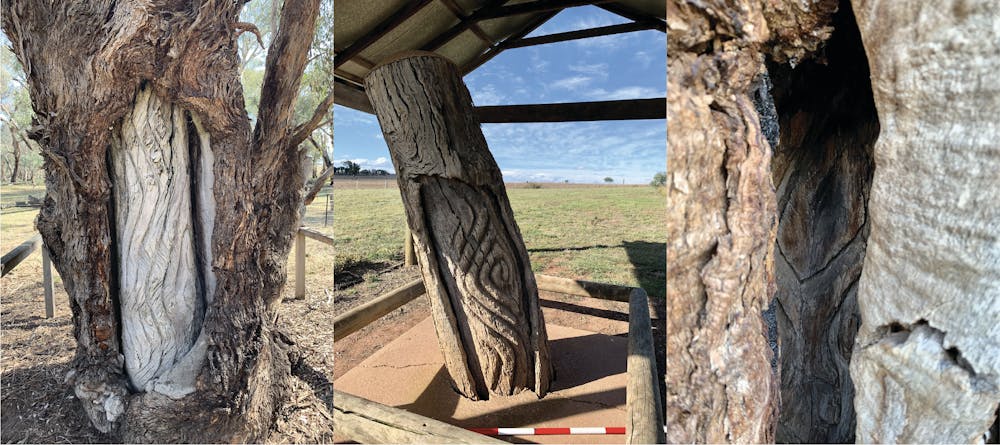
Page 516

Moonlight basking and queer courting: new research reveals the secret lives of Australian freshwater turtles

Source: The Conversation (Au and NZ) – By Deborah Bower, Associate Professor in Zoology and Ecology, University of New England
Rob D the Pastry Chef, Shutterstock

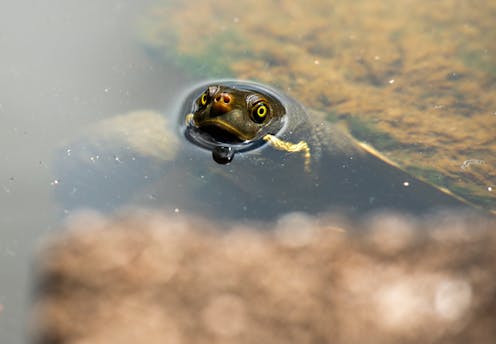
Australian freshwater turtles support healthy wetlands and rivers. Yet one in three turtle species is threatened with extinction. And there is still much we don’t know about them.

In today’s special issue of the journal Austral Ecology, 55 authors present the latest research on Australian freshwater turtles.

Along with other biologists, we have contributed to a series of research papers to inform ecology and conservation of freshwater turtles.

Our research reveals some fresh insights into turtle behaviour, survey methods and conservation strategies.


Read more:
There’s a thriving global market in turtles, and much of that trade is illegal


Spy wear and other turtle tech

In one study researchers compared data from underwater video cameras to traditional trapping surveys and achieved similar results. They detected 83 turtles from 52  hours of footage and identified all species in the study area.

Overall, baited remote underwater videos proved to be a “useful, time effective, non-invasive technique to collect relative abundance and species richness estimates for freshwater turtles”.

Another study provided the first vision of a wild saw-shelled turtle attempting to court a mate. The male sought affection from the female turtle by waving his feet and pressing his nose into her face.
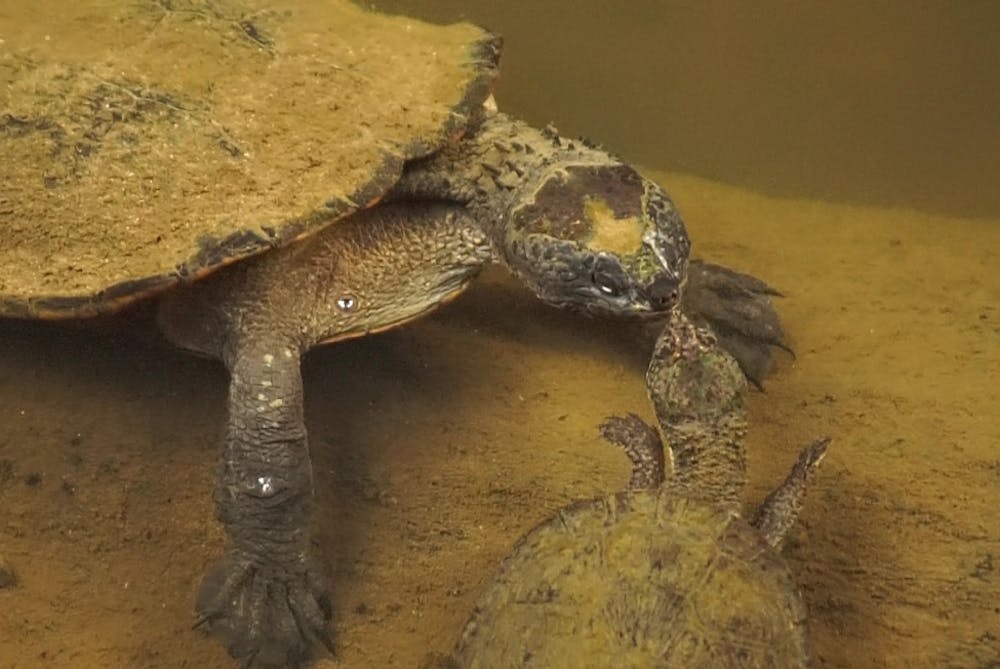
An image showing a male saw-shelled turtle 'kissing' a larger female
Underwater cameras captured a male saw-shelled turtle courting a larger female.
Donald McKnight

Meanwhile, a different male was observed trying to mount a larger male. This was the first case of same-sex mounting seen in this species.

We are continuing to unravel curious turtle behaviour known as nocturnal basking. During the day, many reptiles regulate their body temperature by sunning themselves. But some freshwater turtles (and crocodiles) also emerge from the water and bask on logs at night.

To find out why, scientists in Queensland measured the preferred temperature of Krefft’s river turtles and watched them bask more when the water was hot. So it seems they do this to stay cool in hot weather.
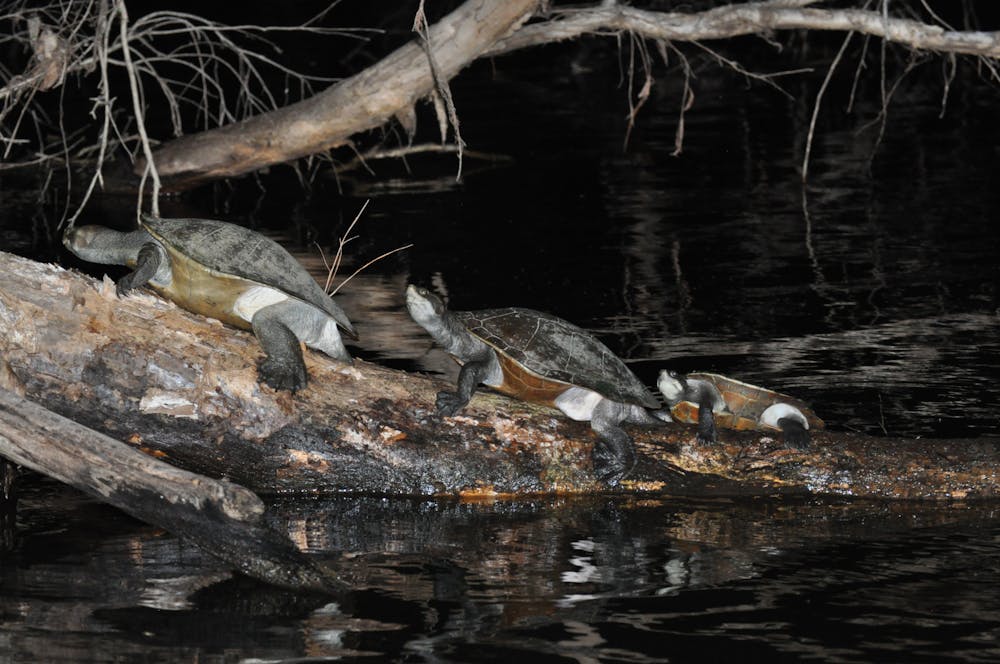
A photo showing Krefft's river turtles basking at night, hauled out on a log
Krefft’s river turtles basking at night in the Ross River, Townsville, Queensland.
Eric Nordberg

Over in desert country, we recaptured Cooper Creek turtles after two decades. While we were there, the site became surrounded with floodwater – this provided a rare opportunity to find turtles moving onto the floodplain to find food.

We also found lots of baby turtles. This is in contrast to most places around Australia, which have ongoing problems with foxes eating turtle nests.
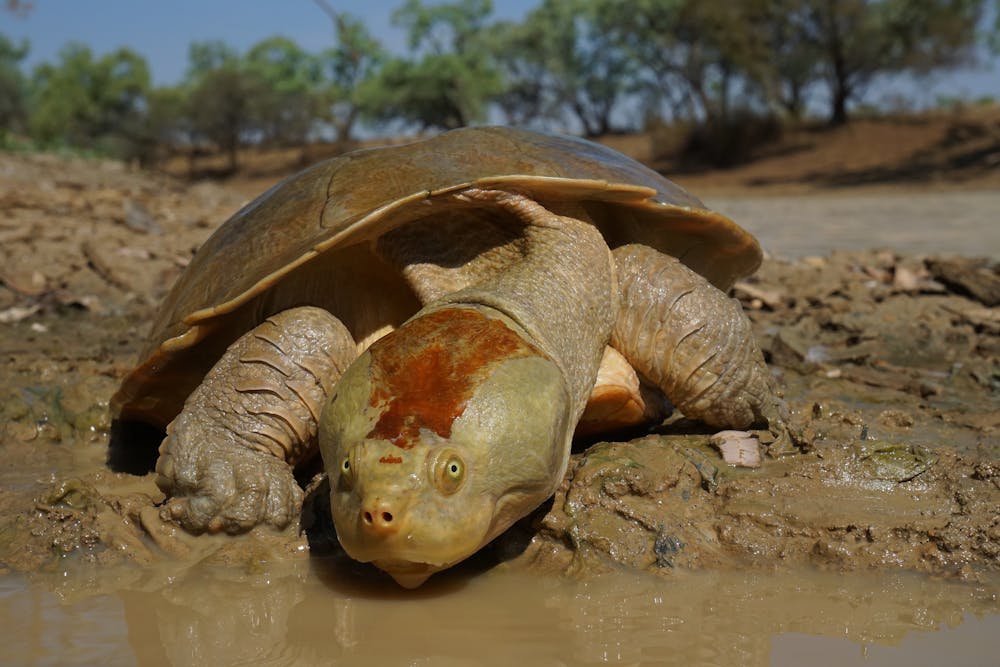
Closeup photo of a large female turtle facing the camera, stretching out its neck to drink from a pool of water
This large female turtle at Cooper Creek was recaptured after two decades.
Donald McKnight

Conservation success stories

Foxes target freshwater turtle nests across Australia, reducing breeding success. Researchers are experimenting with measures to protect nests from predators.

In the New England Tablelands, temporary electric fences served to protect turtle nests from foxes over three breeding spring-summer seasons from 2019 to 2022. But in the Murray River, plastic mesh over individual nests only protected some of them.

Nest protection supports conservation of the endangered Mary River turtle. Over 22 years, more than 100 members of the local community in the Mary River Catchment have led initiatives to protect Mary River turtles. Working with communities has dual benefits – for research and for the people involved, who enjoy connecting to nature.

These collaborations have helped improve river management, informing delivery of water for the environment and improving the quality of river habitats for turtles.

November is Turtle Month for the 1 Million turtles campaign, a national citizen science program bringing together scientists and the community, to support freshwater turtle conservation initiatives.

Through the free TurtleSAT app, people can do more than just report turtle sightings. They can actively contribute to data-driven turtle management.

The app provides real-time data visualisation. The program website also provides education, helping citizen scientists protect nests, establish predator-free turtle sanctuaries, engage in national experiments, and deepen their understanding of turtles and wetlands.

With more than 18,000 records logged, 1,200 turtles saved from road hazards and 500 nests protected, this initiative is crucial in light of the growing threats faced by freshwater turtle species.


Read more:
Our turtle program shows citizen science isn’t just great for data, it makes science feel personal


Challenges and solutions

Of Australia’s 25 freshwater turtle species, 12 are so poorly known their national conservation status could not be assessed during this 2022 review. Many of these lesser-known species occur in northern Australia.

Of the 15 species or subspecies assessed, we recommended listing a higher level of threat for eight. This included western saw-shelled turtles, which were recently uplisted from vulnerable to endangered.

Threats include habitat loss, being eaten by foxes or feral pigs, disease, fire, and moving species into new areas where they breed with existing turtle species. To manage these threats, we need to move beyond engagement to an integrated approach, where conservation advice is co-determined by First Nations people who are closely involved in implementing recovery plans and action plans.

There is immense value in establishing long-term studies to track these long-lived species. And technology continues to provide new opportunities to learn more.

Future conservation and management will require working with communities to learn more about turtles and protect them. If one million people each save one turtle, collectively we will have made a big difference.


Read more:
Turtles on the tarmac could delay flights at Western Sydney airport


The Conversation

Deborah Bower receives funding from the Australian Research Council, NSW Department of Environment and Planning, and the Northern Tablelands Local Land Services.

Donald McKnight works for the Savanna Field Station and received funding from the Australian Society of Herpetologists and Winifred Violet Scott Charitable Trust.

Eric Nordberg receives funding from the National Environmental Science Program Landscape Hub, Australian Departments of Environment and Planning, and Northern Tablelands Local Land Services.

James Van Dyke receives funding from the Australian Research Council and the Australian Department of Industry, Science and Resources.

Michael B Thompson has received funding for turtle research from the Australian Research Council. He is also involved with the 1 Million Turtles program funded by a Commonwealth Citizen Science grant.

Ricky Spencer receives funding from the Australian Research Council, WIRES and Department of Industry, Science and Resources.

ref. Moonlight basking and queer courting: new research reveals the secret lives of Australian freshwater turtles – https://theconversation.com/moonlight-basking-and-queer-courting-new-research-reveals-the-secret-lives-of-australian-freshwater-turtles-215531

The Productivity Commission wants all Australian kids to have access to 3 days of early learning and care a week

Source: The Conversation (Au and NZ) – By Peter Hurley, Director, Mitchell Institute, Victoria University

A major new report is recommending bold changes to Australia’s early childhood sector. On Thursday night, the Productivity Commission released an interim report from its inquiry into early childhood education and care.

The report recommends every Australian child aged under five years gets access to three days a week of “high-quality” early learning and care. This entitlement could occur in a range of settings such as centre-based day care, family day care and preschool.

Currently there is no national guarantee, only a mix of entitlements to preschool for three- and four-year-olds, which varies depending on the state.

The report also recommends lower-income families receive a 100% child care subsidy for these three days and some work or study requirements are removed. This means families earning less than A$80,000 would get up to 30 hours of free childcare for children aged under five years.

The recommendations would result in a huge overhaul of the sector and require large increases in the supply of early education places and government funding.

Why do we have this report?

The inquiry was set up in February this year, following a Labor election promise to conduct a comprehensive review of the sector with the aim of paying 90% of fees for all families covered by the Child Care Subsidy.

The report is one of several federal government-commissioned inquiries into early education and care. The Australian Competition and Consumer Commission is currently looking at the early learning market and Australia’s children’s education and care regulator is looking at safety in the sector.

The Productivity Commission review has a broader scope than the other reviews and is examining issues such as cost, quality, workforce and access to early learning and care.

The sector already provides services to more than 1.4 million children every year and receives about A$13 billion in government funding.


Read more:
Yes, childcare is costly, but nowhere near as costly as recent reports suggest – here’s why


What are the key findings?

The interim report found Australia’s early learning and care system can be complex and costly, with patchy provision in some areas and not enough support for vulnerable groups.

To meet these challenges, the Productivity Commission recommends the federal government takes a more active role in ensuring up to 30 hours or three days a week of quality early childhood education and care is available to all children up to five years.

This would be the first time there is an explicit policy aim in Australia for an entitlement like this.

The report highlighted that those who are likely to benefit most from childcare services – those experiencing disadvantage – are also less likely to attend. To increase participation, the report recommends “relaxing” the activity test and increasing subsidies for low income families.

At the moment, many families need to undertake a certain amount of work, study or volunteering (“activity”) to be eligible for the child care subsidy.

As Associate Commissioner Deborah Brennan said:

A child’s entitlement to at least three days of [early childhood education and care] a week should not depend on how much their parents work.


Read more:
More than 1 million Australians have no access to childcare in their area


Fees and subsidies

A key point is the amount of subsidy different families should receive.

Currently, families earning between $80,000 and $530,000 receive up to 90% in subsidies. The subsidy decreases by 1% for each $5,000 they earn above $80,000. The subsidy is paid directly to early childhood services and they pass it on to families as a fee reduction.

In response to Labor’s request to investigate a 90% universal subsidy, Productivity Commission modelling suggests this would would increase the child care subsidy payments by about $4.1 billion annually, or 33%. The biggest beneficiaries would be high-income families, because their subsidy would increase the most.

But the report goes a step further. For families on incomes up to $80,000 it recommends increasing the subsidy to 100% of the top subsidy rate for 30 hours a week.

This would make up to 30 hours of childcare effectively free for about 30% of all families with children aged under five. The estimated cost of this policy, along with the relaxing of the activity test, is an additional $2.5 billion a year, or 20%.

The commission believes these changes would remove barriers for lower-income families and encourage more children experiencing disadvantage to benefit from high-quality early learning.

As the report says:

Affordability should not be a barrier to […] access.

The commission will explore further recommendations in their final report for subsidy rates to families not covered by the 100% subsidy recommendation.

Expansive reform

The commission’s proposal would introduce an entitlement to early education and care like reforms already underway in other countries.

Quebec in Canada already has an entitlement to childcare at $10 a day regardless of income.

The United Kingdom is expanding childcare entitlements to 30 hours per week for many working families with children aged over nine months.

The commission highlights such an expansion “will require careful sequencing and implementation”.

To do this, it is proposing more government involvement in locations where families struggle to find appropriate education and care. At the moment, the government subsidises those who create the demand for early childhood services (parents and families). Meanwhile, supply is created by a mix of for-profit and not-for-profit providers opening centres to respond to this need.

This is different to our school system, where governments fund schools directly, there is greater government service provision and schools are not allowed to be for-profit.

What next?

When viewed this way, the Productivity Commission has not recommended a major overhaul of the current approach. Instead, it will explore the most effective government interventions where the current model is not working properly. This means there is still a lot of detail that needs to be worked out.

But the reform agenda is undeniably big and geared towards directing the most support to those children from disadvantaged backgrounds.

The commission will hold public hearings next year with a final report due to the government on June 30 2024.

The Conversation

Peter Hurley works for the Mitchell Institute who receive funding from Minderoo Foundation to undertake research into early childhood education and care.

Melissa Tham works for the Mitchell Institute who receive funding from Minderoo Foundation to undertake research into early childhood education and care.

ref. The Productivity Commission wants all Australian kids to have access to 3 days of early learning and care a week – https://theconversation.com/the-productivity-commission-wants-all-australian-kids-to-have-access-to-3-days-of-early-learning-and-care-a-week-218247

Grattan on Friday: Can the Albanese government turn 2024 into a happy new year despite multiple challenges?

Source: The Conversation (Au and NZ) – By Michelle Grattan, Professorial Fellow, University of Canberra

Halfway into its first term, the big question is whether the Albanese government is in a temporary bad patch, or at the beginning of a downhill slide.

We’re not talking immediate opinion polls. They can jump about in the winds of the moment. We’re talking about being on top – or not – of the policy challenges and the politics. The longer-term trend in the polls follows as a consequence of how well those are handled.

Despite its unrelenting activity and announcements, the federal government is struggling on key issues, and Prime Minister Anthony Albanese, after successful trips to Washington and Beijing, is suddenly looking on the back foot.

It seems inexplicable that Albanese has got himself cornered over whether he did or didn’t raise the sonar incident when he met Chinese President Xi Jinping on the sidelines of APEC last week.

The action by a Chinese warship in unleashing sonar pulses at Australian sailors who were untangling fishnets from HMAS Toowoomba last week has set off a war of words between the two countries.

Australia said the Chinese acted unprofessionally. China accused Australia of “making reckless and irresponsible accusations” and declared it should “do more to build up mutual trust”.

Of course Albanese should have brought the incident up when he met Xi. And if he did, of course he should say so. To maintain, as he has been doing, that he doesn’t disclose the content of meetings with another leader on the sidelines of a conference is a nonsense excuse.

Albanese’s apparent reluctance to be forthright (whether in the meeting or outside it) sends the wrong signal to the Chinese, suggesting he will go out of his way not to offend them. It is also a bad look at home, displaying a lack of frankness with the Australian people on an important matter.

Perhaps it’s no bad thing the sonar incident occurred when it did. It’s a timely reminder that regardless of the recent nice words, for China this is a relationship of convenience. As one China expert puts it: “Sooner or later [Albanese] was going to be mugged by strategic reality”.

Will the fracas set back the new rapport? Maybe we can apply the lobster test.

The only trade restrictions remaining on Australian products (apart from tariffs on wine, now to be reviewed) are on lobsters and beef from some abattoirs. Trade Minister Don Farrell has had recent discussions with his Chinese counterpart about lobsters, and engaged in some lobster diplomacy with Albanese in Shanghai.

Farrell has been expecting a breakthrough by Christmas. The government is encouraged that this seems still on track, judging by a Wednesday article in the Global Times (a state-owned official mouthpiece) anticipating a quick resumption of the lobster trade.

On a very different front, a week after rushing through emergency legislation, the government is still confronting the aftermath of the High Court judgement forcing the release of immigration detainees, including people who had committed very serious crimes.

The government’s new law to impose controls on these people is now being legally challenged. And after last week insisting they could not be re-detained, the government has now confirmed it is examining whether there’s a legislative way to do just that with at least some of them.

While the opposition has stirred a storm over the ex-detainees, the government is facing fire from its state Labor colleagues, in New South Wales and Queensland especially, following its announcement of cuts to the infrastructure program. Queensland is worried about next year’s election. NSW seems more generally antsy, anticipating being financially squeezed in a range of areas. Its vociferousness has taken Canberra somewhat by surprise.

But NSW and other states know what’s coming, especially on the National Disability Insurance Scheme, where the federal government is determined to reduce the rate of growth. This will involve two politically unpalatable moves.

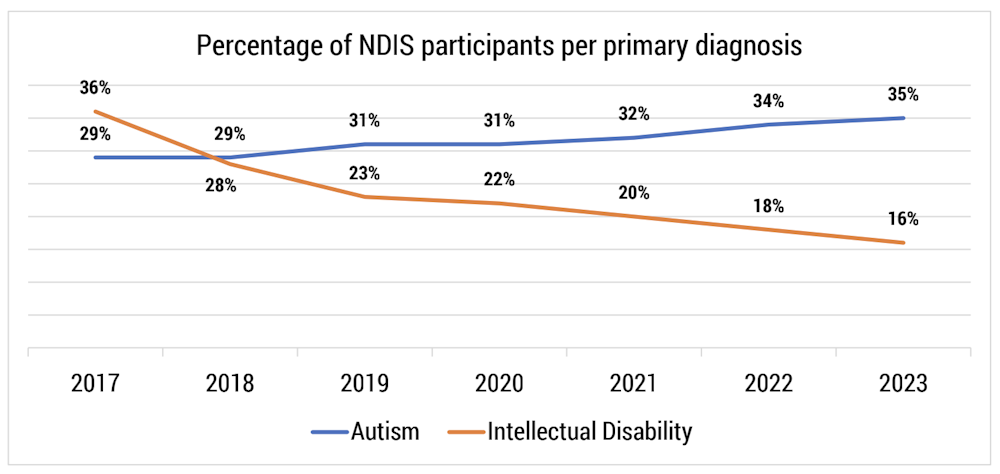
The first is changes to eligibility. There is much concern about the large number of children with mild autism on the scheme (around one in 11 boys aged five to seven are on the NDIS).

The second will be to push the states to take greater responsibility for providing more and better disability services for people outside the NDIS. The federal government contrasts the start of the NDIS, when the states shared its costs on a 50-50 basis, with the present breakdown – the states provide only about 30% of the funding, and that’s heading downwards.

The Victorian government this week accused the Feds of being unforthcoming about their plans.

The minister for the NDIS, Bill Shorten, will soon release the government’s review of the scheme. Managing the fallout from the changes that follow will be complex and politically difficult, given the sensitivities of disability policy, the inevitable blowback when changes produce losers (actual or potential), and the politics of triggering the fiscal nerve of the states.

This week’s announcement that the government will dramatically boost its underwriting of investment in renewable energy production and storage highlights another challenge for the coming months. The expanded guarantee will be on-budget but the cost (or profit) to the taxpayers won’t be known until the projects start delivering.

The transition to clean energy, absolutely vital for Australia, is not going as fast or as smoothly as required to reach the target of renewables providing 82% of electricity generation by 2030. Not only must more investment be attracted, and quickly, but the government will continue to face resistance from local communities unhappy about transmission wires and even offshore wind farms.

Due for release before year’s end is the government’s migration policy. Immigration props up economic growth but the huge net intake is putting further strain on already overstretched housing. There is strong pressure on the government, including coming on MPs from their electorates, to restrict the growth in the intake, although options to substantially reduce the current trajectory are limited.

These various policy issues are apart from the pain around the cost of living, coming from high inflation and a baker’s dozen interest rate rises, with the government’s capacity to do much that’s substantial very limited. This takes us to another debate over the stage 3 tax cuts, as Treasurer Jim Chalmers puts together his next budget.

Christmas will give the government a brief respite. But can it turn 2024 into a happy new year?

The Conversation

Michelle Grattan ne travaille pas, ne conseille pas, ne possède pas de parts, ne reçoit pas de fonds d’une organisation qui pourrait tirer profit de cet article, et n’a déclaré aucune autre affiliation que son organisme de recherche.

ref. Grattan on Friday: Can the Albanese government turn 2024 into a happy new year despite multiple challenges? – https://theconversation.com/grattan-on-friday-can-the-albanese-government-turn-2024-into-a-happy-new-year-despite-multiple-challenges-218432

The government will underwrite risky investments in renewables – here’s why that’s a good idea

Source: The Conversation (Au and NZ) – By Tony Wood, Program Director, Energy, Grattan Institute

Climate Change and Energy Minister Chris Bowen today announced a scheme to underwrite the risk of investing in new renewable energy generation and storage.

The expansion of the national Capacity Investment Scheme follows a successful pilot study with New South Wales. The government paid A$1.8 billion for just over a gigawatt of capacity, through a combination of batteries and other storage.

Bowen says the scheme “underwrites new renewable generation and storage, providing certainty for renewable investors and cheaper, cleaner energy for households and businesses”. And if all goes well, the scheme will provide a financial return to taxpayers.

Most of the country still relies on dirty coal-fired power. Several power stations have already closed and many more have flagged intentions to close. The ageing fleet is also unreliable, causing power outages. Before coal exits the system, we need to replace it. This scheme will ensure that happens well in advance.


Read more:
Why Australia urgently needs a climate plan and a Net Zero National Cabinet Committee to implement it


What’s the problem?

The government was not on track to achieve 82% renewables by 2030. It was clearly under pressure to do something about that. And now it has.

If what’s been announced today actually is built, then it’s likely we will be able hit the target. The amount of new capacity being considered will certainly make a huge difference. So that’s 23 gigawatts of new variable renewables such as wind and solar, plus 9GW of “dispatchable” capacity, which involves storage – mainly batteries.

If the scheme does its job, it’s also likely to accelerate the closure of coal-fired power stations.

That will help us to reduce emissions but it also raises the risk of blackouts from grid instability. That’s a worry as we head into a long, hot summer.

We need to close the gap between closure of coal-fired power and new generators coming online to firm up the system.

Today’s announcement takes us to a total of 32GW nationally. Compare that to the total generation capacity of the National Electricity Market at about 65GW.


Read more:
How could Australia actually get to net zero? Here’s how


How does the Capacity Investment Scheme help?

Under the original scheme, the federal government has begun to run competitive tenders seeking bids for clean renewable generation projects.

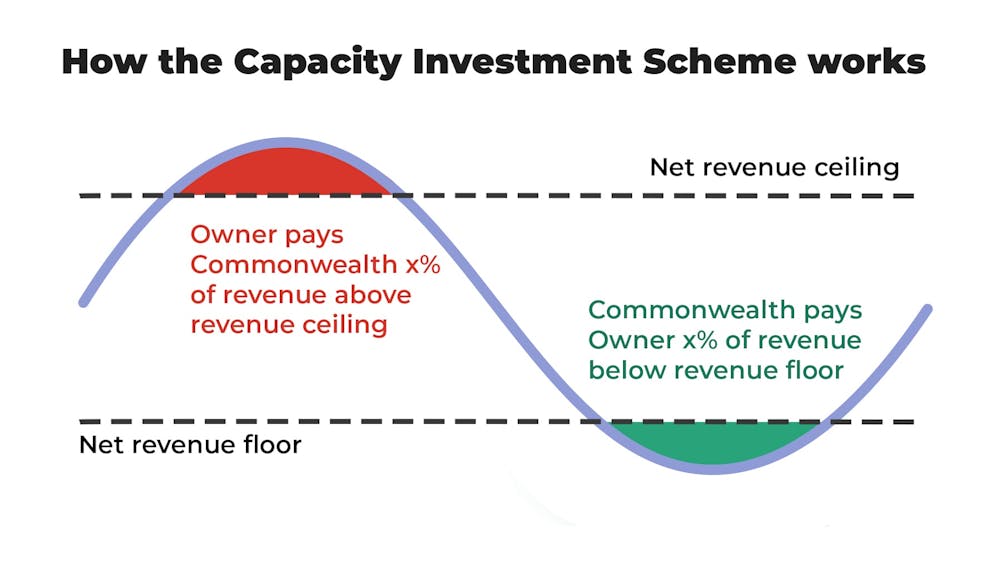
Under the expanded scheme, successful projects will be offered contracts in which a revenue floor and ceiling are agreed with the Commonwealth.

This scheme will be rolled out with regular six-monthly tenders from the second quarter of the 2024–25 financial year through to 2027.

If revenue earned by a project exceeds the net revenue ceiling, the owner pays the Commonwealth an agreed percentage of revenue above revenue ceiling. The Commonwealth would pay the project when revenue is below the revenue floor.
The Conversation

In principle, it’s a good idea for two reasons. First, it provides a much greater level of certainty for investors. Difficulty getting people to invest in the renewable energy sector is one of the reasons why we’re not on track. In this case the government will be paying directly, holding auctions to guarantee a certain revenue for those who invest in these projects. In other policy instruments it’s really the consumer who ends up paying.

The way it’s done, through “contract the difference”, is pretty sensible, in that the government is only underwriting the risk, rather than the full amount of money. If the revenue the project actually generates in the market is within the agreed range, the government doesn’t pay anything.

But if the people who invested are not getting the agreed amount of financial return, the government will pay the difference. Or most of the difference anyway, through a formula yet to be worked out – but the government will certainly be contributing towards that difference.

On the other hand, it’s not a one-sided arrangement. If the project generates more revenue than the agreed ceiling, that money goes back to the government. So the government’s not signing up to an open chequebook.

Second, this approach puts all the responsibility for reliability of the grid in the hands of the states. That is, dealing with the closure of the coal plants and making sure there’s enough capacity to replace it.

That’s probably a good idea, because some of the states have different views about how reliability should be addressed. Some would not want to see any gas-fired generation being used to back up renewables; others may be happy to have gas-fired power or even a hydrogen power station to back up reliability. It will be up to them now.

Alongside these steps federal and state governments still need to step up the pressure on building transmission lines to connect all of this new renewable capacity to the grid. However, today’s announcement does nothing to address how this will be done.

What will this do to power prices?

I don’t expect it to make much difference to prices. While new renewables themselves are cheap, the transmission and storage needed to back them up will not be. So they’ll probably largely balance each other out.

The bottom line is we will be getting a more reliable and lower-emissions electricity sector at a relatively low carbon cost.


Read more:
Unsexy but vital: why warnings over grid reliability are really about building more transmission lines


The Conversation

Tony Wood may have a financial interest in companies relevant to the article through his superannuation fund.

ref. The government will underwrite risky investments in renewables – here’s why that’s a good idea – https://theconversation.com/the-government-will-underwrite-risky-investments-in-renewables-heres-why-thats-a-good-idea-218427

‘It cannot be normal that men hurt us women’: what we can learn from the inquest into 4 Aboriginal women’s deaths in the NT

Source: The Conversation (Au and NZ) – By Chay Brown, Research and Partnerships Manager, The Equality Institute, & Postdoctoral fellow, Australian National University

Aboriginal and Torres Strait Islander readers are advised this article contains names of deceased people. Some names have been changed to honour Sorry Business. This article also mentions violence against and killings of First Nations women.


Kumanjayi Haywood.

Ngeygo Ragurrk.

Miss Yunupingu.

Kumarn Rubuntja.

These are the names of the four Aboriginal women at the centre of Australia’s largest and longest-running coronial inquest into women killed by their intimate male partners that adjourned on November 10. Over the past six months in the Northern Territory, Judge Elisabeth Armitage heard evidence about the shocking circumstances surrounding each woman’s death.

Each of the women had experienced years of severe abuse from their male partners, some of whom had served lengthy jail terms, and some of whom had long histories of violence, sometimes against multiple partners.

Kumanjayi Haywood died after her partner poured petrol under the door of the bathroom she was hiding in and set her alight. She sustained burns to 90% of her body. She was a loving mother.

Ngeygo Ragurrk was killed by her partner on Darwin’s Mindil Beach after a brutal attack lasting several hours. She was a Warddeken ranger and is remembered as a loving aunty.

Miss Yunupingu endured over a decade of abuse by her partner, who ultimately ended her life by stabbing her three times in the chest. She was much loved by her family.

Kumarn Rubuntja was killed after her partner deliberately hit her with his car, reversing over and hitting her several times. She was a well-known anti-violence advocate and beloved by her friends and family.

These women were failed repeatedly by the systems and institutions set up to protect them. They slipped through the gaping cracks in an overstretched and overburdened system. One of the women had called police 22 times. Another was herself arrested after calling police for help. The family of another was unaware of the exact nature and circumstances of her death and the sentence of her perpetrator because there were no interpreters in court when he was sentenced.

The coroner dedicated time to hearing about the individual circumstances surrounding each women’s death, as well as two weeks for institutional responses.

I was called to give evidence in the inquest twice. The first time was to provide testimony in relation to Kumarn Rubuntja’s death, as she was my friend and colleague. I spoke about the rates and drivers of violence in the territory.

The second time was part of the institutional responses, where I gave expert evidence due to my research into violence against women in the territory. I presented evidence about the development of different initiatives to improve the response to domestic, family and sexual violence in the territory, such as improved training for police.

I believe the inquest was extraordinarily important, but it was also immeasurably difficult and painful. It was hard for all of us who loved, knew and worked with these women.

Inquest findings

Armitage, the judge, characterised extreme violence in the Northern Territory as an “epidemic”, an “explosion”, and a “horror”.

The inquest heard domestic violence has increased by 117% in the past ten years, and is projected to increase a further 73% in the next decade. As a result, police callout times to domestic violence incidents have more than doubled.

In the Northern Territory, domestic, family and sexual violence services are chronically under-funded and under-resourced. Women’s shelters from across the NT gave evidence that they had to turn women away because they did not have enough beds. Some were having to reduce staff pay due to lack of funding. Some had to rely on vacancies, while others were running their budgets in deficits.

However, the inquest also heard about several promising initiatives, including a co-response model for police and specialist services. But this initiative had only been given funding of $240,000 from the government. Queensland, by comparison, has funded its own co-response model with $22 million.

Another promising initiative is improved and specialist domestic, family and sexual violence (DFSV) training for police and health care workers. But the Prevent.Assist.Respond.Training program had only been funded to develop training, and there was no money for implementation or delivery.


Read more:
Here’s some context missing from the Mparntwe Alice Springs ‘crime wave’ reporting


A national crisis

Through the inquest, the specialist domestic, family and sexual violence sector learned that the Northern Territory government had rejected its own working group’s recommendation for funding of $180 million over five years, instead committing to only $20 million over two years. Professor Marcia Langton, in her testimony, labelled this decision “gobsmacking”.

Upon learning of the inadequate funding for essential services, the DFSV sector organised a “day of action” on September 26. Hundreds of people gathered across the territory, in regional centres and remote communities, to call on both the NT and federal government to commit to needs-based funding for the territory.

The NT’s family violence sector called for:

  1. an immediate injection of a minimum additional $180 million over five years, per the government’s own recommendation
  2. the immediate establishment and ongoing funding of a NT-specific domestic, family and sexual violence peak organisation
  3. the allocation of 50% of new public housing to victim-survivors of domestic, family and sexual violence.


Read more:
49 women have been killed in Australia so far in 2023 as a result of violence. Are we actually making any progress?


Action is needed before more women die

Prime Minister Anthony Albanese has not yet responded to multiple requests from the Northern Territory DFSV sector to visit the territory to meet with the family violence sector and see the level of need firsthand.

Minister for Social Services Amanda Rishworth said the Albanese government had already funded the NT government for family and domestic violence services with $147 million over four years.

But the breakdown of this funding included many general services – several of which run no domestic violence programs and one that was not based in the NT. She also failed to include a single women’s shelter in the territory.

Recommendations will now be put to the coroner by counsel assisting and submissions will close in March. The coroner will then lay down her findings in November.

Kumanjayi Haywood, Ngeygo Ragurrk, Miss Yunupingu, Kumarn Rubuntja. These women rarely made the national news. The nation did not honour their lives or mourn them. Their lives did not spark marches or social media campaigns or speeches in parliament. Four more people have died in what police believe are domestic violence incidents in the NT since the inquest began.

This inquest was an incredibly important opportunity to hear from the women’s friends and families, who recounted beautiful memories about them and told of their heartbreak. It’s important all of us hear the words of these grieving families – we need to do better.

As Ngeygo Ragurrk’s sister, Edna, said on the last day of the inquest: “It cannot be normal that men hurt us women. Everyone must do more from the start, not just after women get hurt or killed.”

The Conversation

Kumarn Rubuntja was a friend of mine and I worked alongside her for many years.
I work as the Family Violence Prevention Manager at the Tangentyere Council Aboriginal Corporation and Managing Director of Her Story Consulting. I was also called to give evidence in the inquest.

ref. ‘It cannot be normal that men hurt us women’: what we can learn from the inquest into 4 Aboriginal women’s deaths in the NT – https://theconversation.com/it-cannot-be-normal-that-men-hurt-us-women-what-we-can-learn-from-the-inquest-into-4-aboriginal-womens-deaths-in-the-nt-211738

A tussle between the federal and state governments over disability supports is looming. What should happen next?

Source: The Conversation (Au and NZ) – By Sue Olney, UoM-BSL Principal Research Fellow, School of Social and Political Sciences, The University of Melbourne

Over the ten years since the National Disability Insurance Scheme (NDIS) was launched, its design, operations and costs have been scrutinised by governments, the media, the legal system, researchers and people with disability and their advocates.

More than 610,000 Australians receive NDIS funding to purchase support and services to meet their disability-related needs. But the overwhelming majority of the 4.4 million people with disability in Australia are not NDIS participants. Whether and how their needs are met outside the NDIS has huge implications for the scheme’s future.

That issue sits at the heart of the NDIS review. The review’s findings and recommendations have not yet been publicly released, but NDIS Minister Bill Shorten and the review’s co-chairs have already called for state and federal services outside the scheme to step up supports.

What fell away when the NDIS was rolled out? And what are the chances of such services being revived?


Read more:
‘I want to get bogged at a beach in my wheelchair and know people will help’. Micheline Lee on the way forward for the NDIS


How the NDIS ate other supports

Under the NDIS, many people have been able to get the support they need for the first time.

However, the movement of money from Commonwealth, state and territory governments to the NDIS meant people with disability who do not meet the scheme’s eligibility criteria lost access to some supports. The introduction of the NDIS also impacted the costs and availability of services.

What was glossed over in the transition to the NDIS was community, social and economic inclusion of all Australians with disability. As money flowed from other parts of government to the NDIS, there were no clear answers on how this cornerstone of the scheme should be delivered and funded.

An oasis surrounded by desert

Demand for support from the NDIS has outstripped all forecasts, putting pressure on the federal budget. But government has shown little will to tackle what is driving its growth.

Slow progress on improving accessibility in “mainstream” services and the erosion of access to supports like home and community care and community mental health services have left the NDIS an “oasis of support, surrounded by a desert where little or nothing is available”.


Read more:
Australia’s rates of autism should be celebrated – but real-life impact, not diagnosis, should determine NDIS support


Research in 2022 revealed people with disability and their families were navigating disconnected and incomplete service markets, with inconsistent eligibility criteria. There were gaps in data informing policy. People without NDIS funding were relying heavily on family support and personal resources. In surveys for this research, 90% of people with disability outside the NDIS said they were unable to find the support they needed.

States have already said they need more funding to support people with disability outside the NDIS. That has to be a whole-of-government conversation.

When people with disability and their families cannot find or afford the support they need, and exhaust their own resources to the point of crisis, they ultimately need higher levels of support from the NDIS and government across the board.

We need a graduated support system for people with disability between being in or out of the NDIS.

A shakeup is likely

The NDIS review’s final report is likely to be publicly released in December, after National Cabinet has met to consider its recommendations.

The review has already signalled it will call for coordinated effort and investment across government. Review co-chair Bruce Bonyhady recently said there would be more focus on support needs rather than functional impairment in decisions about what is reasonable and necessary for the NDIS to fund.

The review is likely to propose a new disability inter-governmental agreement to encourage governments to develop and implement a foundational supports investment strategy for all people with disability together.

It is also likely to call for national commitments to deliver more effective supports for children who are slow to reach one or more developmental milestones compared to their peers – described as “developmental delay” – and for people with disability linked to mental health.

Translating those recommendations into action across federal, state, territory and local governments won’t be easy.

What should change? What should come back?

The NDIS review may finally force clarification of roles and responsibilities for funding and delivering services and supports between the NDIS and key policy areas like health, education, employment, early childhood, justice, transport, housing and aged care that cross government jurisdictions.

It may also clarify the relationship between the NDIS and Australia’s Disability Strategy 2021-2031, which is intended to provide national leadership to drive mainstream services and systems to improve outcomes for people with disability.


Read more:
Should people who had disability before they turned 65, be allowed to become NDIS participants after 65? We asked 5 experts


There have been numerous references throughout the review to a need for more access to home and community supports, to reduce the likelihood of people needing higher-cost individual supports.

We may also see a return to block-funding for some widely used supports to achieve economies of scale lost in individual purchasing models.

From diagnosis to inclusion

Service systems such as disability employment services and specialist schools, which parallel universal services, highlight tensions between how governments talk about inclusion and how services and supports for people with disability are designed and funded on the basis of diagnosis.

We have to explore new ways to design and fund services, drawing on the knowledge and expertise of people with disability, and address evidence gaps to better inform policy.

Looming negotiations between federal and state governments about who should pay for what in that landscape are likely to be tense and protracted. But people with disability must not be reduced to “costs” in that tussle.

The biggest lesson from the NDIS review may well be that governments cannot continue to treat 20% of Australians as outliers in designing universal services.

The Conversation

Sue Olney does not work for, consult, own shares in or receive funding from any company or organisation that would benefit from this article, and has disclosed no relevant affiliations beyond their academic appointment.

ref. A tussle between the federal and state governments over disability supports is looming. What should happen next? – https://theconversation.com/a-tussle-between-the-federal-and-state-governments-over-disability-supports-is-looming-what-should-happen-next-217839

Is assisted dying available equally to all in NZ? Questions next year’s review of the law must answer

Source: The Conversation (Au and NZ) – By Jessica Young, Senior Research Fellow, Te Herenga Waka — Victoria University of Wellington

Just over two years ago, terminally ill New Zealanders were given the right to request a medically assisted death with the End of Life Choice Act. But having assisted dying legally available doesn’t mean everyone has the access.

While the law provides the option for people with a terminal illness, it also creates challenges for patients, family, whānau, health practitioners and the health system.

Our ongoing research is looking at how the law has been used since it was enacted in 2021. We have also been looking into access issues, low levels of knowledge in the health sector around assisted dying, and poor public awareness.

The Ministry of Health is required to review the law next year, examining how it is operating and reporting on whether any changes are necessary or desirable.

The review is crucial given the evidence of conscious and unconscious bias within the healthcare system and its impact on disadvantaged groups.

Regardless of how individuals voted in the 2020 referendum on the End of Life Act, everyone wants to die as well as possible. So the review is important for evaluating how the assisted dying service is influencing the end of life.

Understanding the End of Life Choice Act

The act legalises assisted dying for people assessed by at least two doctors as meeting all of the eligibility criteria. To be eligible, a person needs to be:

  • 18 years or older

  • a citizen or permanent resident of NZ

  • suffering from a terminal illness that is likely to end the person’s life within six months

  • in an advanced state of irreversible decline in physical capability

  • experiencing unbearable suffering that cannot be relieved in a manner that the person considers tolerable and

  • competent to make an informed decision about assisted dying.

In the two years since the act came into force, 1,441 people applied for assisted dying, of which just 565 people had an assisted death. As many as 374 people died while applying, 89 people changed their minds and 118 applications are still underway. Another 295 people did not meet the eligibility criteria.


Read more:
Assisted dying will become legal in New Zealand in a year — what has to happen now?


Is the law working?

The Act has some distinctive safeguards to prevent potential coercion. It bans health professionals from discussing assisted dying unless a person raises it first.

If a person is found eligible, but then loses competency to give their final consent, they cannot have an assisted death. People are ineligible if they apply only because they have a mental illness or disorder, a disability of any kind, or are of advanced age.

In practice, the prohibition on health professionals raising the topic means people might not know the option is available to them, or that they may be eligible. The person may not have the words or the ability to raise it with a health practitioner.


Read more:
We have a right to die with dignity. The medical profession has a duty to assist


It also means those who have higher literacy and access to resources are more likely to access assisted dying. This raises the question of whether access to information and assisted dying is equally available for all individuals.

During this first stage of research, we spoke with 22 family members and health professionals who have cared for someone undergoing assisted dying.

During our interviews, one family member of someone who lost competency during the process described the need for final consent as “ridiculous”.

When she is unable to respond to be affirmative, if she’s already given the consent to the process, why can’t the process just proceed? Otherwise, you have to say I want to die earlier than I want to die just to meet your ridiculous regulation.

Others we spoke to expressed similar frustrations and concerns.

Currently, we do not have data about how these safeguards are operating, or data about why people choose assisted dying. Te Whatu Ora reports the demographics of those who applied for assisted dying, but not who completed it.

Between November 2021 and November 2022, 80.8% of people who applied for assisted dying were European/Pākehā and 5.5% were Māori. Just over 55% were female, 75.8% were 65 years or older, and 77% were receiving palliative care at the time of the application. The majority – 67.9% – were diagnosed with cancer.

Te Whatu Ora also doesn’t report about people’s experiences of using the service or being declined.

Their views, and the views of their whānau, families and health care professionals, would greatly inform the future of the service. Likewise, research with Māori and people living with disability or impairment would also greatly benefit the review.

That’s why our team is researching the experiences of people across the assisted dying pathway.

Understanding the experience

The next step in our research is to speak to assisted dying service users (both eligible and ineligible), including those living with an impairment, disability, or are Deaf.

We will also be speaking with assisted dying providers, and healthcare organisation leaders and policymakers who are responsible for deciding how assisted dying is practised at their organisation.

The purpose of this research is to gather evidence to inform the first review of the End of Life Choice Act in November 2024. It is important to understand, from a variety of perspectives, if the Act’s safeguards are safe and equitable.

Our findings will help to advance the aim of enhancing the service to be safe, accessible, and equitably available to all eligible New Zealanders.


Co-authors include Professor Kate Diesfeld, Associate Professor Richard Egan and Dr Te Hurinui Karaka-Clarke.


The Conversation

Jessica Young receives funding from the Health Research Council and the Cancer Society New Zealand. She previously served as an appointed member of the Support and Consultation for End of Life NZ (SCENZ) Group and was a member of the now concluded End of Life Choice Act Referendum Society.

Aida Dehkhoda receives funding from the Health Research Council and the Auckland Medical Research Foundation to research assisted dying.

Jeanne Snelling receives funding from the Health Research Council of New Zealand to research assisted dying.

ref. Is assisted dying available equally to all in NZ? Questions next year’s review of the law must answer – https://theconversation.com/is-assisted-dying-available-equally-to-all-in-nz-questions-next-years-review-of-the-law-must-answer-217559

Arts journalism captures ‘the richness of being alive’, so why is New Zealand struggling to support it? And what’s the solution?

Source: The Conversation (Au and NZ) – By James Wenley, Lecturer, Theatre Programme, Te Herenga Waka — Victoria University of Wellington

Alte Nationalgalerie, Staatliche Museen zu Berlin

One of the primary roles of arts and culture is to hold a mirror up to society. The stories artists tell through books, performance, movies, music and visual art reflects an image of who we are, and shows us who we might yet become.

Journalism plays a crucial role in holding a mirror to this mirror. Investigations, interviews and reviews reflect and amplify the creativity and conversations explored by our artists.

But despite some bright spots of high-quality coverage, arts stories are often deprioritised in general media. Only 13% of Aotearoa New Zealand’s total media coverage focuses on arts and culture, and only 3.25% on art forms outside film, music and TV.

My new research report, New Mirrors, written with Rosabel Tan and commissioned by Creative New Zealand, investigates the state of contemporary arts journalism and proposes two pathways to strengthening this sector: a dedicated fund for arts and culture media projects, and an Arts Media Centre to connect media and creative sectors.

A dusty mirror

There is little dedicated arts space in the general media. Stuff, New Zealand Media and Entertainment (NZME) and Otago Daily Times increasingly place arts content behind paywalls. Specialist platforms often have to compete in the same funding rounds as the artists they cover.

To better understand these challenges, we spoke with 52 artists, arts organisations, publicists, editors, journalists and decision makers across the arts and media sectors.

1960s photo, girls read newspapers.
Arts coverage ‘tends to suffer first’.
Museums Victoria

We heard arts media is under critical pressure, and significant challenges limit its growth: stretched budgets, reduced staff, production pressures and low pay. Freelance journalist Tulia Thompson spoke about being paid NZ$250 to write a 1,200-word review of three books, “which makes it more like a hobby”.

But we found a huge appetite to strengthen coverage. Connie Buchanan, deputy editor at E-Tangata, said the ideal was to be able to offer “decent, informed criticism of the arts landscape”.

Our research confirmed the need for a stronger and more visible representation of our arts and culture sector in our media, better reflecting the stories of Aotearoa New Zealand.

There is a significant audience for arts and culture: 96% of adults in Aotearoa New Zealand participated in arts and cultural events in the past three years.

As we argue in the report, strengthening arts and culture media leads to better public conversations, more engaged arts consumers, and a healthier arts and culture sector.

Coverage builds an audience, but it also supports future career opportunities for artists and ensures work is remembered.

Artist Bridget Reweti spoke about the importance of “high-quality writing” to support institutions and curators to understand the value of an artwork, and how mainstream media coverage “feeds into broader knowledge and people knowing that this work exists”.

As Mihi Blake, cofounder of communications agency Māia, told us:

There are so many stories, and people want to read them; people want to have their lives enriched by arts and culture and music. That is the richness of being alive.


Read more:
Life after redundancy: what happens next for journalists when they leave newsrooms


Under-resourced and under strain

New Zealand’s media sector has experienced considerable volatility over the past two decades.

Between 2006 and 2018, the number of journalists working in Aotearoa
New Zealand more than halved. New Zealand’s media sector is currently facing formidable headwinds due to the closing of the government’s contestable public-interest journalism fund, declining readership numbers, and a steep drop in advertising revenue,

Arts coverage, says David Rowe, head of journalism planning at New Zealand Media and Entertainment, “tends to suffer first, because in terms of core business, it’s not right at the absolute heart”.

It’s been 16 long years since Frontseat, TVNZ’s last dedicated arts show, broadcast its final episode. Today, opportunities for coverage of arts stories on television and commercial radio are rare.

While The Post expanded its daily arts and culture coverage this year in response to audience demand, many major newspapers in Aotearoa New Zealand have dropped specialist arts positions.

Former Stuff journalist Charlie Gates painted a stark picture for us:

When I started at The Press, in 2007, there was an arts editor, two film reviewers, two or three cultural writers, a feature writer who specialised in culture and things, and that’s all gone now. That’s all completely gone.

A path forward

We’re facing a national deficit in arts and culture coverage. This has impacts on social cohesion, wellbeing, and our sense of who we are as a nation.

We propose two key investment pathways to address this deficit.

1. Create a public fund for arts and culture media projects

The current funding models aren’t working. We need a dedicated fund that invests in arts and culture media projects, with co-investment across multiple agencies like Manatū Taonga, Creative New Zealand, NZ On Air and Te Māngai Pāho.

By pooling resources and ringfencing funding, we could enable both specialist art platforms and general media to grow coverage, shining a spotlight on more artist voices, building capacity in the regions, and recognising arts and culture coverage as a public good.

2. Create an Arts Media Centre

An independent body that connects our media and creative sectors could enable high-quality arts and culture journalism through training, advocacy and relationship-building.

Aotearoa New Zealand’s Science Media Centre, funded by the ministry of business, innovation and employment, offers a possible model. Since its launch in 2008, it has played a pivotal role in strengthening the quality, accuracy and depth of science reporting.

These two interventions hold the potential to have an enduring and positive effect, creating the infrastructure needed to support the long-term sustainability of our arts media ecology and for our creatives’ views and voices to be heard more often.

With new mirrors, media can better reflect the central relevance that arts, creativity and storytelling plays in the lives of New Zealanders.


Read more:
We need to break the cycle of crisis in Aotearoa New Zealand’s arts and culture. It starts with proper funding


The Conversation

James Wenley received funding from Creative New Zealand to conduct this research.

ref. Arts journalism captures ‘the richness of being alive’, so why is New Zealand struggling to support it? And what’s the solution? – https://theconversation.com/arts-journalism-captures-the-richness-of-being-alive-so-why-is-new-zealand-struggling-to-support-it-and-whats-the-solution-218110

Our new high-resolution climate models are a breakthrough in understanding Australia’s future

Source: The Conversation (Au and NZ) – By Ralph Trancoso, Adjunct Associate Professor in Climate Change, The University of Queensland

Australia’s climate, already marked by extremes with bushfires, heatwaves, storms and coastal flooding, is only set to worsen with the growing effects of climate change.

Disasters like the Black Summer bushfires of 2019–20 and the 2022 eastern Australian floods are likely to become more frequent and intense.

If carbon emissions continue at the current rate, climate change may make Australia unbearable for future generations. It’s a confronting outlook, and we need better tools to understand future impacts so we can adapt to them.

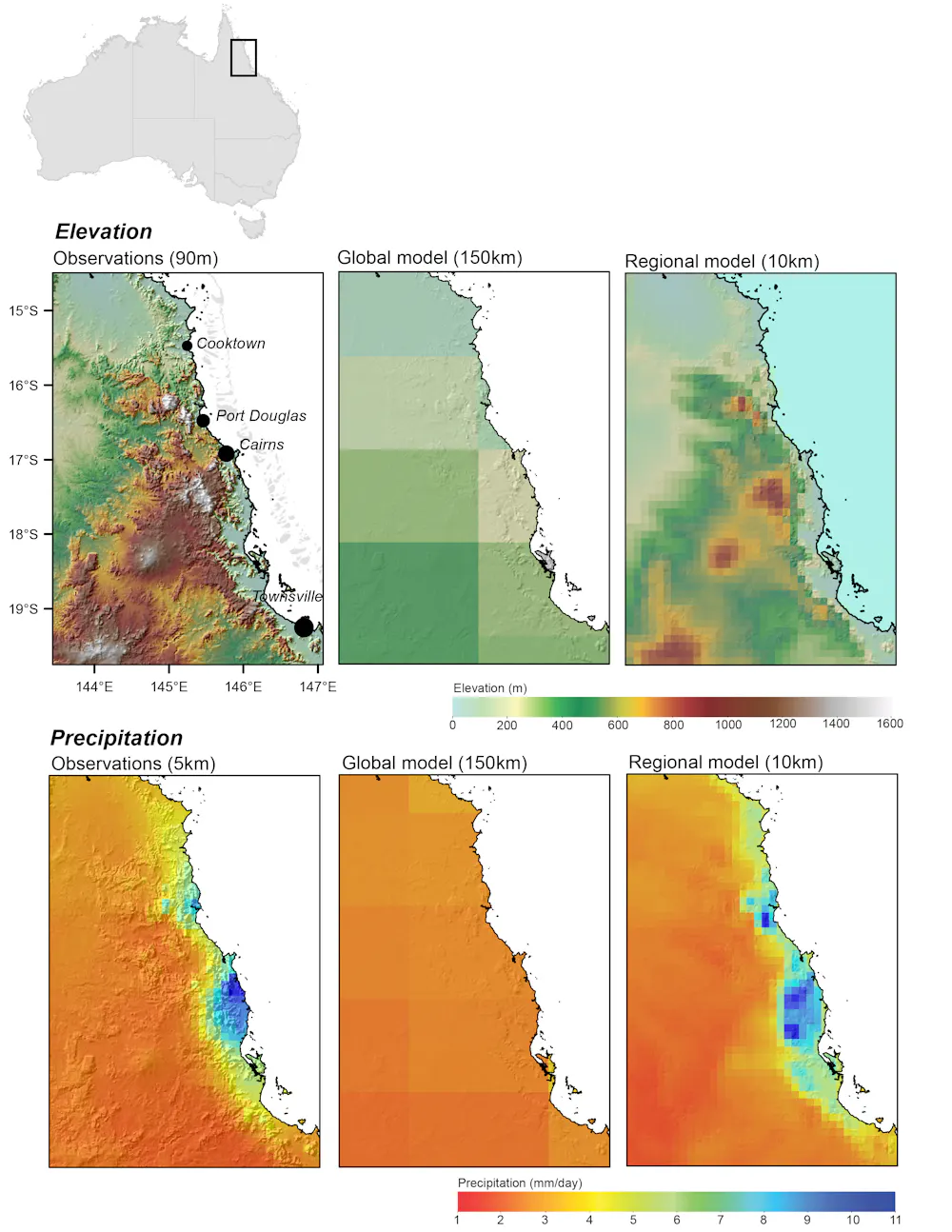
In our new research, published in the journal Earth’s Future, we have “downscaled” the latest global climate models to a 10-kilometre resolution across Australia. Having such a high resolution significantly enhances current global projections, with great improvements in projecting temperature, precipitation and extreme weather patterns for Australia.

Our new dataset is very useful. It provides scientists, policymakers and stakeholders with a valuable tool for comprehensively evaluating the potential impacts of climate change across Australia.


Read more:
Every Australian will be touched by climate change. So let’s start a national conversation about how we’ll cope


Why do we need high-resolution climate projections?

Climate models are key tools for understanding future climate risks. Current global climate models have a coarse resolution of 50–200km. This makes them less suitable for local adaptation. Regional climate models add locally relevant details, such as mountainous, coastal and urban regions.

For example, a high-resolution photo of a city lets you zoom in on the small details, such as people and vehicles. Likewise, high-resolution climate projections enable climate scientists to better simulate specific details such as storms and urban heat. They also help to track weather events like tropical cyclones – a meaningful refinement to understand local impacts of climate change.

This is why the Australian Royal Commission has recommended that future natural disaster risks are informed by high-resolution climate projections.

High-resolution models also match up much better with real-world local geographical features such as mountains. This is important, as mountains play a role in both temperature and rainfall.

A chart showing a detailed map versus a blurry one
Here, you can see how the level of real-world detail improves in our regional, high-resolution model compared to a global one. For every global model region (also known as ‘grid cell’), our regional models produce 150 different estimates.
Ralph Trancoso

What the new projections show for Australia

To produce high-resolution projections for Australia, we tapped into the most up-to-date climate model dataset that’s coordinated by climate scientists globally. This is known as the Coupled Model Intercomparison Project, or CMIP6 for short.

The full CMIP6 dataset comprises hundreds of model simulations. As climate modelling is computationally expensive, we can’t downscale them all. Instead, we evaluated them to find the models that best represent Australia’s climate but also retain nearly a full range of future climate impacts.

This resulted in a set of 15 downscaled models and three emissions scenarios representing low, intermediate and high emissions trajectories in the future.

Ours is the largest downscaled set of projections produced for Australia to date. The range of emissions scenarios is important for studies evaluating the impacts of climate change.

We evaluated our high-resolution projections by comparing their historical component (that is, the period between 1980 and 2010) to records measured at weather stations around Australia over that time. We examined temperature and precipitation (rain and snow), including their distribution, annual cycles and extremes.

Overall, we found our downscaling produced major improvements in how accurate the projections were. This was especially true for minimum temperature, which is important for looking at the impacts of heatwaves – high night-time temperatures can lead to heat stress and even deaths.

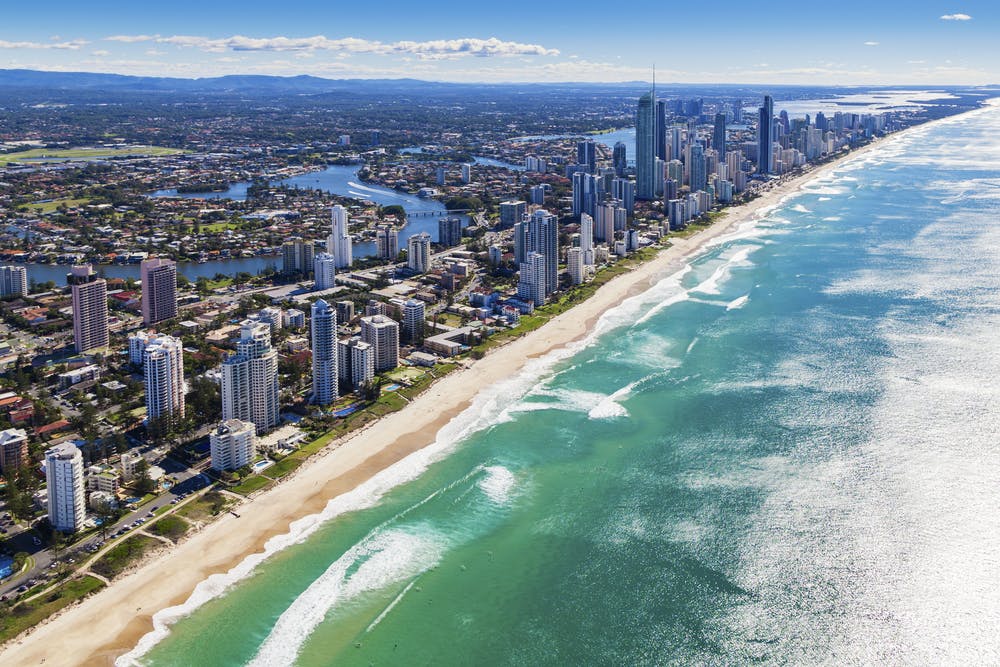
A high up view of an azure ocean coast right next to a highrise city with mountains in the background
Projections are particularly improved in coastal, urban and mountain regions – where the Australian population is concentrated.
zstock/Shutterstock

We also looked at whether our models accurately represented day-to-day observations – that is, how well they matched up with actual weather recordings. The biggest difference came when looking at extremes (either very high or very low values), with a 142% improvement in representing minimum temperatures and an 87% improvement in representing winter maximum temperature.

Our models also worked well for precipitation. Predicting the number of days with no rain, as well as heavy rain days, is usually tricky for most models. Downscaling improved representation of dry days by 46% and extreme rain by 45%. This means we’ll have more reliable models when examining impacts from events like floods and droughts.


Read more:
Faster disaster: climate change fuels ‘flash droughts’, intense downpours and storms


How will this be useful?

The new projections provide more accurate data across Australia, but particularly in the mountains and densely populated coastal areas. This is important for disaster planning, preparedness and response. For example, in South East Queensland the improvements reached an impressive 150%.

The new data is not only more accurate, but offers a significantly clearer picture of the climatic future for densely populated regions. We can now have future climate information for shires and towns – an important step towards adaptation.

Downscaled climate projections based on the previous global suite of models have been used in Australia to understand future heatwaves, severe wind, drought and flood risks.

Our new high-resolution dataset, based on the latest global models, provides scientists and stakeholders with a solid ground to support adaptation policies, inform communities, and build resilience and preparedness for future climate hazards in Australia.

The Conversation

Ralph leads the Queensland Future Climate Science Program – a collaborative program between the University of Queensland and Queensland’s Department of Environment and Science undertaking applied climate science to support climate adaptation and natural disaster preparedness.

Jozef Syktus is the Director of the University of Queensland and Department of Environment and Science (DES) collaborative research program. He was a science leader of the projects contributing the CSIRO Mk3.6 climate model simulations to the CMIP5 archive and dynamical downscaling of CMIP5 for Queensland. He led the development of the UQ-DES CMIP6 downscale projections for Australia. Jozef received funding from ARC, Queensland Government and CSIRO

Sarah Chapman is a member of the Climate Projections and Services Team at the Department of Environment and Science, Queensland Government.

ref. Our new high-resolution climate models are a breakthrough in understanding Australia’s future – https://theconversation.com/our-new-high-resolution-climate-models-are-a-breakthrough-in-understanding-australias-future-216739

How risky is it to give card details over the phone and how do I reduce the chance of fraud?

Source: The Conversation (Au and NZ) – By Paul Haskell-Dowland, Professor of Cyber Security Practice, Edith Cowan University

Paying for things digitally is so common, most of us think nothing of swiping or tapping our card, or using mobile payments. While doing so is second nature, we may be more reluctant to provide card details over the phone.

Merchants are allowed to ask us for credit card details over the phone – this is perfectly legal. But there are minimum standards they must comply with and safeguards to protect consumer data.

So is giving your card details over the phone any more risky than other transactions and how can you minimise the risks?

How is my card data protected?

For a merchant to process card transactions, they are expected to comply with the Payment Card Industry Data Security Standard. This is a set of security requirements designed to protect cardholder data and the trillions of dollars of transactions each year.

Compliance involves various security measures (such as encryption and access controls) together with strong governance and regular security assessments.

If the information stored by the merchant is accessed by an unauthorised party, encryption ensures it is not readable. That means stealing the data would not let the criminals use the card details. Meanwhile, access controls ensure only authorised individuals have access to cardholder data.

Though all companies processing cards are expected to meet the compliance standards, only those processing large volumes are subject to mandatory regular audits. Should a subsequent data leak or misuse occur that can be attributed to a compliance failure, a company can be penalised at levels that can escalate into millions of dollars.

These requirements apply to all card transactions, whether in person, online or over the phone. Phone transactions are likely to involve a human collecting the card details and either entering them into computer systems, or processing the payment through paper forms. The payment card Security Standards Council has detailed guides for best practice:

A policy should be in place to ensure that payment card data is protected against unauthorised viewing, copying, or scanning, in particular on desks.

Although these measures can help to protect your card data, there are still risks in case the details are misplaced or the person on the phone aren’t who they say they are.


Read more:
AI scam calls imitating familiar voices are a growing problem – here’s how they work


Basic tips for safe credit card use over the phone

If you provide card details over the phone, there are steps you can take to minimise the chance you’ll become the victim of fraud, or get your details leaked.

1. Verify the caller

If you didn’t initiate the call, hang up and call the company directly using details you’ve verified yourself. Scammers will often masquerade as a well-known company (for example, an online retailer or a courier) and convince you a payment failed or payment is needed to release a delivery.

Before you provide any information, confirm the caller is legitimate and the purpose of the call is genuine.

2. Be sceptical

If you are being offered a deal that’s too good to be true, have concerns about the person you’re dealing with, or just feel something is not quite right, hang up. You can always call them back later if the caller turns out to be legitimate.

3. Use secure payment methods

If you’ve previously paid the company with other (more secure) methods, ask to use that same method.

4. Keep records

Make sure you record details of the company, the representative you are speaking to and the amount being charged. You should also ask for an order or transaction reference. Don’t forget to ask for the receipt to be sent to you.

Check the transaction against your card matches the receipt – use your banking app, don’t wait for the statement to come through.

Close up of a hand entering pin code at an ATM
Cancelling your card is a hassle, but it’s the best way to prevent further funds being stolen from your account.
Eduardo Soares/Unsplash

Virtual credit cards

In addition to the safeguards mentioned above, a virtual credit card can help reduce the risk of card fraud.

You probably already have a form of virtual card if you’ve added a credit card to your phone for mobile payments. Depending on the financial institution, you can create a new credit card number linked to your physical card.

Some banks extend this functionality to allow you to generate unique card numbers and/or CVV numbers (the three digits at the back of your card). With this approach you can easily separate transactions and cancel a virtual card/number if you have any concerns.

What to do if you think your card details have been compromised or stolen?

It’s important not to panic, but quick action is essential:

Screenshot of on-line banking app showing card settings
Example credit card restrictions in a banking app.
Author provided
  • call your bank and get the card blocked so you won’t lose any more money. Depending on your situation, you can also block/cancel the card through your banking app or website

  • report the issue to the police or other relevant body

  • monitor your account(s) for any unusual transactions

  • explore card settings in your banking app or website – many providers allow you to limit transactions based on value, restrict transaction types or enable alerts

  • you may want to consider registering for credit monitoring services and to enable fraud alerts.

So, should I give my card details over the phone?

If you want to minimise risk, it’s best to avoid giving card details over the phone if you can. Providing your card details via a website still has risks, but at least it removes the human element.

The best solution currently available is to use virtual cards – if anything goes wrong you can cancel just that unique card identity, rather than your entire card.

The Conversation

The authors do not work for, consult, own shares in or receive funding from any company or organisation that would benefit from this article, and have disclosed no relevant affiliations beyond their academic appointment.

ref. How risky is it to give card details over the phone and how do I reduce the chance of fraud? – https://theconversation.com/how-risky-is-it-to-give-card-details-over-the-phone-and-how-do-i-reduce-the-chance-of-fraud-216833

Why do some people who experience childhood trauma seem unaffected by it?

Source: The Conversation (Au and NZ) – By Kathryn Daley, Senior Lecturer, Social Equity Research Centre – RMIT University, RMIT University

Childhood trauma is taken into consideration in criminal sentencing, and is accepted as a factor that can contribute to substance abuse, mental illness and homelessness.

But many people experience traumatic childhood events and are completely fine.

That’s because not everyone who experiences trauma becomes traumatised.

So what are the differences between people who are profoundly affected by their trauma and people who appear largely unaffected by it?


Read more:
What is eye movement desensitisation and reprocessing? And can EMDR help children recover from trauma?


What is childhood trauma?

People can be traumatised by all sorts of life events, but researchers usually constrain the definition of trauma to events that are observable.

These include:

  • physical, emotional or sexual abuse

  • neglect

  • parental abandonment

  • witnessing family violence

  • living with people experiencing substance use or mental illness

  • the death of an immediate family member

  • parental divorce

  • incarceration.

These are commonly referred to as adverse childhood experiences.

Where relevant, experiences of war, forced migration or living as a refugee should be included too.

While researchers rightly spend a lot of time examining the needs of those whose lives are seemingly defined by their trauma, we know surprisingly little about those who fare better.

What we do know is that the traumatic event itself does not seem to be predictive of how impacted someone will be.

In other words, traumatic events do not cause trauma.

This sounds paradoxical, but think of it akin to alcohol misuse: most people who drink alcohol will never have a problem with alcohol. Alcohol itself does not cause alcoholism.

Traumatic events are fairly simple to define, but how people respond to them is highly individual. Being traumatised is the ongoing effects after the experience of the traumatic event.

To be traumatised is to have your own sense of safety and security damaged. This can then manifest in negative impacts on your life, such as increased anxiety, sleep disturbances, substance use, depression and so forth.


Read more:
When parents turn children into weapons, everybody loses


So why are some people traumatised when others are not?

Why some people are traumatised and others are not is determined by a multitude of factors. Some of these are highly individual.

But there is also some predictability as to who is likely to be traumatised, and this gives us some clues as to those who are likely to be doing better.

First, the response to the trauma matters. Was the child given emotional and physical safety and security after the traumatic event or was there an ambivalent or hostile response?

Being sexually abused, for instance, is compounded when you do not have a caregiver to tell, who believes you, and who acts on this information to make you safe.

Second, was this the only traumatic event the child has experienced, or was it one of many? Research shows multiple traumas do not make you more resilient, but rather are more likely to be associated with being traumatised and having lifelong health impacts.

A woman on a couch hugs a small child.
A traumatic event can change the course of a child’s life, but there are ways we can protect them against trauma’s ongoing effects.
Shutterstock

Parental separation doesn’t necessarily lead to a traumatised child. However, divorcing parents who remain on acrimonious terms, and whose care towards the child is compromised, are compounding traumas and may well place a child at greater risk of ongoing impacts.

Third, and perhaps most important, is whether the child has a constant adult in their life who demonstrates unconditional positive regard. This is usually a parent, but it doesn’t need to be.

The presence of one constant, stable, loving adult in a child’s life is shown to be hugely protective in recovering from adverse childhood events.

Caring adults are key

Although we can generalise some things, we cannot rule out that a person will still become traumatised even with the right interventions and support in place.

There are of course some who have supportive families but experience deep ongoing trauma. It is not clear why.

It is possible to recover from trauma. But the more serious the trauma, particularly interpersonal trauma at home such as violence or neglect, the more deeply somebody’s sense of safety has been compromised, and thus the harder the damage is to repair.


Read more:
Trauma is trending – but we need to look beyond buzzwords and face its ugly side


For a child who never had a consistent caregiver to hug them each day, the effects might be impossible to ameliorate. That’s why they should be prevented.

But in the absence of being able to prevent all traumatic events, how can someone who has experienced trauma be best placed to live a happy, healthy life?

Essentially, through care. A caring adult, unconditional love and support, and a sense of belonging in their community (such as their school community) are shown in studies on both trauma and resilience to be the most consistent protective factors.

A traumatic event can change the course of a child’s life, but there are ways we can protect them against trauma’s ongoing effects.

The Conversation

Kathryn Daley does not work for, consult, own shares in or receive funding from any company or organisation that would benefit from this article, and has disclosed no relevant affiliations beyond their academic appointment.

ref. Why do some people who experience childhood trauma seem unaffected by it? – https://theconversation.com/why-do-some-people-who-experience-childhood-trauma-seem-unaffected-by-it-217081

Carved trees and burial sites: Wiradjuri Elders share the hidden stories of _marara_ and _dhabuganha_

Source: The Conversation (Au and NZ) – By Caroline Spry, Adjunct Senior Research Fellow, PhD, La Trobe University

Caroline Spry

Aboriginal and Torres Strait Islander readers are advised that the following contains information about deceased persons, ceremonial practices, and Men’s and Women’s Business with the permission of the Gaanha-bula Action Group.


People have long used symbols (marks or characters) to communicate ideas and concepts. It is something that sets humans apart from other beings.

The oldest dated example of symbolic thinking is a 77,000-year-old carved ochre object found in South Africa. While we will never know what its symbols meant, it is a different story in Australia, where we are privileged to learn from Aboriginal and Torres Strait Islander peoples today about symbols made by their ancestors in the past.

One remarkable example of symbolic expression is the marara (carved trees or dendroglyphs) of Wiradjuri Country, in southeastern Australia. In a new Wiradjuri-led study, we have combined traditional cultural knowledge and archaeological methods to develop culturally and scientifically informed understanding of these sacred locations for the first time.

Our study of marara and dhabuganha is guided by the principles of the Wiradjuri philosophy Yindyamarra (cultural respect).

Carved trees and burials

Marara are trees with elaborate muyalaang (tree carvings), marking the dhabuganha (burials) of Wiradjuri men of high standing. They represent a traditional cultural practice with deep roots.

Wiradjuri people created marara by removing a large slab of bark, then intricately carving muyalaang into the fresh tree surface. Muyalaang often appear as a series of curved lines or geometric patterns like diamonds and zig-zags.

A triptych of photos of carved trees with different patterns.
Examples of marara (carved trees) with curved lines (left), nested diamonds (middle) and diamonds (right).
Caroline Spry

The British explorer John Oxley described marara and dhabuganha in an 1817 diary entry. Three years later, painter G.H. Evans depicted the scene, with several marara carved to face a central dhabuganha and three “mourning” seats:

The form of the whole was semi-circular. Three rows of seats occupied one half, the grave and an outer row of seats the other; the seats formed segments of circles of fifty, forty-five, and forty feet each, and were formed by the soil being trenched up from between them. The centre part of the grave was about five feet high, and about nine long, forming an oblong pointed cone.

An illustration of an earth mound and ridges among trees.
An 1820 depiction of three marara (carved trees), a dhabuganha (burial) in the centre and ‘mourning’ seats to the right.
G. H. Evans / National Library of Australia

Today, a diminishing number of marara remain. Most dhabuganha are no longer visible due to erosion and modern land-use practices.

Two burial sites

We used ground-penetrating radar at one location to non-invasively analyse and map changes in soil to refine our understanding of the resting place of a Wiradjuri man of high standing, whose dhabuganha is no longer visible today but remains marked by a marara. We created a 3D model of this marara.

Not far away, on the other side of a creek, is a fallen scarred tree reported to mark the dhabuganha of the man’s “wife”. The man’s marara and the woman’s fallen scarred tree would have faced each other when the fallen tree was still standing – perhaps as a symbol of their connection.

We also studied marara and dhabuganha at Yuranigh’s Grave, a public tourist site near Molong. Yuranigh was a Wiradjuri man of high standing who accompanied explorer Thomas Mitchell on his inland expeditions during the 19th century.

Mitchell valued Yuranigh so much that, after Yuranigh’s passing, he added a European headstone to Yuranigh’s dhabuganha, which is also surrounded by several traditionally carved marara. The headstone inscription reads:

To Native Courage Honesty and Fidelity. Yuranigh who accompanied the expedition of discovery into tropical Australia in 1846 lies buried here according to the rites of his countrymen and this spot was dedicated and enclosed by the Governor General’s authority in 1852.

A bigger cultural landscape

Despite the remarkable appearance of marara, our interviews with Wiradjuri Elders and knowledge holders make it clear that marara are not just artistic objects. They are sacred locations with specific cultural (or symbolic) meaning that is not clear without deeper understanding of Wiradjuri people and Country.

Wiradjuri Elder Uncle Neil Ingram reveals that muyalaang speak to “the different clan groups and their stories”. Wiradjuri Elder Aunty Alice Williams explains that muyalaang are “connected back to the totems” of the area. Wiradjuri Knowledge Holder James Williams states that marara show “a path from here – this life – to the next life”, between the earth and “sky world” where Baiame the Wiradjuri Creator, or Sky Spirit, lives.

A group of people in discussion, sitting and standing in a circle outdoors.
Wiradjuri Elders, knowledge holders and community discussing marara (carved trees) and dhabuganha (burials) with researchers on Country.
Caroline Spry

Our interviews with Wiradjuri Elders and knowledge holders also highlight that marara and dhabuganha should not be understood as individual locations or isolated “sites”.

Wiradjuri Elder Aunty Alice Williams explains that “you need to open your mind and think further than what’s on the tree, and what’s in the ground, and have a look around, and see what’s there … within a bigger cultural landscape”. Marara and dhabuganha form part of a connected system of Wiradjuri lore, beliefs, traditional cultural practices and Country that involved men, women and children together.

Marara and dhabuganha encourage us to look beyond what we perceive in physical form to understand the different ways of seeing the world around us.

We have had the privilege of working together to document these sacred locations, and to shine a light on this important and fragile part of Australian history. Marara and dhabuganha tell a hidden story that is not apparent without deeper cultural understanding.


The authors wish to acknowledge this article was also written with Uncle Neil Ingram (Wiradjuri Elder), Aunty Alice Williams (Wiradjuri Elder), James Williams (Wiradjuri Knowledge Holder), Yarrawula Ngullubul Men’s Corporation, Orange Local Aboriginal Land Council, Michelle Hines (Central Tablelands Local Land Services) and Tracey Potts (Central Tablelands Local Land Services).

The Conversation

Caroline Spry undertakes research at La Trobe University and receives research funding from La Trobe University and government.

Brian J Armstrong receives funding from the University of Melbourne and the Australian Research Council.

Greg Ingram works for the Central Tablelands Local Land Services.

Lawrence Conyers receives funding from the University of Denver.

Ian Sutherland does not work for, consult, own shares in or receive funding from any company or organisation that would benefit from this article, and has disclosed no relevant affiliations beyond their academic appointment.

ref. Carved trees and burial sites: Wiradjuri Elders share the hidden stories of _marara_ and _dhabuganha_ – https://theconversation.com/carved-trees-and-burial-sites-wiradjuri-elders-share-the-hidden-stories-of-marara-and-dhabuganha-216539

There has been much talk of war crimes in the Israel-Gaza conflict. But will anyone actually be prosecuted?

Source: The Conversation (Au and NZ) – By Donald Rothwell, Professor of International Law, Australian National University

Since the February 2022 outbreak of the Russia-Ukraine war, there has been global debate about whether war crimes have been committed by Russian soldiers, military leaders and politicians.

Regular protests have been held in Canberra, outside the Russian embassy, where signs proclaim “Putin is a War Criminal”. Australia has also been focusing on war crimes, highlighted by the Ben Roberts-Smith defamation case and the ongoing work of the Office of the Special Investigator. On March 20 it was announced that the first modern Australian war crimes charges had been laid against former SAS soldier Oliver Schulz.

The Hamas-Israel conflict has now become the next arena for possible war crimes prosecutions. Hamas atrocities against Israeli civilians on October 7 have been followed by the Israeli assault on Hamas in the Gaza Strip.

The 24/7 media coverage presents daily evidence of war crimes. The international community from the United Nations Secretary-General to various UN agencies and UN Special Rapporteurs have called out war crimes during the conflict against civilians, and especially children.

Political leaders from around the world have spoken of their horror at these unfolding events, and called for the release of the Israeli hostages, restraints on the use of force, humanitarian pauses, and a ceasefire. Civil society has taken to the streets, the airwaves and the internet to debate, discuss and protest these events. There have even been allegations of genocide.

Against this backdrop, there has been a continued reassertion of Israel’s right to exercise self-defence, and the need to respect international humanitarian law applicable in armed conflicts.

Will there be any accountability for war crimes committed by Hamas, and in Gaza?

How alleged war crimes can be prosecuted

One of the biggest international law projects following the second world war was the development of an international criminal justice system designed to make those responsible for war crimes, crimes against humanity, and genocide, accountable for their actions.

The postwar Nuremburg and Tokyo trials were effectively experiments in how an international criminal justice system would work. Efforts to establish a standing global criminal court were stymied by the Cold War, but then revived following the “success” of the international criminal tribunals for the former Yugoslavia and Rwanda.

This paved the way for negotiation of the Rome Statute and the eventual establishment in 2002 of the International Criminal Court (ICC). There are now effectively two mechanisms for the modern prosecution of war crimes: national courts all over the world, or the ICC in The Hague.


Read more:
The International Criminal Court is unlikely to prosecute alleged Australian war crimes – here’s why


Israel has clear capacity to prosecute war crimes committed by Hamas, including the taking of Israeli hostages. Prosecutions could be conducted under Israeli criminal law, especially with respect to the October 7 acts of terror that resulted in the murder of numerous civilians.

A draft law seeking to reintroduce the death penalty for terrorism in Israel is currently under debate.

Members of the Israeli Defence Force are also subject to Israeli criminal law. Some have previously been prosecuted for crimes committed in the course of their duties, including acts resulting in civilian deaths, but prosecutions have been rare.

Prosecutions for war crimes committed during the Hamas-Israel conflict could even be commenced by other national courts on the basis of universal jurisdiction. While rare in modern times, states have obligations to prosecute those who have committed war crimes under the 1949 Geneva Conventions.

Internationally, war crimes prosecutions over the past 30 years have become more frequent. Between 1993 and 2017, there were 161 prosecutions by the International Criminal Tribunal for the Former Yugoslavia, resulting in 89 convictions and 18 acquittals.

The International Criminal Tribunal for Rwanda operated between 1995 and 2012, during which time there were 93 prosecutions and 62 convictions. Some appeals are ongoing.

The ICC currently has 123 state parties, including Palestine. The court has issued 40 arrest warrants, and to date has recorded ten convictions and four acquittals. The highest-profile arrest warrant was issued on March 17 2023 for Russian President Vladimir Putin. Russia is not a party to the Rome Statue and Putin remains at large, although his capacity for international travel is constrained out of fear he could be detained by one of the court’s member states.

Given the growing international spotlight and profile of the ICC, especially during the Russia-Ukraine war, there is growing momentum for the court to prosecute war crimes arising from the Hamas-Israel conflict. This extends to the actions of Hamas fighters and leaders, Israeli soldiers, and Israel’s military and political leadership.

Prosecutions are difficult – and rare

However, war crimes prosecutions in The Hague against individuals are not easy. Evidence needs to be collected and timely witness statements taken. This often requires investigations to take place on the ground, which can be dangerous and often impossible during an ongoing conflict.

Formal prosecutions need eventually to be commenced, and the ICC must accept it has jurisdiction to issue arrest warrants. The accused then needs to be detained and brought before the court. While all of these steps generally mirror national criminal prosecutions, war crimes have an international political element and raise particular national sensitivities and emotions.

Attention has turned to whether the ICC’s prosecutor, Karim Khan, will formally seek to prosecute war crimes arising from the Hamas-Israel conflict. On November 17, Khan’s office received notification of a referral of the situation in Palestine from South Africa, Bangladesh, Bolivia, Comoros and Djibouti.

This reinforces an existing referral from March 3 2021 encompassing possible war crimes committed since June 13 2014 in Gaza. While Israel does not recognise the jurisdiction of the ICC, Khan seems determined to investigate and eventually prosecute war crimes arising from the conflict. He visited the Rafah Crossing between Egypt and Gaza on October 29.


Read more:
Why is accountability for alleged war crimes so hard to achieve in the Israel-Palestinian conflict?


The ICC is well resourced. Its current budget is €169 million (A$281 million) and it has more than 900 staff. Khan’s office is simultaneously investigating and prosecuting multiple war crimes from around the world, extending from Afghanistan, Kenya, Libya, Georgia to Palestine and Ukraine.

Each investigation requires detailed and thorough investigation before a prosecution can proceed, especially because of the high bar required to obtain a war crimes conviction due to being able to prove the various elements of the crime.

Decisions have to be made as to which of the most serious and grave breaches of international humanitarian law will be prosecuted. That often means decisions are taken to prosecute the most senior military and political leaders because of the clear message that sends to lower ranks that there is no impunity.

There is a growing inevitability that war crimes arising from the Gaza conflict will be prosecuted either nationally or internationally. The wheels of international justice do, however, turn slowly.

Over the past 20 years, vast improvements have been made in accountability for the perpetrators of the most egregious war crimes. Political and military leaders do not enjoy immunity from prosecution. There will eventually be international justice for the victims of war crimes and their families.

The Conversation

Donald Rothwell receives funding from Australian Research Council

ref. There has been much talk of war crimes in the Israel-Gaza conflict. But will anyone actually be prosecuted? – https://theconversation.com/there-has-been-much-talk-of-war-crimes-in-the-israel-gaza-conflict-but-will-anyone-actually-be-prosecuted-217785

Should we still be using RATs to test for COVID? 4 key questions answered

Source: The Conversation (Au and NZ) – By Hassan Vally, Associate Professor, Epidemiology, Deakin University

We’re currently navigating an eighth wave of COVID infections in Australia. However the threat COVID poses to us is significantly less than it has ever been, thanks to immunity we’ve acquired through a combination of prior infection and vaccination.

That said, COVID is by no means behind us. The threat of severe illness remains higher for many people, and we’re all potentially at risk of developing long COVID.

While many people appear to be doing fewer rapid antigen tests (RATs) than they used to – if any at all – with rising cases, and as we head towards the festive season, testing continues to be important.

So what do you need to know about testing in this wave? Here are four key questions answered.

1. When should I do a RAT?

There are a few situations where determining your COVID status is important to inform your actions, particularly during an uptick in infections. With more circulating virus, your index of suspicion that you have COVID if you’re experiencing cold-like symptoms should be higher.

RATs work best when they’re used to confirm whether you have COVID when you have respiratory symptoms and are infectious. So the primary use of RATs should be to determine your COVID status when you’re sick. A positive test should prompt you to isolate, and if you’re eligible, to seek antivirals.


Read more:
With COVID surging, should I wear a mask?


Testing might also be worthwhile if you’ve come into contact with someone with COVID but you haven’t developed symptoms. If you find you have in fact contracted the virus, you can take steps to avoid spreading it to other people (you can infect others even when you’re asymptomatic). This is especially important if you’re going to be socialising in large groups or in contact with people who are vulnerable.

Another situation in which to consider testing, particularly at this time of year, is before attending large social gatherings. While the reliability of a RAT is never perfect, do the test as close to the event as possible, because your disease status can change quickly.

2. Should I test multiple times?

Yes. RATs are not as sensitive as PCR tests, which is the trade-off we make for being able to do this test at home and getting a rapid result.

This means that while if you test positive with a RAT you can be very confident you have COVID, if you test negative, you cannot be as confident that you don’t have COVID. That is, the test may give you a false negative result.

Although RATs from different manufacturers have different accuracies, all RATs approved by Australia’s Therapeutic Goods Administration must have a sensitivity of at least 80%.

The way to increase your confidence in a negative result is to do multiple RATs serially – each negative test increases the confidence you can have that you don’t have COVID. If you have symptoms and have tested negative after your first RAT, the advice is to repeat the test after 48 hours, and potentially a third time after another 48 hours if the second test is also negative.


Read more:
When RAT-testing for COVID, should you also swab your throat?


3. Do RATs detect the latest variants?

Since RATs detect particular surface proteins on SARS-CoV-2 (the virus that causes COVID), it’s theoretically possible that as the virus evolves, the reliability of these tests may be affected.

However, RATs were designed to detect a part of the virus that is not as likely to mutate, so the hope is these tests will continue to hold up as SARS-CoV-2 evolves.

The performance of RATs is continually being assessed by manufacturers. So far, there’s been no change reported in the ability of these tests to detect the latest variants.

4. Can I rely on expired RATs?

At this point in the pandemic, you might have a few expired tests at the back of your cupboard.

Technically the most appropriate advice is to say you should never use a diagnostic test past its expiry date. As a general principle the performance of a test cannot be guaranteed beyond this date. The risk is that over time the components of the RAT degrade and if you use a test that’s not working optimally, it’s more likely to indicate you don’t have COVID when you actually do, which may have consequences.

However, as for all things COVID, the answer is not so black and white. Since these tests were new when they were introduced earlier in the pandemic, manufacturers didn’t have specific data on their performance over time, and so the expiry dates given were necessarily conservative.

It’s likely these tests will work beyond the expiry dates on the packet, but just how long and how well they work is a bit of an unknown, so we need to be cautious.

The other thing to consider is ensuring you store RATs correctly. Storage instructions should be found on the packet, but the key issue is making sure they’re not exposed to extreme temperatures. In particular, high temperatures may damage the chemicals in the test which may reduce its sensitivity.

The path from here

Regular upticks in COVID cases are something we’re going to have to get used to. At these times, we should all be a bit more cautious about looking after ourselves and others as we go about our lives. What this looks like will vary for different people depending on their personal circumstances.

However, being up to date with booster vaccinations, having a plan for accessing antivirals if you’re eligible, wearing masks in high-risk settings and testing all continue to play an important role in responding to COVID.

The Conversation

Hassan Vally does not work for, consult, own shares in or receive funding from any company or organisation that would benefit from this article, and has disclosed no relevant affiliations beyond their academic appointment.

ref. Should we still be using RATs to test for COVID? 4 key questions answered – https://theconversation.com/should-we-still-be-using-rats-to-test-for-covid-4-key-questions-answered-218016

If we do it right, we can replant trees and shrubs to store carbon – and restore biodiversity

Source: The Conversation (Au and NZ) – By Rachel Standish, Associate Professor, Murdoch University

Cristina Ramalho, CC BY-ND

This is how carbon farming works. Farmers plant trees on abandoned farmland. The trees take in carbon from the atmosphere as they grow, acting as a natural sink to offset some emissions. For farmers, these carbon-storing plants pay off with carbon credits.

It sounds simple. But in recent years, the technique has come under fire over claims the approach is not delivering the carbon credits required to offset Australia’s carbon emissions.

This comes amid a broader crisis of confidence in carbon offsets and credits.

As a restoration scientist, I believe it’s good the industry gets more scrutiny. But we should not write off carbon farming. If done properly, carbon farming can also restore lost habitat and help tackle the global biodiversity crisis. As Earth loses more and more species, large-scale restoration is now essential.

We know keeping existing habitat and restoring degraded land to habitat will benefit 86% of the over 1,300 threatened species in Australia. At one well-run carbon farming initiative in southwestern Australia, for instance, we saw a rare malleefowl – a bird that is exceptionally fussy about where it lives.

two scientists looking at their revegetation project
Restoration scientists Suzanne Prober and Tina Parkhurst contemplate a biodiverse carbon project 10 years after planting in south-western Australia.
Rachel Standish, CC BY-ND

Carbon farming can be a win-win – if done right

There are good and bad ways to do carbon farming. It’s wrong to claim credits for the growth of native remnant vegetation caused by rainfall, for instance, rather than regrowth after ending livestock grazing or other deliberate human intervention. It’s also wrong to claim credits for “avoided deforestation” – leaving vegetation intact when it was never intended to be cleared. We should also avoid planting trees in grasslands, which have their own set of species and should not be replaced.

Some carbon farming efforts have been run like plantations, where you plant a single fast-growing species such as blue mallee. The assumption here is monocultures like this store more carbon than a mix of species.

But we and other researchers have found this isn’t the case. Planting a diverse range of trees – like in a real forest – can store just as much carbon as monocultures.

Shrubs store less carbon than trees but play an important role in restoration. Their tangle of branches and leaves can offer safe harbour for smaller birds, for instance. Shrubs also boost projects’ resilience to drought and fire as they respond differently, which helps in recovery.

There would be no penalty to farmers for planting shrubs if the government’s planned nature repair market comes into force. Biodiverse projects could earn both carbon and biodiversity credits.

This would open the door to a win-win. Carbon-farming efforts could double as nature restoration projects, if we avoid tree monocultures and focus on restoring biodiversity while storing carbon. Australia has 13 million hectares of degraded land, meaning there’s plenty of room for restoration without taking farmland or compromising agricultural production.

Australia could benefit

As critics of carbon farming have pointed out, carbon credits from tree planting can be rubbery. But we shouldn’t tar all projects with the same brush.

In Australia, a number of companies are offering high-integrity carbon credits from biodiverse native tree planting projects, such as Carbon Positive Australia and Greening Australia.

Nature restoration is likely to become more attractive to investors because of the potential for growth in natural capital and employment.

As much as restoration is needed, so too is ongoing care such as feral animal control and leaving remnant vegetation intact.


Read more:
Australia’s central climate policy pays people to grow trees that already existed. Taxpayers – and the environment – deserve better


Climate change is, unfortunately, threatening the environmental restoration which can help reduce its effects. In dryland Australia, drought makes it harder for seedlings to survive and for trees or shrubs to grow well even once established.

While many of Australia’s native plants are tough enough to weather fires, more frequent fires make it harder to bounce back. Plants need time between fires to grow rootstock and develop seed banks.

vista of tree revegetation and blue sky
We have been researching how mixed-species revegetation efforts store carbon at the University of Western Australia’s research farm Ridgefield.
Rachel Standish, CC BY-ND

Biodiversity matters

When we talk about biodiversity, we’re talking about the richness of life.

To date, Australia’s carbon farming efforts vary a great deal in how they protect biodiversity. Think of the difference in walking through a blue mallee or sugar gum plantation – where there are few birds or other species – compared to walking through a patch of native forest. Some carbon farms can be diverse.

Restoration efforts which attract more species will come to function more like a true native ecosystem typical of their region.

This is not to say restoration work is easy. Turning a weed-filled paddock worn down by decades of agricultural use is tough. Even native species such as kangaroos and emus can become challenges by eating seedlings.

Treating experimentation as part of practice and publicly reporting successes and failures can help the industry progress. For instance, our restoration research has found native shrubs return if given the chance – but not understorey species.

In defence of carbon farming

Carbon farming is new. While some efforts may well be aimed at gaming the system, there are many others genuinely seeking ways of using nature to store the carbon we’ve released into the atmosphere. As this new approach progresses, there will be failures. But a failure is not necessarily greenwashing.

And as Australia, like many other nations, sets ambitious restoration targets to protect 30% of land and sea by 2030, we will need to experiment, innovate, work alongside Traditional Owners and plan to be there for the long term.

We are already seeing hopeful signs restoration work does yield benefits for at least some species, such as ants and woodland birds.

Restoration can work: for us, for climate and for our species. Let’s make sure it does work.


Read more:
Here’s how to fix Australia’s approach to soil carbon credits so they really count towards our climate goals


The Conversation

Rachel Standish receives funding from the ARC and the Transformation in Mining Economies CRC. She has worked on Greening Australia properties but has not received funding for this work.

ref. If we do it right, we can replant trees and shrubs to store carbon – and restore biodiversity – https://theconversation.com/if-we-do-it-right-we-can-replant-trees-and-shrubs-to-store-carbon-and-restore-biodiversity-216734

A new database of teachers on screen shows they are often portrayed as rule breakers, losers or villains

Source: The Conversation (Au and NZ) – By Hugh Gundlach, Lecturer in Education, The University of Melbourne

The federal and state governments’ new “Be That Teacher” campaign aims to boost enrolments in teaching degrees by raising the status of teachers.

It uses a diverse range of real teachers talking about the real impact they can have on students’ lives. It has been praised for its authenticity, but will it be enough to meaningfully change the way we see teachers?

My new research looks at teachers in popular TV shows and films and finds they are often portrayed as losers or villains.

Why status matters

In previous research, I did a meta-analysis of almost 200 teacher retention studies. This found social approval is strongly correlated with teachers’ intention to stay in the profession.

In other words, the more respect one’s friends and family have for teaching, the more likely that teacher will want to stay in the classroom.

I also surveyed more than 900 Australian teachers (across all school years) about their career decisions. Here I also found the social status of teaching in general society played an important role in how teachers felt about their jobs.

As an English teacher with seven years’ experience explained:

It is very frustrating as a teacher being constantly misrepresented in the media. Much of the conversation is negative and condescending. This is very disheartening for teachers who work incredibly hard and withstand an enormous amount of pressure, stress and exhaustion.

The teachers on screen project

If respect for the teaching profession is lacking, where do these perspectives come from?

We know the news media is one significant component but it is not the only one. Another major source of society’s awareness and perceptions of teachers and teaching is mainstream film and television.

My project analyses the portrayal of teachers in film and television, with a focus on the characteristics of the teachers, the way they teach, and whether they stay in their school and the profession.

I have compiled a database of more than 300 teachers across more than 200 film and television series with a focus on the United States, United Kingdom and Australia over the last 25 years. My analysis so far reveals five trends.

The trailer for Dead Poets Society, the 1989 film starring Robin Williams.


Read more:
No wonder no one wants to be a teacher: world-first study looks at 65,000 news articles about Australian teachers


1. Losers and liars

In the 1989 film Dead Poets Society, Robin Williams plays John Keating, a hero-like teacher who inspires students to love poetry and follow their dreams.

This is the exception rather than the rule. In my study, teachers are often characterised as losers or unlikable authoritarians.

The most popular films with teachers as the main character in the last 20 years have been 2003’s School of Rock where Jack Black’s character Dewey Finn shamelessly masquerades as a teacher to try and make money, and 2011’s Bad Teacher. Here, Cameron Diaz’s Elizabeth Halsey despises her job and takes drugs.

On television, the Breaking Bad drama series features chemistry teacher Walter White (played by Brian Cranston) quitting to make more money cooking drugs.

2. Abusive and incompetent

When they are not struggling protagonists, teachers on screen are antagonistic characters. On average, teachers are unflatteringly portrayed as abusive, negligent, incompetent and loners.

For example, in the 2004 film Mean Girls Coach Carr (who is having illegal sexual relations with some of his students himself) gives a totally substandard sex education lesson.

Just don’t do it. Promise?

Another concern is the overwhelming representations of teachers assaulting, grooming or having consensual yet inappropriate relationships with their students. This includes teacher Ezra Fitz in the popular series Pretty Little Liars (2010-2017), who knowingly has sex with an underage student.

Teachers in my study who breach the Australian Teaching Standards outnumber those who do not by three to one. This includes failure to create and maintain supportive and safe learning environments, where teachers bully students or fail to prevent bullying by other students.

For example, Mr Gilbert of The Inbetweeners Movie (2011), is needlessly cruel and belligerent to the young people in his care.

Coach Carr teaches sex education to teenagers in Mean Girls.

3. Not diverse

Screen teachers are also predominantly single, white, middle-class women. White teachers outnumber teachers of other ethnicities by ten to one.

The Australian teaching workforce is predominantly white and does not reflect the country’s diversity. We know representation matters (“if you can’t see it, you can’t be it”) so film and TV portrayals are not helping.

One positive finding is black teachers are almost always portrayed as hero teachers, such as Denzel Washington’s teacher-coach Herman Boone in 2000’s Remember the Titans. However, less than 10% of the black teachers on screen are women. Less than 1% of teachers in the database are of Asian, Indian, Middle Eastern or another ethnicity, combined.

4. The good ones leave

My data shows that if there are good teachers, they don’t stick around. In The Simpsons, Lisa’s favourite teacher Mr Bergstrom (Dustin Hoffman) leaves her bereft with his departure. In Dead Poet’s Society, John Keating is sacked after a year.

LouAnne Johnson (Michelle Pfeiffer) is an arguably transformative teacher to a group of underprivileged kids in the 1995 film Dangerous Minds but ultimately quits by year’s end.

This sends a message that good teachers can’t survive in the system, or are better off somewhere else.

5. And they’re not necessarily that ‘good’

Many “good” teachers on the screen are depicted as “saviours”, yet they are almost always unconventional with their teaching methods.

In the previous examples, Bergstrom, Keating and Johnson exhibit questionable behaviours. This includes not teaching the prescribed curriculum, not knowing the curriculum, focusing attention on just one student, seeing students outside of school and using coercive and inappropriate rewards.

As Bergstrom tells Lisa Simpson:

I’m sorry, Lisa. It’s the life of a substitute teacher. He’s a fraud. Today he might be wearing gym shorts, tomorrow he’s speaking French or pretending to know how to run a band saw or God knows what.

A tearful Lisa Simpson tells Mr Bergstrom she is going to miss him.

A little help from Hollywood

Hollywood of course misrepresents lots of professions. But you can’t ignore the power stories on screen have in influencing behaviour.

We have seen this in Top Gun’s effect on naval recruitment and the winery film Sideways leading people to drink pinot noir at the expense of merlot.

Would more positive screen portrayals of teachers help attract and retain teachers by improving their status in society? With schools struggling to find teachers, it would certainly be another strategy worth trying.


Read more:
We won’t solve the teacher shortage until we answer these 4 questions


The Conversation

Hugh Gundlach does not work for, consult, own shares in or receive funding from any company or organisation that would benefit from this article, and has disclosed no relevant affiliations beyond their academic appointment.

ref. A new database of teachers on screen shows they are often portrayed as rule breakers, losers or villains – https://theconversation.com/a-new-database-of-teachers-on-screen-shows-they-are-often-portrayed-as-rule-breakers-losers-or-villains-217917

Māori suicide rates remain too high – involving whānau more in coronial inquiries should be a priority

Source: The Conversation (Au and NZ) – By Clive Aspin, Associate Professor of Health, Te Herenga Waka — Victoria University of Wellington

Rates of suicide in Aotearoa have remained stubbornly high, despite government efforts to address the issue through the suicide prevention strategy and action plan and other measures.

Aotearoa has one of the highest youth suicide rates in the OECD, and suicide rates are particularly high for young Māori. So the latest report from the Office of the Chief Coroner on the annual rates of suicide makes for sobering reading.

While the report shows there has been a slight decrease in the overall number of suspected suicides, the difference in rates between Māori and non-Māori remains a significant concern.

Overall, the suicide rates for Māori are almost twice as high as for non-Māori. For rangatahi Māori (young Māori aged 15 to 24) the suicide rates are almost three times the rates of non-Māori.

These stark differences are an indication of the serious health and social disparities that continue to exist for Māori.

Our new research looks at the extent to which coronial investigations met the needs of Māori bereaved by suicide. Through interviews with coroners and an examination of more than 100 full coronial files, we identified gaps in the processes as well as areas where vital improvements can and should be made.

Investigating a person’s life and death

Under the Coroners Act, coroners are charged with determining the causes and contributing factors in sudden unexpected deaths.

In the case of a suspected suicide, a coroner needs to determine, beyond all reasonable doubt, that a person deliberately intended to end their life.

Invariably, coroners rely heavily on documents provided by third parties such as police officers, mental health professionals and witnesses.


Read more:
NZ mental health inquiry calls for fundamental change


In about 10% of suicide cases, coroners conduct full courtroom inquests. These provide opportunities for people who knew the deceased to provide evidence about the person who died and their living, work and social circumstances.

Importantly, inquests can generate a form of closure by providing answers to whānau after someone dies suddenly. This process is helped by questioning witnesses and others involved.

Disconnect between whānau and coroner

Our research found most whānau who have lost someone by suicide are eager to engage with coronial services – but they don’t always get this opportunity.

Rather, most suspected suicides are determined by an investigation that is referred to as “on papers” or “in chambers”. This streamlined process means coroners usually never meet bereaved whānau and, as a consequence, depend entirely on documentation from third parties when making their determinations.

When coroners communicate with bereaved whānau, it is usually through a coronial case manager who acts as a conduit between the two parties. Since coroners hardly ever meet with whānau in person, they rely heavily on case managers collecting the information needed to make a decision.


Read more:
Auckland is the world’s ‘most liveable city’? Many Māori might disagree


On occasion, a coroner will ask a police officer to meet with the bereaved whānau to obtain relevant information. But for some whānau, this can be traumatising, especially for those who have had negative interactions with police in the past.

There is also a great deal of variation in how much information is gathered by coroners to make their determination.

Some of the files we examined were large and contained copious amounts of information about the person who had died. Others were very slim and contained only minimal information about the deceased person.

Regardless of size, all files contained letters addressed to whānau which notified whānau that an inquiry had begun. These letters outlined their rights as bereaved next of kin. Whānau could, for example, request that a courtroom inquest be held. But this request needed to be made quickly.

Bereaved whānau were often presented with this information at times of high stress and trauma. And much of the information was couched in formal legal terms, compounding the challenges of dealing with the sudden death of their loved one.

Whānau need wraparound support

Our research made it clear there is an opportunity to provide better wraparound support for families going through the coronial process. This includes informing whānau of their rights in lay terms so they are able to understand what is happening.

Whānau should also be given the chance to add to the data collected by the coronial process, be able to describe the situation of the deceased at the time, and question those who had provided services to their whānau member, especially in the time leading up to the death.


Read more:
We’re taking the government to court to challenge New Zealand’s outdated Mental Health Act – here’s why


For whānau, being listened to and participating in the inquiry is a critical aspect of therapeutic jurisprudence which in turn will provide better data.

And for government agencies and the wider community, a deeper understanding of the circumstances surrounding suicides would be valuable in developing effective suicide prevention policies.


If this article has raised issues for you, or if you’re concerned about someone you know, call Lifeline on 0800 543 354 (New Zealand) or 13 11 14 (Australia).


The Conversation

Clive Aspin receives funding from the Health Research Council of New Zealand.

Gabrielle Jenkin does not work for, consult, own shares in or receive funding from any company or organisation that would benefit from this article, and has disclosed no relevant affiliations beyond their academic appointment.

ref. Māori suicide rates remain too high – involving whānau more in coronial inquiries should be a priority – https://theconversation.com/maori-suicide-rates-remain-too-high-involving-whanau-more-in-coronial-inquiries-should-be-a-priority-217254

Under pressure, Netanyahu agrees to a ceasefire and hostage deal with Hamas. Are his days now numbered?

Source: The Conversation (Au and NZ) – By Ran Porat, Affiliate Researcher, The Australian Centre for Jewish Civilisation, Monash University

After a long overnight deliberation, the Israeli government approved a hostage release deal and ceasefire today with Hamas.

The main details of the agreement, brokered by Qatar, will include the gradual release of 50 to 80 Israeli women and children held in the Gaza Strip. That’s only a fraction of the 240 hostages who were abducted on October 7 during Hamas’ violent terror spree across 23 southern Israeli towns, which killed 1,200 Israelis.

In exchange, Israel has agreed to at least a four-day ceasefire, pausing its offensive manoeuvres in Gaza aimed at crushing Hamas’ military and political capabilities. At least 150 Palestinian women and minors will be released from Israeli prisons in exchange, while Gazans will receive increased amounts of humanitarian aid and fuel.

The deal presented several dilemmas for the government in Jerusalem, embodying the strong tensions between the two main goals of the war: dismantling Hamas as a functioning terror organisation and securing the release of as many hostages as possible.

The Israeli Defence Forces wanted to keep the pressure on Hamas on the ground. On the other hand, it was clear that fighting would have to be put on hold for the hostage deal to go ahead.

Moreover, Israelis will not like the fact the deal applies only to women and children, leaving out men and soldiers. And it also left Hamas with strong cards to play in the coming days, able to use the remaining hostages to force more ceasefires and concessions from Israel.

Netanyahu in trouble

This is not the first time veteran Israeli Prime Minister Benjamin Netanyahu has signed off on a sensitive prisoner swap deal. He was prime minister in 2011 when Israel released more than 1,000 prisoners in exchange for a single Israeli soldier,
Gilad Shalit. The released prisoners included 280 who were serving life sentences – among them the current Hamas leader in Gaza, Yahya Sinwar.

Protests on the Israeli streets since Hamas’ attacks on October 7 have called for prioritising the release of hostages. These have been substantial and emotional. Families of those kidnapped have also met with Netanyahu and his partners in the current emergency government, centrists Benny Gantz and Gadi Eisenkot, who are both former Defence Force chiefs of staff and were previously part of the opposition.

The Israeli public has displayed strong and heartfelt national solidarity in response to the October 7 attacks. At the same time, no one can forget the division and vitriol that threatened to tear Israel apart just a short while ago. Millions protested for months against the controversial judicial overhaul plan promoted by Netanyahu’s right-wing government. Coalition members fiercely attacked and ridiculed army reservists who threatened not to serve unless the reform plan was scrapped.

As long as the war continues, Netanyahu’s position appears safe. Initially, his followers claimed it is no time to deal with petty politics when the war is being fought. Yet, soon afterwards, it became clear the prime minister was refusing to take personal responsibility for what occurred on October 7, even though he was in power on-and-off for 16 years and failed to effectively deal with Hamas.


Read more:
As calls grow louder for a Gaza ceasefire, Netanyahu is providing few clues about his strategy or post-war plans


Many blame him for allowing Qatar to provide hundreds of millions of dollars to Hamas-ruled Gaza over the years, with the money arguably helping transform it into an army on Israel’s back doorstep.

A committee of inquiry, expected to be created as soon as the fighting is over, will most likely also grill Netanyahu and his political partners for their role in exacerbating the internal strife. These tensions within Israel, a top intelligence official warned months ago, were perceived as a weakness among Israel’s enemies and “an expression of a linear process ending with Israel’s collapse”.

No one wants elections while the fighting continues, and toppling the government now would be legally complicated. Attempts behind closed doors to find enough hands among Netanyahu’s Likud party to replace him have so far come to nothing.

Extremist Itamar Ben Gvir, head of the Jewish Power Party which is part of Netanyahu’s original right-wing coalition, voted against accepting the hostage deal. Publicly, he warned against the deal, depicting it as a grave mistake and a show of weakness. After the war, he may seek to distance himself from the Likud leader by voting down the government.

The feeling in Israel is that Netanyahu’s days in power are numbered. Yet, the veteran PM has proven time and again that it is not wise to bet against him.


Read more:
10 books to help you understand Israel and Palestine, recommended by experts


The Conversation

Ran Porat is a Research Associate for the Australia/Israel & Jewish Affairs Council (AIJAC) and receives funding from this organisation.

ref. Under pressure, Netanyahu agrees to a ceasefire and hostage deal with Hamas. Are his days now numbered? – https://theconversation.com/under-pressure-netanyahu-agrees-to-a-ceasefire-and-hostage-deal-with-hamas-are-his-days-now-numbered-218348

Politics with Michelle Grattan: Greens Barbara Pocock on the quest for greater transparency

Source: The Conversation (Au and NZ) – By Michelle Grattan, Professorial Fellow, University of Canberra

Greens Senator Barbara Pocock – who has a background in economics and industrial relations and formerly worked at the Reserve Bank, in the federal public service and as an academic – has been in parliament only since the 2022 election, But she has already made a mark.

Pocock has been one of the federal parliamentarians who has been holding the big consultancy firms to account this year.

PWC especially has felt the heat over its improper use of confidential government tax information for its commercial gain. The behaviour of the other consultancies has also been under strong scrutiny. Pocock and other members of parliament have shown how the parliamentary committee system can be used to great effect to hold big companies accountable when other avenues fail.

In this podcast, the Greens senator talks of the need for action to bring greater transparency.

We need to have better protection for whistleblowers and we also need to deal with the really significant problems where entities within the government, in our tax architecture, have failed to be able to share information and really respond to bad behaviour.

Pocock details how the findings have been damning against PWC, pointing to:

that first report made by our Senate committee into the PWC scandal, where very strong language is used about the betrayal of the public sector and of the Australian people.


Read more:
Self-interest versus public good: the untold damage the PwC scandal has done to the professions


There was collaboration across parties to get to the bottom of this issue:

It is very collaborative and often you’ll see a senator asking questions followed by a senator from another party pursuing the same issues, trying to get to the bottom of what’s happened and really think hard about what remedies are needed to fix this.

On the issue of the recent High Court ruling that people cannot be held indefinitely in immigration detention, Pocock says:

For me, it feels very reminiscent of the Tampa moment where I happened to be working in the Parliament in the year 2000, 2001 for [the Australian Democrats’] Natasha Stott Despoja as an adviser. And it feels like the creation of, you know, another group of people who we are meant to despise and feel frightened of.

On the party’s prospects at the next election, Pocock is confident the Greens represent what many Australians want:

We’re very keen to continue the conversation that began in that last election with people talking about the need to see a really strong, independent and environmentally inclined a party like the Greens, which stands up for climate action and stands up on social justice.

The Conversation

Michelle Grattan does not work for, consult, own shares in or receive funding from any company or organisation that would benefit from this article, and has disclosed no relevant affiliations beyond their academic appointment.

ref. Politics with Michelle Grattan: Greens Barbara Pocock on the quest for greater transparency – https://theconversation.com/politics-with-michelle-grattan-greens-barbara-pocock-on-the-quest-for-greater-transparency-218256

An expert reviews the government’s 7-year plan to boost Australia’s cyber security. Here are the key takeaways

Source: The Conversation (Au and NZ) – By David Tuffley, Senior Lecturer in Applied Ethics & CyberSecurity, Griffith University

After lengthy deliberation, the Australian government has released its 2023–2030 Cyber Security Strategy, which aims to make Australia one of the most cyber-secure nations in the world by 2030. It’s a worthy goal, considering Australia was ranked as the fifth-most powerful cyber nation in a 2022 report by Harvard University’s Kennedy School.

The strategy outlines a range of ways Australia can protect its people, businesses and organisations into the next decade. Importantly, it has come at a time when the country is reeling from a series of major cyber incidents, including the Medibank and Optus data breaches last year, a nationwide Optus blackout earlier this month, and the more recent closure of ports across the country due to a cyber breach.

Key takeaways

Among other things, the strategy aims to:

  • protect critical infrastructure
  • provide businesses and organisations with tools to bolster their cyber resilience, especially against ransomware attacks
  • ensure businesses secure products and services to protect customers
  • attract skilled migrants to establish a diverse cyber security workforce
  • prioritise critical threats from the most sophisticated actors
  • engage international partners to share threat intelligence and develop new capabilities
  • expand cyber awareness programs to educate the public.

The government has dedicated $586.9 million to achieving these goals, on top of $2.3 billion committed to existing cyber initiatives, including the REDSPICE program aimed at enhancing the intelligence and cyber capabilities of the Australian Signals Directorate.


Read more:
Budget 2022: $9.9 billion towards cyber security aims to make Australia a key ‘offensive’ cyber player


The most significant investment of $290.8 million will go towards protecting businesses and citizens. A further $143.6 million will be invested in strengthening critical infrastructure, including major telecommunications infrastructure.

By comparison, $9.4 million will be used to build a cyber threat sharing platform for the health sector, and only $4.8 million will go to establishing consumer standards for smart devices and software.

The strategy will also expand the Digital ID program, to “reduce the need for people to share sensitive personal information with the government and businesses to access services online” – but details on this were scant.

Plans to ‘break the ransomware business model’

The strategy notes ransomware is “one of the most disruptive cyber threats” in the world – and costs Australia’s economy up to $3 billion in damages each year. The government will make a “ransomware playbook” to help businesses respond to and bounce back from cyber extortion.

It will also work with industry to co-design a mandatory no-fault ransomware reporting scheme to encouraging reporting on ransom incidents. We know, based on past experiences with the Notifiable Data Breaches scheme, that businesses sometimes won’t report breaches for fear of public backlash. A no-liability reporting scheme could change this, and provide important data that will further bolster our defences against ransom attacks.

The strategy also “strongly discourages” making ransom payments. This makes sense, as these payments inevitably fuel the ransomware economy and fund criminals’ future attacks.

Controversially, however, Minister for Cyber Security Clare O’Neil has considered introducing a blanket ban on such payments at some time in the next few years.

This could have negative impacts. For instance, a business that legally can’t pay a ransom may not be able to recover stolen data, resulting in permanent data and financial loss. Attackers may also release the stolen data online out of spite. We saw this happen after last year’s Optus data breach.

There’s also a risk that announcing an impending ban could make Australia more attractive to criminals in the short term, as they may scramble to carry out as many attacks as possible before payments are made illegal. The impact of this would be lessened if businesses adopt a disciplined approach to regular data backups.

Smart devices and apps

Another strategic initiative will involve working with industry to establish a mandatory cyber security standard (in line with international standards) for consumer-grade smart devices sold in Australia.

The government will also introduce a voluntary cyber security labelling scheme for smart devices. Ideally, such a scheme would keep the public informed about the level of security on the many different devices they own. However, given it’s voluntary, it’s hard to say whether it will have a substantial impact.

Another voluntary code of practice will be introduced for app stores and app developers.

What are the challenges?

If it’s implemented well, the strategy could result in a substantial decrease in cyber crime, greater safety for the public and a thriving cyber sector.

Currently, businesses and individuals struggle with a lack of cyber awareness and skills. They don’t have the resources, nor the incentive, to invest in cyber security. This strategy could change that.

The greatest challenge is the complexity and diversity of cyber threats, which are constantly evolving. Today’s threats may not have crossed anyone’s mind a few year ago. This inherent unpredictability may render some of the assumptions in the strategy redundant in the coming years.

Then there are inevitable trade-offs that come with competing values such as privacy, security, innovation and regulation. For example, a project that strongly maintains the privacy of consumers may end up sacrificing transparency. Similarly, too much transparency can lead to security risks.

We’ll need to innovate in the cyber security domain to stay ahead of criminals. But as we’ve seen in other areas of the tech sector, innovation that outruns regulation is often more harmful than helpful. Striking the balance is difficult.


Read more:
OpenAI’s board is facing backlash for firing CEO Sam Altman – but it’s good it had the power to


Moreover, there’s a noticeable lack of detail in many of the initiatives outlined
in the strategy. This could make it difficult to measure its progress and impact as a high-level strategic document.

Success will depend on voluntary action and cooperation from stakeholders, which may not be enough to ensure compliance and accountability from some businesses and individuals.

Any shortcomings could be managed by making the strategy inclusive and consultative. If it caters to the needs of all, it may indeed become a successful seven-year plan.

The Conversation

David Tuffley does not work for, consult, own shares in or receive funding from any company or organization that would benefit from this article, and has disclosed no relevant affiliations beyond their academic appointment.

ref. An expert reviews the government’s 7-year plan to boost Australia’s cyber security. Here are the key takeaways – https://theconversation.com/an-expert-reviews-the-governments-7-year-plan-to-boost-australias-cyber-security-here-are-the-key-takeaways-218117

Really need those new shoes? Why you might spend up big at the Black Friday sales

Source: The Conversation (Au and NZ) – By Paul Harrison, Director, Master of Business Administration (MBA); Co-Director, Better Consumption Lab, Deakin University, Deakin University

If you’re one of those people who line up for the Black Friday sales, jump online for Singles Day, or are thinking you’ll queue outside the local department store on Boxing Day for the “real bargains”, rest assured, you are not alone.

Just like the thousands of people who line the harbour in Sydney to get a glimpse of the New Year’s Eve fireworks, one of those 30-somethings who are desperate for tickets for Taylor Swift’s Eras tour, or the crazy Melburnians who sleep outside for days to get AFL grand final tickets, we’re all victims of some basic psychological factors.

These responses have evolved over millennia, even if the stimuli are very much contemporary.

Scarcity and the need to belong

When you succumb to the appeal “It’s finally here” or “get in before you miss out” or even “Hurry, these offers expire at midnight”, don’t be too hard on yourself. It’s an evolutionary thing and it’s actually quite useful.

As human beings, we assume if lots of people want something, then we should want it too. We also believe if something is rare, or scarce, it must be desirable. This is because everybody else seems to want it and they want it now.

Humans are social animals. Although we’d like to think we’re all independent thinkers, it is impossible to think about everything we do in isolation and on its merits. So, we look to others to help us decide.

If everyone in our “in-group” is buying the latest fashion, then we assume the group knows best, so we should do the same. Yes, we are all sheep. Well-dressed sheep, but sheep nonetheless.

But you shouldn’t be worried about that. We all do it, depending on the so-called attitude object, that is, the item we form feelings about.

For example, adults criticising the “crazy” kids lining up to buy new sneakers or phones might be the same people who travel the world, spending thousands of dollars to see an opera.

Funnily enough, we reconcile this process by assuring ourselves we are not followers, but have gone through an independent, rational process to justify our actions. We also tame our ego by believing we are more sensible, rational and considered than the rest of the people in our group. It makes it easier to justify our sometimes irrational decisions.

When it comes sales, there is also another retail-specific factor at play.

Ego Depletion

When we walk into a shopping centre with lights, music, noise, hard surfaces, people and general overstimulation, we experience some form of ego depletion. It also plays out online, when we are confronted with huge amounts of information and pop-ups that say things like “four other people are looking at this product right now”

Ego depletion doesn’t mean you instantly become a humble, thoughtful person. In psychology, we use this term to describe how people don’t always think through their decisions rationally when they are stressed. Although there’s some criticism of how researchers describe ego depletion, in general, too much stimulation leads to less rational decision making.


Read more:
What you need to know about compulsive shopping — the modern addiction no one’s talking about


So, all that noise, colour and movement isn’t just the shopping centre getting into the sales season, it’s also a technique to get you to respond to emotional cues, such as social norms, the fear of missing out and the ritual of the sale.

Our inability to forecast and anticipated regret

Psychological research tells us humans aren’t very good at predicting the future. Or perhaps we just have an overinflated sense of our accuracy in predicting the future — we rely on how we feel right now to predict how we might feel about something later. Psychologists call this “affective forecasting”.

So, when we are “in” the moment of the sale, we buy things we feel we need. But we discount all the other things that we’ve bought.

We’re also victims of a psychological phenomenon called “anticipated regret”. This occurs when we think about the future and see ourselves regretting having not taken the opportunity when it presented itself. When we think about the future, we not only anticipate events, we also experience the associated emotions of those events.

We also anticipate social effects. When other people might get what we are contemplating getting now, we may fall into anticipated envy, where we imagine them having the item and us wishing we had it.

Sales release a whole range of psychological responses and, for the most part (and in the short term), they work. When it comes to sales, we rarely plan, and so we are more susceptible to the gentle nudges of the marketers when we are stressed, in a hurry, and trying to do ten things at once.

The importance of ritual

All of these responses have parallels with a whole bunch of other rituals that we participate in.

Christmas, Halloween, and Valentine’s Day are all examples of rituals humans are drawn to help them to participate in the social world. While there is material consumption with these events, there is also a sense of community.


Read more:
Drawn to bustling markets, shops or malls this holiday season? Good vibes could explain it


As human beings, we look for rituals, we look for community through the things we do, and as other community rituals and institutions such as churches or strong familial and neighbourhood linkages break down, we look for ways to replace that.

The same basic principle is playing out with the Black Friday sales. What the sales are doing is playing upon our need to participate in rituals, but with a different objective. Sales are purely transactional and their goal is to sell us something, rather than giving us the opportunity to participate in perhaps the more rewarding rituals of Christmas or even Halloween.

So what can we do?

There are ways to avoid giving into these psychological tendencies:

1. Slow down

The best advice I can give is to slow down the process. Giving yourself time to think (as opposed to respond) may help you to make a better decision. The marketers want you to move through the decision-making process as quickly as possible so that you are responding to your feelings, not your thoughts.

2. Talk it through

Before you buy, talk your purchase over with a friend (preferably one who doesn’t enable you too much). This is connected with the first piece of advice, it leads you to think a bit more.

3. Make a list

I know it’s boring, but if your motivation for attending the sale is to save money, making a list of what you want and giving yourself a budget is the best way to approach sales. And be prepared to walk away if it isn’t right.

4. Calm down

Try listening to music that calms you or simply take some deep breaths — a calm state is more likely to result in a more rational decision.

5. Remember a sales person is not your friend

Remind yourself the sales person is not your friend. They may be lovely, but their main role is to get you to buy. Reciprocity theory tells u one of the best technniques of sales is to blur the line between social interactions and business interactions. A salesperson being nice to you (or offering you a discount) doesn’t mean that you have to buy their product (but do be nice back to them).

6. Walk away

A trick for the online world, is to put the item in your basket, then (virtually) walk away. Many online algorithms will send you an even better discount later on (although if it is connected with Black Friday sales this isn’t guaranteed).


Read more:
Why do Black Friday shoppers throw punches over bargains? A marketing expert explains ‘psychological ownership’


The Conversation

Paul Harrison does not work for, consult, own shares in or receive funding from any company or organisation that would benefit from this article, and has disclosed no relevant affiliations beyond their academic appointment.

ref. Really need those new shoes? Why you might spend up big at the Black Friday sales – https://theconversation.com/really-need-those-new-shoes-why-you-might-spend-up-big-at-the-black-friday-sales-218241

Thinking of trying a detox? Here’s what you need to know first

Source: The Conversation (Au and NZ) – By Clare Collins, Laureate Professor in Nutrition and Dietetics, University of Newcastle

What is a “detox”? It’s a process that involves using particular products, diets or other detoxification methods to try and rid the body of so-called “toxins”.

Detoxes are prevalent on social media and spruiked by brands offering detox products, celebrities and influencers.

A documentary airing on Channel 10 this week – Todd Sampson’s Mirror Mirror: Are You Well? – explores our fascination with detoxing, and the science (or lack thereof) behind it.

So if you’re thinking of trying a detox, here’s what you need to know.

Detoxing is not new

Detoxing has held an attraction since the time of Hippocrates, who believed four bodily fluids or “humors” – blood, phlegm, black bile and yellow bile – had to remain in balance to maintain good health. Being unwell meant the body’s organs and fluids were somehow imbalanced and in need of correction.

Throughout the centuries these “imbalances” have been treated with everything from enemas and emetics to leech therapy and bloodletting. An enema sees a tube inserted into the anus to deliver medication or fluids to the rectum or colon. An emetic is a compound designed to make you vomit. Bloodletting involved using certain techniques – not for the faint of heart – to remove blood from a patient and supposedly cure disease.


Read more:
Gwyneth Paltrow’s new Goop Lab is an infomercial for her pseudoscience business


Meanwhile, throughout history, the ritual of fasting as a display of self-discipline, purity and holiness was common, particularly among women.

What are the different types of detox?

Fast forward to today, and detoxes look a bit different. Detox products sold over the counter or online are typically teas or drinks to be consumed instead of food.

These approaches sometimes start with a fasting phase or use intermittent fasting throughout the program.

The “detox” tag is appearing on a growing range of teas, coffee, infused waters, drinks with added fruit, vegetables, herbal mixes, nutrients or added blends of “natural” ingredients. These products often claim to flush toxins from the body, or to boost immunity.

Global predictions indicate the detox drink market, estimated at more than US$5 billion in 2022, will grow in value by another 50% before 2030.

A survey of detoxification therapies used by naturopaths in the United States reported that more than three-quarters recommended dietary measures, including “cleansing foods” (such as beetroot), vitamin, mineral or antioxidant supplements, organic foods, elimination diets and probiotics.

While drinks and dietary measures represent typical approaches to a detox, there are also some more unusual detox practices.

One-third of patients in that same US study had undergone colonic irrigation, which involves infusing fluids into the colon to remove digestive waste.

More than one-quarter had used homeopathic remedies or laxative herbs.

While we don’t have equivalent data for Australia, a survey of more than 2,000 Australian adults found 63% had either used or consulted someone about complementary therapies in the previous year. A portion of these were likely detox therapies.


Read more:
What are ‘fasting’ diets and do they help you lose weight?


Do detoxes work?

The short answer is no. A review published in 2022 found detox diets failed to identify plausible pathways by which toxins could be eliminated, or the specific toxins supposedly removed by a particular diet.

This review also pointed out that detoxes defy the general principles of human physiology, in that the liver and kidneys are quite efficient at removing toxins from our bodies.

A previous review from 2015 similarly found studies did not provide convincing evidence to support the use of detox diets.

Detox products don’t have to prove they’re effective to be on the market. In Australia, complementary medicines sold over the counter are regulated by the Therapeutic Goods Administration, with ingredients assessed for quality and safety, but not whether the products actually work.

You should check any product and marketing claims before purchasing to see what the manufacturers say. Big promises to be sceptical about include eliminating toxins, rapid weight loss, stronger willpower, improved self-esteem, an energy or immunity boost, feeling happier, inner peace, or better skin, hair and nails.

Potential dangers of detoxing

Consuming detox products in place of a regular diet leads to a very low total kilojoule intake, and therefore may lead to weight loss in the short term. But they’re not a sustainable way to lose weight.

Detox diets that severely restrict kilojoules or food groups increase the risk of nutrient deficiencies. Adverse effects include fatigue, irritability and bad breath.

There’s also a risk detox product ingredient labels might not be accurate, increasing the risk of side effects, potential overdoses or other adverse events. In Spain, a 50-year-old man died after an incorrect ingredient was added to a liver cleanse detox product he used, leading to manganese poisoning.

A 2018-19 audit of premises in New South Wales performing colonic irrigation found failures to meet infection control standards.

Some people should definitely not try detoxing. This includes people with chronic medical conditions, eating disorders, older adults, children and women who are pregnant or breastfeeding.


Read more:
Todd Sampson’s ‘Mirror Mirror’ raises the alarm on our lives online – but not all its claims are supported by evidence


One positive aspect of detox programs is that they may help raise awareness of your current food, alcohol or lifestyle habits that could be improved. Reflecting on these can potentially provide the motivation to try and eat more healthily.

The Conversation

Clare Collins AO is a Laureate Professor in Nutrition and Dietetics at the University of Newcastle, NSW and a Hunter Medical Research Institute (HMRI) affiliated researcher. She is a National Health and Medical Research Council (NHMRC) Leadership Fellow and has received research grants from NHMRC, ARC, MRFF, HMRI, Diabetes Australia, Heart Foundation, Bill and Melinda Gates Foundation, nib foundation, Rijk Zwaan Australia, WA Dept. Health, Meat and Livestock Australia, and Greater Charitable Foundation. She has consulted to SHINE Australia, Novo Nordisk, Quality Bakers, the Sax Institute, Dietitians Australia and the ABC. She was a team member conducting systematic reviews to inform the 2013 Australian Dietary Guidelines update and the Heart Foundation evidence reviews on meat and dietary patterns. Clare Collins was one of the experts interviewed for the Mirror Mirror: Are You Well series.

ref. Thinking of trying a detox? Here’s what you need to know first – https://theconversation.com/thinking-of-trying-a-detox-heres-what-you-need-to-know-first-212776

What was the true nature of the ‘Matildas effect’? New research shows it was profound, but uneven

Source: The Conversation (Au and NZ) – By Jordan Bakhsh, Alfred Deakin Postdoctoral Research Fellow, Deakin University

No event in Australian history has captured the country’s imagination like the 2023 FIFA Women’s World Cup. From coast to coast, Australians tuned in to witness the Matilda’s historic tournament run, reaching the semi-finals for the first time in the team’s history.

But prior to the Matilda’s historic success, there was much concern throughout Australia. Australians were sceptical about the multi-city event model and what positive impacts they could expect. It didn’t help that just days before the tournament’s opening day, Victoria’s multi-city plan to host the 2026 Commonwealth Games was cancelled.


Read more:
Cancelling the Commonwealth Games won’t come cheaply – Victoria now faces the legal consequences


Our new research measured the impact of the 2023 FIFA Women’s World Cup on each Australian host city – Adelaide, Brisbane, Melbourne, Perth, and Sydney. Data collected from 2,000 Australians surveyed pre-event (June) and post-event (November) show the event increased Australians’ interest in women’s sport for all cities except Perth. In addition, each city showed greater support for hosting the event in the future, except Adelaide and Perth.

Australia’s view of the Women’s World Cup

Why were the event outcomes different for all Australian cities? We know that every mega sport event comes with positive and negative impacts for the host nation and its cities. We measured the perceived benefits and costs of hosting the event according to survey participants in terms of economic, environmental, social, and sport participation criteria.

It was surprising to see residents in each host city report post-event that the 2023 FIFA Women’s World Cup had resulted in greater benefits for their communities than they had anticipated. A majority of survey respondents also felt the tournament had incurred lower costs than expected.

These results stand in stark contrast to what is usually expected for an event of this scale, and bodes well for the potential of future multi-city events, such as the Brisbane 2032 Olympics.

Based on the graphs above, it would appear the event was a resounding success for all cities. However, looking beyond the surface of event perceptions, clear winners and losers are found.

World Cup winners and losers

Post-event, Brisbane, Melbourne, and Sydney indicated greater support for their respective city hosting the event, while Adelaide and Perth citizens showed a decrease in support. This was unexpected given Adelaide and Perth had the lowest hosting responsibilities of all cities, hosting five games each while Melbourne (6), Perth (8), and Sydney (11) hosted more games.

This could suggest Adelaide and Perth citizens felt excluded from the multi-city event model, which favoured more games in other cities. Adelaide and Perth were not initially part of Australia’s bid for the tournament, which was originally slated to be held just in the eastern three cities. They were added after the initial bid development with New Zealand.

Highlighting this divide between Australia’s host cities further are data on Australian’s women sports fandom. Australians in each city except Perth showed an increase in support for women’s sport because of the 2023 FIFA Women’s World Cup.

Women’s sport fandom results showed the biggest jump from pre-to-post event for all other Australian cities. This reveals the true Matildas effect, as we saw a significant increase in support for women’s sport that was not just centred on the team’s historic semi-final run or their ability to draw the largest broadcast audience in Australian history.


Read more:
Cricket? Lacrosse? Netball? The new sports that might make it to the 2032 Brisbane Olympic Games


The future of global sporting events in Australia

Our research highlights the power that mega sport events have to captivate Australians and trigger social change, but it also reveals opportunities for improvement of the multi-city event model. With so many mega sport events planned in the coming decade in Australia, climaxing with the Brisbane 2032 Olympics, there are two important lessons here, particularly from the survey results coming out of Adelaide and Perth.

First, it is imperative to consider all cities in the multi-city operation, not just the “big ones”. One way this could have been done is by engaging all cities in the 25-day tournament countdown leading to the first match. This would build a sense of unity across the country and spotlight the uniqueness of each city, as opposed to focusing mostly on Sydney.

This will be of paramount importance in the lead-up to the Brisbane 2032 Olympics, which will include several big cities (Brisbane, Melbourne, and Sydney) and several smaller cities (Gold Coast, Sunshine Coast, Cairns, and Townsville). Unless a conscious effort is made to engage each city, no matter their size and location, we may see more fragmented results.

Second, the 2023 FIFA Women’s World Cup was a resounding success, giving Australia and New Zealand hope and scope to consider co-hosting more events in the future.

Building from this multi-city event model, the two countries might look to expand even further, perhaps bidding for a future FIFA Men’s World Cup or the Commonwealth Games.

The Conversation

I am currently conducting a larger project on the 2023 FIFA Women’s World Cup that engages both Football Australia and New Zealand Football.

ref. What was the true nature of the ‘Matildas effect’? New research shows it was profound, but uneven – https://theconversation.com/what-was-the-true-nature-of-the-matildas-effect-new-research-shows-it-was-profound-but-uneven-217903

Forgiveness or punishment? The government’s proposed ‘safe harbour’ laws send mixed messages on cyber security

Source: The Conversation (Au and NZ) – By Greg Austin, Adjunct Professor, Australia-China Relations Institute, University of Technology Sydney

Shutterstock

Should companies experiencing cyber attacks be forgiven if they cooperate with the government to stop such attacks? That’s the idea the federal government is considering with its possible “safe harbour” laws.

Last week, the defence minister, Richard Marles, floated the idea of introducing a legally binding exemption from punitive government litigation if a company self-reports to the Australian Signals Directorate (the national signals intelligence agency) and invites its help.

The aim would be to drive more effective collaboration between the private sector and the directorate in dealing with cyber attacks, resolving them faster or preventing them altogether.

But the plan risks undermining the government’s attempts to crack down on corporations that don’t do enough to keep their clients’ data safe.


Read more:
Major cyberattack on Australian ports suggests sabotage by a ‘foreign state actor’


Reluctance to work together

The government says it’s struggling to overcome resistance by many Australian companies facing a cyber attack to work with the directorate to help defeat intrusions.

Companies are afraid to suffer the inevitable reputation loss if news of the breach leaks out.

They also fear exposing themselves to government fines or customer litigation of the sort being pursued by victims of data breaches at Medibank and Optus.

On the government side, the Australian Signals Directorate has complained their efforts to help companies under attack are being hampered by lawyers concerned mostly with minimising the risk of the company being sued in the future.

This is in direct contrast to the practice of leading US tech companies who prefer lawyers to be the first people involved in the response.

A so-called ‘safe harbour’

The government’s safe harbour offer would involve legislation.

The safe harbour principle is an exemption that can be granted for actions that might otherwise break the law if there’s a larger public good at play.

This is used in other areas of regulation, such as bankruptcy law and tax law. It provides legal protections for administrators or accountants who have to take on risky business decisions in order to do their jobs.

Richard Marles claimed a safe harbour regime for self-reporting companies affected by a cyber attack would do two main things.

Firstly, he said, it would deliver the world-class capabilities of the Australian Signals Directorate to the affected company.

Secondly, Marles said it would help drive trust between the government and reticent private sector businesses.


Read more:
The $500 million ATO fraud highlights flaws in the myGov ID system. Here’s how to keep your data safe


The government has proposed that complying with the cyber safe harbour requirements would shield companies from further legal action by the government.

In its cyber security strategy, released today, the government committed to consultations with industry on a legislated measure to help build the sort of trust outlined in Marles’ discussion of safe harbour.

But we don’t have any other detail about how this version of safe harbour law would work.

And for most corporations, the government may be the least of their worries in cases of large-scale data breaches or breaches of sensitive intellectual property information.

They will be concerned about the reputational damage first and foremost.

For listed companies, this can lead to a sustained drop in share price and open a pathway to costly law suits from serious affected clients or business partners.

Safe harbour laws don’t do much to help with that.

Would laws like this work?

In cyber security, the concept of safe harbour is complicated and fraught with definitional and regulatory challenges.

Such laws for cyber security are used in several US states mainly for promoting stronger compliance with industry standards. This is done by promising companies a degree of protection from various types of litigation if they are certified by the government to be reasonably compliant with the standards.

An Australian study throws some doubt on the value of that process.

The research shows such standards are seen as a low bar, or even inappropriate in some situations.

Technology always moves more quickly than standards. For example, in May 2023 an intergovernmental working group found the security standards for 5G were “incomplete” and did not cover all security requirements. Australia has been using 5G technology since 2019.
The safe harbour laws may also be too weak to achieve what they set out to do.

A US study warns a safe harbour law for the US health sector “only offers some protection in certain circumstances”.


Read more:
A cancer centre is the latest victim of cyber attacks. Why health data hacks keep happening


Forgiveness or punishment?

The new Australian proposal, coming from the defence department in 2023, and raised in Senate Estimates in 2022 by an opposition senator, appears to support the defence portfolio’s interest in better national security.

But there is a reasonable risk it will undermine the mission of the home affairs minister, Clare O’Neil.

She has staked much on the need to punish corporations who may have acted irresponsibly in allowing serious data breaches.

Corporations will remember her statement in September 2022 that fines of hundreds of millions of dollars for large privacy breaches might be more appropriate than the existing cap of $2.2 million.

By December, new legislation imposing penalties up to $50 million had come into force.

The moves were designed in part to dampen community outrage over the data breaches.

But the safe harbour idea might increase the consumer concerns O’Neil has been working to allay.

Not all cyber attacks involve a risk exposing of large amounts of personal data, so there would be instances where the safe harbour option would not affect a person’s rights to seek redress.

But by its very nature, the proposal will impact the rights of businesses and consumers to know if they have suffered damage or loss from a cyber attack.

The government has a moral obligation to inform victims of cyber crime.

At a time of escalating cyber uncertainties, increasing ransomware attacks, and stepped up Russian and Chinese cyber attacks, the safe harbour proposal will need careful consideration.

The government will want to avoid antagonising public sentiment by limiting the rights of consumers.

So a solution that promises protection only against government litigation, but not civil litigation, may not be worth the political balancing act.

The Conversation

Greg Austin is an Adjunct Professor in the Australia China Relations Institute at the University of Technology Sydney and co-founder of the Social Cyber Group. He consults for the International Institute for Strategic Studies.

ref. Forgiveness or punishment? The government’s proposed ‘safe harbour’ laws send mixed messages on cyber security – https://theconversation.com/forgiveness-or-punishment-the-governments-proposed-safe-harbour-laws-send-mixed-messages-on-cyber-security-218025

Here’s what happens to your penis as you age

Source: The Conversation (Au and NZ) – By Rob McLachlan, Professor and clinician in fertility medicine, Hudson Institute

Shutterstock

All parts of your body age and the penis is no exception.

Changes to how your penis looks or works can be signs of underlying health issues and can affect your quality of life. So understanding which changes are normal and when to seek help is important.

Here’s what you can expect to happen to your penis as you age, and when to be concerned.


Read more:
‘How do I clean my penis?’


Will my penis shrink?

There is no definitive evidence your penis length and girth will naturally change as you age, despite what you may read.

This is because there is no study that follows the same adults and their penis measurements over decades; existing studies only compare penis size between different adults of different ages.

There are also many different ways to measure penis size – including stretched, flaccid (floppy) and erect. This makes it difficult to compare studies.

However, for some people, conditions associated with ageing can appear to decrease penis length. These include:

  • obesity (which hides the base of the penis)

  • the effects of prostate surgery (temporarily)

  • Peyronie’s disease (where scarring in the fibrous layer of the penis causes it to bend abnormally).

Erect penis length may also decrease with age due to:

  • erectile dysfunction (the inability to achieve erections sufficient for sexual activity)

  • less penile elasticity, which reduces how much the penis expands.


Read more:
Are chemicals shrinking your penis and depleting your sperm? Here’s what the evidence really says


Will I still have erections?

Erectile dysfunction affects 15% of men in their 50s to almost 90% of men over 80, according to an English study of more than 6,000 people. Existing health conditions increased the risk significantly, and the risk was more than doubled in those who rated their health as fair to poor.

Medications such as sildenafil (Viagra) and tadalafil (Cialis) can help. But they do not reverse the underlying blood vessel and nerve damage that cause erectile dysfunction. Eventually other treatments – such as injections or penile pumps – may be options.

Other changes that occur with age include decreased penis sensitivity, which might reduce arousal. Ejaculation is delayed and happens less often.

Semen volume and the force of ejaculation decrease with age. The time taken to “recover” from ejaculating and become sexually responsive again (known as the post-ejaculatory refractory time) also increases with age.

Reaching orgasm is “impossible” or “moderately difficult” for 33% of men in their 70s.


Read more:
Weekly dose: the hard facts on Viagra


Will the shape of my penis change?

The shape of your penis is not usually expected to change with age. However, Peyronie’s disease (an abnormally bent or curved penis) becomes more common with age. This may be because of accumulation of damage from minor injuries over time.

This condition affects 6.5% of men over 70 and can cause short-term pain and long-term erectile dysfunction.

Older smiling man holding banana in each hand, one large, one small
No, your penis doesn’t automatically change shape as you age. But you might notice other changes.
Shutterstock

Will I pee more?

Lower urinary tract symptoms such as incontinence, a weak urine stream, problems with starting and stopping peeing, and nocturia (frequent night time urination) increase as we get older.

These symptoms are moderate to severe in almost 50% of men over 65, and in 70% of men over 80. This is likely due to higher rates of benign prostatic hyperplasia (enlarged prostate) as men age, which has various effects, including on urine flow.


Read more:
Health Check: what can your doctor tell from your urine?


Changes can take their toll …

Physical and functional changes in the penis can affect a man’s health and wellbeing.

Problems with erections or ejaculating can reduce someone’s quality of life if they still want to have sex. So open discussion with a partner, seeking support and professional advice can help.

Lower urinary tract symptoms can also affect a man’s mental health and personal relationships.

Older gay couple sitting on sofa, one with hand on shoulder, looking at open laptop
Be open with your partner about any concerns.
Shutterstock

… but can be sign of disease

Erectile dysfunction can also hint at serious health problems such as heart disease, high blood pressure, diabetes and disorders of the nervous system.

In this way, the penis reflects vascular health in the rest of the body. So having erectile dysfunction can predict your risk of a future heart attack or stroke.

Lower urinary tract symptoms are also often associated with sexual dysfunction, and can increase the risk of urinary tract infections and chronic kidney disease.


Read more:
Does it matter if you sit or stand to pee? And what about peeing in the shower?


What’s normal and when should I see my GP?

Normal ageing includes changes to the penis’ blood vessels, nerves, and associated organs, such as the prostate. So, as you age, it is normal to have:

  • minor changes in the size and shape of the penis

  • a gradual decrease in erectile function and sensitivity

  • mild urinary symptoms that don’t bother you.

Staying healthy
and regularly seeing your GP to check for common conditions (such as high blood pressure) should slow down these age-related changes. Other health conditions (such as diabetes) accelerate these changes.

However, it is important to seek medical attention if:

  • there is a significant change in size or shape of the penis, or if you develop unusual lumps

  • there is pain or discomfort in or around your penis

  • erectile dysfunction becomes persistent or bothers you

  • urinary symptoms occur suddenly or bother you.


For more information about men’s health, including resources for partners, see the Healthy Male website.

The Conversation

Tim Moss works for Healthy Male, a website to promote men’s health.

Jinghang Luo and Rob McLachlan do not work for, consult, own shares in or receive funding from any company or organization that would benefit from this article, and have disclosed no relevant affiliations beyond their academic appointment.

ref. Here’s what happens to your penis as you age – https://theconversation.com/heres-what-happens-to-your-penis-as-you-age-211675

Move over, agony aunt: study finds ChatGPT gives better advice than professional columnists

Source: The Conversation (Au and NZ) – By Piers Howe, Senior Lecturer in Psychology, The University of Melbourne

Shutterstock

There’s no doubt ChatGPT has proven to be valuable as a source of quality technical information. But can it also provide social advice?

We explored this question in our new research, published in the journal Frontiers in Psychology. Our findings suggest later versions of ChatGPT give better personal advice than professional columnists.

A stunningly versatile conversationalist

In just two months since its public release in November of last year, ChatGPT amassed an estimated 100 million active monthly users.

The chatbot runs on one of the largest language models ever created, with the more advanced paid version (GPT-4) estimated to have some 1.76 trillion parameters (meaning it is an extremely powerful AI model). It has ignited a revolution in the AI industry.

Trained on massive quantities of text (much of which was scraped from the internet), ChatGPT can provide advice on almost any topic. It can answer questions about law, medicine, history, geography, economics and much more (although, as many have found, it’s always worth fact-checking the answers). It can write passable computer code. It can even tell you how to change the brake fluids in your car.


Read more:
Both humans and AI hallucinate — but not in the same way


Users and AI experts alike have been stunned by its versatility and conversational style. So it’s no surprise many people have turned (and continue to turn) to the chatbot for personal advice.

Giving advice when things get personal

Providing advice of a personal nature requires a certain level of empathy (or at least the impression of it). Research has shown a recipient who doesn’t feel heard isn’t as likely to accept advice given to them. They may even feel alienated or devalued. Put simply, advice without empathy is unlikely to be helpful.

Moreover, there’s often no right answer when it comes to personal dilemmas. Instead, the advisor needs to display sound judgement. In these cases it may be more important to be compassionate than to be “right”.

But ChatGPT wasn’t explicitly trained to be empathetic, ethical or to have sound judgement. It was trained to predict the next most-likely word in a sentence. So how can it make people feel heard?

An earlier version of ChatGPT (the GPT 3.5 Turbo model) performed poorly when giving social advice. The problem wasn’t that it didn’t understand what the user needed to do. In fact, it often displayed a better understanding of the situation than the user themselves.

The problem was it didn’t adequately address the user’s emotional needs. Like Lucy in the Peanuts comic, it was too eager to give advice and failed to adequately care for the user’s emotions. As such, users rated it poorly.

The latest version of ChatGPT, using GPT-4, allows users to request multiple responses to the same question, after which they can indicate which one they prefer. This feedback teaches the model how to produce more socially appropriate responses – and has helped it appear more empathetic.

Learning sensitivity

For the first time, our study investigated whether ChatGPT’s responses are perceived as better than human responses in a task where humans were required to be empathetic.

We randomly selected 50 social dilemma questions from ten well-known advice columns covering a range of topics including relationships, ethical dilemmas, management problems, end-of-life issues, and many everyday qualms we can all relate to.

Each of our 400 participants were presented a dilemma, along with the responses by both ChatGPT and a professional advice columnist. We didn’t disclose where each response was from.

About three-quarters of the participants perceived ChatGPT’s advice as being more balanced, complete, empathetic, helpful and better overall compared to the advice by the professional.

One of the dilemmas came from a young marine biologist researching dolphins in Southern California. She wrote about falling in love with a seemingly perfect man who had to move to the Rocky Mountains to pursue his career. Both were unhappy at the thought of losing each other, yet the woman wasn’t interested in a long-distance relationship as it seemed “irrational to commit to someone when we have no future plans to live in the same area”.

Compare GPT-4’s response

It’s an incredibly challenging situation you’re in. The love you both share is genuine, but your career paths are drawing you apart. While long-distance isn’t appealing to you, consider discussing a plan for the future where you could potentially meet halfway. […] Maybe there’s a coastal town near mountains or some arrangement could be made. If this is not possible, the tough decision to prioritise your careers over your relationship might have to be made. Whatever path you choose, it’s important that it feels right for both of you.

… with the official response:

What the hell are you talking about? Didn’t you surprise yourself when you fell in love? Your exact words: “I didn’t think I was capable of it!” And now you’re so hip, so slick, so wise in the ways of love you won’t even consider your boyfriend’s happiness? You refuse to try — repeat, try — a six-month long-distance relationship? Woman, pull yourself together and give it a whirl. The dolphins, I believe, will back me up.

Although the participants couldn’t determine which response was written by a computer, most said they would prefer their own social dilemmas be addressed by a human rather than a computer.

What lies behind ChatGPT’s success?

We noticed ChatGPT’s responses were often longer than those provided by the columnists. Was this the reason they were preferred by participants?

To test this, we redid the study but constrained ChatGPT’s answers to about the same length as those of the advice columnists.

Once again, the results were the same. Participants still considered ChatGPT’s advice to be more balanced, complete, empathetic, helpful, and better overall.

Yet, without knowing which response was produced by ChatGPT, they still said they would prefer for their own social dilemmas to be addressed by a human, rather than a computer.

Perhaps this bias in favour of humans is due to the fact that ChatGPT can’t actually feel emotion, whereas humans can. So it could be that the participants consider machines inherently incapable of empathy.

We aren’t suggesting ChatGPT should replace professional advisers or therapists; not least because the chatbot itself warns against this, but also because chatbots in the past have given potentially dangerous advice.

Nonetheless, our results suggest appropriately designed chatbots might one day be used to augment therapy, as long as a number of issues are addressed. In the meantime, advice columnists might want to take a page from AI’s book to up their game.


Read more:
AI chatbots are still far from replacing human therapists


The Conversation

Piers Howe receives funding from a joint grant from the Office of National Intelligence (ONI) and Australian Research Council (ARC) grant (NI210100224).

ref. Move over, agony aunt: study finds ChatGPT gives better advice than professional columnists – https://theconversation.com/move-over-agony-aunt-study-finds-chatgpt-gives-better-advice-than-professional-columnists-214274

JFK’s death 60 years on: what Australian condolence letters reveal about us

Source: The Conversation (Au and NZ) – By Jennifer Clark, Professor of History, University of Adelaide

US President John F. Kennedy was assassinated in Dallas 60 years ago, on November 22 1963. Within hours, the news ricocheted around the world.

Perhaps we could imagine a substantial impact in Europe, where Kennedy had only recently, and somewhat famously, declared “Ich bin ein Berliner”.

But Kennedy’s death was also deeply felt in Australia, prompting many people to write personal letters to Jacqueline Kennedy. They paint a revealing portrait of life down under in the 1960s.


Read more:
JFK conspiracy theory is debunked in Mexico 57 years after Kennedy assassination


Letters from ‘far flung corners’

People from around the world felt compelled to write to the first lady.

Some 45,000 letters arrived on one day alone. White House staff were still processing more than one million letters years later.

Sometimes they came with cards and gifts, including pieces of especially composed music.

Hundreds of letters came all the way from Australia, from what a Rockhampton woman described as “a far flung corner”.

At a time when the national sentiment under Menzies’ leadership was more in favour of the United Kingdom than the United States, it’s somewhat surprising Kennedy’s death prompted such an outpouring of grief.

Kennedy never visited the “far flung corner”. There was some talk that he would come to Australia as part of a wider visit to the Pacific, but diplomatic sensibilities and logistics proved difficult to overcome.

In any case, one of the proposed dates clashed with a visit from the Queen Mother.

But some believed it was the assassination that ended the plans. A Sydney couple wrote to Jacqueline Kennedy:

I believe you were to honour us by a visit from you & the President this year […] but fate decided against it to our deepest disappointment […] and regret. We were all looking forward so eagerly to that great pleasure.

Interestingly, that same letter suggested that Robert Kennedy might have time in the future to bring Jacqueline and the children to Australia, revealing how restrictive gender roles were understood in 1963.

Political figures as personal friends

Many of the letter writers admitted they mourned Kennedy as if he was a family member or a close friend.

A lot of this intimacy came from watching Kennedy on television.

One man from Mt Kuring-gai explained after he began his letter with “Dear Jacki”:

I ask your pardon for using your Christian name, but I feel that both you and John Kennedy are my personal friends.

Similar sentiments were expressed by a Brisbane woman:

Television is a wonderful thing […] although you have never met me, yet by seeing you several times on the television screen, I feel that I have met you.

During the Kennedy years, the quantity of TV time devoted to news in the US expanded considerably, meaning that mediated access to Kennedy also increased.

His youth, Hollywood good looks, and his glamorous wife became part of US and Australian cultural consumption.


Read more:
Can withering public trust in government be traced back to the JFK assassination?


The Australian Women’s Weekly also helped to popularise the Kennedy image. Readers were shown how to make their own Jackie pillbox hat and cultivate Jacqueline Kennedy’s intellectual style. The magazine instructed:

Start by reading the newspaper, go to art exhibitions, see a few historical film spectaculars, and learn to read a menu in French. Don’t chatter.

Seeing themselves in the Kennedys

Widows and mothers especially identified with Jacqueline Kennedy. They wrote to her “as woman to woman”, relating their own grief experiences and offering to help mind the “kiddies”, if only she lived closer.

Catholics also wrote in large numbers. Kennedy was the great Catholic hero at a time of deep sectarianism in Australian society. They were proud of his political success.

It also helped that he had Irish roots, like much of the Catholic priesthood in Australia at the time.


Read more:
The luck of the Irish might surface on St. Patrick’s Day, but it evades the Kennedy family, America’s best-known Irish dynasty


During the Cold War, Kennedy offered a sense of security.

That proved important to Robert Menzies in his reelection campaign, given that Kennedy died only a week before polling day. Labor Party leader Arthur Calwell saw the writing on the wall.

When Menzies mentioned Kennedy while electioneering, Calwell complained that Menzies was trying to use the assassination for political purposes.

Calwell’s messaging didn’t cut through. Instead, voters wanted safety and familiarity in their leadership amid global upheaval.

One Strathfield woman who wrote to Jacqueline Kennedy explained that the idea of Menzies’ having “been in too long” disappeared with the assassination. She said:

[…] there was a great swing to Liberals & they won with the amazing majority of 22 seats.

A unique mixture of television, religion and personality meant Kennedy’s death had cultural repercussions in “the far flung corner”. We would not see a grief response like this again until the death of the Princess of Wales, 34 years later.

But so great was the impact in Cold War-era Australia that the death of an overseas president also had some bearing on the formation of government back home.

The Conversation

Jennifer Clark does not work for, consult, own shares in or receive funding from any company or organization that would benefit from this article, and has disclosed no relevant affiliations beyond their academic appointment.

ref. JFK’s death 60 years on: what Australian condolence letters reveal about us – https://theconversation.com/jfks-death-60-years-on-what-australian-condolence-letters-reveal-about-us-217090

Too many renters swelter through summer. Efficient cooling should be the law for rental homes

Source: The Conversation (Au and NZ) – By Zoe Goodall, Research Associate, Centre for Urban Transitions, Swinburne University of Technology

Shutterstock

Summer is coming – and it’s starting earlier, becoming hotter and lasting longer. As the hot weather hits, many renters will be sweltering in their homes.

The World Health Organization recommends a list of actions for people to deal with heat. At the top of the list is “keep your home cool”. But for many renters, this isn’t possible.

In recent years, Australian research reports and news articles have emphasised the physical and mental impacts of extreme heat on people living in private and social rental housing. Tenant advocacy group Better Renting’s “Sweaty and Stressed” report, for example, although based on a fairly small sample, found temperatures in rental properties across Australia last summer were above 25°C for 45% of the time (and much more often in some states).

These reports generally find three potential problems:

  • rental properties lack fans or air conditioners
  • renters who have cooling appliances don’t use them due to the cost
  • some homes can’t be kept at an acceptable temperature even when using cooling appliances.

Poor housing quality, such as lack of insulation, also affects home owners, especially those on low incomes. However, renters are usually less able to modify their homes.

The clear evidence of the harm resulting from living in hot homes points to the need to make effective cooling mandatory in rental housing.


Read more:
Extreme weather is landing more Australians in hospital – and heat is the biggest culprit


Governments have done little to help

Despite tenant advocates’ work on this issue, governments have done little to protect renters from the heat.

Victoria and Tasmania have minimum rental standards relating to heating, but not cooling. No state or territory makes cooling mandatory in rental properties. The ACT comes closest with minimum standards for energy-efficient ceiling insulation.

The National Cabinet agreement in August, A Better Deal for Renters, did not specifically mention minimum standards on cooling.

The lack of action perpetuates the idea that energy-efficient cooling is simply a matter of comfort. But hot homes have extensive health and wellbeing implications, so it’s a matter of the right to healthy housing.


Read more:
No back door for 5 years: remote community’s High Court win is good news for renters everywhere


Excessive heat harms people

The impacts of heat go beyond feeling tired, irritated and sweaty. Hot conditions affect cognitive function.

For example, a study of university students exposed to extreme heat found those living in air-conditioned rooms had better memory, attention and thinking speed than those in non-air-conditioned rooms. This finding highlights how heat can reduce learning ability and productivity.

Excessive heat can also affect mental wellbeing and hormonal mood control. The results include heightened aggression and stress and decreased happiness and motivation.

Heat affects quality of sleep, too. That’s bad for people’s health, with effects such as obesity and poorer quality of life.

The impacts are unequal

Renters’ unequal access to cooling in their homes perpetuates health disparities between both individuals and socioeconomic groups.

The health impacts of heat exposure are particularly bad for susceptible groups. For example, older people and children have less ability to regulate body temperature and cope with heat. And conditions such as diabetes, cardiovascular disease, kidney diseases and respiratory diseases such as asthma can hamper the ability to control body temperature.

Heat also worsens mental illnesses, causing higher rates of anxiety and depressive episodes. Lifestyle behaviours such as substance abuse, particularly of alcohol, increase vulnerability to heat and dehydration.

People on low incomes are more likely to live in poor-quality rental housing that gets too hot. As well as restrictions on the cooling systems they can install, they are least able to afford air conditioning. This puts them at a higher risk of illness or even death.

What are the solutions?

Given there are three main problems – lack of cooling appliances, cost of cooling appliances, and poor home design and ineffective insulation – we need multiple solutions.

In the short term, rental standards should be reformed to include cooling appliances. In Victoria, for example, rental homes must have fixed heaters that meet energy-efficiency standards. Similar standards for cooling are needed (as the Greens have advocated).

In parallel, there are longer-term solutions that minimise the need for cooling devices such as air conditioning. Their use contributes to climate change (if not powered by 100% renewable energy).

One of these is setting passive building design standards. Building design, placement and materials can help control temperature by reducing heat gain (using insulation, shade, windows and so on) and increasing cooling methods such as air flow.

Such design standards would create homes that use less energy to cool. In France, for example, “summer comfort” standards dictate that buildings must be a comfortable temperature even without air conditioning.

While these standards could be applied to new home designs, older properties would have to be retrofitted. Research has found that motivating landlords to undertake retrofitting is difficult. It requires a form of enforceable minimum standards.


Read more:
‘I’ve never actually met them’: what will motivate landlords to fix cold and costly homes for renters?


The local environment in which houses are built also plays a role. Greenery is a nature-based solution to cool urban areas. Trees around a house can provide direct cooling shade.

In summary, we need to provide renters with access to fans and air conditioners so they don’t keep suffering in the heat. We must also enhance our housing stock so we don’t depend on these appliances to keep cool in a more environmentally sustainable future.

Make it a national priority

The number of renters in Australia is likely to rise as home ownership falls further out of reach. Temperatures are rising too.

At the same time, the home environment is becoming more important. Australians spend a lot of time indoors, including working from home.

Ensuring everyone has housing that can keep them cool should be a national housing policy priority.


Read more:
How 5 key tenancy reforms are affecting renters and landlords around Australia


The Conversation

Zoe Goodall has previously received funding from the Australian Housing and Urban Research Institute (AHURI) and the Victorian Government.

Sungkavi Selvakumaran receives funding from the Swinburne University Postgraduate Research Award (SUPRA) scholarship. Sungkavi was formerly employed in the Victorian Department of Health.

ref. Too many renters swelter through summer. Efficient cooling should be the law for rental homes – https://theconversation.com/too-many-renters-swelter-through-summer-efficient-cooling-should-be-the-law-for-rental-homes-214483

‘Your United States was normal’: has translation tech really made language learning redundant?

Source: The Conversation (Au and NZ) – By Ingrid Piller, Distinguished Professor of Applied Linguistics, Macquarie University

Every day, millions of people start the day by posting a greeting on social media. None of them expect to be arrested for their friendly morning ritual.

But that’s exactly what happened to a Palestinian construction worker in 2017, when the caption “يصبحهم” (“good morning”) on his Facebook selfie was auto-translated as “attack them.”

A human Arabic speaker would have immediately recognized “يصبحهم” as an informal way to say “good morning”. Not so AI. Machines are notoriously bad at dealing with variation, a key characteristic of all human languages.

With recent advances in automated translation, the belief is taking hold that humans, particularly English speakers, no longer need to learn other languages. Why bother with the effort when Google Translate and a host of other apps can do it for us?

In fact, some Anglophone universities are making precisely this argument to dismantle their language programs.

Unfortunately, language technologies are nowhere near being able to replace human language skills and will not be able to do so in the foreseeable future because machine language learning and human language learning differ in fundamental ways.

How machines learn languages

For machine translation, algorithms are trained on large amounts of texts to find the probabilities of different patterns of words. These texts can be both monolingual and bilingual.

Bilingual training data comes in the form of human-translated parallel texts. These are almost always based on the standard version of the training language, excluding dialects and slang phrases, as in the example above.

Diversity is a characteristic of all human languages, but diversity is a problem for machines. For instance, “deadly” means “causing death” in most varieties of English, and that is what appears in the training data.

The Australian meaning of “excellent” (from Aboriginal English) puts a spanner in the works. If you input “Deadly Awards” into any translation app, what you’ll get in your target language is the equivalent of “death-causing awards”.

How machines store languages

The internal linguistic diversity of English, as of any other language, is accompanied by great diversity across languages. Each language does things differently.

Tense, number or gender, for example, need to be grammatically encoded in some languages but not in others. Translating the simple English statement “I am a student” into German requires the inclusion of a grammatical gender marking and so will either end up as “I am a male student” or “I am a female student”.


Read more:
Friday essay: is this the end of translation?


Furthermore, some languages are spoken by many people, have powerful nation states behind them, and are well resourced. Others are not.

“Well resourced” in the context of machine learning means that large digital corpora of training data are available.

The lists of language options offered by automated translation tools – like the list of 133 languages in which Google Translate is currently available – erase all these differences and suggest that each option is the same.

AI speaks English

Nothing could be further from the truth. English is in a class of its own, with over 90% of the training data behind large language models being in English.

The remainder comes from a few dozen languages, in which data of varying sizes are available. The majority of the world’s 6,000+ languages are simply missing in action. Apps for some of these are now being created from models “pre-trained” on English, which further serves to cement the dominance of English.

One consequence of inequalities in the training data is that translations into English usually sound quite good because the app can draw both on bilingual and monolingual training data. This doesn’t mean they are accurate: one recent study found about half of all questions in Vietnamese were incorrectly auto-translated as statements.

Machine-translated text into languages other than English is even more problematic and routinely riddled with mistakes. For instance, COVID-19 testing information auto-translated into German included invented words, grammatical errors, and inconsistencies.

What machine translation can and can’t do

Machine translation is not as good as most people think, but it is useful to get the gist of web sites or be able to ask for directions in a tourist destination with the help of an app.

However, that is not where it ends. Translation apps are increasingly used in high-stakes contexts, such as hospitals, where staff may attempt to bypass human interpreters for quick communication with patients who have limited proficiency in English.


Read more:
The problem with machine translation: beware the wisdom of the crowd


This causes big problems when, for instance, a patient’s discharge instructions state the equivalent of “Your United States was normal” – an error resulting from the abbreviation “US” being used for “ultrasound” in medical contexts.

Therefore, there is consensus that translation apps are suitable only in risk-free or low-risk situations. Unfortunately, sometimes even a caption on a selfie can turn into a high-risk situation.

We need to cultivate human multilingual talent

Only humans can identify what constitutes a low- or high-risk situation and whether the use of machine translation may be appropriate. To make informed decisions, humans need to understand both how languages work and how machine learning works.

It could be argued that all the errors described here can be ironed out with more training data. There are two problems with this line of reasoning. First, AI already has more training data than any human will ever be able to ingest, yet makes mistakes no human with much lower levels of investment in their language learning would make.

Second, and more perniciously, training machines to do our language learning for us is incredibly costly. There are the well-known environmental costs of AI, of course. But there is also the cost of dismantling language teaching programs.

If we let go of language programs because we can outsource simple multilingual tasks to machines, we will never train humans to achieve advanced language proficiency. Even from the perspective of pure strategic national interest, the skills to communicate across language barriers in more risky contexts of economics, diplomacy or healthcare are essential.

Languages are diverse, fuzzy, variable, relational and deeply social. Algorithms are the opposite. By buying into the hype that machines can do our language work for us we dehumanise what it means to use languages to communicate, to make meaning, to create relationships and to build communities.


The author would like to thank Ava Vahedi, a Master of mathematics student at UNSW, for her help in writing this article.

The Conversation

Ingrid Piller receives funding from the Humboldt Foundation.

ref. ‘Your United States was normal’: has translation tech really made language learning redundant? – https://theconversation.com/your-united-states-was-normal-has-translation-tech-really-made-language-learning-redundant-217665

Why the US and its partners cannot afford to go soft on support for Ukraine now

Source: The Conversation (Au and NZ) – By Matthew Sussex, Associate Professor (Adj), Griffith Asia Institute; and Fellow, Strategic and Defence Studies Centre, ANU, Australian National University

In recent weeks, US President Joe Biden has boldly referred to the United States as the world’s “indispensable nation”.

But when the term was first coined – by former Secretary of State Madeleine Albright in the 1990s – the world was a markedly different place. The Cold War had just ended, with America victorious. It faced no peer competitors, or even the prospect of one on the horizon. The events of 9/11 were yet to occur.

In short, American leadership of the global order seemed not only assured, but also likely to endure for the foreseeable future.

Today, though, claims about both the necessity and capacity of the US to provide global leadership are increasingly being put to the test. Wars in Ukraine and the Middle East – in addition to its ongoing competition with China – are jostling for US attention and its resources.

At a time when Republican Party infighting has brought the US government itself close to paralysis, there is a looming sense the US will struggle to provide the type of blanket world leadership – and the assurance that comes with it – in the way it has done previously.

It’s therefore not surprising that another round of commentary has emerged about the need for the US to pressure Ukraine to accept a peace deal.

Why fatigue is setting in on Ukraine

This seems counterintuitive for a couple of reasons. For one thing, Ukrainian President Volodymyr Zelensky has no incentive to negotiate a peace deal – nor does Russian President Vladimir Putin, for that matter.

In addition, the Biden administration has consistently reaffirmed its commitment to supply Ukraine with military, economic and humanitarian aid – even though Kyiv continues to chafe at American reticence to provide it with weapons that might prove more decisive on the battlefield.

However, Ukraine is seen as potentially low-hanging fruit for those seeking to unburden the US from the many demands on its time and money. This mainly consists of conservative Republicans in Congress and right-wing national security think tanks.

There are several arguments put forth by this camp. Crucially, Ukraine’s anticipated counteroffensive against Russian forces has thus far failed to yield a decisive breakthrough. Zelensky, himself, has grudgingly admitted this some months ago.

Moreover, the US isn’t obliged to defend Ukraine from Russian aggression because it isn’t a NATO member. And a number of prominent conservative American strategists, especially those with ties to the former Trump administration, have loudly called Ukraine a distraction from the United States’ main strategic contest with China.

Indeed, holding military aid for Ukraine hostage to Republican Party politics was the explicit goal of a small number of maverick Congress members who united to oust former Speaker of the House Kevin McCarthy in October.

The evangelical conservative Mike Reynolds, McCarthy’s eventual successor as speaker, oversaw the passage of a US$14.5 billion (A$22.2 billion) aid package for Israel earlier this month. However, he would only countenance further assistance for Kyiv if the Biden administration capitulated to Republican demands for more funding to secure US borders.

Kyiv has become so concerned about the holdups in war funding from the US, in fact, it dispatched Andriy Yermak, head of the presidential office, to Washington last week to rally support.


Read more:
Funding for Ukraine is anything but certain after US elects new speaker


Europeans stepping up support

Perhaps recognising Washington’s international and domestic woes, the German government has pledged to double its military aid for Ukraine from €4 billion to €8 billion euros (A$6.6 billion to A$13.3 billion) in 2024.

Additional European funding is also available for Ukrainian security assistance via the European Union Peace Facility, which had its financial ceiling increased to over €12 billion (A$20 billion) this year.

Yet, there is also a fly in the ointment. The right-wing Hungarian government led by Viktor Orban has insisted it will hold up releasing these funds until Hungarian banks (which continue to deal with Russia) are guaranteed not to be blacklisted by the EU as “sponsors of war”.

Why the West can’t drop Ukraine now

Letting Ukraine drop off the West’s radar would be an error of historic significance. For one thing, fractures within Ukraine’s Western democratic supporters are precisely what Putin is counting on.

The Kremlin calculation here is simple: Russia’s advantages over Ukraine in size and cannon fodder mean it should be able to continue its war for years. And Moscow believes the West (as Ukraine’s main arms and aid backers) will at some point lose interest and push Kyiv to sue for peace.


Read more:
Ukraine war: stalemate on the battlefield and shaky international support putting pressure on Zelensky


More worryingly, if the US elections in 2024 produce a Trump administration 2.0, it will be springtime for dictators like Putin.

It’s already clear, for instance, the far right in the US is drawing up plans for Trump loyalists to be installed in all branches of the security agencies should he win the election.

A second Trump presidency is, therefore, likely to be far less constrained by US institutional checks and balances than the first, especially given there is now a GOP-compliant Supreme Court. It will also have an appetite for weeding out domestic enemies of the regime (whom Trump recently called “vermin”). As a result, we can assume it will be apathetic about any expectations around US global leadership.

But even without a Trump victory in 2024, going soft on Ukraine sends the message the West’s much-vaunted values and respect for rules are little more than rhetoric. It will also legitimise conquest as an option that not only goes unpunished, but is tacitly rewarded if those who engage in it are not held to account.

More broadly, a US capitulation on Ukraine would set a chilling precedent that would badly tarnish US credibility in Japan, Australia, Taiwan and other US partners in the Asia-Pacific. What good is there, these nations will justifiably ask, in an “indispensable nation” if it cannot be counted on during times of crisis?

Perhaps instead of indulging in self-congratulatory labels, it might be wise for US leaders to remember that being indispensable – like beauty – is in the eye of the beholder.

The Conversation

Matthew Sussex has received funding from the Australian Research Council, the Fulbright Foundation, the Carnegie Foundation, the Lowy Institute and various Australian government departments and agencies.

ref. Why the US and its partners cannot afford to go soft on support for Ukraine now – https://theconversation.com/why-the-us-and-its-partners-cannot-afford-to-go-soft-on-support-for-ukraine-now-217538

Australia’s rates of autism should be celebrated – but real-life impact, not diagnosis, should determine NDIS support

Source: The Conversation (Au and NZ) – By Nancy Sadka, Research Fellow, Olga Tennison Autism Research Centre, La Trobe University

Ahead of the release of the government’s review into the National Disability Insurance Scheme (NDIS), the topic taking centre stage is the diagnosis of autism. Over one third of people accessing the scheme list it as a primary disability.

NDIS Minister Bill Shorten has flagged changes to NDIS access, shifting the emphasis from diagnosis to the real-world impact of autism on learning or participation in society. He’s called for education and health systems to step up and be part of a broader ecosystem of supports.

“We just want to move away from diagnosis writing you into the scheme,” the minister said this week. “Because what [then] happens is everyone gets the diagnosis.”

Is autism “over diagnosed” in Australia due to the NDIS, or is it being better identified?

What the data really shows

Recently reported non-peer reviewed research suggests the NDIS has fuelled Australia’s diagnosis rates to be among the highest in the world at one in 25 children. But the same research reported Japan – with early identification and supports in place since the early 1990s – has similar rates.

It’s useful to look at the peer-reviewed data available. A recent screening study we conducted with 13,511 Victorian children aged one to 3.5 years found one in 31 (3.3%) were autistic. This finding was based on data collected between 2013–18 (before and during the rollout of the NDIS).

The United Kingdom reports a prevalence rate of one in 34, based on 2000–2018 data for 10- to 14-year-olds.

The United States Centers for Disease Control and Prevention report a 2020 prevalence rate of one in 36 children aged eight.

Before the full nationwide rollout of the NDIS, 2020 research based on the Longitudinal Study of Australian Children showed a prevalence rate of one in 23 (4.4%) in 12- to 13-year-olds – even higher than the recently reported paper claiming NDIS was driving up autism diagnosis rates.


Read more:
The NDIS has a parent problem. Changes could involve parents more in disability support and reduce stress


We’re getting better at identification

The Longitudinal Study of Australian Children also shows younger children (born 2003–04) have a higher autism prevalence (4.4%) than older children (2.6%; born between 1999–2000). Yet, younger children had fewer social, emotional and behaviour challenges than older children. These findings tell us we are getting better at identifying children with more subtle traits at earlier ages. This is leading to better outcomes.

There is growing awareness of the presentation of autistic people (particularly girls, woman and gender-diverse people) who have historically missed out on diagnosis in childhood due to a lack of understanding of their “internalised” presentation, leading to “masking” and “camouflaging” their differences. They may do this until the demands of life exceed their capacity to cope, leading them to seek a diagnosis.

This has contributed to the overall percentage of autistic participants accessing the NDIS.

Diagnostic overshadowing

Another reason for the rise of autism diagnosis is a phenomenon known as “diagnostic overshadowing”. This is a tendency to explain all differences in a person based on their primary diagnosis.

In the past, many autistic people were diagnosed only with intellectual disability, or misdiagnosed with intellectual disability. As knowledge of autism has improved, more people were correctly diagnosed as autistic, or as both autistic and having an intellectual disability. The result? A clear change in prevalence rates of these two disabilities.

A US study conducted between 2000 and 2014 found the trend of autism diagnosis was on the rise, while the diagnosis of intellectual disability had declined. If prevalence of autism was truly on the rise, rates of intellectual disability would remain static as rates of autism rose.

We see a similar trend of people accessing the NDIS between 2017 and 2023 based on NDIS data. Autistic participants rose by 6% (29% to 35%) from 2017 to 2023, while participants with intellectual disability dropped by 20% (36% to 16%).

graph shows intellectual disability percentage falling over time and autism percentage growing

Compiled by authors from NDIS data, CC BY-SA

This suggests we are not only correctly diagnosing autism as the primary disability, but we may also be reducing co-occuring disability that can significantly impact day-to-day life. This functional focus was the original intention of the NDIS and the purpose Shorten and NDIS review co-chairs have said they want to return to.

Bruce Bonyhady says we need to get away from a system that has focused up to now on primary medical diagnosis rather than functional needs.


Read more:
The NDIS is set for a reboot but we also need to reform disability services outside the scheme


A diagnostic ticket to the NDIS

Current eligibility to access the NDIS is based on permanent disability, which substantially impacts the individual’s everyday activity. (Children from birth to nine years old with any developmental concerns or differences can access the Early Childhood Approach, an arm of the NDIS based on needs not diagnosis.)

The National Disability Insurance Agency (the NDIA, which administers the scheme) currently interprets “severity” levels for autism from the diagnostic manual to determine funding. Severity levels range from “requires support” (level one), to “requires very substantial support” (level three). But the diagnostic manual used by clinicians says:

[…] descriptive severity categories should not be used to determine eligibility for and provision of services; these can only be developed at an individual level and through discussion of personal priorities and targets.

This means NDIA eligibility criteria for the scheme excludes needed, meaningful, support for children receiving “level one” diagnoses.

As a result, some clinicians have been accused of “manufacturing” level two diagnosis and “rorting of the system” to ensure NDIS eligibility.


Read more:
A decade on, the NDIS has had triumphs, challenges and controversies. Where to from here?


Challenges change over time

NDIS access and funding should not be based on diagnostic levels; it must be based on individual needs. To make the fundamental shift Shorten and the NDIS review co-chairs are foreshadowing, access to the NDIS should not be deficits based. The NDIA will need to educate and train its staff in a holistic approach, focusing on what autistic people can achieve with appropriate supports in place.

If we invest in early supports, autistic children are less likely to require as many supports as they age. This is a good thing for the financial sustainability of the NDIS, which was designed as an insurance scheme and not a welfare system.

Australia is at the forefront of identifying autism early, consequently improving children’s and families’ quality of life. Our rates of early diagnosis should be celebrated, not demonised.


Read more:
‘On my worst day …’ How the NDIS fosters a deficit mindset and why that should change


The Conversation

Nancy Sadka receives funding from La Trobe University

Josephine Barbaro receives funding from La Trobe University, the National Health and Medical Research Council (NHMRC), the UK National Institute for Health Research Global Health Research Units, and the Victorian Government Department of Families, Fairness and Housing and Department of Health and Human Services.

ref. Australia’s rates of autism should be celebrated – but real-life impact, not diagnosis, should determine NDIS support – https://theconversation.com/australias-rates-of-autism-should-be-celebrated-but-real-life-impact-not-diagnosis-should-determine-ndis-support-217921

‘I didn’t feel alone’: how governments can help schools address school refusal

Source: The Conversation (Au and NZ) – By Nigel Howard, Research associate, Flinders University

Earlier this month, the ABC reported an alarming national poll about school refusal. Of the 1,000 parents surveyed by the Greens-commissioned poll, 39% agreed or strongly agreed their child had experienced school refusal in the past year.

School refusal is already on the radar for policymakers. A Senate inquiry in August called for a national plan to tackle the numbers of students who are refusing to go to school.

Education ministers will meet in December to discuss a raft of potential school reforms, including plans to boost school engagement. The federal government is expected to respond to the Senate inquiry by the end of the year.

What can federal and state governments do to fix school refusal? Our research suggests they need to allow schools to help students in flexible ways.


Read more:
School attendance rates are dropping. We need to ask students why


School refusal in Australia

The recent Senate inquiry noted there is no commonly agreed definition of school refusal, but described the phenomenon as:

the inability of a young person to attend school due to a severe negative emotional reaction to school.

This can involve frequent absences, emotional distress, anxiety, hiding and refusing to leave the house or car to go to school.

According to national figures, 50% of Australian students are missing at least four weeks of school a year. But this does not tell us why.

There are no precise figures on school refusal. Figures range significantly from as low as 1-5% of all students (figures are higher for neurodiverse students and students with a disability) to the 39% in the Greens-commissioned poll.

This is because the data and measures used by different state and federal education systems to record school refusal are inadequate – they do not help us understand the complex dynamics of absenteeism and school refusal.

Broadly, schools report absences as “explained”, which can be things like sickness, medical or family reasons. Or they can be “unexplained”, which includes truancy or just that a family has not supplied a reason. There is no current way for the system to dive below those blunt assessments.

Our research

Our research looks at students who are disengaged with schooling and the pipeline that led to them disengaging.

This has involved observing and interviewing teachers and students across ten South Australian schools from all sectors.

We have found falling out of school is not a single event but a journey. This journey can involve periods of absence from school, suspension and exclusion and growing disengagement with learning.

We have also found a school’s response to a student who has stopped wanting to come to school for whatever reason can make the difference between student re-engaging or walking away altogether.

If a school is able to reach out to the young person and their family and make adjustments to support them, this can help students feel less isolated. The key thing is a school being willing to listen and being able to respond to the students’ individual needs and situation.


Read more:
Parents have just started their own school in Sydney – this is part of a long tradition in Australia


Watch out for transitions

We have also found transitions are key stress points, such as when children change schools or years. Schools must work to make those transitions welcoming and find ways of easing the disruption to the child’s life.

As one student explained to us:

[Primary school] was lovely community […] I grew up with everyone. I knew everyone’s parents, if I was sick, I knew that like [a friend’s] parents would come over to pick me up from school […] that community was amazing […] And it taught me so much and being removed from that messed me up.

Prioritise relationships

Our interviews and research have consistently shown how a school community can help support students who experience school refusal. We found schools that are small and focused on relationships can reorganise the school program to respond to students’ needs and problems. As one primary school principal told us:

I was really worried about how anxious the kids were [so] we started to take the kids outside to do maths and there was a difference. They relaxed and started to engage. The outside made such a connection to kids.

Another principal told us how they changed the rigid structures of the school day and made the environment more welcoming. This meant arranging furniture and classrooms so they looked more like a home. This acted as a bridge, to make the transition between home and school easier for all but especially for students with “school trauma”. As the principal explained:

There was a lot of parents just wanting something different for their kid.

Parents have also spoken about how smaller, community-focussed schools can support them. One mother told us how her child’s school responded when her daughter did not want her mum to leave:

There was one day I just couldn’t cope. I was crying at the front desk ‘I can’t do this anymore’. [One teacher] came out and said ‘come on […] leave [your daughter] here she’s fine she’s safe’ […]. They took her to a friend’s [class] room, she did some craft then she went with someone else […] They gave me a break, they shared their stories about their children and I didn’t feel alone.

Schools often don’t have flexibility

But our research has told us that schools are often not empowered by education authorities to respond in their own ways.

Principals have told us they are not given the autonomy to make decisions at the local level and that compliance with policies and good NAPLAN scores take precedence over trying innovative solutions of making schools more family and community oriented.


Read more:
20% of Australian students don’t finish high school: non-mainstream schools have a lot to teach us about helping kids stay


Beyond narrow measures

To tackle the complex dynamics of school refusal and disengagement state and federal governments need to move away from narrow measures of academic “success” measured by standardised tests and high ATARs and allow schools space to belong to their community. School students are not standardised and the school needs to respond at a local level to the uniqueness of their community

We need to encourage and celebrate schools and principals who are reaching out to their communities. This is not easy and the work is ongoing but there is an understanding everyone – students, families, teachers and schools – is in it together.

The Conversation

Andrew Bills receives funding from the three schooling sectors.

Nigel Howard does not work for, consult, own shares in or receive funding from any company or organisation that would benefit from this article, and has disclosed no relevant affiliations beyond their academic appointment.

ref. ‘I didn’t feel alone’: how governments can help schools address school refusal – https://theconversation.com/i-didnt-feel-alone-how-governments-can-help-schools-address-school-refusal-217918

Should businesses consult shareholders before taking a stand on social issues?

Source: The Conversation (Au and NZ) – By Amanda Spry, Lecturer of Marketing, RMIT University

In 2017 many businesses took a stand on the Australian marriage equality plebiscite. We saw a comparable trend in recent months, as corporate Australia declared its position on the Indigenous Voice to Parliament.

This included everyone from the Big Four banks to Wesfarmers, Telstra and Rio Tinto. It was not only most of the ASX top 20 declaring their support but also numerous small businesses. Sectors as diverse as retail, publishing and education were represented.

Such public commitment is part of a wider movement towards “brand activism” through which companies take on issues by publicly supporting or opposing a product or cause.

Well-known examples include Nike’s anti-racism ad campaign spotlighting Black NFL player Colin Kaepernick and Bud Light’s promotional partnership with trans influencer Dylan Mulvaney.

Brands can adopt a progressive or conservative stance in their activist messaging. But, brand activism is most commonly called upon to challenge a problematic status quo. Indeed, organisations overwhelmingly backed a “Yes” vote for the Voice referendum, to improve critical outcomes for Indigenous people.

This raises questions about the role of business in society and the tensions between commercial and moral imperatives.

Should businesses be accountable to shareholders when deciding to take a public stance on social justice issues? Is it their role to take a stand on social justice issues and will doing so win or lose them support? What are the implications of making businesses “moral leaders” in the current climate?

Shareholders might be right to resist corporate activism

To date, the view businesses exist to maximise shareholder value has prevailed. The corollary is managers are answerable to shareholders and all marketing decisions should protect their interests and augment profits.

A survey by the Australian Shareholders’ Association found 70% of shareholders believed companies should not be funding the “Yes” campaign. Academic research validates shareholder concerns. Corporate activism provokes a negative reaction from investors. It funnels company time, resources and attention away from revenue-generating activities.

In reality, shareholders are not involved in implementating a brand activism strategy. This would most commonly originate from the executive team and the company’s board would play an advisory role. Despite boards being able to make these decisions without referring to shareholders, they are still expected to act in shareholders’ best interests.

Furthermore, in taking a stand on a sociopolitical issue, company boards could and should anticipate shareholder outrage.

While the tension between profit maximisation and social responsibility has existed for decades, this is intensified when the focal issue has a partisan quality. The risks are greater and outcomes, uncertain. This was the case with The Voice.

On the matter of supporting charitable versus political causes, the Australian Shareholders’ Association stated:

[…] broad agreement for companies supporting charities that align with their purpose, strategy, and objectives, but strong opposition to throwing weight behind any political causes.

In justifying their silence or neutrality on The Voice referendum, some companies including Orica and EnergyAustralia said it was not their place to tell customers or employees how to vote. To the contrary, the contemporary academic view of business holds that brands have the potential to not only reflect but also influence market and societal values.

Businesses answer to many more stakeholders than shareholders

Social responsibility is no longer only the remit of not-for-profits and social enterprises.

Businesses today are accountable not only to shareholders but also a broader network of stakeholders. This includes customers, employees, investors, suppliers, governments, communities and more. Even the environment is a stakeholder.

When corporations orient themselves towards the interests of this diverse set of stakeholders, they must balance shareholder value with social responsibility. Recent research on “transformative branding” has highlighted the potential for brands to pursue a hybrid of business and societal goals. Brands that do this with purpose can make real change in the marketplace.


Read more:
Qantas throws weight behind Voice with travel for ‘yes’ campaigners


Because activism ties a brand to a partisan issue, it also divides public opinion. Empowering Indigenous Australians is, shamefully, still a contested issue in this country. Taking a stand on social justice issues raises the stakes on the low-risk initiatives companies companies have traditionally favoured.

When brands seek out polarised spaces with their activist campaigns, they must anticipate backlash and carefully consider how to parlay this to advance the cause.

Authentic brand activism is important for business and social outcomes

Most integral is that businesses back their position. Many companies declared they backed a “Yes” vote in the Indigenous Voice referendum. But to seriously affect social issues, brands need to do more than correctly read the zeitgeist.

Qantas has historically supported Indigenous reconciliation. In 2014, Qantas put the “Recognise” logo on its aircraft and in 2019, the company pledged support for the Uluru statement. Yet, when Qantas joined the “Yes” campaign, they should have predicted the scepticism.

The airline was in the news this year for posting record profits but refusing to pay back the government bailout received during the pandemic. There are ongoing allegations poor treatment of employees and bad customer service. Consumer sentiment towards Qantas reached an all time low.


Read more:
Grattan on Friday: Same-sex marriage ballot captures attention of a public alienated from politicians


By comparison, NRMA Insurance meaningfully buttressed a “Yes” message with their corporate actions. They announced a landmark partnership with National Indigenous Television, a channel owned by SBS. The funding was the largest investment by a single brand in the station and amounted to 3% of NRMA’s broadcast media spend for the year.

It’s time business was held to account

While many businesses backed a “Yes” vote in the Indigenous Voice to Parliament referendum, public opinion wasn’t swayed. The Voice was rejected by a majority in every state.

In the weeks, months and years after this disheartening outcome, we must hold businesses to account. Not just to their shareholders but to all their stakeholders. Did these brands just want to be at culture’s cutting edge or can they now demonstrate the intelligence to continue to advocate for social justice?

The Conversation

Amanda Spry does not work for, consult, own shares in or receive funding from any company or organisation that would benefit from this article, and has disclosed no relevant affiliations beyond their academic appointment.

ref. Should businesses consult shareholders before taking a stand on social issues? – https://theconversation.com/should-businesses-consult-shareholders-before-taking-a-stand-on-social-issues-216431

The Walkley awards were begun by a prominent oil baron. How do we reconcile their history and future?

Source: The Conversation (Au and NZ) – By Denis Muller, Senior Research Fellow, Centre for Advancing Journalism, The University of Melbourne

William Gaston Walkley addressing guests at the opening of the Birkenhead terminal, 1950. Ampol and Caltex photograph collection/Trove

In May this year, Belinda Noble, former journalist and the founder of Comms Declare, an organisation representing media professionals who won’t promote the expansion of fossil fuels, wrote on Ampol’s sponsorship of the nation’s premier journalism prizes, the Walkley Awards.

Three months later, Walkley Award-winning cartoonist Jon Kudelka announced he would boycott the 2023 Walkleys because of this sponsorship. He was soon joined by scores of other cartoonists, who linked the issue to the omission of a dedicated award for climate-focused journalism.

The controversies for the 2023 awards didn’t end there. On September 2, journalist Osman Faruqi wrote about the racist views expressed by the founder of the awards, oil baron Sir William (Bill) Walkley. The Walkley Foundation issued an apology for these views that day.

This week, the winners of the 67th Walkleys will be announced, so it is timely to discuss how we reconcile our present attitudes and knowledge with historical realities – and how resistant is our media to being seduced by powerful interests.

A murky history

The first Walkleys were awarded in 1956, but Bill Walkley’s seduction of the media began a few years beforehand. As managing director of Ampol, in 1953 he chartered a plane to take reporters to Rough Range in Western Australia to witness the spudding of Australia’s first oil well.

Staff writers published in The Age:

The prospects for Australia – if the strike proves part of a big field – are limitless. The discovery of oil could mean as much to 20th century Australians as the introduction of Merino sheep meant to our great-grandparents.

Historian and former journalist John Hurst wrote of the trip:

the food was first class, there was plenty of grog […] and Walkley was his usual affable self and always accessible.

Reporters described the land in the language of the settler as “a lonely expanse carpeted with spiky spinifex, salt-bush and stunted scrub”:

Kangaroos, emus, flocks of goats and a few wandering, scraggy sheep are the only audience of man’s activity.

The First Australians were invisible. Respect for their ownership of the land, even for their very existence, was entirely absent.

This kind of duchessing of the media by the oil industry lasted for years. From the 1950s to the 1980s, among the most sought-after junkets in Australian journalism were the Shell Tours, conducted in association with the Royal Agricultural Societies in NSW and Victoria to brief journalists on rural affairs.

From left to right, Charles Billings, William G. Walkley, Sir George Wales and an unknown man outside the terminal office during the opening of the Birkenhead terminal, 1950.
Ampol and Caltex photograph collection/Trove

Some reporting got done and some evocative photographs taken, but the companies that sponsored these trips and the journalists who went on them did so in a cultural climate where certain values were dominant and others were entirely absent.

In this climate, figures like Walkley were lionised as people whose views about the nation’s future should be heard. In 1961, Walkley and six other leaders of business, commerce and industry were invited by the Sydney Morning Herald to write on the theme “if I ran this country”.

Walkley argued Australia was underpopulated and underdeveloped. In accord with the conventional attitudes (and the White Australia Policy) prevailing in 1961, Walkley declared:

Today Australians are but a drop of white in a sea of colour that teems with more than 1,200 million land-hungry Asiatics.

This language, just as the invisibility of the Aboriginal people at Rough Ridge, is repugnant to us though unremarkable at the time.

Added to those considerations now is the impact on the climate of our use of fossil fuels – ignored at the time, despite prophetic scientific warnings.


Read more:
A question of ethics: journalists and climate change


Facing history and future

So how do we reconcile our present attitudes and knowledge with these historical realities?

Concerning Walkley’s racist attitudes, we may begin with the moral absolute that racism is always wrong, and condemn him on that ground. But his culpability, although not absolved, is mitigated by the cultural climate in which he wrote.

Removing his name from the awards would leave existing recipients in possession of awards devalued by association, which would be ahistorical and grossly unfair. Frank disclosure, faithful recording of history, and the apology made by the Walkley Foundation are sufficient.

But climate change is a contemporary, not historical, problem to which Ampol contributes.

Typically under sponsorship arrangements, corporations are purchasing the goodwill of the media so if the need arises they will get the benefit of any doubt. This transactional element is harder to ignore.

The junket to Rough Ridge resulted in highly positive publicity for Ampol and Walkley. Certainly it reported an important development in Australia’s history – but the enthusiastic tone of celebration was generated by the goodwill resulting from the treatment the journalists received. Today there is a greater awareness among journalists of these dynamics but it is still hard to bite the hand that feeds.

There is a precedent for disconnecting journalism from fossil fuel revenue. Guardian Australia, whose journalists qualify for Walkley awards, has made a policy decision not to accept fossil fuel advertising.

Weakened by the impact of the internet on advertising revenue and of social media on information dissemination, the media and the profession of journalism on which they rely are not in a strong financial position to resist sponsorship. The ethical question for the Walkley Foundation is whether it is prepared to allow Ampol to get whatever benefit the company perceives comes its way from this sponsorship.

It comes down to principle, as Guardian Australia has demonstrated.

And if the Walkley Foundation were to introduce an award for climate-focused journalism, how would that sit with sponsorship from an oil company?


Read more:
Global journalism needs global ethics


The Conversation

Dr Jennifer Martin wrote her PhD on the role of emotion and virtues in journalism in award winning journalism, based upon a selection of Walkley Award winning feature articles. In 2018 and 2019 she was part of a Deakin University team that received funding from the Walkley Foundation to develop a pilot for the Walkley Digital Archive.

Denis Muller does not work for, consult, own shares in or receive funding from any company or organisation that would benefit from this article, and has disclosed no relevant affiliations beyond their academic appointment.

ref. The Walkley awards were begun by a prominent oil baron. How do we reconcile their history and future? – https://theconversation.com/the-walkley-awards-were-begun-by-a-prominent-oil-baron-how-do-we-reconcile-their-history-and-future-214639

Health and education are closely linked – NZ needs to integrate them more in primary schools

Source: The Conversation (Au and NZ) – By Sarah Jill Williams, Senior Lecturer in Nursing, Auckland University of Technology

Given the health and education challenges many New Zealand children face, it is surprising (and even depressing) how little crossover and collaboration there is between these two vital sectors.

The inequities in health and education are both cause and symptom of the lasting socioeconomic disadvantage experienced by so many young New Zealanders. And yet the known interconnection between health and education rarely translates into policy or action, despite extensive evidence of the reciprocal benefits.

Meanwhile, increasing numbers of children are starting school with social, emotional and behavioural health needs. At the same time, child health statistics show conditions such as rheumatic fever, respiratory illness and skin infections remain unacceptably high.

Poor health affects school attendance, limits learning opportunities and contributes to poor academic outcomes. Correspondingly, education is a recognised determinant of social wellbeing, and is a powerful precursor of later good health.

But decades of neoliberal economic governance have led to the health and education sectors existing in silos, with no formal directive to collaborate. Introducing a more integrated approach would make a real difference to the long-term education and health prospects of young New Zealanders.

Legal requirement to collaborate

The lack of any legal requirement for the health and education sectors to collaborate runs counter to overwhelming evidence of the likely benefits.

In the United Kingdom, for example, specific legislation stipulates the need for cooperation between key agencies such as education and health to promote child wellbeing. Responsibility sits with local authorities, and relevant agencies must cooperate.

While New Zealand’s Care of Children Act declares children’s welfare and best interests should be paramount, there is no formal requirement similar to the UK’s. Furthermore, the New Zealand Education and Training Act, passed in 2020, does not set out any need for schools to actively collaborate with the health sector.


Read more:
Mixed-gender hospital rooms are on the rise in New Zealand, but the practice is unsafe and unethical


While there are school initiatives led by the Ministry of Health – mainly concerning nutrition, physical activity and mental health education guidance for teaching staff – they don’t amount to a coherent collaboration between sectors.

To compound matters, initial teacher education (ITE) programmes in New Zealand provide scant preparation for dealing with health issues. The programs are largely driven by Teaching Council requirements that graduates meet its professional code and standards.

Apart from a general commitment to “learner wellbeing”, they provide no requirement that ITE providers prepare student teachers for managing student health. Not surprisingly, teachers can find themselves unqualified to deal with real problems in the classroom.

School as health entry point

Primary schools in particular do not appear to be a focus of any central planning or policy for delivering accessible health care.

This is despite the effectiveness and potential shown by a programme such as Mana Kidz. Introduced in 2012, it provides primary health care services to roughly 34,000 children aged 5-12 in 88 low-socioeconomic schools and kura in Counties Manukau.

International research has consistently shown that access to health services in schools supports collaborative partnerships between the education and health sectors, and promotes improved outcomes for children.


Read more:
With ACT and NZ First promising to overhaul Pharmac, what’s in store for publicly funded medicines?


While some health resources – usually public health nurses – are available to publicly funded primary schools in New Zealand, the provision is fragmented, has no national framework or service delivery standards, and fails to recognise the potential of school nursing to deliver services.

In an ideal world, regardless of the funding priorities set out in the Ministry of Education’s equity index, every primary school would be collaborating with local healthcare providers, with a recognised referral pathway (including for mental health).

Implementing a national, standardised school health services programme would include developing school nurses as a critical workforce. Many international studies have shown school nurses contribute to student learning outcomes, and are accepted by school staff as the most appropriate health professionals to work with.


Read more:
If NZ’s new government wants a simple fix to improve child poverty, here’s what it should do


Towards a holistic approach

While the 2023 New Zealand Health Strategy hints at greater collaboration between sectors, its fate under a National-led coalition government can’t be predicted.

And although the National Party’s policy manifesto and its 100-day action plan grouped health and education together, the policy details were distinct. It seems likely the current approach won’t change.

But the siloed nature of the education and health sectors, as well as a lack of shared understanding of their interrelatedness, has made aligning and coordinating their work difficult.

To sustain real collaboration, directives and mandates from the respective ministries would require state-funded schools and health service providers to work together. And this less fragmented and more holistic approach would be more cost-effective than the present system which sees too many fall through the gaps.

The Conversation

The authors do not work for, consult, own shares in or receive funding from any company or organization that would benefit from this article, and have disclosed no relevant affiliations beyond their academic appointment.

ref. Health and education are closely linked – NZ needs to integrate them more in primary schools – https://theconversation.com/health-and-education-are-closely-linked-nz-needs-to-integrate-them-more-in-primary-schools-217549

New cyber policy to harden defences against our ‘fastest growing threat’

Source: The Conversation (Au and NZ) – By Michelle Grattan, Professorial Fellow, University of Canberra

Shutterstock

The Albanese government’s cyber security policy aims to make Australian citizens, businesses and government agencies harder targets as they face what minister Clare O’Neil describes as “the fastest growing threat that we face as a nation”.

The policy, to be released on Wednesday by O’Neil, who is Minister for Home Affairs and Minister for Cyber Security, is also designed to enable victims to bounce back faster from attacks that can’t be prevented.

A modest $586.9 million has been announced for the “action plan”, which runs to 2030. This is on top of the commitment to $2.3 billion for existing initiatives out to 2030.

Of the extra money, the largest slice is $290.8 million for support for small and medium-sized businesses, building public awareness, fighting cyber crime, breaking the ransomware business model, and strengthening the security of Australians’ identities.

Some $143.6 million will be invested in strengthening the defences of critical infrastructure and improving government cyber security.

Among the initiatives on critical infrastructure, telecommunication providers would be aligned to the same standards as other critical infrastructure entities by moving the security regulation of the sector from the Telecommunications Act to the Security of Critical Infrastructure Act. The policy says this is “commensurate with the criticality and risk profile of the sector”.

There will also be funding for establishing consumer standards for smart devices and software; building a threat sharing platform for the health sector; professionalising the cyber workforce and accelerating the cyber industry, and investing in regional co-operation and leadership in cyber governance forums internationally.


Read more:
Australia finally has a dedicated minister for cyber security. Here’s why her job is so important


The government wants Australia to be “a world leader” in cyber security by 2030.

The policy sets three time “horizons”. In 2023-25, the foundations will be strengthened. addressing critical gaps and building better protections.


Read more:
Politics with Michelle Grattan: Industry minister Ed Husic on the artificial intelligence revolution


In 2026-28, the cyber industry would be further scaled up and a diverse cyber workforce would be grown. In 2029-30, “ We will advance the global frontier of cyber security. We will lead the development of emerging cyber technologies.”

O’Neil says in a press release: “Australia is a wealthy country and a fast adopter of new technologies, which makes us an attractive target for cyber criminals. Millions of Australians have had their data stolen and released online in the past year.

“Cyber also presents major opportunities for Australia – the global cyber industry is growing rapidly, and it is here to stay.”

Delivering the cyber strategy would require close collaboration between government and industry, O’Neil said.

Darren Goldie, who was recently appointed by O’Neil as National Cyber Security Coordinator, won’t be around for the policy release. He has been recalled to the Defence Department, in relation to a workforce complaint.

The Conversation

Michelle Grattan does not work for, consult, own shares in or receive funding from any company or organisation that would benefit from this article, and has disclosed no relevant affiliations beyond their academic appointment.

ref. New cyber policy to harden defences against our ‘fastest growing threat’ – https://theconversation.com/new-cyber-policy-to-harden-defences-against-our-fastest-growing-threat-218255

Why further RBA interest rate hikes are less likely now than even 1 week ago

Source: The Conversation (Au and NZ) – By Peter Martin, Visiting Fellow, Crawford School of Public Policy, Australian National University

Shutterstock

Since Australia’s Reserve Bank hiked interest rates two weeks ago, there have been two important developments – one in the United States and the other in the United Kingdom.

If it’s not clear to you why events overseas influence Australia’s interest rates, which are meant to be set to control Australian inflation, read on.

US and UK inflation close to zero

We haven’t been complete masters of our own destiny since the Australian dollar was floated 40 years ago next month.

What happened in the US last Tuesday was news of dramatically lower US inflation. When increases and decreases in prices were taken together, overall US prices moved not at all in the month of October. That’s right, inflation was zero.

While zero movement in one month doesn’t mean zero over the entire year, it helps bring down the rate over the entire year. US inflation fell from 3.7% in the year to September to 3.2% in the month to October.

Then the next day we got similar news from the UK.

Taken together, prices in the United Kingdom scarcely grew at all in October, climbing just 0.1%. The screeching halt to UK monthly inflation took the annual rate down from 6.7% for the year to September to 4.6% for the year to October.


In both the US and the UK, there’s talk there will be no need for further interest rate hikes – and very probably a case for interest rate cuts – as soon as next year.

We don’t yet know what happened to Australia’s inflation rate in October – the Bureau of Statistics will tell us next week.

But we have an early indication.

The Melbourne Institute inflation gauge, which roughly tracks the bureau’s measure, fell 0.1% in October. If that is what the bureau finds – that overall prices barely moved (or fell) in October – Australia’s annual inflation rate should fall from 5.6% for the year to September to around 5.2% for the year to October.

Inflation down all over

All over the world, inflation is falling for much the same set of reasons: the price of oil is heading back down after Saudi Arabia and Russia tried to restrict supply in the middle of the year, and the price pressures caused by shortages are easing.

As Australia’s Reserve Bank conceded in the minutes of the November board meeting, in which it pushed up rates, there has been “an easing in supply chain pressures and raw materials prices”.

Not that this means the bank is relaxed about what’s happening to inflation; far from it.

In the minutes released on Tuesday and in remarks delivered at a conference ahead of their release, Governor Michele Bullock said what concerned her was stronger-than-expected demand pressures. Australians remained keen to spend.

And she drew attention to disturbing

growing signs of a mindset among businesses that any cost increases could be passed onto consumers

But what has just happened overseas will help, big time. Here’s why.

Australians’ buying power just jumped

As soon as the news of low US inflation came out last Tuesday, the US dollar slid.

Investors became less keen to hold US dollars when it became less likely that US interest rates would rise further, and a good deal more likely they would fall.

Against the Australian dollar, the US dollar fell 2%. From an Australian’s point of view, the buying power of an Australian dollar jumped from 63.7 to 64.9 US cents and has since jumped to 65.8 US cents.


A sudden jump in the value of the Australian dollar


This means that, for as long as it lasts, Australian dollars will buy more than they did.

Australians will pay less in Australian dollars for the goods and services ultimately paid for with US dollars. The changed interest rate outlook in the US will act to keep Australian prices low.

In this way, decisions made in the US not to increase interest rates or even to cut them make it easier for Australia’s Reserve Bank not to increase rates – or even to cut them.

A higher dollar means lower inflation

The effect isn’t big. The RBA believes it takes a 10% change in the value of the Australian dollar to move the Australian
inflation rate 0.4 percentage points.

But it is better than things moving in the other direction, which is what has been happening until now.

For more than a year now, whenever interest rates have climbed in the US, Australia’s Reserve Bank has been under pressure to push up its rates to stop the Australian dollar falling and prices climbing.

No longer. After last week’s news from the US and the UK, Australian financial markets began pricing in a close to zero chance of further interest rate rises – with a fair chance of a rate cut next year.


À lire aussi :
Why it’s a good bet the Melbourne Cup Day rate hike will be the last


It’s always impossible to tell for sure what the Reserve Bank will do to rates. A lot will depend on what actually happens to inflation.

But for the first time in a long time, the Reserve Bank has tail winds from overseas, rather than headwinds.

For the first time in a long time, the bank won’t feel pressured to push up rates just because rates have been pushed up overseas.

The Conversation

Peter Martin is Economics Editor of The Conversation.

ref. Why further RBA interest rate hikes are less likely now than even 1 week ago – https://theconversation.com/why-further-rba-interest-rate-hikes-are-less-likely-now-than-even-1-week-ago-218225

A year after Pakistan’s floods, 44% of children have stunted growth. What can be done about it?

Source: The Conversation (Au and NZ) – By Michael Toole, Associate Principal Research Fellow, Burnet Institute

The extensive flooding in Pakistan in August 2022 submerged one-third of the country. This affected 33 million people, half of them children. Some 9.4 million acres of crops were destroyed, and more than 1.1 million farm animals perished.

One year later, the rate of child undernutrition has increased by 50% and an estimated 44% of children under five are now stunted, meaning they have a low height for their age.

A recent assessment of 43 rural districts in the three provinces most affected by floods found 29% of the population was experiencing high levels of hunger and weren’t consuming enough energy.

Food prices remain high in both urban and rural areas of Pakistan and achieving food security will remain a challenge for many families. So what’s being done to address this crisis?


Read more:
Pakistan’s floods are a disaster – but they didn’t have to be


What is undernutrition?

There are three types of child undernutrition: wasting, which reflects recent weight loss and greatly increases the risk of early death; stunting, which reflects long-term food deprivation; and underweight, which is a combination of the two. The type most common in Pakistan is stunting.

Stunting is irreversible – you cannot regain lost height. It leads to more illness, premature death, poor school outcomes, lower employment opportunities and may increase the risk of chronic diseases.

A girl who is stunted is also more likely to give birth to a low birth weight baby when she grows into an adult.

How big is the problem, worldwide?

In 2022, 9.2% of the world’s population experienced what is called undernourishment, or low energy intake, compared to 7.9% in 2019.

Almost 600 million people are projected to be chronically undernourished in 2030.

Worldwide, food insecurity is more likely to affect women and people living in rural areas. Food insecurity affected 33.3% of adults living in rural areas in 2022 compared with 26% in urban areas.

Globally in 2022, an estimated 148.1 million children under five years of age (22.3%) were stunted and 45 million (6.8%) were wasted.

The stunting rate has declined from 33% in 2000 but the pace of decline has slowed.

Only about one-third of all countries are on track to halve the number of children affected by stunting by 2030, a goal of the Sustainable Development Goals.

Who is most at risk?

A large population study in India looked at the contribution of 15 known risk factors. The five leading factors were: the mother’s short stature, the mother having no education, the household being in the lowest wealth quintile, poor dietary diversity, and the mother being underweight. These five were causal factors in two-thirds of stunted children.

Other studies have found the critical age of vulnerability to stunting is six to 24 months and is associated with poor breastfeeding practices, nutritionally poor food (given in addition to breast milk after the age of six months) and repeated infections, which may be due to poor water quality and sanitation.

What’s being done to address undernutrition?

The main global initiative to address child undernutrition is the Scaling Up Nutrition movement, which was launched in 2010 and has 66 member countries, including Australia.

The Scaling Up Nutrition movement strategy and roadmap is the product of a collaborative dialogue between member countries, the UN and donor agencies and other international and national non-governmental organisations and businesses. It promotes a focus on the first 1,000 days of a child’s life when they are most likely to develop stunting.


Read more:
Malnutrition, stunting and the importance of a child’s first 1000 days


It also encourages a dual approach of nutrition-specific interventions (which address the immediate causes of undernutrition) and nutrition-sensitive interventions, such as agriculture, water and sanitation, and gender equality.

Australia was initially an enthusiastic supporter of Scaling Up Nutrition and during the previous decade (2010-2019) made nutrition a priority in its international aid program. The Australian government’s 2014 development policy identified early childhood nutrition as “a critical driver of better development outcomes”.

A nutrition strategy was developed in 2015 and a broad-ranging evaluation of the aid program’s impact on nutrition was commissioned by the now-defunct Office of Development Effectiveness.

However, that enthusiasm has disappeared since 2020.

How can Australia help?

So far in 2023, record floods have been recorded in Libya, Somalia, Kenya, India, Italy, Rwanda and South Sudan. Deadly storms have raged in western Europe. We’ve seen cyclones in Myanmar and southern Africa, devastating landslides in Cameroon and a powerful hurricane in Mexico. Wildfires have spread in Greece, Argentina, Canada and Hawaii, and Asia has experienced a stifling heatwave.

Computer modelling of real data shows the frequency and intensity of these events are influenced by climate change.

The most obvious long-term strategy is to accelerate efforts to control carbon emissions and decelerate the momentum towards global warming.

In the short-term, the government must reinstate nutrition as a priority in the Australian aid program.


Read more:
Pakistan floods: ancient grains like millet could be key to rebuilding food systems


The Conversation

Michael Toole receives grant funding from the Australian National Health and Medical Research Council.

ref. A year after Pakistan’s floods, 44% of children have stunted growth. What can be done about it? – https://theconversation.com/a-year-after-pakistans-floods-44-of-children-have-stunted-growth-what-can-be-done-about-it-218123

In September we went past 1.5 degrees. In November, we tipped over 2 degrees for the first time. What’s going on?

Source: The Conversation (Au and NZ) – By Andrew King, Senior Lecturer in Climate Science, The University of Melbourne

In September, the world passed 1.5°C of warming. Two months later, we hit 2°C of warming. It’s fair to wonder what is going on.

What we’re seeing is not runaway climate change. These are daily spikes, not the long-term pattern we would need to say the world is now 2 degrees hotter than it was in the pre-industrial period.

These first breaches of temperature limits are the loudest alarms yet. They come as the United Nations Environment Program warns the world is still on a path to a “hellish” 3°C of warming by the end of the century.

But they do not signal our failure. The sudden spike in warming in 2023 comes from a combination of factors – climate change, a strong El Niño, sea ice failing to reform after winter, reduced aerosol pollution and increased solar activity. There are also minor factors such as the aftermath of the volcanic eruption near Tonga.

How significant are these factors?

1. Climate change

This is by far the biggest factor. What many of us don’t recognise is how recent our intense period of emissions is. If you were born in 1983, fully 50% of all of humanity’s emissions have gone into the atmosphere since your birth. Human emissions and other activities have so far contributed about 1.2°C of warming.

Greenhouse gases trap heat, which is why the Earth is not a snowball. But the 2 trillion tonnes of fossil carbon we’ve taken from underground and put back in the atmosphere are trapping more heat. And more heat. And will continue to do so until we stop burning fossil fuels for heat or power.

2. El Niño

The El Niño-Southern Oscillation climate cycle in the Pacific has the biggest natural influence on climate. That’s because the Pacific is huge, accounting for 30% of Earth’s surface. When in the El Niño phase, the seas off South America heat up. This, in turn, usually makes average global temperatures hotter.

Right now, there’s a dangerous heatwave in Brazil, where heat and humidity combined makes it feel like 60°C. The intense heat contributed to the death of a fan at Taylor Swift’s Rio concert last week.

El Niño will likely peak in the next two months. But its effects may well persist throughout 2024, driving global average temperatures higher by perhaps 0.15°C.

3. Antarctic sea ice isn’t bouncing back

The declines in Arctic sea ice are well known. But now Antarctic sea ice, too, is failing to recover. Normally, the ring of frozen seawater around the ice continent reaches maximum extent in September. But this year’s maximum is well below any previous year.

As we enter summer, that means more dark water will be exposed. And since dark surfaces absorb more heat while white ones reflect it, it means still more heat will go into the oceans rather than back out to space.

4. Increased solar activity

Our Sun runs on a roughly 11-year cycle, going between lower and higher output. The solar maximum was forecast for 2025 and a clear increase is occurring this year. This brings spectacular auroras – even in the Southern Hemisphere, where residents have seen auroras as far inland as Ballarat, in Victoria.

Solar maximums add extra heat. But not much – the effect is only around 0.05°C, about a third of an El Niño.


Read more:
Global temperatures are off the charts for a reason: 4 factors driving 2023’s extreme heat and climate disasters


5. The volcanic hangover

Normally, volcanic eruptions cool the planet, as their vast plumes of aerosols block sunlight. But the largest volcanic eruption this century near Tonga in January 2022 did the opposite.

That’s because the Hunga Tonga-Hunga Ha’apai volcano was under the sea. Its explosive force evaporated vast volumes of seawater – and water vapour is a greenhouse gas. While some sceptics like to point to this eruption as the root cause of our recent spike in warming, the Tonga eruption is a blip – it will add an estimated 0.035°C for about five years.

6. Cutting aerosol pollution

In 2020, new international shipping rules came into force, mandating low-sulphur fuels. This cut sulphur dioxide emissions by about 10%. That’s good for health. But aerosols in the atmosphere can actually block heat. Cutting pollution may have added to warming. But again, the effect seems small, adding an estimated 0.05°C of warming by 2050.

What should we take from this?

The climate is enormously complex. We should see the first day 2°C warmer than the same day in the pre-industrial period as a stark warning – but not as a sign to give up.

In short, this isn’t a step change. It’s a combination of factors which has driven this surge. Some of those, like El Niño, are cyclical and will switch back.

But as negotiators prepare for next week’s COP28 climate talks, it’s yet another sign that we cannot relent.

We are – at last – seeing signs of real progress in the clean energy and clean transport roll out. This year, we may even see emissions from power generation finally peak and then begin to fall.

So – we haven’t failed, yet. But we are on a rapidly warming planet – and we can now clearly see the effect, even in these new daily temperature records.


Read more:
We just blew past 1.5 degrees. Game over on climate? Not yet


The Conversation

Andrew King receives funding from the National Environmental Science Program.

ref. In September we went past 1.5 degrees. In November, we tipped over 2 degrees for the first time. What’s going on? – https://theconversation.com/in-september-we-went-past-1-5-degrees-in-november-we-tipped-over-2-degrees-for-the-first-time-whats-going-on-218228

OpenAI’s board is facing backlash for firing CEO Sam Altman – but it’s good it had the power to

Source: The Conversation (Au and NZ) – By Joanne Gray, Lecturer in Digital Cultures at The University of Sydney, University of Sydney

The sudden removal of OpenAI CEO Sam Altman on Friday was met with shock and disapproval by the company’s employees. More than 90% signed a letter threatening to leave OpenAI if the board didn’t resign and reinstate Altman – who has since apparently been poached by Microsoft, along with a number of other key former staff.

The OpenAI employees had faith in Altman. They believed in his vision and they did not like that the board could dismiss him so easily.

Is their upset justified? Did the board overstep its bounds? Or did it exercise a necessary check on power?


Read more:
Who is Sam Altman, OpenAI’s wunderkind ex-CEO – and why was he fired?


Silicon Valley’s ‘genius founder’ mythology

The idea of a “genius founder” lies at the heart of Silicon Valley culture.

Steve Jobs, Elon Musk, Mark Zuckerberg, Sergey Brin and Larry Page are not known as privileged men who managed to build successful businesses through a combination of hard work, smart decision-making and luck.

Rather, they are celebrated as geniuses, wunderkinds, perhaps even maniacs – but always brilliant. Men who accomplished feats no one else could, because of their innate genius.

A captivating founder narrative has become almost a prerequisite for any tech startup in Silicon Valley. It makes a company easier to sell and also structures power within the organisation.

Throughout human history, founder mythologies have been used to explain, justify and sustain hierarchies of power. From heroes to deities to founding fathers, the founder myth provides a way to understand the current distribution of power and to unite around a figurehead.

What happened this week at OpenAI was a challenge to the natural order of things in Silicon Valley.

What happened to Sam?

It’s quite remarkable a superstar “genius founder” such as Sam Altman wasn’t safeguarded by a company structure that could prevent his ousting. Tech company founders often create intricate structures to entrench themselves in their companies.

For instance, when Google restructured into Alphabet, it created three share classes: one with standard voting rights, another with ten times the voting rights for the founders, and a third class without voting rights, mainly for employees.

This structure ensured founders Larry Page and Sergey Brin would remain in control of the company over the long term, while also providing them the financial benefit of owning shares in a highly profitable, publicly listed company.

OpenAI’s corporate structure, in contrast, made its CEO and co-founder more susceptible to losing control. Initially established as a non-profit, OpenAI has a unique structure. The main corporate entity is OpenAI Inc, a non-profit that is overseen by the board of directors.

To attract investors, OpenAI also has a for-profit subsidiary called OpenAI Global – which Microsoft has famously invested about US$13 billion (A$19.7 billion) into.

Although Altman had a seat on the OpenAI board, he held no equity in OpenAI Global under this structure. As CEO he was also accountable to the other board members. This type of corporate structure is highly unusual for a Silicon Valley venture.

The board voted Altman out from his position as CEO based on an internal investigation which, it claimed, indicated Altman had not been “consistently candid in his communications with the board” – causing them to lose trust in his leadership.

We need more accountability, not ‘geniuses’

Whether the board of OpenAI was right to remove Altman remains to be seen. At the time of my writing this, the board hasn’t elaborated on its decision, nor has it released details about its internal investigation.

However, regardless of the specifics and the emotional impact Altman’s ousting has had on OpenAI’s employees, this move could represent a victory for corporate accountability.

For every revered founding genius, there are examples of founders who betrayed the trust of their employees and investors. Take the disgraced Theranos founder Elizabeth Holmes, or former WeWork CEO Adam Neumann, or Nikola founder Trevor Milton who was convicted of fraud last year, and Sam Bankman-Fried, the once-lauded FTX founder convicted of fraud more recently.


Read more:
Sam Bankman-Fried convicted for massive FTX fraud, in stark reminder of risks of crypto trading


Silicon Valley urgently needs more accountability, because too many tech entrepreneurs work at an intersection of risk, hype and boundary-pushing.

Meanwhile, the technologies these companies are producing are having profound impacts on our societies. Silicon Valley tech companies control global communication systems, run private marketplaces and are increasingly offering advanced digital systems that seek to transform how we learn, work and socialise.

The power these companies wield has prompted regulator Lina Khan to focus on addressing big tech’s market power during her tenure as chair of the United States Federal Trade Commission.

Khan and others have argued it’s problematic for these companies to have the capacity to globally transform societies with minimal transparency and accountability. Khan’s task is especially urgent since companies such as Microsoft, Meta (previously Facebook) and Amazon have a track record of buying out other innovators who attempt to compete.

We can expect Khan will be paying close attention to the competitive effects of Microsoft potentially poaching some of OpenAI’s main talent.

In an age of AI and big tech, we need for less blind faith in leaders and far more public oversight. From this point of view, one could argue OpenAI’s somewhat odd company structure is something we ought to want more of if our priority is the collective good.


Read more:
Our neurodata can reveal our most private selves. As brain implants become common, how will it be protected?


The Conversation

Joanne Gray currently receives funding from the Australian Research Council, see DP240102939 and LE230100069, and has previously received funding from companies Meta Platforms and ByteDance for research projects undertaken at The University of Sydney and Queensland University of Technology.

ref. OpenAI’s board is facing backlash for firing CEO Sam Altman – but it’s good it had the power to – https://theconversation.com/openais-board-is-facing-backlash-for-firing-ceo-sam-altman-but-its-good-it-had-the-power-to-218154