As Israel presses ahead with strikes in Rafah and seizing the Rafah crossing from Egypt, aid agencies are sounding the alarm of a “catastrophic humanitarian situation”.
Rafah was “significant” because it was the only part in Gaza that had not been terribly damaged by the conflict, United Nations Relief and Works Agency for Palestine Refugees (UNRWA) senior deputy director Scott Anderson told RNZ Checkpoint.
“Most of the infrastructure is intact,” he said.
“And most importantly, we have 1.4 million of the 2.2 million people in Gaza sheltering here in Rafah. And of that number, more than half are children,” Anderson told Checkpoint.
“It’s the last place of safety within Gaza.”
UNRWA’s senior deputy director Scott Anderson . . . “Those two crossings very much are the lifeline of Gaza.” Image: Screenshot RNZ
He said people struggled daily to find food, water, showers and toilets.
Palestinians have now been ordered to evacuate parts of Rafah as Israel prepares for a long-threatened assault on Hamas holdouts in the city.
People displaced five times Many of the people had already been displaced five or six times, Anderson said.
“And now come the evacuation orders and it makes people very nervous and apprehensive.
“For us it is a concern because Rafah is also where our main supply line for Gaza exists through Kerem Shalom from Israel, or through Rafah Gate from Egypt.”
He said it would affect aid reaching Rafah.
A map of southern Gaza showing the “evacuation” area from Rafah. Image: LM screenshot APR
In the north of Gaza, only 30 to 50 trucks could enter a day, whereas Kerem Shalom in the south could accommodate up to 600 trucks.
The Rafah terminal from Egypt was a path for fuel and diesel to come in.
“If we don’t have diesel, we don’t have hospitals running, we don’t have food being delivered, water is not being produced, waste isn’t being picked up, and the sewers aren’t running.
“So those two crossings very much are the lifeline of Gaza, and without those, it could become very much a catastrophic humanitarian situation beyond what already exists.”
We feel ecological grief when we lose places, species or ecosystems we value and love. These losses are a growing threat to mental health and wellbeing globally.
We all see news of environmental degradation and climate change impacts around the world. But environmental scientists, rangers, engineers, advocates and policymakers are at particular risk of ecological grief, due to their first-hand experience of environmental decline. Our author group has heard from colleagues about the impacts of coral bleaching, bushfires and floods on their work and the distress they feel.
Ecologist Daniella Teixeira has also written about her “immense grief” at the impact of bushfires on the species she was studying:
I grieved not only for the glossy black cockatoos and other damaged species, but also the loss that would come in the future under climate change. […] I will inevitably face more crises, and dealing with them effectively means keeping my mental health in check.
In our paper published today we draw on psychology and public health research for insights and strategies that help people adapt to loss, and apply these to ecological grief. We developed an approach we call “ecological grief literacy”. We highlight three key elements: peer support, organisational change and practical workplace strategies.
Exploring ecological grief literacy
Grief literacy relates to the knowledge, skills and values that help with loss and grieving. When adapting the concept for ecological grief, we thought about the differences between bereavement and environmental loss.
Bereavement usually happens after a single event – the loss of a loved one. But environmental losses have constant uncertainty in timing and severity. They are happening now, but are also ongoing.
These losses interact and add up. Scientists might watch a species decline towards extinction over their years of research. Or a bushfire or bleaching event might damage an ecosystem supporting many endangered species, with rangers unable to help.
We started with a workshop to explore strategies to support these workers. We shared information about the science of stress and emotion. We explored the knowledge, skills and values that make up ecological grief literacy.
The workshop provided a range of exercises and resources so participants could take what was useful for them.
What are the key elements of this approach?
Ecological grief literacy has several aspects.
Peer support
Social support is crucial in adapting to loss. People then feel cared for and have the help they most need.
However, ecological grief is less well acknowledged or understood in the community. Helpful support is most likely to come from colleagues or peers who share the experience of working with nature.
One of our workshop’s main goals was to enable people to talk about their ecological grief with others who shared a connection to nature. As the workshop was told:
At times, I’ve had to stop watching the news or reading reports about climate change. My stomach still clenches just thinking about opening an IPCC report. How can I work?
Another person said:
My eco-grief is more a general feeling of dread and sadness and worry for my kids, and their (future) kids – all of the coming generations – these days.
Deep listening and sensitivity
Environmental professionals can develop the skill of listening deeply to colleagues experiencing grief. Asking questions in a sensitive way helps people express their experiences without fear of judgment or unsolicited advice.
One reason this is important is because individual reactions differ. We will also feel differently over time.
Emotions such as sadness, despair, anger, guilt, fear and yearning, feeling numb or disconnected, are all normal reactions to environmental loss. Being listened to can be a huge relief when grieving.
I frequently engage with government and policy inquiries to try to make things better. Nothing is getting better. Nothing works. I oscillate between pure rage and total despair […] I feel a huge responsibility to use my privilege and my knowledge to push for change. It’s exhausting and very lonely.
Valuing an ethic of care
Recognising that we will all be vulnerable at some time in our lives can help create a supportive community. People are then able to ask for and receive help when needed.
Our workshop explored the concept of compassion motivation – both being aware of distress and suffering, and wanting and intending to attempt to ease it.
For ongoing ecological grief, it is important to direct this compassion towards ourselves as well as others. We need to prioritise times of rest and also distraction. Remember the saying, “you can’t pour from an empty cup”.
No one-size-fits-all approach
There is no universally best or right way to respond to loss. What helps one person may not work for another.
While individuals can improve their ecological grief literacy, it’s crucial for organisations to create supportive structures and resources for workers. Environmental professionals facing ecological grief need support in their workplaces and access to information and options that suit them.
To be effective, ecological grief literacy should be built into all levels of these organisations, encompassing leadership and all team members. These steps might include:
formal and informal opportunities for peer support, to encourage people to discuss and share their experiences
training about ecological grief to give staff the skills to support one another
allocating time, personnel and funding to meet needs arising from ecological grief
pathways to get support from a mental health professional with specialist skills in ecological grief when needed.
Ecological grief is a normal and valid response to environmental losses. Making ecological grief literacy part of day-to-day workplace health and safety will help with not only environmental professionals’ wellbeing but also their work to protect the species and ecosystems on which we all depend.
If there is just one takeaway we would emphasise it is that social connection and support in the workplace are important. We hope readers at risk of ecological grief will forward this piece to colleagues and say: “For our next meeting?”
Anna Cooke is a volunteer for the Greens and donates to various environmental organisations. The workshop for this research was funded by the Centre for Biodiversity and Conservation Science at the University of Queensland.
Claudia Benham receives funding from the Australian Research Council through an ARC DECRA Fellowship on the topic of ecological grief.
Julie Dean is affiliated with a range of environmental organisations as a donor and occasional volunteer.
Nathalie Butt does not work for, consult, own shares in or receive funding from any company or organisation that would benefit from this article, and has disclosed no relevant affiliations beyond their academic appointment.
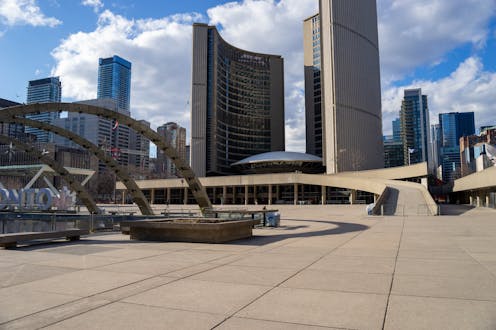
A shift to hybrid and remote work continues to affect worker presence in Toronto’s downtown.(Shutterstock)
Downtown Toronto, the core of Canada’s largest city, continues to reel from the lingering aftereffects of the pandemic. Yet after more than four years of pandemic-related challenges and reverberating consequences, we still do not have an answer to the question: How should the city move forward?
The concentration of offices, jobs and people in downtown Toronto benefits more than the city: Toronto’s economy anchors the regional economy. If Toronto falters, the region does too.
If leaders wait too much longer to address the myriad impacts of hybrid work on the city’s downtown office core, the city and region’s future is at risk. Toronto must change its ways or suffer economic, physical and social repercussions.
Public health measures during COVID-19 led to a transformative shift to hybrid work patterns for office-based workers, reducing office activity in the downtown. As measured by the Strategic Regional Research Alliance, Toronto’s office activity was only 12 per cent of pre-pandemic levels in March 2022, creeping up to 43 per cent one year later and reaching 63 per cent in March 2024, still well below pre-pandemic levels. Available office vacancy rates are over 10 per cent.
There is an oft-repeated narrative suggesting that Class A buildings — the most amenity-rich, well-located and high-quality buildings — are doing fine. Yet, a closer look at available vacancy rates suggests that Class A space is not significantly better off than Class B and C spaces in downtown Toronto.
High vacancy rates may create an opportunity for repurposing office space. (Shutterstock)
There is also a disconnect between measurements of foot traffic and available vacancy. Reduced foot traffic, used as a measure of activity in North American cities, highlights weakened activity in office-intensive areas. This reflects the current prominence of hybrid work in downtown office districts.
While vacancy rates are high, they do not match declines in footfall. In part, this is because of the time lag between long-term office leases and the shift to hybrid work.
Repurposing office space
Downtown office buildings represent an important source of property tax revenue to fund the city’s physical and social infrastructure and services. And they generate reliable long-term dividends for investors through real estate investment trusts (REITS).
But as office leases come up for renewal, employers are questioning whether to downsize their space, and REITS are beginning to report losses. What will become of empty office spaces: will new businesses fill them, or should they be repurposed?
Hybrid work creates an opportunity for Toronto to adapt some downtown office spaces to other uses. Given Toronto’s housing affordability crisis, the potential to repurpose select office buildings for housing is desirable. Other downtown land uses would be welcome too, to create a downtown filled with amenities, employment opportunities and attractions for residents, visitors, workers and more.
This aligns with ideas around the value of 15-minute cities, strategies that have seen success in cities like London, Paris and New York.
Before we abandon the notion of downtown as a place of office work, we need to take care, because here’s what the data also shows: office activity continues to increase, transit ridership continues to recover, and the total number of jobs in the downtown core is rising.
In downtown Toronto, office activity, transit ridership and employment opportunities are on the rise. (Shutterstock)
Furthermore, data confirms that Toronto employment opportunities follow the same patterns as other large cities. Based on our analysis of data from Vicinity Jobs, a Canadian employment data company, the availability of remote and hybrid job opportunities is higher in Toronto than other places in Ontario.
This is particularly the case when comparing Toronto with surrounding municipalities — the concentration of hybrid work in Toronto risks hollowing out the city and the region. Avoiding this urban doom loop means diversifying spaces and activities in downtown Toronto, including through creating more affordable housing.
Shauna Brail receives funding from the Social Sciences and Humanities Research Council.
Tara Vinodrai receives funding from the Social Sciences and Humanities Research Council of Canada. She is a member of the Association of Collegiate Schools of Planning and the Economic Developers Council of Ontario.
This article contains information on deaths in custody and the names of deceased people, and describes ongoing colonial violence towards Aboriginal and Torres Strait Islander people.
First Nations people in Australia are the most imprisoned people in the world. This unenviable record is consolidating rather than receding. In 2023, First Nations people accounted for 33% of the prison population – an all-time high.
This mass incarceration is highly disproportionate: Indigenous people make up only 3% of the country’s population, yet they are 17 times more likely than non-First Nations people to be imprisoned. We refer to this as “hyperincarceration”.
This situation is the culmination of centuries of racism, punitive policy and persistent failures to listen to Aboriginal and Torres Strait Islander people. But understanding the drivers of such high levels of incarceration is key to dismantling them. So how did we get here?
Palawa Professor Maggie Walter notes that hyperincarceration of First Nations people can only be explained by properly exploring the state’s power relationship with First Nations people.
Hyperincarceration of First Peoples is a common feature of former British settler colonies such as Canada, the United States and New Zealand. This shared experience shows us First Peoples are not the problem. We should instead be paying attention to the colonial motivation for incarcerating First Peoples.
Police arrests of Aboriginal and Torres Strait Islander people increased from the 1960s onwards. Penny Tweedie/Getty
Of course, the mass imprisonment of First Nations people is not a new phenomenon. From the early 1800s to the mid-1900s, First Nations people were variously locked up in prisons (such as the infamous Rottnest Island (Wadjemup) prison in Western Australia), missions, reserves, orphanages and lock hospitals. The exclusion and control of First Peoples facilitated the colonial land grab and assimilated First Peoples who survived the massacres, diseases and deprivation of their food sources. Incarceration was a key tool in the colonial toolbox.
As the systems to control First Nations people under the various Aboriginal Protection Acts were dismantled and freedom of movement gradually provided from the 1960s, police ratcheted up arrests and detention of First Nations people. This was especially the case for public order offences and the trifecta of offensive language, resisting arrest and assaulting police.
Regulatory offences that otherwise warrant responses from the civil law, such as payment of a fine, also disproportionately result in criminal law enforcement against First Nations people. This is despite the Royal Commission into Aboriginal Deaths in Custody in 1991 identifying that mass penal incarceration of First Nations people was a direct contributor to deaths in custody.
The colonial tropes of First Nations deviancy and disorder have long been invoked to justify rule by the British, who considered themselves superior, civil and orderly. The application of discriminatory labels to First Nations people continues to inform police practices, demonstrated by an extensive 2022 report that highlighted endemic racism in the Queensland Police Force.
A failure of policy
The “law and order” mantra that has swept Australia since the 1990s has steadily driven up imprisonment rates. This is sometimes referred to as First Nations people being set up to fail. In reality, it’s policy that’s failing.
Challenges that ought to be dealt with through public health measures (the effects of trauma, mental illness and addiction) are instead criminalised. Coupled with systemic racism in criminal law processes, the state has created a perfect storm for increased First Nations imprisonment.
In 2017, the Australian Law Reform Commission forensically analysed racism at every stage of criminalisation. The data shows police are more likely to arrest and charge First Nations people, bail is more likely to be denied to First Nations people, all-white juries are more likely to convict First Nations people, and sentencing courts are more likely to imprison First Nations people.
This coincides with a rapid growth of policing in Australia. In 2006, there were 44,809 police officers. Today there are 62,300.
The Northern Territory announced this month the recruitment of a further 200 officers. The NT Police Commissioner has indicated training hours will be reduced to support and accommodate the uptick.
Given recent evidence of senior officers in the NT police mocking Aboriginal people, the combination of police racism, an increase in police numbers and the lack of training is likely to make things worse. It’s already dire in the NT, with First Nations people constituting 88% of the imprisoned population, despite making up around 26% of the territory’s total population.
Jail instead of bail
Another major reason for such high rates of First Nations people behind bars is the dilution of the right to bail. A growing number of offences for which any accused is charged has a presumption against bail, including, for example, property crimes and drug crimes in Victoria. Couple these presumptions against bail with the higher level of policing of First Nations people, and the effect is a disproportionate number of First Nations people on remand without trial or sentence.
The inquest into the death in custody of Veronica Nelson found the bail laws contributed to her death and had a discriminatory effect. The inquest and campaigning of Nelson’s family has led to the dilution of some presumptions against bail but has not yet achieved the breadth of change required.
Also contributing to imprisonment has been the introduction of more punitive sentencing laws since 2000. This has included mandatory prison sentences and the implementation of standard non-parole periods. When standard non-parole periods were introduced in New South Wales in 2003, sentences increased by up to 300%. These legislative changes have contributed to more prison sentences and longer prison terms for First Nations people.
Finally, in some jurisdictions, there are laws that explicitly discriminate against First Nations people in sentencing. For example, sections of the Commonwealth Crimes Act say a First Nations person’s cultural background and customary law obligations cannot be considered in sentencing decisions in the NT and Commonwealth jurisdictions. These restrictions are not placed on any other community in Australia.
When these provisions were initially brought in with the Northern Territory Intervention in 2007, they even required the suspension of the Racial Discrimination Act because it was a provision targeted at First Nations people. The discriminatory legislation remained in place until 2013. However, most provisions, including the discriminatory sentencing provisions, were siphoned into other legislation and continue to adversely impact First Nations people.
Beyond the statistics
While the numbers are alarming, the imprisonment of First Nations people predominantly a story of human cost.
In research with First Nations women in NSW prisons, we found women struggled with being separated from their children, and found it hard to fulfil cultural responsibilities and to stay well. One woman said “we’re not being treated as mothers”. She detailed how they are not valued as First Nations women and are instead treated as a problem.
Imprisonment impacts First Nations peoples’ access to health services, education and housing and is a major factor preventing the fulfilment of Closing the Gap measures. It also prevents First Nations people passing on culture and strengthening community ties.
The impact of paternalistic control and the effect of discriminatory policy is currently on full display with the unrest in Alice Springs. Many of the challenges the community is facing, on top of chronically underfunded legal and community support services and decades of underinvestment, can be traced and directly attributed to the Commonwealth’s Northern Territory Intervention in 2007.
The intervention disbanded local Aboriginal community councils, enforced discriminatory policing powers in Aboriginal communities, restricted Aboriginal peoples’ rights to social security, diminished Aboriginal land rights and enforced a blanket prohibition of alcohol in Aboriginal communities.
Today’s challenges are the result of ongoing disruption and destruction of First Nations family and community structures by the criminal justice system. Long-term, locally based, and First Nations community-led solutions outside the criminal justice system are required. Without this, history will continue to repeat itself.
Moving away from imprisonment
Before colonisation, First Nations did not have a concept and practice of imprisonment. In that sense, prisons are a relatively new phenomenon that reflects the conditions of capitalism and colonialism. Research shows they do not work to prevent recidivism or reduce crime levels.
Prison doesn’t have to be the default. We can imagine other forms of social order. This may involve reprioritising health, housing and cultural infrastructure above punitive institutions.
Shifting government resources from funding prisons and law and order (which cost $23.2 billion
in 2022–23) towards social housing (for which the government only spent $4.9 billion) or First Nations health (which has a $4.4 billion annual funding gap) could be a direct way to begin a movement towards abolishing prisons and strengthening First Nations health and wellbeing.
Thalia Anthony receives funding from the Australian Research Council.
Kristopher Wilson does not work for, consult, own shares in or receive funding from any company or organisation that would benefit from this article, and has disclosed no relevant affiliations beyond their academic appointment.
Baby Reindeer’s phenomenal success has much to do with its writer and lead, Richard Gadd, who plays Donny in a tender semi-autobiographical account of sexual abuse, harassment and stalking. Gadd’s story has brought a fresh perspective on male victimisation, while giving a new voice for others to speak out.
At the same time, the show has set in motion a “horrible sort of sequal” as internet sleuths, with no small amount of help from pernicious media outlets, set out to expose the true identity of Martha.
This public outing is perhaps grimly predictable in an age of social media. But it raises questions of ethical standards among the show’s makers, and highlights how their portrayal of Martha conforms with – rather than challenges – well-worn and often misogynistic media representations of women offenders.
A woman walks into a bar
Baby Reindeer opens on Martha, played excellently by Jessica Gunning, walking into the pub where Donny (Gadd’s fictional version) is working to subsidise a stalling comedy career.
What starts off as a benign crush across the bar transforms into a torrent of daily contact. Over the course of seven episodes, Martha seeps into Donny’s most intimate spaces, and we see the insidious and relentless grip stalkers can have on victims.
The Netflix series has achieved international success. Netflix
In criminology, feminist scholars show how the media taps into and magnifies deep-seated fears of deviant women, while paying much less attention to equally (if not more) serious male offending. In many ways Baby Reindeer is a case in point.
Martha’s character casts the longest shadow in the series, its publicity and the subsequent fallout. Speculation over her real identity that has been trending on social media for days, with Gadd even urging online sleuths to stop.
Richard Gadd plays Donny alongside Jessica Gunning as Martha. Netflix
Mad, bad and sad Martha
As a society, we’re fascinated by “monstrous women”. From the infamous Myra Hindley who murdered five children in the early 1960s with her husband, to Lucy Letby, a former neonatal nurse who was in the headlines last year for murdering seven infants, we have an unconscious fear of feminine evil.
It’s also perhaps dispiriting that we accommodate male offending into our expectations of masculinity. In doing so we perceive male offenders to be independent, rational, autonomous and responsible. In contrast, and as is the case with Martha, women offenders are viewed as dependent, emotional, irresponsible and not entirely adult.
While Gadd has drawn praise for his sympathetic treatment of Martha (indeed, Baby Reindeer could be read as an indictment of the United Kingdom’s mental health services) audiences are repeatedly reminded she is “clearly unwell”.
As with other media representations of female offending, we are quick to remove agency and trap women within a caricature of “mad, bad and sad”.
Martha is shown as an obese and relatively unkempt older woman. Netflix
Women who commit serious offences are already of news value by virtue of their relative rarity. But they become even more newsworthy when they can be further dehumanised by reference to their sexuality and/or appearance.
They are caught between media constructions of sex-craved promiscuity or cold isolating frigidity. They’re either conventionally unattractive, or a “femme fatale” who ensnares victims. We saw the latter in the media’s treatment of Amanda Knox, who was incarcerated in Italy following a wrongful conviction for the 2007 murder of Meredith Kercher. She was given the moniker “Foxy Knoxy”.
There’s a promotional picture from Baby Reindeer that illustrates a similar kind of pigeonholing. It shows Donny trapped in a glass, with an oversized Martha looming behind him.
Baby Reindeer’s promo poster shows Martha having ‘trapped’ Donny.
Yet, in the show itself Donny is not shown as being so “trapped”. Rather, he chooses to engage with Martha time and again, and at times in questionable ways.
The internet starts a witch hunt
While Gadd has repeatedly claimed this is a fictionalised account of true events, many elements of Martha’s crimes were historically held in the public archive – from tweets she sent, to court documents and media articles.
It would be relatively easy for internet sleuths and journalists to put their fingers to keyboards to find the “real” Martha, as has reportedly been done. If this turns out to be true, then it’s clear the real Martha wasn’t afforded enough anonymity.
Meanwhile, Gadd says the identity of the other perpetrator – the powerful TV writer, Darrien, who grooms and repeatedly sexually assaults Donny – is an “open secret in the UK comedy scene”.
Donny acknowledges in the show:
there was always a sense that she was ill, that she couldn’t help it, whereas he was a pernicious, manipulative groomer.
Yet there is a protection afforded to the real Darrien – whether it be through power, means or gender – that isn’t in play for the real Martha. Martha is “unwell” and scraping by week-to-week in a council flat, while Darrien is top of the social ladder and living in affluence.
While Darrien’s crimes are more extreme in nature, he is allowed a level of anonymity Martha doesn’t get. Netflix
As is often the case, Martha’s agency is diminished and she is subject to increased scrutiny, while the greater crimes committed by a man fail to garner the same media attention.
Raising the mirror
The challenge of balancing autofiction with anonymity isn’t new and Baby Reindeer won’t be the last such example. Fundamentally, however, this is less about fiction versus reality and more about how we, the viewers and the content makers, view female offenders.
Martha isn’t the person who groomed, repeatedly sexually abused Gadd and manipulated him into a drug habit, yet she is the centre of the show’s pitch and worldwide promotion. This raises more questions about our own ethics than anything else.
Alex Simpson does not work for, consult, own shares in or receive funding from any company or organisation that would benefit from this article, and has disclosed no relevant affiliations beyond their academic appointment.
If you didn’t have food allergies as a child, is it possible to develop them as an adult? The short answer is yes. But the reasons why are much more complicated.
It’s hard to get accurate figures on adult food allergy prevalence. The Australian National Allergy Council reports one in 50 adults have food allergies. But a US survey suggested as many as one in ten adults were allergic to at least one food, with some developing allergies in adulthood.
What is a food allergy
Food allergies are immune reactions involving immunoglobulin E (IgE) – an antibody that’s central to triggering allergic responses. These are known as “IgE-mediated food allergies”.
Overall, adult food allergy prevalence appears to be increasing. Compared to older surveys published in 2003 and 2004, peanut allergy prevalence has increased about three-fold (from 0.6%), while tree nuts and fin fish roughly doubled (from 0.5% each), with shellfish similar (2.5%).
While new adult-onset food allergies are increasing, childhood-onset food allergies are also more likely to be retained into adulthood. Possible reasons for both include low vitamin D status, lack of immune system challenges due to being overly “clean”, heightened sensitisation due to allergen avoidance, and more frequent antibiotic use.
Some adults develop allergies to cow’s milk, while others retain their allergy from childhood. Sarah Swinton/Unsplash
2. Tick-meat allergy
Tick-meat allergy, also called α-Gal syndrome or mammalian meat allergy, is an allergic reaction to galactose-alpha-1,3-galactose, or α-Gal for short.
The α-Gal contains a carbohydrate molecule that is bound to a protein molecule in mammals.
The IgE-mediated allergy is triggered after repeated bites from ticks or chigger mites that have bitten those mammals. When tick saliva crosses into your body through the bite, antibodies to α-Gal are produced.
When you subsequently eat foods that contain α-Gal, the allergy is triggered.
These triggering foods include meat (lamb, beef, pork, rabbit, kangaroo), dairy products (yoghurt, cheese, ice-cream, cream), animal-origin gelatin added to gummy foods (jelly, lollies, marshmallow), prescription medications and over-the counter supplements containing gelatin (some antibiotics, vitamins and other supplements).
Tick-meat allergy reactions can be hard to recognise because they’re usually delayed, and they can be severe and include anaphylaxis. Allergy organisations produce management guidelines, so always discuss management with your doctor.
In susceptible adults, pollen in the air provokes the production of IgE antibodies to antigens in the pollen, but these antigens are similar to ones found in some fruits, vegetables and herbs. The problem is that eating those plants triggers an allergic reaction.
The most allergenic tree pollens are from birch, cypress, Japanese cedar, latex, grass, and ragweed. Their pollen can cross-react with fruit and vegetables, including kiwi, banana, mango, avocado, grapes, celery, carrot and potato, and some herbs such as caraway, coriander, fennel, pepper and paprika.
Fruit-pollen allergy is not common. Prevalence estimates are between 0.03% and 8% depending on the country, but it can be life-threatening. Reactions range from itching or tingling of lips, mouth, tongue and throat, called oral allergy syndrome, to mild hives, to anaphylaxis.
4. Food-dependent, exercise-induced food allergy
During heavy exercise, the stomach produces less acid than usual and gut permeability increases, meaning that small molecules in your gut are more likely to escape across the membrane into your blood. These include food molecules that trigger an IgE reaction.
If the person already has IgE antibodies to the foods eaten before exercise, then the risk of triggering food allergy reactions is increased. This allergy is called food-dependent exercise-induced allergy, with symptoms ranging from hives and swelling, to difficulty breathing and anaphylaxis.
Common trigger foods include wheat, seafood, meat, poultry, egg, milk, nuts, grapes, celery and other foods, which could have been eaten many hours before exercising.
To complicate things even further, allergic reactions can occur at lower levels of trigger-food exposure, and be more severe if the person is simultaneously taking non-steroidal inflammatory medications like aspirin, drinking alcohol or is sleep-deprived.
Food-dependent exercise-induced allergy is extremely rare. Surveys have estimated prevalence as between one to 17 cases per 1,000 people worldwide with the highest prevalence between the teenage years to age 35. Those affected often have other allergic conditions such as hay fever, asthma, allergic conjunctivitis and dermatitis.
Adult food allergy needs to be taken seriously and those with severe symptoms should wear a medical information bracelet or chain and carry an adrenaline auto-injector pen. Concerningly, surveys suggest only about one in four adults with food allergy have an adrenaline pen.
If you have an IgE-mediated food allergy, discuss your management plan with your doctor. You can also find more information at Allergy and Anaphylaxis Australia.
Clare Collins AO is a Laureate Professor in Nutrition and Dietetics at the University of Newcastle, NSW and a Hunter Medical Research Institute (HMRI) affiliated researcher. She is a National Health and Medical Research Council (NHMRC) Leadership Fellow and has received research grants from NHMRC, ARC, MRFF, HMRI, Diabetes Australia, Heart Foundation, Bill and Melinda Gates Foundation, nib foundation, Rijk Zwaan Australia, WA Dept. Health, Meat and Livestock Australia, and Greater Charitable Foundation. She has consulted to SHINE Australia, Novo Nordisk, Quality Bakers, the Sax Institute, Dietitians Australia and the ABC. She was a team member conducting systematic reviews to inform the 2013 Australian Dietary Guidelines update, the Heart Foundation evidence reviews on meat and dietary patterns and current Co-Chair of the Guidelines Development Advisory Committee for Clinical Practice Guidelines for Treatment of Obesity.
Ans Westra, self-portrait, c. 1963. National Library ref AWM-0705-F
They try but invariably fail – those writers who believe they are capable of encapsulating in prose or verse the essence of what it means to be a New Zealander. Even at the point of publication, their works seem anachronistic and clichéd.
Harnessing the New Zealand identity has proven to be as challenging as clutching at fog – it may be apparent everywhere, but it seems impossible to pin down.
But if you do want a representation of New Zealandness over the past six decades, the work of the photographer Ans Westra (1936–2023) is in many ways unsurpassable.
Westra produced what amounts to a national photo album, in which a vast span of the country’s everyday existence was documented with unrivalled skill and perception. At their best, her images crossed that threshold into a liminal space where culture, memory, history and experience all fused together.
Born in Leiden in the Netherlands in 1936, Westra arrived in New Zealand in December 1957. She went on to become unquestionably one of New Zealand’s greatest documentary photographers. Practically every image she produced was a masterpiece of composition, lighting, space, form, angle and subject choice.
She was also able to achieve a sort of artistic alchemy in these works – taking the base elements of film, camera, card and chemicals, and converting them into an entrancing amalgam of scenes that reflected the essence of the nation’s intricately-marbled identity.
Ans Westra, West Coast, Towards Blackball, 1971. National Library, ref AW-0265
Elevated ordinariness
In her works, the boundaries between documentary photography and art photography were completely porous, which enabled her to conjure up New Zealandness in an artistic as well as descriptive form.
Of course, subject selection was vital. But instead of chasing the sensational or the sublime, Westra chose to fossick around the everyday and the mundane – a realm where her skills were unequalled. After all, who else could infuse such luminosity into scenes that at first glance appeared plain and even dreary?
She seemed consumed by the urge to document every crevice of our day-to-day lives, but in ways that often elevated ordinariness into profound poignancy. Her approach shunned artifice and visual gimmickry in favour of penetrating cultural and social exploration, leaving her photographs to simmer rather than fizz.
The photograph titled “Māori on Willis Street” exemplifies this approach. The image was one of thousands she took documenting aspects of post-war Māori urbanisation.
Ans Westra, Māori on Willis Street, 1960. National Library, ref AWM-0125-2-F
The picture is of a young person staring blankly out into a Wellington street on a rainy day. But instead of a photograph of the entire subject in profile, Westra positioned her shot in a way that made the back of the subject’s head and shoulders visible though a shop’s corner display window.
This had the effect of obscuring partly the clarity of the outline of the subject, while simultaneously projecting reflections of the traffic and buildings on the foregrounded window.
This virtuoso composition does not allow the viewer simply to glance before turning the page. Instead, the image demands contemplation. The material world is shown up here for the surface-only value it possesses, along with its capacity to distract and elude.
The bright lights of the urban Promised Land have been exposed as just a superficial glare. The photograph’s foreground is dominated by this dark-coated youth who appears almost as a silhouetted figure. The background is an indifferent, even life-depleting cityscape.
Bleak shop facades line this commercial canyon, offering the subject no joy or optimism – just an awning to shelter from the drizzle. Above all, though, the viewer is drawn to the solemn stillness of the subject’s face, which conveys a sense of overpowering loneliness and mournful gloom.
Ans Westra, Scenes of Rural Life along the Whanganui River, Pipiriki. National Library, ref AWM-0264-F
An exposition of self
In the early 1990s, during a period of acute self-reflection, Westra jotted down some revelatory notes about her approach to photography:
The image is the ultimate goal […] subject is only a means to an end […] certainly the photograph is not about the subject.
Photography could not be
solely controlled by the brain. Your personality, subconscious, flows through […] you have to allow it to come through […] for the outcome to be relevant.
Ultimately, she said, photography was “always an exposition of self”. This quasi-biographical exposition was necessarily very public, though. The National Library’s commitment to digitising Westra’s photographs is a fitting gesture of democratising the artistic corpus of this most democratic of photographers.
The result is a collection of prodigious proportions (over 300,000 images will eventually comprise the collection), immense span (over six decades) and ambitious scope.
Even for those New Zealanders born more recently, Westra’s images can serve as a form of prosthetic memory – one that may not be based on direct experience, but that nonetheless props up their collective perceptions of the country.
Days before her death, I asked Westra what specifically it was about her photographs that reflected the character of the country and its people so intimately. Slouched in her armchair, her mind seemed to see-saw between thoughts for a while before she responded in her brittle voice, “Maybe it’s because I’m an outsider”.
This was a crucial observation. She was able to see aspects of New Zealand most of its residents probably took for granted. However, looking at her vast body of work, it is equally true in every sense that Westra was the greatest insider we have ever had.
Paul Moon does not work for, consult, own shares in or receive funding from any company or organisation that would benefit from this article, and has disclosed no relevant affiliations beyond their academic appointment.
Source: The Conversation (Au and NZ) – By Franco Montalto, Professor of Civil, Architectural and Environmental Engineering and Director, Sustainable Water Resource Engineering Laboratory, Drexel University
“When it rains, it pours” once was a metaphor for bad things happening in clusters. Now it’s becoming a statement of fact about rainfall in a changing climate.
Across the continental U.S., intense single-day precipitation events are growing more frequent, fueled by warming air that can hold increasing levels of moisture. Most recently, areas north of Houston received 12 to 20 inches (30 to 50 centimeters) of rain in several days in early May 2024, leading to swamped roads and evacuations.
Events like these have sparked interest in so-called sponge cities – a comprehensive approach to urban flood mitigation that uses innovative landscape and drainage designs to reduce and slow down runoff, while allowing certain parts of the city to flood safely during extreme weather. Sponge city techniques differ from other stormwater management approaches because they are scaled to much larger storms and need to be applied across nearly all urban surfaces.
I’m a water resources engineer who studies and designs strategies for sustainably managing urban stormwater. In response to recent flooding episodes, some U.S. cities are beginning to take steps toward incorporation of sponge city concepts into their stormwater management plans, but most of these projects are still pilots. If this concept is to evolve into the new standard for urban design, city officials and developers will need to find ways to scale up and accelerate this work.
Copenhagen, Denmark, is taking steps to become spongier in response to severe floods.
The problem of stormwater
For more than a century after U.S. cities started installing centralized sewage systems in the mid-1800s, pipes carried stormwater – rain or melted snow that runs off streets and buildings – to nearby rivers or harbors. This approach reduced local flooding but polluted adjoining waters and exacerbated flood risks further downstream.
The 1972 Clean Water Act was designed to make the nation’s waters fishable and swimmable by 1983 but failed to meet that goal. One major reason was that the law initially focused on reducing only point sources – pollution discharges that came from an identifiable source, such as a pipe discharging human or industrial waste.
In the late 1980s, Congress amended the law to address nonpoint, or diffuse, water pollution sources, including stormwater. Engineers began designing systems to capture sediments in the “first flush” of runoff, since harmful pollutants such as heavy metals were believed to adhere to these particles.
To this day, green infrastructure and other stormwater management practices in the U.S. are typically designed to detain, retain or filter only the first 1 to 2 inches (2.5 to 5 centimeters) of runoff. Individually, they can’t capture all the runoff generated during larger storms, the kind of events that are becoming more frequent due to climate change. What’s more, stormwater management frequently is not required on smaller land parcels, which can collectively represent a large fraction of urban watersheds.
All of these factors limit green infrastructure’s ability to reduce flood risks.
Detroit has installed green features like this bioswale – a shallow, vegetated area that collects stormwater – to reduce flooding that has plagued neighborhoods for decades. AP Photo/Corey Williams
In the early 2000s, the idea of designing communities to filter and soak up stormwater became known as green infrastructure. Regulators and utilities saw it as a potentially cost-effective strategy for complying with federal clean water regulations. In cities where existing storm sewage systems discharged directly to creeks, lakes and rivers, green infrastructure had the potential to filter out pollutants from stormwater before it flowed into those waterways.
In hundreds of cities, mainly in the Northeast and Midwest, stormwater and wastewater are carried in the same sewage pipes. Green infrastructure offered a strategy for diverting stormwater away from the sewage system to places where it could soak into the ground. That helped reduce the chances of sewage systems overflowing and sending untreated stormwater and wastewater into local waters.
Old sewage systems in many cities carry both sewage and stormwater. A combined sewage overflow is a relief point that prevents flooding in homes and treatment plants by discharging the combined flow to the environment during heavy rains.
Cities including Philadelphia, New York, Cincinnati, San Francisco, Cleveland, Washington, D.C., and Kansas City, Mo., have spent billions of dollars over the past 20 years to retrofit developed landscapes with rain gardens, green roofs, permeable pavements, constructed wetlands and other site-scale stormwater control measures. Most of these systems, however, were installed in areas that produced the most water pollution and were not sized to manage large storms.
In the best cases, green infrastructure has been installed on publicly owned land and required on new or redesigned large-scale developments. It has proved much more challenging to incorporate green infrastructure on smaller, privately owned land parcels, which collectively make up a significant percentage of urban watershed areas.
In some cities, some new development is still approved without any required stormwater treatment system or analysis of the dramatic ways in which its stormwater could cause flooding on downstream and adjacent properties. And in many cities, stormwater from small land parcels is allowed to pass without treatment into piped sewage systems. If many such parcels are located in the same neighborhood, this common practice can augment downstream flood risks.
Every surface matters
In my lab at Drexel University we are studying solutions to flooding in the Eastwick section of southwest Philadelphia. This neighborhood sits at the downstream end of a 77-square-mile suburban watershed. When it rains heavily upstream, Eastwick floods. In 2020, Tropical Storm Isaias flooded some homes with more than 4 feet (1.2 meters) of water.
Our computer models suggest that if conventional green infrastructure had been in place to treat runoff from 65% of the watershed’s impervious surfaces, Isaias would not have caused Eastwick to flood. But that’s five times more treatment than upstream communities are planning as part of their state-mandated stormwater pollutant reduction plans.
Some critics say this level of greening is not technically, logistically or socially feasible. But if the notion of sponge cities is to become a reality, cities will eventually have to figure out how to get there.
To get to 65%, these towns would need to treat runoff from nearly all rooftops, parking lots and roadway surfaces in some form of green infrastructure. If dedicated space for new rain gardens and wetlands on the ground is limited, parking lots could be retrofitted with permeable asphalt or concrete that allowed water to pass through it to the ground beneath. Rooftops could be converted into vegetated green roofs that detain and retain stormwater.
In this sponge city vision, streets would be recontoured to direct stormwater to parks and recreational fields built feet below the street surface and designed to flood safely during extreme weather. Existing natural areas would be leveraged for stormwater storage, enhancing their ecology.
Depending on where extreme rainfall occurs, these systems could function individually or together, mimicking the modularity and redundancy found in natural ecosystems.
Finding the money
In sponge cities, every surface needs to be connected to a space that can flood safely. Getting from traditional green infrastructure to sponge cities requires integrated policies, plans and incentives that apply these kinds of solutions wherever rain falls.
Such a transformation of the built environment can’t be fully bankrolled by stormwater utilities. These organizations face a dizzying array of regulatory requirements and can’t raise rates above their customers’ ability to pay.
One way to raise more money would be through collaborations between city agencies responsible for upgrades to roadways, parks, schoolyards and other public land that also attract federal dollars, such as New York City’s Cloudburst Resiliency projects.. In some cases, funding from a third party could supplement the effort. One example is a collaboration between New York City and the Trust for Public Land to add green infrastructure features to a Bronx schoolyard to help reduce local flooding.
Cities could also offer incentives for retrofitting and scaling up existing stormwater management systems on private land. A trading system could be set up to sell the residual capacity to nearby property owners who lack onsite stormwater management opportunities.
As extreme weather events become more prevalent, I expect that urban planning and design standards will evolve to include sponge city concepts. And this more robust approach to stormwater management will continue to figure prominently in all kinds of municipal and private design and development decisions.
Franco Montalto owns shares in eDesign Dynamics LLC and Montalto and Rothstein Engineering DPS. His research lab at Drexel receives funding from the National Science Foundation, the National Oceanic and Atmospheric Administration, the William Penn Foundation, the Camden County Municipal Utilities Authority, the Philadelphia Water Department, and the Jacob K. Javits Convention Center. He is a member of the Fourth New York City Panel on Climate Change.
A New Zealand local authority, Whanganui District Council, has passed a motion calling for an immediate ceasefire in Gaza, condemnation of all acts of violence and terror against civilians on both sides of the conflict and the immediate return of hostages.
It comes as Palestinian militant group Hamas agreed to a Gaza ceasefire proposal from mediators, but Israel said the terms did not meet its demands and pressed ahead with strikes in Rafah.
Councillor Josh Chandulal-Mackay moved the motion on behalf of the Palestinian Solidarity Network Aotearoa (PSNA).
He told council that it had a responsibility to the Palestinian and Israeli families living in Whanganui to make its voice heard.
“A community which upholds international law and human rights is a safer community for all,” he said.
“Speaking up has moral and political weight.”
The motion also called for the New Zealand government to call for an immediate ceasefire in Gaza.
‘Stand up for human rights’ “This motion is about us calling on our government to do its bit as part of the international community to stand up for human rights, to stand up for peace and to say that a ceasefire an immediate and permanent ceasefire should be called for in the region and implemented in the region without any caveats attached to it,” he said.
“So that then negotiations for a two-state solution and for peace can be achieved.”
Chandulal-Mackay said throughout history collective pressure had always driven social change, pointing to the end of apartheid in South Africa as an example.
Earlier, councillor Rob Vinsen had been at pains to ensure the immediate return of hostages was included in the motion.
“I know an Israeli in this community whose family, two of them were murdered during the October 7 attack into Israel. Four of his family were taken hostage. Two still are hostages and that’s why I was motivated to put this clause on here about calling for the release of hostages.”
Mayor Andrew Tripe spoke in support of the motion.
“We have 101 different nationalities in Whanganui. We live in a global society basically here in Whanganui and my rhetoric is all about peace and unity here in Whanganui and if we can promote that message for Whanganui but also for the rest of the world that’s something I hold strong to.”
One abstention All but one councillor — who abstained — voted in favour of the motion.
Earlier, council received two petitions — signed by more than 2000 people — organised by the Palestinian Solidarity Network Aotearoa.
One called for a ceasefire and the other for the Whanganui council not to do business with companies identified by the United Nations as being involved in the building or maintenance of illegal Israeli settlements.
PSNA spokesperson Sophie Reinhold told council that criticising Israel did not amount to anti-semitism.
“We want to see all the hostages brought home. We want to see an end to the mass slaughter. In 215 days over 34,000 Palestinians have been killed, over two thirds of them women and children with thousands more still unaccounted for under the rubble.
“Nothing justifies this. Nothing. Not self-defence, not human shields. Nothing.”
She urged council “to give a voice to the call for a ceasefire” in a similar fashion as it had done when it condemned Russia’s invasion of the Ukraine in 2022.
The council received the petitions.
This article is republished under a community partnership agreement with RNZ.
The Aotearoa chapter of the Women’s International league for Peace and Freedom (WILPF) has appealed to the New Zealand government to call out Israel over the “cruel and barbaric use of force” in Gaza and demand a permanent ceasefire.
The league’s open letter was sent to Prime Minister Christopher Luxon and Minister of Foreign Affairs Winston Peters today as Israeli tanks took over the Rafah crossing on Gaza’s border with Egypt and aircraft bombarded residential homes.
This may be the start of the long threatened assault on southern Gaza where 1.6 million people have been sheltering since the end of last year.
The border attack comes after Israel announced it would continue its military operation in Rafah even after Hamas had accepted a Gaza ceasefire proposal put forward by Qatari and Egyptian mediators.
WILPF works to end and prevent war, ensure that women are represented at all levels in the peace-building process, defend the human rights of women, and promote social, economic and political justice.
“Kia ora Prime Minister Luxon and Minister of Foreign Affairs Peters,
“The closure of Al Jazeera media in Israel at the same time as the Israeli occupation forces initiate the long-planned invasion of southern Gaza — an act deplored by many around the world – should prompt all democratic governments to call an end to this cruel and barbaric use of force in Gaza, along with settler violence in the West Bank
“Palestinians have been ordered to move but, as I am sure you are aware, there is no safe place to move to.
“Thousands more Palestinians will die if the Israeli government continue their genocidal practices.
“I call on you as the New Zealand government and representatives of us all to call Israel out and demand a permanent ceasefire.
“New Zealand governments have spoken up in former times, at the League of Nations and at the United Nations, including against the genocide in Rwanda.
“Government reiterated its support for a two-state solution but Israeli impunity will prevent that outcome.
“One small state can start a trend.
“If the government is unable or unwilling to call an end to the Israeli invasion and a permanent ceasefire in Gaza, can you tell [us] the reasons, please.”
The Albanese government will invest $566 million over a decade on data, maps and other tools to promote exploration and development in Australia’s resources industry.
The project will fund “the first comprehensive map of what’s under Australia’s soil, and our seabed,” Albanese will tell a Perth audience on Wednesday.
This would mean “we can pinpoint the new deposits of critical minerals and strategic materials we need for clean energy and its technology. As well as traditional minerals like iron ore and gold. And potential storage sites for hydrogen.”
Western Australia is a vital state electorally for Labor, where it made big gains in 2022, and the PM is there often. Premier Roger Cook has raised concerns about the implications for the resources sector of the federal government’s planned changes to environmental policy. This visit could see the PM under pressure over his government’s handling of the former detainees, after one of them was allegedly involved in a violent home invasion that saw an elderly woman bashed.
The mapping funding will start from July 1, and the work underpins the government’s “Future Made in Australia” policy.
Describing this as a “generational project”, Albanese will say a “future made in Australia relies on providing confidence to investors, and supporting those who take on the task of exploring our vast continent”.
Experts at Geoscience Australia will drive the work, with the findings freely available to industry.
The information would mean companies would “know where to drill, dig and explore to find the mineral resources that will power our future growth and prosperity.
“This is a map to greater community certainty as well. Because it will assist with infrastructure planning, environmental assessments and supporting the agriculture sector. And help create a sustainable pipeline of projects – on an orderly timeline,” the Prime Minister says in his speech, released ahead of delivery.
“So much of our future prosperity depends on finding more critical minerals, extracting more critical minerals – and doing more with critical minerals before we export them.”
In a swipe at critics of the Future Made in Australia policy, Albanese says that “too often, ‘comparative advantage’ is the reflexive reason given for why we don’t make things here in Australia.
“We’re told it’s not worth trying – that there are too many other countries with more people willing to work for less money. Our abundance of cleaner, cheaper energy changes that equation. It signals a new era of comparative advantage.”
The government says the money will mean Geoscience’s Resourcing Australia’s Prosperity program will be fully funded for 35 years.
For the first time the project will map offshore. This will be “pointing the way for sites for carbon capture and storage, as well as possible sites for clean hydrogen projects,” Albanese and Resources Minister Madeleine King say in a statement.
They say Geoscience Australia’s work has already led to major discoveries, including deposits of critical minerals and rare earths, which are needed in clean energy technologies.
“The road to net zero runs through Australia’s resources sector,” King said.
In his speech Albanese says a future made in Australia “relies on providing confidence to investors, and supporting those who take on the task of exploring our vast continent.”
Renewable energy will be a priority in Tuesday’s budget and beyond, he says.
“As will the opportunity presented by co-locating extraction and production.
“Providing the investment incentives and the regulatory framework to support more downstream processing, on our shores. Taking raw materials to the nearest regional centre for value-adding, rather than shipping them other side of the world. Creating jobs, cutting transport emissions – and reducing costs.”
He stresses a lesson learned from the pandemic – the need to diversify supply chains.
Government has a key role in “de-risking private initiative”.
“Funding discovery, investing in research and supporting the commercialisation of breakthroughs. And helping new industries and start-ups get over the hump.
“But just as market forces alone won’t get us to net zero, fill the gaps in our skills base, build resilience in our supply chains or strengthen our communities, this task can’t be left to government alone – or funded by government alone,” Albanese says.
“In this time of fiercely contested global opportunity, our government is not going to sit on the sidelines and watch the game unfold. Nor are we trying to play every position.”
Getting the right regulatory framework is important, he says.
“One of the key objectives of our Future Made in Australia Act will be to help streamline international investment in national priority projects.
Offering faster pathways to approvals while maintaining important environmental standards.”
“We need faster and better processes to local investment in local projects as well. Whether it’s critical minerals or renewable energy – the current environmental approval process is far too slow.”
Albanese insists his policy is “not a matter of taking sides or picking winners”, a criticism that has come from many who are sceptical of it.
Michelle Grattan does not work for, consult, own shares in or receive funding from any company or organisation that would benefit from this article, and has disclosed no relevant affiliations beyond their academic appointment.
Following an open letter by Auckland University academics speaking out in support of their students’ right to protest against the genocidal Israeli war on Gaza, a group of academics at Otago University have today also called on New Zealand academic institutions to “repair colonial violence” and end divestment from any economic ties with Israel.
“As a te Tiriti-led university in Aotearoa New Zealand”, the academic staff said they were calling for the University of Otago to immediately:
1. Endorse the Boycott, Divestment and Sanctions (BDS) movement and disclose and divest from any economic ties to the apartheid state of Israel, 2. Condemn those universities [that] have called on police to violently remove protesters from their campuses, and 3. Call for the protection of students’ rights to protest and assemble and endorse the aims of those protests — the immediate demand of ceasefire and longer term demands to end the apartheid, violence, and illegal occupations under which Palestinians continue to suffer.
“Over 35,000 Palestinians have been killed—of those deaths, it is estimated that more than 13,000 of them have been children. Israel has destroyed all 12 universities in Gaza and targeted staff and students at those universities.
“The recent discovery of mass graves in Gaza, the hands and feet of many victims bound, has shocked the conscience of the world.
“In keeping with a long tradition of campus protest, students and staff are demanding their universities stop contributing to genocidal violence.
Student bodies brutalised “In return, their bodies have been brutalised, their own universities endorsing their arrests. Universities should, at the very least, offer crucial spaces for protest, debate, and working through collective responses to urgent social issues. Instead, administrators have called in militarised police forces, fully decked out in anti-riot regalia to repress student protests.
“The results have been predictable: Professors and students have been arrested en masse and physically assaulted (beaten, pepper-sprayed, shot with rubber bullets, knocked unconscious, choked, and dragged limp across university lawns, their hands cuffed behind them).
“We at the University of Otago, an institution committed to acknowledging, confronting, and seeking to repair colonial violence, are part of a society that extends far beyond the borders of Aotearoa New Zealand.
“Acknowledging our history, including that history within its students’ experiences and working practices, compels us as a collective to call out and condemn colonial violence as and when we see it. It is not at all surprising that many of the protests in Aotearoa New Zealand calling for a ceasefire in Gaza have been organised and led by Māori alongside Palestinian activists.
“Most recently, the Ngāti Kahungunu iwi have come out against the genocide, with one of the rally organisers, Te Ōtane Huata, stating “Tino rangatiratanga to me isn’t only self-determination of our people, it is also collective liberation.”
“If it is to mean anything to be a te Tiriti-led university here in Aotearoa New Zealand, we must include acknowledgment that the history of Aotearoa New Zealand has been marked by consistent and egregious violations of that very treaty, and that such violations are indelibly part of settler colonialism.
“Violent expropriation, cultural annihilation, and suppression of resistance have been the hallmarks of this project.
Decolonisation and human rights “In order to honour commitments to decolonisation and human rights, universities must act now. We thus call for the University of Otago to immediately:
“1. Endorse the Boycott, Divestment and Sanctions (BDS) movement and disclose and divest from any economic ties to the apartheid state of Israel, “2. Condemn those universities who have called on police to violently remove protesters from their campuses, “3. Call for the protection of students’ rights to protest and assemble and endorse the aims of those protests – the immediate demand of ceasefire and longer term demands to end the apartheid, violence, and illegal occupations under which Palestinians continue to suffer.
“In other words, the University must call for a liberated Palestinian state if it is to conceptualise itself as a university that seeks to confront its own settler-colonial foundations. “The above position aligns with the named values of our universities here in Aotearoa New Zealand. It is our duty that we make these demands, particularly as Palestinians have seen the systematic destruction of their universities and educational infrastructure while Palestinian students of our universities have witnessed their families and friends targeted by the Israeli government.
“If the University of Otago wants to authentically position itself as an institution that takes seriously its role as a critic and conscience of society and acknowledges the importance of coming to grips with ongoing settler-colonial violence, it should take these demands seriously. “We further support the Open Letter to Vice-Chancellor Dawn Freshwater from Auckland University Staff in Solidarity with Students Protesting for Palestine.”
In solidarity, Dr Peyton Bond (Teaching Fellow, Sociology, Gender Studies and Criminology) Dr Simon Barber (Lecturer in Sociology) Rachel Anna Billington (PhD candidate, Politics) Dr Neil Vallelly (Lecturer in Sociology) Erin Silver (PhD candidate, Sociology) Professor Richard Jackson (Leading Thinker Chair in Peace and Conflict Studies) Dr Lynley Edmeades (Lecturer in English) Dr Olivier Jutel (Lecturer in Media, Film and Communication) Lydia Le Gros (PhD candidate & Assistant Research Fellow, Public Health) Dr Abbi Virens (Postdoctoral Fellow, Centre for Sustainability) Sonja Bohn (PhD candidate, Sociology) Joshua James (PhD Candidate, Gender Studies) Sophie van der Linden (Postgrad Student, Bioethics) Dr Fairleigh Evelyn Gilmour (Lecturer in Gender Studies, Criminology) Brandon Johnstone (Administrator, TEU Otago Branch Committee Member) Dr David Jenkins (Lecturer in Politics) Jordan Dougherty (Masters student, Sociology) Rosemary Overell (Senior Lecturer in Media, Film and Communication) Dr Sebastiaan Bierema – (Research Fellow, Public Health) Dr Sabrina Moro (Lecturer in Media, Film and Communication studies) Rauhina Scott-Fyfe (Māori Archivist, Hocken Collections) Dr Lena Tan (Senior Lecturer, International Relations & Politics) Cassie Withey-Rila (Assistant Research Fellow, Otago Medical School) Duncan Newman (Postgrad student, Management)
Source: The Conversation (Au and NZ) – By Linda J. Graham, Professor and Director of the Centre for Inclusive Education, Queensland University of Technology
Two male students have been expelled from a Melbourne private school for their involvement in a list ranking female students.
The two were part of a group of four high school students suspended from Yarra Valley Grammar last Friday, after sharing a spreadsheet of photos of female classmates, ranking them with terms including “wifeys”, “cuties” and “unrapable”.
As principal Mark Merry said in a letter to parents on Tuesday, he had “formed the view” the position of two of the students had “become untenable”. The two other students who played a “lesser role” will face “disciplinary action”. The school is offering wellbeing support to the girls who were targeted.
Earlier this week, the suspensions were met with approval from Education Minister Jason Clare who told the ABC, “I’m glad the school’s fronting up. I think that they’ve taken the sort of action that the community would expect”.
Expelling or suspending students for this kind of behaviour seems like the obvious course of action. But is it a good idea?
Why do schools suspend or expel students?
Suspending or expelling a student is meant to be a last resort for serious problem behaviour. It is either supposed to allow space for a reset or as a consequence for behaviour which threatens other students’ safety or learning.
In the case of Yarra Valley Grammar, the suspensions and expulsions send a message to the girls in the school, other students, parents and the broader public this behaviour is not tolerated.
With so much media and public attention on the spreadsheet, the suspensions and expulsions also help protect the reputation of the school.
Clearly there has been some horrendous behaviour and it does need to have a stern response. But without condoning the behaviour in any way, kicking these students out of school is not the best way to handle this situation, which is a symptom of a much bigger problem.
What does the research say about suspensions and expulsions?
This is because expulsion is a punitive action, not an educative one.
Research shows suspending and expelling students can also simply build resentment and anger. If students feel like they are rejected from society, there is a risk they become more extreme in their views or behaviours.
Research also shows it can impact a young person’s learning and lead to leaving school early. We also know there is an association between suspension and expulsion and increased delinquency, including contact with the police.
The most protective thing to do is to keep young people in schools where they can be exposed to the influence of positive peers, under adult supervision, with a chance to keep up with their learning.
What could happen instead?
This is not to say students should just be told to go back to class as if nothing has happened.
With the help of experts like psychologists, schools can engage in a restorative justice process. This is about helping young people understand the real impact of their actions.
There can often be an assumption young people act with full knowledge of the consequences of what they are doing. But parts of their brain involving control and self regulation are still developing into adulthood.
Experts can work with students so they can learn their actions were not harmless fun with their mates but something that hurts others.
An example of how this can be done is through giving those students “inquiry projects” where they investigate similar incidents and present their findings to their peers. The emphasis is on an educative response that builds empathy and understanding in that young person.
The school could also ask the female students included in the spreadsheet to express through their choice of medium how it made them feel.
One criticism of this process is it requires the victims to engage in emotional labour when they have already experienced harm. But when a restorative justice process is done well, it can give the victims a voice and public acknowledgement of the wrong they have experienced.
Those victims can also receive an apology if they want it. That apology is likely to be more meaningful if the perpetrator has learnt something of the effect of their behaviour.
Importantly, the aim of a restorative justice process is not to dispense “justice”. It is to restore peace, to heal harms done and to prevent future harms from occurring through better understanding.
Linda J. Graham receives funding from the Australian Research Council. She chaired the 2020 inquiry into suspension, exclusion and expulsion processes in South Australian government schools, and was a member of the 2023 National School Reform Agreement Ministerial Reference Group.
The Reserve Bank is now assuming Australians will see no interest rate cuts this year – and quite possibly none before the next federal election, due next May.
That’s a big change compared to just three months ago. Back in February, the Reserve Bank assumed three rate cuts before the middle of the next year.
Its newly-updated assumptions have interest rates remaining high for the rest of this year, then declining only slowly, with a cut by May 2025 about as unlikely as it is likely.
What changed the market pricing and the bank’s forecasts? Inflation.
That’s posing a big challenge for the Albanese government as it prepares for next week’s federal budget.
Rates on hold amid rising inflation
In its statement on Tuesday explaining why it was leaving its cash rate on hold at 4.35%, the Reserve Bank board sharpened its language about inflation.
It’s now forecasting an increase in inflation later this year and warning that getting it down is proving harder “than previously expected”.
The updated forecasts have the annual rate of inflation climbing from its present 3.6% to 3.8% in June and staying there for the rest of the year, before falling back in line with the bank’s previous forecast released in February.
Both forecasts have inflation remaining above the bank’s 2-3% target band until late 2025, and both have it not returning to the centre of the band until mid-2026.
US rate cuts are also on hold
It’s a similar story in the United States, with the expected date of rate cuts blowing out there as well.
There, as here, the monthly measure of annual inflation rate remains stuck at 3.5%. In both countries, it’s no lower than it was late last year.
The chair of the US Federal Reserve Jerome Powell now says he won’t cut rates until he is more confident inflation is heading back down towards his target, adding it is likely to take longer than expected to get that confidence.
The budget will focus on more than inflation
So what’s Treasurer Jim Chalmers planning to do on budget night next week to give the Reserve Bank more confidence inflation is clearly heading down?
Not that much – and certainly not nearly as much as in previous budgets.
Chalmers’ opposite number, Coalition Treasury spokesman Angus Taylor, says the treasurer should “stop the spend-a-thon”, by which he means containing growth in government spending to take pressure off inflation.
It’s advice Chalmers and Finance Minister Katy Gallagher won’t be following this time. And not because they don’t understand the thinking behind it.
Restraining spending (and pushing up tax) would indeed take pressure off prices. Chalmers and Gallagher could say they’ve cut $50 billion off spending over the past two years. But a further big cut might push the economy into free fall.
We’re buying and dining out less
The Australian economy is alarmingly weak. As the Reserve Bank board met on Tuesday, the Bureau of Statistics released its latest estimates of the volumes of goods and services bought from online and physical stores.
The estimates are price-adjusted, which in this case means that while what we spent climbed (a tiny) 0.8% over the year to March, what we boughtfell 1.3%.
The amount of food we bought fell 1.5%. The amount of household goods we bought fell 1.8%. And the amount we bought from cafes and restaurants fell 2.5%.
The only category in which buying has climbed over the past year was clothing and footwear, and only by 0.3%.
All this has happened in a year in which the Australian population grew by more than 2% – which means the reduced amount of things we have bought has had to feed, clothe and service about an extra 600,000 of us.
Chalmers knows this. It’s consistent with the national accounts, which show the amount we’ve spent and earned per person has shrunk over the past year, in a so-called per capita recession.
The Australian National University’s latest ANUPoll finds us more financially stressed than during the depths of the COVID lockdowns.
Twenty per cent of us say we have borrowed money from friends or relatives over the past year, up from 16% during the lockdowns. Meanwhile, 21% have fallen behind on our bills, up from 17%; and 62% of us have cut our spending on groceries and essential items, up from 43%.
A ‘scorched earth’ budget risks recession
It means that a further big cut in government spending – right now – could push us from a per capita recession into an actual recession.
It’s why Chalmers said on Monday now was “not the time for scorched earth austerity”. He won’t slash and burn while the economy is weak.
After three budget updates in which he has spent less than previously forecast, in next Tuesday’s budget he will spend more – at least for some of the years for which he will produce projections.
Gallagher added this week she’s been as good as forced to spend more in some areas. Several programs introduced, but not properly funded, by the previous government are set to end abruptly. One is the leaving violence payment, which began as a trial.
Don’t expect rates to change soon
In fairness to the Reserve Bank, it too knows the economy is weak. Its updated forecasts released on Tuesday have downgraded expected economic growth to just 1.2% for the year to June and 1.6% for the year to December.
And it knows its 13 interest rate rises to date are yet to have their full effect.
Speaking at a press conference after the board’s decision to keep rates on hold, Governor Michele Bullock gave the impression that lifting rates further was still one of the furthest things from her mind.
Peter Martin is Economics Editor of The Conversation.
The Victorian budget offered more of the same on Tuesday, with the only change being how the budget papers were packaged. The usual shrink wrap was gone, hinting at savings in the pages within.
But that was not to be, for the government – which has the largest debt of all the states and territories at A$156 billion – has kept its fiscal juices flowing.
State coffers have swelled beyond the budget estimates last year by $4.2 billion, but instead of banking the revenue surge, the government has chosen to keep spending.
Cash splash
Six billion dollars of new initiatives were announced for 2024-25, or about $3 billion net of savings. New capital spending initiatives next year are also healthy, at more than $2 billion, and infrastructure spending in total will exceed $23 billion.
The government is not relying on the federal government for extra financial support. But a big chunk of Budget Paper Number 4 link sets out in some detail why it reckons it has a strong case for more federal dollars, pointing to a string of consecutive years when its share of federal capital grants and the GST has been less than its share of the national population.
That argument is likely to fall on deaf ears, no matter how well it has been made.
As the table below shows, the underlying budget position has been allowed to loosen by comparison with last year’s budget and the budget update delivered last December.
All that extra spending will see the budget remain in slightly larger deficit next year and government net debt will continue to rise faster than was budgeted.
The government might have been expected to reduce spending to reduce inflationary pressures, especially now interest rates are high. So its approach is surprising, even for a government as committed to Keynesian principles as Victoria.
Keynesian economics is based on the idea strong economies spend or invest more than they save. Even if this means going into debt, it creates jobs and boosts consumer buying power.
But it is not as if the economy needs more stimulus.
The budget papers show the state’s economy has well and truly bounced back from the dark days of the COVID lockdowns. Victoria has done this so well it has led the country over the last 12 months in employment and economic growth.
Instead of mass unemployment, the opposite is happening with the unemployment rate in Melbourne and the rest of the state near record lows.
As the budget papers put it:
Victoria’s unemployment rate has been around or below 4% since early 2022, which hasn’t happened for nearly 50 years.
The labour market is so strong, “key parts of the economy [are now] facing labour shortages”.
Sticking to a plan
The Treasurer Tim Pallas might defend his loose fiscal settings by saying, why change when they have worked to date?
His plan will see the budget back in an operating surplus in 2025-26 and it is tipped to stay that way for the foreseeable future. He might point to his forecasts showing unemployment to rise to 4.7% over the next few years. He wants to keep the fiscal tap open to prevent unemployment getting worse.
The problem with this is it sits uncomfortably next to the settings put in place by the Reserve Bank, which rightly or wrongly has inflation as its number one target.
There are a lot of voices urging the bank to pull the interest rate trigger one more time to get inflation under control, and loose fiscal settings will only help their cause.
When the Victorian government and the Reserve Bank have been at odds in the past, it has not ended well for Victoria.
Pallas might also be reminded things have changed. The economy has bounced back better than expected. Revenues have been pouring in. His very successes to date are the very reason why a new approach was needed.
And where better to start than with capital spending.
Potential savings
Pallas could have slowed the rate of growth. Nothing had to be cancelled. New measures that were to be announced might have been delayed another year. Yes, the airport rail link has been delayed by four years, but that reflects the squabble going on between the government and the airport over where the station should be built and at whose expense, rather than a commitment to budget austerity.
The budget delivers another eye watering set of initiatives, across a wide range of portfolios.
There’s $287 million for families with children in government and low income private schools to help cover the cost of things like uniforms, $473 million for 16 new schools, $1.8 billion for hospitals, $100 million to kick start new hospital construction, $131 million for free TAFE, $58 million to remove unsafe cladding, $75 million to get the metro tunnel ready to open, $105 million extra for road maintenance, and $700 million to expand the government’s Homebuyer Fund.
In the media lockup, Pallas argued to a sea of unconvinced reporters the budget involves a significant amount of tightening. He pointed as evidence to slightly lower forecast deficits in 2026-27 and 2027-28 and a lower level of infrastructure spending during those years.
But that is in the legendary “outyears”, which fortunately for treasurers never arrive.
The government’s generosity will go down well with an electorate feeling the pinch of a cost of living crunch.
But should the Reserve Bank crank up interest rates and tip the economy into recession, partly because of excessive government spending,
the politics might turn out very different.
The Victorian budget is no longer shrink-wrapped. Its rather dangerously exposed to inclement economic weather.
David Hayward does not work for, consult, own shares in or receive funding from any company or organisation that would benefit from this article, and has disclosed no relevant affiliations beyond their academic appointment.
The Coalition is demanding extensive amendments to the government’s legislation targeting non-citizens who refuse to co-operate with their removal.
In a dissenting report to the senate inquiry into the legislation, the Coalition says it supports the “policy intent” of the legislation but has “significant concerns about potential unintended consequences”.
The legislation provides people refusing to cooperate in their deportation would face a mandatory year’s jail, with a maximum of five years. Countries refusing to accept involuntary returnees would also face sanctions, with their citizens (with some exceptions) unable to get visas to come to Australia.
The High Court on Friday will bring down its judgement in the case of an Iranian man who has refused to cooperate in his removal. If the Commonwealth lost this case, that could open the way for the release of another cohort of people who are detained, numbering perhaps 170.
The earliest the government could get the legislation through is next week, when parliament resumes for the budget. That’s assuming it can reach a deal with the Coalition. The Greens would not negotiate, declaring the bill “should be rejected in full”. Crossbench committee member David Pocock said the bill had “the potential to criminalise people for exercising their right to judicial review”.
The government had hoped to rush this legislation through in the last sitting, ahead of this High Court decision. But the opposition refused to cooperate.
This latest battle comes as the government struggles to deal with the fallout of the earlier release of about 150 detainees after an earlier High Court decision. One of these is alleged to have taken part in a home invasion in Parth in which an elderly woman was bashed. Many others have been charged with offences.
The report of the inquiry, by the senate’s Legal and Constitutional Affairs Legislation Committee, was released on Tuesday.
The government senators in the committee recommend the bill should be passed by the senate. They do say the minister should consider “community impacts when designating a country as a removal concern country”.
In its dissenting report, with 17 recommendations, the Coalition noted the Home Affairs department acknowledged the bill potentially served as a “pull factor for illegal boat arrivals” but said the government hadn’t said how it would adequately mitigate this risk.
It says the bill lacks clarity about who would be caught by it and lacks safeguards, transparency and parliamentary oversight of the ministerial powers it contains.
It points to human rights concerns, particularly relating to children and families.
When dealing with the removal a child the minister must assess whether the directive is in the best interests of the child, the Coalition says.
It says there should be a minimum time for a person to comply, which would allow them to take steps to comply and seek legal advice.
Within seven days of each month, the minister should have to provide a statement to be tabled in parliament on each removal direction, the Coalition says.
It says any declaration of a country as a removal concern country should be subject to a three-year sunset clause.
In declaring a country one of removal concern, the minister should consider factors, including the impact on diaspora groups.
The exemptions from the prohibition on applying for visas should be expanded to include parents of independent children, grandparents, siblings and dependent persons, the Coalition says.
Michelle Grattan does not work for, consult, own shares in or receive funding from any company or organisation that would benefit from this article, and has disclosed no relevant affiliations beyond their academic appointment.
Source: The Conversation (Au and NZ) – By Vanita Yadav, Senior Research Fellow, Urban Transformations Research Centre, Western Sydney University
Brett Boardman/Belvoir
The complex and grappling issue of violence against women takes centre stage in the soul-stirring solo dance drama Nayika: A Dancing Girl.
During a dinner conversation in Sydney with her high school friend, The Dancing Girl (Vaishnavi Suryaprakash) reminisces about her early teenage years. She recollects feeling thrilled about learning the classical Indian dance form Bharatanatyam in Chennai, which she calls the mecca for learning dance in South India.
A new student, living by herself while her parents are in the Middle East, The Dancing Girl finds herself falling in love. The upbeat music and performance take the audience on a journey of innocence, first love and the roller-coaster of a teenage romance.
But later unfolds a shocking depiction of a 13-year-old girl experiencing abuse. Suryaprakash’s performance and the surreal, stark music (composed by Marco Cher-Gibard) create an immersive experience for the audience to feel the trauma of a child who doesn’t understand what coercive control or sexual violence is. She doesn’t know what to do or who to ask for help.
Suryaprakash beautifully plays The Dancing Girl and narrates her coming-of-age story by juggling between her present identity as an adult and her early teenage experiences of violence in her first relationship.
The stories we tell through dance
From creators and directors Nithya Nagarajan and Liv Satchell, the play oscillates between The Dancing Girl’s current state of mind in Sydney and her 13-year-old self in Chennai. Her bottled memories are triggered when a high school friend visits her in Sydney. Their conversations take The Dancing Girl back to her teenage self.
The soulful music and Suryaprakash’s performance reveal how distressed The Dancing Girl felt, and the apprehension and loss of words in articulating her experiences with her mother. The directors show the sociocultural nuances that inhibit openly discussing love and dating in South Asian cultures where it is largely a taboo.
The performance uses a neo-classical version of Bharatanatyam dance. Brett Boardman/Belvoir
The solo performance blends music, dance and drama using a neo-classical version of Bharatanatyam dance. Bharatanatyam is one of the oldest classical dance forms of South India. The contemporary version adopted in the play is minimalistic yet extremely powerful. The live music performance by Cher-Gibard with Bhairavi Raman creates a sensory, soul-stirring acoustic experience.
The Dancing Girl vividly remembers her guru teaching the eight forms of Nayikas: the heroines of Bharatanatyam dance. These forms are drawn from the ancient Indian treatise called Natya Shastra.
The eight heroines of Bharatanatyam dance all have stories revolving around a male figure (King or God), and each represent a specific emotion.
The first Nayika, Vasakasajja is excited about being dressed up for her lover. Virahotkanthita is worried, expressing the pains of separation. The confident Svadhinabhartruka has a faithful lover. The disappointed Kalahantarita has quarrels with her lover.
The distressed Khandita is hurt by infidelity. The quarrelsome Vipralabdha is aware of infidelity and confronts her lover. The skilful Abhisarika pursues what and who she wants without secrecy. Finally, the eighth Nayika, Proshitapatika, mourns her lover, who has gone to a faraway land.
Vaishnavi Suryaprakash beautifully plays The Dancing Girl. Brett Boardman/Belvoir
But The Dancing Girl raises a pertinent question: where is the “overwhelmed” heroine – the heroine who portrays how to deal with a dangerous lover?
Her dance guru tells her that to face her overwhelming feelings she needs to embrace her power, and real power comes with control over one’s body and one’s emotions. The Dancing Girl can achieve this control through the power of dance. The play ends with The Dancing Girl identifying this power as the missing ninth heroine of Bharatanatyam: a heroine who can reclaim control of time, space and body.
Upon revisiting her past, The Dancing Girl is able to confront her trauma, acknowledge the need for help, and reclaim control. It is a powerful message about the lasting impact of gender-based violence on young girls and the inability of language to fully express such experiences.
Nayika: A Dancing Girl is at Belvoir, Sydney, until May 19.
Vanita Yadav does not work for, consult, own shares in or receive funding from any company or organisation that would benefit from this article, and has disclosed no relevant affiliations beyond their academic appointment.
Source: The Conversation (Au and NZ) – By Sarah Diepstraten, Senior Research Officer, Blood Cells and Blood Cancer Division, Walter and Eliza Hall Institute
The anti-cancer drug abemaciclib (also known as Vernezio) has this month been added to the Australian Pharmaceutical Benefits Scheme (PBS) to treat certain types of breast cancer.
This significantly reduces the cost of the drug. A patient can now expect to pay A$31.60 for a 28-day supply ($7.70 with a health care concession card). The price of abemaciclib without government subsidy is $4,250.
So what is abemaciclib, and how did we get to this point?
It stops cells dividing
Researchers at the pharmaceutical company Eli Lilly developed abemaciclib and published the first study on the drug (then known as LY2835219) in 2014.
Abemaciclib is a type of drug known as a “cyclin-dependent kinase inhibitor”. It’s taken as a pill twice a day.
To maintain our health, many of the cells in our bodies need to grow and divide to produce new cells. Cancers develop when cells grow and divide out of control. Therefore, stopping cells from dividing into new cells is one way that cancer can be fought.
When cells divide, they have to make a copy of their DNA to pass onto the new cell. “Cyclin-dependent kinases” (CDKs for short) are essential for this process. So, if you stop the CDKs, you stop the DNA copying, you stop cells dividing, and you fight the cancer.
However, there are different types of CDKs, and not all cancers need them all to grow. Abemaciclib specifically targets CDK4 and CDK6. Thankfully, a lot of cancers do need these CDKs, including some breast cancers.
But abemaciclib will only be effective against cancers that rely on CDK4 and CDK6 for continued growth. This specificity also means abemaciclib is fairly unique, so it can’t easily be replaced with a different drug.
Two other CDK4/6 inhibitors were developed around the same time as abemaciclib, and are called ribociclib and palbociclib. Both of these drugs are also on the PBS for specific types of breast cancer. As the drugs differ in their chemical structures, they have slight differences in the way they are taken up and processed by the body. The preferred drug given to a breast cancer patient will depend on their unique circumstances.
What are the side effects?
Research is still ongoing into the differences between each of these CDK4/6 inhibitors, but it is known that the side effects are largely similar, but can differ in severity.
The most common side effects of abemaciclib are fatigue, diarrhoea and neutropenia (reduced white blood cells). The gastrointestinal issues are generally more severe with abemaciclib.
If these side effects are too severe, abemaciclib treatment can be stopped.
What types of cancer has abemaciclib been approved for?
In 2017, the United States Food and Drug Administration (FDA) approved abemaciclib for the treatment of patients with metastatic HR+/HER2- (hormone receptor-positive and human epidermal growth factor receptor 2-negative) breast cancer who did not respond to standard endocrine therapy.
Australia’s Therapeutic Goods Administration (TGA) similarly approved abemaciclib in 2022 as an “adjuvant” therapy (after the initial surgery to remove the tumour) for patients with HR+/HER2- invasive early breast cancer which had spread to lymph nodes and was at high risk of returning.
As of May 1 2024, the PBS covers this use of abemaciclib in combination with endocrine therapy such as fulvestrant, which is also listed on the PBS. Endocrine therapy, also known as hormonal therapy, blocks hormone receptor positive (HR+) cancers from receiving the hormones they need to survive.
Could abemaciclib be used for other cancers in the future?
Abemaciclib is of great interest to scientists and medical practitioners, and testing is ongoing to assess the effectiveness of abemaciclib in treating a range of other cancers, including gastrointestinal cancers and blood cancers.
Abemaciclib may even be usable in brain cancers, as it has long been known to be capable of crossing the blood-brain barrier, a common stumbling block for potential anti-cancer drugs.
Time will tell whether the role of abemaciclib in health care will be expanded. But for now, its inclusion on the PBS is sure to bring some relief to breast cancer patients nationwide.
Sarah Diepstraten receives funding from the Victorian Cancer Agency.
John (Eddie) La Marca is also affiliated with the Olivia Newton-John Cancer Research Institute. He has previously received funding from the CASS Foundation.
Around Australia, hundreds of people are coming together to help a once-prized, but decimated and largely forgotten marine ecosystem. They’re busy restoring Australia’s native oyster and mussel reefs.
Alongside the high-profile national Reef Builder campaign, community groups have become inspired to do their bit, in their own backyards.
Fortunately there’s more than one way to rebuild a reef. And you don’t have to think small.
From humble beginnings, a community-driven project in Queensland’s Moreton Bay has grown into an ambitious plan to restore 100 hectares of oyster reef over the next ten years. This would make it the largest oyster reef restoration project in the Southern Hemisphere.
Introducing the Moreton Bay Shellfish Reef Restoration Project (OzFish Unlimited)
Why are we bringing back shellfish reefs?
Just 200 years ago, Australia’s coastline was home to billions upon billions of oysters and mussels, forming reefs that stretched thousands of kilometres. They filled the sheltered waters of bays and estuaries from the southern Great Barrier Reef to Tasmania and all the way around to Perth. These thriving marine ecosystems provided food, shelter and water filtration, as well as coastline protection from stormy seas.
But today, our shellfish reefs are near extinct. Oyster dredges scraped reef after reef from the seafloor throughout the 19th century. Oysters and mussels were harvested for food. Their shells were ground up to make roads and cement. Now only degraded remnants and individual oysters remain from what was once a continent-wide marine empire.
Fortunately, Australia’s shellfish ecosystems were rediscovered this century. Researchers used historical records including newspaper clippings to work out how many oysters were taken and where from.
Community interest grew as the scale of the loss became clear. Coastal communities could see the benefits of shellfish and wanted to bring them back.
It turns out the baby oysters are still there, bobbing around in the ocean, just looking for a place to live.
How do you build a shellfish reef?
There’s more than one way to rebuild shellfish reefs.
If you have earth-moving equipment and lots of money, you can start from the ground up.
Limestone rubble can provide the firm foundation for baby oysters to settle and grow.
That’s how Australia’s largest oyster reef restorations are built. Construction began in 2015.
Windara Reef now spans 20 hectares in the coastal waters of Gulf St Vincent, near Ardrossan on the Yorke Peninsula in South Australia.
Through a national campaign led by The Nature Conservancy, reefs have been built at 23 locations this way. They plan to hit a target of 60 reef ecosystems by 2030.
But if you don’t have cranes, trucks and the money it costs to build reefs from stone, there is another way. Baby oysters can simply settle and grow on the shells of old oysters, if they’re clumped together.
Fishing filmmaker’s bright idea
When former filmmaker Robbie Porter of Wynnum in Queensland heard about a small reef restoration project in the Noosa River, he wanted to do something closer to home. He approached fish conservation non-profit OzFish Unlimited with an idea for a smaller-scale, hands-on approach to reef building.
He devised a structure people could use to build their own reefs – one that’s light enough to be carried to a boat and dropped over the side.
These wire mesh cages, called “robust oyster baskets”, are filled with sterile, recycled oyster shells. The structure ensures the shell to be held together for a few years, until the reef is established.
Once the baby oysters find a good place to settle, they cement themselves to it. As they grow, they fuse with other oysters. After two or three years, the wire cage rusts away and you’re left with an “oyster bommie”, which looks like some of the few remaining reefs that still exist in undeveloped areas.
The Moreton Bay project established a major recycling facility to collect used oyster shells from local restaurants and oyster shucking facilities. The shells are then sterilised in the sun, washed and sorted before being placed into the baskets.
After six years, the project has amassed more than 23,000 volunteer hours, collected more than 800,000kg of shell for processing and placed more than 7,000 oyster bommies into Moreton Bay. These can be found mainly around the Port of Brisbane but also at 11 other locations in Southeast Queensland.
The idea has caught on. Community and OzFish groups in Queensland, South Australia and Victoria have all started their own projects growing oysters in baskets. Two projects are also planned for New South Wales.
Our ‘Robust Oyster Baskets’ provide secure habitat for baby oysters to settle, grow, and form reef before the cage erodes away. Robbie Porter, OzFish Unlimited
A test bed for research
Academics and research students from various Australian universities have also been involved along the way. They have established scientific monitoring programs and laboratory experiments to examine progress. This knowledge helps validate restoration activities while allowing researchers to make new discoveries.
Researchers are monitoring shellfish health, dissecting the biodiversity of the baskets, studying how fish use these reefs, and working towards understanding the reef’s capacity to filter water.
Research in Victoria has also shown shell recycling is an effective way not only to collect material for restoring shellfish reefs, but also to reduce the amount of waste going to landfill – and even published a step-by-step guide to establishing shell recycling.
Shellfish restoration at scale
Australians love the coast and millions of people fish along it every year. This is a potential army of conservation volunteers. But many people don’t know these projects exist, or how to get involved.
The Moreton Bay Shellfish Reef Restoration project has enabled more than 600 people to engage in nature repair, while building a sense of community. This was a first of its type in the world and it won’t be the last. Projects are popping up all around Australia.
The model replicates the success of the Landcare movement, with local groups delivering local outcomes supported by expert advisers and academic researchers.
Bringing people together around a shared vision for a healthier future also has welcome side effects. Many of our volunteers have discovered a new sense of purpose and optimism.
By recreating our long-lost and almost forgotten shellfish reefs, we have rediscovered ourselves.
This story is part of Making a Difference, a new series on community efforts to restore nature. Read the other stories here.
Dominic McAfee receives funding from the Australian Research Council.
Craig Copeland is the Founder and CEO of not-for-profit charity OzFish Unlimited. OzFish receives funding from the BCF Boating, Camping and Fishing and its customers. The Moreton Bay Shellfish Restoration project managed by OzFish receives funding from BCF, Healthy Land and Water through the Australian Government’s National Landcare Program and the Queensland Government and a range of corporate sponsors and philanthropic partners.
How does Earth stop meteors from hitting Earth and hurting people?
–Asher, 6 years 11 months, New South Wales
Alright, let’s embark on a meteor adventure! Meteors can sound scary but I promise you they aren’t. Meteors are just cosmic rocks falling into Earth’s atmosphere from outer space. Now, these aren’t any old boring rocks. We’re talking about pieces of asteroids, comets and even fragments from other planets crashing into Earth.
There are also certain times of the year when we experience something called a meteor shower. Imagine Earth is cruising along its normal orbit around the Sun when suddenly it passes through the leftover pieces of rock from a comet or asteroid.
Comets and asteroids shed bits and bobs of themselves along their journey as they get closer to the Sun. When Earth zips through this trail of space debris, meteors streak across the sky like shooting stars.
Meteors have been seen by humans all throughout history and have even been described as nature’s fireworks. Scientists estimate that over 17,000 meteors fall to Earth each year. So, why don’t they hurt us?
Meteor showers are caused when Earth passes through debris left behind by comets or asteroids. NASA
Why don’t meteors hit us all the time?
When meteors light up the sky, we’re actually seeing our planet’s remarkable defence system jumping into action.
When a meteor enters Earth’s atmosphere – the layer of air that surrounds us – it meets resistance from the air molecules. This is called friction, and it causes the meteor to quickly heat up.
Remember, a meteor is a piece of rock. The friction heats the rock up so much, it burns and turns into a vapour (sort of like steam). This is what causes the bright streak of a “shooting star”.
Our atmosphere is so good at destroying meteors, around 90–95% of them don’t even reach the ground.
What happens if a meteor goes through the atmosphere?
You might now be wondering – what about the 5–10% of meteors that do survive the atmosphere? Well, if they survive, they become “meteorites”.
The good news is that most of the time, meteorites either land in the ocean or away from humans. There are only two records in the history of all humans of someone being hit by a meteorite.
You have a one in 700,000 chance of a meteor hurting you. In comparison, you have a one in 15,300 chance of being struck by lightning.
The bad news is that meteorites have caused some harm in the past – just look at the dinosaurs. But this only happens when a meteor is really, really large and doesn’t completely burn up in the atmosphere. The chances of such a space rock hitting Earth are very low, but never zero.
Unlike the dinosaurs, we now have big telescopes watching our skies all the time. Astronomers keep track of any large asteroids or comets that could potentially hurt Earth.
The amazing thing is that with our 21st century technology, we don’t just have to rely on Earth’s atmosphere protecting us, we can also protect ourselves.
It’s not expected that in the next 100 years we’ll be in any major danger from a meteorite, but that hasn’t stopped us from planning.
One idea is that we could just redirect a dangerous asteroid in the future.
NASA has already shown the world it can be done. In 2022, the Double Asteroid Redirection Test or DART successfully showed humans can deflect an asteroid – by crashing a spacecraft into the spare rock, it would slowly change its speed and direction.
Hello, curious kids! Do you have a question you’d like an expert to answer? Ask an adult to send your question to curiouskids@theconversation.edu.au
Sara Webb does not work for, consult, own shares in or receive funding from any company or organisation that would benefit from this article, and has disclosed no relevant affiliations beyond their academic appointment.
Professional sports organisations regularly promote and develop initiatives to support diversity, equity and inclusion.
While sport has the power to change attitudes by sparking conversations about political issues and social initiatives, sports organisations and teams face risks, as initiatives can backfire and spark unwanted controversies.
Seven Manly players declined to wear the club’s pride jersey due to religious and personal beliefs.
Despite intending to bring people together, the initiatives created pockets of disharmony. This was amplified in the media and ultimately diverted from the original purpose of the campaign.
So, what can organisations and clubs do to bring more fans along for the ride when it comes to diversity and inclusion campaigns?
Why do leagues and clubs push diversity and inclusion?
In Australia, many sports, including cricket, rugby league and AFL, actively promote inclusivity.
Initiatives such as Cricket Australia’s “Pride in Sport” and the NRL League Stars Inspire inclusion and diversity program spotlight diverse players and fans, emphasising the significance of developing an inclusive environment within sport at all levels.
However, some of these marketing strategies have sparked controversy.
One of the highest profile missteps was Manly’s decision to wear a rainbow jersey to support marginalised groups for a single match against the Sydney Roosters in July 2022.
Seven players withdrew from the game for religious reasons, not wanting to appear in colours associated with the LGBTQI+ community, and due to a lack of prior consultation with the players.
Manly coach Des Hasler apologised for the poor handling of the initiative.
Yet, at the same time as this backlash, their pride jersey sold out.
The NRL’s “Respect Round” campaign was also criticised that year for appearing more as a token gesture and a “box-ticking exercise” rather than a sincere endeavour to foster genuine inclusivity in sports, with some critics arguing the sport was not ready for a pride round.
Cricket Australia’s decision not to use the phrase “Australia Day” during the Brisbane Test match that occurred on January 26 is another example where inclusivity attempts were criticised.
Trying to understand fans’ attitudes
Our research across two studies of sports fans in Australia and the United States shows their reactions to diversity, equity, and inclusion efforts can be complex, ranging from feeling disgusted to experiencing affection.
How these inclusion initiatives are marketed and communicated is critical when considering how fans will respond.
If leagues and teams are unclear and abstract, our research shows fans – particularly those who aren’t as “hardcore” or attached to the team – show significantly higher levels of disgust and are more likely to abandon supporting the team.
In contrast, our research found more passionate fans weren’t affected by abstract communication about their teams’ initiatives. These fans have a longstanding, established bond with their club, and their engagement is focused primarily on strategies, tactics, players and the overarching history of the team, rather than select marketing initiatives.
Conversely, findings from our other research show using concrete, clear language explaining exactly why the campaign or initiative is being undertaken, and why fans should be a part of it as well, can lead to enhanced perceptions of the team and support for diversity and inclusion – particularly for casual followers with lower levels of team identity.
Why clear communication is crucial
When communicating inclusion initiatives, sports organisations need to be clear, concrete and justified in their reasons why fans should also be involved.
This is vital for the organisation or team to understand exactly what it wants from the campaign, and help stand firm if there is backlash. Performing a u-turn after criticism only reduces credibility.
Crucially, in a society in which there is often division from different political viewpoints, sports organisations must also be wary of “woke washing”, where superficial displays of social activism (seen by some as “wokeness”) are employed for marketing purposes, without a genuine commitment.
Bookmaker Paddy Power received flak for making a £10,000 (A$19,071) donation to LGBTQI+ causes each time Russia – with its anti-LGBTQI+ policies – scored at the 2018 FIFA World Cup. Critics argued the promotion was planned to maximise betting profits rather than being values-driven.
Initiatives must have value-driven motives, where the principle of the campaign demonstrates a clear alignment with the values of the sporting organisation. Sincerity and transparency are critical in any type of cause-focused marketing campaigns.
Put simply, sports teams’ diversity and inclusion initiatives need to make sense to fans, the players, and the club.
Beyond the context of professional sports, we contend this point of advice is relevant to any organisation wishing to support inclusion initiatives.
Rory Mulcahy received funding from the Queensland Department of Environment and Science for the research referred to in this article.
Margarietha de Villiers Scheepers has received grant funding from the Queensland Department of Environment and Science.
David Fleischman and Dr Peter English do not work for, consult, own shares in or receive funding from any company or organisation that would benefit from this article, and have disclosed no relevant affiliations beyond their academic appointment.
Now our new research, undertaken over the past four years, suggests the story is not quite as straightforward, nor as entirely dire, as it might first appear.
So are architects actually struggling?
Is the overall wellbeing of architects negatively affected by their work lives? The short answer is, in many cases, yes.
Using the Australian Unity Personal Wellbeing Index, we found the subjective quality of life of our respondents was substantially lower than that of the general working population.
Furthermore, our first practitioner survey, in 2021, found 42% of the 2,066 respondents considered working in architecture to have had a negative overall effect on their wellbeing, with 50% saying the overall effect had been positive.
42% of respondents considered working in architecture to have had a negative overall effect on their wellbeing. Pickadook/Shutterstock
A significant portion of our respondents felt anxious, distressed, overworked, exhausted, underpaid and generally frustrated by workplace dynamics and circumstances outside their control, with elevated levels of burnout and role overload.
In response to our open-ended survey questions, respondents wrote tens of thousands of words – heartfelt and sometimes distressing accounts of struggles in their work lives.
Serious as they are, though, the negative findings only tell half the story. Many architects also reported their love for the profession, their sense of purpose, and their pride in what they do. Many reported a strong sense of professional identity and creative role identity, and a deep conviction about the benefits good design can bring to the world.
Many architects had a deep conviction about the benefits good design can bring to the world. Daniele Buso/Unsplash
But it was telling that, while many respondents were personally committed to the profession and believed deeply in the benefits it could bring society, they would not recommend it as a career to others.
Many perceived an imbalance between effort and reward, and believed practising architecture often undermined their personal wellbeing.
As one respondent wrote: “I do love it, I just find that it’s overwhelmingly exploitative.”
The contradictions of (over)commitment
These apparent contradictions make more sense when we consider how the profession sits at the intersection of the creative and construction industries.
The work of architects straddles the creative and pragmatic. It can be a highly complex intellectual puzzle, requiring exceptional skill and inventiveness in problem-solving, alongside the integration and synthesis of often conflicting requirements.
Design is an absorbing, challenging, creative endeavour. The intensity of project-based work, and the sense of camaraderie and pleasure of collaboration, are enormously valued by practitioners. But they also have a propensity to become too much – to flip from being a positive to a negative influence on wellbeing.
The satisfactions of architectural practice are inherently entangled, it seems, with its risks. These hazards can be either ameliorated or exacerbated by cultures in specific workplaces, and what is normalised in the profession as a whole.
Across the board, the hazards are clearly made worse by downward pressure on the time and money available to complete work, because of fee pressures, risk shifting in the construction industry, and sometimes unsustainable business management practices within architecture.
Systemic change is required
Understanding and addressing work-related wellbeing is crucial to the future of the architecture profession as a viable and fulfilling career path, and for realising the benefit design can bring to the world.
Improving wellbeing within the profession, and elsewhere, starts with an ethical proposition: people deserve to feel supported to do their work, in a psychologically safe environment where demands are clear and reasonable, and rewards are commensurate.
People deserve to feel supported to do their work in a psychologically safe environment. Hitdelight/Shutterstock
Above all, their legal rights and entitlements must be respected.
Many architects characterise the challenges to wellbeing in the profession as systemic. Our research found they’re not just a result of isolated instances, nor the “fault” of any single group, professional role or practice type.
This is a structural situation to which the whole profession is subject, and is certainly not something that can be fixed with individual self-care.
Our project will culminate in a symposium in Melbourne on May 8 and 9 where we will discuss our findings and, more importantly, endeavour to chart a path forward to systemic change.
Naomi Stead receives funding from the Australian Research Council. The Linkage Project research team included Julie Wolfram Cox, Maryam Gusheh, Brian Cooper, Kirsten Orr, Byron Kinnaird, and Tracey Shea, with assistance from Vicki Leibowitz, Liz Battiston and Julia Rodwell. Industry partners were the NSW Architects Registration Board, The Australian Institute of Architects, The Association of Consulting Architects, the Association of Australasian Schools of Architecture, BVN, DesignInc, Elenberg Fraser, The Fulcrum Agency, Hassell, and SJB. The project has produced a series of Guides to Wellbeing in Architectural Practice in partnership with Parlour, and with key authors Susie Ashworth, Alison McFadyen, and Justine Clark.
Vicki Leibowitz does not work for, consult, own shares in or receive funding from any company or organisation that would benefit from this article, and has disclosed no relevant affiliations beyond their academic appointment.
Source: The Conversation (Au and NZ) – By Shahram Akbarzadeh, Convenor of the Middle East Studies Forum (MESF), and Acting Director the Alfred Deakin Institute for Citizenship and Globalisation, Deakin University
Iran’s leadership has been a direct beneficiary of the months-long war in Gaza. With every missile that Israel fires on Gaza, every US veto of a UN Security Council ceasefire resolution, and every arrest of an anti-war protester on American university campuses, Iran’s rejection of the US-dominated world order gains more credibility in the Muslim world.
The ruling clerical regime in Iran has built its foreign policy on the pillar of anti-Americanism, rejecting what it frames as the “injustice” of US domination and “bullying” of other countries. Washington’s continued support for Israel’s war on Gaza in the face of an increasing international backlash has only reinforced this narrative.
While the US has tried to backtrack and signal that humanitarian considerations should guide Israel’s conduct of the war, the damage to US credibility has been done. Many around the world – and specifically in Muslim countries – do not see the belated US warnings to Israel as genuine.
And Tehran’s message of anti-Americanism is resonating with large segments of the public in the Muslim world.
In one regional opinion survey in late October, for instance, just 7% of respondents said the US had had a positive impact on the war, compared to 40% who viewed Iran’s role as positive.
And in December, the highly respected Arab Barometer reported that approval ratings for the Iranian supreme leader, Ayatollah Ali Khamenei, had surpassed those of the Saudi crown prince and Emirati president.
This change in Iran’s standing in the region is being watched with concern by the political elite in the neighbourhood.
What Iran sought to achieve by attacking Israel
Iran’s image has been further enhanced by the fact it is the only Muslim state to attack Israel against the backdrop of public outrage over the war in Gaza.
First, Iran’s leaders sought to preserve the country’s image as the self-appointed head of the “axis of resistance”, comprised of its proxies in the region – Hezbollah in Lebanon, the Houthis in Yemen and other militia groups in Iraq and Syria.
Iran also wanted to demonstrate the effectiveness of its deterrence model, which is based on the threat of retaliation against Israeli aggression through its proxy actors and expanding missile and drone technology.
Coming two weeks after the Israeli attack on its diplomatic mission in Damascus, Iran could not afford to outsource its response to its proxies. While Iran was clearly not ready to start a war with Israel, not responding in-kind to the Israeli attack would have made it look weak and seriously diminished its standing among its allies and proxy groups.
But Iran’s leaders sought to minimise the damage and mitigate the risk of escalation by warning Israel of its attack in advance through intermediaries. This way, Iran could save face without getting embroiled in an all-out war.
Iran’s second objective was to demonstrate to the world that it has the drone and missile technology to hit back at Israel, if it chooses.
For more than a decade, Iran has showcased its missiles during annual military parades to support its claim it can hit Israel if threatened. Its attack last month involved more than 300 drones and missiles. Notwithstanding the fact the damage was minimal, the attack was proof Iran now has the capacity to inflict pain on Israel.
Israel’s limited response to Iran suggests that war has been averted, much to the relief of neighbouring countries. But the long-term implications are more favourable for Iran. This show of strength has likely helped its rejectionist foreign policy find receptive ears in the Muslim world and beyond.
When Iranian President Ebrahim Raisi visited Pakistan on April 23, for example, he was greeted like a celebrity. This was ironic as, earlier this year, Iran and Pakistan had engaged in tit-for-tat aerial attacks.
The two countries agreed to boost bilateral trade to US$10 billion (A$15 billion) a year, about five times the current level. They also released a joint statement calling on the UN Security Council to take action against Israel, saying it had “illegally” targeted neighbouring countries and foreign diplomatic compounds.
Chinese Foreign Minister Wang Yi also offered a message of support to Iran, saying:
China noted Iran’s statement that its action was restrained and was an act of self-defence in response to the attack on its embassy.
What this could mean for the region
The implications of a more emboldened Iran for the region are severe. The Iranian authorities feel vindicated by the events of the last seven months. This means their anti-US and anti-Israel rhetoric will remain staunch as ever.
Iran’s drone and missile research and development program is also likely to receive a boost. And Iran’s support for its network of proxies and allies will remain firmly in place, as this enables the Iranian leadership to project power beyond its borders and retain its deterrence capability.
None of this bodes well for Iran’s neighbours. An ideologically energised Islamic regime in Iran would be less accommodating to regional concerns, particularly those aired by governments that have already normalised relations with Israel (such as the United Arab Emirates and Bahrain), or are believed to be heading in that direction (Saudi Arabia).
Moreover, the political credibility of many Arab leaders has suffered in the eyes of their citizens due to their perceived ineffectiveness in supporting the Palestinians in Gaza.
Iran’s leaders did not plan the series of events that started with the Hamas attacks on Israel on October 7. In fact, they were just as surprised by Hamas’ actions as the Israeli intelligence agencies. But they are the obvious beneficiary of the turn of events.
The United States and Israel are gifting Iran and its message of defiance enormous appeal, well beyond the imagination of Iranian authorities.
Shahram Akbarzadeh does not work for, consult, own shares in or receive funding from any company or organisation that would benefit from this article, and has disclosed no relevant affiliations beyond their academic appointment.
Bougainville Affairs Minister Manasseh Makiba has described the Post-Courier’s front page story yesterday regarding a meeting between Bougainville and national government leaders as “sensationalised” and without substance.
The Autonomous Bougainville Government (AGB) had warned it might use “other avenues to gain its independence” should the PNG government “continue to be mischievous” in dealing with the Bougainville independence agenda.
Makiba said the report was the work of individuals with vested interests and was designed to derail the progress made so far over the Bougainville Peace Agreement (BPA).
PNG’s Bougainville Affairs Minister Manasseh Makiba . . . says report is the work of individuals with vested interests trying to derail progress. Image: Post-Courier
He also announced that the Joint Supervisory Body (JSB) meeting scheduled for yesterday had been postponed until tomorrow because agendas had not been supplied on time by the joint technical team (JTT) headed by the Chief Secretary and his Bougainvillean counterpart Kearneth Nanei.
“The restoration development grants, Bougainville Copper Ltd shares, and fisheries revenue sharing agreement were matters being dealt with by the joint technical team due to the technical and legal nature of the process,” Makiba said.
“The joint technical team comprises departmental heads and technical professionals from both the national government and the Autonomous Bougainville Government [which] will conduct consultations before jointly drawing up agendas for the JSB to deliberate.”
Makiba said the system currently in place through the joint technical team was very transparent and allowed for constructive discussions from both sides before it got to the political level.
‘Sticky subjects’ resolved “Any disagreement or issues relating to any sticky subjects are resolved at that committee level,” Makiba said.
“To suggest or imply that the government is bulldozing matters or turning a deaf ear to any issue is an understatement,” Makiba said.
He urged both parties to respect the peace agreement.
The Bougainville warning was sounded by ABG Attorney-General and Independence Implementation Minister Ezekiel Massat just as the ABG delegation headed to Port Moresby for the JSB meeting with the national government.
The Bougainville delegation, led by President Ishmael Toroama, is due to meet with the national government to discuss the ratification process outlined in the Bougainville Peace Agreement and the constitution.
Massat said that there had been events that had happened which Bougainville had not been consulted on by the national government, consequently defeating the purpose of the peace agreement.
He cited the appointment of Police Assistant Commissioner Anthony Wagambie Jr and the current JSB meeting which had been called and changed by the national government without consulting ABG.
Resolution from last JSB “While the ABG will be participating, it wants to see the two parties set into motion the resolution from the last JSB, for the parties to agree to call in a moderator to try to resolve the impasse over how results from the 2019 Referendum will be tabled and ratified by the National Parliament,” Massat said.
The ABG also demands that a bipartisan committee be established comprising national and Bougainville members to urgently communicate awareness about the Bougainville issue and independence agenda to all members of Parliament before the ratification vote.
Massat said the lack of consultation of the national government might create “suspicion and mistrust” and Bougainville might be forced to pursue other legal means to achieve the “Bougainville people’s dreams of independence” as shown in the overwhelming majority vote in the 2019 referendum.
Resources Minister Shane Jones has reportedly asked officials for advice on whether oil and gas companies could be offered “bonds” as compensation if drilling rights offered by the present government were extinguished by any future administration.
Such a move would have real implications under the government’s proposed Fast-track Approvals Bill, which is designed to “enable faster approval of infrastructure and other projects that have significant regional or national benefits”.
NZ First’s Jones is one of three ministers who could have sign-off powers under the new law. Offering investors protection against future liability may be seen as one way to attract such projects.
But some of those investors may already have the means of securing compensation and deterring government interference under existing “investor-state dispute settlement” (ISDS) mechanisms.
This is despite efforts by recent governments – including coalition partner NZ First – to close that door. The potential fiscal and political risk adds one more reason not to proceed with the fast-track bill.
NZ First’s Shane Jones: seeking advice on compensation for investors. Getty Images
A chilling effect on governments
Investor-state dispute settlement provisions have been included in bilateral investment treaties, and some investment chapters in free trade agreements (FTAs), for several decades.
These agreements confer special protections on foreign investors against laws, policies, decisions and other actions and omissions that – contrary to their “legitimate expectations” at the time of investing – adversely affect the value or profitability of their investments.
The foreign investor can directly enforce those guarantees against the host state in ad hoc international tribunals. These have been widely criticised as favouring investors, lacking precedents and appeals, and for conflicts of interests when the arbitrators may be advocates for investors in other disputes.
Most agreements do not permit considerations of fault, even for environmental damage or human rights violations. Nor do they protect a democratically elected government’s mandate to amend the law.
The tribunal can award billions of dollars in compensation for lost future profits, with compound interest, even where the investor made a minimal outlay.
‘Treaty shopping’
The goal is to “chill” governments from pursuing the actions investors want to stop. Cases are increasingly bankrolled by third party funders willing to speculate on the outcome, so the investor has no risk in bringing a dispute.
Fighting a dispute can cost many millions, even if the state eventually wins. Yet the very existence of an ISDS dispute can be kept secret.
In theory, only investors from states which are party to these trade or investment agreements can sue. But “treaty-shopping” has seen investors use ISDS against their own governments.
In 2019, for example, Australian mining magnate Clive Palmer announced he had moved ownership of his flagship company to Singapore, having briefly shifted it to New Zealand first. The purpose was to take advantage of ISDS in the ASEAN-Australia-New Zealand FTA, and the Singapore-Australia FTA.
Palmer now has three claims totalling around US$300 billion against his own government, including for matters he has litigated on and lost in the Australian courts.
Investor disputes and climate change
The bulk of ISDS cases involve natural resources and, increasingly, climate change measures. As of 2022, investors in the fossil fuel sector had brought at least 192 known ISDS cases against governments. The past decade has seen more than 80 known cases brought by investors in the renewable energy sector.
Last year, the UN Special Rapporteur on Human Rights and the Environment warned that governments could be liable to oil and gas corporations for US$340 billion in future disputes over fulfilling their commitments under the Paris Agreement on climate change.
This is a major disincentive to ambitious climate action. States that once championed agreements containing ISDS are now withdrawing from them. This year, the European Commission proposed a coordinated EU withdrawal from the multilateral Energy Charter Treaty because energy companies are using ISDS to challenge new climate change laws and policies.
The New Zealand parliament began to step back from ISDS in 2015, when
NZ First MP Fletcher Tabuteau sponsored a private member’s bill “to protect New Zealand laws by prohibiting New Zealand from entering international agreements that include provision for investor-state dispute settlement”.
The Fighting Foreign Corporate Control Bill was defeated by a single vote (Labour, the Greens and NZ First for; National, ACT and United Future against). But in 2017, the Labour-NZ First coalition adopted a policy of no ISDS in future trade agreements.
One National MP predicted the earlier NZ First bill “would make it very difficult to enter into new trade deals and negate current trade deals which would be disastrous for the economy”. But subsequent FTAs, including with the UK and EU, have been concluded without ISDS.
Fiscal and democratic risk
However, a number of New Zealand’s other FTAs still allow ISDS claims to be initiated by investors legally located in partner countries: China, Japan, Canada, Singapore, Indonesia, Philippines, Malaysia, Mexico, South Korea and Brunei, among others.
This raises the stakes of the Fast-track Approvals Bill, including for Māori. The Waitangi Tribunal inquiry into the Trans-Pacific Partnership Agreement expressed concern that the potential for ISDS disputes might deter the Crown from meeting its te Tiriti/Treaty obligations if doing so affected investors.
The Tribunal was also uncertain if the Treaty of Waitangi exception included in free trade agreements would provide protection against such claims.
The existence of ISDS might suit the proponents and beneficiaries of the fast-track legislation. But the government must also be aware it carries fiscal risks that could run into the billions.
Foreign investors wanting to protect their gains under the controversial new law could hold the country to ransom by threatening a dispute. As a result, they would constrain New Zealand’s democratic ability to exercise its sovereignty, and to protect te Tiriti rights.
Jane Kelsey received a Marsden Grant that included research on investment agreement, has advised governments in NZ and internationally on withdrawal from ISDS, has participated in UNCITRAL Working Group III on reform of ISDS, and gave expert evidence to the Waitangi Tribunal on ISDS
The Albanese government is weighing up the costs of delivering an election promise to protect religious people from discrimination in Commonwealth law. Such protections were relatively uncontroversial when included in state anti-discrimination laws. However, the religious discrimination debate became toxic under former prime minister Scott Morrison when it became tied to
the rights of religious schools to discriminate against LGBTIQ+ staff and students.
Prime Minister Anthony Albanese has said the government has draft legislation ready to go. However, it won’t introduce it without bipartisan support because, “now is not the time to have a divisive debate, especially with the rise in antisemitism and Islamophobia”.
Religious discrimination might not be addressed by the Australian parliament any time soon. Albanese must first persuade Opposition Leader Peter Dutton to support legislation to protect both religious people and LGBTIQ+ staff and students at religious schools.
Our new research report, Trust in Religion among Women in Australia, highlights some electoral realities relevant to legislating to protect religion in Australia today. The report analyses data from the nationally representative Australian Cooperative Election Survey, taken from May 2–18 2022. We surveyed 1,044 voters, of whom 531 were women. While we analysed the data for both men and women, we found that women are significantly more likely than men to express distrust in religion, and so our report focussed on them.
Our findings present a bleak picture for religious organisations hoping to gain political traction based on trust in their ability to act ethically and responsibly.
When compared internationally, Australians – particularly women – have very low trust in organised religion. This gendered outcome makes Australia an outlier in the Western world and is likely related to women’s concerns for children in the care of religious organisations. Key findings include:
about one-third of Australian women have no trust in organised religion and religious leaders
distrust is highest among younger women: almost half of all women aged 18-29 have no trust in religious leaders
among religious women, around 10% have no trust in organised religion and religious leaders, while around half have “not very much trust” in either
LGBTIQ+ women have some of the lowest levels of trust in Australia. Almost two-thirds have no trust in religious leaders
Women living in outer regional and remote Australia are significantly more likely to distrust religion than women living in cities and inner regional areas.
Child abuse scandals have eroded trust
Consistent with international studies, our research indicates religious child abuse scandals have greatly affected trust. Australian women are highly sceptical about the capacity of religious leaders to protect the children in their care. In fact, almost half report low, or no, trust.
They also doubt the ability of religious leaders to respond to the findings of the Royal Commission into Institutional Responses to Child Sexual Abuse. Over half report low, or no, trust in this. Concern for children is highest among LGBTIQ+ women, likely reflecting concerns about discrimination against LGBTIQ+ school children, as well as child abuse.
Trust affects how women view the role of religion in the public sphere. We found that about four in five women who have no trust in religion believe religious organisations should no longer be granted tax-exempt status by the government. Around two-thirds of this group also believe the government should stop funding religious schools.
Similarly, two-thirds of women with no trust in religion think religious organisations should play a smaller role, or no role at all, in counselling in schools. Around 60% of this group also think religious organisations should play a smaller role, or no role at all, in primary and high school education.
Can trust be regained?
The report concludes that organised religion is facing a profound crisis of trust, particularly among women. Concerns for children are paramount in shaping women’s opinions about religious organisations and the services they offer. The high level of distrust among younger women suggests the crisis is generational and cannot be corrected without dedicated interventions on the part of religious organisations and governments.
If left unchecked, this crisis has the potential to undermine the social and economic fabric of Australia, given the prominence of religious organisations in the provision of education, healthcare, and social services.
Religious organisations must work to establish or regain the trust of the electorate, especially among regional and remote communities. The current national emergency of violence against women perhaps provides one opportunity for religious organisations to build this trust. This is especially so given the pivotal role they now play in the outsourced domestic violence services sector, which was once community-run.
Politically, this crisis of trust does not bode well for governments seeking support for any legislation that might appear to offer greater protections to organised religion.
In particular, any protections that are perceived to encroach on children’s rights will almost certainly be rejected by those large sections of the Australian electorate reporting low or no trust in religion. Albanese will need to get the balance right.
Kate Gleeson receives funding from the Association for the Sociology of Religion
Luke Ashton does not work for, consult, own shares in or receive funding from any company or organisation that would benefit from this article, and has disclosed no relevant affiliations beyond their academic appointment.
Dementia is often described as “the long goodbye”. Although the person is still alive, dementia slowly and irreversibly chips away at their memories and the qualities that make someone “them”.
Dementia eventually takes away the person’s ability to communicate, eat and drink on their own, understand where they are, and recognise family members.
Since as early as the 19th century, stories from loved ones, caregivers and health-care workers have described some people with dementia suddenly becoming lucid. They have described the person engaging in meaningful conversation, sharing memories that were assumed to have been lost, making jokes, and even requesting meals.
It is estimated 43% of people who experience this brief lucidity die within 24 hours, and 84% within a week.
In 2009, researchers Michael Nahm and Bruce Greyson coined the term “terminal lucidity”, since these lucid episodes often occurred shortly before death.
But not all lucid episodes indicate death is imminent. One study found many people with advanced dementia will show brief glimmers of their old selves more than 6 months before death.
Lucidity has also been reported in other conditions that affect the brain or thinking skills, such as meningitis, schizophrenia, and in people with brain tumours or who have sustained a brain injury.
Moments of lucidity that do not necessarily indicate death are sometimes called paradoxical lucidity. It is considered paradoxical as it defies the expected course of neurodegenerative diseases such as dementia.
But it’s important to note these episodes of lucidity are temporary and sadly do not represent a reversal of neurodegenerative disease.
Scientists have struggled to explain why terminal lucidity happens. Some episodes of lucidity have been reported to occur in the presence of loved ones. Others have reported that music can sometimes improve lucidity. But many episodes of lucidity do not have a distinct trigger.
A research team from New York University speculated that changes in brain activity before death may cause terminal lucidity. But this doesn’t fully explain why people suddenly recover abilities that were assumed to be lost.
Paradoxical and terminal lucidity are also very difficult to study. Not everyone with advanced dementia will experience episodes of lucidity before death. Lucid episodes are also unpredictable and typically occur without a particular trigger.
And as terminal lucidity can be a joyous time for those who witness the episode, it would be unethical for scientists to use that time to conduct their research. At the time of death, it’s also difficult for scientists to interview caregivers about any lucid moments that may have occurred.
Explanations for terminal lucidity extend beyond science. These moments of mental clarity may be a way for the dying person to say final goodbyes, gain closure before death, and reconnect with family and friends. Some believe episodes of terminal lucidity are representative of the person connecting with an afterlife.
Why is it important to know about terminal lucidity?
People can have a variety of reactions to seeing terminal lucidity in a person with advanced dementia. While some will experience it as being peaceful and bittersweet, others may find it deeply confusing and upsetting. There may also be an urge to modify care plans and request lifesaving measures for the dying person.
Being aware of terminal lucidity can help loved ones understand it is part of the dying process, acknowledge the person with dementia will not recover, and allow them to make the most of the time they have with the lucid person.
For those who witness it, terminal lucidity can be a final, precious opportunity to reconnect with the person that existed before dementia took hold and the “long goodbye” began.
Yen Ying Lim receives funding from the NHMRC, ARC, MRFF and Alzheimer’s Association.
Diny Thomson is supported by an Australian government Research Training Program (RTP) Scholarship.
I met with a friend for a walk beside Merri Creek, in inner Melbourne. She had lived in the area for a few years, and as we walked beside the creek, past trees, native grasses, a small wetland echoing with frog calls, I talked about how it had looked before we started the site’s restoration around 25 years ago. She stopped in her tracks, astonished. “But I thought it had always been like this!” she said.
As we grapple with bad environmental news every day, we need to tell stories of ecological restoration – to speak of what’s possible, and also what’s not.
Merri Creek is not particularly long – just 70km. But because it threads through Australia’s largest city, linking the ecosystems of the Great Dividing Range with those of Port Philip Bay, it provides habitat of regional significance. The creek’s headwaters lie in the Great Dividing Range near Wallan. It flows through Melbourne’s northern suburbs to join Birrarung/Yarra River just upstream from Dights Falls in inner Melbourne. Its waters flow between rocky escarpment walls, through basalt plains clothed in native grasslands, and across a rocky creek bed.
This is Wurundjeri Country. The region’s Traditional Custodians, the Wurundjeri, have cared for this Country for millenia, and their Custodianship continues. At the time of colonisation, the waterway was rich with biodiversity – woodlands, grasslands, billabongs and wetlands. The landscape was a cultural artefact, created and maintained by burning, digging, tending and harvesting.
Colonisation saw displacement, dispossession and disruption to Wurundjeri methods. As Melbourne grew, the creek’s fate worsened. Factories along its path dumped waste directly into its waters, while the sealed surfaces of the city caused flash flooding and washed litter into the water.
By the 1970s, the creek was weed-infested, polluted and threatened with further destruction from proposals to extend freeways and build culverts. Plans to connect the Hume Highway to the Eastern Freeway at Dights Falls would have completely obliterated the creek.
The beginning of restoration
It was these proposals that led people and communities to seek first to protect and then to restore the creek.
At first, these efforts were small. Friends groups and local citizen groups formed along the creek. In 1976, they came together with eight local councils to form the Merri Creek Coordinating Committee.
As interest and activity along the creek grew, the individual friends groups came together in 1989 to form Friends of Merri Creek, while the coordinating committee resolved to establish the Merri Creek Management Committee as an incorporated association of councils, the Friends of Merri Creek, Melbourne Water and the Victorian Department of Conservation and Natural Resources.
This coordinated approach gave the committee more resources, allowing it to employ a revegetation team and focus on ecological restoration. This was pioneering work in Australia.
The team worked to remove weeds such as prickly pear, African boxthorn, Chilean needle grass and Serrated tussock, replacing them with tubestock grown from locally collected seeds and cuttings of native grasses, wildflowers, shrubs and trees.
Some areas along the creek required more drastic action, such as earthworks to restore the creek bank’s profile where rubbish dumping and building waste had destroyed the creek’s form.
Volunteers and workers worked to restore wetlands away from the main channel to create habitat for pollution-sensitive frogs and aquatic insects such as damselflies. These creatures cannot survive the still-polluted water of Merri Creek’s main channel.
Much restoration work relied on community involvement, with planting days organised up and down the creek so local residents could contribute to its restoration.
Today, the members of the committee are the six local governments covering its catchment, Friends of Merri Creek and the Wallan Environment Group.
Why has this partnership endured?
Efforts to restore Merri Creek have been largely successful – and have gone the distance. Why? There are several important reasons, as I have explored in my research.
For one, the management committee and the friends groups work in partnership, and often take complementary roles in protecting and advocating for the creek.
As volunteers, the Friends of Merri Creek take an active and vocal role in organising on-ground volunteer activities, monitoring biodiversity to contribute to citizen science efforts and acting politically by advocating and writing submissions to planning and decision-making processes.
Kangaroo grass is the dominant species of Melbourne’s Western Basalt Plains. It’s returning to the creek as grasslands are restored. Judy Bush, CC BY-NC-ND
As an incorporated association, Merri Creek Management Committee employs skilled professionals such as the revegetation team, works with governments and agencies, and undertakes strategic planning and research.
Both the committee and the Friends have built links with the Wurundjeri’s Narrap natural resources team, as part of efforts to centre care for Country. They have both worked to build local connections and a sense of stewardship for communities near the creek, through community organising and collective action such as on-ground activities, planning and advocacy.
The result is palpable. If you go for a walk along Merri Creek these days, it’s hard to reconcile the reality now with its former life as an industrial sewer.
Frogs, birds, snakes, eels and insects are returning to the creek and the newly created wetlands. It’s even possible to glimpse a swamp wallaby, 5km from the heart of Melbourne. Locals show their love of the creek through painting, poetry and daily visits.
Job done? Not quite. There are always threats, ranging from design and construction of new suburbs in the creek’s northern reaches to inner-suburban dense development close to its banks. Floods bring litter and weed seeds directly into the creek’s environment. And industrial pollution flowing down drains or illegal clearing of vegetation require us to maintain active stewardship. Pollution in the creek’s sediments, including heavy metals, means true restoration is a long-term endeavour.
Merri Creek is a peaceful place, an exciting place, a meditative place, a thriving place, a cultural place connecting to Wurundjeri custodianship and continuing care for Country, a place full of life, wonder and joy.
This story is part of Making a Difference, a new series on community efforts to restore nature. Read the other story here
Judy Bush is the recipient of an Australian Research Council Discovery Early Career Researcher Award (2024-2026).
Judy is a life member of Friends of Merri Creek and has previously been employed by Merri Creek Management Committee.
Privet is a popular garden hedge. It grows quickly and responds well to being pruned. But in natural areas, privet is a problem.
Like 72% of weeds in Australia, privet escaped from our gardens. Now it wreaks havoc on natural ecosystems. Across south-east Queensland and eastern New South Wales, privet thrives along waterways and rainforest areas. It spreads rapidly and establishes a thick canopy that crowds out native plants.
Small-leaved privet attracted much public attention in the late 1990s and was nominated as a “weed of national significance”. Although the nomination was unsuccessful, the damage done by privet has spurred multiple community groups into action.
Deua Rivercare is one such group. These volunteers have been controlling small-leaved and broad-leaved privet and other weeds along a 42 kilometre stretch of river for 20 years. How have they gone the distance? By making it about more than just the weeds.
Located a few kilometres inland from Moruya, on the New South Wales south coast, the river divides a national park and state forest. It’s the main source of drinking water for the Eurobodalla region – and serves as excellent platypus habitat.
For years, residents of the Deua Valley paid little attention to weeds. Like most people, they experienced a phenomenon known as “plant blindness”. That is, even those passionate about protecting the bush found it hard to differentiate between native and introduced plants and couldn’t see the damage done by weeds.
That changed in the early 2000s, when a new resident raised concerns about the spread of privet up and down the river. With the help of the local council, they started Deua Rivercare.
The group began by developing a clear goal: improve and protect the Deua River by controlling habitat-changing weeds.
This goal focused community attention on the much-loved river and limited activities to the worst weeds, such as privet, cassia and wild tobacco.
The Rivercare group worked closely with the local council and won environmental grants so they could pay contractors to remove weeds in hard-to-reach places.
Having a clear goal and sufficient funding is important for a community group. But my research has found these alone aren’t enough to build and sustain action. What matters is structure and social connection.
For Deua Rivercare, it took years and the commitment of another long-term resident to find the right balance between working towards environmental outcomes and providing social benefits.
First, working bees became regular. The group chose to meet on the first Saturday of each month, advertised through a letterbox drop and a roadside sign. Knowing when working bees would be made it easier for residents to attend.
Second, working bees became about more than controlling weeds. Adding a morning tea to the end of each event gave residents a reason to chat, connect and reflect on what they had achieved. Over time, this social aspect has been critical to drawing new residents to the group, and keeping long-term members engaged.
Third, group members visited every landholder in the valley and invited them to join the group. The coordinator made it clear that everyone’s contribution would be valued, no matter how big or small. The visits also helped identify who needed help with weeds and plan where future working bees would be held.
Monitoring of the riverbank condition by kayak has shown where weed control has been most effective and where further work is needed.
Over time, the group has demonstrated significant ecological benefits, having reduced “woody weeds” including privet by 90%.
The hidden social benefits of removing privet
The social connections built by Deua Rivercare helped helped residents endure the Black Summer bushfires as well as the subsequent floods and landslips.
When the Clyde Mountain fire swept through the Deua Valley in January 2020, group members who lived in Moruya provided shelter to those who had fled their homes.
After the fires, the group cleared burned out cars, replanted native vegetation and pulled out new weeds which sprang up afterwards.
They have also provided much needed social support. As one respondent told me:
We don’t make a point of saying, “Oh, we’ll go and have a cup of coffee.” We say: “Let’s go weeding.” So, we weed… And sometimes there’s tears about something halfway through the bush, and they’ll tell you something that’s been worrying them… It’s a comforting time as well
4 key lessons
Deua Rivercare has lasted two decades because of four key factors:
1. Leadership is shared
The roles of recruitment, grant writing and communication are distributed among those who are most keen and capable.
Having someone who is highly knowledgeable about plants is also important. This kind of expertise draws others in, offering people a way to learn more about the environment and overcome plant blindness.
2. A clear goal
Groups need a focused and an achievable goal. For Deua Rivercare this began small, before expanding over time to cover a 42 kilometre stretch of river. Other groups may focus on smaller areas.
What is achievable depends on the nature of the weed problem, funding and the number of people available to help.
3. Regular and strategic activities
This approach divides the focus area into smaller management zones. Areas need to be small enough that they can be effectively controlled through working bees or contractor efforts.
Ultimately, environmental success depends on social connections. So if you want to start a new group, you need to think about what your volunteers get out of it – as much as how nature will benefit.
This story is part of Making a Difference, a new series on community efforts to restore nature. Read the other story here
Sonia Graham receives funding from the Australian Research Council. Deua Rivercare is one of the community groups that Sonia is studying with funding received from the Australian Research Council. She is a member of the Australian Labor Party.
Arts companies and individual artists in Australia are supported by government arts agencies, philanthropists, industry bodies, private donors and patrons. However, it is frequently overlooked that a major source of support for the arts in this country comes from artists themselves.
Artists such as writers, actors, visual artists, musicians, dancers and others effectively make a personal financial contribution to supporting cultural activity through their willingness to accept a lower reward for their work than they could earn elsewhere.
Their subsidy to the arts helps to sustain artistic practice and represents a significant personal investment in the future of the cultural life of this country.
The incomes earned by professional artists are perennially low. Our new research, funded by Creative Australia and published today, shows in the 2021–22 financial year, artists’ income from creative work averaged only A$23,200. Even when other sources of income are added – such as from teaching or working outside the arts – the average gross income of Australian artists was still only $54,500 in the year.
Forgone income and volunteer hours
Artists are more highly educated than the workforce at large. Three-quarters hold a university degree, compared with only 36% in the wider labour force, and more than 40% of artists also hold a postgraduate degree, compared with 30% of all Australian professionals.
Given these levels of training, the extent of artists’ forgone income can be estimated by comparing their income with those of professional workers such as lawyers, doctors and accountants who have similar levels of training, qualifications and experience.
Data compiled by the Australian Bureau of Statistics for different occupational groups Australia-wide show in the 2021–22 year, the average income of professional workers was $98,700.
Even in comparison with the $73,300 average yearly earnings of all employed people in Australia, artists’ earnings were significantly lower.
Like many other professionals and workers in Australia, artists engage in continuous learning and mastering new techniques and concepts to advance their practice.
Indeed, data from our successive surveys into artists’ economic circumstances reveal artists invest more in their formal education than workers in other occupations.
Despite the income challenges artists face, they frequently reach into their own pockets to fund their projects. Our data show 78% of artists use personal savings to sustain their practice, underscoring a profound financial commitment that often goes unrecognised.
In addition to these financial investments, professional artists are also often asked to donate their time and expertise to public or corporate events and to community activities.
Our survey data indicate the value of these donations averages $5,600 annually per donating artist.
Moreover, artists engage in volunteering, spending on average about five hours weekly on unpaid work of benefit to the community.
Working outside the arts industry
Few professional artists can work full-time at their creative practice. Most are obliged, by choice or necessity, to take on other work beyond their immediate core creative practice.
A mere 9% of artists in Australia are able to spend all their working time at their creative practice. And even when other arts-related work, such as teaching, is added, only 44% can dedicate all their working time solely to total arts work.
There is a discrepancy between artists’ desired and actual time spent on creative work. Two-thirds of artists would like to devote more time to their creative practice, but economic circumstances prevent them from doing so.
These constraints include insufficient return from creative work, leading to the need to earn an income elsewhere. Again, such additional income generated through jobs unrelated to their art is often invested back into artistic practice.
While the incomes of Australian artists have remained relatively stagnant over the years when adjusted for inflation, their average expenses related to their artistic practice have been increasing dramatically. In the 2021–22 financial year, artists spent an average of 73% of their artistic income on expenses related to producing their work.
Of all the events that have affected Australian life and work in recent times, none has been as profound as the COVID pandemic.
Professional artists, whose working conditions were already precarious, were particularly badly hit.
Our results indicate that, by the end of 2022, only one-third of all artists had fully returned to their pre-COVID working hours, with just over half partially returned or in the process of doing so.
It is significant that 16% did not believe they would be able to return to their previous working hours as an artist.
Key investors in the arts
The arts in Australia are supported by a complex ecosystem in which individual professional artists are a central component.
It is important that policy initiatives recognise the role of artists as key investors in supporting the arts ecosystem in this country and the precariousness of their financial situation.
The dedication and commitment of professional artists, often insufficiently acknowledged, is making an essential contribution to the growth and sustainability of Australian arts.
David Throsby receives funding from Creative Australia, the Commonwealth Government’s arts funding body.
Katya Petetskaya receives funding from Creative Australia, the Commonwealth Government’s arts funding body. She is a member of NAVA.
If you live in one of the most economically deprived neighborhoods in your city, you might think the government is directing a smaller share of public funds to your community. And you would typically be right.
This is the case even with programs that have been specifically designed to benefit low-income communities. Over the long run, federal funds tend to flow toward areas that are relatively better off.
We looked at 20 years of data from the CDBG program, which in 2022 provided about $4.3 billion to cities and states across the country. Federal rules require that 70% of these funds be spent in neighborhoods where a majority of families have low to moderate incomes – a category researchers abbreviate as “LMI.”
To count as LMI, a household must make 80% or less of the median income in an area. So, in the Baltimore metropolitan area, which in 2023 had a median household income of US$121,700, a household could make up to $97,600 and qualify. If 51% or more of the households in a census tract earn less than that income, then the tract is eligible for LMI funding.
We asked what happens as that share increases: Are those communities more likely to receive additional funding?
We found that the neighborhoods with the largest share of low- to moderate-income families, relative to the city, were less likely to receive CDBG funds than communities that were closer to the 51% threshold. In other words, the neediest places weren’t the ones most likely to receive money.
These findings are also consistent with analyses of the CDBG program in evaluations of a few large cities. In our work, which looked at more than 15,000 census tracts in nearly 1,300 cities, we concluded that these effects aren’t limited to a small number of urban communities.
What’s more, economic development policies already worsen these effects. Property tax abatements and other tax policies aimed at attracting businesses and development often leave schools deprived of critical funding, which exacerbates social and racial inequities.
This isn’t just a problem with federal programs. The political scientist Jessica Trounstine, in her influential 2018 book “Segregation by Design,” has shown that cities distribute their public investments in ways that systematically worsen existing inequities.
In the case of the CDBG program, local governments have a lot of discretion in distributing funds. That creates a conflict between two goals: growth and equity. Will governments optimize for economic growth, seeking maximum returns on investment and increasing tax dollars with community development funds? Or will they use these funds to bolster the hardest hit and economically disadvantaged communities?
Cities, for their part, must confront trade-offs regarding the type of investments to make and where to make them. For cities, this could mean using funds to build a public park in a wealthier neighborhood or to repair a youth services center in a very low-income community.
If these examples seem stark, consider that Pharr, Texas, used a portion of its CDBG funds to buy equipment to host festivals, and the council in Comstock Township, Michigan, unanimously decided to use CDBG funds to expand the water capacity at a local craft brewery.
Both activities may be important for economic development; qualifying these activities as community development, however, neglects the focus on helping those with the least.
From the federal government down to city governments, lawmakers are increasingly focused on improving social equity. The reality is that many cities in the U.S. are profoundly unequal, and the most disinvested communities are already plagued with socioeconomic challenges. Adults and children in these environments often live with an increased risk of everything from asthma to toxic exposure to lead.
That’s why it’s so concerning that programs designed to reduce inequality in disinvested communities may be systematically targeted toward relatively better-off neighborhoods with a return-on-investment justification.
What governments can do
Fortunately, policymakers aren’t powerless. Our research indicates there are steps that all levels of government can take.
At the federal level, the U.S. Department of Housing and Urban Development might tighten the requirements around how it, as well as state and local governments, distributes CDBG dollars. Over the years, scholars have sought changes to the funding formula to improve equity.
Since states decide how CDBG funds are allocated to local governments, they could play a key role in improving social equity access. Specifically, they could get rid of competitive bidding processes for these funds and instead prioritize local governments with higher needs.
Finally, local governments could consider using redistributive spending mechanisms – such as providing CDBG funds for youth programs, services for the disabled, or even subsistence payments – to ensure that neighborhoods with the greatest need receive these funds. They should also work with community development organizations and neighborhood groups when considering their spending priorities.
Getting community input is especially important. That’s because, as our research found, the poorest neighborhoods were more likely to receive CDBG funds when community development corporations – nonprofit organizations that represent local interests – participated in decision-making.
In community development, as in so much of life, it matters who has a seat at the table.
Eric Stokan has previously received funding from the U.S. Department of Housing and Urban Development to evaluate the Community Development Block Grant Program; however, HUD did not fund the study that was the basis of this article.
Aaron Deslatte has previously received funding from the National Science Foundation and the National Socio-Environmental Synthesis Center. Those grants were not directly related to this study.
Michael Overton has previously received funding from HUD to evaluate the Community Development Block Grant Program; however, HUD did not fund the study that was the basis of this article.
The news media’s crucial role in climate change and environment journalism was the focus of The University of the South Pacific’s Journalism Programme 2024 World Press Freedom Day celebrations.
The European Union Ambassador to the Pacific, Barbara Plinkert, and Pacific Islands Forum Secretary General Henry Puna were the chief guests at the event last week on May 3.
Ministry of Environment and Climate Change Secretary Dr Sivendra Michael was the keynote speaker.
Plinkert reemphasised journalists’ role in being public’s eyes and ears on the ground, verifying facts, scrutinising those in power and amplifying marginalised voices.
Puna’s message was targeted at Pacific leaders in terms of due recognition to the significant role of environmental journalism in sharing the priorities and realities of the resilient Pacific.
Dr Michael highlighted the need for governments and development partners to work with the local and regional media in mitigating environment and climate change challenges.
The event ended with a panel discussion on the theme for the 2024 World Press Freedom Day — A Press for the Planet: Journalism in the face of the environmental crisis: Fiji and the Pacific.
Media ‘poor cousins’ Associate Professor in Pacific Journalism Dr Shailendra Singh said that the WPFD theme was appropriate since environment and climate change news were relegated to “poor cousins” of politics, sports, business, and entertainment news.
He said it was to understand why this situation persisted and how to address it.
Others at the event included USP deputy vice-chancellor Professor Jito Vanualailai, deputy head of the School of Pacific Arts Dr Rosiana Lagi, and the Regional Representative for the Pacific, UN Human Rights Heike Alefsen.
The event was organised by The University of the South Pacific School of Journalism in partnership with the Delegation of the European Union to the Pacific.
Republished from Wansolwara News in collaboration.
Source: The Conversation (Au and NZ) – By Michael Adams, Professor of Corporate Law & Academic Director of UNE Sydney campus, University of New England
Last August, the Australian Competition and Consumer Commission (ACCC) launched legal proceedings against Qantas. The consumer watchdog accused the airline of selling thousands of tickets for domestic and international flights that had already been cancelled.
Today, both parties reached a settlement, avoiding a drawn out battle in court. The airline will pay A$20 million in compensation to 86,000 passengers who bought tickets on 8,000 flights that had already been cancelled. It will also pay a $100 million civil penalty.
It’s important to note this settlement is not yet finalised – it must first be approved by the Federal Court of Australia. The court will look at whether this amount is an appropriate penalty for the airline, and whether the compensation set to be paid is fair and reasonable.
In most cases, the court is willing to accept a settlement between a powerful regulator like the ACCC and a cooperating corporation. However, these final penalties are not guaranteed. In 2018, a $36 million settlement between Westpac and the Australian Securities and Investments Commission (ASIC) was thrown out because the court felt it was too low.
Qantas has historically been one of Australia’s most trusted brands. But in recent years, it has lost 7% of its brand value and fallen in global brand rankings. The decision to agree to this settlement goes to the heart of rebuilding trust and protecting consumers from further misleading conduct.
The ACCC has a range of tools for tackling corporate misconduct. The ACCC Act – which underpins the regulator’s powers – aims to provide meaningful national consumer protection laws and coordinate the watchdog’s enforcement actions.
Some parts of this act cover what are known as civil breaches. These allow the regulator to impose major financial penalties, but not imprisonment. Other parts cover criminal breaches, and contain provisions to impose up to two-years imprisonment and fines of up to $50 million.
Selling tickets for flights that have already been cancelled is in clear breach of Section 18 of Australian Consumer Law for misleading and deceptive conduct. In 2019, this same section of the act was used to issue Volkswagen with a $125 million fine for misleading consumers on its vehicles’ emissions.
But this section is purely civil, which means a corporation or individual in question can only be forced to pay damages or compensation. The amount of compensation that can be ordered by the regulator is unlimited in dollar value, but restricted by the costs or damage incurred by the consumer.
This costs and damages approach is how Qantas’ $20 million compensation figure was calculated – $225 per ticket for domestic flights and $450 per international ticket. It’s important to note this compensation has to be paid on top of any new tickets or other compensation Qantas may have already supplied to affected customers.
But when it first filed the lawsuit, the ACCC accused Qantas of taking payments for goods or services it did not intend to provide. This is a far more serious criminal allegation that falls under Section 36 of Australian Consumer Law. Criminal cases are tried before a jury and require proof beyond reasonable doubt. Charges are much harder to prove than those in a civil case or even a civil penalty case, which is heard by a single judge and proven on the balance of probability.
The regulator agreed to drop this much harsher line of attack on the airline in exchange for the settlement. Still, ACCC Chair Gina Cass-Gottlieb didn’t mince words when announcing the settlement, labelling Qantas’ behaviour “egregious and unacceptable”.
In a media release, Cass-Gottlieb put the wider Australian business community on notice, saying she hoped today’s settlement would send:
an important message to companies across the economy that breaches of the Australian Consumer Law are serious and will result in material fines.
Why settle now and what happens next?
Qantas and the ACCC both understand that if this matter had been dragged into court proceedings, ticket holders may not have been compensated for a number of years. It could have also risked further reputational damage for Qantas. By agreeing to settle for the lesser charge – misleading conduct – the affected customers will be paid sooner.
The proposed remediation scheme will be handled independently by professional services firm Deloitte. But the Federal Court is unlikely to formally agree to the settlement before 1 July. Conveniently for Qantas, this will enable the airline to record the settlement as an expense in the current financial year but make the actual payments in the next one.
This settlement – if accepted by the Court – could help to rebuild Qantas’ reputation. But it will also serve as a powerful deterrent, signalling to the business community that misleading consumers will not be tolerated.
Michael Adams has received funding from the Australian Research Council for previous projects.
Selwyn Manning and Paul G Buchanan deliver their podcast A View from Afar, S05 E01. A Moment of Friction.
A View from Afar
A View from Afar: Buchanan and Manning - A moment of friction
/
RSS Feed
Share
Link
Embed
This episode of A View From Afar was recorded LIVE on May 6, 2024 (NZST) which is Sunday evening, May 5, 2024 at 8:30pm (USEST).
In an analytical essay titled ‘A moment of friction’ political scientist Dr Paul Buchanan wrote how we are living within a decisive moment of world affairs.
Paul wrote of a decisive moment of transition for the world’s contrasting and conflicting powers, and stated that 2024 is significant; “… because it is the period where force has become the major arbiter of who rises and who falls in the systemic transitional shuffle.”
So in this podcast, the first episode of A View from Afar, Series 5, Paul and Selwyn focus on this writing, and take listeners on a journey through this example of strategic study, a discussion that will help us to place a context to the world, as we are currently experiencing it.
Paul and Selwyn encourage their live audience to interact while they are live with questions and comments.
To interact during the live recording of this podcast, go to Youtube.com/c/EveningReport/ Remember to subscribe to the channel.
For the on-demand audience, you can also keep the conversation going on this debate by clicking on one of the social media channels below: Youtube.com/c/EveningReport/ Facebook.com/selwyn.manning Twitter.com/Selwyn_Manning
RECOGNITION: The MIL Network’s podcast A View from Afar was Nominated as a Top Defence Security Podcast by Threat.Technology – a London-based cyber security news publication. Threat.Technology placed A View from Afar at 9th in its 20 Best Defence Security Podcasts of 2021 category.
You can follow A View from Afar via our affiliate syndicators.
Source: The Conversation (Au and NZ) – By Cameron Shackell, Sessional Academic and Visitor, School of Information Systems, Queensland University of Technology
You might have seen viral videos of Wendy’s drive-thru customers in the United States ordering their fast food from the firm’s generative AI bot Wendy’s FreshAI. Most show a very human-like transaction punctuated with cries of amazement at how fast, accurate and polite the system is.
Why the rush to automate? It might seem like it’s all about slashing the wage bill, and straight AI-for-human swaps are indeed happening in many roles.
But there is another force driving the tsunami of restructuring in retail. At stake is the hidden lifeblood of the 21st-century business: data.
Superhuman data harvesters
Retail employees don’t typically feed much data back into a business. Instead data flow shapes them personally, and they develop what we recognise as experience or expertise. This is one of the reasons businesses traditionally try to retain employees for long periods.
Retail AI bots, on the other hand, completely automate data collection. The bot is part of a business’s broader computer system, so the details of every customer interaction can be piped straight to a database. The data harvest can include the complete “stimulus” presented to each customer: the initial greeting, the volume, the tone, the pacing, responses to customer questions, and of course the dollar and cents outcome.
In fact, with video and audio recording so commonplace, there is no reason everything about an interaction can’t be captured for later breakdown and analysis by AI.
By substituting bots for humans, all the data that once ended up in employees (who, possessing the data as expertise, might demand more money to stay) can now go straight into the electronic vaults of the business.
What makes the business case for AI bots even more compelling, however, is that they can complete the loop and use the data as well as harvest it.
Dynamic “touchpoint” creators
Retailers pay a lot of attention to “touchpoints” – critical moments of contact where they can influence the customer’s perceptions and decisions.
In the past, human employees have been selected or trained to provide effective touchpoints. For example, teenagers in colourful uniforms staffing a fast food restaurant lend a certain image and vibe. And the scripts and prompts they deliver, such as “Do you want fries with that?”, come straight from a manual.
What does that mean? Using gigabyes of past data, retail bots can profile the current customer and adjust their behaviour accordingly, interact with the customer, and then feed back the data created for better performance next time. And that next time might be two seconds later at an identical outlet on the other side of the country with a similar customer.
Businesses are striving to become equations – that AI can solve
All these data loops are being closed at the cost of human jobs because full digitisation is today’s business ideal.
Why? Because a business that runs on data flowing in smooth loops is essentially an equation. And if a business is an equation, you can use (you guessed it) the latest AI to constantly tweak your retail bots and pull other levers to maximise the bottom line.
The answers AI provides to the essential question “How do we make more money?” can be extremely granular. For example, based on data from retail bots, AI might one day suggest (and test and implement) an additional 300 millisecond pause before asking overweight customers with brown eyes, “Anything else?”. And it might increase profits for reasons nobody understands.
Data loops create a business so agile that customers feel like their minds are not just being read but anticipated. Think that’s far-fetched? You are probably already familiar with how well this works from long hours glued to algorithmic pioneers and full-equation businesses like Google, YouTube, Amazon, Facebook and TikTok.
Retailers want to use AI to get in on the action.
In fact, on the heels of its AI drive-thru data bonanza, Wendy’s recently had to hose down reports it was considering Uber-style “dynamic pricing”.
So which retail jobs will AI take first?
There’s no simple answer to this complicated question. But I can offer a guiding principle.
AI thrives on data. If your job involves a lot of data, and the data is currently not captured (people dealing with high-volume traffic, like drive-thru workers), or it doesn’t inform the way you deliver your service (drive-thru workers again, but also those dealing with complex products) – watch out. You are blocking a data loop, and you may be in the crosshairs.
If, on the other hand, you’re not a sinkhole for too much data, and a lot of data wouldn’t make a big difference to you as a touchpoint, you’re probably safe for a while. You can relax and just wait to become a victim of the regular wage-saving type of AI restructuring.
Cameron Shackell does not work for, consult, own shares in or receive funding from any company or organisation that would benefit from this article, and has disclosed no relevant affiliations beyond their academic appointment.
At the crux of the critical response to Luca Guadagnino’s new movie Challengers is one word: “sexy”.
The film charts a love triangle between three up-and-coming tennis players: Tashi (Zendaya), and her dual (and duelling) admirers. Art (Mike Faist) and Patrick (Josh O’Connor) are close friends, and vying for the attention of the same woman has its risks. Tashi tells us more than once she is “not a homewrecker” – though she seems to enjoy the power that comes with being desired.
It’s surprising that, in an age when pornography has never been so readily accessible, saucy movies can still create such a buzz. It’s perhaps even more surprising Challengers all but eschews sex entirely, yet every frame feels laden with it. The film is full of kinetic energy, but it’s not between character’s bodies.
So why is Challengers causing such a stir?
The state of play
For starters, Challengers is riding a welcome wave of rebellion.
As film expert Barry Forshaw points out, sex has been on a sharp decline in mainstream cinema in recent decades. Reasons include pressure to export to markets even more conservative than the United States (most notably China).
Hollywood has also been gravitating towards huge-budget superhero franchise films rather than mid-budget dramas that might be more likely to tell romantic stories. #MeToo has also been cited as a cultural phenomenon that has seen sex and nudity in high-grossing US film decline almost 40% since 2016.
But the tide is changing. Psychosexual thriller Saltburn (2023) and Frankenstein fantasy Poor Things (2023) generated a buzz for their sex scenes. Kristen Stewart’s performance in steamy lesbian crime thriller Love Lies Bleeding (2024) has reminded audiences what it feels like to be hot under the collar.
But where these films are comparatively explicit, in Challengers, sex is illusive – it’s interrupted, elided, or happens off-screen.
So what makes a film ‘sexy’?
No, it’s not just sex. And not all film sex is sexy.
As film scholar Linda Williams points out, it’s complicated. “Sex in movies is especially volatile: it can arouse, fascinate, disgust, bore, instruct, and incite,” she writes.
Or, as Claes Bang and Elisabeth Moss’ painfully awkward encounter taught us in Ruben Östlund’s The Square (2017) – it can make us cringe. In one of the most unsexy scenes imaginable, the pair’s one night stand is deliberately choreographed to make it as unflattering (and hilarious) as possible. Östlund draws out the discomfort even after the sex is finished.
Paul Verhoeven’s Razzie Award winning romp Showgirls (1995) is also evidence there is more to “sexy” than beautiful people and a dash of desire.
As famous for its absurdity as for its explicitness, the movie about an exotic dancer’s rise to stardom in Las Vegas has all the ingredients of a sexy film.
But the finished product is more likely to elicit laughter than fireworks. In one memorable scene, Kyle MacLachlan and Elizabeth Berkley share an evening of passion in the pool so strenuous fans have playfully dubbed it “when flipper meets stripper”.
On the other hand, when the right balance is struck, a sex scene can be iconic. Some readers will recall the rumours that scene in Don’t Look Now (1973) was a little too convincing. Others may remember George Clooney and Jennifer Lopez in the sequence paying homage to it in Out of Sight (1998).
When Ryan Gosling looks at Emma Stone in Crazy Stupid Love (2011) or La La Land (2016), we believe it. When Andrew Scott holds Paul Mescal in his gaze in All Of Us Strangers (2023) or when Barry Keoghan looks at, well, anyone in Saltburn, embers ignite. It is testament to her talent as a performer that Scarlett Johansson’s smouldering voice is enough to keep us enthralled in Her (2013) even though she never appears on screen.
Chemistry is essential, but it’s hardly a paint-by-numbers exercise.
Does a film need sex to be ‘sexy’?
The response to Challengers certainly suggests not. Guadagnino, whose previous films include A Bigger Splash (2015) and Call Me By Your Name (2017), has built a reputation for sensual cinema.
Those familiar with his work will know it doesn’t take on-screen hanky-panky to make a film alluring. The camera’s caress in I Am Love (2009) is enough to make Tilda Swinton eating a prawn feel erotically charged.
With Challengers, Guadignino does for the erotic drama what The Texas Chain Saw Massacre (1974) did for horror. He promises the audience everything but knows power is in suggestion. Challengers’ achievement is in capturing the dynamics of sexual tension. It traces the power plays, negotiations, mistrust and rivalry in which an exchange of looks feels as graphic as what those looks imply.
Then, when the pressure is at fever pitch but unrealised, characters must channel it into their game. Cinematographer Sayombhu Mukdeeprom shoots tennis matches with an intimacy rivalling any sex scene. Vivid close ups, slow motion, sweat-soaked: these matches are proximate, tense – and the closest Challengers gets to letting off steam.
In an era when online pornography leaves nothing to the imagination, audiences have not lost their appetite for sexy movies. These films create cultural moments people love to feel a part of.
In the 1990s it was Sharon Stone’s famous leg-crossing in Basic Instinct. Today’s audiences have Keoghan’s scandalous bath scene in Saltburn.
Our conversations about these movies, the sex and what that sex means, are more likely to occur on TikTok than around the water cooler.
But it’s precisely because movies are fantasies we experience collectively that we continue to need them.
Alison Taylor does not work for, consult, own shares in or receive funding from any company or organisation that would benefit from this article, and has disclosed no relevant affiliations beyond their academic appointment.
For years, First Nations people have been telling governments they want to be listened to. In particular, they want more ownership of the programs and services that are supposed to help them. The Voice referendum may have failed, but the need remains.
The recent Productivity Commission review of the Closing The Gap agenda reiterated these problems, adding that despite some signs of change, very little had been done in designing and implementing programs to move away from the “business as usual” top-down approach.
If good intentions alone could bring about change, we would not be in our current predicament. As Indigenous diplomacy researcher James Blackwell noted in February, despite high-level discussions, and the provision of more money, the “reset” that is required remains elusive.
How do we get there from here? With many gaps to close across a variety of areas, it’s more important than ever to get the best outcomes for Indigenous people. Having a public service that works with them is key, but what’s standing in the way?
Public service organisations are not set up to be flexible.
Government structures and processes are built around accountability. This means purposes must be defined, money assigned and acquitted according to law, and performance measured against agreed criteria. Everything must be quantifiable. If the only goal is to protect taxpayers’ dollars, it works well enough.
But the status quo has limitations when it comes to dealing with complex problems.
Indigenous issues differ from place to place, and almost always have multiple causes. Many of the young Indigenous people who break the law do so because there are few jobs where they live, they don’t have enough support to undertake and complete the education and training they need, and they don’t feel safe at home.
Addressing all these problems at once is almost impossible. But heavy-handed interventions tend to make matters worse. So, how do we make progress while still having measurable policies with clear lines of accountability?
The academic literature – and there has been a great deal of research in these areas – gives us some guidance. Official reviews, inquiries and reports, particularly where they give prominence to submissions from Aboriginal and Torres Strait Islander people, are helpful.
More importantly, the experience of Aboriginal and Torres Strait Islander people, as so many have outlined in submissions and testimony to myriad reviews, suggests what the top priorities should be. There are some common themes across their thoughts, experiences and expertise. Having reviewed much of the available literature, and in keeping with my own engagement with Indigenous people about working with bureaucracy, here are some practical suggestions.
Stop crowding out local knowledge
Submissions to the Closing the Gap review show us the kinds of difficulties that stop people getting things done. Far from being neglected, Torres Shire Council reported that on Thursday Island, the local community was suffering from an excessive state and federal agency presence, crowding out opportunities for local people to do the work.
The chair of Indigenous collaboration Empowered Communities, Ian Trust, pointed to the group’s continuing frustration with top-down service delivery that failed to meet local needs. He said:
All the power remains in the hands of the state and territory jurisdictions to determine actions to be implemented to try and meet the Closing the Gap objectives. Shared decision-making is happening at the national or jurisdictional level, rather
than at the local or regional level. No learning over time occurs to iteratively improve actions taken on the ground.
The status quo is not so much a Gordian knot as a Gordian mess. Clearly the public sector needs to fund programs designed by First Nations decision-makers, as close to the action as possible.
But Indigenous leaders are saying: please don’t overcomplicate matters. There is a danger that well-intentioned bureaucratic processes will further bury local initiatives in a plethora of Closing the Gap implementation plans and constant meetings.
Of course, in times of crisis, political intervention is inevitable, but it only brings about ad hoc change, as we have seen recently with the Alice Springs curfew.
Indigenous leaders themselves have urged giving more funds and encouragement to communities that are finding ways to help themselves. Listening well means following up on these leads.
Changing the make-up of the bureaucracy
The incentives and expectations for public servants currently reward controlling issues rather than providing the right support for innovative practice.
Rewarding, or at least acknowledging, leaders who genuinely listen to Indigenous people in their approach is necessary. These people then lead by example, helping create culture change in their departments over time.
This goal isn’t necessarily easy to achieve. Years of outsourcing, and a lack of credible strategies for developing and retaining staff, particularly from diverse backgrounds, has left the public service struggling for talent. The “old hands” have departed, and staying too long in one place is not for the ambitious. This hasn’t helped in tackling multifaceted social issues affecting Aboriginal and Torres Strait Islander people.
The lack of built-up wisdom and experience can hinder the work of organisations on the ground. As Aboriginal organisation Dharriwaa Elders Group submitted to the Productivity Commission review, community engagement does not mean employing more people to engage with communities, but ensuring bureaucrats have the experience, wisdom and respect to manage contracts well. They also require the communication skills and relationships to exercise influence at higher levels when needed.
Good things take time
Systemic problems cannot speedily be fixed. Throwing money at them, in the absence of careful analysis, only makes matters worse.
Having Indigenous people design and deliver the programs that affect them will take time to become standard practice. There are well-established Indigenous organisations in the health field, but in others, like housing, even registered Indigenous organisations have lacked sustained funding.
Closing the Gap targets are necessarily wide-ranging and can seem overwhelming. But more plans, more talking, and more bureaucracy won’t help.
Jenny Stewart does not work for, consult, own shares in or receive funding from any company or organisation that would benefit from this article, and has disclosed no relevant affiliations beyond their academic appointment.
Source: The Conversation (Au and NZ) – By Gregory Moore, Senior Research Associate, School of Ecosystem and Forest Sciences, The University of Melbourne
Why do trees have bark? Julien, age 6, Melbourne.
This is a great question, Julien.
We are so familiar with bark on trees, that most of us just take it for granted. But bark is one of the most complex parts of a tree and has many different jobs to do. Without bark we would not have trees as we know them.
Here’s what bark does – and why it is so special.
Bark helps trees move stuff around the plant
Bark on many trees is made of two different things.
The first thing is called phloem and it is pretty complicated stuff. Its main job is to transport chemicals like sugars and hormones up, down and around the tree. In fact, phloem can move just about anything the plant needs around the tree. That’s a very good reason why trees have bark.
The second thing is called cork and in many trees, phloem and cork are mixed together. Cork helps protect the tree from harmful insects and fungi. It also helps keep certain parts of the tree from getting too hot or too cold. Like us, trees function best at just the right temperatures. So this protection is an important reason why trees have bark.
Some trees have thin smooth bark that falls off every year in great sheets and strips.
Other trees have thicker, furry or crinkly bark that is shed in bits and pieces over months or many years.
As the tree gets bigger, the bark has to be regularly replaced. It is a bit like the skin on a snake.
Bark can help a tree survive and thrive
Bark makes an excellent home for other living things, such as insects, spiders and fungi.
Some of these even help the tree survive and thrive. Bark is a good and safe place for these tree helpers to call home.
The bark can also stop the trunk of the tree from losing too much water and drying out. It can also stop too much water getting in when it rains or floods.
These are all are good reasons for trees to have bark.
Many Australian native trees have thick bark that protects the tree trunks during bushfires. The thick, hard bark on some trees can also help the tree survive the fire and sprout quickly after a bushfire.
While bark is not as strong as the wood on the inside of a tree, it still adds some strength to tree trunks.
Being more flexible than wood, bark can also move and bend in the wind with minimal damage, except in the most severe storms.
Some trees, such as yellow gum (also known as Eucalyptus leucoxylon) have a sort of “skirt” of thicker bark around their base. This “skirt” protects the lower trunks from damage, especially in fires.
Bark can be useful to people too
Some trees, like the cork oak (also known as Quercus suber) have a cork layer that can be more than 15-20cm thick. This thick layer protects these oak trees from fires too, but the cork is also harvested. People can use it to make wine bottle corks or cork building materials for homes, without harming the tree.
Some people also like to make art out of bark. Maybe if you see some bark on the ground you can take it home and look at it with a magnifying glass. You might see some interesting patterns! When you’re finished, maybe you could make a decoration or artwork out of the bark.
Hello, curious kids! Do you have a question you’d like an expert to answer? Ask an adult to send your question to curiouskids@theconversation.edu.au
Gregory Moore does not work for, consult, own shares in or receive funding from any company or organisation that would benefit from this article, and has disclosed no relevant affiliations beyond their academic appointment.
The anterior cruciate ligament (ACL) is an important ligament in the knee. It runs from the thigh bone (femur) to the shin bone (tibia) and helps stabilise the knee joint.
Injuries to the ACL, often called a “tear” or a “rupture”, are common in sport. While a ruptured ACL has just sidelined another Matildas star, people who play sport recreationally are also at risk of this injury.
For decades, surgical repair of an ACL injury, called a reconstruction, has been the primary treatment in Australia. In fact, Australia has among the highest rates of ACL surgery in the world. Reports indicate 90% of people who rupture their ACL go under the knife.
Although surgery is common – around one million are performed worldwide each year – and seems to be the default treatment for ACL injuries in Australia, it may not be required for everyone.
What does the research say?
We know ACL ruptures can be treated using reconstructive surgery, but research continues to suggest they can also be treated with rehabilitation alone for many people.
Almost 15 years ago a randomised clinical trial published in the New England Journal of Medicine compared early surgery to rehabilitation with the option of delayed surgery in young active adults with an ACL injury. Over half of people in the rehabilitation group did not end up having surgery. After five years, knee function did not differ between treatment groups.
The findings of this initial trial have been supported by more research since. A review of three trials published in 2022 found delaying surgery and trialling rehabilitation leads to similar outcomes to early surgery.
A 2023 study followed up patients who received rehabilitation without surgery. It showed one in three had evidence of ACL healing on an MRI after two years. There was also evidence of improved knee-related quality of life in those with signs of ACL healing compared to those whose ACL did not show signs of healing.
Experts used to think an ACL tear couldn’t heal without surgery – now there’s evidence it can. SKYKIDKID/Shutterstock
Regardless of treatment choice the rehabilitation process following ACL rupture is lengthy. It usually involves a minimum of nine months of progressive rehabilitation performed a few days per week. The length of time for rehabilitation may be slightly shorter in those not undergoing surgery, but more research is needed in this area.
Rehabilitation starts with a physiotherapist overseeing simple exercises right through to resistance exercises and dynamic movements such as jumping, hopping and agility drills.
A person can start rehabilitation with the option of having surgery later if the knee remains unstable. A common sign of instability is the knee giving way when changing direction while running or playing sports.
To rehab and wait, or to go straight under the knife?
There are a number of reasons patients and clinicians may opt for early surgical reconstruction.
For elite athletes, a key consideration is returning to sport as soon as possible. As surgery is a well established method, athletes (such as Matilda Sam Kerr) often opt for early surgical reconstruction as this gives them a more predictable timeline for recovery.
At the same time, there are risks to consider when rushing back to sport after ACL reconstruction. Re-injury of the ACL is very common. For every month return to sport is delayed until nine months after ACL reconstruction, the rate of knee re-injury is reduced by 51%.
Historically, another reason for having early surgical reconstruction was to reduce the risk of future knee osteoarthritis, which increases following an ACL injury. But a review showed ACL reconstruction doesn’t reduce the risk of knee osteoarthritis in the long term compared with non-surgical treatment.
That said, there’s a need for more high-quality, long-term studies to give us a better understanding of how knee osteoarthritis risk is influenced by different treatments.
Rehab may not be the only non-surgical option
Last year, a study looking at 80 people fitted with a specialised knee brace for 12 weeks found 90% had evidence of ACL healing on their follow-up MRI.
People with more ACL healing on the three-month MRI reported better outcomes at 12 months, including higher rates of returning to their pre-injury level of sport and better knee function. Although promising, we now need comparative research to evaluate whether this method can achieve similar results to surgery.
What to do if you rupture your ACL
First, it’s important to seek a comprehensive medical assessment from either a sports physiotherapist, sports physician or orthopaedic surgeon. ACL injuries can also have associated injuries to surrounding ligaments and cartilage which may influence treatment decisions.
In terms of treatment, discuss with your clinician the pros and cons of management options and whether surgery is necessary. Often, patients don’t know not having surgery is an option.
Surgery appears to be necessary for some people to achieve a stable knee. But it may not be necessary in every case, so many patients may wish to try rehabilitation in the first instance where appropriate.
As always, prevention is key. Research has shown more than half of ACL injuries can be prevented by incorporating prevention strategies. This involves performing specific exercises to strengthen muscles in the legs, and improve movement control and landing technique.
Joshua Pate is the author of health-related children’s books.
Anthony Nasser and Peter Stubbs do not work for, consult, own shares in or receive funding from any company or organisation that would benefit from this article, and have disclosed no relevant affiliations beyond their academic appointment.
Source: The Conversation (Au and NZ) – By Adrian Beaumont, Election Analyst (Psephologist) at The Conversation; and Honorary Associate, School of Mathematics and Statistics, The University of Melbourne
I covered the May 2 United Kingdom local government elections for The Poll Bludger. The Blackpool South parliamentary byelection was also held, at which Labour overturned an 11-point Conservative margin at the 2019 general election to win by 41 points.
These local elections will be the last before the next UK general election that must be held by January 2025. Labour has about a 20-point lead in national polls, but won the local elections by a somewhat disappointing 34–25 margin over the Conservatives with 17% for the Liberal Democrats.
In 2021, the Conservatives had won the local elections by 36–29 over Labour, and most seats up were last contested in 2021. As a result, the Conservatives lost 474 councillors. Labour also won ten of the 11 mayors contested, including the London mayoralty.
The local elections and Blackpool South byelection results and national polls imply Labour should win a landslide at the general election. The current Electoral Calculus forecast is for Labour to win 472 of the 650 House of Commons seats, to just 85 Conservatives.
The Poll Bludger article also covered recent turmoil in Scotland that has led to the resignation of the first minister, and United States polls that have Donald Trump narrowly leading Joe Biden nationally, and also ahead in the swing states that will decide the Electoral College.
Australian national Redbridge and Morgan polls
A national Redbridge poll, conducted April 12–21 from a sample of 1,529, gave Labor a 52–48 lead, a 0.8-point gain for Labor since the last Redbridge poll in early February. Primary votes were 37% Coalition (down one), 33% Labor (steady), 12% Greens (down one), 7% One Nation (not previously listed) and 11% for all Others.
By 50–34, voters thought Labor was not focused on the right priorities (53–33 the last time this question was asked in December). By 45–36, voters thought Dutton and the Coalition was not ready for government (47–33 in December).
Labor led the Coalition on best to manage cost of living relief (27–23) and energy policy (28–23), but the Coalition led by 31–25 on economic management and by 32–22 on immigration.
By 68–22, voters rated the Albanese government poor on relieving cost of living pressures. By 57–26, they rated it poor on improving the healthcare system.
In the national Morgan poll conducted April 22–28 from a sample of 1,719, Labor led by 52–48, unchanged from the April 15–21 poll. Primary votes were 36.5% Coalition (up one), 31.5% Labor (up one), 14% Greens (down two), 5.5% One Nation (steady), 8% independents (up 0.5) and 4.5% others (down 0.5).
Queensland federal YouGov poll: Dutton leads as better PM
Note that this poll is only of Queensland. The previous national polls that asked for preferred PM had Albanese leading Dutton by 13 points in Newspoll and nine in Resolve. At the 2022 federal election, Queensland voted for the Coalition by 54.1–45.9 (and was the only state won by the Coalition).
In the state poll, voters thought the LNP would be better at handling cost of living by 35–19 over Labor.
Further Resolve questions
I previously reported on a late April federal Resolve poll for Nine newspapers. In further questions on Labor’s Future Made in Australia policy, 38% thought the government is right to offer financial assistance to start up and retain new industries, while 34% thought the government should not subsidise industries that cannot survive on their own, and should instead spend the money elsewhere.
By 42–23, voters supported providing A$1 billion to support manufacturers in Australia who can make solar panels. By 75–25, voters were not aware of the Future Made in Australia policy.
NSW Resolve poll: Labor narrowly ahead
A New South Wales state Resolve poll for The Sydney Morning Herald, conducted with the federal Resolve polls in late March and late April from a sample of over 1,000, gave the Coalition 36% of the primary vote (down two since February), Labor 33% (down one), the Greens 12% (steady), independents 14% (up two) and others 5% (steady).
Resolve usually doesn’t give a two party estimate, but The Poll Bludger estimated a Labor lead by 52–48, a 0.5-point gain for Labor since February. Incumbent Chris Minns led the Liberals’ Mark Speakman as preferred premier by 37–16 (35–16 in February). Oddly, this poll was never reported by the Sydney Morning Herald, but appears on the Resolve tracker.
Tasmanian upper house elections
Every May two or three of Tasmania’s 15 upper house seats are up for election for six-year terms. On Saturday there were two regular elections (Hobart and Prosser) and a byelection in Elwick. There are no two-candidate counts yet, with the electoral commission likely to wait until all votes are in before starting the distribution of preferences.
In Hobart, which was previously held by a retiring left-wing independent, the Greens won 36.7%, an independent 22.5%, Labor 18.7% and another independent 13.5%. Analyst Kevin Bonham has called for the Greens, and they will win their first ever upper house seat.
In Liberal-held Prosser, the Liberals led Labor by 38.6–28.5 with 12.7% for the Shooters, and I expect them to win easily. In Labor-held Elwick, independent Glenorchy mayor Bec Thomas led Labor by 33.9–28.4 with 18.9% for the Greens and 18.7% for a left-wing independent. Labor will hope preferences enable them to win.
With Hobart going to another left-winger and the Liberal almost certain to retain Prosser, the only result that could alter the upper house balance of power is in Elwick.
In the lower house, the Liberals reached an agreement with two independents on April 24 after also making a deal with the three Jacqui Lambie Network (JLN) MPs two weeks earlier. These agreements will give the Liberals an overall 19 of 35 votes from MPs on confidence and supply.
At the March 23 lower house election, the Liberals had won 14 of the 35 seats, four short of a majority. Labor had won 10 seats, the Greens five, the JLN three and independents three. But Labor conceded the day after the election and did not attempt to form a government.
Adrian Beaumont does not work for, consult, own shares in or receive funding from any company or organisation that would benefit from this article, and has disclosed no relevant affiliations beyond their academic appointment.