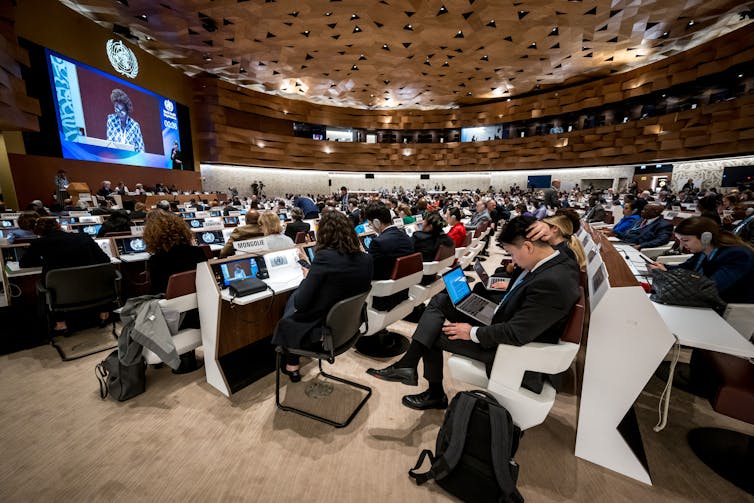
The New Zealand government remains disturbingly quiet on the unfolding genocide in Gaza.
New Zealand’s silence is clearly undermining its self-image as a principled and independent state within the United Nations. It is following its Anglosphere English-speaking partners (United States, UK, Canada, and Australia) in avoiding putting in place any sanctions against Israel — as has been done with Russia — in response to its invasion of Ukraine.
Not only is New Zealand doing nothing to influence Israel to stop its slaughter of Palestinian children and civilians, New Zealand is at risk of being seen to be complicit in a genocide. New Zealand, as a contracting party to the UN Convention on Genocide, has a responsibility under the convention.
It is doubtful that New Zealand’s “performance” in the UN General Assembly (UNGA), where it typically votes the “right way”, supporting a ceasefire and Palestinian membership of the UN, provides a get out of jail card for New Zealand vis-a-vis its responsibilities under the convention.
That the New Zealand government is ignoring the spate of decisions by UN international bodies calling out Israel for contravening international humanitarian and criminal law is, if anything, puzzling.
These bodies are the guardians of the international rule of law. Member states of the UN are obliged to support their decisions actively, not just in voice, and again, New Zealand’s rhetoric historically is that it supports the international rule of law.
The International Court of Justice (ICJ) deemed that a probable genocide is occurring in Gaza and has recently called for an immediate ceasefire in Rafah. The International Criminal Court (ICC) has recommended that Prime Minister Benjamin Netanyahu and Defence Minister Yoav Gallant be held criminally liable for the act of starvation inflicted against the Palestinian people.
New Zealand also stubbornly refuses to recognise Palestinian statehood, even though it has been argued by successive New Zealand governments, since 1993, that it supports the Oslo Accords and its key feature, the two-state solution.
This positioning has always provided a convenient smoke screen for New Zealand to appear to be supportive of an independent Palestinian state but in reality successive New Zealand governments have shown no real interest in doing so.
Importantly, New Zealand fails to distinguish between Israel as the occupier of Palestinian land and the Palestinians as the occupied people. Given this inequivalence, the New Zealand rhetoric of “leaving it to the parties” to agree what Palestinian state arrangements and borders might look like is laughable, if it wasn’t so cruel.
There are now more than 700,000 Israeli illegal citizens which have been illegally transferred (settled) by Israel to the Occupied Territories — which under a two-state solution would be a future Palestinian state. This area is tiny, only about half the size of the area of Auckland (which is about 5600 sqkm.) It makes the task of an independent and sovereign Palestinian state near impossible to achieve.
The illegal transfer of Israeli citizens on to Palestinian land in the Occupied West Bank has a clear purpose — to transfer Palestinians off their land.
By remaining quiet the New Zealand government is effectively ignoring the rules-based order which it has historically argued it bases its foreign policy decision-making on. Indeed, this shift or “reset” in New Zealand foreign policy was intimated by the Minister of Foreign Affairs, Winton Peters, in a recent speech to the NZ Institute of International Affairs.
Aware of the growing criticism of the lack of independence in New Zealand foreign policy, the minister stated that “New Zealand’s independent foreign policy does not, and never has, meant we are a non-aligned nation, although that is the way some critics in politics and the media see us . . . We take the world as it is, and this realism is a shift from our predecessors’ vaguer notions of an indigenous foreign policy that no-one else understood, let alone shared.”
This is clearly a move to a more “realpolitik” approach to international relations, where New Zealand’s “interests” are paramount. Our values are clearly a secondary consideration, and it is only by good luck that our interests and values might align.
As a recent Palestinian speaker in New Zealand, Professor Mazim Qumsiyeh, so rightly put it, “in the end we will not remember the words of our enemies but we will remember the silence of our friends.” Accordingly, New Zealand must employ all of its endeavours to place real pressure on Israel to stop its genocidal attack on the Palestinian people now.
It only needs to look to its Ukrainian/Russian playbook, to begin to do the right thing.
John Hobbs is a doctoral candidate at the National Centre for Peace and Conflict Studies (NCPCS), University of Otago.
French Polynesia has just played host to a 15-nation “Marara” military exercise aimed at increasing “interoperability” between participating armed forces.
From May 27 to June 8, the exercise involved about 1000 military from Australia, New Zealand, United States, Malaysia, Japan, Indonesia, Philippines, Thailand, Cook Islands, Vanuatu, Tonga, Fiji, Canada, the Netherlands and Peru.
For the occasion, Japan’s helicopter carrier LST Kunisaki was used as a joint command post in what is described as a realistic simulation of an international relief operation to assist a fictitious Pacific island country struck by a grave natural disaster.
Military transport planes and patrol boats were also brought into the exercise by participating countries.
“Marara 2024 illustrates France’s commitment to reinforce security and stability in the Pacific . . . and its ability to cooperate with nations of the region for the benefit of the people,” the French Armed forces in French Polynesia said in a media release.
This article is republished under a community partnership agreement with RNZ.
Source: The Conversation (Au and NZ) – By Sharon Goldfeld, Director, Center for Community Child Health Royal Children’s Hospital; Professor, Department of Paediatrics, University of Melbourne; Theme Director Population Health, Murdoch Children’s Research Institute
It’s well-known that children raised in families experiencing financial stress face greater risks of psychological and educational difficulties and behavioural problems in later life.
What’s less clear is the extent to which transferring cash to their families very early in their lives can make the rest of their lives better.
The large Coronavirus Supplement and JobKeeper payments made during the first year of the COVID pandemic might turn out to help, but it’s too early to tell.
In a study just published in the journal Social Science & Medicine, we have attempted to find out without waiting.
What happens when you get $26,000?
For our Changing Children’s Chances project, we wanted to find out what would happen to the social, emotional and physical health and educational progress of children from low-income Australian families if those families had been given A$26,000 ($1,000 a fortnight) in the first year of their child’s life.
This data included parent interviews and parent-reported questionnaires to determine their household income and family circumstances.
Better child health, better parent health
Using a technique known as target trial emulation, we were able to work out the potential benefits had we been able to really hand out large sums of money.
Examining families with an annual household income below $56,137 per year we found that a single hypothetical supplement of $26,000 in a child’s first year:
reduced children’s risk of poor social-emotional outcomes at age four to five; equal to a 12% improvement in equity
reduced children’s risk of poor learning outcomes at age four to five; equal to an 11% improvement in equity
reduced children’s risk of poor physical functioning outcomes at age four to five; equal to a 10% improvement in equity
reduced the risk of poor mental health of the child’s primary carer at two to three years; equal to a 7% improvement in equity.
The benefits were similar when we simulated giving the benefit to more households (those with incomes up to AU$99,864).
While the hypothetical income supplement of $26,000 was generous compared to the sums of cash previously studied, it would be incremental to current government income support.
Cash was good, but not enough
An important finding was that despite their size the cash transfers didn’t eliminate inequalities in outcomes. Inequities remained in children’s health, development and wellbeing.
This suggests income support is part of what is needed, but not the only thing. Research from low and middle-income countries finds that “stacked” cash-plus programs that include services such as healthcare are more effective than cash alone.
The measures introduced during the first year of COVID have shown us it’s possible to give low-income families much more financial support. Our findings suggest it is worthwhile.
This work was supported by the Australian Research Council Linkage Projects (LP190100921) and the Victorian Government’s Operational Infrastructure Support Program.
Sharon Goldfeld receives funding from the Australian Research Council and Australian National Health and Medical Research Council.
Elodie O’Connor and Sarah Gray do not work for, consult, own shares in or receive funding from any company or organisation that would benefit from this article, and have disclosed no relevant affiliations beyond their academic appointment.
Source: The Conversation (Au and NZ) – By Jaya Dantas, Deputy Chair, Academic Board; Dean International, Faculty of Health Sciences, and Professor of International Health, Curtin University
Earlier this week, Moderna announced positive results for its phase 3 clinical trial of a combined vaccine against COVID and influenza.
So what exactly did the trial find? And what sort of impact would a two-in-one COVID and flu vaccine have on public health? Let’s take a look.
Combination vaccines are already used for other diseases
Combination vaccines have been successfully used for several decades in Australia and around the world.
For example, the DTP vaccine, a shot that combines protection against diphtheria, tetanus and pertussis (whooping cough), was first administered in 1948.
The DTP vaccine has since been further combined to offer protection against other diseases. A hexavalent vaccine, which protects against six diseases – diphtheria, tetanus, pertussis, polio, hepatitis B and Haemophilus influenzae type b (an infection that can cause brain swelling) – is today part of routine childhood immunisation programs in Australia and elsewhere.
Another important combination vaccine is the MMR vaccine, given to children to protect against measles, mumps and rubella.
So what did the trial find?
Moderna’s phase 3 trial included roughly 8,000 participants across two age groups. Half were adults aged 50 to 64. The other half were aged 65 and up.
In both age groups, participants were randomised to either receive the combined vaccine (called mRNA-1083) or a control. The control groups received a COVID vaccine and a suitable flu vaccine delivered separately.
The control group in the 50-to-64 age category were given the Fluarix flu vaccine, as well as Moderna’s mRNA COVID vaccine, Spikevax. The over-65 control group received Spikevax alongside Fluzone HD, an enhanced flu vaccine designed specifically for older adults.
Participants in the control groups received Moderna’s COVID vaccine and a separate flu shot. Numstocker/Shutterstock
The study evaluated safety, including any reactions after vaccination, and the protective immune response the vaccines produced.
Moderna reported the combined vaccine elicited a higher immune response in both age groups against COVID and three influenza strains, compared to the co-administered shots.
From a safety perspective, the combined vaccine was well tolerated. Adverse reactions were similar across the experimental and control groups. The most common side effects included muscle aches, fatigue and pain at the injection site.
While the trial results are promising, they are yet to be published in a peer-reviewed journal, which means independent experts haven’t yet verified them. And further research may be required to test how the combined vaccine works in younger age groups.
What are the advantages of combined vaccines?
We cannot overstate the importance of vaccines. Each year they prevent up to 5 million deaths around the world from a range of life-threatening infections.
At the same time, we can always do more to boost vaccination uptake, especially in areas with fewer resources and among vulnerable populations.
Combination vaccines have a variety of advantages. For example, the need for fewer injections reduces costs for health systems, decreases storage requirements and reduces the burden on parents. All of these things can be especially valuable in low-income countries.
Notably, research shows combination vaccines make it more likely people will take up routine vaccinations.
Every year, particularly during the winter months, millions of people contract respiratory infections. Indeed, parts of Australia are reported to be facing rapid increases in flu cases at the moment.
According to the World Health Organization, globally, roughly 3 million to 5 million people experience severe influenza annually, and around 650,000 people will die from the disease.
COVID has resulted in more than 7 million deaths around the world to date.
As the COVID pandemic has continued, we’ve seen pandemic fatigue setting in, as some people appear to have become complacent about their COVID shots. A 2023 study in Australia found 30% of the surveyed population were hesitant about and 9% were resistant to taking COVID boosters.
Uptake of the flu vaccine, which many people are in the habit of getting annually, may be higher. That said, in Australia the current flu vaccine rates for 2024 are still fairly low: 53% for adults over 65 years, 26% for those aged 50 to 65, and lower for younger age groups.
A two-in-one COVID and flu vaccine could be an important public health tool to increase vaccine coverage against these two important diseases. Beyond protecting individuals’ health, this would have flow-on benefits for the economy and our health system.
Moderna said it will present its trial data at an upcoming medical conference and submit it for publication. The company has also said it will soon apply for regulatory approval, with the possibility of supplying the combined vaccine in 2025.
At the same time, Pfizer and BioNTech also have late-stage trials in progress for a combined COVID and flu vaccine. We will await further developments with interest.
Professor Jaya Dantas is Dean International and Dean, Diversity, Equity, Inclusion and Belonging in the Faculty of Health Sciences at Curtin University and Professor of International Health at Curtin School of Population Health. She is working on projects funded by Healthway, Lotterywest and DISER. She has lived experience of infectious diseases in India and Africa.
Source: The Conversation (Au and NZ) – By Irina Ponomareva, Adjunct Research Fellow in Griffith Center for Social and Cultural Research (GCSCR), Griffith University
Irina Ponomareva
Investigation of a sacred area at Avon Downs in Jangga Country, Central Queensland, has uncovered evidence of stone tool production in a place that was traditionally restricted to women.
We detail our findings in newly published research in collaboration with archaeological expert Liz Hatte and Jangga Elders Colin McLennan and Marie Wallace.
Our excavation of the layered sediments at Avon Downs reveals a long history of raw stone extraction and tool making. In the short period of our study, we recorded about 1,500 stone artefacts on the surface and under the ground.
And this is just the tip of the iceberg, as we expect more detailed evidence of tool production to be found beneath the site’s surface and in neighbouring areas.
By dating these artefacts, we have traced a 7,000-year history of continuous stone tool production by Aboriginal women – including objects traditionally associated with men. We are also the first team to ever date a sacred Aboriginal women’s area.
General view at the Thirteen Mile Creek site. Irina Ponomareva
Hundreds of generations of tool making
Using a technique called optically stimulated luminescence, we measured the age of individual sand grains within the artefact-rich layers of the hill slope. We were then able to date the artefacts by association.
The uncovered artefacts varied in age from about 430 years ago (before the first Europeans arrived) to some 7,000 years ago. This implies the site was used for stone tool production and possibly as a sacred women’s area for hundreds of generations.
Jangga Elders Colin McLennan and Marie Wallace have a shared memory extending as far back as at least six generations. They understand the site has always been forbidden to men, as it continues to be today.
While some of the relevant sacred knowledge remains restricted, we can report Jangga women came to Gaio Nanhi Bura (women’s sacred place) to give birth and perform associated ceremonies until the turn of the 20th century.
Some of the stone tools were used in sacred ways, such as for cutting the umbilical cord of newborn babies, says Wallace. Drill points, ochre and a grinding stone and muller are further evidence of everyday tool making and decoration.
The rare discovery of an unfinished axe, ready to be ground and polished, is also somewhat surprising, as axe making is typically associated with male crafters.
The axe blank found at the Thirteen Mile Creek site. Irina Ponomareva
The site remains a direct link between modern Jangga women and their ancestors. Today’s Jangga women who have visited and worked on the site describe feeling a strong sense of peace and belonging, as well as the presence of their ancestors.
Railway project disruptions
Like many other Aboriginal sites in Australia, the Avon Downs Women’s Area has faced threats. It sits in the way of the North Galilee Basin Rail Project, which stretches from the Carmichael coal mine to the port at Abbot Point.
Planning for this project started in 2012, prompting cultural heritage surveys, assessments and negotiations with Traditional Owners.
In 2014, the sacred area at Avon Downs was revealed following a survey and consultations with Jangga Elders. The artefacts themselves, which had been partially hidden by thick spinifex grass, were discovered in 2020 during cultural heritage monitoring before the clearance of native forest.
After extended negotiations with the Carmichael project representatives, and some news coverage of the archaeological discoveries, a solution was found.
For the benefit of future study, the site was conserved as a protected portion inside the rail corridor – but not without any loss. This portion is a fragmented piece of a much larger complex of camp sites and knapping floors (areas where stone tools were shaped) – but there is no longer free access between these individual sites.
So while the railway project will not run directly through, it has still compromised the integrity of the area.
A map with the location of the site. Irina Ponomareva
Protecting sacred area
Sacred Aborignal women’s sites are often difficult to protect in their entirety. It can be challenging to demonstrate their cultural value when the associated knowledge is restricted to a few members of the Aboriginal community.
The protection of these sites has been hampered by past misunderstandings of Aboriginal cultures, as well as racism, sexism and misogyny.
Throughout Australia, there are only a handful of examples where Aboriginal women have chosen to disclose secret information to protect sacred women’s sites for future generations.
When explaining the importance of protecting and recording Jangga traditional knowledge and culture, Wallace emphasised the Jangga people’s belief that such sacred places can even be dangerous:
You are not supposed to touch anything, or take away something. They can make you sick.
Jangga people maintain the sanctity of these areas in their collective memory, providing a seamless connection between living memory and the dated sequence of sediments and artefacts.
And while their current cultural traditions in the Avon Downs Women’s Area can be traced back to several hundred years, we may be able to extend this to several thousand as more archaeological evidence becomes available.
The authors do not work for, consult, own shares in or receive funding from any company or organisation that would benefit from this article, and have disclosed no relevant affiliations beyond their academic appointment.
Last night, millions of people will have tuned into Netflix and other streaming services to binge their favourite shows, including the (much anticipated) second part of Bridgerton season three.
Streaming services such as Netflix, Disney+, Stan and Prime Video have habituated us to the “all at once” series drop. And even as some services try to find ways to break the binge model, manycommentators have bid farewell to the “the good old days” of appointment viewing.
Meanwhile, experts have highlighted the health concerns associated with “problematic bingeing”, including increased anxiety and depression.
But there’s an important detail missing in these conversations. And that is the fact that bingeing – the act of unrestrained and excessive indulgence – is nothing new. In fact, it exemplifies an age-old human desire to be completely immersed in story.
Far from being a new behaviour spawned by the digital age, bingeing is rooted in human history.
An ancient practice
Much like you might binge Baby Reindeer, Eric or The Walking Dead today, humans have always sought absorbing narrative experiences.
Before writing emerged, ancient oral storytelling captivated people across cultures, providing entertainment, knowledge transmission and cultural education.
Research published last year suggests Palawa Aboriginal stories from Tasmania can be traced back to events that happened 12,000 years ago, which means they may be among the oldest recorded oral stories in the world. Stories that survive hundreds of generations require constant telling and retelling.
This engagement with stories continued with the advent of written text. For millennia, large text collections has allowed immersive consumption, with examples ranging from the Panchatantra – a compilation of Indian fables dated to around 200BC – to volumes of William Shakespeare’s plays from the 1600s.
Eventually, the invention of the printing press revolutionised access to texts. Evidence suggests that by the 18th century, avid readers in England (that is, the upper class who could afford books) would devour novels in public or by candlelight – unable to stop until the story ended.
Literature researcher Ana Vogrinčič suggests a sort of “moral panic” emerged as the women of the time got a taste for reading:
reading in bed by the candlelight was believed to risk conflagration, while women laughing out loud over a certain scene or wobbling in emotions over another, in indecent body postures, regularly incited an offensive language, resulting in a heavily stigmatised and stereotyped image of a female novel-reader – a precursor of a modern coach potato. The reading sofa and the television couch certainly represent what 18th-century novel-reading and modern-day television-viewing seem to have in common.
Eventually, the rise of cinema and television provided a new form of immersive storytelling. Access to home videos meant back-to-back viewing, while film screenings and double features mirrored older communal entertainment forms such as public readings and theatre attendances.
Hooked on a feeling
While bingeing has been around for as long as anyone can remember, the internet and streaming have both significantly increased our capacity for it. Perhaps this is why bingeing is framed as a modern phenomenon.
Creators must now design shows with the binge-watching model in mind, using cliffhangers, escapism and continuous arcs to encourage prolonged viewing. All of these factors (and more) combine to make a “bingeable” show.
Netflix’s Baby Reindeer (said to be based on a true story) captivated millions of people. IMDB
Engaging with captivating stories triggers the release of dopamine, the neurotransmitter associated with pleasure, to create an addictive experience. At the same time, the human brain craves “closure”, which is something a compelling onscreen narrative will provide.
Shifting values
Bingeing today is often accompanied by feelings of guiltand unproductiveness. This seems to reflect, more than anything else, a shift in societal values regarding leisure time.
At some points in the past, prolonged engagement with stories would have been seen by certain groups as a valuable cultural activity – one that contributes to personal enrichment and social interaction.
For instance, the European Enlightenment movement of the 17th and 18th centuries encouraged people to develop a critical view of the world through as much self-education as possible. This approach to learning was thought to foster intellectual freedom and happiness, and often involved extensive engagement with written works.
Across time and cultures, humans have sought to escape reality and engage emotionally with stories. From ancient oral traditions, to modern streaming, our desire for continuous narrative consumption has remained constant.
Perhaps by recognising this historical precedent, we can come to appreciate our love of bingeing – and not feel so bad about it after all.
Darius von Guttner Sporzynski does not work for, consult, own shares in or receive funding from any company or organisation that would benefit from this article, and has disclosed no relevant affiliations beyond their academic appointment.
In Europe, the slogan “never again fascism” is one that still resonates. The death and destruction wrought by hyper-nationalist, authoritarian states in the first half of the 20th century still haunts the nightmares of successive generations.
But, as the recent European Union elections show, the fear of the far right is slipping. The political logic of earlier decades no longer holds in some quarters, and far-right parties are making gains across Europe, as their strategy of electoral engagement continues to pay off.
Views that would have ended political careers in Europe a generation ago are now being rewarded with electoral success. Despite the lead candidate of the German far-right Alternative for Germany (AfD) party declaring that members of the Nazi SS were not necessarily criminals, his party climbed 5% higher to outpoll all of the parties in Germany’s ruling coalition and gain six new seats in the European parliament.
The AfD also performed shockingly well in local elections that coincided with the European vote. With important elections coming up in the eastern states of Germany, it remains an open question whether the taboo forbidding collaboration with the far right will endure another electoral surge by the AfD.
Most breathtaking was the vote in France. Marine Le Pen’s far-right National Rally (previously National Front) smashed President Emmanuel Macron’s brittle coalition of centre-right parties. The result prompted the president to call a snap election, in what one commentator has called “one of the wildest gambles in modern French history”.
Macron’s call for all democratic parties to unite against the far right has already failed. One prominent centre-right politician, Éric Ciotti, declared his conservative Republican party (the party of Jacques Chirac and Nicolas Sarkozy) would join National Rally in a coalition. This has set off what has been called “the wildest 72 hours in French politics” in a generation.
Whether or not the Republican party joins National Rally in this electoral cycle, an important taboo preventing democratic parties from co-operating with Le Pen has been irrevocably broken. It seems clear that, far from denying National Rally a domestic victory, Macron has created a situation in which, if last weekend’s vote is repeated, he will have handed them the “keys of power”.
If Macron hopes this period will discredit National Rally before Le Pen can take the prize of the presidency, he should take a look at Italy and elsewhere in Europe, where a period of government has normalised rather than discredited the far right.
In the EU election, Italian Prime Minister Giorgia Meloni steered her Brothers of Italy party to first place, confirming her leading position among the European right. While their vote was weaker than their historic highs, the bulwark parties of right-wing illiberalism in Hungary (Fidesz) and Poland (Law and Justice Party) also remain extremely powerful.
Even outside the EU, in Britain, Nigel Farage’s populist far-right Reform party has overtaken the Tories in polling for the first time. Many will be watching their result in the July 4 election with a mixture of interest and dread.
Only in Nordic countries did a clear turn away from the far right eventuate. In Sweden, the Social Democrats, the Left Party and the Greens together managed to secure almost 50% of the vote.
Youth Against Fascism? Not in 2024
Is this rightward lurch a symptom of a generational shift towards anti-democratic, racist values in young voters? The claim has been repeatedly made, but are the young voters of Europe to blame for the rise of the right?
In Germany, at least, the picture is more complex. According to Tim Gensheimer, a German researcher studying youth voting patterns, talk of a generational swing misses the point that voters between 16 and 24 were just as likely to vote left as right of centre. Generational generalisations, he insists, overlook the fact that young people are sharply divided on political matters. This is despite sharing a sense of disillusionment with major parties whose promises of a better environment, lower costs of living and a secure future have amounted to nothing.
Nonetheless, something has clearly changed.
A close look at youth voting in Germany shows the real disaster was for the Greens. They promised much in the last election and have delivered little since, leading to the loss of a massive 23% in their youth vote.
By comparison, the AfD and the Christian Democratic Union (CDU) picked up an additional 11% and 5% of young people’s votes respectively. Although the social-democratic SPD vote stayed relatively steady among young people, it remains perilously low.
Further to the left, the Linke lost ground among youth voters in what was a terrible election for them. However, 6% of voters under 24 gravitated to the new populist Alliance Sahra Wagenknecht – a paleo-leftist outgrowth of the Linke stripped of its progressive green, gender and migration politics and deeply sceptical about military support for Ukraine.
Instead of voting as a group for the far right, young Germans voted more for micro-parties than any established party. In terms of age, the group most likely to vote for the AfD were those in the 35-44 age group, particularly men who felt their economic position was precarious.
Far more obvious than any age divide, however, was Germany’s east-west divide, with the AfD polling first in all ex-East German states. Even this, however, is not the whole story, with a north-south divide also emerging. The AfD polled second to the CDU in most parts of the southern states of Bavaria and Baden-Württemberg, while in the north-west it was most often the SPD in second position.
The story regarding young people was much the same in France, where the youth vote for the Greens and centrist parties collapsed, and the share of their votes to the outer left grew modestly. In comparison to other age groups, young people in France remained more likely to vote left of centre.
Nonetheless, it is clear many young French voters also took part in the broader political migration to the far right, in part thanks to the youthful star power of their leading candidate, Jordan Bardella. Through his renewal of the party’s image, 32% of voters aged between 18 and 34 felt able to vote for National Rally. Macron’s candidate managed a paltry 5%.
Elsewhere, Spain too saw a noticeable rise in the influence of the far right, with Vox collecting two more seats on the back of its anti-migrant, anti-Islam and anti-gender-politics platform. Vox has proved popular among young men, attracted by its blend of old Francoist values, like anti-liberal nationalism and ostensibly traditional family values, with newer forms of anti-migrant sentiment and climate-change denialism.
Why did the far right attract so many young people?
For some pundits, the answer lies with the parties’ tech-savvy approach, which has built up a colossal presence on Tiktok. To be sure, the use of social media to spread anti-migrant rhetoric and white supremacist idealisations of the “mother-father-child” family, as well as far-right talking points on Russia’s invasion of Ukraine, has clearly made inroads among a young audience whose main contact with the news comes through scrolling.
However, this overlooks that young Europeans have been screaming into the void for several elections now. They have been searching for a political home that offers them some hope against a cost-of-living crisis, unaffordable housing, a collapsing ecosystem and perpetual warfare.
If for the most part the youth vote remains anti-status quo, this is because the trajectory of established parties appears to offer little to anyone below the age of 25. A well-founded pessimism regarding the capacity of established politics to solve real, structural problems has offered fertile soil for far-right parties peddling dangerously false solutions.
Matt Fitzpatrick receives funding from the Australian Research Council.
Many a government has spent generously to woo voters in election years. Some might even say recklessly.
But, even by that standard, the cash splashed this week by the Queensland Labor government under Premier Steven Miles is eye-watering – not just in dollar terms but also in the choices Treasurer Cameron Dick has made in the run-up to an October election few believe Labor can win.
In offering feel-good “sugar hits” that make the recent federal budget seem like diet cordial, Dick, in his fifth budget, has targeted the four biggest policy issues for voters in Queensland (and every other state and territory): cost of living, youth crime, housing and health.
That’s why he allocated an extra $1.28 billion for more police and to support victims of crime. It’s also why health had an almost unprecedented 10.6% funding increase – hospital ramping is a particularly sore point. Another A$3.1 billion was invested in the “Homes for Queenslanders” program, which offers rental support, while significantly raising the home value threshold before stamp duties are charged.
There’s also a $107 billion “Big Build” infrastructure program over four years to accommodate an exploding population, an issue both widely lamented and acutely felt in Brisbane.
But it’s the government’s cost-of-living relief package that has attracted the most attention and, arguably, the most scorn. By offering a weary electorate $1,000 cash-back on power bills (in addition to the federal government’s recently announced $300), 50 cent fares on all public transport, a 20% reduction in vehicle registrations and $200 vouchers to encourage children into sport – and by delivering a $564 million surplus for 2023-24 – Queensland Labor hopes it can buy a fourth term from financially struggling voters.
But will it really turn Labor’s electoral tide? Public opinion polls since Miles succeeded Annastacia Palaszczuk as premier last December suggest not. In the most recently published poll, a February-May Redbridge survey, Labor recorded a 28% primary vote – down 12 points since the 2020 election and only slightly higher than the Bligh Labor government received when decimated in 2012.
Redbridge pegged the Liberal-National Party’s primary vote at 47% – its highest in a decade – for a two-party-preferred split of 57 to 43%. That translates into a 10-point swing. It would mean Labor loses around 24 seats and the LNP easily forms majority government with up to 60 seats in the 93-seat Legislative Assembly.
Worryingly for Labor, the Redbridge data are consistent with earlier Resolve Strategic, YouGov and Newspoll surveys. All reported similar collapses in Labor’s vote since March.
In short, Queensland voters appear to have stopped listening to Miles and are now embracing the moderate, softly spoken LNP leader, David Crisafulli. In a February-May Resolve Strategic poll, he led Miles as preferred premier by 39 points to 28.
Crisafulli, however, is facing his own hurdles. Journalists and voters are demanding policy detail beyond the LNP’s “parenthood” statements about reducing crime. Crisafulli’s judgment is also being questioned for his early support for a Labor budget he had not even seen.
Nonetheless, there has been an unmistakable appetite for change in Queensland since early 2022, when the once-unassailable Palaszczuk government began its sharp descent amid accusations of compromised integrity and, later, of an allegedly “out of touch” and “red carpet” premier. It was that lost political capital underpinning a once-popular premier that, when burdened with cost-of-living and youth-crime crises, forced Palaszczuk from office in December 2023.
Why, then, will Queensland’s arguably most generous budget go unrewarded at the ballot box?
First, governments rarely receive post-budget public opinion bounces. While the Albanese government’s 2024 budget was reasonably well received, a June YouGov poll placed Labor’s primary vote three points lower than in the April survey. It seems voters simply expect governments to be good economic managers – and do not reward them for it.
Second, Miles’ goodies, designed to be delivered before the October 26 poll, will likely see any voter gratitude evaporate long before ballots are cast.
Third, while vehicle registration is almost universal, regular public transport users and first-home buyers are still a minority of voters.
Fourth, current inflation is “sticky”. Until Queensland voters see reductions in rents, home mortgage interest rates, grocery and fuel prices, a few budgetary treats will do little to mollify a financially stressed electorate.
Finally, the government has arguably overreached in its generosity and undermined its credibility as a responsible economic manager. In squandering last year’s $12.3 billion surplus – the largest ever recorded by a state, thanks to massively hiked coal royalties that have pumped $25 billion into state coffers in just two years – the ever-sceptical Queensland voter now appears plainly cynical in framing the budget as a desperate vote-buying exercise.
So will the budget at least improve Prime Minister Anthony Albanese’s fortunes in Queensland? Almost certainly not.
Labor holds just five of Queensland’s 30 federal seats and is unlikely to win more anytime soon. Hemmed in by the deep conservatism of outer-suburban and regional Queensland, Labor, at the height of Albanese’s popularity in 2022, won no seats from the LNP yet lost one to the Greens.
Ultimately, Queenslanders appear to have cast their judgment on the Miles government. They will happily (but not gratefully) grab Labor’s cash, then stroll to the polls and vote LNP in a very decisive swing.
Paul Williams is affiliated with the TJ Ryan Foundation.
Around one in seven Australians take antidepressants. The decision to start is often made in a time of crisis, with the thought they might help for a period and then be stopped. Most people don’t start antidepressants thinking they will take them for life.
Clinical guidelines recommend only six to 12 months antidepressant therapy for a single episode of moderate to severe depression.
However, about half of people taking antidepressants have been using them for longer than 12 months. People can experience unpleasant withdrawal symptoms when they attempt to stop antidepressants, which leads to them restarting or continuing antidepressants.
A recent Lancet systematic review found around one in six to seven people experienced withdrawal symptoms when stopping antidepressants. This is likely to be an underestimate, as most people included in the studies had been taking antidepressants for only a few months.
What did the researchers find?
The Lancet review, which included 79 studies and 21,000 people, found 15% of antidepressant users experienced withdrawal symptoms after they stopped taking the drug. Common symptoms included dizziness, headache, nausea, insomnia and irritability.
Withdrawal symptoms are more common in people who have been taking antidepressants for a long time. But the Lancet study mainly included people taking antidepressants for only a short time – mostly for around three to six months but sometimes for as little as one week.
So the finding that one in six people who stop taking antidepressants experience withdrawal symptoms is likely an underestimate; this figure applies only to a small subset of people who have taken antidepressants.
The Lancet review also found around 3% of people experienced severe withdrawal symptoms, including thoughts of suicide. Again this is likely to be an underestimate, as it didn’t include longer-term users who are more likely to experience withdrawal symptoms and experience more severe withdrawal symptoms.
Working out what’s actually causing symptoms
Some people continue taking antidepressants long-term in the belief that they are treating or preventing anxiety or depressive symptoms, but since many of the symptoms are similar they may only be treating or preventing withdrawal symptoms
Yet long-term use (longer than 12 months) of antidepressants is not harmless. Taking antidepressants for longer than 12 months can cause:
emotional numbing
sexual dysfunction, which may be long-lasting, including low libido and difficulty achieving orgasm in both men and women
weight gain
lethargy or fatigue
increased risk of falls among older people.
It can be difficult to differentiate between symptoms of mental illness and withdrawal effects of stopping antidepressants. amenic181/Shutterstock
Low awareness and recognition of withdrawal symptoms has resulted in both doctors and patients misinterpreting withdrawal symptoms as a “relapse” of anxiety or depression and ongoing need for medication.
The confusion is easy to understand as some of the symptoms of withdrawal are also symptoms of anxiety and/or depression.
Symptoms of withdrawal include nervousness, irritability, insomnia, fatigue and agitation.
Symptoms of anxiety include “feeling nervous, anxious or on edge” and “becoming easily annoyed or irritated”.
Symptoms of depression include “trouble falling or staying asleep”, “feeling tired or having little energy” and “being fidgety or restless”.
But it is possible to distinguish withdrawal from relapse. In addition to feeling anxious and irritable, people going through withdrawal may also experience:
dizziness, vertigo (sensation of spinning) or light-headedness
electric shock sensations (brain zaps)
imbalance
increased sensitivity to light or noise
tinnitus
nausea, diarrhoea or upset stomach
muscle spasms or cramps
vivid dreams or nightmares
tremors
confusion
sweating.
How did people used to stop antidepressants?
Until recently, information on how to minimise withdrawal symptoms to enable people to safely stop antidepressants has been limited.
Previous advice was often to halve the dose, halve again and then stop; or to take antidepressants on alternate days; or to switch to a different antidepressant.
But while well-intended, these methods have likely resulted in withdrawal symptoms.
Withdrawal symptoms tend to start within hours, days or sometimes weeks of stopping or decreasing antidepressant dose and can last weeks or longer.
So how can I safely stop?
Brain imaging techniques support a slow tapering of antidepressant drug dose to give a steady change in the brain to minimise withdrawal symptoms.
“Hyperbolic tapering” uses increasingly smaller decreases in drug doses. For example, a tapering schedule of 50mg, 25mg, 15mg, 10mg, 6mg, 4mg, 2mg, 1mg, then 0mg (stop) gives a steady change in the brain.
A slow and hyperbolic decrease of drug dose can minimise withdrawal symptoms, giving the brain time to adjust to being without antidepressants and safely stop.
At the University of Queensland, we are conducting a randomised controlled trial in general practice testing the effectiveness of antidepressant drug specific hyperbolic tapering schedules developed to support people to safely stop antidepressants.
The antidepressant mini-doses required for tapering are not readily available in Australia. But people can access antidepressant mini doses via a compounding chemist (or for some antidepressants, by crushing a tablet and mixing with water or diluting a liquid formulation, in consultation with your doctor).
If you’re thinking about coming off antidepressants, talk to your doctor, who can support and monitor you through the process of safely stopping.
Katharine Wallis receives funding from the National Health and Medical Research Council and the Medical Research Future Fund. She is employed by the University of Queensland.
Installation view of the 2024 Melbourne Winter Masterpieces® Pharaoh, a collaboration between the British Museum and the NGV, on display from June 14 – October 6 2024 at NGV International, Melbourne. Photo: Sean Fennessy
There have been many exhibitions of ancient Egyptian art held in Australia. Pharaoh, at the National Gallery of Victoria, is outstanding for its scope, scale and presentation.
It is the greatest exhibition of ancient Egyptian art we have ever seen in Australia.
The exhibition comes from the British Museum, holder of the largest and most comprehensive collection of Egyptian antiquities outside the Egyptian Museum in Cairo. Over 500 items have been selected, including monumental sculptures, tomb and temple architecture, coffins, papyri, funerary objects and an extensive display of jewellery.
Numerically, this is the largest (and heaviest) touring exhibition ever mounted by the British Museum and it is the largest exhibition of ancient Egyptian art ever shown in Australia. The effective dramatic display, designed by Peter King who treats the whole space as a cycle from dawn to dusk, occupies all of the major downstairs exhibition spaces at NGV International.
The functionality of art
For a civilisation that left such a huge artistic heritage, it is sobering to remember the ancient Egyptian language had no word for “art”.
Art was something functional that gave permanence to the objects of this world, so they could continue to serve their owners in the next life. Much of the surviving ancient Egyptian art is tomb art, designed to withstand the test of time and to preserve in an idealised form the beauty of balance, order and harmony, while celebrating the absolute power of the pharaoh.
What is it about ancient Egyptian art that holds us spellbound? In part, it is the sense of sublime beauty, its permanence, with forms seemingly unchanging over millennia, its antiquity and its state of preservation. More than anything else it is the fact that it is permeated by a sense of magic, somehow meant to overcome the forces of death.
When a person died, they were mummified and engaged in a ritual involving an interaction with the “ka” (life force) and the “ba” (human essence). They were surrounded by what we could think of as art objects that involved magic spells, magic amulets and protective deities.
What struck me about this exhibition was this sense of spirituality – the mystical otherness. We are presented with a variety of beautiful objects across seven thematic categories. Each section, in a way, comments on the role of the pharaoh in Egyptian life.
The elaborate and the intimate
In an exhibition of this nature, there are a number of memorable objects: the granodiorite Head of a colossal statue, probably King Amenemhat III; the life-size sandstone seated Statue of Pharaoh Sety II wearing emblems marking his royal status; the monumental red granite Statue of a lion erected by Pharaoh Amenhotep III, reinscribed by Pharaoh Tutankhamun; the limestone Statue of future Pharaoh Horemheb and his wife; the huge painted limestone Relief showing King Mentuhotep II wearing the red crown; and the imposing monumental limestone sculpture of the Statue of Ramses II as a high-priest.
All of these are huge works with a dominating presence, a marked frontality and a sense of permanence.
What intrigued me were some of the more intimate, immensely elaborate jewellery-like pieces that served as seals, rings, plaques, amulets, pendants, beads and earrings.
These include: the ornament of a winged Scarab holding a sun-disc, depicting the throne name of King Senusret II with its pieces of lapis lazuli; the faience Throwstick of Pharaoh Akhenaten – an ancient Egyptian boomerang; Girdle with amulets, beads and pendants made of electrum, silver, lapis lazuli, feldspar, amethyst, cornelian, glass; and the Ornament with a bull’s head on a gold mount decorated with uraei and lotus flowers made of gold with the bull’s head carved into a piece of lapis lazuli.
While one may be seduced by the ornamental design, the exquisite craftsmanship and precious materials, there is also something ethereal about these objects of beauty.
They were intended to ward off evil spirits and beg for their owner’s smooth transition into eternal life, where the person could experience life in their present form but free of pain, illness or hardship.
3,000 years of art
The Book of the Dead (more accurately translated as the “Book of Coming Forth by Day”) was a collection of magic spells intended to assist a deceased person’s journey through the underworld. The texts were prepared for a specific person and speak of the needs of a particular individual.
Since I was a child, I loved reading this book as it was the voice of an ancient Egyptian speaking directly to me.
One passage reads:
There is no sin in my body. I have not spoken that which is not true knowingly, nor have I done anything with a false heart. Grant you that I may be like to those favoured ones who are in your following, and that I may be an Osiris greatly favoured of the beautiful god.
This beautiful and significant exhibition traces the art of ancient Egypt for 3,000 years from the unification of Upper and Lower Egypt and the beginnings of the Old Kingdom with the development of hieroglyphs, in about 3000 BCE, through to the Roman conquest.
A solemn divine majesty runs throughout this exhibition as it celebrates the eternal and magical power of art.
Pharaoh is at the National Gallery of Victoria until October 6.
Sasha Grishin does not work for, consult, own shares in or receive funding from any company or organisation that would benefit from this article, and has disclosed no relevant affiliations beyond their academic appointment.
A runner after five months in the sea as part of a forensics study.Paola A. Magni
The disappearance of 49-year-old Melissa Caddick in November 2020 captured Australia’s attention. At the time, Caddick was being investigated by the Australian Securities and Investments Commission for alleged financial misconduct, with dozens of people defrauded for millions of dollars.
The media’s coverage of her “vanishing act” only heightened public interest in the case. Despite extensive searches, only a single foot enclosed in a running shoe has been found, washed up on a beach in New South Wales.
The NSW Coroners Court declared Caddick dead in May 2023 but couldn’t establish the date, cause or manner of death. As part of the investigation, experts consulted work done by myself and colleagues: the only forensic research available on how marine organisms colonise items connected to people, such as shoes and clothing.
Typically, when a body isn’t immediately found, the case falls in the “missing persons” category. This classification is often summarised as “no body, no crime” and can cause investigation delays.
Authorities have to navigate a web of uncertainties as they work to locate the victim and determine whether foul play was involved.
This is further complicated when there’s no physical evidence, such as bloodstains, signs of struggle, or a potential weapon to work with. Physical evidence is usually crucial for reconstructing the events and identifying those potentially involved.
According to a reconstruction of the events in Caddick’s case, her son reported hearing the front door of their home close in the early morning of November 12 2020. At the time, he assumed his mother had gone for a run, but she was never seen again.
Months later, on February 21, Caddick’s shoe with the remains of a decomposing foot inside was discovered on Bournda Beach in NSW. The finding opened a new chapter in the investigation.
It’s not uncommon to find connections between washed-up shoes and cases of homicide, accident or suicide. That’s because the materials used to make shoes (particularly sneakers which tend to contain rubber) have buoyant properties.
A body’s decomposition underwater can lead to the disarticulation (separation at the joint) of various body parts – especially skulls, hands and feet. Skulls often remain intact and sink to the bottom. Hands consist of about 30 small bones which tend to disperse in the water.
Feet, however, are typically well preserved if they’re enclosed within shoes. They often hold together and can be transported over long distances as the shoe floats. Over time, the fatty tissue within turns into a waxy substance called adipocere.
Running shoes tend to float in water, and can hold any remains together. Daniel Octavian/Unsplash
What can we find out from such limited remains?
When remains such as a single limb are discovered, investigators will promptly try to confirm the victim’s identity through DNA analysis. In Caddick’s case, a DNA profile provided conclusive evidence the remains belonged to her.
As for investigating whether the bones were disarticulated or deliberately separated from the rest of the body, this is work for a forensic pathologist. Their medical examination can help to determine the circumstances and cause of a person’s death. Unfortunately, in Caddick’s case the remains were too limited to establish any firm conclusions.
However, the shoe itself can also have extensive legal and investigative significance.
One useful organism is barnacles – common marine crustaceans that colonise (attach to) floating or submerged objects. It takes time for the larva to explore and search for an appropriate site. Once it finds the right surface, the baby barnacle deposits multi-protein adhesives (barnacle “glue”).
Now permanently attached, the barnacle’s growth depends on water temperature, velocity, food and competition with other barnacles. The barnacle’s shell will store all of this information.
A ‘settlement plate’ used for barnacle research to see their growth. Paola A. Magni & Claire Martin
So, in a forensic investigation where barnacles are attached to shoes, clothes or exposed bones, they offer insights for estimating the body’s point of origin, the amount of time it spent in the water, the waters it travelled and even the potential timeline of events.
In another study on four fabrics (cotton, satin, velvet and neoprene) submerged for six months, we found the textile that changed the most was cotton, while neoprene was the most colonised by barnacles.
Cotton used for marine forensic research, after four months underwater (left) as compared to original (right). Paola A. Magni & Claire Martin
More research would help
In Caddick’s case, the coroner’s report notes the shoe must have spent between three and seven days floating on the open ocean, because the barnacles on it were still in the larval stage.
However, it’s not at all clear how long it was in the water, as it was found “heavily discoloured”; maybe it took time to surface or spent time elsewhere?
Despite the fact that almost 80% of Earth’s surface is covered by water – and this water can potentially become a crime scene – marine and aquatic forensics still need extensive research. This case highlights the need for more research on barnacles and other small marine organisms, such as bryozoans and foraminifera.
By studying their distribution and growth, we can improve our ability to investigate various cases, ranging from single shoes, to bodies and even missing planes.
Paola A. Magni is an Adjunct Research Fellow at the Oceans Institute, The University of Western Australia.
Source: The Conversation (Au and NZ) – By Kate Dooley, Research Fellow, School of Geography, Earth and Atmospheric Sciences, The University of Melbourne
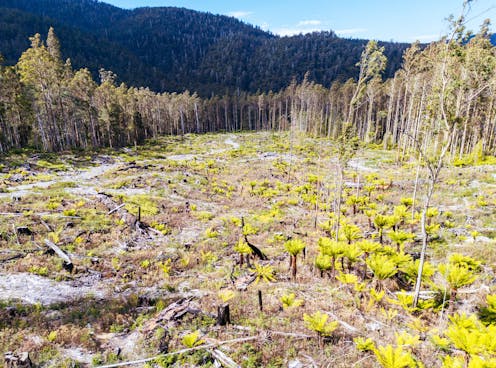
Australia contains some of the world’s most biologically diverse and carbon-dense native forests. Eucalypts in wet temperate forests are the tallest flowering plants in the world and home to an array of unique tree-dwelling marsupials, rare birds, insects, mosses, fungi and lichen, many of which have not even been catalogued by scientists. Yet our country remains in the top ten list globally for tree cover loss, with almost half of the original forested areas in eastern Australia cleared.
This loss has been devastating for Australia’s native plants and animals and contributes to global warming through vast amounts of carbon emissions. The global biodiversity and climate change crises are inextricably linked – we cannot solve one without the other.
Earth’s ecosystems, such as forests, coastal wetlands and tundra, contain enormous amounts of carbon. But deforestation and degradation by humans is likely to send global warming past 1.5°C, even if we achieve net-zero fossil fuel emissions. Protecting native forests is a critical way to prevent emissions, which must be achieved in parallel with a rapid transition to clean energy.
What is being overlooked in current international climate policy under the Paris Agreement is the crucial role of biodiversity in maintaining healthy ecosystems and their integrity, which keeps carbon stored in forests, not the atmosphere. Healthy ecosystems are more stable and resilient, with a lower risk of trees dying and lower rates of carbon emissions.
The way we currently count carbon stores risk creating incentives to plant new trees rather than protect existing forests. Yet old-growth forests store vastly more carbon than young saplings, which will take decades or even centuries to reach the same size.
On January 1 this year, both Victoria and Western Australia ended native forest logging in state forests. This is a good start. But the rest of Australia is still logging native forests. Extensive land clearing continues for agriculture and urban development, as well as native forest harvesting on private land.
Two states down, more to go
The end of native timber logging in two states is a chance for new approaches to our forests, which recognise the contribution of biodiversity to healthy forest ecosystems, as well as endangered species protection and clean water supplies.
Ending native forest logging isn’t entirely simple. In Victoria, consultation on the future of state forests is ongoing. The Victorian Environmental Assessment Council is due to release its final recommendations in July.
The Victorian government has also put in place a Forestry Transition Program to help forest contractors find alternative work in forest and land management. Some of these transition programs are proving controversial.
In Western Australia, around 2.5 million hectares of the state’s south-west forests will be protected under a new Forest Management Plan. Protection of these landscapes is critical, as they have been hit by another die-back event due to drought and record heat.
These forests hold significant cultural and ecological value. Known in Noongar as “djarilmari”, they are vital habitats for diverse plants and animals, including endemic species such as the ngwayir (western ringtail possum) and the giant jarrah trees.
What about other states and territories?
In New South Wales, the government is looking into proposals for a Great Koala National Park, which would bring together state forests from the Clarence Valley to south of Coffs Harbour. But with no decision yet made, logging continues along both the north and south coasts, which were also hard hit by the Black Summer bushfires of 2019-20.
In Tasmania, native forest logging fell sharply between 2012 and 2019. This cut emissions by around 22 million tonnes of carbon dioxide equivalent per year, equivalent to almost a quarter of Australia’s transport emissions.
Recent policy changes protecting giant trees will help protect some patches of forests. But native forest logging is set to expand in other areas, including clear felling of old-growth rainforest and tall wet eucalypt forest.
Native forest logging is slated to end in 70,000 hectares of south-east Queensland state forests at the end of this year, under a longstanding Native Timber Action Plan. But logging and widespread land clearing continues elsewhere in the state, ensuring Australia’s place in the top 10 deforestation hotspots.
Old forests such as this karri forest in Western Australia hold much more carbon than newly established forests. Wirestock Creators/Shutterstock
Can ending native forest logging help the climate?
We’ll need to go further and ban logging in all native forests in Australia to help meet our net-zero emissions target, while meeting timber demand from better-managed and increased plantations.
Stopping native forest logging avoids the emissions released when forests are cut and burned. It would also allow continued forest growth and regrowth of previously logged areas, which draws down carbon from the atmosphere and increases the amount held in the forest ecosystem.
The natural biodiversity of our native forests makes them more resilient to external disturbances such as climate change. These forests have larger and more stable carbon stocks than logged areas, newly planted forests and plantations.
If we compare forests protected for conservation with those harvested for commodity production in the Victorian Central Highlands, research shows conservation delivers the greatest climate benefits through continued forest growth and accumulating carbon stocks.
There are growing calls to create the Great Forests National Park to the north and east of Melbourne, which would protect a further 355,000 hectares and more than double protected forests in the Central Highlands.
Net zero: deep, rapid, sustained cuts needed
The world’s nations are aiming to reach “net zero” by mid-century. Meeting this target will require deep and rapid cuts in carbon dioxide emissions as well as pulling carbon out of the atmosphere into land sinks, especially forests.
The land sector is unique in that it can be both a source (logging, agriculture) and a sink (forest regrowth, for instance) for carbon. The natural way forests take up carbon can be increased through natural regrowth or plantations.
Unfortunately, the current approach, based on IPCC guidelines, to counting this type of natural carbon storage can lead to perverse outcomes.
The carbon sink from forest regrowth only counts towards the “removals” part of net zero when it results from changes we make, such as ending native forest logging. It doesn’t count if it’s regrowth after a natural event such as a bushfire. It’s important to count only human-induced changes in our climate targets.
Tree planting, on the other hand, can be counted towards net-zero targets, despite the fact that newly planted trees will take centuries to sequester as much carbon as found in an old-growth forest.
This type of accounting – known as flow-based accounting – can mean a premium is placed on planting and maintaining young forests with high carbon uptake rates, overlooking the substantial benefits of protecting larger trees in native forests.
That is, this approach favours carbon sequestration (the process of taking carbon out of the atmosphere and storing it in wood) over carbon storage (the total carbon stocks already contained in a forest).
A comprehensive approach to forest carbon accounting would recognise both flows of carbon (as sequestration) and carbon stocks (as storage) contribute to the benefits that native forests offer for reducing emissions.
This becomes a problem when forests and fossil fuels are included in a net accounting framework, such as the one used in Australia’s national greenhouse gas inventory.
In net accounts, emissions (from fossil fuel and land sectors) within a year are added to removals, which includes the sequestration of carbon into forests and other ecosystems.
Because this type of accounting only counts the flows of carbon – not existing stocks – it omits the climate benefits of protecting existing forests, whose stored carbon dwarfs the amount Australia emits from fossil fuels each year.
But if we separated out targets for the fossil fuel and land sectors, we could properly treat forest carbon stocks as an asset, giving us incentives to protect them.
Another problem with net accounting is it treats all carbon as equivalent, meaning a tonne of carbon sequestered in trees compensates for a tonne of carbon from burned fossil fuels. This has no scientific basis. Carbon dioxide emissions are effectively permanent, as the buried carbon we dig up and burn stays in the atmosphere for millennia, while carbon in trees is temporary in comparison.
As trees grow, their carbon storage compensates for earlier logging and clearing emissions, which is an important climate benefit. But we’re not comparing apples and apples – forest carbon doesn’t compensate for fossil fuel emissions.
Logging bans are important – but no substitute for ending oil and gas
While ending the clearing and logging of native vegetation is vital for both climate and biodiversity, it’s no substitute for preventing emissions from fossil fuels.
To make this clearer, we must urgently set separate targets for emissions cuts for fossil fuels and increased carbon removal in the land sector. This will ensure phasing out fossil fuel use is not delayed by planting trees, and that the carbon stocks of biodiverse and carbon-dense native forests are protected.
Kate Dooley receives funding from the Australian Research Council.
It’s relatively common for perpetrators of family violence to threaten suicide to control a victim-survivor’s actions. A study by the Australian Institute of Criminology suggests 39% of women who experience coercive control are subject to perpetrators’ threats of self-harm.
Suicide threats can be related to mental health issues, a tactic of family violence, or sometimes both. As a result, victim-survivors may feel pressured to remain in an abusive relationship.
Men who kill their partners are 2,000 times more likely to experience suicidal ideation than the general population. For example, the man who killed Hannah Clarke and her children had threatened suicide multiple times in the lead-up to their murders.
It can then be tricky for police responding to these situations. Victoria Police officers who participated in my recently published research were concerned that when they prioritise suicide prevention over responding to family violence, victim-survivors are sometimes left without protection.
The intersection between mental health and family violence is a challenging area for both the legal and health systems, with a variety of laws surrounding both. These laws also differ between states and territories.
In Victoria, police have two main avenues to respond to perpetrator suicide threats: mental health legislation and family violence legislation.
Under mental health laws, police can put someone under the care of a hospital or health practitioners to prevent them harming themselves or others.
Meanwhile, suicide threats can be a form of family violence and coercive control. Police can issue a family violence safety notice to the perpetrator. A notice sets conditions to prevent family violence and protect the victim-survivor. For example, standard conditions of a safety notice include not to commit family violence towards a victim-survivor, or expose a child to family violence. If any conditions are broken, police can charge the perpetrator with a criminal offence with a maximum penalty of two years in prison.
Depending on how receptive a perpetrator is to a safety notice, it may stop them committing further abuse towards the victim-survivor, as well as promote accountability.
In Victoria, there are no formal processes that tell police how to address family violence incidents where the perpetrator has threatened suicide. Police are therefore required to decide how to address the matter based on their experience and knowledge.
In Australia, Queensland is the only state that has publicly available guidance on police addressing perpetrator suicide threats. This framework focuses on managing immediate risk and referral pathways.
Unintended consequences
All ten police officers who participated in my study specialised in family violence. They all indicated suicide threats were a commonly-used tactic of coercive control.
Most participants said when they attend a family violence incident where a perpetrator has threatened suicide, they are likely to address the perpetrator’s mental health as their priority. The perpetrator often then goes to hospital for assessment and treatment, when required.
When a person is under the care of a hospital, police cannot issue a family violence safety notice. Police can request notification from a hospital of when a person is released if they are a risk to others. However, this does not always happen, according to police.
Some police officers were concerned victim-survivors could be left unprotected. Shutterstock
As a result, the perpetrator may be released from hospital without a safety notice in place. Therefore, they may commit some forms of family violence towards a victim-survivor without consequence, if their actions are not criminalised by other law.
The victim-survivor may then be at increased risk of family violence and the perpetrator could avoid accountability. Several officers indicated there have been instances in which perpetrators have been released into the community without an order in place, making this a real risk to victim-survivors.
Learning to balance the risks
Some police stations are developing processes to change the way they address perpetrator suicide threats. One of the participants suggested family violence safety notices should be issued first, before hospitalising a perpetrator.
Improvements within policing could prevent further violence from occurring. A nuanced approach is needed to train police to balance the mental health needs of perpetrators, as well as the safety of victim-survivors and the community at large.
However, the gap in service provision cannot be addressed by police alone.
There is limited information exchange between hospitals and police in some circumstances. We need further communication and collaboration to ensure police can issue safety notices when needed.
Regardless of whether a suicide threat is because of mental health issues, they can be weaponised by perpetrators of family violence. Change is needed to ensure victim-survivors are protected and perpetrators are held accountable.
It is important we continue to research and learn about how family violence and mental health interact, for both perpetrators and victim-survivors. As a result, we can more effectively move towards ending family violence.
Jessica Woolley does not work for, consult, own shares in or receive funding from any company or organisation that would benefit from this article, and has disclosed no relevant affiliations beyond their academic appointment.
The risk of another pandemic like COVID – the worst in a century – is increasing.
The World Health Organization (WHO) took an important step by adopting useful revisions to the existing legally-binding International Health Regulations.
But while this advance is something to celebrate, it is not enough. Even if governments approve the revised regulations, our best chance of preventing history repeating itself lies in a pandemic agreement.
Global responses to health hazards that cross borders date back to an international sanitary conference in 1851 which focused on measures to limit the spread of cholera. Since then, several initiatives have aimed to improve global health security, including the formation of the WHO itself in 1946.
Key changes to the International Health Regulations
Earlier this month, the 194 members of the WHO World Health Assembly passed by consensus several important amendments to the International Health Regulations, including:
adding a definition of a “pandemic emergency” to emphasise the importance of such events within the broader category of public health emergencies of international concern
increasing the focus on prevention with specific mention of “preparedness”
strengthening equitable access to medical products and finance, with specific mention of “equity and solidarity”, and a dedicated “coordinating financial mechanism”
requiring each state to establish a “national authority” to improve the implementation of the international health regulations within and among countries
requiring countries to build a core capacity for “risk communication including addressing misinformation and disinformation”
and modifying the “decision instrument” to enhance the detection of emerging respiratory infections with high pandemic potential.
Not all proposed amendment were achieved. Some commentators had advocated to incorporate the experience of countries in the Asia-Pacific region that used an elimination strategy to delay the spread of COVID, giving time to roll out vaccines and other interventions.
Such measures protected both high-income islands (Aotearoa New Zealand, Australia, Singapore, Taiwan) as well as low and middle-income countries in continental Asia (Vietnam, Thailand, Cambodia, Laos, Mongolia).
These nations generally achieved lower excess mortality than countries where the pandemic was less controlled. Similarly, the concept of elimination at source (sometimes called containment) wasn’t included in this revision.
A range of other potential improvements also failed to make it into the final text. These included an emphasis on preventing zoonotic spillovers from animals, enhanced sharing of scientific data and specimens, and strengthened accountability.
All WHO member states now have 18 months to consider the proposed revisions. They may enter reservations to parts they disagree with, even though this may weaken the coherence of the proposed amendments.
Why we need greater global cooperation
A pandemic agreement could address the many needed reforms that go beyond the International Health Regulations.
But the negotiations to reach global agreement are proving contentious. There have been deep divisions between rich and poorer countries over the sharing and affordable pricing of vaccines, treatments and diagnostics for developing states. The sharing of pathogen data has also proven problematic.
The negotiations have been further undermined by completely unfounded assertions that the WHO will be given power to impose restrictive measures such as lockdowns and vaccine mandates. It is not clear whether New Zealand’s changed negotiating position to focus more on national sovereignty influenced these discussions.
Due to these challenges, the international community has not yet agreed on a text for a pandemic agreement. The WHO has announced the next steps for further negotiations, which are already years past their start date.
From the threats of war to environmental devastation and pandemics, no country can unilaterally protect its citizens from the gravest shared threats to humanity. But while the need for global solidarity and cooperation is greater than ever, support for many of the key areas of international law is failing.
We owe it to the memory of the more than 27 million people estimated to have died so far from COVID, and the rising threats to future generations, to do the best we can to achieve a safer and more secure world.
The University of Otago receives funding from the Health Research Council of New Zealand, the New Zealand Ministry of Health, and Te Niwha to support some of Michael Baker’s research on COVID-19 and other infectious diseases.
Alexander Gillespie does not work for, consult, own shares in or receive funding from any company or organisation that would benefit from this article, and has disclosed no relevant affiliations beyond their academic appointment.
The Paris-based Reporters Without Borders global media freedom watchdog has announced that it is deeply saddened by the death of its secretary-general, Christophe Deloire, following a battle with cancer. He was 53.
Christophe Deloire, who died last Saturday, had held the post since 2012 and for 12 years transformed the association, marked by renewed growth and impact, into a global champion for the defence of journalism.
Founding president of the Forum on Information and Democracy since 2018 and appointed general delegate of the États Généraux de l’Information in 2023, Christophe Deloire was a tireless defender, on every continent, of the freedom, independence and pluralism of journalism, in a context of information chaos.
Journalism was his life’s struggle, which he fought with unshakeable conviction, said RSF in a statement.
Many of those media freedom defenders working in the Asia-Pacific region, including Pacific Media Watch, met him at a regional collaboration in Paris in 2018.
Under Deloire’s leadership, RSF had stepped up advocacy for media freedom in the Pacific.
Pacific Media Watch joins Reporters Without Borders in extending its deepest condolences to Deloire’s wife Perrine, his son Nathan, his parents, and all those close to him.
For Pierre Haski, chairman of RSF’s board of directors, said: “Christophe Deloire led the organisation at a crucial time for the right to information.
“His contribution to defending this fundamental right has been considerable. The board of directors shares in the grief of his family and friends.”
Chinese Premier Li Qiang is visiting Australia from June 15 to 18.
It is the first visit to Australia by a Chinese premier in seven years, and signals a further thawing of the once-frosty relations between the two countries.
Who is Li Qiang?
The premier leads the State Council and is ranked second in the seven-member governing Politburo. Only President Xi Jinping, as the head of the Chinese Community Party, outranks him.
In the same way as both our head of government (prime minister) and head of state (governor-general) are active in international diplomacy, both Li and Xi conduct international visits.
In recent months, the premier has attended the G20, World Economic Forum and a trilateral summit with Japan and South Korea. Previous premier Li Keqiang visited Australia in 2017.
An official visit at this level requires the utmost in diplomatic niceties. Formally, it returns the visit Prime Minister Anthony Albanese made to China late last year.
What will the premier be doing?
In Canberra, the focus will be on set pieces befitting the visit of a leader of a a major world power (although I assume nothing we do will top Indian Prime Minister Narendra Modi hosting Albanese for a pre-cricket lap of honour in a golden chariot).
There will be a full ceremonial welcome, including a military display and visit to Governor-General David Hurley. This is the protocol and symbolism due any official visit.
On the political side, the premier will co-chair the ninth China-Australia Annual Leaders’ Meeting and address parliament on June 16. Xi addressed parliament in 2014 (followed the next day by Modi – echoing the memorable occasion in 2003 when US President George W. Bush and Chinese President Hu Jintao gave speeches within a day of each other).
Xi has famously visited all Australian states – he joked he should “get a certificate for that” following his visit to Tasmania in 2014.
Li will be spending time in Adelaide (to visit the pandas and lunch with relieved wine exporters) and Perth (for trade promotion and a Chinese community visit) before he continues on to Malaysia.
Just as we’re used to our prime minister bringing business delegations on his travels, China sees the visit as an opportunity to promote business and investment links.
The premier will visit a lithium refinery at Kwinana (a joint venture with Chinese-owned Tianqi Lithium), along with a Fortescue facility. He will join business leaders at an Australia-China CEO roundtable organised by the Business Council of Australia.
It’s a reminder that, just as in Australia, China’s leaders have an all-consuming focus on improving economic growth.
Former diplomat Jocelyn Chey notes that, given his background promoting entrepreneurial and commercial development, Li will likely take a keen interest in the economic potential of greater interaction in industry and commerce.
Will there be major announcements?
Probably not. I’m expecting more protocol and relationship-building.
Essentially the work has been done beforehand to enable the visit to happen. The Australian and Chinese foreign ministers met in Canberra in March, the defence ministers met in Singapore earlier this month and Trade Minister Don Farrell has been busy working on trade restrictions, with recent announcements made on barley and wine. (Lobster is pretty much the last remaining industry facing trade barriers.)
To a great extent, the Albanese government has reached its goal of “stabilising” relations. This visit is more about exploring what else might be possible in the relationship.
Many will be listening carefully to Li’s messaging, which might well be subtle. In an opaque political system, pronouncements at the highest level will be parsed for hints about policy and direction.
While those involved in protocol will always wish to reduce controversy, it is inevitable the Chinese premier will face ferocious media questions and likely demonstrations, for example by Uighur, Falun Gong and Hong Kong protesters.
Albanese has vowed to raise issues of concern during Li’s visit in line with his oft-repeated: “We will co-operate where we can, disagree where we must and engage in our national interest.”
This will include human rights issues, including the death sentence passed on Australian citizen Yang Hengjun earlier this year. Albanese will likely again mention his concern about Chinese action against Australian personnel in the Yellow Sea enforcing UN sanctions on North Korea, along with other long-standing areas of disagreement between the two countries.
Diplomacy in action
Most of all, the premier’s visit will show that China and Australia are able to have a “normal” diplomatic relationship after the years of “deep freeze”.
It will illustrate the value of diplomacy – not as an end in itself – but as a way to communicate: to put forward your view, attempt to resolve differences and try to influence.
In the relationship between China and Australia, the differences are many. The UTS:ACRI/BIDA Poll released this week shows just how deep Australians’ mistrust of China continues to be. A state visit will not be able to paper this over.
But compared to the years when Australia had no way to communicate with or influence China, this is a better situation – and more in line with other countries.
As Australia seeks to manage relations with China – in line with its national interest and support for global rules – diplomacy provides tools to maximise the positives and limit the negatives of a perennially important but difficult relationship.
Melissa Conley Tyler is Executive Director of the Asia-Pacific Development, Diplomacy & Defence Dialogue (AP4D) which receives funding from the Australian Civil-Military Centre and the Department of Foreign Affairs and Trade.
New drugs are generally tested on animals such as mice and rats before being tested on people. The results of these animal studies are often reported in the media, perhaps raising hope these “miracle”, “promising” or “dramatic” findings will one day be replicated in humans and lead to a new drug.
But in a study published today, we find out how few of these therapies tested in animals receive regulatory approval for use in humans and end up on the market.
The Swiss and UK researchers found just 5% made the grade and for those that were successful, the process took an average ten years.
Here’s why so few drug candidates in animal trials end up as human therapies.
Animal studies have their place, but are flawed
Animal studies can be valuable for learning about diseases and finding possible drug targets. But they can’t fully tell us how safe and effective treatments will be for humans.
For example, some potential treatments for Alzheimer’s, stroke and cancer worked well in animals but didn’t work the same in people.
So the authors looked at what percentage of therapies successfully moved from animal studies to human use, the time this took, and whether the results from animal and human studies agreed.
They did this by combining and analysing the results of studies published before August 2023 using a variety of techniques.
They assessed the quality of the included studies using a meta-analysis (which combines the results of several studies) to work out whether positive outcomes in animal studies translated into positive outcomes from human studies.
In total, 122 papers were included in a brief overview known as a “narrative summary”, with 62 of these included in the meta-analysis.
The researchers then used a statistical technique called “survival analysis” to estimate the time it took for therapies to progress from animal studies to clinical trials and regulatory approval.
What they found
Overall, the researchers found that of 367 therapeutic interventions tested in 54 human diseases:
50% progressed from animal studies to human clinical trials
40% progressed to randomised controlled trials (large, clinical phase 3 trials, the ones generally needed before regulatory approval)
5% received regulatory approval.
Their meta-analysis showed 86% of positive results in animal studies were translated into positive results in subsequent human trials.
For animal studies that progressed, the researchers found it took an average:
five years for animal studies to reach any human study
seven years to reach a randomised controlled trial
ten years for regulatory approval.
Why the gap?
The authors found many of the animal studies were not well designed, making their results less valid.
For example, most did not include blinding, where the investigator does not know which animal received each treatment, or randomisation of animals to treatments.
Many animal studies also involved too few animals to provide reliable evidence of whether the treatment was successful.
Animal studies often involve young, healthy animals, while human patients may have multiple health conditions and be older. Animal studies often focus on how a drug works on a molecular level, while human studies prioritise the drug’s overall effectiveness.
Finally, the outcomes measured in animal studies might not always reflect the most important clinical outcomes for patients.
People in human clinical trials may be older and have multiple health conditions. SeventyFour/Shutterstock
The authors suggested researchers need to focus on the quality and relevance of animal studies if we are to improve drug development.
Researchers need to ensure studies are well-designed, use appropriate animal models, and measure outcomes that matter to patients.
The authors also recommended closer collaboration between animal and human researchers to help bridge the gap between preclinical and clinical research.
How worried should we be?
The use of animals in research raises many ethical questions about the suffering and harm inflicted on them for potentially limited human benefit.
The high failure rate of animal studies in translating to human therapies amplifies these concerns, as it questions the justification for using animals in research.
The discrepancy between animal and human results highlights the limitations of animal models in accurately predicting human responses to drugs. This raises questions about the scientific validity of relying solely on animal data for drug development decisions.
However, on the bright side, the high failure rate and cost of animal studies has spurred the development of alternative research methods that do not rely on animals.
These include in vitro (laboratory) studies, human-relevant cell and tissue models, organ-on-a-chip systems, and computational in silico modelling which involves simulation on computers.
Clearly, it would be wonderful if we did not need to use animals in drug development. But with the increasing use of alternative methods such as computer modelling, and the advent of artificial intelligence to design new drugs and minimise animal testing, this might be in sight.
Adrian Esterman receives funding from the ARC, the NHMRC and the MRFF
There has been much discussion in recent years about satire’s role in the online world – and the risks we face from it being misunderstood.
In a recent article, NewsGuard editorial director Eric Effron bemoaned the fact that satire mistaken for news is stoking disinformation and political division. He even suggests satire should be explicitly labelled.
Here’s why that’s not really a fair proposal.
Satire: a slippery slope
If a certain work – whether it be an article, performance, essay or meme – is to operate as satire, it has to be recognised by its audience as satire.
While this may sound circular, it is important. Satire that is widely mistaken for news ceases to be satire and instead becomes misinformation. Then if someone circulates it knowingly, it becomes disinformation, and they are acting badly.
What should be done about this issue is a more complicated question. Satire has some cultural and legal licence, wherein it is hard-earned and mostly justified as a contribution to civic debate and democratic practice. But it can be messy.
A work is what we make it
Back in 1702, English novelist Daniel Defoe published a pamphlet called The Shortest Way with the Dissenters. He wrote anonymously, which was normal at the time, but also integral to his satirical purpose.
Defoe was known as a prominent dissenter – specifically, a Protestant dissenting from the established Church of England. Considering his pamphlet appears to recommend the execution or expulsion of all dissenters, publishing it under his real name would have spoiled his joke.
Unfortunately for Defoe, he was too good a mimic. A lot of readers took the persona of his text – a bigoted little Englander (who would be right at home in the current UK election) – at face value. Moreover, a lot of the readers agreed with the persona and thought the proposal a damned good idea.
When Defoe announced the point of the joke, the readers were so annoyed at being fooled that they prosecuted him for seditious libel and he spent time in the stocks.
I tell this story to make two points. The first is that satire without a clear play-frame around it takes a risk by relying on its audience to get the joke. The second is that misunderstanding satire is part of the genre, and can be traced back to long before the digital age.
That the internet now allows satire to circulate rapidly and more idiotically as “fake news” reflects a change in quantity but not in kind.
That said, the situation is admittedly getting worse. Artificial intelligence (AI) is particularly ill-equipped to understand the framing and intentional context needed to spot satire. All AI sees is a plausible pattern of words to ingest into its language model.
If, like me, you are cranky enough to think truthfulness matters, this situation looks bad.
Would labels even work?
In 2019, a research team from The Ohio State University found clearly labelling satirical content as satire could “help social media users navigate a complex and sometimes confusing news environment”.
It’s superficially an attractive idea. If the satire labels stayed in place, everyone would know (as fictional examples) that Anthony Albanese isn’t really an Albanian spy, or that Peter Dutton isn’t really descended from patrone potatoes. Or perhaps it would finally prevent Australian news outlets from republishing stories from The Betoota Advocate.
However, there are practical and principled problems in the proposition.
In practice, it is hard to see how satire labels would stick to texts as they circulate. Words or tokens marking a text would easily fall off in recirculation, be shorn off on purpose, or may never be added in the first place if the work comes from a bad actor.
An alternative could be some method of deeply encrypted digital watermarking. But this might also be impractical and would risk coercive control by whatever authority is enforcing the rules.
Similarly, voluntary satire labelling would only work if everyone obeyed these rules, which seems unlikely. Misinformation would still spread through human carelessness.
Disinformation would also spread. And we may even see deliberate hoaxers thrive as the good citizens of the world come to expect satire to always be appropriately labelled.
The right to be fooled
A lot of satire announces itself as such by the way it is framed. A political cartoon or a mock-news website tells the audience to look for laughter.
But to go back to Defoe, some satire’s provocative effect depends on it being mistakable as a sincere work. If The Shortest Way had been given the 18th-century equivalent of a laugh track, it would have ended up merely preaching to the converted.
And here is where I have a democratic resistance to the compulsory labelling of satire. It’s my job as a citizen to work out whether something is satire or a statement of fact.
I have a right to be fooled – and I’m not comfortable with waiving that right to some truth-and-joke-discerning authority. They may be diligent and pure-spirited fact-checkers with my best interest at heart, as wise as the Guardians in Plato’s Republic. Or they may not.
One of the reasons satire has developed in some cultures and is suppressed in others is because it makes space for dissent and for the dissemination of narratives other than those of the powerful. This often leads to crackpot ideas, but it is the citizens’ job to sort those things out.
We’re in the early days of the digital revolution, so chaos often wins out over clarity, tolerance and sense. But while this is annoying, the better path forward is through the mess, rather than towards technical fixes.
Robert Phiddian receives funding from the Australian Research Council for a study of Australian Political Cartooning.
Fiji’s Prime Minister Sitiveni Rabuka has hinted at the possibility of establishing a government of national unity, which — if it happens — would be a monumental change in Fiji’s current political scene.
Responding to questions yesterday, Rabuka also asserted that current issues within the FijiFirst Party would not have any impact on the parliamentary proceedings leading up to the National Budget day on June 28.
“No, it will not, we will just go ahead as normal and we play it as we see the Members of Parliament sitting at the time,” Rabuka said.
“I feel sad for them [FijiFirst] but if that becomes reality, we have a plan to talk to the remaining Members of Parliament.”
When asked if he would consider forming a government of national unity, Rabuka said this was a “very strong possibility”.
“With the issues of constitution change, national reconciliation and those things coming up, we will need across the floor cooperation,” he said.
He also said any possibility of amending the 2013 Constitution must be done according to “proper processes”.
‘It’ll have to go to the people’ “We can only do what the Parliament is authorised to do by the Constitution and that is to start the process, but it’ll have to go to the people.”
Rabuka also said he had respected the integrity of FijiFirst and had not tried to break into their unity.
“Not me. If the need arises, we will talk to them.
“The opening address by His Excellency the President at the beginning of this [Parliament] session indicated that we would like to take a national approach to most of the national problems.
“I have not thought about terminating anybody at this point.”
The PM also appealed to the people to stay calm amid what was happening.
“MPs remain confident in the processes, in the constitutional requirements that govern the country,” Rabuka said.
Shayal Deviis a Fiji Times reporter. Republished with permission.
Source: The Conversation (Au and NZ) – By John Weigand, Professor of Architecture and Interior Design and Interim Dean, College of Creative Arts, Miami University
Rooftop construction at a high-rise building undergoing conversion to apartments in Manhattan’s financial district in New York City, April 11, 2023. AP Photo/Bebeto Matthews
It took a global pandemic to convince American businesses that their employees could work productively from home, or a favorite coffee shop. Post-COVID-19, employers are struggling to find the right balance of in-office and remote work. However, hybrid work is likely here to stay, at least for a segment of workers.
This shift isn’t just changing lifestyles – it’s also affecting commercial spaces. Office vacancy rates post-COVID-19 shot up almost overnight, and they remain near 20% nationwide, the highest rate since 1979 as tenants downsize in place or relocate. This workspace surplus is putting pressure on existing development loans and leading to defaults or creative refinancing in a market already plagued by higher interest rates.
High vacancy rates are forcing developers to get creative. With reduced demand for older buildings, along with housing shortages in many American cities, some downtown buildings are being converted to residential use.
As an architect, I’m encouraged to see these renovations of older commercial buildings, which are more economical and sustainable than new construction. In my view, they are fundamentally changing the character of our cities for the better. Even though only about 20% to 30% of older buildings can be profitably converted, architects and developers are quickly learning how to grade these structures to identify good candidates.
From workplace to living space
Converting commercial buildings to apartments didn’t start with the pandemic. In the decade leading up to the outbreak of COVID-19, developers converted more than 110,000 apartments from outdated hotels, office buildings, factories, warehouses and other buildings across the U.S. According to industry data, more than 58,000 apartments are currently being converted from office buildings.
Several characteristics of older Class B and C buildings make conversion particularly attractive. These buildings typically have smaller floor plates – total square footage of space per floor. Importantly, they also have shorter “core-to-shell” distances – the distance from the building core that contains stairs and elevators to the window wall.
Residential building codes generally require that natural light reach most rooms. Since living spaces, bedrooms and bathrooms are often separated by walls, a smaller core-to-shell distance allows more rooms to access natural light, making the conversion easier.
In contrast, typical new office buildings have larger floor plates and core-to-shell distances that sometimes can exceed 50 feet. This makes them more difficult to convert to residences.
Zoning laws and layouts of modern office buildings can make them harder to convert than older buildings.
But it’s not impossible. One creative solution involves moving the window wall inward by several feet to create outdoor decks. That’s an appealing amenity, but also an extra cost. In some conversions where the core-to-shell depth is greater than needed, developers have added interior vertical shafts or window wells to bring daylight to interior spaces.
Many older commercial buildings also offer higher ceilings, which are especially desirable in the residential market. Apartments and condos typically don’t need to conceal mechanical and electrical services with suspended acoustic tile ceilings, as offices do, so they can provide 12 feet or more of clear ceiling height.
Some older buildings, including many made of brick or stone, have large windows, which also are desirable in residential use. Conversely, smaller windows or higher sill heights may be disincentives to conversion.
Many older buildings were constructed before air conditioning was widely available, so they have operable windows. This is yet another plus for residential conversion, since occupants typically desire natural ventilation in their dwelling unit.
Obstacles to conversion
Some characteristics of older buildings can make residential conversion more difficult. For example, location always matters. Buildings that are far from other amenities, such as restaurants or grocery stores, may be less desirable.
Buildings with more unusual floor plates or geometric forms that work for office use may be difficult to carve up into residential units. Older structures that contain asbestos or lead paint can require expensive remediation.
Zoning laws may bar residential use or otherwise limit what can be done with a building. Cities can play an important role in encouraging residential conversions by revisiting zoning codes or offering tax incentives to developers.
One of the biggest costs of a residential conversion is the need to replace building systems such as plumbing and heating. Plumbing requirements in commercial office spaces, for example, are largely met with restroom facilities in the building core. Apartments or condos each require their own bathroom and kitchen, adding significant cost.
A return to ‘walkable cities’
Despite these challenges, if residential conversions bring people and energy back to downtowns outside of the workday, stores, restaurants, entertainment and other amenities of a vibrant lifestyle will follow.
Architects, planners, developers and politicians are increasingly interested in “walkable cities” or “20-minute cities.” Both of these concepts allude to providing necessary amenities like grocery stores, schools and restaurants that are accessible to residents on foot, reducing the need to own a car and promoting a more sustainable lifestyle.
Walkable cities aren’t a new idea. Throughout the 19th century, people in U.S. cities like New York and Chicago lived, worked, shopped and socialized within mixed-use neighborhoods.
As more downtown office buildings are converted to residential use, many of them are likely to house restaurants, day care facilities, grocery stores and other service businesses, typically on their ground floors. These amenities contribute to the financial success of a project and to the vibrant lifestyles of its residents.
All of these shifts prompt questions. Can architects and developers find ways to design buildings that serve multiple uses over several centuries, rather than a single targeted use that becomes obsolete in 100 years? Can mid- and high-rise buildings be envisioned as flexible structural grids, with lower-cost and easily changeable modular inserts? Such structures could accommodate ever-changing needs, some of which we may not yet know will be critical to the urban infrastructure.
Architects, planners and developers are beginning to explore these questions. Converting downtown offices to residential use could be just the starting point. And it’s a reminder that dynamic cities can reinvent themselves in response to challenges.
John Weigand does not work for, consult, own shares in or receive funding from any company or organization that would benefit from this article, and has disclosed no relevant affiliations beyond their academic appointment.
– ref. Cities with empty commercial space and housing shortages are converting office buildings into apartments – here’s what they’re learning – tag:theconversation.com,2011:article/226459
Analysis by Geoffrey Miller – This analysis was first published by Democracy Project.
Don’t put it all at risk.
Geoffrey Miller.
That’s likely to be the take-home message for New Zealand Prime Minister Christopher Luxon in his meetings with Li Qiang, the Chinese Premier.
Li’s visit to Wellington this week is the highest-ranking visit by a Chinese official since 2017. The trip down under – Li is also visiting Australia – constitutes something of a charm offensive by Beijing. Pandas are on the agenda for Li’s stop in Adelaide.
China’s advance publicity for the trip has accentuated the positives and downplayed points of disagreement. The Chinese foreign ministry’s official spokesperson reminded journalists of the ‘enormous benefits’ of Wellington’s relationship with Beijing.
A pledge to discuss ‘international and regional issues of mutual interest’ was the only faint hint that thornier issues – such as New Zealand’s contemplation of joining ‘Pillar II’ of the AUKUS pact – might also be discussed behind the scenes.
This ‘good cop’ approach continued after Li touched down in Wellington. In his first comments made after his arrival in New Zealand, released in a written statement, the Chinese Premier was upbeat about the health of the bilateral relationship.
Showering New Zealand with praise – ‘China-New Zealand relations have always stood at the forefront of China’s relations with the developed world’ – Li suggested there could be ‘an even brighter future’ if the momentum between the two countries were maintained.
Coincidentally, a promise of ‘brighter future’ was also the theme of the New Zealand National Party’s 2008 election campaign that ushered in John Key as New Zealand’s Prime Minister. That vote heralded the start of the golden years for trade with China, riding the waves of a pioneering free trade agreement signed by Helen Clark’s Labour-led Government just before Key’s victory.
Xi Jinping visited New Zealand in 2014, resulting in the signing of a Comprehensive Strategic Partnership. Meanwhile, China became New Zealand’s biggest trading partner in 2017, the same year that Li Qiang’s predecessor visited the country.
Key was famously bullish on China and has maintained personal relationships with the country’s leaders since he resigned in 2016 and resumed a business career.
But while the 2010s boom brought talk of New Zealand being a ‘rockstar economy’, seven years on, New Zealand is now in recession. And new trade figures for the year ending in March 2024 show that New Zealand’s trade with China has – relatively speaking – hit turbulence.
The numbers show that trade in both directions fell for the first time since the Comprehensive Strategic Partnership was signed. Most troubling for Christopher Luxon will be that New Zealand’s goods exports to China – which are dominated by primary products such as dairy, meat and wood products – fell by almost nine per cent, from $NZ20.07 billion to $NZ18.34 billion.
In the overall trade figures, this fall was somewhat masked by a post-pandemic recovery in the export of services – particularly travel, as Chinese tourists regained the ability to visit New Zealand. Nevertheless, overall exports still fell by around two per cent, from $NZ21.39 to $NZ20.09 billion.
There will be no better opportunity than Li’s visit for Christopher Luxon to talk to about ways to turn this somewhat troubling economic trend around. After all, Luxon focused heavily on economic matters during his election campaign in 2023 – pledging to get New Zealand ‘back on track’.
And while Luxon has also focused on the need for trade diversification – which has included programmes to boost ties with India and the Gulf states – a sudden drop in trade with China during a recessionary climate and rising unemployment is probably not what the New Zealand Prime Minister had in mind.
As would be expected, the Chinese Premier’s visit to Wellington is a carefully-choreographed and economically-focused mission – at least on the surface. For the charm offensive to work, it has to be genuine.
But behind the scenes, New Zealand’s position on Aukus will remain the elephant in the room. The pact was not specifically mentioned in China’s official accounts of foreign minister Wang Yi’s visit to Wellington in March – but New Zealand counterpart Winston Peters later confirmed that Wang had raised the matter.
And in May, Chinese Ambassador to New Zealand Wang Xiaolong was unusually forthright on Aukus. The Ambassador repeatedly referred to the arrangement as a ‘military alliance’ – a label clearly at odds with Aukus-friendly characterisations of the pact as a technology-sharing partnership.
The Ambassador said Aukus was ‘clearly and unabashedly designed to maintain US hegemony and contain other countries’ development’, adding that ‘joining such an alliance will not make any country more secure or make the Asia-Pacific region more stable’. He closed by noting his hope that any decision by New Zealand on Aukus would be ‘taking fully into account its own long-term fundamental interests’.
This is undoubtedly plain speaking. China would not be happy if New Zealand became involved with Aukus, to put it mildly.
But Li Qiang’s trip to New Zealand is about the big picture.
Its chief purpose is to remind Christopher Luxon of just how important China is to New Zealand, both economically and beyond.
It is a goodwill tour with a subtext.
There is also a lot to lose.
Geoffrey Miller is the Democracy Project’s geopolitical analyst and writes on current New Zealand foreign policy and related geopolitical issues. He has lived in Germany and the Middle East and is a learner of Arabic and Russian. He is currently working on a PhD at the University of Otago on New Zealand’s relations with the Gulf states.
In his assault this week on the Albanese government’s climate policy, Peter Dutton is taking the Liberals right back to Tony Abbott’s days.
It’s a bold, risky big-target strategy, characterised by a truck load of negativity, as well as laced with a dash of policy adventurism.
Former chief scientist Ian Lowe, in an article in the Guardian, declared, “Given community attitudes, it looks like the silliest political death wish in recent history”.
But some in Labor quickly identified it as a Dutton “two-stage” strategy. Run hard at the suburban seats, where people are heavily under the financial pump. Abandon the teal seats for the moment. Try to force Anthony Albanese into minority government. Then hope in the next term to exploit whatever instability might arise.
That was the path that took Abbott – like Dutton, an unlikely Liberal leader – to government. Of course Dutton would have to hang onto the leadership through a second term in opposition (made a bit easier by not having Josh Frydenberg around).
Dutton’s climate strategy relies on tapping into two major current grievances: the cost-of-living pain and the resistance in many communities to the rollout of renewable energy infrastructure.
As opposition leader, Abbott labelled Labor’s carbon pollution reduction scheme as a “great big new tax on everything”.
Dutton has an update on an old theme, attacking the Albanese government’s 43% 2030 emissions reduction target – Australia’s pledge under the Paris climate agreement – as set to “destroy the economy”.
Abbott’s campaign yielded a political return for him, at a substantial cost for energy policy in Australia. But times have moved on in this never-ending climate debate, and Dutton’s climate policy-walk is through quicksand.
A pointed question was asked this week, at an Albanese news conference. Given cost of living was the top issue for people, did Australians want another election fought on climate change?
Probably not. To bring off his gamble, Dutton will need to convince voters Australia’s climate targets are harming them via their energy bills. Moreover, he’ll need to persuade them the energy transition can be safely slowed, and that nuclear power is credible and desirable.
That’s a big selling task. And so far, the opposition has embarked on it with extraordinary sloppiness.
Months ago, it flagged it would release its nuclear power policy before the budget. Then that was put off.
Initially, its nuclear option focused on small modular reactors. Then it switched to larger reactors, to be located on or near coal-fired power stations as they retire.
In an interview with last weekend’s Australian newspaper Dutton declared the 2030 target was unachievable. But he did not indicate whether a Coalition government would stay in the Paris agreement. Shadow Energy Minister Ted O’Brien had to clean up, saying a Dutton government would not seek to exit Paris.
Such untidiness is a feature of the Dutton opposition, typically opening it to attack by its opponents and leaving the public confused.
Political research will sit behind Dutton’s lines. When we look at the public research, the recently-released Lowy Institute 2024 poll shows a complex picture.
In that poll, 57% said global warming was a serious and pressing problem about which “we should begin taking steps now even if this involves significant costs”. Only 30% said the problem should be addressed “but its effects will be gradual so we can deal with the problem gradually by taking steps that are low in cost”.
There were age and political differences. The young are more galvanised than the old by the warming
threat, as are Labor supporters compared to Coalition supporters.
Beyond the generalised attitudes, the trends on the related issue of energy are very relevant. Some 48% say reducing household energy bills should be the main priority for the government’s energy policy. This is a 16 point increase from 2021. Those who say reducing carbon emissions should be the main priority have fallen 18 points to 37%.
The results show how altered circumstances over time do change people’s priorities (and of course these can change back).
The Dutton strategy is a back-end loaded policy, with less effort now (kicking much of the problem into the long grass) and relying on nuclear power after 2040 for a sprint to net zero 2050, a target Dutton says the Coalition still supports. Progress to 2050 doesn’t have to be linear, he says.
The government’s argument is that the energy transition, albeit difficult, is urgent and progress must be cumulative; trashing our 2030 target will undermine both investor confidence and Australia’s international reputation.
Dutton says he won’t announce what targets a Coalition government would have until after the election. Clearly such targets, if they ever materialised, would be less than Labor’s.
This position would lose the Coalition some votes. Dutton would be relying on other voters not being too fussed about his lack of targets. That would allow him to concentrate on attacking not just the government’s current 2030 target but the 2035 target it has to lodge under the Paris agreement early next year.
The government is potentially more vulnerable in the debate over the 2035 target than in the current row over the 2030 one.
The Climate Change Authority makes a recommendation by October to Energy Minister Chris Bowen on what the 2035 target should be. In its discussion paper, the authority has floated a range of 65–75% emissions reduction on 2005 levels. The authority believes this “could be achievable and sustainable if additional action is taken by governments, business, investors and households to achieve it”.
That would be a substantial lift in ambition from the 2030 target of 43% reduction, especially given there is dispute about whether that can be reached.
The government doesn’t have to accept the authority’s recommendation if it decided it was too high. But if it rejected it, it would open itself to an onslaught from the Greens.
As for the Greens, they are saying if a Dutton government tried to backtrack on the current 2030 target, it would breach the legislation the Albanese government passed to enshrine the target. (That could open a Coalition government to legal action, assuming it could not repeal the legislation.)
In practice, despite what Dutton says about returning to government in one term, under a two-term strategy he would not anticipate having to face that problem any time soon. The early herculean challenge Dutton does face is selling nuclear power to voters.
Michelle Grattan does not work for, consult, own shares in or receive funding from any company or organisation that would benefit from this article, and has disclosed no relevant affiliations beyond their academic appointment.
In his assault this week on the Albanese government’s climate policy, Peter Dutton is taking the Liberals right back to Tony Abbott’s days.
It’s a bold, risky big-target strategy, characterised by a truck load of negativity, as well as laced with a dash of policy adventurism.
Former chief scientist Ian Lowe, in an article in the Guardian, declared, “Given community attitudes, it looks like the silliest political death wish in recent history”.
But some in Labor quickly identified it as a Dutton “two-stage” strategy. Run hard at the suburban seats, where people are heavily under the financial pump. Abandon the teal seats for the moment. Try to force Anthony Albanese into minority government. Then hope in the next term to exploit whatever instability might arise.
That was the path that took Abbott – like Dutton, an unlikely Liberal leader – to government. Of course Dutton would have to hang onto the leadership through a second term in opposition (made a bit easier by not having Josh Frydenberg around).
Dutton’s climate strategy relies on tapping into two major current grievances: the cost-of-living pain and the resistance in many communities to the rollout of renewable energy infrastructure.
As opposition leader, Abbott labelled Labor’s carbon pollution reduction scheme as a “great big new tax on everything”.
Dutton has an update on an old theme, attacking the Albanese government’s 43% 2030 emissions reduction target – Australia’s pledge under the Paris climate agreement – as set to “destroy the economy”.
Abbott’s campaign yielded a political return for him, at a substantial cost for energy policy in Australia. But times have moved on in this never-ending climate debate, and Dutton’s climate policy-walk is through quicksand.
A pointed question was asked this week, at an Albanese news conference. Given cost of living was the top issue for people, did Australians want another election fought on climate change?
Probably not. To bring off his gamble, Dutton will need to convince voters Australia’s climate targets are harming them via their energy bills. Moreover, he’ll need to persuade them the energy transition can be safely slowed, and that nuclear power is credible and desirable.
That’s a big selling task. And so far, the opposition has embarked on it with extraordinary sloppiness.
Months ago, it flagged it would release its nuclear power policy before the budget. Then that was put off.
Initially, its nuclear option focused on small modular reactors. Then it switched to larger reactors, to be located on or near coal-fired power stations as they retire.
In an interview with last weekend’s Australian newspaper Dutton declared the 2030 target was unachievable. But he did not indicate whether a Coalition government would stay in the Paris agreement. Shadow Energy Minister Ted O’Brien had to clean up, saying a Dutton government would not seek to exit Paris.
Such untidiness is a feature of the Dutton opposition, typically opening it to attack by its opponents and leaving the public confused.
Political research will sit behind Dutton’s lines. When we look at the public research, the recently-released Lowy Institute 2024 poll shows a complex picture.
In that poll, 57% said global warming was a serious and pressing problem about which “we should begin taking steps now even if this involves significant costs”. Only 30% said the problem should be addressed “but its effects will be gradual so we can deal with the problem gradually by taking steps that are low in cost”.
There were age and political differences. The young are more galvanised than the old by the warming
threat, as are Labor supporters compared to Coalition supporters.
Beyond the generalised attitudes, the trends on the related issue of energy are very relevant. Some 48% say reducing household energy bills should be the main priority for the government’s energy policy. This is a 16 point increase from 2021. Those who say reducing carbon emissions should be the main priority have fallen 18 points to 37%.
The results show how altered circumstances over time do change people’s priorities (and of course these can change back).
The Dutton strategy is a back-end loaded policy, with less effort now (kicking much of the problem into the long grass) and relying on nuclear power after 2040 for a sprint to net zero 2050, a target Dutton says the Coalition still supports. Progress to 2050 doesn’t have to be linear, he says.
The government’s argument is that the energy transition, albeit difficult, is urgent and progress must be cumulative; trashing our 2030 target will undermine both investor confidence and Australia’s international reputation.
Dutton says he won’t announce what targets a Coalition government would have until after the election. Clearly such targets, if they ever materialised, would be less than Labor’s.
This position would lose the Coalition some votes. Dutton would be relying on other voters not being too fussed about his lack of targets. That would allow him to concentrate on attacking not just the government’s current 2030 target but the 2035 target it has to lodge under the Paris agreement early next year.
The government is potentially more vulnerable in the debate over the 2035 target than in the current row over the 2030 one.
The Climate Change Authority makes a recommendation by October to Energy Minister Chris Bowen on what the 2035 target should be. In its discussion paper, the authority has floated a range of 65–75% emissions reduction on 2005 levels. The authority believes this “could be achievable and sustainable if additional action is taken by governments, business, investors and households to achieve it”.
That would be a substantial lift in ambition from the 2030 target of 43% reduction, especially given there is dispute about whether that can be reached.
The government doesn’t have to accept the authority’s recommendation if it decided it was too high. But if it rejected it, it would open itself to an onslaught from the Greens.
As for the Greens, they are saying if a Dutton government tried to backtrack on the current 2030 target, it would breach the legislation the Albanese government passed to enshrine the target. (That could open a Coalition government to legal action, assuming it could not repeal the legislation.)
In practice, despite what Dutton says about returning to government in one term, under a two-term strategy he would not anticipate having to face that problem any time soon. The early herculean challenge Dutton does face is selling nuclear power to voters.
Michelle Grattan does not work for, consult, own shares in or receive funding from any company or organisation that would benefit from this article, and has disclosed no relevant affiliations beyond their academic appointment.
Australia has a long history of bushfires. The 2019-2020 Black Summer was the worst in recorded history. But was that the worst it could get?
Our new research has reconstructed the past 2,000 years of southeast Australia’s bushfire weather, drawing on evidence of past climates laid down in changing patterns in deep ice in East Antarctica. The high and low pressure weather systems south of Australia are so large they connect the two continents, even though they are more than 3,000 km apart.
These historic weather patterns are recorded in the ice. Not with ash which might first come to mind, but in sea-salt spray from the Southern Ocean. When southeast Australia experiences extreme bushfire weather over summer, there is less wind around Antarctica, which means less sea-salt spray is laid down at the ice core site.
Buried in the ice is a warning. At least seven times over the last two millennia, our new research shows bushfire-prone southeast Australia has endured bushfire weather as bad or worse than what was experienced during the devastating Black Summer bushfires. The Black Summer bushfires burned through about 1.5 million hectares, or more than six times the size of the Australian Capital Territory.
This means natural climate variability can toss up more severe bushfire weather than we have yet seen. Given human-caused climate change is also loading the dice for worse and worse bushfire weather, it suggests we are underestimating how bad bushfires can be in Australia.
If the weekend is forecast to be hot, dry and windy, we would say this is bushfire weather. Bushfire weather does not mean bushfires are inevitable, only they are more likely to start and more likely to be intense and fast-spreading once they ignite.
Climate change is bringing more frequent and more severe bushfire weather. This trend is projected to continue into the future.
But quantifying the impacts of climate change on bushfire weather over the southeast Australian regions hardest hit by the Black Summer bushfires is difficult. This is because the climate in these mostly coastal or alpine regions varies a lot and we only have a relatively short record of observations.
Our previous research on droughts – a key ingredient for extreme bushfire seasons – showed our roughly 120 years of rainfall observations does not fully cover the range of drought conditions which have occurred in the past 1,000 years. This is supported by recent palaeoclimate work reconstructing 2,000 years of eastern Australian climate variability and research using climate models to show evidence of megadroughts lasting 20 years or more in southeastern Australia.
Australia’s bushfire weather observations only extend back to 1950. In short, this means we have limited insights based on observations alone into how bad bushfire weather can be.
Answers in the ice
To reach back further in time, we looked to Antarctica. This is because Australia and Antarctica are linked through a “weather bridge”, meaning the enormous, powerful weather systems of the Southern Ocean affect both at the same time.
Year after year, these systems lift and carry different amounts of sea salt from the ocean surface and transport it to Antarctica, where it is laid down in layers of snow and ice.
The weather bridge between Australia and Antarctica. Weather systems, including cyclones and cold fronts, are represented by wind arrows. Colours represent temperatures: red = hot, blue = cold. Danielle Udy, CC BY-NC-ND
About 125 km from Casey Station in Australia’s Antarctic territory lies Law Dome. This small, coastal ice cap is very useful for climate scientists, because it is regularly hit by cold cyclones from the Southern Ocean. These intense winds bring sea salt and trigger high snow accumulation – about 1.5 metres a year.
Drilling ice cores from places such as Law Dome has given us rich data sets of past climatic events. We have used these changing levels of sea salt in the ice to reconstruct rainfall and drought over two millennia in eastern Australia. Our new research focuses on Australia’s bushfire weather.
What did we find?
Using this evidence, we found an important relationship between the ice core record and the Forest Fire Danger Index, used by authorities to measure bushfire weather.
We then grouped similar weather patterns together over time, so we could get what we were really after: the connection between high and low pressure systems in the Southern Ocean, sea salt, and bushfire weather.
In the observational record, most of Australia’s bushfire disasters have been linked to intense summer cold fronts, including Ash Wednesday (1983), the Canberra bushfires (2003), Black Saturday (2009) and the Black Summer. These cold fronts direct hot, dry and intense winds from the Australian desert to the coast. This increases the chance of bushfires starting and can turn bushfires already burning into enormous conflagrations.
Using our ice core and weather datasets, we found the same weather conditions are behind periods of lower levels of sea salt in the ice and elevated bushfire weather in southeast Australia. These conditions are when the strong westerly winds circling Antarctica move north towards Australia, bringing summer cold fronts. In technical terms, this is when the Southern Annular Mode is negative.
In the last 2,000 years, we found seven years where bushfire weather was the same or even worse than the 2019-2020 Black Summer, in the summers of 485, 683, 709, 760, 862, 885 and 1108 CE.
What our research shows is that natural climate variability can also produce bushfire weather similar or worse than the Black Summer.
Fire authorities should take these possible natural extremes into account, in addition to the increasing intensity of bushfire weather from climate change.
Danielle Udy receives funding from the Australian Research Council through the Australian Centre for Excellence in Antarctic Science and a Discovery Project
Anthony Kiem receives funding from (i) the Australian Research Council (ARC) through Discovery Projects and (ii) the Future Drought Fund via the Southern Queensland and Northern New South Wales Drought Resilience Adoption and Innovation Hub.
Neil Holbrook receives funding from the Australian Research Council (ARC), through the ARC Centre of Excellence for Climate Extremes and the ARC Centre of Excellence for the Weather of the 21st Century, and Australia’s National Environmental Science Program.
Nerilie Abram receives funding from the Australian Research Council through the ARC Centre of Excellence for Climate Extremes, the Australian Centre for Excellence in Antarctic Science and the Centre of Excellence for the Weather of the 21st Century.
Tessa Vance receives funding from the Australian Research Council through Discovery Projects, and from the Australian Governments’ Antarctic Science Collaboration Initiative.
Certainly, employment growth of almost 40,000 in the month and a slight dip in the unemployment rate from 4.1% to 4% is good news.
Not only that, the labour market remains in a much better state than prior to COVID. You need to go back to the early 1970s to find another period of 30 consecutive months when the unemployment rate was below 4.5%.
And the employment-to-population ratio (the proportion of the population aged 15 and older that is employed) remains not too far off its all-time high at 64.1%. That’s a full two percentage points above where it was when COVID hit in early 2020.
Yet the labour market is weakening.
Not that it has always been easy to see. Take growth in employment. Since June last year, when the rate of unemployment began to rise, employment has increased at an annualised rate of 2.6%.
That rate is much faster than in any of the previous three episodes since 2000 when the rate of unemployment rose appreciably.
This resilience in employment has muted the rise in the rate of unemployment that would have otherwise occurred.
Okun’s law, named after US economist Arthur Okun, tells us how we ought to expect the unemployment rate to change for any given rate of economic growth.
Gross domestic product grew 1.1% in the year to March. Okun’s law says this should mean the unemployment rate climbed 0.9 of a percentage point. Instead, it climbed by only one-third as much, 0.3 of a percentage point.
More employed than might be expected
So, why has employment been growing faster than expected? There are several reasons.
One is rapid population growth. Population has grown at an annual rate of 2.9% since last June, more quickly than in previous times when unemployment rose.
More people means more demand for services and more demand for workers.
Another reason concerns job vacancies. During the recovery from COVID, the proportion of vacant jobs almost doubled, climbing to 3.1% in mid-2022 compared to just 1.6% prior to COVID.
Since then the vacancy rate has fallen back to 2.3%. This matters for employment. Drawing down on the stock of existing vacancies allows a larger number of extra workers to be employed.
And average work hours have fallen, from about 138.5 hours per month in June last year to 136 hours in May. With each worker doing fewer hours on average, the total hours of work can be divided among more workers.
Jobs growth heading down
Even with these special circumstances, the pace of employment growth is falling. In the past six months annualised employment growth has almost halved compared to the first six months of 2023. It’s decreased from 3.7% to 2%.
And other indicators show a more pronounced downward trend.
Annual growth in monthly hours worked averaged close to 7% in the first six months of 2023, but only 0.8% in the past six months.
Annual growth in the number of jobs reported to the Australian Tax Office payroll system over the same period fell from around 6% to 2%.
All this spells hard times ahead for the government and the Reserve Bank.
With the labour market bubbling along and the rate of unemployment hardly budging, there seemed to be little trade-off between pursuing an inflation-first policy and full employment.
That is no longer the case. The trade-off is becoming clear to see, and looming larger with every new release of data on the state of the labour market.
Jeff Borland receives funding from the Australian Research Council.
Source: The Conversation (Au and NZ) – By Evangeline Mantzioris, Program Director of Nutrition and Food Sciences, Accredited Practising Dietitian, University of South Australia
We’re hearing a lot about ultra-processed foods and the health effects of eating too many. And we know plant-based foods are popular for health or other reasons.
So it’s not surprising new research out this week including the health effects of ultra-processed, plant-based foods is going to attract global attention.
And the headlines can be scary if that research and the publicity surrounding it suggests eating these foods increases your risk of heart disease, stroke or dying early.
Here’s how some media outlets interpreted the research. The Daily Mail ran with:
Vegan fake meats are linked to increase in heart deaths, study suggests: Experts say plant-based diets can boost health – but NOT if they are ultra-processed
Vegan fake meats linked to heart disease, early death: study
But when we look at the study itself, it seems the media coverage has focused on a tiny aspect of the research, and is misleading.
So does eating supermarket plant-based burgers and other plant-based, ultra-processed foods really put you at greater risk of heart disease, stroke and premature death?
Here’s what prompted the research and what the study actually found.
Remind me, what are ultra-processed foods?
Ultra-processed foods undergo processing and reformulation with additives to enhance flavour, shelf-life and appeal. These include everything from packet macaroni cheese and pork sausages, to supermarket pastries and plant-based mince.
There is now strong and extensive evidence showing ultra-processed foods are linked with an increased risk of many physical and mental chronic health conditions.
Although researchers question which foods should be counted as ultra-processed, or if all of them are linked to poorer health, the consensus is that, generally, we should be eating less of them.
We also know plant-based diets are popular. These are linked with a reduced risk of chronic health conditions such as heart disease and stroke, cancer and diabetes. And supermarkets are stocking more plant-based, ultra-processed food options.
How about the new study?
The study looked for any health differences between eating plant-based, ultra-processed foods compared to eating non-plant based, ultra-processed foods. The researchers focused on the risk of cardiovascular disease (such as heart disease and stroke) and deaths from it.
Plant-based, ultra-processed foods in this study included mass-produced packaged bread, pastries, buns, cakes, biscuits, cereals and meat alternatives (fake meats). Ultra-processed foods that were not plant-based included milk-based drinks and desserts, sausages, nuggets and other reconstituted meat products.
The researchers used data from the UK Biobank. This is a large biomedical database that contains de-identified genetic, lifestyle (diet and exercise) and health information and biological samples from half a million UK participants. This databank allows researchers to determine links between this data and a wide range of diseases, including heart disease and stroke.
They used data from nearly 127,000 people who provided details of their diet between 2009 and 2012. The researchers linked this to their hospital records and death records. On average, the researchers followed each participant’s diet and health for nine years.
Plant-based, ultra-processed foods included in this study included packaged supermarket bread. doublelee/Shutterstock
What did the study find?
With every 10% increase of total energy from plant-sourced, ultra-processed foods there was an associated 5% increased risk of cardiovascular disease (such as heart disease or stroke) and a 12% higher risk of dying from cardiovascular disease.
But for every 10% increase in plant-sourced, non-ultra-processed foods consumed there was an associated 7% lower risk of cardiovascular disease and a 13% lower risk of dying from cardiovascular disease.
The researchers found no evidence for an association between all plant-sourced foods (whether or not they were ultra-processed) and either an increased or decreased risk of cardiovascular disease or dying from it.
This was an observational study, where people recalled their diet using questionnaires. When coupled with other data, this can only tell us if someone’s diet is associated with a particular risk of a health outcome. So we cannot say that, in this case, the ultra-processed foods caused the heart disease and deaths from it.
Why has media coverage focused on fake meats?
Much of the media coverage has focused on the apparent health risks associated with eating fake meats, such as sausages, burgers, nuggets and even steaks.
These are considered ultra-processed foods. They are made by deconstructing whole plant foods such as pea, soy, wheat protein, nuts and mushrooms, and extracting the protein. They are then reformulated with additives to make the products look, taste and feel like traditional red and white meats.
However this was only one type of plant-based, ultra-processed food analysed in this study. This only accounted for an average 0.2% of the dietary energy intake of all the participants.
Compare this to bread, pastries, buns, cakes and biscuits, which are other types of plant-based, ultra-processed foods. These accounted for 20.7% of total energy intake in the study.
It’s hard to say why the media focused on fake meat. But there is one clue in the media release issued to promote the research.
Although the media release did not mention the words “fake meat”, an image of plant-based burgers, sausages and meat balls or rissoles featured prominently.
The introduction of the study itself also mentions plant-sourced, ultra-processed foods, such as sausages, nuggets and burgers.
So it’s no wonder people can be confused.
Does this mean fake meats are fine?
Not necessarily. This study analysed the total intake of plant-based, ultra-processed foods, which included fake meats, albeit a very small proportion of people’s diets.
From this study alone we cannot tell if there would be a different outcome if someone ate large amounts of fake meats.
In fact, a recent review of fake meats found there was not enough evidence to determine their impact on health.
We also need more recent data to reflect current eating patterns of fake meats. This study used dietary data collected from 2009 to 2012, and fake meats have become more popular since.
What if I really like fake meat?
We have known for a while that ultra-processed foods can harm our health. This study tells us that regardless if an ultra-processed food is plant-based or not, it may still be harmful.
We know fake meat can contain large amounts of saturated fats (from coconut or palm oil), salt and sugar.
So like other ultra-processed foods, they should be eaten infrequently. The Australian Dietary Guidelines currently recommends people should only consume foods like this sometimes and in small amounts.
Are some fake meats healthier than others?
Check the labels and nutrition information panels. Look for those lowest in fat and salt. Burgers and sausages that are a “pressed cake” of minced ingredients such as nuts, beans and vegetables will be preferable to reformulated products that look identical to meat.
You can also eat whole plant-based protein foods such as legumes. These include beans, lentils, chickpeas and soy beans. As well as being high in protein and fibre, they also provide essential nutrients such as iron and zinc. Using spices and mushrooms alongside these in your recipes can replicate some of the umami taste associated with meat.
Evangeline Mantzioris is affiliated with Alliance for Research in Nutrition, Exercise and Activity (ARENA) at the University of South Australia. Evangeline Mantzioris has received funding from the National Health and Medical Research Council, and has been appointed to the National Health and Medical Research Council Dietary Guideline Expert Committee.
After the surprise announcement of the French National Assembly’s dissolution last Sunday, French Pacific territories are already busy preparing for the forthcoming snap election with varying expectations.
Following the decision by President Emmanuel Macron, the snap general election will be held on June 30 (first round) and July 7 (second round).
Unsurprisingly, most of the incumbent MPs for the French Pacific have announced they will run again. Here is a summary of prospects:
New Caledonia In New Caledonia, which has been gripped by ongoing civil unrest since violence broke out on May 13, the incumbents are pro-France Philippe Dunoyer and Nicolas Metzdorf, both affiliated to Macron’s Renaissance party, but also opponents on the local scene, marked by strong divisions within the pro-France camp.
Hours after the surprise dissolution, they both announced they would run, even though the campaign, locally, was going to be “complicated” with a backdrop of insurrectional roadblocks from the pro-independence movement.
Dunoyer said it was the “worst time for an election campaign”.
“It’s almost indecent to call [New] Caledonians to the polls at this time, because this campaign is not the priority at all,” he said.
“Not to mention the curfew still in place which will make political rallies very complicated.
“Political campaigns are always contributing to exacerbating tensions. [President Macron’s call for snap elections] just shows he did not care about New Caledonia when he decided this,” he said.
Dunoyer told NC la 1ère television on Monday he was running again “because for a very long time, I have been advocating for the need of a consensus between pro-independence and anti-independence parties so that we can exit the Nouméa Accord in a climate of peace, respect of each other’s beliefs”.
On the local scene, Dunoyer belongs to the moderate pro-French Calédonie Ensemble, whereas Metzdorf’s political camp (Les Loyalistes) is perceived as more radical.
“The radicalism on both parts has led us to a situation of civil war and it is now urgent to put an end to this . . . by restoring dialogue to reach a consensus and a global agreement,” he said.
Dunoyer believes “a peaceful way is still possible because many [New] Caledonians aspire to living together”.
On the pro-independence side, leaders of the FLNKS (Kanak and Socialist National Liberation Front) platform have also been swift to indicate they intend to field pro-independence candidates so that “we can increase our political representation” at the [French] national level.
The FLNKS is holding its convention this Saturday, when the umbrella group is expected to make further announcements regarding its campaign strategy and its nominees.
French Polynesia In French Polynesia, since the previous general elections in 2022, the three seats at the National Assembly were taken — for the first time ever — by members of the pro-independence Tavini Huiraatira, which is also running the local government since the Tahitian general election of May 2023.
Pro-independence outgoing MP for French Polynesia Steve Chailloux speaking to Polynésie la 1ère TV on Monday. Image: Polynésie la 1ère TV screenshot/RNZ
The incumbents are Steve Chailloux, Tematai Legayic and Mereana Reid-Arbelot.
The Tavini has held several meetings behind closed doors to fine-tune its strategy and designate its three fielded candidates.
But the snap election is also perceived as an opportunity for the local, pro-France (locally known as “autonomists”) opposition, to return and overcome its current divisions.
Since Sunday, several meetings have been held at party levels between the components of the pro-France side.
Former President and Tapura party leader Edouard Fritch told local media that at this stage all parties at least recognised the need to unite, but no agreement had emerged as yet.
He said his party was intending to field “young” candidates and that the most effective line-up would be that all four pro-French parties unite and win all three constituencies seats for French Polynesia.
“A search for unity requires a lot of effort and compromises . . . But a three-party, a two-party platform is no longer a platform; we need all four parties to get together,” Fritch said, adding that his party was ready to “share” and only field its candidate in only one of the three constituencies.
Pro-France A Here ia Porinetia President Nicole Sanquer told local media “we must find a way of preserving each party’s values”, saying she was not sure the desired “autonomist” platform could emerge.
Wallis and Futuna In Wallis and Futuna, there is only one seat, which was held by Mikaele Seo, affiliated to French President Macron’s Renaissance party.
He has not indicated as yet whether he intends to run again at the forthcoming French snap general election, although there is a strong likelihood he will.
This article is republished under a community partnership agreement with RNZ.
At the weekend, he’ll fly to Europe to represent Australia at a summit in Switzerland aimed at finding international consensus on a peace path for the Ukrainian conflict.
In this podcast, Shorten discusses these conferences, as well as the ongoing process of reforming the NDIS.
On what the Ukrainian peace conference hopes to achieve, given Russia will not be there, Shorten says
Well, at the absolute very least, it’s an expression of global solidarity for the Ukrainian struggle against the criminal invasion of Ukraine by Russia. But I think more than that it […] lays down markers across a range of issues, I expect, which would be part of the basis for a peace process.
The work has to be done, eventually it has to obviously involve Russia, but there’s work which needs to start now.
Australia has given substantial aid to Ukraine but refused its request for retired Taipan helicopters and a shipment of coal. Shorten says:
Well, Ukraine is entitled to ask for whatever it wants, but Australia is entitled to provide whatever it thinks it should.
When it comes to the coal shipment, it’s not correct to say that nothing has happened. What happened is that we’re interested in delivering the most effective and efficient support we can for the Ukrainian people. Shipment of coal from Australia carries shipping and insurance costs. Instead, we’ve given the equivalent amount of the coal in cash – $20 million to the Ukraine Energy Support Fund.
Shorten currently has legislation going through parliament to reform the NDIS. The UN disabilities conference has been an opportunity to share information with other countries.
It is quite an amazing experience. The governments of the world talk about what they’re doing for people with disability, but it’s a sort of kitchen of everything for disability.
The nations say what they’re doing, the non-government organisations talk. There are many Australian civil society disability advocates who are here. We see what good ideas we can hoover up from the rest of the world, and we talk a bit about the Australian journey for disability.
NDIS reform involves a battle against fraud and what have been exploding costs. Shorten says:
I must state this at the outset because sometimes NDIS media coverage tends to be just all doom and gloom. The NDIS, since its inception 11 years ago, has changed hundreds of thousands of lives for the better and it’s attracted people to work in the sector. But it is correct that it’s growing too fast. And what we’ve got a range of measures to get the scheme back on track. This legislation specifically goes to some of them.
We want to make sure that when a person’s annual budget or their two-yearly budget is expended far quicker than the annual or the bi-annual plan predicted, then we’re able to look and understand why that is the case. We want to make sure that the person with a disability isn’t being manipulated into burning up their resources with bad advice or inappropriate services.
Finally, there’s been speculation about whether Shorten would be interested in an oversees post. Will he be around for the long haul? Asked if he’ll contest the next election, he says,
My plans haven’t changed at all. I am very lucky to be able to serve in the parliament. I’ve been very fortunate […] I’ve been lucky to lead the Labor Party, I’ve been lucky to work in NDIS and government services and be part of the royal commission class action. I don’t want to waste a minute of my time here.
Michelle Grattan does not work for, consult, own shares in or receive funding from any company or organisation that would benefit from this article, and has disclosed no relevant affiliations beyond their academic appointment.
It was a scandal that rocked the shaky foundations of Australia’s trust in big business early last year.
Management consulting giant PwC had worked with the federal government to develop plans to curb corporate tax avoidance. Then it leaked those plans to corporations who would want to circumvent them.
Heads rolled in the aftermath. PwC Chief Executive Tom Seymour resigned, along with a number of board members. Politicians railed against the betrayal, bringing the entire consulting sector under intense public scrutiny.
In March 2023, the Senate kicked off a formal inquiry to figure out what could be done to make sure this did not happen again. And this week, the inquiry’s much-awaited final report was released.
Senator Richard Colbeck, who chaired the committee, said:
The evidence provided to the committee in this inquiry has convinced the committee that decisive action is required.
Strong words, but just how decisive are the committee’s actual recommendations?
The report’s 12 recommendations were mostly concerned with what government should do differently.
Recommendations, but mostly for the government
The inquiry recommended better training for Department of Finance officials tasked with procuring consultants, and giving key documents – the Contract Management Guide and Supplier Code of Conduct – a makeover.
It also recommended improving the tendering system and developing a central register for conflicts of interest.
Other suggestions included reviewing the laws covering large partnerships and creating a new parliamentary standing committee to review and approve consulting contracts.
The recommendations have been designed to enhance the capability of the Australian public service, increase transparency about government use of consultants, establish regulation and integrity assurance, and ensure that parliament oversees any significant expenditures on consulting.
PwC itself was implored to “be open and honest with the Australian Parliament and people” about its wrongdoings. More broadly, the report recommended organisations that regulate their own professional standards independently of government be required to report on those standards annually.
All the recommendations appear entirely reasonable in and of themselves. But are such steps really enough to address the egregious corporate behaviour that got us into this mess?
The outrage might be subsiding
In early 2023 when the scandal first broke, Australian politicians lashed out at the company with vitriol.
Labor Senator Deborah O’Neill condemned the firm’s conduct as “deception and betrayal”, telling Parliament:
This is a major cancer on the way that information that is vital to the national interest is being undertaken by those at PwC.
Treasurer Jim Chalmers called for “the biggest crackdown on tax adviser misconduct in Australian history”.
More than a year has passed since PwC hit the headlines. If this Senate report is anything to go by, the hot-under-the-collar furore of 2023 seems to have cooled.
Self-regulation and greater government oversight of consulting expenditures seem to be the main upshots.
PwC offered little commitment, however, when commenting on the report’s release, saying it would “consider” its contents. That’s hardly an overhaul.
The fundamental problem has been obscured
The report makes a softly-softly set of suggestions to address the specific problems that might arise from government’s over-reliance on and lack of control over management consultants.
But do the recommendations hide a much more fundamental problem underscored by the PwC scandal?
Greens Senator Barbara Pocock, whose initial commentary on the scandal was central to establishing the inquiry, expressed dismay at the report’s restraint, saying the “modest recommendations” were inadequate.
The Greens want to
ban rule-breaking firms from gaining government contracts
ban consulting firms from making political donations
cut departmental spending on consultants.
According to the Australian Financial Review, these suggestions are “unlikely to gain traction politically”.
So, is the report the final say on the PwC scandal? Now that the inquiry is over, should we all just move on?
If anything, Pocock’s response underestimates the deeper problems that the scandal reflects.
Underlying the scandal is a rapacious approach to business that has infiltrated the Australian corporate sector more broadly. We need real change and a debate about whether business is best serving Australia.
Significant change would be slow, but, with bold political imagination, possible.
The tax leaks scandal offered us an opportunity to ask hard questions about the role of business in Australian society and the culture in big business that places profits above all else.
The report performed a useful service, but questions remain unanswered.
Carl Rhodes does not work for, consult, own shares in or receive funding from any company or organisation that would benefit from this article, and has disclosed no relevant affiliations beyond their academic appointment.
Source: The Conversation (Au and NZ) – By Lata Vadlamudi, Prinicipal Research Fellow & Neurology and Mental Health Theme Leader UQCCR, The University of Queensland
As we outline in our recent paper, we need to take this into account and tailor women’s therapies accordingly.
What is epilepsy?
In people without epilepsy, the brain’s overall electrical activity is stable. Signals acting on the neurons (brain cells) allow a fine balancing act between excitation (increased brain electrical activity) and inhibition (reduced brain electrical activity).
However, in epilepsy this balance is disrupted. When there is a burst of uncontrolled electrical activity, some or all the neurons are temporarily over-excited or are “in overdrive”. This leads to a seizure (or fit).
This disruption can occur unpredictably, a bit like an earthquake, where the seizure comes out of the blue and then generally stops abruptly.
Epilepsy can severely affect people’s quality of life. People with epilepsy also face an increased risk of premature death not only from the epilepsy itself but from other complications of seizures, and from suicide.
What part do hormones play?
The hormones oestrogen and progesterone are made in the ovaries and brain. Whether or not a woman has epilepsy, levels of these hormones fluctuate throughout her life. But having epilepsy can also affect the production of oestrogen and progesterone.
In general, oestrogen signals more electrical activity and progesterone signals less. The ratio of these two hormones is important for the fine balance of electrical activity in the brain.
But an unfavourable ratio disrupts the balance, leading to a rollercoaster of symptoms.
Some specific anti-seizure medications can also alter this ratio by reducing levels of oestrogen and progesterone.
Take the example of “catamenial epilepsy”, which one study shows affects about half of women with epilepsy.
In this type of epilepsy, women can have more seizures at certain times of the menstrual cycle. This most commonly happens just before their periods, when levels of progesterone are falling and the ratio of oestrogen to progesterone is changing. In other words, progesterone seems to protect against seizures.
Around menopause is another time of hormonal change. If a women has catamenial epilepsy, this can lead to an increase in seizures during perimenopause when both hormone levels are becoming erratic and periods are increasing irregular. But there’s a decrease in seizures at menopause when both hormone levels are consistently low.
Researchers have long known about the cyclical nature of women’s fluctuating reproductive hormones and its impact on epilepsy. But this has not yet been translated into how we treat women.
What should we be doing?
We need to urgently research how hormone fluctuations during different stages in a woman’s life affects her epilepsy and quality of life.
We need to better understand if we can reduce the frequency of seizures with progesterones during certain times in the menstrual cycle. We also need to better understand if oestrogens (in menopausal replacement therapy, also known as hormone replacement therapy or HRT) can make seizures worse in later life.
If we do not research the influence of hormonal fluctuations on epilepsy, we risk not treating the specific trigger of many women’s seizures.
Roughly 30% of women with epilepsy do not respond to drug treatment. We don’t know what proportion of this is due to hormonal factors.
However, we do know seizures play an enormous role in adding to the burden of this disease. And that burden can be improved by better treating the seizures.
Lata Vadlamudi would like to acknowledge the Metro North Clinician Research Fellowship for funding of dedicated research time.
Lata Vadlamudi has received honoraria and consulting fees from UCB and Eisai Pharmaceuticals.
Research grants received in the past five years include Queensland Health Targeted Clinical Research Fellowship in the Women’s Research Stream, Royal Brisbane and Women’s Hospital Foundation Project Grants, UCB Pharma collaborative research grant, Medical Research Future Fund Stem Cell Therapies Mission – Stream 3, Metro North Health, The University of Queensland, Brain Foundation and Queensland Genomics.
Source: The Conversation (Au and NZ) – By Tracy Harkison, Associate Professor, School of Hospitality and Tourism, Auckland University of Technology
Getty Images
What should visiting Aotearoa New Zealand cost your average tourist? The government has suggested raising the price of admission – otherwise known as the international visitor conservation and tourism levy (IVL) – from NZ$35 to $100.
The aim is to relieve New Zealand taxpayers and ratepayers of some of the tourism costs they currently bear. But it also raises important questions about our overall tourism strategy, and about who we are encouraging to visit.
The previous Labour government introduced the IVL in 2019 to contribute to tourism infrastructure and conservation projects, as well as help create productive, sustainable and inclusive tourism growth.
At the same time, Tourism New Zealand has been actively campaigning to attract tourists who will visit more regions, travel in different seasons – and spend more.
So, do we want to focus on attracting high-spending tourists? Or do we want to attract large numbers of all tourist types and charge them more? The answers will have wide implications for whether New Zealand becomes a niche, premium destination, or another stop on the mass travel map.
Value versus values
Tourism is a vital part of New Zealand’s economy, earning about $17.5 billion a year (around $48 million a day) before COVID. The pandemic put the industry on life support, of course, but it did provide a unique opportunity to rethink and reshape tourism policy.
One strategy that emerged was to attract “high-value” tourists rather than revert to the pre-pandemic model of mass tourism. Some popular destinations had been overwhelmed at times. This put a strain on both environmental sustainability and the quality of visitor experiences.
This proposed shift was not unique to New Zealand. During the pandemic, many countries explored the potential of more sustainable and higher-value tourism once borders reopened.
But New Zealand’s distinctive overseas marketing approach has long played up being a welcoming country for all. This tension between being inclusive as well as more exclusive also challenges the Māori concept of manaakitanga – hospitality and generosity – that has been key to tourism’s messaging.
The strategy and insights team at the Department of Conservation suggested a way through the paradox: shift the narrative from high-value tourism to values-based tourism that “gives more than it takes”.
Meanwhile, Tourism New Zealand was collecting data to understand more about how to attract and satisfy high-net-worth individuals, already targeted through its premium partnerships programme.
At that time, the then tourism minister, Stuart Nash, was talking up a new vision “to target high-quality tourists”. He later clarified this, saying “quality” referred to people staying at least ten days and spending more money. He also wanted New Zealand to be one of the world’s top three “aspirational destinations”
Calls to reset tourism strategy
A Tourism New Zealand survey released just before last year’s election suggested Nash’s message may have resonated with some – 15% were in favour of attracting a “higher quality” of tourist, and 30% wanted to limit the number of tourists on public land.
With tourism now approaching pre-COVID numbers and international visitor spending up $1.3 billion on the previous year, the question of how many and what kind of tourists we want becomes more urgent.
To that end, the business association Tourism Industry Aotearoa has released Tourism 2050: A Blueprint For Impact. It aims to “reset industry strategy” and calls for a national tourism policy statement from the government.
Among the blueprint’s ten recommended main actions, environmental sustainability and embracing Māori culture and knowledge stand out. This includes embedding the Tiaki Promise, an industry initiative begun in 2018 to encourage tourists to care for New Zealand’s people, places and culture.
Finding the balance
With international visitor spending up 18% up on pre-COVID levels, Tourism New Zealand has been optimistic its strategy is paying off. But any increase in the international visitor levy will need to be communicated carefully.
While $100 may not seem a lot in the context of an overseas holiday’s overall cost, it is still another price barrier. And openly targeting high-value visitors suggests other visitors are low-value.
If the essence of manaakitanga is that people arrive as strangers but leave as whānau (family), the authenticity of New Zealand’s overall messaging needs to be clear.
It’s true that luxury travel is a growth market. But showcasing a commitment to the environment and Indigenous culture can appeal as much to a backpacker as to a high-net-worth individual.
Engaging local communities in tourism planning will be crucial to ensure the benefits are shared widely, and the whole country can show that manaakitanga. Fostering a more sustainable tourism industry means looking after everyone.
The success of the strategy lies in our ability to balance exclusivity with inclusivity: encourage all types of tourists, don’t raise the visitor levy by too much, and ensure New Zealand stays a welcoming and sustainable haven for all.
Tracy Harkison does not work for, consult, own shares in or receive funding from any company or organisation that would benefit from this article, and has disclosed no relevant affiliations beyond their academic appointment.
The National Cabinet set an ambitious target of building 1.2 million well-located homes over the next five years to tackle Australia’s housing crisis. The focus of the National Housing Accord is on complementary development that improves existing neighbourhoods. This includes infill development on vacant or underutilised land in established urban areas.
Infill development uses existing infrastructure and avoids urban sprawl. It can create more compact neighbourhoods with diverse housing choices.
Well planned and designed infill development makes it easier for residents to use public transport and active transport such as cycling and walking. It also reduces the loss of native vegetation and farmland. It’s generally a win for the environment, people and the public purse.
The question is how can Australia achieve its housing target? The current rate of construction is too slow to deliver 1.2 million homes by July 2029. And can we do so in a way that meets people’s needs and preference for medium-density housing rather than ultra-dense high rises?
The answer is to build so-called “missing middle” housing types such as low-rise apartments, townhouses and duplexes. Prefabricated construction can deliver this sort of housing much more quickly.
Federal Industry Ministry Ed Husic, who is hosting a roundtable today on the role prefabricated housing can play in achieving the target, said:
We know that this gives us a great opportunity to use advanced technology to build these homes. Prefabs have come a long way from what people used to associate them with and they’re providing really quality solutions.
The missing middle: a crucial component
Development in Australia tends to gravitate toward either low-density urban sprawl or ultra-dense, high-rise development. While medium-density development exists, it’s missing from the housing mix in many areas.
Missing middle housing fills the gap between large family houses and high-rise apartments. It’s an important step toward supplying enough well-located housing in our cities.
Low-rise apartments, townhouses and duplexes can help Australian cities grow through inside-out, medium-density development. Cities then won’t have to spread out to house growing populations.
The missing middle may be more affordable for residents such as young professionals, small families and seniors. Building this housing in established neighbourhoods will, in turn, improve their social mix.
Prefab offers speed and affordable quality
Prefabricated housing can be important for delivering this missing middle. By making construction more efficient, it can produce more affordable homes. And reducing waste makes the homes more sustainable.
Precise manufacturing in controlled factory conditions means prefab homes can be more consistently high quality than those built on site. And they can be built in weeks rather than months.
Off-site production also reduces construction activities on the housing site. There’s less noise, traffic and nuisance for neighbours.
This is good for urban areas where housing demand is high and solutions are urgently needed.
Experience overseas shows how medium-density prefab can deliver more housing that’s accepted by the community.
A shining example is the Stanley 1351 in Los Angeles, California. It’s an innovative development in an area where space is limited and neighbourhood disturbances must be minimised. It uses prefabricated modules to construct medium-density housing.
The result is a dynamic urban centre with a wide choice of housing types. Its thoughtful design and quality construction enhance the community. The development also minimises carbon emissions.
This approach needs policy support
To realise the goals of the National Housing Accord, governments and everyone else involved in housing construction must work together to develop comprehensive policies. This policy framework should enable the use of emerging construction technologies such as prefab and modular housing.
Moving beyond the prefab stigma requires a multi-pronged approach. Projects will have to be designed, built, financed and executed to have a permanent, high-quality look and feel. They should fit right into the streetscape.
Stanley 1351 demonstrates how prefab construction can do this. The new homes are integrated with the surrounding architecture, making them more welcoming to residents.
As Ed Husic acknowledges, public doubts about the long-term viability of prefabs must also be overcome. Certification of compliance with building codes and standards is a way to ensure structural integrity, durability and safety.
The crucial goal of increasing the supply of homes depends on integrated strategic planning that encourages innovative and efficient methods to achieve good outcomes. This means creating vibrant, sustainable and desirable communities that meet diverse housing needs.
Strategic and participatory planning done well can help uphold people’s fundamental right to housing. Planning that encourages the demonstration and widespread adoption of prefab and modular methods can play an important role in achieving these housing goals for Australians.
Parisa Ziaesaeidi does not work for, consult, own shares in or receive funding from any company or organisation that would benefit from this article, and has disclosed no relevant affiliations beyond their academic appointment.
In parts of South Australia, long stretches of beach are often blanketed in large patches of pink sand. Strong swells can dump drifts of reddish grains of garnet along the shore – but the origin of these colourful crystals has until now been a mystery.
Garnet is rare in beach sand, as it is destroyed by prolonged exposure to the waves and currents of the ocean. If we find large amounts of garnet in beach sand, it means there must be a local source of garnet-bearing rock. But where is this rock?
The hunt for the source of South Australia’s pink sand took us thousands of kilometres and half a billion years back in time, to a previously undiscovered mountain range we believe is now buried deep beneath the Antarctic ice sheet. Our new study is published in Communications Earth & Environment.
A local source?
Geologists get excited when we find garnet in beach sand or other sediments, because these minerals grow deep in Earth’s crust, in the same kind of conditions in which diamonds are formed.
One way diamonds or garnets can reach the surface is via carrot-shaped volcanic structures called kimberlite pipes. There are kimberlites (and diamonds) to be found in South Australia – at Eurelia, for example. However, these deposits are far from the coast, are not very abundant, and are only around 170–190 million years old – so they are unlikely to be the source of our beach garnets.
Another way garnet can reach the surface is via prolonged erosion.
Pink sand on South Australian beaches has been a geological mystery. Stijn Glorie
Garnet typically forms in greater volumes in places where the crust is thick, such as under mountains. As the mountains erode, the garnet may be revealed as a record of the former mountain belt.
So another possible origin for the beach garnets is the erosion of the Adelaide Fold Belt. This mountain belt, which stretched north from Adelaide for hundreds of kilometres, developed between 514 million and 490 million years ago.
A third possible source is the Gawler Craton, a huge slab of ancient rock beneath South Australia with outcrops in the Adelaide Fold Belt. The Gawler Craton contains plenty of garnet, which formed in several episodes between 3.3 billion and 1.4 billion years ago.
To find the source of our beach sand garnets, we set out to find their ages. Very old garnets could be from the Gawler Craton, while younger ones would have the Adelaide Fold Belt as a more likely origin.
A timing mismatch
We analysed several hundred grains of coastal garnet, and found the majority of them formed around 590 million years ago. Far from answering our questions, this result only raised more.
The beach sand garnets were far too young to have come from the Gawler Craton, but too old to have come from the eroding Adelaide Fold Belt. In fact, this time around 590 million years ago is thought to have been a tectonically quiet period in the region, where we would not expect garnet to grow.
Our dating results effectively ruled out a local source for the garnets. So what was left?
Long-distance travellers
If the garnets did not come from a local source, we can say two things about them. First, they must have travelled in a way that would not grind them to smithereens. Second, they must have been stored locally in a protected environment before finding their way onto the beaches.
A possible solution that meets both these criteria can be found at Hallet Cove Conservation Park, located on the South Australian coast around 20 kilometres south of Adelaide.
Here we find exposed sedimentary rocks that were formed around 280 million years ago, during a very icy phase of Earth’s history. The ice is important, because glaciers and icebergs can transport large volumes of rock over long distances without damaging their internal structure.
Furthermore, garnets found in glacial sediments on Kangaroo Island, which were deposited around the same time as the Hallet Cove sediments, were dated to around 590 million years as well. The garnets were not born in these deposits, but were transported into them by ice flow.
A former land bridge
So, if the beach garnets were stored in sedimentary glacial deposits along the South Australian coast since the Late Palaeozoic Ice Age, before being washed onto the shore, where did they come from originally?
During the Late Palaeozoic Ice Age around 280 million years ago, Australia was connected to Antarctica in a large landmass called Gondwana, covered by a massive ice sheet.
Reconstructions of ice flow at this time suggest glaciers would have brought ice northwest from what are now the Transantarctic Mountains in East Antarctica.
The Transantarctic Mountains are the expression of an older mountain belt, the Ross Orogen, which started developing around 550 million years ago but was not experiencing any peak garnet-forming conditions until around 520 million years ago – 60 million years after the garnet in the pink sands. So we are getting warmer, but the Transantarctic Mountains are not a suitable source either.
A hidden treasure
There is one outcrop of rock in East Antarctica where garnets of the right age have been found, near the Skelton Glacier in Southern Victoria Land. However, such a small outcrop could not have produced the large volume of garnet we see on Australian shores.
This outcrop sits at the edge of a colossal area of some 2 million square kilometres buried beneath a thick ice sheet. We postulate that this area contains abundant garnet that grew in an unknown mountain belt around 590 million years ago.
It is currently not possible to sample the rock under this ice sheet to confirm our theory. But it is conceivable that millions of years of ice transport eroded the bedrock beneath, and transported the ground-up rock – including garnets – northeastwards towards the area that has now split into the coastlines of Antarctica and Australia.
The transported rock was then delivered to the South Australian coast some 280 million years ago and stored in sedimentary deposits such as Hallet Cove. Here it sat undisturbed until erosion eventually released the garnets into the sea – and then, finally, onto South Australia’s beaches.
Stijn Glorie receives funding from the Australian Research Council (FT210100906)
Jack Mulder and Sharmaine Verhaert do not work for, consult, own shares in or receive funding from any company or organisation that would benefit from this article, and have disclosed no relevant affiliations beyond their academic appointment.
Spicy foods taste spicy because they contain a family of compounds called capsaicinoids. Capsaicin is the major culprit. It’s found in chillies, jalapeños, cayenne pepper, and is even the active ingredient in pepper spray.
Capsaicin doesn’t actually physically heat up your mouth. The burning sensation comes from receptors in the mouth reacting to capsaicin and sending a signal to the brain that something is very hot.
That’s why the “hot” chilli sensation feels so real – we even respond by sweating. To alleviate the heat, you need to remove the capsaicin from your mouth.
So why doesn’t drinking water help make that spicy feeling go away? And what would work better instead?
Water-loving and water-hating molecules
To help us choose what might wash the capsaicin away most effectively, it’s helpful to know that capsaicin is a hydrophobic molecule. That means it hates being in contact with water and will not easily mix with it.
Look what happens when you try to mix hydrophobic sand with water.
On the other hand, hydrophilic molecules love water and are very happy to mix with it.
You’ve likely seen this before. You can easily dissolve hydrophilic sugar in water, but it’s hard to wash away hydrophobic oils from your pan using tap water alone.
If you try to wash hydrophobic capsaicin away with water, it won’t be very effective, because hydrophilic and hydrophobic substances don’t mix.
Going for iced water will be even less effective, as hydrophobic capsaicin is even less soluble in water at lower temperatures. You may get a temporary sense of relief while the cold liquid is in your mouth, but as soon as you swallow it, you’ll be back where you started.
Instead, a good choice would be to consume something that is also hydrophobic. This is because of an old-but-true adage in chemistry that “like dissolves like”.
The idea is that generally, hydrophobic substances will not dissolve in something hydrophilic – like water – but will dissolve in something that is also hydrophobic, as this video shows:
My mouth is on fire. What should I drink instead of water?
A swig of oil would likely be effective, but is perhaps not so palatable.
Milk makes for an ideal choice for two reasons.
The first is that milk contains hydrophobic fats, which the capsaicin will more easily dissolve in, allowing it to be washed away.
The second is that dairy products contain a protein called casein. Casein is an emulsifier, a substance that helps oils and water mix, as in this video:
Casein plays a large role in keeping the fat mixed throughout your glass of milk, and it also has a strong affinity for capsaicin. It will readily wrap up and encapsulate capsaicin molecules and assist in carrying them away from the receptor. This relieves the burning sensation.
OK but I hate drinking milk. What else can I try?
What about raita? This dish, commonly served with Indian curries, is made primarily from yoghurt. So aside from being its own culinary experience, raita is rich in fats, and therefore contains plenty of hydrophobic material. It also contains casein, which will again help lock up and remove the capsaicin.
Ice cream would also work, as it contains both casein and large amounts of hydrophobic substances.
This is commonly suggested as a suitable approach to stop the burning. At first glance, this may seem a good idea because capsaicin is highly soluble in alcohol.
However, most beers only contain between 4–6% alcohol. The bulk of the liquid in beer is water, which is hydrophilic and cannot wash away capsaicin. The small amount of alcohol in your beer would make it slightly more effective, but not to any great degree.
Your curry and beer may taste great together, but that’s likely the only benefit.
In truth, an alcoholic beverage is not going to help much unless you go for something with a much, much higher alcohol content, which comes with its own problems.
Daniel Eldridge does not work for, consult, own shares in or receive funding from any company or organisation that would benefit from this article, and has disclosed no relevant affiliations beyond their academic appointment.
War brings not just unimaginable human suffering, but also the destruction of significant heritage sites.
Israel’s bombardment of Gaza reportedly wrecked the once-majestic Great Omari Mosque late last year. A Russian attack reportedly did significant damage to the Church of the Holy Mother of God in Ukraine. Recent wars in places like Iraq, Afghanistan and Syria have also destroyed other important heritage sites.
We were interested by how locals in conflict zones felt heritage sites should be rebuilt after wars end, and who should do it.
To find out more, we surveyed 1,600 residents in the Syrian city of Aleppo about heritage restoration projects in their city. Aleppo saw untold amounts of human and heritage devastation during a conflict that spanned the years 2012–16.
locals don’t want heritage reconstruction to be privileged over security
they want local religious sites rebuilt as much as significant non-religious sites
they want heritage sites transformed into more useful structures for the community
and they want control and agency over the future of their own heritage.
Our findings aren’t only important for Syria. They also hold important clues about how we might approach heritage restoration projects in other post-conflict sites.
Foreign-led restoration efforts
Aleppo was among the most dangerous frontlines in the Syrian war. Rebels and Islamists battled Syrian armed forces for control of the city.
UNESCO has estimated that 60% of the Old City of Aleppo was severely damaged, and about 30% completely destroyed.
After the war concluded, the international community launched various initiatives to protect and reconstruct the heritage of Aleppo.
The Aga Khan Trust for Culture (a group that works to preserve and revitalise cultural assets) and the United Nations Development Programme also led programs seeking to restore historic markets across the Old City, in an effort to stimulate economic activity.
Key allies of the Syrian government, such as Russia, have also sought to reconstruct heritage sites across Aleppo. Iran, too, has said it’s willing to be involved in such projects in future.
However, little was known about how the people of Aleppo felt about these foreign-led heritage restoration efforts.
For our study, we collaborated with scholars from the Arab Barometer (a nonpartisan research network which surveys citizens in the Arab world).
Is heritage a priority?
We asked respondents:
If you had to choose just three, what do you think are the most urgent priorities for the future of Syria?
The top answers were:
safety and security (60%)
electricity, water and other services (56%)
unemployment and poverty services (35%), and
a political solution (33%).
Less than one-third (31%) of respondents listed “heritage protection and reconstruction” in their top three urgent priorities for the future of Syria.
Should heritage sites be reconstructed?
We asked survey respondents whether they agreed with the statement:
Heritage sites that were damaged or destroyed during recent conflicts should be restored or reconstructed.
The overwhelming majority (98%) of respondents agreed, while just 2% disagreed.
We also asked:
What would you prefer to see happen to the heritage sites that have been damaged or destroyed during the recent conflicts?
Only 1% of those surveyed wanted to see damaged heritage sites left in ruins.
Of the remainder, the majority (57%) preferred the reconstruction focus less on restoring the historical authenticity of the site and more on transforming it into a more modern facility.
We also asked:
If you had to choose just one, who would you most like to see being entrusted with any restoration or reconstruction work at heritage sites?
By far the largest level of support was for the Syrian government (31%) and ordinary Syrians (20%).
Following at some distance were relatively low levels of support for global agencies. This included UNESCO (13%) or Western governments such as the US, UK or Europe (4%).
The lowest level of support was for regime allies like Russia (2%) or Iran (1%) to spearhead heritage reconstruction projects in Aleppo.
Implications for international actors
Overall, these findings show very few respondents placed heritage reconstruction among the most urgent priorities facing Syria. However, heritage restoration also had broad support from Aleppo citizens.
International actors currently engaged in heritage projects in Aleppo must make every effort to work closely with key partners and communities. This will help ensure their endeavours are better embedded within broader security, developmental and infrastructure investment.
The fact so many survey respondents preferred damaged structures be transformed into new, useful and more modern facilities was also significant.
This highlights a tension between groups like UNESCO, which tend to prioritise preserving the so-called “authenticity” of heritage sites, and the needs of a populace left with little public infrastructure.
Our findings also highlight that if ongoing efforts to reconstruct Aleppo’s heritage are to be embraced by locals, foreign actors will need to foster an authentic grassroots process. This means Syrians should take ultimate responsibility for the reconstruction of their heritage.
Taken together, our findings have important implications for the future of heritage sites in places like Ukraine and Gaza. If peace soon returns to either area, there will undoubtedly be an influx of (mostly) well-intentioned foreign actors who want to reconstruct heritage sites.
However, engaging with the local population is key. We must ask whether locals see restoration as a priority, what form they want it to take, and the extent to which they support foreign-led heritage interventions.
This is perhaps the only way such efforts can have a meaningful long-term impact.
Benjamin Isakhan has received funding from the Australian Research Council and the Australian Department of Defence.
Lynn Meskell does not work for, consult, own shares in or receive funding from any company or organisation that would benefit from this article, and has disclosed no relevant affiliations beyond their academic appointment.
CSIRO’s latest annual GenCost update, released last month, was billed as Australia’s “most comprehensive electricity generation cost report”.
GenCost has proven to be highly controversial. Opposition Leader Peter Dutton previously levelled robust criticism at the report, specifically the high costs attributed to building nuclear power in Australia, and called for a rerun of the numbers. In turn, CSIRO’s chief made a similarly robust defence of the report and of his agency.
This debate speaks to a key problem with GenCost and similar reports that strive to nail down numbers for the cost of new power sources.
The problem is, these numbers depend on many, many variables. We can’t simply say one type of power is cheaper than another.
Comparing costs of power from different plants is extremely difficult. petovargo/Shutterstock
Seeking impossible certainty
In 2018, Australia’s energy market operator (AEMO) asked CSIRO to help provide costings as it developed its Integrated System Plan, a blueprint for the development of the electricity system in Australia’s southern and eastern states.
This is where GenCost comes from. Every year, CSIRO experts work to compare the average cost of electricity from different sources, by reporting the capital (construction) and operating costs of electricity generation of different types of power sources.
It also estimates a measure of average costs, formally known as the “levelised cost of electricity”.
Trouble is, CSIRO is trying to do the impossible. We simply cannot know for sure how the economics of specific plants compare. There are many reasons for this.
1. Upfront cost
The cost of renewables is concentrated up front in construction; they cost very little to run. By contrast, the cost of nuclear, fossil fuel and biomass plants is spread out over their lifespan, because they have large fuel costs and cost much more to operate and maintain. Comparing these two groups requires many subjective assumptions on lifetime, fuel costs, closure costs and the operating regime. Different assumptions give radically different results.
2. Technical characteristics
Wind, solar and run-of-river hydro generators produce electricity at rates which vary with the weather, while those with stored fuels (nuclear, coal, biomass, hydro and gas) can produce electricity on demand. Weather-dependent generation is often cheaper than stored-fuel generation but to fairly compare it to stored-fuel generation it requires storage. How much storage you need is heavily contested. Power systems depending only on renewable electricity and storage will be prohibitively expensive with current technologies, according to our research. In South Australia, our modelling shows the first 5 GWh of storage displaces substantially more stored fuel power than the next 15 GWh, which displaces about as much as the next 180 GWh of storage.
3. New transmission
Some solar and wind farms might need new transmission lines to connect their power to the grid, while others can tap into existing transmission lines. Blanket calculations – such as those in GenCost of transmission costs associated with new wind and solar – are not meaningful.
4. Upstream infrastructure
A coal power plant needs a coal mine, a gas plant needs gas fields and pipelines. These costs are often (but not always) fully accounted for in the calculation of stored-fuel generator operating costs.
5. Local environment
Both weather-dependent and stored-fuel generators can damage the local environment and affect local communities through air, land and water pollution and loss of amenity. These are real economic costs, though sometimes called social costs, and impacts vary greatly from one generator to another.
6. Fossil fuels differ
Fossil-fuel generators are worsening global warming, but there are significant differences among different generators. CSIRO has not accounted for greenhouse gas emissions in its comparisons.
Generators, storage and transmission can be substitutes, meaning building one avoids building another (locating generators close to cities might avoid building transmission lines), while at other times they can complement (building renewables creates incentives to build batteries). A realistic comparison must account for this. Again, blanket generalisations are not possible – it has to be case by case.
8. Convention
Conventions on the allocation of costs greatly affect comparison. For example, the way transmission costs (or access rights) are allocated between new entrants and incumbents affects comparison of generators. Different approaches produce quite different costs.
9. Assumptions versus reality
There’s often a wide gap between how generators are assumed to operate, and how they actually operate. Once built, generators respond not just to the availability of wind, sun, coal, water, gas and so on, but also to the physical system and market prices. Most coal plants in the National Electricity Market no longer produce electricity consistently, due to being pushed out by renewable generators which cost almost nothing to operate. Similarly, wind farm operators respond to abundant solar by cutting generation during the middle of the day.
GenCost does not account for this. But it can be very significant. Our analysis suggests market prices and transmission could push average costs for solar power in Victoria’s Murray region 62% higher than the market operators is modelling.
Known unknowns
Of these nine factors, GenCost ignores the last five. While the report takes the other factors into account, different approaches for each of these would give very different answers.
Comparing the average costs of wind, solar, nuclear, hydro and coal power sounds like a simple thing to do. But the only plausible answer is: “it depends on many barely known and many unknown things”.
It would be constructive to seek to identify those things and their relationships to each other, rather than attempting to provide certainty.
Our energy market operator and chief scientific agency have got themselves into the position of providing supposedly definitive, objective answers to questions that do not lend themselves to definitive, objective answers.
In response to the claims made in this article, a CSIRO spokesperson said:
GenCost reports are updated annually to provide cost range estimates for new build electricity generation technologies using the best available data and modelling common in the industry.
Open to transparent public consultation and industry input, Gencost is policy- and technology-neutral and provides representative cost range estimates. Specific projects are not in scope for GenCost and investors must do their own deeper studies and analysis to determine all potential costs to a specific project.
What should we do?
In place of commissioning grand plans, our governments should instead broadly indicate their desired direction, consistent with the legislated economy-wide emission reduction targets.
If our government finds it politically unviable to price greenhouse gas pollution, it must provide financial support for clean generation expansion consistent with the legislated emission reduction policy and the governments’ broad direction.
Beyond that, policymakers, CSIRO and the market operator, AEMO, should get out of the way and leave it to the industry, customers and other interested parties to find agreement.
This is roughly how things worked before GenCost and the ISP. We can move forward by winding the clock back.
Bruce Mountain does not work for, consult, own shares in or receive funding from any company or organisation that would benefit from this article, and has disclosed no relevant affiliations beyond their academic appointment.
But it flies in the face of projections that demand for oil could peak as early as this decade.
Minister for Resources Shane Jones has confirmed the government plans to reverse the ban later this year and seeks to incentivise oil investors by paying them a bond in case their drilling rights are cancelled by future governments.
The government is also considering weakening a law that requires oil and gas permit holders to pay for the decommissioning and clean-up of wells. This law was passed in 2021 in response to taxpayers having to pick up a NZ$400 million bill for decommissioning the Tui oil field after the financial collapse of the oil company.
The government’s decisions go against projections by many sources, including the International Energy Agency, that demand for oil will decline soon as we electrify the global transport fleet. Consequently, investment in oil exploration is projected to decline too.
Peak oil demand
The use of fossil fuels is due to decline this decade, according to several major oil companies. A 2023 report by Shell projects fossil fuel use dropping rapidly in coming decades, while BP thinks oil demand for combustion has already peaked.
The Organisation of Petroleum Exporting Countries (OPEC) and Exxon Mobil are bullishly stating they see oil growth continuing, albeit at a slower rate, into the 2040s. But at the same time, Exxon Mobil is investing significantly in renewable energy, lithium mining and carbon capture technology.
Even if oil demand peaks later than forecast, the progression from prospecting to exploration and mining can take decades. Projects prospected now may not yield fuel until demand is already in decline.
We have enough oil to make the energy transition
We’ve known for some time that remaining fossil fuels must stay in the ground to meet the Paris Agreement goal of keeping the world below 2°C above pre-industrial temperatures.
The last UN climate summit – COP28 held late last year – agreed to “transition away from fossil fuels” and signalled the “beginning of the end” of the fossil fuel era.
But further to this, the IEA has stated we don’t need any new fossil fuel exploration or development, with enough projects already in existence or planned to meet global energy demand forecasts to 2050. New research agrees, saying governments around the world should stop issuing new oil, gas and coal licences.
In line with decreasing oil demand, BP also projects declining investment in new oil and gas infrastructure globally in coming decades. The IEA’s World Energy Investment report notes an ongoing hesitancy about oil and gas investment comes partly from concerns about downward long-term demand projections.
New Zealand does not import natural gas, but our gas fields have been yielding less than forecast for some years. Therefore, to remain independent, some more maintenance drilling or limited new expansion may be needed to see us through the energy transition. But using taxpayer dollars to pay international oil companies to come to New Zealand doesn’t make economic or environmental sense.
The momentum for the energy transition is unstoppable
The good news is that the world’s energy sector, which produces almost 75% of global emissions, is now transitioning at an ever increasing rate. Significant amounts of renewable electricity generation (which is now far cheaper than fossil fuel generation) are being built, with global renewable capacity set to double this decade.
New Zealand’s electricity system is already 85% renewable. Significant investment in renewable generation is under way ($42 billion by 2030) to supply the approximate doubling of electricity needed for the expected mass electrification of transport and industrial heat by 2050.
Renewables are also being built to replace retiring coal plant. Global coal consumption peaked in 2013 and has flatlined since. In 2021, the COP26 global climate meeting in Glasgow agreed to phase down coal, and 60 national (and 51 sub-national) governments have joined the Powering Past Coal Alliance, committing them to phasing out all coal-fired power plants and not building new ones.
Other uses of fossil fuels are in industrial heat and transport. Electric vehicle demand is skyrocketing globally, with the global fleet growing from 300,000 vehicles in 2013 to 41 million in 2023. With prices falling, electric vehicles are expected to reach price parity with internal combustion engine cars as early as 2025.
Most large global vehicle manufacturers have pledged to produce only electric vehicles by 2030 or 2040. And 30 countries, including New Zealand, have signed the Zero Emissions Vehicle declaration to ban new petrol or diesel vehicle sales entirely by 2040.
New Zealand should be enabling the energy transition
The world is moving very rapidly away from coal and oil, and eventually all fossil fuels. A growing number of countries require adherence to Paris Agreement pledges by their trading partners. The recently signed free trade deal between New Zealand and the EU imposes trade sanctions if Paris pledges are not met.
New Zealand should be moving away from oil drilling and instead invest in the energy transition, including decarbonisation of industrial heat, subsidising low-emitting vehicles and charging high emitters, better public transport and bike lanes, increased EV charging infrastructure, and “urban mining” (recycling) of batteries and other technology currently filling rubbish dumps.
Jen Purdie has received funding from Deep South Science Challenge in the past, and currently has funding from MBIE’s Smart Ideas fund.
After analysing the remains of 64 ancient sacrificed individuals, most of whom were children, researchers have revealed new details about human sacrifice at the ancient Maya site of Chichén Itzá.
Published today in Nature, these results show that contrary to popular belief, every one of the ritually sacrificed individuals was male. Additionally, many of them were closely related, including two pairs of identical twins, evoking important themes of Mayan mythology.
These ancient genomes also show that, despite European colonialism, the genetic legacy of the ancient Maya continues in today’s Indigenous people from the region.
Discovery of the ancient chultún at Chichén Itzá
The Maya civilisation was a Mesoamerican culture on the Yucatán peninsula in Mexico. The city of Chichén Itzá emerged at around 250 CE and ended in 1697 CE with the Spanish conquest of the region. It was one of the largest and most influential Mayan cities, and a political centre of the civilisation.
Today, Chichén Itzá is one of the most intensively studied archaeological sites in all of Mesoamerica. It contains two ceremonially important features. Most well-known is Chichén Itzá’s largest structure, El Castillo (also known as the Temple of Kukulkán).
Important, too, was the Sacred Cenote (also known as the Well of Sacrifice), a natural sinkhole leading to an underground water source. Dredging excavations since the early 1900s have recovered, among other things, golden artefacts and human skeletons from the bottom of the cenote.
The Sacred Cenote of Chichén Itzá. According to both Maya and post-Conquest Spanish sources, the Maya deposited valuables and human sacrifices into the cenote as a form of sacrifice to the rain god Chaac. Rodrigo Barquera
During the 1967 construction of an airport runway 300 metres northeast of the Sacred Cenote, a chultún (a human-made cistern typically built for storing drinkable water) was discovered.
The chamber and an adjacent cave contained many skeletal remains covered by mostly undisturbed bark and limestone powder, as well as animal bones and ceramic objects.
Radiocarbon dating placed these ritual sacrifices over a 500-year period, from approximately 600 CE until 1100 CE, around the time of Chichén Itzá’s decline.
a) Location of the Maya region in the Americas. b) Geographical locations of Chichén Itzá and Tixcacaltuyub in the Yucatan peninsula. c) Stratigraphy for the chultún and the adjacent cave in which the burial was found. d) Location of the chultún within the archaeological site of Chichén Itzá and its relation to El Castillo. Image taken from DOI. Rodrigo Barquera
*add DOI link to above ^ *
It is thought the sacrifices were associated with the agricultural cycles of corn, an important staple crop for the Maya. Or they may have been given as offerings to the Maya rain deity Chaac.
However, despite years of study, many questions about the use of Chichén Itzá and whether the Mayan people had left a genetic legacy remained unanswered.
Who was sacrificed and placed in the chultún?
Due to Spanish accounts from the 16th century, and skeletal remains dredged from the Sacred Cenote, it was believed mostly young women and girls were sacrificed at the site.
However, our new genetic results of remains found in the chultún showed each of the individuals was male. Previous analyses showed that about half of the sacrificed individuals were between the ages of 3 to 6 years, and none had reached adulthood.
By studying DNA collected from the petrous bones (the site in which the inner ear sits, and one of the densest bones in the human organism) of the skeletons, we learned that one-quarter of the individuals were closely related. This is much higher than we normally observe in other studies, even for ancient cemeteries.
Twins in Mayan mythology
Even more intriguing was the discovery of two pairs of identical twins in the Chultún. Identical twins occur in only around 0.4% of pregnancies, and so observing two pairs of twins out of 64 individuals is unlikely to happen by chance. Hence, we think they may have been specially selecting twins for these sacrifices.
This discovery did not come as a surprise to us, given the importance of twins in Mayan mythology and Classic Maya art.
For example, twins and sacrifice are central themes in the sacred Mayan Book, the Popol Vuh, where the Hero Twins Hunahpú and Xbalanqué outwit the gods of the underworld and avenge their murdered father and his brother (who were also twins).
‘Supernatural beings’: the Hero Twins, depicted by Mexican muralist Diego Rivera in 1957. Public domain
The discovery of identical twins and other close relatives in a ritual mass burial of male children suggests young boys may have been selected for sacrifice because of their biological kinship, and the importance of twins in Maya mythology.
Genetic continuity into today
We also sampled DNA from 68 present-day Maya people from the nearby town of Tixcacaltuyub. By comparing the modern and ancient genomes, the study revealed long-term genetic continuity.
However, when comparing the genes associated with immunity, clear differences could be observed between the pre- and post-colonial era Maya individuals. Namely, present-day individuals carry genes that increased resistance to many of the diseases introduced in the 1500s by Europeans during the colonial period, especially for typhoid fever caused by Salmonella.
This shows that not only the present-day Maya of southeastern Mexico carry the genetic legacy of its past inhabitants, but they carry the signatures of overcoming past diseases through centuries.
Overall, this study shows an intimate portrait of ritual life at Chichén Itzá. These fascinating results suggest the genetic legacy of the ancient Maya inhabitants is still present in the peoples and communities that live in the region surrounding the ancient city of Chichén Itzá today.
The authors do not work for, consult, own shares in or receive funding from any company or organisation that would benefit from this article, and have disclosed no relevant affiliations beyond their academic appointment.
The “Summit on Peace in Ukraine”, hosted by Switzerland this weekend, is not a peace conference in the usual sense. Russia, which has dismissed it as irrelevant, won’t participate. And any summit aimed at ending the war can’t produce a final settlement without Russia’s involvement.
Rather, the summit stems from a push by Ukraine to build wider support for “a path towards a just and lasting peace in Ukraine”. Specifically, it wants to build consensus around some basic principles for a future settlement.
President Volodymyr Zelensky’s ten-point “peace formula”, first set out in November 2022, advocates some unobjectionable ideas. It also highlights the damage Russia’s invasion has inflicted on Ukraine, along with the dangers Russia poses to other countries.
food security (addressing the disruption of global food supplies caused by the invasion and the need for freedom of navigation from Ukraine’s Black Sea ports)
the release of all Ukrainian prisoners and return of Ukrainian children deported to Russia (the subject of arrest warrants by the International Criminal Court against President Vladimir Putin)
the restoration of Ukrainian territory to its pre-2014, internationally recognised borders
the full withdrawal of Russian military forces
justice under international law, including a special tribunal to prosecute alleged war crimes and compensation for damage caused to Ukraine
security guarantees for Ukraine against future Russian aggression
a multilateral peace conference with a binding treaty to end the war.
Who is attending?
Ukraine has developed the proposal through informal meetings over the past 18 months. Host Switzerland says around 90 countries have agreed to attend out of 160 invited. Many European leaders will be there; the United States will be represented by Vice President Kamala Harris.
The summit is timed to follow immediately after this week’s G7 meeting in Italy. Ukraine hopes the G7 will build on its previous support for the war effort, particularly through action on reparations. This includes using frozen Russian assets for Ukraine’s reconstruction and defence.
Upcoming NATO and European Union summits in July will also be critical for securing assistance and progressing Ukraine’s membership aspirations in those bodies.
However, Ukraine’s main target audience at the summit will be countries of the “Global South”. It remains unclear how many of the bigger players, such as Brazil, India, Indonesia, Turkey and South Africa, will be represented – or if they will send officials rather than leaders or ministers.
There are indications that Saudi Arabia and Pakistan, among others, won’t be there, which will disappoint Ukraine.
China, which has become more closely aligned to Russia since the war started, has also said it won’t take part, given Moscow’s absence. Zelensky, in turn, has accused China of working with Russia to dissuade countries from attending.
What issues are most important on the agenda?
The Ukrainian government says it will prioritise nuclear safety, food security and the return of prisoners and child deportees at the summit. These likely offer the best prospects for consensus. The government feels it may need to move onto the other points gradually.
The Swiss have also downplayed expectations of major progress. They have suggested a second follow-up conference may be needed, in which Russia could be included.
Another major objective will be to reinforce support for the idea that any settlement must entail restoring Ukraine’s recognised borders, which Russia previously agreed to in a 2004 treaty.
To make this point, Ukraine invokes Article 2 of the UN Charter, requiring states not to use force against the territorial integrity of other countries.
This principle has been reinforced over the years by numerous UN Security Council resolutions, notably on the Israel-Palestine conflict, that affirm the “inadmissibility of the acquisition of territory by force”. As I have argued elsewhere, the international community as a whole has consistently respected this stance on territorial conquest over the past 60 years.
In addition, at least 141 countries voted in three UN General Assembly resolutions in 2022 and 2023 to condemn Russia’s invasion and demand that it withdraw from Ukraine. Just a handful of nations voted with Russia against the resolutions.
Ukraine pursued the summit partly as a counter to proposals floated by some countries or individuals that imply Ukraine may have to lose territory permanently in any ceasefire agreement. This could include Crimea and the eastern Donbas region.
For Ukraine, however, this is more than just territory. Before the war, several million Ukrainians lived in these regions. Many have since fled, but those who remain are being subjected to a brutal occupation regime. For the Crimean Tatars, that is their only homeland.
Why is the Global South staying on the sidelines?
Despite many countries backing Ukraine’s position in the UN, most of the Global South has been reluctant to apply diplomatic or trade sanctions against Russia. Some oppose the idea of unilateral sanctions (that is, not endorsed by the UN).
Russia itself has been very active diplomatically in the Global South and is giving several countries military support, notably in Africa. As a result, many non-Western countries have hedged their bets. They do not want to get caught up in what they see as a fight between the West and Russia, backed by China.
Many of these governments and their people are also sceptical about Western invocation of a rules-based order. This stems in part from the West’s past unilateral actions, such as the 2003 Iraq invasion. Western support for Israel (or at least lukewarm criticism) over the Gaza war has only entrenched such scepticism.
Russia says a full withdrawal of its troops is a non-starter for negotiations. And without Russian participation in the summit – and with questions over buy-in from the Global South – expectations are modest for practical outcomes. Some reports say a draft statement may not even cover questions of territorial integrity.
Nevertheless, it will be a chance to put Ukraine’s plight back in the spotlight after months of focus on Gaza. It will also be a valuable step if the summit can strengthen global opposition to Russia’s territorial conquest.
As historian Yuval Noah Hariri puts it, non-Western powers should act to protect the international order – not out of obligation to the West, but for their own benefit, to prevent a new age of imperialism.
Jon Richardson does not work for, consult, own shares in or receive funding from any company or organisation that would benefit from this article, and has disclosed no relevant affiliations beyond their academic appointment.
Recent public health threats such as COVID, and the current bird flu outbreak in Victoria, show we can’t separate human health from the natural environment. Our research examining the link between lead exposure in house sparrows and children is another sobering reminder of this shared health burden.
Birds have long been considered sentinels for environmental health – hence the proverbial “canary in the coal mine”. Urban sparrows are particularly useful sentinels, because they tend to live in the same places as humans.
Our study focused on the lead-mining cities of Broken Hill in New South Wales and Mount Isa in Queensland, where lead exposure in children is a major health concern.
We found blood-lead levels in sparrows were a predictable indicator of blood-lead levels in children. The findings demonstrate the importance of paying attention to the health of the environment and the animals around us.
Children can be exposed to lead when playing outdoors. Shutterstock
Sparrows: our constant companions
The house sparrow is an introduced species to Australia. They inhabit most of eastern Australia and much of the Northern Territory and South Australia. They are particularly common in places where humans live.
Sparrows have a home range similar to the size of a small urban neighbourhood. Most pollutants they pick up are from within this range, so we expected patterns of exposure in sparrows to reflect those of children in the same area.
The physiology of house sparrows and children is, of course, very different. But their behaviours make them similarly susceptible to lead exposure.
Both are exposed to lead in soil and dust; a child while crawling and playing, a sparrow while foraging. Both are also exposed within a defined area – typically the home, backyard or immediate neighbourhood.
What we found
At Broken Hill, we measured lead in blood samples from hundreds of sparrows captured at more than 40 sites. The birds were then released.
We compared our data to recent data on children’s blood-lead levels at Broken Hill. We found blood-lead levels in sparrows were much higher than in children. This is not surprising. Sparrows forage in soil, which is an important source of lead contamination.
What was surprising, however, was the strong correlation between lead exposure in sparrows and those of children living nearby. Where blood lead levels were highest in sparrows, they were also highest in children.
This raised an interesting question. Could sparrows be used to predict lead exposure risks in humans? We tested this idea in Mount Isa, another lead-mining city with a similar dry, dusty natural environment to Broken Hill.
We tested lead levels in sparrows at Mount Isa and used the results to predict lead levels in children nearby. Based on the sparrow data, we expected about a quarter of Mount Isa children would have blood-lead levels above the Australian intervention guideline.
Our prediction was right. The most recent data shows about a quarter of Mount Isa children exceeded this guideline between 2016 and 2018.
What’s behind these links?
The next step was to confirm sparrows and children were exposed to lead from the same sources in the environment. This can be determined by examining lead “isotopes”, or types of atoms, found in blood and the environment.
We measured these isotopes in sparrow blood samples and found most lead originated from the Broken Hill ore deposit. As anticipated, the highest contributions of ore lead (more than 80%) were detected in sparrows caught near mining operations where emissions of lead were highest. This decreased with distance from the operations.
Previous research at Broken Hill found the same trends for children – a significant component of the lead originated from the Broken Hill ore in children with elevated blood-lead levels.
Yet we also found evidence that, at least in Broken Hill, the correlation between lead exposure in children and sparrows wasn’t as strong as it once might have been.
Over the past three decades, a series of targeted environmental interventions have effectively lowered blood-lead levels in the Broken Hill community. This has led to greater variability in levels of lead exposure among local children.
Recent monitoring indicates children living within the same neighbourhood, and even the same street, often have very different blood-lead levels. This was rarely the case for sparrows caught from a single site.
Why? Possibly because sparrows are active over a much larger area than children. So, targeted efforts to minimise lead exposure in children – such as remediating their home environment – have little impact on sparrows.
Sparrows are also notorious trespassers. Mining land, empty lots, backyards, and ceiling cavities: nothing is off limits. These spaces pose limited risk to people and have largely avoided the full extent of lead remediation measures. Yet they still account for a lot of land and likely provide an ongoing source of exposure for animals such as sparrows.
So while interventions have reduced lead exposure in children, sparrows show us that lead contamination remains widespread in Broken Hill.
What this means for humans
Our research highlights the close connections between human and animal health in polluted urban environments. But it’s not all bad news. Outbreaks of death and disease in birds can spur action to prevent harm to humans.
For example, in Western Australia’s port town of Esperance in 2006, mass bird deaths were traced to lead poisoning from a nearby ore stockpiles. A clean-up ensued, preventing health impacts for the community.
Perhaps more importantly, our research shows humans are not separate from the environment and the animals around us – and we cannot escape the consequences when natural systems are modified or destroyed.
Max M Gillings is involved in research affiliated with and funded by EPA Victoria.
Mark Patrick Taylor received funding via an Australian Government Citizen Science Grant (2017-2020), CSG55984 ‘Citizen insights to the composition and risks of household dust’ (the DustSafe project). The VegeSafe and DustSafe programs are supported by publication donations to Macquarie University. He has previously received funding from NSW EPA for research into environmental lead and human health implications at Broken Hill, NSW. He is a full-time employee of EPA Victoria, appointed to the statutory role of Chief Environmental Scientist.
Simon Griffith receives funding from the Australian Research Council.