Sunglasses, or dark glasses, have always guarded against strong sunlight, but is there more to “shades” than we think?
The pupils of our eyes are delicate and react immediately to strong lights. Protecting them against light – even the brilliance reflected off snow – is important for everyone. Himalayan mountaineers wear goggles for this exact purpose.
Protection is partly the function of sunglasses. But dark or coloured lens glasses have become fashion accessories and personal signature items. Think of the vast and famous collector of sunglasses Elton John, with his pink lensed heart-shaped extravaganzas and many others.
When did this interest in protecting the eyes begin, and at what point did dark glasses become a social statement as well as physical protection?
Ancient traditions
The Roman Emperor Nero is reported as holding polished gemstones to his eyes for sun protection as he watched fighting gladiators.
We know Canadian far north Copper Inuit and Alaskan Yupik wore snow goggles of many kinds made of antlers or whalebone and with tiny horizontal slits. Wearers looked through these and they were protected against the snow’s brilliant light when hunting. At the same time the very narrow eye holes helped them to focus on their prey.
In 12th century China, judges wore sunglasses with smoked quartz lenses to hide their facial expressions – perhaps to retain their dignity or not convey emotions.
Very early eyeglasses were produced in Venice with its longstanding skills in glass making concentrated on the still famous islands of Murano.
In the 18th century, noble Venetian ladies held green coloured glasses in tortoiseshell frames to their eyes, a design similar to a hand-held mirror. These vetri da gondola (glasses for gondola) or da dama (for ladies) were used to protect their eyes and those of their children from sunlight, as gondoliers paddled them through the Venetian canals.
Protection of the eye takes an interesting turn when movie making begins. Film stars’ eyes became strained as artificial studio set lights were very strong. They began to wear tinted glasses outside the studio as their eyes became sore.
As Hollywood began to make celebrities of these stars, they sought out privacy by wearing dark glasses on public occasions as well.
Their looks were crucial to the industry.
One thinks of the aloof Greta Garbo who hid behind her glasses to stop interaction with fans. Audrey Hepburn was another star well known for her Oliver Goldsmith dark glasses. She peered over these in many movies and also wore them as high fashion accessories.
The first anti-glare glasses, originally with green glass blocking U/V rays, were Ray-Bans, patented in 1939 as Aviators for the US Army Air Corps. Their shapes reduced light from any angle. They were taken up by the military and became the signature style of General Douglas MacArthur, Supreme Commander of US Forces in the Pacific, stationed in Brisbane during the second world war.
With these glasses, well-tailored khaki uniforms and peaked caps, wearers exuded a vigorous masculine attractiveness – although the outfits were not exactly fashion.
Dark glasses were to become increasingly popular accessories from the late 1920s. They took on new life as essential male and female fashions in the 60s and 70s. Men and women celebrities and style icons like Jacqueline Kennedy wore her huge designer outsize glasses as personal fashion items.
Rich with meaning
There are hundreds of different designs on the market today. Many can be picked up at any chemist.
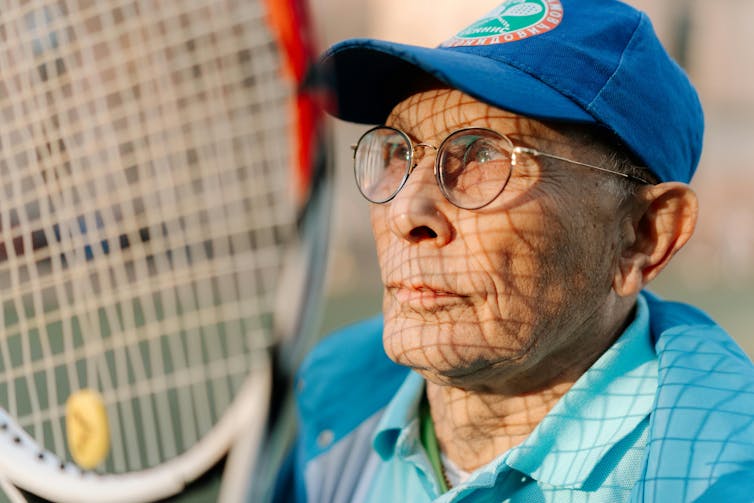
Dark glasses are everywhere: worn on the street, for driving, on the beach and on the tennis court.
Sunglasses are rich with different meanings. They protect from harsh sunlight and shield wearers from close contact with others. They also allow users to observe others without detection. They are striking accessories loved by celebrities, movie stars and fashionable influencers of all kinds.
For some celebrities, sunglasses have become part of their character.
They project an almost powerful aura for someone like Anna Wintour of Vogue. For Stevie Wonder, who wears sunglasses because he is legally blind, they have come to symbolise his particular personality, his unique ability and his iconic status.
Margaret Maynard does not work for, consult, own shares in or receive funding from any company or organisation that would benefit from this article, and has disclosed no relevant affiliations beyond their academic appointment.
The fate of Palestinian Dr Hussam Abu Safiya, director of Kamal Adwan Hospital in northern Gaza, who was “arrested” by Israeli forces last month after defiantly staying with his patients when his hospital was being attacked, featured strongly at yesterday’s medical professionals solidarity rally in Auckland.
The Israeli government bears full responsibility for the life of Dr Abu Safiya’s life amid alarming indications of torture and ill-treatment since his detention.
Euro-Med Human Rights Monitor has received information that Dr Abu Safiya’s health has deteriorated due to the torture he endured during his detention, particularly while being held at the Sde Teyman military base in southern Israel.
Euro-Med Monitor warns of the grave risk to his life, following patterns of deliberate killings and deaths under torture previously suffered by other doctors and medical staff arrested from Gaza since October 2023.
Euro-Med Monitor has documented testimonies confirming that Israeli soldiers physically assaulted Dr Abu Safiya immediately after he left the hospital on Friday, 27 December 2024. He was then directly targeted with sound bombs while attempting to evacuate the hospital in compliance with orders from the Israeli army.
According to testimonies gathered by Euro-Med Monitor, the Israeli army subsequently transferred Dr Abu Safiya to a field interrogation site in the Al-Fakhura area of Jabalia Refugee Camp.
There, he was forced to strip off his clothes and was subjected to severe beatings, including being whipped with a thick wire commonly used for street electrical wiring. Soldiers deliberately humiliated him in front of other detainees, including fellow medical staff.
Transferred to Sde Teyman military camp He was later taken to an undisclosed location before being transferred to the Sde Teyman military camp under Israeli army control.
Euro-Med Human Rights Monitor has also received information from recently released detainees at the Sde Teyman military camp, confirming that Dr Abu Safiya was subjected to severe torture, leading to a significant deterioration in his health.
Protester Jason holds a placard calling for Kamal Adwan Hospital medical director Dr Hussam Abu Safiya to be set free at yesterday’s Palestinian solidarity rally in Auckland. Image: David Robie/APR
This occurred despite him already being wounded by Israeli air strikes on the hospital, where he worked tirelessly until the facility was stormed and set ablaze by Israeli forces.
The Israeli army has attempted to mislead the public regarding Dr Abu Safiya’s detention and torture.
Pro-Israeli media outlets circulated a misleading promotional video portraying his treatment as humane, even though he was tortured and humiliated immediately after filming.
Euro-Med Monitor warns of the severe implications of Israel’s denial of Dr Abu Safiya’s detention, describing this as a deeply troubling indicator of his fate and detention conditions. This denial also reflects a blatant disregard for binding legal standards.
Physicians for Human Rights — Israel (PHRI) submitted a request on behalf of Dr Abu Safiya’s family to obtain information and facilitate a lawyer’s visit on 2 January 2024. However, the Israeli authorities claimed to have no record of his detention, stating they had no indication of his arrest.
Dr Hussam Abu Safiya . . . subjected to severe torture, leading to a significant deterioration in his health. Image: Euro-Med Monitor
Deep concern over execution risk Euro-Med Monitor expresses deep concern that Dr Abu Safiya may face execution during his detention, similar to the fate of Dr Adnan Al-Bursh, head of the orthopaedics department at Al-Shifa Hospital in Gaza City, who was killed under torture at Ofer Detention Centre on 19 April 2024.
Dr Al-Bursh had been detained along with colleagues from Al-Awda Hospital in December 2023.
Likewise, Dr Iyad Al-Rantisi, head of the obstetrics department at Kamal Adwan Hospital, was killed due to torture at an Israeli Shin Bet interrogation centre in Ashkelon, one week after his detention in November 2023. Israeli authorities concealed his death for more than seven months.
Dozens of doctors and medical staff remain subjected to arbitrary detention and enforced disappearance in Israeli prisons and detention centres, where they face severe torture and solitary confinement, according to testimonies from former detainees.
The last photograph of the director of Kamal Adwan Hospital in Gaza, Dr Hussam Abu Safiya, before he was arrested and abducted by Israeli forces. Image: @jeremycorbyn screenshot APR
The detention of Dr Abu Safiya must be understood within the context of Israel’s ongoing genocide in Gaza, which has persisted for nearly 15 months. His arrest, torture, and potential execution form part of a broader strategy aimed at destroying the Palestinian people in Gaza — both physically and psychologically — and breaking their will.
This strategy includes not only the deliberate destruction of the health sector and the disruption of medical staff operations, particularly in northern Gaza, but also an attack on the symbolic and humanitarian role represented by Dr Abu Safiya.
Despite the grave crimes committed against Kamal Adwan Hospital, its staff, and patients, especially in the past two months, Dr Abu Safiya remained unwavering in his dedication to providing essential medical care and fulfilling his medical duties.
Call on states, UN to take immediate steps Euro-Med Human Rights Monitor calls on all concerned states, international entities, and UN bodies to take immediate and effective measures to secure the unconditional release of Dr Abu Safiya. His fundamental rights to life, physical safety, and dignity must be protected, shielding him from torture or any cruel, inhuman, or degrading treatment.
Euro-Med Monitor also urges international and local human rights organisations to be granted full access to visit Dr Abu Safiya, monitor his health condition, provide necessary medical treatment, and ensure he is free from human rights violations until his release.
Furthermore, Euro-Med Monitor reiterates its call for the United Nations to deploy an international investigative mission to examine the grave crimes and violations faced by Palestinian detainees in Israeli prisons.
It calls for the immediate release of those detained arbitrarily, for international and local organisations to be granted visitation rights, and for detainees to have access to legal representation.
Euro-Med Monitor expresses regret over the continued inaction of Alice Jill Edwards, the Special Rapporteur on Torture, who has failed to address these atrocities. It condemns her bias and deliberate negligence in fulfilling her mandate and calls for her dismissal.
A new Special Rapporteur who is neutral and committed to universal human rights principles must be appointed.
Additionally, Euro-Med Monitor urges the Special Rapporteur on Extrajudicial, Summary, or Arbitrary Executions, the Working Group on Arbitrary Detention, and the Working Group on Enforced or Involuntary Disappearances to conduct immediate and thorough investigations into crimes committed by the Israeli military in Gaza.
Call for prosecution of Israeli crimes It calls for direct engagement with victims and families, as well as for reports to be submitted to pave the way for investigative committees, fact-finding missions, and international courts to prosecute Israeli crimes, hold perpetrators accountable, and compensate victims in line with international law.
Euro-Med Human Rights Monitor renews its call for relevant states and entities to fulfil their legal obligations to halt the genocide in Gaza.
This includes imposing a comprehensive arms embargo on Israel, holding it accountable for its crimes, and taking effective measures to protect Palestinian civilians. Immediate steps must also be taken to prevent forced displacement, ensure the return of residents, release arbitrarily detained Palestinians, and facilitate the urgent entry of life-saving humanitarian aid into Gaza without obstacles.
Finally, Euro-Med Monitor demands the withdrawal of Israeli occupation forces from the entire Gaza Strip.
A man has been charged with the rape and sexual assault of one of the Virgin Australia crew members in the early hours of New Year’s Day, near a nightclub in Martintar, Nadi.
Police confirm he has been charged with one count of sexual assault and one count of rape.
They say he is in custody and will appear in the Nadi Magistrates Court on Monday.
Police have yet to charge anyone in relation to the robbery of another crew member.
Meanwhile, the crew members have now returned to Australia.
A female crew member, who was allegedly sexually assaulted near the club, flew back to Australia yesterday while her male colleague returned on Thursday after receiving treatment for facial wounds.
Five other crew members remained in Fiji to assist the investigation, staying close to their hotel as directed by their airline’s headquarters.
Deputy Prime Minister and Minister for Tourism Viliame Gavoka said in an earlier statement that regrettably incidents like this could happen anywhere and Fiji was not immune.
He reminded tourists to exercise caution in nightclub areas and late at night.
Republished from Fijivillage News with permission.
Sierra Leone’s capital, Freetown, is celebrated as a city founded to resettle freed slaves in the 1790s. Over the following century, it became a truly cosmopolitan port city as people from across western Africa and the Americas made it their home.
But Freetown’s British colonial rulers struggled to acclimatise. Many were plagued by deadly fevers that earned West Africa its reputation in Europe as the “white man’s grave”.
By the turn of the 20th century, the intensifying racism of colonialism, coupled with the emergence of the new field of tropical medicine, led to the construction of Hill Station, an experimental, racially segregated settlement built in the mountains four miles south of Freetown.
This was more than simply a public health measure to protect the white colonists. It was an abandonment of Freetown – an exit strategy from a city that was seen by this colonial elite as diseased, overcrowded and dangerous. The writer and journalist Graham Greene was highly critical of these motives in his travelogue, Journey Without Maps (1936):
England had planted this town [Freetown], the tin shacks and the Remembrance Day posters, and had then withdrawn up the hillside to smart bungalows, with wide windows and electric fans and perfect service … They had planted their seedy civilization and then escaped from it as far as they could.
Now, more than a century later, a proposed masterplanned city in Sierra Leone called Sherbro Island City is raising questions about the nature of modern urban developments – questions that resonate with my research in Freetown’s public archives about the story of Hill Station.
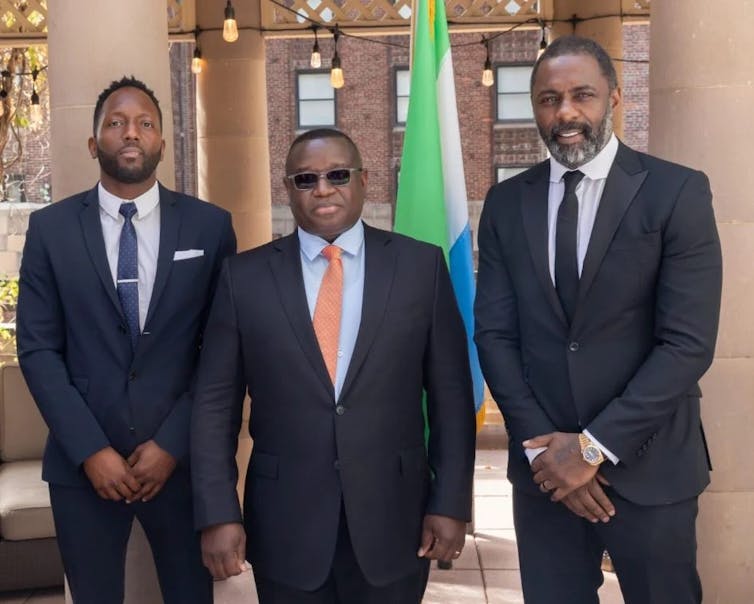
Idris Elba (right) with the CEO and co-founder of Sherbro Alliance Partners, Siaka Stevens (left), and Sierra Leone’s president, Julius Maada Wonie Bio. Sherbro Alliance Partners
The people behind Sherbro Island City, including English actor Idris Elba, are anything but colonial types. And in a country that is almost always portrayed as a place of violence and suffering – epitomised by its civil war in the 1990s and the devastating Ebola outbreak from 2014 to 2016 – the more optimistic headlines generated by Sherbro Island City are welcome. Its plans for an “afro-dynamic eco-city” promise long-term growth for Sierra Leone and the wider region.
But like Hill Station, this development – to be built on Sherbro Island, around 75 miles (120km) south of Freetown – has been planned for a small international elite. It is marketed as being clean and sanitary, with state-of-the-art “smart infrastructure” – in contrast to the perception of Freetown, like many other major African cities, as dirty, chaotic and perpetually malfunctioning.
Abuzz with anticipation
In 2019, I was in Freetown conducting research into the history of the city. On the day my fieldwork was wrapping up, Idris Elba landed for his first visit to his father’s homeland. Freetown had been buzzing with the news of his arrival. Everyone wanted to catch a glimpse of Sierra Leone’s own superstar.
On his week-long trip, Elba was busy. Events and photo opportunities swirled around a ritualistic centre piece: the presentation of citizenship by the country’s president, Julius Maada Bio. Elba was understandably enamoured by Sierra Leone and the welcome he received. Speaking to a BBC correspondent, he proclaimed that “the son of the soil is coming back to fertilise the soil”.
In fact, his plans to “fertilise” Sierra Leone were already in motion before this trip. Elba had set up a company called Sherbro Alliance Partners (SAP) earlier in 2019 with his childhood friend, Siaka Stevens – grandson of Sierra Leone’s dictatorial post-colonial president, also called Siaka Stevens.
That same year, SAP signed a memorandum of understanding with President Bio to build Sherbro Island City, envisaged as a thriving hub of improved infrastructure, tourism, media, healthcare and eco technologies.
The Insights section is committed to high-quality longform journalism. Our editors work with academics from many different backgrounds who are tackling a wide range of societal and scientific challenges.
The project has moved slowly over the past five years, but recently gathered some momentum. Lloyd’s of London and Octopus Energy have been announced as project partners. These corporate tie-ins, alongside Elba’s stardom, have given Sherbro Island City enough clout to garner global media attention.
Many journalists and commentators have praised Elba and Stevens for their capacity to “dream big”. Braima Koroma, director of research and training at the Sierra Leone Urban Research Centre in Freetown, told me that “local communities, government officials and potential investors seem to be excited about the vision of creating a modern, eco-friendly urban centre. There’s a palpable sense of anticipation surrounding the promises of job creation, improved infrastructure and increased foreign investment.”
On the other hand, Koroma told me the project’s “focus on luxury and exclusivity” has prompted “worry about the risk of exacerbating socioeconomic inequality” – suggesting the optimism generated by Sherbro Island City and desire for development in Sierra Leone may have obscured questions about the desirability of a hyper-modern city designed to attract a wealthy, globalised elite and provide returns for mobile foreign capital. The majority of Sierra Leoneans, who live on an average of just US$560 (£422) a year, will be economically locked out of this exclusive urban enclave.
A very different built environment
Much of my time in Sierra Leone was spent at the public archive building, which is located within the country’s most historic university, Fourah Bay College. One day, I was on the back of an okada (motorcycle taxi) on the steep mountain road up to the archive when I got a call from Alfred, one of the archivists, reminding me it was closed for a national holiday.
Taking advantage of a day away from dusty colonial-era documents, I redirected the driver up to the neighbourhood of Hill Station, as it is still called today, on the main road into the mountains overlooking Freetown.
At first glance, Hill Station appears an unremarkable neighbourhood of Freetown. Large compounds hide behind breeze block walls, and corrugated-iron houses hang on to the steep sides of the ridge on which Hill Station is perched.
However, a short walk off the main road reveals a very different built environment. Amid the red dirt roads and thriving palm and kapok trees, vast wooden bungalows are hoisted up on top of stilts. In varying states of decay and heavily modified with corrugated-iron extensions, these bungalows are still owned by the government and inhabited by civil servants and their families.
Hill Station’s bungalows were raised more than two metres off the ground to distance occupants from ‘miasmatic emanations’. Milo Gough, CC BY-NC-ND
On my stroll through Hill Station, the neighbourhood was very quiet aside from several men finishing off the big job of painting one of the bungalows in pastel green. While only 12 of these colonial homes remain, at its peak Hill Station consisted of about 30 bungalows.
This mountain settlement, its first stage completed in 1904, was connected to Freetown’s city centre by a narrow-gauge railway that operated to suit the hours of the few government officials who lived in Hill Station and commuted into the city each day. After returning in the evening (the last train up was at 6:30pm), British colonial officials drank together and played billiards at the recreational club. At weekends they played tennis, watched by their wives and children.
The bungalows, club and railway were built at great expense – around £86,000, roughly equivalent to £9 million today – to provide a new way of life for this handful of white colonial officials, businessmen and their families who had previously resided in the city. This was a huge project that catered for a tiny white elite – by 1911, only 90 people out of Freetown’s total population of about 40,000 lived in Hill Station.
Investment on this scale was highly unusual in Britain’s African colonies, which were usually run on shoestring budgets. The colonial government rationalised it as a response to the discovery in the late 1890s that Anopheles mosquitoes were the vector of malaria.
But African people were identified as the “reservoir” of the disease and so, according to this logic, white people would be safe from disease if they spent the night – when mosquitoes were feeding – away from them. This understanding of disease prevention is characteristic of a period that saw a hardening of the racial hierarchy in British West Africa around monolithic categories of whiteness and blackness.
To colonial officials and medical experts, the settlement of Hill Station was associated with whiteness, health and modernity. Its opposite was the city of Freetown, associated with blackness, dirt and disease. The hard binary of white-black and mountain-coast forged by the construction of Hill Station was new. But it was built on older ideas of disease transmission, race and landscape.
While I walked among the bungalows of Hill Station, a breeze blew across the ridge providing me with some relief from the hot and humid stillness that characterised Freetown’s city centre. More than a century ago, this breeze was highly prized by colonial medical officers as ventilation was thought to circulate “healthy” air.
The Hill Station bungalows were designed to harness the breeze. All four sides were lined with windows that could be opened to encourage the movement of air. But contrary to the aim of preventing the spread of malaria, the windows were not equipped with mosquito screens, as officials thought screens would prevent air flow.
Concrete foundations held iron stilts that raised the bungalows more than two metres from the ground. This functioned to distance occupants from the dangerous miasmas that were thought to emanate from the ground.
The idea that “bad air” was the cause of health problems remained central to the medical geography of empire even after the discovery of new tropical medicines. Freetown, perceived as insanitary and overpopulated, was understood as a hotbed of enervating miasmas that left white colonial officials vulnerable to contracting deadly fevers.
From the ridge, I looked down to the west over Lumley Beach, south towards the mountains of the Freetown peninsula, and east over the city centre. Freetown sprawled over the undulating terrain, pushing up tightly against the Atlantic coastline. From this same location, colonial officials would have surveyed the territory and perhaps felt secure in their place at the top of the colonial hierarchy.
The view down to Freetown, squeezed up against the Atlantic coastline. Milo Gough, CC BY-NC-ND
In the 1890s, the governor of colonial Sierra Leone, Frederick Cardew, justified the construction of Hill Station because of the “exhilarating and bracing” sensory experience of walking along this ridgeline. He marvelled at a view that “could hardly be surpassed in any part of the world in range and beauty”.
Even after Sierra Leone gained independence in 1961, Hill Station has remained a site of state power. Adjacent to the old bungalows is the president’s official residence and the various high commissions of old imperial nations, all hidden behind high walls and barbed wire.
But earlier this year, several senior civil servants and their families were evicted from their Hill Station bungalows after the government of Sierra Leone granted Turkey and Saudi Arabia plots of land to build new embassies. Their bungalows are now slated for demolition.
The destruction of Freetown’s colonial-era built environment, including the once ubiquitous 19th-century Krio bode ose (board houses), has been a consistent feature of Freetown’s postcolonial period. Many locals, looking resolutely towards a better tomorrow, do not mourn the loss of the material aftermaths of colonialism. Yet the unchecked churn of urban development can also mean some important lessons from history are forgotten.
The foundational idea of architects Foster + Partners for Sherbro Island City is to make it “afro-dynamic” – as encapsulated by its leaf motif, loosely inspired by the shape of Sherbro island. According to the marketing material, this leaf shows the way in which the city is both “connected to Africa” and “rooted in community”.
Having been a slave boat harbour in the 18th century, Sherbro island would go on to become an important colonial port. However, by the latter half of the 20th century, it was a remote and overlooked part of post-colonial Sierra Leone. The new architectural vision for Sherbro Island City doesn’t reference this history – but within the shiny publicity material, there are some echoes of Hill Station’s relationship with Freetown.
Back in October 1902, the Public Works Department erected signs in the vicinity of the proposed site, with one reading: “Warning. Any person found squatting, erecting huts, or planting on this and adjacent lands from this date will be PROSECUTED and EJECTED.”
While Sherbro Island City will also be built on land used by existing communities, SAP claims the new city will benefit the island’s population of around 40,000 people. But Bankolay Theodore Turay, a Sierra Leonean scholar based at the Centre for Housing and Sustainable Development at the University of Lagos, Nigeria, is sceptical. He explained to me that he is “not aware of any compensation process that has taken place for communities that will be dispossessed of their land, and those that will be relocated from the community”.
Sherbro Island City will exist on a separate legal footing from the rest of the nation as a special economic zone, and promises huge tax incentives to investors. It appears that it will be a private city, even if not in name, managed by business people and shaped by the interests of foreign capital.
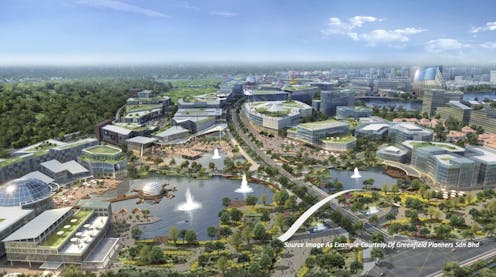
The architects’ images conform to an aesthetic of globalised modernity. Where the bungalows of Hill Station were constructed from imported prefabricated materials that conformed to a pan-imperial style, CGI renderings of Sherbro Island City imagine a hyper-modern city of glass and steel that appears to have little to do with its locale.
Foster + Partners says it has “not engaged in any detailed designs at this stage, which will be shaped by input from several stakeholders including local communities”. It adds that all of the designs “are rooted in sustainability and a respect for the communities we design for”.
Turay told me that, regardless of SAP’s claims that the city will have minimal environmental impact, “construction work does not come without environmental issues, without changing the special dynamics of the community” in an area with an “ecological footprint that is very, very low”.
In an interview in 2023, SAP’s co-founder Stevens described how the idea for the new city first germinated while he was on holiday at a luxury beach resort in Dubai. He recalled thinking: “I wish I could make my country like this one day.”
Siaka Stevens on working with Idris Elba and Sierra Leone’s president.
It looks like Sherbro Island City will, like Hill Station, be a city for the elite. Fosters + Partners’ preview book describes five “character profiles” of potential residents of, and visitors to, the city. These are a tourist family from Europe, two renowned health professionals and young parents, a South African digital nomad living between Dubai and Singapore, a recent Harvard graduate, and a successful actor and DJ.
These profiles suggest the city will be for diverse people from all over the world, but with one condition: they must be well-off.
Africa’s masterplanned cities
Sherbro Island City is not the first masterplanned city for Africa in the 21st century. Over the past 20 years, similar plans for new cities have cropped up throughout the continent.
Perhaps the most notable is Eko Atlantic City in Nigeria. First announced in 2003, the Eko Atlantic project has radically altered the geography of Nigeria’s largest city, Lagos. Built on 6.5 million square miles of reclaimed land, it protrudes into the Atlantic Ocean from what was Bar Beach. Its first few skeletal tower blocks have changed the skyline of downtown Lagos.
Other projects on the continent have been less successful. Kenya’s Konza Technopolis, conceived in 2009, is still a work-in-progress street grid 50 miles outside the capital, Nairobi. Meanwhile, Ghana’s Hope City project got no further than computer-generated images of glowing towers before being cancelled.
And then there is Senegal’s Akon City, the brainchild of Senegalese-American rapper Akon. Six years after it was announced with great fanfare, Akon City is little more than a half-built welcome centre. Some parallels to the Sherbro Island City project are evident: both are backed by global superstars, and both promise to transform the fortunes of small and often overlooked west African nations.
Turay said his first reaction to the Sherbro Island City plans was: “Is this is going to be another Akon city?” Such city-scale projects require vast amounts of capital and organisation, and many flounder facing this harsh reality.
However, not all of these projects are mirages. As South African professor of urban planning Vanessa Watson has described, cities in Africa have become the latest frontier for speculative real estate investment. This trend sped up hugely after the global financial crisis of 2007–08 as, since then, interest rates have generally been very low and capital has sought out riskier investments with potentially higher yields.
The rise of a foreign capital-led, speculative real estate market in African cities has been widely celebrated. Many urban residents across the continent see visions for modernity and new concrete structures as evidence of development, investment, and change for the better.
Comments on Eko Atlantic update videos, for example, show great pride in these ambitious plans from people who will probably never afford to live in the city’s luxury apartments. Similarly, in Sierra Leone, many people appear optimistic about the prospect of a hyper-modern city that promises development in the form of investment, jobs and infrastructure.
However, according to Braima Koroma: “There are also voices of caution. Community members and environmental activists have raised concerns about the potential displacement of residents and the environmental impact of large-scale construction.” He suggests these concerns “underline the importance of ensuring that the development is inclusive, and takes into account the needs and rights of local populations”.
Exit schemes
Beyond Sierra Leone, in countries where city-scale projects have progressed further, concerns about their potential for entrenching inequality have been communicated in different ways. The Nigerian photographer Christopher Obuh’s series of images of Eko Atlantic City, No City for Poor Man, asks viewers to reflect on the unevenness of this speculative urbanism by showing the process of construction that is usually obscured by slick videos, glossy CGI renderings and marketing speak.
In an article about Eko Atlantic, journalist Katie Jane Fernelius argued that this new city is less about developing innovative solutions to the pressing problems of a changing climate, urban overcrowding and a lack of investment, and more a place of elite moneymaking where capital can be made liquid and free-flowing. In her view, Eko Atlantic City is likely to further entrench the highly unequal status quo.
Inequality was vital to the colonial system. European empires depended on the construction of rigid hierarchies, most often around ideas of race. More recently, harsh inequalities have again become a defining feature of the world since the rise of neoliberalism in the 1980s.
The speculative urbanism of the 21st century recycles colonial logics in the form of protected compounds, private suburbs and gated communities. These spatial fixes to the challenge of living amid the masses are supported by other fixes to the “problem” of regulation, such as special economic zones, freeports and tax havens.
In his 2022 book Adventure Capitalism, Raymond Craib describes libertarian schemes to carve out spaces beyond the regulatory systems of the nation-state, from private islands to seasteads and space colonies. These extreme forms of exit have largely remained imaginary – yet these exit plans are significant in themselves, as they tell us how the wealthy envision the future.
In using his stardom to mobilise investment in Sierra Leone, I’m sure Idris Elba genuinely wants to uplift the homeland of his father. But it feels problematic that many of the most ambitious attempts at urban development in Africa, and across the world, appear to manifest largely through “exit schemes”.
The Conversation has contacted representatives for Idris Elba, Sherbro Alliance Partners and Eko Atlantic, offering them the opportunity to comment on issues raised in this article. By the time of publication, we had not received a response from any of these parties.
To hear about new Insights articles, join the hundreds of thousands of people who value The Conversation’s evidence-based news. Subscribe to our newsletter.
Milo Gough has received funding from the AHRC through CHASE DTP.
Israel is forcing two hospitals in northern Gaza to evacuate under threat of attack as its ethnic cleansing campaign continues.
Israeli forces have surrounded the Indonesian Hospital, where many staff and patients sought shelter after nearby Kamal Adwan Hospital was destroyed in an Israeli raid last week, reports Al Jazeera.
Late on Friday, a forced order to evacuate was also issued for the al-Awda Hospital, where 100 people are believed to be sheltering.
The evacuation order came today as New Zealand Palestine solidarity protesters followed a silent vigil outside Auckland Hospital yesterday with a rally in downtown Auckland’s Te Komititanga Square today, where doctors and other professional health staff called for support for Gaza’s besieged health facilities and protection for medical workers.
Protester Jason holds a placard calling for Kamal Adwan Hospital medical director Dr Hussam Abu Safiyyan to be set free at today’s Palestinian solidarity rally in Auckland. Image: David Robie/APR
When one New Zealand medical professional recalled the first time that the Israel military bombed a hospital in in Gaza November 2023, the world was “ready to accept the the lies that Israel told then”.
“Of course, they wouldn’t bomb a hospital, who would bomb a hospital? That’s a horrible war crime, if must have been Hamas that bombed themselves.
“And the world let Israel get away with it. That’s the time that we knew if the world let Israel get away with it once, they would repeat it again and again and we would allow a dangerous precedent to be set where health care workers and health care centres would become targets over and over again.
“In the past year it is exactly what we have seen,” he said to cries of shame.
“We have seen not only the targeting of health care infrastructure, but the targeting of healthcare workers.
“The murdering of healthcare workers, of aid workers all across Gaza at the hands of Israel — openly without any word of opposition from our government, without a word of opposition from any global government about these war crimes and genocidal actions until today.”
In an impassioned speech about the devastating price that Gazans were paying for the Israeli war, New Zealand Palestinian doctor and Gaza survivor Dr Abdallah Gouda vowed that his people would keep their dream for an independent state of Palestine and “we will never leave Gaza”.
The UN High Commissioner for Human Rights has called for an investigation into the Israeli attacks on Gaza hospitals and medical workers.
Volker Türktold the UN Security Council meeting on the Middle East that Israeli claims of Hamas launching attacks from hospitals in Gaza were often “vague” and sometimes “contradicted by publicly available information”.
Tino rangatiratanga and Palestinian flags at the Gazan health workers solidarity rally in Auckland today. Image: David Robie/APR
Palestine urges UN to end Gaza genocide, ‘Israeli impunity’ Riyad Mansour, the Palestinian envoy to the UN, said: “It is our collective responsibility to bring this hell to an end. It is our collective responsibility to bring this genocide to an end.”
The UNSC meeting on the Middle East came following last week’s raid on the Kamal Adwan Hospital and the arbitrary arrest and detention of its director, Hussam Abu Safia.
“You have an obligation to save lives”, Mansour told the council.
“Palestinian doctors and medical personnel took that mission to heart at the peril of their lives. They did not abandon the victims.
“Do not abandon them. End Israeli impunity. End the genocide. End this aggression immediately and unconditionally, now.”
Palestinian doctors and medical personnel were fighting to save human lives and losing their own while hospitals are under attack, he added.
“They are fighting a battle they cannot win, and yet they are unwilling to surrender and to betray the oath they took,” he said.
Norway is the latest country to condemn the attacks on Gaza’s hospitals and medical workers.
On X, the country’s Foreign Ministry said that “urgent action” was needed to restore north Gaza’s hospitals, which were continuously subjected to Israeli attack.
Without naming Israel, the ministry said that “health workers, patients and hospitals are not lawful targets”.
Urgent action is needed to restore North Gaza’s hospitals and uphold international humanitarian law.
Protecting healthcare saves lives. We share WHOs concern at #UNSC
A critical “NZ media is Zionist media” placard at today’s Auckland solidarity rally for Palestinian health workers. Image: APR
Israel ‘deprives 40,000’ of healthcare in northern Gaza The Israeli military is systematically destroying hospitals in northern Gaza, the Gaza Government Media Office said.
In a statement, it said: “The Israeli occupation continues its heinous crimes and arbitrary aggression against hospitals and medical teams in northern Gaza, reflecting a dangerous and deliberate escalation.”
These acts, it added, were being carried out amid “unjustified silence of the international community and the UN Security Council”, violating international humanitarian law and human rights conventions.
The statement highlighted the destruction of Kamal Adwan Hospital, where its director, Dr Hussam Abu Safia, was arrested and reportedly subjected to physical and psychological abuse.
The GMO described these acts as “full-fledged war crimes”.
According to a recent report by the UN High Commissioner for Human Rights, the Israeli military had conducted more than 136 air raids on at least 27 hospitals and 12 medical facilities across Gaza in the past eight months.
The GMO report demanded an independent international investigation into these violations and accountability for Israel in international courts.
Protesters at today’s Auckland rally in solidarity with Palestinian health workers under attack from Israeli military. Image: David Robie/APR
Amnesty International criticises detention of Kamal Adwan doctor Agnes Callamard, secretary-general of the human rights watchdog Amnesty International, said Israel’s detention of Dr Hussam Abu Safia underscored a pattern of “genocidal intent and genocidal acts” by Israel in Gaza.
“Dr Abu Safia’s unlawful detention is emblematic of the broader attacks on the healthcare sector in Gaza and Israel’s attempts to annihilate it,” Callamard said in a social media post.
“None of the medical staff abducted by Israeli forces since November 2023 from Gaza during raids on hospitals and clinics has been charged or put before a trial; those released after enduring unimaginable torture were never charged and did not stand trial.
“Those still detained remain held without charges or trial under inhumane conditions and at risk of torture,” she added.
Palestine Solidarity Network Aotearoa secretary Neil Scott speaking at today’s Auckland rally supporting health workers under Israeli attack in Gaza. Image: David Robie/APR
Navigating the shared challenges of climate change, geostrategic tensions, political upheaval, disaster recovery and decolonisation plus a 50th birthday party, reports a BenarNews contributor’s analysis.
COMMENTARY:By Tess Newton Cain
Vanuatu’s devastating earthquake and dramatic political developments in Tonga and New Caledonia at the end of 2024 set the tone for the coming year in the Pacific.
The incoming Trump administration adds another level of uncertainty, ranging from the geostrategic competition with China and the region’s resulting militarisation through to the U.S. response to climate change.
And decolonisation for a number of territories in the Pacific will remain in focus as the region’s largest country celebrates its 50th anniversary of independence.
The deadly 7.3 earthquake that struck Port Vila on December 17 has left Vanuatu reeling. As the country moves from response to recovery, the full impacts of the damage will come to light.
The economic hit will be significant, with some businesses announcing that they will not open until well into the New Year or later.
Amid the physical carnage there’s Vanuatu’s political turmoil, with a snap general election triggered in November before the disaster struck to go ahead on January 16.
On Christmas Eve a new prime minister was elected in Tonga. ‘Aisake Valu Eke is a veteran politician, who has previously served as Minister of Finance. He succeeded Siaosi Sovaleni who resigned suddenly after a prolonged period of tension between his office and the Tongan royal family.
Eke takes the reins as Tonga heads towards national elections, due before the end of November. He will likely want to keep things stable and low key between now and then.
Fall of New Caledonia government In Kanaky New Caledonia, the resignation of the Calédonie Ensemble party — also on Christmas Eve — led to the fall of the French territory’s government.
After last year’s violence and civil disorder – that crippled the economy but stopped a controversial electoral reform — the political turmoil jeopardises about US$77 million (75 million euro) of a US$237 million recovery funding package from France.
In addition, and given the fall of the Barnier government in Paris, attempts to reach a workable political settlement in New Caledonia are likely to be severely hampered, including any further movement to secure independence.
Possibly the biggest party in the Pacific in 2025 will be the 50th anniversary of Papua New Guinea’s independence from Australia, accompanied hopefully by some reflection and action about the country’s future.
Eagerly awaited also will be the data from the country’s flawed census last year, due for release on the same day — September 16. But the celebrations will also serve as a reminder of unfinished self-determination business, with its Autonomous Region of Bougainville preparing for their independence declaration in the next two years.
The shadow of geopolitics looms large in the Pacific islands region. There is no reason to think that will change this year.
Trump administration unkowns A significant unknown is how the incoming Trump administration will alter policy and funding settings, if at all. The current (re)engagement by the US in the region started with Trump during his first incumbency. His 2019 meeting with the then leaders of the compact states — Federated States of Micronesia, Palau, Republic of Marshall Islands — at the White House was a pivotal moment.
Under Biden, billions of dollars have been committed to “securitise” the region in response to China. This year, we expect to see US marines start to transfer in numbers from Okinawa to Guam.
However, given Trump’s history and rhetoric when it comes to climate change, there is some concern about how reliable an ally the US will be when it comes to this vital security challenge for the region.
The last time Trump entered the White House, he withdrew the US from the Paris Agreement and he is widely expected to do the same again this time around.
In addition to polls in Tonga and Vanuatu, elections will be held in the Federated States of Micronesia, Nauru, New Caledonia and for the Autonomous Bougainville Government.
There will also be a federal election in Australia, the biggest aid donor in the Pacific, and a change in government will almost certainly have impacts in the region.
Given the sway that the national security community has on both sides of Australian politics, the centrality of Pacific engagement to foreign policy, particularly in response to China, is unlikely to change.
Likely climate policy change How that manifests could look quite different under a conservative Liberal/National party government. The most likely change is in climate policy, including an avowed commitment to invest in nuclear power.
A refusal to shift away from fossil fuels or commit to enhanced finance for adaptation by a new administration could reignite tensions within the Pacific Islands Forum that have, to some extent, been quietened under Labor’s Albanese government.
Who is in government could also impact on the bid to host COP31 in 2026, with a decision between candidates Turkey and Australia not due until June, after the poll.
Pacific leaders and advocates face a systemic challenge regarding climate change. With the rise in conflict and geopolitical competition, the global focus on the climate crisis has weakened. The prevailing sense of disappointment over COP29 last year is likely to continue as partners’ engagement becomes increasingly securitised.
A major global event for this year is the Oceans Summit which will be held in Nice, France, in June. This is a critical forum for Pacific countries to take their climate diplomacy to a new level and attack the problem at its core.
In 2023, the G20 countries were responsible for 76 percent of global emissions. By capitalising on the geopolitical moment, the Pacific could nudge the key players to greater ambition.
Several G20 countries are seeking to expand and deepen their influence in the region alongside the five largest emitters — China, US, India, Russia, and Japan — all of which have strategic interests in the Pacific.
Given the increasingly transactional nature of Pacific engagement, 2025 should present an opportunity for Pacific governments to leverage their geostrategic capital in ways that will address human security for their peoples.
Dr Tess Newton Cain is a principal consultant at Sustineo P/L and adjunct associate professor at the Griffith Asia Institute. She is a former lecturer at the University of the South Pacific and has over 25 years of experience working in the Pacific islands region. The views expressed here are hers, not those of BenarNews/RFA. Republished from BenarNews with permission.
Sierra Leone’s capital, Freetown, is celebrated as a city founded to resettle freed slaves in the 1790s. Over the following century, it became a truly cosmopolitan port city as people from across western Africa and the Americas made it their home.
But Freetown’s British colonial rulers struggled to acclimatise. Many were plagued by deadly fevers that earned West Africa its reputation in Europe as the “white man’s grave”.
By the turn of the 20th century, the intensifying racism of colonialism, coupled with the emergence of the new field of tropical medicine, led to the construction of Hill Station, an experimental, racially segregated settlement built in the mountains four miles south of Freetown.
This was more than simply a public health measure to protect the white colonists. It was an abandonment of Freetown – an exit strategy from a city that was seen by this colonial elite as diseased, overcrowded and dangerous. The writer and journalist Graham Greene was highly critical of these motives in his travelogue, Journey Without Maps (1936):
England had planted this town [Freetown], the tin shacks and the Remembrance Day posters, and had then withdrawn up the hillside to smart bungalows, with wide windows and electric fans and perfect service … They had planted their seedy civilization and then escaped from it as far as they could.
Now, more than a century later, a proposed masterplanned city in Sierra Leone called Sherbro Island City is raising questions about the nature of modern urban developments – questions that resonate with my research in Freetown’s public archives about the story of Hill Station.
Idris Elba (right) with the CEO and co-founder of Sherbro Alliance Partners, Siaka Stevens (left), and Sierra Leone’s president, Julius Maada Wonie Bio. Sherbro Alliance Partners
The people behind Sherbro Island City, including English actor Idris Elba, are anything but colonial types. And in a country that is almost always portrayed as a place of violence and suffering – epitomised by its civil war in the 1990s and the devastating Ebola outbreak from 2014 to 2016 – the more optimistic headlines generated by Sherbro Island City are welcome. Its plans for an “afro-dynamic eco-city” promise long-term growth for Sierra Leone and the wider region.
But like Hill Station, this development – to be built on Sherbro Island, around 75 miles (120km) south of Freetown – has been planned for a small international elite. It is marketed as being clean and sanitary, with state-of-the-art “smart infrastructure” – in contrast to the perception of Freetown, like many other major African cities, as dirty, chaotic and perpetually malfunctioning.
Abuzz with anticipation
In 2019, I was in Freetown conducting research into the history of the city. On the day my fieldwork was wrapping up, Idris Elba landed for his first visit to his father’s homeland. Freetown had been buzzing with the news of his arrival. Everyone wanted to catch a glimpse of Sierra Leone’s own superstar.
On his week-long trip, Elba was busy. Events and photo opportunities swirled around a ritualistic centre piece: the presentation of citizenship by the country’s president, Julius Maada Bio. Elba was understandably enamoured by Sierra Leone and the welcome he received. Speaking to a BBC correspondent, he proclaimed that “the son of the soil is coming back to fertilise the soil”.
In fact, his plans to “fertilise” Sierra Leone were already in motion before this trip. Elba had set up a company called Sherbro Alliance Partners (SAP) earlier in 2019 with his childhood friend, Siaka Stevens – grandson of Sierra Leone’s dictatorial post-colonial president, also called Siaka Stevens.
That same year, SAP signed a memorandum of understanding with President Bio to build Sherbro Island City, envisaged as a thriving hub of improved infrastructure, tourism, media, healthcare and eco technologies.
The Insights section is committed to high-quality longform journalism. Our editors work with academics from many different backgrounds who are tackling a wide range of societal and scientific challenges.
The project has moved slowly over the past five years, but recently gathered some momentum. Lloyd’s of London and Octopus Energy have been announced as project partners. These corporate tie-ins, alongside Elba’s stardom, have given Sherbro Island City enough clout to garner global media attention.
Many journalists and commentators have praised Elba and Stevens for their capacity to “dream big”. Braima Koroma, director of research and training at the Sierra Leone Urban Research Centre in Freetown, told me that “local communities, government officials and potential investors seem to be excited about the vision of creating a modern, eco-friendly urban centre. There’s a palpable sense of anticipation surrounding the promises of job creation, improved infrastructure and increased foreign investment.”
On the other hand, Koroma told me the project’s “focus on luxury and exclusivity” has prompted “worry about the risk of exacerbating socioeconomic inequality” – suggesting the optimism generated by Sherbro Island City and desire for development in Sierra Leone may have obscured questions about the desirability of a hyper-modern city designed to attract a wealthy, globalised elite and provide returns for mobile foreign capital. The majority of Sierra Leoneans, who live on an average of just US$560 (£422) a year, will be economically locked out of this exclusive urban enclave.
A very different built environment
Much of my time in Sierra Leone was spent at the public archive building, which is located within the country’s most historic university, Fourah Bay College. One day, I was on the back of an okada (motorcycle taxi) on the steep mountain road up to the archive when I got a call from Alfred, one of the archivists, reminding me it was closed for a national holiday.
Taking advantage of a day away from dusty colonial-era documents, I redirected the driver up to the neighbourhood of Hill Station, as it is still called today, on the main road into the mountains overlooking Freetown.
At first glance, Hill Station appears an unremarkable neighbourhood of Freetown. Large compounds hide behind breeze block walls, and corrugated-iron houses hang on to the steep sides of the ridge on which Hill Station is perched.
However, a short walk off the main road reveals a very different built environment. Amid the red dirt roads and thriving palm and kapok trees, vast wooden bungalows are hoisted up on top of stilts. In varying states of decay and heavily modified with corrugated-iron extensions, these bungalows are still owned by the government and inhabited by civil servants and their families.
Hill Station’s bungalows were raised more than two metres off the ground to distance occupants from ‘miasmatic emanations’. Milo Gough, CC BY-NC-ND
On my stroll through Hill Station, the neighbourhood was very quiet aside from several men finishing off the big job of painting one of the bungalows in pastel green. While only 12 of these colonial homes remain, at its peak Hill Station consisted of about 30 bungalows.
This mountain settlement, its first stage completed in 1904, was connected to Freetown’s city centre by a narrow-gauge railway that operated to suit the hours of the few government officials who lived in Hill Station and commuted into the city each day. After returning in the evening (the last train up was at 6:30pm), British colonial officials drank together and played billiards at the recreational club. At weekends they played tennis, watched by their wives and children.
The bungalows, club and railway were built at great expense – around £86,000, roughly equivalent to £9 million today – to provide a new way of life for this handful of white colonial officials, businessmen and their families who had previously resided in the city. This was a huge project that catered for a tiny white elite – by 1911, only 90 people out of Freetown’s total population of about 40,000 lived in Hill Station.
Investment on this scale was highly unusual in Britain’s African colonies, which were usually run on shoestring budgets. The colonial government rationalised it as a response to the discovery in the late 1890s that Anopheles mosquitoes were the vector of malaria.
But African people were identified as the “reservoir” of the disease and so, according to this logic, white people would be safe from disease if they spent the night – when mosquitoes were feeding – away from them. This understanding of disease prevention is characteristic of a period that saw a hardening of the racial hierarchy in British West Africa around monolithic categories of whiteness and blackness.
To colonial officials and medical experts, the settlement of Hill Station was associated with whiteness, health and modernity. Its opposite was the city of Freetown, associated with blackness, dirt and disease. The hard binary of white-black and mountain-coast forged by the construction of Hill Station was new. But it was built on older ideas of disease transmission, race and landscape.
While I walked among the bungalows of Hill Station, a breeze blew across the ridge providing me with some relief from the hot and humid stillness that characterised Freetown’s city centre. More than a century ago, this breeze was highly prized by colonial medical officers as ventilation was thought to circulate “healthy” air.
The Hill Station bungalows were designed to harness the breeze. All four sides were lined with windows that could be opened to encourage the movement of air. But contrary to the aim of preventing the spread of malaria, the windows were not equipped with mosquito screens, as officials thought screens would prevent air flow.
Concrete foundations held iron stilts that raised the bungalows more than two metres from the ground. This functioned to distance occupants from the dangerous miasmas that were thought to emanate from the ground.
The idea that “bad air” was the cause of health problems remained central to the medical geography of empire even after the discovery of new tropical medicines. Freetown, perceived as insanitary and overpopulated, was understood as a hotbed of enervating miasmas that left white colonial officials vulnerable to contracting deadly fevers.
From the ridge, I looked down to the west over Lumley Beach, south towards the mountains of the Freetown peninsula, and east over the city centre. Freetown sprawled over the undulating terrain, pushing up tightly against the Atlantic coastline. From this same location, colonial officials would have surveyed the territory and perhaps felt secure in their place at the top of the colonial hierarchy.
The view down to Freetown, squeezed up against the Atlantic coastline. Milo Gough, CC BY-NC-ND
In the 1890s, the governor of colonial Sierra Leone, Frederick Cardew, justified the construction of Hill Station because of the “exhilarating and bracing” sensory experience of walking along this ridgeline. He marvelled at a view that “could hardly be surpassed in any part of the world in range and beauty”.
Even after Sierra Leone gained independence in 1961, Hill Station has remained a site of state power. Adjacent to the old bungalows is the president’s official residence and the various high commissions of old imperial nations, all hidden behind high walls and barbed wire.
But earlier this year, several senior civil servants and their families were evicted from their Hill Station bungalows after the government of Sierra Leone granted Turkey and Saudi Arabia plots of land to build new embassies. Their bungalows are now slated for demolition.
The destruction of Freetown’s colonial-era built environment, including the once ubiquitous 19th-century Krio bode ose (board houses), has been a consistent feature of Freetown’s postcolonial period. Many locals, looking resolutely towards a better tomorrow, do not mourn the loss of the material aftermaths of colonialism. Yet the unchecked churn of urban development can also mean some important lessons from history are forgotten.
The foundational idea of architects Foster + Partners for Sherbro Island City is to make it “afro-dynamic” – as encapsulated by its leaf motif, loosely inspired by the shape of Sherbro island. According to the marketing material, this leaf shows the way in which the city is both “connected to Africa” and “rooted in community”.
Having been a slave boat harbour in the 18th century, Sherbro island would go on to become an important colonial port. However, by the latter half of the 20th century, it was a remote and overlooked part of post-colonial Sierra Leone. The new architectural vision for Sherbro Island City doesn’t reference this history – but within the shiny publicity material, there are some echoes of Hill Station’s relationship with Freetown.
Back in October 1902, the Public Works Department erected signs in the vicinity of the proposed site, with one reading: “Warning. Any person found squatting, erecting huts, or planting on this and adjacent lands from this date will be PROSECUTED and EJECTED.”
While Sherbro Island City will also be built on land used by existing communities, SAP claims the new city will benefit the island’s population of around 40,000 people. But Bankolay Theodore Turay, a Sierra Leonean scholar based at the Centre for Housing and Sustainable Development at the University of Lagos, Nigeria, is sceptical. He explained to me that he is “not aware of any compensation process that has taken place for communities that will be dispossessed of their land, and those that will be relocated from the community”.
Sherbro Island City will exist on a separate legal footing from the rest of the nation as a special economic zone, and promises huge tax incentives to investors. It appears that it will be a private city, even if not in name, managed by business people and shaped by the interests of foreign capital.
The architects’ images conform to an aesthetic of globalised modernity. Where the bungalows of Hill Station were constructed from imported prefabricated materials that conformed to a pan-imperial style, CGI renderings of Sherbro Island City imagine a hyper-modern city of glass and steel that appears to have little to do with its locale.
Foster + Partners says it has “not engaged in any detailed designs at this stage, which will be shaped by input from several stakeholders including local communities”. It adds that all of the designs “are rooted in sustainability and a respect for the communities we design for”.
Turay told me that, regardless of SAP’s claims that the city will have minimal environmental impact, “construction work does not come without environmental issues, without changing the special dynamics of the community” in an area with an “ecological footprint that is very, very low”.
In an interview in 2023, SAP’s co-founder Stevens described how the idea for the new city first germinated while he was on holiday at a luxury beach resort in Dubai. He recalled thinking: “I wish I could make my country like this one day.”
Siaka Stevens on working with Idris Elba and Sierra Leone’s president.
It looks like Sherbro Island City will, like Hill Station, be a city for the elite. Fosters + Partners’ preview book describes five “character profiles” of potential residents of, and visitors to, the city. These are a tourist family from Europe, two renowned health professionals and young parents, a South African digital nomad living between Dubai and Singapore, a recent Harvard graduate, and a successful actor and DJ.
These profiles suggest the city will be for diverse people from all over the world, but with one condition: they must be well-off.
Africa’s masterplanned cities
Sherbro Island City is not the first masterplanned city for Africa in the 21st century. Over the past 20 years, similar plans for new cities have cropped up throughout the continent.
Perhaps the most notable is Eko Atlantic City in Nigeria. First announced in 2003, the Eko Atlantic project has radically altered the geography of Nigeria’s largest city, Lagos. Built on 6.5 million square miles of reclaimed land, it protrudes into the Atlantic Ocean from what was Bar Beach. Its first few skeletal tower blocks have changed the skyline of downtown Lagos.
Other projects on the continent have been less successful. Kenya’s Konza Technopolis, conceived in 2009, is still a work-in-progress street grid 50 miles outside the capital, Nairobi. Meanwhile, Ghana’s Hope City project got no further than computer-generated images of glowing towers before being cancelled.
And then there is Senegal’s Akon City, the brainchild of Senegalese-American rapper Akon. Six years after it was announced with great fanfare, Akon City is little more than a half-built welcome centre. Some parallels to the Sherbro Island City project are evident: both are backed by global superstars, and both promise to transform the fortunes of small and often overlooked west African nations.
Turay said his first reaction to the Sherbro Island City plans was: “Is this is going to be another Akon city?” Such city-scale projects require vast amounts of capital and organisation, and many flounder facing this harsh reality.
However, not all of these projects are mirages. As South African professor of urban planning Vanessa Watson has described, cities in Africa have become the latest frontier for speculative real estate investment. This trend sped up hugely after the global financial crisis of 2007–08 as, since then, interest rates have generally been very low and capital has sought out riskier investments with potentially higher yields.
The rise of a foreign capital-led, speculative real estate market in African cities has been widely celebrated. Many urban residents across the continent see visions for modernity and new concrete structures as evidence of development, investment, and change for the better.
Comments on Eko Atlantic update videos, for example, show great pride in these ambitious plans from people who will probably never afford to live in the city’s luxury apartments. Similarly, in Sierra Leone, many people appear optimistic about the prospect of a hyper-modern city that promises development in the form of investment, jobs and infrastructure.
However, according to Braima Koroma: “There are also voices of caution. Community members and environmental activists have raised concerns about the potential displacement of residents and the environmental impact of large-scale construction.” He suggests these concerns “underline the importance of ensuring that the development is inclusive, and takes into account the needs and rights of local populations”.
Exit schemes
Beyond Sierra Leone, in countries where city-scale projects have progressed further, concerns about their potential for entrenching inequality have been communicated in different ways. The Nigerian photographer Christopher Obuh’s series of images of Eko Atlantic City, No City for Poor Man, asks viewers to reflect on the unevenness of this speculative urbanism by showing the process of construction that is usually obscured by slick videos, glossy CGI renderings and marketing speak.
In an article about Eko Atlantic, journalist Katie Jane Fernelius argued that this new city is less about developing innovative solutions to the pressing problems of a changing climate, urban overcrowding and a lack of investment, and more a place of elite moneymaking where capital can be made liquid and free-flowing. In her view, Eko Atlantic City is likely to further entrench the highly unequal status quo.
Inequality was vital to the colonial system. European empires depended on the construction of rigid hierarchies, most often around ideas of race. More recently, harsh inequalities have again become a defining feature of the world since the rise of neoliberalism in the 1980s.
The speculative urbanism of the 21st century recycles colonial logics in the form of protected compounds, private suburbs and gated communities. These spatial fixes to the challenge of living amid the masses are supported by other fixes to the “problem” of regulation, such as special economic zones, freeports and tax havens.
In his 2022 book Adventure Capitalism, Raymond Craib describes libertarian schemes to carve out spaces beyond the regulatory systems of the nation-state, from private islands to seasteads and space colonies. These extreme forms of exit have largely remained imaginary – yet these exit plans are significant in themselves, as they tell us how the wealthy envision the future.
In using his stardom to mobilise investment in Sierra Leone, I’m sure Idris Elba genuinely wants to uplift the homeland of his father. But it feels problematic that many of the most ambitious attempts at urban development in Africa, and across the world, appear to manifest largely through “exit schemes”.
The Conversation has contacted representatives for Idris Elba, Sherbro Alliance Partners and Eko Atlantic, offering them the opportunity to comment on issues raised in this article. By the time of publication, we had not received a response from any of these parties.
To hear about new Insights articles, join the hundreds of thousands of people who value The Conversation’s evidence-based news. Subscribe to our newsletter.
Milo Gough has received funding from the AHRC through CHASE DTP.
Sierra Leone’s capital, Freetown, is celebrated as a city founded to resettle freed slaves in the 1790s. Over the following century, it became a truly cosmopolitan port city as people from across western Africa and the Americas made it their home.
But Freetown’s British colonial rulers struggled to acclimatise. Many were plagued by deadly fevers that earned West Africa its reputation in Europe as the “white man’s grave”.
By the turn of the 20th century, the intensifying racism of colonialism, coupled with the emergence of the new field of tropical medicine, led to the construction of Hill Station, an experimental, racially segregated settlement built in the mountains four miles south of Freetown.
This was more than simply a public health measure to protect the white colonists. It was an abandonment of Freetown – an exit strategy from a city that was seen by this colonial elite as diseased, overcrowded and dangerous. The writer and journalist Graham Greene was highly critical of these motives in his travelogue, Journey Without Maps (1936):
England had planted this town [Freetown], the tin shacks and the Remembrance Day posters, and had then withdrawn up the hillside to smart bungalows, with wide windows and electric fans and perfect service … They had planted their seedy civilization and then escaped from it as far as they could.
Now, more than a century later, a proposed masterplanned city in Sierra Leone called Sherbro Island City is raising questions about the nature of modern urban developments – questions that resonate with my research in Freetown’s public archives about the story of Hill Station.
Idris Elba (right) with the CEO and co-founder of Sherbro Alliance Partners, Siaka Stevens (left), and Sierra Leone’s president, Julius Maada Wonie Bio. Sherbro Alliance Partners
The people behind Sherbro Island City, including English actor Idris Elba, are anything but colonial types. And in a country that is almost always portrayed as a place of violence and suffering – epitomised by its civil war in the 1990s and the devastating Ebola outbreak from 2014 to 2016 – the more optimistic headlines generated by Sherbro Island City are welcome. Its plans for an “afro-dynamic eco-city” promise long-term growth for Sierra Leone and the wider region.
But like Hill Station, this development – to be built on Sherbro Island, around 75 miles (120km) south of Freetown – has been planned for a small international elite. It is marketed as being clean and sanitary, with state-of-the-art “smart infrastructure” – in contrast to the perception of Freetown, like many other major African cities, as dirty, chaotic and perpetually malfunctioning.
Abuzz with anticipation
In 2019, I was in Freetown conducting research into the history of the city. On the day my fieldwork was wrapping up, Idris Elba landed for his first visit to his father’s homeland. Freetown had been buzzing with the news of his arrival. Everyone wanted to catch a glimpse of Sierra Leone’s own superstar.
On his week-long trip, Elba was busy. Events and photo opportunities swirled around a ritualistic centre piece: the presentation of citizenship by the country’s president, Julius Maada Bio. Elba was understandably enamoured by Sierra Leone and the welcome he received. Speaking to a BBC correspondent, he proclaimed that “the son of the soil is coming back to fertilise the soil”.
In fact, his plans to “fertilise” Sierra Leone were already in motion before this trip. Elba had set up a company called Sherbro Alliance Partners (SAP) earlier in 2019 with his childhood friend, Siaka Stevens – grandson of Sierra Leone’s dictatorial post-colonial president, also called Siaka Stevens.
That same year, SAP signed a memorandum of understanding with President Bio to build Sherbro Island City, envisaged as a thriving hub of improved infrastructure, tourism, media, healthcare and eco technologies.
The Insights section is committed to high-quality longform journalism. Our editors work with academics from many different backgrounds who are tackling a wide range of societal and scientific challenges.
The project has moved slowly over the past five years, but recently gathered some momentum. Lloyd’s of London and Octopus Energy have been announced as project partners. These corporate tie-ins, alongside Elba’s stardom, have given Sherbro Island City enough clout to garner global media attention.
Many journalists and commentators have praised Elba and Stevens for their capacity to “dream big”. Braima Koroma, director of research and training at the Sierra Leone Urban Research Centre in Freetown, told me that “local communities, government officials and potential investors seem to be excited about the vision of creating a modern, eco-friendly urban centre. There’s a palpable sense of anticipation surrounding the promises of job creation, improved infrastructure and increased foreign investment.”
On the other hand, Koroma told me the project’s “focus on luxury and exclusivity” has prompted “worry about the risk of exacerbating socioeconomic inequality” – suggesting the optimism generated by Sherbro Island City and desire for development in Sierra Leone may have obscured questions about the desirability of a hyper-modern city designed to attract a wealthy, globalised elite and provide returns for mobile foreign capital. The majority of Sierra Leoneans, who live on an average of just US$560 (£422) a year, will be economically locked out of this exclusive urban enclave.
A very different built environment
Much of my time in Sierra Leone was spent at the public archive building, which is located within the country’s most historic university, Fourah Bay College. One day, I was on the back of an okada (motorcycle taxi) on the steep mountain road up to the archive when I got a call from Alfred, one of the archivists, reminding me it was closed for a national holiday.
Taking advantage of a day away from dusty colonial-era documents, I redirected the driver up to the neighbourhood of Hill Station, as it is still called today, on the main road into the mountains overlooking Freetown.
At first glance, Hill Station appears an unremarkable neighbourhood of Freetown. Large compounds hide behind breeze block walls, and corrugated-iron houses hang on to the steep sides of the ridge on which Hill Station is perched.
However, a short walk off the main road reveals a very different built environment. Amid the red dirt roads and thriving palm and kapok trees, vast wooden bungalows are hoisted up on top of stilts. In varying states of decay and heavily modified with corrugated-iron extensions, these bungalows are still owned by the government and inhabited by civil servants and their families.
Hill Station’s bungalows were raised more than two metres off the ground to distance occupants from ‘miasmatic emanations’. Milo Gough, CC BY-NC-ND
On my stroll through Hill Station, the neighbourhood was very quiet aside from several men finishing off the big job of painting one of the bungalows in pastel green. While only 12 of these colonial homes remain, at its peak Hill Station consisted of about 30 bungalows.
This mountain settlement, its first stage completed in 1904, was connected to Freetown’s city centre by a narrow-gauge railway that operated to suit the hours of the few government officials who lived in Hill Station and commuted into the city each day. After returning in the evening (the last train up was at 6:30pm), British colonial officials drank together and played billiards at the recreational club. At weekends they played tennis, watched by their wives and children.
The bungalows, club and railway were built at great expense – around £86,000, roughly equivalent to £9 million today – to provide a new way of life for this handful of white colonial officials, businessmen and their families who had previously resided in the city. This was a huge project that catered for a tiny white elite – by 1911, only 90 people out of Freetown’s total population of about 40,000 lived in Hill Station.
Investment on this scale was highly unusual in Britain’s African colonies, which were usually run on shoestring budgets. The colonial government rationalised it as a response to the discovery in the late 1890s that Anopheles mosquitoes were the vector of malaria.
But African people were identified as the “reservoir” of the disease and so, according to this logic, white people would be safe from disease if they spent the night – when mosquitoes were feeding – away from them. This understanding of disease prevention is characteristic of a period that saw a hardening of the racial hierarchy in British West Africa around monolithic categories of whiteness and blackness.
To colonial officials and medical experts, the settlement of Hill Station was associated with whiteness, health and modernity. Its opposite was the city of Freetown, associated with blackness, dirt and disease. The hard binary of white-black and mountain-coast forged by the construction of Hill Station was new. But it was built on older ideas of disease transmission, race and landscape.
While I walked among the bungalows of Hill Station, a breeze blew across the ridge providing me with some relief from the hot and humid stillness that characterised Freetown’s city centre. More than a century ago, this breeze was highly prized by colonial medical officers as ventilation was thought to circulate “healthy” air.
The Hill Station bungalows were designed to harness the breeze. All four sides were lined with windows that could be opened to encourage the movement of air. But contrary to the aim of preventing the spread of malaria, the windows were not equipped with mosquito screens, as officials thought screens would prevent air flow.
Concrete foundations held iron stilts that raised the bungalows more than two metres from the ground. This functioned to distance occupants from the dangerous miasmas that were thought to emanate from the ground.
The idea that “bad air” was the cause of health problems remained central to the medical geography of empire even after the discovery of new tropical medicines. Freetown, perceived as insanitary and overpopulated, was understood as a hotbed of enervating miasmas that left white colonial officials vulnerable to contracting deadly fevers.
From the ridge, I looked down to the west over Lumley Beach, south towards the mountains of the Freetown peninsula, and east over the city centre. Freetown sprawled over the undulating terrain, pushing up tightly against the Atlantic coastline. From this same location, colonial officials would have surveyed the territory and perhaps felt secure in their place at the top of the colonial hierarchy.
The view down to Freetown, squeezed up against the Atlantic coastline. Milo Gough, CC BY-NC-ND
In the 1890s, the governor of colonial Sierra Leone, Frederick Cardew, justified the construction of Hill Station because of the “exhilarating and bracing” sensory experience of walking along this ridgeline. He marvelled at a view that “could hardly be surpassed in any part of the world in range and beauty”.
Even after Sierra Leone gained independence in 1961, Hill Station has remained a site of state power. Adjacent to the old bungalows is the president’s official residence and the various high commissions of old imperial nations, all hidden behind high walls and barbed wire.
But earlier this year, several senior civil servants and their families were evicted from their Hill Station bungalows after the government of Sierra Leone granted Turkey and Saudi Arabia plots of land to build new embassies. Their bungalows are now slated for demolition.
The destruction of Freetown’s colonial-era built environment, including the once ubiquitous 19th-century Krio bode ose (board houses), has been a consistent feature of Freetown’s postcolonial period. Many locals, looking resolutely towards a better tomorrow, do not mourn the loss of the material aftermaths of colonialism. Yet the unchecked churn of urban development can also mean some important lessons from history are forgotten.
The foundational idea of architects Foster + Partners for Sherbro Island City is to make it “afro-dynamic” – as encapsulated by its leaf motif, loosely inspired by the shape of Sherbro island. According to the marketing material, this leaf shows the way in which the city is both “connected to Africa” and “rooted in community”.
Having been a slave boat harbour in the 18th century, Sherbro island would go on to become an important colonial port. However, by the latter half of the 20th century, it was a remote and overlooked part of post-colonial Sierra Leone. The new architectural vision for Sherbro Island City doesn’t reference this history – but within the shiny publicity material, there are some echoes of Hill Station’s relationship with Freetown.
Back in October 1902, the Public Works Department erected signs in the vicinity of the proposed site, with one reading: “Warning. Any person found squatting, erecting huts, or planting on this and adjacent lands from this date will be PROSECUTED and EJECTED.”
While Sherbro Island City will also be built on land used by existing communities, SAP claims the new city will benefit the island’s population of around 40,000 people. But Bankolay Theodore Turay, a Sierra Leonean scholar based at the Centre for Housing and Sustainable Development at the University of Lagos, Nigeria, is sceptical. He explained to me that he is “not aware of any compensation process that has taken place for communities that will be dispossessed of their land, and those that will be relocated from the community”.
Sherbro Island City will exist on a separate legal footing from the rest of the nation as a special economic zone, and promises huge tax incentives to investors. It appears that it will be a private city, even if not in name, managed by business people and shaped by the interests of foreign capital.
The architects’ images conform to an aesthetic of globalised modernity. Where the bungalows of Hill Station were constructed from imported prefabricated materials that conformed to a pan-imperial style, CGI renderings of Sherbro Island City imagine a hyper-modern city of glass and steel that appears to have little to do with its locale.
Foster + Partners says it has “not engaged in any detailed designs at this stage, which will be shaped by input from several stakeholders including local communities”. It adds that all of the designs “are rooted in sustainability and a respect for the communities we design for”.
Turay told me that, regardless of SAP’s claims that the city will have minimal environmental impact, “construction work does not come without environmental issues, without changing the special dynamics of the community” in an area with an “ecological footprint that is very, very low”.
In an interview in 2023, SAP’s co-founder Stevens described how the idea for the new city first germinated while he was on holiday at a luxury beach resort in Dubai. He recalled thinking: “I wish I could make my country like this one day.”
Siaka Stevens on working with Idris Elba and Sierra Leone’s president.
It looks like Sherbro Island City will, like Hill Station, be a city for the elite. Fosters + Partners’ preview book describes five “character profiles” of potential residents of, and visitors to, the city. These are a tourist family from Europe, two renowned health professionals and young parents, a South African digital nomad living between Dubai and Singapore, a recent Harvard graduate, and a successful actor and DJ.
These profiles suggest the city will be for diverse people from all over the world, but with one condition: they must be well-off.
Africa’s masterplanned cities
Sherbro Island City is not the first masterplanned city for Africa in the 21st century. Over the past 20 years, similar plans for new cities have cropped up throughout the continent.
Perhaps the most notable is Eko Atlantic City in Nigeria. First announced in 2003, the Eko Atlantic project has radically altered the geography of Nigeria’s largest city, Lagos. Built on 6.5 million square miles of reclaimed land, it protrudes into the Atlantic Ocean from what was Bar Beach. Its first few skeletal tower blocks have changed the skyline of downtown Lagos.
Other projects on the continent have been less successful. Kenya’s Konza Technopolis, conceived in 2009, is still a work-in-progress street grid 50 miles outside the capital, Nairobi. Meanwhile, Ghana’s Hope City project got no further than computer-generated images of glowing towers before being cancelled.
And then there is Senegal’s Akon City, the brainchild of Senegalese-American rapper Akon. Six years after it was announced with great fanfare, Akon City is little more than a half-built welcome centre. Some parallels to the Sherbro Island City project are evident: both are backed by global superstars, and both promise to transform the fortunes of small and often overlooked west African nations.
Turay said his first reaction to the Sherbro Island City plans was: “Is this is going to be another Akon city?” Such city-scale projects require vast amounts of capital and organisation, and many flounder facing this harsh reality.
However, not all of these projects are mirages. As South African professor of urban planning Vanessa Watson has described, cities in Africa have become the latest frontier for speculative real estate investment. This trend sped up hugely after the global financial crisis of 2007–08 as, since then, interest rates have generally been very low and capital has sought out riskier investments with potentially higher yields.
The rise of a foreign capital-led, speculative real estate market in African cities has been widely celebrated. Many urban residents across the continent see visions for modernity and new concrete structures as evidence of development, investment, and change for the better.
Comments on Eko Atlantic update videos, for example, show great pride in these ambitious plans from people who will probably never afford to live in the city’s luxury apartments. Similarly, in Sierra Leone, many people appear optimistic about the prospect of a hyper-modern city that promises development in the form of investment, jobs and infrastructure.
However, according to Braima Koroma: “There are also voices of caution. Community members and environmental activists have raised concerns about the potential displacement of residents and the environmental impact of large-scale construction.” He suggests these concerns “underline the importance of ensuring that the development is inclusive, and takes into account the needs and rights of local populations”.
Exit schemes
Beyond Sierra Leone, in countries where city-scale projects have progressed further, concerns about their potential for entrenching inequality have been communicated in different ways. The Nigerian photographer Christopher Obuh’s series of images of Eko Atlantic City, No City for Poor Man, asks viewers to reflect on the unevenness of this speculative urbanism by showing the process of construction that is usually obscured by slick videos, glossy CGI renderings and marketing speak.
In an article about Eko Atlantic, journalist Katie Jane Fernelius argued that this new city is less about developing innovative solutions to the pressing problems of a changing climate, urban overcrowding and a lack of investment, and more a place of elite moneymaking where capital can be made liquid and free-flowing. In her view, Eko Atlantic City is likely to further entrench the highly unequal status quo.
Inequality was vital to the colonial system. European empires depended on the construction of rigid hierarchies, most often around ideas of race. More recently, harsh inequalities have again become a defining feature of the world since the rise of neoliberalism in the 1980s.
The speculative urbanism of the 21st century recycles colonial logics in the form of protected compounds, private suburbs and gated communities. These spatial fixes to the challenge of living amid the masses are supported by other fixes to the “problem” of regulation, such as special economic zones, freeports and tax havens.
In his 2022 book Adventure Capitalism, Raymond Craib describes libertarian schemes to carve out spaces beyond the regulatory systems of the nation-state, from private islands to seasteads and space colonies. These extreme forms of exit have largely remained imaginary – yet these exit plans are significant in themselves, as they tell us how the wealthy envision the future.
In using his stardom to mobilise investment in Sierra Leone, I’m sure Idris Elba genuinely wants to uplift the homeland of his father. But it feels problematic that many of the most ambitious attempts at urban development in Africa, and across the world, appear to manifest largely through “exit schemes”.
The Conversation has contacted representatives for Idris Elba, Sherbro Alliance Partners and Eko Atlantic, offering them the opportunity to comment on issues raised in this article. By the time of publication, we had not received a response from any of these parties.
To hear about new Insights articles, join the hundreds of thousands of people who value The Conversation’s evidence-based news. Subscribe to our newsletter.
Milo Gough has received funding from the AHRC through CHASE DTP.
Sierra Leone’s capital, Freetown, is celebrated as a city founded to resettle freed slaves in the 1790s. Over the following century, it became a truly cosmopolitan port city as people from across western Africa and the Americas made it their home.
But Freetown’s British colonial rulers struggled to acclimatise. Many were plagued by deadly fevers that earned West Africa its reputation in Europe as the “white man’s grave”.
By the turn of the 20th century, the intensifying racism of colonialism, coupled with the emergence of the new field of tropical medicine, led to the construction of Hill Station, an experimental, racially segregated settlement built in the mountains four miles south of Freetown.
This was more than simply a public health measure to protect the white colonists. It was an abandonment of Freetown – an exit strategy from a city that was seen by this colonial elite as diseased, overcrowded and dangerous. The writer and journalist Graham Greene was highly critical of these motives in his travelogue, Journey Without Maps (1936):
England had planted this town [Freetown], the tin shacks and the Remembrance Day posters, and had then withdrawn up the hillside to smart bungalows, with wide windows and electric fans and perfect service … They had planted their seedy civilization and then escaped from it as far as they could.
Now, more than a century later, a proposed masterplanned city in Sierra Leone called Sherbro Island City is raising questions about the nature of modern urban developments – questions that resonate with my research in Freetown’s public archives about the story of Hill Station.
Idris Elba (right) with the CEO and co-founder of Sherbro Alliance Partners, Siaka Stevens (left), and Sierra Leone’s president, Julius Maada Wonie Bio. Sherbro Alliance Partners
The people behind Sherbro Island City, including English actor Idris Elba, are anything but colonial types. And in a country that is almost always portrayed as a place of violence and suffering – epitomised by its civil war in the 1990s and the devastating Ebola outbreak from 2014 to 2016 – the more optimistic headlines generated by Sherbro Island City are welcome. Its plans for an “afro-dynamic eco-city” promise long-term growth for Sierra Leone and the wider region.
But like Hill Station, this development – to be built on Sherbro Island, around 75 miles (120km) south of Freetown – has been planned for a small international elite. It is marketed as being clean and sanitary, with state-of-the-art “smart infrastructure” – in contrast to the perception of Freetown, like many other major African cities, as dirty, chaotic and perpetually malfunctioning.
Abuzz with anticipation
In 2019, I was in Freetown conducting research into the history of the city. On the day my fieldwork was wrapping up, Idris Elba landed for his first visit to his father’s homeland. Freetown had been buzzing with the news of his arrival. Everyone wanted to catch a glimpse of Sierra Leone’s own superstar.
On his week-long trip, Elba was busy. Events and photo opportunities swirled around a ritualistic centre piece: the presentation of citizenship by the country’s president, Julius Maada Bio. Elba was understandably enamoured by Sierra Leone and the welcome he received. Speaking to a BBC correspondent, he proclaimed that “the son of the soil is coming back to fertilise the soil”.
In fact, his plans to “fertilise” Sierra Leone were already in motion before this trip. Elba had set up a company called Sherbro Alliance Partners (SAP) earlier in 2019 with his childhood friend, Siaka Stevens – grandson of Sierra Leone’s dictatorial post-colonial president, also called Siaka Stevens.
That same year, SAP signed a memorandum of understanding with President Bio to build Sherbro Island City, envisaged as a thriving hub of improved infrastructure, tourism, media, healthcare and eco technologies.
The Insights section is committed to high-quality longform journalism. Our editors work with academics from many different backgrounds who are tackling a wide range of societal and scientific challenges.
The project has moved slowly over the past five years, but recently gathered some momentum. Lloyd’s of London and Octopus Energy have been announced as project partners. These corporate tie-ins, alongside Elba’s stardom, have given Sherbro Island City enough clout to garner global media attention.
Many journalists and commentators have praised Elba and Stevens for their capacity to “dream big”. Braima Koroma, director of research and training at the Sierra Leone Urban Research Centre in Freetown, told me that “local communities, government officials and potential investors seem to be excited about the vision of creating a modern, eco-friendly urban centre. There’s a palpable sense of anticipation surrounding the promises of job creation, improved infrastructure and increased foreign investment.”
On the other hand, Koroma told me the project’s “focus on luxury and exclusivity” has prompted “worry about the risk of exacerbating socioeconomic inequality” – suggesting the optimism generated by Sherbro Island City and desire for development in Sierra Leone may have obscured questions about the desirability of a hyper-modern city designed to attract a wealthy, globalised elite and provide returns for mobile foreign capital. The majority of Sierra Leoneans, who live on an average of just US$560 (£422) a year, will be economically locked out of this exclusive urban enclave.
A very different built environment
Much of my time in Sierra Leone was spent at the public archive building, which is located within the country’s most historic university, Fourah Bay College. One day, I was on the back of an okada (motorcycle taxi) on the steep mountain road up to the archive when I got a call from Alfred, one of the archivists, reminding me it was closed for a national holiday.
Taking advantage of a day away from dusty colonial-era documents, I redirected the driver up to the neighbourhood of Hill Station, as it is still called today, on the main road into the mountains overlooking Freetown.
At first glance, Hill Station appears an unremarkable neighbourhood of Freetown. Large compounds hide behind breeze block walls, and corrugated-iron houses hang on to the steep sides of the ridge on which Hill Station is perched.
However, a short walk off the main road reveals a very different built environment. Amid the red dirt roads and thriving palm and kapok trees, vast wooden bungalows are hoisted up on top of stilts. In varying states of decay and heavily modified with corrugated-iron extensions, these bungalows are still owned by the government and inhabited by civil servants and their families.
Hill Station’s bungalows were raised more than two metres off the ground to distance occupants from ‘miasmatic emanations’. Milo Gough, CC BY-NC-ND
On my stroll through Hill Station, the neighbourhood was very quiet aside from several men finishing off the big job of painting one of the bungalows in pastel green. While only 12 of these colonial homes remain, at its peak Hill Station consisted of about 30 bungalows.
This mountain settlement, its first stage completed in 1904, was connected to Freetown’s city centre by a narrow-gauge railway that operated to suit the hours of the few government officials who lived in Hill Station and commuted into the city each day. After returning in the evening (the last train up was at 6:30pm), British colonial officials drank together and played billiards at the recreational club. At weekends they played tennis, watched by their wives and children.
The bungalows, club and railway were built at great expense – around £86,000, roughly equivalent to £9 million today – to provide a new way of life for this handful of white colonial officials, businessmen and their families who had previously resided in the city. This was a huge project that catered for a tiny white elite – by 1911, only 90 people out of Freetown’s total population of about 40,000 lived in Hill Station.
Investment on this scale was highly unusual in Britain’s African colonies, which were usually run on shoestring budgets. The colonial government rationalised it as a response to the discovery in the late 1890s that Anopheles mosquitoes were the vector of malaria.
But African people were identified as the “reservoir” of the disease and so, according to this logic, white people would be safe from disease if they spent the night – when mosquitoes were feeding – away from them. This understanding of disease prevention is characteristic of a period that saw a hardening of the racial hierarchy in British West Africa around monolithic categories of whiteness and blackness.
To colonial officials and medical experts, the settlement of Hill Station was associated with whiteness, health and modernity. Its opposite was the city of Freetown, associated with blackness, dirt and disease. The hard binary of white-black and mountain-coast forged by the construction of Hill Station was new. But it was built on older ideas of disease transmission, race and landscape.
While I walked among the bungalows of Hill Station, a breeze blew across the ridge providing me with some relief from the hot and humid stillness that characterised Freetown’s city centre. More than a century ago, this breeze was highly prized by colonial medical officers as ventilation was thought to circulate “healthy” air.
The Hill Station bungalows were designed to harness the breeze. All four sides were lined with windows that could be opened to encourage the movement of air. But contrary to the aim of preventing the spread of malaria, the windows were not equipped with mosquito screens, as officials thought screens would prevent air flow.
Concrete foundations held iron stilts that raised the bungalows more than two metres from the ground. This functioned to distance occupants from the dangerous miasmas that were thought to emanate from the ground.
The idea that “bad air” was the cause of health problems remained central to the medical geography of empire even after the discovery of new tropical medicines. Freetown, perceived as insanitary and overpopulated, was understood as a hotbed of enervating miasmas that left white colonial officials vulnerable to contracting deadly fevers.
From the ridge, I looked down to the west over Lumley Beach, south towards the mountains of the Freetown peninsula, and east over the city centre. Freetown sprawled over the undulating terrain, pushing up tightly against the Atlantic coastline. From this same location, colonial officials would have surveyed the territory and perhaps felt secure in their place at the top of the colonial hierarchy.
The view down to Freetown, squeezed up against the Atlantic coastline. Milo Gough, CC BY-NC-ND
In the 1890s, the governor of colonial Sierra Leone, Frederick Cardew, justified the construction of Hill Station because of the “exhilarating and bracing” sensory experience of walking along this ridgeline. He marvelled at a view that “could hardly be surpassed in any part of the world in range and beauty”.
Even after Sierra Leone gained independence in 1961, Hill Station has remained a site of state power. Adjacent to the old bungalows is the president’s official residence and the various high commissions of old imperial nations, all hidden behind high walls and barbed wire.
But earlier this year, several senior civil servants and their families were evicted from their Hill Station bungalows after the government of Sierra Leone granted Turkey and Saudi Arabia plots of land to build new embassies. Their bungalows are now slated for demolition.
The destruction of Freetown’s colonial-era built environment, including the once ubiquitous 19th-century Krio bode ose (board houses), has been a consistent feature of Freetown’s postcolonial period. Many locals, looking resolutely towards a better tomorrow, do not mourn the loss of the material aftermaths of colonialism. Yet the unchecked churn of urban development can also mean some important lessons from history are forgotten.
The foundational idea of architects Foster + Partners for Sherbro Island City is to make it “afro-dynamic” – as encapsulated by its leaf motif, loosely inspired by the shape of Sherbro island. According to the marketing material, this leaf shows the way in which the city is both “connected to Africa” and “rooted in community”.
Having been a slave boat harbour in the 18th century, Sherbro island would go on to become an important colonial port. However, by the latter half of the 20th century, it was a remote and overlooked part of post-colonial Sierra Leone. The new architectural vision for Sherbro Island City doesn’t reference this history – but within the shiny publicity material, there are some echoes of Hill Station’s relationship with Freetown.
Back in October 1902, the Public Works Department erected signs in the vicinity of the proposed site, with one reading: “Warning. Any person found squatting, erecting huts, or planting on this and adjacent lands from this date will be PROSECUTED and EJECTED.”
While Sherbro Island City will also be built on land used by existing communities, SAP claims the new city will benefit the island’s population of around 40,000 people. But Bankolay Theodore Turay, a Sierra Leonean scholar based at the Centre for Housing and Sustainable Development at the University of Lagos, Nigeria, is sceptical. He explained to me that he is “not aware of any compensation process that has taken place for communities that will be dispossessed of their land, and those that will be relocated from the community”.
Sherbro Island City will exist on a separate legal footing from the rest of the nation as a special economic zone, and promises huge tax incentives to investors. It appears that it will be a private city, even if not in name, managed by business people and shaped by the interests of foreign capital.
The architects’ images conform to an aesthetic of globalised modernity. Where the bungalows of Hill Station were constructed from imported prefabricated materials that conformed to a pan-imperial style, CGI renderings of Sherbro Island City imagine a hyper-modern city of glass and steel that appears to have little to do with its locale.
Foster + Partners says it has “not engaged in any detailed designs at this stage, which will be shaped by input from several stakeholders including local communities”. It adds that all of the designs “are rooted in sustainability and a respect for the communities we design for”.
Turay told me that, regardless of SAP’s claims that the city will have minimal environmental impact, “construction work does not come without environmental issues, without changing the special dynamics of the community” in an area with an “ecological footprint that is very, very low”.
In an interview in 2023, SAP’s co-founder Stevens described how the idea for the new city first germinated while he was on holiday at a luxury beach resort in Dubai. He recalled thinking: “I wish I could make my country like this one day.”
Siaka Stevens on working with Idris Elba and Sierra Leone’s president.
It looks like Sherbro Island City will, like Hill Station, be a city for the elite. Fosters + Partners’ preview book describes five “character profiles” of potential residents of, and visitors to, the city. These are a tourist family from Europe, two renowned health professionals and young parents, a South African digital nomad living between Dubai and Singapore, a recent Harvard graduate, and a successful actor and DJ.
These profiles suggest the city will be for diverse people from all over the world, but with one condition: they must be well-off.
Africa’s masterplanned cities
Sherbro Island City is not the first masterplanned city for Africa in the 21st century. Over the past 20 years, similar plans for new cities have cropped up throughout the continent.
Perhaps the most notable is Eko Atlantic City in Nigeria. First announced in 2003, the Eko Atlantic project has radically altered the geography of Nigeria’s largest city, Lagos. Built on 6.5 million square miles of reclaimed land, it protrudes into the Atlantic Ocean from what was Bar Beach. Its first few skeletal tower blocks have changed the skyline of downtown Lagos.
Other projects on the continent have been less successful. Kenya’s Konza Technopolis, conceived in 2009, is still a work-in-progress street grid 50 miles outside the capital, Nairobi. Meanwhile, Ghana’s Hope City project got no further than computer-generated images of glowing towers before being cancelled.
And then there is Senegal’s Akon City, the brainchild of Senegalese-American rapper Akon. Six years after it was announced with great fanfare, Akon City is little more than a half-built welcome centre. Some parallels to the Sherbro Island City project are evident: both are backed by global superstars, and both promise to transform the fortunes of small and often overlooked west African nations.
Turay said his first reaction to the Sherbro Island City plans was: “Is this is going to be another Akon city?” Such city-scale projects require vast amounts of capital and organisation, and many flounder facing this harsh reality.
However, not all of these projects are mirages. As South African professor of urban planning Vanessa Watson has described, cities in Africa have become the latest frontier for speculative real estate investment. This trend sped up hugely after the global financial crisis of 2007–08 as, since then, interest rates have generally been very low and capital has sought out riskier investments with potentially higher yields.
The rise of a foreign capital-led, speculative real estate market in African cities has been widely celebrated. Many urban residents across the continent see visions for modernity and new concrete structures as evidence of development, investment, and change for the better.
Comments on Eko Atlantic update videos, for example, show great pride in these ambitious plans from people who will probably never afford to live in the city’s luxury apartments. Similarly, in Sierra Leone, many people appear optimistic about the prospect of a hyper-modern city that promises development in the form of investment, jobs and infrastructure.
However, according to Braima Koroma: “There are also voices of caution. Community members and environmental activists have raised concerns about the potential displacement of residents and the environmental impact of large-scale construction.” He suggests these concerns “underline the importance of ensuring that the development is inclusive, and takes into account the needs and rights of local populations”.
Exit schemes
Beyond Sierra Leone, in countries where city-scale projects have progressed further, concerns about their potential for entrenching inequality have been communicated in different ways. The Nigerian photographer Christopher Obuh’s series of images of Eko Atlantic City, No City for Poor Man, asks viewers to reflect on the unevenness of this speculative urbanism by showing the process of construction that is usually obscured by slick videos, glossy CGI renderings and marketing speak.
In an article about Eko Atlantic, journalist Katie Jane Fernelius argued that this new city is less about developing innovative solutions to the pressing problems of a changing climate, urban overcrowding and a lack of investment, and more a place of elite moneymaking where capital can be made liquid and free-flowing. In her view, Eko Atlantic City is likely to further entrench the highly unequal status quo.
Inequality was vital to the colonial system. European empires depended on the construction of rigid hierarchies, most often around ideas of race. More recently, harsh inequalities have again become a defining feature of the world since the rise of neoliberalism in the 1980s.
The speculative urbanism of the 21st century recycles colonial logics in the form of protected compounds, private suburbs and gated communities. These spatial fixes to the challenge of living amid the masses are supported by other fixes to the “problem” of regulation, such as special economic zones, freeports and tax havens.
In his 2022 book Adventure Capitalism, Raymond Craib describes libertarian schemes to carve out spaces beyond the regulatory systems of the nation-state, from private islands to seasteads and space colonies. These extreme forms of exit have largely remained imaginary – yet these exit plans are significant in themselves, as they tell us how the wealthy envision the future.
In using his stardom to mobilise investment in Sierra Leone, I’m sure Idris Elba genuinely wants to uplift the homeland of his father. But it feels problematic that many of the most ambitious attempts at urban development in Africa, and across the world, appear to manifest largely through “exit schemes”.
The Conversation has contacted representatives for Idris Elba, Sherbro Alliance Partners and Eko Atlantic, offering them the opportunity to comment on issues raised in this article. By the time of publication, we had not received a response from any of these parties.
To hear about new Insights articles, join the hundreds of thousands of people who value The Conversation’s evidence-based news. Subscribe to our newsletter.
Milo Gough has received funding from the AHRC through CHASE DTP.
The UN’s Special Rapporteur on Human Rights in the occupied Palestinian territory, Francesca Albanese, has called on “medical professionals worldwide” to suspend ties with Israel in an act of solidarity with the more than “1000 colleagues of yours” killed in Gaza over the past 14 months.
“Out of dismay [and] solidarity you should revolt, and urge suspension of ties with Israel until it stops the genocide [and] accounts for it. What are you waiting for,” she said.
Her appeal came as about 100 New Zealand protesters held a “silent vigil” outside the country’s largest medical institution, Auckland Hospital, declaring health workers were “not a target”.
Earlier on Friday, Albanese and the UN’s Special Rapporteur on the Right to Physical and Mental Health, Dr Tlaleng Mofokeng, issued a joint statement denouncing the “blatant disregard” for the right to health in the Gaza Strip following Israel’s attack on the Kamal Adwan Hospital and the detention of its director, Dr Hussam Abu Safia.
“For well over a year into the genocide, Israel’s blatant assault on the right to health in Gaza and the rest of the occupied Palestinian territory is plumbing new depths of impunity,” the UN experts said.
Medical professionals worldwide: my colleague @drtlaleng and I have a message you should read. Israel has killed over 1000 colleagues of yours in Gaza in 14 months. Countless were arrested, tortured, disappeared. Their “heroic actions … teach us what it means to have taken… https://t.co/aubGgZ7jsQ
— Francesca Albanese, UN Special Rapporteur oPt (@FranceskAlbs) January 3, 2025
The Auckland protesters spread in a long line outside Auckland hospital with banners declaring “healthcare workers in Aotearoa call for a ceasefire” and “stop the genocide”, and placards with slogans such as “healthcare workers and hospitals are not a target”, “Free Dr Hussam Abu Saffiya” and “hands off Kamal Adwan [a northern Gaza hospital destroyed by Israeli forces last week].
New Zealand protesters against the genocide and attacks on the healthcare workers and hospitals in Gaza outside Auckland City Hospital today. Image: David Robie/APR
Palestinian Prisoners Society warn over ‘danger’ to Dr Hussam The Palestinian Prisoners Society has warned of “a danger” to Dr Hussam Abu Safiyya, the director of Kamal Adwan Hospital in northern Gaza, following the Israeli military’s denial of any records proving his arrest, reports Anadolu Ajensi.
Munir al-Bursh, the Director-General of Gaza’s Health Ministry, said the ministry submitted a request through the Physicians for Human Rights organisation to inquire about Abu Safiyya’s fate, but the Israeli occupation responded by saying that it had no detainee by that name.
Al-Bursh told the Al Jazeera news channel that there was concern that the Israeli occupation may execute Dr Abu Safia after his arrest about a week ago.
In a statement, the Palestinian Prisoners Society said that Dr Abu Safiyya “is one of thousands of detainees from Gaza facing the crime of enforced disappearance”.
The group said that “despite clear evidence of Dr Abu Safia’s arrest on December 27, 2024, the occupation is denying what it had previously stated and is also dismissing the evidence, including photos and videos it published as well as testimonies from some detainees who were released.”
It held the Israeli authorities fully responsible for his fate.
It also reiterated its call for the “international human rights system to save what remains of its role amid the ongoing genocide, after its function has eroded due to a frightening state of impotence.”
Last Saturday, Gaza’s Health Ministry announced the arrest of Dr Abu Safiyya by the Israeli military in northern Gaza.
Physicians for Human Rights (PHRI) have been informed that the Israeli military has no record of Dr. Hussam Abu Safiyyah, director of Kamal Adwan Hospital, who was reportedly arrested by the occupation forces on December 27, 2024.
The Auckland City Hospital silent vigil protest today over the genocide in Gaza. Image: David Robie/APR
‘Proud’ of 15 months of NZ protest Meanwhile, the national chair of New Zealand’s Palestine Solidarity Network Aotearoa (PSNA) issued a statement today critical of the government’s inaction in the face of the ongoing genocide and the destruction of Gaza’s healthcare system as protests continued across the country.
“While the stench of decaying morality hangs over [New Zealand’s] coalition government and its MPs after 15 months of complicity with genocide, nationwide protests against Israel’s genocide continue in 2025,” said national chair John Minto.
“Over 15 months of weekly nationwide protests is unprecedented in New Zealand history on any issue at any time.
“We are enormously proud of New Zealanders who stand with the vast mass of humanity against Israel’s systematic, indiscriminate killing of Palestinians in Gaza.
“This week’s protests are the first of New Year and they will continue while our government cowers under the bedclothes and refuses to sanction Israel for genocide.”
The Gaza death toll stands at more than 45,000 — the majority killed being women and children.
“Today’s death toll of innocents killed is a repeating nightmare” for Palestine, he said while Western media highlighted “Israeli propaganda to justify the endless massacres while ignoring Palestinian voices”.
Journalists gathered at Gaza’s Al-Aqsa Martyrs’ Hospital expressed outrage and confusion about the Palestinian Authority’s (PA) decision to shut down Al Jazeera’s office in the occupied West Bank.
“Shutting down a major outlet like Al Jazeera is a crime against journalism,” said freelance journalist Ikhlas al-Qarnawi.
“Al Jazeera coverage has documented Israeli crimes against Palestinians, especially during the ongoing genocide,” the 28-year-old journalist told Al Jazeera at the hospital, the most reliable internet connection in the Strip to file stories from.
Yesterday, the PA temporarily suspended Al Jazeera in the occupied West Bank for what they described as broadcasting “inciting material and reports that were deceiving and stirring strife” in the country.
The decision came after Fatah, the Palestinian faction which dominates the PA, banned Al Jazeera from reporting from the governorates of Jenin, Tubas and Qalqilya in the occupied West Bank, citing its coverage of clashes between the Palestinian security forces and Palestinian armed groups in the area.
Al Jazeera criticised the PA ban, saying the move is “in line with the [Israeli] occupation’s actions against its staff”.
‘Obscuring the truth’ Since the beginning of the war, about 150 journalists have been working from the journalists’ tents at Al-Aqsa Martyrs’ Hospital, for 20 local, international and Arab media outlets.
Journalists, including those from Al Jazeera, have been forced to work from hospitals after their headquarters and media offices were destroyed.
PA decision ‘shocking but hardly surprising’. Video: Al Jazeera
Al-Aqsa TV correspondent Mohammed Issa said from the hospital that the PA’s ban contradicts international laws that guarantee journalistic freedom and could further endanger journalists.
“The PA’s decision obscures the truth and undermines the Palestinian narrative, especially a leading network like Al Jazeera,” Issa said, adding that the ban reinforces Israel’s narrative that “justifies the targeting of Palestinian journalists”.
Independent journalist Wafa Hajjaj . . . the PA’s move against Al Jazeera “worsens the situation” Image: Abdelhakim Abu Riash/Al Jazeera
“All media workers in Gaza reject this decision that silences the largest Arab and global outlet during critical times in years.”
Wafaa Hajjaj, an independent journalist working with TRT and Sahat, said the ban made her both “sad” and “disappointed”.
“At a time when Israel is deliberately targeting and killing … journalists in Gaza, with our Jazeera colleagues at the forefront, with no international or institutional protection, the PA’s move in the West Bank comes to worsen the situation,” Hajjaj said as she and her team walked into the hospital to interview the wounded.
Israel has killed at least 217 journalists and media workers in Gaza since the beginning of its war on Gaza on October 7, 2023.
Four of them were Al Jazeera journalists: Samer Abudaqa, Hamza al-Dahdouh, Ismail al-Ghoul and Ahmed al-Louh.
‘Trust Al Jazeera will persist’ Although frustrated, Hajjaj told Al Jazeera that she was hopeful the PA would drop its ban “as soon as possible”.
“I trust Al Jazeera will persist despite all sanctions, as it has for years.”
Yousef Hassouna, a photojournalist with 22 years of experience, also criticised the shutting of Al Jazeera along with “any other media outlet” targeted by such bans.
“This is a violation against all of us Palestinian journalists,” he said, adding that Al Jazeera was “an essential platform” covering Israel’s war on Gaza.
“Now more than ever, we Palestinian journalists need international support and protection, not limitations or restrictions,” Hassouna said.
Freelance journalist Ikhlas al-Qarnawi . . . the closure of Al Jazeera in thde West Bank is a “crime against journalism”. Image: Abdelhakim Abu Riash/Al Jazeera
‘Critical mistakes’ Ismail al-Thawabtah, spokesperson for the government media bureau in Gaza, said the Palestinian Authority had committed two serious mistakes over the past few weeks.
“The first: the attack on Jenin and the resulting military confrontation with our honourable Palestinian people and the resistance forces, and the second: the closure of the Al Jazeera office,” he said, adding that the move represents “serious violations of freedom of the press”.
Al-Thawabtah said both incidents required the PA to conduct a comprehensive review of policies and positions in line with supreme national interests and respect for the “rights of our Palestinian people and their basic freedoms”.
As for the journalists gathered at Al-Aqsa Martyrs’ Hospital, they were united in their call to end the ban.
“We as journalists are completely against it. I hope that action will be taken to stop this decision immediately.” said the freelance journalist al-Qarnawi, adding that the ban hurts more than just journalists.
“Our Palestinian people are the biggest losers.”
Republished from Al Jazeera under Creative Commons.
As 2024 came to a close and we have stepped into a new year overshadowed by ongoing atrocities, have you stopped to consider how these events are reshaping your world?
Did you notice how your future — and that of generations to come — is being profoundly and irreversibly altered?
The ongoing tragedy in Palestine is not an isolated event. It is a crisis that reverberates far beyond borders, threatening your safety, the well-being of your children and family.
Palestinian advocate Katrina Mitchell-Kouttab . . . a powerful address in Auckland last weekend about how people in New Zealand can help in the face of Israel’s genocide. Image: David Robie/APR
Even fragile ecosystems and creatures have been obliterated and affected by the fallout from Israel’s chemicals and pollution from its weapons.
The deliberate targeting of civilians, rampant violations of international law, and the obliteration of the rights of children are not distant horrors. They are ominous warnings of a world unravelling — consequences that are slowly seeping into the comfort of your home, threatening the very foundations of the life you thought was secure.
But here’s the hard truth: these outcomes don’t just happen in a a vacuum. They persist because of the silence, indifference, or complicity of those who choose not to act.
The question is, will you stand up for a better future, or will you look away? And how could Palestine possibly affect you and your family? Read on.
Israel acting with impunity for decades Israel has been acting with impunity for decades, flouting the norms of our legal agreements, defying the United Nations and its rulings and requests to act within the agreed global rules set after the Holocaust and the Nazis disregard for humanity.
The Germans, under Nazi rule, pursued a racist ideology to restructure the world according to race, committing crimes against humanity and war crimes that resulted in a devastating world war and the deaths of millions of people, including millions of Jews. A set of rules were formed from the ashes of these victims to ensure this horror would never happen again. It’s called international law.
However, after the Nazis defeat, it took less than a few years before atrocities began again, perpetrated by the very people who had just been brutally massacred and targeted.
European Jews, including holocaust survivors, armed by Czechoslovakia, funded by the Nazis (Havaara agreement), aided militarily by Britain, the US, Italy and France among others, arrived on foreign shores to a land that did not belong to them.
Once there, they began to disregard the very rules established to protect not only them, but the rest of humanity — rules designed to prevent a repeat of the Holocaust, safeguard against the resurgence of ideologies like Nazism, and ensure impunity for such actions would never occur again.
These rules were a shared commitment by countries to conduct themselves with agreed norms and regulations designed to respect the right of all to live in safety and security, including children, women and civilians in general. Rules that were designed to end war and promote peace, justice, and a better life for all humankind.
Rules written to ensure the sacred understanding, implementation and respect of equal rights for all people, including you, were followed to prevent us from never returning to the lawlessness and terror of World War Two.
But the creation of Israel less than 80 years ago flouted and violated these expectations. The mass murder of children, women and men in Palestine in 1948, which included burning alive Palestinians tied to trees and running them over as they lay unable to move in the middle of town squares, was only the beginning of this disrespectful dehumanisation.
Terrorised by Jewish militia Jewish militia terrorised Palestinians, lobbing grenades into Palestinian homes where families sheltered in fear, raping women and girls, and forcing every man and boy from whole villages to dig their own trenches before being shot in the back so they fell neatly into their graves.
Pregnant Palestinian women had their bellies sliced open, homes were stolen along with everything in it — including my families — and many family members were murdered.
This included my great grandmother who was shot, execution style, in front of my mother as she carried a small mattress from our home for her grandchildren when they were forcibly displaced. I still don’t know what happened to her body or where she is buried. I do know where our house is still situated in Jerusalem, although currently occupied.
These atrocities enabled Israel’s birth, shameful atrocities behind its creation. There is not one Israeli town or village that is not built on top of a Palestinian village, or town, on the blood and bones of murdered Palestinians, a practice Israel has continued.
As I write, plans to build more illegal settlements on the buried bodies of Palestinians in Gaza have already been drawn up and areas of land pre-sold.
These horrific crimes have continued over decades, becoming worse as Israel perfected and industrialised its ability to exterminate human souls, hearts and lives. Israel’s birth from its inception was only possible through terrorist actions of Jewish militia. These militia Britain designated as terrorist organisations, a designation that still stands today.
Jewish militia such as (Haganah, Irgun and Stern Gang) formed into what is now known as the Israeli Defence Force, although they aren’t defending anything; Palestine was not theirs to take in the first place.
There was never a war of independence for Israel because the state of Israel did not exist to liberate itself from anyone. Instead, Britain illegally handed over land that already belonged to the Palestinians, a peaceful existing people of three pillars of faith — Palestinian Christians Muslims and Jews. If there were any legitimate war of independence, it would be that of the Palestinian people.
Free pass to act above the law Israel continues to rely on the Holocaust’s memory to give it a free pass to act above the law, threatening world peace and our shared humanity, by using the memory of the horrors of 1945 and the threat of antisemitism to deter people from criticising and speaking out against the state’s unlawful and inhumane actions.
Yet Israel echoes the horrors of Nazi Germany and its destruction with its behaviour, the difference being the industrialisation of mass killing, modern warfare and weapons, the use of AI as a killing machine, the creation of chemical weapons and huge concentration and death camps which far surpass Germany’s capabilities.
Jews around the world have been deeply divided by Israel’s assertion that it represents all Jewish people. Not all Jews religiously and politically support Israel, many do not feel a connection to or support Israel, viewing its actions and policies as separate from their Jewish identity. For them, Israel’s claims do not define what it means to be Jewish, nor do they see its conduct as aligned with Jewish values.
This is not a “Jewish question” but a political one and conflating the two undermines the diverse perspectives within Jewish communities globally and is harmful to Jewish people. It is important to maintain a clear distinction between Judaism and the political actions of Israel.
How does a genocide across the world affect you? The perpetration of genocide and gross violations of human rights, facilitated or supported by Western powers, erodes the very foundations of the global legal framework that protects us all. This assault weakens democracy, undermines international law, and destabilises the structures you rely on for a secure future.
“The perpetration of genocide and gross violations of human rights, facilitated or supported by Western powers, erodes the very foundations of the global legal framework that protects us all.” Image: Al Jazeera headline APR
It leaves your defences crumbling, your safety compromised, and your vulnerabilities exposed to the chaos that follows such lawlessness as a global citizen of this world under the same protections and with the same equality as the Palestinians.
Palestinian children are no less deserving of safety and rights than any other children. When their rights are ignored and violated, it undermines protections for children worldwide, creating a precedent of vulnerability and injustice. If violations are deemed acceptable for some, they risk becoming acceptable for all.
Sitting safely in Aotearoa does not guarantee protection. The actions of Israel and the US, Western countries — massacring and flattening entire neighbourhoods — send a dangerous message that such horrors are only for “others”, for “brown people” who speak a different language.
But Western countries are the global minority. Many nations now view the West with growing disdain, especially in light of Israel and America’s actions, coupled with the glaring double standards and inaction of the West, including New Zealand, as they stand by and witness a genocide in progress.
When children become a legitimate target, the safety of all children is compromised. Your kids are at risk too. Just because you live on the other side of the world does not mean you are immune or beyond the reach of those who see such actions as justification for retaliation.
If such disregard for human life is deemed acceptable for one people, it will inevitably become acceptable for others. Justice and equality must extend to all children, regardless of nationality, to ensure a safer world for everyone.
But why should you care? Because Israel and the US are undermining the framework that protects you. Israel’s violations of International and humanitarian law including laws on occupation, war crimes and bombing protected institutions such as hospitals, schools, UN facilities, civilian homes and areas of safety, undermines these and sets a dangerous precedent for others to follow. Israel does not respect global peace, civilians, human rights nor has respect for life outside of its own. This lawlessness and lack of accountability is already giving other states the green light to erode the norms that protect human rights, including the decimation of the rights of the child.
The West’s support for Israel, namely the US, the UK, Canada, much of Europe, Australia and New Zealand, despite its clear violations of international law, exposes a fundamental hypocrisy. This weakens the credibility of democratic nations that claim to champion human rights and justice.
The failure of institutions like the UN to hold Israel accountable erodes trust in these bodies, fostering widespread disillusionment and scepticism about their ability to address other global conflicts. This has already fuelled an “us versus them” mentality, deepening the divide between the Global South and the Global North.
This division is marked by growing disrespect for Western governments and their citizens, who demand moral authority and adherence to the rule of law from nations in the East and South yet allow one of their “own” to brazenly violate these principles.
This hypocrisy undermines the hope for a new, respectful world order envisioned after the Holocaust, leaving it damaged and discredited.
Israel, despite its claims, has no authentic ties to the Middle East. What was once Palestinian land deeply rooted in Middle Eastern culture, has been overtaken and reshaped into to an artificial state imposed by mixed European heritage. It now stands as a Western outpost in stark contrast and isolated from surrounding Eastern cultures.
The failure of the West and the international community to stop the Palestinian genocide has begun a new period of genocide normalisation, where it becomes acceptable to watch children being blown up, women and men being murdered, shot and starved to death.
This acceptance then becomes a part of a country’s statecraft. Palestinian genocide, while it might be a little “uncomfortable” for many, has still been tolerable. If genocide is tolerable for one, then its tolerable for another.
Bias and prejudice If you can comfortably go about your day, knowing the horror other innocent human beings are facing then perhaps it might be time to reflect on and confront any underlying biases or prejudices you hold.
An interesting thought experiment is to transform and transfer what is happening in Palestine to New Zealand.
Imagine Nelson being completely flattened, and all the inhabitants of Auckland, plus some, being starved to death.
Imagine all New Zealand hospitals being destroyed, Wellington hospital with its patients still inside is blown up. All the babies in the neonatal unit are left to die and rot in their incubators, patients in the ICU units and those immobile or too sick to move are also left to die, this includes all children unable to walk in the Starship hospital.
Electricity for the whole country is turned off and all patients and healthcare workers are forced to leave at gunpoint. New Zealand doctors and nurses are stripped down to their underwear and tortured, this includes rape, and some male doctors are left to die bleeding in the street after being raped to death with metal poles and electrodes.
Water is then shut down and unavailable to all of you. You cannot feed your family, your grandchildren, your parents, your siblings, your best friends.
Imagine New Zealanders burying bodies of their children and loved ones in makeshift mass graves, while living in tents and then being subjected to chemical weapon strikes, quad copters or small drones’ attacks that drop bombs and exterminate, shooting people as they try to find food, but targeting mostly women and children.
Imagine every single human being in Upper Hutt completely wiped out. Imagine 305 New Zealand school buses full of dead children line the streets, that’s more than 11,000 killed so far. Each day more than 10 New Zealand kids lose a limb, including your children.
This number starts to increase with the hope to finally ethnically cleanse Aotearoa to make way for a new state defined by one religion and one ethnicity that isn’t yours, by a new group of people from the other side of the world.
These people, called settlers, are given weapons to hurt and kill New Zealanders as they rampage through towns evicting residents and moving into your homes taking everything that belongs to you and leaving you on the street. All your belongings, all your memories, your pets, your future, your family are stolen or destroyed.
Starting from January 2025, up to 15 New Zealanders will die of starvation or related diseases EVERY DAY until the rest of the world decides if it will come to your aid with this lawlessness. Or maybe you will die in desperation while others watch you on their TV screens or scroll through their social media seeing you as the “terrorist” and the invaders as the “victims”.
If this thought horrifies you, if it makes you feel shocked or upset, then so too should others having to endure such illegal horrors. None of what is happening is acceptable, as a fellow human being you should be fighting for the right of all of us. Perhaps you might think of our own tangata whenua and Aotearoa’s own history.
What could this mean for New Zealand? We are not creating a bright future for a country like New Zealand, whose remote location, dependence on trade, and its aging infrastructure, leaves it vulnerable to changing global dynamics. This is especially concerning with our energy dependence on imported oil, our dependence on global supply chains for essential goods including medicine (Israel’s pager attack against Hezbollah has compromised supply chains in a dangerous and horrific violation that New Zealand ignored), our economic marginalisation, and our security challenges.
All of this while surrounded by rising tensions between superpowers like the US and China which will affect New Zealand’s security and economic partnerships. Balancing economic and political ties is complicated by this government’s focus on strengthening strategic alliances with Western nations, mainly the US, whose complicity in genocide, war crimes, and disrespect for the rule of law is weakening its standing and threatens its very future.
Targeting marginalised groups The precedent set in Palestine will embolden oppressive regimes elsewhere to target minority groups, knowing that the world will turn a blind eye. Israel is a violent, oppressive apartheid state, operating outside of international law and norms and has been compared to, but is much worse than the former apartheid South Africa.
This will have a huge impact felt all over the world with the continued refugee crisis. Multicultural nations such as New Zealand will struggle to cope with the support needed for the families of our citizens in need.
An increase of the far right reminiscent of Nazi ideology and extremism Israel is a pariah state fuelled by radicalisation and extremism with an intolerance to different races, colour and ethnicity and indigenous populations. This has created a fertile ground for extremist ideologies, destabilising regions far beyond the Middle East as we have seen in Europe with the rejuvenation of the far-right movement.
Israel’s genocidal onslaughts will continue to be the cause for ongoing instability in the region, affecting global energy supplies, trade routes, and security. The Palestinian crisis will not be answered with violence, oppression and war. We aren’t going anywhere, and neither should we.
Weaponising aid and healthcare Israel’s deliberate restriction of food, water, and medical supplies to Gaza weaponises humanitarian aid, violating basic principles of humanity. A new weapon in the arsenal of pariah states and radical violent countries and a new Israeli tactic to be copied and used elsewhere. Targeting hospitals, healthcare workers, distribution centres, ambulances, the UN, and collectively punishing whole populations has never been and will never be acceptable.
If it is not acceptable that this happens to you in Aotearoa, then nor is it acceptable for Palestinians in Palestine. It is intolerable for other “terror regimes” to commit such acts, so why is it deemed acceptable when carried out by Israel and the US?
Undermining the rights to free speech, peaceful protest and freedoms During the covid pandemic, many New Zealanders were concerned with government-imposed restrictions that could be used disproportionately or as pretexts for authoritarian control. This included limitations on freedom of movement, speech, assembly, and privacy.
And yet Palestinians endure military checkpoints, curfews, restricted movement within and between their own territories, and the suppression of their right to protest or voice opposition to occupation — all due to Israel’s oppressive and illegal control. This is further enabled by the political cover and tacit support provided by this government’s failure to speak out and strongly condemn Israel’s actions.
Through its failure to take meaningful action or fulfil its third-party state obligations, this government continues to maintain normal relations with Israel across diplomatic, cultural, economic, and social spheres, as well as through trade. Moreover, it wrongly asserts on its official foreign affairs websites and policies that an occupying power has the right to self-defence against a defenceless population it has systematically abused and terrorised for decades.
The silencing of pro-Palestinian activists and criminalisation of humanitarian aid also create a chilling effect, discouraging global solidarity movements and undermining the moral fabric of societies. The use of victimhood to shroud the aggressor and blame the victim is a low point in our harrowed history. As is the vilification of moral activism and those that dare to stand against the illegal and sickening mass killing of civilians.
The attempt to persecute brave students standing up to Zionist and Israeli-run organisations and those supporting Israel (including academic and cultural institutions), by both trigger-happy billionaire Jewish investors and elite families and company investors whose answer to peaceful resistance is violence, demonstrates how far we have fallen from democracy and the rights of the citizen.
I find it completely bizarre that standing up against a genocide of helpless, unarmed civilians is demonised in order to protect the thugs, criminals and psychopaths that make up the Israeli state and its criminal actors, and the elite families and corporations profiting from this war.
Even here in Aotearoa, protesters have been vilified for drawing attention to Israel’s war crimes and double standards at the ASB Classic tennis tournament. Letting into New Zealand an IDF soldier who is associated with an institution directly implicated in war crimes and crimes against humanity should be questioned.
These protesters were falsely labelled as “pro-Hamas” by Israeli and Western media. They were portrayed negatively, seen as a nuisance. Their messages about supporting human rights and stopping a horrific genocide from continuing were not mentioned.
The focus was the effect their chants had on the tennis match and the Israeli tennis player, who was upset. Exercising their legal rights to demonstrate, the protesters were not a security issue. Yet Lina Glushko, the Israeli tennis player, claimed she needed extra security to combat a dozen protesters, many over the age of 60, who were never in any proximity of the controversial player nor were ever a threat.
No mention that Lina Glushko lives in an illegal settlement in the Occupied Palestinian Territories, or that she was in service from 2018-2020 during the Great March of Return. Or that this tennis player has made public statements mocking the suffering of Palestinians, inconsistent with Aotearoa’s commitment to combating hate speech and promoting inclusivity and respect.
Her presence erodes the integrity of international sports and sends a dangerous message that war crimes and human rights violations carry no meaningful consequences despite international law and the recent UNGA (UN General Assembly) and ICJ (International Court of Justice) resolutions and advisory opinions.
Allowing IDF soldiers entry into New Zealand disregards the pain and suffering of Palestinians and the New Zealand Palestinian community, dehumanising their plight. It sends a message of complicity to the broader international community, one that was ignored by most Western media.
Similarly, Israel’s attempts to not just control the Western media but to shut down and kill journalists, is not only a war crime, but is terrifying. Journalists’ protection is enshrined in international law due to the essential nature of their work in fostering accountability, transparency, and justice. They expose corruption, war crimes, and human rights abuses. Real journalism is vital for democracy, ensuring citizens are informed about government actions and global events.
Israel’s targeting of journalists undermines the rule of law and emboldens it and other perpetrators to commit further atrocities without fear of scrutiny or consequences.
The suffering of Palestinians is a human rights issue that transcends borders. Allowing genocide and oppression to continue undermines the shared humanity that binds us all. Israel’s actions reflect the dehumanisation of an entire population and our failure to enforce accountability for these crimes weakens international systems designed to protect your family and you.
Israel’s influence is far reaching, and New Zealand is not immune. Any undue influence by foreign states, including Israel, threatens New Zealand’s sovereignty and ability to make independent decisions in its national interest. Lobbying efforts by organisations like the Zionist Federation or the Jewish National Fund (JNF), the Jewish Council and the Holocaust Centre of New Zealand push policies that do not align with New Zealand’s broader public interest.
Aligning with a state that is violating rights and in a court of law on charges of war crimes, crimes against humanity and genocide, leaves citizens wide open to the same controls and concerns we are now seeing Americans and Europeans face at the mercy of AIPAC and Israeli influence.
Palestine is a test of the international community’s commitment to justice, human rights, and the rule of law. If Israel is allowed to continue acting with impunity, the global system that protects us all will be irreparably weakened, paving the way for more injustice, oppression, and chaos. It is a fight for the moral and legal foundations of the world we live in and ignoring it will have far-reaching consequences for everyone.
So, as you usher in 2025, don’t sit there and clink your glasses, hoping for a better year while continuing to ignore the suffering around you. Act to make 2025 better than the horrific few years the world has been subjected to, if not for humanity, then for yourself and your family’s future. Start with the biggest threat to world peace and stability — Israel and US hegemony.
What you can do You can make a difference in the fight against Israel’s illegal occupation and violations of human rights, including the deliberate targeting of children by taking simple yet impactful steps. Here’s how you can start today:
Boycott products supporting oppression: Remove at least five products from your weekly supermarket shopping list that are linked to companies supporting Israel’s occupation or that are made in Israel. Use tools like the “No Thanks” app to identify these items or visit the Boycott, Divestment, and Sanctions (BDS) website for detailed advice and information.
Hold the government accountable: Write letters to your government representatives demanding action to uphold democracy and human rights. Remind them of New Zealand’s obligations under international law to stand against human rights abuses and violations of global norms. Demand fair and equitable foreign policies designed to protect us all.
Educate yourself: Learn about the history of the Palestine-Israel conflict, especially the events of 1948, to better understand the roots of the ongoing crisis. Knowledge is a powerful tool for advocacy and change.
Seek alternative news sources: Expand your perspective by accessing a wide range of news sources including from platforms such as Al Jazeera, Double Down News, and Middle East Eye.
Be a citizen, not a bystander: Passive spectatorship allows injustice to thrive. Take a stand. Whether by boycotting, writing letters, educating yourself, or raising awareness, your actions can contribute to a global movement for justice for us all.
Together, we can challenge systems of oppression and demand accountability for crimes against humanity. Let 2025 not just be another year of witnessing suffering but one where we collectively take action to restore justice, uphold humanity, and demand accountability. The time to act is now.
The Cook Islands will not pursue membership in the United Nations and the Commonwealth due to its inability to meet the criteria for UN membership and existing relationship with New Zealand, which fulfils Commonwealth membership requirements.
Prime Minister Mark Brown has clarified that the Cook Islands is not qualified for UN membership, a long-standing government proposal that has remained uncertain.
In an exclusive interview with Cook Islands News, Brown was asked to provide an update on the government’s plans for a UN membership.
“That’s old news now, I mean we’ve been around the block with that a few years, and a few times,” Brown said.
“So that’s again another one, we haven’t pursued that. There are a number of criteria that the UN requires for membership and according to them, we don’t meet those requirements.”
Cook Islands has maintained diplomatic ties with the UN since the 1990s. It is not currently a member of the UN.
Earlier this year, the Cook Islands government applied for membership with the International Monetary Fund (IMF), a first step on the road to becoming a member of the UN.
Cook Islands Minister for Foreign Affairs Tingika Elikana then told RNZ that the decision to become a UN member would ultimately need to be decided by the general population of the Cook Islands through a referendum.
The Cook Islands is part of the realm of New Zealand, which makes Cook Islanders also New Zealand citizens. If the Cook Islands joins the United Nations as a separate member to NZ, it would potentially forfeit its citizenship rights under the current treaty which binds the nations.
Cook Islands Foreign Affairs Minister Tingika Elikana . . . “I think a referendum would need to be run and then we will enter into discussions with New Zealand.” Image: Johnny Blades/VNP
“I don’t think short-term elected politicians should decide on that. I think a referendum would need to be run and then we will enter into discussions with New Zealand,” Elikana then said.
When asked about the possibility of joining the Commonwealth, an international association of 56 member states, primarily comprised of former British territories, Brown said the government would not be making another effort to try and become a member.
“We did enquire a number of years ago about it, but the understanding was because we’re part of the realm of New Zealand, that is considered our membership in the Commonwealth, even though we don’t have any place at the table, and we don’t speak at the Commonwealth,” Brown explained.
“So, they consider that our realm relationship is where we are in terms of Commonwealth membership.”
Cook Islands News understands the Ministry of Foreign Affairs and Immigration has written to the Commonwealth Secretariat about the country’s membership.
Brown confirmed that a letter had already been submitted to the Commonwealth for that purpose, but he was uncertain whether a response had been received.
“But from what I understand, that is the response that we’ve had from officials at the Commonwealth, is that they consider us through New Zealand as part of the realm of New Zealand as already being covered in the Commonwealth, even though we don’t have a seat or a voice there.”
When asked if this would be considered the government’s final attempt to gain Commonwealth membership, the Prime Minister responded “yes”.
“I think so, I mean I’ve got to weigh it up as well with what benefit we get from being part of the CHOGM (Commonwealth Heads of Government Meeting),” he said.
Brown added that there were areas where the Cook Islands did receive support from the likes of the Commonwealth Secretariat.
“We have had support from the likes of the Commonwealth Secretariat in the past with things like technical assistance that they provided for us in the early stages of our development of our Seabed Minerals Authority office.”
Republished with permission from the Cook islands News.
The common fruit fly (Drosophila melanogaster), more correctly called the vinegar fly, is a frequent visitor to ripe fruit in households around the world, where it often deposits eggs on rotting flesh without being noticed. We have probably all consumed different body parts of fruit flies – without any known ill effects.
But the fruit fly is much more than an annoying house guest.
In fact, Drosophila melanogaster has been one of the most important species for science for more than a century.
Were it not for these flies, some of the most significant scientific discoveries might never have been made.
The origin of the fruit fly
The species has its origins in the woodlands of south-central Africa, where it relied heavily on the marula fruit. This fruit was – and remains – part of the human diet in this region too, leading to fruit flies developing an association with human communities and settlements.
In time, this association would lead to fruit flies first spreading throughout Africa, then into Asia, Europe and – within the past few centuries – North and Central America and Australia.
It is important to distinguish Drosophila melanogaster and its close relatives from the larger and more colourful “true” fruit flies, several of which are found in Australia.
Also called tephritid flies, these attack fruit well before it rots. Millions of dollars have been spent (ultimately unsuccessfully) trying to keep them out of parts of Victoria and South Australia.
Drosophila flies do become hugely abundant in some places, with clouds emerging from heaps of rotting fruit in wineries, stone fruit orchards and banana plantations during harvest. However, these cases are unusual and the fly is rarely considered a pest species.
Even though fruit flies are an unwanted house guest, they are rarely considered a pest species. Anne Webber/Shutterstock
Inherently suited to science
While most non-pest insects receive little scientific attention, the fruit fly is an exception.
Some of the properties which make fruit flies such a popular research organism are inherent. They are small, easy to feed, have a very quick life cycle and can produce hundreds of offspring.
However, the findings of today’s Drosophila melanogaster researchers also owe a great deal to decades of genetic tool development.
These allow us to create almost any genetic variant we wish. For example, we can modify the sequence of a vinegar fly gene so that the protein it encodes becomes fluorescent. We can even take genes from other organisms and study their effects in fruit flies.
Combined, these factors help explain why the fruit fly has played a major role in four fields of research in particular.
1. Understanding genes
The fruit fly has a long history of use in genetics research and teaching.
It was in Drosophila melanogaster that genes were found to be bundled up in chromosomes, through crosses between red-eyed and mutant white-eyed flies. While this research was conducted more than a century ago, such crosses remain a powerful way of illustrating the principles of inheritance.
The fruit fly also remains a powerhouse for biological discovery. Its genome was sequenced in the 1990s. This was done in part as a trial run for assembly of the human genome, but also to allow for comparisons of genes across animals.
Many vinegar fly genes show clear relationships to specific human genes, including around 65% of genes associated with human diseases. This allows research into processes from embryonic development and disease progression to learning and ageing to be conducted in the vinegar fly.
2. Understanding tissue damage
Animals vary greatly in their capacity to regenerate damaged structures. For example, if you cut certain flatworms in half, both sections can regenerate the rest of the body.
While fascinating, these do not provide a good model for the more modest – but still crucial – human capacity for wound healing. Fruit flies, which like humans are composed of numerous complex tissues, have been crucial in mapping the molecular interactions involved in allowing cells to migrate and stitch together to repair tissue damage.
Perhaps surprisingly given their short lifespan (no more than a few months even under optimal conditions), fruit flies are also a favourite model for cancer research.
They offer alternatives to traditional cell-culture-based methods for evaluating the activity of chemotherapeutic drugs, which cannot reflect the complexities of how a tumour interacts with surrounding tissues, and are especially popular in screening for effective combinations of chemotherapeutic treatments.
Fruit flies are small, easy to feed, have a very quick life cycle and can produce hundreds of offspring. This makes them an ideal research organism. Sundry Photography/Shutterstock
3. Understanding disease control
Beyond providing tools and biological understanding applicable to medicine and biology, Drosophila melanogaster has contributed directly to disease control.
Specifically, Wolbachia bacteria isolated from this species are being used to suppress the transmission of dengue disease and other human viral diseases transmitted by mosquitoes.
A strain of Wolbachia living inside the tissues of fruit flies and passed from mother to offspring was transferred through microinjection to Aedes mosquitoes.
The Wolbachia bacteria interact with viruses in such a way as to prevent viral build-up in the salivary gland of the mosquitoes.
This work has already prevented many cases of dengue transmission in northern Australia and in many countries overseas.
4. Understanding evolution
Finally, fruit flies provide useful experimental systems for investigating evolution, particularly in the context of threatened species conservation.
This work has established the value of maintaining genetic variation in threatened species to preserve their ability to evolve and counter the effects of disease and climate change. Fruit fly populations in the field are currently being tracked to see if the species is adapting to the warmer and drier conditions we are experiencing.
So this summer, look carefully at your fruit bowl and see if you can spot a small yellow-brown insect flying around it.
Then remember all the ways Drosophila melanogaster has contributed to our well-being. Perhaps admire it rather than reaching for that can of fly spray.
Ary Hoffmann receives funding from the Australian Research Council
Caitlyn Perry receives funding from the Australian Research Council.
About 20 minutes’ drive north of Geraldton, on Australia’s west coast, lies a hill named Mount Sommer. The little peak is one of the few relics left behind by the enigmatic nineteenth-century polymath Dr Ferdinand von Sommer, Western Australia’s first government geologist.
In the span of four years, von Sommer made a few friends, several enemies and a handful of surprisingly excellent maps of parts of Western Australia. His origins, life and career have been rather shrouded in mystery – in no small part because of the flood of disparaging invective about him published in local newspapers of the day.
So who was Ferdinand von Sommer? I traced his story through archival records in Europe, Africa and Asia. In the process of documenting von Sommer’s life and activities, I uncovered a multi-talented, self-assured and audacious individual whose talents and achievements have been largely forgotten.
Mathematics, medicine and minerals
Born in the Netherlands circa 1800, von Sommer studied mathematics at the University of Göttingen under the famous Carl Friedrich Gauss. After graduating in 1822, he claimed to have solved some complex problems in mathematics, but Gauss and others found his results confusing and unsatisfactory.
After serving in the Dutch navy and making a living as a writer and journalist, von Sommer worked as a university lecturer in Berlin. In 1838, he trained as a doctor and set out for India as a missionary before spending a year in Cape Town as a doctor.
Back in London in 1841, von Sommer reappeared as a “Prussian naturalist” named Frederic de Sommer. His efforts to sell an apparently sizeable art collection made news in several European papers.
It was at this time that von Sommer became interested in mineralogy and metallurgy. In 1842, he returned to Berlin to lecture in nautical science and the art of mine surveying. He also published several works of fiction, poetry, autobiography and philosophy in this period.
In late 1844 he set out for New Zealand, where he stayed briefly before heading on to South Australia, arriving in Adelaide in September 1845.
Copper and libel in Adelaide
Von Sommer arrived during Australia’s first mineral boom: the “Burra Copper Boom” (1845–51). The fast-growing Burra Burra copper mine in the Clare Valley, 100km north of Adelaide, attracted thousands.
An eyewitness later recalled von Sommer’s arrival:
dignified by a moustache and distinguished by a palpable want of familiarity with the English language, in virtue of which qualifications he was duly installed as assayer, smelter, and superintendent at the Burra Mine.
Von Sommer was a vocal critic of local mining practices, and made few friends. After only a few months he was dismissed as “too costly to retain”.
Von Sommer remained in South Australia, working as a doctor. However, he was widely derided in the local papers.
One described him as “a German, who had been occasionally mixed up in mining speculations, but lately had not followed any fixed calling”. The criticism reached such a pitch that von Sommer even (successfully) sued John Stephens, the editor and proprietor of the South Australian Register, for libel.
Surveying and ‘backbiting’ in Western Australia
Next stop for von Sommer was Perth, working for the Western Australian Mining Company.
Here he received a more welcoming reception, described as “a mineralogist of eminence” who would help the colony’s attempt at “sharing in the mineral wealth of Australia”.
One of Ferdinand von Sommer’s maps, showing a part of Western Australia situated between Perth and the estuary of the Hutt. Colonial Secretary’s Office
After six months surveying in Western Australia (during which he once again vocally criticised local mining methods, proposing instead a “proper and practical way of mining”), von Sommer was appointed the first government geologist.
Throughout 1847 he travelled around Western Australia, sending several geological survey reports back to Perth.
During this time von Sommer suffered more of what he called “rather stupid backbitings” in local newspapers. One described him as “a mere charlatan”.
When von Sommer finally had enough, shipping out to what is now Jakarta in August 1848, one paper reported that
Dr von Sommer had quitted Western Australia for Batavia after some queer doings in the way of pretended mineral research and discovery.
Now employed by the Dutch government, von Sommer set out to search for copper deposits on Timor and the surrounding islands. Here, after an unknown illness, he died in 1849.
Parts of von Sommer’s Australian legacy are now found in London. He sent several letters to the Geological Society of London, including maps, and a paper tracing a coal field near the head of the Irwin River, as well as several specimens of rocks and shells.
Postscript
I found a strange postscript to von Sommer’s story. In the late 1850s, German-language newspapers reported with great interest the adventures of a man impersonating Ferdinand von Sommer (perhaps his youngest son, born in the early 1840s, who would have had no personal memory of his father).
Police reported “an alleged Doctor of Philosophy, Franz Wilhelm Ferdinand von Sommer, who was unable to prove that he had lawfully obtained the title of Doctor, just as he was unable to prove that he was entitled to hold the title of nobleman”.
He had “swindled a considerable sum of money from his benefactress, the convent mistress of Renoault [and] squandered this money at the Schandau baths and other places of amusement” in the company of a 17-year-old girl with whom he had co-habited in the spa town.
The impostor was “sentenced to three years in prison and a fine of 500 thalers”, but managed to escape when he “was granted leave of absence from prison for some time due to illness […]. Now he has been arrested in Frankfurt am Main after committing new frauds there”.
And with that the name of Ferdinand von Sommer fades from the historical record, waiting to be rediscovered.
Alexandra Ludewig does not work for, consult, own shares in or receive funding from any company or organisation that would benefit from this article, and has disclosed no relevant affiliations beyond their academic appointment.
Source: The Conversation (Au and NZ) – By Konstantine Panegyres, McKenzie Postdoctoral Fellow, researching Greco-Roman antiquity, The University of Melbourne
Imagine a summer holiday at a seaside resort, with days spent sunbathing, reading books, exploring nature and chatting with friends.
Sounds like it could be anywhere in Australia or New Zealand in January, doesn’t it?
This is also how the Roman emperor Julian spent his summers in the 4th
century CE. Towards the end of 357 CE, Julian wrote a letter to his friend Evagrius, telling him how he spent his holidays at his grandmother’s estate as a boy and young man:
Very peaceful it is to lie down there and glance into some book, and then, while resting one’s eyes, it is very agreeable to gaze at the ships and the sea.
When I was still hardly more than a boy I thought that this was the most delightful summer residence, for it has, moreover, excellent springs and a charming bath and garden and trees.
As Julian got older, though, he had less time for summer holidays. Work consumed him. Even when he was on a break, he couldn’t fully relax.
This might sound familiar, too. It seems very little has changed from the days of the ancient Greek and Roman empires when it comes to finding time to unwind – and being on holidays, too.
Finding time for a break
Taking time off was important in ancient Greek and Roman times. Even Greek and Roman slaves were permitted to take a few holidays each year.
Not everyone could enjoy their holidays, however.
In 162 CE, Marcus Aurelius, then emperor of Rome, took four days of holiday at a resort in Alsium, a city on the coast of modern-day Italy.
Marcus Aurelius had a tough time relaxing. Borghese Collection/Wikimedia Commons
According to his friend Marcus Cornelius Fronto (c. 95-166 CE), though, the emperor could not stop working. In a letter, Fronto criticises Marcus for continuing to work hard rather than sleeping in, exploring the seaside, rowing on the ocean, bathing and feasting on seafood.
Fronto amusingly says that Marcus, rather than enjoy his holiday, has instead “declared war on play, relaxation, good living, and pleasure”.
Going to the seaside
Relaxing by the coast was one of the things people in ancient Greece and Rome most enjoyed doing in the summer.
The rich built summer residences on the coast, while people of all walks of life flocked to seaside resorts to enjoy the fresh air and cool water.
The orator Libanius (314-393 CE) wrote that the people who really enjoy life the most are those who have the freedom to “drive to their estates, visit other towns, buy land, and visit the seaside”.
William Marlow painting of the ruins of the Temple of Venus at Baiae, a popular holiday spot for ancient Romans. Birmingham Museums Trust/Wikimedia Commons
Health tourism was also a popular reason why people came to the seaside. Many ancient doctors recommended sea water and air as cures for all kinds of health problems, especially those related to the skin and respiratory system.
For example, the doctor Aretaeus of Cappadocia (c. 150-200 CE) recommended bathing in sea water, wrestling on sand and living by the sea as therapies for those who get frequent headaches.
Travelling abroad
Visiting foreign places was another of the things people in ancient Greece and Rome most enjoyed doing on their summer holidays.
For the Romans, trips to see Greece – and in particular Athens – were especially popular.
The Roman general Germanicus (15 BCE–19 CE) went on a tour of Greece in 18 CE, travelling from Athens eastward to Euboea, Lesbos, the coast of Asia Minor and then to Byzantium and Pontus.
Germanicus was drawn to the Greek classics. Musée Saint-Raymond/Wikimedia Commons
According to the Roman historian Tacitus, Germanicus was motivated by a desire to see famous ancient sites. Like many Romans, he was fascinated by the old stories of the Greek past, so he was “eager to make the acquaintance of those ancient and storied regions”.
Another popular destination for ancient Greeks and Romans was Egypt, which had always been regarded as a land of wonder.
Roman tourists could catch regular boats from Puteoli to the great Egyptian city Alexandria. The trip took anywhere from one to two weeks, stopping along the way in Sicily and Malta.
Once there, the highlights were typically the great Nile River and Pyramids. Tourists marvelled at the immense temples and walls of hieroglyphic writing.
When Germanicus visited Egypt in 19 CE, he was so curious about the meaning of the hieroglyphics that he asked an old Egyptian priest to translate some for him.
In Alexandria, another attraction was the tomb of Alexander the Great (356-323 BCE). His body was stored in honey in a coffin made of glass. Ordinary tourists were not allowed to visit it, but VIPs like Roman emperors were.
Tourists might also have enjoyed the different vibe in Alexandria. According to the Greek orator Dio of Prusa (c. 40-110/120 CE), the atmosphere in the coastal city was relaxed, with plenty of music, chariot racing and good food.
Line drawing of a scene from Alexandria in ancient times. Adolf Gnauth/Wikimedia Commons
Lazy summer days
We can probably all relate to what the writer Pliny the Younger (61/62-112 BCE) said about his summer break.
Writing on a holiday in Tuscany, he said he can only work “in the lazy way to be expected during a summer holiday”. Working any other way was simply not possible. Many of us will be able to relate to that!
Konstantine Panegyres does not work for, consult, own shares in or receive funding from any company or organisation that would benefit from this article, and has disclosed no relevant affiliations beyond their academic appointment.
Source: The Conversation (Au and NZ) – By Francesca Storey, Deputy Director Te Tātai Hauora o Hine – National Centre for Women’s Health Research Aotearoa, Te Herenga Waka — Victoria University of Wellington
After committing to a global plan to eliminate cervical cancer, New Zealand is lagging behind Australia and other countries in how it manages this preventable disease.
Human papillomavirus (HPV) is the cause of 95% of cervical cancers and some throat and anal cancers. New Zealand has a very effective vaccine against this cancer. And HPV screening can detect changes on the cervix before cancer occurs.
With vaccination and screening it is now realistic to aim to eliminate cervical cancer in our lifetime – but it requires a strategy and investment.
90% of girls fully vaccinated with the HPV vaccine by the age of 15
70% of women screened using a high-performance test (for example, HPV testing) by the age of 35 and again by the age of 45
90% of women with pre-cancer treated and 90% of women with invasive cancer managed.
But to achieve this in Aotearoa New Zealand, there needs to be a commitment from the government to develop and resource an elimination strategy.
This is not currently happening. And, despite some advances, women continue to die.
The rise in self-testing
HPV self-testing was introduced as part of the national screening programme in September 2023. Testing for the virus provides 60-70% greater protection against developing invasive cervical cancers compared with cervical cytology (the “smear” – involving a speculum examination by a trained provider).
Switching to HPV-testing has potential to reduce the annual number of cervical cancers by 15%. Women can do the test themselves and, under the new scheme, 80% are choosing self-testing.
Before the introduction of the HPV self-test, just 67.1% of eligible people were up to date with their screening. Over the past year this has increased to 70.8% – reaching the WHO target. However, coverage for Māori remains below – increasing from 56.3% to just 61.9%.
Low vaccination rates
While screening coverage has increased to 70.8% overall, New Zealand’s HPV vaccination coverage is low (45-60%) – nowhere near the 90% target, which Australia is close to.
Australia is set to become the first to achieve elimination, after the government committed A$48.2 million to support their national elimination strategy and its implementation.
HPV vaccination is an essential pillar of cervical cancer prevention.
A recent study found no cases of cervical cancer in a cohort of girls immunised between the age of 12 and 13 (born between 1996 and 1998) in Scotland’s school-based vaccination programme. But there were cases of cervical cancer in the unvaccinated group.
More work needed
Champions, researchers, clinicians and whānau campaigned and contributed to our new (albeit overdue) HPV cervical screening programme. But more action is needed.
To achieve the elimination goals we have committed to, three things need to happen:
Free cervical screening (unlike breast and bowel screening, New Zealand’s cervical screening programme not fully-funded).
A cervical cancer elimination strategy with dedicated funding.
Boosting HPV vaccination uptake.
It’s essential everyone is included to achieve elimination. The WHO global targets – set to address the differential burden of cervical cancer between countries – fail to address the rights of Indigenous peoples to be counted within the elimination targets. Within-country inequities may remain hidden as a country can claim elimination based on data that doesn’t separate different ethnic groups.
Aotearoa has the tools (HPV self-testing, vaccination and treatment for cell changes) to make elimination for all a reality. But without an equitable strategy or funding to drive progress, the end of cervical cancer for New Zealanders will not be as close or as equitable as it should be.
Bev Lawton receives funding from The Health Research Council of New Zealand and the Ministry of Health. She is a member of the National Cervical Screening Programme Clinical Practice Guidelines Committee and a member of the National Cervical Screening Programme Advisory and Action Group.
Francesca Storey does not work for, consult, own shares in or receive funding from any company or organisation that would benefit from this article, and has disclosed no relevant affiliations beyond their academic appointment.
Throughout recorded history, our hair and nails played an important role in signifying who we are and our social status. You could say, they separate the caveman from businessman.
It was no surprise then that many of us found a new level of appreciation for our hairdressers and nail artists during the COVID lockdowns. Even Taylor Swift reported she cut her own hair during lockdown.
So, what would happen if all this hair and nail grooming got too much for us and we decided to give it all up. Would our hair and nails just keep on growing?
When left unchecked, our hair and nails can grow to impressive lengths. Aliia Nasyrova, known as the Ukrainian Rapunzel, holds the world record for the longest locks on a living woman, which measure an impressive 257.33 cm.
When it comes to record-breaking fingernails, Diana Armstrong from the United States holds that record at 1,306.58 cm.
Most of us, however, get regular haircuts and trim our nails – some with greater frequency than others. So why do some people’s hair and nails grow more quickly?
Remind me, what are they made out of?
Hair and nails are made mostly from keratin. Both grow from matrix cells below the skin and grow through different patterns of cell division.
Nails grow steadily from the matrix cells, which sit under the skin at the base of the nail. These cells divide, pushing the older cells forward. As they grow, the new cells slide along the nail bed – the flat area under the fingernail which looks pink because of its rich blood supply.
A hair also starts growing from the matrix cells, eventually forming the visible part of the hair – the shaft. The hair shaft grows from a root that sits under the skin and is wrapped in a sac known as the hair follicle.
This sac has a nerve supply (which is why it hurts to pull out a hair), oil-producing glands that lubricate the hair and a tiny muscle that makes your hair stand up when it’s cold.
At the follicle’s base is the hair bulb, which contains the all-important hair papilla that supplies blood to the follicle.
Matrix cells near the papilla divide to produce new hair cells, which then harden and form the hair shaft. As the new hair cells are made, the hair is pushed up above the skin and the hair grows.
But the papilla also plays an integral part in regulating hair growth cycles, as it sends signals to the stem cells to move to the base of the follicle and form a hair matrix. Matrix cells then get signals to divide and start a new growth phase.
anagen or growth phase, which lasts between two and eight years
catagen or transition phase, when growth slows down, lasting around two weeks
telogen or resting phase, when there is no growth at all. This usually lasts two to three months
exogen or shedding phase, when the hair falls out and is replaced by the new hair growing from the same follicle. This starts the process all over again.
Hair follicles enter these phases at different times so we’re not left bald. Mosterpiece/Shutterstock
If all of our hair follicles grew at the same rate and entered the same phases simultaneously, there would be times when we would all be bald. That doesn’t usually happen: at any given time, only one in ten hairs is in the resting phase.
While we lose about 100–150 hairs daily, the average person has 100,000 hairs on their head, so we barely notice this natural shedding.
So what affects the speed of growth?
Genetics is the most significant factor. While hair growth rates vary between individuals, they tend to be consistent among family members.
Nails are also influenced by genetics, as siblings, especially identical twins, tend to have similar nail growth rates.
Age makes a difference to hair and nail growth, even in healthy people. Younger people generally have faster growth rates because of the slowing metabolism and cell division that comes with ageing.
Hormonal changes can have an impact. Pregnancy often accelerates hair and nail growth rates, while menopause and high levels of the stress hormone cortisol can slow growth rates.
Nutrition also changes hair and nail strength and growth rate. While hair and nails are made mostly of keratin, they also contain water, fats and various minerals. As hair and nails keep growing, these minerals need to be replaced.
That’s why a balanced diet that includes sufficient nutrients to support your hair and nails is essential for maintaining their health.
Nutrient deficiencies may contribute to hair loss and nail breakage by disrupting their growth cycle or weakening their structure. Iron and zinc deficiencies, for example, have both been linked to hair loss and brittle nails.
This may explain why thick hair and strong, well-groomed nails have long been associated with perception of good health and high status.
However, not all perceptions are true.
No, hair and nails don’t grow after death
A persistent myth that may relate to the legends of vampires is that hair and nails continue to grow after we die.
In reality, they only appear to do so. As the body dehydrates after death, the skin shrinks, making hair and nails seem longer.
Morticians are well aware of this phenomenon and some inject tissue filler into the deceased’s fingertips to minimise this effect.
So, it seems that living or dead, there is no escape from the never-ending task of caring for our hair and nails.
Michelle Moscova receives funding from NHMRC, but this funding is not related to the topic of this article.
Monarch butterflies (Danaus plexippus) appear to be declining not just in North America but also in Australiasia. Could this be a consequence of global change, including climate change, the intensification of agriculture, and urbanisation?
We need more citizen scientists to monitor what is really going on.
Insect populations, even species that seemed impervious, are in decline globally. Monarch butterflies exemplify the problem. Once a very common species, numbers have declined dramatically in North America, engendering keen public interest in restoring populations.
The monarch butterfly is an iconic species. It is usually the species people recall when drawing a butterfly and observations are shared frequently on the online social network iNaturalist.
This is partly because monarch images are used in advertising, but the butterflies are also a species of choice for school biology classes and television documentaries on animal migration.
Monarchs in the southern hemisphere
Monarchs expanded their range to reach Australia and New Zealand during the mid-1800s. Kathy Reid, CC BY-SA
The monarch butterfly’s ancestral home in North America is noted for an annual mass migration and spectacular overwintering of adults in fir forests in a few locations in Mexico, at densities of 50 million per hectare, and at multiple sites in Southern California. These sites are monitored to track the decline.
What is not as well known is that this butterfly greatly extended its range, spreading across the Pacific in the mid-1800s to reach Australia and New Zealand by riding on storms that blew in from New Caledonia.
The species is now part of the roadside scene in these countries and was once known as “the wanderer” – reflecting its propensity to fly across the landscape in search of milkweed plants (known as swan plants in New Zealand). In both countries, monarchs lay eggs on introduced milkweed species for their caterpillars to feed and develop. They take up the plant’s toxins as part of their own defence.
Interestingly, in their expanded range in the southern hemisphere, monarchs have adapted their migration patterns to suit local conditions. They have established overwinter sites – places where large numbers of adults congregate on trees throughout winter.
Need for citizen science
In Australia, the late entomologist Courtenay Smithers organised people to report these sites and participate in a mark-recapture programme. Essentially, this involves attaching a small unique identifying tag to the wing, noting the age and condition of the butterfly and the date and location of capture.
If the same individual is then recaptured sometime later and the information shared, it provides valuable data on survival and the distance and direction it moved, and even population size. This volunteer tagging programme enabled many aspects of the monarch’s ecology in Australia to be documented, but it was discontinued a few years ago.
Moths and Butterflies Australasia now hosts the butterfly database and has become an umbrella group for encouraging everyone with a mobile phone to get involved and report and record sightings.
Monarchs have established wintering sites in New Zealand and Australia. Kathy Reid, CC BY-SA
A similar programme is run in New Zealand by the Moths and Butterflies of New Zealand Trust. Monarch overwintering sites and local breeding populations have been documented over the years. Alas, these data sets have been short term and haphazard.
What is intriguing is that populations appear to have declined in Australia and New Zealand, perhaps reflecting climate variability, expanding cities gobbling up local breeding habitats, and the intensification of agriculture.
What we need is reliable long-term data on adult numbers. Hence the call to reinvigorate interest in mark-recapture and reporting. We need the help of people who love the outdoors and love the monarch butterfly to become citizen scientists.
Citizen scientists are needed to help with tagging monarch butterflies. Anna Barnett, CC BY-SA
The Moths and Butterflies of New Zealand Trust is asking individuals, groups and schools to tag monarch butterflies late in the autumn when the butterflies head for their overwintering habitat. This is a great project for schools, involving students in real science and addressing an environmental issue.
Each tag has a unique code. A computer system calculates the distance the monarch has flown and the time it took to get there. This information can then be collated with weather data to get a clearer picture of what is happening.
We hope people will spot tagged monarchs in their gardens and record where the butterfly was sighted, together with its tag number.
The author wishes to thank Washington State University entomologist David James and Moths and Butterflies of New Zealand trustee Jacqui Knight for their input, and Australian National University ecologist Michael Braby for comments.
Myron Zalucki does not work for, consult, own shares in or receive funding from any company or organisation that would benefit from this article, and has disclosed no relevant affiliations beyond their academic appointment.
As more and more solar and wind energy enters Australia’s grid, we will need ways to store it for later.
We can store electricity in several different ways, from pumped hydroelectric systems to large lithium-ion battery systems. We can also use flow batteries. These are a lesser-known cross between a conventional battery and a fuel cell.
Flow batteries can feed energy back to the grid for up to 12 hours – much longer than lithium-ion batteries which only last four to six hours.
I was one of the inventors of one of the main types of flow battery in the 1980s. It has taken decades to bring batteries like these to commercial viability. But they are, finally, arriving in earnest.
This year, the Australian government launched a national battery strategy to expand domestic manufacturing of batteries. This A$500 million strategy will focus on the well-known lithium-ion batteries which power phones and cars. But it will also include flow batteries.
Batteries are becoming more and more important. They can now power cars, houses and even cities. Huge amounts are being spent on commercialising new battery chemistries to electrify transport and make it possible to green the power grid.
To date, most of Australia’s grid-scale batteries use chemistries such as lithium-ion. But as our grid shifts to renewables, we’ll need longer duration storage to eliminate the need for fossil fuel backup generators. That’s a task well suited to flow batteries.
What makes flow batteries different?
Conventional batteries such as lithium-ion batteries store power in their electrodes, commonly a metal.
Flow batteries store power in their liquid electrolytes. Electrolyte solutions are stored in external tanks and pumped through a reactor where chemical reactions take place at inert electrodes to produce energy.
Flow batteries can be altered to suit requirements of a task. You can change how much power you generate (in kilowatts) and how much storage (in kilowatt-hours). If you want more storage, you increase the volume of electrolytes in the tanks.
As you increase storage capacity, the cost per kWh of stored energy decreases dramatically. This is because you only have to add more liquid electrolytes rather than adding entirely new battery packs, as in conventional batteries.
This means flow batteries are currently the cheapest way to store electricity for longer durations (over 8 hours). Unlike lithium-ion batteries, flow batteries can run for tens of thousands of cycles and the electrolyte can last much longer – or even indefinitely. One downside is their weight – these batteries are very heavy and are not portable.
To date, zinc bromine and vanadium redox batteries have undergone the most testing and commercial implementation.
Vanadium flow
In the mid-1980s, my colleagues and I pioneered vanadium redox flow batteries at the University of New South Wales. Vanadium is an unusual metal. It can exist in different states of oxidation in the same solution. That means you can run a battery using just one element, instead of two, as in other chemistries. Doing so lets you avoid cross-contamination and gives the electrolyte solution an indefinite life.
After decades of development, vanadium flow batteries are now being commercially produced by companies in Japan, China and Europe, with several gigawatt hours worth of capacity now installed globally.
China, the world’s largest vanadium producer, has recently approved many large new vanadium flow battery projects. In December, the world’s largest came online in Dalian, China, with 175MW capacity and 700 mWH of storage.
The world’s largest vanadium flow battery has come online in China. Rongke Power, CC BY-NC-ND
Australia’s first megawatt-scale vanadium flow battery was installed in South Australia in 2023. The project uses grid scale battery storage to store power from a solar farm.
The main challenge to commercialisation has been securing vanadium, which has fluctuated wildly in price and supply due to competing demand from the steel industry.
This is likely to change. Government investment in critical minerals has fast-tracked several new vanadium mines and processing plants. Australia could become a major global vanadium producer in the future. In 2023, Townsville became home to Australia’s first factory producing vanadium electrolyte.
Iron and zinc
Flow batteries can be built from many different chemistries. Two other promising chemistries are iron-iron and zinc bromide.
Iron flow batteries have been under development in the United States since 2011. These cells use iron, salt and water, avoiding the need for vanadium.
In Australia, Queensland-based company ESI Asia Pacific is planning to develop their own iron flow batteries at a new factory in Maryborough once construction is complete in 2026.
While iron is plentiful and cheap, these batteries rely on high purity iron chloride to reduce iron corrosion. This may mean electrolytes cost significantly more than expected. Field testing data is limited to date.
Zinc bromine batteries use a solution of zinc, a metal, and bromine, an element extracted from salt water. The chemistry means each cell has a higher electricity output than other flow batteries, but it comes with a challenge – finding ways to stop the growth of tree-like dendrites inside the cell, which can disrupt energy production or trigger short-circuits.
Battery-powered future?
Creating a larger Australian battery industry will take time and funding. But the demand for batteries will skyrocket globally in coming years, across the electricity and transport sectors.
As we work to electrify road transport, we will see demand for electricity increase as well as demand for the lithium-ion batteries now ubiquitous in electric vehicles.
As a major producer of lithium, Australia could also manufacture lithium batteries too, for domestic use or export. To compete globally, we would need to embrace automation.
Despite different chemistries, flow batteries share many common components which could be made locally and boost energy self-sufficiency. Flow batteries have long required time consuming and expensive manual assembly. But it’s now possible to automate assembly lines, which will cut costs and make Australian-made batteries better able to compete. My colleagues and I are working on this challenge at present.
Within a decade, Australia could become a globally competitive battery maker and exporter of critical minerals. Doing so would help the shift to clean energy, both domestically and around the world.
Maria Skyllas-Kazacos works for UNSW Sydney and consults for/owns shares in mineral company Tivan. She receives funding from various government funded projects including the Trailblazer for Recycling and Clean Energy and the ARC Research Hub for Integrated Energy Storage Solutions, which has the industry partner Northharbour Clean Energy. She no longer owns any patents for vanadium flow battery technology.
Source: The Conversation (Au and NZ) – By Christine McCarthy, Senior Lecturer in Interior Architecture, Te Herenga Waka — Victoria University of Wellington
View of Kororāreka in the Bay of Islands, 1845, by George Thomas Clayton.via Wikimedia Commons, CC BY
New Zealand’s first jail was a simple affair, just a symmetrical four-roomed log building, built in 1840 at Okiato in the Bay of Islands, not far from present-day Russell.
But its history – especially the bits that have been forgotten – tells us a lot about how we have framed our colonial past, particularly in relation to architecture.
Typically, New Zealand’s earliest non-Māori buildings were depicted as having a direct lineage with imperial Britain. As one of our earliest architectural histories (written by Christchurch architect Paul Pascoe and published for the 1940 centennial) put it: “Our architecture derived from England.”
But as my recent research has found, this isn’t the whole story. In fact, it obscures another important strand of New Zealand’s early development, which reveals how the evolving colony wanted to see itself.
‘Little more than shacks’
At the time the first jail was built, Okiato was the colony’s administrative capital, close to Kororāreka which Governor William Hobson renamed Russell.
The building consisted of two windowless cells, with a central kitchen and a back room for the jailer. It was located in a yard surrounded by a three-metre-high log wall, and was built by men from the 80th Regiment at a cost of £420.
A redrawing of the jail plan, based on information from the New Zealand Blue Books. Christine McCarthy
Architectural historian John Stacpoole (1919–2018) described it as one of a series of buildings that were “little more than shacks”, and on the surface it doesn’t sound terribly special. There was no Victorian grandeur that might be typical of a civic building, and it wasn’t built of brick or stone as English prisons were at the time.
And there was a reason for this. The jail was designed in the Colonial Architect’s office in New South Wales. As such, it was a direct import from Australia’s convict system.
Most New Zealanders probably think of their country at that time as a British colony. But before it became its own distinct colony, Britain extended the boundaries of the colony of New South Wales to include New Zealand.
This arrangement lasted almost a year, but is often forgotten or overlooked. Partly this is because considerable effort was put into distancing New Zealand from the convict “taint” of Australia’s penal colonies.
Australian designs
There is further confusion over the jail’s designer. The architect usually credited is William Mason (1810–97), who was employed by the New South Wales Colonial Architect’s office before arriving in New Zealand.
But the Okiato jail design wasn’t one of Mason’s. It was actually a standard plan designed by Ambrose Hallen, also from the Colonial Architect’s office.
Hallen’s time as colonial architect from 1832 to 1835 coincided with a government policy of territorial sprawl in New South Wales, which included building more judicial and penal infrastructure.
The policy required the design of what Australian prison historian James Kerr has called the “basic plan”. This was adapted across state as a watch house, a lockup and a jail for more than half a century.
An example is the Goulburn Plains design, which incorporated a timber weatherboard courthouse straddling the stockade surrounding its log jail. Another version added a room for the jailer behind the kitchen’s fireplace. It was this design Mason had built at Okiato.
The ‘taint’ of penal colonies: convict barracks in Sydney, c.1819.
How and when history is told
The forgotten influence of the New South Wales Colonial Architect’s office on New Zealand’s earliest prison architecture surely relates in part to the building’s apparently rudimentary nature.
Simple log buildings fit with a pioneering, frontier myth of transience and impermanent architecture. This sits at odds with the sophisticated skills already evident in 1840s Aotearoa, including Māori expertise and the craftsmanship of British and US ship carpenters.
But it may also be to do with how we tell the histories of our colonial architecture. Consistent with Paul Pascoe’s assertion that local architecture “derived from England”, our first jail buildings have perhaps been measured against English prison architecture and found inadequate.
But the jail at Okiato was not a makeshift one-off – a deliberately designed structure that links the young colonies of New South Wales and New Zealand in ways that help us understand our early European history.
Alas, it no longer exists. After ten months, Hobson left Okiato and established a new capital at Tāmaki Makaurau-Auckland. References to the jail suggest it operated until about 1844.
The Okiato jail might not have loomed large in New Zealand’s architectural histories, but the story of its origin is nonetheless a useful one. It’s a healthy reminder that history has a complex relationship with “the truth”, so we need to constantly reexamine it.
Christine McCarthy does not work for, consult, own shares in or receive funding from any company or organisation that would benefit from this article, and has disclosed no relevant affiliations beyond their academic appointment.
You’re standing at the centre of an expansive art gallery, overwhelmed by what’s in front of you: panel after panel of stupendous works – densely-written labels affixed next to each piece. These labels may offer a window into the artist’s intention, or the social and historical context of the work.
Without any background information, how do you make the most of your visit? Do you turn to the curatorial wisdom in the accompanying text? Or can the art be experienced just as profoundly, if not more so, without any external guidance?
We asked five experts – and their answers suggest art may be witnessed in as many wide and varied ways as it is created.
Fiji’s Office of the President has confirmed that the Tribunal’s report on allegations of misconduct against suspended Director of Public Prosecutions Christopher Pryde does not need to be made public at this stage.
The tribunal, chaired by Justice Anare Tuilevuka with Justices Chaitanya Lakshman and Samuela Qica, has completed its inquiry and submitted its findings to the President, Ratu Naiqama Lalabalavu.
The President will review the report, conduct consultations, and seek necessary advice before releasing it.
Due to holiday leave, this process will continue in the New Year.
“It is acknowledged that the Report does not need to be made public as required in section 112(6) of the Constitution, and His Excellency will do so as soon as he has properly considered it.”
New Zealander Pryde had formally written to the Office of the President, requesting that a copy of the report be made available to him.
Position and pay ‘in limbo’ An earlier Fiji Times report by Shal Devi said Pryde had written to the Office of the President to request an urgent conclusion of the matter that had left his position and pay in limbo.
Pryde was suspended in April 2023 because of allegations of misbehaviour, which were linked to him being photographed with former attorney-general Aiyaz Sayed-Khaiyum — who was under investigation at the time — at a diplomatic gathering.
Earlier this week, Pryde made public the letter he had written to the Office of the President.
“I have been informed that the tribunal report into allegations of misbehaviour against me was provided to His Excellency, the President, on Monday the 23rd December 2024,” he wrote.
“I have written to the tribunal for a copy of the report, and they have advised me to contact the President’s office directly. I am therefore formally requesting that a copy of the report is provided to me.”
Pryde cited section 112 (6) of the Constitution, which states that the report shall be made public. Pryde said this was a mandatory provision and was not subject to discretion.
“I also note that section 112 (3) (c) of the Constitution provides that the President must act on the advice of the tribunal and that section 112 (5) provides that the suspension shall cease if the President determines that the judicial officer should not be removed.
“In other words, if the report advises that there is insufficient evidence of misbehaviour, then the suspension should be lifted immediately and I should be reinstated to my position as the Director of Public Prosecutions (DPP).”
Pryde said it had been close to 21 months since he was suspended as the DPP, and nearly six months since his salary was suspended, which had caused him great financial hardship.
“It is a matter of urgency that this matter is brought to a final conclusion since the tribunal has now completed its task.
“I am therefore kindly requesting that His Excellency (i) advise me of the outcome of the report, (ii) provide me a copy of the report and allow it to be published, and (iii), if there is no evidence or insufficient evidence to support the allegations of misbehaviour, lift my suspension as is required under the Constitution and immediately reinstate my salary and entitlements.”
Virgin Australia has confirmed a “serious security incident” with its flight crew members who were in Fiji on New Year’s Day.
Virgin Australia’s chief operating officer Stuart Aggs said the incident took place on Tuesday night – New Year’s Eve
The crew members were in Fiji on night layover.
Fiji police said two crew members had alleged they were raped while out clubbing and one alleged her phone had been stolen.
They had gone out to a nightclub in Martintar.
“I’m sorry to advise of a serious security incident which affected a number of crew in Nadi, Fiji, on Tuesday evening,” said Aggs on New Year’s Day.
“Our immediate priority is to look after the wellbeing of our crew involved and make sure they are supported. The safety and welfare of our people is our number one priority.”
Virgin Australia has kept the crew members in Nadi as police investigations continue.
The New York-based global media watchdog Committee to Protect Journalists has condemned a decision by the Palestinian Authority to suspend Al Jazeera’s operations in the West Bank and called for it to be reversed “immediately”.
“Governments resort to censoring news outlets when they have something to hide,” said CPJ chief executive Jodie Ginsberg in a statement.
“The Palestinian Authority should reverse its decision to suspend Al Jazeera’s operations and allow journalists to report freely without fear of reprisal.”
Ginsburg also strongly condemned the PA decision in a separate interview with Al Jazeera, calling for an immediate reversal of the “temporary” ban.
She described the move as “really disturbing”, but said it was not a surprise given the PA’s track record on press freedom.
The Palestinian official news agency WAFA reported yesterday that the PA had suspended Al Jazeera on grounds of “inciting material”.
The ban comes after the authority criticised Al Jazeera’s last week coverage of a standoff between Palestinian security forces and militant fighters in Jenin camp, located in the West Bank, according to reports.
Israel raided Al Jazeera’s Ramallah offices in September and ordered its closure for 45 days, accusing the broadcaster’s West Bank operations of “incitement to and support of terrorism”.
Palestinian Authority suspends broadcast of Al Jazeera. Video: Al Jazeera
In a statement, the Al Jazeera network has condemned the PA closure of its offices in the occupied West Bank, calling the move “consistent” with the Israeli occupation’s “practices against its crews”.
The network “considers the Palestinian Authority’s decision an attempt to dissuade it from covering the escalating events taking place in the occupied territories”, the statement said.
It added the move “comes in the wake of an ongoing campaign of incitement and intimidation by parties sponsored by the Palestinian Authority against our journalists”.
The network further called the ban “an attempt to hide the truth about events in the occupied territories”, particularly in Jenin.
Palestinian Authority suspends Al Jazeera operations in the West Bank https://t.co/dHclCfcPXU
Political pressure ‘from Israel’ Political pressure from Israeli authorities on the PA is likely behind the temporary ban decision, claims the network’s senior political analyst Marwan Bishara.
“There is no doubt pressure by the Israeli authorities to ban Al Jazeera like it was banned in Israel,” Bishara said.
“The PA is foolishly and short-sightedly trying to prove its credentials to Israeli authorities . . . because they want a role in Gaza and the only way they can do that is by appeasing the Israeli occupation.”
Bishara said the suspension would fail to curtail the channel’s coverage of events in Palestine, just as it had failed to achieve the same goal in Israel.
“This is not going to stop us, this is not going to shut us up,” he said. “We question power and that’s what we do, we question the PA and every other authority in the world.”
Also condemning the PA ban, Mustafa Barghouti, the head of the opposition Palestinian National Initiative, said the ban was “a big mistake” and “should be reversed as soon as possible”.
“I think this is a wrong decision, especially in the light of the fact that Al Jazeera . . . has been at the avant garde in exposing the crimes against the Palestinian people, and continues to do so — especially the genocide that is taking place in Gaza,” said Barghouti, who had previously served as Palestinian minister of information.
“This is an issue of freedom of expression, an issue of freedom of press, an issue of freedom of media,” he told Al Jazeera.
He added that the Palestinian Authority was taking a “dangerous path” that underlines the lack of unified Palestinian leadership.
“At the end of the day, the Israeli occupation is targeting everybody, including Fatah and Hamas and everybody else,” he said.
“So our approach should be an approach of unity, encouraging freedom of expression, because at the end of the day, freedom of expression will only support the struggle against the occupation.”
Palestinian ban follows Israeli ban, killing of journalists The PA’s temporary ban on Al Jazeera comes months after the network was banned from operating by the Israeli government.
Israel, which has sought to disrupt Al Jazeera’s coverage multiple times throughout its 18-year history, ordered the closure of Al Jazeera’s offices and a ban on its broadcasting in Israel in May.
A month earlier, Israel’s parliament, the Knesset, passed a law that allowed Israel to temporarily shut down foreign media outlets deemed to be security threats.
Al Jazeera condemned the move as a “criminal act” and has stood by its coverage, particularly of Israeli operations in Gaza and the occupied West Bank.
In September, Israeli authorities shut down Al Jazeera’s office in Ramallah in the occupied West Bank, a move decried by Amnesty International’s MENA director as a “shameless attack on the right to freedom of expression and a crushing blow for press freedom”.
Several Al Jazeera journalists and their families have been killed while reporting in the occupied Palestinian territories in recent years, including Shireen Abu Akleh, a renowned correspondent fatally shot by Israel while reporting in Jenin in May 2022.
Amid the war in Gaza, Israeli strikes have killed Al Jazeera cameraman Samer Abudaqa, correspondent Ismail Al-Ghoul and his cameraman Rami al-Rifi, cameraman Ahmed al-Louh, and journalist Hamza Dahdouh, the son of Al Jazeera Gaza bureau chief Wael Dahdouh.
An emergency 231 million euro (NZ$428 million) French aid package for New Caledonia has been reduced by one third because of the French Pacific territory’s current political crisis.
The initial French package was endorsed in early December 2024, in an 11th-hour vote at the French National Assembly, minutes before French Prime Minister Michel Barnier and his government fell in a motion of no confidence.
The “end of management 2024” bill amounted to 231 million euros, specifically to allow New Caledonia’s essential public services to keep operating in the next few weeks.
But the financial package was pre-conditioned to New Caledonia’s Congress endorsing reforms before the end of the year.
Out of the three tranches of the total aid, the Congress managed, during its December 23, 2024, sitting, to endorse two.
Domino effect Since the government led by Louis Mapou was toppled on Christmas Eve, pro-independence MPs at the Congress refused to take part in further votes.
They did not turn up on the Boxing Day sitting on Thursday, December 26.
This made it impossible for Congress to endorse the third and last tranche of the reforms, which were a precondition to the last third of the French aid package.
Outgoing New Caledonia President Louis Mapou . . . tensions have come to a head between the territory’s Congress and government since the deadly pro-independence riots began in May. Image: New Caledonia govt/RNZ Pacific
Letter from Bayrou and Valls In a letter received by New Caledonia’s MPs at the weekend, both new French Prime Minister François Bayrou and his new Minister for Overseas Manuel Valls explained the failure for New Caledonia’s Congress to endorse the last third of the demanded reform package.
It means the whole package of 231 million euros will not be paid in full, and that one third of the total will have to wait until this year.
French Minister for Overseas Manuel Valls . . . letter of explanation. Image: RNZ Pacific
The confirmed amount, for the time being, is now 154 million euros (NZ$285 million) which will go towards New Caledonia’s Provinces and municipalities (125 million euros — NZ$231 million).
The remaining 29 million euros (NZ$54 million) will be paid and used for the payment of New Caledonia’s unemployment benefits and to allow the French Pacific territory’s power company, ENERCAL, which is on the brink of collapse without immediate assistance.
77 million euros withheld “The last third of the initial 231 million euros package for New Caledonia (77 million euros [NZ$143 million]) will be released in 2025, once the pre-condition as stipulated in the initial agreement, regarding a reform of the TGC (General Consumption Tax, a local equivalent of a VAT) is adopted by (New Caledonia’s) Congress. Failing that, it will not,” Bayrou and Valls explained in the same letter.
They further wrote that those reforms were “indispensable” to ensure “visibility and stability” for New Caledonia’s “economic stakeholders and more generally to all of New Caledonians at a time when a dialogue is supposed to take place on its institutional future.”
The bloc resignation from Calédonie Ensemble entails that the whole government of New Caledonia is deemed to have resigned and acts in a caretaker mode until the inception of a new government.
New Caledonia’s Congress has been convened for a special sitting next week on 7 January 2025 to elect a new government, under the principle of proportional representation and a spirit of “collegiality”.
One particular point of contention was Mapou’s efforts to secure a loan of up to 1 billion euros from France, under a ‘PS2R’ (reconstruction, refoundation and salvage) plan to rebuild New Caledonia after the riots’ damage (estimated at some 2.2 billion euros) and the subsequent thousands of job losses.
This article is republished under a community partnership agreement with RNZ.
Stone statue of Saint Isidore of Seville at the National Library of Spain.WH_Pics/Shutterstock
In a world where information flows freely, it’s easy to forget that, for centuries, knowledge was much harder to come by. Imagine living in a time when the internet didn’t exist, books were scarce, libraries were few, and most people couldn’t even read.
This was the world of Isidore of Seville, a man dedicated to gathering and sharing knowledge to be passed down for generations.
Importantly, understanding Isidore’s life and work also helps us navigate the murky online world of lies – and find information we can trust.
Just as the internet today connects us to all kinds of information, Isidore’s work aimed to make learning easier for people of his era. Tramp57/Shutterstock
Isidore’s world and the ‘Dark Ages’
Isidore was a bishop and scholar who lived in Seville in what is now Spain during a time we often call the “Dark Ages”, roughly 500–1000 AD. After the fall of the Roman Empire, much of Europe was in chaos – as if the lights had been turned off.
Political instability, war and disease disrupted learning and culture. Many people were illiterate, and many classical works from ancient Greece and Rome risked being lost forever.
In this world of limited access to learning, Isidore stood out. He wanted to make knowledge more accessible, especially to Christians.
He saw preserving and sharing information as essential to keeping civilisation alive and thriving. To do this, he wrote his most famous work, Etymologiae, which became a go-to book for centuries.
What was Etymologiae?
Think of Etymologiae as one of the first encyclopedias. An encyclopedia is a book that collects information on many topics, often arranged alphabetically, making it easy to find answers.
Isidore’s work covered everything from language, science and geography to theology, the study of God. His goal was to make ancient knowledge easier to find and understand. He wanted to save the best ideas of the past and bring them into his present time.
In Etymologiae, he drew from well-known classical authors such as Aristotle, Cicero and Pliny, alongside Christian writers such as Augustine and Jerome. This book became essential for medieval students and scholars because it saved so much knowledge from being lost.
Later, Isidore’s work was widely used in schools across Europe and helped many people learn about topics they might otherwise never know about. It laid a foundation for preserving ancient ideas through the Middle Ages and beyond.
A T and O map – also known as Isidoran Map drawn by Isidore of Seville in 1472. The map represents world geography, showing Asia occupying the top whole top half of the globe. Isidore of Seville
The power of language in Isidore’s work
For Isidore, words were powerful. He argued that understanding the origin, or etymology, of words gave people insight into the true meaning of things. This focus on language is why he called his book Etymologiae. He saw language as a bridge that connected people to knowledge.
But Isidore went beyond just defining words. He also explained concepts from nature, science and history, making sure people had a well-rounded understanding of the world.
In a time when superstitions and beliefs in supernatural forces often influenced people’s view of natural events, Isidore promoted a rational approach. He wanted people to know the facts about their world.
Isidore’s role in education and the church
Isidore wasn’t just a writer.
As a senior leader in the Christian Church, he played an important role in both religion and education. He set up “cathedral schools” for training future priests. These schools would later inspire the first European universities, where students could study a wide range of subjects.
For Isidore education was essential for everyone, not just the church’s leaders.
By promoting the seven “liberal arts” – subjects such as grammar, logic, rhetoric, geometry, arithmetic, astronomy and music – he helped create a model for what would eventually become medieval university education. His ideas about learning spread across Europe, inspiring others to value education as a path to both knowledge and faith.
The patron saint of the internet
So, how did Isidore, who lived 1,400 years ago, become the patron saint of the internet? His Etymologiae was, in many ways, the internet of his time – a collection of facts and explanations from various sources.
Just as the internet today connects us to all kinds of information, Isidore’s work aimed to make learning easier for people of his era.
In naming him the patron saint of the internet, the Catholic Church recognised Isidore’s efforts to collect, organise, and share knowledge. Like the internet, Etymologiae allowed ideas to flow across generations, even when people had limited access to books or formal education.
Isidore’s lasting legacy
Isidore’s influence didn’t end with his life. His ideas spread across Europe, especially during the Carolingian Renaissance of the eighth and ninth centuries – a time when scholars worked to revive learning and culture. Etymologiae became a popular text in monasteries and cathedral schools.
In later centuries, scholars relied on his work to understand classical literature, science and theology.
Today, Isidore’s dedication to knowledge serves as a reminder of the importance of preserving and sharing reliable information.
Just as Isidore saw his work as a way to preserve knowledge, we now live in an age of easy access to information. But not all of it is true.
He believed learning should guide us toward wise choices and serve a greater good.
Darius von Guttner Sporzynski does not work for, consult, own shares in or receive funding from any company or organisation that would benefit from this article, and has disclosed no relevant affiliations beyond their academic appointment.
Chances are that the end of the year has made you assess some of your 2024 New Year’s resolutions. Perhaps you, like us, bought a home spin bike or rowing machine in January. Most likely by March, you realised you’ve used it a lot less than you planned. And very probably by June, it has disappeared under a pile of clothes.
You are not alone. A recent Gallup survey shows seven out of ten adults plan to set goals for the next year. According to statista, the most common ones are health goals (exercise and diet) followed by saving money. This is why exercise equipment sales peak in January.
But research shows a quarter of us fail to stick to our New Year resolutions after just one week and more than half within six months. At the end of two years, only 20% succeed.
So why do we keep making resolutions – often accompanied by considerable expense – even though we keep breaking them, and what can we do to persevere? How can you redeem your spin bike? Recent insights from behavioural science hold some answers.
Why we try, and why we fail
You bought a spin bike because you are human.
Other animals do not exercise. Many of them are goal-oriented (they chase or flee), but only humans have the ability to pursue self-improvement to better achieve goals in the future. Exercise is an example of this.
Psychologist Abraham Maslow famously put self-actualisation – fulfilling your potential – at the top of the hierarchy of human needs. You want to be the fittest version of yourself you can be. It’s only natural.
Humans want to improve ourselves, but sometimes willpower is lacking. Shutterstock
The problem is that regular exercise involves willpower and discipline beyond most of us. Especially when faced with the choice between comfy couch and spin bike. Your ambition may be willing, but your flesh is weak. Exercise feels hard.
This is because our brains evolved in the Stone Age when it made survival sense to loaf about whenever the opportunity arose. With limited food, our ancestors needed to conserve energy for the next chase or flight.
This is true for other vices too, such as binge eating or gorging on sugary foods. But these things are often counterproductive in the modern world where we consume a lot more energy than we normally expend.
Self-regulation
But your bike is also a beacon of hope. Even though our psychology is often at odds with modernity, we have a trump card: the ability to self-regulate. At our best, we can override daily temptations and move towards longer-term goals.
Psychological research has identified two key ingredients to this (in addition to setting goals): monitoring your behaviour for any breaches, and correcting them whenever detected.
You’ve scored two out of three so far: you made the commitment to the bike and you noticed you failed to live up to it. Now it’s time to work on the correction.
Nudge yourself
Zen masters turn weakness into strength. You too can use the human psychological failings from our evolution to your advantage. This is known as self-nudging: changing your own choices to make your best decisions more likely.
An example is the “sunk cost fallacy”, our tendency to base decisions on irrecoverable past expenses.
Here is where the spin bike makes sense: having incurred the expense, you might have a greater motivation to go on your own new bike than to go to the gym. Membership can easily be cancelled, but the bike has been bought.
It is also timely. You can use the home spin bike whenever it suits you without needing to queue for lockers, equipment and showers.
Why not make it attractive too? Many home exercisers use a spoonful of sugar to help the medicine go down. In our house, the spin bike is permanently parked in front of the widescreen TV. Behavioural scientists call this temptation bundling.
You can also make your spin bike experience social. This is the Peloton phenomenon: instructors, leader boards and interactions with the exercise community.
Turn over a new leaf
So should you try again in 2025? Yes.
The new year is a natural opportunity for self-improvement due to the fresh start effect. Psychologist found events that mark the passage of time (birthdays, holidays, new years) allow people to mentally consign their failures to the past and start again with a clean slate. It’s an uncanny tactic and it works.
The lesson is that the end of the year provides a great opportunity to ring in much-needed changes. But that’s not enough. You also need some simple strategies to help you stick to them.
The authors do not work for, consult, own shares in or receive funding from any company or organisation that would benefit from this article, and have disclosed no relevant affiliations beyond their academic appointment.
As we enter a new year armed with resolutions to improve our lives, there’s a good chance we’ll also be carrying something less helpful: extra kilos. At least half a kilogram, to be precise.
“Weight creep” doesn’t have to be inevitable. Here’s what’s behind this sneaky annual occurrence and some practical steps to prevent it.
While this doesn’t seem like much each year, it amounts to 5kg over a decade. The slow-but-steady nature of weight creep is why many of us won’t notice the extra weight gained until we’re in our fifties.
Why do we gain weight?
Subtle, gradual lifestyle shifts as we progress through life and age-related biological changes cause us to gain weight. Our:
activity levels decline. Longer work hours and family commitments can see us become more sedentary and have less time for exercise, which means we burn fewer calories
diets worsen. With frenetic work and family schedules, we sometimes turn to pre-packaged and fast foods. These processed and discretionary foods are loaded with hidden sugars, salts and unhealthy fats. A better financial position later in life can also result in more dining out, which is associated with a higher total energy intake
sleep decreases. Busy lives and screen use can mean we don’t get enough sleep. This disturbs our body’s energy balance, increasing our feelings of hunger, triggering cravings and decreasing our energy
stress increases. Financial, relationship and work-related stress increases our body’s production of cortisol, triggering food cravings and promoting fat storage
metabolism slows. Around the age of 40, our muscle mass naturally declines, and our body fat starts increasing. Muscle mass helps determine our metabolic rate, so when our muscle mass decreases, our bodies start to burn fewer calories at rest.
We also tend to gain a small amount of weight during festive periods – times filled with calorie-rich foods and drinks, when exercise and sleep are often overlooked. One study of Australian adults found participants gained 0.5 kilograms on average over the Christmas/New Year period and an average of 0.25 kilograms around Easter.
Why we need to prevent weight creep
It’s important to prevent weight creep for two key reasons:
1. Weight creep resets our body’s set point
Set-point theory suggests we each have a predetermined weight or set point. Our body works to keep our weight around this set point, adjusting our biological systems to regulate how much we eat, how we store fat and expend energy.
When we gain weight, our set point resets to the new, higher weight. Our body adapts to protect this new weight, making it challenging to lose the weight we’ve gained.
But it’s also possible to lower your set point if you lose weight gradually and with an interval weight loss approach. Specifically, losing weight in small manageable chunks you can sustain – periods of weight loss, followed by periods of weight maintenance, and so on, until you achieve your goal weight.
2. Weight creep can lead to obesity and health issues
Undetected and unmanaged weight creep can result in obesity which can increase our risk of heart disease, strokes, type 2 diabetes, osteoporosis and several types of cancers (including breast, colorectal, oesophageal, kidney, gallbladder, uterine, pancreatic and liver).
A large study examined the link between weight gain from early to middle adulthood and health outcomes later in life, following people for around 15 years. It found those who gained 2.5 to 10kg over this period had an increased incidence of type 2 diabetes, heart disease, strokes, obesity-related cancer and death compared to participants who had maintained a stable weight.
Fortunately, there are steps we can take to build lasting habits that will make weight creep a thing of the past.
7 practical steps to prevent weight creep
1. Eat from big to small
Aim to consume most of your food earlier in the day and taper your meal sizes to ensure dinner is the smallest meal you eat.
We burn the calories from a meal 2.5 times more efficiently in the morning than in the evening.
So emphasising breakfast over dinner is also good for weight management.
Sit at the table for dinner and use different utensils to encourage eating more slowly.
This gives your brain time to recognise and adapt to signals from your stomach telling you you’re full.
3. Eat the full rainbow
Fill your plate with vegetables and fruits of different colours first to support eating a high-fibre, nutrient-dense diet that will keep you feeling full and satisfied.
Meals also need to be balanced and include a source of protein, wholegrain carbohydrates and healthy fat to meet our dietary needs – for example, eggs on wholegrain toast with avocado.
4. Reach for nature first
Retrain your brain to rely on nature’s treats – fresh vegetables, fruit, honey, nuts and seeds. In their natural state, these foods release the same pleasure response in the brain as ultra-processed and fast foods, helping you avoid unnecessary calories, sugar, salt and unhealthy fats.
5. Choose to move
Look for ways to incorporate incidental activity into your daily routine – such as taking the stairs instead of the lift – and boost your exercise by challenging yourself to try a new activity.
Just be sure to include variety, as doing the same activities every day often results in boredom and avoidance.
Getting into the habit of weighing yourself weekly is a guaranteed way to help avoid the kilos creeping up on us. Aim to weigh yourself on the same day, at the same time and in the same environment each week and use the best quality scales you can afford.
At the Boden Group, Charles Perkins Centre, we are studying the science of obesity and running clinical trials for weight loss. You can register here to express your interest.
A/Prof Nick Fuller works for the University of Sydney and RPA Hospital and has received external funding for projects relating to the treatment of overweight and obesity. He is the author and founder of the Interval Weight Loss program, and the author of Healthy Parents, Healthy Kids with Penguin Books.
Source: The Conversation (Au and NZ) – By Euan Ritchie, Professor in Wildlife Ecology and Conservation, School of Life & Environmental Sciences, Deakin University
Parasite, zombie, leech – these words are often used to describe people in unkind ways. Many of us recoil when ticks, tapeworms, fleas, head lice or bed bugs are even mentioned. Coming across such unwelcome guests – in our hair, on our skin or in our beds – can be a real nightmare.
Parasites are often demonised and misunderstood. But the more we study these oddities and wonders of evolution, the more we appreciate their vital roles in ecosystems and our complex relationships with them. They’re essential to life on Earth.
As an ecologist with a focus on wildlife and conservation, I wrote this article to share some of my fascination for parasites and the importance of their extraordinary lives.
Cuckoos are known as brood parasites, tricking other birds into raising their own young.
What is a parasite?
Parasites rely on living organisms for food, to grow and to reproduce.
They can either live on the outside (ectoparasites) or inside (endoparasites) of their hosts. Far from being invited dinner guests, parasites typically turn up of their own accord and feed at the host’s expense, consuming part or all of them.
Parasites can live within their host (or hosts) for short or extended periods – in some cases many years – going largely unnoticed. For instance, one man lived with a tapeworm in his brain for more than four years until the headaches and strange smells become too much to bear. In other cases, parasites can kill their host.
In real life, examples include spider wasps that first immobilise their spider prey, lay an egg on them, and bury them. Then when the egg hatches, the wasp larvae devour the incapacitated spider. That is, of course, if another animal such as a “bin chicken (Sacred Ibis)” or insect doesn’t intervene.
Parasites are widespread and profoundly affect our world.
Parasites are typically much smaller than their hosts. Many are furnished with equipment for latching on and remaining attached, including hooks, suckers and “teeth”.
Endoparasites such as tapeworms are often flat, allowing them to live within the tight spaces inside other organisms. The flatworm Diplozoon paradoxum that lives in gills of some fish must conjoin with another to reach adulthood and reproduce. Once fused, they form a permanent, lifelong bond and mate with each other over many years.
One of the world’s most widespread parasites is Toxoplasma gondii. Some estimates suggest as many as one in three people are affected. This parasite’s main host is cats, large and small species. House cats are frequently infected, spreading this parasite through their faeces.
There are potential “benefits” too. Research suggests Toxoplasma infection, which can increase confidence and risk-taking, may even be linked with increased entrepreneurial and business-related activities. Indeed, this same study found that nations with higher rates of toxoplasmosis had a lower proportion of individuals concerned about failure related to new business ventures.
Toxoplasmosis is associated with a vast array of symptoms and medical conditions.
Toxoplasma gondii manipulates its host to increase transmission and continue its life cycle. Infected rodents may become unwitting participants in a game of cat-and-mouse-and-parasite in which they lose their fear of cats and instead become attracted to them.
Rather than manipulating host behaviour, as in the case of fungi that turn ants into zombies, some parasites cause body malformations. This makes hosts more likely to become prey for subsequent hosts and hence to continue the parasite’s life cycle. One of the most striking examples is a trematode (flatworms often known as flukes) that causes missing legs, extra legs or deformed legs in frogs and other amphibians. Extra legs, in some cases several, serve no function and simply impede movement, making it harder to escape predators.
Sometimes extra legs are a hindrance not helpful. Brett Goodman and Pieter Johnson
Parasites are fundamental to ecosystems and require conservation
Parasites are a big part of life on Earth. A study on the Californian coast found the sheer mass of parasites exceeded that of top predators. In particular, the biomass of trematodes was greater than that of birds, fish, burrowing shrimps and polychaetes (marine worms).
The presence of parasites (Gyrodactylus turnbulli) can affect how colourful male guppies are, influencing their ability to attract mates. Wikimedia commons, CC BY
Euan Ritchie is a councillor within the Biodiversity Council, a member of the Ecological Society of Australia and the Australian Mammal Society, and President of the Australian Mammal Society.
Startups have always been at the forefront of innovation. But factors such as artificial intelligence (AI), sustainability and decentralisation are set to reshape industries in 2025.
Businesses are defined as startups when they are in the initial stages of development. They are characterised by the potential for rapid growth and external funding. And they are also sensitive to economic shifts and investment uncertainty.
For Australia and New Zealand, startups play an important role in overcoming geographic and market constraints. They can also help address both countries’ persistent productivity challenges.
Industry body Startup Genome estimates Sydney’s startup ecosystem was worth US$72 billion in 2024 with more than 3,000 startups. New Zealand’s ecosystem is valued at $9 billion across 2,400 startups.
As global trends reshape industries, local startups could take the lead. Here are eight key trends set to define their path in 2025.
Generative AI: driving creativity and efficiency
Generative AI – a type of artificial intelligence technology that can produce text, images and audio – helps firms to automate complex tasks, create personalised user experiences and lower costs.
The challenge will be to balance rapid innovation with ethical considerations around data privacy, bias and environmental impact.
Businesses that demonstrate transparency and accountability are more likely to stand out in an increasingly competitive field.
Globally, carbon capture and green technology are attracting record investments. Sustainability drives some of the most innovative solutions in Australia and New Zealand, where climate resilience is a critical issue.
In 2025, personalisation will continue to influence healthcare. Startups using AI and data analytics to improve outcomes and accessibility are likely to see growth.
Remote work evolution
The shift to remote and hybrid work has reshaped business operations worldwide. This is particularly the case in the aftermath of the global pandemic.
Tools that enhance productivity and enable startups and big companies alike to build global teams will help businesses access talent across borders.
Blockchain technology is moving beyond its roots in cryptocurrency and is now integral to transparency, efficiency and data security.
Decentralised applications, which run on blockchain technology and rely on peer-to-peer networks, are changing how businesses do things in areas like finance, healthcare and entertainment.
Space tech: scaling the final frontier
Space technology is no longer the exclusive domain of government agencies. Startups such as New Zealand’s Rocket Lab are increasing access to space.
Australian company Fleet Space Technologies is deploying nanosatellites to improve connectivity in remote industries like mining and agriculture.
Diversity in funding and leadership
Globally, funding disparities remain a challenge for underrepresented groups in entrepreneurship, including women, Indigenous peoples and minority communities.
Startups led by these groups often receive a fraction of the funding allocated to their counterparts, limiting their ability to scale and compete.
Female-led startups, for example, attract less than 3% of venture capital. Indigenous and minority entrepreneurs frequently face unique barriers such as limited access to networks and culturally tailored support.
Programs designed to address these inequities can play an transformative role. These initiatives include those aimed at women founders, offering mentorship, funding and business development resources. Similar programs for cultural groups providing funding and culturally aligned advisory services are also important.
In 2025, systemic barriers will continue to attract attention, with increasing demands for startups to be more diverse and inclusive.
Alternative financing models
In the face of a continuing economic downturn, startups will likely continue to explore alternative financing models to fund growth without sacrificing significant equity.
Traditional venture capital often leaves gaps, especially for early-stage ventures or those in underserved sectors.
Bootstrapping, where founders self-fund and grow sustainably, continues to be a cornerstone for many entrepreneurs. However, crowdfunding platforms are evolving rapidly. Other options allow startups to engage directly with their communities and raise significant capital while building customer loyalty.
In 2025, new fintech developments and AI-driven platforms could streamline access to grants, loans and investment opportunities, making funding faster and more accessible.
These changes are set to expand the range of options for founders, reducing reliance on traditional venture capital and creating a more inclusive and dynamic funding ecosystem.
Startups as catalysts for change
Startups will continue to experience greater than usual uncertainty and must navigate the complexities of 2025, tackling global challenges with local ingenuity.
They will continue to reshape industries and address critical economic and environmental issues, harnessing generative AI, advancing green technologies and innovating financing models.
However, to succeed, startups must prioritise inclusivity and support innovative funding approaches to ensure broad-based participation in technology-driven growth.
Rod McNaughton does not work for, consult, own shares in or receive funding from any company or organisation that would benefit from this article, and has disclosed no relevant affiliations beyond their academic appointment.
We looked at how household earnings in Australia have changed over the past two decades. We also examined the degree of women’s economic dependence on their partners, especially after childbirth.
To do this, we modelled longitudinal data from the Household, Income and Labour Dynamics in Australia (HILDA) Survey.
From this large, nationally representative dataset we looked at the household “breadwinning arrangements” of 8,570 heterosexual Australian couples.
We differentiated between male-breadwinning households (where women contributed less than 40% of labour income), equal-earnings households (women contributed 40% to 60%) and female-breadwinning households (women contributed more than 60%).
We then tracked the share of couples in each of these household categories every year between 2001 and 2019 (the most recent survey year available).
For the 1,379 couples who had their first child during the 20-year study period, we compared partners’ income contributions to the household in each of the ten years before becoming parents and the ten years after.
This analysis revealed the impact parenthood has on traditional earning roles.
What we found
Household breadwinning arrangements are slowly moving towards gender parity, according to our initial findings. This is shown by a growth in equal earnings households and fall in households where men contributed the most.
However, households where men earn the most still dominate. In 2019, they accounted for 54% of Australian households – compared to 29% of those where earnings were equal and 17% where women were the biggest contributors.
Our research found the transition to parenthood is a key cause of this gender imbalance. Having a child increased the likelihood couples relied on the male partners’ income and reduced the chance of equal-earnings arrangements.
For example, the percentage of equal-earnings households dropped from 45% in the year before parenthood to 19% two years after. In contrast, male-breadwinning households accounted for 40% of all households in the year before parenthood, but a much larger 71% two years after.
Importantly, we found little evidence of a return to pre-parenthood arrangements a decade after couples had their first child.
By that point, 56% of households relied on the man’s earnings, 20% on the woman’s and 24% contributed equally. These results underscore the long-lasting impacts parenthood has on women’s financial and economic independence.
Our findings mirror claims from decades of feminist scholarship showing couples often revert to traditional gender roles when they become parents. This is evident in both attitudes and behaviours.
Such shifts are motivated by personal beliefs about who should look after the children and by broader workplace and government policies. This might include a lack of workplace flexibility or expensive child care discouraging mothers from taking on paid employment.
Breaking the cycle
The federal government last year announced a plan to end gender inequality, including violence against women, the unequal sharing of domestic and care work and the under-representation of women in leadership. Central to this was promoting women’s economic security and independence.
Our research shows achieving this goal requires careful consideration of how parenthood affects households’ financial arrangements. It reveals that, under current policies, childbirth marks the start of a long period of economic dependence and insecurity for Australian women.
Fairer paternity leave schemes, tax incentives for two income households and tougher legislation protecting working mothers against discrimination would help ensure women’s job prospects do not worsen upon motherhood.
Becoming parents represents a cherished and transformative event for many couples. But it doesn’t have to see a deterioration in women’s employment and finances.
Janeen Baxter receives funding from the Australian Research Council for a Centre of Excellence grant (CE200100025) and a Kathleen Fitzpatrick Laureate Fellowship (FL230100104). She is a member of the Council for the Committee for Economic Development in Australia.
Francisco Perales and Ruth Steinbring do not work for, consult, own shares in or receive funding from any company or organisation that would benefit from this article, and have disclosed no relevant affiliations beyond their academic appointment.
According to Britannica, “art” can be described as something “consciously created through an expression of skill or imagination” – whereas Wikipedia defines it more narrowly as a human activity. But are humans the only species that makes art?
If we take art to be something that is beautiful and consciously created – and animals consciously create things that look like art – shouldn’t we accept these productions as art, too? As Edgar Degas put it, “art is not what you see, but what you make others see”. Indeed, we see beautiful creations all across the animal kingdom.
Some of these works, such as the bowerbird’s nest, are defined in the eyes of their animal beholders. Others have a largely functional purpose, such as mating or feeding, yet manifest in patterns and/or colours that make them beautiful to behold.
On that note, here are some of our favourite animal “artworks”.
Molluscs
Walking on the beach, you can’t help but notice the beautiful patterns on seashells scattered across the sand.
Molluscs such as sea and land snails have delicate bodies, so they need protection. They create their shells by layering a calcium carbonate secretion that hardens once it leaves their bodies.
Sea shells are made of a calcified material secreted by molluscs. Pixabay, CC BY-SA
Pufferfish
In 1995, some divers off the coast of Japan noticed intricate and beautiful circular patterns etched into the sea floor. These “underwater crop circles” remained a mystery for more than a decade. In 2011, it was finally discovered a pufferfish – in this case the white-spotted pufferfish (Torquigener albomaculosus) – was responsible.
Male pufferfish spend several days creating these circles by repeatedly swimming in and out while digging into the sand with their fins. The circles themselves have two uses. They help attract a mate – wherein the males that make the most beautiful circles are more likely to have success – while the centre of the circle functions as a nest for eggs.
Bowerbirds are found across Australia and Papua New Guinea. While it’s unclear what their nests looked like before the plastic era, today they are often dominated by blue plastic.
Satin bowerbirds males are satin blue in colour and tend to decorate their nests with mostly blue items. Shutterstock
The male birds scavenge and steal all things blue to take back to their nest, where the objects are scattered around two walls of carefully formed sticks bending towards each other.
Beauty is definitely in the eyes of the beholder, as researchers have found these nest decorations are linked to mating success for male bowerbirds.
Other bird nests
Apart from the bowerbird’s uniquely bedazzled nests, a range of other bird species make nests that are as beautiful as they are functional.
Hummingbirds, for instance, will often make nests with contrasting green and white moss and lichen, thought to be added for camouflage.
The Rufous hummingbird, found in the Americas, build nests using spider silk and lichen. Shutterstock
Meanwhile, male weaver birds build intricately woven nests to attract potential mates. These are made using twigs or plant material (whichever is readily available) and can contain more than 1,000 strands of grass.
Baya weaver birds, which live cross the Indian Subcontinent and Southeast Asia, construct sculptural beauties from plant fibres. Shutterstock
Whales
A humpback whale can eat up to one tonne of fish in a day. This includes shoaling fish such as herring and mackerel. Humans catch large amounts of these fish using nets. But how do whales catch them?
The answer is something called bubble-net feeding. This cooperative activity requires two or more whales which dive deep below schools of fish and blow bubbles through their blowholes to stun and trap the fish closer to the surface. As one whale blows the bubbles, the other/s follow the fish to the surface in spiral patterns to keep them trapped.
The patterns made in this process are stunning. One photo of bubble-net feeding by humpback whales (Megaptera novaeangliae) even won the 2024 Australian Geographic Nature Photographer of the Year competition.
Sticklebacks
Great art is sometimes made with innovative materials.
The three-spined stickleback (Gasterosteus aculeatus) is a small fresh-water fish that develops a bright red throat during breeding season. But that’s not enough to attract a mate, so it also creates an underwater nest made from weeds held together by spiggin, a secretion that comes from the kidneys.
The stickleback’s spiggin is highly adhesive and sticks the weeds together, even in water. As many teenage boys know, you can’t leave the house without hair gel.
But the displays don’t stop there. Once the nest is ready, the male will try and lure females to it through a rather erratic courtship dance.
Beavers
While many artists make sculpture from natural materials such as stones or wood, beavers are arguably the experts at this.
Beavers make dams using trees they fell using their large front teeth, as well as other branches, mud and stone. These dams change the flow of streams, converting them into slow-moving lakes that provide the beavers protection from land-based predators.
Beyond helping themselves, the new lakes also create an ecosystem for lots of other animals, and can even help reduce flooding in human habitats.
Whether you agree animals make “art” or not, you can’t deny they make plenty of beautiful and functional works.
Susan Hazel is affiliated with the Dog & Cat Management Board of South Australia and RSPCA South Australia.
Jono Tuke does not work for, consult, own shares in or receive funding from any company or organisation that would benefit from this article, and has disclosed no relevant affiliations beyond their academic appointment.
The totally eclipsed Moon on 26 May 2021.Geoffrey Wyatt, Powerhouse Museum, CC BY
In addition to the annual parade of star pictures or constellations passing above our heads each night, there are always exciting events to look out for in the sky. The year 2025 is no exception and has its fair share of such events.
Though the night sky is more spectacular from a dark country sky, you can see the events outlined here even if, like many others, you live in a light-polluted city. For most events you do not need a telescope or binoculars.
Here are some of the highlights.
March and September: eclipses of the Moon
During the early morning of Monday 8 September, the full Moon will move into the shadow of Earth and be totally eclipsed. The Moon will turn a red or coppery colour, because sunlight is bent or refracted by Earth’s atmosphere onto the Moon. The bent light is red, as we are looking at the reflection of sunrises and sunsets from around the globe.
Total eclipses of the Moon are more common than those of the Sun. They can be seen from all the regions on Earth where it is night.
Unlike eclipses of the Sun, lunar eclipses are safe to watch with the unaided eye. They are also safe to photograph. A tripod will help, as will a camera or phone able to take timed exposures.
The eclipse starts with Earth’s shadow gradually covering the Moon over about an hour. Similarly, after totality the shadow takes about an hour to leave the Moon.
Seen from Australia’s east coast, the total eclipse will last from from 3:30am to 4:53am on September 8. From New Zealand, this will be from 5:30am to moonset; from South Australia or the Northern Territory, 3:00am to 4:23am, and from Western Australia 1:30am to 2:53am.
Earlier in the year, on the evening of Friday March 14, people in Aotearoa New Zealand will be able to see a totally eclipsed Moon as it rises above the horizon just after sunset. Watchers in eastern Australia will also get a brief glimpse of a partially eclipsed Moon after moonrise, for 34 minutes from Sydney, 43 minutes from Brisbane and 16 minutes from Cairns.
March: Saturn’s ‘disappearing’ rings
Gazing at Saturn and its rings through a telescope is always a thrill, whether you are seeing them for the first or the hundredth time. However, in early 2025 the rings will seem to vanish as Earth passes through the plane of the rings.
This phenomenon occurs twice during Saturn’s 29-year path around the Sun, that is, at roughly 15-year intervals. Unfortunately, on March 24, the date when this will occur, the planet will be too close to the Sun in the sky for us to observe.
However, in the evenings until mid-February and in the morning from late March we will be able to see Saturn with quite narrow, tilted rings.
Note that a small telescope is needed to see Saturn with or without its rings. If you don’t have one yourself, you can go on a night tour at a public observatory like Sydney Observatory or an observing session with a local astronomical group, such as those at Melbourne Observatory with the Astronomical Society of Victoria.
The two main meteor showers of the year are the Eta Aquariids and the Geminids.
In 2025, the Eta Aquariids are best seen on the morning of Wednesday May 7, while the Geminids will be most visible on the mornings of Sunday December 14 and Monday December 15.
This year, viewing conditions for both meteor showers are favourable, in the sense that there will be no bright Moon in the sky during those mornings. To see them, look towards the north-east (Eta Aquariids) and north (Geminids) before dawn starts brightening the sky.
The darker the sky you can find, the better. Keep away from street lights or any other light.
January, April and August: planets
The five planets you can see with the naked eye – Mercury, Venus, Mars, Jupiter and Saturn – move across the sky along a line called the ecliptic.
As the planets move, they sometimes appear to pass close to each other and take on interesting patterns. Of course, they only appear close from our point of view. In reality the planets are tens or hundreds of million kilometres apart.
In 2025, these patterns include:
January 18–19: the brightest planet, Venus, is close to the ringed planet Saturn in the evening sky
April 1–15: Mercury, Venus and Saturn form a slowly changing compact group in the eastern sky near sunrise
August 12–13: Venus and Jupiter, the two brightest planets, are only separated by two moon-widths in the morning sky.
June and August: constellations
As the year progresses, different constellations appear in the evening sky. The perpetual chase of Orion and Scorpius (the hunter and the scorpion) across the sky was noted in 2024.
In 2025, keep an eye on the Southern Cross (known as Crux to astronomers) and Sagittarius (the archer).
The Southern Cross is the best-known constellation in the southern sky. It is easy to find, as it is made up of a compact group of bright stars in the shape of a cross.
Two pointer stars from the neighbouring constellation of Centaurus, the centaur, also help to show its position. From Sydney and further south, the Southern Cross is always above the horizon. However, in the evenings, it is best viewed around June, when it is high in the southern sky.
The constellation Sagittarius is next to Scorpius. In the evenings, it is best placed for observation in August, as at that time of the year it is directly overhead.
A join-the-dots look at the brightest stars of the constellation gives the impression of a teapot, and it is often referred to by that name. Sagittarius is an important constellation for Australian astronomers, as it contains the centre of the Milky Way galaxy.
The information in this article comes from the 2025 Australasian Sky Guide. The guide has monthly star maps and has much more information to help with viewing and enjoying the night sky from Australia and Aotearoa New Zealand.
Nick Lomb has received author’s fees for the 2025 Australasian Sky Guide.
Source: The Conversation (Au and NZ) – By Amy Peden, NHMRC Research Fellow, School of Population Health & co-founder UNSW Beach Safety Research Group, UNSW Sydney
It’s the morning after a big night and you’re feeling the effects of too much alcohol.
So it can be tempting to “refresh” and take the edge off a hangover with a swim at the beach, or a dip in the cool waters of your local river or pool.
But you might want to think twice.
The day after heavy drinking can affect your body, energy levels and perception of risk in many ways. This means you’re more likely to drown or make careless decisions – even without high levels of alcohol in your blood.
The risk of drowning, and injury, including incidents involving alcohol, dramatically increases over the summer festive period – in particular on public holidays and long weekends.
Among people aged 18 and over who drowned in rivers where alcohol was
involved, we found some 40% had a blood alcohol concentration of at least 0.20%. That’s four times the upper legal limit of 0.05% when driving a car on a full licence.
When we breathalysed people at four Australian rivers, we found higher levels of blood alcohol with higher temperatures, and particularly on public holidays.
At the beach, intoxication due to alcohol and/or drugs is involved in 23% of drowning deaths with an average blood alcohol concentration of 0.19%.
How about if you’re hungover?
Getting alcohol out of your body is a relatively slow process. On average, alcohol is metabolised at a rate of 0.015% per hour. So if someone stops drinking at 2am with a blood alcohol concentration of 0.20%, their alcohol levels don’t drop to zero until 4pm the next day.
Although hangovers can vary from person to person, typical symptoms include headache, muscle aches, fatigue, weakness, thirst, nausea, stomach pain, vertigo, irritability, sensitivity to light and sound, anxiety, sweating and increased blood pressure.
In a pool, this might mean not noticing it’s too shallow to dive safely. In natural waterways, this might mean not noticing a strong river current or a rip current at the beach. Or someone might notice these hazards but swim or dive in anyway.
You don’t have to have alcohol in your blood to be affected. Fatigue can set in, leading you to make careless decisions. tismaja/Shutterstock
In one study, we found that after a four-day Australian music festival where people drank heavily, even people who were sober (no longer had alcohol in their blood) were still affected.
Compared to baseline tests in the lab we ran three weeks before the festival, people who were sober the day after the festival had faster reaction times in a test to gauge their attention. But they made more mistakes. This suggests hangovers coupled with fatigue lead to quicker but more careless behaviour.
In and around water this could be the difference between life and death.
Positive blood alcohol readings, including of alcohol from the night before, are commonly implicated in drowning deaths as a result of risky behaviours such as jumping into the water, both at a river and along the coast. Jumping can cause physical injury or render you unconscious, leading to drowning.
Alcohol, including the day after drinking, can also make drowning more likely for a number of other reasons. It also reduces people’s coordination and reaction times.
What else is going on?
Alcohol makes the blood vessels near your skin open up (dilate). So more blood flows into them, making you feel hot. This means you may stay in colder water for longer, increasing your risk of hypothermia.
Alcohol can even make CPR (cardiopulmonary resuscitation) less effective, should you need to be resuscitated.
Normally, your body controls levels of certain minerals (or electrolytes) in the blood. But electrolyte imbalance is common after heavy drinking, including the day after. It’s the reason why hangover symptoms such as muscle pain can lead to cramps in your arms or legs. This can become dangerous when being in or on the water.
Low blood sugar levels the day after drinking is also common. This can lead to people becoming exhausted more quickly when doing physical activities, including swimming.
Other hazards include cold water, high waves and deep water, all of which your body may not be capable of dealing with if you’re feeling the effects of a big night.
What can we do about it?
Authorities regularly warn about the dangers of alcohol intoxication and being near the water. Young people and men are often targeted because these are the groups more likely to drown where alcohol is involved.
Beaches may have alcohol-free zones. Rivers rarely have the same rules, despite similar dangers.
Royal Life Saving urges men to ‘make the right call’ and avoid alcohol around the water.
How to stay safe around water if you’re drinking
So take care this summer and stay out of the water if you’re not feeling your best:
do your swimming before your drinking
look out for your mates, especially ones who may have had a few too many or are hungover
avoid getting back into the water after you’ve drunk alcohol or if you’re not feeling your best the next day.
Over the past five years, Amy Peden has received funding from the National Health and Medical Research Council, Meta, Surf Life Saving Australia. the Department of Agriculture, Fisheries and Forestry and the NSW Government Office of Sport. Dr Peden is affiliated with Royal Life Saving Society – Australia as an honorary senior research fellow.
In the past five years, Emmanuel Kuntsche has received funding from La Trobe University, National Health and Medical Research Council, Australian Research Council, Victorian Health Promotion Foundation, University of Bayreuth Centre of International Excellence ‘Alexander von Humboldt’, Veski Foundation, the University of New South Wales, Foundation for Alcohol Research and Education, Healthy Canberra, Swiss National Science Foundation, Queensland Mental Health Commission, and New South Wales Department of Family and Community Services.
Jasmin C. Lawes is the National Research Manager at Surf Life Saving Australia. Over the past five years, Jaz has received funding from the Australian government and the Australian Research Council. Jaz is a co-founder of the UNSW Beach Safety Research Group and is also an invited member of the International Lifesaving Federation’s drowning prevention commission.
Gaza’s Health Ministry has confirmed that close to 46,000 Palestinians have been killed by Israel’s ongoing assault, but Dr Ghassan Abu-Sittah estimates the true number is closer to 300,000.
“This is literally and mathematically a genocidal project,” says Dr Abu-Sittah, a British Palestinian reconstructive surgeon who worked in Gaza for more than a month treating patients at both Al-Shifa and Al-Ahli Baptist hospitals.
Israel continues to attack what remains of the besieged territory’s medical infrastructure.
Dr. Hussam Abu Safiya, director of Kamal Adwan Hospital, and Faris Odeh, a 15-year-old boy from Gaza, are iconic figures of Palestine, both photographed standing unarmed before Israeli tanks with nothing but their resolve.
On Sunday, an Israeli attack on the upper floor of al-Wafa Hospital in Gaza City killed at least seven people and wounded several others. On Friday, Israeli troops stormed Kamal Adwan Hospital, northern Gaza’s last major functioning hospital, and set the facility on fire.
Many staff and patients were reportedly forced to go outside and strip in winter weather.
The director of Kamal Adwan, Dr Hussam Abu Safiya, was arrested, and his whereabouts remain unknown. [Editor: He is reportedly being held in the Sde Teiman base in Israel’s Negev desert, a place notorious for the torture and deaths of detainees].
“It’s been obvious from the beginning that Israel has been wiping out a whole generation of health professionals in Gaza as a way of increasing the genocidal death toll but also of permanently making Gaza uninhabitable,” says Abu-Sittah.
“On October 7, the Israelis crossed that genocidal Rubicon that settler-colonial projects cross.”
‘A genocidal project’. Video: Democracy Now!
NERMEEN SHAIKH: We begin today’s show in Gaza, where a sixth baby has died from severe cold as the death toll tops 45,500 and Israel’s assault on medical infrastructure continues in the besieged territory.
On Sunday, an Israeli attack on the upper floor of al-Wafa Hospital in Gaza City killed at least seven people and wounded several others.
On Friday, Israeli troops stormed Kamal Adwan Hospital, northern Gaza’s last major functioning hospital.
The director of Kamal Adwan, Dr Hussam Abu Safiya, was arrested, [and he is reportedly being held in the Sde Teiman base in Israel’s Negev desert, a place notorious for the torture and deaths of detainees].
Many staff and patients were reportedly forced to go outside and strip in winter weather. This is nurse Waleed al-Boudi describing Dr Hussam Abu Safiya’s arrest.
WALEED AL-BOUDI: [translated] Dr. Hussam Abu Safiya was arrested from Al-Fakhoura School after he had stayed with us and refused to leave. Even though they told him to and that he was free to go, he told them that he won’t leave his medical staff.
He took all of us and wanted to get us out at night. But they yelled at him and arrested him, a man of great humanity.
We appeal to the entire world, all of the world, all the human rights organiSations to stand by Dr Hussam Abu Safiya, the great man, the man who planted, within us and within our hearts, patience so we can persevere in our steadfast north.
I swear we wouldn’t have left, but by force. We cried blood on the doors of Kamal Adwan Hospital when we were forced out by the occupation army.
NERMEEN SHAIKH: A person who was with Dr Hussam Abu Safiya shared testimony that, quote, “The Israeli forces whipped Dr Hussam using an electrical wire found in the street after forcing him and others from the medical staff to remove their clothes”.
This is Dr Hussam Abu Safiya in one of his final interviews before being detained, produced by Sotouries.
DR HUSSAM ABU SAFIYA: [translated] I always say the situation requires one to stand by our people’s side and not run away from it.
Gaza is our homeland, our mother, our beloved and everything to us. Gaza deserves all of this steadfastness and deserves all of the sacrifices.
It is not just about Gaza, but we deserve to be a people that deserves freedom just like every other people on Earth.
I think the occupation wants us to get out and for us to ask them to get us out, so they can publicly say that the healthcare system is the one asking to leave and that it wasn’t them who asked us to, but we are aware of that.
But we will not leave, God willing, from this place, as I said, for as long as there are humanitarian services to be provided to our people in the northern Gaza Strip.
NERMEEN SHAIKH: That was Dr Hussam Abu Safiya in one of his last interviews before Israeli forces arrested him on Friday in a raid on Kamal Adwan Hospital along with at least 240 others in a raid which left the hospital nonoperational.
Israel’s military alleged that Hamas militants were using Kamal Adwan Hospital [But have never provided evidence for their claims].
The World Health Organisation is calling on Israel to end its attacks on Gaza hospitals. Earlier today, the World Health Organization’s chief, Dr. Tedros Ghebreyesus, said: “People in Gaza need access to health care. Humanitarians need access to provide health aid. Ceasefire!”
Last week, World Health Organisation spokesperson Dr Margaret Harris was asked on Channel 4 News whether there was any evidence of the Israeli claim that the hospital is a Hamas stronghold.
DR MARGARET HARRIS: So, whenever we send a mission, we go and we look at the health situation.
Now, I’ve not had at any point our healthcare teams come back and say that they’ve got any concerns beyond the healthcare, but I should say that what we do is look at what the health situation is and what needs to be done.
But all we’ve ever seen going on in that hospital is healthcare.
NERMEEN SHAIKH: Well, for more, we go to Cairo, Egypt.
AMY GOODMAN: Nermeen, thanks so much. I am here with a man who knew Dr Abu Safiya well and is in constant contact with people on the ground in Gaza, particularly the medical professionals.
Dr Ghassan Abu-Sittah is with us here, British Palestinian reconstructive surgeon. He worked last year in Gaza for almost — for over a month with Médecins Sans Frontières — that’s Doctors Without Borders (MSF) — in two hospitals. He worked at Al-Shifa, the main hospital in Gaza, as well as Al-Ahli Baptist Hospital.
Welcome to Democracy Now! You’ve been in touch with family of Dr Abu Safiya. If you can talk about where he is right now, believed to have been arrested by the Israeli military, and then the crisis just right now on the ground with the closing of Kamal Adwan and more?
DR GHASSAN ABU-SITTAH: So, unfortunately, the family is afraid that he has been moved to the infamous Sde Teiman torture camp, an internment camp where, before him, Dr Adnan al-Bursh was tortured, and tortured to death, Dr Iyad Rantisi was tortured to death, where there is documented evidence of not just Israeli guards taking part in torture, but even Israeli doctors taking part in the torture of Palestinians.
And so, that is the fear that not just the family has, but all of us have.
And what we’ve seen in this process, in this destruction, systematic destruction of the health system, with the total destruction of all of the hospitals in the north, so not just Kamal Adwan, before that, the Indonesian Hospital and Al-Awda Hospital, and, immediately after, the targeting of al-Wafa Hospital and then the targeting again of Al-Ahli Baptist Hospital, which was the first hospital the Israelis targeted on the October 17.
The targeting of al-Wafa Hospital was intended to kill medical students from Gaza’s Islamic University who were sitting in exam in that hospital. And luckily for them, the Israelis got the wrong floor. And then the targeting of Al-Ahli Hospital, which is now the last hospital functioning in that whole arbitrarily created northern part of Gaza, is a sign that the Israelis will now move towards the Ahli Hospital for destruction.
I just want to highlight there is research that is about to be published that shows that the chances of being killed as a nurse or a doctor in Gaza during this genocidal war is three-and-a-half times that of the general population.
So it’s been obvious from the beginning that Israel has been wiping out a whole generation of health professionals in Gaza as a way of increasing the genocidal death toll but also of permanently making Gaza uninhabitable.
NERMEEN SHAIKH: Well, Dr Ghassan Abu-Sittah, you, of course, as we mentioned, as Amy mentioned in the introduction, you have worked in two Gaza hospitals. You’ve just talked a little bit about what’s recently — the recent Israeli attacks on medical infrastructure in Gaza, but if you could explain, just to give a sense of what’s happened overall since October 7, 2023.
If you could say the scale of the destruction of medical infrastructure, as well as the systematic attacks on medical personnel, as you said, this new research that’s coming out that shows that they’re three to four times more likely to be killed than the general population?
So, if you could just say, begin from October 2023 to now?
DR GHASSAN ABU-SITTAH: So, what happened on October 12th is that the Israeli army started to call by phone medical directors of all of the hospitals, telling them that unless they evacuated the hospitals, the blood of the patients would be on their hands.
And I remember that day I was with Dr Ahmed Muhanna from Al-Awda Hospital, who’s still been arrested now for over a year, an anesthetist and a medical director, and he received a phone call from the Israeli army to tell him to evacuate Al-Awda Hospital.
Of course, we realised at that point that the destruction of the health system was going to be a prerequisite for the kind of ethnic cleansing that the Israelis wanted in Gaza.
I was in Al-Ahli Baptist Hospital on the day of the October 17, when the Israelis bombed that hospital, killing over 480 patients. And then we had the whole narrative about Shifa Hospital, the siege of Shifa Hospital, the destruction of three pediatric hospitals in the north, and then the first attack on Shifa Hospital.
And then, after that, 36 hospitals in Gaza have now been reduced to the three partially working hospitals in the south and only a remnant of Al-Ahli Hospital in the north. We have had over a thousand health workers — doctors, nurses, health professionals — killed, over 400 imprisoned, and then the destruction of the health infrastructure, the destruction of water and sewage, the use of water as a tool of collective punishment in order to create the public health catastrophe that exists in Gaza in terms of infectious diseases, and the intentional famine.
And so, at the moment, we have in Gaza what the doctors are referring to as the triad of death: hypothermia because of the winter, wounding because of the injuries, and malnutrition.
And with the three, what happens is that people die of at higher temperatures, people die of lesser injuries, because the coexistence of these three conditions means that the body is depleted of any physiological reserve.
And so, that’s why we’re watching over seven kids in the last week die of hypothermia, an adult nurse die of hypothermia, not because the temperatures are subzero — the temperatures are just hovering above zero — but because they’re so malnourished and they’re injured and a lot of them have infectious diseases, and so they’re dying at the same time.
Israel has created a genocidal machine that takes Palestinian lives beyond the injury, beyond the bombs, beyond the shrapnel.
And so people are dying of infectious diseases. People are dying because of the health system has collapsed, and so their chronic diseases become medical emergencies. And people are dying from the famine and the malnutrition.
NERMEEN SHAIKH: So, in light of that, Dr Ghassan Abu-Sittah, if you could comment on the fact that so many people now, an increasing number of people, are questioning this death toll of 45,500, over that number who have been killed in Gaza since or who have died in Gaza since October 2023?
People are saying that is a vast undercount. From what you’re saying, that seems almost certain. If you could comment as a medical professional? You know, what do you think might be a more accurate figure?
DR GHASSAN ABU-SITTAH: So, 45,000 are people whose bodies were taken to a Ministry of Health hospital, and they were taken by people who witnessed or who recognised them, and a death certificate was issued.
This 45,000 excludes the tens of thousands who are still under the rubble, more so in the north, where the emergency services were targeted by the Israelis and so are now completely unable to function.
And so, we see pictures of dogs eating bodies of those killed in the streets. Not only people under the rubble, people who have been killed and not reported, or their bodies have not been retrieved.
When you drop 2000-pound bombs, there’s very little of the human body that is left. And so there are people who literally pulverized by these bombs.
Then you have those whose chronic illnesses, once untreated, became deadly, so the kidney dialysis patients, the heart disease patients, the diabetics, who were no longer able to get treatment.
It doesn’t take into account the women who are dying from maternal care, from obstetric injuries during delivery, because they’re delivering in makeshift hospitals, they’re delivering in the tents, and they’re malnourished when they give birth, and so them and their babies have a higher rate of maternal mortality, of infant mortality.
And then you have those who are dying of infectious diseases, of the thousands who have hepatitis at the moment, of the polio, and those who are dying not immediately from their injuries but from the wounds that do not have access to healthcare to stop the infection setting in, and then, eventually, the infection becoming sepsis and killing them.
The number is closer to 300,000. This is around 10 to 12 percent of Gaza’s population.
France, at the end of the Second World War, 4 percent of its population were killed. This is literally and mathematically a genocidal project.
This is not a political term. This is a literal and mathematical term, where you want to eliminate the population and to ensure that whoever is left is incapable of becoming part of a society, because they’re tending to their wounds or they’ve been so severely debilitated by the injuries and the neglected injuries.
We at @amnesty are extremely concerned over the fate & wellbeing of Dr. Hussam Abu Safiya, director of Kamal Adwan hospital who was detained by Israeli forces along with others during a raid on the hospital on 27 December. He must be released immediately and unconditionally.
AMY GOODMAN: Dr Abu-Sittah, you have asked, “How can a live-streamed genocide continue unhindered?” What is your response to that question right now?
DR GHASSAN ABU-SITTAH: Right now with the arrest of Dr Hussam Abu Safiya, where is the British Medical Association? Where is the American Medical Association? Where are the royal colleges? Where is the French Medical Association?
Western medical institutions, their moral bankruptcy has become so astounding during this genocide. For them to become part of a genocidal enablement apparatus, for their silence and, in a lot of times, their collusion to silence those who speak out against the genocide.
For me, as a health professional, you’re shocked at how completely empty of any moral value these medical associations have become, when they have become complicit in a televised genocide which targets doctors.
AMY GOODMAN: You know, I’m speaking to you here in Cairo. In May, Germany did not allow you in to speak. You are a British Palestinian doctor.
Since you were in Gaza last year, you’ve been speaking out about what’s happening. Explain exactly what happened. I mean, Human Rights Watch and other groups were demanding that this ban be lifted. They banned you from where?
DR GHASSAN ABU-SITTAH: So, I was invited to speak at a conference in Germany. I was stopped at Berlin Airport and was told that I’m banned from going into Germany for a month, and I was deported at the end of that day back to the UK.
A few months later, I had an invitation from the French Senate. When I arrived at Charles de Gaulle Airport, I discovered that the Germans, a few days after they deported me, had put in a ban for the whole of the Schengen — and Schengen is the EU plus Norway, plus Sweden, plus Switzerland — using an administrative law so that they wouldn’t have to put it in front of the judge. We then were able to challenge that and have it overturned.
But at the same time, pro-Israel groups, like UK Lawyers for Israel, submitted multiple complaints against me with the General Medical Council to have my medical licence removed, submitted complaints against me with the Charity Commission in the UK to have me banned for life from ever holding office in a UK registered charity.
This is what — this is why this genocide has continued unhindered and unchallenged for over 14 months. There are apparatus of genocide enablement that exists in the West, either through collusion or by actively targeting.
Over 60 doctors in the UK have had complaints against them with the General Medical Council to have their medical licences removed as a result of their support of the Palestinians during the genocide.
AMY GOODMAN: Finally, Dr Abu-Sittah, Jimmy Carter died yesterday at the age of 100. He wrote the book in the 2000s, which is quite amazing, but after he was president, Palestine: Peace [Not] Apartheid. I’m going to rejoin Nermeen for the end of the show, an interview I did with him on that issue. But your thoughts on President Carter?
DR GHASSAN ABU-SITTAH: The logic of the relationship between the Zionist colonialist movement and the Palestinian indigenous population has always been that of elimination.
At a certain point — and that’s unfortunately now behind us since the 7th of October — apartheid separation was the chosen method of elimination of the Palestinians. On the 7th of October, the Israelis crossed that genocidal Rubicon that settler-colonial projects cross.
And once the genocidal Rubicon is crossed, the elimination of the indigenous population by the settler-colonial project then purely becomes genocidal.
Israel, even at the end of this genocidal war in Gaza, will not be able to deal with the Palestinians in a nongenocidal way. Once the settler-colonial project becomes genocidal, it cannot undo itself.
We’ve seen that in North America with the killing of the children in Canada. We’ve seen that in Australia. We’ve seen that everywhere.
AMY GOODMAN: And Carter, again, as we just have 30 seconds, writing the book Palestine: Peace Not Apartheid?
DR GHASSAN ABU-SITTAH: Well, Carter had a historic opportunity to change the course of this struggle, had he insisted that part of the Camp David Accords was the creation of a Palestinian state. And no amount of recantation will ever change that missed opportunity.
He could have forced on the Israeli government, and the first right-wing Israeli government at that point, under Begin — he could have forced the creation of a Palestinian state, but he failed to do that.
NERMEEN SHAIKH: And finally, Dr Ghassan Abu-Sittah, we just have 30 seconds. You just said that a genocidal settler-colonial project cannot undo itself. How do you see this ending, then?
DR GHASSAN ABU-SITTAH: You see, the world has a choice, because surplus populations like the Palestinians, like refugees crossing the Mediterranean, like the poor people in the favelas and in the inner-city slums, these will either be dealt with through a genocidal project, as Israel has dealt with the Palestinians in Gaza — and this kind of response or this kind of template will become part of the military doctrine that is taught to armies across the world in dealing with these surplus populations.
NERMEEN SHAIKH: Dr Ghassan Abu-Sittah, thank you so much for joining us, a British Palestinian reconstructive surgeon who worked in Gaza as a volunteer with Doctors without Borders treating patients at both Al-Shifa and Al-Ahli Baptist Hospital.
Amy will rejoin us for our last segment talking about her interview with former President Jimmy Carter, who died Sunday at age 100.
The Governor of the Commonwealth of the Northern Marianas has paid tribute to former US President Jimmy Carter who died yesterday.
“Carter played a pivotal role in the historic establishment of the CNMI as a Commonwealth in political union with the United States,” Governor Arnold Palacios said.
He said that on 24 October 1977, Carter signed the proclamation affirming the full force and effect of the Northern Mariana Islands Constitution, a landmark moment in the territory’s history.
CNMI’s Governor Arnold Palacios . . . paid tribute to former US President Jimmy Carter for his dedication to humanity, peace, and service. Image: RNZ Pacific/Mark Rabago
Governor Palacios and Lieutenant-Governor David Apatang both said the CNMI honoured Carter not only for his role in shaping the political landscape of the CNMI, but also for his unwavering dedication to humanity, peace, and service.
The CNMI’s outgoing Congressman Gregorio Kilili Sablan also paid tribute to Carter in a statement.
“Appreciating his long life and service, Andrea and I mourn the passing of Jimmy Carter. Guided by his faith, Carter lived an exemplary life worthy of imitation,” he said.
US Congress Delegate Gregorio Kilili Sablan . . . “Carter lived an exemplary life worthy of imitation.” Image: USDA/Lance Cheung/RNZ Pacific
It is a sentiment shared by Sablan’s successor, Delegate-elect Kimberlyn King-Kinds.
‘Profound sadness’ “It is with profound sadness that we like the rest of the world mourn the passing of Jimmy Carter, a true servant leader whose life exemplified humility, compassion, and unwavering dedication to the betterment of humanity.
“From his leadership in the White House to his tireless efforts with Habitat for Humanity and global peace initiatives, President Carter’s legacy of service will forever inspire us. Our thoughts and prayers are with the Carter family and all who were touched by his remarkable life. May he rest in eternal peace,” King-Kinds said.
American Samoa’s Delegate to Washington, Uifa’atali Amata Radewagen also shared her memories of Carter.
“I have fond memories of the entire Carter family from the time President Jimmy Carter sent his son Jeff and daughter-in-law Annette to Pago Pago.
“Carter designated them as his personal representatives to the first inaugural of an elected Governor of American Samoa, Uifa’atali Peter Coleman.
US Congresswoman Aumua Amata Radewagen . . . “I have fond memories of the entire Carter family.” Image: radewagen.house.gov/RNZ Pacific
“My Dad had me show them around part of that time, as did others, and in turn, they invited my husband Fred and me for private dinner in the White House family quarters.
“This was a particularly generous act on their part to allow us in the areas that few people get to see, including guiding us through the Map room, the famous Lincoln bedroom, Queen’s bedroom and third floor.
“While we were there, President Carter and First Lady Rosalynn Carter arrived and very kindly greeted us.”
Radewagen said that personal kindness was forever part of President Carter’s lasting legacy.
This article is republished under a community partnership agreement with RNZ.
An artist’s impression of a Platypterigius ichthyosaur.Dmitry Bogdanov, CC BY-SA
Ichthyosaurs were reptiles that swam in the seas during the time of the dinosaurs. They evolved separately around 250 million years ago, possibly from a crocodile-like ancestor, to resemble fish and modern dolphins.
Then, they went extinct around 94 million years ago.
Ichthyosaurs resembled modern dolphins. Dmitry Bogdanov, CC BY-SA
In 2010, palaeontologist James Crampton discovered a partial ichthyosaur skeleton while working on Coverham Station in the Clarence Valley, inland North Canterbury. This specimen dates back to the Cenomanian stage during the Late Cretaceous epoch just under 100 million years ago.
The skeleton was encased within a hard concretion and was taken from Coverham to be stored and catalogued at GNS Science until 2021. It was identified as an ichthyosaur because of the characteristic hourglass shaped vertebrae.
Our detailed study now sheds further light on this specimen, which is more complete than any other known ichthyosaur skeleton from New Zealand.
Before this discovery, the only Cretaceous ichthyosaur material found in New Zealand was a small fragment of a jaw and a few vertebrae, all from different individuals, and all from the North Island. This find significantly advanced our understanding of these dolphin-like reptiles in Aotearoa New Zealand.
Medical scanner reveals bones within rocks
The ichthyosaurs of New Zealand have remained poorly understood due to the lack of well-preserved specimens. This fossil promises to change the narrative.
Expert fossil expert Al Mannering meticulously prepared the find so it could be scanned using a medical CT scanner to image the bones that were too difficult to prepare.
A medical CT scanner helps to reveal ichthyosaur bones in boulders. George Young, CC BY-SA The scan shows fragments of fossil bones preserved in the concretion. George Young, CC BY-SA
Each bone was then rendered in 3D to study its morphology using a technique known as virtual preparation. The fossils included a part of the base of the skull, parts of the shoulder and front flipper, as well as a complete left pelvis and most of a hind flipper. Many vertebrae and flipper bones were also present in the concretion.
This discovery is particularly exciting because the specimen is about 98 million years old. This is about four million years before the final extinction of ichthyosaurs, which makes it one of the youngest semi-complete ichthyosaur skeletons known.
The fossil is essential for understanding ichthyosaur diversity in New Zealand. These ancient reptiles have not been studied as comprehensively as in the northern hemisphere due to the fragmentary nature of most specimens.
The pelvis is also very rarely preserved in Cretaceous ichthyosaurs, especially this close to their final demise. This provides much needed additional data about what they looked like and how they differed from species around the world. We can see that it was different from the hip bones of other species.
Surprising evolutionary links
Although the specimen is too fragmentary to be formally named, it exhibits several distinctive features.
These include an extremely simplified base of the skull and a scapula (shoulder blade) with a prominently flared head and a strap-like shaft. There is also a distinct furrow on one of the pelvic bones, something not seen in any other species.
The well-preserved pelvis and hind fin of this specimen provide valuable information, contributing to our limited knowledge about Cretaceous ichthyosaurs.
The site on Coverham Station, near Kaikoura, where these fossils were discovered more than a decade ago. Paul Scofield, CC BY-SA
Together, these characteristics indicate this specimen is part of the family Platypterygiidae and most closely related to the Australian species Platypterygius australis and various other European Cretaceous ichthyosaurs.
Interestingly, this specimen appears to be unrelated to the ichthyosaurs of Western Gondwana, in modern-day South America. This was unexpected, as 98 million years ago South America and New Zealand were certainly closer to each other than to Europe.
This suggests the species in New Zealand may have remained separate from those in South America, hinting at potential regionalism among the Gondwanan Cretaceous ichthyosaur populations.
This contradicts what is seen in the slightly younger fossils of other marine reptiles such as plesiosaurs and mosasaurs, which show evolutionary links between South America, Antarctica and New Zealand. It is possible these links began after ichthyosaurs became extinct.
This discovery enriches the known diversity of southern hemisphere and Australasian ichthyosaurs. It highlights the more regionalised distribution of these marine reptiles around the margins of Gondwana in the late Cretaceous.
Paul Scofield receives funding from Royal Society of New Zealand Marsden Fund and the R.S. Allan Fund of Canterbury Museum.
George Young received funding from the UC Masters scholarship.
Vanesa De Pietri receives funding from the Royal society Te Aparangi marsden Fund.
By the end of this decade, nations and private companies may well be mining the surface of the Moon.
But as space becomes accessible to more nations and corporations, we need to stop and ask ourselves what commercial activities we want to allow, including on the Moon.
Now is the time to create the rules and regulations that will protect humanity’s shared future in space and ensure the Moon remains a symbol and inspiration for generations to come.
1. Why mine the Moon?
NASA’s multibillion dollar Artemis program isn’t just about sending astronauts back to the Moon. It’s about paving the way for mining operations.
All of this has set in motion a new lunar race with private companies competing to figure out how to extract the Moon’s resources, potentially selling it back to governments in a cosmic supply chain.
Currently, all supplies for space exploration are shipped from Earth, making essentials like water and fuel eye-wateringly expensive.
By the time a single litre of water reaches the Moon, its cost beats that of gold.
But by converting water ice on the Moon into hydrogen and oxygen, we can refuel spacecraft on-site. This could make deeper space journeys, especially to Mars, far more feasible.
The Moon’s wealth of rare Earth metals, essential for technologies like smartphones, also means lunar mining could ease the strain on Earth’s dwindling reserves.
2. Could mining change how we see the Moon from Earth?
When material is extracted from the Moon, dust gets kicked up. Without an atmosphere to slow it down, this lunar dust can travel vast distances.
That surface material is “space weathered” and duller than the more reflective material beneath. Disturbing the lunar dust means some patches of the Moon may appear brighter where the dust has been kicked up, while other patches may appear more dull if dust resettles on top.
Even small-scale operations might disturb enough dust to create visible changes over time.
Managing lunar dust will be a crucial factor in ensuring sustainable and minimally disruptive mining practices.
However, it is less clear whether a company extracting resources from the Moon violates this non-appropriation clause.
Two later agreements take up this issue.
The 1979 Moon Treaty claims the Moon and its natural resources as “common heritage of mankind”. This is often interpreted as an explicit ban on commercial lunar mining.
The Outer Space Treaty also notes the exploration of space should benefit everyone on Earth, not just the wealthier nations and corporations able to get there.
When it comes to resource extraction, some argue this means all nations should share in the bounty of any future lunar mining endeavour.
4. What would miners’ lives be like on the Moon?
Imagine you’ve worked 12 hours straight in hot and dirty conditions. You are dehydrated, hungry and overwhelmed. Some of your co-workers have collapsed or been injured due to exhaustion. You all wish you could just get another job with good safety standards, fair pay and reasonable hours. But you can’t. You’re stuck in space.
Exposure to cosmic radiation not only carries an increased risk of various cancers but can also affect fertility.
Lunar miners will also face prolonged isolation and intense psychological stress. We’ll need good laws and guidelines to protect the health and wellbeing of the space workforce.
Regulatory bodies to enforce worker rights and safety standards will be far away on Earth. Miners may be left with little recourse if asked to work unreasonable hours in unsafe conditions.
British astrobiologist Charles S. Cockell claims this makes space “tyranny-prone”. Powerful individuals could, he argues, be able to abuse people who have nowhere else to go.
The Moon holds incredible promise as a stepping stone for human exploration and a potential source of resources to sustain life on Earth and beyond.
But history has shown us the consequences of unchecked exploitation. Before we mine the Moon, we must establish robust regulations that prioritise fairness, safety and human rights.
Alan Duffy has received funding from the Commonwealth, ARC, and CSIRO in space-related research grants. He works for Swinburne University of Technology, which is active in space-related research programs.
Evie Kendal does not work for, consult, own shares in or receive funding from any company or organisation that would benefit from this article, and has disclosed no relevant affiliations beyond their academic appointment.
If it’s good enough for school and university students, it’s good enough for entire countries, too.
This report card provides a snapshot of how New Zealand fared across a wide range of international measures – where it did well, and where there’s room for improvement.
Of course, this isn’t definitive, and should be read with a degree of caution – measurements, metrics and numbers can only tell us so much. Nevertheless, it’s still possible to trace the nation’s ups and downs.
This has been a fractious year politically, and a challenging one financially for many New Zealanders. What follows might provide a wider perspective, spark debate, and even inspire some additional new year’s resolutions.
International pass marks
Civil liberty: global monitoring group Freedom House again gave New Zealand a near-perfect score of 99 out of 100 for political and civil liberties – second highest after Finland.
Corruption: Transparency International records another slip from second place last year to third place in 2024 for being relatively corruption-free.
Security: in the Global Peace Index, New Zealand maintained its fourth best place for safety and security, low domestic and international conflict, and degree of militarisation.
Gender equality: the Global Gender Gap index recorded New Zealand remained steady as the fourth most gender-equal country (although the gender pay gap is still significant at 8.2%).
Economic freedom: the Index for Economic Freedom, which covers everything from property rights to financial freedom, recorded New Zealand at sixth place, falling one position from last year.
Rule of law: we rose two places to be sixth in the World Justice Project’s Rule of Law Index.
Happiness: New Zealanders are not quite as happy as they were, falling from 10th to 11th most-cheery nation in the World Happiness Report. Still good, but with a caveat: people aged over 60 were sixth happiest in the world, while those aged 30 and under we were only in 27th position.
Social progress: the Human Development Index saw New Zealand maintaining its 16th position for measurements including life expectancy and years spent in education.
Auckland made the top ten liveable cities list, but New Zealanders were a little less happy this year. Getty Images
Room for improvement
Press freedom: it was a terrible year for media companies, with closures and layoffs all year, and this is reflected in the Press Freedom Index showing another drop, down from 13th last year to 19th now.
Competitiveness and innovation: the country also continues to drop in the Global Competitiveness Report, now in 32nd position (an ongoing slide from 20th in 2021). But New Zealand did jump a couple of places in the Global Innovation index, to 25th position overall.
Environment: the Yale Environmental Performance Index continues to record a slow decline, with New Zealand falling from 19th in 2020 to 33rd now (based on data from 58 performance indicators for conservation and pollution).
Climate: on the largest environmental problem of all, the Climate Change Performance Index recorded a fall for New Zealand of seven places to rank 41st, remaining an overall “low performer”.
Foreign aid: the Aid Transparency Index says New Zealand’s foreign aid level is “good” but still dropped our ranking by four points to 30th position. This reflects a general decline in overseas development assistance, which is still less than half the recommended UN goal as a percentage of national income.
Terrorism: the official national terror threat level has remained “low”, defined as a terror attack being a “realistic possibility”. And the Global Terrorism Index ranked New Zealand 50th worst in the world (up slightly from 46th worst last year) – at lower risk than the United States and United Kingdom, but higher than both Australia and Canada.
Outward annual migration has hit an all-time high. Getty Images
Domestic ups and downs
Employment: unemployment is creeping up, with the latest quarterly figure at 4.8%, but this is still just beneath the OECD average.
Personal income: median weekly earnings from wages and salaries increased by NZ$70 (5.5%) to $1,343 in the year to June.
Inflation: the rate of inflation has more than halved since last year, now down to an annual rate of 2.2%. Relatedly, and good or bad news according to your perspective, the average house price is $902,231, down considerably from its peak at the turn of 2022.
Immigration and emigration: migration remains a high-speed merry-go-round, with a net migration gain to October 2024 of 53,800, based on 188,100 arrivals and 134,300 departures (the highest annual departure numbers on record).
Suicide: in the 2023–24 financial year, there were 617 suspected self-inflicted deaths, an age-adjusted rate of 11.2 per 100,000 people, minimally lower than the average rate over the past 15 years.
Prisons: incarceration rates are growing fast. As of the end of September, there were 9,924 people in full-time custody (up from a low of 7,500 in 2022).
Child poverty: figures from the beginning of the year show the percentage of children living in households with less than 50% of the median household income (before housing costs are taken into account) stable on 12.6%. But with housing costs included, it rose to 17.5% – up from 14.4% the previous year.
Housing: the stock of public housing continues to increase. As of October, there were 84,834 dwellings, an increase of 5,324 from July 2023.
Overall, while New Zealand remains a generally strong and steady performer, with a few areas of excellence, it is struggling in some key measures. The final verdict has to be the same as last year: a satisfactory to good effort, but considerable room for improvement.
Alexander Gillespie does not work for, consult, own shares in or receive funding from any company or organisation that would benefit from this article, and has disclosed no relevant affiliations beyond their academic appointment.