Home ownership in Australia was once regarded as proof of success in life. However, it remains elusive for many people today.
Prices have soared beyond wage growth, rents keep rising, and even some well-intentioned government initiatives, including those announced by Labor and the Coalition at their election campaign launches on the weekend, risk driving up demand.
What’s gone wrong?
The Grattan Institute says increasing housing supply is essential to maintain price stability over time, but notes we are not making enough progress.
Australia will miss its goal to build 1.2 million new homes within five years if we stick to the current housing policies and construction practices.
Why it’s not working
There is a wide range of reasons why Australia is failing to provide enough housing:
Fragmented policy approach: A national approach involving all levels of government aligning their policies, rules and regulations is needed.
Planning bottlenecks: Some projects face years of delay due to local council regulations and zoning requirements. The Productivity Commission has reported Australia’s planning system has excessive barriers to new projects, including medium-density developments.
Land release delays: State governments are slow to release new land for housing. This is often because of community opposition, political considerations and market dynamics. This results in limited availability, which leads to higher costs for land that can be developed.
Skills shortages: Recent immigration restrictions have worsened the shortage of skilled tradespeople in the residential construction sector.
Demand-side subsidies: Government programs, such as first home buyer grants, help some people buy homes. However, they also make housing less affordable because they can result in increased prices.
What could work without raising prices
There are various changes that could be made without necessarily raising prices.
Duplication and logjams could be removed if a national housing strategy was introduced. This should integrate policies and regulations across federal, state and local jurisdictions.
Federal grants and incentives should be tied to states meeting targets for land release, re-zoning permits and streamlined approvals.
Using innovative construction technologies can cut construction time by as much as 50%. These include prefabricated and modular building parts, which are made in factories and later assembled at the construction site.
A government update of land use and zoning permits would make it easier and faster to build medium-density housing near transport and job hubs. This is a quick way to add dwellings without sprawl.
Governments could also offer tax or planning concessions for developments that lock in affordable rents. This would help create stable, long-term rental options.
Learning from other countries
Australia can get ideas for increasing housing supply without raising prices from the experience of other countries.
Through substantial investments in social housing, Finland has significantly reduced homelessness and created stable housing options for families with limited income.
Large-scale prefab public housing originated in Singapore decades ago as a method to accelerate construction timelines and reduce expenses. Prefabrication is only used in 8% of projects in Australia at the moment.
Prefabrication is widely used in building sectors in other countries as a cheaper and faster way of responding to housing shortages. brizmaker/Shutterstock
Sweden has adopted advanced modular construction techniques, which result in 80% of homes being built off-site.
Germany employs municipal-led housing associations along with rent controls to maintain price stability and tenant protection.
And in the UK, inclusionary zoning regulations mandate that new developments either contain affordable housing units or contribute to a fund that supports affordable housing in different locations. This helps create diverse housing options in most neighborhoods.
Election promises versus real change
Significant reforms are needed – not election sweeteners. To make genuine progress, we need to invest heavily in modern construction techniques, transform housing approval processes and ensure states promptly release essential land.
The solution requires a coordinated response from federal, state and local governments. This would enable more Australians to obtain homeownership and secure rental options.
Our politicians must avoid short-term promises during elections because these threaten to return us to the destructive pattern of escalating prices and dissatisfied homebuyers. Long-term policy reform is what we need.
Dr. Ehsan Noroozinejad has received funding from both national and international organisations to support research addressing housing and climate crises. His most recent funding on integrated housing and climate policy comes from the James Martin Institute for Public Policy (soon to be the Australian Public Policy Institute).
Source: The Conversation (Au and NZ) – By Brenton Griffin, Casual Lecturer and Tutor in History, Indigenous Studies, and Politics, Flinders University
The Church of Jesus Christ of Latter-day Saints has announced it will build 15 new temples in countries across the world, including one in Liverpool, New South Wales.
This follows a similar announcement last year of plans to build a second temple for Queensland, in South Brisbane.
The two new structures – together with existing temples in Sydney (1984), Adelaide (2000), Melbourne (2000), Perth (2001) and Brisbane (2003) – will bring the total number of Australian temples to seven.
In a nation with fewer than 160,000 practising Mormons, these new buildings seek to increase the legitimacy and visibility of the church.
The Melbourne temple was erected in 2000, as was the temple in Adelaide. Wikimedia
The significance of temples
There are currently at least 200 completed Mormon temples around the globe, with an additional 182 under construction or announced.
Temples have a different purpose and scope to Mormon chapels, which are far more common: Australia has about 190 Mormon chapels.
Chapels are used for weekly sacrament (or communion) and weekly sermons. They are open to visitors, and often hold cultural events, extra church activities and family history centres.
Temples, on the other hand, represent the blending of the divine and temporal. According to the Mormon worldview and doctrines, they are the world’s most sacred structures.
Each temple is emblazoned with the phrase “The House of the Lord, Holiness to the Lord”. This isn’t just symbolic. Mormons believe each temple is literally the house of God, in which his presence may be felt.
Given the gravity of this belief, these spaces are reserved for those who have been deemed worthy to enter by Mormon leaders.
Inside the House of the Lord
The church itself maintains that temples are “sacred, not secret”. It has long worked to dispel speculation over what happens within temple bounds.
One way it does this is through “open houses”, in which a newly-built temple may be toured by anyone for a brief period. Once the open house has ended and the temple has been “dedicated” by a church leader – a process that includes blessing the building and those who will use it – it becomes entirely closed to the public.
Within the temples, the most sacred rituals and knowledge of “the gospel” are imparted upon faithful members. Rituals can be performed for both living people and deceased ancestors. They must never be conducted – or even discussed – outside the sacred temple space.
One of these rituals is baptism and confirmation for the dead by proxy (baptisms for the living are conducted in chapels or other spaces). This provides the deceased individuals “ordinances” that are necessary for salvation, which they did not receive during life.
These baptisms have been controversial at times, with ordinances performed on individuals who were not direct ancestors of Latter-day Saints, including Holocaust victims and historical figures such as Joseph Stalin and Adolf Hitler. Even prominent Australians such as Ned Kelly, Malcolm Fraser, Neville Bonner and Truganini have allegedly appeared as “baptised” in Mormon records.
The rituals are accompanied by various stages of knowledge progression for attendees. As with the rituals, temple knowledge is not to be discussed outside.
Local opposition
The air of secrecy and exclusivity surrounding Mormon temples has resulted in a flood of negative attention from Australian media, other religious institutions and society at large. News reports from as far back as the early 20th century sought to expose “Mormon temple secrets”.
The first temple, built in Sydney in 1984, was widely protested by community groups and organisations. The building had to be modified by the church before it was eventually approved. A similar situation transpired in Brisbane in the early 2000s.
In other cities, such as Adelaide and Melbourne, temples were not directly protested, but were still critiqued for their lavishness, with the average Australian temple costing around A$8 million in the late 1990s/early 2000s.
Given the cost of living crisis, and contention over the place of religion in contemporary Australia, the two proposed temples will likely also face criticism.
Reputational management
The church’s reputation in Australia has become ever more complicated over the past 20 years, not least due to several controversies.
In 2022 and 2023, The Age and The Sydney Morning Herald reported the church was allegedly abusing tax laws, to the amount of hundreds of millions of dollars. This was addressed, but not confirmed or denied, in the November 2022 Senate Estimates by Australian Tax Office Assistant Commissioner Jeremy Hirschhorn, after questioning by Greens Senator David Shoebridge. Accusations of tax evasion have also been made in New Zealand and the United States.
The new Australian temples will be completed under a pall of critiques and accusations around church finances and other controversies. And while they might be briefly open to the public, their doors will just as quickly shut – adding more fuel to the speculation.
Brenton Griffin was raised as a member of the Church of Jesus Christ of Latter-day Saints, but is no longer a practising member of the church. His current research is focused on the religion’s place in Australian and New Zealand popular culture, politics, and society from the nineteenth century to present.
Workplace Safety Minister Brooke van Velden says there was an “inadvertent climate of fear” affecting councils, farmers and landowners who allowed access to their land for hunting, fishing, mountain biking and horse trekking. The fear was that they would be held responsible if someone was hurt or killed on their land.
The reforms targeting landowners are part of wider changes to the Health and Safety at Work Act, which was passed in 2015. Under section 37 of the act, a person who controls a workplace is responsible for ensuring that
the workplace, the means of entering and exiting the workplace, and anything arising from the workplace are without risks to the health and safety of any person.
But we found just one instance of landowners being taken to court for adventure activities going wrong on their properties. This was the case against Whakaari Management Ltd, the owners of Whakaari/White Island after the 2019 eruption that claimed 22 lives and injured 25 others.
In 2024, Whakaari Management was found guilty of failing to protect visitors to the island, but that decision was overturned in February this year.
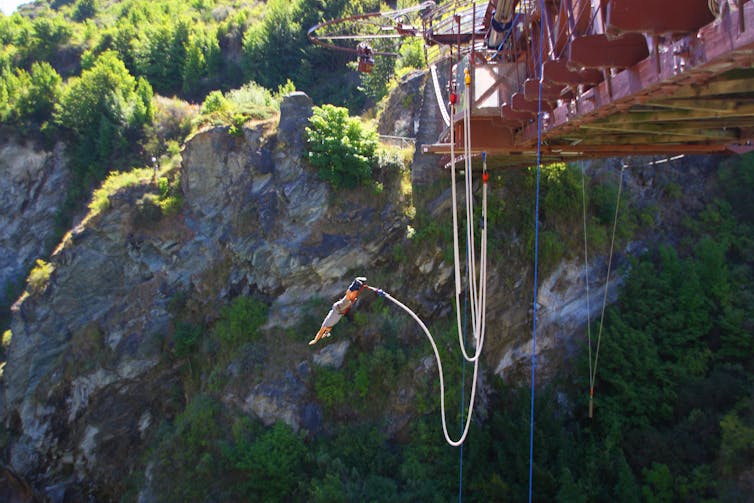
Adventure activities in New Zealand have been relatively safe, with just over 50 deaths in 35 years. Judith Lienert/Shutterstock
Responsibilities under the law
Under the current rules, responsibility for something going wrong rests with the “person conducting a business or undertaking”.
A farmer, for example, is conducting business because they own or have control of their land. This does not apply if they are renting out the land but not involved in the activity’s management or control.
In the Whakaari Management Ltd appeal the judge wrote:
To be caught by [section] 37, a [a person conducting a business or undertaking] must in fact be exercising active control or management of the workplace in a practical sense. Owning it is not enough. Making money from it is not enough. Merely being able to manage or control a workplace, but not doing so, is not enough.
Active control might include an agreement between the landowner and the activity operator to monitor conditions.
While the Whakaari case is the only one we found where a landowner has been prosecuted under the current rules, there have been a number of court cases involving adventure activity companies.
The key difference between successful and unsuccessful cases seems to be whether the business owners had the ability to influence or change what went wrong.
For example, in cases where customers of diving businesses drowned, the courts have decided the businesses did not have control of the workplace, including the sea, a lake or river.
does not and cannot control flow or conditions nor can it control who uses or goes through the rapid […] It cannot give directions in relation to it, nor exercise any authority over it.
A business owner operating a kayaking business did have control of the operational conditions and should have had a safe system of work, including checking the weather forecast.
Even under the Adventure Activities Regulations – industry specific rule passed in 2010 and updated since – the responsibility for safety in the tourism industry fell on tourism operators, not landowners.
And, from a safety perspective, the rules have been relatively successful. In the past 35 years, there have been about 52 deaths in adventure activities due to natural hazards (including the Whakaari/White Island tragedy). During the same period more than 30,000 workers died at or because of work.
But this relative safety in adventure activities has come at a cost for small businesses. Under the 2010 regulations, the average cost of mandatory audits has been around NZ$5,000 – a cost borne by the small adventure activity businesses.
If the government wants to further improve the safety of the outdoor tourism industry, then it needs to focus on making it easier and cheaper for businesses to comply with the regulations, rather than focusing on protecting landowners from a risk they never really faced.
Danaë Anderson receives funding from the New Zealand Industrial Relations Trust
Joanne Crawford receives funding from the Health Research Council and the New Zealand Industrial Relations Trust
Chris Peace does not work for, consult, own shares in or receive funding from any company or organisation that would benefit from this article, and has disclosed no relevant affiliations beyond their academic appointment.
“Wherever Palestinians have control is barbaric.” These were the words from New Zealand’s Chief Human Rights Commissioner Stephen Rainbow.
During a meeting with Philippa Yasbek from Jewish Voices for Peace, Dr Rainbow allegedly told her that information from the NZ Security Intelligence Services (NZSIS) threat assessment asserted that Muslims were the biggest threat to the Jewish community. More so than white supremacists.
But the NZSIS has not identified Muslims as the greatest threat to national security.
In the 2023 threat environment report, NZSIS stated that it: “Does not single out any community as a threat to our country, and to do so would be a misinterpretation of the analysis.
“White Identity-Motivated Violent Extremism (W-IMVE) continues to be the dominant IMVE ideology in New Zealand. Young people becoming involved in W-IMVE is a growing trend.”
Religiously motivated violent extremism (RMVE) did not come from the Muslim community, as Dr Rainbow has also misrepresented.
The more recent 2024 NZSIS report stated: “White identity-motivated violent extremism (W-IMVE) remains the dominant IMVE ideology in New Zealand. Terrorist attack-related material and propaganda, including the Christchurch terrorist’s manifesto and livestream footage, continue to be shared among IMVE adherents in New Zealand and abroad.”
To implicate Muslims as being the greatest threat may highlight Dr Rainbow’s own biases, racist beliefs, and political agenda. These false narratives, that have recently been strongly pushed by the US and Israel, undermine social cohesion and lead to a rise in Islamophobia and anti-Palestinian racism.
It is also deeply troubling that he has framed Muslim and Arab communities as potential sources of violent extremism while failing to acknowledge the very real and documented threats they have faced in Aotearoa.
The Christchurch Mosque attacks — the most horrific act of mass violence in New Zealand’s modern history — were perpetrated not by Muslims, but against them, by an individual radicalised by white supremacist ideology.
Chief Human Rights Commissioner Dr Stephen Rainbow . . . “It is also deeply troubling that he has framed Muslim and Arab communities as potential sources of violent extremism while failing to acknowledge the very real and documented threats they have faced in Aotearoa.” Image: HRC
Since that tragedy, there have been multiple threats made against mosques, Arab New Zealanders, and Palestinian communities, many of which have received insufficient public attention or institutional response.
For a Human Rights Commissioner to overlook this context and effectively invert the victim-aggressor dynamic is not only factually inaccurate, but it also risks reinforcing harmful stereotypes and undermining the safety and dignity of communities who are already vulnerable.
Such narratives are inconsistent with the Human Rights Commission’s mandate to protect all people in New Zealand from discrimination and hate.
The dehumanisation of Muslims and Palestinians As part of Israel’s propaganda, anti-Muslim and Palestinian tropes are used to justify violence against Palestinians by framing us as barbaric, aggressive, and as a threat. We are dehumanised in order to normalise the harm they inflict on our communities which includes genocide, land theft, ethnic cleansing, apartheid policies, dispossession, and occupation.
In October 2023, Dan Gillerman, a former Israeli Ambassador to the UN, described Palestinians as “horrible, inhuman animals” and was perplexed with the growing global concern for us.
That same month Yoav Gallant, then Israeli Defence Minister, referred to Palestinians as “human animals” when he announced Israel’s illegal and horrific siege on Gaza that included blocking water, food, medicine, and shelter to an entire population, the majority of which are children.
In making his own remarks about the Muslim community being a “threat” in New Zealand as a collective group, and labelling Palestinians being “barbaric”, Dr Stephen Rainbow has shattered the credibility of the Human Rights Commission. He has made it very clear that he is not impartial nor is he representing and protecting all communities.
Instead, Dr Rainbow is exacerbating divisions within society. This is a worrying trend that we are witnessing around the world; the de-humanising of groups to serve political agendas, retain power, or seek public support for war crimes and crimes against humanity.
Dr Rainbow’s appointment also points a spotlight onto this government’s commitment to neutrality and inclusiveness in its human rights policies. Allowing a high-ranking official to make discriminatory remarks undermines New Zealand’s commitment to the International Convention on the Elimination of All Forms of Racial Discrimination (ICERD) and the Universal Declaration of Human Rights.
A high-ranking official should not be allowed to engage in Islamic and Palestinian racist rhetoric without consequence. The public should be questioning the morals, principles, and inclusivity of those currently in power. Our trust is being eroded.
Dr Stephen Rainbow’s comments can also be seen as a breach of human rights principles, as he is supposed to uphold equality and non-discrimination. Yet his beliefs seem to be peppered with racism, often falsely based on religion, ethnicity, and race.
Foreign influence in New Zealand This incident also shines accountability and concerns for foreign influence and propaganda seeping into New Zealand. The Israel Institute of New Zealand (IINZ) has published articles that some perceive as dehumanising toward Palestinians.
“The Left has found a new underdog to replace the Jews — the Palestinians — in spite of the fact that the treatment of gay people, women, and political opponents wherever Palestinians have control is barbaric.”
By publicising these comments, The Israel Institute of New Zealand signalled its support of these offensive and racist serotypes. Such statements risk reinforcing a narrative that portrays Palestinians as inherently violent, uncivilised, and unworthy of basic rights and dignity.
This kind of rhetoric contributes to what many describe as anti-Arab and anti-Palestinian racism, and it warrants public scrutiny, especially when shared by organisations involved in shaping public discourse.
Importantly, the NZSIS 2024 threat report stated that “Inflammatory and violent language online can target anyone, although most appears directed towards those from already marginalised minority communities, or those affected by globally significant conflicts or events, such as the Israel-Gaza conflict.”
Other statements and reposts published online by the IINZ on their X account include:
“Muslims are getting killed, is Israel involved? No. How many casualties? Under 100,00, who cares? Why is this even on the news? Over 100,000. Oh, that’s too bad, what’s for dinner?” (12 February 2024)
“Fact. Gaza isn’t ‘ancestral Palestinian land’. We’ve been here long before them, and we’ll still be here long after the latest propaganda campaign.” (12 February 2024)
Palestinian society was also described as being “a violent, terror-supporting, Jew-hating society with genocidal aspirations.” (16 February 2025)
The “estimate of Hamas casualties, the civilian-to-combat death ratio could be as low as 1:1. This could be historically low for urban warfare.” (21 February 2025)
“There has never been a country called Palestine.” (25 February 2025)
Even showing a picture of Gaza before Israel’s bombing campaign with a caption saying, “Open air prison”. Next to it a picture of a completely destroyed Gaza with a caption that says “Victory.” (23 February 2025)
“Palestinian society in Gaza is in my eyes little more than a death loving cult of murderers and criminals of the lowest kind.” (28 February 2025)
Anti-Palestinian bias and racism Portraying Muslims and Palestinians as a threat and extremist reflects both Islamophobia and anti-Palestinian bias and potential racism. These statements risk dehumanising Palestinians and are typical of the settler colonial narrative used to erase indigenous populations by denying our history, identity and legal claim.
The IINZ has published content that many see as mocking the deaths of Palestinian Muslims and Christians, which is not only ethically questionable but can be seen as a complete lack of empathy.
And posting the horrific images of a completely destroyed Gaza, appears to revel in the suffering of others and contradicts basic ethical norms, such as decency and compassion.
There also appears to be a common theme among pro-Israeli organisations, not just the IINZ, that cast negative connotations on our national symbols including our Palestinian flag and keffiyeh.
In an article on the IINZ webpage, titled “A justified war”, they write “chorus of protesters wearing keffiyehs, waving their Palestinian and terrorist flags, and shouting about Israel’s alleged war crimes.”
It seemingly places the Palestinian flag — an internationally recognised national symbol– alongside so-called “terrorist flags,” suggesting an equivalence between Palestinian identity and terrorism. Many view this language as dehumanising and inflammatory, erasing the legitimate national and cultural characteristics of Palestinians and feeding into harmful stereotypes.
The Palestinian flag represents a people, their identity, and national aspirations.
There is nothing wrong with our keffiyeh, it is part of our national dress. The negative connotations of Palestinian cultural symbols have to stop, including vilifying other MPs or supporters who wear it in solidarity.
This is happening all too often in New Zealand and must be called out and addressed. Our keffiyeh is not just a scarf — it is a symbol of our Palestinian identity, our resistance, and our rich, historic and deeply rooted cultural heritage.
Pro-Israeli groups attack it because they aim to delegitimise Palestinian identity and resistance by associating it with violence, terrorism, or extremism.
In 2024, ISESCO and UNESCO both recognised the keffiyeh as an essential part of their Intangible Cultural Heritage lists as a way of safeguarding Palestinian cultural heritage and reinforcing its historical and symbolic importance.
As a safeguarded cultural artifact, much like indigenous dress and other traditional attire, attempts to ban or demonize it are acts of cultural erasure and need to be called out as such and dealt with accordingly.
In the same IINZ article titled “A Justified War”, the authors present arguments that appear to defend Israel’s military actions in Gaza, including the targeting of civilians.
Many within the community (most of us have been affected), including survivors and those with direct ties to the region, have found the article deeply distressing and feel that it lacks compassion for the victims of the ongoing violence, and the framing and tone of the piece have raised serious ethical concerns, especially as some statements are factually incorrect.
The New Zealand Palestinian communities affected by this unimaginable genocide are suffering. Our family members are being killed and are at threat daily from Israel’s aggression and illegal war.
Unfortunately, much rhetoric from this organisation aligns with Israeli state narratives and includes statements that some view as racist or immoral, warranting further scrutiny from the government.
There is growing public concern over the association of Human Rights Commissioner Dr Stephen Rainbow with the IINZ, which promotes itself as a research and advocacy body.
A Human Rights Commissioner requires neutrality and a commitment to protecting all communities from discrimination; aligning with Israel and publishing harmful rhetoric may lead to bias in policy decisions and discrimination.
It is also important to remember that we are not a monolithic group. Christian Palestinians exist (I am one) as well as Muslim and historically Jewish Palestinians. Christian communities have lived in Palestine for two thousand years.
This is also not a religious conflict, as many pro-Israeli groups wish the world to believe, and it is not complex. It is one of colonialism, dispossession, and human rights. A history that New Zealand is all too familiar with.
“A Human Rights Commissioner requires neutrality and a commitment to protecting all communities from discrimination; aligning with Israel and publishing harmful rhetoric may lead to bias in policy decisions and discrimination.” Image: HRC screenshot APR
The need for accountability Justice Minister Paul Goldsmith’s inaction and disrespectful response, claiming that a staunchly pro-Israeli supporter can be impartial and will be “very careful” from now on, hints that he may also support some forms of racism, in this case against Muslims and Palestinians.
Justice Minister Paul Goldsmith . . . “There needs to be accountability for Goldsmith. Why has he not removed Dr Rainbow from office and acted appropriately?” Image: NZ Parliament
You cannot address only some groups who are discriminated against but then ignore others, or accept excuses for racist, intolerable actions or statements. This is not justice.
This is the application of selective principles, enforced and underpinned by political agendas, foreign influence, and racism. Does Goldsmith understand that justice is as much about human rights, fairness and accountability as it is about laws?
Without accountability, there is no justice at all, or perhaps he too is confused or uncertain about his role, as much as Dr Rainbow seems oblivious to his?
There needs to be accountability for Goldsmith. Why has he not removed Dr Rainbow from office and acted appropriately? If Dr Rainbow had said that Jews were the biggest threat to Muslims or that Israelis were the biggest threat to Palestinians, would this government and Goldsmith have sat back and said, “he didn’t mean it, it was a mistake, and he has apologised”?
Questions New Zealanders should be asking are, what kind of Human Rights Commissioner speaks of entire peoples this way? What kind of minister, like Paul Goldsmith, looks at that and does very little?
What kind of Government claims to champion justice, while turning a blind eye to genocide? This is betraying the very idea of human rights itself.
Although we are a small country here in New Zealand, we have remained strong by upholding and standing by our principles. We said no to apartheid in South Africa. We said no to nuclear weapons in the Pacific. We said no to the invasion of Iraq in 2003.
And we must now say no to dehumanisation — anywhere. Are we a nation that upholds justice or do we sit on the sidelines while the darkest times in modern history envelopes us all?
The attacks against Palestinians, Arabs and Muslims must stop. We have already faced horrific acts of violence against us here in New Zealand and currently in Palestine. We need support and humanity, not dehumanisation, demonisation and cruelty. This is not what New Zealand is about, we must do better together.
There needs to be a formal enquiry and policy review to see if structural biases exist in New Zealand’s Human Rights institutions. This should also be done across some government bodies, including the Ministry of Education and Immigration NZ, to determine if there has been discrimination or inequality in the handling of humanitarian visas and how the Education Ministry has handled the complaints of anti-Palestinian discrimination at schools.
Communities have particular concern at how the curriculum in many schools deals with the creation of the state of Israel but is silent on Palestinian history.
Public figures should be held to a higher standard, with consequences for spreading racially charged rhetoric.
The Human Rights Commission needs to rebuild trust in our multicultural New Zealand society. The only way this can be done is through fair and just measures that include enforcement of anti-discrimination laws, true inclusivity and action when there is an absence of these.
We are living in a moment where silence is complicity. Where apathy is betrayal.
This is a test of whether New Zealand, Minister Goldsmith and this government truly uphold human rights for all, or only for some.
A leaked “working paper” on New Caledonia’s future political status is causing concern on the local stage and has prompted a “clarification” from the French government’s Minister for Overseas Manuel Valls.
Details of the document, which was supposed to remain confidential, have been widely circulated online over the past few days.
Valls said earlier the confidentiality of the document was supposed to ensure expected results of ongoing talks would not be jeopardised.
However, following the leak, Valls said in a release on Friday that, for the time being, it was nothing more than a “working paper”.
The document results from earlier rounds of talks when Valls was in Nouméa during his previous trips in February and March 2025.
Valls is due to return to New Caledonia on April 29 for another round of talks and possibly “negotiations” and more political talks are ongoing behind closed doors.
French Minister of Overseas Manuel Valls (front left) greets the New Caledonian territorial President Alcide Ponga (right) as Senator Georges Naturel looks on during his arrival for a military honours ceremony in Nouméa in February. Image: AFP/RNZ Pacific
He has denied that it can be regarded as a “unilateral proposal” from Paris.
The latest roundtable session was on Friday, April 11, held remotely via a video conference between Valls in Paris and all political stakeholders (both pro-France and pro-independence parties) in Nouméa.
All tendencies across the political spectrum have reaffirmed their strong and sometimes “non-negotiable” respective stances.
Parties opposed to independence, who regard New Caledonia as being part of France, have consistently maintained that the results of the latest three referendums on self-determination — held in 2018, 2020 and 2021 — should be respected. They reject the notion of independence.
The last referendum in December 2021 was, however, largely boycotted by the pro-independence movement and indigenous Kanak voters.
On the pro-independence side, the Kanak and Socialist National Liberation Front (FLNKS, dominated by the Union Calédonienne) is announcing a “convention” on April 26 — just three days before Valls’s return — to decide on whether it should now fully engage in negotiations proper.
In a news conference last week, the FLNKS was critical of the French-suggested approach, saying it would only commit if they “see the benefits” and that the document was “patronising”.
Two other pro-independence parties — the PALIKA (Kanak Liberation Party) and the UPM (Union Progressiste en Mélanésie) — have distanced themselves from the FLNKS, which they see as too radical under Union Calédonienne’s influence and dominance) and hold a more moderate view.
PALIKA held a general meeting late last week to reaffirm that, while they too were regarding the path to sovereignty as their paramount goal, they were already committed to participating in future “negotiations” since “all topics have been taken into account” (in the working document).
They are favour an “independence association” pathway.
Carefully chosen words In his release on Friday, Valls said the main pillars of future negotiations were articulated around the themes of:
“democracy and the rule of law”, a “decolonisation process”, the right to self-determination, a future “fundamental law” that would seal New Caledonia’s future status (and would then, if locally approved, be ratified by French Parliament and later included in the French Constitution);
the powers of New Caledonia’s three provinces (including on tax and revenue collection matters); and
a future New Caledonia citizenship (and its conditions of eligibility) with the associated definition of who meets the requirements to vote at local elections.
Citizenship On acquiring New Caledonia citizenship, a consensus seems to emerge on the minimum time of residence: it would be “10 to 15” years with other criteria such as an “exam” to ascertain the candidate’s knowledge and respect of cultural “values and specificities”.
Every person born in New Caledonia, children and spouses of qualified citizens, would also automatically qualify for New Caledonia’s citizenship.
Power-sharing On power-sharing, the draft also touches on the “sovereign” powers (international relations, defence, law and order, justice, currency) which would remain within the French realm, but in a stronger association for New Caledonia.
All other powers, regarded as “non-sovereign”, would remain under direct control of New Caledonia as they have already been transferred, gradually, to New Caledonia, over the past 27 years, under the Nouméa Accord.
New Caledonia would also be consulted on all negotiations related to the Pacific islands region and would get representation at European Union level.
Local diplomats would also be trained under France’s Ministry of Europe and Foreign Affairs.
Under the Nouméa Accord, the training process was already initiated more than 10 years ago with New Caledonian representatives appointed and hosted at French embassies in the region — Fiji, New Zealand, Australia.
A local “strategic committee” would also be set up on defence matters.
However, despite long-time FLNKS demands, this would not allow for a seat at the United Nations.
In terms of currency, the present French Pacific Francs (CFP, XPF) would be abolished for a new currency that would remain pegged to the Euro, provided France’s other two Pacific territories (French Polynesia, Wallis-and-Futuna — which are also using the CFP) agree.
Reinforced provincial powers A new proposal, in terms of reinforced provincial powers, would be to grant each of New Caledonia’s three provinces (North, South and Loyalty Islands) the capacity — currently held by New Caledonia’s government — to generate and collect its own taxes.
Each province would then re-distribute their collected tax revenues to the central government and municipalities.
This is also reported to be a sensitive point during the talks, since about 80 percent of New Caledonia’s wealth is located in the Southern Province, which also generates more than 90 percent of all of New Caledonia’s tax revenues.
This is perceived as a concession to pro-France parties, which are calling for an “internal federation” model for New Caledonia, a prospect strongly opposed by pro-independence parties who are denouncing what they liken to some kind of “partition” for the French Pacific dependency.
In the currently discussed project, the representation at the Congress (Parliament) of New Caledonia would be revised among the three provinces to better reflect their respective weight according to demographic changes.
The representation would be re-assessed and possibly modified after each population census.
Under the proposed text, New Caledonia’s government would remain based on the notion of “collegiality”.
Future referendum — no more just ‘yes’ or ‘no’ to independence The current working paper, on the right to self-determination, suggests that any future referendum on self-determination no longer has a specified deadline, but should take place after a “stabilisation and reconstruction” phase.
It would no longer ask the binary question of “yes” or “no” to independence and full sovereignty, but rather seek the approval of a “comprehensive project”.
To activate a referendum, the approval of at least three fifths of New Caledonia’s 54-seat Congress would be needed.
The Congress’s current makeup, almost equally split in two between pro-France and pro-independence parties, this 3/5th threshold could only be found if there is a consensual vote beyond party lines.
Some of the FLNKS’s earlier demands, like having its president Christian Téin (elected in absentia in August 2024 ) part of the talks, now seem to have been dropped.
Téin was arrested in June 2024 for alleged involvement in the May 2024 insurrectional riots that caused 14 dead (including two French gendarmes), hundreds of injured, thousands of jobless and the destruction of several hundred businesses for a total estimated damage of 2.2 billion euros (NZ$4.3 billion).
Four days after his arrest, Téin was transferred from New Caledonia to mainland France.
Although he is still remanded in custody pending his trial (for alleged involvement in organised criminal-related acts), his case was recently transferred from the jurisdiction of judges in Nouméa to mainland France magistrates.
Union Calédonienne president and pro-independence front man Emmanuel Tjibaou told public broadcaster NC la 1ère yesterday he was in regular contact with Téin from his jail in Mulhouse (northeastern France).
Another recent development that could also be perceived as a concession to the FLNKS is that last week, France announced the replacement of French High commissioner Louis Le Franc, France’s representative and man in charge in Nouméa during last year’s riots.
‘We are facing a decisive moment’, says Valls Valls said he remained hopeful that despite “all positions remaining at present still far from each other . . . evolutions are still possible”.
“I reaffirm the (French) State’s full commitment to pursue this approach, in the spirit of the Matignon and Nouméa Accords (signed respectively in 1988 and 1998) to build together a united, appeased and prosperous New Caledonia,” Valls concluded.
“We are facing a decisive moment for the future of New Caledonia, which is confronted with a particularly grave economic and social situation. Civil peace remains fragile.”
The much sought-after agreement, which has been at the centre of political talks since they resumed in early 2025 after a three-year hiatus, is supposed to replace the Nouméa Accord from 1998.
The 1998 pact, which outlines the notion of gradual transfer of sovereign powers from France to new Caledonia, but also the notion of “common destiny”, stipulates that after three referendums on self-determination resulting in a majority of “no”, then the political partners are to meet and “discuss the situation thus created”.
Determination, anxiety and hope On all sides of the political landscape, ahead of any outcome for the crucial talks, the current atmosphere is a mix of determination, anxiety and hope, with a touch of disillusionment.
The pro-independence movement’s Emmanuel Tjibaou has to manage a sometimes radical base.
He told NC la 1ère that the main objective remained “the path to sovereignty”.
Within the pro-France camp, there is also defiance towards Vall’s approach and expected results.
Among their ranks, one lingering angst, founded or not, is to see an agreement being concluded that would not respond to their expectations of New Caledonia remaining part of France.
This worst-case scenario, in their view, would bring back sad memories of Algeria’s pre-independence process decades ago.
On 4 June 1958, in the midst of its war against Algeria’s National Liberation Front (FLN), French President General De Gaulle, while on a visit to Algiers, shouted a resounding “Je vous ai compris!” (“I have understood you”) to a crowd of cheering pro-France and French Algerians who were convinced at the time that their voice had been heard in favour of French Algeria.
On 19 March 1962, after years of a bloody war, the Evian Accords were signed, paving the way for Algeria’s independence on July 3.
“I had to take precautions, I had to proceed progressively and this is how we made it”, De Gaulle explained to the French daily Le Monde in 1966.
In the meantime, in an atmosphere of fear and violence, an estimated 700,000 French citizens from Algeria were “repatriated” by boat to mainland France.
As an alternative posed to French nationals at the time, FLN’s slogan was “la valise ou le cercueil” (“the suitcase or the coffin”).
This article is republished under a community partnership agreement with RNZ.
Political leaders’ kids are routinely put on display to share the glory or the pain of election night. Earlier, they’re often at campaign launches to “humanise” the candidates.
Peter Dutton pulled out all stops with the family for his Sunday launch. Tom, Harry and Rebecca were not just there in person, but “virtually” too, with a video showing dad hearing messages from the family.
Rebecca went to “the potato head thing”, saying it was “all a bit of a joke to us. We still often call you Mr Potato head.” Dutton replied that “I’m pretty relaxed. I can give back as good as I get.” Hearing Harry on the video, he judged his son “sounded a bit croaky […] He might have been out late last night.”
And so it went. All nice and safe, in a campaign sense. But Dutton should have left it at that.
Instead, on Monday Harry, who is an apprentice carpenter, joined his father on the campaign trail, to help him sell the message about the unaffordability of housing.
Harry, it turns out, is an aspiring house buyer, which is not surprising. After all, his dad bought his first house at age 19, and is proud of the fact, often mentioning it in soft interviews.
Harry told reporters, “I am saving up for a house and so is my sister, Beck, and a lot of my mates, but as you probably heard, it’s almost impossible to get in – in the current state,” Harry said.
“So I mean we’re saving like mad, but it doesn’t look like we’ll get there in the near future. But we’d love that to change.”
One has to wonder about the judgement of the Liberal strategists. Dutton has owned a lot of property over the years, and is well off. Did no one anticipate that the obvious questioning from the hungry media would be: won’t the bank of mum and dad help Harry and Rebecca?
Of course it came.
One questioner asked, “Are you planning to act as the bank of mum and dad like so many Australian families are having to do?” Dutton answered generally – that he didn’t want a situation where these were the only kids that could buy houses.
Then later came the explicit question: “You brought your own son Harry out here. He spoke about how hard it is to save for a deposit. So in that case, you’re doing pretty well yourself – why won’t you support him a bit and give him a bit of help with getting his house?”
Dutton did not address that sticky one, saying rather that he hadn’t finished answering the previous question.
Politicians perennially complain about how hard the political life is for their families.
Indeed. Sometimes it’s best to leave the kids at home.
Albanese dodges question about Plibersek’s future portfolio
This is the second campaign in a row that’s put a spotlight on the strained relationship between Anthony Albanese and Tanya Plibersek.
In 2022 observers asked “where’s Tanya?” when Plibersek, one of Labor’s most popular retail politicians, seemed to have a low profile. Plibersek produced evidence of her intense round of campaigning, but it was still clear she was being underused.
Albanese and Plibersek are rivals in the left from way back. After the 2022 win, instead of appointing her education minister, as she’d expected, the new PM put her into environment, where she’s had to rule on fossil fuel projects and other matters especially tricky for someone from the left. Late last year, Albanese intervened when Plibersek thought she was headed to a deal on the Nature Positive legislation, declaring the Senate numbers were not there. More compelling with him was pressure from Western Australian Premier Roger Cook, who was facing an election.
On Monday Plibersek found herself having to explain an uncomfortable moment that had caught media attention at Sunday’s Labor launch.
At these gatherings a great deal of kissing and hugging goes on, even among politicians who don’t like each other much. So Plibersek was about to hug Albanese, but he grabbed her hands instead.
/
Asked on Monday Morning TV about what was described as an “awkward moment”, Plibersek explained it away, even more awkwardly. “Do you know what, I reckon we should still all be elbow bumping, because during an election campaign, the last thing you want is to catch a cold from someone. So that’s on me. I should have done the elbow bump, I reckon.”
Albanese was quizzed later about whether he’d keep Plibersek in the environment portfolio in a second-term government.
He said Plibetsek was doing a “fantastic job” and insisted she had been “a friend of mine for a long period of time”.
He didn’t comment himself on her future job, if the government is returned. Not surprising, at one level. As he says, he doesn’t want to get ahead of himself. And later in the day he wouldn’t say whether Julie Collins would again be fisheries minister.
But, given it was Plibersek, his non-answer added to the awkwardness. On the other hand, you’d think Plibersek would probably want out of the environment portfolio, provided that didn’t mean another less-than-ideal post.
A third debate coming
Albanese and Dutton have agreed to a third debate – on Channel 7 on April 27. The second debate, hosted by the ABC, is on Wednesday.
Michelle Grattan does not work for, consult, own shares in or receive funding from any company or organisation that would benefit from this article, and has disclosed no relevant affiliations beyond their academic appointment.
With Big Girls Don’t Cry, Gumbaynggirr/Wiradjuri playwright Dalara Williams proves herself to be a formidable talent.
Cheryl (Williams), Queenie (Megan Wilding) and Lulu (Stephanie Somerville) are three best friends who share a house together in 1960s Redfern, the heart of “Blak Sydney”, after moving from the bush to the city.
The trio swap outfits, go out dancing, socialise and talk about boys while navigating low-paying jobs, curfews and police brutality. Directed by Ian Michael, Big Girls Don’t Cry sits against a backdrop of political moments from service in the Vietnam War, to the 1965 Freedom Rides, the 1966 Wave Hill Walk Off and the 1967 Referendum.
The girls prepare for the 1966 Aboriginal Debutante Ball. Stephen Wilson Barker/Belvoir
The ball represents more than just a social event: it is a symbol of pride, resilience and cultural celebration. It serves as a powerful reminder of the community’s strength and unity, showcasing their determination to preserve and honour their heritage amid adversity.
Meticulous attention to detail in the set (Stephen Curtis) and costume design (Emma White) transports us back to this pivotal moment in history, making it feel both authentic and immersive.
Each character’s wardrobe reflects their personality. Debutante dresses and accessories add depth to the characters and their stories, making the visual elements not only historically accurate but also emotionally resonant.
Genuine and moving
Williams’ darker and more confronting scenes are expertly juxtaposed with love stories and hilarious laugh-out-loud moments, particularly from the exceptional Wilding, who wholeheartedly embodies her fierce and outspoken character Queenie.
Williams captivates with her nuanced portrayal of Cheryl, balancing strength and vulnerability. Somerville adds a layer of tenderness and hope as Lulu. The chemistry between these three actors is undeniable. Their friendship is genuine and moving.
Guy Simon’s portrayal of Cheryl’s brother Ernest is a true highlight. While Cheryl strives to keep him out of trouble for his outspoken views, Ernest’s passion for justice and equality is inspiring.
Guy Simon and Megan Wilding are stand-outs among an exceptional cast. Stephen Wilson Barker/Belvoir
Ernest’s relationship with Milo (Nic English) highlights the solidarity and camaraderie among activists of the time.
Cheryl’s boyfriend Michael (Mathew Cooper), though physically absent from the group for much of the play, is a constant presence in Cheryl’s thoughts. His letters from Vietnam add a poignant layer to the narrative.
Officer Robinson (Bryn Chapman Parish) is a chilling reminder of the systemic racism and oppression faced by the Indigenous community. His menacing presence serves as a stark contrast to the warmth and joy shared by the main characters, highlighting the harsh realities of this era.
By the end of the play, I felt involved in the lives of these characters, and as though I knew them – a credit to Williams’ writing and the phenomenal portrayal by each of the seven cast members.
Continuing the fight
The program includes a beautiful and personal reflection by Williams where she describes her family legacy as a major source of inspiration for the play.
The various interwoven love stories are some of the most heart-wrenching, comical and sweetest moments of the play. But to solely describe it as a romantic comedy is to devalue the power of this work.
Williams describes how she is from a long line of staunch Blak advocates who have continued to fight for sovereignty. This play is just the latest in her family’s long lineage of demonstrating resilience and survival.
This play is just the latest in Williams’ long lineage of demonstrating resilience and survival. Stephen Wilson Barker/Belvoir
Williams does not shy away from the reality of being Aboriginal in 1960s Redfern and handles moments with sophistication and grit. Scenes of police brutality and overt racial discrimination are portrayed with a raw honesty that is both confronting and enlightening.
Big Girls Don’t Cry should be essential viewing as part of ongoing education efforts to truly highlight the reality of life at this time – many such struggles which continue today.
The play is a powerful and moving tribute to the strength and resilience of Indigenous women. It is a celebration of their lives, their struggles, and their triumphs.
Williams has crafted a play that is not only entertaining but also deeply meaningful, shedding light on a crucial period in Australian history: a must-see for anyone interested in understanding the complexities of the past and the ongoing fight for justice and equality.
While much has changed since 1966, the spirit of resistance and the quest for a better future remain as vital as ever.
Big Girls Don’t Cry is at Belvoir Theatre, Sydney, until April 27.
Laura Case does not work for, consult, own shares in or receive funding from any company or organisation that would benefit from this article, and has disclosed no relevant affiliations beyond their academic appointment.
Source: The Conversation (Au and NZ) – By Karin Hammarberg, Adjunct Senior Research Fellow, Global and Women’s Health, School of Public Health & Preventive Medicine, Monash University
The news of a woman unknowingly giving birth to another patient’s baby after an embryo mix-up at a Brisbane IVF lab has made headlines in Australia and around the world. The distress this incident will have caused to everyone involved is undoubtedly significant.
A report released by Monash IVF, the company which operates the Brisbane clinic, states it “adheres to strict laboratory safety measures (including multi-step identification processes) to safeguard and protect the embryos in its care”.
It also says the company’s own initial investigation concluded the incident was “the result of human error”.
An independent investigation will follow which presumably will shed light on how human error could occur when multi-step identification processes are in place.
On a broader level, this incident raises questions about how common IVF errors are and to what extent they’re preventable.
The booming IVF industry
Because people have children later in life than they used to, some struggle to conceive and turn to assisted reproductive technologies. These include in-vitro fertilisation (IVF) and intracytoplasmic sperm injection (ICSI) which both involve handling of sperm and eggs (gametes) in the laboratory to form embryos. If there’s more than one embryo available after a treatment cycle, they can be frozen and stored for later use.
In Australia, the IVF industry is more regulated than in many other parts of the world.
To operate, clinics must be licensed by the Reproductive Technology Accreditation Committee and adhere to its code of practice.
In relation to storage and accurate identification of embryos, the code states clinics must provide evidence of the implementation and review of:
Policies and procedures to identify when, how and by whom the identification, matching, and verification are recorded for gametes, embryos and patients at all stages of the treatment process including digital and manual record-keeping.
The code further states clinics must report serious adverse events to the Reproductive Technology Accreditation Committee. The list of what’s considered a serious adverse event includes any incident that “arises from a gamete or embryo identification mix up”.
Clinics must also adhere to the National Health and Medical Research Council’s ethical guidelines on the use of reproductive technology in clinical practice and research.
Thousands of pregnancies in Australia each year are conceived using assisted reproductive technologies. Lee Charlie/Shutterstock
In the United Kingdom, the Human Fertilisation and Embryology Authority regulates the IVF industry and requires clinics to report adverse incidents. These are reported as grade A, B or C, where A is the most serious and involves
“severe harm to one person, or major harm to many”. Data on adverse incidents is reported in a publicly available annual report.
In the United States, however, the IVF industry is largely unregulated, and clinics don’t have to report adverse incidents. However, the American Society for Reproductive Medicine states clinics should have rigorous procedures to prevent the loss, damage, or misdirection of gametes and embryos and have an ethical obligation to disclose errors to all impacted patients.
How common are IVF errors?
There’s no global data on IVF errors so it’s not possible to know how common they are. But we learn about some of the more serious incidents when they’re reported in the media.
While the recent embryo mix-up is the first known incident of this nature in Australia’s 40-year IVF history, we have seen reports of other errors in Australian clinics. These include the alleged use of the wrong donor sperm, embryos being destroyed due to contamination, and inaccurate genetic testing which resulted in the destruction of potentially viable embryos.
In the UK, the Human Fertilisation and Embryology Authority’s most recent report states there was one Grade A incident in 2023–24. This was the first Grade A incident reported since 2019–20 when there were two.
In the US, some notable errors include storage tank malfunctions in two clinics which destroyed thousands of eggs and embryos.
Lawsuits have also been filed for embryo mix-ups. In a 2023 case, a woman from Georgia delivered a Black baby even though she and her sperm donor are both white. The biological parents subsequently demanded custody of the child. Despite wanting to raise him the woman who had given birth gave up the five-month-old boy to avoid a legal fight she couldn’t win, she said.
There’s no global data on IVF errors, so we don’t know how common they are. SeventyFour/Shutterstock
Are IVF errors preventable?
Despite Australia’s stringent regulation and oversight of the IVF industry, an incident with far-reaching psychological and potentially legal consequences has occurred.
Until the independent investigation reveals how “human error” caused this mix-up, it’s not possible to say what additional measures Monash IVF should take to ensure this never happens again.
An IVF laboratory is a high-pressure environment, and any investigation should look at whether staffing levels are adequate. Staff training is also relevant, and it’s essential all junior lab staff have adequate supervision.
Finally, perhaps Australia should adopt the UK’s model and make data about adverse events reported to the Reproductive Technology Accreditation Committee available to the public in an annual report. To reassure the public, this report could include what measures clinics take to avoid the errors happening again.
Karin Hammarberg is affiliated with Monash University, which is not connected with Monash IVF and the incident mentioned in the article.
ER Report: Here is a summary of significant articles published on EveningReport.nz on April 14, 2025.
Curious Kids: If you scoop a bucket of water out of the ocean, does it get lower? Source: The Conversation (Au and NZ) – By Dylan Irvine, Outstanding Future Researcher – Northern Water Futures, Charles Darwin University Lizzie Lamont/Shutterstock If you scoop a bucket of water out of the ocean, does it get lower? –Ellis, 6 and a half, Hobart This is a great question Ellis! The short answer is yes, but
The Family Court could better protect Indigenous women and children, but there are barriers in the way Source: The Conversation (Au and NZ) – By Heather Douglas, Professor of Law and Deputy Director of the Centre of Excellence for the Elimination of Violence Against Women (CEVAW), The University of Melbourne Shutterstock The family law system is crucial for protecting women and children nationwide. With its combination of judicial oversight, counselling and alternative
Top unis have imposed new restrictions on campus protests. What does this mean for students, staff and democracy? Source: The Conversation (Au and NZ) – By Joo-Cheong Tham, Professor, Melbourne Law School, The University of Melbourne A wave of restrictions on protesting has been rippling through Australia’s top universities. Over the past year, all of Australia’s eight top research universities (the Group of Eight) have individually increased restrictions on campus protests. The changes
Think your specialist is expensive? Look at what others are paying Source: The Conversation (Au and NZ) – By Yuting Zhang, Professor of Health Economics, The University of Melbourne PeopleImages.com – Yuri A/Shutterstock Seeing a medical specialist can leave you with significant out-of-pocket costs. Yet political parties have not adequately addressed this in their pre-election bids. Labor has promised A$7 million to expand the government’s Medical
Most bike lanes in inner Melbourne have less than 40% tree cover – that’ll get worse, new maps show Source: The Conversation (Au and NZ) – By Judy Bush, Senior DECRA Research Fellow, The University of Melbourne Unshaded cycling paths mean heat exposure on hot days, particularly for the afternoon commute. Judy Bush, CC BY Walking and cycling is good for people and the planet. But hot sunny days can make footpaths, bike lanes
Strongmen, Daggy Dads and State Daddies: how different styles of political masculinity play into Australian elections Source: The Conversation (Au and NZ) – By Blair Williams, Lecturer in Australian Politics, Monash University Australian politics has historically been a male domain with an overwhelmingly masculine culture. Manhood and a certain kind of masculinity are still considered integral to a leader’s political legitimacy. Yet leadership masculinity changes along party lines. We are now
Post-election tax reform is the key to reversing Australia’s growing wealth divide Source: The Conversation (Au and NZ) – By Helen Hodgson, Professor, Curtin Law School and Curtin Business School, Curtin University Federal elections always offer the opportunity for a reset. Whoever wins the May 3 election should consider a much needed revamp of the tax system, which is no longer fit for purpose. The biggest challenge
Productivity reform has been put in the too-hard basket for years. Here’s why leaders leave it alone Source: The Conversation (Au and NZ) – By Lachlan Vass, Fellow, Tax and Transfer Policy Institute, Crawford School of Public Policy, Australian National University National licensing of electricians has been one of the few productivity reforms of recent years. Shutterstock The federal election leaders’ and treasurers’ debates last week covered many topics: from Trump’s tariffs
Newspoll steady but Albanese’s ratings jump; swing to Labor in marginal seats Source: The Conversation (Au and NZ) – By Adrian Beaumont, Election Analyst (Psephologist) at The Conversation; and Honorary Associate, School of Mathematics and Statistics, The University of Melbourne A national Newspoll, conducted April 7–10 from a sample of 1,271, gave Labor a 52–48 lead, unchanged since the March 31 to April 4 Newspoll. Primary votes
Fresh details emerge on Australia’s new climate migration visa for Tuvalu residents ANALYSIS: By Jane McAdam, UNSW Sydney The details of a new visa enabling Tuvaluan citizens to permanently migrate to Australia were released this week. The visa was created as part of a bilateral treaty Australia and Tuvalu signed in late 2023, which aims to protect the two countries’ shared interests in security, prosperity and stability,
Labor and Coalition support for new home buyers welcome but other Australians also struggling with housing affordability Source: The Conversation (Au and NZ) – By Michelle Cull, Associate Professor, Western Sydney University doublelee/Shutterstock There is no denying housing reform is urgently needed in Australia to make housing more affordable and accessible to everyday Australians. Both major parties have now announced the incentives they are offering to help first-home buyers. While both Labor
Voters have a clear choice. Labor’s long term and equitable tax reform or the Coalition’s big but one-off tax cuts Source: The Conversation (Au and NZ) – By Isaac Gross, Lecturer in Economics, Monash University Tang Yan Song The election campaign has erupted into a economic battleground as Labor and the Coalition unveiled major new tax policies at their campaign launches. Each policy package is aimed at addressing the mounting cost-of-living pressures facing millions of
Accra is a tough city to walk in: how city planners can fix the problem Source: The Conversation (Au and NZ) – By Seth Asare Okyere, Visiting lecturer, University of Pittsburg and Adjunct Associate Professor, Osaka University, University of Pittsburgh Humans are walking beings. Walking is intrinsically linked to our physical development from childhood and enables our connections with people and places. We can say it is essential to our
If you scoop a bucket of water out of the ocean, does it get lower?
–Ellis, 6 and a half, Hobart
This is a great question Ellis! The short answer is yes, but the change in water level will be extremely tiny. You can actually test this idea at home.
For starters, you’ll need a glass of water and a teaspoon. Fill the glass almost to the top, and take note of the water level. Now, carefully remove a teaspoon of water. Can you see the difference in the water level? Maybe you can, but maybe not.
You could repeat this experiment in the kitchen sink, or a bathtub if you have one. The key point is that the water level does drop, but only by a very small amount. If you scoop a teaspoon of water out of the bathtub, you probably won’t see the difference with the naked eye.
Millions of buckets
So, let’s return to the ocean. It’s truly huge, especially compared to a bucket.
Let’s say that you have a bucket that fits ten litres. Using the information here, there are about 137 million, million, million buckets of water in the ocean (that is, all of Earth’s oceans combined).
I crunched the numbers. If you took a bucket of water from the ocean, the water level would drop by around 0.0000000000277 millimetre. You can see how small a millimetre is on your school ruler. We don’t have anything on Earth that can measure anything this small. For example, this is way, way, way smaller than even a single atom.
So, the more detailed answer to your question is: yes, the water level gets lower, but by such a small amount that we can’t even measure it.
But wait, there’s more
Earth is a really interesting place. When you take your bucket of water, all that water is moving through something called the water cycle.
However, most of the evaporated water rains back down directly onto the ocean, or onto the ground, with that water making its way to rivers that eventually flow to the ocean. There is also a lot of water stored underground, and some of it makes its way to the ocean, as well.
So, if you poured your bucket of water onto the ground, eventually it would end up back in the ocean via the water cycle!
A few fun facts
There’s a lot to know about water. Some more fun facts (and big numbers):
There are 1,500,000,000,000,000,000 molecules of water (H₂O) in a single drop of water. That’s 1.5 million, million, million.
The oldest water in the world is estimated to have fallen as rain more than 1.6 billion years ago.
Most (about 98%) of the world’s fresh, liquid water is underground – that’s why it’s called groundwater.
Dylan Irvine receives funding from the Australian Research Council, the Cooperative Research Centre program, the National Water Grid Authority and the Ian Potter Foundation. This article is independent of these funded research activities.
Source: The Conversation (Au and NZ) – By Heather Douglas, Professor of Law and Deputy Director of the Centre of Excellence for the Elimination of Violence Against Women (CEVAW), The University of Melbourne
The family law system is crucial for protecting women and children nationwide. With its combination of judicial oversight, counselling and alternative dispute resolution, the family court can offer meaningful support to parents in complex situations. But First Nations families may be missing out.
We partnered with Women’s Legal Services Australia to prepare a new review. The review highlights that First Nations women may face barriers to accessing the family law system, especially when they have experienced family violence.
Our research
Family law courts in Australia handle matters such as where children live and who has contact with them. They also deal with finance and property disputes within families, and family violence.
In our research, we reviewed the existing literature and family court cases to see how First Nations people have interacted with the family law system.
While 7% of family court final order applications in 2023–2024 included a First Nations litigant, we suggest the family law system may be underutilised by Indigenous women. There are several factors that point to this.
One is the rate of out-of-home care. First Nations children make up 44.5% of children in out-of-home care nationally. Engaging with the family law system may reduce these rates.
Another is the prevalence of Indigenous families with a single parent. Nearly 45% of First Nations children under 15-years-old live in single-parent households.
People in these households may need to negotiate safe contact arrangements for their children with other family members. The family law system can play an important role for these families.
And we know family violence is present in 83% of parenting proceedings in the family courts. First Nations women are at a higher risk of family violence than non-First Nations women, often perpetrated by a non-First Nations partner. The family law system must take account of family violence when making orders.
It therefore may be reasonable to expect a higher proportion of First Nations people to use the family law system. So what’s stopping them?
First Nations women may fear the family law system because of negative experiences with these other processes, including genuine fears about child removal.
Research shows parts of the legal system often fail First Nations women who have experienced family violence.
The family law system relies on people making their own application to enter the system. Prior bad experiences of other legal systems are likely to affect people’s willingness to use family law.
Family law is different from other parts of the legal system. In criminal law and family violence protection orders, for instance, the state brings First Nations people into the legal system. This happens through police charging people, or police applying for family violence protection orders on behalf of a victim-survivor.
We know in some civil law processes where the person must make the application, like debt recovery, First Nations people are less likely than non-First Nations people to report or make an application.
Structural issues
Child protection matters often overlap with family law matters. The law has changed to require child protection authorities to share information when the family courts request it.
Agencies that support First Nations women are also required to report particular concerns to child protection authorities. These factors may contribute to First Nations women being reluctant to apply to the family law system for fear their children will be removed.
In some research, interview participants referred to an “erosion of trust and disengagement of victims” from services as a result of mandatory reporting.
Systemic racism, biases and discrimination identified in other legal systems may also affect First Nations women’s experiences in family law. This may lead them to disengage, or not engage the next time they have concerns about their children’s safety.
When First Nations women who have experienced family violence do engage with the family law system, this is sometimes because their non-First Nations partner makes an application. When this happens, research suggests the family law system may give more weight to the non-First Nations party’s version of events.
Improving the system
The family law system is making efforts to improve access for First Nations people.
There is now a requirement for family courts to consider how parenting arrangements will help Aboriginal children to remain in contact with culture, community, family, language and Country.
Indigenous Lists also exist in specific courts where cases involving First Nations parties are heard on a particular day and specialised support is available.
We need to find out more about how effective these measures are and what else needs to change so the family law system can best support First Nations women.
We also need to know more about how to support First Nations women in the family courts when the other party is a non-First Nations person. For most couples across Australia that include an Indigenous person, the other person is non-First Nations.
The family law system holds real potential to be a proactive and protective pathway for more First Nations women concerned about their own safety and their children’s safety. Our continuing research hopes to show how this potential may be realised.
13YARN is a free and confidential 24/7 national crisis support line for Aboriginal and Torres Strait Islander people who are feeling overwhelmed or having difficulty coping. Call 13 92 76.
Heather Douglas receives funding from the Australian Research Council.
Kyllie Cripps receives funding from the Australian Research Council for a number of projects she is involved with.
Samantha O’Donnell receives funding from the Australian Research Council. Samantha O’Donnell also volunteers for the Asylum Seeker Resource Centre.
A wave of restrictions on protesting has been rippling through Australia’s top universities.
Over the past year, all of Australia’s eight top research universities (the Group of Eight) have individually increased restrictions on campus protests.
In the 1960s and ‘70s, they were a breeding ground for social protest, including rallies against apartheid and the Vietnam War, and in favour of women’s rights. In more recent years, students have protested on key social, political and environmental issues, from university fees to the invasion of Iraq and climate action.
The changes across the Group of Eight mean students announcing a rally for climate action in class now risk disciplinary action at some universities. Sit-ins calling on universities to divest from weapon companies are no longer permitted at others. At some campuses, union members going to stop-work meetings to protest staff cuts could be engaging in employee misconduct.
The legal basis of the restrictions
Australian universities are typically set up under state legislation and through this have broad powers to regulate campus protests.
Universities in South Australia and Victoria also have powers under state legislation to make university statutes and regulations.
The protest restrictions have relied on a mix of these powers.
Could these changes be challenged?
But these restrictions are also subject to enterprise agreements made under the federal Fair Work Act which protect academic and intellectual freedom. For example, the University of Sydney’s enterprise agreement entitles staff to:
express opinions about the operation of the university and higher education policy in general
express unpopular or controversial views, provided that in doing so staff must not engage in harassment, vilification or intimidation.
This means both the Fair Work Act and Constitution may provide grounds for a legal challenge to many of these new restrictions. The High Court has previously ruled restrictions on protest must be proportionate and necessary for preventing harm and damage.
The protest restrictions also implicate various human rights. Under international law, which Australia has ratified, staff and students have freedom of expression and freedom of peaceful assembly. As workers, staff have freedom of association through trade unions, including the right to organise.
Many of these measures would seem to restrict activities where there is no or little threat to safety. In some cases, there are arguably excessive and disproportionate means to ensure safety.
What will happen now?
Some university students, staff and unions have opposed these protest restrictions.
Given the doubts over their legality, court challenges may be on the horizon. It is also possible some groups will actively test these restrictions.
But we may see a chilling effect on university activism and protests, when individuals would otherwise speak their minds on campus. Some staff may be worried they will lose their jobs. Students may be also worried about academic penalties or expulsion and the impact on their future careers.
This undermines universities as a place where people talk, debate and test ideas as a key part of the learning and research process – and a vital component of our democracy.
Joo-Cheong Tham has been an employee of the University of Melbourne for more than two decades. During this time, he has participated in campus protests at the university that would now be banned by the university’s protest restrictions.
He is the Victorian Division Assistant Secretary (Academic Staff) of the National Tertiary Education Union; a Fellow of the Academy of Social Sciences in Australia; a Director of the Centre for Public Integrity; and an Expert Network Member of Climate Integrity.
Joo-Cheong has received funding from the Australian Research Council, the Australian Council of Trade Unions, European Trade Union Institute, International IDEA, the New South Wales Electoral Commission, the New South Wales Independent Commission Against Corruption and the Victorian Electoral Commission.
Seeing a medical specialist can leave you with significant out-of-pocket costs. Yet political parties have not adequately addressed this in their pre-election bids.
During a cost-of-living crisis, this is a major omission.
Specialists’ fees are high, vary across specialties and across geographical regions.
That’s what we found when we used actual Medicare data to map costs across Australia to see a specialist doctor.
What we did and what we found
We used data from the national 2023 Medicare Benefits Schedule (or MBS) accessed from the Australian Bureau of Statistics. We calculated mean (average) fees charged by doctors in 17 specialties for initial face-to-face appointments after a GP referral.
Under MBS billing rules, different specialties use different item numbers (104 or 110) for an initial consultation. These attracted a different Medicare schedule fee ($91.80 and $161.90, respectively, as of January 2023). These schedule fees are what Medicare considers a fair price for doctors to charge.
Most patients pay the gap between 85% of the Medicare schedule fee and the specialist’s fee. This is their out-of-pocket cost. But that percentage can differ, depending on the circumstances. So not all patients have the same out-of-pocket costs for the same consultation.
We only looked at fees charged by private specialists at private clinics. We didn’t include free specialist care in public clinics. Nor did we look at GP fees.
We then looked at how specialists’ fees varied by patients’ geographical location to create some maps.
Use the map below to search for mean specialists’ fees and mean out-of-pocket costs for cardiology, rheumatology, neurology, and oral and maxillofacial surgery.
Specialist fees varied substantially. On average, rheumatology had the highest fees, followed by neurology and immunology. Oral and maxillofacial surgery had the lowest fees, followed by general surgery.
Some specialties used the item number that attracted the $91.80 Medicare schedule fee. But almost all these specialists (except for general surgery) charged more than twice this amount (an average $183.60) in at least 80% of geographical areas.
Other specialties used the item number that attracted the $161.90 Medicare schedule fee. This included rheumatologists, which charged an average of over $323.80 (twice the schedule fee) in 17.6% of geographical areas. Neurologists charged the same amount in 19.2% of geographical areas.
Which parts of the country had the highest fees?
Certain states and territories consistently had higher fees for some specialties. For example:
cardiology was most expensive in Western Australia, Australian Capital Territory and Queensland
orthopaedics was most expensive in ACT, New South Wales and Queensland
obstetrics was most expensive in ACT, WA and NSW.
High fees matter
Higher specialists’ fees directly translate to patients’ higher out-of-pocket costs. That’s because Medicare rebates are fixed, and private health insurance does not cover out-of-hospital consultations.
If patients avoid their initial consultation due to cost, their health can worsen over time, potentially leading to more expensive treatments later.
Higher specialists’ fees and the barrier to care could also entrench inequalities. That’s because people in lower socioeconomic groups already tend to have worse health.
What can I do?
You can use our maps to look at what specialists charge near you. Although the maps use 2023 data and look at average fees and out-of-pocket costs, you can get a general idea. Then you can call specialists’ offices and the receptionist will tell you how much the doctor charges for an initial appointment.
If there are several referral options, comparing fees will help you make an informed decision about your health care, alongside wait times, geographical location, quality of care and other factors. You can discuss these issues with your GP so they can refer you to the best available specialist for your circumstances.
What else can we do?
1. Make fees transparent
Patients often do not know how much a specialist consultation costs until they arrive at the doctor’s office. GPs typically do not refer to specialists based on their fees and often don’t know them anyway.
The government’s Medical Costs Finder website relies on doctors voluntarily reporting their fees. But only a few report them.
If re-elected, the Labor government says it will upgrade the website to display the average fee charged by every eligible specialist (other than GPs) using Medicare data, without asking doctors to spend time inputting their fees.
This is a welcome move. But the government should also mandate disclosure of fees on the website, which would be more up-to-date than looking back through past Medicare data.
2. Doctors need more advice, and can help
Specialists in Australia can charge what they like, and as we’ve found, sometimes way above the Medicare schedule fee.
But professional medical colleges can provide guides on how to set “reasonable” fees. They can also develop codes of conduct about fee practices, and counsel members who consistently charge high fees.
Once specialists’ fees are more transparent, GPs can inform patients about fee variations and options for more affordable care.
3. We need more public clinics
Government could also open more public clinics that offer free specialist care for those who cannot afford large gap fees in private clinics. This type of investment may be warranted in some low-socioeconomic areas if we’re aiming for all Australians to receive the specialist care they need.
Yuting Zhang has received funding from the Australian Research Council (future fellowship project ID FT200100630), Department of Veterans’ Affairs, the Victorian Department of Health, National Health and Medical Research Council and Eastern Melbourne Primary Health Network. In the past, Professor Zhang has received funding from several US institutes including the US National Institutes of Health, Commonwealth fund, Agency for Healthcare Research and Quality, and Robert Wood Johnson Foundation. She has not received funding from for-profit industry including the private health insurance industry.
Chenhao Liang does not work for, consult, own shares in or receive funding from any company or organisation that would benefit from this article, and has disclosed no relevant affiliations beyond their academic appointment.
Unshaded cycling paths mean heat exposure on hot days, particularly for the afternoon commute.Judy Bush, CC BY
Walking and cycling is good for people and the planet. But hot sunny days can make footpaths, bike lanes and city streets unbearable. Climate change will only make matters worse.
So city planners and decision-makers need to provide adequate shade for walking, cycling and other forms of active transport – including from good tree canopy cover.
Unfortunately, our recent research reveals Melbourne’s transport strategy and its separate strategy to increase canopy cover from 22% to 40% by 2040 aren’t currently working together.
Our research found most bicycle lanes in inner Melbourne today have less than 40% canopy cover. And as the maps below show, future bicycle lanes will have even less. There’s plenty of room for improvement.
Searching for shady lanes
We used the City of Melbourne as a case study to explore bikeability, tree cover and health.
The city council area covers 37 square kilometres, taking in suburbs from leafy Parkville to industrial Fishermans Bend.
When we mapped tree canopy cover against the active transport network, we found most bicycle lanes have less than 40% canopy cover. Some cycling corridors – such as along Royal Parade and parts of St Kilda Road – stand out with relatively high canopy cover. But they are few and far between.
Existing bike lanes
Most bicycle lanes in the City of Melbourne have less than 40% tree cover. Crystal Tang
And it’s about to get worse.
Bicycle lanes proposed for construction have lower overall tree canopy coverage than existing lanes, particularly in urban renewal areas in post-industrial precincts such as Fishermans Bend and Docklands.
Along Royal Parade and St Kilda Road corridors, additional bicycle lanes are proposed next to existing lanes. However, in current conditions, the proposed new bicycle lanes have lower canopy coverage than existing bicycle lanes along the same corridor.
Proposed bike lanes
Proposed future bicycle lanes have even less tree cover than existing bike lanes. Crystal Tang
The city’s strategies don’t match up
We also examined the city’s transport and urban forest strategies. The latter includes the council’s ambitious goal to increase canopy cover to 40% by 2040.
We found both the transport and urban forest policies recognise that they can contribute to the health and wellbeing of city residents, workers and visitors. They also acknowledge the health risks associated with lack of physical activity, such as heart disease, lung disease and diabetes. But there are key gaps.
The transport strategy broadly refers to climate change, but does not mention urban heat.
In contrast, addressing urban heat is one of the main stated aims of the urban forest strategy. But there’s only a passing reference to encouraging outdoor activity and exercise.
There are signs though that this may be changing – in 2022, Melbourne has joined a handful of other cities worldwide in appointing chief heat officers to focus planning and action for cooler cities.
Planning for more trees
Trees need sufficient space for healthy growth. This includes space below ground for a strong and stable root system as well as room to grow up and spread out.
For street trees, extra care must be taken to facilitate this growth. The locations of other infrastructure, both above- and below-ground, need to be taken into account.
Smaller trees may be more appropriate in some urban areas, particularly where overhead powerlines require clearance, but obviously these trees will provide less canopy. Likewise, healthy tree root development can be disrupted by underground services, unless high quality soil and sufficient space is allocated.
To ensure trees are still thriving in 50 or even 100 years time, planners also need to select species that can withstand hotter and drier conditions.
Reducing the amount of heat roads and other hard surfaces absorb eases what’s known as the urban heat island effect, in which cities experience warmer temperatures than green spaces.
Climate change is increasing the frequency and duration of heatwaves. This adds to the pressure on Australia’s health services, including ambulances and emergency departments. If current rates of climate change continue, Victorians are likely to experience twice the annual number of very hot days by the 2050s, compared with 1985-2005.
All of this means walking or riding in the absence of shade can expose people to heat-related illness and even premature death.
Canopy trees create cooler cycling conditions. Judy Bush
Better planning for liveable cities
Our research shows planning policies must work together more effectively for liveable cities. This is particularly important when it comes to building new infrastructure such as roads, bicycle lanes and footpaths.
Proactively planning for more trees in these spaces can promote healthy tree growth, with benefits for human health in cooler cities.
And while we can plant trees next to bike lanes for future shade, the need to protect cyclists from heat now means we should locate bike lanes along existing shaded streets.
City planners and decision-makers need to ensure the places we live, work and play are designed to promote active transport. That means ensuring transport routes align with our urban forest.
Acknowledgements: thanks to Bachelor of Design, Urban Planning (Honours) student Crystal Tang who carried out the research that underpins this article.
Judy Bush is the recipient of a Discovery Early Career Researcher Award (2024-27) from the Australian Research Council. She is a member of the Planning Institute of Australia and the Ecological Society of Australia.
Crystal Tang undertook the data collection and analysis as part of her B.Des (Hons), supervised by Judy.
Australian politics has historically been a male domain with an overwhelmingly masculine culture. Manhood and a certain kind of masculinity are still considered integral to a leader’s political legitimacy.
Yet leadership masculinity changes along party lines. We are now halfway through the election campaign and can already see differences in the masculine performances of Prime Minister Anthony Albanese and Opposition Leader Peter Dutton.
State Daddy versus Strongman Tough Cop
In a recent open-access study, I identified the emergence of two Australian political masculinities during the COVID-19 pandemic.
First, the traditional “Daggy Dad” of former Liberal prime minister Scott Morrison, centred around the nuclear family and paternalistic protection.
Second, the “State Daddy”, embodied by Labor leaders such as Albanese, who perform a more compassionate masculinity focused on social provision. In the 2022 election, Albanese effectively used his caring masculinity against Morrison’s faltering protective paternalism, highlighting many of Morrison’s weaknesses and especially his unpopularity with women.
The 2025 election is shaping up to be another “gender election”, this time between the State Daddy and the Strongman Tough Cop.
Albanese and Dutton’s adoption of certain masculine identities reveals not only how they want to be perceived but also how they envision the electorate, the nation, and its defining values.
Dutton is a “tough-nut” conservative who portrays himself as a “strongman” protector. His leadership masculinity combines that of several other Liberal leaders, notably John Howard. But his conservatism is more reactionary, focusing less on economics and more on stoking culture wars.
Like Tony Abbott, he is a pugilistic opposition leader who promises to keep Australians safe while reinforcing fear and uncertainty. Following Morrison’s lead, Dutton also targets outer-suburban electorates that traditionally vote Labor.
His plan is to tap into voters’ anxiety and offer his “strongman” masculinity as its antidote. Since becoming leader, Dutton has frequently attempted to emasculate Albanese, labelling him “weak”, “woke”, and too preoccupied with “elite” issues, such as the Voice Referendum, to tackle the cost-of-living crisis.
Dutton positions himself as the traditional masculine protector of the nation. The mobilisation of fear of a threat, real or imagined, is core to this identity. Dutton vows to protect Australians by being tough on crime, immigration and “wokeness”.
Yet his strongman persona and conservative policies do not resonate with women, who fear he will follow Trump’s lead on gutting Diversity, Equity and Inclusion (DEI) initiatives or cuts to the public service and rights to work from home.
The strongman protective persona is aimed at men in the outer suburbs, especially those at risk of voting Labor.
In contrast, Albanese’s State Daddy masculinity targets women over men and seeks to inspire hope, care, and a collective response. The focus is on issues of equality, embodying a caring masculinity to rival traditional conservative masculine identities.
Physical attractiveness is integral to the State Daddy image. For example, before the 2022 election, Albanese underwent what is colloquially termed a “glow up”.
Seeking to appeal to the female gaze, he gave an “at home” interview for The Australian Women’s Weekly. These images are a useful tool for State Daddies for two reasons. First, to physically differentiate them from the dishevelled look preferred by conservative political leaders, such as Morrison, Boris Johnson or Donald Trump. Second, to visually signal their commitment to women voters.
Both the Daggy Dad and Strongman Tough Cop often fall short. They claim to provide financial and physical protection to citizens, but only in exchange for subordination to their masculine authority. These limitations are often exposed when it’s necessary to protect citizens during crises such as, in Morrison’s case, bushfires, flood or plague. This protector masculinity fundamentally fails to recognise citizens’ needs and exposes the empty rhetoric at the core of protectionism.
Who can we see at the 2025 election?
Albanese is a far less popular leader than he was in 2022, for many reasons. However, the ALP are again campaigning on boosting the care economy, with major commitments to health care, aged care, and childcare. These are primarily women-dominated industries that Dutton, like Morrison before him, has repeatedly failed to support and engage.
In contrast, Dutton was forced into an embarrassing back-down on a promise to end work-from-home arrangements for public servants, 57% of whom are women.
Distracting from the Coalition’s long-standing “women problem”— which in part cost them the 2022 election — Dutton has been implying that Albanese’s “wokeness” has left men behind.
Taking a page from the Trump playbook, Dutton has appeared on podcasts targeting mainly male audiences. On one appearance, he made a pitch to young male voters, noting: “Young males feel disenfranchised [and] ostracised”. He sympathised with the “anti-woke revolution” and argued that young men are “fed up” with “woke” practices.
Albanese, meanwhile, has appeared on podcasts targeting mainly women audiences, including Abbie Chatfield’s “It’s A Lot” or Cheek Media’s podcast. He spoke about Labor’s policies supporting women’s health in areas including endometriosis care, contraceptives and menopause.
It’s clear that both leaders are targeting very different parts of the voter bloc, in policy platforms and social media strategies.
Blair Williams does not work for, consult, own shares in or receive funding from any company or organisation that would benefit from this article, and has disclosed no relevant affiliations beyond their academic appointment.
Federal elections always offer the opportunity for a reset. Whoever wins the May 3 election should consider a much needed revamp of the tax system, which is no longer fit for purpose.
The biggest challenge that should be addressed through tax reform is the level of inequality in Australian society.
The five-yearly Intergenerational Reports lay bare the intergenerational squeeze. The future burden of supporting the ageing population will increasingly fall on younger Australians who generally don’t enjoy the same financial wellbeing of previous generations.
But there is also rising inequality within generations. Not all younger Australians can rely on inherited wealth, including the bank of mum and dad. And superannuation balances at retirement vary wildly, given they are tied to work history.
Proper systemic tax reform would play a crucial role building a fairer society.
Reform freeze
But to define what is meant by tax reform, we need to think about some of the big picture concerns that affect our economy.
Arguably we have not successfully pursued a tax reform agenda since the introduction of the GST in 2000. Various governments have changed the tax rates, but that doesn’t constitute genuine reform.
The Henry Review, commissioned by the Rudd government, set out the long-term horizon for reform – including resource taxes and road user charges for the transition to a net-zero economy. However, the Henry blueprint has not been adopted by any succeeding government.
Politicians like to boast of “reform agendas”. Despite the political rhetoric, the tax system has not yet adapted to the 21st century.
Wealth inequality
The biggest gap in our tax base relates to the concessional taxation of wealth and assets, which is an area ripe for reform.
According to the Treasury, the top six revenue losers all relate to superannuation, capital gains and negative gearing. In 2024–25, the estimated revenue foregone for these concessions are:
$29 billion for the concessional taxation of employer superannuation contributions
$27 billion for the main residence Capital Gains Tax exemption (discount component)
$26 billion for rental deductions (this is partly offset by rental income)
$24.5 billion for main residence Capital Gains Tax exemption
$22.73 billion for CGT discount for individuals and trusts
$22.2 billion for the concessional taxation of superannuation earnings
The distributional analysis for superannuation and the Capital Gains Tax discount shows the greatest benefit goes to older taxpayers in the higher earnings brackets. So wealth inequality is perpetuated.
Addressing these overgenerous concessions to broaden the tax base should be the starting point for any meaningful reform in this country.
Taking another look at death duties, which were abolished from the late 1970s, should also be considered.
Death duties were applied to assets transferred to beneficiaries on death. If they were reimposed with a starting threshold set at an appropriate level, they would limit the intergenerational transfer of wealth, which is generating much of the inequity.
Wealth creation tools
The Capital Gains Tax discount was introduced following the 1999 Ralph Review to direct productive capital into Australian businesses.
The 50% discount sparked the boom in residential investment, which combined with negative gearing, has supercharged the inefficiencies in our housing market.
Superannuation is another wealth-creation tool. Again, the design of superannuation, whereby tax was paid at 15% on the three stages of contributions – investment, earnings and withdrawal – was subverted in search of simplicity in 2007 when the Howard government exempted superannuation withdrawals from tax.
Case study
By comparison, the age pension is taxable, if the recipient earns other income. So too are earnings from work allowed under Centrelink rules. This not only allows estate planning advantages, but creates an unfair outcome for retirees who have not had the opportunity to accumulate substantial balances.
Consider the cases of “Jean” and “Kim”, who are both single homeowners aged 68.
Jean has no financial assets and receives the full pension of $1,194 per fortnight plus $512 per fortnight from part-time work. She has a taxable income of $43,816 per annum and, after tax offsets, pays $2,595 in tax including $209.70 medicare levy.
Kim has a superannuation balance of $880,000 and draws a super pension of $44,000. Kim is not eligible for the pension, but pays no tax and no medicare levy.
Is our tax system really delivering a fair go for all Australians?
Tax relief is not reform
Ahead of election day, both the government and opposition are promising tax handouts. Labor is offering top-up tax cuts starting July 1 2026. The coalition says it will temporarily halve the fuel excise.
But meaningful reform will not be achieved by politicians trading off various interest groups to win votes.
Nor do we need yet another review: many of the solutions to Australia’s tax problem were identified by the Henry Review 15 years ago.
And we must avoid cherry-picking incentives that lead to perverse outcomes. For example, cutting fuel excise will slow down the transition to a net zero economy.
Consensus needed
Whoever forms government after the election could build a coalition of business and community sector leaders to seek consensus and pursue holistic reform. The focus must be on addressing the inequality that is emerging as a challenge to the economy and our way of life.
As Ken Henry recently stated, successive governments have fuelled inequality by failing to do three things
one, manage financial risks arising from the erosion of the tax base; two, maintain the integrity of the tax system; and three, have regard to intergenerational equity.
Without significant tax reform, Australia’s wealth divide will continue to deepen with young people and future generations left to suffer the brunt.
This is the sixth article in our special series, Australia’s Policy Challenges. You can read the other articles here
Helen Hodgson has received funding from the ARC, AHURI and CPA Australia. Helen is the Chair of the Social Policy Committee and a Director of the National Foundation for Australian Women (NFAW). Helen was a Member of the WA Legislative Council in WA from 1997 to 2001, elected as an Australian Democrat. She is not a current member of any political party. She is a Registered Tax Agent and a member of the SMSF Association, CPA Australia and The Tax Institute. Helen has superannuation with Unisuper and jointly owns positively geared rental properties.
Source: The Conversation (Au and NZ) – By Lachlan Vass, Fellow, Tax and Transfer Policy Institute, Crawford School of Public Policy, Australian National University
National licensing of electricians has been one of the few productivity reforms of recent years.Shutterstock
The federal election leaders’ and treasurers’ debates last week covered many topics: from Trump’s tariffs to the cost of living, energy supply and excise tax.
But one of the most consequential things for Australia’s future prosperity was not mentioned – what either a Labor or Coalition government plans to do to kick-start productivity growth.
It’s usually at this point – seeing the word “productivity” – that people switch off. So bear with me a minute.
Productivity is a much-maligned term, often thought to mean people working harder or longer. But that’s not what it means.
Being more productive means getting more for the same amount of work – working smarter, not longer. For example, in 1901 it took 18 minutes of an average worker’s time to be able to afford a loaf of bread.
Thanks to improvements in efficiency (think using a dough hook rather than hand-kneading) and rising wages, today it takes around four minutes of work to afford a loaf.
Why it matters to you
Productivity growth matters. Increasing output and decreasing prices is the main driver of increasing real incomes in the long term. It means you’re able to purchase more (or better quality) goods and services as their relative costs go down and incomes increase.
But Australia’s productivity growth is languishing. Reserve Bank analysis highlights that labour productivity grew only 0.2% per year over the six years to June 2024. The escalating global tariff war, and associated uncertainty, will threaten this further.
Poor productivity growth also has significant implications for the federal budget. The budget papers showed that a forecast return to a balanced budget in a decade’s time is premised on a productivity growth assumption of 1.2% per year – which is optimistic.
Recent analysis from the e61 Institute shows even a slightly more realistic assumption of 1% would increase the budget deficit by 0.4% of Gross Domestic Product (GDP) and push out the return to budget balance.
What about all the inquiries?
So what can we do about it? Fortunately, the Productivity Commission has delivered several reports that deep dive into the problems and potential solutions.
The most recent report, Advancing Prosperity, was delivered to the government in 2023. It provided 29 reform directions and 71 individual recommendations, across over 1,000 pages of analysis.
While a small number of these have been picked up by governments, such as reforms to the temporary skilled migration system, the vast majority remain on the shelf.
These are steps in the right direction, but relatively small ones. We need policies to tilt our economy towards being more flexible and adaptable, allowing us to take advantage of whatever the next world-changing idea or technology is.
Lots of talk, not much action
So why have we seen so little action on productivity reforms, and why is neither side of politics talking about our productivity problem?
There are a few likely reasons.
Firstly, as economists often like to remind people, incentives matter. Politicians are no different to the rest of us in that they respond to the incentives they face. And often productivity-enhancing reforms come with short-term costs (political, economic or social), while the benefits don’t tend to materialise until the longer term.
With politicians (understandably) focused on re-election every three years, the prospect of incurring a clear short-term cost for a longer-term benefit isn’t always a tempting one.
Secondly, the impact of productivity-enhancing reforms tend to be more uncertain than other policies.
For example, if we increase the level of JobSeeker payments, we can be fairly certain that those on JobSeeker will be able to consume more. While we may be confident about the direction of the impact of productivity reforms – such as improving the ability of the workers to find the firms that they best match with – it is harder to be certain about the size of this impact.
This makes it more difficult to concretely claim an individual policy reform will have benefits that clearly and significantly outweigh the costs.
No silver bullet on reform
Finally, when it comes to productivity-enhancing reform, there is no single silver bullet. Modern productivity reform requires a collection of policies enacted together, which may be politically more difficult due to the larger number of potentially negatively affected groups.
So what can we do to fix this? As constituents if you’re door-knocked or approached by politicians in the election campaign over the coming weeks, then make sure to ask them what their plans for reviving productivity growth are.
Longer term, it is incumbent upon researchers and policymakers to create the burning platform for why productivity-improving change is needed, and what this means.
There are many issues Australia faces, and politicians and citizens have limited bandwidth. We should work to better highlight and communicate the benefits and trade-offs, rather than bemoan the lack of action from politicians simply responding to incentives.
The author thanks Aaron Wong, senior economist at the e61 Institute, for their contribution to this article.
Lachlan Vass is affiliated with the e61 Institute.
Source: The Conversation (Au and NZ) – By Adrian Beaumont, Election Analyst (Psephologist) at The Conversation; and Honorary Associate, School of Mathematics and Statistics, The University of Melbourne
A national Newspoll, conducted April 7–10 from a sample of 1,271, gave Labor a 52–48 lead, unchanged since the March 31 to April 4 Newspoll. Primary votes were 35% Coalition (down one), 33% Labor (steady), 12% Greens (steady), 8% One Nation (up one) and 12% for all Others (steady).
Anthony Albanese’s net approval jumped seven points to -4, his best net approval since May 2024. Peter Dutton’s net approval dropped two points to -19, his worst since September 2023. Albanese led Dutton as better PM by 49–38 (48–40 previously).
Leaders’ ratings changes may imply that future Newspolls will be better for Labor on voting intentions, but this doesn’t always happen. Here is the graph of Albanese’s net approval in Newspoll this term. The plus signs are data points and a trend line has been fitted. Albanese’s ratings have surged from a low of -21 net approval in mid-February.
This Newspoll is the only new national poll since Friday’s article, but a Redbridge poll of marginal seats had a 1.5-point swing to Labor since the 2022 election, implying that Labor is gaining seats. Here is the national poll graph.
I believe Donald Trump is most responsible for Labor’s surge in the polls to a clear lead and a probable majority government (they won a majority in 2022 on the same primary vote Newspoll gives them). Albanese’s ratings have probably lifted owing to a favourable comparison between Albanese and Trump.
Coalition senator Jacinta Price’s use of “Make Australia Great Again” on Saturday, an echo of Trump’s “Make America Great Again” slogan, will damage efforts by the Coalition to distance itself from Trump.
Asked what type of government they wanted after the election in Newspoll, 32% wanted a Labor majority, 32% a Coalition majority, 21% a Labor minority government and 15% a Coalition minority government. This means 64% wanted a Labor or Coalition majority, while 36% wanted a minority government. The overall 53–47 split for a Labor government nearly matches the 52–48 two-party estimate.
Redbridge marginal seats poll has swing to Labor
A poll of 20 marginal seats by Redbridge and Accent Research for the News Corp tabloids was conducted April 4–9 from a sample of 1,003. It gave Labor a 52.5–47.5 lead, a three-point gain for Labor since the late February marginal seats poll. Primary votes were 36% Coalition (down five), 35% Labor (up one), 12% Greens (steady) and 17% for all Others (up four).
The overall 2022 vote in these 20 seats was 51–49 to Labor, so this poll implies a 1.5-point swing to Labor from the 2022 election. If applied to the national 2022 result of 52.1–47.9 to Labor, Labor would lead by about 53.5–46.5.
Albanese’s net favourability improved three points since late February to -8, while Dutton’s was down five points to -16. Dutton led Albanese by 27–23 on best to manage the relationship with the US and Trump (31–22 previously). But if people really thought Dutton would be able to prevent Trump’s tariff chaos, voting intentions would not have shifted towards Labor.
On whether the US is a reliable partner and friend for Australia, 61% said it had been a reliable partner and friend, but less so now than it was, 18% said the US is still a reliable partner and friend, and 12% said it was never a reliable partner or friend.
Dutton may be trailing in Dickson, and other seat polls
Dutton won the Queensland seat of Dickson by 51.7–48.3 against Labor in 2022. The Poll Bludger reported Saturday that a uComms poll of Dickson for the Queensland Conservation Council, conducted April 9–10 from a sample of 854, gave Labor a 52–48 lead over Dutton.
In other Dickson seat polls, the Coalition said their own polling by Freshwater gave Dutton a 57–43 lead, a uComms poll for Climate 200 gave Labor a 51.7–48.3 lead and Labor’s polling had it tied 50–50. Seat polls are unreliable.
In the Western Australian Liberal-held seat of Forrest, a poll for Climate 200 gave a teal candidate a 51–49 lead over the Liberals. In the Tasmanian Labor-held seat of Lyons (50.9–49.1 to Labor in 2022), a uComms poll for the Australian Forest Products Association gave Labor a 50.9–49.1 lead over the Liberals.
In other seat-specific news, in the Victorian seat of Macnamara, Labor incumbent Josh Burns won’t recommend preferences on how to vote material between the Liberals and Greens. Previously Labor has recommended preferences to the Greens. It will be more difficult for the Greens to win Macnamara if the final two candidates are the Liberals and Greens.
Candidate nominations declared
Candidate nominations were declared on Friday. The Poll Bludger said there were 1,126 total candidates for the 150 House of Representatives seats, an average of 7.5 candidates per seat. That’s down from 1,203 total candidates in 2022, an average of 8.0 per seat.
Labor, the Greens and the Coalition will contest all 150 seats, One Nation 147 (all except the three ACT seats), Trumpet of Patriots 100 (down from contesting all seats under UAP in 2022), Family First 92, Libertarians 46 and Legalise Cannabis 42. There are a total of 132 independent candidates, up from 98 in 2022.
Adrian Beaumont does not work for, consult, own shares in or receive funding from any company or organisation that would benefit from this article, and has disclosed no relevant affiliations beyond their academic appointment.
The details of a new visa enabling Tuvaluan citizens to permanently migrate to Australia were released this week.
The visa was created as part of a bilateral treaty Australia and Tuvalu signed in late 2023, which aims to protect the two countries’ shared interests in security, prosperity and stability, especially given the “existential threat posed by climate change”.
The Australia–Tuvalu Falepili Union, as it is known, is the world’s first bilateral agreement to create a special visa like this in the context of climate change.
Here’s what we know so far about why this special visa exists and how it will work.
Why is this migration avenue important? The impacts of climate change are already contributing to displacement and migration around the world.
As a low-lying atoll nation, Tuvalu is particularly exposed to rising sea levels, storm surges and coastal erosion.
As Pacific leaders declared in a world-first regional framework on climate mobility in 2023, rights-based migration can “help people to move safely and on their own terms in the context of climate change.”
And enhanced migration opportunities have clearly made a huge difference to development challenges in the Pacific, allowing people to access education and work and send money back home.
How does the new visa work? The visa will enable up to 280 people from Tuvalu to move to Australia each year.
On arrival in Australia, visa holders will receive, among other things, immediate access to:
education (at the same subsidisation as Australian citizens)
Medicare
the National Disability Insurance Scheme (NDIS)
family tax benefit
childcare subsidy
youth allowance.
They will also have “freedom for unlimited travel” to and from Australia.
This is rare. Normally, unlimited travel is capped at five years.
According to some experts, these arrangements now mean Tuvalu has the “second closest migration relationship with Australia after New Zealand”.
Reading the fine print The technical name of the visa is Subclass 192 (Pacific Engagement).
The details of the visa, released this week, reveal some curiosities.
First, it has been incorporated into the existing Pacific Engagement Visa category (subclass 192) rather than designed as a standalone visa.
Presumably, this was a pragmatic decision to expedite its creation and overcome the significant costs of establishing a wholly new visa category.
But unlike the Pacific Engagement Visa — a different, earlier visa, which is contingent on applicants having a job offer in Australia — this new visa is not employment-dependent.
Secondly, the new visa does not specifically mention Tuvalu.
This would make it simpler to extend it to other Pacific countries in the future.
Who can apply, and how?
To apply, eligible people must first register their interest for the visa online. Then, they must be selected through a random computer ballot to apply.
The primary applicant must:
be at least 18 years of age
hold a Tuvaluan passport, and
have been born in Tuvalu — or had a parent or a grandparent born there.
People with New Zealand citizenship cannot apply. Nor can anyone whose Tuvaluan citizenship was obtained through investment in the country.
This indicates the underlying humanitarian nature of the visa; people with comparable opportunities in New Zealand or elsewhere are ineligible to apply for it.
Applicants must also satisfy certain health and character requirements.
Strikingly, the visa is open to those “with disabilities, special needs and chronic health conditions”. This is often a bar to acquiring an Australian visa.
And the new visa isn’t contingent on people showing they face risks from the adverse impacts of climate change and disasters, even though climate change formed the backdrop to the scheme’s creation.
Settlement support is crucial With the first visa holders expected to arrive later this year, questions remain about how well supported they will be.
Australia would provide support for applicants to find work and to the growing Tuvaluan diaspora in Australia to maintain connection to culture and improve settlement outcomes.
That’s promising, but it’s not yet clear how this will be done.
A heavy burden often falls on diaspora communities to assist newcomers.
For this scheme to work, there must be government investment over the immediate and longer-term to give people the best prospects of thriving.
Drawing on experiences from refugee settlement, and from comparative experiences in New Zealand with respect to Pacific communities, will be instructive.
Extensive and ongoing community consultation is also needed with Tuvalu and with the Tuvalu diaspora in Australia. This includes involving these communities in reviewing the scheme over time.
There is no denying housing reform is urgently needed in Australia to make housing more affordable and accessible to everyday Australians.
Both major parties have now announced the incentives they are offering to help first-home buyers. While both Labor and the Coalition are hopeful their newly announced policies will win the most votes, how easy will it be to implement and how will it help first-home buyers?
What new housing incentives are being offered?
Refreshingly, both major parties are offering more novel policies than have previously been announced. In addition, both policies offer welcome relief to first-home buyers.
As part of their $43 billion housing plan that already includes delivering 55,000 social and affordable homes, a Labor government will spend $10 billion to help more Australians purchase their first home.
The first part of this plan includes increasing housing supply by building 100,000 new homes over eight years – just for first home buyers. The government would work with the states to identify where these homes will be built, beginning next financial year.
The second part of Labor’s plan involves expanding the 5% deposit Home Guarantee Scheme to remove the annual cap of 50,000 places and removing income thresholds.
It will also increase property price caps to better reflect local markets so that buyers can look to purchase a property where they currently work and/or live. For example, the current cap in Sydney will increase from $900,000 to $1.5 million.
The Home Guarantee Scheme, which has already been used by more than 150,000 Australians, allows eligible first-home buyers to purchase a property with a 5% deposit and without paying Lenders Mortgage Insurance. The government guarantees part of the home loan. This will speed up the time that it will take for first-home buyers to save for a deposit, as they will be able to use a smaller deposit to secure a home.
The 100,000 homes that would be built as part of Labor’s plans would only be available to first time home owners. Go My Media
The Coalition have announced they will permit first-time buyers of newly built properties to deduct interest on up to $650,000 of their mortgage against their income for up to five years. The first home buyers, however, have to remain in their home for this time period.
This will be available to singles on incomes up to $175,000 and couples with a combined income of up to $250,000. This is similar to the mortgage interest tax deduction currently permitted through negative gearing to property investors with rental properties.
How easy are these housing policies to implement?
While Labor’s Home Guarantee policy is already in operation, it should be relatively easy to expand this policy.
This is where Labor’s policy of increasing subsidies to apprentices in the construction industry, as well plans to invest in prefabricated and modular homes and introduce a national certification system will help. While welcomed by housing advocates, the detail surrounding exactly where the houses will be built is an important part of this new housing policy.
The Coalition’s proposal is more radical and will require changes to legislation before it can be implemented.
It may also need to form part of more holistic taxation reform to have the intended effect. Details are still needed as to how this reform may affect the current capital gains tax exemption and other property tax concessions for one’s principal place of residence.
Whether the Coalition have other taxation reforms planned is yet to be revealed.
Could these policies work?
The latest housing policies announced by both major parties are a step in the right direction.
However, the details are missing and concerns remain around how these policies will interact with other policy proposals and whether there will be an unintended effect of pushing up housing prices.
Peter Dutton says the deduction scheme would save the average family about $11,000 a year. Andrey Popov/Shutterstock
While increasing the supply of housing is the answer to the housing crisis, whether these houses can be built quickly is still questionable. The 5% deposit for first home buyers will go a long way in enabling first home buyers to save a deposit. However, this means the remaining 95% still needs to be repaid and first home buyers will still need to prove they can service the loan. It will also increase pressure on first home buyers if interest rates increase early in their home ownership journey.
First home owners who want to claim a tax deduction on their mortgage interest will still need to construct a new home, which will take some time to build.
The tax deduction will help first-home buyers in the early years of their mortgage when mortgage interest is highest. However, it does tend to favour higher income earners who receive larger tax deductions due to their higher tax brackets.
While it does little to put downward pressure on housing prices, the Coalition has combined this with an aggressive immigration policy aimed at increasing supply of established homes.
Given the tight and expensive market in Australia, the latest housing incentives announced by the major parties may come as welcome news to first home buyers. But any new policy must be viewed as part of the larger package of policies being offered. First home buyers are not the only ones experiencing problems with housing affordability and accessibility.
If anything, the contest for the federal election has forced both major parties to seriously consider their housing policies and share these with the public. However, the hardest part is yet to come: whether the incoming government’s housing policy is actually effective.
Michelle Cull is a member of CPA Australia, the Financial Advice Association Australia and President Elect of the Academy of Financial Services in the United States. Michelle is an academic member of UniSuper’s Consultative Committee. Michelle co-founded the Western Sydney University Tax Clinic which has received funding from the Australian Taxation Office as part of the National Tax Clinic Program. Michelle has previously volunteered as Chair of the Macarthur Advisory Council for the Salvation Army Australia.
The election campaign has erupted into a economic battleground as Labor and the Coalition unveiled major new tax policies at their campaign launches.
Each policy package is aimed at addressing the mounting cost-of-living pressures facing millions of Australians.
Labor’s flagship announcement is a new standard tax deduction of $1000 per year for work-related expenses. It represents a permanent reform designed to simplify the tax system and provide consistent, predictable relief.
Economically, it reduces compliance costs and inefficiencies by eliminating paperwork and receipt-keeping for millions of Australians.
According to a Blueprint Institute report, simplifying tax deductions through a standard deduction can significantly reduce compliance costs and increase economic efficiency. It potentially saves taxpayers and the government millions annually by streamlining the tax filing process.
This change reduces errors, improves efficiency and saves both individuals and the government significant time and resources.
A standard deduction can lead to increased compliance and fewer disputes. The Australian Taxation Office will not need to audit taxpayers who take the standard deduction. This will lower administrative costs and reduce the need for costly tax advice from accountants.
Additionally, a simpler tax system can enhance labour market participation. It does this by removing complexity that disproportionately affects lower-income workers and those without professional tax advice.
It also preserves the option for Australians with an unusually high number of deductions to keep deducting item by item as they currently do.
In contrast, the Coalition’s big-ticket announcement is a one-off Cost of Living Tax Offset. It offers a refund of up to $1200 to workers earning up to $144,000 annually.
Similar in structure to the previous Morrison government’s Low and Middle Income Tax Offset (LMITO), this measure provides short-term relief rather than systemic reform.
Economically, the Coalition’s approach injects rapid fiscal stimulus into the economy, targeting households under significant financial strain from rising living costs.
By providing direct rebates after the lodgment of the 2025-26 tax return, the Coalition aims to boost disposable incomes and encourage consumer spending without permanently altering tax scales.
The temporary nature of the Coalition’s offset, priced at $10 billion, allows fiscal flexibility. It mitigates potential inflationary pressures by avoiding permanent spending increases, thereby providing immediate relief without structurally embedding costs into the budget.
Coupled with the Coalition’s pledge to cut the fuel excise by 25¢ per litre immediately after the election, the tax offset represents a significant short-term fiscal injection. It offers immediate political advantage but limited longer-term economic reform.
The economic debate between Labor and the Coalition has now crystallised around differing perspectives on fiscal management and economic intervention.
Labor prioritises systemic reforms aimed at simplification and equity. The Coalition emphasises immediate, substantial cash injections to households through temporary relief measures. Both policies entail substantial fiscal commitments, yet differ markedly in their timing, permanence and structural impact on the Australian economy.
Voters face a clear economic choice: Labor’s systemic tax simplification versus the Coalition’s aggressive short-term tax relief.
Isaac Gross does not work for, consult, own shares in or receive funding from any company or organisation that would benefit from this article, and has disclosed no relevant affiliations beyond their academic appointment.
If anyone had any doubts before, Sunday’s Liberal and Labor launches highlighted that this election is an auction for votes, in particular those of the under 40s and people in the outer suburbs.
Amid the usual launch hoopla – the Liberals choosing western Sydney and Labor returning to Perth – both parties announced major fresh housing initiatives. They were making a deep bow to what’s a central issue for younger Australians who still aspire to the so-called “Australian dream” but can’t see themselves affording it.
Significantly, Peter Dutton also produced a tax handout – a tax offset of up to $1200 targeted to lower and middle income earners. This was despite his signalling earlier in the campaign he wouldn’t be able to afford to do so. On tax, Anthony Albanese promised people would be able to claim a $1000 automatic tax deduction for work expenses (at a cost of $2.4 billion over the forward estimates).
The Liberal campaign has been flagging. Labor has appeared headed for victory, at least in a comfortable minority. The Liberals might say they’ve been working on the policies produced on Sunday for some time, but they do have a “break glass” feel about them, as the opposition seeks to reinvigorate its campaign.
The Liberals’ proposal for the interest on a mortgage to be tax deductible has strict limits. It only applies to first home buyers, to new homes and (for the house buyer) for five years, and provided the buyer remains living in the home. There is a means test, and the interest deductibility only applies on the first $650,000 of the loan. This is why the plan is costed at a modest $1.25 billion over the forward estimates.
The plan will come under some tough criticism in the final three weeks of the campaign. Independent economist Saul Eslake said on Sunday the policy would put upward pressure on house prices. “We have 60 years of evidence going back to the Menzies government’s initial first home owners’ grant scheme that anything allowing people to spend more on housing than they otherwise would results in more expensive housing and a smaller proportion of the population owning it.”
Eslake argues that when this policy is combined with the Liberals’ policy to give people access to their superannuation for a deposit, “they make a candidate for the worst policy decision of the 21st century so far.”
In its new housing offer, Labor is promising to invest $10 billion for the construction of up to 100,000 new homes to be sold only to first home owners. Also, the present scheme under which the government guarantees a 5% home deposit would have the means test removed (the Liberals would also tweak some detail of this measure).
Labor in its first term committed to spending $33 billion and set a target of 1.2 million new homes over five years. Progress to the target is off course. The latest initiatives could be seen by some voters as more of the same.
The Liberals hope the interest deductibility policy might be a show stopper. But there is a salutary lesson from the 2022 campaign. The Liberals also came out at that campaign launch with a big housing initiative – to allow people access to their super for the purchase of their first home.
It wasn’t the “game changer” Scott Morrison labelled it. It was too late, for one thing. For another, policy auction or not, many voters make decisions on wider criteria, including what they think of the leaders and the context in which the contest is taking place.
The latter is especially important this election, when the vagaries of the Trump administration are driving some voters towards staying with “the devil you know”.
While the Liberals’ tax offset announcement came as a surprise, perhaps it was inevitable the Coalition would have to offer something on taxation. It seemed at the time crazy brave for the opposition to reject the government’s $17 billion budget package of tax cuts.
The opposition rationalises the money involved in its election carrots. The earlier-announced cuts in petrol and diesel fuel excise (costing $6 billion) would last a year (although open to extension). Then the $10 billion tax offset would cut in. The Liberals argue this sequencing balances immediate cost-of-living relief with economic responsibility.
Nevertheless, the opposition’s giveaways don’t sit easily with its mantra about the need to cut spending. We have yet to see the circle squared, and that will only come (if it does) at the end of the campaign when the accounting numbers are all submitted.
Meanwhile, Labor is making the most of the threat of Dutton’s unknown spending cuts. Albanese said in his speech: “If Peter Dutton won’t tell you what cuts he will make before you vote, if he refuses to say where the $600 billion for his nuclear reactors will come from, then every other promise is worthless.”
The figure of Donald Trump continues to hang over the campaign, with Albanese declaring “the Liberals want to copy from overseas”.
In an own goal on Saturday Jacinta Price, who is shadow minister for government efficiency, referred to the opposition’s commitment to “make Australia great again” at an appearance with Dutton.
Dutton’s launch speech ran for the best part of an hour, with three former prime ministers, John Howard, Tony Abbott and Scott Morrison, in the audience. Predictably, there was no sign of Malcolm Turnbull.
Julia Gillard was there for Albanese’s launch. Paul Keating didn’t make the trek to Perth; Kevin Rudd, as ambassador in Washington, has other responsibilities these days.
Michelle Grattan does not work for, consult, own shares in or receive funding from any company or organisation that would benefit from this article, and has disclosed no relevant affiliations beyond their academic appointment.
Source: The Conversation (Au and NZ) – By Seth Asare Okyere, Visiting lecturer, University of Pittsburg and Adjunct Associate Professor, Osaka University, University of Pittsburgh
Humans are walking beings. Walking is intrinsically linked to our physical development from childhood and enables our connections with people and places. We can say it is essential to our physical and mental well-being.
Walking can also help create inclusive and sustainable cities. Most western cities incorporate this need in their spatial planning.
In African countries like Ghana, however, the fact that most people walk doesn’t always mean they prefer to. They need to walk because it’s cheaper than using motor vehicles. But many African cities are not friendly to pedestrians.
More than 70% of the urban population in Africa walk daily for various purposes. To deal with the challenges pedestrians encounter, some African cities have incorporated policies and strategies for walking into their motorised transport policies. For instance, in Nigeria, the Lagos Metropolitan Area Transport Authority has developed a policy that aims to create a safe and pleasant network of footpaths, greenways and other facilities that serve everyone in the city.
In Addis Ababa (Ethiopia), a similar policy was developed. Its objective is to increase the number of people who walk by investing in walking facilities and improving connectivity to public transport.
The strategies in these documents are commendable, but they have met practical challenges like funding, public perception and technical capacity.
Ghana also has several transport and local development planning policies. Yet most urban areas in Ghana don’t have walking infrastructure and a safe walking environment.
As scholars interested in sustainable urban development planning and policy, we reviewed some of these policies to explore how they treat walking as a way of getting around. The research also assessed institutional perspectives and residents’ everyday lived experiences of walkability in Accra, the capital city. We found that both policies and urban plans paid little attention to making the walking experience enjoyable.
The Ghana Transport Survey Report indicates that over three-quarters (75.3%) of the country’s population make up to ten daily trips on foot, and most urban areas lack walking infrastructure. Pedestrians account for about 42% of road deaths in Ghana.
We chose two study sites in Accra, the capital, where many come to find work. The sites represented inner-city and suburban areas. The research used in-depth and semi-structured interviews with 80 people to capture the perspectives of institutional representatives and community residents. We explored walking experiences in terms of accessibility, safety and enjoyment.
Findings
Accessibility: The national transport policy seeks to provide dedicated, safe, reliable and appropriate facilities for users across all transport modes. What we found, however, was an absence of infrastructure to enhance pedestrian access to facilities and services.
One resident commented:
The roads are not only in poor condition but they have no sidewalks. It is not hard to assume that these were built for car owners, not pedestrians’ everyday use.
Safety: The research revealed a chasm between policy ambitions for walking and realities at the community level. Municipal development plans don’t say how they will address the frequent crashes that result from commuters, vendors and motorists competing for space. The most at risk are pedestrians, who represent 42% of transport-related fatalities. This is because of noncompliance with bylaws that regulate activities on the roads and pedestrian pathways.
One municipal official said:
Look at the streets: Motorists, street vendors, school children on the same street space. There is encroachment, reckless driving, illegally parked cars on road shoulders. School children and the disabled face constant risks. But the plan aims to make the neighborhoods walkable. Just words as always.
Enjoyment: Enjoyment was the least considered aspect of walkability in both national policy and municipal development plans. The absence of facilities and infrastructure that offer comfort, aesthetics and other pleasures for pedestrians provides a clear indication of this.
A community leader complained:
Flooding and poor sanitation create an unpleasant walking environment. Clogged waste, poor drains, and rubbish along streets and alleyways are a problem. There is nothing pleasant about walking: the smell, the dust, the noise and the heat. You walk because you have no choice.
The deep gulf between what the policies say and everyday experiences in our study calls for new ways of thinking and implementation within the urban transport in Ghana’s development planning regime.
We suggest that there is a need for transport planners, urban and development planners, and policymakers to consider coproduction strategies in identifying, framing, developing, and implementing interventions. This will help harness the potential for walking as a social equaliser and its contribution to healthy, safe, equitable cities and communities.
Here, action-oriented collaborative strategies like workshops that consider communities as partners can transition African urban residents from captive walkers to walkers who enjoy it.
Seth Asare Okyere receives funding from the Volvo Research and Educational Foundations.
Daniel Oviedo receives funding from University College London and the Volvo Research and Educational Foundations.
Louis Kusi Frimpong receives funding from the Volvo Research and Educational Foundations (VREF) funding program
Mariajose Nieto receives funding from Volvo Research and Educational Foundation
Matthew Abunyewah and Stephen Leonard Mensah do not work for, consult, own shares in or receive funding from any company or organisation that would benefit from this article, and have disclosed no relevant affiliations beyond their academic appointment.
ER Report: Here is a summary of significant articles published on EveningReport.nz on April 13, 2025.
‘Trump fatigue’ is putting Kiwis off the news, with trust in media still low – new report Source: The Conversation (Au and NZ) – By Merja Myllylahti, Senior Lecturer, Co-Director Research Centre for Journalism, Media & Democracy, Auckland University of Technology Getty Images The news media is doing its best to keep everyone up to speed with the pace of Donald Trump’s radical changes to the world order. But in Aotearoa New
Health workers call for NZ government to join global demands for ambulance massacre inquiry Asia Pacific Report Health workers spoke out at a rally condemning Israel’s genocide in Gaza and the latest atrocity against Palestinian aid workers today, calling on the New Zealand government to join global demands for an independent investigation. They were protesting over last month’s massacre of 15 Palestinian rescue workers and the destruction of their
Albanese pitches to aspiring home buyers with $10 billion plan and removal of means test on deposit guarantee Source: The Conversation (Au and NZ) – By Michelle Grattan, Professorial Fellow, University of Canberra Anthony Albanese will promise a $10 billion scheme to facilitate the building of up to 100,000 homes that would be earmarked for sale to first home buyers. To be unveiled at Labor’s formal campaign launch in Perth on Sunday, the
Dutton to offer targeted income tax offset of up to $1,200 Source: The Conversation (Au and NZ) – By Michelle Grattan, Professorial Fellow, University of Canberra Peter Dutton at his party launch on Sunday will offer a “cost of living tax offset” of up to $1,200 to more than 10 million taxpayers. The one-off offset would go to taxpayers earning up to $144,000 when they lodged
Caitlin Johnstone: Israel’s innocent oopsie-poopsie medical massacre mistake Report by Dr David Robie – Café Pacific. – COMMENTARY: By Caitlin Johnstone The Israeli military changed its story many times about why its forces killed 15 medical workers and then buried them and their vehicles to hide the evidence. After their initial claim that the medical vehicles were approaching “suspiciously” without their emergency lights
Source: The Conversation (Au and NZ) – By Merja Myllylahti, Senior Lecturer, Co-Director Research Centre for Journalism, Media & Democracy, Auckland University of Technology
The news media is doing its best to keep everyone up to speed with the pace of Donald Trump’s radical changes to the world order.
But in Aotearoa New Zealand, where avoiding news is more common than in other countries, many of us are blocking our ears to it all.
In 2025, “Trump fatigue” is now one of the key reasons 73% of New Zealanders say they actively avoid the news to some extent. For context, in Finland (where trust in news is highest), avoidance sits at only 21%.
For our 2025 Trust in News report, we asked New Zealanders why they were avoiding the news and analysed 749 responses. A couple of quotes give a sense of what we found:
“Trump, Trump, Trump and no real investigative news.” – Female, European/Pākehā, aged 55-64, party vote Labour in 2023.
“I actively avoid any news of Donald Trump. If I hear any extreme right-wing views on the news […] I will turn it off. There is no place for that.” – Female, European/Pākehā, aged 35-44, party vote National in 2023.
This fatigue appears to cross age, gender and even political boundaries. Incessant news about the unpredictable United States president had similar effects on a middle-aged Pākehā woman who voted National, an elderly Māori woman who voted Labour, and a middle-aged Pākehā who identified as “another gender” and voted Te Pāti Māori.
Many said Trump-related reporting encouraged them to disengage from news entirely, or at least selectively avoid US politics.
Other reasons for avoiding the news were familiar to us from earlier research: the overwhelming negativity, perceived political bias from journalists, sensationalism and the repetitive nature of the news cycle.
The trust puzzle
To measure general trust in news, we asked respondents to what extent they feel they can “trust most news most of the time”. The numbers agreeing with that statement have plummeted in New Zealand faster than in comparable countries, from 53% in 2020 to 33% in 2024.
The slide has slowed, however, with general trust levels falling just one percentage point to 32% in 2025.
We also asked respondents how much they agreed with this statement: “I think I can trust most of the news I consume most of the time.” Those who agreed stayed steady at 45%.
And trust in all the New Zealand news brands we asked about had improved. Overall, trust in news appears to be stabilising, albeit at low levels.
That may be better news for a functioning democracy, but our latest report also shows the number of New Zealanders “interested” or “very interested” in the news has dropped, from 72% in 2024 to 69% in 2025.
At the same time, New Zealand has among the highest overall levels of interest in the news (92% at least “somewhat interested”) when compared internationally.
This is something of a paradox, given the high numbers of news avoiders, with one-third (34%) of those surveyed saying they are “worn out by the amount of news these days”.
Similarly, sizeable majorities say they are “highly interested” in international news (70%) and political news (60%). Yet many feel overwhelmed by the number of stories dealing with Trump, Gaza and Ukraine.
One male respondent, 55-64 years old, said: “I try to Trumptox as much as is possible. He’s hard to escape currently, so I find myself [going] near news generally less and less to avoid the creep.”
Politics and the news
We also wanted to better understand the links between trust in news and politics, so this year we asked for respondents’ political leanings.
Going by 2023 party vote, approximately 64% of those on the right and 54% on the centre-right believe you can’t trust the news. Those who trust the news most tend to be centre-left (46%) and left (40%).
Those who voted ACT or NZ First in 2023 were more likely to avoid the news often. Those who distrust publicly-owned broadcasters RNZ and TVNZ tended to be on the right of the political spectrum, while those who distrust Newstalk ZB tended to be on the left.
Social media as a news source
The latest Reuters Institute survey of 47 countries found the use of Facebook for news had declined four percentage points in a year, with 26% of respondents now using it as a source.
In New Zealand, the trend is the opposite. Facebook continues to be the main social media news source, rising from 53% in 2024 to 58% in our 2025 survey.
But YouTube is growing fastest as a news platform in New Zealand: 43% of people in 2025 use the video-sharing platform as a news source, rising from 33% in 2024.
Facebook, YouTube and Instagram are now among the seven most-used news sources in Aotearoa New Zealand. In order, according to our survey, these are Stuff, TVNZ, the New Zealand Herald, Facebook, YouTube, RNZ and Instagram.
AI in the newsroom
New Zealand newsrooms have rapidly adopted artificial intelligence (AI) tools in news gathering and production. One recent report suggested most story selection and placement on a major local news site is managed by AI.
It remains to be seen how far into news production this trend will continue. But when we asked our survey respondents if they were comfortable with news mostly produced by AI with some human oversight, approximately 60% said no. Only 8% were comfortable with news mainly produced by AI.
Conversely, when we asked about news produced mainly by human journalists with assistance from AI, 26% were comfortable and 35% felt uncomfortable. At the moment, then, New Zealanders seem to be generally wary of news produced or assisted by AI.
Change is the only constant in New Zealand’s turbulent news media sector. As new complexities like AI emerge, the trust puzzle will become more complex too. Next year’s survey will give us a better sense of where these trends and attitudes are heading.
The authors do not work for, consult, own shares in or receive funding from any company or organisation that would benefit from this article, and have disclosed no relevant affiliations beyond their academic appointment.
Health workers spoke out at a rally condemning Israel’s genocide in Gaza and the latest atrocity against Palestinian aid workers today, calling on the New Zealand government to join global demands for an independent investigation.
They were protesting over last month’s massacre of 15 Palestinian rescue workers and the destruction of their ambulances in Gaza’s Rafah district under heavy fire.
One PRCS paramedic, Assaad al-Nassasra, was reported to be still missing.
Among the speakers in the rally in Tāmaki Makaurau Auckland’s Te Komititanga Square, Amnesty International’s Audrey Van Ryn said: “These killings must be independently and impartially investigated and the perpetrators held to account.
“Medical personnel carrying out their humanitarian duties most be respected and protected in all circumstances.”
Health worker Jason Brooke read out a message from the secretary-general of the International Federation of Red Cross and Red Crescent Societies, Jagan Chapagain, in response to the killing of the Palestinian first-responders.
‘Their ambulances were clearly marked’ “I am heartbroken. These dedicated ambulance workers were responding to wounded people. They were humanitarians. They wore emblems that should have protected them; their ambulances were clearly marked,” said Chapagain.
“They should have returned to their families; they did not.”
Fourteen of the Palestinian aid workers killed by Israel last month. The 15th is still missing. Graphic: Al Jazeera/Creative Commons
Their bodies were discovered a week later by fellow workers. A video from one of the slain Palestinian Red Crescent medics contradicting the lies propagated by Israel’s military that the vehicles were “advancing suspiciously toward IDF troops without headlights or emergency signals”
These first responders were not mistakenly misidentified. They were travelling, clearly visible in red crescent marked ambulances with their lights on. They posed no threat.
“Whether it’s first-responders and medics, health workers or reporters, not only are these workers being targeted with impunity by the IOF, but their deaths seem to barely cause a ripple,” said Brooke, who was greeted with cries of shame.
“Where is the condemnation of our politicians? Our media?”
‘Dehumanisation of Palestinian life’ “As the Palestinian poet and author Mohammed El-Kurd suggests, what we are witnessing is the dehumanisation of Palestinian life.
“Israel only has to mention the word ‘Hamas’ and the indoctrinated look-away. As if resistance to genocide itself were a crime — the punishment a life predetermined for death.
“Genocide does not distinguish between civilian, aid worker, health worker, reporter and militant. All are condemned.”
Medical personnel, medical transport, hospitals and other medical facilities, the injured and sick are all specifically protected under international humanitarian law.
The devastating Gaza massacre represents the single most deadly attack on Red Cross or Red Crescent workers anywhere in the world since 2017.
Secretary-general Chapagain said: “The number of Palestine Red Crescent volunteers and staff killed since the start of this conflict is now 30.
“We stand with Palestine Red Crescent and the loved ones of those killed on this darkest of days.”
PSNA advocate Janfrie Wakim . . . “We mourn those thousands of innocent people . . . who made the ultimate sacrifice with their lives.” Image: Asia Pacific Report
‘Palestine wants freedom to live’ Palestine Solidarity Network Aotearoa (PSNA) advocate Janfrie Wakim called on the crowd to give each other “high fives” in recognition of their solidarity in turning up for the protest in the 79th week since the war began.
“I like the sign in front of me: ‘Palestine wants the freedom to live while Israel has the freedom to kill!’ she said.
“We mourn those thousands of innocent people — some with families here and in Gaza and the West Bank — who made the ultimate sacrifice with their lives, and the thousands unaccounted for in rubble and over 100,000 injured.
“Palestine wants the freedom to live while Israel has the freedom to kill!” . . . a placard at today’s Auckland solidarity rally. Image: Asia Pacific Report
“Mostly women and children.
“The humanitarian workers who have been murdered serving humanity.”
Wakim said the genocide had been enabled by the wealthiest countries in the world and Western media — “including our own with few exceptions”.
“Without its lies, its deflections, its failure to report the agonising reality of Palestinians suffering, Israel would not have been able to commit its atrocities.”
All fatalities women and children Meanwhile, the United Nations reports Palestinian women and children were the only fatalities in at least three dozen Israeli air strikes on Gaza since mid-March, as it warned that Israel’s military offensive threatened Palestinians’ “continued existence as a group”.
Ravina Shamdasani, spokeswoman for the UN High Commissioner for Human Rights, said on Friday that the office had documented 224 Israeli strikes on residential buildings and tents for displaced people in the Gaza Strip between March 18 and April 9.
“In some 36 strikes about which the UN Human Rights Office corroborated information, the fatalities recorded so far were only women and children,” she said.
The findings come as Israel’s attacks on Gaza have killed more than 1500 Palestinians since the Israeli military broke a ceasefire in March, according to figures from the Palestinian Ministry of Health, reports Al Jazeera.
A German official was the latest to call for an independent probe over Israel’s killing of the 15 medical aid workers.
An investigation into Israel’s killing of paramedics must be carried out independently, said German Federal Government Commissioner for Human Rights Policy and Humanitarian Assistance Luise Amtsberg.
“This alleged violation of international law must not go unpunished,” Amtsberg said in a message on social media platform Bluesky.
Israel’s ‘distortion’ straining ties “The investigation must be carried out quickly and independently, and the perpetrators must be brought to justice as soon as possible. The Israeli government and judiciary have a duty here,” she said.
Israel’s distortion of the event was “once again” straining ties between Germany and Israel, she added.
Myriam Laaroussi, an emergency coordinator with Doctors Without Borders, known by its French initials MSF, told Al Jazeera from al-Mawasi, an area west of Khan Younis that houses thousands of displaced Gaza families, that the health system had been destroyed.
Due to the Israeli blockade, the supplies needed to treat patients were lacking and had left children in Gaza vulnerable to disease, she said.
The desalination unit was not functioning any more due to Israel’s decision to cut electricity, which had decreased the capacity to retain good hygiene and was leading to outbreaks of polio and scabies.
“We see that it’s a ‘slow death’ for many Palestinians, with shortages of food and water leading to a loss of weight and medical issues,” she said.
The ceasefire had been an opportunity to scale up the capacity of the different health facilities, but it had been too short to have enough effect, and now health facilities were being attacked again.
A “Free free Palestine” placard at today’s Auckland solidarity rally. Image: Asia Pacific Report
Anthony Albanese will promise a $10 billion scheme to facilitate the building of up to 100,000 homes that would be earmarked for sale to first home buyers.
To be unveiled at Labor’s formal campaign launch in Perth on Sunday, the proposal would also give all first home buyers access to a federal government guarantee for a 5% deposit.
At present this guarantee is provided only on a means tested basis, up to an income level of $120,000 for singles and $160,000 for couples.
The government would also raise the price levels for properties to be eligible under the scheme.
With the guarantee, buyers avoid having to pay expensive lenders mortgage insurance.
The present 50,000 cap on the number of guarantees available would also be removed.
The latest pledge takes the Labor government’s commitment to housing over its term to $43 billion.
Housing affordability is one of the major issues of the campaign, especially for young voters. A survey by money.com.au recently found housing affordability and rental stress were the dominant concerns for Australians under 40.
“Labor will enable every Australian to buy their first home with a 5% deposit,” the government says in a statement on its proposals. “There will be higher property price limits and no caps on places or income, in a major expansion of the existing scheme.”
The present median home price in Australia is $820,000; 5% of that is $41,000.
Under the changes, a Sydneysider and first home buyer would be able to purchase a $1 million apartment with a $50,000 deposit with their loan guaranteed by the Albanese government.“
Property price limit rises
Labor Press Release
The government says the plan would cut the time people needed to save a deposit, and save them tens of thousands of dollars on lenders mortgage insurance.
In its $10 billion investment, the government would partner with state developers and industry, to identify suitable projects, including the use of vacant or underused government land. States and territories would fast track land release, rezoning and planning approvals.
The $10 billion would include up to $2 billion in grants and $8 billion in zero-interest loans or equity investment, primarily to states and territories. States and territories would have to match the $2 billion federal grants.
The government says construction on the first projects would start in 2026-27, with buyers moving in from 2027-28.
Albanese said: “I want to help young people and first home buyers achieve the dream of homeownership”.
Housing minister Clare O’Neil said: “Young Australians are bearing the brunt of the housing crisis, and our government is going to step up to give them a fair go at owning their own home”.
Michelle Grattan does not work for, consult, own shares in or receive funding from any company or organisation that would benefit from this article, and has disclosed no relevant affiliations beyond their academic appointment.
Peter Dutton at his party launch on Sunday will offer a “cost of living tax offset” of up to $1,200 to more than 10 million taxpayers.
The one-off offset would go to taxpayers earning up to $144,000 when they lodged their tax return for next financial year, making it more than a year off.
The full offset would be available to those earning between $48,000 and $104,000 a year. About 85% of taxpayers would benefit from the offset and about half of all taxpayers would receive the maximum offset.
The tax offer, costing 10 billion, compares with the government’s tax cuts – announced in the budget and legislated that week – that phase in starting mid next year and cost $17 billion over the forward estimates.
The Coalition’s tax announcement comes as something of a surprise. The opposition had given the impression it believed tax cuts unaffordable.
There was some disquiet in Coalition ranks at the decision to oppose the government’s tax cuts, and concern about the opposition going to the election with no promise for income tax relief.
Dutton has returned to a former Coalition policy. The Morrison government introduced a low and middle income tax offset in the 2018-19 tax year. It was subsequently extended but then abolished by the Labor government.
Dutton said the temporary and targeted offset would provide support for families while a Coalition government addressed the underlying economic problems.
“Australians are hurting,” Dutton said.
He said people needed help now.
“A Coalition government will first provide help to families by cutting fuel by 25 cents a litre – a saving of about $1,500 a year for a two car family. And then by giving back up to $2,400 per family whilst we clean up Labor’s mess. Labor’s 70 cents a day is a bandaid on a bullet wound.
“Our Cost of Living Tax Offset will put more money back into the pockets of millions of Australians at a time when they’re being crushed by skyrocketing grocery bills, rent, mortgage repayments and insurance costs.”
He said “Labor’s “so-called tax cut – just 70 cents a day – is a slap in the face to hard working Australians and an insult to families trying to make ends meet”.
“It shows just how out of touch Mr Albanese really is.”
Shadow Treasurer Angus Taylor said the Coalition’s tax relief was responsible, temporary and targeted.
“Labor’s big spending agenda is fueling inflation and driving up the cost of everything.
“This offset is part of our comprehensive plan to rebuild the economy, ease cost of living pressures, and reward hard work.”
The Liberal launch is in Sydney.
Michelle Grattan does not work for, consult, own shares in or receive funding from any company or organisation that would benefit from this article, and has disclosed no relevant affiliations beyond their academic appointment.
The Israeli military changed its story many times about why its forces killed 15 medical workers and then buried them and their vehicles to hide the evidence. After their initial claim that the medical vehicles were approaching “suspiciously” without their emergency lights on was disproven by video evidence, they then called the whole thing a big mistake.
Sure, who among us has not accidentally massacred 15 medical workers and buried them and their vehicles in a shallow grave from time to time? We’re only human, mistakes happen.
Asked by the press about Israel’s latest war crime scandal, White House National Security Council spokesman Brian Hughes blamed the whole thing on Hamas, saying, “Hamas uses ambulances and more broadly human shields for terrorism.
A cellphone video has revealed that the IDF’s claim about ambulance lights being off was false after they shot and killed 15 Palestinian medics in Gaza.
“President Trump understands the impossible situation this tactic creates for Israel and holds Hamas entirely responsible.”
Netanyahu could live stream himself eating a Palestinian baby and telling the camera “I am eating this baby because I love genocide,” and the next day Trump’s podium people would be responding to questions from the press by shrieking “HAMAS!” with their fingers in their ears.
To be helpful I have written some headlines the Western press can use to frame Israel executing 15 medical workers in the most positive light possible:
“Fifteen medical workers pause rescue duties following bullet-related incident”
“Rescue workers, vehicles found in shallow grave after perishing for mysterious and unknowable reasons”
“Israeli forces appear to be suspected of possibly accidentally firing on ambulance staff by mistake, perchance”
“Medical workers killed by IDF, says Hamas-affiliated United Nations”
“IDF assists medical workers in locating scene of latest massacre in Gaza”
“Jews in New York City feeling unsafe, unsupported in wake of latest Israel controversy”
“IDF to launch investigation into alleged IDF oopsie-poopsie in Gaza”
“The universe is an ineffable mystery; objectivity is a myth and our finite primate brains were not evolved to comprehend any ultimate truths about absolute reality in its naked form”
“Gunshots heard in the Middle East. A flashing siren. Innocence no more.”
“IDF hunted and slaughtered 15 healthcare workers and buried them and their vehicles to try to cover it up, please don’t fire me, that’s what happened, I’m just trying to do my job”
❖
Not taking a position on Gaza is taking a position on Gaza. One you’ll have to live with for the rest of your life.
❖
The mass media are giving so much more attention to this past weekend’s anti-Trump protests than they ever gave the anti-genocide protests because that is their job. It’s their job to amplify opposition between the two mainstream parties while marginalising those who oppose the crimes of both.
Movements which keep people plugged in to the two-party sock puppet show will always be amplified and encouraged, while movements which highlight the abusiveness of the US empire regardless of who happens to be in office will always be ignored at best and smeared at worst.
That’s why we’ve seen so much attention go into Trumpism and anti-Trumpism while genuine anti-war movements struggle to get off the ground, and while pro-Palestine demonstrators are slandered as anti-semitic terrorist supporters.
As long as people can be herded into supporting either of the two mainstream parties against the other, they are fully plugged in to the artificially manufactured worldview which protects the interests of oligarchy and empire. When people draw attention to the tyranny and abuse of the US empire itself without getting drawn in to the two-handed puppet show of party politics, they unplug their minds from this worldview the propagandists have worked so hard to plug them in to.
As long as enough people are either screaming “Trump!” or “Not Trump!”, the empire’s crimes can continue unimpeded. Only when people stop clapping along with the puppet show and start fighting against the empire itself will there be real change in a positive direction.
This means opposing the abuses that are advanced by both parties like war, genocide, militarism, imperialism, capitalism, Zionism, and authoritarianism. Until then their political energy will keep being steered in directions which pose no threat to the powerful, like we’re seeing with these anti-Trump protests.
❖
I’ve been seeing a lot of antiwar Trump supporters finally starting to admit that they were duped, and beginning to turn against him. I won’t join the voices slamming them for supporting Trump in the first place; I’ll only say welcome aboard, and congrats on being better people than everyone else who voted for Trump.
ER Report: Here is a summary of significant articles published on EveningReport.nz on April 12, 2025.
Pacific climate activists join 180+ groups calling on COP30 hosts Brazil to end fossil fuel dependence RNZ Pacific Pacific climate activists this week handed a letter from civil society to this year’s United Nations climate conference hosts, Brazil, emphasising their demands for the end of fossil fuels and transition to renewable energy. More than 180 indigenous, youth, and environmental organisations from across the world have signed the letter, coordinated by the
Election Diary: Labor breaks practice of preferencing Greens to protect Jewish MP Josh Burns Source: The Conversation (Au and NZ) – By Michelle Grattan, Professorial Fellow, University of Canberra It takes a bit for Labor not to preference the Greens but on Friday it was announced that in the Melbourne seat of Macnamara, where Jewish MP Josh Burns is embattled, the ALP will run an open ticket. Macnamara, which
‘Delusional’ Treaty Principles Bill scrapped but fight for Te Tiriti just beginning, say lawyers and advocates By Layla Bailey-McDowell, RNZ Māori news journalist Legal experts and Māori advocates say the fight to protect Te Tiriti is only just beginning — as the controversial Treaty Principles Bill is officially killed in Parliament. The bill — which seeks to redefine the principles of Te Tiriti o Waitangi — sparked a nationwide hīkoi and
Coalition plan to dump fuel efficiency penalties would make Australia a global outlier Source: The Conversation (Au and NZ) – By Anna Mortimore, Lecturer, Griffith Business School, Griffith University The Coalition has announced it would, if elected to government, weaken a scheme aimed at cutting car emissions. The scheme, known as the New Vehicle Efficiency Standard (NVES), was introduced by the Albanese government and was due to take
Peter Dutton’s climate policy backslide threatens Australia’s clout in the Pacific – right when we need it most Source: The Conversation (Au and NZ) – By Wesley Morgan, Research Associate, Institute for Climate Risk and Response, UNSW Sydney Australia’s relationship with its regional neighbours could be in doubt under a Coalition government after two Pacific leaders challenged Opposition Leader Peter Dutton over his weak climate stance. This week, Palau’s president Surangel Whipps Jr
Could changing your diet improve endometriosis pain? A recent study suggests it’s possible Source: The Conversation (Au and NZ) – By Evangeline Mantzioris, Program Director of Nutrition and Food Sciences, Accredited Practising Dietitian, University of South Australia ovchinnikova_ksenya/Shutterstock Endometriosis affects around 10% of women of reproductive age. It’s a chronic inflammatory condition that occurs when tissue similar to the lining of the uterus (the endometrium) grows outside the
Kids cheering ‘chicken jockey!’ at A Minecraft Movie isn’t antisocial – it creates a chance for us to connect Source: The Conversation (Au and NZ) – By Sophia Staite, Lecturer in Humanities, University of Tasmania Courtesy of Warner Bros. Pictures Social media is ablaze with reports of kids going wild at screenings of A Minecraft Movie. Some cinemas are cracking down. There are reports of cinemas calling in police to deal with rowdy theatregoers
Traded like assets, expected to be loyal: the unique double standard of being an Australian footy player Source: The Conversation (Au and NZ) – By Hunter Fujak, Senior Lecturer in Sport Management, Deakin University Few issues in Australian sport generate as much media noise or emotional fan reactions as player movement, especially in our major winter codes the National Rugby League (NRL) and Australian Football League (AFL). Contract negotiations, trade whispers and
We study ‘planktivores’ – and found an amazing diversity of shapes among plankton-feeding fishes Source: The Conversation (Au and NZ) – By Isabelle Ng, PhD candidate, College of Science and Engineering, James Cook University A couple of whip coral goby (_Bryaninops yongei_). randi_ang/Shutterstock Swim along the edge of a coral reef and you’ll often see schools of sleek, torpedo-shaped fishes gliding through the currents, feeding on tiny plankton from
Pacific climate activists this week handed a letter from civil society to this year’s United Nations climate conference hosts, Brazil, emphasising their demands for the end of fossil fuels and transition to renewable energy.
More than 180 indigenous, youth, and environmental organisations from across the world have signed the letter, coordinated by the campaign organisation, 350.org.
A declaration of alliance between Indigenous peoples from the Amazon, the Pacific, and Australia ahead of COP30 has also been announced.
The “strongly worded letter” was handed to COP30 President André Corrêa do Lago and Brazil’s Environment and Climate Change Minister Marina Silva who attended the Acampamento Terra Livre (ATL), or Free Land Camp, in Brasília.
“We, climate and social justice organisations from around the world, urgently demand that COP30 renews the global commitment and supports implementation for the just, orderly, and equitable transition away from fossil fuels towards renewable energy,” the letter states.
“This must ensure that solutions progressively meet the needs of Indigenous, Black, marginalised and vulnerable populations and accelerate the expansion of renewables in a way that ensures the world’s wealthiest and most polluting nations pay their fair share, does not harm nature, increase deforestation by burning biomass, while upholding economic, social, and gender justice.”
‘No room for new coal mines’ It adds: “The science is unequivocal: there is no room for new coal mines or oil and gas fields if the world is to limit warming to 1.5 degrees Celsius — especially in critical ecosystems like the Amazon, where COP30 will be hosted.
“Tripling renewables by 2030 is essential, but without a managed and rapid phaseout of fossil fuels, it won’t be enough.”
350.org’s Fiji community organiser, George Nacewa, said it was now up to the Brazil COP Presidency if they would act “or lock us into climate catastrophe”.
“This is a critical time for our people — the age of deliberation is long past,” Nacewa said on behalf of the group that call themselves “Pacific Climate Warriors”.
“We need this COP to be the one that spearheads the Just Energy Transition from words to action.”
COP30 will take place in Belém, Brazil, from November 10-21.
This article is republished under a community partnership agreement with RNZ.
It takes a bit for Labor not to preference the Greens but on Friday it was announced that in the Melbourne seat of Macnamara, where Jewish MP Josh Burns is embattled, the ALP will run an open ticket.
Macnamara, which includes the suburbs of Balaclava, Albert Park and South Melbourne, has the second largest Jewish constituency – 10% of voters – of any electorate. Only Wentworth in Sydney has more.
Burns has held the seat since 2019. At the last election he had a primary vote of 31.77%, with the Greens second on 29.65%, just ahead of the Liberals on 29%. After preferences were distributed, this turned into a substantial two-party win for him over the Liberals.
The political dynamics have changed since then. There is anger in the Jewish community about the Albanese government’s attitude to Israel and criticism that it hasn’t done enough to combat antisemitism. The expectation is that Burns’ primary vote will go down and the Liberal vote will go up.
ABC election analyst Antony Green says the seat “will be a battle for the order of exclusion” – it will all depend on who comes in third on primary votes.
If the Liberals or the Greens come third, Burns will be elected. If Burns is third on primaries, he is eliminated and the Greens are favorite, even with an open ticket. But the leakage of preferences from an open ticket would give an opportunity to the Liberals, Green says.
Green points out that given how close the three parties were on primaries last election, a very small shift in votes could change the order of the top three.
Burns has benefitted from the Friday draw for order on the ballot paper. He is in the top spot, giving him the so-called “donkey vote”, with the Greens third, ahead of the Liberals.
Burns warned an election forum this week, sponsored by the Australian Jewish News and various Jewish groups, “If we do not win enough number one votes, then the Greens will obviously come into second place. That is the biggest concern that I’ve got.”
He dismissed the prospects of the Liberals being able to win the seat. “The only people who can win this seat from me are the Greens.”
He told the audience, “If the Greens form into the top two, then think about the people who make up this electorate – the young progressive people from Elwood, from St Kilda, from Windsor, from South Melbourne, from South Bank.
“We are a proud and large Jewish community, but we’re only 10% of the electorate of Macnamara.
“The preferences, regardless of what the Labor Party says, are not going to the Liberal Party from those young people.”
Burns faced some heckling from a small number of people in the audience – they were told to be quiet by other audience members.
The forum was attended by Liberal candidate Benson Saulo, who recounted his Indigenous heritage, and strongly condemned the scenes at the pro-Palestinian rally outside the Sydney Opera House in the wake of the October 7 2023 Hamas attacks in Israel.
The Greens candidate was not invited onto the panel but was in the audience.
Michelle Grattan does not work for, consult, own shares in or receive funding from any company or organisation that would benefit from this article, and has disclosed no relevant affiliations beyond their academic appointment.
Legal experts and Māori advocates say the fight to protect Te Tiriti is only just beginning — as the controversial Treaty Principles Bill is officially killed in Parliament.
Parliament confirmed the voting down of the bill yesterday, with only ACT supporting it proceeding further.
The ayes were 11, and the noes 112.
Social media posts by lawyer Riana Te Ngahue (Ngāti Porou), explaining some of the complexities involved in issues such as the Treaty Principles Bill, have been popular. Image: RNZ/Layla Bailey-McDowell
Riana Te Ngahue, a young Māori lawyer whose bite-sized breakdowns of complex issues — like the Treaty Principles Bill — went viral on social media, said she was glad the bill was finally gone.
“It’s just frustrating that we’ve had to put so much time and energy into something that’s such a huge waste of time and money. I’m glad it’s over, but also disappointed because there are so many other harmful bills coming through — in the environment space, Oranga Tamariki, and others.”
Most New Zealanders not divided Te Ngahue said the Justice Committee’s report — which showed 90 percent of submitters opposed the bill, 8 percent supported it, and 2 percent were unstated in their position — proved that most New Zealanders did not feel divided about Te Tiriti.
“If David Seymour was right in saying that New Zealanders feel divided about this issue, then we would’ve seen significantly more submissions supporting his bill.
“He seemed pretty delusional to keep pushing the idea that New Zealanders were behind him, because if that was true, he would’ve got a lot more support.”
However, Te Ngahue said it was “wicked” to see such overwhelming opposition.
“Especially because I know for a lot of people, this was their first time ever submitting on a bill. That’s what I think is really exciting.”
She said it was humbling to know her content helped people feel confident enough to participate in the process.
“I really didn’t expect that many people to watch my video, let alone actually find it helpful. I’m still blown away by people who say they only submitted because of it — that it showed them how.”
Te Ngahue said while the bill was made to be divisive there had been “a huge silver lining”.
“Because a lot of people have actually made the effort to get clued up on the Treaty of Waitangi, whereas before they might not have bothered because, you know, nothing was really that in your face about it.”
“There’s a big wave of people going ‘I actually wanna get clued up on [Te Tiriti],’ which is really cool.”
‘Fight isn’t over’ Māori lawyer Tania Waikato, whose own journey into social media advocacy empowered many first-time submitters, said she was in an “excited and celebratory” mood.
“We all had a bit of a crappy summer holiday because of the Treaty Principles Bill and the Regulatory Standards Bill both being released for consultation at the same time. A lot of us were trying to fit advocacy around summer holidays and looking after our tamariki, so this feels like a nice payoff for all the hard mahi that went in.”
Tania Waikato, who has more than 20 years of legal experience, launched a petition calling for the government to cancel Compass Group’s school lunch contract and reinstate its contract with local providers. Image: Tania Waikato/RNZ
She said the “overwhelming opposition” sent a powerful message.
“I think it’s a clear message that Aotearoa as a whole sees Te Tiriti as part of this country’s constitutional foundation. You can’t just come in and change that on a whim, like David Seymour and the ACT Party have tried to do.
“Ninety percent of people who got off their butt and made a submission have clearly rejected the divisive and racist rhetoric that party has pushed.”
Despite the win, she said the fight was far from over.
“If anything, this is really just beginning. We’ve got the Regulatory Standards Bill that’s going to be introduced at some point before June. That particular bill will do what the Treaty Principle’s Bill was aiming to do, but in a different and just more sneaky way.
‘The next fight’ “So for me, that’s definitely the next fight that we all gotta get up for again.”
Waikato, who also launched a petition in March calling for the free school lunch programme contract to be overhauled, said allowing the Treaty Principles Bill to get this far in the first place was a “waste of time and money.”
“Its an absolutely atrocious waste of taxpayers dollars, especially when we’ve got issues like the school lunches that I am advocating for on the other side.”
“So for me, the fight’s far from over. It’s really just getting started.”
ACT leader David Seymour on Thursday after his bill was voted down in Parliament. Image: RNZ/Russell Palmer
ACT Party leader David Seymour continued to defend the Treaty Principles Bill during its second reading on Thursday, and said the debate over the treaty’s principles was far from over.
After being the only party to vote in favour of the bill, Seymour said not a single statement had grappled with the content of the bill — despite all the debate.
Asked if his party had lost in this nationwide conversation, he said they still had not heard a good argument against it.
‘We’ll never give up on equal rights.”
He said there were lots of options for continuing, and the party’s approach would be made clear before the next election
Kassie Hartendorp said Te Tiriti Action Group Pōneke operates under the korowai – the cloak – of mana whenua and their tikanga in this area, which is called Te Kahu o Te Raukura, a cloak of aroha and peace. Image: RNZ
Eyes on local elections – ActionStation says the mahi continues Community advocacy group ActionStation’s director Kassie Hartendorp, who helped spearhead campaigns like “Together for Te Tiriti”, said her team was feeling really positive.
“It’s been a lot of work to get to this point, but we feel like this is a very good day for our country.”
At the end of the hīkoi mō Te Tiriti, ActionStation co-delivered a Ngāti Whakaue rangatahi led petition opposing the Treaty Principles Bill, with more than 290,000 signatures — the second largest petition in Aotearoa’s history.
They also hosted a live watch party for the bill’s second reading on Facebook, joined by Te Tiriti experts Dr Carwyn Jones and Tania Waikato.
Hartendorp said it was amazing to see people from all over Aotearoa coming together to reject the bill.
“It’s no longer a minority view that we should respect, but more and more and more people realise that it’s a fundamental part of our national identity that should be respected and not trampled every time a government wants to win power,” she said.
Looking to the future, Hartendorp said Thursday’s victory was only one milestone in a longer campaign.
Why people fought back “There was a future where this bill hadn’t gone down — this could’ve ended very differently. The reason we’re here now is because people fought back.
“People from all backgrounds and ages said: ‘We respect Te Tiriti o Waitangi.’
“We know it’s essential, it’s a part of our history, our past, our present, and our future. And we want to respect that together.”
Hartendorp said they were now gearing up to fight against essentially another version of the Treaty Principles Bill — but on a local level.
“In October, people in 42 councils around the country will vote on whether or not to keep their Māori ward councillors, and we think this is going to be a really big deal.”
The Regulatory Standards Bill is also being closely watched, Hartendorp said, and she believed it could mirror the “divisive tactics” seen with the Treaty Principles Bill.
“Part of the strategy for David Seymour and the ACT Party was to win over the public mandate by saying the public stands against Te Tiriti o Waitangi. That debate is still on,” she said.
This article is republished under a community partnership agreement with RNZ.
The scheme, known as the New Vehicle Efficiency Standard (NVES), was introduced by the Albanese government and was due to take effect in July. It involved issuing penalties to automakers that breach an emissions ceiling on their total new car sales.
The new Coalition plan, announced this week, would see such penalties abolished.
But the penalties are crucial. Without penalties, automakers have limited incentive to supply fuel efficient, low or zero-CO₂ emitting vehicles to the Australian market.
If this plan became government policy, it would make Australia an international outlier – and put at risk Australia’s ability to meet its obligations under the Paris climate agreement.
Without a robust New Vehicle Efficiency Standard scheme, complete with penalties for automakers that break the rules, Australia would join Russia in the tiny minority of developed countries without strong fuel efficiency standards for new vehicles.
Abolishing the penalties embedded in the scheme also risks making Australia the world’s dumping ground for inefficient vehicles.
That’s because the penalties embedded in the scheme are there to incentivise automakers to sell more efficient vehicles in Australia.
The current scheme, as it is, is not particularly punitive. Automakers that breach their cap of emissions are given up to two years to fix their mistakes before being issued with a financial penalty.
Weakening the scheme won’t help make it easier for Australians to buy fuel-efficient cars.
Decarbonising Australian roads
The 2015 Paris Agreement, to which Australia is a signatory, requires developed nations to decarbonise their transport by as much as 80% by 2050.
Carbon emissions from Australian transport accounts for 21.1% of the nation’s emissions (to June 2023).
It represents the third largest source of greenhouse gas emissions in Australia.
Without measures aimed at making cars more fuel efficient, Australia’s CO₂ emissions will continue to rise. It will be harder to meet our commitments under the Paris Agreement.
It’s regulation, not a tax
The Coalition, which is hoping to pick up votes in outer-ring suburbs, has called the penalties embedded in the New Vehicle Efficiency Standard scheme a “car tax”.
This is a tax on families who need a reliable car and small businesses trying to grow. Instead of making life easier, Labor is making it harder and more expensive […] We want cleaner, cheaper cars on Australian roads as we head towards net zero by 2050, but forcing unfair penalties on carmakers and consumers is not the answer.
But these penalties are not a tax; they are a form of regulation. Automakers that meet the rules wouldn’t have to pay penalties, under the current scheme.
If the goal is to reduce people’s hip-pocket pain at the bowser, the focus should be on ensuring Australians can buy fuel-efficient vehicles.
That means incentivising automakers to bring fuel-efficient vehicles to the Australian market. It also means avoiding any policy that encourages carmakers to see Australia as a dumping ground for gas-guzzling vehicles.
Anna Mortimore receives funding from Reliable Affordable Clean Energy Cooperative Research Centre for 2030 (RACE for 2030).
Australia’s relationship with its regional neighbours could be in doubt under a Coalition government after two Pacific leaders challenged Opposition Leader Peter Dutton over his weak climate stance.
This week, Palau’s president Surangel Whipps Jr suggested a 2015 gaffe by Dutton, in which he joked about rising seas lapping at the door of Pacific islanders, had not been forgotten. Speaking at a clean energy conference in Sydney, Whipps said the Pacific’s plight was “not a metaphor or a punchline. It’s our fear and reality.”
And Tuvalu’s Climate Change Minister, Maina Talia, this month criticised Dutton for suggesting a joint Australia–Pacific bid to host global climate talks next year was “madness”. Talia said Dutton’s comments caused Pacific leaders to “question the nature of our friendship” with Australia.
Both Labor and Coalition governments have worked hard this decade to cement Australia as a security partner of choice for Pacific nations, as China seeks to expand its influence. Australia’s next government must continue this work by signalling an unwavering commitment to strong climate action.
What are the major parties offering on climate policy?
We are urging Australia – and whoever forms the next government – to take the next steps and stop approving new fossil fuel projects and accelerate the phase-out of coal and gas.
The Labor government has not agreed to the phase-out. But it has sought to improve Pacific ties through more ambitious climate action.
And last month, Dutton suggested the Coalition would ditch the Australia–Pacific bid to host the next United Nations climate summit, known as COP31.
How will this go down in the Pacific?
Australia has dramatically stepped up engagement with Pacific island countries in recent years. This has been guided by the foreign policy goal of integrating Pacific countries into Australia’s economy and security institutions.
But Pacific island leaders also expect Australia – the largest member of the Pacific Islands Forum – to seriously tackle the climate crisis. Should Australia fail on this measure, securing our place in the region during a time of growing strategic competition will become increasingly difficult.
Pacific leaders welcomed Australia’s plans to host the COP31 climate talks and agreed to work with this nation on the joint bid. If Dutton wins power and abandons the COP31 push, he could face a frosty reception when he meets with Pacific island leaders.
Palau, in particular, could embarrass Dutton on the global stage. It will host the Pacific Islands Forum meeting next year, weeks before the COP31 talks. This year, Palau also takes over as chair of the Alliance of Small Island States, an important negotiating bloc in global climate talks.
Countering China’s influence
Australia’s leadership in the Pacific is considered key to our national defence and security. But China’s growing power in the Pacific has weakened Australia’s standing.
A Coalition government is likely to continue some diplomatic measures initiated by the Albanese government, such as security agreements with Tuvalu and Nauru, and negotiating a new defence treaty with Papua New Guinea.
But the depth of feeling among Pacific leaders on climate action cannot be overstated. As global geopolitical tensions sharpen, Australia’s next moves on climate policy will be vital to the future of our Pacific relationship.
Wesley Morgan is a fellow with the Climate Council of Australia
Source: The Conversation (Au and NZ) – By Evangeline Mantzioris, Program Director of Nutrition and Food Sciences, Accredited Practising Dietitian, University of South Australia
Endometriosis affects around 10% of women of reproductive age. It’s a chronic inflammatory condition that occurs when tissue similar to the lining of the uterus (the endometrium) grows outside the uterus.
Endometriosis can cause chronic pain, bloating, bowel and bladder dysfunction, pain during sex and infertility. These symptoms can lead to reduced quality of life and mental health challenges.
Although endometriosis pain can be treated with medication or surgery, these options are not suitable for everyone, and a significant number of women experience recurrent symptoms even after surgery.
Many women with endometriosis look to complementary therapies to manage their symptoms, which can include dietary changes and taking supplements.
A recent study sought to understand different dietary strategies women with endometriosis use and how these affect their pain levels. The researchers found cutting down on things like dairy, gluten, caffeine and alcohol could improve endometriosis pain.
Let’s take a closer look.
What the researchers did and found
The study, which was led by researchers from the University of Edinburgh, involved an online survey. It asked women with endometriosis questions about any dietary changes they made and any supplements they used, and whether they found these useful for managing pain.
A total of 2,388 women with a confirmed diagnosis of endometriosis completed the survey. Some 84% of respondents had made at least one dietary change, 67% of whom reported these changes improved their pain. Meanwhile, 59% had used supplements, 43% of whom considered these changes improved their pain.
The following are some of the most popular dietary changes women had tried, and how they thought these changes affected their pain:
drinking less alcohol (improved pain in 53% of women)
eating less gluten (45%)
consuming less dairy (45%)
consuming less caffeine (43%)
eating less processed sugar, which can be found in foods and drinks such as lollies, cakes, biscuits and soft drinks (41%)
eating less processed foods, which include deli meats, savoury snacks such as chips and sausage rolls, and chocolate (38%)
following a low FODMAP diet, which involves avoiding short-chain carbohydrates (certain types of sugars) to reduce gas, bloating, pain and discomfort (32%)
adopting a Mediterranean diet, which is a diet high in plant foods (including fruit and green leafy vegetables), extra virgin olive oil, breads, fish, fermented dairy, and cereals and low in red meat, and processed meats and foods (29%).
For supplements:
turmeric or curcumin, the active ingredient in turmeric (improved pain in 48% of women)
There are some weaknesses in this study to consider when interpreting the results. First, it’s an observational study, which means we cannot say these dietary changes and supplements cause decreased pain, just that there appears to be an link.
To be more confident about the effects of dietary changes or supplements, we would need to do randomised studies with control groups.
Also, the participants self-reported dietary changes they had made in the past and past pain levels. This relies on memory, which can be unreliable.
All that said, this sort of research does provide us with clues about what may work, especially when we combine it with our knowledge of the actions these foods and supplements have in the body.
So how would they work?
Given the inflammatory component in endometriosis, the findings of this study are not entirely surprising. Many of the dietary changes and supplements this study looked at have anti-inflammtory properties.
Some of the findings of this study seem to align with other evidence, while others don’t.
For example, a recent review showed the Mediterranean diet can lead to reductions in pain, however the relevant studies did not have control groups. This same review showed a low FODMAP diet reduced pain and improved quality of life in people with endometriosis.
Meanwhile, a 2024 paper concluded there’s a lack of evidence to support a gluten-free diet for endometriosis symptoms. The authors argued avoiding gluten to manage the condition should be discouraged.
Peppermint has been reported to reduce period pain and nausea. But I couldn’t find any specific evidence for endometriosis.
So what should you do?
If you have endometriosis, this study and existing evidence suggests following a Mediterranean diet or a low FODMAP diet may reduce pain. This current study also indicates reducing your intake of alcohol, sugar and processed foods may help.
Importantly, these changes won’t do any harm to your overall health. In fact, the Australian dietary guidelines recommend drinking alcohol and consuming processed foods in moderation, given links to a range of chronic diseases. So these changes may have other benefits too.
However, some of the dietary changes reported in this study may be problematic.
For example, eliminating dairy will significantly reduce your calcium intake which is important for building healthy bones and reducing the risk of osteoporosis in later life. However, there are other ways of ensuring an adequate intake of the nutrients found in dairy products.
Reducing caffeine won’t lead to any health or nutritional concerns, but may affect quality of life for people who enjoy drinking coffee or tea.
Women with endometriosis can try supplements such as turmeric or curcumin and ginger, but it’s best to try them one at a time, so you can identify which one works for you.
If you’re looking to change your diet to try to manage endometriosis symptoms, it may be best to see a registered or accredited practising dietitian to ensure you’re following a nutritionally balanced diet.
Evangeline Mantzioris is affiliated with Alliance for Research in Nutrition, Exercise and Activity (ARENA) at the University of South Australia. Evangeline Mantzioris has received funding from the National Health and Medical Research Council, and has been appointed to the National Health and Medical Research Council Dietary Guideline Expert Committee.
Social media is ablaze with reports of kids going wild at screenings of A Minecraft Movie.
Some cinemas are cracking down. There are reports of cinemas calling in police to deal with rowdy theatregoers and making special announcements before the film, warning of consequences for “anti-social behaviour” including “clapping and shouting”.
But these kids are engaging in a kind of communal experience. Rather than being antisocial behaviour – couldn’t we label it as prosocial?
The global fandom of Minecraft
Minecraft was first released in 2011 and has sold over 350 million copies, making it the best-selling video game of all time.
Minecraft is an unstructured game that provides mineable resources and leaves players to create whatever they want with them. Creations can be as basic as stacking blocks of wood to make a wall, or as complex as a working computer.
It has become the nexus of a vast online community of people with an interest in the game.
Players connect to one-another digitally and share certain social norms and knowledge, including a memeified vernacular. Minecraft-playing Youtubers have also become popular, and are the source of many memes.
The community is dominated by children and young adults and the incomprehensibility of their vernacular for other generations is possibly part of its appeal.
Within child and youth fan communities the usual hierarchies of communication are reversed. Instead of kids having to learn to speak according to adults’ rules, in this community the kids maintain a knowledge system that excludes a lot of adults.
Enter A Minecraft Movie
A Minecraft Movie opened last weekend to enormous box office success, bringing in US$313.2 million globally. The film follows four humans who stumble through a portal into the Overworld (Minecraft). Their only way home involves teaming up with fellow human Steve (Jack Black) to save the Overworld from the creativity-hating Piglins.
Almost immediately, social media conversations sprang up about the behaviour of audiences. One bemused parent described the atmosphere of the cinema as “like [when] The Beatles came to America”.
Many of the videos shared of audiences during screenings show joyful scenes of communal pleasure, similar to other responses to highly anticipated films such as Avengers: Endgame.
But while the response to Avengers: Endgame was celebrated, the behaviour of children and teens at A Minecraft Movie has been framed by news outlets in negative terms.
Journalist Keith Stuart suggests the different responses are a result of parents feeling excluded by A Minecraft Movie’s frequent references to memes.
Negative news reports link audience behaviour to existing moral panics about social media challenges and are particularly focused on popcorn being thrown.
The use of the same two or three videos of popcorn throwing to illustrate multiple news articles highlights how relatively few reports of popcorn throwing there currently are.
Instead, most of the debate on social media has been about the etiquette of noisiness during screenings, including cheering and clapping.
Finding community
A Minecraft Movie speaks the memeified vernacular of its online community.
The film incorporates references to longstanding memes, popular Minecraft YouTubers (and some cameos) and, of course, to the game itself.
The film is speaking directly to Minecraft fans, and audiences are responding by displaying their mastery of this vernacular and strengthening their sense of belonging.
By clapping and cheering when they recognise a meme, or saying lines of dialogue in sync with the actors, kids are identifying themselves as members of a community.
When a whole cinema full of young people does this simultaneously, they are identifying themselves to and with one another.
This is prosocial, strategic communication – not the antisocial pandemonium and chaos some reports would have us believe. Instead, fans are reporting the cheering and clapping happens at specific moments: they are enjoying both the film, and reacting to it.
During the brief (but meaningful for knowledgeable audience members) tribute to beloved YouTuber Technoblade, who died of cancer in 2022, there have been reports of whole theatres falling silent as a mark of respect.
An online community of kids and teens has suddenly become hyper visible to adults because it has intersected with the traditional media space of the cinema.
Online games such as Minecraft are a crucial part of kids’ social lives and play.
Perhaps adults can seize this moment as an opportunity to learn more about something that clearly matters deeply to a lot of kids.
Sophia Staite does not work for, consult, own shares in or receive funding from any company or organisation that would benefit from this article, and has disclosed no relevant affiliations beyond their academic appointment.
Few issues in Australian sport generate as much media noise or emotional fan reactions as player movement, especially in our major winter codes the National Rugby League (NRL) and Australian Football League (AFL).
Contract negotiations, trade whispers and club defections dominate headlines, talkback radio, social media and fan forums — often eclipsing the on-field action itself.
In the past month, the sport news cycle has been dominated by player movement controversies involving the NRL’s Dylan Brown and Daly Cherry-Evans and the AFL’s Oscar Allen.
The scrutiny these athletes face is one feature of a workplace defined by expectations rarely found in other industries.
In a world where professional athletes are simultaneously financial investments and human beings, can fans, athletes and leagues strike a truly fair balance when it comes to player movement?
A unique legal status
Professional sport is exempted from several commercial laws that otherwise apply to typical industries. This is due to its peculiar economics.
Crucially, leagues such as the AFL and NRL are permitted to operate as cartels, whereby clubs act collectively in ways that petrol stations or supermarkets legally cannot.
One outcome of sport cartels has been the implementation of various restrictive practices on the recruitment, transfer and remuneration of professional athletes.
Drafts, trade windows and salary caps are all anti-competitive mechanisms with two general aims: fostering “competitive balance” between teams and suppressing player wages to maintain leaguewide financial viability.
These mechanisms remain in place mostly due to co-operation between leagues and their player associations (the AFLPA and RLPA), as their underlying legal standing is in fact ambiguous.
Whether the AFL’s draft would survive a court challenge is debatable.
Australia’s varied player movement rules
National Rugby League
The NRL operates a salary cap model with free agency. This affords athletes strong freedom of movement, including the potential to switch clubs mid-season. Some consider this to be a negative, given constant media conjecture over player movements. However, it keeps the NRL perpetually in the headlines.
In the absence of a draft, individual NRL clubs are responsible for their own junior development and talent identification. The Penrith Panthers’ historic premiership four-peat was underpinned by successfully leveraging their immense junior catchment to develop NRL superstars.
A benefit of this model is it maximises the opportunity for local juniors to play for their local team. This pathway from local junior to hometown hero authentically contributes to embedding NRL clubs within local communities.
Australian Football League
The AFL operates both a draft and salary cap, and players have considerably less autonomy.
Player movement occurs almost exclusively in the post-season. Despite this, clubs sweet talk rival players in the shadows outside this window, hoping to make signings official in the off-season.
This practice came into view this week by the controversy surrounding West Coast captain Allen’s meeting with a rival coach.
The AFL draft takes place after the trade period and is the primary way for athletes to enter the competition.
The draft order is inverted, linked to clubs’ on-field performance (the team that finishes last receives the first pick).
Clubs are largely removed from the process of developing junior athletes, which is centralised through the AFL’s national talent pathway.
The athlete perspective
While professional athletes are often portrayed as privileged, there are few other professions that impose such severe restraints on the rights of workers.
The Allen controversy is a reminder the AFL operates a system where the clubs are masters and players well-remunerated servants.
For the crime of meeting another coach in considering his future, albeit clumsily, Allen was described as “selfish”, “a sell-out,”, “utterly disgusting” and compelled into a press conference apology.
Criticisms of athletes as selfish scarcely acknowledge that, unlike doctors or lawyers, they have uniquely short timespans to exploit their sporting careers.
In many sports, as is the case in rugby league, athletes are disproportionately from lower socio-economic settings, where the money is life changing.
The fan perspective
Professional sport thrives because fans are emotionally attached to their teams. Fans rarely switch the team they support, so they often expect the same from players.
Fan attitudes on player loyalty are therefore largely driven by emotion rather than rationality. Few fans employed in contract work would reject meeting a potential future employer because of a sole dedication to their current employer, as was the case for Allen.
Even fewer fans would reject the ten-year, $13 million contract accepted by Dylan Brown to depart the Parramatta Eels, yet many booed him for doing so, as Melbourne fans did in 2012 after the departure of former No.1 AFL draft pick Tom Scully to Greater Western Sydney.
In 2007, Parramatta Eels fans even threw coins at departed player Jamie Lyon. Thankfully for Brown, Australia has since become a mainly cashless society.
Is there a fair balance?
Player movement in Australian footy codes is a system of regulations that attempts to balance the competing demands of various stakeholders.
Such proposals have received strong pushback from the RLPA.
Responding to the Allen fallout, AFLPA boss Paul Marsh conceded the AFL ecosystem remains immature to player movement:
There shouldn’t be outrage about this stuff but there is. As much as I think we should be mature enough to deal with this, it is the industry we are in.
The challenge for these codes therefore isn’t just regulating player movement but confronting the double standard placed upon athletes that expects loyalty in a system designed to control.
Hunter Fujak has served as an external advisor to several Australian player associations on a pro-bono basis, including the Rugby League Players Association.
Joshua McLeod does not work for, consult, own shares in or receive funding from any company or organisation that would benefit from this article, and has disclosed no relevant affiliations beyond their academic appointment.
Swim along the edge of a coral reef and you’ll often see schools of sleek, torpedo-shaped fishes gliding through the currents, feeding on tiny plankton from the water column.
For decades, scientists assumed these plankton-feeding fishes – or planktivores – shared specialised traits: forked tails and streamlined body forms for speed, large eyes for spotting small prey, and small extendable jaws for suction-feeding.
But our new study, published in Reviews in Fish Biology and Fisheries, shows there is more nuance to this story. We found plankton-feeding fishes don’t follow a single uniform design. To our surprise, they display the widest range of body forms of any feeding group among reef fishes.
Evolving similar traits
A core idea in evolutionary theory since Charles Darwin is that species facing the same problem often evolve similar traits. This is a process known as convergent evolution. It explains the pattern we see among dolphins, sharks, and tunas – distantly related lineages unified in their streamlined body shape used for fast swimming.
We set out to test whether the same phenomenon was true for plankton-feeding reef fishes. Planktivores are an ideal group to study in this case.
For one, plankton-feeding is the most common feeding group among reef fishes – giving us many distantly related species to compare. For another, they all share the same challenge of having to spot and suck out small prey from the water column.
So we asked: do plankton-feeding fishes have a distinct body shape? And do patterns of convergence hold true across a diversity of plankton-feeding reef fishes?
The broadest range of body shapes
To answer these questions, we collected shape data from nearly 300 species of reef fishes from 12 globally distributed families – including surgeonfishes, wrasses, snappers, and damselfishes. We measured 15 feeding, swimming, and vision-related traits such as jaw length, tail shape, and pupil size.
By combining these measurements with evolutionary trees, we tested whether plankton-feeding fishes were distinct in shape to their counterparts.
But what we found surprised us. Plankton-feeding fishes aren’t converging on a specific body shape. It is quite the opposite – they display the broadest range of body shapes among reef fishes. Some species – such as the schooling fusiliers – truly fit the typical “plankton-feeding” model. They exhibit traits such as a forked tail, torpedo-shaped body, large eyes, and small, extendable jaws.
But most others break the mould entirely. For example, tiny gobies – just three centimetres long – cling onto whip corals and adopt a sit-and-wait approach for plankton to pass by.
Other deep-bodied damselfishes depart a small distance from their coral hosts to feed on plankton. But how can we explain this diversity of planktivore body shapes?
The answer lies in the vast diversity of their behaviours and environments.
Their body shape isn’t dictated by plankton-feeding alone – it’s shaped by where, when and how they feed. Some planktivores feed during the day, others at night. Some inhabit deep reefs, others are mere metres below the surface of the water. Some are restricted to rubble slopes while others prefer the reef edge. Some even target specific sizes and types of the plankton itself.
This diversity in activity patterns, habitat use, and prey preferences places different demands on their body forms – explaining why we see such a range of shapes and sizes among plankton-feeding fishes.
Even species we don’t typically think of as planktivores will feed on plankton when the chance arises. Just last year, while on Lizard Island, we watched yellowmask surgeonfishes – normally feeding on algae and detritus – swimming high above the reef, targeting plankton.
Perhaps this flexibility shouldn’t surprise us. After all, all reef fishes begin their lives as plankton feeders, floating in the open ocean before settling on the reef. The ability for fishes to feed on plankton is likely innate.
Our findings challenge the longstanding assumption that planktivorous reef fishes are distinct in form and are converging towards an optimum body type.
Instead, plankton-feeding is a highly accessible and flexible feeding strategy on coral reefs – available to fishes of many shapes, sizes, evolutionary histories, and even different feeding groups.
This has important implications for how we think about reef fish ecology and evolution. It shows that broad feeding categories like “planktivore” can mask the diversity of other behavioural and ecological traits.
Rather than converging on a single solution, reef fishes highlight something different: that there is more than one way to be a planktivore.
Isabelle Ng receives funding from the James Cook University Postgraduate Research Scholarship.
Alexandre Siqueira receives funding from Edith Cowan University as a Vice-Chancellor’s Research Fellow.
ER Report: Here is a summary of significant articles published on EveningReport.nz on April 11, 2025.
Do Inuit languages really have many words for snow? The most interesting finds from our study of 616 languages Source: The Conversation (Au and NZ) – By Charles Kemp, Professor, School of Psychological Sciences, The University of Melbourne Shutterstock Languages are windows into the worlds of the people who speak them – reflecting what they value and experience daily. So perhaps it’s no surprise different languages highlight different areas of vocabulary. Scholars have noted
Labor gains 5-point lead in a YouGov poll, taken during Trump tariff chaos Source: The Conversation (Au and NZ) – By Adrian Beaumont, Election Analyst (Psephologist) at The Conversation; and Honorary Associate, School of Mathematics and Statistics, The University of Melbourne A national YouGov poll, conducted April 4–10 from a sample of 1,505, gave Labor a 52.5–47.5 lead, a 1.5-point gain for Labor since the March 28 to
Better cleaning of hospital equipment could cut patient infections by one-third – and save money Source: The Conversation (Au and NZ) – By Brett Mitchell, Professor of Nursing and Health Services Research, University of Newcastle Annie Spratt/Unsplash Hospital-acquired infections are infections patients didn’t have when they were admitted to hospital. The most common include wound infections after surgery, urinary tract infections and pneumonia. These can have a big impact for
As more communities have to consider relocation, we explore what happens to the land after people leave Source: The Conversation (Au and NZ) – By Christina Hanna, Senior Lecturer in Environmental Planning, University of Waikato Christina Hanna, CC BY-SA Once floodwaters subside, talk of planned retreat inevitably rises. Within Aotearoa New Zealand, several communities from north to south – including Kumeū, Kawatiri Westport and parts of Ōtepoti Dunedin – are considering future
Extinctions of Australian mammals have long been blamed on foxes and cats – but where’s the evidence? Source: The Conversation (Au and NZ) – By Arian Wallach, Future Fellow in Ecology, Queensland University of Technology michael garner/Shutterstock In 1938, zoologist Ellis Le Geyt Troughton mourned that Australia’s “gentle and specialized creatures” were “unable to cope with changed conditions and introduced enemies”. The role of these “enemies” – namely, foxes and feral cats
Yes, government influences wages – but not just in the way you might think Source: The Conversation (Au and NZ) – By David Peetz, Laurie Carmichael Distinguished Research Fellow at the Centre for Future Work, and Professor Emeritus, Griffith Business School, Griffith University doublelee/Shutterstock Can the government actually make a difference to the wages Australians earn? A lot of attention always falls on the government’s submission to the Fair
Sorry gamers, Nintendo’s hefty Switch 2 price tag signals the new normal – and it might still go up Source: The Conversation (Au and NZ) – By Ben Egliston, Senior Lecturer in Digital Cultures, Australian Research Council DECRA Fellow, University of Sydney Last week, Nintendo announced the June 5 release of its long anticipated Switch 2. But the biggest talking point wasn’t the console’s launch titles or features. At US$449 in the United States,
A fair go for young Australians in this election? Voters are weighing up intergenerational inequity Source: The Conversation (Au and NZ) – By Dan Woodman, TR Ashworth Professor in Sociology, The University of Melbourne Securing the welfare of future generations seems like solid grounds for judging policies and politicians, especially during an election campaign. Political legacies are on the line because the stakes are so high. There is a real
Grattan on Friday: Will there be leadership changes on both sides of politics next parliamentary term? Source: The Conversation (Au and NZ) – By Michelle Grattan, Professorial Fellow, University of Canberra When Jim Chalmers and Angus Taylor met for this week’s treasurers’ debate, the moderator observed that in three or six years they might be facing each other as prime minister and opposition leader. Election results trigger, or subsequently lead to,
‘Alarmist nonsense’: Labor and Coalition dismissed security risks over the Port of Darwin for years. What’s changed? Source: The Conversation (Au and NZ) – By James Laurenceson, Director and Professor, Australia-China Relations Institute (UTS:ACRI), University of Technology Sydney Prime Minister Anthony Albanese and Opposition Leader Peter Dutton have both committed to stripping a Chinese company, Landbridge, of the lease to operate Darwin Port. Landbridge paid A$506 million for the 99-year lease from
This chart explains why Trump backflipped on tariffs. The economic damage would have been huge Source: The Conversation (Au and NZ) – By James Giesecke, Professor, Centre of Policy Studies and the Impact Project, Victoria University The Trump administration has announced a 90-day pause on its plan to impose so-called “reciprocal” tariffs on nearly all US imports. But the pause does not extend to China, where import duties will rise
Big changes are planned for aged care in 2025. But you’d never know from the major parties Source: The Conversation (Au and NZ) – By Hal Swerissen, Emeritus Professor of Public Health, La Trobe University Ground Picture/Shutterstock There has been little new in pre-election promises for Australia’s aged-care workers, providers or the 1.3 million people who use aged care. In March, Labor announced A$2.6 billion for another pay rise for aged-care nurses
Good boy or bad dog? Our 1 billion pet dogs do real environmental damage Source: The Conversation (Au and NZ) – By Bill Bateman, Associate Professor, Behavioural Ecology, Curtin University William Edge/Shutterstock There are an estimated 1 billion domesticated dogs in the world. Most are owned animals – pets, companions or working animals who share their lives with humans. They are the most common large predator in the world.
A damning study of online abuse of female MPs shows urgent legal reform is needed Source: The Conversation (Au and NZ) – By Cassandra Mudgway, Senior Lecturer in Law, University of Canterbury Media Whale Stock/Shutterstock Women MPs are increasingly targets of misogynistic, racist and sexual online abuse, but New Zealand’s legal framework to protect them is simply not fit for purpose. Recently released research found online threats of physical and
Fresh details emerge on Australia’s new climate migration visa for Tuvalu residents. An expert explains Source: The Conversation (Au and NZ) – By Jane McAdam, Scientia Professor and ARC Laureate Fellow, Kaldor Centre for International Refugee Law, UNSW Sydney The details of a new visa enabling Tuvaluan citizens to permanently migrate to Australia were released this week. The visa was created as part of a bilateral treaty Australia and Tuvalu