With large parts of New Zealand having recently been pummelled by ex-tropical Cyclone Tam and ongoing bouts of heavy rain, it is important to remember that natural hazards have long shaped our cities.
Two townships in particular – Westport and Kumeū – have featured in national stories about floods since the 19th century.
They are now among a growing number of places where flooding infrastructure is losing effectiveness and drastic actions have to be considered, including managed retreat.
This raises understandable concerns about anticipated drops in land value and loss of social connection to a place. But managed or planned retreat is not a new concept nationally or globally. International examples can serve as useful references.
These stories from four communities in three countries show how connection to culture and place can be either challenged or sustained when relocation becomes necessary.
Tallangatta, Australia: six decades later
Back in 1956, the Australian township of Tallangatta in north-eastern Victoria was forced to move eight kilometres west because of the expansion of the Hume Weir.
Originally, “old” Tallangatta was located at the meeting point of the Mitta Mitta River and the Tallangatta Creek. But this was subsumed by a significant water-storage facility, the Hume Dam (Lake Hume).
About a hundred houses and a few shops were relocated, including some Victorian buildings. Residents said there was no cost to the relocation, with relocated houses repainted and given modern plumbing facilities that did not previously exist.
The blend of Victorian and mid-century modernist buildings characterises the new township and represents different eras in its history, including the physical and social upheaval of relocation.
But while it can be possible to physically move timber buildings to a new site, characteristics such as original township layout and social connection to the surrounding landscape can be lost.
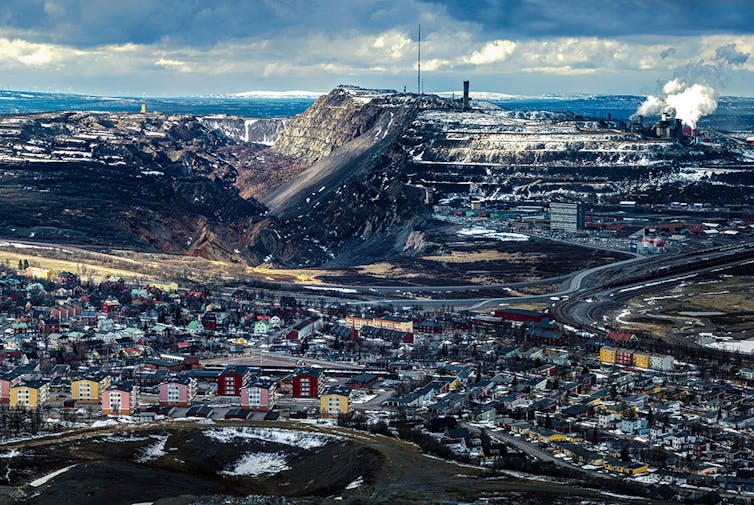
Mining for iron ore has led to land subsidence, forcing the relocation of the Swedish town of Kiruna. Imgur, CC BY-SA
Kiruna, Sweden: cultural history, industrial growth
Sweden’s northernmost town of Kiruna faces a similar situation due to land subsidence caused by a huge iron ore mine. Its 18,000 inhabitants now have to move about three kilometres east.
The relocation process has not been without its challenges. One big question was how many historic buildings to move to help retain authentic connections to place.
It was proposed that new building design would use the aesthetic qualities of the historic buildings. And there was discussion about either creating an “old town” within the site, or dispersing relocated buildings around the town.
Eventually, local representatives and the mining company (which funded the relocation) decided about 50 of the oldest buildings would be relocated while the remainder would be demolished.
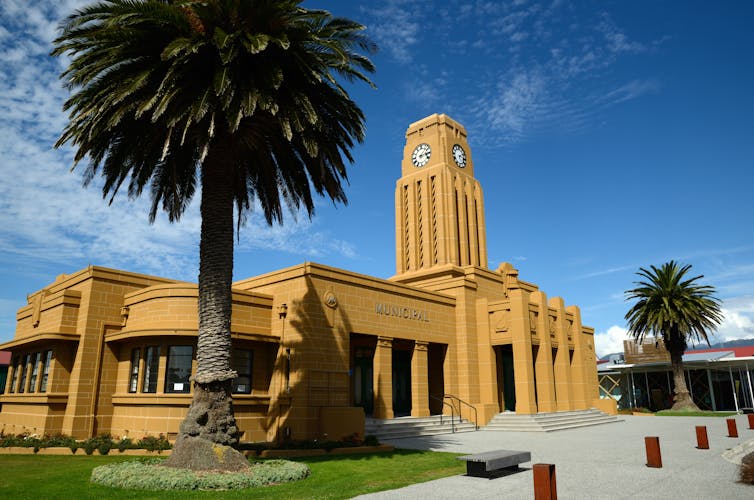
Demolition has now taken place, along with construction of a new town hall to replace its predecessor, a heritage-listed building dating to 1964.
Such decisions call for careful balancing of the impacts on local Indigenous cultural heritage, the economic role the mine has played in the town’s expansion, and its contribution to iron production in Europe in general.
In 2023, the Buller District Council initiated a master plan to guide Westport’s future growth and development. It focuses on the controlled expansion of the township to higher ground on government-owned Pāmu farmland one kilometre southwest of Westport.
In the North Island, the township of Kumeū is close to Auckland, the country’s biggest city, but still reflects its farming history. Following recent floods, as well as several major floods since 1926, Auckland Council and local leaders joined forces to devise a plan to improve the town’s resilience.
While the prospect of managed retreat has been raised, proactive river maintenance seems the preferred option, including regular debris clearance by local contractors to optimise storm water drainage.
Managed retreat presents opportunities for improvement to Kumeū’s infrastructure. But the long-established cultural relationships between people and landscapes in Aotearoa New Zealand also need to inform inclusive decisions about major relocations.
Connection to heritage rests on relationships with place and setting. These can include buildings, landscapes and views, as well as the historical and cultural values associated with a given site.
Stacy Vallis is affiliated with ICOMOS Aotearoa New Zealand, but this article does not represent the views of ICOMOS Aotearoa New Zealand.
Andrew Burgess, Ann Morrison, Imelda Piri, and Priscila Besen do not work for, consult, own shares in or receive funding from any company or organisation that would benefit from this article, and have disclosed no relevant affiliations beyond their academic appointment.
To mark the release of the 2025 World Press Freedom Index, Reporters Without Borders (RSF) partnered with the agency The Good Company to launch a new awareness campaign that puts an ironic twist on the glossy advertising of the tourism industry.
Three out of six countries featured in the exposé are from the Asia Pacific region — but none from the Pacific Islands.
The campaign shines a stark light on the press freedom violations in countries that seem perfect on postcards but are highly dangerous for journalists, says RSF.
It is a striking campaign raising awareness about repression.
Disguised as attractive travel guides, the campaign’s visuals use a cynical, impactful rhetoric to highlight the harsh realities journalists face in destinations renowned for their tourist appeal.
Along with Indonesia, Greece (89th), Cambodia (115), Egypt (170), Mexico (124) and the Philippines (116) are all visited by millions of tourists, yet they rank poorly in the 2025 World Press Freedom Index, reports RSF.
‘Chilling narrative’ “The attention-grabbing visuals juxtapose polished, enticing aesthetics with a chilling narrative of intimidation, censorship, violence, and even death.
“This deliberately unsettling approach by RSF aims to shift the viewer’s perspective, showing what the dreamlike imagery conceals: journalists imprisoned, attacked, or murdered behind idyllic landscapes.”
The RSF Index 2025 teaser. Video: RSF
Indonesia is in the Pacific spotlight because of its Melanesian Papuan provinces bordering Pacific Islands Forum member country Papua New Guinea.
Despite outgoing President Joko Widodo’s 10 years in office and a reformist programme, his era has been marked by a series of broken promises, reports RSF.
“The media oligarchy linked to political interests has grown stronger, leading to increased control over critical media and manipulation of information through online trolls, paid influencers, and partisan outlets,” says the Index report.
“This climate has intensified self-censorship within media organisations and among journalists.
“Since October 2024, Indonesia has been led by a new president, former general Prabowo Subianto — implicated in several human rights violation allegations — and by Joko Widodo’s eldest son, Gibran Rakabuming Raka, as vice-president.
“Under this new administration, whose track record on press freedom offers little reassurance, concerns are mounting over the future of independent journalism.”
Fiji leads in Pacific In the Pacific, Fiji has led the pack among island states by rising four places to 40th overall, making it the leading country in Oceania in 2025 in terms of press freedom.
A quick summary of Oceania rankings in the 2025 RSF World Press Freedom Index. Image: RSF/PMW
Both Timor-Leste, which dropped 19 places to 39th after heading the region last year, and Samoa, which plunged 22 places to 44th, lost their impressive track record.
Of the only other two countries in Oceania surveyed by RSF, Tonga rose one place to 46th and Papua New Guinea jumped 13 places to 78th, a surprising result given the controversy over its plans to regulate the media.
RSF reports that the Fiji Media Association (FMA), which was often critical of the harassment of the media by the previous FijiFirst government, has since the repeal of the Media Act in 2023 “worked hard to restore independent journalism and public trust in the media”.
In March 2024, research published in Journalism Practice journal found that sexual harassment of women journalists was widespread and needed to be addressed to protect media freedom and quality journalism.
In Timor-Leste, “politicians regard the media with some mistrust, which has been evidenced in several proposed laws hostile to press freedom, including one in 2020 under which defaming representatives of the state or Catholic Church would have been punishable by up to three years in prison.
“Journalists’ associations and the Press Council often criticise politicisation of the public broadcaster and news agency.”
On the night of September 4, 2024, Timorese police arrested Antonieta Kartono Martins, a reporter for the news site Diligente Online, while covering a police operation to remove street vendors from a market in Dili, the capital. She was detained for several hours before being released.
Samoan harassment Previously enjoying a good media freedom reputation, journalists and their families in Samoa were the target of online death threats, prompting the Samoan Alliance of Media Professionals for Development (SAMPOD) to condemn the harassment as “attacks on the fourth estate and democracy”.
In Tonga, RSF reports that journalists are not worried about being in any physical danger when on the job, and they are relatively unaffected by the possibility of prosecution.
“Nevertheless, self-censorship continues beneath the surface in a tight national community.”
In Papua New Guinea, RSF reports journalists are faced with intimidation, direct threats, censorship, lawsuits and bribery attempts, “making it a dangerous profession”.
“And direct interference often threatens the editorial freedom at leading media outlets. This was seen yet again at EMTV in February 2022, when the entire newsroom was fired after walking out” in protest over a management staffing decison.
“There has been ongoing controversy since February 2023 concerning a draft law on media development backed by Communications Minister Timothy Masiu. In January 2024, a 14-day state of emergency was declared in the capital, Port Moresby, following unprecedented protests by police forces and prison wardens.”
This impacted on government and media relations.
Australia and New Zealand In Australia (29), the media market’s heavy concentration limits the diversity of voices represented in the news, while independent outlets struggle to find a sustainable economic model.
While New Zealand (16) leads in the Asia Pacific region, it is also facing a similar situation to Australia with a narrowing of media plurality, closure or merging of many newspaper titles, and a major retrenchment of journalists in the country raising concerns about democracy.
Pacific Media Watch collaborates with Reporters Without Borders.
The Liberals’ former Senate Leader Simon Birmingham has urged the party to adopt quotas for its women in parliament, in an excoriating post-election critique.
Birmingham, a leading moderate who retired from parliament in January, says given the Liberals’ parliamentary representation will be at an all-time low, “such quotas could and should be hard, fast and ambitious”.
“There must be a reshaping of the party to connect it with the modern Australian community. Based on who’s not voting Liberal, it must start with women. Based on where they’re not voting, it must focus on metropolitan Australia.”
In a LinkedIn post, Birmingham admits the concept of quotas might be “somewhat illiberal”.
“But I struggle to think of any alternatives if there is to be a new direction that truly demonstrates change and truly guarantees that the party will better reflect the composition of modern society.”
“Standing in the way of such changes are an increasingly narrow membership base, both in numbers and outlook,” he says
The Liberals have committed to targets for women but without success in reaching them. There has been strong opposition within the party to quotas.
Former Liberal speaker Andrew Wallace told Sky on Tuesday, “I am uncomfortable with quotas because fundamentally I believe that the best person for the job should get the job”.
Birmingham suggests the next Liberal leader should consider the use of citizen assemblies “to re-engage back into candidate selection and policy formulation the very forgotten people who Menzies spoke of. Small business owners. Leaders of sporting, multicultural, service and other community organisations. Skilled professionals, especially professional women.
“The party can no longer expect such people to come to it as members but must find new ways to go to them.”
Birmingham says lessons from previous failures haven’t been learned.
He writes that “nothing can be sacrosanct if the party is to find a pathway to relevance with new generations of voters”.
“The broad church model of a party that successfully melds liberal and conservative thinking is clearly broken. The Liberal party is not seen as remotely liberal and the brand of conservatism projected is clearly perceived as too harsh and out of touch.
“A Liberal Party fit for the future will need to reconnect with and represent liberal ideology, belief and thinking in a new and modern context.”
Birmingham says Australians still seek the freedoms liberalism stands for. “Yet in 2025 the Liberal Party is seen as grudging if not intolerant of the way some exercise those freedoms. It must be a party that respects all individual choices, actions and opinions, in the way John Stuart Mill articulated 200 years ago, limited only when they would cause harm to others.
“Respect, inclusion and freedom can stand together, with support for all families, and enterprises. But not alongside judgemental attitudes that exclude or isolate some.”
Birmingham says the party has to reconcile itself on policy questions “from the size and role of government, through challenges of our time like budget sustainability, climate change and national security”.
Michelle Grattan does not work for, consult, own shares in or receive funding from any company or organisation that would benefit from this article, and has disclosed no relevant affiliations beyond their academic appointment.
As we age, it’s common to notice posture changes: shoulders rounding, head leaning forward, back starting to curve. You might associate this with older adults and wonder: will this happen to me? Can I prevent it?
It’s sometimes called “hunchback” or “roundback”, but the medical term for a curved back is kyphosis.
When the curve is beyond what’s considered normal (greater than 40 degrees), we refer to this as hyperkyphosis. In more severe cases, it may lead to pain, reduced mobility and physical function, or lower quality of life.
Here’s how it happens, and how to reduce your risk.
What causes a curved back?
A healthy spine has an elongated s-shape, so a curve in the upper spine is completely normal.
But when that curve becomes exaggerated and fixed (meaning you can’t stand up straight even if you try), it can signal a problem.
One common cause of a curved back is poor posture. This type, called postural kyphosis, usually develops over time due to muscle imbalances, particularly in younger people who spend hours:
hunched over a desk
slouched in a chair, or
looking down at a phone.
Fortunately, this kind of curved back is often reversible with the right exercises, stretches and posture awareness.
When the curve in your back becomes exaggerated and fixed, it can signal a problem. Undrey/Shutterstock
Older adults often develop a curved back, known as age-related kyphosis or hyperkyphosis.
This is usually due to wear and tear in the spine, including vertebral compression fractures, which are tiny cracks in the bones of the spine (vertebrae).
These cracks are most often caused by osteoporosis, a condition that makes bones more fragile with age.
In these cases, it’s not just bad posture – it’s a structural change in the spine.
Older adults often develop a curved back, known as age-related kyphosis or hyperkyphosis. nhk_nhk/Shutterstock
How can you tell the difference?
Signs of age-related hyperkyphosis include:
your back curves even when you try to stand up straight
back pain or stiffness
a loss of height (anything greater than 3-4 centimetres compared to your peak adult height may be considered outside of “normal” ageing).
Other causes of a curved back include:
Scheuermann’s kyphosis (which often develops during adolescence when the bones in the spine grow unevenly, leading to a forward curve in the upper back)
congenital kyphosis (a rare condition present from birth, caused by improper formation of the spinal bones. It can result in a more severe, fixed curve that worsens as a child grows)
scoliosis (where the spine curves sideways into a c- or s-shape when viewed from behind), and
lordosis (an excessive inward curve in the lower back, when viewed from the side).
In addition to these structural conditions, arthritis, and in rare cases, spinal injuries or infections, can also play a role.
Should I see a doctor about my curved back?
Yes, especially if you’ve noticed a curve developing, have ongoing back pain, or have lost height over time.
These can be signs of vertebral fractures, which can occur in the absence of an obvious injury, and are often painless.
While one in five older adults have a vertebral fracture, as many as two-thirds of these fractures are not diagnosed and treated.
In Australia, the Royal Australian College of General Practitioners and Healthy Bones Australia recommend a spine x-ray for:
people with kyphosis
height loss equal to or more than 3 centimetres, or
unexplained back pain.
What can I do to reduce my risk?
If you’re young or middle-aged, the habits you build today matter.
The best way to prevent a curved back is to keep your bones strong, muscles active, and posture in check. That means:
doing regular resistance training, especially targeting upper back muscles
getting enough protein, calcium, and vitamin D to support bone and muscle health
avoiding smoking and limiting alcohol to reduce risk factors that worsen bone density and overall wellbeing
Pay attention to your posture while sitting and standing. Position your head over your shoulders and shoulders over your hips. This reduces strain on your spine.
What exercises help prevent and manage a curved back?
Focus on exercises that strengthen the muscles that support an upright posture, particularly the upper back and core, while improving mobility in the chest and shoulders.
In general, you want to prioritise extension-based movements. These involve straightening or lifting the spine and pulling the shoulders back.
Repeated forward-bending (or flexion) movements may make things worse, especially in people with osteoporosis or spinal fractures.
Good exercises include:
back extensions (gently lift your chest off the floor while lying face down)
resistance exercises targeting the muscles between your shoulder blades
weight-bearing activities (such as brisk walking, jogging, stair climbing, or dancing) to keep bones strong and support overall fitness
stretching your chest and hip flexors to open your posture and relieve tightness.
Flexibility and balance training (such as yoga and pilates) can be beneficial, particularly for posture awareness, balance, and mobility. But research increasingly supports muscle strengthening as the cornerstone of prevention and management.
Muscle strengthening exercises, such as weight lifting or resistance training, reduces spinal curvature while enhancing muscle and bone mass.
If you suspect you have kyphosis or already have osteoporosis or a vertebral fracture, consult a health professional before starting an exercise program. There may be some activities to avoid.
If it’s caused by poor posture and muscle weakness, then yes, it’s possible.
But if it’s caused by bone changes, especially vertebral fractures, then full reversal is unlikely. However, treatment can reduce pain, improve function, and slow further progression.
Protecting your posture isn’t just about appearance. It’s about staying strong, mobile and independent as you age.
Jakub Mesinovic has received competitive research funding from the Medical Research Future Fund (MRFF).
David Scott has received consulting fees from Pfizer Consumer Healthcare, Abbott Nutrition and Alexion AstraZenica. He has received research funding from the National Health and Medical Research Council (NHMRC), Australian Research Council (ARC), Medical Research Future Fund (MRFF), American Society for Bone and Mineral Research (ASBMR), Alexion AstraZenica, Healthy Bones Australia and Amgen Australia. He is a member of the International Osteoporosis Foundation’s Committee of Scientific Advisors.
Warren Buffett, the 94-year-old investing legend and chief executive of Berkshire Hathaway, has announced plans to step down at the end of this year.
His departure will mark the end of an era for value investing, an investment approach built on buying quality companies at reasonable prices and holding them for the long term.
Buffett’s approach transformed Berkshire Hathaway from a small textile business in the 1960s into a giant conglomerate now worth more than US$1.1 trillion (A$1.7 trillion).
He built his fortune backing US industry in energy and insurance and American brands, including big stakes in household names such as Coca-Cola, American Express and Apple.
At Berkshire’s annual meeting at the weekend, held in an arena with thousands of devoted investors, Buffett named Greg Abel as his successor.
Abel, 62, is currently chairman and chief executive of Berkshire Hathaway Energy, as well as vice chairman of Berkshire Hathaway’s vast non-insurance operations.
He’s known for his disciplined, no-nonsense management style. The company’s board has now voted unanimously to approve the move.
This changing of the guard comes at a pivotal moment. Donald Trump’s return to the US presidency has already delivered significant economic policy shifts.
Meanwhile, questions about US economic dominance grow louder against China’s continued rise.
The ‘Oracle of Omaha’
Few names command as much respect in the world of finance as Warren Buffett. Born in Omaha, Nebraska, in 1930, Buffett displayed an early genius for numbers and investing. He bought his first stock at age 11.
His investment philosophy – buying undervalued companies with strong fundamentals – would later earn him the nickname the “Oracle of Omaha” for his uncanny ability to predict market trends and identify winning investments years before others did.
Value investing
Buffett drew his investment approach from the value investment principles of British-born US economist Benjamin Graham.
He preferred businesses with lasting advantages and a clear value proposition. Some of his key investments included insurance company GEICO, railroad company BNSF, and more recently Chinese electric vehicle maker BYD.
He avoided speculative bubbles (such as the dotcom bubble of the late 1990s and, more recently, cryptocurrencies) and preached long-term patience to investors. As he famously wrote in a 1988 letter to shareholders:
In fact, when we own portions of outstanding businesses with outstanding managements, our favorite holding period is forever.
Buffett’s guidance helped Berkshire navigate many economic booms and recessions. Over his six decades at the helm, the company delivered impressive compounded annual returns of almost 20% – virtually double those of the S&P 500 index.
Beyond financial success, Buffett championed ethical business practices and pledged to donate more than 99% of his wealth through the Giving Pledge, which he cofounded with Bill Gates and Melinda French Gates.
This raises questions about whether those who succeed Buffett can spot the next major industry disruptors.
America first?
Trump’s return as US president heralds major changes in economic policy. Trade restrictions might hurt some of Berkshire’s international investments. However, these same policies might benefit Buffett’s US-focused investments.
Buffett’s “never bet against America” mantra faces new scrutiny.
Warren Buffett discusses trade deficits and protectionism on May 3.
The challenges for Buffett’s successor
Abel inherits a company with about US$348 billion (A$539 billion) in cash. That’s a serious amount of capital to deploy wisely amid global economic uncertainty and Trump’s trade war.
Abel will likely maintain Berkshire’s core values while updating its approach. His challenges include:
Maintaining the “Buffett premium”: Abel lacks Buffett’s cult-like following among investors, which may gradually erode the additional value the market assigns to Berkshire due to Buffett’s leadership.
Without Buffett’s reputation, Abel may face increased pressure to effectively deploy Berkshire’s massive cash pile in a still-expensive stock market, where valuations are high and finding bargains is harder than ever.
Technological adaptation: while Berkshire has increased its technology investments over the years (including positions in Apple and Amazon), balancing its legacy holdings (such as Coca-Cola and railroads) with growth sectors (AI, renewables) remains challenging.
Environmental concerns: Berkshire Hathaway’s heavy reliance on coal and gas-fired utilities has drawn growing criticism as investors and regulators demand cleaner energy solutions.
Replicating the “golden touch”: Buffett’s genius wasn’t just in picking stocks. It was also in capital allocation, deal-making, and crisis management (for example, buying into Goldman Sachs during the global financial crisis). Can Abel replicate that?
After Buffett
Buffett’s principles – patience, intrinsic value and betting on America – are timeless. But the world has moved on. His successor must navigate geopolitical risks, technological disruption, and the rise of passive investing while preserving Berkshire’s unique culture.
The post-Buffett era represents more than just a leadership change. It’s a test of whether Buffett’s principles can survive in an increasingly short-term, technology-dominated, and geopolitically complex world.
Abel’s leadership will reveal the enduring power – or limitations – of Buffett’s philosophy.
Angel Zhong does not work for, consult, own shares in or receive funding from any company or organisation that would benefit from this article, and has disclosed no relevant affiliations beyond their academic appointment.
Days before Prime Minister Anthony Albanese called the federal election, the Labor government settled a long-running argument with the states over school funding.
This locked in a new 25%–75% split on federal and state funding for schools. It also committed to “fully funding” public schools by 2034, according to the requirements recommended by the Gonski report in 2011.
But apart from Peter Dutton’s criticism of the curriculum – suggesting students were being “indocrinated” – schools barely figured in the campaign.
In his victory speech, Albanese declared his new government would deliver on the values of “fairness, aspiration and opportunity for all”.
Education is the engine room for all three of these. Now Labor has been returned for a second term, what should the priorities be for schooling?
There is a large body of research showing unsustainable workload is a key issue. Teachers have also lost professional autonomy and status, while facing increased scrutiny based on standardised test results and accountability metrics.
A study of 65,000 Australian media articles from 1996 to 2020 found overwhelmingly negative portrayals of teachers, who have been blamed for education failures.
There needs to be a national response to the teaching workforce crisis that goes beyond the piecemeal approach of previous plans, such as 2022’s National Teacher Workforce Action Plan.
We need a more coordinated and extensive campaign to attract and retain teachers. This will take substantial time and financial investment.
2. Student disengagement
Likewise, we need strategies to support and enable students to participate fully in schooling. Issues around school refusal and attendance are increasing across Australia. A comprehensive response is needed, which addresses the broad range of social, economic, health and wellbeing factors at play.
Schools need to be able to provide inclusive and supportive learning environments, which cater to the diverse needs and interests of their students and communities.
This requires school-specific approaches to the curriculum, teaching methods and school climate (or the quality of school life), rather than further standardisation.
3. Educational inequality
Australia has one of the most unequal schooling systems in the OECD.
As the MySchool website notes, “there is a substantial body of research evidence that shows the educational performance of students […] is related to certain characteristics of their family […] and school”.
Put another way, there is a persistent link between postcodes and educational access and outcomes for Australian students.
Fully funding public schools in communities facing complex disadvantage is a start, but much more is needed to reverse the policy settings that have entrenched inequality in Australian schooling.
The combined effects of more than two decades of standardisation (including a focus on high-stakes tests) and marketisation (where schools compete for students) have hollowed out public education in Australia.
There needs to be a bold plan to reshape Australian schools as engines of equality.
4. Global uncertainty
Schools need to be places where young people can not only learn about the world, but also how to get along in the world. This need has arguably become even more pressing.
With the re-election of US President Donald Trump, the world has become more uncertain and more complex. We also know Australian students’ civics knowledge is at its lowest since testing began.
Making schools more welcoming and inclusive for students from diverse backgrounds is one way to help build a more democratic future in which difference is celebrated and lasting social bonds are formed.
Giving young people the opportunity to collaborate on problems that matter to their communities (for example, climate change) can also help make them more engaged and critical thinkers.
In collaborating on problems, schools use traditional curriculum resources as well as local knowledge and cultural wisdom, which helps to connect young people to their schools and communities.
The Australian Curriculum already provides the opportunity for schools to do this work, but is often pushed aside in the drive for increased literacy and numeracy test results.
Time for a bold vision
To deliver on Albanese’s promise of “fairness, aspiration and opportunity for all”, the Australian government must do much more than provide extra funding for schools.
Now is the time for a big, bold vision of education for all young Australians. This needs to involve the teaching workforce, students from all backgrounds, and a consideration of the skills and knowledge needed to meet the challenges of a complex and volatile world.
Stewart Riddle receives funding from the Australian Research Council.
Source: The Conversation (Au and NZ) – By Giovanni E. Ferreira, NHMRC Emerging Leader Research Fellow, Institute of Musculoskeletal Health, University of Sydney
Arthritis – an umbrella term for around 100 conditions that damage the joints – affects 4.1 million Australians. This is expected to rise by 31% to 5.4 million by 2040 and cost the Australian health-care system an estimated $12 billion each year.
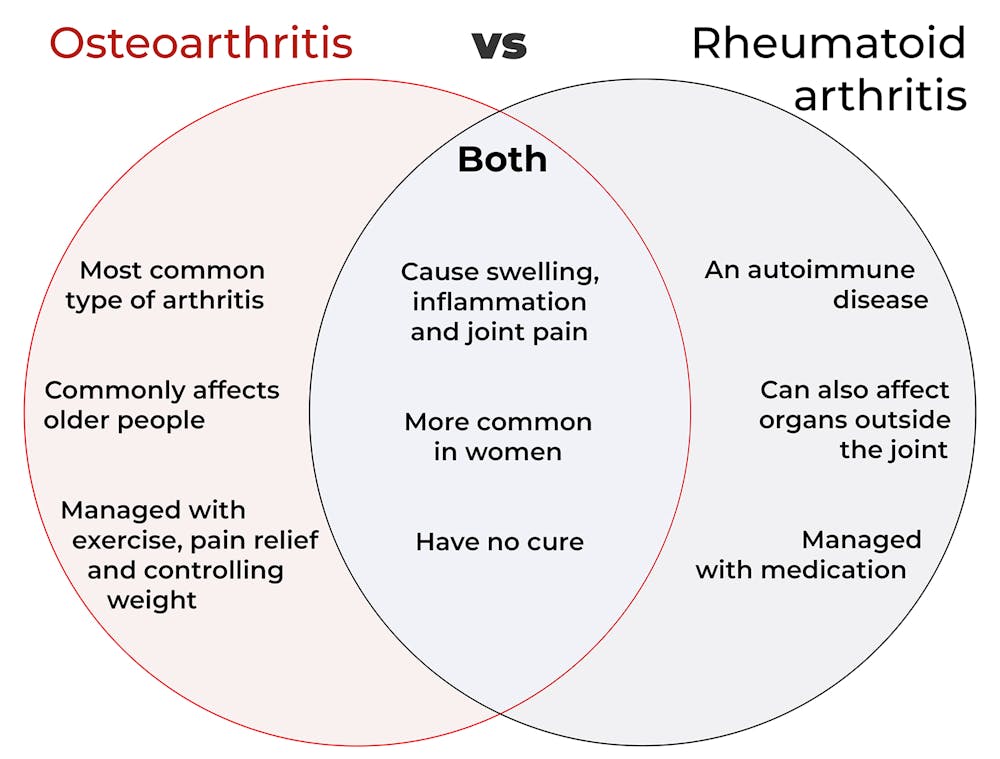
The two most common types, osteoarthritis and rheumatoid arthritis, can both cause joint pain, swelling and stiffness. Both are more common in women. Neither can be cured.
But their causes, risk factors and treatments are different – here’s what you need to know.
What is osteoarthritis?
Osteoarthritis is the most common form of arthritis. It affects 2.1 million Australians, mostly older people. About a third of Australians aged 75 and older have the condition.
It can affect any joint but is most common in the knees, hips, fingers, thumbs and big toes.
The main symptom is pain, especially during movement. Other symptoms may include swelling, stiffness and changes to the shape of joints.
The main risk factors are ageing and obesity, as well as previous injuries or surgery. For osteoarthritis in the hands, genetics also play a big role.
Signs of osteoarthritis can appear on knee scans from around age 45 and become more common with age.
However, this type of arthritis not simply the “wear and tear” of ageing. Osteoarthritis is a complex disease that affects the whole joint. This includes the cartilage (“shock-absorbing” connective tissue protecting your bones), bones, ligaments (connective tissue holding bones and body parts in place) and joint lining.
Diagnosis is based on symptoms (such as pain and restricted movement) and a physical exam.
The disease generally worsens over time and cannot be reversed. But the severity of damage does not always correlate with pain levels.
For this reason, x-rays and MRI scans are usually unhelpful. Some people with early osteoarthritis experience severe pain, but the damage won’t show up on a scan. Others with advanced and visible osteoarthritis may have few symptoms or none at all.
What about rheumatoid arthritis?
Unlike osteoarthritis, rheumatoid arthritis is an autoimmune disease. This means the immune system attacks the joint lining, causing inflammation and damage.
Rheumatoid arthritis is less common than osteoarthritis, affecting around 514,000 Australians. It mostly impacts the wrists and small joints in the hands and feet, though larger joints such as the elbows, shoulders, knees and ankles can also be involved.
It can also affect other organs, including the skin, lungs, eyes, heart and blood vessels. Fortunately, disease outside the joint has become less common in recent years, likely due to better and earlier treatment.
Rheumatoid arthritis often develops earlier than osteoarthritis but can occur at any age. Onset is most frequent in those aged 35–64. Smoking increases your risk.
How is it diagnosed?
As with osteoarthritis, your doctor will diagnose rheumatoid arthritis based on your symptoms and a physical exam.
Some other tests can be useful. Blood tests may pick up specific antibodies that indicate rheumatoid arthritis, although you can still have the condition with negative results.
X-rays may also reveal joint damage if the disease is advanced. If there is uncertainty, an ultrasound or MRI can help detect inflammation.
No treatment can stop osteoarthritis progressing. However many people manage their symptoms well with advice from their doctor and self-care. Exercise, weight management and pain medicines can help.
Exercise has been shown to be safe for osteoarthritis of the knee, hip and hand. Many types of exercise are effective at reducing pain, so you can choose what suits you best.
Exercise can help manage weight and is safe and effective at managing joint pain. gelog67/Shutterstock
Topical and oral anti-inflammatories are usually recommended to manage pain. However, opioids (such as tramadol or oxycodone) are not, due to their risks and limited evidence they help.
In some cases antidepressants such as duloxetine may also be considered as a treatment for pain though, again, evidence they help is limited.
What about rheumatoid arthritis?
Treatments for rheumatoid arthritis focus on preventing joint damage and reducing inflammation.
It’s essential to get an early referral to a rheumatologist, so that treatment with medication – called “disease-modifying anti-rheumatic drugs” – can begin quickly.
These medicines suppress the immune system to stop inflammation and prevent damage to the joint.
With no cure, the overall goal is to achieve remission (where the disease is inactive) or get symptoms under control.
Advances in treatment
There is an increasing interest in prevention for both types of arthritis.
A large international clinical trial is currently investigating whether a diet and exercise program can prevent knee osteoarthritis in those with higher risk – in this case, women who are overweight and obese.
For those already affected, new medicines in early-stage clinical trials show promise in reducing pain and improving function.
There is also hope for rheumatoid arthritis with Australian researchers developing a new immunotherapy. This treatment aims to reprogram the immune system, similar to a vaccine, to help people achieve long-term remission without lifelong treatment.
Giovanni E. Ferreira receives funding from The National Health and Medical Research Council, HCF Research Foundation, and Ramsay Hospital Research Foundation.
Rachelle Buchbinder receives research funding from The National Health and Medical Research Council, Medical Research Future Fund, the Australian government, HCF Foundation and Arthritis Australia.
Some employers assume that a return to the old ways of working is both possible and desirable. But for many workers, their perception of the office environment has changed.
According to our new study, only 27% of surveyed office workers now spend more than 30 hours a week at their workplace — down from 69% before the pandemic. That was typical of a predominantly full-time office-based culture.
And one in four office workers spends fewer than ten hours a week at the office.
The study draws on the Building Occupants Survey System Australia (BOSSA), a large database that assesses worker satisfaction with the indoor environmental quality of their office building. It also considers the role of demographic and personal factors in shaping workplace experiences.
To understand changes in work patterns before and after COVID, we analysed 5,644 surveys pre- and post-COVID. They covered 157 Australian office buildings, mostly in Sydney (81), Melbourne (39) and Brisbane(21).
Who has cut their office hours the most?
The trend towards more flexible work reflects broader cultural changes in how Australians work. Flexibility has become essential – not just a pandemic-era necessity.
In our study, women and employees aged 30–50 reported the most substantial drop in weekly office hours, especially among those who had been working more than 30 hours a week in the office pre-COVID. This reduction likely reflects increased family responsibilities for those respondents – such as school drop-offs or being available during school holidays – alongside a broader pursuit of work-life balance.
Many in this age group hold mid-career or leadership roles, where autonomy and adaptability in work schedules become crucial. The hybrid work model offers this flexibility. It enables employees to better navigate professional demands and care-giving duties.
This is especially important for women, who continue to do the majority of housework and caring responsibilities. Employees over 50 may return to the office due to lower technological confidence or a preference for face-to-face interaction.
Office design isn’t keeping up
Yet the return to the office hasn’t meant a return to the old ways of working. This research shows significant declines in satisfaction with key office factors, including:
space functionality and aesthetic experience
daylight and external view access
personal control over office environment.
Privacy and disruption – relating to noise, interruptions and lack of visual privacy – emerged as the strongest predictor of productivity and workplace health. Employees said quiet, private spaces were vital for focused work and mental well-being.
Despite its challenges, working from home is often perceived as more conducive to work-life balance and more cost-effective for both workers and companies.
What needs to change in office design?
The contrast between the autonomy and comfort of home offices and the constraints of traditional office spaces may partially explain the decline in workplace satisfaction.
Better design: Office workers are asking for quiet areas and home-like comforts in the office. Shutterstock
Notably, the shift towards working from home has reshaped employees’ expectations. This has led to a decline in satisfaction with traditional office environments.
Despite the prevalence of remote work, a substantial portion of employees still operate from the same pre-pandemic workplaces.
As flexible work schedules become the norm, a shift in the notion of the workplace is underway. Spaces need to be designed not just for individual tasks, but to foster collaboration, innovation and social connections.
Job flexibility has become an essential feature that drives employee satisfaction and engagement. Employees surveyed say they want updated spaces that support both privacy and social interactions:
I do my best thinking in inspiring spaces. Natural light, spacious meeting rooms, modern furniture, quiet areas, sit/stand desks.
Another survey respondent explained:
It would be good to have more private spaces for online meetings, and also to escape from noise.
This change in employee expectations calls for new office builds with environments that enhance employees’ wellbeing. Workers are asking for features such as comfortable home-like spaces and health-conscious amenities.
The survey results show workers’ key post-pandemic design priorities include reduced density, physical distancing, reconfigured layouts and better ventilation.
To improve indoor environmental quality, facilities teams should adopt a holistic approach that combines improved air movement with advanced filtration systems for better air quality, workplace acoustics and greater employee control over environmental settings.
The workplace is under pressure to evolve into a dynamic, human-centered environment that supports both productivity and personal fulfilment. Many workers surveyed said they would be willing to move to a new office for a better office environment.
Richard de Dear receives funding from the Australian Research Council.
Ozgur Gocer and Thomas Parkinson do not work for, consult, own shares in or receive funding from any company or organisation that would benefit from this article, and have disclosed no relevant affiliations beyond their academic appointment.
Watching elections over the decades, one thing that has struck me is that results are invariably hyperbolised in the first blush of the people’s verdict. The achievement of the winners is over-egged in the commentary, as is the scale of the calamity suffered by the losers.
That caveat notwithstanding, I think we can credibly say that Saturday’s election result was the most momentous since John Howard’s totemic victory of 2001 — a win that set in train much of what has happened in Australian politics over the course of this century.
As I suggested in my pre-election essay on Anthony Albanese’s prime ministership, the impending victory for Labor would in part be an endorsement, even if grudging, of his leadership of the nation. It would be a reward for the fact that, despite limitations, he had run an industrious, orderly, united and scandal-free government. His was a mature administration that the country had been bereft of for nearly two decades.
But the magnitude of Labor’s triumph on Saturday was undoubtedly most of all a repudiation of Duttonism. It was an emphatic assertion of what Australia is not. Why that makes this election the most significant since 2001 is that Dutton was an ideological heir to Howard — as before him was Tony Abbott, notwithstanding the latter’s idiosyncratic influence by the philosophy of the post-war right-wing Catholic crusader, B.A. Santamaria.
Dutton entered the House of Representatives at the 2001 election, and the early advance of his parliamentary career was nurtured by Howard. As he articulated during this campaign, Dutton regarded Howard as his political touchstone.
Like Abbott’s, Dutton’s leadership of the Liberal Party represented a doubled down version of the conservative populism that Howard so effectively unleashed at the 2001 election.
This was a point that Lech Blaine perceptively recognised in his chilling 2024 Quarterly Essay portrait of Dutton. In common with Abbott, Dutton’s rendition of Howardism was an aggressively crude variant. Moreover, both of these unequal proteges were wanting in their mentor’s masterful political dexterity. Antithetical to the heritage of the Liberal Party, they were also short of interest in, let alone aptitude for, economic policy.
Howard’s conservative populism was directed at cleaving working-class voters off Labor, especially in outer suburban electorates of Australia. For some time, there has been an emerging expectation that Dutton was poised to fruitfully capitalise on an incipient revolt against the Albanese government in outer suburbia. That is, a belief that these seats were susceptible to swallowing whole Dutton’s Frankenstein version of Howardism.
Dutton’s strategy for hunting after votes in the outer suburbs and the commentary that has attended to it did a disservice to those communities. Undoubtedly, their populations, fast growing and undergoing a tsunami of demographic change, are enduring severe economic duress and struggling with over-stretched infrastructure and services.
But there has been too much of a readiness to extrapolate from this that they were ripe for embracing an angry, grievance-fuelled politics, that they were vulnerable to xenophobic dog whistling, that they were, in short, home to an uglier Australia.
The rejection of Duttonism in outer suburbia Australia suggests that, to the contrary, because of their kaleidoscopic diversity of ethnicities and cultures, these communities shrink from a politics of divisiveness and nativism.
In other words, the routing of the Liberals on Saturday ought to be the moment that finally closes the door on the direction that Howard orientated the party at the beginning of this century. It should be his last hurrah.
The dilemma, of course, is that stripped of moderates (the idea of the vaunted “broad church” thriving under Howard was itself greatly exaggerated), there is a serious question of whether the Liberals can reverse their 25-year rightwards pivot.
The new leader could begin the journey back towards the centre by never darkening the doors of Sky News after Dark. A folly of Abbott and Dutton was their tribal attitude to the media. They skewed their communications to reactionary sympathisers who, rather than providing a reality check, encouraged ideological amplification.
What of Albanese and his leadership? In my pre-election essay on him, I flagged a concern that victory would feed his self-narrative of always being under-estimated. That it would encourage him to stick fast to his first term modus operandi of cautious, dogged incrementalism at a point when the nation is overdue for a burst of expansive reformism. The scale of Saturday’s win arguably heightens that risk.
Yet we do have to acknowledge that Albanese, fortunate though he has been with the incurably inauthentic Scott Morrison and then Dutton as opponents, has been under-estimated. He has insisted since 2022 that his was a two-term strategy in which the first would be about measured consolidation that would, in turn, open the path to a long-term Labor government whose legacy would be durable change. This result means the prime minister and his team now have the opportunity to achieve that.
Watching the ABC’s election night broadcast, a chief takeaway was the conspicuous camaraderie among senior members of Albanese’s Labor cabinet. Treasurer Jim Chalmer’s sincerely generous words about the prime minister’s leadership exemplified that.
During Labor’s first term, I wondered whether Chalmers, for all his virtues, was actually too much a patient team player and not enough of an agitator within the government. In other words, that he did not sufficiently ginger up Albanese for greater policy adventurism, as Paul Keating did Bob Hawke during the last great era of Labor reformism.
But Saturday night spotlighted a different, but perhaps at least as equally valuable, dynamic at the top of the government. That is genuine respect, even affection, between its key personnel. Keating could never have been as laudable of Hawke as Chalmers was of Albanese as the votes were tallied.
This says much about the character of Chalmers, as it does about other leading cabinet members who have exuded that spirit of camaraderie throughout the life of the government. Most notably, the prime minister’s brains trust: Richard Marles, Penny Wong, Tony Burke, Mark Butler and Katy Gallagher.
But it must also reflect Albanese’s respect for his colleagues. It speaks to his ability to harmoniously manage a team, his gift for generating unity of purpose, and his willingness to afford ministers a self-empowering autonomy in contributing to Labor’s collective enterprise. These are no small things. Respect and decency in a government begins with the prime minister and filters down.
Let us not get misty-eyed. Albanese is vulcanised by a lifetime in politics. He is tough and a ruthless foe. His political blooding was as a left faction functionary in the right-controlled New South Wales Labor Party. Intra-party knife fighting was an essential part of the skill set he developed.
But, consistent with all prime ministers, to understand Albanese’s approach to leadership we need to return to his formative roots. He was fatherless, defined by being the only child of a single mum, disability pensioner. These circumstances, as former journalist Katharine Murphy identified, imbued him with a pronounced streak of self-sufficiency, a “lone wolf” aspect. Yet also discernible is a resulting “feminine” side to his character and his prime-ministerial style.
Albanese readily exhibits empathy and emotion. A familiar sight of him is lips quivering as he struggles to suppress tears. He dares speak of kindness and compassion as positive leadership attributes — in this he evokes former New Zealand prime minister, Jacinda Ardern. And he practices a collaborative, cooperative minded governing operating mode, which are behaviours conventionally associated with women leaders.
Not coincidentally, a striking feature of Albanese’s prime ministership is that the “feminisation” of Labor has proceeded apace. For instance, policies such as the movement towards universal childcare support and government-backed wage increases in the care industries whose workforce is dominated by women employees. The record proportion of women appointed to cabinet. The continuing storming of the ramparts of caucus by women — they now comprise a majority of the party room — reinforced at the federal election most spectacularly in Brisbane, where six additional female Labor candidates prevailed, including Ali France, slayer of Dutton. And the consolidation of the pattern of women voters favouring Labor.
It’s unfashionable these days to quote the post-war lion of the Labor left, Jim Cairns. However, when he retired in 1977, Cairns was asked who he would like to inherit his seat. He replied, “a woman, they feel the value of life”. Perhaps a sentiment by which Albanese abides.
In the past, Paul Strangio received funding from the Australian Research Council.
Climate change is lengthening fire seasons across much of the world. This means the potential for wildfires at any time of the year, in both hemispheres, is increasing.
That poses a problem. Australia regularly shares firefighting resources with the United States and Canada. But these agreements rest on the principle that when North America needs these personnel and aircraft, Australia doesn’t, and vice versa. Climate change means this assumption no longer holds.
But to what extent do fire seasons in Australia and North America actually overlap? Our new research examined this question.
We found an alarming increase in the overlap of the fire seasons, suggesting both regions must invest far more in their own permanent firefighting capacity.
What we did
We investigated fire weather seasons – that is, the times of the year when atmospheric conditions such as temperature, humidity, rainfall and wind speed are conducive to fire.
The central question we asked was: how many days each year do fire weather seasons in Australia and North America overlap?
To determine this, we calculated the length of the fire weather seasons in the two regions in each year, and the number of days when the seasons occur at the same time. We then analysed reconstructed historical weather data to assess fire-season overlap for the past 45 years. We also analysed climate model data to assess changes out to the end of this century.
And the result? On average, fire weather occurs in both regions simultaneously for about seven weeks each year. The greatest risk of overlap occurs in the Australian spring – when Australia’s season is beginning and North America’s is ending.
The overlap has increased by an average of about one day per year since 1979. This might not sound like much. But it translates to nearly a month of extra overlap compared to the 1980s and 1990s.
The increase is driven by eastern Australia, where the fire weather season has lengthened at nearly twice the rate of western North America. More research is needed to determine why this is happening.
Longer, hotter, drier
Alarmingly, as climate change worsens and the atmosphere dries and heats, the overlap is projected to increase.
The extent of the overlap varied depending on which of the four climate models we used. Assuming an emissions scenario where global greenhouse gas emissions begin to stabilise, the models projected an increase in the overlap of between four and 29 days a year.
What’s behind these differences? We think it’s rainfall. The models project quite different rainfall trends over Australia. Those projecting a dry future also project large increases in overlapping fire weather. What happens to ours and North America’s rainfall in the future will have a large bearing on how fire seasons might change.
While climate change will dominate the trend towards longer overlapping fire seasons, El Niño and La Niña may also play a role.
These climate drivers involve fluctuations every few years in sea surface temperature and air pressure in part of the Pacific Ocean. An El Niño event is associated with a higher risk of fire in Australia. A La Niña makes longer fire weather seasons more likely in North America.
There’s another complication. When an El Niño occurs in the Central Pacific region, this increases the chance of overlap in fire seasons of North America and Australia. We think that’s because this type of El Niño is especially associated with dry conditions in Australia’s southeast, which can fuel fires.
But how El Niño and La Niña will affect fire weather in future is unclear. What’s abundantly clear is that global warming will lead to more overlap in fire seasons between Australia and North America – and changes in Australia’s climate are largely driving this trend.
Looking ahead
Firefighters and their aircraft are likely to keep crossing the Pacific during fire emergencies.
But it’s not difficult to imagine, for example, simultaneous fires occurring in multiple Australian states during spring, before any scheduled arrival of aircraft from the US or Canada. If North America is experiencing late fires that year and cannot spare resources, Australia’s capabilities may be exceeded.
Fire agencies are becoming increasingly aware of this clash. And a royal commission after the 2019–20 Black Summer fires recommended Australia develop its own fleet of firefighting aircraft.
Long, severe fire seasons such as Black Summer prompted an expansion of Australia’s permanent aerial firefighting fleet, but more is needed.
As climate change accelerates, proactive fire management, such as prescribed burning, is also important to reduce the risk of uncontrolled fire outbreaks.
Doug Richardson receives funding from the ARC Centre of Excellence for Climate Extremes (CE170100023) and the Germany-Australia Joint Research Cooperation Scheme, funded by the Deutscher Akademischer Austauschdienst (DAAD) and Universities Australia (RG230014)
Andreia Filipa Silva Ribeiro receives funding from the Deutsche Forschungsgemeinschaft (DFG) – Project number 530175554, the Alexander von Humboldt Foundation (AvH) and the Germany-Australia Joint Research Cooperation Scheme, funded by the Deutscher Akademischer Austauschdienst (DAAD) and Universities Australia (RG230014).
A leading Cook Islands environmental lobby group is hoping that the Cook Islands government will speak out against the recent executive order from US President Donald Trump aimed at fast-tracking seabed mining.
Te Ipukarea Society (TIS) says the arrogance of US president Trump to think that he could break international law by authorising deep seabed mining in international waters was “astounding”, and an action of a “bully”.
The order states: “It is the policy of the US to advance United States leadership in seabed mineral development.”
NOAA has been directed to, within 60 days, “expedite the process for reviewing and issuing seabed mineral exploration licenses and commercial recovery permits in areas beyond national jurisdiction under the Deep Seabed Hard Mineral Resources Act.”
It directs the US science and environmental agency to expedite permits for companies to mine the ocean floor in the US and international waters.
In addition, a Canadian mining company — The Metals Company — has indicated that they have applied for a permit from Trump’s administration to start commercially mining in international waters.
The mining company had been unsuccessful in gaining a commercial mining licence through the International Seabed Authority (ISA).
‘Arrogance of Trump’ Te Ipukarea Society’s technical director Kelvin Passfield told Cook Islands News: “The arrogance of Donald Trump to think that he can break international law by authorising deep seabed mining in international waters is astounding.
“The United States cannot pick and choose which aspects of the United Nations Law of the Sea it will follow, and which ones it will ignore. This is the action of a bully,” he said.
“It is reckless and completely dismissive of the international rule of law. At the moment we have 169 countries, plus the European Union, all recognising international law under the International Seabed Authority.
“For one country to start making new international rules for themselves is a dangerous notion, especially if it leads to other States thinking they too can also breach international law with no consequences,” he said.
TIS president June Hosking said the fact that a part of the Pacific (CCZ) was carved up and shared between nations all over the world was yet another example of “blatantly disregarding or overriding indigenous rights”.
“I can understand why something had to be done to protect the high seas from rogues having a ‘free for all’, but it should have been Pacific indigenous and first nations groups, within and bordering the Pacific, who decided what happened to the high seas.
“That’s the first nations groups, not for example, the USA as it is today.”
South American countries worried Hosking highlighted that at the March International Seabed Authority (ISA) assembly she attended it was obvious that South American countries were worried.
“Many have called for a moratorium. Portugal rightly pointed out that we were all there, at great cost, just for a commercial activity. The delegate said, ‘We must ask ourselves how does this really benefit all of humankind?’
Looking at The Metals Company’s interests to commercially mine in international waters, Hosking said, “I couldn’t help being annoyed that all this talk assumes mining will happen.
“ISA was formed at a time when things were assumed about the deep sea e.g. it’s just a desert down there, nothing was known for sure, we didn’t speak of climate crisis, waste crisis and other crises now evident.
“The ISA mandate is ‘to ensure the effective protection of the marine environment from the harmful effects that may arise from deep seabed related activities.
“We know much more (but still not enough) to consider that effective protection of the marine environment may require it to be declared a ‘no go zone’, to be left untouched for the good of humankind,” she added.
Meanwhile, technical director Passfield also added, “The audacity of The Metals Company (TMC) to think they can flaunt international law in order to get an illegal mining licence from the United States to start seabed mining in international waters is a sad reflection of the morality of Gerard Barron and others in charge of TMC.
‘What stops other countries?’ “If the USA is allowed to authorise mining in international waters under a domestic US law, what is stopping any other country in the world from enacting legislation and doing the same?”
He said that while the Metals Company may be frustrated at the amount of time that the International Seabed Authority is taking to finalise mining rules for deep seabed mining, “we are sure they fully understand that this is for good reason. The potentially disastrous impacts of mining our deep ocean seabed need to be better understood, and this takes time.”
He said that technology and infrastructure to mine is not in place yet.
“We need to take as much time as we need to ensure that if mining proceeds, it does not cause serious damage to our ocean. Their attempts to rush the process are selfish, greedy, and driven purely by a desire to profit at any cost to the environment.
“We hope that the Cook Islands Government speaks out against this abuse of international law by the United States.” Cook Islands News has reached out to the Office of the Prime Minister and Seabed Minerals Authority (SBMA) for comment.
Republished from the Cook Islands News with permission.
Source: The Conversation (Au and NZ) – By Eve Warburton, Research Fellow, Department of Political and Social Change, and Director, Indonesia Institute, Australian National University
Last week, the Trump administration signed a deal with Ukraine that gives it privileged access to Ukraine’s natural resources.
Some news outlets described the deal as Ukrainian President Volodymyr Zelensky “caving” to US President Donald Trump’s demands.
But we see the agreement as the result of clever bargaining on the part of Ukraine’s war-time president.
So, what does the deal mean for Ukraine? And will this be help strengthen America’s mineral supply chains?
Ukraine’s natural resource wealth
Ukraine is home to 5% of the world’s critical mineral wealth, including 22 of the 34 minerals identified by the European Union as vital for defence, construction and high-tech manufacturing.
However, there’s a big difference between resources (what’s in the ground) and reserves (what can be commercially exploited). Ukraine’s proven mineral reserves are limited.
Further, Ukraine has an estimated mineral wealth of around US$14.8 trillion (A$23 trillion), but more than half of this is in territories currently occupied by Russia.
What does the new deal mean for Ukraine?
American support for overseas conflict is usually about securing US economic interests — often in the form of resource exploitation. From the Middle East to Asia, US interventions abroad have enabled access for American firms to other countries’ oil, gas and minerals.
But the first iteration of the Ukraine mineral deal, which Zelensky rejected in February, had been an especially brazen resource grab by Trump’s government. It required Ukraine to cede sovereignty over its land and resources to one country (the US), in order to defend itself from attacks by another (Russia).
These terms were highly exploitative of a country fighting against a years-long military occupation. In addition, they violated Ukraine’s constitution, which puts the ownership of Ukraine’s natural resources in the hands of the Ukrainian people. Were Zelensky to accept this, he would have faced a tremendous backlash from the public.
In comparison, the new deal sounds like a strategic and (potentially) commercial win for Ukraine.
First, this agreement is more just, and it’s aligned with Ukraine’s short- and medium-term interests. Zelenksy describes it as an “equal partnership” that will modernise Ukraine.
Ukraine will contribute 50% of the income from royalties and licenses to develop critical minerals, oil and gas reserves, while the US can make its contributions in-kind, such as through military assistance or technology transfers.
Ukraine maintains ownership over its natural resources and state enterprises. And the licensing agreements will not require substantial changes to the country’s laws, or disrupt its future integration with Europe.
Importantly, there is no mention of retroactive debts for the US military assistance already received by Ukraine. This would have created a dangerous precedent, allowing other nations to seek to claim similar debts from Ukraine.
Finally, the deal also signals the Trump administration’s commitment to “a free, sovereign and prosperous Ukraine” – albeit, still without any security guarantees.
Profits may be a long time coming
Unsurprisingly, the Trump administration and conservative media in the US are framing the deal as a win.
For too long, Trump argues, Ukraine has enjoyed US taxpayer-funded military assistance, and such assistance now has a price tag. The administration has described the deal to Americans as a profit-making endeavour that can recoup monies spent defending Ukrainian interests.
But in reality, profits are a long way off.
The terms of the agreement clearly state the fund’s investment will be directed at new resource projects. Existing operations and state-owned projects will fall outside the terms of the agreement.
Mining projects typically work within long time frames. The move from exploration to production is a slow, high-risk and enormously expensive process. It can often take over a decade.
Add to this complexity the fact that some experts are sceptical Ukraine even has enormously valuable reserves. And to bring any promising deposits to market will require major investments.
What’s perhaps more important
It’s possible, however, that profits are a secondary calculation for the US. Boxing out China is likely to be as – if not more – important.
China controls not just a large proportion of the world’s known rare earths deposits, it also has a monopoly on the processing of most critical minerals used in green energy and defence technologies.
The US fears China will weaponise its market dominance against strategic rivals. This is why Western governments increasingly make mineral supply chain resilience central to their foreign policy and defence strategies.
Given Beijing’s closeness to Moscow and their deepening cooperation on natural resources, the US-Ukraine deal may prevent Russia — and, by extension, China — from accessing Ukrainian minerals. The terms of the agreement are explicit: “states and persons who have acted adversely towards Ukraine must not benefit from its reconstruction”.
Finally, the performance of “the deal” matters just as much to Trump. Getting Zelensky to sign on the dotted line is progress in itself, plays well to Trump’s base at home, and puts pressure on Russian President Vladimir Putin to come to the table.
So, the deal is a win for Zelensky because it gives the US a stake in an independent Ukraine. But even if Ukraine’s critical mineral reserves turn out to be less valuable than expected, it may not matter to Trump.
Eve Warburton receives funding from the Australian Research Council and the Westpac Scholars Trust.
Olga Boichak is a director of the Foundation of Ukrainian Studies in Australia. She receives funding from the Australian Research Council and the Westpac Scholars Trust.
ER Report: Here is a summary of significant articles published on EveningReport.nz on May 6, 2025.
Fiji media welcomes credible news services, but not ‘pop-up propagandists’, says Simpson By Anish Chand Entities and individuals that thrived under the previous government with public relations contracts now want to be part of the media or run media organisations, says Fiji Media Association (FMA) secretary Stanley Simpson. He made the comments yesterday while speaking at a World Press Freedom Day event hosted by the journalism programme
Locked up then locked out: how NZ’s bank rules make life for ex-prisoners even harder Source: The Conversation (Au and NZ) – By Victoria Stace, Senior Lecturer, Te Herenga Waka — Victoria University of Wellington FotoDax/Shutterstock People coming out of prison in New Zealand face multiple hurdles reintegrating into society – starting with one of the most fundamental elements of modern life: getting a bank account. Not having a bank
Can a wooden spoon really stop a pot from boiling over? Here’s the science Source: The Conversation (Au and NZ) – By Jay Deagon, Senior Lecturer of Home Economics, CQUniversity Australia Alexanderstock23/Shutterstock One moment, your spaghetti is happily bubbling away in the pot. A minute later, after busying yourself with something else, you turn around to find a hot mess all over your stove. Boiling liquid can rocket up
How did sport become so popular? The ancient history of a modern obsession Source: The Conversation (Au and NZ) – By Konstantine Panegyres, Lecturer in Classics and Ancient History, The University of Western Australia Roman mosaics discovered in Sicily show women playing different sports. David Pineda Svenske/Shutterstock It’s almost impossible to go a day without seeing or hearing about sport. Walk around any city or town and you
AI systems are built on English – but not the kind most of the world speaks Source: The Conversation (Au and NZ) – By Celeste Rodriguez Louro, Associate professor, Chair of Linguistics and Director of Language Lab, The University of Western Australia Reihaneh Golpayegani / Better Images of AI, CC BY An estimated 90% of the training data for current generative AI systems stems from English. However, English is an international
Crikey, ChatGPT’s gone bush! How AI is learning the art of Aussie slang Source: The Conversation (Au and NZ) – By Ross Yates, Lecturer, Project Management, Edith Cowan University Shutterstock Ever tried to explain why a sausage would be referred to as a “snag” while overseas, or why the toilet is the “dunny”? If you found this challenging, spare a thought for large language models (LLMs) such as
What are the key risk factors for developing knee osteoarthritis? We reviewed the evidence Source: The Conversation (Au and NZ) – By Christina Abdel Shaheed, Associate Professor, School of Public Health, University of Sydney Osteoarthritis is the most common joint disease, affecting more than 3 million Australians and over 500 million people worldwide. The knee is the most commonly affected joint, but osteoarthritis can also affect other joints including
We’ve heard the promises. Now it’s up to Labor to deliver its housing, wages and other economic policies Source: The Conversation (Au and NZ) – By Michelle Cull, Associate Professor of Accounting and Financial Planning, Western Sydney University With a convincing win for a second term of government, the pressure is now on the new Labor government to deliver the economic policies central to its win. Prime Minister Anthony Albanese is wary of
Labor has the chance to do something big in its second term. What policy reforms should it take on? Source: The Conversation (Au and NZ) – By Yee-Fui Ng, Associate Professor, Faculty of Law, Monash University Dan Breckwoldt/Shutterstock Labor’s historic election victory means the Albanese government has a rare opportunity to pursue a big, bold reform agenda. The scale of the victory all but guarantees a third term in office after the next election
‘I got sent something of people shooting themselves’ – research shows young people can’t avoid harmful content online Source: The Conversation (Au and NZ) – By Dougal Sutherland, Clinical Psychologist, Te Herenga Waka — Victoria University of Wellington Leon Neal/Getty Images A new report from New Zealand’s Classification Office has revealed how young people are being exposed to harmful content online and what it is doing to their mental health. The Classification Office
Caitlin Johnstone: It was never about hostages. It was never about Hamas Report by Dr David Robie – Café Pacific. – COMMENTARY: By Caitlin Johnstone Benjamin Netanyahu said last Thursday that freeing the Israeli hostages in Gaza was not his top priority, suggesting instead that defeating Hamas should take precedence over a hostage deal. “We have many objectives, many goals in this war,” Netanyahu said. “We want
Viral video shows Fiji prison chief throwing punches at Suva bar RNZ Pacific The head of Fiji’s prison service has been caught on camera involved in a fist fight that appears to have taken place at the popular O’Reilley’s Bar in the capital of Suva. Sevuloni Naucukidi, the acting Commissioner of the Fiji Corrections Service (FCS), can be seen in the viral video throwing punches at
PINA on World Press Freedom Day – facing new and complex AI challenges By Kalafi Moala in Nuku’alofa On this World Press Freedom Day, we in the Pacific stand together to defend and promote the right to freedom of expression — now facing new and complex challenges in the age of Artificial Intelligence (AI). This year’s global theme is “Reporting a Brave New World: The impact of Artificial
Late counting continues in several seats, with Goldstein and Melbourne among those too close to call Source: The Conversation (Au and NZ) – By Adrian Beaumont, Election Analyst (Psephologist) at The Conversation; and Honorary Associate, School of Mathematics and Statistics, The University of Melbourne With 78% of enrolled voters counted, the ABC is calling 85 of the 150 House of Representatives seats for Labor, 39 for the Coalition, zero for the
Pacific ‘story sovereignty’ top of mind on World Press Freedom Day By Michelle Curran of Pasifika TV World Press Freedom Day is a poignant reminder that journalists and media workers are essential for a healthy, functioning society — including the Pacific. Held annually on May 3, World Press Freedom Day prompts governments about the need to respect press freedom, while serving as a day of reflection
View from The Hill: a budding Trump-Albanese bromance? Source: The Conversation (Au and NZ) – By Michelle Grattan, Professorial Fellow, University of Canberra It took an election win, but Anthony Albanese on Monday finally received that much-awaited phone call from US President Donald Trump. The conversation was “warm and positive,” the prime minister told a news conference, thanking the president for “reaching out”.
In its soul-searching, Australia’s rightist coalition should examine its relationship with the media ANALYSIS: By Matthew Ricketson, Deakin University and Andrew Dodd, The University of Melbourne Among the many lessons to be learnt by Australia’s defeated Liberal-National coalition parties from the election is that they should stop getting into bed with News Corporation. Why would a political party outsource its policy platform and strategy to people with plenty
Is it dangerous to kiss someone who’s eaten gluten if you have coeliac disease? Source: The Conversation (Au and NZ) – By Vincent Ho, Associate Professor and Clinical Academic Gastroenterologist, Western Sydney University Lordn/Shutterstock Coeliac disease is not a food allergy or intolerance. It’s an autoimmune disease that makes the body attack the small intestine if gluten (a protein found in wheat, rye and barley) reaches the gut. Even
After its landslide win, Labor should have courage and confidence on security – and our alliance with the US Source: The Conversation (Au and NZ) – By Joanne Wallis, Professor of International Security, University of Adelaide The re-election of the Albanese Labor government by such a wide margin should not mean “business as usual” for Australia’s security policy. The global uncertainty instigated by US President Donald Trump means Australia’s security landscape is very different
5 huge climate opportunities await the next parliament – and it has the numbers to deliver Source: The Conversation (Au and NZ) – By Anna Skarbek, Climateworks CEO, Monash University Australians have returned an expanded Labor Party to government alongside a suite of climate-progressive independents. Meanwhile, the Coalition – which promoted nuclear energy and a slower renewables transition – suffered a historic defeat. Labor also looks set to have increased numbers
Entities and individuals that thrived under the previous government with public relations contracts now want to be part of the media or run media organisations, says Fiji Media Association (FMA) secretary Stanley Simpson.
He made the comments yesterday while speaking at a World Press Freedom Day event hosted by the journalism programme at the University of the South Pacific.
“We were attacked by fake accounts and a government-funded propaganda machine,” he said.
“It is ironic that those who once spinned and attacked the media as irrelevant — because they said no one reads or watches them anymore — now want to be part of the media or run media organisations.”
“There are entities and individuals that thrived under the previous government with PR contracts while the media struggled and now want to come and join the hard-fought new media landscape.”
Simpson said the Fijian media fraternity would welcome credible news services.
“We have to be wary and careful of entities that pop up overnight and their real agendas.”
“Particularly those previously involved with political propaganda.
“And we are noticing a number of these sites seemingly working with political parties and players in pushing agendas and attacking the media and political opponents.”
People coming out of prison in New Zealand face multiple hurdles reintegrating into society – starting with one of the most fundamental elements of modern life: getting a bank account.
Not having a bank account can make it difficult to receive wages or a benefit, and to get a job or rent accommodation.
In our new research we spoke with financial mentors and others working with prisoners on release, along with the Department of Corrections and banks, to better understand the hurdles for ex-prisoners.
We found not having a bank account on release was common and that it hindered reintegration efforts. It also appears to directly increase the chance of an ex-prisoner returning to crime. As a representative from Māori social services organisation Te Pā explained,
It is really important to get them a bank account if we want them to stay on the right side of the law. It is a key part of being part of society. [They] need to be part of mainstream financial services. If not, then [they are] much more likely to go back into crime.
The relationship between not having access to banking and getting back into crime was also noted in a 2016 report from the Salvation Army. And a financial mentor told us the current situation was “making it hard for people to not re-offend”.
A fundamental need
Our research is spread over two reports commissioned by financial services organisation FinCap and includes 40 interviews with people in the banking industry, financial mentoring organisations, community groups and the Department of Corrections.
The first report outlining our data was released in 2023, and the second in April 2025. The latter outlined the steps Corrections and the banking sector need to take to remove the hurdles faced by ex-prisoners trying to access a bank account.
The Reserve Bank has argued that broad financial inclusion is important for society as it helps promote prosperity and contributes to a productive economy. Part of this involves ensuring everyone has access to a bank account.
Without access to a bank account, ex-prisoners struggle to get a job, secure housing or receive a benefit. Siriporn Pimpo/Shutterstock
Hurdles to access
There seem to be several things hindering ex-prisoners’ access to banking, with New Zealand’s anti-money laundering rules a major problem.
The law requires banks to complete certain checks before a person is allowed to open an account. Currently, banks require two forms of ID and a verifiable address.
People just out of prison often don’t have these. We found other hurdles include limited access to the internet, banks being unwilling to take on this group of customers, and ex-prisoners’ lack of confidence to engage with banks.
But there are ways we can make access to bank accounts easier for ex-prisoners.
Putting the onus on Corrections to proactively assist people due for release to get whatever documents the banks require, and to apply for the account to be set up before release, would be a good start. But it will likely require additional resourcing for the department.
A recent discussion paper from the Council of Financial Regulators has suggested the introduction of transactional accounts – a new type of bank account requiring less in the way of formal ID.
Basic transactional accounts could help ex-prisoners by making it easier to meet bank requirements. These would be a basic account that could receive wages and benefits and enable payments, but not provide credit.
It could also have limits on the amounts held in the account, which would minimise money laundering risks.
The major banks also have a key role to play in making change happen. Only one major bank – Westpac – has been willing to offer bank accounts to ex-prisoners so far, with a special programme that allows people in prison (both those still not due for release and those on their way out) to open an account. This has been very helpful for those who have had access to it.
During our research, Corrections emphasised the importance of major banks acting as default providers of banking services to prisoners and ex-prisoners (similar to default providers of KiwiSaver).
This approach would aim to ensure prisoners had the freedom to choose their banking provider. Encouraging participation in such a programme was seen as an opportunity for banks to demonstrate corporate social responsibility.
Victoria Stace does not work for, consult, own shares in or receive funding from any company or organisation that would benefit from this article, and has disclosed no relevant affiliations beyond their academic appointment.
One moment, your spaghetti is happily bubbling away in the pot. A minute later, after busying yourself with something else, you turn around to find a hot mess all over your stove.
Boiling liquid can rocket up very quickly, and we often only have a split second to act. But are there ways to prevent the pot boiling over in the first place? One kitchen hack you may have seen on social media is to place a wooden spoon across the top of the pot.
Does it work? As with many kitchen science questions, there is an answer – and there’s lots of nuance, too.
In short, it will work, but not for long periods of time. Let’s dig into the why.
What causes the bubbles?
Interestingly, a pot of rapidly boiling pure water will not rise up the sides of the pot.
Ingredients added to the water are the culprits for overflow and spillage. Pots of pasta, rice, porridge or milk are the most prone to boiling over and making a mess. A heavy stew is less likely to bubble over – unless you overfill the pot.
In cookery, the key food molecules are water, carbohydrates, proteins, lipids (the collective term for fats and oils) and, to a lesser extent, vitamins and minerals.
The main culprits for rapid boiling and overflow are carbohydrates and proteins. When carbohydrates or proteins (or a combination of both) come into contact with heated water molecules, their properties change and structures rearrange.
Changes can happen quickly if the heat is high. Excited by lots of heat, the water molecules begin to boil rapidly. As this occurs, bubbles form.
Why do the bubbles rise so quickly?
The carbohydrates involved in bubbling up and messing up your kitchen are primarily plant starches. Pasta or porridge products are derived from plant starches such as wheat, rice, potato or corn. If you’re boiling anything with milk, a protein called casein can contribute to the bubbles, too.
Casein and starches are known as colloids. “Colloidal dispersion” means that not all such particles will dissolve into a water solution, because some of these particles are too large. As bubbles form, the larger starch and/or protein particles start to coat the bubbles.
For pasta water or porridge, the heat and starch solution starts to form a gel. This gel becomes sticky and, depending on the type of starch and other additives, the temperature of the boiling solution can rise above 100°C.
So, they’re not just bubbles – they’re hot, sticky bubbles. Filled with air and coated with a sticky starch gel, as the solution continues to boil, the bubbles build on top of each other and rise up the sides of the pot.
It’s a little different with milk. Have you ever noticed a film across the top of boiled milk? Milk skin is formed by heated casein. When heated, the casein can become quite strong – like plastic – and coat each bubble. Milk bubbles are smaller and become more of a foam, but they can still rise quickly.
Boiling milk forms smaller bubbles – more like a foam – because of the cassein in the milk. Ahanov Michael/Shutterstock
So, how does a wooden spoon stop the bubbles?
Placing a wooden spoon over a boiling pot acts as an interruption to the bubbles – it lowers the surface temperature and provides a porous surface to burst the bubbles. This stops them from climbing over the edge of the pot.
To understand why, picture another porous surface: the structure of a sponge. Because the sponge has a lot of holes in it, you can blow air through a dry sponge. However, air does not pass through a wet sponge because the holes are filled with water.
Wood is a porous material, and a dry wooden spoon is more porous than when it’s wet. On contact with the wood, the air in the bubbles is released.
But you can’t just leave a wooden spoon over the pot indefinitely and expect it to not boil over. As the spoon is exposed to heat, moisture, sticky starch or casein bubbles, it will soon become the same temperature as the liquid. That means it won’t reduce the surface temperature any more, nor be porous enough to burst bubbles.
This is why some people claim the spoon hack doesn’t work – because it has a limited window of effectiveness.
What should I do instead?
Stirring the pot or using the wooden spoon as a fan would work equally as well.
Better yet, try not to get distracted in the kitchen and select the correct kitchen tools for the job: use a bigger pot, and turn down the heat so it’s not just going full blast.
We like to treat working in the kitchen like a meditation. Remain present and in the moment. If you do get distracted, turn the stove to its lowest setting, switch it off or remove the pot from the heat. The phrase “a watched pot never boils” doesn’t count in this situation. Indeed, a watchful eye on the pot is essential.
Jay Deagon is affiliated with the International Federation for Home Economics and the Home Economics Institute of Australia.
Gemma Mann does not work for, consult, own shares in or receive funding from any company or organisation that would benefit from this article, and has disclosed no relevant affiliations beyond their academic appointment.
It’s almost impossible to go a day without seeing or hearing about sport.
Walk around any city or town and you will almost always catch a glimpse of people playing sports in teams or participating solo.
Turn on the TV or radio and you’ll be able to find some kind of sport being played at international or national level.
Why do people love sport so much?
To answer this question, it’s worth a dive back into ancient history.
An ancient person’s perspective
One of the most famous figures from the ancient world, Saint Augustine of Hippo (354-430 AD), once wrote that when he was a boy he was obsessed with playing sports:
I liked to play ball as a boy and my playing slowed my progress in learning to read and write.
The earliest portrait of Saint Augustine in a 6th century fresco, Lateran, Rome. Wikimedia Commons, CC BY
In fact, Saint Augustine was so preoccupied with playing ball that his teacher was said to sometimes beat him for it. His teacher said it was bad to waste one’s youth on such things – it’s better to study hard.
Why was Saint Augustine obsessed with ball games? He loved to win:
I loved to play games […] in these games I was overmastered by my vain desire to excel, so I used to strive to win, even by cheating.
Plenty of people today probably share Saint Augustine’s view that winning is one of the things that make sport enjoyable.
Of course, there are many other reasons why people might like to play sport.
What sports did they play?
If you walked down a city street in ancient Greek and Roman times, it’s likely you’d come across children or even adults playing a ball game.
Ball games were probably the most popular sporting activity in the ancient world and could be played in many different ways.
In one ball game, called episkyros, two teams competed against each other. If one team got the ball over the line behind the other team, they scored. Feet and hands could be used and tackles were permitted.
Sounds familiar, doesn’t it?
Of course, many other sports were also popular: athletics, swimming, wrestling, lifting weights and boxing were all favourites.
Ancient ideas about the origins of sports
For the ancient Greeks, the earliest mention of a ball game appears in the Odyssey, an epic poem composed by the poet Homer in probably the eighth or seventh century BC.
In the Odyssey, Nausicaa, daughter of the King of the Phaeacians, plays a ball game with some other girls on the beach. While they throw the ball, they sing songs:
Then when they had had their joy of food, she and her handmaids, they threw off their headgear and fell to playing at ball, and white-armed Nausicaa was leader in the song.
During the game, Nausicaa throws the ball too far. Her maid can’t catch it and the ball flies into the sea. All the girls shout out when it goes flying.
Already in the 3rd century BC, Nausicaa was sometimes regarded as the inventor of ball games. However, other people attributed the invention of ball games to different regions of Greece, saying the games were invented by the Sicyonians or Spartans.
But it is unlikely any Greeks were the original inventors of ball games.
In Egypt, thousands of years before Homer’s epics, there are already artistic depictions of ball games.
For example, in the tomb of the Nomarch of the 11th Dynasty (c. 2150-2000 BC), Baqet III, there is artwork showing women playing ball games and men wrestling each other.
Baqet III, whose tomb contained these artistic depictions of various sports, was likely a true sports lover.
Why did people like sports?
People liked ball games for many different reasons.
One was for the sheer fun and excitement. Another was because they were considered a healthy type of exercise.
Ancient Greek and Roman doctors even told their patients to play ball games to become healthier.
For example, the famous ancient Greek physician Galen (129-216 AD) wrote an essay titled On Exercise with a Small Ball.
He argued “exercises with a small ball are superior to other kinds of exercises”.
He claimed ball games were especially healthy because they moved all of the muscles and because teamwork was good for the soul.
People in the ancient world also thought just watching sport could be something worth doing.
The writer Lucian of Samosata (born 120 AD), for instance, said watching athletes competing for glory could help to encourage men to achieve similar feats: “many of the spectators go away in love with manfulness and hard work”, wrote Lucian.
So it seems there’s nothing new about our modern love of playing and watching sports, and this obsession will probably continue for thousands of years into the future.
Konstantine Panegyres does not work for, consult, own shares in or receive funding from any company or organisation that would benefit from this article, and has disclosed no relevant affiliations beyond their academic appointment.
Source: The Conversation (Au and NZ) – By Celeste Rodriguez Louro, Associate professor, Chair of Linguistics and Director of Language Lab, The University of Western Australia
So whose English is today’s technology based on? The answer is primarily the English of mainstream America.
This is no accident. Mainstream American English is entrenched in the digital infrastructure of the internet, in Silicon Valley’s corporate priorities, and in the data sets that fuel everything from autocorrect to AI-generated synthetic text.
The proliferation of American English online is a result of historical, economic and technological factors. The United States has been a dominant force in the development of the internet, content creation, and the rise of tech giants such as Google, Meta, Microsoft and OpenAI.
Unsurprisingly, the linguistic norms embedded in products by these companies are overwhelmingly mainstream American.
A recent study found that speakers of non-mainstream English were frustrated with the “homogeneity of AI accents” in voice-cloning and speech-generation technologies. One participant noted the predominant mainstream American accents in the voices available, stating the technologies had been built “with some other people in mind”.
Mainstream varieties of English have long reigned as the “standard” against which other varieties are weighed.
To take a single example from the US, linguistics research by John Baugh found that using different accents can determine people’s access to goods and services. When Baugh called different landlords about housing advertised in the local newspaper, using a mainstream accent procured him several housing inspections while using African-American and Latino accents did not.
The prestige of mainstream English also underpins algorithmic decisions. The models behind tools such as autocorrect, voice-to-text, or even AI writing assistants are most often trained on mainstream American-centric data. This is often scraped from the web, where US-based media, forums and platforms dominate.
This means variations in grammar, syntax and vocabulary from other varieties of English are systematically ignored, misinterpreted or outright “corrected”.
Whose English is perceived as adding value?
The stakes of this linguistic bias in favour of mainstream English become even higher when AI systems are deployed around the world.
If an AI tutor fails to understand a Nigerian English construction, who bears the cost? If a job application written in Indian English is marked down by an AI-powered resume scanner, what are the consequences? If an Australian First Nations elder’s oral history is transcribed by voice recognition software and the system fails to capture culturally significant terms, what knowledge is lost or misrepresented?
These questions are unfolding in real time as governments, educational institutions and corporations adopt AI technologies at scale.
Englishes, not English
The idea that there is one “good” or “correct” English is a myth. English is spoken in diverse forms across regions, shaped by local societies, cultures, histories and identities.
As Noongar writer and educator Glenys Collard and I have written, Aboriginal English has “its own structure, rules and the same potential as any other linguistic variety” and the same is true of other forms of English.
Indian English, for example, has lexical innovations such as “prepone” (the opposite of postpone). Singapore English (Singlish) integrates particles and syntactic features from Malay, Hokkien and Tamil.
These are not “broken” forms of English. Each community where English was imposed has gone on to make English its own.
English, and language more generally, is never static. It adapts to meet the needs of an ever-changing society and its speakers.
This results in an AI ecosystem that is multilingual in theory, but monolingual in practice.
Toward linguistic justice in AI
So, what would it look like to build AI systems that recognise and respect a range of different forms of English?
A shift in mindset is required, from prescribing “correct” language to including many varieties of language. What we need are systems that accommodate linguistic variation.
This may involve supporting community-led efforts to document and digitise linguistic varieties on their own terms, bearing in mind not all linguistic varieties should be digitised or documented.
Collaboration across disciplines is also important. It requires linguists, technologists, educators and community leaders working together to ensure AI development is grounded in principles of linguistic justice.
The goal is not to “fix” language but to create technology that produces just outcomes. The focus should be on changing the technology, not the speaker.
Embracing Englishes
English has been a powerful vehicle of empire, but it has also been a tool of resistance, creativity and solidarity. Around the world, speakers have taken the language and made it their own. AI-enabled systems should be built to be as inclusive of this variability as possible.
So next time your phone tells you to “correct” your spelling, or an AI chatbot misunderstands your phrasing, ask yourself: whose English is it trying to model? And whose English is being left out?
Celeste Rodriguez Louro has received funding from the Australian Research Council. She is also working with Google on a project seeking to make voice-operated technologies inclusive for First Nations people in Australia.
Ever tried to explain why a sausage would be referred to as a “snag” while overseas, or why the toilet is the “dunny”? If you found this challenging, spare a thought for large language models (LLMs) such as ChatGPT, which have to contend with slang terms from all over the world.
Is it possible for AI to decipher the strange “code” that is Australian slang, given all the nuance and cultural references loaded into it?
Cracking the code
LLMs don’t “understand” language like we do. Rather, they are trained on massive quantities of online text data (including websites, news articles and books) to learn patterns between words. They can then mimic these patterns to produce human-like responses.
So it follows that unless AI systems can mingle with people in informal real-world settings – or can access TV shows such as Kath and Kim – they’re unlikely to grasp the finer points of our real-world conversations.
Take words such as “cooked” and “random”, which can have different meanings in different contexts. Or consider the phrase “flat out like a lizard drinking”. What could it mean? Is the speaker comparing themselves to a thirsty reptile sprawled out under a dripping tap?
The phrase actually refers to being very busy, by using the visual metaphor of a lizard’s fast-moving tongue. While an AI may not make this connection, many people living in Australia will have a lifetime of experience that helps them understand the message being conveyed.
To further complicate matters, Aussie slang continues to evolve, and doesn’t always follow the rules of grammar and structure.
Slang phrases tend to follow a looser sentence structure and are often filled with idioms, metaphors, abbreviations and culturally-specific humour. Australian language expert Roland Sussex estimates we use more than 5,000 abbreviations and diminutives.
Slang also changes from one generation to the next. For instance, one 2010 study suggests older Australians are more likely to shorten words with an “ie” or “o” sound, such as “truckie” instead of “truck driver” and “ambo” instead of ambulance. Young Australians, meanwhile, are more likely to clip words or add an “s”, such as “mobes” for mobile phone.
Are we there yet?
Can AI chatbots learn Aussie slang? There is evidence many are already developing a broad understanding of the most frequently used terms and their current interpretations.
For example, “give it a crack” and “mozzie” are both understood by Amazon’s Alexa.
In 2021, Alexa partnered with local celebrity Sophie Monk and comedy duo The Inspired Unemployed to incorporate a large collection of Aussie slang into its vocabulary. The personal AI assistant even comes with an Aussie accent feature.
Keeping up-to-date with changing Aussie slang terms, interpretations and regional dialects is a resource-intensive undertaking. Nonetheless, ChatGPT and other LLMs have made progress on this front, as this example shows:
ChatGPT/screenshot
Some chatbots, such as Perplexity AI, can scour the internet in real-time to try and find the best possible response to an input.
Trying to peek inside
LLMs continue to advance in their sophistication and capabilities. The most recent models such as GPT 4o, DeepSeek and Claude 3.7 even incorporate “thinking” to tackle more complex tasks by displaying an internal “thought process” before revealing their answer.
However, research has shown many AI models, when prompted, won’t always reveal the full “chain-of-thought” they followed to arrive at a particular answer.
This makes it harder for us to understand the models’ intentions and reasoning processes. So while they may be learning to adapt and respond to our niche slang and cultural references, in many ways they remain a black box.
Beyond that, AI models can only regurgitate our own slang back to us. They can’t grasp why it is meaningful. Nor do they understand the important role slang plays in our society.
Aussie slang is born out of millions of interactions and conversations – and LLMs can only ever respond to our use of it. To create it remains an entirely human endeavour.
Ross Yates does not work for, consult, own shares in or receive funding from any company or organisation that would benefit from this article, and has disclosed no relevant affiliations beyond their academic appointment.
The knee is the most commonly affected joint, but osteoarthritis can also affect other joints including the hips and hands. The condition causes painful and stiff joints.
For someone with knee osteoarthritis, simple activities that many people take for granted such as walking, going up and down stairs or squatting can be very challenging.
There’s currently no cure for osteoarthritis. Most available treatments, such as exercise, walking aids and medicines (including paracetamol and non-steroidal anti-inflammatory drugs), focus on managing symptoms. But it’s important to consider how we can prevent knee osteoarthritis in the first place.
With this in mind, we undertook a systematic review to summarise the risk factors for developing knee osteoarthritis. Our findings, published today in the journal Osteoarthritis and Cartilage, can help us better understand how to lower the risk of this condition.
What we found
We gathered data from studies which followed people over time, to see which risk factors were associated with developing knee osteoarthritis. We included a total of 131 studies, involving more than 5 million people.
We identified more than 150 factors that influenced the risk of developing knee osteoarthritis.
Some key factors which increased the risk of developing knee osteoarthritis included being overweight or obese, past knee injury and occupational physical activity such as lifting heavy objects and shift work.
We also found several other possible risk factors, including:
eating large amounts of ultra-processed foods (which include “junk foods”, sugary drinks and processed meats)
poor sleep quality (for example, sleeping less than six hours a day or having 1–2 restless nights per week)
feeling depressed.
Being overweight or obese and past knee injury together accounted for 14% of the overall risk of developing knee osteoarthritis.
In other words, if we were able to completely remove these two risk factors, we could potentially reduce the incidence of knee osteoarthritis in the population by 14%.
Females had almost double the risk of developing knee osteoarthritis, and older age was slightly related to developing knee osteoarthritis.
On the other hand, we found some factors may lower the risk of developing knee osteoarthritis. These included following a Mediterranean diet (which includes plenty of vegetables, olive oil, nuts, fruit and healthy fats found in fish), and following a diet higher in fibre.
Avoiding the things which increase the risk of developing knee osteoarthritis such as a diet high in ultra-processed foods, knee injury, weight gain and heavy lifting can also help a person reduce their risk of developing the condition.
Exercise is an effective treatment for knee osteoarthritis. It can reduce pain and improve function.
There was not enough information in our study to determine what types of physical activity (for example, walking, running, swimming) and how much time spent doing these activities could lower the risk of developing knee osteoarthritis, so this is an important area for future research.
How can we explain these links?
The studies we included did not generally explore the possible mechanisms linking key risk factors with the development of knee osteoarthritis.
However other research may provide some helpful insights. Knee injury can lead to instability of the knee joint and additional wear on the knee which can lead to knee osteoarthritis. Similarly, occupational physical activity such as kneeling, squatting, climbing or heavy lifting can increase the risk of wear and tear on the knee.
Shift work can lead to bad food choices and lack of sleep, which in turn can increase the risk of knee osteoarthritis.
So it seems that while the risk factors we found may be contributing individually to the development of knee osteoarthritis, they may also be interacting together to increase the risk.
It’s not clear why women are at greater risk of developing knee osteoarthritis. However this is likely to be due to a combination of factors, including lifestyle, biological and hormonal factors.
There were some limitations with the available evidence. Most studies were based on populations from the United States, or did not report on ethnicity. We know little about the risk of developing knee osteoarthritis in certain groups such as people from Hispanic, African and Southeast Asian backgrounds. We need more studies exploring risk factors in other countries and populations.
Nonetheless, a review like this allows us to better understand what can be done to lower the risk of developing knee osteoarthritis.
We found most risk factors associated with developing knee osteoarthritis are modifiable, which means they can be changed or better managed with healthy diet and lifestyle choices. Eating healthy, maintaining a healthy weight and taking proactive steps to prevent injuries in the workplace and sporting communities can potentially lower a person’s risk of developing the condition.
Public health strategies aimed at encouraging healthy eating and weight loss (for example, subsidised nutrition programs and education programs starting from a young age to promote optimal diet and physical activity) could reduce the burden of knee osteoarthritis and have broader health benefits as well.
Programs like these, as well as reducing heavy lifting in the workplace where possible, should be the focus of government strategies to address the burden of this painful condition globally.
Christina Abdel Shaheed holds grants from the National Health and Medical Research Council and the Medical Research Future Fund.
David Hunter receives funding from the National Health and Medical Research Council and the Medical Research Future Fund.
Lyn March is on the executive committee of the Global Alliance for Musculoskeletal Health (a pro-bono role). This alliance advocates to the World Health Organization for a global strategy for addressing musculoskeletal health that includes promoting osteoarthritis prevention.
Vicky Duong receives funding from Lenity Australia and the Medical Research Future Fund.
With a convincing win for a second term of government, the pressure is now on the new Labor government to deliver the economic policies central to its win.
Prime Minister Anthony Albanese is wary of breaking promises and now has the opportunity to back this up. So, what are the key economic policies affecting everyday Australians that Labor is now set to deliver?
In his victory speech, Albanese said Labor would govern for every Australian “who deserves the security of a roof over their head or dreams of owning their own home”.
First home buyers
Labor has budgeted A$10 billion to help more Australians buy their first home. This involves providing an extra 100,000 new homes. The government plans to work with the states from July to identify where they should be located.
Building these homes is expected to take eight years – so the scheme will not be completed during the government’s second term. It will need to work quickly to ensure many of these homes are built while Labor is still in office.
Helping this is Labor’s policy to increase subsidies to housing apprentices and free TAFE education.
Also assisting first home buyers is the expansion of the 5% deposit Home Guarantee Scheme. This will allow more first home buyers to buy a home with only a 5% deposit without paying Lenders Mortgage Insurance.
The expansion will remove income thresholds and increase eligible property price caps to better reflect the market. Further, more people will be able to apply for the scheme.
The government plans to extend existing and introduce several new policies to help more people buy a home. Fizkes/Shutterstock
In addition, the government is expanding its Help to Buy Scheme by increasing income and property price caps. This enables those on lower incomes to buy a home with a deposit as small as 2%. The government will pay for up to 40% of the cost on their behalf which will ultimately be paid back over time or when the house is sold.
Both the Help to Buy Scheme and Home Guarantee Scheme are extensions of Labor’s existing policies, so the government should be able to deliver this relatively quickly.
Increasing supply for all
Labor’s housing policies are not limited to first home buyers. To further increase housing supply, Labor plans to invest $54 million to speed up the construction of prefabricated and modular homes covered by a new national certification system.
In addition, a $1.5 billion infrastructure program to speed up the building of roads, sewage and water connections should also help increase supply.
Labor is on track to build 55,000 social and affordable homes through the Housing Australia Future Fund and the Social Housing Accelerator. Labor is also offering Build to Rent tax incentives to increase affordable housing rental supply by up to 80,000 new rental properties.
The government has also promised to work with states and territories to strengthen renters’ rights.
Crisis housing
Labor has also made promises for those needing crisis housing.
For women and children fleeing family and domestic violence and for people experiencing homelessness, there is a $1 billion program to provide more crisis and transitional accommodation. There is also $6.2 million of grants for homelessness support.
Workers’ pay rise
Labor has advocated to the Fair Work Commission for a wage increase above inflation for workers in low-paid jobs, such as cleaners, retail workers and early childhood educators.
With inflation currently at 2.4%, we can expect the minimum wage to rise to at least $24.68 an hour. The Fair Work Commission’s next Annual Wage Review should take place before the end of the financial year, with any changes likely to be effective from July.
Labor has backed an above-inflation wage increase for workers in low paid industries. Dejan Dunjerski/Shutterstock
These wage increases are in addition to the substantial pay increase for aged care nurses as part of the Fair Work Commission’s Aged Care Work Value Case decision.
Tax cuts
The much-discussed tax cuts, costing $17 billion, will reduce the 16% tax rate to 15% (for income between $18,201 and $45,000) in the 2026–27 financial year, and to 14% in 2027–28 – just in time for the next election.
This will save taxpayers $268 and $536, respectively. These tax cuts will be welcomed by many and are likely to increase the labour participation rate. However, more tax reform may be needed to address bracket creep and improve equity in the tax system.
This will take effect from the 2026–27 financial year to reduce the burden of record-keeping on taxpayers. It was also promoted as a way of “helping Australians keep more of what they earn”.
This should bring immediate relief to those on lower incomes who will be exempt from paying the Medicare levy or pay a reduced levy when lodging their returns for the 2024–25 financial year.
So, what’s next?
Many of these policy announcements are a step in the right direction – the question lies around their ability to be implemented.
Albanese admitted in his victory speech that he is an optimist and his aim is to ensure nobody is left behind.
Once the election hype settles, Labor will need to prove it is delivering on its promises. And, of course, these policies will ultimately have to be paid for. How Labor approaches this in the longer term will become a talking point for the next election.
Michelle Cull is a member of CPA Australia, the Financial Advice Association Australia and President Elect of the Academy of Financial Services in the United States. Michelle is an academic member of UniSuper’s Consultative Committee. Michelle Cull co-founded the Western Sydney University Tax Clinic which has received funding from the Australian Taxation Office as part of the National Tax Clinic Program. Michelle has previously volunteered as Chair of the Macarthur Advisory Council for the Salvation Army Australia.
Labor’s historic election victory means the Albanese government has a rare opportunity to pursue a big, bold reform agenda. The scale of the victory all but guarantees a third term in office after the next election in 2028, and entrenches Anthony Albanese’s authority as prime minister.
The government may opt to play it safe and limit its legislative agenda to the policies it took to the election. But if it was to chance its arm, which substantial changes should it pursue that could make a real difference to Australia’s long-term future?
We asked three experts to nominate the top policy priorities for a second Albanese government. Here are their responses.
Yee-Fui Ng
Associate Professor of Law, Monash University
Advancing Voice and Truth with Indigenous Australians should be a priority. This would build on the comprehensive rejection of the politics of division by the Australian people.
After the defeat of the Voice referendum on Indigenous constitutional recognition, the Coalition reignited the culture wars by criticising “woke” schools and Peter Dutton’s attack on Indigenous welcome to country at Anzac Day ceremonies.
But that negative message did not resonate with modern multicultural Australia, with its diverse population and identities. Anthony Albanese and Penny Wong’s victory speeches on Saturday night emphasised a kinder and more inclusive politics, where all Australians are recognised and no one is left behind.
The Labor government now has a strong mandate to take more significant action on Indigenous issues. Aboriginal people experience higher rates of incarceration, and significant disparities in health, education and employment compared to non-Indigenous Australians. Reform measures could be introduced through legislation, rather than by trying to change the constitution.
Closing the gap and revisiting Voice and Truth should be a priority for the second Albanese government. ChameleonsEye/Shutterstock
Another pressing reform is bolder action on climate change. There is a growing urgency to tackle the effects of global warming, with an increase in environmental degradation and natural disasters globally.
Peter Dutton’s proposal to build seven nuclear reactors on Australian soil was comprehensively repudiated at the election.
European countries have harnessed the potential of regenerative energies, with the proliferation of wind farms and electric cars. Australia needs to lift its game and be on the same path towards a more sustainable future.
We are custodians of the Earth for future generations. It is incumbent on the Labor government to put forward a stronger agenda for a cleaner, more liveable planet.
Helen Hodgson
Professor at Curtin Law School and Curtin Business School, Curtin University
Second terms are often regarded as the best time strategically for governments to legislate difficult, but necessary reforms. It will be no different for the re-elected Albanese government, which will command a large majority in the new parliament.
While many people consider negative gearing to be the main concern in relation to investment in housing, reforming the CGT discount would be a more effective way to address increases in housing prices.
Negative gearing is only effective as a wealth-building strategy if there is a payoff at the end through the concessional taxation on the capital gain. Reducing the CGT discount would limit the appeal of negative gearing.
It would also flow through to other forms of investment that might not be delivering productivity gains, including some investments within family trusts.
Reforming CGT would revisit a contentious Labor policy that was roundly rejected at the 2019 election. But the housing crisis has deepened since then and many voters would now see an overhaul as necessary and timely.
The second recommendation I would make would be to address the inequalities that arise from tax exempt superannuation. Prior to 2007, withdrawals from super funds were taxed concessionally, but were not fully exempt.
In the retirement phase, members are required to withdraw a minimum amount from their superannuation accounts. But these days they do it totally tax-free.
The government should consider taxing these withdrawals, subject to a tax credit that reflects the tax paid by the fund prior to retirement phase. It would also be subject to the existing Seniors and Pensioners Tax Offset, which can reduce the amount of tax paid.
The rates of these credits could be tweaked to ensure that only those in the wealthiest 20% are affected. This would level the playing field so the tax payable by most retirees with modest superannuation balances would fall within these two concessions.
These two reforms would help reduce wealth inequality in Australia and raise funds for social spending, including increases in the JobSeeker payment.
Intifar Chowdhury
Lecturer in Government, Flinders University
Despite being one of the most pressing concerns for young Australians, mental health did not get much airtime during the election campaign.
This is striking given the evidence. According to the 2024 Australian Youth Barometer, 98% of young people aged 18–24 report feelings of anxiety or depression, and nearly 40% experience a diagnosable mental disorder in any given year. These aren’t fringe numbers, they are endemic.
Labor has pledged $1 billion to expand access to free public mental health care, with a welcome focus on young people. But funding more services is only part of the solution.
Experts argue that simply increasing the number of people given access to treatment and support won’t go far enough if those people only receive short term or fragmented care. A more meaningful step would be to double the number of free sessions available to people suffering complex mental health needs. Good care takes time, trust and continuity.
More fundamentally, the current policy focus remains too clinical. By contrast, the most effective models for youth care are more holistic. Many young people grappling with mental illness are also dealing with unstable housing, drug use, educational disruption, or loneliness.
Psychosocial supports such as social workers, peer mentors and housing liaisons, are essential to wraparound care. Yet, they remain underfunded.
The new Medicare Mental Health Centres and Youth Specialist Care Centres, which were promised by Labor during the campaign, should not just offer more of the same. Policymakers must rethink the model entirely: multidisciplinary, community-driven, culturally safe, and youth-informed.
They must also address why young men, who make up a majority of suicide deaths, are the least likely to seek help.
Mental health policy should be local, flexible, and expansive. Right now, it still feels centralised, cautious, and underdone.
Improving the mental health and wellbeing of all Australians, especially young people, would be a valuable way of ensuring the government doesn’t squander the time and space its been given by voters to do something truly valuable and reformative.
The authors do not work for, consult, own shares in or receive funding from any company or organisation that would benefit from this article, and have disclosed no relevant affiliations beyond their academic appointment.
A new report from New Zealand’s Classification Office has revealed how young people are being exposed to harmful content online and what it is doing to their mental health.
The Classification Office spoke with ten different groups of young people aged between 12 and 25 from a diverse range of backgrounds.
They found that encountering extremely harmful – and sometime illegal – content is part of the online experience for young people. And they are often trying to deal with this without adequate support or guidance.
Unintentional consumption
The types of content young people talked about most involved graphic depictions of real-world violence – including executions, mass shootings, suicide and extreme cruelty towards animals.
Seeing extremely harmful content was mostly – but not always – described as unintentional or unwanted. Participants described encountering this content in much the same way they engaged with other types of content.
Participants talked about coming across this content in their social media feeds, in chat groups, or having content shared directly by others either online or in person. One male high school student said:
You can just be in like a server that’s for, like, a game that you like, or a YouTuber or something, and someone can just send something that’s crazy.
Another male high school student commented:
Yeah, I got sent something of people shooting themselves.
Even if young people did not actively look for this content, some engaged with it when it was shared or showed up unexpectedly in their social media feeds. Curiosity – or a desire to test their boundaries – lead to some young people looking at content even if they were aware this could be harmful or disturbing.
One male from a community group said:
I’ve seen gore […] Just out of curiosity, me and my friend […] well, someone actually posted it on their WhatsApp status. We asked the guy, “Where did you get this video from?” He said it was from a website, so we went there […] but there was some bad stuff. So […] we decided not to watch it again.
Content depicting real-world graphic violence, injury or death was mentioned in every group the Classifications Office spoke to. Participants also talked about young people sharing sexual images or videos of themselves or others online.
Many young people say they are coming across harmful content online unintentionally. Motortion Films/Shutterstock
Lingering impacts
Participants described a range of impacts young people may experience when exposed to extremely harmful content, or harmful content more broadly. This includes emotional or psychological impacts, ranging from short-term shock or disgust to a longer-term impact on their mental health and wellbeing.
Young people also discussed the harmful impacts of content on individuals’ attitudes, beliefs, or behaviours. They used words such as “horrified”, “petrified” “traumatised” or “embarrassed”.
Others talked about not being able to “unsee” content.
In a written response, one high school student said:
harm can be something that gets on your mind and doesn’t leave it and keeps coming back again and again at times that you don’t want that thought to come into your head.
Seeking guidance
For many parents, the immediate reaction to finding their teen has watched harmful content might be to take away a young person’s device or attempt to ban them from access to the internet.
But young people involved in this research stressed the importance of being able to talk without fear of criticism or punishment. They felt that judgement or punitive actions – such as taking away devices – tend to hurt rather than help.
Some reported that strong emotional reactions or assumptions can complicate the situation and lead them to avoid reaching out altogether.
A former female Youth Advisory Panel member said:
it’s recognising how unhelpful it is ‘cause it’s just like, “Well, if you weren’t on that damned phone, then you wouldn’t have seen this stuff.” So I imagine if someone was to find objectional content then they wouldn’t feel like they could go to their parents, and then what do you do then? So I guess trying to build that understanding and bridge for communication.
Participants consistently emphasised the need for supportive and understanding responses when seeking help with difficult content or online experiences. They wanted adults to remain calm and allow them to fully share their experiences before reacting.
What they are seeking is practical guidance that acknowledges their efforts and agency in managing challenging situations.
One female high school student said:
[If my parents are] worried about something that’s happened, we’ll sort it out first, and then we’ll talk about their worries afterwards. And so like, if there’s something gone wrong, I will talk to them first because I know that they’ll have my back and they’ll sort it out for me. And then, if there are some worries, we’ll talk about it after things are sorted out.
There are several things parents can do to help young people cope with what they have seen online.
Reassuring young people that it’s not their fault can reduce any feelings of guilt or shame. Helping them to process what they’ve seen by acknowledging the upsetting nature of it and allowing space to discuss it can help process any intense emotions that may arise.
Finally, parents need to be encouraging young people to think critically about how viewing this material might affect them in the long term and any steps they can take to reduce their exposure to it. This will help young people build their own long-term solutions and competence in managing their online experiences.
Dr Dougal Sutherland is principal psychologist at Umbrella Wellbeing.
Benjamin Netanyahu said last Thursday that freeing the Israeli hostages in Gaza was not his top priority, suggesting instead that defeating Hamas should take precedence over a hostage deal.
“We have many objectives, many goals in this war,” Netanyahu said. “We want to bring back all of our hostages. That is a very important goal. In war, there is a supreme objective. And that supreme objective is victory over our enemies. And that is what we will achieve.”
Nothing the prime minister said here is true or valid — unless by “enemies” he means “all Palestinians in the Gaza Strip”.
Netanyahu has been fairly transparent about the fact that Israel’s ultimate goal in Gaza is neither freeing the hostages nor defeating Hamas, but seizing Palestinian territory and removing its Palestinian inhabitants.
It was never about hostages . . . Video: Caitlin Johnstone
So they’ve made this perfectly clear. This isn’t about Hamas, except insofar as an armed resistance group will make it difficult to forcibly remove all Palestinians from Gaza. And it certainly isn’t about hostages.
And yet, bizarrely, this is how the Western political-media class continues to frame this onslaught. They call it Israel’s “war with Hamas”, when it’s nothing other than an undisguised ethnic cleansing operation.
They prattle on about “October 7, hostages, and terrorism”, even though it has already been made abundantly clear that this has nothing to do with any of those things. They act as though the admission was simply never made.
There is absolutely no excuse for continuing to babble about hostages and Hamas after the US and Israel said the goal is the complete ethnic cleansing of Gaza. They told you what this is really about. They said it. With their face holes. They said it right to you. End of debate.
Israel has been seeking ways to purge Gaza of Palestinians for generations. That’s all this has ever been about. Not October 7. Not hostages. Not Hamas. Not terrorism.
Everything about Israel’s operations in Gaza have indicated that their real goal is to remove Palestinians from a Palestinian territory and not to free hostages or defeat Hamas. And then when Trump took office, they started openly admitting it.
How is this not the whole entire conversation every time Gaza comes up? How is this not the beginning, middle and end of every single discussion?
This is like a cop looking right into someone’s phone camera while strangling a black man to death and saying “I am killing this man because I am racist and I want to kill black people,” and then afterward everyone’s still saying “resisting arrest” and “we don’t know what happened before the video started recording”.
He said what he was doing and what his motives were with his own mouth.
You don’t get to babble about Hamas, October 7 or hostages in defence of Israel’s actions in Gaza anymore. That is not a thing. If you want to defend Israel’s actions in Gaza, the sole topic of conversation is whether or not it’s okay to forcibly purge an entire population from their historic homeland by systematically bombing, shooting and starving them while destroying their civilian infrastructure, solely because of their ethnicity.
That is what the discussion is about. Not anything else. That and that only.
The head of Fiji’s prison service has been caught on camera involved in a fist fight that appears to have taken place at the popular O’Reilley’s Bar in the capital of Suva.
Sevuloni Naucukidi, the acting Commissioner of the Fiji Corrections Service (FCS), can be seen in the viral video throwing punches at another man as staff at the establishment scramble to contain the situation.
The 30-second clip of the incident, shared online by The Fiji Times today, had been viewed more than half a million times, with more than 8200 reactions and almost 2000 shares by 1pm (NZT).
Naucukidi was appointed to act as the Fiji prison chief at the end of March after the FCS Commissioner Dr Jalesi Nakarawa was stood down by the Constitutional Offices Commission following allegations of misbehaviour.
Fiji’s Minister for Justice Siromi Turaga (left) and Correction Service acting Commissioner Sevuloni Naucukidi on 30 March 2025. Image: Fiji Corrections Service/RNZ Pacific
Police spokesperson Wame Boutolu told The Fiji Times that no complaint had been filed with police regarding the incident.
The newspaper reported that it was not clear whether the incident took place before or after Naucukidi’s appointment as FCS acting commissioner.
This article is republished under a community partnership agreement with RNZ.
The Fiji Times reported later that Justice Minister Siromi Turaga had said that a “certain level of decorum is expected at all times — particularly when in uniform, whether that be Bula Friday wear or your official work attire”.
He made the comments in relation to the controversial video.
Turaga said preliminary investigations indicated that the footage was from an earlier date.
“We have contacted the owners of the establishment, who have confirmed that the video likely dates back to early March 2025,” he said.
On this World Press Freedom Day, we in the Pacific stand together to defend and promote the right to freedom of expression — now facing new and complex challenges in the age of Artificial Intelligence (AI).
This year’s global theme is “Reporting a Brave New World: The impact of Artificial Intelligence on Press Freedom.”
AI is changing the way we gather, share, and consume information. It offers exciting tools that can help journalists work faster and reach more people, even across our scattered islands.
But AI also brings serious risks. It can be used to spread misinformation, silence voices, and make powerful tech companies the gatekeepers of what people see and hear.
In the Pacific, our media are already working with limited resources. Now we face even greater pressure as AI tools are used without fair recognition or payment to those who create original content.
Our small newsrooms struggle to compete with global platforms that are reshaping the media landscape.
We must not allow AI to weaken media freedom, independence, or diversity in our region.
Respect our Pacific voices Instead, we must ensure that new technologies serve our people, respect our voices, and support the role of journalism in democracy and development.
Today, PINA calls for stronger regional collaboration to understand and manage the impact of AI. We urge governments, tech companies, and development partners to support Pacific media in building digital skills, protecting press freedom, and ensuring fair use of our content.
Let us ensure that the future of journalism in the Pacific is guided by truth, fairness, and freedom — not by unchecked algorithms.
Happy World Press Freedom to all media workers across the Pacific!
Kalafi Moala is president of the Pacific Islands News Association (PINA) and also editor of Talanoa ‘o Tonga. Republished from TOT with permission.
Source: The Conversation (Au and NZ) – By Adrian Beaumont, Election Analyst (Psephologist) at The Conversation; and Honorary Associate, School of Mathematics and Statistics, The University of Melbourne
With 78% of enrolled voters counted, the ABC is calling 85 of the 150 House of Representatives seats for Labor, 39 for the Coalition, zero for the Greens and 10 for all Others, with 16 still undecided. The Poll Bludger has Labor ahead in 94 seats, the Coalition in 41, the Greens in one and all Others in 14.
Undecided seats can be sorted into several categories. In some seats, the Australian Electoral Commission selected the incorrect final two candidates, and is slowly redoing this count with the correct two candidates. From the small number of votes that have been realigned, the ABC has estimates of what the two candidate vote will be when all current votes in that seat are realigned.
This category applies to Greens leader Adam Bandt’s Melbourne, and he’s currently estimated to be trailing Labor’s Sarah Witty by an estimated 2,896 votes. The ABC says the sample of votes counted so far may be skewed against Bandt.
Other seats in this category are Labor-held Fremantle, where a teal is estimated to be ahead by just 196 votes, Labor-held Bendigo (Nationals lead Labor by an estimated 1,285 votes) and Labor-held Bean (an independent leads Labor by an estimated 206 votes).
This election was a disaster for the Coalition, yet they are likely to gain Bendigo, which Labor won by 61.2–38.8 at the 2022 election.
Bradfield, Goldstein and Kooyong are teal independent vs Liberal contests. The Liberals have surged on postals in all three, and Liberal Tim Wilson will regain Goldstein if the remaining postals behave like current postals. The teals look better in Bradfield and Kooyong.
Bullwinkel, Menzies and Longman are standard two-party contests. Labor should win Menzies, and is more likely than not to win the other two, once left-leaning absent votes start being counted.
Calwell is currently undecided because both major parties’ primary votes slumped. It’s possible that an independent could win from third or fourth by getting ahead of the Liberals then using their preferences to beat Labor.
In Monash and Flinders, the Liberals are beating Labor, but a teal independent is close behind Labor and may move ahead of Labor after preferences from the Greens and other minor candidates. The Liberals will probably defeat the teal if these are the final two.
Ryan and Wills are Labor vs Greens contests. In Ryan, the contest is to finish second, then beat the Liberal National Party on the other left party’s preferences. The Greens are just ahead of Labor in Ryan at the moment. Wills is a standard two-candidate contest that Labor is currently winning comfortably.
We won’t have a national two-party result for some time
Current national primary votes are 34.8% Labor (up 2.2% since 2022), 32.1% Coalition (down 3.6%), 11.8% Greens (down 0.4%), 6.2% One Nation (up 1.3%), 1.9% Trumpet of Patriots (down 2.3% on United Australia Pary’s 2022 vote), 7.6% independents (up 2.3%) and 5.6% others (up 0.5%).
The Coalition does best and the Greens do worst on early postals, which have been added since election night. Absent votes need to be posted back to their home electorate before they can be counted. On these votes, the Greens do best and the Coalition does the worst.
As the major parties’ primary votes are low, there are many seats where Labor and Coalition candidates will not be the final two. There are currently 28 “non-classic” seats, where one of the major parties did not make the final two.
The electoral commission’s first priority is to determine which candidate has won every seat. Once this is finished, they will conduct a second count in all non-classic seats between the Labor and Coalition candidates. When all such counts are completed, we will have a final official two-party result, but this won’t happen for at least a few weeks.
Adrian Beaumont does not work for, consult, own shares in or receive funding from any company or organisation that would benefit from this article, and has disclosed no relevant affiliations beyond their academic appointment.
World Press Freedom Day is a poignant reminder that journalists and media workers are essential for a healthy, functioning society — including the Pacific.
Held annually on May 3, World Press Freedom Day prompts governments about the need to respect press freedom, while serving as a day of reflection among media professionals about issues of press freedom and professional ethics.
Just as importantly, World Press Freedom Day is a day of support for media which are targets for the restraint, or abolition, of press freedom.
It is also a day of remembrance for those journalists who lost their lives in the pursuit of a story.
According to Reporters Without Borders, the press freedom situation has worsened in the Asia-Pacific region, where 26 of the 32 countries and territories have seen their scores fall in the 2024 World Press Freedom Index.
The region’s dictatorial governments have been tightening their hold over news and information with increasing vigour.
No country in the Asia-Pacific region is among the Index’s top 15 this year, with Aotearoa New Zealand falling six places to 19. [Editor’s note: these figures are outdated — from last year’s 2024 Index. Go to the 2025 index here).
Although experiencing challenges to the right to information, other regional democracies such as Timor-Leste (20th), Samoa (22nd) and Taiwan (27th) have also retained their roles as press freedom models.
Storytelling a vital art Storytelling is inherent in Pacific peoples, and it is vital this art is nurtured, and our narrative is heard loud and clear — a priority goal for Pacific Cooperation Broadcasting Limited (PCBL) and Pasifika TV.
Chief executive officer of PCBL Natasha Meleisea says Pacific-led storytelling is critical to regional identity, but like all media around the world, it faces all sorts of challenges and issues.
“Some of those current concerns include the need for journalism to remain independent, as well as the constructive use of technology, notably AI and that it supports the truth and does not undermine it,” Meleisea said.
Forums such as the Pacific Media Summit are critical to addressing, and finding a collective response to the various challenges, she added.
Resilient media sector Meleisea said some solutions to these issues were being implemented, to provide a resilient and sustainable media sector in the Pacific.
“It is a matter of getting creative, and looking at alternative platforms for content, as well as seeking international funding and building an infrastructure which supports these new goals,” she says.
“There is no doubt journalists and media workers are essential for a healthy, functioning society and when done right, journalism can hold those in power to account, amplify underrepresented stories, bolster democratic ideals, and spread crucial information to the public.
“With press freedom increasingly under threat, we must protect Pacific story sovereignty, and our voice at the table.”
Republished from Pasifika TV strategic communications.
It took an election win, but Anthony Albanese on Monday finally received that much-awaited phone call from US President Donald Trump.
The conversation was “warm and positive,” the prime minister told a news conference, thanking the president for “reaching out”.
“I won’t go into all of the personal comments that he made, but he was very generous in his personal warmth and praise towards myself. He was fully aware of the [election] outcome and he expressed the desire to continue to work with me in the future.”
While they talked about tariffs (as well as AUKUS), the detailed engagement on that sensitive matter was left for later.
Trump, as they say, loves a winner.
When asked earlier in Washington about the Australian election, Trump said he was “very friendly” with Albanese.
“I don’t know anything about the election other than the man that won, he’s very good, he’s a friend of mine,” the president said. Albanese had been “very, very nice to me, very respectful to me.
“I have no idea who the other person is that ran against him.” There’s more than a touch of irony in this, given all the effort by the government and his other opponents to paint Peter Dutton as “Trump-lite”.
The prime minister is likely to meet Trump soon, perhaps in June. Albanese has been invited to the G7 meeting in Canada. Trump may or may not be there but a meeting could be arranged around this.
On the tariff front, the government is readying to defend the local film industry, after Trump announced a 100% tariff on all movies going into the United States.
Arts Minister Tony Burke said: “Nobody should be under any doubt that we will be standing up unequivocally for the rights of the Australian screen industry.”
Indonesia to be Albanese’s first foreign visit of new term
Albanese announced his first overseas visit would be to Indonesia. This will be a particularly important visit, given the significance of the bilateral relationship and the recent Russian request (which Indonesia rejected) to base planes in Papua.
Indonesian President Prabowo Subianto congratulated Albanese on his win in a call on Sunday.
In the call, Albanese asked the president to host his first overseas visit, and the president said it would be “a great honour” to do so.
Meanwhile, in the next few days Labor’s factions will be jostling over the spoils of victory. The factions work out broadly the membership of the frontbench, but Albanese, given he has massive authority with the huge win, will be able to impose his will in this process where he wants to do so. The prime minister allocates the portfolios.
Although there will be changes, Labor sources are expecting substantial continuity between the old and new ministries, especially at the higher level.
Albanese has previously confirmed top cabinet members, notably Treasurer Jim Chalmers, Foreign Minister Penny Wong, Defence Minister Marles, Finance Minister Katy Gallagher and Trade Minister Don Farrell, will remain in their present ministries.
Most interest is in whether Environment Minister Tanya Plibersek is moved. Albanese would not say, when asked during the campaign, whether she would remain in environment although he confirmed she would stay in cabinet. Albanese and Plibersek have had a poor relationship over decades. She had expected to become education minister after the last election and was shocked to be given the environment portfolio/
Albanese told his news conference “I want Labor to be the natural party of government”.
Knife out for Angus Taylor
What goes around comes around. Outgoing NSW Liberal senator Hollie Hughes, who blamed shadow treasurer
Angus Taylor for her loss of preselection because he endorsed the candidate who beat her, has unleashed on Taylor’s leadership aspirations.
Hughes told the ABC on Monday she would not support Taylor to be the next leader.
She said the opposition’s economic narrative “was just completely non-existent. I’m not quite sure what [Taylor has] been doing for three years.
“There was no tax plan, I think the economic team has significantly let down the parliamentary team, it’s let down our membership, it’s let down our supporters and it’s let down people in Australia broadly – the fact they had nothing to sell, nothing to say, and clearly had not done the work that was required.”
She said deputy leader Sussan Ley had done “a fantastic job over the past three years and I’m hopeful that she will definitely still be part of our leadership.”
Four names are in the mix for the successor to Peter Dutton, who lost his seat of Dickson in Saturday’s rout. They are Taylor, Ley, immigration spokesman Dan Tehan and defence spokesman Andrew Hastie. None has yet declared their candidature.
Hastie told The West Australian at the weekend, “I certainly want to be able to drive change within the party itself and what that looks like will be up to my colleagues to determine”.
Michelle Grattan does not work for, consult, own shares in or receive funding from any company or organisation that would benefit from this article, and has disclosed no relevant affiliations beyond their academic appointment.
Among the many lessons to be learnt by Australia’s defeated Liberal-National coalition parties from the election is that they should stop getting into bed with News Corporation.
Why would a political party outsource its policy platform and strategy to people with plenty of opinions, but no experience in actually running a government?
The result of the federal election suggests that unlike the coalition, many Australians are ignoring the opinions of News Corp Australia’s leading journalists such as Andrew Bolt and Sharri Markson.
Last Thursday, in her eponymous programme on Sky News Australia, Markson said:
For the first time in my journalistic career I’m going to also offer a pre-election editorial, endorsing one side of politics […] A Dutton prime ministership would give our great nation the fresh start we deserve.
Sharri Markson issues own Dutton endorsement as ACM says ‘Australia is Tanya Plibersek’https://t.co/UYh0xKeXPR
After a vote count that sees the Labor government returned with an increased majority, Bolt wrote a piece for the Herald Sunadmonishing voters:
No, the voters aren’t always right. This time they were wrong, and this gutless and incoherent Coalition should be ashamed. Australians just voted for three more years of a Labor government that’s left this country poorer, weaker, more divided and deeper in debt, and which won only by telling astonishing lies.
That’s staggering. If that’s what voters really like, then this country is going to get more of it, good and hard.
The Australian and most of News’ tabloid newspapers endorsed the coalition in their election eve editorials.
Repudiation of minor culture war The election result was a repudiation of the minor culture war Peter Dutton reprised during the campaign when he advised voters to steer clear of the ABC and “other hate media”. It may have felt good alluding to “leftie-woke” tropes about the ABC, but it was a tactical error.
The message probably resonated only with rusted-on hardline coalition voters and supporters of right-wing minor parties.
But they were either voting for the coalition, or sending them their preferences, anyway. Instead, attacking the ABC sent a signal to the people the coalition desperately needed to keep onside — the moderates who already felt disappointed by the coalition’s drift to the right and who were considering voting Teal or for another independent.
Attacking just about the most trusted media outlet in the country simply gave those voters another reason to believe the coalition no longer represented their values.
Reporting from the campaign bus is often derided as shallow form of election coverage. Reporters tend to be captive to a party’s agenda and don’t get to look much beyond a leader’s message.
But there was real value in covering Dutton’s daily stunts and doorstops, often in the outer suburbs that his electoral strategy relied on winning over.
What was revealed by having journalists on the bus was the paucity of policy substance. Details about housing affordability and petrol pricing — which voters desperately wanted to hear — were little more than sound bites.
Steered clear of nuclear sites This was obvious by Dutton’s second visit to a petrol station, and yet there were another 15 to come. The fact that the campaign bus steered clear of the sites for proposed nuclear plants was also telling.
— C h r i s 🏳️🌈 @chrishehim.bsky.social 🦋 (@ChrisHeHim1) May 4, 2025
The grind of daily coverage helped expose the lateness of policy releases, the paucity of detail and the lack of preparation for the campaign, let alone for government.
On ABC TV’s Insiders, the Nine Newspapers’ political editor, David Crowe, wondered whether the media has been too soft on Dutton, rather than too hard as some coalition supporters might assume.
He reckoned that if the media had asked more difficult questions months ago, Dutton might have been stress-tested and better prepared before the campaign began.
Instead, the coalition went into the election believing it would be enough to attack Labor without presenting a fully considered alternative vision. Similarly, it would suffice to appear on friendly media outlets such as News Corp, and avoid more searching questions from the Canberra press gallery or on the ABC.
Reporters and commentators across the media did a reasonable job of exposing this and holding the opposition to account. The scrutiny also exposed its increasingly desperate tactics late in the campaign, such as turning on Welcome to Country ceremonies.
If many Australians appear more interested in what their prospective political leaders have to say about housing policy or climate change than the endless culture wars being waged by the coalition, that message did not appear to have been heard by Peta Credlin.
The Sky News Australia presenter and former chief-of-staff to prime minister Tony Abbott said during Saturday night’s election coverage “I’d argue we didn’t do enough of a culture war”.
Coeliac disease is not a food allergy or intolerance. It’s an autoimmune disease that makes the body attack the small intestine if gluten (a protein found in wheat, rye and barley) reaches the gut. Even a small amount – a tiny bread crumb – can cause damage and inflammation.
The only treatment is a gluten-free diet. This means completely eliminating foods containing the protein, such as pasta, bread, noodles and many processed products, and preparing food carefully to avoid cross-contamination.
But what about other forms of cross-contamination? One study surveyed 538 adults with coeliac disease about their dating habits and found 39% were hesitant to kiss their partners because of the disease.
But can gluten really be transferred this way, with a kiss? Research is only just beginning to look at this question – here’s what we know.
How harmful is gluten for people with coeliac disease?
Coeliac disease is common: surveys representative of the population estimate it affects one in 70 Australians. However, it tends to be under-diagnosed. Research suggests only 20% of those with coeliac disease have a medical diagnosis.
This means most sufferers are unaware they have coeliac disease, despite experiencing unpleasant symptoms.
When untreated, coeliac disease can stop the small intestine absorbing nutrients and lead to gut symptoms such as diarrhoea, abdominal pain, bloating and flatulence. It can also result in non-gut symptoms such as fatigue, skin rashes and brain fog.
However, touching gluten won’t have any effect. Gluten only causes damage to people with coeliac disease if it enters the gut. This is why it can be effectively treated with a strict gluten-free diet.
How much gluten is harmful?
Researchers have investigated how much gluten can result in harm to people with coeliac disease. One study found some people with coeliac disease experienced damage to their small intestine with as little as 10 milligrams of gluten per day.
For context, one slice of bread contains 2.5 grams of gluten. A very small amount can cause damage if eaten, such a tiny crumb accidentally transferred from a chopping board or plate.
Australian researchers have determined that a dose of gluten below 3mg does not cause an immune response on very sensitive blood tests.
Even a bread crumb can be harmful to people with coeliac disease, if it’s eaten. Master1305/Shutterstock
Food regulatory authorities look at how much gluten is concentrated in particular foods to decide what is “gluten free”. In most countries a diet containing gluten at less than 20 parts per million (or 20mg per kilogram) is considered to be safe for people with coeliac disease.
But Australia and New Zealand have much stricter requirements for labelling a food as “gluten free”. Testing methods in Australia allow for detection as low as three parts per million – this is known as the “limit of detection”. Foods below this limit contain no detectable gluten and can be labelled gluten free.
So, what about kissing?
What does this mean for kissing? Can enough gluten be transmitted from one person to another via saliva to cause problems? To date, there is very limited data.
New US research presented today looked at ten couples, each with one partner who had coeliac disease.
In the study, the non-coeliac partner ate ten crackers containing gluten before the couple kissed for ten seconds.
The researchers found gluten transfer was minimal in the saliva. When the non-coeliac partner had a glass of water after eating the crackers, the gluten in their saliva was less than 20 parts per million (the international limit for gluten-free products).
While this data has not yet been peer-reviewed, their preliminary finding seems to support similar research from 2022 which looked at peanut allergy and saliva to estimate gluten levels in saliva.
It estimated that saliva after eating gluten could contain around 250 micrograms of gluten – one-twelfth of the minimum amount (3mg) believed to cause an immune response.
This means, for people with coeliac disease, kissing should not be an issue to worry about.
Cross-contamination from foods containing gluten is the biggest risk for people with coeliac disease. Jacob Lund/Shutterstock
Other risks
The bigger risk for people with coeliac disease continues to be exposure to gluten from food – even food labelled “gluten free”.
One study found seven out of 256 manufactured food products sold as gluten free had detectable levels of gluten, in some cases as much as 3mg in a single serving.
In 2018 another study found almost 10% of food sold as gluten free at cafes and restaurants across Melbourne actually contained gluten. One food sample contained a gluten concentration of more than 80 parts per million.
Still, given Australia has strictest regulations in the world, the risk of getting sick from eating gluten-free foods is quite low.
The risk from kissing? Even lower.
If you want to look out for your loved one with coeliac disease, how you prepare food is more important. This includes preventing cross-contamination by storing and preparing gluten-free foods well away from foods containing gluten, and thoroughly cleaning equipment and utensils after they’ve been in contact with food containing gluten.
And next time you’re on a date at your favourite eatery – whether they advertise as gluten free, or just have gluten-free items on the menu – it’s a good idea to politely ask about their food handling practices.
Vincent Ho does not work for, consult, own shares in or receive funding from any company or organisation that would benefit from this article, and has disclosed no relevant affiliations beyond their academic appointment.
The re-election of the Albanese Labor government by such a wide margin should not mean “business as usual” for Australia’s security policy.
The global uncertainty instigated by US President Donald Trump means Australia’s security landscape is very different today from when Labor was first elected in 2022, or even when its Defence Strategic Review was released in 2023.
As we argue in our recent book, the Albanese government faces increasingly difficult questions.
How can we maintain our crucial security alliance with the US while deepening partnerships with other countries that have reservations about US policy?
And, given Trump’s recent actions, how much can we continue to rely on the United States and what are the potential costs of the alliance?
With a massive parliamentary majority, the new government has an opportunity for bold thinking on national security. This is not the time for Australia to keep its head down – we need to face the rapidly changing world with our heads held high.
We do not advocate Australia step away from the US alliance. We are also realistic that decades of defence procurement mean Australia is heavily reliant on US defence materiel (and its subsequent sustainment) for our security.
The deep interoperability between the Australian Defence Force and the US military is something alliance sceptics too readily gloss over: much Australian military capability cannot function without ongoing American support.
At the same time, many alliance advocates underestimate the impact of the new challenges we face. Some assumed a continuity between the first and second Trump administrations. However, we are not convinced the lessons learned from Trump 1.0 are still valid.
A key difference between Trump 1.0 and 2.0 is the effect of his move away from respecting international law.
As a middle power, Australia has long relied on the “rules-based order” to advance its foreign and strategic policy interests.
Even if “normal transmission” resumes under a new US president in 2029, we are concerned the Trump administration’s structural changes to the international order will not easily be wound back. American soft power has been decimated by cuts to the US State Department, USAID and international broadcasting services. This will also not be rebuilt quickly.
The advisers who kept Trump in check during his first administration have been replaced by loyalists less likely to push back against his ideas and impulses. This includes his long-held grievance that allies have been exploiting the US.
The Albanese government needs to think more deeply about how to hedge against dependence on the US. This means investing in relations with other partners, especially in Asia and the Pacific, and working with them to promote the laws, rules and norms that maintain stability and predictability in global affairs.
An idealistic vision for the future
We are also concerned that many in the national security community base their policy recommendations on the assumption that war between the US and China is inevitable, and such a conflict could draw in Australia as America’s ally.
Rather, the Trump administration’s preference for “deals” opens the possibility the US and China might come to an arrangement that will affect US presence and leadership in our region.
Australia may not be prepared for this. The new government must engage in more open discussion about how we would maintain our security if the US does pull back from the region or makes decisions Australians don’t support.
As a start, we need to consider how Australia can better pursue self-reliance within the alliance structure. We need a range of strategic options in the future that don’t rely on an outdated image of the US as a reliable partner.
Rather than accepting the way things are, the government and members of the national security community need to re-imagine how things can be.
We argue the Albanese government should draw confidence from its thumping electoral win to articulate a politics of hope, opportunity and possibility for our future security. This needs to drown out the cynicism, passive acceptance and learned helplessness that often characterises Australian national security debates.
We are conscious that being “idealistic” is often dismissed as impractical, naïve “wishful thinking”. But the new government needs to demonstrate to Australians it has the courage to face the diverse, interlinked and complex security challenges we face – potentially on our own. These extend to issues such as cyber attacks, transnational crime and climate change.
This means engaging more with partners in Southeast Asia and the Pacific. In particular, Australia should consider investing more heavily in information programs and public diplomacy as the US withdraws from this arena.
The government must also engage better with the public and be more transparent about its security options and decisions.
On AUKUS, for instance, the government must build its “social licence” from the public to sustain such a massive deal across generations. Australians need to be better informed about – and consulted on – the decisions they will ultimately pay for.
This also includes being upfront with Australians about the need for greater defence spending in a tumultuous world.
It is understandably tempting for the new Albanese government to continue a “small target” approach when it comes to the US. This has meant minimising domestic debate about the alliance that could undermine support for AUKUS and avoid risking the ire of a thin-skinned Trump.
But the government needs the courage to ask difficult questions and imagine different futures.
Joanne Wallis receives funding from the Australian Research Council, the Australian Department of Defence, and the government of South Australia. She is a Senior Nonresident Fellow of the Brookings Institution in Washington, D.C.
Rebecca Strating receives funding from the Australian Department of Foreign Affairs and Trade.
These numbers mean support for progressive climate and energy policy in Australia’s 48th parliament is shaping as stronger than the last. So what does this mean as Australia seeks to position itself as a leader in the global net zero economy?
In its first term in government, Labor laid the groundwork for stronger climate action, including legislating an emissions-reduction target and putting crucial policies and organisations in place. The next parliament will be well-placed to build on these foundations. Here, we explain where key opportunities lie.
1. National emissions target for 2035
By September this year, all signatories to the global Paris Agreement must set emissions reduction targets out to 2035.
Labor is waiting on advice from the Climate Change Authority before setting its target. The authority’s initial advice last year suggested a target between 65% and 75%, based on 2005 levels.
Australia has committed to reaching net-zero emissions by 2050. Getting there will require innovation and investment across the economy. In the last term of government, Labor began developing net-zero plans for each economic sector. They comprise energy, transport, industry, resources, the built environment, and agriculture and land.
The plans are due to be finalised this year. They will act as a tangible map for Australia to meet both net zero and the 2035 emissions-reduction target, and are keenly awaited by state governments, industry and investors.
This policy area presents the broadest opportunity for the crossbench to exert influence for greater ambition, scale and pace. Neither the 2035 target nor the sector plans need to go through parliament – however they could feature in broader parliamentary negotiations.
Separately, the Safeguard Mechanism will be reviewed in 2027, during this parliament. The policy aims to reduce emissions reductions from Australia’s biggest greenhouse-gas polluters. It is key to reaching net zero in Australia’s industrial sector, and an important moment to ensure the policy reduces emissions at the rate needed.
3. Bidding to host COP31
Australia is bidding to host next year’s United Nations global climate talks, or COP, in partnership with Pacific Island nations. The bid was opposed by the Coalition.
A decision on the COP host is expected in June. If Australia succeeds, the federal government will seek to use the high-profile global gathering to showcase its climate credentials – and there will be high expectations from Pacific co-hosts. So all policy between now and then really matters.
4. An energy system to make Australia thrive
Energy produces about 70% of Australia’s emissions. Tackling this means reducing emissions from electricity through renewable generation. Elsewhere in the economy, it means switching from gas, petrol and diesel to clean electricity.
The government’s plan to reach 82% renewable energy by 2030 remains crucial. Australia’s electricity system is expected to reach around 50% renewable energy this year. But there is more work to do.
A review of the National Electricity Market is due this year. It is expected to recommend ways to promote greater investment in renewable generation and storage. This includes what policy might follow the Capacity Investment Scheme, a measure to boost renewables investment which will be rolled out by 2027.
Faster action on the renewable shift can also be achieved through the Australian Energy Market Operator’s next Integrated System Plan – the nation’s roadmap for guiding energy infrastructure and investment.
Labor also has scope to improve energy efficiency, and better match energy demand and supply – especially at times of peak energy use. The government’s commitments to subsidise home batteries, and expand the Clean Energy Finance Corporation, will help achieve this. The crossbench, including the Greens, is likely to seek greater investments to reduce household energy use and costs.
Beyond this, Australia’s electricity grid needs to be double the size of what’s currently planned, to power the entire economy with clean energy.
5. Leverage clean energy export advantages
Australia generates about a quarter of its GDP from exports – many of them emissions-intensive such as fossil fuels, minerals and agricultural products.
In his election victory speech, Prime Minister Anthony Albanese urged Australia to seize the moment at a time of global economic disruption. Key to this will be building on the Future Made in Australia agenda and ensuring Australia makes the most of its competitive advantages as the world transitions to net-zero.
This will include:
leveraging a strong reputation as a reliable trade partner
capitalising on our world-leading solar and wind energy resources to produce low-emissions goods for export
developing the industry around critical minerals and rare earths needed in low-emissions technologies
This will be central to trade negotiations in the years to come. Realising Australia’s green exports aspiration requires action abroad as well as at home.
A game-changing decade
This decade is crucial to Australia’s future economy, and to the success of Australia’s long-term transition to net zero emissions. Our work has shown Australia can slash emissions while the economy grows.
The question now is how quickly the re-elected government – indeed, the next parliament – can realise Australia’s ambition as a renewable energy superpower.
The next three years will provide vital opportunities and they must be seized – for the sake of our energy bills, our economic prosperity and Australia’s reputation on the world stage.
Anna Skarbek is on the board of the Net Zero Economy Authority, SEC Victoria, the Centre for New Energy Technologies, the Green Building Council of Australia, and the Asia-Pacific Advisory Board of the Glasgow Financial Alliance on Net Zero. She is CEO of Climateworks Centre which receives funding from philanthropy and project-specific financial support from a range of private and public entities including federal, state and local government and private sector organisations and international and local non-profit organisations. Climateworks Centre works within Monash University’s Sustainable Development Institute.
Climateworks Centre is a part of Monash University. It receives funding from a range of external sources including philanthropy, governments and businesses. Businesses such as mining companies and industry associations have previously co-funded Climateworks’ research on industrial decarbonisation, and may benefit from policies mentioned in this article.
When the Coalition launched its nuclear plan last year, Labor was on the nose and early polls showed some support for the policy. But then the wheels fell off.
Nuclear didn’t stack up on cost or timeframe. Early support fell away. By the time of the election, support for maintaining Australia’s ban on nuclear power had increased from 51% to 59%.
When Opposition leader Peter Dutton gave his budget reply speech in late March, he barely mentioned the nuclear policy – instead promoting gas and attacking renewables.
After Saturday’s Coalition rout, the prospect of nuclear power in Australia should be dead and buried. But that’s not guaranteed. The National Party strongly backs nuclear power.
With metropolitan Liberals sceptical of nuclear reduced to a rump, the Nationals and regional Liberals will gain influence within the Coalition. If conservative Nationals prevail, we may well see the nuclear policy survive the election post-mortem and be resurrected for the next election.
Why did the Coalition back nuclear?
In the 1990s, the Coalition introduced laws banning nuclear power in Australia. But interest in the technology has never gone away. Australia has abundant uranium, and nuclear power appeals to some demographics.
Politically, Dutton’s choice to back nuclear power was pragmatic. There were real tensions inside the Coalition on climate action. Nuclear power seemed to offer a way past these tensions, as a zero emissions energy source providing baseload power. It would also have meant slowing the renewable rollout and building more gas power plants to cover the gap left by retiring coal.
It appears the nuclear policy wasn’t a Dutton priority. Nationals leader David Littleproud says he and the Nationals pushed the Coalition to adopt nuclear in exchange for continued support for the 2050 net zero target. After Saturday’s wipeout in Liberal-held metropolitan seats, the Nationals will have a stronger hand.
On Sky News yesterday, Littleproud claimed nuclear was not the reason for the Coalition’s loss. National MPs are still backing nuclear.
If the Nationals stick to their guns, we may see the Coalition bring nuclear to the next election.
Three-year federal terms make it difficult for new governments to embark on long term plans. Nuclear energy would take at least 15 years to come online. The Coalition’s last realistic opportunity to go nuclear would have been back in 2007, when there was renewed interest in the technology.
At that time, renewables were quite expensive. But solar, wind and batteries now cost much less, while nuclear was already expensive and has remained so.
Government tenders for renewable and storage projects tend to be massively oversubscribed, with far more interest than opportunities. By contrast, nuclear doesn’t have business backing. The Australian Industry Group has argued the Coalition’s nuclear policy was 20 years too late. This business reticence explains the Coalition’s proposal to build the nuclear reactors with public money.
This year, clean energy levels in Australia’s main grid will reach 44–46%, according to the Clean Energy Regulator. With a strong pipeline of new projects, that could reach 60% by the next election. It’s hard to see what role nuclear could have in any future grid.
Nuclear isn’t quite dead
In contrast to intermittent renewables, nuclear offers reliable zero emissions baseload power. If you talk to nuclear backers, you’ll likely hear a variant of this sentence.
But there’s “no going back” to the old baseload model where large, inflexible coal plants churned out power, as the head of the Australian Energy Market Operator Daniel Westerman pointed out last week. That’s because renewables are the cheapest energy source. Powering Australia on 100% renewables is possible with enough battery storage or pumped hydro to compensate for the solar duck curve, in which solar power drops off in the evening.
So why does nuclear have a hold on the Coalition’s imagination, even as it faces its largest crisis since Menzies founded the Liberal Party?
One likely reason is cultural opposition to renewables. This is especially evident among prominent Nationals such as Littleproud, Matt Canavan and Barnaby Joyce. As the thinking presumably goes, if “latte-sipping greens” in inner city areas back renewables, genuine country Australians should naturally oppose them.
It is, of course, not that simple. Renewables are often just as popular in the bush as in the cities. A Lowy Institute poll found almost two-thirds of regional respondents supported the government’s 82% renewable target for 2030. Farmers hosting solar panels or wind turbines energy generation on their properties see them as guaranteed income even if livestock or grains are having a bad year.
The problem for the Nationals and for the Coalition more broadly is that nuclear just isn’t that popular. Early support for the policy was soft. It melted away as authoritative sources such as the CSIRO pointed to the exorbitant cost and long timeframe to build reactors from scratch.
Labor, with a resounding majority, is likely to accelerate the shift to clean energy. While the urban-rural political divide will still play out in Coalition opposition to clean energy, Labor’s large electoral mandate and dominance in the populous cities will encourage it to press ahead.
As the surviving members of the Coalition lick their wounds and begin to figure out how they did so badly, we can expect to see nuclear up for discussion. But given the new power of the Nationals and regional Liberals in the party room, we may not have seen the last of nuclear fantasies in Australia.
Adam Simpson does not work for, consult, own shares in or receive funding from any company or organisation that would benefit from this article, and has disclosed no relevant affiliations beyond their academic appointment.
Source: The Conversation (Au and NZ) – By Lisa M. Given, Professor of Information Sciences & Director, Social Change Enabling Impact Platform, RMIT University
More than 18 million Australians voted on Saturday, after walking past countless corflutes, reading campaign flyers and reviewing how-to-vote cards.
The 2025 federal election was Australia’s biggest yet, with 710,000 more people on the electoral roll than in 2022. The Australian Election Commission amassed 250,000 pencils, 240,000 vests, 80,000 ballot boxes and 5,000 rolls of tamper-proof tape to stock some 7,000 polling places.
So, what happens to these materials after polling day? Some are warehoused, ready for reuse next time around. Others are repurposed. But every election also generates a mountain of waste for landfill.
It doesn’t have to be this way. Australia needs to mandate a cradle-to-grave approach to creating, using, recycling and disposing of election materials. Meanwhile, electronic machines and online voting can reduce the need for paper ballots, just as social media campaigns can reduce paper mail drops.
Magill School in the Sturt electorate, like most polling centres, was wrapped in lightweight plastic posters. Clare Peddie
Where do election materials go after the polls close?
In response to inquiries from The Conversation, the Australian Election Commission said most AEC materials, such as tamper-proof tape, vests and pencils, are stored between elections at counting centres. Other materials, such as cardboard voting booths, are recycled or donated to schools or charities.
Most councils require corflutes to be collected within seven days of an election. But no rules govern reuse or disposal. Corflutes are made from polypropylene, a lightweight plastic that is technically recyclable. But it’s not a straightforward process, so most recycling facilities reportedly cannot accept this waste.
Some candidates donate corflutes to schools, childcare centres and charities, because the white reverse side can be used to mount artworks.
Many countries are “greening” their elections. In 2019, India’s election commission directed parties to eliminate single-use plastic including corflutes. In 2024, the United Kingdom’s Westminster Foundation for Democracy outlined strategies for reducing election “pollution”, addressing supply chains and packaging.
Australia relies heavily on disposable election materials. While many of these can be recycled, it’s better to avoid single-use materials.
Parties could also display how-to-vote instructions on posters at election sites, rather than handing out individual flyers that are recycled or thrown away.
In 2022, the AEC introduced plain brown cardboard screens and ballot boxes, saying they are easier to recycle and reuse than previous versions “wrapped” in purple-and-white branded paper. However, Australian Electoral Commissioner Tom Rogers says elections will probably always be “highly manual and resource-intensive exercises”. We disagree.
Could Australia use electronic or online voting to reduce waste?
Other countries are introducing online voting to reduce waste. One study in Estonia found the carbon footprint of paper-based voting was 180 times greater than internet-based voting. More than 50% of the population voted online in 2023.
The United States introduced mechanical voting machines in the 1890s, punch cards and scanned ballots in the 1960s, and “direct-recording” electronic voting machines in the 1970s. Today, touch screens are used in many voting booths, with paper records for auditing. Now just 7% of districts rely on paper ballots and hand-counted ballots are rarely used.
Yet electronic voting machines are not without controversy. Security concerns after the 2016 US election resulted in 94% of districts shifting to optical scanning, and use of “direct-recording” electronic voting machines almost halved.
Ireland invested €50 million (A$88 million) into electronic voting machines in 2002, but they were never used due to concerns about potential tampering.
Australia should explore secure options for electronic voting machines and online voting. In its response to The Conversation, the AEC said this would be a matter for parliament to consider, because the law currently demands that elections are in-person events.
Can social media campaigning help?
Social media enables candidates and voters to engage in new ways. For instance, Labor senators Katy Gallagher and Penny Wong took part in a Facebook “pop quiz” on April 29, which had 55,000 views. But social media can amplify misinformation, so consumers need to fact-check what they see and hear online.
Combined, the parties and affiliated groups spent more than A$39 million on advertisements on YouTube, Facebook and Google during the 2025 campaign. The AEC had to update its authorisation guidelines to cover podcasters and other content creators.
This mirrors global shifts towards social media campaigning. During Canada’s 2025 campaign, Liberal leader Mark Carney (who went on to be elected prime minister) created a video with celebrity Mike Myers, reaching 10 million views.
While such creative approaches may engage voters, they still carry a carbon footprint. Carney and Myers’ video likely produced about six tonnes of CO₂ emissions due to the energy and electricity used in production, streaming and viewing.
Mike Myers and Mark Carney used social media creatively in Canada’s 2025 election campaign.
Text messages also connect candidates with voters. Clive Palmer’s Trumpet of Patriots party sent 17 million texts the election campaign. This equates to 240kg of CO₂ emissions from energy-hungry data centres and personal devices.
Australia should mandate a reduction in the disposal of election materials.
Some print materials may always be needed, because not all voters can access digital content or vote online. But the current situation is unsustainable.
Global experiences show innovation is possible. Australia can reduce its reliance on new, physical materials, while maintaining public trust.
Australia’s newly elected officials have an opportunity to green future elections, adopting a more sophisticated approach to voting in a digital age. There’s no excuse for producing mountains of plastic and paper waste every three or four years. Our nation deserves better.
Lisa M. Given receives funding from the Australian Research Council. She is a Fellow of the Academy of the Social Sciences in Australia and the Association for Information Science and Technology.
Gary Rosengarten receives funding from the Australian Research Council, Australian Renewable Energy Agency and the Renewable Affordable Clean Energy for 2030 CRC, and is a non-executive board member of the Australian Alliance for Energy Productivity.
Matt Duckham does not work for, consult, own shares in or receive funding from any company or organisation that would benefit from this article, and has disclosed no relevant affiliations beyond their academic appointment.
Fashion is one of the most powerful tools we have for understanding ourselves and the world around us. Nowhere is this clearer than in the story of Black American tailoring and the legacy of the Black dandy.
Inspired by scholar Monica L. Miller’s groundbreaking book Slaves to Fashion: Black Dandyism and the Styling of Black Diasporic Identity, the theme of The Metropolitan Museum of Art’s Costume Institute spring 2025 show is Superfine: Tailoring Black Style.
The exhibition charts the evolution of the Black dandy from the 18th century to today. The story it tells is about more than suits. It’s about power, pride, resistance and joy.
Each year, the Met Gala takes its dress code from the institue’s spring exhibition. This year’s is “Tailored for You”. So who is the Black dandy, why are they so important to fashion today, and what can we expect to see on the red carpet?
The birth of the Black Dandy
“Black dandy” is a modern term. Figures like American abolitionist Frederick Douglass (1818–95) or Haitian revolutionary leader Toussaint Louverture (1743–1803) would not have called themselves dandies, but they used style with similar effect: as a tool of resistance, self-fashioning and cultural pride.
Toussaint Louverture was a leader during the widespread uprisings of enslaved people in Saint-Domingue (now Haiti) in 1791. This image was drawn in 1802. The Metropolitan Museum of Art
French poet Charles Baudelaire (1821–67) first wrote about dandies in 1863, describing them as individuals who elevate style to a form of personal and aesthetic resistance.
Baudelaire’s dandy was not just stylish but symbolic. He was an emblem of modernity itself: a time marked by fluid identities, liminal spaces and the collapse of clear boundaries between gender, authenticity and social order.
Dandyism among Black men took root in the 18th and 19th centuries in both the United States and the Caribbean. Tailoring became a way to reclaim dignity under enslavement and colonialism.
Dandies take the clothing of an oppressor – aristocratic, colonial, segregationist or otherwise – and turn it into a weapon of elegance. Through meticulous style and refinement, dandies make a silent yet striking claim to moral superiority.
Frederick Douglass was born into slavery, and freed in 1838. This photograph shows him in 1855. The Metropolitan Museum of Art
Douglass famously appeared in immaculate Victorian suits when campaigning for abolition, consciously dressing in the same style as those who denied his freedom.
Louverture used perfectly tailored French military uniforms during the Haitian Revolution against French colonial rule.
In the 1920s, Harlem dandies wore fine tailoring and flamboyant colours, rejecting the idea that poverty or discrimination should dictate presentation.
In perfectly tied cravats, polished shoes and sharply tailored coats, Black dandies refashion power on their own terms.
Presence through style
Dandies also challenge the narrow rules of masculinity.
Conventional menswear often demands restraint, toughness and invisibility. Dandies dare to embrace beauty, self-adornment and performance. This masculinity can be expressive, creative and even flamboyant.
The luxurious silk suits and carefully groomed appearance of American Jazz pioneer Duke Ellington (1899–1974) projected glamour rather than austerity.
The elegantly tailored overcoats and scarves of American poet Langston Hughes (1901–67) suggested a masculinity deeply entwined with creativity and softness.
Figures in Harlem’s ballrooms and jazz clubs blurred gender boundaries decades before mainstream conversations about gender fluidity emerged.
A street scene in Harlem, New York City, photographed in 1943. Library of Congress
A tradition of Black tailoring
In a world where Black self-presentation has long been scrutinised and politicised, tailored clothing asserted visibility, authority and artistry. Dandies transformed fashion into a political declaration of dignity, resistance and creative power.
Black American tailoring practices blossomed most visibly in the zoot suits of the Harlem Renaissance, though they also had strong roots in New Orleans, Chicago and the Caribbean.
As seen in the Sunday Best of the Civil Rights era, Black tailoring walked the line between resistance and celebration: beautiful but with clear political intent.
In the 1970s, the Black dandy became more flamboyant, wearing tight, colourful clothes with bold accessories. He transformed traditional suits with exaggerated shapes, bright patterns and plaids inspired by African heritage.
Artists popular with a white audience like Sammy Davis Jr (1925–90), Miles Davis (1926–91) and James Brown (1933–2006) embraced the aesthetic, contributing to its widespread acceptance.
Meanwhile, a super stylish contingent of Black men in the Congo, La Sapeur, refined their look so spectacularly they would become the benchmark of the Black dandy for generations to come.
The 1990s saw a new era of Black dandyism emerge through luxury sportswear and hip-hop aesthetics.
Designer Dapper Dan (1944–) revolutionised fashion by remixing luxury logos into bold, custom streetwear, creating a distinctive Black aesthetic that bridged hip-hop culture and high fashion.
Musician Andre 3000 (1975–) redefined menswear by blending Southern Black style with bold colour, vintage tailoring and theatrical flair.
Today, the tradition thrives in the style of influencer Wisdom Kaye, the elegance of LeBron James, and the risk-taking of Lewis Hamilton.
Dressing for the red carpet
Tailored for You invites guests to interpret the dandy’s legacy in personal, bold and boundary-pushing ways.
Whether conforming to tradition, subverting expectations or creating something entirely new, this theme is a celebration of the freedom to dress – and be – on your own terms.
The Black dandy is a figure of defiance and desire, of ambiguity and brilliance, of resistance and beauty. Dandyism blurs boundaries between masculinity and femininity, artifice and authenticity, conformity and rebellion. It unsettles fixed identities and reflects broader tensions within modern life.
The poet and activist Countee Cullen, as depicted by Winold Reiss around 1925. National Portrait Gallery
Black dandies have shocked, amused, offended, delighted and inspired society since their inception. In the sharp defiance of Douglass’ Victorian suits, the flamboyant spectacle of Harlem ballrooms, and the logo-laced rebellion of Dapper Dan’s streetwear, the Black dandy has continually forced the world to reckon with the politics of presence, pride and performance.
Despite being overlooked by mainstream fashion history, they’ve shaped the way we see elegance, masculinity and self-expression. This Met Gala and the accompanying exhibition are not just a celebration – they are a long-overdue recognition.
Dijanna Mulhearn receives funding from Australian Government Research Training Stipend.
Toby Slade does not work for, consult, own shares in or receive funding from any company or organisation that would benefit from this article, and has disclosed no relevant affiliations beyond their academic appointment.
The re-election of the Albanese Labor government by such a wide margin should not mean “business as usual” for Australia’s security policy.
The global uncertainty instigated by US President Donald Trump means Australia’s security landscape is very different today from when Labor was first elected in 2022, or even when its Defence Strategic Review was released in 2023.
As we argue in our recent book, the Albanese government faces increasingly difficult questions.
How can we maintain our critical security alliance with the US while deepening partnerships with other countries that have reservations about US policy?
And, given Trump’s recent actions, how much can we continue to rely on the United States and what are the potential costs of the alliance?
With a massive parliamentary majority, the new government has an opportunity for bold thinking on national security. This is not the time for Australia to keep its head down – we need to face the rapidly changing world with our heads held high.
We do not advocate Australia step away from the US alliance. We are also realistic that decades of defence procurement mean Australia is heavily reliant on US defence materiel (and its subsequent sustainment) for our security.
The deep interoperability between the Australian Defence Force and the US military is something alliance sceptics too readily gloss over: much Australian military capability cannot function without ongoing American support.
At the same time, many alliance advocates underestimate the impact of the new challenges we face. Some assumed a continuity between the first and second Trump administrations. However, we are not convinced the lessons learned from Trump 1.0 are still valid.
A key difference between Trump 1.0 and 2.0 is the effect of his move away from respecting international law.
As a middle power, Australia has long relied on the “rules-based order” to advance its foreign and strategic policy interests.
Even if “normal transmission” resumes under a new US president in 2029, we are concerned the Trump administration’s structural changes to the international order will not easily be wound back. American soft power has been decimated by cuts to the US State Department, USAID and international broadcasting services. This will also not be rebuilt quickly.
The advisers who kept Trump in check during his first administration have been replaced by loyalists less likely to push back against his ideas and impulses. This includes his long-held grievance that allies have been exploiting the US.
The Albanese government needs to think more deeply about how to hedge against dependence on the US. This means investing in relations with other partners, especially in Asia and the Pacific, and working with them to promote the laws, rules and norms that maintain stability and predictability in global affairs.
An idealistic vision for the future
We are also concerned that many in the national security community base their policy recommendations on the assumption that war between the US and China is inevitable, and such a conflict could draw in Australia as America’s ally.
Rather, the Trump administration’s preference for “deals” opens the possibility the US and China might come to an arrangement that will affect US presence and leadership in our region.
Australia may not be prepared for this. The new government must engage in more open discussion about how we would maintain our security if the US does pull back from the region or makes decisions Australians don’t support.
As a start, we need to consider how Australia can better pursue self-reliance within the alliance structure. We need a range of strategic options in the future that don’t rely on an outdated image of the US as a reliable partner.
Rather than accepting the way things are, the government and members of the national security community need to re-imagine how things can be.
We argue the Albanese government should draw confidence from its thumping electoral win to articulate a politics of hope, opportunity and possibility for our future security. This needs to drown out the cynicism, passive acceptance and learned helplessness that often characterises Australian national security debates.
We are conscious that being “idealistic” is often dismissed as impractical, naïve “wishful thinking”. But the new government needs to demonstrate to Australians it has the courage to face the diverse, interlinked and complex security challenges we face – potentially on our own. These extend to issues such as cyber attacks, transnational crime and climate change.
This means engaging more with partners in Southeast Asia and the Pacific. In particular, Australia should consider investing more heavily in information programs and public diplomacy as the US withdraws from this arena.
The government must also engage better with the public and be more transparent about its security options and decisions.
On AUKUS, for instance, the government must build its “social licence” from the public to sustain such a massive deal across generations. Australians need to be better informed about – and consulted on – the decisions they will ultimately pay for.
This also includes being upfront with Australians about the need for greater defence spending in a tumultuous world.
It is understandably tempting for the new Albanese government to continue a “small target” when it comes to the US. This has meant minimising domestic debate about the alliance that could undermine support for AUKUS and avoid risking the ire of a thin-skinned Trump.
But the government needs the courage to ask difficult questions and imagine different futures.
Joanne Wallis receives funding from the Australian Research Council, the Australian Department of Defence, and the government of South Australia. She is a Senior Nonresident Fellow of the Brookings Institution in Washington, D.C.
Rebecca Strating receives funding from the Australian Department of Foreign Affairs and Trade.
This year’s election campaign marked a turning point in Australian politics. TikTok has emerged not just as another tool, but as a main battleground.
Although it played a part in the 2022 election, this was the first time the two major parties and the Greens embraced short-form video as a serious campaign strategy.
These videos may seem silly or nonsensical, but for many Gen Z voters, they may have been the only political messages they encountered in the entire five-week campaign. Given the dominance of Gen Z and Millennial voters, social media videos are increasingly important.
A blend of trends, podcasts and thirst traps
The Australian Labor Party’s campaign leaned heavily into TikTok culture, crafting a multi-pronged strategy to reach younger voters where they scroll. This included meme engagement like this absurdist #italianbrainrot trend.
#brainrot refers to deliberately absurd, low-effort videos that thrive on chaos and nonsensical repetition.
It’s an existing TikTok trend that started in early 2025 and is designed to capture attention in an oversaturated feed. In other words, don’t try to understand, just watch and enjoy.
Another standout is a now-viral video of Prime Minister Anthony Albanese edited with the stylistic flair typical of TikTok “thirst trap” content. The editing style and music choice are both characteristic of this sub-genre of video designed to make the subject appear attractive.
It walked a fine line between irony and sincerity: an intentional nod to the platform’s unique language and humour. While some lapped it up as clever, others question whether such tactics undermine the seriousness of politics.
Labor also heavily invested in podcasting, with Albanese appearing on youth-oriented shows with the likes of Abbie Chatfield and Ozzy Man. These long-form interviews were mostly promoted by the podcasters themselves, which was a clever use of their existing audiences. It contributed to a strategy that prioritised personality as much as policy.
Combined with a coordinated influencer outreach, including briefings with popular creators, Labor’s campaign showed a keen understanding of the algorithmic economy. Whether it was cringey or clever, it was undeniably calculated.
Trendsetters with turbulence
The Liberal Party started its TikTok campaigning back in December 2024. These early videos, many AI-generated, saw remarkable traction. The highest-viewed video, an AI voice-change take on a scene from “The Grinch”, has been viewed 2.8 million times.
Then came “Tim Cheese”, a trending fictional character they used to blur the lines in political storytelling. A “bad guy”, Tim Cheese was used by the Liberals to highlight that the known bad guys aren’t always bad.
One standout video was the introduction of “Cheesy Albanese”, which merged political satire with platform-native humour that resonated with the audience.
The Liberals also tapped into trending sounds and aesthetics such as #brainrot and #italianbrainrot. In fairness, they were the first to use it before the official campaign started.
Topham Guerin, the strategy company behind the campaign, has a reputation for provocative approaches that can come close to, but don’t actually break, the law. However, this use of content did wear thin for some followers, sparking early signs of disengagement.
The campaign’s second major stumble came on election day.
US-based TikTok creator Ray William Johnson, who has more than 18.5 million followers, called out the Liberals for blocking his account when they clearly used his video and animation style.
Johnson said he had no issue with the mimicry, but the party’s pre-emptive blocking of him fuelled backlash. His response video, now seen more than 12 million times, ends with a blunt directive: “I hope everyone goes out and votes for the other guy.”
It was a viral moment that undid much of the earlier momentum, and demonstrates the high stakes of campaigning in the age of creator culture.
Despite a clever response video from the Liberals, it was overshadowed by the sheer scale of the backlash.
With these lows there was still highs, including a highly effective and trending video game that saw players “Escape Albo”.
The Liberals were early trendsetters, creating boundary-pushing content for all users, even those without strong political views. They experimented with styles that went on to be mimicked, particularly with Labor’s #brainrot-inspired content.
Greens go from giant toothbrushes to DJ sets
In a bid to connect with the gaming community, Tasmanian Senator Nick McKim took to livestreaming sessions of the popular game Fortnite. Donning comfortable clothes and a headset, McKim engaged viewers with gaming lingo and humour, aiming to make politics more relatable to younger audiences.
These videos were a huge success, with this one being viewed 1.4 million times.
A central feature of the Greens social media campaign was the deployment of a giant toothbrush prop, symbolising the party’s commitment to integrating dental care into Medicare. It featured across various platforms and was a nice link to events in Brisbane and Melbourne.
These events featured the support of big-name influencers and prompted spinoff videos launching Greens Leader Adam Bandt’s DJ career.
But despite the flashy props, influencer cameos and party vibes, the Greens’ campaign often felt more like a collection of stunts than a cohesive digital strategy: memorable in moments, but ultimately lacking impact.
Did it make any difference?
While many labelled the 2025 election dull, the TikTok campaign told a different story. It was unpredictable, occasionally “cringe”, but deeply entertaining.
It’s too soon to know if any of this shifted votes or even opinions. Party officials, campaign strategists and academics will all be watching closely to find out.
While social media is ubiquitous in our lives, using it to campaign is still relatively new in our political history. There are no best-practice guidelines or proven approaches. Of all this content thrown at the wall, it will be fascinating to see what sticks.
But to the millions of Australians on TikTok, politics has never looked or sounded quite like it did in 2025.
Susan Grantham does not work for, consult, own shares in or receive funding from any company or organisation that would benefit from this article, and has disclosed no relevant affiliations beyond their academic appointment.
ER Report: Here is a summary of significant articles published on EveningReport.nz on May 5, 2025.
Trump’s push on deep sea mining leaves Nauru’s commercial ambitions ‘out in cold’ By Teuila Fuatai, RNZ Pacific senior journalist Nauru’s ambition to commercially mine the seabed is likely at risk following President Donald Trump’s executive order last month aimed at fast-tracking ocean mining, anti-deep sea mining advocates warn. The order also increases instability in the Pacific region because it effectively circumvents long-standing international sea laws and processes
A ‘Trump slump’ has lifted the left in Canada and now Australia – what are the lessons for NZ? Source: The Conversation (Au and NZ) – By Grant Duncan, Teaching Fellow in Politics and International Relations, University of Auckland, Waipapa Taumata Rau Trying to capitalise on the electoral success of US President Donald Trump, now that his policies are having real-world effects, is proving to be a big mistake for conservative leaders. Australian voters
What is a ‘smart city’ and why should we care? It’s not just a buzzword Source: The Conversation (Au and NZ) – By Milad Haghani, Associate Professor & Principal Fellow in Urban Risk & Resilience, The University of Melbourne guitar photographer/Shutterstock More than half of the world’s population currently lives in cities and this share is expected to rise to nearly 70% by 2050. It’s no wonder “smart cities” have
We talk a lot about being ‘resilient’. But what does it actually mean? Source: The Conversation (Au and NZ) – By Peter McEvoy, Professor of Clinical Psychology, Curtin University Kinga Howard/Unsplash In a world with political polarisation, war, extreme weather events and increasing costs of living, we need to be able to cope as individuals and communities. Our capacity to cope with very real stressors in our lives
Newly discovered tropical oyster reefs are thriving across northern Australia – they deserve protection Source: The Conversation (Au and NZ) – By Marina Richardson, Research Fellow in Marine Science, Griffith University Marina Richardson Oysters are so much more than a seafood delicacy. They’re ecosystem engineers, capable of building remarkably complex reefs. These structures act as the kidneys of the sea, cleaning the water and keeping the coast healthy, while
New deal for journalism – RSF’s 11 steps to ‘reconstruct’ global media Australia (ranked 29th) and New Zealand (ranked 16th) are cited as positive examples by Reporters Without Borders in the 2025 World Press Freedom Index of commitment to public media development aid, showing support through regional media development such as in the Pacific Islands. Reporters Without Borders The 2025 World Press Freedom Index by Reporters Without
Blaming Donald Trump for conservative losses in both Canada and Australia is being too kind to Peter Dutton Source: The Conversation (Au and NZ) – By David Smith, Associate Professor in American Politics and Foreign Policy, US Studies Centre, University of Sydney Australia’s federal election, held less than a week after Canada’s, has produced a shockingly similar outcome. Commentators all over the world have pointed out the parallels. In both countries, centre-left governments
In its soul-searching, the Coalition should examine its relationship with the media Source: The Conversation (Au and NZ) – By Matthew Ricketson, Professor of Communication, Deakin University Among the many lessons to be learnt by the Liberal-National Coalition parties from the election is that they should stop getting into bed with News Corporation Australia. Why would a political party outsource its policy platform and strategy to people
Second-term Albanese will face policy pressure, devastated Liberals have only bad options Source: The Conversation (Au and NZ) – By Michelle Grattan, Professorial Fellow, University of Canberra On February 1, on The Conversation’s podcast, Anthony Albanese not only declared that Labor would retain majority government, but held out the prospect it could win the Victorian Liberal seats of Menzies and Deakin. This was when the polls were
Election flops – a night to forget for minor parties on the left and the right Source: The Conversation (Au and NZ) – By Maxine Newlands, Adjunct Senior Research Fellow, Centre for Policy Futures, University of Queensland, Adjunct Principal Research Fellow, Cairns Institute, James Cook University Minor parties were all the rage at the last election when, along with independent candidates, they secured almost a third of votes. But they have
‘Dead weight comes to mind’ when thinking about Gazan parents and genocide World Media Freedom Day reflections of a protester Yesterday, World Media Freedom Day, we marched to Television New Zealand in Tāmaki Makaurau Auckland to deliver a letter asking them to do better. Their coverage [of Palestine] has been biased at its best, silent at its worst. I truly believe that if our media outlets reported
Independents will not help form government – but they will be vital in holding it to account Source: The Conversation (Au and NZ) – By Joshua Black, Visitor, School of History, Australian National University When the newspapers delivered their standard election-eve editorials, there were few surprises. Former Fairfax papers and smaller outlets offered qualified support for Labor, while the News Corp papers unashamedly championed the Coalition. In Adelaide, The Advertiser ran a
State of the states: 6 experts on how the election unfolded across the country Source: The Conversation (Au and NZ) – By David Clune, Honorary Associate, Government and International Relations, University of Sydney While counting continues nationally, the federal election result is definitive: a pro-Labor landslide and an opposition leader voted out. But beyond the headline results, how did Australians in the key seats in each state vote, and
Nauru’s ambition to commercially mine the seabed is likely at risk following President Donald Trump’s executive order last month aimed at fast-tracking ocean mining, anti-deep sea mining advocates warn.
The order also increases instability in the Pacific region because it effectively circumvents long-standing international sea laws and processes by providing an alternative path to mine the seabed, advocates say.
Titled Unleashing America’s Offshore Critical Minerals and Resources, the order was signed by Trump on April 25. It directs the US science and environmental agency to expedite permits for companies to mine the ocean floor in US and international waters.
It has been condemned by legal and environmental experts around the world, particularly after Canadian mining group The Metals Company announced last Tuesday it had applied to commercially mine in international waters through the US process.
The Metals Company has so far been unsuccessful in gaining a commercial mining licence through the International Seabed Authority (ISA).
Currently, the largest area in international waters being explored for commercial deep sea mining is the Clarion-Clipperton Zone, located in the central Pacific Ocean. The vast area sits between Hawai’i, Kiribati and Mexico, and spans 4.5 million sq km.
The area is of high commercial interest because it has an abundance of polymetallic nodules that contain valuable metals like cobalt, nickel, manganese and copper, which are used to make products such as smartphones and electric batteries. The minerals are also used in weapons manufacturing.
Benefits ‘for humankind as a whole’ Under the UN Convention on the Law of the Sea (UNCLOS), the Clarion-Clipperton Zone falls under the jurisdiction of the ISA, which was established in 1994. That legislation states that any benefits from minerals extracted in its jurisdiction must be for “humankind as a whole”.
Nauru — alongside Tonga, Kiribati and the Cook Islands — has interests in the Clarion-Clipperton Zone after being allocated blocks of the area through UNCLOS. They are known as sponsor states.
In total, there are 19 sponsor states in the Clarion-Clipperton Zone.
Nauru is leading the charge for deep sea mining in international waters. Image: RNZ Pacific/Caleb Fotheringham
Nauru and The Metals Company Since 2011, Nauru has partnered with The Metals Company to explore and assess its block in the Clarion-Clipperton Zone for commercial mining activity.
It has done this through an ISA exploration licence.
At the same time, the ISA, which counts all Pacific nations among its 169-strong membership, has also been developing a commercial mining code. That process began in 2014 and is ongoing.
The process has been criticised by The Metals Company as effectively blocking it and Nauru’s commercial mining interests.
Both have sought to advance their respective interests in different ways.
In 2021, Nauru took the unprecedented step of utilising a “two-year” notification period to initiate an exploitation licencing process under the ISA, even though a commercial seabed mining code was still being developed.
An ISA commercial mining code, once finalised, is expected to provide the legal and technical regulations for exploitation of the seabed.
In the absence of a code However, according to international law, in the absence of a code, should a plan for exploitation be submitted to the ISA, the body is required to provisionally accept it within two years of its submission.
While Nauru ultimately delayed enforcing the two-year rule, it remains the only state to ever invoke it under the ISA. It has also stated that it is “comfortable with being a leader on these issues”.
To date, the ISA has not issued a licence for exploitation of the seabed.
Meanwhile, The Metals Company has emphasised the economic potential of deep sea mining and its readiness to begin commercial activities. It has also highlighted the potential value of minerals sitting on the seabed in Nauru’s block in the Clarion-Clipperton Zone.
“[The block represents] 22 percent of The Metals Company’s estimated resource in the [Clarion-Clipperton Zone and] . . . is ranked as having the largest underdeveloped nickel deposit in the world,” the company states on its website.
Its announcement on Tuesday revealed it had filed three applications for mining activity in the Clarion-Clipperton Zone under the US pathway. One application is for a commercial mining permit. Two are for exploration permits.
The announcement added further fuel to warnings from anti-deep sea mining advocates that The Metals Company is pivoting away from Nauru and arrangements under the ISA.
Last year, the company stated it intended to submit a plan for commercial mining to the ISA on June 27 so it could begin exploitation operations by 2026.
This date appears to have been usurped by developments under Trump, with the company saying on Tuesday that its US permit application “advances [the company’s] timeline ahead” of that date.
The Trump factor Trump’s recent executive order is critical to this because it specifically directs relevant US government agencies to reactivate the country’s own deep sea mining licence process that had largely been unused over the past 40 years.
President Donald Trump signs a proclamation in the Oval Office at the White House last month expanding fishing rights in the Pacific Islands to an area he described as three times the size of California. Image: RNZ screenshot APR
That legislation, the Deep Sea Hard Mineral Resources Act, states the US can grant mining permits in international waters. It was implemented in 1980 as a temporary framework while the US worked towards ratifying the UNCLOS Treaty. Since then, only four exploration licences have been issued under the legislation.
To date, the US is yet to ratify UNCLOS.
At face value, the Deep Sea Hard Mineral Resources Act offers an alternative licensing route to commercial seabed activity in the high seas to the ISA. However, any cross-over between jurisdictions and authorities remains untested.
Now, The Metals Company appears to be operating under both in the same area of international waters — the Clarion-Clipperton Zone.
Deep Sea Conservation Coalition’s Pacific regional coordinator Phil McCabe said it was unclear what would happen to Nauru.
“This announcement really appears to put Nauru as a partner of the company out in the cold,” McCabe said.
No Pacific benefit mechanism “If The Metals Company moves through the US process, it appears that there is no mechanism or no need for any benefit to go to the Pacific Island sponsoring states because they sponsor through the ISA, not the US,” he said.
McCabe, who is based in Aotearoa New Zealand, highlighted extensive investment The Metals Company had poured into the Nauru block over more than 10 years.
He said it was in the company’s financial interests to begin commercial mining as soon as possible.
“If The Metals Company was going to submit an application through the US law, it would have to have a good measure of environmental data on the area that it wants to mine, and the only area that it has that data [for] is the Nauru block,” McCabe said.
He also pointed out that the size of the Nauru block The Metals Company had worked on in the Clarion-Clipperton Zone was the same as a block it wanted to commercially mine through US legislation.
Both are exactly 25,160 sq km, McCabe said.
RNZ Pacific asked The Metals Company to clarify whether its US application applied to Nauru and Tonga’s blocks. The company said it would “be able to confirm details of the blocks in the coming weeks”.
It also said it intended to retain its exploration contracts through the ISA that were sponsored by Nauru and Tonga, respectively.
Cook Islands nodule field – photo taken within Cook Islands EEZ. Image: Cook Islands Seabed Minerals Authority
Pacific Ocean a ‘new frontier’ Pacific Network on Globalisation (PANG) associate Maureen Penjueli had similar observations to McCabe regarding the potential impacts of Trump’s executive order.
Trump’s order, and The Metals Company ongoing insistence to commercially mine the ocean, was directly related to escalating geopolitical competition, she told RNZ Pacific.
“There are a handful of minerals that are quite critical for all kinds of weapons development, from tankers to armour like nuclear weapons, submarines, aircraft,” she said.
Currently, the supply and processing of minerals in that market, which includes iron, lithium, copper, cobalt and graphite, is dominated by China.
Between 40 and 90 percent of the world’s rare earth minerals are processed by China, Penjueli said. The variation is due to differences between individual minerals.
As a result, both Europe and the US are heavily dependent on China for these minerals, which according to Penjueli, has massive implications.
“On land, you will see the US Department of Defense really trying to seek alternative [mineral] sources,” Penjueli said.
“Now, it’s extended to minerals in the seabed, both within [a country’s exclusive economic zone], but also in areas beyond national jurisdictions, such as the Clarion-Clipperton Zone, which is here in the Pacific. That is around the geopolitical [competition] . . . and the US versus China positioning.”
Notably, Trump’s executive order on the US seabed mining licence process highlights the country’s reliance on overseas mineral supply, particularly regarding security and defence implications.
He said the US wanted to advance its leadership in seabed mineral development by “strengthening partnerships with allies and industry to counter China’s growing influence over seabed mineral resources”.
The Metals Company and the US She believed The Metals Company had become increasingly focused on security and defence needs.
Initially, the company had framed commercial deep sea mining as essential for the world’s transition to green energies, she said. It had used that language when referring to its relationships with Pacific states like Nauru, Penjueli said.
However, the company had also begun pitching US policy makers under the Biden administration over the need to acquire critical minerals from the seabed to meet US security and defence needs, she said.
Since Trump’s re-election, it had also made a series of public announcements praising US government decisions that prioritised deep sea mining development for defence and security purposes.
In a press release on Trump’s executive order, The Metals Company chief executive Gerard Barron said the company had enough knowledge to manage the environmental risks of deep sea mining.
“Over the last decade, we’ve invested over half a billion dollars to understand and responsibly develop the nodule resource in our contract areas,” Barron said.
“We built the world’s largest environmental dataset on the [Clarion-Clipperton Zone], carefully designed and tested an off-shore collection system that minimises the environmental impacts and followed every step required by the International Seabed Authority.
“What we need is a regulator with a robust regulatory regime, and who is willing to give our application a fair hearing. That’s why we’ve formally initiated the process of applying for licenses and permits under the existing US seabed mining code,” Barron said.
ISA influenced by opposition faction The Metals Company directed RNZ Pacific to a statement on its website in response to an interview request.
The statement, signed by Barron, said the ISA was being influenced by a faction of states aligned with environmental NGOs that opposed the deep sea mining industry.
Barron also disputed any contraventions of international law under the US regime, and said the country has had “a fully developed regulatory regime” for commercial seabed mining since 1989.
“The ISA has neither the mining code nor the willingness to engage with their commercial contractors,” Barron said. “In full compliance with international law, we are committed to delivering benefits to our developing state partners.”
President Trump’s executive order marks America’s return to “leadership in this exciting industry”, claims The Metals Company. Note the name “Gulf of America” on this map was introduced by President Trump in a controversial move, but the rest of the world regards it as the Gulf of Mexico, as recognised by officially recognised by the International Hydrographic Organisation. Image: Facebook/The Metals Company
‘It’s an America-first move’ Despite Barron’s observations, Penjueli and McCabe believed The Metals Company and the US were side-stepping international law, placing Pacific nations at risk.
McCabe said Pacific nations benefitted from UNCLOS, which gives rights over vast oceanic territories.
“It’s an America-first move,” said McCabe who believes the actions of The Minerals Company and the US are also a contravention of international law.
There are also significant concerns that Trump’s executive order has effectively triggered a race to mine the Pacific seabed for minerals that will be destined for military purposes like weapons systems manufacturing, Penjueli said.
Unlike UNCLOS, the US deep sea mining legislation does not stipulate that minerals from international waters must be used for peaceful purposes.
Deep Sea Conservation Coalition’s Duncan Currie believes this is another tricky legal point for Nauru and other sponsor states in the Clarion-Clipperton Zone.
Potentially contravene international law For example, should Nauru enter a commercial mining arrangement with The Metals Company and the US under US mining legislation, any royalties that may eventuate could potentially contravene international law, Currie said.
First, the process would be outside the ISA framework, he said.
Second, UNCLOS states that any benefits from seabed mining in international waters must benefit all of “humankind”.
Therefore, Currie said, royalties earned in a process that cannot be scrutinised by the ISA likely did not meet that stipulation.
Third, he said, if the extracted minerals were used for military purposes — which was a focus of Trump’s executive order — then it likely violates the principle that the seabed should only be exploited for peaceful purposes.
“There really are a host of very difficult legal issues that arise,” he added.
The Metals Company says ISA is being influenced by a faction of states aligned with environmental NGOs that oppose the deep sea mining industry. Image: Facebook/The Metals Company/RNZ
The road ahead Now more than ever, anti-deep sea mining advocates believe a moratorium on the practice is necessary.
Penjueli, echoing Currie’s concerns, said there was too much uncertainty with two potential avenues to commercial mining.
“The moratorium call is quite urgent at this point,” she said.
“We simply don’t know what [these developments] mean right now. What are the implications if The Metals Company decides to dump its Pacific state sponsored partners? What does it mean for the legal tenements that they hold in the Clarion-Clipperton Zone?”
In that instance, Nauru, which has spearheaded the push for commercial seabed mining alongside The Metals Company, may be particularly exposed.
Currently, more than 30 countries have declared support for a moratorium on deep sea mining. Among them are Fiji, Federated States of Micronesia, New Caledonia, Palau, Samoa, Tuvalu, Vanuatu, and Tuvalu.
On the other hand, Nauru, Kiribati, Tonga, and the Cook Islands all support deep sea mining.
Australia has not explicitly called for a moratorium on the practice, but it has also refrained from supporting it.
New Zealand supported a moratorium on deep sea mining under the previous Labour government. The current government is reportedly reconsidering this stance.
RNZ Pacific contacted the Nauru government for comment but did not receive a response.
This article is republished under a community partnership agreement with RNZ.