

Page 212

Nitrates in water: ECan’s rule-making fell short of law over allowing discharges, High Court rules

Source: Radio New Zealand

RNZ / Nate McKinnon

The High Court has ruled Canterbury’s regional council erred when it allowed farms to discharge nitrates and other pollution without resource consents, but stopped short of ordering it to change the rule.

The decision comes as the region grapples with increasing levels of nitrate in its waterways, and the effects on human and environmental health.

The Environmental Law Initiative (ELI) asked the court to quash a regional plan rule which allowed some discharges from farming – such as nitrates and phosphorus – to be classed as permitted activities (not requiring resource consents) but the judge found too much had time had passed since the plan went into force.

The judgement, released on Monday, confirmed the council’s rule making fell short of the law and went to the heart of Canterbury’s current nitrate crisis, ELI research and legal director Dr Matt Hall said.

Justice Mander Pool / NZ Herald / George Heard

Council’s rule making found lacking

Justice Mander found the regional council, Environment Canterbury, failed to properly consider and apply section 70 of the Resource Management Act (RMA) when it included the rule allowing some farming nutrient discharges as permitted activities.

Section 70 requires consideration of a number of points, including whether a rule could have any significant adverse effects on aquatic life.

The rule – rule 5.63 (Incidental Nutrient Discharges) – had “cemented the conditions for ongoing intensive farming even as nitrate pollution was already mounting”, Hall said.

ELI argued the rule breached the RMA, was unlawful and outside the council’s power.

By permitting discharges without adequate evidence the farmers would not breach minimum pollution standards, the rule removed a key safeguard, green-lighting further intensive farming in catchments already under stress, and locking in higher pollution loads, Hall said.

The organisation sought the removal of the rule, as well as other declarations about the law, but the court declined.

The RMA has clear prohibitions on the type of rules that can be included in plans in relation to fresh water, and the council “was not able to show how it stepped through the requirements of Section 70 or provided any reasons for why it deemed that Section 70 was met”, Hall said.

The court found records from the council’s regional plan hearings did not demonstrate it had sufficient evidence to conclude certain severe effects, including significant adverse effects on aquatic life, were not likely to arise from the rule.

Justice Mander noted the council had been “put on notice” during the hearings, given “clear controversy and competing professional views expressed by expert witnesses” on the health of the region’s waterways, and potential impacts of nutrient discharge, putting questions about the plan’s compliance with section 70 “clearly in play”.

‘Systemic failings’

Hall said it was “extremely concerning” the council did not meet the law in its planning process, something that had been found to differing extents in other ELI cases.

Llast year, the High Court ruled the council unlawfully granted a discharge consent to the Ashburton Lyndhurst Irrigation Ltd (ALIL) irrigation scheme, quashing the consent. Earlier this year, it found ECan made a material error of law in granting a consent to the Mayfield Hinds Valletta (MHV) irrigation scheme, but declined to overturn the consent.

“We’ve taken three cases now that relate to ECan decision making. And each of those cases, to different degrees, show problems with how ECan has applied to law, and this is in the context of a systemic failing … of environmental outcomes.

“In this case, the court’s been clear ECan did not discharge its statutory responsibility. To me, that’s a very important message for ECan to properly take on board, and in any new legal framework that has to be completely front of mind – for the regulator to be totally on top of its legal responsibility.”

Delays and accountability

While the court’s finding the council failed to consider the RMA when including the rule would normally make the rule subject to review, due to another part of the RMA – section 83, which only allows challenges to a regional plan in the three months after the plan becomes operative – too much time had elapsed, the court found.

ELI argued that rule applied to procedural issues rather than substantive ones, such as in this case.

“Even though the rule was made 12 years ago, it remains in force and it is central to the nitrate crisis people across Canterbury are experiencing today.”

“The court has found there’s been a failure to abide by a clear provision in the Act. So if that is the law as it stands now, that essentially once you’ve been through the Schedule 1 [plan-making] process and the plan’s been made, it can’t be challenged even if there are fundamental areas of law [at stake], that’s concerning and it’s something we will be examining quite closely,” Hall said.

Adam Simpson

The council submitted the proceedings came almost eight years after it approved the regional plan, and any changes would have significant consequences for those who had relied on the rule, including potentially requiring farmers to go through lengthy and expensive resource consent processes.

It told the court there was “no evidence” of any causal impact from the rule being included or that its continued application would result in environmental damage.

Neither party knew how many people could be affected, because those currently relying on the rule to discharge nutrients do not need to apply for consent.

In his decision, Justice Mander found section 83 barred ELI’s challenge, but even if it had not, the proceeding centred on “an administrative decision made some 10 years ago about a rule that formed part of a highly detailed and complex regulatory scheme which largely no longer applied” because the council had since added specific sub-regional rules for at-risk catchments.

Hall said where limits were in place there needed to be work done to ensure they were met.

“We have to actually change some of the activities on the ground which are contributing, and in many cases, have already surpassed those limits, in red zones in Canterbury. We can’t keep a situation going where the council has limits that are clear and part of the law, but it’s not actually changing the activity or setting the framework…

“We can’t ignore reality, biological and ecological reality.”

He said while the ruling was fairly technical, it boiled down to accountability – “holding regulators to account and implementing the existing law, and here the court’s found a failure to do that.”

According to the most recent Stats NZ data, Canterbury has the largest amount of irrigated agricultural land (480,000 hectares) in the country, and accounted for 70 percent of the country’s total dairy farming irrigation.

The council’s most recent annual groundwater testing showed nitrate increasing in 62 percent of 300 test wells.

In September, the council narrowly voted to declare a nitrate emergency.

RNZ has approached the regional council for comment.

Sign up for Ngā Pitopito Kōrero, a daily newsletter curated by our editors and delivered straight to your inbox every weekday.

– Published by EveningReport.nz and AsiaPacificReport.nz, see: MIL OSI in partnership with Radio New Zealand
Unvcovering the mysteries behind eel migration and spawning

Source: Radio New Zealand

What is going on with our eel population?

Uncovering he mystery behind eel breed has proven to be a difficult task, but passionate scientists are far from calling it quits.

Senior lecturer at AUT, Dr Amandine Sabadel is a chemist, ecologist, environmental scientist and an eel expert.

She told The run home to Christmas that tracking technology has helped scientists find the first clues as to how and where eels spawn but there is still more to go in understand the process and location.

“In New Zealand, we have two-slash-three visitors… we have the shortfin, and we have the longfin eels. But we also have, from time to time, the Australian longfin that comes visit our shores.

“The suspected thing is that there is a big spawning event, so they gather in a place that they know where to go.”

However, she said they are still unsure how eels know where to go.

After the spawning event many eggs are hatched quickly, and the baby eels are only a few millimetres in length.

They then start growing and growing as they make their way back to New Zealand.

Dr Sabadel’s interest lies specifically in the mystery of where the eels go throughout this process.

She said while they can currently track eels using satellite tags, the technology cannot track live and must be pre-programmed.

“This is an issue, because the eels are actually diving very deep when they’re doing their migration… it can be to thousands of metres.

Although the trackers can stand the pressure, they can’t transmit meaning they have to be pre-programmed, which can cause issues.

“They can detach from time to time, or the eel can be predated,” Dr Sabadel

Spawning, unlike migration, happens around 100 to 140 metres in the sea, however there are still difficulties.

“You’re not going to see like a big cloud of egg material at the surface. So, you can’t satellite track it.”

“Tracking has given us the first clues, because over the years now, we have kind of a direction.

She said many research cruises from Japan have already been catching very small eels but are yet to catch the New Zealand longfin, which she says is the “holy grail’ of eel research.

The research Dr Sanabel is doing in her lab looks at indirect clues left behind by eels like DNA that the shed in the water

“We’ve narrowed it down to kind of three different places. So, we think that there is two spawning sites for the shortfin, and we believe that there’s one that goes to Australia, and one that goes to New Zealand.”

She said in general conditions for eels in New Zealand could be better, with pollution having a major impact on their environment.

“We have a problem with pollution of the rivers, obviously, that doesn’t make a suitable habitat for them.

“Even if they are very resilient animals, the health of our river is very important, and we should really think about this and looking at the type of pollutants, we put in them.”

Sign up for Ngā Pitopito Kōrero, a daily newsletter curated by our editors and delivered straight to your inbox every weekday.

– Published by EveningReport.nz and AsiaPacificReport.nz, see: MIL OSI in partnership with Radio New Zealand

Far North town, Kāeo, gets running water for first time in more than two months

Source: Radio New Zealand

Kāeo’s water treatment plant has resumed operation after a 67-day shutdown, just in time for Christmas. (File photo) RNZ / Peter de Graaf

A Far North town has received a very welcome Christmas present – running water for the first time in more than two months.

Residents of Kāeo, about 30km north of Kerikeri, have lived under a boil-water notice for more than a decade, but in October the town water supply stopped completely.

After 30 days with no running water in the town, Taumata Arowai, the national water authority, stepped in and ordered the Far North District Council to take over the privately-owned water supply.

Kāeo resident Anna Valentine said the taps started working again on Tuesday evening for the first time in 67 days.

“It’s an absolute relief. It was so nice to just see the water flowing again.”

Chef Anna Valentine collects drinking water from an improvised rainwater tank at her home in Kāeo. RNZ / Peter de Graaf

Valentine said her family would now be able to celebrate Christmas without worrying about water, and she would be able to resume the cooking school she ran from her home.

She had been unable to run her business while there was no running water.

Valentine said a number of options for the town’s water supply had been canvassed, but reviving the treatment plant was the best possible outcome.

“Especially for the businesses here and places like the museum. It doesn’t have holding tanks or anything, so the ladies that volunteer there have been bringing water from home so they can flush the toilets this whole time.”

Valentine said she had been kept up to date by the council as work to restart the treatment plant progressed.

Anna Valentine will be able to restart her business now the town has running water. RNZ / Peter de Graaf

“Once they got into the plant they just had to do a bit of fixing and cleaning.”

She was grateful to Zap Water, the company contracted to top up water tanks and fill containers from a tanker truck parked daily opposite the Four Square.

Valentine said the town’s boil-water notice remained in place for now, with Taumata Arowai giving the council until March to bring the supply up to standard.

While she was thankful an end was in sight to the town’s water woes, it should not have been allowed to drag on for more than a decade.

“It’s been way too long worrying about the water for all these years, but significantly over the last few months. It’s taken a lot of emails and a lot of work to get people to listen and do something about it, and I’ve taken quite a bit of flak online for it. So I’m very happy for that all to be over – but I feel like people need to be held to account for letting this town down for so long.”

Kāeo’s water scheme supplies about 30 homes and businesses, as well as public facilities such as the toilets and memorial hall, along State Highway 10, the town’s main street.

A tanker that was stationed near Kāeo’s main road so locals could fill containers with drinking water. RNZ / Peter de Graaf

The town supply was originally owned by the Far North District Council but was sold to Doubtless Bay Water in 2000.

Doubtless Bay Water exited in 2008, saying the scheme was no longer viable.

It was bought for a nominal sum by Wai Care Environmental Consultants, which owned and operated the water supply until Taumata Arowai’s intervention in November.

In August RNZ revealed Wai Care operator Bryce Aldridge had been trespassed from the treatment plant, which was on private land on School Gully Rd.

The land owner said he issued the trespass notice after he had not been paid rent for seven years. Aldridge said he had a document proving he did not have to pay rent.

Sign up for Ngā Pitopito Kōrero, a daily newsletter curated by our editors and delivered straight to your inbox every weekday.

– Published by EveningReport.nz and AsiaPacificReport.nz, see: MIL OSI in partnership with Radio New Zealand

Nitreates in water: ECan’s rule-making fell short of law over allowing dicharges, High Court rules

Source: Radio New Zealand

RNZ / Nate McKinnon

The High Court has ruled Canterbury’s regional council erred when it allowed farms to discharge nitrates and other pollution without resource consents, but stopped short of ordering it to change the rule.

The decision comes as the region grapples with increasing levels of nitrate in its waterways, and the effects on human and environmental health.

The Environmental Law Initiative (ELI) asked the court to quash a regional plan rule which allowed some discharges from farming – such as nitrates and phosphorus – to be classed as permitted activities (not requiring resource consents) but the judge found too much had time had passed since the plan went into force.

The judgement, released on Monday, confirmed the council’s rule making fell short of the law and went to the heart of Canterbury’s current nitrate crisis, ELI research and legal director Dr Matt Hall said.

Justice Mander Pool / NZ Herald / George Heard

Council’s rule making found lacking

Justice Mander found the regional council, Environment Canterbury, failed to properly consider and apply section 70 of the Resource Management Act (RMA) when it included the rule allowing some farming nutrient discharges as permitted activities.

Section 70 requires consideration of a number of points, including whether a rule could have any significant adverse effects on aquatic life.

The rule – rule 5.63 (Incidental Nutrient Discharges) – had “cemented the conditions for ongoing intensive farming even as nitrate pollution was already mounting”, Hall said.

ELI argued the rule breached the RMA, was unlawful and outside the council’s power.

By permitting discharges without adequate evidence the farmers would not breach minimum pollution standards, the rule removed a key safeguard, green-lighting further intensive farming in catchments already under stress, and locking in higher pollution loads, Hall said.

The organisation sought the removal of the rule, as well as other declarations about the law, but the court declined.

The RMA has clear prohibitions on the type of rules that can be included in plans in relation to fresh water, and the council “was not able to show how it stepped through the requirements of Section 70 or provided any reasons for why it deemed that Section 70 was met”, Hall said.

The court found records from the council’s regional plan hearings did not demonstrate it had sufficient evidence to conclude certain severe effects, including significant adverse effects on aquatic life, were not likely to arise from the rule.

Justice Mander noted the council had been “put on notice” during the hearings, given “clear controversy and competing professional views expressed by expert witnesses” on the health of the region’s waterways, and potential impacts of nutrient discharge, putting questions about the plan’s compliance with section 70 “clearly in play”.

‘Systemic failings’

Hall said it was “extremely concerning” the council did not meet the law in its planning process, something that had been found to differing extents in other ELI cases.

Llast year, the High Court ruled the council unlawfully granted a discharge consent to the Ashburton Lyndhurst Irrigation Ltd (ALIL) irrigation scheme, quashing the consent. Earlier this year, it found ECan made a material error of law in granting a consent to the Mayfield Hinds Valletta (MHV) irrigation scheme, but declined to overturn the consent.

“We’ve taken three cases now that relate to ECan decision making. And each of those cases, to different degrees, show problems with how ECan has applied to law, and this is in the context of a systemic failing … of environmental outcomes.

“In this case, the court’s been clear ECan did not discharge its statutory responsibility. To me, that’s a very important message for ECan to properly take on board, and in any new legal framework that has to be completely front of mind – for the regulator to be totally on top of its legal responsibility.”

Delays and accountability

While the court’s finding the council failed to consider the RMA when including the rule would normally make the rule subject to review, due to another part of the RMA – section 83, which only allows challenges to a regional plan in the three months after the plan becomes operative – too much time had elapsed, the court found.

ELI argued that rule applied to procedural issues rather than substantive ones, such as in this case.

“Even though the rule was made 12 years ago, it remains in force and it is central to the nitrate crisis people across Canterbury are experiencing today.”

“The court has found there’s been a failure to abide by a clear provision in the Act. So if that is the law as it stands now, that essentially once you’ve been through the Schedule 1 [plan-making] process and the plan’s been made, it can’t be challenged even if there are fundamental areas of law [at stake], that’s concerning and it’s something we will be examining quite closely,” Hall said.

Adam Simpson

The council submitted the proceedings came almost eight years after it approved the regional plan, and any changes would have significant consequences for those who had relied on the rule, including potentially requiring farmers to go through lengthy and expensive resource consent processes.

It told the court there was “no evidence” of any causal impact from the rule being included or that its continued application would result in environmental damage.

Neither party knew how many people could be affected, because those currently relying on the rule to discharge nutrients do not need to apply for consent.

In his decision, Justice Mander found section 83 barred ELI’s challenge, but even if it had not, the proceeding centred on “an administrative decision made some 10 years ago about a rule that formed part of a highly detailed and complex regulatory scheme which largely no longer applied” because the council had since added specific sub-regional rules for at-risk catchments.

Hall said where limits were in place there needed to be work done to ensure they were met.

“We have to actually change some of the activities on the ground which are contributing, and in many cases, have already surpassed those limits, in red zones in Canterbury. We can’t keep a situation going where the council has limits that are clear and part of the law, but it’s not actually changing the activity or setting the framework…

“We can’t ignore reality, biological and ecological reality.”

He said while the ruling was fairly technical, it boiled down to accountability – “holding regulators to account and implementing the existing law, and here the court’s found a failure to do that.”

According to the most recent Stats NZ data, Canterbury has the largest amount of irrigated agricultural land (480,000 hectares) in the country, and accounted for 70 percent of the country’s total dairy farming irrigation.

The council’s most recent annual groundwater testing showed nitrate increasing in 62 percent of 300 test wells.

In September, the council narrowly voted to declare a nitrate emergency.

RNZ has approached the regional council for comment.

Sign up for Ngā Pitopito Kōrero, a daily newsletter curated by our editors and delivered straight to your inbox every weekday.

– Published by EveningReport.nz and AsiaPacificReport.nz, see: MIL OSI in partnership with Radio New Zealand

How to handle awkward interactions this Christmas

Source: Radio New Zealand

While your Instagram feed says the holidays are about joy and love, for many people, Christmas brings a sense of hopelessness about managing tricky family members, inappropriate comments and probing questions.

“When any groups gather, there are going to be mixed emotions about the event itself, the family dynamics, which perhaps have been in place for most of people’s lives, and also troublesome behaviours,” says Elisabeth Shaw, chief executive of Relationships Australia NSW.

There are ways to be better prepared for interactions you dread, including some clever comebacks for rude uncles and nosy in-laws.

To try to clear the air ahead of time, Elisabeth Shaw says you could reach out to someone you fear there’ll be issues with ahead of the occasion and say something like, “I want better for us”.

Relationships Australia NSW

– Published by EveningReport.nz and AsiaPacificReport.nz, see: MIL OSI in partnership with Radio New Zealand

Calls for the UK’s role to be considered in the sinking of Manawanui

Source: Radio New Zealand

The wreck of Manawanui seen from above. (File photo) RNZ / Mark Papalii

A New Zealand law professor is calling for the United Kingdom’s role to be considered when it comes to compensation for villagers impacted by the sinking of Manawanui last year.

The New Zealand navy vessel was surveying the south coast of Upolu when it struck the Tafitoala reef, caught fire, and sank on 6 October 2024.

Former Samoa Prime Minister Fiame Naomi Mata’afa confirmed the New Zealand navy vessel was surveying the south coast as part of security for the Commonwealth Heads of Government meeting (CHOGM) and King Charles, who was staying at a nearby resort.

The wreck of HMNZS Manawanui lies on its side under approximately 30 metres of water on the Tafitoala Reef on the south coast of Upolu in Samoa. (File photo) RNZ / Mark Papalii

New Zealand paid $6m in compensation to the Samoa government for the sinking but Professor Paul Myburgh from Auckland University of Technology (AUT) said what Manawanui was doing on the south coast of Upolu needed to be considered.

“We know that it was, had basically been called in aid to survey that reef by the UK government so I would be interested to know what the UK government thinks its ethical and legal duty is towards those villagers. Basically if they had not made that request to the New Zealand navy this whole incident would never have happened,” Myburgh said.

Letters released under the Official Information Act (OIA) show Samoa’s Ministry of Foreign Affairs requested SAT$10 tala – NZ$6 million – be paid by the New Zealand government following the sinking.

Pacific security expert Dr Iati Iati from Victoria University questioned whether New Zealand should be the only country paying compensation for the sinking of Manawanui.

“Given that Manawanui sank exactly around the same time that CHOGM was going on, it drew a lot of attention to Manawanui that perhaps they didn’t want to have drawn to it. It drew a lot of attention to the fact that there could be other actors involved other than New Zealand and Samoa.”

The wreck of Manawanui remain on the Tafitoala Reef and Samoa’s Marine Pollution Advisory Committee was expecting a wreck report in the coming month.

Manawanui anchor sitting on the reef. (File photo)

Professor Myburgh said even with the removal of “immediate dangers for example from fuel” the wreck continued to impact the environment.

“And what is particularly concerning here is that the local villages are totally dependent on that area for their food, for their livelihoods so I think that in that context that payment of that amount should be seen as being very much on the lower end of the scale,” he said.

The British High Commission and the UK’s Foreign Office were approached for comment.

Sign up for Ngā Pitopito Kōrero, a daily newsletter curated by our editors and delivered straight to your inbox every weekday.

– Published by EveningReport.nz and AsiaPacificReport.nz, see: MIL OSI in partnership with Radio New Zealand

Christmas and Boxing Day set to bring more cars and tired drivers

Source: Radio New Zealand

Transport Agency urging drivers to plan ahead and be safe for their summer road trip. RNZ / Marika Khabazi

The Transport Agency is urging drivers to plan ahead for a safe summer road trip, as several accidents have snarled Auckland traffic on Christmas Eve.

It warned more cars on the road, tired drivers, and people driving on unfamiliar roads can all add up.

It encouraged everyone to check that their car was safe before heading off – and to avoid speeding, drive sober, and to watch for signs of fatigue. Also to drive to the conditions, which could change quickly, and to check the weather forecast before leaving home.

As for where the traffic will be…

Christmas Day

There is predicted to be some traffic in the North Island on 25 December, based on the Transport Agency’s data from previous years.

It will be busy on Auckland’s State Highway 1, from Manukau to Bombay, between 9am and 6.30pm.

It will be the heaviest between 10am and 1pm.

Further down, between Puhoi and Wellsford, it will be busy from 10am to 2.30pm.

In Waikato, it will be slow from Tīrau to Karapiro between 10.30am and 12.30pm.

On State Highway 2, from Pōkeno to Maramarua, the peak will be from 9.30am to 1.30pm.

In the Bay of Plenty, it will be busy from 10.30am to 12pm between Tauranga and Katikati on State Highway 2.

As well as on State Highway 29 in Kaimai, west of Tauranga, from 8.30am to 10.30am.

Down to the Manawatū-Whanganui Region, it will be a slog on State Highway 1 between Taihape and Waiouru from 10am to 3.30pm.

And from 10am to 12.30pm in Ōhau.

In the Wellington Region, it will be busy between Peka Peka and Ōtaki from 10.30am to 12pm.

There is only one place where Christmas Day traffic is predicted in the South Island, and that is on State Highway 1 between Ashburton and Christchurch from 8.30am and 10am.

Boxing Day

There is expected to be a lot more congestion on 26 December – on both the North and the South Island.

Beginning from State Highway 1 in Northland’s Kawakawa, in the Bay of Islands area, it will be busy for an hour from 2pm to 3pm.

And from Kaipara Flats to Pukerito from 9.30am to 1.30pm.

It will also be busy on Auckland’s State Highway 1, from Manukau to Bombay, between 9am and 6pm.

The heaviest period will be from 10am to 11.30am.

And between Puhoi and Wellsford from 9.30am to 4.30pm, with the heaviest period between 11am and 2.30pm.

In Waikato, it will be slow from Tīrau to Karapiro – once again – between 10am and 6pm.

On State Highway 2, from Pōkeno to Maramarua, it will be busy from 9am to 2pm.

And from 12pm to 1pm between Paeroa and Waihi.

In the Bay of Plenty, it will be busy from 10am to 3.30pm between Tauranga and Katikati on State Highway 2.

As well as on State Highway 29 in Kaimai, west of Tauranga, from 8am to 2.30pm.

In the Manawatū-Whanganui Region, it will be slow between Taihape and Waiouru from 10.30am to 4pm.

The heaviest period will be between 12pm and 3pm.

And from 9.30am to 5.30pm in Ōhau.

In the Wellington Region, it will be busy between Peka Peka and Ōtaki from 10am to 12.30pm, and from 4.30pm to 5.30pm.

In the South Island, it will be slow from 10am to 12pm on Canterbury’s State Highway 1 in Waipara, north of Christchurch.

From 1pm to 2.30pm in Kaikōura.

South of Christchurch, there will be traffic to Ashburton between 8am and 1.30pm.

And from 8am to 2.30pm on State Highway 1 in Timaru.

On State Highway 79 in Geraldine for a short period of time between 12pm and 1pm.

For even less time on State Highway 7 in Lewis Pass – between 12pm and 12.30pm.

And last, but not least, on State Highway 6 in Queenstown from 11am to 3pm.

Sign up for Ngā Pitopito Kōrero, a daily newsletter curated by our editors and delivered straight to your inbox every weekday.

– Published by EveningReport.nz and AsiaPacificReport.nz, see: MIL OSI in partnership with Radio New Zealand

Warning after multiple people hospitalised after using synthetic cannabis

Source: Radio New Zealand

[xh Multiple hospitalisations due to synthetic drug use

The hospitalisation had been linked to synthetic drugs in the Auckland region. (File photo) AFP

A warning has been issued after multiple people were hospitalised in the last day after using synthetic drugs.

High Alert, a drug watchdog, said the cases had been linked to synthetic cannabis in the Auckland region with multiple hospitalisations reported in the last 24 hours.

A spokesperson said there had been a wider trend of increased harm related to synthetic drugs across the country in the last few months but the sharp increase in hospitalisations was a serious concern.

It wasn’t yet known which synthetic cannabinoid was responsible for the hospitalisations. High Alert said further analysis would be done by PHF Science (formerly ESR).

Extreme caution was needed if consuming synthetic drugs, the spokesperson said, especially in the Auckland region.

“If you or someone you know takes this substance and starts to lose consciousness or stops breathing, call 111 immediately.”

Synthetic cannabinoids could vary in strength, High Alert said, and what was a safe dose for one may be a fatal dose for another.

It was often diluted and sprayed onto plant material which led to different concentrations, which made it harder to predict how strong the effects would be.

People who had taken the drugs could collapse, foam at the mouth or experience temporary paralysis.

Effects could be made worse if use with alcohol or other drugs or medications, if a person was unwell or was experiencing mental distress.

Synthetic drugs were usually described as white, off-white or yellow/brown powders that were dissolved and sprayed onto dehydrated plant material and smoked, High Alert said, and there was often a chemical smell that was noticeably different from cannabis.

Anyone who did chose to use synthetic drugs should make sure not be alone and test a small amount first to see how it affected them.

Drugs could be tested for free at confidential drug checking services such as ones run by KnowYourStuffNZ, the New Zealand Drug Foundation and DISC Trust.

Sign up for Ngā Pitopito Kōrero, a daily newsletter curated by our editors and delivered straight to your inbox every weekday.

– Published by EveningReport.nz and AsiaPacificReport.nz, see: MIL OSI in partnership with Radio New Zealand

Man charged with murder over Hamilton death

Source: Radio New Zealand

A 21-year-old man was arrested on Christmas Eve and charged with murder. (File photo) RNZ / Richard Tindiller

A man has been charged with murder after the death of a man in Hamilton last week.

Police were called to a home in Lake Crescent at 6.15pm on December 18, where they found two people seriously injured.

One of the inured, 55-year-old Jason Poa, also known as Jason Tipene, died at the scene.

Police said a 21-year-old man was arrested in Chartwell on Christmas Eve and charged with murder.

He would appear in the Hamilton District Court on Boxing Day.

Police said no one else was being sought in relation to the death.

Sign up for Ngā Pitopito Kōrero, a daily newsletter curated by our editors and delivered straight to your inbox every weekday.

– Published by EveningReport.nz and AsiaPacificReport.nz, see: MIL OSI in partnership with Radio New Zealand

Residents return home after Hawke’s Bay blaze

Source: Radio New Zealand

A firefighter extinguishing hotspots at the Fernhill fire on Tuesday. Supplied / FENZ

Residents who evacuated due to a scrub fire near the Hawke’s Bay village of Fernhill have been allowed to return to their homes.

A Fire and Emergency spokesperson told RNZ there’s now one fire truck monitoring the scene, and the fire investigators have left.

The blaze broke out near Hastings on Tuesday, destroying multiple buildings.

Three firefighters experienced heat exhaustion, and one was transferred to Hawke’s Bay Hospital as a precaution.

Sign up for Ngā Pitopito Kōrero, a daily newsletter curated by our editors and delivered straight to your inbox every weekday.

– Published by EveningReport.nz and AsiaPacificReport.nz, see: MIL OSI in partnership with Radio New Zealand

Festive spirit spurs teens to commit to neighbourhood spruce-up in Rotorua

Source: Radio New Zealand

UnSplash/ Carl Tronders

A Rotorua man has rallied about a dozen young people to give their neighbourhood a festive spruce-up.

Thomas Peato, a youth mentor at Waiariki Whānau Mentoring, and local rangatahi gathered once a week through December for a full day of maintenance work, he told RNZ’s The run home to Christmas.

They mowed the lawns, trimmed the berms and cleared the roadside rubbish, including takeaway packaging and tyres.

Peato said he was born and raised in the suburb of Fordlands, which is a low social-economic area and looked a bit rough.

“It needed it and I believe that a healthy environment helps mould a happy mind and a happy mind helps mould a happy environment,” he said.

“I just wanted to get in position and get momentum going to uplift and clean the area for our people.”

He said the idea started about 10 years ago. Peato and his friends and relatives started to help cleaning the streets until the Covid-19 pandemic happened.

They have been trying to get the programme off the ground since and finally made it happen a month ago.

Peato said they noticed that on the third or fourth time when they were cleaning the streets, local residents started to get behind it, doing their lawns on the same day, for example.

“We also had some locals dropping us off drinks and ice blocks and all that kind of stuff too, so it was good, really uplifting for the community,” Peato said.

The group will consider if they will keep it going next year once the holiday period was over.

The teenagers helping him grew up in similar backgrounds to him, from loving families but low social-economic areas, and the experience would give them confidence.

Peato said it was often hard for these young people to get into employment partly due to the background they came from and he also wanted to start some sustainable businesses to help employ them.

Sign up for Ngā Pitopito Kōrero, a daily newsletter curated by our editors and delivered straight to your inbox every weekday.

– Published by EveningReport.nz and AsiaPacificReport.nz, see: MIL OSI in partnership with Radio New Zealand
NZ F1 star Liam Lawson raises more than $50k for breast cancer research

Source: Radio New Zealand

Formula 1 driver Liam Lawson in Cromwell on Tuesday. SUPPLIED

Hot laps with Formula 1 driver Liam Lawson has raised more than $50,000 for breast cancer research.

Lawson’s pit-stop from the racing circuit to drive laps in Cromwell drew thousands of motorsport enthusiasts and drive to survive fans to the Central Otago circuit on Tuesday.

Highlands Motor Park chief executive Josie Spillane – who planned the event after losing her friend Louise Scott-Gallagher to breast cancer – said the day was more than just racing.

“Liam’s generosity in giving us his time helped us raise crucial funds for Breast Cancer Foundation NZ, ensuring her [Scott-Gallagher’s] legacy continues to drive real change. We’re overwhelmed by the community’s support.”

Lawson got behind the wheel of supercars including the Aston Martin Vulcan – the only one in the southern hemisphere – and the Porsche GT3, offering rides to passengers during a silent auction.

Liam Lawson speaking to people at the event. SUPPLIED

The contributions from sponsors, bidders, and donors saw the Vulcan hot laps alone raise more than $32,000.

Scott-Gallagher’s husband Craig Gallagher, said Lawson’s racing and the amount of money raised was impressive.

Lawson said he was happy to support the cause, having known Spillane a long time, and was also keen to drive the Vulcan.

” I can’t believe how many people were here, and how much money was raised for Breast Cancer.”

Highlands Motor Park said proceeds from the auctions and donations would directly benefit Breast Cancer Foundation NZ’s efforts in research, awareness, and patient support.

Sign up for Ngā Pitopito Kōrero, a daily newsletter curated by our editors and delivered straight to your inbox every weekday.

– Published by EveningReport.nz and AsiaPacificReport.nz, see: MIL OSI in partnership with Radio New Zealand
Facial recognition report shows teenagers are worst threat to South Island supermarkets

Source: Radio New Zealand

Foodstuffs South Island is trialling facial recognition in three Pak’nSave supermarkets in Christchurch 123RF

A report into facial recognition systems used on shoppers shows teenagers are the worst offenders for threatening supermarket staff.

Foodstuffs South Island is trialling facial recognition in three Pak’nSave supermarkets in Christchurch.

Its Privacy Impact Assessment said it would not be used on vulnerable people or minors under age 18.

However, the report also said that across its South Island network of stores, six out of 10 of the top offenders were under 18.

“While six out of the top 10 offenders are minors across the FSSI store network, no minors or vulnerable people will be included in the watchlist during the project,” said the 26-page report recently made public.

RNZ asked what percentage of serious threatening behaviour incidents were being committed by minors at its supermarkets, but the company did not say.

Foodstuffs SI had justified the move into facial recognition in part by pointing to an “escalating level of serious threatening behaviours by repeat offenders in FSSI supermarkets [that] poses a significant risk to the health and safety of staff and customers in-store”.

The company said the preponderance of teenagers among offenders did not undermine its expectation that adult-only facial recognition was a good way of combating the issue.

“Excluding minors does not reduce the usefulness of the trial,” said a spokesperson.

“Its purpose is to assess whether facial recognition technology can help our teams identify adult repeat offenders who have previously been involved in serious incidents, so they can step in early to prevent further harm. The trial is also helping us understand the operational impacts and processes involved with using facial recognition in our stores.”

It had identified 206 repeat offenders at 38 stores in 32 suburbs in the last year involved in over a thousand events, the privacy assessment said.

“We’re seeing increasing levels of serious, threatening and violent behaviour in our stores from repeat offenders across all different age groups.”

Camera on continuous record

The three-month trial began in October at its Pak’nSave stores in Redwood and Sydenham, and its New World St Martins.

The software integrates with a camera that is continuously recording images.

In an earlier trial in some North Island Foodstuffs stores, the system scanned 226 million faces to raise 1742 alerts, with 1200 of those confirmed on watchlists.

A watchlist only had on it people who had previously been violent, threatening or aggressive in their stores – and were then categorised in one of two ways: ‘Extreme Threat’ and ‘High Risk’. A match with someone’s template had to be 92.5 percent accurate for it to be flagged at which point two trained store members would check it and decide what to do next, said Foodstuffs South Island.

“This may include observing the person, contacting Police, or intervening to ask them to leave the FR Store – if it is safe to do so,” said the chain’s website.

Facial recognition was a proportionate response because North Island supermarket trial had been effective at reducing serious threatening behaviour, the privacy assessment said.

The North Island trial was assessed by the Office of the Privacy Commissioner that concluded, “While the level of privacy intrusion was high because every visitor’s face is collected, the privacy safeguards in the trial reduced it to an acceptable level.”

The tech must only be used with robust processes including human checks, it said.

“FRT systems have potential safety benefits, but they also raise significant privacy concerns.”

A template of every shopper

The privacy assessment for the current South Island trial showed Foodstuffs was using IT systems from an Australian firm, Vix Vizion, which scored highly for accurate facial recognition in 2022, and Auckland company Auror.

Auror is a big player in vehicle licence plate recognition but earlier said it had avoided facial recognition till a few months ago because the technology had not been accurate enough at the time.

Its product, Subject Recognition, had a module and person of interest lists that could not be accessed by police, whereas police access its licence plate system hundreds of times a day.

Like Subject Recognition which Auror has begun offering stores, Foodstuffs’ trial runs on a system that created a temporary biometric template of every shopper at the three test stores, then dumped it if there was no match to a watchlist, the privacy assessment showed.

A detection was stored within the Auror platform for seven years, though the image itself would be deleted the same day, said the assessment.

“All personal information collected and stored within the FRT System, including the watchlist, is stored in Microsoft Azure Australia (by Auror Limited within the Auror Platform) and Amazon Web Services (AWS) NZ/Australia” by Foodstuffs.

The company said before starting the trial it engaged with the Office of the Privacy Commissioner, or OPC. The OPC would be getting “high level” monthly updates.

Facial recognition relies on biometrics, like a person’s face or fingerprints.

The office’s biometric processing privacy code came into force on 3 November so does not apply to the supermarket trial.

Sign up for Ngā Pitopito Kōrero, a daily newsletter curated by our editors and delivered straight to your inbox every weekday.

– Published by EveningReport.nz and AsiaPacificReport.nz, see: MIL OSI in partnership with Radio New Zealand
A Russian Christmas to keep the tradition alive

Source: Radio New Zealand

Valentina Manktelow with her children Zakhar and Slava. Ke-Xin Li

Seven-year-old Zakhar Manktelow has just met Ded Moroz and wrote him a wishlist.

“I wrote snowman, snow globe, Nintendo Switch, and Super Mario Kart game for the Nintendo Switch.”

Ded Moroz, which means Grandpa Frost, is the Santa known in Russian cultures. Zakhar, born to a Russian mother and a Kiwi father, was yet to see snow.

The wall poster translates to “Happy New Year”. Ke-Xin Li

But that did not stop him from reciting a 14-line poem in Russian. He explained what it meant in English.

“When you are waiting for Christmas, then it comes, then you get all your presents, and you build a snowman.”

While it is too hot to snow in Auckland during the Christmas season, a group of Russian-speaking parents like Zakhar’s mum Valentina Manktelow, were keeping the language and the traditional celebration alive for their children.

Plunket’s Russian playgroup had been gathering once a week for a year-and-a-half after Justyna Szarek, Plunket’s community services coordinator, started talking to some Russian-speaking parents who attended the Meadowbank playgroup.

Russian parents work hard to keep the Christmas tradition going for their children – meeting Ded Moroz is an important part. Ke-Xin Li

“One thing that’s really amazing about the Russian community is that they keep their language very strong.”

Born in Poland and raised by Ukrainian and Polish parents in Canada, Szarek said her mother kept the tradition for the family.

“We always had two Christmases, we had the 24th of December and January 6th and 7th. We had two sets of presents, two sets of dinners.”

Justyna Szarek, Annalee Hayward, and Daria Barbashina are behind the success of Plunket’s Russian Playgroup. Ke-Xin Li

Despite growing up away from her homeland, Szarek said she tried to pass on the tradition to her children, although not entirely successful.

“For example, on the 24th of December, we are not supposed to eat meat. It’s very hard to do that with a meat-eater in the family, but we try as hard as possible.”

Food is an important part of the playgroup, especially during festive celebrations. Valentina Manktelow

Keeping the playgroup filled with activities was Daria Barbashina, who was a mother of two young daughters, and the volunteer coordinator at the playgroup.

“Because my parents they don’t speak English or any other languages, and I want my kids to be able to connect with them.”

Barbashina said speaking at home was not enough in keeping the language alive, so the playgroup community played a critical role.

A meet-up at Plunket’s toy-filled site organised by Barbashina was usually scheduled with story time, sing-along time, arts and crafts, and water play.

Keeping the language alive is personally important to Daria Barbashina, pictured here with her daughter Sonya Uspenskaya. Ke-Xin Li

But the activities were more than just for the children.

“The kids would not celebrate (festivals) this way when they grow up because it’s from our childhoods. Many of the parents say it reminds them of their childhood when they were in kindergarten.”

At the Christmas celebration, Barbashina’s husband volunteered to dress up as Ded Moroz, who wears a long coat, long beard, has long hair and a magic stick.

“The dress is different too. Grandpa Frost has a long coat, long beard, long hair and has a magic stick. Just because Russia is a very cold country.”

A playgroup meet at Plunket is filled with indoor and outdoor play. Ke-Xin Li

Manktelow fully understood the appeal of the community.

Every month, the mother of two drove 45 minutes from Pukekohe to join the playgroup.

Married to a Kiwi, Manktelow had a strategy to keep the language alive for her children.

“We do one parent one language.”

She only spoke Russian to her children, while her husband only spoke English to them.

“Even when we are in an English-speaking environment, I only speak Russian to my boys and if I want their friends to understand what I was saying, I translate that again to English for them.”

She hoped by keeping the language alive for her children, they would be able to understand the Russian culture in the future.

Sign up for Ngā Pitopito Kōrero, a daily newsletter curated by our editors and delivered straight to your inbox every weekday.

– Published by EveningReport.nz and AsiaPacificReport.nz, see: MIL OSI in partnership with Radio New Zealand
Waikato’s newly elected mayors talk about the rigours of the job

Source: Radio New Zealand

From left: Matamata-Piako district mayor Ash Tanner, Waipā mayor Mike Pettit and Hamilton City Mayor Tim Macindoe. Supplied / RNZ

The Waikato region had a sweep out of its leaders following this year’s local body elections, replacing 70 percent of its mayors.

The region stretches from the tip of the Coromandel Peninsula in the north, to parts of Taupō in the south, and from Awakino in the west to Waihi in the east. One city, nine district and a regional council manage the area.

RNZ caught up with the seven new mayors to see how the first few months had gone and what the election result meant for the priorities of the region in the new year.

Several of the mayors were recently elected but not new to politics. In fact, Matamata-Piako district mayor Ash Tanner was the district’s mayor from 2019 to 2022 when he retired from politics.

That retirement didn’t last. But, returning to council, he said he had been surprised by how engaged the elected members are, particularly those new to the council.

“We’ve got about a 50-50 split of new and returning councillors, and the new ones have really stepped up. They’re asking pertinent questions and showing a strong level of commitment,” he said.

This was not what he would have expected.

“Usually, when new councillors come on board, you don’t get a lot out of them for the first 12 to 18 months while they get their head around how everything works. We’ve got a really good team developing, and I’m feeling really encouraged. It’s going to be a great three years.”

Before becoming mayor, Taupō mayor John Funnell told the Waikato Times he had barely set a foot in the council chamber and admitted he had a lot to learn.

What had been the most surprising element so far?

“The pace and breadth of the work, together with a full engagement calendar, and early ministerial conversations, has been energising and a reminder of how closely people watch council decisions,” he said.

Waikato district mayor Aksel Bech had been deputy mayor of the district in 2019 to 2022 and had served two terms as a councillor. He said he came to the job with a clear understanding of the community’s expectations but that the government’s rapid move on regional councils had been the real surprise.

“I don’t disagree with the intent of the changes but must say the pace is intense on top of other reforms, but it reflects an unavoidable truth: local government in its current form is broken and a full reset rather than a fix is probably the right call,” he said.

Waipā mayor Mike Pettit had come to the job through a traditional pathway – serving time on his local Cambridge community board, then as a ward councillor, and now as mayor.

He said the government’s recent announcements had not been surprising to him, though he was surprised by some of the details included in the proposed changes.

“I see these changes as opportunities to be embraced. Much of it fits into what I talked about during the campaign: rates alone won’t be able to fund some of the larger amenity projects our community is looking for. We’ll need to think outside the box – and that’s what excites me,” he said.

The region had one mayor who knew both central and local government – former MP and now Hamilton City mayor Tim Macindoe.

He said the central government proposals for local government reform would have far-reaching implications for Hamilton and the wider region.

“Council is working hard to understand the details and implications of these proposed changes to assess the likely impacts for both future operations and governance arrangements, and to be ready to respond appropriately,” Macindoe said.

But while he thought it would be challenging, it was not impossible.

“There will be big trade-offs and some hard choices to make. Partnerships with central government and the private sector will be essential to achieve the right balance of financial prudence, and care and vision for our city, for both current and future residents. I will be liaising closely with the other mayors and chief executives in the region on these matters.”

Despite the amount of central government intervention in local government so far, and the turnover of mayors, new Thames-Coromandel district mayor Peter Revell said the immediate priorities for his district and the region had not changed much since the election.

“We campaigned on making a difference for our ratepayers and that is what must happen,” he said.

“Always working for the best for the Coromandel district’s people remains the priority – no matter what the reform environment.”

Ōtorohanga mayor Rodney Dow, agreed.

“The priorities of the district remain the same as when the election was held. At that time, I believed – and still believe – that council needs to focus on its core services, central government needs to avoid imposing unnecessary bureaucracy on local government, and we need to find ways other than rates to pay for the things that make our communities special.”

A previous councillor, he said the role of mayor came with greater local exposure.

“When I was a councillor, I didn’t often have people comment to me about council matters, but since becoming mayor I now receive a lot more feedback – mostly positive,” he said.

After a busy few months, the mayors planned to use the summer and Christmas break as a chance to rest, spend time with family, and travel within and outside the region.

Though Macindoe was expecting a very special arrival this Christmas.

“We are especially looking forward to the arrival of our third grandchild who is due just after Christmas – the very best “present” any grandparent could wish for,” he told RNZ.

Sign up for Ngā Pitopito Kōrero, a daily newsletter curated by our editors and delivered straight to your inbox every weekday.

– Published by EveningReport.nz and AsiaPacificReport.nz, see: MIL OSI in partnership with Radio New Zealand
Christmas Eve busiest shoping day of the year with more than 500,000 sales

Source: Radio New Zealand

A busy day for Christmas shoppers. Peter Steffen / DPA / dpa Picture-Alliance via AFP)

  • Busiest shopping day of the year
  • Peak time 12 noon-1 pm – 563,303 transactions
  • Per second peak – 167 transactions
  • Number of sales beats Black Friday, but lowest Christmas Eve in six years

Christmas Eve has been the busiest shopping day of the year with 9,745 sales a minute at its peak.

Payments company Worldline says noon to 1pm saw 563,303 sales recorded on its network, down by about 7 percent on a year ago.

The company’s network covers about three-quarters of the electronic terminals in operation.

Worldline did not have a dollar value for spending, but the peak number of transactions was the lowest for the past six years and well shy of the record 679,436 in 2019, before the pandemic.

Earlier this month it noted rising sales in the first three weeks of the month, but they remained 1.3 percent lower than 2024, with most parts of the country trailing the previous year’s spending.

Official data from Stats NZ to the end of November showed a small rise in spending on the previous month, to 1.6 percent higher for the year.

Retail spending has been subdued as households have remained cautious because of high prices and a slow benefit from lower interest rates, and as well as concerns about the soft labour market.

However, recent surveys have shown improving consumer sentiment with ANZ bank’s monthly report showing confidence at its highest level in four years.

Boxing Day is traditionally the country’s favourite shopping day, but with Black Friday spending also softer this year the amount going through retailers’ terminals may also be down on a year ago.

Adding a dampener to consumer spending may be the recent rises in longer term fixed mortgage rates because of higher wholesale rates.

Sign up for Ngā Pitopito Kōrero, a daily newsletter curated by our editors and delivered straight to your inbox every weekday.

– Published by EveningReport.nz and AsiaPacificReport.nz, see: MIL OSI in partnership with Radio New Zealand
ER Report: A Roundup of Significant Articles on EveningReport.nz for December 24, 2025

ER Report: Here is a summary of significant articles published on EveningReport.nz on December 24, 2025.

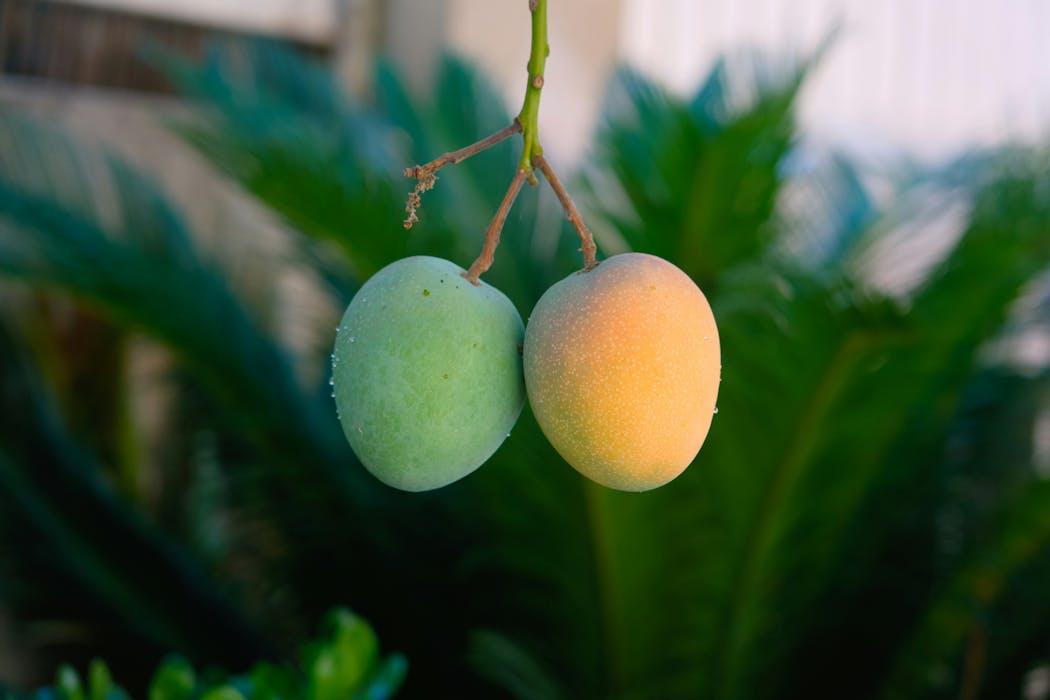
Why mangoes fall before they’re ripe – and how science is helping them hang on
Source: The Conversation (Au and NZ) – By Sophie Jones, PhD candidate, School of Agriculture and Food Sustainability, The University of Queensland Photo by Boris Izmaylov on Unsplash Ever wondered why your mango tree drops fruit before it’s ripe? Each season, mango growers across Australia watch helplessly as millions of mangoes fall to the ground

‘Never move around a flaming dessert’: a scientist explains the chemistry of a Christmas pudding
Source: The Conversation (Au and NZ) – By Nathan Kilah, Senior Lecturer in Chemistry, University of Tasmania Christmas means different things to different people. For me, it’s an opportunity to eat celebratory foods that aren’t available all year round. The top of my list is glazed ham, but a very close second is a well

It’s (not) a new bike! How to manage kids’ gift expectations at Christmas
Source: The Conversation (Au and NZ) – By Elizabeth Westrupp, Associate Professor in Psychology, Deakin University Alexandr Kolesnikov/ Getty Images Holiday celebrations involving gift giving can be roller coasters. The excitement of tearing into gifts is often mixed with intense anticipation – and sometimes, disappointment. After investing time, thought and money into creating a magical

We know about Jesus as a baby, and as a man. But what kind of child was he?
Source: The Conversation (Au and NZ) – By Robyn J. Whitaker, Associate Professor, New Testament, & Inaugural Director of The Wesley Centre for Theology, Ethics, and Public Policy But little Lord Jesus, no crying he makes is a line from one of my least favourite Christmas carols. Apart from being generally saccharine, Away in a

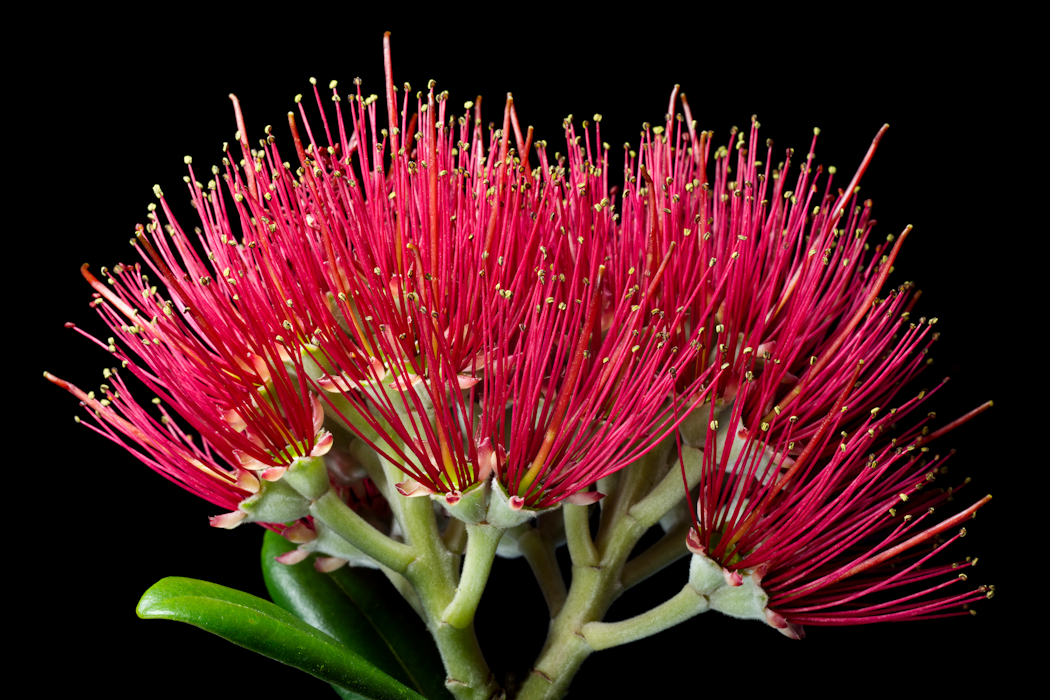
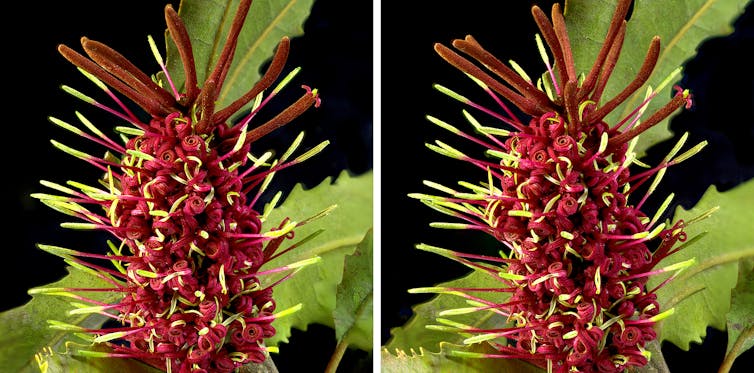
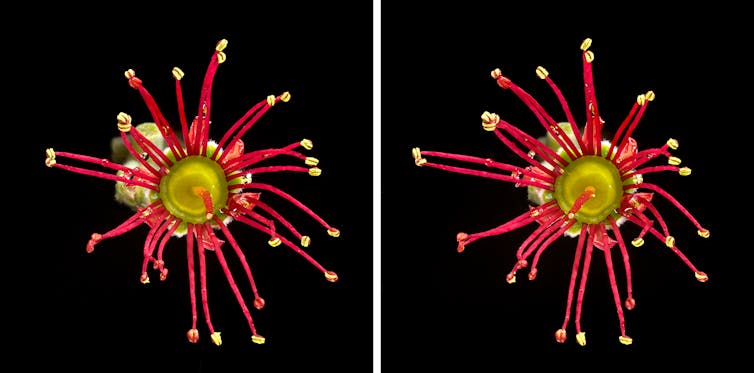
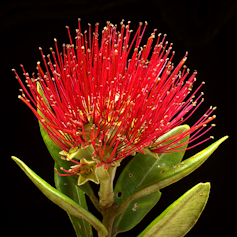
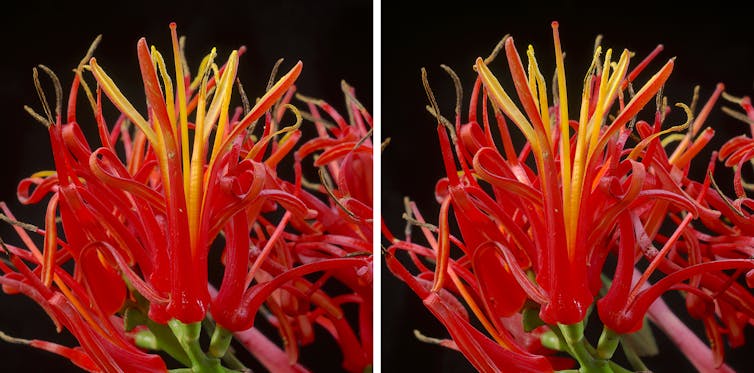
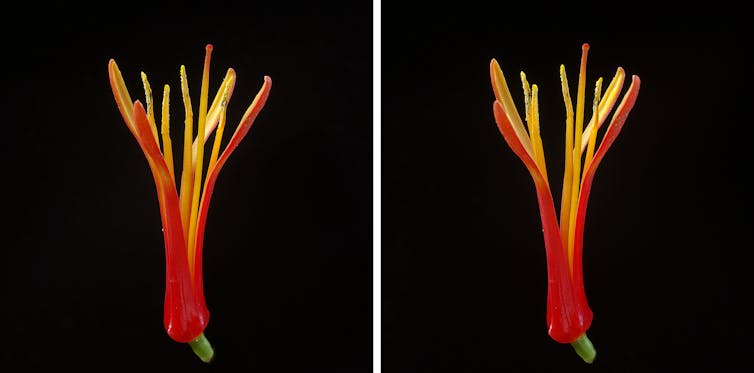
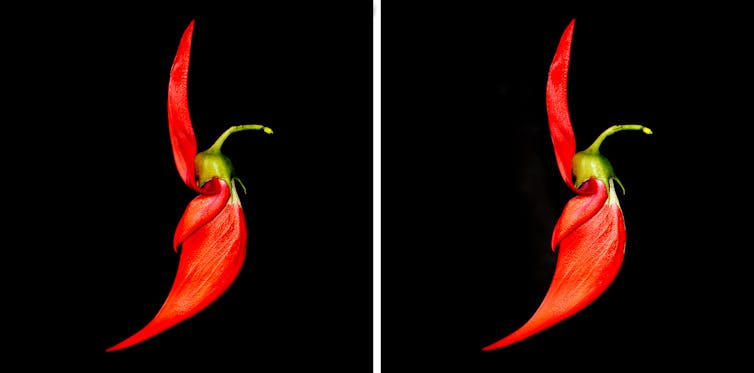
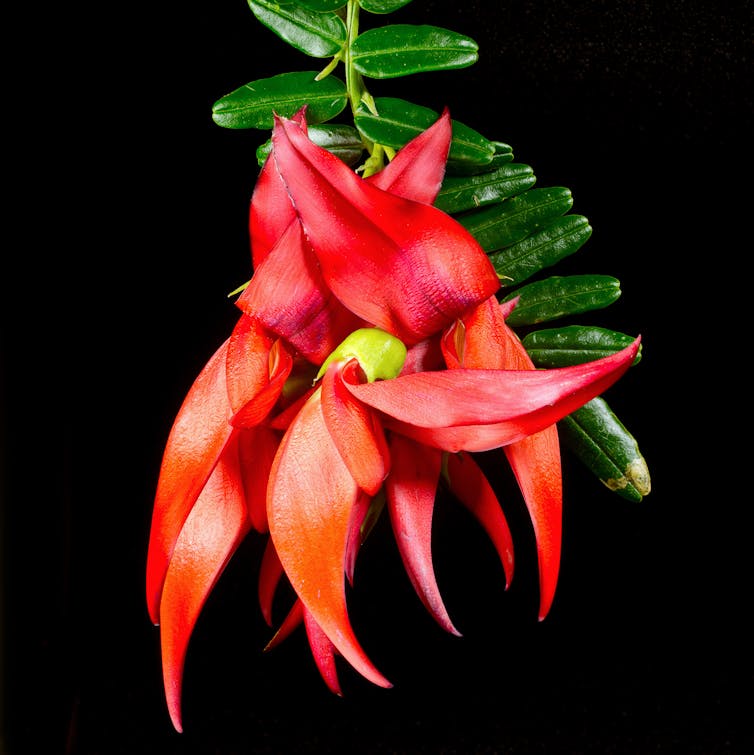
Most of NZ’s flowering plants grow nowhere else – and Christmas falls in peak blooming season
Source: The Conversation (Au and NZ) – By Philip Garnock-Jones, Emeritus Professor of Botany, Te Herenga Waka — Victoria University of Wellington Philip Garnock-Jones/Auckland University Press, CC BY-NC-ND Traditionally, the plants associated with Christmas in the Northern Hemisphere – holly, ivy, mistletoe – are celebrated for their evergreen leaves in winter or their fruits. But

Ice baths and marathons: our modern obsession with ‘wellness’ is driven by ancient instincts
Source: The Conversation (Au and NZ) – By Samuel Cornell, PhD Candidate in Public Health & Community Medicine, School of Population Health, UNSW Sydney Kaylee Garrett/Unsplash If you’ve spent even a little time on social media in recent years, you’ve no doubt come across a swathe of “wellness” content. From kilometre-long lines of runners strutting

What did Australians watch on TV on Christmas Eve 1960?
Source: The Conversation (Au and NZ) – By Kit MacFarlane, Lecturer, Creative Writing and Literature, University of South Australia Rare Historical Photos Television has been part of people’s homes and lives for decades. And that makes it an intriguing part of everyday life and cultural history – even if you don’t think there’s anything on

ER Report: A Roundup of Significant Articles on EveningReport.nz for December 23, 2025
ER Report: Here is a summary of significant articles published on EveningReport.nz on December 23, 2025.

Issues with IKEA orders and delivery flagged

Source: Radio New Zealand

The store opened its doors at the beginning of the month. Marika Khabazi / RNZ

A customer who had his IKEA order refunded on Christmas Eve says there are problems with the way the retailer is handling orders.

The man, who did not want to be identified, ordered furniture items including a loft bed and desk.

He was told the bed would be delivered in two boxes.

“One box supplied was for a different bunk bed set and was incompatible. IKEA could not locate the correct box and advised there was no further stock available, with no timeframe provided for restock.

“Although I clearly stated that I did not want to cancel and was prepared to wait, IKEA proceeded to cancel the order unilaterally and arrange collection.”

The legs of the desk were delivered, he said, but the top was not.

He was also charged a $79 delivery fee.

He said the bed had been the main reason for his purchase.

“Its unavailability forced a cancellation outcome that I did not choose. From a consumer perspective, this resembles a bait-and-switch dynamic: a high-value, well-priced core item attracts the purchase decision, but when that item cannot be supplied, the customer is left with incomplete alternatives, delivery costs, or pressure to substitute or upsell. I did not agree to any substitution, nor was a viable timeframe provided.

“Availability was described as indeterminate, potentially several months, which is not a viable option for my son, who requires a bed immediately.”

IKEA has experienced a number of delays since it opened its first New Zealand shop, in Auckland. RNZ reported last week that it shut its customer support centre to focus on rebooking customer orders and resolving outstanding cases.

An IKEA spokesperson aid it had made significant progress in delivering outstanding orders.

“Over the past week, our teams have worked intensively to move through the early volume of orders. All truck deliveries were successfully rebooked by Saturday, and parcel orders are on track to be sent by early next week.

“To support ongoing momentum, additional delivery slots for both parcel and truck orders will be released each week throughout the new year, following a staggered approach to help manage volume and provide customers with greater flexibility and certainty. Click and collect slots are now reopened for kitchen orders, and further slots for other product ranges will be released progressively in the new year.”

The spokesperson said demand had been beyond expectations.

“We are committed to fully resolving all orders to consistently deliver the reliable experience customers expect from IKEA – now and into the year ahead.

“As New Zealanders head into the holiday season, we encourage all customers to visit us in-store to enjoy the full IKEA experience.”

Sign up for Money with Susan Edmunds, a weekly newsletter covering all the things that affect how we make, spend and invest money

– Published by EveningReport.nz and AsiaPacificReport.nz, see: MIL OSI in partnership with Radio New Zealand
Trade Minister Todd McClay confident Labour will support India Free Trade Agreement

Source: Radio New Zealand

Prime Minister Christopher Luxon and Trade Minister Todd McClay announce a free trade agreement with India. Mark Papalii

The Trade Minister says he’s confident the Free Trade Agreement with India will be implemented despite New Zealand First’s opposition, saying he’d be surprised if Labour didn’t support it.

Trade Minister Todd McClay and Prime Minister Christopher Luxonannounced the deal at the Beehive on Monday, saying it would eliminate or reduce tariffs on 95 percent of exports, with wins for kiwifruit, apples, meat, wool, coal, forestry, and more.

But NZ First is not supporting it, with the party invoking its agree to disagree provision when Cabinet approval for the deal was sought last week.

McClay told RNZ the agreement will be signed next year, and after it’s scrutinised through the select committee process, legislation will need to pass in Parliament to drop tariff rates for India.

That means it is now in the hands of the opposition whether it passes or not.

He said he briefed Labour leader Chris Hipkins and Trade spokesperson Damien O’Connor about the deal before it was announced.

“It’s a high quality agreement, it is very similar to ones that they put through. I’d be surprised if they didn’t support it, but it will be for them to decide where they want to put their vote.”

O’Connor had previously told RNZ the agreement was a “good step forward”, but won’t yet say if the party supports it. He said Labour would make a decision on it in the new year.

McClay said he was aiming to have the agreement come into force before next year’s election, but that it can take a year or 18-months for a trade agreement to go through the full parliamentary process.

He said recent deals, including the NZ-EU FTA and the NZ-UAE FTA had passed with super majorities in Parliament.

“What is very very clear is that trade has become bi-partisan. All New Zealanders recognise trade is important to us… 400 million people get about 10 percent of their diet around the world from New Zealand. If we are not out there trading our economy goes backwards, and successive governments of different types, have recognised that.”

“I have confidence this agreement will go into force for New Zealand, because it is in the best interests of New Zealand, and we are, after all, a trading nation.”

NZ First’s claims over visa numbers ‘not correct’ – McClay

NZ First leader Winston Peters slammed the agreement as a “bad deal”, criticising a lack of wins for dairy – where only limited gains were secured – and saying it was reached for “political purposes”.

Peters also raised concerns about numbers coming in to the country under the Temporary Entry Employment (TEE) visa, saying 20,000 people might be here at any one time if spouses and children are allowed too.

“Now we’re in a very troubled labour market at the moment, we’re trying to turn our economy around, and this will not help,” he told RNZ.

NZ First leader Winston Peters slammed the agreement as a “bad deal”. RNZ / Samuel Rillstone

McClay said those numbers were “not correct at all”, and there was nothing in the agreement about partners, spouses and children being allowed for someone on a TEE visa.

He said the commitment was for 1667 high-skilled temporary visas per year, for three years.

“At the end of that period, they have to leave, they can’t stay on, there’s no migration, there’s no rights to citizenship. It is merely a number of visas each year, that New Zealand requires.”

McClay said the government retained the right to make changes to which skill areas are needed under the visa, and the visa conditions.

When asked whether the detail over spouses and children had been communicated to India, McClay said: “I don’t need to communicate that to them, because it is not captured in the agreement, and there’s no expectation on the Indian side.”

He also batted back concerns Peters raised about numbers of students coming in under the deal, saying there was no commitment for students apart from post-study rights of three years, or four years for PHD students.

“We have a particular focus on the quality of education we can offer, it’s very important for our institutions, and to help others from around the world develop skills.”

Peters also criticised New Zealand’s investment commitments to India under the deal, saying the country is required to invest $20 billion into the Indian market over the next 15 years, and India will “claw back” concessions if this is not met.

McClay said that was an “aspirational” target for investment, and the emphasis was on the New Zealand government to make it easier for companies to invest in India. If the government doesn’t do that, there are “some things that India could do,” McClay said.

When asked whether he was disappointed NZ First had slammed this as a “bad deal”, McClay said he doesn’t think anyone would be surprised that NZ First has a “very strong view” over trade.

“This agreement will be worth billions of dollars of new exports for New Zealand, and thousands of jobs, and it is in the best interests of New Zealand.”

Sign up for Ngā Pitopito Kōrero, a daily newsletter curated by our editors and delivered straight to your inbox every weekday.

– Published by EveningReport.nz and AsiaPacificReport.nz, see: MIL OSI in partnership with Radio New Zealand
Accidents reported in Auckland Christmas Eve traffic

Source: Radio New Zealand

RNZ / REECE BAKER

Several accidents have snarled Auckland traffic on Christmas Eve.

A key Auckland road was reported blocked after a pick-up truck hit several vehicles.

It was on New North Road in Kingsland near the intersection with King Street, at 12.20pm. Five people were assessed but there were no serious injuries.

The crash was blocking the road in both directions and drivers are being urged to avoid the area.

Households in an Auckland suburb were also out of electricity after a power pole was damaged by a crash.

The single-vehicle crash happened just after midday near the intersection with Blockhouse Bay Road and Matata Street in Blockhouse Bay.

The driver of the car was not seriously injured.

Road closures are in place and people are asked to avoid the area if possible.

Sign up for Ngā Pitopito Kōrero, a daily newsletter curated by our editors and delivered straight to your inbox every weekday.

– Published by EveningReport.nz and AsiaPacificReport.nz, see: MIL OSI in partnership with Radio New Zealand

Ruatiti huts reopen as police continue to search for Mitchell Cole

Source: Radio New Zealand

Mitchell Cole Supplied / NZ Police

The Department of Conservation has reopened several huts near the Whanganui River where police have been searching for Mitchell Cole.

Mitchell Cole is a person of interest in an investigation into the deaths of his parents, Brendon and Trina Cole, in the farming community of Ruatiti on the 13th of December.

DOC closed two major trails in the neighbouring Whanganui National Park, as well as several huts along the route, while police scoured the area last week.

Central District Commander Superintendent Dion Bennett said the huts were reopened on Monday.

“The huts came to the attention of Police during extensive ground and aerial searches last week. When DOC was informed several huts were near the search area, it made the decision to close them while our activities were occurring,” Bennett said.

“We have remained in contact with DOC and appreciate their support during the operation.”

But he said Mitchell Cole still hadn’t been found, and finding him was a top priority.

“Cole is considered dangerous and anyone who sees him should call 111 immediately,” Bennett said.

Sign up for Ngā Pitopito Kōrero, a daily newsletter curated by our editors and delivered straight to your inbox every weekday.

– Published by EveningReport.nz and AsiaPacificReport.nz, see: MIL OSI in partnership with Radio New Zealand

Wānaka entrepreneur John Lee remembered as key figurehead

Source: Radio New Zealand

Cardrona’s main slopes opened on 14 June. RNZ/Katie Todd

An Otago businessman who founded the country’s biggest ski area is being remembered as someone who shaped his local community over many decades.

Wānaka farmer and entrepreneur John Allandale Lee died peacefully on Sunday surrounded by family,

He was seen as a key figurehead in the economic takeoff of the Cardrona Valley

Lee’s family confirmed the 89-year-old’s passing in a statement on Wednesday.

A second-generation Waiorau farmer, Lee grew up in the tough alpine clime of the Cardrona Valley’s Pisa Range.

“In the late 1960s, the population of Cardrona was in decline, and as things were looking bleak, John got creative – all with the goal of bringing life back to the valley.”

John and Mary Lee, outside the Cardrona Hotel, which they owned in the 1970s. Photograph: Otago Daily Times

Lee and his wife, Mary bought the historic Cardrona Hotel in 1970 and Mt Cardrona Station a year later.

The couple would spend the following years developing a ski area at Cardrona.

Cardrona Alpine Resort was opened to the public in 1980 and now stands as New Zealand’s biggest ski area.

Supplied

The Southern Hemisphere Proving Grounds came to life during the development of the Snow Farm in 1984.

The Lees then supported their youngest son Sam in the development of freestyle skiing and snowboarding mecca, Snow Park, in the early 2000s.

Lee was said to be instrumental in saving the Cardrona Hotel from ruin after a local recluse purchased the building during the 1960s, and left it to deteriorate.

“From helping to re-establish the Cardrona Valley as a destination in its own right,, to the bustling Wānaka ski industry, to the cheeky Cardrona Bra Fence – John’s legacy is extensive. Many in the Cardrona and Wānaka communities can trace their careers, homes and livelihoods back to John’s passion to bring a vibrant life to this area,” the Lee family said.

In 2015, Lee was made companion of the New Zealand Order of Merit for services to business and tourism.

Supplied

He was survived by wife Mary, children Rachael, Joanna and Sam, and grandchildren Louis, Regan, Olivia, Anton, Hana, Matthew, Archie and Heidi.

Lee was to be farewelled at a private ceremony on Wednesday.

Sign up for Ngā Pitopito Kōrero, a daily newsletter curated by our editors and delivered straight to your inbox every weekday.

– Published by EveningReport.nz and AsiaPacificReport.nz, see: MIL OSI in partnership with Radio New Zealand

One dead after Christmas Eve fire in New Plymouth

Source: Radio New Zealand

RNZ / Nate McKinnon

One person has died after a house fire in New Plymouth early on the morning of Christmas Eve.

Emergency services were called to a property on Trelawney Crescent around 2:30am on Wednesday after reports of a house fire, and a person was found deceased, police said.

A scene examination is ongoing at the property.

Police will work alongside Fire and Emergency NZ to determine the circumstances of the fire.

Sign up for Ngā Pitopito Kōrero, a daily newsletter curated by our editors and delivered straight to your inbox every weekday.

– Published by EveningReport.nz and AsiaPacificReport.nz, see: MIL OSI in partnership with Radio New Zealand

Boy left swimming for life as rescue helicopter call delayed

Source: Radio New Zealand

Lake Taupō. RNZ / Libby Kirkby-McLeod

A teenager was left swimming for his life in Lake Taupō while rescue helicopter calls were delayed by police, RNZ has learned.

Police stood down a rescue helicopter crew that had rapidly assembled after a burning boat was spotted in Lake Taupō on Sunday evening.

The crew quickly spotted a 14-year-old boy who had leapt from the boat and threw him a life-ring.

RNZ inquiries show the chopper was told it was not needed just after 7pm – then told that it actually was about half an hour later.

The boy was rescued an hour after police were first alerted.

He was by that time a kilometre from the burning boat, swimming without a lifejacket.

Police’s initial statement on Monday said he was lucky to survive.

The boy was fine, police said.

RNZ made inquiries after becoming aware of questions being asked locally about how long it took the chopper to get there.

Police released timestamps today showing they confirmed the boy was missing at 7.19pm.

More to come…

Sign up for Ngā Pitopito Kōrero, a daily newsletter curated by our editors and delivered straight to your inbox every weekday.

– Published by EveningReport.nz and AsiaPacificReport.nz, see: MIL OSI in partnership with Radio New Zealand

Five people injured in crash on State Highway 25, Hauraki

Source: Radio New Zealand

Emergency services were called just before midday to State Highway 25 in Hauraki. Supplied / St John

Five people have been injured after a crash involving a truck in Waikato.

Emergency services were called just before midday to State Highway 25 in Hauraki.

Three people have been seriously injured and a further two people sustained moderate injuries.

The section is closed near the intersection with Hauraki Road and diversions are in place.

Sign up for Ngā Pitopito Kōrero, a daily newsletter curated by our editors and delivered straight to your inbox every weekday.

– Published by EveningReport.nz and AsiaPacificReport.nz, see: MIL OSI in partnership with Radio New Zealand

Kiwis hatch in Nelson sanctuary during Christmas season

Source: Radio New Zealand

A kiwi pukpuku chick captured exploring outside its burrow in the Brook Waimārama Sanctuary in Nelson. SUPPLIED

Just over six months after little spotted kiwi were reintroduced to Nelson’s Brook Waimārama Sanctuary, breeding has begun and the first chick has hatched, just in time for Christimas.

In May, 41 little spotted kiwi, also known as kiwi pukupuku, were translocated from Kapiti Island to the fenced sanctuary in Nelson.

Brook Waimārama Sanctuary ecologist Robert Schadewinkel said they had been hopeful the birds would breed this season. Little spotted kiwi typically lay eggs between July and January, with an incubation period of 65 to 75 days.

The male birds do the incubation work and Schadewinkel said of the 10 male birds fitted with transmitters, five were visiting the same burrow, which had indicated they were breeding.

Brook Waimārama Sanctuary ecologist Robert Schadewinkel Supplied

Trail cameras had been set up near those burrows, to catch footage of chicks when they emerged.

“I checked the half a dozen trail cameras and there we were, this chick just popped up in the corner of the camera,” Schadewinkel said

“It was an absolutely delightful, joyful moment. I couldn’t hope for anything better than that just before Christmas.

“It’s an amazing Christmas gift to all of us, to all the Brooklyn Waimārama Sanctuary volunteers, staff, but also the whole of Whakatū Nelson,

Schadewinkel said it was emotional seeing footage of the first fluffy kiwi chick wandering around in the bush and it reinforced all the hard work that had gone in to ensure the sanctuary remained pest free and a suitable habitat for the birds.

“I’m pretty confident this is certainly not the only one but whether we’ve got five chicks or 11 chicks or 20 chicks in the sanctuary, who knows, but we know they’re breeding, we know they’re happy, we know they’ve found a new home and they’re loving it.”

Sanctuary chief executive Chris McCormack said the arrival of kiwi chicks was a Christmas treat.

It had been the vision of the sanctuary’s original founders to re-introduce kiwi to the area, after a decades long absence.

A kiwi pukpuku chick with its father, Tama. SUPPLIED

McCormack said having the kiwi establish themselves so soon after translocation showed there was plenty of food in the sanctuary for them.

“We hope in the future that we could probably get to a capacity of 300 to 350 in the sanctuary. Still years to come, of course, but it’s just magic that we’ve got eggs already.”

Several months after the kiwi had settled in, the sanctuary had begun night tours and over a thousand people had taken a guided tour between July and November.

Visitors often heard kiwi calling to each other, with some lucky enough to have close encounters.

McCormack said on a recent tour he led, they stopped to see the gloworms and had turned their torches off, when one visitor became agitated by something on the ground.

“I turned my red head torch back on, and there we were, a kiwi right at her feet, it jumped in the bushes, and then we watched it jump back onto the boardwalk then disappeared into the night. Then straight after that, it decided to come back for another check of these humans and turned around and disappeared back into the night.”

McCormack said the encounter left him speechless. He usually warned visitors that seeing kiwi was like finding a needle in a haystack.

For the first time, night tours at the sanctuary will continue into the summer months to allow visitors to the region to experience the wildlife after dark.

McCormack said kākā and mohua were the next bird species they hoped to translocate into the sanctuary.

Kiwi pukupuku were thought to be functionally extinct in the South Island until a chance discovery on the West Coast earlier this year.

In July, a female kiwi pukupuku was found in the remote Adams Wilderness Area, for the first time in 50 years.

Kiwi pukupuku are extremely vulnerable to introduced predators. Until now, it was believed they only survived in offshore islands and fenced predator-free sites.

Despite years of searching, the last known sighting of a kiwi pukupuku on the mainland was in 1978.

The Department of Conservation is gathering information to work with Kāti Māhaki ki Makaawhio (a distinct hapū of Ngāi Tahu and Ngāti Māmoe) to explore the future protection and management of the birds.

Sign up for Ngā Pitopito Kōrero, a daily newsletter curated by our editors and delivered straight to your inbox every weekday.

– Published by EveningReport.nz and AsiaPacificReport.nz, see: MIL OSI in partnership with Radio New Zealand

Auckland FC’s final A-league game of year postponed

Source: Radio New Zealand

File photo. Auckland FC’s Callan Elliot competes for possession with Miguel Di Pizo of the Central Coast Mariners during an A-League clash in Gosford on 12 December 2025. AAP Image / Dan Himbrechts / Photosport

Auckland FC’s last A-League game of 2025 has been postponed after the Sydney pitch was deemed to be in an unsatisfactory condition.

The top of the table clash between league-leaders Auckland and second-placed Sydney FC scheduled to be played at Leichhardt Oval on Saturday will now be played later in the season.

Ground staff at Leichhardt Oval changed the field of play from a winter to summer grass following Sydney FC’s last match against Melbourne Victory on 22 November.

A pitch inspection on Monday found the playing surface to be in an unsatisfactory condition, with large patches of sand and mud, and it has been declared unsafe for play, according to the Australian Professional Leagues (APL).

“We understand that weather and other factors can impact pitch maintenance and repairs, but for Leichhardt Oval to be unplayable and to be given little notice is unacceptable,” APL chairperson Stephen Conroy said.

“It’s frustrating that football has to bear the burden of these pitch management issues. It’s simply not good enough, and our game and our fans deserve better.

“We need venues to provide pitches that are maintained and presented to the required standard to ensure player safety and the highest quality of football for our fans.”

Conroy acknowledged the fixture change would “inconvenience many”.

Auckland FC had been due to fly to Sydney on Christmas Day.

Sign up for Ngā Pitopito Kōrero, a daily newsletter curated by our editors and delivered straight to your inbox every weekday.

– Published by EveningReport.nz and AsiaPacificReport.nz, see: MIL OSI in partnership with Radio New Zealand

Oyster farmers to receive another $1m over catastrophic sewage spill

Source: Radio New Zealand

The sewage spill came at the peak of the oyster season. Nick Monro

Watercare has fulfilled a promise to give another $1 million to beleaguered oyster farmers north of Auckland after a catastrophic sewage failure.

It’s after an initial $1m was given last month after the spill obliterated crops in late October.

Watercare agreed to give that money to 10 affected farmers.

It said the second tranche is so it can give support them while an independent assessment on losses is still being done.

Watercare has previously said it expects that assessment to be finalised in the new year.

Confirmation of the second payment comes days after oyster farmers expressed their frustration, desperation and said they were losing faith.

Farmer Tom Waters said he had only been able to farm for about six weeks of this year and bills and debts had mounted with little time to harvest.

He had already twice considered closing the doors of his business.

“This year’s been diabolical, I wouldn’t even be in business if it hadn’t been for lovely people who had donated and kept me going,” he told Checkpoint on 18 December.

The overflow was a power surge combined with monitoring and alert systems failing.

More than 1000 cubic metres of sewage overflowed, contaminating thousands of oysters in the Mahurangi River and stopping harvesting for nearly a month.

It came at the peak of the season.

“This incident should not have happened,” Watercare chief operations officer Mark Bourne said on Wednesday.

Oyster farmers have faced ongoing contamination problems for several years, but Watercare said the October spill was unique.

The payments go toward losses directly caused by that overflow and not other historical losses caused by the likes of weather or consented overflows

“These matters are governed separately under environmental consents and regulatory frameworks,” it said.

Watercare said it will be contacting farmers individually and confidentially to discuss the outcomes of the loss assessment once it is finished.

Sign up for Ngā Pitopito Kōrero, a daily newsletter curated by our editors and delivered straight to your inbox every weekday.

– Published by EveningReport.nz and AsiaPacificReport.nz, see: MIL OSI in partnership with Radio New Zealand

Former All Black Hoskins Sotutu to leave Blues at end of Super Rugby season

Source: Radio New Zealand

Hoskins Sotutu with fans. Brett Phibbs/Photosport

Former All Blacks loose forward Hoskins Sotutu has signed with English Premiership club Newcastle Red Bulls and will depart the Blues after the 2026 Super Rugby season.

He remained fully committed to the Blues for their upcoming campaign, he said.

Since making his Super Rugby debut for the Blues in 2019, Sotutu has established himself as one of the competition’s best loose forwards, playing 79 games.

He made his All Blacks debut in 2020 and played 14 tests, but hasn’t represented New Zealand since November 2022.

Sotutu said the move presented an exciting opportunity, but his immediate focus remained on the Blues.

“This club means a lot to me. The Blues has been my home for a long time and I’m proud of what we’ve achieved,” Sotutu said.

“I’m grateful to the coaching staff, teammates and our fans for the support over the years and look forward to one more season with the boys.”

Blues general manager rugby Murray Williams said Sotutu would leave a strong mark on the club.

“He’s a world-class player and a leader within our environment,” Williams said.

“Newcastle are gaining a high-quality professional, and we’re pleased to have Hoskins fully committed to the Blues for another full season. He’ll continue to set the standard for us in 2026.”

– Published by EveningReport.nz and AsiaPacificReport.nz, see: MIL OSI in partnership with Radio New Zealand

Scrub blaze near Hastings almost out, firefighters treated for heat exhaustion

Source: Radio New Zealand

Firefighting has resumed this morning. Facebook / Hawke’s Bay Fire and Emergency

The scrub fire near the Hawke’s Bay village of Fernhill – between the township and the Ngaruroro River bridge – is almost fully out, Fire and Emergency says.

The blaze is fully contained and 95 percent extinguished, a spokesperson said on Wednesday.

Overnight, crews with a pump truck and a tanker monitored the site for any potential flareups.

Fire and Emergency said one crew with a tanker is monitoring the area today, extinguishing the last few remaining hotspots.

The blaze broke out near Hastings on Tuesday, leaving one person hospitalised and multiple buildings destroyed.

Three firefighters experienced heat exhaustion while working on the fire. Two were treated at the scene, and one was transferred to Hawke’s Bay Hospital as a precaution.

Fire and Emergency New Zealand is liaising with them and their families.

The fire also forced people living in and around the Farmhouse Lodge accommodation from their homes.

Fire and Emergency said it was still unclear when evacuated residents might be able to return home.

State Highway 50 at Fernhill reopened on Wednesday morning after it was closed due to the fire.

The New Zealand Transport Agency said the road is under stop-go traffic management near Omahu Road.

Motorists are being told to expect delays around the Fernhill area.

A firefighter extinguishing hotspots at the Fernhill fire on Tuesday. Supplied / FENZ

Fire and Emergency Assistant Commander Jason Hill told RNZ earlier today firefighting would resume this morning.

“Crews will be looking to bring the fire to a point where it’s 100 percent controlled, so that means there is no chance of it burning outside of the containment lines, whether the wind picks up or not,” he said.

“We still have multiple pockets of fire burning within the perimeter.”

A fire investigator would also begin looking into the cause of the fire, Hill said.

He said two homes, multiple sheds and some machinery had been destroyed.

When crews arrived, flames fanned by strong winds were running up the hill, threatening multiple buildings, Hill said.

Firefighting efforts were hampered by gusts of up to 90 km/h, which meant they could not call on helicopters, leaving ground crews to tackle it.

Dawson Bliss, who owns Farmhouse Lodge, said the fire was burning on his property.

A tenant alerted him to smoke billowing up the hill and when he went to investigate, it appeared an old bus was on fire on flat land near the Ngaruroro river.

“I rushed down there and got close to it and had extinguishers and so forth, but it was just too ablaze to try and get close enough,” he said.

Bliss did not know when he and his tenants would be able to return to the property.

On Tuesday he told RNZ he was feeling okay, but “later on it might be worse, when we take stock of the situation”.

Fire and Emergency said Civil Defence had helped evacuees to find a place to stay overnight.

Hastings Mayor Wendy Schollum said it was distressing for those impacted by the fire – and it was a stark reminder of how dangerous the region’s hot, windy summers could be.

Schollum and Hill urged people to take fire bans seriously.

Sign up for Ngā Pitopito Kōrero, a daily newsletter curated by our editors and delivered straight to your inbox every weekday.

– Published by EveningReport.nz and AsiaPacificReport.nz, see: MIL OSI in partnership with Radio New Zealand

‘Doesn’t give up’ – Police dog Teo recovers from fall during search and rescue

Source: Radio New Zealand

Teo was being gradually eased back from seven years of patrol work. Supplied / NZ Police / Senior Constable Alex Stammers

A police dog seriously injured after falling into scalding geothermal water is finally getting to enjoy retirement after months of recovery – just in time for Christmas.

Teo was being gradually eased back from seven years of patrol work when she fell as soft ground gave way during a search and rescue operation in Rotorua.

She suffered severe burns, primarily to her hindquarters, and it was touch-and-go whether she would make it.

Teo received three weeks of critical care from vets and nurses at Massey University Veterinary Teaching Hospital.

Three months later, handler Constable Adam Johannsen said Teo’s road to recovery had been up and down.

“She’s missing fur from being shaved through her treatment, so she looks scruffy as hell, but she’s very much in the realm of being fully recovered and back to her normal self,” he said.

Constable Adam Johannsen and Teo at work tracking. Supplied / NZ Police / setting. Senior Constable Alex Stammers. 2/6 Teo at work, doing what she did best… tracking. Senior Constable Alex Stammers.

The pair graduated as an operational team in 2018. Teo won the award for best new operational dog in her first year and in 2024 they were awarded Auckland City District’s Murray Morrisey Award for operational excellence.

“She’s got a big heart and probably hasn’t been the hardest dog in terms of her apprehensions, but with her tracking she just gives that extra 10 percent,” Johannsen told the TenOne police magazine.

In one instance, following a family harm incident, Teo tracked the person for 3.5 kilometres and found him hiding on a building site in a portable loo.

“She’s had a few good catches like that. I believe it’s a result of her search-and-rescue work giving her that extra fitness and extra tracking ability.”

Police dog Teo has been recovering from a fall into scalding geothermal water. Supplied / NZ Police

Tracking and finding people in search and rescue work had likely saved lives, he said.

“She’s quite a remarkable dog and just doesn’t give up.

“She’s looked after me and saved me once or twice too.”

There had been “incredible” support during her recovery from colleagues and members of the public.

“People have been phoning stations to see how she’s doing, and someone even stopped me in the street the other day to ask if it was Teo with me.”

Teo was officially fully retired on the day of her accident.

“Every day she’s trying to jump in the back of the van to come to work with me,” Johannsen said.

Sign up for Ngā Pitopito Kōrero, a daily newsletter curated by our editors and delivered straight to your inbox every weekday.

– Published by EveningReport.nz and AsiaPacificReport.nz, see: MIL OSI in partnership with Radio New Zealand

Body recovered near Thames believed to be missing person

Source: Radio New Zealand

RNZ / Cole Eastham-Farrelly

A body has been recovered near Thames on and is believed to be a person that went missing in Coromandel waters two days ago.

Duty Inspector Neil Faulkner said at around 6.10am on Wednesday, police received reports of a body being located on the beach by a member of the public near Thames Coast Road, Kereta.

“A formal identification is yet to take place, but police believe it is the man who was reported missing on 22 December, near the Waikawau boat ramp.”

Emergency services had been searching for the man after reports of him getting into difficulties in the water and going missing.

One person had made it safely to shore and reported that a second party was still in the water.

Police expect the death to be referred to the Coroner.

Local iwi have placed also a rāhui on the area.

Sign up for Ngā Pitopito Kōrero, a daily newsletter curated by our editors and delivered straight to your inbox every weekday.

– Published by EveningReport.nz and AsiaPacificReport.nz, see: MIL OSI in partnership with Radio New Zealand

Where the ‘good BBQ weather’ is on Christmas – and where will be rainy

Source: Radio New Zealand

MetService meteorologist Dan Corrigan told RNZ for many places, Christmas will be “good barbecue weather”. 123RF / Mandic Jovan

It’s one more sleep until Christmas, and whether celebrations will be out in the sun or shifted indoors depends on where you are in the country.

Forecasters are predicting a mixed bag of weather on Christmas Day, with warm temperatures for some, and rain for others.

MetService meteorologist Dan Corrigan told RNZ for many places, Christmas will be “good barbecue weather”.

He said Wellington through to Waikato and Hawke’s Bay will continue to see warm weather.

It has been a scorcher for Hawke’s Bay, with Hastings recording the country’s highest temperature on Tuesday, reaching a maximum of 33.4C at about 2.30pm.

While the warm temperatures are set to continue into Christmas, they aren’t expected to be as high as Tuesday and Wednesday.

“We are looking at temperatures in the high 20s, not the 30s,” Corrigan said.

He said a heat alert has been issued for people in Napier and Hastings.

“For people that are more vulnerable, its a heads up to keep hydrated and stay in the shade.”

While Wellington will be warm on Christmas, Wellingtonians can expect the usual windy weather the city is known for.

In the South Island, Christchurch is forecast to receive the warmest weather of the south on Christmas with a high of 26C. Nelson and Marlborough are also expected to receive nice, warm weather.

Further south, cold air sitting about the lower South Island is expected to bring cooler temperatures, with Queenstown forecast to receive a high of 16C – 10C lower than Christchurch.

Christmas indoors?

Some places around the country may have to shift their Christmas celebrations indoors due to rainy weather.

Corrigan said there is a band of rain in the far north of the country that could bring persistent rain to places like Kaitaia and Bay of Islands.

He said previous modelling was bringing that rain band further south to Auckland, but many Aucklanders will be pleased to know that is looking less likely.

If there is rain in Auckland on Christmas, it is most likely to be brief showers in the second half of the day, he added.

The wettest weather is expected to be on the West Coast, along the main spine of the Southern Alps. Further south, Otago and Southland may experience spots of rain.

Christmas Day forecast:

  • Auckland: High of 24C, low of 17C
  • Tauranga: High of 24C, low of 16C
  • Hamilton: High of 24C, low of 13C
  • Wellington: High of 20C, low of 16C
  • Christchurch: High of 26C, low of 11C
  • Dunedin: High of 19C, low of 10C
  • Invercargill: High of 18C, low of 7C

Sign up for Ngā Pitopito Kōrero, a daily newsletter curated by our editors and delivered straight to your inbox every weekday.

– Published by EveningReport.nz and AsiaPacificReport.nz, see: MIL OSI in partnership with Radio New Zealand

Anchors, camels and kayaks: A less traditional Christmas for Kiwi travellers

Source: Radio New Zealand

Christmas is often defined by the traditions of familiar faces, overflowing tables and the comfort of home. But for some families, choosing a different path has reshaped the festive season into something altogether more adventurous.

For Richard and Carolyn Powles, Christmas now unfolds at anchor. While their voyage from New Zealand to Malaysia began in 2023, the couple has been living aboard their yacht, Moon River, for a decade.

Carolyn’s love of the sailing life began in childhood, fuelled by books about ocean adventures and early voyages around New Zealand’s islands. What started as an experiment with her own family soon became a full-time reality. Today, the family of six trades suburbia for saltwater horizons as they sail the world together.

Richard and Carolyn Powles family’s SV Moon River at shore.

Supplied / Carolyn Powles (@chasingmoonriver)

Why mangoes fall before they’re ripe – and how science is helping them hang on

Source: The Conversation (Au and NZ) – By Sophie Jones, PhD candidate, School of Agriculture and Food Sustainability, The University of Queensland

Photo by Boris Izmaylov on Unsplash

Ever wondered why your mango tree drops fruit before it’s ripe? Each season, mango growers across Australia watch helplessly as millions of mangoes fall to the ground too early.

These mangoes never ripen properly, never reach consumers, and represent a major loss – both economically and environmentally.

Premature fruit drop is a major contributor to low mango yields, with as little as 0.1% of fruits reaching maturity. This costs growers millions and wastes valuable resources.

As climate stress intensifies, understanding why fruit is lost before harvest has global significance. It affects everything from food security to farm profitability.

Mangoes are a high-value crop for Australia, with more than 63,000 tonnes produced annually contributing around A$220 million to the economy each year.

But its sensitivity to environmental stress makes it vulnerable in a less predictable and more extreme climate. Drought, heatwaves, and even leaf loss can influence a natural process that leads to fruit drop.

Our yet-to-be-published research aims to better understand this process and develop tools to help manage it.

A mango has been cut and sits on a plate on a table.
For consumers, reducing fruit drop means better access to fresh, affordable produce.
Photo by Desirae Hayes-Vitor on Unsplash

Plants have hormones too – and stress throws them off

Just like humans, plants rely on hormones to keep things growing and functioning smoothly.

These chemical messengers help regulate everything from flowering to fruit development.

But when plants experience stress, hormone levels shift. The plant starts reallocating resources to survive. Dropping fruit is often one of the first sacrifices.

One key resource that plants reallocate is carbohydrates. Developing fruit requires a steady supply of sugars, but under stress – such as leaf damage or water scarcity – the tree may struggle to produce or transport enough.

This can trigger fruit drop, as the plant prioritises survival over reproduction.

In our research, we’ve found stress not only disrupts carbohydrate supply but also interferes with the hormonal balance in mango trees. This triggers what we call a molecular “quit signal”: a message from the plant to let go of its fruit.

This signal is a part of a complex network of gene activity and hormonal cues that help the tree decide when to shed fruit.

Decoding the ‘quit signal’

We’re studying the molecular pathways behind this signal by analysing gene signals from mango pedicel tissue – the stem that connects the fruit to the tree.

Mango fruit with pedicel
The pedicel is the stem that connects the fruit to the tree.
Author provided

This tissue acts like a control centre, managing the flow of nutrients and signals between the tree and the developing fruit. It’s where the tree and fruit stay in touch, especially during stress.

By analysing which genes are turned on or off, we can pinpoint the molecular signals involved in fruit drop, particularly those related to hormones.

This helps us move from just observing fruit drop to developing tools to control it.

Fighting fruit drop

One promising solution is the use of plant growth regulators, which are synthetic versions of plant hormones.

These can be applied to mango trees to help stabilise hormone levels during stressful conditions.

It’s a bit like giving the tree a hormonal pep talk, encouraging it to hold onto fruit even when times are tough.

In our trials, we found timing is critical.

Applying plant growth regulators during flowering, before fruit has fully emerged, was more effective than applying them later in the season.

This early intervention helped reinforce the hormonal signals that support fruit retention. Initial trials have increased tree yield by up to 17%.

We’re also exploring how these treatments work across different mango varieties and growing regions. Not all seasons are the same, and not all trees respond the same way.

Our research is ongoing and hasn’t yet undergone peer review. Once we finish our final season of trials, we aim to publish in the new year.

The focus isn’t on breeding mango trees to be more resilient to environmental stress, but rather on better understanding the natural process of immature fruit drop, so growers can manage it.

Why this matters – for growers, consumers and the planet

While our research focuses on commercial orchards, the findings could eventually help home gardeners.

Even small-scale growers might one day use targeted treatments to help their trees hold on to fruit longer.

For consumers, reducing fruit drop means better access to fresh, affordable produce. For growers, it’s about staying viable in an increasingly unpredictable climate. And for policymakers, it’s about preparing the horticultural industry for the challenges ahead.

Importantly, fruit drop isn’t unique to mangoes. Apples, citrus, and avocados also suffer losses due to hormonal imbalances triggered by environmental stress.

Better understanding the molecular mechanisms controlling fruit drop in mango, could benefit a wide range of fruit crops globally as the climate changes.

The Conversation

Sophie Jones’ research is supported by the project ‘Investigating the control of fruit drop in mango to support innovative solutions for Australian growers’ (MG21004), funded by Hort Innovation using the mango research and development levy and funds from the Australian government. She is also receiving an RTP stipend scholarship through the University of Queensland.

ref. Why mangoes fall before they’re ripe – and how science is helping them hang on – https://theconversation.com/why-mangoes-fall-before-theyre-ripe-and-how-science-is-helping-them-hang-on-268882

‘Never move around a flaming dessert’: a scientist explains the chemistry of a Christmas pudding

Source: The Conversation (Au and NZ) – By Nathan Kilah, Senior Lecturer in Chemistry, University of Tasmania

Christmas means different things to different people. For me, it’s an opportunity to eat celebratory foods that aren’t available all year round.

The top of my list is glazed ham, but a very close second is a well matured Christmas pudding with different dairy-rich trimmings.

But what chemical transformations are involved in making a Christmas pud? Here’s the science.

Complex flavour profiles

A Christmas pudding is a steamed dessert consisting of dried fruits, sugar, flour, fats, spices, eggs and alcohol. It is often cooked well in advanced and left to mature, then steamed or reheated before serving.

Modern puddings tend to use dried grapes (raisins, currants and sultanas) and candied fruits such as cherries and citrus peel.

Dried fruits have different flavour profiles compared with fresh fruits. Many of the volatile flavour compounds are lost but new flavours develop. These can be formed by enzymatic browning (like when cut fruit turns brown), reactions with light, and transformations of fatty acids and even natural colours into flavour compounds.

Candied or glacé fruits such as cherries and citrus peel are made by heating the fruit in a sugar syrup. The water content of the fruit is replaced by sugar, leaving a chewy, sweet, but less colourful product.

This sugary environment is inhospitable to microbes. The water from bacteria and fungi is removed on contact with the sugary surface due to a process known as osmosis.

Dried fruits for a Christmas pudding are typically soaked in alcohol for hours, days or weeks, depending on the recipe. This ensures the fruits are moist in the final pudding, while also adding flavour.

Soaking rehydrates the fruits, ensuring they do not draw moisture from the pudding mixture. The presence of ethanol (from brandy, rum or cognac) also inhibits the growth of microbes.

Suet and spice and all things nice

The most common spices in pudding are cinnamon, nutmeg, allspice, mace and cloves. Each spice brings a unique chemical signature to the dish.

Some notable chemicals are cinnamaldehyde from cinnamon, eugenol from cloves and allspice, and sabinene from nutmeg.

A pudding is not a cake but it contains many of the typical cake ingredients: flour, baking powder, eggs and fat. The flour helps to absorb moisture and gives texture (the “crumb”), while the baking powder acts as a raising agent. The lecithin from the egg yolks acts as an emulsifier, helping keep the mixture together.

Suet (which comes from the fat around the loins and kidneys of beef cattle) is the traditional fat used in Christmas puddings. The fat adds richness and can keep the crumb moist by binding to starch from the flour. Many modern commercial puddings replace suet with vegetable oils.

Once mixed, the pudding mixture is placed into a pudding basin, sealed or wrapped, then steamed.

Scientifically, steaming has advantages over other cooking methods for transforming the batter into a set pudding. The temperature of boiling water and the steam it produces is a consistent 100°C, so there’s no danger of burning the sugar-rich mixture and fruits or drying it out.

At this temperature, the starches in the flour are gelatinised, egg proteins unravel (known as denaturing), and the baking powder is activated. This makes the pudding rise and set.

Once cooked, the pudding can be stored for weeks or even longer. Cooks will often “feed” their pudding weekly with additional alcohol, bolstering the flavour and keeping microbes from spoiling the pudding.

A dramatic (and generally unnecessary) addition to the Christmas pudding tradition is to pour over a warmed, high-percentage alcohol and light it on fire. The flame of burning ethanol is generally blue.

The blue colour indicates a complete combustion, where all the ethanol is consumed. The orange flame we usually associate with fire is due to incomplete combustion, where carbon soot formed in the flame emits light due to being heated (this process is known as incandescence).

A christmas pudding sits in a dairy bath.
Some notable pudding chemicals are cinnamaldehyde from cinnamon, eugenol from cloves, and sabinene from nutmeg.
Photo by You Le on Unsplash

Liquid fuel fires, particularly those with near-invisible flames, can be very dangerous, so plan ahead if you want to set your pudding on fire. Never move around a flaming dessert and remember: more fuel isn’t always better.

Coins and plum puddings

Another Christmas tradition was to include good luck tokens and trinkets (including a chicken wishbone!).

A common inclusion was threepence and sixpence coins, which in Australia were made from alloys of silver and copper. The conversion to decimal currency in the 1960s, and the “debasement” from silver coins, prompted a study on the effects of puddings on coins.

It turned out the new copper-nickel alloy made the surrounding pudding green and imparted an unpleasant flavour. The five and ten cent coins were considered suitable for inserting after cooking but just before eating, but could present a choking hazard.

Silver pudding coins are sold for those keen to carry on the tradition. Just make sure your guests are informed, for the sake of both their teeth and digestive tract.

A diagram of the plum pudding model of the atom
The plum pudding model of the atom is now obsolete.
Wikimedia/Kurzon, CC BY

As a young chemistry student, I remember learning about the “plum pudding” model of the atom – a now-defunct idea floated in the early 1900s by British physicist J.J. Thomson. He envisioned the atom as a sphere with electrons lodged in it like plums in a pudding.

Modern chemistry has moved on from this model – but I have not moved on from puddings. I still love them.

Whether you opt for a pudding or a modern pavlova, be sure to embrace the chemistry that makes your Christmas deliciously jolly.

The Conversation

Nathan Kilah does not work for, consult, own shares in or receive funding from any company or organisation that would benefit from this article, and has disclosed no relevant affiliations beyond their academic appointment.

ref. ‘Never move around a flaming dessert’: a scientist explains the chemistry of a Christmas pudding – https://theconversation.com/never-move-around-a-flaming-dessert-a-scientist-explains-the-chemistry-of-a-christmas-pudding-268392

It’s (not) a new bike! How to manage kids’ gift expectations at Christmas

Source: The Conversation (Au and NZ) – By Elizabeth Westrupp, Associate Professor in Psychology, Deakin University

Alexandr Kolesnikov/ Getty Images

Holiday celebrations involving gift giving can be roller coasters. The excitement of tearing into gifts is often mixed with intense anticipation – and sometimes, disappointment.

After investing time, thought and money into creating a magical day, it can feel confronting when your child reacts negatively to a present. If it’s a gift you’ve chosen, you might feel hurt or frustrated. When it’s from a relative or friend, embarrassment can creep in, as you’re caught between wanting to acknowledge your child’s feelings, and worrying about offending the giver.

You might wonder whether you’ve failed to teach gratitude, or worry your child seems spoiled. But disappointment is difficult for children and a normal part of emotional development. Your child’s feelings at this time can also be an opportunity for connection and learning.

Why expectations run so high

Special occasions amplify everything: joy, excitement, anticipation … and comparison. Children are surrounded by holiday advertising and talk among friends, which can make their own wishes feel especially vivid and urgent.

But this isn’t simply about materialism.

Developmental stages shape how children experience gifts. In early and middle childhood, kids are actively forming their sense of self — who they are, what they like, and how they fit into their world. Particular toys, clothes, or brands can take on symbolic meaning, tied to how they see themselves or where they feel they belong.

Wanting the same shoes, toy or gadget as friends can feel like a ticket to connection. This is a completely normal, healthy developmental drive. When that wish isn’t fulfilled, the sense of missing out can feel like being left out altogether.

Understanding this helps explain why children’s reactions can sometimes seem disproportionate to us as adults: their disappointment isn’t just about the object itself, but about identity and belonging, and the strong emotions that come with both.

When children’s expectations for a gift are not met, dopamine levels drop, leading to feelings of disappointment. This process is a normal part of learning and developing self-regulation skills. This disappointment teaches children to manage when they don’t get what they’re hoping for, helping them develop realistic expectations and cope with life’s inevitable frustrations.

Talk before the big day

Early, gentle conversations can make a difference. This gives parents a chance to spot when expectations are being shaped by peer pressure, advertising, or trends that might not align with their child’s age or your family values.

For example, your child might ask for a video game that isn’t age appropriate, or a preschooler might suddenly want makeup because friends are talking about it. Rather than waiting for disappointment, it helps to discuss these things ahead of time.

Discussions are a chance to share family values: what you believe is important, how you choose to spend money and time, and what childhood looks like in your household. Sometimes they reveal unspoken assumptions on both sides: what you expect of your child, and what they imagine is possible.

Some families set clear expectations about gifts. For example, buying according to a four gift rule (something they want, something they need, something to wear and something to read).

The key is to approach discussions with warmth and curiosity, not judgement:

What are you hoping for this year?

What do you think might be realistic?

Sometimes we hope for big things and don’t get them. How might that feel?

When disappointment strikes

Managing disappointment is difficult for children. If your child reacts with disappointment, avoid shaming or scolding them with “you should be grateful”.

Children need to process their emotions first. When we’re upset, we can’t think about others.

You could could say:

You were really hoping for that bike. It’s hard when you want something so much and it doesn’t happen.

When you validate disappointment it helps children feel safe to express big feelings. It also helps develop the ability to tolerate feelings of distress and disappointment and learn emotions are manageable.

While it’s OK for children to feel disappointed, it’s not okay for them to be rude or lash out. Once calm, revisit what happened gently:

I know you were disappointed. Let’s talk about how we can show our feelings without hurting others.

Building gratitude over time

Gratitude can’t be forced. It grows from connection to others and experiences, not constant correction from adults. You can model this by noticing small acts of thoughtfulness. For example,

Did you notice how Aunty Jen wrapped the gift in your favourite colour?

Express appreciation for family time and emphasise the joy of shared experiences. For example,

It’s so special to see all your cousins playing together.

Also encourage children to choose or make gifts for others, wrap presents or plan family surprises.

When children experience being the giver, they develop empathy and begin to understand the thought and effort that goes into choosing gifts.

The Conversation

Elizabeth Westrupp receives funding from the National Health and Medical Research Council. She is affiliated with the Parenting and Family Research Alliance, Editor-in-Chief of Mental Health & Prevention, and is a registered clinical psychologist.

Christiane Kehoe is a co-author of the Tuning in to Kids and Teens parenting programs. Proceeds from dissemination of the program provide funding for development and research of the program. Program authors and the University of Melbourne are distributed royalties from proceeds of manual sales. Christiane is affiliated with the Parenting and Family Research Alliance and is Deputy Editor of the journal Mental Health & Prevention.

ref. It’s (not) a new bike! How to manage kids’ gift expectations at Christmas – https://theconversation.com/its-not-a-new-bike-how-to-manage-kids-gift-expectations-at-christmas-271314

We know about Jesus as a baby, and as a man. But what kind of child was he?

Source: The Conversation (Au and NZ) – By Robyn J. Whitaker, Associate Professor, New Testament, & Inaugural Director of The Wesley Centre for Theology, Ethics, and Public Policy

But little Lord Jesus, no crying he makes is a line from one of my least favourite Christmas carols. Apart from being generally saccharine, Away in a Manger depicts baby Jesus as something truly exceptional – a baby that does not cry.

Most of us know the basics of the story of Jesus’ birth. According to the ancient sources, he was born in Bethlehem to Mary and Joseph, Jews living in Israel in the first century CE. Traditional scenes depict him surrounded by animals, angels, shepherds and “magi” – possibly astrologers – from the east, who visited during the first year or two of his life. Then, most of these ancient sources go quiet, and Jesus does not appear again until he is an adult with a message and a ministry.

But what about his childhood? Do we know anything about Jesus as a child? Yes. And, no.

In the whole Bible there are only a handful of verses that speak about Jesus as a child. Matthew’s gospel includes one story about Jesus’ childhood. Matthew says that Jesus’ family fled to Egypt to escape a decree of King Herod to kill all Jewish baby boys under aged two. Joan Taylor, author of Boy Jesus: Growing up Judean in Turbulent Times, argues this is historically plausible, given the political upheaval of Jesus’ time.

Similarly, historian Robert Myles told me:

There is quite a lot we can say about the social and economic forces in Galilee during Jesus’ childhood, even though the Gospels are mostly silent on these details. In 4 BCE the Romans destroyed the nearby city of Sepphoris, close to Nazareth, and enslaved its inhabitants to suppress an uprising. If Jesus was born by then, he would have been a toddler, but stories about freedom fighters and the trauma of Roman retaliation would have circulated in Galilee for years afterward.

The impacts of such events created economic pressures, as well as displacement, for many.

Childhood in antiquity depended greatly on one’s social status, much like today. Mortality rates were high. Boys were generally prized much more highly than girls, who usually stayed in the domestic sphere and could be married as young as 12 or 13. Poor and enslaved children were extremely vulnerable to exploitation.

As a Jewish child, Jesus was likely educated in his home and the local synagogue. It would have been normal for a child in Galilee to live in a multi-generational home, and eat a diet that consisted mostly of legumes, bread, and vegetables.

For ancient authors, this would have been so banal as to not be worth mentioning.
Only in Luke’s gospel do we get a story about Jesus’ as a child. Luke describes that “the child grew and became strong, filled with wisdom” (Luke 2:40) and tells one story to illustrate the point.

Twelve-year-old Jesus has been on an annual visit to the Jewish Temple in Jerusalem with his parents. When they leave, presumably travelling with a group, they don’t initially notice he has stayed behind and a search ensues. They eventually find him in the temple talking with the Jewish teachers who are “amazed” at his understanding. Despite Jesus displaying a lack of concern for his parent’s anxiety in this story, Luke explicitly states that he returned home with his parents and was “obedient”. That is the extent of insight into his childhood in the Bible: Jesus was both exceptional and obedient.

This lack of information about his childhood in the Bible did not, however, stop early Christians speculating about Jesus’ early life.

Heinrich Hoffman’s 1884 painting depicts the biblical story of 12-year-old Jesus in the temple.
Wikicommons

The Infancy Gospel of Thomas, dating to the second century CE, is a speculative story about Jesus’ life as a five to 12-year-old. In this text the child Jesus is, quite frankly, a brat. He uses his powers to make living sparrows out of clay, he rearranges water with his words, and he curses other children and adults to death. A lot of them. (Most are miraculously saved later.) When the parents complain to his father Joseph about these things, Jesus curses them and they go blind.

Jesus is simultaneously depicted as unteachable and astonishingly wise, eventually taking on his teacher and amazing him with his innate and perfect knowledge of letters and the law. He does heal people and raise others from the dead, but overall the depiction is not particularly flattering – at least by modern standards. In The Infancy Gospel of Thomas, Jesus is like a tiny monster with endless power and no emotional regulation.

Such stories about Jesus’ childhood should not be considered history in any modern sense. They are a type of legend, told in the manner of ancient biography (bios), where a story about the childhood of a noteworthy adult might be narrated to point out the natural genius of the person.

Ancient biographies tended to be episodic and designed to highlight exceptional character or ability, although they did not often focus on childhood.

The intriguing question is why would early Christians think this is a good way to depict Jesus? It is quite a distance from the later “little Lord Jesus” who does not cry when he “lays down his sweet head”.

But like that hymn, The Infancy Gospel of Thomas makes a claim for Jesus’ exceptionalism. In its case, Jesus is depicted as having complete power over life and death and already knowing all things.

The Christian claim that Jesus was sinless has often been conflated with the idea of Jesus as perfect and possessing all knowledge. But what makes a perfect child? One who never cries? Who never has to learn anything? Such assumptions need to be interrogated.

In my view, remembering Jesus was a human child in the ancient world whose own family fled violence and oppression, reminds us that he has more in common with contemporary vulnerable children who are likewise born in unstable housing, grow up in occupied territory, or are threatened by violence.

Later Christian creeds – a kind of summary of core beliefs – such as the Nicene Creed, combat notions of superhero Jesus by emphasising his full humanity. While we might be curious about the kind of childhood Jesus had or the kind of child he was, it is Jesus as a fully human prophet, healer, teacher, and martyr who Christians consider the full revelation of God in the flesh.

The Conversation

Robyn J. Whitaker does not work for, consult, own shares in or receive funding from any company or organisation that would benefit from this article, and has disclosed no relevant affiliations beyond their academic appointment.

ref. We know about Jesus as a baby, and as a man. But what kind of child was he? – https://theconversation.com/we-know-about-jesus-as-a-baby-and-as-a-man-but-what-kind-of-child-was-he-269183

Most of NZ’s flowering plants grow nowhere else – and Christmas falls in peak blooming season

Source: The Conversation (Au and NZ) – By Philip Garnock-Jones, Emeritus Professor of Botany, Te Herenga Waka — Victoria University of Wellington

Philip Garnock-Jones/Auckland University Press, CC BY-NC-ND

Traditionally, the plants associated with Christmas in the Northern Hemisphere – holly, ivy, mistletoe – are celebrated for their evergreen leaves in winter or their fruits.

But in the Southern Hemisphere, Christmas falls in peak flowering season, a time of rebirth and reproduction more akin to the northern Easter.

For plants, finding and attracting mates is a challenge. They can’t sense their mates in order to choose, nor can they move to contact a partner.

Seed plants use pollen to safely carry sperm to eggs. Some transfer their pollen on the wind, but about 90% of flowering plants enlist the involuntary help of animals to find their mates and to carry their pollen from anthers (the pollen-producing part of a flower’s stamen) to stigmas (the receptive tip of a flower’s female reproductive organ).

Outsourcing mate-finding and sperm transport in this way means the flowers need to attract, reward and sometimes control their animal visitors rather than their mates.

Human senses notice colour, shape, scent and taste just as other animals do, so what attracts a bird or a bee often attracts us as well.

I was drawn to flowers early, long before I understood any of this. I remember a mass of bluebells in an English wood when I was four, and the satiny petals of Californian poppies in our Whanganui garden when I was five.

Later, as a student and a young researcher in botany, I was fortunate to work with and learn from some of New Zealand’s – and the world’s – leading flower biologists.

In retirement, I’ve been applying stereo pair photography to flowers in order to show their shapes and demonstrate their functions. My love of flowers, botany and stereo pair photography all came together in my book He Puāwai: A Natural History of New Zealand Flowers.

Individual rewarewa flowers
Individual rewarewa flowers cluster tightly together as a brush blossom, like many other blossoms that are attractive to birds and bats.
Philip Garnock-Jones, CC BY-NC-ND

To view these side-by-side stereo pairs of rewarewa flowers in 3D, your right eye must see the right picture while your left eye sees the left one.

My book has a folding viewer that makes this comfortable, but for viewing on screen you can make a simpler device: use two cardboard tubes of about 30 centimetres in length, or make your own by rolling two sheets of A4 card lengthwise into tubes about five centimetres wide.

Use these tubes to direct each eye to its correct photo, and relax. You might need to make the pictures smaller on screen and to move closer or further away for focus.

Detail of pōhutukawa flower
Each individual pōhutukawa flower is bisexual (producing about 400,000 pollen grains and up to 1,000 ovules) and lasts a little over a week.
Philip Garnock-Jones, CC BY-NC-ND

New Zealand’s Christmas tree

Pōhutukawa (Metrosideros excelsa) trees are often completely covered in bright-red flowers, in shades from scarlet to carmine, by early December. At Christmas time, fallen stamens collect as a red carpet under large trees.

Pōhutukawa’s natural range is the north of the North Island, but it is such a prolific seeder that its weedy tendencies have helped it spread far afield, including to Wellington city. It has even become naturalised in Australia, South Africa and California.

Pōhutukawa flowers reflect strongly in both the red and ultraviolet wavelengths, but they absorb most of the blue and green wavelengths also found in sunlight. This is a pattern characteristic of bird-pollinated flowers, as is the fact that the flowers have no scent but produce a lot of nectar. Pōhutukawa flowers are also visited and pollinated by pekapeka, native short-tailed bats.

A pōhutukawa flower cluster.
Individually, pōhutukawa flowers are quite small. It’s the flower-cluster – the inflorescence – that’s so showy and attractive.
Philip Garnock-Jones, CC BY-NC-ND

We know more about the flower biology of pōhutukawa than many other native trees. Each flower in a pom-pom cluster has a ring of long red stamens that present pollen on yellow anthers. A little later, the central style elongates, placing its small stigma beyond the anthers. The timing difference makes self-pollination less likely.

Pōhutukawa, mānuka, kānuka and others in the myrtle family are all at risk from the fungal disease myrtle rust. It seems though that fleshy-fruited members of the family, like guava and the native swamp maire and ramarama, are most susceptible.

Native mistletoe

Flowers of korukoru.
Korukoru flowers are produced in clusters, and their bright-red colour contrasts with their shiny green leaves.
Philip Garnock-Jones, CC BY-NC-ND

Mistletoes are parasites on tree branches and have long cultural associations with magic and druidic rites, and all sorts of botanical interest as well. Their green leaves show that they’re not completely parasitic, taking water and some of their food from their hosts but still photosynthesising.

Many, including some of New Zealand’s native species, have white or green rather insignificant flowers, but others like korukoru (scarlet mistletoe) have spectacular flowers that attract birds as their main pollinators.

Detail of a korukoru flower
The korukoru flower has four stamens. When the tweaked flower pops open, the stamens are already open and the pollen is exposed to contact the face of the bird as it feeds.
Philip Garnock-Jones, CC BY-NC-ND

The brightly coloured korukoru flowers appear in midsummer. They are pollinated by birds, especially tūī and korimako. The flowers are closed-access blossoms, meaning the sexual parts and rewards remain hidden until a pollinator opens them.

Many native mistletoes are endangered because their leaves are very attractive food for possums, but they might also face a significant threat from the loss of their pollinators.

Almost lost in the wild

Detail of a single ngutukākā flower
Each single ngutukākā flower has a large erect petal, a tapering and folded keel made of two joined petals, and two small petals, known as the wings.
Philip Garnock-Jones, CC BY-NC-ND

Ngutukākā (kākābeak) is a very common plant in New Zealand gardens, but sadly very rare in the wild. There are two very similar kinds of ngutukākā: Clianthus
puniceus
, known from just one population in Northland, and this one, C. maximus, found in a few populations in the east of the North Island.

Ngutukākā flower cluster.
Ngutukākā flowers hang below the branches in clusters on zig-zag stalks.
Philip Garnock-Jones, CC BY-NC-ND

The flowers, which open from late winter to early spring, are among the largest native flowers in Aotearoa. Their underlying structure is typical of pea flowers, but their shape and bright-red colour show they’re adapted for pollination by nectar-feeding birds.

Closed-access flowers that hide their nectar, pollen and stigmas – requiring both knowledge and physical strength from their pollinators – are rare in the New Zealand flora.

These three spectacular native flowers are unusual in the native flora, where many flowers are small and drab. About 85% of New Zealand’s 2,200 native flowering plants grow nowhere else. While that makes them uniquely ours to enjoy and study, it also gives us the grave responsibility of ensuring we do nothing that threatens their survival.


He Puāwai: A Natural History of New Zealand Flowers is published by Auckland University Press.


The Conversation

Philip Garnock-Jones has received funding from New Zealand Society of Authors, Copyright Licencing New Zealand, Royal Society of New Zealand, and Wellington Botanical Society. He is affiliated with Te Herenga Waka Victoria University of Wellington.

ref. Most of NZ’s flowering plants grow nowhere else – and Christmas falls in peak blooming season – https://theconversation.com/most-of-nzs-flowering-plants-grow-nowhere-else-and-christmas-falls-in-peak-blooming-season-271617

Ice baths and marathons: our modern obsession with ‘wellness’ is driven by ancient instincts

Source: The Conversation (Au and NZ) – By Samuel Cornell, PhD Candidate in Public Health & Community Medicine, School of Population Health, UNSW Sydney

Kaylee Garrett/Unsplash

If you’ve spent even a little time on social media in recent years, you’ve no doubt come across a swathe of “wellness” content.

From kilometre-long lines of runners strutting the Bondi promenade at 6am, to a surge in sauna and ice bath studios, to bizarre routines such as mouth taping, longevity diets and facial ice rollers – looking well is so hot right now. And being seen to be well has become the social currency of our times.

But perhaps there are also other forces at play here, as wellness culture seems to tap into age-old human preferences for vitality, fertility and social status.


Read more:
Why do smart people get hooked on wellness trends? Personality traits may play a role


Is 50 the new 20?

Humans evolved to notice and prefer visible signs of health. Outward signs of potentially contagious disease tend to evoke disgust reactions in us. This is part of the “behavioural immune system” – a series of preferences we evolved to avoid infection over thousands of generations when contagious diseases were both more common and less well understood than they are today.

But there’s more to it than just avoiding people who might be infectious.

Research suggests we are often drawn to people who have glowing skin, symmetrical faces, healthy body composition, and who move elegantly .

These might historically have been cues of health, and perhaps of good genes for staying healthy.

Modern technologies make it possible to fake these cues. That may be part of the secret of wellness culture’s success: it hijacks and exaggerates ancient cues of health.

Skin-focussed wellness routines, such as taking collagen powders, or bathing in LED light, are appealing because they seek to amplify perceived youthfulness. Cues of youthful nubility are associated with fertility and with the chances of a successful first pregnancy.

This is important because throughout most of human history, our ancestors were typically those women who safely bore children.

Ancient signals, modern wellness

Our social preferences at least partly evoke the biological realities of the ancient past where they evolved. Today, people have access to tools such as makeup, cosmetic surgery and wellness culture, that let them hijack these preferences. Once you get used to this idea, you start to see it everywhere.

Running clubs are an arena for youthful people, and those clinging to youth, to display their social energy and endurance. It’s easy to imagine how these traits can be inferred as signs of health, sociability and cooperation. No wonder many of these clubs are becoming dating scenes.

Black figures on an orange background.
Four nude athletes train at javelin, discus, and jumping weights on this Ancient Greek storage jar, dated between 530–520 BCE.
The J. Paul Getty Museum

Even cold plunges into ice baths provide not-so-subtle signals of toughness, resilience, pain tolerance and willingness to take physical risks – traits which may be valued by a potential mate.

However, when it comes to evolutionary science, it is often bad form to make up credible stories for how each trait came to be as it is, and to stop there. Scientific theories have to be tested carefully against evidence, not the “pub test”. That presents a challenge.

Why wellness spreads quickly

There may be another evolutionary explanation that fills out the picture, and complements the approach of looking at one wellness trend after another, and trying to work out what they might signal.

The evolved capacity for playing “status games”, as author Will Storr puts it, is already well established.

Yoga retreats and supplement stacks don’t come cheap. Ice baths aren’t particularly comfortable. Ultramarathons always hurt.

At the same time, these activities signal a person has the interlinked luxuries of leisure time and wealth, as well as personal qualities such as discipline, perseverance and commitment.

A beautiful tile mosaic with two nude boxers.
This Gallo-Roman mosaic floor depicts two boxers, Dares and Entellus, dated between 175–200 CE.
The J. Paul Getty Museum

Spend a little time on Strava, the social media platform where endurance athletes post their activities, and you can see status games being played in real-time.

People are avid copiers of status signals and this is especially true in teens and young adults. Moreover, social media algorithms learn to amplify signals of prestige, emotional content, and content that appears to speak to an in-group, to maximise engagement.

And what is a run club, or a gym culture, or a diet fad, if not an in-group?


Read more:
From the Liver King to ultramarathons, fitness influencers are glorifying extreme masculinity where ‘pain is the point’


All is not necessarily well with wellness

Photos of beautiful poreless skin, sculpted bodies and picture perfect sunrise runs are supernormal stimuli – exaggerated versions of normal cues that cause a strong reaction, and often attraction, both online and in “real life”.

But all the downsides of social media signalling still apply, even when the topic is ostensibly about health.

Ice baths can result in cold shock or hypothermia, overtraining causes injuries, and much of the advice and recommendations from wellness influencers are not just nonsense – they can be actively harmful.

What people are imitating status rather than health, the evolutionary picture becomes even clearer: humans have long copied the behaviours of high-status individuals. Doing so improved survival and reproductive opportunities, and built the norms of our institutions.

But this eagerness to copy can misfire. Copying the practices of high-status individuals — whether they are extreme diets or punishing training schedules — can come with a great cost, especially when the signals are exaggerated for online display.

Wellness culture doesn’t just reflect evolved preferences for health and status; it can exploit and distort them. Beware the urge to signal wellness, as it could be leading you astray.

The Conversation

Samuel Cornell receives funding from an Australian Government Research Training Program Scholarship.

Rob Brooks receives funding from the Australian Research Council.

ref. Ice baths and marathons: our modern obsession with ‘wellness’ is driven by ancient instincts – https://theconversation.com/ice-baths-and-marathons-our-modern-obsession-with-wellness-is-driven-by-ancient-instincts-270172