Page 174

Kiwi wildcard James Watt beaten in first round of ASB tennis classic

Source: Radio New Zealand

New Zealand’s James Watt during Round 32 Singles Men’s ASB Classic Tennis Tournament at Manuka Doctor Arena. Photosport

New Zealand wildcard James Watt has been knocked out in the first round of the men’s ASB Classic tennis tournament in Auckland, losing to Jenson Brooksby in straight sets on centre court 6-4, 6-3.

It was a brave effort from Watt, who conceded 600 places in the world rankings to his American opponent.

He said the performance gives him confidence he can beat anyone on his day.

“It was cool to play at that level. I felt like I was there neck and neck, but obviously there’s levels to focus and a couple points that could have gone here or there. The fact that I can hang in there with the guy top 50 in the world, just sort of builds on the Davis Cup success.”

However, Watt admitted he was simply not consistent enough on the day.

“I thought I played well in patches. I think I had a lot of opportunities to break and really get on top of that first set and even in the second set as well. But credit to him, he hanged up and came up with some big serves on key points.”

The Auckland crowd were right behind Watt as he managed to save five match points in a see saw final game.

“Those big points, just to get everyone get behind me, that really gave me a boost of energy. It was a couple shots that missed by a few inches and if those had landed then it could have easily been the other way. But that’s tennis and I’ll learn from this experience and keep improving.”

Standing at 2.09m, Watt is a towering presence on the court and would not look out of place wearing the number four or five jersey on a rugby field.

“My high school was trying to recruit me for the first XV quite a lot and I played basketball through high school as well. I think tennis was a consistent thing and I really enjoyed it and just kept on improving at it.”

The night session begins at 6pm with fifth seed and Auckland-raised British representative Cam Norrie up against Frenchman Hugo Gaston.

Sign up for Ngā Pitopito Kōrero, a daily newsletter curated by our editors and delivered straight to your inbox every weekday.

– Published by EveningReport.nz and AsiaPacificReport.nz, see: MIL OSI in partnership with Radio New Zealand


Can the China-Australia relationship stay on track in 2026? This is how experts in China see it

Source: The Conversation (Au and NZ) – By Guangyi Pan, Lecturer in International Political Studies at the School of Humanities and Social Sciences, UNSW Canberra, UNSW Sydney

When Labor was returned to power in 2022, the China-Australia relationship began to stabilise after what had been a rocky few years.

So, where do things stand now, on the precipice of a new year? To understand what to expect in 2026, we interviewed several scholars in Australia and China.

Some Chinese scholars we spoke with pointed out a stable relationship does not necessarily mean a friendly one. One tension point they cited was what they see as Canberra’s efforts to help the United States limit China’s growing regional influence — especially in the Pacific.

Yet, Foreign Minister Penny Wong’s emphasis on what she calls the “four Rs” — region, relationships, rules and resilience — has shown Australia is no longer seeking to be solely reliant on US security.

Rather, since US President Donald Trump’s return to office, Canberra is pursuing more independent, regionally-led security initiatives.

This approach has not gone unnoticed by our Chinese interviewees. During our time in China over the past year, many scholars described Australia’s policies to stabilise relations with China as pragmatic and realistic. They believe Canberra has aligned — at least in part — with China’s interests on trade and cooperation.

As Xu Shaoming, an associate professor in international relations at Sun Yat-sen University, told us, the core of the relationship is still marked by complexity. There’s cooperation in certain areas, competition in others.

The key determinants of the strength of the relationship, he says, are communication and policy interaction. If these can continue to be front and centre in 2026, the China-Australia relationship can flourish.

What happened in 2025?

Last year started with a tense moment when a Chinese naval fleet conducted live-fire drills in the Tasman Sea and circumnavigated Australia on the way home. The incident triggered a sharp debate in Canberra about Australia’s maritime security.

Trump’s presidential victory in the US made Australian political leaders and strategic experts even more uneasy.

Yet, Australians ultimately prioritised stable engagement with China over escalating security fears. Attempts to portray China as a threat in the 2025 federal election campaign backfired for then-Liberal leader Peter Dutton and the Coalition.

After the election, Prime Minister Anthony Albanese set about solidifying the economic relationship between the two nations by making his second trip to China in July and meeting Chinese leader Xi Jinping in Beijing.

Despite criticism from the opposition that he achieved no tangible outcomes, Albanese framed the trip as a success. The two leaders agreed to continue cooperation in a number of areas, including healthcare innovation, green energy, the digital economy and services.

Notably, Albanese also engaged in some “panda diplomacy” by visiting Chengdu’s panda sanctuary – always a sign of goodwill in relations with China.

Then, in November, the National People’s Congress chairman, Zhao Leji, visited Canberra. This was the highest-level visit from a Chinese leader since the COVID pandemic outbreak.

Differences and tensions persist

However, these positives contrasted sharply with the increasingly tense geostrategic environment.

Last year, Australian Treaurer Jim Chalmers brought legal action to try to force the divestment of Chinese capital from strategically critical minerals projects.

More fundamentally, the cornerstone of bilateral economic ties – iron ore trade – faced difficulties due to declining Chinese demand and Beijing’s attempted interventions in BHP’s iron ore shipments.

And despite Albanese’s warn reception in Beijing, political and security concerns continued to complicate the bilateral relationship. This included:

  • China’s long-standing opposition to AUKUS

  • a Chinese fighter jet releasing flares close to an Australian plane in the South China Sea in October, and

  • allegations of Chinese hackers targeting Australia’s critical infrastructure.

A new approach

These political sensitivities and perceptual differences continue to affect mutual understanding between the two sides.

Unsurprisingly, some Chinese scholars we interviewed expressed resentment over Australia’s activities, such as its freedom of navigation operations in the South China Sea. In their view, Australia has often become entangled in what Beijing calls American attempts to “contain” its influence.

While Canberra avoids the language of “containment”, Chinese commentators often frame Australia as strategically conflicted. It is economically dependent on China, yet politically aligned with the United States.

There is also a clear recognition in China that Australia is unlikely to turn away from the United States. Wong has been explicit about this: the alliance remains central to Australia’s security, and that of the region.

An Australian scholar we interviewed, however, believes this analysis is overly simplistic.

Rather, this scholar told us, the Albanese government has adopted a more mature approach to managing Australia–China relations. Amid the uncertainty surrounding Trump, Canberra is trying to leverage its central role in the Indo-Pacific region and improve relations with neighbours.

What can we expect in 2026?

So, what kind of cooperation can we expect in 2026? Our conversations with Australian and Chinese scholars suggest the relationship will remain stable, with manageable risks. Both sides will feel free to speak their own mind when necessary, while avoiding escalation.

There are no rumours of a possible Xi visit to Australia this year. This would no doubt give the relationship an extra boost.

However, strategic frictions persist. As another Chinese naval flotilla again headed into the Pacific in December, it was clear wariness remains about China’s military intentions.

Unpredictability and instability is on the rise internationally. Given this, Australia and China will need to enhance mutual understanding and keep communication lines open to keep the relationship on track.

The Conversation

The authors do not work for, consult, own shares in or receive funding from any company or organisation that would benefit from this article, and have disclosed no relevant affiliations beyond their academic appointment.

ref. Can the China-Australia relationship stay on track in 2026? This is how experts in China see it – https://theconversation.com/can-the-china-australia-relationship-stay-on-track-in-2026-this-is-how-experts-in-china-see-it-271941

Venezuela’s leader may be gone, but his regime remains – with a new chief in Washington

Source: The Conversation (Au and NZ) – By Luis Gómez Romero, Senior Lecturer in Human Rights, Constitutional Law and Legal Theory, University of Wollongong

US President Donald Trump has insisted the United States will now be “running” Venezuela after US forces bombed the capital on January 3 and whisked Venezuelan President Nicolás Maduro and his wife out of the country to face federal charges in New York.

Trump has promised that “large US oil companies” would be going into Venezuela to “start making money”. And in passing, he has also declared that with Maduro gone, Venezuelans “are free” and the country is already becoming “rich and safe” again.

But autocratic regimes do not depend on their leaders alone. They get their strength from the vast bureaucracies and security apparatuses under the leader and the complicity of individuals down the chain of command.

These structures have been shaken in Venezuela, but not dismantled. Delcy Rodríguez, Maduro’s loyal vice president, has assumed the presidency and the powerful interior minister (Diosdado Cabello) and defence minister (Vladimir Padrino) – the “men with the guns” – are still in control.

So, rather than bringing regime change, Trump is now propping up the Maduro regime from Washington.

The rise and decline of chavismo

Venezuela has been dominated by two leaders for the last nearly 30 years – Hugo Chávez (president from 1999–2013) and Maduro (2013–26).

After his election on a left-wing, populist platform, Chávez launched sweeping social programs inspired by the Venezuelan military officer Simón Bolívar, who is revered in much of Latin America for leading several countries to independence from Spain in the 19th century.

Chávez’s moves to lead a second “Bolivarian revolution” created a new ideology in Venezuela known as chavismo that aimed to build a socialist society and fight against what Chávez called the new US imperialism taking hold in the region.

Hugo Chavez famously calling former US President George W. Bush ‘the devil’.

After Maduro took power on Chávez’s death, chavismo was slowly replaced with a new ideology centred on Maduro’s increasingly authoritarian rule, known as madurismo.

Chávez’s previous confrontations with the US lost their ideological power. During Maduro’s reign, the US imposed sanctions that crippled the Venezuelan economy. However, Chevron, a US oil and gas company, continued to operate in the energy sector despite those sanctions, signalling the Maduro government’s pragmatic transformation.

And unlike the charismatic Chávez, Maduro’s legitimacy eventually began to suffer. After the contested 2024 presidential election, Maduro claimed victory, but voting tallies collected by the opposition and independent monitors pointed to fraud.

The regime became increasingly isolated internationally – an easy target for Trump’s campaign to dislodge Maduro from power.

Maduro’s isolation, however, did not mean madurismo had magically disappeared. What frayed under Maduro was the movement’s ideological basis. What hardened was its governing system. As oil revenues fell and Maduro’s electoral support narrowed, the regime shifted away from mobilising the public in the same way Chavez did. It instead focused on institutional survival.

This survival led to a heavily militarised security state and tight chains of command. The regime also deepened its patronage networks within the main political party, the Partido Socialista Unido de Venezuela (PSUV), and extended its control over the courts and electoral authorities. Pro-regime civilian armed groups were tolerated or employed when useful.

These institutional apparatuses do not vanish when a leader loses legitimacy. They can be rebranded quickly. That is why the machinery remained strong when Trump removed Maduro. It is also why it could be handed over to Delcy Rodríguez.

New leader, same system

Rodríguez’s rise to power suggests a third mutation of chavismo is now underway.

As sociologist Rafael Uzcátegui notes, Rodríguez is dropping the movement’s defining confrontation with the United States to survive, now with Washington’s blessing.

Hours after Maduro’s abduction, a pre-signed decree by the president declared a state of emergency. It authorised members of the military and police to “search and capture” anyone accused of promoting or supporting the US attack on Venezuela. The emergency declaration extends to the Bolivarian Militia and its 200,000 or so members, who have been placed under the military chain of command.

The state of emergency, therefore, strengthens Rodríguez’s capacity to deliver what Washington wants because it consolidates coercive control at home.

Then, on January 5, Rodríguez was sworn in as president after Venezuela’s Supreme Court deemed Maduro to be in “forced absence” from the country. Yet, Article 233 of the Venezuelan constitution requires elections within 30 days if there is an “absolute absence” of the president.

By the regime’s own legal terms, a democratic transition was available. Instead, continuity has been secured.

Rodríguez has been installed on the basis of a “temporary absence” for 90 days, extendable by the National Assembly for another 90 days. Then, the assembly may decide there is an “absolute absence” of Maduro and call for elections. Rodríguez has a powerful hold over the assembly, which is led by her brother, Jorge Rodríguez.

Trump is in no hurry to have elections because the interim government is giving the US “everything that we feel is necessary”. He has also dismissed Venezuelan opposition leader María Corina Machado as lacking the “respect” and “support” to be a future leader of the country.

Meanwhile, Rodríguez is consolidating power. In the first cabinet meeting, she was photographed with the regime’s two main strongmen, Padrino and Cabello, at her side. She has also begun careful appointments to shape the regime to her liking.

She ordered General Gustavo González López to assume command of the presidential guard and appointed Calixto Ortega Sánchez as vice president for the economy.

Both posts are sensitive: the first will oversee her personal security; the second will negotiate the distribution of Venezuela’s oil wealth with the Americans.

A new chavista-in-chief

Trump’s orders are now being implemented in what many critics are now calling his Venezuelan protectorate.

A few political prisoners have been released in what has been seen as a goodwill gesture. The core US interest, however, is oil. Trump has said “billions” of barrels will be handed over to the US. Exclusive trade agreements will be signed. The ground is prepared for the reopening of a US embassy, destined to function as the office of a proconsul (an administrator of a colony or occupied territory).

This is not a democratic transition. It is chavismo in a new form: power without Chávez’s anti-imperialist rhetoric, without promises, and without a people.

The Conversation

Luis Gómez Romero does not work for, consult, own shares in or receive funding from any company or organisation that would benefit from this article, and has disclosed no relevant affiliations beyond their academic appointment.

ref. Venezuela’s leader may be gone, but his regime remains – with a new chief in Washington – https://theconversation.com/venezuelas-leader-may-be-gone-but-his-regime-remains-with-a-new-chief-in-washington-273211

Pukehina deaths: Investigation into ‘suspicious’ death of woman and ‘unexplained’ death of man ongoing

Source: Radio New Zealand

Two people died at a property on Old Coach Rd in Pukehina earlier this month. (File photo) RNZ / REECE BAKER

The deaths of a man and a woman at the same Bay of Plenty property earlier this month remain under police investigation.

Police were called to a house on Old Coach Road in Pukehina about 3pm on New Year’s Day after the death of a woman, which was now being treated as suspicious.

In the early hours of January 2, police were called back to the same property where a man was found dead in a separate house.

A 50-year-old man was arrested and charged in relation to the woman’s death. He was due to reappear in Tauranga District Court on January 30 on a charge of assaulting a person in a family relationship.

Detective Senior Sergeant Mike Varnam said the man’s death was still being treated as “unexplained”.

He said police were still focused on investigating the events that led up to the deaths of the woman and man.

Anyone with information about what happened was urged to contact police through 105, either online or over the phone, and reference file number: 260101/9901.

Report could also be made anonymously through Crime Stoppers on 0800 555 111.

Sign up for Ngā Pitopito Kōrero, a daily newsletter curated by our editors and delivered straight to your inbox every weekday.

– Published by EveningReport.nz and AsiaPacificReport.nz, see: MIL OSI in partnership with Radio New Zealand

Government expecting Open Electricity savings by 2027

Source: Radio New Zealand

Energy Minister Simon Watts has talked up the prospect of having the services available as early as September. (File photo) RNZ/Mark Papalii

The government says bringing in Open Electricity could save you $360 a year through improved competition.

Energy Minister Simon Watts was talking up the prospect of having the services available in New Zealand as early as September.

Watts said the framework was put in place as part of the government’s Customer and Product Data Act passed last March, with Open Electricity designated by the government as the next suite of regulations after introducing Open Banking in December.

It was already in place in Australia and the UK, and would enable consumers’ electricity usage data to be shared with third parties – including competing electricity retailers – to allow them to recommend better power price deals.

“Energy companies hold a huge amount of data about people’s usage… when used to be able to compare within some of these third party apps, can identify some pretty significant savings of people being able to move to a more appropriate plan than what they’re on.

“Our estimates are that the average household who looks at moving to the most the plan that’s most suited to them could be looking at savings in the region of $360 a year. So it’s not insignificant.”

The law would require a power company to share the data, if their customer requested it.

Competing power companies and other third-party organisations would then be able to use the data to provide recommendations on the best energy plan based on the customer’s individual requirements.

Watts said with nearly 15,000 plans available around New Zealand, “it’s basically pretty much impossible for someone to be able to do that themselves”.

“You’re not restricted on who you can share your data with, you know, if you choose to do so, and… multiple different apps to find out what the best plan is. And that’s up to you. It’s your data.

“The challenge is that the data has to be in a standardised format, it has to have all the correct aspects, and the energy companies need to release that data and do so in a timely manner. And all of those things are not standardised at the moment, and that’s what we bring in to enable those changes.”

The changes would be made via regulations by the middle of the year, he said, and energy companies would then have 12 months to be fully compliant.

But while mid-2027 was when the regime would be fully in place, he said services allowing the sharing and comparison of the data could be available as early as September, and definitely from early next year.

Watts said the legislation included privacy protections with “really stringent requirements” requiring the companies to comply with the Privacy Act.

However, once a customer had signed off on having their data shared, it would be up to those companies receiving the data how they used it.

With concerns raised over the Privacy Act’s protections in light of the recent Manage My Health data breach, some may prefer to keep their data to themselves.

Watts was confident only the data customers were authorising or approving for release would be shared.

Other usages could extend to having the data fed into AI systems or used for research, he said.

“What third party providers look to do in terms of building into their technology is going to be with them,” Watts said.

“No doubt, their use of AI is already being used by a number of third party app providers in regards to supporting decision making.

“At the end of the day, we’re removing a bottleneck that’s stopping New Zealand consumers from being able to get in and access these type of services really easily. We want to make it easy for Kiwis to get on the best plan possible.

“Some of the broader options may be to see and provide some summary advice around the broader industry, but this is really focused about individual consumers giving permission for their data to be used so they they can get advice.”

The government expected it could benefit nearly 2 million households and 165,000 small businesses, he said.

Sign up for Ngā Pitopito Kōrero, a daily newsletter curated by our editors and delivered straight to your inbox every weekday.

– Published by EveningReport.nz and AsiaPacificReport.nz, see: MIL OSI in partnership with Radio New Zealand

Urgent care in Napier closed overnight due to staffing issues

Source: Radio New Zealand

Napier Health has a nurse-provided overnight urgent care service. Google Maps / Screenshot

An overnight urgent care provider in Hawke’s Bay was closed last night and for a number of other days in January due to staffing issues.

The service was closed on Sunday, as well as from New Year’s Day to January 4.

The same reason caused it to close for six nights in December and four nights in November.

The Health Minister confirmed in March 2025 the government would invest in the overnight urgent care service for Napier.

  • Have you been affected? Contact iwitness@rnz.co.nz
  • The service was a nurse-provided overnight urgent care service at Napier Health, run through Health New Zealand, operating between 8pm and 8am, seven days a week. It was put in place following the closure of Napier Hospital in 1998.

    Health New Zealand had proposed removing the overnight urgent care service and replacing it with a telehealth option, but Simeon Brown announced in March that it would be retained following consultation.

    The proposal had sparked community backlash, and a protest had been planned, according to Hawke’s Bay Today.

    In a report leaked to Hawke’s Bay Today in January 2025, Health New Zealand wrote workforce shortages have made it “increasingly difficult” to keep these services fully staffed, “resulting in the service sporadically closing early”.

    Napier MP Katie Nimon said there had been ongoing issues due to a low number of staff.

    “And then, as soon as you have an unplanned absence, which happens in any organisation, you know, one staff member not being able to do a shift that they were already going to be doing, it means that the overnight service is forced to close,” she said.

    “There’s no backup plan.”

    Nimon understood it had closed about once a fortnight throughout 2025.

    The community had to travel 15 kilometres to the hospital in Hastings, or use the telehealth service, she said.

    She added Health New Zealand had been working hard to find an alternative, and had told her closure was the last option.

    RNZ approached Health New Zealand for response.

    Nimon said she had also been working with Simeon Brown and the Ministry of Health to find a long-term solution.

    “Sometimes these things are really unavoidable, and you can’t double your staffing just in case of emergencies, but we need to make sure these services are resilient.”

    Previously, Brown said Health New Zealand would consider contracting the service back to a private provider.

    Sign up for Ngā Pitopito Kōrero, a daily newsletter curated by our editors and delivered straight to your inbox every weekday.

– Published by EveningReport.nz and AsiaPacificReport.nz, see: MIL OSI in partnership with Radio New Zealand

‘Avoid the area’: Police at scene of serious incident in Palmerston North’s Highbury

Source: Radio New Zealand

Cordons are in place around Pioneer Highway, police said. Google Maps / Screenshot

There’s a large police presence in Palmerston North’s Higbury after a “serious incident” at an address on Pioneer Highway.

Police confirmed officers were called to the area at 3.15pm due to the incident.

Cordons had been put in place around Pioneer Highway between Cardiff St and Botanical Rd.

A police spokesperson urged the public to avoid the area.

They said further information would be given soon.

MORE TO COME

Sign up for Ngā Pitopito Kōrero, a daily newsletter curated by our editors and delivered straight to your inbox every weekday.

– Published by EveningReport.nz and AsiaPacificReport.nz, see: MIL OSI in partnership with Radio New Zealand

Bus etiquette: Do you need to wave to the driver to get them to stop?

Source: Radio New Zealand

Waving down a bus is not required, but it sure helps. RNZ / Mark Papalii

Clarification: This story has been updated to add more detail about the bus rules in Christchurch.

Whether you’re heading to work before an important morning meeting, or coming home with kids and shopping in tow, there are few things more maddening than your bus just seeming to sail on by.

Last year, Wellington bus service provider MetLink received more than 1000 complaints from people annoyed by buses that didn’t stop.

Jess Gessner filed a complaint, after she and her two young children were left on the kerb, when she was unable to signal the driver.

“It was very obvious that we wanted to get picked up at a bus stop,” she said. “We were the only people there, and [the driver] just looked at us and drove past.”

The Metlink website said bus drivers would stop, if they saw someone waiting, but encouraged passengers to wave, so they could be seen by the driver.

John Ng waits for his bus in Wellington. RNZ / Bill Hickman

Metlink senior operations manager Paul Tawharu said waving was helpful, but not a requirement.

“What we do ask customers is that they make themselves visible to the driver,” he said. “Passengers don’t need to wave.

“There’s some of our passengers that are visually impaired. You might have mums with babies in arms that just can’t do that, so that’s not expected.

“If the passenger is at the bus stop, then the driver is expected to stop.”

Most of the commuters who spoke to RNZ in the Wellington suburb of Newtown said they tended to wave down their buses, but nearly everyone also felt they had been passed up or had seen another passenger left at the stop.

“I have been [passed by] on a [number] four,” said Clara. “It was a very sad day.”.

“Many times,” John Nga said. “You have to be visually waving, not just raising your hands – it’s not enough.”

“I think it depends on the bus stop,” Ben Lake said. “There are definitely times when people will be waiting there and they’ll just go straight past.”

“I do wave to the driver, because they don’t often stop,” Jane said. “They’ll go past you, if you don’t flag them down.”

Metro, which runs Christchurch’s bus service, tells passengers to make sure they’re visible when waiting at a bus stop. “And please give the bus a wave as it approached. This helps the driver know you need their service, and they’ll pull over to let you on,” it adds.

Environment Canterbury public transport general manager Stewart Gibbon said, last year, it received just over 550 complaints about buses not stopping – either to pick up passengers or allow them off.

Gibbon said, in the context of more than 15 million passenger trips a year, the numbers were comparatively small.

“Our drivers do a brilliant job of balancing the different demands of the role, including gauging whether people waiting at our stops want to get on board,” Gibbon said. “A clear signal from a customer is a great help to them.

Ben Lake waits for a bus in Wellington. RNZ / Bill Hickman

“Our drivers are trained in many different scenarios, including when customers may have their hands full. In this scenario, they would instead be looking at facial expressions and general body language.

“It’s worth noting that sometimes drivers can’t stop, due to their bus being full.”

Auckland Transport service operations manager Duncan McGrory said the transport provider had signs at every bus stop, asking passengers to indicate they wanted to board with a “clear wave of their arm”.

He said Aucklanders took up to 230,000 bus trips every weekday and the growth of the network over the last 15 years made hailing the bus crucial to keeping things running smoothly.

“It’s important for people to hail the bus that they actually want,” McGrory said. “We want to make sure that people are stopping the buses that they need and that every single bus is not stopping at every single stop.”

So the message is, wherever you are in the country, when in doubt, put your arm out.

Sign up for Ngā Pitopito Kōrero, a daily newsletter curated by our editors and delivered straight to your inbox every weekday.

– Published by EveningReport.nz and AsiaPacificReport.nz, see: MIL OSI in partnership with Radio New Zealand

‘How do the people break through?’ – third of Māori land considered landlocked

Source: Radio New Zealand

Public roads, even if they are unformed, shouldn’t be locked shut RNZ / Tracey Neal

Up to a third of Māori land is considered landlocked, meaning owners have no physical access to land they own without obtaining the consent of neighbouring owners.

The Outdoor Access Commission Herenga ā Nuku Aotearoa released its first report on the state of public land access in Aotearoa last week, which identified landlocked whenua as one of the biggest challenges to public access in 2025.

The report divides land in Aotearoa into three types, private (non-tangata whenua) land which makes up 51.8 percent, state-owned land (44 percent) and private tangata whenua land with only 4.3 percent.

Tāmaki Makaurau regional field advisor Dot Dalziell said up to a third of Māori landholding is locked, but the problem was particularly acute in the Taihape area, where it is more than 70 percent.

Māori land is often very significant in connecting New Zealanders to the outdoors, so landlocking impacted all New Zealanders, she said.

“What it can give rise to is a very ironic situation or many ironic situations where, you know, we’re going into negotiations with mana whenua who have responsibility for land, whatever that relationship might be legally and we’re asking for public access or support for public access or hosting of public access. The irony being that, you know, maybe not on that bit of land, but other other parts of the of their whenua, they don’t have access themselves.”

Herenga ā Nuku strategic relationships manager Doug Macredie said the commission thought of tangata whenua land in several different ways.

First there is “ahu whenua” or “ture whenua” – land that survived confiscation and has been retained in Māori ownership. This land may or may not have legal public access, but may also operate within informal community protocols allowing informal access or “access by protocol”, he said.

Second is land returned to Māori by way of Treaty settlements. These often have public access clauses and requirements that remain once the land is returned.

Third is land where owners and governance bodies are not identified or established, much of which is administered by Te Tumu Paeroa, the Office of the Māori Trustee.

“We acknowledge fully here at Herenga ā Nuku that mana whenua, mana whenua whānui, mana whenua a hapū, mana whenua a tangata, kind of overrides this idea of legal ownership. And we as Māori all understand that our tribal jurisdictions and our border connections with other hapū and iwi covers all the whenua in Aotearoa.

“Now, it’s outside of the legal framework, but of course, tuturu in our ngākau, in our manawa, in our whakapapa is that understanding that the whole of Aotearoa is under the banner of what I call mana whenua whānui,” Macredie said.

Herenga ā Nuku Strategic Relationships Manager Doug Macredie. Supplied/Doug Macredie/Te Araroa

Macredie is a trustee of several blocks of whenua – one of which was landlocked – which he said meant going “cap in hand” to neighbours to find ways to access it.

“My mum, my uncles, my koroua and so forth, never, ever got to go across that land… and not that it’s not possible that I can reverse that with helicopters and things like that, but unless you’ve got capability, resourcing, knowledge and support, how do the people break through even to get in touch with their land, to touch it, to feel it, to see it, let alone build a trust or a governance board and undertake initiatives to do stuff on and with the land?”

Macredie said another term he’s heard is “DOC locked”, with whenua Māori completely surrounded by Department of Conservation land.

“There are different degrees of landlocked. So in the case of one particular block that I know of, it technically has paper roads and technically you can walk, clamber, climb, scurry, burrow your way through to the block and stay within the boundaries of these paper roads. If you’ve got all the gear, ropes, crampons and half a day to get there. Whereas if you were to go across a neighbouring landowner’s paddock, you’d be there in 20 minutes,” he said.

DOC locked or semi-locked land blocks were often used by neighbouring private landowners, for grazing and forestry where boundaries slightly converged, and also by recreationists “in the know”, he said.

“For example, the block that I’m a trustee on has a beautiful, beautiful waterfall on it. People go to that waterfall, the people, the recreationists that are in the know just go walking straight across our block, which is not necessarily a problem to us. But that’s a typical situation when you’re not empowered or able to manage and govern your block for all those reasons, then it will just default to other uses by people that are enabled and empowered to get there and use it.”

Macredie said while landlocking was a massive problem for Māori owners, many of these land blocks were beautiful, remote, rugged and pristine which could be an opportunity, particularly in ecotourism.

But to take advantage of any opportunity took time, expertise and resource, he said.

“The issues are not all about lines on maps, etc., but they’re also about awareness and capability and resourcing for the people… to make connection with lands, to govern, to manage and to undertake initiatives and there are immense barriers to that. And so it’s not the role of our agency to address all of that because we’re only dealing with the public access element.

“But we are fully aware of how the public access dimension and the aspirations and the reality of tangata whenua relative to land can and do work together when managed and guided in the right way.”

‘Building the spirit of our country’

Macredie said only a relatively small amount of New Zealand’s land was public, which was divided again into what was accessible and what was not.

“You’ve got to say, well, what is the definition of accessible? What’s accessible for somebody who’s an experienced tramper with all the gear and the latest Subaru four wheel drive and enough money to put petrol in the tank is not necessarily accessible for every other person.

“So accessibility, freedom to enjoy and to be in and around this beautiful land for all New Zealanders, and particularly with some with some pronounced take (issues) from a tangata whenua lens, I think it’s a major, major challenge. But it’s also an incredible opportunity around building the spirit of our country and also releasing opportunities through ecotourism or other community initiatives… that are both good for the people, good for the place and good for the economy.”

Herenga ā Nuku Tāmaki Makaurau regional field advisor Dot Dalziell. Supplied/Outdoor Access Commission Herenga ā Nuku

Dalziell said a real life example can be found in Te Ara Tipuna, a proposed 500-kilometre walking trail along the East Coast from Gisborne to Ōpōtiki, traversing several Māori land blocks on the way.

The trail would link up existing bits of public access and help reconnect the diaspora of Ngāti Porou back to the whenua, she said.

Dalziell said equitable access Aotearoa New Zealand’s great outdoors was what mattered.

“I’m thinking of the young people the rangatahi of Papakura and a place that’s really cherished… There’s a beautiful series of swimming holes up Hays Creek heading into the Hunua. And the only way to get there is up the side of a very windy, rural road that’s got very little shoulder and has a lot of quarry trucks on it because there’s a quarry up in the area as well.

“So that’s what I have in mind when I think about the kind of equitable distribution of outdoor access and what might need to change in the future,” she said.

Sign up for Ngā Pitopito Kōrero, a daily newsletter curated by our editors and delivered straight to your inbox every weekday.

– Published by EveningReport.nz and AsiaPacificReport.nz, see: MIL OSI in partnership with Radio New Zealand

Yoyoso, Miniso in liquidation – Temu gets the blame again

Source: Radio New Zealand

The Yoyoso store that was on Queen Street, Auckland. Supplied / Google Maps

Retail chain Yoyoso has been placed into liquidation owing millions of dollars, and liquidators say it is unlikely unsecured creditors will get their money back.

The Yoyoso group includes the retail brands Yoyoso, Miniso and Acecco.

Liquidators McDonald Vague said when the chain went into liquidation there were eight shops trading around Auckland but those would close through this month.

“The liquidators have closed the Northcote supermarket (Acecco Supermarket Limited) location due to lack of trading revenue but continued to trade the Mt Albert location.

“The Yoyoso and Miniso stores have continued to trade to reduce the stock levels at each of the stores. As stock levels reduce and/or landlords make decisions on the timing of the stores closing the stores will be vacated and closed with the expectation to have almost all stores closed or vacated over January 2026.

“The staff in the trading entities will continue to be employed as needed to assist in trading down the group, along with a couple of day to day management staff.”

The liquidators say that about $217,000 is owed to former employees for wages, holiday pay and redundancy pay.

So far, $63,000 has been paid to bring wage payments up to date and employees should be paid their entitlements in full.

The liquidators said Inland Revenue was likely to be due $940,000 in GST, PAYE and other payroll deductions. They said they did not think Inland Revenue would get everything it was owed.

Unsecured creditors were due at least $2.1 million, they said, not including contingent claims from landlords or IRD penalties and interest. They might receive zero cents in the dollar, the liquidators said.

Retail consultant Chris Wilkinson, from First Retail Group, said it was part of a general trend in which shoppers looking for things that Yoyoso sold would shop on Temu, AliExpress or Shein instead.

“Generally novelty-type products, party products that people are now able to buy from the source and significantly cheaper. It’s product you don’t necessarily need, novelty activity.”

He said Yoyoso had been able to sustain a large physical presence in the centre of Auckland, on Queen Street, before the behaviour change took hold.

“You need significant volumes to drive business and it wouldn’t happen, it’s not possible under the new way of buying stuff.”

Retail NZ chief executive Carolyn Young said it showed how tough it was to be a retailer in New Zealand at the moment.

“It’s a reflection of the New Zealand trading market last year. The retail environment was really tough. This is just another demonstration … a few days ago EB Games announced their proposal for closure. Here’s another group where we’re seeing a nationwide business in liquidation.

“It demonstrates that businesses have held on and they’ve held on and they’ve held on but with no spare cash and trading at a loss you can only sustain that for a certain length of time. These businesses are not seeing the turnaround in the economy come quickly enough for them to survive.”

Sign up for Money with Susan Edmunds, a weekly newsletter covering all the things that affect how we make, spend and invest money.

– Published by EveningReport.nz and AsiaPacificReport.nz, see: MIL OSI in partnership with Radio New Zealand

Golden Globes 2026: All the winners

Source: Radio New Zealand

Here is the full list of winners from the 2026 Golden Globe Awards.

The latest winner will be added to the top. Refresh this page to stay up to date.

Teyana Taylor attends the 83rd Annual Golden Globe Awards at The Beverly Hilton on January 11, 2026 in Beverly Hills, California.

Amy Sussman / Getty Images / AFP

ER Report: A Roundup of Significant Articles on EveningReport.nz for January 12, 2026

ER Report: Here is a summary of significant articles published on EveningReport.nz on January 12, 2026.

Meet the springtails: little-known fantastic beasts that live everywhere on Earth
Source: The Conversation (Au and NZ) – By Mark Stevens, Adjunct Associate Professor, School of Biological Sciences, Adelaide University _Womerleymeria bicornis_, a springtail from Tasmania. Cyrille D’Haese In virtually every piece of land on Earth – from near the summit of Mount Everest to Antarctica to caves nearly 2,000 metres underground – live tiny critters

Not just ‘eunuchs’ or sex workers: in ancient Mesopotamia, gender-diverse people held positions of power
Source: The Conversation (Au and NZ) – By Chaya Kasif, PhD Candidate; Assyriologist, Macquarie University An 8th century BCE gypsum relief from modern-day Iraq depicts a king and his chief ša rēši. Oriental Institute Museum, University of Chicago. OIM A7366. Daderot/Wikimedia Commons/Oriental Institute Museum, University of Chicago. OIM A7366 Today, trans people face politicisation of

Mixed reactions over Samoan PM’s proposal to ban non-Christian religions
RNZ Pacific A proposal by Sāmoa’s Prime Minister to ban all non-Christian religions from the country is being met with mixed reactions. The Samoa Observer reported church ministers and members of the public voicing views both for and against the proposal. Prime Minister La’aulialemalietoa Polataivao Schmidt said he raised the issue with Samoa’s Council of

NZ’s low productivity is often blamed on businesses staying small. That could be a strength in 2026
Source: The Conversation (Au and NZ) – By Rod McNaughton, Professor of Entrepreneurship, University of Auckland, Waipapa Taumata Rau Getty Images For decades, we have heard a familiar story about why New Zealand’s firms choose to stay small. Business owners prefer comfort, control and lifestyle over ambition, summed up in the old notion of the

Beauty in ordinary things: why this Japanese folk craft movement still matters 100 years on
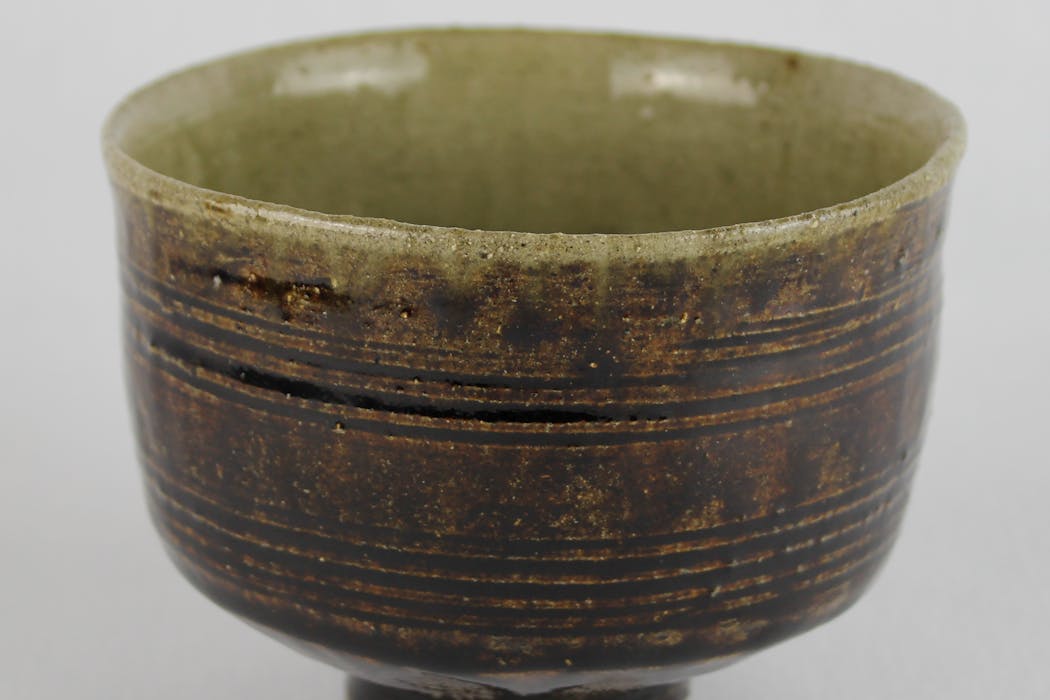
Source: The Conversation (Au and NZ) – By Penny Bailey, Lecturer in Japanese Studies, The University of Queensland A thrown tea bowl made by Hamada Shōji. Wikimedia, CC BY-SA On January 10 1926, Yanagi Sōetsu and the potters Hamada Shōji and Kawai Kanjirō sat talking excitedly late into the night at a temple on Mt

Rain one minute, heatwave the next. How climate ‘whiplash’ drives unpredictable fire weather
Source: The Conversation (Au and NZ) – By David Bowman, Professor of Pyrogeography and Fire Science, University of Tasmania Graeme Thomas/Facebook After a weekend of extreme heat and windy conditions, more than 30 blazes were still burning in Victoria and New South Wales as of Sunday evening, including major fires in the Otways, near the

Modern rock wallabies seem to survive by sticking together in small areas. Fossils show they need to travel
Source: The Conversation (Au and NZ) – By Christopher Laurikainen Gaete, PhD Candidate, Wollongong Isotope Geochronology Laboratory, University of Wollongong Today, rock wallabies are seen as secretive cliff-dwellers that rarely stray far from the safety of their rocky shelters. But the fossil record tells a very different story. New research suggests rock wallabies were once

The antisemitism debate is already a political minefield. The royal commission must rise above it
Source: The Conversation (Au and NZ) – By Matteo Vergani, Associate Professor and Director of the Tackling Hate Lab, Deakin University What we currently know about antisemitism in Australia is pieced together from a fragmented body of information produced by community organisations, researchers and law enforcement. And it is largely interpreted and translated to the

Why eating disorders are more common among LGBTQIA+ people and what can help
Source: The Conversation (Au and NZ) – By Kai Schweizer, PhD Candidate in Youth Mental Health, The University of Western Australia; The Kids Research Institute MDV Edwards/Getty When people picture someone with an eating disorder, many think of a thin, teenage girl with anorexia nervosa. This stereotype is so pervasive it can feel like a

Is it okay to feel ‘schadenfreude’ at work? Here’s how to navigate this complex emotion
Source: The Conversation (Au and NZ) – By Dissanayake Mudiyanselage Sachinthanee Dissanayake, PhD Candidate, University of Wollongong Pressmaster/Getty Have you ever felt delighted (perhaps secretly) when something went wrong for someone else? We may not openly admit it, but many of us have probably felt this way – sometimes intentionally, sometimes unconsciously. This feeling has

Australia’s ‘antisemitism crisis’ – examining what’s real and what isn’t
Australian Prime Minister Anthony Albanese last week announced a Royal Commission into the Bondi Beach Attack and antisemitism. Andrew Brown weighs the evidence on Australia’s “antisemitism crisis” for Michael West Media. ANALYSIS: By Andrew Brown Australia is being told it faces an unprecedented wave of antisemitism — a crisis requiring extraordinary measures, including a Royal

Sāmoa set to become third Pacific nation to open Jerusalem embassy
RNZ Pacific Sāmoa is set to become the third Pacific nation to have an embassy in Jerusalem. Prime Minister Laaulialemalietoa Polataivao Schmidt told a gathering of the Sāmoa branch of the International Christian Embassy Jerusalem on Tuesday he had instructed the country’s Ministry of Foreign Affairs to begin work on the opening of an office

ER Report: A Roundup of Significant Articles on EveningReport.nz for January 11, 2026
ER Report: Here is a summary of significant articles published on EveningReport.nz on January 11, 2026.

Hundreds in lower North Island remain without power following strong winds

Source: Radio New Zealand

Hundreds of homes in Wairarapa and Manawatū are still without power following high winds over the weekend, PowerCo says.

Gusts over 100km/h were recorded in Wellington on Sunday; however, winds have since eased.

A total of 3313 homes on the power supplier’s network were cut off at the wind’s height on Sunday.

PowerCo head of network operations Mark Dunn said 485 customers in Wairarapa and 193 in Manawatū were still without power as of midday Monday.

He said extra crews from Taranaki were brought into the region yesterday in anticipation of weather-related damage.

“Extra precautions have been taken to minimise the risk of fire in these windy and dry conditions, which may result in longer restoration times than usual,” Dunn said.

“We thank customers for their patience as our crews work as quickly as they can to restore power.”

Sign up for Ngā Pitopito Kōrero, a daily newsletter curated by our editors and delivered straight to your inbox every weekday.

– Published by EveningReport.nz and AsiaPacificReport.nz, see: MIL OSI in partnership with Radio New Zealand
Farewell Spit stranding: 11 euthanised, 42 returned to sea

Source: Radio New Zealand

More than 50 whales became stranded on Thursday at Farewell Spit. Supplied / Project Jonah New Zealand

Eleven whales have been euthanised five days on from a mass stranding in Golden Bay.

More than 50 whales became stranded on Thursday at Farewell Spit, and over the weekend hundreds of volunteers worked to refloat them.

Project Jonah said 42 were successfully returned to the sea.

The remaining whales were found re-stranded on Monday morning, showing signs of acute stress. Two others had died overnight.

The Department of Conservation (DOC) said there were poor conditions for refloating on Monday, and the final group were not expected to survive another refloating attempt.

“A condition assessment was carried out this morning by DOC staff and Project Jonah, with support from Massey University experts via video link,” the department said.

“Unfortunately, the whales are not in good condition after five days of strandings, and it was determined euthanasia is the most humane option

“This is not the outcome we had hoped for, but the decision has been made with the welfare of the whales in mind.”

Project Jonah volunteer coordinator Louisa Hawkes said the community response to the stranding had been amazing.

“We couldn’t have done it without everybody who has come down to help, whether that was just for a morning, an afternoon, a day or turning up day after day.

“Every whale had its welfare monitored throughout the event, and those that were in a good condition were given the best possible chance of a refloat.”

Sign up for Ngā Pitopito Kōrero, a daily newsletter curated by our editors and delivered straight to your inbox every weekday.

– Published by EveningReport.nz and AsiaPacificReport.nz, see: MIL OSI in partnership with Radio New Zealand

Second health provider, Canopy Health, hit in major cyber attack

Source: Radio New Zealand

123RF

A leading private provider doing breast cancer diagnosis and treatment took six months to notify some patients or the public of a major cyber attack on its systems.

In an update on its website this week, Canopy Health – the largest private medical oncology provider in the country – said on 18 July 2025, it identified that an unknown person “temporarily obtained unauthorised access” to a part of its systems used by its administration team.

“Following a thorough forensic review by our cybersecurity experts, we have been advised that unauthorised access to one of our servers likely occurred, and some data may have been copied.”

The company, which runs 24 diagnostic clinics, eight oncology clinics, two private breast surgical centres and a drug compounding business, said the incident had been “contained” and the investigation was ongoing.

Have you been affected? Share you stories with us at: iwitness@rnz.co.nz

Under its Q&A section, Canopy noted the hacker “may have accessed a small number of bank account numbers, which had been provided to Canopy for payment or refund purposes”.

“We are directly notifying potentially affected individuals.

“It is unlikely the threat actor can take significant action with these details, as sensitive bank account information is highly protected.

However, if you are concerned, please contact your bank.”

One man – whose wife received a letter from Canopy Healthcare on 12 December to inform her of the “cyber event” – said it was the first they had heard of the breach.

Canopy Healthcare has been approached for comment.

Second health data incident

In late December, another provider, Manage My Health, confirmed it had identified a security incident involving “unauthorised access” to its platform.

It believed between 6 and 7 percent of the approximately 1.8 million registered users may have been affected.

On Friday, the company said more than half of all impacted patients had now received a notification email, and all patients who were not affected could also see that in their ManageMyHealth app.

More than 80,000 of the 125,000 patients affected by the ransomware attack are based in Northland – the only region where Health NZ itself uses Manage My Health to share information with patients, including hospital discharge summaries, outpatient clinic letters and referral notifications.

The operators of compromised patient data app ManageMyHealth say they have received “independent confirmation” from IT experts the flaws in its code have been fixed.

Sign up for Ngā Pitopito Kōrero, a daily newsletter curated by our editors and delivered straight to your inbox every weekday.

– Published by EveningReport.nz and AsiaPacificReport.nz, see: MIL OSI in partnership with Radio New Zealand

Man charged after pedestrian run down, police car rammed

Source: Radio New Zealand

File image. RNZ / Richard Tindiller

A 36-year-old man is due to appear in court after allegedly running down and assaulting a pedestrian in Nelson.

Inspector Simon Feltham said police received a report of a vehicle crashing into a person and a fence in Atawhai about 8pm on Sunday.

He said the offender then assaulted the pedestrian, causing moderate injuries, before driving away.

When police signalled him to pull over he swerved into the police car, causing a crash which blocked the road.

He and the police officer sustained minor injuries, and were now recovering in hospital.

The man was charged with wounding to intent, strangulation, common assault, unlawful take of a motor vehicle, taking a bank card for pecuniary advantage, wilful damage and refusing a request for a blood test.

Sign up for Ngā Pitopito Kōrero, a daily newsletter curated by our editors and delivered straight to your inbox every weekday.

– Published by EveningReport.nz and AsiaPacificReport.nz, see: MIL OSI in partnership with Radio New Zealand

Meet the springtails: little-known fantastic beasts that live everywhere on Earth

Source: The Conversation (Au and NZ) – By Mark Stevens, Adjunct Associate Professor, School of Biological Sciences, Adelaide University

_Womerleymeria bicornis_, a springtail from Tasmania. Cyrille D’Haese

In virtually every piece of land on Earth – from near the summit of Mount Everest to Antarctica to caves nearly 2,000 metres underground – live tiny critters that have shaped the health of our planet for hundreds of millions of years.

They are known as springtails – an ancient group of invertebrates that evolved along with mosses and lichens dating back to more than 400 million years ago.

By taking a trip into their magical world, you will emerge from the forest with a newfound appreciation of the tiny and easily overlooked wonders that live with us.

Womersleymeria bicornis, a species of giant springtail from the ancient Gondwanan beech forests of Tasmania.
Cyrille D’Haese

What exactly are springtails?

It appears that the earliest written record of springtails is from 350 BCE by the ancient Greek philosopher Aristotle in his published notes History of Animals.

Our knowledge of springtails increased from the 1600s thanks to the improvement in microscopes that allowed scientists to take a closer look at these tiny animals. However, it was not until 1758 that Swedish biologist Carl Linnaeus published the first formal scientific description of springtails.

At first glance these under-appreciated creatures might seem like insects. But they are quite distinct from insects due to their internal mouthparts, less defined body segments, lack of wings, and no real metamorphosis. They range in size from less than a millimetre up to the largest recorded at 17 millimetres.

Podura aquatica, one of the first springtail species to be formally scientifcally described.
Cyrille D’Haese

The largest and most colourful bear a strong resemblance to the “fantastic beasts” of the Harry Potter franchise. They come in lurid red, bright purple and fluorescent yellow, among other colours, and have tiny bumps and hairs covering their bodies, making them look more like colourful sea slugs.

Springtails got their common name from their amazing ability to spring using an organ called the “furcula”. The furcula is a spring-loaded appendage found on the underside of the abdomen and ranges greatly in size. This ability to launch into the air, like a catapult, is incredibly useful to help springtails escape predators.

Their scientific name at the taxonomic level of class – Collembola – is derived from another organ specific to springtails, known as a “collophore”.

The collophore is present in all Collembola and helps them absorb moisture from their environment, which helps with dehydration. This and other adaptations means springtails can live in the driest places on Earth, including hot and cold desert environments.

Diversity of Collembola with the four Orders: Symphypleona (Dicyrtomina), Entomobryomorpha (Pogonognathellus, length 4-5mm), Poduromorpha (Neanura, length 3mm) and Neelipleona (Neelus, length 0.6mm).
Cyrille D’Haese

Maintaining Earth’s ecosystems

Springtails are found in their many thousands in all environments around us, such as forests mangroves, caves, deserts and grasslands. They’re also found in all habitats, such as canopies, surfaces of ponds, soil, leaf litter, mosses and rotting wood. You will even find them in your household compost, gardens, potplants and terrariums.

But for many, their survival can depend on ecosystems being saturated with humidity.

In these environments they are crucially important in regulating bacteria and fungal populations, processing organic matter, as well as prey for other animals.

This makes them vital to maintaining the health of almost all Earth’s ecosystems. As a major element of most habitats on Earth they are found on all continents, including Antarctica.

The evolutionary success of Collembola as a major contributor to healthy ecosystems means they have the potential to indicate when ecosystems are out of balance. That’s why some have been referred to as “canaries in the undergrowth”.

Neotropiella carli, a Collembola from the Amazon region in leaf litter.
Cyrille D’Haese

The largest springtails

The Collembola that live within rotting wood are truly spectacular and have been recorded as the largest globally at 17 millimetres.

They were nicknamed “giant Collembola” due to their striking colours and size. In these forest environments they lack a furcula (the spring organ). That may seem odd for a group commonly known as “springtails”, but they have nowhere to spring to in these environments.

Our recent study, published in the Zoological Journal of the Linnean Society, is the largest study to date of Collembola. It was only possible from 25 years of collecting from around the world.

The study proposes major changes within the Neanuroidea superfamily that giant springtails belong to. It dissolves one subfamily (“Uchidanurinae”) that was only aligned by convergent evolution – when species are unrelated but evolve similar features and functions because they occupy similar habitats.

Examples of ‘Giant’ springtails from Australia and New Caledonia, including the largest recorded at 17mm from New Zealand (top right). The bottom image shows how these incredible animals squeeze and manoeuvre withing rotting wood.
Cyrille D’Haese

In its place, the study creates two new subfamilies and considers the assignment of almost 200 genera within the Neanuroidea superfamily.

The study shows that the superfamily survived through the KT-boundary mass extinction event about 66 million years ago that wiped out nearly all of the dinosaurs.

It also reveals a distinct divide between groups found in the northern versus southern hemisphere. Our two new subfamilies were dominated by southern hemisphere forest species – Gondwanan remnants that were much more abundant in the past than they are today.

Springtails are crucial to the health of our forests, including this ancient Gondwanan beech forest in Mount Field National Park, Tasmania.
Cyrille D’Haese

Risking a ‘silent’ mass extinction

Giant springtails living in rotting wood are critically threatened by warming and drying climates in Australia and New Zealand.

While ancient forests continue to disappear or become unsuitable habitat, we continue to lose incredible invertebrate species – many before they have been given scientific names.

This is a “silent” mass extinction – one that threatens the fantastic diversity of life on Earth.

Mark Stevens is affiliated with Adelaide University and is employed at the South Australian Museum. He received partial funding from The Waterhouse Club that assisted his research.

Cyrille D’Haese is affiliated with MECADEV (UMR 7179), a research team of the Centre National de la Recherche Scientifique (CNRS) and the Muséum National d’Histoire Naturelle, Paris (MNHN).

ref. Meet the springtails: little-known fantastic beasts that live everywhere on Earth – https://theconversation.com/meet-the-springtails-little-known-fantastic-beasts-that-live-everywhere-on-earth-270667

Not just ‘eunuchs’ or sex workers: in ancient Mesopotamia, gender-diverse people held positions of power

Source: The Conversation (Au and NZ) – By Chaya Kasif, PhD Candidate; Assyriologist, Macquarie University

An 8th century BCE gypsum relief from modern-day Iraq depicts a king and his chief ša rēši. Oriental Institute Museum, University of Chicago. OIM A7366. Daderot/Wikimedia Commons/Oriental Institute Museum, University of Chicago. OIM A7366

Today, trans people face politicisation of their lives and vilification from politicians, media and parts of broader society.

But in some of history’s earliest civilisations, gender-diverse people were recognised and understood in a wholly different way.

As early as 4,500 years ago in ancient Mesopotamia, for instance, gender-diverse people held important roles in society with professional titles. These included the cultic attendants of the major deity Ištar, called assinnu, and high-ranking royal courtiers called ša rēši.

What the ancient evidence tells us is that these people held positions of power because of their gender ambiguity, not despite it.

Where is Mesopotamia and who lived there?

Mesopotamia is a region primarily made up of modern Iraq, but also parts of Syria, Turkey and Iran. Part of the Fertile Crescent, Mesopotamia is a Greek word which literally means “land between two rivers”, referring to the Euphrates and Tigris.

For thousands of years, several different major cultural groups lived there. Amongst these were the Sumerians, and the later Semitic groups called the Akkadians, Assyrians and Babylonians.

The Sumerians invented writing by creating wedges on clay tablets. The script, called cuneiform, was made to write the Sumerian language but would be used by the later civilisations to write their own dialects of Akkadian, the earliest Semitic language.

Who were the assinnu?

The assinnu were the religious servants of the major Mesopotamian goddess of love and war, Ištar.

The queen of heaven, Ištar was the precursor to Aphrodite and Venus.

This Neo-Assyrian (7th century BCE) clay tablet contains 48 lines of cuneiform; line 31 is an omen about assinnu.
The Trustees of the British Museum/Asset number 1197477001, CC BY-NC-SA

Also known by the Sumerians as Inanna, she was a warrior god, and held the ultimate political power to legitimise kings.

She also oversaw love, sexuality and fertility. In the myth of her journey to the Netherworld, her death puts an end to all reproduction on Earth.
For the Mesopotamians, Ištar was one of the greatest deities in the pantheon. The maintenance of her official cult ensured the survival of humanity.

As her attendants, the assinnu were responsible for pleasing and tending to her through religious ritual and the upkeep of her temple.

The title assinnu is an Akkadian word related to terms that mean “woman-like” and “man-woman”, as well as “hero” and “priestess”.

The Warka Vase (3500–2900 BCE) depicts a procession to Inanna, who stands at the doorway to her temple.
Wikimedia/Osama Shukir Muhammed Amin/The Iraq Museum, Baghdad. IM19606, CC BY-SA

Their gender fluidity was bestowed on them by Ištar herself. In a Sumerian hymn, the goddess is described as having the power to

turn a man into a woman and a woman into a man

to change one into the other

to dress women in clothes for men

to dress men in clothes for women

to put spindles into the hands of men

and to give weapons to women.

The assinnu were viewed by some early scholars as a type of religious sex worker. This, however, is based on early assumptions about gender-diverse groups, and is not well supported by evidence.

The title is also often translated as “eunuch”, though there is also no clear evidence they were castrated men. While the title is primarily masculine, there is evidence of female assinnu. In fact, various texts show they resisted the gender binary.

Their religious importance allowed them to possess magical and healing powers. An incantation states:

May your assinnu stand by and extract my illness. May he make the illness
which seized me go out the window.

And a Neo-Assyrian omen tells us that sexual relations with an assinnu could bring personal benefits:

If a man approaches an assinnu [for sex]: restrictions will be loosened for him.

As the devotees of Ištar, they also had powerful political influence. A Neo-Babylonian almanac states:

[the king] should touch the head of an assinnu, he shall defeat his enemy
his land will obey his command.

Having their gender transformed by Ištar herself, the assinnu could walk between the divine and the mortal as they maintained the wellbeing of both the gods and humanity.

Who were the ša rēši?

Usually described as eunuchs, the ša rēši were attendants to the king.

Court “eunuchs” have been recorded in many cultures throughout history. However, the term did not exist in Mesopotamia, and the ša rēši had their own distinct title.

The Akkadian term ša rēši literally means “one of the head”, and refers to the king’s closest courtiers. Their duties in the palace varied, and they could hold several high-ranking posts at the same time.

This royal lion hunt relief from Nineveh (in modern-day Iraq) shows beardless courtiers in a royal chariot.
The Trustees of the British Museum/Asset number 431054001, CC BY-NC-SA

The evidence for their gender ambiguity is both textual and visual. There are various texts that describe them as infertile, such as an incantation which states:

Like a ša rēši who does not beget, may your semen dry up!

The ša rēši are always depicted beardless, and were contrasted with another type of courtier called ša ziqnī (“bearded one”), who had descendants. In Mesopotamian cultures, beards signified one’s manhood, and so a beardless man would go directly against the norm. Yet, reliefs show the ša rēši wore the same dress as other royal men, and so were able to display authority alongside other elite males.

A stele of a ša rēši named Bēl-Harran-bēlī-ușur, from Tell Abta, west of Mosul, Iraq.
Osama Shukir Muhammed Amin/Wikimedia/Ancient Orient Museum, CC BY-SA

One of their main functions was supervising the women’s quarters in the palace – a place of highly restricted access – where the only male permitted to enter was the king himself.

As they were so closely trusted by the king, they were not only able to hold martial roles as guards and charioteers, but also lead their own armies. After their victories, ša rēši were granted property and governorship over newly conquered territories, as evidenced by one such ša rēši who erected their own royal stone inscription.

Because of their gender fluidity, the ša rēši were able to transcend the boundaries of not just gendered space, but that between ruler and subject.

Gender ambiguity as a tool of power

While early historians understood these figures as “eunuchs” or “cultic sex workers”, the evidence shows it was because they lived unbound by the gender binary that these groups were able to hold powerful roles in Mesopotamian society.

As we recognise the importance of transgender and gender-diverse people in our communities today, we can see this as a continuity of respect given to these early figures.

Chaya Kasif does not work for, consult, own shares in or receive funding from any company or organisation that would benefit from this article, and has disclosed no relevant affiliations beyond their academic appointment.

ref. Not just ‘eunuchs’ or sex workers: in ancient Mesopotamia, gender-diverse people held positions of power – https://theconversation.com/not-just-eunuchs-or-sex-workers-in-ancient-mesopotamia-gender-diverse-people-held-positions-of-power-270269

Mixed reactions over Samoan PM’s proposal to ban non-Christian religions

RNZ Pacific

A proposal by Sāmoa’s Prime Minister to ban all non-Christian religions from the country is being met with mixed reactions.

The Samoa Observer reported church ministers and members of the public voicing views both for and against the proposal.

Prime Minister La’aulialemalietoa Polataivao Schmidt said he raised the issue with Samoa’s Council of Churches and was awaiting their response.

In June 2017, Parliament voted in a constitutional amendment to declare Samoa a Christian state, with 43 out of 49 parliamentarians voting in favour.

However, the document still guarantees individuals freedom of religion, belief and worship.

Meanwhile, the Head of State, Tuimalealiʻifano Vaʻaletoʻa Sualauvi II, has proclaimed a ban on construction on Sunday and a national period of prayer and fasting, beginning on Sunday and running through January 16, reports the Samoa Observer.

This article is republished under a community partnership agreement with RNZ.

Article by AsiaPacificReport.nz

All the looks from the Golden Globes red carpet

Source: Radio New Zealand

The countdown is on for the 83rd Golden Globes, the first major film and TV awards show of the season, as stars hit the red carpet. Top nominees include Leonardo DiCaprio, Timothée Chalamet, Michael B. Jordan, Cynthia Erivo and Emma Stone, with leading TV contenders The Pitt, The White Lotus and Severance. Comedian Nikki Glaser hosts this year’s ceremony, with red carpet coverage streaming on Variety’s YouTube channel.

– Published by EveningReport.nz and AsiaPacificReport.nz, see: MIL OSI in partnership with Radio New Zealand

Man who went missing in Lake Tikitapu found dead

Source: Radio New Zealand

Lake Tikitapu/Blue Lake. Public Domain

A body has been found after a man went missing while swimming near Rotorua last week.

Police were called at about 10.30pm on Friday to reports a man had not returned from a swim in Lake Tikitapu/Blue Lake.

His body was found shortly after 1am on Saturday.

Police said his death had been referred to the coroner.

Sign up for Ngā Pitopito Kōrero, a daily newsletter curated by our editors and delivered straight to your inbox every weekday.

– Published by EveningReport.nz and AsiaPacificReport.nz, see: MIL OSI in partnership with Radio New Zealand

NZ’s low productivity is often blamed on businesses staying small. That could be a strength in 2026

Source: The Conversation (Au and NZ) – By Rod McNaughton, Professor of Entrepreneurship, University of Auckland, Waipapa Taumata Rau

Getty Images

For decades, we have heard a familiar story about why New Zealand’s firms choose to stay small. Business owners prefer comfort, control and lifestyle over ambition, summed up in the old notion of the “bach, boat and BMW” being the height of aspiration.

The statistics show this pattern clearly. New Zealand’s productivity has lagged other advanced economies for years, with output per hour worked sitting below the OECD average.

This gap is often blamed on the fact that nearly 97% of local businesses employ fewer than 20 people and many stay small their entire life cycle. Yet a fast emerging global trend suggests smallness is no longer a drawback.

Across software, design, digital media and specialist manufacturing, a growing number of international firms are choosing to stay small. Their aim is not to avoid ambition, but to preserve quality, identity and resilience in a transformed economic environment.

This year, that shift may offer important lessons – and opportunities – for tackling New Zealand’s productivity challenge.

When scaling up stops being the default

After the global surge in venture capital in 2021, investment contracted sharply. Startup funding fell in both 2022 and 2023, with the latter being the weakest since 2018.

While signs suggest activity has stabilised at a lower level, capital is now far more selective, prompting questions about the sustainability of the traditional “growth-at-all-costs” model. Strategies that depend on continual boosts in external funding today face a more challenging environment.

Artificial intelligence (AI) is also reshaping what small teams can achieve. AI systems can now automate or accelerate tasks across coding, design, analysis, writing and administration.

A small team equipped with advanced tools can generate output once associated with much larger organisations. This has expanded the viability of small, highly productive firms focused on specialised software, creative content or digital services.

These AI-enabled small firms can reach international markets with minimal headcount, often profitably. At the same time, climate disruptions and supply chain fragility have exposed the weaknesses of centralised, high-volume business models.

Events from the COVID pandemic to recent extreme weather have highlighted the risks of tightly optimised global logistics, while nimbler, modular operations with shorter supply chains can be more adaptable.

For these firms, staying small is proving a strategy for resilience in the face of environmental and geopolitical volatility.

Taken together, these trends point to an emerging form of entrepreneurship that diverges sharply from our traditional lifestyle-oriented businesses that serve a local market, employ a handful of staff and rarely invest in technology.

Instead of avoiding ambition, these new “anti-scale” entrepreneurs are redefining it, building firms that maximise productivity, specialisation and resilience rather than staff numbers.

Why strategic smallness suits NZ

Smallness can be a strategic choice that protects quality, speeds up innovation, reduces overheads and fosters closer relationships with customers. In digital markets especially, depth of expertise and precision often matter more than organisational size.

This matters for New Zealand because the country’s productivity problem does not stem from being small, but from being small without specialisation or technological leverage.

Many of its firms operate as generalist service providers in a thin domestic market, face limited incentives to innovate and remain focused on local clientele.

Productivity, however, is measured per worker, not per firm. A two-person, AI-enabled venture serving global customers can, in principle, generate far more value than a 20-person domestic service firm competing in a crowded local market.

International comparisons reinforce this point. Small but highly productive economies such as Denmark, Finland and the Netherlands thrive by specialising in what they do best, integrating into global value chains and developing capabilities that compete internationally.

This is an encouraging pattern for New Zealand, which faces similar structural constraints. Anti-scale entrepreneurship aligns far more closely with the success of these small economies than with Silicon Valley’s emphasis on rapid organisational expansion. It represents a form of ambition that suits small countries.

Rethinking how we support ambitious small firms

Research on entrepreneurial ecosystems also suggests ventures perform best when their strategies match the realities of their environment. New Zealand’s conditions can favour small, highly productive firms that rely on expertise, identity and digital reach.

If these ventures adopt AI early, stay export oriented and build distinctive capabilities, they can compete internationally without becoming organisationally large.

To realise this potential, New Zealand’s institutions will need to adjust some long-standing assumptions. Policies that treat firm size as the primary marker of entrepreneurial success risk overlooking ventures that are small yet highly productive.

Export programmes, innovation grants and skills initiatives could be better aligned with small firms that specialise deeply and use technology to amplify their output. Education, likewise, could focus on helping entrepreneurs design firms for an optimal size.

Ultimately, New Zealand’s productivity challenge will not be solved by any single idea. But the rise of anti-scale entrepreneurship suggests ambition may take a different form from the one policymakers expect.

Some of the most innovative and resilient firms of 2026 may be those that remain deliberately small, use AI to expand their capabilities and build reputations in tightly defined global niches.

The question for New Zealand is not whether its firms can grow larger, but whether they can grow better.

The Conversation

Rod McNaughton does not work for, consult, own shares in or receive funding from any company or organisation that would benefit from this article, and has disclosed no relevant affiliations beyond their academic appointment.

ref. NZ’s low productivity is often blamed on businesses staying small. That could be a strength in 2026 – https://theconversation.com/nzs-low-productivity-is-often-blamed-on-businesses-staying-small-that-could-be-a-strength-in-2026-271177

Beauty in ordinary things: why this Japanese folk craft movement still matters 100 years on

Source: The Conversation (Au and NZ) – By Penny Bailey, Lecturer in Japanese Studies, The University of Queensland

A thrown tea bowl made by Hamada Shōji. Wikimedia, CC BY-SA

On January 10 1926, Yanagi Sōetsu and the potters Hamada Shōji and Kawai Kanjirō sat talking excitedly late into the night at a temple on Mt Kōya, in Japan’s Wakayama Prefecture.

They were debating how best to honour the beauty of simple, everyday Japanese crafts. Out of that conversation came a new word, mingei, and a plan to found The Japan Folk Crafts Museum in Tokyo. Later, Yanagi would describe what emerged that night as “a new standard of beauty”.

A view of the front of a traditional Japanese building with a dark roof and large wooden doors. There is a short stone fence in the foreground.
The Japan Folk Crafts Museum in Meguro Ward, Tokyo, is dedicated to collecting, preserving, researching, and exhibiting the hand-crafted works of the Mingei movement.
Wikimedia, CC BY-SA

A century on, Yanagi’s ideas feel strikingly relevant. His message was simple: beautiful things need not be rare or expensive – they can be well-designed objects that we use every day.

In an age of fast fashion, disposable products and growing concerns about waste, his approach offers an important reminder to think about the objects we choose to have around us.

How mingei was born

Yanagi (1889–1961) was an art critic and collector who believed beauty was not solely the preserve of famous artists or rare treasures. He and his friends were drawn, instead, to well-made and functional objects: bowls, baskets, fabrics and tools created for daily use, rather than to display.

A black and white image of a Japanese man in a traditional robe, holding a bowl.
Yanagi was an art critic, philosopher and founder of the Mingei movement.
Wikimedia

To Yanagi, these simple things shaped the rhythm of daily life – yet had gone unnoticed in a world rushing toward modern mass production.

The attraction came from looking closely. Yanagi described it as “seeing with one’s own eyes before dissecting with the intellect”. He admired the work of anonymous craftspeople who repeated familiar forms, refining them through long periods of practice.

These makers did not seek fame; their goal was to create objects that balanced beauty and function so completely that they were inseparable.

Japan in the 1920s was changing fast. Mass-produced goods were replacing handmade ones, and many local craft traditions were in decline. Yanagi worried this shift would erase skills and weaken the bond between beauty and everyday life. Mingei aimed to bring this connection back into view.

Yanagi, Hamada and Kawai agreed they needed a new word for the kind of objects they wanted to celebrate. From minshuteki kōgei, meaning “craft of the people”, they coined the shorter term mingei. It describes objects made for use rather than prestige, and by hand rather than by machine. Yanagi believed these objects formed the true heart of Japanese craft.

A year after their Mount Kōya conversation, the group held their first folk craft exhibition in Ginza. None of the works carried signatures. The exhibition aimed to encourage a new way of looking at humble objects, suggesting that everyday things held artistic value when viewed with care.

Close-up shot of a grey-ish hand-made bowl.
A thrown bowl by Bernard Leach.
Wikimedia, CC BY

How mingei shaped Japanese design

Yanagi’s ideas went on to shape Japanese craft and design throughout the 20th century, influencing not only craftspeople but also designers.

His son, Yanagi Sōri, adopted mingei principles in his famous 1954 Butterfly Stool, made from two curved pieces of plywood that meet like wings. Simple, balanced and light, the stool is now an icon of modern design, showing how mingei could take form in new materials and contexts.

A stool made with two curved pieces of wood, against a white background.
The maple veneer Butterfly stool designed by Yanagi Sōri.
David Wong/South China Morning Post via Getty Images

The movement also shaped the work of Hamada and Kawai, and many other makers including Tomimoto Kenkichi, Serizawa Keisuke, Munakata Shikō and the Englishman Bernard Leach. They showed how traditional craft practised with care and humility could remain vital in a rapidly changing world.

Another branch of Yanagi’s legacy emerged with the rise of seikatsu kōgei, or “lifestyle crafts”, in the 1990s. These makers turned to simple, functional objects to reconsider how we live. After Japan’s economic bubble burst in the 1980s, many began to question the habit of buying and discarding.

Why Yanagi’s ideas matter today

The influence of mingei continues in contemporary design. Fukasawa Naoto – one of Japan’s most influential designers and the current director of The Japan Folk Crafts Museum – aims to create objects which work so naturally that they seem to disappear into daily life.

He describes this as “without thought” design: things that feel right in the hand, fit their purpose and do not demand attention. His long collaboration with MUJI, known for its pared-back products, shows how closely his work follows the mingei spirit.

This way of thinking sits in sharp contrast to how many goods are made today. A culture of fast buying and quick disposal has left people feeling disconnected from the act of making, from materials and from the things they own.

An older Japanese man and woman look at some folk art on panels inside a gallery.
Former Japanese Emperor Akihito and Empress Michiko visiting The Japan Folk Crafts Museum, during a 2017 exhibition commemorating the 80th anniversary of the museum.
Yomiuri Shimbun/AP

Mingei offers an alternative way of thinking. It invites us to look closely at the objects we use each day – to notice their shape, feel and purpose. It suggests beauty should be part of everyday life, not an escape from it.

Yanagi believed if we change how we see and choose ordinary things, we might also change how we live. A century later, his call to value simple and well-made objects offers a steady guide through our profit-driven, disposable world.

The Conversation

Penny Bailey does not work for, consult, own shares in or receive funding from any company or organisation that would benefit from this article, and has disclosed no relevant affiliations beyond their academic appointment.

ref. Beauty in ordinary things: why this Japanese folk craft movement still matters 100 years on – https://theconversation.com/beauty-in-ordinary-things-why-this-japanese-folk-craft-movement-still-matters-100-years-on-269802

All Black hopeful Dylan Pledger sidelined for 12 months

Source: Radio New Zealand

Dylan Pledger scores for Otago. ActionPress

In a brutal pre-season blow, one of the country’s most promising young players has been ruled out of rugby for the entire year.

Highlanders halfback Dylan Pledger will spend 12 months on the sideline after rupturing his ACL at training.

It is a cruel setback for the 20-year-old who had an outstanding 2025 in which he led Otago on a golden run to the NPC final and was set to make his Super Rugby debut.

He also starred in the New Zealand Under 20 Rugby Championship win in South Africa.

The Highlanders posted the news on its social media accounts and wrote that

“Pledger is naturally disappointed but philosophical.”

The schoolboy star said the injury was incredibly disappointing.

“I was very excited about my first full season as a professional, I guess I have learned early that part of being a professional rugby player is dealing with injury.”

Pledger was likely to share the number nine jersey with two test All Black Folau Fakatava, with the mercurial Magpie now set to shoulder halfback duties for the Highlanders.

“My energy now will be put into rehabbing as best I can so I can come back in the best possible shape. I will be able to focus a bit more on my study too.”

Sign up for Ngā Pitopito Kōrero, a daily newsletter curated by our editors and delivered straight to your inbox every weekday.

– Published by EveningReport.nz and AsiaPacificReport.nz, see: MIL OSI in partnership with Radio New Zealand

Queenstown’s historic Skippers Bridge closed due to safety risk

Source: Radio New Zealand

Queenstown’s historic Skippers Bridge. Google Maps

Queenstown’s historic Skippers Bridge is closed after failures were found in support cables.

On Monday, Queenstown Lakes District Council announced cars, cyclists and pedestrians were banned from crossing the bridge until further notice due to the risk.

The crossing – New Zealand’s highest suspension bridge – opened in 1901, linking Queenstown to Skippers Valley and the Mount Aurum Recreation Reserve.

Roger Davidson, the council’s acting general manager property and infrastructure, said he knew the closure would have a significant effect on residents, tour companies and recreational users, but public safety was of the utmost importance.

“Investigations found failures of the wires in the cables used to suspend Skippers Bridge in place, which means we’ve been unable to safely assess what load the bridge can currently support and its integrity,” he said.

The council said the future of Skippers Bridge would be decided by elected members through the annual planning process.

Davidson urged the public to abide by signage and barriers and not to attempt to cross.

Sign up for Ngā Pitopito Kōrero, a daily newsletter curated by our editors and delivered straight to your inbox every weekday.

– Published by EveningReport.nz and AsiaPacificReport.nz, see: MIL OSI in partnership with Radio New Zealand

Mum awarded $10,000 after son blocks her access to money

Source: Radio New Zealand

The woman’s son put a hold on her accessing money from her bank account. (File photo) 123RF

A woman whose son blocked her transaction on an account, resulting in a hold being put on her money, has been awarded $10,000 in compensation from her bank.

The woman took her complaint to the Banking Ombudsman, which does not identify customers or the banks they complain about.

She opened accounts with the bank in 2021 and put $500,000 from the sale of a property into a term deposit.

Two years later, she went to a branch with her son, and asked that he was added to help her with her banking. She was 84 and had limited English.

She also gave him enduring power of attorney over her property.

A week later she opened a new account in her sole name and said any instructions from her son about the term deposits should be confirmed with her first.

She also raised a concern about her English signature being copied and asked the bank to use her Chinese signature.

In June 2024, she and her son asked the bank to send $250,000 from the term deposit to his Australian account and reinvested the rest.

Later that year, the woman and her daughter asked the bank to close the term deposit and put the money into her personal account.

Her son objected and the bank put a hold on the money.

The customer later revoked her son’s enduring power of attorney and appointed two of her daughters instead.

The Banking Ombudsman said she complained the bank had not properly explained the implications of joint account ownership and she thought she was giving her son access to her accounts as a signatory, rather than a full joint account holder. She said it was not her intention for him to be able to prevent her from accessing her own funds.

The ombudsman scheme said it had to consider whether the bank acted with reasonable care and skill when it added the son as a joint account-holder and when the woman returned to the branch later.

“The bank’s policy required staff to speak separately with the customer, explain the implications of joint ownership, and document the interaction,” it said in its case note.

“The bank’s policy was largely consistent with our expectations of what banks should do in this situation. However, the bank had kept limited documentary evidence about the steps it took to meet its obligations. We found there was no evidence that staff met separately with [the woman], explained the implications of what she proposed to do, or discussed other options such as using an authority to operate or power of attorney.”

It said she was in a vulnerable position because she relied on her son to translate and he benefited from the changes.

“The bank did not confirm that [she] understood the implications or that the instructions were her own. There was no evidence that the bank had any discussions with [her] regarding other options available to her, such as giving [him] the authority to operate her account, or adding him as an enduring power of attorney. We found the bank failed to act with reasonable care and skill.

“When [she] returned to the branch on two occasions a week later, she raised concerns about the joint account and her signature, but the bank did not follow up or take any action. We found the bank failed to meet its obligations to act with reasonable care and skill on both occasions.”

It said it could not say for sure what the woman would have done if the bank had acted appropriately initially.

“She trusted [her son] wanted him to help with her banking. When she visited the branch on two occasions a week later, we considered it likely [she] would have reassessed her banking arrangements if the bank had asked her about what she was trying to achieve by involving her son in her banking and then explaining in detail the various options available to her.

“What she would have done with this information is hard to say.”

The ombudsman said the bank should take some responsibility for the situation she was in.

She was unable to access her money and might need to take legal action to regain control of it.

The ombudsman recommended the bank pay $10,000, the maximum amount it could award for stress and inconvenience.

Sign up for Money with Susan Edmunds, a weekly newsletter covering all the things that affect how we make, spend and invest money.

– Published by EveningReport.nz and AsiaPacificReport.nz, see: MIL OSI in partnership with Radio New Zealand

What exactly are American ICE agents and what can they do?

Source: Radio New Zealand

An ICE agent stands nearby while federal agents detain a protester near the Bishop Henry Whipple Federal Building in Minneapolis, Minnesota, on 9 January 2026. CHARLY TRIBALLEAU / AFP

Explainer – America has been in an uproar the past week over the actions of ICE agents – Immigration and Customs Enforcement officers – after the shooting death of a US citizen.

The death last week of 37-year-old Minneapolis woman Renee Nicole Good raised more questions about what exactly ICE agents are, and what they can do.

The shooting, captured on video, has fired up protests around America, strong defences of ICE agent actions by US President Donald Trump and others, and stirred concerns about accountability and the use of force. It’s also signalled increased conflicts between federal – the broader American government – and state and local authorities.

Here is what we know about ICE agents and the powers they have.

Federal agents block people protesting an ICE immigration raid at a nearby licensed cannabis farm on 10 July 2025 near Camarillo, California. MARIO TAMA / AFP

What are ICE agents? Are they police? Or are they soldiers?

They’re neither, exactly. They are part of the US Department of Homeland Security and are immigration enforcement agents. That means they’re federal law enforcement charged with investigating illegal immigration and removing violators.

Under Trump’s crackdown on illegal immigration, ICE has expanded significantly and carried out immigration enforcement activity in cities all around the country including Minneapolis, Portland, Chicago and Los Angeles.

“ICE is a paramilitary organisation with powers of arrest and detention under its own set of rules,” said Paul Buchanan, a New Zealand-based security and defence analyst.

Buchanan said there’s nothing quite like ICE in New Zealand law enforcement.

“NZ has no equivalent, nor do many other countries that have gendarmes and/or military police because ICE does not engage in usual police activities such as crime-fighting, traffic law enforcement, etc,” he said.

“Like the US Marshals, they act as uniformed bounty-hunters, minus the bounty and with immigrants rather than fugitives from justice as their prey.”

US Secretary of Homeland Security Kristi Noem speaks during a press conference to discuss ICE operations in New York City on 8 January 2026. TIMOTHY A. CLARY / AFP

What’s their history?

ICE was formed after the September 2001 terrorist attacks in the US, as part of the Homeland Security Act of 2002. That act created the Department of Homeland Security (DHS), of which ICE is a subsidiary.

The initial focus of the DHS was preventing foreign terrorism, but it has changed quite a lot under Trump. Immigration enforcement isn’t new – former President Barack Obama was called the “deporter-in-chief” by some rights groups and more than 3 million were deported during his terms in office. But the raids and action seen across large American cities is an escalation.

“Its focus has shifted from counter-terrorism to a much more broad, some would say amorphous concept of immigration law enforcement,” Buchanan said.

Last year, Trump signed a budget bill that included a massive increase to an overall US$170 billion (NZ$305b) toward federal immigration enforcement agencies, of which $75b (NZ$130b) is going to ICE over the next four years.

A federal ICE agent monitors the scene as protestors gather near the Bishop Henry Whipple Federal Building in Minneapolis, Minnesota, on 9 January 2026. CHARLY TRIBALLEAU / AFP

The current Secretary of Homeland Security in charge of the department is Kristi Noem, the former governor of North Dakota.

ICE agents are not quite the same as Customs officials or the US Border Patrol, which is also part of the Department of Homeland Security, although they all can deal with issues at the border or with immigration.

Border Patrol generally works within 100 miles (160km) of the US border and they have broad powers to stop, question and search individuals and vehicles within that limit without warrants or probable cause. However, they must still satisfy the requirements of the Fourth Amendment to the US Constitution, which prohibits unreasonable searches and seizures.

A man seeking asylum from Colombia is detained by federal agents as he attends his court hearing in immigration court at the Jacob K. Javits Federal Building on 27 October 2025 in New York City. MICHAEL M. SANTIAGO / AFP

What are ICE agents allowed to do?

The frequently viral images and video of masked, armed ICE agents taking people into custody around America have surprised many.

“When compared to local law enforcement and other federal security agencies like the FBI, Secret Service, Capitol Police, Military Police and US Marshals, they have extremely broad and discretionary coercive powers,” Buchanan said.

ICE agents do not need judicial warrants to make arrests, although they are not allowed to enter private homes without warrants. They have made arrests in public areas such as parking lots or apartment building lobbies.

“All aliens who violate US immigration law are subject to arrest and detention, regardless of their criminal histories,” ICE states on its website.

“Like all other law enforcement officers, ICE officers and agents can initiate consensual encounters and speak with people, briefly detain aliens when they have reasonable suspicion that the aliens are illegally present in the United States, and arrest people they believe are illegal aliens,” the site goes on to explain.

There have been lawsuits accusing ICE of racial profiling in their sweeps of American cities which have made their way to the US Supreme Court – which ruled in September those raids could continue.

In some cases ICE agents can even arrest US citizens if they interfere with their duties, but they aren’t supposed to place them in immigration detention – although this has reportedly happened in some cases anyway.

Businesses boarded up in parts of Minneapolis display posters of Renee Nicole Good on plywood-covered windows. KEREM YUCEL / AFP

What about the use of force?

According to data assembled by The Trace, an independent journalism website that focuses on American gun violence, there have been 16 incidents where immigration agents opened fire since the beginning of Trump’s second term last January. Four people have been killed.

A DHS policy memo from 2023 – before Trump’s return to the White House – states that federal officers “may use deadly force only when necessary” when they have “a reasonable belief that the subject of such force poses an imminent threat of death or serious bodily injury” to themself or another person.

That policy memo also states employees should be trained in “de-escalation tactics and techniques.”

Notably in the case of Renee Good, that memo also says DHS officers and agents are “prohibited from discharging firearms at the operator of a moving vehicle … unless the use of deadly force against the operator is justified under the standards articulated elsewhere in this policy.”

The Trump administration says that force was justified in the case of Good, but protesters and many Minneapolis officials vehemently disagree.

ICE agents aren’t required to wear body cameras or provide badge numbers, Axios has reported.

Federal law enforcement agents during a demonstration over the fatal shooting of Renee Good by an ICE agent in Minneapolis, Minnesota. OCTAVIO JONES / AFP

What qualifications do you need to join ICE?

There’s no requirement to have law enforcement or military experience to be an ICE agent, although many of its employees do have some background in those areas.

According to ICE’s website, its deportation officers are only required to be a US citizen, have a driver’s license and be eligible to carry a firearm. You are not required to have a university degree. For some positions, even a high school diploma is not required.

Would-be ICE agents are required to take about eight weeks of training in topics such as firearms, immigration law and managing crises, for six days a week.

In 2018, the training at the Federal Law Enforcement Training Center in Georgia lasted 20 weeks, but DHS has since cut that back to eight weeks, the Washington Post reported, with DHS saying in a statement that it was “to cut redundancy and incorporate technology advancements.”

An image on the ICE recruitment government website. Screenshot

A press release in August announced ICE would waive age limits for new applicants “so even more patriots will qualify to join ICE in its mission to arrest murderers, pedophiles, gang members, rapists, and other criminal illegal aliens from America’s streets.” It also is offering up to US$50,000 (NZ$87,000) signing bonuses and enhanced benefits, with the agency at one point reporting more than 150,000 applications.

The agency has been on a major hiring spree since last year. It is reportedly aiming to spend US$100m over the next year on what it’s calling a “wartime recruitment” drive, including “people who have attended UFC fights, listened to patriotic podcasts, or shown an interest in guns and tactical gear,” the Washington Post reported.

The issue of their training and “rules of engagement” is critical, Buchanan said.

Masked federal agents stand in a hallway at the New York Federal Plaza Immigration Court inside the Jacob K. Javitz Federal Building in New York on 22 December, 2025. CHARLY TRIBALLEAU / AFP

Why do they wear masks?

ICE agents are typically seen in public wearing face masks, which until recently has not been common among US police.

The US government allows this to prevent public doxxing “which can (and has) placed them and their families at risk,” the ICE website says.

The argument has been that ICE agents are being “outed” on social media, Buchanan said.

“DHS says that this is required because ICE agents face exposure and retaliation if their identities are revealed, which is something that the current administration is reiterating when justifying the murder of an unarmed US citizen by an ICE agent in Minneapolis…

“No other law enforcement agency in the US has this degree of non-transparency.”

Defending masking, DHS has claimed in media statements that there has been a “1300 percent increase in assaults, a 3200 percent increase in vehicular attacks against them and an 8000 percent increase in death threats” which it blamed on “radical rhetoric by sanctuary politicians.”

However, some analysis by American media contradicts that claim.

Buchanan said ICE agent masking stands out from other American agencies.

“Even the FBI and US Marshals have to announce who they are and why they are conducting operations (and have warrants in order to have legal authority to do so), and there are laws in place that make malicious revealing of a federal security agency employee a felony (say, by doxxing or other forms of social media “outing”).

“So the level of ICE opaqueness is extraordinary, especially in peacetime.”

States and the wider government are increasingly in conflict on the issue of masks. California passed a law banning law enforcement including ICE from wearing masks that took effect on January 1, although it’s being challenged by the Trump administration and will face court hearings.

Protesters gather in front of the White House during a protest against the shooting death of Renee Nicole Good on 8 January 2026 in Washington, DC. HEATHER DIEHL / AFP

Are ICE agents being held to the same standards other law enforcement officials are?

That’s the big question after the death of Renee Nicole Good.

Noem has said that as she drove away from ICE officers, Good “weaponised her car” in a “domestic terror attack”. But plentiful video was shot at the scene of the incident, which is still under investigation.

Democrats are pushing for a variety of measures to rein in ICE, but as Republicans control both houses of Congress and the White House, it’s uncertain if any will pass.

Buchanan said there are many questions about ICE’s actions and accountability.

“In my opinion ICE has too much discretionary authority and too loose controls over the use of force, including lethal force.

“Besides concerns that ICE is turning into Trump’s private militia under the guise of being a public security agency, the way in which ICE operates almost inevitably sets up a clash with local government and law enforcement.”

The FBI is leading the investigation into the Minnesota shooting and after an initial agreement for a joint federal-state probe, announced it would block state investigators from participating in it.

Typically, federal and local authorities work together on prominent cases.

The Good case has seen a flurry of activity from the Trump administration defending ICE actions and a flood of protests against it.

In a press conference, Vice President JD Vance blamed the “far left” for attacks on law enforcement and said the killing of Good was a “tragedy of her own making.”

But Minneapolis Mayor Jacob Frey had strong words after Good’s death last week: “I have a message for ICE: Get the f- out of Minneapolis. We do not want you here.”

AFP / Charly Triballeau

Buchanan warned of the possibility of “mini civil wars” in places where the backlash against ICE is extreme, as local government and communities push back against some of the Trump administration agenda.

“When ICE shows up and starts raiding, detaining, injuring and now killing people in jurisdictions where the local communities and government do not want them there, that sets up a confrontations dynamic that is pernicious in the extreme.”

Sign up for Ngā Pitopito Kōrero, a daily newsletter curated by our editors and delivered straight to your inbox every weekday.

– Published by EveningReport.nz and AsiaPacificReport.nz, see: MIL OSI in partnership with Radio New Zealand

Manage My Health breach: Northland doctors frustrated by inconsistent messaging

Source: Radio New Zealand

Coast to Coast Healthcare chair Dr Tim Malloy. RNZ / Adriana Weber

Northland GPs are frustrated by what they say are mixed messages about the extent of the Manage My Health data breach.

More than 80,000 of the 125,000 patients affected by the ransomware attack are based in Northland – the only region where Health NZ itself uses Manage My Health to share information with patients, including hospital discharge summaries, outpatient clinic letters and referral notifications.

Coast to Coast Health Care chair Dr Tim Malloy, who oversees eight practices in Northland, told Summer Report it had been difficult to give patients accurate information because the information from the company kept changing.

“Our practice has had on four separate occasions been notified of a different number of affected individuals, and that’s caused an element of frustration in that it’s difficult to assess even the extent of the problem.”

Patients were anxious and scared, but generally polite, and shared their doctors’ frustration over a lack of detailed information, he said.

“We go to a huge amount of effort to manage cyber security and then to have a breach like this, if you like, through a backdoor is really disconcerting and really knocks one’s confidence.”

Malloy said he had been assured this particular hole now been plugged.

Health NZ group director of operations for Northland, Alex Pimm, said the agency was looking for funding to allow general practices to provide consultation to patients whose data had been stolen.

“While Health NZ’s own data systems have not been compromised, any issue involving patient information is taken very seriously.”

Manage My Health has been approached for comment.

Company responds to questions

On Friday, the company said more than half of all impacted patients had now received a notification email, and all patients who were not affected could also see that in their Manage My Health app.

A Manage My Health spokesperson said “in a small number of cases” users were notified that they were impacted, but the app showed that they were not impacted. RNZ / Finn Blackwell

Many users however were struggling to get any information, with the website repeatedly crashing and the 0800 number apparently overloaded, while others reported receiving contradictory information.

A Manage My Health spokesperson said “in a small number of cases” users were notified that they were impacted, but the app showed that they were not impacted.

“This was caused by the timing of the emails being sent, and the app being updated. This has been updated and all users see the correct details in the app after they have been notified.”

Some patients told RNZ they had received blank emails. A spokesperson said this was due to some clients not displaying the email “correctly”.

“We have corrected this [and] are sending follow up emails where necessary.”

Overseas patients found they were blocked from accessing their accounts, which meant they could not implement the recommended security measures.

“Out of an abundance of caution, we limited the countries that can access [Manage My Health] to Britain, the United States, Australia and New Zealand during the incident and will gradually restore access internationally.”

In response to criticism from users that the website was repeatedly crashing, the spokesperson said it had been “standing up well, despite the large increase in traffic”.

“We increased capacity as much as possible at short notice to accommodate expected volumes.

“While some users have experienced some slowness, the application has been operational, and most users are getting the information they need. We ask people to have patience please and to not access the website unless they need to until this notification process is complete.”

Sign up for Ngā Pitopito Kōrero, a daily newsletter curated by our editors and delivered straight to your inbox every weekday.

– Published by EveningReport.nz and AsiaPacificReport.nz, see: MIL OSI in partnership with Radio New Zealand

New Zealanders in Iran ‘should leave now’, Ministry of Foreign Affairs warns

Source: Radio New Zealand

Iranians gather while blocking a street during a protest in Tehran. (File photo) AFP/SUPPLIED

Any New Zealanders in Iran should “leave now”, the Ministry of Foreign Affairs (MFAT), is warning.

MFAT said the number of New Zealanders in Iran would be “extremely limited”, but anyone who was there should get out.

Reports from Tehran suggest the armed forces have killed or injured hundreds of people in recent days, during a crackdown on anti-government protests.

Forough Amin from Iranian Women in NZ said the regime had shut down landlines, mobile networks and internet access.

She said families abroad were cut off, relying instead on scattered footage shared via Starlink satellite connections.

Thirty-nine New Zealanders were registered as being in Iran, and New Zealand had an Embassy in Tehran.

Sign up for Ngā Pitopito Kōrero, a daily newsletter curated by our editors and delivered straight to your inbox every weekday.

– Published by EveningReport.nz and AsiaPacificReport.nz, see: MIL OSI in partnership with Radio New Zealand

Fire burns through 22 hectares of native bush and pine forest in Hawke’s Bay

Source: Radio New Zealand

The fire on Waitara Rd had burned through 22 hectares of bush. FIRE AND EMERGENCY NZ / SUPPLIED

A fire has burned through 22 hectares of pine forest and native bush in Te Haroto, Hawke’s Bay.

Tony Kelly, acting district manager for Hawke’s Bay, said the fire ground consisted of 18 hectares of Pan Pac forest, and four hectares of native bush on Department of Conservation (DoC) land, north of Napier.

At its peak, 45 ground crew members, made up of firefighters and forestry workers, were fighting the blaze.

Due to the presence of powerlines, Kelly said, a helicopter wasn’t an option, but a digger was working on creating a firebreak.

Temperatures in the region had reached the mid-30s over the weekend.

“It slowed down overnight with the weather cooling a wee bit, which was really good,” Kelly said.

But it remained quite windy, and FENZ was analysing weather forecasts for the next few days to plan their approach.

An emergency mobile alert (EMA) was sent out to all campers and DoC workers in the area on Sunday, and one house was evacuated overnight.

Kelly said the occupant had since returned home, and the EMA had been recinded – but for now, Kelly urged people to stay away from the area anyway, as it could be reinstated at any time.

“A wind change could just happen like that.”

The cause of the fire was not known as this stage, Kelly said.

About 40 crew members would continue work today, and Pohokura Road remained closed from the Tutira end.

According to NZTA, nearby State Highway 5 remained open.

Pan Pac and DoC had been approached for comment.

Sign up for Ngā Pitopito Kōrero, a daily newsletter curated by our editors and delivered straight to your inbox every weekday.

– Published by EveningReport.nz and AsiaPacificReport.nz, see: MIL OSI in partnership with Radio New Zealand

Is this the year food price pressure eases?

Source: Radio New Zealand

If you’ve been hanging out for 2026 to be the year in which it gets a bit easier to go to the supermarket, you might be disappointed.

Infometrics has released its latest grocery supplier cost index, which tracks what suppliers charge Foodstuffs supermarkets.

It shows an average 2.4 percent increase in what was charged in December compared to a year earlier.

“The usual summer cost change moratorium limits the number of cost changes over December and January, with only more seasonal and perishable items seeing movement,” Infometrics chief executive Brad Olsen said.

Moratoriums are used to minimise system changes during peak trading periods, helping to reduce disruption for customers over the holidays.

“Higher seasonal supply saw some produce costs decline, while costs rose for some specific items, including potatoes and kiwifruit. Limited protein supply globally has continued to keep meat and seafood costs higher, but rising global milk supply has helped lower costs for milk, butter, and other dairy items.”

Olsen said supplier costs made up about two-thirds of the shelf price that shoppers paid.

Supplier costs rose across departments year-on-year in December, apart from a small fall in service deli.

“Larger cost increases for protein earlier in 2025 saw seafood and butchery costs rise the most, up 4.6 percent per annum over 2025. A pull-back in dairy costs moderated the rise in the chilled foods department to 2.5 percent.

“Higher costs for some fruits and vegetables, particularly potatoes, grapes, kiwifruit, and salads, pushed produce department costs up 2 percent per annum at the end of 2025.”

Olsen said food price rises had been quite targeted in 2025.

“The question for this year is less in a sense ‘will there be food price pressures’ and more, ‘will there be really intense food price pressures in certain areas?’

“By that I mean, will we see any relief globally in terms of protein costs? You’ve still seen the likes of beef and lamb that has been increasing significantly off the back of more limited supply of meat around the world – and here in New Zealand, to be fair. That’s been pushing up those prices. There’s nothing out there that suggests to me that the pressure is going to go away any time soon.”

He said people would be watching dairy prices closely, too, given the increases recorded last year.

“Dairy prices in general have pulled back quite a bit in the last couple of months.”

Some price rises, such as an increase in kiwifruit, were potentially good for the economy if they helped exporters.

“Barring any large changes, you’d be hoping that you’re not seeing as much headline-grabbing coming from food prices in 2026. But people will still, I think, naturally be quite focused on shopping either seasonally or trying to find the right way to structure their household budgets and their family meal planning because those cost increases have been so intense.

“I know looking through the supermarket myself, that it’s definitely more affordable to be buying pork or chicken than it is to be buying beef or lamb at the moment.”

Stats NZ will report on overall food prices on Friday.

Sign up for Money with Susan Edmunds, a weekly newsletter covering all the things that affect how we make, spend and invest money.

– Published by EveningReport.nz and AsiaPacificReport.nz, see: MIL OSI in partnership with Radio New Zealand

Ten movies we can’t wait to see in 2026

Source: Radio New Zealand

As a new year of cinema beckons, we look to the upcoming releases inspiring the most excitement.

Sentimental Value

This video is hosted on Youtube.

Norwegian writer/director Joachim Trier received rapturous plaudits for his wonderful, humanist comedy drama The Worst Person in the Worldthree years ago, and his follow-up movie has been getting a similar reception since premiering at Cannes earlier this year.

Million-dollar Golden Globes’ gift bag includes luxury New Zealand lodge stays

Source: Radio New Zealand

Winners and presenters at this year’s Golden Globes — the first major awards show of the year and a key indicator of Oscar frontrunners — will be handed a gift bag worth nearly US$1 million (NZ$1.75m).

Packed inside an Atlas-branded duffle are 35 luxury items and experiences, though not every recipient will take home every prize. Among the most extravagant offerings are nine ultra-rare bottles of French wine (available to one person only), two tickets to a lavish Jubilee event at the Liber Pater estate in Bordeaux (also for one person), and gold-infused shampoo and conditioner for three recipients.

Travel dominates the haul, with 18 global getaways on offer — including 21 tickets to two high-end New Zealand lodges.

One lucky recipient will receive a six-night stay valued at $31,307 across Canterbury’s Flockhill, Queenstown’s ROKI and Wānaka‘s Minaret. Another 20 recipients will each enjoy a four-night stay at Wharekauhau Country Estate, a 90-minute drive from Wellington, complete with a private winemaker dinner, valued at $14,450 per stay.

The gifts are allocated on a first-come, first-served basis, allowing celebrities to pick and choose. Potential recipients include nominees such as Leonardo DiCaprio, Dwayne Johnson, Cynthia Erivo, George Clooney, Helen Mirren, Jennifer Lawrence, Julia Roberts and Timothée Chalamet.

“I just do my farm tour the same way I always would do it. And, yeah, sometimes you do see guests walking past the yards and things like that and they’ll have security with them.

“It doesn’t change my day, really, you just carry on.”

Last year, Wharekauhau was also awarded two Michelin Keys, part of an international rating system recognising the world’s most exceptional hotels.

– Published by EveningReport.nz and AsiaPacificReport.nz, see: MIL OSI in partnership with Radio New Zealand

Two people charged with murder of man in Manurewa

Source: Radio New Zealand

A 41-year-old man and a 27-year-old woman have been jointly charged with murder and will appear in Manukau District Court. RNZ / Liu Chen

Police in Auckland have charged two people with murder after the death of a man in Manurewa, Auckland.

Emergency services were called to the scene on Balfour Road at about 11.10pm on Friday after reports a man had been shot.

Police said the victim died at the scene.

Detective Inspector Karen Bright said police had been working hard to determine what happened and find those involved.

A 41-year-old man and a 27-year-old woman have been jointly charged with murder and will appear in Manukau District Court on Monday, she said.

“We are pleased to have been able to charge two people in relation to this tragic incident, however, the investigation remains ongoing.”

Bright said they would release further details on the victims “in due course”.

“Police and Victim Support Services are providing support to the victims whānau during this difficult time.”

Sign up for Ngā Pitopito Kōrero, a daily newsletter curated by our editors and delivered straight to your inbox every weekday.

– Published by EveningReport.nz and AsiaPacificReport.nz, see: MIL OSI in partnership with Radio New Zealand

Ignore emails asking for password reset, Instagram warms

Source: Radio New Zealand

Instagram users reported getting password reset emails. (File photo) AFP

Instagram is reassuring users their accounts are secure after suspicious password reset requests were sent out to millions of users.

The Meta-owned image sharing platform said an issue had now been fixed which let an external party request password reset emails for some people.

It said there was no breach of Instagram’s systems and all accounts were secure.

It advised users to ignore the emails and apologised for any confusion.

The email sent to users said: “we got a request to reset your Instagram password” along with a link which said “reset password”.

It said if users ignored the email their password would not be changed and if they had not requested a password reset they should let Instagram know.

Sign up for Ngā Pitopito Kōrero, a daily newsletter curated by our editors and delivered straight to your inbox every weekday.

– Published by EveningReport.nz and AsiaPacificReport.nz, see: MIL OSI in partnership with Radio New Zealand

Evacuated residents return home after pine plantation fire near Masterton

Source: Radio New Zealand

File photo. RNZ / Nate McKinnon

Residents evacuated by a fire in a pine plantation in Blairlogie near Masterton last night are being allowed to return home.

Murray Dunbar from Fire and Emergency told RNZ they were called out just before 3am on Monday.

The fire measured about 200 square metres.

He said it was by now mostly contained, with firefighters dampening down hotspots, and evacuated residents being allowed to return.

Sign up for Ngā Pitopito Kōrero, a daily newsletter curated by our editors and delivered straight to your inbox every weekday.

– Published by EveningReport.nz and AsiaPacificReport.nz, see: MIL OSI in partnership with Radio New Zealand

Remembering Sir Tim Shadbolt: Pineapple, cheese and jellybeans

Source: Radio New Zealand

[embedded content]

Charismatic, gregarious, exuberant, a joker, a showman, a larrikin: such are the epithets for long-serving mayor Tim Shadbolt, who died age 78 last week.

His public funeral service was due to be held in Invercargill on Friday January 16, 2pm at the Civic Theatre.

He would be remembered there not only for a life of service to the community but for his own style, charisma and upbeat charm.

A mayor for about 32 years – split between two cities and three incumbencies – Sir Tim was a dedicated champion of local politics, but was perhaps remembered more for his colourful life and antics.

Coming to prominence as a young anarchic Vietnam war protester, he was confident the movement would have a lasting legacy as an examination of colonialism.

[embedded content]

As an activist he was famously arrested 33 times – including for refusing to pay a $50 fine after using the word ‘bulls…’, and spending 25 days in Mt Eden.

This was allegedly when he wrote his first published book, Bulls… and Jellybeans, published in 1971 independently by Alister Taylor – who was working for the publishing house that previously rejected it.

The student activist soon became something of a political butterfly, running for both New Zealand First and the Aotearoa Legalise Cannabis Party, and for mayoral, council or government roles in multiple locations.

Richard King worked with Sir Tim as Invercargill council’s chief executive for 20 years, but first knew him in those student days, having gone along to his rallies, saying they were “quite boisterous”.

He related a tale his friend told him from when he first moved from activist to politician, appearing in court on “various charges”.

One of Sir Tim Shadbolt’s Christmas cards from years gone by, featuring his son Declan. Supplied/LDR

“The judge looked up and said ‘you again, Shadbolt’, and he’d just been elected mayor of Waitematā, so the judge said ‘I suppose I’m going to have to call you Your Worship now’.

“Tim looked at him and said ‘tell you what, I’ll Honour you, and you can Worship me’. And the case didn’t go that well for him.”

Having worked as a concrete contractor, in the ’80s Shadbolt celebrated that first successful election by towing a concrete mixer behind his mayoral car in the annual Christmas parade.

He later repeated the stunt as mayor of Invercargill, this time towing his mixer behind a mobile green couch for charity – and later swapped the mixer for electric scooters in the southern Christmas parade.

But perhaps his most well remembered media appearance was in cheese ads in 1994, where an increasingly manic Sir Tim – then simply mayor Shadbolt – repeated back the line ‘I don’t mind where as long as I’m mayor’ – a self-deprecating dig, perhaps, at his shift from Auckland to the less tropical climes of Invercargill.

Sir Tim Shadbolt died last week at the age of 78. (File photo) Supplied/LDR – ODT/Stephen Jaquiery

That kind of humour was a trademark of his – and was to his benefit on Dancing with the Stars in 2005, where he came third despite a couple of tumbles.

“I might have had a little lie down and a cup of tea,” he said of one of those falls.

The man certainly had a way with words.

At 30, he secured the Guinness world record for the longest political speech on a soapbox.

Some 35 years later in 2012, he set another Guinness world record – for the longest TV interview by successfully reaching his goal of 26 hours on the regional TV freeview channel CUE, across from interviewer Tom Conroy.

Topics covered included his cameo on The World’s Fastest Indian and supposedly meeting Sir Anthony Hopkins’ “leg double” and “big toe double”, but after reaching 26 hours – about 2am – the mayor was cut off.

Speaking to RNZ the next day – mere hours after also launching New Zealand’s Got Talent he credited the Guinness official’s advice with keeping his vocal chords up to scratch.

“He said ‘you’ve got to crush up fresh pineapple’, he said ‘that’s the way, that’ll get you through it’, and it seemed to work, so that was a lucky break.”

The marathon chat in 2012 raised more than $10,000 for St John Ambulance – one of the mayor’s many charitable efforts.

But big personalities often clash, and Sir Tim also had his share of rivalries and public clashes. Despite occasional acrimony, he clearly wanted to continue championing hard workers, underdogs, and the South.

As an example, criticising his own deputy mayor Neil Boniface in 2009 for a drink driving incident – and on the eve of a chilly trip to Norway – Sir Tim called Invercargill, by comparison, “a paradise, the mediterranean of the South Pacific”.

In 2021, he claimed his deputy Nobby Clark and chief executive Clare Hadley had refused for years to have the council pay for a smartphone worth more than $300 because he was “considered unable to fully use all the features”.

They appeared on paper to relent in 2020 with a $951.20 iPhone 8+ with accessories, but the mayor claimed he never received it – and the council refused to confirm or deny if it was delivered to him.

The council also refused that year to pay for Shadbolt’s annual mailout of Christmas cards on the ratepayer’s dime – despite having done so since the 1980s.

The council argued the auditor-general would find that year’s card – featuring a smiling Tim Shadbolt – inappropriate to fund as it could be interpreted as promoting an individual, rather than the city.

In an email, Sir Tim described the disagreement as “existential”. The compromise eventually arrived at was an e-card, with the savings going towards the mayor’s Christmas dinner.

He was ousted as mayor the following year, after tensions at the council – apparently stemming from his increasing inability to carry out duties.

His driver’s licence had been suspended and he was mostly refusing media interviews, but he remained the confident charmer.

Already New Zealand’s longest-serving mayor at the time, he admitted ahead of the election his “golden years” may be over and he wasn’t enjoying the job like he used to – but if he won again he could “probably do another three or four terms”.

But it wasn’t to be, with former deputy Nobby Clark taking office as mayor on October 15, beating a field of nine other candidates and Sir Tim coming in fourth.

Longtime colleague and friend Richard King, who remembered Sir Tim as having “oozed charisma”, said in the end the man was “crushed by the bureaucracy and political opposition, but he really had a good run”.

“He was the sort of person who could walk into a room without knowing anybody and five minutes later 95 percent of them were eating out of his hand.”

Sign up for Ngā Pitopito Kōrero, a daily newsletter curated by our editors and delivered straight to your inbox every weekday.

– Published by EveningReport.nz and AsiaPacificReport.nz, see: MIL OSI in partnership with Radio New Zealand

Christchurch shoppers out in droves for new alternative supermarket

Source: Radio New Zealand

Father and son duo Shane and Ethan Vickery opened Kai Co to give shoppers an alternative to the Woolworths and Foodstuffs supermarket duopoly. Facebook/Kai Co

The co-owner of a new supermarket in Christchurch says shoppers have turned out in droves in support of the new store since it opened last week.

Ethan Vickery and his father Shane opened Kai Co to give shoppers an alternative to the Woolworths and Foodstuffs supermarket duopoly.

He said during the first three days since the store opened, sales nearly doubled their expectations.

Ethan Vickery said he and his father were drawing on their experience and contacts as former butchers, focusing on local markets and suppliers to ensure they were stocking fresh meat and produce at competitive prices.

“I think it’s something that is cheaper to be sourced locally. There’s no benefit being a big corporate and buying in bulk when it’s fresh food… and you do have that flexibility as well to get specials. The suppliers just can ring us directly and be like ‘we need to clear this stuff’ and you can take it,” Vickery said.

Vickery said the store was looking to widen it’s selection of products as suppliers warmed to the new business.

“No one really took us too seriously cause there’s nothing really like us that’s been done before.

“When we were talking to suppliers originally, they kind of thought we were sort of like a clearance place. But now they’ve seen what we are and they’ve come in – they think it’s a really nice store – they’ve all been approaching us,” Vickery said.

He said the store had taken a back-to-basics approach to keep the focus on quality food at an affordable price.

He said other attempts to break the duopoly had made the mistake of trying to compete against the chains at their own game.

“I think they’ve all tried to be too upmarket. They haven’t been cheap, they haven’t been solving a problem. The problem is the cost of living. All those places have been on the higher end. People just need good quality food at a good price.

“We’re not trying to be too fancy. We don’t have loyalty cards or anything like that it’s just simple, good quality food at a good price,” Vickery said.

Sign up for Ngā Pitopito Kōrero, a daily newsletter curated by our editors and delivered straight to your inbox every weekday.

– Published by EveningReport.nz and AsiaPacificReport.nz, see: MIL OSI in partnership with Radio New Zealand

First NZ Women’s Championship in Scrabble goes down to the W-I-R-E

Source: Radio New Zealand

Cecily Bruce (left) and Joanne Craig battle it out at the 2026 Scrabble NZ Women’s Championship. LetsPlayScrabble/screenshot

There would have been a fair Scrabble sets dusted off over the holidays, perhaps kicking off a few family feuds even, but few more serious than the first New Zealand Women’s Championship in the game.

Twenty Kiwi women vied for the title in Auckland over the weekend, which eventually went to Cicely Bruce, who only dropped a single match in the 16-round tournament.

Joanne Craig, who finished third with 13 wins, lost to Bruce in the final round – a match that decided the eventual outcome, falling behind second-placed Anderina McLean on points differential.

In 2017, Craig won the world World Senior Scrabble Championships. She also previously won the inaugural Australian women’s title.

“My granny taught me to play when I was at primary school, but I really only seriously took it up in ’93, which obviously is over 30 years now. So yes, I have been playing for a long time.”

Now based in Sydney, Craig practises using the obvious – a Collins dictionary – but also modern tools, like software that can analyse her games “to see where I went wrong”.

The tournament was streamed online.

“My neighbour said he was going to be busy watching flies crawl up the wall instead,” Craig said.

“But yes, they were surprised that some non-Scrabblers found it quite fascinating, the intensity and concentration involved. But obviously to Scrabblers it’s really interesting because there’s experienced commentators talking about the game, you can see our racks and the board, so people will be thinking, ‘Oh, what would I play?’ And yeah. Yeah, people do enjoy watching it.”

In her final round match, which effectively served as a grand final, Craig realised she had lost when Bruce played ‘jimmied’ for 82 points, putting her far into the lead.

“That was a great word.”

Craig said her top word over the weekend was a 140-point ‘snarfled’.

“You can really score with the Z and the X. I held the record in Australia for 10 years for ‘sleazier’ because I doubled the Z and it was a triple-triple, where it goes across two red squares so it’s nine times the word and you can get a really big score with it.”

She will try again next time.

“I’ll definitely be back for the next one and Scrabblers like that, you know? It’s swings and roundabouts. At lunchtime I was two games behind and I thought I’d blown all my chances, so I was very surprised to be sitting in that streaming chair at table one for the last game when it when it came down to the wire.”

And it could easily have gone either way.

“The winner of the last game was either going to be Cecil or I, but I beat her early in the tournament. She only lost that one game to me, and then of course she beat me in the final game.”

New Zealand has a strong reputation in competitive Scrabble, with Christchurch’s Nigel Richards having won not only English-language world titles, but also tournaments in French and Spanish – despite not speaking either language.

Sign up for Ngā Pitopito Kōrero, a daily newsletter curated by our editors and delivered straight to your inbox every weekday.

– Published by EveningReport.nz and AsiaPacificReport.nz, see: MIL OSI in partnership with Radio New Zealand

US company Bourns tries to take over New Zealand chip maker Rakon

Source: Radio New Zealand

Rakon specialises in precision timing systems used in mobile networks, satellites, aerospace and defence systems, as well as AI and cloud computing. 123RF

Local chip-maker Rakon has received a takeover notice from US electronic manufacturer Bourns Inc.

Bourns intends to make an offer of $1.55 cents a share to buy 100 percent of Rakon.

That’s a nearly 70 percent premium to Rakons closing price of 90 cents a share on Friday.

Rakon was founded in 1967 by Warren Robinson. It specialises in precision timing systems used in mobile networks, satellites, aerospace and defence systems, as well as AI and cloud computing.

Under NZX rules, Bourn must launch a formal takeover between 10 and 20 business days from today, or its takeover notice will lapse.

Sign up for Ngā Pitopito Kōrero, a daily newsletter curated by our editors and delivered straight to your inbox every weekday.

– Published by EveningReport.nz and AsiaPacificReport.nz, see: MIL OSI in partnership with Radio New Zealand