Settled and warm weather is forecast this weekend, with temperatures expected to reach the high-20’s for some places.
It comes as a welcome relief for those who enjoy warmer and drier weather after last week’s heavy rain.
“It’s pretty much settled weather, maybe the lower South Island might see some showers, especially in the southern and western regions on Saturday, otherwise it’s mostly dry,” MetService meteorologist Samkelo Magwala told RNZ.
Magwala said the east of the North Island is forecast to see the warmest temperatures, with Gisborne, Napier and Hastings expected to reach the high-20’s on Thursday.
It comes after the east coast experienced the brunt of the severe weather last week. Tauranga, Whitianga, and Whakatāne all saw their wettest day on record on Wednesday. Tauranga received 274mm of rain, while Whitianga saw 247.6mm, and 114.2mm for Whakatāne.
A ridge of high pressure brings settled weather to much of the country on Saturday and Sunday, with temperatures forecast to be in the mid-20’s for most places in the North Island, and slightly cooler for the South Island.
But don’t get used to the warmer weather, MetService said a frontal rain band, preceded by a strong northwest flow, is expected to move over the South Island on Monday and on to the North Island later in the day.
“Things are changing on Monday, with another system coming, giving us some rain in most parts of the country,” Magwala said.
Magwala said the front was expected to mostly affect western parts of the South Island and bring some showers to the central North Island.
There is low confidence for warning amounts of rain in Fiordland, the ranges of the districts of Westland, Grey and Buller, the west of the Tasman District, the headwaters of the Otago and Canterbury lakes and rivers, and also about the Tararua Range.
Additionally, there is low confidence northwest winds could reach severe gale strength in exposed places of Southland, including Stewart Island, Clutha, western parts of Otago, the Marlborough Sounds, Wellington and Wairarapa.
“The change of weather on Monday might affect the school openings, so people should keep an eye on the MetService website to keep up to date,” Magwala said.
MetService’s forecast temperatures this weekend:
Friday
Auckland – High of 25C, low of 16C
Hamilton – High of 27C, low of 12C
Tauranga – High of 25C, low of 17C
Wellington – High of 20C, low of 14C
Christchurch – High of 18C, low of 9C
Dunedin – High of 19C, low of 11C
Invercargill – High of 16C, low of 9C
Saturday
Auckland – High of 25C, low of 16C
Hamilton – High 26C, low of 12C
Tauranga – High of 25C, low of 14C
Wellington – High of 19C, low of 15C
Christchurch – High of 23C, low of 11C
Dunedin – High of 20C, low of 12C
Invercargill – High of 19C, low of 10C
Sunday
Auckland – High of 25C, low of 18C
Hamilton – High 25C, low of 12C
Tauranga – High of 27C, low of 15C
Wellington – High of 19C, low of 15C
Christchurch – High of 22C, low of 14C
Dunedin – High of 22C, low of 13C
Invercargill – High of 21C, low of 10C
Sign up for Ngā Pitopito Kōrero, a daily newsletter curated by our editors and delivered straight to your inbox every weekday.
– Published by EveningReport.nz and AsiaPacificReport.nz, see: MIL OSI in partnership with Radio New Zealand
Messages written on an Auckland fire engine protesting firefighters’ working conditions.RNZ / Rayssa Almeida
Fire and Emergency says some of its firefighters are afflicted by angst over union signs on fire trucks, feeling their image is being tarnished.
The signs – such as ones saying ‘dire emergency’ – have been emblazoned on trucks and fire stations for months.
National MPs questioned what FENZ was doing about the signs – and about damaging fires during strikes – at a parliamentary select committee on Wednesday.
The agency said it could not do anything about the signs, and the firefighters’ union said nor should it.
The industrial dispute has gone on for over a year and a half, and the two sides remained far apart, according to both FENZ and the union on Thursday.
MPs had been quizzing the agency over its plans to both save $150 million – the money does not return to the government’s consolidated fund but will be reinvested or act as a buffer because levy income has become more volatile – and adapt to the likes of more wildfires and extreme storms, during the routine annual review of FENZ.
‘That can’t be what a professional workforce does’
Ōtaki MP Tim Costley raised the issue of the protest signs, stating, “That can’t be what a professional workforce does can it?”
FENZ chairperson Rebecca Keoghan responded: “We have asked the same thing at board level and I know the team has looked into it.”
Chief executive Kerry Gregory then said he was picking up on “a lot of angst” – even from some career firefighters – but mostly volunteers.
“I get a lot of feedback from our volunteers saying we need to do something about this, you know, it’s disrespectful, it’s not professional, it’s affecting our image.”
He had checked legally to ensure there was nothing they could do, and confirmed the signs were covered by the notified strike action.
“Effectively you haven’t done anything because you believe you can’t?” Costley asked.
“Essentially,” Gregory said.
The Professional Firefighters’ Union national secretary Wattie Watson said it was FENZ that had disrespected personnel in the dispute.
“Putting information on the appliances so that the public can understand what we are fighting for is not disrespectful.”
People regularly came up to ask firefighters to explain the signs, she told RNZ on Thursday.
The large fire at a business in Pakuranga on 9 January.EAST SKATE CLUB / SUPPLIED
‘There are delays and the risk of those almost daily’
It took volunteer crews half an hour to get to the Pita House shop run by Syrian brothers. One brother went to hospital from stress and heat.
FENZ executives and Keoghan told MPs they had asked the union multiple times if it could budge but it would not.
“To not be able to sit down and say when human life or property is at risk these are the conditions our firefighters can be made available I think is unacceptable,” deputy chief executive Megan Stiffler said.
On 9 January in an online post, FENZ accused the union of “gambling with the public’s safety”. Government ministers also criticised the union at the time, which the union rejected.
Stiffler told the select committee on Wednesday that senior officers who went to the fire had to stand and wait, causing stress.
“I spoke with the incident controller – it had a huge impact on him, seeing that family’s livelihood go.
“We have to find a solution where the community is safe,” she said.
Gregory said they should be able to reach an agreement with the union and would keep trying, adding it was pleasing the union called off another one-hour strike due during last week’s storms.
“We’re not seeking legislative change in there,” he said.
FENZ had presented them with a “long list” of types of incidents the union might call off the strikes for, though the action had strict legal parameters around it, including advance notice.
“FENZ is attempting to go behind that notice, and any change that we give them would give them an argument that these notices are no longer valid,” she said.
The Pakuranga fire was not an insolated event.
“Unfortunately that fire occurred, but those fires occur and there are delays and the risk of those almost daily in FENZ.”
The agency did not inform the public when it did not have enough staff to cover shifts, or trucks were out of action.
“That hour that the firefighters are striking, yes, there is that risk but we want the public to understand that risk can occur at any time … and they won’t know that.”
The agency should more focus on settling the industrial dispute, Watson said.
The two sides were in talks early this week and meet again next week.
Sign up for Ngā Pitopito Kōrero, a daily newsletter curated by our editors and delivered straight to your inbox every weekday.
– Published by EveningReport.nz and AsiaPacificReport.nz, see: MIL OSI in partnership with Radio New Zealand
Steven Adams posts from hospital.Steven Adams / Instagram
New Zealand basketballer Steven Adams will sit out the rest of the NBA season after the Houston Rockets centre had ankle surgery.
Adams injured his left ankle late in the game against the New Orleans Pelicans on 19 January while attempting to block a layup. He had to be helped from the court by medical staff as he could not stand unassisted.
Immediately after the game, Rockets head coach Ime Udoka gave a brief update on Adams’ condition.
“Nothing broken, not a high ankle sprain, not sure about anything as far as time wise but quite a bit of swelling and pain and obviously couldn’t put much weight on it,” Udoka said.
However, Adams has reportedly since had surgery and will not take the court again this season.
Steven Adams is out injured for remainder of NBA seasonAFP
The 32-year-old posted on social media: “All went well. Grateful for all your thoughts and prayers.”
Adams has had a tough run of injuries – he missed a few games earlier this season with a right ankle injury and missed the entire 2023-24 season with a knee injury.
Steven Adams in hospital.Steven Adams / Instagram
The Rockets are currently fourth in the Western Conference.
Jordi Viljoen of the Hurricanes scores a try during the Super Rugby Pacific Round 1 match between the Western Force and the Hurricanes at HBF Park in Perth, Friday, February 23, 2024. (AAP Image/Richard Wainwright / www.photosport.nz)RICHARD WAINWRIGHT
While he is set to share halfback duties with one of the top number nines on the planet, Jordi Viljoen is not content with a spot on the bench.
The second generation Hurricane is looking to nip at the heels of incumbent and All Black Cam Roigard, who has rapidly risen to be regarded among the world’s best.
“I’m a competitive human and player, I want to be the best in the world as well. I don’t ever try and take a back seat, it’s in my nature to push everyone and I want to be the best in any team, it doesn’t matter who’s there.”
Viljoen said it was a privilege to compete with Roigard.
“If you are always trying to compete with the best, that’s going to accelerate your game and I don’t think there’s another halfback going around that you’d want to be alongside, learn from, or pick the brains of, he’s a great player and I’m lucky to have him here.”
However, should he get his chance, Viljoen is ready to prove his worth.
“I’m just trying to be the best version of myself, focus on what I can, and when there’s an opportunity, take it.”
Now in his third season of Super Rugby, the 22-year-old said he is feeling far more at home and finding his voice with the Hurricanes.
Jordi Viljoen of the Hurricanes is congratulated by Ruben Love after scoring a try during the Super Rugby Pacific Round 1 match between the Western Force and the Hurricanes at HBF Park in Perth, Friday, February 23, 2024. (AAP Image/Richard Wainwright / www.photosport.nz)RICHARD WAINWRIGHT
“Time helps with that, so I definitely feel a lot more comfortable and I’ve been able to speak up at times.”
With the likes of Jordie Barrett returning to the capital, Viljoen said there was plenty of depth in the ranks.
“It’s like another coach going around, his presence on the field helps as well. It’s pretty fresh squad. Some new faces coming in, some returning, some international players coming over. New and returning coaches, it’s a fresh feeling and I think there’s really something special here.”
It was a special off-season for Viljoen, who got married during the Christmas break.
“It was just a small wedding. Both of our families are quite extended so we just wanted to have it nice and intimate, it was a perfect day for us.”
A third generation player, Viljoen’s connection to South Africa is well documented.
He is the son former Hurricanes and Springboks halfback Joggie Viljoen, who played for Manawatū in the mid-2000s when Jordi moved to Aotearoa.
With both his father and grandfather having played for the Boks, Viljoen is open to either a black or a green and gold jersey in the future.
“I’m just taking each year as it comes, trying to focus on the present and just allow those pathways to open and whatever’s meant to happen will happen.”
Jordi Viljoen of Manawatu celebrates winning the match. Auckland v Manawatu, Week 4 of the 2023 Bunnings Warehouse NPC domestic rugby union competition at Eden Park, Auckland, New Zealand on Wednesday 30 August 2023. Mandatory credit: Andrew Cornaga / www.photosport.nzAndrew Cornaga/www.photosport.nz
A third generation halfback, Viljoen’s younger brother has bucked the family trend by not only playing first five, but signing with the Chiefs development side.
Jordi was hopeful though that Jamie would one day make the move to the ‘Canes.
“I’m just happy that he’s happy and he’s got an awesome opportunity there if the Chiefs and Taranaki, but never say never. Obviously the goal is to play together one day and that’ll be amazing, but I’m just happy that he’s got an opportunity and he’s going to really thrive there in that environment.”
After finishing fourth in the 2025 Super season, Viljoen believes the ‘Canes can go deep and win their first title since 2016.
“With the new faces here, and a lot of experience, I think we can definitely go all the way.”
Sign up for Ngā Pitopito Kōrero, a daily newsletter curated by our editors and delivered straight to your inbox every weekday.
– Published by EveningReport.nz and AsiaPacificReport.nz, see: MIL OSI in partnership with Radio New Zealand
The gang funeral of Mossey Hines dad, William “Bird” Hines, in 2023. (File photo)RNZ / Jimmy Ellingham
A gang funeral procession is expected to make the six-hour journey from Auckland to Foxton this week, after the death of the son of a former Head Hunters gang leader.
Mossy Hines, the son of late William “Bird” Hines, died on Monday, aged 49, according to posts from whānau on social media.
His body was taken to Haven Falls Funeral Home in Henderson, Auckland, and would make the journey to Foxton on Friday, to be buried at the Motuiti Pā Marae beside his father, who died in November 2023.
A funeral service was expected at 11am.
Inspector Steve Richards said police were aware a large group of mourners, including gang members, would be arriving in Foxton over the coming days.
There would be more officers in the area than usual, to ensure the safety of everyone in the small community.
“We do not expect any major disruption to road users or the public, however State Highway 1 in the area of the Urupā may experience delays for a short period of time, and we ask motorists for patience during this time.”
He said police would be monitoring the roads to ensure safe driving, and to remind those travelling that any breaches of the law would be either dealt with at the time or followed up later.
Horowhenua mayor Bernie Wanden said police had a template for these kinds of events, and he wasn’t expecting any major disruption.
“This is not new for us,” he said. “Police have had to deal with a similar event only about a year or so ago, so I’m sure they’re planning well for it. The last event went without any hiccups, and I’m hoping that this does the same.”
As the marae was north of the town, he didn’t expect the funeral procession would disrupt daily activities for most residents.
He hadn’t spoken to police, but he expected they would keep him informed of logistics across the weekend.
The funeral for Mossy Hines’ father briefly blocked State Highway 1, but police said there were no significant issues reported – although police said one person was arrested for a driving-related matter immediately after the tangi.
Mossy Hines was jailed in 2009 for “a prolonged attack” with a Stanley knife on someone he thought was a nark.
According to a judicial decision available online, in March 2021, police executed a search warrant at Mossy Hines’ home in Pakuranga, Auckland “and found a total of $63,610 in cash, including $20,000 hidden in his underpants”.
They also found a gun, ammunition, and small amounts of controlled drugs, and he was arrested and charged with various offences.
In June 2022, they arrested Mossy Hines again, this time at the SkyCity casino in Auckland, after a search warrant at his home in Howick uncovered ammunition and what appeared to be a cannabis plant.
In September 2022, police searched a Gucci bum bag he was carrying while walking in Highland Park and found 43 grams of methamphetamine, some cannabis plant, and $15,296 in cash.
Sign up for Ngā Pitopito Kōrero, a daily newsletter curated by our editors and delivered straight to your inbox every weekday.
– Published by EveningReport.nz and AsiaPacificReport.nz, see: MIL OSI in partnership with Radio New Zealand
Emergency services were called to the scene of the fight at 3.40am in late December, which police believed involved over 50 people.
Three men, aged 27, 33, and 46 were hospitalised with serious injuries.
Police charged a 21-year-old man with wounding with intent to cause grievous bodily harm, but had previously asked the public for information about two identified through CCTV.
In the video of what appeared to be the December brawl posted to social media, a group of men could be seen stomping and kicking another man as he lay motionless on the ground outside of the shops on Karangahape Rd.
Do you know more? Email finn.blackwell@rnz.co.nz
It panned quickly to show another man laying on the pavement as someone tried to pull him up.
The video then cuts to a man shirtless, standing with his fists up before another fight breaks out.
He was knocked to the ground and kicked repeatedly.
After a second cut, the video jumped to a number of people trying to break up the fight, getting in between those involved, as the shirtless man staggered away.
Small pools of blood could be seen on the pavement.
It wasn’t long until more fighting spilled onto the street.
The mass brawl involved over 50 people on Karangahape Rd in December, police said.SCREENSHOT
The video continued with more people knocked to the ground and screaming could be heard from onlookers.
Detective senior sergeant Martin Friend said police were aware of video clips being shared on social media.
He said no further arrests had been made.
Friend said they were still appealing for information around three assaults.
They wanted to hear from anyone with information about serious assaults on December 28, at roughly 4.15am outside Crown Bar on Queen St, 4.30am, on Cobden St just off Karangahape Rd, and about 5am, at the Mobil petrol station on the coroner of Karangahape and Ponsonby Rds.
Sign up for Ngā Pitopito Kōrero, a daily newsletter curated by our editors and delivered straight to your inbox every weekday.
– Published by EveningReport.nz and AsiaPacificReport.nz, see: MIL OSI in partnership with Radio New Zealand
Source: The Conversation (Au and NZ) – By Adrian Beaumont, Election Analyst (Psephologist) at The Conversation; and Honorary Associate, School of Mathematics and Statistics, The University of Melbourne
Five federal polls have been released in the last week, with three of them having some fieldwork after the Coalition split on January 22. One Nation is in second place on primary votes in the YouGov and DemosAU polls, leading the Coalition by five points in YouGov and three points in DemosAU.
In Morgan, the Coalition and One Nation are tied at 22.5% each, while Essential gives the Coalition a three-point lead. The Freshwater poll was conducted before the Coalition split, and gives the Coalition a nine-point lead.
Two polls have given a Labor versus One Nation two-party estimate. In YouGov, Labor led One Nation by 57–43, compared with a 55–45 Labor lead against the Coalition. This was despite primary votes of 31% Labor, 25% One Nation and 20% Coalition.
An early January Fox & Hedgehog poll gave Labor a 56–44 lead against One Nation, compared with 53–47 against the Coalition, from primary votes of 29% Labor, 25% Coalition and 21% One Nation.
Analyst Kevin Bonham said that in the Senate at the 2025 election, with exhaust removed, nationally Coalition preferences favoured One Nation over Labor by 75.6–24.4, while Greens preferences were stronger for Labor against One Nation than against the Coalition.
As the Senate uses an electronic distribution of preferences, all preference flows can be obtained from the electoral commission’s data. This is not the case for the House of Representatives, where only minor party preference flows between Labor and the Coalition are recorded.
Furthermore, the Coalition has already lost its right-wing supporters to One Nation, so preferences of remaining Coalition voters may be better for Labor.
Compared with late December or early to mid-January issues of the same polls, there have been primary vote gains for Labor, suggesting the Bondi effect is fading. The last issue of Freshwater was in October and the last issue of Essential in early December.
YouGov poll has One Nation second
A national YouGov poll for Sky News, conducted January 20–27 from a sample of 1,500, gave Labor 31% of the primary vote (up one since an unpublished late December YouGov poll), One Nation 25% (up five), the Coalition 20% (down four), the Greens 12% (down one), independents 6% (steady) and others 6% (down one).
Video included in the poll article has Labor leading the Coalition by 55–45 and One Nation by 57–43, presumably using respondent preferences.
In rural seats, One Nation led the Coalition by 35–21 on primary votes, putting them on track to gain many conservative rural seats from the Coalition.
Anthony Albanese’s net approval was -16 with 55% dissatisfied and 39% satisfied. Sussan Ley’s net approval was -31. Albanese led Ley as better PM by 47–29. On immigration, 64% wanted it decreased, 28% stay about the same and just 8% increased.
On Bondi, 28% thought Albanese had responded very badly, 21% not as well as can be expected, 38% as well as can be expected and 5% very well.
Morgan poll has One Nation and Coalition tied
A national Morgan poll, conducted January 19–25 from a sample of 1,653, gave Labor 30.5% of the primary vote (up two since the January 12–18 Morgan poll), the Coalition 22.5% (down 1.5), One Nation 22.5% (up 1.5), the Greens 13% (down 0.5) and all Others 11.5% (down 1.5).
By respondent preferences, Labor led the Coalition by 56.5–43.5, a three-point gain for Labor. By 2025 election preference flows, Labor led by 54.5–45.5, a 1.5-point gain for Labor. No Labor vs One Nation two-party figure was provided.
Essential poll best for Coalition
A national Essential poll, conducted January 20–23 from a sample of 1,022, gave Labor 31% of the primary vote (down three since early December), the Coalition 25% (down one), One Nation 22% (up five), the Greens 9% (down one), all Others 7% (down one) and undecided 6% (up one).
Essential hasn’t updated its two-party chart. A Labor vs Coalition two-party estimate based on 2025 election flows would give Labor about a 51.5–48.5 lead. This is the best poll for the Coalition of these five polls.
Albanese’s net approval slumped 12 points to -14, with 53% disapproving and 39% approving. Ley’s net approval was down eight points to -17. By 56–36, respondents thought Albanese had handled Bondi badly.
DemosAU poll has One Nation second
A national DemosAU poll, conducted January 13–21 from a sample of 1,933, gave Labor 30% of the primary vote (up one since the January 5–6 DemosAU poll), One Nation 24% (up one), the Coalition 21% (down two), the Greens 13% (up one) and all Others 12% (down one).
No two-party estimate was given by DemosAU, but seat estimates gave Labor 87–95 of the 150 House seats, One Nation 29–38, the Liberals 9–17, the Nationals 1–5, the Greens 0–2 and all Others 6–11.
A three-way preferred PM question had Albanese on 39%, Pauline Hanson 26% and Ley 16%. Albanese’s net approval was down two points since early January to -14, while Ley was down seven to -18. Hanson had a -5 net approval.
Freshwater poll
A national Freshwater poll for the News Corp papers, conducted January 16–18 (before the Coalition split) from a sample of 1,050, gave Labor a 53–47 lead over the Coalition by respondent preferences, a two-point gain for the Coalition since an October Freshwater poll.
Primary votes were 33% Labor (steady), 28% Coalition (down three), 19% One Nation (up nine), 11% Greens (down three) and 9% for all Others (down two). By 2025 election preference flows, Labor would have led by about 52.5–47.5.
Albanese led Ley as preferred PM by 45–32 (48–31 previously). Albanese’s net favourability was down two points to -9, while Ley’s was steady at -5. Hanson’s net favourability was +6, One Nation’s was +4, Barnaby Joyce’s was -8, federal Labor’s was net zero, the federal Liberals were +2, the federal Greens were -16 and Donald Trump was -34.
By 44–26, respondents thought the Australian economy would worsen rather than improve in the next 12 months. On current immigration levels, 65% thought them too high, 27% about right and just 4% too low. However, by 41–37 respondents thought immigration improves Australia’s economy rather than worsens it.
Australia Day questions in federal Resolve poll
I previously covered the mid-January federal Resolve poll for Nine newspapers. In further questions, by 68–16 respondents wanted Australia Day kept on January 26 rather than moved to another date.
Support for Australia Day on January 26 has surged since January 2023 (47–39 support). By 66–9, respondents thought Australia Day adds to social cohesion rather than detracts.
NSW Resolve poll: Minns gains but not Labor
The next New South Wales state election is in March 2027. A Resolve poll for The Sydney Morning Herald, conducted with the early December and mid-January federal Resolve polls from a sample of 1,145, gave Labor 37% of the primary vote (steady since November), the Coalition 27% (down one), the Greens 10% (steady), independents 11% (down four) and others 15% (up four).
No two-party estimate was given by Resolve, but The Poll Bludger thought Labor led by about 60–40, though this would overstate Labor if One Nation makes up most of the “others”.
Labor Premier Chris Minns’ net likeability surged 11 points since November to +25, his best since May 2023. In late November, Kellie Sloane replaced Mark Speakman as Liberal leader. Sloane’s initial net likeability was +10. Minns led as preferred premier by 40–18 over Sloane (31–19 over Speakman in November).
I previously covered questions on Bondi from the January sample of this poll.
Adrian Beaumont does not work for, consult, own shares in or receive funding from any company or organisation that would benefit from this article, and has disclosed no relevant affiliations beyond their academic appointment.
National and Labour are joining forces to get modern slavery legislation into Parliament, using a new process to skip the biscuit tin for the first time.
National’s Greg Fleming and Labour’s Camilla Belich have agreed to co-sponsor the bill.
The bill strengthens reporting to Parliament, brings in public naming and potential liability for directors and senior managers, along with fines up to $200,000 for companies that fail to report on modern slavery.
The move marks the first time Parliament has used a new rule allowing a bipartisan majority to have a member’s bill progress without being pulled from the ‘biscuit tin’ ballot.
It would also introduce civil penalties of up to $600,000, give the Human Rights Commission a formal role and create a public register of reports.
A capacity for future reviews would include the potential for establishment of an anti-slavery commissioner.
Camilla Belich (Labour) and Greg Fleming (National).Samuel Rillstone / RNZ
In a statement, Fleming said the issue of modern slavery was close to his heart and he had been working on the legislation since coming to Parliament.
“It’s time that New Zealand has a coordinated framework to deal with modern slavery, and this bill does just that,” he said.
Belich said the legislation would also bring New Zealand into line with partners like the United Kingdom and European Union.
“Workers in New Zealand and around the world should never face the horrors of modern slavery. It’s time New Zealand stood with other countries and acted,” she said.
“When we signed free trade agreements with these partners, we said we would act on modern slavery, and through this joint Bill we are keeping that promise. I’m proud that both sides of the House have come together to stand against exploitation, and grateful to the advocates, organisations and businesses who have pushed for this change.”
Parliament’s internal rules – called standing orders – were updated as part of a 2020 review with a new process enabling the automatic introduction of a member’s bill if it gets formal expressions of support from at least 61 non-executive MPs – those who are not ministers or Parliamentary under-secretaries.
The bill was lodged this morning, and with that rule – standing order 288 – invoked, it will be introduced to Parliament on the next sitting day, 10 February.
Thousands enslaved
One tracker estimated 8000 people in New Zealand were living in modern slavery, comparatively low compared to other countries – placing it 148th out of 160 states for slavery prevalence.
Police in August last year said they had 31 ongoing investigations into the matter.
Philippa Wright says they’re “extremely lucky” the water didn’t go inside their home.Supplied / Philippa Wright
A grandmother who fled rising floodwaters with her moko is overwhelmed by the scale of destruction in her East Coast community.
“I’ve probably walked around in circles a thousand times,” Philippa Wright told RNZ from her Te Araroa home, “not really knowing where to begin”.
Logs have ended up on the property.Supplied / Philippa Wright
As a digger shifted mud and logs on the property, Wright said she, her 10-year-old grandson, and husband Steve were “extremely lucky” to survive the storm that laid waste to the township last week.
“Seeing what they’re digging out … I knew it was deep, but it’s deep alright, and you couldn’t see the logs for the mud, but now … they’re scraping them all out.”
As the rain came down on 21 January, Wright and her moko sat in the car, poised to evacuate.
She periodically flicked the headlights on watching the water, while her husband monitored the levels from inside their tiny home.
The property, which now had a few dwellings and a deck, was just a bare paddock with some trees when they bought it five years ago.
“And as soon as we walked on this land we just knew it was us,” Wright said, and after years of work, they had finally made it their off-the-grid dream.
“Punaruku Stream is our boundary between us and the camping ground, and it was just a little trickler.”
That night, however, her neighbours told her that the stream was climbing up the bridge – and that this time, the rain and the water levels were different.
“The first thing I noticed was the smell changed, the earth, the debris.
“I flicked on my lights and all I could see was this wall of water – logs, debris, in the neighbour’s section come flying towards me … and I just planted it.”
Supplied / Philippa Wright
On the phone to Steve, she yelled at him to “get the hell out of there”.
“He just heard the logs hitting our tiny home. He couldn’t go out the front door because of the water level and the debris.”
While he escaped with the dog out the back, Wright and her grandson found a “pocket” at the base of the hill – but with slips in front of them and the bridge impassable behind them, they were trapped.
“There were slips going all around us, so we were having to shuffle backwards and forwards because we could hear the crackling and stuff coming down.”
It was a sleepless night.
Wright’s neighbours had escaped with their five children onto the roof of their house and on the phone to Te Araroa Civil Defence, all she could do was flash her headlights at them.
“They were asking us if we could see them, and thankfully … one of them had a high-vis on … so I could tell them, “Yes, they’re still on the roof”.”
A former Education Ministry employee says development of the new school curriculum was heavily politicised, causing extensive rewrites and sidelining subject experts.
Claire Coleman made the allegations during a submission to Parliament’s Education and Workforce Select Committee on the government’s Education and Training (System Reform) Amendment Bill.
She told the committee the bill would politicise the education system by giving the government more direct control over the curriculum and over teachers’ professional standards.
“I know from my recent experience at the Ministry of Education the dangers of allowing a public service to be politicised,” she said.
“As a curriculum writer, I was asked to disregard the evidence, the research, and decades of my own experience.
“I watched colleagues run back and forth to the Beehive for approval, watched academics and sector experts be removed from writing teams in favour of corporate resource creators, and saw curriculum documents change radically over a matter of hours in response to the latest red-pen notes from ministers.
“Public servants and their expertise were routinely disregarded, bullied, and removed for not aligning with a predetermined outcome.”
The Education Ministry told RNZ ministerial approval of curriculums was normal.
“The ministry is responsible for writing the curriculum and has taken advice and worked with a wide range of local education experts, teachers and other stakeholders over a long period, to produce a knowledge-rich curriculum grounded in the science of learning,” it said.
“The curriculum-writing process is rigorous and includes multiple cycles of review and refinement. It combines evidence, insights, and experiences over the last 20 years with formal feedback and input from a wide range of groups from across the education sector.”
“Ministers have always been responsible for the curriculum sign-off as part of the process.”
Sign up for Ngā Pitopito Kōrero, a daily newsletter curated by our editors and delivered straight to your inbox every weekday.
– Published by EveningReport.nz and AsiaPacificReport.nz, see: MIL OSI in partnership with Radio New Zealand
NZ Transport Agency regional transport services manager Mark Owen told Morning Report crews were making progress and a section of State Highway 25 at Kuaotunu had reopened.
However, the highway remained closed between Whangamatā and Whiritoa.
“Quite a lot of major work in there and we’ll have an update later this week when we hope to have that section of State Highway 25 open,” Owen said.
Owen said there were dozens of slips through the Waioweka Gorge, which connected Gisborne and the Bay of Plenty.
“State Highway 2 is closed through the Waioweka Gorge between Ōpōtiki and Mātāwai, unfortunately there’s been massive damage in there. Crews are beavering away at each end, they’re doing a full assessment and once we know more we hope to be able to give some indications later this week as to when it may open,” he said.
“If and when it does it will still probably be many sections of one lane, and lots of longer term recovery work required through the gorge.
“Teams are working, we’ve got all the expertise we need, it’s just going to take some time.”
Owen said crews were also carrying out remediation work.
“When we put back we do try and put back better. We do sort of try and factor in the fact that we’re getting more of these intense weather events,” he said.
“The good news is what we’re seeing post Cyclone Gabrielle is a lot of those areas we have repaired have stood up really well. So it’s not now other more vulnerable sections of the highway that have been impacted.”
Sign up for Ngā Pitopito Kōrero, a daily newsletter curated by our editors and delivered straight to your inbox every weekday.
– Published by EveningReport.nz and AsiaPacificReport.nz, see: MIL OSI in partnership with Radio New Zealand
A landslide at State Highway 35, Punaruku, on the way to Hicks Bay on the East Coast.Supplied
A crew of volunteers on quad bikes are delivering essentials and doing welfare checks for residents with cut off homes in the flood-hit East Cape.
The volunteers had been dropping off gas bottles and food to residents along with helping clear up rubbish and debris from the area.
Te Hemara Rau-Hihi, was one of those volunteers, he told Checkpoint, Wednesday involved a run to the dump for volunteers who went over to the rural community of Horoera to collect everyone’s rubbish.
He said he didn’t have many words to describe the devastation to the East Cape.
Slip clearing on the East Coast’s SH35 between Tikitiki and Te Araroa.Supplied/ NZTA
“Some have said it’s a war zone… I think we’re lucky it was only a whole day’s worth [of flooding], and we’ve actually had a lot of sunshine since. Right now it’s dusty.”
Rau-Hihi said many gardens which residents used to grow food had been water-logged and there was stock which hadn’t been accounted for due to fences being knocked over in the storm.
People in the area were used to cutting tracks, he said.
“We’ve got farmers and daredevils to a certain point, but we’re cutting a track as a lifeline to someone who is 90 plus years old needing their medicine and so on…”
Many of the problem areas were the same problem areas from previous storms, Rau-Hihi said, which he said was “not good enough”.
Aerial view of Onepoto, one of the areas where evacuations are underway.Supplied/Ben Green.
“The money that comes through isn’t enough. I’m no expert on roading but if stuff keeps on happening in the same places there’s something wrong there.”
The East Cape community was however, resilient, he said, and a proud community who had been in the area for generations.
“So regardless of what the weather will bring these people are going to be here for 100 more years, so it’s problem-solving on how we can limit the problems that arise.”
What the community needed most at the moment from the general public was donations, Rau-Hihi said.
“People here are not keen on putting their hand out and saying ‘I need this, I need that’, but donations count, any little resource counts. I know for a fact that it’s just not good enough what our situation at the moment is.
He noted a fund had been set up by Manaaki Matakāoa to help with essential supplies, fuel, recovery efforts and heli-transport for goods and stranded whānau and there was a Givealittle for a family who had to be rescued from their rooftop in Punaruku.
Sign up for Ngā Pitopito Kōrero, a daily newsletter curated by our editors and delivered straight to your inbox every weekday.
– Published by EveningReport.nz and AsiaPacificReport.nz, see: MIL OSI in partnership with Radio New Zealand
Kāpiti-Mana Area Commander Inspector Renée Perkins said in an update on Thursday that a significant recovery operation took place to recover both victims from the crash site.
“Police are working to formally confirm the identity of those who were recovered, but are unable to do so at this stage of the investigation,” Inspector Perkins said.
“Our thoughts remain with their families and friends at this time.”
The area where a helicopter crashed on Wednesday.RNZ/Samuel Rillstone
A witness told RNZ he understood the helicopter was involved in goat culling in the area.
The man, who was first to reach the crash, said he was checking a body for vital signs as the Westpac rescue chopper arrived.
He said he could not find any sign of life before he made the call to get clear of the aircraft.
The man said the Westpac crew soon spotted another body in thick scrub, on steep terrain some distance from the wreckage.
Cordons remain in place around the Battle Hill campground while police examine the scene.
Civil Aviation Authority investigators have completed their preliminary scene examination.
Sign up for Ngā Pitopito Kōrero, a daily newsletter curated by our editors and delivered straight to your inbox every weekday.
– Published by EveningReport.nz and AsiaPacificReport.nz, see: MIL OSI in partnership with Radio New Zealand
National and Labour are joining forces to get modern slavery legislation into Parliament, using a new process to skip the biscuit tin for the first time.
National’s Greg Fleming and Labour’s Camilla Belich have agreed to co-sponsor the bill.
The bill strengthens reporting to Parliament, brings in public naming and potential liability for directors and senior managers, along with fines up to $200,000 for companies that fail to report on modern slavery.
The move marks the first time Parliament has used a new rule allowing a bipartisan majority to have a member’s bill progress without being pulled from the ‘biscuit tin’ ballot.
It would also introduce civil penalties of up to $600,000, give the Human Rights Commission a formal role and create a public register of reports.
A capacity for future reviews would include the potential for establishment of an anti-slavery commissioner.
Labour’s Camilla Belich and National’s Greg Fleming.RNZ / Samuel Rillstone / Phil Smith
In a statement, Fleming said the issue of modern slavery was close to his heart and he had been working on the legislation since coming to Parliament.
“It’s time that New Zealand has a coordinated framework to deal with modern slavery, and this bill does just that,” he said.
Belich said the legislation would also bring New Zealand into line with partners like the United Kingdom and European Union.
“Workers in New Zealand and around the world should never face the horrors of modern slavery. It’s time New Zealand stood with other countries and acted,” she said.
“When we signed free trade agreements with these partners, we said we would act on modern slavery, and through this joint Bill we are keeping that promise. I’m proud that both sides of the House have come together to stand against exploitation, and grateful to the advocates, organisations and businesses who have pushed for this change.”
Parliament’s internal rules – called standing orders – were updated as part of a 2020 review with a new process enabling the automatic introduction of a member’s bill if it gets formal expressions of support from at least 61 non-executive MPs – those who are not ministers or Parliamentary under-secretaries.
The bill was lodged this morning, and with that rule – standing order 288 – invoked, it will be introduced to Parliament on the next sitting day, 10 February.
Thousands enslaved
One tracker estimated 8000 people in New Zealand were living in modern slavery, comparatively low compared to other countries – placing it 148th out of 160 states for slavery prevalence.
Police in August last year said they had 31 ongoing investigations into the matter.
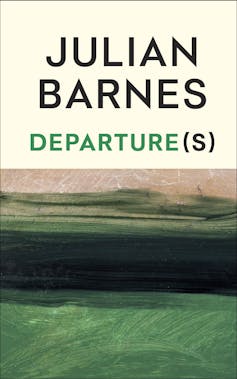
Julian Barnes, author of 14 previous novels, ten volumes of nonfiction, and three collections of short stories under his own name, plus four crime novels under the pseudonym Dan Kavanagh, has announced that his new novel, Departure(s), will be his last. The narrator – who both is and is not Barnes – tells us this directly and the information has accompanied advance notice from his publisher. This kind of framing necessarily invites the reader to judge the book as a capstone to his career.
For more than four decades, in ways distinct from near contemporaries like Martin Amis and Ian McEwan, Barnes has tried to awaken the English novel from its long fantasy of isolation, reminding it of its relation to European – and particularly French – literature.
For many years, his novel Flaubert’s Parrot (1984) was a foundational work in undergraduate courses in postmodern literature. But it has always felt to me as though this obscured the importance of the intervention Barnes was making.
His close reading of French literature translated formal experiment from the continental into the late-20th century English novel. Doing so, he opened the avant-gardism of anglophone late-modernism once again to the possibilities of a more European sensibility.
Illness and memory
It is no surprise to open Departure(s) and find Barnes employing fragmentation, lists, notes and quasi-philosophical musings, while refusing almost entirely to engage with any narrative structure that might resemble a plot.
There is a story of sorts, and the narrator tells us early on that one will be coming, though it is, he says, a story with no middle. Indeed, the five-part form of Departure(s) bookends and bisects the “story”. There is a central section about Barnes himself, and meditative opening and closing sections that reflect on larger questions – not only in relation to literature, but life more broadly.
This makes sense for a writer whose life over the past 25 years has been marked by great career successes – including the Booker Prize for The Sense of an Ending (2011), after a succession of shortlistings – as well as the tragedy of his wife Pat Kavanagh’s sudden death from brain cancer in 2008 and, more recently, his own chronic illness.
In 2020, Barnes, and the semi-fictional Barnes who narrates Departure(s), learned he had a form of blood cancer. He tells us that it will be with him until the end of his life, even if it is not the disease that kills him.
Grappling with this new condition, he turns to last things: to an accounting of his own shortcomings and to memory more generally.
Here we have reflections on Proust’s madeleine-induced stream of recollection, alongside Barnes’s thinking about the phenomenon of Involuntary Autobiographical Memory, or “IAM”. Barnes notes the case of a stroke victim, who claimed that eating a piece of pie released recollections of every pie he had ever eaten in order of consumption. He is at first horrified by the prospect of experiencing such a thing, until he realises that “IAMs would certainly help with autobiography”, particularly when recalling “moral actions and inactions”.
The novel’s “story” proper, when we get to it, concerns the narrator’s role in twice bringing together a couple: Stephen and Jean. He met them when all three were students at Oxford in the 1960s, and they met again 40 years later. Their “friendship”, such as it was, lasted little more than two periods of a year and a half either side of that 40-year gap.
The Barnes character had once been Jean’s lover, and his “moral actions and inactions” come to the fore in his account of these friends, now dead, for he promised Stephen and swore to Jean on a Bible that he would never write about them. There is here a return to some of Barnes’s longstanding interests as a novelist. Gaps in characters’ knowledge of one another become points of fixation or rupture.
One of the fears besetting some novelists is that they may fall victim to their own Rumsfeldian “unknown unknowns”. We know what we know about characters, story, theme, and so on. And we think we know what we don’t know (the discernible limits of our knowledge). But there is always the risk of a work being fractured internally by a force whose presence has remained beyond thinkability. This might be as simple as a hole in a plot, or as significant as an ideological blind spot.
Tics and irritants
Though I suspect Barnes would assert that he was in total control of this book, there were moments when I wondered. For instance, odd tics create a distancing effect where they might have been intended to do the opposite. Barnes has a habit of addressing the reader with self-conscious asides (“don’t you find?”) that feel more conversational than writerly.
There is also a curious refusal to name the male anatomy by its proper terms (though not so with the female). He uses schoolboy constructions such as “bum cancer”, rather than, say, “colon” or “rectal”. This is despite his being medically precise about his actual illness, its names, and its diagnosis and treatment.
There are also a few uncomfortable moments referring to homosexuality. We have “old Muckface, who turned out gay in the end”. The narrator suggests it would have been especially disturbing to find “a collection of dildos with dried blood on them” in Stephen’s home and refers to “schoolmasters we thought dodgy”. The latter are the only examples of gay people the narrator claims to have encountered as a child.
Barnes hastens to welcome progress that makes society more accepting, but this does not, for this reader, counterbalance the implied equation of “dodgy” character or predatory habits with homosexuality, nor his vivid and horrified amusement when imagining his friend might have a secret inclination towards anal eroticism.
In another vein, we have the narrator choosing to call Uluru by its colonial name, almost intentionally, it seems, to irritate a certain kind of reader.
These demurs might suggest significant irritation, but this is not the case. What I want from a writer of Barnes’s intelligence, however, is a handling of identity and representation worthy of his mind and talent.
I’m on Barnes’s side for much – though certainly not all – of the book. It is refreshing to open a contemporary novel in English and find that story and plot are second-order concerns, and that revealing the story in a review would not risk ruining the pleasure – and interest – of reading the book. Spoilers spoil nothing here.
But then I reach a conundrum, for Barnes offers this summary of a writer’s aims:
All writers want their words to have an effect. Novelists want to entertain, to reveal truth, to move, to provoke reverie. And beyond? Do they want their readers to act as a result of their words? It depends.
This seems to sketch the limits of Barnes’ aspirations for his art, assuming he thinks of his novels as art and not as mere entertainments. What, for me, is missing from that list is the possibility that a novelist might want to make readers think about the larger questions in more than a state of “reverie”, a word that implies the amorphousness of daydream.
Barnes appears to be placing himself in a tradition running parallel to but separate from that of British novelists-of-ideas of an earlier generation like Iris Murdoch, or his contemporary Ian McEwan, and younger writers like Zadie Smith. For all of these writers, I suspect that provoking serious thought is as important – and likely more important – than producing an emotional response (its own kind of thought, to be sure) or simply to entertain.
It is an odd final manoeuvre because Barnes is a novelist interested in thinking and thought. He has made a career of circling big ideas. But in the end, assuming this is truly the end, it is hard not to feel that he seems embarrassed to find himself so seriously interested in those larger questions, or so interesting to the readers who may continue to turn to his books for more than mere reverie.
Patrick Flanery does not work for, consult, own shares in or receive funding from any company or organisation that would benefit from this article, and has disclosed no relevant affiliations beyond their academic appointment.
School uniforms can cost hundreds of dollars.RNZ / Richard Tindiller
The head of an Auckland high school is defending high uniform costs, arguing it is in students’ best interests.
Westlake Boys High School headmaster Paul Fordham told Morning Report while he acknowledged the start of the year was an expensive time for families, wearing a uniform was more economical long-term.
“It’s a high-quality uniform that we believe to be quite accessible. The fact that it’s high-quality means it lasts longer.
The Westlake Boys uniform set, which includes a formal blazer, costs roughly $550 a year – a similar cost to several other high schools.
Fordham said there were also social and cultural benefits to requiring a uniform.
Students at Westlake Boys.Facebook
“Boys at our school are proud to wear the uniform. It gives them a strong sense of identity and belonging.
“It aligns with our school image. We consider ourselves a relatively high-performing, conservative, traditional boys’ school.
“The uniform being a shirt, a tie, and a blazer, when the boys put that on to come to school each day, they’re prepared and ready to go and understand the expectations of the school and the school day ahead of them.
“I believe it contributes to a better learning environment.
The school also expected students to wear their blazers at assemblies twice a week and at special events throughout the year.
“They also wear them as extra layers of clothing,” Fordham said.
“They might wear that as an alternative to a jersey or a jumper in winter. It’s a really warm garment to be wearing.”
He said the school sold second-hand uniforms at a lower cost and families could both buy and sell uniform pieces.
Education Minister Erica Stanford told The Poston Tuesday it was up to “individual schools to make sure that school uniforms are affordable for families, and it’s my expectation that they do that”.
“I have noticed that other countries are moving in that direction, and it’s certainly something I’ll take a look at.”
The media KiwiSaver balanced fund returned 1.7 percent for the quarter. (File photo)Unsplash
Warnings of impending share market doom didn’t play out in 2025, and the year ended with solid returns for KiwiSaver investors – and some change at the top of the performance tables.
Actuarial firm MJW has released its latest investment survey for the December quarter, which shows most funds, both within KiwiSaver and outside the scheme, had a small but positive return in the three months and solid performance over a longer period.
It said the median KiwiSaver balanced fund returned 1.7 percent for the quarter, after costs and before tax, and 9.8 percent for ther year.
“This caps a particularly healthy three-year period with the median growth, balanced and conservative KiwiSaver funds returning 13.3 percent, 10.9 percent and 7.4 percent per annum respectively.”
MJW principal Ben Trollip said developed markets equities were a big driver of results.
“In local currency terms, the MSCI World Index rose 3.4 percent over the quarter. While US markets did well, stronger performance came from Japan, up 12 percent, and the UK, up 6.2 percent. Emerging markets were led by India which rose 6.2 percent.”
The New Zealand dollar weakened compared to most currencies which meant that the returns were better in unhedged terms.
Trollip said although a lot of the noise in the year was about the performance of the US tech giants – such as Nvidia – the MSCI Emerging Index, which tracks companies in countries such as China, Brazil, Taiwan and India, had returned 30 percent, compared to 20 percent for the Nasdaq over 2025.
In KiwiSaver, Simplicity was first in growth, conservative and balanced funds for the quarter.
Over a year, Westpac was first in the growth and balanced categories, with 12.8 percent and 11 percent respectively, and AMP was first in moderate, with 9.5 percent. ASB was first among conservative funds, with 7.6 percent.
Over three years, Simplicity was first in the growth funds, with returns of 15.7 percent a year, ASB first in balanced, with 12.6 percent, AMP first in moderate with 10.9 percent in its moderate/balanced fund and ASB first in conservative with 8 percent.
Over 10 years, Milford was first in growth, with 10.2 percent, and balanced, with 8.1 percent a year, AMP was first in moderate with 5.8 percent and Milford was first in conservative with returns of 5.1 percent a year.
Trollip said the survey only assessed the largest KiwiSaver providers.
It did not include new entrant Sharesies, which said it had received 10 percent of all scheme transfers in October.
“In global markets, for example, there was a bit of a sell-off from memory in around November, and then things rebounded,” Trollip said.
“Also, in a similar vein, New Zealand interest rates fell quite sharply on the back of a weak GDP number, and then have subsequently risen back. So there was a bit of a down and then back up again over the three-month period.
“But zooming out, it was a pretty solid year and capping a solid three-year period.”
He said the returns over three years were more than many people would expect.
He said it was noticeable that Simplicity had topped the growth category, whereas providers that had traditionally been strong, such as Generate and Milford, had a weaker quarter.
Simplicity could have been helped by its global allocation being higher than others in the growth category, he said.
“I think the other thing that might have helped them is that their New Zealand fixed interest – I think that’s where they put their home loans, things like that. With interest rates moving around it was a bad quarter for traditional New Zealand fixed interest but Simplicity’s allocation to home loans and the like might have been what drove their better performance relative to their peers.”
But he said there could be a lot of movement in three-month periods, and it was better to take a longer view.
He said Milford’s active growth fund, which has been a long-term top performer, had grown from $3.3 b million in December 2022 to $8.5b.
Trollip said it was noticeable that five or 10 years ago, New Zealand shares were outperforming global equities.
But that had not been the case for the last three to five years.
“And New Zealand equities still have been less volatile than global equities, but they haven’t given you much of a return boost.
“In fact, they’ve been quite a drag on performance. So, one of the things I’ve been contemplating with potentially the New Zealand economy turning around low interest rates and all that, is the sector poised for a rebound or not? But it’s very hard to pick the timing of that, I think.”
The report said Indeed, over the long term New Zealand equities had brought useful diversification from global equity markets with little give-up in return.
“Add to that the fact that local investors may have an advantage in picking (and monitoring) good active managers, and may have a tax advantage, and the case for a home bias feels somewhat stronger despite the poor recent run from our domestic bourse.
“Moreover, with global equity markets becoming even more concentrated on the AI thematic, a little diversification would seem welcome. Worries abound given the strong run in US equities in particular, with that geography representing some 70 percent of global indices due to its strong momentum.
“As 2025 drew to a close, there was increasing fear of a correction in the value of technology stocks. In fact, going on search traffic alone, one would say enthusiasm peaked in September 2025.”
Most Australian children bring their lunch to school through a “lunchbox system”. But there is a growing push for schools to provide students with lunch.
Despite decades of efforts to promote better nutrition, it is estimated nearly half (44%) of the foods Australian children eat at school are energy-dense and nutrient-poor (or “discretionary foods”). This is alarming as our previous research with children aged nine to eleven shows an association between a poor diet and lower NAPLAN scores.
School programs providing students with a nutritious lunch are common around the world. Research shows school-provided lunches can increase social equity and improve nutritional, health and learning outcomes.
But wider school lunch programs would be a significant change to how children access food at school in Australia.
In our new research, we look at what parents think about school lunch programs. If school lunch programs are going to work in Australia, families’ support will be crucial.
Our research
In our study, we surveyed almost 400 parents of primary school students across Australia, to seek their views about school lunch programs. We recruited parents through paid social media advertisements. They came from a range of backgrounds and household incomes.
Based on different school food programs in the United Kingdom, France, Sweden and Australia, we tested six key components of a school-provided lunch model:
cost
nutrition and quality
environmental sustainability
menu options
access (should programs be optional or provided to all students regardless of their background)
a whole-school approach (is the lunch program integrated with classroom learning and other school messaging).
We also asked parents how much they would be willing to pay for different lunch approaches.
Most parents are keen on school lunch programs
We found 93% of parents surveyed were interested in school-provided lunches.
Parents told us nutrition and food quality was the key driver of their interest in a school lunch program. It was also the most important consideration when designing a school program.
Menu variety was the next most important consideration, with a strong preference for having two meal options. This was similar to our previous findings, which show parents and children value choice for school-provided lunches. Parents in the new study also expressed an interest in children trying a wider range of foods.
The next most important consideration for parents was taking an environmentally sustainable approach to the food program, followed by integrating food education and healthy eating across the school day.
Many parents in our survey were also motivated by the idea all children would have access to the same meal, with 70% saying they valued the potential for equal and stigma-free food provision.
Parents would pay about $6 per day
Globally, national school meal programs vary in payment models, ranging from free to subsidised/means tested or fully paid by students and families.
Parents unsurprisingly preferred lower-cost options over higher-cost options. But they also showed a willingness to pay more for programs that focused on food quality, sustainability and links to the curriculum – not just filling bellies.
Parents in our study currently spent around A$6 per day on lunchboxes (most spent between $4–10). They said they were happy to pay a similar amount for a school-provided lunch.
Most were even willing to pay a little more to subsidise lunches for others to ensure all children receive a meal or larger portions for older children.
Why this matters
Packing lunchboxes can be a real slog, putting lots of pressure on families.
In another study we did, parents have talked openly about their “lunchbox guilt”. Parents have to pack lunchboxes as they balance busy work and family lives, children’s preferences and social expectations of “what’s OK to send to school”.
We also know many kids end up at school with food that is not healthy.
Our research suggests Australian parents are willing to invest in a different approach to school food. By highlighting what matters most to them – food quality – we get an important insight into what is more likely to make new programs successful and sustainable.
These results give policymakers valuable guidance on what families consider essential for a school-provided meal program.
Brittany Johnson receives funding from The Hospital Research Foundation Group, the Australian Research Council (LP240200796) and The Channel 7 Children’s Research Foundation for a project that involves School Food Matters (Tasmania) and The School Food Project (NSW) as partner organisations.
Alexandra Manson has received funding from the Australian government Research Training Program Scholarship and the King and Amy O’Malley Trust Postgraduate Research Scholarship, and receives funding from the Heart Foundation South Australian Kick Start Fellowship.
Rebecca Golley receives funding from The Australian Research Council (LP240200796) and The Channel 7 Children’s Research Foundation for a project that involves School Food Matters (Tasmania) and The School Food Project (NSW) as partner organisations.
You might say you have a “bad memory” because you don’t remember what cake you had at your last birthday party or the plot of a movie you watched last month. On the other hand, you might precisely recall the surface temperature of the Sun any time when asked.
So, is your memory bad, or just fine? Memory is at the very heart of who we are, but it’s surprisingly complex once we start looking at how it all fits together.
In fact, there’s more than one type of memory, and this determines how we recall certain facts about the world and ourselves.
How do we classify memory?
Cognitive psychologists distinguish between declarative memory and non-declarative memory. Non-declarative memories are expressed without conscious recollection, such as skills and habits like typing on a keyboard or riding a bike.
But memories you’re consciously aware of are declarative – you know your name, you know what year it is, and you know there is mustard in the fridge because you put it there.
However, not all of our memories are stored in the same way, nor in the same place in our brains. Declarative memory can be further broken down into semantic memory and episodic memory.
Semantic memory refers to general knowledge about the world. For example, knowing that cats are mammals.
Episodic memory refers to episodes of your life, typically with elements of “what”, “where” and “when”. For example, I remember cuddling my pet cat (what) in my home office (where) just before sitting down to write this article (when).
A sense of self-awareness is strongly involved in episodic memory. It’s the feeling of personally remembering.
For semantic memories, this sense is not as strong – you can have detached knowledge without the context of “how” and “when”. For instance, I know that Canberra is the capital city of Australia (semantic memory), yet I can’t remember specifically when and where I learnt this (episodic memory).
Lessons from amnesia
In the mid-20th century, famous case studies of amnesic patients were the early evidence of this distinction between semantic and episodic memory.
For example, Henry Molaison and Kent Cochrane both experienced brain damage that severely impacted their episodic memory abilities.
They couldn’t recall events from their lives, but knew many things about the world in general. In effect, their personal past had vanished, even though their general knowledge remained intact.
In one interview after the accident that caused his brain damage, Cochrane was able to describe how to change a flat tire in perfect detail – despite not remembering having ever done this task.
There have also been reports of cases of people whose ability to recall semantic memories is largely impaired, while their episodic memory abilities seem mostly fine. This is known as semantic dementia.
Your age affects how your memory works
Young children have both memory systems, but they develop at different rates. The capacity to form strong semantic memories comes first, while episodic memory takes longer.
In fact, true episodic memory ability may not fully develop until around the age of three or four years. This helps explain why you have scant memories of your earliest childhood. We gain greater self-awareness around the same age too.
While episodic memory ability develops more slowly in early life, it also declines more quickly in old age. On average, older adults tend to remember fewer episodic details compared to younger adults in memory recall assessments.
In older adults with more severe cognitive decline, such as dementia, the ability to recall episodic memories is typically much more affected, compared to semantic memories. For example, they might have difficulty remembering they had pasta for lunch the day before (episodic memory), while still having perfect knowledge of what pasta is (semantic memory).
Ultimately, it all works together
Brain imaging studies have actually revealed that overlapping areas of the brain are active when recalling both semantic and episodic types of memories. In a neurological sense, these two types of memory appear to have more similarities than differences.
In fact, some have suggested episodic and semantic memory might be better thought of as a continuum rather than as completely distinct memory systems. These days, researchers acknowledge memory recall in everyday life involves tight interaction between both types.
A major example of how you need both types to work together is autobiographical memory, also called personal semantics. This refers to personally relevant information about yourself.
Let’s say you call yourself “a good swimmer”. At first glance, this may appear to be a semantic memory – a fact without the how, why, or when. However, recall of such a personally relevant fact will likely also produce related recall of episodic experiences when you’ve been swimming.
All this is related to something known as semanticisation – the gradual transformation of episodic memories into semantic memories. As you can imagine, it challenges the distinction between semantic and episodic memory.
How our memories form over time. Shane Rogers/The Conversation
Ultimately, how we remember shapes how we understand ourselves. Episodic memory allows us to mentally return to experiences that feel personally lived, while semantic memory provides the stable knowledge that binds those experiences into a coherent life story.
Over time, the boundary between the two softens as specific events are condensed into broader beliefs about who we are, what we value, and what we can do. Memory is not simply a storehouse of the past. It’s an active system that continually reshapes our sense of identity.
Shane Rogers does not work for, consult, own shares in or receive funding from any company or organisation that would benefit from this article, and has disclosed no relevant affiliations beyond their academic appointment.
For people with migraine, summer can be a double-edged sword. You may be able to relax more, sleep in, enjoy the sunshine, and spend time with family and friends.
But other factors – such as glare, heat, and changes to sleeping and diet – can make migraine attacks more likely or more severe.
Triggers for attacks vary from person to person and seasonal changes don’t affect everyone. But if you find your migraine attacks are worse or more likely in summer, knowing why can help you prepare.
The effect of hot weather
Normally when it is hot, you sweat more to regulate your core temperature. Your body becomes cooler when sweat evaporates off your body.
In summer when the air is hotter and there is more humidity, your brain’s hypothalamus causes blood vessels close to the skin to dilate so that heat can escape.
But people with migraine often have hypersensitive nerves and blood vessels. When blood vessels dilate in the heat, it can irritate nearby nerves and cause inflammation, which the migraine brain interprets as pain. This is due to the brain’s stress response, not an infection.
Dehydration
Sweating helps regulate your core body temperature, cooling you down as the sweat evaporates off your skin. But when the air is hot and humid, it’s harder for the sweat to evaporate and cool us down.
This can lead to dehydration – another potent trigger.
Why is dehydration so bad?
Imagine your brain like a sponge that is floating in spinal fluid within your skull. If you are dehydrated, the brain shrinks like a dry sponge and pulls on the attachments to the skull, which can trigger pain.
If you are well hydrated, the brain can expand to fill the space within the skull so there is less “pulling” and therefore less pain.
Sensitivity to light
For many people with migraine, glare is more than a minor annoyance – bright lights and reflection can cause pain and trigger attacks.
When light enters the back of the eye, special cells (retinal ganglion cells) process this signal and send messages to the brain’s sensory centre (the thalamus).
In migraine, these sensory pain pathways involving the thalamus are hypersensitive. Any extra light – or flickering or moving lights – is perceived as pain, rather than merely brightness, and can also lead to dizziness.
Glare also reduces the contrast of incoming light signals, so the brain’s visual centre (the visual cortex) needs to work extra hard to process signals. Certain wavelengths can also be harder to process (including blue and fluorescent light, or sunlight reflecting off screens). This can cause pain.
Disrupted routines
The migraine brain does not like change. But longer days in summer can mean changes to our routines.
Changes that might trigger a migraine include sleeping at inconsistent times on holidays, skipping or delaying meals, or changes in stress levels. This means new stress, increased stress – or even relaxing after a stressful period.
Changes in sensory information that the brain processes can also worsen migraine. This may include new smells (such as sunscreen or insect repellent), louder noises (excited children on holidays), and brighter light or glare.
Even exercising more than usual may be a trigger for some people.
Thunderstorms
Pollen, humidity and thunderstorms trigger allergy flares in people with asthma, hayfever and eczema. This makes the immune system release chemicals called histamine, which can trigger migraine attacks in some people.
Asthma and allergy action plans are doubly important for wellbeing in this group.
Sudden changes in air pressure (in aeroplanes and during storms) can also be a strong trigger for some people. Your friend who says they can predict the weather by their migraine symptoms may be right.
Know your triggers
Regardless of the season, being prepared is the key.
Keep a diary of your headache days and impacts of weather (temperature, humidity, glare) or activities (for example, how much you’re socialising or exercising). Headache neurologists can use this data to give you a targeted migraine plan.
In summer, you can also:
plan outings for cooler days of the week or times of day
limit sun and pack a hat and sunglasses. Lenses that are polarised or FL41-tinted may help beat glare
carry water bottles and electrolyte-rich fluids to avoid dehydration
set phone alarms so that you go to bed and wake up at consistent times
try to maintain regular balanced meals, without excess sugar, alcohol and processed foods.
Taking care of your medication
It’s also important to plan and correctly store your migraine medication, especially if you’re going on a trip. You should:
take acute migraine medications with you and make sure they’re up-to-date
check your scripts are current and you have repeats left
protect medications from heat. Don’t store them in the glovebox or bag in the sun for long periods. Injectable medications should be stored in the fridge below 4°C until use.
When travelling, you may need to adjust timing of doses or use a cooler bag to keep medication cool.
If you think you’re sensitive to seasonal changes, it’s best to talk to your neurologist about a migraine management plan. This can help you identify and manage key triggers and prevent and treat acute attacks.
Dr Lakshini Gunasekera receives funding from the Victorian Government Catalyst grant program to investigate hormonal therapies for menstrual migraine.
Dr Elspeth Hutton works for Alfred Health, is the President of the Australian & New Zealand Headache Society and has collaborated with Migraine and Headache Australia and Migraine Australia. She has previously served on advisory boards for Abbvie, TEVA, Lundbeck and Novartis, and received funding for an investigator-led study from Ipsen, as well as engaging in industry-sponsored clinical trials. She receives no current funding outside of salary.
The past three years have been the world’s hottest on record. In 2025, Earth was 1.44°C warmer than the long-term average, perilously close to breaching the Paris Agreement goal of 1.5°C.
We know what to do to tackle the climate crisis: replace fossil fuels with clean energy technologies such as solar, wind, electric vehicles and batteries. We are well on our way. Globally, the power produced by renewables overtook coal last year.
Petrostates such as Saudi Arabia and the US have made trillions from oil and gas. Now they are fighting a rearguard action to prolong fossil fuels. The US is pushing European nations to buy its gas, for instance.
But most countries have seen the writing on the wall. In November, the COP31 climate talks in Turkey are expected to deliver a global roadmap away from fossil fuels. Dozens of countries will meet in Colombia in April to fast-track the transition. The road ahead is bumpy. But the end of fossil fuels may finally be coming into view.
No holding back clean energy
There’s no one trying harder to slow the clean energy transition than US president Donald Trump. During his bid to return to the White House, Trump pressed oil executives for US$1 billion (A$1.4 bn) in campaign finance, promising a windfall in return.
But clean energy growth has proved difficult to kill. Despite Trump’s efforts, domestic solar generation is still expected to grow 46% in the next two years while electricity output from fossil fuel plants falls.
Trump is betting fossil fuels are the key to future American power. He made no secret of the fact the US military raid on Venezuela earlier this month was aimed at increasing oil production. He has implored US oil companies to invest billions to revive the country’s battered oil infrastructure. The response was lukewarm. ExxonMobil CEO Darren Woods said Venezuela was “uninvestable”.
Developing Venezuela’s oil reserves assumes there will be demand for decades to come. But the world now faces an oversupply of oil, even as sales of electric vehicles grow strongly in many countries. Last month, battery electric vehicles outsold petrol cars for the first time in Europe.
Electrostates rising
While the US doubles down on 20th century fossil fuels, China is betting on an electric 21st century. It is emerging as the first electrostate, dominating production and export of solar, wind, batteries and EVs. China is now the world’s biggest car exporter. Most new Chinese cars are powered by batteries, not oil.
China’s manufacturing might has driven down the price of batteries, the main cost of EVs. As EVs get cheaper, emerging economies are finding they can leapfrog fossil fuels and move straight to solar panels and EVs – even if the national power grid is limited or unreliable.
Commodity price trends show surging global demand for copper, silver and other metals needed for mass electrification. Worldwide, investment in clean energy technologies first overtook fossil fuel investment ten years ago. In 2025, clean investment was more than double the investment in coal, oil and gas. Clean energy is where the world is headed, whether Trump likes it or not.
China, India and Pakistan are rapidly making the shift to renewable power. Developing nations from Nepal to Ethiopia are taking up electric transport to slash the cost of importing fossil fuels.
This week, the US formally withdrew from the Paris Agreement. But no other country has followed.
For decades, the COP talks have focused on “cutting emissions” without dealing directly with the use of coal, oil and gas. But at the 2023 talks, nearly 200 countries agreed to “transition away from fossil fuels”.
At last year’s COP30 talks, host nation Brazil proposed a roadmap to phase out fossil fuels. More than 80 countries backed the idea, including Australia, but pushback from Saudi Arabia and Russia kept it out of the final outcomes.
In response, Brazil is working to develop a roadmap for phasing out fossil fuels. This – or something similar – may be formally adopted at the next climate talks in November.
Bowen plans to lobby petrostates to support a managed shift away from fossil fuels, drawing on Australia’s experience as a major exporter of coal and LNG facing its own transition. Korea – Australia’s third largest market for thermal coal – will retire its entire coal fleet by 2040.
Government modelling suggests Australia’s coal and gas exports could plummet 50% in value in five years as global demand falls. Independent modelling suggests the decline for coal could happen even faster if countries meet their climate targets. Policymakers must plan to manage this transition.
Coalitions of the willing?
Frustrated by slow progress, a coalition of nations is separately discussing how to phase out fossil fuels. The first conference will take place in April in Colombia. Here, delegates will discuss how to wind down fossil fuels while protecting workers and financial systems. Some nations want to negotiate a standalone treaty to manage the phase-out. Conference outcomes will also feed back into the UN climate talks.
Pacific island nations aim to be the world’s first 100% renewable region. Ahead of COP31, Australia and island nations will meet to progress this.
Progress is happening
In an ideal world, nations would rapidly tackle the existential threat of climate change together. We don’t live in that world. But it may not matter.
The shift to clean electric options has its own momentum. The question is whether the shift away from coal, oil and gas will be orderly – or chaotic.
Wesley Morgan is a fellow of the Climate Council of Australia
Most Australian children bring their lunch to school through a “lunchbox system”. But there is a growing push for schools to provide students with lunch.
Despite decades of efforts to promote better nutrition, it is estimated nearly half (44%) of the foods Australian children eat at school are energy-dense and nutrient-poor (or “discretionary foods”). This is alarming as our previous research with children aged nine to eleven shows an association between a poor diet and lower NAPLAN scores.
School programs providing students with a nutritious lunch are common around the world. Research shows school-provided lunches can increase social equity and improve nutritional, health and learning outcomes.
But wider school lunch programs would be a significant change to how children access food at school in Australia.
In our new research, we look at what parents think about school lunch programs. If school lunch programs are going to work in Australia, families’ support will be crucial.
Our research
In our study, we surveyed almost 400 parents of primary school students across Australia, to seek their views about school lunch programs. We recruited parents through paid social media advertisements. They came from a range of backgrounds and household incomes.
Based on different school food programs in the United Kingdom, France, Sweden and Australia, we tested six key components of a school-provided lunch model:
cost
nutrition and quality
environmental sustainability
menu options
access (should programs be optional or provided to all students regardless of their background)
a whole-school approach (is the lunch program integrated with classroom learning and other school messaging).
We also asked parents how much they would be willing to pay for different lunch approaches.
Most parents are keen on school lunch programs
We found 93% of parents surveyed were interested in school-provided lunches.
Parents told us nutrition and food quality was the key driver of their interest in a school lunch program. It was also the most important consideration when designing a school program.
Menu variety was the next most important consideration, with a strong preference for having two meal options. This was similar to our previous findings, which show parents and children value choice for school-provided lunches. Parents in the new study also expressed an interest in children trying a wider range of foods.
The next most important consideration for parents was taking an environmentally sustainable approach to the food program, followed by integrating food education and healthy eating across the school day.
Many parents in our survey were also motivated by the idea all children would have access to the same meal, with 70% saying they valued the potential for equal and stigma-free food provision.
Parents would pay about $6 per day
Globally, national school meal programs vary in payment models, ranging from free to subsidised/means tested or fully paid by students and families.
Parents unsurprisingly preferred lower-cost options over higher-cost options. But they also showed a willingness to pay more for programs that focused on food quality, sustainability and links to the curriculum – not just filling bellies.
Parents in our study currently spent around A$6 per day on lunchboxes (most spent between $4–10). They said they were happy to pay a similar amount for a school-provided lunch.
Most were even willing to pay a little more to subsidise lunches for others to ensure all children receive a meal or larger portions for older children.
Why this matters
Packing lunchboxes can be a real slog, putting lots of pressure on families.
In another study we did, parents have talked openly about their “lunchbox guilt”. Parents have to pack lunchboxes as they balance busy work and family lives, children’s preferences and social expectations of “what’s OK to send to school”.
We also know many kids end up at school with food that is not healthy.
Our research suggests Australian parents are willing to invest in a different approach to school food. By highlighting what matters most to them – food quality – we get an important insight into what is more likely to make new programs successful and sustainable.
These results give policymakers valuable guidance on what families consider essential for a school-provided meal program.
Brittany Johnson receives funding from The Hospital Research Foundation Group, the Australian Research Council (LP240200796) and The Channel 7 Children’s Research Foundation for a project that involves School Food Matters (Tasmania) and The School Food Project (NSW) as partner organisations.
Alexandra Manson has received funding from the Australian government Research Training Program Scholarship and the King and Amy O’Malley Trust Postgraduate Research Scholarship, and receives funding from the Heart Foundation South Australian Kick Start Fellowship.
Rebecca Golley receives funding from The Australian Research Council (LP240200796) and The Channel 7 Children’s Research Foundation for a project that involves School Food Matters (Tasmania) and The School Food Project (NSW) as partner organisations.
Marty Supreme is a frenetic tale inspired by Marty Reisman, the charismatic American table tennis champion of the 1950s.
Charged by Timothée Chalamet’s electric lead performance – alongside a stellar supporting cast (including Gwyneth Paltrow), and director Josh Safdie’s signature, anxiety-inducing aesthetic – the film captures a young man’s all-or-nothing quest for greatness.
Marty Mauser is a morally ambiguous protagonist with a sociopathic, self-obsessed pursuit of glory. But Safdie invites the audience to champion his quest. In this, Marty emerges as a particularly compelling entry into Hollywood’s longstanding tradition of unlikable heroes.
Marty follows in the footsteps of other Safdie antiheroes – the reckless Howard Retnar (Adam Sandler) of Uncut Gems (2019) and the manipulative Connie Nikas (Robert Pattinson) of Good Time (2017). His do-or-die attitude stems from the ambition to escape his circumstances.
A Jewish kid from New York’s Lower East Side, he works at his uncle’s shoe store in order to fund his global table tennis ambitions. Refusing to listen to those around him, Marty seems aware that his self-delusion and performativity will ultimately propel him to success.
Marty compulsively lies, commits petty theft and willingly disregards the wellbeing of those close to him to fulfil what he believes to be his destiny.
Despite his problematic moral compass, Safdie’s protagonist ultimately wins over the audience’s support.
The Hollywood antihero
Hollywood is no stranger to popular antiheroes, from Travis Bickle in Taxi Driver (1976) to Arthur Fleck in Joker (2019). The Safdie brothers focus on recognisably ordinary characters caught in the chaos of their everyday existence.
Marty Supreme is Josh Safdie’s first solo directorial project since parting ways with his brother Benny. The pair have long been fascinated with figures who, despite their moral shortcomings, are inherently human.
The signature Safdie arc appeared in their indie film Daddy Longlegs (2009). Loosely based on Josh and Benny’s own experiences with their divorced father, the film crafts an honest, sympathetic portrait of a highly irresponsible (yet loving) parent trying to do his best.
In an emblematic action, Lenny (Ronald Bronstein) gives one of his sons a sleeping pill in order to allow him to return to his job at a local cinema. The misguided and neglectful act is still shown as a genuine attempt to keep his son safe and out of harm’s way.
Lenny’s traits of misdirected affection are observed throughout the Safdie protagonists.
Following an unsuccessful robbery, Good Time’s Connie frantically attempts to break his developmentally disabled brother, Nicky (Benny Safdie), out of prison and a psychiatric facility.
In Uncut Gems, Howard is driven by greed and lust but demonstrates a genuine care for his family, repeatedly insisting his ambitions are guided by the need to provide for them.
Like Lenny, Howard and Connie, Marty has the capacity to do what is right and care for those he loves. But his egotistical, self-absorbed quest to gain status ultimately clouds his ability to comprehend the consequences of his actions.
The universality of struggle
How does Josh Safdie succeed in creating a protagonist who – despite lying that his mother died during childbirth and neglecting his pregnant girlfriend – nonetheless wins the audience’s support?
Marty’s championing is undoubtedly in part due to Chalamet’s star-image and onscreen charisma. And his quest for greatness depicts the triumphant tale of a figure who, against all odds, continues to pursue his dreams with obsessive belief.
At its core, Marty Supreme is a stylised, high-octane reworking of the familiar “David versus Goliath” narrative.
Here, “Goliath” evokes both the American Dream and the Immigrant Dream, uphill battles where the odds are stacked against the individual.
This idea is prominent across other Safdie brothers films. In Good Time, “Goliath” is the criminal justice system, shown as a particularly dehumanising institutional structure for marginalised individuals. In Heaven Knows What (2014) – a gritty tale based on Arielle Holmes’s autobiography of addiction, love and struggle – substance dependency is presented as the ultimate obstacle.
Marty’s ambitions of table tennis stardom are neither recognised nor respected by those around him. This drives him to go to greater lengths in order to fund his career.
While his extreme measures may be unsympathetic – and perhaps unforgivable – Marty’s fundamental desire to transcend his circumstances remains relatable.
Marty’s ambitions of table tennis stardom are neither recognised nor respected by those around him. A24
Within the film’s spiralling chain of events, Marty Supreme captures the hardship of pursuing a dream only you recognise.
Marty is neither one-dimensional nor simplistic. Rather, the film allows his humanity to surface throughout his self-absorbed and destructive journey.
Marty’s unrelenting commitment to his dream catalyses his moral failing. But he is nonetheless a figure capable of tenderness. Far from a role model, Marty is a complex character. Despite being capable of caring for those he loves, he blindly priorities the fierce pursuit of his dreams.
Marty’s antihero persona reflects not only the lengths required to realise one’s aspirations, but also the consequences of pursuing those dreams at any cost.
While Marty Supreme dramatises the egotistical pursuit of its flawed protagonist, it ultimately explores the universal ambition to dream big – and questions what is worth sacrificing in order to achieve success.
Oscar Bloomfield does not work for, consult, own shares in or receive funding from any company or organisation that would benefit from this article, and has disclosed no relevant affiliations beyond their academic appointment.
The man was taken to hospital where he remained in a critical condition. (File photo)RNZ / Richard Tindiller
A man has been critically injured in an assault in Hamilton overnight.
Detective Sergeant Johnathon O’Byrne said the man was found by police on Avalon Drive at 2.40am on Thursday and he had significant injuries consistent with an assault.
The man was taken to hospital where he remained in a critical condition.
O’Byrne said police were investigating a “violent incident” they believed was linked a a property on Lyon St at 12am.
Police remained at the Lyon St house, guarding the property and O’Byrne said residents could expect to see a police presence in the area while the investigation continued.
O’Byrne asked anyone with information to come forward and get in touch with police via 105, quoting file number 260129/1915.
Information could also be provided anonymously via Crime Stoppers on 0800 555 111.
Sign up for Ngā Pitopito Kōrero, a daily newsletter curated by our editors and delivered straight to your inbox every weekday.
– Published by EveningReport.nz and AsiaPacificReport.nz, see: MIL OSI in partnership with Radio New Zealand
The unintended consequences of proposed changes to competition law could add unnecessary cost to mergers and acquisitions, while undermining investor confidence, a prominent law firm says.
Chapman Tripp said some of the changes to the Commerce (Promoting Competition and Other Matters) Amendment Bill were positive, but others were problematic.
“Setting aside the several changes that we think have the potential to be really positive, for the ones we have concerns about, there are probably two categories,” Chapman Tripp competition and antitrust partner Lucy Cooper said.
“One is that they will add unnecessary uncertainty, time and cost to the Commerce Commission processes.
“And the other one . . . is the Commerce Commission will get a lot more discretion or power without solid process protections, or the ability to really scrutinise its work.
“I don’t intend that to be a criticism of the current Commission at all. It’s more that in general, as you know, proper process is absolutely critical to making sure we can see that the service we are getting from the Commerce Commission is robust and fair.”
She said a specific concern dealt with Commission’s ability to retroactively take action against a series of acquisitions that would, in hindsight, be found to have a cumulative effect of lessening competition.
“The focus should remain on the lawfulness of the marginal transaction, rather than allowing the Commission to retrospectively impugn earlier transactions that would otherwise be lawful if considered in isolation.
“Allowing the Commission to treat a sequence of separate transactions as a single transaction and find them all unlawful on the basis of their combined effect could also undermine investor confidence.”
Cooper said the Commission had an existing power to block a transaction, when it had potential to put a company or organisation in the position of becoming a dominant player in a particular market.
“The Commission already enforces against serial acquisitions, as demonstrated by successful action against Wilson Parking in local parking markets. We see no evidence that the Commission is unable to intervene in serial acquisitions.”
Chapman Tripp set out five factors of concern that “may, without limitation, be relevant” in determining whether a person had a substantial degree of influence.
The five factors were:
Shareholding or voting rights that provide the ability to influence key decisions of the other person
The right to appoint or remove directors or key executives of the other person
Veto powers over strategic decisions of the other person
Financial arrangements that create economic dependency on the part of the other person and,
Contractual agreements, informal arrangements, or historical patterns of deference.
[EL]
Cooper said Chapman Tripp would be setting out its concerns in a submission to the Parliamentary Select Committee, with submissions closing on 4 February.
Sign up for Ngā Pitopito Kōrero, a daily newsletter curated by our editors and delivered straight to your inbox every weekday.
– Published by EveningReport.nz and AsiaPacificReport.nz, see: MIL OSI in partnership with Radio New Zealand
Damage from the Auckland Anniversary Weekend floods, from top left: Derek Judge’s Swanson home was flooded by the rapidly rising Waimoko Stream; houses in Swanson sit abandoned and vandalised in November; Andrew Marshall’s red-stricken house in Swanson is still being hit by vandals a year on from the floods; Julie Armstrong’s Northcote home was badly damaged by the flood waters.RNZ and supplied
Three years since Auckland was hit by double storms that took lives and displaced hundreds, some homeowners facing ongoing flood risk are heading to court.
They either want a buyout or stormwater problems fixed.
Auckland Council has deemed 1038 homes too risky to live in and bought them, with another 50 agreements expected to be settled.
West Auckland is Flooding spokesperson Lyall Carter said the $1.2 billion scheme offered jointly by the council and government worked for the majority, but not everyone.
“There’s still a number of people that are in challenging circumstances and I think that is to be expected to an extent.”
West Auckland is Flooding spokesperson Lyall Carter.RNZ / Kate Newton
The buyout scheme is wrapping up and some people whose homes are considered safe to live in have watched as neighbours houses are removed.
“They’re the forgotten people in this story, the ones that didn’t get bought out that have to live with the dread of flooding happening again and being re-traumatised all over again, having to live with their kids on that street while people pull down houses,” Carter said.
Among them are Brendon and Stephanie Deacon whose house in Huapai is one of the last standing in their cul-de-sac – nine were bought out.
Lawyer Grant Shand is representing them in a legal claim filed against Auckland Council – asking to be bought out.
“The Deacon judicial review proceeding, where they’re the category one house on the street and everyone else essentially is category three, hopefully that gets a hearing and gets resolved this year,” Shand said.
“Hopefully that also brings out other people who can see that they’re in the same position and may well have a claim also.”
Stephanie and Brendon Deacon’s house in Huapai is one of the last standing in their cul-de-sac.RNZ / Luka Forman
He said there were also homeowners in Hawke’s Bay who may bring claims related to their regional buyout scheme to court.
Shand expected there were others who could have cases against developers or councils.
“There probably are people who had damage, loss in the floods who may well have claims against people for the floodings themselves, such as bad drainage, bad management of the water in the area. They may well come out of the woodwork.”
Such as Kumeū homeowner Theresa Smith, whom he was representing in legal action filed against Auckland Council, Auckland Transport and a developer.
She said her property had become an overland flow path for stormwater due to changes in the road and footpath from a nearby development.
“I’m just getting no resolution from the council and the fact that they are devaluing our property by putting an overland flow path on it, when they have allowed infra to go in that is a channel for the water to be diverted onto our property.”
Smith was worried it could get worse.
“These overland flowpaths do devalue people’s properties and also it’s almost like a licence to keep diverting water as you progressively develop the area.”
Lawyer Grant Shand is representing some families asking to be bought out.Nick Monro
Meanwhile, the council had four major flood resilience projects underway, including two in Māngere due to be completed this year.
It had also confirmed the first stage of a somewhat controversial project to reduce flooding in Wairau, restore wetlands at AF Thomas Park while still allowing for golf.
Group recovery manager Mace Ward said this year marked a transition for the recovery programme.
“We’re now at the tail end of a huge recovery programme, with thousands of individual repair and recovery initiatives delivered across the region by Auckland Council group,” he said.
“Some of the hardest work hasn’t been the physically visible stuff, it’s been supporting Aucklanders to make incredibly difficult decisions about their future.”
The recovery office would deliver an overview of lessons learned mid-year, covering its advice for recovery planning.
As for the vacant plots left from houses bought and removed in Auckland, Ward said it would take years to decide the long-term use for that land due to the complexity of safety issues.
Lyall Carter said after all they had been through, communities needed a say.
“What happens with that land, the voice of the people has been missing from decisions especially in west Auckland for a long time when it comes to these areas that have been impacted by flooding. Their voices need to be paramount in what happens to that land that is left.”
He was concerned the city’s leaders had not learned to future-proof for flooding and natural hazards.
“We’ve had areas that have been fast-tracked to be built in areas we know flood, why? We have that on one hand and on the other hand there’ll be no more bail outs. Who’s responsible?”
Meanwhile, a lengthy inquest looking into the 19 storm-related fatalities in 2023 nationwide continues in February.
Sign up for Ngā Pitopito Kōrero, a daily newsletter curated by our editors and delivered straight to your inbox every weekday.
– Published by EveningReport.nz and AsiaPacificReport.nz, see: MIL OSI in partnership with Radio New Zealand
For his latest novel, Softly Calls the Devil, Chris Blake has stepped out from behind the pseudonym he used for his debut.
He published The Sound of Her Voice – a double finalist in the 2018 Ngaio Marsh Awards – as Nathan Blackwell, a name he adopted to keep his writing separate from his role managing behavioural analysts and psychologists for the New Zealand Police.
The decision was driven by self-doubt and fear, Blake tells Nine to Noon.
The Sound of Her Voice by Nathan Blackwell.
Supplied / Orion
– Published by EveningReport.nz and AsiaPacificReport.nz, see: MIL OSI in partnership with Radio New Zealand
Colin McGonagle, front left, with friends at Side Track cafe in Mount Maunganui.RNZ / Lauren Crimp
There’s been a small glimmer of positivity in Mount Maunganui with part of the cordon near Mauao relaxed, allowing about a dozen businesses to reopen six days after the deadly landslide.
By 7am on Wednesday, a table of 20 had already parked up at Side Track cafe on Marine Parade which has now reopened to pedestrians.
Colin McGonagle was one of them.
“This group of people here, they call us regulars, we’re almost family, we come down here every morning … we trickle in, we make up our table, it’s got the big reserved on it, they know who we are.”
The cordon in Mount Maunganui following the deadly landslide is covered in tributes for the people who lost their lives.RNZ / Lauren Crimp
McGonagle was emotional about the return to the daily routine he’s held since 1999. But there was something missing – the walk around or up the maunga, which usually precedes the coffee.
“It’s our church, it’s our religious moment here, for people it’s their healing … Maree down there, she gets to the top, she always talks to her dad who’s passed. r4
“They’ve all got stories and unfortunately, the DNA of us is a little bit changed.”
Through tears, McGonagle said the six people killed and their families would be in their hearts forever.
“We’ll never forget them.”
Side Track cafe owner Mike Waghorn had too put his business closure into perspective.
“We’ve just lost some business, but people have lost lives.”
But he was still worried about the future of his cafe, and being able to pay his staff.
Side Track cafe owner Mike Waghorn.RNZ / Lauren Crimp
The money he makes in January helps the cafe survive through winter, and he’s not expecting nearly as many patrons now.
“All our business comes from the hot pools, the campground, the surf club, walking around the Mount.
“All that’s gone now, and looks like it’s gone for the rest of the year at least.”
A few doors down, Coffee Club owner Janet Kim – who’s already had a staff member resign, anticipating the lack of hours – wanted Tauranga City Council to step up.
Coffee Club owner Janet Kim.RNZ / Lauren Crimp
“Somebody [has] to be brave, to make a decision, and just release the funds … helping shop owners pay the staff,” she said.
Mayor Mahé Drysdale said the council was considering how it might support affected businesses, and would be meeting with them to discuss that.
Locals have committed to backing them, too.
Customers Stacey Jones and Emily Bailey were enjoying their morning cuppa at Mount Break Cafe after a bike ride, which is part of their regular routine.
“For the whole community, it’s just a horribly sad time … just to come and support these guys, it means a lot to us. [It’s a] special place for all of us,” Bailey said.
“I just feel really grateful to be able to come down, and then just really happy for the vendors that they can reopen, big smile on his face this morning … it’s been a tough time,” Jones said.
RNZ / Lauren Crimp
The community was also doing its best to be there for those who lost loved ones in the landslide.
The pile of flowers at the cordon stretches wider and deeper each day, and pieces of plywood are crammed with condolences.
One reads: “There are no words, just love, to heal your heartbreak.”
Sign up for Ngā Pitopito Kōrero, a daily newsletter curated by our editors and delivered straight to your inbox every weekday.
– Published by EveningReport.nz and AsiaPacificReport.nz, see: MIL OSI in partnership with Radio New Zealand
A photo of Alex Pretti is displayed at a makeshift memorial in his honor in the area where he was shot dead by federal immigration agents in Minneapolis, Minnesota, on January 26, 2026.AFP / OCTAVIO JONES
At least two federal agents who were involved in Saturday’s fatal shooting of a US citizen in Minneapolis have been placed on administrative leave, two US media outlets say.
The Department of Homeland Security said the two immigration agents who discharged their weapons during the deadly encounter with Alex Pretti were put on leave as part of standard procedures, Fox News reported on Wednesday (Thursday NZT).
MS NOW earlier reported that agents involved in the shooting of Pretti were being put on leave, citing an unnamed source.
Representatives for DHS could not be immediately reached to confirm the reports.
Immigration agents on Saturday fired multiple shots at Pretti, an ICU nurse at a hospital for veterans. His death was the second fatal encounter between Immigration and Customs Enforcement agents and US citizens in Minnesota this month, sparked a national uproar.
US Customs and Border Protection has said it is reviewing the shooting.
More to come…
– Published by EveningReport.nz and AsiaPacificReport.nz, see: MIL OSI in partnership with Radio New Zealand
Ngāruawāhia volunteer fire station’s jet skis assist police with a water rescue during Cyclone Hale in 2023.Supplied
Fire and Emergency New Zealand (FENZ) faced tough questioning at the Governance and Administration Select Committee in Parliament on Wednesday, much of it focused on the organisation’s banning of all powered watercraft used by local fire stations during water emergencies.
FENZ chief executive Kerry Gregory acknowledged that the decision not to deliver a service was tough on communities, but said the organisation had to prioritise what capabilities they were willing and able to invest in.
He also said that FENZ was trying to work with the local councils, iwi and other community groups in Waikato to see if the Ngāruawāhia and Huntly rescue vessels could be run by someone else.
“There’s no doubt that those vessels add value into the community, the question is whether it’s Fire and Emergency’s [job] to allocate resource and financial impact into there to build that capability or whether that sits somewhere else in the community,” Gregory said.
He said it would cost millions to build that capability for New Zealand.
Waikato MP Tim van de Molen, who was on the committee, pushed back against this.
He said the brigades had built their own capability and had never asked FENZ for financial support or resources.
“In this instance we are not asking you to spend millions of dollars. The community fund-raised for the boat themselves, it funded all their own training requirements, they get donations to fund the fuel for it, it’s zero cost on FENZ to operate that and it has been operating safely for decades, why will you not let it continue?” van de Molen asked.
He suggested that FENZ was putting a checklist ahead of the safety of the community.
Kerry Gregory acknowledged that the decision not to deliver a service was tough on communities. File picture.RNZ
Gregory rejected that assessment.
“It’s not a checklist, it’s a responsibility of the organisation and we take that very seriously, the safety of our people, because they work in such dangerous situations,” he said.
FENZ deputy national commander Megan Stiffler told the committee she had international recognition for swift water rescue work. She suggested that the vessels used by Ngāruawāhia and Huntly volunteer fire stations were unsuitable.
“The motorised watercraft that I have seen you would never build in a swift water or water rescue programme of work,” she said.
Instead, she said FENZ supplied unmotorized watercraft to provide water rescue. This included land-based rescue where firefighters might throw a bag to someone in the water for them to grab, or paddled inflatables which can travel over shallow water.
Gregory said that what was offered by local stations was a legacy of a time before urban and rural fire services where unified under a new funding model and legislation in 2017.
“Eight years in it’s the right time to look at our organisation and say ‘are we fit-for-purpose, are we right-sized, where do we need to invest, where do we need to divest in and how to we make sure we are sustainable as an organisation going forward so that we can support New Zealanders’ so that’s what we are focused on,” he told the committee.
Van de Molen did not seem to accept this when it came to the grounding of Ngāruawāhia and Huntly’s watercraft.
“They’re both volunteer brigades, they have had for several decades motorized water response capabilities, they have had sign-off for that from the CEO of FENZ post-merger, they have compliance certificates from Maritime NZ to operate that, they have skipper courses for the personnel that operate that, they have MOSS system [Maritime Operator Safety System] – have a certificate of compliance for that – so I’m interested in what has changed?” he asked Stiffler.
She replied that FENZ had to authorize and task the crews for rescue and they would not be building that capability.
Sign up for Ngā Pitopito Kōrero, a daily newsletter curated by our editors and delivered straight to your inbox every weekday.
– Published by EveningReport.nz and AsiaPacificReport.nz, see: MIL OSI in partnership with Radio New Zealand
Older New Zealanders with British heritage are grappling with border rule changes.123RF
Older New Zealanders with British heritage are grappling with border rule changes – and question marks over citizenship – as they prepare for visits to see relatives in the United Kingdom.
UK migrants have discovered they need to get British passports to go on holiday to Britain, or to visit elderly parents and grandparents, from the end of next month.
Travellers should check online if they are uncertain about their citizenship or their children’s, she added.
Younger generations of UK migrants have discovered they may need to get British passports for their families, too. Citizens can instead get a certificate of entitlement, but that is more expensive than buying a UK passport.
Wellington-based Thomas said the change to ETAs and passport rules from 25 February is for security reasons. “I do understand that travelling can be very stressful and making arrangements for travel can be difficult. And so I am sorry that people are finding these changes difficult but it is important that people travel with the right documentation all the time.”
British High Commissioner to New Zealand Iona Thomas (L) and Governor-General Dame Cindy Kiro in 2022.Supplied
In the numbers
The High Commissioner did not say whether demand for passports had risen, what processing timeframes now looked like, or who was classed as a citizen.
The UK’s Office for National Statistics figures from its 2021 census showed New Zealanders were the most likely migrants in the UK to have dual citizenship (49.2 percent), ahead of South Africa (49.0 percent) and Australia (47.4 percent).
The proportion of dual citizenship among non-UK-born other passport holders has increased since 2011.
In 2008, the United Kingdom’s Foreign and Commonwealth Office (FCO) estimated the country’s diaspora population, finding that at least 80 percent of New Zealanders had some British ancestry – higher even than Australia.
“Some 17 percent (estimated) are entitled to British passports,” said the FCO, adding “Britain remains a favoured destination for young New Zealanders for their ‘Overseas Experience’.”
If accurate, the estimate would mean 765,000 people in New Zealand needed passports if they wanted to visit Britain.
The New Zealand census showed UK citizens numbered about 208,000 in 2023, although it is not known how many people instead chose the ‘New Zealand European’ option in the count.
Across the Tasman, with a larger population, more people were affected by the passport changes. About 1.1 million people there were born in the UK, according to Australian Bureau of Statistics’ 2024 figures. Their median age was 59.4 years. The British still made up the biggest foreign-born nationality in both countries.
One traveller said social media comments from Australia in particular suggested the ‘£10 Poms’ – named after the postwar Brits who emigrated to both New Zealand and Australia after the Second World War – were badly affected.
“A lot of these people are now in their 70s, their 80s, and they’re really, really stressing about trying to get paperwork together to go, essentially, to visit family or the relatives that they haven’t seen in decades for the last time,” she said. “It’s just all been very rushed through.”
Her primary concern, however, was knowing whether children would need British passports to travel to the UK.
“[They’re] essentially being forced to get British citizenship or get a passport now to enable their family to go and visit grandparents,” she said. “There’s lots of families that are already booked to go back and see relatives in the Easter holidays, in the July school holidays. And they don’t know whether they can actually enter the UK on their New Zealand passport. So they’re at the moment panicking and going and getting British passports because nobody can get an answer out of the British government.”
Asked for clarification on that point, Thomas said: “All British citizens must travel on UK passports. If that child is a citizen, they cannot use an ETA, and will need a British passport.”
Sign up for Ngā Pitopito Kōrero, a daily newsletter curated by our editors and delivered straight to your inbox every weekday.
– Published by EveningReport.nz and AsiaPacificReport.nz, see: MIL OSI in partnership with Radio New Zealand
New Zealand’s biggest bank has downgraded its forecast for house prices this year.RNZ
New Zealand’s biggest bank has downgraded its forecast for house prices this year, but new research shows not everyone is feeling the same way.
ANZ said house prices had been broadly flat for three years and there was clear evidence the economy had improved in the second half of 2025, which should be a tailwind for the housing market.
“However, house prices are starting 2026 with little momentum, and uncertainty from the upcoming election – including the prospect of a capital gains tax – may keep some buyers on the sidelines this year,” the bank’s economists said.
They had brought forward their expectation of the first upward movement in the official cash rate, to December. Previously, they had thought it would happen in February next year.
“As OCR hikes draw closer, mortgage rates are shifting from a tailwind to a headwind for the housing market. Weighing it all up, we have reduced our house price inflation forecast for 2026 to 2 percent from 5 percent previously.”
They said there was clear divergence between different parts of the country. Wellington prices were down 4 percent over six months. Auckland’s had also fallen, but not as much.
Canterbury, Otago and Southland prices continued to rise.
“Indicators of the balance between demand and supply suggest prices will continue to be flat through the early part of 2026. The ratio of sales to inventories is a useful indicator of heat in the housing market and tends to give a three- to six-month lead on house price momentum. It is flat as a pancake, suggesting prices will be too.”
Meanwhile Cotality research had found that survey respondents from real estate, banking and related sectors expected price growth this year, and 14 percent expected price rises of more than 5 percent.
Head of research Nick Goodall said while sentiment had lifted from recent lows, expectations remained more conservative in New Zealand than in Australia, reflecting a weaker economy and jobs market and persistently high levels of homes for sale.
Cotality head of research Nick Goodall.Supplied / Cotality
“The survey provides an important industry pulse on how confidence is rebuilding across housing after a prolonged period of subdued conditions,” he said.
“Sentiment around price direction has clearly improved, but expectations remain grounded with the majority of respondents anticipating modest gains rather than a rapid rebound, which reflects the cautiousness of borrowers and the stuttering economy.
“Supply is still high, but I think demand’s coming back, interest rates have obviously come down, and are set to stay low for a wee bit, even though there’s a bit of doubt as to how long that wee bit is. And so that sort of brings more, not just willing but able buyers to the market who will be a bit more active.
“I think also the lending restrictions loosening up mean more people are going to be coming forward.”
He said the gap between New Zealand and Australian expectations highlighted the different stages of recovery across the two markets.
Canterbury was the most confident region, with 87 percent of respondents expecting prices to rise and almost two-thirds forecasting growth above the national average.
Auckland sentiment had improved but remained cautious, with 73 percent anticipating price growth amid concerns around employment conditions, affordability and lending appetite.
Wellington continued to lag, with 63 percent expecting prices to rise, though only 7 percent foresaw growth above 5 percent and most expected underperformance relative to the national trend.
“On the whole New Zealand’s housing market is showing tentative signs of improvement, but the same rate of recovery can’t be applied everywhere, it’s quite fragmented,” Goodall said.
“Improving confidence is being tempered by affordability constraints, the jobs outlook and cautious lending conditions, particularly in larger urban markets.”
Planning reform had added a layer of longer-term optimism to New Zealand’s housing outlook. Almost half of respondents believed recent changes to planning laws and the Resource Management Act would benefit their region over the next two to three years, though most said it was too early to assess the impact on development activity or housing supply.
Goodall said the reforms were expected to support supply over time, but there would be limited immediate impact and market conditions would continue to be affected by demand-side constraints.
“Policy reform has the potential to improve total housing supply with greater build intensification, but the effects are likely to be gradual rather than immediate,” he said.
“In the short term, price outcomes will continue to be driven by sales volumes, listing levels and borrowing capacity.”
So, what’s the point of meeting my child’s teacher or Wānanga?
“It’s about strengthening the home-school partnership,” explains education consultant and former high school teacher Mark Osborne.
“We talk about the golden triangle or the magic triangle between the child, the teacher, and the family … research shows that when parents are actively involved in their child’s education those kids are likely to have better outcomes from education.”
Mark Osborne, education consultant and director of Leading Learning.
Supplied
– Published by EveningReport.nz and AsiaPacificReport.nz, see: MIL OSI in partnership with Radio New Zealand
The firm said it was working with digital forensics and cyber specialists over the attack.
Netsafe’s chief online safety officer Sean Lyons said the attacks were not always targeted and could be random.
“It can happen in two ways, it can absolutely be targeted, somebody could decide that a particular entity is holding information that they want.”
Lyons said many of the attacks occured when a hacker found out a method or a mechanism they could breach and then took a scatter-gun approach to try and find places that were vulnerable.
“That might be sending out emails with fake invoices or attachments, it might be sending other messages, it might be getting them to click on pages on compromised websites.”
Lyons said once a hacker was in, their criminal intent took over.
“Once they are in they will be trying to find out just about everything about that organisation and see what’s of value in there, that they can take to either sell or exploit the original owners of that information to blackmail them into giving them money.”
“For smaller businesses, it is being aware that these things can happen, that the data they store is of value to other people.
“Some people might think what could be the value, why could I be a target, but like I said, people aren’t always initially a target, but the information that is in there could be of value to somebody, and blackmailing organisations might be a good way for a criminal to make money,” he said.
Netsafe chief online safety officer Sean Lyons.RNZ
The attack came not long after the Law Society sent out advice to its members on how to best manage them, and how to keep safe.
Chief executive Katie Rusbatch said attacks among the sector were becoming more common.
“We’ve seen this on the rise recently and we have identified a need for some guidance and training in this particular area and that’s been a focus for us.
“So really in terms of the guidance that we’ve shared, it’s focusing on how these things like cyber attacks can happen, what those common threats to law firms are, whether that’s things like e-mail compromise or phishing and things like that.
“And then some also some guidance that law firms and lawyers can take to minimise the risk and create an environment for stronger security.
“So providing some really practical guidance in that space so that lawyers can be prepared and also create a culture where they have an awareness of what those risks are.”
Practical steps available
Rusbatch said there were simple things firms could do to keep safe.
“So things like secure access and authentication, there is a lot talked about now about multi-factor authentication for things like emails, trust account systems that law firms might have, keeping systems up to date, so regularly applying software and security updates.
“Training, testing your people, so really making sure that staff have an awareness of phishing and safe e-mail practices and running through some tests in that regard so that people are able to see how they respond if there might be a phishing e-mail.
“So really creating awareness with your staff and then planning for incidents as well, if something does happen, making sure that you have an incident response plan that you know who to contact that who the cyber specialists are that you might need to contact.
“And then other things that backup and recover systems, making sure you have backups offline and the secure cloud and that sort of thing as well,” she said.
The Office of the Privacy Commissioner confirmed Langley Twigg Law had been in touch about the incident.
“We will continue to work with them as they further investigate this incident, including ensuring they are aware of their legal obligations in relation to a privacy breach that either has caused or is likely to cause anyone serious harm.
”We would expect Langley Twigg to provide any further detail they would want to share in relation to this,” a statement said.
A man who lost $35,000 buying a car that turned out to be stolen has complained to the Banking Ombudsman.123RF
Consumer NZ is calling for scam protection to apply to online marketplaces, after a man lost $35,000 buying a car that turned out to be stolen.
The man complained to the Banking Ombudsman about the scam.
He transferred $35,000 from his account into someone else’s, trying to buy a car online.
But the car was later proven to be stolen. He reported the fraud to the bank and the police. His bank tried to retrieve his money, the ombudsman scheme said, but was unsuccessful.
He complained the bank had not acted quickly enough to recover the funds, did not keep him informed and did not reimburse him.
He also asked why the transaction was not identified as suspicious.
The ombudsman scheme investigated and said the payment did not raise any suspicions that should have prompted the bank to make further inquiries.
“The bank was not therefore obliged to reimburse his loss. We also found the bank made reasonable efforts to recover the money. It contacted the receiving bank within 30 minutes of [the man] notifying it about the scam and asked for the money to be recalled. It also confirmed to [him] that it had taken this step.
“It contacted the receiving bank several more times, but the receiving bank eventually advised that it could not recover the money. In short, it acted promptly and communicated reasonably throughout.”
Consumer NZ spokesperson Jessica Walker said it was an awful situation.
“Even the new scam reimbursement policy that the banks kicked off in December wouldn’t protect this person. We want protections to extend to online marketplaces. We also want social media and digital platforms to take accountability for scams that are happening on their watch. In the meantime, we urge ultra caution for anyone making purchases online. Because if things go wrong, right now there’s not much you can do.”
Banking Ombudsman Nicola Sladden said the scheme was seeing fewer scam-related complaints this year.
“However, the financial impact of scams remains significant, with losses continuing to rise – reminding us that scammers are adapting quickly, and we must stay vigilant.
“Scammers target people of all backgrounds and ages. If you share personal information like bank account passcodes online, you could be at risk of a scam. You also need to be on guard when it comes to buying things online. Be wary of people or organisations advertising online. Check who you are paying before sending any funds.
“We encourage anyone who thinks they’ve been scammed to contact their bank as soon as possible. If you are not satisfied with the bank’s response, you can contact the Banking Ombudsman scheme.”
At the end of last year, updates to the Code of Banking Practice introduced new protections.
Banks now gave pre-transaction warnings for certain payments, offered confirmation of payee to check that an account number matched, identified high-risk transactions or unusual activity, offered a 24/7 reporting channel for customers who thought they had been scammed and shared scammer account information.
If they did not meet the commitments, they must compensate customers for all or part of their losses. They also compensated customers whose bank account was accessed without the customer’s authority.
When Dr Paul Marshall, a sports and rehab research fellow from the University of Auckland, warms up before a tennis match, he plays some tennis.
No pretzel-like stretching. No weird movements. He might jog a lap or two of the court, and slowly increase the intensity of the warm-up hits, but that’s it, really.
“…I personally spend 20 to 30 minutes in the activity with a graded increase in activity so it starts quite light with small movement, progressing forward.”
Walking or a slow job is the ideal way to warm up for a faster, longer run.
Unsplash / Fellipe Ditadi
– Published by EveningReport.nz and AsiaPacificReport.nz, see: MIL OSI in partnership with Radio New Zealand
Alofiano Khan-Pereira brings a whole new level of speed to the Warriors roster.Andrew Cornaga/Photosport
Andrew Webster knows there’s one thing even he can’t coach and he’s added to his stocks of this precious commodity for the upcoming NRL season.
Pure, unadulterated speed.
Last season, before his untimely knee injury, halfback Luke Metcalf reportedly held bragging rights over his NZ Warriors teammates in this regard, but as he rehabs towards a competitive return maybe seven rounds into the schedule, he may have lost his crown.
The arrival of fleetfooted winger Alofiano Khan-Pereira from Gold Coast has added a whole new dimension of velocity to the roster.
“He is very fast,” the Warriors mentor marvels.
Faster than Metcalf?
“Definitely,” Webster insists. “That will upset Luke.
“Fast guys, it’s effortless for them. It’s really easy and they’re gliding, then they just put their foot down and run away from everyone.”
Khan-Pereira, 24, is in that class.
In 2023, his NRL rookie campaign, he became the first Gold Coast player to score 20 tries in a season. The following year, he crossed 24 times to lead the competition in four-pointers.
Along the way, he equalled the club single-game record, when he piled on four against the Warriors in a 66-6 rout.
Last season, Khan-Pereira seemed to fall off coach Des Hasler’s selection radar, playing just 10 games, and became a player desperately seeking a fresh start.
The Warriors may have let their share of homegrown talent slip through their fingers over the years, but they have also proved a fertile environment for outcasts needing to resurrect careers.
Alofiano Khan-Pereira celebrates one of four tries for Gold Coast Titans against the Warriors in 2024.DAVE HUNT/Photosport
Khan-Pereira has followed the trail of breadcrumbs left by former Titans teammates Erin Clark and Tanah Boyd. Back at his junior club, Clark emerged from last season as the Dally M Lock of the Year, while Boyd was NSW Cup Player of the Year, leading the Warriors reserves to an interstate championship.
“I didn’t have one of the best years, I really wanted to turn that around and try somewhere new,” Khan-Pereira says. “I was fortunate to end up talking to Webby.
“It was a great chat and not too much about rugby – he just really wanted to know me as a person first. I really respect that and he got me excited about where the club was headed.”
Last season, the Warriors were stretched for depth along their backline, with a revolving door at centre and back-up fullback Taine Tuaupiki also the next best option on the wing.
Both Roger Tuivasa-Sheck and Dallin Watene-Zelezniak missed games through injury, and by the end of the year, DWZ copped much of the blame for a leaky right-edge defence destabilised by the constant changes further infield.
Webster insists his new recruit has the ability to snatch a starting spot off his two veterans.
“Lofi’s obviously very fast and the boys are loving how he plays,” he says. “He’s been exceptional and gives us plenty of competition in that area.
“It allows us a little bit of X factor – he can make a break and turn a half chance into a full chance.
“It’s up to him and it’s up to the other two not to let him in the door.”
After falling out of favour with Hasler, Khan-Pereira knows his attacking prowess won’t be enough to earn a regular role under Webster.
“I’ve really been nailing my focus down to getting a really good defence and good combinations with the boys I’ve been working with,” he says.
“Nothing’s ever given, you’ve got to earn it and that was one of the chats I had with Webby. I knew it wasn’t going to be easy and I can only put my best foot forward.
Alofiano Khan-Pereira will challenge incumbent Dallin Watene-Zelezniak for a spot on the Warriors wing.Brett Phibbs/www.photosport.nz
“You’ve got Dall and Roge there, two experienced wingers and two great wingers in my eyes. I’ll definitely be trying to push my way up there.
“I really want to become a consistent first-grader and get out of my comfort zone. My defensive movements and my decision-making are something I want to work on.”
Khan-Pereira – who is Samoan/Māori on his father’s side and Indigenous/Pakistani on his mother’s – adds to an already eclectic cultural mix at the Warriors.
He’s arrived at Mt Smart with a big reputation, but insists he hasn’t gone looking for early scalps on the training field.
Khan-Pereira has taken some time to scope out his new running mates, and with Metcalf still finding his way back to full fitness, he’s identified Watene-Zelezniak and teen sensation Leka Halasima has worthy rivals.
“I’m more like someone who sits back and scans the area for a bit,” Khan-Pereira grins. “It is great to have that skill, that speed, but you’ve got boys like Dall and Roge, when you try to run around them, their experience comes into play as well.
“I think they’ve caught on a bit and they’ve taken an extra step to the outside – it does get harder and harder for me to get around them.”
Webster warns of another newcomer that may yet challenge for speed honours – former Newcastle Knights half Jye Linnane.
“I reckon Jye is close,” he reveals. “I think he’s faster than Luke.”
Sign up for Ngā Pitopito Kōrero, a daily newsletter curated by our editors and delivered straight to your inbox every weekday.
– Published by EveningReport.nz and AsiaPacificReport.nz, see: MIL OSI in partnership with Radio New Zealand
Forty-four titles have been announced for this year’s Ockham New Zealand Book Awards longlist.
Nine debut authors appear in the list – three in each of the poetry, illustrated non-fiction and general non-fiction categories – including Dame Jacinda Ardern for her memoir, A Different Kind of Power.
Described as a kind, strong, and straight-talking man, he was deeply loved by his family.
Tekanimaeu Arobati was swept away by the swollen Mahurangi River, north of Auckland.Nick Monro
The 47-year-old was in his car with his nephew, heading to work at a nearby greenhouse.
But as they crossed the swollen Mahurangi River, north of Auckland, they were swept into the water.
His nephew managed to escape after being pushed out by Arobati, but he was washed down the river and disappeared from view.
Flowers at the scene where the car was washed away.Nick Monro
Local police and specialists from Search and Rescue scoured the water and banks of the river for Arobati but it was his brother-in-law Kai Tenanoa who found his body.
“Tekanimaeu is my best friend, I call him my brother,” he told RNZ.
“I fight for the goal to find him, and the success, we thank God he brought him back to us.”
The pair went to school together in Kiribati, along with the woman who Arobati would eventually marry.
Tenanoa said the community had rallied around the family.
“I think they are very lovely people,” Tenanoa said.
“We didn’t ask them ‘come and join us’, they all came straight to the wife, and said we want to come with you,” he said.
Kai Tenanoa.Nick Monro
It was Tenanoa and others who found Arobati in the river.
“I thank God, and I thank all the Kiribati communities in Rodney for their support to find him.
“We thank police for everything, for the searching, but now we succeed because of God, of love.”
Search crews had scoured the area from Falls Road in Warkworth along the river for any sign of Arobati.
He was found roughly 200 metres from the crossing where Tekanimaeu disappeared.
His car is yet to be found.
Police are still searching for Tekanimaeu Arobati’s car.Nick Monro
His wife, Tirutinia, was thankful for all the help her family had received.
“I would like to give my special thanks to my community, because they were the first one to see my husband, and they were the ones … [to] call to the policemen … they found him after three days,” she said.
“I should thank my brother-in-law, my sister’s husband is the one that first saw my husband, with my firstborn son and other boys.
“I’m really thankful for all the Kiribati community because they all came that time, and they did their best.
“I know it’s a risky place to walk along, but they still took their steps to look for my husband, and fortunately, they found him at last.”
She said the Kiribati community had helped her get back on her feet.
“They’re very supportive,” she said.
“They came, and they told me ‘You’ll be a single wife, but remember that your husband is still there’.”
Arobati’s death has been referred to the coroner.
A Givealittle page has been set up to support the Arobati family, with more than $3000 raised so far.
Sign up for Ngā Pitopito Kōrero, a daily newsletter curated by our editors and delivered straight to your inbox every weekday.
– Published by EveningReport.nz and AsiaPacificReport.nz, see: MIL OSI in partnership with Radio New Zealand
Ella McMillan playing for the Wellington Phoenix Reserves.Masanori Udagawa / www.photosport.nz
Wellington Phoenix A-League women’s player Ella McMillan is passionate about helping the next generation step into the space she is in at the moment.
The 20-year-old is juggling two fledgling careers – as a professional footballer, and a second-year sports scientist.
McMillan moved to the capital at the start of 2022 when she was just 16 to join the Wellington Phoenix Academy.
The young centre-back was a mainstay of the women’s reserves side for the 2023 and 2024 seasons before the academy graduate signed a two-year scholarship contract with the Wellington Phoenix in August 2024.
McMillan grew up in Hamilton so leaving home so young was a huge step. When Ella’s younger sister Libby joined the academy a year later McMillan’s parents moved to Wellington in 2023 to support her and her sibling.
“It was a big decision but really grateful that I did make the move and when I moved down to join the academy, I also started my studies as well,” McMillan said.
McMillan had been interested in sports science for some time, so jumped at the chance to sign up for a Bachelor of Sport, Exercise and Health degree at Auckland University of Technology, majoring in sport and exercise science.
The Wellington Phoenix have a partnership with Auckland University of Technology (AUT) through the School of Sport and Recreation, which provides courses for many academy footballers in Wellington.
McMillan said the academy’s head of performance at the time, Steve Coleman, and technical director Paul Temple were integral in helping her get into the course.
“I ended up actually dropping out of school a year early to join the programme … I was always really interested in going down the sports pathway and being able to continue working in sport alongside playing. I’m really passionate about that kind of stuff so really grateful they let me into the course.”
As part of her course, she completed a 350-hour placement at the Phoenix academy, working alongside head of female sport science Issy Coombes.
McMillan finished the three-year degree at the end of 2024 and was appointed the academy’s youth female sport scientist at the start of 2025.
“It was a great opportunity. I’m really grateful the club was able to take me on, especially knowing they would have to be flexible with my training schedule. I’ve learnt so much over the past year and I just really enjoy working with the players on a day-to-day basis.”
McMillan said opportunities in women’s football had improved significantly over the past decade.
“There is a pathway … when I was younger there was no Phoenix women’s team, now I’m playing and working for the academy.”
McMillan said she liked to take a holistic approach as a sports scientist.
“…On helping the players be the best athletes they can but also the best people, so working with them in the gym, on the pitch, finding what areas of their game, their strengths and weaknesses and how we can look to improve that from a physical perspective. Looking at the mechanics, the technique, and especially with the younger players, that movement base and ensuring that we can reduce the risk of injuries from a young age.”
New Zealand U20 Ella McMillan during an International Friendly – New Zealand Women’s U20 v Australia at Jerry Collins Stadium, Wellington. 11 July 2024.Marty Melville / www.photosport.nz
“It’s absolutely gutting for those three girls … I just feel for them, it’s a sucky situation to be in. I want to try and do everything in my control to hopefully reduce the risk of players being out for long periods of time. There’s more and more research coming out around that kind of stuff so we’ll just continue to keep learning more.”
At just 20, McMillan is barely older than the athletes she’s working with at the academy, but she sees that as a strength.
“I’m able to relate to them and connect to them better so I don’t think my age has really come into play a huge amount, especially not in this environment. I hope I can use that as a strength, rather than people viewing it as a negative thing.”
McMillan represented New Zealand at the FIFA U-17 Women’s World Cup in India in 2022 and was a key member of the Junior Football Ferns side at the 2024 FIFA U-20 Women’s World Cup in Colombia.
She made two appearances off the bench in her first season as a professional in the 2024-25 summer and admits her first year in the A-league was tough.
“I didn’t get a huge amount of minutes but I learnt so much from a training perspective but also how to handle myself off the pitch and how to continue to be a professional and do everything I can to help the team even if that doesn’t require me on the pitch.”
Opportunities have again been limited in her second season but patience is key for McMillan.
She also wants to utilise her knowledge around strength and conditioning to improve her physical capabilities.
“That was always a bit of a weakness of mine so using my knowledge in that aspect to try and better myself from a physical performance stand point.”
In the off-season the Phoenix recruited the highly credentialed Bev Priestman, who guided Canada to gold at the 2020 Tokyo Olympics.
“She’s outstanding, her communication is top of the line and her knowledge is really good so I feel like I’m able to learn so much off her to be able to progress as a player and to continue to develop.”
McMillan flats with a couple of team-mates and her sister Libby, who still plays for the Reserves team, lives with her parents in Wellington.
McMillan said the Phoenix women, who sit second on the A-league ladder, were buoyant about their prospects.
“We’ve come into this season with a fresh mindset and we’ve got to see ourselves as title contenders. We’re all really confident in the team and the way we’re playing, I’m really excited for what the rest of the season has install for us, results are starting to click now so really exciting times ahead.”