Video clip of the final “living document” declaration by Pacific journalists and media officers at the human rights forum in Nadi, Fiji, over the past three days. Video: Café Pacific/PMC
“Giving voice to the voiceless” and “championing the rights of all peoples’ were key messages highlighted at the Human Rights and Media Forum attended this week by senior journalists and government communication officers from 13 Pacific countries.
Supported by the Australian Government and European Union, the forum reaffirmed the vital role of media in highlighting human rights issues and the importance of news reporting with a human rights-based approach.
AUT’s Pacific Media Centre director Professor David Robie (left) and Tongan publisher, broadcaster and communications adviser Kalafi Moala at the Nadi human rights forum. Image: Jilda Shem/RRRT
The forum highlighted the importance of building strong relationships between government communication personnel and journalists in sharing and disseminating information.
An outcomes document will be presented in poster format for newsrooms in the region, providing practical tips for “rights-based reporting”.
“Human rights-oriented journalism is more focused on global instead of selective reporting, with an emphasis on the vulnerable and empowerment for the affected and marginalised people – a voice for the voiceless,” Professor David Robie, journalist, author and director of the Auckland University of Technology (AUT) Pacific Media Centre, told participants at the opening of the forum.
Marian Kupu of Broadcom Broadcasting in Tonga said: “I found the three-day forum very encouraging because I have learnt about my country’s human rights commitments and I see my role as a journalist to report on the gaps to encourage decision-makers to prioritise and address the issues.”
The forum was organised by the Regional Rights Resource Team (RRRT) of the Pacific Community (SPC) in partnership with the Pacific Media Assistance Scheme (PACMAS), the Pacific Islands News Association (PINA) and the University of the South Pacific (USP) Journalism.
The three-day forum has strengthened media capacity in “rights-based reporting” to reflect the aspirations of Pacific island communities for equality, development and social justice, said SPC’s team leader of RRRT, Nicol Cave.
[caption id="attachment_4808" align="alignleft" width="150"] Dr Bryce Edwards.[/caption]
Fights over tax and transparency: Political fights over tax are quickly changing the New Zealand political landscape for 2016. But it’s not yet clear which political parties will benefit from the issue.
Remember Dirty Politics? And Dotcom’s Moment of Truth? Both these 2014 scandals contained striking revelations about how the political establishment works. Yet the revelations certainly didn’t appear to have a negative political impact on the National Government. Despite the huge debates and masses of media coverage, these scandals didn’t sink the Government, and in some respects might have helped National shore up its electoral support.
So the foreign tax trust avoidance scandal might well be meaningful and noisy but, as I pointed out in my column yesterday, The war on wealth, although National is vulnerable on this issue that doesn’t necessarily mean the Government will suffer. It might depend on how well the opposition parties handle the scandal, and whether National continues to make missteps over its political management of it. But regardless of who comes out on top over the new wars on tax, the New Zealand political landscape is quickly changing.
Disclosure wars
Transparency has become the major focus for politicians campaigning on the Panama papers foreign trust funds. Not only do they want reform to tighten up the rules and make trusts provide further information, they also want politicians to provide more information about their own personal finances. This is a global phenomenon.
In terms of politician links to Mossack Fonseca and other foreign trust accounts, the Prime Minister has taken the threat to his reputation very seriously, even admitting to spending “eight hours on Sunday tracking down details about his Singaporean superannuation fund to be certain that all of his investments were above board” – see Isaac Davison’s PM says he has no link to Mossack Fonseca.
But Key has been adamant that he will not match Little’s levels of disclosure, suggesting that Labour is trying to “concoct some smear campaign” – see Dan Satherley’s Tax demands will go ‘on and on’ – Key. Key has attempted to justify his decision not to release his own tax records by saying that it would never satisfy his critics: “They’ll say, what about filing the tax return of my family trust? And then they’d say, what about filing the tax return of my blind trust? I don’t even know what’s in that. It just goes on and on and on.”
Of interest, in this interview Key also chose to show “solidarity” with beleaguered British Prime Minister David Cameron, explaining, “I’ve texted him a couple of times just to check he’s okay. He’s done nothing wrong – handled it in a clumsy way, but he’s admitted that himself.”
Key has also critiqued the movement towards greater disclosure, and is reported as believing that more disclosure “would lead to increasing creep into MPs’ personal affairs, including their spouses” – see Claire Trevett and Isaac Davison’s John Key’s embarrassing disclosure: PM reveals link to trust specialist.
So is Labour’s transparency campaign a smear campaign? Certainly Little’s disclosure release was “a stunt” according to Claire Trevett – see: Little’s stunt leaves PM with finger in the dyke. Trevett also only gave Little “middling marks for transparency, given the extent of his disclosure fell short of those in the United Kingdom”. She points to the dangers for Labour of personalising its campaign on trusts: “He risks looking like he is attacking Key based on his wealth — a technique that has failed miserably for Labour for eight years so far.”
But Key’s links to businesses involved in foreign trust funds were problematic for the Prime Minister when he became linked with the Antipodes Trust Group – see Isaac Davison’s PM says he has no link to Mossack Fonseca. It was in this context that Key became more forthright in his defence of the foreign trusts industry, saying it was “a legitimate business” and not “the devil incarnate”. He also began defending the ethics of his associates, claiming his lawyer was “highly ethical”.
And Key’s arguments about the industry are backed up by one of its participants – Dunedin-based trust expert, Nico Francken – who says “he knew Mossack Fonseca well”, and that the scandal “will ultimately blow over and it will be back to business as usual” – see Tim Hunter’s Panama Papers ‘good advertising for us,’ says NZ trust specialist.
Key purports to be not embarrassed “in the slightest” by the revelations of his links to the foreign trust legal firm, but others disagree. Patrick Gower has labelled Key’s connection to the Antipodes firm as “Hugely embarrassing, incredibly awkward, not a good look” – see: Key’s foreign trust link ’embarrassing’.
It’s likely that pressure will continue on politicians to disclose more and more. The escalation is reflected in the Greens “proposing MPs should have to disclose not just the name of any trust they have but also the country in which that trust is registered” – see Benedict Collins’ report, PM’s links to trusts ‘bad look’, say opponents. United Future leader Peter Dunne has given support to the Green idea, but Bill English has poured scorn on it, saying “if the Greens think there are dozens of MPs with trusts all over the world then I think they’re chasing shadows.”
Most MPs have financial trusts. In fact according to the Greens’ James Shaw, “about 70 percent of MPs have trusts” – see Stuff’s John Key’s judgement ‘skewed’ over foreign trusts and tax issues – Opposition. This will be a factor in continued public scepticism about politician integrity over financial matters.
And yet we still don’t know that much about MP wealth or their trusts. According to Vernon Small, responding to claims from Key about the “strong rules” he has to abide by in making declarations, “Parliament’s register of pecuniary interests gives little details of his wealth” – see: NZ PM John Key refuses to release tax records – what do we know of his assets?
Key’s blind trust arrangement continues to be speculated on and critiqued. For instance, Danyl Mclauchlan argues that Key probably knows the general nature of what is in his blind trust: “Key also claims that his assets are in a blind trust, so he doesn’t know what’s in it, so there can’t be any conflicts of interest. That claim has always annoyed me. Key’s trustees don’t liquidate his assets into cash and then reinvest them as soon as they’re signed over to them. If Key owned, say, shares in a property investment company before he became Prime Minister, he still knows that he owns them, even if he doesn’t know their exact worth. But the public can’t see that he does, and Key can pretend that there isn’t a conflict of interest because it is a ‘blind trust’.” – see: Panama Papers thoughts.
So could Key really have money squirreled away in some dodgy places? Chris Trotter thinks it’s unlikely, arguing that he’s too smart: “Key has spent his whole life working towards the position he now holds, and all along the way he has been extraordinarily careful to avoid doing anything that might come back to bite him when he was Prime Minister…. Would he put everything he’s worked for so carefully at risk by squirrelling away millions in some Caribbean tax haven? I can’t see it, myself” – see: Other People’s Secrets: How important are the Panama Papers to New Zealand.
Nonetheless, the move towards the expectation of greater personal financial transparency from politicians and other leading public figures is likely to continue. Yet, the Government has already dismissed reforms that would have seen greater transparency demanded of politicians and other public servants – see Bob Gregory’s The Panama Papers and New Zealand’s politically-exposed people.
Journalists will keep asking questions about MPs’ trusts. Jane Patterson has surveyed every single MP about trust involvement, and whether they have trusts overseas – see: Foreign trusts should’ve been a Labour Shewan. Pressure will no doubt continue to be applied to the 12 National MPs who have not answered the request.
But could it be that we all need to be more transparent in our financial and tax details? Martin van Beynan says: Let’s open our tax returns for all to see. He says: “One measure that needs to be seriously looked at is making every taxpayer’s return publicly searchable. I don’t blame Key for not wanting to reveal his tax returns when no-one else is required too. Such a move should take in everybody or no-one.” As van Beynan points out, such openness is more common in Scandinavian countries like Norway.
Tax inquiry wars
National’s announcement of an inquiry was meant to quieten down the discontent and assuage concerns that the Government wasn’t taking the scandal seriously enough. But it hasn’t convinced many commentators or political opponents. Some have concentrated on the configurations of the inquiry (it’s terms of reference, it’s powers, the timeframe, etc), and others have concentrated on the person in charge – tax expert John Shewan.
Vernon Small agrees with Labour’s critique of using Shewan, saying “Little’s instincts were right. A retired judge – someone with legal and broad public policy background – would have been a better choice” – see: Ten days down the road on Panama papers and NZ is still stalled.
But the focus and attacks on John Shewan might end up being counterproductive. Certainly attempting to connect Shewan with preserving the tax havens in the Bahamas seems to have backfired – see Jane Patterson’s Tax reviewer allegations a ‘storm in a teacup’.
Shewan’s self-defence has been particularly strong, and you can listen to his interview with John Campbell – see: John Shewan joins Checkpoint. For a transcript, see Pete George’s John Shewan on Radio NZ.
All this leads RNZ’s Jane Patterson to say, “The Bahamas story was an own goal, and one which has left Labour effectively sidelined this week when the government could have expected to come under real pressure” – see: Foreign trusts should’ve been a Labour Shewan. Patterson says that Labour’s “ham-fisted attempt to discredit” Shewan has ended up helping National get out of a hole.
And there have been other signs of Labour going overboard in the campaign against National on tax. For example, Trevor Mallard apparently made a major allegation on Twitter against John Key, about his complicity in tax evasion – see David Farrar’s Mallard defames Key and Pete George’s Media ignore Mallard tweet.
National’s reform of provisional tax, announced on Wednesday, might end up being of more electoral consequence than any of the scandals over tax avoidance. For details of the changes, see RNZ’s Big tax change for thousands of small businesses.
While these might appear to be mere tinkering with the tax system, such changes could meaningfully improve the lives of up to 100,000 small business owners. You only have to listen to Gary McCormick on More FM lavish praise on John Key (listen here: Tax demands will go ‘on and on’ – Key to get a sense that this tax reform might help shore up the support of a huge number of contractors and small businesspeople for National. Labour and much of the media possibly miss the significance of such changes.
But many will demand bigger changes – and John Shewan would be wise to read tax specialist Martin Riley’s column, Wider tax reform needed. He argues that our tax settings could be described in similar terms to what Eleanor Catton said about New Zealand politicians: “neo-liberal”, “profit-obsessed” and “money hungry”. And Johnny Moore has some similar things to say about how the tax debate illustrates that we are losing our moral compass – see: Short step from greed is good to revolution.
Today’s edition of NewsRoom_Digest features 5 resourceful links of the day and the politics pulse from 15th of April. It is best viewed on a desktop screen.
NEWSROOM_MONITOR
Noteworthy stories in the current news cycle include: Helen Clark telling the United Nations that her leadership and political experience in New Zealand make her the best candidate to be the next UN Secretary General; the animal rights group SAFE saying the proposed new animal welfare regulations are a farce and; the Defence Minister Gerry Brownlee dismissing claims that the real reason for the sale of two naval vessels is lack of staff to crew them.
POLITICS PULSE
Government: Marking 100 years since the first Anzac Day; Regenerate Christchurch board confirmed; $9m upgrade for Halswell Residential College, Christchurch; Canterbury University QuakeCoRE welcomed; New UHT milk plant for Canterbury; Dunne to attend UN Special Session on Drug Policy; Minister welcomes Waikato mental health report; $6.9m for new Sustainable Farming Fund projects;Views sought on proposed Racing Act changes; New Climate Change Ambassador appointed; $16.8m West Rolleston school officially opens; $16.8m West Rolleston school officially opens;Minister opens new health centre in Kaikoura; Crown and Tauranga Moana Iwi advance reconciliation journey; McCully to New York and Europe; New chapter for Ngātikahu ki Whangaroa
Greens: Catherine Delahunty to speak at Ashburton bottled water rally; Catherine Delahunty to speak at Ashburton bottled water rally
Labour: Dismissal of plea for fairness is disgraceful; Mossack Fonseca link raises stakes for full inquiry and law changes; Labour Mourns Loss Of Hingangaroa Smith
New Zealand First: Sick Tenants Trapped In P Contaminated State Houses; Forced Adoption Of Business Number Unfair; Another Link To Famous Maori Battalion Lost
[caption id="attachment_3709" align="alignleft" width="150"] Tony Alexander, BNZ economist.[/caption]
There is widespread awareness now of the way regional housing markets are rising strongly, and that Auckland has not finished its push higher. With the Reserve Bank expected to cut interest rates later this month and again in June there will clearly be more property demand coming soon from investors – maybe less so first home buyers for whom the problem is not really the interest rate but the property cost and getting a deposit together.
For the interests of those contemplating the regions we include a set of graphs published in the Weekly Overview a number of times over the past one and a half decades comparing regional house prices with the NZ average. You can form your own view of whether a region looks like it is due to kick up – but keep in mind projected population growth. Experience of previous cycles tells us that people often over-estimate how many Aucklanders and retiring people will go to the regions.
For the full analysis, continue reading below or click the link to Download the full document (pdf 540kb)
School Holidays Almost Here
No great inspiration struck me this week and nothing substantial enough has happened anywhere to greatly alter the NZ or global outlook, so the Overview is on the short side apart from some space filling graphs in the housing section. Enjoy but watch for the Reserve Bank to potentially impose more housing credit controls as they cut interest rates most probably later this month and again toward the middle of June.
Housing
Housing markets around New Zealand are chugging along, driven to various degrees by Auckland buyers looking for yield and lower mortgages outside of our biggest city, locals jumping onto their local bandwagons now that they see outsiders buying in, low interest rates set to go lower, record net migration inflows, and foreign buyers previously postponing purchases in order to get IRD numbers now having those numbers and back in the market again.
This latter effect explains why Auckland saw a lull in sales, prices, and lengthening of days taken to sell a dwelling from October last year. But as noted here four weeks ago that lull seems to have ended in February and March was strong as well. The period of a “paused” Auckland housing market responding to regulatory changes has ended and young buyers who did not take advantage of this window of opportunity to go to auctions and face fewer competing buyers have missed out. Again.
In Auckland in March the average sales price adjusted for changes in the mix of properties sold jumped by 4.3% after rising 5.5% in February. That price measure fell in total by 3.3% between September and January. The latest measure represents a rise of 13.3% from a year ago or 12% when comparing the March quarter with March quarter 2015.
On average in March it took 31 days to sell a house in Auckland which was 1.4 days faster than average, slightly less strong than February’s 3.7 days faster than average outcome, but the second strongest result since September.
In Wellington prices in March were 12.8% ahead of a year ago and for the entire March quarter (a better measure) were up 10% from March quarter last year. Prices are now 19% above early-2009 levels versus a 92% rise for Auckland and 44% rise for Christchurch. Wellington is in the huge catch-up phase written about here last year. Houses sold 8.3 days faster than average compared with slower than average sales days for most months since the end of 2007.
In Waikato/Bay of Plenty price changes for the month and quarter on a year ago respectively were 22% and 17.2%, Hawkes Bay 12.7% and 13%, Nelson etc. 15.1% and 10.3%, Central Otago Lakes 26.5% and 17.4%. Elsewhere price changes were positive but not as startling.
How long will the surge in the regions last? All we can do is invite you to take your own stab at an answer by comparing where prices sit now with where they have sat versus the NZ average for the past couple of decades. Good luck. But before you get too het up about the likes of Northland and Manawatu/Wanganui, do take a look at the table following the graphs showing projected regional population changes from Statistics NZ. Over-optimism regarding regional population growth is a key cause of investor error.
Last housing cycle we saw a lot of people lose money as minimally regulated finance companies raised money and lent it for large developments which failed to produce the returns promised. With interest rates low and headed lower, and an increasing number of people searching for extra yield, one would expect more and more people to be actively searching out the new version of those finance companies so they can get higher promised returns.
But such vehicles for gathering little investors’ funds and advancing them on grandiose projects are not there this time around and look unlikely to appear. The Reserve Bank has sharply extended its supervision of such businesses since failing to adequately monitor finance companies, and there are so many requirements which such companies need to meet now that setting up and running something akin to those 2000s enterprises is almost impossible.
This means that the rise in dwelling construction this time around will be more spread out than last cycle, and the risk of a correction caused by excess physical supply a lot lot less. This is a positive thing because when the cycle turns there will be harm to fewer uninformed investors chasing risks they have not properly priced.
But the absence of investment vehicles for gathering small deposits does not alter the demand from people for property exposure to deliver extra yield. So what will they do? Many will seek to do their own investing, perhaps by purchasing a property with subdivision potential. That is one reason why investor demand is so strong in Auckland and property prices so high. People are investing in land able to be developed as intensification intensifies. People are not just buying expecting the price of what they have to go up. They are also buying expecting the price of what can be done to their property to go up in an environment where it is very unlikely that widespread moves will be made to reduce intensification. Hence the strong concern of some property owners over moves by other owners in their leafy suburbs to prevent the Auckland Unitary Plan allowing intensification. These are two powerful groups, (nimbies, potential developers), but only one group is growing in size and gaining more influence over time – the latter. Intensification will come. It’s inevitable, which is why people will keep buying for future potential development driven by population growth pressures.
The Kiwi dollar has ended today unchanged from last week at 68.4 cents with an earlier rise to 69.5 cents assisted by good economic data in China (exports up 11.5%) and higher oil prices making investors slightly less risk averse. But our currency has pulled back today to sit unchanged from where it was last week.
Global financial and economic conditions remain vulnerable to changing attitudes toward a very wide range of significant factors. These include how much the Chinese economy is slowing down (not that the data can be at all believed), whether the UK votes on June 23 to leave the EU (probably they will) and what the impact will be, US monetary policy (especially with the markets only pricing a 50% chance of one rate rise this year while the Fed talk in terms of two or three), ongoing weakness in emerging economies like Russia and Brazil, and commodity prices.
These uncertainties stand in contrast to the support for growth in NZ coming from booming non-dairy exports, construction and migration which will tend to keep the NZD firm even as the Reserve Bank cuts rates probably two more times.
You will find current spot rates here. http://www.xe.com/currency/nzd-new-zealand-dollar If I Were A Borrower What Would I Do?
Nothing much new really. Keep 20% – 25% floating and fix the rest probably for two years.
If I Were An Investor …
I’d see a BNZ Private Banker
The text at this link explains why I do not include a section discussing what I would do if I were an investor. http://tonyalexander.co.nz/regular-publications/bnz-weekly-overview/if-i-were-an-investor/ For Noting Nada.
The Weekly Overview is written by Tony Alexander, Chief Economist at the Bank of New Zealand. The views expressed are my own and do not purport to represent the views of the BNZ. To receive the Weekly Overview each Thursday night please sign up at www.tonyalexander.co.nz To change your address or unsubscribe please click the link at the bottom of your email. Tony.alexander@bnz.co.nz
[caption id="attachment_4808" align="alignleft" width="150"] Dr Bryce Edwards.[/caption]
The War on wealth: The explosive revelations of the Panama paper leaks are resonating strongly around the world, largely because in a post-global financial crisis, ordinary people are angry at the rich elite. This is now playing out in New Zealand politics in a way that makes John Key and National vulnerable.
Yesterday I spoke with a member of the public who thought he may have uncovered damning evidence about the Prime Minister’s financial dealings. He had been digging around in Hawaii’s property purchases registry online, and found the deed of sale for John Key’s $6m Maui apartment, which indicated the politician had only paid $10 for the property in early 2008 when he was Leader of the Opposition. Further investigation suggested that there was nothing sinister or corrupt about the transaction, and the trust arrangements document was part of longer process that squared up with how things are normally done.
The story nicely illustrates the heat of the new “war on wealth” that is going on at the political level both in New Zealand and globally. All politicians and elites are under suspicion, and increasingly their assets will be scrutinised and used against them. This is largely because we have entered a post-global financial crisis period when the wider public is especially sensitive to issues of economic inequality and notions of elites exploiting society.
National’s vulnerability on wealth
The Prime Minister and National Government has handled the Panama papers controversy relatively poorly so far. And it’s an issue they are incredibly vulnerable on, depending on how well the Opposition parties handle the opportunity.
For perhaps the strongest argument about the potency of this issue, see journalist (and John Key’s biographer) John Roughan’s column, They all should be paying a fair share. In this he explains how the wider public – including himself – are infuriated by the rich exploiting the system and “not paying their whack.” He urges Andrew Little and the Labour Party to go hard on the issue, even if the topic of foreign trusts is “tedious and the technicalities don’t make riveting politics.” Roughan complains that National have done nothing about fixing such issues, and tax avoidance in general could give “the country a reason to change horses.”
Of course, Labour has tried numerous times to impugn Key’s reputation through connecting him with the mega-rich of the world and their various financial management mechanisms. In the past it hasn’t worked, but Vernon Small suggests that it could be different this time around, especially since Key has been making mistakes on the issue: “But by appearing to side with the so-called “1 per cent” he handed a cudgel to his opponents to beat him with. It is the very characterisation of Key that they have tried – and struggled – to make stick; the rich former money trader whose sympathies rest with the world’s big money and corporates to the detriment of the “battlers”. Labour, the Greens and NZ First deserve credit for making Key look weak on an issue where he is, for once, clearly on the wrong side of public disquiet” – see: Panama Papers: New Zealand’s trusted reputation demands changes to foreign trust rules.
Small suggests today that Key has done little to assuage public concerns about the trusts and New Zealand, and about Key’s own connection to the industry – see: Ten days down the road on Panama papers and NZ is still stalled. According to Small, “the same questions are still begging to be answered”, and there’s a lingering perception that the PM “uses a firm that specialises in setting up foreign trusts and makes the very arguments for New Zealand’s statutory regime that have drawn scrutiny – our tax rate and the level of secrecy we offer.”
He also says that “Overall, Key has fumbled badly over the issue, starting with that tin-eared initial defence. It was simply not enough to say he did not hold a candle for these kinds of trusts. He also stumbled by not spotting in advance the media focus on his links with Antipodes. There also have to be questions about the wisdom of appointing Shewan.”
Key’s performance might not be enough in this era of anti-elites. As Joe Bennett cleverly writes, we are all quite delighted by the Panama Papers: “Absolutely. Me too. And hands up if you’re keen for ever greater revelations of wrongdoing, greed and malpractice. Oh, we are siblings in schadenfreude” – see: Calling out all the brazen and brash cash stashers.
And there are plenty of other columnists railing against the easy ride that the multinationals and mega-rich apparently get in this country. For example, Heather du Plessis-Allan says “If ever you needed a truth test on the myth that New Zealand is an egalitarian country, this is it. We run two tax systems: one for most of us, another for people with money and power. Most of us have to pay tax…. And now this Government isn’t going to stop rich foreigners using New Zealand as a tax haven. Instead, this Government is smiling and waving to tax-dodging celebrities on the other side of the world while it uses the Panama papers leak as some sort of international advert” – see: Tax for the goose and the gander.
It’s not just Key’s past as a money trader that could associate him with the mechanisms that the mega-rich use to escape taxes, but also his previous advocacy for New Zealand to become the “Jersey of the South Pacific”. This was recorded in an interesting 2005 interview with Fran O’Sullivan – see: Key chases luck o’ the Irish. And for an update on this, see Isaac Davison’s Panama Papers: Key defends offshore banking comments.
Fran O’Sullivan also published – just prior to the Panama papers leak – another report on Key’s latest ambitions for New Zealand to attract the wealthy – see: Key’s vision – Switzerland south.
So why doesn’t Key understand the strong public reaction to the Panama papers, or detect the new hostility to the mega-rich? According to Chris Trotter, alluding to Key’s estimated fortune, “There are 55 million answers to that question. For a long time now John Key’s fortune has dulled his otherwise acute political judgement” – see: Shrugging-Off The Panama Papers.
Trotter points to earlier statements and defences of wealth in New Zealand by Key, and argues that “In the light of this earlier demonstration of Key’s deep belief in the superiority of the very rich; and in the very different measures that must be taken of their needs and deeds; should we really be surprised when he struggles to understand exactly what the persons exposed by the Panama Papers have done wrong? If you believed as strongly as John Key does that the very rich are better than you and me; and subject to a very different set of rules; then you would probably shrug-off the Panama Papers too.”
The Government’s overtly “relaxed” position could start to be seen as complacency, or worse. And so, if National is not careful, then columns such as Bryan Gould’s hard-hitting Govt serving interests of the rich might start to resonate much more widely.
Key out sync with opinion leaders
John Key has been very clear in his judgement that New Zealand is not a tax haven. But plenty of editorials, commentators, and experts disagree with him. For the most colourful survey of the expert dissidents, see Toby Manhire & Toby Morris’ The Panama Papers, NZ and ‘tax haven’ ridiculousness. Similarly, see Hamish Fletcher’s Leak leaves stain on New Zealand’s name.
Shamubeel Eaqub has a hard-hitting analysis of the issue in his column, Panama Papers show NZ is complicit in criminal behaviour. Eaqub gives National a black mark for its reaction to the controversy: “It is no good pretending some moral high ground and aloofness from corruption as a country. The Panama files show that New Zealand is complicit in shady, dishonest and criminal behaviour. Our reaction should be to urgently stop this from happening, not deny there is a problem.”
Newspaper editorials seem to be running strongly against National on the issue. After Key first reacted to the Panama papers leak, the New Zealand Herald argued that his position was likely to become “increasingly indefensible” – see: PM on shaky ground over weak tax rules. The newspaper also said: “Key might feel immune from the mounting international clamour against the activities of the super-wealthy, but the fact remains that the exploitation of loopholes is often at the expense of ordinary taxpayers because it deprives the public accounts of revenue to invest in education, health and social services.”
The Herald subsequently ran another editorial complaining that “The Government has chosen not to act alone against those shifting taxable profits out of this country, preferring an international agreement, but it has no good reason not to take unilateral action against the use of our law to set up tax-avoidance trusts here” – see: Govt can help put boot into tax dodgers.
It’s been a similar story with other newspapers. See for example, the Southland Times’ Gimmee tax shelter.
But there are some commentators defending the National Government, and downplaying the importance of the controversies. For example, Mike Hosking: says “I think we can be relatively comfortable that we are not a tax haven or a slush fund”, and considers the revelations unsurprising (“Tell me something we didn’t already know”) – see his two-minute video, Mike’s Minute: The Panama Papers.
Also at Newstalk ZB, Tim Fookes calls the whole controversy a Media Beat Up. Fookes says the portrayal of the Panama papers issues has been dishonest, particularly in terms of John Key’s involvement: “We’re being conned, we’re being hoodwinked, and the media’s to blame”. Fookes says it’s being “being whipped up by the opposition and their blind hatred for John Key”, and “Sadly, the media is going along with it, and dishonestly. On days like this, I’m embarrassed to say I’m part of the media.”
Others have also made arguments that the tax haven debate doesn’t apply to New Zealand. See for example David Farrar’s NZ is not a tax haven.
Judge Bernard Sakora, 68, of the Ijivitari District in Northern Province was interviewed and charged yesterday with one count judicial corruption by Detectives of the National Fraud and Anti-Corruption Directorate (NFACD).
The charge, according to the NFACD Director, Chief Superintendent Mathew Damaru, was in relation to an alleged “payment of K100,000” (NZ$47,000) Judge Sakora had received from a company owned by a lawyer at the centre of payment of legal bill to Paraka Lawyers controversy.
Damaru alleged that having received this payment the judge did not declare his interest, yet he still presided over cases in relation to the payment of legal bills to Paul Paraka Lawyers.
Sakora was picked up yesterday as he was driving out of his Gordons residence in Port Moresby and taken to the NFACD office at Konedobu where he was interviewed in relation to the payment, reports Loop PNG.
He denied receiving that money and denies the charge.
Damaru said that the arrest was in relation to the ongoing investigations into the payment of legal bills to Paul Paraka Lawyers where his payment to the judge was discovered and investigation conducted.
Sakora was released on K1000 bail after he had been taken through the cell process and procedures at Boroko Police Station yesterday afternoon.
Loop PNG reported that would appear in court later this week.
The Shefa Education Office will soon be rolling out its newly launched forestry programme to primary and secondary schools in Vanuatu.
This programme aims to fight against climate change and educate children on the importance of growing and protecting forests.
It was initiated between the Ministry of Agriculture, Livestock, Forestry, Fisheries and Bio-Security (MALFFB) and the Ministry of Education and Training (MOET) following the International Day of Forests marked recently in Port Vila.
The programme has three components which will be observed annually.
The Tree Planting Week will be observed from August 21-27, the Tree Planting will be held on June 21 and the Decade of Reforestation started this year and will run until 2025.
The Acting Principal Education Officer (PEO) at the Shefa Education Office, Jonathan Yonah, declared that his office plans to introduce tree planting to schools as part of its forestry programme.
The International Day of Forests noted that a lot of the youth today have no interest in forestry or agriculture sector but are more interested in fields such as law or IT.
Loving the sector It was emphasised that teaching children earlier will allow them to grow up loving the sector.
The initiative of the Shefa Education Office was launched by the Minister of Education, Jean-Pierre Nirua, when he visited the office last week.
Planting trees will not only help to fight climate change or beautify the environment, it is also a revenue earner, said the minister.
He named the first sandalwood tree he planted “the 10 million tree”.
Survivors of the Rabaul Queen ferry disaster in 2013. Image: ATSB
By Sally Pokiton in Kokopo
The owner and managing director of Rabaul Shipping will stand trial at the Kokopo National Court this week — four years after a Rabaul inter-island ferry sank off the Papua New Guinea coast killing almost 200 passengers.
The Rabaul Queen before the sinking. Image: Post-Courier
Rabaul Shipping owner Peter Sharp and three other employees will stand trial on 171 counts of manslaughter and one count each for sending an unworthy vessel out to sea in 2012.
A Commission of Inquiry later found that the ship was grossly overloaded, unsafe and should never have been allowed to operate on its final voyage.
The sinking of the MV Rabaul Queen on February 2, 2012, killed at least 171 people which, included children and students who were on their way to start their academic year.
[caption id="attachment_4808" align="alignleft" width="150"] Dr Bryce Edwards.[/caption]
In a move that surprised no one, ex-Labour Prime Minister Helen Clark confirmed last week that she will stand for the position of United Nations Secretary General. Clark has the backing of the New Zealand Government, which has pledged hundreds of thousands of dollars towards supporting her campaign. Her nomination has been met with growing nationalist fervour in the media, and a widespread consensus on Clark’s rightness for the job amongst politicians from both sides of the House. The public has been has been urged to get in behind “one of our own.”
Understanding the contest
Terence O’Brien, a former New Zealand ambassador to the UN, has a nice clear run down on the ins and outs of the selection process. The permanent members of the UN Security Council will be crucial, and O’Brien believes that despite some procedural changes, “The permanent five will as ever get the man or woman they want.” He warns that a complex and highly politicised contest means, despite her obvious suitability, Helen Clark’s path to the top at the UN is strewn with potholes.
Barack Obama, Vladimir Putin, David Cameron, Francois Hollande and Ji Xinping are The five men Helen Clark must win over to secure top UN job according to Tracy Watkins. She reports “Clark is said to be the early favourite of Britain, France and the United States because of her focus on reining in costs at the United Nations Development Programme, which she heads. China will likely also view her candidacy warmly, given her long history with that country as prime minister. But Clark’s big challenge will be wooing Russia. Her candidacy is not expected to attract a veto. But if Russia throws its weight behind any of the Eastern European candidates, that would effectively decide the contest because it is seen as Eastern Europe’s ‘turn’ to head the UN.”
That’s why Patrick Gower says Aunty Helen must win ‘Cold War’: “Russia has already said it wants Irina Bokova, the Bulgarian head of UNESCO with a similar background to Ms Clark. So, will Russia use its veto to block Ms Clark? Or will the United States use its veto to block Ms Bokova?” Gower says Clark has much in her favour – including her gender (“The United Nations wants a woman”), New Zealand’s role on the Security Council, “a near-perfect CV”, and a Machiavellian streak. He says while it feels like her “destiny”, there’s no escaping she’s in the political battle of her life.
If it comes down to an “ugly, country versus country, diplomat versus diplomat, political dogfight behind the scenes”, then Duncan Garner’s money is on Clark. He describes her as “the most consummate, professional and ruthless politician I have met.” He gives his reasons Why Helen Clark should get the job.
The six nominations from Eastern Europe indicate there is already a failure of consensus from this geographical bloc, argues Audrey Young. Unlike some critics Young believes “The contest is wide open because the process is wide open” – referring to the move by the General Assembly to ensure all member states will be involved, rather than just the Security Council – see: Clink of glasses seals union of team Clark.
Waikato University professor of law Alexander Gillespie says Clarks chances are good and “On paper, she is the foremost contender” – see Eric Frykberg’s Helen Clark ‘ticks all the boxes’ for UN’s top job. University of Otago International Relations professor Robert Patman says her gender may work in her favour, but crucially Clark is “simply the most experienced candidate available.”
“Whoever gets the job will find it hard work, judging by history” points out Eric Frykberg in Helen Clark ‘ticks all the boxes’ for UN’s top job: “The body’s first Secretary General Trygvie Lie found it impossible to halt the Cold War. The third, U Thant, could do nothing about the Vietnam war.” Frykberg reports Robert Patman’s view that “there had long been problems with UN ineffectiveness, because it was only as strong as its member states wanted it to be… there has been a lack of political will to give the UN the clout it needs to become more effective. And that is one of the challenges that Helen Clark or any new Secretary General faces in an interdependent world.”
This is also a point made by a Southland Times editorial which says “The UN is so notoriously missing in action when decisive measures are needed because of the preference for narrower, national, interests over wider, global ones. Especially so when the monstrous powers of veto available to five of the nations permanently on its security council are used to trump the wishes of the majority. For the benefits of being able to block initiatives they most hate, those favoured nations seem content to live with the downside of often crippling inertia in other matters” – see: If the UN wants an ace dealmaker, Clark’s the choice. Does it, though? The paper wonders whether Clark’s reputation for being an “effective, pragmatic type” may be a threat.
95bFM’s Ximena Smith interviewed Michael Macaulay from Victoria University’s School of Government on the role the UN, the biggest challenges currently facing the organisation and his view on Clark’s candidacy – listen to Helen Clark’s UN Nomination.
Claire Trevett’s World’s media talks up Clark’s bid includes a short history of the role of UN Secretary General, and a roundup of what the job entails.
In a typically provocative Herald column, Mike Hosking describes the UN as a “dysfunctional”, “unwieldy”, “ineffective”, “spineless mess that has allowed the world is disintegrate before its very eyes.” He says Clark is no more going to transform the UN than anyone else, but the “United Nations isn’t going anywhere and it does need someone to run it – so why not Helen Clark?” Hosking argues “Anytime a country our size gets to be at the top table of anything we should take it” for the increased influence it affords us – see: Helen Clark can’t fix United Nations but she gives New Zealand an in.
Of course it would be great if Clark is successful in her bid and she is very well suited to the role, says Labour Party dissident Josie Pagani, but “there is something much more important at stake: A credible United Nations” – see her Blogpost on Helen Clark. Pagani says current UN Secretary General Ban Ki-Moon has been lacklustre in the role and the UN has failed terribly at times, but it is a hugely important body that has achieved a great deal and she points to stand-out “tough” Secretaries General who made a difference.
Leftwing stalwart Don Franks says that for most “ordinary mortals” the United Nations is as “far off as the halls of heaven” – an “important high place, said to affect us somehow for good, in ways we only vaguely understand.” The difference is, he writes, unlike heaven we can soberly evaluate the UN and he finds “This human made creation is a permanently uneasy association of the world’s top imperialist states” – see: The UN’s heavenly gates.
What does it mean for New Zealand?
“Warm fuzziness aside, it’s hard to see any real boon for New Zealand should Helen make it” reasons Toby Manhire: “Has Ban Ki-moon made the world think differently about South Korea? Can you even remember which west African state Kofi Annan comes from? (Clue: it’s Ghana)” – see: Helen Clark can unite (almost) all of us. However he concludes Clark’s candidacy will be a welcome antidote to the flag debate and gives us the “opportunity to come together in a warm, national embrace about something which is symbolically important but not a lot more. The campaign can be a kind of Fisherman’s Friend for the nation.”
Audrey Young believes Clark’s candidacy will be a unifying force in New Zealand, even if she is not successful. “There will be genuine pride in her bid. And there is no down side for John Key in using his own impressive international connections as her champion” – see: Clark UN candidacy will unify NZ.
Rodney Hide agrees that it’s a good look for Key. For Andrew Little, though, Hide says the nomination causes problems on several fronts: “It’s impossible for Little to present Key as arrogant and incompetent when Clark calls on his help and he agrees… And while Key is helping Clark scale the Mt Everest of politics, Little is left aimlessly throwing rocks. It’s not a good look, not when Key and Clark are arm-in-arm winning the vote of the world. But what can Little do? He can promise better and he can throw rocks. There’s not much else for the Leader of the Opposition.” Hide says Little’s other problem is “Clark’s current profile also reminds us of what she achieved and the comparison is not flattering” – see: Powerless Little left on fringes.
Looking back at Helen Clark’s career
Clark has been careful to emphasise that she is not campaigning on the basis of her gender but “as the best person for the job.” However others are keen emphasise the importance of Clark’s achievements to women – see: Jackie Blue’s Clark and Trudeau great role models in pushing equality and Lizzie Marvelly’s None better to smash ceiling.
Daphna Whitmore says that Clark did little to improve the lives of most women during her time as Prime Minister and has republished a critical review of Clarks political career – see: Recalling the reign of Helen Clark. She says Clark was certainly a capable manager and leader, but to what end? Her failure to oppose Rogernomics, sacking elected health boards, closing hospitals “with the sort of gusto that would make any Act MP today proud”, handling of the Foreshore and Seabed Act 2004 and signing New Zealand up to the invasion of Afghanistan are examples of her willingness to adapt her principles to the prevailing orthodoxy rather than someone who stands by her core values at any cost.
Claire Trevett also has a look back at the highs and the lows of Clark’s long political career in Ex-PM to take old lesson to big stage. She also surveys Clark’s former colleagues and political rivals about what kind of world leader Clark would make – see: Helen Clark – A league of her own.
Dale Owens also interviews some ex-colleagues and political opponents of Clark for TV3’s Story, and interestingly it is one of the few breaks with the pro-Clark consensus – watch: Helen Clark to be top dog at the UN? In this, Willie Jackson says the Helen Clark he knew was “a PM who would rather have spoken to Shrek the sheep than 20,000 Maori who were concerned about their foreshore and seabed rights.” Jim Anderton offers an enigmatic “I know what it’s like to be in a tough fight with her”, followed by a rueful chuckle. And Don Brash, apparently intending a compliment, says her cynicism and skills at manipulating power served her well as PM and will be just as effective at the UN.
Finally, the award for “Most Creative Interpretation of Helping Someone’s Career” goes to Annette King and Phil Goff for their version of their failed coup against Clark. King “recalls the day vividly” when she and a group of five other Labour MPs, tried to oust Clark over her low poll ratings: “She stared us down and went on to become an exceptional leader of the Labour Party. Some of us take credit for that because we think the fact we did challenge her gave her the mettle to really put her stamp on the Labour Party and she did” – see Jo Moir’s Helen Clark’s ‘persistence’ to stay on as Labour leader set her course to the UN.
Similarly, Phil Goff also believes “that challenge directly led to her later success” reports Dan Satherley – see: Goff: Failed coup set Helen Clark on course for success: “We went to Helen — we were all friends of Helen actually, there was people like Michael Cullen, Annette King and myself – we went in, we said, ‘Helen, we don’t think you’re going to make it. We think you’re going to have to step aside… That was a catalyst for her to renew her determination and her commitment to go for the job that she really loved.”
Always happiest with a pencil in his hand, Malcolm Evans has been a professional cartoonist since the 60s and is one of the best in New Zealand. Approaching that milestone himself now, he tells everyone he’s twenty eight and often behaves like someone half that age. His cartoons are featured in The Daily Blog, Asia Pacific Report, Pacific Journalism Review and many publications.
–]]>
I spoke at my first parliamentary Select Committee hearing in New Zealand this week.
It was on the Trans-Pacific Partnership Agreement (TPPA) and in front of 10 parliamentarians who were all male and (as far as I could determine) all middle-aged and Pakeha. The majority of them, including the chairman, were National Party MPs.
I attended the hearing to speak to my written submission opposing the TPPA knowing that this particular Select Committee process is a waste of money and time because we cannot change a single word in the document our government negotiated in secret and signed in the Auckland Casino building last February.
I attended knowing that the Cabinet can ratify the signed TPPA document without putting it to the vote on the floor of parliament and even if they do , they will have the numbers to pass it.
I attended because I wanted the committee members to hear that if the TPPA was ratified it would not be done in my name.
Three New Zealanders gave their submissions before it was my turn and I have to say I was incredibly impressed by the intelligence and thoughtfulness of their remarks.
The woman who spoke immediately before me introduced herself in Maori. No one on the committee acknowledged her words with as much as a “kia ora”.
Flawed banking system Naani Abercrombie then spoke eloquently about our flawed banking system and its relationship to the TPPA and how more of the profits they make will go offshore. Surely the committee would ask some questions about her engaging ideas. But no.
Thank you for coming. Next?
In the 10 minutes I was politely allocated I chose to speak about four moral and philosophical issues surrounding the TPPA.
1. I put it to the committee that trade should help to build a more peaceful world not divide it. I pointed out that we know from statements by President Obama and Prime Minister John Key that the underlying geopolitical purpose of the TPPA is (to quote Obama) that “China doesn’t rule in that area – We do!”
I said that deliberately excluding China from an Asian and Pacific trade agreement would not only continue to take us down the road to a divided world, but risk alienating our biggest trading parter.
2. I pointed out that the United Nations Human Rights Office has condemned Investor State Dispute Settlement clauses in free trade agreements as a mechanism that punishes impoverished countries, threatens the rights of indigenous peoples and the environment.
3. I told them that 100 distinguished international jurists and the Chief Justice of Australia had all warned of the perils of Investor State Dispute Settlement Tribunals and there was no reason to risk our country being sued in these dodgy kangaroo courts when we have a robust domestic legal system that overseas investors can rely upon to correct any injustice.
4. And lastly I put it to the committee that it was morally wrong to extend patents on new medicines because to do so would increase the suffering of some of their fellow New Zealanders and they would be surely signing a death warrant for some of us who would die waiting for a cheaper generic to become available.
10 minutes up Midway through my last sentence I was told by the chairman that my 10 minutes was up.
There were no questions.
I left.
On the way home I thought…
Did I just waste half a day of my life today?
And my answer is no.
I had the opportunity to look into the face of shamocracy that day – last Thursday – and, if anything, it has made me even more determined to do my bit to make us a fairer society again – where the economy benefits the many and not the few.
Bryan Bruce is an independent documentary maker and social justice commentator. This was first published on his Facebook page and is published here with permission.
The Arctic 30’s thank you message after their release in November 2013 – cited in Peter Willcox’s new book out next week. Video: Greenpeace
By David Robie
When Anote Tong, former president of Kiribati, a collection of 33 tiny atolls sprawling across the Pacific equator in the frontline of climate change, believed he wasn’t being listened to, he thought of a simple strategy – polar bears.
By comparing himself and his country’s meagre population of 102,000 to the endangered creature, he suddenly got more headlines.
And he got the idea after having just seen a polar bear in the wild.
Endangered polar bear … anecdote for former President Tong, FB mojo for Peter Willcox. Image: Greenpeace video
“I drew a comparison that what happens to polar bears will also be happening to us in our part of the world,” he explained.
Tong feared that the bears in their Arctic habitat, like the people of Kiribati in the Pacific, were in danger of losing their homes in the near future.
Today the polar bear is the mojo adopted by Greenpeace skipper Peter Willcox on his Facebook page.
The adventurous lifetime mariner and dedicated sailor was captain of the original Rainbow Warrior on her visit to Kiribati in 1985 en route from Rongelap atoll – where the crew evacuated an entire community whose health and wellbeing had been compromised by US nuclear tests in the 1950s – to Auckland where the ship was bombed by French secret agents in a madcap sabotage operation.
Russian bear Willcox is well known in this part of the world as the relatively young skipper at the time of the sinking of his beloved ship at Marsden Wharf, but it is the Russian bear rather than its Arctic cousin that dominates his adventures while trying to save our planet.
For the only captain to have skippered all three Rainbow Warriors over three decades of campaigning, the Arctic 30 arrest in 2013 – and the prospect of being imprisoned for up to 15 years for “piracy” – eclipsed the bombing shock 29 years earlier.
But his jailhouse diaries written in a clutch of bitterly cold prison cells in Murmansk and then Saint Petersburg to keep track of the saga – and his sanity – note several comparisons with his brush with French state terrorism in New Zealand.
The diaries helped keep up his spirits when facing the demoralising Kafkaesque intrigue of the Russian justice system and lack of communication with the outside world, especially his new wife of just six months at the time (he had been in prison for about a month before he was finally able to speak to Maggy who was valiantly crusading to get him set free).
Willcox had little idea of the enormous rallies and support that had spread out around the world seeking the release of him and his 29 crew and campaigners since their arrest and the seizure of their icebreaker ship Arctic Sunrise in September 2013.
Their “crime”. Attempting to scale the Gazprom “Goliath’s” Prirazlomnay oil rig in the Pechora Sea in the Arctic Circle. Willcox recalls:
“It’s an amazing feeling to realise that hundreds of ‘Free the Arctic 30’ protests demanding your release have taken place in dozens of countries around the world. Words cannot describe it, so I won’t try. The bottom line is that the international reaction makes me believe that what Greenpeace is doing is deeply appreciated and important.”
Among the supporters was folk singer and activist Pete Seeger – “We shall overcome” – a family friend who gave Willcox his first major deep-water sailing opportunity on board the Hudson River campaign sloopClearwater.
Pete Seeger’s letter Seeger penned a letter to President Putin at the age of 94 and then died a few weeks after Willcox was finally freed under a presidential amnesty and he had returned to his home in Maine.
“Dear, President Putin,” Seeger wrote, “I am one of the thousands now who believe you should let Captain Peter Willcox out of jail to explain why they climbed an offshore oil rig.
“Thank you very much for reading this letter. I’m sure you’ll make the right decision – the people of the world are watching.”
And Putin’s government finally did the right thing.
After the failure to pin any piracy case against Willcox and the crew – in spite of attempts to portray them as part of “an organised crime group” (i.e. Greenpeace) and that the Arctic 30 had “attacked the rig with weapons for our own personal gain”, the charge was downgraded to “hooliganism” – a vague category for any perceived enemy of the state.
The Willcox prison diaries make sobering reading – especially as he suffered from claustrophobia. Some brief highlights:
Greenpeace skipper Peter Willcox at a detention hearing at the Kalininskiy Court, in Saint Petersburg. Image: Igor Podgorny/Greenpeace
Wednesday, October 2:
“This was a bad day. The investigator met us on the ship. The first thing he did was point out that there was a bag of “drugs” in Katya’s backpack. Katya had picked a few wildflowers in Norway and was saving them to be dried and pressed … “
‘Scary charges’
Thursday, October 3:
“Half of us were dragged off to the investigator’s office today. We are now officially accused, not just suspected, and there was no reduction in the charges. The charges are quite humorous, or scary. They actually say we are not environmentalists but only pretending to be. How do they make this shit up?”
Wednesday, October 16: “Today, I got my first phone call, but Maggy wasn’t home … I am afraid that my voice … broke at the end of the message…” After a month, the investigators completely changed and it seemed to be back to square one.
Wednesday, October 23: “One bit of very, very good news is the ‘marijuana’ in Dr Katya’s bag was dried flowers she was doing artwork with. I guess Hatchet-Face [the lead investigator] never saw pot before…”
Thursday, October 24:
“Red letter day, I guess. Maybe …Olysha [my translator] showed up: ‘You’re not a “pirate” any more …’ Turns out we are now ‘hooligans’ [like the Pussy Riot feminist punk collective]. The difference? Zero to seven years versus ten to 15 years.”
No wonder Willcox titled this chapter “One happy hooligan’.
Saturday, November 9:
“Spent the day (part of it) reading the Isleboro Island News [his wife’s newspaper with an editorial supporting Willcox]. I am so proud when I read ‘Maggy Willcox, editor’…”
November 2013:
The Arctic 30 were “sent to Kresty Prison – officially the ‘Investigative isolator Number One of the Administration of the Federal Service for the Execution of Punishments for the city of Saint Petersburg. Built in the late 1800s, it is the oldest prison in Europe and still the largest.”
Monday, November 18: “I have now decided to take the heavenly observations of the last two days as a good sign. Not that I have always read the signs correctly. Note the rainbows in New Zealand in 1985 [just before the RW bombing] …”
Ordeal over
Freedom at last after two months in Russian prisons for an environmental protest against Arctic oil drilling. Image: Greenpeace video
Finally, later that day after the judge read out a lengthy list of reasons why Willcox should be kept in jail, the indictment roll call reversed and in moments the ordeal was all over: “Bail is granted”.
They were all released after individual bail hearings.
Massive international publicity prompted Putin’s government to include the Arctic 30 in an amnesty bill passed to mark the 20th anniversary of the post-Cold War Russian constitution.
A fascinating and gripping yarn, which will be read avidly by many Greenpeace activists and campaigners globally over the years who are named by Willcox with many amusing and endearing anecdotes about the various struggles from a dawn raid in Peru to “something toxic in Denmark” to “Al-Qaeda, guns and diamonds” to icebreaking up the Amazon.
Willcox brings alive the many campaigns that he has been involved with and he isn’t coy about acknowledging the many mistakes along the way involved in Greenpeace’s particular brand of non-violent direct action.
A younger Peter Willcox on board the first Rainbow Warrior in the Marshall Islands in 1985. Image: David Robie
I had the privilege of being with Willcox on the Rainbow Warrior for more than 10 weeks on the voyage from Hawai’i to Rongelap and the evacuation of the Rongelap community – which had an enormous lifelong impact on all of us on board – and then finally to Vanuatu and New Zealand.
His style of unflappable and committed leadership impressed me. We have crossed paths at various times since then as friends, notably around the 20th and 30th anniversary of the bombing.
Reading his opening chapter on the tragic death of photographer Fernando Pereira and demise of the first Rainbow Warrior and the fifth chapter on Rongelap were especially poignant moments for me.
I also noted that his sailboat back home in Maine is called Eyes of Fire, named after the Cree Indian wise woman often credited with the Rainbow Warrior legend – and also the title of my own book on that fated voyage.
Peter Willcox on board the Rainbow Warrior III in Yokohama, Japan, on the latest campaign last month – a touch of the “pirate” look? Image: Kiryuu Hiroto
Yet the breadth and range of all his adventures – and the crews serving with him – in the thick of almost every inspiring environmental challenge in the past three decades make gripping reading.
Would he give it up? No way. Climate change is now the greatest challenge of our generation, and Willcox wants to help make sure we get the future right – for his daughters, wife and our next generation.
Article by AsiaPacificReport.nzThe Panama Papers have shone a most welcome – and long overdue light into the murky world of tax havens, offshore trusts and shell companies, says a foreign ownership watchdog.
The Campaign Against Foreign Control of Aotearoa (CAFCA) said today in a statement two “notorious tax havens” – the British Virgin Islands and the Cayman Islands – are among the top foreign owners of New Zealand companies.
Victims of Offshore – The full Panama Papers report.
“In both cases, they rank ahead of China, just to put it into perspective,” CAFCA said
“So who are the actual owners? They, of course, remain hidden or even ‘confidential’, because that is the purpose of tax havens,” said CAFCA coordinator Murray Horton.
“Who knows what dirty money and ill gotten gains, and from whom and from where, might be coming into New Zealand via these tax havens.
“But does the government care? Of course not, because it is ‘foreign investment’, which must, by definition, be a good thing. Don’t ask, don’t tell.”
New Zealand’s foreign control Key Facts:
“Statistics NZ figures, as of March 2015, list the biggest foreign owners of New Zealand companies as being from, in decreasing order: Australia, US, Hong Kong, UK, Singapore, Japan, Canada, Netherlands, British Virgin Islands, Ireland, Cayman Islands, China, Switzerland, Norway and France.“All had over $160 million in foreign direct investment in New Zealand. These accounted for 96 percent of foreign direct investment in New Zealand and Australia alone accounts for 52 percent. British Virgin Islands and Cayman Islands are tax havens, and a Statistics New Zealand study showed that in 2010, large proportions of the foreign direct investment from the Netherlands, Singapore, Hong Kong and tax havens was in fact from other countries, led by the UK, US, Germany and Canada.“In 2015, Other tax havens with investments in New Zealand companies include Vanuatu, Channel Islands, Liechtenstein, Bermuda and the Bahamas, but for all except Bermuda, the value of their holdings has been suppressed as ‘confidential’.“Bermuda has shown a negative investment in New Zealand companies since 2009 (negative $1.8 billion in 2015). So has Germany since 2013. Negative investment suggests that the companies may have been loaded with debt to their parents or are technically insolvent.”
–]]>
Six of the Auckland participants who attended the UN Commission of the Status of Women held in New York in March have had an opportunity to report back on the discussions that were held on the international stage.
An echoed concern among the participants was the lack of Pacific and indigenous representation at the commission.
Some even feel disappointed with a particular presentation and report by New Zealand’s Ministry for Women at the commission that “named and shamed” Māori and Pacific women.
At the “report back” session held by the Pacific Women’s Watch NZ (PWW), Denise Ewe, area representative for Tāmaki Makaurau and national executive at the Māori Women’s Welfare League (MWWL), said she felt honoured to participate in the commission but was “ashamed” over the ministry’s presentation.
Ewe said singling out these specific ethnicities and attaching them to domestic violence data on a world stage was “sloppy” when there were groups in New Zealand that have concerns around the same issue.
“There was over 4000 women from every country and no other country specifically and deliberately named [the ethnicity].
“That for me was one of the lows I have to say,” said Ewe.
Formal letter Another participant who is also national president of the Māori Women’s Welfare League, Prue Kapua, said the league was in the process of writing a formal letter about the issue to the ministry and will be meeting with them for a debrief within the next month.
“The issue about that particular report, and how it was used has already been raised, we have discussed that with the minister last year but it seems to find its way back into that forum.”
Kapua said the commission was a huge learning experience where she gained perspectives on the process of negotiating on human right laws.
But she was disappointed with the “invisibility” of indigenous women in the world arena.
PWW board member and former Shakti Community Council employee Sara Daneshvar was also present at the commission and told Pacific Media Watch that in future she would like to see increased Pacific “grassroots” representation.
She said the Pacific was unfamiliar territory on the world stage and urged the New Zealand government to provide assistance for island nations to attend UN conferences and commissions like this one.
“For example, Papua New Guinea was not represented but we know there are plenty of organisations doing work on the ground there, but they barely have the funds to run their services. How are they going to have the funds to go to these conferences?”
Real issues Daneshvar emphasised the real issues affecting indigenous and Pacific women were not going to be heard unless their voices and perspectives were presented directly by them.
Her message to women in New Zealand is the need to be aware of the resources they can access if their rights are abused.
“A lot of women do not know the threats committed against them are actually [human rights] abuses. All of them need to be aware that they should be treated as equals to men, that is their right as women, and if that is abused they need to know what can they do about it.”
Beverley Turner, international secretary for PWW, said New Zealand had got a reputation of being “this first country for women to vote, but [other world countries] don’t realise all the other issues beneath the surface.
“We would very much like an action plan for women,” Turner said. “This government refuses to have a plan of action for women; categorically refused that recommendation from the Human Rights Council.”
Turner’s message: “You are women, you have the same rights as women anywhere—go for it.”
TJ Aumua is contributing editor of the Pacific Media Centre’s Pacific Media Watch freedom project.
The Asian Human Rights Commission has condemned the forced dispersal of peaceful Papuan protesters and their illegal arrest in Kampung Bhintuka-SP13 field in Mimika, Timika district, this week.
“We have been informed that 12 protesters were taken into police custody in Kuala Kencana for further investigation and questioning,” the AHRC said in a statement.
“Prior to the protest, the indigenous Papuans had informed the police of their intention to call for an end to rampant human rights violations in Papua.
“Despite this, the police suddenly forcibly dispersed the demonstration, with the claim that one of the protesters called for a referendum in his speech for indigenous Papuans who suffer from rampant violations conducted by the Indonesian security forces.”
The AHRC said it had also learned that the police had warned and intimidated local religious leaders to avoid political activities and speaking about human rights violations and referendums in churches.
“Over the last year, countless cases of forced dissolution of protesters in Papua and West Papua province have been observed. In all of these cases, the police have not taken the responsibility to examine whether or not the use of excessive force was lawful.”
At the same time, civilians did not have effective complaint mechanisms to challenge the police’s use of excessive force and abuse of power, said the AHRC.
Protection obligation “As state party to the International Covenant on Civil and Political Rights with the promulgation of National Law No. 11 of 2005, the Indonesian government is obliged to ensure that the right to freedom of opinion and assembly is protected, as noted in Article 21 of the Covenant:
“The right of peaceful assembly shall be recognized. No restrictions may be placed on the exercise of this right other than those imposed in conformity with the law and which are necessary in a democratic society in the interests of national security or public safety, public order (ordre public), the protection of public health or morals or the protection of the rights and freedoms of others.”
The government should take the forced dissolution of protests and police excessive use of force seriously, particularly as a National Commission on Human Rights report states that the highest number of human rights violations in Indonesia, including Papua, are conducted by the police, said AHRC.
“Besides the failure of police reform, the government is also failing to evaluate its policy upon Papua and West Papua, despite the protection of indigenous Papuans being a priority of President Joko Widodo’s administration.”
The AHRC noted with concern that the law enforcement agencies and criminal justice system in Papua and West Papua provinces had themselves become part of the problem.
“As a result of the judicial mechanism failing to fulfill the right to justice for indigenous Papuans, Papuan people do not see that their rights are fulfilled and respected in the manner of Indonesian citizens by the government,” said AHRC.
“Rather, the presence of state security forces in the region has led to routine violence and the restriction of their freedom of opinion, assembly and thought.
‘Release all detainees’ “The government of Indonesia should therefore take immediate action to release all detained protesters who took part in peaceful demonstrations, and guarantee that any future peaceful protest is protected by the law and similar violations will not recur.
“The government should further evaluate the presence of the Indonesian security forces in Papua and West Papua province, particularly as the proportion of the forces is not equal to that of the local indigenous Papuans, and far from protection, their presence has only resulted in rampant human rights violations against the Papuans.
“Lastly, the government should be more consistent in implementing the International Covenant on Civil and Political Rights and show its seriousness by enforcing the law based upon fair trial principles.”
Coordinating Minister for Political, Legal and Security Affairs Luhut Binsar Pandjaitan and his delegation’s recent trip to Fiji and Papua New Guinea demonstrates Indonesia’s commitment to forging strong bilateral relations with South Pacific countries.
The Indonesian delegation arrived in Suva, Fiji, on March 30 for a visit aimed at boosting bilateral relations between Indonesia and Fiji.
Minister Pandjaitan paid a courtesy call on Prime Minister Voreqe Bainimarama, held a bilateral meeting with Fiji’s Minister for Agricultural, Rural, Maritime Affairs and National Disaster Management Ina Seriaritu, and a luncheon with Foreign Minister Ratu Inoke Kubuabola.
The minister extended financial assistance worth US$5 million to help the victims of Tropical Cyclone Winston that hit Fiji in late February and delivered a letter from President Joko Widodo to Prime Minister Bainimarama.
In addition to the financial aid, Indonesia also sent US$3 million worth of goods for the victims of the cyclone.
The minister remarked that Indonesia would deploy engineer troops to help reconstruct Queen Victoria School on Lawaki Island.
“In early May, the TNI’s (Indonesian Defence Forces) engineer troops will arrive. We will also send 100 units of hand tractors to help develop agriculture here,” Pandjaitan said.
“I have conveyed to Prime Minister Bainimarama and Foreign Minister Kubuabola that we will be consistently present in the region,” the minister said.
Aid plan hailed Minister Seriaritu hailed the aid and cooperation offered by Indonesia.
He said Indonesia was a key player in the Asia-Pacific region, and the country’s success in disaster management and mitigation had received international recognition.
However, he hoped that the two countries would intensify cooperation in other crucial fields such as education, agriculture, economy, and food security.
As part of the delegation’s agenda, Indonesian Chairman of the General Election Commission Husni Kamil Manik signed a memorandum of understanding on cooperation for the management of general elections with his Fijian counterpart.
During the meeting with Foreign Minister Kubuabola, Pandjaitan expressed Indonesia’s keenness to become a full member of the Melanesian Spearhead Group (MSG).
Kubuabola remarked that the government of Fiji had proposed upgrading the membership status of Indonesia in the MSG from an associate member to a full member to strengthen the nation’s position in the group of Melanesian countries.
Special staff of the Indonesian Foreign Ministry on strategic issues Djauhari Oratmangun, who was a member of the delegation, noted that Fiji was Indonesia’s “good friend” in the South Pacific region.
Backing MSG membership In the context of the MSG, Fiji is among the countries to have supported Indonesia’s bid for full membership of the group, Oratmangun stated.
Similar support was also expressed by the PNG government when Minister Pandjaitan and his delegation had visited Port Moresby on April 1 after concluding their trip to Fiji.
Indonesia’s application to become a full MSG member was being processed, and thereafter, the way to obtain the full membership status would be opened, PNG Foreign and Immigration Minister Rimbink Pato said, following a bilateral meeting with the Indonesian delegation.
Papua New Guinea will host the MSG 21st Summit in 2017.
During its 20th Summit held in Honiara in the Solomon Islands on June 26, 2015, Indonesia had obtained associate member status.
At the bilateral meeting, Pato stated that the constructive and open talks covered various cooperation opportunities including in the fields of economy, investment, trade, and energy, particularly LNG, and flights connecting the two neighboring countries.
“The model of cooperation we have discussed covers many fields ranging from culture and trade to military cooperation. We also discussed a plan to cooperate in liquefied natural gas (LNG), palm oil, and intelligence,” minister Pato said.
Narrowing differences “Basically, this cooperation is aimed at narrowing any differences between the two countries,” he said.
They also discussed cooperation between the two nations’ police and military, especially to guard the border areas.
PNG, which will host an APEC Summit in 2018, is eager to take a cue from Indonesia on ways to organise a major international meeting.
The two countries had signed 11 memoranda of understanding and three agreements to strengthen bilateral partnership based on mutual respect, he said.
“We will also learn from Indonesia’s rich experiences in democracy, and we [PNG and Indonesia] will move together and work in tandem,” said Pato, who was accompanied by PNG Trade Minister Richard Mare and National Development Planning Minister Charles Abe.
Minister Pandjaitan remarked that the two delegations also discussed cooperation in immigration affairs, trade, and the development of the palm oil industry.
“The Indonesian trade ministry’s delegation and business mission will visit PNG in late April this year. Our relations are becoming closer,” Pandjaitan affirmed.
PNG ties strengthened At the invitation of PNG Prime Minister Peter O’Neill, President Joko Widodo visited Port Moresby last May 11-12 to strengthen bilateral cooperation in economic, trade, investment, and infrastructure construction fields.
The two leaders also agreed to increase the value of bilateral trade beyond trading activities in the border areas that reaches US$4.5 million a year.
To boost Indonesian diplomacy in the South Pacific region, Minister Pandjaitan proposed an appointment of an Indonesian special envoy to the South Pacific region.
The special envoy is also expected to help enhance communication between Indonesia and the governments and people of the countries in the region.
Indonesia will be consistently present in the South Pacific by sending ministers to 16 countries in the region, according to Pandjaitan.
“Diplomacy is important and we should be aggressively explaining to states in the South Pacific about the conditions and situation in Indonesia, including what we have been doing in the area of human rights,” he said.
Citing as an example, he said a number of parties in the South Pacific region thought that Indonesian people of the Melanesian race only inhabited the provinces of Papua and West Papua.
11 million Melanesians Indonesia has at least 11 million people of Melanesian race, spreading among other things in the provinces of Papua, West Papua, Maluku, North Maluku and East Nusa Tenggara (NTT), Pandjaitan said.
In fact, the majority of Melanesians are living in Indonesia, approximately 80 percent of them, Kacung Marijan, Director-General of Culture at the Ministry of Education and Culture, said while Indonesia organised a Melanesian Cultural Festival in Kupang, East Nusa Tenggara, on last October 27-30.
To promote cultural pluralism existing in countries having a Melanesian population, the festival’s theme was “Celebrating the cultural diversity of Melanesian World”.
The Indonesian government hoped that the festival to help improve the public understanding of the Melanesian race, and strengthen cooperation among Melanesian countries.
Australian trade union groups and Philippines solidarity networks have joined in protesting over the Kidapawan massacre in the southern island of Mindanao last Friday, leaving 3 dead, 87 missing and 116 wounded.
According to Interaksyon, security forces opened fire as they dispersed farmers and indigenous lumad tribespeople who were blockading the Cotabato-Davao highway in Kidapawan City.
The number of wounded had climbed to 116, according to Ariel Casilao of Anakpawis, speaking by phone from the United Methodist Church (UMC) compound in Kidapawan. But other reports have indicated a lower number of casualties.
A farmer wounded in the violent dispersal in Kidapawan City is helped by his fellow protesters. Image: Interaksyon/Kilab Multimedia
The Australian Council of Trade Unions; Maritime Union of Australia, SEARCH Foundation; Philippines Australia Union Link; Action for Peace and Development in the Philippines, and Migrante Australia are among those who have prostested.
A protest letter has been delivered to the Philippines consulate in Sydney.
“We are outraged at the shooting of a large and peaceful protest of farmers in Kidapawan, Mindanao, last Friday morning, by the Philippines National Police,” Peter Murphy, spokesperson for the International Coalition for Human Rights in the Philippines, said today.
“We demand action from the Philippines President today, along with protests around the globe.”
The casualty figures given were smaller than those reported by Interaksyon.
A statement by the International Coalition for Human Rights in the Philippines (ICHRP) said he shootings left two people dead, and at least 37 hurt and wounded.
Many were still unaccounted for after the violent dispersal, including women, elderly and six minors.
45 arrested At least 45 men were illegally arrested and are now under police custody at the Kidapawan Gym, while 27 women (three are pregnant and two senior citizens) were arrested and are now at the Kidapawan City Convention Center.
The rest of the protesters who are in sanctuary at the UMC’s Spottswood Methodist Center continue to experience harassment, as combined elements of the police and military surround the church compound and restrict the entry and exit of farmers, their supporters, and churchgoers.
The farmers mounted the protest against the government’s attention to the much-needed distribution of relief goods and agricultural assistance amid the impact of the El Niño climate phenomenon.
The government had promised billions of pesos to mitigate the situation. But nothing followed.
The ICHRP called for:
Immediate independent investigation of the incident;
Pull-out of police and military elements blocking the entry and exit of protesters and support groups in the UMC compound;
Release of protesters illegally detained by the PNP;
Immediate distribution of the rice support and other calamity assistance to the farmers;
Relief and prosecution of police officials involved in the dispersal and shooting of farmers pending an impartial investigation;
The accountability of Governor Emmylou Taliño-Mendoza and all involved officials;
The Philippine government to adhere to/respect the basic fundamental right of its citizens to freedom of association and assembly, and to come to its defence and aid when disasters have deprived them of their basic needs.
April will mark the urgency of action needed to address the issue of climate change with a collaborative project between the Pacific Media Centre and the University of the South Pacific in Fiji.
Two New Zealand-based journalists from the PMC will arrive in Fiji later this month to participate with students, staff and researchers in Fiji on a “bearing witness” project that aims to report on the effects of climate change in the island state.
USP’s head of journalism Shailendra Singh said climate change was chosen as the focus for this project because it was a major public interest issue that needed to be at the forefront on a constant basis.
He said the project was part of a long-standing partnership between Auckland University of Technology, where the PMC is based, and the USP journalism department as an initiative to broaden student learning.
However, students also have the advantage of covering these issues because they are reporting for independent media.
“They are not tied down so much by the priorities and considerations that mainstream media are beholden to, such as ratings and profits. In many respects, they are more free to report than mainstream media,” he said.
“They are future journalists.”
Exciting challenges Ami Dhabuwala, a postgraduate journalist studying Asia-Pacific journalism at AUT, and Pacific Media Watch contributing editor TJ Aumua have been selected to go to Suva on the project.
Dhabuwala, who previously worked as a journalist in India, said she was excited and eager to take up the challenges she might face reporting on this issue in Fiji.
She said climate change was no longer just an environmental issue – it had become a human rights issue.
“As a journalist, I have always tried to be a voice for the unknown people. I would like to discover the untold stories of the Fijian people and their suffering because of climate change. I am interested in the issues of the people and possible solutions.”
Pacific Media Watch’s TJ Aumua, who graduated last year with an honours degree including a research dissertation on Fiji media, said this project was an opportunity to share the Pacific’s perspective on climate change with those who live outside the region.
“Living in New Zealand we are so sheltered and unaware of the direct affects of climate change. But for people living in island nations they see and have to live with the effects of climate change every day.
“The bouts of extreme weather and tropical cyclones that have caused destruction in Fiji recently are an example of this. I’m hoping the reportage from this project will be a wake a call for people who still believe climate change is a myth.”
PCF exchange Aumua was also in Fiji last year on a Pacific Cooperation Foundation exchange.
Professor David Robie, director of the PMC, said he was delighted that AUT was able to send journalists to Fiji in another collaborative project.
“We had two student journalists in Fiji for the 2014 general election and then another couple a year later last September for the Pacific Islands Development Forum and other activities. They did tremendously well to face many challenges.”
He praised the AUT Research Office for providing a climate change grant that helped fund the journalists on their mission.
The project articles and multimedia reports will be published jointly in USP’s Wansolwara newspaper and online editions, and the PMC’s new current affairs website Asia Pacific Report.
New Zealand trade.[/caption]
New Zealand Economic Analysis by Tony Alexander.
[caption id="attachment_3709" align="alignleft" width="150"] Tony Alexander, BNZ economist.[/caption]
Although some people are optimistic that international dairy prices will rise soon, plenty of forecasters offshore predict still rising supply bringing price restraint, including the US Department of Agriculture which sees no improvement before 2019. Forecasts of rising demand over the long-term remain as robust as ever – but forecasts of supply changing are also as lacking as ever and if you don’t forecast both you can’t reasonably forecast prices.
The weak dairying outlook, low inflation, and continuing wobbles offshore mean further monetary policy easing is likely in NZ. But with our economy looking robust in spite of dairy sector weakness the NZ dollar is likely to remain strong. We look this week at how the NZD sits currently compared with 20 year averages.
For the full analysis, keep reading below or Download document (pdf 446kb)
Dairying – When Too Pessimistic?
One of the comments I have made in talks for many years and here in the Weekly Overview every now and then is that while we can all take a usually well reasoned and reasonable view on where demand for a commodity will go, we are all hopeless at forecasting supply. That means we cannot forecast commodity prices.
In the dairying context this manifests itself currently as many people saying that in spite of the current low level of prices the long term outlook for demand for dairy products is good. In the NZ Herald yesterday for instance…”Demand from China is expected to increase by 30% over the next ten years, and some analysts have picked a 40% to 45% increase in world demand over the same period.” We are invited to believe that things will soon get a lot better. But where are the supply forecasts? And where are the cost of production comparisons between alternative suppliers?
Demand probably will rise, but that gives little insight into price let alone profit forecasts unless you also forecast both supply growth and cost changes, both of which have surprised Kiwi farmers on the upper side the past two years.
This week an emailer referred me to some material just put out by the European Commission. They estimate that global milk production this year will rise by 3.5 million tonnes and note that in February milk production in Ireland was up 37% from a year earlier.
Last week the Chief Executive of Westland Milk came back from a trip offshore and made comments along the lines that European milk production will be higher and its international promotion will be more aggressive than anticipated. And “We were expecting European processors and farmers to be already feeling some economic pain that might cause them to reduce production, but this is not the situation for most.” https://www.agriland.ie/farming-news/new-zealand-co-op-expects-two-seasons-low-milk-prices/
On this basis they anticipate two more seasons of weak prices after the current season – meaning four years of weak returns. What will happen if milk solid payouts stay below average breakeven levels for two more seasons as European production takes some time to react to lower prices, and currently rising stockpiles of dairy output eventually get run down?
Dairy farmers will shift away from bringing in supplementary feed and revert to pasture grazing. Already well underway.
Cow numbers will fall bringing potentially much more price weakness for cows than we have seen so far where prices have gone from around $2,200 a head to $1,700. In previous, lesser, downturns some herds have sold for $400 a head. This is the way in which sharemilkers see their net asset position most badly affected.
Demand for water irrigation will fall, calling into question the viability of some proposed schemes.
Our rivers will thankfully get cleaner as cow numbers and fertilizer application decline.
Incomes for companies servicing the dairying sector will fall sharply, bringing weakness initially in dairying regions but spreading to the city-based operations of these servicing companies.
Land prices will fall, perhaps by up 40% though variation will be huge. Given that in contrast to the United States where 80% of dairy returns accrue as dividends, 80% of NZ dairy farm returns accrue as capital gains, this will cause some substantial losses for many investors. Price falls for regions will depend substantially upon what the next most valuable use is for that land.
For your guide, the US Department of Agriculture recently projected that dairy prices won’t start rising until 2019. http://www.ers.usda.gov/publications/oce-usda-agricultural-projections/oce-2016-1.aspx
Thankfully average prices rose 2.1% at the Global Dairy Trade auction two nights ago. But the volumes being placed at those auctions have been deliberately reduced over the past year so they may not provide as good a guide to how things are faring on an individual contract basis behind the scenes as was the case previously. Nonetheless a rise is a rise so that is good. And it pays to remember one of the key fundamentals for any asset able to be quickly repriced – like currencies, shares etc. Just as prices can overshoot on the topside they can also overshoot on the downside. At some point pessimism about NZ dairying will be well overblown. The trouble is that we never really know when that point is reached until we are well past it. Given the paucity of dairy farm ownership changes so far, we are probably not there yet.
Saving For Retirement – or The Misfortune of Not Being Run Over By a Bus
For quarter of a century now governments in New Zealand have officially been encouraging us householders to save. Sometimes national interest of a reduced foreign debt has been cited, sometimes the vulnerability of the banking sector to the changing whims of offshore savers regarding whether they want to keep lending money to NZ banks. Mainly though it has been on the basis of scare stories regarding national superannuation being unsustainable and the inevitability of it being cut and the retirement age raised.
It is not inevitable that it be cut given that voters shy away from parties promising to make reductions, and even though the logic of rising life expectancy says the age of eligibility should go up, voters probably won’t go for it.
Saving is good from a precautionary point of view in terms of being prepared for something going wrong, and if one assumes that super will still be paid at the current rate from 65 down the track – an assumption which seems reasonable given the politics involved, not the fiscal reality – then saving is a good idea for covering health costs.
Two-thirds of the fiscal impact of an aging population comes from higher health costs and as anyone who has been sick or injured knows it is not always the case that the generally well respected NZ public health system is able to provide the services required in a timely manner. So saving for health costs in retirement is probably a good idea.
I mention this as partial counter to the argument in some quarters that there is no point in saving for retirement because when you are old you will be sick and unable to enjoy life anyway. By this argument better enjoyment from a whole of life point of view can be gained by spending the money when young and able to fully benefit in a recreation sense rather than having it sitting doing nothing when old – or worse – being taken by a government as offset to unaffordable superannuation costs. This logic is sound. But spending up large on the assumption of ill health and good public health provision leaves a person highly vulnerable to the very unfortunate situation that they retire and remain healthy for many years but with not much money to do anything! What a disaster.
Its like the people who say there is little point spending a lot of money on education etc. because you might be run over by a bus tomorrow. They run the risk of the disaster of not being run over.
As long as the mortgage is paid off by retirement things probably won’t be bad except for the adjustment from spending up large from one’s wage or salary income to living off super at a rate of $296 a week per person if living with someone else, $385 a week living alone.
Housing
Here are our main housing themes
Auckland’s market has ended a pause and is now going up again underpinned by a worsening shortage of property.
Regional markets are well underpinned by investor demand and that is propelling more construction which in some smaller lifestyle-like centres will eventually lead to excess supply.
Falling interest rates will encourage more investors to seek property assets while having little impact on already outbid young buyers. A new wave of out bidders is coming.
Construction costs will keep rising with the latest extra costs coming from better health and safety regulations.
The Reserve Bank will soon again warn about housing and get closer to using non-interest rate controls in the regions – e.g. a 30% investor minimum deposit requirement.
This week we learnt that in Auckland Barfoot and Thompson real estate agency sold 1,341 dwellings which was a 16% fall from a year earlier but firm 15% seasonally adjusted rebound from February. However this monthly rebound followed a 20% fall in February and if we look at the entire March quarter we see sales were down 11% on a year ago and flat seasonally adjusted. Thus we might lean toward saying that a period of weakening sales since the start of October could have ended.
The average sales price jumped to $867,000 in March from $822,000 in February but this measure always jumps a large amount at this time of year as the nature of stock being sold shifts a tad toward houses from apartments. Compared with a year ago in the March quarter average sales prices were ahead by 9.6%, but down around 3% from the December quarter. It is however normal for this three month price change to be quite weak compared with earlier months so we would not advise extrapolating out the 3% fall to an annualised decline of 12%. Lets assume for the moment that prices have flattened. One cannot say either that they are trending down or that retracement since October has definitely ended.
Stock remains in short supply, which generally means prices risk rising further. The number of new listings received in March was 6.2% fewer than a year earlier and at the end of the month the stock of listings was down 7.6% from a year ago.
NZ Dollar
If the NZD were going to drop lower on the back of dairy prices falling away it not only would have done it by now it probably already has done so given that the USD rate near 68 cents is 20 cents lower than the rate almost two years ago. First point. Second point, the commodity price link exists on the basis that reduced export receipts mean reduced demand for the NZD (to be converted from other currencies). But the NZ current account deficit is sitting at only 3.1% of GDP which is below the average for the past two decades of 4.1% of GDP.
On this basis, if anything, the NZD should be above average (if you believe trade flows are the main currency determinant, which they are not). So what are the 20 year averages and where do we sit now?
The NZD is above average, by about 4.5% on a trade weighted basis. That is not much considering
the below average current account, and considering -interest rates still above levels offshore
the good state of our economy compared with economies offshore,
the stable political situation in NZ compared with the crumbling European project, approaching potential Brexit in UK, frightening presidential contest in the United States, potential early election in Australia, and failing key economic policy for the Japanese Prime Minister.
Frankly, the NZD looks undervalued. Hence a repeat of our comment made here for many months now. Exporters might be advised to boost hedging on the occasional bouts of weakness in the NZD because compared with the rest of the world we look really, really good. Who wouldn’t want some of that to rub off on the rest of the world by appointing Helen Clark as UN head?
You will find current spot rates here. http://www.xe.com/currency/nzd-new-zealand-dollarIf I Were A Borrower What Would I Do?
Nothing much new to report here. The Reserve Bank is expected to cut the official cash rate again, taking it to 2% either on April 28 or more probably June 9. If I were borrowing at the moment I would have around 20% floating and the rest probably fixed for 2 years at 4.39%.
If I Were An Investor …I’d see a BNZ Private Banker
The text at this link explains why I do not include a section discussing what I would do if I were an investor. http://tonyalexander.co.nz/regular-publications/bnz-weekly-overview/if-i-were-an-investor/For Noting
The NZIER this week released their long running Quarterly Survey of Business Opinion. It dates quickly but when released gives us quite a good up to date feel for what is happening in the economy. What this release tells us is unsurprisingly that businesses have become more cautious about how strong the economy will be in the near future.
Only a net 2% expect economic conditions to improve, down from a net 15% in the previous three months but above the long term average of a net 4% pessimistic. Only a net 6% expect their domestic activity levels to improve which is below the 10% average, down from 20% the previous quarter, and the weakest result since early-2011.
Nonetheless, a net 9% plan hiring more staff, down from 14% the previous quarter but above the 2% long term average. And why not given that a net 33% of businesses say they are having trouble finding skilled staff and a net 11% say they are having difficulty getting unskilled people.
A net 11% of businesses plan boosting capital spending, up from 10% in the December quarter and above the 2% average.
So we can say that businesses are feeling downbeat, but they nonetheless still plan to hire people and invest. That is good for jobs growth and economic growth overall.
The Weekly Overview is written by Tony Alexander, Chief Economist at the Bank of New Zealand. The views expressed are my own and do not purport to represent the views of the BNZ. To receive the Weekly Overview each Thursday night please sign up at www.tonyalexander.co.nz To change your address or unsubscribe please click the link at the bottom of your email. Tony.alexander@bnz.co.nz
Indonesia is experiencing an unprecedented wave of anti-LGBT sentiment.
If there was a single event that has incited the current wave of violence against lesbian, gay, bisexual and transgender (LGBT) people in Indonesia we might settle upon a minister’s affront at LGBT becoming visible in solidarity.
Having been advised of a university-based LGBT support group, Indonesia’s Technology, Research and Higher Education Minister Muhammad Nasir publicly stated in January 2016 that universities must uphold standards of “values and morals” and therefore should not support organisations that promote LGBT activities.
Nasir’s supposed evidence was the existence of the Support Group and Resource Center on Sexuality Studies (SGRC) based at the University of Indonesia—it missed Nasir’s attention that SGRC was not an LGBT organisation and that the LGBT Peer Support group under its auspice was not trying to convert people but provide information to students on such things as sexual health.
The ensuing backlash against the minister’s statement resulted in Nasir stressing that he was not against LGBT and, indeed, that LGBT had the right to join organisations, like every Indonesian citizen.
Nasir further noted, “We are not against LGBTs but the activity … [T]he problem is when they are showing romance, kissing, and making love (in public).”
In other words, Nasir was not concerned about LGBT per se, but rather felt threatened by moves perceived to increase LGBT collective visibility. Similarly, the Speaker of the People’s Consultative Assembly and Chair of the National Mandate Party, Zulkifli Hasan, commented, “As a movement, the existence of LGBT must be opposed. We must limit its room to move. However, as individual people, they must be protected like any other citizen.”
At issue is fear of LGBT being visible in solidarity and, as anthropologist Tom Boellstorff notes, national belonging.
Transwoman television personality Dorce Gamalama has appeared alongside President Joko Widodo at public events. Image: Instagram
Sanctuary with invisibility Invisibility has provided many LGBT people in Indonesia with some sanctuary. Invisibility has been achieved by marrying heterosexually, ostensibly reinforcing heteronormativity and being discerning in undertaking political activities.
A few individuals have been staunchly visible and transwomen such as television personality Dorce Gamalama are known by many—indeed, President Joko Widodo has appeared alongside Dorce at public events.
By and large, tolerance, and at times acceptance, has been accorded to LGBT in Indonesia through the community keeping an often reserved profile and through strategic political engagement. Considering this value of invisibility, the event that precipitated the current wave of aggression was unsurprisingly one perceived as an effort to increase a collective profile of LGBT Indonesians.
While homosexuality has never been illegal in Indonesia, persecution of LGBT is not new. Police and extremist Islamist groups, such as the Islamic Defenders Front, have previously targeted LGBT.
In 2013, the Pew Research Centre reported that 93 percent of Indonesians thought homosexuality should not be accepted in Indonesia—a higher percentage than any other Asia-Pacific country surveyed and worryingly close to Nigeria’s score of 98 percent.
We can’t take this figure as reliable though—only 1000 people were surveyed and the framing of the question was loaded towards getting a homophobic response.
While Indonesia is far more accommodating of LGBT than such a figure suggests, homophobia is not new to Indonesia. However, the swiftness and duration of this wave of anti-LGBT sentiment is unprecedented.
Nasir’s comment that universities should not support LGBT activities was reported in inflammatory headlines such as “LGBT not welcome at university”.
Media frenzy National and international media went into a frenzy, quickly presenting the issue as LGBT being banned from attending university in Indonesia. Buoyed perhaps by the belief that their homophobic sentiments might suddenly get traction and win them support, conservative political ministers and religious leaders weighed in on the debate.
The debate became framed in increasingly polarised and violent terms. In the two months that followed Nasir’s outburst, numerous incendiary statements were issued and actions taken.
Republika, a conservative Islamic publication, ran the headline “LGBT poses serious threat to nation.”
Nahdlatul Ulama, the largest Muslim organisation in Indonesia with possibly 40 million members, stated that non-heterosexual orientation is incompatible with human nature and that LGBT activities must be prohibited by law.
Berliana Kartakusumah, secretary-general of the People’s Conscience Party, claimed: “Being LGBT is an infectious and dangerous disease. LGBT must be banned, like we banned communism and drug trafficking.”
Former communications minister Tifatul Sembiring effectively exhorted his one million Twitter followers to kill any gay people they find.
Direct threat LGBT were presented as directly threatening Indonesia, with the chair of the commission of the House of Representatives, and the person in charge of defence, foreign affairs, communications, information and intelligence, Mahfudz Siddiq, stating, “LGBT issues can damage national security, identity, culture and the faith of Indonesians.”
Defence Minister Ryamizard Ryacudu described efforts to recognise LGBT rights as an attempt by western nations to undermine Indonesia’s sovereignty and he called the LGBT movement a “proxy war” aimed at brainwashing Indonesians.
Indonesia’s vice-president Jusuf Kalla explicitly rejected UN funding that would support work on ending stigma, discrimination and violence towards LGBT people.
The Indonesian Psychiatrists Association (PDSKJI) classified homosexuality, bisexuality and transgenderism as mental disorders and issued a statement noting, “We need to promote, prevent, cure and rehabilitate LGBT people.”
PDSKJI member Suzy Yusna Dewi commented that “We really do care about them. What we are worried about is, if left untreated, such sexual tendencies could become a commonly accepted condition in society.”
Following the World Health Organisation’s 1990 lead, Indonesia declassified homosexuality as a psychiatric disorder in 1993, although gender identity disorder remained. PDSKJI’s move to now classify homosexuality as a treatable disorder drew on Indonesia’s Law No.18/2014 on Mental Health and the Mental Disorder Diagnostic Guidelines.
While neither the law nor the guidelines mention LGBT, such omission did not stop PDSKJI from using it as support for framing homosexuals and bisexuals as ‘people with psychiatric problems’ and transgender people as having ‘mental disorders.’ That the law has been prejudicially extended to support this classification of LGBT is deeply concerning.
Radio and television bans The Indonesian Broadcasting Commission banned radio and television stations from airing any program portraying LGBT behaviour as “normal”. This move was supported by law-makers and others who claimed that such a ban would protect children and teenagers ‘susceptible to duplicating deviant LGBT behaviours’.
Efforts were made by politicians to mandate ‘rehabilitation for every person who has LGBT characteristics’ and prohibit online content viewed as promoting homosexuality.
The fear and anxiety caused by these events forced many in the LGBT community into hiding
While it was reported that the Social Affairs Minister advocated bathing LGBT in boiling water infused with spices to cure homosexuality—she actually thinks this would only work for drug addicts—she promoted spiritual training as a cure. The world’s first Islamic school for transwomen was forced to close. A number of anti-LGBT protests took place while pro-LGBT demonstrations were supressed by police.
The fear and anxiety caused by these events, all of which occurred between January and March 2016, forced many in the LGBT community into hiding. LGBT friends in Indonesia have changed their mobile phone numbers so they cannot be contacted; they have moved out of their boarding houses to undisclosed safe houses; and they have deleted social media postings and unfriended people for fear of being identified and potentially blackmailed.
Police are checking identity cards at LGBT hangouts and detaining those without ID or from out of area. Dede Oetomo, who founded the LGBT rights group GAYa NUSANTARA in 1987, has told employees to stay away from the office for fear of harassment. Forced reclusion means, among other things, that people who need sexual health care and HIV treatment are too afraid to access services.
What is behind the intensity of current unrest? I identify six key converging factors:
First, the perception that LGBT were trying to stake a collective claim on Indonesia precipitated outbursts from high-ranking government and religious leaders.
While for Nasir and others, LGBT are not troublesome individually, as a group they are. The view that LGBT were gaining visible solidarity (under university auspice) provoked homophobic rhetoric and media furore painted the issue as an “LGBT crises”. Notably, the homophobia was not sparked by demands amongst the LGBT community for right to marry or adopt children or to ban discrimination.
Communist association The timing of the “LGBT crises” has not gone unnoticed with at least one commentator noting that that the furore came about just as revisions were to be made to the anti-corruption law. Moreover, framing LGBT as a movement (gerakan) drew on negative connotations of the term in Indonesia, with its association with communism.
Second, once the fire was stoked, the simmering issue of perceived Indonesian moral decay rose to the surface. Tight social controls under authoritarian President Suharto (1965–98) have given way to an era of reformation, synonymous for some with sexual promiscuity.
The passing of the Pornography Bill in 2008 is one reaction to fears of sexual deviance. The current anti-LGBT movement is an extension of this fear.
Third, increasing religiosity in Indonesia is providing ammunition and support for anti-LGBT rhetoric. While religious freedom is felicitous (e.g. the 2013 revoking of a law prohibiting policewomen from wearing the veil at work), the use of Islam to justify killing LGBT, and the support that such messages are receiving, is deeply concerning.
Fourth, antagonistic relations between Indonesia and the West (primarily Australia in the aftermath of spying allegations and Indonesia’s execution of two Australian prisoners) have fuelled anti-LGBT sentiment. LGBT are framed as a western import threatening Indonesia’s sovereignty and security, a dangerous and erroneous message embraced in many parts of Indonesia.
Fifth, economic disenfranchisement among a younger generation has produced a class of men and women with little outlet for their anger. An easy target for the frustrations of neoconservative youth is the LGBT community.
Sixth, Indonesia’s embrace of social media fostered swift and widespread public engagement in the disputation. Twitter hashtags such as #TolakLGBT (RejectLGBT) quickly trended and reactions to the banning of LGBT emojis provoked comment from across the nation, propelling the debate with extraordinary fervour.
Is there hope for an Indonesia that tolerates, accepts and celebrates its LGBT community? I think so, for three key reasons. First, while much of the LGBT persecution has stemmed from a religious base, the vast majority of Indonesians follow an Islam that is accepting and accommodating of diversity.
Second, even ministers who abhor the LGBT community condemn violence and state that LGBT are part of Indonesia. And third, amidst all the malicious rhetoric and violence, the debate is making LGBT visible in a way not previously possible. There is a community of LGBT and their supporters, both in Indonesia and across the world, and while the community is discrete it is one hard to subdue.
Thanks to Dede Oetomo, Tom Boellstorff, Saskia Wieringa, Nurshabani Katjasungkana and Ben Murtagh for helpful comments and suggestions.
As quickly as Tropical Cyclone Zena arrived, it has dissipated dramatically.
According to the latest data it would be difficult to even sustain as a category 1 cyclone.
Na Draki weather forecaster Neville Koop said the most significant impacts associated with TC Zena had already passed the west and occurred along the south coast of Viti Levu.
Squally winds, likely no more than 90kmph in gusts, were experienced around Suva and Kadavu and nearby smaller islands, but were not dangerous.
“Weather will improve in the morning as the system moves east over Lau. Little if any effects will be experienced about the north of the country other than some squally northwest to westerly winds,” Koop said.
“We have prepared well for the risks presented to us earlier in the day. Fortunately mother nature has been kind to us and the extremely hazardous weather anticipated has failed to materialise.
“We can still expect some very strong northwest to westerly wind squalls over coming hours with a few heavy passing showers but nothing like the weather conditions that were expected.
Weather clears “With the cyclone, or what is left of it, moving so quickly, weather will be largely clear from the western and central divisions.
“Flood waters will take some time to recede over the west, however with no more heavy rain falling and nothing further of any significance expected, river levels will start to drop quickly after sunrise about the west.”
National Disaster Management Office’s Permanent Secretary Meliti Bainimarama confirmed that the order had now been lifted and the general public were free to move around and resume normal activities.
The University of the South Pacific announced that staff would be on duty as normal today.
Transparency International New Zealand has been warning the government about weaknesses in corporate ownership and trust legislation for more than 15 years, says the organisation.
It also recommended straight-forward improvements to trust structures which to date have been ignored, she added.
“These loopholes allow people to hide money gained through crime and/or money-laundering using trusts registered in New Zealand,” Snively said in a statement tonight.
The Panama Papers are an unprecedented leak of 11.5 million files from the world’s fourth biggest offshore law firm, Mossack Fonseca.
They indicate that weaknesses in New Zealand business ownership structures are being exploited.
According to the International Consortium of Investigative Journalists (ICIJ), which analysed the document trove, Mossack Fonseca’s services have been used to “facilitate massive money laundering, tax avoidance and criminal activity, including drugs and arms dealing”.
NZ named 60,000 times New Zealand is named by the ICIJ as a “tax haven” used by Mossack Fonseca.
According to reports, New Zealand is mentioned more than 60,000 times in the documents.
The 2013 NIS analysed good business practice and then looked at the causes and the extent of possible corruption.
It noted that the creation of a new company in New Zealand is simple, low cost and can be completed in 30 minutes online.
This is a positive competitive advantage designed to attract good business to our shores, says the TINZ statement.
Related to this current tax haven scandal, the NIS also reported that there is:
no requirement for permission to register or operate a private company in New Zealand, opening the door to criminal behaviour
a lack of requirement for companies to identify their beneficial owners
no trust registry and weak controls on trusts, allowing them to hide beneficial owners, bank accounts and other property which in many cases is not held in New Zealand.
Repeated warnings “We have repeatedly warned that these factors are being exploited by overseas interests. They are setting up shell companies and trusts for those involved in corrupt and illegal activities, including tax evasion and money laundering,” says Snively.
“The recent amendment to the Companies Act 1993, while strengthening requirements to have a New Zealand director, fails to require companies to identify all their beneficial owners”.
She says trusts in New Zealand often do not come to the attention of tax authorities or law enforcement agencies because there is no transparent mechanism for reporting them.
They have no presence in measurements of funds held in New Zealand and are often hidden in solicitors’ trust accounts.
“The picture of New Zealand that emerges from the Panama Papers is another huge blow to its reputation as one of the least corrupt countries in the world,” says Snively.
“New Zealand’s trade – essential to our prosperity and the well being of our country’s residents – relies on our reputation for integrity.
“Immediate and substantial action must be taken by the government to demonstrate world leadership in restricting the flow of ill-gotten funds and assets”.
AsiaPacificReport.nz
A trailer for the Panama Papers global investigation by the International Consortium of Investigative Journalists into the sprawling, secretive industry of offshore that the world’s rich and powerful use to hide assets and skirt rules by setting up front companies in far-flung jurisdictions.
China moved to block access to documents leaked from a Panamanian law firm after the data came to light Monday, and its state media characterised the data’s release as political.
In Russia, the picture was more nuanced, with initial silence from state television but some newspapers printing the allegations in full.
The data reportedly names hundreds of individuals as the owners of offshore companies, including people close to the Kremlin and associates of current or recent Chinese leaders.
They include Deng Jiagui, the brother-in-law of Chinese President Xi Jinping, Li Xiaolin, the daughter of former Chinese Premier Li Peng, and Sergei Roldugin, a concert cellist and a childhood friend of Russian President Vladimir Putin.
China’s Foreign Ministry declined to comment yesterday, news agencies said. Beijing’s online censors were reportedly active, thwarting searches for the word “Panama..
“Both China and Russia are in the global dock, and no amount of censorship to cover their leadership’s backs will let them off the hook,” said Professor David Robie, director of the Pacific Media Centre at New Zealand’s Auckland University of Technology.
An Op-Ed essay in the state-run Global Times newspaper characterised the data release as a Western assault on foreign leaders.
‘Disinformation’
It suggested “disinformation” was at play, citing Putin as one of the targets, but stopped short of noting the China references in the data.
In one dispatch, the official Xinhua News Agency focused on New Zealand instead.
It is a real irony when China’s state news agency Xinhua can carry a report carrying criticism of New Zealand’s “shameful complicity” and virtually not much else pointing the finger at its own leadership in Beijing.
Dr Robie said there was “irony” that Chinese state media could criticise foreign nations but avoid mention of Beijing’s own leadership.
“It is a real irony when China’s state news agency Xinhua can carry a report carrying criticism of New Zealand’s “shameful complicity” and virtually not much else pointing the finger at its own leadership in Beijing.
“Let’s be realistic about this, New Zealand is small fry over this issue,” he said.
Britain’s Guardian newspaper said Mossack Fonseca, the Panama-based law firm involved, recently tallied the nations where its client companies’ owners hail from and found that China tops the list.
Mossack Fonseca’s website shows the company has eight branches in China, more than in any other nation.
China’s Communist Party is currently fighting an anti-corruption campaign and is seen as sensitive to discussion on the wealth of its leaders.
‘Typical’ response
Dr Robie said censorship was a “typical” response but Chinese who seek the details will find ways to obtain them.
“Amid this social media revolution, many Chinese are really adept at always getting the real story no matter what,” he said.
In Moscow, a Kremlin spokesman called suggestions that Putin is involved in offshore funds a smear motivated by “Putinophobia.”
The documents appear not to name Putin but suggest that close associates were engaged in the movement of billions of dollars offshore.
He suggested the release is an attempt to discredit the Russian leadership after its military engagement in Syria and ahead of upcoming elections.
Iceland PM resigns
In Iceland on Monday, protesters took to the streets demanding the resignation of Prime Minister Sigmundur David Gunnlaugsson, who was named in the documents.
He resigned yesterday as the first casualty of the fallout from The Panama Papers scandal.
It is alleged that he failed to declare partial ownership of an offshore company when he became a lawmaker in 2009. Gunnlaugsson denied wrongdoing.
A full account of the data leaked may be some months away, as media organisations involved said they will release it in batches.
Alastair Wanklyn is a staff writer with The Japan Times. This article was first published in that newspaper and is republished here with permission.
Today’s edition of NewsRoom_Digest features resourceful links of the day and the politics pulse from 6th of April. It is best viewed on a desktop screen.
NEWSROOM_MONITOR
Noteworthy stories in the current news cycle include: New Zealand Post is proposing to sell part of Kiwibank to the Accident Compensation Corporation and Super Fund for $495 million; Economic Development Minister Steven Joyce saying the manufacturing industry is growing, despite big job cuts at Fisher and Paykel; and Fiji is preparing for Cyclone Zena, with the storm intensifying from a category 1 to a category 3 storm today.
POLITICS PULSE
Government: Minister attends launch of vegetable garden initiative for prisoners;Guy attending OECD Agricultural conference;R&D growing in Kiwi firms; New Zealand’s links to Philippines strengthened; Appointments to Lottery Distribution Committees; TPP good for environment and trade;ACC to sponsor TVNZ coverage of 2016 Paralympic Games; Kiwibank to remain 100 per cent Govt owned;New Zealand Sign Language celebrates 10th anniversary
ACT Party: National Party needs to get some guts on Kiwibank
Greens: Key wrong to claim “full disclosure” of NZ foreign trusts; Govt forced Kiwibank move
Labour: What is going on at Pacific Business Trust?;Supported living payments; Key shrugs shoulders at tax haven status; Labour Committed To Kiwibank In Public Ownership;Government cannot stand on side line as job losses grow;Ministers sought no advice on level of multinational tax avoidance
New Zealand First: Rail Line A Promise From NZ First;It Always Pays To Check The Facts;Government Plotting To Kill Off Supergold Card
Auckland University of Technology honours graduate journalist TJ Aumua has been appointed contributing editor for the Pacific Media Watch freedom project in 2016.
Aumua says she is grateful for the opportunity to serve the region because the Pacific Media Centre has helped shape and direct her career while studying journalism at university.
“I have been a contributing writer for PMC since 2013. During that time I have learned a lot about Pacific issues and media from the PMC director, Professor David Robie.”
Aumua said the PMC had helped her find her “niche” in journalism.
Passion for the Pacific “I have a passion for the Pacific and raising the presence of indigenous and minority voices in the media,” she says.
“I am constantly learning new ways of doing this at the centre, so I’m excited about the opportunities ahead in this position.
“And I am eager to get stuck into stories to contribute to the PMW project this year.
It is unclear how many people have died, but a teacher in one village told the ABC that five people, including children, lost their lives, and another said locals felt forgotten.
Over the past year PNG has been experiencing its most severe El Nino-induced drought since 1997-1998.
Rain in many parts of the country helped fill waterways and replenish some of the subsistence crops villagers rely on for food, but aid groups and researchers have said the rain also triggered a dangerous phase of the drought.
Australian National University agricultural scientist Mike Bourke said more people died after the rain came than during the drought because they started farming again while weak from malnutrition and disease.
“It’s when things get most difficult for people. People still don’t have food just because it rains,” he said.
“It’s more difficult. The disease level is very high. The disease rates are very high because people are more vulnerable.”
Deaths in villages Churches and health centres have reported an increase in deaths from malnutrition and disease in smaller communities that they directly attribute to the drought.
The disaster coordination worker with the United Church in Hela Province in the PNG Highlands, James Komengi, said children in particular were still suffering from the drought’s effects.
“We are seeing little kids in classrooms telling us they are fainting, and diarrhoea is common because they are eating wild foods as well,” he said.
The ABC visited Ikumdi, in Gulf Province on the southern edge of PNG’s highlands.
Villagers said three children and at least two adults had died from lack of food or from drinking contaminated water.
“Three students from the school lost their lives from those diseases,” Ikumdi schoolteacher Samuel Alphias said.
Food distribution restricted Aid groups have been trying to cushion communities against the worst impacts of the drought, but have been restricted in how much food they can provide by the PNG government, which said it wanted to handle food distributions itself.
Those government distributions have not reached every community, particularly villages in isolated and hard-to-access areas.
Numerous reports suggest the food has largely been distributed to provincial centres or places that were easier to access, with smaller, isolated communities missing out.
Sally Lloyd, who grew up in PNG’s Western Province, found severe food shortages in a number of communities when she returned to visit friends.
She said none had received any food aid until she made a public appeal for help.
“They feel like they’ve been forgotten,” she said.
“They mentioned that a number of times and they wanted to know why.”
Charity donations Aid group Care International has been distributing some food — tinned fish — to certain communities, and is also providing water and sanitation supplies to many more to villages in Morobe, Eastern Highlands, Western and Chimbu provinces.
The charity’s emergency response coordinator, Blossum Gilmour, said communities had been through a long period without enough food, and were still struggling to get clean water.
“Most places are not suffering water shortages now but the water quality is continuing to be very poor,” she said.
“There’s a lot of dirt in the water so the water purification tablets and water containers are very welcome.”
Gilmour said the rain had allowed some communities to begin recovering.
“We’re finding they are in the early stages of recovery. They have planted, they are starting to see some food come back,” she said.
But some communities, particularly in Western Province and the high-altitude parts of Enga Province in the highlands, are still reporting severe food shortages.
Lloyd, who is visiting Western Province again to check on villages, said the lack of food was a serious problem.
“Just because you don’t see these people, because the rains might have returned and things are green, it doesn’t mean they’re OK,” she said.
The first round of Fiji Times Ltd’s legal challenge over the government’s print advertising contract will be heard on May 13 after an intense timetable hearing in the High Court in Suva on April 1.
The Times claims that the solicitor-general did not follow the government’s Procurement Regulations in awarding its contract to the Fiji Sun.
It has also demanded that the government clarify whether the Ministry of Communications also controlled the print advertising decisions of statutory bodies and government companies.
Fiji Times lawyer Jon Apted, of the law firm Munro Leys, asked Justice Deepthi Amaratunga for an expedited hearing of the judicial review case.
An expedited hearing occurs when the application for leave to issue judicial review proceedings is heard together with the substantive case.
Avoiding delays He said this approach avoided delays in resolving issues over the legality of government decisions.
Appearing for the government was lawyer Robyn-Ann Mani, who opposed the application for an expedited hearing.
She said the government had followed all proper processes in awarding the contract.
The judge decided against an expedited hearing but ordered a short timetable for the parties to exchange evidence.
Apted told the court that the government was claiming that its advertising decisions involved purchases of less than $50,000 in value.
This meant that the government claimed it was entitled to follow a different procurement process from that claimed by the Fiji Times.
Disclose evidence In that case, he said, the government and the Fiji Sun should disclose in their evidence all orders and invoices for government advertising in the Fiji Sun.
Emmanuel Narayan, of the law firm Patel Sharma, appeared for the Fiji Sun.
The government and the Fiji Sun have 14-days each to file their affidavit evidence opposing leave.
The Fiji Times will then have a further 14-days to file its affidavits in reply.
Palestinian author and journalist Ali Abunimah kicked off his New Zealand speaking tour addressing a packed auditorium at the Auckland Town Hall concert chamber on Sunday night.
Abunimah, editor of The Electronic Intifada, made an inspiring call for action to build the international movement for Palestine – focusing on effective boycott and divestment campaigns.
“The tide has turned,” Ali said, reported Kia Ora Gaza as support for the Palestinian human rights struggle, and condemnation of apartheid Israel grew around the world.
He spoke in Wellington last night and his Christchurch and Dunedin programme is here. Photo gallery by PMC’s Del Abcede who was at the Palestine conference.
Today’s edition of NewsRoom_Digest features 4 resourceful links of the day and the politics pulse from 4th of April. It is best viewed on a desktop screen.
NEWSROOM_MONITOR
Noteworthy stories in the current news cycle include: Corrections Department ordering private prison manager Serco to pay $8 million for its mismanagement of the Mt Eden remand prison; PricewaterhouseCoopers financial adviser Geoff Nightingale saying alarm bells should be ringing at Inland Revenue over claims that the world’s wealthy and political elite are using New Zealand registered trusts to hide their wealth and avoid tax; and Inland Revenue saying the first ever arrest over student loan repayments last month has spurred overseas borrowers into paying their back loans.
POLITICS PULSE
Government: $55k to support youth development initiatives;New health and safety journey starts; Boost in overseas student loan repayments;Appointment of Chief Parliamentary Counsel;: Community development fund opens; NZ contributes to nuclear security programmes;McCully to Middle East;Online tools to benefit thousands of students;New suicide prevention guidelines for EDs; Serco to pay $8m to Corrections; Medical cannabis product approved for use;NZ tax rules strong
Greens: Greens Will Repurpose Kiwibank And Save Kiwis Hundreds Of Millions; Govt failing to address long-term public health disaster; PM knew truth about kiwi brides for six months; Govt should stop foreign trusts operating secretly in NZ; John Key wrong about Greens’ Kiwibank policy; Key’s evasiveness on ‘jihadi brides’ shows duplicity
Labour: Burglaries on rise; Minister must stop prison privatisation failure;Unison move sends wrong signal;John Key must come clean on offshore trust loopholes
Māori Party: Māori broadcaster Whairiri Ngata dies; Māori Party Commemorate 100 Years Since The Invasion Of Maungapōhatu;Poroporoaki – Whai Ngata
New Zealand First: Govt should put up cash for rabbit research, not public;Key Does ‘Big Sell’ For More Indian Students;Key Fosters Banana Republic Approach; Key Sells NZ Short With ‘British Colony’ Comment; $55,000 For Youth Development Pitiful
LINKS OF THE DAY
COMMUNITY DEVELOPMENT FUND: The Community Development Scheme helps fund projects where communities are working to become more self-reliant, resilient, and generate their own solutions to local issues. The Community Development Scheme funding round opens on 6 April and closes on 18 May 2016. Application information is available at http://www.communitymatters.govt.nz.
ECONOMIC INDICATORS: The March Monthly Economic Indicators (MEI) was published today on the Treasury Website. The report provides a summary of recent economic events. Read more at:http://www.treasury.govt.nz/economy/mei/mar16
HEALTH AND SAFETY AT WORK: The journey towards better health and safety practices in the workplace starts today with the new Health and Safety at Work Act coming into force. For more information visithttp://www.worksafe.govt.nz/hswa
It’s the shadowy world of secret international finance and tax avoidance.
“What we’re looking at here is really a parallel universe.”
This ABC Four Corners investigation will reveal how the rich and powerful exploit the system.
“What this really says is a lot about the system itself and how broke the system is and how crazy the whole thing is.”
Four Corners’ reporter Marian Wilkinson follows the money trail and it’s worth trillions of dollars.
“I was on their immigration stop list. But we’ve gotten in.”
— Marian Wilkinson, reporter
Confidential documents from the notorious Panamanian law firm Mossack Fonseca was made public on Sunday, exposing a vast web of offshore shell companies used by members of the global elite to evade taxes, hoard money, and skirt economic sanctions.
The Panama Papers: Secrets of the super rich, reported by Marian Wilkinson and presented by Sarah Ferguson, goes to air on tonight, April 4, at 8.30pm EST.
It is replayed tomorrow, April 5, at 10.00am and Wednesday 6th at 11pm. It can also be seen on ABC News 24 on Saturday at 8.00pm, ABC iview and at abc.net.au/4corners.
As Fiji picks up the pieces after Tropical Cyclone Winston’s ravaging impact in late February, tourism and remittances are standing by as white knights for an economy that is expected to downgrade growth figures from an expected 3.5 percent of GDP this year.
Preliminary damage assessment released by the nation’s disaster management center, DISMAC, when this edition of Business Melanesia went to press stood at F$476.3 million, an equivalent of almost 5 percent of the country’s nominal GDP of F$9.69bn as stated in the 2016 National Budget.
And there are expectations that this figure will double or even triple when assessment is completed at the end of the 30-day State of Natural Disaster, which has been extended until April 19.
“The pleasing fact is a lot of the tourism plants were not impacted at all,” Reserve Bank of Fiji Governor Barry Whiteside told Business Melanesia two weeks after TC Winston – described as the biggest and strongest tropical cyclones ever to hit the Southern Hemisphere – made landfall in Fiji.
“So the only tourism plant that has been impacted would be Taveuni, Savusavu and a little bit in the Yasawas. But we have been advised that a lot of hotels in the Mamanucas and the Yasawas will be up and running within the next two weeks or so.
“Hotels in most of Viti Levu are operational so the important thing is to get the visitors to come in now. Getting our tourism going will help repair our growth. Our manufacturing sector is still there as most of our towns and cities were not severely damaged.
“The only issue would be electricity supply. If electricity supply is available, then they would be up and running. Those are some of the positives coming out of this. The negatives would be the agricultural sector, sugar especially and of course housing.
Sugar industry impact “So sugar cane and sugar production are definitely impacted [on] and the severity of that will affect how far we downgrade growth and indeed how much our foreign exchange reserves will be impacted, as sugar is one of our main export commodities. But tourism will hopefully bolster our foreign exchange plus remittances and aid flows that will be coming in. So these are some positives,” Whiteside said.
In a span of less than 24 hours, Category 5 TC Winston had brought about widespread destruction to crops, livestock, infrastructure, homes, buildings and had taken more than 40 lives.
Flashback to Fiji’s TC Winston: The destruction at Mudu village on Koro Island after the cyclone. Image: Business Melanesia/DINFO
Its impact was not unlike Category 5 TC Pam, which hit Vanuatu in March last year and left behind a damage bill of over 45billion vatu (US$412m) according to an assessment last year by the Asian Development Bank.
In Fiji, the economy is also braced for inflation spikes given the widespread damage to agriculture, which Fiji’s DISMAC had valued at around F$208 million when this edition went to press.
“Normally, imported inflation is very sluggish and stagnant at the moment because oil prices are very low so all food commodity prices weren’t moving too much so not too much impact on that side,” said Whiteside.
“It’s domestic production, domestic supply that will be the issue. So the quicker our farmers get back on their feet and start producing, the quicker the prices will come back down. Hopefully they will get the support needed and be able to put that food supply back into the market within 3 or 6 months at the latest.
“So impact on prices at the moment – expect increases over the next few months in inflation. In January it was 0.2 percent so we’re going to see an increase in that number over the next few months.”
Central bank statement By press time, the central bank had released a special statement on TC Winston projecting a quick recovery for Fiji based on “firm macroeconomic fundamentals”.
“Added to this is the fact that our core tourism, industrial and large commercial centres remained relatively unscathed by TC Winston. As such, while growth this year is projected to be lower than earlier forecast, it will remain positive, with major added impetus from reconstruction and rehabilitation activity,” the RBF statement said.
“The tourism industry, which has recorded positive arrivals growth in both January and February this year, is expected to pick up pace in the upcoming peak season period. The tourism industry has activated TAG (Tourism Action Group) with the goal to “reassure” our key tourism markets that the major tourism regions are fully operational and open for business. Special air fares and hotel packages were launched last week in the major markets to stimulate arrivals.
“The special response of Fijians abroad as well as our international friends and family will likely boost remittance inflows significantly this year. Initial forecasts suggest that these flows will easily surpass the record $492 million received in 2015. Overall, this year’s economic outlook remains positive although risks associated with a slowing global economy and further natural catastrophes, remain,” the RBF statement said.
There was also quick reaction to the widespread destruction of homes and dwellings in affected areas with the Fiji National Provident Fund (FNPF) offering its more than 300,000 members withdrawal assistance of up to F$5000 on special grounds and the commercial banks offering low interest rates loans with the assistance of RBF.
“Normally after a disaster, we put in place a facility to make funds available to the commercial banks. It is called the Disaster Rehabilitation Facility, where we provide funds to the commercial banks, if they need it, on a lend-to basis to businesses at a maximum of $500,000 at an interest rate of 5 percent.
“And we also now have just put in place, together with the banks, a facility for small home owners, so those home owners who had their houses damaged and they want a small loan, can front up to a commercial bank for a maximum of $5,000 unsecured loan at an interest rate of 4.5 percent, for a maximum term of 5 years.
‘Roof over heads’ “That won’t make them have a whole house but it will help them repair and put a roof over their heads. And if they add that together with what they can get from FNPF if they’re an FNPF member, they can get up to $10,000 and I think that goes a long way in helping them at least make repairs to their homes,” Whiteside said.
At press time, DISMAC had announced that more than 9000 dwelling were completely destroyed, more than 16,000 damaged and an additional 28,900 as somewhere between completely destroyed and damaged Fiji-wide.
However, later government reports issued at the time of the first state of disaster period elapsing on March 21, said an estimated 32,000 homes were left damaged or destroyed and 350,000 people have been affected by the cyclone.
Dionisia Tabureguci is a journalist with Business Melanesia.This article was first published in Business Melanesia and has been republished by Asia Pacific Report with permission.
The devastation at Naocobau Village. Image: Business Melanesia/DINFO
Prime Minister Charlot Salwai, who is also minister responsible for media, said it is important for Vanuatu’s national broadcaster to cover the whole country.
“VBTC is important to the government, as part of the 100 Days Plan, the government wants radio coverage to reach the whole country,” Prime Minister Salwai told the Vanuatu Broadcasting and Television Corporation (VBTC) board of directors and staff during his visit to the national broadcaster late last week.
Stressing the importance of media and the role that VBTC is expected to play as the government’s mouthpiece, Salwai questioned why the state-owned institution was not functioning up to expectations.
“Media is important because information is important so people can be aware of what is happening nationally, regionally and also internationally.
“Unfortunately not everybody is reached. It is our homework to increase the coverage because it’s not only information but also educational for the people.”
The Prime Minister recalled having access to radio coverage when growing up as a child on his home Island of Pentecost during the colonial era.
“Now there is no coverage, even in rural Efate,” said Prime Minister Salwai.
Lack of coverage “With more facilities in place like the e-govt network, submarine cable and the establishment of the Office of the Government Chief Information Officer (OGCIO), lack of coverage is a challenging issue.”
Salwai said he was concerned about the status of the institution and made it clear that he intends to get to the bottom of the issues that are affecting VBTC.
He called for more transparency and accountability, saying the institution’s annual report did not reflect the reality of the situation it was facing.
The prime minister said VBTC had an annual budget every year from the government on top of fees from other operators.
He said he would get a second opinion in terms of an audit report if needed.
“I want to find out what needs to be addressed,” he said.
Overall he said as minister responsible he would continue to support the media to work freely in the country.
In response, VBTC general manager Fred Vurobaravo thanked the prime minister for the “challenging words”, saying it would take time and a collective effort to address the issues.
Public outreach or engagement is not valued enough in universities where the emphasis is on research journal articles with tiny readerships for communication, argues Savo Heleta. The “publish or perish” culture is a reality at universities all over the world.
Research and creative thinking can change the world. This means that academics have enormous power. But, as academics Asit Biswas and Julian Kirchherr have warned, the overwhelming majority are not shaping today’s public debates.
Instead, their work is largely sitting in academic journals that are read almost exclusively by their peers. Biswas and Kirchherr estimate that an average journal article is “read completely by no more than ten people”. They write:
Up to 1.5 million peer-reviewed articles are published annually. However, many are ignored even within scientific communities – 82 percent of articles published in humanities [journals] are not even cited once.
This suggests that a lot of great thinking and many potentially world altering ideas are not getting into the public domain. Why, then, are academics not doing more to share their work with the broader public?
The answer appears to be threefold: a narrow idea of what academics should or shouldn’t do; a lack of incentives from universities or governments; and a lack of training in the art of explaining complex concepts to a lay audience.
The ‘intellectual mission’ Some academics insist that it’s not their job to write for the general public. They suggest that doing so would mean they’re “abandoning their mission as intellectuals”. They don’t want to feel like they’re “dumbing down” complex thinking and arguments.
The counter argument is that academics can’t operate in isolation from the world’s very real problems.
They may be producing important ideas and innovations that could help people understand and perhaps even begin to address issues like climate change, conflict, food insecurity and disease.
No incentives Universities also don’t do a great deal to encourage academics to step beyond lecture halls and laboratories. There are globally very few institutions that offer incentives to their academics to write in the popular media, appear on TV or radio, or share their research findings and opinions with the public via these platforms.
In South Africa, where I conduct research and teach, incentives are limited to more “formal” publication methods. Individual institutions and the Department of Higher Education and Training offer rewards for publishing books, book chapters, monographs or articles in accredited, peer-reviewed journals.
The department pays universities more than R100,000 per full publication unit – for example, one journal article. These funds are given to universities, which then use their own subsidy disbursement schemes to split the funds between the institution, the faculty in which the author works and the author. In some cases, academics receive more funding for articles published in international journals than in local journals.
Catriona Macleod of Rhodes University in South Africa has argued that these financial incentives are an example of the “commodification of research” and that this is “bad for scholarship”. Macleod told University World News:
The incentive system is a blunt instrument that serves the purposes of increasing university income rather than supporting scholarship and knowledge production in South Africa.
There is nothing in the department’s policy that urges academics to share their research beyond academic spaces. There’s no suggestion that public outreach or engagement is valued. And this situation is not unique to South Africa: the “publish or perish” culture is a reality at universities all over the world.
Academics have no choice but to go along with this system. Their careers and promotions depend almost entirely on their journal publication record, so why even consider engaging with the general public?
Learning to write There is a third factor holding academics back from writing for broader lay audiences: even if they’d like to, they may not know where to start and how to do it.
Writing an article for an academic journal is a very different process to penning one for those outside the academy. Naomi Wolf and Sacha Kopp, in an article examining the issue, wrote:
Academic writing has the benefit of scholarly rigour, full documentation and original thinking. But the transmission of our ideas is routinely hampered … by a great deal of peer-oriented jargon.
Universities have a role to play here by offering workshops and courses to their academics and students. This can help develop creative non-fiction writing skills.
Time for a change Academics need to start playing a more prominent role in society instead of largely remaining observers who write about the world from within ivory towers and publish their findings in journals hidden behind expensive digital paywalls.
Government and university policies need to become more prescriptive in what they expect from academics. Publishing research in peer-reviewed journals is and will remain highly important. But incentives should be added to encourage academics to share their research with the general public.
Doing this sort of work ought to count towards promotions and should yield rewards for both universities and individual academics.
Quality academic research and innovation are crucial. It is equally important, though, to get ideas out into the world beyond academia. It could make a real difference in people’s lives.
Savo Heleta is manager, internationalisation at home and research, Nelson Mandela Metropolitan University, in Port Elizabeth, South Africa. This article was first published by The Conversation by Pacific Media Centre Online and is republished here thanks to a Creative Commons licence.
Fiji was a media pariah among Pacific nations, as well as a political outcast, for much of the eight years after Voreqe Bainimarama’s military coup in December 2006. But while some media credibility was restored in the months leading up to the 2014 general elections and during the ballot itself, the elephant is still in the room: the 2010 Media Industry Development Decree (Fijian Government 2010). While this Decree remains in force, Fiji can hardly claim to have a truly free and fair media.
Just seven months out from the September 17 elections, Fiji was ranked 107th out of 179 countries listed in the 2014 World Press Freedom Index prepared by the Paris-based global media freedom organisation Reporters Without Borders (RSF). That ranking was an improvement on the previous year (RSF 2014a), rising 10 places from the 2013 ranking. The major reason for this improvement was the adoption of the new Constitution on 6 September 2013, criticised as it was in many quarters during that year, and the promise of ‘free and fair’ elections by 30 September 2014. The elections gave Fiji’s ranking a further boost, rising 14 places to 93rd (RSF 2015).
There was considerable hope among news media and civil society groups that the general elections would open the door to a free media climate, which had been lacking since the coup. Over the past few months there has been a marked improvement in public debate and news media have been relatively more robust in terms of published political comment and debate, particularly in news columns and in letters to the editor.
The September 2014 elections in Fiji was one of the most anticipated in the history of the country, coming after eight years of military rule and under a radically new constitution that introduced a system of proportional representative (PR) and without any reserved communal seats. The election was won overwhelmingly by FijiFirst, a party formed by 2006 coup leader Frank Bainimarama. He subsequently embarked on a process of shifting the political configuration of Fijian politics from inter-ethnic to trans-ethnic mobilisation. The shift has not been easy in terms of changing people’s perceptions and may face some challenges in the longer term, despite Bainimarama’s clear victory in the polls. Ethnic consciousness has the capacity to become re‑articulated in different forms and to seek new opportunities for expression. This book explores these and other issues surrounding the 2014 Fiji elections in a collection of articles written from varied political, intellectual and ideological positions.
Former Fiji Police Force chief of intelligence and investigations Henry Brown says he has no confidence in Commissioner of Police Brigadier-General Sitiveni Qiliho.
Brown, who is in Australia, emailed The Fiji Times about his resignation from the Fiji Police Force in January this year. He had been sent on leave by Commissioner Brig-Gen Qiliho a month earlier, who had said Brown was under investigation.
Brown said the accusations levelled against him were baseless and the decision by the Director of Public Prosecutions, Christopher Pryde, not to lay any charges against him was because there was insufficient evidence.
“The Office of the DPP has found what was obvious from the beginning, especially allegations plucked out of thin air. Until today, I am not aware as to who is making the allegation,” he said.
Brown said he had seen no documents or statements about the allegations against him, even though the whole police force knew his email address.
“I did not agree to be sent on leave, because leave is earned and not for internal or any sort of investigations. I was forced to choose leave or interdiction (half pay).
‘Trumped up investigation’
“My leave allowed me the freedom of travel and not to sit and wait for the outcome of a trumped up investigation, investigators with serious integrity (and ethics) issues,” Brown said.
Brown said he had served Fiji faithfully and was a qualified executive member of the force with 31 years of experience, and should have been treated as such.
“The simple rule of an internal allegation is to give the implicated officer a chance to respond before any decision is made. Unfortunately I was not given the opportunity at all.
“I also lost faith in the leadership of the organisation – the whole charade reeked of a witchhunt for reasons best known to Police Commissioner Brigadier-General Sitiveni Qiliho.”
Brown said the approval for his resignation was emailed by a junior officer and was accepted but Brig-Gen Qiliho kept saying in the local media he was waiting for Brown to return.
“I had no confidence in Brig-Gen Qiliho when he stated in the media that he was personally overseeing the investigations.
“I have no idea what Brig-Gen Qiliho is saying that there are some internal issues left after the DPP’s release.
‘Internal issues’
“There are no internal issues after the approval of resignation. He needs to get conversant with the force’s policies.”
In response, Brig-Gen Qiliho said he had nothing to do with the correspondence between Brown and The Fiji Times.
He said there was nothing between him and Brown and would not comment further.
Talebula Kate is a Fiji Times reporter.
–]]>
Indonesia says it will watch foreigners more closely after actor Leonardo DiCaprio tweeted his support of a controversial environmental campaign while visiting the nation.
DiCaprio shared pictures of himself in Sumatra with environmentalists who are trying to save a rainforest from being destroyed to make way for palm oil trees.
“Palm Oil expansion is destroying this unique place,” DiCaprio said in his post.
The 41-year-old actor warned the Indonesian Leuser Ecosystem was a world-class biodiversity hotspot and one of the most important areas of intact rainforests left in South-East Asia.
After learning of the social media comments, the director-general of Indonesia’s Immigration office, Ronny Sompie, warned that the comments meant DiCaprio was in breach of his visa rules.
He came in as a tourist, so wasn’t entitled to make commentary, said Inspector-General Sompie.
“We can use the immigration act towards foreigners who disturb our country’s sovereignty,” he said.
Inspector Sompie noted that DiCaprio left the country several days ago, so he couldn’t actually be deported.
Adam Harvey is Indonesia correspondent for the ABC.
Fiji’s Neville Koop, managing director and meteorologist at Na Draki Weather, believes scientists must do a better job communicating with the public in preparation for future severe weather events in the Pacific.
Scientists should also explain how forecasting and warning systems work so people gain scientific literacy.
“If you cannot explain to people something by coming down to their level, you might as well not say anything,” he says.
The main concerns people have is whether they will lose crops, if it is safe to drive and what are the risks to life and property.
Na Draki’s Neville Koop … the public needs to gain scientific literacy.
Koop believes that it is essential that people understand the limitations of forecasting which relies on modeling cyclone behavior based on past storms.
However, cyclone Winston was “all over the place” defying past models and making it hard to give warnings with absolute certainty.
Koop believes a failure to grasp the scientific principle of uncertainty and a lack of faith in science has very dangerous potential for future weather events.
Rumours swirling Shortly after cyclone Winston rumours were swirling on social media about it being a geo engineered man-made event.
Koop was appalled at this idea: “That’s dangerous and particularly insidious when people put this stuff out, right when people are most vulnerable because one of the things very noticeable after the Cyclone Winston was the very high level of post-traumatic stress.”
Koop was less diplomatic in an impassioned public post on Nadraki’s newsfeed calling such misinformation “a litany of lies” and “outright bullsh*t” which is “morally abhorrent”.
He says the key challenge for scientists and governments as they respond to climate change is to create policy based on the best available science while communicating to the public in a way that relates to their daily lives.
Monica Aguilar and Shivika Mala are student journalists at the University of the South Pacific.
Papuan activists have met with US Ambassador to Indonesia Robert Blake in the provincial capital Jayapura to discuss human rights, politics and US-owned Freeport Indonesia.
“The US ambassador said that Papua was important to the US, and he felt it was necessary to pay a visit to Papua. He wanted to know about Papua’s human rights and political condition,” said Yuliano Languwuyo, coordinator of local organisation Justice, Peace and Unity Secretariat (SKPKC).
Yuliano said the organisation was told in mid-2014 that the restive easternmost province of Indonesia, Papua, would have civilian leaders and see a steady downgrade of military presence in the area.
“If they disappeared, so would the violence. But it never happened,” he said.
Tight military monitoring of Freeport Indonesia sites in the province have a largely negative impact on locals, including reports of violence from officers, Yuliano said.
“We asked the ambassador if Freeport had any control over security, and if they [security personnel] have any training in human rights while performing their duties. They have to be trained by the National Commission on Human Rights [Komnas HAM] so they will be less violent when protecting the areas,” he said.
Blake reportedly questioned the necessity of human rights training and refused to comment on Freeport’s security, Yuliano said.
Blake also refused to take questions from reporters after the meeting.
The meeting was held at a restaurant in Jayapura’s East Sentani district and was attended by Yuliano, chairman of the Papuan NGO Cooperation Forum Septer Manufandu, Papua Komnas HAM chairman Frits Ramandey and Papuan Peace Network activist Neles Tebay.
La’o Hamutuk advocates and researchers with the author, Dr David Robie, in Dili, Timor-Leste. Image: David Robie
David Robie, Pacific Media Centre
Friday, April 1, 2016
La’o Hamutuk (Walking Together in English) is an independent social justice and development com-munication non-government organization established in Timor-Leste in 2000 by Timorese and inter-national human rights activists and campaigners involved in the country’s struggle for independence. Over the past 15 years, the NGO has monitored, analyzed, and reported on development processes in Timor-Leste and has forged a reputation for the quality of its communication for social change. La’o Hamutuk facilitates communication between grassroots people in the country and its elected leaders and decision-makers, and also establishes solidarity links with communities in other countries to explore alternative and independent development models. This author worked on a voluntary basis with La’o Hamutuk in November-December 2013 on a collaborative journalism education project to test notions of critical development journalism, peace journalism, and human rights journalism (HRJ) explored in his book published in 2014, Don’t Spoil My Beautiful Face: Media, Mayhem and Human Rights in the Pacific. This paper explores a case study on communication for change strategies deployed by La’o Hamutuk on specific issues including the maritime Timor Gap dispute with neigh-boring Australia and the future of the country’s oil and gas reserves; the State budget and Tasi Mane project on the underdeveloped south coast; unresolved human rights cases; food sovereignty and land rights; and a controversial media law regarded as a threat to freedom of speech and information. The paper examines these issues in the context of notions of both HRJ and collaborative citizen journalism.
Keywords: citizen journalism, development communication, media censorship, media freedom, media mobilization, social change
When officiating the oath of a new Supreme Court judge this week, President Baldwin Lonsdale took the opportunity to thank Chief Justice Vincent Lunabek for services rendered to the nation in the 2015 judicial year.
“2015 was a challenging year for Vanuatu [and] we have witnessed that justice system is alive and is strong,” said the Head of State.
“We continue to encourage that justice always prevails in our nation, the Republic of Vanuatu.”
President Lonsdale was referring to last year’s history-making bribery case which landed 14 MPs in jail.
Four of the leaders jailed were State ministers.
Chief justice’s pledge The case gained national, regional and international attention for Vanuatu’s judiciary.
With the appointment of another judge, Lonsdale said he looks forward to the continuous support and cooperation in upholding the nation’s justice system.
In response, Chief Justice Lunabek thanked the President on behalf of the judiciary for the kind and encouraging words to the judges and also to the system of justice.
“I stand before you today on behalf of the judiciary to let you know that we can do what we can do, and whatever we can do we’ll try our best to do it better,” Lunabek assured the President.
Thompson Marango is a reporter with the Vanuatu Daily Post.


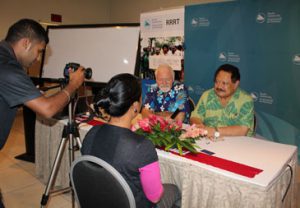




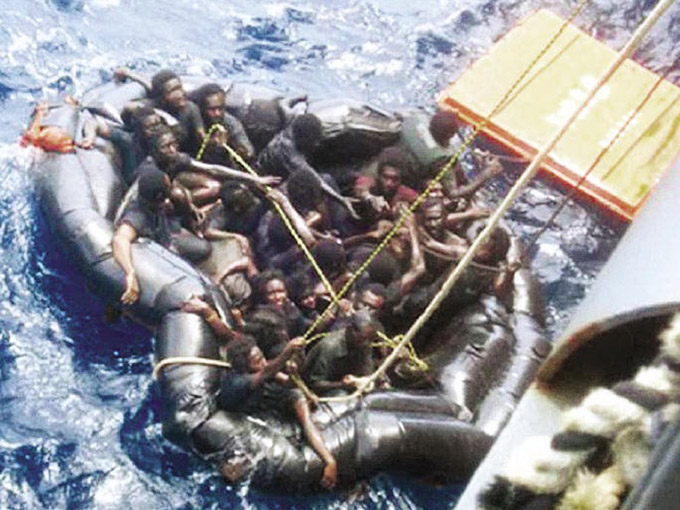
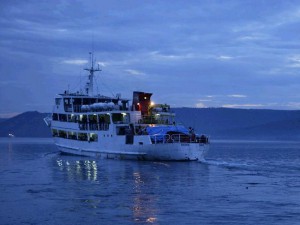


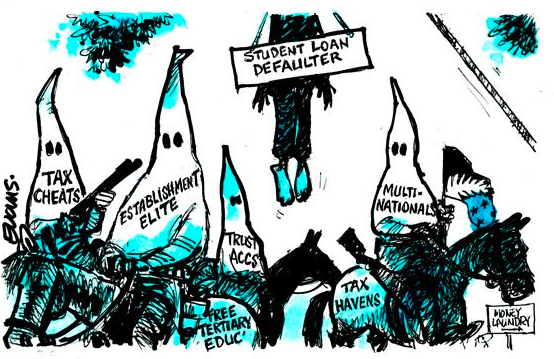



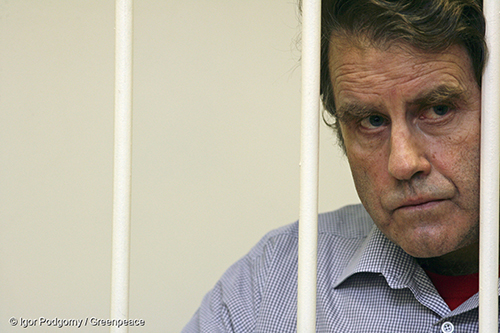

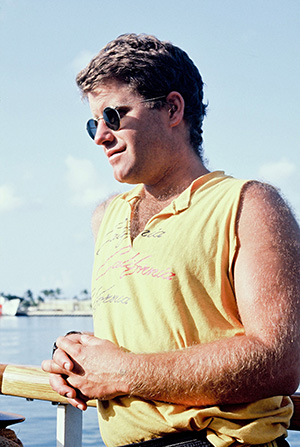
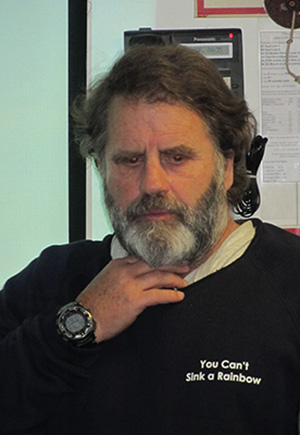


 New Zealand trade.[/caption]
New Zealand Economic Analysis by Tony Alexander.
New Zealand trade.[/caption]
New Zealand Economic Analysis by Tony Alexander.


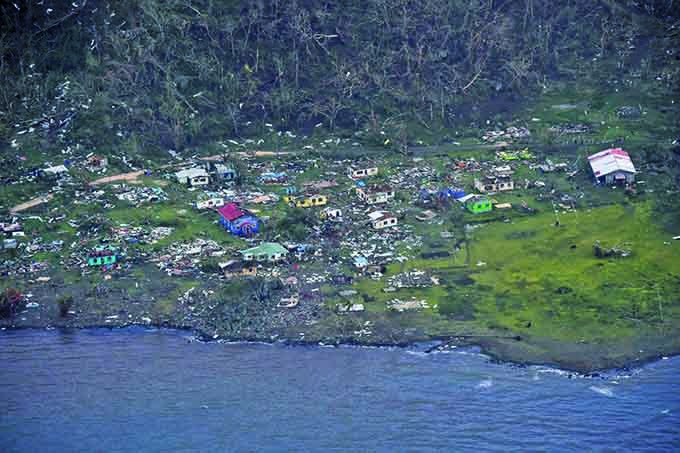
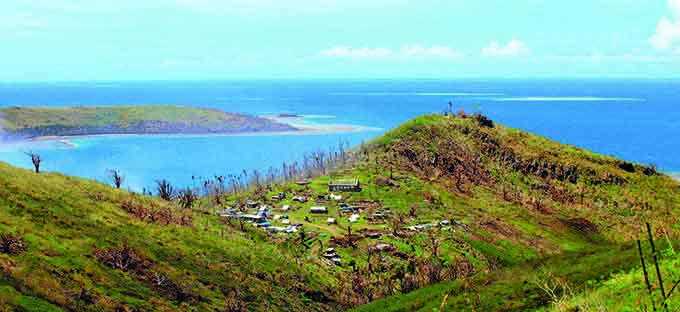
 Fiji was a media pariah among Pacific nations, as well as a political outcast, for much of the eight years after Voreqe Bainimarama’s military coup in December 2006. But while some media credibility was restored in the months leading up to the 2014 general elections and during the ballot itself, the elephant is still in the room: the 2010 Media Industry Development Decree (Fijian Government 2010). While this Decree remains in force, Fiji can hardly claim to have a truly free and fair media.