By Ben Bohane
Reports of the Indonesian military using white phosphorous munitions on West Papuan civilians last month are only the latest horror in a decades-old jungle war forgotten by the world. But new geopolitical maneuvering may soon change the balance of power here, prompting regional concern about an intensifying battle for this rich remote province of Indonesia.
It is time for the United States and Australia to change policy, complementing Pacific island diplomacy, or risk a major strategic setback at the crossroads of Asia and the Pacific.
Once again, Papuan highlanders have fled their villages into the bush where they are starving and being hunted by Indonesian security forces.
Fighting between OPM (Free Papua Movement) guerrillas and the Indonesian military has increased in recent months, creating a fresh humanitarian crisis in a region cut off from the world: Indonesia prevents all foreign media and NGOs from operating here.
This makes West Papua perhaps the only territory besides North Korea that is so inaccessible to the international community.
For years West Papuans have claimed that Jakarta has been building up its forces, including local militias, ready to unleash just as they did in East Timor before its bloody birth in 1999. Different to East Timor however, is the presence of jihadi groups too, something the OPM has warned about for some time.
Alarming quote
Recent comments reported by Associated Press by Indonesia’s Security Minister General Wiranto, who oversaw the death and destruction during East Timor’s transition to independence in 1999, are alarming:
Earlier this week, security minister Wiranto, who uses one name, said there would be no compromise with an organization the government has labeled a criminal group.
“They are not a country, but a group of people who are heretical,” he said.”
Heretical?
This is significant – by using the word “heretical” rather than “treasonous” is Wiranto signalling a coming jihad against the West Papuans?
A low level insurgency waged by the OPM guerrillas has for decades sought independence for the mostly Christian, Melanesian population. Church groups and NGOs claim more than 300,000 Papuans have perished under Indonesian occupation since Indonesia formally annexed “Dutch New Guinea” via a UN referendum in 1969 known as the “Act of Free Choice”.
Farcical vote
It was the UN’s first decolonisation mission and it was a farce – the UN allowed a handpicked group of 1025 Papuans to vote from a population estimated at the time to be close to one million. Just in case they didn’t get the message, Indonesia’s Brig General Ali Murtopo flew in and warned:
“This is what will happen to anyone who votes against Indonesia. Their accursed tongues will be torn out. Their full mouths will be wrenched open. Upon them will fall the vengeance of the Indonesian people. I will myself shoot them on the spot.”
The UN’s own envoy overseeing the plebicite, Chakravarty Narasimihan, former UN Under secretary general in charge of the “Act of free Choice” said:
“It was just a whitewash. The mood at the United Nations was to get rid of this problem as quickly as possible. Nobody gave a thought to the fact that there were a million people there who had their fundamental human rights trampled. Suharto was a terrible dictator. How could anyone have seriously believed that all voters unanimously decided to join his regime? Unanimity like that is unknown in democracies.”
The fix was in and had US blessing; Washington arm-twisted Australia and Holland to back Indonesia’s annexation of West Papua, despite the position of both nations to have West Papua prepared for independence by 1970.
Australia would go on to deliver independence to the eastern half of New Guinea island, known as Papua New Guinea (PNG) in 1975.
For decades Australia’s first line of defence was considered to be the rugged 800 km border that separates PNG from Indonesia. Long before the recent rise of China, Australia’s chief strategic concern was Indonesia, especially during times of direct conflict such as the Konfrontasi period of the 1960s and more recently when Australia led an international intervention force that secured East Timor’s independence in 1999.
Pushing east
Since the 1960s Indonesia has been pushing east, with then President Sukarno taking “West Irian” (West Papua) by force while at the same time calling PNG “East Irian” and Australia “South Irian”.
It remains one of the great “what ifs” of Australian strategic history – if Australia and Holland had ignored US pressure and continued to support West Papuan independence, it would have prevented the long running civil war there and may well have stopped Indonesia’s subsequent invasion of East Timor in 1975.
Instead, Australia reluctantly agreed to the US “New York Agreement” of 1962 and found itself being dragged into the US war in Vietnam.
It fought the wrong war.
In the decades since, Australia has sought to manage its often turbulent relationship with Indonesia, recognising its size and importance within southeast Asia, by studiously ignoring the ongoing “slow-genocide” happening in West Papua.
Not only has Australia never provided material support for its rebels or refugees, it continues to arm and train Indonesia’s elite anti-terrorism unit Densus 88, which has been accused of “mission creep” in extending its operations to take out not just Islamic terrorists post 9/11, post Bali attacks, but Papuan nationalists too.
This has resulted in a lose-lose policy for Australia; after East Timor, no amount of Australian assurances of Indonesian sovereignty will ever convince Jakarta’s generals that Australia does not have designs on West Papua; at the same time Australia has lost much moral and strategic credibility among its Pacific island neighbours who all support West Papuan independence and question why their two big brothers in the Pacific – the US and Australia – continue to “throw the West Papuans to the wolves”.
But while they may have been able to ignore West Papua’s independence movement for decades, new geopolitical manouverings have emerged in the past year which signal a need to re-assess long running policy.
Social media explosion
The explosion of social media in recent years has taken this hidden war out of the shadows for good. Pacific diplomacy is isolating ANZUS policy and the West Papuan struggle will not remain a bow-and-arrow affair for much longer.
It is only a matter of time before China begins offering substantial material support and training – they are already in discussions with the West Papuan leadership. Nor are they the only player getting involved.
In December 2017, Russian Tu-95 nuclear bombers made sorties from bases on Biak island in West Papua probing the air space between Australia and Papua. It was the first time Russian nuclear bombers have operated in the South Pacific, prompting Australia to scramble fighter jets from RAAF Tindal for the first time in many years.
Jakarta has likely invited Russia to display a show of force as a warning to Australian and US forces stationed in Darwin – as well as China – lest they show any inclination to support West Papuan independence.
But can Jakarta trust Russia? Although there is considerable military co-operation between the two, Russia may have its own agenda in West Papua, recognising its resource wealth and strategic position due south of Vladivostok.
West Papuan leaders speak of Russia’s sense of having been betrayed by Indonesia in the 1960s. After Khrushchev met with Sukarno at their historic Bali summit in 1960, a time when Indonesia’s communist party the PKI was the third largest in the world, Moscow believed it had done a deal to become Indonesia’s partner in helping annex West Papua and thus gain access to the known mineral riches of West Papua, not to mention its strategic position as a gateway between Asia and the Pacific.
Instead, US President Kennedy was able to woo Sukarno (both were young, charismatic “ladies men” who hit it off together) sufficiently to broker a deal where the US would recognise Indonesian sovereignty over West Papua in an attempt to temper both Sukarno’s leftist leanings and the growing PKI.
Coup ‘re-orientation’
The deal signed in 1962 was called the New York Agreement and signalled America would not support Holland’s defence of an independent West Papua. By 1965 Kennedy was dead and Sukarno had been overthrown in a coup that led to a “re-orientation” of Indonesia.
Newly installed General Suharto purged Indonesia of communists and granted the first foreign mining licence to US company Freeport to establish a gold mine in the Puncak Jaya mountain range of West Papua, soon to become (and remain) the biggest gold mine in the world.
Russia was furious, but could do little then. China’s support for the PKI was also checked and Suharto’s 30 year dictatorship, backed by the US and allies, ensured both Russia and China lost their influence in Indonesia.
Today it is a different story.
While Russia influence in the Pacific is small but growing, Chinese influence has surged to become a major force in Pacific politics and security. Part of its engagement with Pacific island nations is to support those nations such as Vanuatu which back West Papuan independence in the face of Indonesian threats.
China’s relationship with Indonesia continues to deteriorate over issues such as rival claims in the South China Sea, nationwide demonstrations across Indonesia in support of persecuted Uighers in China, and concerns about the growing Islamification of Indonesia threatening the local Chinese (often Christian) communities.
Last year, the (Christian) Chinese Governor of Jakarta was hounded out of office by hardline Islamist groups accusing him of blasphemy.
Periodic pogroms
Indonesia’s Chinese community has long been subject to periodic pogroms (such as during the PKI crackdown in the 1960s and during the fall of Suharto in 1998) and as they watch the growing Islamification of Indonesia, they are all preparing Plan B exits, with Singapore, Malaysia and Australia top of their list.
In the past, Beijing could do little to protect the Chinese diaspora here, but today that has changed. West Papuan leaders suggest that China may have a plan to help liberate West Papua and thus provide a sanctuary for Indonesia’s persecuted Chinese community.
Were China to support West Papuan independence it would have the backing of the vast majority of Papuans and give China not just access to its huge mineral wealth, but also a strategic foothold in the south, south China Sea and a major gateway between the Indian and Pacific Ocean.
It would also win the kudos of many Pacific island nations who feel the US and Australia have not defended Pacific island interests all because of the avarice of one US company.
China is also taking note of the recent decision by neighbouring PNG to allow a major new military base on Manus island for US and Australian forces. Manus island, a naval base since WW2, would allow US and Australian naval and air force projection into the South China Sea and beyond, once again amplifying the strategic position of West Papua next door to thwart such allied projections if China got a foothold there.
China is also anticipating a Prabowo presidency in Indonesia this year, which they regard as a CIA asset, ironically backed by hardline Islamic groups, and who will be hostile to the Chinese community there. And not just hostile to China, but Australia and the Pacific too.
Australia has had a good run with amenable leaders such as SBY and Jokowi in recent years, but a Prabowo presidency would see a Duterte-like strongman likely to cause friction.
Reflexive stance
The answer in such circumstances is not to take a reflexive pro-Indonesia stance against Chinese moves, but to check both Indonesian and Chinese expansion by helping the Christian Melanesians of West Papua secure their freedom as part of the Pacific family.
Doing so is not just the right moral thing to do (correcting a previous injustice) but the right strategic thing to do: it prevents a Chinese foothold in the South Pacific, prevents Indonesian jihadis and territorial expansion east into the Pacific, secures an “air-sea gap” for Australia, properly secures a border between Muslim Asia and the Christian Pacific, and in so doing wins the admiration and loyalty of the rest of the Pacific island community precisely at a time when they are being aggressively courted by China.
This year Vanuatu, backed by dozens of countries in the ACP block (Africa, Caribbean, Pacific) is expected to introduce a motion before the UN General Assembly calling for a proper referendum on independence for West Papua and its inclusion on the United Nations De-Colonisation list.
Unless this long-running struggle is resolved soon, West Papua may soon become a major battleground between Indonesian forces including jihadis and Papuan guerrillas backed by China.
US policy has long been guided by Freeport’s commercial interests (helped by such prominent board members as Henry Kissinger and ex-President Ford), but that now pales in comparison to the strategic calculus as China moves in.
Besides, Freeport is now losing its grip – in December it finally accepted a new deal with Jakarta losing its majority ownership of the mine and the Carstenz deposit. Freeport now has been reduced to 49 percent ownership.
Of course, China is playing both sides of the fence – guess who provided funds for Jakarta to increase its equity?
Right side of history
It is time for the US to get on the right side of history. It should go back to supporting Australia and Holland’s original policy – and the rest of the Pacific’s today – by supporting a process towards West Papuan independence to halt growing Islamic and Chinese influence in the Pacific.
As one West Papuan leader told me recently:
“We have suffered for decades. If the democratic west continues to ignore our struggle we have no choice but to look east for our liberation”.
Ben Bohane is a Vanuatu-based photojournalist covering the Pacific who has reported on West Papua for the past 25 years. He is the only foreigner to have been in the three most active Command areas of the OPM operating in West Papua. This article was first published in the Journal of Political Risk and is republished by Asia Pacific Report with the permission of the author.
Article by AsiaPacificReport.nz












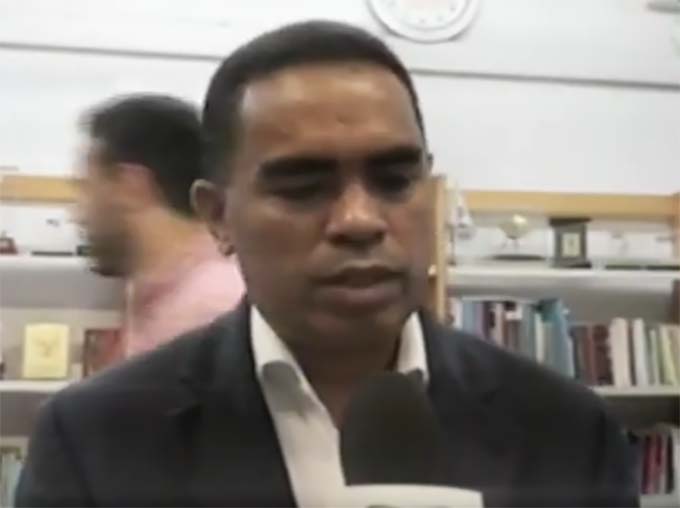 Ousted: Gil da Costa found out about his sacking through the news media. Image: RTTL
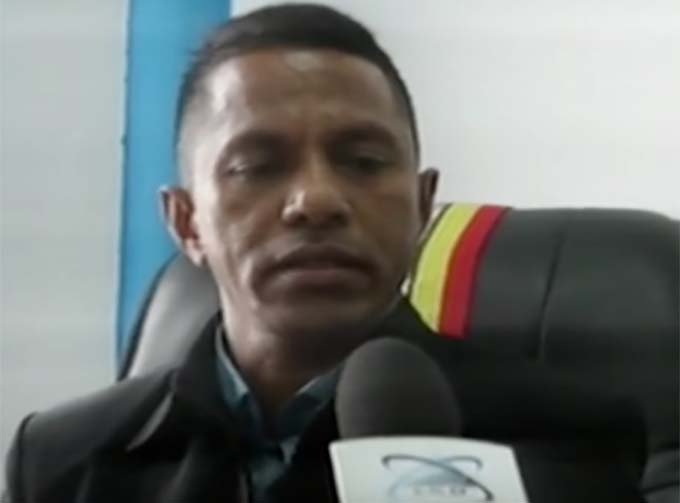 Appointed: Francisco da Silva took office today. Image: RTTL
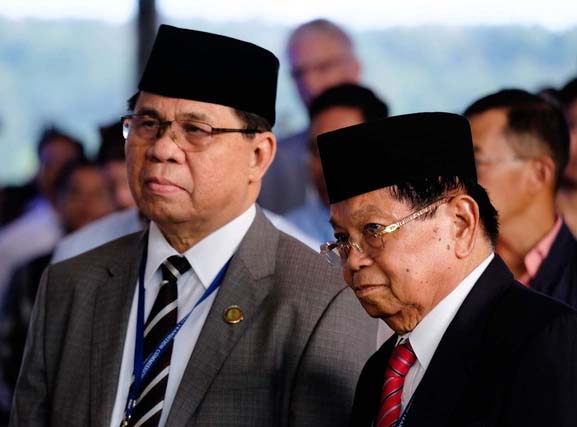 New role? MILF chairman Murad Ibrahim (left) will likely become the Bangsamoro region’s chief minister if the organic law is ratified in yesterday’s referendum. Image: Malacañang file