Page 1142

What happens after you take injured wildlife to the vet?

]]>

Source: The Conversation (Au and NZ) – By Bronwyn Orr, Veterinarian and PhD candidate, University of Sydney

Australia’s wildlife is unique and endearing, with many species found nowhere else in the world. Unfortunately, it isn’t rare to encounter sick or injured wildlife around your home or by the side of the road. My research, recently published in the Australian Veterinary Journal, estimates between 177,580 and 355,160 injured wild animals are brought into NSW veterinary clinics alone every year.

But until now, very little was known about what happens to wildlife after they’re brought to a vet. My colleagues and I surveyed 132 veterinary clinics around Australia, examining the demands and expectations of treating wildlife. We also looked for risks to animal welfare as a result of these findings.

Most clinics only saw a handful of wildlife patients every week, with birds and marsupials such as possums the most common. Sadly, the majority (82%) of wildlife arrived in veterinary care due to trauma of some kind. The most common cause was animals being hit by cars, followed by undefined trauma and predation by another animal.


Read more: Want to help animals? Don’t forget the chickens


Most clinics examined and treated wildlife for free, with less than 10% receiving some kind of payment. These were usually made by wildlife rehabilitation groups or members of the public.

Due to the painful and serious nature of trauma, around a third of clinics reported euthanasia was the most common outcome for wildlife at their clinic. More positively, more than half indicated that wildlife were usually passed onto wildlife rehabilitators, suggesting this is the most common outcome.

Kangaroo with burns to all four limbs after a fire. Author Provided

Almost three quarters of veterinary clinics said they only saw wildlife when they had spare time. This is concerning, as delays to treatment raises serious animal welfare concerns.

Additionally, many veterinary clinics indicated they felt a lack of time, knowledge and skills interfered with their ability to treat wildlife.

As veterinary clinics are small businesses, wildlife present a conundrum. They are not owned (although technically they are owned by the Crown), expect treatment with no payment and don’t look like the usual pets seen by most vets. With clinics full of paying clients expecting prompt treatment, it can be hard to prioritise wildlife.

So what is the solution?

Ideally, either the state or federal government would take financial responsibility for wildlife. The federal government does pay for some wildlife treatment at private veterinary clinics, but this is part of a biosecurity monitoring scheme and isn’t open to most clinics.


Read more: How dogs and cats can get their day in court


Donations from the public to treat wildlife would also likely be welcomed. However, help can come in other ways. One large clinic in Sydney is trialling an in-house wildlife carer, who would triage wildlife and take responsibility for ensuring wildlife are prioritised. Appointing a “wildlife champion” in a clinic is another option, where an interested vet or nurse is designated the “go to” person for wildlife cases.

Wombat in the wild. From Shutterstock


What should you do if you find injured wildlife?

1. Call your local wildlife care group for advice

Some animals aren’t actually injured, such as fledgling birds which are learning to fly, and others (such as goannas) can be dangerous, so be sure to seek advice before approaching wildlife. If you don’t know who your local wildlife care group is, type into a search engine “wildlife carer” to locate one near you.

2. Keep yourself safe

Armed with advice from a wildlife carer, ensure you don’t put yourself in a risky situation to rescue wildlife. Take care around busy roads, use a barrier between yourself and the injured animal (such as a towel or welding gloves) and avoid the bitey end! Wildlife are inherently fearful of people, which means they might attack if scared.


Read more: Put out water for the wildlife in your garden on hot days


3. Secure the injured animal before transport

You don’t want an injured animal to escape in your car on the way to the vet. If the injured animal is a bird, small reptile or baby marsupial, a cardboard box with air holes and lined with a towel makes a good transport container. Don’t offer wildlife food, as they have very special diets and digestive systems.

4. Give as much information as possible

When you get to the vet, ensure you provide detailed information on where you found the animal. If the animal is healthy enough to enter wildlife rehabilitation, the wildlife carers will need to release the animal as close as possible to the location where it was found. This is because many animals, such as possums, are fiercely territorial and often die if relocated outside their territory.


Ultimately, many injured wild animals cannot be saved and will be euthanased after being dropped off at a veterinary clinic. This is not a bad outcome. Wildlife aren’t pets – they need to be fit to survive if they are ever going to have a chance in the wild. Injuries such as a badly broken wing or losing an eye would condemn wildlife upon release to starvation or predation.

It is much kinder to humanely euthanase injured wildlife which have no chance of survival rather than let them suffer a prolonged death in the wild. Even if the animal you drop off at the vet is ultimately euthansed, you have still saved it from prolonged suffering.

ref. What happens after you take injured wildlife to the vet? – http://theconversation.com/what-happens-after-you-take-injured-wildlife-to-the-vet-109084

The Productivity Commission inquiry was just the start. It’s time for a broader review of super and how much it is needed

]]>

Source: The Conversation (Au and NZ) – By Geoff Warren, Associate Professor, College of Business and Economics, Australian National University

There’s a lot in the Productivity Commission’s landmark 722-page table-thumper of a report into Australia’s superannuation system, completed after nearly three years of invesigation. For now, I’ll make three comments.

The Commission gets the industry

First, it’s a very valuable report. The Productivity Commission (PC) has undertaken a deep analysis of the superannuation industry and collected a range of information that was previously unavailable. The research has been conducted with considerable care and diligence, backed by insight. I am confident the PC understands the industry. The report is a great resource that will probably be cited for years to come.

Yet sets itself against the industry…

My second comment relates to the gusto by which the PC has called out shortcomings of the system, and advocated for key changes. While the PC is aiming to be constructive, the report reads as quite critical.

It seems guilty of overstatement for dramatic effect, which I fear may inhibit moving forward. Many report headings read as if they are brickbats. It headlined two of its diagrams: “the character of member harm”. It sets the tone on page five:

The system delivers good outcomes for many members, but not all. The industry’s peak body submitted that “the Australian superannuation system is not broken, and is in fact a world class private pension system”. The evidence suggests otherwise.

In my view, the system is better described as being very good with room for improvement.

The PC has raised the ire of the industry, which will create a barrier to change as the advocacy ramps up.

While most of its recommendations are sensible, the idea of a panel selecting a “best-in-show” shortlist of 10 default funds is controversial.

The recommendation is being attacked on its potential shortcomings, when the debate ought to be around whether it is the best option among a set of imperfect alternatives. The simpler question of whether the PC’s recommendation is better than the current system is not being debated.

We are travelling down an adversarial path unlikely to build consensus around what needs to happen.


Production Commission video outlining its draft report released in May 2018.


…and raises more important questions

Third, the PC has recommended further investigations going beyond its terms of reference. I will finish by focusing on Recommendation 30: an independent public inquiry into the role of compulsory superannuation in the broader retirement incomes system, including the net impact of compulsory super on private and public savings.

Surprising, there is no established position on how effective superannuation has been in working toward Australians supporting themselves in retirement. It is an open question whether the costly tax concessions attached to super provide an overall benefit to Australian society.

The Commission also wants the inquiry to examine who is hurt and who is helped by compulsory superannuation, both over time and at any point in time.


Recommendation 30. Superannuation: Assessing Efficiency and Competitiveness. Productivity Commission, December 2018


The PC is calling for an examination into the amounts being contributed into super, given that it called for the inquiry to be completed ahead of the the next scheduled increase in the compulsory contribution rate from 9.5% of salary to 10% in June 2021.

The PC was limited to examining the efficiency of the system under current policy settings. But the settings themselves are arguably the greatest barrier to the efficiency of the system, and its ability to serve the public. An inquiry into super’s place within the broader retirement income system would be an opportunity to work out how it can serve us best.

Too often the discussion is framed as if superannuation is the only resource supporting members through retirement. The call to lift the compulsory levy from 9.5% to 12% – some have argued for 15% or even 20% – epitomises this myopic perspective.


The reaction to a recent Grattan Institute report (Money in retirement: more than enough, November 2018) addressing various aspects of system design and questioning the need to increase the levy was revealing.

Grattan was lambasted for their stance, unfairly in my opinion. Much of the criticism came from those with a stake in seeing the levy increased, and mostly danced around the fringes of the argument. All this is indicative of an inability to have a thoughtful discussion over important policy issues.


Read more: Why we should worry less about retirement – and leave super at 9.5%


Superannuation interacts with many other aspects of retirement support, including the social security system (specifically the aged pension), the tax system, other assets held by individuals, in particular whether they own a home, and personal circumstances.

Money siphoned off into super to support spending in retirement comes at the cost of lower spending power during the working years.

Placing more in superannuation might be entirely right for some, but might come at a cost for others.

They are good questions

The first interrelation between super and other features of the system needs to be better understood. There are various flags pointing to inconsistencies.

Claims that people are not saving enough for retirement do not gel with many retirees taking money out of super at the minimum rates.

Meanwhile the social safety net is substantial. The (single) aged pension of A$24,824 is 86% of the Association of Superannuation Funds “modest” living standard up to age 85, and 91% of it after age 91. And Australians have access to affordable health care.

Home ownership is a key determinant of capacity to support oneself through retirement, and it is only heightened by it being excluded from the pension means test. There can be a huge gap between retirees who own their home and those who do not.

Many low income earners struggle to establish themselves in life, yet are forced to invest in super, on which they may be taxed at greater rate than their current income tax rate.


Read more: Productivity Commission finds super a bad deal. And yes, it comes out of wages


The super system is designed around individuals, yet most people operate within households.

The PC is right to call for an inquiry into the entire system design. It would be an opportunity to examine the interaction of super with everything else, whether it is doing what it should, and whether it is treating different types of Australians in the way we would want.


Read more: Superannuation: why we stick with the duds


ref. The Productivity Commission inquiry was just the start. It’s time for a broader review of super and how much it is needed – http://theconversation.com/the-productivity-commission-inquiry-was-just-the-start-its-time-for-a-broader-review-of-super-and-how-much-it-is-needed-109661

Superannuation: why we stick with the duds

]]>

Source: The Conversation (Au and NZ) – By Susan Thorp, Professor of Finance, University of Sydney

Picking an under-performing superannuation fund can cost you about 13 years’ pay over a working lifetime – roughly the value of an apartment in Melbourne or Sydney.

High fees alone can delete two years’ pay, and poor investment performance can account for the rest. These are just some of many disturbing calculations made by the Productivity Commission in its landmark assessment.

After more than 25 years of compulsory super, numerous attempts to improve competition, and multiple reviews and inquiries, material differences in superannuation fund performance persist.

Around 5 million super accounts are in chronically under performing funds. The resulting damage to retirement incomes is “nigh impossible to overstate” according to the Commission.


Read more: Productivity Commission finds super a bad deal. And yes, it comes out of wages


Why do so many of us pick super funds that lose earnings by sub-standard management and high fees?

One reason is that many of us actually don’t choose a fund – we let an outdated default system choose for us. Another is that if we do try to choose for ourselves, we face a complex decision, often hidden in a morass of product information, calculators and forms.

Defaults date back to union times

The start of compulsory super in Australia was in industrial claims by unions in the late 1980s for benefits in the form of employer contributions. In 1992 responsibility for ensuring employers paid super was transferred to the the Australian Taxation Office. But the early ties to the wage setting system, and unions and employer organisations, persist.

At present, workers who do not choose their own superannuation fund are given an account in the (default) fund chosen by their employer, commonly from options prescribed in workplace agreements. Consequently, workers often acquire a new super account with each new employer, from a set of funds decided by various industrial agreements.


Read more: How changes noted in the 1992-93 cabinet papers affect our super today


This default fund arrangement means that: first, many people are losing savings to redundant fees and insurance premiums as they change jobs and acquire multiple accounts; second, that vulnerable workers such as women, gig-economy workers, casuals and young people are most affected; and third, that competition for members can be dulled by entrenched relationships between employers and funds.

There is no doubt the default system needs a complete renovation. We should not tolerate multiple fees and charges and persistent underperformance in a system where workers are forced to save.

The Commission wants best-in-show defaults

The Commission proposes that members only ever hold one (default) account, supported by a centralised, online service such as myGov. When people change or add jobs, their super contributions would go to their current active account, unless they decide otherwise.

More controversially, the Commission argues for an expert-selected, shortlist of funds to help new workers pick the first one.

If new workers don’t choose a fund for themselves, they would be (sequentially) allocated to funds on the short-list. The industry fears that the short-list could cause excessive concentration, trickery in order to get on the list, and the demise of good funds that just miss out. The Commission reasons that competition to be on the list will raise fund performance and save defaulting members billions.

Any short list is too long if members don’t have the information they need to make a sound comparison between superannuation entities.


Production Commission video outlining its draft report released in May 2018.


Because we are very bad at fine print…

The report recommends funds publish “simple, single-page product dashboards for all superannuation investment options”. In fact, the Securities and Investments Commission is developing a one-page dashboard for MySuper default products, but dashboards can be hard for members to find (hidden behind a lot of “clicks”), difficult to compare, and challenging to understand.

Experiments to assess whether super fund members would be able to detect an under-performing fund using the dashboard, if the under-performance appeared gradually over a period of “years”, show serious weaknesses.

In one experiment, participants noticed rising fees, and would switch funds to avoid them, but would tolerate low returns for very long periods. One of the main items on the dashboard is a graph that’s designed to show historical investment performance against the fund’s target. However, experiment participants rated the graph as hard to use because of its complication.

…and find it hard to understand risk

Most concerning was how poorly participants understood information about risk. It is hard to overstate the importance of a grasp of investment risk to a sound comparison of superannuation funds. About 70% of default account balances are invested in risky “growth” assets that earn higher average returns by accepting higher variability of returns.

Unfortunately, the industry (and regu


Read more: The Productivity Commission inquiry was just the start. It’s time for a broader review of super and how much it is needed


latory) rules mean risk information only shows the likelihood of negative returns, not the range of possible returns. Fewer than 20% of participants in the experiment were able to answer simple comprehension questions about the risk information correctly.


Read more: HILDA Survey reveals striking gender and age divide in financial literacy. Test yourself with this quiz


The Commission rightly recommends the dashboards be simple and effective, that they promote comparisons and be easy to find at critical times for decisions.

But it’s also important to realise many workers, especially young or new workers, are unlikely to be able to use the dashboards to choose well. It’s why we need good defaults.


Read more: The Productivity Commission inquiry was just the start. It’s time for a broader review of super and how much it is needed


ref. Superannuation: why we stick with the duds – http://theconversation.com/superannuation-why-we-stick-with-the-duds-109660

Heaven on earth: the ancient roots of your backyard garden

]]>

Source: The Conversation (Au and NZ) – By Eva Anagnostou-Laoutides, Associate Professor in Ancient History, Australian Research Council Future Fellow, Macquarie University

You don’t have to be an avid gardener or know all the Latin names of plants to appreciate the opportunity for reflection that a stroll in the garden can afford us. The explosion of colours, shapes, and textures in the garden, the tenacity and ingenuity of the plants, so determined to claim their right to life and beauty, can suspend for us the troubling aspects of everyday life.

But gardens are also bound to their political and religious history, traces of which can be found in our ongoing cultural obsession with them. The connection between the famous gardens of Versailles, once the coveted possession of Louis XIV, and our humble back garden is deeper than we might imagine.


Read more: Friday essay: what is it about Versailles?


In the book of Genesis, our creation begins in Eden, the “garden of God” which our ancestors, Adam and Eve, failed to appreciate. Having lost our privileged access to this divine garden because of their sin, we perpetually try to re-create it – in our homes, in our cities, in our heads. The earthly garden as a reflection of the paradise we can hope to experience after death is also a central motif in the Qur’an, a promise delivered by Allah himself.

Adam and Eve Chased out of the Terrestrial Paradise. Jean Achille Benouville, 1841. Wikimedia

Gods and kings

In the ancient Near East, in whose fertile soil the Biblical traditions took shape, kings (who often assumed priestly duties) were believed to have the monopoly of communicating with the gods in the royal garden. This was seen as a microcosm of the divine garden.

In the Babylonian Epic of Gilgamesh (from around 2000 BCE), the hero-king Gilgamesh travels to the wondrous garden of the sun-god, where flowers boast precious gems instead of leaves, in a quest to claim immortality. Although immortality eludes Gilgamesh, the divine garden offers him wisdom. Thus equipped, he returns to his city, Uruk, also known as “the garden of Gilgamesh,” and builds magnificent walls which will etch his name into the memory of mankind.


Read more: Guide to the classics: the Epic of Gilgamesh


In another story, despite his uneasy relationship with the fertility goddess Inanna, whose advances he eventually rejects, Gilgamesh poses as her dedicated gardener. He carves a throne and a bed for Inanna from the Huluppu tree while she makes him a magical drum and drumstick from it to summon warriors to battle. When Inanna’s favourite tree is threatened by a serpent nesting at its roots, only Gilgamesh and his companions rush to her aid.

Throughout the Near East, the garden was a place where gods confirmed the legitimacy of kings. Sargon I (1920-1881 BCE), the founder of the Akkadian-Sumerian empire, poses in the epic The Legend of Sargon as a humble gardener, and was hand-picked by the goddess to become the king.

Ancient Near Eastern kings invested exorbitant sums of money in building magnificent royal gardens, architectural marvels which crystallised in people’s minds their unique communion with the gods. Sennacherib (704-681 BCE) likely commissioned the famous hanging gardens to be built near his capital Nineveh, although we still commonly refer to them as the Hanging Gardens of Babylon.

‘Garden party of Aššurbanipal’ relief, reproduced with the permission of the Trustees of the British Museum. Found in Nineveh, Iraq, dated circa 645 BCE. British Museum

The notion was also known to the Israelite king Solomon (circa 970-931 BCE), who proudly announced his construction of lavish, well-irrigated gardens and groves, and was widely used by the Achaemenids (a Persian dynasty). Indeed the Persian word for an enclosed garden, pairi-daêza, was introduced into Greek as paradeisos (“paradise”) by the historian Xenophon.

A possible image of Prince Mirza Hindal in a Garden from Los Angeles County Museum of Arts (public domain). India, Mughal, 1600-1610. Wikimedia

In his biography of Cyrus the Great, the founder of the Achaemenid Empire, the Xenophon notes with admiration the king’s impeccable gardening skills which matched his royal virtue. Seleucus I, Alexander the Great’s general who came to rule Babylon, also embraced the profile of the king as gardener. His famous garden at Daphne, outside Antioch, renowned for its abundance of shady laurel trees, tall cypresses, and perennial fountains, was closely associated with the foundation of the Seleucid dynasty and Apollo, their divine patron. In the east the tradition never lost its appeal.

From the Middle East to the world

The Romans, who inherited the kingdoms of Alexander’s successors, adopted the ideology of gardens with renewed zeal, transplanting it in Europe. The Roman Empire withered, but generations of aspiring aristocrats and rulers, including Charlemagne, Count Robert II of Artois (1250-1302), Cosimo de’ Medici (1389-1464), and Henri II (1519-1559) never forgot the sense of grandeur and superhuman aura that exotic, exclusive gardens could afford them.

Dating from the Middle Ages, the Vatican Gardens, owned by the Pope, continue to evoke the political and religious dimensions of the garden, which were especially celebrated in Britain with the ascension of Henry VIII in 1509. European colonization of the Middle East saw the idea of the garden reintroduced in the places of its origin, but, also imported in the New World. Gardens such as the Victoria gardens in Mumbai showed off the legitimacy of British rule.


Read more: The science is in: gardening is good for you


The Vatican evokes the political and religious dimensions of gardens. Shutterstock

The connection of the garden with politics remains strong. Community gardens are cast as an epitome of democratic values, and the Royal Gardens in all major Australian cities advocate inclusiveness, despite their monarchical titles. Gardens surrounded ancient temples to bring worshippers closer to god; gardens surround war memorials inviting us to reflect on life lost and life gained.

So next time you’re wandering around your own garden, reflect on the fact that you’re walking in the footsteps of the kings and queens of yesteryear, in your own slice of paradise.

ref. Heaven on earth: the ancient roots of your backyard garden – http://theconversation.com/heaven-on-earth-the-ancient-roots-of-your-backyard-garden-108682

EveningReport Editor’s Note: See Also The Ultimate Guide to Butterflies & How to Prevent Their Decline – DIY Garden

Graduate employment is up, but finding a job can still take a while

]]>

Source: The Conversation (Au and NZ) – By Andrew Norton, Higher Education Program Director, Grattan Institute

Four years on from the worst new graduate employment outcomes ever, the 2018 statistics released today show cause for optimism. Although full-time employment rates remain well down on a decade ago, they are improving.

Graduates in health-related courses fare the best

In early 2018, about four months after completing an undergraduate course, 73% of new graduates who were looking for full-time employment had found it. This continues a positive trend since the low point of 68% in 2014. But apart from the early 1990s recession, it’s still a poor result by historical standards.

Full-time undergraduate employment rates, approximately four months after completion. Department of Education and Training, Graduate Outcomes Survey and Graduate Careers Australia, Graduate Destination Survey

These overall results hide substantial differences between graduates of different degrees. As usual, health-related occupations have the best employment rate, with medicine, pharmacy and physiotherapy recording more than 90% employment.

Also as usual, graduates in the visual and performing arts have the worst outcomes, with just over half in full-time employment. Biological sciences graduates did better in 2018 than 2017, but with 58% in full-time employment they’re still in a tough labour market.

A follow-up survey three years after graduation suggests employment rates improve significantly over time, although the strong fields at the four-month point usually retain their top position.

Job quality is stable

Compared to 2017, job quality for new graduates in 2018 is stable. In both 2017 and 2018, 72% of graduates working full-time were in professional or managerial occupations. On a more subjective measure, in 2018 27% of graduates with full-time jobs felt they were not fully using their skills, slightly up on 2017.


Read more: Five myths about Australian university graduate outcomes


Unfortunately, graduates from courses with poor overall full-time employment rates also have relatively low rates of professional and managerial employment and relatively high rates of reporting their job does not fully use their skills.

Starting salaries are up slightly, but the gender gap has increased

Median starting salaries also differ significantly between fields in 2018, ranging from a high of A$83,700 for dentistry to a low of A$47,000 for pharmacy. This reflects their system for professional registration.

The overall median starting salary in 2018 was A$61,000, up from A$60,000 in 2017. This roughly reflects salary increases across the overall labour market.

The gender pay gap for graduates widened again in 2018. from www.shutterstock.com

In 2017, the graduate gender pay gap had narrowed to men earning 2% more than women. But in 2018 it widened again to 5%, or A$3,000 a year. Some of this is due to men choosing courses that lead to higher-paying jobs. But even in highly-feminised fields such as nursing and teaching men report slightly higher median salaries.

Prestige universities do not provide better outcomes

At first glance, the most surprising results in this survey are those reporting outcomes by university. Students from some of the most prestigious universities report poor employment and salary outcomes, while students from some regional universities do very well.

These counter-intuitive results highlight the importance of looking carefully at other characteristics of graduates. Regional universities enrol more mature-age students than big-city sandstone universities. Older people often already have work histories and current jobs, which is why they earn more when they graduate.


Read more: Does it pay to graduate from an ‘elite’ university? Not as much as you’d think


Sandstone universities are also more likely to have large arts and science faculties, and graduates in those fields can drag down median salaries. Even so, previous studies have found employers typically don’t initially pay a wage premium to graduates from sandstone universities. They want to see performance before they pay more, rather than trust university prestige.

Employer satisfaction

The complicated issue of graduate quality is examined in another report released today, the employer satisfaction survey. This survey has a bias, as it relies on graduates nominating their supervisor to participate.

Graduates who think they’re doing badly are unlikely to nominate their supervisor, so the report’s 85% overall employer satisfaction is probably above the true number. But the survey is still useful for comparisons.

As with some of the other employment outcomes, employer satisfaction by university does not follow any prestige-based pattern. Only one sandstone university, the University of Queensland, makes it to the top ten universities by employer satisfaction. Bond University graduates have the most satisfied employers, followed by Western Sydney University and James Cook University graduates.


Read more: The problem isn’t unskilled graduates, it’s a lack of full-time job opportunities


While employers were generally happy with their graduate hires, 40% said the qualification could have better developed graduates “technical and professional skills”. That seems high. On the other hand, few employers (5%) suggested the qualification could improve “teamwork and interpersonal skills”.

Job growth is critical to employment outcomes

The government wants universities to do more on graduate employment. Graduate job outcomes are likely to be part of new university performance funding scheme.

But as the Minister for Education, Dan Tehan, says in his media release on these reports, job creation is crucial. Especially as total graduate numbers continue to increase, job growth is the vital link between employability, which universities can help with, and actual employment for their graduates.

In 2014, an increasing number of graduates collided with a declining number of professional and managerial jobs for people aged between 20 and 24 years. This is what caused the worst-ever graduate employment outcome.

Professional and managerial jobs, people aged 20 to 24 years. Australian Bureau of Statistics, Detailed labour force

But since 2014, with a couple of hesitations, the jobs trend has been positive. Job numbers were still going up in late 2018, which is a good sign for recent graduates looking for work.

The labour market will always fluctuate, but at least in the short term both the outcomes survey released today and the latest ABS figures suggest employment opportunities for graduates are increasing.

ref. Graduate employment is up, but finding a job can still take a while – http://theconversation.com/graduate-employment-is-up-but-finding-a-job-can-still-take-a-while-109654

‘Alexa, call my lawyer!’ Are you legally liable if someone makes a purchase using your virtual assistant?

]]>

Source: The Conversation (Au and NZ) – By Mark Giancaspro, Lecturer in Law, University of Adelaide

When Amazon launched its Alexa virtual assistant in 2014, it probably didn’t think that a bird would expose a potentially significant legal issue with the device. But an African grey parrot named Rocco, living in Blewbury, England, appears to have done just that.

Last month, Rocco made headlines for his habit of secretly ordering goods through his owner’s voice-activated Alexa device, which charges purchases to the linked Amazon account. The African grey species, which is renowned for its ability to mimic human speech, successfully ordered fruit, vegetables, ice-cream, a kettle, light bulbs and a kite.

Virtual assistants such as Alexa are growing in popularity. The number of users worldwide is projected to reach 1.8 billion by 2021. Unlike some rival models, such as Google Home, Alexa does not have individual voice recognition capability. Since Alexa cannot currently be trained to respond only to a selected person, anyone in your home could purchase items through your account.

Rocco’s ability to manipulate Alexa raises an important question: if someone made an unauthorised purchase on your Alexa device, would you be legally liable to pay for it?

The answer lies in contract law.


Read more: Digital assistants like Alexa and Siri might not be offering you the best deals


You are responsible

The setting for voice purchasing via Alexa can only be be switched on or off. That is, either the function is deactivated so that no one can make vocal purchase orders at all, or it’s calibrated to require a vocal confirmation code to authorise purchases.

In the first case, you cannot enjoy one of the technology’s most convenient features. In the second case, you are still susceptible to a third party – human or capable animal – overhearing and mimicking your voice to make illegitimate purchases. You must then act swiftly to cancel the order in time.

Amazon’s Conditions of Use, which govern voice purchasing through Alexa, state:

You are responsible for maintaining the confidentiality of your account and password and for restricting access to your account, and you agree to accept responsibility for all activities that occur under your account or password.

A golden rule of Australian contract law is that once you sign a contract you are deemed to have read, understood and accepted the terms – even if you haven’t. This is also the legal position in the US, whose laws govern the Amazon Conditions of Use.

So, when you sign up to use Alexa, you agree to be responsible for any purchases made on the device by you, your resident parrot, a mischievous friend or relative, or an unwelcome burglar. It doesn’t matter whether you intended the purchase or not.


Read more: There’s a reason Siri, Alexa and AI are imagined as female – sexism


There are exceptions

If your pet is responsible, you will have a stronger case to avoid paying because animals other than humans lack the legal capacity to enter into contracts, so the transaction would be “voidable”. If a human is to blame, which is more likely, there is a legal exception that might still save you having to pay up.

African grey parrots are very good at mimicking human speech.

Under both Australian and US law, where a party to a contract is mistaken about the identity of their counterpart, the contract may be void under the “doctrine of mistake”.

In Australia, this rule applies where parties do not contract face-to-face, which will always be the case when someone orders through Amazon via Alexa. The critical factor is “materiality” – you need to prove that mistaken identity was vitally important to the transaction.

This will be difficult given Amazon has no interest in who specifically is ordering its products, and the Alexa owner would not normally care who at Amazon’s end has processed the order. But the fact someone made a purchase without the owner’s permission in circumstances where they could not reasonably prevent it might suffice as “material” for the courts.

American law is similar. Section 153 of the influential Restatement (Second) of Contracts states that a party can plead mistake and escape the contract where the mistake is material, and:

  1. enforcing the contract would be unconscionable (unjust), or
  2. the other party had reason to know of the mistake or actually caused it through their own fault.

Amazon would never be at fault, nor able to tell if an unauthorised party made a purchase on Alexa, so you would need to prove that the transaction was unjust and that mistaken identity was critically important.

A potential snag is the exception stated in Section 154: this says that Section 153 won’t apply if you and the other party have agreed that you will bear the risk. It might come down to how a court reads the Amazon Conditions of Use.


Read more: Do I want an always-on digital assistant listening in all the time?


Legal precedents

Recent US court decisions emphasise that the mistake doctrine won’t apply where the other party’s identity is immaterial or irrelevant. Again, it would certainly be relevant where the Alexa owner had no way of preventing the unauthorised purchase (such as criminal activity). Enforcement would be grossly unfair in that situation.

The courts would probably not be as lenient if it were a friend, relative or pet doing the deed, as their use of Alexa is an assumed risk on the owner’s part. But it is still arguable that the owner should be legally excused because they had no involvement whatsoever in the purchase. The nature and value of the products purchased might also weigh into a court’s assessment.

To avoid a costly lawsuit, Alexa owners should deactivate voice purchasing when the unit is unsupervised, or discretely implement and use a confirmation code for voice purchases.

Users should also regularly check their accounts to ensure that any unauthorised purchases are picked up early and cancelled in time.

Finally, consider a dog instead of a parrot.

ref. ‘Alexa, call my lawyer!’ Are you legally liable if someone makes a purchase using your virtual assistant? – http://theconversation.com/alexa-call-my-lawyer-are-you-legally-liable-if-someone-makes-a-purchase-using-your-virtual-assistant-109075

Cultivating a nation: why the mythos of the Australian farmer is problematic

]]>

Source: The Conversation (Au and NZ) – By Christopher Mayes, DECRA Research Fellow, Deakin University

This article is part of a series focusing on the politics of food – what we eat, how our views of food are changing and why it matters from a cultural and political standpoint.


Like the Anzac soldier and bronzed surf lifesaver, the farmer holds a special place in the Australian imagination. Through hard work on a harsh and unforgiving continent, the farmer cultivated a nation. Or so the story goes.

Is this the whole story? Farming and agriculture were crucial to establishing the new nation, but they were also intimately involved in settler-colonial violence and dispossession of Indigenous Australians’ land and foodways.

The mythos of the farmer

In 1906, George Essex Evans celebrated the farmer in his poem, “The Men Upon the Land”. According to Evans, it is not the bankers or office workers who “shall make Australia great,” but:

the hearts that build the nation, are the men upon the land.

The agrarian nationalism of Evans’ poetry taps into a long history that regards the farmer as the backbone of society. In 1785, Thomas Jefferson, one of the founding fathers of America, famously described farmers as “the most valuable citizens”.

While factory workers and artisans could flee to another country if things got difficult, Jefferson said, the farmers:

…are tied to their country and wedded to its liberty and interests by the most lasting bonds.

As such, farmers put down literal and metaphorical roots in a place.

In the 1930s, these ideas of agrarian civic virtue formed the basis of the Country Party in Australia. Earle Page, 11th prime minister and leader of the Country Party (1921-1939), used the notion of “country-mindedness” to argue that Australia depended on farmers and graziers for its high standard of living. It was also the farmers who forged the core elements of the national character by taming the environment, making it productive, and creating a home.

Therefore, according to Page, the nation owes a special debt to the farmer.


Read more: Water in northern Australia: a history of Aboriginal exclusion


The mythos of the Australian farmer who battled a harsh environment of drought, floods and fires continues today. Although over 85% of Australians live in urban centres, it is in the bush, writes historian Don Watson, where “the real Australians live”.

The existence of these “real Australians” – the bushman and the farmer – continues to authenticate and deepen urban-dwelling Australians’ claim to the continent. Note the way prime ministers from Bob Hawke to Malcolm Turnbull wear Akubra hats and R.M. Williams apparel and pose with tractors in a bid to appear “authentic”.

Politicians frequently dust off the Akubra hat when they visit regional Australia. Tracey Nearmy/AAP

Violence of settling a new population

The celebration of the farmer for taming the continent and creating a homeland for white Australia, however, masks the role of agriculture in settler-colonial violence.

Agriculture played an important part in establishing settler-colonial societies such as Australia, as well as the United States, Canada and New Zealand. In contrast to exploitative colonialism, in which a nation takes all the mineral resources of a colony and then leaves, settler-colonialism seeks to establish a new and permanent society.

Agriculture allows a population to settle, reproduce and grow at the cost of Indigenous peoples.

As Patrick Wolfe, an anthropologist who studied settler-colonial societies, has observed, agriculture “progressively eats into Indigenous territory” for the reproduction of the settler population while simultaneously curtailing “the reproduction of Indigenous modes of production”.

This situation has forced Indigenous peoples to either enter the new economy of a colony, usually in the form of unfree labour, or raid farms for food, which Wolfe notes is “the classic pretext for colonial death-squads”.


Map showing regions of Australia devoted to sheep and wheat in the 1920s. National Library of Australia


In Australia, the expansion of agriculture led to many of the bloodiest massacres in the 19th century.

Declarations of the intent to murder were not kept quiet. In 1824, L. E. Threlkeld, an English missionary, records in his diary a public meeting in Bathurst where a man named William Cox, “one the largest holders of sheep in the colony”, declared:

…that the best thing that could be done, would be to shoot all the Blacks and manure the ground with their carcas[s]es, which was all the good they were fit for!

In May and September of that year, there were two separate massacres within 50km of Bathurst. At least 51 Wiradjuri men, women and children were murdered. It is unknown if Cox was involved, but from Threlkeld’s account, he had certainly made his views clear.

Agricultural and evolutionary progress

Agriculture not only instigated violent clashes, but was also used as an evolutionary marker. The “stadial theory” of societal evolution, associated with the Scottish Enlightenment in the 18th Century and influential at the time of colonisation, held that there are four stages of civilisation: hunter and gather, pastoral and herding, settled agriculture and commercial exchange.

On this basis, Aboriginal Australians were regarded as the lowest stage of societal evolution, a stage where there were no property rights and therefore no basis for claims to territory.

As early as Lachlan Macquarie’s tenure as governor of NSW in the 1810s, efforts were made to forcibly transform local Indigenous populations into settled farmers.

In 1840, the London-based Imperial Land Commissioners advised NSW Governor George Gipps that:

…reserves of Land should be made for [Aboriginal peoples’] use and benefit in order that the best means should be taken for enabling them to pass from the hunting to the agricultural and pastoral life.

By the 1860s, farming and gardening were key activities of the “civilising” process of the protectorates and missions. It was believed that cultivation and improvement of the soil would correspond to a cultivation and improvement of the self.

Yet, in this process of “improvement”, traditional lands were stolen and intricate systems of knowledge disrupted.

These are not the stories we tend to tell about farming in Australia. Few books on the history of agriculture in Australia mention the violence, dispossession and evolutionary ideas that contributed to the destruction of Indigenous foodways.


Read more: Friday essay: the ‘great Australian silence’ 50 years on


Instead, we focus on the resilience and the triumph of the farmer battling the elements and creating a new homeland. According to environmental historian, Cameron Muir, this myth is:

…founded on a perception of the Australian environment as hostile and useless, and hence why the moral character of those who battled the land and made it grow European commodity plants was revered.

But was the environment hostile to human flourishing?

The belief that Australia was inhospitable ignores the fact that Indigenous peoples had lived on the continent for more than 60,000 years.

Tragically, over the past 230 years, Indigenous foodways have progressively been decimated, and today Indigenous Australians suffer disproportionately from food insecurity and diet-related diseases.

Thus, the myth of the battling farmer not only celebrates but silences historical wrongs and their present-day effects.

A way forward?

The recent recognition of the work of Bruce Pascoe and others has challenged the centuries-old “accepted view” of Indigenous peoples in Australia as:

simply wandering from plant to plant, kangaroo to kangaroo in hapless opportunism.

Pascoe highlights the intricacy and sophistication of Indigenous foodways in cultivating, harvesting and processing foods.


Read more: Is Australia’s current drought caused by climate change? It’s complicated


Drawing on the work of Pascoe, Charles Massy, a fifth-generation sheep farmer in NSW and agriculture reform advocate, has tried to promote his approach to “regenerative agriculture” within the context of the history of Australian agriculture – a history he considers environmentally and socially destructive.

He acknowledges the importance of recognising the past and continuing connection of Indigenous peoples to the land and contends that to:

…manage, nurture and regenerate country, then we need to fathom where it came from … what it is made of, how it works and functions, how it was managed before us.

While we can’t change past wrongs, we can start re-thinking the environmental, social and political implications of the way we produce our food on this continent.

Restoring the land and environment is important, but we also need to address the role of farming in dispossession and violence. This is not only about remembering, but moving forward in a way that avoids repeating the past and may open up ways of restoring Indigenous foodways and listening to the voices of those who have suffered and resisted settler-colonialism.


Read other articles in the politics of food series here.

ref. Cultivating a nation: why the mythos of the Australian farmer is problematic – http://theconversation.com/cultivating-a-nation-why-the-mythos-of-the-australian-farmer-is-problematic-106517

There’s no such thing as a safe tan. Here’s what’s happening underneath your summer glow

]]>

Source: The Conversation (Au and NZ) – By H. Peter Soyer, Professor of Dermatology, The University of Queensland

There’s a lot to be said for sunshine – both good and bad. It’s our main source of vitamin D, which is essential for bone and muscle health. Populations with higher levels of sun exposure also have better blood pressure and mood levels, and fewer autoimmune diseases such as multiple sclerosis.

On the other hand, excess UV exposure is estimated to contribute to 95% of melanomas and 99% of non-melanoma skin cancers. These skin cancers account for a whopping 80% of all new cancers each year in Australia.

Like any medicine, the dose counts. And in Australia, particularly in the summer, our dose of UV is so high that even short incidental exposures – like while you hang out the washing or walk from your carpark into the shops – adds up to huge lifetime doses.

Fortunately, when it comes to tanning, the advice is clear: don’t. A UV dose that’s high enough to induce a tan is already much higher than the dose needed for vitamin D production. A four-year-long study of 1,113 people in Nambour, Queensland, found no difference in vitamin D levels between sunscreen users and sunscreen avoiders.


Read more: Monday’s medical myth: we’re not getting enough sun


What’s happening in the skin when I get a tan?

A tan forms when ultraviolet (UV) rays from the sun discharge too much energy into our skin, causing damage to membranes, proteins, and most importantly, DNA. The excess energy of UVB rays (part of the UV ray that penetrates the upper layers of our skin) prevents the DNA from copying correctly when the cells multiply which can cause mutations.

UVA rays which penetrate deeper into the skin can trigger a reactive and harmful process (known as oxidative free radical damage) which can damage not just DNA but also many of the skin’s structural components. It’s been estimated a single day’s sun exposure can cause up to a million DNA defects in each skin cell.

Excess energy from UVB rays causes DNA bases to link up incorrectly, making it difficult to copy accurately and leading to mutations that can cause cancer. NASA/David Herring

Once their DNA repair mechanisms detect large amounts of damage, skin cells signal pigment-producing cells (melanocytes) to start producing extra melanin, the pigment that gives our skin, hair and eyes their colour.

The extra melanin is parcelled up and transported into other skin cells to settle over and protect the part of the cell containing the DNA. This filters some UV rays and gives tanned skin its brown colour. But this tan doesn’t provide much help – it’s only as protective as SPF 2 sunscreen.


Read more: Explainer: what happens to your skin when you get sunburnt?


Wrinkles, blotches and broken capillaries

Two in three Australians will develop a skin cancer in their lifetime, mostly thanks to the DNA damage caused by UVB rays. But premature ageing is a less well-known effect of too much sun exposure.

UVA rays penetrate deep into the dermis, the lower layer of the skin, and generate reactive oxygen that damages the skin’s structures. Over time this causes solar elastosis, where irregularly thickened clumps of elastic fibres form, then degrade into disorganised, tangled structures.

This 70-year-old has deep wrinkling and skin darkening caused by long-term sun exposure on her neck and part of her chest exposed by her shirt, while the rest of her skin has stayed relatively clear and unwrinkled. Author provided

Eventually this can take the form of roughening or leathery appearance, deep wrinkling, dark blotches and star-shaped white patches, and an overall yellowish tone. Prematurely-aged skin is often more easily-bruised or has broken capillaries.

Dark blotches and white scar-like patches are common signs of ageing caused by too much sun. DermNetNZ.org

But I like the way a tan looks. What now?

It’s well known that a tanned look seems healthy and attractive to many Australians. Recent research shows Australians who feel particularly self-conscious about their body are more likely to intentionally tan to increase their sense of attractiveness.

Fortunately, there’s a safe way to indulge in the aesthetics of golden-brown skin: any tan that comes out of a bottle with the active ingredient dihydroxyacetone. This is a colourless sugar molecule that turns brown when it reacts with amino acids in the skin. It’s safe to use because it doesn’t penetrate deeper than the very top layer of skin, where the cells are already dead.

Don’t be tempted by solariums and sunbeds, because they emit up to six times as much UV as the midday summer sun. Commercial solariums are illegal in Australia for this reason, but there are still privately-owned sunbeds in use. Avoid them at all costs.


Read more: How do the chemicals in sunscreen protect our skin from damage?


So how do I stay sun safe without living in a cave?

There are two parts to sunsafe behaviour in Australia that lets you get the health benefits of sunshine and prevents you from being one of the 2.4 million Aussies getting sunburnt each weekend.

First, you should wear 30+ SPF sunscreen every day when the UV index in your area is three or higher. By putting it on everywhere that isn’t covered by that day’s outfit, you protect yourself from the damage accumulated by short exposures, day in and day out, in Australia’s intense UV environment.

You should make sunscreen part of your morning routine, like brushing your teeth. Use the Cancer Council’s free Sun Smart app or check your local weather report to find out the UV index where you are today.

During the cooler months in southern parts of Australia, when the UV index is often below three, it’s good to spend some time on most days, in the middle of the day, with skin exposed to the sun to maintain healthy vitamin D levels.

So, a lunchtime stroll with your sleeves rolled up is a good idea in July in Hobart, where the UV index only gets up to one. In Brisbane at the same time, with an average July UV index of four, you don’t need to take special steps to get enough vitamin D.

Second, if you’re planning to be outside for a prolonged time, you should follow the Slip Slop Slap Seek Slide advice. Slip on a long-sleeved shirt, slop on sunscreen, slap on a hat, seek shade and slide on some sunglasses. Reapply your sunscreen every two hours, and be sure to use plenty: you want about a teaspoon each for your back, chest, head/neck, and each arm and leg.

ref. There’s no such thing as a safe tan. Here’s what’s happening underneath your summer glow – http://theconversation.com/theres-no-such-thing-as-a-safe-tan-heres-whats-happening-underneath-your-summer-glow-109439

The economics of ‘cash for cane toads’ – a textbook example of perverse incentives

]]>

Source: The Conversation (Au and NZ) – By David Smerdon, Assistant Professor, School of Economics, The University of Queensland

Economics teachers can all thank Pauline Hanson for providing an excellent example to add to their classes.

Indeed, it’s rare that Economics 101 lessons are as readily on display as in the Queensland senator’s “cash for cane toads” proposal.

Both textbook wisdom and historical failures tell us the plan won’t work.

Hanson’s proposal involves paying welfare recipients 10 cents for each toad they collect (alive) and hand over to their local council. The council would then kill the toads humanely in large freezers.

The senator is right to be concerned about the cane toad problem. Introduced in the 1930s as a biological fix to control native beetles eating sugar cane crops, the animals have prospered with devastating impact on native flora and fauna. It’s estimated there are now more than 200 million across Queensland and northern New South Wales.


Read more: We’ve cracked the cane toad genome, and that could help put the brakes on its invasion


They carry toxins at all stages of their life cycle, including as eggs. Ingesting the toxin is fatal to many Australian species. Their voracious appetites both deplete insect populations such as honey bees and threaten the food sources of other native animals.

The reason Hanson’s idea is fundamentally flawed, both in theory and in practice, has to do with incentives.

A native of Latin America, the cane toad has adapted well to Australia due to the lack of natural predators. Toads have spread from Queensland as far west as Broome, Western Australia. www.shutterstock.com

History repeating

Incentives are central to economics. They are ingrained in the laws of demand and supply, and the setting of interest rates and taxes.

Humans react to incentives. The key is setting them just right by accounting for all of the costs involved.

This is the most obvious and least interesting problem with the scheme. In NSW and Queensland, you can earn 10 cents by returning an empty drink container to your local supermarket. That’s a task exponentially easier than catching a cane toad and delivering it alive to your local council chambers.

If it were just a case of the incentives being too low, the solution would be simple: raise the price.

However, this would run into a surprising phenomenon called the Cobra effect. Also known as “perverse incentives”, it describes a situation in which a seemingly well-intentioned proposal actually makes things much worse.

The Cobra effect is named after a curious incident from British Colonial India. Faced with a cobra outbreak, the local government of Delhi enacted a cash-for-cobras scheme, with initial success. But as cobras became harder to find, the locals responded to the incentives in a completely logical way: they started breeding the snakes to claim their bounties. When the scheme was scrapped, breeders released their now-worthless snakes, resulting in the city having more cobras than before the scheme.

A similar case comes from French-run Vietnam.

When the colonial government built a sewerage system under Hanoi early in the 20th century, it inadvertently helped create a rat plague. Its solution was a cash-for-rats scheme – though to save the government having to dispose of hundreds of thousands of rat carcasses, it only required collectors turning in a rat’s tail to claim their bounty.

Crowd displeasers

The consequences this time were not only the creation of pop-up rat-breeding farms, but also hordes of tail-less rats roaming the city streets.

Of course, at its current pittance of 10 cents a toad, Hanson’s proposal is unlikely to lead to lucrative cane-toad farming.

It’s a reasonable claim that the incentives would simply be too low to be effective, leading to no change in the status quo (besides large freezers sitting empty at local council buildings).

Yet even as a toothless policy, a cash-for-cane-toads scheme could produce other unintended consequences.

When people already do something out of their own goodness, like volunteering, putting a price on the activity by offering chump change can actually put them off. Behavioural economists call this “crowding out of intrinsic motivation”. It explains why blood donation rates are no different between countries that pay donors (such as the United States) and those that rely on volunteers (such as Australia).


Read more: For love, not money: kidney exchange encourages social contract


One of the best-known examples in economics involved a day-care in Israel that introduced small fines for parents who were late picking up their children. The result was a doubling of lateness. Before the fine, parents would try to come on time because it was the right thing to do. After the fine, however, that moral value had a price: about three dollars.

Notably, parents continued to come late after the fines were removed. Parents who pay pocket money for chores need only imagine how their own kids would respond if they moved to a “volunteer system”.

Thus economics gives us a third reason to doubt Senator Hanson’s proposal will work: the risk that altruistic citizens who have culled cane toads for free will be discouraged by a price being put on the activity.

Instead of considering the “priceless” value of native ecosystems when spotting an offending creature, people may start weighing up their efforts against 10 cents. This cost-benefit thinking could continue even after the compensation scheme ends.

The cane toad is the world’s largest toad. An adult’s body is typically 10-15 cm in length, but some grow at large as 24 cm. www.shutterstock.com

That’s the crux of why this payment scheme wouldn’t work. Setting a high price perverts the incentives, while setting a low price crowds out intrinsic motivations. In either case, taxpayer money is wasted and the toad problem is potentially made worse.

The best approach is to leave prices out of it and trust our experts, who are continuing to come up with remarkably innovative ideas to solve the cane toad problem.

Senator Hanson’s proposal was no doubt made with the best of intentions. Unfortunately, in reality the only real beneficiaries would be economics teachers.

ref. The economics of ‘cash for cane toads’ – a textbook example of perverse incentives – http://theconversation.com/the-economics-of-cash-for-cane-toads-a-textbook-example-of-perverse-incentives-109574

Vital Signs: so far, it’s more of a house price blip than a bust in the making

]]>

Source: The Conversation (Au and NZ) – By Richard Holden, Professor of Economics, UNSW

Home prices slid in 2018, in some places by quite a lot.

According to the widely-used Corelogic Hedonic Home Value Index, home prices were down 4.8% across the nation in 2018. Sydney was particularly hard hit, down 8.9% and prices in Melbourne slipped 7.0%. Hobart was a bright spot, but an exception, up 8.7%.

You might be dying to ask what “hedonic” means. The word relates to pleasure, in this case the pleasure of owning a home.

Hedonic. It’s how we compare like with like

In earlier times monthly house price moves were calculated by comparing the average price of houses sold in one month with the average price of houses sold in the previous month.

But what if the “pleasure” that was sold in that month was different from the pleasure that was sold the previous month? What if, for example, in December mainly good five-bedroom mansions in good suburbs were sold, whereas in January it was mainly one bedroom dumps located where people didn’t want to live? The average recorded price would go down even if the price of individual houses had not.

The hedonic index gets around this by comparing like with like – the price of three-bedroom homes in a middle ranking suburb with the price of three-bedroom homes in the same middle ranking suburb and so on. It’s made up of a lot of indexes combined, and is unaffected by the mix of properties that happen to be sold in any particular month.

The results are not good news for current home owners, but they are worth putting into perspective.

How far back do you want to go?

In Melbourne prices are down 7.2% from their peak, but they are no lower than they were as recently as February 2017. In Sydney, prices are no lower than they were in August 2016 according to Corelogic.

So, should we focus on the latest very recent drop in prices, or the incredibly strong growth over the previous 20 years?

The following chart from Corelogic’s Head of Research Tim Lawless demonstrates that long-run growth in Sydney, as well as the fact there have been pretty significant short-run dips along the way.

The most obvious point to make is that if you bought recently then the current price drops hurt. If you had a 20% deposit, the latest falls in Sydney and Melbourne have wiped out about half of your starting equity; more if you factor in stamp duty and moving costs.

If you bought a longer time ago, you might feel the sting of the latest price slide just a touch, but you are still well ahead.

So from a personal perspective, it’s natural that some people will care a lot about what’s happened, and others won’t much mind.

What’ll it mean for the economy?

The biggest concern is the so-called “wealth effect”.

When home prices fall, homeowners feel (and are) poorer.

It affects how much they are prepared to spend, although as the Reserve Bank and others have pointed out the size of the effect remains unclear.

But it might be bigger than you think. Many of us aren’t rational. We have “reference points”. If, because of the barrage of media reports at the time, we use the start of 2018 (the top of the market) as our reference point, then even those of us who have owned properties for a long time will feel poorer. And because of that, we might spend less.

Since private spending accounts for well over half of Australia’s gross domestic product, spending less can have a big effect.

What’ll it mean for the banks?

Australia’s big four banks are the biggest lenders to residential property owners and are among the biggest companies in Australia.

Could the slide in property prices put them in jeopardy?

If a few homebuyers had a 20% deposit and suffered at most maybe a 15% fall in prices, there isn’t a problem, right?

That view is basically correct – except when it’s not.

Some lenders have been bulking up loans to borrowers who earlier took out, say, A$600,000. When their homes came to be worth, say, $1.5 million they lent them more – boosting their loans by most of the extra value.

The practice calls into question the view that only a small number of the most recent buyers are highly leveraged. Many more folks could be – but without the loan-level data that the banks have, we don’t know.

Is 2018 a good predictor of 2019?

At the heart of all of these questions is whether the 2018 price falls are likely to continue, which would mean them getting much bigger.

That depends on what caused them.

A key part of it was that banks (at least the big four) lent less than they used to. With less money borrowed, there was less money to bid up prices.

As I have noted before, Australian banks were arguably lending too much; about 25% more than US banks to equivalent borrowers.


Read more: Vital Signs: why now is the right time to clamp down on negative gearing


Post Royal Commission, that’s changed. As has been widely discussed, banks are now looking at borrower’s expenses much more carefully. Too carefully, according to Treasurer Josh Frydenberg who has called on them to lend more.

The important point is that if there has been a one-off adjustment in the borrowing capacity of Australians, then the price falls should stop fairly soon: predictions of more modest falls in 2019 followed by a reset and uptick in 2020 mightn’t be too far off the mark.

If so, the short-term slide will remain for most people, just that.


Read more: Vital Signs: we are witnessing a slowly deflating property bubble, for now


ref. Vital Signs: so far, it’s more of a house price blip than a bust in the making – http://theconversation.com/vital-signs-so-far-its-more-of-a-house-price-blip-than-a-bust-in-the-making-109568

The art of distraction: Sebastian Smee’s Quarterly Essay

]]>

Source: The Conversation (Au and NZ) – By Stephanie Trigg, Redmond Barry Distinguished Professor of English Literature, University of Melbourne

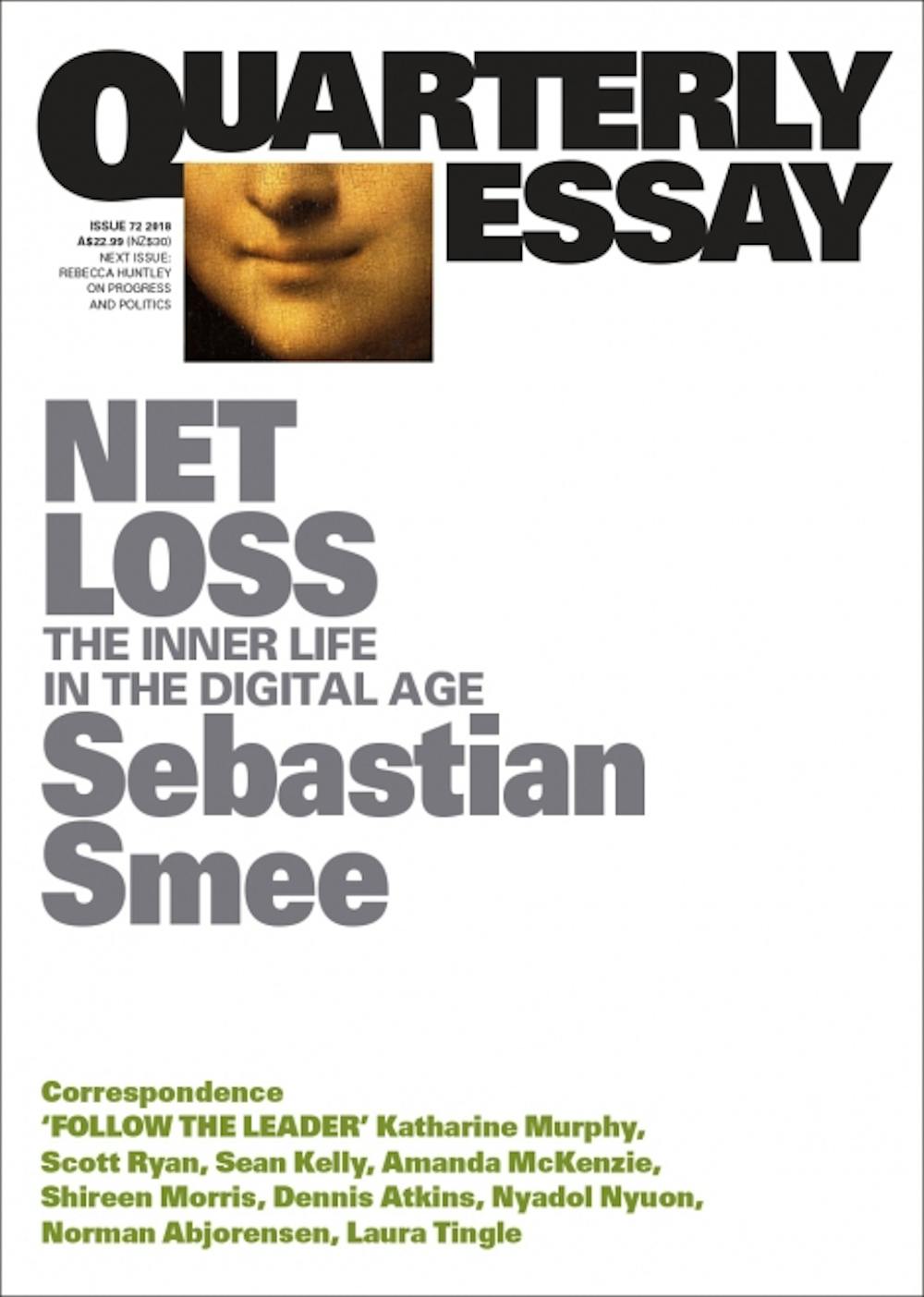
Review: Quarterly Essay, Net Loss, by Sebastian Smee


Guilty as charged. Yes, I spend too much time on social media. Yes, I have become more easily distracted. Yes, I have given up too much personal information to various apps and websites over the years. And yes, I have read a number of articles that articulate precisely how foolish, or at least, misguided this behaviour is.

And so when I opened up Sebastian Smee’s Quarterly Essay, Net Loss: The Inner Life in the Digital Age, I was primed to feed my own anxiety as I read his confessions: first, about how much time he spends on his phone, checking messages, listening to podcasts, watching videos, keeping an eye on Twitter and the news; and second, how conscious he is that he has given over various degrees of information about himself to the various interfaces and apps that relentlessly market this information on to other agencies in order to market other products back to the reduced versions of our selves we willingly project online.


Read more: Addicted to social media? Try an e-fasting plan


Quarterly Essay

If these were Smee’s confessions, I could easily make them my own too. Indeed, this is one of the ironies of contemporary digital life: the more Facebook, for example, extends its global reach, the more people can become instantly aware of discussions on Facebook about Facebook’s use and sale of the data it accumulates through our global conversations about why and how we use it, and its affects on our sense of self.

Smee is concerned with the fate of the “inner life” in contemporary culture: how we can any longer preserve the illusion that we each have a private inner core of being or selfhood that is untouched by the dispersal and dissemination of our public selves across a wide range of media. Has not that “inner life”, he asks, become weakened and thinned out, as a result of our perpetual, seemingly uncontrollable engagement with the algorithms and formulae of digital life and the surveillance cultures and technologies of late capitalism:

Once nurtured in secret, protected by norms of discretion or a presumption of mystery, this ‘inner’ self today feels harshly illuminated and remorselessly externalised, and at the same time flattened, constricted and quantified.

Smee argues that we have become complicit in this process of our own commodification and “reduction”. We are, he writes,

betrayed … by ourselves — by our willingness, what can often seem our eagerness, to make ourselves smaller

He claims, sometimes directly, sometimes more cautiously, that human nature is changing: “Today, being human means being distracted. It is our new default setting”.

This kind of claim is not new, of course. Anxiety about the contemporary age and its difference from the past dates back at least to medieval culture. More recently (but over a century ago), Virginia Woolf famously suggested that human nature changed “on or about December 1910”. Indeed, Smee’s machinic metaphor — “our new default setting” — demonstrates the extent to which industrialisation naturalised the idea of humanity as something that can be programmed. This metaphor would have been impossible, say, in the renaissance.

Nor is distraction a new phenomenon. In Fanny Burney’s Evelina (1778), a well-educated young girl, brought up in the country, is astonished to find how little attention is paid to the music and singing at the opera and other London entertainments:

There was an exceeding good concert, but too much talking to hear it well. Indeed I am quite astonished to find how little music is attended to in silence; for, though every body seems to admire, hardly any body listens.

Smee is not particularly interested in history, though. He offers many instances of what he sees as the problem: the way social media and our digital selves offer us only diminished, impoverished versions of ourselves that threaten to displace our inner lives. These lives are “tangled knots of narrative, with feelings and hurts and elaborate, fantastical dreams, which can be as enduring as mountains or as fleeting as clouds”, he writes.

To help us register what he thinks we are losing, Smee takes us through a range of examples from literature and art. Chekhov looms largest in his intellectual landscape, as a writer who most eloquently dramatizes the schism between the inside and the outside of the self, between a “true core” and a “sham exterior”. Cézanne, too, offers a vision of the self and “life” that is “fluid and multifaceted, like a rippling mosaic”. Smee insists that these rich and intense visions of human life are increasingly lost to us.

Yet his essay is itself a powerful demonstration of the inner life at work. It is not structured by argumentative sequence, empirical data or any theoretical work on contemporary digital culture; if anything, Smee defers judgments, sets problems aside, asks questions and refuses to push further.

Net Loss is a classic essay in Montaigne’s sense: experimenting and testing ideas (the French word essai comes from Latin exagium, “weighing”: itself appropriate to Smee’s astrological identity as a Libra, another account of the self he toys with then sets aside).

At one point he is tempted to read another story by Chekhov as “a prescient commentary” on the envy-inducing affects of Facebook. “I won’t go there,” he says. “But I will say two things that strike me about it now”.

For all his fear about loss, or losing the inner life by giving too much of it away through panic at our own mortality, Smee’s own choices, questions, worries, recollections, selections from books still structure his essay, which juxtaposes memories, quotations and descriptions of works of art, music, cinema and literature. The essay is a mosaic of cultural allusion that is meaningful precisely because it is held together by the narrative self that analyses and makes these connections. It is an example of distraction as an art form.

ref. The art of distraction: Sebastian Smee’s Quarterly Essay – http://theconversation.com/the-art-of-distraction-sebastian-smees-quarterly-essay-109571

Explainer: what causes algal blooms, and how we can stop them

]]>

Source: The Conversation (Au and NZ) – By Michele Burford, Professor – Australian Rivers Institute, and Dean – Research Infrastructure, Griffith University

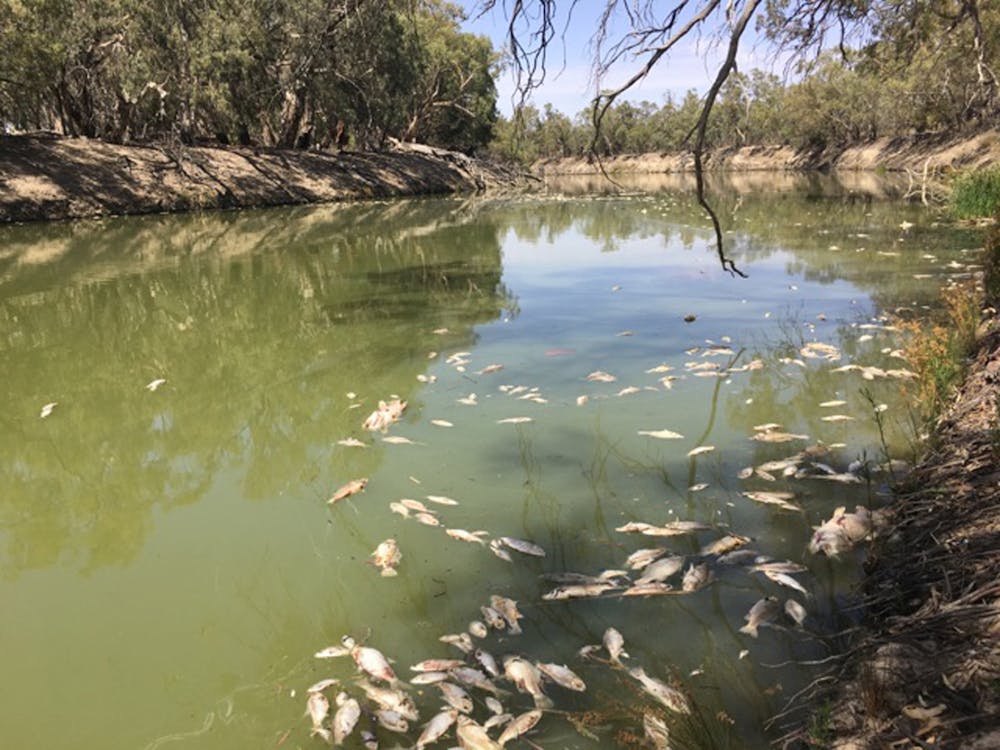
Outbreaks of algae have killed up to a million fish in the Murray Darling Basin over the last two weeks. The phenomena of “algae blooms”, when the population of algae in a river rapidly grows and dies, can be devastating to local wildlife, ecosystems and people. But what are algae blooms? What causes them, and can we prevent them?

Microscopic algae are fundamental to life on earth. These tiny plants provide the fuel that drives marine and freshwater foodwebs, and via photosynthesis, they gobble up carbon dioxide to help counteract emissions, and provide us with oxygen to breathe. Besides rivers, streams, lakes, estuaries and the coast, they can also be found in diverse environments such as snow, soil, and in corals.


Read more: Are toxic algal blooms the new normal for Australia’s major rivers?


But when humans channel agricultural run-off, sewerage and stormwater discharge into waterways, we dramatically increase the amount of nutrients such as nitrogen and phosphorus. This creates an imbalance, because some microscopic algae are supremely effective at mopping up nutrients and can grow very quickly, dividing up to once a day and quickly overtaking other species. The result is an algal bloom.

Cyanobacteria (blue-green algae) under a microscope. Author provided

So why don’t we have algal blooms all the time? This is because algae don’t just require nutrients to grow. Like any plant, factors such as temperature and light availability are also important in determining how quickly algae grow and whether they form blooms. Blooms also need slow moving or still water to become established.

In Australia, our algal blooms are typically in freshwaters. The main group of algae responsible for this are known as blue-green algae, or more accurately, cyanobacteria. They regularly bloom in warmer weather in our reservoirs, lakes and slow flowing rivers. In 2016, for example, 1,700km of the Murray River was affected by an algal bloom.

There are many ways they impact the environment and economy. Some algal blooms are toxic, requiring expensive water treatment and – in extreme cases – shutdown of water supplies. This isn’t just a problem in Australia. In 2014, some 500,000 people in the US were left without drinking water due to a toxic algal bloom in Lake Erie.

The toxins can also affect domestic animals, such as dogs, when they drink contaminated water, and limit use of lakes and rivers for swimming, boating and fishing. Even when algal blooms are not toxic, they unbalance the food web, reducing the number of species of animals and plants.

They can also reduce oxygen levels at night, as they switch from photosynthesis (producing oxygen) during the day, to a process called respiration at night where they use oxygen. Low oxygen can stress and even kill fish and other animals if they cannot escape this.

At some point, algal blooms crash when conditions become unsuitable. The resulting dead algae break down, providing an ideal food source for bacteria. This is when waters can become smelly, often with a rotten egg smell. As the bacteria multiply, they suck the oxygen out of the water. At this point, oxygen levels become low both day and night.

If the area of low oxygen is extensive, such as a whole lake or many kilometres of a river system, fish and other animals may not be able to escape to more suitable oxygen levels, and major fish deaths typically occur.

Some of the up to a million fish that have died in the Darling River system in far western NSW. KATE MCBRIDE/AAP

In other areas of the world, algal blooms have caused such severe oxygen conditions that thousands of square kilometres of ocean around the world are now known as dead zones, where no animals can live. These vast dead zones are not something we ever want to see in Australia.

So what can be done about blooms?

There are a wide range of treatments that can be used to control blooms, for example, aerating the water, and adding clays and chemicals, but the catch is they are very expensive on a large scale.

Ideally, the problem should be tackled at the source. This means reducing nutrient loads to our waterways. There has already been progress on this in our cities where sewage treatment plants have been upgraded to reduce nutrient loads to waterways. But tackling nutrients coming from agriculture – erosion, fertilisers, animal waste – is much more challenging and expensive because of the vast areas involved. So this remains work in progress.

It’s also very difficult to predict when blooms will occur; despite being simple plants, algae have an amazing range of strategies to grow and survive. But as we learn more about their complexity our ability to model and predict blooms will improve. This is crucial to managing risks to water supplies and preventing major environmental effects, such as fish deaths.


Read more: Toxin linked to motor neuron disease found in Australian algal blooms


Ultimately there are no quick fixes to algal blooms. Given the pressure we put on our waterways, they are here to stay. In fact they are likely to increase due to increasing temperatures and more extreme conditions, such as droughts. We know what we need to do to reduce the scale and likelihood of blooms: the challenge is devoting the resources to achieve it.

ref. Explainer: what causes algal blooms, and how we can stop them – http://theconversation.com/explainer-what-causes-algal-blooms-and-how-we-can-stop-them-109646

Sex offender registries don’t prevent re-offending (and vigilante justice is real)

]]>

Source: The Conversation (Au and NZ) – By Maggie Hall, Adjunct Lecturer, UNSW, Lecturer, School of Social Sciences and Psychology, Western Sydney University

Calls for public access to information about convicted child sex offenders occur often in Australia. It may seem like common sense that allowing the public to know the whereabouts of dangerous people should increase community safety. As in many areas of criminal justice, the real story is more complicated.

Home affairs minister Peter Dutton’s recent call to have the states agree to a publicly accessible register reflects this kind of common sense view. All Australian states already have registers and the National Child Offender System (NCOS) allows police to record and share child offender information across states.

Child sex offenders are required to keep police informed of their address and other personal details for a period of time (which varies across states and the nature of convictions) after they are released into the community. But in most Australian states, these details are not available to the public.

Besides the political appeal of being seen to crack down on crime, evidence shows public sex offender registers do more harm than good. The Australian Institute of Criminology recently reviewed the latest evidence from Australia and overseas on the effectiveness of public and non-public sex offender registries. The report concluded:

while public sex offender registries may have a small general deterrent effect on first time offenders, they do not reduce recidivism. Further, despite having strong public support, they appear to have little effect on levels of fear in the community.

A 2011 US paper compared research on offending rates of sex offenders who appear on public registers and those don’t. It detected little difference in rates of re-offending between the two groups. These registers can have other, unintended, consequences including creating community panic and vigilante attacks.


Read more: The causes of paedophilia and child sexual abuse are more complex than the public believes


Where public registers are available

Among Australian states, the South Australian police website has hosted a public access register since 2014 for sex offenders who have failed to report to police or given false information, and whose whereabouts are unknown. Western Australia recently introduced a register of sex offenders with limited access to the public. The scheme provides:

  • photographs and personal details of offenders who have either failed to comply with their reporting obligations, provided false or misleading information to police and whose whereabouts aren’t known to police
  • photographs of dangerous and high risk offenders in the searchers’ local suburb or surrounding suburbs
  • a parent or guardian with an avenue to inquire about a specific person who has regular contact with their child.

The US, South Korea and the Maldives are the only countries that allow public access to sex offender registers. Open public registers have existed under federal legislation in the US since 1994, but the legislation is inconsistently applied across states. New York State, for instance, refuses to fully comply with the register, preferring an evidence-based approach where judges use risk assessment tools to place offenders into categories.

Maintenance of registries is also often expensive and information may not be updated due to lack of resources.

Community safety vs panic

Knowing where convicted sex offenders live may allow people to believe they can organise their and their children’s lives to reduce the risk of harm. This may be attractive to politicians seeking to tap into people’s wish to protect their children. But the Australian Institute of Criminology review concluded registries had no appreciable effect on levels of fear in the community.

Conversely, some researchers have considered whether registries actually do the opposite and magnify safety fears. In 2007, residents of an upstate New York town displayed what the researchers called “community-wide hysteria”, including sleeping difficulties, after notification about sex offenders living nearby.

Others have raised concerns access to registers may lead to a false sense of security and perpetuate myths about “stranger danger” when most child sex offenders are known by, and are often related to, the victim. Some Australian groups have expressed concerns that publication in small communities may mitigate against reporting, as well as identify and stigmatise victims.


Read more: Sex offender registers don’t mean we can assume children are safe


Public registers can affect real-estate prices too, and create ghettoes by establishing multiple exclusion zones.

Vigilante justice

It’s easy to dismiss concerns about rehabilitation and reintegration of offenders into the community. But if one considers preventing crime to be the primary aim of criminal justice, then rehabilitation is important to protect the community. Sex offenders are the most stigmatised group of offenders – both in prison and after release. Exclusion and virtual exile on release from prison provide further barriers to rehabilitation.

The risk of vigilantism is real too, despite Derryn Hinch’s claims to the contrary. In Tennessee, in September 2007, a man’s wife died after two neighbours set their house on fire. This was believed to have been prompted by the man’s recent charges for possession of child pornography.

In one US study, up to 15% of respondents reported being physically assaulted after being publicly identified as sex offenders, and about 19% of sex offenders reported negative effects had been experienced by other members of their households. One-third of the offenders in the study had experienced physical threats. Another study found 5% of attacks (some fatal) were on people with no history of child sex offending, possibly due to incorrect information on the registers.

While the idea of public access to identifying information about convicted child sex offenders is attractive, there is little evidence it improves public safety.

ref. Sex offender registries don’t prevent re-offending (and vigilante justice is real) – http://theconversation.com/sex-offender-registries-dont-prevent-re-offending-and-vigilante-justice-is-real-109573

Should cyber officials be required to tell victims of cyber crimes they’ve been hacked?

]]>

Source: The Conversation (Au and NZ) – By Greg Austin, Professor UNSW Canberra Cyber, UNSW

In Germany this week, the legal limbo that defines cyberspace around the world was on full display.

The country’s Federal Office for IT Safety (BSI for its German initials) had been tracking a cyber attack targeting some of the country’s parliamentarians since early December. It ultimately led to the public release of mobile phone numbers, credit card information and ID card details of hundreds of members of parliament, and other public figures.

Only some MPs were informed by BSI about the attacks, while others learned about them only after the details were published in the media. MPs were outraged that BSI had failed to notify them that their personal data was being targeted, despite knowing about elements of the attack for up to four weeks.


Read more: New guidelines for responding to cyber attacks don’t go far enough


A deeper concern, raised by some MPs, was that over the same period, BSI (which is not a law enforcement agency) did not inform the German police that a political crime of this seriousness had possibly been committed. Once engaged, the police quickly found a suspect who reportedly confessed.

Hacking, whether or not data is publicly compromised, is a crime in most countries. The crime is constituted simply by the unlawful accessing of data or machines. But few countries have laws that require their cyber agencies that monitor hacking to report the criminal acts – either to third party victims or to the police.

This legal vacuum needs to be addressed urgently.

Is hacking a ‘serious crime’?

The challenge for cyber agencies or private sector firms which detect a hack is that these events are very common. Millions take place every day, and complex forensic information needs to be assembled in order to judge which incidents are serious enough to require notification. This sets up a defacto, but ill-defined, distinction between “petty crime” (most hacks) and “serious crime”.

What this means in reality can be illustrated by the practice in the Australian state of New South Wales. In NSW, there is an obligation under the Crimes Act to report serious crimes. These are defined as those attracting legal penalties of five years or more of imprisonment. But when it comes to cyber hacking, it’s often not immediately clear whether the extent of a hack would trigger such a penalty threshold.

This uncertainty was at play in the German hack, with BSI justifying its failure to notify with the claim it was still trying to analyse it, and did not know the full scale of it.

Even after arresting the suspect and knowing the scale of the attack, the head of cyber security at the Federal Police Office (BKA) said it was still unclear whether the hack was a serious crime inspired by political motives. The suspicion that it may have been politically motivated arises from the fact that the only political party whose MPs were not targeted was the extreme right party, AfD.


Read more: Russians hack home internet connections – here’s how to protect yourself


What ‘mandatory reporting’ means in Australia

In 2018, after a long public debate, Australia introduced the Notifiable Data Breaches (NDB) scheme as an amendment to the Privacy Act. The NDB requires companies to notify the Office of the Information Commissioner (not the police), as well as any victims, if personal data they hold is compromised in a way that constitutes a serious breach of privacy.

This civil code provision is very weak due, in part, to the fact that it allows the firm or agency involved to self-assess the seriousness of the breach over a 30-day period before the obligation to notify kicks in.

It is also weak because there is a blanket exemption for law enforcement activities, and for the secrecy needs of the government. Australian cyber agencies, such as the Australian Signals Directorate and the Australian Centre for Cyber Security, appear to have zero obligation to tell either the police or victims that there has been been a hack or a data breach.

That means, if Australian cyber agencies learned that a foreign government had hacked an Australian citizen, the victim may never be told. Or if family photos of an unclothed child were hacked from a family computer by a paedophile, the victim’s family might never know.

A right to know?

In many countries, cyber agencies do notify large corporations of certain hack attacks, regardless of the kind or scale. There are several motivations for this mostly voluntary practice. One is to help corporations realise the seriousness of state-sponsored espionage against them. Another is to help the cyber agency itself coordinate an investigation of the hack, and figure out what might have been lost.

That is not the same as the police investigating the crime.

In most countries, only police agencies are authorised to investigate crimes for the purposes of court prosecution. Few jurisdictions, if any, have formally clarified the ways in which police and courts may rely on information on cyber hacks collected by cyber agencies or security companies.


Read more: 30 years ago, the world’s first cyberattack set the stage for modern cybersecurity challenges


Australia is yet to have a serious debate about cyber crime reporting, and its forensic complexities: who is responsible for what, and where the priorities should lie. It’s at least a decade overdue.

While recognising that some distinction will need to be made between petty and serious cyber crimes, such a debate should recognise the right of citizens to be informed by our cyber agencies when they have been assaulted in cyber space and, if possible, by whom.

ref. Should cyber officials be required to tell victims of cyber crimes they’ve been hacked? – http://theconversation.com/should-cyber-officials-be-required-to-tell-victims-of-cyber-crimes-theyve-been-hacked-109510

Productivity Commission finds super a bad deal. And yes, it comes out of wages

]]>

Source: The Conversation (Au and NZ) – By Brendan Coates, Fellow, Grattan Institute

Want more to retire on?

In its long-awaited final report on the efficiency and competitiveness of Australia’s leaky superannuation system, Australia’s Productivity Commission provides a roadmap.

Weeding out scores of persistently underperforming funds, clamping down on unwanted multiple accounts and insurance policies, and letting workers choose funds from a simple list of top performers would give the typical worker entering the workforce today an extra A$533,000 in retirement.

Even Australians at present in their mid fifties would gain an extra A$79,000.

If this government or the next cares about the welfare of Australians rather than looking after the superannuation industry it’ll use the recommendations to drive retirement incomes higher.

So why the continued talk (from Labor) about lifting compulsory super contributions from the present 9.5% of salary to 12%, and then perhaps an unprecedented 15%?

It’s probably because (and Paul Keating, the former treasurer and prime minister who is the father of Australia’s compulsory superannuation system says this) they think the contributions don’t come from workers, but from employers.

To date, they’ve been dead wrong. And with workers’ bargaining power arguably weaker than in the past, there’s no reason whatsoever to think they’ll be right from here on.

Past super increases have come out of wages

Australia’s superannuation system requires employers to make the compulsory contributions on behalf of their workers. Right now that contribution is set at 9.5% of wages and is scheduled to increase incrementally to 12% by July 2025.

So, for workers, what’s not to like?

It’s that while employers hand over the cheque, workers pay for almost all of it via lower wages. Bill Shorten, then assistant treasurer, made this point in a speech in 2010:

Because it’s wages, not profits, that will fund super increases in the next few years. Wages are the seedbed of the whole operation. An increase in super is not, absolutely not, a tax on business. Essentially, both employers and employees would consider the Superannuation Guarantee increases to be a different way of receiving a wage increase.

The Henry Tax Review and other investigations have found this is exactly what happens. Increases in the compulsory super contributions have led to wages being lower than they otherwise would have been.

Even Paul Keating, speaking in 2007, made this point. Compulsory super contributions come out of wages, not from the pockets of employers:

The cost of superannuation was never borne by employers. It was absorbed into the overall wage cost […] In other words, had employers not paid nine percentage points of wages, as superannuation contributions, they would have paid it in cash as wages.

This is more than mere theory. Compulsory super was designed to forestall wage rises. Concerned about a wages breakout in 1985, then Treasurer Paul Keating and ACTU President Bill Kelty struck a deal to defer wage rises in exchange for super contributions.

When the Super Guarantee climbed from 9% to 9.25% in 2013, the Fair Work Commission stated in its minimum wage decision of that year that the increase was “lower than it otherwise would have been in the absence of the super guarantee increase”.

The pay of 40% of Australian workers is based on an award or the National Minimum Wage and is therefore affected by the Commission’s decisions. For these people, there is no question: their wages are lower than they would’ve been if super hadn’t increased.

Where’s the evidence employers pay for super?

If wage rises came from the pockets of employers then we should see a spike in wages plus super when compulsory super was introduced, and again when it was increased. But there wasn’t one when compulsory super was introduced – a point Bill Shorten has made in the past.

When compulsory super was introduced via awards in 1986, workers’ total remuneration (excluding super) made up 63.3% of national income. By 2002, when the phase-in was complete, it made up 60.1%.

Out of the 26 countries for which the Organisation for Economic Co-operation and Development has data, Australia recorded the tenth largest slide in the labour share of national income during the period compulsory super contributions were ramped up.


Read more: The superannuation myth: why it’s a mistake to increase contributions to 12% of earnings


Of course, changes in super aren’t the only thing that affects workers’ share of national income.

But the size of the fall in the labour share in Australia over the period when the super guarantee was increasing isn’t consistent with the idea that employers picked up the tab for super.

Would it be different this time?

Paul Keating argues that while in the past lifting compulsory super to 9.5% was paid for from wages, a future increase to 12% today would not be:

Workers are not getting real wage increases anywhere, and can’t get them. The Reserve Bank governor makes the point every week. So the award of an extra 2.5% of super to employees via the super guarantee will give them a share of productivity they will not get in the market – without any loss to their cash wages.

But such claims are difficult to square with concerns that workers’ weak bargaining power is one of the reasons for current low wages growth. If employers aren’t willing to give wage rises, why would they absorb an increase in the compulsory Super Guarantee?

And while real wages (wages adjusted for inflation) haven’t grown particularly quickly, the dollar value of wages continues to grow: by 2.2% a year over the past five years. It would be easy for employers to simply reduce those increases to offset any increase in compulsory super – as they have in the past.

And no, more contributions won’t help workers

The Grattan Institute’s recent report, Money in Retirement, showed increasing the compulsory super would primarily benefit the top 20% of Australians. It would hurt the bottom half during working life a lot more than it helps them once retired.

Their higher super contributions would not improve their retirement outcomes: their extra super income would be largely offset by lower part-pensions. What’s more, the age pension is indexed to wages. If wages grew by less (as they would as compulsory super contributions were increased) pensions would grow by less too.

Lifting compulsory super would also cost the budget A$2 billion a year in extra tax breaks, largely for high-income earners, because it is lightly taxed.

That would mean higher taxes elsewhere, or fewer services.

For low-income Australians, increasing compulsory super contributions would be a thoroughly bad deal. It means giving up wage increases in return for no boost in their retirement incomes.

A government that wanted to boost the living standards of working Australians both now and in retirement would consider carefully all of the Productivity Commission’s suggestions including this one: an independent inquiry into the whole idea and effectiveness of Australia’s regime of compulsory contributions, to be completed “ahead of any increase in the Superannuation Guarantee rate ”.


Read more: Why we should worry less about retirement – and leave super at 9.5%


ref. Productivity Commission finds super a bad deal. And yes, it comes out of wages – http://theconversation.com/productivity-commission-finds-super-a-bad-deal-and-yes-it-comes-out-of-wages-109638

How the right lighting could save the Mona Lisa

]]>

Source: The Conversation (Au and NZ) – By Dorukalp Durmus, Honorary Associate, University of Sydney

Next time you’re in a museum or art gallery, observe each painting a little more closely. You may notice cracks on the surface of the canvas, especially if the painting is very old.

The damage you see is caused by radiant energy striking the painting’s surface – and light (visible radiation) causes irreversible damage to artwork.

However, all is not lost. Our new research shows that optimised smart lighting systems can reduce damage to paintings while preserving their colour appearance.


Read more: Terahertz spectroscopy: the new tool to help detect art fraud


The dilemma

Damage to artwork by infrared, ultraviolet and visible radiation is well documented. When a photon (an elementary light particle) is absorbed by a pigment in paint, the pigment molecule elevates to a higher energy state. In this excited state, the molecule’s chemical composition changes. This is called a photochemical action.

Viewed from the human perspective, the photochemical action manifests itself as cracks, discolouration, or surface hardening.

Johannes Vermeer painted The Milkmaid in 1660. from www.shutterstock.com

Not surprisingly, daylight, which includes infrared and ultraviolet radiation, is highly damaging to paintings. In museums, it is common practice to use incandescent, and more recently, light emitting diodes (LEDs), to reduce damage.

However, a group of researchers showed that light can cause colour degradation regardless of the lighting technology. Bright yellow colours in Van Gogh’s famous Sunflowers are turning dark brown due to absorption of blue and green light from LEDs. Research on the conservation of artwork makes it look like this is a losing battle.

Of course, you will be right in thinking that the best conservation method would be the complete absence of light. But we need light for visibility and to appreciate the beauty of a painting.

This leaves us with a dilemma of two conflicting parameters: visibility and damage.


Read more: Curious Kids: How does glow in the dark paint work?


Light optimisation

Lighting technology in itself may not be enough to tackle this dilemma. However, the way we use technology can make a difference.

Our approach to address this problem is based on three key facts:

  1. light triggers photochemical actions only when it is absorbed by a pigment
  2. the reflectance factor of a pigment (its effectiveness in reflecting light) determines the amount of light absorption
  3. light output (composition of the light spectrum, and the intensity of the light) of lighting devices, such as LEDs, can be fine-tuned.

Yellow colours are particularly vulnerable to being damaged by light. from www.shutterstock.com

It is possible to measure the reflectance factor of a painting and optimise lighting to reduce absorption. Previous research shows that optimising light to lessen absorption can reduce energy consumption significantly, and with no loss in visual experience. Objects look equally natural and attractive under optimised light sources compared to regular white light sources.

In this new study, we optimised LEDs for five paintings to reduce light absorption. Using a genetic algorithm (an artificial intelligence technique), we reduced light absorption between 19% and 47%. Besides the benefits for the painting, this method almost halved the energy consumed by lighting.

In addition to increased sustainability and art conservation, the colour quality of the paintings was another parameter in our optimisation process. Colour appearance and brightness of paintings were held constant not to lower the appreciation of the artwork.


Read more: How eye disorders may have influenced the work of famous painters


This is possible due to a quirk in our visual system. Photoreceptor cone cells, the cells in our retinas which enable human colour vision, are not equally sensitive to the whole visible spectrum.

Different combinations of wavelength and intensity can result in identical signals in our brain. This understanding gives us the flexibility of using different light sources to facilitate identical colour appearances.

This smart lighting system requires scanning of the artwork to obtain colour information. Then, a precise projection system emits optimised lighting to the painting.

This method offers a solution to extend the lifetime of works of art, such as the world-famous Mona Lisa, without leaving them in the dark.

ref. How the right lighting could save the Mona Lisa – http://theconversation.com/how-the-right-lighting-could-save-the-mona-lisa-95938

Why celebrity, award-winning chefs are usually white men

]]>

Source: The Conversation (Au and NZ) – By Nancy Lee, Researcher and project officer, University of Sydney

This article is part of a series focusing on the politics of food – what we eat, how our views of food are changing and why it matters from a cultural and political standpoint.


Another year, another list of the World’s 50 Best Restaurants. And another round of Michelin stars, Good Food Guide hats, and Gourmet Traveller Top 100 Restaurants in Australia.

These days, there are more restaurant awards than you can poke a stick at. The World’s 50 Best list has long been a target for criticism for its gender imbalance and heavily Eurocentric perspective. (There is now an Asia’s 50 Best and a Latin America’s 50 Best list, because presumably “Asia” and “Latin America” are not included in “World”.)

Though it is well known the process behind choosing the restaurants for this list is pretty arbitrary, it still carries weight in the restaurant world, with rankings used as a selling point, including here in Australia. Judging by the fanfare that heralds another night of awards, and the rush of increased interest that follows the enthusiastic media coverage, restaurant awards and lists are here to stay.

Recently, an ABC article ruffled some feathers by providing an audit of which chefs and restaurants win awards in Australia. The perhaps not-so-surprising finding: European (namely, Italian) restaurants outnumber Asian restaurants in the number of accolades, year after year.

Asian restaurants run by non-Asian owners

There are multiple factors that play into this. The framework of “professional” cooking is French and has long been acknowledged as an “art” or “skill”, while “ethnic” food continues to be othered as a reflection of “culture”. The chefs representing most top-end restaurants and writers at most major food publications also remain predominantly white.

This is part of the reason why restaurants that offer dining experiences that hew toward the European notion of high quality – tablecloths, quiet rooms, attentive service – are regarded as “better”, or more worthy, than the Chinese or Thai place that may emphasise feeding you quickly and efficiently. It follows that the people winning the awards are, by and large, also white.

Dig a little deeper and another trend emerges: the few “ethnic” restaurants in Australia that are routinely feted and held up as high-end are largely owned or run by white men.

Chin Chin, for example, is run by Chris Lucas’ restaurant group, while Spice Temple is owned by Rockpool Dining Group, with Neil Perry at the helm. Supernormal is part of the Andrew McConnell empire, while Cho Cho San is owned by Jonathan Barthelmess and Sam Christie.


Read more: Friday essay: the politics of curry


As the authors of the ABC article point out, plenty of cooks in restaurant kitchens are from diverse backgrounds, while the people in leadership positions are mostly white (sometimes capitalising on the food of different cultures). It should be noted, however, that one of the most prominent and respected chefs in Australia is Tetsuya Wakuda, who is Japanese. Dan Hong has headed up Mr Wong and Ms G’s, and Victor Liong is making waves in Melbourne, but they are comparatively rare examples of high-profile Asian chefs outside Asia.

The question of “ethnic” food prepared by “non-ethnic” chefs or served at restaurants with “non-ethnic” owners has recently become a sensitive issue in the United States, in particular. Given the fraught relationship all colonised countries have with race, however, this debate should also be happening elsewhere – including here in Australia.

Power dynamics and the influence of the media

While it can feel discomfiting for a person of colour to see a white person profit from the food of marginalised cultures, if done respectfully, with a deep, well-researched understanding of the culture that informs the food, it can also be seen as someone exploring a different culture and translating it to a wider audience. Maybe.

But there are broader dynamics at play beyond race – who has access to power, and what kind of power, and why. These are issues that tend to be glossed over. Understanding these dynamics will go some way to explaining why things are, and remain, the way they are.

Duck your head into any kitchen, anywhere in the world, and you will typically see workers from a diverse range of backgrounds. Often in Western countries, they are predominantly immigrants, doing what they can to make a living. They are the dishwashers and line cooks, performing the manual labour, while the head chef inspects everything at the pass before it goes out to the dining room.


Read more: Recipes for racism? Kitchen Cabinet and the politics of food


To be considered for high-profile awards (or high-profile media coverage), you have to be a certain kind of chef, capable of presenting a certain kind of narrative. Usually this involves using food as an outlet for creativity, as a canvas for artistic expression, or to convey personal beliefs or passions.

Of course, these are also the chefs who have the budget to travel widely and extensively for “research”, gleaning the knowledge to replicate the traditional foods found in exotic countries. Chefs I spoke with in my research commented that it’s hard to know which comes first – great food that attracts media attention, or great PR that attracts media attention pushing you to be a better chef.

The quintessential “celebrity chefs” (like Neil Perry, Peter Gilmore, or Matt Moran) are, by and large, articulate and passionate about their work, their produce and their industry. They have generally, over time, been trained to be comfortable in front of a camera, or a roomful of media. Many now have PR firms fielding requests for their time; there are even PR firms that specialise in food content and working with restaurants.


Read more: Jamie Oliver’s ‘jerk rice’ is a recipe for disaster – here’s why


The positive media attention of restaurant lists and awards relies on a positive media image of cooking as an artistic pursuit. Thanks to shows like MasterChef and Chef’s Table, we have been presented with a specific (and mostly false) cultural narrative: being a chef is glamorous and fun.

But as Australian restaurant legend Gay Bilson lamented at the most recent Symposium of Australian Gastronomy, in many ways, heightened media attention erases the labour that goes into cooking and hospitality – hours of working over a hot stove, of being on your feet all day, of constantly meeting the demands of other people, day in and day out.

The immigrants who run the local Chinese place in your neighbourhood are far less likely to get this kind of attention, and therefore less likely to enjoy the mobility that being a chef spotlighted in the media affords.

Some argue that more people of colour and diverse cultural perspectives in food media will help expand the way we understand the food world.

Comedian Jenny Yang’s parody in response to a Bon Appetit video featuring a white chef explaining the finer points of eating Vietnamese pho.

But it is also not the sole responsibility of people of colour to convince others that food from their cultural background is as worthy of acclaim as European food.

So what’s the answer? It’s always going to be complicated. But as consumers, it’s up to us to think a little more critically about restaurant awards. It’s on us to chat to the people cooking for us and get to know what happens in kitchens, to read more widely and understand what we’re eating.

It is not enough to get excited about the diversity of food in our multicultural cities. We need to engage with and understand the work and power structures that exist in the kitchens that make our food, and the media culture that tells us about what we’re eating, and who cooks for us.


Read other articles in the politics of food series here.

ref. Why celebrity, award-winning chefs are usually white men – http://theconversation.com/why-celebrity-award-winning-chefs-are-usually-white-men-106709

Health Check: how do I tell if I’m dehydrated?

]]>

Source: The Conversation (Au and NZ) – By Karen Dwyer, Deputy Head, School of Medicine, Deakin University

It’s a message that’s been drummed into us since childhood. Drink water, especially when it’s hot, otherwise you’ll get dehydrated.

But how do you know if you’re dehydrated? Who’s more at risk? And what can you do about it?


Read more: We asked five experts: do I have to drink eight glasses of water per day?


What’s dehydration and why does it matter?

When people use the term dehydration, they usually refer to what doctors call “volume depletion” or hypovolaemia.

Volume depletion is a reduction in the volume of water in the blood vessels. But dehydration is quite different and is less common. It’s the loss of water from both blood vessels and the body’s cells.

Doctors are concerned about volume depletion and dehydration because adequate hydration is required for the body to function normally. Water maintains our body temperature and lubricates our joints. Our body’s cells rely on water as does our circulatory, respiratory, gastrointestinal and neurological systems.

Severe cases of volume depletion can lead to shock and collapse. Without resuscitation with fluid, the consequences may be devastating.

Water, water everywhere

A 70kg person is made up of 40L (40kg) is water. Two-thirds of that water is in the cells (intracellular), one-third outside the cells (extracellular).

Outside the cells, 20% of body water is in plasma (around 3L), which together with red bloods cells (2L) gives a total 5L of blood. It’s the movement of water between compartments that maintains each one’s biochemical composition, allowing your cells and body to work normally.

The total body water volume (water in both the blood vessels and the body’s cells) is remarkably constant given the large variation in how much an individual might take in and lose each day.

Water intake is accounted for mostly by how much and what you drink and eat, and the daily variation is regulated by the kidney, which alters your urine output.

The main function of the kidney is to regulate the volume and composition of body fluids within narrow limits by altering output.


Read more: Kidneys are amazing for all they do, be sure to look after yours


When you drink large volumes of fluid, your body can afford to get rid of increased amounts of dilute urine. But when you drink a minimal amount of fluid, your urine is concentrated and you pass only a small volume.

If you’re urinating less often than normal, or urinating small volumes of darker coloured urine, it may be time to drink more water.


Read more: Health Check: what can your doctor tell from your urine?


Other small losses of water include through stool, sweat and lungs.

So if you have diarrhoea or are exercising in the heat, for instance, you will need to drink more fluids.


Read more: Drink plenty of fluids to cope with the heat, but there is no need to avoid caffeine


As fluid is lost from the extracellular compartment such as in cases of diarrhoea and vomiting or bleeding, you can develop symptoms of volume depletion including:

  • thirst, including a dry mouth
  • dizziness, particularly when standing due to the low blood pressure (a consequence of volume loss)
  • and when very severe, confusion (a consequence of inadequate oxygenation of the brain).

Doctors might also note:

  • that it takes longer for your skin to bounce back when pinched (known as reduced skin turgor)
  • low blood pressure as a reduction in volume directly affects blood pressure
  • an increased heart rate, in an attempt by the body to maintain blood pressure
  • reduced weight as fluid makes up two-thirds of body weight. A loss of 1L of fluid will read as a drop in 1kg on the scales.

Blood testing will often reveal a degree of kidney impairment. That’s because the kidneys require a large blood flow to work normally.

In cases of volume depletion and reduction in blood pressure, blood flow to the kidneys is compromised and they go into a state of “shock”. Mostly this is reversible when volume and blood pressure is restored.

As there’s no single test for volume depletion, doctors will make a diagnosis after taking a note of your history, examining you and a combination of blood and urine tests.

Here’s what happened to Tom

I was on call at the hospital recently when, at 9.45pm on a Sunday, I received a call from the emergency department.

Tom, a 78 year old man, had come in by ambulance after neighbours had found him on his bedroom floor. Tom’s cognition was not great at the best of times, and that night he couldn’t tell us how long he had been on the floor.

There were no obvious injuries, his blood pressure was low (100/60mmHg), pulse rate high (98 beats per minute) and his temperature was normal. Blood tests showed he had low sodium salt levels and kidney impairment.

Tom had been in the emergency department for six hours by the time the call came to me; in that time he had not passed urine. It all pointed to volume depletion.

Elderly people are at increased risk, so keep an eye on relatives and neighbours this summer. from www.shutterstock.com

We treated Tom with intravenous fluid. He needed 5L over 48 hours, after which he was passing urine again. His blood pressure was back to normal 140/70mmHg, his kidney function had normalised and his weight was up from 46kg on admission to 50kg.

Tom told us he had fallen while getting up at night. He had been on the floor for most of the next day and had not eaten or drunk anything for hours.

Who’s most at risk and why?

Some groups are more susceptible to volume depletion, including:

  • elderly people like Tom, as our total body water reduces with age and the elderly often have a reduced sensation of thirst. Many older people also have other health problems including chronic kidney disease, which may impact the ability to concentrate urine when the volume is depleted
  • babies, because they aren’t able to articulate when they’re thirsty. They have a higher metabolic rate than adults meaning they require more fluid
  • people with impaired thirst mechanisms such as the elderly or people with certain brain injuries
  • people losing large volumes of fluid via the bowel (from diarrhoea or through a colostomy)
  • people taking medications that promote water loss, in particular diuretics, often referred to as water tablets.

These vulnerable groups need to be aware of the increased risk of volume depletion, minimise their risk by maintaining fluid levels, recognise the symptoms of volume depletion early, and seek prompt treatment, including going to hospital if necessary.

If you experience the symptoms of volume depletion it’s important to take heed. At home, start with water if you’re thirsty. Once dizziness is present, significant volume loss has ensued and a trip to the doctor is in order. Confusion mandates emergency treatment.

How about physiological dehydration?

Physiological dehydration, which occurs when water is lost from both the blood vessels and from the body’s cells compartment, is distinct from volume depletion. But there are many overlapping symptoms, such as thirst, a drop in blood pressure and when severe, confusion.

Dehydration can happen with prolonged and sustained high blood sugar levels as can occur in someone with diabetes. This is because the high sugar levels in the blood pull water out of the cells in an attempt to lower the levels. High sugar levels also make you pass more urine. So in this instance there is loss of fluid from both the intracellular and extracellular compartments.


Read more: Explainer: what is diabetes?


So for those with diabetes, monitoring blood sugar levels is important. If the blood sugar is persistently high it’s important to seek medical advice to reduce the level safely and prevent dehydration.

In a nutshell

Water is vitally important to the normal function of the body. Volume depletion can occur during anytime of the year, but people are particularly prone over the summer months. The key is prevention and knowing what the signs and symptoms are. So in summer keep your fluids up; talk to your doctor about any medications that may need adjusting (such as diuretics) and keep an eye out for friends, family and neighbours.

ref. Health Check: how do I tell if I’m dehydrated? – http://theconversation.com/health-check-how-do-i-tell-if-im-dehydrated-107437

Australia’s 2018 in weather: drought, heat and fire

]]>

Source: The Conversation (Au and NZ) – By Karl Braganza, Climate Scientist, Australian Bureau of Meteorology

Last year was a time of exceptional weather and record-breaking heat according to the Bureau of Meteorology’s annual climate statement, which was released last night.

The Bureau issued four Special Climate Statements relating to “extreme” and “abnormal” heat, and reported a number of broken climate records.

One of the headline stories for the year was drought across eastern Australia — centred on New South Wales, but also affecting Victoria, eastern South Australia and southern Queensland.

Bureau of Meteorology

With the whole of NSW declared in drought during the latter half of 2018, this drought will be recorded as one of the more significant in Australia’s history, ranking alongside the Millennium, 1960s, World War Two and Federation Droughts. Of those historic droughts, only the Millennium Drought saw similar, accompanying high temperatures.

The below-average rainfall has persisted for around two years across much of NSW and adjacent regions. The drought conditions were particularly severe in the recent spring period, with low rainfall, persistently high temperatures, and record high evaporation.

This exceptionally dry period was influenced by sea surface temperatures to the west of the continent. Perhaps fortuitously, a developing El Niño in the Pacific Ocean failed to mature in the second half of the year. An El Niño would have typically exerted a further drying influence on eastern Australia.


Read more: Australia moves to El Niño alert and the drought is likely to continue


The dry conditions in eastern states were severe enough to see Australia record its lowest September rainfall on record, and the second-lowest on record for any month — behind April 1902, during the prolonged Federation Drought. Over 2018, Australia’s annual rainfall was 11% below average, and the lowest recorded since 2005, during the Millennium Drought.

In contrast, above-average rainfall was recorded across parts of the tropical north, and most significantly in the Kimberley, consistent with recent trends of increasing rainfall in that region.

The drought conditions were exacerbated by record or near-record temperatures across many parts of the country. It was Australia’s third warmest year on record, behind 2013 and 2005. Daytime maximum temperatures were the warmest on record for NSW and Victoria, and second-warmest for South Australia, the Northern Territory and Australia as a whole.

Bureau of Meteorology

Persistent dry conditions through winter are typically associated with low soil moisture and heatwaves in the following spring and summer, and 2018 followed this pattern — with the added contribution of a warming climate.

The year ended with some record-breaking heat events. Perhaps the most significant of these was the extreme heat along the central and northern Queensland coast in late November and early December, which saw maximum daytime temperatures of 42.6 °C in Cairns and 44.9 °C in Proserpine on the 26th of November.

These temperatures, combined with persistent dry conditions in the preceding months, saw catastrophic fire weather and bushfires along 600km of the Queensland coast, an event that fire agencies have called unprecedented for the state.


Read more: Sydney storms could be making the Queensland fires worse


The year ended with a burst of heat over the Christmas-New Year period, with temperatures at least 10 degrees warmer than average across southern South Australia, most of Victoria and southern NSW, leading to Australia’s warmest December on record.


Subscribe to receive Bureau Climate Information emails.

ref. Australia’s 2018 in weather: drought, heat and fire – http://theconversation.com/australias-2018-in-weather-drought-heat-and-fire-109575

National curriculums don’t always work for rural and regional schools

]]>

Source: The Conversation (Au and NZ) – By Alison Willis, Lecturer, School of Education, University of the Sunshine Coast

In the past decade, federal government agencies and their state regulators have packaged most things in education in Australia. Big education decisions, like what to teach and what should be tested, are largely made in capital cities. These moves have all been made in the name of improving standards, but they’ve come at the cost of local independence.

We introduced anti-discrimination legislation across Australia between the 1970s and 1990s, but then we centralised curriculum and assessment between 2008 and 2010. One move opened up more opportunities for equity, while the other restricted the ability of teachers to make autonomous decisions in response to their local needs and values.


Read more: New research shows NSW teachers working long hours to cope with administrative load


Belief systems – whether religious, philosophical, political, ideological or a combination – are one of the most understated influences in education. These systems are based on communities’ collective values and beliefs about what matters. Because we have diverse beliefs in Australia, we also have a diversity of schools.

We need to empower and trust local people to take responsibility and collaborate to develop programs for local people. National programs have not yielded improved achievement rates, so why do we persist with the idea of centrally packaging the curriculum?

“Them and us” attitudes make rural students disengage

Although we have about 9,500 schools across Australia, there are two central education powerhouses: The Australian Curriculum, Assessment and Reporting Authority (ACARA) in Sydney, and the Australian Institute for Teaching and School Leadership (AITSL) in Melbourne. Urban bureaucratic perspectives are foregrounded and local and regional perspectives are marginalised. It’s a long way from Melbourne to Broome or Bamaga.

All over the country, schools spend hours reporting their activities to government departments, and bureaucrats spend hours checking and publishing school outcomes. It’s a big compliance game.

ACARA administers and reports on NAPLAN. Curriculum is developed by ACARA and interpreted by state agencies in capital cities. AITSL sets standards for teachers and principals, and state governments use these to set awards and develop career paths for them.

Disengagement in school among non-urban students is a major issue as education is seen as a metro-centric enterprise. www.shutterstock.com, CC BY

Because school data is published on the internet, efforts by local teachers and principals to provide high quality education are hijacked by comparative assessment and reporting agendas. If there wasn’t a national comparison game, local educators could give more time to creating meaningful learning experiences for their students.

Meanwhile, non-attendance is a major concern in the regions, but we fail to recognise the significance of the “them and us” attitudes that prevail between schools and parents in regional communities.


Read more: Student protests show Australian education does get some things right


A review into regional, remote and rural education found there is a genuine concern in regional communities that students are “learning for leaving”. This means the main focus of education is seen to be to get educated school-leavers out of the country into the city.

Many non-urban students choose to disengage because they think school is irrelevant. A mismatch of beliefs about what’s important in education can lead to disengagement and poorer schooling outcomes for regional students.

Reforms

In regional Indigenous communities, socio-cultural divisions are too often reinforced by teachers who are ill-equipped to meet the learning needs of Indigenous students. We have included Indigenous histories and cultures in the Australian Curriculum, but at the same time we’ve compromised Indigenous teaching strategies as local teachers are asked to implement pre-packaged curriculum or foreign instruction techniques.

We have included Indigenous histories and cultures in the Australian Curriculum, but at the same time we’ve compromised Indigenous teaching strategies. www.shutterstock.com, CC BY

The personal touch

We falter in democracy when we impose programs developed by centralised bureaucracies as band-aids for local problems. Programs alone don’t solve social issues. The catalyst for change is often the teacher, coach, mentor, friend, or colleague. A local person.

We can bureaucratise, standardise and normalise education all we like, but education will always be personal and emotional for local communities because they have their own beliefs, which might not match the beliefs in big cities.

So what do we do about it?

Community consultation is not enough. OECD reports show teachers who are able to contribute to decision-making also report education is valued in their community, and have higher job satisfaction.

Local schools and teachers should be able to develop their own programs that are tailor-made to meet the needs of local communities so learning is meaningful. This way, local beliefs will not be compromised by government agendas, and teachers will feel empowered to meet the needs of their students rather than just getting through the material.

The power of local autonomy has already been proven in Finland, a country that is known for its high educational outcomes.

On a practical level, local schools should be able to choose what they teach and how to test it so learning and assessment is meaningful. We need local autonomy so education can meet the needs of local students.

ref. National curriculums don’t always work for rural and regional schools – http://theconversation.com/national-curriculums-dont-always-work-for-rural-and-regional-schools-108071

There are lessons to be drawn from the cracks that appeared in Sydney’s Opal Tower, but they extend beyond building certification

]]>

Source: The Conversation (Au and NZ) – By Geoff Hanmer, Adjunct Lecturer in Architecture, Univeristy of NSW, UNSW

The reasons for the cracked concrete that triggered the evacuation – twice – of residents from Sydney’s Opal Tower over Christmas and the New Year are unknown and will take time to properly establish. Many commentators are jumping to the conclusion (yes that includes you, Senator Carr) that the problem is the result of the privatisation of building certification. Instead of being done by government or council inspectors, certification is now done by private contractors engaged by the developer.

It might well be a contributing factor, but what went wrong at Opal Tower is is much more complex than that. Making certification a government responsibility again won’t solve it.

Opal is unusual. Very few residential buildings in Australia have ever been evacuated due to construction defects, and fewer still because of structural cracking. The vast majority of construction defects in multi-unit residential buildings are waterproofing failures. Rather than creating short-term alarm, they create long-term misery. Because misery does not generate headlines, the problem of quality in multi-unit housing continues to be ignored by governments.

Most strata buildings are defective

Strata title allows each resident to own the space in which they live as well as a share of the common property including pipes and walls. It’s the way apartments are usually sold after they are developed.

We don’t have definitive, current data on the extent of defects in strata title buildings. Researchers from UNSW’s City Futures Research Centre have begun collecting the information for Sydney. But there are clear indications that defects are significant and widespread.

A 2012 study by City Futures surveyed 1,020 strata owners across NSW, and found 72% of all respondents (85% in buildings built since 2000) knew of at least one significant defect in their complex.

In 2017 a City of Sydney survey identified defects and maintenance as the top concern of owner occupiers of apartments, along with short-term letting through organisations such as Airbnb.

Unfortunately for those keen to leap to conclusions about certification, studies showed the same thing back in the early 1990s when certification was largely in the hands of local governments. In fact, studies have found the same thing ever since speculative housing became common in Australia, from the end of World War One.

In fact, ever since speculative housing development and investment has become common (after World War I in Australia), residential construction defects have been a concern both here and overseas.

The market for residential buildings is extremely competitive, and controlling the cost of construction is one of the key factors in making a profit. Sometimes, the urge to maximise profit dominates to the extent that both short and long-term construction failures are inevitable.

An apartment in Sydney’s Opal Tower with the ceiling and flooring removed and propping equipment installed. Supplied/AAP

It’s the consequence of cost control

There are, of course, reputable developers and builders, but reputation usually finishes last, undercut by less-reputable players who produce buildings that are slightly cheaper.

Defects in single-storey speculative houses with pitched roofs are probably just as common as defects in multi-unit dwellings with flat roofs, but they are much easier to fix because the houses are close to the ground and no strata committee is involved.

They are also much easier to find; a competent building inspection initiated by a purchaser is normally enough to protect the buyer. On the other hand, a building inspection of a single unit in a multi-unit development is highly unlikely to find defects which are located elsewhere in the common property of a building.

There are 653 apartments in the Meriton-developed Regis Towers, for example, which was the subject of a long-running legal action for defects.

Intervening at certification is too late

The only practical way to make multi-unit dwellings a good investment for the residents and a decent place to live is for government to take a pro-active role in driving quality throughout the design and construction process, not just at the end when the building is certified for occupation, or at the beginning when it gets a development approval.

It is a simple reality that no other actor in the construction process has the capacity to take this role. It is also simpler and cheaper to build in quality than to rectify defects.

Often, a $1 detail realised for fifty cents will cause endless grief and cost thousands of dollars to fix.

Reducing the amount of rectification required will improve sustainability outcomes by containing the amount of embodied carbon incorporated in the building.

If the building performs well, it will have a longer life and that will reduce the need to eventually replace it with a new building; again saving materials and improving the outcome for embodied carbon. It is worth remembering that 20 million tonnes of construction and demolition waste are produced in Australia each year.

Governments have been reluctant to intervene early

Governments have as good as ignored the problem of defects in multi-unit residential construction even though they have been aware of it for years.

This is particularly concerning because the state governments in NSW and Victoria have been busy spruiking this type of accommodation as the solution to the pressures of rising populations in Sydney and Melbourne. Given this, the protections for apartment owners under existing legislation are ludicrously slight.

Unfortunately, compliance with the National Construction Code (NCC) in its current form is no guarantee. There are so many ambiguities and grey areas in the NCC and in the way that it is applied that it is a guarantee of almost nothing, particularly when it comes to waterproofing.


Read more: Why investor-driven urban density is inevitably linked to disadvantage


A simple example is the construction of balconies with flat slabs, which is perfectly acceptable under the NCC. The floor slab is constructed as a single plane from the interior to the exterior of the building with the waterproof barrier at the balcony being provided by a masonry wall or a concrete ridge on top of the slab.

This design almost always leaks within a few years. The reliable solution is to cast the slab with a step, but this is more expensive and as a consequence is rare. Cut-price membranes under tiled terraces are also common, causing leaks, mould and misery, despite arguably complying with the provisions of the NCC.

Fortunately, there is plenty that government could do to improve quality of multi-unit construction without affecting prices much.

Five stars. Information could drive standards

One clear way forward is to make the construction quality of a building more transparent to buyers.

This could be achieved by introducing a similar sort of quality assurance scheme to the one government runs to improve safety in cars; a five-star rating.

People are free to buy a two-star car, but for obvious reasons, not many do, even if they are cheap. Similarly, it is unlikely that many people would buy a two-star unit.

It would be perfectly possible to star rate multi-unit housing for construction quality using an independent assessment body against a transparent set of criteria.

It’s been tried before

Such a quality assurance scheme was introduced by the now defunct Building and Construction Council (BACC) in NSW during the 1990s, but unfortunately foundered due to a lack of funding and will from Bob Carr’s government. This was a pity, as the scheme was designed to drive quality through the whole of the building process, from design to completion.

It still provides a perfectly valid model for a policy that would actually do something to improve multi-unit construction quality at a cost which is minimal in relation to the value of the benefits produced. If a building is built correctly in the first place, then owners will not need to rely on shonky fly-by-night builders and developers for rectification works nor need to claim against complex insurance policies.

If the NSW and Victorian governments are serious about having a greater proportion of people live in multi-unit developments, they have a responsibility to do something about their quality before we are left with a overhang of misery, leaks and failures. Just ask the residents and owners of Opal Tower.

ref. There are lessons to be drawn from the cracks that appeared in Sydney’s Opal Tower, but they extend beyond building certification – http://theconversation.com/there-are-lessons-to-be-drawn-from-the-cracks-that-appeared-in-sydneys-opal-tower-but-they-extend-beyond-building-certification-109428

Eight Australian picture books that celebrate family diversity

]]>

Source: The Conversation (Au and NZ) – By Sarah Mokrzycki, PhD Candidate and sessional lecturer/tutor, Victoria University

The official label used by the Australian government to define a traditional family (a two parent family with biological or adopted children only) is “intact”: Not damaged or impaired in any way. Complete. Whole. Unbroken.

This is problematic when we think about all the other possible ways to live in a family: blended, step, single parent, foster, or any other family that diverges from we might call the “traditional” family model.

Hardie Grant

In Australian picture books, family representation has been overwhelmingly traditional; not just “intact”, but specifically white, middle class, with a mum, dad, and a (frequently blonde) male child protagonist. Children from diverse families are rarely represented.

But this may be changing. The following are eight recently published Australian picture books that break the mould and celebrate family diversity, showing that all families – whatever shape they take – are intact.

Love Makes a Family by Sophie Beer (2018)

This vibrantly colourful book showcases families in many forms, including same-sex and single parents, with character skin tones varying on every page. Although families are at the centre of this book, diverse family representation is explored through the illustrations, not the text. Instead, the story focuses on the one thing that truly makes a family – love.

The Patchwork Bike by Maxine Beneba Clarke and Van T Rudd (2017)

Hachette

This book tells the story of three siblings and their patchwork bike – a bike that they have made themselves out of scrap. The reader is introduced to the child protagonist’s village with “mud-for-walls” houses, and their mother, who wears a hijab. Not only does this book showcase a single parent family of colour, but it also shows a very different lifestyle and landscape to what many Australian children would be familiar with.

I’m Australian Too by Mem Fox and Ronojoy Ghosh (2017)

This book focuses on the multiculturalism of Australia. It showcases families from different cultures and backgrounds (including several families that have fled war torn countries, and one young girl living in a refugee camp). The story acknowledges and embraces our differences while highlighting that we are all connected – and all Australian – regardless of where we come from.

Bigger Digger by Steve Webb and Ben Mantle (2012)

Penguin

Steve Webb’s Bigger Digger is the first of four books featuring a young boy called Bryn and his dog Oscar. In this story, Bryn and Oscar make an exciting discovery when digging in the backyard, and need bigger and bigger diggers to uncover what they have found. Each of Webb’s Bryn and Oscar books is set on “Mum and Ted’s farm”. The use of Mum and Ted as titles for the adult characters is a simple but effective way of introducing the concept of step families.

Family Forest by Kim Kane and Lucy Masciullo (2010)

This book showcases one particular family – with half, whole and step siblings as well as different parental relationships (a father and stepmother, and a mother and her partner). A common issue with diverse family representation is that it often comes in the form of “issue books” – books that are issue driven rather than story driven. It is often difficult to explain a topic or issue without sacrificing story, but Family Forest manages to explain blended families in a fun and engaging way.

My Two Blankets by Irena Kobald and Freya Blackwood (2014)

Goodreads

This book tells the story of a young girl who leaves her war torn country and settles in Australia. Raised by her auntie, the book showcases family diversity in both formation and culture. The story examines the character’s feelings of loneliness and isolation in a country where everything is “strange”, including the language, which she doesn’t understand. To cope, she metaphorically wraps herself in a blanket of things that are familiar. After befriending a white Australian girl, she starts to make herself a new blanket with her newfound sense of belonging.

The Lost Girl by Ambelin Kwaymullina and Leanne Tobin (2014)

Goodreads

This book tells the story of a young Aboriginal girl who is lost, but finds her way home to her people’s camp with the guidance of mother nature. Instead of having a mum and a dad, or one biological family, the story refers to the girl’s mothers, aunties, grandmothers, fathers, uncles and grandfathers. This book is unique in that it showcases a family type very rarely explored – traditional Aboriginal kinship groups.

One Photo by Ross Watkins and Liz Anelli (2016)

In this book, a father with early onset Alzheimer’s buys himself a camera and starts snapping pictures of the things that he wants to remember. This confuses and upsets his wife and son (who is telling the story), as he hasn’t taken a single photo of them. Eventually, the father passes away and leaves one photo behind – a photo of him with his wife and son – and they realise that he wasn’t taking photos of things he wanted to remember, but things he wanted them to remember about him. One photo examines both the illness and death of a parent in a touching and age-appropriate way.

ref. Eight Australian picture books that celebrate family diversity – http://theconversation.com/eight-australian-picture-books-that-celebrate-family-diversity-109429

Women seeking asylum for family violence don’t have an easy time getting it

]]>

Source: The Conversation (Au and NZ) – By Tamara Wood, Doctoral Candidate, Andrew and Renata Kaldor Centre for International Refugee Law, UNSW

Saudi teenager Rahaf Mohammed al-Qunun’s story has travelled around the world this week, highlighting Saudi Arabia’s repressive treatment of women and that not only those who seek asylum by sea face perilous journeys to safety.

For now, al-Qunun remains in Thailand, where the UN’s refugee agency (UNHCR) is assessing her need for international refugee protection. If she is found to be a refugee, Australia has said it will consider granting her asylum.

Reports say al-Qunun fears, if she is returned to Saudi Arabia, she will be abused and killed by her family for renouncing Islam and asserting her independence. Sadly, al-Qunun’s fear of being harmed by those closest to her is not unique.

Worldwide, an estimated 35% of women have experienced family or domestic violence. In some countries, the figure is closer to 70%. Not all those at risk will be entitled to international refugee protection, however. Only those who meet the definition of a “refugee” can make a valid claim for asylum.

Women fleeing family and domestic violence must deal with a unique range of legal and practical hurdles before the threat of being returned will truly have passed.

Refugee protection for gendered violence

The international refugee convention of 1951 defines a “refugee” as a person outside their own country who fears persecution because of their race, nationality, membership of a particular social group or political opinion.


Read more: Explainer: how Australia decides who is a genuine refugee


This legal definition was devised in Europe in the aftermath of the second world war, primarily with the political refugee in mind. Although the convention isn’t limited to those fleeing political persecution, women fleeing gender-based violence must overcome a number of hurdles to show they meet the definition’s criteria.

The most fundamental requirement for refugee protection is that the applicant be outside her country of origin. This alone precludes most women from accessing international protection. The cost of travel and the danger it entails – women and girls face heightened risks of sexual violence, trafficking and exploitation during their journeys – make seeking asylum a dangerous endeavour.

For women living under repressive regimes such as in Saudi Arabia, where permission to travel is required from a male guardian, leaving the country may be impossible. For those who do leave, trying to prove they are at risk of persecution poses further challenges.

A refugee must be outside her home country when seeking asylum, which precludes many women from applying. WAEL HAMZEH/AAP

Beyond obvious physical signs of mistreatment, obtaining evidence of domestic violence is notoriously difficult. In most refugee cases, the primary means of establishing the applicant’s claim to asylum is her testimony. Lasting effects of trauma, potentially significant cultural and language barriers, and being surrounded by often male interpreters, decision-makers and legal representatives, can make the burden of proof for such women overwhelming.

Moreover, the refugee definition itself was not designed with the experiences of women in mind. In cases like al-Qunun’s, failure to conform to religious expectations will likely play a role. But the tendency of refugee status decision-makers has been to see violence by family members as a private matter, and not attributable to one of the five grounds of persecution: race, religion, nationality, membership of a particular social group and political opinion.

When refugee claims involving family and domestic violence succeed, it is usually on the basis women may constitute a particular social group. Accepting that women in a particular country constitute a particular social group allows refugee status decision-makers to provide protection to women who fear persecution because they are women.

The UNHCR advises states that women are a clear example of a social group “defined by innate and immutable characteristics, and who are frequently treated differently than men”.


Read more: Do abused women need asylum? 4 essential reads


However, the worldwide prevalence of family and domestic violence, coupled with concerns about “opening the floodgates” to women seeking asylum, have seen this approach to gender-based refugee claims rejected on a regular basis.

What about in Australia?

The universal definition of a refugee has been incorporated into Australia’s domestic legislation – the Migration Act of 1958. In addition, Australia’s refugee status decision-makers routinely consider the claims of women at risk of family and domestic violence, trafficking, forced marriage and so-called honour killings if returned to their home country.

Two recent refugee decisions by the Administrative Appeals Tribunal provide insight into how Australian decision-makers approach such claims.

In the first, the Tribunal held the violence experienced by a Turkish woman, who had been twice hospitalised due to injuries inflicted by her husband, was personal in nature. So, it could not be attributed to one of the five grounds of persecution.

Nevertheless, her claim was upheld on the basis Turkish authorities failed to protect her from such violence. Because of the country’s lack of enforcement of laws protecting women and widespread social attitudes linking domestic violence with family honour, the applicant was considered a member of a particular social group – women.

The act of seeking asylum for a woman is a dangerous experience in itself. AARON BUNCH/AAP

The second case concerned a refugee claim by a mother of five from Papua New Guinea, who had experienced repeated attacks by her husband and his family members for refusing to accept her husband’s infidelity. The Tribunal rejected the proposition women from Papua New Guinea constituted a particular social group, due to their diverse ages, backgrounds, religions and economic circumstances.

However, it accepted the more narrowly defined groups “married women in Papua New Guinea” and “married women in Papua New Guinea for whom a bride price has been paid” as particular social groups and awarded refugee status on this basis.

In some countries, such as Ireland and South Africa, “sex” or “gender” has been added as a potential ground of persecution in domestic legislation. This removes the need to argue whether women are a particular social group in any given society.

Australia has adopted a complementary protection regime, which offers additional protections to people at risk of such harms as torture or inhumane treatment. Australia also has a specific visa for refugee “women-at-risk”.


Read more: Sexual and domestic violence: the hidden reasons why Mexican women flee their homes


Individual refugee status decision-makers have also set out alternative paths for protecting women from family and domestic violence. In a notable New Zealand case, the decision-maker held the risk of domestic violence faced by the applicant was for reasons of her political opinion. They described her decision to leave her husband as an act of “self-emancipation” from the “structures of power and inequality” that had sanctioned the abusive relationship.

Even if the UNHCR determines al-Qunun is a refugee, her future remains uncertain. Thailand is not a party to the refugee convention and there are doubts as to whether she would receive effective protection there. Resettlement in a country such as Australia is possible, but obtaining the woman-at-risk visa would be at the discretion of the government.

The attention on al-Qunun should at least help ensure her claim for protection gets the consideration it requires. Let’s hope it generates similar support for the countless other women in urgent need of international protection.

ref. Women seeking asylum for family violence don’t have an easy time getting it – http://theconversation.com/women-seeking-asylum-for-family-violence-dont-have-an-easy-time-getting-it-109509

Tracking the rise of room sharing and overcrowding, and what it means for housing in Australia

]]>

Source: The Conversation (Au and NZ) – By Zahra Nasreen, PhD Scholar in Planning and Geography, Macquarie University

The proportion of households experiencing rental stress is on the rise across Australia’s major cities. High rental prices have been driving an increase in shared housing. The most extreme form of this is “shared room” housing – where residents share a bedroom or partitioned living space (such as lounge room or garage) with a number of unrelated adults.

Official statistics, such as those collected by the Australian Bureau of Statistics, fail to accurately record room sharing. Public knowledge is limited to anecdotal stories or periodic media coverage of tragic outcomes of living in shared room housing – such as a 2012 apartment fire that led to the death of an international student in Bankstown, Sydney.


Read more: Room sharing is the new flat sharing


However, the growth of online advertising platforms can provide new insights into shared housing across our cities. For our recently published research, we analysed 1,018 room-sharing listings for Sydney on gumtree.com.au between February and April 2017. While focusing on Sydney, the insights we present here are relevant to all Australian cities.

Who lives in shared rooms and where?

Sharing a room is typically short-term accommodation which allows residents to secure low-cost housing in well-located parts of the city, close to services and employment or education (typically universities). It’s an option most likely to appeal to young and mobile populations. Evidence suggests that international students, holidaymakers (those staying longer than typically housed via services such as Airbnb) and young professionals are most likely to live in shared rooms.

Thus, it’s no surprise that suburbs surrounding the Sydney CBD had the most shared room accommodation. The suburbs of Sydney, Pyrmont, Ultimo, Haymarket and Chippendale (Sydney City local government area – 409 rooms advertised), Bondi Beach and Bondi Junction (Waverley LGA – 80 rooms advertised) recorded the highest numbers. Beyond the CBD, Parramatta, Auburn, Strathfield, Chatswood, Lakemba and Rockdale had relatively high numbers of listings. Parramatta LGA recorded the third-highest number (76).

Author provided

These suburbs are well connected by public transport to employment and education opportunities. A number of these locations are immigrant gateways with diverse cultural and ethnic profiles. This suggests shared rooms are an important form of housing for recently arrived migrants.

How many people share a room?

The suburbs with the highest numbers of advertised shared rooms also had more people per shared room. For example, Sydney, Pyrmont, Ultimo, Haymarket, Chippendale, Surry Hills and Darlinghurst (all in Sydney City LGA) had average occupancy rates of more than 2.5 occupants per room. It was not uncommon for two-bedroom apartments to have between 5 and 14 occupants.

Author provided

In terms of overcrowding (using the “no more than two persons per room” standard), more than a quarter (27%) of residents living in shared rooms included in this study were in overcrowded dwellings. Inner-city suburbs recorded the highest rate, with 40% of residents in overcrowded dwellings. In middle and outer suburbs, 14% and less than 1% of residents lived in overcrowded dwellings respectively.


Read more: Living rooms for rent by the minute outsource the whole idea of home


The Corso, Manly. www.gumtree.com.au

It’s more affordable, and profitable too

People’s willingness to live in shared room housing is due mainly to it being cheaper. Our study revealed that shared rooms are rented for much less than the rate paid in the wider private rental market.

For example, in Haymarket, where the average occupancy is three people per room, the weekly rent per resident sharing with two others was $150. This was well below the median weekly rent for a private room in a two-bedroom apartment ($455) or a private one-bedroom apartment/studio ($643).

Adding to the relative affordability of shared room housing, rent typically includes furniture and utility bills. Bond payments are also lower.

Access to this form of housing is easier, too, because formal requirements such as identity and rental history checks are removed. This means residents are typically not covered by formal leasing arrangements and the legal protections that go with them.

Bondi Road near Dudley Street, Bondi. www.gumtree.com.au

The other side of the shared room equation is that it’s an extremely profitable form of housing for landlords – or tenants subletting dwellings. The rent generated per dwelling in shared room housing is well above the rental income if the property was leased to the private market.

For example, in Chatswood the median weekly rent for a two-bedroom apartment with shared bedrooms was $1,020. For a two-bedroom private (non-shared) apartment the median weekly rent was $785. The $235-per-week difference represents a 30% profit margin for landlords/tenants who convert properties into shared room accommodation. This financial premium is observed across most higher-demand shared-room suburbs in Sydney.

Author provided

Policy and regulatory reforms are needed

Shared rooms raise a series of policy and regulatory concerns.

  • Rooms are usually sublet accommodation without written tenancy agreements. This leaves occupants in a precarious form of housing. They are often uncertain of their tenancy rights and reluctant to make claims for fear of being evicted

  • shared room rentals typically occur “off the books”, paid for in cash without written receipts. Thus, rental income for landlords and subletting tenants does not appear as income for taxation purposes

  • the allure of higher rental income per property increases chances of overcrowding as more tenants are squeezed into bedrooms and partitioned living spaces

  • the higher rental returns are also likely to remove housing stock from the market for other household types, as dwellings previously available for long-term tenancies are converted to shared room accommodation

  • unlike share houses in the UK and our boarding/rooming houses, private landlords are unable to obtain permits from city authorities to convert properties into shared accommodation. This limits the transparency of “responsible” landlords

  • overcrowded properties can lead to structural risks when illegal bedrooms are added and to infrastructure pressures such as low water and gas supply

  • noise and safety-related conflicts are increasingly reported in dwellings (mainly apartments) inhabited by both family (non-shared) and shared households

  • monitoring mechanisms are ineffective. Current inspection laws require that the landlord is notified prior to inspection. This favours landlords/head-tenants who are able to alter the number of tenants before an inspection.

With affordable rental housing in short supply in Australia’s major cities, shared room accommodation is likely to increase. This has profound implications for residents of these rooms, local housing markets and government agencies.


Read more: Generation Share: why more older Australians are living in share houses


ref. Tracking the rise of room sharing and overcrowding, and what it means for housing in Australia – http://theconversation.com/tracking-the-rise-of-room-sharing-and-overcrowding-and-what-it-means-for-housing-in-australia-107265

Curious Kids: do ants have blood?

]]>

Source: The Conversation (Au and NZ) – By Tanya Latty, Senior Lecturer, School of Life and Environmental Sciences, University of Sydney

Curious Kids is a series for children. Send your question to curiouskids@theconversation.edu.au. You might also like the podcast Imagine This, a co-production between ABC KIDS listen and The Conversation, based on Curious Kids.


Do ants have blood? – Sita, age 4, Murwillumbah

Great question, Sita! The short answer is ants have something similar to blood, but scientists call it “haemolymph”. It is yellowish or greenish.

In vertebrates (animals with backbones such as humans, cats, dogs, snakes, birds and frogs) blood’s main job is to move important things around the body. It moves stuff like nutrients from our food, wastes, and oxygen from the air to where it needs to go to make your body work properly. Your blood is red because it contains lots of tiny, tiny packages called “red blood cells”, which carry oxygen around your body.

Ants and other insects also have a liquid inside their body that moves nutrients around. Although this fluid does some of the same jobs as blood, it is more correctly called haemolymph.


Read more: Curious Kids: how do ants make their own medicine?


haemolymph is the greenish-yellowish fluid inside an ants body that does a lot of the same jobs that blood does in a human’s body. Flickr/Faris Algosaibi, CC BY

An important difference between blood and haemolymph is that haemolymph does not move oxygen around the insects’ body.

The reason insect blood is usually yellowish or greenish (not red) is that insects do not have red blood cells. Unlike blood, haemolymph does not flow through blood vessels like veins, arteries and capillaries. Instead it fills the insect’s main body cavity and is pushed around by its heart.

Breathe in, breathe out

You might be wondering how insects move oxygen around their bodies without the help of red blood cells. The answer is that insects get oxygen to their organs in a very different way than humans do.

In humans, oxygen gets in to our bodies through our mouth or nose and then goes to the lungs. The lungs pass oxygen on to red blood cells, which carry oxygen around the body.

Insects, on the other hand, breathe through little holes on the side of their bodies called “spiracles”. Each spiracle leads to air tubes called trachea which branch through the entire body. The air tubes bring oxygen directly to the insect’s organs without needing the help of red blood cells.

Insects breathe through tiny holes in their sides called spiracles. The oxygen is moved around their bodies via special tubes. Shutterstock In this photo, you can see the spiracles on the side of a beetle’s body. Shutterstock

The insect’s breathing system doesn’t work very well in larger animals because oxygen cannot travel far enough down the tubes to reach the organs. That’s why insects are usually small.

About 250 million years ago when there was much more oxygen in the air, some insects did grow to amazing sizes. One type of dragonfly, for example, had wings that stretched almost a metre in length. That’s about the distance an average adult covers in a single step!

The Age of Giant Insects, PBS.

Some insects use their haemolymph in unusual ways. When threatened by a predator, blister beetles can squirt haemolymph from their knees! This might seem like a silly way to defend yourself, but it is very effective because the haemolymph contains poisonous chemicals that can hurt or kill predators.

Blood and haemolymph are both amazing liquids that keep different types of animals alive.


Read more: Curious Kids: is it true dogs don’t like to travel?


Hello, curious kids! Have you got a question you’d like an expert to answer? Ask an adult to send your question to curiouskids@theconversation.edu.au

CC BY-ND

Please tell us your name, age and which city you live in. We won’t be able to answer every question but we will do our best.

ref. Curious Kids: do ants have blood? – http://theconversation.com/curious-kids-do-ants-have-blood-108925

How to take better photos with your smartphone, thanks to computational photography

]]>

Source: The Conversation (Au and NZ) – By Rob Layton, Senior Teaching Fellow (Journalism), Bond University

Each time you snap a photo with your smartphone – depending on the make and model – it may perform more than a trillion operations for just that single image.

Yes, you expect it to do the usual auto-focus/auto-exposure functions that are the hallmark of point-and-shoot photography.

But your phone may also capture and stack multiple frames (sometimes before you even press the button), capture the brightest and darkest parts of the scene, average and merge exposures, and render your composition into a three-dimensional map to artificially blur the background.


Read more: Robots can learn a lot from nature if they want to ‘see’ the world


The term for this is computational photography, which basically means that image capture is via a series of digital processes rather than purely optical ones. Image adjustment and manipulation take place in real time, and in the camera, rather than in post-production using any editing software.

Computational photography streamlines image production so everything – capture, editing and delivery – can be done in the phone, with much of the heavy lifting done as the picture is taken.

A smartphone or a camera?

What this means for the everyday user is that your smartphone now rivals, and in many cases surpasses, expensive DSLR cameras. The ability to create professional-looking photos is in the palm of your hand.

Low-light photography shot on iPhone 8 Plus. Rob Layton

I started in photography more than 30 years ago with film, darkrooms, a bagful of cameras and lens, and later the inevitable switch to DSLRs (with digital single-lens reflex, light travels through the lens to a mirror [the reflex] that sends the image to the viewfinder and flips up when the shutter is fired for the image sensor to capture the image).

But my photography now is done exclusively with an iPhone – because it’s cheaper and always with me. I have two accessory lenses, two rigs (one for underwater, the other for land), a tripod and a bunch of photography apps.

It’s the apps that often are the powerhouse of computational smartphone photography. Think of it like a hotted-up car. Apps are bespoke add-ons that harness and enhance existing engine performance. And, as with car racing, the best add-ons usually end up in mass production.

That certainly seems to be the case with Apple’s iPhone Xs. It has supercharged computational photography through its advances in low-light performance, smart HDR (High Dynamic Range) and artificial depth-of-field: this is arguably the best camera phone on the market right now.

A few months ago that title was held by the Huawei P20 Pro. Before the Huawei it was probably Google’s Pixel 2until the Pixel 3 came out.

The point is, manufacturers are leapfrogging each other in the race to be the best smartphone camera in an image-obsessed society (when was the last time you saw a smartphone marketed as a phone?).

Stars are discernible in this image which proves astrophotography is possible on smartphone. Rob Layton

Phone producers are pulling the rug from beneath traditional camera manufacturers. It’s a bit like the dynamic between newspapers and digital media: newspapers have the legacy of quality and trust, but digital media are responding better and faster to market demands. So too are smartphone manufacturers.

So, right now, the main areas of smartphone computational photography that you may be able to employ for better pictures are: portrait mode; smart HDR; low light and long exposure.

Portrait mode

Conventional cameras use long lenses and large apertures (openings for light) to blur the background to emphasise the subject. Smartphones have small focal lengths and fixed apertures so the solution is computational – if your device has more than one rear camera (some, including the Huawei, have three).

An image in portrait mode that shows the 3D depth map generated to control the bokeh (blur). Rob Layton

It works by using both cameras to capture two images (one wide angle, the other telephoto) that are merged. Your phone looks at both images and determines a depth map – the distance between objects in the overall image. Objects and entire areas can then be artificially blurred to precise points, depending on where on that depth map they reside.

This portrait of a young longbow archer was shot with the Halide app, the background blurred in Focos app, and final editing done in Lightroom CC for mobile. Notice the bowstring disappears in low-contrast areas on the depth map, showing limitations in a technology not yet perfected. Rob Layton

This is how portrait mode works. A number of third-party camera and editing apps allow fine adjustment so you can determine exactly how much and where to put the bokeh (the blurred part of the image, also known as depth-of-field).

Other than what’s already in a smartphone, (iOS) apps for this include Focos, Halide, ProCam6, Darkroom.

Android apps are harder to recommend, because it’s an uneven playing field at the moment. Many developers choose to stick to Apple because it is a standardised environment. That said, you may try Google Camera or Open Camera

Smart HDR

The human eye can perceive contrast far greater than cameras. To bring more highlight and shadow detail into your photo (the dynamic range), HDR (High Dynamic Range) is a standard feature on most newer smartphones.

HDR exposes for shadow and highlight details to extend the dynamic range. Rob Layton

It draws on a traditional photography technique by which multiple frames are exposed from shadows to highlights and then merged. How well this performs depends on the speed of your phone’s sensor and ISP (image signal processor).

A number of HDR apps are also available, some of which will take up to 100 frames of a single scene, but you may need to keep your phone steady to avoid blurring. Try (iOS) Hydra, ProHDRx or (Android) Pro HDR Camera.

Low-light and long exposure

Smartphones have small image sensors and pixel depth, so they struggle in low light. The computational trend among developers and manufacturers is to take multiple exposures, stack them on top of each other, and then average the stack to reduce noise (the random pixels that escape the sensors).

It’s a traditional (and manual) technique in Photoshop that’s now automatic in smartphones and is an evolution of HDR. This is how the Google Pixel 3 and Huawei P20 see so well in the dark.

It also means that long exposures can be shot in daylight (prohibitive with a DSLR or film) without risk of the image overexposing.

A three-second exposure of passing storm clouds at midday, made possible through computation. Rob Layton

In an app such as NightCap (Android, try Camera FV-5), long exposures are an averaged process, such as this (image above) three-second exposure of storm clouds travelling past a clock tower.

Light trails, such as the main image (top) of London’s Tower Bridge and these images (below) of downtown San Francisco and a fire-twirler are an additive process to capture emerging highlights.

Light Trails mode was used to capture passing traffic in this long exposure of downtown San Francisco. Rob Layton Light Trails mode was used to capture this fire twirler at Burleigh Heads on the Gold Coast. Rob Layton

A tripod is essential unless you use Adobe’s free editing app Lightroom (iOS and Android), which has a very good camera with a long exposure feature that adds auto-alignment to its image stacking.


Read more: Want a better camera? Just copy bees and their extra light-sensing eyes


Long exposure in iPhone’s native camera app can be made by tapping the Live mode button. The iPhone records before you press the shutter, so you need to keep the camera stable before and after you take the picture. Then, in the Photos app, swipe the image up to reveal four modes: Live, Loop, Bounce and Long Exposure.

A long exposure made with iPhone’s Live photo mode. Rob Layton

The key to successful smartphone photography is to understand not just what your phone can do, but also its limitations, such as true optical focal length (although this device by Light is challenging that). However, the advances in computational photography are making this a dynamic and compelling space.

It is worth remembering, too, that smartphones are merely a tool, and computational photography the technology that powers the tool. This old adage still rings true: it is the photographer who takes the picture, not the camera. Mind you, the taking is becoming so much easier.

Happy snapping.

An underwater housing for iPhone (AxisGo by Aquatech) was used to capture this picture of a father and daughter swimming in the ocean. Rob Layton

ref. How to take better photos with your smartphone, thanks to computational photography – http://theconversation.com/how-to-take-better-photos-with-your-smartphone-thanks-to-computational-photography-107957

Let’s untangle the murky politics around kids and food (and ditch the guilt)

]]>

Source: The Conversation (Au and NZ) – By Jane Martin, Executive Manager of the Obesity Policy Coalition; Senior Fellow, Faculty of Medicine, Dentistry and Health Sciences, University of Melbourne

This article is part of a series focusing on the politics of food – what we eat, how our views of food are changing and why it matters from a cultural and political standpoint.


Naturally, parents want the best for their children. While they shouldn’t chastise themselves for offering the occasional treat, what used to be an “occasional” treat is becoming something that’s “every day”, or “several times a day”.

When around one-third of the average child’s energy intake comes from processed junk foods, it’s clearly hard to stick to healthy habits. And with a large proportion of children above a healthy weight (currently 26%) we need to examine the broader social changes at work.

We have more and more packaged products to choose from, many dressed up as healthy. There’s a high volume of products with cute characters and giveaways on the packaging to appeal to children, coupled with nutrition claims designed to entice parents. Multinational food and drink corporations are also finding new and more insidious ways to encourage kids to eat unhealthy food.

With so many external forces influencing what to feed children, how can parents navigate this and make healthy choices?


Read more: Give in to pester power at the supermarket checkout? You’re not alone


Navigating the supermarket shelves

Most parents don’t set out to feed their kids unhealthy food, but once you move away from whole fruit and veggies, convenience and clever marketing become powerful influences.

Trying to find a healthy alternative means relying on the labels on food packaging. When labels boast “99% fruit and veg”, who can blame anyone for choosing these products for their kids?


Read more: How to get children to eat a rainbow of fruit and vegetables


Brands will go to great lengths to give the impression their food is healthy. This is most starkly revealed in the recent Federal Court’s decision about misleading marketing of Heinz Little Kids Shredz, products that were up to 68% sugar.

Court documents show how there was fruit on the label, but the product contained up to 68% sugar. ACCC/Heinz

Documents revealed in the court case also show evidence the packaging was updated to specifically create an image of a healthy and nutritious snack that would appeal to parents of toddlers.

Food manufacturers know that people associate the word “fruit” with good health. So many take advantage of this, plastering it over the packaging, especially for kids’ food. The reality is that a lot of these products actually contain sticky, sugary paste extracted from fruit; essentially a mouthful of concentrated sugar, minus the fibre.

It doesn’t matter if it’s sugar from fruit concentrate, honey, sugar cane, or the other names manufacturers use to conceal it – sugar is sugar. Parents deserve to know what’s really in the products they’re feeding their kids. Currently, that is hard to do as added sugars are not grouped together on the ingredients list, or listed separately on the nutrition information panel.

Ministers continue to avoid making added sugar labelling on products mandatory; the most recent meeting of ministers again deferred a decision. Yet there are ways to cut through marketing spin and choose the healthiest option.


Read more: Sweet power: the politics of sugar, sugary drinks and poor nutrition in Australia


Always look past the flashy promises of real fruit ingredients and make sure to read the label. Start with the ingredients list. Sugar could be hiding behind another name. As a general rule, anything with the words “paste”, “juice”, “syrup”, “cane” or, of course, “sugar” should raise a red flag.

Check the nutrition information panel to compare sugar content in products, against the “Avg per 100g” panel. Avoid anything containing more than 15g of sugar per 100g.

What should we feed children?

There’s more information than ever about what parents should be feeding children. This is leaving parents feeling not only confused, but often guilty about their children’s diets.

Despite the growing online literature and debate on what we should be feeding our children, the 2013 Australian Dietary Guidelines for children are pretty clear.

Children should enjoy a wide variety of nutritious foods from the five groups every day. Resources also point out what to leave off the plate, or out of the lunchbox. But with little funding to educate the public about the guidelines, the information isn’t reaching parents.

So many food labels are hard to understand. No wonder parents find it tough working out what’s best for their kids. from www.shutterstock.com

But it can’t all be simply down to parents to steer children onto a healthier path.

We need leadership and action from government to encourage families to have healthier diets: better food labelling, investment in public education campaigns and tougher restrictions around junk food marketing are a start.

From the supermarket to the schoolyard

In term time, around one-third of children’s daily food intake occurs at school. So it’s vital schools follow nutrition guidelines and parents are supported to pack their kids off to school with the right sort of food.

Sorting out a child’s lunchbox shouldn’t be a soul-destroying, anxiety-inducing exercise. You don’t have to be a Masterchef to provide your child with a healthy lunch you know they’ll actually eat. Keep it simple. It doesn’t have to be a healthy muffin you spent half the night baking; a simple sandwich and some fruit will do the trick.


Read more: Health Check: how to get kids to eat healthy food


Schools need consistent guidelines and policies that support children and parents in making healthy choices. With a lack of consistent messaging and leadership, it’s no wonder there is confusion about what is healthy.

Children are exposed to pervasive and persistent junk food marketing through TV, social media or on their way to school. Then at school, there are mixed messages about what they should eat – some schools enforce no lolly policies, yet use lollies in school fundraisers.

Parents continue to face an uphill battle against the industry’s tactics to build brand awareness and encourage pester power among children. If we’re going to build a healthier world for the next generation, we need to do this through education, not guilt.

ref. Let’s untangle the murky politics around kids and food (and ditch the guilt) – http://theconversation.com/lets-untangle-the-murky-politics-around-kids-and-food-and-ditch-the-guilt-108328

While law makers squabble over pill testing, people should test their drugs at home

]]>

Source: The Conversation (Au and NZ) – By Stephen Bright, Senior Lecturer of Addiction, Edith Cowan University

As the festival season ramps up this summer, so has the ecstasy death toll. There have now been five deaths that might have been preventable if people knew what was in the drugs they were taking.

This has led to a flurry of calls for governments to introduce pill testing by specialists at festivals. What many people might not know is they can already legally purchase reagent test kits to test their drugs at home (although possession of the drugs is still illegal). So, do at-home test kits work?


Read more: Here’s why doctors are backing pill testing at music festivals across Australia


What are reagents?

Reagents are chemicals that react with a small sample of the drug being tested by changing colour. The most well known reagents are marquis, mandelin and mecke. The colour change indicates what might be in the drug (which you can check on a chart that comes with the kit).

The kits can be legally sold and purchased as a single use test, and makers report sales have increased by 110% in the past year.

However many of these products are not well labelled. For example, the ketamine reagent kit is actually mandelin, which is quite good for testing ecstasy, but not as good for testing ketamine. The actual reagent chemicals can be purchased for testing multiple samples. This is also legal, and much cheaper.

In 2017 I was volunteering at a large multi-day Victorian festival, camping with academic colleagues. Having brought reagent testing equipment, when people came to our camp site asking if we’d like to buy drugs, we said “perhaps, but would you mind us testing it first?” Within 24 hours we had identified the dangerous drug PMA.

We contacted the festival emergency controller. Being an ex-law enforcement official, he knew instructing people to test other people’s drugs would be illegal since the drug testers would momentarily be in possession of an illegal drug. Nonetheless, he didn’t want deaths on his hands and so instructed us to set up a covert pill testing station.


Read more: Yes, we can do on-the-spot drug testing quickly and safely


Several concerned members of the community volunteered to handle the illegal drugs brought to the covert pill testing station, all knowing full well they would be breaking the law. Within 48 hours 139 samples had been tested. We suspected a number contained Nbome, an adulterant found in ecstasy capsules that killed several people in Melbourne only weeks earlier.

Most people whose drugs were tested that we suspected were from this batch simply put these drugs in the bin. A volunteer sent one such discarded sample to a testing service overseas that confirmed what we suspected.

The limitations of reagents

Reagent testing is rudimentary at best, but it can identify potentiality fatal adulterants in ecstasy such as PMA and Nbome. However, just because a test shows that a sample contains MDMA, the chemical name for ecstasy, the sample could also contain other dangerous chemicals. This is further complicated given nearly 500 new drugs have been identified in the past few years.

Accuracy can be improved by using at least two reagents and triangulating the data. That is, each reagent turns a different colour depending on the drug it is exposed to, so if you do it twice with two different reagents you’ll get a better idea of what the drug contains.

The covert operation in 2017 involved at least three reagents. Nonetheless, we could only speculate the drugs were from the same batch as those that killed several people in Melbourne weeks earlier because the colour pattern we were seeing didn’t show up on the chart.

www.dancesafe.org

Had we had access to the internet, we could have downloaded more up-to-date information. For example, The Bunk Police have an app that provides people with access to an extensive library of videos showing the various reagent reactions of hundreds of drugs.

More rigorous pill testing

Given the limitations of reagent testing, many are advocating for more sophisticated technologies.

The first and only sanctioned trial of pill testing in Australia used infrared spectroscopy. This technology can quickly identify all known chemicals. It also provides an indication of the purity of each chemical.

Of 83 samples provided for analysis, two contained N-Ethylpentylone, a drug that has only recently emerged. It has caused deaths and “mass casualty overdoses”. Where very high purity MDMA was identified, people were advised to take lower doses to avoid overdosing.

This trial occurred in the Australian Capital Territory, which is unique since health-care professionals are able to handle illegal drugs for the purposes of analysis. Legislative changes would need to be made to allow sanctioned pill testing to be provided in other states – or at least some form of government support would be needed to run a one-off trial.


Read more: Six reasons Australia should pilot ‘pill testing’ party drugs


In the meantime…

While politicians continue to debate whether more sophisticated pill testing should be implemented in Australia, I recommend people use reagent testing. And so do Students for Sensible Drug Policy (SSDP), a grassroots network of young people campaigning for drug policy reform.

The University of Melbourne Chapter of SSDP provides students with free access to reagent test kits. Meanwhile, I helped the Edith Cowan University (ECU) student guild in collaboration with the ECU chapter of SSDP, to provide students with information on how to maximise the utility of reagent test kits along with free kits in October last year.

For more accurate information, people can send their drugs overseas to services such as Energy Control or Ecstasy Data. For a small fee they use sophisticated technologies to allow people to anonymously find out what’s in their drugs. However, mailing illegal drugs involves breaking the law and the turnaround time means people have to plan their drug use well in advance.

ref. While law makers squabble over pill testing, people should test their drugs at home – http://theconversation.com/while-law-makers-squabble-over-pill-testing-people-should-test-their-drugs-at-home-109421

New regulations expose energy price gouging through ‘free’ comparison sites

]]>

Source: The Conversation (Au and NZ) – By Bruce Mountain, Director, Victoria Energy Policy Centre, Victoria University

A new regulation has highlighted the thousands of offers electricity retailers make to new customers, mostly through commercial comparison sites. These sites typically do not include the best possible offers, funnelling consumers into higher-cost plans in exchange for fees from energy companies.

From January 1 companies selling electricity in New South Wales, South East Queensland and South Australia are required to publish all of the offers they make to new customers on the Australian Energy Regulator’s Energy Made Easy price comparison website. Retailers in Victoria are subject to Victorian regulations.


Read more: If you need a PhD to read your power bill, buying wisely is all but impossible


At the time of writing two of the three largest retailers, Energy Australia and Origin Energy, have complied. Before the change, Origin Energy and Energy Australia posted 547 publicly available market offers across the three markets. They now post 2,010 market offers in these markets, the difference explained by the offers they make available through commercial comparison sites.

Commercial comparison sites include offers from a subset of competing retailers. One of the largest comparison sites, iSelect, includes offers from 11 retailers (out of 22) that sell electricity to households in Sydney. The smaller comparison sites cover offers from fewer retailers – in some cases as few as three competing retailers. Some of the comparison sites do not disclose the identity or number of their commercial “partners”.


Read more: The verdict is in: renewables reduce energy prices (yes, even in South Australia)


I analysed Origin Energy and Energy Australia’s offers to assess whether they are making better offers through the commercial comparison sites, than they make to customers directly. Using the retail market in Sydney as a case study, none of the offers that Energy Australia made available through commercial sites were cheaper than the offers it made to customers that signed up directly. In the case of Origin Energy, there were two offers on commercial sites that were better than the offers they made directly.

Typically prices in the offers available through the commercial sites were 5%-12% higher that offers the retailers made directly. One commercial comparison site had an Energy Australia offer that was 34% more expensive than if the household had signed up to Energy Australia directly.

The same picture is seen in the rest of New South Wales, Queensland and South Australia.

Commercial comparison sites earn a commission (or “referral” fee) from the retailers for the consumers they send to those retailers. Since they are paid by the retailers, the commercial comparison sites describe their service to electricity consumers as “100% free”, “no cost to you” and “free to use”.

But providing better deals to consumers may bite the hand that feeds: retailers can be expected to be willing to pay higher commissions for customers that pay higher prices. Commercial comparison sites therefore have an incentive to provide the appearance – but not necessarily the reality – of a competitive market.

Should policy change?

It could be argued that this state of affairs requires no policy response. If the commercial comparison sites offer some convenience, consumers may wish to still use them; otherwise the sites will wither of their own accord. (One might suggest the operating margin of just 1.9% for iSelect’s energy comparison division – as disclosed in their latest Annual Report is a sign this is already occurring.)

The counter-argument is that the complexity and tedium of electricity bills is such that the commercial comparison sites will always have the upper hand in pulling the wool over their users’ eyes: users are unlikely to be able to work out how comprehensively they are being fleeced. Evidence to support this argument would be whether electricity customers are leaving meaningful amounts of money on the table.

On this, the picture is now pretty clear. Several studies and businesses have compared customers’ actual bills with all the offers in the market. The 2017 Thwaites review in Victoria found on average customers would be $294 per year (about 25%) better off if they were on the best deal in the market.

In 2018, CHOICE’s Transformer service found average annual bill savings of $622 for the customers that paid for their service. And in its trial, Service New South Wales found average savings of more than $520 per year for the customers that used their service.

And in research currently under way using CHOICE’s data, we’re finding customers who switched retailers in the last 12 months typically only saved half as much as they would have, had they been able to find the best deal in the market. While it is unreasonable to expect everyone will find the best deal, the existence of such a large gap for the typical customer is an indictment of the market.


Read more: Comparing Australia’s electricity charges to other countries shows why competition isn’t working


Motivated to some extent by perceived shortfalls in the commercial comparison sites, governments have long provided tax-payer funded comparison sites. The Victorian state government currently compensates customers who use theirs. Federally, the Australian Energy Regulator has been awarded additional funding to improve and expand the comparison site it provides.

Taxpayer funded comparison sites may be part of the solution, but customers so far have not been overly drawn to them. This may change in future.

Irrespective, the primary evidence of inadequate market coverage and typically higher prices provided by the commercial sites, and the circumstantial evidence that customers are in fact leaving lots of money on the table even when they engage in the market, suggests that cleaning up the commercial comparison business now merits serious attention.

ref. New regulations expose energy price gouging through ‘free’ comparison sites – http://theconversation.com/new-regulations-expose-energy-price-gouging-through-free-comparison-sites-109420

Almost every brand of tuna on supermarket shelves shows why modern slavery laws are needed

]]>

Source: The Conversation (Au and NZ) – By Kate Nicholl, Lecturer and Research Assistant, University of Melbourne

What is the chance the last tin of tuna you ate was made using slave labour? If it came from Thailand, the odds may be a lot higher than you imagine.

We have tracked the journey of tuna from the seas around Thailand to Australian supermarket shelves. This included interviewing more than 50 people, including people entrapped into forced labour. In doing so, we have been able to assess whether brands can say their supply chains are slave-free.

We believe just one brand of tinned tuna can confidently claim slavery is not involved in its supply.

Though we cannot name that brand, due to ethical guidelines to ensure our research remains independent of commercial considerations, our results further validate the need for the new Modern Slavery Act, passed by the Australian parliament late last year, to drive companies to address the problem of slavery in international supply chains.

Exploiting migrant workers

Thailand is the world’s top exporter of tuna, and one of the biggest exporters of all fish. Its marine fishing industry is particularly prone to modern slavery due to its size, lack of regulation, extent of illegal operations, and exploitation of migrant workers.

There are more than 50,000 fishing vessels and about 500,000 workers in the industry. Investigations by groups including Greenpeace and the International Labour Organisation suggest the majority of those working on boats meet the definition of modern slavery – any situation where a person is forced to work under threat; is owned or controlled by their employer; dehumanised or treated as a commodity; and is not free to leave.


Read more: How to reduce slavery in seafood supply chains


Any person tricked or trafficked to work in locations far from home who then has their freedom of movement denied either physically or financially is a modern slave.

Statistics collected by Thailand Department of Fisheries on 42,512 fishing vessels in 2014 showed 82% of 172,430 fishermen employed on them were migrant workers. The majority of those also working in processing plants are also migrants. Mainly from Cambodia and Myanmar, they are often enticed by traffickers with promises of well-paid jobs, but find it is a different story once they arrive.

A processing plant near Bangkok visited by the authors. Almost all the workers are migrants. This factory works with local non-government organisations to ensure its workers are ethically recruited and supported. Kate Nicholls, CC BY

Migrant workers are not entitled to the same protections as Thai workers, and are generally paid about 25% less than the Thai minimum wage. They are unable to join unions as Thai workers are.

So being foreign, usually without education and language skills, makes them particularly vulnerable to exploitation in an industry where “rogue fleets” already operate outside the law through illegal fishing operations, and where safety and labour standards are poorly enforced.

Lack of transparency

Practices in Thailand’s fishing industry (and elsewhere in Southeast Asia) were brought to the attention of the rest of the world in 2015 by the investigative work of Associated Press journalists (for which they won the Pulitzer Prize for Public Service in 2016).

Responses by governments and companies since then have proved the inadequacy of existing legal and managerial frameworks to effectively tackle the problem.

Transparency is the key issue. Illegal practices are by their very nature deliberately hidden. Methods that retailers might use to manage other aspects of their supply chains – such as sending out a survey to their suppliers and suppliers’ suppliers – don’t work.


Read more: What businesses can do to stamp out slavery in their supply chains


What complicates transparency in fisheries is that it is not sufficient to just know the supplier or the wholesaler or even the geographic origin of the fish. Retailers also need to know the specifics of each fishing trip and the labour involved. Even then, there could be “trans-shipment” – where fish are transferred from one vessel to another out at sea. This a problem even with sustainable fishing certification schemes like that run by the Marine Stewardship Council (which does not certify labour conditions anyway).

There needs to be greater coordination and better mechanisms to trace risk exposure from fishing boat to factory to supermarket.

More to be done, but it’s a start

Therein lies the need for modern slavery laws.

Australia’s Modern Slavery Act will require companies with turnovers of more than A$100 million to report what they are doing to keep their products slave-free.

From 2020 they will have to produce “modern slavery statements” that detail where they source their products, and the actions they have taken to ensure slavery does not exist within their extended supply chains.

There is more to be done. The law does not include penalties for non-compliance. There is no statutory body to provide guidance and oversight, as similar British legislation enacted in 2015 provides.


Read more: At last, Australia has a Modern Slavery Act. Here’s what you’ll need to know


But it is a start. It at least puts pressure on all brands to be more transparent about their supply chains and their efforts to ensure decent working conditions. Up to now scrutiny has been patchy, with some brands investing in cleaning up their supply chains due to being “named and shamed” while other brands have flown under the radar.

Hopefully now consumers will be more aware of the modern slavery risks, and in time be able to research the publicly shared information of their favourite brands.

ref. Almost every brand of tuna on supermarket shelves shows why modern slavery laws are needed – http://theconversation.com/almost-every-brand-of-tuna-on-supermarket-shelves-shows-why-modern-slavery-laws-are-needed-108421

Hidden women of history: Caterina Cornaro, the last queen of Cyprus

]]>

Source: The Conversation (Au and NZ) – By Craig Barker, Education Manager, Sydney University Museums, University of Sydney

In a new series, we look at under acknowledged women through the ages.

The life of Caterina Cornaro could easily be the plot of a novel or TV drama. One of the most significant woman of Venice’s golden age, Cornaro (1454-1510) was an important figure in Renaissance politics, diplomacy and arts. She reigned as the queen of Cyprus for 16 years under immense pressure.

Portrait of Caterina, 1494-1495, by Albrecht Dürer. Wikimedia

As a patron of the arts, she was painted by greats such as Dürer, Titian, Bellini and Giorgione. Yet today she is relatively little known outside of Venice and Cyprus.

Caterina was the last monarch of the Kingdom of Cyprus between 1474 and 1489. Her tragic reign saw the Mediterranean island transfer from the hands of the Lusignan dynasty who had dominated the island since the Crusades, to the Republic of Venice, one of the clearest signs of the mercantile nation-state flexing its imperial muscle.

This significant event took place against the backdrop of interference from Venice’s rival, Genoa, and the rise of the Ottoman Empire in the east. Despite the complex political intrigue, Caterina became a much-admired figure in contemporary European society. Still, separating the real Caterina from the romanticised version of her can be a challenge.

Early life

Caterina was born in 1454, into one of the most noble and influential Venetian families. (It had produced four Doges, the senior-most elected official of the Republic.) She grew up in the family palace on the Grand Canal. Amongst the family’s many financial interests were rich sugar plantations on Cyprus. They developed close relations with the Lusignan family who had reigned over Cyprus since 1192.

Unknown artist, Caterina Cornaro Queen of Cyprus, oil on canvas, unknown date, University of Sydney Art Collection [UA1865.9] sydney.edu.au/museums

After a period of instability, James II became King of Cyprus in 1468 and chose Caterina as his wife. The marital bond was supported by Venice: commercial rights on the island were now secured for Venetian interests. She was presented with a dowry of 100,000 ducats; a not inconsiderable sum of gold and silver coinage.

She and James married by proxy in St Mark’s Cathedral on 30 July 1468 when Caterina was 14-years-old. She set sail for Cyprus in 1472 to finally meet her husband.

Caterina arrived and married James in person at the Cypriot harbour city of Famagusta. James, however, died a mere ten months after the two met, leaving the heavily pregnant queen consort to become regent to her newborn son James III. Tragedy struck the young queen again on 26 August 1474 when her son and last legitimate heir to the Lusignan line died. The child’s passing left Caterina as queen regnant, a role she would hold for 16 years. Rumours spread that James II had been poisoned by the queen’s relatives.

Thrust into a position of power and prestige through the title, Caterina was immediately the centre of various intrigues within the court. She survived conspiracies from within to overthrow her, and pressure from Naples and the Papal state.

It was Venice that exerted the greatest threat to Caterina. Control of Cyprus would consolidate the Republic’s influence over the entire Mediterranean, so they removed many of the queen’s trusted advisers and replaced them with commissioners and counsellors influencing decision making. While it is easy to portray her as a victim of Venetian manipulation, for years she faced down considerable pressure by the Republic to surrender the throne.

Hans Makart, Venice pays tribute to Caterina Cornaro, oil on canvas, 1872-3. Wikimedia Commons

Removal from Cyprus

In 1489 Caterina finally relented to the Republic’s exertions, mediated by her brother, to abdicate. Although she lost political power, she was still able to stage manage her image successfully. Contemporary chronicler George Boustronios’s account tell us

on 15 February 1489 the queen exited from Nicosia for Famagusta to leave … she went on horseback wearing a black silken cloak, with all the ladies and the knights in her company …. Her eyes, moreover did not cease to shed tears throughout the procession. The whole population was bewailing.

The reality was more complex. Cyprus was locked into a feudal system which was retained by the Venetians; for most Cypriots life would not change with their queen’s exile and the collapse of the monarchy.

Map of Nicosia in Cyprus, created in 1597 by the Venetian Giacomo Franco (1550-1620) for his book Viaggio da Venetia a Constantinopoli per Mare. The Venetian influence on Cyprus after Caterina’s fall, including the fortification of Nicosia, was profound. Wikimedia Commons

The pageantry of the fleet carrying the exiled Queen home was played as a brilliant piece of propaganda by both the Doge and by the former Queen. Her disembarkation in Venice became a common scene in contemporary painting.

Queen of the arts

On return to Italy, Caterina was granted for life the fiefdom of Asolo, a town in the Veneto region of northern Italy, in 1489.

Under Caterina, it became a flourishing court for Late Renaissance art and learning. Painters such as Gentile Bellini and poet Andrea Navagero were welcomed. The reputation of the Queen’s court soon spread, particularly after humanist Cardinal Pietro Bembo used it as the setting for his famed dialogues on platonic love, Gli Asolani.

There is some debate about who really spent time in Asolo, leading to one historian to describe the “mirage of Asolo”. Whatever the true nature of the court; the image of the cultured Queen in exile was manipulated by Caterina. She became a standard figure of portraitists. In later life, and in even in death, Cornaro had far greater control than she ever did during her reign.

Castello della Regina Cornaro in Asolo. Wikimedia Commons

In 1510 she died in Venice. The crowds wanting to participate in the funeral of Caterina were so large that a bridge of boats was constructed to allow greater pedestrian movement. She was buried in the church of San Salvador near the Rialto Bridge.

Legacy

Death was not the end of Caterina’s story. Even centuries later she continued to influence the arts. The audience hall of Caterina’s castle at Asolo was converted to a theatre in 1798; the theatre itself was later purchased by the John Ringling Museum of Art where it has been reassembled in Sarasota, Florida.

In 2017, a portrait of Caterina from a private collection underwent conservation and was exhibited in the Leventis Museum in Nicosia in Cyprus for the first time. The conservation work included both art historical research and scientific analysis and confirmed a 16th century date for the portrait.

Copies of original portraits of the queen continued to be made into the 18th and 19th centuries. The University of Sydney has within its art collection a large oil painting of unknown hand, but from the tradition of a lost Titian. The queen wears a black widow’s gown, a coronet and necklace.

Robert Browning wrote of Asolo. The libretto based upon her life by Jules-Henri Vernoy de Saint-Georges would go onto to form the basis of five operas. A highly romanticised novel Royal Pawn of Venice: A Romance of Cyprus was published in 1911.

It is time her story was once again better known. The story of the republican queen of arts.

ref. Hidden women of history: Caterina Cornaro, the last queen of Cyprus – http://theconversation.com/hidden-women-of-history-caterina-cornaro-the-last-queen-of-cyprus-108495

The DR Congo is bracing for election results and it’s likely to get bloody. Here’s what you need to know

]]>

Source: The Conversation (Au and NZ) – By Susan Hutchinson, PhD Candidate, Australian National University

When Congolese gynaecologist Dr Denis Mukwege received his Nobel Peace Prize a few months ago, he inferred responsibility for what happens in the Democratic Republic of Congo (DRC) to everyone who owns a smart phone. As well as diamonds and oil, the country is rich in the gold, coltan and cobalt vital to the production of the smart phone in your pocket.

But it is also rich in strife. The DRC is holding its breath while the electoral commission decides the results of elections held on December 30, 2018. The Congolese constitution limits presidents to two five-year terms. But current president, Joseph Kabila, has now been president for 18 years.

But that may be about to change. Martin Fayulu, the man supported by a former rebel commander who had been previously charged (but later acquitted) with allowing rape and crimes against humanity under his leadership, may have won the election away from the ruling party.

But though one of the most trusted institutions in the country, the Catholic church – which deployed tens of thousands of election observers – announced it knew of a clear winner, the results can only legally be declared by the electoral commission. And the commission announced further delays in the results over the weekend.


Read more: Poll in the DRC looms. But the election is unlikely to bring change


In the meantime, however, the New York Times has announced Fayulu’s win. Anticipating violence and unrest, the US has sent troops to neighbouring countries to protect US citizens and diplomatic facilities.

Meanwhile, the UN’s Security Council met to discuss the issue on Friday. Although the meeting was closed to the public, it is known the Council was unable to agree on steps forward. There is to be another meeting in an open session in New York on Tuesday.

So, what is actually going on in the DRC?

Who were the lead candidates?

President Joseph Kabila had handpicked the government’s candidate to run in the elections. Emmanuel Ramazani Shadary had been Interior Minister and enjoyed the full resources of the government for his campaign, including unlimited access to state-run media outlets.

Shadary is subject to an EU travel ban, asset freeze and sanctions. This is due to his role in obstructing Congo’s electoral process and carrying out a crackdown against protesters angry over the vote which had been delayed for years.

The government is good at repressing political opposition. During previous elections, SMS communication was cancelled. But this year the government also turned off the internet. Key independent radio and television programs have been closed and reporters ejected from the country.

In turn, opposition parties have struggled to form coalitions or campaigns to topple the government democratically. In a landmark sign of cooperation, seven opposition parties banded together to endorse a single candidate, Martin Fayulu, to run against the ruling party’s pick.

But that agreement barely lasted 24 hours before the parties with the largest membership withdrew their support to run their own leaders instead.

After the pact collapsed, former warlord, Jean-Pierre Bemba maintained his support for Fayulu. Bemba had returned to the DRC after being imprisoned at the Hague for charges he allowed his troops to use sexual violence in war crimes and crimes against humanity when he deployed them to the neighbouring Central African Republic. Bemba’s conviction was later overturned on technical grounds.


Read more: Bemba acquittal overturns important victory for sexual violence victims


Despite this record, he was a popular choice to run against the current president but was deemed ineligible by the electoral commission due to witness tampering charges that had been upheld by the International Criminal Court. So, Fayulu prevailed.

Fayulu is a wealthy businessman, a former Manager at Exxon Mobil who has been politically active in opposition for many years. He was even injured when government forces fired on opposition protesters in the capital in 2006.

He has promised to create an environment conducive to business and investment in the DRC, and to revise mining and oil contracts. This won’t necessarily improve the lives of the average person as oil is seen as a driver of conflict and displacement in the parts of the country with such reserves.

What happens now?

Many state functions fail in the DRC. The country ranks 176 out of a possible 189 on the Human Development Index. In the latest Reuters Poll, it came in as the seventh worst country in the world to be a woman. An estimated 70% of Congolese have little or no access to health care. Serious diseases are rife, with a current Ebola outbreak in the country.

The electoral commission has made questionable decisions about the election logistics in the years and months leading up to the poll. Early in December one of their warehouses was burned to the ground, including the thousands of electronic voting machines stored there.


An electoral commission warehouse in the DRC.


In the lead up to the election, more than one million voters who live in largely opposition-held areas (and those facing the Ebola outbreak) were told they would not be allowed to vote for health and security reasons. But mock elections were staged in the area to show they were able to do so.

The United Nations Security Council published a report of “major security incidents including attacks against civilians, security forces and United Nations peacekeepers in many provinces,” as well as illegal importation of military materiel. Human Rights Watch have reported violence, widespread irregularities and voter suppression during the election.


Read more: What DRC’s flawed election means for emerging democratic culture in Africa


Given Fayulu is not the government candidate, further violence is likely. The President has shown his reluctance to let go of power. He and his party have the capacity to either announce Shadary the winner of the election, regardless of the count; or to simply refuse to give up power.

Either way, it is looking more and more likely it will get bloody.

ref. The DR Congo is bracing for election results and it’s likely to get bloody. Here’s what you need to know – http://theconversation.com/the-dr-congo-is-bracing-for-election-results-and-its-likely-to-get-bloody-heres-what-you-need-to-know-109422

Businesses think they’re on top of carbon risk, but tourism destinations have barely a clue

]]>

Source: The Conversation (Au and NZ) – By Susanne Becken, Professor of Sustainable Tourism and Director, Griffith Institute for Tourism, Griffith University

The directors of most Australian companies are well aware of the impact of carbon emissions, not only on the environment but also on their own firms as emissions-intensive industries get lumbered with taxes and regulations designed to change their behaviour.

Many are getting out of emissions-intensive activities ahead of time.

But, with honourable exceptions, Australia’s tourism industry (and the Australian authorities that support it) is rolling on as if it’s business as usual.

This could be because tourism isn’t a single industry – it is a composite, made up of many industries that together create an experience, none of which take responsibility for the whole thing.

But tourism is a huge contributor to emissions, accounting for 8% of emissions worldwide and climbing as tourism grows faster than the economies it contributes to.


Read more: The carbon footprint of tourism revealed (it’s bigger than we thought)


Tourism operators are aiming for even faster growth, most of them apparently oblivious to clear evidence about what their industry is doing and the risks it is buying more heavily into.

If tourism destinations were companies…

If Australian tourist destinations were companies they would be likely to discuss the risks to their operating models from higher taxes, higher oil prices, extra regulation, and changes in consumer preferences.

Aviation is one of the biggest tourism-related emitters, with the regions that depend on air travel heavily exposed.

But at present the destination-specific carbon footprints from aviation are not recorded, making it difficult for destinations to assess the risks.

A recent paper published in Tourism Management has attempted to fill the gap, publishing nine indicators for every airport in the world.

The biggest emitter in terms of departing passengers is Los Angeles International Airport, producing 765 kilo-tonnes of CO₂ in just one month; January 2017.

When taking into account passenger volumes, one of the airports with the highest emissions per traveller is Buenos Aires. The average person departing that airport emits 391 kilograms of CO₂ and travels a distance of 5,651 km.

The analysis used Brisbane as one of four case studies.

Most of the journeys to Brisbane are long.

Brisbane’s share of itineraries under 400 km is very low at 0.7% (compared with destinations such as Copenhagen which has 9.1%). That indicates a relatively low potential to survive carbon risk by pivoting to public transport or electric planes, as Norway is planning to.

The average distance travelled from Brisbane is 2,852 km, a span exceeded by Auckland (4,561 km) but few other places.

As it happens, Brisbane Airport is working hard to minimise its on-the-ground environmental impact, but that’s not where its greatest threats come from.


Read more: Airline emissions and the case for a carbon tax on flight tickets


The indicators suggest that the destinations at most risk are islands, and those “off the beaten track” – the kind of destinations that tourism operators are increasingly keen to develop.

Queensland’s Outback Tourism Infrastructure Fund was established to do exactly that. It would be well advised to shift its focus to products that will survive even under scenarios of extreme decarbonisation.

They could include low-carbon transport systems and infrastructure, and a switch to domestic rather than international tourists.

Experience-based travel, slow travel and staycations are likely to become the future of tourism as holidaymakers continue to enjoy the things that tourism has always delivered, but without travelling as much and without burning as much carbon to do it.

An industry concerned about its future would start transforming now.


Read more: Sustainable shopping: is it possible to fly sustainably?


ref. Businesses think they’re on top of carbon risk, but tourism destinations have barely a clue – http://theconversation.com/businesses-think-theyre-on-top-of-carbon-risk-but-tourism-destinations-have-barely-a-clue-105375

Parliamentary entitlements: what’s allowed and what’s not?

]]>

Source: The Conversation (Au and NZ) – By Yee-Fui Ng, Senior Lecturer, Faculty of Law, Monash University

Queensland Senator Fraser Anning has used taxpayer funds to pay for flights to Melbourne to attend a protest with far-right extremists.

Anning’s use of taxpayer money for what many argue to be inappropriate reasons is another in a line of Australian MPs using their parliamentary entitlements in ways that have riled the public.

Who can forget former Speaker Bronwyn Bishop’s helicopter ride to attend a party fundraiser, which in the end cost her the job.


Read more: Bronwyn Bishop finally resigns as Speaker


Such incidents have fuelled a public perception parliamentary entitlements are excessively generous. Fraser Anning defended his attendance at the rally, saying: “It’s official business. I am a senator. I didn’t go there for a picnic.”

Ministers do need to travel to perform official duties relating to their portfolio. MPs have to represent their electorate, as well as perform their parliamentary duties in Canberra. Public funds should be provided to allow them to carry out their duties effectively and without impediment.

But some MPs have been accused of rorting the system with exorbitant or improper entitlements claims. So, what are parliamentarians entitled to claim?

Official business, representing value for money

Above their base salary, politicians can claim certain additional “entitlements”, which are better conceived of as work expenses and allowances.

Bishop’s so-called “choppergate” scandal led to a review of the parliamentary entitlements system and, consequently, the establishment of the Independent Parliamentary Expenses Authority in July 2017. The Authority is responsible for monitoring and reviewing the travel and other parliamentary entitlements.

The new parliamentary expenses framework is based on two main principles.

First, MPs are able to claim reasonable costs incurred for the dominant purpose of conducting parliamentary business. MPs must not seek to disguise as official business an activity whose dominant purpose is personal or commercial.

Secondly, the costs incurred must represent value for money.


Read more: Turnbull makes a good start on expenses, but needs to go further


Under current legislation, MPs can claim for domestic travel expenses, including the cost of commercial flights, cars and private vehicles for travel within Australia. With prime ministerial approval, ministers can also claim overseas travel costs, as well as the travel costs of their staff and spouse.

These entitlements are limited to travel relating to parliamentary or electorate duties, or party political duties connected with their membership of parliament.

Under “family reunion” benefits, MPs’ spouses and dependants may join them in Australia several times a year.

MPs can pay for family members to join them, up to a limit. DEAN LEWINS/AAP

MPs are also entitled to claim a travel allowance for each night they have to stay away from home for parliamentary business. But there is a ten night limit for party political duties outside Canberra and electorate duties outside the MP’s electorate.

What falls under the rules?

  • Flights to Canberra and accommodation costs during the parliamentary sitting period
  • an MP’s travel within their electorate to meet with constituents
  • overseas flights by a minister on portfolio business that have been approved by the prime minister
  • flights interstate to attend a formal meeting of the political party or a national, state or territory party conference. These are political party expenses connected to the MP’s role in parliament
  • travel by ministers as part of their portfolio duties, such as travel interstate by the minister for Education to negotiate with the states on education policy.

What doesn’t fall under the rules?

  • Flights interstate to attend a friend’s wedding. This is a personal expense and not parliamentary business
  • a private jet chartered to fly to Canberra for a parliamentary sitting. Under the new principles, this is probably not value for money for a scheduled event
  • flights interstate to attend a party fundraiser. This is a party political expense unconnected to a MP’s role in parliament.

What about the grey areas?

It becomes murky when politicians have mixed motives in undertaking travel. For instance, former health minister Sussan Ley travelled to Queensland to make an announcement at a breast cancer clinic as part of her ministerial role. During her trip, she bought a A$795,000 apartment at an auction from a Liberal donor, which was said to be “neither planned nor anticipated”.

In such cases, politicians tend to argue their travel was for the dominant purpose of undertaking official business and their private affairs are incidental to this.


Read more: Sussan Ley and the Gold Coast apartment: murky rules mean age of entitlement isn’t over for MPs


While such situations may comply with the rules, they tend to fail the so-called “pub test”. Although she didn’t break any rules, the public outcry led to Sussan Ley resigning from her role as the health, aged care and sport minister. Her statement read:

Whilst I have attempted at all times to be meticulous with rules and standards, I accept community annoyance, even anger, with politicians’ entitlements demands a response.

What happens when rules are breached?

So, is Fraser Anning’s trip to Melbourne for the weekend protests within the rules?

It depends on whether the trip was for the dominant purpose of parliamentary business. Anning’s electorate is in Queensland, which means there is less justification he was representing his electorate by travelling to Melbourne.

Anning’s argument was that Queensland was experiencing similar issues with crime gangs as Victoria.

However, attending a protest in Melbourne about purported Victorian crime issues would seem to have, at best, a tenuous connection with his duties of representing the Queensland electorate.

The Independent Parliamentary Expenses Authority can make a ruling on whether the claim was in accordance with the law. If the claim contravenes the law, the MP has to repay the money. Where the MP has not repaid their claim within 28 days, an additional 25% penalty may apply to the debt.

As holders of high elected office, MPs are the custodians of public trust. But some MPs have made claims from taxpayer funds that are out of step with public expectations. It is incumbent on the Independent Parliamentary Expenses Authority to carefully police such claims.

ref. Parliamentary entitlements: what’s allowed and what’s not? – http://theconversation.com/parliamentary-entitlements-whats-allowed-and-whats-not-109425

Holographic teachers were supposed to be part of our future. What happened?

]]>

Source: The Conversation (Au and NZ) – By Michael Cowling, Associate Professor in Educational Technology, CQUniversity Australia

Cast your mind back to the turn of last century. Experts predicted that by now classrooms would no longer feature human teachers, and holographic virtual entities would deliver lessons instead.

This certainly hasn’t happened. The closest we have come is group video chat via apps like FaceTime, Zoom or Google Hangouts. But this doesn’t mean holograms aren’t part of our lives – they’re just marketed differently.

For the past 20 years, researchers and companies have progressed with a vision of “mixed reality”, where the physical and digital blend together to create seamless, digitally enhanced experiences.

Initially limited to research labs and prototypes, we have seen a major increase in the use of mixed reality technology in recent years. And it’s of particular use in classroom settings.


Read more: Five surprising ways holograms are revolutionising the world


A burgeoning industry

There are more than three billion augmented reality (AR) devices – a type of mixed reality – currently in use. And the industry has an estimated market value of between US$30 billion and US$200 billion.

Companies like Apple and Google have embraced AR through developer frameworks such as ARKit and ARCore, which run on a standard smartphone. Microsoft has also been pushing the field of mixed reality through the HoloLens, a standalone headset available to developers since 2016.

But progress has been slow – there has been confusion over the terminology, and missteps along the way. Users of Google Glass were famously termed “glassholes” out of fear they would use the built-in camera to secretly record people.

Two science students using Holograms via HoloLens to visualise the human brain during a physiology lesson. Dr Christian Moro

Significant military investment

Microsoft was recently awarded a US$480 million contract to supply prototypes of HoloLens to the US Army. HoloLens has been used in training before, but this is the first time these devices will be used in combat to “provide troops with more and better information to make decisions”.

Back in 2016, the Israeli government trialled HoloLens in battlefield training for soldiers. The device allowed soldiers to manipulate military terrain models, while also accessing intelligence data.

It could also be used to give visual and audible instructions to help combat soldiers to fix malfunctioning equipment, or medics to perform surgery on wounded soldiers.

By blending the physical and the digital, Microsoft and the military think they can provide new, enhanced information that will help soldiers detect and decide whether to engage with the enemy.

Although the military’s provision of the HoloLens will have enhancements and secret capabilities, a version is already available to developers. And this is currently being trialled in university education – so is it a disruptive technology that will change the way we teach our students?


Read more: Holograms are no longer the future, but we must not forget them – here’s why


Not a holographic professor, but a professor with holograms

Educational technology is increasingly used in modern curricula. This is particularly the case in disciplines such as health sciences and medicine, where 3D representations of the human body facilitate an enhanced learning experience compared with traditional media or textbook illustrations.

Virtual reality is already used for teaching at several universities. But VR technology requires users to wear a headset that blocks out the real world, removing learners from the classroom, and placing them in their own virtual space.

This makes it hard for educators to work with the technology during a teaching session. Education through virtual reality remains largely standalone and supplementary to the content otherwise taught in class.

On the other hand, mixed reality, as observed through devices such as HoloLens, could allow users to remain a physical part of the class, with the digital visualisations being included in addition to the normal instruction. In this way, the live educator remains part of the direct experience, with verbal instructions and teaching continuing as normal.

Holograms and devices used in modern teaching.

The holographic renderings provide an additional layer to normal learning sessions. It also allows the students’ hands to be free, so they can write notes or interact with resources around the teaching space.

This new range of hologram-capable devices may bridge the gap between the teacher-directed style of lessons, and the student undergoing self-study away from live instruction.

As these technologies develop, we, as educators, can work with the 3D representations to enhance our teaching. For example, during a lesson on the cardiovascular system, a beating heart could be represented in front of the students, while the educator guides them through the features. Or a human brain could be visualised in 3D space, while regions are highlighted and dissected in real time by the educator.

This creates a style of lesson not possible through simple pen and paper, or even through virtual reality.


Read more: The ghost of Roy Orbison goes on tour – and some aren’t happy about it


Professor and holograms as co-teachers

Since 1928, when the first “teaching machine” was invented, educational technology has gone through periods where the newest devices received great hype, yet did little to enhance learning.

In fact, outside of PowerPoint and learning management systems, few technologies are widely used by educators, particularly in universities.

But mixed reality provides a mechanism where students, educators, physical resources and technology can all work together to create an augmented learning environment like never before.

The HoloLens remains a development edition, with the consumer release date still unannounced. But, with large investments from the military, this technology is here to stay, and will only improve.

While it’s not a standalone “holographic professor”, mixed reality is likely to disrupt the way we teach, transform the style of teaching that occurs across a number of disciplines, and revolutionise the learning experience.

ref. Holographic teachers were supposed to be part of our future. What happened? – http://theconversation.com/holographic-teachers-were-supposed-to-be-part-of-our-future-what-happened-108500

Red meat and imported wine: why ethical eating often stops at the restaurant door

]]>

Source: The Conversation (Au and NZ) – By Rachel A. Ankeny, Professor of History and Associate Dean Research (Faculty of Arts), University of Adelaide

This article is part of a series focusing on the politics of food – what we eat, how our views of food are changing and why it matters from a cultural and political standpoint.


Nowadays, ethical eating is often presented as a truism: we are told we should all be making ethical food choices, not only at home but also when we dine out.

However, it’s become something of a marketing ploy in the food world. Restaurants increasingly are presenting their menus and practices as ethical, throwing around buzzwords like “sustainability” and “seasonality”, particularly those establishments with high-profile or celebrity chefs.

But what do these words really mean to the people dining there? Do chefs – particularly those trend-setting ones – have greater responsibilities these days to promote more ethical forms of eating? And are they doing enough to change the ways in which we think about dining and food in general?

The quick answer is: it depends. What makes food (or the menus at restaurants) “ethical” is not typically assessed by most of us using one standardised definition, except perhaps strict vegans who eschew all animal products. Our food values differ based on our outlooks, past experiences and, perhaps most importantly, how we balance various trade-offs inherent in food choices under different circumstances.

For instance, although many people in Australia and elsewhere are starting to reduce or eliminate meat consumption for environmental reasons or due to animal welfare concerns, others are turning to wild or game meats as a more ethical way of continuing to eat meat.


Read more: Do vegetarians live longer? Probably, but not because they’re vegetarian


Most interesting, perhaps, are “kangatarians”, or those who believe hunting wild game is the most ethical choice for meat eaters as they are taking responsibility for the killing, keeping feral populations in control and hence benefiting the environment.

The Noma 2.0 ethical dilemmas

Rene Redzepi is a fan of plant-based eating, but his latest menu is heavily meat focused. Noma handout

When it comes to restaurants, these dilemmas can feel more pronounced. Can a chef, for instance, promote foraging, seasonality and plant-based eating, yet also serve meat and other animal-derived protein products on the same menu?

An example that immediately comes to mind is Danish chef Rene Redzepi, co-owner of the two-Michelin-star restaurant Noma in Copenhagen, who recently had an extended stay in Australia.

After launching Noma 2.0 with an all-seafood menu and then a purely vegetarian menu featuring foraged native ingredients early in 2018, Redzepi shifted focus back to meat with a “Game and Forest” concept in October. Among the more meat-heavy items on the menu: teal, moose leg, reindeer tongue and wild duck brain.

Redzepi is still foraging from the forest, but he’s also made clear that the sole option for ethical eating is not just a plant-based diet – he wants to utilise all available and neglected resources in novel ways. Still, he acknowledges being conflicted himself:

The trade-offs in eating out

Although many chefs and diners agree eating “local” is highly desirable, they almost certainly are doing so for different reasons. For chefs, this desire might derive from reducing food miles from the farm to the table and supporting local communities, while diners might be more drawn to local produce because it is fresher and more interesting. Many consumers buying food for their homes may prefer local produce because it is (often) cheaper.

Such “ethical” food categories – including organic, free of genetic modification, free range, humanely produced, fair trade, sustainable and so on — often serve as proxies for deeper values in society. But these values are not necessarily the same for all of us.

Free range eggs, for instance, are often considered more ethical due to animal welfare concerns, but they are also favoured by consumers because they are seen as more nutritious and flavourful, despite limited scientific evidence to support these claims.


Read more: How to know what you’re getting when you buy free-range eggs


Our research has shown, for many people, eating out is a chance to not have to think about ethical issues. Sometimes you just want a dessert with mango in Adelaide or maybe some French wine with your meal (if you can look past all of those perfectly wonderful Australian wines on the menu, of course).

It’s easy to see why these issues may become less important the instant someone walks through a restaurant’s doors. Restaurant dining presents even more complex issues than daily decisions at the supermarket or at home.

How can you possibly know, for instance, how the food you are eating has been sourced or processed, let alone the labour conditions at the farm or restaurant itself, how waste is managed and controlled, and so on? If diners contemplated these issues every time they wanted to eat out, they might never leave home!

A way forward in Australia

One of Australia’s top chefs at the moment, Jock Zonfrillo of Orana restaurant in Adelaide, provides an example of a different type of ethical focus for diners to consider when eating out.

Orana emphasises respect for the land and Australia’s diverse cultures, with a menu focused on native ingredients, such as Indigenous herbs and plants, crocodile, kangaroo, marron and Murray River cod. Zonfrillo’s goal, in part, is to celebrate the nutritional properties of Indigenous ingredients and build a more sustainable commercial market for these foods.


Read more: Should we eat red meat? The nutrition and the ethics


Related initiatives such as the National Indigenous Culinary Institute and social enterprise restaurants like Melbourne’s Charcoal Lane, meanwhile, aim to train more Indigenous chefs. This provides another model for restaurants to consider when thinking about key aspects of “ethical” eating – a way to create demonstrable benefits for society and give diners a reason to feel good about themselves.

Jock Zonfrillo is trying to change the way diners think about native ingredients. Javier Etxezarreta/EPA

A New Zealand-based publishing company, Blackwell & Ruth, also launched guides to sustainable and ethical restaurants in Australia, the UK, US and elsewhere around the world in November that highlight other ways chefs are making a difference, from the minimisation of food waste to support for sustainable farmers, producers and winemakers.

But, again, the guidebooks have generated much debate about just what qualifies as “ethical” eating. Criticisms have been raised about the inclusion criteria for the restaurants and what the editors really considered exceptional.

What can all restaurants be doing better?

So, what should the bulk of restaurants out there be doing to help educate diners and help them to care more about their choices?

For starters, restaurateurs have clear responsibilities to provide accurate information about what they are serving and the practices associated with their establishments. This should go well beyond the typical descriptions about the food, its provenance and whether it is vegetarian friendly.


Read more: It’s complicated: Australia’s relationship with eating meat


Many diners are concerned about the same ethico-political concerns that have arisen in recent labelling debates, such as fair labour conditions, nutrition, environmental degradation, fair trade and animal cruelty, as well as what restaurants give back to their local communities.

The more this information is evidence-based and transparent rather than marketing oriented, the more likely diners will start to pay attention and demand more from the places where they eat.

Being responsive and reflective is essential in this rapidly changing space, as consumers are spoiled for choice and are only likely to become more demanding. Restaurants can help diners to not only shape their eating habits, but also inform them in a way that helps them ask the right questions, rather than seeking set answers from celebrity chefs.


Read more: Why we need to take food education in Australian schools more seriously


ref. Red meat and imported wine: why ethical eating often stops at the restaurant door – http://theconversation.com/red-meat-and-imported-wine-why-ethical-eating-often-stops-at-the-restaurant-door-106926

Here’s why doctors are backing pill testing at music festivals across Australia

]]>

Source: The Conversation (Au and NZ) – By Martyn Lloyd Jones, Honorary Senior Lecturer, University of Melbourne

For many years experts in the field of drug policy in Australia have known existing policies are failing. Crude messages (calls for total abstinence: “just say no to drugs”) and even cruder enforcement strategies (harsher penalties, criminalisation of drug users) have had no impact on the use of drugs or the extent of their harmful effects on the community.

Whether we like it or not, drug use is common in our society, especially among young people. In 2016 43% of people aged 14 and older reported they had used an illicit drug at some point in their lifetime. And 28% of people in their twenties said they had used illicit drugs in the past year.

The use of MDMA (the active ingredient in ecstasy) is common and increasing among young people. In the last three months alone five people have died as a result of using illicit drugs at music festivals and many more have been taken to hospital.

The rigid and inflexible attitudes of current policy-makers contrast dramatically with the innovative approaches to public health policy for which Australia was once renowned. Since the 1970s many highly successful campaigns have improved road safety, increased immunisation rates in children and helped prevent the spread of blood-borne virus infections.


Read more: Six reasons Australia should pilot ‘pill testing’ party drugs


The wearing of seatbelts was made compulsory throughout Australia in the early 1970s. Randomised breath testing and the wearing of helmets by bike riders were introduced in the 1980s. These measures alone have saved many thousands of lives.

The introduction of needle exchange and methadone treatment programs in the late 1980s and, more recently, widespread access to effective treatments for hepatitis C have dramatically reduced the health burden from devastating infections such as HIV and the incidence of serious liver disease.

Each of these programs had to overcome vigorous and sustained hostility from opponents who argued they would do more harm than good. But in all cases the pessimists were proved wrong. Safety measures on the roads did not cause car drivers and bike riders to behave more recklessly. The availability of clean needles did not increase intravenous drug use. Easier access to condoms did not lead to greater risk taking and more cases of AIDS.

We believe — along with many other experts in the field — that as was the case for these earlier programs, the evidence presently available is sufficient to justify the careful introduction of trials of pill testing around Australia.

Specifically, we support the availability of facilities to allow young people at venues or events where drug taking is acknowledged to be likely to seek advice about the substances they’re considering ingesting.

Pill testing can’t guarantee no lives will be lost, but the same can be said about all public health policies. from shutterstock.com

These facilities should include tests for the presence of known toxins or contaminants to help avert the dangerous effects they may produce. Such a program should be undertaken in addition to, and not instead of, other strategies to discourage or deter young people from taking illicit drugs.

Although pill testing has been widely and successfully applied in many European countries over a twenty year period, it has to be admitted the evidence about the degree of its effectiveness remains incomplete. That’s why any program in Australia should be linked to a rigorously designed data collection process to assess its impact and consequences.

However, we do know that the argument that pill testing programs will increase drug use and its associated harms is very unlikely to be true. Most people seeking advice about the constituents of their drugs will not take them if they are advised that they contain dangerous contaminants.

And it’s easy to avoid false reassurances about safety by careful explanations and detailed information. The opportunity to provide face-to-face advice to young people about the risks of drug taking is one of the great strengths of pill testing programs.


Read more: DIY pill testing – is it better than nothing?


Over the last half century we have learnt public health programs have to utilise multiple strategies and provide messages carefully and tailored for different audiences. What works to combat the harms associated with drug-taking in prisons is different from what works for specific cultural groups or for young people attending music festivals.

The available evidence suggests pill testing is an effective and useful approach to harm minimisation in this last group. We believe it has the capacity to decrease ambulance calls to festival-goers, help change behaviour and save lives.

It has taken until now for pill testing techniques to be developed to a level where they are able to identify the constituents in analysed samples with sufficient precision, reliability and speed. These techniques, and the range of substances for which they can test, will continue to improve over time. On the basis of experience gained in the UK, Europe and Australia it’s clear pill testing is now feasible and practicable.

The members of the Australasian Chapter of Addiction Medicine within the Royal Australasian College of Physicians are the main clinical experts in the field of addiction medicine in this country. Together with the Australian Medical Association and many prominent members of the community with experience in this area we feel this is the time for pill testing to be introduced, albeit in careful and controlled circumstances. We believe this position is also supported by peer users, concerned families, and past and present members of police forces across Australia.

The fact the “War on Drugs” has failed does not mean we should give up. There are many new weapons available to us, as we have learnt from the successful public health campaigns of the past. Pill testing will not abolish all the harms associated with drug taking, but if handled carefully, carries the likelihood of reducing them significantly.


Read more: Yes, we can do on-the-spot drug testing quickly and safely


ref. Here’s why doctors are backing pill testing at music festivals across Australia – http://theconversation.com/heres-why-doctors-are-backing-pill-testing-at-music-festivals-across-australia-109430

Adolescence can be awkward. Here’s how parents can help their child make and maintain good friendships

]]>

Source: The Conversation (Au and NZ) – By Michael Chambers, Lecturer, School of Education (Qld), Australian Catholic University

Secondary school can be a lonely place for adolescents who don’t have a best friend or a group of trusted friends. Young people will be more skilled in the art of making genuine friends (and keeping them) if they know how to be assertive, are optimistic about life, have some basic social skills and have a relationship with a parent/carer that includes honest talk.

Friendship troubles

Secondary school, in particular the junior secondary years, coincides with a time in life when young people are pushing new social and family boundaries. The transition to secondary school is especially demanding as once dependent kids become more independent in a new schooling order of new routines, new teachers, and new friends.


Read more: How parents and teachers can identify and help young people self-medicating trauma with drugs and alcohol


Young people can be cruel and unkind to each other and to adults in this stage of life. Being bullied, teased and left out are signs of friendship troubles. Understandably, victims of bullying feel less positive about the school environment.

Be assertive, not aggressive

Being assertive can help young people in not only sticking up for themselves, but it can also communicate to others a sense of self-assuredness. An assertive way of speaking and being can make young people attractive and more popular with peers.

Assertiveness involves polite but firm talk, eye contact, and controlled behaviour. It’s not to be confused with aggression which often takes the form of a raised voice, insults, put-downs and greedy behaviour.

Good and assertive communication goes a long way. from www.shutterstock.com

One way adults can foster assertiveness in young people is to encourage it in the safe environment of the home. Young people can practice assertive language and behaviour when they explain to siblings that their room is not a public thoroughfare, when they defend their right to use the bathroom by themselves but in a timely way, when they argue they need quiet and time alone to complete homework.

Optimism can lead to success

Grief and tears about friendships are inevitable in the secondary school years. At some stage, your child is likely to come home either sullen, withdrawn, crying or moody. They may even experience school refusal, which is when they refuse, or are reluctant about going to school.

An adolescent who has a positive mindset is more likely to bounce back into the usual routines of friendships. When a young person has a positive mindset, they tend to see setbacks and troubles as temporary. They identify them for what they are (specific, time-related issues) rather than for what they are not (global and eternal).

Encouraging your child to talk about themselves positively at home can help them bounce back when things go wrong. from www.shutterstock.com

That is to say, positive kids are more likely to identify a specific and reasoned account of friendship troubles (“Sally was mean to me today because she was in a terrible mood”) rather than a global and exaggerated account (“Sally is mean, she has always hated me”).

You can foster a positive mindset in your child by modelling and encouraging positive self-talk in the home. Expect your child to be looking forward to something each day at school. That might be catching up with friends, a particular class in school or even an exam or test!

Social skills and being genuine

Adolescents are more likely to fit in and make friendships if they are seen to be socially acceptable by their peers. Ask yourself if your child is comfortable with, and knows how to enter a group situation and greet friends. Does your adolescent mix with friends in the schoolyard during breaks? Does your child talk about their friendships at home? How many of your child’s friends do you know well?


Read more: Popular friends on social media can help save you from disasters


Poor social skills can lead to increased loneliness in adolescents.

Being cool is a strong driver for secondary students. But being authentic is even more appealing. Adolescents recognise and appreciate genuine and authentic people – even if the peer is a bit quirky and seen as an outsider. It’s also a good idea to make contact with teachers at your child’s school to ask about their perceptions of how your child mixes socially with their peers.

Teens who have positive relationships with the adults in their life are more likely to have good relationships with their peers. from www.shutterstock.com

Healthy relationships with adults

Children who have good and healthy relationships with adults are more likely to have good and healthy relationships with their peers. So, it’s important for you to foster a supportive relationship with your child. Try to be an encouraging parent who really listens to your child’s concerns. Your child will not expect you to have all the answers.

But it’s likely a listening ear and a measured and moderate response will be welcomed by your adolescent child. If your child perceives you to be fair, that will go a long way to establishing a solid relationship between adult and child. In turn, it will increase the chance your child will have good relationships with his or her peers.


Read more: Nice guys finish first: empathetic boys attract more close female friends


Adolescence can be tricky to navigate from a parent’s perspective. Making and maintaining healthy friendships is just one battle of the teenage years. Parental role-modelling, encouragement and seeking support from the school can make this aspect of the adolescent years rewarding and fruitful for many years to come.

ref. Adolescence can be awkward. Here’s how parents can help their child make and maintain good friendships – http://theconversation.com/adolescence-can-be-awkward-heres-how-parents-can-help-their-child-make-and-maintain-good-friendships-107362

Very risky business: the pros and cons of insurance companies embracing artificial intelligence

]]>

Source: The Conversation (Au and NZ) – By David Tuffley, Senior Lecturer in Applied Ethics & SocioTechnical Studies, Griffith University

It’s a new day not very far in the future. You wake up; your wristwatch has recorded how long you’ve slept, and monitored your heartbeat and breathing. You drive to work; car sensors track your speed and braking. You pick up some breakfast on your way, paying electronically; the transaction and the calorie content of your meal are recorded.

Then you have a car accident. You phone your insurance company. Your call is answered immediately. The voice on the other end knows your name and amiably chats to you about your pet cat and how your favourite football team did on the weekend.

You’re talking to a chat-bot. The reason it “knows” so much about you is because the insurance company is using artificial intelligence to scrape information about you from social media. It knows a lot more besides, because you’ve agreed to let it monitor your personal devices in exchange for cheaper insurance premiums.

This isn’t science fiction. More than three-quarters of insurance executives believe artificial intelligence will revolutionise the industry within a few years. By 2030, according to McKinsey futurists, artificial intelligence will mean your car and life insurance premiums could change based on whether you decide to take one route or another.

It will be sold to you on the promise of more personalised service, faster claims processing and lower premiums – and it will deliver on those promises, for the most part.

But there are ethical risks too – data privacy and discrimination among them. An insurance company might use your data to figure out how much you would be willing to pay for cover. It might sell the information to a third party. The AI might decide you pose a greater risk because of your age, sex, income or ethnicity.

The internet of things

Though the insurance industry in general has an unenviable reputation for taking people’s money then refusing to pay, it is a highly competitive sector. The less agile will probably not survive against competitors using AI to stay profitable while lowering their premiums.

To offer lower premiums, an insurer needs to know an individual is, in fact, a lower risk. The enabling technology is the internet of things, the collective name for the billions of internet-connected sensors embedded in all manner of objects we use every day. They are in phones, watches, cars, fitness trackers, home assistants and many other things. Collectively they form an “ecosystem” of sensors.

Data collected over time allow the insurer to make an individually tailored risk profile based on a person’s actual behaviour, a practice known as behavioural policy pricing.

Getting ‘smart’

To lower your house and contents insurance, the insurance company will patch into the AI hub that runs your “smart home” through its ecosystem of sensors.

If there is a pattern of burglaries in the neighbourhood, the home hub will know, because it is connected to the insurer’s network. Locks and alarms can be primed and police called at the first sign of trouble. To manage the risk of fire, sensors will monitor heat, humidity and detect smoke. If the stove gets left on, the home hub will turn it off before it becomes a problem.

To calculate lower car insurance premiums, your insurance company may want to monitor the way you drive and maintain your car.

Health insurance premiums may require giving the insurer access to your medical records and wearing a fitness tracker.


Read more: An insurance discount for your fitness data is a bad deal in the long run


A new industry sector will emerge. Specialist companies that deploy IoT sensors and gather the data will partner with insurers to form a new business ecosystem. The whole industry will shift from purely reactive insurance to proactive, risk-minimising cover.

It all sounds quite positive. But there are also broader risks in the narrow pursuit of minimising insurance risk.

China’s surveillance state gives a glimpse of one dystopian future using AI. Exploiting the technology to maximise private profit is another. Wu Hong/EPA

Discrimination

One very clear danger is the problem of profiling – being judged a higher or lower insurance risk because you belong to a particular demographic group.

AI can now differentiate risk into hundreds of factors. Algorithms scan these factors to identify clusters of previously unrecognised risk. They can also deduce clusters on their own.

But these conclusions may unintentionally discriminate. There are already many examples where AI algorithms have inadvertently amplified stereotypes.

The case of predictive policing in Durham, England, illustrates the problem. Police there developed an algorithm to better predict the risk posed by people charged with an offence should they be granted bail. What it did was discriminate against poorer people on the basis of where they lived.

Opportunistic pricing

There is also the prospect of more individualised discrimination.

Already quite well known is the problem of genetic discrimination – the risk of a health or life insurer increasing premiums or even denying cover for certain conditions based on what your DNA reveals about your genetic disposition to certain conditions.


Read more: Australians can be denied life insurance based on genetic test results, and there is little protection


AI opens up a whole new area of personalised discrimination, based on what it can glean from your behaviours and preferences.

For one thing, the plethora of data potentially available to AI can tell an insurer a lot about your spending habits. Where do you shop? What do you buy? When do you spend? Do you seek out bargains or pay full price?

Knowing all this will help an insurance company estimate if it can get away with charging you top price.

Some in the industry argue that this is just how markets operate, but when it is facilitated by unprecedented access to personal information, it becomes a highly questionable practice.

Loss of privacy

An insurer might also be tempted to use the data for purposes other than assessing risk. Given its value, the data might be sold to third parties for various purposes to offset the cost of collecting it. Advertisers, marketers, lobbyists and political parties are all insatiably hungry for detailed demographic data.


Read more: What are tech companies doing about ethical use of data? Not much


Contrary to what people might think, this data is not the property of the person it relates to. It is owned by whoever paid for it. Consumers must be legally protected against their data being used for other purposes without their informed consent.

Managing risk

With any powerful new technology there are benefits and risks. The benefits should be made clear and the risks managed down to an acceptable level. There is of course irony in having to manage the risk of managing risk.

Insurance companies have a job to do to ensure customers can trust there is far more upside than downside in AI. They will need to adopt transparently fair, if not benevolent, practices that contribute to the greater good. It has to be about more than profit.

ref. Very risky business: the pros and cons of insurance companies embracing artificial intelligence – http://theconversation.com/very-risky-business-the-pros-and-cons-of-insurance-companies-embracing-artificial-intelligence-106536