Source: The Conversation (Au and NZ) – By Sunanda Creagh, Head of Digital Storytelling
We are but a few weeks from a federal election, and the way the wind is blowing may depend on what state you’re in.
Trust Me, I’m An Expert – along with Politics with Michelle Grattan – is bringing you state-focused podcast episodes as polling day approaches. To catch up on all the political drama unfolding in NSW, I spoke to political scientist (and self-described political tragic) Andy Marks, who predicted a Labor victory on May 18.
“Labor will win this election. I think that’s virtually unquestionable. We’re just not seeing enough movement, even in the polls at this point, in the primary vote level, to say the Libs or the Coalition will hang on. I think this is going to be a Labor victory,” he said.
Read more: The myth of ‘the Queensland voter’, Australia’s trust deficit, and the path to Indigenous recognition
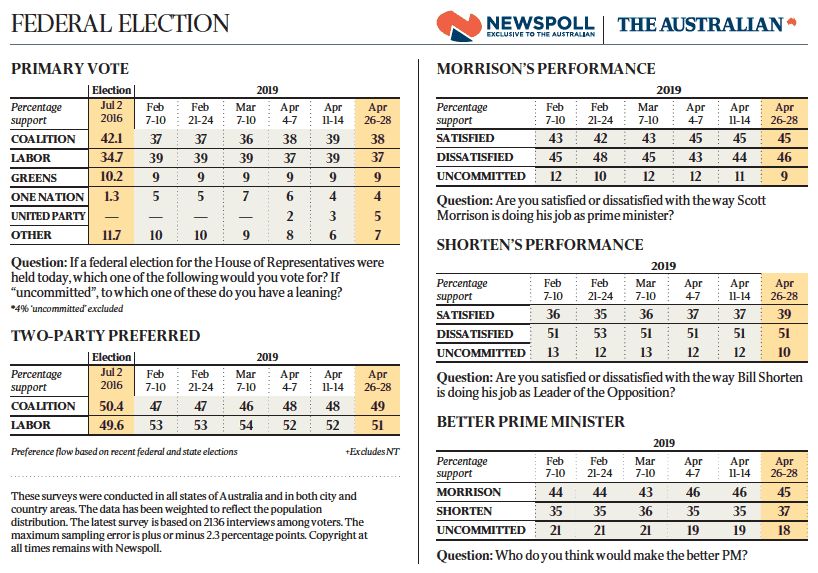
Take this week’s Newspoll – which appeared to show the gap between the two major parties – with a grain of salt, he said.
“Early in April, we saw exactly the same primary vote polling as we saw on the weekend. So, there hasn’t really been a discernible shift. You need to see a gap open up to the degree of around about five or six points, for the Coalition to even look like hanging on. It will stay tight, I think until polling day, but I’d suggest the momentum is with Labor and it hasn’t substantially shifted.”
You can read the full transcript below, and hear The Conversation’s chief political correspondent Michelle Grattan talk with experts on the seats and issues to watch in WA and Victoria on the Politics with Michelle Grattan podcast.
Production assistance by Tilly Gwinner.
Read more: Politics with Michelle Grattan: Caroline Fisher on the spin machines of #AusVotes19
New to podcasts?
Podcasts are often best enjoyed using a podcast app. All iPhones come with the Apple Podcasts app already installed, or you may want to listen and subscribe on another app such as Pocket Casts (click here to listen to Trust Me, I’m An Expert on Pocket Casts).
You can also hear us on Stitcher, Spotify or any of the apps below. Just pick a service from one of those listed below and click on the icon to find Trust Me, I’m An Expert.
Additional audio
Kindergarten by Unkle Ho, from Elefant Traks
SBS news report
ABC news report
Image
AAP Image/NIC ELLIS
Transcript:
Andy Marks: I’m Andy Marks, I’m a political scientist and Assistant Vice-Chancellor at Western Sydney University.
Sunanda Creagh: So Andy, let’s just catch up on where things are up to in New South Wales. What do you see as the key issues in voters’ minds in New South Wales as polling day approaches?
Andy Marks: New South Wales is a strange case. It’s the usual suspects in terms of issues but not in the usual way. So we’re seeing the economy feature but we’re not hearing too much in the way of big ticket reform. We are hearing some of that from Labor of course and it’s not about fiscal performance. That’s not winning votes anymore. It’s about issues like cost of living, it’s about issues like wage stagnation. At the other end, you have issues around negative gearing reform and franking credits which are more at the investment end. So a very unusual take on the economy in terms of elections.
The other issues that feature, of course, Labor have made it about health in terms of cancer care and the package they have there. Alternatively, the Libs have sought to bring it back towards security and issues around border protection, of course, that we saw with John Howard coming into the campaign on the weekend.
The big sleeper is climate and it’s a sleeper in the sense that it’s coming to the fore from a number of angles. We’re seeing the issue of energy reform come up from industry who are madly seeking coherent energy policy from both sides of the parliament. We’re seeing the issue of the environment played out with issues like Adani, and water, of course, is the big one in terms of agriculture and rural electorates across the country. So there’s three different lenses being applied but they all come up in terms of how both sides address the issue of climate.
Sunanda Creagh: You mentioned negative gearing there. Sydney, being the centre of the property boom in Australia, people here seem to be mortgaged up to their eyeballs. Lots of people negatively gearing properties. Do you think that issue might be a decider for some Sydney voters who do take advantage of that policy?
Andy Marks: Negative gearing will factor on the minds of many voters, but not in the seats that are pressure cookers, so they’re not going to swing seats. I think, for example, certainly among the retirement community those issues, particularly around the franking credits matter, are of importance. The housing market in Sydney and across the eastern states more broadly is softening anyway ahead of this measure. It’s hard to tie a definitive link to that and the coming reforms, should Labor win government. It’s not an issue that’s going to turn swinging seats, but it will factor into some more rusted-on voters.
Sunanda Creagh: And speaking of seats, what do you see as the key seats to watch?
Andy Marks: Across New South Wales, I reckon there’s about five that are up for a change. At the outset, I have to say this election won’t be won or lost in New South Wales. It’s most likely Queensland where you have up to eight seats and margins of 4% or less that will decide it. In Victoria, there’ll be some significant movement as well. There’s about five that I’m looking at in New South Wales in terms of potential change. Wentworth, of course, is the big one with the contest between Kerryn Phelps and Dave Sharma. Lindsay, where Emma Husar has been moved aside through misconduct allegations, and you have a contest there and out at Western Sydney. Banks, the immigration minister faces a challenge there on a 1.4% margin.
Then we, move into some coastal regional seats. Gilmore, where former ALP president Warren Mundine is running against Labor’s Fiona Phillips. Robertson on the Central Coast which is held by just 1.1% by the Libs, so they’re the ones where I think you can see some movement. Now the exciting stuff, in terms of drama, Warringah, of course, where former PM Tony Abbott is facing a challenge. In Reid, Turnbull-backer Craig Laundy turned that razor thin margin into almost a moderately safe seat for the Libs, and that’s up in play again as well.
Sunanda Creagh: You mentioned Gilmore, that’s an area that takes in places like Shoalhaven, Jervis Bay, and some of those Batemans Bay type areas. Tell us, what are some of the issues that will be in voters minds in that area?
Andy Marks: Look that’s a difficult one to pick. It’s really a four-way contest. You have a candidate in Warren Mundine who was essentially parachuted in by Morrison. The controversy there, of course, being his former role with Labor.
You also have Katrina Hodgkinson, who was a former Nationals New South Wales minister and really reputable individual running against the Labor candidate Fiona Phillips. And Grant Schulz, the Lib turned independent who was passed over by Mundine. So, it’s interesting in the sense that the way the vote splits over the course of the election will be something to watch. It’s really one that’s very uncertain for all of the players.
Sunanda Creagh: You mentioned Reid, which takes in Canada Bay, Burwood, Strathfield and is currently held by Craig Laundy for the Liberals. He’s been somewhat of a comparatively moderate voice. What do you think will be the issues there?
Andy Marks: Reid is an interesting one. Laundy was an incredibly strong local member and he stood up against his own party’s attempted reforms of the anti-discrimination act. That area was lost to Labor in the recent New South Wales election, due to comments made by the Labor opposition leader around Asians taking jobs. Really retrograde comments on his part. So the momentum probably was with Labor, whether the voters have forgiven the foibles of the state party though will remain to be seen. But, that’s a big loss to the Libs in Craig Laundy moving on.
Sunanda Creagh: I wanted to ask you about the seat of Farrer. That’s a regional seat, it takes in places like Hay, Murrumbidgee. Some of those areas around the Murray Darling, the Central Darling. With the seat of Farrer, what do you think of some of the issues there?
Andy Marks: Look Farrer is an interesting one – you wouldn’t be talking about an electorate with a 20% plus margin as being one that’s up for grabs, but it is. We saw swings in the state election against the coalition of up to 26% in Murray, 19% in Barwon, and around 37% in Orange. So these rural electorates are very volatile and the issue of water management, of course, is the dominant thread across a seat like Farrer. But it’s a diverse seat. So you have areas like Albury, where unemployment is very high, educational attainment is quite low, economic activity has been suppressed through the drought. So the issues across that electorate are incredibly diverse and equally you don’t have in the New South Wales case we had the Shooters, Fishers and Farmers Party running against the Nationals quite successfully in three seats. They’re not a consolidated force at the federal level.
Really, Farrer’s in play because of the Albury Mayor Kevin Mack, who is running the strongest challenge against Sussan Ley. She’s held onto that seat since 2001 and that’s Tim Fischer’s old seat. So, it should be a sure bet for them. This is suddenly a seat that’s in play.
Sunanda Creagh: So you mentioned water being an issue in the seat of Farrer, and certainly that’s shaping up to be an issue across the board. If you believe what you read on social media, suddenly everybody’s talking about water buybacks and we’ve had the big story breaking around the water buybacks issue that involved Barnaby Joyce. I’m interested to know what you think on how that issue may influence voters in the lead up to polling day.
Andy Marks: Look, there’s already a bit of disaffection towards the Nationals. I think their own internal troubles around leadership, and the other controversies they’ve had around Andrew Broad and other figures have given weight to the perception that their mind is not on the game. They’ve taken their eye off the ball in terms of the concerns of rural voters. So, that’s why we are seeing such a pronounced reaction against them in some seats. Whether that anger was spent, at the New South Wales election and the earlier Victorian poll remains to be seen. I can’t see a repeat of the swings we saw in the state election here in NSW. But certainly, some very generous margins will be really damaged, I think.
Sunanda Creagh: So let’s talk about Warringah where Tony Abbott is facing that strong challenge from independent Zali Steggall, who’s been supported by GetUp! in her campaign. That’s also become a point of contention and a point of attack for her political foes. How do you see things playing out?
Andy Marks: Look, there’s no doubt it’s going to be a contest. Zali Steggall will take it down to the wire. People need to be aware though that Tony Abbott loves a fight, shifting him on that margin of over 11% is going to be incredibly difficult. It’s not like Bennelong, for example, where we saw John Howard go as a result of demographic shifts and other factors. And it’s not like Wentworth where, of course, Turnbull stepped aside. A former PM, even one that’s controversial, still attracts some traction among voters. Zali Steggall has done well in opening the debate up into issues that challenge the principles that Tony Abbott’s put forward. So, forcing him to for example to talk more about climate, to talk more about issues where he’s clearly a little uncomfortable, has been a good tactic on her part. Obviously, the work of groups like GetUp! will influence things as well.
I just can’t see it shifting. I think Tony Abbott is far too an experienced player to go down without a fight, and this is the guy that loves to be backed into a corner. I might be proven wrong, but I think he’ll just hang on in Warringah.
Sunanda Creagh: And you mentioned former PMs, speaking of which, let’s talk about Wentworth. Do you think voters will punish the Coalition for turfing out Malcolm Turnbull? We saw Turnbull’s son, Alex Turnbull actively encouraging people not to vote for the Liberal candidate Dave Sharma. And as it turned out Kerryn Phelps did win that seat. So how will things play out there?
Andy Marks: Wentworth is an interesting one. I like to call it the contest for the soul of the Liberal Party. Because really, it’s about whether the party will choose to push forward in a progressive way, or revert more to those hard right tendencies that we’ve seen in recent times. The thing to watch at Wentworth will be whether Phelps has managed to translate in a really short timeframe that protest vote into a base. And that would mean Phelps has to have really strong points of differentiation on issues like climate, immigration and border protection. Which she’s, to a very large extent, done on the latter issue. Whether that’s enough to shift people across for good remains to be seen. That’s one that’s too hard to call.
Sunanda Creagh: So, Andy Marks what’s your prediction? Who do you think is going to win this federal election?
Andy Marks: Look, Labor will win this election. I think that’s virtually unquestionable. We’re just not seeing enough movement, even in the polls at this point in the primary vote level to see the Libs or the Coalition hang on. I think this is going to be a Labor victory.
Sunanda Creagh: Even with Newspoll saying it’s tightening as voting day draws closer?
Andy Marks: You have to look again at that primary vote figure. Early in April, we saw exactly the same primary vote polling as we saw on the weekend. So, there hasn’t really been a discernible shift. You need to see a gap open up to the degree of around about five or six points, for the Coalition to even look like hanging on. It will stay tight, I think until polling day, but I’d suggest the momentum is with Labor and it hasn’t substantially shifted. So with the Coalition on 38% and Labor on 37%, I don’t see it shifting sufficiently for there to be a change in the momentum.
Sunanda Creagh: Let’s talk about the upper house. What do you see as the issues to watch there?
Andy Marks: Look, that’s an interesting one from the New South Wales point of view. Jim Molan, arguably their highest profile senator, finds himself in an unwinnable spot on their ticket. This is largely due to reforms that he instigated, internal party reform. So it’s a big ask therefore for somebody to get up. You know, you’re going to require a quota in excess of 14% of the vote to get a spot. Brian Burston’s the other interesting one. He’s a former One Nation representative, now with Clive Palmer’s outfit, and he’s their parliamentary leader in the house. It’s a very interesting contest there. There’s Doug Cameron, a long-standing senator for Labor, retiring, and Tony Sheldon, the former Transport Workers Union secretary coming in on his spot.
Sunanda Creagh: And just lastly, what do you want to say about preferences? Do you think preferences will make a big difference in this election?
Andy Marks: Look, there’s no doubt that the question around where the United Australia Party’s preferences flow has been a dominant issue in Queensland. I don’t see it being of sufficient weight to shift the momentum, which again in those marginal electorates, up to eight of them, is all with Labor at the moment. So, it will make things a little trickier to call earlier. But, I still see things going Labor’s way in those key seats.
Sunanda Creagh: Any final comments?
Andy Marks: Look, this is a contest where New South Wales will provide plenty of action. But it’s not going to be the place where it’s won or lost. But it’s certainly going to be the place of high drama.
Sunanda Creagh: Andy Marks, thank you so much for your time.
Andy Marks: Thank you.
– ref. ‘Labor will win this election. I think that’s virtually unquestionable’: political scientist Andy Marks on #AusVotes2019 and the key issues in NSW – http://theconversation.com/labor-will-win-this-election-i-think-thats-virtually-unquestionable-political-scientist-andy-marks-on-ausvotes2019-and-the-key-issues-in-nsw-116273