Page 1102

Grattan on Friday: Bill Shorten’s moment of “connection” brings back memories of Beaconsfield

Source: The Conversation (Au and NZ) – By Michelle Grattan, Professorial Fellow, University of Canberra

Some old Labor hands have been recalling this week the appearances of Bill Shorten during the 2006 Beaconsfield mining rescue, that brought the then union leader and political aspirant to the nation’s attention.

They showed, above all, a skill in using an occurrence to connect with the public.

Shorten demonstrated that ability again on Wednesday, in his emotional retelling of his mother’s life story, saying how his politics had been driven by her inspiration. It was a moment of great “connection” just when he needed it.

Who knows what, if any, impact this will have directly on votes. But it did, and will, have its effect on the unfolding final stretch of the campaign. The first thing it did was give “the day” to Shorten.

In politics, personal stories have always grabbed the public’s attention. These days social media magnifies them a thousand percent, as people don’t just relate to the anecdote but translate it into their own experience and share that widely.

Suddenly, many people were on social media talking of their mothers’ histories. Likewise in the party focus groups, Shorten’s teary words were what people wanted to chat about.


Read more: View from The Hill: Shorten turns Daily Telegraph sledge to advantage


The opposition leader who, Beaconsfield notwithstanding, over years has been unable to persuade voters to like him, had suddenly been “humanised”. The Daily Telegraph, with its reprehensible “Mother of Invention” story about what Shorten left out in Monday’s shorter account of his mother’s career, had managed, inadvertently, to give him a significant platform – and he did not let the opportunity pass.

It’s perhaps a long bow, but Shorten may also have gained a little fireproofing for the run up to polling day, at a time when the government wants to demonise him personally, as well as Labor policies.

With the polls close, the coming week will be fierce, because the Coalition’s strongest weapons remain its multiple scare campaigns.

The competing pitches of the election – economic responsibility and the dangers of Labor versus the case for change and the need for a “fair go” – are now well-defined.

There is surely little fresh to be said on the central issues, but each side is reinforcing its arguments and its defences in the final sprint.

Labor’s release of its costings on Friday comes earlier than these exercises normally do. This partly reflects the opposition’s confidence in its numbers. Such confidence is possible because contemporary costings are done by the highly credible Parliamentary Budget Office, making them harder to demolish.

Unlike 2016, when Labor proposed to have a deficit of about A$16.5 billion more across the forward estimates than that in the official Pre-election Economic and Fiscal Outlook (PEFO), this time the opposition is bettering the Coalition’s bottom line. It has bigger projected surpluses through the budget period.

Shadow treasurer Chris Bowen says that based on the recent PEFO numbers, Labor’s budget plan would have a surplus in 2019-20 and every year after. “We will show bigger budget surpluses over the forward estimates and the medium-term, achieving a surplus of 1% of GDP by 2022-23, four years earlier than the current government trajectory.” A 1% of GDP surplus would be about $22 billion in that year, compared with the government’s projected surplus of $9.2 billion.

While Labor has rejected the Coalition’s longer term tax cuts for higher income earners, Bowen stresses that under a Shorten government “further tax relief can be prudently provided when the budget is back in healthy surplus, if the economic and fiscal circumstances allow”.

The costings show budget savings of $154 billion over a decade by a crackdown on multinationals’ tax avoidance and closing tax “loopholes” (including dividend imputation reform, negative gearing and capital gains tax reform, trusts and superannuation concessions).


Read more: Confirmation from NSW Treasury. Labor’s negative gearing policy would barely move house prices


Labor hopes its budget numbers will help counter the government’s line that the opposition’s program is economically irresponsible. But while having the costings out at this stage might take the edge off the overall “scare”, that won’t necessarily lessen the impact of “scares” about particular policies on specific groups, such as retirees and those with negatively-geared properties.

Sunday is another campaign marker day, when the Liberals hold their formal launch in Melbourne.

Morrison this week has gone out of his way to play down the launch as a “party” occasion, saying it’s about his having “a direct conversation with Australians about the future”.

In keeping with what many have described as Morrison’s presidential campaign (it’s accurate, though the word always sounds odd in the Australian context), the launch is to be focused on him rather than, as in Labor’s case, the team.

Let’s face it, options were limited. The Coalition’s ongoing “team” has been shrunk by multiple departures at the election; as for having former leaders featured – they’d be like cats in a bag.


Read more: View from The Hill: Lots of ministry spots to fill if Morrison wins, while many Shorten ministers would return to a familiar cabinet room


(Not, incidentally, that the ex-PMs necessarily worked a treat for Labor, despite the media excitement on the day. It was a gesture of unity but would also have reminded many voters of past Labor divisions, and Paul Keating’s later sounding off about the “nutters” in the security agencies harming Australia’s relations with China was distinctly unhelpful.)

Morrison repeated on Thursday that Sunday would not be “a party hoopla event. It’s not an event where, you know, the party comes together and there’s lots of backslapping.”

The ALP launch had just shown “the Labor Party are more interested in themselves than they are in the future of this country. This event on the weekend is all about laying out very clearly what the choice is for Australians, and what my plan is, taking Australia forward,” he said.


Read more: View from The Hill: Shorten presents the ‘case for change’ in sleek launch


When you think about it, there’s a touch of desperation about this way of looking at things. We still in Australia elect parties, not simply their leaders, even if we have moved towards the “presidential”.

Beyond election day, “the team” is integral to how a government runs. A prime minister doesn’t do it all. One of our more admired post-war governments was Bob Hawke’s – its achievements depended crucially on a combination of two elements, his leadership and a highly talented cabinet.

When he went back to the Liberal party’s roots in Albury soon after becoming leader, Morrison said he had come “with the next generation of the leadership of the Liberal party”.

We’ve not been seeing much of that generation in this campaign. And total focus on a prime minister who, let’s face it, is still on training wheels, does make the whole show look rather thin.

ref. Grattan on Friday: Bill Shorten’s moment of “connection” brings back memories of Beaconsfield – http://theconversation.com/grattan-on-friday-bill-shortens-moment-of-connection-brings-back-memories-of-beaconsfield-116854


Paul Buchanan – Radio NZ Dispatch: Beware the false narrative linking Christchurch to Sri Lanka bombings

Headline: Paul Buchanan – Radio NZ Dispatch: Beware the false narrative linking Christchurch to Sri Lanka bombings – 36th Parallel Assessments

A woman grieves for the loss of a family member in Negombo, Sri Lanka. Planning for the Easter Sunday bombings would have started well before last month’s terrorism attacks in Christchurch, Paul Buchanan believes. Photo: RNZ.

Opinion – ISIS and a junior defence minister in the Sri Lankan government have claimed the terrorist attacks on churches and hotels were a response to the attack on mosques in Christchurch on 15 March.

The claims need to be treated with scepticism. Here’s why.

Having been defeated on the battlefields of the Levant, ISIS now urges its followers to return to decentralised terrorist attacks as a form of irregular warfare. It wishes to show continued strength by claiming that it can orchestrate attacks world-wide and that no country can escape its reach. The Easter Sunday terrorist bombings in Sri Lanka fit that narrative.

For more, see 36th-Parallel’s RNZ Dispatch.

Analysis syndicated by 36th Parallel Assessments

Was Sri Lanka attack retaliation? – Analysis

Evening Report
Evening Report
Was Sri Lanka attack retaliation? – Analysis
Loading
/

Headline: Was Sri Lanka attack retaliation? – Analysis – 36th Parallel Assessments

36th Parallel’s principal, Dr Paul Buchanan.

Prime Minister Jacinda Ardern has made a statement responding to the suggestion that the Sri Lanka bombings were retaliation for the Christchurch attacks.

“We have seen reports of the statement from the Sri Lankan Minister of state for defence, alleging a link between the the Easter Sunday terrorist attack and the March 15 attack in Christchurch,” she says. “We understand the Sri Lankan investigation into the attack is in its early stages. New Zealand has not yet seen any intelligence upon which such an assessment might be based.”

For further analysis, Radio New Zealand spoke to security consultant Paul Buchanan.

For More, see 36th Parallel’s RNZ Dispatch.

Analysis syndicated by 36th Parallel Assessments

Funny, that: why humour is a hit-and-miss affair on the election campaign trail

Source: The Conversation (Au and NZ) – By Mark Rolfe, Honorary associate, School of Social Sciences, UNSW

If fact-checking units can award politicians ticks for telling the truth, surely we should award them clown faces for telling good jokes. And despite some honourable mentions, fewer such honours will be granted during the 2019 federal election than previous campaigns.

Of course, spontaneous humour is harder for our current crop of candidates, nursed through cosseted campaigns and covered by 24-hour media. In long-ago campaigns their forebears competed on soapboxes on corners, often outside opposing pubs, or in raucous town hall meetings. This frequently aggressive street theatre was no holds barred and, like stand-up comedians, politicians had to shout down hecklers.

A consummate performer of this art was Australia’s fourth prime minister, George Reid (1904-5). His large girth prompted one heckler to point at his large stomach and ask, “What are you going to call it, George?”, to which Reid replied:

If it’s a boy, I’ll call it after myself. If it’s a girl I’ll call it Victoria. But if, as I strongly suspect, it’s nothing but piss and wind, I’ll name it after you.

In 1972, the famously quick-witted Gough Whitlam had this to say to a man who incessantly badgered him about abortion:

Let me make quite clear that I am for abortion and, in your case, sir, we should make it retrospective!

Clearly the “good ol’ days” of politics were not solely filled with calm and reasoned debate. The humour could be personal but also persuasive, something that has been known since Aristotle (384–322 BCE) composed his lectures on rhetoric.

A speaker can make an audience laugh in a way that increases our regard for their standing and reputation, which is known in rhetoric as ethos. That is why comedian Mort Sahl contributed jokes to John Kennedy’s campaign and Gerald Ford employed a comic speechwriter.

At his campaign launch, and after his wife had introduced him, Shorten joked:

I’m sure that everyone here and across Australia can understand why I’m happy to be known as Chloe Shorten’s husband.

He had taken a lead from John Kennedy at a Paris media luncheon in 1961:

I do not think it altogether inappropriate to introduce myself to this audience. I am the man who accompanied Jacqueline Kennedy to Paris, and I have enjoyed it.

A politician may want to prove their ethos by showing they can take jokes and insults, as the then NSW premier, Mike Baird, did when emulating Barack Obama by reading mean tweets.

Similarly, LNP Senator Matt Canovan put the joke on himself with one of the basic onion recipes from Tony’s Kitchen Rules.

Of course, election are also slugfests, and nasty jokes aimed at opponents can be devastating if done well. To that end, the parties have digital units, such as Innovative and Agile Memes and ALP Spicy Meme Stash, which use current cultural memes such as Married at First Sight to demolish the aspect of ethos known as moral character.

The Coalition’s sole strategy is to undermine Shorten and ignore everything else outside that personal frame. Here’s an example from LNP Senator James McGrath:

For his part, Shorten provided the major (probably prepared) joke of the first debate when he rebuffed Morrison with “you’re a classic space invader” in order to retake the advantage.

The Coalition has been unable to drop a comedic barrage on the formidable Penny Wong, who is promoted by the ALP as one of the strong team surrounding Shorten that Morrison doesn’t have. Unsurprisingly, she mocked that vacuum:

Analysts of humour since Sigmund Freud have known humour can express superiority over others, even to the extent of wanting to discipline others to comply with certain social values and conduct. So we must not shy away from the fact that we can enjoy nasty humour, even based in stereotypes of other parties:

Because of the long history of anti-politics animus in our democracy and humour, we feel little compunction in hurling vitriol at politicians, especially ones we don’t like:

An old quandary of satire since Thomas More’s 1551 treatise Utopia is the conflict over the path of purity or pragmatism in politics. In partisan politics, this can be simplified for advantage into the accusation of a sell-out.

Paul Keating is remembered as a deft exponent of political humour, yet his most memorable zingers were from his parliamentary performances, which turned off many people. Question Time is more structured for combat than difficult and fluid campaigns.

In the final week of the 1996 campaign, Keating appeared in an interview with Roy and HG. Despite being on a comedy show, Keating was serious, attempting to ameliorate the common view of his aggressive ethos. In effect HG accuses him of being a shadow of his former rambunctious self in the “whimpering to the line” of both sides.


Read more: Up close and personal: Morrison and Shorten get punchy in the second leaders’ debate. Our experts respond.


Politicians and parties are not comedians like Frankie Boyle or Jim Jefferies aiming to provoke social boundaries. There are important limits to humour in politics. That is why Advance Australia failed spectacularly with its Captain GetUp! character rubbing himself against a billboard of Zali Steggall, Tony Abbott’s challenger in Warringah. Equally, GetUp! failed when lampooning Abbott as a uninterested lifesaver shortly after two people had drowned.

Much of the humour in this election seems to preach to the converted. Nevertheless, we can easily enjoy not only nasty humour but also negative campaigning, despite our principled avowals to others of the opposite. We want the luxury of enjoying both our principles and our character assassinations.

ref. Funny, that: why humour is a hit-and-miss affair on the election campaign trail – http://theconversation.com/funny-that-why-humour-is-a-hit-and-miss-affair-on-the-election-campaign-trail-116513

‘New low’ for journalism? Why News Corp’s partisan campaign coverage is harmful to democracy

Source: The Conversation (Au and NZ) – By Johan Lidberg, Associate Professor, School of Media, Film and Journalism, Monash University

Remember the Daily Telegraph’s 2013 front page headline “Kick this mob out”?

Although some could argue that Labor after the Rudd-Gillard years was in a deep mess and not fit to govern, such a headline was deeply partisan and far from neutral election campaign coverage. The Guardian’s Roy Greenslade said at the time of News Corp chief Rupert Murdoch:

There is not the slightest attempt to conceal his agenda. It is blatant, bold and belligerent. And it confirms yet again the way in which he links political interventions to his commercial desires.

Fast-forward six years and little has changed in News Corp’s approach to covering the federal election campaign.


Read more: FactCheck: does Murdoch own 70% of newspapers in Australia?


The similarities between Labor in 2013 and the Coalition in 2019 are uncanny. They have done the same number of replacements of sitting PMs (Labor 2010-2013: Rudd-Gillard-Rudd. Coalition 2015-2019: Abbott-Turnbull-Morrison). And both parties have suffered from disunity and division, although the Coalition is perhaps even more divided than Labor was in 2013 on core policy issues such as climate change.

And yet, we have seen no “Kick this mob out”-style headlines targeting the Coalition from News Corp Australia’s publications in this campaign. Instead, it’s been a steady drumbeat of one-sided, positive coverage (or convenient lack of scrutiny) of the Coalition’s candidates and policies, compared to a barrage of criticism of Labor and Bill Shorten.

News Corp’s campaign coverage so far confirms that growing partisanship in political reporting seem to have become increasingly entrenched in the organisation.

A case in point is The Daily Telegraph’s much-maligned front page story on Wednesday that implied Shorten hadn’t told the full story when describing his mother’s educational opportunities on Q&A earlier earlier in the week.

The article can only be described as an ultra-partisan hatchet job. Shorten called it a “new low”, while Kevin Rudd went so far as to compare News Corp with the People’s Daily newspaper in China on Twitter.

Interestingly, the Telegraph’s story on Shorten’s mother appears to have backfired, creating a huge social media moment – #myMum – devoted to people’s stories of their mothers.


Read more: A matter of (mis)trust: why this election is posing problems for the media


But the article illustrates how damning it is for diversity and plurality when media ownership is as concentrated as it is in Australia, with News Corp being the dominant player by far. If the dominant outlet in such a media landscape decides to wholeheartedly back one side of politics, it will undoubtedly impact the tenor of a campaign and skew the information voters rely on to make up their minds.

It’s not good for a healthy democracy and a fair election campaign.

News Corp’s partisan climate coverage

Backing one side of politics is nothing new for News Corp. There is plenty of empirical research spanning decades documenting how Murdoch’s media empire has sought to influence politics in Australia, the UK and the US. One of the most comprehensive and damning studies is David McKnight’s Rupert Murdoch: An Investigation of Political Power, which is a devastating read illustrating how Murdoch has used partisan journalism for decades to gain political influence benefiting the media empire’s financial bottom line.

Indeed, this is what Labor claims is the driver behind News Corp’s scathing coverage of its policies in this campaign. Deputy leader Tanya Plibersek and assistant treasury spokesman Andrew Leigh tied the partisan coverage to Murdoch’s desire to protect “tax loopholes” in Australia by keeping Labor out of power.

One of the case studies in McKnight’s work is News Corp’s undermining of climate science and meaningful action on climate change. This can also be seen in its coverage of the current Australia election campaign.


Read more: Lies, obfuscation and fake news make for a dispiriting – and dangerous – election campaign


In spite of polls showing growing support in Australia for action on climate change (59%) and renewables (84%), the environment is still treated as a second- or third-tier election topic by most media (with the notable exceptions of Crikey and the Guardian). This is particularly the case with outlets owned by News Corp.

When climate change has been covered by News Corp in the campaign, it’s predominately been done in an alarmist way to slam Labor’s policies. For example, The Australian reported a week ago that Shorten’s climate policies aiming to reduce greenhouse gas emissions by 45% by 2030 could cost the country A$264 billion – a figure based on modelling by a former government economist that Shorten dismissed as “propaganda.”

Though notable climate experts and academics also disputed the estimate, it was widely repeated across News Corp’s other outlets.

Meanwhile, News Corp has asked few critical questions about the Coalition’s much less ambitious climate plan. Most importantly, hardly any coverage has been offered by the large legacy media outlets (such as the ABC, The Age and the Sydney Morning Herald) on seriously assessing the cost of inaction on climate change. (A study to track climate change coverage during the campaign is currently underway by myself and a colleague.)

Overall, the media coverage of climate change thus far can only be described as a failure (with a few exceptions). A failure of giving it enough prominence during debates, panel discussions and crucial press conferences. A failure of deeply scrutinising climate change policies from all parties.

The next generation has made it abundantly clear where it stands on the issue in school strikes and protests across the country. It’s time we all, including the media, start listening to them and give them a voice in the final week of election coverage.

ref. ‘New low’ for journalism? Why News Corp’s partisan campaign coverage is harmful to democracy – http://theconversation.com/new-low-for-journalism-why-news-corps-partisan-campaign-coverage-is-harmful-to-democracy-116796

Creative arts therapies can help people with dementia socialise and express their grief

Source: The Conversation (Au and NZ) – By Joanna Jaaniste, Career Development Fellow, Western Sydney University

People with dementia can flourish and show creativity in ways they, their caregivers and loved ones never thought possible. Under the guidance of a trained therapist, creative arts therapies use painting, drama, dance and music to help improve quality of life for people with dementia.

Around 50 million people worldwide have dementia and it’s on the rise. The condition affects the brain and can result in memory loss and inability to carry out everyday activities, recognise faces or remember words.

Every person with dementia has a different experience of the disease and their own life stories. This is where creative arts therapies come in.


Read more: Why people with dementia don’t all behave the same


What are creative arts therapies?

Each arts therapy has its own way of engaging the imagination:

  • art therapy brings imagery and self-awareness to people, some of whom don’t think they can make art. Participants work with paints and clay, and have the opportunity to extend their world with colour

  • drama therapy uses performance, role play and improvisation to recreate memories, encourage problem-solving, and reawaken social skills

  • dance-movement therapy engages rhythm and body gesture, helping integrate the mind and spirit, and enabling non-verbal communication

  • music therapy can help ground anxious participants, and allow tolerance for tension and the expression of joy and sadness.

What can these therapies do?

Coming together to play music or sing increases social interaction and communication, and reduces the risk of social withdrawal. It can also help reduce depression.

Music brings people together. Thanrada Sirirattrakul/Shtterstock

Drama therapy can improve quality of life for people with dementia by awakening memories and helping patients “work through” troubling issues from their past. It helped one study participant, for example, let go of an obsessional memory of being emotionally abused by a teacher at the age of nine, even a year after the drama therapy ended.

Drama therapy can also help people with dementia to cope with grief, loss, and cognitive and physical decline.


Read more: Looking for a nursing home place for your parent with dementia? Here’s what to consider


In terms of visual arts, research shows participation in art therapy results in significant improvements in mood and cognition, which last long after the sessions have finished.

One such program in Western Australia encourages Indigenous Noongar elders to make dolls, sharing birthing stories from a time when birthing happened on reserves, in missions, or under the stars because mothers were not allowed to give birth in hospital in their part of the country.

Finally, dance-movement therapy stimulates many of the senses and exercises both the body and mind. An important role of these therapies is to help older people reflect on the final stages of life, and express their grief about losing friends and loved ones.

Movement exercise such as these, where participants work with stretchy cloth, work the body and mind. Joanna Jaaniste, Author provided (No reuse)

An alternative to medical intervention

Hearings in the aged care royal commission have begun to focus on how to improve the quality of life for older people with dementia and reducing the overuse of drug interventions. This is possible – and creative arts therapies can play an important role.

We still need further research with greater numbers of participants to continue to rigorously evaluate creative arts therapies. But so far, we know these therapies are a safe and holistic way to deliver a level of creativity and calm to people with dementia in aged care.


Read more: Finding momentary pleasure: how viewing art can help people with dementia


ref. Creative arts therapies can help people with dementia socialise and express their grief – http://theconversation.com/creative-arts-therapies-can-help-people-with-dementia-socialise-and-express-their-grief-114623

Inside the story: Man Out of Time and the inheritance of suffering

Source: The Conversation (Au and NZ) – By Julienne van Loon, Vice Chancellor’s Principal Research Fellow, School of Media & Communication, RMIT University

Why do we tell stories, and how are they crafted? In a new series, we unpick the work of the writer on both page and screen.

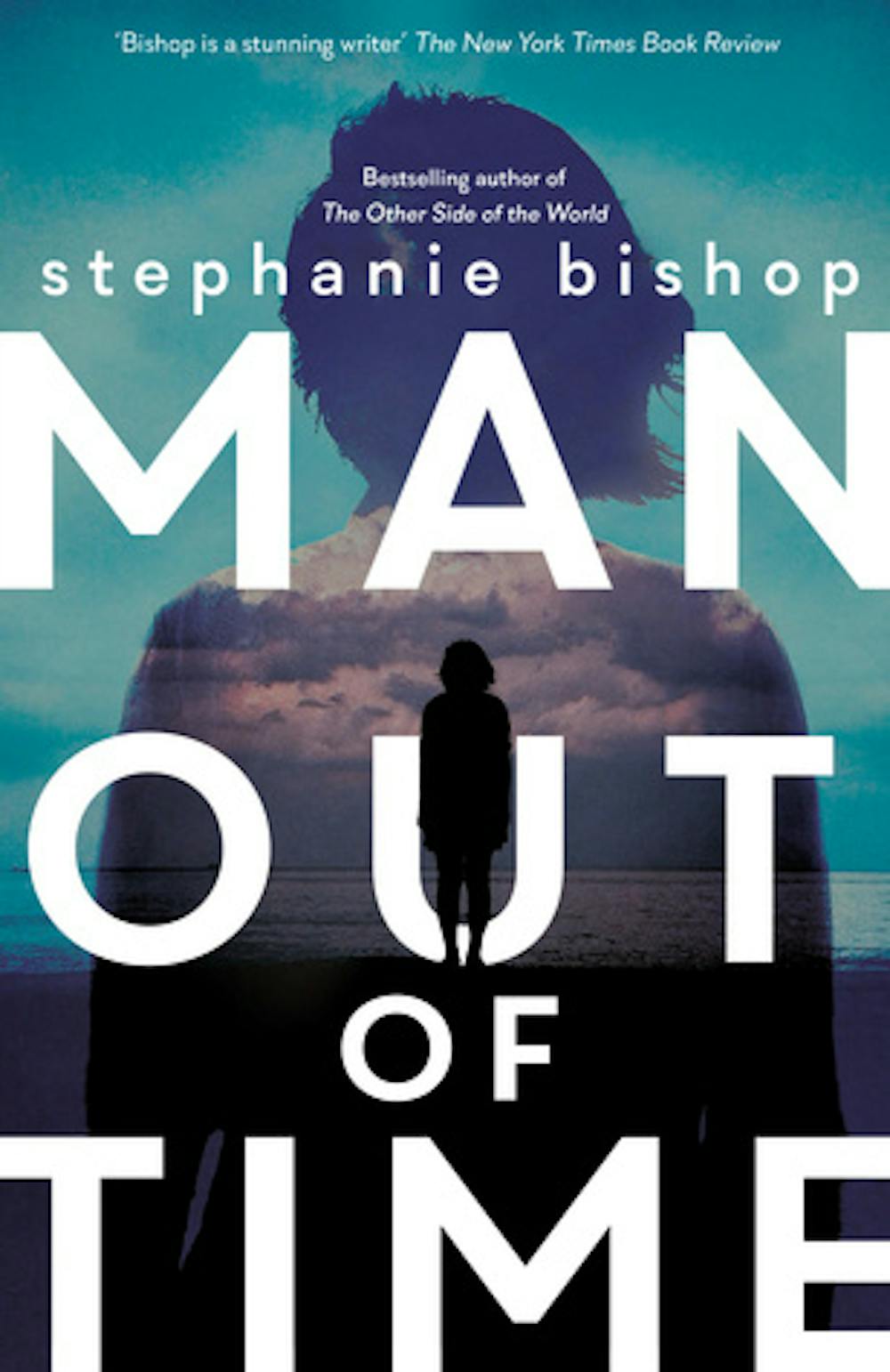
Stephanie Bishop’s latest novel, Man Out of Time (Hachette, 2018), is a disturbing read. It is also a sophisticated work, particularly in terms of the way the author has managed narrative temporality – that is, the relation between story and time. Other novelists and aspiring writers would do well to look closely at what Bishop has achieved here.

Literary scholar Mark Currie has suggested that stories help us to reconcile what we expect with what we experience. Narrative fiction, he argues, can help us to think about the way that we anticipate, or sometimes fail to anticipate, what lies ahead.

Man Out of Time opens on a chapter that follows the central character, Leon, through some of his last hours of life. It is illustrated by photographs Leon has taken of a landscape marked by humans but empty of human form.

Leon’s disengagement with the world is clear, and his death is foreshadowed by references to the multiple scripts he has taken out for painkillers using false names, and by an intention to make “no error this time”.

In the next chapter, the adult Stella will take a phone call from her mother, Frances. Leon has gone missing. “Has he made contact?” Frances asks Stella. He has not, and probably will not. He is most likely already dead via suicide. The weight of this knowledge sits heavily on the reader, and on the character Stella.

Bishop’s achievement in Man Out of Time is an affecting portrait of a family rocked by the patriarchal figure’s long-term depression. In particular, its focus is on the parent/child relationship and because of this, it is an interesting companion piece to Jessie Cole’s Staying (2018), and to Adam Haslett’s Imagine Me Gone (2016).

Depressive illness has a particular relation to time and to tense. It is as if the depressive’s perception takes place outside of ordinary continuity, unharnessed from normative understandings of cause and effect. “In what way does one thing lead to the next?” asks Leon. “He struggled with this connection”.

Shifting perspectives and tenses

Parent/child relationships, in contrast, are very often concerned with how a parent creates and influences a child’s future. While Man Out of Time is a story largely told in retrospect – after the opening chapters, we move backwards in time to Stella’s childhood and adolescence, and to Leon and his family’s early experiences with his diagnosis and treatment – the novel’s key preoccupation is inheritance.

Will the suffering that Leon has experienced – as well as caused – be repeated by his daughter in the future?

In the middle of the novel, Bishop shifts from using third person to second, and from past tense to present, to get us closer to Leon’s perspective while he’s in hospital receiving treatment: “One morning you are wheeled from your room into another smaller room”.

Here is description largely devoid of embellishments. After Leon’s electric shock therapy, Bishop sharply demonstrates Leon’s profound loss of narrative desire:

When you wake it is to think; No … No to the hum of the fridge. No to dripping umbrellas … No to jazz. No to sequins and leopard print. No to the banal. No to the false. No to verisimilitude.

shutterstock

As the chapter moves towards its conclusion, the author shifts our attention to a post-hospital phase that is future-oriented, but also just as likely to be shot through with discontinuity:

Afterwards. You are told before the treatment what you cannot do afterwards – because of your memory, the problems with memory that arise of the consequence of this particular treatment. One is not to drive a car.

Paradoxically, Leon’s disconnection from an ordinary life narrative and from time means that which lies ahead is deeply anticipated in this book – for Stella, for Leon and for Frances. The future will come regardless. It is coming now.

During a period of convalescence at home, Leon acknowledges “a terrible sense that anything and everything that might possibly go wrong in [Stella’s] life would always be construed as his fault”. But Stella is deeply loyal to him, despite his transgressions, including his fleeting sexual abuse.

Menacingly, during her adolescence, Leon tells Stella that everything she ever writes will in some way be about him. And perhaps the novel itself, which is framed as Stella’s invention, is evidence of this. Even well beyond the (by-then) acknowledged fact of Leon’s suicide, the play between the foreseeable and the unexpected is a key source of tension for Stella.

While many stories move from not knowing to knowing, or from uncertainty towards explanation, this is not one of those novels. If anything, as Currie would phrase it, “progress is a process of increasing bafflement.”

In the second to last chapter, years after her father’s death, Bishop describes a dream the adult Stella has, in which she is confused by an imagined set of directions from Google Maps:

She did not know which path to take. She had taken neither path before. There was nothing to indicate whether the slower path would be more interesting, or whether it would simply be more tiring, and because she had never been to the place she was heading towards, there was no knowing whether the quicker route would deliver her faster to a good and pleasurable thing, or whether the experience to which her route led would be bad or unwelcome or just dull – a destination that was not so necessary after all – in which case she’d be better off taking the means without end: the slower, perhaps prettier path that she may or may not be about to take, now, as she stands at her open door, watching the pulsing signal that represents her real self, and wondering where it might go.

In his critical work, The Unexpected (2013), Currie has argued that any understanding of how temporality works in contemporary narrative needs to take in what he calls a philosophy of surprise.

It is instructive, in this context, that Bishop concludes a book very much slowed and distorted by Leon’s out-of-timeness with this part hopeful, part anxiety-ridden focus on the unforeseen.

ref. Inside the story: Man Out of Time and the inheritance of suffering – http://theconversation.com/inside-the-story-man-out-of-time-and-the-inheritance-of-suffering-112406

Labor and Greens unlikely to win a Senate majority on current polling; Greens jump in Essential poll

Source: The Conversation (Au and NZ) – By Adrian Beaumont, Honorary Associate, School of Mathematics and Statistics, University of Melbourne

There are 76 senators – 12 in each state and two in each territory. At a normal half-Senate election, half the state senators and all territory senators are elected, so 40 of the 76 senators are up for election on May 18. As tied votes are lost, it takes 39 of the 76 seats to control the Senate.

As the 2016 election was a double-dissolution, with all senators up for election, half the state senators were awarded long six-year terms expiring in June 2022, and the other half received short three-year terms expiring on June 30. The order-of-election method was used: the first six senators elected in each state won long terms, and the last six got short terms.


Read more: Major parties to allocate long and short Senate terms using order-of-election method


There have been several disruptions. First, SA Liberal Senator Cory Bernardi, who has a long term, defected from the Liberals to form his Conservative party. Family First Senator Bob Day was disqualified by the High Court, and replaced by Lucy Gichuhi, who later joined the Liberals. This means that the Liberals swapped a long-term senator (Bernardi) for a short-term senator (Gichuhi).

Tim Storer sat as an independent when he replaced the disqualified SA Centre Alliance senator Skye Kakoschke-Moore. As Kakoschke-Moore had a short term, Storer also received a short term. Storer will not contest this election.

Former One Nation short-term senators Fraser Anning and Brian Burston have left the party, and will contest this election for different parties – Anning for his own party, and Burston for Clive Palmer’s United Australia Party (UAP).

When Jacqui Lambie was disqualified by the High Court in Tasmania, Steve Martin was elected as her replacement. However, Lambie had a large below-the-line vote, and these votes did not flow strongly to Martin. As a result, while Lambie was elected with a quota and had a long term, Martin did not get a quota. The Liberals received an additional long term, while Martin got a short term. Martin later joined the Nationals, so this change is not as important as it looked.


Read more: Liberals gain a Tasmanian long Senate term due to citizenship saga, while polling on Adani is mixed


The table below shows the 36 senators that are not up for election. Centre Alliance (CA) was formerly the Nick Xenophon Team. The one Other is Cory Bernardi.

Senators that are not up for election in 2019.

The table below shows the 40 senators that are up for election. The five Others are the Liberal Democrats and Burston (UAP) in NSW, Derryn Hinch in Victoria, Anning in Queensland and Storer in SA.

Senators up for election in 2019.

Labor currently has 26 senators and the Greens nine, for a Labor/Greens total of 35 of the 76 seats. To win 39 seats and a majority, the two parties would need to gain a combined four seats.

Effectively, that means Labor needs to gain four seats, as the Greens are defending seats in every state, and are very unlikely to win two seats in any state. The only possible gain for the Greens is in the ACT, but that would require the Liberal vote to fall well below 30% – a quota is one-third of the vote, or 33.3% with two seats.

A quota for election in the states is one-seventh of the vote, or 14.3%. It will be difficult for Labor to gain in Queensland, a state where populist parties do well, or WA, a conservative state where Labor habitually wins two Senate seats at half-Senate elections. In Tasmania, Labor will probably struggle to defend its three seats.

Labor should gain a seat from Others in NSW and SA, and is a chance to gain Hinch’s seat in Victoria. If Labor held all their other seats, they would have 29 senators.

The Greens are defending six seats. They should retain comfortably in Victoria, WA and Tasmania – states where they won two seats at the double dissolution. NSW, Queensland and SA are more problematic.

The most optimistic scenario for Labor and the Greens gives them 39 Senate seats. That requires Labor gaining seats in NSW, SA and Victoria, and the Greens gaining an ACT seat. Both parties would need to defend all their existing seats. This scenario is not probable, and it is more likely that Labor and the Greens end up with around 36-37 seats.

The Coalition is only defending two seats in every state except SA, so the only likely loss is that third SA seat. If the Coalition does unexpectedly well, they could gain several seats, rising into the mid-30’s in seats from their current 31.

Other than the Coalition, Labor and the Greens, it is more likely than not that a right-wing populist (One Nation and the UAP are most likely) will win a Queensland Senate seat. The UAP or One Nation could also be a threat in NSW. Hinch could win again in Victoria, the Centre Alliance is running in SA and Lambie in Tasmania.

With the higher quota at a half-Senate election, parties probably need at least 5% of the vote to be in contention for a seat (or 5% beyond their second quota for the major parties).

Group ticket voting for the Senate was abolished before the 2016 election. Voters are told to number six boxes above the line, but only one is required for a formal vote. To vote below the line, voters are instructed to number 12 boxes, but only six are required. It is possible with this system that the many small right-wing parties contesting could cause seats to fall to the left that should go to the right.


Read more: Poll wrap: Palmer’s party has good support in Newspoll seat polls, but is it realistic?


I had a detailed explanation of how the Senate voting and counting system works in this article about how Anning won his seat on just 19 below the line votes.


Read more: How Fraser Anning was elected to the Senate – and what the major parties can do to keep extremists out


Essential poll: 52-48 to Labor with Greens at 12%

This week’s Essential poll, conducted May 2-6 from a sample of 1,079, gave Labor a 52-48 lead, a one-point gain for Labor since last week. It is the first time in this election campaign that a poll has moved to Labor. However, primary votes were not pleasing for Labor: 38% Coalition (down one), 34% Labor (down three), 12% Greens (up three) and 7% One Nation (up one).

By 54-46, voters expected Labor to win the election (59-41 last week). Scott Morrison led Bill Shorten by 42-31 as better PM (40-31 last week). 16% (down three since last week) said they had paid no attention to the election campaign, 29% a little attention (steady), 36% some attention (up three) and 19% a lot of attention (down one).

Essential asked about six policies of both major parties. The least-supported Labor policy was reducing tax concessions for investors and self-funded retirees (39-32 support). There were two Coalition policies with more opposition than support: investigating building a new coal-fired power station (34-32 opposed) and allowing doctors less of a say over the treatment of asylum seekers (34-28 opposed).

Overall, voters supported the Labor policy package over the Coalition’s package by a 46-36 margin.

Morgan poll: 51-49 to Labor

This week’s Morgan poll, conducted May 4-5 from a sample of 826, gave Labor a 51-49 lead, unchanged since last week. Primary votes were 38.5% Coalition (down 1%), 34% Labor (down 2%), 11% Greens (up 1.5%), 4% One Nation (up 1.5%) and 3.5% UAP (up 1.5%). As with Essential and Ipsos, Morgan has a gain for the Greens at Labor’s expense. Newspoll is the only poll this week with no Greens gain.

As discussed on Monday, Morgan’s face-to-face methodology tends to skew against politically incorrect parties like One Nation and the UAP.


Read more: Poll wrap: Newspoll and Ipsos have contrasting leaders’ ratings trends; Abbott trails in Warringah


Seat poll of Mayo

The Poll Bludger reported a YouGov Galaxy poll of the SA seat of Mayo, conducted for The Advertiser May 2 from a sample of 557. The Centre Alliance’s Rebekha Sharkie led Liberal Georgina Downer by 57-43 (57.5-42.5 at the July 2018 byelection). Primary votes were 43% Sharkie, 38% Downer, 7% Labor, 7% Greens and 3% UAP. By 60-18, voters approved of Sharkie. Seat polls are unreliable.

UK local elections and Spanish election results

I wrote for The Poll Bludger about the UK local elections on May 2 and the Spanish election on April 28. The UK Conservatives lost over 1,300 councillors, but Labour went backwards too. In Spain, national left-wing parties won the election, but are short of a majority.

ref. Labor and Greens unlikely to win a Senate majority on current polling; Greens jump in Essential poll – http://theconversation.com/labor-and-greens-unlikely-to-win-a-senate-majority-on-current-polling-greens-jump-in-essential-poll-116414

Unions do hurt profits, but not productivity, and they remain a bulwark against a widening wealth gap

Source: The Conversation (Au and NZ) – By Chris Doucouliagos, Professor of Economics, Department of Economics, Deakin Business School and Alfred Deakin Institute for Citizenship and Globalisation, Deakin University

This article is part of an election series on wages, industrial relations, Labor and the union movement ahead of the 2019 federal election. You can read other pieces in the series here.


Some advocates of laissez-faire capitalism argue that trade unions are bad for productivity. “With few exceptions,” according to one American economist, George Reisman, “unions openly combat the rise in the productivity of labour.”

Other economists disagree. “Unionisation and high worker productivity often go hand-in-hand,” say Harley Shaiken and David Madland. “Fairness on the job and wages that reflect marketplace success contribute to more motivated workers.”

So who’s right?

To answer this question, my colleagues Richard Freeman and Patrice Laroche and I surveyed the global evidence from more than 300 studies on the economic impact of unionisation.

We conclude that unions do not, overall, reduce productivity, though it varies according to specific circumstances.

Unionisation does make businesses less profitable for the owners. But importantly, it also reduces income inequality, a useful social function given the problems that flow from a widening wealth gap.

National differences

Productivity refers to the efficiency of turning inputs into outputs. It’s a key measure of economic performance. A nation’s productivity raises its per capita GDP.

The evidence from Australia is too thin to draw a credible conclusion (there are just a handful of studies), so our overall findings reflect evidence from other nations.

That evidence is mixed. In Britain, for example, union influence has reduced company productivity. In the US, unionisation appears to be associated with higher productivity in the construction and education sectors, but has made no difference in manufacturing. In developing countries, the overall effect is generally positive.

Such differences can be explained by variations in labour market institutions. These include employment protections, minimum wages and unemployment benefits. Laws influence social attitudes, and vice versa, which in turn affect relative negotiating power and whether unions and employers value cooperation over conflict.

South Korean trade unionists rally for better working conditions in Seoul in November 2018. Kim Chul-Soo/EPA

In theory, the more labour and capital cooperate, the more productive an enterprise is likely to be, providing higher wages and greater job security to workers and higher profits to shareholders. Less cooperation means lower productivity.

Taking a share of profits

The evidence shows unionisation is associated with lower profits, because unions secure higher wages and benefits for their members.

By reducing the profitability of an investment, unions may discourage further investment as owners of capital seek higher profits elsewhere.

Further, unions can hurt business when they exercise their power to disrupt (through strikes and other industrial action). Union corruption might also add to business costs.

But unions are by no means all bad for business. In representing worker interests, they can help make a company a more attractive place to work, reducing turnover and increasing employees’ commitment to business success. Higher union wages and benefits also attract more job applicants, allowing management to select the best workers.

But a benefit to society

Most importantly, from a societal point of view, unions reduce pay inequalities. They increase the relative pay of lower skilled workers. They help to establish pay norms that extend beyond unionised companies.

Inequality is bad for economic growth, because it discourages investment in education and innovation.

It is bad for democracy. It widens social divisions within societies and reduces participation and political engagement. It drives the rich to oppose democratic reforms that might lead to wealth redistribution.

The increase in inequality in wealthy nations as union membership has declined over the past half century suggests unions are a pivotal institution for promoting equality. In OECD nations the average rate of unionisation was about 46% of the workforce in 1980. By 2015 it was 27%.

Meanwhile, the average income of the richest 10% of the population in OECD countries is about nine times that of the poorest 10% – up from seven times 25 years ago.

The trade-off of lower profits and reduced managerial autonomy, with managers forced to work harder as they negotiate and compromise with unions, should be considered a cost-effective price to pay relative to the long-term costs of rising inequality.

So Alfred Marshall, a founder of neoclassical economics, had a point when he said in 1890 that trade unions “benefited the nation as well as themselves”.

ref. Unions do hurt profits, but not productivity, and they remain a bulwark against a widening wealth gap – http://theconversation.com/unions-do-hurt-profits-but-not-productivity-and-they-remain-a-bulwark-against-a-widening-wealth-gap-107139

You know nothing about rehoming a pet, Jon Snow

Source: The Conversation (Au and NZ) – By Bronwyn Orr, Veterinarian and PhD scholar, University of Sydney

Warning – minor Game of Thrones spoilers ahead

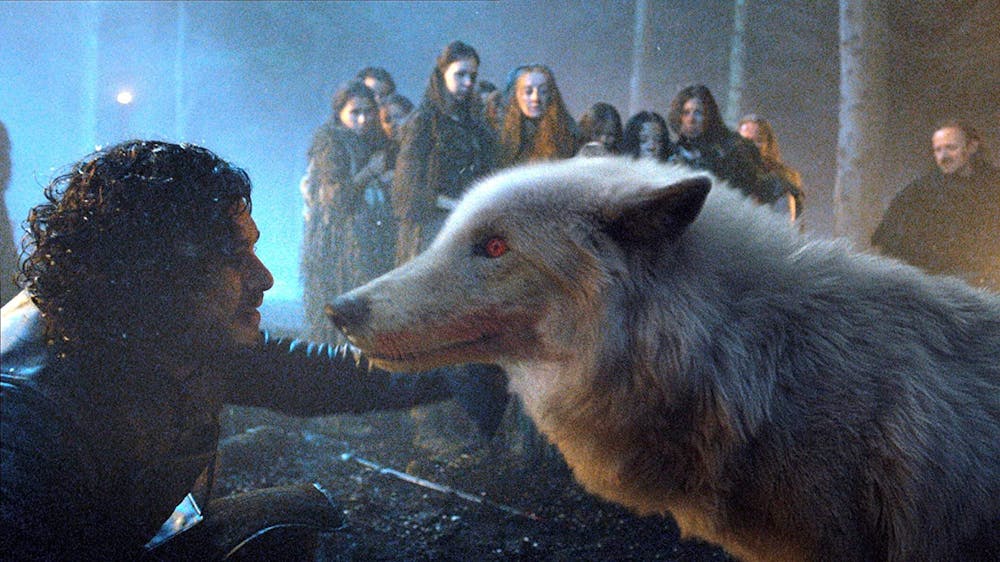
In the latest episode of Game of Thrones we watched Jon Snow abandon his direwolf, Ghost, without so much as a hug goodbye. Many were outraged, with some questioning the leadership abilities of a human so callous. (The directors said “a CGI issue” prevented the hug goodbye, but many fans are not impressed).

But is there a way to rehome a pet responsibly? And could Jon have done anything differently?


Read more: Is your dog happy? Ten common misconceptions about dog behaviour


Rehoming shouldn’t be abandonment

First things first. Rehoming a pet means finding your pet a new home, not abandoning them. It’s illegal to abandon a pet in most jurisdictions of Australia, with many state animal welfare laws conferring a “duty of care” on the owner of an animal. You are responsible for a pet until it either passes away or you transfer ownership of the animal to another person.

There are many reasons why pets get rehomed

With the average dog living 11-13 years and the average cat living 12-15 years, it’s easy to see how a rehoming event can occur in a period spanning more than a decade.

The most common reason cats are surrendered to animal shelters in Australia is due to accommodation issues. With around a third of all households now renting their accommodation, for many people, staying in one dwelling for 10-15 years is impossible.

Many states tenancy laws don’t mention pets, which allows landlords to refuse pets on their properties. This greatly restricts the supply of pet-friendly rentals. However, jurisdictions like Victoria and the Australian Capital Territory are looking to make things easier for pet-owning renters.

Other reasons why people might rehome their pets include injury or illness which affects someones caring capacity, a relationship breakdown or entering a nursing home. Even a change in employment can interfere with someone’s ability to care for a pet.

In Jon’s case, going south to fight in (presumably) a great deal of battles, in a much warmer climate, for an indeterminate amount of time, all constitute good reasons to rehome Ghost.

Jon and Ghost in happier times. HBO/IMDB

Act in your pet’s best interest

It is our responsibility as pet owners to embrace our duty of care and act in the best interests of our pet. Often rehoming can lead to an improvement in an animal’s circumstances. If a new home will provide an animal with a better quality of life, for example more exercise and affection, then arguably this leads to a better outcome for that pet. It is better to arrange a suitable alternate home for a pet than let it experience neglect due to a change in owner circumstances.

We know that many people struggle with the decision to rehome a pet, so if there are no other alternatives available to you, here is how you can rehome a pet responsibly.

1. Take all reasonable steps to address the need to rehome your pet

Explore alternate accommodation options, obtain the help of a dog trainer or employ a dog walker to overcome a lack of time. Discuss your issues with the local shelter or rescue, as they may have some advice too. RSPCA QLD have a great online tool which works through some of the common reasons people contemplate rehoming pets with practical advice and solutions.

2. Give yourself plenty of time

If you’re moving overseas, don’t leave rehoming your pet until the last minute. Ensure you leave plenty of time for the process and make a plan. By giving yourself plenty of time to pick a new home, you will give your pet the best chance with their new owners.

3. Ensure you pet is up-to-date

Make your pet as desirable as possible for a new owner. Check their vaccinations are up-to-date, get them desexed and microchipped (if they aren’t already), ensure they are on parasite preventatives and confirm they are toilet trained prior to rehoming.

4. Look for solutions close to home

Talk to your family and friends about the need to rehome your pet. Ask if any of them might consider a new addition to their family. You are likely to have more success with those close to you as they have already established a relationship with your pet. Additionally, if your circumstances change, you might be able to care for your pet again if they live with someone you know.

5. Assess potential adopters

Once you’ve advertised your pet for rehoming, take the time to thoroughly assess any potential adopters. Conduct interviews over the phone and in-person to get a feel for whether your pet would fit in with their family. Consider conducting a trial adoption or weekend sleepover prior to a full transfer of ownership, to ensure your pet and their family are happy with the arrangement.

Rehoming a pet is always a tough decision. It’s often an incredibly emotional experience and one seldom done lightly. However, if done responsibly and with your pet’s welfare front of mind, it can be done successfully.


Read more: Curious Kids: is it true that dogs at the pound get killed if nobody adopts them?


And what of Jon Snow’s actions?

You could barely call what he did “rehoming”. There was no effort to address the reason for find a new home, he left it to the literal last minute and he didn’t discuss it with his friends and family.

While we can never forgive Jon for not giving Ghost one last hug, the reality is that as a direwolf, Ghost is naturally suited to life in the north. He gets to avoid further battles and live the rest of his days in his natural environment. Arguably, he will now experience a better quality of life than with the neglectful Jon Snow.

ref. You know nothing about rehoming a pet, Jon Snow – http://theconversation.com/you-know-nothing-about-rehoming-a-pet-jon-snow-116661

Curious Kids: why do leaves fall off trees?

Source: The Conversation (Au and NZ) – By Matilda Brown, PhD, University of Tasmania

Curious Kids is a series for children. If you have a question you’d like an expert to answer, send it to curiouskids@theconversation.edu.au You might also like the podcast Imagine This, a co-production between ABC KIDS listen and The Conversation, based on Curious Kids.


Why do leaves fall off trees? – Emma, age 5.


Great question! The short answer is that leaves fall off trees when they aren’t doing their job any more.

A leaf’s job is to turn sunlight into food for the tree. To do this, the leaf needs water. This water comes from the soil, and is sucked up through pipes in the trunk and branches all the way to the leaves – this can be a very long way for tall trees!

It’s a very long way from the ground all the way up to the leaves of these gum trees! Flickr/Geoexplore, CC BY

If there isn’t enough water, the leaf can be damaged and stop working. The tree doesn’t want to waste all the good things in the leaf, so it takes the nutrients from the leaf back into the stems and roots. This way, they can be recycled.

When the leaf is empty, the tree stops holding onto it and it falls to the ground, or blows away in a gust of wind.


Read more: Curious Kids: how can a tiny seed actually grow into a huge tree?


What are deciduous trees?

Some trees lose their leaves every year. These trees are called deciduous trees, and they lose their leaves in response to the seasons. Deciduous trees mostly come from places where winter gets cold and snowy.

When it is very cold, the water in the tree can freeze – the leaves stop working and can even be damaged by the ice crystals. These trees know to prepare for this, and start taking nutrients out of the leaves when the days get shorter in autumn – this is when we can see them changing colour.

It makes sense for trees to lose their leaves before winter in places where it gets very snowy. Flickr/Aine, CC BY

But there are deciduous trees in tropical places where it never gets cold. Winter in these places is very dry. When the rainy season ends, the tree knows that it will not have very much water for a few months, so it lets go of its leaves.

Trees hibernate too

When the tree is leafless, it can’t make food. But it doesn’t get hungry. Instead, it rests.

Just like a bear goes into hibernation and snoozes all through winter, trees have a long sleep until the water in the pipes starts moving again. This can be in spring, or when it starts to rain again. Then, they wake up and put out new leaves, so they can start making food again.

Some trees hold onto their leaves all year long. These trees are called evergreens, because they stay “ever green”. But the leaves on these trees all die and fall off eventually. That happens when the leaves are old or damaged. Leaves don’t work very well after they’ve been munched on by an animal.

Leaves are really important for the tree, but sometimes it’s better for the tree to let them go. They can save all the good bits and when there is enough water, they can use them to grow brand new leaves.


Read more: Curious Kids: Where did trees come from?


Hello, curious kids! Have you got a question you’d like an expert to answer? Ask an adult to send your question to curiouskids@theconversation.edu.au

CC BY-ND

Please tell us your name, age and which city you live in. We won’t be able to answer every question but we will do our best.

ref. Curious Kids: why do leaves fall off trees? – http://theconversation.com/curious-kids-why-do-leaves-fall-off-trees-111914

Journalist pardons are welcome, but press freedom in Myanmar will require real reform

Source: The Conversation (Au and NZ) – By Kyle Springer, Senior Analyst at the Perth USAsia Centre, University of Western Australia

Myanmar’s president released more than 6,000 prisoners on Tuesday, including two Pulitzer Prize-winning journalists imprisoned for reporting on a military crackdown on the Rohingya Muslim minority in Rakhine state.

Wa Lone and Kyaw Soe Oo, who work for the news organisation Reuters, were arrested in 2017 and, after a corrupt trial engineered by the military, sentenced to seven years in prison.

While the presidential pardon is welcome, there are still a number of serious, ongoing issues for freedom of expression and democracy in Myanmar. The influential military and its supporters in the government continue to work against press freedom in particular, waging what a UN human rights report referred to last year as a “political campaign against independent journalism.”

Why did the government release the prisoners now?

The pardon coincides with traditional New Year in Myanmar, which started on April 17. It is customary for government officials to release prisoners around this time.

It was also a way to at least partly ease the increasing international pressure on the Myanmar government. Foreign governments, NGOs, and international organisations have heavily criticised the government for its failure to protect freedom of the press, its record on human rights, the Rohingya crisis, and its scant progress on meaningful democratic reform.


Read more: World must act to end the violence against Rohingya in Myanmar


But another way to look at the president’s decision to pardon Wa Lone and Kyaw Soe Oo is as a balancing act. The ruling National League for Democracy must toe a careful line in terms of dealing with pressure from the West and appeasing the powerful military and the Burmese ethnic majority, who overwhelmingly support the military’s actions against the Rohingya.

As part of this balancing act, the party let the reporters spend 511 days in jail as a powerful deterrent against dissent, which was desired by the military. Then, the government commuted the sentence at the first opportunity it could in an attempt to please the West.

Does amnesty signal a real shift towards freedom of the press?

Probably not. Despite Tuesday’s pardon, many journalists are still imprisoned, including a prominent filmmaker and human rights activist who was imprisoned last month for allegedly defaming the army in a Facebook post.

Myanmar needs to undertake difficult reforms across many areas of its government if it is to truly improve freedom of the press.

First, legal reform is needed. Outdated laws like the Official Secrets Act and Unlawful Associations Act, which were originally legislated during the colonial era, remain on the books. A number of more recent laws are also used against journalists, particularly a section of the Telecommunications Law, which criminalises online defamation and impedes investigative reporting. These laws are broad and can be easily applied across poorly defined cases of defamation and sedition.

Efforts to repeal and reform these laws might be easier for the government if it were not for the influence of Myanmar’s military in political and legal processes.


Read more: Aung San Suu Kyi’s extraordinary fall from grace


Myanmar’s 2008 constitution guarantees the military a quarter of the seats in the upper and lower houses of Myanmar’s parliament. Amendments to the constitution require the approval of three-quarters of parliament, effectively giving the military veto power over constitutional reform.

In a recent effort, parliament voted to approve a committee to draft amendments to the constitution, but faced significant opposition from the military and the military-backed Union Solidarity and Development Party. Thousands of demonstrators rallied on the streets of Yangon in support of the committee shortly after it was approved. The draft amendments the committee delivers will still have to get past the 75% vote threshold in parliament.

The judicial branch of Myanmar’s government also contains holdovers from the previous administration of President Thein Sein, a former general. For instance, the chief justice of the Supreme Court, which denied the final legal appeals of Wa Lone and Kyaw Soe Oo just last month, is a former Army officer. Three other judges are also appointees of Thein Sein.

Through these influential levers, the military is in a position to block any meaningful reforms and continue to use the legal system to silence those who challenge its continued political control of Myanmar.

For so long, Myanmar was closed off to the rest of the world. Now it is emerging as an influential country in the Indo-Pacific region. The Rohingya crisis and its threat to regional stability has elevated the need for free press coverage of important developments in Myanmar.

The rest of the world should continue to pressure Myanmar to improve its press freedom. It is needed now more than ever.

ref. Journalist pardons are welcome, but press freedom in Myanmar will require real reform – http://theconversation.com/journalist-pardons-are-welcome-but-press-freedom-in-myanmar-will-require-real-reform-116733

RSF hails freedom for Myanmar journalists as investigative victory

Pacific Media Watch Newsdesk

Reporters Without Borders (RSF) has praised the release of Reuters journalists Wa Lone and Kyaw Soe Oo from a prison in the Yangon suburb of Insein as a victory for press freedom and investigative reporting in Myanmar and throughout the world.

The two reporters had spent a total of 511 days far from their families because they dared to investigate a subject that is banned in Myanmar, the genocide of the country’s Rohingya minority.

Held on trumped-up evidence after being arrested in a trap set by the police in December 2017, Wa Lone and Kyaw Soe Oo were convicted last September of violating the Official Secrets Act and were given seven-year jail sentences that were confirmed twice on appeal, reports RSF.

READ MORE: Massacre in Myanmar – a Reuters special report

Kyaw Soe Oo outside the Yangon court in Myanmar on September 3. Images: Ye Aung Tha/AFP/RSF

They were finally pardoned by President Win Myint and released yesterday.

Head of RSF’s Asia-Pacific desk Daniel Bastard hailed the release as a victory for press freedom and investigative journalism.

-Partners-

“As well as the release of two individuals who should never have been in prison – Wa Lone and Kyaw Soe Oo – this is a fundamental victory for press freedom and for RSF, which had campaigned constantly ever since their arrest.

“Their case is emblematic of investigative journalism’s importance for the functioning of democracies. We hail the role played by all those civil society actors who, both in Myanmar and internationally, never forgot the fate of these two journalists and kept fighting for them until this successful outcome.”

The campaign
A month after their arrest, RSF launched a petition for their release to draw the public’s attention to their case.

After their conviction in September 2018, RSF addressed an open letter to government leader Aung San Suu Kyi, deploring her handling of the case and reminding her how press freedom had previously helped her fight for democracy.

The following month, RSF issued a “incident report” about the threat to Myanmar’s position in the World Press Freedom Index.

When their lawyer filed an appeal in November 2018, RSF and more than 50 other international and local NGOs issued a joint letter highlighting the many flaws and inconsistencies in the prosecution’s case.

In January 2019, RSF supported the candidacies of Wa Lone and Kyaw Soe Oo for UNESCO’s Guillermo Cano Press Freedom Prize, which they were awarded last month.

The downside
“Today’s release must not eclipse the fact that investigative reporters in Myanmar now have a permanent threat hanging over them,” said RSF.

RSF had predicted last December that a presidential pardon could be granted after all appeal possibilities had been exhausted but, at the same time, it had warned of the problems in this scenario.

“The civilian authorities have finally made a show of clemency but the journalists’ conviction has been upheld, maintaining a dangerous judicial precedent that allows the military and nationalists to save face.”

“Although Wa Lone and Kyaw Soe Oo are finally reunited with their families, a message has been sent to all other journalists that they too could face 18 months in prison if they dare to investigate subjects that are off limits.”

Myanmar is ranked 138th out of 180 countries in RSF’s 2019 World Press Freedom Index, one place lower than in 2018.

Print Friendly, PDF & Email

Article by AsiaPacificReport.nz

Koori Mail’s ‘Uncle Russell’ was a dedicated Indigenous voice

Pacific Media Watch Newsdesk

The Koori Mail, after awaiting permission from the Kapeen family, has announced with great sadness the sudden passing of Koori Mail chairperson and Bundjalung elder, Russell Kapeen.

“Uncle Russell” passed away on Saturday, May 4, in his home at Coraki, NSW, the Koori Mail statement said. He was 72.

The Koori Mail is proudly owned by five Aboriginal organisations within the Bundjalung region, one of which, the Coraki based Kurrachee Aboriginal Co-operative, Uncle Russell helped establish and lead.

READ MORE: Press Council welcomes first Indigenous member – Koori Mail

Uncle Russell was a fierce advocate for the well-being of Aboriginal and Torres Strait Islander people. Image: Koori Mail

He proudly served on the Koori Mail Board since 1993, and was the chairperson since 1995, dedicating a total of 26 years to the voice of Indigenous Australia.

Uncle Russell was a fierce advocate for the well-being of Aboriginal and Torres Strait Islander people and communities throughout NSW and beyond, and was an extremely dedicated and loving family man and community member.

-Partners-

From the Koori Mail Board, staff and our team of writers and correspondents around the nation, we send our deepest condolences and thoughts to the Kapeen family and extended families, and to the communities of the Bundjalung nation during this time.

The Koori Mail will close our office for the day when arrangements for Uncle Russell’s farewell have been confirmed. We ask that our supporters, readers, advertisers and colleagues acknowledge that this is our responsibility to cultural protocol and will advise of office closure day and times accordingly.

The Koori Mail asked, and received permission from the Kapeen family to use this photograph. It also acknowledged and provided a warning that this image may cause some distress to Aboriginal and/or Torres Strait Islander persons.

Print Friendly, PDF & Email

Article by AsiaPacificReport.nz

How Earth’s continents became twisted and contorted over millions of years

Source: The Conversation (Au and NZ) – By Dietmar Müller, Professor of Geophysics, University of Sydney

Classical plate tectonic theory was developed in the 1960s.

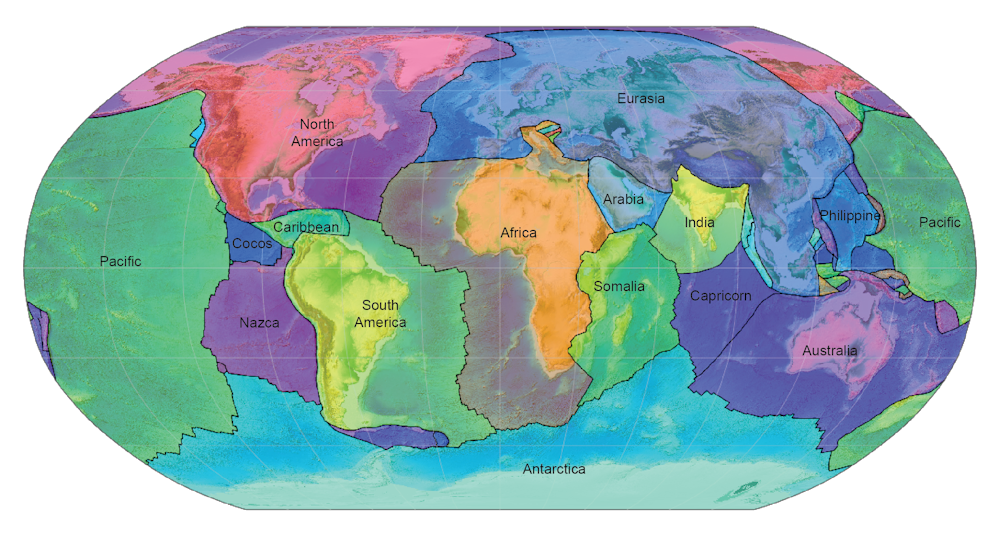
It proposed that the outer layer of our planet is made up of a small number of rigid plates separated by narrow boundaries. The surface of Earth could be viewed as a simple jigsaw puzzle with just nine large plates and a bunch of much smaller ones.

Map of the Earth’s rigid plates with the major tectonic plates labelled. Narrow plate boundary zones are the thin black lines. Created using plate reconstruction software (www.gplates.org). Maria Seton, Author provided

Read more: Breaking new ground – the rise of plate tectonics


But what was glossed over when global plate tectonic models were first developed was the enormous deformation experienced by these seemingly rigid plates.

Fifty years after the plate tectonic revolution, we are pretty sure the continental parts of plates are not uniform, nor are they rigid. The giant forces that slowly move continents across the viscous mantle layer underneath, like biscuits gliding over a warm toffee ocean, stress the continents, and twist and contort the crust. This is a process that has taken place over millions of years.

As part of recent research, we worked with a team of international collaborators to build a computer model to show just how much the continents have been deformed since the Triassic Period, about 250 million years ago. The supercontinent Pangea began breaking apart soon after, ripping along the seams between Africa and North America.

Animation showing the motion of the tectonic plates and the associated evolution of deformation since the breakup of the Pangea supercontinent (Credit: Sabin Zahirovic).

We detail this new understanding of continent mangling in a paper published this month in the journal Tectonics.

A model of tectonic plates moving over the viscous mantle. Blue material represents plates that are being recycled into the hot interior of the Earth. Red material represents extra hot material rising from the Earth’s core. (Credit: Maelis Arnould, see https://agupubs.onlinelibrary.wiley.com/doi/abs/10.1029/2018GC007516)

Read more: Plate tectonics: new findings fill out the 50-year-old theory that explains Earth’s landmasses


Immense forces

We already knew that that colossal tectonic forces act along plate boundaries. We can see this when continents collide, such as when Africa collided with Eurasia, forming mountains like the Alps, or forming basins when continents are torn apart, as is happening in East Africa.

Folded marine sediments in the Alps (Helvetic Nappes of Switzerland), uplifted and deformed by the collision of the African and Eurasian continents. Kurt Stüwe, Author provided

Our new research used geological and geophysical data to pinpoint all major zones of continental deformation, built into a global model of plate motions using our GPlates software.

We show that at least one third of all continental crust has been massively deformed since Pangea first started breaking up. That’s a whopping 75 million km2, roughly the size of North and South America and Africa combined.

Present day map showing the areas that have undergone compression or extension during the past 250 million years. Sabin Zahirovic, Author provided

Read more: Curious Kids: how do mountains form?


Deformed continental regions include large stretched and submerged continents like Zealandia, as well as crustal contraction where collisions have occurred, producing mountain belts such as the Himalayas, the European Alps, Iran’s Zagros Mountains and the southern Alps of New Zealand.

Folded marine sediments on the Whangaparaoa Peninsula north of Auckland, New Zealand, reflecting the formation of a convergent plate boundary in northern New Zealand in the beginning of the Miocene Period, around 23 million years ago. Adriana Dutkiewicz, Author provided

The cradle of humankind

When crust is being thinned and stretched, the crustal contortions are usually hidden away from view because they are quickly covered up by sediments. But there are exceptions.

The East African Rift valley is one of the most spectacular examples of crustal extension visible at the surface. It has not subsided below sea level because the region is being pushed up by a mantle plume, a large upwelling of hot molten material causing uplift and volcanism.

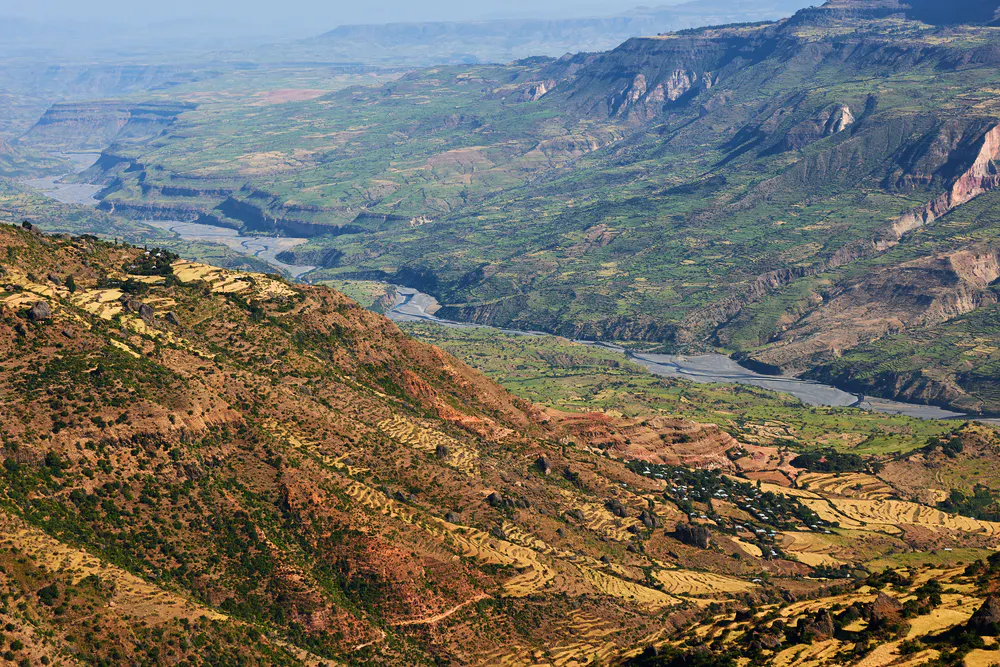
The rift valley is underlain by a giant fault system that is splitting Africa in two. The rift turned a flat landscape into one with 4km high mountains and lake basins with vegetation ranging from desert to cloud forest. This variety of surface environments paved the way for the early evolution and diversification of humans.

The Rift Valley was an important site for early evolution and diversification of humans. from www.shutterstock.com

Read more: Africa is splitting in two – here is why


The importance of stress

We may not like stress in our daily lives, but the continuous stress and strain acting on continents provides us with an important record of Earth’s history.

Modelling the patterns of continental deformation through time allows us to explore regional patterns of earthquakes and volcanism and explain dramatic changes in Earth’s climate over time.

It also provides a framework based on tectonic data to seek mineral resources such as the metals cobalt and tungsten, which are needed for a sustainable energy future.

ref. How Earth’s continents became twisted and contorted over millions of years – http://theconversation.com/how-earths-continents-became-twisted-and-contorted-over-millions-of-years-116168

Foreign-born voters and their families helped elect Turnbull in 2016. Can they save ScoMo?

Source: The Conversation (Au and NZ) – By Andrew Jakubowicz, Emeritus Professor of Sociology, University of Technology Sydney

At the 2016 federal election, a small but significant vote cast by foreign-born Australians and their families helped elect the Liberal Party. The voters backed conservative minor parties in typically Labor-leaning electorates, and their preferences flowed to the Liberals.

Electoral pundits made little of this phenomenon at the time, and the media were not particularly interested. But in the wake of a similar voting pattern in the same sex marriage plebiscite in 2017, the search is now on to find the elusive “ethnic vote”.


Read more: Look at me! Look at me! How image-conscious but visionless leaders have made for a dreary campaign


Who are these voters and where do they live?

The two largest collectives of non-English speaking groups are Chinese-Australians, and people from the Indian subcontinent including Pakistan, Bangladesh, Nepal and Sri Lanka. These “ethnic groups” are already multicultural, multilingual and politically diverse.

Mandarin remains the dominant Chinese language, followed by Cantonese, then other smaller groups – mainly from Malaysia and Indo-China. Among those from the subcontinent, Hindi still trumps Punjabi, and there are at least another four or five language groups, each with over 40,000 speakers.

Pockets of Chinese-Australians concentrated in key swing seats in NSW and Victoria were mainly responsible for the surprise outcomes in 2016. That included Reid, Banks and Barton in NSW, and Chisholm in Victoria. Three of the four went to the Liberals, but on demographic grounds and political trends at the time, all could have been delivered to Labor. (While Barton stayed Labor, the swing to the Liberals was significant.)

In 2019, we could see a similar pattern emerge in these seats again, as well as in Moreton in QLD, Hotham in Victoria, and Parramatta, Greenway and Bennelong in NSW.

Australia has over 300 ancestries, 100 religions and 300 languages, so invoking a category like “ethnic” does not lead in a particular direction – especially given the divisions and diversity within cultural groups and language communities.

And this population diversity has been shifting as newer groups have accelerated their presence, and older groups have passed on. The foreign born population now have a growing number of Australian-born children, although many may not yet be able to vote.

How are the parties targeting them?

The main ethnic communities lobby group, the Federation of Ethnic Communities Councils of Australia (FECCA), has produced a policy wish-list and is seeking responses from the parties.

Among the majors, only the Greens have a clearly articulated multicultural policy, having put a proposal for a Multiculturalism Act with subsequent implementation and rights machinery to the Senate over a year ago.

The ALP still sits on its hands on the legislative option, possibly fearing that supporting such a move might trigger negative reactions from working class and more racist voters.

Their policy now includes a “body” named Multicultural Australia, with a string of commissioners across the country. It will probably come under Tony Burke as minister, focusing on citizenship and access issues. In this, it is a variant on the 1990s Office of Multicultural Affairs. This was once part of the Hawke/Keating prime minister’s office, but was abolished by John Howard as soon as he could.


Read more: Chinese social media platform WeChat could be a key battleground in the federal election


Labor has committed more funds for community language schools and criticised delays in processing citizenship applications, as well as the high level of English required to pass the test. Former Senator Sam Dastyari has argued that opening up parental reunion is a major offer to a range of ethnic groups needing older family members to do caring work. This move, as one of this author’s informants said, would really “win the Desi’s heart”, and probably many other ethnic groups as well. The idea has prompted a hostile response from the Coalition.

While Liberal leader Scott Morrison reiterates the old Turnbull mantra of Australia being the most successful multicultural country, the government’s lacklustre Multicultural Advisory Council no longer seems to have a web presence other than one which promotes integration and Australian values.

The Liberals propose a system of aged care “navigators” to help people with limited English survive the aged care system, while also injecting funds into start-up businesses run by migrants.

Conservative think-tank the Institute for Public Affairs retains as its second policy demand of any Liberal government that Section 18C of the Racial Discrimination Act be abolished. The Liberals took this into 2013 and 2016; Morrison has said it’s not on for 2019, though the right of the party is still committed.

What role will they play in the election?

Ethnic communities are not necessarily either cohesive or unanimous in their political viewpoints, unless something particularly touches on their “ethnicity”.

Recent anti-Chinese sentiment reflected in media headlines about alleged corruption of Australian political parties by wealthy Chinese residents may be doing that among Chinese communities. Many Australian Chinese think that Labor is much more sensitive to these issues than the Coalition, and Liberal Party Chinese figures have voiced these concerns in public gatherings.

Although they can be very interested and involved in politics, Chinese Australians have tended to hold back from active political engagement in the past. Indians, by contrast, bring some knowledge of English and, coming from a Westminster democratic system, tend to be more directly engaged – as party members for example. The Greens are particularly open to south Asian members; so, it seems, is the Christian Democratic Party (CDP).

While there are many conservative and religious parties across the country, only NSW has the CDP. It’s offering a “multicultural” array of candidates, and directing preferences to the Liberals. The party was key in funnelling support from East Asian intensive electorates in 2016.

After unsuccessful discussions over a number of elections as to whether a socially conservative alliance might be formed between Muslims and Christians, Hindus, Buddhists, Daoist and non-religious groups, something like the alliance appears to have been launched in Sydney. Reportedly “targeting Labor seats that had a high no vote in the same-sex marriage survey”, it could put some further some punch behind the Christian Democratic Party even though it’s not directly affiliated. The CDP is also targeting the Pacific communities in its campaign of support for Christian footballer Israel Folau.

Meanwhile, parties of the far right are competing to present their anti-multicultural agendas. In Lindsay, neo-Nazi Jim Saleam represents the Australia First Party, while across the country, right-leaning parties tussle for the xenophobic vote. That includes Rise Up Australia, Shooters Farmers and Fishers, Australian Conservatives, Australian National Conservatives, Pauline Hanson’s One Nation and United Australia Party.

Although these parties may preference the Coalition, they may prove to be one force that drives ethnic communities towards the ALP.


Read more: How the major parties’ Indigenous health election commitments stack up


Election day and beyond

Election day will provide the proof for many of the claims about ethnicity, voting, influence and ideology. It’s highly likely that the senators elected from the right will run a unity ticket against multiculturalism in the new Senate.

This year may well prove the last flash of a mainly White Australian election, with its defenders doubling down on the right, while the centre takes on a multi-coloured hue, and the left is ever more rainbow. A lot of the knowledge that we may glean from the election process will only be learned in its aftermath, picking through small details and trying to form a pattern of explanation.

It has taken the Australian public sphere the best part of three years to work out what happened with cultural diversity and its complexities in 2016. We may well have just as long to wait this time around.

ref. Foreign-born voters and their families helped elect Turnbull in 2016. Can they save ScoMo? – http://theconversation.com/foreign-born-voters-and-their-families-helped-elect-turnbull-in-2016-can-they-save-scomo-116588

Australia’s ethnic face is changing, and so are our blood types

Source: The Conversation (Au and NZ) – By Tanya Davison, Associate professor, Swinburne University of Technology

This article is the second part in a series, Where culture meets health.


It’s often said that no matter who we are, “we all bleed red”. But although our blood may be the same colour, we’re as individual on the inside as we are on the surface. Just like our background determines the way we look, where we come from is one of the major factors that influences the make up of our blood.

About half of people living in Australia today were either born overseas, or have a parent born overseas. This increase in the diversity of our population leads to a corresponding diversity in the people who need medical treatment – and their blood types.

We need a broad mix of ethnicities in our donor pool to meet the needs of patients with rare blood types. Providing the right blood and blood products for an ethnically diverse population presents an evolving challenge for blood collection agencies around the world, including here in Australia.


Read more: Blood groups beyond A, B and O: what are they and do they matter?


People from diverse backgrounds tend to be underrepresented in donor populations. While Australians born overseas account for roughly one-third of the population, they account for only one in five blood donors.

This limited diversity in our pool of donors creates challenges in identifying blood matches for transfusion to patients with rare blood types.

The link between your blood group and where you come from

Blood types consist not only of the commonly recognised groups such as A, B and O, but also include more than 300 other variants. Each of these variants is a marker on the surface of our red blood cells, and is known as an “antigen”.

Our blood type is inherited from our parents. Like other inherited characteristics such as skin and hair colour, the frequency of blood types in a population shift in response to stresses in the environment (known as “selection pressure”).

For example, in parts of the world where malaria thrives, the proportion of the population with various blood types has altered over time to make people less prone to infection.

So this effect has more to do with where you and your ancestors lived than your ethnic group. One blood type, known as Duffy null, is much more frequent in Africans in Africa than in African-Americans, possibly because African Americans are no longer exposed to the malaria parasite.

In short, one reason we have different blood groups is to improve our chances of fighting disease.


Read more: How our red blood cells keep evolving to fight malaria


Who needs specially matched blood?

Most transfusions of red cells are matched for the commonly recognised ABO and Rh blood groups (the Rh group is the one that gives you the “positive” or “negative” in your blood type).

If someone receives a transfusion of blood that doesn’t match their own type, their body may recognise the transfused blood as foreign, and develop antibodies to try and destroy the “invader”. Their body will keep making these antibodies, which can then interfere with future transfusions.

Most healthy people are eligible to donate blood. From shutterstock.com

Some patients need specially matched red cells for transfusion. This means on top of being matched by ABO and Rh type, the donor’s blood is matched to make sure it doesn’t contain blood group variants that aren’t present in the recipient’s blood. This is more difficult to achieve.

There are three groups of patients who need specially matched blood:

  1. patients who have already developed antibodies because they have had a transfusion of blood that is not fully matched in the past
  2. patients who may have developed antibodies to blood group antigens, but other conditions or drug treatments make it hard for their doctors to test for antibodies
  3. patients who need to have many transfusions throughout their life, so doctors want to avoid the development of blood group antibodies.

Patients who may need to have multiple transfusions throughout their life include those with disorders affecting the blood such as sickle cell anaemia, thalassemia major and myelodysplasia.

Thalassemia is most common in people of African, Middle Eastern, Asian, Indian and Mediterranean descent. Sickle cell anaemia affects these ethnic groups and also people of Hispanic descent.

Which groups are most in need in Australia at the moment?

There are so many different blood group antigens, combinations of even the most common blood group types are found in only a small proportion of donors, making it difficult to provide blood fully matched for a particular patient.

In addition, as our patient population becomes more diverse, there is a greater need for blood types that are rare in a Caucasian population.

Ultimately, the distribution of blood groups that we collect from our donors should reflect the distribution of blood groups required by patients who need transfusion.


Read more: Explainer: what’s actually in our blood?


Blood centres in many countries have introduced a variety of campaigns to attract a broader donor group.

At the Red Cross Blood Service in Australia, we are interviewing donors from diverse backgrounds to learn more about their experiences in donating blood. Our goal is to build a donor panel that represents the diversity of the broader Australian community.

The benefits are not only for the patients and the health system – research suggests participating in blood donation facilitates social inclusion among migrant communities.

Dr Alison Gould, Scientific Communications Specialist for the Australian Red Cross Blood Service, co-authored this article.

ref. Australia’s ethnic face is changing, and so are our blood types – http://theconversation.com/australias-ethnic-face-is-changing-and-so-are-our-blood-types-113454

NZ introduces groundbreaking zero carbon bill, including targets for agricultural methane

Source: The Conversation (Au and NZ) – By Robert McLachlan, Professor in Applied Mathematics, Massey University

New Zealand’s long-awaited zero carbon bill will create sweeping changes to the management of emissions, setting a global benchmark with ambitious reduction targets for all major greenhouse gases.

The bill includes two separate targets – one for the long-lived greenhouse gases carbon dioxide and nitrous oxide, and another target specifically for biogenic methane, produced by livestock and landfill waste.

Launching the bill, Prime Minister Jacinda Ardern said:

Carbon dioxide is the most important thing we need to tackle – that’s why we’ve taken a net zero carbon approach. Agriculture is incredibly important to New Zealand, but it also needs to be part of the solution. That is why we have listened to the science and also heard the industry and created a specific target for biogenic methane.

The Climate Change Response (Zero Carbon) Amendment Bill will:

  • Create a target of reducing all greenhouse gases, except biogenic methane, to net zero by 2050
  • Create a separate target to reduce emissions of biogenic methane by 10% by 2030, and 24-47% by 2050 (relative to 2017 levels)
  • Establish a new, independent climate commission to provide emissions budgets, expert advice, and monitoring to help keep successive governments on track
  • Require government to implement policies for climate change risk assessment, a national adaptation plan, and progress reporting on implementation of the plan.

Read more: Climate change is hitting hard across New Zealand, official report finds


Bringing in agriculture

Preparing the bill has been a lengthy process. The government was committed to working with its coalition partners and also with the opposition National Party, to ensure the bill’s long-term viability. A consultation process in 2018 yielded 15,000 submissions, more than 90% of which asked for an advisory, independent climate commission, provision for adapting to the effects of climate change and a target of net zero by 2050 for all gasses.

Throughout this period there has been discussion of the role and responsibility of agriculture, which contributes 48% of New Zealand’s total greenhouse gas emissions. This is an important issue not just for New Zealand and all agricultural nations, but for world food supply.

Ministry for the Environment, CC BY-ND

Another critical question involved forestry. Pathways to net zero involve planting a lot of trees, but this is a short-term solution with only partly understood consequences. Recently, the Parliamentary Commissioner for the Environment suggested an approach in which forestry could offset only agricultural, non-fossil emissions.

Now we know how the government has threaded its way between these difficult choices.


Read more: NZ’s environmental watchdog challenges climate policy on farm emissions and forestry offsets


Separate targets for different gases

In signing the Paris Agreement, New Zealand agreed to hold the increase in the global average temperature to well below 2°C and to make efforts to limit it to 1.5°C. The bill is guided by the latest Intergovernmental Panel on Climate Change (IPCC) report, which details three pathways to limit warming to 1.5°C. All of them involve significant reductions in agricultural methane (by 23%-69% by 2050).

Farmers will be pleased with the “two baskets” approach, in which biogenic methane is treated differently from other gasses. But the bill does require total biogenic emissions to fall. They cannot be offset by planting trees. The climate commission, once established, and the minister will have to come up with policies that actually reduce emissions.

In the short term, that will likely involve decisions about livestock stocking rates: retiring the least profitable sheep and beef farms, and improving efficiency in the dairy industry with fewer animals but increased productivity on the remaining land. Longer term options include methane inhibitors, selective breeding, and a possible methane vaccine.

Ambitious net zero target

Net zero by 2050 on all other gasses, including offsetting by forestry, is still an ambitious target. New Zealand’s emissions rose sharply in 2017 and effective mechanisms to phase out fossil fuels are not yet in place. It is likely that with protests in Auckland over a local 10 cents a litre fuel tax – albeit brought in to fund public transport and not as a carbon tax per se – the government may be feeling they have to tread delicately here.

But the bill requires real action. The first carbon budget will cover 2022-2025. Work to strengthen New Zealand’s Emissions Trading Scheme is already underway and will likely involve a falling cap on emissions that will raise the carbon price, currently capped at NZ$25.


Read more: Why NZ’s emissions trading scheme should have an auction reserve price


In initial reaction to the bill, the National Party welcomed all aspects of it except the 24-47% reduction target for methane, which they believe should have been left to the climate commission. Coalition partner New Zealand First is talking up their contribution and how they had the agriculture sector’s interests at heart.

While climate activist groups welcomed the bill, Greenpeace criticised the bill for not being legally enforceable and described the 10% cut in methane as “miserly”. The youth action group Generation Zero, one of the first to call for zero carbon legislation, is understandably delighted. Even so, they say the law does not match the urgency of the crisis. And it’s true that since the bill was first mooted, we have seen a stronger sense of urgency, from the Extinction Rebellion to Greta Thunberg to the UK parliament’s declaration of a climate emergency.


Read more: UK becomes first country to declare a ‘climate emergency’


New Zealand’s bill is a pioneering effort to respond in detail to the 1.5ºC target and to base a national plan around the science reported by the IPCC.

Many other countries are in the process of setting and strengthening targets. Ireland’s Parliamentary Joint Committee on Climate recently recommended adopting a target of net zero for all gasses by 2050. Scotland will strengthen its target to net zero carbon dioxide and methane by 2040 and net zero all gasses by 2045. Less than a week after this announcement, the Scottish government dropped plans to cut air departure fees (currently £13 for short and £78 for long flights, and double for business class).

One country that has set a specific goals for agricultural methane is Uruguay, with a target of reducing emissions per kilogram of beef by 33%-46% by 2030. In the countries mentioned above, not so different from New Zealand, agriculture produces 35%, 23%, and 55% of emissions, respectively.

New Zealand has learned from processes that have worked elsewhere, notably the UK’s Climate Change Commission, which attempts to balance science, public involvement and the sovereignty of parliament. Perhaps our present experience in balancing the demands of different interest groups and economic sectors, with diverse mitigation opportunities and costs, can now help others.

ref. NZ introduces groundbreaking zero carbon bill, including targets for agricultural methane – http://theconversation.com/nz-introduces-groundbreaking-zero-carbon-bill-including-targets-for-agricultural-methane-116724

Fixing Australia’s extinction crisis means thinking bigger than individual species

Source: The Conversation (Au and NZ) – By Stuart Collard, Research Fellow, The Centre for Global Food and Resources, University of Adelaide

The world’s largest assessment of biodiversity recently shared the alarming news that 1 million species are under threat of extinction.

Australia’s extinction record is poor compared to the rest of the world, and our investment into conservation doesn’t do enough to restrain the growing crisis.

Currently, 511 animal species, 1,356 plant species and 82 distinct “ecological communities” – naturally occurring groups of native plants, animals and other organisms – are listed as nationally threatened in Australia. And these numbers are increasing.


Read more: ‘Revolutionary change’ needed to stop unprecedented global extinction crisis


While much conservation effort focuses on protecting individual species, we are failing to protect and restore their habitats.

Our ongoing research into environmental investment programs shows that current levels of investment do not even come close to matching what’s actually needed to downgrade threatened ecosystems.

One of the programs we evaluated was the 20 Million Trees Program, a part of the Australian government’s National Landcare Program. For example, we analysed investment targeted at the critically endangered Peppermint Box Grassy Woodlands of South Australia.

Fewer than three square kilometres of woodland were planted. That’s less than 1% of what was needed to move the conservation status of these woodlands by one category, from critically endangered to endangered.

Many Australian species live in endangered woodlands. Shutterstock

Restoring communities

Conservation efforts are often focused on species – easily understood parts of our complex and interrelated ecosystems.

In recent years, some effective measures have been put in place to conserve species that are teetering on the edge of extinction. We have, for instance, seen the appointment of a Threatened Species Commissioner and the release of a Threatened Species Strategy and Prospectus.

But we don’t often hear about the 82 threatened ecological communities in which many of these species live.

Temperate eucalypt woodlands once covered vast areas of southern Australia before being cleared to make way for agriculture. The Peppermint Box Grassy Woodlands of South Australia, for instance, have been reduced to 2% of their former glory through land clearing and other forms of degradation.

These woodlands provide critical habitat for many plant and animal species, among them declining woodland birds such as the Diamond Firetail and Jacky Winter.

The habitat of Diamond Firetails is under threat. Andreas Ruhz/Shutterstock

Focusing on the conservation and restoration of our threatened communities (rather than individual species) would create a better understanding of how much effort and investment is required to curb the extinction crisis and improve the outcomes of biodiversity restoration.


Read more: How many species on Earth? Why that’s a simple question but hard to answer


A problem of scale

Large-scale restoration investment programs are often touted in politics, particularly when these have a national focus. And many recent restoration programs, such as the Environment Restoration Fund, National Landcare Program, Green Army and 20 Million Trees, are important and worthwhile.

But in the majority of cases the effort is inadequate to achieve the stated conservation objectives.

Underlying threats to the environment often remain – such as vegetation clearing, genetic isolation and competition from introduced pests and weeds – and biodiversity continues to decline.


Read more: Another Australian animal slips away to extinction


The 20 Million Trees program, for example, is the most recent national initiative aimed at restoring native vegetation systems, attracting A$70 million in investment between 2014 and 2020.

To place the scale of this investment into context, we analysed the impact of the 20 Million Trees program on the critically endangered Peppermint Box Grassy Woodlands of South Australia.

The restoration priority for this community should be to enhance the condition of existing remnant areas. But improving its conservation status would also require more effort to increase the area of land the woodland covers.

Even if the full six-year budget for 20 Million Trees (A$70 million) was used to replant only this type of woodland, it would still fall short of upgrading its conservation status to endangered. We estimate that moving the community up a category would require a minimum investment of A$150 million, excluding land value.

And Peppermint Box Grassy Woodland is just one of the threatened ecological communities listed for conservation. There are 81 others.


Read more: An end to endings: how to stop more Australian species going extinct


Although any effort to improve the status of threatened ecosystems (and species) is important, this example shows how current levels of effort and investment are grossly inadequate to have any substantial impact on threatened communities and the species that live there.

Our estimates relate to how restoration activities affect land cover. But ensuring they are also of adequate quality would need more long-term investment.

Boosting investment

Investment in biodiversity conservation in Australia is falling while the extinction crisis is worsening.

Protecting and restoring ecological communities will preserve our unique native biodiversity and develop an environment that sustains food production and remains resilient to climate change. But failure to invest now will lead to extinctions and the collapse of ecosystems.

To make genuine inroads and have an enduring impact on Australian threatened species and ecosystems, restoration programs must be clear on the amount they expect to contribute to conservation and restoration objectives, along with co-benefits like carbon sequestration.

The programs must be at least an order of magnitude larger and be structured to produce measurable outcomes.

ref. Fixing Australia’s extinction crisis means thinking bigger than individual species – http://theconversation.com/fixing-australias-extinction-crisis-means-thinking-bigger-than-individual-species-115559

Why Australia needs to kill cats

Source: The Conversation (Au and NZ) – By John Read, Associate Lecturer, Ecology and Environmental Sciences, University of Adelaide

Introduced cats are a key threat to 123 of Australia’s threatened species.

The management of cats is challenging and divisive; many options such as rehoming, trap-neuter-release and euthanasia have been used around the world with varying success.

Australia’s recent commitment to killing 2 million feral cats to protect its native wildlife has attracted international attention and some have considered the project harsh.

While the actual target of 2 million has been rightly criticised as arbitrary and more based on public relations than rigorous science, it’s true non-lethal methods are not enough to stem the environmental havoc cats cause. Particularly in light of a UN report highlighting the world’s extinction crisis, Australia urgently needs well-targeted cat culls.


Read more: Feral cat cull: why the 2 million target is on scientifically shaky ground


Non-lethal methods

A range of effective non-lethal methods are already protecting wildlife from cats. Cat-exclusion fences have collectively improved the conservation status of many threatened species. In addition, an increasing number of Australian councils have created progressive cat management bylaws designed to protect pet cats, wildlife and humans from the effects of free-ranging cats.

The centrepiece of many of these bylaws, supported by the vast majority of animal welfare groups, is the containment of pet cats on their owner’s property. Indoor cats live longer, safer lives than cats that are allowed to roam.

Stray cats are harder to manage. These are the cats that do not have a home, but may be directly or indirectly fed by people.


Read more: A hidden toll: Australia’s cats kill almost 650 million reptiles a year


Because they are unowned, no-one is officially accountable for their health or welfare. Groups of like-minded individuals feed and even provide veterinary assistance to some of these cats, further blurring the distinction between pet and feral cats.

A trend promoted by “no kill” shelters and advocacy groups in some US states and Europe is for clowders (groups) of stray cats to be desexed, vaccinated and released back onto the streets. This process is called trap-neuter-release (TNR).

A recent RSPCA best-practice cat management discussion paper proposed a trial of TNR in Australia too – but there are very good reasons why this would be counterproductive for cat welfare.

The risks of releasing unowned cats

Informed animal welfare advocate groups, including PETA, strongly condemn the release of unowned cats, neutered or otherwise, due to the welfare risks to these cats. Human health professionals and wildlife advocates also oppose maintaining groups of cats.

Dense outdoor cat clowders are hotbeds of toxoplasmosis infections. This cat-borne disease is increasingly being linked to a range of chronic mental health conditions including schizophrenia and Alzheimer’s disease.

“No kill” groups that promote TNR erroneously claim that neutered cats significantly reduce the breeding potential of erroneously named cat “colonies”, in the same way that release of neutered mosquitoes is a proven technique for controlling disease-bearing mosquitoes.

One of us (John) has recently written a book on protecting wildlife and cats that suggests five fatal biological flaws in this logic:

  1. Neutering mosquitoes works because impotent individuals “swamp” short-lived wild insect populations that mate only once. By contrast, female cats typically mate repeatedly when on heat, so an encounter with a neutered tom is of little consequence.

  2. Unlike lions, domestic cats evolved as solitary hunters. While domestic cats can tolerate living in high-density clowders, they do not form hierarchical colonies, packs or prides where alpha individuals restrict the feeding, breeding or survival of subordinate animals.

  3. Although loud cat fights might make you assume males fight over the right to exclusively mate with a female, most litters of outdoor cats are sired by multiple males. Even supposedly “dominant” males seldom intervene when another male courts a female. Neutered male cats will not protect females in their clowder from non-desexed interlopers. This means that more than 90% of cats need to be neutered to restrict population increases, an incredibly challenging proposition.

  4. Despite the misleading label “colony”, cat clowders are not closed populations. Rather, cats typically move around to take advantage of abundant food resources. And unwanted pets are often dumped at clowder sites. The failures of several well-studied TNR programs are attributed to cats migrating or being dumped at these sites.

  5. Despite needing repeated vaccinations to protect them from debilitating diseases, few stray cats can be captured a second time. And many can never be captured at all. This leaves them and their clowder effectively unmanageable.

TNR is biologically flawed, cruel to cats – because it returns them to a hazardous environment – and ineffective when not accompanied by high levels of adoption.

Harming marine ecosystems

Not only do predatory cats harm native wildlife, but stray or feral clowders can also directly influence marine ecosystems and fisheries.

Many commercial cat foods contain increasingly threatened predatory fish that are high in the food chain and hence use more nutrients and biological energy than plants or herbivores. US dogs and cats consume one-third of the animal-derived protein eaten by humans, with accompanying greenhouse gas emissions.

The cat food provided to stray clowders adds to this biological expense. In 2009 alone, the US-based Best Friends Animal Society, one of the major promoters of TNR, distributed over 80,000 tonnes of cat food to unowned cats. There are no similar studies in Australia, and we appear to have far lower rates of stray-cat-feeding, but it is still part of the ecological impact of stray cats.

Even more insidiously, seals, otters and dolphins in oceans around the world die from cat-borne diseases spread mainly from clowders.


Read more: For whom the bell tolls: cats kill more than a million Australian birds every day


Humane euthanasia

Fortunately, both science and animal welfare standards are consistent about management of cats. All healthy domestic cats for which safe homes can be found should be adopted or rehomed, then kept indoors following neutering and vaccination. All other cats, including ferals and strays that cannot be rehomed quickly, should be humanely euthanased.

Feeding or releasing cats (neutered or otherwise) threatens our wildlife and perpetuates the cycle of suffering, disease, predation and social annoyance. Non-lethal options such as feral cat-proof fencing can still be part of the solution, but euthanasia remains an important part of controlling feral and stray cats to protect our native wildlife.


Among the Pigeons: Why our cats belong indoors (2019) by John Read is published by Wakefield Press.

ref. Why Australia needs to kill cats – http://theconversation.com/why-australia-needs-to-kill-cats-116654

Too much love: helicopter parents could be raising anxious, narcissistic children

Source: The Conversation (Au and NZ) – By Marilyn Campbell, Professor Faculty of Education, School of Cultural and Professional Learning, Queensland University of Technology

The Age newspaper recently highlighted the issue of so-called “helicopter parenting” at universities. The report talked of parents contacting lecturers to ask about their adult children’s grades, sitting in on meetings with course coordinators and repeatedly phoning academics to inquire about students’ progress.

Over-parenting involves parents using developmentally inappropriate tactics that far exceed the actual needs of their children. It involves excessive protection of children by their parents. Over-parenting is often called “helicopter parenting”, as these parents hover over their children to make sure nothing goes wrong.

While commentators have been talking about the rise of helicopter parenting among school-aged children for some years now, the idea parents would be using the same tactics on young adults is a bit more foreign.

But researchers have been exploring over-parenting among university students for some years now too, and they’ve found negative consequences for these children, including higher levels of anxiety and narcissism.


Read more: Bulldozer parents: creating psychologically fragile children


What is over-parenting?

Research shows today’s parents spend more time per day parenting than in the 1980s. But we don’t know how many are over-parenting. That’s because most population studies of this nature rely on self-reports and parents are unlikely to admit to being over-zealous or controlling of their children.

Sometimes over-parenting is called “lawnmower parenting”, illustrating how parents clear their children’s life path of obstacles. Others have called this type of parenting like growing up in a green house. Media also refers to children of such parenting as “cotton wool” kids or as being in “bubble wrap”.

Cutting up a 10 year old’s lunch is considered over-parenting. from shutterstock.com

Obviously, most parents want the best for their children. Research shows children of loving and attentive mothers grow up more resilient and less distressed. But at which point is this positive love and care going too far? And is over-parenting actually bad for children?

In 2012, we asked 128 Australian psychologists and counsellors what they considered to be examples of over-parenting. Some of the examples they gave were:

  • cutting up a ten year old’s food. Bringing a separate plate of food for a 16 year old to a party as he is a picky eater
  • a mother who won’t let her 17-year-old son catch the train to school
  • constantly badgering the school to make sure their child is in a specific class the following year
  • parents rushing to school to deliver items such as forgotten lunches, assignments or uniforms at the whim of their child
  • parents believing that, regardless of effort, their child must be rewarded.

Research on school-aged children

There is very little research on the effects of over-parenting in school-aged children. A 2015 study, that included 56 parents of children from prep to Year 8, found over-parenting was associated with an authoritarian parenting style and parents being anxious themselves.

Excessive parenting has also been associated with reduced self-esteem in adolescents, and a lower ability to show leadership.


Read more: From tiger to free-range parents – what research says about pros and cons of popular parenting styles


University-aged ‘children’

The most knowledge we have of over-parenting consequences comes from university students. Excessive parenting for young adults is noticeable, and usually considered inappropriate, as it exceeds what the children developmentally want or need.

Research shows parents of university children have stepped in to advocate if their child breaches the university code of conduct or to discuss their child’s academic difficulties with lecturers. Some parents impose curfews on when their university-aged child should be in bed, monitor their adult child’s diet and exercise, vet their friends and decide what subjects they will study.

There are a number of negative consequences for university students whose parents help them too much. It has been shown these students suffer from more anxiety and depression than their peers.

Sometimes it’s best to let your children be free range. from shutterstock.com

University students whose parents are controlling also have low levels of self-efficacy (confidence over one’s own ability) which leads to poorer university adjustment, resulting in lower grades and difficulties in relating to others. Other studies have found negative consequences of over-parenting on the child include less autonomy, decreased levels of self-regulation, increased narcissism, attention seeking and wanting approval and direction from others.


Read more: Why do parents take such different approaches to their kids’ education?


Why are parents so concerned?

Why this type of overbearing parenting seems to be increasing is explained in various ways. Some researchers say economic pressures are responsible for parents being more invested in their child’s education so they get a well paying job.

We know that more university students are living at home and so are more influenced by their parents. In general young people often have a more delayed growing up period. Some researchers have dubbed this period of development as “adultesence”.

Regardless, whether over-parenting comes from too much love or the need to see yourself in your children, it is not the best way of parenting.

A better way is allowing your child to make mistakes and learn from them. To help them when they ask for your help but not to always jump in. Each child is different and so is every parent, so one-size parenting does not fit all. But we know loving and attentive parents have resilient children, so let them be “free range” sometimes, and enjoy being a parent.

ref. Too much love: helicopter parents could be raising anxious, narcissistic children – http://theconversation.com/too-much-love-helicopter-parents-could-be-raising-anxious-narcissistic-children-116182

Why suburban parks offer an antidote to helicopter parenting

Source: The Conversation (Au and NZ) – By Debra Flanders Cushing, Associate Professor in Landscape Architecture, Queensland University of Technology

Well-designed suburban parks could be an antidote to helicopter parenting. As well as giving kids much-needed time outdoors being active, suburban parks offer kids opportunities to decide what activities they do, new research shows. It’s an ideal opportunity for parents to let go of their task-focused daily agendas, even if just for a little while.

Helicopter parenting, or intensive parenting, includes anticipating and solving children’s problems, limiting their risks and enrolling them in many structured activities. Yet this approach often does not lead to positive outcomes for children .

For some families, letting kids take control of their activities is likely a shift from parents’ daily routines of continuously reminding children about chores, homework and bedtime. The constant list of tasks and rules can get tiring, leaving both frustrated and potentially resorting to unhealthy behaviours. Although some children can excel with a “highly driven schedule”, for many it can be a source of stress and anxiety.

Play in general allows children to be imaginative and develop physical, cognitive, and emotional strength. It’s especially true for unstructured free play. This may also offer parents a glimpse into their children’s world and enable them to provide nurturing guidance, instead of strict rules.

For our research, we interviewed adults visiting 12 parks within the Moreton Bay Regional Council area in Southeast Queensland, Australia. A total of 417 brief interviews were completed over four months during the 2017-18 summer.

What has the research found?

According to the parents, grandparents and caregivers interviewed, kids decide what to do when they go to a park. Many indicated they watch over or play with the children, but they let them make the decisions about their activities.

I take their lead. I just let them do what they want to do.

Some parents and caregivers said time at the park was “their time”, meaning the kids had free time to do what they pleased. “She’s the boss at the park,” one said. Playing in the park was a good opportunity for children to make decisions and simply enjoy themselves:

We’re here for them, so they can pretty much do what they want.

As a mostly unstructured activity, visiting a park is an opportunity for parents and caregivers to allow children to make independent decisions in a relatively controlled and contained environment, which allows for some risk-taking and experimentation.

Equipment that enables children to take small risks may help extend their skills and self-confidence. Jacob Lund/Shutterstock

However, safety is still a concern. It was clear from the adults interviewed that children could do what they would like “as long as it’s safe”. As one parent stated:

The kids [decide], unless, of course, they go and try and climb up on that stupid thing. I’ll say, get down, let’s not break an arm today.

What makes for an appealing park?

A wide variety of equipment helps ensure children don’t get bored. ilkercelik/Shutterstock

Not all parks are created equal, nor do they all attract local residents. Playgrounds were the primary areas of the parks where children actively played (82%), followed by sports fields (17%) and pathways (14%).

Offering many different playing opportunities was an important characteristic of a park, participants suggested. A wide variety of equipment helps maintain children’s attention and interest, which prevents them from getting bored.

Some parents also suggested a variety of options allowed children to attempt a range of physical skills and provided enough space to run around, move and expend energy. As one parent said:

I know that we’ve taken them to playgrounds and parks before when there’s only been two or three different things to play on. He gets bored in half an hour. Whereas here he’s quite content just roaming around. Different activities, different swings, climbing apparatus and different colours are always good things as well.

Equipment that requires children to take small risks, which parents can oversee, may help extend children’s skills and self-confidence. For example, climbing was one of the skills that adults “taught” the children while at the park. This enabled children to develop gross motor skills and weigh up risks.

Creating parks for a range of ages is important, as is providing variety for each age group. These findings represent a small portion of a larger study on designing suburban parks for groups of all ages. One of the goals is design recommendations for parks that better meet the needs of all ages for healthy, active living.

ref. Why suburban parks offer an antidote to helicopter parenting – http://theconversation.com/why-suburban-parks-offer-an-antidote-to-helicopter-parenting-115155

Labor wants to pay childcare wages itself. A perfect storm makes it not such a bad idea

Source: The Conversation (Au and NZ) – By Warwick Smith, Research economist, University of Melbourne

This article is part of an election series on wages, industrial relations, Labor and the union movement ahead of the 2019 federal election. You can read other pieces in the series here, here, here, here, and here.


Opposition Leader Bill Shorten has promised that a Labor government will work to increase the wages of Early Childhood Education and Care (ECEC) workers by 20% over eight years. That’s pretty conventional, but the method isn’t.

The government will directly fund the salary increases so that neither childcare providers nor parents bear the costs. These increases will be in addition to any changes to the award over these years.

Internationally, such interventions exist, but they’re rare. In Ontario, Canada, the government tops up the salaries of childcare workers by $2 per hour. For Australia, it’s a first.

Childcare workers are among the lowest-paid in the country, with more than 70% reliant on award rates that are not much higher than the minimum wage.

The perfect storm of market failures

There is also limited opportunity for career progression in childcare. These two facts combine to lead to an extraordinarily high turnover in staff.

As long as legal minimum wages and awards are being met, the fact that a job is poorly paid isn’t normally enough to justify government intervention.

But childcare is a special case in which multiple market failures coincide.

“Market failure” is a term used to describe a situation economists like to believe is rare – where the workings of the free market lead to bad outcomes. Classic examples include polluting industries where the costs of pollution aren’t borne by the polluter itself (an “externality” in economics speak), and street lighting, for which it is impossible to charge users (economists call that a public good).

In economic theory, a market failure will at least justify the consideration of government intervention.

Childcare’s benefits are direct, and indirect

The provision of childcare creates both private benefits and public goods.

Mothers who can earn more than the cost of childcare benefit from it because they can maintain and build their skills and careers. Society also benefits because it makes better use of the skills of women.

There is also clear evidence that quality early childhood education positively affects the prospects of children for the rest of their lives, particularly those from low socioeconomic backgrounds.

It’s good for them and their families, but it’s also good for the entire community as those children are more likely to make full use of their skills and talents in later life and contribute productively to society. They are also less likely to engage in antisocial or criminal behaviour.

Mothers can’t afford to pay good wages…

But if entirely left to the market, childcare would only be affordable to those who earn high wages (and whose children might be the least likely to benefit). The total costs of the staff, venue, and administration needed to provide childcare are beyond most parents’ means.

This is why we already have government intervention in the form of means-tested assistance, which subsidises the cost of childcare up to A$10,190 per year, per child.

However, despite the existence of this subsidy, most Certificate III qualified childcare workers still only earn about A$850 per week (A$44,000 per year), about half the average full-time wage.

Why aren’t they paid more, given that their work is so important?

…in part because they don’t get good wages

One answer could be that 96% of childcare workers are women, and about 95% of stay-at-home parents are women. The gender pay gap in Australia is currently about 14%. It’s the result of a combination of gender discrimination, gender role expectations in child-raising, and relatively low pay in typically “feminised” industries.

It means mothers cannot easily afford to pay for proper childcare from their wages, and that childcare workers come to accept low pay.

Subsidising quality childcare through both a rebate to parents and a direct increase in childcare workers’ wages addresses these dual aspects of the gender pay gap by helping more mothers maintain careers (that will enable them get paid more) and acknowledging and addressing the extent to which the market won’t pay childcare workers enough.

There’s a case for top ups, but they’re not ideal

While Labor’s commitment to increasing childcare worker pay is welcome and is addressing an agglomeration of genuine market failures, a specific government top-up for a specific profession leave its workers vulnerable to a change of government policy that cuts or abolishes it.

The long-term solution is to do something more systematic about the undervaluation of care work in Australia. It would be best dealt with by adjusting how the Fair Work Commission sets award wages in light of the public value generated by the industry and an understanding of the historic undervaluing of work performed by women.

Labor has announced policies that aim to do this, so presumably this wage top-up is a stopgap that provides much-needed pay rises in the short term while longer-term solutions are being put in place.


Read more: Why Labor’s childcare policy is the biggest economic news of the election campaign


ref. Labor wants to pay childcare wages itself. A perfect storm makes it not such a bad idea – http://theconversation.com/labor-wants-to-pay-childcare-wages-itself-a-perfect-storm-makes-it-not-such-a-bad-idea-116272

We need to do more about cyberbullying against Indigenous Australians

Source: The Conversation (Au and NZ) – By Bronwyn Carlson, Professor, Indigenous Studies, Macquarie University

As part of his re-election pitch, Prime Minister Scott Morrison has promised to crack down on online trolls, increasing the penalties for online harassment.

The Melbourne Demons, meanwhile, have announced a new campaign targeting online bullying. They recently opened a game by running through a banner featuring hateful tweets directed at AFL players, including Noongar man and Demons defender Neville Jetta.

It is good to see the issue of online abuse in the spotlight. However, researchers and policy-makers alike need to be aware that Indigenous peoples may experience social media and online abuse differently to other social groups.

Melbourne Demons players run through a banner highlighting the problem of online abuse at the MCG in Melbourne on April 5. Julian Smith/AAP

A recent cluster of child suicides has brought closer scrutiny to the relationship between cyberbullying and race. Five Aboriginal girls, aged as young as 12, committed suicide in the first two weeks of 2019.

One 14-year-old wrote on Facebook on the day before her death, “Once I’m gone the bullying and the racism will stop”. This week, Opposition Leader Bill Shorten described the problem of Indigenous suicide as “a national disaster”.

Bill Shorten: has described Indigenous suicide as a ‘national emergency’. Lukas Coch/AAP

It seems increasingly clear that there is a link between cyberbullying, anti-Indigenous racism, and mental ill-health. But what do we actually know about Indigenous people’s experiences of online bullying?

More than a third of the participants in our recent national research project looking at Indigenous social media use reported that they had personally been subjected to racism online.

Twenty one percent had received direct threats by other social media users; 17% indicated these had impacted their “offline” lives, in the forms of physical violence or mental ill-health. But this is only a snapshot of an issue that deserves much greater attention.


Read more: Indigenous voices are speaking loudly on social media but racism endures


We also recently reviewed literature on cyberbullying against Indigenous Australians and found that there was insufficient research into the problem. There is an urgent need to engage Indigenous communities, elders and youth in conversations about online bullying and safety. It is only through engaging with cyberbullying as a phenomenon that affects different social groups differently that its causes, effects and mitigating factors might be understood.

A crisis online

Indigenous peoples are enthusiastic social media users. These technologies have brought many benefits. They help Indigenous families and communities connect intimately across vast distances; allowing users to share and maintain cultural knowledge, fulfil cultural protocol, such as Sorry Business, and engage in political activism.

But they have also brought negative consequences, and research has been slow in keeping up with recent shifts in online practices. Social media facilitates racist abuse against Indigenous peoples and the perpetration of widespread cyberbullying. In recent high-profile cases, abuse has been directed at West Coast Eagles player Liam Ryan and Arrernte union organiser and freelance writer Celeste Liddle:

I love it when people tell me to just ignore racists. Like, have you ever flicked through my Twitter feed? Just this afternoon I’ve been called ‘Abo’, ‘oogabooga’ and been reduced to a percentage several times. How do you ignore what you cannot escape?

— Celeste Liddle (@Utopiana) April 5, 2019

West Coast Eagles player Liam Ryan has been the target of racist abuse online. Richard Wainwright/AAP

More research needed

Cyberbullying affects somewhere between 10-40% of young social media users in Australia. A recent Australia Institute survey found 39% of Australians have experienced some form of cyber-hatred and violence, and that it has cost the economy around $3.7 billion.

Victims of cyberbullying are significantly more likely to experience psychological ill-health, most seriously in the forms of depression, anxiety, and thoughts of suicide. There are also significant social consequences, with victims and perpetrators being more likely to truant school, take leave from employment, and experience social isolation more generally.

International research suggests that culture and ethnicity are significant factors in the occurrence of cyberbullying. Perpetrators of cyberbullying often target markers of social difference, such as being Indigenous.

Despite being identified as a significant public health concern, however, cyberbullying against Indigenous Australians has largely escaped the attention of researchers. Indigenous peoples constitute a distinct social group in Australia. Yet this has rarely been factored into sustained studies of cyberbullying. Research has tended to assume a normalised “white” subject, failing to differentiate participants along these potentially significant demographic lines. But it is well established that different social groups use and experience social media differently.

A new series of posters aims to better inform Indigenous communities about cyberbullying. Author provided

The Department of Indigenous Studies at Macquarie University recently partnered with the Aboriginal Health and Medical Research Council to produce a range of resources to better inform Indigenous communities about cyberbullying.

This includes a series of posters designed by the Indigenous creative agency Iscariot Media, that can be shared on social media or printed and displayed in places like community centres and schools.

Treating all online abuse as the same risks ignoring the different rates, causes, and consequences of online violence. By paying more attention, we can build a better understanding of how cyberbullying is related to racism and the legacy of colonisation in Australia.


If you or anyone you know needs help or is having suicidal thoughts, contact Lifeline on 131 114 or beyondblue 1300 22 46 36.

ref. We need to do more about cyberbullying against Indigenous Australians – http://theconversation.com/we-need-to-do-more-about-cyberbullying-against-indigenous-australians-115297

View from The Hill: Third debate contained some messages about and from the leaders

Source: The Conversation (Au and NZ) – By Michelle Grattan, Professorial Fellow, University of Canberra

Two moments stood out in Wednesday night’s debate, which substantially canvassed issues that have been chewed over endlessly through the campaign.

These moments were significant not for the impact they’ll have on voters – who are probably over debates, if not the whole election – but for what they revealed about the leaders.

The first was Bill Shorten appearing genuinely torn over the issue of Israel Folau, found guilty of breaching Rugby Australia rules for saying homosexuals would go to hell unless they repented.

Shorten, speaking on the question about religious freedom, said Folau was “entitled to his views. And he shouldn’t suffer an employment penalty for it.”

But there was the other side – the hurtful impact of a public figure putting out such views on social media. “I don’t think it’s a clear-cut issue when the edges bump up against each other,” he said.

So often, especially in campaigns, leaders talk in black and white, failing to acknowledge nuances. Freedom of speech, especially when it involves religion, is an issue full of nuance, because of the conflicting values in play. Sometimes there is no right answer.

The second, very different, notable moment was Scott Morrison declaring Melissa Price would be environment minister if he were re-elected.


Read more: View from The Hill: Lots of ministry spots to fill if Morrison wins, while many Shorten ministers would return to a familiar cabinet room


Shorten continued to hold out on nominating who’d be his home affairs minister, saying this is a matter for after the election. But when Morrison was asked “will you keep the same environment minister?” he immediately said “yes” (prompting Shorten to quip about the invisible minister, “where is she?”).

Morrison’s answer might seem at first blush to be a small point. But it highlights how he says and does things for immediate needs or advantage, rather than worrying about the longer term.

He may not, if the polls are right, be forming a new ministry later this month. But if he is, Price should not be in his cabinet, and he knows it. In the debate, he should have avoided a commitment.

But it was the same recently, when he promised that Linda Reynolds, whom he was promoting to the defence industry job – a perfectly sensible appointment – would get the defence portfolio in a re-elected government.

He did not have to give that undertaking, and should have kept his options open.

For the most part, Wednesday’s head-to-head saw both leaders minimising risks; neither delivered any knockout blows.

There was no “space invader” behaviour, or gotcha moment. The day had already been dominated by Shorten’s angry and emotional reply to the Daily Telegraph’s now notorious “Mother of Invention” story that took issue with his Monday anecdote about his mother.


Read more: View from The Hill: Shorten turns Daily Telegraph sledge to advantage


The debate format, with National Press Club president Sabra Lane the sole interrogator, rather than a panel or audience members, allowed each leader to put a couple of questions to the other.

Morrison’s were on Labor’s superannuation and negative gearing policies; Shorten’s were on Labor policies too, as he challenged Morrison over cancer funding and child care.

Shorten would not give the cost of a superannuation measure that Morrison sought but said Labor’s full costings will be released on Friday.

When Lane asked the leaders about hard but unpopular decisions they’d made, it wasn’t surprising that Morrison went to border protection.

But it was interesting that, after referencing having to tell people in his union days they couldn’t get all they wanted, Shorten nominated persuading his party to accept turnbacks. “I felt that the experience of defeating the people smugglers proved that Labor needed to change,” he said. It was an I-run-things message, to the public and, perhaps for the future, to his party.

Morrison also sent a message, when asked how he would ensure his party’s conservative wing didn’t continue the era of disruption.

“I will lead, as I always have, from the middle,” he said. His history had been to work “right across the spectrum of our party. And so I’ve said to my party, ‘This is the direction I’m heading in and I’m asking you to join me,’ and they have,” he said.

As they headed out of this final debate the leaders were hit with a last question. Would they agree to an independent debates commission to avoid the haggling over these occasions in future?

They both agreed immediately. No mileage in hedging just then. Let’s hope that is an undertaking that lasts.

ref. View from The Hill: Third debate contained some messages about and from the leaders – http://theconversation.com/view-from-the-hill-third-debate-contained-some-messages-about-and-from-the-leaders-116769

Shorten and Morrison make their final cases in third leaders’ debate: our experts respond

Source: The Conversation (Au and NZ) – By Chris Salisbury, Research Associate, School of Political Science & International Studies, The University of Queensland

Bill Shorten and Scott Morrison were given the chance to ask each other questions in Wednesday night’s third and final leaders’ debate in the election campaign. Fortunately, the leaders stuck to policy and left their mothers out of it (for the most part).

But the relative decorum was short-lived. The final few minutes saw the leaders bicker over their respective cabinets, with Morrison pressing Shorten to name his home affairs minister and Shorten questioning why so many of the Coalition’s ministers were leaving their posts.

“No need to get nasty,” Morrison said, before trying to laugh off the exchange as a joke.

As we’re nearing the end of what has been, at times, a caustic campaign, which candidate made the best case to the Australian people in the final debate? Our experts give their take:


Andrew Dodd, Director of the Centre for Advancing Journalism, University of Melbourne

We all know the limitations and frustrations of political debate in our news media. It so often descends into partisan sloganeering and obfuscation that most of us are extremely wary of engaging with it.

And that’s what the final leaders’ debate looked like at the outset, when Prime Minister Scott Morrison responded to moderator Sabra Lane’s opening question about the asylum seekers still on Manus Island and Nauru.

It was a great question, about the times both leaders have opted to do what’s right, despite their actions being unpopular. Morrison turned it into a spiel about boat turn-backs. It was all sounding a bit blah, blah, blah-ish until Opposition Leader Bill Shorten responded by revealing how he had convinced others in the Labor caucus that they had no choice but to accept the necessity of turning back refugees at sea.

It was a precious moment, when we saw the real dynamics of party politics more clearly. And, as it happens just one of several reasons why the final debate was worth watching.

It happened again when Shorten asked whether the Coalition would reduce “out of pocket” expenses for cancer treatments. As he did, the smirk on Morrison’s face slowly evaporated. Clearly this was not a topic to look glib about.

The prime minister replied with the assertion that all public patients receive free cancer treatment, and as the audience stirred at that contestable idea, he quickly steered his answer towards the much safer territory of his party’s commitment to protect current rebates for private health insurance.

His supporters in the audience (who sounded more vociferous) applauded on cue, but the issue was left unresolved. The conversation had descended into typical partisan discourse. It was more about heat than light. But as Lane tried to move on to another topic, Shorten piped up with an unscheduled question: “Is that a yes or a no?” he asked.

What followed was an actual contest of ideas, where the leaders tried to tease out the inconsistencies in the detail of the other party’s policy. In the process, their underlying philosophical differences emerged.

The debate ranged across the now-familiar topics of dividends, negative gearing, house prices, renewables, climate change and childcare. But then, up came the question about Israel Folau and his homophobic comments. A more loaded topic is hard to imagine as it balances the competing concepts of religious freedom, freedom of speech and protecting people from hateful commentary.

Morrison said all the right things, although the answer momentarily went awry as he added – almost as an afterthought – that he also respected non-believers. Shorten confessed he felt “uneasy” about Folau losing his employment because he’d expressed his views, while also sympathising with those he offended.

It was all about nuance, something Shorten has returned to several times during the campaign – the assertion that complex ideas shouldn’t be reduced to just right and wrong or black and white.

And in that spirit, nor should debates always be assessed as won by one and lost by another. Especially when what emerged was a healthy and robust discussion about quite stark choices for the future of the country, all conducted in a civil and good-hearted manner.


Read more: View from The Hill: Shorten had the content, Morrison had the energy in first debate


Marian Sawer, Emeritus Professor, School of Politics and International Relations, Australian National University

Has the time passed for the kind of leaders’ debate we have just viewed at the National Press Club?

Predictable questions were answered by the leaders in predictable ways with predictable applause from their sides of the audience. The prime minister repeating the well-worn theme of being “better at managing the economy” and “keeping Australians safe” and relying on the spectre of Labor “going after your money through taxes”. Opposition Leader Bill Shorten being more cogent on climate change policy and adept at explaining Labor’s proposed tax reforms (he’s certainly had enough practice at this).

The kind of well-worn questions and responses seen here tell us little about the ideology underlying Scott Morrison’s view of taxes. Instead, taxes are weaponised in this kind of market populism and never presented as an instrument of social justice or the means of civilising capitalism.

Nor do the questions asked tell us much about the whole range of policies that might improve the lives of Australians. Q&A on Monday generated much more interesting questions, even including a voice for Indigenous Australians and issues around the systemic undervaluing of work in the care sector of the economy.

The gender effects of the policy divide between the Coalition and Labor were also scarcely touched upon. These include the effects of tax policies in exacerbating gender gaps, with the cuts to pay for them disproportionately affecting women. Women are notoriously disadvantaged by small government policies, being more dependent on public expenditure for employment and services.

Shorten did touch lightly on his wish for gender pay equity for his daughter. If given a chance he could have made something of Labor’s policy commitments to ensure that budgetary decisions like those on tax are properly analysed for their effects on gender equality.

So many missed opportunities, largely the result of a tired template and lack of interaction with the audience. Even a rolling, on-screen Twitter feed (like the one used on Q&A) would have livened things up for viewers.

There must be ways that social media can be used to make leaders’ debates a more interactive experience. This is the digital era, after all, and politics is done differently there.


Read more: Up close and personal: Morrison and Shorten get punchy in the second leaders’ debate. Our experts respond.


Chris Salisbury, Research Associate, School of Political Science & International Studies, The University of Queensland

For the final leaders’ debate, the National Press Club provided a more stately, formalised setting than Brisbane’s town hall-style meeting, with the leaders here static but engaging willingly in head-to-head questioning and, almost throughout, civil debating.

Little new ground was covered tonight; rather, the priority was consolidating messages that have by now become familiar to most voters. Differences were broached in their parties’ approaches to taxation, superannuation, housing affordability, health care and energy costs.

Asked about their willingness to make difficult, unpopular decisions, Scott Morrison harked back to his time as immigration minister “stopping boats and securing borders”. His “tough” budget calls as treasurer also received an outing.

Bill Shorten maybe pre-empted a line of attack and spoke early on about his background as a union representative and, surprisingly perhaps, his role in deciding his party’s stance on boat turn-backs.

Both leaders looked to position themselves as fit for leadership: Morrison stressing a readiness to be tough when needed and a commitment to a “well-managed economy”; Shorten making a positive out of his long “apprenticeship” as opposition leader and his party’s stability.

When challenged about the damage that revolving-door prime ministers in both major parties had inflicted on the body politic, Shorten cheekily suggested one more change was needed yet. Both leaders pointed to changed party rules ensuring the next prime minister would serve a full term.

Tellingly, though, Shorten pivoted to nominate climate change as a “real fault line” in the Liberal party that would see instability remain in a Coalition government.

Morrison offered calm – if doubtful – assurances that his party was “agreed” on the need for climate policy action. There was a less convincing defence against Shorten’s assertions of preference deals and candidate selection showing the Coalition’s flirting with the “extreme right”.

In their last statements, styled to make a case for leading the country, Morrison highlighted his desire for a strong economy to secure Australians’ futures. For his part, Shorten emphasised fairer equity in wages, as well as offering “hope” and equality for future generations.

Both leaders made sure as the debate neared its end to remind viewers of their well-worn barbs and slogans lambasting the other side – quips about each other’s future ministerial appointments afforded one of the few lighter, if still awkward, moments.

But with record numbers of pre-poll votes already cast, an unspoken question hung over much of the evening’s jousting – who’s still listening at this late stage?

ref. Shorten and Morrison make their final cases in third leaders’ debate: our experts respond – http://theconversation.com/shorten-and-morrison-make-their-final-cases-in-third-leaders-debate-our-experts-respond-116668

Passenger planes need enough cabin crew to operate all the exits in an emergency

Source: The Conversation (Au and NZ) – By Geoffrey Dell, Associate Professor/Discipline Leader Accident Investigation and Forensics, CQUniversity Australia

The crash of Aeroflot flight SU1492 in Moscow raises concerns about cabin safety in terms of the number of crew needed in an emergency.

The Sukhoi Superjet-100 aircraft was carrying 73 passengers and five crew members when it burst into flames at Moscow airport on Sunday. At least 41 people are reported to have died.


Read more: Around 50% of homes in Sydney, Melbourne and Brisbane have the oldest NBN technology


What happened in the Aeroflot accident and evacuation is now subject to investigation. But what about the broader question of cabin crew safety this incident raises?

Russian airline Aeroflot’s Sukhoi Superjet 100 on fire at Moscow’s Sheremetyevo airport. EPA/Russian Investigative Committee

Cabin crew numbers

In 2010 the Australian Civil Aviation Safety Authority (CASA) mooted changes to reduce cabin crew numbers from a minimum ratio of 1 for every 36 passengers to 1 per 50 passengers.

The 1/50 had been global standard for years, but until 2010 Australia had the higher standard of 1/36 (since the inception of the jet age). It’s reasonable to assume the Aeroflot aircraft would have been operating under the same international 1/50 regulation.

In 2011 an inquiry into cabin crew numbers was set up by the Australian Government’s House Standing Committee on Infrastructure and Communications.

In submissions, Qantas and others argued that 1/50 was the global standard – despite the fact we already had a higher standard.

The Flight Attendants’ Association of Australia and the Australian & International Pilots’ Association were among those calling for no change.

Evacuation tests

The argument made by those advocating for change from 1/36 to 1/50 was that certification by the regulatory authority in the country of aircraft manufacture required a full evacuation demonstration to be successfully carried out by that manufacturer.

The demonstration had to prove that a full complement of passengers and crew could successfully evacuate the aircraft in 90 seconds.

Additionally, for many years in Australia the civil aviation regulator, now CASA, required an additional partial evacuation demonstration be conducted by the airline wanting to introduce the new aircraft into service.

That demonstration had to show the airline’s own crew could evacuate the aircraft with half the cabin crew complement with half a load of passengers and through half of the doors in 90 seconds.

But the potentially flawed part of that argument was these evacuation demonstrations were carried out with the aircraft intact, sitting evenly on its wheels with no real emergency, no fire, smoke or obstructions in the cabin, no real threat of death adding dire urgency, and no panic among the passengers.

In my experience, they don’t really test how the passengers will react or the crew will function under the severe stress of an emergency like the case in Russia with the Aeroflot aircraft fire.

The Russian crash also shows that the 90-second time standard needs to be reviewed. Aeroflot says the evacuation of the Sukkoi aircraft took only 55 seconds, through only half the doors, and still more than half the passengers didn’t get out.

A change in the ratio

The report of the Standing Committee inquiry actually recommended keeping the 1/36 ratio but the government rejected this, saying:

The unequivocal advice from both CASA and OTS (Office of Transport Security) is that having a one cabin crew member to every fifty passenger seats ratio in Australia does not reduce the safety or security of domestic aircraft operations.

On flights with less than 216 passengers, CASA has been allowing some airlines to operate on the 1/50 ratio since 2006, although the appropriate legislation has still to be changed to reflect this.

The real issue in play when the cabin crew ratio was being changed in Australia, was the Australian airlines were at a competitive disadvantage against internationals operating into Australia, so the Australian airlines wanted parity.

I can see the commercial argument. But in my 40 years working in air safety, it was the only time I’d seen airlines openly argue a position for what was actually a lower standard of safety than already in place.

How many exits?

One of the serious problems that resulted from the cabin crew ratio rule change that went under the regulatory radar is that now on 100 to 149 seat aircraft, only three cabin crew are mandated.

Emergency exits left and right. Shutterstock/Chatree

But such aircraft can have four main cabin doors that can be used as emergency exits in the case of an accident.

So now on those aircraft there is one door, front or rear dependent on airline procedures, without a cabin crew member stationed at it to operate the door and control the evacuation there in an emergency.

The airline procedures assign responsibility for operation of that door and the one on the opposite side of the cabin to the one cabin crew member.

In my opinion this is a serious reduction in safety. There is little doubt that in an emergency of the type suffered by the Sukkoi Superjet, the one cabin crew member would have no hope of operating two exits with the passengers panicking and pressing to get out.

Lives at risk?

I believe lives will be lost in future because of the rule changes.

Consider an aircraft operating in Australia that had between 100 and 149 seats – under the current rules it would have only three flight attendants.

If a similar accident to that of the Aeroflot aircraft happened, the two rear exits would be blocked by fire. (The flight attendant at the rear of the crashed aircraft reportedly died trying to carry out their duties at the rear exits.

If there had been only one cabin crew member stationed at the front of the aircraft, not an unusual circumstance now, it is very possible that only one forward exit would be promptly opened. That would seriously impact the number of passengers who would escape through the one exit before the cabin was fully involved in the fire with smoke and flames?

The Sukkoi accident shines a light on the decisions that were made at the time of the Australian rule changes.


Read more: Can we bend it? The challenge for Samsung and others to make flexible technology


The rules need to be changed again to mandate a cabin crew member for every floor level exit. So in a 100 to 149 seat aircraft with four entry/exit doors, the minimum cabin crew complement would be four, not three.

Then the 1/50 ratio could then apply for any extra cabin crew once all floor level exits are staffed.

In my opinion this rule change is need internationally, not just in Australia. The International Civil Aviation Organisation needs to act, before more lives are lost.

ref. Passenger planes need enough cabin crew to operate all the exits in an emergency – http://theconversation.com/passenger-planes-need-enough-cabin-crew-to-operate-all-the-exits-in-an-emergency-116671

How camp was the Met Gala? Not very

Source: The Conversation (Au and NZ) – By Matthew Sini, Lecturer in Screen Media, University of the Sunshine Coast

The Met Gala is an annual fundraising event for the Metropolitan Museum of Art’s Costume Institute where fashion and celebrity often collide. It always manages to raise eyebrows and this years’ theme, “Camp: Notes on Fashion,” has generated much debate. A common question many fashionistas and cultural critics are asking of each outfit is “ …but is it camp?”

This kind of overly analytical and far too serious commentary on a sensibility that is supposed to mock such things is intriguing but not surprising given how the concept of camp has evolved.

‘Haus of Gaga’ – Lady Gaga’s take on the ‘camp’ theme. Andres Otero/WENN.com/AAP

In 1964, author Susan Sontag penned perhaps her most influential essay, Notes on Camp. It was one of the first attempts to try to pin down camp’s qualities and parameters. It’s clear why she chose to write some notes rather than a formal essay; because camp is a sensibility or a way of perceiving the world, it is quite difficult to treat systematically. In fact, Sontag would say that it often defies the very idea of systematisation.

For Sontag, camp is “the love of the exaggerated, the ‘off,’ of things-being-what-they-are-not”, and though it is not merely visual, it has often been expressed in the visual styles of décor, architecture, cinema and fashion.

Certain aspects of Art Nouveau, old Flash Gordon comics, women’s clothes of the 1920s like feather boas and fringed garments, celebrity dandies and “sissies” like Oscar Wilde and Paul Lynde, “overwrought” performances by classic Hollywood actresses such as Bette Davis and Judy Garland and so on. Key to camp is a sense of affectation, of style over substance. But equally important is the way one looks at those things, how one appreciates affectation.

Missing the point

Many of the gowns and costumes at this year’s Met Gala attempt to capture the essence of camp, and in trying to do so miss the point of camp entirely. There is nothing discernibly camp about Jared Leto carrying around a replica of his own head. Quirky and strange? Maybe. But nowhere near camp.

Jared Leto’s outfit: bad camp. Justin Lane/EPA/AAP

Another interesting example was Celine Dion, who wore a glittering tribute to Judy Garland and the Ziegfield Follies, designed by Oscar de la Renta. While inspired by camp figures, it is not the outfit here that is camp but rather the person wearing it. Dion is arguably a contemporary camp icon, and she would be camp regardless of what she wore. This is because her celebrity image owes more to her overly emotional songs and the way in which she performs them, her goofy persona, and the heightened emotion of some of her public statements.

People with a camp appreciation of Celine Dion enjoy her ironically, finding the style of her public personality thoroughly entertaining. Such appreciators would probably also love the fact that she apparently initially thought the theme for this year’s gala was “camping.” In nature. Bless her.

Celine Dion resplendent in her outfit designed by Oscar de la Renta. Andres Otero/WENN.com/AAP

Other guests such as Billy Porter approached the camp sensibility much more accurately by incorporating outrageous pomp and performance to their attendances.

Porter came dressed like some kind of Egyptian goddess, carried in on a litter by six nubile, shirtless men. While this adds a certain spectacle, it was, like every other guest’s appearance, a designed, rehearsed happening.

Billy Porter’s arrival at the Met Gala was an ornate spectacle. Andres Otero/Wenn.com/AAP

For Sontag and many thinkers who came after her, there really are two ways of “doing” camp. One is the “naïve camp” and the other is “conscious camp.” Naïve camp is the Judy Garland kind of camp. Garland did not intend to be a gay icon, but she became one because her earnest, overwrought performances invited a large portion of queer people to view her as a camp figure.

Gay men in particular appreciated the affectations in her performances, in a similar way to how drag queens are appreciated in the queer community. They are not appreciated for how well they perform but for how much they perform, for how much extra they put into their lip-synched song and dance.


Read more: Why Dorothy’s red shoes deserve their status as gay icons, even in changing times


‘Conscious camp’

Amber Valletta’s costume was simple yet effective. Justin Lane/EPA/AAP

“Conscious camp” is what was on display at the Met Gala this year. Take Lady Gaga’s “Russian doll” of dresses, each layer referencing old Hollywood glamour to an over the top degree. An oversized version of Marilyn Monroe’s dress in Gentlemen Prefer Blondes is removed and beneath it is a sleeker black, femme fatale number, followed by another reveal of a more realistically proportioned pink dress. Gaga is well-versed in queer and pop cultural aesthetics, and there was a fun narrative here, but its barrage of old Hollywood references don’t necessarily make it camp.

Contrast this with Amber Valletta’s rather simple, but effective costume: she looks like she is wearing a giant, green loofa, and in most of the photos looks to be taking herself way too seriously. That’s the sort of camp Sontag might enjoy.

The best kind of camp is the kind that doesn’t know it is camp. Which is just another way of saying you can’t really design and wear your way into the camp sensibility.

ref. How camp was the Met Gala? Not very – http://theconversation.com/how-camp-was-the-met-gala-not-very-116742

View from The Hill: Shorten turns Daily Telegraph sledge to advantage

Source: The Conversation (Au and NZ) – By Michelle Grattan, Professorial Fellow, University of Canberra

News Corp outlets have been mostly unrelentingly anti-Bill Shorten and Labor during this campaign. They rarely let up.

But Wednesday’s Daily Telegraph story with the screaming headline “Mother of Invention” backfired, handing the opposition leader the opportunity of a powerful moment on the campaign trail and drawing criticism even within the media group.

To start at the beginning, in Monday’s ABC Q&A, Shorten used the story of his late mother Ann to illustrate his case for giving people more equal opportunities in their lives.

His mum came from a working class family. She went to university but instead of pursuing law, as she wanted, she “needed to take the teacher scholarship to look after the rest of the kids”.

“My mum was a brilliant woman. She wasn’t bitter […] But I also know that if she had had other opportunities, she could have done anything”.

What Shorten left out of the story was that Ann later became a lawyer, and went to the Victorian bar.

Perhaps it would have been better to have included that fact, for the sake of covering all bases. Arguably, Ann Shorten’s high achieving career is not even the most telling example of how unequal opportunity can stymie ambition.

But the point is that the legal part of her career is no secret, but in fact well known. As the Telegraph quotes, the Victorian Bar Council had an obituary when she died several years ago.

The whole Telegraph presentation was an over-the-top hit job.

The Telegraph’s sister paper, the Herald Sun in Melbourne, did not run the story at all, although it would have been available to it.

And News Corp columnist Andrew Bolt pulled no punches in his blog.

“Bill Shorten is livid about the Daily Telegraph’s front page today. Despite being a Telegraph columnist, I must say this: Shorten spoke truly when he said his mother sacrificed her dream to be a lawyer, taking up teaching to help her siblings,” Bolt wrote.

“There is no invention here. That she decades later realised her dream does not negate that sacrifice.”

Scott Morrison was careful in commenting, saying it was “a very upsetting story and I can understand that Bill would have been very hurt by that story”.

“I can understand that that would have upset him a great deal and […] I would only extend my best wishes to him. I mean, this election is not about our families,” Morrison said.

Shorten, tears welling at times, addressed the matter at great length in his Wednesday morning news conference, including repeating his mother’s story and using it to re-emphasise the point that “everyone deserves the same chance”.

He not only struck back hard at News Corp but drew on his mother’s experience at the Bar to illustrate the career difficulties older women can face. At the bar “she discovered in her mid-50s that sometimes, you’re just too old”.

“My mum would want me to say to older women in Australia – that just because you’ve got grey hair, just because you didn’t go to a special private school, just because you don’t go to the right clubs, just because you’re not part of some back-slapping boy’s club, doesn’t mean you should give up,” he said.

For good measure, he passed on some of his mum’s advice to whoever was “pulling down a six-figure sum at the Daily Telegraph. ‘Look it up. Look it up.’ All of what I’ve said is all of what has been said before.”

Over the decades Labor leaders have had up-and-down relationship with the Murdoch media. Way back in the 1970s, Rupert Murdoch backed Gough Whitlam, then turned strongly against him in a fierce 1975 coverage in The Australian.

Mostly, leaders have gone out of their way to meet with Murdoch, but Shorten a few months ago indicated he wasn’t interested in doing so, preferring to deal with the Australian management.

This is certainly not the first time a Labor leader has had a bash at the Murdoch media in a recent campaign. But it was probably one of the more effective.

ref. View from The Hill: Shorten turns Daily Telegraph sledge to advantage – http://theconversation.com/view-from-the-hill-shorten-turns-daily-telegraph-sledge-to-advantage-116740

Indigenous rangers don’t receive the funding they deserve – here’s why

Source: The Conversation (Au and NZ) – By Noel D Preece, Adjunct Asssociate Professor, James Cook University

Australia heavily relies on the work of Indigenous rangers to meet our conservation targets, but they’re being short-changed by federal government funding.

Indigenous-owned land for biodiversity and cultural conservation, called Indigenous Protected Areas (IPAs), make up almost half of Australia’s conservation estate.

And yet federal funding only offers them 6% of the conservation estate budget.

Many of our threatened species and ecosystems are based on IPAs. Most are located in remote parts of Australia, such as Uunguu on Wunambal-Gaambera country in the northern Kimberley, home to endangered species like the Northern Quoll.


Read more: Indigenous ranger programs are working in Queensland – they should be expanded


These areas are enormous, with just 74 IPAs covering more than 66 million hectares. Government protected areas also cover over 66 million hectares, but from a network of 7,204 smaller regions. Larger areas are generally better for conservation as they protect more habitats for species, but they also require more work to manage.

So why are IPAs given only a fraction of what they deserve?

Indigenous rangers are not supported

Unlike the Environment Department’s recurring budgets for staff and operations for Government Protected Areas, funding for IPAs is not secure.

According to the latest figures, the whole IPA program received only a total of A$50 million of federal funding for five years (2008 to 2013).

In northern Australia, for instance, A$16 million in funding was designated to manage 154,000km², supporting more than 650 Indigenous rangers.

By stark contrast, the northern government conservation estate of 165,000km² attracted $276 million, almost 20 times the amount available for IPAs.

Why, in outback Australia, where disadvantage is rife, are governments reluctant to adequately fund those jobs? Here are some possible explanations – none of them satisfactory.

A voluntary program

The Indigenous Protected Area program is voluntary. Governments might be reluctant to fund permanent jobs when IPAs can be cancelled by Indigenous owners, although this is unlikely because they are looking after their country.

Misaligned management

Funding and management fall under different departments. Management is under the jurisdiction of the prime minister and cabinet. Funding was transferred from the Natural Heritage Trust to the Indigenous Advancement Strategy in July 2018.

Priorities of the Indigenous Advancement Strategy are more aligned with welfare programs, including education, employment and health, but not conservation.

A federal government map of Indigenous protected areas across Australia. More have been declared since this map was published in 2016. Author provided

Competing for funds

Managing conservation estate is meaningful and necessary work, which should translate to permanent, or at least long-term, jobs and operational budgets. Instead, funding is on a competitive short-term basis. IPAs have to compete for money within the National Landcare Program.

IPA “projects” are funded through multi-year funding agreements to fulfil their management plan commitments. The total funding for National Landcare was A$1.1 billion from 2017-21, including a meagre $15 million for new IPAs.

Government protected areas, on the other hand, have permanent staff, ongoing salaries and operational budgets (although Environment Department budgets have been slashed by over 40% since 2013).

Out of sight, out of mind

Then there is the remoteness factor – distance from the bulk of Australia’s east-coast population.

IPAs are out of mind for most urban Australians. But all Australians are affected economically and socially by Indigenous disadvantage, and disadvantage causes health, welfare and social costs to the national budget.

One way to help correct this imbalance is to seriously fund jobs Indigenous people want and we all need, such as the Indigenous Ranger Program.

Indigenous agency over Indigenous lands

Indigenous people on country express enormous pride in managing their IPA lands. They have meaningful work, identity and agency.

Many Indigenous Protected Areas are in remote desert areas where many native mammals have gone extinct in the last 120 years. They now protect many threatened species.

And Indigenous land managers are speaking out. Late last year, a comprehensive and ambitious book, Sustainable land sector development in Northern Australia, was published by a number of Indigenous and non-Indigenous authors who work in the north.

Indigenous land managers are now determining how their lands are used, how research is conducted and how Indigenous rangers and elders are engaged in the process.

Federal policies

Australia uses this Indigenous contribution to its benefit in international obligations, such as the Aichi Targets, to meet our target of conservation estate making up 17% of Australia. The Environment Department says 19.63% of Australia is protected, with a large proportion in remote deserts.

So, it seems unjust that much of this government’s “achievement” is thanks to Indigenous rangers who are committed to these outcomes, but are not funded adequately.

And in the lead up to the election, most party policies are unclear on Indigenous Protected Areas.

The Coalition

The Coalition has no specific published policies on Indigenous ranger programs nor IPAs. They are committed to development in the north of Australia, a policy that’s heavily criticised by Indigenous leaders.

Labor

The Labor Party fares better. They propose to expand “long-term support and recognition for the highly successful” Indigenous ranger and IPA programs and establish a First Nations Voice in government. They also recently committed to fund A$200 million to double the number of Indigenous Rangers over five years.

Nationals

The Nationals are silent on Indigenous rangers, protected areas and employment. This is surprising for a regional party, where a high proportion of the lands are now Indigenous owned and managed.

Greens

The Greens are a little more advanced, addressing First Nations’ rights to lands and reparations by governments through acquisition and management.

Investment in the Indigenous effort to conserve Australia’s natural heritage is long overdue. And importantly, these programs must be led by Indigenous people themselves. They would provide meaningful employment and help to correct the social, health, welfare, chronic unemployment and economic imbalances in the far-flung regions of Australia.

ref. Indigenous rangers don’t receive the funding they deserve – here’s why – http://theconversation.com/indigenous-rangers-dont-receive-the-funding-they-deserve-heres-why-115916

Confirmation from NSW Treasury. Labor’s negative gearing policy would barely move house prices

Source: The Conversation (Au and NZ) – By Brendan Coates, Fellow, Grattan Institute

The pushback against federal Labor’s reforms to negative gearing is ramping up again with the release of NSW Treasury modelling.

The modelling predicts that Labor’s changes to negative gearing and the capital gains tax discount would cause a 0.8% to 1.3% decline in stamp duty revenues in the three years to 2022-23, or A$200 million over three years, assuming Labor’s policies take effect from January 1, 2020.

But behind the headline is the punchline: NSW Treasury is predicting house prices would be just 0.5% lower than otherwise by the end of 2019. Housing turnover would also fall, but only by between 0.3% and 1%.

0.5% is close to nothing

That 0.5% decline in prices is pretty consistent with Grattan Institute’s own research, which estimated that abolishing negative gearing would lead to house price falls in the range of 1% to 2%, assuming the value of the A$6.6 trillion property market falls by the entire value of the future stream of tax benefits.

Keep in mind that house prices in Sydney and Melbourne have already fallen by more than 10%, punching a much larger hole in stamp duty revenues than that modelled by NSW Treasury as a result of reforms to negative gearing and the capital gains tax discount.

Arguably, the impacts of reforms to the CGT and negative gearing on the housing market would be even smaller today, because many investors are sitting on the sidelines after the recent house price falls and changes to macro-prudential rules.

And Labor’s proposal would raise money…

Labor’s reforms to negative gearing and the capital gains tax discount would substantially boost the budget bottom line. The independent Parliamentary Budget Office estimates Labor’s policies would raise about A$32.1 billion over ten years.

Winding back these tax concessions would enable the government to reduce other taxes, provide more services, improve the budget bottom line, or provide additional grants to the states (such as for hospitals) much greater than the A$200 million over three years that the NSW Treasury might lose.

The negative gearing change could increase rents, but only if it reduced the supply of new housing. With tight constraints on the supply of land suitable for urban housing, most of the impact would be felt via lower land prices. And any effects would be small: most investment lending is for existing housing, and Labor’s policy leaves in place negative gearing tax write-offs for new homes.

… and stabilise the economy

The policy would also promote financial stability by encouraging investors to chase rental yields rather than capital gains. The Reserve Bank, the Productivity Commission and the Murray financial system inquiry all raised concerns about the effects of the current tax arrangements on financial stability.

The policy would also promote an increase in home ownership. Fewer investors bidding at auctions would mean more homebuyers moving in.

A further 0.5% fall in house prices, as the NSW Treasury predicts, seems a modest price to pay for these benefits. Most Australians would probably take that deal.


Read more: The Game of Homes: how the vested interests lie about negative gearing


ref. Confirmation from NSW Treasury. Labor’s negative gearing policy would barely move house prices – http://theconversation.com/confirmation-from-nsw-treasury-labors-negative-gearing-policy-would-barely-move-house-prices-116736

There’s nothing unfair about dividend imputation — it refunds tax that shouldn’t have been paid

Source: The Conversation (Au and NZ) – By Steven Hamilton, Visiting Scholar, Tax and Transfer Policy Institute, Crawford School of Public Policy, Australian National University

As election day approaches, dividend imputation is back in the news and the hot takes are running hot. Commentators are branding the system we’ve got a “tax dodge”, a “handout” and a “loophole”, and praising Labor’s proposal as economically sound.

But they’re wrong.

Australia, almost uniquely in the world, has for decades taxed profits in a special way. These profits are, in one way or another, owed to shareholders. In a normal tax system, profits are first taxed at the company level when they’re earned and then taxed at the personal level when they’re paid as dividends.

Dividend imputation eliminates the first stage.

For shares owned by Australians, the idea is to extinguish all taxes the company owes. To that end, Australian shareholders get a refund of the taxes paid by the company, known as “franking credits”. Labor says it has no beef with this idea. It set up Australia’s dividend imputation system in 1987.

Labor introduced dividend imputation

So what does it want to do now?

At the moment, Australian shareholders get back the taxes paid by the company no matter what. If they have a tax bill, then it’s reduced by the relevant amount; if they don’t have a tax bill, then they get a cheque in the mail instead.

John Howard reformed Labor’s system in the year 2000 on the recommendation of the Ralph Review of Business Taxation. Non-taxpayers as well as taxpayers would be eligible for refunds of company tax.

Labor wants to revert back to how things originally were. It wants to take away franking credits from anyone who, for any reason, doesn’t have a personal tax bill, whether rich or poor, young or old, in work or retired.

Many shareholders legitimately pay no tax

Reasons abound as to why you might own shares but pay no tax. And they need not have nothing to do with being a tax dodger, a taker of handouts, or an exploiter of loopholes.

Imagine you own some Telstra shares, but take a year off to look after your children. When you work, the tax Telstra paid is refunded to you so no corporate tax is paid on those shares. But under Labor’s proposal when you take a year off, you would no longer be entitled to that refund. Telstra would only pay tax on your shares when you looked after your children.

To me, that’s nuts.

And if you think only the wealthy own shares, think again. There are thousands of Australians for whom those Telstra dividends pay the power bill.

So why is Labor proposing it?

Labor wants their money

In part because it wants the money – an estimated A$5 billion per year.

It’s hard to think of another reason. Getting a $100 cheque in the mail is equivalent to getting an extra $100 in your tax return.

Labor says it’s wrong to give tax refunds to people who don’t pay tax. But another way of looking at it is that they have paid tax – it’s just that the companies they own did it for them.

If you don’t like those without tax bills getting refunds then you ought to ask why it’s happening.

If you don’t like the answer – which might be that tax-free super is their only other source of income – you should look at fixing the root cause. But then you should leave the imputation system, which works as intended, alone.

And it’s prepared to abandon good tax design

The core principle of tax design is neutrality —- ensuring that taxes depend on behaviour as little as possible. The current system is neutral because shareholders get company tax back regardless of their tax status; Labor’s proposal would return company tax to some shareowners and not others.

The best way to target the rich is to design an income tax system that does it directly.

Reverting to the old, hobbled version of dividend imputation isn’t reform – it’s the opposite.


Read more: Words that matter. What’s a franking credit? What’s dividend imputation? And what’s ‘retiree tax’?


The only thing Labor’s proposal has going for it is the revenue it will raise. But that’s a low bar. The best policy isn’t the one that raises the most revenue, its the one that raises revenue at the lowest economic cost.

There are lots of ways to raise revenue. Many of them are coherent, principled, targeted, transparent, fair, and don’t distort economic activity. Work-related deductions, superannuation tax concessions, and the design of the income tax itself are better places to look.


Read more: It’s hard to find out who Labor’s dividend imputation policy will hit, but it is possible, and it isn’t the poor


ref. There’s nothing unfair about dividend imputation — it refunds tax that shouldn’t have been paid – http://theconversation.com/theres-nothing-unfair-about-dividend-imputation-it-refunds-tax-that-shouldnt-have-been-paid-116604

Big brother is watching: how new technologies are changing police surveillance

Source: The Conversation (Au and NZ) – By Terry Goldsworthy, Associate Professor in Criminology, Bond University

When we think of surveillance, we tend to imagine traditional surveillance tools like CCTV systems run by local authorities. The use of CCTV has certainly increased since I was a young constable on the Gold Coast in the early 1990s. From a CCTV network of 16 cameras when they were first introduced to the city precinct, the network has grown to more than 500 cameras today.

But surveillance is much more than just CCTV. It now includes things like private home or business security systems, police body-worn cameras (BWC) and the use of helicopters and drones. And we all have the capacity to conduct surveillance and gather evidence using the technology contained in our mobile phones.

These new technologies are changing the way police approach surveillance. Rather than using surveillance tools reactively to catch criminals caught in the act on camera, police are now proactively seeking out criminals in the process of offending and recording the evidence on the spot.


Read more: Turning ‘big brother’ surveillance into a helping hand to the homeless


CCTV helps solve crime, not prevent it

Most studies show that CCTV by itself does not necessarily prevent crime, but it does assist in responding to and solving crime.

In the Boston bombing case, police used footage and images from state, public and private sources to identify the suspects. CCTV is also proving crucial in identifying the bombers who staged the recent coordinated attacks in Sri Lanka.

CCTV footage of one of the alleged bombers in Sri Lanka.

Two studies released by the Australian Institute of Criminology last month focused on the use of CCTV by police. The first showed that where police requested and used CCTV footage, there was an increase in the rate of matters being solved. The second study showed CCTV footage is highly valued by law enforcement personnel, with 90% of investigators using the footage when it was available. Two-thirds were able to use it for the reason they had requested it.

New tools, new capabilities

We are now seeing a move from reactive surveillance to proactive surveillance.

Police body worn cameras (BWCs) are an example of this. Every police service in Australia is now using BWCs. Rather than just recording a criminal event by chance, BWCs enable police to actively seek out those committing offences, and record the evidence against such offenders.

SA Police rolls out body worn video cameras.

Queensland Police requires its officers to record whenever the officer is acting in the performance of his or her duties. The device must be recording prior to, and during, the exercising of a police power or applying a use of force.

This requirement can be problematic since the officer must physically start the recording. In the shooting matter of Justine Damond in the United States, officers were criticised for having their recording devices turned off during the shooting.

Some services have attempted to deal with this issue, such as Western Australia Police for instance, by having the BWC automatically begin recording when an officer draws their firearm.

Even traditional CCTV is becoming proactive with the introduction of mobile CCTV cameras that can be moved as required to areas of community concern.

Many police services are using drones for tasks such as crowd management, surveillance and target acquisition. Queensland and Victoria are just are two states that are committed to the use of drones for policing purposes. In 2017, Queensland Police had a fleet of ten drones.


Read more: How artificial intelligence systems could threaten democracy


Facial recognition enables ‘predictive policing’

Facial recognition software was once the thing of Hollywood movies like Mission Impossible. It’s now a reality, with the Council of Australian Governments (COAG) agreeing to share biometric data, such as drivers licence details and passport photos, between government agencies.

Facial recognition software was used by police during 2018 Commonwealth games in Queensland. And the Queensland government has indicated police will continue to use facial recognition tools – although confusion surrounds when or how it will be deployed. The ABC has reported that the facial recognition system was so rushed that it lacked the data to operate effectively during the Commonwealth Games.

Facial recognition adds a predictive policing capability to traditional CCTV systems. In essence, predictive policing or pre-crime policing is an attempt by law enforcement to disrupt criminal activity by the early identification of criminal threats.

For example, Operation Nomad saw a South Australian police visiting suspected and convicted arsonists when automated number plate recognition alerted them to suspects driving in fire danger zones. The operation was credited with the reduction of bushfire related arson.

Fictional eye lens in Mission Impossible 4: Ghost protocol.

Read more: You may be sick of worrying about online privacy, but ‘surveillance apathy’ is also a problem


Keeping a watch on big brother

Surveillance is changing from being static, fixed and reactive to being flexible and proactive. The enhanced capabilities helps law enforcement fight crime, rather than just solve it.

The Coalition government promised A$20 million to increase the number of CCTV cameras across the country. Under the proposal, up to 2,600 cameras would be installed at 500 “crime hot spots”.

While this is a largely positive move, we must ensure that there is accountability and transparency in the use of these technologies, and ensure they serve the purposes for which they were intended. An effective governance regime is essential to instill public confidence in the use of these technologies.

ref. Big brother is watching: how new technologies are changing police surveillance – http://theconversation.com/big-brother-is-watching-how-new-technologies-are-changing-police-surveillance-115841

It’s hard to find out who Labor’s dividend imputation policy will hit, but it is possible, and it isn’t the poor

Source: The Conversation (Au and NZ) – By Elizabeth Savage, Professor of Health Economics, University of Technology Sydney

Labor’s proposal to end cash refunds of unused dividend imputation credits is highly targeted.

It certainly doesn’t apply to age pensioners, even part pensioners, courtesy of Labor’s Pensioner Guarantee.

Self managed super funds set up by pensioners before the announcement are also exempt. Nonetheless it is likely that some pensioners will set up self-managed accounts in full knowledge of Labor’s proposal (the Treasury is reported expect 3,000 to 5,000 per year) which is where the Coalition’s claim that 50,000 pensioners will be affected come’s from. It’s 50,000 over a decade.

Australia has 2.5 million age pensioners.


Charities and not-for-profit organisations would also be exempt and would continue to receive cash refunds of tax paid by companies that paid them dividends.

Labor says the remaining cash refunds come at a significant cost (about A$5 billion per year), that they benefit wealthier people and that the money could be better spent on those less well off.

How did it come to this?

A Labor idea, extended by Howard

Dividend imputation was introduced by the Labor Party as part of the treasurer Paul Keating’s tax reforms in 1987. It allowed taxpayers who owned shares and received dividends to use the tax already paid by the company as a credit against their income tax bill.

In 2001, the Howard government extended it by allowing taxpayers whose dividend credits were larger than the income tax they owed to receive the excess amount in cash. This practice is unique internationally, not least because it can allow company profits to escape tax.

Then in a surprise move in 2006, the Howard government’s penultimate budget made superannuation income tax free for most people aged 60 and over.

It had earlier lifted the tax-free threshold for retirees, meaning many were unlikely to pay tax and be eligible for imputation cheques even before their super income was made tax free. Many more became eligible afterwards.

It’s hard to tell who benefits…

As part of the move to make super income tax free, superannuants were no longer required to declare their superannuation income to the Tax Office, making it hard to tell how well off those receiving imputation cheques really were.

But the Tax Office has released to researchers a series of confidentialised files of individual income tax returns that provide clues.

The 2% sample of all taxpayers in 2015-2016 contains 269,639 individual records. I’ve focused on those with taxable incomes of less than A$87,000 (222,083 records) because they are the ones likely to receive cash refunds. I’ve excluded those who receive any government pension or allowance as they are unaffected by Labor’s policy, leaving 190,146 records.

The best measure of these people’s wealth in the data is their total superannuation account balances which the Tax Office collects from member contribution statements.

…although it can be done

Calculating refunds using tax bands and rules, I find that of the people with taxable incomes less than A$87,000 and with no pension income, 81% have no franking credits and receive no refund cheques. Their average taxable income is just below A$40,000 and their average superannuation balance is just below A$67,000.

A further 15% receive credits of less than A$1,300. Their average refund is A$102. Their average taxable income is also below A$40,000 and their average superannuation balance is almost A$179,000.

Of the 3% of individuals with credits between A$1,300 and A$8,000, the average cash refund is A$1,593. The average taxable income for the group is just over A$37,000 and the average superannuation balance is about A$363,000.

Of the 0.8% of individuals with credits between A$8,000 and A$20,000, the average cash refund is A$4,043. The average taxable income for the group is just over A$53,000 and the average superannuation balance is almost A$455,000.


Elizabeth Savage/ATO 2015-16 unit file

Of the 0.1% of individuals with credits between A$20,000 and A$40,000, the average cash refund is A$8,743. The average taxable income for the group is just over A$68,000 and the average superannuation balance is just under A$721,000.

For the top group who have credits in excess of A$40,000, the average cash refund is almost A$63,000, over A$1,200 a week. The average taxable income for the group is the lowest of all groups at A$17,735, falling below the lowest income tax threshold. Almost half (45%) have no taxable income. Their average superannuation balance is A$1,344,782.

It’s the wealthiest who benefit the most

The results tell a clear story.

The largest average benefits are paid to the wealthiest group.

Their wealth measured by superannuation account balance is 20 times that of the group that receives no cash refund. Their superannuation wealth is 76 times their taxable income.

It is misleading it is to use their taxable income as a measure of their well-being.


Read more: Words that matter. What’s a franking credit? What’s dividend imputation? And what’s ‘retiree tax’?


ref. It’s hard to find out who Labor’s dividend imputation policy will hit, but it is possible, and it isn’t the poor – http://theconversation.com/its-hard-to-find-out-who-labors-dividend-imputation-policy-will-hit-but-it-is-possible-and-it-isnt-the-poor-116370

3 Charts on the rise in cycling injuries and deaths in Australia

Source: The Conversation (Au and NZ) – By Marilyn Johnson, Senior Researcher, Institute of Transport Studies, Monash University

One in five people injured on Australian roads and paths is a cyclist, according to a new Australian Institute of Health and Welfare report that examined injury data from 1999–2000 to 2015–16.

More cyclists are being injured

Zero is the only acceptable number of deaths on our roads. Yet every year, more than 1,000 people are killed in transport-related crashes. This includes an average of 38 people who were killed while riding their bikes.

Add to this, in 2015-16 more than 12,000 people were hospitalised after crashes while riding, almost 80% of whom were men.

The Conversation, CC BY-ND

The rate of hospitalisation for cyclists increased by 1.5% per year over the 17-year period of the report. Even more concerningly, in the last six years of the report, the increase was 4.4% per year.

In comparison, the rate of hospitalisation for other road users is going down. For motor vehicle occupants, it fell by 1.3%; for pedestrians, the drop was 2.2%.

Separated infrastructure for cyclists is crucial for safety, but typically some part of every trip will include crossing or travelling on the road with motor vehicles. The greater mass and speed of motor vehicles increases the risk of more severe injuries for cyclists.


Read more: Does everything and nothing change when a cyclist dies?


Rising injuries among older Australians

The number of older people who have been killed or injured as a result of a crash while cycling is rising. Over the study period, the number of cyclists aged 45-64 who were hospitalised increased by almost 600%, and 500% among over-65s.

Older cyclists may be more likely to need hospitalisation for an injury that might be less severe in younger cyclists. Compared with cyclists aged under 45, those aged 45 and over were more likely to have life-threatening injuries.

Between 1999–00 and 2015–16, nearly 160,000 cyclists were hospitalised; more than 9,000 per year on average. The age profile of those injured changed dramatically over that period:

The Conversation, CC BY-ND

We can’t unpack crash details from the hospital data, but broader trends might provide possible reasons for these changes.

A decrease in injury crashes involving children may be because more kids are riding with an adult, or riding on the footpath. Or there may be fewer kids riding bikes.

Increased driver distraction, particularly due to mobile phone use while driving, may also be playing a part.

One possible contributing factor for the rise in injuries among older Australians is the increase in use of electric bikes. Electric bikes, or e-bikes, are fitted with a motor that provides assistance when cycling and makes it easier to ride further and uphill with less effort.

Our recent research with older Australian e-bike riders found 88% rode weekly and one-third rode daily. Owning an e-bike helped people make active transport decisions for longer including people who were not previously regular cyclists.


Read more: Electric bikes can boost older people’s mental performance and their well-being


While e-bikes are a fun, efficient and easy way to get around, their popularity may contribute to the increase in injuries among older cyclists. Rusty bike handling skills, lower muscle strength, and issues with vision may all contribute to increased crash risk.

Type of injury

The most common type of injury was a fracture, occurring in 55% of hospitalisations.

The Conversation, CC BY-ND

Fractures of the arm and legs were most common. The highest proportion of head and neck fractures occurred in children aged four and under (21%). Older Australians were more likely to fracture their femur and pelvis.

Thousands of people cycle safely every day. However, a crash can be catastrophic, especially when a motor vehicle is involved. Action to create a safe cycling environment in Australia is needed from everyone:

  • government: build safe separated cycling infrastructure; reduce speeds in local areas; include cyclists in the driver licensing test; require truck drivers to complete training to increase their awareness of all vulnerable road-users including cyclists, pedestrians and motorbike riders

  • drivers: allow at least a metre when passing cyclists (1.5m in speed zones over 60kph); don’t drive distracted or tired

  • cyclists: be bright, use lights; follow the road rules; stay out of the door zone.


Read more: More cyclists are ending up in hospital with serious injuries, so we need to act now


ref. 3 Charts on the rise in cycling injuries and deaths in Australia – http://theconversation.com/3-charts-on-the-rise-in-cycling-injuries-and-deaths-in-australia-116660

Marape accuses PNG government of ‘sabotage ploy’ to delay vote

By EMTV News

Papua New Guinea’s political opposition has gone on the offensive, accusing Prime Minister Peter O’Neill’s government of attempting to delay and defeat the vote of no confidence motion outside Parliamentary process.

Senior opposition members delivered the vote of no confidence motion to the Speaker yesterday afternoon.

But there are serious concerns that the government is “tampering” with the process. The vote has been delayed until May 28.

READ MORE: Papua New Guinea’s leadership crisis

The opposition’s nominee for Prime Minister, Tari-Pori MP and former Finance Minister James Marape, was furious at the manner in which the Speaker ruled against an early resumption of Parliament.

Marape also told the news media that the government removed opposition MPs who were on a Parliamentary Private Members committee that decides on the validity of votes of no confidence motions.

-Partners-

“What has happened today is that you saw a ploy by Prime Minister Peter O’Neill’s government to sabotage the process of a vote of no confidence motion,” he said.

“They removed membership of the private members committee which had Hela Governor Phillip Undialu and Southern Highlands Governor William Powi.

“They put members on the committee who are pro-government. We are appealing to the Speaker that they must not stand against the will of the people.”

Opposition dismay
In Parliament, Speaker Job Pomat allowed a motion to adjourn the Haus to May 28, much to the dismay of the opposition which sought to have the next session on the week of May 15.

“What showed today was that the Prime Minister was not confident on the numbers on the government side.”

After Parliament rose, Speaker Pomat held his own news conference to explain parliamentary processes, saying he had received the vote of no confidence motion and that due process would have to be followed.

“Today I made rulings that I had to make. The rulings were based on votes. The numbers showed it. I want the people of Papua New Guinea to know that this is the process of democracy. I was not forced. It was my decision.”

In previous years, Speakers have faced the brunt of the opposition’s ire for making decisions seen to be in favour of the government side. Speaking in the that context, Pomat said the democratic process demanded that decisions followed parliamentary process.

The government plans to use period between now and May 28 to reorganise its numbers.

Prime Minister O’Neill said ministries would be allocated to new people to fill in vacancies.

In PNG politics, some of those ministries will be offered to coalition and opposition members to boost and maintain the government’s numbers.

This article is published in collaboration with EMTV News.

Print Friendly, PDF & Email

Article by AsiaPacificReport.nz

Labor wants to restore penalty rates within 100 days. But what about the independent umpire?

Source: The Conversation (Au and NZ) – By Anthony Forsyth, Professor of Workplace Law, RMIT University

This article is part of an election series on wages, industrial relations, Labor and the union movement ahead of the 2019 federal election. You can read other pieces in the series here, here and here.


Labor has promised to restore the penalty rates cut by the Fair Work Commission in its first 100 days.

From its point of view, as part of a broader attack on the Coalition’s record on industrial relations, wage stagnation, widespread wage theft and the growth of insecure work, it makes sense.

But it betrays a broader principle Labor holds dear – independence of the tribunal.

The Coalition is saying little about it – still spooked by the electoral poison wrought by its WorkChoices legislation more than a decade ago.

Throughout the campaign it’s been happy to fall back on claims about economic growth and tax cuts creating favourable conditions to lift wages generally.

So what did the Fair Work Commission decide about penalty rates back in 2017, and what has occurred since?

The commission’s decision was limited

The cuts to penalty rates are often discussed as if they applied across the board. They didn’t. The commission’s decision affected penalty rates in the federal awards applying to only six sectors: fast food, retail, hospitality, pharmacies, clubs and restaurants.

It determined that the penalty rates for working on public holidays in those awards would be reduced from July 1, 2017; and that the penalty rates for Sunday work in four of the awards would be phased down over four years. For example, full-time workers on the retail award had their Sunday rates cut from 200% of the normal rate to 195% in July 2017, then to 180% in July 2018, and were to have the cut to 165% in July this year, followed by a cut to 150% in July 2020.


Read more: Myths about penalty rates and those who rely on them


Extra payments for working irregular or unsocial hours are a longstanding feature of Australia’s industrial relations system. Traditionally, penalty rates have been included in awards with two objectives in mind: to compensate workers for having to work overtime or on weekends and public holidays, and to deter employers from requiring employees to work at these times.

However, in reaching its decision, the commission found that the deterrence objective was no longer relevant for public holiday or Sunday penalty rates.

Sundays have become less sacred

The finding followed a report of the the Productivity Commission that found that working on Sundays was far more common than it had been in industries such as hospitality, restaurants and retail. This reflected a broader shift to a “24/7 economy”.

In the Fair Work Commission’s word, the “disutility” endured by workers employed on Sundays was less than it was.

Labor and the union movement have strongly criticised the commission’s decision in the two years since it was handed down. Labor very quickly introduced a bill to override it and restore the penalty rates of the 700,000 affected workers. The government opposed it and a similar bill introduced by The Greens, enabling Labor and the unions to hammer the prime minister in the election campaign for “voting eight times” to cut penalty rates.

Labor has argued that over the recent ten-day Easter and Anzac Day break, the penalty rate cuts resulted in a loss of between $218 for a fast food worker and $369 for a pharmacy employee.

The union/Labor-aligned McKell Institute says workers will be $2.87 billion worse off by the end of the scheduled reduction in penalty rate cuts if the Coalition is re-elected.

But cutting penalty rates has created few jobs

Business groups have long claimed that cutting penalty rates will boost employment levels, a position endorsed by both the Productivity Commission and Fair Work Commission. However, research published by the Australia Institute last year finds that the retail and hospitality industries were among the lowest industries for job growth in the year after rates were cut.

The Council of Small Business Organisations conceded two weeks ago that the cuts failed to create one new job. Its chief executive, Peter Strong, said the impact had been minimal because it had coincided with above average increases in the minimum wage.

“There’s no extra jobs on a Sunday,” he was reported as saying. “There’s been no extra hours. Certainly, I don’t know anyone (who gave workers extra hours). It’s been just a waste of time.”

However, the Fair Work Commission is set up to be independent.

Labor’s approach carries longer term risks

A campaign spokesperson for the Liberal Party was quoted in the New Daily last month saying: “‘Bill Shorten knows it is the independent Fair Work Commission that sets penalty rates, not the government. In fact, it was Bill Shorten … who set up the review into penalty rates. He even appointed the umpire.’”

The Coalition is gilding the lily. It has been no great defender of the industrial tribunal’s independence in the past. Under WorkChoices it sidelined the commission completely. Lately it has stacked the commission with employer representatives.


Read more: Bill Shorten’s promise of a living wage is both realistic and necessary. But it’s not enough


But it’s not a great idea to start overruling Fair Work Commission decisions that are unpopular. Yes, the penalty rate cuts are arbitrary, reducing the take-home pay of low-paid workers. But Australians have trusted the tribunal to make those judgment calls for more than 100 years.

If Labor wants to influence Fair Work Commission decisions, it should change the criteria used by the commission to review awards – it plans to do so as part of its promise to turn the minimum wage into a “living wage”.

Overturning decisions it doesn’t like will leave the Fair Work Commission wondering why it is bothering, and allow others to refuse to accept decisions they don’t like. And if Labor is elected and perseveres, it will also allow a less worker-friendly successor to overturn decisions it doesn’t like.


Read more: How the major parties stack up on industrial relations policy


ref. Labor wants to restore penalty rates within 100 days. But what about the independent umpire? – http://theconversation.com/labor-wants-to-restore-penalty-rates-within-100-days-but-what-about-the-independent-umpire-116154

Can we bend it? The challenge for Samsung and others to make flexible technology

Source: The Conversation (Au and NZ) – By Drew Evans, Associate Professor of Energy & Advanced Manufacturing, Australian Research Council Future Fellow, University of South Australia

Imagine the day when you’ll unroll or unfold your smartphone to answer it. If things go to plan, this day may be sooner than you think.

And we’re not just talking flip-phones here, but smartphones where the actual screens are flexible, not just the handset.

Okay, so Samsung’s plans to launch its Galaxy Fold phone might be on hold after a few early reviews reported cracks in the screen, but 2019 is said to be a year when many of the major mobile phone manufacturers aim to release their new foldable phones.

Samsung Galaxy Fold on hold. Samsung/Screenshot, CC BY-NC-ND

The promise of technology as intelligent as our smartphones that can simply be folded up like a piece of paper sounds amazing. So what are the challenges in making flexible technology?

How flexible?

To answer this we need to understand what is meant by flexible.

Do we need something that can be deformed without breaking (so it’s okay if you sit on your phone, as it will only bend and not break)? Maybe we want to roll it up into a cylinder with the ease of rolling a piece of paper? Or even to fold it like the Galaxy Fold?

The cracked glass of a smartphone, sitting on the device is the usual cause. Flickr/John Garghan, CC BY-NC-ND

These are very different scenarios, with each putting a greater performance requirement on the device and the materials within.

Are the materials brittle? Or are they inherently flexible? And when they are bent, rolled, flexed or folded, do they continue to work the way they did when flat?

These are the questions many scientists and engineers are asking. Enter the world of materials science, mixed with a dose of advanced manufacturing.

The glass

Consumer electronics traditionally use materials designed for use on rigid glass substrates, or surfaces. The beauty of glass is its rigidity and thermal stability, and can be made on commercial scales.

That means it will rarely bend or flex, and can be heated to high temperatures. These are important factors when manufacturing an electronic device – especially those with a flat panel display.

To make an electronic device, complex patterns of materials need to be made to create an electronic circuit. In some cases the patterns will have features smaller than the width of your hair, even down to the size of viruses (less than 100 nanometers). Producing such patterned coatings of high-performance electronic materials can be done easily on glass at temperatures greater than 500℃.

But when flexibility is required, the substrate needs to change. The obvious choices are polymers and plastics. Thin sheets of these materials can be manipulated into a range of different shapes without breaking.

But not many of these plastics can withstand greater than 500℃ during processing.

New developments from companies such as Corning Incorporated in the US have made special types of thin glass that are bendable.

Bendable glass may be one of many steps towards flexible electronics. But, as we’ll see later, maybe even bendable glass is not that useful for some applications.

The electronics

Beyond the substrate, there are still challenges for the electronic materials themselves. Modern electronics are built on metals and ceramics that require very high temperatures to be fabricated into electrical circuits, and are not ideal for bending.

Polymers such as Nylon, Teflon and polyester are inherently flexible and can be bent, folded or rolled. But polymers are usually insulators (they don’t conduct electricity) and they really do not like being heated too high.

That is why efforts are being made to engineer polymers that are conductive (conducting polymers). Being conductive means that the polymers can transport electrical charge with ease – like your charging cable carries electricity from the power outlet to your portable device’s battery. In parallel engineers are changing the way the existing and new materials are manufactured.

Flexible electronics: An example of polymers that conduct electricity, fabricated as an electrical circuit on a flexible substrate using inkjet printing. Kamil Zuber, Author provided

Manufacturing is moving away from high temperatures in large coating machines, into things similar to inkjet and roll-to-roll printing (printed electronics). Soon your new mobile phone may be printed at high speed in a similar way to a daily newspaper.

But should we bend tech?

Tackling these technical challenges of materials and manufacturing seems within reach. But why do we want flexible technology?

Sure there are some of us that dream of a flat panel TV that can be rolled and unrolled, mounting anywhere we like. Think about it as an electronic poster being hung on your bedroom wall and flexible TVs are almost here – in 2018 LG showcased a 65 inch rollable TV.

Watch it unfold.

Beyond this there are some neat advantages to flexible technology. There is a big drive towards integrating electronics with biology in the ultimate wearable computer.

As we know, our skin (and everything contained within it) is to some degree soft, flexible and elastic. Having flexible technology would allow our wearable computers to seamlessly integrate with us. This will be done so well that we won’t realise we are wearing it.

Glass as a substrate, even if flexible, won’t fulfil the desire to interface with biology. This is because it lacks the softness and deformability to react to the bodies movement.

On the other side of it, the contact lens is made of materials that many people routinely wear on a daily basis (with hopefully little annoyance).

So what about electronics on these soft gel-like substrates? An example of efforts to achieve this is work done by Madhu Bhaskaran and team at the Royal Melbourne Institute of Technology.


Read more: How to take better photos with your smartphone, thanks to computational photography


They are developing electronics that can be worn like a temporary tattoo, giving wearers real-time data about UV exposure. Some companies are even developing electronics directly on a contact lens.

But similar to the Samsung Galaxy Fold, the electronic contact lens project has been paused, the early results from testing are not up to scratch at the moment.

But sometime in the (near) future I believe we will have flexible technologies in our daily lives. This will represent major breakthroughs in the materials and manufacturing used to create them. Most exciting is by achieving this, opportunities will open to interface the physical and cyber worlds to a level we can today only imagine.

ref. Can we bend it? The challenge for Samsung and others to make flexible technology – http://theconversation.com/can-we-bend-it-the-challenge-for-samsung-and-others-to-make-flexible-technology-116270