

Source: The Conversation (Au and NZ)
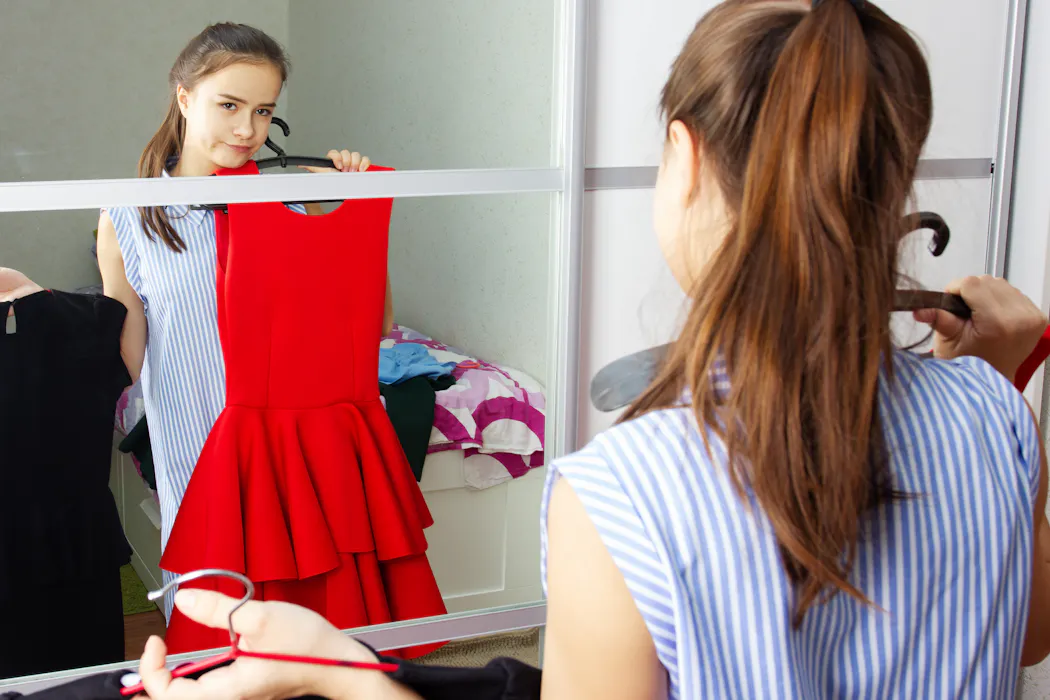
Formal is one of the most exciting events on the school calendar for many senior students.
Young people can spend months choosing outfits, planning a hairstyle and trialling different makeup looks. For some teens, it may even be their first time wearing a suit or a more “dressy” dress.
But while formals make for great high school memories, some young people might experience increased anxiety about their body image and feel an enormous pressure to look a certain way on the night.
What is ‘body image’?
Many people think “body image” simply refers to how someone feels about their body size or shape. However, body image is much broader than this.
Body image refers to the thoughts, feelings and beliefs we have about our body and physical appearance. This can include our weight and shape, but also features such as our hair, skin, height, facial features and other aspects of how we look.
It also includes what we believe our appearance says about us as a person, and how we think other people perceive and judge our appearance.
For example, a teenager struggling with their body image might think, “if I lose weight, I’ll look better in my dress”. But underneath that can be a bigger belief such as, “if I look better, people will like me more”. They may give their appearance more power over how they feel about themselves than it deserves.
Body image isn’t just a girls’ issue either. Boys can be affected by body dissatisfaction and experience pressure to be lean, muscular or athletic.
Comparison can make it worse
Social media can turn up the volume on all of this.
Research shows social media gives teenagers many more opportunities to compare their appearance with other people, such as friends, influencers and celebrities.
The more often teens make these comparisons, the easier it can be to decide their own body doesn’t measure up to perceived beauty standards.
School formal can create anxiety
Formal time can bring these worries to the surface.
In the lead up to the event, a teenager might scroll through hundreds of images of dresses, suits, bodies, makeup, hairstyles and “formal transformations” (when teenagers post comparisons of their before and after looks when getting ready).
This can create an idea of what someone going to a formal is “supposed” to look like. Of course, they’re comparing themselves with carefully selected images. We don’t usually post photos where our eyes are closed, we’re standing awkwardly or the angle is bad.
Signs your teen needs support
Some behaviours parents should watch out for in young people are when they:
-
speak more critically about their body
-
often make comparisons between themselves and their friends
-
say they don’t want to attend formal because of how they look
-
avoid shopping for an outfit
-
are distressed about how they look in photographs.
It’s important to pay attention to your child’s relationship with food and exercise too.
As formal approaches, some teens may start skipping meals, cutting out foods or exercising more because they want to lose weight or change their shape before the event. This doesn’t necessarily mean they have an eating disorder. But such changes are worth noticing, particularly if your teenager becomes increasingly preoccupied with food, weight or appearance.
What parents can do to help
If you’ve seen concerning behaviour from your teen, you might start the conversation by saying:
I’ve noticed you seem really worried about how you’re going to look at the formal. Tell me what’s worrying you.
Then listen. You don’t have to immediately fix the problem.
During conversations, you might also ask them:
-
who decides one body looks better in a formal dress than another?
-
why does a boy need to be muscular to look good in a suit?
-
would you judge your friends’ bodies as harshly as you judge your own?
These points can help them question where their ideas about bodies come from.
It’s important to talk to teens about their social media use too. You might encourage them to question the content on their feeds and to unfollow accounts that make them feel worse about themselves.
If they say something critical about their appearance in front of you, avoid saying phrases such as, “don’t be ridiculous, you look beautiful”. This can dismiss their feelings and reinforce the idea that how they look is what matters.
Shift the focus
It can help to shift your child’s focus from what their body looks like to what their body allows them to do and experience.
You might tell them it’s okay to not love every part of their body every day. But also let them know it’s still important to learn how to respect and appreciate their body. It helps to remind them their appearance is only one small part of who they are.
As a parent, you can model this too. Try not to criticise your own body, talk about dieting before an event or comment on other people’s weight.
Most importantly, help your teenager put the formal back into perspective.
The purpose isn’t to have the perfect body, wear the perfect outfit or take the perfect photo. It’s to celebrate, have fun and make memories with friends.
Years later, they’ll hopefully remember who they were with and how much they laughed, not what size they wore.
The Butterfly Foundation provides support for eating disorders and body image issues, and can be reached on 1800 334 673.

Vivienne Lewis does not work for, consult, own shares in or receive funding from any company or organisation that would benefit from this article, and has disclosed no relevant affiliations beyond their academic appointment.
Original source: https://analysis1.mil-osi.com/2026/09/03/school-formals-can-increase-body-image-anxiety-for-some-teens-heres-how-parents-can-help/