

Source: The Conversation – France
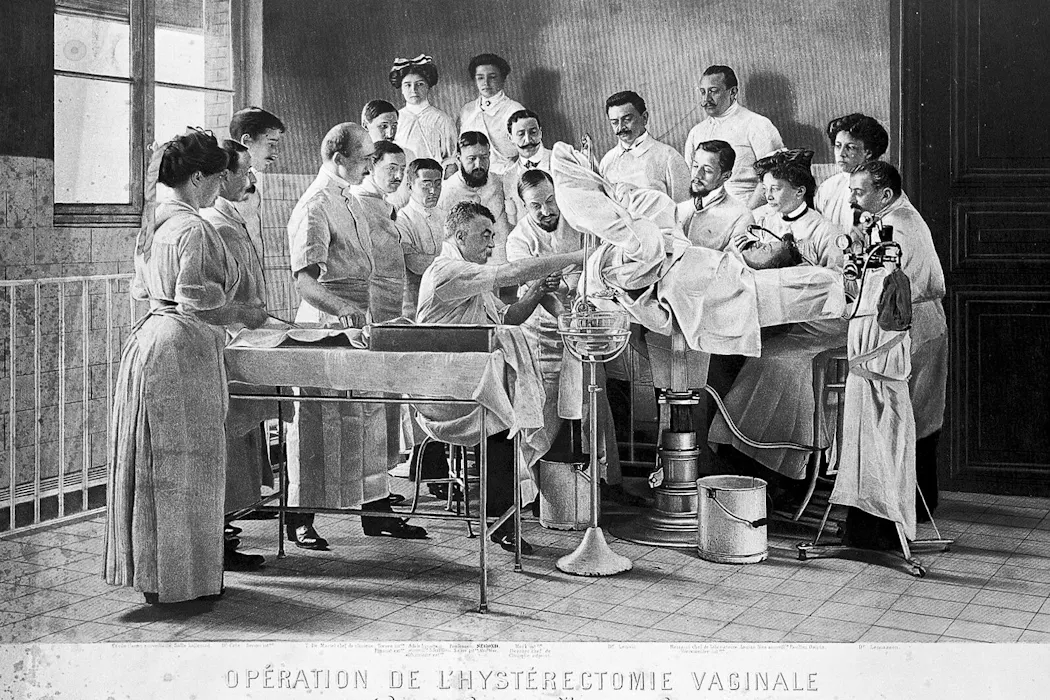
Intense pelvic pain, severely painful periods, infertility – these symptoms associated with endometriosis already appeared in medical texts as far back as antiquity. Yet this disease, which affects 10% of women of reproductive age, long remained ignored. The reason: the long history of medical and social representations of female pain.
Having very painful periods. Being constantly exhausted. Suffering during sexual
intercourse or experiencing unexplained digestive problems. For millions of women,
these symptoms are part of daily life. Yet they are still too often minimised, or even considered “normal”. Behind this pain, a common but long-overlooked disease
sometimes hides: endometriosis.
Endometriosis is estimated to affect around one in ten women of reproductive age
worldwide, amounting to nearly 190 million women. In France alone, this represents
approximately two million people, according to a report by Inserm in 2024. The average delay between the onset of the first symptoms and diagnosis remains estimated at between seven and ten years in many countries .
To understand this delay, it is necessary to look back at the long history of medical and social representations of female pain.
Suffering that can be traced back to Antiquity
Contrary to a widely held belief, endometriosis is not a recent disease. While its
identification as a distinct medical entity is relatively modern, descriptions of
compatible symptoms – intense pelvic pain, severely painful periods,
infertility – already appear in ancient medical texts.
The earliest references appear in Egyptian medical papyri dating back to
approximately 1855 BCE. In ancient Greece, the writings of the Hippocratic
Corpus, attributed to Hippocrates (5th–4th century BCE), describe gynaecological disorders marked by severe menstrual pain, abnormal bleeding, and difficulty conceiving.
These symptoms were then interpreted through the theory of the “wandering uterus”,
according to which a supposedly mobile uterus was the source of physical and
psychological disorders. While this explanation was incorrect, it nevertheless reflects an ancient observation: the suffering of women was noted, but understood through philosophical and cultural frameworks, in the absence of biological knowledge.

The National Library of Medicine
‘Hysteria’, or the confusion between physical symptoms and representations of the female psyche
Over the centuries, this reading persisted. Gynaecological pain was largely
perceived as a female inevitability, and often interpreted as the expression of a moral or psychological imbalance.
The term “hysteria”, derived from the Greek hystera (“uterus”), is part of this long history, marked by a persistent confusion between bodily symptoms and social representations of femininity. This approach lastingly influenced the way in which
women’s complaints were taken into account and explored medically.
From suspicion to medical recognition
A turning point came in the late 19th century. In the 1860s, pathologist Karl von
Rokitansky described, through anatomopathological examinations, lesions containing glandular tissue resembling the uterine lining, located outside the uterine cavity. These observations constitute the first morphological description of what would later be identified as endometriosis.
At the beginning of the 20th century, American gynaecologist John A. Sampson took
a further step. Between 1921 and 1927, he introduced the term “endometriosis” and proposed the first conceptualisation of the disease as a distinct clinical entity. He put forward the hypothesis of retrograde menstruation, suggesting a backflow of endometrial cells into the abdominal cavity. Although this hypothesis remains one of the major explanatory frameworks today, it alone cannot account for all forms and locations of the disease.
This work laid the foundations for a modern understanding of endometriosis. Yet it was not immediately accompanied by an improvement in patient care. For much of the 20th century, the disease continued to be seen as mild, while menstrual pain remained widely trivialised.
A chronic disease long made invisible
Long approached primarily from an anatomopathological perspective, endometriosis
has gradually been recognised, over recent decades, as a chronic disease
associated with inflammatory phenomena. This evolution in knowledge has made it
possible to better understand the full extent of its clinical manifestations: severe pain, persistent fatigue, digestive and urinary disorders, significant impairment of quality of life, and, in some cases, infertility.
Despite these advances, diagnostic wandering remains significant. It is explained
both by the great heterogeneity of symptoms and by the persistence of social
representations surrounding menstruation and female pain.
Numerous studies show that patients report having long been told that their pain was “normal” or attributed to stress or anxiety, thereby contributing to delayed access to diagnosis and appropriate care.
A history still in the making
Over the past two decades, the management of endometriosis has undergone a
notable evolution. Advances in medical imaging technology, particularly MRI and specialised ultrasound, have improved the diagnosis of complex forms, while therapeutic strategies have diversified, with growing attention to quality of life.
In France, this evolution has been accompanied by increased institutional
recognition, particularly with the establishment, in 2022, of the National Strategy to Combat Endometriosis, which aims to improve early diagnosis, structure care pathways, strengthen the training of healthcare professionals, and support research.
While these advances have profoundly transformed the understanding and
management of the disease, many challenges remain. Current research is focused,
in particular, on better understanding early pain trajectories and intervening earlier, with the objective of moving beyond a strictly curative logic to envisage, in the longer term, prevention strategies.
A research project on painful periods from adolescence
In this context, the PRECURSOR research project, which will soon be launched in
France, focuses on severely painful periods from adolescence onwards. Its objective
is to evaluate whether early management combining multiple approaches could help
prevent the onset of chronic pelvic pain and, in the longer term, reduce the risk of developing endometriosis. Adolescent girls affected by severe menstrual pain will soon be invited to participate in this study.
The history of endometriosis thus sheds light on the persistent challenges facing
healthcare systems in identifying and managing female pain, which remains a central
issue of public health.

A weekly e-mail in English featuring expertise from scholars and researchers. It provides an introduction to the diversity of research coming out of the continent and considers some of the key issues facing European countries. Get the newsletter!

Nadjib Mohamed Mokraoui received funding from the French Foundation for Medical Research, France’s Endometriosis Research Foundation, Fondation Apicil and Association Endofrance.
Original source: https://analysis1.mil-osi.com/2026/09/02/endometriosis-a-long-ignored-disease-despite-symptoms-that-can-be-traced-back-to-ancient-times/