

Source: The Conversation – UK
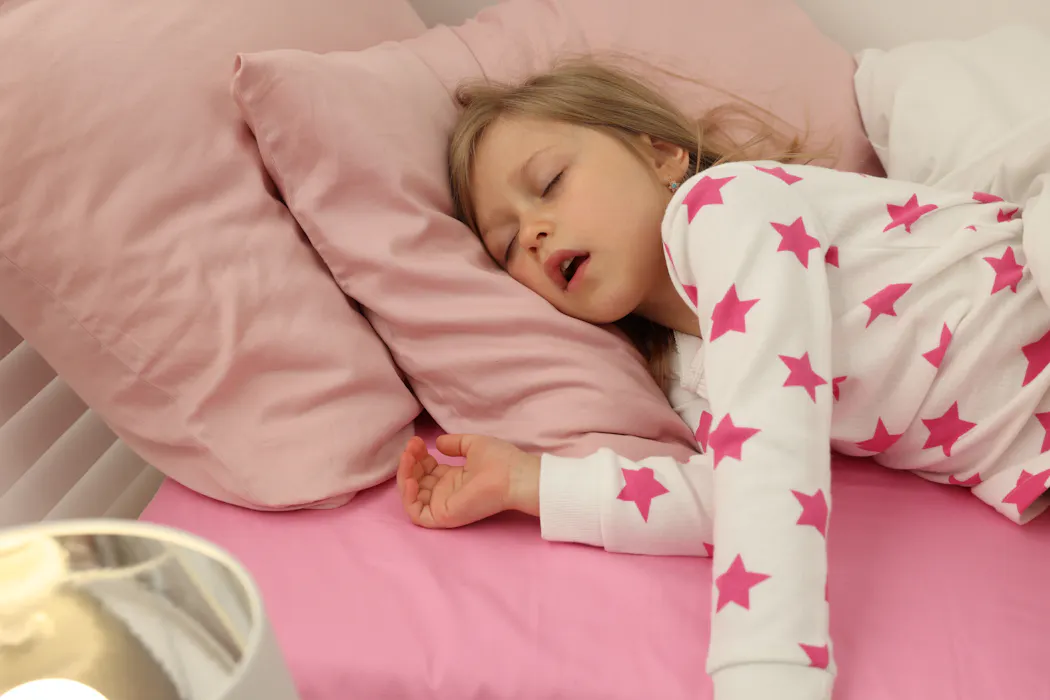
A child who snores loudly every night might seem like a funny sight. But if that snoring accompanies repeated narrowing or blockage of the airway, the effects can reach far beyond a noisy night.
Obstructive sleep apnoea is often associated with adults who snore and struggle to stay awake during the day. Children can develop it too. Its prevalence is difficult to pin down: a 2024 systematic review of 30 studies found that recent estimates in preschool children ranged from 12.8% to 20.4%, but definitions and testing methods varied considerably. Only two population studies used a full overnight sleep study, so the true figure remains uncertain.
In children, habitual loud snoring is an important warning sign. Parents may also notice mouth breathing, restless sleep, pauses followed by gasps or snorts, or the chest and abdomen working hard to draw breath. Not every child who snores has sleep apnoea, however, and symptoms alone cannot confirm it.
Daytime symptoms
The daytime signs can be less obvious. Rather than appearing sleepy, some children become irritable or unusually active, struggle to concentrate or develop behavioural and learning difficulties. These problems can resemble or worsen symptoms of attention deficit hyperactivity disorder (ADHD). The conditions can also occur together, so this should not be treated as a simple either-or diagnosis.
During sleep, the muscles that help keep the upper airway open relax. In obstructive sleep apnoea, the passage behind the nose and mouth repeatedly narrows or closes. The child then has to work harder to breathe. These episodes can lower blood oxygen and briefly disturb sleep, even when the child does not appear to wake fully.
Repeatedly disrupted sleep is associated with poorer behaviour, learning and quality of life. Research also links childhood sleep apnoea with changes in blood-pressure control and metabolism, including how the body regulates blood sugar, although the severity of these effects varies between children.
In younger children, enlarged tonsils and adenoids are a leading cause. The tonsils sit at the back of the throat; the adenoids are similar tissue behind the nose. Because a child’s airway is narrow, enlarged tissue can leave too little room for air to pass comfortably.
Obesity, differences in the shape of the skull or jaw and allergic rhinitis, which is inflammation inside the nose caused by an allergy, are also associated with greater risk. Research has additionally found associations with asthma and premature birth. Children with some genetic conditions, particularly Down syndrome, have a much higher prevalence. Globally, obesity among five to 19-year-olds rose from about 2% in 1990 to about 8% in 2022, according to a large analysis of population studies.
Air pollution may contribute too, but the evidence requires caution. Observational studies have linked exposure to fine airborne particles with habitual loud snoring and other breathing problems during sleep. Such studies cannot establish that pollution causes obstructive sleep apnoea.
A child who regularly snores loudly, has pauses or gasps, breathes through their mouth or seems to struggle for breath during sleep should be assessed by a doctor. A GP may refer the child to a paediatrician, sleep service or ear, nose and throat specialist.
The reference test is polysomnography, usually called an overnight sleep study. Sensors record brain activity, airflow, breathing effort, heart rate and blood oxygen, allowing clinicians to see whether breathing is repeatedly obstructed and how severely sleep is affected.
A short video of the child sleeping may also help. Preliminary research on smartphone recordings suggests that they could help clinicians screen and prioritise children, although they cannot diagnose sleep apnoea or replace a sleep study.
Treatment
Treatment depends on the cause and severity. When enlarged tonsils and adenoids are obstructing the airway, removing them is often the first treatment offered. In a randomised trial involving 464 children, surgery improved symptoms, behaviour, quality of life and sleep-study findings compared with watchful waiting. It did not produce a significantly greater improvement on the trial’s main objective test of attention and the mental skills used to plan and control behaviour.
An operation does not always resolve the condition. Up to 40% of children may have persistent sleep apnoea after surgery, with higher rates among those with obesity, severe disease or other medical conditions.
For mild cases, a clinician may recommend monitoring or treating nasal inflammation. Anti-inflammatory steroid nasal sprays may help selected children, but the evidence is mixed. Mouth and facial muscle exercises are sometimes considered, although the supporting studies are small and inconsistent. Evidence for orthodontic devices in children also remains limited.
If surgery is unsuitable or sleep apnoea persists, continuous positive airway pressure (CPAP) can hold the airway open by delivering gently pressurised air through a mask during sleep.
Some mild cases resolve as children grow, but others persist or worsen. Follow-up is therefore important. Routine child health checks should include a question recommended in paediatric guidance: “Does your child snore?”
Obstructive sleep apnoea is treatable but easy to miss. When a child is restless, unusually active or struggling to concentrate, asking what happens after bedtime may reveal an important part of the picture.

Mirja Quante receives funding from the German Sleep Society. Use of AI to check spelling or grammar.
Original source: https://analysis1.mil-osi.com/2026/09/02/childhood-sleep-apnoea-when-snoring-is-more-than-a-noisy-night/