

Source: The Conversation (Au and NZ)
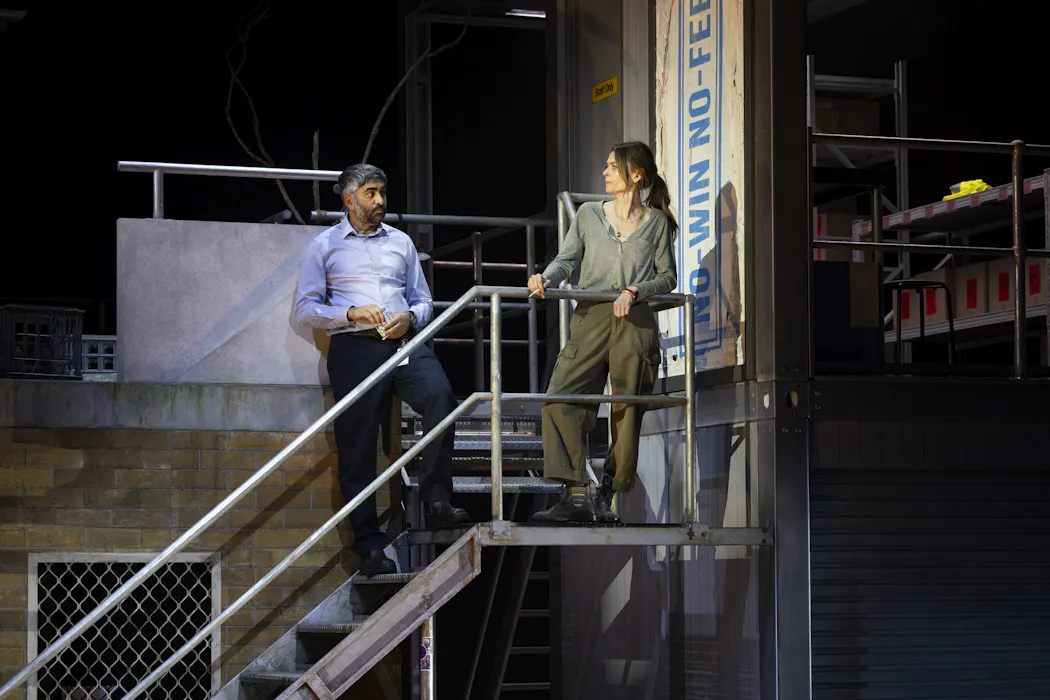
What do we owe the people who raised us, and what does that debt cost us in return? For those who work themselves to the bone keeping a family afloat, when does sacrifice tip into self-erasure?
Break Of Day, a new play by Steve Rodgers, examines the lives of ordinary, working-class Australians who strive and schlep against all odds to make ends meet. A semi-autobiographical work, the play is a tribute to the essential and often invisible labour of supermarket workers, cleaners, nurses and others who keep the country running.
The script first came across director Sarah Goodes’ desk in 2021, but it is only now premiering at the Malthouse Theatre – an indication of just how long it takes to get new Australian work in front of audiences, and a quiet indictment of a system that too often fails to prioritise its own stories.
A single mum in a hardscrabble town
Pamela (Kat Stewart) is a single mum in a dead-end town, working the nightshift at a warehouse that belongs to a vast multinational logistics company.
Her daughter Rae (Sherry-Lee Watson), highly academic and focused, is in the throes of her final year of school. Rae is in love with Jedediah (Theo Clarke), an earnest young man who’s a keen dancer and performer and longs to stay in the town to make a difference to his community.
Pam works with Sanjeeva (Chum Ehelepola), whom she has known since primary school, and who has his own complex family history. Pam’s father Frank (Richard Piper) is a drunken caricature, yearning for a happier past. He is a man who once had status in the community, but now is just a shell of his former self, contemptuous of his daughter’s hopelessness.

Pia Johnson/Malthouse
The story centres around one night at Pam’s house just as Rae is desperately trying to finish her English extension paper on Vladimir Nabokov’s Lolita. Time is already running out as Rae’s computer dies when Frank arrives drunk, disorderly and blusteringly demanding. What follows is a snapshot of a family in crisis.
Along the way we are presented – somewhat didactically – with different perspectives of this hardscrabble town. Is it a respite, or an economic necessity, or a hellhole? What are the options for the young folk of the region: stay and work within the community to bring people together, as Jedediah hopes to do, or get out in pursuit of the opportunities an education promises?
Solid performances, but expository writing
Performances in this ensemble cast are solid enough, but the play is let down by its expository writing.
Stewart’s turn as Pamela is gritty and angular, but her occasionally poetic direct address monologues too often seem unnecessary, and her clean and pointed characterisation doesn’t quite capture the sweatiness and exhaustion of the factory worker.

Pia Johnson/Malthouse
Watson and Clarke work hard as the young couple navigating their burgeoning relationship and competing agendas, and it is terrific to see space being made for new young performers on the mainstage. But their inexperience does show, particularly in the intimate scenes which feel a little ginger.
There are some thoughtful considerations with the literary references that are worked into the show, particularly the text of Lolita and the idea of the unreliable narrator, challenging us to consider the role of ambiguity in storytelling. How much are stories fabricated to achieve goals – and how much are our own narratives and life stories manipulated?
An intricate and dynamic set
Anna Cordingley’s intricate and dynamic set is the highlight of this show, with the town entirely built onto a revolving stage. Climbing over two storeys, it appears as a maze of substation walls, hi-viz vests, cardboard boxes, abandoned shopping trolleys, gridded metal window louvres and fluorescent tube lights smeared with grimy insect detritus.
The revolve moves as scenes change from small-scale domestic kitchen scenes to the lamplit street and the factory floor. Interconnected by a honeycomb of spotlights and stairs and laneways, the set makes for a startling breadth of locations.
Jethro Woodward’s sound design dominates. The sub-woofers of the Merlyn Theatre get a workout as blasting doof signposts scene changes or mood shifts. Apart from a rare moment of sonic space, where the barcode scanners’ beeps could almost be mistaken for bellbirds, there is very little silence in the play.

Pia Johnson/Malthouse
This urge to fill space with sound that helps us feel what we are meant to feel brings a televisual sensibility to the show. I have noticed this a lot lately in live performance, and wonder if it’s an effect of long-form television and streaming services shifting audience sensibilities.
The stakes are high and the themes are rich in Break Of Day, but ultimately it is disappointing, as the play’s illustrative writing works against it.
There are few moments of pause in which to contemplate or sit with the discomfort of some of the bigger themes that are thrown up – the darknesses of family history, perhaps, or the ethics of choice, or even the perils of AI.
Walking a knife edge between gritty narrative and spicy melodrama, Break Of Day never quite resolves the tension.
Break of Day is at Malthouse Theatre, Melbourne, until August 29.

Kate Hunter does not work for, consult, own shares in or receive funding from any company or organisation that would benefit from this article, and has disclosed no relevant affiliations beyond their academic appointment.
Original source: https://analysis1.mil-osi.com/2026/08/13/break-of-days-tribute-to-invisible-labour-of-working-class-australians-is-ultimately-disappointing/