

Source: The Conversation – Global Perspectives
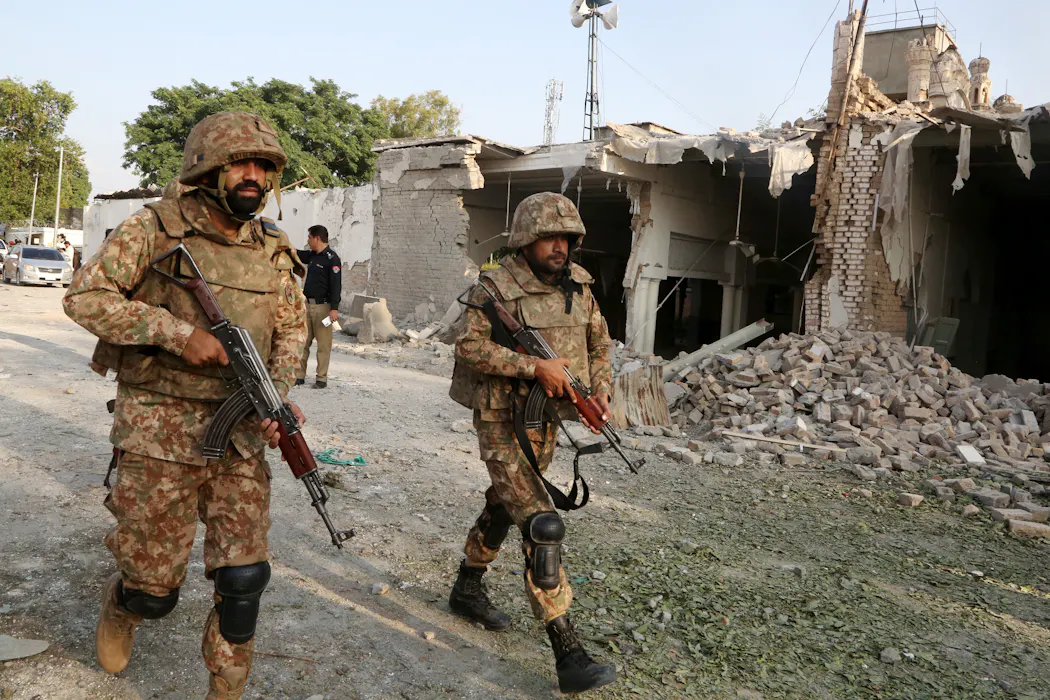
The suicide bombing and gun attack that killed dozens in northwest Pakistan on Sept. 18, 2026, highlighted the fragile security situation in the South Asian country. But it also shone a light on the complex and evolving extremism landscape there and the strained relationship between Pakistan and neighboring Afghanistan.
The assault took place as worshipers gathered for Friday prayers in the city of Kohat, in Khyber Puktunkhwa province, northwest Pakistan. A suicide bomber rammed an explosives-laden car through the wall of a police complex in the city of Kohat, targeting the mosque inside. Gunmen then exchanged fire with law enforcement officials during a 20-hour standoff. In all, 31 people were killed, including 16 police officers, while over 100 people were reported injured.
Supporters of the militant group Ittehad-ul-Mujahideen Pakistan, or IMP, claimed responsibility on encrypted apps like Telegram. But other seemingly aligned groups distanced themselves from the attack. Pakistan responded by conducting airstrikes in Afghanistan, home to at least one of the gunmen.
Over the past two years, we have conducted fieldwork in this region and closely monitored the operational and propaganda activity of violent extremist groups, including the IMP. The attack and its fallout reveal much about the state of collaboration and friction among the various militant entities that have fueled violence.
Who is Ittehad-ul-Mujahideen Pakistan?
The IMP is a jihadist coalition formed in April 2025 from three smaller militant factions: Lashkar-e-Islam, the Hafiz Gul Bahadur Group and Inqilab-e-Islami Pakistan.
By late 2025, it had become the most active jihadist group in Pakistan after the Tehrik-i-Taliban Pakistan, also referred to as the Pakistani Taliban.
The IMP’s main objectives appear to be weakening the Pakistani state through attacks on police and security forces and advancing Islamist rule. Its operations are largely concentrated in northwest Pakistan in areas along the Afghan border, where the group has used tactics including deadly suicide bombings, vehicle-borne improvised explosives and rockets.
Prior to the Kohat attack, IMP members were responsible for a May 2026 checkpost assault that killed 15 police and a July vehicle bomb attack at a police station in the city of Bannu.
The IMP styles itself as a unified front that brings various jihadist factions operating in Pakistan together under one command. Its recent propaganda, for example, includes a video by a religious cleric urging unity among jihadists.
That message aligns with that of Al‑Qaida in the Indian Subcontinent, or AQIS, to which the IMP is linked. In recent years, AQIS has sought to become the backbone of a united coalition operating in the Afghanistan-Pakistan region.
But attempts to unify the various militant groups operating in Pakistan appear to have been undermined by the specifics of the Kohat attack.
Indeed, the targeting of a mosque – and the extent of civilian deaths – prompted an intra-jihadist quarrel. Within hours, the Pakistani Taliban and another group, Jamaat-ul-Ahrar, released statements denouncing the attack and disavowing any role.
The Afghan Taliban, whose leadership the Pakistani Taliban pledges allegiance to and which Islamabad accuses of sheltering the group, also condemned the attack. AQIS likewise criticized the attack and urged followers to avoid activities that could taint their aim, ideology and operations.
For AQIS, the fallout is particularly damaging: It had spent the preceding months showcasing IMP as a model affiliate and a unifying force in the contemporary jihadist landscape.
By mid-2026, AQIS was promoting the IMP as one of its global fronts. The June–July issue of its flagship magazine, Nawa-e-Ghazwa-e-Hind, featured the IMP’s campaign in Pakistan in an infographic. And a May editorial had urged greater coordination among jihadi groups, citing IMP-aligned cooperation as the model.
Hoshang Hashimi/AFP via Getty Images
Militant convergence and competition
The ongoing intra-group disquiet should not distract from the larger picture of violent extremism in the region. Pakistan is facing its most serious security crisis in two decades; the country now ranks first in the Global Terrorism Index.
Driving this trend is a combination of organizational convergence and competition among extremist groups, including local and transnational jihadist groups, as well as separatist groups in the southwestern province of Balochistan.
With respect to the jihadist groups, the Pakistani Taliban has absorbed more than a hundred factions since 2020, while AQIS has drawn the IMP into its orbit.
AQIS and the Pakistani Taliban, however, remain distinct entities. Though there have been indications of occasional collaboration in their activities, various attempts at a formal merger have repeatedly failed since 2020, owing to ideological differences that persist. Most notably, AQIS has transnational ambitions, while the Pakistani Taliban’s focus is on Pakistan.
This dynamic of convergence is also evident in Balochistan, where key ethnonationalist groups have consolidated since 2018 under the Baloch Raaji Aajoi Sangar umbrella.
At the same time, fault lines in the wider regional militant landscape have also driven violence. The Islamic State Khorasan Province – the Islamic State group’s official affiliate in the region – remains hostile to the Pakistani Taliban, AQIS and IMP alike – as well as to the Afghan Taliban and the Pakistani government.
As a transnational group competing with locally rooted actors, the Islamic State Khorasan Province, or ISKP, encourages a cascading trend of extreme violence.
A second subtler form of competition runs within the Pakistan Taliban-AQIS-IMP axis itself. Nominally allies, the groups compete for relevance, resources and recruits by outbidding one another with more extreme tactics. It is precisely that logic that appears to lie behind the Kohat attack.
Cross-border tension
Both the collusion and competition dynamics among groups are sustained by interstate tensions that give militants the opportunity to exploit counterterrorism gaps. In particular, the worsening relationship between Pakistan and Afghanistan has entrenched many of the militant groups Pakistan is confronting.
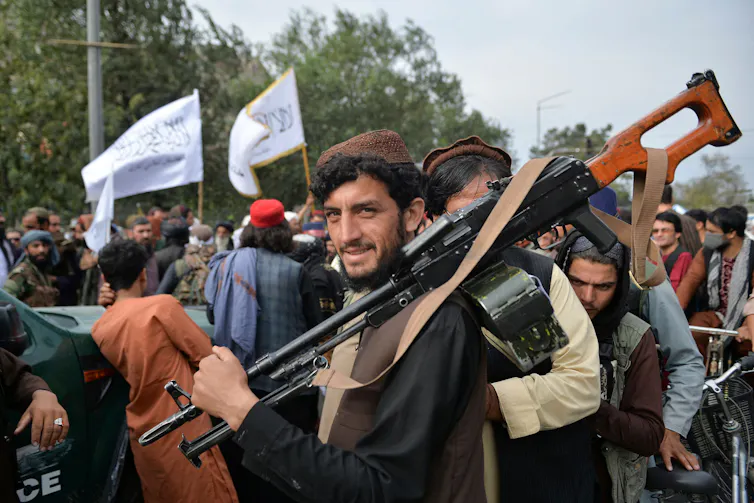
Relations between the two countries have deteriorated since the Taliban seized control of Afghanistan in 2021. While Pakistan began with tactics such as border closures, trade restrictions and limited strikes on Pakistan Taliban camps, intended to pressure the ruling Taliban to act against anti-Pakistan militants within its borders, it crossed into open war in February 2026. That’s when Pakistan struck Taliban military installations across the border in Afghanistan.
A fragile ceasefire followed, but it has been strained by continued cross-border attacks, Pakistani airstrikes on militant hideouts in Afghanistan, and Afghan Taliban strikes on alleged ISKP bases in Pakistan.
For the Pakistani government, the Pakistani Taliban is an Afghan-based threat that the government in Kabul must act on. While for the ruling Taliban in Afghanistan, the Pakistani Taliban are a domestic issue for Pakistan to deal with.

Shafiullah Kakar/Anadolu via Getty Images
Tensions were already escalating by the time the Kohat attack took place on Sept. 18. And the attack itself carried the two features most likely to inflame them.
The group that claimed the attack is built around networks believed to operate from sanctuaries across the border in Afghanistan; Pakistani authorities identified at least one of the bombers as an Afghan national.
For Islamabad, that was confirmation of the Afghan government’s complicity in the worsening security situation in Pakistan. The accusation carries a particular irony, since for decades, Pakistan’s military and intelligence establishment nurtured the Afghan Taliban as a strategic asset. When the Taliban retook Kabul in August 2021, Pakistani leaders celebrated, expecting it to rein in the Pakistani Taliban. The Afghan Taliban, on the other hand, has been willing to facilitate talks between Islamabad and the Pakistani Taliban, but not to crack down on a group that it fought alongside against U.S.-led forces for well over a decade.
As such, the Kohat attack has hardened, rather than merely reinforced, Pakistan’s demand that Kabul dismantle militant sanctuaries. The retaliatory strikes that have followed – Pakistan’s first airstrikes on Afghan soil since June – have merely reopened the cycle of Pakistani cross-border action and Afghan retaliation.

The authors do not work for, consult, own shares in or receive funding from any company or organization that would benefit from this article, and have disclosed no relevant affiliations beyond their academic appointment.