

Source: The Conversation – USA (2)
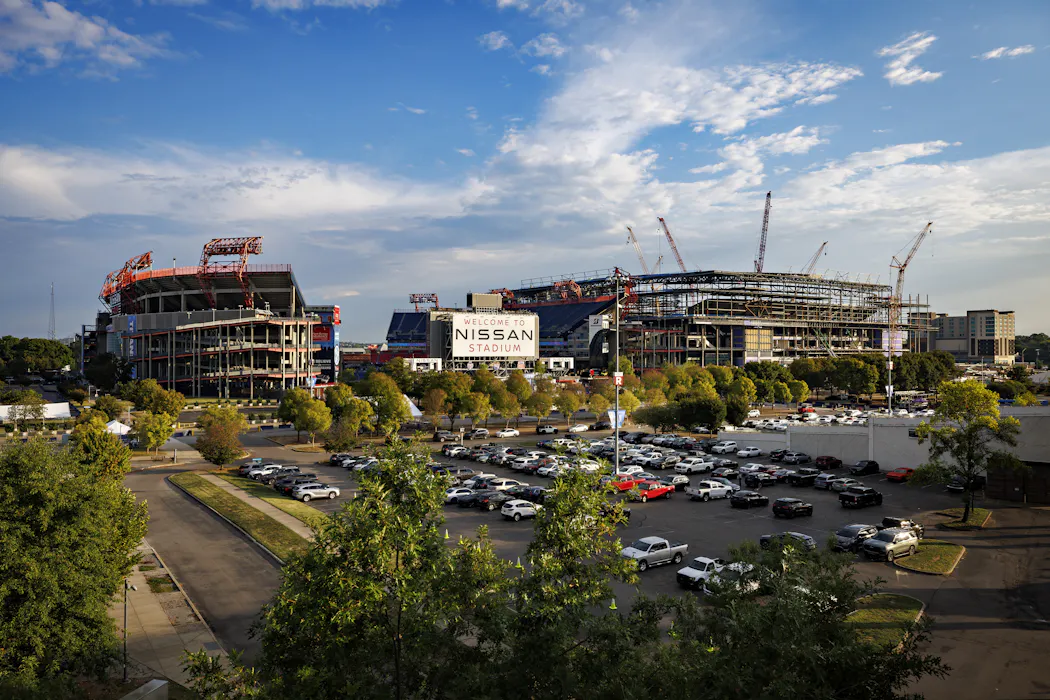
When the Buffalo Bills play their 2026 season home opener in the newly built Highmark Stadium, it will mark the first game to take place at one of six new NFL venues scheduled to open over the next six seasons.
The Tennessee Titans will move into a new dome in 2027. The Cleveland Browns’ stadium is on track to be ready for the 2029 season, while the Washington Commanders are planning to inaugurate their new stadium the following year. The new homes for the Kansas City Chiefs and Denver Broncos are scheduled to open in time for the 2031 season.
When the Bills stadium was announced in 2022, economists called the US$850 million public contribution from New York and Erie County taxpayers a terrible deal.
That public expense would soon be eclipsed by subsequent NFL stadium projects, with subsidies averaging more than $1 billion and totaling $5.74 billion for the venues whose budgets have been announced. The Chiefs, recipients of $1.8 billion from Kansas taxpayers, lead the pack. Denver’s stadium costs are not yet known.
Economists have been studying the public financing of stadiums and their escalating costs for decades, consistently finding that the meager economic benefits to host communities simply don’t justify the massive public outlays they receive.
My recent book, “This One Will Be Different: False Promises and Fiscal Realities of Publicly Funded Stadiums,” summarizes and explains the dour findings. Stadiums fail to generate economic growth because they mostly reallocate existing spending from elsewhere in the community, rather than stimulate new commerce. And any localized development and intangible benefits tend to be limited – nowhere near enough to justify the subsidies provided.
But I also consider another important question: If research demonstrates that sports venues are unwise public investments, why do state and local governments continue to subsidize them?
New stadiums a no-brainer – for owners
Even though many of today’s stadiums are in good enough shape to last for decades longer – the Green Bay Packers, for example, are about to play their 70th season at Lambeau Field – stadiums tend to be replaced in 30-year cycles.
This corresponds with typical lease lengths that teams sign with municipal landlords. When facility leases expire, teams often seize the opportunity to push for publicly funded improvements.
The NFL’s last building wave peaked around the turn of the millennium, so the current uptick in new venues is expected. This trend will likely continue over the next decade, as leases for the many venues that opened in the 2000s expire.
Rather than sign a new lease for an existing stadium, team owners have every incentive to build newer, more costly structures.
For one, they benefit from the temporary surge in attendance and revenue that comes from opening a new venue. It’s a phenomenon that economists call the “novelty effect” – as fans clamor to experience the modern amenities that new venues offer. Teams also directly benefit from moving their operations to upgraded state-of-the-art facilities.
But a public contribution doesn’t only reduce the owner’s cost of replacing a venue. It also promotes lavish spending. When a government partner is sharing the financial burden, teams tend to design more expensive structures, since owners bear only part of the cost but receive all the benefits. This results in the “gold-plating” of facilities with extravagant features – like upgraded luxury suites, private clubs or a dome – that owners might not be willing to pay for on their own.
Though the Buffalo Bills’ Highmark Stadium may be the only new NFL stadium without a dome, its stacked design includes heated concourses and a specially designed snow-melting roof that covers a majority of seats. It also includes three new exclusive clubs for patrons who are willing to pay extra for added amenities, like climate-controlled spaces, field-level patio access, premium food and beverage options, and a private whiskey locker.
Waning public appetite
When economists began scrutinizing stadium financing in the 1980s, they concluded that the monopoly power of sports leagues was driving subsidies.
The thinking went that by restricting the total number of franchises, owners were generating greater public commitments by creating bidding wars among various municipalities. Elected officials were then forced to commit tax dollars to keep their hometown teams or risk losing them to another state or city and angering their voters.
However, that’s not exactly what has happened.
The NFL, the NBA, the NHL and MLB have each added between three and 11 new teams since 1990, which has reduced the number of relocation targets. Yet in that period, subsidies have only continued to grow.
Many teams received new public facilities without threatening to move anywhere. And though relocation may have been mentioned as a possibility in public discussions, none of the NFL franchises slated to open new venues over the next five years dangled offers from competing markets as an implicit threat to move.
Furthermore, when the question of using tax dollars for stadium improvements is put on the ballot, voters have often opposed them.
The Chiefs’ initial request for public funds to renovate its current stadium was soundly defeated by a Jackson County referendum in 2024. And surveys of voters in Nashville and upstate New York found that a majority opposed the Titans and Bills stadium deals.
Politicians versus the people
Public financing for stadiums doesn’t always fail at the ballot box.
Voters in Oklahoma City and San Antonio recently approved new arenas for their NBA franchises.
But elected officials are far more likely to approve public subsidies.
A recent review of public stadium votes found that only 58% of referendums put before voters passed. When they did, the support was slim: just 51%, on average.
In contrast, 96% of the proposals considered by representative bodies were approved with 80% support.
Teams realize that cutting voters out of the decision-making process is the most effective way to obtain public financing.
After the Chiefs’ Arrowhead Stadium renovation proposal was rejected by voters in Kansas City, Missouri, the team turned to lawmakers one state over, in Kansas, where the electorate wouldn’t have a direct say in its new stadium request. The Titans employed a $1.6 million lobbying campaign to help get subsidies approved by state and local representatives. The Bills similarly sought funding from its county and state legislatures.
It’s no surprise that none of the new NFL venues were considered by referendums. In fact, only six of 39 public subsidy proposals for new stadiums that were considered between 2005 and 2017 were decided directly by voters.
The perks of office
So why might a representative favor a project that the majority of their constituents oppose?
It’s difficult to get inside the minds of elected officials, but it likely helps that politicians tend to be male and educated – a demographic that likes sports.
By supporting and promoting venue projects, elected decision-makers may personally benefit, while passing the costs to taxpayers. Wooing public officials with playoff tickets and luxury boxes is a strategy that teams have openly employed.
Government representatives often have access to exclusive events and premium spaces that sports venues offer. For example, New York officials have been criticized for attending Bills games in a publicly subsidized luxury suite.
It’s understandable that stadium proposals may seem more persuasive when presented over cocktails in a private suite, sitting among other prominent citizens and surrounded by a buoyant crowd cheering on the hometown team.
Owners appear to have learned that even though they may not be able to fit a majority of the electorate into the owner’s box, there’s plenty of room for the municipal council.

J.C. Bradbury does not work for, consult, own shares in or receive funding from any company or organization that would benefit from this article, and has disclosed no relevant affiliations beyond their academic appointment.