

Source: The Conversation – UK
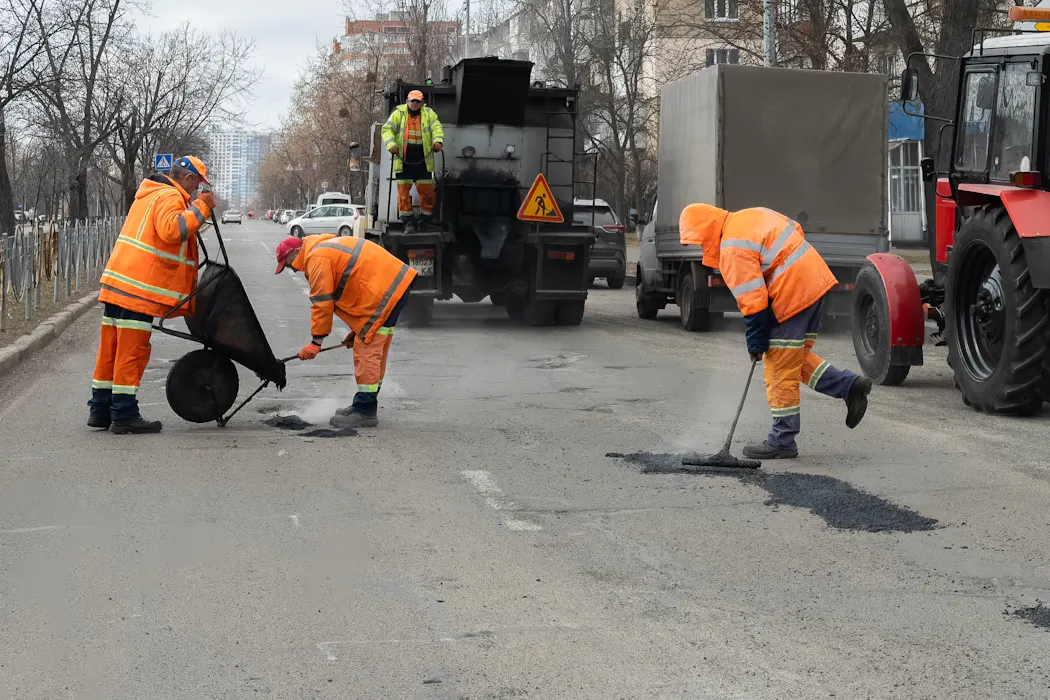
Russia’s war in Ukraine has generated one of the largest labour supply shocks in recent history. From an estimated pre-war population of 41 million people, close to 6 million have now left Ukraine. This outward migration alone has reduced the country’s worker population by roughly 3 million people.
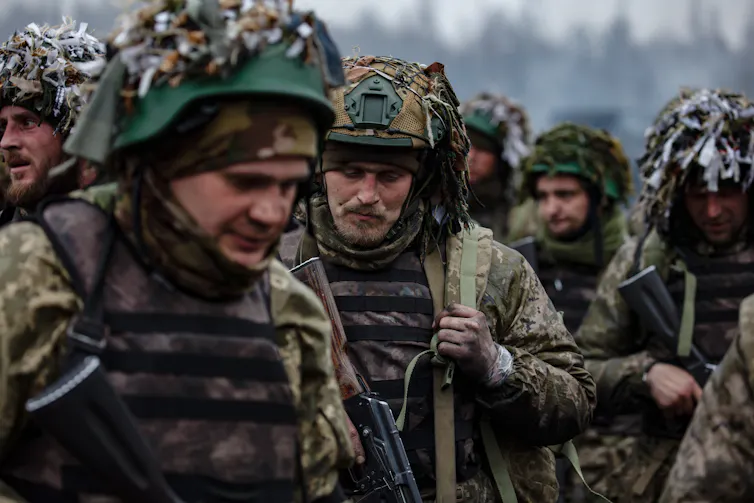
It has been compounded by the mobilisation of more than 700,000 Ukrainian citizens into the army. At least 55,000 Ukrainian soldiers had been killed in combat by July 2026 (this is likely to be an underestimate as many soldiers are missing in action), with 400,000 more wounded. Most of these people are working-age men.
By conservative estimates, Ukraine’s civilian casualties amount to almost 70,000 people, with the rate increasing over the past few months because of Russia’s extensive use of ballistic missiles. Millions of Ukrainian citizens in the east and south of the country also remain under Russian occupation.
In total, there has been a contraction of about 25% of the initial labour force in areas still under Ukrainian government control. This is a labour supply shock of extraordinary scale.
The shock to labour demand has been similarly severe. A massive, multidimensional reallocation has taken place as a result of the war, with most economic activity shifting to the western part of Ukraine, which is less exposed to air attacks.
In a wartime economy experiencing such massive displacement and reallocation, can workers and firms still find each other? To answer this question, we analysed data from Work.ua, a Ukrainian online platform where companies post jobs and job seekers upload their resumes.
Dmytro Larin / Shutterstock
We estimated the efficiency of matching between workers and firms – in other words, given a certain number of vacancies and job seekers, how often supply and demand actually meet.
Imagine there are ten companies, each with one open position and ten unemployed people. If matching efficiency is maximal, up to ten hires can be generated; if it is minimal, there will be none. The more frictions there are in the market, the more this efficiency decreases.
We traced how matching efficiency has evolved before and after the 2022 full-scale invasion, across Ukraine’s regions and economic sectors.
Labour market resilience
Three facts emerge from the data. First, matching efficiency has declined by about 15% since 2022. It has become more difficult for firms in Ukraine to find workers to hire and for job seekers to find employers willing to hire them.
This decline is significant, but not catastrophic. It is, for example, less than was estimated during the 2008 financial crisis in the US.
Second, the situation is varied. In the regions most exposed to the war, such as Sumy and Kharkiv oblasts in north-eastern Ukraine, the reduction in matching efficiency reaches about 20%.
But in the western regions of Ukraine, the picture is significantly better. In Lviv and Ivano-Frankivsk oblasts, the number of resumes and vacancies both increased compared with before the full-scale invasion – despite the overall decrease in Ukraine’s population and labour force. Matching efficiency in these areas decreased by just 5-7%.
How matching efficiency has changed, by region
We found similar variation across sectors. Many blue-collar occupations involving manual labour or skilled trades, from cleaning services to drivers, have experienced relatively modest declines. Non-essential personal services, like travel agencies, have suffered the most.
Finally, direct exposure to conflict – measured using data on air-raid alarms independent of proximity to the frontline – makes it significantly harder to match labour supply and demand. These daily disruptions, which generate fear, uncertainty, damage to infrastructure and blackouts, can severely hamper the labour market.
Overcoming wartime disruption
We also identified mechanisms that may have helped Ukraine compensate for its wartime labour market frictions. Many women have taken on traditionally male job roles, from mining to truck driving. Older people and those with disabilities are also playing a greater role in the labour force.
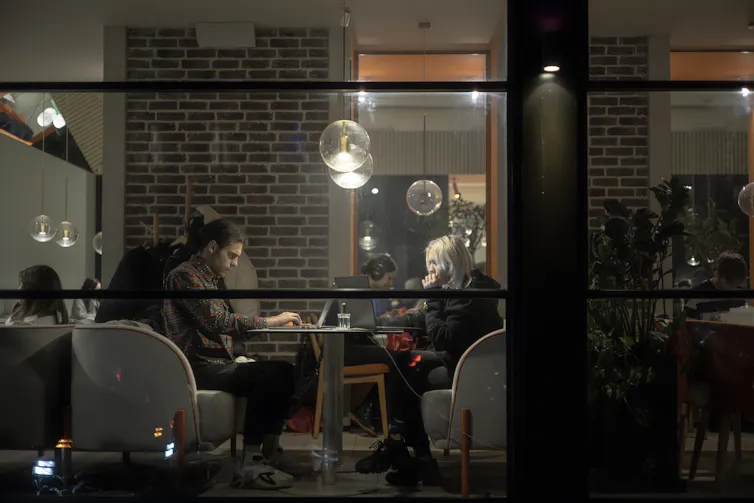
Many firms have adopted remote working and more flexible schedules. This has been especially important for displaced people and refugees, allowing many to stay connected to their employers in Ukraine and continue to provide services, despite the physical distance.
Ukrainian firms have also benefited from greater contractual flexibility. The minimum wage did not increase between the start of the full-scale invasion and 2026, while inflation eroded its real value. This means firms have been able to hire less-productive workers without experiencing profit losses.
Sodel Vladyslav / Shutterstock
Worker shortages are affecting many sectors of Ukraine’s economy – most notably in professions such as construction, transport and engineering. A continuation of the war will require more mobilisation in the labour market of people so far inactive, as well as a bigger contribution from those who left the country.
When the war finally ends, mobilising workers at all levels will be the next hurdle. Veterans will need to be reintegrated into the workforce, while refugee return, immigration and worker retention will all have to be encouraged.
Continuing to nudge higher participation among groups underrepresented in the labour market will also be important. But this all represents a sizeable challenge.

The authors do not work for, consult, own shares in or receive funding from any company or organisation that would benefit from this article, and have disclosed no relevant affiliations beyond their academic appointment.
Original source: https://analysis1.mil-osi.com/2026/09/04/ukraines-labour-market-has-been-surprisingly-resilient-during-the-war-with-russia/