

Source: The Conversation – UK
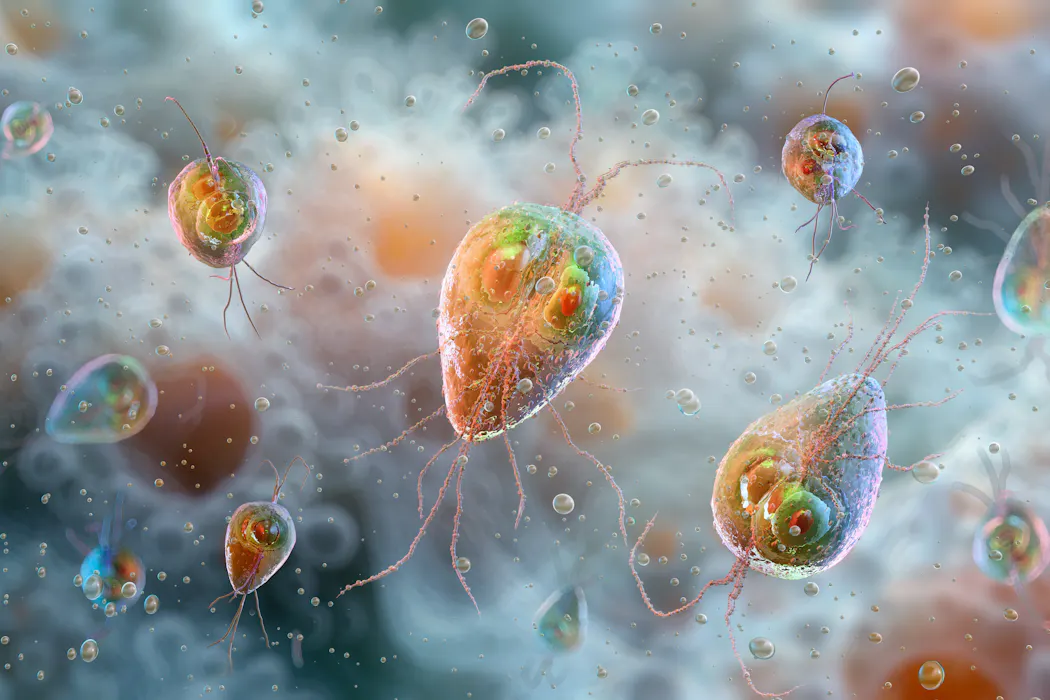
Cases of giardiasis, an intestinal infection that causes diarrhoea, bloating and gas, have reached their highest level in England since 2016 according to newly published data by the UK Health Security Agency (UKHSA).
The agency reported 6,069 lab-confirmed cases of giardiasis in 2025, an 11.4% rise from 2024. It is the highest yearly total in almost a decade.
This rise might sound alarming. But while the increase in cases is real, it doesn’t necessarily mean that England is facing a crisis. Instead, the rise is probably happening for a mix of reasons, including: increased international travel in the post-pandemic era; upgrades to lab testing; changes in rainfall and flooding; and better awareness of Giardia duodenalis – the tiny parasite that infects the small intestine.
What is giardiasis?
The Giardia parasite infects the small intestine, and is one of the most common causes of diarrhoea by a parasite. It infects hundreds of millions of people each year globally.
The infection it causes, called giardiasis, can result in diarrhoea, bloating and nausea. In longer lasting and moderate to severe cases, it can also result in weight loss. Some people can feel tired for weeks, even after the infection has gone. Symptoms usually start one to three weeks after being exposed.
Not everyone who becomes infected by Giardia develops symptoms of giardiasis. Some people can carry the parasite without knowing it’s there and spread it to other people.
For most people, giardiasis is merely unpleasant rather than outright dangerous. But it can cause lasting illness and be a bigger problem for children, older adults and people with weaker immune systems.
Most people get better on their own, though some may have symptoms for weeks or even months. Those whose symptoms are more severe or longer-lasting can be treated with anti-parasite medicine.
In children, especially under two years old, infections lasting more than several weeks can affect their growth.
How does it spread?
Giardia spread by the faecal-oral route. This means that if tiny Giardia cysts in infected poo are inadvertently swallowed, they can cause illness. As few as ten microscopic cysts can be enough to cause infection.
The best-known route that the parasite spreads is by drinking water or eating food that has been contaminated with infected poo.
Infection can also spread by close contact between people in the same house (especially when there is poor hygiene and hand washing), nurseries and infected animals such as cats and dogs.
International travel is important too. Travellers visiting regions with poorer sanitation can be exposed to Giardia through contaminated food and water.
Another route that is gaining attention is sexual transmission. Giardia can be passed on during sexual activities where there’s oral contact with the anus (rimming) or where fingers with infected poo on them (from fingering or fisting) come into contact with a mouth.
Why are cases rising?
There are probably multiple reasons. One is that we’re getting better at finding giardiasis.
More NHS labs in England have upgraded their testing technology. This means testing equipment is better able to look for multiple potential causes of gastrointestinal illness in a single sample. These tests have also become more sensitive, and can identify infections that, in the past, might have been missed.
So, part of the rise in giardiasis cases that we’re seeing may be explained by upgrades to the tracking and diagnosis of infections.
International travel is another route to think about. Travel fell during the Covid pandemic, which potentially lowered exposure and reporting of gastrointestinal infections. As travel has somewhat recovered, imported infections have risen. The UKHSA noted that giardiasis cases went back to pre-pandemic levels in 2023, and have continued to rise.

Prostock-studio/ Shutterstock
Changes in the environment may also play a role. The Giardia parasite is linked to water quality, so heavy rain and flooding can increase the chances of water becoming polluted with Giardia-infected poo.
These overlapping factors are probably the key reasons for the rise in giardiasis cases being reported in England.
Don’t panic!
Giardiasis deserves attention, but not panic. For most healthy adults, it is not fatal. The bigger problem is that symptoms can last a long time and affect people’s quality of life.
People should seek medical advice if symptoms last more than seven days, if they’re experiencing bloody diarrhoea and if they know they have been in contact with someone who has giardiasis.
Thankfully, there are practical ways to lower the risk of becoming infected. Good hand-washing with soap is very effective, especially after changing nappies, touching animals and using the toilet.
Washing hands, genitals, the outer anus and sex toys before and after sex may be helpful too. Waiting for several weeks after diarrhoea caused by Giardia has stopped before having sex again also helps to stop passing it on to someone else.
Travellers should be weary of drinking untreated water. Swallowing water when swimming should be avoided. Anyone with diarrhoea should not swim until two weeks after they have fully recovered from the infection.
Giardiasis has been under-recognised for many years now. The recent rise in reported cases in England might be telling us about better detection, but also may be telling us about changes in risk. Either way, it’s a reminder that water and food-borne infections are still an important part of public health.

Dr Lewis C. E. Mason works for Kingston University London as a Lecturer in Biological Sciences (Microbiology). He has previously received funding from the National Institute for Health and Care Research (NIHR). He is a member of the Royal Society of Biology (RSB), Institute of Biomedical Science (IBMS), Microbiology Society, Applied Microbiology International, AdvanceHE, British Society for Antimicrobial Chemotherapy (BSAC), British Association for Sexual Health and HIV (BASHH), and TARGetAMR.
Original source: https://analysis1.mil-osi.com/2026/09/02/giardiasis-cases-are-rising-in-england-should-we-be-worried/