Page 96

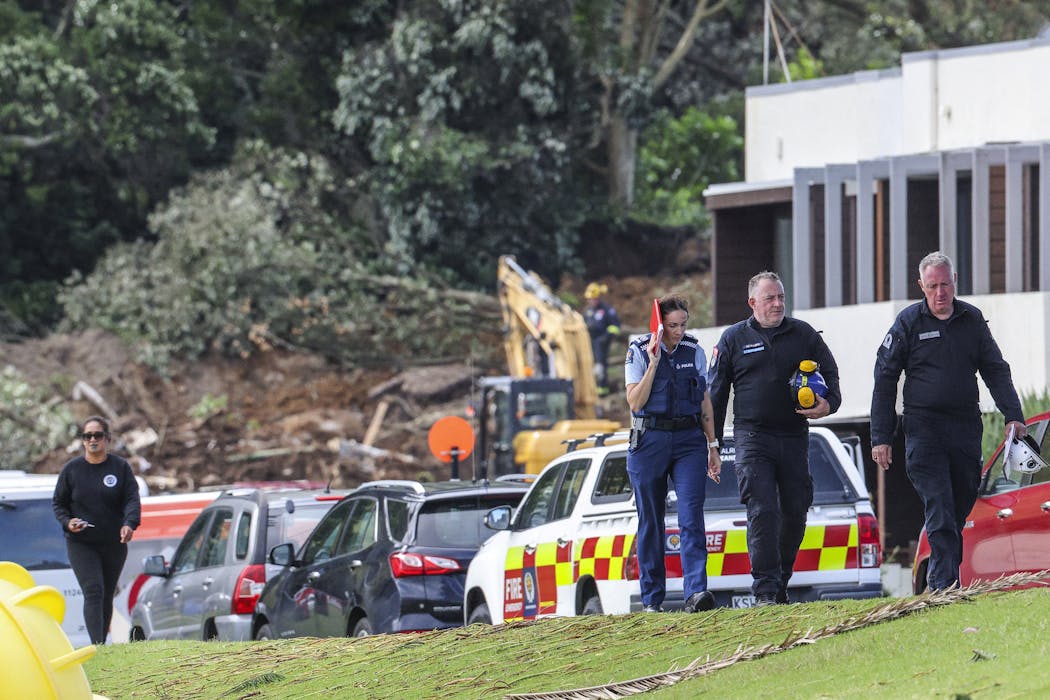
Mt Maunganui landslide: Retired judge Paul Davison, KC appointed to lead external review

Source: Radio New Zealand

Retired judge Paul Davison, KC, has been appointed to lead the review which was previously signalled by Tauranga City Council. RNZ

A retired judge has been appointed to lead an external review into the events leading up to the deadly Mount Maunganui landslide.

The review, previously signalled by Tauranga City Council, is separate to a government inquiry that has also been confirmed on Thursday.

Six people were killed when part of the mountain fell and ploughed into a campground last month.

The council’s review will be helmed by Paul Davison, KC.

Mayor Mahé Drysdale said his reputation meant Davison could have the scope to examine every relevant matter.

This will include accessing independent experts.

The review is expected to be done by the middle of the year.

Sign up for Ngā Pitopito Kōrero, a daily newsletter curated by our editors and delivered straight to your inbox every weekday.

– Published by EveningReport.nz and AsiaPacificReport.nz, see: MIL OSI in partnership with Radio New Zealand


Strike by Air New Zealand flight attendants leaves traveller in limbo

Source: Radio New Zealand

Flight attendants working on Air New Zealand’s Boeing 777 and 787 long range aircraft are striking on Thursday and Friday after failing to agree on pay conditions. Supplied/ Air NZ

An Air New Zealand customer has been left upset after discovering at the last minute that a cabin crew strike had disrupted her travel plans.

“I have a flight tonight with Air NZ from Tonga,” the traveller who wanted to be identified only as Lia said. “I haven’t received any contact either via email or phone about my flight cancellation. I only found out about it when I went online to add a bag only to find out my flight date has been changed.

“I called customer service and they say email has gone out on Wednesday for a flight on Thursday, really? However, I didn’t receive any of that.

“There is a flight tomorrow. The customer rep said this morning there is one seat left but there is a possibility that it will be cancelled… If it will be cancelled the flight on Saturday is fully booked. I might lose my seat on the Saturday flight and the earliest I can go is Monday.”

Lia said it seemed to be very poor customer service and no compensation had been offered.

Flight attendants working on Air New Zealand’s Boeing 777 and 787 long range aircraft are striking on Thursday and Friday after failing to agree on pay and conditions.

Air New Zealand chief customer and digital officer Jeremy O’Brien told Morning Report it had proactively contacted all customers affected by the flight cancellations and offered alternative flights across its airline as well as its partner airlines.

The “vast majority” had been offered travel dates within a few days either side of the strike action.

Flights most affected were heading to North America and Asia, he said.

O’Brien said he appreciated that not all offered flights would suit every customer and a full credit or refund was available for those in that situation.

They could also claim “reasonable costs” involved with the disruption, like if accommodation was impacted by the changes.

A Consumer NZ spokesperson said in its view an international cabin crew strike was an event that within the airline’s control, and should be covered by the Montreal Convention.

“Under the Montreal Convention, if a flight is cancelled or delayed, impacted passengers can ask for a refund, or an alternative flight. They can also claim back any additional costs they incur as a result of the disruption – up to set limits. Passengers should retain receipts for any extra costs they incur to ensure they can get this back from the airline.”

Massey University marketing expert Bodo Lang said the strike could be an issue for Air New Zealand’s brand.

“On the one hand, passengers have been vocal about rising fares, with some complaints attracting headline coverage. On the other hand, staff are seeking improved conditions, including higher pay.

“For some consumers, this creates a perceived inconsistency: if ticket prices are increasing, why are staff arguing that pay and conditions need improvement? The inference some may draw is that Air New Zealand is generating excessive profits.

“However, the financial reality is more nuanced. Profit expectations for Air New Zealand have recently been revised downward, not upward. Explaining the intricacies of Air New Zealand’s financial statements to the public in an engaging manner is difficult. Some consumers may interpret the current strikes as profiteering, which could reduce the brand’s equity.”

Sign up for Money with Susan Edmunds, a weekly newsletter covering all the things that affect how we make, spend and invest money.

– Published by EveningReport.nz and AsiaPacificReport.nz, see: MIL OSI in partnership with Radio New Zealand

Live: Prime Minister Christopher Luxon to face questions in Dunedin

Source: Radio New Zealand

Prime Minister Christopher Luxon will face questions following a visit to Space Operations New Zealand.

Luxon has been touring the facility in Southland with Environment Minister Penny Simmonds.

The stand-up is due to start around 2.45pm.

Sign up for Ngā Pitopito Kōrero, a daily newsletter curated by our editors and delivered straight to your inbox every weekday.

– Published by EveningReport.nz and AsiaPacificReport.nz, see: MIL OSI in partnership with Radio New Zealand

High Court Judge wins right to have family bach dispute in private court

Source: Radio New Zealand

The case was taken to the High Court but had been referred to independent arbitration. (File photo) RNZ / Dan Cook

A High Court Judge has won the right to have a dispute over a family bach heard in private, rather than open court.

In 2022, Justice Anne Hinton sold her share of the bach to two of her four sisters – but her other sister, Gillian Gatfield and niece, Emma Pearson (who inherited her mother’s share) argued Hinton had, years earlier, promised to transfer her share to them.

They took their case to the High Court, but Hinton successfully applied to have it referred to independent arbitration.

The plaintiffs appealed the arbitration referral in November – but the Court of Appeal dismissed that on Thursday.

Hinton wanted arbitration because it was faster and cheaper than going through the courts – and private.

Her lawyers argued any judge hearing Hinton’s case in court would be put in a difficult position: either risking the perception of favouring a colleague, or ruling against her which would effectively question her credibility.

But Gatfield and Pearson disagreed.

Lawyer Matanuku Mahuika said “significant weight” was placed on Hinton’s role as a judge in her request for arbitration, which was “not appropriate”.

He urged the judges to be mindful of open justice and warned them against being seen to give preference to a fellow judge.

Mahuika also pointed out arbitration had never been ordered – as opposed to agreed to – in a trust dispute.

But in Thursday’s decision, the judges said the Associate Judge who ordered the arbitration was following the correct procedure.

“We consider that the court has power to order that an arbitration take place and to appoint an arbitrator, even when there is no agreement to arbitrate.

“We also consider there is nothing inherently inappropriate in doing so.”

The Judges said it was “unnecessary” to explicitly address all the matters Gatfield and Pearson’s lawyers raised as reasons against private arbitration.

“We agree with the decision made by the High Court,” their judgement said.

Mediation and arbitration were appropriate options in a case involving “strongly felt personal allegations”, it said.

Sign up for Ngā Pitopito Kōrero, a daily newsletter curated by our editors and delivered straight to your inbox every weekday.

– Published by EveningReport.nz and AsiaPacificReport.nz, see: MIL OSI in partnership with Radio New Zealand

Health NZ shrugs off red ratings for big hospital builds

Source: Radio New Zealand

The project management office for the new Dunedin Hospital. RNZ / Delphine Herbert

Health New Zealand says two of its flagship hospital rebuilds are on track despite red alerts put on them months ago.

The red ratings on the Nelson and Dunedin projects were in the latest publicly available investment report from Treasury dated mid-2025.

Around that same time, the central health agency had rated itself badly with Treasury for how it managed its billions in assets, joined in the dog-house by Police and Defence on the latest measurement known as the Chief Executive Annual Attestations.

The Treasury investment report meanwhile showed the Dunedin outpatients building project under cost pressure, by a sum that was blanked out.

It also redflagged Nelson to ministers for not having its business case ready in time for Budget 2026 decisions.

Health NZ said on Wednesday that this related to Nelson’s future stages of work and there was no impact on construction timelines or the expected operation of new facilities.

“The project continues to progress as planned,” said head of delivery of infrastructure, Simon Trotter.

The Nelson project was shrunk to under half its former budget and cut into phases by the present government.

In Dunedin’s new hospital build, the cost risks had since been managed and it was expected to open within budget on time later this year, Trotter said.

The wider programme that included the bigger inpatients build was also expected to be delivered within approved funding.

The total budget was set at $1.88 billion a year ago after the government rescoped it in the face of public protest, on the grounds sticking with the previous plan would blow it out to maybe $3b.

Health Minister Simeon Brown (R) and Nelson Mayor Nick Smith (second from right) open the new emergency department at Nelson Hospital in November 2025. Samantha Gee / RNZ

Trotter also commented that a red rating reflected an assessment against specific reporting measures at a point in time and “does not necessarily indicate a delay to delivery”.

However, Treasury’s description of a red rating was that: “Successful delivery appears to be unachievable. There are major issues which at this stage do not appear to be manageable or resolvable. The programme may need re-baselining and/or overall viability re-assessed.”

Falling short on keeping up

In the other Treasury pulse-taking reports to ministers – the attestations – Health, Defence and Police scored the worst for meeting higher standards for managing their billions of dollars of assets.

Infrastructure experts have castigated public agencies in general for not keeping across the state of their buildings or spending enough on maintenance – the country’s leaky courts have been an egregious example of lack of maintenance, which a series of expensive projects were now trying to sort out.

Since 2023, 62 agency chief executives have had to attest to Treasury annually on how they measure up in 25 areas such as taking care of really critical assets.

A minnow like Antarctica NZ that has been caught up in stop-start rebuilding was non-compliant in only one of the 25 (some measures did not apply) in the latest attestations done last July.

One or two non-compliances were common, such as at Internal Affairs, and perhaps surprisingly Justice, and Kainga Ora, which has massive assets. Education complied with all 25.

By contrast, Health NZ failed in more than half – for 13 out of 25 measures, including being too slow setting up investment assurance standards for its failure-prone digital services; and not properly keeping track of “the identity, condition, and risk exposure” of its service-critical assets.

This last was a black mark against the Defence Force, that missed on seven measures, even as it struggled with a $2-3b refurbishment of rundown housing and other facilities.

Police were non-compliant with the watchdog’s demands on eight fronts, telling Treasury they were five-10 years away with some, such as getting all their asset management plans done or having an IT set-up that could keep track.

Sign up for Ngā Pitopito Kōrero, a daily newsletter curated by our editors and delivered straight to your inbox every weekday.

– Published by EveningReport.nz and AsiaPacificReport.nz, see: MIL OSI in partnership with Radio New Zealand
Gen Z, Millennials turn hawking their wares into a side hustle

Source: Radio New Zealand

Clothing is among the most popular things to sell. Rawpixel Ltd

The rising cost of living is seeing New Zealanders increasingly choosing to buy and sell goods in the secondhand marketplace.

According to TradeMe’s latest report on the circular economy which surveyed 4000 people, 64 percent cite financial pressure as the reason for looking to buy and sell pre-loved items more often, up 4 percent on last year.

Younger generations are leading the trend, with 83 percent of those aged 24 to 39 having offloaded items in the last six months.

“The younger generations are the real power players in this space,” says Lisa Stewart, TradeMe head of marketplace.

“Many in that generation are not just selling their unwanted goods, but they’re looking at them as a side hustle and proactively hunting out things that they could upcycle to make some extra profit.”

Concern for the impact on the environment of buying new and a desire to recycle was also a big factor in younger people’s choice to buy and sell secondhand.

Time to clean out the garage?

The report suggests 75 percent of people have unused, unwanted items in their homes they could sell, which adds up to 76 million items ready for a new home.

Stewart said on average, each person has 19 items to sell, with an estimated value of $1300 per person. And when it comes to decluttering, clothing and home and living are the most popular items to sell.

“In terms of the things that are flying off our digital shelves, we’re seeing lots of demand for outdoor furniture this time of year, and also for fashion brands like Kowtow or Lululemon,” Stewart said.

“For many households, $1300 isn’t a small amount, it’s a flight to see family, a significant buffer against rising bills, or a kickstart for a savings goal.”

The report also points to conservative spending behaviour, with 56 percent saying the cost of living has directly led them to extend the life of their household goods through upcycling, repurposing, or restoring them.

Sign up for Ngā Pitopito Kōrero, a daily newsletter curated by our editors and delivered straight to your inbox every weekday.

– Published by EveningReport.nz and AsiaPacificReport.nz, see: MIL OSI in partnership with Radio New Zealand

Gen Z, Millenials turn hawking their wares into a side hustle

Source: Radio New Zealand

Clothing is among the most popular things to sell. Rawpixel Ltd

The rising cost of living is seeing New Zealanders increasingly choosing to buy and sell goods in the secondhand marketplace.

According to TradeMe’s latest report on the circular economy which surveyed 4000 people, 64 percent cite financial pressure as the reason for looking to buy and sell pre-loved items more often, up 4 percent on last year.

Younger generations are leading the trend, with 83 percent of those aged 24 to 39 having offloaded items in the last six months.

“The younger generations are the real power players in this space,” says Lisa Stewart, TradeMe head of marketplace.

“Many in that generation are not just selling their unwanted goods, but they’re looking at them as a side hustle and proactively hunting out things that they could upcycle to make some extra profit.”

Concern for the impact on the environment of buying new and a desire to recycle was also a big factor in younger people’s choice to buy and sell secondhand.

Time to clean out the garage?

The report suggests 75 percent of people have unused, unwanted items in their homes they could sell, which adds up to 76 million items ready for a new home.

Stewart said on average, each person has 19 items to sell, with an estimated value of $1300 per person. And when it comes to decluttering, clothing and home and living are the most popular items to sell.

“In terms of the things that are flying off our digital shelves, we’re seeing lots of demand for outdoor furniture this time of year, and also for fashion brands like Kowtow or Lululemon,” Stewart said.

“For many households, $1300 isn’t a small amount, it’s a flight to see family, a significant buffer against rising bills, or a kickstart for a savings goal.”

The report also points to conservative spending behaviour, with 56 percent saying the cost of living has directly led them to extend the life of their household goods through upcycling, repurposing, or restoring them.

Sign up for Ngā Pitopito Kōrero, a daily newsletter curated by our editors and delivered straight to your inbox every weekday.

– Published by EveningReport.nz and AsiaPacificReport.nz, see: MIL OSI in partnership with Radio New Zealand

Italy hosted the Winter Olympics 70 years ago. What was it like, and what’s changed?

Source: The Conversation (Au and NZ) – By Richard Baka, Honorary Professor, School of Kinesiology, Western University, London, Canada; Adjunct Fellow, Olympic Scholar and Co-Director of the Olympic and Paralympic Research Centre, Institute for Health and Sport, Victoria University

Italian skier Bruno Burrini at the 1956 Winter Olympic Games in Milano Cortina. Getty Images

The 2026 Milan Cortina Winter Olympics are Italy’s fourth as Olympic host and come 70 years after the region first welcomed the world’s best winter athletes.

It is Italy’s third Winter Olympics, second only to the United States (four), reinforcing the nation’s long-standing influence within the Olympic movement.

So, what’s changed since 1956?

Looking back: Cortina d’Ampezzo 1956

The 1956 winter games were originally scheduled for 1944 but were postponed due to the second world war, eventually taking place in Cortina d’Ampezzo.

It was groundbreaking in several ways.

The games ran for 11 days, far shorter than this year’s 17-day program.

Italian skier Giuliana Chenal-Minuzzo became the first woman to recite the Olympic Oath at an opening ceremony.

For the first time, the Winter Olympics were broadcast live on television, albeit in black and white, to nine European nations.

In 1956, winter and summer games were held in the same year, (Melbourne hosted the Summer Olympics that year).

This changed in 1994, when the International Olympic Committee (IOC) moved them to alternating even-numbered years, significantly boosting the profile, commercial appeal and growth of the Winter Olympics.

From centralised to decentralised hosting

Cortina 1956 featured a highly centralised model, with eight venues clustered within the Dolomites mountain range.

In contrast, Milan Cortina in 2026 reflects the IOC’s modern strategy of decentralisation and sustainability.

The spread-out nature of the 2026 event features:

  • four main geographical clusters (Milan, Cortina d’Ampezzo, Valtellina and Val di Fiemme) plus Verona (opening and closing ceremonies)
  • 15 competition venues
  • two host cities – the first time in Olympic history, separated by 413 kilometres
  • six Olympic villages
  • four opening ceremony locations.

With Milan as a major metropolitan hub, the 2026 games are far more urban than their alpine predecessor.

Growth of the winter games

The expansion from 70 years ago is striking:

New, youth-friendly and broadcast-driven sports such as short-track speed skating, snowboarding and freestyle skiing have transformed the program.

The only new sport in 2026 will be ski mountaineering.

Near-gender parity will be achieved through expanded women’s events and mixed-gender competitions.

Leading nations on the medal table

In 1956, the dominant nations were mainly European – the Soviet Union, Austria, Norway, Finland, Sweden and Switzerland as well as the US.

This year, the podium will likely be owned by Norway, the US, Germany, Italy, China and Canada – the latter two making huge improvements in recent times.

Even Australia, a summer games powerhouse, which never made the podium until 1994, has improved dramatically and is expected to have its best result of around six medals, placing it in the top 15.

The Russians will be noticeably absent, forced out by the IOC due to the Ukrainian invasion. They will be allowed to have neutral athletes who can win medals but as a nation they are on the outer.

Paralympics, professionalism and equity

The 2026 Winter Paralympics will follow immediately after the Olympics – something that did not exist in 1956.

The Winter Paralympics first appeared in 1976 and only began sharing host cities with the Olympics in 1992.

Other major shifts since 1956 include:

  • expanded women’s participation, including ice hockey (introduced in 1998)
  • the end of strict amateur-only participation (phased out after 1986)
  • increased financial rewards for medal winners
  • the return of professional National Hockey League male players for the first time since 2014 – a major boost for fans and broadcasters.

Media, technology and the fan experience

Media coverage has exploded since 1956 with the ability to follow every sport, every event on television and radio, digital platforms, newspaper and print media, blogs, podcasts and social media.

Technological changes over the past seven decades have been dramatic. This includes:

  • extensive new types of media coverage
  • use of artificial intelligence
  • equipment design
  • athlete apparel innovation
  • snow-making capabilities
  • venue design and preparation
  • transportation improvements
  • monitoring of athlete performance and training methods.

Fan experience will be greatly enhanced and transformed through:

Costs, sustainability and climate challenges

The 1956 games operated on a modest budget of around US$250,000 (A$350,000).

The 2026 event is projected to cost around US$5.9 billion (A$8.3 billion) for operating and infrastructure expenses.

Cost escalation is driven by inflation, transport and accommodation, security requirements, venue construction and technology.

Balancing this are vastly increased revenues from broadcast rights, sponsorship and ticketing.

Most Olympic hosts end up losing money. The list is long, with Montreal (1976), Nagano (1998), Athens (2004), Sochi (2014), Rio (2016), Tokyo (2020/21) and others all going well over budget.

Sustainability and legacy – barely considered in 1956 – are now central.

The IOC strongly discourages “white elephant” venues, prioritising temporary facilities, venue reuse and carbon reduction.

Climate change remains a long-term concern. While snow was imported for some events in 1956, global warming now threatens the future pool of viable hosts.

Geopolitics, governance and security

The election of Kirsty Coventry as the first woman president of the IOC underscores the organisation’s broader push toward gender equity in leadership.

Under her guidance, the IOC is looking to implement firmer policies on transgender participation.

No major boycotts by nations are expected despite tension caused by the expulsion of Russia and Belarus.

Several international sport federations – supported by some European nations – have even restricted these two banned national Olympic teams from participating as individual neutral athletes.

For the 2026 games, doping controls are stricter than ever, led by the IOC and the World Anti-Doping Agency.

Security planning is at an all-time high. It now includes cyber-threats as well as physical risks.

Watch this space

Seventy years after Cortina d’Ampezzo hosted a modest, alpine-focused winter games, Milan Cortina 2026 represents a vastly expanded, technologically sophisticated and globally connected Olympic festival.

Despite challenges – climate, cost and geopolitics – all indicators suggest the games will deliver a compelling, inclusive and memorable celebration of winter sport.

Richard Baka does not work for, consult, own shares in or receive funding from any company or organisation that would benefit from this article, and has disclosed no relevant affiliations beyond their academic appointment.

ref. Italy hosted the Winter Olympics 70 years ago. What was it like, and what’s changed? – https://theconversation.com/italy-hosted-the-winter-olympics-70-years-ago-what-was-it-like-and-whats-changed-271838

Why do I get ‘butterflies in my stomach’?

Source: The Conversation (Au and NZ) – By Amy Loughman, Senior Lecturer in Psychology, The University of Melbourne

Alfonso Scarpa/Unsplash

“Butterflies in the stomach” is that fluttery, nervous feeling you might have before a job interview, giving a speech or at the start of a romance.

It’s a cute description for one part of the fight-or-flight response that can kick in if you’re excited or afraid.

But what exactly are these butterflies? Why can we feel them in our stomach? And is there anything we can do about them?

Threat alert

These “butterflies” – along with a raised heart rate, sweating and feeling “jumpy” – are part of your survival mode. That’s when the part of your body known as the autonomic nervous system gets involved.

When you sense a possible threat – whether it’s physical or social, real or imagined – information is sent to the brain’s amygdala region for emotional processing. If the amygdala perceives danger, it sends a distress signal to another part of the brain, the hypothalamus, which kick-starts a cascade of changes to help the body prepare.

The adrenal glands on top of each kidney send the chemical messengers adrenaline and noradrenaline into the bloodstream, activating receptors in the blood vessels, muscles, lungs and heart. The heart rate and blood flow increase, blood sugar levels go up, and muscles are primed for strength (fight) and speed (flight).

Digestion can wait

Digestion can wait until after you have escaped from the tiger (or the job interview). So while all this is happening, your body reduces blood flow to your stomach and intestines, and pauses the constant digestive pulsing of the gut (known as peristalsis).

The autonomic nervous system also stimulates the stomach (and other organs) via the vagus nerve, the nerve that runs down from the brainstem alongside the vertebra, sending signals back and forth between the brain, heart and digestive system.

There isn’t direct evidence to explain which part of this cascade leads to the feeling of butterflies. But it is likely to be related to how the autonomic nervous system pauses the pulsing of the gut, and the vagus nerve sends signals about this change up to the brain.

The feeling of butterflies is technically a “gut feeling” but it’s just one of the signs of the gut communicating back and forth with the brain, along the so-called gut-brain axis. This is the system of communication pathways that shares signals about stress and mood, as well as digestion and appetite.


Read more:
Our vagus nerves help us rest, digest and restore. Can you really reset them to feel better?


Could our gut microbes be involved?

Gut microbes are one part of this complex communication system. It’s tempting to think that the action of microbes is what causes the fluttery, butterfly feeling, but it’s unlikely to be that simple.

Microbes are, well, microscopic, as are the actions and changes they undergo from moment to moment. There would need to be coordinated microbial movements en masse to explain the sudden onset of that anxious feeling, like a flock of geese in formation, and there isn’t any evidence that microbes work like that.

However microbes have been shown to impact the stress response, with most research so far conducted in mice.

In humans, there is modest evidence from a small study linking microbes with the stress response. This showed that sticking to a microbiome-targeted diet – a diet, rich in prebiotic fibres, designed to feed fibre-loving members of your gut microbiome – could reduce perceived stress compared to a standard healthy diet.

But this single study isn’t enough on its own to definitively tell us exactly how this would work, or if this diet would work for everyone.

What can I do about the butterflies?

How can we manage those nervous bodily feelings?

The first thing to consider is if you need to manage them at all. If it’s a once in a blue-moon, high-stress situation, you might be able to just say “hi” to those butterflies and keep going about your day until your body’s rest-and-digest response kicks in to bring your body back to baseline.

Self-guided techniques can also help.

Mindfully observing your fluttery butterflies may help you notice subtle cues in your body about how you’re feeling, before you become overwhelmed.

By then moving through any actions in your control – from noticing your breath through to taking the next steps towards the plunge you fear most – you show your brain you can overcome the threat.

Sometimes it can be worth turning to the cause of the anxiety-causing situation itself. Could some extra interview prep (for example) help you feel more in control? Or is it more about reminding yourself of how getting through these situations aligns with your values? Sometimes a shift in perspective makes all the difference.

If anxiety is more frequent or is getting in the way of doing the things that matter to you, try the evidence-based method of “dropping the struggle”.

This means sitting with, instead of trying to fight or resist, anxiety and any other bothersome feelings. You might even thank your mind (and body) for its attempt to help, and for the reminder about what is important to you.

Or you can seek help from a psychologist to ease anxiety (as well as other common mental health struggles) using an evidence-based approach commonly known as ACT or acceptance and commitment therapy. This involves developing skills for living a meaningful life in spite of difficult emotions and situations. It helps people work with, rather than control, tricky thoughts and feelings.

In addition to her academic role, Amy Loughman delivers therapies including ACT (acceptance and commitment therapy) as a psychologist in private practice.

ref. Why do I get ‘butterflies in my stomach’? – https://theconversation.com/why-do-i-get-butterflies-in-my-stomach-269489

Judge Ema Aitken must have known who she was yelling at, NZ First MP Casey Costello says

Source: Radio New Zealand

Judge Ema Aitken is before a Judicial Conduct Panel accused of disrupting the event at Auckland’s Northern Club. RNZ Composite

A gudge accused of disrupting an NZ First event must have known who she was yelling at, a party members says.

Judge Ema Aitken is before a Judicial Conduct Panel accused of disrupting the event at Auckland’s Northern Club, yelling at party leader Winston Peters, calling him a liar, and saying comments he made were disgusting.

The judge argues she did not shout, did not recognise Peters’ voice when she responded to remarks she overheard, and did not know it was a political event.

Appearing on Thursday morning, NZ First MP Casey Costello gave evidence about the night.

She was not appearing as a government Minister, Jonathan Orpin-Dowell, who is assisting Special Counsel for the hearing, said.

Costello recalled being at her table when she heard someone yelling. She assumed they were yelling at her.

“Whatever she was saying, it was loud enough for me to hear and take notice of her,” she said.

“If it had only been in a normal speaking tone, I would not have heard the comments at that distance or taken any notice.”

NZ First MP Casey Costello. RNZ / Samuel Rillstone

Costello said the judge must have known who she was yelling at.

“From my observation of the events, the judge must have known that it was Winston Peters who was speaking,” she said.

“Mr Peters has, I believe, a distinctive voice, and had been speaking for some time when the judge began yelling.”

She said the judge would have also been able to see Peters through the doorway when she first came down the stairs.

Costello described another incident from the evening where she encountered who she later learnt was Judge Aitken’s husband, Dr David Galler.

Costello said Galler had confronted her, blocking her way and calling her despicable.

NZ First MP Casey Costello’s notes in her diary about the evening’s disruptions. Supplied

“He said ‘you are despicable, I hope you’re ashamed of yourself, you disgust me’,” she said.

Costello could tell the man was drunk by smell and described the altercation as particularly hostile.

“I asked the man why he had that opinion of me, he replied ‘you are responsible for killing hundreds of people, you should be proud’,” she said.

Galler went on to make other comments about Costello paying dues to the tabacco industry, and said she had no medical knowledge.

Costello had faced scrutiny earlier that year for rolling back smokefree laws and giving health officials a document that claimed “nicotine is as harmful as caffeine” and argued Labour’s smokefree generation policy was “nanny state nonsense”.

She said she had made a note in her diary about the evening’s disruptions but particularly about what had happened with Dr Galler.

“As a politician, whenever I have a public interaction with someone who is difficult, I tend to take a note of the interaction at the time, so I have a record of reference should it be needed.”

Judge Aitken’s lawyer David Jones KC cross-examined Costello, questioning whether the judge had in fact directed comments to her.

Judges called as witnesses

Thursday morning began with lead panellist Brendan Brown KC issuing a minute requesting other judges give evidence before the panel.

It comes after Special Counsel for the Inquiry requested the panel ask other District Court judges to give evidence.

KC requested District Court judges David McNaughton and Pippa Sinclair to appear and give evidence.

Those called had been among the people sitting at Judge Aitken’s table at a function of District Court judges that had brought her to the Northern Club that night.

Special Counsel Tim Stephens KC had told the panel earlier in the week some of the Judges and their partners who sat at Judge Aitken’s table may have relevant evidence to give.

Brown KC also indicated he would also call Judge Sinclair’s partner to give evidence, as well as the partner of another judge present.

Sign up for Ngā Pitopito Kōrero, a daily newsletter curated by our editors and delivered straight to your inbox every weekday.

– Published by EveningReport.nz and AsiaPacificReport.nz, see: MIL OSI in partnership with Radio New Zealand

Christchurch terrorist suffered ‘complete destruction of his identity’ in prison, his lawyers say

Source: Radio New Zealand

Fifty-one people were killed in two attacks on mosques in Christchurch in 2019. RNZ / Nathan Mckinnon

Lawyers acting for the terrorist who massacred 51 worshippers at two Christchurch mosques say their client suffered a “complete destruction of his identity” because of his prison conditions, leading to an irrational decision to plead guilty.

Australian Brenton Tarrant wants the Court of Appeal to overturn his convictions and sentence for the March 2019 shootings at Al Noor Mosque and Linwood Islamic Centre.

After initially pleading not guilty in June 2019 to 51 counts of murder, 40 of attempted murder and one of committing terrorism, he changed his pleas in March 2020.

The terrorist was sentenced to life imprisonment without parole in August 2020.

The 35-year-old now claims he pleaded guilty only because he was irrational as a result of the solitary nature of his prison conditions, which were torturous and inhumane.

One of the terrorist’s lawyers, who can only be identified as counsel A, quoted Nelson Mandela in laying out their argument to Justices Christine French, Susan Thomas and David Collins.

“No one truly knows a nation until he’s been inside its jails. A nation should not be judged on how it treats its highest citizens but how it treats its lowest ones,” the lawyer said.

The lawyer argued there were minimum conditions that all prisoners were entitled to, regardless of the crime they were accused of, and the terrorist’s rights had been breached.

“Those conditions apply to everyone. They apply to everyone, even Mr Tarrant, who has been described as the most reviled person in New Zealand. He is entitled to the rule of law and to be treated in accordance with the same standards that attach to all prisoners in New Zealand,” the lawyer said.

“Even in this most terrible of cases there are minimum expectations – minimum – which we say were ignored in this unprecedented case. These principles and standards include the New Zealand Bill of Rights Act, as well as international agreements as to how prisoners are to be held and treated.

“It is submitted that we must hold fast to those ideals that form this nation and not be pulled away by the undoubtedly strong and no doubt justified emotions that attach in this particular case. We must hold fast, especially in the most difficult of cases and circumstances which this case undoubtedly is. It is these most difficult of cases which test and strain at the rule of law the most.”

Counsel A claimed that the terrorist had lost all ability to defend himself in court as a result of his prison conditions, including total isolation aside from transactional contact with corrections staff, constant surveillance and limited activity.

“His guilty pleas were not entered voluntarily. They were entered as a direct result of the oppressive conditions in which he was held,” the lawyer said.

“It is said that these oppressive conditions impacted upon his mental health to such a severe extent that it prevented him from being able to participate in court process properly.

“It is Mr Tarrant’s evidence that due to his isolation and the associated conditions, he suffered a complete destruction of his identity. He describes this as nervous exhaustion or a nervous breakdown.”

The court has heard the terrorist initially raised the possibility of pleading guilty on 31 July 2019 – which came as a surprise to one of his then-lawyers – but four days’ later he again changed his mind and maintained his not guilty stance.

On Tuesday his former lawyers Shane Tait and Jonathan Hudson told the court from that point they were clear the terrorist always intended to plead guilty but he wanted to control the timing of his plea.

The terrorist claimed his mental state had declined to such an extent he felt forced into pleading guilty and he feared embarrassing himself at trial.

“It is his evidence that he had lost his sense of who he was and the capacity, the resilience if you like, to be able to run an effective defence by himself,” counsel A told the court on Thursday morning.

“There was also the point made that he believed if he did plead guilty that he might be able to ameliorate or improve those prison conditions under which he was being held.”

On Wednesday the court heard from other lawyers who had previously acted for the terrorist and described his conditions as unsatisfactory.

A psychologist said the terrorist’s prison conditions were not positive but were not as harsh as some prisons globally and did not amount to torture.

The terrorist appearing at the hearing earlier this week. Supplied

The terrorist was housed in the prisoners of extreme risk unit (PERU) at Auckland Prison.

He was cut off from meaningful interaction with other people, including fellow prisoners.

Another lawyer acting for the terrorist, who can only be identified as counsel B, said the conditions her client was held under before pleading guilty were unprecedented in modern New Zealand history.

“Make no mistake, Mr Tarrant’s circumstances are like no other. They are far more extreme, in our submission, than any other prisoner in the PERU or any other prisoner in New Zealand history,” counsel B told the court.

The terrorist, in his own subjective assessment, was not acting rationally at the time of pleading guilty but had only become aware of that with the benefit of hindsight, counsel B said.

The terrorist’s lawyers will continue their submissions on Thursday afternoon.

Sign up for Ngā Pitopito Kōrero, a daily newsletter curated by our editors and delivered straight to your inbox every weekday.

– Published by EveningReport.nz and AsiaPacificReport.nz, see: MIL OSI in partnership with Radio New Zealand
High Court Judge wins right to have family batch dispute in private court

Source: Radio New Zealand

The case was taken to the High Court but had been referred to independent arbitration. (File photo) RNZ / Dan Cook

A High Court Judge has won the right to have a dispute over a family bach heard in private, rather than open court.

In 2022, Justice Anne Hinton sold her share of the bach to two of her four sisters – but her other sister, Gillian Gatfield and niece, Emma Pearson (who inherited her mother’s share) argued Hinton had, years earlier, promised to transfer her share to them.

They took their case to the High Court, but Hinton successfully applied to have it referred to independent arbitration.

The plaintiffs appealed the arbitration referral in November – but the Court of Appeal dismissed that on Thursday.

Hinton wanted arbitration because it was faster and cheaper than going through the courts – and private.

Her lawyers argued any judge hearing Hinton’s case in court would be put in a difficult position: either risking the perception of favouring a colleague, or ruling against her which would effectively question her credibility.

But Gatfield and Pearson disagreed.

Lawyer Matanuku Mahuika said “significant weight” was placed on Hinton’s role as a judge in her request for arbitration, which was “not appropriate”.

He urged the judges to be mindful of open justice and warned them against being seen to give preference to a fellow judge.

Mahuika also pointed out arbitration had never been ordered – as opposed to agreed to – in a trust dispute.

But in Thursday’s decision, the judges said the Associate Judge who ordered the arbitration was following the correct procedure.

“We consider that the court has power to order that an arbitration take place and to appoint an arbitrator, even when there is no agreement to arbitrate.

“We also consider there is nothing inherently inappropriate in doing so.”

The Judges said it was “unnecessary” to explicitly address all the matters Gatfield and Pearson’s lawyers raised as reasons against private arbitration.

“We agree with the decision made by the High Court,” their judgement said.

Mediation and arbitration were appropriate options in a case involving “strongly felt personal allegations”, it said.

Sign up for Ngā Pitopito Kōrero, a daily newsletter curated by our editors and delivered straight to your inbox every weekday.

– Published by EveningReport.nz and AsiaPacificReport.nz, see: MIL OSI in partnership with Radio New Zealand

Wellington mayor Andrew Little promises to cut commercial rates

Source: Radio New Zealand

Wellington’s mayor Andrew Little. RNZ / Mark Papalii

Wellington’s mayor is promising to reduce the city’s commercial rates burden, but admits he doesn’t yet have the council’s backing to do so.

Andrew Little told a Wellington Chamber of Commerce breakfast event that the current commercial rates differential meant that businesses paid 3.7-times the residential rate – thought to be one of the highest in the country.

“That starts to make it challenging for developers when they’re developing inner-city land for commercial purposes. So, if we can address that differential and bring the differential down, then we become more competitive in that regard,” he said.

However, even a modest reduction could push residential rates up by around 4 percent.

Little said the first step was getting council spending under control, before shifting the balance.

“I’m confident that if we do the work on financial planning, budgeting, what have you, that in time we can do this.”

The mayor said reducing the commercial rates differential was a personal commitment.

He said there was no formal proposal yet and any change would need negotiation around the council table.

“There’s no collective council commitment to… I don’t know what the split on council would be. There are plenty who are keen to see it. There are some for whom it’s not the top priority, but that’s the nature of council. It would have to be negotiated through.”

Whether to decrease the commercial rates differential from $3.70 to $3.25 has previously stirred heated debate over the pressure on businesses versus residents.

At a 2023 council meeting a proposal to reduce the differential was voted down [ https://www.rnz.co.nz/news/business/504175/wellington-city-council-votes-in-principle-to-keep-same-rates-for-businesses].

Sign up for Ngā Pitopito Kōrero, a daily newsletter curated by our editors and delivered straight to your inbox every weekday.

– Published by EveningReport.nz and AsiaPacificReport.nz, see: MIL OSI in partnership with Radio New Zealand

NZ Warriors kick off NRL campaign with pre-season trial against Manly Sea Eagles

Source: Radio New Zealand

Te Maire Martin, Wayde Egan, Leka Halasima, Luke Metcalf and Charnze Nicoll-Klokstad prepare in different ways for their 2026 NRL season. Photosport/RNZ

NRL Pre-season: NZ Warriors v Manly Sea Eagles

Kickoff: 3.40pm Saturday, 14 February

McLean Park, Napier

Live blog updates on RNZ

Analysis: Take a deep breath and soak in the last warmth of summer – this could be as good as it gets for the next nine months of the NRL season.

This is the pre-season, a time when anything still seems possible.

If you’re a player, you feel the fittest, the strongest and healthiest you will be for a long time. Soon enough, you will be back to managing injuries from one week to the next, as each tackle takes its cumulative toll and life becomes a grind.

If you’re a coach, you have made no bad decisions – or at least, none that you know of yet.

If you’re a fan, your team have suffered no defeats and sit equal top of the table with 16 others.

If you’re a Warriors fan, you can still believe THIS is the year your team finally break their championship drought.

Hope springs eternal, but reality will be tested for the first time on Saturday, when the Warriors face Manly Sea Eagles in their opening pre-season trial at Napier.

Coach Andrew Webster is impressed by the individual work his players have put in during their off-season.

“Over the Christmas break, they made a pact to each other that they would go away and enjoy the break, but come back fit and hit their targets,” he said.

“It’s the first time I’ve seen every single player do so and I’m really impressed with that. It’s now about piecing the football fitness together, which we’re doing, and it’s enabled us to do more football, rather than just conditioning.”

The hits are about to get real for Roger Tuivasa-Sheck and his Warriors teammates. Andrew Cornaga/Photosport

Veteran Roger Tuivasa-Sheck, who has endured hundreds of pre-season workouts during his 12 NRL campaigns, has already noticed a step up among his teammates.

“My biggest [impression] of the 2026 pre-season is everyone’s moving a lot faster now,” he said. “I think the game is forcing us that way, but it’s good.

“The boys are looking sharp out there, everyone’s moving at a speed that is different to last year already. It’s exciting.”

Webster thinks he more or less knows who will line up for the season-opener against Sydney Roosters at Go Media Stadium on 6 March.

“I reckon 15 players have probably picked themselves,” Webster said. “I reckon two spots are up for grabs, but of those 15 that have their nose in front, things could change quickly.

“We’ve got some decent continuity, we know who we’re thinking, but at the same time, 3-4 weeks is a long time in footy and things could change.

“If you got through each position, we’ve got great depth. Where we’ve got experience, we’ve got great youth knocking on the door behind them.

“Happy to have that headache, but it can also be an Achilles heel. You have great competition, but it’s hard to give people clarity straight away over what their year looks like and where they’re going to be.

“Some payers think it’s the Olympics and round two comes around four years later. If they don’t make round one, their world ends.

“It’s good to have that goal and ambition, and to want that round one position really badly, but round two is only seven days away.”

Here’s a few things to watch for over the next couple of weeks, as the hits become real.

Positional battles

Webster may not agree, but perhaps only Tuivasa-Sheck would seem assured of his backline spot for round one.

Coach Andrew Webster reckons he has 15 of his 17 players sorted for round one against Sydney Rooster – but that could change. Andrew Cornaga/Photosport

Others may be pencilled in as incumbents, but they will have to defend those positions against legitimate challengers.

These contests become somewhat blurred this week, with seven players away on Māori-Indigenous duty and niggly injuries sidelining others.

Fullback: Charnze Nicoll-Klokstad is as courageous as they come at the back, but towards the end of last season, some were calling for Taine Tuaupiki to inherit the No.1 jersey fulltime.

Neither are available against Manly – CNK lines up in the halves for the Māori, while Tuaupiki tends to a leg injury – so reserve-grader Geronimo Doyle fills the position.

Wing: RTS seems embedded on one flank (although some still see him as the club’s best fullback, while others consider him the answer to the problems at centre), but Dallin Watene-Zelezniak struggled with injury and form last season.

The arrival of speedster Alofiana Khan-Pereira means DWZ must maintain high standards or lose his spot.

Centre: Seven different players started in the midfield last season, with specialists Rocco Berry and Ali Leiataua plagued by injury.

Incredibly, many still don’t consider Adam Pompey an automatic selection, despite playing every minute of every game, but his reliability cannot be overlooked.

Hopefully, Kurt Capewell will not be wasted there this time round. CNK is a better option – he played there for the Kiwis – and powerhouse Leka Halasima fills the void this week against the Sea Eagles, as he did against Penrith Panthers in last year’s playoffs.

Halves: First-choice halfback Luke Metcalf will miss a couple of months, so his position is up for grabs. Tanah Boyd has the inside running, after filling in last season, but Webster has plenty of half options up his sleeve, including Te Maire Martin (who will likely lose his utility value under new interchange rules) and Jett Cleary.

Webster also warns not to sleep on newcomer Jye Linane, once he’s up to speed from knee surgery.

Forwards: At full health, the pack almost picks itself. Front-rower Mitch Barnett should be back near the start of the season, but if he’s not, Jackson Ford or Demitric Vaimauga can deputise ably.

Webster may need to scale back Wayde Egan’s use at hooker to preserve him for later in the season and understudy Sam Healey has proved himself at this level.

Warriors co-captain Mitch Barnett is eyeing a return to action by round one, after rehabbing his knee injury. Andrew Cornaga/Photosport

Dally M Lock of the Year Erin Clark appears ‘locked’ in, but exactly where Englishman Morgan Gannon fits remains to be seen. If Halasima stays at centre, that may open up a spot, but there are plenty of others queuing up to fill it.

Second row is probably where Webster’s biggest selection headaches lie. Who starts, who comes off the bench and who is consigned to NSW Cup may prove contentious.

Injuries

When he talks about how quickly things can change, Webster is referring to the almost inevitable pre-season injury that will alter his line-up for week one.

Last year, Watene-Zelezniak lasted only a few minutes before breaking his wrist.

Back-up fullback Tuaupiki described how he expected specialist winger Ed Kosi to get the call off the bench, but instead was suddenly thrust into a position where he had limited experience – and made it his own.

As DWZ returned to fitness, Tuivasa-Sheck tweaked a hamstring that extended Tuaupiki’s stay in the starting line-up.

“Taine played maybe the first 7-8 games on the wing last year and I think we won five out of those seven,” Webster recalled. “To be part of that and to have that depth, with everyone playing different positions is awesome.”

In fact, Tuaupiki stuck around through nine games, helping his team to a club-best 7-2 start and second place on the table. Soon after he was relegated to reserves, the Warriors began their slide.

The Warriors already have a series of minor injuries, but there’s every likelihood they will lose someone else in the build-up, as bodies adjust to impact again.

Bolters

Ten players have been named as reserves against Manly. None have played first grade, but most, if not all can expect some run this weekend – perhaps not enough to really push for places in the top team immediately, but maybe enough to delay their promotion further.

Tuivasa-Sheck highlighted a couple to watch out for – powerful outside backs Sio Kali and Motu Pasikala. Here’s some more.

Eddie ‘Goggins’ Ieremia-Toeava may be poised for promotion up the Warriors rotation. Andrew Cornaga/Photosport

Haizyn Mellars: With DWZ and AKP both away on all-star duty, the new kid from Souths gets an immediate chance to impress on the wing.

He has big shoes to fill, following father Vince into the Warriors programme, and is desperate to crack the top team to create a piece of family history.

Eddie Ieremia-Toeava: Often named as 18th man, Ieremia-Toeava finally made his premiers debut against the Dolphins in round 22, logged five games and scored a try against Gold Coast Titans.

He’s renowned for his work ethic at training, earning the nickname ‘Goggins’ after inexhaustible ultra-athlete and former US Navy SEAL David Goggins. He may be ready to jump a few spots in the second-row pecking order.

Kayliss Fatialofa: Maybe the last thing the Warriors need is another second-rower, but the club thinks enough of Fatialofa to secure him for the next two seasons.

He hasn’t played first grade yet, but appeared in every game for the champion reserves last season, logging 80 minutes in 19 of his 22 outings and finishing as equal top tryscoring forward in the NSW Cup. He’ll come off the interchange against the Sea Eagles.

Sign up for Ngā Pitopito Kōrero, a daily newsletter curated by our editors and delivered straight to your inbox every weekday.

– Published by EveningReport.nz and AsiaPacificReport.nz, see: MIL OSI in partnership with Radio New Zealand

Wellington’s mayor Andrew Little promises to reduce commercial rates

Source: Radio New Zealand

Wellington’s mayor Andrew Little. RNZ / Mark Papalii

Wellington’s mayor is promising to reduce the city’s commercial rates burden, but admits he doesn’t yet have the council’s backing to do so.

Andrew Little told a Wellington Chamber of Commerce breakfast event that the current commercial rates differential meant that businesses paid 3.7-times the residential rate – thought to be one of the highest in the country.

“That starts to make it challenging for developers when they’re developing inner-city land for commercial purposes. So, if we can address that differential and bring the differential down, then we become more competitive in that regard,” he said.

However, even a modest reduction could push residential rates up by around 4 percent.

Little said the first step was getting council spending under control, before shifting the balance.

“I’m confident that if we do the work on financial planning, budgeting, what have you, that in time we can do this.”

The mayor said reducing the commercial rates differential was a personal commitment.

He said there was no formal proposal yet and any change would need negotiation around the council table.

“There’s no collective council commitment to… I don’t know what the split on council would be. There are plenty who are keen to see it. There are some for whom it’s not the top priority, but that’s the nature of council. It would have to be negotiated through.”

Whether to decrease the commercial rates differential from $3.70 to $3.25 has previously stirred heated debate over the pressure on businesses versus residents.

At a 2023 council meeting a proposal to reduce the differential was voted down [ https://www.rnz.co.nz/news/business/504175/wellington-city-council-votes-in-principle-to-keep-same-rates-for-businesses].

Sign up for Ngā Pitopito Kōrero, a daily newsletter curated by our editors and delivered straight to your inbox every weekday.

– Published by EveningReport.nz and AsiaPacificReport.nz, see: MIL OSI in partnership with Radio New Zealand

Person escapes house fire in Auckland

Source: Radio New Zealand

Firefighters at a house fire on Balmain Road in Chatswood. RNZ/Paris Ibell

One person has escaped a house fire in North Auckland this afternoon.

Fire and Emergency (FENZ) crews are extinguishing a fire at a two-storey house on Balmain Road in Chatswood.

A FENZ spokesperson said they were called to the scene at about half past 12, and the house was well involved on arrival.

One person who was inside the house was able to get out and wasn’t injured.

RNZ/Paris Ibell

FENZ said the fire isn’t being treated as suspicious, but a fire investigator is on site.

Locals have shared photos of billowing black smoke coming from the area on Thursday afternoon.

A section of Balmain Road has been cordoned off.

Sign up for Ngā Pitopito Kōrero, a daily newsletter curated by our editors and delivered straight to your inbox every weekday.

– Published by EveningReport.nz and AsiaPacificReport.nz, see: MIL OSI in partnership with Radio New Zealand

Dawson’s Creek star James Van Der Beek dies aged 48

Source: Radio New Zealand

Actor James Van Der Beek, best known for his role in popular 90s TV show Dawson’s Creek, has died.

“Our beloved James David Van Der Beek passed peacefully this morning. He met his final days with courage, faith, and grace,” read a statement shared to Van Der Beek’s official Instagram page on Thursday (NZ time).

“There is much to share regarding his wishes, love for humanity and the sacredness of time. Those days will come. For now we ask for peaceful privacy as we grieve our loving husband, father, son, brother, and friend.”

I was not prepared for how how deeply disturbing this film was

Source: Radio New Zealand

Mārama, the debut feature from Taratoa Stappard, opens in cinemas across Aotearoa today. It is a bold and chilling Māori gothic horror that interrogates and commits revenge upon the Māoriland era of our history, when Māori culture and our people were collected and traded as romantic curios from a far-flung island nation.

Set in 1859, Mary Stevens (Ariana Osborne) arrives in North Yorkshire at Hawkser Manor, an oppressive grand country house owned by Sir Nathaniel Cole (Toby Stephens) and his granddaughter Anne (Evelyn Towersey).

From the moment Mary crosses its threshold, she is assaulted by visions of violence. So when Sir Nathaniel greets her in te reo Māori, the gesture lands not as connection, but as possession.

MĀRAMA (Ariāna Osborne), ANAHERA (Evelyn Towersey) and PEGGY (Umi Myers) stand infront of the granite headstone.

Marama

– Published by EveningReport.nz and AsiaPacificReport.nz, see: MIL OSI in partnership with Radio New Zealand

Samoa authorities detain NZ passport holder following marijuana seizure at airport

Source: Radio New Zealand

Samoa Customs and police found the 43-year-old man in possession of six bottles containing marijuana and other drug paraphernalia. 12 February 2026 Samoa Government

A 43-year-old Samoan national holding a New Zealand passport has been detained in Apia after allegedly being found with 90 grams of marijuana and drug paraphernalia, local authorities said on Thursday.

The man, who resides in Australia, arrived on a Fiji Airways flight on Thursday and was allegedly found in possession of six bottles containing marijuana, along with a cannabis grinder and rolli.ng papers..

He was intercepted during routine border clearance processes at Faleolo International Airport and is in custody for further investigations and questioning, the Ministry of Customs and Samoa Police said in a joint statement.

“The items, which are deemed prohibited goods, were detected during standard screening and examination processes conducted by frontline Customs officers. The substances and associated paraphernalia were seized in accordance with the Customs Act and Narcotics Act,” the statement said.

According to the Samoa Customs CEO, the seizure reflects the agency’s ongoing commitment to protecting Samoa’s borders from the importation of illicit drugs and prohibited goods.

“We continue to utilise risk profiling, intelligence, and screening technologies to safeguard our communities from the harmful impacts of drugs,” the Customs CEO was quoted as saying.

The Customs Ministry said the importation of illicit drugs and related paraphernalia into Samoa is strictly prohibited and carry severe penalties under local laws.

It added that travelers to the country are urged to declare all goods accurately and to familiarise themselves with Samoa’s import restrictions prior to travel.

– Published by EveningReport.nz and AsiaPacificReport.nz, see: MIL OSI in partnership with Radio New Zealand

How a 30-year-old from Hawke’s Bay got picked for UAE’s first Winter Olympics

Source: Radio New Zealand

Piera Hudson competing in Switzerland in 2022. Jari Pestelacci/JustPictures / NurPhoto via AFP)

Determination is at the heart of how a Hawke’s Bay-raised athlete became part of the United Arab Emirates (UAE) first-ever winter Olympic team.

The small, desert country is fielding two athletes at these Games, including New Zealand-born Piera Hudson, who has had a long, hard journey to fulfilling her Olympic dream.

Hudson also had the honour of being a flagbearer for the UAE during the opening ceremony for the Milano Cortina Olympics.

Hudson will check into the Olympic Village in Cortina in a couple of days as she gets ready to compete in her first event on Sunday, the giant slalom.

The 30-year-old is set to become the first Winter Olympian Hawke’s Bay has ever produced and told Nine to Noon that it didn’t feel real yet.

“I don’t think it will until I’m sort of competing on the day and then it might hit me. The Olympic opening ceremony was just amazing, I was buzzing, you couldn’t wipe the smile off my face. It was the most surreal feeling to have finally sort of had that ‘I made it’ moment,” Hudson said.

“To be flagbearer on top of that was such a huge honour for my country, so couldn’t have asked for a better way to start it off.”

The alpine skier won multiple national titles and represented New Zealand on the international stage for most of her career. But the heartbreak of missing selection for the 2014, 2018 and 2022 Olympic Games hurt.

In 2022, she tried fighting her non-selection, having made the official qualification mark, but that wasn’t enough for the Sports Tribunal to overturn the decision.

It was about that time she decided to make Dubai her base.

United Arab Emirates’ flag bearer Piera Hudson during the opening ceremony of the Milano Cortina 2026 Winter Olympics. Franck FIFE / AFP

Hudson’s connection with the UAE goes back a couple of decades; she had a lot of family based there and growing up spent many holidays there with her cousins.

“Shortly after Covid I decided to move to Dubai myself just to make it my home instead of having to trek back to New Zealand so frequently.”

When not training in Europe, she trains at the indoor Ski Dubai facility – one of the biggest indoor ski domes in the world, based in the Emirates Mall.

“You walk into the mall and you’re carrying your skis and people are looking at you sideways and then you walk into Ski Dubai and there’s a chair lift …you can set up a course, you can get a good slalom training run in.

“I don’t train there too frequently because it doesn’t quite emulate World Cup and Olympics conditions but it is really lovely to train with the ski club there.”

The UAE Winter Federation welcomed Hudson with open arms when she decided to switch allegiances, but the challenge of getting citizenship and approval to represent the UAE seemed insurmountable at times.

It wasn’t until late last year that the International Ski and Snowboard Federation (FIS) approved the nation change, and final acceptance from the International Olympic Committee came very late in the piece.

“It takes years and I knew that going into it, but I also knew it was what I wanted to do. It was going to be worth it …I just knew I wanted to represent that country.

“There’s been a lot of lows with the Olympics in the past, representing New Zealand and not getting that opportunity when I had made qualification in the past and things, it’s a tough time.

“I’m really glad that my parents raised me to be resilient and persistent …I don’t take no for an answer very often so it kind of got me through, which I’m really glad about.”

Piera Hudson in action during an FIS Giant Slalom event in 2024. Iain McGregor / PHOTOSPORT

Hudson has also endured massive injury setbacks during her career, including a horrific leg break and a full rupture of her anterior cruciate ligament in recent years.

She grew up on farm near Tikokino, so how did the mountains come calling?

“I was lucky enough to spend a lot of time in the South Island during the winter school holidays growing up. My Mum is originally from Dunedin and both my parents grew up skiing.

“They sort of chucked my brother and I in the car every winter and we went down to Wānaka and we were on skis from a very early age and both fell in love with it, my brother became a ski instructor for many many years.”

The adrenaline rush of slalom is something that never gets old for Hudson.

“It’s a hugely technical event, but at the same time, you have to have the courage to send it, even though the turns are tight, it is a high-speed event and there’s just a lot coming at you very, very quickly.”

When to watch Piera Hudson from NZ

The women’s giant slalom event will be held at 10pm on Sunday, 15 February (run 1) and 1.30am Monday, February 16 (run 2).

The women’s slalom event will be held at 10pm next Wednesday, 18 February (run 1) and 1.30am next Thursday, February 19 (run 2).

Sign up for Ngā Pitopito Kōrero, a daily newsletter curated by our editors and delivered straight to your inbox every weekday.

– Published by EveningReport.nz and AsiaPacificReport.nz, see: MIL OSI in partnership with Radio New Zealand

Former prison officer turned slavemaster Moeaia Tuai, jailed for more than 16 years

Source: Radio New Zealand

RNZ / Marika Khabazi

Former prison officer Moeaia Tuai, who enslaved two young people in Auckland over several years will spend more than 16 years in jail.

Tuai raped and sexually assaulted one of them.

Tuai, 63, was found guilty by a jury last year of two charges of slavery, two counts of rape and a string of other sexual assaults.

RNZ / Marika Khabazi

In a victim statement, one of the complainants said her youthful happiness, and her voice, have been taken from her.

Justice Michele Wilkinson-Smith said Tuai felt entitled to the money the two earned, controlling their finances to fund his lifestyle and threatening them with deportation.

Investigation and prosecution numbers were hard to track down, but Tuai’s slave dealing convictions are believed to be the fifth in New Zealand history.

More to come…

[ https://radionz.us6.list-manage.com/subscribe?u=211a938dcf3e634ba2427dde9&id=b3d362e693 Sign up for Ngā Pitopito Kōrero, a daily newsletter] curated by our editors and delivered straight to your inbox every weekday.

– Published by EveningReport.nz and AsiaPacificReport.nz, see: MIL OSI in partnership with Radio New Zealand

For $40, you can name a star for your Valentine. But it won’t mean much

Source: The Conversation (Au and NZ) – By Laura Nicole Driessen, Postdoctoral Researcher in Radio Astronomy, University of Sydney

With Valentine’s Day around the corner, romance is in the air. And what could be more romantic than a picnic under the stars, pointing up to the night sky, and gazing at a star you’ve named for your Valentine?

A quick online search reveals multiple paid services for naming a star, usually accompanied by a certificate and a star map for finding the star.

However, these names are not official and are not used by astronomers. According to the International Astronomical Union’s Working Group on Star Names, the official body that leads selecting star names: “the sky is not owned by anyone”.

So what names do astronomers use for stars and how are official star names selected?

Pay to name a star

Star-naming services offer a range of paid packages – some costing just A$40 – and add-ons to name a star or two.

If you dig into the FAQs you can usually find a disclaimer stating that the star names are recorded in their private database. They have to include this, as the International Astronomical Union explicitly states stars cannot be named after people (except for rare cases). Even without these rules and disclaimers, these websites have too many customers and not enough stars.

Many websites that sell star names claim the star will be visible to the naked eye. For those with excellent vision star-gazing on a dark night, roughly 2,500 stars are visible to the naked eye (5,000 in both hemispheres).

And if you pay for a higher-price package including only “extra bright stars” or visible binary systems (two stars orbiting each other), the number is even smaller.

Yet some of these websites claim to have 100,000-plus, or even 500,000-plus, satisfied customers.

This means that each star has been named at least 20 times. It’s a smidge less romantic when your Valentine’s name is the 20th, or even 100th, name for a star.

The proper process of naming stars

Astronomers never use these purchased names.

Instead we use proper names and designations for stars. Stars can only have one, official proper name, such as the stars Sirius, Betelgeuse and Polaris.

But many have a whole bunch of designations. Designations are unique combinations of letters and numbers used by astronomers when creating surveys and catalogues of stars. Most stars don’t have a proper name, but all known stars have at least one designation.

Fewer than 600 stars have a proper name. This is out of more than one billion stars that have been identified by astronomers.

The International Astronomical Union’s Working Group on Star Names keeps an up-to-date list. New stars were most recently added on December 25 2025. The working group has guidelines and rules for naming stars, sometimes including the public in the process.

Typically, star names are rooted in history and culture. Collecting historical and indigenous constellations is part of the working group’s strategy. For example, one of the most recently named stars is called “Sarvvis”, a name used by the Sami people of Northern Scandinavia.

Designations tell astronomers which telescope saw the star. This tells us information about the star, such as what types of light it emits.

Sirius has more than 60 designations, including 2MASS J06450887-1642566, HIP 32349 and CNS5 1676.

“2MASS” is the Two Micron All-Sky Survey in infrared, so this tells us Sirius emits infrared light. “HIP” refers to the European Space Agency Hipparcos mission, and tells us Sirius is a bright optical star. The “CNS5” is the Fifth Catalogue of Nearby Stars, telling us Sirius is closer than 25 parsec (or 82 light years) from the Sun.

The numbers “J06450887-1642566” are the coordinates of the star, and “32349” and “1676” are unique numbers to identify Sirius specifically in those catalogues.

New star names are rare

I have given many stars new designations in my Sydney Radio Star Catalogue. I also gave the star TYC 8332-2529-1 the new designation MKT J170456.2-482100 when I detected it for the first time using the MeerKAT telescope.

In that case, “MKT” stands for “MeerKAT” and the numbers give the coordinates of the star at the time we detected it. That star only has designations, no proper name. Stars can always get new designations when a new survey of the sky is performed or a new catalogue constructed. This is why some stars have tens of designations.

The International Astronomical Union’s Working Group on Star Names guidelines prohibit commercial, political or military names and even prohibit naming stars after pet animals.

Since official star naming is focused on historical and cultural names, it is rare for new star names to emerge.

Even for naming campaigns open to the public run by the International Astronomical Union, only stars too faint to be seen by the naked eye are considered. A very recent official star name is “Siwarha” – a name suggested by the team that discovered the star. The name means “her bracelet” and is the name for Betelgeuse’s small companion star.

So it is rare, but not impossible, for astronomers to name the stars they discover.

You can’t officially name a star after your Valentine. But you can plan a romantic evening of star-gazing and point out the officially named stars visible at this time of year. Betelgeuse, Sirius and Rigel can be seen in Australia in the early evening on Valentine’s day.

The Conversation

Laura Nicole Driessen is an ambassador for the Orbit Centre of Imagination at the Rise and Shine Kindergarten, in Sydney’s Inner West.

ref. For $40, you can name a star for your Valentine. But it won’t mean much – https://theconversation.com/for-40-you-can-name-a-star-for-your-valentine-but-it-wont-mean-much-274742

Australian label AROHA changes name following backlash

Source: Radio New Zealand

Australian activewear label AROHA has changed its name after copping heat for using a Māori word despite having no connection to te ao Māori.

“This isn’t a rebrand. It’s a reflection of who we are now,” the brand wrote on their social media account on Tuesday, alongside a tile sharing their new name, VYRA.

“As we’ve evolved, so has our purpose … What once began with love has transformed into resilience, discipline, and power. The brand we started is no longer the brand we are becoming,” they went on.

Australian activewear label once called AROHA has changed it’s name to VYRA.

Instagram

– Published by EveningReport.nz and AsiaPacificReport.nz, see: MIL OSI in partnership with Radio New Zealand

Black Fern Kelly Brazier retires to pursue coaching

Source: Radio New Zealand

Kelly Brazier has retired from international rugby as a champion in XVs and sevens. Photosport

Black Ferns legend Kelly Brazier has played her last international game.

After 18 years of playing rugby at the highest level Brazier said she knew it was time for the next chapter of her career.

“I reached a point where both my body and mind started to feel the wear and tear and I wanted to step away while I could still contribute at my best,” Brazier said of the timing of her retirement.

Widely regarded as one of the most versatile playmakers in New Zealand, Brazier made a significant contribution to women’s rugby during an illustrious playing career across XVs and sevens.

With 44 Tests for the Black Ferns, the two-time Rugby World Cup winner became the second woman to play in four World Cups in England last year, completing a return from injury to play her first Test since 2021.

Brazier has also won two Sevens World Cup titles, seven World Series sevens titles, Olympic and Commonwealth gold medals, silver at the 2016 Rio Olympics, bronze at the 2022 Commonwealth Games and silver at the Sevens World Cup that same year.

Photosport NZ

“Growing up in New Zealand, I was like any other kid with a dream of representing my country and playing at the Olympics. To have done that not just once, but multiple times is something I’m incredibly proud of. It’s truly been an honour and privilege to represent New Zealand and something I’ll always hold close to my heart.

“My journey wasn’t always smooth sailing, but it was during those challenging moments that I learned the most about myself and what I was capable of.”

Off the field, Brazier had been working with New Zealand Rugby (NZR) to help develop her as a coach.

Most recently she was an assistant coach at Global Youth Sevens and with the New Zealand Development Sevens team.

She had also been appointed Chiefs Manawa assistant coach in this year’s Super Rugby Aupiki. Prior to this, she was Brave Louvre Club Assistant Coach in Japan for the Taiyo Seimei Women’s Sevens Series.

“My retirement decision came with exciting opportunities to transition into coaching, something that has always been a passion of mine and it felt like the perfect time to embrace the next challenge and share the knowledge I’ve gained with the next generation of players.”

Kelly Brazier of New Zealand is tackled by Claudia Pena Hidalgo of Spain at Women’s Rugby World Cup 2025. Photosport

Black Ferns Sevens head coach Cory Sweeney said it had been “an absolute privilege working alongside her to reach the milestones she has”.

“Kelly is a true professional with world-class habits, a competitive mindset that never breaks and a rugby IQ up with the best in the world.

“When I think of Kelly, training ethic and a heart to match is what stands out. She has not only been world-class on the field but her willingness to support, house and nurture future athletes is also a great attribute of hers. Kelly is a wahine trailblazer, leaving a legacy and pathway for the next generation.”

Sign up for Ngā Pitopito Kōrero, a daily newsletter curated by our editors and delivered straight to your inbox every weekday.

– Published by EveningReport.nz and AsiaPacificReport.nz, see: MIL OSI in partnership with Radio New Zealand

Moa Point: Wellington mayor makes first move towards inquiry

Source: Radio New Zealand

Wellington’s Mayor says suggested terms of reference for an expected Crown review into the failure of the Moa Point wastewater treatment plant are with the government.

It comes as Wellington Water crews enter the plant to begin assessing the damage from its massive meltdown last week.

Wellington Mayor Andrew Little said he’d given Local Government Minister Simon Watts his proposal for a terms of reference for any inquiry.

He expected the review would examine the mechanical cause of the breakdown and the environmental impact and the damage to the plant.

A model of Wellington’s south coast after the news of the Moa Point sewage plant failure. Supplied / Calypso Science

“…In terms of any governance issues, the contractual arrangements between the various parties, reporting to the various bodies, including the council, the information that was shared, was that adequate, was that appropriate? Should anybody have seen something that might have led to an earlier and preventative response? All those questions are contained in that,” Little said.

There were concerns at a Cabinet level about a full ministerial inquiry, which could be formalistic and expensive, he said.

“I had a discussion with David Seymour about it. He had expressed some supportive views, but also some concerning views earlier in the week. We had a good discussion about it. I think he understood what I was saying. So, I expect it will be a Crown review.”

Watts and Seymour have been approached for comment.

Little said it was important that any review was independent and had the powers to compel documents if needed.

While court action couldn’t be ruled out, the immediate focus was restoring a safe, functioning treatment plant, he said.

The Moa Point treatment plant. RNZ / Samuel Rillstone

Little said the Moa Point plant was likely facing a major rebuild, with costs expected to fall at least initially on Wellington City Council.

Early indications suggested a significant reinstallation of equipment would be needed, but there was no price tag, he said.

“We just don’t know what the cost is going to be, but you’d expect, from all of the accounts so far, you’d have to anticipate this is a major rebuild, at least a reinstallation of equipment, and that doesn’t come cheap.”

Wellington Mayor Andrew Little discusses Wellington Water Moa Point issue. RNZ / Mark Papalii

The mayor said the parties involved, including the Wellington City Council and Wellington Water, had insurance.

But he said responsibility hadn’t been determined, and it was too early to say who would foot the bill.

Little said the planned transfer of assets to Metro Water in July may now need renegotiating.

Meanwhile, a week on from the failure, Wellington Water crews have been able to enter the Moa Point plant to begin properly taking stock of the damage.

The company said workers were following strict risk protocols including personal protective equipment and risk analysis for each task.

Sign up for Ngā Pitopito Kōrero, a daily newsletter curated by our editors and delivered straight to your inbox every weekday.

– Published by EveningReport.nz and AsiaPacificReport.nz, see: MIL OSI in partnership with Radio New Zealand

Concerns for seafarers on retired Interislander ferry

Source: Radio New Zealand

The Aratere ferry has been renamed Vega and sold to India – yet it remains in New Zealand waters. Supplied / Jason Grimmett

The Maritime Union of New Zealand is concerned about the well-being of seafarers on board the former Interislander ferry Aratere, now called the Vega, which is anchored in Tasman Bay waiting to sail to India.

Maritime NZ said it does not know how many crew are on board or where they are from and has no plans to carry out inspections or interventions to check on their welfare.

The Vega is waiting for consent to enter India, where it will be taken to a shipyard and dismantled.

Maritime Union NZ national secretary Carl Findlay said the Vega had been sitting at anchor in Tasman Bay for more than 50 days and the union had received reports about the well-being of crew members who had been on the ship for almost two months.

The union did not have any concerns about crew welfare on the Vega until it was contacted by RNZ.

Findlay said contracts obtained by the union showed the ship was registered to Jahaj Solutions (F.Z.E), which was based in the United Arab Emirates.

“This vessel was once the flagship of New Zealand’s ferry fleet. It is now sitting off our coast with a foreign crew who are cut off from shore and on contracts that pay well below International Labour Organisation (ILO) minimum standards,” he said.

Crew agreements viewed by the union showed an able seaman on board the ship was being paid a basic wage of $206USD ($340NZD) per month.

This was significantly below the ILO minimum basic wage for an able seafarer, which rose to $690USD ($1140NZD) per month on 1 January 2026, the union said.

Findlay said the total monthly pay for an able seaman is only $550USD ($909NZD), even with overtime and allowances, which was far below accepted international minimums.

He said the boat’s agents and master had reported the crew were in good health and that provisions were being supplied but that needed to be independently verified.

The union wants Maritime NZ to conduct an immediate, independent welfare check on all crew members on the Vega to ensure they were safe, correctly paid and had the option to be repatriated if they wanted to leave the vessel.

As the Port State Control authority, Maritime NZ is able to carry out crew welfare inspections or interventions.

A spokesperson said there was no action currently underway or planned for the Vega by Maritime NZ.

“As is the case for any other foreign ship in our waters, if people have concerns about crew welfare, Maritime NZ asks them to notify us,” they said.

Why hasn’t the Vega left New Zealand?

KiwiRail announced last October that it had agreed to sell the Aratere to a buyer that would deliver it to a specialist recycling shipyard in India.

At the time, Interislander’s executive general manager Duncan Roy said it had done due diligence and physical inspections of the shipyard in India.

“Once the buyer takes ownership of the ship it will be responsible for crewing its journey to the recycling yard subject to review by the Environmental Protection Authority,” he said.

An Environmental Protection Authority (EPA) spokesperson said the Vega was awaiting an import consent from the Indian Competent Authority and there was no timeline for how long that would take.

The EPA said the application for the ship’s export was complete and relevant application documents had been provided to the Indian Competent Authority.

“We cannot finalise the export application until the Indian Competent Authority has granted consent for import,” the spokesperson said.

“We have not been provided a timeline for this process, but it is not unusual for these applications to take some time. The EPA continues to actively follow up on progress with the Indian Competent Authority and provide additional information if/where needed.”

The ship remains the responsibility of the company that purchased it with the intention of exporting it to India.

Sign up for Ngā Pitopito Kōrero, a daily newsletter curated by our editors and delivered straight to your inbox every weekday.

– Published by EveningReport.nz and AsiaPacificReport.nz, see: MIL OSI in partnership with Radio New Zealand

Exercise can be as effective as medication for depression, anxiety – study

Source: Radio New Zealand

Depression and anxiety affect millions of people worldwide.

While treatments such as medication and psychotherapy (sometimes called talk therapy) can be very effective, they’re not always an option. Barriers include cost, stigma, long waiting lists for appointments, and potential drug side effects.

So what about exercise? Our new research, confirms physical activity can be just as effective for some people as therapy or medication. This is especially true when it’s social and guided by a professional, such as a gym class or running club.

Aerobic activities – such as walking, running, cycling or swimming – are best at reducing depression and anxiety symptoms.

Max Zaharenkov

– Published by EveningReport.nz and AsiaPacificReport.nz, see: MIL OSI in partnership with Radio New Zealand

Christchurch man due in court after stealing vehicle he hit, attempting to steal three others

Source: Radio New Zealand

Enquires into the events remain ongoing. 123RF

A Christchurch man has been arrested after crashing, stealing a vehicle he hit, then attempting to take another three vehicles.

Police were called to Queen Elizabeth II Drive after reports of a stolen vehicle following a three vehicle crash.

They said a 28-year-old man had forced a driver he crashed into from their car, before leaving the area.

He was later found on Papanui Road after attempting to steal another three vehicles.

Senior Sergeant Hamish Keer-Keer said there were no serious injuries.

He said police found “cannabis and items indicating supply” during a search of the man’s first vehicle.

The man due to appear in the District Court in Christchurch on Thursday charged with possession of cannabis for supply, careless driving, driving in a dangerous manner, two counts of failing to stop or ascertain injury and two counts of robbery.

Enquires into the events remain ongoing.

Sign up for Ngā Pitopito Kōrero, a daily newsletter curated by our editors and delivered straight to your inbox every weekday.

– Published by EveningReport.nz and AsiaPacificReport.nz, see: MIL OSI in partnership with Radio New Zealand

4 lessons NZ should take from another summer of weather disasters

Source: The Conversation (Au and NZ) – By Iain White, Professor of Environmental Planning, University of Waikato

DJ Mills/ AFP/Getty Images

Another summer of extreme weather has destroyed and damaged homes, cut off communities and, in the most tragic cases, left families mourning their loved ones.

It reminds us that New Zealand is one of the most natural-hazard-exposed countries on Earth. Severe weather is common, major cities sit in low-lying areas and steep landscapes are prone to landslips.

Added to these risks are earthquakes, volcanic eruptions, storm surges, tsunami, drought and wildfires. As the climate continues to change, many of these hazards are likely to pose an even greater risk to people and property.

Amid January’s storms, there was public grief for those who perished – and genuine gratitude for the emergency responders, marae and neighbours who stepped in to help.

The events also reignited discussion about what we learn from disasters, the role of science and trusted agencies, and what can be done to reduce harm before the next event strikes.

Indeed, this summer’s experience, and a building body of research, tell us there are clear lessons to be learned – if we are willing to act on them.

Lesson 1: Hazards are natural. Disasters are social.

Natural hazards can emerge slowly as accumulated stress, or arrive suddenly as an acute shock. Disasters, on the other hand, occur only when hazards intersect with people, infrastructure and decisions. This is why disasters are not just physical phenomena, but social processes.

Natural hazards and resilience research consistently shows that how information is communicated, decisions are made and responsibilities are shared directly shape public trust and how communities cope and recover.

Research following Cyclone Gabrielle in 2023 found that after disasters, public trust is fragile, distress is widespread and communities are acutely sensitive to who communicates, how and when.

In this environment, misinformation is to be expected, but it is not inevitable. Evidence shows it can be countered through communicating what is known – and what is yet not known – in a clear, authoritative and targeted way.

Lesson 2: Growth can reduce risk – or lock it in

Living in a hazardous country requires communities and decision-makers to think differently about how risk is managed, and how growth and development are planned.

Research highlights the importance of avoiding future liabilities by adopting evidence-based, nationally consistent approaches that take account of natural hazards and climate risks in decisions made today.

That may mean steering development toward safer areas or investing in “no-regret” infrastructure designed for resilience even if the worst climate or hazard scenarios don’t eventuate.

Regulation can help, but there are other levers to pull. For example, giving communities and real-estate markets clearer information about the risks can enable risk reduction responses.

The alternatives are well known – and are high priced. Relocating communities from high-risk areas is difficult and expensive. Retrofitting protection is similarly costly, while changing urban space is often contested.

From a long-term perspective, the smarter option is to link spatial planning with hazard modelling and climate scenarios to grow well and use science to avoid exposure where possible, rather than pass escalating liabilities on to future generations and ratepayers.

Lesson 3: How we frame extreme events matters

For decades, significant natural hazard events in New Zealand have been described as rare, exceptional or “once in a generation”. This language is a poor fit for the lived reality.

Treasury has warned there is an 80% chance of another Cyclone Gabrielle-scale event within the next 50 years. In other words, extreme weather events are more likely to occur; they are not an anomaly.

The National Climate Change Risk Assessment for New Zealand explains that climate-driven events are likely to increase in frequency, intensity and complexity.

When events are framed as unprecedented – and even if they indeed are – then it becomes easier for decision-makers to defer action. Words matter. Labelling these events as “one-offs” encourages short memories and short-term fixes, rather than sustained risk reduction.

Lesson 4: NZ must bridge its ‘knowledge-action gap’

New Zealand produces world-leading natural hazard research. Its scientists today largely understand rainfall thresholds, slope instability, flood behaviour, liquefaction, infrastructure vulnerability and cascading risk far better than even 15 years ago.

Yet this knowledge still struggles to consistently shape land-use planning, infrastructure investment, emergency preparedness and recovery decisions. Recent research showed that 97% of government spending was on responding to, and recovering from, disasters. Only 3% was spent on risk reduction and resilience.

Being proactive and closing this “knowledge-action gap” requires balanced research that is designed not only to generate evidence, but also to support decision-making in policy, practice and communities.

It also demands working with the people and organisations that already make a difference on the ground. Māori-led research following Cyclone Gabrielle shows that marae and iwi health providers were central to community survival and recovery, often stepping in where formal systems were delayed or absent and carrying the cumulative effects of repeated events.

Like other nations grappling with this issue, Aotearoa needs to continue to move from more response-led thinking to more strategic evidence-led prevention.

That means bringing together engineering, data, social science, economics, adaptation planning and mātauranga Māori into one coherent, multi-hazard approach.

Given the varied nature of the different perils we face, we also need a deeper understanding of each hazard in order to allocate resources effectively for pre-event mitigation, enable synergies and get the best outcomes.

Ultimately, the latest weather disasters leave us with a simple conclusion: if New Zealanders want things to stay the same as much as they can in a warming world – to protect safety, wellbeing and prosperity – then things will have to change.

The Conversation

Iain White leads the Better Resilience Decisions programme for the New Zealand Natural Hazards and Resilience Platform and receives funding from the Natural Hazards Commission Toka Tū Ake and the Endeavour research programme. He is also New Zealand’s National Contact Point for Climate, Energy and Mobility for the European Union’s Horizon Europe research program.

Bill Fry leads the Data and Enabling Technologies programme for the New Zealand Natural Hazards and Resilience Platform. He sits on the Global Tsunami Model, NZ UNESCO National Decade Committee, ITU/WMO/IOC JTF for Smart Cables and the global DRR GEO working group. He chairs the WG2 of the Pacific Tsunami Warning and Mitigation System and holds several other UN-IOC leadership roles. He has previously received or currently receives funding from Natural Hazards Commission Toka Tū Ake, MBIE Endeavour Fund, Royal Society of New Zealand Marsden Fund and EU Horizons.

Julia Becker leads the Living with Risk theme for the New Zealand Natural Hazards and Resilience Platform. She is also an Associate Director for Te Hiranga Rū QuakeCoRE, a Centre of Research Excellence (CoRE) funded by the New Zealand Tertiary Education Commission, and has received funding from the Natural Hazards Commission Toka Tū Ake and MBIE Endeavour research programmes.

Liam Wotherspoon leads the Next Generation Risk Assessment programme for the New Zealand Natural Hazards and Resilience Platform. He is also an Associate Director of Te Hiranga Rū QuakeCoRE, a Centre of Research Excellence (CoRE) funded by the New Zealand Tertiary Education Commission. Liam receives funding from the Natural Hazards Commission Toka Tū Ake and Endeavour research programmes.

Melanie Mark-Shadbolt leads the Vision Mātauranga programme for the New Zealand Natural Hazards and Resilience Platform. She is also the CEO of Te Tira Whakamātaki, an environmental not-for-profit and home to Hono: the Māori Emergency Management Network. TTW and Hono receive funding from philanthropic organisations, private industry and individuals, and government agencies including NEMA, MBIE, and DOC.

ref. 4 lessons NZ should take from another summer of weather disasters – https://theconversation.com/4-lessons-nz-should-take-from-another-summer-of-weather-disasters-275437

Alice Robinson about to start third Olympic campaign ‘a lot more calm this time’

Source: Radio New Zealand

New Zealand skier Alice Robinson. Pierre Teyssot / PHOTOSPORT

Queenstown skier Alice Robinson feels she’s in the best place she has ever been heading into a Winter Olympics.

The 24-year-old is competing in her third Olympics and opens her Milano Cortina campaign on Thursday night in the Super Giant Slalom event.

She admits that she wasn’t in the best position to perform in her previous Games’ experiences, but that has changed in 2026.

At just 16, she became New Zealand’s youngest-ever Winter Olympian when she attended her first Olympics in South Korea in 2018.

Robinson believes she was selected to gain some experience as a future prospect. She finished 35th in the giant slalom and failed to finish the first run of the slalom event.

Four years later in Beijing, Robinson was 25th in the downhill, 22nd in the giant slalom and crashed out of the super-G.

In 2022 the world was still recovering from the pandemic, Robinson had been forced to stay away from New Zealand for a couple of years, and had just recovered from Covid herself.

“It was really tough for me and I definitely felt like I couldn’t put my best foot forward, so absolutely that is my goal to make my third time a charm and put my best skiing on show and we’ll see what happens from there. I’m a lot more calm this time around,” Robinson said.

New Zealand’s Alice Robinson competes in the Women’s Super G event of the FIS Alpine Skiing World Cup 2025-2026, in St. Moritz. FABRICE COFFRINI / AFP

Robinson can’t believe that she is all set to compete in her third Olympics and admits the feeling this time is quite different.

“Probably because we’re in Europe rather than Asia so it is a bit more of a familiar environment for me. There is always that extra hype and excitement surrounding the Olympics and while my preparation hasn’t changed, there has been a lot of talk [about the Olympics].

Her form is probably also helping in her approach to the Games.

The giant slalom had been Robinson’s preferred event in recent years, but this season she has also featured in the faster super-G with a first and a second in world cup races.

“I’ve always really enjoyed racing it and it is really good to have two events as it kind of takes the pressure off a little bit putting your energy into two events rather than being solely focussed on one.”

New Zealand skier Alice Robinson © Erich Spiess / Red Bull Content Pool 2025 / PHOTOSPORT

So what has been the difference this season?

“It is a mixture of being courageous but also being smart to allow me to ski at my best. Approaching every race tactically and consciously as well, that will be my mantra moving forward.

“It is cool going into an Olympics knowing that you have the potential to do something and not just going to participate and to know that I have the capability to get results.”

Robinson credits her Kiwi team including Nils Coberger, Tim Cafe, and Alex Hull for her improvement this season, but admits she is still someway off being at her best.

“Every year I learn more and more and every year I think I’ve got it figured out and then I look back at myself and think goodness I didn’t know anything.”

First-placed New Zealand’s Alice Robinson celebrates on the podium after the Women’s Super G event of the FIS Alpine Skiing World Cup 2025-2026, in St. Moritz. FABRICE COFFRINI / AFP

She is also excited to be flying the New Zealand flag again and hopefully have more Kiwi fans watching her in action.

“In Europe there are so many resources that are behind these big teams so it sort of feels like David verses Goliath going up against these teams.

“It has always been a bit of a motivator for me to come from New Zealand and be competing against these countries where it is a religion and knowing our little team is going up against that, it makes me really proud.”

Alice Robinson’s schedule

  • Thursday, 12 February: 11.30pm women’s alpine skiing Super Giant Slalom – final
  • Sunday, 15 February: 10pm: women’s alpine skiing Giant Slalom, run 1
  • Monday, 16 February: 1.30am: women’s alpine skiing Giant Slalom, run 2 – final

Sign up for Ngā Pitopito Kōrero, a daily newsletter curated by our editors and delivered straight to your inbox every weekday.

– Published by EveningReport.nz and AsiaPacificReport.nz, see: MIL OSI in partnership with Radio New Zealand

Weekend weather: Warning for Bay of Plenty with muggy downpours on the way

Source: Radio New Zealand

123RF

You may need to keep your raincoats handy as the warm weather the North Island is experiencing may take a turn this weekend.

A low-pressure system is lining up a soggy weekend, bringing warm, humid air and the risk of heavy rain, especially for parts of the North Island still recovering after January’s floods.

MetService issued a rain warning for the Bay of Plenty from Friday night until 10am on Saturday.

Between 80 to 100mm of rain was expected to accumulate with the chance of 130 to 150mm in one or two places.

MetService warned it could cause surface flooding, slips and dangerous driving conditions.

MetService meteorologist, Mmathapelo Makgabutlane told Morning Report the next few days will be warm and humid for the North Island.

Makgabutlane said there are a couple of weather systems on the way this weekend.

On Friday, a front is expected to move across the South Island, bringing a period of heavy rain and strong winds.

However, it’s the weather system moving onto the North Island on Saturday that Makgabutlane said was the one of interest.

A trough over the northern Tasman Sea is likely to move onto the North Island, bringing very humid conditions with scattered showers and possible thunderstorms on Saturday through to Monday.

“The two main things to look out for with the system is that intensification. How deep that low-pressure system is will be one thing that tells us how strong or how much rain we will see,” Makgabutlane said.

“The other thing is the location of that weather system. So, if it forms a couple of hundred kilometres to to the east of us, [it’s] probably going to be a lovely weekend for most of us, but even if it forms just a little bit closer to us, then we could be in for quite a wet weekend.”

As things stand, it does look like it will be a wet couple of days ahead, she said.

At this point, the areas that look the most likely to bear the brunt of the weather are most of the North Island on Saturday, and the lower and eastern parts of the North Island on Sunday and into Monday.

“Over the next coming days, I would say certainly keep an eye out for those [weather] watches because they do look likely,” Makgabutlane said.

Along with the heavy rain warning, heavy rain watches were in place for much of the North Island on Friday and Saturday.

Sign up for Ngā Pitopito Kōrero, a daily newsletter curated by our editors and delivered straight to your inbox every weekday.

– Published by EveningReport.nz and AsiaPacificReport.nz, see: MIL OSI in partnership with Radio New Zealand

Government launches inquiry into deadly Mount Maunganui landslide

Source: Radio New Zealand

Bouquets and tributes at the Mount Maunganui landslide cordon. Ayla Yeoman

The government has confirmed it will launch an inquiry into the fatal landslide at Mount Maunganui last month.

Six people died after a portion of the maunga collapsed onto a section of a campground on 22 January.

Associate Emergency Management Minister Chris Penk was delegated responsibility for investigating whether the government would conduct an inquiry, separate from the Tauranga City Council’s inquiry.

Penk has confirmed to RNZ that Cabinet has agreed to the inquiry.

“It’s clear those directly affected by this tragic and unimaginable loss, alongside the wider community, want to understand how these events occurred, and whether anything could have been done to prevent them,” he said.

Penk said the next step would be to take a detailed paper to Cabinet, setting out the proposed scope, terms of reference, budget, and who will be appointed to lead it.

“Those responsible for the inquiry will be required to communicate with the families of the victims about its process and progress. It is my sincere hope that undertaking an Inquiry will help provide answers for all.”

The government has previously said there was a strong case for launching an independent inquiry, following conversations with the families of those who had lost their lives.

The Tauranga City Council has launched a separate independent review, focusing on the events leading up to the landslide at the base of Mauao.

The fact that the council owned the Mount Maunganui Beachside Holiday Park meant councillors had noted there was an inherent conflict, and so expected the Crown would order an inquiry as well.

Sign up for Ngā Pitopito Kōrero, a daily newsletter curated by our editors and delivered straight to your inbox every weekday.

– Published by EveningReport.nz and AsiaPacificReport.nz, see: MIL OSI in partnership with Radio New Zealand

Gisborne business leader calls for long-term solutions amid ongoing cycle of weather events, cleanups

Source: Radio New Zealand

The chunk of State Highway 2 between Ōpōtiki and Mātāwai closed for two weeks. Supplied/NZTA

Economic confidence in Tai Rāwhiti is being lost because of the constant weather impacts on its roading network, a Gisborne business leader says.

Heavy rain and severe flooding swept across the North Island last month, battering communities on the East Coast.

Former chief executive of horticulture company Leaderbrand Richard Burke was calling for a regional and national discussion about long-term transport routes, amid an ongoing cycle of weather events and cleanups.

The chunk of State Highway 2 between Ōpōtiki and Mātāwai closed for two weeks, with 40 worksites along the road including eight spots with severe damage due to slips and flooding.

A convoy had been operating three times a day in both directions; that is Gisborne bound and Ōpōtiki bound, since Monday.

Burke told Morning Report a lot of money had been spent fixing the problems rather than looking at “the core issues”.

“People want to talk about the cost of road closures. But the real cost is a lack of investment coming into the region as a result of uncertainty,” he said.

“We’ve got to start thinking, longer term and bigger picture, around how do we not only resolve the issue, but get the region standing on its own feet again. Because there’s a whole lot of really good stuff that happens down here, but we miss it in all the issues that are being created by poor infrastructure and changing weather patterns.”

Burke questioned whether existing roading routes were still fit for purpose.

“The roading infrastructure that comes into the region was really developed by our forefathers who rode horses and stuck to rivers and those sort of things. Whereas now we’re running big trucks and big equipment,” he said.

“And if you’re building that road today, would you really stick to the same path knowing what the issues were.”

Former chief executive of horticulture company Leaderbrand Richard Burke. RNZ / Kate Green

A rethink on alternative routes out of the region was needed, Burke said.

“I’m not underestimating the geological issues that are involved here, because there’s some big hills and some real challenges there. But, you know, unless we start looking at that, we’re not going to get out of the cycle we’re in,” he said.

“We’re just in this cycle of event, of cleanup, of event, of cleanup. And we’re just losing confidence in the region as a result.”

He felt the region was becoming less attractive for future investors due to a lack of certainty and resilience.

“We’ve got some good natural resources down here. We can grow stuff really well,” Burke said.

“But if you can’t be confident of getting stuff out of town or to market, and you can’t attract people here because they feel isolated, then you’re not going to build a decent-sized business.

“So your investment decisions are very different. I think that’s the big cost for the region.”

The government had shown in the past that it was prepared to “bite the bullet” by signing off on unpopular and costly projects, including the Clyde Dam, Burke said.

“Imagine if we hadn’t have done that. It would have cost a lot more now, and where would we be with our power industry,” he said.

“I know it’s a long-term process, but we’ve got to get serious about starting that and put some real attention into it and be brave enough to take some of these projects on.

“Otherwise, we’re not going to move forward.”

Sign up for Ngā Pitopito Kōrero, a daily newsletter curated by our editors and delivered straight to your inbox every weekday.

– Published by EveningReport.nz and AsiaPacificReport.nz, see: MIL OSI in partnership with Radio New Zealand

The easiest way to clean your microwave and a common mistake

Source: Radio New Zealand

When was the last time you cleaned your microwave?

If you close the door, a little bit of food splatter or a slight smell is pretty easy to ignore.

But according to experts, the sooner you deal with the problem the better. Cleaning the microwave is also a lot simpler than some other appliances (namely, the dreaded oven).

Choice says it’s important to clean up food caught in cracks and crevices.

123rf

– Published by EveningReport.nz and AsiaPacificReport.nz, see: MIL OSI in partnership with Radio New Zealand

How Indigenous ideas about non-linear time can help us navigate ecological crises

Source: The Conversation (Au and NZ) – By Philip McKibbin, PhD Candidate, Sydney Environment Institute, University of Sydney

Noel Nesme/Pexels, CC BY

It is common to think of time as moving in only one direction – from point A, through point B, to point C.

However, many Indigenous peoples – including Māori, the Indigenous people of Aotearoa New Zealand – experience time non-linearly.

Rather than picturing time as a straight line, we imagine it as recurring, spiralling, and recalling itself.

How we conceptualise time could impact how we respond to ecological crises.

Indigenous time/s

As Māori, we understand time – – non-linearly.

Researchers Hana Burgess and Te Kahuratai Painting contrast Māori time with colonial time, saying:

With settler colonial ontologies, time is flattened, made one dimensional, reduced to a linear process […] Along this arrow of time, the “present” is placed at the pinnacle of existence, disconnected from both the past and future.

Māori, however, do not place the present at the centre; as the same researchers put it, “there is no centre”.

We think with and as ancestors, and prophecy informs many of our movements.

For us, non-linear time finds natural expression in a metaphor: the koru, or unfolding fern frond. Researcher Paula Toko King and colleagues note this represents

the continuous cycles of life and death and the unfolding of the cosmos, emerging from the realm of potentiality.

Spiralling time should not be confused with circularity.

As writer Makere Stewart-Harawira explains:

a circle invariably returns to the point of origin, [however] the spiral never returns exactly to the point of origin but moves progressively forward in a process of constant motion and expansion.

Significantly, as Potawatomi scholar Kyle Powys Whyte notes:

Spiraling time is an important topic of discussion when Indigenous persons compare their conceptions of temporality across different cultures.

Non-linear time

For many of us – Indigenous and non-Indigenous – non-linear time can be difficult to conceptualise, at first.

Consider memory, dream, imagination, and fantasy, all of which weave past, present, and future in ways that frequently impact how we act.

Think about your favourite season: every time it recurs, it is at once freshly present and reminiscent of past seasons. It may even prompt you to think about future ones.

We do not always realise that our experience of time is non-linear. And yet, for most – if not all – of us, it is. To experience time non-linearly is natural.

Importantly, as Kyle Whyte explains:

Spiraling time does not foreclose linear, future thinking.

This is true of non-linearity generally, which is closer to linearity than the prefix “non-” suggests (yet another way in which binaries constrain our thinking).

3 important insights

Non-linear time could help us to navigate compounding ecological crises, such as climate change, biodiversity loss, and mass extinction.

The common refrain, “we’re minutes to midnight” is often used to prompt a sense of urgency and push us to act quickly without considering all the consequences of doing so. Non-linear time subverts this, offering three important insights.

First, these crises will impact, and are impacting, people and peoples differently. Marginalised communities are closer to “midnight” than others. For those who are feeling the effects of these crises, it makes more sense to say, “we’re (already) minutes past midnight”. In recent years, for instance, my iwi (Māori tribe), Kāi Tahu, has had to discuss the possibility of a managed retreat from the coastline, as many of our marae (gathering places) are located on the coast.

Second, non-linear time encourages us to think about – and plan for – what comes “afterwards”. These crises are unlikely to lead to human extinction, and there will be non-humans who survive with us; so it benefits us all to think about how we might navigate collapse, and steps we could take now to transition to alternative ways of living.

Linearity leads us to place too much emphasis on static points, such as thresholds, which typically elevate humans over others. We might ask: what comes after “midnight”?

Third, non-linearity challenges us to imagine beyond anthropocentrism. We conceptualise time in human ways, but it is not only us who are threatened by, and forced to navigate, these crises. Breaking free of linear time helps us to think about the world beyond “the human”. It leads us to wonder.

And what do we learn? That we humans are not the only ones here; that it isn’t only us and “the environment”; that to reduce non-humans to dimensions of “the environment” – as we do when we treat others as exploitable resources – is, ultimately, oppressive; and that only by broadening our concern will we realise justice.

It’s true, “midnight” can be a dangerous time for humans; but by attending to non-humans – including nocturnal animals like kiwi, wētā, and the brushtail possums I love – we will continue to find the dawn, not alone but together.

The Conversation

Philip McKibbin does not work for, consult, own shares in or receive funding from any company or organisation that would benefit from this article, and has disclosed no relevant affiliations beyond their academic appointment.

ref. How Indigenous ideas about non-linear time can help us navigate ecological crises – https://theconversation.com/how-indigenous-ideas-about-non-linear-time-can-help-us-navigate-ecological-crises-273231

Black Ferns to play in Sacremento and Kansas City

Source: Radio New Zealand

Portia Woodman-Wickliffe of New Zealand scores a try against the USA Eagles Women. Andrew Cornaga/www.photosport.nz

The remaining two fixtures of the Pacific Four Series have been revealed by hosts USA Rugby, with the Black Ferns playing matches in Sacramento and Kansas City.

The Black Ferns’ schedule will start against the US at Heart Health Park on Sunday, 12 April at 11.00am NZT.

Kansas City will then host the Black Ferns clash with Canada on Saturday, 18 April at 10:15am NZT.

The Black Ferns last played the US last year in Auckland with the hosts winning 79-14 on their way to winning the Pacific Four Title.

Jorja Miller in action for the Black Ferns against the USA women. Andrew Cornaga/www.photosport.nz

Canada beat the Black Ferns 34-19 in last year’s World Cup semi-finals, with the two teams drawing 27-27 in the 2025 Pacific Four series.

New Zealand Rugby general manager of professional rugby and performance Chris Lendrum said it’s a great opportunity for the Black Ferns to showcase their talent in front of new audiences.

“The United States is an important market for rugby, as we build toward the Women’s Rugby World Cup 2033.

“The Pacific Four Series is a chance for the Black Ferns to inspire and connect with other sports fans, through fast-paced, dynamic and entertaining rugby.”

USA Rugby boss Bill Goren said he was excited to bring the world-class tournament and teams to the US fanbase.

“With the Women’s Rugby World Cup 2033 now one year closer, these multi-match events act as building blocks towards our goal of record success in 2033.

“Last year was a historic year for women’s rugby, we’re ready to continue that momentum this spring with a strong collective of host cities, partners and players.”

The Black Ferns will end their Pacific Four Series run when they meet the Wallaroos in a historic match at Sunshine Coast Stadium on Anzac Day as previously announced.

Black Ferns Pacific Four Series 2026 Schedule:

Black Ferns v USA

Saturday, April 11, 4.00pm PT (Sunday, April 12, 11.00am NZT) kick-off

Heart Health Park, Sacramento, California

Black Ferns v Canada

Friday, April 17, 5.15pm CT (Saturday, April 18, 10.15am NZT) kick-off

CPKC Stadium, Kansas City, Missouri

Black Ferns v Australia

Saturday, April 25, 7.45pm AEST (9.45pm NZT) kick-off

Sunshine Coast Stadium

Sign up for Ngā Pitopito Kōrero, a daily newsletter curated by our editors and delivered straight to your inbox every weekday.

– Published by EveningReport.nz and AsiaPacificReport.nz, see: MIL OSI in partnership with Radio New Zealand

Speed limit increases on Transmission Gully

Source: Radio New Zealand

Transmission Gully. RNZ / Angus Dreaver

Transmission Gully will move to a 110km/h speed limit from next week.

The 27km stretch of State Highway 1 was opened in 2022, with the government saying it was designed and built to support higher-speed travel.

Transport Minister Chris Bishop said the road was a critical transport link for Wellington and Kāpiti, and carried around 22,000 vehicles a day.

“Since opening in 2022, Transmission Gully has recorded low crash rates, with no deaths despite more than 150 barrier strikes. Safety features, including two lanes in each direction and a flexible median barrier between opposing lanes help reduce the risk of death or serious injury in a crash,” he said.

Bishop said during public consultation in 2025, 92 percent of the 2061 submissions supported raising the speed limit.

The 4.6km Raumati Straights section of State Highway 1 will remain at 100km/h, before the speed limit returns to 110km/h at the Kāpiti Expressway.

Bishop said while Raumati Straights was consulted on, technical assessments showed the section did not meet the minimum safety and design requirements for raising the speed limits.

He did not rule out increasing the speed limit in the future, but it would require “significant investment in safety improvements.”

The changes will take effect from 12:01am on Monday, February 16.

The highway stretch has had a chequered history, with its completion date pushed out from 2020 to 2022.

The initial expected cost of $850 million also blew out to $1.25 billion.

Some sections of the highway have had to be rebuilt because the initial chip-sealing work was never completed

The road was built under a Public Private Partnership, with the builders of the road taking the New Zealand Transport Agency to court over a dispute about unfinished construction and quality checks. The matter was eventually settled out of court.

Sign up for Ngā Pitopito Kōrero, a daily newsletter curated by our editors and delivered straight to your inbox every weekday.

– Published by EveningReport.nz and AsiaPacificReport.nz, see: MIL OSI in partnership with Radio New Zealand

Weekend weather: Soggy days ahead in North Island

Source: Radio New Zealand

123RF

You may need to keep your raincoats handy as the warm weather the North Island is experiencing may take a turn this weekend.

A low-pressure system is lining up a soggy weekend, bringing warm, humid air and the risk of heavy rain, especially for parts of the North Island still recovering after January’s floods.

MetService meteorologist, Mmathapelo Makgabutlane told Morning Report the next few days will be warm and humid for the North Island.

Makgabutlane said there are a couple of weather systems on the way this weekend.

On Friday, a front is expected to move across the South Island, bringing a period of heavy rain and strong winds.

However, it’s the weather system moving onto the North Island on Saturday that Makgabutlane said was the one of interest.

A trough over the northern Tasman Sea is likely to move onto the North Island, bringing very humid conditions with scattered showers and possible thunderstorms on Saturday through to Monday.

“The two main things to look out for with the system is that intensification. How deep that low-pressure system is will be one thing that tells us how strong or how much rain we will see,” Makgabutlane said.

“The other thing is the location of that weather system. So, if it forms a couple of hundred kilometres to to the east of us, [it’s] probably going to be a lovely weekend for most of us, but even if it forms just a little bit closer to us, then we could be in for quite a wet weekend.”

As things stand, it does look like it will be a wet couple of days ahead, she said.

At this point, the areas that look the most likely to bear the brunt of the weather are most of the North Island on Saturday, and the lower and eastern parts of the North Island on Sunday and into Monday.

“Over the next coming days, I would say certainly keep an eye out for those [weather] watches because they do look likely,” Makgabutlane said.

Sign up for Ngā Pitopito Kōrero, a daily newsletter curated by our editors and delivered straight to your inbox every weekday.

– Published by EveningReport.nz and AsiaPacificReport.nz, see: MIL OSI in partnership with Radio New Zealand

How bird poo fuelled the rise of Peru’s powerful Chincha Kingdom

Source: The Conversation (Au and NZ) – By Jo Osborn, Assistant Professor of Anthropology, Texas A&M University

Islands off the coast of Peru are home to millions of seabirds. Their droppings were an important fertiliser for Indigenous people in the Andes. Jo Osborn

In 1532, in the city of Cajamarca, Peru, Spanish conquistador Francisco Pizarro and a group of Europeans took the Inca ruler Atahualpa hostage, setting the stage for the fall of the Inca Empire.

Before this fateful attack, Pizarro’s brother, Pedro Pizarro, made a curious observation: other than the Inca himself, the Lord of Chincha was the only person at Cajamarca carried on a litter, a carrying platform.

Why did the Lord of Chincha occupy such a high position in Inca society? In our new study published in PLOS One, we find evidence for a surprising potential source of power and influence: bird poo.

A potent and precious resource

Chincha, in southern Peru, is one of several river valleys along the desert coast fed by Andean highland waters, which have long been key to irrigation agriculture. About 25 kilometres out to sea are the Chincha Islands, with the largest guano deposits in the Pacific.

Seabird guano, or excrement, is a highly potent organic fertiliser. Compared to terrestrial manures such as cow dung, guano contains vastly more nitrogen and phosphorus, which are essential for plant growth.

On the Peruvian coast, the Humboldt/Peru ocean current creates rich fisheries. These fisheries support massive seabird colonies that roost on the rocky offshore islands.

Rocky island covered in white bird droppings.
Seabirds use coastal islands to build their nests, and find food nearby in the rich fisheries of the Peruvian current.
Jo Osborn

Thanks to the dry, nearly rainless climate, the seabird guano doesn’t wash away, but continues to pile up until many meters tall. This unique environmental combination makes Peruvian guano particularly prized.

Our research combines iconography, historic written accounts, and the stable isotope analysis of archaeological maize (Zea mays) to show Indigenous communities in the Chincha Valley used seabird guano at least 800 years ago to fertilise crops and boost agricultural production.

We suggest guano likely shaped the rise of the Chincha Kingdom and its eventual relationship with the Inca Empire.

Lords of the desert coast

The Chincha Kingdom (1000–1400 CE) was a large-scale society comprising an estimated 100,000 people. It was organised into specialist communities such as fisherfolk, farmers and merchants. This society controlled the Chincha Valley until it was brought into the Inca Empire in the 15th century.

Given the proximity of historically important guano deposits on the Chincha Islands, Peruvian historian Marco Curatola proposed in 1997 that seabird guano was an important source of Chincha’s wealth. We tested this hypothesis and found strong support.

A biochemical test

Biochemical analysis is a reliable way to identify the use of fertilisers in the past. One experimental 2012 study showed plants fertilised with dung from camelids (alpacas and llamas) and seabirds show higher nitrogen isotope values than unfertilised crops.

Maize cobs on a grey background
Archaeological maize cobs were collected from sites in the Chincha Valley for isotopic analysis.
C. O’Shea

We analysed 35 maize samples recovered from graves in the Chincha Valley, documented as part of an earlier study on burial practices.

Most of the samples produced higher nitrogen isotope values than expected for unfertilised maize, suggesting some form of fertilisation occurred. About half of the samples had extremely high values. These results are so far only consistent with the use of seabird guano.

This chemical analysis confirms the use of guano on pre-Hispanic crops.

Imagery and written sources

Guano – and the birds that produce it – also held broader significance to the Chincha people.

Our analysis of archaeological artefacts suggests the Chincha people had a profound understanding of the connection between the land, sea and sky. Their use of guano and their relationship with the islands was not just a practical choice; it was deeply embedded in their worldview.

Carved wooden paddle decorated with red, green, and yellow paint, featuring a line of small figures at the top and animal carvings down the center.
This decorated wooden object from Chincha, which has been interpreted as either a ceremonial paddle or digging stick, depicts seabirds and fish alongside human figures and geometric designs.
The Met Museum, 1979.206.1025.

This reverence is reflected in Chincha material culture. Across their textiles, ceramics, architectural friezes and metal objects, we see repeated images of seabirds, fish, waves, and sprouting maize.

These images demonstrate the Chincha understood the entire ecological cycle: seabirds ate fish from the ocean and produced guano, guano fed the maize, and the maize fed the people.

This relationship may even be reflected today through local Peruvian place names. Pisco is derived from a Quechua word for bird, and Lunahuaná might translate to “people of the guano”.

Poo power

As an effective and highly valuable fertiliser, guano also enabled Chincha communities to increase crop yields and expand trade networks, contributing to the economic expansion of the Chincha Kingdom.

We suggest fisherfolk sailed to the Chincha Islands to acquire guano and then provided it to farmers, as well as to seafaring merchants to trade along the coast and into the highlands.

Chincha’s agricultural productivity and growing mercantile influence would have enhanced its strategic importance for the Inca Empire. Around 1400 CE, the Inca incorporated the Chincha after a “peaceful” capitulation, creating one of the few calculated alliances of its kind.

Although the “deal” made between Chincha and Inca remains debated, we suggest seabird guano played a role in these negotiations, as the Inca state was interested in maize but lacked access to marine fertilisers. This may be why the Lord of Chincha was held in such high esteem that he was carried aloft on a litter, as Pedro Pizarro noted.

The Inca came to value this fertiliser so much they imposed access restrictions on the guano islands during the breeding season and forbade the killing of guano birds, on or off the islands, under penalty of death.

Our study expands the known geographic extent of guano fertilisation in the pre-Inca world and strongly supports scholarship that predicted its role in the rise of the Chincha Kingdom. However, there is still much to learn about how widespread it was, and when this practice began.

The Conversation

The authors do not work for, consult, own shares in or receive funding from any company or organisation that would benefit from this article, and have disclosed no relevant affiliations beyond their academic appointment.

ref. How bird poo fuelled the rise of Peru’s powerful Chincha Kingdom – https://theconversation.com/how-bird-poo-fuelled-the-rise-of-perus-powerful-chincha-kingdom-275316

Name suppression continues for teen charged with murder of elderly woman in Burnham

Source: Radio New Zealand

The woman was found dead at a Burnham home in January. RNZ/Nathan Mckinnon

A man charged with murdering an elderly woman and attacking two family members at a rural Canterbury property is yet to enter a plea.

The woman’s body was found at a home in on Burnham School Rd, Burnham last month.

The 19-year-old, whose identity remains suppressed, appeared at the High Court at Christchurch on Thursday morning.

His next appearance would be in April.

Sign up for Ngā Pitopito Kōrero, a daily newsletter curated by our editors and delivered straight to your inbox every weekday.

– Published by EveningReport.nz and AsiaPacificReport.nz, see: MIL OSI in partnership with Radio New Zealand