Tourists visiting Whakaari/White Island on December 9 last year had no warning of its imminent violent eruption. The explosion of acidic steam and gases killed 21 people, and most survivors suffered critical injuries and severe burns.
The tragedy prompted us to develop an early alert system. Our research shows patterns of seismic activity before an eruption that make advance warning possible. Had our system been in place, it would have raised the alert 16 hours before the volcano’s deadly eruption.
Ash covers the ground after Mt Tongariro erupted overnight on August 7 2012.NZ Police
We were also motivated by the fact that several other New Zealand volcanoes pose similar threats. Explosions and surges at the popular visitor destination Waimangu geothermal area killed three people in 1903, an eruption at Raoul Island in 2006 killed one person, ballistics at Mt Ruapehu in 2007 caused serious injuries and tourists narrowly escaped two eruptions on a popular day walk in the Tongariro national park in 2012.
Our automated warning system provides real-time hazard information and a much greater level of safety to protect tourists and help operators determine when it is safe to visit volcanoes.
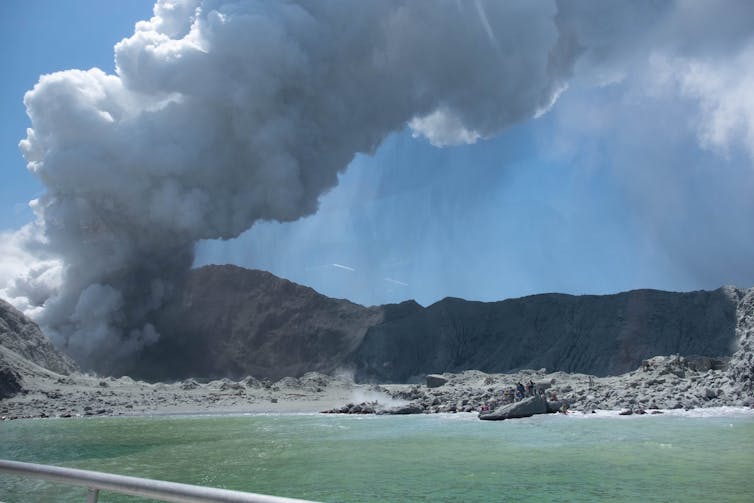
This image of the 2019 eruption of Whakaari White Island eruption was taken by a visitor.Michael Schade/AAP
A history of eruptions
New Zealand has a network of monitoring instruments that measure even the smallest earth movements continuously. This GeoNet network delivers high-rate data from volcanoes, including Whakaari, but it is not currently used as a real-time warning system for volcanic eruptions.
Although aligned with international best practice, GeoNet’s current Volcano Alert Level (VAL) system is updated too slowly, because it relies mainly on expert judgement and consensus. Nor does it estimate the probability of a future eruption — instead, it gives a backward view of the state of the volcano. All past eruptions at Whakaari occurred at alert levels 1 or 2 (unrest), and the level was then raised only after the event.
Our study uses machine learning algorithms and the past decade of continuous monitoring data. During this time there were five recorded eruptions at Whakaari, many similar to the 2019 event. Since 1826, there have been more than 30 eruptions at Whakaari. Not all were as violent as 2019, but because there is hot water and steam trapped in a hydrothermal area above a shallow layer of magma, we can expect destructive explosions every one to three years.
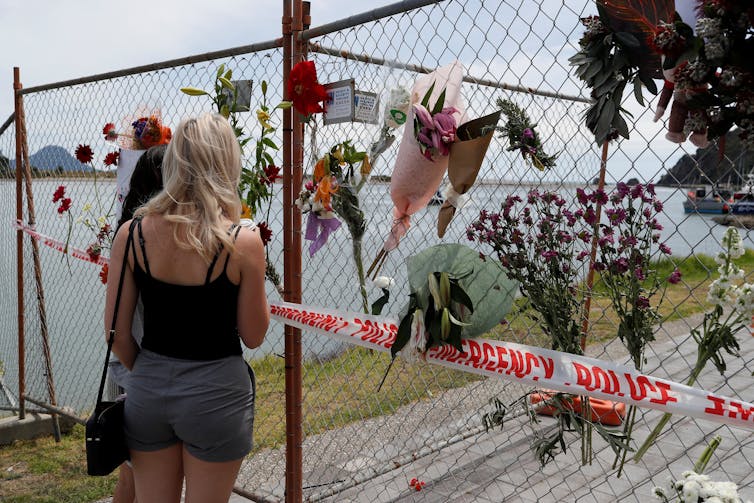
A memorial in Whakatane, following the White Island eruption in 2019.Jorge Silva/Reuters
Last year’s eruption was preceded by 17 hours of seismic warning. This began with a strong four-hour burst of seismic activity, which we think was fresh magmatic fluid rising up to add pressure to the gas and water trapped in the rock above.
This led to its eventual bursting, like a pressure cooker lid being blasted off. A similar signal was recorded 30 hours before an eruption in August 2013, and it was present (although less obvious) in two other eruptions in 2012.
Building an early warning system
We used sophisticated machine-learning algorithms to analyse the seismic data for undiscovered patterns in the lead-up to eruptions. The four-hour energy burst proved a signal that often heralded an imminent eruption.
We then used these pre-eruption patterns to teach a computer model to raise an alert and tested whether it could anticipate other eruptions it had not learned from. This model will continue to “learn by experience”. Each successive event we use to teach it improves its ability to forecast the future.
We have also studied how best to optimise when alerts are issued to make the most effective warning system. The main trade-off is between a system that is highly sensitive and raises lots of alerts versus one that sets the bar quite high, but also misses some eruptions.
We settled on a threshold that generates an alert each time the likelihood of an eruption exceeds 8.5%. This means that when an alert is raised – each lasting about five days – there is about a 1-in-12 chance an eruption will happen.
This system would have raised an alert for four of the last five major eruptions at Whakaari. It would have provided a 16-hour warning for the 2019 eruption. But these evaluations have been made with the benefit of hindsight: forecasting systems can only prove their worth on future data.
We think there is a good chance eruptions like the 2019 event or larger will be detected. The trade-off is that the alerts, if acted upon, would keep the island off-limits to visitors for about one month each year.
We have been operating the system for five months now, on a 24/7 basis, and are working with GNS Science on how best to integrate this to strengthen their existing protocols and provide more timely warnings at New Zealand volcanoes.
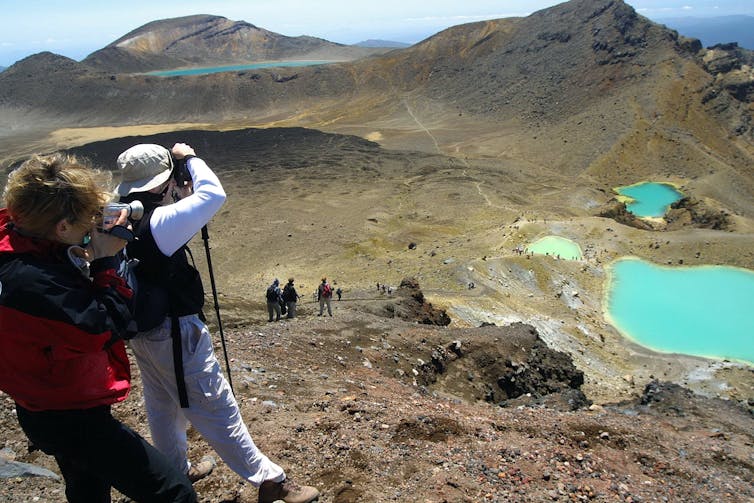
The Tongariro crossing is one of New Zealand’s most popular day walks and receives thousands of visitors each year.EPA
We plan to develop the system for New Zealand’s other active volcanoes, including Mt Tongariro and Mt Ruapehu, which receive tens of thousands of visitors each year. Eventually, this could be valuable for other volcanoes around the world, such as Mt Ontake in Japan, where a 2014 eruption killed 63 people.
Because of the immense public value of these kinds of early warning systems, we have made all our data and software available open-source.
Although most eruptions at Whakaari appear to be predictable, there are likely to be future events that defy warning. In 2016 there was an eruption that had no obvious seismic precursor and this would not have been anticipated by our warning system.
Eruptions at other volcanoes may be predictable using similar methods if there is enough data to train models. In any case, human operators, whether assisted or not by early warning systems, will continue to play an important role in safeguarding those living near or visiting volcanoes.
Source: The Conversation (Au and NZ) – By Grant Duncan, Associate Professor for the School of People, Environment and Planning, Massey University
The starting gates in New Zealand’s September 19 election race are finally full. Labour’s prime minister Jacinda Ardern is the bookies’ favourite and the opposition took a long time to settle.
All the same, punters may still want to hedge their bets.
While the National Party’s internal disarray has made it look easy for Ardern, with a tough contender in new opposition leader Judith Collins the race for the prime-ministership could be more gruelling than the earlier odds suggested.
Yes, Ardern is now a globally celebrated figure. Her sheer charisma looked hard to beat even before the last election.
And, given her achievements since, it’s looking harder now. Under Ardern’s watch, the country has eliminated community transmission of COVID-19 – at least for now.
Ardern’s highly visible leadership was reflected in opinion polls from April to June showing Labour over 50%, even as high as 59%.
But out of the ensuing panic in the National ranks has emerged a leader who, while polarising, might also be the party’s best chance of combating “the Jacinda effect”.
An ‘opposition from hell’
National’s problems can be traced back as far as its Pyrrhic victory at the last election. While it gained the most seats of any party, it couldn’t muster a coalition majority. The large caucus promised to be the “opposition from hell” – but ended up an opposition in hell instead.
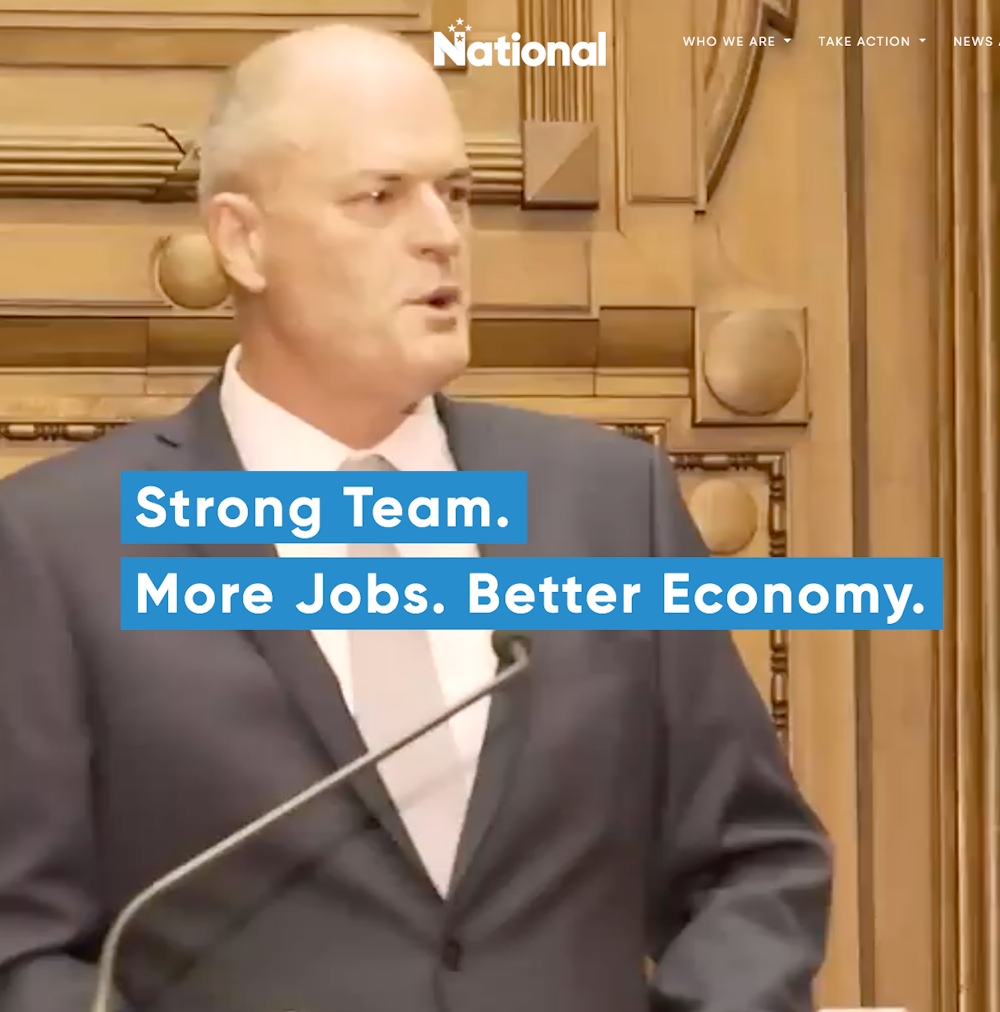
Former opposition leader Todd Muller and the ‘strong team’ election slogan, on the National website the day he resigned.https://www.national.org.nz/
Internal strife intensified as National dropped below 30% in some polls. Fearing for their seats, backbenchers scratched leader Simon Bridges and elevated the inexperienced Todd Muller, who quit just 53 days later after a shocking privacy scandal and a series of embarrassing gaffes.
National looked anything but the “strong team” their advertising wants voters to believe in.
Now desperate, the caucus wasted no time electing long-serving MP Collins as the fourth opposition leader Ardern has now faced. Let’s consider her odds.
The new old guard: National leader Judith Collins with deputy leader Gerry Brownlee and fellow MPs.AAP
Attack versus empathy
At 61, Judith Collins is a seasoned politician. First elected in 2002, she gained ministerial experience in John Key’s National-led government (2008–17).
She earned the nickname “Crusher Collins” when, as minister of police in 2009, she proposed punishing unrepentant boy-racers by destroying their souped-up vehicles in a car-crusher.
She appears to have embraced it, declaring on the day she became leader:
I am hoping that the National Party can crush the other lot when it comes to September 19.
She is strong and combative and unafraid to play attack dog. These may now be positive qualities in a centre-right female leader wanting to differentiate herself from Ardern’s empathy and kindness.
But Collins can be charming, too, though often with an edge. She was quick to compliment Ardern as an accomplished communicator – with a back-hander that “communication is not execution”.
This suggestion that Ardern is all appearance and little substance is part of the well-worn attack line National employs against a government it wants to brand as “failing to deliver”.
Competent but controversial
Collins herself has a track record as a very competent minister. When she took over as minister for accident compensation following major privacy bungles in 2012, for example, the portfolio was quickly out of the headlines and back on track.
National’s contentious election promise to privatise personal injury insurance was quietly abandoned too.
Tainted by “dirty politics” during the Key years, stripped of her ministerial roles over allegations she undermined the then head of the Serious Fraud Office, she was later exonerated and rehabilitated by Key.
Collins is nothing if not a survivor.
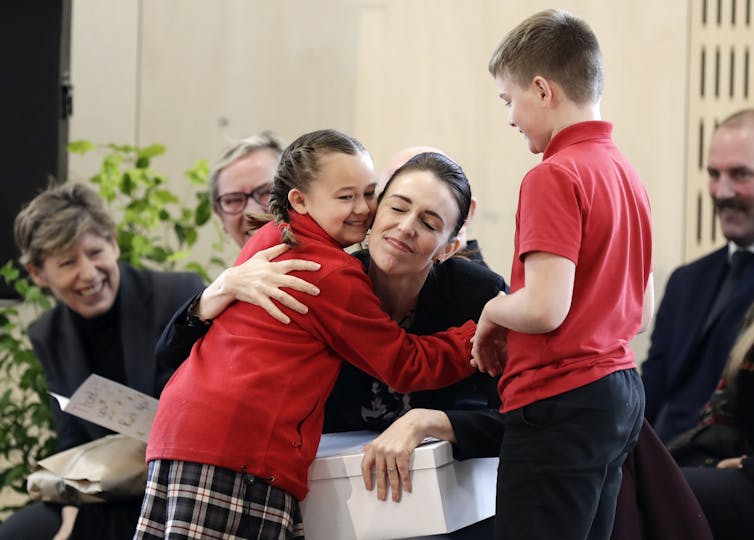
The ‘Jacinda effect’: Prime Minister Ardern with Christchurch schoolchildren in June.AAP
The diversity problem
A politician’s past mistakes are rarely forgotten, but National’s core supporters appreciate the no-nonsense certitude Collins displays.
Her voting record on conscience bills reveals she is relatively liberal on social issues, including abortion and same-sex marriage, unlike her immediate predecessor Muller.
While Muller’s front bench was criticised for lacking any Māori MPs, Collins’ team includes two Māori men, ranked fourth and fifth.
But now there are fewer women: only two in the top 10 and six in the top 20. The day after Collins took the reins, two female front-benchers announced their decisions not to seek re-election.
As a conservative party that pitches to older folk, however, National wants to avoid looking “woke”. Collins says she won’t be “distracted” by gender and ethnicity, and will make appointments “utterly on merit”.
But her defensiveness about her own ethnicity has been, well, utterly cringe-worthy. National’s evident discomfort in confronting real-world discrimination and inequality will lose younger voters (and many older ones) to the Greens and Labour.
Who will go the distance?
So, after two leadership changes within two months, and only two months out from the election, Collins needs swiftly to discipline her team and prevent further damage.
She must also present a convincing economic plan at a time when big spending, budget deficits and borrowing for infrastructure are standard fiscal policies whether you’re left, right or centre.
Big asks, but these are extraordinary times and it’s unwise to make predictions. Labour’s rise in the polls was sudden and it could just as quickly fall, especially as economic pain becomes chronic, or if another coronavirus outbreak occurs.
Ardern’s kindness and political capital may sustain Labour through to a win. But Collins’ willpower could yet help National come from behind.
COVID-19 lockdowns have led to suggestions there could be a “coronial” baby boom.
But while a baby boom as a side effect of the devastating pandemic sounds kind of nice, it is probably too good to be true.
What is more likely is that Australians will delay or forego having children because of coronavirus. This could be personally devastating for people and a demographic disaster for the country.
What are people really up to?
The pandemic has seen the birth of terms such as “corona thirst”, based on the assumption people are having more sex than usual due to all the extra time at home with nothing much to do.
A United States poll released in June signalled a COVID-induced sexual enlightenment, with 54% of surveyed couples reporting they were being more adventurous in bed.
But despite all the hype, all signs point to fewer babies being born as a result of COVID-19, not more. For one thing, pregnancy test purchases are more likely to reflect women trying to avoid seeing a doctor in person, rather than a prelude to a boom.
We do not have the necessary ingredients for a boom
It takes more than sex (or more sex) to have a baby boom. The necessary ingredients include more people partnering and reduced contraception use among couples and we are not seeing evidence of either of these things.
The fact that gathering places like pubs and bars are either closed or restricted is limiting opportunities to meet people and interact in real life. Decreased rates of sexually transmitted infections point to a reduction in the formation of new relationships, regardless of the increased use of dating apps.
Social distancing and lockdown has made it difficult for people to meet new partners.James Gourley/AAP
And despite all the talk about adventurous sex, it’s also highly unlikely couples will suddenly decide to increase their intended family size.
For one thing, additional, forced time with loved ones tends to strain, not nurture, relationships. Rising domestic violence rates has also show the pandemic has been unsafe for too many others.
All the uncertainty and socioeconomic scarcity – including the inability to have basic needs, like toilet paper, met and record unemployment – also means even established, happy couples are likely to postpone having children.
It is important to note that birth rates dropped dramatically during the Great Depression, from an average of around three births per woman to about two – a substantial decline in terms of magnitude and the time it took to fall.
This offers the most comparable historical event to COVID-19, given the expectation of long-term economic doldrums due to the pandemic.
Headed for demographic disaster
Australia’s birth rate of 1.74 births per woman is already in decline, down from 2.02 in 2008. We can expect COVID-19 to exacerbate this trend.
This is a huge worry. Because, if we fall to or below a birth rate of 1.5, this is well below replacement level and places the future tax base at risk. Simply put, we won’t have enough people to work and pay taxes and fund all the roads, hospitals and welfare initiatives we need to function as a country.
This is a demographic disaster, leading to declining socioeconomic well-being. Future generations will have to cover the bill for far more than we have had to, meaning the Australia they inherit will be worse off.
Even more worryingly, once birth rates fall to around 1.5, they don’t tend to bounce back, because social norms around children and family become ingrained even if there are incentives to change.
While countries typically rely on increased immigration to balance demographic and workforce needs, this may not be possible in the same way, due to the pandemic.
The individual impact
For people who are hoping to have children in the near future, COVID-19 has presented new and no doubt stressful challenges.
Not only is it difficult to meet potential partners, but there have been extra constraints of accessing assisted reproductive technologies. Cancellation of elective surgery during the initial COVID-19 outbreak saw some IVF treatments postponed.
Melbourne’s worsening pandemic situation is now likely to cause further IVF delays.
Even with the resumption of IVF, prospective parents may have missed their chance to have a family or increase the size of the one they already have.
Demographic ripples
Not much is known about childlessness among men in Australia because the census doesn’t include this information and research typically focuses on women.
But we do know that at the 2016 Census, roughly 30% of women towards the end of their reproductive years aged between 30-44 years reported not having any children.
This roughly translates to around a quarter of a million women being childless against their choice, due to not having a partner or requiring assisted reproductive technology (including same-sex attracted women).
The Household, Income and Labour Dynamics in Australia survey also tells us people don’t have as many children as they plan to at the best of times. The number of children adults intend to have typically reduces over time as people realise and experience the barriers confronted by parents trying to juggle paid work, family and life.
Families may not be able to expand as they planned, due to coronavirus.www.shutterstock.com
All these factors, combined with these raw numbers, conservatively suggests thousands of women will be left stranded in their childbearing years. While some of course may still have children down the track, for others, the window for childbearing will close sooner and more definitively because of COVID-19.
For some existing parents, they will not have as many additional children as they hoped for.
This is a heartbreaking individual outcome, as well as one that will send ripples into the nation’s future demography.
Demographic recovery
Post-coronavirus recovery requires comprehensive efforts to build and invest in the demographic capital of the nation, now and into the future.
It’s going to be a rough road ahead. Sadly, for many Australians, it will be marked by significant personal heartache, with the ripple effects felt at a population level.
Moss bounds happily through the bush showing the usual exuberance of a young labrador. Despite this looking like play, he is on a serious mission to help fight the extinction of some of our most critically endangered species.
Moss is a detection dog in training. Unlike other detection dogs, who might sniff out drugs or explosives, he’ll be finding some of Victoria’s smallest, best camouflaged and most elusive animals.
These dogs use their exceptional olfactory senses to locate everything from koalas high in the trees, desert tortoises burrowed deep under soil and even whales — often more effectively than any human team could aspire to.
What makes Moss unique, however, is he’ll not only find endangered species in the wild, but will also be part of a larger team helping endangered species breed in captivity. These dogs will be the first in the world to do this, starting with a ground-breaking trial with Tasmanian devils.
Moss will eventually help find the tiny, cryptic Baw Baw Frog in the wild.
Why Moss needed a job
Wildlife detection dogs are a very rare type of dog — they are highly motivated, engaged and energetic, but also incredibly reliable and safe around the smallest of creatures.
And Moss is the first dog to join Zoos Victoria’s Detection Dog squad, a permanent group of highly trained dogs that will live at Healesville Sanctuary.
Moss was adopted at 14 months old, after he somewhat “failed” at being a family pet. He is a hurricane of energy with an intelligent and playful mind. He’s thriving with a job to keep him occupied and new challenges for his busy brain.
One sign he was perfect for this program was his indifference to the free range chickens at his foster home. For obvious reasons, a dog who likes chasing chickens wouldn’t be a good candidate for protecting some of Australia’s rarest feathered treasures.
Moss will also help monitor incredibly well camouflaged plains-wanderers, which are nearly impossible to spot in the day.
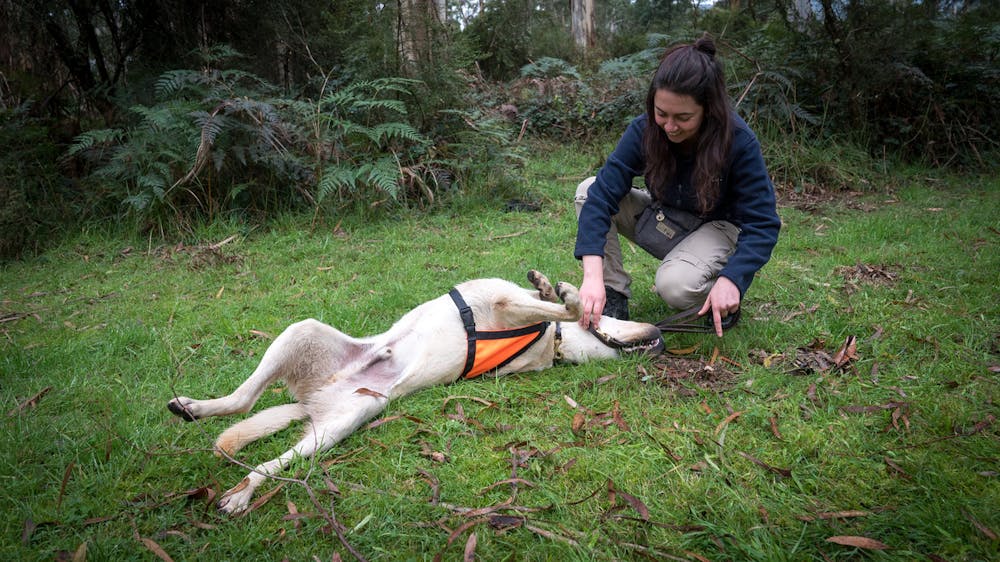
Currently Moss is learning crucial foundational skills, and getting plenty of exposure to different environments. Equally important, he is developing a deep bond and trust with his handlers.
The detection dog-handler bond is crucial not only for his happiness, but also for working success and longevity. Research from 2018 found a strong bond between a handler and their dog dramatically improved the dog’s detection results and reduced signs of stress.
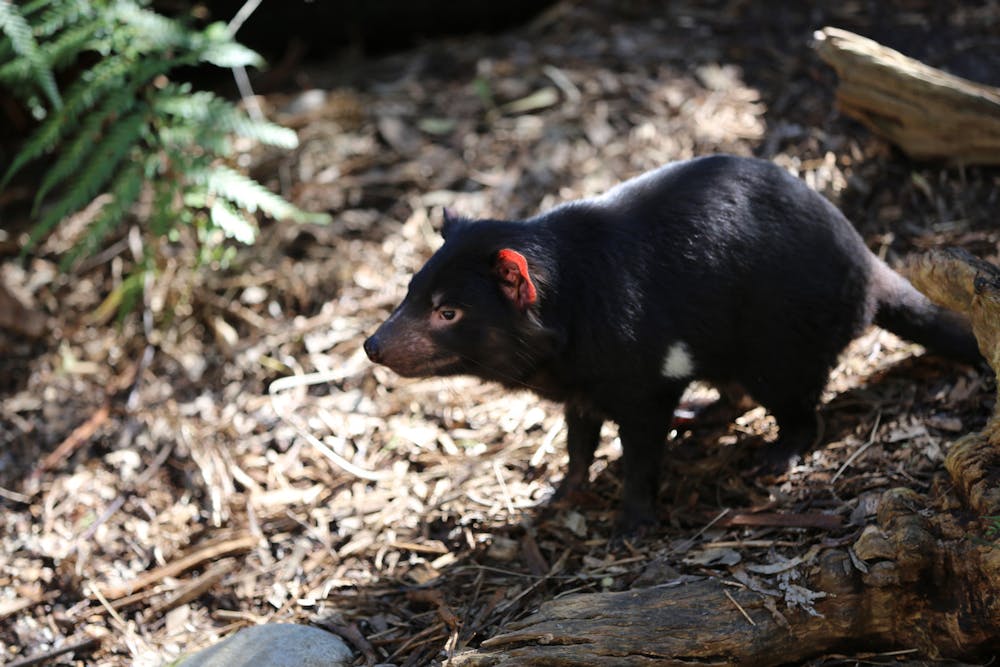
But managing a predator that’s shy, nocturnal and prefers to be left alone can be tricky.
Wildlife, including Tasmanian devils, need a hands-off approach where possible, so they can maintain natural behaviours and thrive in their environment.
Tasmanian devils prefer to be left alone.Healesville Sanctuary, Author provided
In the wild, devils leave scats (faeces) at communal latrine sites and use scent for communication. Male devils can tell a female is ready to mate by smelling her scat. And we think dogs could be trained to detect this, too.
We aim to train dogs to detect an odour profile in the collected scat of female devils coming into their receptive (oestrus) periods, so we can introduce females and suitable males to breed at the optimal time. The odour profile will be further verified via laboratory analyses of hormones in the scats.
The project will also explore whether dogs can detect pregnancy and lactation in the devils.
Currently, the best way to determine if a female has young is to look in her pouch, but our preference is to remain at a distance during this important time while females settle into being new mums.
Moss with his trainer, Latoya. Moss is a ball of energy and thrives in the challenging environment of conservation detection.Healesville Sanctuary, Author provided
If the dogs are able to smell a scat sample (while never coming into contact with the devil) and identify that a female is lactating with small joeys in her pouch, we can support her – for example, by increasing her food – while keeping a comfortable distance.
A new partnership in conservation
The results from this devil breeding research could offer innovative new options for endangered species breeding programs around the world.
Wildlife detection in the field means we can more accurately monitor some of our most critically endangered species, and quickly assess the impact of catastrophic events such as bushfires.
Detection dogs are the perfect intermediary between people and wildlife — they can sniff out what we can’t and communicate with us as a team.
And over the next few years, the Detection Dog Squad will expand to five full-time canines. They will all be selected based on their personalities rather than specific breeds, so will likely come in all shapes and sizes.
Dogs may yet go from being man’s best friend to the devil’s best friend and beyond, all starting with a happy labrador named Moss.
This article is co-authored by Naomi Hodgens, Wildlife Detection Dog Officer at Zoos Victoria, and Dr Kim Miller, Life Sciences Manager, Conservation and Research, at Healesville Sanctuary, Zoos Victoria.
We teach English at university. Our weekly engagements include navigating unnerving plot twists, falling in and out of love with iconic characters, and evaluating the complexities of language and genre.
Reading challenges how we think. Each week, in English classes, we explore some of the most significant issues and representations affecting various historical periods and cultures.
In the first semester, our reading list included classic works of literature that deal with themes including mental illness and psychological as well as physical isolation: Charlotte Perkins-Gilman’s The Yellow Wallpaper, Virginia Woolf’s Mrs Dalloway, and Sylvia Plath’s The Bell Jar.
Our teaching suddenly moved online, which created an even more unsettling set of conditions. We were teaching literary texts representing various kinds of trauma to students coping with a range of new (or exacerbated) issues due to sudden loss of employment, social disconnection, anxiety and fear.
Would reading these difficult texts prove to be a solace for our students, a timely example of the social role of literary storytelling, or a trauma all of its own?
What are difficult texts?
Great stories move and they challenge. They draw attention to diverse social and cultural issues and to the transformative potential of empathy. But they can also be difficult and there are a range of reasons why.
The challenge might be intellectual. Or the text confronting on a psychological or emotional level.
A lot of literature is perceived as perpetuating racist stereotypes. Until quite recently, a good deal of canonical literature excluded the perspectives of women. This is something Woolf has written extensively about and that we can see at work in Mrs Dalloway. Part of her novel’s radicalism is its transgressive (for its era) narrowness of scope: a day in the life of a woman.
Sylvia Plath’s The Bell Jar explores mental illness, and could be triggering for some readers.Flickr/kristina, CC BY-ND
And of course, there are themes in literary texts that are in themselves inherently challenging or traumatic: war, racial violence, and misogyny are staples in Shakespeare’s plays.
In identifying difficult literature, the goal posts shift: what was confronting to past generations may not remain true for current readers. So too, what was acceptable to readers of a certain era may no longer be acceptable in the 21st century.
Universities have seen an escalation of interest in content and trigger warnings. Viewpoints have run at both ends of the extreme. Content warnings are either coddling the minds of the “snowflake generation”; or one step away from censorship. Others consider warnings as essential in protecting students from psychological harm.
As literature scholar Michelle Smith notes, it seems widely accepted a lecturer should give a warning before showing a graphic visual scene. However, the argument trigger warnings should accompany written literature that represents difficult or challenging subject matter has been met with more scepticism and opposition.
This places a great deal of responsibility on teachers to decide where to draw the line.
Teachers face the ambitious balance of wanting to protect our students from representations that might be too difficult and trigger unwanted emotional responses, alongside a desire to expose students to complex representations, and histories — for instance of inequality, discrimination, racism and sexism.
We use the term “trauma texts” to explore how new literary subjects and voices have emerged in the 21st century. Trauma texts reveal literature’s potential for direct and active political and cultural engagement. When we take these texts into the classroom, we ask students to accept difficulty into their lives (if they can), and to witness complex lives and histories in nuanced, critically engaged ways.
Teaching in the time of COVID has re-energised these ongoing debates. For instance, there is an opportunity to recognise (with renewed vigour) how a reader’s individual experience shapes how they approach a particular literary text. We have developed new understandings of how literary texts operate in moments of great cultural or social upheaval.
In our research and practice we have found many positive outcomes when we teach difficult texts in university English. Our students appreciate the texts we teach address recognisable real-world problems.
These books offer opportunities for readers to show empathy, witness injustice and reflect on the ethics of representation. They offer skills (critical reading and thinking, debate, negotiation) that are transferable to diverse work contexts. They come to understand the value of literature (broadly conceived), and the wide cultural and political influence it may have.
Research has shown reading difficult texts with students requires care, and an awareness of how to approach content and trigger warnings. As life narrative theorist Leigh Gilmore reminds us, when we bring trauma texts into the literary classroom, we should teach as if someone in the room has experienced trauma.
The classroom needs to be a safe space.
In teaching difficult texts, it is a reasonable expectation we provide information (in advance) to students regarding any difficult content. We need to open a dialogue between student and teacher and this needs to be maintained throughout the semester so we can offer ongoing support.
As well as empowering our students, this approach provides us with an opportunity to reflect, dynamically, on why we want to teach these texts.
In previous research we have argued that in English, we want to encourage students to confront new ideas and to be challenged by what they read. This is integral to the university experience. We are asking students to be generous readers who have the capacity to look inward and outward.
Now, more than ever we need tools to read and respond to human experiences of crisis and pain. Reading difficult literature is one way by which the eternal and ongoing responsibility of humanism can be fulfilled.
What will be the normal way of urban living when the COVID-19 crisis passes? What aspects will remain with us and what will disappear?
The coronavirus pandemic has thrust us into a moment of rapid change. Like all change, it is difficult to predict. But lessons from history provide us with two important insights.
First, temporary change sometimes has remarkably little lasting effect.
Second, what looks like a lasting effect is often the acceleration of existing trends, rather than new, crisis-caused trends.
COVID-19 impacts provide an opportunity for our cities to shift to new ways of urban living. But only if we couple this opportunity with technology and deliberate collective action will sustained and equitable change happen.
What does history tell us?
Right now, COVID-19 impacts are front of mind. In thinking ahead, we might therefore overemphasise what a crisis will do to how we live in cities. To put it simply, history shows us that the ways we organise our cities are often resistant to abrupt change – even in response to catastrophic events.
In Japan, changes to population distribution as a result of the bombing of Hiroshima and Nagasaki in 1945 had disappeared by the early 1960s.
Changes to the population distribution of Hiroshima disappeared within two decades of the atom bomb being dropped on the city.zullf/Shutterstock
Almost 40% of Europe’s population died during the Black Death (1347-1352). Much of Europe’s urban hierarchy nevertheless returned to its pre-plague distribution over time.
Even the collapse of the urbanised Roman civilisation had little lasting effect on the urban hierarchy in France. It did lead, though, to a resetting of the urban network in England.
The reason for this urban inertia is that momentary change often does little to change the fundamentals of our cities. It doesn’t greatly change locational advantages, built environment legacy, property rights and land ownership.
London, for instance, has experienced slum clearance, Spanish flu, wartime bombing and the introduction of greenbelts and planning over the past 100 years. However, the location of the city’s rich and poor continues to be shaped by infrastructure investments in the Victorian era. And the Roman-period road layout has strongly influenced the street layout of central London today.
After all the upheavals London has endured through two millennia, the influence of the Roman road network can still be seen in the city today.Fremantleboy, Drallim/Wikimedia Commons, CC BY
At the same time, cities do of course change. In some cases dramatic events – like fires or earthquakes – are the enablers of change that is already underfoot. That is, business and policy coupling opportunity with technology and determination.
Businesses will not – and should not – be slow to couple opportunity, technology and determination to achieve particular outcomes.
For instance, working from home has overnight (temporarily) become endemic. Higher education institutions (temporarily setting aside the challenges for teaching) switched remarkably quickly to almost exclusively online platforms.
COVID-safe shopping has popularised some automation. Demand for “contactless” service delivery has advanced some smart and robot technology into common use.
Hotels in California are using robots to provide contactless room service.David Sherbrook/Cover Images/AAP
Working from home, online teaching and automation couple opportunity (as a result of COVID-19) and technology (digital communication) with longer-term trends.
Between 2001 and today, the office space per worker in many knowledge-intensive jobs shrank from 25 square metres to just 8sqm in new developments. Flexible working arrangements and casualisation across a range of sectors enable businesses to manage wage bills when wage rates cannot be reduced.
Automation also reduces business wage bills and has long been touted as a way to increase productivity. According to a 2019 McKinsey report, automation may affect 25-46% of current jobs.
The “death of the office” has long been predicted. Rumours of its death are likely exaggerated this time too.
Face-to-face interaction between workers often increases productivity in service and knowledge-based industries. Research shows face-to-face contact enhances co-operative and pro-social behaviour.
Similarly, research suggests concentrating workers and their skills in one location (agglomeration economies) can increase much-needed labour productivity. This is required to offset the shifting labour-force balance in an ageing society.
What’s the role of public policy?
Our cities today work better for some than for others. Sustained and equitable change requires public sector action and will.
This will leave winners and losers. Unlike change itself, the winners and losers are often far more predictable. Women, renters, lower-income and migrant-dominated jobs are more vulnerable.
What is imperative, therefore, is that governments similarly couple technology and opportunity with a vision for cities that are environmentally sustainable and socially just. This sort of urban future requires economic innovation. Change is confronting us with an opportunity and necessity to redress entrenched privilege.
History tells us critical events such as COVID-19 often do little to change the fundamentals of our cities. An important step in envisioning different urban futures is to recognise it is people, businesses, institutions and political will that collectively make change.
Source: The Conversation (Au and NZ) – By Robert Breunig, Professor of Economics and Director, Tax and Transfer Policy Institute, Crawford School of Public Policy, Australian National University
We’re told Australia has a progressive tax system – the more you earn, the higher the rate.
And that’s certainly the case for earnings from wages. An Australian on A$35,000 sacrifices 21 cents out of each extra dollar they earn whereas an Australian on $90,000 sacrifices 39 cents.
That’s how it’s meant to be for income from savings, but in practice it isn’t.
Fresh calculations released this morning by the Tax and Transfer Policy Institute at the Australian National University show that low income Australians in the bottom tax bracket pay a higher marginal rate of tax on income from savings than high earners in the top tax bracket.
It is because of exemptions and special rates, and the alacrity with which high earners take advantage of them.
Super gives the most to the highest earners
The taxation of superannuation drives the results.
Super contributions are generally taxed at a flat rate of 15%. For low earners on an income tax rate of zero, 15% would constitute a considerable extra impost did the government not refund the difference with a tax offset that cuts the effective rate to zero.
High earners on the 47% marginal rate do much better. The tax rate of 15% offers substantial tax relief. For them, it is an effective rate of minus 32%.
Other tax concessions are directed at older Australians, who are often on higher incomes than younger Australians.
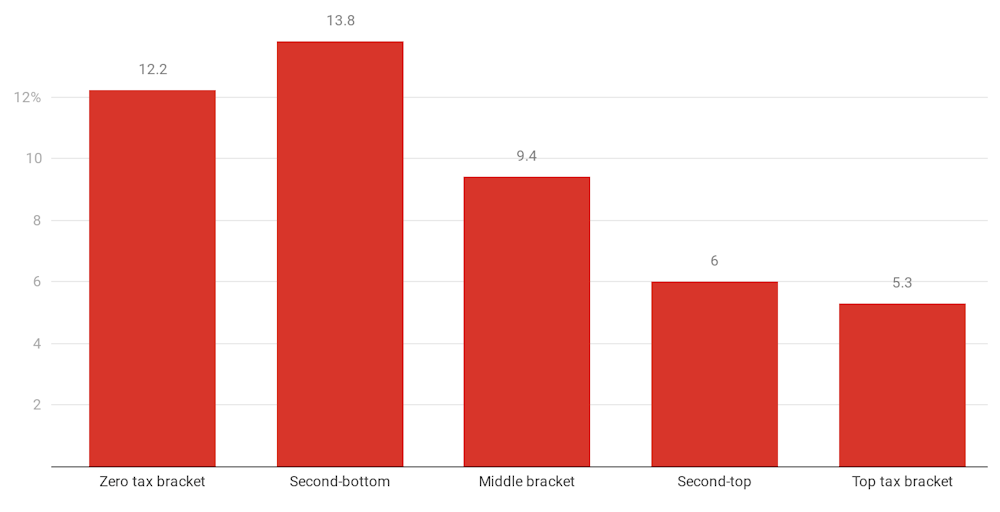
It shows that the marginal tax rate high earners pay on additional savings held over a twenty year period is 5.3% of income, on average, whereas for low earners in the bottom (zero) tax bracket it’s 12.2%.
Low earners in the second lowest tax bracket are paying 13.8%.
Marginal effective tax rates actually paid on income from savings, by bracket
Authors’ calculations using data from the Australian Survey of Income and Housing, 2019.TTPI Policy Report 01-2020
The way forward: a dual income tax system
Our report proposes taxing all types of saving at the same flat low rate.
This dual income tax system (a progressive rate for wages and salaries, a flat rate for income from savings) has been used in Norway, Finland, Sweden and Denmark since the early 1990s. Elements of it are used in Austria, Belgium, Italy, Greece and the Netherlands.
If the rate were 10%
• all interest payments would be taxed at 10%
• all dividends, both domestic and foreign, would be taxed at a rate of 10%
• all capital gains (including owner-occupied housing) would be taxed at 10%
• superannuation contributions would be made from after-tax income and then earnings in the accounts taxed at 10%
• rent and capital gains on investment properties would be taxed at 10%
• the imputed rent from owner-occupied housing (the benefit home owners get from not having to pay rent that is taxed) would be calcuated and taxed at a rate of 10%. An alternative would be to raise the same amount through a broad-based land tax.
Our calculations suggest that if the tax were applied broadly at a rate of 6.2%, it would raise as much as is raised now from taxes on income from savings. If income from owner-occupied housing were excluded, the rate would need to be 10.2%.
But there is no particular reason for the rate to be set to generate as much from savings income as it does now. It could be set to raise more, or to raise less.
The design and implementation of a dual income tax should be considered alongside broader changes to the tax and transfer system. In particular, it should be combined with removing opportunities to re-classify income for tax minimisation purposes. We outline some of the considerations in our report.
In the meantime, as steps towards a flatter fairer system of taxing income from savings, the government could consider better targeting superannuation subsidies, replacing real estate stamp duty with land tax and including the family home in the means tests for pensions and other age-related benefits.
Our current approach to taxing income from savings is a mess at best and a serious driver of intergenerational inequality at worst. Some savings tax arrangements are progressive, taxing higher incomes more heavily, and some are regressive.
We want to encourage and reward savings. But we also need to remove the crazy incentives that impel ordinary Australians to take part in distorting and costly tax planning schemes.
Our report outlines a way forward, and steps to get there.
The government is about to make an historic decision.
The JobSeeker unemployment benefit (previously called Newstart) has scarcely increased in real terms since 1994.
In that time general living standards, as measured by real gross domestic product per capita, have almost doubled, climbing 83%.
Other benefits such as the age pension have broadly kept pace with living standards. They climb in line with wages rather than the slower-growing consumer price index.
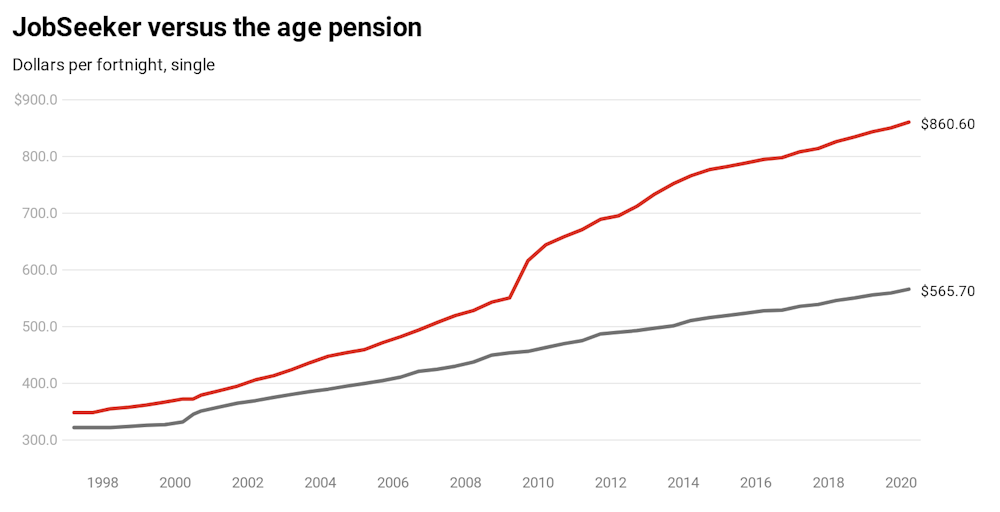
In dollar terms the single rate is now just A$565.70 per fortnight, close to the poverty line and well below the $860.60 paid to single pensioners. Back in the early 1990s it was close to the pension.
Source: Ben Phillips ANU, DSS
The Organisation for Economic Co-operation and Development said in 2010 Newstart had fallen so low as to call into question its effectiveness in “enabling someone to look for a suitable job”.
In March, as the scale of the looming job losses from coronavirus and the responses to it became clear, the government effectively doubled JobSeeker, boosting the $565.70 single payment and other lower payments by a $550 per fortnight coronavirus supplement in an acknowledgement that unemployed people “need to meet the costs of their groceries and other bills”.
The increase took effect from April 27, but was temporary, for six months after it received royal assent, meaning it is due to expire in late September.
The economic statement due on Thursday will provide an opportunity for the government to cushion the blow by either extending the life of supplement or permanently lifting JobSeeker.
It’ll also provide an opportunity for it to say no, allowing JobSeeker to collapse back to where it was.
An increase suggested to the recent Senate inquiry by the South Australian Centre for Economic Studies was $80 to $120 per week, enough to restore it to where it was relation to other benefits in the early 1990s.
Some Senators wedded to low JobSeeker
But the government will need to get over its seemingly ideological premise that the unemployed are in some way responsible for their own misfortune and are usually undeserving of the support needed to meet living costs.
This sentiment on display in the dissenting report by Coalition members of the Labor and Greens dominated inquiry which recommended JobSeeker be increased.
In explaining their position in April, after the the government had temporally doubled JobSeeker, Coalition Senators Wendy Askew and Hollie Hughes, argued that a permanent increase could carry with it “disincentive effects in respect of engagement with the workforce”.
Asked whether the treasury had ever done any modelling of an increase in the payment now known as JobSeeker, deputy secretary Jenny Wilkinson relied “no”. Asked again: “You’ve never done that?” she replied “no”.
Others have done the analysis.
The compromise that might just stick
Deloitte Access Economics believes an increase would boost the size of the economy and boost the number of people employed by 12,000.
A compromise that might be acceptable to members of the Coalition who oppose lifting JobSeeker but support “job-ready” training programs, might be an increase in the JobSeeker allowance of, say, $80 per week, split into two.
Half of the increase would be a cash increase without conditions, the other half would be provided for accredited training.
With conditions in place to ensure participation in bona fide training, the increase could drive the skills development both employers and the unemployed want.
The training that would emerge would be market-driven, responding to the post-COVID-19 needs of employers and potential employees.
The Productivity Commission has implicitly endorsed such an approach, reporting in May that there was “a manifest capacity to better allocate the $6.1 billion in government spending on vocational education and training to improve outcomes”.
JobSeeker could help, both supporting Australians who are out of work and supporting them to get back into work.
Early ventures in queer young adult (YA) fiction followed certain conventions: they tended to be set in the contemporary world and their narratives focused on coming out, bullying, heartbreak or fighting for acceptance. Most unfortunately, these stories also have a long history of ending in tragedy.
There is absolutely a place for stories that address the often harsh reality of being queer in a heteronormative world. However, this history has left many adolescents (and adults!) under the LGBTQIA+ umbrella calling out for stories that break this mould.
Over the last decade, there has not only been an increase in the number of queer YA books being published (including by major publishing houses), but also a welcome and notable shift in the kinds of stories these books tell. Now, we have not just contemporary realism, but sci-fi and fantasy. Not just tales of unrequited love, but sappy romantic comedies.
Not just narratives about hardship — but narratives about hope.
Queer representation in fiction can provide education, validation and affirmation to young people and help normalise queerness — for teenagers exploring their identities, but also for readers of all ages and orientations who want to experience different perspectives or learn to be better allies.
But these hopeful queer stories are also important precisely because they are fun. Sometimes you want the catharsis of reading about a gay teenager coming out. Sometimes you want the escapism of reading about a gay teenager saving the universe, going through a magic portal or having a big mushy rom-com moment.
As well as providing entertainment, these books are giving queer teenagers stories that promise a life outside of sadness and hardship.
Want to know more? Here are five recent queer YA novels to get you started.
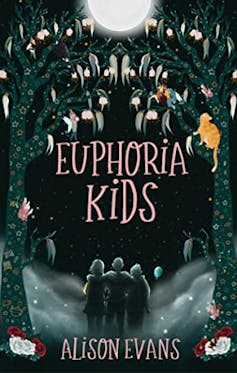
Babs is invisible most of the time, so she’s thrilled her classmate Iris can see her. Iris grew from a seed in their parents’ back garden and routinely hangs out with fairies and dryads, so magic is part of ordinary life as far as they’re concerned.
This is a witchy and whimsical story about the power of friendship and self-love. The novel’s magical setting provides a safe, hopeful and happy world for its trans characters, as well as a deeply dreamy reading experience.
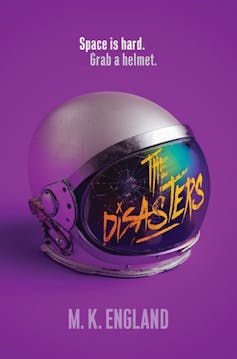
Nasir “Nax” Hall is going to be a hot-shot space pilot … at least, that was the plan, but he’s just failed his entrance exam. When a mysterious faction attacks the academy, Nax and a group of other intergalactic wash-ups become the only ones who can save the known universe.
The Disasters is pure fun, throwing you into a high-stakes outer-space adventure at warp speed.
The rag-tag crew of diverse teenagers have a rocky beginning but develop a fire-forged bond across the novel. It’s a delightful read.
Plus-sized, pink-haired and gay, Abby figures she’s “the funny friend” in someone else’s love story and will never be the star of her own. That is, until she starts her summer internship at a vintage fashion store and meets the artsy and enigmatic Jordi Perez.
This has everything you could want from a summer romance: it’s sweet as ice cream, with equal scoops of bright and breezy comedy and heartfelt drama.
Though there are ups and downs, Abby gets her happily ever after.
Jess is the daughter of superheroes. Naturally, the best way she could rebel is to take a part-time job with the local supervillains.
Lee embraces all the secret identity shenanigans and zap-pow action scenes you could want from a superhero story, but starring a cast of queer teenagers.
This book plays with the tropes lovingly and cleverly, and is the first in a very fun series.
Felix arrives at school one day to find the lobby full of photographs of him before he transitioned.
Determined to get revenge on the anonymous “artist”, he creates a fake online personality to get dirty secrets out of his classmates … and soon finds himself embroiled in Instagram subterfuge and in the middle of a strange digital love triangle.
Callender explores some harrowing issues but I include their book on this list because it addresses harsh realities and still comes out the other side as a story about hope.
Felix Ever After speaks to the past and future of queer YA: it doesn’t shy away from the struggles queer teens can face while also offering a picture-perfect happy ending.
By Nikko Dizon and Paterno R Esmaquel II in Manila
Filipinos and the people of Hong Kong are both in need of prayers over recently-passed security laws that threaten to undermine their basic freedoms and human rights, says the Catholic Bishops’ Conference of the Philippines (CBCP).
The bishops’ call came after they recently received a letter from Yangon Archbishop Charles Cardinal Maung Bo, president of the Federation of Asian Bishops’ Conferences, making an “ardent request for prayers” for the Hong Kong people following the passage of the new National Security Act.
In a pastoral letter signed on July 16 by its acting president, Caloocan Bishop Pablo Virgilio David, the CBCP said that after assuring the Yangon Archbishop they would join him in prayers for Hong Kong, they also asked him to pray for the Philippines “and explained why we are as seriously in need of prayers as the people of Hong Kong”.
“Like them, we are also alarmed about the recent signing into law of the Anti-Terror Act of 2020,” the CBCP said.
Bishop David, a vocal critic of the Duterte administration, is temporarily heading the CBCP while its president, Davao Archbishop Romulo Valles, is recovering from a stroke.
Bishop David’s statement is among the most stinging from the CBCP since Valles’ predecessor, Archbishop Socrates Villegas, stepped down in November 2017.
Fast-tracked anti-terror law In its statement, the CBCP said it remains in “disbelief” over the manner of how the anti-terror law was passed under the Duterte administration – especially by how it was fast-tracked in Congress while Filipinos were grappling with the coronavirus pandemic and how lawmakers ignored the people’s protests against it.
“The dissenting voices were strong but they remained unheeded,” the CBCP said, adding that “the political pressure from above seemed to weigh more heavily on our legislators than the voices from below”.
The Filipino bishops noted how the people in government and their supporters have “dismissed” all the fears raised over the new law as “unfounded”.
“The assurance that they give sounds strangely parallel to that which the Chinese government gave to the people of Hong Kong: ‘Activism is not terrorism. You have no reason to be afraid if you are not terrorists.’
“We know full well that it is one thing to be actually involved in a crime and another thing to be merely suspected or accused of committing a crime,” the CBCP said.
At the very least, the CBCP said, several petitions have been filed with the Supreme Court challenging the validity of the Anti-Terrorism Law.
“Will the highest level of our judiciary assert its independence, or will they, too, succumb to political pressure?” they said.
Semblance of democracy In their pastoral letter, the CBCP warned that the return of “warrantless detentions” through the anti-terror law was reminiscent of how the country gradually lost its democracy in 1972.
“While a semblance of democracy is still in place and our democratic institutions somehow continue to function, we are already like the proverbial frog swimming in a pot of slowly boiling water,” the CBCP said.
Fortunately, the bishops noted, there remain in the present government “people of goodwill whose hearts are in the right places, and who remain objective and independent-minded.”
The CBCP hoped these government officials will not allow themselves to be intimidated or succumb to political pressure.
“They are an important element to the strengthening of our government institutions, and are an essential key to a stable and functional democratic system,” the bishops said.
The CBCP ended the pastoral letter with a prayer, part of which said:
“May the crisis brought about by the pandemic bring about conversion and a change of heart in all of us. May it teach us to rise above personal and political loyalties and make us redirect all our efforts towards the common good.”
Stars join the rally against the Philippine anti-terror law and the shutdown of the country’s largest television network, ABS-CBN. Image: Rappler
They held a noise barrage and a motorcade that passed through several cities before ending up at the ABS-CBN compound in Quezon City.
Actress and activist Angel Locsin was among the protesters. She was joined by her fiance, Neil Arce.
Actress Angel Locsin calls on fellow celebrities to speak up, not to be afraid. Here’s an excerpt of her speech today. | via @beacupinpic.twitter.com/TjZaK1pjVc
The government is set to continue a revamped and re-targeted wage subsidy when it delivers its Thursday economic statement amid massive uncertainty about the trajectory of COVID-19 in the two largest states.
Finance Minister Mathias Cormann on Sunday said JobKeeper would be extended but with changes.
“There will be some adjustments to the scheme to make sure it is appropriate for the next phase,” he said.
Thursday’s statement is being framed when it is unclear whether Victoria, under a new shutdown, will get on top of its second wave – Sunday’s tally was 363 cases for the previous 24 hours and three deaths – and things are at a tipping point in NSW, with 18 new cases.
Mask-wearing in public will be compulsory from midnight Wednesday in Melbourne and in the Mitchell Shire.
The NSW government announced late Sunday there will be further restrictions on entering NSW from Victoria. There will be a strict new border zone, tightened permit conditions and stronger enforcement powers.
The doubt about where the COVID-19 situation will go from here makes projecting the economic numbers extremely difficult.
Cormann told Sky businesses particularly severely hit by the crisis would need an extra period of support so they could hang onto their workers.
Towards the end of September – when the JobKeeper program was due to finish – it would be important to reassess which businesses should still be receiving the support, he said.
“In the first six months, irrespective of what happened to your turnover after you initially qualified, you were in.
“But as we go into this new period, there is a need to reassess whether that support is still needed for specific businesses.”
The government is trying to set a determinedly upbeat tone. “The situation now is better than what we feared would be the case now,” Cormann said.
He said the aid would not be specifically targeted to Victoria, but given the circumstances more businesses there would qualify.
The government is also dealing with the future of JobSeeker which was effectively doubled for the pandemic. It is expected to be lowered but not to the old level.
Cormann said: “The current enhanced JobSeeker arrangements come to an end at the end of September. We will, the same as with JobKeeper, in a responsible fashion, seek to phase this back into a more situation as normal.”
Scott Morrison announced at the weekend the parliamentary sitting fortnight that was due to start on August 4 will be cancelled.
He said Acting Chief Medical Officer Paul Kelly had advised there would be significant risk in having parliament sit then, given increased community transmission in Victoria and the trends in NSW. Kelly had advised the risks were “unlikely to be resolved in the next month,” Morrison said.
Morrison quoted Kelly as saying, “The entry of a high-risk group of individuals could jeopardise the health situation in the ACT and place residents at unnecessary risk of infection. In addition, the health risk to members and senators and their staff from other jurisdictions is a material concern.”
The next parliamentary sitting is now scheduled for Augusts 24.
Labor’s finance spokeswoman Katy Gallagher said parliament couldn’t continue to be cancelled every time there was an outbreak.
She said in light of businesses adapting, “it is going to require parliament to do the same thing”.
Meanwhile the Senate committee examining the government’s COVID responses, which she chairs, will convene extra hearings.
The man with his hands on the tiller of the Fijian economy, Aiyaz Sayed-Khaiyum, has always been a great admirer of Gough Whitlam’s “crash through or crash” approach to leadership and never more so than with the F$3.67 billion budget he announced on Friday night.
Allowing for a sobering 21.7 percent contraction of the economy, the budget provides for a $2 billion deficit and takes government debt to $8.2 billion, a debt-to-GDP ratio of 83.4 percent compared to the 53 percent the government inherited when it took office in 2006.
With the collapse of the celebrated “Bainimarama Boom” that the Attorney-General trumpeted just a year ago, he is using foreign loans for a massive stimulus effort to try to dig Fiji out of the covid crisis, including tax cuts and the abolition or reduction of a raft of government charges.
We know the Attorney-General is betting everything on the Bubble happening this year because the Reserve Bank is predicting a post-covid revival of 14.1 percent economic growth next year specifically on the assumption that visitors will return in numbers before then.
The unspoken aspect of the debate around the budget is the fate of the national carrier, Fiji Airways, that has been given half a billion dollars worth of government loan guarantees to keep it afloat and is also banking on being back in the air by the end of the year.
Saving the Fijian economy Will there be sufficient bums on aircraft seats and bodies in hotel beds by Christmas to save the Fijian economy and its national airline?
The country lives in hope but with the covid pandemic raging in the two most populous Australian states and the NZ government reluctant to institute its own bubble, the average Fijian wouldn’t want to bet their bure on it.
An estimated 115,000 people have already lost their jobs in the private sector but foreign loans are so far keeping the country’s 27,000 civil servants at work, with pay cuts at the top of government but no job losses in the public sector.
Civil servants are now the backbone of the general economy, with everyone else relying on them to “spend, spend, spend”, though with money that Fiji doesn’t have and loans that will have to be repaid.
Crash through or crash it is.
Graham Davis spent six years as the Fijian government’s principal communications adviser from 2012 to 2018. He also worked on Fiji’s global climate and oceans campaign, including its presidency of COP23.
How disappointing to read another opinion piece in Australian papers repeating time-old arguments that fail to acknowledge the excellent education in journalism provided by universities around the country, an education many working journalists – and therefore readers – have benefited from.
It is concerning that anyone would argue that there are thousands of journalism graduates in Australia each year. There are not thousands of journalism graduates in Australia, as anyone who has tried to hire one in regional Australia would well know.
At my own university, RMIT, we can barely graduate enough journalism students for the needs of the Victorian news industry.
Universities in the states also report excellent employment opportunities for recent and soon-to-be graduates.
Australian universities generally offer a more general communications degree that can be used for a range of careers beyond journalism. Very few programmes offer straight journalism degrees and even those that do provide students with a range of courses that give graduates a much greater range of skills than the vocational skills taught in the legacy news organisations of yesteryear.
Thirty years ago, there was some in-house training for journalism cadets. I am also a product of the “straight from high school” cadetship system of this period, and I am acutely aware of its deficits.
On-the-job training at legacy media was well-intentioned and concentrated mostly on correct grammar rather than the skills required for modern reporting.
Critical thinking, research skills Today’s university graduates who want to become are likely to have completed courses that allow them to manipulate data spreadsheets, create visualisations, fact check and verify information, capture photographs and audio, take photographs, and put together audio and visual packages. They also develop critical thinking and research skills, and learn about politics and the economy.
New technology has provided journalism students with opportunities far beyond what is offered by the legacy media. Media fragmentation and the speed of disseminating information and opinion present opportunities for graduates with a good understanding of how to leverage new technologies and platforms such as social media, digital and interactive TV, and how to produce rich mobile content.
I certainly agree with it would be fantastic to have entry-level journalism students paid while learning. For me, the legacy media is no longer in a position to provide sufficient in-house education to young trainees because they’ve been cut to the bone with no space for training and certainly cannot provide the depth of training that a university offers.
However, I’m sure all educators would welcome legacy news offerings offering paid journalism internships which are already an important part of a journalism university programme.
While some are pessimistic about the industry, I have no hesitation in encouraging anyone interested in a career in journalism to enrol in a university programme. Journalism is not only a fun-filled and exciting course of study, it is one from which, when our work is done well, every Australian benefits.
In short, our work is critical to and underpins civil society.
Transparency Solomon Islands (TSI) has publicly thanked one of the Solomon islands’ longest serving journalists and newspaper editors Ofani Eremae for his dedication and commitment in keeping the work of the media alive.
Eremae, was reportedly dishonorably and undiplomatically terminated as editor by the Solomon Star newspaper, a family owned media house of a very well-respected journalist, the late John Lamani.
Lamani had always in his time treated his journalists with respect and upheld the independence of media.
Eremae was terminated two weeks ago by the Solomon Star, the newspaper he had joined as a young journalist and worked for many years alongside Lamani.
He made his way up as a reporter, where he built his reputation and trust to take up the position of chief editor in the newsroom.
Eremae worked for more than 20 years with the newspaper and has contributed a lot to country’s print media to better inform and educate the nation on important issues and information.
He truly maintained the important role of media and civil society in a democracy, especially holding power to account.
Quality information During his tenure with the newspaper there was growth in quality of information the newspaper carried in each issue.
In general, he continued to advance the fundamental role of the media in Solomon Islands as a democratic country.
His long service will stay as a legacy to the media industry in Solomon Islands.
The shocking underhand way he was dismissed/terminated – blamed on on the covid-19 pandemic – will linger on in journalists’ memory and for generations of journalists that will continue to carry on from where he left.
Given the manner in which he was terminated, Transparency Solomon Islands continues to call for the human treatment and protection of journalists from their employers and any legislative reforms that restrict their voice, space, and investigative power.
It is the editors working with fellow journalist such as Eremae did that keeps the work of the print media relevant and consistent to the news readers and public of Solomon Islands.
Let us treat them with dignity and respect and accord them natural justice.
Treat journalists fairly call Transparency Solomon Islands calls on all mainstream media organisation to treat journalists fairly and humanly and not to use the covid-19 as an excuse to unfairly terminate them from their job of informing the public about what is going on.
It is they who collect the news, editors doing the due diligence checks to inform the public correctly.
Covid-19 in this case does not ring true, especially when termination starts with the most experienced person.
Transparency Solomon Islands reminds the government that media houses need an economic stimulus package for the important role they play supporting government programmes and as an information source for public.
But more importantly so that they can keep their journalists at work and not ungraciously dismissed as in this instance.
Transparency Solomon Islands conveys it sincere appreciation to Ofani Eremae and has acknowledged his contribution to the media industry during his time with the Solomon Star.
The anti-corruption watchdog hopes to work with the new editor going forwards.
Robert Iroga is editor of SBM Online.
Pacific Media Watch reports: Media working in the public interest are vitally needed to provide quality and reliable news and information, especially at this time of a global pandemic affecting countries throughout the world. Pacific Media Watch condemns the underhand and unprofessional manner that some media companies are using to cut costs, especially in the recent shocking retrenchment of the most senior editor, Ofani Eremae, of the largest newspaper company, Solomon Star, without transparency and consultation.
I realised this morning that it is 7 years since I made my documentary Mind The Gap in which I unpacked the socially disastrous consequences of the neoliberal economic agenda, introduced by the 4th Labour government led by David Lange and Finance Minister Roger Douglas, 36 years ago.
It allowed (and continues to allow) a few of us to get rich at the expense of the many and for a huge gap to open up in our country between the haves and the have nots.
One of the questions I asked of every economist I encountered at that time was: “What is the purpose of an economy?”
I remember one of them (a New Zealander as it happened) getting angry at me over the phone.
“That’s a stupid question! “ he barked. “That’s like asking ‘What’s the purpose of a tree!”
“No” I said. “A tree is something created by nature. An economy is something created by humans. In that sense it is more like asking, ‘What is the purpose of a hammer?’ Which we can describe as a tool for bashing in nails or beating metal.”
That’s my job So I repeated my question because .. well, that’s my job – to ask inconvenient questions .
“We all contribute to making this thing we call ‘an economy’ – what’s its purpose?”
It was shortly after that he hung up.
The post-covid economy is going to be very tough on a lot of us and as we head towards the election on September 19 I’m going to be giving you my take on the economic policies of each of the political parties who want to rule over us for the rest of this decade.
So let me put my cards on the table.
A moral question As I said at the end of Mind The Gap seven years ago, to ask the question “What is the purpose of an economy?” is to ask a moral question.
Is it so that a few people can get extremely wealthy at the expense of the many?
My answer is No.
I think the purpose of an economy is to deliver the greatest good to the largest number of our citizens over the longest period of time.
And it is from that perspective that I will be offering you my thoughts , in the coming days, on the economic policies on offer at the upcoming election.
In the meantime if you would like to watch Mind The Gap again or for the first time – here it is:
Bryan Bruce is an independent New Zealand journalist and documentary maker. This column is republished from Bryan Bruce’s Facebook page with permission.
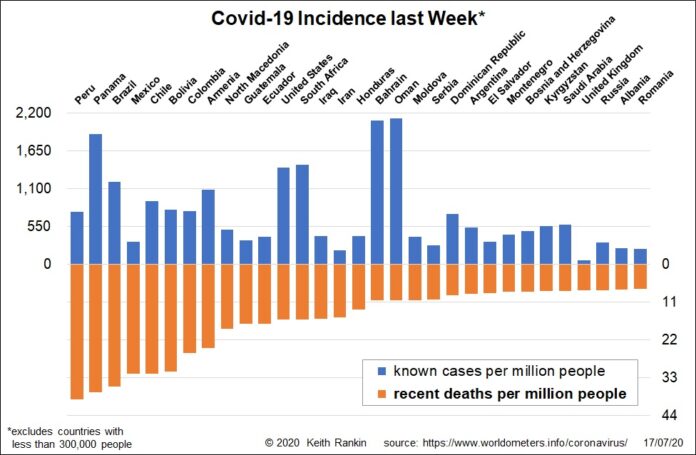
Chart 1: Death rates highest in South America. Chart by Keith Rankin.
Analysis by Keith Rankin.
Chart 1: Death rates highest in South America. Chart by Keith Rankin.
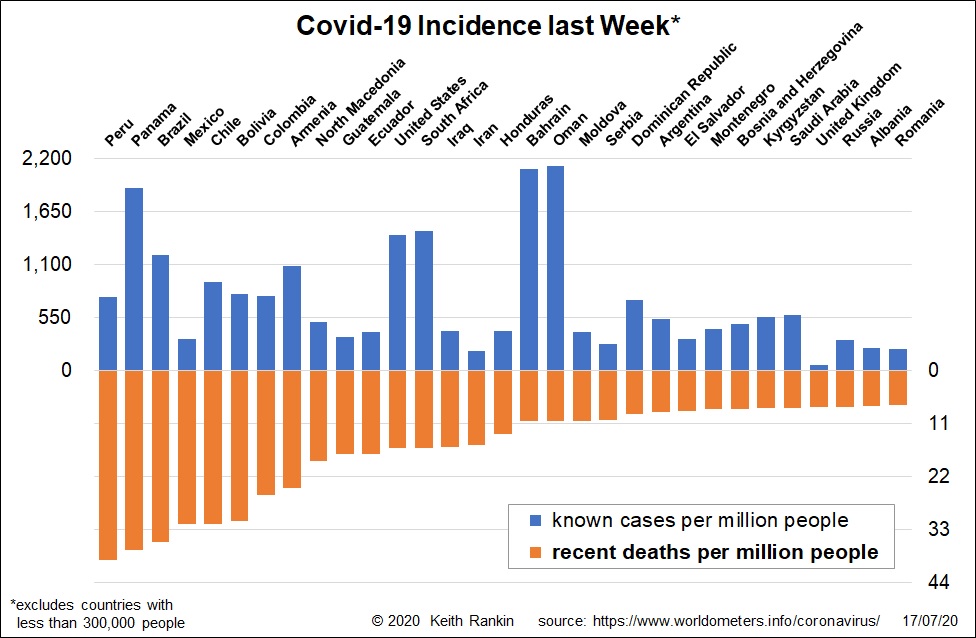
This chart orders countries by their Covid19 death rates in the seven days to 16 July. The seven worst countries are in Latin America; all except Panama being large countries. Two other large Latin American countries (Guatemala and Ecuador) are in the top 11 for recent Covid19 deaths. Of the larger countries in South America, only Venezuela is not in the top 23, though Argentina is much better than its neighbours. The top 23 countries include 13 from Latin America.
Mixing it with these, in the top 25, are some small countries (under 10 million people) in the ‘greater Middle East’, plus Iran, Iraq, South Africa and the United States. Nothing east of Iran, though Kyrgyzstan comes in at number 26. With the exception of the United Kingdom and Russia, the remainder of the countries in the chart are also in the greater Middle East (that includes the Balkans).
In Peru, the worst affected country over the last week, two-thirds of cases are in Greater Lima, which has one third of Peru’s population. While Peru had a very strong initial lockdown, it looks as though the main source of runaway coronavirus infection has been Peruvians returning from Europe and North America via Lima (Callao) Airport.
Peru has a lower incidence of new infections than Brazil, which suggests that Brazil will overtake Peru – ie exceed Peru’s death rate – in the next week or so.
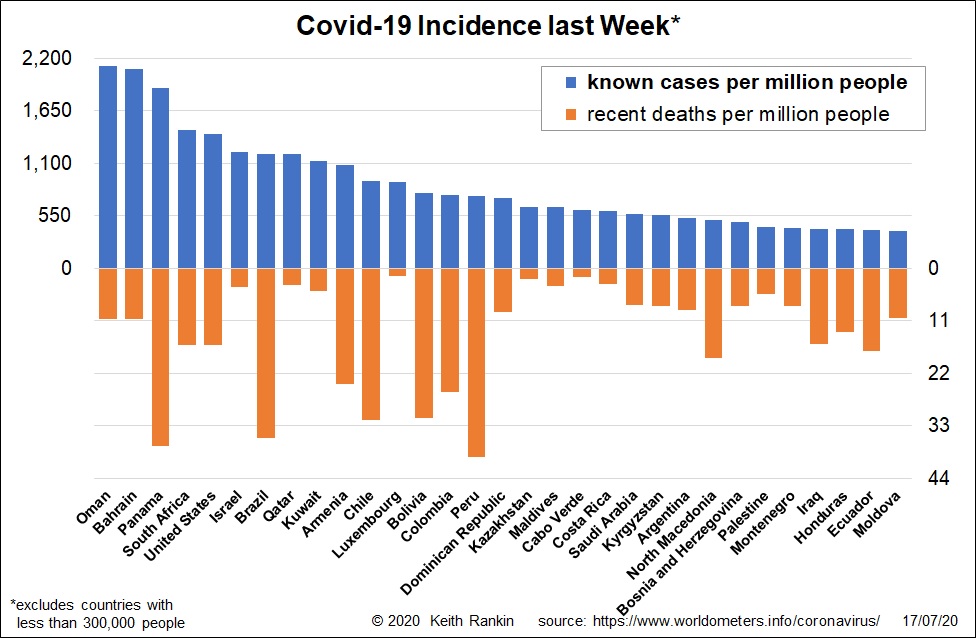
Chart 2: Note strong growth of recent cases in South Africa and Israel. Chart by Keith Rankin.
Looking as the data sorted by identified cases rather than by deaths, we see countries with low death rates (mainly because they have younger populations and/or better resourced hospitals), countries with recent outbreaks, and countries which have substantially increased their level of testing.
The Arabian countries continue to show strongly. But note Israel (and Palestine), South Africa and the United States. In western Europe, only Luxembourg shows up, suggesting a combination of an Australian-style outbreak and increased testing. We also note that Costa Rica – with the same population as New Zealand, and a popular destination for New Zealand travellers – has many cases of Covid19 (though not many deaths).
Although Kazakhstan and Kyrgyzstan show up in this chart (and the Maldives), no country in South Asia or East Asia shows in the chart. While it is true that most of the few cases being caught at Auckland Airport originated in South Asia, we should note that by far the majority of people in South Asia – and people travelling from South Asia – are not infected with SARS-Cov2, the virus that causes Covid19.
We also note that the only country from continental Africa that shows in either chart is South Africa. On March 27 I wrote: “I have some confidence that Asia and Africa will end up with much lower rates of infection than Europe. I am much less confident about Latin America” (Covid-19 Virus: Australia, Canada, New Zealand, the World). So far, my prediction has been correct. Let’s keep hoping for Africa and India.
Iconic New Zealand magazine titles NZ Woman’s Weekly and the NZ Listener will resume publication immediately, with Bauer Media’s titles officially sold to an Australian investment company.
The magazine titles have been officially taken over by Mercury Capital.
The Sydney-based company has taken ownership of magazine titles Woman’s Day, New Zealand Woman’s Weekly,The Australian Women’s Weekly NZ, Your Home & Garden, the NZ Listener and Air New Zealand’s magazine Kia Ora.
Mercury Capital has sold North and South and Metro to independent publishers, which will resume publication “as soon as possible”.
North & South is going to independent publishers Konstantin Richter and Verena Friederike Hasel, while Metro has been sold to Simon Chesterman.
In April, Bauer Media announced it was shutting its New Zealand operations at a loss of 237 jobs.
The future of the remaining titles, NEXT, Taste, Fashion Quarterly, HOME and Simply You are being assessed.
40 editorial jobs Mercury Capital said it would resume publishing immediately and about 40 local editorial and advertising jobs will be created.
Bauer ANZ chief executive Brendon Hill said: “I am delighted to see the return of some of New Zealand’s most loved titles and thrilled that this allows us to bring back a talented group of editorial and advertising staff to resume the publishing of these brands.
“The return of our New Zealand operation is a green shoot during a challenging time and hopefully a sign of more positive news to come in the local media industry. We had always remained hopeful that we would be able to resume operations – the easing of Covid-19 restrictions and a more promising advertising market has allowed us to do that.
“As conditions improve, we hope to continue to expand our NZ operations.
“I’d like to thank our loyal readers, staff, clients and the broader industry for their support during this period.”
The business will continue to trade under the Bauer name in New Zealand and Australia while a rebrand is underway, with the new brand and strategy set to be announced in the coming months.
Subscribers that have missed issues of the titles that are resuming will have these added to their subscriptions. Delivery of magazines will resume in early September.
This article is republished by the Pacific Media Centre under a partnership agreement with RNZ.
Lorna Jane recently launched an “antiviral” line of its activewear, called “LJ Shield”, generating significant backlash from medical professionals.
The popular activewear brand has now pedalled back and removed any mention of LJ Shield being antiviral from its marketing. But it still claims the product is “antibacterial”.
Labelling it antibacterial may have marginally more merit than the antiviral claims, but either way, the evidence antibacterial fabric could stop you from getting sick is pretty slim.
LJ Shield is said to be sprayed onto the fabric as a lightweight mist, and then permanently adheres to the surface of the product, acting as a shield of protection.
This coating they describe is marketed by a company called Fuze Biotech, whose website says it can reduce the growth of bacteria on fabric and surfaces by more than 99%.
There’s not a lot of detail given on how this technology works, except that it’s based on nanoparticles that can break open and kill bacterial cells. Fuze has some data on their website showing their coating can prevent bacterial growth.
A range of approaches used to coat fabrics with chemicals or metal nano-particles like silver have demonstrated antimicrobial activity in laboratory tests. But antibacterial activity in a controlled laboratory environment doesn’t always translate to antibacterial activity on our bodies.
Whether it makes a difference to the likelihood of disease transmission is the important question here — and the answer, in all likelihood, is no.
One study showed bacteria from sweat can multiply on synthetic materials (although the researchers incubated the material in almost 100% humidity which is not very close to real-world conditions). Sweat and skin bacteria are a normal part of our biology and are unlikely to cause an infection anyway.
In health-care settings like hospitals, pathogenic bacteria can survive on fabrics for many days, with synthetic fabrics and humid conditions favouring their growth. But it’s not clear how much of a risk transmission via fabric is versus other modes of transmission, such as via a person’s hands.
As for whether antimicrobial materials can offer protection in this context, one randomised trial found these were not effective at reducing the numbers of bacteria on hospital scrubs.
So even in a health-care environment where the risk of infection is higher than in the community, the effectiveness of antimicrobial materials for reducing transmission remains to be confirmed.
There’s little to suggest this LJ Shield technology could stop you getting sick.Shutterstock
So it’s possible that if a pathogenic bacteria or virus landed on your clothes, it could survive there for one or more days. Whether that would result in an infection would depend on a number of other factors, like the infectious dose (the number of cells or viral particles needed to cause an infection) and the route of transmission (how it enters your body).
While the ability to survive on fabrics may lead to disease transmission in a hospital setting, you’re far more likely to contract a respiratory infection like COVID-19 by breathing in contaminated droplets or touching a contaminated surface.
So even if this technology was proven to prevent bacteria or viruses from growing on your clothes, it isn’t likely to have much impact on your risk of getting sick.
Claims activewear can protect against viral or bacterial infections could do more harm than good.Shutterstock
Our testing shows that LJ Shield is an important part of stopping the spread of both bacteria and viral infections and should be used in combination with other precautionary measures such as face masks and thorough and frequent hand washing.
So, despite removing the word “antiviral” from promotional materials, it seems Lorna Jane is still claiming this product could help prevent the spread of viral infections.
Even if the LJ Shield fabric is antibacterial, there’s no evidence to suggest this product affects the survival of viruses, including the one that causes COVID-19. Viruses are not the same kind of organisms as bacteria, which is why antibiotics (which kill bacteria) don’t work for viral infections.
Many antimicrobial products exist on the market. The important question for me isn’t so much whether they can kill microorganisms, but whether using those products actually reduces your risk of getting sick. In many cases, the answer is no.
Lorna Jane’s LJ Shield technology is no different. Promoting this clothing as antiviral was reckless. In the age of COVID-19, it might give people a false sense of security, leading them to believe they don’t need to practise social distancing, use face masks or wash their hands. These proven methods of limiting the spread of infectious disease are far more important.
Lorna Jane recently launched an “antiviral” line of its activewear, called “LJ Shield”, generating significant backlash from medical professionals.
The popular activewear brand has now pedalled back and removed any mention of LJ Shield being antiviral from its marketing. But it still claims the product is “antibacterial”.
Labelling it antibacterial may have marginally more merit than the antiviral claims, but either way, the evidence antibacterial fabric could stop you from getting sick is pretty slim.
LJ Shield is said to be sprayed onto the fabric as a lightweight mist, and then permanently adheres to the surface of the product, acting as a shield of protection.
This coating they describe is marketed by a company called Fuze Biotech, whose website says it can reduce the growth of bacteria on fabric and surfaces by more than 99%.
There’s not a lot of detail given on how this technology works, except that it’s based on nanoparticles that can break open and kill bacterial cells. Fuze has some data on their website showing their coating can prevent bacterial growth.
A range of approaches used to coat fabrics with chemicals or metal nano-particles like silver have demonstrated antimicrobial activity in laboratory tests. But antibacterial activity in a controlled laboratory environment doesn’t always translate to antibacterial activity on our bodies.
Whether it makes a difference to the likelihood of disease transmission is the important question here — and the answer, in all likelihood, is no.
One study showed bacteria from sweat can multiply on synthetic materials (although the researchers incubated the material in almost 100% humidity which is not very close to real-world conditions). Sweat and skin bacteria are a normal part of our biology and are unlikely to cause an infection anyway.
In health-care settings like hospitals, pathogenic bacteria can survive on fabrics for many days, with synthetic fabrics and humid conditions favouring their growth. But it’s not clear how much of a risk transmission via fabric is versus other modes of transmission, such as via a person’s hands.
As for whether antimicrobial materials can offer protection in this context, one randomised trial found these were not effective at reducing the numbers of bacteria on hospital scrubs.
So even in a health-care environment where the risk of infection is higher than in the community, the effectiveness of antimicrobial materials for reducing transmission remains to be confirmed.
There’s little to suggest this LJ Shield technology could stop you getting sick.Shutterstock
So it’s possible that if a pathogenic bacteria or virus landed on your clothes, it could survive there for one or more days. Whether that would result in an infection would depend on a number of other factors, like the infectious dose (the number of cells or viral particles needed to cause an infection) and the route of transmission (how it enters your body).
While the ability to survive on fabrics may lead to disease transmission in a hospital setting, you’re far more likely to contract a respiratory infection like COVID-19 by breathing in contaminated droplets or touching a contaminated surface.
So even if this technology was proven to prevent bacteria or viruses from growing on your clothes, it isn’t likely to have much impact on your risk of getting sick.
Claims activewear can protect against viral or bacterial infections could do more harm than good.Shutterstock
Our testing shows that LJ Shield is an important part of stopping the spread of both bacteria and viral infections and should be used in combination with other precautionary measures such as face masks and thorough and frequent hand washing.
So, despite removing the word “antiviral” from promotional materials, it seems Lorna Jane is still claiming this product could help prevent the spread of viral infections.
Even if the LJ Shield fabric is antibacterial, there’s no evidence to suggest this product affects the survival of viruses, including the one that causes COVID-19. Viruses are not the same kind of organisms as bacteria, which is why antibiotics (which kill bacteria) don’t work for viral infections.
Many antimicrobial products exist on the market. The important question for me isn’t so much whether they can kill microorganisms, but whether using those products actually reduces your risk of getting sick. In many cases, the answer is no.
Lorna Jane’s LJ Shield technology is no different. Promoting this clothing as antiviral was reckless. In the age of COVID-19, it might give people a false sense of security, leading them to believe they don’t need to practise social distancing, use face masks or wash their hands. These proven methods of limiting the spread of infectious disease are far more important.
Category 3 procedures include hip and knee replacements and cataract procedures. Category 3 patients are the easiest to defer because they have been assessed as not requiring treatment within three months.
Elective surgery will also be reduced to no more than 50% of usual activity across all public hospitals and 75% in private hospitals.
Whether further reductions in planned surgery will be necessary — such as limiting category 2 patients — will depend on the trajectory of the pandemic, and the extent of competing demands from other emergency patients.
Deferring planned procedures is not an easy decision
Although some surgery is of limited value to the patient, and some problems would be better treated in other ways, in most cases the surgery is necessary to reduce pain and enable people to go about their day-to-day lives.
But as Victoria’s second wave reaches concerning heights, the Victorian government has to make difficult decisions.
The latest pause on elective surgeries affects hospitals in metropolitan Melbourne.Shutterstock
Hospital beds, including intensive care beds, are used both for planned procedures and for emergency treatment — and that includes patients infected with COVID-19.
As the number of people infected in Victoria has increased, so too has the demand for beds. To avoid a situation in which people need to be turned away by hospitals or denied effective treatment, the proper course for government is to order hospitals to reschedule lower-priority planned procedures.
The pressure on the system is exacerbated when the number of available hospital staff falls. We’re currently seeing high numbers of COVID-19 cases among health workers, meaning they — and any fellow staff they’ve been in contact with — are having to stay home to avoid infecting others.
Victoria has mandated minimum staffing ratios so when the number of available hospital staff falls, the supply of staffed beds also falls. This double whammy of increased demand and reduced supply makes it even more important for the government to make this choice.
This new deferral will be hard for patients whose procedures were deferred during the first wave of the pandemic. Some will have just been given a new date for their deferred surgery, but now face a further wait.
Unfortunately, there’s no way of knowing how long the deferral will be. Today has seen 428 new cases recorded in Victoria, and it’s still too early in the second lockdown to assess whether we’ve been able to bring the virus under control again.
Source: The Conversation (Au and NZ) – By Erin Smith, Associate Professor in Disaster and Emergency Response, School of Medical and Health Sciences, Edith Cowan University
Led by physicians, scientists and epidemiologists, the US Centers for Disease Control and Prevention (CDC) is one of the most reliable sources of knowledge during disease outbreaks. But now, with the world in desperate need of authoritative information, one of the foremost agencies for fighting infectious disease has gone conspicuously silent.
For the first time since 1946, when the CDC came to life in a cramped Atlanta office to fight malaria, the agency is not at the front line of a public health emergency.
On April 22, CDC director Robert Redfield stood at the White House briefing room lectern and conceded that the coronavirus pandemic had “overwhelmed” the United States. Following Redfield at the podium, President Donald Trump said the CDC director had been “totally misquoted” in his warning that COVID-19 would continue to pose serious difficulties as the US moved into its winter ‘flu season in late 2020.
Invited to clarify, Redfield confirmed he had been quoted correctly in giving his opinion that there were potentially “difficult and complicated” times ahead.
Trump tried a different tack. “You may not even have corona coming back,” the president said, once again contradicting the career virologist. “Just so you understand.”
CDC director Robert Redfield and President Donald Trump offer contrasting interpretations at an April 22 White House briefing.
The exchange was interpreted by some pundits as confirmation that the CDC’s venerated expertise had been sidelined as the coronavirus continued to ravage the US.
In the latest development, the New York Times reported this week the CDC has even been bypassed in its data collection, with the Trump administration ordering hospitals to send COVID-19 data directly to the White House.
Diminished role
When facing previous public health emergencies the CDC was a hive of activity, holding regular press briefings and developing guidance that was followed by governments around the world. But during the greatest public health emergency in a century, it appears the CDC has been almost entirely erased by the White House as the public face of the COVID-19 pandemic response.
As the COVID-19 crisis was unfolding, several CDC officials issued warnings, only to promptly disappear from public view. Nancy Messonnier, director of the CDC’s National Center for Immunization and Respiratory Diseases, predicted on February 25 that the virus was not contained and would grow into a pandemic.
The stock market plunged and Messonnier was removed from future White House press briefings. Between March 9 and June 12 there was no CDC presence at White House press briefings on COVID-19.
CDC director Robert Redfield (far left) has been sidelined from White House media briefings since April.Carolyn Kaster/AAP
The CDC has erred during the pandemic, most significantly in its initial efforts to develop a test for COVID-19. The testing kits proved to be faulty – a problem compounded by sluggish efforts to rectify the situation – and then by severe delays in distributing enough tests to the public.
But many public health specialists are nevertheless baffled by the CDC’s low profile as the pandemic continues to sweep the globe.
“They have been sidelined,” said Howard Koh, former US assistant secretary for health. “We need their scientific leadership right now.”
What does it mean for the world?
The CDC being bypassed in the collection of COVID-19 data is another body blow to the agency’s standing.
Hospitals have instead been ordered to send all COVID-19 patient information to a central database in Washington DC.
This will have a range of likely knock-on effects. For starters, the new database will not be available to the public, prompting inevitable questions over the accuracy and transparency of data which will now be interpreted and shared by the White House.
The Department of Health and Human Services, which issued the new order, says the change will help the White House’s coronavirus task force allocate resources. But epidemiologists and public health experts around the world fear the new system will make it harder for people outside the White House to track the pandemic or access information.
This affects all nations, because one of the CDC’s roles is to provide sound, independent public health guidance on issues such as infectious diseases, healthy living, travel health, emergency and disaster preparedness, and drug efficacy. Other jurisdictions can then adapt this information to their local context — expertise that has become even more essential during a pandemic, when uncertainty is the norm.
It is difficult to recall a previous public health emergency when political pressure led to a change in the interpretation of scientific evidence.
What happens next?
Despite the inevitable challenges that come with tackling a pandemic in real time, the CDC remains the best-positioned agency – not just in the US but the entire world – to help us manage this crisis as safely as possible.
In the absence of US leadership, nations should start thinking about developing their own national centres for disease control. In Australia’s case, these discussions have been ongoing since the 1990s, stymied by cost and lack of political will.
COVID-19, and the current sidelining of the CDC, may be the impetus needed to finally dust off those plans and make them a reality.
Source: The Conversation (Au and NZ) – By Abby Wild, Research fellow, BehaviourWorks Australia, Monash Sustainable Development Institute, Monash University
As COVID-19 cases began spreading across many multicultural communities in Melbourne last last month, Victoria’s chief health officer said it was essential for the government to properly engage with linguistically diverse communities.
From a behavioural science perspective, we know working in partnership with a target audience helps to understand what drives their behaviours and how best to communicate health messages that people respond to.
To find out how the government could better communicate with culturally and linguistically diverse (CALD) communities, we embarked on a research project to ask them.
During last summer’s bushfires, Australia’s Islamic community mobilised to support the relief efforts, delivering truckloads of supplies to victims and cooking breakfasts for firefighters. These efforts allowed other multicultural communities to understand the severity of the crisis and also contribute.
This kind of cooperation is now being seen in the coronavirus pandemic, too. Members of various multicultural groups are working together to educate their communities about the pandemic and how they can help control the spread.
This empowers communities to be part of the solution by developing strategies together and leaning from one another. As one leader from the Islamic Council of Victoria told us,
We said to the government: use our leaders and volunteers. [COVID-19] testing is a perfect example. If you are from a CALD community and you have someone coming to your door saying ‘we want to test you’ … if that person is someone from their own community of faith, does the traditional greetings in whatever language, you already have one foot in.
Understanding the importance of cultural context and values, and tailoring messages to align with those values, is also important when communicating with multicultural communities.
Richmond AFL player Bachar Houli, a devout Muslim and community leader, provided a powerful example of this when he shared on social media that his mother has been admitted to the ICU with COVID-19.
Houli tailored his message to the values of the Muslim community, emphasising the sanctity of life and importance of close, physical connection and family.
The Islamic Council of Victoria leader explained to us,
One of the key things for the Muslim community is the sanctity of life. Life is most precious thing; whoever it is, whatever their faith, life is precious and we must do whatever we can to protect it.
3. Use trusted messengers
Health information also needs to be delivered by trusted messengers who are acceptable and accessible to the target community.
For example, multicultural community leaders and health workers have been reaching out to their communities directly to help them access services. One such leader told us,
Community [members] believe if they go to the hospital, they will not come back because that’s what they heard from overseas … I call this mother and daughter every hour, until they go and get tested, get treatment, and now they are doing very well.
Multicultural leaders also pointed to the importance of gender sensitivity when it comes to face-to-face interactions in some communities. An Asian Australian Alliance leader told us,
Women from South Asian communities, especially Muslim women, may not feel comfortable speaking with a man who comes to the door. As the Muslim Women’s Association has been saying: if you want to talk to them, it should be a woman.
4. Use channels that your audience can access
Each communication channel must be chosen with the individual community in mind. For example, the Chinese community engages with messages sent via WeChat. Other communities might engage better with Facebook videos or phone conversations with respected community leaders.
The Islamic Council Victoria leader told us,
One of the things that we are doing … on a weekly basis is being proactive [and] getting the chief medical officer or one of his deputies to address the community and have a Q&A session using Zoom … this has been an ongoing thing to get the message out to the wider community and anyone is able to come and participate.
These outreach strategies must not only include translating health information into many languages, but also using different communication methods, for example, having community leaders record messages to send to members of the community.
As a Federation of Ethnic Communities Councils of Australia leader explained,
The [written] translations are probably reaching 80% of the community and that 80% probably also speaks English. It’s the 20% we are trying to reach who are disconnected from SBS, social media, etc., but do listen to their community leaders.
5. Establish a national peak body for multicultural health issues
The COVID-19 pandemic has created links across multicultural communities that have previously been unconnected. It has provided an opportunity to unite around a shared interest in community health and well-being, and to amplify community voices by coming together.
As one multicultural council leader told us,
there is a tendency for CALD communities to work within their own language or cultural group, Indians with Indians, Chinese with Chinese and so on … but during COVID, we are seeing some of these groups starting to talk to each other, and join together.
What’s lacking is a national platform to represent and support cooperative partnerships and working relationships across multicultural communities.
The creation of such a body would allow multicultural leaders to come together to share what they’ve learned and advise the national cabinet on health issues related to their communities.
If the government continues to partner with multicultural communities and adopts some of these strategies, it will certainly help ensure health-related messages are not lost in translation.
University of Canberra Vice-Chancellor and President Professor Paddy Nixon is joined by Professorial Fellow Michelle Grattan discuss the week in politics including community transmission in Victoria and New South Wales, the prime minister’s suppression tactic to fight the virus, the release of 1,200 pages of correspondence between the royal palace and former governor-general Sir John Kerr, the government JobTrainer program, and next Thursday’s economic statement.
Australia wants to build a 2.7-kilometre concrete runway in Antarctica, the world’s biggest natural reserve. The plan, if approved, would have the largest footprint of any project in the continent’s history.
The runway is part of an aerodrome to be constructed near Davis Station, one of Australia’s three permanent bases in Antarctica. It would be the first concrete runway on the continent.
The plan is subject to federal environmental approval. It coincides with new research published this week showing Antarctica’s wild places need better protection. Human activity across Antarctica has been extensive in the past 200 years – particularly in the coastal, ice-free areas where most biodiversity is found.
Australia has successfully operated Davis Station since 1957 with existing transport arrangements. While the development may win Australia some strategic influence in Antarctica, it’s at odds with our strong history of environmental leadership in the region.
The Vestfold Hills, the proposed site of the aerodrome.Nick Roden
Year-round access
The Australian Antarctic Division (AAD), a federal government agency, argues the runway would allow year-round aviation access between Hobart and Antarctica.
Presently, the only Australian flights to Antarctica take place at the beginning and end of summer. Aircraft land at an aerodrome near the Casey research station, with interconnecting flights to other stations and sites on the continent. The stations are inaccessible by both air and ship in winter.
The AAD says year-round access to Antarctica would provide significant science benefits, including:
better understanding sea level rise and other climate change impacts
opportunities to study wildlife across the annual lifecycle of key species including krill, penguins, seals and seabirds
allowing scientists to research through winter.
Leading international scientists had called for improved, environmentally responsible access to Antarctica to support 21st-century science. However, the aerodrome project is likely to reduce access for scientists to Antarctica for years, due to the need to house construction workers.
Australia says the runway would have significant science benefits.Australian Antarctic Division
Australia: an environmental leader?
Australia has traditionally been considered an environmental leader in Antarctica. For example, in 1989 under the Hawke government, it urged the world to abandon a mining convention in favour of a new deal to ban mining on the continent.
Australia’s 20 Year Action Plan promotes “leadership in environmental stewardship in Antarctica”, pledging to “minimise the environmental impact of Australia’s activities”.
But the aerodrome proposal appears at odds with that goal. It would cover 2.2 square kilometres, increasing the total “disturbance footprint” of all nations on the continent by 40%. It would also mean Australia has the biggest footprint of any nation, overtaking the United States.
The contribution of disturbance footprint from countries in Antarctica measured from Brooks et al. 2019, with Australia’s share increasing to 35% including the aerodrome proposal.Shaun Brooks
Within this footprint, environmental effects will also be intense. Construction will require more than three million cubic metres of earthworks – levelling 60 vertical metres of hills and valleys along the length of the runway. This will inevitably cause dust emissions – on the windiest continent on Earth – and the effect of this on plants and animals in Antarctica is poorly understood.
Wilson’s storm petrels that nest at the site will be displaced. Native lichens, fungi and algae will be destroyed, and irreparable damage is expected at adjacent lakes.
Weddell seals breed within 500 metres of the proposed runway site. Federal environment officials recognise the dust from construction and subsequent noise from low flying aircraft have the potential to disturb these breeding colonies.
The proposed area is also important breeding habitat for Adélie penguins. Eight breeding sites in the region are listed as “important bird areas”. Federal environment officials state the penguins are likely to be impacted by human disturbance, dust, and noise from construction of the runway, with particular concern for oil spills and aircraft operations.
The summer population at Davis Station will need to almost double from 120 to 250 during construction. This will require new, permanent infrastructure and increase the station’s fuel and water consumption, and sewage discharged into the environment.
The AAD has proposed measures to limit environmental damage. These include gathering baseline data (against which to measure the project’s impact), analysing potential effects on birds and marine mammals and limiting disturbance where practicable.
But full details won’t be provided until later in the assessment process. We expect Australia will implement these measures to a high standard, but they will not offset the project’s environmental damage.
An Adélie penguin colony near Davis Station.Nick Roden
Playing politics
So given the environmental concern, why is Australia so determined to build the aerodrome? We believe the answer largely lies in Antarctic politics.
Australian officials have said the project would “contribute to both our presence and influence” on the continent. Influence in Antarctica has traditionally corresponded to the strength of a nation’s scientific program, its infrastructure presence and engagement in international decision-making.
Australia is a well-regarded member of the Antarctic Treaty. It was an original signatory and claims sovereignty over 42% of the continent. It also has a solid physical and scientific presence, maintaining three large year-round research stations.
But other nations are also vying for influence. China is constructing its fifth research station. New Zealand is planning a NZ$250 million upgrade to Scott Base. And on King George Island, six stations have been built within a 5km radius, each run by different nations. This presence is hard to justify on the basis of scientific interest alone.
A Weddell seal and her pup near Davis Station.Nick Roden
Getting our priorities straight
We believe there are greater and more urgent opportunities for Australia to assert its leadership in Antarctica.
For example both Casey and Mawson stations – Australia’s two other permanent bases – discharge sewage into the pristine marine environment with little treatment. And outdated fuel technology at Australia’s three stations regularly causes diesel spills.
At Wilkes station, which Australia abandoned in the 1960s, thousands of tonnes of contaminants have been left behind.
Australia should fix such problems before adding more potentially damaging infrastructure. This would meet our environmental treaty obligations and show genuine Antarctic leadership.
Source: The Conversation (Au and NZ) – By Meghan S. Miller, Associate Professor; Program Director AuScope Earth Imaging, Australian National University
Our responses to the COVID-19 pandemic have dramatically changed human activity all over the world. People are working from home, schools are closed in many places, travel is restricted, and in some cases only essential shops and businesses are open.
Scientists see signs of these changes wherever they look. Carbon dioxide emissions are down, air quality has improved, and there is less traffic.
The drop in activity has also been a surprising boon for earthquake scientists like us. Our sensitive instruments are detecting far less of the noise and vibration produced by humans in motion — which means we have a unique opportunity to listen in on tiny earthquakes we might never have detected otherwise.
Seismometers are sensitive scientific instruments used to detect earthquakes, volcanic eruptions and nuclear tests, by recording the movement of the ground. They often detect mining activity and can even pick out crowds responding to football games — so-called “footyquakes”.
On top of this, everyday human activity creates a high-frequency seismic “hum” that is stronger during the day and weaker at night. This is particularly evident in urban environments, but is also observed in rural or unpopulated areas.
The decrease in this noise signature was first identified in March by Belgian scientists as lockdown measures were introduced in Europe. These early results, computer codes and data were widely shared on Twitter, sparking an enthusiastic collaboration of seismologists around the world who found this change in signal everywhere they looked.
Schoolyard sounds
In Australia, the change in human behaviour was most dramatically observed in the data recorded by the Australian Seismometers in Schools (AuSiS) network. These instruments are research-quality seismometers that are maintained by school students — our next generation of geophysicists.
The usual happy schoolyard sounds and hubbub disappeared at many schools, as they shut and most or all students stayed home. The usual hum of the children (and teachers) during the school day, observed in the movement between classrooms, and during lunchtimes or Saturday morning sports, abruptly stopped at locations such as Ulladulla High School on the south coast of New South Wales and Keysborough Secondary College in suburban Melbourne.
The heartbeat of four schools from December 1 2019 to July 15 2020. The summer holiday and the school closedown period are eerily quiet.AuSiS, Author provided
At other schools, such as Daramalan College in Canberra, there was only a small decrease in human noise, with the school seismometer recording people commuting to work in essential public services and government offices that continued to operate throughout the initial lockdown. The seismometer at North Rockhampton State High School in Queensland also saw less of the effect, as the students were still able to attend classes.
The level of noise recorded across Australia during lockdown compares to the Christmas week. When restrictions began easing, the signal was similar to the annual January pattern when schools are closed, most businesses are open but many people are away on holiday. As schools reopened across Australia in mid to late May, noise levels were mostly back to “normal” except for what is usually observed for Saturday morning sports.
Lockdown 2.0
At Keysborough Secondary College in Victoria, school hours, especially between lessons, are bustling and noisy. Weekends and night-times are quiet enough to use these instruments for seismological research.AuSiS, Author provided
However, regional differences became even more pronounced as metropolitan Melbourne reinstated stay-at-home restrictions on July 8. As a second spike of COVID-19 cases was detected in Victoria and then ramped up in late June, the level of movement began to drop again.
In the seismic noise signal from Keysborough Secondary College, we can see the school holiday quiet period becoming quieter still as further restrictions to school activity were enforced.
The low level of background noise from humans recorded in the seismic data during lockdown gives us a window of opportunity to study smaller earthquakes. Detection of small earthquakes or motion on fault lines is essential for seismic hazard assessment.
Small events are typically identified by looking at changes in amplitudes of signals, but very small events have small amplitude signals and these cannot be observed because they are drowned out by the background noise.
This time of quiescence in seismic noise due to the COVID-19 emergency provides a unique opportunity to learn more about small earthquakes occurring in previously unidentified locations.
COVID-19 has seen a huge increase in video calling as we try to socially distance but still stay in touch.
This is particularly the case for grandparents and their grandchildren, who have either chosen to stay away, given the vulnerability of older people to coronavirus, or been forced apart due to lockdowns and border closures.
As researchers in early childhood, psychology and linguistics, we are studying how video calls fit into the lives of grandparents and their grandchildren and how we can enhance this interaction.
Our research
In a project with Western Sydney University’s BabyLab, we are surveying grandparents and parents about their experience of using video chat with children under the age of five, to capture the changes brought by COVID-19.
So far, 130 grandparents and parents from around Australia have responded.
Of those surveyed, on average, grandparents video call two to three times a week with their grandchildren, for about five to ten minutes. They mostly used FaceTime and Facebook Messenger, as apps that are already available on their phones.
‘Being part of their lives’
About 40% of grandparents surveyed began using video calls with their grandchildren for the first time during COVID-19. For all those surveyed, it was a mostly positive experience.
Grandparents say the calls allow them to stay connected with their grandchildren – with respondents talking about “being a part of their lives” and “not missing seeing them grow”.
One grandmother, who started using video chat with her granddaughter during COVID-19, said
I can see her and see her react to our voices and smile, which makes me feel good.
Another experienced user, with grandchildren overseas, also said
Because it’s so frequent – almost daily – I know their environment, it feels‚ normal. There’s no shyness, we can start a book one day and continue each day. We walk around theirs and my apartment and garden and I just feel part of their lives.
But there are challenges. Not surprisingly, the greatest challenge was maintaining children’s attention during the calls.
For some, the interaction was “artificial and detached”. As one parent said
It was more of a novelty than a way to have a genuine connection with people.
Other parents described the experience as stressful, noting the call had to be at “right time”. As one parent noted of her one-year-old daughter, “she gets overstimulated and then will not go to bed”.
Some grandparents also expressed concern that it was an additional burden for parents and efforts were abandoned
I only did it once because it was too hard to fit into their already busy day.
What does this mean for ‘screen time’?
Many parents and grandparents we surveyed have questions about what increased video-calling means for “screen time”.
Is it harmful in any way for children? And for babies under 12 months – is there any benefit? Can it genuinely help such little ones remember their grandparents?
But video calls are not simply “screen time”. Rather, they offer an important opportunity for socialisation, as young children can still mimic the information typically available in face-to-face interactions.
The key appears to be the instant feedback that video offers. As recent research shows, one and two year-old children can develop a social connection and learn the names of objects from someone they see and talk with via a video call.
So yes, you can engage a young child through FaceTime – and it can help their development.
But how can we optimise video calls with small children?
Tips for preparing for a video call
Place your device on a firm surface, using your cover or something similar as a tripod to free your hands for gesturing and showing objects.
Try to keep the light source in front of you, excessive sun glare behind you leads to poor quality video.
Minimise background noise (such as the washing machine or radio).
Make the call part of your routine, so children come to expect and get used to calls.
Turn off the radio and minimise other background noises when making video calls.www.shutterstock.com
Make calls at a time of day when you can all relax – when babies are fed, changed and alert and older children are fed and not too tired.
Before making the call, parents can share images, videos and messages describing new skills or activities since you last spoke, so grandparents have something to ask questions about and engage with.
Prepare the child before the call to help manage their expectations. For example, ask them to pick out their favourite toy or drawing so they can show and talk about it.
Start with shorter calls (around five minutes) and increase the length as you see fit.
Tips for keeping the call going
For parents, consider making the video call as you do routine activities, such as cooking, sharing meals or bath-time – this can bring grandparents into the day-to-day routine and reduce the stress of finding a time to call.
As a grandparent, try to maintain eye contact and talk about things that baby or child is paying attention to at that moment.
Use songs and games (“pat-a-cake” and “peekaboo” are good examples) to capture babies’ attention. Musical statues is a good game to play with older children.
Video calls are an important opportunity to learn social skills.www.shutterstock.com
Make funny faces and hand gestures, blow kisses.
Dance, take each other on a tour of your home or garden, or try exercise moves together.
Set aside some books to use for video calls. You can carry on reading longer books with older children each time you call.
Try out various filters or virtual backgrounds built into your apps to make it more interesting for kids and give you something else to talk about.
Save the Children has some further information about staying in touch with grandparents.
If you are a grandparent, you can register to participate in the BabyLab survey here. Parents can register here.
The exclusion of temporary visa workers from reimbursement under Australia’s Fair Entitlements Guarantee (FEG) scheme for lost wages and entitlements (annual leave etc) owed to them when their employer collapses is not just unfair.
It is inconsistent with other important government guarantee schemes, such as the Financial Claims Scheme (FCS) for bank deposits and insurance policies, where non-residents are eligible.
It is also inconsistent with the principle of non-discrimination expressed on the Fair Work Ombudsman website:
all people working in Australia, including foreign workers, are entitled to basic rights and protections in the workplace.
Lost jobs and hardship
During the current coronavirus crisis many workers have experienced the hardships of both losing their job and then discovering that unpaid wages and other entitlements have been lost due to insolvency of their employer.
Australian citizens, permanent (and some other) visa holders are entitled to claim for compensation under the FEG, albeit with limits on the amount claimed.
But temporary visa holders, such as international students working in shops or hospitality to earn enough for rent and living expenses, are not eligible to claim.
Is it right to exclude them from the Australian taxpayer support provided by the FEG? Yes, if the objective of the scheme is solely to provide compensation for Australians suffering loss.
But no if the objective is to provide compensation for failings by bosses of Australian businesses to adequately provide for the amounts owed to any employees.
All workers should be covered
There is, in my mind, a very strong case for the latter answer, and thus inclusion in the FEG of temporary visa holders.
The FEG is an alternative to other methods of making sure employers adequately provide for amounts owed to employees. These could include an explicit, premium based, insurance scheme, or requirements for employers to maintain amounts in a trust account adequate to meet unpaid entitlements.
In the absence of such direct disciplining measures on employers, which would protect all workers, the FEG is a substitute to provide such protection.
Any of these approaches work to improve the efficient operation of the labour market by removing the need for potential and current employees to assess (and worry) whether an employer will be able to meet unpaid entitlements.
Not only is that a virtual impossibility for them, but their ability to take actions to reduce exposure to potential losses is highly limited (short of quitting and demanding immediate payment).
Other protections from businesses collapsing
It is worth comparing the FEG with the Financial Claims Scheme (FCS), which protects bank depositors and insurance policy-holders (up to maximum amounts covered).
Yes, an important feature is that it provides ex-post compensation for losses from a failed institution.
But a critical feature is that it enhances the stability and efficiency of the financial sector by removing concerns of those covered about risk of failure of their financial institution.
The resulting peace of mind also reduces the risk of “[runs]” for example, where a large number of customers withdraw their deposits at the same time.
The FCS does not exclude non-residents with Australian dollar accounts, held in Australia, from its coverage. Just as Australian retail customers are generally unable to assess the financial health and risk of a bank or insurance company, so too are non-resident retail customers. Probably more so.
An important feature of the FCS is rapid access to amounts owed by a failed institution. This reduces the disruption to customers relying on access to those funds for daily living and other expenses.
The same arguments are relevant regarding coverage by the FEG. Covered workers need not worry about possible loss of unpaid entitlements if their employer fails.
Realistically, employees on temporary visas are even less likely than Australian employees to have the ability to assess risk of loss from employer insolvency. As casual or part-time employees they have less (if any) bargaining power.
The financial hardship resulting from loss of entitlements (on top of unemployment) of such relatively low-paid workers with limited access to other forms of financial support is undoubtedly severe.
Add to that the Fairwork principle of non-discrimination and the conclusion is obvious. The FEG should apply to such workers on temporary visas.
Papua New Guinea’s Deputy Controller of the Pandemic Act, Dr Paison Dakulala, has announced four new covid-19 cases in Port Moresby, taking the country’s confirmed cases to 15.
Dr Dakulala initially announced two positive cases and then about a couple of hours added another two.
All four cases are staff members at the Central Public Health Laboratory located at Port Moresby General Hospital.
The laboratory is responsible for carrying out the testing on the swabs to determine whether they were positive or negative.
Three of the staff members are male while one is female. All were in stable condition, and have been moved to Rita Flynn isolation and testing facility at Boroko.
Dr Dakulala revealed that after the 12th case was tested, after showing the usual signs and symptoms, and revealed to be positive, the 37 staff at the CPHL were tested, which produced the 13th, 14th and 15th confirmed cases.
The staff members are made up of three laboratory scientists who conduct GeneXpert testing for covid-19; the other is a support staff member of the laboratory.
Rapid response team deployed Dr Dakulala also made it clear that a rapid response team, as per the usual measures, had been deployed to conduct contact tracing for those who may have came in contact with the four people.
Asked how the staff members may have contracted the disease, whether it was a breach in protocols at the laboratory or from contracting it from community transmission, Dr Dakulala said it was still unclear at this time.
Investigations would be able to determine that soon.
“The CPHL will undergo a thorough disinfection in the coming days to ensure we follow all the infection prevention and control measures,” he said.
“In the interim, testing for covid-19 samples from provinces will be done at IMR Goroka, Singapore and/or Brisbane, Australia.”
Dr Dakulala stressed the importance of following all health and safety protocols, and ensuring that citizens remain at home if they are sick and call the hotline if they show any of the signs and symptoms.
The last covid-19 case for PNG was announced on June 25 who had come into close contact with case number 10.
The hugely successful “Keep It Real Online” video aimed at getting parents to talk to their children about pornography has gone viral and been praised around the world. But my 16-year-old son asked an interesting question when he looked at the campaign website:
Why does it say talk “to” your child? Shouldn’t it be “with”?
This is why I always ask his opinion about how he makes sense of the world. As a sexuality educator for over 30 years, a university lecturer and mother of two teenage sons, it has been my privilege to listen to people’s stories of sexuality and the impact on their lives.
Some have been uplifting and some are simply heartbreaking. Either way, young people and adults generally want to reflect on the complicated, messy and often irrational nature of sex and relationships. They also want to talk about joy, pleasure, intimacy and love.
Young people want better sex and relationship education
So any discussion of pornography inevitably leads to a broader conversation – much like the one we imagine is about to take place in that viral video.
In case you haven’t watched it, two naked porn actors arrive at an ordinary home to talk to a boy who has been watching them online. The mother who answers the door is understandably surprised and a little lost for words. But in the end she tells her son they need to talk about the difference between the online and real worlds.
The video provides an excellent starting point for parents and children to have conversations about our understanding of sex, relationships and gender.
As the research continues to show, young people want better sexuality education from the adults in their lives. But what does better sexuality education look, sound and feel like to young people?
Before parents can talk with their children, they first need to reflect on how ideas about pornography are in turn shaped by broader socio-cultural values and attitudes towards young people, sex, relationships and the digital world.
Too often, parents’ anxieties about the loss of childhood innocence make them feel they need to be the expert who talks to their child about the dangers of pornography.
You might define this as a fear-based approach, and it can lead to young people having feelings of shame and guilt for being curious about sex. Very often this can be the end of the conversation.
Listening rather than explaining
It’s not easy, but parents should try not to let their own worries about pornography override their capacity to talk with, rather than to, their children about all aspects of sexuality. By doing so they will also help young people explore and develop their own critical thinking and media literacy.
My current research explores how 56 New Zealand parents understand and experience sexuality education with their children. Embarrassment and feeling unprepared continue to make it difficult for parents and young people to talk about sex, let alone porn.
If they do talk about pornography, we’re finding it is challenging to shift from being the parent who knows and explains to the one who asks open questions, listens and invites their child to share their world view.
But the fact is, as extensive research from the New Zealand Classification Office has shown, many young people have already seen pornography. The top two reasons they give are curiosity and that they found it by accident.
As adults and parents we need to remember that young people are sexual beings who are curious about sex. They often report that parental messaging doesn’t match their own feelings and experiences.
Letting young people lead the conversation
For those reasons, a conversation about pornography as a social, cultural, personal and highly complex issue can be a way into a deeper discussion.
From there we can explore what it means to navigate the bumpy roads of sex and relationships. Sexuality education by parents sometimes tries to smooth out those bumps with information and advice rather than shared discussion. Yet it’s through the emotional wrestle with social and cultural expectations that our sexual selves develop.
We need to allow young people to narrate their own lived experiences. At the same time, we should foster their ability to critique the wider moral landscapes in which they live.
Embrace sexuality as messy, complex, irrational, emotional and part of being human. Don’t look for the “right” answers from young people. Allow them to explore the emotional complexity and joy of sexuality. In this way, online access to pornography becomes just another intersection on their sexuality journey.
That is the beauty of the “Keep It Real Online” video – it’s humour allows us to ask young people open-ended questions. What should adults really be saying to young people? What do they think about pornography? What do they think constitutes a healthy relationship? Who is advantaged and disadvantaged by the porn industry?
Most of all, pause, breathe, don’t judge. Young people are far more insightful than adults sometimes give them credit. They are constantly watching, learning and working out how society expects them to behave.
Sometimes parents need to be open – but keep their mouths shut!
Source: The Conversation (Au and NZ) – By Blair Williams, Associate Lecturer, School of Political Science and International Relations, Australian National University
Why are there so few women at the top levels of politics? This question is at the centre of the new book, Women and Leadership, co-authored by Australia’s first woman prime minister, Julia Gillard, and former Nigerian finance minister, Ngozi Okonjo-Iweala.
Using their personal experiences and interviews with an impressive group of eight women leaders – including Theresa May, Hillary Clinton, Jacinda Ardern and Christine Lagarde – Gillard and Okonjo-Iweala test various academic studies to see if their findings are reflected in reality.
What results is both a sobering reminder that sexism isn’t going away anytime soon and an empowering message about women’s strength and resilience.
As an academic researching women’s political leadership, this book acts as a crucial point between scholarly studies and public debate. It also offers a fresh perspective of the many issues women in leadership face.
Here are four key messages:
1. The fashion police are everywhere
Gillard and Okonjo-Iweala find women leaders are heavily judged for their appearance. This was a problem faced by all leaders interviewed, despite their diverse experiences and locations.
However, there were still differences across the world. Clinton, a former US presidential candidate and secretary of state, was known for her pant suits – which she said helped her feel professional and “fit in”. But former Liberian president Ellen Johnson Sirleaf noted how she “would have got some eyes as a woman wearing pant suits” and traditional dress worked best for her.
Hillary Clinton has said her pantsuits made her feel ‘ready to go’.David Moir/AAP
There can also be power in clothing. For example, New Zealand’s Ardern was seen to show compassion, empathy and solidarity when she wore a hijab after the Christchurch terrorist attack. As Gillard and Okonjo-Iweala write,
it became a symbol of love in the face of hate. There was a transcendent power in appearance.
2. Prepare to be judged for your reproductive choices
The book also explores how women leaders are judged for their reproductive choices. While fatherhood increases perceptions of male leaders as affable, relatable and conventional, public motherhood is a far more problematic experience.
As the authors note, women leaders with young children are frequently asked, “who’s minding the kids?”
Seven hours after her election, Ardern was asked on national television about her plans for having children. When she had her daughter, there was intense media scrutiny about how she would juggle her leadership role and her baby. Yet male leaders, such as former UK prime minister Tony Blair, who welcome babies in office, are not questioned about who will be looking after them.
Jacinda Ardern has taken her daughter Neve to the UN General Assembly.Carlo Allegri/ AAP
And what about women leaders who don’t have children? Gillard is intrigued by the respectful treatment of former British prime minister May’s childlessness, as she had a polar opposite experience in Australia (who could forget the frenzy sparked by her empty fruit bowl).
Gillard makes a thought-provoking point here about choice. May wanted, but was unable, to have children, while Gillard was deliberately child-free. Perhaps this was the cause of the criticism she faced. As Gillard writes,
in being seen to offend against female stereotypes, is there anything bigger than not becoming a mother by choice?
3. The situation is not getting better
The book makes the point that despite the focus on women in politics, the experience for those at the top is not necessarily improving.
As someone whose research found media reaction to May in 2016 was more gendered than for Margaret Thatcher in 1979, I wasn’t shocked to read this. However, it was still surprising to learn that Michelle Bachelet – Chile’s president from 2006-10 and 2014-18 – noticed things were worse in her second term.
Initially assuming the pressure of gendered expectations had improved the second time around, Bachelet realised,
it was the same or worse. I think politics is getting more complicated these days and more vicious. There is less respect. It’s more personalised now.
All leaders interviewed said they were conscious of the difficulties of finding a balance in leadership style. If they were too strong or assertive, they could be seen as “cold”, “robotic” or “bitchy”.
4. ‘Be aware, not beware’
The experiences and advice of these eight high-profile women leaders reveal how sexism is par for the course.
This message is hammered home in the final chapter, in which Gillard and Okonjo-Iweala note “Be aware, not beware”. They argue that they want to inspire women to pursue politics and leadership roles, but glossing over the challenges would be dishonest and insulting.
Gillard and Okonjo-Iweala say women leaders should expect sexist commentary.Lisi Niesner/AAP
Summarising the insights gleaned from previous chapters, Gillard and Okonjo-Iweala offer some stand-out lessons that will aid aspiring women leaders. These include:
expect sexism and sexist commentary relating to your appearance, family and leadership style and figure out early on how you will respond to this
support other women, whether through network-building, mentoring, role-modelling or general solidarity
persevere.
A reality check
Women and Leadership is, at times, a depressing reality check that feminism still has a long way to go. However, readers should not come away from this feeling hopeless or disheartened.
Rather, they can appreciate the respect the authors have given them by speaking plainly about the realities women leaders face.
Perhaps more consideration could have been given to the experiences of women in less senior positions. Do we need to hear from the success stories when we talk about the struggles of women in leadership, or could we perhaps also learn from those whose glass ceilings were just too thick?
While this book might be less useful for women – and men – without leadership aspirations, its general analysis of gender stereotypes and double standards still makes it a worthwhile read.
This is also problem that women cannot fix alone. Men need to do their bit, by calling out sexism and supporting women. The media must also be more active in combating sexism and misogyny.
One enduring message of this book is that progress and equality are not linear.
Sexism doesn’t just one day magically disappear. Rather, it can only be dismantled through constant pressure and the actions of those who persevere.
Psychiatric classifications catalogue the many forms of mental ill-health. They define what counts as a disorder and who counts as disordered, drawing the boundary between psychological normality and abnormality.
In the past century that boundary has shifted radically. Successive classifications have added new disorders and revised old ones. Diagnoses have increased rapidly as new forms of human misery have been identified.
The wider psychiatric classifications cast their net, the more people qualify for diagnoses and the more treatment is considered necessary.
These changes may have mixed blessings. Broadening definitions of mental illness allow us to address mental health problems that were previously neglected. Mental illness may come to seem more commonplace and thereby less stigmatised.
However, inflating definitions may also lead to over-diagnosis, over-medication, and bogus epidemics. Many writers worry broad definitions of mental illness lead ordinary problems of living to be pathologised and medicalised.
But is this “diagnostic inflation” actually occurring?
These concerns often target the Diagnostic and Statistical Manual of Mental Disorders. The “DSM” is the American Psychiatric Association’s influential classification manual of mental health problems. Since its revolutionary third edition in 1980, each major DSM revision has been challenged over diagnostic inflation.
Some writers argue the DSM over-diagnoses depression and anxiety disorders, misrepresenting many normal responses to adversity as mental illnesses. Others suggest it has diluted what counts as a traumatic event for the purpose of diagnosing PTSD. Eyebrows have been raised by some researchers over new diagnoses such as internet addiction and mathematics disorder.
These criticisms reached fever pitch when the latest version (DSM-5) was launched in 2013. Leading the charge was distinguished American psychiatrist Allen Frances who led the Task Force that developed the previous edition. Frances criticised the new edition for creating “diagnostic hyperinflation” that would make mental illness ubiquitous.
For example, the latest version removed the rule that a recently bereaved person could not be diagnosed with depression. It listed new disorders representing relatively mild cognitive declines and bodily complaints. It introduced a disorder of binge eating and another for frequent temper outbursts in children.
In response to shifts such as these, Frances led a campaign to “save normality” from psychiatry’s territorial expansion.
Some prominent psychiatrists have claimed the DSM is turning everyday ups and downs into mental illness.Shutterstock
But is it a myth?
It seems obvious the DSM has steadily inflated psychiatric diagnoses. But we decided to test this assumption in our recently published research — with surprising results.
We scoured the research for studies in which consecutive editions of the manual were used to diagnose the same group of people on a single occasion. These were 1980’s DSM-III, 1987’s DSM-III-R, 1994’s DSM-IV, and 2013’s DSM-5. For instance, a study might use DSM-III and DSM-III-R criteria to diagnose schizophrenia in a sample of inpatients.
We found more than 100 studies comparing rates of diagnosis of at least one mental disorder across a pair of editions. In all, 123 disorders could be compared based on 476 study findings. For each comparison, we evaluated diagnostic inflation by dividing the rate of diagnosis in the later edition by the rate in the earlier one — the “relative rate”.
For example, if 15% of a group of people received a certain diagnosis by DSM-5’s criteria and only 10% received it by DSM-IV’s, the relative rate would be 1.5. This would indicate diagnostic inflation. If the percentages were reversed, the relative rate would be 0.67, indicating deflation. A relative rate of 1.0 would show stability.
We found no consistent evidence of diagnostic inflation. Relative rates for each new edition were 1.11 (DSM-III-R), 0.95 (DSM-IV) and 1.01 (DSM-5). None of these differed reliably from 1.0 or from one another. The average relative rate overall was exactly 1.0, indicating an absence of diagnostic inflation from DSM-III to DSM-5.
Although there was no pattern of inflation across the board, we found a few specific disorders have inflated. Attention-deficit/hyperactivity disorder (ADHD) and autism both inflated significantly from DSM-III to DSM-III-R, as did several eating disorders and Generalised Anxiety Disorder from DSM-IV to DSM-5. However, a similar number of disorders significantly deflated so fewer people could be diagnosed with them, including autism from DSM-IV to DSM-5.
Some disorders, like ADHD, have inflated across editions of the DSM. But overall, concerns about rampant inflation are unfounded.Shutterstock
Normality may not need saving after all
These findings call into question the widespread view the DSM has created runaway diagnostic inflation. No consistent trend toward diagnostic expansion has occurred, nor has any DSM revision been singularly prone to bloat. Normality may not need saving after all.
Worries about growing over-diagnosis or over-medication should focus on particular disorders for which diagnostic inflation can be demonstrated, rather than seeing these as rampant and systemic.
Our findings restore some confidence that the DSM’s process of diagnostic revision does not necessarily make psychiatric diagnosis more expansive.
Also, they suggest supposed epidemics of depression, anxiety, ADHD or autism must be evaluated sceptically. If steep increases in diagnoses occur for disorders whose criteria have not inflated, there may be cause for alarm. If such increases occur for inflating disorders, they may simply be caused by lowered diagnostic thresholds that create a “new abnormal”.
Our finding that rules for diagnosing mental disorders have not consistently become less stringent might seem to encourage complacency about diagnostic expansion. Not so fast! Diagnostic expansion can also occur through the addition of new disorders.
As we have written in relation to “concept creep”, ideas can broaden in two directions: downward to encompass milder phenomena than they did previously, and outward to encompass new kinds of phenomena.
Our study finds little evidence for the “vertical” sort of creep, but the “horizontal” sort has surely occurred. New DSM editions have always identified new ways of being mentally ill, and some of the rhetorical heat generated by DSM-5’s critics was directed at new diagnoses.
The fact that psychiatric classifications continue to evolve should not surprise us, and nor should the fact they sometimes expand. Such changes are not unique to the mental health field either. As Allen Frances has drily observed, “modern medicine is making such rapid advances, soon none of us will be well.”
Our findings suggest that although new ways of being mentally unwell may continue to be discovered, the old ways have tended to stay the same.
In April, the federal government put in place an emergency relief package to support families and operators in the early childhood education and care sector, as many people pulled their children out of childcare.
The government provided centres with around 50% of their revenue based on enrolment numbers between February 17 and March 2, on the basis parents weren’t charged any fees. Services were also able to access JobKeeper for eligible employees.
This package came to an end on Monday. Parents will now resume paying fees and the government will resume paying the childcare subsidy.
There is additional flexibility for parents in metropolitan Melbourne and Mitchell shire – the Victorian areas under stage 3 restrictions – where services can temporarily waive fees for parents if children are not attending care.
There will also be a transition period across the country. JobKeeper payments will cease and be replaced by a transition payment for services — 25% of their February revenue.
But going back to pre-COVID-19 settings — even with modifications — is risky. Australia’s existing childcare subsidy system is not fit-for-purpose in the context of COVID-19.
Our analysis shows many families who have lost income or jobs will be worse off when the subsidy system restarts. Many parents have relied on fee-free childcare to keep children engaged in early learning and maintain stability throughout the crisis.
A survey conducted in May found 42% of families were experiencing income loss. Of these, nearly two-thirds would need to reduce childcare days or remove their child altogether from early learning once parent fees were reintroduced.
Our analysis shows the government should increase the childcare subsidy for families on low to medium incomes — either temporarily or permanently. This would involve increasing the highest subsidy rate from 85% to 95%.
Families on a combined income under $173,163 would benefit, with those on the lowest incomes benefiting most.
So far, the government has announced several small changes to the pre-COVID arrangements once fees resume.
There will be a temporary easing of the activity test for 12 weeks from July 13. This means families working and studying less can access more hours of subsidised childcare. But they’ll still need to pay at least 15% of childcare fees.
The additional childcare subsidy also provides temporary free childcare to families experiencing significant financial hardship. But it is unclear who will be eligible, and current data shows that processing times can be lengthy.
Without early learning, or disruption to it, children are at risk of educational delay.Shutterstock
The additional childcare subsidy provides temporary free childcare and remains available for families experiencing temporary financial hardship.
While these measures will help some families, they are unlikely to be enough to counter the unprecedented economic impact of the COVID-19 crisis. Vast numbers will be faced with a decision on whether they can afford to keep their child engaged in early education and care.
And we know children removed from early learning, or with only intermittent access to it, face disruption to their routine, and possibly developmental and educational delays.
Others have pushed for a temporary extension of fee-free care, arguing it would support women and families financially and reduce risks for women in unsafe home situations.
Another option is a universal entitlement of up to 20 hours of free care per week, to ensure access for all children, while allowing parents to pay for additional hours above the entitlement. This policy recognises children’s right to early learning, and would be more straightforward than our current complex arrangements.
We argue an equitable and cost-effective option is to increase the subsidy for families on a combined income of A$68,163 from 85% to 95%, tapering to 50% for families with a combined income of $173,163.
The Grattan Institute estimates increasing the highest rate of the childcare subsidy to 95% would cost an additional A$5 billion per year.
Our analysis shows this could save low-income families close to half of their current childcare fees, making it easier for struggling families to keep their children engaged in early learning.
This would provide a triple dividend by supporting children’s access to early learning, putting more money back into family budgets and supporting economic recovery.
Beyond 2020, an ambitious and fair reform agenda aimed at improving educational outcomes and reducing inequality should consider a range of policy options.
But for now, increasing subsidy rates for low to medium income families is the best way to support access for children, parents’ workforce participation and economic recovery — as well as ensure the sector’s survival.
It’s a small investment to remove some of the pressure on Australian families, and our youngest children, at this very challenging time.
While many teen films fade away never to be heard of again, Clueless, a loose adaptation of Jane Austen’s Emma, has remained in the cultural consciousness since its 1995 release. Maybe it’s the catchy soundtrack, or familiar story about social comeuppance, or the endurance of the teen film as a genre. Most likely it’s a combination of many factors.
Austen’s Emma Woodhouse is transformed into Cher Horowitz (played by the then relatively unknown Alicia Silverstone), a Beverly Hills teenager, who — like her matchmaker predecessor — considers herself the centre of her social circle.
As in Emma, our clueless protagonist meddles in her friends’ lives, attempting to transform Tai (a modern day facsimile of orphaned and penniless Harriet Smith, played by Brittany Murphy) into a worldly and fashionable “catch” for the suitor of Cher’s choosing – the dashingly handsome Elton (in a rework of the original Mr Elton, played by Jeremy Sisto).
Clueless has engendered a cult following since its release, leading to a number of spin-offs including books, comics, a television series (1996-1999) and even a 2018 jukebox musical written by the film’s writer-director Amy Heckerling.
Clueless was a labour of love for Heckerling. She worked on the script for years, as producers came and left and studios signed on and then abandoned the project. By the 1990s, Heckerling was an established director who had critical and commercial success with Fast Times at Ridgemont High (1982), National Lampoon’s European Vacation (1985) and Look Who’s Talking (1989).
One of only a few female directors working for major studios at the time, she had established herself as as strong voice in the teen film realm. As journalist Taffy Brodesser-Akner has written: “She was a woman who was somehow able to join a fraternity and thrive in it.” Eventually produced by Paramount, Clueless became the surprise sleeper hit of 1995.
Re-shaping the times
Clueless is a film out-of-time in many ways. Fashion, language, music and story are all taken from other eras and remixed to create a unique aesthetic.
In a nod to its literary roots, Clueless plays with language in interesting and memorable ways. The endlessly quotable movie had its teenage characters communicate with exaggerated affect.
At times, Cher seems to have her own language that requires translation. A “full on Monet” refers to someone who “from far away, it’s okay, but from up close, it’s a mess”.
A “Baldwin” is a cute guy, in reference to the famous and famously handsome Baldwin brothers.
Not only do the characters talk with an ironic knowingness, the characters comment knowingly on how they use language. Not long after we are introduced to Tai, she says to Cher, “You guys talk like grown ups”. Cher replies, “Oh this is a really good school.” One of the self-improvement tasks that Cher assigns Tai is to learn a new word every day. Her first word is “sporadically.”
The costumes are also aspirational. Clueless did not reflect the fashion of its time but re-shaped it. While we may think of Cher’s yellow plaid ensemble, organza shirt, white Calvin Klein mini and red Alaïa (“like a totally important designer”) dress as iconic 1990s fashion, in the early 90s high-school students were wearing grungey flannel and loose-fitting jeans, which did not fit Heckerling’s ideal aesthetic.
‘You don’t understand ! This is an Alaia!’Paramount Pictures
Costume designer Mona May brought together vintage styles, designer dresses and thrift shop finds to create Cher’s iconic style, which fused 1920s over-the-knee socks with 60s mod mini skirts and chic 90s figure-hugging designer dresses.
Cher’s iconic fashion still informs runways and street style, with today’s teens recreating these iconic looks.
Willow Smith paid homage to Cher in Cosmopolitan, Iggy Azalea casts herself as Cher in the music video for Fancy and Ariana Grande channelled her inner Cher for her 2019 world tour.
With its mansions, designer dresses and fancy cars, Cher’s world is a fantasy for most viewers. Heckerling said: “I wanted that feel of a fantasy that you would like to live in.”
Similarly, Austen’s Emma has been criticised for ignoring the political and economic realities of 1815, including widespread poverty and war. At the same time, economic survival is at the centre of Austen’s Emma: Harriet must marry or risk becoming a spinster like Miss Bates; Frank Churchill and Jane Fairfax keep their engagement secret to avoid familial financial fallout; and Mr Elton improves his station by marrying the garish Miss Augusta Hawkins, just as Elton winds up with the irritating Amber (played by Elisa Donovan) in Clueless.
Clueless’s soundtrack forms a key part of its success and popularity, but it also adds to the film’s sardonic humour, irony and character development.
An eclectic mix of 1990s American pop punk, hip hop and rock, along with covers of hits from the 1970s and 1980s, the music establishes the milieu and expresses characters’ internal emotions.
The film’s opening titles feature Californian punk rock band The Muffs’ cover of Kids in America over a montage of Cher and her friends driving through Beverly Hills in her jeep, shopping on Rodeo Drive, lounging by the pool, and talking and eating at the mall; all images of her extreme wealth, privilege and carefree teen life.
This is ironically undercut by Cher’s narration: “I actually have a way normal life for a teenage girl”.
David Bowie’s 1980 hit Fashion plays while she picks out an outfit on her computer and selects it from her motorised revolving wardrobe. The songs add to the ironic nature of the film’s commentary on Cher’s obliviousness to her own wealth and privilege.
Cher’s carefree feminised lifestyle is also mirrored in the lyrics of 1990s pop hits sung by women (I’m Just a Girl, Shoop, Supermodel), just as these pop hits are a reflection of her. Meanwhile her dopey love interest and ex-step-brother Josh (Paul Rudd) listens to — in Cher’s words — “the maudlin music of the university station” when he comes home from college.
Teen films often use the romantic comedy genre trope of two leads who start out either hating each other or from different worlds: different schools, friendship groups, sports teams, or social and class stratas. It’s jock vs. nerd, popular vs. unpopular, rich vs. poor.
In teen films, opposites always attract.Paramount Pictures
The pleasure in watching their eventual romantic union comes from their compromise for each other, or their ability to break the strict social hierarchies of high-school and come together.
Of course, this trope far predates the teen film: it’s as much Shakespeare as it is Jane Austen.
In Clueless, musical taste forms a key part of distinguishing not just Cher from Josh, but the whole cast of girls from the boys. When the gang go to a party, they listen to Coolio’s Rollin’ with My Homies; Elton sings along to The Cranberries’ Away while driving Cher home; Tai and Cher watch Travis (Breckin Meyer) perform at a skating competition to The Beastie Boys’ Mullet Head.
Two songs bring the whole gang together: Where’d You Go? and Someday I Suppose, performed by ska punk band the Mighty Mighty Bosstones during a college party. Cher and Josh’s relationship begins to soften at this point, as everyone gets into the dancing — girls and boys together, at last.
The soundtrack also adds an ironic note to Cher’s eventual pivot towards Josh. To the sounds of 1990s pop singer Jewel singing a cover of All By Myself, Cher walks around Rodeo Drive feeling sorry for herself. When she realises she is in love with Josh, a fountain comically erupts behind her.
Tracking the teen girl film
The teen film has been around since the classical Hollywood era, largely defined by its youthful intended audience and subjects, rather than any consistent style or aesthetic. While Judy Garland and Mickey Rooney films of the 1930s may be considered forebearers of the teen film, the “teenager” is a relatively modern phenomenon, emerging post-World War II.
The post-war economic boom, the introduction of compulsory high school education in the US and the availability and affordability of cars lead to the increased visibility, mobility and financial independence of “teens” in the 1950s and 60s. The decline of the Hollywood studio system in the 1950s produced a spate of films where young people were central, catering for this newly identified “teenage” market.
The concept of ‘teenagers’ was still relatively new when Rebel Without a Cause was released.Warner Bros/IMDB
These movies often incorporate elements of other genres. The “first” teen film, Rebel Without a Cause (1955), incorporates romance and drama tropes, telling the story of Jim Stark (James Dean) a rebellious teen who moves to a new town, starts at a new school, upsets the local gang and falls in love with Judy (Natalie Wood).
By the 1980s, teens had become a recognisable audience and were ripe for exploitation and capitalisation, particularly in the newly created multiplex cinemas. In the 1980s, middle-class US teens had disposable money and ample leisure time, which made them an ideal market segment.
The teen film – specifically the female-focused teen film – really came into prominence in with the John Hughes’ films starring Molly Ringwald: Sixteen Candles (1984), The Breakfast Club (1985) and Pretty in Pink (1986).
While these films had questionable sexual and gender politics reflective of their era (which Ringwald has addressed) they focused on teenage girls’ feelings with sincerity and humour in equal measure.
Pretty in Pink wasn’t the first time Molly Ringwald was pretty in pink.Universal Pictures/IMDB
Clueless sits within this lineage but also starts a more ironic, knowing trend that lovingly pokes fun at both its characters and the genre conventions itself – much like Austen did.
This irony and knowingness are perhaps what makes Clueless so enduring. There is a depth to the writing that allows the viewer to laugh both with and at the characters. This can be attributed to Heckerling’s respect for them and their problems. As Paul Rudd said: “One of the things that I think is very clear in her work […] is just how much she loves young people and doesn’t talk down to them.”
Films like Legally Blonde (2001), Mean Girls (2004) and Easy A (2010) use irony and knowingness in their tone and humour and have become stand-out cult successes like Clueless.
These films stand in contrast to more sentimental and romantic teen girl films, such as The Spectacular Now (2013) and The Edge of Seventeen (2016), or the epic and earnest science fiction adaptations of young adult novels, such as Twilight (2008-2012) and The Hunger Games (2012-2015).
Yet, the ironic teen rom-com hasn’t been lost. The teen-focused dramedy television series Sex Education (2019-2020) and indie film Booksmart (2019) have touched on the same sardonic humour.
But unlike Sex Education or Booksmart, Clueless was made by an established bankable director and supported by the marketing apparatus of a major US studio – Paramount.
In contrast, Booksmart was a much smaller film made by first-time director Olivia Wilde, produced by niche indie studio Annapurna Pictures and debuted at South by Southwest before its wider theatrical release.
Most Australians are familiar with the cute, nectar-loving sugar glider (Petaurus breviceps), a marsupial denizen of forests in eastern and northern Australia.
However, our new study shows the sugar glider is actually three genetically and physically distinct species: Petaurus breviceps and two new species, Krefft’s glider (Petaurus notatus) and the savanna glider (Petaurus ariel).
This discovery has meant the distribution of the sugar glider has substantially reduced, and it’s now limited only to coastal regions in southeastern Australia. The devastating bushfires last summer hit this part of Australia hard.
Our new species from northern Australia, the savanna glider, is particularly at risk, living in a region that’s suffering ongoing small mammal declines. We must urgently assess the conservation status of both the sugar glider and savanna glider before they’re lost.
These gliding abilities likely evolved to adapt to Australia’s open forests.Shutterstock
Nature’s BASE-jumpers
Our discovery of new Australian mammal species is rare and exciting. That’s because while Australia is filled with hidden and undiscovered animal and plant diversity, our mammal fauna is considered relatively well known, with more than 99% of all species scientifically described.
Perhaps Australia’s most graceful mammals, species of the genus Petaurus (meaning “rope-dancer”) have the unique ability to expand the skin between wrist and ankle to glide from tree to tree – they are nature’s BASE-jumpers. It’s believed these gliding capabilities evolved as a way to adapt to the open forests of Australia.
The palm-sized sugar glider, named after its insatiable appetite for all things sweet, is the most widely known member of the genus and is commonly kept and bred in captivity around the world.
From the Aussie outback to London’s Natural History Museum
An investigation into sugar glider genetics a decade ago highlighted two divergent groups within the species, suggesting sugar gliders may represent more than one species.
In that study, scientists also unexpectedly found that one glider from Melville Island in the Northern Territory was genetically distinct from sugar gliders. Instead, this Melville Island glider showed a close relationship with two larger existing species, the squirrel glider (Petaurus norfolcensis) and mahogany glider (Petaurus gracilis).
Prompted by this unusual finding, we investigated the mysterious glider’s identity.
We studied more that 300 specimens from museums to the Aussie outback.Teigan, Author provided
From some of the most remote areas of outback Australia to our vast national museum collections, and ultimately the hallowed halls of London’s Natural History Museum, we captured, measured and compared every glider we could find to evaluate their relationships.
Indigenous knowledge of the savanna glider Petaurus ariel and the contributions of local Aboriginal people were also invaluable to our investigation.
The savanna glider is culturally significant and valued across multiple language groups in northern Australia and we are grateful to the Traditional Owners for sharing their knowledge of the species and its habitat.
In the end, we assessed more than 300 live and preserved specimens and established three species where once there was one.
Meet the new gliders
The savanna glider lives in the woodland savannas of northern Australia and looks a bit like a squirrel glider with a more pointed nose, but much smaller. The remaining two species look similar to each other and may overlap in some areas of southeastern Australia.
Sugar gliders are restricted to forests East of the Great Dividing Range.Michael J Barritt, Author provided
Krefft’s glider has a clearly defined dorsal stripe and fluffy tail. It is widespread in eastern Australia and has been introduced to Tasmania.
The sugar glider, with a less-defined dorsal stripe, is apparently restricted to forests east of the Great Dividing Range, extending from southeast Queensland to around the border of New South Wales and Victoria.
What does this mean for sugar gliders?
Despite ongoing debate about the role of taxonomy (the science of classifying species) in conservation, it is clear from our work that species definitions provide an essential foundation for effective conservation.
Sugar gliders use tree hollows, which makes them vulnerable to intense bushfires.Shutterstock
When considered as one species, sugar gliders were widespread, abundant and officially classified as “least concern”.
The distinction of these three species has resulted in a substantially smaller distribution for the sugar glider, making the species vulnerable to large scale habitat destruction, such as the recent bushfires.
And sadly, the bushfires have incinerated a large proportion of the sugar glider’s updated range. Given they are tree hollow users and require a diverse habitat with a variety of foods, the bushfires have most likely had a devastating effect on this much-loved species.
Our work has shown urgent intervention is needed to save this important plant pollinator and icon of the Australian bush.
The savanna glider in particular is facing its own conservation concerns in the ongoing northern Australian small mammal declines. Tree-dwelling mammals are among those worst affected there, and it appears the savanna glider is no exception.
This is a rare discovery as most Australia’s mammals are considered already known.Shutterstock
An earlier study of ours showed the species has undergone a 35% range reduction over the last 30 years, and is slowly disappearing from the inland areas it once inhabited. It’s likely feral cats, changed fire regimes and feral herbivores have played a significant role in the savanna glider’s vanishing range.
It would be a tragedy if this species is lost to the world just as it was discovered, especially with Australia’s appalling track record of human-induced mammal extinctions.
More scientific work is urgently needed. We must define the distinct ecology of each species and determine their distribution in more detail.
This will enable us to effectively assess the conservation status of each species and determine what management efforts are required to ensure their protection as they face an uncertain future.
The Grattan Institute’s call to “abandon” plans for any high-speed rail network in Australia fails to look at the wider benefits such a project can bring by way of more productive economies and more sustainable towns and cities.
The study authors argue the development of any bullet train network linking Brisbane to Melbourne via Sydney and Canberra is “unsuitable for Australia”.
But what their argument neglects is that a project like high-speed rail has a unique capacity to reshape cities and population settlement patterns in positive ways.
A question of cost
The institute’s study says the idea of high-speed rail is an unwanted distraction in policy-making for the nation’s transport future. Its case relies on a review of the high-speed rail experience in Europe, Japan and China.
All of these nations, it says, have vastly different distributions of towns and major cities to that in Australia, which has extremely long distances between a few large cities.
The study also critiques a 2013 Commonwealth analysis that found a A$130 billion high-speed rail project linking Brisbane, Sydney and Melbourne would generate a benefit-cost ratio of 2.3 to 1. So every A$1 invested in a high-speed rail network would generate A$2.30 in benefits such as travel time savings, avoided vehicle operating costs and reduced road congestion.
But the Grattan study authors say that figure is based on a “cherry-picked” discount rate of 4%. This is economics jargon for the minimum return that the community would expect from the investment of its collective resources in any project.
The Grattan study also says the 2013 cost-benefit analysis did not allow for cost over-runs. Nor did it consider the greenhouse gas emissions associated with the enormous quantities of concrete and steel needed to build the infrastructure.
Federal Labor and its leader, Anthony Albanese, have long been advocates of high-speed rail.Lukas Coch/AAP
So why are some people, including the federal Labor Party, still so enamoured with the idea of high-speed rail when others would have it binned?
Some projects reshape cities
Not all transport infrastructure projects are equal when it comes to cost-benefit analysis. Some investments have a transformative effect on population settlement patterns – they shape cities and regions.
The Sydney Harbour Bridge and the Melbourne Underground Rail Loop are classic examples of city-shaping projects. Each altered travel times between different parts of the metropolis, which then shifted the location preferences of households and businesses. This led to a substantially different city structure compared to what might otherwise have developed.
Other projects, the vast majority of government transport outlays, merely follow or service the pattern of settlement established by the city-shaping investments. These “follower” projects include the local arterial roads and tramways that circulate people and goods within cities.
New ways of living, learning, working and playing become possible with city-shaping projects. By comparison, the procession of follower projects simply perpetuates settlement patterns and economic structures.
This is the claim and appeal of high-speed rail. Advocates argue such an investment would divert a significant proportion of urban growth from the far-flung suburbs of metropolitan areas to new regional locations. That’s because these regions will then have similar travel times into core city labour markets.
In these regional locations, households would enjoy greater housing choice and affordability, more walkability and better access to open space. They could even have better access to a range of community facilities than their metro suburban counterparts.
A key point about high-speed rail is that it could shift growth from sprawling outer metropolitan suburbs to regional locations.Dave Hunt/AAP
Advocates also argue businesses in the big cities and intervening regional areas will be able to connect with each other at lower cost and source the skills they need more efficiently. This would boost productivity.
Consider all the benefits
The 2013 analysis took into account issues such as congestion, emissions (from travel) and transport accidents. But it did not attempt to quantify and monetise the effects of high-speed rail shaping cities and regions.
Arguably, the most important set of benefits from this investment were left out of the economic evaluation, simply because they are difficult to measure.
Modelling how the supply chains of businesses might change under the influence of city-shaping projects, or how the housing preferences of people might shift, is undoubtedly challenging. But being difficult to measure makes these impacts no less real.
Despite this limitation on the scope of benefits, the 2013 study said the high-speed rail project would return a benefit-cost ratio of 1.1 at a 7% discount rate, which the Grattan study says is the usual test applied to transport projects.
Grattan says the project barely scrapes in at this higher discount rate and implies many other projects would offer ratios greater than 1:1 and should be preferred. These would typically be smaller, follower projects that address local congestion problems.
But a project achieving a 1.1 benefit-cost ratio means Australia would still be better off undertaking the project compared to a business-as-usual case.
If the transformative effects of high-speed rail include more compact and walkable cities with less car dependency and greater productivity, then such a network has good reason to keep its grip on the Australian imagination.
As a second COVID-19 lockdown looms in New South Wales, there is much discussion about the economic costs of doing so.
But since the start of this pandemic there has been profound confusion in many quarters about the economic cost of the virus compared to the economic cost of lockdowns.
It should come as no surprise that having a highly contagious virus with a significant fatality rate running through the community is bad for the economy.
People are afraid to congregate in public or catch public transport or taxis. People don’t want to spend much money when they have debts to pay and their job might be at risk.
This leads to what I have called a “self-lockdown”. No matter what the government mandates, people cut back on economic activity.
Of course, government-coordinated lockdowns entail an extra short-term cost to the economy. Closing pubs and restaurants means those businesses, for a time, have zero revenue.
But how much of the reduction in economic activity is due to the virus, and how much to government lockdowns?
It is crucial to understand this. Because it is the incremental cost of the lockdowns that represents the investment we make in the economy of the future by getting the virus under control. If we think the cost of lockdowns is higher than it really is, we won’t enact them in cases where on balance we should.
Evidence from the United States
The best evidence to date on this matter comes from a remarkable paper circulated in June by University of Chicago economists Austan Goolsbee and Chad Syverson.
To analyse the causal effect of government policy on the US economy during the initial spread of COVID-19, they used mobile phone data to measure foot traffic at 2.25 million individual businesses across 110 industries in the US.
To estimate what proportion of lower foot traffic was due to self-lockdown rather than government-imposed lockdown, they looked at differences between businesses with customer “commuting zones” spanning state or county jurisdictions with different legal restrictions. As they put it:
This leverages two related types of variation: businesses in border-spanning commuting zones where jurisdictions impose shelter-in-place orders at different times (e.g., northern Illinois when Illinois placed a sheltering order on March 20th while Wisconsin waited until the following week), and businesses in commuting zones where a jurisdiction never imposed an order (e.g., the Quad Cities area, where the Illinois towns of Moline and Rock Island faced stay-at-home orders but bordering Davenport and Bettendorf, Iowa, did not).
St Matthew’s Lutheran Church in Niles, Illinois, invites worshippers back on June 25 2020 as gatherings of up to 50 people are allowed under the state’s reopening plan.Nam Y. Huh/AP
Goolsbee and Syverson found total consumer traffic fell by 60 percentage points, but legal restrictions accounted for just 7 percentage points of this. That is, it caused less than 12% of the total effect.
Breaking down the data further, they show fear of infection largely drove individual decisions to reduce activity.
In fact, foot traffic “started dropping before the legal orders were in place; was highly influenced by the number of COVID deaths reported in the county; and showed a clear shift by consumers away from busier, more crowded stores toward smaller, less busy stores in the same industry”.
Strikingly, US states that decided to repeal shutdown orders witnessed recoveries of a similar, symmetric size. This is further evidence of the modest incremental impact of lockdowns relative to the larger impact of the virus itself.
Lessons for Australia
We need to stop thinking about lockdowns as representing the total economic hit we take from COVID-19. The virus itself is hugely damaging. Lockdowns add to that, but come with an important benefit – getting the virus under control.
Early in the pandemic, the Australian Treasury estimated Australia’s GDP would fall 10-12% in the June quarter.
Since Treasurer Josh Frydenberg cited this estimate in his National Press Club address on May 5, many have used it to calculate the the cost of a national lockdown at A$4 billion a week.
That is, Australia’s GDP is about A$2 trillion annually, so a 10% contraction is $200 billion a year, or about $4 billion a week.
But is this really the cost of the lockdown? How much of the estimated 10% drop in GDP for the June quarter is due to the virus and self-lockdown, not government lockdowns?
If the Goolsbee-Syverson numbers translate to Australia, then the lockdown cost is closer to A$450 million a week.
That’s still a lot, but a six-week nationwide investment of $2.7 billion to get the virus under control and boost consumer and business confidence was money well spent.
New South Wales Premier Gladys Berejiklian on July 15 2020.Dean Lewins/AAP
Berejiklian’s dilemma
NSW Premier Gladys Berejiklian has said she doesn’t want to enact a second lockdown because of the hit to economy.
If the current outbreak can be dealt with through rapid contract tracing, testing and isolation, this may be wise.
But if the number of daily cases gets beyond a manageable point, a lockdown might be the only way to stop the spread of the virus.
The best evidence to date shows we cannot have a well-functioning economy with COVID-19 running rampant. That leads to a very costly self-lockdown, regardless of what the government does.
In the midst of our present crisis, this week’s release of the Palace letters has taken us back to the debate about another crisis, massive at the time and of lasting significance but rather put into perspective by COVID-19.
For many younger people, the extraordinary events of November 11 1975 would hold absolutely no interest. They might know who Gough Whitlam was, but John Kerr?
For a lot of those who remember that dramatic day, however, it was like no other in modern politics.
The Palace letters have reignited the argument about Kerr’s action in dismissing Whitlam, and what really happened behind the scenes.
The correspondence between the then governor-general and the Queen’s private secretary Martin Charteris gives an intimate running insight into the building drama, and Kerr’s thinking, including his desire to inundate the Palace with material amid his concern it might be too much. Charteris assures him: “The Queen is absorbing it with interest and is very grateful to you for taking so much trouble to keep her informed”.
In his letters Charteris steers between careful formality, reassurance to a man under pressure, and some chatty commentary. He tells Kerr he was relieved Whitlam had abandoned his idea of asking the governor-general to assent to the appropriation bills if they were rejected. “From your point of view this would have been a real bouncer and not at all easy to play!”
These fascinating documents have provided grist for protagonists on both sides of the dismissal debate.
Kerr’s defenders point to his November 11 letter reporting he hadn’t informed the Queen he was about to sack Whitlam. “I was of the opinion that it was better for Her Majesty not to know in advance.”
Those who argue the Palace interfered highlight the correspondence before the dismissal, in which Kerr and Charteris canvass options and the constitution.
Charteris told Kerr the governor-general’s reserve powers did exist, despite claims to the contrary, but “it is only at the very end when there is demonstrably no other course that they should be used.” After the dismissal, a major criticism of Kerr was that he acted too early.
The Palace, which resisted the letters being made public, entered the debate after their release, saying they confirmed neither the Queen nor the Royal Household “had any part to play in Kerr’s decision to dismiss Whitlam.”
The letters won’t close the old argument – the question is whether they’ll give any new life to the debate about an Australian republic. Anthony Albanese seized the occasion to say Kerr’s action “to put himself above the Australian people” reinforced “the need for us to have an Australian head of state … the need for us to stand on our own two feet”.
By now, Australia should have been a republic for two decades. We had the chance in the 1999 referendum, and we blew it. The yes vote was defeated by several factors – including divisions among pro-republic Liberals, the cunning of then prime minister John Howard, and the conservatism of Australians when asked to change the constitution.
Since them the difficulties have increased and may be insurmountable. There are multiple reasons why change could be even harder second time round (even after the Queen’s reign ends).
The issue probably resonates less than in the 1990s. It would be caught up in the culture wars, which have become deeper and more destructive in recent years.
Most important, it would be near impossible to get a model that was both safe and saleable.
The 1999 model was for a president appointed by a two-thirds majority of federal parliament. There was no attempt to codify the powers of the president, despite the governor-general’s “reserve powers” being at the core of the 1975 crisis.
These days, the public would almost certainly want the president directly elected. But that would carry risks. It could lead to competitive tension between a popular president and an unpopular prime minister.
The powers of a popularly-elected president would need to be clearly spelled out (codified). As Malcolm Turnbull writes in his book A Bigger Picture, “Nobody would seriously contemplate leaving the powers of a directly elected president in the undefined, and thus potentially uncertain, world of convention”.
One compromise some suggest would be to remove the circumstances that caused the 1975 crisis by taking away the Senate’s power to block supply. Good luck with that.
Many politicians and constitutional experts would be uncomfortable with a direct-elect model.
Controversy over the model would translate into a divided electorate. And when it comes to referendums, division is certainty deadly.
Look at what’s been happening with the attempt to put recognition of Indigenous people into the constitution. You’d think this should be relatively easy. It’s anything but.
Under cover of the pandemic, the government has abandoned minister Ken Wyatt’s ambition for a referendum this term. But there wasn’t enough agreement anyway.
The challenge of finding acceptable wording for recognition is formidable (just as devising an acceptable republican model is fraught). And a referendum for Indigenous recognition, like one for a republic, would bog down in the culture wars.
Despite the problems, the optimists would think we could achieve both changes. The pessimists would doubt either is attainable in the foreseeable future.
It’s an academic question admittedly, but it is worth asking ourselves which of these constitutional changes would be of more significance to our identity as a nation.
Those who’d nominate moving to a republic would start with the obvious – we should have an Australian head of state.
They’d also say becoming a republic would boost Australia’s image in our region, although one suspects this point is weaker than previously – we’re less defined in our neighbourhood by our British ties these days.
Those who’d prefer the limited political capital to be spent on Indigenous recognition would emphasise how overdue this is, and how symbolically important.
While the flow-on effects shouldn’t be over-estimated – the Apology didn’t work miracles – recognition could help generate goodwill and co-operation needed for tangible improvements in the lives of disadvantaged Indigenous people.
Recognition of First Australians would be a gesture of reconciliation as well as a statement of our values as a nation.
To my mind, it is a higher priority than the republic.
Monash University will reportedly cut 277 jobs by the end of the year, due to projecting a more than A$300 million financial shortfall caused by COVID-19. It comes after the vice chancellor of another Group of Eight university, UNSW, Ian Jacobs, announced on Wednesday the university would cut 493 jobs.
These announcements are the latest in a long line of cuts to university workers’ pay, conditions and job losses across the country in recent months. In May, Universities Australia projected 21,000 job losses in the next six months, with more to go after that. The group’s modelling shows Australia’s universities could lose $16 billion in revenue between now and 2023, largely due to the loss of international student enrolments.
University staff have borne the brunt of this funding crisis. The government has not increased funding for the higher education sector, and excluded public universities from the JobKeeper scheme.
University after university has sacked casual staff – which make up up to 70% of teaching staff at some universities — and declined to extend the contracts of fixed-term staff. While the cuts at UNSW include full time staff, in April, around one-third of casuals at the university had reported having lost work.
Casual jobs lost run into the thousands nationwide, but the full extent of losses is unknown. Casual staff are flexible labour, so reliable statistics are not kept. An idea of the scale can be garnered by La Trobe vice chancellor John Dewar’s statement A$7 million had been saved at his institution by cutting casual jobs.
The context for industrial relations in universities is the National Tertiary Education Union’s (NTEU) National Jobs Protection Framework — an agreement negotiated between the NTEU national leadership and a representative group of four university vice chancellors in March this year.
The premise of the deal was ask some staff to take wage cuts and pay freezes in return for saving some jobs.
Category A universities could implement cuts of up to 10%. Category B universities – those most affected by revenue reduction – could cut some staff’s pay by up to 15%. Category C comprises the small number of universities hardly affected financially by COVID-19, who would not make changes. Clauses requiring consultation before major restructures in existing enterprise agreements would be severely weakened. Union officials estimated 90% of universities would fall into Category A or B.
This controversial plan sparked a civil war in the union, and was withdrawn on May 26, having been released less than two weeks earlier.
Staff meetings, including branch committees and members’ meetings, in around 15 universities voted against the concessions in the framework. In the end only four (Charles Sturt, Monash, UWA and La Trobe universities) — out of Australia’s 39 vice chancellors signed up to it.
Critics of this strategy argued offering reductions to hard-won pay and conditions showed weakness from the union and would only lead to further attacks on conditions by the universities. They said the wage cuts were unnecessary, and pointed to the vague nature of the job protections. Instead they advocated a political and industrial campaign by the union to defend members’ pay and conditions and demand the government fully fund the industry.
Since then, agreements based on, or similar to the union’s framework, have gone through on a number of campuses, supported by the NTEU leadership.
La Trobe University’s amended enterprise agreement allows for pay reductions of up 15%. This is $174 per fortnight for those on the median full-time wage of $65,000. Shortly after the all-staff vote and despite 239 voluntary redundancies, La Trobe announced it was looking at 215-415 forced redundancies later in the year.
This indicates there is no guarantee that voting to support cuts to wages and conditions will prevent job losses.
Staff don’t have to pay for crisis
At the University of Western Australia, a combination of compulsory taking of unpaid leave and pay cuts means staff will have almost 10% less in their pockets. Monash University, the Western Sydney University and the University of Tasmania have also seen union-management schemes which reduce staff pay. And, as we have seen, Monash will be slashing jobs anyway. Although vice chancellor Margaret Gardner says they have managed to save 190 of them.
Hundreds of job losses have also been announced at Central Queensland University, Southern Cross University and Deakin University. The picture is bleak. But it is by rejecting the notion only staff pay and conditions are the flexible factors in the equation —and being prepared to campaign against university administrations and governments on this basis — that the sector can be improved for staff, students and the public.
Universities have financial resources — property, bequests and philanthropic funds and access to lines of credit — they can access rather than forcing staff to sacrifice pay and conditions, or lose their jobs. The notion of public education as a public good must be re-asserted, especially in the face of the government’s unfavourable stance towards universities.
By staff rejecting concessions on pay and conditions, fighting for every job, and organising towards industrial action in next year’s bargaining round, they can start to put pressure on universities to treat them better, and the government to increase funding.
Kaye Broadbent was a casual academic at Central Queensland University until she lost her job in a recent round of cuts. She co-authored this article.
Jane Halton, who formerly headed the federal health and finance departments, is chair of the Coalition for Epidemic Preparedness.
CEPI, founded by the Bill & Melinda Gates Foundation, is at the forefront of the international search for a COVID-19 vaccine.
She is also a member of the Morrison government’s National COVID-19 Coordination Commission, which liaises with business and advises government on how to mitigate the economic and social impacts of the pandemic.
Currently she’s undertaking a nationwide review of the hotel quarantine system.
Halton, who when in the public service took part in a government pandemic rehearsal, says Australia was relatively ready. But she says that inevitably, when there’s a review in the wake of COVID-19, there’ll be a lot to learn from this experience. “Just like we’ve learnt from H1N1…just like we’ve learned from SARS.
“But in the short term, the systems stood up capacity really quickly, which is great.”
On the reality of vaccine being developed, while it might not be soon, Halton is relatively optimistic.
“Look, there are lots of experts who are both optimistic and pessimistic.”
“The experts that I work with, they are probably what I would describe as moderately optimistic. Now, they sort of have to be because they’re working on this and they are spending huge hours every day, every week in this race. And so they have to think that there’s the pot of gold at the end of the rainbow. But there’s a pretty significant number of scientists who do think it’s possible.”