The five consecutive consecutive hikes in compulsory super contributions due to start next July should be deferred or abandoned in the view of the overwhelming majority of the leading Australian economists surveyed by the Economic Society of Australia and The Conversation.
Two thirds – 29 of the 44 surveyed – want the increases deferred or abandoned. Only 13 think they should proceed as planned.
An even larger majority, including some economists who want the increases to proceed, believe they will hit wage growth. Several are concerned they will hit employment.
Compulsory superannuation contributions are paid by employers.
Ahead of the most recent increase to compulsory super, from 9% of salaries to 9.5% in 2013 and 2014, the then Labor superannuation minister Bill Shorten said the move would cost employers nothing because they would be taken from wage rises.
“A portion of what would have been employees’ increases will go into compulsory savings,” he said.
That conventional wisdom has since been challenged in work funded by the superannuation industry and has been examined extensively in the retirement income review at present with the government.
The two most recent increases in compulsory superannuation in 2013 and 2014 were small by design – 0.25% of salary each.
The next five increases, originally due to due to begin in 2015 but postponed to start in July 2021, are much bigger – 0.5% of salary each – at a time when wage growth is much smaller.
In 2012 Shorten was expecting wage increases of 3-4% and “assuming that a quarter of a per cent of that 3% to 4% may well go into your compulsory savings”.
Wage growth has since slipped to 1.8%, the lowest on record. If the best part of 0.5% is taken out of that each year for the next five years it is unlikely to climb.
Wage growth has slipped to 1.8%
Wage Price Index annual growth, public and private, all industries, seasonally adjusted.ABS 6345.0
The 44 members of the Economic Society’s 57-member panel who responded include Australia’s preeminent experts in the fields of microeconomics, macroeconomics economic modelling, labour markets and public policy.
Among them are former and current government advisers and a former head of the Australian Fair Pay Commission and member of the Reserve Bank board and a former member of the Fair Work Commission’s minimum wage panel.
Each was asked whether the legislated increases in compulsory super contributions should proceed as planned, be deferred or be abandoned.
Only 13 of the 44 thought the increases should proceed as planned. 29 thought they should be deferred or abandoned, nine of them preferring they be abandoned altogether.
Economists Society of Australia/The Conversation, CC BY-ND
Those who thought they should be deferred argued that now is “not a time to encourage saving”. In the current circumstances we should be “far more worried about spending power today than in the golden years of present-day workers”.
Economist Saul Eslake said he had changed his mind. The latest evidence (which will be updated in the retirement income review) suggests that the current 9.5% so-called super guarantee will be enough to provide most people with an adequate income in retirement .
“In saying that I acknowledge that there is still a significant problem with regard to the adequacy of superannuation savings for women relative to men, but I don’t see how raising the super rate for everyone to 12% solves that problem,” he said.
“Not a time to encourage saving”
Economic modeller Janine Dixon said it was not clear that the optimal contribution was 12% rather than 9.5%. The increase would force some households into greater debt. While this would pose a risk to economic stability at any time, Australia could “not afford to let the household sector weaken further at present”.
Economist Geoffrey Kingston said anyone who felt 9.5% was not enough remained “free to make voluntary contributions”.
Among those believing the increases should proceed as planned were two former politicians, Labor’s Craig Emerson and former Liberal leader John Hewson.
Emerson said 9.5% was “considered inadequate by the burgeoning retiree population”. Without an increase, that population “would successfully demand increased pension levels from the Commonwealth”.
Opponents more confident
Hewson said compulsory super had become a fundamental part of an effective retirement incomes strategy and, COVID and economic collapse notwithstanding, we should “finish the job”.
Sue Richardson, a former member of the Fair Work Commission’s wage panel, believed any deferral might lead to another deferral and be “hard to recoup”.
The economists were asked to rate their confidence in their responses on a scale of 1 to 10.
Unweighted for confidence, 20.5% of those surveyed wanted to abandon the increases altogether. When weighted for confidence, that proportion climbed to 21.6%. The proportion that wanted the increases either deferred or abandoned climbed to 67.1%
Economists Society of Australia/The Conversation, CC BY-ND
Asked whether the increases were likely to be largely paid for via slower wage growth than otherwise, 30 of the 44 economists agreed. Only eight disagreed.
Economist Nigel Stapledon said this “should not be controversial”.
Private sector economist Michael Knox said: “unless one lives in an unreal world, increases in superannuation guarantees are funded by employers out of the total wage the worker might otherwise receive”.
Super and wages come from the same pool
Several enterprise bargains explicitly make a trade-off between wages and superannuation, providing for wage increases that will be 0.5 points higher should compulsory super contributions not climb by 0.5 points.
Economist Alison Booth said if employers weren’t able to trim wage rises to pay for the scheduled increases in super contributions, they might “attempt to adjust on other margins”.
In a recession, when workers lack bargaining strength, “employers could coerce them to accept other adjustments to their contracts”.
Economists Society of Australia/The Conversation, CC BY-ND
Two of the eight economists who disagreed with the proposition that the increases in compulsory super would come at the expense of wages thought that employers wouldn’t grant wage rises anyway. Increases in super contributions might be one way for employees to get something.
A concern among both those who agreed and disagreed was that if the increase didn’t come at the expense of wages, it would push up the cost of hiring and come at the expense of jobs.
“Inflation is very likely to be very, very low and wages to be sticky,” said government advisor Matthew Butlin.
A drag on jobs if not wages
“Higher superannuation payments in an environment where wages are unlikely to rise and cannot fall will raise real labour costs and reduce the incentive to employ.
Economic modeller Janine Dixon said that while over time the increase in contributions would probably come from wages, the immediate impact would be to “increase the cost of hiring, which is an unacceptably large risk in the present climate”.
When adjusted for confidence, the proportion of those surveyed expecting the increases to largely paid for via slower wage growth climbed from 68.2% to 71%. The proportion disagreeing fell from 18.2% to 17.8%.
Economists Society of Australia/The Conversation, CC BY-ND
A mad race to produce a vaccine against covid-19 has begun with the world’s superpowers leading the pack. At stake are millions of lives and billions of dollars.
Among the frontrunners is the United States with its futuristic-sounding Operation Warp Speed. Europe and China also have their own leading candidate vaccines.
As the race heats up, cheering and waiting on the sidelines for the crumbs are the less developed Asian, Asia-Pacific, African and South American countries, where most of the clinical trials for the vaccines will be or are being conducted already.
Normally, it takes at least four years to develop a vaccine before it is marketed. But in the covid-19 age, health experts are optimistically predicting a vaccine in one year or less.
There is a sense of urgency and we hope for an early breakthrough.
The typical vaccine research, testing and production cycle. Image: SciDev.Net
Meanwhile, at the head of the line waiting for the vaccine, expected to be ready by the end of the year, are the populations of the Western countries. They are, of course, the priority for their governments which funded the research in the first place.
Developing world as trial labs Poor Asian countries and the rest of the developing world, unfortunately, have to wait at the end of the line. That is why some of them have agreed to be guinea pigs for the vaccine trials in the hope that they will be given preference when the vaccines are rolled out for use. Beggars cannot be choosers.
Mid-August President Rodrigo Duterte committed the Philippines to participate in the phase 3 trials of Russia’s Sputnik V vaccine. Joining the Philippines in the clinical trials are Saudi Arabia and the UAE. However, the Philippine President’s rash acceptance of the Russian offer of clinical trials in the country might be a catastrophic mistake because the Russian project is suspect.
Indonesia has started a late-stage human trial of a Chinese-made covid-19 vaccine that will involve as many as 1,620 patients. No less than the Indonesian President Joko Widodo launched the trial at a ceremony in Bandung, West Java, in mid-August.
The Indonesian decision to be a clinical trial partner with China might be a better bet because China is a leader in the race to produce a vaccine.
The vaccine candidate produced by Sinovac Biotech is among the few in the world to enter phase 3 clinical trials, or large-scale testing on humans — the last step before regulatory approval. CoronaVac, is undergoing a late-stage trial in Brazil and Sinovac expects to test it in Bangladesh also.
Asia is the favourite destination of drug manufacturers for clinical trials for several reasons. Among them are medical expertise in specific therapeutic areas, availability of vast patient pools, excellent laboratories and infrastructure, comparable quality and lower costs. Another factor is comparable incidence and prevalence of Western diseases. (1)
There is likewise worldwide data acceptability. Data from clinical trials in Asia are routinely accepted by the regulatory agencies — US Food and Drug Administration (USFDA) and European Medicines Agency (EMA). Also, the costs in Asia for procedures, diagnostic tests and visits are generally 30-40 per cent lower than in the US and Europe.
Science must trump politics As the race heats up, a word of caution is in order. Scientists must not sacrifice scientific integrity for politics but should follow the strict protocols for scientific research and production. Governments must put science over politics in the race to the vaccine.
“Scientists must not sacrifice scientific integrity for politics but should follow the strict protocols for scientific research and production.”
– Crispin Maslog
Safety and effectiveness are crucial to vaccine development. A blunder in the clinical trials caused by rushing procedures, for example, could lead to deaths that will set back research and development by many years.
As it is, there is already “vaccine hesitancy” among the public everywhere, especially among the uninformed. Polls show that US citizens have become less confident about the safety of vaccines.
Polling by the opinion and data company YouGov in May found 55 percent of US adults saying that they would get a covid-19 vaccine. By the end of July, that figure had dropped to 41 per cent — well below the 60—70 percent experts think will be needed to achieve “herd immunity”.
There is also substantial scepticism against vaccines in other countries, according to a recent study by the Wellcome Trust. In France, less than half of people believe vaccines are safe. In Ukraine — the most sceptical country in the world — the figure is just 29 percent.
Let us not feed this vaccine hesitancy with instances of failure.
Who gets the vaccines first? As the superpowers rush to the finish line, the rhetorical question arises: who gets the vaccines first? Rhetorical because, unless an international body intervenes, we know the poor will get it last.
Some Asian and African countries have negotiated agreements, but not most of Asia and Africa. And even for those who negotiated for agreements, there are no guarantees, and whether the amount of doses that will be obtained will be enough to cover the majority of the population.
Unless governments subsidise the vaccines partially or fully they will be unaffordable for the poor. Early reports say the Chinese vaccines will cost US$145 per shot in the open market, while those from Oxford, UK, will only cost US$4-10 because they will be subsidised.
Some countries plan to provide free vaccinations, and even pay people to be vaccinated to ensure herd immunity, about 70-90 per cent of the population.
There is hope on the horizon via COVAX, a consortium of 172 economies now being organised and “working with vaccine manufacturers to provide countries worldwide equitable access to safe and effective vaccines, once they are licensed and approved”. (2)
“It is the only global initiative that is working with governments and manufacturers to ensure that covid-19 vaccines are available worldwide to both higher-income and lower-income countries,” say the organisers in a news release. (2)
Richard Hatchett, CEO of the Coalition for Epidemic Preparedness Innovations, one of the organisers of COVAX, says: “In the scramble for a vaccine, countries can… come together to participate in an initiative which is built on enlightened self-interest and also equity, leaving no country behind.” (2)
This is a welcome development and we hope it succeeds. May the best developed vaccines and humanity win. No shortcuts, please.
Dr Crispin C. Maslog is a former journalist with Agence France-Presse, is an environmental activist and former science journalism professor at Silliman University and the University of the Philippines Los Baños, Philippines. He is a founding member and now chair of the board, Asian Media Information and Communication Centre, Manila.This article was produced by SciDev.Net’s Asia & Pacific desk and is republished by the Pacific Media Centre with the permission of the author.
References 1. Asia: Preferred Destination for Clinical Trials: A Frost and Sullivan White Paper. 2. COVAX News Release Geneva/Oslo, 24 August 2020
Papua New Guinea and French Polynesia have reported sharply rising Pacific statistics in the covid-19 coronavirus pandemic.
National Pandemic Response Controller David Manning reported in a statement yesterday that there were 29 new Papua New Guinean cases of the virus, taking the total of confirmed infections to 453, and one death in the previous 24 hours.
Manning said details of the death would be given later.
In Tahiti, RNZ Pacific reports health authorities cited a further 35 covid-19 cases, bringing the French-governed territory to a total total of 420 for the month.
In Papua New Guinea, 23 out of the 29 new cases were from Ok Tedi mine in Western Province, which has increased the total confirmed cases in that province to 166.
The remaining 6 are from the National Capital District, which now has a total of 268 confirmed cases.
In announcing the new cases, Manning repeated his call for health workers throughout the country to step up in their efforts to collect samples for testing for covid-19 to help show how far the virus has spread in the country.
Heed health measures plea He also urged everyone to take heed of the health measures being introduced by the National Department of Health and partners, including the news media.
“Covid-19 is going to be with us for a long time. We all need to be aware of this and take care of our health as well as our loved ones,’’ he said.
Papua New Guinea’s latest covid-19 figures, as reported from official pandemic response statistics. Image: PNG Today
He said experience from other countries, including China, showed that the most vulnerable were those with pre-existing medical conditions as well as the elderly. In PNG culture it was the responsibility of the children, or the younger population, to take care of the old.
“At a time when we don’t have medicine to treat covid-19, let’s all do what we can to prevent this virus from spreading further in the communities and the country.
“When you leave the home or go out, you have a responsibility to ensure you do not bring home the virus,” Manning said.
The health measures include wearing masks in public places and practising physical distancing by 1.5m in shops, banks, buildings and public motor vehicles (PMVs).
As of Friday, a total of 15,592 people had been tested for covid-19 in the country. Of this figure, 13,386 had tested negative.
West Papuan cases Of the 453 positive cases, five had died, the latest being reported 24 hours earlier, while those who had recovered stood at 231. Those still active were 188.
The 11 provinces that have confirmed cases so far are: NCD (268), Central Province (6), Western Province (166) , Morobe (5), East New Britain (2), Eastern Highlands (1) , West Sepik (1), Southern Highlands (1) , Autonomous Region of Bougainville (1), New Ireland (1) and Milne Bay (1).
Meanwhile, Western Province’s closest neighbours – Indonesia’s provinces of Papua and West Papua – have each reported 23 and 9 new cases respectively in the previous 24 hours.
This has increased the total confirmed cases in the two provinces to 4429. West Papua also reported a death, bringing the death toll in the two provinces to 54.
The Western Pacific Region, in which PNG sits, reported 5099 confirmed cases from 14 countries and areas, bringing the total confirmed cases in the region to 476,133.
It also reported 147 deaths from 9 countries bringing the death toll in the region to 10,333.
The new outbreak has affected seven times more people than the first covid-19 wave from March to June.
Covid-19 began to spread again after the government last month opened the border to boost tourism and abolished quarantine requirements for arriving travellers, particularly from California in the United States.
According to the government, about a dozen cases concerned tourists while the vast majority was the result of local transmission.
The government gave an update on the tourism sector and said in the month from mid-July to mid-August there were 70 percent fewer tourists than in July 2019.
With flights resuming between Tahiti and France as well as the United States last month, more than 90 percent of the 7500 visitors were from these two countries.
Almost two thirds of them came from France, while just nine percent were neither French nor American.
Flights half full Air Tahiti Nui, Air France, United Airlines and French Bee reported that their flights were on average about half full which was a larger load than expected.
The government said air links to and from South America remained abandoned for the time being while flights to Asia might restart in November.
Domestic air travel returned to about 68 percent of what it was a year ago.
Hotel occupancy rates were highest in Moorea at 60 percent, in part due to domestic travellers.
In Bora Bora and Tahaa, the figure varied between 35 and 50 percent while in Tahiti it was at the most 33 percent.
Warning: This story discusses details of the 15 March 2019 Christchurch mosque massacre.
At what point in time does an atrocity have a beginning? Is it when the first gunshot is fired? When the first victim is killed? When a killer first submits to thoughts of hatred, alienation, blame and decides to apply those emotions into physical action? Or, is it when racism is justified, when killing is considered defensible by those in whom one chooses to associate with, to support, to impress? Is it when one subscribes to another’s ideology of hate? Or when silence is a protector – chosen by reasonable people – when those around us speak of inhuman things?
“Ok lads, enough talking, it’s time for action.” With those words early on 15 March 2019, and expressed to his dark-net acquaintances, Brenton Harrison Tarrant initiated his plan to murder as many people of the Muslim faith as was possible.
Tarrant then packed six firearms into his vehicle, including two military-styled assault rifles (AR-15 .223 calibre) and semi-automatic shotguns. He added 7000 rounds of ammunition, a bayonet-styled knife, and four IEDs (improvised explosive devices).
Wrapped within a bulletproof-vest he reversed from the driveway of his rented Dunedin home and self-drove 361km northward to New Zealand’s largest South Island city, Christchurch.
Reconnaissance Christchurch is known for its gardens, parks, sport, English-Victorian-styled architecture, earthquakes, parochialism, a modest inter-faith Muslim community; and, paradoxically, its white extremist gangs.
Two months earlier, in January 2019, Tarrant visited Christchurch. The purpose: reconnaissance of Al Noor Mosque – a place of prayer and worship for hundreds of the city’s Muslim people.
In January, Tarrant parked his vehicle adjacent to Al Noor Mosque, unpacked a drone and flew it above and over the facility. He recorded an aerial view video of the grounds, noting points of entry, exits, corridors where people could escape, where they could hide.
Tarrant observed how hundreds of people would attend Friday prayers. He decided Al Noor was the location, and, Friday was to be the day of the week which provided him an opportunity to kill as many people as possible on one single afternoon.
Christchurch is also a city built on a plane. Geographically it rests on a flat ancient seabed – framed only by the Port Hills to the south and the towering Southern Alps to the west. The city’s traffic is characteristically light (compared to other cities) and the route from Al Noor Mosque to nearby Linwood Islamic Centre is a short drive. Tarrant fathomed that even with news of a mass killer in the area, traffic would most likely be light.
The massacre route … Al Noor Mosque to Linwood Mosque in Christchurch. Image: EveningReportNZ/Google Maps
Tarrant quietly, and unobserved, took notes. Once satisfied, he returned to Dunedin where he determinedly, and with precision, planned mass murder.
At no time during the reconnaissance, nor the planning phase, did New Zealand police nor Australia’s police, the Security Intelligence Services, the New Zealand Government Communications Security Bureau notice what was being planned and expressed online. Brenton Tarrant’s intensifying hatred grew, undeterred, against those who were not white. As is the case of many Western nations, New Zealand, along with its Five Eyes intelligence partners, Australia, Canada, Britain and the United States of America, had appeared more preoccupied with surveillance of those of Muslim and Islamic origins than they were of disarming an intensifying white extremist threat.
Alpha and Omega In the early afternoon of 15 March 2019, Tarrant arrived at his first waypoint. He parked his vehicle in a neighbouring driveway. Around 190 worshippers (children, women, men) had already arrived at Al Noor Mosque and others were still making their way there for Friday Prayers.
It was a warm late Summers day. In a nearby park, people were playing. School children were enjoying the peace and fun that the garden city offered.
Inside his vehicle, Tarrant strapped his bulletproof vest tightly to his body. He put on a helmet. Earlier, he had fixed a video camera and a strobe light to the helmet – the latter was designed to confuse his intended victims; the camera was connected to the internet via a cellphone device so as to provide Tarrant the opportunity to livestream his intended atrocity to a Facebook audience.
Tarrant then sent a “Manifesto” to a white extremist website. He also emailed his intentions (with Manifesto attached) to the New Zealand Government, to Prime Minister Jacinda Ardern, and to national and international media.
Minutes later, Tarrant weaponed up, stepping from his vehicle he carried two semi-automatic firearms (including a shotgun) with multiple magazines, and approached the entrance to Al Noor Mosque.
“At that time four worshippers, Mounir Soliman, Syed Ali, Amjad Hamid and Hussein Moustafa, were at the mosque’s front entrance. Without warning you discharged the shotgun multiple times in quick succession, killing each of them. A wounded Mr Moustafa was despatched by you at point-blank range with shots to his back and head.” [New Zealand High Court ruling, Justice Mander, August 27, 2020].
That was just the beginning, the moment Brenton Tarrant decided to open fire, ultimately putting his plan into action. His hateful journey, once conceived in his past, had been nurtured by those with whom he chose to associate with. His racist views had become darker by the month. His decision to become a mass murderer, a terrorist by his own definition and admission, was now a reality.
Catharsis from horror Throughout the week of August 24-27, New Zealanders discovered how detailed Tarrant’s plan was. There was a risk, due to Tarrant’s guilty plea (lodged some months earlier) and his decision to refuse legal assistance, that details of his crimes – forensically applied to a timeline by detectives, scientists and prosecutors – would be sealed beyond the reach and rightful consideration of survivors. New Zealanders of all ethnicities, colour and religions too, needed to hear detail of how this monstrous act of terrorism could have occurred in this relatively peaceful land.
The New Zealand High Court judge Justice Cameron Mander … “no minimum period of imprisonment would be sufficient to satisfy the purpose of sentencing”. Image: EveningReportNZ/Media pool
Officially, the High Court summarised the charges:
“The Offender pleaded guilty to 51 charges of murder, 40 of attempted murder and one of committing a terrorist act after shooting worshippers at two mosques in Christchurch. Court held that no minimum period of imprisonment would be sufficient to satisfy the purpose of sentencing. Offender sentenced to life imprisonment without parole under s 103 (2A) Sentencing Act 2002.”
There was also a concern, that Tarrant, who had the legal right to address the High Court, would use that opportunity to express his white extremist ideology. As a preventive measure, the High Court’s Justice Mander applied tight controls on media, and insisted Tarrant would be withdrawn from the Court should he begin such a tirade.
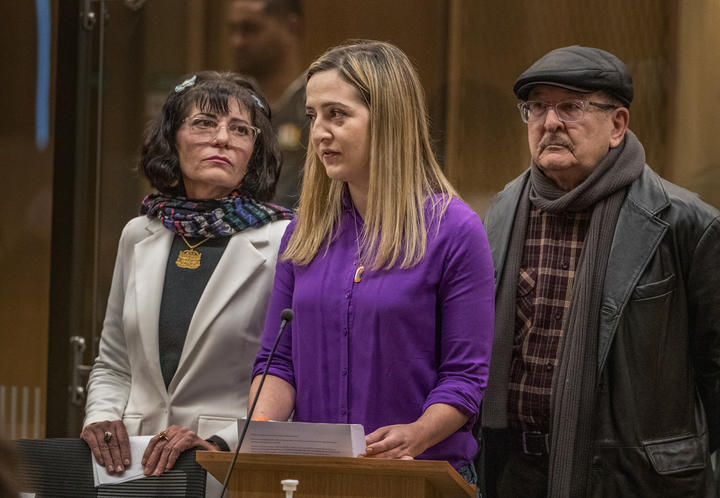
Victims and survivors were offered the right to speak their impact statements to the court and, significantly to tell Tarrant what they thought of him, and of the true consequences his actions had had on their lives.
Initially, 60 people wished to read their statements to the court and to the killer. Others, after observing how their fellow Muslims accounts somehow were beneficial, also wished to have their experiences told.
Self-confessed mass murderer, terrorist, white extremist, Brenton Tarrant – as he appeared for sentencing in the High Court in Christchurch, New Zealand. Image: EveningReportNZ
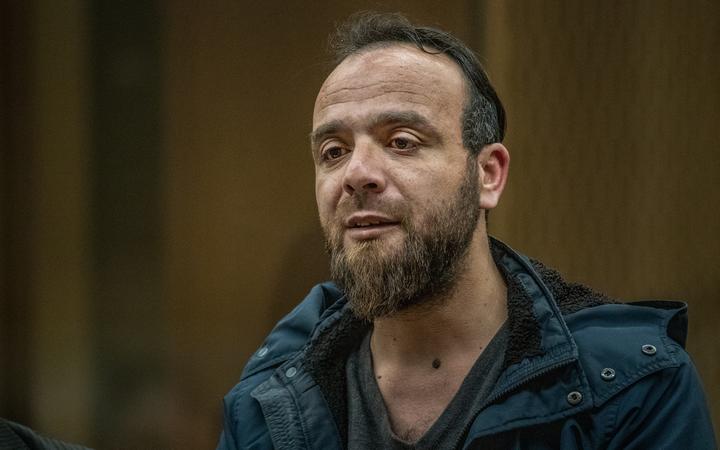
Some spoke of how Tarrant had failed in his purpose, as their faith had strengthened since the murders, that they as a community had become stronger, and how loved they had felt when New Zealanders of all colours embraced them as valued members of the nation’s family. A common account reiterated how ‘you sought to divide us, to alienate us. You failed’.
While in court, Tarrant’s deportment was passive, absolutely. Whenever he was ushered into the court, his hands and legs bound in shackles, he was assisted by officers to sit before the packed public gallery. When the judge addressed him, he was respectfully at full attention. When addressed by his victims’ loved ones and survivors, he was attentive, although without emotion.
At one point, a murdered victims’ mother addressed Tarrant. She stated she had “no hate for him” as a person, that she forgave him. Tarrant acknowledged her with a nod. Began to blink rapidly and appeared to wipe a tear from his eye. Shortly after, New Zealanders learned that the killer had withdrawn his intention to address the court.
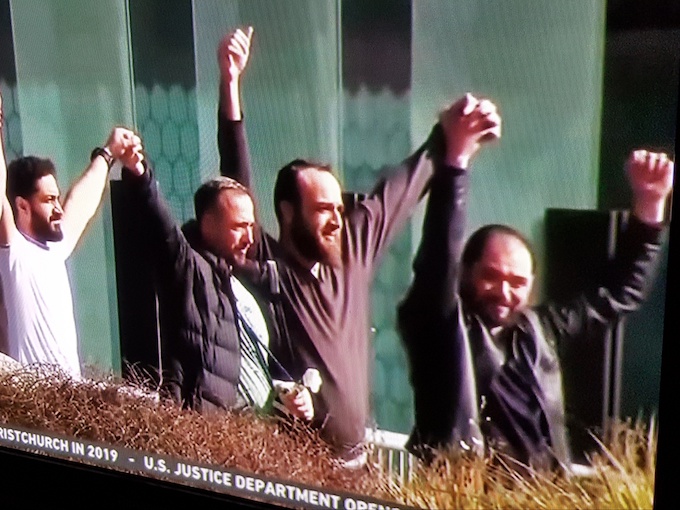
A total of 98 victims and loved ones read their impact statements to the court and to Tarrant. Some expressing distress and some anger. The killer was referred to as a “coward” by a school teacher, whose brother was murdered in cold blood. Another man, the son of a middle aged worshipper addressed Tarrant as a “maggot”. Another, that Tarrant was nothing but “rotten meat” to him. Three men concluded their account with a Muslim prayer and chanted Allahu Akbar while pointing defiantly at Tarrant.
The court observed in silence, noting the tragic recount of events told by those who suffer injuries from the bullet, the experience leaving physical, mental, emotional, social wounds as a consequence of Tarrant’s crimes – but none expressed a loss of faith in Islam nor of New Zealand as a community.
As Radio New Zealand reports: “One survivor, Dr Hamimah Tuyan left her two sons in Singapore to travel to the High Court in Christchurch to speak and honour her late husband, Zekeriya – the 51st victim to die.”
She told Radio New Zealand’s Morning Report she wrestled for some time if she should write a statement. Once she came back to Christchurch she decided she would listen to every victim statement delivered in court: “I was just so inspired by the brave brothers and sisters – their words, their feelings. I’m just so glad that I actually wrote it and opted to read it. That was the only way I could represent my husband and my boys,” she said on live radio.
Dr Hamimah Tuyan said she felt a weight lift from her shoulders and then left everything in the hands of God and the judge.
“We were all calm after the last session and basically waited … listening to each and every word of Judge Mander’s sentence until the end – two hours.” [Radio New Zealand].
She, and many others, spoke of catharsis in having had the courage to speak of their experience and their strength, and of the bravery of their loved ones who died on 15 March 2019.
Cold blooded reality Then came the judge’s ruling. For four hours, Justice Mander read a precise account of what happened that day. In a move that was welcomed by the victims and New Zealanders, Justice Mander spoke of each victim and of their character, of the circumstances of how each person died.
For the first time, New Zealanders learned of the cold blooded reality of the consequences of hate that tore at the heart of the Muslim community that day.
Accounts like:
“As you made your way down the hallway of the mosque to the main prayer area, you shot Ata Mohammad Ata Elayyan and Ali Elmadani, murdering both men. You then entered the main prayer room at the rear of the building. There were over 120 worshippers present. They had heard the gunfire. Appreciating that something was very wrong, they moved to each side of the large open prayer area to where there were single exits in each corner.
“When you entered the main prayer room you initially fired at worshippers who were lying on the ground. You shot Ziyaad Shah. You then turned to the two large groups gathered on each side of the prayer area. There was little chance of escape. You fired your semi-automatic firearm into the mass of people on one side of the room. The rate of fire was extremely rapid. You repeatedly moved your weapon across that side of the room before turning to the other group of trapped people on the opposite side.
“As you turned your semi-automatic weapon on these worshippers, Naeem Rashid ran at you. Despite being shot, he crashed into you, forcing you down on one knee and dislodging a magazine from your vest. Mr Rashid had been hit in the shoulder and, as he lay on his back, you fired further shots at him. Mr Rashid died but his bravery allowed a number of his fellow worshippers to escape.
“By this stage you had emptied a 60-round magazine. You replaced that with another. Standing in the middle of the room, you fired rapid bursts towards each side of the prayer room where people were trying to hide or were attempting to escape. After reloading yet again, you continued to shoot at persons lying prone or trying to escape. You discharged rapid bursts across both sides of the room before approaching individual victims and shooting them. As Ashraf Ragheb sought to escape from a side room down the hallway to the main entrance, you shot and killed him. Already there were many dead.
“You moved closer to each now piled group of people lying deceased, wounded or feigning death on each side of the main prayer room. Worshippers, who were either crying out for help or who appeared to be alive, were systematically shot in the head. One of those was a three-year-old child, Mucaad Ibrahim. He was clinging to his father’s leg and you murdered him with two aimed shots.”
The judge continued, detailing how Brenton Tarrant then made his way outside Al Noor Mosque.
“Outside you shot at people attempting to flee. You shot Mohammad Faruk in the back, killing him. Wasseim Daragmih and his four-year-old daughter received life-threatening wounds. You fired in the opposite direction, hitting Sazada Akhter in the spine. She will be confined to a wheelchair for the rest of her life.
“Tarrant then returned to his vehicle. Quickly he rearmed himself with an assault rifle fitted with two 40 round magazines.
“You fired this weapon down a side driveway towards the back of the Mosque, murdering Muse Awale and Hamza Alhaj Mustafa, a 16-year-old boy who had escaped from the main prayer room and was sheltering behind vehicles. Another man, Mohammad Shamim Siddiqui, was critically wounded.
“You then returned to the main prayer room. As you entered you saw Md Hoq, who was wounded,sitting up against a window. You aimed one shot at Mr Hoq, killing him instantly, before firing further shots at a group of people lying in one corner. There were some 30 deceased or critically wounded worshippers in this mass of people. You delivered fatal shots to those who were still alive.
“You then reloaded your weapon and walked over to the group of people lying in the opposite corner and fired into them. You noticed Haji Nabi attempting to shelter behind a small wall. With two carefully aimed shots you murdered Mr Nabi before walking to within a metre of the piled group and firing further shots into those who were either deceased or mortally wounded. Any persons who showed signs of life were shot.”
The judge’s ruling continued on, every precise detail that the police, scientists, and prosecutors had discovered was read to Tarrant. The killer’s gaze remained attentive. Silently, he sat, emotionless, listening to every word.
Observers reflected on how Brenton Tarrant appeared a hollow shell of a human being. Immediately after his arrest, Tarrant presented as arrogant, remorseless, complaining to police that he was disappointed that he didn’t kill more people. He was then in peak physical condition, clearly having been working out regularly. But this week, he appeared without emotion, without purpose, passively listening to the accounts of victims and that of the judge detailing the facts of what he had done. He did not challenge the facts, rather he had accepted them as accurate, a true account of his crimes.
Justice Mander continued:
“After exiting the mosque for the second time you saw two women attempting to escape. You shot Ansi Karippakulam Alibava and Husna Ahmed. Ms Ahmed was killed. Ms Karippakulam Alibava was wounded. While she lay on the street, pleading for help, you murdered this defenceless young woman, firing two shots at her from point-blank range. You then returned to your vehicle and inflicted the indignity of driving over her body as she lay in front of the driveway from which you exited.”
Still, Tarrant remained emotionless, leaving some to ponder whether he was intent to create an enigma of himself, a mysterious figure who refused to offer any words or emotion upon which others may define him. Rather, he had earlier defined himself to appointed psychiatrists and psychologists as a “terrorist” and a “fascist”. He had stated to the clinicians, appointed to assess his personality and condition, that in the months leading up to the killings, he had sunken into despair, into a depression. That he was angry at the world and wanted to hurt it, damage it.
The child, the man: Radio New Zealand investigated Brenton Tarrant’s background. The following segment is a paraphrase of that investigation.
Brenton Tarrant’s life experience was unremarkable, at least in the beginning. He was born on October 27, 1990 and raised in rural Australia, in a town called Grafton some 500km north of Sydney. He was the youngest of three siblings. His parents separated while he was still at school. He played sport (rugby league) but was overweight and was bullied, to a degree, by others of his age. His father worked as a rubbish collector, and his family was respected in the general Clarence Valley area.
Brenton Tarrant while travelling in Pakistan. Image: EveningReportNZ
One of Tarrant’s cousins told Australia’s 7News, there was little in his background that would have indicated problems ahead. But, when his father died of cancer when Tarrant was 20 years of age, he was crushed by the loss. He inherited A$500,000 from his fathers estate. Dabbled in investments. Then travelled extensively. It was during his overseas experience abroad, particularly in Europe, that he was radicalised.
Details are vague, but court accounts place him in France where he was attracted to white extremist groups with which he increasingly shared commonly held racist views. He continued to travel around Europe, and developed an interest in the countries that were once ruled by the Ottoman Empire, visiting historic battle sites. He travelled through greater Asia, visiting Pakistan and the border areas of Afghanistan.
Then, in August 2017 he emigrated to Dunedin, New Zealand. He joined a rifle club, acquired a firearms licence from the New Zealand Police, and joined a South Dunedin gym.
He kept largely to himself, isolating his ideas, his anger, his purpose from those around him.
Brenton Tarrant never sought to work in New Zealand and showed no intention to get a job.
Wider family members visited Tarrant while he lived in Dunedin. They returned to Australia, noting concerns to his immediate family that he was not in a good state of mind, and had shown them that he had many guns.
Then, as Radio New Zealand reported, Tarrant’s last message to the white extremist group on 8Chan came on 15 March 2019:
“’It’s been a long ride and … you are all top blokes and the best bunch of cobbers a man could ask for,”’Tarrant posted.
“Radio New Zealand noted: ‘His friends were faceless, his interactions existent only in cyberspace.’” [Radio New Zealand]
The courtroom account continued Justice Mander:
“As you drove away from the Al Noor Mosque you continued to shoot at anyone who you considered should be the target of your hate. You discharged a shotgun at two men who appeared to be of African descent. A short distance on you saw Muhammad Nasir and his son walking towards the mosque dressed in traditional clothing. You again discharged the shotgun, seriously wounding Mr Nasir, before actioning the weapon again and pointing it directly at the boy who was trying to hide behind a wall. You pulled the trigger but it failed to fire.
“You then sped away, driving directly to the Linwood Islamic Centre. On the way you came abreast of another vehicle being driven by a Fijian man. You pointed your shotgun at him. Despite repeated attempts to discharge the shotgun it failed to fire.
“When you got to Linwood you approached the mosque on foot down a long driveway, armed with yet another firearm. You saw three people in and around a car. You shot Ghulam Hussain in the head, killing him, before firing at and wounding Muhammad Raza, who had got out of the other side of the vehicle. You shot another occupant of the car, Karam Bibi, before advancing up the driveway, where you saw Mr Raza attempting to find cover behind a fence. He attempted to retreat from you. Despite his pleas to spare him, you murdered him. A wounded Ms Bibi sought to hide in front of the vehicle. You walked to within metres of her as she lay prone with her head buried in her hands, stood over her, and killed her.”
Tarrant approached the mosque, passing a window. He saw a silhouette of a man. He shot him with a single shot to the head. The man’s name was Mohammed Khan.
With your weapon now empty, you ran down the driveway back to your vehicle. As you reached the car, Abdul Aziz Wahabazadah, who had courageously followed you down the driveway, challenged you. You retrieved another semi-automatic rifle from your vehicle and fired at him. He dived between some parked cars, before you walked back up the driveway to the main entrance to the mosque.
[Selwyn Manning’s author’s note: I wrote about this moment, in the German magazine Cicero.de in March 2019, shortly after the murders:]
“Inside Linwood Mosque was Abdul Aziz, a man who had gathered with his Muslim brothers. He had just begun his second prayer when he heard gunshots outside. At first he thought it was someone playing with firecrackers (fireworks). But then, within seconds, he heard people screaming.
“Mr Aziz picked up an EFTPOS (electronic funds transaction) machine from a table inside the mosque. He ran outside. He saw a man he describes as looking like a soldier. He said to the man: ‘Who are you?’ Mr Aziz then saw three people lying on the ground dead from shotgun blasts. He realised the man was the killer. He approached the attacker, threw the EFTPOS machine, hitting the killer, who in turn took from his vehicle a second firearm (a military style semi-automatic assault rifle) and fired four to five shots at Abdul Aziz, missing him. Then, in an attempt to lure the killer away from other people, Mr Aziz shouted at the killer from behind a car: ‘Come, I’m here. Come I’m here!’
“Mr Aziz said he didn’t want the killer to go inside the mosque and kill more people. But the killer remained focused. He walked directly to the entrance, once inside the mosque he continued his killing spree. Survivors speak of the killer wearing ‘army clothes’, dressed in ‘SWAT combat clothing’, helmeted, wearing a vest and a balaclava… Written on the rifle were the words, ‘Welcome to hell’.” [Attentat in Christchurch – Willkommen in der Hölle]
In the High Court this week, Justice Mander continued:
“There were several people standing inside the entranceway and further into the building at whom you repeatedly fired. You killed Musa Patel. Walking further into the mosque, you shot and killed Linda Armstrong. People were huddled in corners of the room or trying to escape as you fired your weapon, killing Mohamad Mohamedhosen. You continued to fire the semi-automatic rifle until it ran out of ammunition, at which point you dropped it and ran back to your vehicle.
“Mr Wahabazadah chased you down the driveway, yelling at you. You removed the bayonet from your vest but retreated in the face of his advance. As you began driving away, Mr Wahabazadah got close enough to throw one of your discarded weapons at your vehicle.
“After leaving the Linwood Mosque, your intention was to drive to Ashburton to attack another mosque, but your vehicle was rammed off the road by a police car and you were apprehended by two armed police officers. You were anxious not to be shot and offered no resistance,” Justice Mander read.
The judge then spoke about the character of each of those who were murdered, about people like:
“Haji Mohemmed Daoud Nabi was a 71-year-old who had been married to his wife for 46 years. He was a role model and leader to his family; a best friend to his children and to his wife. For them the pain and anguish never goes away. Mrs Nabi describes herself as ‘alive, but not living’.”
And…
“Ansi Karippakulam Alibava’s husband found her lying on the road. He sat down beside her until police told him it was not safe. He knew when ambulance staff were not treating her that she had died. He is devastated. He finds himself constantly reminded of the events of that day and the loss of his dear wife. He can find no solace.”
And…
“Ozair Kadir was training to be an airline pilot like his big brother. His death has left a scar on the hearts of his proud parents. His murder haunts his father.”
And…
“Sayyad Ahmad Milne was a precious 14-year-old boy with his whole life before him. His murder has left a huge hole in his parents’ hearts. Despite his father’s resilience and forgiveness, they grieve for him deeply.”
And… …
“Mucaad Aden Ibrahim was younger still — a three-year-old infant. His father described him as ‘the happiness of the household’ — a vibrant young boy who made friends with everyone he met. No family can recover from the murder of such a small child.”
In the end, Justice Mander considered what sentence is permitted under New Zealand law. As a liberal social democratic country, New Zealand repealed the death penalty for murder at the end of the 1950s.
After consideration, the judge sentenced Brenton Harrison Tarrant to life imprisonment without the possibility of parole – which means, he will die in prison. This is the first time any accused has received this sentence in New Zealand.
Officially, the judge delivered his order:
“On each of the 51 charges of murder (charges 1-51) you are sentenced to life imprisonment. I order that you serve the sentences without parole.
“On each of the 40 charges of attempted murder (charges 52-91) you are sentenced to concurrent terms of 12 years’ imprisonment.
“On the charge of committing a terrorist act (charge 92) you are sentenced to life imprisonment.
“I also direct that the four psychiatric and psychological reports prepared for this proceeding be made available to the Department of Corrections.”
And then came the judge’s final order:
“Stand down.”
On writing this account, I am mindful that we cannot republish a summary of each of the victims when 91 people have been either killed or maimed by one man’s actions. It feels terribly selective when choosing who to include, and who to exclude from this report. How can one apply news values to people who have had their present and future stolen from them? One cannot.
Therefore, I encourage you, readers, to read the unabridged ruling from the New Zealand High Court. While upsetting, it will offer a sober account of what occurs when hatred is left to grow inside us, when others do not know how to react or challenge when hatred is expressed: https://www.courtsofnz.govt.nz/assets/cases/R-v-Tarrant-sentencing-remarks-20200827.pdf
Also, there is this awful thing, this contemplation, this series of unanswered questions which remain after the killing ceases, well after the victims’ faces become one. Answers remain elusive even after the verdict is read, the sentence is delivered, and the survivors have been ushered home to pick up the pieces of their lives. We are left to wonder, why? That question, that one word, will haunt us for the rest of our days.
Prime Minister Jacinda Ardern’s reaction
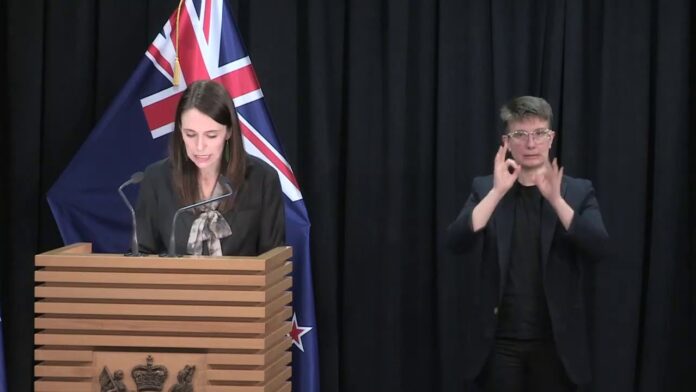
New Zealand Prime Minister Jacinda Ardern … the terrorist “deserves to be a lifetime of complete and utter silence”. image: EveningReportNZ
New Zealand Prime Minister Jacinda Ardern:
“I want to acknowledge the strength of our Muslim community who shared their words in court over the past few days.
“You relived the horrific events of March 15 to chronicle what happened that day and the pain it has left behind.
“Nothing will take the pain away but I hope you felt the arms of New Zealand around you through this whole process, and I hope you continue to feel that through all the days that follow.
“The trauma of March 15 is not easily healed but today I hope is the last where we have any cause to hear or utter the name of the terrorist behind it. His deserves to be a lifetime of complete and utter silence.”
Alpha and Omega, as we began, so we close At what point in time does an atrocity have a beginning? Is it when the first gunshot is fired? When the first victim is killed? When a killer first submits to thoughts of hatred, alienation, blame and decides to apply those emotions into physical action? Or, is it when racism is justified, when killing is considered defensible by those in whom one chooses to associate with, to support, to impress? Is it when one subscribes to another’s ideology of hate? Or when silence is a protector – chosen by reasonable people – when those around us speak of inhuman things?
Selwyn Manning is editor of Evening Report. A German language version of this article was published by Cicero.de magazine in Germany. We also invite you to view this week’s episode of A View from Afar with Paul Buchanan and Selwyn Manning where they discuss, in depth, the causes, impact and possible solutions when dealing with white extremism.
Self-confessed mass murderer, terrorist, white extremist, Brenton Tarrant - as he appeared for sentencing in the High Court in Christchurch, New Zealand.
Special Report by Selwyn Manning. A German language version of this report was published by Cicero.de magazine in Germany. Caution: This report contains detail that could be disturbing to many people.
AT WHAT POINT in time does an atrocity have a beginning? Is it when the first gunshot is fired? When the first victim is killed? When a killer first submits to thoughts of hatred, alienation, blame and decides to apply those emotions into physical action? Or, is it when racism is justified, when killing is considered defensible by those in whom one chooses to associate with, to support, to impress? Is it when one subscribes to another’s ideology of hate? Or when silence is a protector – chosen by reasonable people – when those around us speak of inhuman things?
*******
‘Ok lads, enough talking, it’s time for action.’ With those words, early on March 15, 2019, and expressed to his dark-net acquaintances, Brenton Harrison Tarrant initiated his plan to murder as many people of the Muslim faith as was possible.
Tarrant then packed six firearms into his vehicle, including: two military-styled assault rifles (AR-15 .223 calibre) and semi-automatic shotguns. He added 7000 rounds of ammunition, a bayonet-styled knife, and four IEDs (improvised explosive devices).
Wrapped within a bulletproof-vest he reversed from the driveway of his rented Dunedin home and self-drove 361 kilometres northward to New Zealand’s largest South Island city, Christchurch.
Reconnaissance:
Christchurch is known for its gardens, parks, sport, English-Victorian-styled architecture, earthquakes, parochialism, a modest inter-faith Muslim community; and, paradoxically, its white extremist gangs.
Two months earlier, in January 2019, Tarrant visited Christchurch. The purpose: reconnaissance of Al Noor Mosque – a place of prayer and worship for hundreds of the city’s Muslim people.
In January, Tarrant parked his vehicle adjacent to Al Noor Mosque, unpacked a drone and flew it above and over the facility. He recorded an aerial view video of the grounds, noting points of entry, exits, corridors where people could escape, where they could hide.
Tarrant observed how hundreds of people would attend Friday prayers. He decided Al Noor was the location, and, Friday was to be the day of the week which provided him an opportunity to kill as many people as possible on one single afternoon.
Christchurch is also a city built on a plane. Geographically it rests on a flat ancient seabed – framed only by the Port Hills to the south and the towering Southern Alps to the west. The city’s traffic is characteristically light (compared to other cities) and the route from Al Noor Mosque to nearby Linwood Islamic Centre is a short drive. Tarrant fathomed that even with news of a mass killer in the area, traffic would most likely be light.
Al Noor Mosque to Linwood Mosque – EveningReportNZ/Google Maps.
Tarrant quietly, and unobserved, took notes. Once satisfied, he returned to Dunedin where he determinedly, and with precision, planned mass murder.
At no time during the reconnaissance, nor the planning phase, did New Zealand Police nor Australia’s Police, the Security Intelligence Services, the New Zealand Government Communications Security Bureau notice what was being planned and expressed online. Brenton Tarrant’s intensifying hatred grew, undeterred, against those who were not white. As is the case of many western nations, New Zealand, along with its Five Eyes intelligence partners, Australia, Canada, Britain and the United States of America, had appeared more preoccupied with surveillance of those of Muslim and Islamic origins than they were of disarming an intensifying white extremist threat.
In the early afternoon of March 15, 2019, Tarrant arrived at his first waypoint. He parked his vehicle in a neighbouring driveway. Around 190 worshipers (children, women, men) had already arrived at Al Noor Mosque and others were still making their way there for Friday Prayer.
It was a warm late Summers day. In a nearby park, people were playing. School children were enjoying the peace and fun that the garden city offered.
Inside his vehicle, Tarrant strapped his bulletproof vest tightly to his body. He put on a helmet. Earlier, he had fixed a video camera and a strobe light to the helmet – the latter was designed to confuse his intended victims; the camera was connected to the internet via a cellphone device so as to provide Tarrant the opportunity to livestream his intended atrocity to a Facebook audience.
Tarrant then sent a ‘Manifesto’ to a white extremist website. He also emailed his intentions (with ‘Manifesto’ attached) to the New Zealand Government, to the Prime Minister Jacinda Ardern, and to national and international media.
Minutes later, Tarrant weaponed up, stepping from his vehicle he carried two semi-automatic firearms (including a shotgun) with multiple magazines, and approached the entrance to Al Noor Mosque.
“At that time four worshippers, Mounir Soliman, Syed Ali, Amjad Hamid and Hussein Moustafa, were at the Mosque’s front entrance. Without warning you discharged the shotgun multiple times in quick succession, killing each of them. A wounded Mr Moustafa was despatched by you at point-blank range with shots to his back and head.” (ref. New Zealand High Court ruling, Justice Mander, August 27, 2020; URL: https://www.courtsofnz.govt.nz/assets/cases/R-v-Tarrant-sentencing-remarks-20200827.pdf)
That was just the beginning, the moment Brenton Tarrant decided to open fire, ultimately putting his plan into action. His hateful journey, once conceived in his past, had been nurtured by those with whom he chose to associate with. His racist views had become darker by the month. His decision to become a mass murderer, a terrorist by his own definition and admission, was now a reality.
*******
Catharsis From Horror
Throughout the week of August 24-27, New Zealanders discovered how detailed Tarrant’s plan was. There was a risk, due to Tarrant’s guilty plea (lodged some months earlier) and his decision to refuse legal assistance, that details of his crimes – forensically applied to a timeline by detectives, scientists and prosecutors – would be sealed beyond the reach and rightful consideration of survivors. New Zealanders of all ethnicities, colour and religions too, needed to hear detail of how this monstrous act of terrorism could have occurred in this relatively peaceful land.
New Zealand High Court Judge, Justice Cameron Mander. Image, media pool.
Officially, the High Court summarised the charges:
“The Offender pleaded guilty to 51 charges of murder, 40 of attempted murder and one of committing a terrorist act after shooting worshippers at two mosques in Christchurch. Court held that no minimum period of imprisonment would be sufficient to satisfy the purpose of sentencing. Offender sentenced to life imprisonment without parole under s 103 (2A) Sentencing Act 2002.”
There was also a concern, that Tarrant, who had the legal right to address the High Court, would use that opportunity to express his white extremist ideology. As a preventive measure, the High Court’s Justice Mander applied tight controls on media, and insisted Tarrant would be withdrawn from the Court should he begin such a tirade.
Victims and survivors were offered the right to speak their impact statements to the Court and, significantly to tell Tarrant what they thought of him, and of the true consequences his actions had had on their lives.
Initially, 60 people wished to read their statements to the Court and to the killer. Others, after observing how their fellow Muslims accounts somehow were beneficial, also wished to have their experiences told.
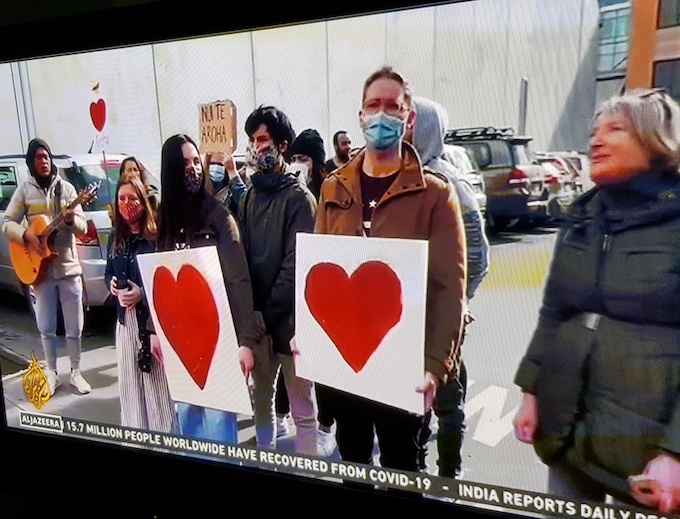
Image by Professor David Robie, AsiaPacificReport.nz.
Some spoke of how Tarrant had failed in his purpose, as their faith had strengthened since the murders, that they as a community had become stronger, and how loved they had felt when New Zealanders of all colours embraced them as valued members of the nation’s family. A common account reiterated how ‘you sought to divide us, to alienate us. You failed’.
While in Court, Tarrant’s deportment was passive, absolutely. Whenever he was ushered into the Court, his hands and legs bound in shackles, he was assisted by officers to sit before the packed public gallery. When the Judge addressed him, he was respectfully at full attention. When addressed by his victims loved ones and survivors, he was attentive, although without emotion.
At one point, a murdered victims’ mother addressed Tarrant. She stated she had “no hate for him” as a person, that she forgave him. Tarrant acknowledged her with a nod. Began to blink rapidly and appeared to wipe a tear from his eye. Shortly after, New Zealanders learned that the killer had withdrawn his intention to address the court.
A total of 98 victims and loved ones read their impact statements to the Court and to Tarrant. Some expressing distress and some anger. The killer was referred to as a ‘coward’ by a school teacher, whose brother was murdered in cold blood. Another man, the son of a middle aged worshiper addressed Tarrant as a ‘maggot’. Another, that Tarrant was nothing but “rotten meat” to him. Three men concluded their account with a Muslim prayer and chanted Allahu Akbar while pointing defiantly at Tarrant.
The Court observed in silence, noting the tragic recount of events told by those who suffer injuries from the bullet, the experience leaving physical, mental, emotional, social wounds as a consequence of Tarrant’s crimes – but none expressed a loss of faith in Islam nor of New Zealand as a community.
As Radio New Zealand reports: ‘One survivor, Dr Hamimah Tuyan left her two sons in Singapore to travel to the High Court in Christchurch to speak and honour her late husband, Zekeriya – the 51st victim to die.’
She told Radio New Zealand’s Morning Report she wrestled for some time if she should write a statement. Once she came back to Christchurch she decided she would listen to every victim statement delivered in court: “I was just so inspired by the brave brothers and sisters – their words, their feelings. I’m just so glad that I actually wrote it and opted to read it. That was the only way I could represent my husband and my boys,” she said on live radio.
Dr Hamimah Tuyan said she felt a weight lift from her shoulders and then left everything in the hands of God and the judge.
She, and many others, spoke of Catharsis in having had the courage to speak of their experience and their strength, and of the bravery of their loved ones who died on March 15, 2019.
Cold Blooded Reality:
Then came the Judge’s ruling. For four hours Justice Mander read a precise account of what happened that day. In a move that was welcomed by the victims and New Zealanders, Justice Mander spoke of each victim and of their character, of the circumstances of how each person died.
For the first time, New Zealanders learned of the cold blooded reality of the consequences of hate that tore at the heart of the Muslim community that day.
Accounts like:
‘As you made your way down the hallway of the Mosque to the main prayer area you shot Ata Mohammad Ata Elayyan and Ali Elmadani, murdering both men. You then entered the main prayer room at the rear of the building. There were over 120 worshippers present. They had heard the gunfire. Appreciating that something was very wrong, they moved to each side of the large open prayer area to where there were single exits in each corner.
‘When you entered the main prayer room you initially fired at worshippers who were lying on the ground. You shot Ziyaad Shah. You then turned to the two large groups gathered on each side of the prayer area. There was little chance of escape. You fired your semi-automatic firearm into the mass of people on one side of the room. The rate of fire was extremely rapid. You repeatedly moved your weapon across that side of the room before turning to the other group of trapped people on the opposite side.
‘As you turned your semi-automatic weapon on these worshippers, Naeem Rashid ran at you. Despite being shot, he crashed into you, forcing you down on one knee and dislodging a magazine from your vest. Mr Rashid had been hit in the shoulder and, as he lay on his back, you fired further shots at him. Mr Rashid died but his bravery allowed a number of his fellow worshippers to escape.’
‘By this stage you had emptied a 60-round magazine. You replaced that with another. Standing in the middle of the room, you fired rapid bursts towards each side of the prayer room where people were trying to hide or were attempting to escape. After reloading yet again, you continued to shoot at persons lying prone or trying to escape. You discharged rapid bursts across both sides of the room before approaching individual victims and shooting them. As Ashraf Ragheb sought to escape from a side room down the hallway to the main entrance, you shot and killed him. Already there were many dead.
‘You moved closer to each now piled group of people lying deceased, wounded or feigning death on each side of the main prayer room. Worshippers, who were either crying out for help or who appeared to be alive, were systematically shot in the head. One of those was a three-year-old child, Mucaad Ibrahim. He was clinging to his father’s leg and you murdered him with two aimed shots.’
The judge continued, detailing how Brenton Tarrant then made his way outside Al Noor Mosque.
‘Outside you shot at people attempting to flee. You shot Mohammad Faruk in the back, killing him. Wasseim Daragmih and his fouryear-old daughter received life-threatening wounds. You fired in the opposite direction, hitting Sazada Akhter in the spine. She will be confined to a wheelchair for the rest of her life.’
Tarrant then returned to his vehicle. Quickly he rearmed himself with an assault rifle fitted with two 40 round magazines.
‘You fired this weapon down a side driveway towards the back of the Mosque, murdering Muse Awale and Hamza Alhaj Mustafa, a 16-year-old boy who had escaped from the main prayer room and was sheltering behind vehicles. Another man, Mohammad Shamim Siddiqui, was critically wounded.
‘You then returned to the main prayer room. As you entered you saw Md Hoq, who was wounded,sitting up against a window. You aimed one shot at Mr Hoq, killing him instantly, before firing further shots at a group of people lying in one corner. There were some 30 deceased or critically wounded worshippers in this mass of people. You delivered fatal shots to those who were still alive.
‘You then reloaded your weapon and walked over to the group of people lying in the opposite corner and fired into them. You noticed Haji Nabi attempting to shelter behind a small wall. With two carefully aimed shots you murdered Mr Nabi before walking to within a metre of the piled group and firing further shots into those who were either deceased or mortally wounded. Any persons who showed signs of life were shot.’
The Judge’s ruling continued on, every precise detail that the Police, scientists, and prosecutors had discovered was read to Tarrant. The killer’s gaze remained attentive. Silently, he sat, emotionless, listening to every word.
Observers reflected on how Brenton Tarrant appeared a hollow shell of a human being. Immediately after his arrest, Tarrant presented as arrogant, remorseless, complaining to Police that he was disappointed that he didn’t kill more people. He was then in peak physical condition, clearly having been working out regularly. But this week, he appeared without emotion, without purpose, passively listening to the accounts of victims and that of the Judge detailing the facts of what he had done. He did not challenge the facts, rather he had accepted them as accurate a true account of his crimes.
Justice Mander continued on:
‘After exiting the Mosque for the second time you saw two women attempting to escape. You shot Ansi Karippakulam Alibava and Husna Ahmed. Ms Ahmed was killed. Ms Karippakulam Alibava was wounded. While she lay on the street, pleading for help, you murdered this defenceless young woman, firing two shots at her from point-blank range. You then returned to your vehicle and inflicted the indignity of driving over her body as she lay in front of the driveway from which you exited.’
Still, Tarrant remained emotionless, leaving some to ponder whether he was intent of creating an enigma of himself, a mysterious figure who refused to offer any words or emotion upon which others may define him. Rather, he had earlier defined himself to appointed psychiatrists and psychologists as a “Terrorist” and a “Fascist”. He had stated to the clinicians, appointed to assess his personality and condition, that in the months leading up to the killings, he had sunken into despair, into a depression. That he was angry at the world and wanted to hurt it, damage it.
The Child The Man:
Radio New Zealand investigated Brenton Tarrant’s background. The following segment is a paraphrase of that investigation.
Brenton Tarrant, while travelling in Pakistan.
Brenton Tarrant’s life experience was unremarkable, at least in the beginning. He was born on October 27, 1990 and raised in rural Australia, in a town called Grafton some 500 kilometres north of Sydney. He was the youngest of three siblings. His parents separated while he was still at school. He played sport (Rugby League) but was overweight and was bullied, to a degree, by others of his age. His father worked as a rubbish collector, and his family was respected in the general Clarence Valley area.
One of Tarrant’s cousins told Australia’s 7News, there was little in his background that would have indicated problems ahead. But, when his father died of cancer when Tarrant was 20 years of age, he was crushed by the loss. He inherited AU$500,000.00 from his fathers estate. Dabbled in investments. Then travelled extensively. It was during his overseas experience abroad, particularly in Europe, that he was radicalised.
Details are vague, but court accounts place him in France where he was attracted to white extremist groups with which he increasingly shared commonly held racist views. He continued to travel around Europe, and developed an interest in the countries that were once ruled by the Ottoman Empire, visiting historic battle sites. He travelled through greater Asia, visiting Pakistan and the border areas of Afghanistan.
Then, in August, 2017, he emigrated to Dunedin, New Zealand. He joined a rifle club, acquired a firearms license from the New Zealand Police, and joined a South Dunedin gym.
He kept largely to himself, isolating his ideas, his anger, his purpose from those around him.
Brenton Tarrant never sought to work in New Zealand and showed no intention to get a job.
Wider family members visited Tarrant while he lived in Dunedin. They returned to Australia, noting concerns to his immediate family that he was not in a good state of mind, and had shown them that he had many guns.
Then, as Radio New Zealand reported Tarrant’s last message to the white extremist group on 8Chan came in March 15, 2019:
“It’s been a long ride and … you are all top blokes and the best bunch of cobbers a man could ask for,” Tarrant posted.’
‘As you drove away from the Al Noor Mosque you continued to shoot at anyone who you considered should be the target of your hate. You discharged a shotgun at two men who appeared to be of African descent. A short distance on you saw Muhammad Nasir and his son walking towards the Mosque dressed in traditional clothing. You again discharged the shotgun, seriously wounding Mr Nasir, before actioning the weapon again and pointing it directly at the boy who was trying to hide behind a wall. You pulled the trigger but it failed to fire.
‘You then sped away, driving directly to the Linwood Islamic Centre. On the way you came abreast of another vehicle being driven by a Fijian man. You pointed your shotgun at him. Despite repeated attempts to discharge the shotgun it failed to fire.
‘When you got to Linwood you approached the Mosque on foot down a long driveway, armed with yet another firearm. You saw three people in and around a car. You shot Ghulam Hussain in the head, killing him, before firing at and wounding Muhammad Raza who had got out of the other side of the vehicle. You shot another occupant of the car, Karam Bibi, before advancing up the driveway, where you saw Mr Raza attempting to find cover behind a fence. He attempted to retreat from you. Despite his pleas to spare him, you murdered him. A wounded Ms Bibi sought to hide in front of the vehicle. You walked to within metres of her as she lay prone with her head buried in her hands, stood over her, and killed her.’
Tarrant approached the Mosque, passing a window. He saw a silhouette of a man. He shot him with a single shot to the head. The man’s name was Mohammed Khan.
With your weapon now empty, you ran down the driveway back to your vehicle. As you reached the car, Abdul Aziz Wahabazadah, who had courageously followed you down the driveway, challenged you. You retrieved another semi-automatic rifle from your vehicle and fired at him. He dived between some parked cars, before you walked back up the driveway to the main entrance to the Mosque.
EDITOR’S NOTE: I wrote about this moment, in the German magazine Cicero.de in March 2019, shortly after the murders:
Inside Linwood Mosque was Abdul Aziz, a man who had gathered with his Muslim brothers. He had just begun his second pray when he heard gunshots outside. At first he thought it was someone playing with firecrackers (fireworks). But then, within seconds, he heard people screaming.
Mr Aziz picked up an EFTPOS (electronic funds transaction) machine from a table inside the mosque. He ran outside. He saw a man he describes as looking like a soldier. He said to the man: “Who are you”. Mr Aziz then saw three people lying on the ground dead from shotgun blasts. He realised the man was the killer. He approached the attacker, threw the EFTPOS machine hitting the killer, who in turn took from his vehicle a second firearm (a military style semi-automatic assault rifle) and fired four to five shots at Abdul Aziz, missing him. Then, in an attempt to lure the killer away from other people, Mr Aziz shouted at the killer from behind a car: “Come, I’m here. Come I’m here!”
Mr Aziz said he didn’t want the killer to go inside the mosque and kill more people. But the killer remained focussed. He walked directly to the entrance, once inside the mosque he continued his killing spree. Survivors speak of the killer wearing “army clothes”, dressed in “SWAT combat clothing”, helmeted, wearing a vest and a balaclava… Written on the rifle were the words, ‘Welcome to hell’. (ref. Attentat in Christchurch – Willkommen in der Hölle)
In the High Court this week, Justice Mander continued:
‘There were several people standing inside the entranceway and further into the building at whom you repeatedly fired. You killed Musa Patel. Walking further into the Mosque, you shot and killed Linda Armstrong. People were huddled in corners of the room or trying to escape as you fired your weapon, killing Mohamad Mohamedhosen. You continued to fire the semi-automatic rifle until it ran out of ammunition, at which point you dropped it and ran back to your vehicle.
‘Mr Wahabazadah chased you down the driveway, yelling at you. You removed the bayonet from your vest but retreated in the face of his advance. As you began driving away, Mr Wahabazadah got close enough to throw one of your discarded weapons at your vehicle.
‘After leaving the Linwood Mosque, your intention was to drive to Ashburton to attack another mosque, but your vehicle was rammed off the road by a police car and you were apprehended by two armed police officers. You were anxious not to be shot and offered no resistance,’ Justice Mander read.
The Judge then spoke about the character of each of those who were murdered, about people like:
‘Haji Mohemmed Daoud Nabi was a 71-year-old who had been married to his wife for 46 years. He was a role model and leader to his family; a best friend to his children and to his wife. For them the pain and anguish never goes away. Mrs Nabi describes herself as “alive, but not living”.’
And…
‘Ansi Karippakulam Alibava’s husband found her lying on the road. He sat down beside her until police told him it was not safe. He knew when ambulance staff were not treating her that she had died. He is devastated. He finds himself constantly reminded of the events of that day and the loss of his dear wife. He can find no solace.’
And…
‘Ozair Kadir was training to be an airline pilot like his big brother. His death has left a scar on the hearts of his proud parents. His murder haunts his father.‘
And…
‘Sayyad Ahmad Milne was a precious 14-year-old boy with his whole life before him. His murder has left a huge hole in his parents’ hearts. Despite his father’s resilience and forgiveness, they grieve for him deeply.’
And… …
‘Mucaad Aden Ibrahim was younger still — a three-year-old infant. His father described him as “the happiness of the household” — a vibrant young boy who made friends with everyone he met. No family can recover from the murder of such a small child.’
In the end, Justice Mander considered what sentence is permitted under New Zealand law. As a liberal social democratic country, New Zealand repealed the Death Penalty for murder at the end of the 1950s. After consideration, the Judge sentenced Brenton Harrison Tarrant to life imprisonment without the possibility of parole – which means, he will die in prison. This is the first time any accused has received this sentence in New Zealand.
Officially, the Judge delivered his order:
‘On each of the 51 charges of murder (charges 1-51) you are sentenced to life imprisonment. I order that you serve the sentences without parole.
‘On each of the 40 charges of attempted murder (charges 52-91) you are sentenced to concurrent terms of 12 years’ imprisonment.
‘On the charge of committing a terrorist act (charge 92) you are sentenced to life imprisonment.
‘I also direct that the four psychiatric and psychological reports prepared for this proceeding be made available to the Department of Corrections.’
And then came the Judge’s final order:
‘Stand down.’
On writing this account, I am mindful that we cannot republish a summary of each of the victims when 91 people have been either killed or maimed by one man’s actions. It feels terribly selective when choosing who to include, and who to exclude from this report. How can one apply news values to people who have had their present and future stolen from them? One cannot. Therefore, I encourage you, readers, to read the unabridged ruling from the New Zealand High Court. While upsetting, it will offer a sober account of what occurs when hatred is left to grow inside us, when others do not know how to react or challenge when hatred is expressed . ( https://www.courtsofnz.govt.nz/assets/cases/R-v-Tarrant-sentencing-remarks-20200827.pdf )
Also, there is this awful thing, this contemplation, this series of unanswered questions which remain after the killing ceases, well after the victims’ faces become one. Answers remain elusive even after the verdict is read, the sentence is delivered, and the survivors have been ushered home to pick up the pieces of their lives. We are left to wonder, why. That question, that one word, will haunt us for the rest of our days.
Prime Minister of New Zealand, Jacinda Ardern’s reaction to the sentence:
Prime Minister of New Zealand, Jacinda Ardern.
“I want to acknowledge the strength of our Muslim community who shared their words in court over the past few days,” Jacinda Ardern said.
“You relived the horrific events of March 15 to chronicle what happened that day and the pain it has left behind.
“Nothing will take the pain away but I hope you felt the arms of New Zealand around you through this whole process, and I hope you continue to feel that through all the days that follow.
“The trauma of March 15 is not easily healed but today I hope is the last where we have any cause to hear or utter the name of the terrorist behind it. His deserves to be a lifetime of complete and utter silence.”
Alpha and Omega, as we began, so we close:
At what point in time does an atrocity have a beginning? Is it when the first gunshot is fired? When the first victim is killed? When a killer first submits to thoughts of hatred, alienation, blame and decides to apply those emotions into physical action? Or, is it when racism is justified, when killing is considered defensible by those in whom one chooses to associate with, to support, to impress? Is it when one subscribes to another’s ideology of hate? Or when silence is a protector – chosen by reasonable people – when those around us speak of inhuman things?
*******
PS: We also invite you to view this week’s episode of A View fro Afar with Paul Buchanan and Selwyn Manning where they discuss, in depth, the causes, impact and possible solutions when dealing with white extremism.
The 65-year-old Abe was finally forced to concede to the ulcerative colitis intestinal disease that had brought his first brief term in office to an end in 2007.
After being treated with a new course of medication, Abe made a remarkable political comeback in 2012. He regained the leadership of the conservative Liberal Democratic Party (LDP), and led it back into government, three years after it was knocked out of power.
Abe easily defeated the weak and disorganised opposition parties in the 2014 and 2017 elections, and in 2018 secured an unprecedented third three-year term as LDP president, with his supporters speculating he could lead for yet another.
Abe was re-elected as LDP president in a landslide victory in 2018.Takehiko Suzuki/AP
Partial successes in the economy, defence
Abe kept up this political success based around his core economic policy, prominently marketed as “Abenomics”. This comprised the three “arrows” of record stimulus spending, quantitative easing (printing money to buy assets), and attempts at deregulation.
Abenomics was partially successful at restoring mild economic growth, but this started to wane after consumption tax hikes last October. The country then slipped into recession with the coronavirus pandemic.
In foreign policy, the nationalistic Abe reinterpreted Japan’s pacifist constitution, passing bills in the Diet in 2015 to allow collective self-defence with its US ally — despite a lack of public support and large student-led demonstrations.
Accompanied by a sharp increase in defence spending, Abe’s long-held desire to change the constitution to allow even more assertive use of the Japanese Self-Defence Forces was left unfulfilled. In 2019 Upper House elections, the LDP and its coalition partners lost the two-thirds majority required to allow any constitutional referendum.
Despite this setback, the lack of a strong challenger within the LDP — as well as the failure of the opposition parties to pose any credible threat — allowed Abe eventually to become the longest-serving prime minister in Japanese history.
Deeper relations with regional states
Abe energetically pursued foreign affairs throughout his tenure, maintaining the key US alliance through presidents Barack Obama to Donald Trump.
He sought greater Japanese participation in regional security by promoting a “free and open Indo-Pacific” region, and in doing so, deepened Japan’s strategic relations with India, ASEAN and Australia.
Japan’s Self-Defence Force brought recovery equipment and personnel to help in Australia’s response to bushfires this year.DAN HIMBRECHTS/AAP
Abe managed largely stable relations with China, Japan’s largest trading partner, but territorial disputes with Beijing, as well as with Russia and South Korea, also went unresolved. Relations with South Korea, in particular, reached a low point over their wartime and colonial history.
Abe nevertheless built on his image as a senior world leader, culminating in hosting the G20 summit in Osaka last year.
Abe’s erratic response to the coronavirus caused a sharp decline in his authority this year. A massive stimulus spending program sought to limit the damage to the economy, but the overall public response by Abe’s government lacked clear direction.
Regional leaders such as Tokyo Governor Yuriko Koike pushed early for a national state of emergency, but Abe only reluctantly declared one in April — and it only lasted around a month. Abe also delayed making a decision to postpone the Tokyo Olympics until foreign delegations announced they wouldn’t attend.
Abe’s leadership was damaged by the government’s initial missteps in its coronavirus response.Masanori Genko/AP
While Japan has fared relatively well dealing with COVID-19, there have been other ill-considered responses by the government. These included the widely ridiculed “Abenomasks” and the “GoTo Travel” domestic tourism campaign, which entrenched the public’s impression Abe was failing to respond energetically enough to the crisis.
From mid-June, Abe held no press conferences for nearly 50 days, and made few public appearances until the commemorations around the 75th anniversary of the end of the second world war in mid-August.
As his approval ratings dropped to their lowest levels since 2012, Abe made a series of hospital visits in recent weeks. This sparked media speculation over his health, which LDP officials vainly tried to downplay.
Abe will stay on as caretaker until the LDP’s Diet members elect a new president sometime over the next two or three weeks. This person will then be confirmed as prime minister by a vote in the Diet.
Speculation about his successor was already building in anticipation of the end of his term in September 2021, but this has now been rushed forward.
Prime candidates include his main old rival, former Defence Minister Shigeru Ishiba, who enjoys the highest public approval ratings as an alternative leader. Fumio Kishida, the LDP policy council chief and former foreign minister, is widely considered to be favoured by Abe as his replacement.
Shigeru Ishiba is seen as a potential successor to Abe.KYDPL KYODO/AP
Another long-standing ally, Chief Cabinet Secretary Yoshihide Suga may also be in contention, as could Defence Minister Taro Kono or Economic Revitalisation Minister Yasutoshi Nishimura.
Whoever is chosen by the LDP is unlikely to greatly change the direction of Japan’s economic and foreign policy. The new leader will have the ongoing responsibility of dealing with the persistent “second wave” of the COVID-19 pandemic and trying to engineer a post-pandemic recovery, while still burdened with record public debt and an ageing population.
Japan’s next prime minister will also soon face the judgement of the electorate, as the next national election is due by October 2021. The end of this patrician era of conservative politics has dramatically brought Japanese politics into an suddenly uncertain future.
Scott Morrison has further ramped up his pressure on states to relax border restrictions by declaring “there will be a Commonwealth definition of a hotspot – come rain, hail or shine”.
The Prime Minister said he hoped such a definition was one agreed to by the national cabinet, which meets next Friday.
“But at the very least, there will be a Commonwealth one. And if there are any differences to that – well, people can explain them.”
A week ago the national cabinet asked its health advisers to come up with a definition. Borders remain the province of states and territories and Morrison is immensely frustrated that states with few or no cases continue to resist his pleas to open.
He told a rural forum on Friday state borders “are putting enormous stress and strain on Australians, especially those in regional and border communities, including by limiting access to essential health care, keeping people from their work, restricting farmers’ accesses to their property and their markets.
“I’ve had hundreds of letters and emails from cross-border communities over the recent weeks and months, as have my colleagues,” he said.
He seized on the case of a woman from Ballina in northern NSW who lost an unborn twin after waiting for a plane to travel to Sydney following difficulties accessing Queensland for treatment in Brisbane.
Describing the story as “heartbreaking”, he said: “There needs to be an explanation as to how these hard border arrangements can lead to people not getting access to this care, as it seems to be the case here”.
Accounts of the woman’s case differed.
The CEO of Northern NSW Local Health District, Wayne Jones, said in a statement that while the preferred place for the birth was in Brisbane, under the border restrictions the woman and her partner would have had to quarantine in a government hotel for 14 days at their expense.
“Following discussion with Royal Prince Alfred specialists in Sydney, the woman travelled to Sydney for the procedure where she would not be required to quarantine,” he said.
But a Queensland health spokesperson said a person from a hotspot could enter Queensland for emergency care without an exemption where that care could not be provided in the hotspot. Queensland Health had not received a formal transfer request for the woman, although a Brisbane hospital was able to accept her.
The spokesperson said Queensland Health also did not receive any exemption requests in relation to the case. “The final decision to transfer this case was made by the patient’s treating clinicians in NSW.”
Morrison said the only areas of “significant disagreement” in the national cabinet during the pandemic had been over school closures and borders.
He said the shutting of borders early in the pandemic had not been the most pressing issue. “In hindsight, I think back then we should have addressed the principles around how those borders were being handled at that time. If I had my time over then I think we would have spent more time on that,” he said.
Referring to the woman’s case, he said: “It’s unthinkable …. to know that this family has had to be dealing with border permits at a time when … the only thing that mattered was the health of their child.”
“I hope I can get some better arrangements and [states will] hear my criticisms … on behalf of Australians we’ve got to try and get this worked out.”
Morrison said “the idea that we’re going to live with domestic borders until there’s a vaccine is a recipe for economic ruin. That is not the plan.
“The plan is to ensure testing, tracing and outbreak containment, strong quarantine, COVID safe behaviours in the workplace, in the home, at the footy club, at the ground, in this conference. That is how you live with the virus and keep people in jobs. Borders don’t do that.”
These two charts show Covid19 incidence in the world as a whole, in an American country (USA), an Asian country (South Korea), and New Zealand.
The first chart shows cumulative cases, with the United States being about six times worse (close to an order of magnitude, which usually means ‘ten times’) than the world as a whole, both in recorded cases and in deaths. By contrast, South Korea and New Zealand, following a similar pattern, have Covid19 incidence and deaths an order of magnitude less than the world average.
In terms of recent cases – second chart – we see that recent Covid19 outbreaks in New Zealand and South Korea still show New Zealand with recorded rates less than one tenth of recent world averages; and South Korea falls roughly between New Zealand and the world average. Recent United States rates of Covid19 diagnosis are still well above the world average; currently about four times higher. Fortunately, both the United States and the world show signs of stabilising.
Europe and Australia.
Chart by Keith Rankin.Chart by Keith Rankin.
Some European countries still have higher cumulative death rates than any other part of the world – especially Belgium – and have case histories still above the world average. United States (see first charts) however now substantially outstrips Europe for recorded cases. Australia continues to be much better, on deaths and cases, than France, Belgium and the United Kingdom.
When we look at recent outbreaks, we see that the Australian outbreak is comparable in scale with August outbreaks in Europe, with the current French outbreak now being that of most concern. Indeed, Australian Covid19 deaths over the last week exceed such deaths – per capita – in all three European countries shown. Australia’s current outbreak – centred on Melbourne – is now clearly much worse than its March outbreak.
From the first set of charts, that Australian feature looks unlikely to be replicated in New Zealand, in relation to the outbreak that began on day 174. Further, the best news for New Zealand is that there have been no deaths so far in the present outbreak.
The UK government’s Defence Science and Technology Laboratory released a study showing the citriodiol-based spray can kill SARS-CoV-2, the coronavirus that causes COVID-19, in a lab.
We’re all on the lookout for new ways to get the best protection against COVID-19.
But just because a product is safe to use in its current form, it doesn’t necessarily mean it will provide either safe or sufficient protection against COVID-19.
But they don’t work by killing the viruses mosquitoes spread. They stop the mosquitoes biting us in the first place by blocking a mosquito’s ability to pick up on the smells that help them find us.
The most common are diethyltoluamide (commonly known as DEET) and picaridin (also known as icaridin). There are also a variety of products that contain plant-based ingredients.
Citriodiol is a somewhat new arrival to the world of commercial insect repellent formulations, but there’s very strong evidence it provides effective protection against mosquito bites.
The chemical name for citriodiol is p-menthane-3,8-diol (commonly referred to as PMD) and it’s derived from the lemon-scented gum (Corymbia citriodora). Despite having origins in plants, citriodiol is considered a chemical repellent like DEET and picaridin.
There’s no doubt citriodiol-based repellents provide protection from mosquito bites and health authorities around Australia should routinely recommend them to reduce the risk of mosquito-borne disease.
But could this product repel COVID-19 as well as mosquitoes?
Mosquito repellents containing citriodiol are effective at stopping mosquito bites, but perhaps not COVID-19.Cameron Webb (NSW Health Pathology)
First, they used citriodiol as an anti-viral agent, applying the product directly to the virus in the lab. And second, they used it as a surface treatment of latex synthetic skin (designed to be like applying the product directly to human skin).
The first set of experiments demonstrated that, when used at a high concentration, the insect repellent killed the virus.
In the second experiments, application of the insect repellent to the latex synthetic skin reduced the amount of virus detected after four hours. But the virus wasn’t completely destroyed.
We need more research to understand how exactly citriodiol might kill the virus. The process may be similar to that of hand sanitisers and other disinfecting products.
These preliminary findings are encouraging but are intended to act as the foundation for future peer-reviewed research. They shouldn’t be grounds for recommending the use of insect repellents containing citriodiol to prevent COVID-19.
Could existing formulations of citriodiol be safe to use?
It’s important to note there are strict warnings provided on the use of citriodiol-based repellents. They shouldn’t be used on children under 12 months of age and, like many other repellents, may cause irritation to eyes or the skin. You certainly shouldn’t be drinking it.
There may well be potential in this product as an anti-viral agent or disinfectant. But for such uses, we’d need alternative registration, packaging, and directions. This may mean a completely different registration process involving other government authorities, such as the Therapeutic Goods Administration.
This is because it’s not just what’s in the product, but how it’s used. If someone was to use an insect repellent as frequently as a hand sanitiser, perhaps the risks of an adverse reaction would increase.
There have been previous examples where products with different uses are combined and require different directions to ensure they’re used safely and effectively.
Mosquito repellents that include sunscreen may pose a greater risk if they’re primarily used for sun protection. Sunscreen should be applied more frequently and at greater volumes compared to insect repellents.
University of Canberra Professorial Fellow Michelle Grattan and University of Canberra Assistant Professor Caroline Fisher discuss the week in politics.
This week the pair discuss a week’s worth of question time, the government’s proposed bill to cancel agreements entered into by states and territories with foreign governments, the JobReady Graduates legislation, and the state of emergency in Victoria.
Warning: This story discusses details of the 15 March 2019 Christchurch mosque massacre.
An Auckland University law professor says there is a risk the mosque terrorist could walk the streets of Sydney if he was deported to Australia to serve his life sentence.
Justice Cameron Mander’s sentence marked the first time in New Zealand’s history that the harshest punishment has been imposed.
Shortly after the sentencing, New Zealand First Leader and Foreign Minister Winston Peters said Tarrant should be deported to his home country.
But Professor Bill Hodge told RNZ First Up there was no law in place where a sentence could be transferred, so Australia would not have to keep to the terms of the sentence.
He told First Up a new law would be required in New Zealand – but more importantly, a new law would be needed in Australia.
“Because if he’s deported now, gets on a plane and goes over to Sydney, he can just walk free because there is no statutory authority, no power to enforce the New Zealand sentence in Australia at the moment.”
Rainbow Warrior spies transfer New Zealand has been down this pathway before more than 30 years ago.
The two French spies in jail for 10 years for manslaughter in the 1985 bombing of the Rainbow Warrior in Auckland harbour were allowed to be transferred for three years in military detention on Hao atoll in French Polynesia under a deal agreed to with France by former prime minister David Lange.
Before very long both prisoners were back home.
“We got burned quite frankly…”
Hodge said moving the terrorist would have to be with Australia’s cooperation and he could not see why they would agree to it.
“We don’t know exactly what their attitude is …let’s not go down that pathway until we get something really sealed in cement over there to make sure he will stay inside and not become part of a reality TV show, which is what happened to one person who came back from [jail in] Indonesia.”
Morrison open to prospect The ABC is reports that Australian Prime Minister Scott Morrison has left the door open to working with New Zealand on the issue, but there would be some hurdles to overcome.
Despite the strong ties between Australia and New Zealand, there is no formal prisoner transfer deal between the two countries.
The “David Hicks option” … Australia and the US negotiated a special agreement. Image: RNZ/AFP
Prisoner transfers are different to extraditions – which is when one country demands another help to secure someone wanted for an offence, and have them shipped over to face investigation and trial.
International law expert Professor Don Rothwell, from the Australian National University, said there were multiple options that could be pursued if the transfer was on the cards.
But he said the most likely was what he described as the “David Hicks option”.
Hicks, who was captured in Afghanistan in 2001 and spent time in Guantanamo Bay prison in Cuba, was sentenced by a military commission in the United States.
“Australia and the US negotiated a special agreement purely to deal with the Hicks situation, and that was appropriate given the security concerns and legal issues,” Professor Rothwell said.
The key difference The key difference is that Hicks only had to serve another nine months in jail (his conviction was set aside by a US court in 2015).
The mosque gunman’s sentence expires when he dies. So, keeping him behind bars for the rest of his life would need to be an explicit term in any agreement.
There are two other potential options for transferring him to Australia.
The first would be for the two countries to negotiate a new bilateral prisoner transfer treaty. The second possibility would be for New Zealand to sign up to an international convention, such as the Council of Europe Convention on the Transfer of Sentenced Persons.
“The Christchurch gunman is going to be an irritant in Australia-New Zealand relations for some time,” Melissa Conley Tyler from the Asia Institute at the University of Melbourne said.
“New Zealand is very aware that when its citizens are convicted of crimes in Australia, we deport them back to New Zealand – admittedly after they’ve served their sentences – and this is for much less serious crimes.
“From a New Zealand perspective, this is a terrorist who is an Australian citizen and New Zealand taxpayers will be footing the bill for his incarceration for the rest of his life.
“So even though Australia may not be legally obliged to agree to a transfer, I’d expect that New Zealand will continue to make this request.”
Australian Prime Minister Scott Morrison and New Zealand’s Jacinda Ardern … the jailed terrorist will remain an irritation for Australian and New Zealand relations. Image: RNZ/AFP and Pool Getty
‘Proud’ of NZ’s justice system In relation to how the justice system has operated with regard to the arrest and trial of the terrorist, from the police response on the day of the 15 March 2019 attacks to the conclusion with the handing down of the sentence yesterday, Professor Hodge said it had been through a stress test and had been proved “fit for purpose”.
As a teacher in a law school it had made him feel proud, he said.
“I think all New Zealanders were brought into that courtroom by the judge by his very powerful speech. It was denunciation; it was speaking for the nation; and it showed a unique purpose that we don’t see very often in New Zealand courtrooms.
“I think justice has come to the fore in a very positive way and I’m proud of it.”
This article is republished by the Pacific Media Centre under a partnership agreement with RNZ.
Where to get help: Need to Talk? Free call or text 1737 any time to speak to a trained counsellor, for any reason:
There was public celebration of the sentence of life without parole for the Christchurch terrorist Brenton Tarrant who admitted murdering 51 people and attempting to murder 40 others.
Aged 29, the convicted mass murderer and terrorist is still relatively young, meaning he could well spend several decades in custody.
A life sentence, as with a preventive detention sentence, normally has two elements. The first is the period that must be served for punishment purposes before an application can be made for parole. The second is based on risk and is assessed by the Parole Board: only if a life-sentence prisoner is an acceptably low risk will they be released during this second period.
In short, life can always mean life. But usually, because risk is reduced, an indeterminate sentence is the period set for punishment plus any extra period when the risk remains too high. A whole life sentence means the second stage is never reached.
Is this problematic from the perspective of human rights? This was an argument addressed to the judge.
Are human rights an issue?
The guiding principle behind how we deal with prisoners is the need to attempt rehabilitation.
But if there is no incentive to rehabilitate from the prisoner’s perspective, they are effectively warehoused for the rest of their life. This means, some might argue, the detention risks becoming arbitrary. In addition, it could be said to be inhuman and degrading not to allow some hope for the inmate.
Some nations, such as Norway, do not permit life imprisonment precisely because it is seen to breach those standards.
The world’s busiest human rights court, the European Court of Human Rights, has added its support to the view that prisoners must be left with some mechanism to ensure hope is not extinguished.
But the cases before the European Court have not involved an atrocity of this nature. It may be that the judges of that court would reach a different conclusion based on the extreme facts of the Christchurch mosque attacks.
There is a powerful argument that the importance of protecting the human rights of victims and potential future victims requires denunciation through the most severe sentence available in the hope that others will not follow in the defendant’s perverted footsteps.
Why an appeal is unlikely
In the event of an appeal, our Court of Appeal could consider whether there must be some prospect of release to encourage rehabilitation.
There is also another significant point of law it could consider.
It is normal that guilty pleas can receive credit. The sentencing hearing necessarily brought back the horrors of the events in Christchurch last March. But how much worse would it have been if there had been a trial and the victims and the wider community had had to relive every shot in detail?
Saving that trauma can be reflected in a reduced sentence. The only reduction from a whole life sentence is to allow an application for parole, even at some far-distant time.
Justice Cameron Mander sentences Brenton Tarrant to life without parole.John Kirk-Anderson/The Press Pool/AAP
But in his sentencing remarks at the High Court in Christchurch, Justice Cameron Mander said the relatively late plea of guilty, in March this year, did not displace the need for a whole life sentence. He added:
There is little to indicate that your pleas denote any deeply held sense of remorse for your victims or that you are particularly distressed at having caused such terrible grief.
He attached much more weight to another principle of sentencing, which is that the maximum sentence should be used for the worst possible example of offending.
The depravity of this atrocity qualified for designation as the worst possible example of offending. A terrorist mass murder is clearly the sort of offending that should lead to life without parole, the most severe sentence in our justice system.
The judge had sensibly appointed a lawyer to be available should the defendant change his mind and wish representation. He did so, but only to have this stand-by counsel accept that the maximum available sentence was proper.
Lawyers are bound by the instructions of their clients, so the defence lawyer was unable to put any counter arguments before the judge. Those instructions are significant in that an appeal will occur only if the defendant wishes to appeal. The defendant’s surprising acceptance of the sentence suggests he will not appeal.
A lone voice in court for mass killer Brenton Tarrant: Kerry Cook was the court-appointed lawyer.John Kirk-Anderson/The Press Pool/AAP
So who made the counter arguments? The judge ensured fairness in the process by having another lawyer, Kerry Cook, make counter submissions on the law. This lawyer did not represent the defendant but appeared as an amicus curiae, Latin for “friend of the court”.
Given all of this, the only mechanism to avoid death in prison for New Zealand’s only convicted terrorist is release on compassionate grounds. The Parole Act 2002 allows this only if someone is seriously ill and unlikely to recover. Even then, it is for the Parole Board’s discretion.
When we hear of people who have allegedly escaped from mandatory quarantine — whether that’s from hotels in Perth, Toowoomba, Sydney or Auckland — it’s easy to ask: “What were they thinking? Why didn’t they just follow the rules?”.
But our recent review shows people are less likely to follow public health advice if they misunderstand, or have negative attitudes towards it.
The challenge is that while COVID-19 has been with us since the beginning of the year, we still may not necessarily know someone in our close networks who has been in quarantine. We may be relying on a deluge of misinformation about it from the media, or social media.
So how can we use our knowledge of human behaviour to better support people complying with quarantine?
Which factors affect what we think about quarantine?
We reviewed the range of factors that influence people’s engagement or compliance with COVID-19 public health advice, such as quarantine. These included:
perceptions around the rationale and effectiveness of quarantine
perceived consequences of complying (or not)
perceptions about the level of community and personal risk from COVID-19
having enough basic supplies (for instance, food, water, clothes).
Gender, age, marital status, professional status and education level also played a role in whether people complied, but clearly, these cannot be modified.
Our review found one of the major factors affecting people’s likelihood to comply with quarantine is their knowledge about COVID-19, how the virus is transmitted, symptoms of infection, and quarantine protocols.
Not understanding what quarantine means and its purpose may lead to people inventing their own rules, based on what they think is an acceptable degree of contact or risk.
Perhaps not too surprising, if we believe quarantine is beneficial, then we are more likely to follow the rules. However, providing people with merely factual information may not be the answer. We need to engage with people’s emotions too.
Emotions can influence our perception of risk, sometimes more so than factual information. For example, we often hear about the negative experiences of quarantine or self-isolation, but often not the positive frame, for instance the number of people who have successfully complied. This helps normalise quarantine, and make people more likely to copy the expected behaviour.
If we think it’s normal to stick to the rules and doing so is in the collective good, then we’re less likely to muck up.www.shutterstock.com
Social norms play an important role. If people believe there is a collective commitment to protect the community from further spread of infection, they are more likely to respect the public health measure. An individual’s participation can be conditional on whether they think others are also contributing.
However, social norms can also have the opposite effect. If people think others are breaking the quarantine rules, they may follow suit.
Concerns about stigma or discrimination can also impact a person’s willingness to comply with quarantine. Stigma can make people more likely to hide symptoms or illness, keep them from seeking health care immediately, and prevent people from adopting healthy behaviours.
Lastly, people may push back against the regulations as a way of retaining a feeling of control. They may push back because they are stressed or anxious, which in turn affects how they think about the issue or how they make decisions.
So how do we use this?
To support acceptance of and community compliance with quarantine, we need to take these behavioural issues into account. We need to:
1. prepare people for what they might experience: boredom, loss of freedom or routine, irritability and/or anxiety. Priming people may help them think about ways to reduce these issues
2. encourage people to make plans as we know this helps people cope. Encouraging people to stick to similar (pre-quarantine) routines may help people avoid getting anxious or stressed. These plans need to be time-specific and intentional, not aspirational. For instance, we could encourage people to structure time for exercise and for virtual socialising. Others have suggested doing shared activities, such as watching a movie on Netflix at the same time
3. provide access to social, pyschological and medical support whether that’s via reliable internet access or access to helplines
4. provide adequate basic supplies such as food, water and clothes, and a safe and clean place to quarantine
5. encourage our leaders to clearly articulate, and others to reinforce, that complying with quarantine is in our group interest and it’s expected people will pull their weight. And if they don’t, this won’t be acceptable
6. provide media coverage that reflects the fact most people comply. Examples of people who run away from quarantine clearly represent quarantine failures, but they are outliers. Perhaps its time to look at the proportion of people who have complied with hotel quarantine as we need to establish the collective norm is to comply
7. provide people with adequate sick leave and other structural supports, such as the ability to work remotely, alongside any solutions supporting behaviour change.
There has been little comfort for AMP’s female employees in the corporate heavyweight’s bid to put its sexual harassment scandal to bed.
Nor, for that matter, women in any workplace.
The resignations of AMP’s chairman David Murray and board member John Fraser this week were the culmination of events beginning with a revolt by female employees in early July, after it was revealed the newly appointed chief executive of AMP’s investment management division had been disciplined for sexual harassment in 2017.
AMP’s blind spot may have been extreme – with the cultural and reputational costs eclipsed by the perceived value of Pahari to AMP Capital’s A$192 billion investment management business – but its reactive approach to sexual harassment is hardly unique. In fact, it’s a systemic feature of Australian corporate culture.
Even in resigning Murray made it clear he backed how the board dealt with the complaint (docking Pahari a quarter of his A$2 million bonus in 2017).
“However,” Murray said, “it is clear to me that, although there is considerable support for our strategy, some shareholders did not consider Mr Pahari’s promotion to AMP Capital CEO to be appropriate.”
A reactive approach to sexual harassment is common in Australian management culture.Shutterstock
The two board resignations, along with Pahari’s demotion, were indeed forced by an ultimatum from AMP’s biggest investors. By all appearances, the board’s approach in this case has been to treat sexual harassment as a risk to its share price, rather than a risk to the health and safety of its employees.
Current approaches to preventing and responding to sexual harassment in workplaces are inadequate. They typically focus on policies that prohibit sexual harassment and complaint mechanisms for workers to report it. They are reactive, legalistic and often contribute to ongoing (albeit unintended) harm to workers. These approaches, which have remained largely unchanged for decades, have failed to stop rising rates of workplace sexual harassment.
The inquiry was established in 2018, in light of the #metoo movement and the Commission’s own findings that one in three workers had been sexually harassed in the previous five years, with fewer than 20% making a formal complaint.
Its report notes that throughout the inquiry “the commission heard of the need to shift from the current reactive, complaints-based approach, to one which requires positive actions from employers and a focus on prevention”.
The Australian Human Rights Commission says three-quarters of those sexually harassed at work do not make a formal complaint.Shutterstock
Sexual harassment as discrimination
How sexual harassment is managed is shaped by it being regulated through anti-discrimination legislation.
This began in the late 1970s, when states enacted anti-discrimination laws. Then in 1984 the Hawke Labor government passed the federal Sex Discrimination Act 1984, which specifically prohibited sexual harassment in the workplace. The Act defines sexual harassment as any unwelcome sexual advance, unwelcome request or other unwelcome conduct of a sexual nature.
Anti-discrimination law puts an emphasis on individual rights. Its remedies require individuals taking action to assert or defend those rights. The problem is that in more than 80% of cases those sexually harassed don’t make a formal complaint.
the current system for addressing workplace sexual harassment in Australia is complex and confusing for victims and employers to understand and navigate. It also places a heavy burden on individuals to make a complaint. It means most people who experience sexual harassment never report it. They fear the impact that complaining will have on their reputation, career prospects and relationships within their community or industry.
Making it a health and safety issue
A “positive” approach focused on prevention, as recommended by the Australian Human Rights Commission, requires shifting to management of sexual harassment as a work health and safety issue.
Workplace health and safety laws are premised on an employer’s “positive duty” to keep workers safe. They require employers to identify risks to the health of employees, and eliminate these risks so far as is reasonably practicable.
Workplace health and safety regulators have historically not paid attention to sexual harassment as a health and safety issue. This is partly due to the law’s focus on it as a discrimination issue, and partly due to regulators’ traditional focus on preventing physical injuries and deaths.
But with increasing awareness of mental health issues, and of psychosocial work hazards including sexual harassment, this is beginning to change.
In March, WorkSafe Victoria adopted guidance material to educate employers on their duties to prevent sexual harassment under the Occupational Health and Safety Act 2004.
This material (which followed a campaign by Victorian unions and community organisations) is the first of its kind from a work health and safety regulator in Australia. It reminds employers:
Where there is a risk of work-related sexual harassment causing physical or mental injury employers have an obligation under the OHS Act to control that risk.
Unions and others are campaigning for New South Wales to follow suit. The Australian Human Rights Commission has recommended law changes to the federal government to implement a “positive approach”.
AMP’s self-inflicted wounds demonstrate the need for an such an overhaul. A board treating sexual harassment as a matter of health and safety would have to eliminate or manage the risk of it.
Had AMP taken proactive steps to protect workers from sexual harassment, it could have avoided this situation.
Papua New Guinean and Australian police have linked the “black ship” intercepted by the PNG Navy north of Kavieng, New Ireland, last Saturday to a drug haul valued at K1.47 billion (NZ$626 million) in Australian waters, a senior officer said.
Deputy Commissioner of Police Operations Donald Yamasombi told The National that the Australian police and border authorities and the PNG police believe it was the vessel which took bags of cocaine and offloaded them to a commercial fishing vessel, Coralynne, near Lord Howe Island in Australia.
“The boat is alleged to be the boat that took the cocaine and transferred it to an Australian commercial fishing vessel,” he said.
Yamasombi said they were trying to piece together all the information and collate evidence – which they find very little of on board the vessel now anchored at Kavieng port.
“It is a black ship. It does not have a name and has no markings,” he said.
An Australian newspaper report said the boat was detected near Noumea a few days ago.
It was making its way through PNG waters when the HMPNGS Moresby, which was near Kavieng at the time, was alerted.
‘Morgado Square’ Captain Nathan Tombe and his men intercepted the foreign vessel in a fisheries protection zone called the “Morgado Square”, north of Kavieng.
“We warned the crew of the ship by bullhorn to stop for inspection,” he said.
“However, the warning was ignored, as were warning shots fired over the bow of the ship.
Today’s weekend edition of The National front page. Image: PMC screenshot
“As a result, the HMPNGS Moresby drew alongside the vessel and fired wounding one crew member. The ship pulled up and was ordered to accompany us to Kavieng.”
Kavieng Hospital confirmed that the wounded crew member, reported to be the captain, was recovering after an operation.
Yamasombi said if the ship had a name, it would be easy to find out where it came from.
Police are hoping that Australia can provide some information “so we would be able to know the details of the boat”.
Tracking the ship’s route “As it is, we are working with the National Maritime Safety Authority to track the ship, looking at the route it travelled.
“If the transponder had been switched on, it would be easy to track it,” he said.
Today’s PNG Post-Courier weekend edition front page. Image: PMC screenshot
The nine crew members are likely to face charges under the Migration Act and Fisheries Act, he said.
“The crew members are under investigation because it is alleged to be a fishing boat.
“We will let Fisheries do their side of investigation and then we see what possible charges we can lay on them,” he said.
“illegal entry” was the appropriate charge under the Migration Act.
The National newspaper articles are republished by the Pacific Media Centre with permission.
This week, the NBA’s Milwaukee Bucks refused to take the court in protest over the police shooting of a Black man in Wisconsin, Jacob Blake, who remains paralysed in hospital.
The players’ boycott immediately threatened the viability of the NBA’s playoffs, endangering the most lucrative part of the season for the league. The players were also risking millions of their own dollars to raise their voices against racism in America.
As the Bucks players later explained in a statement,
We are calling for justice for Jacob Blake and demand the officers be held accountable. […] We encourage all citizens to educate themselves, take peaceful and responsible action, and remember to vote on November 3.
The protest quickly spread across the NBA, where players are increasingly using their social clout to demand action on labour issues from the league and owners. Under pressure from other teams, the league postponed several games. Lakers star LeBron James was quick to remind fans, however, the players were actually boycotting the games — this wasn’t a mere postponement.
And the action quickly spread across the sporting landscape: the WNBA, Major League Baseball and Major League Soccer all cancelled games to protest the Blake shooting. Tennis pro Naomi Osaka refused to play her semifinal match at a tournament, tweeting this:
Remember the backlash against Colin Kaepernick?
The NBA boycott comes four years to the day that US football player Colin Kaepernick started kneeling before NFL games. The NFL blackballed him due to the protest — and he has yet to return to the league.
Colin Kaepernick has not played in the NFL since his protest movement in the 2016 season.Mike McCarn/AP
Since then, however, other American sporting leagues, particularly the NBA, have supported their players’ right to protest and voice their opinions on political issues.
Last month, NBA Commissioner Adam Silver defended players’ right to kneel during the national anthem. The COVID bubble where the playoffs are being held also features Black Lives Matter jerseys, signs and floor decals.
Although the players have voted to resume the playoffs after a day, they made a statement that would have been unthinkable in the sports world just a few years ago.
Despite risking millions of dollars in salary, endorsements and bonuses, many players have shown they are willing to pay the price, potentially even jeopardising their careers, because they are simply fed up with unchecked police violence against people of colour.
if we’re gonna sit here and talk about making change, then at some point we’re gonna have to put our [manhood] on the line and actually put something up to lose.
Some players are also becoming political in more direct ways. James, for instance, has raised millions to pay off the fines for convicted felons to allow them to vote. Chris Paul of the Oklahoma City Thunder, meanwhile, registered his whole team to vote.
The stoppage in play across sport was in stark contrast to the response to Colin Kaepernick’s kneeling four years ago.JOHN G. MABANGLO/EPA
What happens if the NBA loses money, though?
Whether the NBA continues to stand by players in their protests, however, remains to be seen.
The league reportedly stands to lose upwards of US$1 billion in revenue if the playoffs are cancelled. Not only that, the bubble itself cost the NBA US$170 million just to set up.
If the playoffs do end early, the relationship between the league and players could very well be broken, possibly leading to a lockout next season. This, in turn, would further devastate the finances of both players and the league.
Trapped between the competing demands of its advertisers, TV partners, owners and players, the NBA has until now remained remarkably silent about the boycott. The big question is how the league will respond if fans start to tune out and the protests ultimately start to cost it money.
Crucially, it should be noted the NBA collective bargaining agreement bans strikes, so in effect, the players’ actions could be in violation of this (though there is some debate over whether this was a “boycott” or a “strike”).
Silver, the NBA commissioner, has been faced by a somewhat similar dilemma before. Last year, Houston Rockets General Manager Daryl Morey tweeted support for the Hong Kong protests, angering the Chinese government to such an extent, the state broadcaster stopped airing NBA games — and still hasn’t resumed.
For many NBA players and coaches, police violence is personal. Some Bucks players have spoken out about their own difficult experiences with the police. Clippers coach Doc Rivers tearfully explained how hard it was loving a country so much that “does not love us back”.
But criticisms are also coming in from other parts of society. Author Juanita Broaddrick tweeted a message directly to James, telling him to “Move to China”, which was liked nearly 35,000 times.
The NBA boycott has angered some fans who want to keep politics out of sport.Rick Bowmer/AP
President Donald Trump’s son-in-law, Jared Kushner, meanwhile, said NBA players were
very fortunate that they have the financial position where they’re able to take a night off from work.
But despite the inevitable backlash, the boycott feels like the start of “something big”, to quote one sports columnist.
Taking a knee before a game or raising a fist during a medal ceremony rocked the country, but never before has a league just had to shut it down. Now we have, at least for a day.
In a sign of just how far such politically motivated protests could go, even the National Hockey League, the whitest pro sport in North America, decided to postpone games following Blake’s shooting.
Sports figures won’t stay silent anymore when it comes to politics, nor should they be expected to.
Source: The Conversation (Au and NZ) – By Kathleen McPhillips, Senior Lecturer, School of Humanities and Social Science, University of Newcastle
Investigative journalist Suzie Smith’s new book The Altar Boys is a searing read that raises new questions about the suicides of three former victims of Catholic clergy child sexual abuse.
Smith, a former award-winning ABC journalist, has been covering the clerical abuse crisis in the Maitland-Newcastle diocese for many years. She wrote the book in part to bring new attention to the three victims, whose suicides remain shrouded in mystery, despite two public inquiries.
The Altar Boys recounts the lives — and deaths — of Glen Walsh, Steven Alward and Andrew Nash. All three of them were victims of child sexual abuse by Catholic clerics in the diocese.
Andrew Nash was just 13 years old when he committed suicide in 1974 after being sexually abused at St. Francis Xavier College in Hamilton, NSW. Andrew was in the care of two Marist Brothers who have since been convicted on child sex offences.
Walsh committed suicide in 2017, just weeks before he was due to give evidence at the trial of Archbishop Philip Wilson. Wilson had been charged with failing to report to police that paedophile priest James Fletcher was abusing boys in the Maitland-Newcastle diocese. He was convicted in 2018, but was set free after the judgement was quashed.
And Steven Alward, a respected ABC journalist and close friend of Smith’s, took his own life shortly after Walsh, in January 2018.
HarperCollins Australia
Both Walsh and Alward grew up together in Newcastle and were altar boys at the local Catholic church. They were also victims of child sexual abuse.
According to the book, Alward told his brother he was abused by notorious paedophile priest John Denham at St. Pius X High School in Adamstown. Smith details how Walsh was allegedly abused by Marist Brother Coman Sykes while he was staying at a Marist brothers-owned house west of Sydney.
Calls for new inquiry into the death of Glen Walsh
This area of New South Wales is recognised as one of the epicentres of clerical abuse in Australia, along with Wollongong and Ballarat in Victoria.
Smith’s book sheds new light on the institutional child sexual abuse and alleged cover-ups in the Maitland-Newcastle diocese, especially related to the treatment of the whistleblower priest Glen Walsh.
Last week, NSW Greens MP David Shoebridge called for an urgent judicial inquiry into Walsh’s suicide and the events leading up to the tragedy.
A letter from Bishop Bill Wright to the Catholic community in response, however, said church leaders see no reason to investigate these matters further as they are “historical” and have been addressed by previous inquiries.
The story of Walsh’s decline and suicide
In her book, Smith details what happened in Walsh’s life after his abuse, when he became a priest himself in the Maitland-Newcastle diocese.
In 2004, Walsh was sent to work in the upper Hunter parishes of Branxton/Greta to take over following the arrest of Fletcher on child sex abuse charges.
When two young men told Walsh about being abused by Fletcher, Walsh defied church practice and reported the matters to the police, including detective sergeant Peter Fox. Fox’s explosive allegations about the links between the police and Catholic clergy in the diocese would later spark the NSW Special Commission of Inquiry.
By taking this action, Walsh was ostracised and banished from the diocese. Smith recounts how his health deteriorated and he became homeless, asking to return to the diocese on numerous occasions. He finally got his wish in 2017 when Wright invited Walsh back to Newcastle.
After Wilson, the archbishop, was charged with covering up child sex abuse, Walsh became a key witness for the prosecution.
Wilson’s conviction for covering up child sex abuse was quashed by a judge in December 2018.DARREN PATEMAN/AAP
Smith describes an episode – until now not public knowledge – where prior to Wilson’s court case, Walsh was called to Rome for a private interview with Pope Francis. The pope reportedly wanted to know what Walsh would say in court, as Cardinal George Pell waited for him outside the room.
Just weeks before he was due to give evidence, Walsh took his own life.
He was vindicated during the trial when Magistrate Robert Stone found Walsh had in fact telephoned Wilson in 2004 and reported the child sexual abuse inflicted by Fletcher on numerous boys.
Questions still need to be answered
There are many unanswered questions about the deaths of all three victims. Importantly, Smith also links these deaths to the issue of ongoing suicides and sudden deaths among survivors of alleged child sex abuse in the Maitland-Newcastle area.
The Clergy Abused Network, a regional support group for survivors and their families, has kept a register of deaths by suspected suicide — the number now totals over 60.
To continue to frame this issue as “historical”, as Bishop Wright did in his letter, is problematic and harmful and ignores the ongoing tragedy of suicides in this region. This issue is hardly historical — it is happening now.
If there is further evidence, as Smith’s book suggests, of failure by Catholic officials in the investigation of suspected child sex abuse cases, then another judicial inquiry is justified.
What has compounded the trauma for survivors and their families that the findings of the Child Abuse Royal Commission’s case study 43, which examined child sexual abuse in the Maitland-Newcastle diocese, have yet to be released.
Survivors and their families should have access to the final report, which continues to be withheld. They deserve to see if it contains more answers to these tragedies.
Source: The Conversation (Au and NZ) – By Susan Harris Rimmer, Professor and Director of the Policy Innovation Hub, Griffith Business School, Griffith University
Australia is a nation of enthusiastic travellers, it is one of our defining national characteristics.
At any given time, around a million of us are living and working overseas. In 2019, a record 11.3 million Australian residents went on short-term trips, double the figure of ten years earlier.
But COVID-19 has radically changed our capacity to go and be overseas. Will we ever travel so easily and readily again?
You don’t have the ‘rights’ you probably thought you had
Travel may be of huge importance to Australians, but it is not a right or entitlement.
When you leave Australia, you also take on an element of risk. The federal government has long-warned their help in a crisis will have “limits”. The consular services charter says,
You don’t have a legal right to consular assistance and you shouldn’t assume assistance will be provided.
Australians don’t even have the absolute right to a passport, although in practice, it is rarely denied.
International law provides for the right to freedom of movement – both in and out of Australia. As the International Covenant on Civil and Political Rights says,
Everyone shall be free to leave any country, including his own. [This] shall not be subject to any restrictions except those which are provided by law, are necessary to protect national security, public order … public health or morals or the rights and freedoms of others … No one shall be arbitrarily deprived of the right to enter his own country.
Australia ratified the covenant in 1980, but there is no Commonwealth legislation enshrining the right of freedom of movement.
Even if there was, this doesn’t mean it would override legitimate public health concerns.
Coming home is no longer simple
In March, when the pandemic took off, the Morrison government advised Australians overseas to return home.
But coming back is no longer a simple question of booking a ticket and getting on a flight. For one thing, the global airline industry has collapsed, making available flights scarce.
As part of Australia’s COVID response, caps have also now been placed on international arrivals. In July, the number of Australian citizens and residents allowed into the country was then reduced by a third, from about 7,000 to about 4,000 a week, to ease the pressure on the hotel quarantine system. This system will be in place until at least October.
Prime Minister Scott Morrison explained he knew this made it more difficult for people to come home, but the policy was not “surprising or unreasonable”. Rather,
[it will] ensure that we could put our focus on the resources needed to do testing and tracing.
Nightmare logistics
According to the Department of Foreign Affairs and Trade, more than 371,000 Australians overseas have returned since March.
But more than 18,000 are still stuck overseas, saying they want to come home. Last week, a Senate inquiry heard about 3,000 of this group were “vulnerable” for medical and financial reasons.
There are a growing number of media reports detailing the stories of those stranded overseas. Many are desperate to return for financial and personal reasons.
More than 18,000 Australians are still overseas and want to come home.www.shutterstock.com
Internal border closures in Australia have added a further level of complexity.
On Friday, The Sydney Morning Herald reported the Morrison government was drawing up new plans to evacuate Australians stuck overseas.
It is worth noting that despite people’s understandable frustrations, the Australian government has limited options to help here – and the options they do have are not simple. They can potentially charter flights or cruise ships, but this is not straightforward because it requires agreements from host countries, available planes and ships, and can be hugely expensive.
Leaving Australia is no longer simple, either
Less visible, but very concerning from a rights perspective, is the Australians who are stuck in Australia. A state generally should allow citizens to leave their own country.
There are wide-ranging bans on people leaving Australia during the coronavirus pandemic, with a limited range of exemptions.
There are obviously compelling reasons why people will still want to travel, given Australia’s strong international connections, especially when close relatives are ill or dying overseas.
But again, we don’t actually have a “right” under domestic law to leave Australia – with the federal government able to control our movements under the Biosecurity Determination 2020.
Between March 25 and August 16, Australian Border Force received 104,785 travel exemption requests. Of these, 34,379 were granted a discretionary exemption. Some perhaps more discretionary than others – entrepreneur Jost Stollmann was granted an exemption to travel overseas to pick up his new luxury yacht.
The way we think about travel needs to change
Significant Australia’s diplomatic resources have been going into supporting Australians overseas during COVID-19. In July, the Department of Foreign Affairs and Trade reported 80% of its staff took part in the response effort.
Secretary Frances Adamson has also noted her department’s approach to COVID-19 had to go “well beyond what’s written in our consular charter”.
Pre-COVID, there were more than one million Australians living and working overseas.www.shutterstock.com
Given the range of pressing foreign policy issues at the moment, a serious question is how much of the Department of Foreign Affairs’ time and attention should be spent on consular services? What is being lost in other diplomatic efforts trying to get Australians home?
Australians need to grapple with the idea that the government doesn’t have to “get them back” if they travel overseas (even if it wants to). And under Australian law, we don’t have a “right” to leave the country.
We don’t know how long these COVID changes will last – particularly if efforts to create a vaccine are not successful. So, the way we think of travel and our risk calculations may unfortunately need to change. This might result in the biggest shift in our travel mindset since the 1950s, when international travel opened up to ordinary Australians.
With rising awareness of climate impacts of travel, this may not be a wholly negative development. But a deeper conversation is still required about the right to freedom of movement for Australian citizens.
Walking into my building just prior to New Zealand’s most recent heightened alert levels, I found students and staff alike were cramming in a last bit of social contact before the one metre rule came into effect.
I passed post-grad students on the stairs popping onto campus to collect their laptop or headphones, anxiously asking each other how they were doing.
It’s not like universities haven’t been preparing for the possibility of a return to emergency remote learning, but the sudden change in alert levels still came as a shock.
As universities return for the final months of the academic year, it’s important we recognise the challenges ahead. The re-emergence of COVID-19 community transmission in Aotearoa shows how tenuous our circumstances are. It’s becoming apparent the world will be living with this for some time, so the need to be flexible and adaptable is coming into clear focus.
Aside from all the logistical demands of the new normal, we need to listen to student voices more than ever. As the OECD has noted, COVID-19 has disproportionately affected young people, and they must be adequately represented in our responses and recovery.
Can do better
The change in alert levels meant the sudden closure of Auckland’s several university campuses and no more scheduled teaching for the duration. Remote learning via online materials, recorded lectures and online classes has become the norm.
Even in the rest of New Zealand, where the alert level was lower, university life was affected.
Strategies ranged from moving lectures online (but continuing small specialist teaching), limiting numbers in lectures while encouraging online participation, or blending organised classes and remote learning.
But not everyone has appreciated these initiatives or their implementation. New Zealand Union of Students Association (NZUSA) president Isabella Lenihan-Ikin criticised universities for not consulting more with those at the sharp end of the changes – the students.
All quiet on campus: Auckland University moves to online teaching due to the latest outbreak of COVID-19 community transmission.www.shutterstock.com
Lockdowns reinforce inequality
Te Mana Ākonga (the National Māori Tertiary Students Association) and the New Zealand Union of Students’ Association conducted rapid research on the impacts of COVID-19 on the work, personal and learning lives of students during the lockdown.
The picture that emerged indicated increased stress and anxiety, much of it caused by uncertainty over finances and the future. This won’t necessarily have abated during the 100 COVID-free days prior to the second outbreak.
Students are not a homogeneous group and online learning is not the same for everyone. So it wasn’t surprising to find issues of access and equity emerging.
The lockdown highlighted inequalities in the personal circumstances of students that affected a range of things: reliability of internet access, the ability to structure and manage their learning, and a lack of social connection and support.
When I checked with my students during a Zoom video class in the middle of lockdown, they indicated motivation, time management and routine, home life (including family responsibilities) and lack of social opportunities as key challenges.
Again, these issues won’t have changed just because we are now more experienced at the rapid pivot to online learning.
Online lectures work
The crisis has given students a glimpse into a blended and flexible teaching and learning environment and what might be possible. They are keen to explore how the successful elements from this experience might enhance the conventional on-campus environment.
For example, in a recent poll run by the University of Canterbury Student Association (UCSA) 98% said they wanted lectures to continue to be available online.
With that kind of majority saying online lectures support their learning and well-being, universities simply can’t afford to return to business as usual. Academics, too, will need support to achieve the right blend of teaching options.
Listen to the students
If COVID-19 restrictions are to be a feature of life for the foreseeable future, what will students want right now? First of all, that we talk to them to find out what their needs are. Seek quick feedback on what is working best for students and be adaptable. Consistency is also important, given the fluid circumstances we find ourselves in.
Social learning and connection are critical elements of learning. So we need to encourage virtual spaces for student interaction, such as study groups and informal learning groups on social media.
Pastoral care is more important than ever. Learning is as much social-emotional as it is cognitive. We should set up voluntary real-time interactions that don’t focus only on academic content and requirements. We need to:
keep a routine and set up learning structures – e.g. weekly objectives and tasks with suggested ways to achieve results.
If you are a New Zealand tertiary student you can share your experiences of online learning here. This is part of a cross-institutional research project exploring the challenges and opportunities experienced by students during lockdown.
This sudden move to online wasn’t a choice. But the crisis gives us an opportunity to shift our practices, focus on what we really value, and use disruption for positive and lasting change.
Thanks to the many colleagues and students who shared their insights and experiences of online learning with me during the lockdown.
Young people are increasingly frightened by the spectre of natural hazards and disasters, but they see schools as failing to equip them with the skills they need for these events.
That’s according to the recent Our World, Our Say national report, which surveyed 1,477 Australians aged 10 to 24.
While almost two-thirds (64%) of respondents said they have experienced at least three hazard events such as bushfires, heatwaves and drought in the past three years, a staggering 88% believe they’re not being taught enough to protect themselves and their communities.
In fact, they say they’re learning more about earthquakes in class than more relevant hazards, such as bushfires, floods, drought and tropical cyclones. And they are not wrong.
Young people want to learn about natural hazards and disasters that are relevant to them. After all, it’s their future, and changes in their education can help them thrive in a world of rapid social, environmental and technological change.
They don’t feel heard
The Our World, Our Say survey was conducted by the Australian Institute for Disaster Resilience and World Vision Australia.
Students want politicians to give them a voice on climate change.AAP Image/Erik Anderson
Along with issues in the curriculum, the survey also shows young people are deeply worried about climate change and see an urgent need to “reduce the intensity and frequency of disasters through climate action”. On this front, most of the survey respondents feel Australia is not doing enough.
Adding to their frustrations, survey respondents feel ignored by politicians. Nearly 90% said government leaders aren’t listening to their concerns, and that they don’t have a voice on climate change and disaster risk.
The devastating Black Summer bushfires demonstrated you need not live in the bush for bushfires to affect you. Yet the coverage of bushfires in the Australian Curriculum (and its state and territory adaptations) is sparse, especially when compared with the coverage of earthquakes and volcanoes.
The Australian Curriculum for Science for Year 6 has students investigating major geological events such as earthquakes, volcanic eruptions and tsunamis in Australia, the Asia region and throughout the world.
In Year 8 they investigate the role of science in the development of technology related to earthquake prediction. In Year 9 they expand on their learning of earthquakes, and other geomorphological hazards (volcanic eruption, earthquake, tsunami, landslide, avalanche) related to tectonic plates.
The main coverage of bushfires is in Year 5 Humanities and Social Sciences, where students study “the impact of bushfires or floods on environments and communities, and how people can respond”.
Learning about bushfires is also an option in Year 8 Geography, but it’s included as an alternative to studying earthquakes and volcanoes.
Thick bushfire smoke on January 3 2020. You don’t have to live in a fire-prone area to be affected by bushfires.EPA/NASA
The only coverage of bushfires in the Science curriculum is in Year 9 where students investigate how ecosystems change as a result of events such as bushfires, drought and flooding. Once again, bushfires are an option, rather than a requirement.
Students are facing increased extreme weather events around Australia, including intense heavy rainfall, high fire danger days and high intensity storms. We must ensure current and future generations of school students have the knowledge and skills to prevent, mitigate and adapt to this future.
Climate change education is also missing
The Our World, Our Say survey respondents are also right about the curriculum not covering climate change.
Climate change-related topics in national and state curricula are found only in the senior secondary (Years 11 and 12) and secondary (Years 7 to 10) Humanities, Geography and Science learning areas, with many being optional.
But according to the Paris Agreement on climate change, Australia has a moral imperative and legal obligation to include climate change education in its curriculum. And, as the school strikes have demonstrated, students want to learn about climate change.
Students can be agents of change
Australia is a signatory to the United Nations’ Sendai Framework for Disaster Risk Reduction, which says disaster risk knowledge must be incorporated into formal and non-formal education.
The Sendai Framework also recognises children and youth as agents of change who should be given the opportunity to contribute to disaster risk reduction through school curricula.
Greta Thunberg’s speech to UN Climate Change COP24 conference.
Australian research from 2018 reinforces this. It found when disaster education positions children and youth as agents of change, they not only learn essential knowledge and skills, but also make extremely valuable contributions to risk reduction activities in their households, schools and communities.
They can create workshops or games to educate others about disaster planning and preparedness; produce short films or books showcasing local knowledge or hazard management strategies; and present recommendations for youth-centred emergency management planning to decision-makers.
It aims to increase awareness of climate change and understand the response to and impacts of climate change globally, nationally and locally. It also explores opportunities to contribute to reducing and adapting to climate change impacts on everyday life.
We can also learn from Europe, where the EU Horizon 2020 Project developed a framework for child-centred disaster risk management. It started from the premise that, under Article 12 of the UN Convention on the Rights of the Child, children and young people have the right to be heard on matters that affect them.
If the education of young people in Australia is about preparing them “to thrive in a time of rapid social and technological change, and complex environmental, social and economic challenges”, as the Australian Education Council recently proclaimed, then it’s clear schooling is failing them.
Warning: This story discusses details of the 15 March 2019 Christchurch mosque massacre.
A man who confronted a terrorist on the day of the New Zealand killings and again during his sentencing in the High Court says the perpetrator has got “what he deserved”.
Many of the 98 victims who shared their impact statements in court this week had pleaded with the judge to take this course.
Abdul Aziz Wahabzadah confronted the murderer on the third day of the hearings with some taunting words in his victim impact statement.
Survivor Abdul Aziz Wahabzadah makes a point to the gunman in the High Court. Image: RNZ/John Kirk-Anderson/Stuff/Pool
He was also hailed as a hero on the day of the attacks because he challenged and chased the terrorist from the Linwood Mosque.
At the end of his statement, the judge commended him for his bravery. Abdul Aziz told RNZ Morning Report that was “a great honour” but he was focusing on “the coward” in court who had taken away so many of his fellow Muslims.
Stirring up stark memories Facing him in court had been difficult, stirring up stark memories of seeing two elderly women and a man lying fatally shot on the ground.
“There was a lot of hate and a lot of anger but you have to control it because we have to follow the law.
“We waited for a long time for that day and we achieved what we wanted and he achieved what he deserved.”
The Muslim community will move on. “Because we don’t have any other choice, we have to move on with our lives because we cannot bring the brothers and sisters, the ones who died, back. We have no choice.”
In response to NZ First’s leader Winston Peters call for the gunman to be imprisoned in Australia, he said the terrorist was “a piece of rotten meat” that no one wanted, and it was up to the two governments.
“He held the flag of that country with hate and shame… who wants such a person back in the country?”
It was important that the killer was also found guilty of terrorism. The tragedy has helped the world see that Muslims are peaceful people, not the terrorists that they are so often portrayed, Abdul Aziz said.
‘Brave brothers and sisters’ Dr Hamimah Tuyan left her two sons in Singapore to travel to the High Court in Christchurch to speak and honour her late husband, Zekeriya – the 51st victim to die.
She told Morning Report she wrestled for some time if she should write a statement. Once she came back to Christchurch she decided she would listen to every victim statement delivered in court.
“I was just so inspired by the brave brothers and sisters – their words, their feelings. I’m just so glad that I actually wrote it and opted to read it. That was the only way I could represent my husband and my boys.”
Hamimah Tuyan and her late husband, Zekeriya Tuyan. Image: RNZ
She did not want to look at the gunman and was surprised to find herself smiling at him when she entered court. That set the tone for the delivery of her statement. “He was attentive… I appreciated that he looked at me and was attentive.”
After reading out her statement, she like many others, felt a weight lift from her shoulders and then left everything in the hands of God and the judge.
“We were all calm after the last session and basically waited … listening to each and every word of Judge Mander’s sentence until the end – two hours.”
The sentence left her feeling “very relieved, we prayed for this outcome and the judge handed it to him with such mana and such grace”.
Four months in writing Aya Al-Umari, who lost her brother, Hussein, at the Al Noor Mosque, told Morning Report her impact statement was four months in the writing.
She found it almost impossible because there were no words to express the experience of having lunch with her brother one day, and then having to think of burying him the next.
She said her mother, Janna Ezat, went “off-script” to offer forgiveness to the mass killer with her address. Her mother was a superwoman, Al-Umari said, and seemed to arouse some emotion in the gunman who wiped his eye.
“What my mum said would move mountains. So I don’t want to believe he has feelings, because he didn’t have any feelings when he killed 51 of us… I think my mother’s words really echoed, really moved mountains but I’m not sure [about the gunman’s response].”
Going on the Hajj to Mecca gave her some internal peace and tranquillity and now that the sentencing is over, she is adjusting to the new family structure without her brother.
Aya Al-Umari with her mother, Janna Ezat, standing at her side. Image: RNZ/John Kirk-Anderson/Stuff Pool
Hisham al-Zarzour, who survived the shooting at Al Noor Mosque because he was trapped under a pile of bodies, told Morning Report yesterday was a big day for all New Zealanders as well as the Muslim community.
Judgment ‘helpful for victims’ “The judgment was helpful for all the victims, especially when we know this is the first time for New Zealand… New Zealand proved to all the world this is a place for justice.”
He is grateful to Justice Mander for his thorough address before announcing the sentence. The judge had acknowledged the scale of the victims’ losses and did not believe that the terrorist felt any remorse.
“We’ll heal a little … at least we can feel we’re in a safe place.”
The terrorist had a distorted view of history, Hisham said, and in his impact statement he had tried to correct his misguided views.
Hisham al-Zarzour … trapped under a pile of bodies. Image: RNZ/John Kirk-Anderson/Stuff Pool
Despite losing his wife, Husna, in the attacks, Farid Ahmed did not attend the sentencing hearing.
Immediately after the attacks he made a point of forgiving the gunman, believing that he was a victim of wrong ideas.
The gunman had spoken through his bullets and Farid did not want to hear anything new from him.
“I didn’t want to give him the false gratification of telling him how I hurt and how I suffered.”
He said he felt love for the Muslim community and he respected their decision to take part in the hearing.
Despite not attending court, he still wanted to meet the terrorist in person to talk to him about why he carried out the massacre.
This article is republished by the Pacific Media Centre under a partnership agreement with RNZ.
Where to get help: Need to Talk? Free call or text 1737 any time to speak to a trained counsellor, for any reason:
Given the recent commentary about the reforms proposed for the news media sector, you would be forgiven for thinking Google and Facebook are the only game in town.
The planned reforms arose from last year’s Digital Platforms Inquiry by the Australian Competition and Consumer Commission (ACCC), which focused squarely on the corporate behaviour of these two tech behemoths.
It is clear Google and Facebook will be the first platforms regulated under the draft mandatory code that will potentially force them to pay for content produced by Australian news media companies. The move is a response to what the ACCC describes as “a significant bargaining power imbalance […] between Australian news media businesses and Google and Facebook”.
This idea that news companies are essentially stuck with Google and Facebook, for better or worse, is a common view. Yet while that might have been true a few years ago, media companies are realising there are other ways to cultivate readers, and there’s no need to be beholden to tech platforms that generate clicks but don’t want to pay for the privilege.
In the mid-2010s, many news companies seemed to follow Facebook’s every move. When Facebook promoted video, the media invested in video. When it down-ranked clickbait headlines, content writers frantically altered their style to maintain their presence in the news feed. Newsrooms have had a similarly dependent (albeit less direct) relationship with Google.
This dependency developed at a time when major platforms, particularly Facebook, were engaging substantially with the distribution of news. But in recent years this trend has declined, as governments have begun to regulate platforms in response to concerns over “fake news”.
Facebook performed perhaps the most public pivot, changing its algorithm in January 2018 to promote content from users’ friends and family. As a result, traffic to news sites fell, leaving profit-starved media companies to pursue alternative strategies or simply lay off staff.
In our research, published earlier this year, we spoke to 15 Australian journalists and editors who had collectively worked across 11 media companies after the dust had settled from the 2019 crisis.
We asked them whether their companies still depend on Facebook for traffic, or whether they have moved to other platforms, or are now doing something else entirely to cultivate their readership.
Breaking up with Facebook
Many respondents, particularly those who had worked at newer companies focused on social media, revealed they had followed the demands of the Facebook algorithm at times. They had pivoted to video and had focused on share counts. However, respondents working at older media companies also noted that lots of readers still visited their publication’s home page, which challenges the idea that companies depend totally on Facebook.
Companies were also exploring different ways of generating revenue. These included placing ads inside content (known as native advertising) and holding events.
The standout trend, however, was a renewed focus on subscriptions, ensuring that a certain percentage of readers actually paid money for the news product at some point.
The Conversation (which does not charge for access to its content) was one of the newsrooms that saw a steep drop in traffic as a result of the January 2018 algorithm change. As such, it has pivoted its digital strategy to prioritise the channels over which it has the most control, particularly its daily newsletter.
That’s not to say companies have stopped trying to engage with big platforms. Many are consciously trying to make their news easy to find via Google search (a process called search engine optimisation. Some companies (including The Conversation) have also begun distributing news through Instagram (which is owned by Facebook).
Yes, Facebook has literally billions of users. But it’s not the only way to reach readers.Eric Risberg/AP
Yet although the big platforms are doubtless here to stay, our research reveals a distinctly changed relationship between news and social media, compared with the past decade. Many companies, particularly newer ones like Buzzfeed and Vice, previously built huge audiences off the back of social media, and grew at a dizzying rate as a result. Now, companies are more interested in securing a stable revenue stream than in harvesting clicks.
The pandemic effect
This has become even more important amid the economic chaos caused by COVID-19. Advertising spending has dried up, leading to another round of media industry layoffs.
This suggests news media are still struggling to secure an alternative income stream to plug the hole in advertising revenue. The big question is whether big tech platforms will step in and help fill the gap by making financial contributions to news providers. Google’s current campaign against the draft mandatory code suggests they are deeply unwilling to do this.
Our research shows the relationship between news media and big tech platforms is far from straightforward. This is supported by a recent survey, which found that while many young people access news through social media, older people still prefer television or news websites. Not every Australian gets their news via social media.
There may come a time when platforms become the central access point for news, but it hasn’t happened yet. This doesn’t mean the ACCC should abandon platform regulation, but it does mean news companies are probably wise to find other ways of reaching their readers while they still can.
On November 3, Americans will vote not only for president, but for all members of the House of Representatives, a third of the Senate and a long list of state and local positions.
While the names of Donald Trump, Joe Biden and presumably others appear on the ballot paper, voters actually vote for a list of electors in each state, known as the Electoral College. Their composition is based on the total number of members of Congress from each state: so, California has 55 votes, and seven states plus the District of Columbia have three.
Hillary Clinton’s problem in 2016 was that she won huge majorities in several large states but lost most of the smaller states, which the system slightly favours.
The electors meet in each state capital and their votes are tallied and reported to a joint sitting of Congress. Members of the college are expected to vote for the candidate on whose list they appear. The Supreme Court has recently ruled to make this mandatory.
Australia borrowed the names of our two parliamentary chambers from the United States. But the crucial difference is that government here is determined by control of the House of Representatives. In the United States, with a separately elected president, Congress is less powerful, and within Congress the Senate is the more significant.
While the representatives are apportioned according to population, each state has two senators who serve for six years. With the power to block legislation and senior executive and judicial appointments, a hostile Senate can make a president impotent in many areas of domestic policy.
In the 1994 mid-term elections, two years into the presidency of Bill Clinton, the Republicans captured both houses of Congress for the first time in 40 years. In the past three decades, there have only been eight years in which the same party has held the presidency, the Senate and the House of Representatives.
This is not an usual pattern in American politics and, as long as the two parties straddled a wide range of positions, it did not prevent effective government. Members of Congress were expected to vote according to the demands of their constituency, not the party. On crucial issues, such as civil rights legislation or the impeachment of Richard Nixon, they were willing to cross the floor.
However, over the past 30 years, party allegiances have hardened as the centre of gravity in the two parties has polarised. The once-solid Democratic South has become Republican heartland, strengthening an ever-growing right-wing base. Meanwhile, a reaction against the centrist policies of Clinton and Obama has led to a shift to the left by Democrats, causing problems for Democrats from conservative states, such as Senator Doug Jones from Alabama.
Jones is likely to lose a seat he won in a special election because his opponent was an alleged serial sex offender, so the Democrats need to gain five Senate seats to reverse the Republican majority. If the two parties tie, the vice president has a casting vote, which was the case when George W. Bush was elected in 2000. That election marked the start of the “red” versus “blue” state terminology, which in American fashion reversed the usual assumption that blue was the colour of conservatives, red of radicals.
No other Democrat up for re-election looks vulnerable, but there are a number of states where the Republican candidate could lose. The tightest contests are in states that are not solidly red nor blue: Arizona, Colorado, Iowa, Maine and North Carolina.
The stakes are high in North Carolina, which is why the Republicans held their convention there.Evan Vucci/AP/AAP
The stakes are high: in North Carolina almost US$50 million (A$70 million) has been raised so far for the two candidates from the main parties. North Carolina is also a key state for the presidency, which is why the truncated Republican Convention was based there. Like Arizona, it has largely voted Republican over the past 30 years, but rapid population growth is changing party allegiances. It might join Virginia as a former Confederate state now moving back to the Democrats.
The Republicans would need to win 18 seats in the house to regain a majority, which seems unlikely. Individual candidates matter a great deal, but few observers expect more than a handful of seats to change after the Democrats’ mid-term success in 2018.
The greatest problem facing Democrats in November is the systematic way in which Republican state governments have made it more difficult for their opponents to vote. Republican state legislatures have limited the availability of polling stations, made registration more difficult and tightened ID restrictions: in Texas a gun licence is acceptable, but student ID is not. The president is constantly casting doubt over the election, aiming at postal votes in particular.
Few democratic societies have as low a turnout to vote as the United States. The Republicans believe this works in their favour and will do all it takes to keep the figures low.
This seems at odds with what we assumed about kids and COVID-19 at the start of the pandemic. Indeed, one positive in this pandemic so far has been that children who contract the virus typically experience mild illness. Most children don’t require hospitalisation and very few die from the disease. However, some children can develop a severe inflammatory syndrome similar to Kawasaki disease, although this is thankfully rare.
This generally mild picture has contributed to cases in children being overlooked. But emerging evidence suggests children might play a bigger role in transmission than originally thought. They may be equally as infectious as adults based on the amount of viral genetic material found in swabs, and we have seen large school clusters emerge in Australia and around the world.
How likely are children to be infected?
Working out how susceptible children are has been difficult. Pre-emptive school closures occurred in many countries, removing opportunities for the virus to circulate in younger age groups. Children have also missed out on testing because they typically have mild symptoms. In Australia, testing criteria were initially very restrictive. People had to have a fever or a cough to be tested, which children don’t always have. This hindered our ability to detect cases in children, and created a perception children weren’t commonly infected.
One way to address this issue is through antibody testing, which can detect evidence of past infection. A study of over 60,000 people in Spain found 3.4% of children and teenagers had antibodies to the virus, compared with 4.4% to 6.0% of adults. But Spain’s schools were also closed, which likely reduced children’s exposure.
Another method is to look at what happens to people living in the same household as a known case. The results of these studies are mixed. Some have suggested a lower risk for children, while others have suggested children and adults are at equal risk.
Children might have some protection compared to adults, because they have less of the enzyme which the virus uses to enter the body. So, given the same short exposure, a child might be less likely to be infected than an adult. But prolonged contact probably makes any such advantage moot.
The way in which children and adults interact in the household might explain the differences seen in some studies. This is supported by a new study conducted by the Centers for Disease Control and Prevention. Children and partners of a known case were more likely to be infected than other people living in the same house. This suggests the amount of close, prolonged contact may ultimately be the deciding factor.
How often do children transmit the virus?
Severalstudies show children and adults have similar amounts of viral RNA in their nose and throat. This suggests children and adults are equally infectious, although it’s possible children transmit the virus slightly less often than adults in practice. Because children are physically smaller and generally have more mild symptoms, they might release less of the virus.
In Italy, researchers looked at what happened to people who’d been in contact with infected children, and found the contacts of children were more likely to be infected than the contacts of adults with the virus.
Teenagers are of course closer to adults, and it’s possible younger children might be less likely to transmit the virus than older children. However, reports of outbreaks in childcare centres and primary schools suggest there’s still some risk.
A large outbreak occurred at Melbourne’s Al-Taqwa College.James Ross/AAP
What have we seen in schools?
Large clusters have been reported in schools around the world, most notably in Israel. There, an outbreak in a high school affected at least 153 students, 25 staff members, and 87 others. Interestingly, that particular outbreak coincided with an extreme heatwave where students were granted an exemption from having to wear face masks, and air conditioning was used continuously.
At first glance, the Australian experience seems to suggest a small role for children in transmission. A study of COVID-19 in educational settings in New South Wales in the first half of the year found limited evidence of transmission, although a large outbreak was noted to have occurred in a childcare centre.
This might seem reassuring, but it’s important to remember the majority of cases in Australia were acquired overseas at the time of the study, and there was limited community transmission. Also, schools switched to distance learning during the study, after which school attendance dropped to 5%. This suggests school safety is dependent on the level of community transmission.
As community transmission has grown in Victoria, so has the significance of school clusters. The Al-Taqwa College outbreak remains one of Australia’s largest clusters. Importantly, the outbreak there has been linked to other clusters in Melbourne, including a major outbreak in the city’s public housing towers.
Close schools when community transmission is high
This evidence means we need to take a precautionary approach. When community transmission is low, face-to-face teaching is probably low-risk. But schools should switch to distance learning during periods of sustained community transmission. If we fail to address the risk of school outbreaks, they can spread into the wider community.
While most children won’t become severely ill if they contract the virus, the same cannot be said for their adult family members or their teachers. In the US, 40% of teachers have risk factors for severe COVID-19, as do 28.6 million adults living with school-aged children.
In the US, 40% of teachers have risk factors for severe COVID-19, as do 28.6 million adults living with school-aged children.Shutterstock
Recent recommendations on mask-wearing by older and younger children mirror risk-reduction guidelines for schools developed by the Harvard T. H. Chan School of Public Health. These guidelines stress the importance of face masks, improving ventilation, and the regular disinfection of shared surfaces.
The changing landscape
As the virus has spread more widely, the demographic profile of cases has changed. The virus is no longer confined to adult travellers and their contacts, and children are now commonly infected. In Germany, the proportion of children in the number of new infections is now consistent with their share of the total population.
While children are thankfully much less likely to experience severe illness than adults, we must consider who children have contact with and how they can contribute to community transmission. Unless we do, we won’t succeed in controlling the pandemic.
As Auckland prepares to relax restrictions on Monday, contact-tracing data show the rapid decision to place New Zealand’s largest city under alert level 3 lockdown has undoubtedly prevented an explosive outbreak of COVID-19.
Our model of COVID-19 spread in New Zealand shows the extension by an extra four days at level 3 until Monday has also increased our chances of eliminating community transmission of the virus by about 10%.
Auckland has been at alert level 3 since August 12, less than 24 hours after the first new community cases of COVID-19 in more than 100 days were reported.
Contact-tracing data show that before Auckland’s move to level 3, the reproduction number was between 2 and 3. This means that on average each new case passed the virus on to two or three other people.
If we hadn’t acted quickly, we would have had hundreds of new cases by now, and it would have become far more difficult to bring the outbreak under control.
We have seen transmission in workplaces, churches, public transport and shops, as well as within households.
It has affected Auckland’s Pacific population, who are at higher risk of severe outcomes from the disease. The risks associated with this cluster are higher than those in the first outbreak, reinforcing the need to take a precautionary approach.
The contact tracing system has been a significant help in containing this outbreak, with more contacts traced faster than earlier in the year. But contacts between strangers are harder to trace, and some could slip through the net.
The fact that the infection was passed between strangers on bus journeys shows how stealthily this virus can spread. It also emphasises how rapidly it can move around the city.
Melbourne attempted to contain its COVID-19 outbreak by locking down certain postcodes, but the virus was always one step ahead and ultimately this tactic didn’t work. The Auckland-wide lockdown has proven to be the right approach.
A worker hands out information to people entering a community testing centre.Fiona Goodall/Getty Images
Avoiding closed, crowded spaces
Although level 3 restrictions have been effective in preventing exponential growth of the cluster, active cases almost certainly remain in the community. These could easily spark a new outbreak if we relax too soon.
The extra time at level 3 will give us more confidence that the cluster is contained, but it is unlikely we will have completely eliminated the outbreak by Monday.
The Mt Roskill mini-cluster, which now has eight cases, shows we haven’t completely closed this outbreak down yet. But the fact this has now been genomically linked to the main Auckland cluster means it is unlikely to be part of a much bigger outbreak.
How we behave as we go into alert level 2 next week will be crucial in preventing a resurgence. If we can keep the reproduction number below 1, we will eventually eliminate the virus. But if the reproduction number goes above 1, there is a high chance the outbreak will flare up again.
Auckland’s alert level 3 has been successful in preventing rapid growth in the number of cases.Author supplied, CC BY-SA
Restrictions on gatherings of more than 10 people and compulsory mask use on public transport will help. But the best way to prevent a resurgence of the virus at level 2 is if we all avoid the three Cs: closed spaces, crowded places and close contacts.
So far the cluster has remained largely contained within Auckland. Restrictions on travel in and out of the city have certainly helped to stop the cluster from spreading to other regions.
From Monday, people will be able to travel to and from Auckland freely, and although we have reduced the number of cases in Auckland over the last two weeks, there is a risk of spreading COVID-19 around the country.
The virus could still pop up anywhere and it is essential all New Zealanders stick to level 2 rules, whether they live in Whangārei, Invercargill or anywhere in between.
We don’t necessarily have to get to zero new cases before lifting the level 3 restrictions. As we have seen before, case numbers bounce around from day to day. We may get zero or one cases one day, and four or five the next. What is more important is the type of cases we are seeing.
Last time we were at level 2, from May 14 to June 8, we had a handful of new cases but these were all acquired from a known source. If we get new cases with no apparent link to the cluster, or cases who have been in high-contact situations while potentially infectious, this will be a red flag. It would tell us that there could be many more cases we have missed.
But if most of our new cases are close contacts of existing cases, and ideally already in isolation, this is a good sign that the cluster has been successfully ringfenced.
What next
The criteria for moving to level 1 should be a high probability of elimination. Our previous modelling shows this requires a period of at least ten consecutive days with no new cases, along with widespread testing of anyone with COVID-19-like symptoms.
Once we reach this stage, we should review our level 1 settings. We need to find a way of enabling our economy and society to function while staying ready for the next outbreak. Regular testing of people staying and working in quarantine facilities is one part of this.
But as long as the global pandemic continues to rage, we can’t rely solely on our border — we all need to play our part. Mass masking, precautionary physical distancing and widespread testing at level 1 are low-cost interventions that give us a better chance of detecting an outbreak before it grows too big.
This will minimise the risk of another lockdown next time the virus appears in our community.
Primary school teachers often provide students with short physical activity breaks to energise kids and minimise classroom disruptions. Our study, published in the journal Educational Psychology Review, found we should be doing this for senior students too.
We found a short activity break can improve students’ focus on the task at hand and make them feel more energised.
The importance of physical activity
By the time kids leave primary school, their levels of physical activity have already started to decline. By the end of secondary school, only 10% of Australian senior school students (Years 11 and 12) meet the Australian guidelines of at least 60 minutes per day of moderate-to-vigorous physical activity.
Participating in physical activity can improve young people’s mental health. It may also buffer the effects of stressful life events experienced by senior school students.
Unfortunately, many senior school students are time-poor and feel pressure from themselves, their parents and teachers to focus on their studies. This leads them to reduce or even give up recreational activities, including organised sport.
These missed physical activity opportunities may have a negative effect on students’ ability to focus and perform well academically. In fact, there is experimental evidence showing active students perform better on standardised academic tests and measures of cognitive function.
In most Australian states and territories schools are expected to provide students in kindergarten to Year 10 with at least 120 minutes of planned physical activity each week. While some states “encourage” schools to provide physical activity opportunities for senior school students, there are no mandated physical activity requirements for this group. This is consistent with other countries around the world.
Active students perform better on standardised academic tests.Shutterstock
What our study found
Lack of time has been identified as the major barrier to providing physical activity opportunities in schools. It may also explain why physical activity isn’t mandatory in the senior school years. This is why we chose to look at the effects of short bursts of high-intensity exercise during class.
Year 11 students across ten high schools were allocated into groups. Some students undertook tailored sessions of high-intensity interval training focusing on aerobic and muscular fitness. Others just continued with class as normal without an exercise break.
We chose high-intensity interval training because it has similar benefits to traditional moderate-intensity exercise (such as jogging), but can be done in a much shorter time.Previous international research has found school-based programs using this type of exercise can improve students’ physical and mental health.
Teachers in our study were trained in how to deliver the exercise sessions. Their students participated twice a week during class for six weeks.
We conducted classroom observations before the program was delivered and then immediately after students participated in an exercise session to examine the effect on students’ on-task behaviour.
For each lesson, two observers randomly selected 12 students to observe and the order in which students were to be observed. After each 10-second interval, the observers recorded the student’s behaviour as “on-task” (reading, writing or performing the designated task) or “off-task” (walking around the class, talking or not attending to the assigned academic activity).
While exercise breaks are common in primary schools, they are less so in high schools.Shutterstock
We also asked students to report how they were feeling (for example, their feelings of vitality, alertness and energy) at the start and end of the lesson.
We found participation in exercise sessions improved students’ on-task behaviour by about 20%. Students also reported significantly higher levels of vitality (+0.7 units), meaning they felt better and more focused after the session.
Our findings echo previousresearch that has found short exercise breaks help children in primary schools pay better attention to their work in class.
Future research is needed to determine if these effects extend to improvements in academic achievement. But there is enough evidence for departments of education to mandate physical activity in the senior school years.
Angus Leahy, Charles H. Hillman, Chris Lonsdale, Narelle Eather and Philip Morgan contributed to this article and research.
But even if the new cycleways stay in place after the COVID-19 crisis, we’ll still be far from being as bicycle-friendly as Copenhagen or Amsterdam, over in Europe.
The reason lies in how Australian cities are shaped and how they work. Copenhagen is a compact city, so most trips are relatively short, an average 3km a day. People can walk or cycle all the way to work, to the shops, to school or to a restaurant.
Any attempt to emulate Copenhagen’s active transport modes in Australia is only really a feasible option for our CBDs and inner-city suburbs.
For the rest we already have some cycleways mostly following transport corridors. Sometimes these are literally a bicycle lane on the shoulder of the motorway.
There are some people who use those, but even the most committed of cyclists would think twice before a 20km one-way commute under a scorching sun or in heavy rain.
Go the ‘first mile’
Only if cycling becomes an option for almost everyone, any day, can it truly make a difference.
That is, for most of us cycling cannot be an alternative, but a complement, to public transport. Cycling has the potential to solve what is often referred to as the “first mile” problem, the challenge of getting people to a public transport hub.
For people who live up to 1km away from a railway station, they should have a comfortable walk.
Many more, living up to 3km away, could benefit from cycling. They could ride to the station, leave their bike securely parked, and catch a train to their final destination.
But the way things are, cycling or walking to the station can be a dangerous ordeal, or at least rather unpleasant, for most of us.
Footpaths may disappear on one or both sides of the road, pedestrian crossings may be scarce, heavy traffic on arterial roads creates toxic fumes and noise, and the lack of trees greatly reduces amenity.
If you do not see other people walking or cycling, then even a short trip can be unsettling or feel unsafe.
The conditions can be worse for cyclists, who may have no options other than to ride illegally on the narrow footpath or risk it on the road.
Turning Japanese
Improving active transport access to suburban stations is a low-cost endeavour with many benefits. First of all, we need to look at examples that work and find out why, then adapt them to our needs.
We believe the best examples applicable to suburban Australia are not just in great European cycling cities but include the humble mamachari bicycles found in the suburbs of Japan’s big cities.
Taking the children with you by bicycle is a common thing in Japan.Ursa Komac, Author provided
Note that Greater Tokyo (known as the Kanto region) is not an incredibly dense behemoth but a sea of single-family detached houses in which most of the population live.
Suburban Kanto is built around railway stations, much like many parts of Sydney or Melbourne. Large shops, schools and offices are located around the station so most local transport is on foot or bike. Longer trips are done by train.
Most people in Greater Tokyo walk or ride their bicycles to the station. This is possible because most streets carry very little traffic. Arterial roads and motorways are congested with commercial traffic, but can be easily avoided for local trips.
So you won’t often find cycle lanes or even footpaths at all in Japan. They are not necessary.
No congestion on many roads makes cycling an easy way to get to and from the railway stations in suburban Tokyo.Ursa Komac, Author provided
What Australia can learn
In Australia the overall goal, or strategy, should be to make it easier for people to cycle and walk to and from their local public transport station.
The ways to achieve this, the tactics, need to be different and tailored for each suburb.
For instance, some of our suburbs have very wide streets with little traffic so a row of trees could be planted in the middle and on-street car parking moved there, making it easier for cyclists on the road.
A wide bicycle lane could then be accommodated next to the footpath, away from opening car doors.
Sometimes there is an existing network of lanes that could be easily adapted as a route for cyclists. In any case, paths should be clearly marked and continuous, so no-one rides all of sudden in heavy traffic.
All in all, the suburbs would be a bit less dependent on the CBD and the shopping centre without losing much of their charm and character, and we will all lose a couple of kilos.
Boe Pahari’s short reign as boss of AMP’s lucrative investment management division and the resignations this week of AMP chairman David Murray and board member John Fraser have shown the power of major shareholders in public companies.
There was, you may recall, public outcry about Pahari’s elevation to chief executive of AMP Capital on July 1, after it was revealed he had been reprimanded for alleged sexual harassment in 2017 and docked 25% of his A$2 million bonus that year.
In any era – but certainly in the #metoo era – handing out a traffic ticket for (alleged) sexual harassment and three years later promoting the (alleged) wrongdoer to boss of AMP’s most important business was never going to fly.
In the end it was the company’s largest shareholder, Allan Gray Australia, that delivered Murray and AMP’s chief executive, Francesco De Ferrari, an ultimatum: go now or we’ll call a special general meeting to make it happen.
The only surprising thing in all of this is how AMP’s board could have been so stupid.
But it does raise some interesting broader issues. In particular, about the merits of the strategy Allan Gray used compared to a broader movement proposing “exit” or “divestment” of shares in companies that don’t act in accordance with investors’ wishes.
Exit versus voice
Throughout this saga, as far as we know, Allan Gray never threatened to sell its AMP shares. Rather, it told the board what it expected, and apparently got what it wanted – three heads on spikes. It made its voice be heard.
Compare this with threatening “divestiture” of shares. Divestment strategies have gained popularity in recent years, including a global movement pushing universities to divest from fossil fuel companies. Just this week three climate activists in pursuit of this goal gained seats on the Harvard Board of Overseers, responsible for its US$40 billion endowment.
Student protesters demand the University of New South Wales divest from fossil fuels in September 2018.Dan Himbrechts/AAP
Divestment can be driven purely by ethical reasons – like the sustainability funds that avoid certain investments for environmental and social reasons – or it can come down to risk assessment.
This was highlighted by Larry Fink, head of BlackRock – the world’s largest fund manager with US$6.84 trillion in assets – in his annual January letter to the heads of major public companies.
Climate change, his letter said, had become “a defining factor in companies’ long-term prospects”. BlackRock would stop investing in any company with “a high sustainability-related risk”.
So which of the two strategies – exit or voice – is better for an investor wanting a company to change its ways?
This question was taken up in a paper published this month by the US National Bureau of Economic Research.
In the paper, authors Eleonora Broccardo, Oliver Hart and Luigi Zingales assume some investors and consumers are socially responsible, in the sense that they consider the well-being of others in making decisions. But other investors and consumers are purely selfish.
Their model applies to any type of business that can do harm, but the authors use environmental concerns as their working example. Consider a company that can choose to be clean or dirty. Suppose the environmental damage the dirty business produces could be avoided at a cost.
In this framework, divestment is meant to cause the market value of that company to fall, encouraging even “selfish” managers to invest in cleaner technology.
Selfishness and social responsibility
The problem, the authors note, is other players in the market weaken the effect.
The reason is that purely selfish agents will partially offset the effects of divestment/boycotting by increasing their investment/purchases in companies shunned by socially responsible agents.
The magnitude of that offsetting effect, the authors say, “is driven by agents’ risk tolerance for investors and by the utility of the good for consumers”. In other words, it depends on demand.
Furthermore the authors suggest, in line with evidence from experimental economics, unless the pollution is extremely harmful, it is not in the interests of any shareholders to actually exit.
So most shareholders won’t exit – or at least not enough to get companies to “behave”.
Getting to vote
What about the “voice” strategy? Here the authors consider a scenario where shareholders get to vote on whether a company should be clean or dirty.
Basic economics says an individual shareholder’s vote only matters if it is pivotal (i.e. it affects the outcome). In such cases a vote will be based on weighing the net social benefit from the clean technology, and the importance of others’ well-being, against their individual financial loss resulting from choosing the cleaner, costlier technology.
But here’s the key thing. If shareholders have diversified investments, a vote about one company will make a minor difference to their overall returns. So as long as the shareholder cares at all about the welfare of others, they will likely vote for the socially optimal goal – in this case, clean technology.
Corporate reforms
All of this suggests that making sure shareholders get to express their voice is important to achieving socially optimal goals.
That might involve more pro-shareholder measures, such as the opportunity to vote on issues the board traditionally decides (a kind of Athenian corporate democracy). Their ultimate power is voting out directors who don’t listen to them.
There is a catch to this in practice, though. Most shareholders in Australia are represented by their superannuation funds, which don’t always do so.
This issue is known in economics as the “principal-agent problem” – something one of the authors of this paper, Oliver Hart, wrote about in a seminal 1983 paper co-authored with economist Sanford Grossman.
Perhaps the next step in our understanding of voting in corporate settings is to probe the limits of corporate democracy when shareholders’ interests are represented by fund managers who may not fully share those interests.
Nick Cave is a tough knot of wonders to his fans, and seemingly so to himself. At the close of a recent The Red Hand Files letter, Cave describes the angelic, feisty, Nina Simone singing My Sweet Lord/Today is a Killer.
Simone’s performance is a glorious melding of George Harrison’s song and David Nelson’s poem, producing for Cave, “the voice of protest we need right now — intelligent, questing, transcendent, raging and thrillingly complex”.
Simone, he writes, is “this exhilarating collision of opposing forces — love and scorn”. You can’t help but ask how much is Cave’s own projecting here — Cave as Nina as Cave, “transcendent rage […] conflicted and defiant[…] pull [ing]the heavens crashing down around our ears”.
Whether you’re a full-blooded fan or an intrigued observer, you will most likely be acquainted with Cave’s online series The Red Hand Files, “love letters” written to his fans, “no moderator […] between you and me”. He began these after a period of intense mourning for his son Arthur who died tragically at the age of 15 in 2015.
Cave has written about the loss of motivation and drive in his work, in his time of unspeakable loss; and how he came to recognise his need for connection, for reaching out to his fans and the wider world. And what connections he forges — personal, passionate, whimsical, self-deprecating and self-making!
We meet in these letters: Cave the friend, the muso, the father and family man, the messenger of transcendence and of grief, the poet and the confessor.
Nick Cave performing with Kylie Minogue at Glastonbury last year.Joel C Ryan/AAP
The pitch and focus of The Red Hand Files take us on a wild ride, as the tall, thin man of Gothic beginnings draws us into frank conversations (or at least an ongoing representation of frankness) about values, beliefs, doubts and hopes. In a recent epistle he writes about mercy — a value which is as much metaphysical as it is political:
Mercy is a value that should be at the heart of any functioning and tolerant society. Mercy ultimately acknowledges that we are all imperfect and in doing so allows us the oxygen to breathe —to feel protected within a society, through our mutual fallibility. Without mercy a society loses its soul, and devours itself.
This is discourse steeped in experience and authority. Not everyone will agree with his beliefs, (Cave’s views on cancel culture as “mercy’s antithesis” made international headlines) or value his attempts at frankness, but few would want to tangle with the passion of the believer.
How marked is the difference between Cave’s stance and that of, say, the merciless trumpeters of venality and intolerance supposedly leading the world right now?
The thought behind the declaration about mercy is complex and rigorous: if you act with mercy, you will garner mercy. It will not be offered to you through any direct consequence of your actions, necessarily; but will be manifest in the way it opens your eyes to your own imperfect and fallible self.
This realisation is the spring from which mercy arises: mercy as a sacred value rooted in many religious and humanist practices. It is personal, and it defines a society.
However, it is intriguing to consider the verbal echo between The Red Hand Files and Cave’s dark 1994 song Right Red Hand, which suggests the vengeful right hand of punishment from God.
So mercy, according to Cave, is both personal and political. But interestingly, one correspondent, JMF of Auckland, does not see Cave’s work as predominantly political.
I love your music and its ability to relate common suffering […] Do you ever look back at your anthology and wish you had been more overtly politically outspoken — referring to activism rather than politics per se — in your art?
Cave’s response is elegant and thoughtful, not rushing to defend himself, or disagree. Rather, it draws together so many of the threads of Cave’s ethos _ his music, spirituality, and beliefs — articulating a measured overview of his own work:
My songs seem to be resistant to fixed, inflexible points of view. They have […] a concern for common, non-hierarchical suffering. They are not in the business of saving the world; rather they are in the business of saving the soul of the world.
Again, the need for mercy, and an understanding of humanity’s common suffering, is core. This also gives content to the way in which Cave’s music breaks with the rigid, fixed and judgmental; splices genres; dances between sacred and secular, the red right hand as potentially vengeful, or just.
In another letter to Rose of Melbourne, Cave writes of this commonality of loss and suffering:
In loss, things — both animate and inanimate — take on an added intensity and meaning […] this feeling you describe, of alertness to the inner-spirit of things – this humming – comes from a hard-earned understanding of the impermanence of things […] our own impermanence. This lesson ultimately animates and illuminates our lives.
We are given here a window onto the nature of Cave’s ontology: his generosity with his correspondents, and his way of being, and believing, in the world. One of the impressive aspects of Cave’s meditation on loss is the way it brings together deep emotions forged by experience, with discipline.
Cave pictured last year with his wife Susie Bick and son Earl.Christian Monterrosa/EPA
Cave’s notion of discipline can be seen here in his stress on meaning-making, understanding, and lessons to be learned, though never certitudes. His passion is punctuated by deeply philosophical, lived beliefs. It can be described as mystical — “alertness to the inner spirit of things” — but equally, it is pragmatic, aware of the passing of spirit, the littleness of the human, as he acknowledges the “impermanence of things”.
We are not being offered a set of pieties in The Red Hand Files, but an acknowledgement of what is due from us as response; that to “lose our resolve […] drop our guard, or just grow tired and descend into that other, darker, less lovely world” are understandable, but not the only course.
There isn’t any judgement, of self or others, if and when we do drop into a darker world; but there is a palpably joyful, disciplined exuberance in Cave’s actively seeking animation and illumination, available to all, and often through the experience of loss.
Being ‘prayerful’
This illumination does not arise out of, or produce, a set of certitudes. That would be anathema to the ambivalence and complexity Cave so values. In an earlier issue he is asked by Patrick of Melbourne about prayer, and Cave offers a typical, wonderfully secular/sacred response:
The act of prayer is by no means exclusive to religious practise [sic] because prayer is not dependent on the existence of a subject. You need not pray to anyone […]
I personally couldn’t agree less with this perception of prayer. At the same time, I am drawn to Cave’s following statement: “It is just as valuable to pray into your disbelief, as it is to pray into your belief”. But the revealing clause comes last: “for prayer is not an encounter with an external agent, rather it is an encounter with oneself.”
Yes, there are fluctuating levels of belief and disbelief many of us wrestle with; but surely it is pure, feisty Cave here, arguing that what is perhaps the most dialogic of religious practices is monologic, culminating in “an encounter with oneself”.
This is the iconic Cave: angst-ridden, melancholy individual, “intelligent, questing, transcendent, raging and thrillingly complex.” This is Nina Simone, as well as so many characters in Cave’s songs; and it is Cave himself; from the lonely lover haltingly seeking comfort from God in Brompton Oratory, the condemned man awaiting execution in The Mercy Seat, to the murderous lover in Where the Wild Roses Grow.
So many of Cave’s fans love the angst, the tortured soul strung out between heaven and earth, resolution and complexity. This is Cave’s brand. However, in reading The Red Hand Files, something gets dislodged in that brand. The self opens up to all those fans who write seeking his advice; and he responds without rancour, and with wisdom.
You could argue that it’s still one long, mutual admiration society. Cave and his millions of little mirrors. But in that same response to Patrick of Melbourne, Cave writes:
The coronavirus has brought us to our knees, yet it has also presented us with the opportunity to be prayerful, whether we believe in God or not. By forcing us into isolation, it has dismantled our constructed selves, by challenging our presumed needs, our desires, and our ambitions and rendered us raw, essential and reflective.
This rawness — loss of “our constructed selves”, undermining of humanity as privileged centre of knowing — is something many of us in Melbourne, and indeed globally, might recognise right now.
The Capitol building in Washington DC: coronavirus has undermined our privileged centre of knowing.Sipa USA Tom Williams/CQ-Roll Call/AAP
It’s possibly an awareness that citizens in many precarious places — the US, Lebanon, South Africa, Ghana or Egypt — could acknowledge even more readily: we are not in control. We are not the centre of any universe. We need to be on our knees.
‘The connective tissue of suffering’
Cave began the work of writing to his fans (Issue #1, September 2018), after a series of concerts where he had spoken directly to his audiences in question and answer sessions.
Bitten down by grief, and unable to produce new work, he asks himself and his fans a question echoing from childhood: “how do we return to our lives — to the awe of existence – and reclaim a sense of wonder?”
Such a question resonates with many of us at this time of pandemic.
Cave was also asked in this first issue, by Jakub from Łódź, Poland, about the processes of writing. He replies by reflecting on his coming back to writing, and to life, after the trauma he and his family had experienced. His existential realisation is both practical and deeply wise:
I also realised that I was not alone in my grief and that many of you were, in one way or another, suffering your own sorrows, your own griefs. I felt this in our live performances. I felt very acutely that a sense of suffering was the connective tissue that held us all together […] as we floated lost in narcissism and self-absorption.
It also became very clear to both of us [he and his wife Susie] that we were not alone! We could see there were many others out there, floating around in the dark, outside of their lives. It seemed to be everywhere we looked— people in search of meaning and wonder.
This Nick Cave is not simply mired in individualism or angst, for the brand’s sake. This is an individual — narcissistic and self-absorbed as we have to be in grief, momentarily — but also a man bonded with others by the connective tissue of suffering.
This realisation is both what Cave constructed for himself, imaginatively and intellectually, as a way beyond grief; but it also results from a trauma he did not choose.
Melbourne under lockdown: in COVID-19 our suffering is shared.James Ross/AAP
None of us choose trauma, but we also recognise in COVID-19, in the terrible racial and climate traumas of the globe, and in the individual loss of loved people in our lives, that such suffering is common, shared; and that it can enable us — to weep with those who weep, to offer mercy in our state of mutual impermanence.
In that same letter to Jakub, Cave writes: “It became clear that as human beings we have enormous capabilities that allow us to rise above our suffering — that we are hardwired for transcendence”.
Yet we also realise, as Cave fans, critics or distant followers, that the journey to such transcendence is inevitably entangled in bloody, torturous, common experience.
Scott Morrison and Dan Andrews don’t have a lot in common – but they are both as bold as brass when it comes to grabbing for power. As we saw this week.
Morrison announced a plan to obtain the right of veto over all agreements with foreign governments – read, the Chinese government – concluded or proposed by Australia’s state, territory and local governments and public universities.
For his part, Andrews made a bid for Victoria’s sweeping state-of-emergency legislation to be extended for another year after it expires in mid-September.
The prime minister can be confident of winning Senate support for his plan. Anthony Albanese doesn’t want a fight over anything involving national security. But Andrews quickly received enough signals from the Victorian upper house to begin a retreat to a less ambitious position.
Morrison works around gaps in his formal power to acquire more, as well as using to the maximum what power the system provides him.
Thus his creation of the national cabinet was designed to put him into the strongest possible position during the pandemic, when the states actually hold most of the formal constitutional power.
He subsequently made that body permanent, replacing the Council of Australian Governments. He likely thought this would augment future federal clout, although watching how the premiers are now behaving, that seems optimistic.
At a news conference on Thursday Morrison showed no inclination to try to legislate to override the resistance by various states to his push for internal borders to be as open as possible. He referred to this as a constitutionally grey area. Given how frustrated he is, probably all that’s held him back is lack of federal power and the fact border restrictions are so politically popular.
But neither the constitution nor public sentiment is a check on his push to be the cop on the beat monitoring state and other public entities’ agreements with foreign governments. External affairs is a clear area of federal responsibility. And Australians have become increasingly critical of China.
Under the Morrison plan, all existing agreements would have to be registered with the federal government; they would be scrutinised and the foreign minister would strike down any considered against the national interest.
The government has put forward two questions as the test for agreements, whether now in force or prospective. Does the arrangement adversely affect Australia’s foreign relations? Is the arrangement inconsistent with Australian foreign policy?
In particular, Victoria’s sign-up to China’s Belt and Road Initiative is in Morrison’s sights. He won’t publicly confirm this but his views about it are fully on the record.
The federal government – already angry with Andrews over the unrelated issue of Victoria’s second COVID wave – will have no hesitation in making the state’s agreement an early casualty of the new veto.
Andrews was visibly provoked by the announcement, saying Morrison would “no doubt very soon be able to list the full range of other free trade agreements and other markets that we’ll be sending Victorian products to. I look forward to that.”
Is the Morrison legislation warranted?
When it comes to arrangements the states have, there is a strong case. State and territory policies should be aligned with federal policy on matters of foreign relations and national security.
This is especially so as China has become much more assertive in targeting the internal affairs of other countries. Just as Australia is increasingly wary about Chinese investment in the nation’s critical infrastructure, so it can justifiably be more cautious about state governments’ arrangements with China.
Probably the same goes for agreements local governments make, although they are likely less important.
Universities, however, are another matter, or should be. That is despite the fact their agreements can be both important and potentially compromising for the national interest.
According to government sources, research agreements overwhelmingly would not be affected, because these are usually with other universities. Confucius Institutes, however, would fall under the legislation’s provisions.
Universities have done themselves and Australia no good by, in many cases, becoming too dependent on foreign, especially Chinese, students. The pandemic has meant they are now paying the price – literally, with big losses of revenue. Similarly, they can be too easily seduced into arrangements that pose risks for their independence.
But while that might seem to back the government’s case for the final say on agreements, the counter argument – academic independence – carries more weight.
The government should advise and warn, and have regular consultations about these matters, a process that has already begun. But it goes a step too far in seizing this proposed power to dictate to these institutions.
The Group of Eight, which represents the leading research-intensive universities, on Thursday expressed concern “at the danger that – in the name of security – Australia may be inadvertently threatening the very democratic principles it holds dear”.
The Go8 said the legislation “as it relates to universities may not be proportionate to risk, may lead to over-regulation and could undermine the good work that has been undertaken between universities and the government” on the issue of countering foreign interference in the sector.
In the circumstances in which we’re living, almost nothing governments do seems surprising.
But Andrews’ plan for a 12-month extension of the emergency legislation did cause some sharp intakes of breath.
The extraordinary measures in force in Victoria are necessary to deal with this once-in-a-century health crisis (though there can be argument about the detail and the lack of flexibility).
A Roy Morgan Snap SMS survey asking about six of Victoria’s current restrictions found strong support for five (there was division over whether Melburnians should be able to visit immediate family – 43% said yes, 57% said no).
While it is good people are co-operating with measures to fight the virus, these suspend what are usually regarded as fundamental liberties. Hopefully the extreme restrictions will go soon, but Victoria’s course over coming months remains problematic, making it crucial to have constant parliamentary scrutiny of what’s being done, how power is being exercised.
Extending the legislation for six months would be the longest time that would reasonable; three months would be much preferable.
In a crisis leaders are impatient of scrutiny; indeed they use the situation to deflect attempts to hold them to account. Andrews has done this whenever he can (often hiding behind his inquiry into the hotel quarantine breach).
Federally, having parliament sitting this week was useful for putting heat on the federal government over the disaster in aged care.
Accountability must not become a second-order priority in this pandemic.
The attacker behind New Zealand’s worst mass shooting has been sentenced to life in prison, without the chance of parole. Video: Wayne Hay, Al Jazeera English
Was Brenton Tarrant’s silence and acceptance of sentence in court a final act to expand his notoriety? Was his disavowal of previously expressed ideological views a trick?
A person capable of planning the Christchurch mosque attacks so methodically may well have mapped the last public chapter, too. By saying little and expressing no real remorse, alone and without even his own lawyer, was he hoping the world would see a determined stoicism, an enigma?
Or did he simply realise the controls around court behaviour were so well designed that he couldn’t hijack proceedings?
For now at least, we can’t know. All we can say for sure is what the High Court in New Zealand has heard over the days leading to today’s sentence of life in prison with no minimum parole: using overwhelming firepower against defenceless civilians he took the lives of 51 men, women and children, injured many more and left even more bereft.
His silence notwithstanding, then, he is not an enigma.
As the first person in New Zealand to be convicted of terrorism, he comes from the same dark place that spawned the likes of Anders Breivik in Norway, Darren Osborne (who drove a truck into Muslim worshippers in London in 2017) and Dylann Roof (who attacked black parishioners in a South Carolina church in 2015).
Tarrant had even carved the names of Alexandre Bissonette (who attacked a mosque in Quebec in 2017) and Luca Traini (who attacked African migrants in Italy in 2018) on the magazines of his guns.
So now he joins that list of mass murderers, animated by a hatred of tolerance, equality and multicultural values, who came to believe indiscriminate violence against unarmed civilians was justified.
Survivors and supporters greet with jubilation today’s High Court verdict of life in jail without parole for the Australian terrorist who attacked two Christchurch mosques and those praying inside on 15 March 2019. Image: PMC screenshot from Al Jazeera
The first ever non-parole sentence If this was America, he could have been sentenced to death or given a cumulative jail sentence of over 1,000 years. Neither option is available in New Zealand. There are many good reasons for having no death penalty, including in this case the denial of any aspirations to martyrdom.
The most extreme penalty New Zealand law does allow is jail for life without any minimum parole period. Although a sentence of 30 years without parole has been imposed, life without parole has never been given.
It is fair to say that Judge Mander, who did an excellent job throughout, met public expectation with his decision to ensure Tarrant never again walks outside a guarded wall.
Christchurch Mayor Lianne Daziel … a tribute to the courage of survivors addressing the jailed terrorist in court this week. Image: PMC screenshot of Al Jazeera
What the law demands Such a sentence is justified if the court is satisfied no minimum term of imprisonment would be enough to satisfy the main considerations: accountability, denouncement, deterrence or protecting the community.
In short, the Sentencing Act sets out the purposes of sentencing: to hold the offender to account for the harm done to the victims and the wider community, to denounce the crime and deter others from replicating those acts.
Supplementary principles a sentencing judge must consider include the gravity of the offending and its seriousness compared to other types of offences. The judge is required “to impose the maximum penalty prescribed for the offence if the offending is within the most serious of cases for which that penalty is prescribed” (unless there are mitigating circumstances).
The only mitigation that would have carried weight in this case was Tarrant pleading guilty and therefore shortening proceedings. Other mitigating factors, such as remorse or offers to make amends, were not to be seen or were deemed not genuine.
Survivor supporters in the public greet the “no parole” jail sentence for the terrorist. Image: PMC screenshot of Al Jazeera
Placing the victims first The other principle Judge Mander had to take into account relates to the effect of the offending on the victims. As the 91 victim impact statements heard over three days made clear, those victims displayed remarkable fortitude, bravery, wisdom and humanity.
But the black hole of pain the killer left in his wake is near incomprehensible.
Further aggravating factors justifying this sentence were that these were pre-meditated crimes of hate, terrorism, particular cruelty and involved the use of weapons.
Tarrant ticked all of the boxes. The enormity of his crimes made them unlike anything that had gone before. New Zealand has experienced mass shootings in the past, and murders based on racial hatred, but nothing of this scale.
On top of that, no one had employed the internet to spread hatred as happened in Christchurch, nor has anyone pleaded guilty to an act of terrorism before.
When all of these considerations were put on the scales of justice, Judge Mander would have seen that, small acts of mitigation aside, an unprecedented sentence was the only appropriate outcome for an unprecedented crime.
Inequality and poverty look to be the forgotten issues of the election campaign, with not much more than lip-service being paid to them on the campaign trail. Yet decisions are currently being made that appear to be fuelling a greater gap between rich and poor.
Newsroom’s Bernard Hickey has tweeted this week to sum up how the Government has chosen to manage the Covid-19 health and economic crisis: “This Covid-19 response has all been about bailing out property owners, helping banks, propping up zombie small businesses, big grants and loans to well-connected big businesses and middle class welfare via special Covid dole to higher-paid jobless. Not a team of 5 million at all.”
Hickey has elaborated on this in a column, saying the Government has made policy choices that have advantaged the rich and disadvantaged the poor, which will fuel higher levels of inequality: “without debate, the Labour-led Government has delivered the biggest shot of cash and monetary support to the wealthy in the history of New Zealand, while giving nothing to the renters, the jobless, students, migrants and the working poor who mostly voted it in” – see: NZ’s ‘K’ shaped Covid-19 recovery.
On the one hand, the Government “decided early on in the crisis, unlike others including Australia and America, not to pump Government cash to citizens directly and widely, but instead to target cash at businesses. That meant New Zealand’s renters, the already jobless and the working poor received none of the tens of billions of dollars handed out by the Treasury and printed by the Reserve Bank.”
On the other hand, Hickey argues that the wealthy have been looked after by the Government by the corporate wage subsidy scheme, as well as “relying on the independent central bank to do most of the heavy lifting, which has meant lowering mortgage rates and pumping up asset values so property owners might spend and invest more.” This has increased asset prices.
In terms of housing, “prices have actually risen 3.7 percent between the end of March and the end of July, according to the CoreLogic House Price Index. That has added $45 billion to the value of housing in New Zealand, taking it up to a record-high $1.272 trillion.”
Hickey has also written today about housing inequality, arguing that the Government has chosen to prioritise the housing market in order to prevent a crash in values – see: Our housing market is too big to fail (paywalled). He believes the Government has chosen not to embark on “massive state house building”, nor implement a capital gains tax, because these might upset wealthy property owners.
Instead, the Reserve Bank has been left to deal with housing: “Just as it did during the GFC, the Reserve Bank extended emergency credit lines to banks and slashed interest rates to support both the financial system and the economy. Almost automatically, that made housing more valuable, given home buyers can borrow more to increase the offer price and rental property investors can make bigger profits, given rents have kept rising almost everywhere (except Queenstown).” And he argues that the Reserve Bank’s own studies show that their money-printing plans “could pump another 20-30 percent into house prices.”
Similarly, this week the anti-inequality pressure group Closing The Gaps, has spoken out about the impact of quantitative easing, saying that it is increasing inequality: “While the wage subsidy is neutral in its effect on inequality or slightly advantageous depending on the ‘top up’ from employers, quantitative easing is exacerbating inequality… Banks are receiving the funds from the Reserve Bank to lend to New Zealanders. But the money is mostly going to the already rich” – see: Government Covid-19 recovery policy good but…
They argue that quantitative easing is increasing the value of assets owned by the wealthy, and the Government is forgoing putting money in the hands of those who need it: “Where banks lend to the well-heeled, the money tends to flows into investments such as property markets and the share market, all of which seem to be appreciating in value and really do nothing for the economy. Instead of an ill-considered boost to capital markets from quantitative easing, the money would be better channelled directly into household incomes, particularly for medium and low income earners. The wage subsidies and some increases to benefits are a help but they are not enough. Direct grants to families would be a much better approach.”
Many New Zealanders share these concerns. Market survey firm Ipsos NZ regularly poll New Zealanders on what are the most important political issues. Their most recent report showed this: “The top three issues facing New Zealanders in May 2020 are the economy, followed by unemployment with housing / cost of housing in third position. Healthcare / hospitals and poverty / inequality occupied the fourth and fifth positions respectively” – see: Economy and unemployment sky-rocket as top two issues – Ipsos NZ.
Interestingly, 24% of New Zealanders stated that poverty and inequality was a top issue, compared to only 14% of Australians. In that country, the centre-right Scott Morrison Government has arguably done much more to counter inequality during the Covid-19 crisis than the New Zealand government. This was a point made by welfare researcher Michael Fletcher in June – see: Kindness doesn’t begin at home: Jacinda Ardern’s support for beneficiaries lags well behind Australia’s.
Fletcher points to the more generous scheme for beneficiaries in that country: “the Morrison government introduced the temporary Coronavirus Supplement, an additional payment of A$225 a week to all existing and new beneficiaries. It applies for six months from late April.” In contrast, the New Zealand Government has kept benefit levels the same while introducing a payment of twice the benefit rate for those who are made redundant. Fletcher comments that former Labour prime ministers would be rolling in their grave over the inequity of it.
Leftwing bloggers have also been extremely unhappy about Labour’s orientation to beneficiaries during Covid – No Right Turn stated bluntly: Labour doesn’t care about the already poor.
Here’s the blogger’s analysis of Labour’s current orientation to inequality: “While they talk about ‘kindness’ and ‘wellbeing’, when push comes to shove, they’re happy with existing inequalities, happy even to exacerbate them, happy with the underclass Roger Douglas and Ruth Richardson created, happy with the status quo and all its injustices. Because doing anything about any of those problems would mean them having to pay more tax on their $180K+ salaries, or on their property portfolios or family trusts, and that seems to be something which is simply unthinkable to them now.”
The extent of poverty in New Zealand can be seen in the continued existence of rheumatic fever here, which is a disease of poverty that other developed nations have eradicated. According to journalist Virginia Fallon, “the current government, and every government, has dropped the ball” on fighting the disease – see her report this week: ‘We have totally failed’: Rheumatic fever: The Third World disease entrenched in New Zealand.
This week has also seen the news that average incomes have fallen for the first time on record – see RNZ’s Median weekly income falls 7.6% to $650. According to this, there has been “a sharp rise in paid employees who reported no hours worked, and no income.”
Not surprisingly, charities are reporting significantly increased demand – see: Demand for Auckland City Mission food parcels increases by 175 per cent. City Missioner Chris Farrelly lays out the impact of poverty: “Families having to decide between the doctor’s visit, bus fare, power bill or food for the kids. More than often, food becomes the discretionary item.”
Of course, the problems of inequality and poverty aren’t simply down to the Covid-19 crisis. At the last election, Labour, the Greens and NZ First campaigned strongly on inequality, pointing out that under nine years of National things had got worse for the poor and working people in a variety of ways.
Have these parties actually made a significant difference during their three years in power? There are signs that things haven’t improved much at all. The Government has largely chosen not to transform the economy or redistribute wealth in any meaningful way.
This was reflected in February when the official economic statistics were released, showing little change. Financial journalist Brian Fallow reported the details: “Data out this week on household incomes and housing costs make uncomfortable reading for both the Government and the Opposition. A centre-left Government should not be happy that in the year to June 2019 — its first full year in office — it has not moved the dial on income inequality at all. A standard measure of inequality, called the Gini coefficient, at 33.9 is as bad as it has been at any time in National’s last nine years in power and higher than it was before the global financial crisis” – see: Numbers show Government hasn’t moved the dial on income inequality at all (paywalled).
Fallow made the notable comment: “Neither the Government nor the Opposition is offering any plan to change that.”
It’s unclear therefore that there is any real political leadership for change. At the end of last year, ODT journalist Bruce Munro wrote an in-depth feature about the politics and economics of inequality – see: Lines that divide: A Dunedin paper road separates two worlds. In this, he quotes Prof Peter Crampton saying that change might only come with a major crisis or upheaval: “The concentration of wealth now means we probably need catastrophic challenges to that, such as the Great Depression, or a war, or a revolution, or whatever, to change a system with that much entrenched power.”
Even with all the upheaval of 2020, however, it doesn’t seem that the issues of inequality and poverty are anywhere further up the political agenda. In fact, things appear to be going backwards.
Finally, for an extended essay that takes “an unflinching look at the realities of child poverty in New Zealand and the need for a political pathway to change”, it’s worth reading paediatrician Renee Liang’s experiences and observations, published earlier this year – see: Why poverty in New Zealand is everyone’s concern.
The World Health Organisation recently warned that people in their 20s, 30s and 40s, who may be unaware they’re infected, are driving the spread of COVID-19.
Australian data confirms coronavirus is very common in younger adults. People aged 20-29 have continually had the highest rates of COVID-19 cases.
To reduce these rates and support young people to play their part in stemming community transmission, we need to understand their experiences during the pandemic.
Less severe, but more prevalent
There’s limited evidence on the physical effects of the disease in young people. But epidemiological data suggests it’s less severe in young adults than older adults, and recovery among people in their 20s and 30s is usually rapid and complete.
The virus may be present for several days before there are any symptoms, and many young people will have few or no symptoms at all.
Of course, there are exceptions. Some young people, particularly those who have underlying health conditions or who smoke, may experience severe illness, with potentially long-term effects on their health.
Even young people with mild cases may have prolonged symptoms that prevent their return to work and normal activities.
At the same time, everyday activities common to young people — such as working in casualised and frontline jobs, or visiting multiple venues on a night out — may mean an infected person without symptoms inadvertently transmits the virus across different networks.
Recent public health messaging targeting young people portrays them as naïve or lax. But if we’re going to advise and support them effectively, we need a greater appreciation of the indirect effects COVID-19 has on young people — and how they’re responding.
The indirect effects
COVID-19 has radically affected young adults’ work, study, social lives and caring responsibilities.
Importantly, the various restrictions have exacerbated the social and economic inequalities many young people experience.
The most disadvantaged are likely to be worst affected, including those young people who already experience barriers to accessing social, psychological and health services.
In the community, young people have reported they’re aware of and are trying to adhere to public health directives to avoid catching or spreading the virus.
Their top concern has been the health and welfare of their family and friends, followed by the pandemic’s effects on their study and immediate and long-term employment. Young people are also reporting declines in their mental health, especially feelings of depression and hopelessness.
Young Australians from multicultural backgrounds have raised concerns about unequal access to technology as universities, health services and many workplaces shift to remote and online modes. They also worry about the effect of COVID-19 on their education, increases in domestic violence and discrimination.
Public health messaging is likely to be most effective for young people if it’s designed with them.Shutterstock
However, young people right across the community are also demonstrating they want to play an active role in the COVID-19 response and recovery, and help others.
Unsurprisingly, many young people are turning off from news media, because they’re feeling fatigued, want to look after their mental health, or because they’re trying to avoid misinformation.
Meanwhile, public health communications to date have been generic, allocated blame or been confusing.
As Australians learn to live with changing or fewer restrictions, governments can start by listening to and communicating respectfully with young people — including those most vulnerable, unaware, or distrustful of government messaging.
While we commend Victorian Premier Daniel Andrews for using videos and memes to share information on his Facebook page, peer-based communication is most likely to engage young people.
Moreover, research on how to achieve adherence with public health directives — such as vaccination — shows messaging must be evidence-based, tailored to the needs of different groups, and directly address their concerns.
Importantly, communications need to be two-way, regular, transparent and respectful.
Government policy and communications will be more likely to positively influence community behaviours if they’re developed with the people they’re targeting — something the NSW government has started to do.
Governments everywhere should partner with young people to understand their changing contexts and views, and channel these insights, along with latest epidemiology, into youth-centred public health responses. This will be fundamental to addressing the social determinants of health, arresting community spread and protecting the whole community.
Source: The Conversation (Au and NZ) – By Maximilian de Courten, Health Policy Lead and Professor in Global Public Health at the Mitchell Institute, Victoria University
This week, we heard how conditions at a Sydney quarantine hotel were so bad almost 400 returned travellers had to be moved to another one.
Before that, we heard from Victoria’s inquiry into hotel quarantine. We learned the bulk of cases during the state’s second wave could be tracked down to a family of four returned travellers staying at a single quarantine hotel.
But Australia isn’t the only country to have quarantine issues. Some countries don’t use hotel quarantine at all. And others have turned to technology to keep track of returned travellers.
So what can we learn from other countries’ successes and failures?
A short trip around the world
Cyprus
The Mediterranean island of Cyprus also uses hotel quarantine for international arrivals. But rather than “hotel quarantine hell”, hotels in Cyprus are said to have a “holiday vibe”, despite not being able to leave your room.
Travellers praised Cyprus for its luxury and positive hotel quarantine experience. Some have even said they would return for a (real) holiday.
Hotel quarantine, Cyprus style.
Cyprus recorded a peak in daily cases of only 58, in early April, and now has an average of new cases a day in the teens.
Canada
Returned travellers must give Canadian authorities a plan for how they intend to spend their mandatory 14-day quarantine. This doesn’t have to be in a hotel; it can be at home. You have to monitor your own symptoms, and police will check up on you.
However, violations can result in large fines of up to C$750,000 (A$788,000) or six months in jail.
Taiwan
Taiwan introduced 14-day hotel quarantine for returned travellers who didn’t have a single room with a separate bathroom or who lived with vulnerable people.
Since late June, business travellers from low-risk countries can visit Taiwan and spend only five days in quarantine. But they need to take a COVID-19 test before leaving quarantine.
After flattening the curve, Singapore decided to relax its 14-day hotel quarantine to seven days self-quarantine for travellers arriving from specific countries.
But all travellers over the age of 12 not staying in a quarantine facility have to wear an electronic tracking wristband. Authorities are alerted if people go outside or tamper with the device.
Hong Kong and South Korea have also introduced wristbands to track people’s movements upon arrival and to check people comply with quarantine regulations.
Poland
Travellers arriving in Poland have to install a home quarantine phone app developed by the Polish government.
For 14 days, the app uses facial recognition and geolocation algorithms to monitor people. It also prompts people to take selfies at random times during the day.
Individuals have 20 minutes to respond to these prompts, otherwise they risk police knocking on their door.
UK
A major “quarantine failure” was the UK’s experience at the start of the pandemic, when 10,000 travellers spread the virus across the country.
Members of parliament accused the responsible ministers of making errors, such as having no border checks, no specific quarantine arrangements, and lifting self-isolation regulations.
This eventually led to the UK dealing with a total of 328,846 cases and 41,465 COVID-19-related deaths.
The UK has since tightened its quarantine arrangements.
These ideas are worth adopting in Australia…
More than 70,000 returned travellers have been quarantined in Australian hotels since it became mandatory in late March. We don’t know exactly how many of these people have gone on to test positive. But about one in five of Australia’s cases were acquired overseas.
As the headlines show, we can clearly do better in how we manage our quarantine system.
Adopting a “Cyprus-style” model of luxury hotel quarantine is simply beyond reach in Australia given the sheer number of people requiring quarantine facilities. However, improving the quality of facilities, ensuring a safe environment, and supervising staff is vital. This includes training both staff and travellers on infection control measures.
People in quarantine also need access to health care as well as to financial, social and psychosocial support, to ensure their safety and mental health.
…but we need to be careful about electronic tags
We would be particularly concerned about the human rights implications of returned travellers having to wear electronic monitoring devices.
Although we might be familiar with electronic monitoring devices in the criminal justice system, when used in the context of infection they could stigmatise people for simply being at higher risk of disease.
They go against the presumption that all persons will be law-abiding and perform their civic duty, with no evidence to the contrary.
There are also potential privacy concerns. There is no guarantee data collected through electronic monitoring — especially when using smartphone apps — will not be used for purposes other than monitoring pandemics.
No system is perfect
Even if we implement a world best quarantine system for returned travellers, SARS-CoV-2, the virus that causes COVID-19, can still slip in.
That’s because people can still be infectious before feeling sick, before being diagnosed, or before being directed to quarantine. This becomes more likely the more people are kept under quarantine.
Source: The Conversation (Au and NZ) – By Dylan McConnell, Research Fellow at the Australian German Climate and Energy College, University of Melbourne
A new official report shows blackouts in eastern Australia’s grid this summer are unlikely. While that’s welcome news, it casts doubt on the wisdom of a recent government decision to tighten electricity reliability standards – a decision that will cost consumers.
The report from the Australian Energy Market Operator, published this morning, is known as the Electricity Statement of Opportunities. It says no “unserved energy” is expected this summer and tight reliability standards will be met for the foreseeable future. This is largely due to increased installations of renewable generation, the return to service of a few coal plants after maintenance and lower electricity demand due to COVID-19.
For the first time, reliability was assessed against new standards substantially tighter than the last. State and federal energy ministers quietly agreed to tighten the standard earlier this year, and just last week the change was finalised.
While electricity supply is expected to be fine this summer, beyond that reliability will deteriorate, particularly for New South Wales, as old power plants close. That’s when the new standard will bite: a grid without power cuts is impossible and expensive.
Adelaide during blackout in 2016. Eliminating outages entirely is expensive.Daniel Mariuz/AAP
What is electricity reliability?
In electricity systems, reliability is a measure of the ability of electricity generation infrastructure to meet consumer demand.
When users require more energy than generators can supply, this can cause outages or blackouts. However, this is a rare cause of blackouts: more than 96% are caused by faults or other incidents on the network, such as trees falling on power lines.
In the National Electricity Market, which covers the eastern states, the term “unserved energy” is used to measure the ability (or not) of the power system to meet consumer demand. Unserved energy occurs through “load shedding”, when electricity to large groups of customers is cut to keep the overall system running.
The former reliability standard required expected unserved energy be no more than 0.002% in a given year. In other words, the system was expected to deliver 99.998% of the electricity consumers demanded.
The new interim reliability standard reduces this to 0.0006%, out to 2023 when it will be reviewed. The tighter standard will cost energy companies money, which will be recouped from customers.
The cost of tighter reliability standards will be passed onto consumers.Julian Smith/AAP
Why has the reliability standard changed?
It’s important to understand the extent to which consumers care about electricity reliability over affordability.
Last December, the Australian Energy Regulator published a review of reliability “values”. It found in general, residential electricity customers valued reliability slightly less in 2019 than in 2014, with the exception of customers in suburban Adelaide (presumably due to the statewide blackouts there in 2016).
So why has the reliability standard been tightened? Blackouts and outages are politically sensitive issues. Politicians, and the market operator for that matter, have strong incentives to ensure reliability, and yet don’t have to pay to achieve it.
For this reason, the reliability standard is supposed to be reviewed and set by an independent reliability panel . The reliability panel has not recommended an increase to the standard.
Tightening of reliability standards is not a theoretical problem. In particular, we’ve seen the repercussions in the network sector – otherwise known as the “poles and wires”. Following network outages in NSW and Queensland in early 2004, both states rushed in tighter standards for network reliability. This contributed to multibillion-dollar network infrastructure upgrades which consumers have been paying off for years.
Tightening of the reliability standard will similarly increase the costs of generation. From next year, retailers may be required to enter contracts with electricity generators to meet their share of expected peak demand. Or the market operator may secure more electricity capacity when needed – such as by asking large energy users to power down, or bringing diesel or gas generators online.
In either case, the costs are passed on to consumers.
Consumers were still paying for huge infrastructure upgrades to poles and wires in NSW.Jason Lee/Reuters
Silver lining?
There may be a thin silver lining. The promise of “demand response” measures – when electricity consumers reduce their electricity demand to help supply and demand match during extreme peaks – could lower the cost of meeting the new reliability standard. This is because with less energy being used, fewer more expensive measures may be needed to maintain supply.
The government-appointed Energy Security Board has said tightening the standard may in fact encourage more demand response measures. Supporting demand response is an admirable goal, but tightening the reliability standard is an odd way to go about it.
While the outlook for reliability this summer looks good, the changes in reliability standard ring alarm bells for the future. Consumers are generally happy with their reliability, and the vast majority of outages are not the result of demand outstripping supply. The changes don’t appear well justified or targeted, and they will come at a cost. Things are going to get expensive.
New Zealand Ten Dollar Note. Image, Wikimedia Commons.
Analysis by Keith Rankin.
Macroeconomic Policy
Macroeconomic policy is largely the art or science of the governance of economic imbalance. Some of the words that indicate imbalance are ‘recession’, ‘inflation’, ‘deflation’ and ‘contraction’. Another word, ‘stagflation’, represents a mix of recession and inflation. (Note that ‘inflation’ here indicates an unsustainable and ongoing process of price increases, not simply the latest percentage measure of increased prices.)
At the extreme end, the main identified examples of imbalance are ‘depression’, ‘balance-sheet recession’, and ‘hyperinflation’. These are not simply extreme versions of normal recessions and normal inflations; they have some fundamental differences. This means that regular policies that seem sufficient to correct ordinary recessions and inflations are not sufficient to correct balance-sheet recessions or hyperinflations, and may even aggravate those conditions.
The word ‘depression’ is a non-technical term that is not a part of the formal lexicon of economics. And the term ‘balance-sheet recession’ – while a technical term – is new to economics, and is not well understood by many economists. The word ‘contraction’ tends to be used by macroeconomists as a synonym of ‘recession’.
The world is at present in a balance-sheet recession. Leaving aside events pre-1900, there have been three previous balance-sheet recessions: the Great Depression of the early 1930s (which had its roots in the 1920s), Japan’s recession of the 1990s, and the Global Financial Crisis (GFC) of the late 2000s and early 2010s. (While New Zealand’s experience from 1987 to 1993 had all the hallmarks of a balance-sheet recession, the global context and New Zealand’s small size offered a number of ‘safety-valves’; enough to make the experience seem less intransigent than that of Japan.)
The two macroeconomic policy ‘levers’ are called monetary policy and fiscal policy. With the exception of the International Monetary Fund (IMF) – which has limited powers – all macroeconomic policy is conducted at the national level; however, the bigger a nation’s economy the bigger are the global impacts of national policies.
In practice, it is widely understood that the two most important globalmacroeconomic policy silos are the United States’ Federal Reserve (central bank) and the United States’ Treasury. Since the 1980s the convention of ‘best practice’ is that Reserve Banks and Treasuries should act as silos; that is, they should be fundamentally independent of each other. Indeed, the establishment of this global ‘best practice’ owes much to New Zealand, and was epitomised by the New Zealand Reserve Bank Act of 1989.
In New Zealand, the Two Silos are easily envisaged as silos: two large multi-story buildings in Wellington of 1960s’ vintage; 1 The Terrace (the Treasury), and 2 The Terrace (the Reserve Bank). The two lever-pullers are the Minister of Finance (who, here, I will call the ‘Treasurer’), and the Governor of the Reserve Bank. The current level pullers are Grant Robertson (Treasurer) and Adrian Orr (Governor). We may also note that, in part because Grant Robertson has had minimal academic training in economics, he is more attentive than many past Treasurers to the advice of the Treasury Secretary, who since 2019 has been Caralee McLiesh. (She is the Treasury equivalent of the Ministry of Health’s Ashley Bloomfield, who is now an iconic public figure in New Zealand. While she is New Zealand’s first female Treasury Secretary, New Zealand has had a female Treasurer, Ruth Richardson, whose tenure in the early 1990s led to the epithet Ruthanasia.)
The Two Silos – while physically close – are statutorily independent from each other. The Reserve Bank conducts monetary policy. The Treasury conducts fiscal policy.
Monetary Policy and Fiscal Policy
In the 1920s – the epic age of emergent central banks – monetary policy was king. After the Great Depression, the emphasis switched to fiscal policy as the principal macroeconomic lever. In the late 1970s – the second half of the 1980s in New Zealand – the emphasis switched back to monetary policy as the correct lever to use. While in some other parts of the world this century fiscal policy has revived – eg Japan – New Zealand remains a laggard in looking only to monetary policy as a means to address recessions. (China, we may note, has never disavowed fiscal policy; and it was China’s fiscal policy that got the world out of the most recent pre-Covid19 balance sheet recession. China, however, is dominated by a big powerful government, and that fact in itself helps to deter western policy analysts from advising policy responses that smack of big government.)
Here, I will stick to ‘expansionary’ or ‘easy’ policies as remedies for the condition commonly called ‘recession’. (That is, I will avoid discussion of ‘tight’ or ‘contractionary’ policies as remedies for inflation.)
Monetary policy is a treatment that results from a diagnosis of ‘recession’. Critical symptoms that may trigger the policy are: annual inflation rates below one percent, unemployment above five percent, annual economic growth below two percent. The principal policy action is to reduce interest rates; in particular in New Zealand to reduce the Official Cash Rate (OCR) which is effectively the rate used by banks to borrow money from and lend money to each other. The aim of monetary policy is to increase spending in ‘the marketplace’ (my preferred word to ‘the economy’) by increasing household spending (through less saving and debt repayment, and more household borrowing on consumables and house-building) and by increasing investment spending by businesses (and governments) through more borrowing. Thus, the conditions are created whereby the commercial banks create and lend new money; this is called increasing the money supply. This is a process of attempting to inject money into the marketplace.
In more extreme cases – and in general in the United States – the money creation process must be conducted through an explicit expansion of the central bank’s balance sheet. This is now called ‘quantitative easing’, and is an entirely orthodox process.
There are two main problems with monetary policy; both are problems that can be resolved through coordinated fiscal policy. The problems are: first, some of the money might not be injected into the marketplace; instead much of it may be injected into ‘the casino’ which is my preferred term for ‘secondary financial markets’. There are secondary financial markets in shares (equities), bonds (promises, including government bonds), land (real estate), commodities (eg gold and silver), financial derivatives, cryptocurrencies such as ‘bitcoin’, and certain scarce items such as artworks. An important route in New Zealand whereby money ends up in the casino is through KiwiSaver retirement ‘savings’ accounts. The second problem is that much new money may just sit on the Reserve Bank’s balance sheet, injected neither into the marketplace nor the casino.
Monetary policy – as understood by most of its advocates – has a ‘right-wing’ bias. (More about this later.) In particular it emphasises the role of lower interest rates as an incentive to increased private-sector borrowing as an injection mechanism, and thereby deemphasises government borrowing as an injection mechanism. The problem arising from this bias is that much private-sector borrowing goes directly into the casino (which is inherently private) rather than into its intended destination (the marketplace). Further, too many people with right-wing predispositions – non-economists and economists alike – do not see the casinoisation of the economy as a problem.
Under certain conditions, the extent of casinoisation is enhanced. When interest rates are seen as very low, more people purchase ‘financial assets’ which they hope will appreciate in price – that is, assets traded in financial and related markets – rather than putting money in the bank. And when interest rates are too high, commercial banks regard much business lending as too risky, and prefer lending to speculators with collateral than to businesses which produce goods and services.
Expansionary fiscal policies take place when governments decide – as a recession-correcting device – to decrease their budget surpluses or (more commonly) increase their budget deficits. Fiscal policy is often constitutionally monopolised by centralgovernments, with local or state governments having little policy discretion and generally having to borrow on similar terms to businesses. In New Zealand, fiscal policy is constrained through a highly political clause in the Public Finance Act; a clause which came into being as the 1994 Fiscal Responsibility Act – its architect was then Treasurer, Ruth Richardson.
There are right-wing and left-wing versions of fiscal policy. The right-wing version is to cut taxes; and, in some countries, to expand military spending. The left-wing version is to increase government outlays on social programmes such as healthcare, education, social security transfers, and social housing. The right-wing version has the same drawbacks as monetary policy; it tends to put more money into the casino directly, or indirectly via debt repayment with new bank loans favouring the casino. This tendency is exacerbated in a society with high income inequality, or when the beneficiaries of tax reductions are largely the people who have the fewest unmet economic needs.
The cost of a pure fiscal policy is higher interest rates. This is because Treasuries must finance their bigger deficits by borrowing (from financial intermediaries) in competition with private-sector borrowers. (Or, in the case of reduced government budget surpluses, interest rates go up because governments are not lending as much as before to financial intermediaries.) The other cost – of principal concern from a right-wing perspective – is that, with more government spending, governments play a bigger role in determining resource allocation (ie, determining which goods and services will be produced). The essence of right-wing thinking is that governments should not be ‘big’.
Right Wing Economists
A right-wing economist is an economist who has a philosophical preference for a marketplace dominated by private rather than government ‘actors’. That is, right-wing economists favour small powerful governments over big powerful governments. A right-wing economist is not necessarily a person who votes for right-wing political parties. (An Australian friend of mine is a well-established right-wing economist, but commonly prefers the Australian Labor Party.) This means that right-wing economists tend to have a philosophical preference for monetary policy over fiscal policy (although a popular brand of right-wing economics in the 1980s – supply-side economics – emphasised tax cuts over monetary policy).
(Defining a left-wing economist is harder. A conventional definition of a left-wing economist would be someone who emphasises ‘market failure’, and favours a substantial role for government in addressing market failure. While this role could include a preference for fiscal policy over monetary policy, most left-wing economists instinctively look to higher taxes – and tax scales that are more graduated – rather than higher budget deficits as means to finance government spending. I regard myself as neither a right-wing nor a left-wing economist. Rather I would say that I am politically centrist, though heterodox – rather than orthodox – in that I try to look for unconventional solutions within the established discipline. I am not an anti-economics economist, though there are such people.)
Two examples of right-wing economists in New Zealand are Michael Reddell and Eric Crampton; both are excellent economists who favour small powerful governments over big powerful governments. Both were interviewed recently on Radio New Zealand. (Refer ‘We’ve clearly not had enough policy stimulus’ [23 Aug], and Do Kiwis Understand the Electoral System? [25 Aug]; less than half of the latter item is about the electoral system!)
To a non-right-wing economist, Reddell’s position in the interview seems strange; Reddell argues that New Zealand has – so far during the Covid19 pandemic – experienced a large fiscal stimulus and an inadequate monetary stimulus. In fact, while the fiscal outlay is large compared to any previous fiscal stimulus, much of the money available may remain unspent, and the government is showing reluctance to augment that outlay despite this month’s Covid19 outbreak. And, as a particular example, the government keeps pouring salt into the running sore that is the Canterbury District Health Board’s historic deficit (see here and here and here and here); the Minister of Health showed little sign of compassion towards the people of Canterbury when questioned about this on yesterday’s Covid19 press conference.
Further, monetary policy has been very expansionary. In its recent Monetary Policy Statement (and see here), the Reserve bank has committed to ongoing expansions of the money supply through quantitative easing. Because the Reserve Bank must act as a silo, however, it has to participate in the casino (the secondary bond market) to do this; perhaps a less than ideal way to run monetary policy. Reddell has too much faith in the ability of the Reserve Bank to expand business investment spending.
Reddell is a committed supporter of negative interest rates – indeed he cites the same American economist, Kenneth Rogoff, who I cited in Keith Rankin on Deeply Negative Interest Rates (28 May 2020). This call for deeply negative rates is tantamount to a call for negative interest on bank term deposits and savings accounts; that is, negative ‘retail interest rates’. While Reddell does not address the issue in the short interview cited, Rogoff notes that an interest rate setting this low would require something close to a fully electronic monetary system to prevent people withdrawing wads of cash to stuff under the bed or bury under the house.
One difficulty here is that – prior to Covid19 – there was probably an equal chance that the world would face an electronic pandemic as a biological pandemic. (New Zealand’s stock exchange this week is suffering from electronic infection; for the third day in a row trading has halted by “volumetric DDoS [distributed denial of service] attacks from offshore on 25 and 26 August” (NZ Herald, 27 Aug 2020: NZX halts trading; website down for a third day in a row). In the event of an electronic viral pandemic, business would need to move to a more manual mode of operation. As it is, we have moved to much less-manual modes of operation, making the potential consequences of electronic viruses all the greater. If our entire monetary system is dependent on the infrastructures of the internet, then we become very vulnerable to malign ‘hacking’ attacks.
Nevertheless, Michael Reddell has a point, and we need to stop seeing interest payment on savings as an entitlement. What I would like to see is the recalling of all $50 and $100 NZ banknotes (to flush out criminal and other cash hoards), with the maintenance of lower denomination notes and coins, and the ability for businesses to perform manual credit card transactions. These forms of money can be used when the power supply or the internet are ‘down’, and small cash remains a convenient alternative for small transactions.
Recessions versus Balance-Sheet Recessions
A ‘normal’ recession or contraction can be defined as a downturn that can be corrected through well-tried monetary policy techniques, and without the need for complementary fiscal policy. One enhancement for this policy recipe would be that governmental organisations – including universities, polytechnics, local governments and central government – should be free to respond to these normal monetary policy incentives. That is, they could be freed to respond to monetary policy in the same way that businesses are expected to respond, and would be no more debt averse than private businesses are. This would mean that fiscal policy should be defined as an autonomous increase in government borrowing, separated from an increase in spending induced by monetary policy.
On the other hand, a balance-sheet recession is one in which substantial numbers of otherwise viable businesses have become insolvent, whether by a shock such as Covid19 or by a speculative mania such as that which struck Japan around 1990.
In a balance-sheet recession, monetary policy becomes ineffective because businesses and governments are prioritising debt reduction; and just about all potential borrowers have become completely insensitive to interest rates. It means that, under these circumstances, it is almost impossible for the Reserve Bank to inject money into a marketplace which is desperately low on cash flow. The main role of monetary policy, unintended, becomes to rescue the casino; money that cannot take one path will most likely take the other path.
A balance sheet recession requires an autonomous fiscal policy response; preferably a fiscal policy that is coordinated with monetary policy. The silo mentality gets in the way of finding a way out of a balance sheet recession. In New Zealand’s present case, when the Reserve Bank creates the new money, it is essential that the government spends it, or otherwise distributes it to the people who will need to spend it to avert collective impoverishment. The central government’s balance sheet is by far the most effective vector for injecting money into the marketplace.
The Great Depression
There is still no academic consensus about the causes of and recovery from the Great Depression of the 1930s. Certainly, many economists who know little of the actual history of that event have certain favourite beliefs about this. For those economic and other historians who have studied the Great Depression, there is a widespread acceptance that there were failings of both monetary and fiscal policy. It is also widely accepted that the analysis of John Maynard Keynes – my preferred candidate as the most important human of the twentieth century – emphasised the failure to deploy appropriate fiscal policy.
Right-wing economic historians – and I would include Milton Friedman here as the best known – emphasised failings of monetary policy, claiming that, when monetary policy was eased in the United States it was not eased enough and was eased too late. Friedman believed that if Benjamin Strong – the capable American ‘Governor’ (Chairman of the Federal Reserve) – had not died in 1928, then the Great Depression would have been a normal short-lived recession. This analysis is simplistic, in the extreme.
The main problem was that the fiscal policies that just about all governments adopted during the Depression were the exact opposite of the fiscal policies required. Governments responded to their reduced revenues by reducing their spending, aggravating rather than offsetting the depression in the private sector.
Eventually fiscal stimulus did resolve the Great Depression. In New Zealand a critical role was played by the First Labour Government, which used coordinated fiscal and monetary policies from 1936. In addition, the massive devaluation of New Zealand’s currency (in two stages: 1931 as an adjunct of sterling’s collapse, and in 1933) rebuilt New Zealand’s trading economy. From a global perspective, however, it was only World War 2 that provided sufficient fiscal stimulus to end the Great Depression. There has got to be a better way.
In those days – the 1930s – there was very little academic expertise for governments to call upon. They took advise from people who had no understanding of what their economies were up against. In 2020 we have the clear evidence of the eventual role of fiscal policy in resolving Japan’s balance-sheet recession. And we can see that ‘fiscal stimulus’ from most national governments got the world economy out of the first wave of the Global Financial Crisis, and that fiscal stimulus from China got the world economy out of the second wave of that global crisis.
Finally
It is very discouraging to witness a New Zealand Labour-led government whose rhetoric and inaction is so intransigent towards the benevolent use of fiscal policy; a government that refuses to learn the principal lesson from the Great Depression, and appears to observers that it would rather facilitate another great depression than give up its present intensely conservative understandings of the workings of public finance. While the Governor is doing his job, the Treasurer so far is not doing what he needs to do to render monetary policy effective. (And I note that I have seen nothing in the last few weeks to suggest that a National-led government would be any more willing to escape from the fiscal straitjacket of the Public Finance Act.)
In February, then Greens’ leader Richard Di Natale stepped down from the leadership after five years and announced he’d leave parliament to spend for more time with his family. On Tuesday, he delivered his valedictory speech to the senate – remotely – and on Wednesday, he formally resigned.
In his speech Di Natale said “We’ve closed off the [parliament] building to the community, but we’re throwing the gates wide open to vested interests with deep pockets.”
Asked if there should be tougher control on lobbying and what could be done to limit the power of “vested interests”, he says: “There’s a few things that need to happen.
“The first thing is political donations. There are cancer on our democracy, and we need to immediately move to a system of public funding of election campaigns with basically the prohibition of all corporate donations.”
“The second thing you have to do is … close that revolving door between lobbyists and MP’s… It’s remarkable that some MPs don’t even leave the parliament before they get on the payroll of some of these interest groups, whether it’s in the defence industry, the gambling industry, the alcohol industry, the mining industry.”
“And finally, we need a national anti-corruption body.”
Many would regard current leader Adam Bandt as more radical than his predecessor. Di Natale sees the difference as more cosmetic.
“I think Adam and I shared a sort of political outlook on most things. We’re obviously different people. We might have different ways of communicating. And that’s to be expected. But the truth is, [in] terms of our policy direction, in terms of all the things we’ve been campaigning on, there’s very little of a difference between us or indeed any of our Greens colleagues.”
The most recent Islamophobia in Australia report shows Muslims continue to be the targets of hostility and violence.
The September 11 terrorist attacks in 2001 propelled them to this unenviable position. More recently, Islamic State has reinforced Western fears of and antipathy towards Islam and Muslims.
Our new study finds non-Muslim Australians living in areas with high numbers of Muslims are less Islamophobic than the general populations of Sydney and Melbourne. This suggests living side-by-side could be an antidote to Islamophobia.
What is Islamophobia?
Islamophobia refers to indiscriminate negative attitudes or emotions directed at Islam or Muslims.
Australians typically know very little about Muslims and their faith. As a result, they tend to lump together this vastly diverse group as backward, gender-oppressive and violent.
The “religious visibility” of some Muslims exacerbates this issue. We see Muslim women wearing hijabs or face veils, and quickly – as well as wrongly – conclude all Muslims are traditional and far too serious about their religion for our modern and secular standards.
Just like any other large population group, Muslims come from a variety of ethno-cultural and socio-economic backgrounds. As sociologist Riaz Hassan noted in 2018, 37% of Australian Muslims are born here, and the rest come from 183 different countries.
Islamophobia in Sydney and Melbourne
In the 2016 Census, more than 600,000 people identified as Muslims, with about three-quarters living in Sydney and Melbourne. They tend to be concentrated in specific suburbs, where they are also visible through ethnic businesses, schools and places of worship.
Our study examined Islamophobia in the top ten Muslim suburbs of Sydney and Melbourne, in comparison with the rest of the two metropolitan areas. The proportion of Muslim residents in the selected areas ranged from 59% in Lakemba, NSW, to 30% in Dandenong, Victoria, according to census data.
Most of Australia’s Muslim population live in Sydney and Melbourne.www.shutterstock.com
We surveyed 1,020 people – half in the target areas and half in the greater metropolitan areas of Sydney and Melbourne.
Respondents were given a series of statements, such as, “the number of Muslims in Australia is too high,” “I am worried about Muslims forming enclaves in Sydney or Melbourne” and “I dislike seeing Muslim women with their hair covered”.
They were asked to agree or disagree on a five-point scale, which produced their “Islamophobia score” from one (no prejudice) to five (high prejudice).
Living close by is key
Our study found non-Muslims living in Muslim areas were less Islamophobic than the general populations of Sydney and Melbourne, scoring 2.31 compared to 2.80. This adds evidence to the “contact theory”, which states that usually, but not always, contact between people of different backgrounds reduces inter-group prejudice.
This is opposed to “threat theory”, which proposes encounters between individuals from different groups may, in certain circumstances, increase the feeling of anxiety and threat.
Our study also found Sydneysiders were less Islamophobic than Melbournians. In Muslim areas of Sydney, non-Muslims’ Islamophobia score was 2.18, compared to 2.32 in comparable areas of Melbourne.
This could be due to the fact Muslims are more geographically concentrated in Western Sydney and more dispersed in Melbourne – again pointing to the theory that more contact with a minority reduces prejudice.
What about age and education?
Other findings include:
Younger people were less Islamophobic than older Australians. Those aged 18 to 34 scored 2.32 on the Islamophobia scale, while those over 65 scored 2.80. This is line with previous studies that suggest prejudice increases with age. This is due to social attitudes, particularly those in school curricula and university courses, have significantly changed in recent decades.
Those with more formal education were also less Islamophobic. Those with a university education scored 2.47, compared with 2.90 for those with only ten years of schooling.
People who identified as Christian were more Islamophobic (2.77) than those with no religion (2.48) and those of other (non-Islamic) religions (2.45). This was true in both the target suburbs and the broader metropolitan areas studied – although in the former case, the differences were smaller.
Respondents’ satisfaction with income was a stronger predictor of Islamophobia than the level of income itself. Scores dropped from 2.86 for respondents who were “struggling” to 2.49 for those who were “comfortable”.
We can’t be complacent
Compared to many other Western countries, Australia is not the worst place to be a minority Muslim. A 2015 survey found only about 10% of Australian respondents were highly Islamophobic.
About 10% of surveyed Australians had high levels of Islamophobia.Joel Carrett/AAP
However, we should not be complacent, especially after last year’s Christchurch mosques terrorist attacks, perpetrated by an Australian.
We know media coverage is critical when it comes to Islamophobia. This can expose people to negative portrayals of Islam and Muslims, intolerant statements by political leaders and other opinion makers.
It is therefore highly concerning when prominent figures like One Nation leader Pauline Hanson makes headlines declaring she believes Australia is in danger of being “swamped by Muslims”. Or wears a burqa in parliament to raise alarm.
With Muslims making up just 2.6% of the total Australian population, her comments were not only xenophobic but incorrect.
The elegant minarets of Auburn, Meadow Heights and other mosques add character to Australian suburbia. Yet they attract more fear than admiration or curiosity, as shown by anti-mosque protests in Australia and minaret bans in some European countries.
Our study shows when non-Muslims interact with Muslims, they are less likely to be Islamophobic. It suggests an important way to combat Islamophobia is to have more rather than fewer Muslims among us and to learn more about their religion and way of life.
To understand the long-term consequences for research and development, we need to dissect how research and teaching are intertwined and driven by a voiceless cohort within the R&D sector: early and mid-career researchers. They are typically defined as researchers less than 15 years out of their PhD.
Their research outputs in universities, government and industry are critical for Australia’s economy and research standing globally. Their work has helped make education one of the largest contributors to the economy.
The tertiary education sector is worth A$91 billion a year while costing state and federal governments A$38.4 billion a year. When combined with the A$98 billion added from the “professional, scientific, and technical services” sector (which tertiary education trains for), we are talking about a large slice of our economy.
How will the proposed changes affect scientific research in practice? Research is a painstaking endeavour achieved via often deliberate, always methodical, experimentation, data collection and interpretation. This work can take many years to complete.
On the ground, research is not mainly the work of an individual professor, as often portrayed in popular fiction, but represents the collective work of younger researchers. The countless hours put in by research assistants and emerging research leaders underpins Australia’s scientific output.
The majority of early to mid-career researchers surveyed by the EMCR Forum are employed by universities.
Over the past few decades, however, individuals with fixed-term contracts do much of the research work (“research only” or “post-docs”) while casual contracts drive much of the teaching and tutoring. They are rarely provided with ongoing, permanent contracts.
Universities often employ early to mid-career researchers on a casual or short-term basis. This leaves them at the mercy of an administrator’s spreadsheet. They are particularly vulnerable as universities look to cut costs due to the impact of the COVID-19 pandemic on revenues.
While the sector will eventually recover from COVID-19, the EMCR Forum’s work shows even a small disruption to an emerging researcher’s career is likely to lead to their exit from the research and teaching workforce. Their skills and knowledge will be lost with them. One respondent to our survey summed up their plight:
Sessional teaching contracts are cancelled and will not be back. Lots of EMCRs, including me, are facing financial difficulties and uncertainties on top of their increased workload and caring duties. I need to bring [externally funded] projects to uni to employ myself otherwise I can’t pay my mortgage.
These researchers have committed themselves to a sector that in many cases has overworked and underpaid them. They have done so in the hope of building a career, on top of trying to start or support a family after training that usually lasts ten years or more.
Also lost when these researchers leave is the taxpayer investment in their training. We estimated this at A$168,032 to $A332,344 per new researcher for an undergraduate degree, PhD direct costs and PhD stipend. Post-PhD training can add another A$300,000 over three years including salary and associated costs.
Federal funding cuts will be the final straw
The government based its proposed changes on a Deloitte report that failed to substantiate what form higher education reform ought to take.
Our submission challenged the report’s reliance on questionable statistics. It also avoided drilling down into the causes of variation in university costs. For example, the University of Sydney and James Cook University were treated as equals, including their mission and the people they serve.
That the government allowed less than a week for public consultation on the draft legislation only worries us more.
If a projected increase in student numbers, and hence fee revenue, overcomes the shortfall in university budgets, then vice chancellors are more likely to be satisfied. That may look good when viewed in a spreadsheet, but not if viewed through the lens of the 5,000-plus members of the EMCR Forum.
Early and mid-career researchers – as the “junior” (and therefore cheaper) teaching staff – know COVID-19 has overwhelmed them to the point of exhaustion. These reforms will be the final straw for young researchers as universities declare that further “efficiencies” will be needed to teach within their reduced budgets. The chief executive of the Group of Eight universities, Vicki Thomson, stated:
We are being asked to teach more students with less support at a time when, collectively, the Group of Eight is facing a $2 billion revenue downgrade in 2020 and most likely worse to follow in 2021.
The Group of Eight is among those seeking a Senate review.
Australia can’t afford to lose these researchers
These policies will have a direct and broad impact on Australian society. A vastly reduced research capacity will cripple our ability to overcome the challenges we face. No generation of scientists has been needed more as bushfires, drought, floods, international tensions, trade protectionism and racism at the highest level of global governance are coming to a head.
As the people who underpin Australia’s research capacity are now preparing for a bleak future, the federal government has chosen once more to sacrifice Australia’s economy and climate change resilience. The consequences could end our reputation as the lucky country.


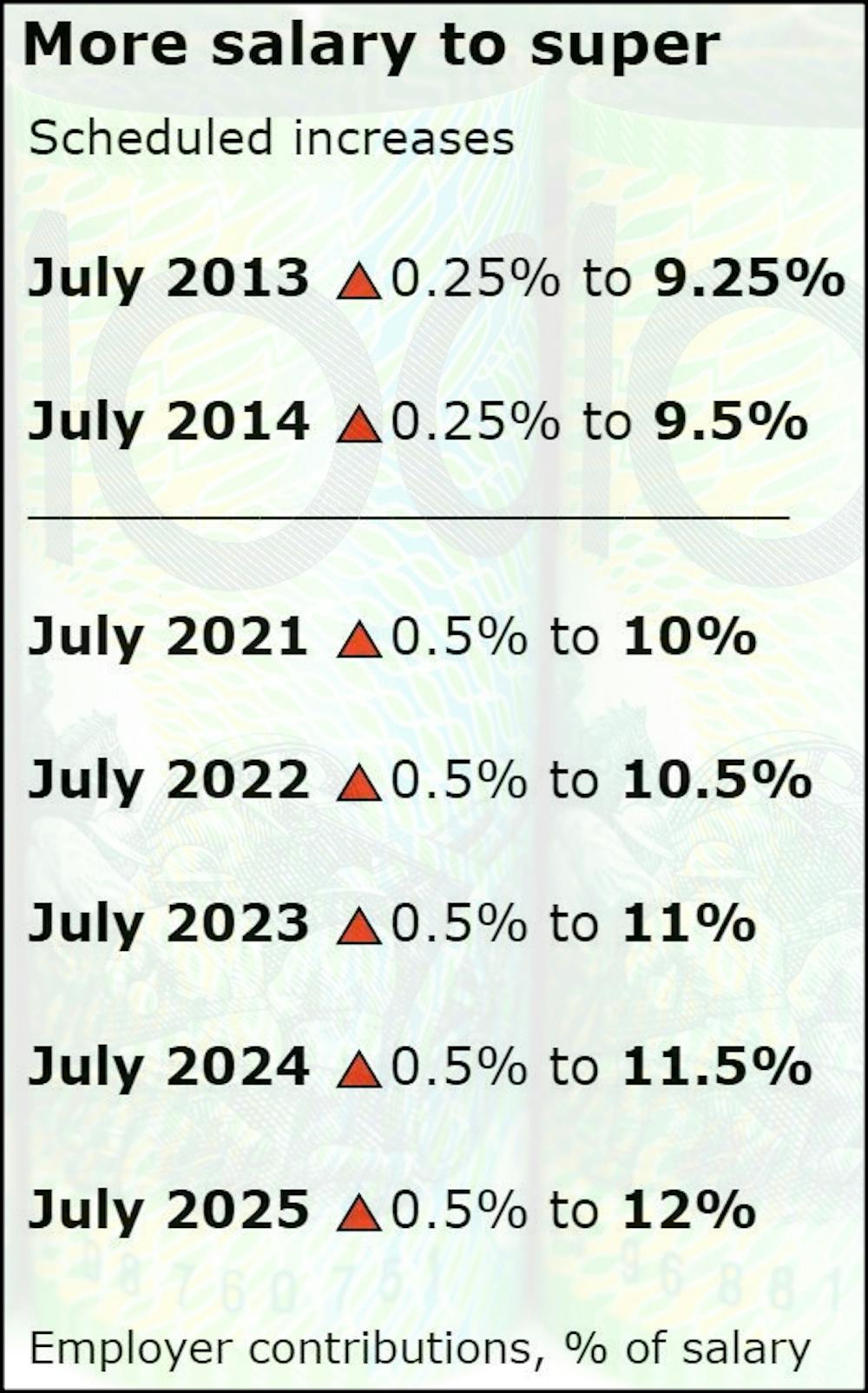

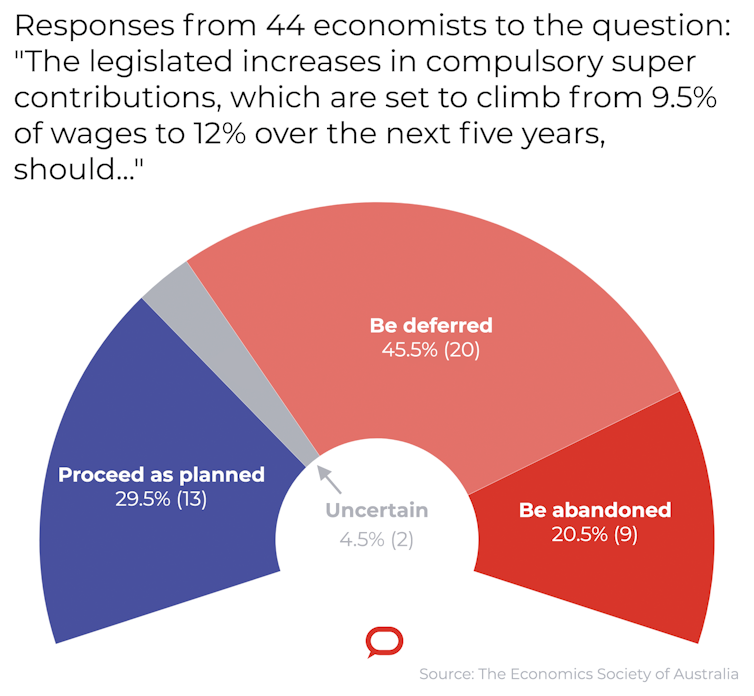
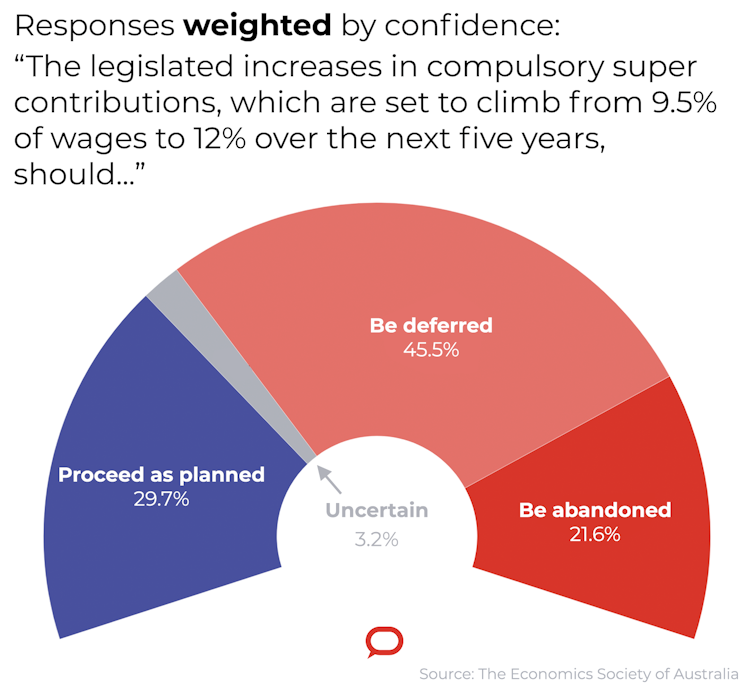
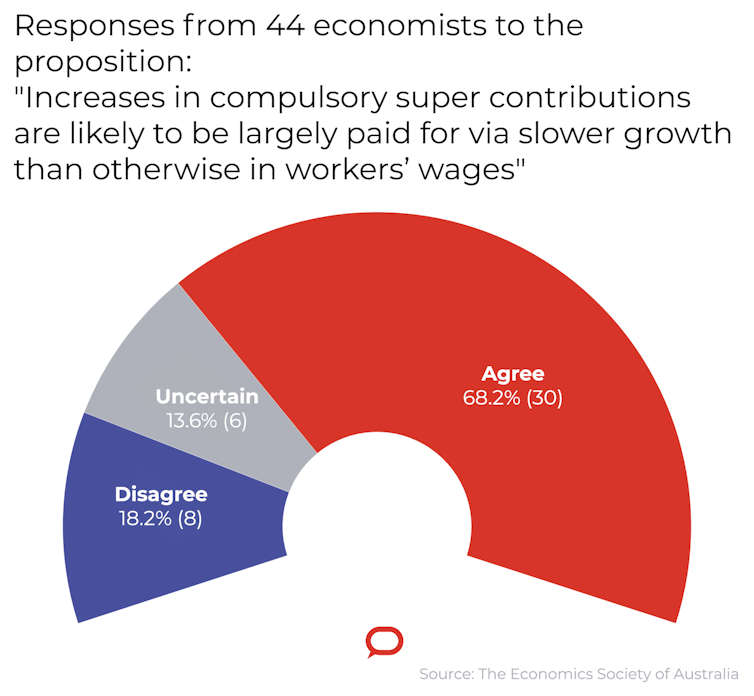
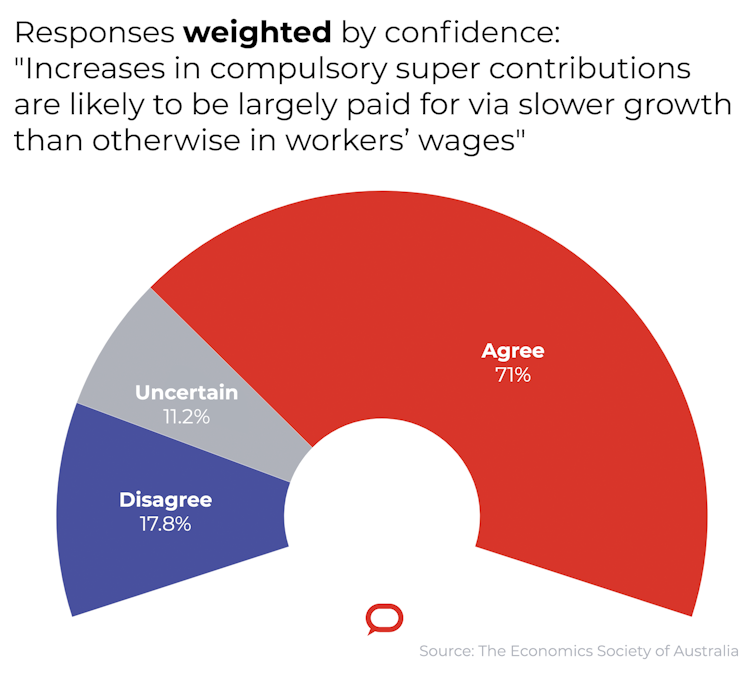



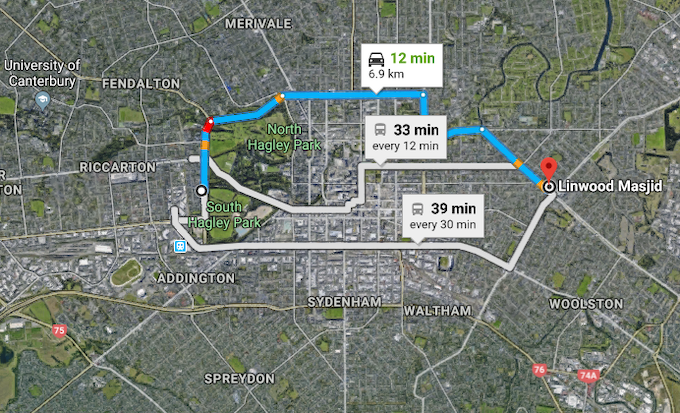
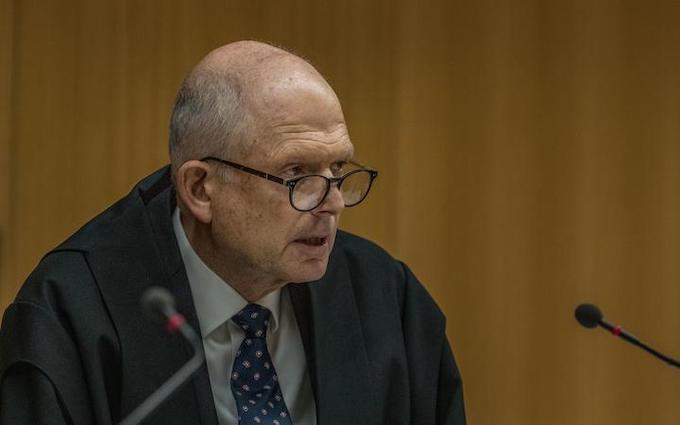
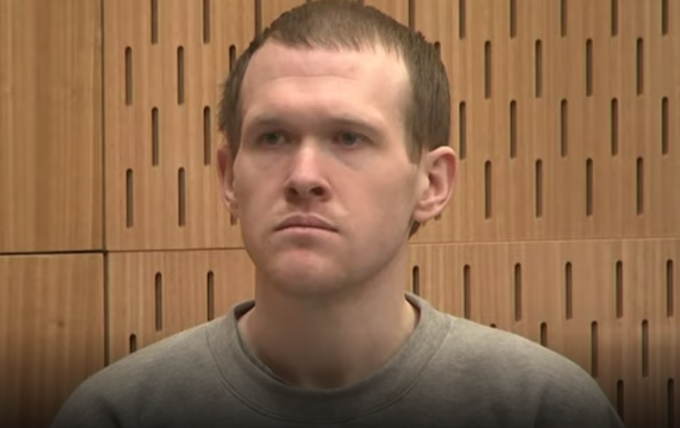
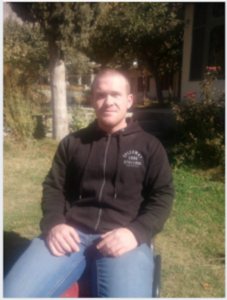
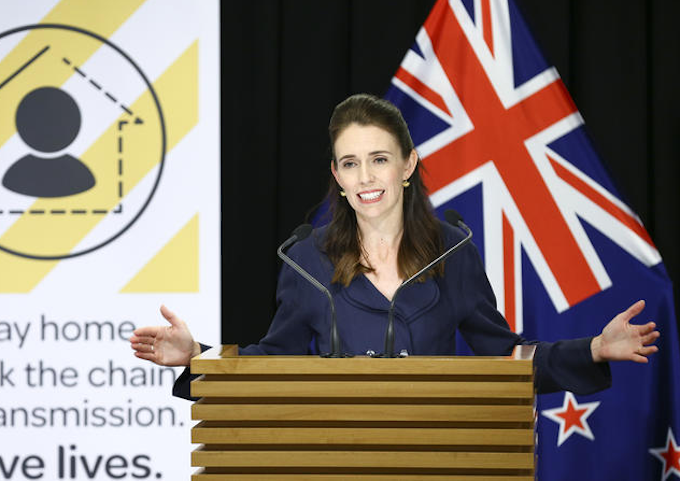
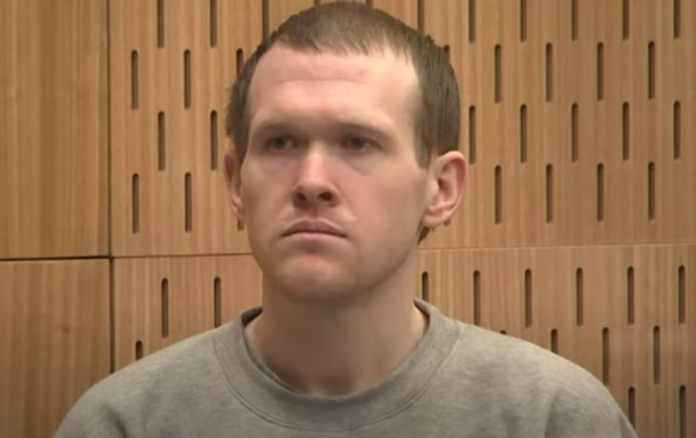
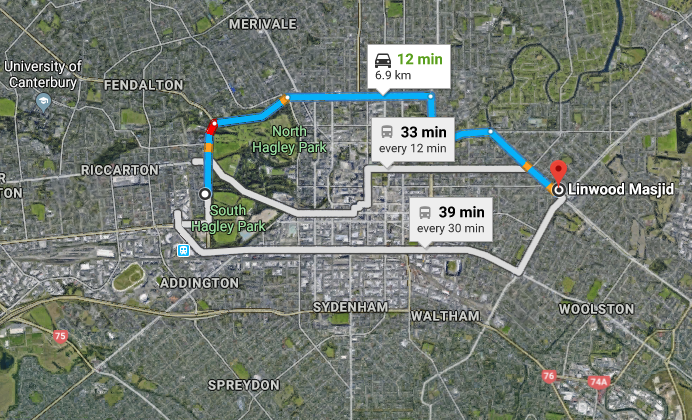
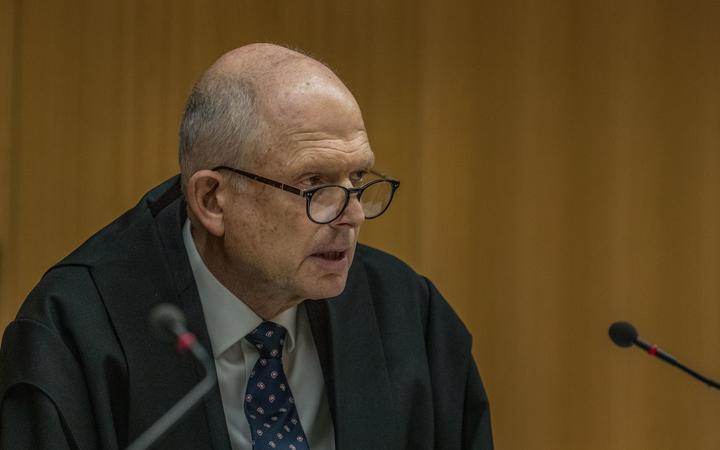


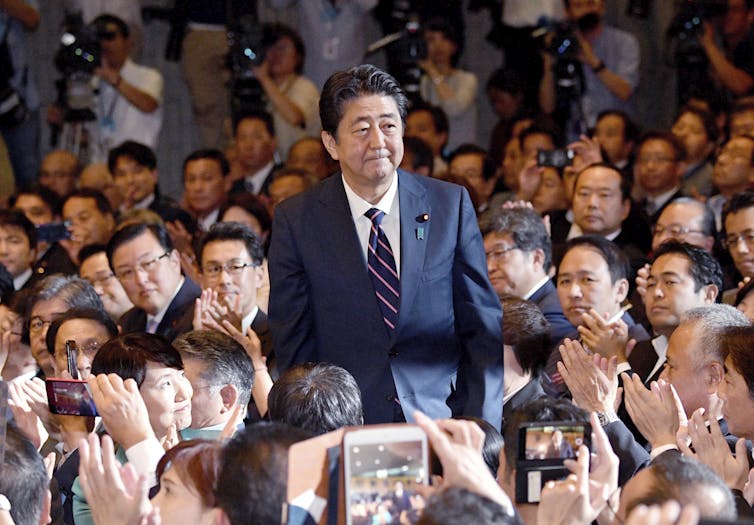
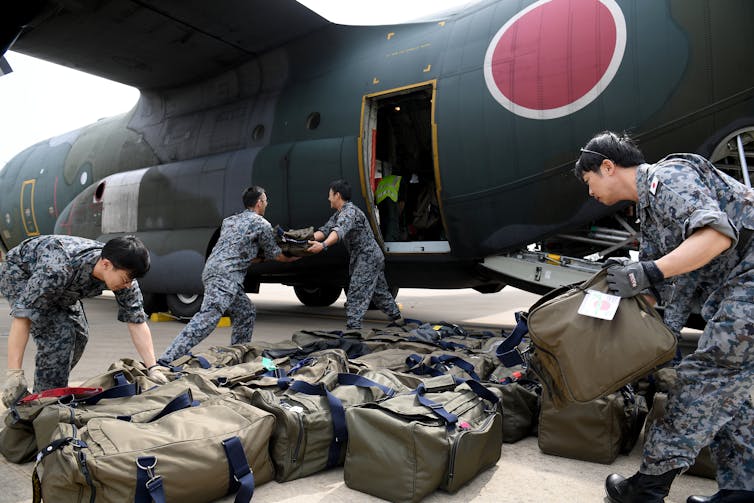
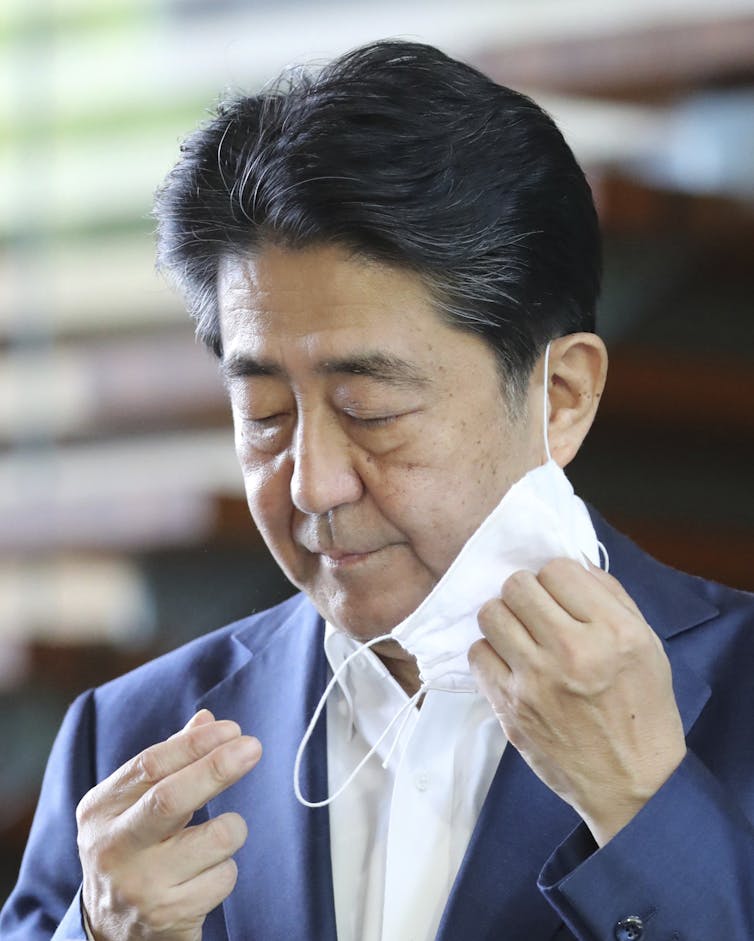

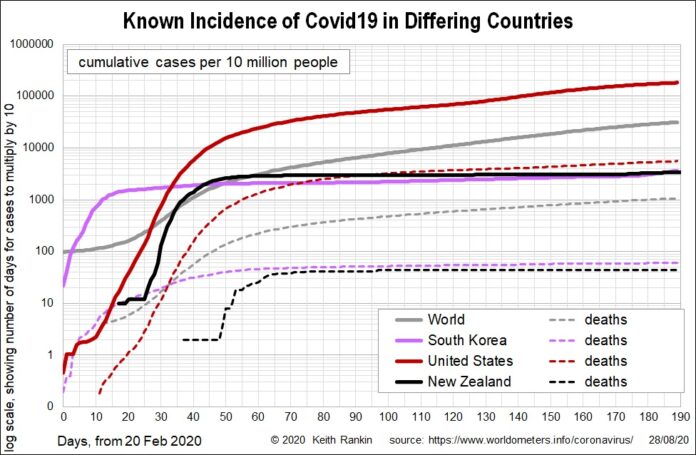
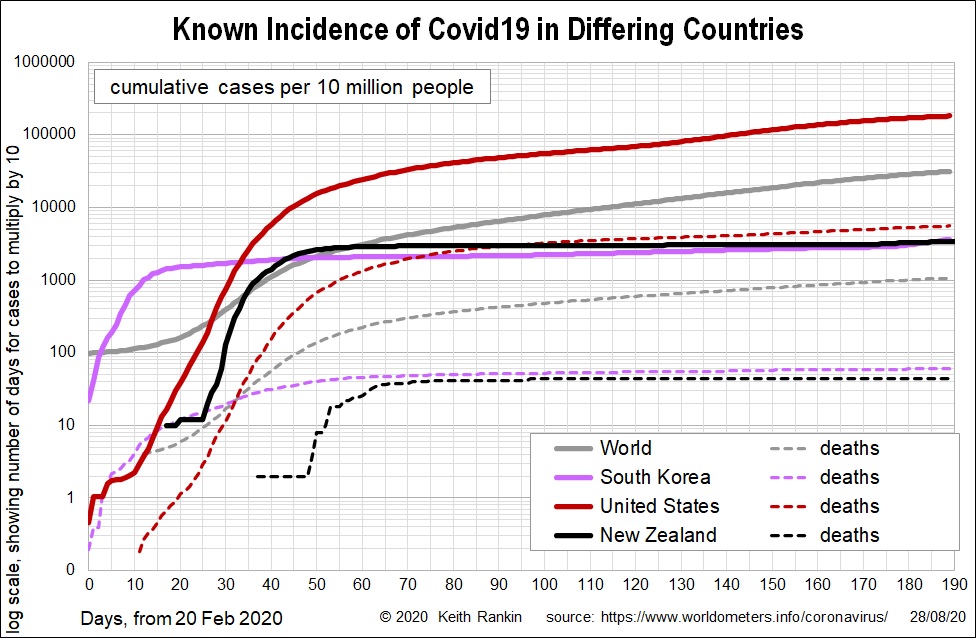
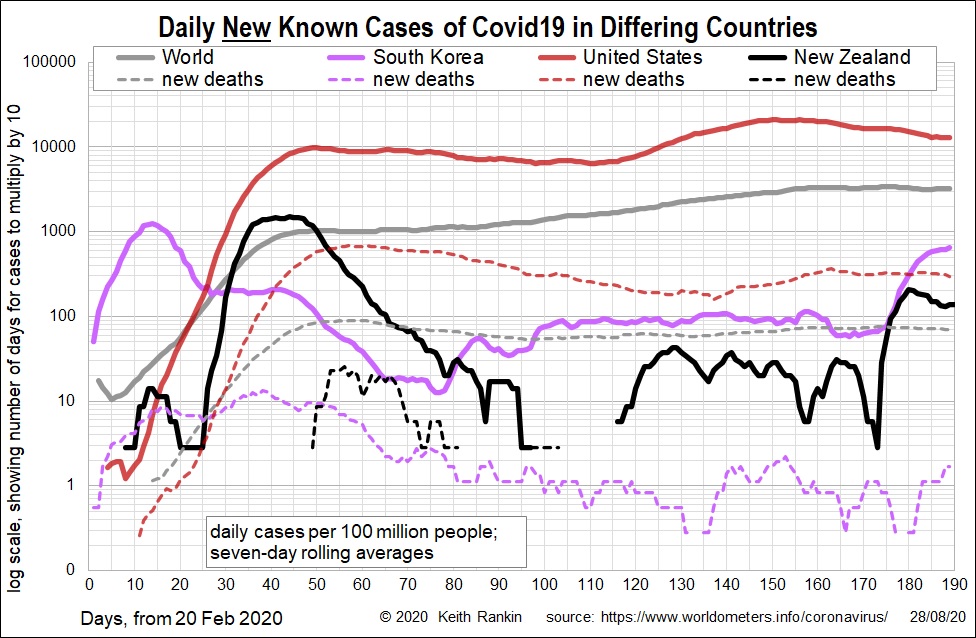
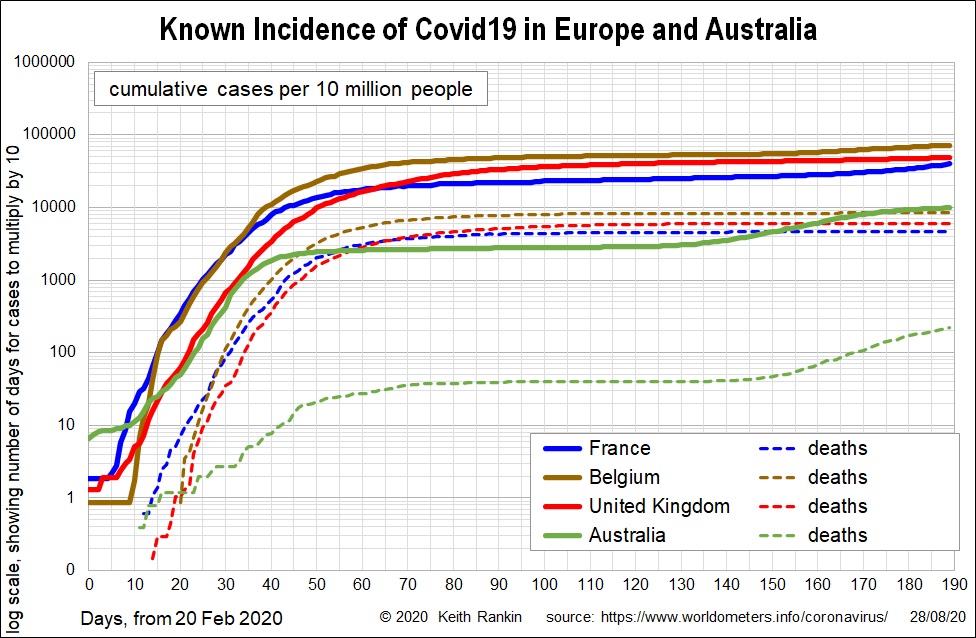
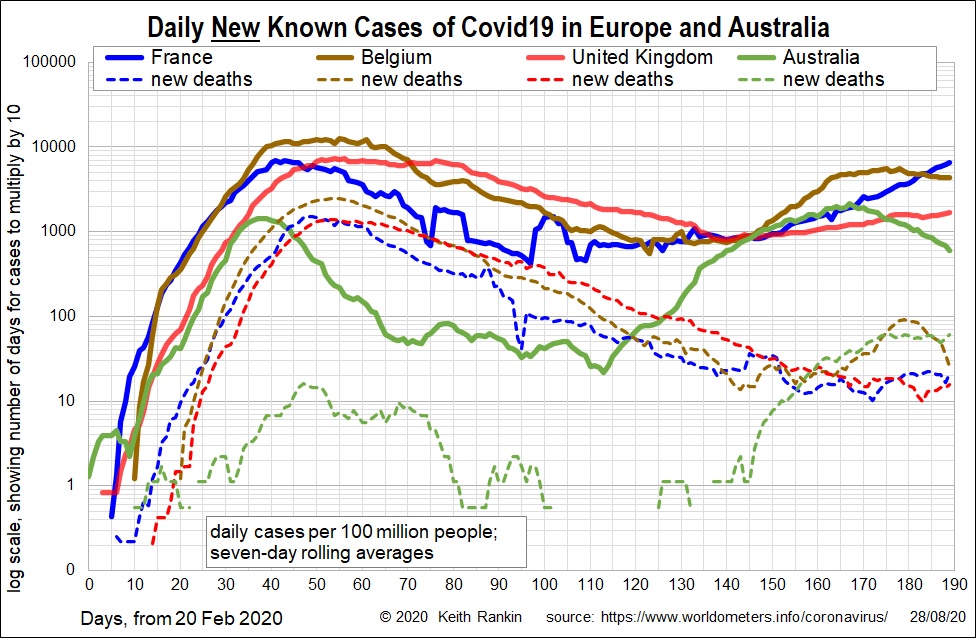

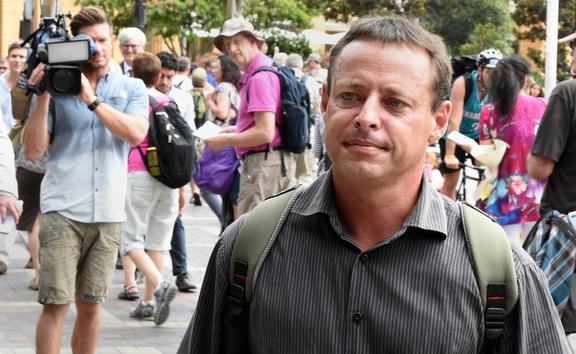
.jpg?1588588937)
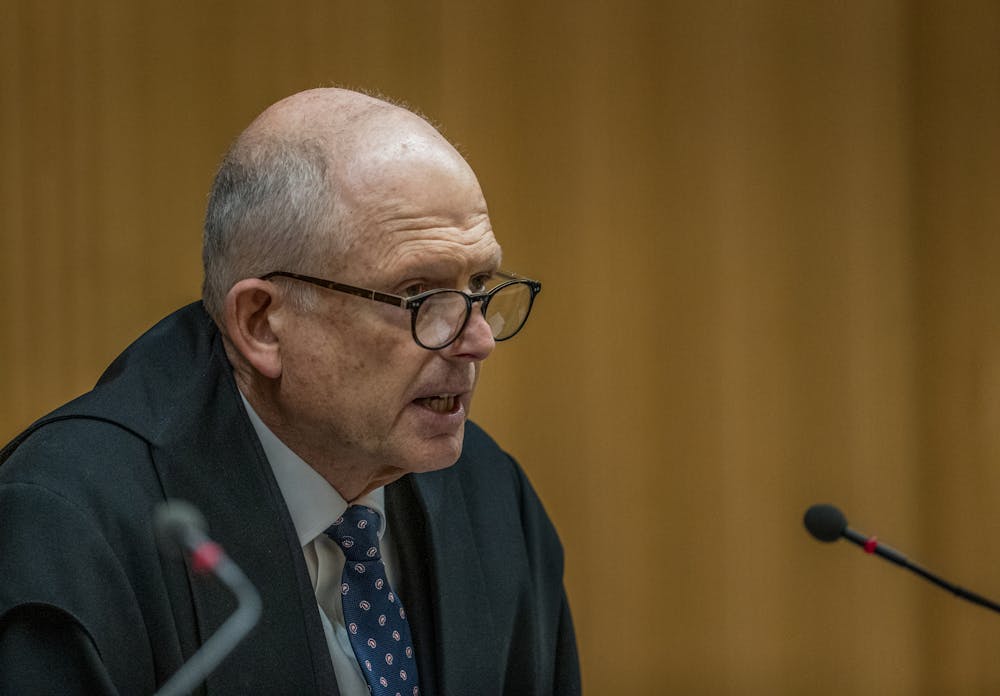
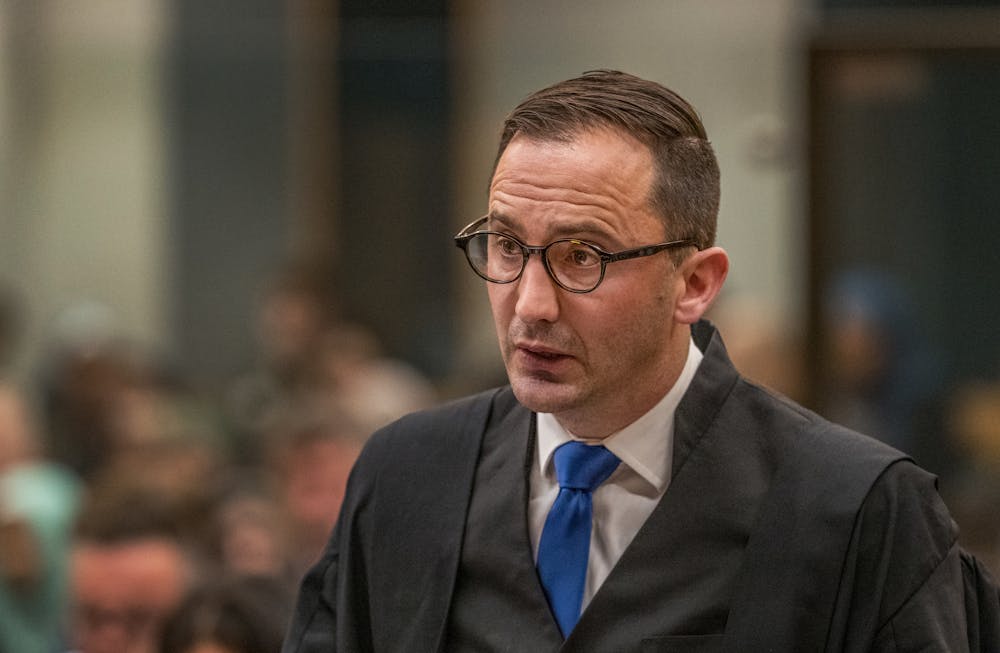





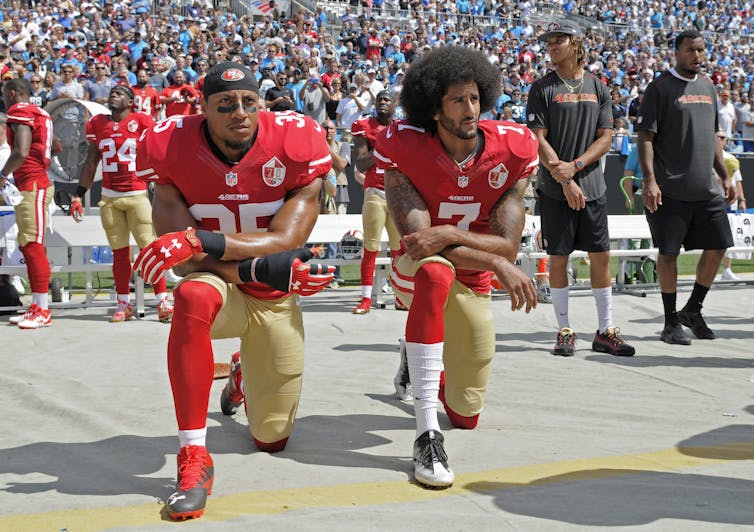


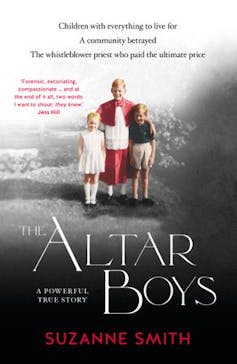
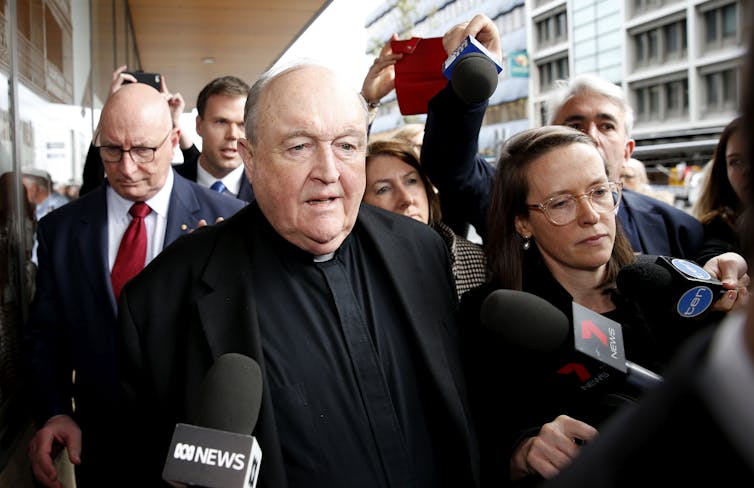

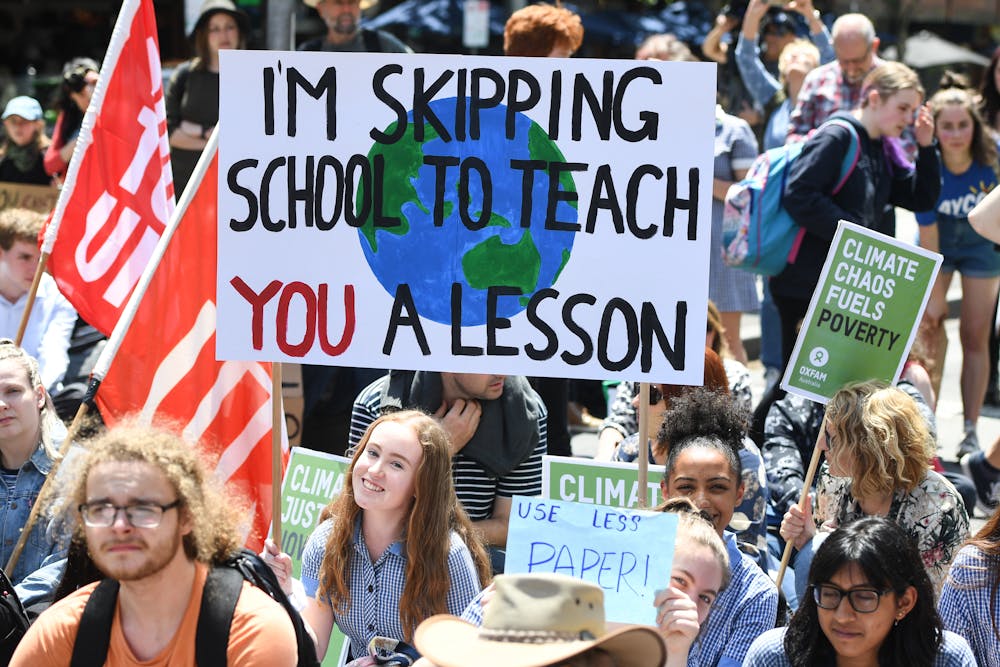
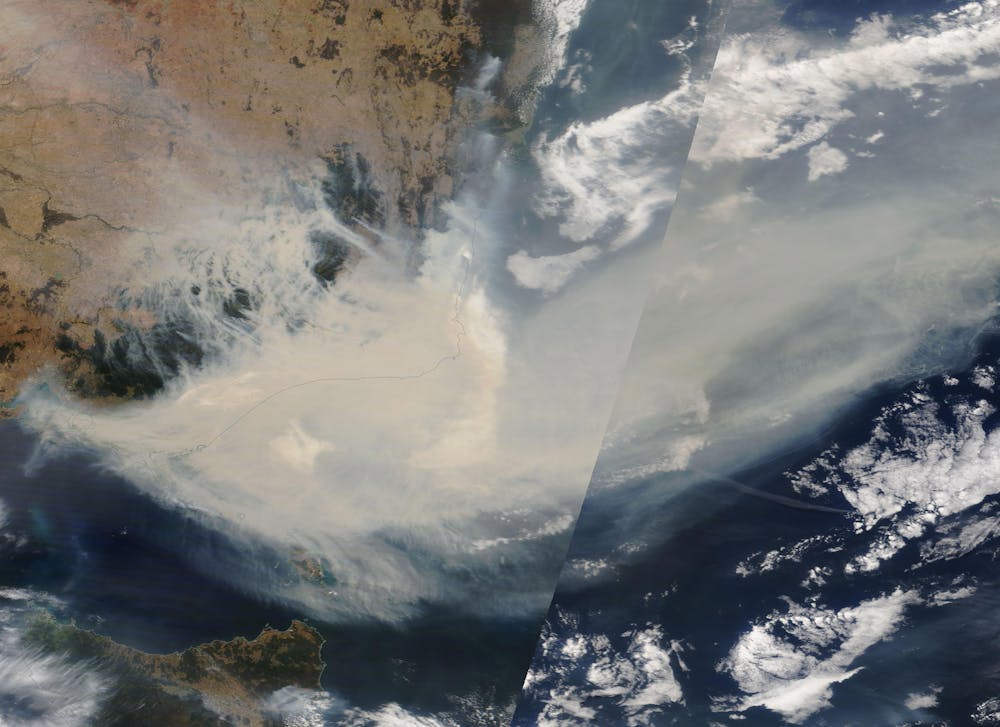
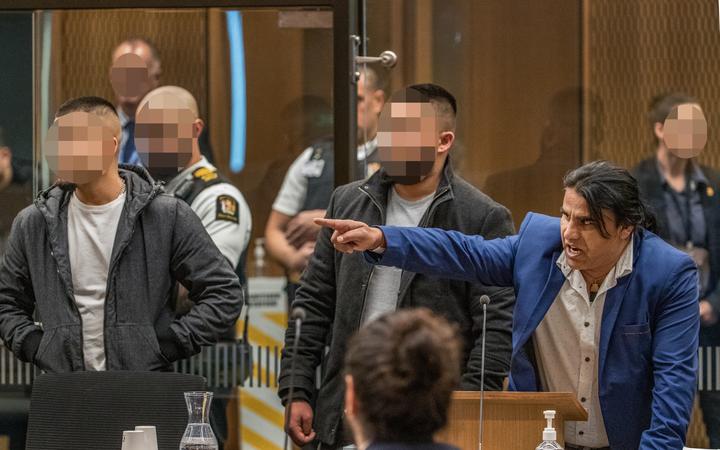
.jpg?1598415448)