Recent reports about the deportation of a 15-year-old from Australia to New Zealand have reignited a dispute between the two countries about the proper management of offenders who have been born overseas.
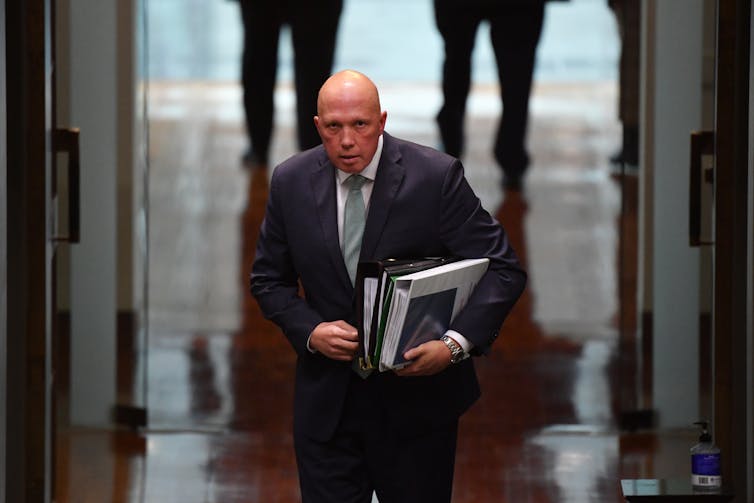
The reports came at the time Australia’s former Home Affairs Minister Peter Dutton described the program of deporting non-citizens with a criminal conviction as “taking the trash out”.
It later emerged the Department of Home Affairs said the youth had requested deportation, although it added he would have been removed anyway.
The character test
For some years we have researched the experiences of Kiwis deported from Australia under the now infamous provisions of the Australian Migration Act. These provisions authorise the relevant minister to order a deportation on “character” grounds, defined in the legislation.
We explained before that the principal provision authorising the deportations is section 501 of the Act. That is why the deportees often refer to themselves as “501s”.
There is an even more slippery provision in the Act, section 116. Under that provision, the minister can deport a person if he or she regards them as someone who would or might be a risk to the health, safety or good order of the Australian community or a segment of the community.
We return to the risk assessment exercise below. What is clear is that these deportations have torn families apart. Imagine arriving in a country with a few hundred dollars, lacking knowledge of the complexities of navigating the systems you are forced to engage with just to survive.
Feeling overwhelmed
Through our studies we encountered adults who have experienced this. When they arrive in a new country, with new rules, new systems, many reported feeling overwhelmed, leading some to experience homelessness, serious mental health breakdowns and for some, suicide.
Unsurprisingly, adults deported to a country where they may have no family, no attachments and no contacts will struggle psychologically, emotionally and financially.
Many of them have lived in Australia for several years, and many arrived in Australia as babies. New Zealand is not their home.
Imagine how much worse this would be for children cut off from their home, their family, friends and the only life they have ever known. How are children expected to manage their way through systems that have crushed the spirit of their adult counterparts?
Our research found many of the people detained under Australian immigration legislation were removed from the Australian state they were living in prior to detention and deportation.
This meant they were deprived access to family life (a human right) even before they were deported. Many are advised that instead of languishing in detention they can appeal their deportation once they are in New Zealand, but this can be very expensive and, practically, is very difficult to do.
As we have also previously observed, there is no indication that the risk assessment implicit in section 116 has been conducted by professionals (such as forensic psychologists) who are properly qualified in assessing risk.
Instead, the deportation of people on character grounds is said to be proven by the fact of prior conviction. The corrective or even redemptive effect of imprisonment is ignored.
It turns out that “paying your debt to society” is not complete once you have left an Australian prison if you have foreign citizenship.
In various media releases and interviews, Peter Dutton has indicated sections 116 and 501 are important to ensure Australia is safe from people who have committed murder or rape.
But they only made up 8% of visa cancellations in 1 July 2019 to 30 June 2020. The majority were drug (23%) and assault (17%) offences.
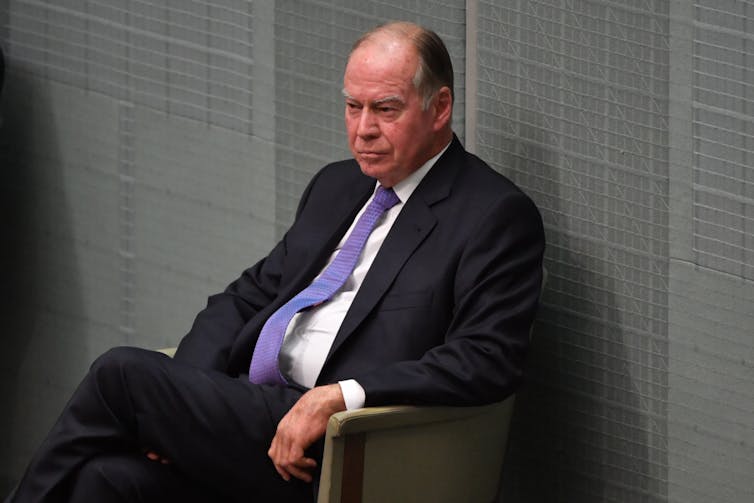
Former Home Affairs Minister Peter Dutton: making Australia safer?AAP
Will they re-offend?
A cursory glance at the research shows recidivism rates are not uniform across offenders.
There is a vast body of research demonstrating the risk of reoffending can be objectively measured using techniques developed by forensic psychologists over many decades.
Yet this scientific work is routinely ignored and instead people are being deported on the basis they will continue criminal activity.
Broadly, these deportations reflect the growth of actuarial justice: the classification and management of groups of people on the basis of their presumed danger.
The risk presented by an individual is not researched or even analysed, it is simply removed.
There is ample evidence of the harm these deportations produce, and limited evidence or risk of recidivism in allowing people who have paid their debt to society to stay in Australia.
We are instead risking serious and lasting damage to our dear relationship with our friends in New Zealand.
UK researchers Bill Hebenton and Toby Seddon observed in 2009 that “the limitless pursuit of security can end up subverting security and justice in deeply damaging ways”.
This seems like a pretty good example of this phenomenon.
As allegations of rape and sexual assault engulf Australian federal politics, several current and former female staffers and politicians have come forward to share their stories of a culture of toxic masculinity within Australia’s political bubble.
It’s unfortunate that while gender roles are evolving at home, gender inequality and overt sexism remain prevalent in Australian political culture and in many workplaces across the country.
While the effects of a culture of toxic masculinity are most detrimental for the victims, other employees in workplaces and the wider community can also be negatively impacted.
This opens up a broader question: how does a toxic and sexist workplace culture affect the health and well-being of employees and organisations?
What does a toxic and sexist workplace look like?
A culture of toxic masculinity is a hostile work environment that undermines women. It’s also known as “masculinity contest culture”, which is characterised by hyper-competition, heavy workloads, long hours, assertiveness and extreme risk-taking. It’s worth noting this type of culture isn’t good for men, either.
Such workplaces often feature “win or die” organisational cultures that focus on personal gain and advancement at the expense of other employees. Many employees embedded in such a culture adopt a “mine’s bigger than yours” contest for workloads, work hours and work resources.
These masculinity contest cultures are prevalent in a wide range of industries, such as medicine, finance, engineering, law, politics, sports, police, fire, corrections, military services, tech organisations and increasingly within our universities.
Microaggressions are common behaviours in workplaces steeped with a masculinity contest culture. These include getting interrupted by men in meetings or being told to dress “appropriately” in a certain way. There are also overtly dominating behaviours such as sexual harassment and violence.
These behaviours tend to keep men on top and reinforce a toxic leadership style involving abusive behaviours such as bullying or controlling others.
A hyper-masculine work environment might look like huge workloads, long hours, hostility, assertiveness, dominance and an extremely competitive culture.Shutterstock
At a very basic level, workplaces should afford women safety and justice. But women’s issues are left unaddressed in many workplaces, and many fail to provide women employees with psychological safety or the ability to speak up without being punished or humiliated.
This might be because leaders in the organisation are ill-equipped to deal with these issues, feel uncomfortable bringing them up or, in some cases, are sadly not interested at all.
Evidence suggests a toxic workplace culture can negatively affect employees’ psychological, emotional and physical health.
Emotional effects include a higher likelihood of negative emotions such as anger, disappointment, disgust, fear, frustration and humiliation.
As these negative emotions build, they can lead to stress, anxiety, depression, burnout, cynicism, a lack of motivation and feelings of self-doubt.
Research also points to increased chances of physical symptoms, such as hair loss, insomnia, weight loss or gain, headaches and migraines.
Employees in toxic workplaces tend to have poorer overall well-being, and are more likely to be withdrawn and isolated at work and in their personal lives. Over time, this leads to absenteeism, and if problems aren’t addressed, victims may eventually leave the organisation.
For some victims who may not have advanced coping skills, a toxic culture can lead to a downward mental and physical health spiral and contribute to severe long-term mental illness. They may also engage in displaced aggression, in which they bring home their negative emotions and experiences and take out their frustrations on family members.
Employees in toxic work environments are more likely to be withdrawn and isolated, both in the office and outside of work.Shutterstock
How can workplaces change?
Workplaces aiming to make a real change should start by promoting an open culture where issues can be discussed via multiple formal and informal feedback channels.
One option is formal survey mechanisms that are anonymous, so employees can be open about their concerns and feel less intimidated by the process.
A good first step is having leaders trained to address these issues.
Traditionally, workplace interventions have focused on victims themselves, putting the onus on them to do the work and come forward. However, a healthy workplace culture should see leaders actively seeking feedback to make sure any forms of toxic masculinity are stamped out.
It’s a shared responsibility, and the onus shouldn’t be solely on employees, but leaders, too.
On Sunday afternoon, Channel 9 posted a cryptic tweet indicating it was under attack. The accompanying video acknowledged that the failure to run the Weekend Today show that morning was attributed to a major cyber incident.
Reporting also confirmed the situation had affected the network’s ability to “produce its news and current affairs content”.
Emails and editing systems were all impacted by the incident, in what was described as an unprecedented attack against a mainstream media organisation in Australia. In a follow-up article, 9 News described the outage as a “sophisticated and calculated attack” that has “fundamentally disrupted how the network delivers and presents news”.
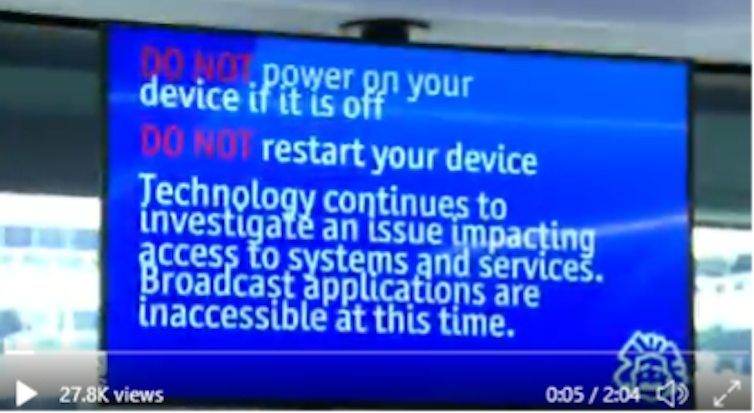
The disruption was so significant that many Channel 9 staff were instructed to work from home. They were also warned to avoid turning on or restarting computers until the problems were addressed.
Screenshot from Channel 9 news clip.Channel 9 news clip
As is often the case in the early stages of a major cyber incident, details are scarce, and it’s very hard to know who is behind it.
The speed with which the malware spread through system may indicate a concerted effort to misuse Channel 9’s systems. Some experts have pointed to the possibility of fraudulent “IT updates” being sent out to users’ computers to spread the infection. This suggests the attacker(s) may have had prolonged access to Channel 9’s systems before the events on Sunday.
Although live television broadcasts resumed quickly, it is likely that a full recovery behind the scenes will take considerably longer. It could potentially cost significant time and money to fix the existing problems and address the underlying vulnerabilities that allowed the attack to be so effective.
How did it happen?
Ransomware attacks often start with a phishing attack, in which large numbers of emails are sent to staff at an organisation.
These emails often replicate the look of a legitimate message, and can include seemingly privileged information (such as staff names and internal departments) in an attempt to appear genuine.
These emails aim to deceive individuals into clicking on a link or installing a file, perhaps by claiming this is a necessary patch to repair an issue with their computer.
Once installed, ransomware will typically encrypt important files or even entire systems, rendering them inaccessible. The malware will often target common file types such as Word documents, PDFs, spreadsheets or emails.
A ransom demand from the infamous WannaCry malware.Wikimedia
Many cyber-criminals have a financial motive, and will typically ask for a ransom in exchange for releasing the locked-out data. The “key” to unlock the data will usually be transmitted to a remote server and then deleted from the compromised system.
Another possibility is cyber-sabotage by a foreign state actor. In this context, the attack may be meant as a statement, retribution, or have some other political motivation. In such cases, it is probable that the “key” used to encrypt data is discarded on creation, rather than kept as a bargaining chip. This is distinct from financial cyber-extortion, as the intent is to wreak havoc by permanently denying access to the resources (thus this malware is sometimes referred to as “wiperware”).
Who is to blame?
Although it is too early to definitively attribute blame, media reports have pointed to a foreign state actor. This theory is bolstered by Nine’s statement that “ransomware was used but no ransom demanded”.
Previous state-sanctioned attacks have been attributed to a range of countries, including China, Iran and North Korea. But Russia is considered the most likely aggressor in this instance.
It has been alleged that this attack is a retaliation for Channel 9’s screening of an exposé on politically motivated poisonings attributed to the Russian government.
What next?
Addressing these incidents requires a careful approach. Limiting the spread of the malware is crucial — hence the instruction to staff to avoid turning on devices.
It is also important to identify the specific vulnerability that was exploited, to prevent future outbreaks. If data have been deleted (or rendered permanently inaccessible), backups will need to be retrieved.
While the focus at the moment is on restoring access to systems, the company will also need to conduct a forensic examination of the attack, to ensure lessons are learned.
While Australian news outlets have often reported on previous cyber-attacks, this incident is a wake-up call that they are not immune from becoming targets themselves.
Source: The Conversation (Au and NZ) – By Ben Phillips, Associate Professor, Centre for Social Research and Methods, Director, Centre for Economic Policy Research (CEPR), Australian National University
This week, many Australians are holding their breath.
On Sunday, we saw the end of the JobKeeper payment, with an estimated 150,000 people expected to now lose their jobs as a result. On Wednesday, the Coronavirus Supplement (which boosted the JobSeeker payment) will also stop.
Taking into account a recent $50-a-fortnight rise in the base rate of JobSeeker, this will see most people on JobSeeker earn about $620 a fortnight or $44 a day.
The Australian Council of Social Service has been among those advocating for more support for unemployed Australians, arguing people will “plunge into poverty” with these latest payment changes.
But this week, when interviewed about the impact of the cuts, Social Services Minister Anne Ruston cast doubt on concept of a poverty line. As she told Radio National’s Fran Kelly,
I’m not entirely sure I agree [there is an established line]“.
Last year, Ruston also said the government has never sought to have a “narrow” definition of poverty and does not consider a poverty line when setting welfare payments.
Technically, Ruston is correct. There is no agreed poverty line for Australia and the setting of welfare payments requires more thought than just the calculation of a single poverty line.
However, there are various estimates for the poverty line, and all are well above the JobSeeker rate for April and beyond.
How to calculate poverty
There are two main approaches to calculating poverty — you can either look at absolute poverty or relative poverty.
Absolute poverty is a concept that largely relates to developing countries and is mostly defined around the ability of a person or household to provide the most basic necessities such as food, water and shelter. Relative poverty is usually defined as a percentage of average or median incomes.
A person or household in relative poverty would be one whose income is low enough that they will struggle to provide a living standard that is generally considered acceptable in our society.
For a developed country like Australia, the relative poverty concept is usually the most relevant. These families might struggle to afford items most people take for granted such as clothes to wear for job interviews, housing, the internet, or mobile phones.
Calculating relative poverty is usually based on the reported incomes from nationally representative household surveys such as the Australian Bureau of Statistics’ Survey of Income and Housing. The usual definition used by researchers in Australia is any household whose income falls below 50% of the median (middle) income is in poverty.
There are various minor complexities around the definition of income (disposable vs gross, whether to deduct housing costs, whether to use the median or 60% of income and how to adjust incomes for different household compositions and sizes).
Ultimately, the measures are all imperfect, but so long as they are consistent through time, they provide a useful guide. They show population-wide dimensions and trends about who is likely to be under considerable financial stress.
The Melbourne Institute poverty line
The only established “poverty line” in Australia is the Melbourne Institute poverty line. This measure is a mix of both absolute and relative poverty. Absolute, in that it was based on a basic basket of goods and services a person or family could survive on and relative in that it has been indexed through time using changes in per capita income.
This measure suggests the poverty line is around $1,100 per fortnight for a single person in the workforce and $891 for someone not in the labour force (such as a retiree). An unemployed person is considered to be part of the labour force.
This poverty line is based on research from the Henderson Inquiry into poverty in the early 1970s. While this inquiry is out of date, the numbers nevertheless remain reasonably sensible and consistent.
Relative poverty measures don’t usually discriminate between employed or unemployed or the family type as does the Melbourne Institute measure. Most relative poverty estimates would put the single adult poverty line at around $800 to $1,000 per fortnight.
Our modelling
Colleagues and I have been doing modelling on the impact of these cuts on poverty in Australia, particularly for those who rely on JobSeeker payments as their main source of income.
Social Services Minister Anne Ruston has consistently dismissed calls for a significant, permanent rise to JobSeeker Payment.Lukas Coch/AAP
As we told a Senate committee earlier this month, before COVID, the poverty rate for people receiving Newstart (the old name for JobSeeker) was 88%. When JobSeeker was doubled during COVID, this dropped to 26%. From April 1, poverty will balloon out again to 85%.
Not all households are the same: some are single, some have couples, some have children and some get other payments such as rent assistance or family payments. However, the majority of households whose main income source is the JobSeeker payment will still fall well under the poverty line, whichever way you calculate it.
The problem with JobSeeker
The problem with JobSeeker is the payment has been indexed with inflation, rather than incomes, since the mid-1990s. Since then, incomes have increased by about 50% more than inflation, so the JobSeeker rate has fallen behind the general living standard in Australia. The JobSeeker payment is also about 35% below the age pension payment.
The evidence is compelling that the old JobSeeker rate of around $570 per fortnight required a much more significant increase than $50 per fortnight. This is particularly so because from April, there is likely to be a very large number of people — in the range of 1.2 to 1.4 million — on the payment. This is based on current JobSeeker recipient trends and the expected additional recipients transferring from JobKeeper.
So yes, there are different ways to define and calculate a poverty line. Butppoli there can be no doubt JobSeeker is not enough to keep people above it — or any honest assessment of a decent safety net and standard of living.
Aotearoa New Zealand has a housing problem; a very big housing problem, and a problem not unique to New Zealand. While political leaders and privileged commentators do acknowledge the problem, the discussion remains befuddled, presumably largely because of the compromised political and financial interests of those who we turn to, to lead the discussion.
We have a problem of language, in which the word ‘investing’ is used to cover a multiple of activities, some of which need to be supported and others which should be eliminated. Then we emphasise the word ‘house’, and first-home ‘buyers’; we should be talking about ‘homes’ rather than ‘houses’, and ‘home-seekers’ rather than ‘buyers’ or ‘renters’. And the kinds of ‘investors’ which home-seekers do not like should be called ‘land speculators’ rather than ‘investors in rental housing’; because, in many cases they are not suppliers of homes for rent.
The most fruitful approach to take is to promote the reality that all home-dwellers are renters, thereby downplaying the distinction between ‘owners’ and ‘renters’. Our system of national accounts makes no distinction; the rental value of all dwellings is included in gross domestic product (GDP). The trick is to understand that an owner-occupied dwelling is a property in which the same ‘family’ is both tenant and landlord. We should also note that, while governments will always need to play some role in the market for homes (and especially in times of income inequality and income precarity), the principal home-supplying institution is and should be the market.
(Here, I am going to refer to all home-dwellers as ‘families’. Families are not necessarily all blood-related, and include ‘flats’ of unrelated single people. And, while families may be households of just one person, we should be able to rely on market forces to supply more small homes in times when there are more small families.)
So let’s get some good and clear language. Urban landlords – ‘landlords’ in this context – are owners and ‘letters’ of homes; they are people who let the homes that they own. They may own one or more homes, and they may let their homes to themselves or to separate ‘tenants’. Landlords – as defined here – are good people; they represent the solution, not the problem. And these ‘good landlords’, good people as defined, may also be tenants who rent the separate home that they live in, most likely a home of a different size or in a different place from the home(s) they own. Again, these people are part of the solution, not part of the problem.
‘Good landlords’ – as carefully defined – come within the media category of ‘investor’. So do ‘slum landlords’, people who own poorly-maintained homes which they let mainly to other people (though some who are miserly may themselves choose to live in poor conditions in a home they own) whom they financially exploit. It is a moot point to what extent slum landlordism exists in Aotearoa in 2021, but we know from studies of geography and history that slum housing is the market’s response in societies with high levels of income inequality and income precarity. My sense is that Aotearoa’s policymakers will fail, and that, say in 2041, a large minority – maybe even a majority – of New Zealanders will live in slums. But ‘slum landlords’ are not the kinds of ‘investors’ I am concerned about here.
There is a second type of good investor – genuine ‘property developers’. These are people who buy urban land for the purpose of demolishing old houses and building new homes, or making new homes through subdivision, or making new homes by repurposing existing houses. These ‘brownfield’ developers are an absolutely necessary part of the solution; indeed we see in Auckland many property developments taking place, many in the form of medium-to-high density apartments which are reasonably central and well-located for public transport. These homes, located in places where urban infrastructure is already in place, incur low ancillary costs. There are also costly ‘greenfield’ property developments on the urban fringe, or sprawling beyond it into places without infrastructure and in which land may be presently used in horticulture. Property developers do tend to respond to market forces, and it is up to central and local governments to incentivise the brownfield over the costly greenfield developments. Good investment incentives – incentives that lower the cost of making homes – will in many cases be effective subsidies, not new taxes.
The bad types of ‘investors’ are the land speculators, who buy urban land, hoard it, and thereby create land scarcity, and that scarcity forces up the price of land. We know that much of this hoarding is happening, former homes ceasing to be homes, creating a shortage of homes. This reduction in the supply of homes is the principal force that is driving up rents; if good landlords are buying more houses, the result would be an increase in the supply of rental homes, and rents should not be increasing anything like as much as they are. It is this kind of false ‘investment’ – ‘landbanking’ as real estate agents call it – that is socially and economically corrosive, and needs to eliminated. This elimination should be able to be addressed largely through targeted cost disincentives, but also by the threat that land hoarding may be excised through compulsory government purchase options.
Land hoarding takes various forms. While the most blatant form of hoarding is that of empty houses, the new euphemism is ‘short-term rentals’. This may include listing properties on platforms such as Airbnb, even though the property is empty most of the time. It may include other situations which might best be called house-sitting, and in which house-sitters may be the adult children of the property hoarders. And it may include properties administratively signed over to property managers on the understanding that these managers are working, like lawyers, solely on behalf of their extortion-motivated clients. Either way, these hoarded urban properties contain houses that are not able to be proper stable family homes. For present purposes, I will include empty properties as extreme cases of ‘short-term rentals’. Short-term rentals are houses that are not homes.
Supply of and Demand for Homes
We keep hearing that ‘supply’ is the problem, and many economists emphasise the supply of land on or beyond cities’ fringes. Other aspects of the supply issue – as promoted in the media – are bureaucratic ‘red tape’ and the unpreparedness of local governments to generate infrastructure to support such greenfields housing. Surprisingly, these economists underplay the opportunity costs represented by the existing uses of such land, and the goods and services that would need to be given up to assemble a greenfields housing labour force. Also, they have underplayed supply constraints on building materials, and on construction education.
The real supply issue is that properties which were once homes are becoming ‘short-term rentals’. Thus, the supply of homes diminishes every time a house with a family in it – a home – is acquired by landbanking ‘investors’ and thereby ceases to be a home. The supply problem would be much less if, every time a home is sold, that property continued to be a home. In cases where one tenanted home is sold by one landlord to another, the default situation should be that the tenancy is simply transferred to the new landlord.
The critical issue is what happens to homes after they are sold. Because there is too little political will to actually solve the home-shortage problem, there is too little will to collect statistics about what happens to homes when they are sold to ‘investors’. We continue in an information vacuum. The convenient but untested fiction is that all investor-purchased houses are ‘rentals’ that are subsequently let to families. Just because lazy commentators label a house a ‘rental’ does not mean that the house is actually rented out to a family.
So, if the acute shortage of supply is a result of houses ceasing to be homes, then the immediate corrective is to reverse that process, using policy levers to ensure that all existing houses – or at least all houses in New Zealand’s urban centres – can become someone’s home. It matters little if these new homes are tenanted or owner-occupied; what does matter is that our houses are owned by good landlords (and noting that an owner occupier is a landlord, and usually a good landlord).
We need strong incentives against inappropriate land ‘investments’, and effective subsidies that support genuine investment in the processes of making homes.
Re the demand for homes, there should be no pretence that an owner-occupied home is in any sense a superior home to a tenanted home. A home is a home; the structural maintenance is the responsibility of the owner, and the homeliness of a home results from the ability of families to make their dwelling feel like a home. Most ‘first-home’ buyers are both making a home and an investment, whereas successful renters are simply making a home. While increased demand for homes is determined by demographics – especially population increases, employment opportunities will also substantially determine which places see the greatest increases in demand. Well-functioning markets – supported by effective and appropriate subsidies – should ensure that supply responds to demand; locally, nationally, and indeed globally.
Earlier I alluded to the issue that good landlords ‘may not live in any of the homes that they own’. A special case that needs supporting is that of families who own just one home, which they let to others, while living as tenants in a home they rent from someone else. While this situation is an obvious one for families who migrate from a provincial city to a metropolitan city, and helps to develop a home rental market in provincial cities, it also makes sense as a responsible way of getting on the ‘property ladder’. A well-functioning property-owning democracy – a liberal democracy – should have both dispersed private property holdings and acknowledged public property rights.
What should happen is that such families only pay tax on their net rental income. (If they pay more in rent than they receive in rent, then they should pay no tax on their rental income; indeed there is a good economic efficiency case that they should ‘pay’ a negative tax on a negative net rental income.) At present such people cannot offset rent paid against rent received, having to pay marginal tax rates (eg 33%) on the full rental income, though net of certain expenses including mortgage interest. If these people, whose activities facilitate the supply of homes, lose the ability to deduct interest costs from their rental earnings, then they will suffer double jeopardy.
In general, no policy that adds to the cost of home-making should be countenanced. The plan to remove the ability of good landlords to deduct interest costs from their taxable income is such a policy that should not be countenanced.
The interest rate and migration fallacies.
In addition to the widespread clamour to increase the supply of homes through costly suburban sprawl (while ignoring the on-going reduction in the supply of homes as a result of land-hoarding), many commentators point to two other factors that may be creating an excess demand for urban land.
The main bugbear over the last decade was increased immigration of people. This argument was largely false, because such immigrants tend to rent their homes, meaning that rent-increases should have preceded house price increases; in fact, it was house price increases that came first, with rents lagging. (In addition, last decade, rising house prices, predominantly in Auckland, caused a substantial exodus of population from Auckland. Those parts of Auckland with the fastest increasing house prices were the parts of New Zealand with the slowest population growth.) However, in the last decade, the immigration of capital was an important factor. Much of the immigration of capital took place within the banking sector; eg Westpac Australia lending to Westpac New Zealand.
The second issue is that of interest rates. While it is true that low interest rates stimulate consumer borrowing – hire purchase, cars – and productive business borrowing – that is, they stimulate the demand for goods and services – they do not particularly stimulate the borrowing that funds speculative asset purchases. (The most important speculative assets are land, and company shares.) The best way to see this is to consider the speculative processes at play in the years before the 2008 global financial crisis. These were years of high and rising interest rates. What happened was that banks shovelled money into the speculative markets because the high interest rates rendered productive but unsecured lending to be high risk. The situation today is similar, with – for a variety of reasons – lending to non-speculative borrowers being constrained.
(In and around 2008, I was teaching financial economics with the help of a textbook by a well-known right-wing American economist; yet that textbook made the point I have just made, with clarity. Speculative borrowing is insensitive to the rate of interest, because, during periods of high expected capital gain, the returns on such borrowing substantially outstrip even high interest costs. This was also true in the 1980s when really high interest rates also contributed to property speculation, including the overwhelming of Auckland’s city centre.)
Interest rates are low in New Zealand and the world because they need to be, to fund construction projects and consumer durables. Arguably interest rates in some countries – eg New Zealand – needed to be even lower over the last decade than they were. Countries in Europe with negative interest rates – Denmark, Sweden, Switzerland – did not have housing bubbles on the scale of countries such as New Zealand which had significantly higher interest rates.
Rent Controls?
Finally, rent controls are not the answer to the present (or any other) home-making crisis. Rent controls lead to a contraction in the supply of the homes for rent that we desperately need more of. They exacerbate shortages of homes. One possible benefit of such controls, could be an increase of house sales to people who plan to live in those houses. More likely, we would see an increase in the rate of presently rented homes being disestablished as homes upon being sold, and converted into the euphemistic ‘short-term rentals’. (I wonder how long it will be before the government resorts to becoming a customer of Airbnb, as another – in addition to motels – expensive source of emergency housing!)
Conclusion
Any policy (including but not only a tax policy) that forces landbankers to divest themselves of hoarded land – and only targets these landbankers, not home-owners nor brownfields property developers – is a good policy. The result is that houses which are not homes at present become homes once again, and that newly built dwellings in established urbs and suburbs will all become people’s homes.
————
Keith Rankin, trained as an economic historian, is a retired lecturer in Economics and Statistics. He lives in Auckland.
They asked shoppers at a New Jersey mall to take part in a so-called fluid intelligence test. Fluid intelligence is problem solving ability unrelated to language or knowledge.
The test is usually presented as a series of eight images, each different from the one before, followed by an invitation to guess the ninth.
It’s usually pretty easy. And it was indeed easy for the first half of the shoppers they tested. Comparing the scores against self-reported income, the researchers found no significant differences — “the rich and poor looked equally smart”.
Just before they presented the first half of shoppers with the test, they also presented a hypothetical scenario:
Imagine that your car has some trouble, which requires a $300 service. Your auto insurance will cover half the cost. You need to decide whether to go ahead and get the car fixed, or take a chance and hope that it lasts for a while longer. How would you go about making such a decision?
For the second half of shoppers they presented the same scenario with just one change. Instead of the car service costing $300, it cost $3,000.
The one simple change had a remarkable effect on the test results of just one group of shoppers — those on low incomes. Although completely fictional, the scenario got them thinking about how they couldn’t afford a $3,000 bill from out of the blue. They mightn’t know where to find the money.
Instead of performing as well as the high earners (which low earners had done without the $3,000 prompt) they did dramatically worse. Their mental impairment was as bad as if they had lost an entire night’s sleep.
Stress is costly when ends can’t meet
The researchers have replicated the results time and time again. Even when they pay for correct answers (which might be expected to incentivise low earners more than high earners) low earners can’t concentrate enough to do well , but only when “tickled” — when reminded of how precarious their existence is.
The authors’ conclusion is that it is incumbent on authorities not to send such people over the edge — not to make them fill in multi-page forms or reapply for assistance or attend recurring pointless meetings, and not to send them unexplained unpayable bills out of the blue — not to do anything that will remind them of how their finances don’t really allow them to cope.
When that happens, when what Mullainathan and Shafir call mental bandwidth is flooded, its hard to think properly about things such as caring for children and getting work.
Australia’s treasury gets it. Its wellbeing framework sets out five points it believes should be considered in designing programs and policies. Point five is the cost to individuals of “dealing with unwanted complexity”.
Not so treasury’s political masters. When on Thursday the government boosts JobSeeker by a meagre $25 a week it will cut the amount jobseekers actually receive by a net $50 per week because of the end of the coronavirus supplement.
Mutual obligations impose stress
To offset that generosity (it’ll be the first real increase in the base rate in 30 years) from Thursday April 1 it will ramp up its “mutual obligation” requirements. Jobseekers will have to show they have applied for 15 jobs a month, climbing to 20 jobs a month on July 1 — that’s a fresh application every working day.
Failures will attract demerit points. Too many demerits, and payments will be stopped.
There will be increased auditing of job applications to ensure they are “genuine”, a return to the compulsory face-to-face meetings suspended during the pandemic, and a dob-in line for employers to report jobseekers they think aren’t genuine.
That this will dangerously ramp up stress on the people most susceptible to it, and make it hard for them to do things such as care for their children, ought not to surprise the government.
It has been considering the three-volume report of its Productivity Commission inquiry into mental health for nine months.
The report says stringent mutual obligation requirements might do more than stress those who take part — they might precipitate “clinically-defined mental illness in previously-well participants”.
For people with pre-existing problems, “sound reasons and plausible evidence suggest this could aggravate their illness”.
The government ought to have learnt from repeated mistakes.
A Senate inquiry found the compliance measures associated with its ParentsNext program caused “anxiety, distress and harm”. Post pandemic, it reinstated those compliance measures.
Robodebt should have been a wakeup call
Its unsolicited “robodebt” demands for repayments of thousands of dollars per recipient the Federal Court found was not owed caused what another Senate inquiry found to be “breakdown, anxiety, depression requiring medication, sleeplessness, stress causing physical illness, and fear”.
The ministers who announced the program in 2016 were Scott Morrison (then treasurer) and Christian Porter (then social services minister).
They promised that smarter use of technology would “better manage our social welfare system to ensure that every dollar goes to those who need it most” and predicted it would save the budget $2 billion.
The kindest thing that can be said about what happened is that they didn’t follow through with the details, at considerable human cost.
It would be great to see something — anything — that made it look as if, five years on, they have learned from what happened.
Uber’s announcement earlier this month it will now treat its drivers in the United Kingdom as “workers” rather than “independent contractors” is a significant development for the so-called gig economy.
It follows Uber losing a five-year legal battle to avoid doing just that.
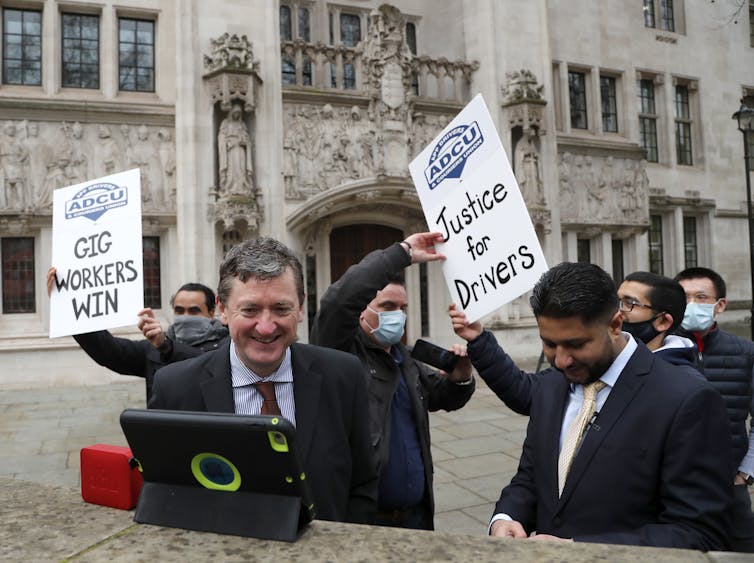
In 2016 two British drivers, James Farrar and Yaseen Aslam, successfully argued before an employment tribunal that Uber was wrong to treat them as independent contractors. The tribunal ruled they were “workers” under British employment law, with rights to entitlements including a minimum wage and holiday pay.
Uber appealed the decision all the way to the Supreme Court – Britain’s court of final appeal – which affirmed the 2016 decision on February 19.
Critically, the Supreme Court found Aslam and Farrar should have been paid for all the time they were logged into the Uber app and available to work.
Uber will now pay its UK drivers a wage of £8.72 ($A15.55) an hour instead of a fee per ride, though only for the times drivers are transporting customers (so futher legal battles are likely). It will also pay some entitlements like holiday pay, a retirement contribution and sick leave.
Former Uber drivers James Farrar and Yaseen Aslam celebrate the UK Supreme Court’s decision on February 19 2021.Frank Augstein/AP
Uber has stated fares will not increase as a result of these changes, so the overall benefit for drivers remains to be seen.
Nonetheless the Supreme Court’s decision is a landmark ruling on the independent contracting model used by Uber and other gig economy platforms to minimise costs and outsource risk. It will potentially prompt more legal challenges both in the UK and other jurisdictions.
What the Supreme Court ruled
Uber’s carefully worded contracts with drivers have defined them as contractors, effectively running their own businesses. The reality affirmed by the Supreme Court is that drivers have limited autonomy, depend heavily on the platform for ongoing work and are subject to performance management practices akin to those found between employers and employees, not between businesses.
The court ruled the employment tribunal’s original decision – that Uber drivers were “workers” under British employment law – was the only conclusion the tribunal “could reasonably have reached”.
One of the barristers representing Farrar and Aslam, Australian lawyer Sheryn Omeri, has suggested the UK ruling will lead to more tests of Australian laws. That may be so, but the likely outcomes are unclear.
While both legal systems are grounded in common law and share historical roots, their employment relations systems are different.
Uber will now categorise its British drivers as “workers” – a category that exists in Britain but not Australia, giving a person some but not all of the entitlements of an “employee”.
Australia has just the two categories – employee and independent contractor – and so far the federal Fair Work Commission, which adjudicates industrial relations disputes, has agreed with Uber that drivers are not employees on three occasions – in December 2017, May 2018 and July 2019.
Where to now
That doesn’t necessarily mean the Australian tribunal couldn’t come to a different conclusion in the future.
Critically, the British courts scrutinised the controls Uber exercised over drivers to a much greater extent than the Fair Work Commission, with the Supreme Court agreeing Uber’s combination of controls placed workers “in a position of subordination”.
In future cases, it is possible the dehumanised algorithmic management systems critical to the performance management of workers – one of the distinctive features of digitally enabled “gig” work – could be one element of the work organisation subjected to further scrutiny, leading to a different determination.
It is also possible Uber could, in reaction to such a decision, offer new terms and conditions to their drivers to again put them into the contractor category.
Questions remain about the sustainability of these organisations – Uber lost $US6.7 billion 2020, Deliveroo lost $US309 million – and the potential for further legal challenges. Nonetheless they do provide services valued by consumers, and have created work opportunities for those marginalised in the labour market. Our own research has also found that workers often do this work because of other problems associated with low-paid employment in other industries.
There are clear issues with gig work that need to be addressed. Uber and other digital platforms have put great strain on the traditional tests to determine who is, or isn’t, an employee.
We need an honest, evidence-based debate about the changing nature of work, the social security system and the experiences of those undertaking gig work to ensure fair outcomes for platforms, workers and consumers.
If anything is clear, gig workers desire flexibility and income certainty. These need not be mutually exclusive.
Discoveries of new overarching rules or “laws” in nature are very rare.
Surprisingly, my colleagues and I have found a new rule of biological growth that explains unexpected similarities in sharp structures found across the tree of life — in teeth, horns, claws, beaks, animal shells, and even the thorns and prickles of plants.
The discovery could help us look forward in evolution to predict how animals, including humans, and their many parts are likely to evolve. Our findings are published today in the open access journal BMC Biology.
The power of laws
Some patterns are very common in nature, such as logarithmic spirals that follow the golden ratio. These patterns appear because of the very simple processes that generate them. For example, a logarithmic spiral is produced when a spiral grows faster on one side than the other.
Logarithmic spirals follow the ‘golden ratio’ (~1.618). This mathematical ratio can predict patterns across nature, including in shells and plants.Shutterstock
We can describe such patterns as following rules of growth. These rules help us understand why animals and plants are the shapes they are.
In my research I am fascinated by patterns in nature. And for many years I have searched for a pattern in how teeth grow. By looking at hundreds of teeth and measuring how they get wider as they get longer, my team and I identified a simple mathematical formula that underpins tooth shape.
This is a “power law”, in which there’s a straight-line relationship between a tooth’s width and length when you take a logarithm of these measurements. Power laws are also found in the sizes of earthquakes, extinction rates of animals and movements of the stock market.
We named the new power law the “power cascade”, as it describes how the surface of a tooth cascades down while following a specific pattern. We looked at teeth from huge sharks, Tyrannosaurus rex, mammoths and humans, and saw the power cascade pattern in all of them.
Amazingly, the rule also works for claws, hooves, horns, spider fangs, snail shells, antlers, and the beaks of mammals, birds and dinosaurs. We even observed it in the horns of a Triceratops skeleton to be displayed at Melbourne Museum.
The skull of the Museums Victoria Triceratops shows the power cascade model in its three horns and beak.Museums Victoria, Author provided (No reuse)
Perhaps these structures have a common shape because many of them carry out the same job. For instance, a sharp dinosaur tooth is useful for puncturing the flesh of prey, as is a sharp claw.
Nonetheless, we still find the power cascade pattern in physical traits that aren’t for piercing and have different shapes overall, such as shells and backward-facing horns.
The power cascade can simulate the growth of animal teeth, including sabre-toothed cats, Tyrannosaurs and giant sharks.
Is it really a law of nature?
While I first noticed the power cascade about ten years ago using a technique I’d developed to measure 3D shapes, the long road to its discovery began much earlier.
The pattern builds on an idea first put forward in 1659 by Sir Christopher Wren, a polymath anatomist, physicist, mathematician and the architect of St Paul’s Cathedral in London.
Wren considered a snail shell may be a cone twisted around a logarithmic spiral. We now know shells and other shapes such as teeth and horns follow the power cascade shape, called a “power cone”.
The power cascade then seems to be the missing piece of a 350-year-old puzzle of how animals grow. But despite how common it is, can we really deem it a “law” of nature?
It was reasonably common for previous generations of biologists to refer to strong patterns (including the logarithmic spiral) as biological laws.
Biologists these days are very hesitant to use this term as it implies an unbreakable rule, such as the law of gravity. However, we can show there are very simple processes of growth which produce the power cascade pattern.
Therefore, when animals and plants grow in this way they will inevitably produce the power cascade shape, just as is the case with logarithmic spirals.
Certainly this rule can be bent, as seen by grooved snake fangs. But given the immense variety of animal parts it works for and the many shapes it makes, there’s a strong case to be made for classifying it as a power law of nature.
Future research will be able to confirm this.
The power cascade rule is seen across diverse forms of life. This venomous spider fang is one example.Alistair Evans, Author provided (No reuse)
Predicting evolution (and life-like dragons)
What can we do with this newly discovered rule? Well, to start it can help us think about the likely course of evolution.
The evolution of animals is usually thought to include a lot of “random” factors. This makes it difficult to know exactly what animals will end up looking like many millennia from now.
That said, the power cascade is perhaps the simplest way for a pointed structure to form when an animal is growing as an embryo or juvenile. Thus, we’d expect this shape to be very common both now and in the future — and we know the former to be true.
We can even apply the power cascade to imagine what shapes the teeth, horns and claws of mythical creatures might look like if they followed rules in nature. In other words, we can now design dragons in Game of Thrones and fantastic beasts in Harry Potter to look as realistic as possible.
Moreover, many structures such as horns have evolved independently in different animals. So each time this happens in the future, it will probably follow the power cascade shape. Humans with horns remain may an unlikely reality, but at least we’ll know what this would look like.
The royal commission report presented 339 recommendations to ensure the safety of First Nations people in custody. If all these recommendations had been implemented, there could have been lives spared, including perhaps these recent deaths in custody.
Too many lives cut short
The latest deaths bring the number of Aboriginal people who have died in custody since the royal commission to over 450.
On March 2, an Aboriginal man in his mid-30s died in his cell at the hospital within Long Bay prison in NSW. However, there were many preexisting medical issues that may have contributed to his early death.
On March 5, at Silverwater Women’s Prison in NSW, an Aboriginal woman in her mid-50s died in her cell. Peter Severin, Corrective Services Commissioner said he believed the woman had “killed herself”.
On March 7, in Victoria, an Aboriginal man held in Ravenhall medium security prison died in custody. His death is being investigated, after Corrections Victoria made a public statement four days after his death.
On March 18, Barkindji man Anzac Sullivan suffered a medical episode during a police pursuit in NSW. Despite attempts by police to resuscitate him, he was declared deceased at Broken Hill Hospital.
The news of two deaths this month in New South Wales came as the state’s corrective services defended the decision not to make a public statement to announce the deaths in custody.
April 15 marks the 30 year anniversary of the Royal Commission into Aboriginal Deaths in Custody report tabled in parliament in 1991. The report recorded 99 deaths in custody between 1980 and 1989, and made 339 recommendations to prevent further Aboriginal deaths in custody. The report also addressed other issues leading to the over-representation of Indigenous people within Australia’s legal system.
The recommendations in the royal commission report could have prevented the four deaths this month, had they been implemented.
The Long Bay man in this mid-30s who died due to pre-existing conditions could have been saved if recommendation 154 had been in place. There would have been appropriate cultural health services available for him, and other Aboriginal people in custody.
It’s possible the woman who died in Silverwater Prison could have been safer if recommendation 165 had been implemented (if she did in fact take her own life). This recommendation suggests police and corrective services carefully assess equipment and facilities to eliminate or reduce the potential for harm. An example of this is the removal of hanging points in police and prison cells. Peter Severin has said removing hanging points from cells is a budget issue.
Recommendation 133(a) addresses the necessity for police to undertake training to know when someone is in distress from their presence. This training could have assisted the police when approaching Anzac Sullivan.
What needs to be done?
There are no words to describe the loss suffered by families of those who die in custody. This is especially so amid the knowledge justice will never be served — there has not been one person ever held criminally responsible for the death of an Aboriginal and/or Torres Strait Islander person in custody, despite there being 450 such deaths.
Police brutality has been the centre of debates relating to the treatment of Aboriginal people in this country since colonisation began. However, since the Black Lives Matter (BLM) movement gained momentum in Australia and globally, we have seen a shift in the way wider society perceives police and their interactions with the public.
A recurring suggestion is the idea to defund and abolish the police and divert funds to First Nations community-led solutions. An ANROWS (Australia’s National Research Organisation for Women’s Safety) report highlights the importance of community-led solutions that are culturally safe, but community law efforts are often undermined by settler law and forms of government. Academic Chris Cunnen writes of community-based justice reinvestment projects in First Nations communities, which have seen reductions in offending and and incidences of domestic violence.
Unfortunately, although the BLM movement has caused people to see the ways police can abuse power, some people remain so detached from what is happening to Indigenous people they have no desire to question or challenge the dominant government paradigm for achieving safer communities. It speaks volumes regarding the public’s perceived value of Aboriginal lives, despite being the oldest, continuing living culture in the world.
Police brutality and lack of adequate knowledge on medical issues has become a common theme in Aboriginal deaths in custody, and something must be done to remedy this.
This government needs to take action to protect the lives of Aboriginal and/or Torres Strait Islander people. This can be done by implementing the 339 recommendations from the 1991 royal commission report.
Another option is to defund the police and institute community-led solutions. Both of these options are viable and easily achievable in order for Australia to stop the racist, dehumanising and degrading treatment of Aboriginal and/or Torres Strait Islander people.
Source: Council on Hemispheric Affairs – Analysis-Reportage
By Danny Shaw From New York
Like Palestinians in Israel and Latino, Asian and Muslim immigrants in the U.S., Haitians in the Dominican Republic are demeaned, harassed, and victimized in both extraordinary and mundane ways.
Pushed out of their homeland by centuries of neo-colonialism and exploitation, officially 751,080 Haitians call the Dominican Republic home. This is 7.3% of the official population. There are hundreds of thousands of other Haitians who are deemed “illegal” and do not appear in any statistics.
“Antihaitianismo,” or anti-Haitian racism, is but one glaring symptom of the economic and political elites’ mind-set in the Dominican Republic.
This article will highlight the ideological, historical and political dimensions of anti-Haitianism to show how the Dominican state, whose policies are reminiscent of apartheid, has a vested interest in harassing and scapegoating the Haitian population.
“To Improve the Race”
For decades, the Dominican people have been flooded with both intense and subtle propaganda denigrating Blackness and “Haitianidad,” depicting Hatians as “the other.” One of the pillars of the ideological legacy of Trujillismo and Balaguerismo was hispanophile, that is the exaltation of Spanish heritage, which is also a way to celebrate what is white and European.
Here are a few examples of “casual” anti-Haitianism. Some Dominican parents jokingly threaten to send their kids in a sack to a Haitian boogeyman if they misbehave. Haitians are accused of stealing animals, or even children, and sacrificing them. In the mass media, Haitians are identified with hunger, infectious disease, political turmoil, and “black magic.”
Imbued with a certain myth of their cultural and racial superiority, too many Dominicans have turned their backs on the Haitian language, history, and culture. Talk about “good hair” and “improving the race” by marrying someone lighter-skinned remains common.
Popular educators from groups like Acción Afro-Dominicana and Agenda Solidaridad work hard to reeducate the Dominican population about the Haitian reality and raise awareness of the dangers of anti-Haitian hysteria.
Dominican Presidents Danilo Medina (2012-2020) and Luis Abinader (August 2020 to the present) have invested substantial financial and human resources into persecuting Haitians who came to the Dominican Republic. These presidents have engaged in the same practices as their predecessors dating back to Trujillo.
Military checkpoints, one every few miles, line the route towards the interior of the Dominican Republic. National Guard searches of public transportation serve to publicly humiliate Haitian migrants and remind them of their status as unwanted visitors. The Dominican military intentionally provokes Haitians by aggressively searching through their belongings, mocking their language, dress, and skin color, and demanding that they pay ridiculous fines. Dominican state police have converted crossing the border and traveling into the interior into a business fueled by bribes and corruption. The most aggressive guards carry out illegal deportations and beatings if Haitians do not give in to extortion. Rhetoric about the need to patrol for Haitian arms, drug traffickers, and “illegals” serves as the eternal justification for this aggression.
Even Dominican citizens sometimes contribute to this persecution. One Sunday afternoon on a bus returning from the border town of Jimani, the author of this analysis witnessed a young Haitian man being forced from the front to the back of the bus on the charge that he had “el grajo,” or body odor. A group of Dominicans waved their hands in front of their noses as if to say that he could not sit close to them. The man was robbed of his right to take an empty seat on an eight-hour bus trip.
In counterpoint, the Dominican population is trained to be servile and obedient to German, Spanish, Italian and North American tourists. White Western “grajo” is an afterthought and not a bias permanently attached to one’s ethnic identity.
The dynamics of “el grajo” is just one element of an aggressive fear of Haitians that goes against the humble nature of the vast majority of people and secures their role as the carriers of a “necessary” racism. “Necessary” because as long as Haitians are viewed as sub-human, they can more effectively be exploited. Racism provides the cloak and justification for their super-exploitation.
“La desmemorización” (The Historical Forgetting)
The Dominican state apparatus has assumed the leading role in labeling, stereotyping, and scapegoating the Haitian community. The principal figure behind anti-Haitianism was former president Joaquín Balaguer, who dedicated his intellectual and literary talents to defaming Haitians. In his book “La isla al revés,” Balaguer stomps vulgarly on the dignity of Haitians, absurdly blaming them for the spread of venereal diseases across the Dominican Republic, among other things. He plays on Dominican society’s historical paranoia that Haitians will try once again to unify the two countries under one government as happened from 1822 to 1844. Inaccurate recounting of Dominican history under Haitian military rule is still used today to whip up anti-Haitian hysteria. In truth, the Haitian occupation brought freedom to Dominican slaves and broke up the monopolization of land and wealth by the colonial Spanish power and the Catholic Church. In the words of Dr. Silvio Torres-Saillant, “many marginalized Dominicans lived better with the unification than they did before under Spanish rule.”[1]
Any mention of the Haitian occupation today in the Dominican Republic begins with a wild tale of vicious Haitian soldiers throwing children into the air and chopping them up with their machetes as they fell. There must be a resistance to this distorted historical memory to rescue the Dominican and Haitian people’s history of solidarity. Haiti never colonized the Dominican Republic. This 22-year period deserves intense historical examination.
What is Behind the Wall?
As the Haitian people rise up in 2021 against dictatorship and neocolonialism, the Dominican Minister of Foreign Relations, Roberto Álvarez, announced that his country has embarked on the construction of a 118 mile wall on its border with Haiti. In his annual 2021 State of the Union address, president Luis Abinader lauded the wall without mentioning once the historic struggle the Haitian people are engaged in. The estimated cost is over $100 million dollars. In the year of a pandemic, where tourism, construction and remittances have taken a serious hit, it is hard to believe that this is the economic priority of the Dominican government.
These same mouthpieces of the ruling consensus, who feign concern about the welfare of “the Dominican nation,” are silent when it comes to the millionaire class that are the true masters of the nation. Ruling families like the Corripios, Bonettis and Vicinis control some billion dollars of investments in the central arteries of the Dominican economy like construction, tourism, cacao, energy, and tele-communications.
According to Oxfam, there are 265 millionaires in the Dominican Republic. To give a sense of what it means to be a millionaire in a country affected by widespread poverty and exclusion, a Dominican from the poorest 20% of the country would have to work 214 years to be able to earn what one of the 265 Dominican millionaires earns in a month. The study concludes: “The accumulated wealth of these 265 people is equivalent to 13 times the annual public investment in education, 17 times the public investment in health, or 49% of GDP.” Motivated by political opportunism, far-right careerists like Joaquín Balaguer, Vinicio Castillo, and Pelegrín Castillo have constantly attacked Haiti.
The Haitian people have long served as the easiest whipping boy in the Dominican Republic. They are blamed for many things, including disease, unemployment, and social crises. If it were not for these ideological escape valves, the political actors who develop these narratives would have to invent another enemy or confront the structural dynamics of gross class and national inequalities in the Caribbean region. The two nations do not need a wall; they need economic, educational, and diplomatic bridges of solidarity. It is the role of the Dominican people to build these bridges and complete the unfinished revolution that the Mirabal sisters, Caamaño, Mamá Tingó, Orlando Martinez, and so many others fought and died for…
Danny Shaw is Senior Research Fellow at COHA and an academic at City University of New York.
Sources
[1] From a speech at a conference on Dominican Independence at The Malcolm X and Dr. Betty Shabazz Memorial & Educational Center in Uptown Manhattan in 2016.
New Zealand Parliament Buildings, Wellington, New Zealand.
Editor’s Note: Here below is a list of the main issues currently under discussion in New Zealand and links to media coverage. Click here to subscribe to Bryce Edwards’ Political Roundup and New Zealand Politics Daily.
Last week, physicists at the Large Hadron Collider in Switzerland announced they might have discovered a brand new force of nature. Or, to be precise, they unveiled “new results which, if confirmed, would suggest hints of a violation of the Standard Model of particle physics”.
What does that mean? And why are they making such a big deal of it, while at the same time stopping short of claiming a new discovery?
The answers lie in the way particle physicists think about evidence and results, and what it would mean to find “a violation of the Standard Model”.
So what?
The Standard Model, devised between the 1950s and 1970s, has been enormously successful at explaining the behaviour of subatomic particles and three of the four fundamental forces we know about. The physicists at CERN think they’ve found a situation that the Standard Model can’t explain: where the model predicts a particle called a beauty quark should decay into other particles called muons and electrons at about the same rate, it looks like it actually decays into electrons more often than muons.
This is exciting, because we already know the Standard Model doesn’t tell the whole story about what’s happening in the universe. It’s very good at telling us about matter and energy. But it doesn’t provide an account of the so-called dark matter and dark energy scientists believe must exist to explain the large-scale behaviour of stars and galaxies.
The Standard Model is also tremendously difficult to reconcile with our best explanation of gravity, Einstein’s theory of general relativity. The Standard Model is at best a step along the road to a complete theory of everything.
The decay of a beauty meson involving an electron and positron, observed at the LHCb experiment.CERN
To go beyond the Standard Model, we need new empirical data. What we really need is evidence showing some prediction of the Standard Model is wrong, but not a prediction so central to the theory that we need to rebuild from the ground up.
That’s why the decay of beauty quarks is so interesting. The unexpected behaviour points to an area where the theory could be modified without having to start from scratch.
Sigmas and p-values
The reason scientists are cautious about the result is because it’s what’s called a 3-sigma finding.
To explain, let’s imagine you’re looking for fairies in the bottom of your garden. You start by assuming there are no fairies – that’s called your null hypothesis.
You then gather some observations seeking to reject that hypothesis. After analysing your data, you find there is a 90% probability that if there were no fairies in the garden, you would make observations like the ones you in fact made.
This gives you what’s called a p-value. A 90% probability of observing the data you in fact observed if your null hypothesis were true is the same as a p-value of 0.9.
Basically, you’ve discovered you don’t have a strong reason to reject the assumption that your garden is fairy-free. That’s not the same thing as discovering a reason to believe that your null hypothesis is true.
The p-value is the probability of the evidence, given your null hypothesis, which is distinct from the probability that the null hypothesis is true, given your evidence. (In case this seems odd, consider that the probability that someone is funny given that they’re dad is not the same as the probability that someone is your dad given that they’re funny).
Sigma values like the “3-sigma” result correspond to p-values. At the LHC, the null hypothesis is the claim that the Standard Model is correct, and the observations are of particle interactions.
A 3-sigma result means there is a roughly 1 in 1,000 probability that observations at least as extreme as those gathered would occur, given the Standard Model. That’s substantially better than your quest to find fairies and does seem to call the Standard Model into question.
Why so cautious?
Physicists don’t usually crack open the champagne until they have a 5-sigma result.
A 5-sigma result tells you there would be a chance of less than one in a million of your observation if the Standard Model were correct. That’s like wandering into your garden and chatting with a small being with wings: your “no fairies” hypothesis is starting to look quite shaky.
Why do physicists look for a 5-sigma event? There are several reasons. The first is historical: they’ve been stung before. In 2011 physicists claimed to have measured neutrinos travelling faster than the speed of light. This measurement exceeded 3-sigma, but it turned out to be due to a faulty cable.
Physicist Tommaso Dorigo has been keeping a diary of measured events that reached or surpassed 3-sigma significance. He notes 6 previous claims that were later withdrawn.
Another reason for caution is the problem of multiple comparisons. If you carry out enough tests, you are bound to see something odd.
Suppose you flip a coin 100 times and get 50 heads and 50 tails. Now suppose you repeat the experiment 100 times (flipping the coin 10,000 times altogether).
In some versions of the experiment you might see 20 heads and 80 tails. In some you see 10 heads and 90 tails. Both distributions are unlikely, assuming the coin is fair.
Do you therefore have evidence the coin is unfair? It seems doubtful. Even a fair coin will yield lopsided results sometimes.
The LHC is like a coin-flipping machine. It is constantly conducting experiments. To correct for this, physicists demand the very high 5-sigma standard. A 3-sigma result is noteworthy, but not yet a “discovery”.
Finally, there’s the adage that extraordinary claims require extraordinary evidence. The Standard Model is extremely well confirmed. It will take an extremely striking observation (such as on observation of an event that would be very unlikely if the standard model were true) to reduce confidence in the model.
What’s next?
The LHC is an extraordinarily complex experiment, and there are a lot of things that can go wrong with it. That makes it difficult to control for systematic errors.
So even reaching the 5-sigma level in itself might not be enough to confirm a new discovery. Indeed, three of the six withdrawn results documented by Dorigo reached the even higher 6-sigma level.
To confirm a discovery, ideally the results need to be replicated using a different experimental set up (one that doesn’t risk also replicating the same errors), preferably more than once. That’s why the physicists at CERN are hoping their results will be replicated by the Belle experiment in Japan.
The announcement from CERN thus may seem a bit premature. But Dorigo’s diary provides reason to be optimistic. He points out that all of the withdrawn results from particle accelerator experiments reached levels of significance that are even numbers (4 or 6-sigma), whereas genuine discoveries reached levels that are odd numbers (3 or 5-sigma).
Dorigo suggests we should take observations with odd-numbered sigma values very seriously. He’s making a joke. But behind the joke is a sociological observation: physicists don’t tend to publish 3-sigma results unless they’re confident that they will lead to a discovery. The physicists at CERN clearly believe they’re onto something, and so should we.
Why are some kids left-handed and others are right-handed? — Sofia, aged 8
Hi Sofia, thanks for your great question!
For a lot of human history, lefties have been seen as a little odd, and unfortunately some have even been treated very badly. For example, the word “sinister” comes from the Latin for “left” or “left hand”.
Luckily, some cultures have been more kind. The Inca, an old civilisation from South America, thought left-handed people had special spiritual powers. Also, it was good luck to be left-handed among the North American Zuni peoples. To be clear — there’s nothing wrong with being left-handed!
This preference for a particular hand is known as “handedness” and can be seen across many parts of the world.
Interestingly, only around one in ten people are left-handed. This means there are probably two or three kids in your class who will use their left hand to throw a ball or draw a picture.
It seems humans throughout history have preferred to use our right hand instead of our left. Evidence suggests our ancestors tended to use their right hand for tasks, perhaps like throwing rocks or picking berries, as far back as seven million years ago!
Around 10% of people are left-handers!Nam Y. Huh/AP/AAP
Why do we prefer one hand over another?
Sticking to one hand while writing a letter, drawing a picture, or throwing a ball helps make you better at performing those tasks.
Constantly swapping hands may mean the brain takes longer to learn how to do those things, so your brain tells you to favour a particular hand.
It’s also the reason why you probably prefer using a particular foot when kicking a ball. Remember, the more you kick with that foot, the better you become at kicking.
But it’s not just our hands and feet that we prefer one side over another when performing a task — even our brain does this!
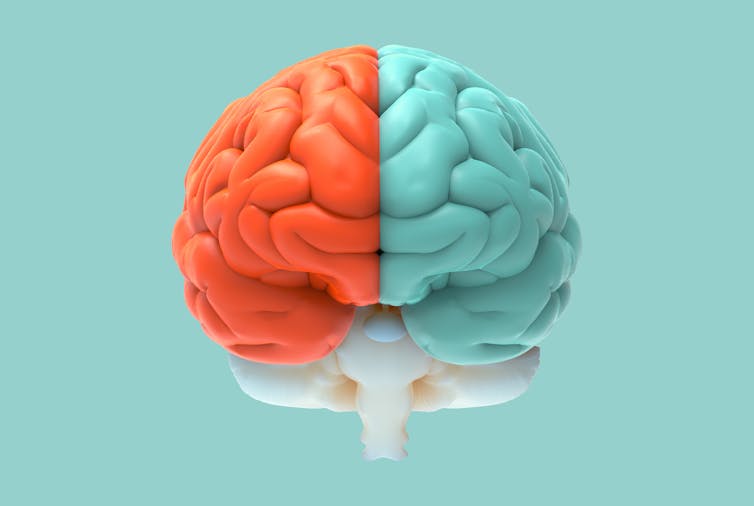
The human brain has two big parts. One on the left, and one on the right! Certain abilities are linked with one side of the brain.Shutterstock
For example, your abilities to speak, do maths, and paint a picture prefer to sit on one side of the brain compared to the other.
Amazingly, the hand you use to write or throw a ball is often related to the side of the brain you use to speak. For example, if you use the left side of the brain to speak, you will likely be right-handed and the opposite is also true.
This relationship between brain function and handedness seems to be the reason why some people are left-handed, and some are right-handed.
When do we become left-handed or right-handed?
Which hand you use is not a choice. Rather, it’s a mixture of your genes which you get from your parents, and also your life experience.
However, scientists can accurately predict whether you will be left or right-handed before youare even born! By measuring which arm moves the most in babies still living in their mum’s womb, they can determine which hand you will prefer when you are born.
For now, even though lefties make up around 10% of the population, there are reasons to celebrate: August 13 is officially Left-handers Day! So, who’s got the upper hand now?
Hello, curious kids! Have you got a question you’d like an expert to answer? Ask an adult to send your question to curiouskids@theconversation.edu.au
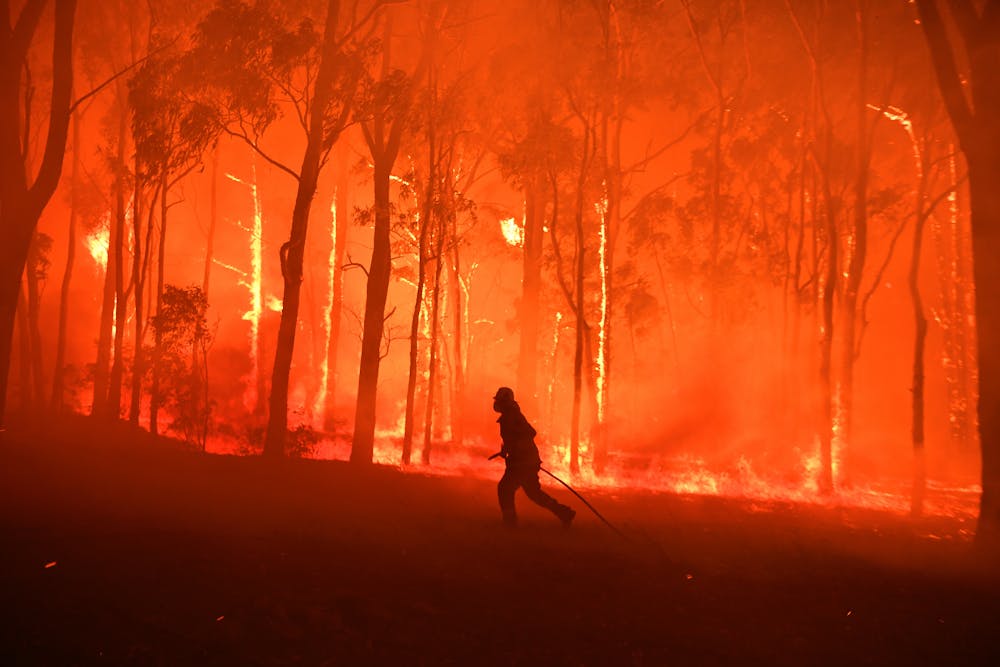
In the aftermath of Australia’s devastating Black Summer fires, research has begun to clarify the role of climate change.
We already know climate change contributed to the record-breaking drought and fire weather conditions, leading to the bushfires’ unprecedented range across Australia.
Our new research looks at whether bushfires are becoming more “severe” (an indicator of how intensely the vegetation burned) as a result of climate change.
Our findings were unexpected, as we learned the proportion of high-severity fires generally hasn’t increased in recent decades. However, the sheer breadth of the Black Summer fires meant an unprecedented 1.8 million hectares across southeast Australia were exposed to high-severity fires. This has dire consequences for the people and wildlife who call the forests home.
What is fire severity?
Two measurements in fire science are pertinent to our research: fire severity and fire intensity.
Fire severity refers to how high the flames and the plume of hot air reach, as measured by the resulting damage to vegetation (vertical profile of scorch and consumption of leaves and twigs). Fire intensity refers to the energy released from the fire — how hot and destructive the flames are.
Animals that live in trees are at the greatest risk of high-severity fires.AAP Image/Zoos Victoria
Scientists can estimate severity using using satellite imagery, by contrasting differences in the cover and condition of vegetation before and after fires.
In forests, “high-severity” fires occur when the crowns of dominant trees are fully burnt or scorched. High-severity fires are lethal to tree-dwelling mammals in forests, such as possums, gliders and koalas. They also pose a big risk to nearby homes and buildings.
“Low-severity” fires, on the other hand, may be confined to the leaf litter and ground cover plants beneath the forest canopy, and can even leave entirely unburnt patches in forests.
Are high severity fires becoming more common?
To determine if high-severity bushfires are becoming more common, we looked at satellite data for bushfires from 1988 to 2020. The data covered more than 130,000 square kilometres of forest, woodland and shrubland ecosystems in southeast Australia.
If fires were becoming more intense in recent decades, we would have expected the proportion of vegetation subjected to high-severity fire to have increased.
Instead, we found the average proportion of high-severity wildfire remained constant in dry forest — the dominant vegetation across this region. There was, however, evidence of an increase in the average proportion of high-severity fire in wet forests and rainforests, along with woodlands.
Nonetheless, the main conclusion was clear: across the bulk of the study area, the average proportion of high-severity fires has not changed in recent decades, despite an increase in the area burned during the Black Summer bushfires.
Why the Black Summer bushfires were exceptional
While the proportion of high-severity fires hasn’t changed, the enormous range of the 2019-2020 bushfires meant 44% of the total area burned by high-severity fire since 1988 occurred in that one summer alone.
This means 1.8 million hectares of the forest and woodland regions of southeastern Australia — an enormous proportion — was exposed to intense and severe fire. In this regard, the Black Summer bushfires were exceptional.
As Australians remember all too clearly, this had a devastating effect on the environment. An estimated three billion animals were killed or displaced, vulnerable rainforests burned and 3,000 homes were destroyed.
Firestorms could become more common under a changing climate.AAP Image/Dean Lewins
The 2019-20 fire season also involved a record number of “firestorms”, particularly during the latter part of the season in January and early February. This occurs when fires create their own weather.
These fires can burn at exceptional intensity. And research from 2019 indicates such firestorms could become more common under climate change.
This means we can’t rule out a future change in the proportion of bushfires that burn at the highest levels of intensity and severity.
Ecosystems in jeopardy
The results of our study underline one of the likely consequences of future climate change.
As bushfires become larger in the future, the area exposed to intense and severe fires is likely to increase commensurately. As a result, the future of our wetter forest types, which have not evolved to cope with frequent and severe fires, is in jeopardy.
So, as the area exposed to intense fires is likely to increase in the future, we’ll see major challenges to the long-term viability of our forested ecosystems, the services they provide and the people who reside in and around them.
Ten years on from the 2009 Victorian Black Saturday fires, in which 173 people died, 3,500 buildings were destroyed and entire townships were wiped out, about two thirds of people from highly impacted communities reported they felt “mostly” or “fully recovered”.
Their perceptions of community recovery were much lower, however, with only about a third of people in the worst-affected areas feeling their community was “mostly” or “fully recovered”.
These are among the key findings of the Beyond the Bushfires report released today, a major investigation of the long-term impacts of one of the worst natural disasters in Australian living memory.
Beyond the Bushfires report., Author provided
As the climate warms and disasters are predicted to become more frequent and intense, the report recommends governments invest in preparing long-term frameworks for recovery from major disasters and find innovative ways to boost community resilience before, during and after the moment of crisis.
Failing to address these longer term impacts risks entrenching disadvantage, because disaster-hit communities — many of which were struggling even before the fires — can struggle for years after the flames are out.
Investing in disaster resilience now, and normalising the idea that recovery is a long-term project, can help put communities in a better position to withstand disasters when they inevitably strike.
A long tail
Our report draws on data from more than 1,000 participants who told us of their experiences through community meetings, repeated surveys (three, five and 10 years after the fires) and in-depth interviews (three to five years after the fires).
We also spent a lot of time in the first five years visiting communities, being part of community meetings and speaking with contacts built up over many years.
The main finding to emerge is that these events have a long tail. There’s no quick clean-up to get things back to normal. Mental health impacts can linger for many years. People are generally extraordinarily resilient and we need to applaud that, but the disruption to lives continues well after the initial crisis clears.
We found:
a slump in life satisfaction from three to five years after the bushfires, which improved again at ten years after the bushfires
ten years after the fires, 22% of people were reporting symptoms consistent with a diagnosable mental health disorder, including post-traumatic stress disorder, depression and psychological distress — more than twice the levels in low-impacted communities
around 10% of people in high-impacted communities reported anger problems five years after the fires. This was three times higher than in low and moderately impacted communities and more common among women, younger people and the unemployed
in the first three to four years following the bushfires, reports of violence experienced by women were seven times higher in high bushfire-affected areas when compared with low bushfire-affected regions. For women, experiences of violence were also linked with income loss and poorer mental health
a sense of community cohesion was lower in high-impact communities ten years after the bushfires
loss of income, property loss and relationship breakdown increased the risk of mental health impacts
most people who rebuilt felt the timing of their rebuild was about right.
Beyond the Bushfires report., Author provided
We often see a huge outpouring of public compassion and support in the aftermath of a major disaster. But our report recommends governments and service providers ensure support (and funding) is spread over years rather than rushed out.
Among our key recommendations is that governments establish a staged five-year framework for recovery from major disasters. This would account for extended mental health impacts and support short- and long-term recovery, resilience and community connectedness.
Financial advice, help with navigating building regulations, relationship counselling and job retraining are all needed over the years following a disaster. A variety of mental health supports are also needed.
Most people who rebuilt felt the timing of their rebuild was about right, we found.Shutterstock
Change is needed not just at the government level, but society-wide. The public needs to recognise recovery is a long-term project. There is often public pressure for agencies and governments to act quickly, which risks funds being only spent on immediate needs. There’s then precious little left for later staged interventions.
But some needs may not be initially apparent. We must allow people to recover at their own pace, in their own way and have long-term support in place to do that.
Building community can build disaster resilience
The role of social networks and community groups is incredibly important. We found people who belonged to a local community group tended to have better outcomes in the three to five years post bushfires than those who did not. These benefits seemed to extend across the wider community in areas where many people belong to local community groups.
Support for community groups means building and providing access to spaces where people can meet and socialise, supporting access to relevant equipment and materials, giving training opportunities and providing funding.
Spaces that allow people to gather and connect are crucial. But there should be more than one meeting space to allow for differences in communities.
School-based bushfire education and recovery support programs are also needed. This would teach children and teenagers how to live in bushfire-risk environments and involve them in local bushfire preparedness and recovery initiatives.
If this article has raised issues for you, or if you’re concerned about someone you know, call Lifeline on 13 11 14. This story is part of a series The Conversation is running on the nexus between disaster, disadvantage and resilience. You can read the rest of the stories here.
There’s great excitement about Australia potentially producing hydrogen as a clean fuel at large scale, for export to countries such as Germany, Japan and South Korea.
Hydrogen (H₂) is a useful energy carrier, and doesn’t release greenhouse gas when that energy is recovered. But carbon dioxide (CO₂) can be emitted when hydrogen is produced, depending on whether the process uses renewable energy or fossil fuels.
Dr Alan Finkel – the federal government’s special adviser on low-emissions technology and a former chief scientist – said this month: “The world’s going to need a lot of hydrogen, and so the more ways we can get that hydrogen the better”.
But our analysis, released today, shows producing hydrogen from fossil fuels carries significant risks. The process can emit substantial greenhouse gas emissions – and capturing these emissions at a high rate may make the process more expensive than hydrogen produced from renewable energy. These findings have big implications as Australia looks to become a hydrogen superpower.
Renewables or fossil fuels? The way hydrogen is produced makes a big difference to its emissions intensity.Shutterstock
‘Clean’ hydrogen from coal or gas?
Zero-emissions “green hydrogen” is produced via the electrolysis of water, when the process is powered by renewable energy.
Hydrogen can also be produced from fossil fuels – including coal and gas. This can leads to a lot of CO₂ emissions, even when some carbon is captured and stored.
Several strategy documents leave the door open for Australia to produce “low-emissions” hydrogen from fossil fuels. These include the National Hydrogen Strategy Finkel spearheaded as chief scientist, and the federal government’s Technology Investment Roadmap.
In a recent Quarterly Essay, Finkel said CO₂ from hydrogen production will need to be captured and stored – in fact, he argued, importing countries would insist on it. This, Finkel says, means hydrogen from fossil fuels would be “clean hydrogen”.
But rates of carbon capture and storage (CCS) vary. And the greater the rate of emissions captured and securely stored underground, the more expensive the process.
Alan Finkel is advocating a hydrogen path involving both fossil fuels and renewables.Mick Tsikas /AAP
A focus on emissions intensity
Globally, only a few large-scale hydrogen plants currently operate, and the rates of carbon capture achieved in practice are rarely reported.
When assessing whether a fuel source is low-carbon, we calculate its “emissions intensity”. This refers to how many kilograms of CO₂ is associated with the energy produced.
Our analysis found the emissions intensity of fossil-fuel based hydrogen production systems are substantial, even with carbon capture.
For example, the production of hydrogen from coal, if 90% of emissions are captured, has an emissions intensity not much below that of using gas for the same energy content. The same goes for hydrogen from gas, with a 56% capture rate.
Our analysis also takes into account so-called “fugitive emissions” released during the extraction and processing of fossil fuels. They are typically ignored, but are significant.
Under global accounting rules, emissions from hydrogen production will count against the producing country’s inventory. But many hydrogen importers concerned about climate change will want to know what emissions were released in production.
This can be done through hydrogen certification schemes. For example, the European Union has developed the CertifHy Guarantee of Origin scheme which accounts for the origins of hydrogen used. It includes information on whether the hydrogen was produced using renewable or non-renewable energy sources (such as nuclear, or fossil fuels with CCS).
Under this scheme, only hydrogen produced from natural gas with a high carbon-capture rate (towards 90%) could be called “low-carbon” hydrogen.
These high capture rates are assumed in major reports and national strategies – including Australia’s – but have not been achieved at a large-scale commercial plant. Japan’s Tomakomai CCS demonstration project has achieved a 90% capture rate – but at a very high cost.
Emissions intensity of different fuels.Authors Provided
Now, a look at costs
At the moment, producing hydrogen with fossil fuels generally costs less than producing it with renewables-powered electrolysis. But the cost of electrolysis with renewable energy is falling, and could become cheaper than fossil fuel with carbon-capture options, as the graph below shows.
Our analysis found hydrogen from gas or coal costs between US$1.66 and $1.84 per kilogram without the carbon being captured and stored. This rises to between US$2.09 and $2.23 per kilogram with high carbon-capture rates.
A carbon penalty, such as is applied in Europe, would make hydrogen from fossil fuels more expensive. A penalty of US$50 per tonne of CO₂ pushes the central production cost estimate up to between US$2.24 and $3.15 per kilogram.
By comparison, Australia’s Technology Investment Roadmap set a target for “clean hydrogen” to be produced for under A$2 per kilogram, or US$1.43.
The true cost of carbon avoidance using CCS varies widely and is often not well defined. Current cost projections rely on optimistic estimates of CO₂ transport and storage costs, and generally do not include monitoring and verification costs for long-term storage.
So how does all this compare to “green” hydrogen?
Our analysis found the median estimate for renewables-based electrolysis falls from US$3.64 per kilogram today to well below US$2 per kilogram.
The cost of producing hydrogen with renewables depends mainly on the cost of electricity, as well as the capital cost and how intensively the electrolyser is used. The cost of solar and wind power has fallen dramatically in the past decade, and this trend is likely to continue.
As electrolysers are deployed at scale, their costs may decrease rapidly – pushing down the cost of green hydrogen.
Production cost of hydrogen by type (estimates from 16 studies)Authors Provided, Author provided (No reuse)
More may not be better
So what does all this mean? If Australia pushes ahead with producing hydrogen from fossil fuels, two possible risks emerge.
If carbon-capture rates are low, we may lock in a new high-emissions energy system. And if capture rates are high, those production facilities could still become uncompetitive. This raises the risk of stranded assets – investments with a short economic life, which do not make a viable return.
Investment decisions for large scale hydrogen production will ultimately be taken by businesses, on the basis of commercial viability. But governments have an important role early on as they set expectations and assist pilot projects. The fossil fuel route is becoming a riskier bet.
Allegations of sexual assault and harassment in the nation’s corridors of power once again reveal two consistent features of this conduct: a culture that enables such behaviour, and a high degree of impunity that invites its recurrence. University campus culture was similarly in the spotlight following the release of damning reports in 2017. The lesson to be drawn here is that while these reports led to several practical changes (necessary as they are), what is now called for is transformative change.
Two recent cases highlight the challenges of overcoming deeply entrenched systemic problems in Australian institutions.
Change the Course was a landmark report for Australian universities.AHRC 2017, CC BY
Last August, a former Australian National University student successfully sued a university residential college. She did this after five years of seeking acknowledgement of some responsibility and redress for an alleged sexual assault by a male student following a John XXIII College “hazing ritual”. To date, no criminal charges have been brought.
In civil proceedings, the ACT Supreme Court found the college had condoned a “hard-drinking” culture “as a badge of honour”. It had also failed in its duty of care to the complainant by mishandling her allegations. The court found several dismissive comments by the head of the college were “entirely inappropriate” and “a massive departure from the pastoral duty of care [he] had”.
A 2019 workplace investigation commissioned by the University of Melbourne found a senior academic had sexually harassed a young woman colleague in breach of the university’s workplace behaviour policy. The internationally renowned academic, who denied the allegations, has retained his role, although the vice-chancellor this month declared sexual harassment “has no place at our university or in society”. The university would not reveal what action, if any, it has taken against him.
What came out of the university reviews?
A three-year research project, begun in 2015, investigated how to strengthen Australian university responses to sexual assault and harassment. It included the first national student survey about these problems.
The project led to the release of two reports in 2017. The reports were Change the Course by the Australian Human Rights Commission and On Safe Ground by the Australian Human Rights Centre (now Institute) at UNSW.
These reports provided analyses of the survey data, comparative research on international university good practice, and recommendations for universities, residential colleges, the Tertiary Education Quality and Standards Agency (TEQSA) and government.
Since then, severalreviews of university responses by the Australian Human Rights Commission and another by TEQSA suggest Australian universities have, in the main, acted on these recommendations. They have:
implemented policies and mechanisms to better capture reports of student sexual misconduct
trained staff and student representatives in how to manage disclosures of sexual assault and harassment
provided counselling services (or engaged external sexual assault service providers)
conducted consent/respectful relationship training
developed student apps with links to support services and campus security.
Most of these responses, while laudatory, are essentially reactive. The same can be said of government responses to the recent claims of sexual assault and harassment in parliament. It has set up inquiries and reviews into workplace conduct, which will investigate:
barriers to reporting
the effectiveness of response and reporting mechanisms
the availability and utility of support services
best practice in the prevention and handling of workplace bullying, sexual harassment and sexual assault.
Hierarchies of power are part of the problem
We have seen comparable investigations of other Australian institutions. The Australian Defence Force undertook such a review from 2011 to 2014. More recently an inquiry by the High Court of Australia exposed analogous accounts of sexual assault and harassment.
In all these environments, hierarchies of power make reporting of such conduct precarious for complainants and the prospect of accountability remote.
The surveys, reports, reviews and investigations referred to above have all clearly identified the pervasive reach and harm of sexual assault and harassment. They have usefully recommended practices and procedures.
What is absent from many institutional responses, though, is the less concrete issue of understanding. How do they tackle a culture of inequality that enables and condones sexual assault and harassment, mainly against women?
Many institutions and corporations confronted with this conduct are caught between ensuring the safety and well-being of a victim of harm and protecting the institution’s reputation. Last week, a US$852 million (A$1.1 billion) settlement involving the University of Southern California highlighted this conflict of interest. When institutions seek to mediate this tension, the seemingly less immediate but larger project of transformation can be limited and overlooked.
In a speech to parliament following the nationwide March 4 Justice rallies, Victorian Liberal MP Russell Broadbent acknowledged “the anger, the hurt” and “the disregard for women that has led to this fork in the road”. He spoke of the need to “effect change” and “so enrich the nation”.
Liberal MP Russell Broadbent acknowledged in parliament ‘the disregard for women that has led to this fork in the road’.Mick Tsikas/AAP
The national imperative for change requires governments to move urgently to engage experts in the field – from academia and civil society. For decades, these experts have sought to identify and fathom the entrenched inequities that give rise to sexual violence in all its dire forms.
Universities can and must make a contribution that goes beyond compliance with minimal standards of “best practice”. They offer two critical communities, students and academics, who have the perspectives and expertise fundamental to resolving a social problem of national concern.
Students have diverse personal and social experiences both outside and within the academy. They also offer the long-term potential to influence drivers of change.
Practitioner academics, with civil society (including innovative and overstretched sexual assault services), continue to undertake highly relevant research. Their work integrates complementary disciplines and practices, such as public health, psychology, sociology, law, criminology and digital technology. They are well placed to devise effective approaches.
Traditional policymaking cannot achieve the enormous task now before government. This approach will fail if the values, structures and systems underlying dysfunctional behaviours remain in place. And the costs of inertia on these issues have far-reaching consequences for the political, social and economic health of the country.
Surveys, reports, reviews and investigations that lead to good practice, procedures and remedial measure are essential to address immediate needs. However, government on its own is unsuited to achieve lasting, transformative change. The wealth of academic and civil society expertise and evidence-driven solutions are needed to support this exacting process.
In this series, writers pay tribute to fictional detectives on the page and on screen.
Frannie Thorstin, the narrator of Susanna Moore’s neo-noir novel In The Cut (1995) is a collector of urban slang. A divorced English professor living alone, she is writing a book on dialects. So, the novel is peppered with eclectic lists of words that connect to the themes of the book — desire, sexual obsession and violence against women.
“The words themselves,” she says, “… in their wit, exuberance, mistakenness and violence — are thrilling to me.”
One such list runs a graphic gamut: from “virginia, n., vagina (as in ‘he penetrated her Virginia with a hammer’)” to “dixie cup, n., a person who is considered disposable”.
Frannie’s eye is forensic, catching on the smallest gestures and imbuing them with meaning, the minutiae of a world alive with possibilities, portents, and signals. When she enters rooms her eyes scan like cameras, cataloguing and framing. In this way Frannie fulfils the detective function in the novel better than the actual detectives into whose macho orbit she is drawn. The latter spending most of their time ribbing each other and holding up bars, without doing much detecting at all.
Some collection
If Frannie is a collector of words, she is also a collector of men, sometimes by force of circumstance, sometimes by design. The fatal combination of her sex appeal and intellect fuels an increasing sense of dread, caught as she is in a sticky web of male attention.
I keep a list in my head, on the edge of consciousness, that now and then forces me to acknowledge it: A friend John Graham, seems to be keeping an eye on me. A student of mine Cornelius Webb, has developed an attachment to me that may be harmless but that is certainly inappropriate. He too seems to be watching me. Jimmy Malloy, a homicide detective, is investigating the abduction and murder of a young woman who shortly before her death was sucking his cock. Something which I do now.
Her fascination with Malloy’s body tallies with her manner of interpretation, both cerebral and sensual. She fantasises about him, in scenes which celebrate self-pleasure: “dreaming him through my nightgown” and when she’s with him her eye never strays, “he turned a quarter in his fingers, as if he were practising a magic trick. As always, I was pulled in by the small gesture”. A force-field of desire runs between them, erotic and unstable.
As a reader, the combination of poetry, sensuality and irreverence draws me to Frannie too — but unlike the men in her life those aspects don’t also drive me crazy. Her colleague Mr Reilly denounces her lack of boundaries. Her student Cornelius says, “you be looking to fuck with me since day one”. Malloy feels “like I’m running all the time. Running just to stay even”.
‘Stop analysing every fucking thing.’ He pronounced the word ‘every’ as if it had three syllables.
‘I thought you liked it.’ I said.
‘I did at first.’
Set in New York, the line between good guys and bad guys becomes blurred beyond recognition.IMDB
In this re-figuring of classic noir tropes, Malloy is the femme fatale, his partner Detective Rodriguez plays the killer and Frannie is caught somewhere between. This multiplicity of characterisation is common to neo- and post-noir genres, where the lone figure of a Sam Spade or Phillip Marlowe recedes and a more complicated milieu emerges.
The lines between the good guys and the bad guys are not just ambiguous and ultimately reasserted, but erased completely. The reassurance of the classic noir detective becomes an illusion. Even Frannie’s well-honed capacities for observation are not enough to save her, she is not able to solve the mystery in time and rather than being redemptive the denouement is devastating.
Author Susanna Moore has said that after she spent two years reading classic detective fiction, she realised most of those guys couldn’t write sex. Or at least not the kind she wanted to write.
In the Cut operates as meta-fiction. A book about writing and semiotics, clues and signs, a rewiring of noir expectations and tropes, personified by Frannie — a woman who refuses to fit neatly into the dominant narrative.
A crime fiction character we needed but perhaps weren’t ready for. Reactions to the book and the film were extreme. Director Jane Campion’s 2003 film was released with an R rating and had a ruinous effect on the career of “America’s Sweetheart” Meg Ryan, who played Frannie and went on to discuss the role in an excruciating interview with Michael Parkinson.
Potent feminised sexuality in proximity to violence proved too much for some, even though the film version was sanitised by producers.
Despite the divergent endings of the book and film, romantic mythologies are presented in both as insidious methods of control and entrapment.
Critics failed or perhaps refused to see this, but Frannie is aware of it from the start. “A dangerous combination for me,” she says. “Language and passion”. But even her self-awareness doesn’t prepare us for her end.
Armida Salsiah Alisjahbana is the United Nations Under-Secretary-General and Executive Secretary of the Economic and Social Commission for Asia and the Pacific (ESCAP).
Op-Ed by Armida Salsiah Alisjahbana.
Armida Salsiah Alisjahbana is the United Nations Under-Secretary-General and Executive Secretary of the Economic and Social Commission for Asia and the Pacific (ESCAP).
The world is emerging from the biggest social and economic shock in living memory, but it will be a long time before the deep scars of the COVID-19 pandemic on human well-being fully heal.
In the Asia-Pacific region, where 60 per cent of the world lives, the pandemic revealed chronic development fault lines through its excessively harmful impact on the most vulnerable. The United Nations Economic and Social Commission for Asia and the Pacific (ESCAP) estimates that 89 million more people in the region have been pushed back into extreme poverty at the $1.90 per day threshold, erasing years of development gains. The economic and educational shutdowns are likely to have severely harmed human capital formation and productivity, exacerbating poverty and inequality.
The pandemic has taught us that countries in the Asia-Pacific region can no longer put off protecting development gains from adverse shocks. We need to rebuild better towards a more resilient, inclusive, and sustainable future.
We know that the post-pandemic outlook remains highly uncertain. The 2021 Economic and Social Survey for Asia and the Pacific released today by ESCAP shows that regional economic recovery will be vulnerable to the continuing COVID-19 threats and a likely uneven vaccine rollout. Worse, there is a risk that economic recovery will be skewed towards the better off – a “K-shaped” recovery that further marginalizes poorer countries and the disadvantaged.
Building a resilient and inclusive future
The good news is that countries in Asia and the Pacific have taken bold policy measures to minimize the pandemic’s social and economic damage, including unprecedented fiscal and monetary support. Last year, developing countries in the region announced some $1.8 trillion, or nearly 7 per cent of their combined GDP, in COVID-19 related budgetary support. But investments in long-term economic resilience, inclusiveness, and green transformation have so far been limited.
The region’s vulnerability to shocks like COVID-19 was heightened by its lagging performance towards achieving the Sustainable Development Goals, which would have enhanced resilience by reducing entrenched social, economic, and environmental deficits.
The evidence shows that we need a better understanding of the Asia-Pacific region’s complex risk landscape, and a comprehensive approach to building resilience in the wake of the COVID-19 crisis. Building resilience into policy frameworks and institutions will require aligning fiscal and monetary policies and structural reforms with the 2030 Agenda for Sustainable Development.
ESCAP research maps out a “riskscape” of economic and non-economic shocks – financial crises, terms-of-trade shocks, natural disasters, and epidemics – and shows that all adverse shocks have cause severe damage to the region’s social, economic, and environmental well-being. It takes several years for investment and labour markets to return to their pre-crisis levels. Adverse shocks also leave behind long-term scars by widening inequality and increasing pollution. But bold policy choices can reduce setbacks. Governments must implement aggressive policy responses to protect hard-won development gains.
Notably, policy packages should align post-pandemic recovery with the 2030 Agenda. ESCAP recommends a policy package focusing on three areas – ensuring universal access to health care and social protection, closing the digital divide and strengthening climate and energy actions. Estimates show that such an approach could reduce the number of poor people in the region by almost 180 million and cut carbon emissions by about 30 per cent in the long run.
Resilience is largely affordable
Building resilience does not add too much financial burden to the region if such investments are accompanied by bold policy actions, such as ending fuel subsidies and introducing a carbon tax. A range of policy options can meet immediate and medium-term financing needs with great potential for Asia-Pacific countries to leverage these options.
However, it is important to note that several countries will need to engage closely with international development partners and the private sector. Least developed countries with significant “resilience gaps” will also require international assistance. Developed countries that fulfil their Overseas Development Aid (ODA) and climate finance commitments will go a long way in scaling up long-term investments and addressing these countries’ vulnerability to shocks.
COVID-19 has been a trauma like no other. Yet, it offers a unique opportunity for governments and other stakeholders to chart a new path to rebuilding. Whilst being forced to adjust, the Asia-Pacific region has seen fundamental transformations in lives, workplaces and habits. It is high time that the region takes its lessons from this pandemic and commits to a foundation that ensures a solid ability to withstand future jolts to the system without its people, and the planet, having to again pay a high price.
——————
Ms. Armida Salsiah Alisjahbana is the United Nations Under-Secretary-General and Executive Secretary of the United Nations Economic and Social Commission for Asia and Pacific (ESCAP)
A Labor government would set up a $15 billion National Reconstruction Fund to promote manufacturing in Australia’s post pandemic economy.
The fund, to be announced on Tuesday as Labor begins its national conference, would partner with private investors and superannuation funds, which have access to large reserves of capital.
It would be aimed at helping build new industries and boosting existing ones. The $15 billion would be provided through a combination of loans, equity, co-investment and guarantees.
In a statement on the plan, Anthony Albanese and shadow minister for national reconstruction. Richard Marles, say the pandemic has highlighted the serious deficiencies Australia has in its manufacturing capabilities and its ability to be globally competitive in innovation and technology.
“If there is anything that COVID has taught us, it is the need for Australia to be a place which makes things – to have our own industrial and manufacturing capabilities, our own sovereign capabilities,” they say.
“From commercialising our historic capacity in science and innovation to boosting the development of medical devices and pharmaceuticals, through to reviving our capability to make cars, trains and ships, today’s announcement will support the businesses in these industries to secure the capital and investment to grow and prosper,” Albanese and Marles say.
The fund would concentrate on a range of strategic industries. These would include resources value adding; food and beverage processing; transport; medical science; renewables and low emission technologies; defence capability, and enabling capabilities across engineering, data science and software development.
Objectives of the fund would be to:
reduce the risk of investment in innovation
help firms grow by support for new investment especially in regional areas
strengthen self-sufficiency and industrial diversity in Australia by assisting businesses build national sovereignty and decrease the risks in their supply chains
support regional developoment by enhancing private sector investment in industries of the future.
Labor would model the fund on entities such as the successful Clean Energy Finance Corporation, which was set up by the Labor government. It has invested billions to promote the transition to renewable energy, energy efficiency and low emissions technologies.
Labor’s proposed fund would have an independent board.
Assistance it provided would need to return rates above the government borrowing rate.
The $15 billion capital provided would be off-budget.
Labor points out that according to the OECD Australia ranks last in manufacturing self-sufficiency among industrialised countries. It produce just over two thirds of what it uses.
The pandemic as well as the deepening Australia-China tensions have increased debate over the past year about the need for greater self-sufficiency especially in certain key areas, such as medical supplies. The pandemic led to supply chain problems which are still being experienced for some products.
Nickson Stevi Yikwa had a dream. As a Papuan student, he wanted to gain a commercial pilot’s licence in New Zealand so that he could go back home to help his fellow indigenous Papuans at remote highlands villages.
His dream was shared by Papuan provincial Governor Lukas Enembe and his deputy, Klemen Tinal, since they were elected in 2013.
And Nickson Stevi Yikwa, “Stevi” as he is known, has done it.
He completed his commercial licence from Ardmore Flying School earlier this month.
“I need to be a pilot because my people in the remote villages need me and are waiting for me to come home as a pilot to serve them,” he says.
Since 2014, the provincial government of the Indonesian-ruled Melanesian province Papua has been sending a steady stream of indigenous Papuan students abroad, including to New Zealand, Australia, Canada, China, Germany, Russia, United Kingdom, and the United States.
This year, several Papuan students will be graduating from New Zealand universities as undergraduate and master’s students. Yikwa’s achievement as a pilot is the first success story of this year and several students will follow him.
Grateful for governor’s support Yikwa, the second oldest of six siblings, says he is really grateful for what he has accomplished.
He extended his gratitude particularly to Governor Enembe and all those who have helped him on his study journey.
He has faced many challenges since he first came to New Zealand in 2014 – such as the language barrier, cultural shock, education system, weather, family burden, and other issues.
“When I first came to New Zealand, I couldn’t speak English at all. What I knew was only several sentences like, ‘what is your name, my name is, how are you, and I am fine’,” says Yikwa.
He carried the burden of setting an example for his siblings. As he completed his elementary to high school studies in Papua, Yikwa struggled to adjust with the materials delivered in class, given that he did not have good English.
Yikwa says he was lucky to be surrounded by supportive teachers, instructors, people from the churches he attended, and friends he “hangs out with”.
Faced with the challenges, Yikwa says he was close to giving up his studies, but he always put his people in West Papua ahead in his mind and their need for him to come home as a pilot.
‘Trust in God’ “While holding onto this kind of thought, I always put my trust in God. I got support from great people around me and I really committed myself towards my study,” says Yikwa.
He says that while doing English programmes at IPU New Zealand Tertiary Institute, he tried more than 10 tests – both TOEIC and IELTS – to enable him to get into aviation school.
It wasn’t easy to do as English is his third language and he did not have basic English when he came to New Zealand.
On behalf of Yikwa’s family, Amos Yikwa, says they are extremely proud of what Stevi has achieved. Amos Yikwa also thanked Governor Enembe and the provincial government for granting Stevi a scholarship.
“All Stevi’s family are extremely grateful to Lukas Enembe and all the people who have contributed to his success,” says Amos Yikwa.
Amos Yikwa, who is former Deputy Regent of Tolikara regency, says that as far as he knows, Stevi, is the first student from the regency to officially complete a commercial pilot’s licence.
Amos Yikwa says Stevi Yikwa was an obedient child and he didn’t play with friends. His daily activities were going to school, helping his parents at home, participating in church activities, and playing soccer.
Needed in remote highlands “I hope that when Stevi returns to Papua, God will use him to serve his people, particularly in the remote highlands area that desperately an aviation service,” says Amos Yikwa.
Sutikshan Sharma, Yikwa’s instructor at Ardmore Flying School says it was an honour for him to help students achieve their dreams to be a pilot. He says having a student like Stevi Yikwa is encouraging.
“What I can tell you about Stevi is that he is very hard working, honest and he knows his purpose. He knows what he wants, and he works for it. It is always good to have students like him,” says Sharma.
“He has come through a lot, he had to learn English as English is not his first language. Coming to a country where English is not their first language and doing a hard course like aviation is an achievement in itself. And I really praise him for that and what he has achieved, good on him to be honest,” says the instructor.
Sharma says that when Yikwa was having a flight test, he passed with 85 percent. This is a really good standard and it is really tough for the student to reach to that level, he says.
Marveys Ayomi, the Papuan provincial scholarship coordinator in New Zealand, who selected Stevi Yikwa as a Papua provincial government scholarship recipient in 2014, says that the study success of a student cannot necessarily be viewed from academic capability alone.
He believes that self-strength is also one of the attributes that has contributed to the success of Stevi and other Papuan students.
Motivation to succeed “Being an academic myself and being in this position as the scholarship coordinator sometimes we overlook the importance of one’s inner strength and an individual’s drive and motivation to succeed,” says Ayomi.
Ayomi, who is also the first indigenous Papuan to become a lecturer in New Zealand, says that mental strength is a key because he believes that when students have the right academic skills then they are bound to succeed. But that’s not the only attribute that contributes to success.
“It takes much more than that and I think the mental or inner-strength that Stevi has was probably the key driving factor behind his success – and the faith to believe that ‘I can do it’.
It wasn’t an easy journey, but I knew he was capable of accomplishing his goal,” says Ayomi.
Ayomi, who has been working as a coordinator of the scholarship programme since 2014, says that serving Papuan students is a great honour and having seen Stevi accomplishing his dream gives him great pleasure.
He says all the parents in Papua would like to see their children doing well on their studies.
“As Barack Obama always says, ‘Yes We Can’. I believe that Papuans also can make this world to be a better place,” Ayomi says.
“So, what Papuan students should do is not only being proud of being Papuans but they need to take it seriously and show it through their studies. With that in mind, we shouldn’t be at the back of the queue, but we should be in the front line,” says Ayomi.
Stevi Yikwa says that if other people can do it, “we also can do it”.
Laurens Ikinia is a Papuan Masters in Communication Studies student at Auckland University of Technology who has been studying journalism. He contributes to Asia Pacific Report.
Scott Morrison has brought two “lenses” to his ministerial reshuffle.
The first is the one that drove the shakeup initially: dealing with the problems presented by Christian Porter and Linda Reynolds.
The second, the “lens” on which Morrison is now primarily focused, is all about trying to manage the deep problem he and his government are facing with women’s anger and issues.
Minister for Women Marise Payne called it a “gender equality lens”.
Morrison wants to make his “women’s problems” – to the extent they can be addressed at a policy level – a whole-of-government challenge.
The situations of Porter and Reynolds have been resolved as expected. Porter goes from the nation’s first law officer to minister for industry, science and technology. Reynolds has lost defence to Peter Dutton and moved to government services and the NDIS.
It’s an inevitable comedown for both, softened by remaining in cabinet. Reynolds, struggling in defence even before the Brittany Higgins maelstrom broke, should be relieved at the move, although service delivery is exacting. Porter’s current preoccupation is with clearing his name, the main objective of his defamation action against the ABC.
Morrison likes creating structures. Remember his decision to set up the national cabinet, and then make it permanent. In his reshuffle, he’s used a combination of promotions and new machinery to send his message about the importance he now places on women’s issues, and to boost the government’s policy clout in relation to them.
When it comes to promotions and extra responsibilities, it’s a case of almost every woman (leaving aside Reynolds) getting a prize, with some being significant winners.
Michaelia Cash becomes Australia’s second female attorney-general (after Labor’s Nicola Roxon). She also assumes the other part of Porter’s old empire – industrial relations.
Karen Andrews, who’s been outspoken during the government’s present crisis, moves to the key national security area of home affairs.
Melissa Price stays in defence industry but returns to cabinet, taking the number of women there back to seven.
Anne Ruston is elevated into the leadership group, and has minister for women’s safety (which she already deals with) added to the title of her families and social services portfolio.
Further down the totem pole, Jane Hume and Amanda Stoker have additional, women-related, responsibilities buttoned onto existing jobs. Hume takes on women’s economic security, while Stoker becomes assistant minister for women, and assistant minister for industrial relations.
In his structural change, Morrison has erected an edifice that simultaneously boosts and dilutes the role of Payne, who has been widely criticises for under-performing in recent weeks.
He and Payne will co-chair a new “cabinet taskforce” that will include all the women in the ministry.
It is to “to drive my government’s agenda and response to these key issues involving women’s equality, women’s safety, women’s economic security, women’s health and well-being”.
Also on this group will be Treasurer Josh Frydenberg, Deputy Prime Minister Michael McCormack, and Finance Minister Simon Birmingham.
Payne would be “effectively amongst her female colleagues, the ‘prime Minister for Women’, holding the prime, ministerial responsibilities in this area as the Minister for Women,” Morrison enthused, a description even he quickly thought he should amend to “the primary Minister for Women […] just to ensure that no one gets too carried away with puns”.
“It is her job to bring together this great talent and experience across not just the female members of my cabinet team and the outer ministry and executive, but to draw also in the important contributions, especially in areas such as health and services and aged care and other key important roles that go so much to women’s well-being in this country,” Morrison said.
The taskforce will both work up ideas and apply the “equality lens” to other policies coming up through government.
Whether this super-coordinating role will end up augmenting the power of Payne as minister for women, or watering it down, will only become clear over time.
What’s clear now is that the government needs louder, more active female ministerial voices speaking out on issues and promoting the government’s case.
While there was a good argument for moving Payne from the women’s portfolio, including her heavy load as foreign minister, Morrison chose to leave her there.
This is typical Morrison – not wanting to give ground to critics, and also staying loyal.
But surely he has told her she will have to step out more in the media – unless all the other women are supposed to fill the gap she’s left in the public discourse. By giving women’s issues formal stakes in so many portfolios, Morrison has also provided these ministers with licences to speak.
The real test of the effectiveness of this reshuffle on the women’s front will be policy outcomes – immediately, in next month’s budget, and then post budget and in the policies the government takes to the election.
The reshuffle, however, doesn’t relieve the immediate pressures on Morrison, who will continue to be hammered over condoning disgraced Queensland Liberal Andrew Laming remaining in the parliamentary party while welcoming his intention not to seek preselection again.
With a knife edge majority, Morrison doesn’t want to lose a parliamentary number to the crossbench, so he’ll defend the indefensible. For his part Laming, on health leave and supposed to be concentrating on the counselling he’s undertaking to gain “empathy”, was on radio on Monday defending his actions.
He insisted the photo he’d taken showing a woman’s underwear was “completely dignified” – a working woman “kneeling in an awkward position, and filling a fridge with an impossible amount of stock, which clearly wasn’t going to fit in the fridge”.
As his fellow Coalition MPs will tell you, Laming’s a very strange cat.
Meanwhile the allegations keep coming.
Victorian Nationals MP Anne Webster has complained about the behaviour of a Coalition colleague towards her in the chamber just last week. The incident wasn’t serious (compared with everything else going on), and the man apologised.
Interviewed on the ABC, Webster said, “When I told my husband, he asked the question, ‘Where has he been? Under a rock?’”
Indeed. Probably with more than a few of his colleagues.
The full proposed Morrison ministry can be found here.
Queensland federal MP Andrew Laming has been accused of taking an inappropriate photograph of a young woman, Crystal White, in 2019 in which her underwear was showing. When challenged about the photo this week, he reportedly replied:
it wasn’t meant to be rude. I thought it was funny
Inappropriate photography is a criminal offence in Queensland. Whether or not Laming’s behaviour amounted to an offence for which he could be charged is a matter for the police to determine. (White is reportedly considering taking her complaint to police.)
So, what do the laws say about this kind of behaviour, and what rights to privacy do people have when it comes to indecent photographs taken by others?
Andrew Laming has said he will not stand at the next election, but he will also not step down before then.Mick Tsikas/AAP
What can ‘upskirting’ include?
A new term has entered the lexicon in this regard: “upskirting”. The act of upskirting is generally defined as taking a sexually intrusive photograph of someone without their permission.
It is not a recent phenomenon. There have been incidents in which people (invariably men) have placed cameras on their shoes and photographed “up” a woman’s skirt for prurient purposes. Other instances have involved placing cameras under stairs where women in dresses or skirts were likely to pass by.
The broader category of “upskirting” can also include indecent filming of anyone without their knowledge, including photographing topless female bathers at a public beach, covertly filming women undressing in their bedrooms, or installing a camera in a dressing room, public toilet or a swimming pool changing room.
With every new electronic device that comes on the market comes the possibility of inappropriate use and, thus, the creation of new criminal offences.
We saw that with the advent of small listening devices. With this technology, it was now possible to record private conversations, so legislators had to create offences under the law to deal with any inappropriate use.
The same thing happened with small (and now very affordable) drones, which made it possible to capture images of people in compromising positions, even from a distance. Our laws have been adjusted accordingly.
And in recent years, lawmakers have been faced with the same potential for inappropriate use with mobile phones. Such devices are now ubiquitous and improved technology has allowed people to record and photograph others at a moment’s notice — often impulsively, without proper thought.
How have legislators responded in Australia?
There is a patchwork array of laws across the country dealing with this type of photography and video recording.
In South Australia, for instance, it is against the law to engage in “indecent filming” of another person under part 5A of the state’s Summary Offences Act.
The term “upskirting” itself was used when amendments were made in 2007 to Victoria’s Summary Offences Act. This made it an offence for a person to observe or visually capture another person’s genital region without their consent.
In New South Wales, the law is equally specific in setting out the type of filming that is punishable under the law. It outlaws the filming of another person’s “private parts” for “sexual arousal or sexual gratification” without the consent of the person being filmed.
observe or visually record another person, in circumstances where a reasonable adult would expect to be afforded privacy […] without the other person’s consent
Interestingly, the Queensland law is more broadly worded than the NSW, Victorian or South Australian laws since it makes it an offence to take someone’s picture in general, rather than specifying that it needs to be sexually explicit.
The maximum penalty for such an offence in Queensland is three years’ imprisonment.
What would need to be proven for a conviction
Just like any criminal offence, the prosecution in a case like this must first determine, before laying a charge, whether there’s enough evidence that could lead to a conviction and, moreover, whether such a prosecution is in the public interest.
Once the decision to charge is made, a conviction will only be possible if the accused pleads guilty or is found guilty beyond reasonable doubt. (Being a misdemeanour, this could only be by a magistrate, not a jury.)
The role of the criminal law here is to bring offending behaviour to account while also providing a deterrent for the future conduct of that person or any other persons contemplating such an act.
As with any criminal law, its overarching purpose is to indicate society’s disdain for the behaviour. The need to protect victims from such egregious and lewd behaviour is an important consideration too.
Any decision by a Queensland magistrate to convict a person alleged to have taken an indecent photo would hang on three facts:
whether the photo was taken by the person accused
whether the victim believed she should have been afforded privacy
and whether she offered no consent to have the photo taken.
Other mitigating factors might come into play, however, including whether the photograph was impulsive and not premeditated, whether the image was immediately deleted, and whether the alleged offender showed any regret or remorse for his actions.
Recently a Queensland man, Justin McGufficke, pleaded guilty to upskirting offences in NSW after he took pictures up the skirts of teenage girls at a zoo while they were looking at animals.
In another case, a conviction for upskirting was deemed sufficient to deny a man permission to work with children in Victoria.
In a moment of impulsivity — and with the easy access of the mobile phone — anything can happen in today’s world. Poor judgements are common. Women are invariably the targets.
The laws on filming, recording and in some cases distributing the images of another person are clear — and the potential consequences for the accused are substantial. One would hope that any potential offenders are taking note.
Greater Brisbane enters a three-day lockdown from 5pm today after it recorded four additional COVID cases in the community, taking the total number to seven.
Since we heard of the initial positive case on Friday, the way things have played out has been a little shambolic.
It’s a pity we’ve got to a point where we need another lockdown in Australia, but it’s imperative Queensland health authorities use this time to connect all the dots in this outbreak. While genomic sequencing can tell us several of these cases are linked, how they’re linked remains something of a mystery.
Here we go again
To recap, we learned on Friday a 26-year-old man from the Brisbane suburb of Stafford had tested positive to COVID-19. He was infected with the B.1.1.7 variant, which originated in the United Kingdom.
The Queensland health department said genomic sequencing confirmed this case was linked to a case earlier this month — a doctor at Brisbane’s Princess Alexandra Hospital who tested positive on March 12 after treating a COVID-positive returned traveller a few days earlier.
We hoped we’d escaped an outbreak as a result of that case, but this shows you can never be too vigilant when it comes to COVID-19. The genomic linkage tells us at least one case slipped through the contact-tracing net.
The 26-year-old reportedly developed symptoms last Monday (March 22), but only sought a test on Thursday (March 25).
Given what we know about the infectious period of the virus, health authorities deemed he could have been infectious a couple of days before that. They’ve released exposure sites from March 20 onwards.
But although we’re told he’s linked to the hospital case, we don’t know exactly how. It’s important we have this information to identify others who may be at risk.
The time it takes to develop symptoms after exposure (the incubation period) is usually around five to six days. The time lapsed between the hospital case (who was exposed on March 9) and this one (likely exposed on March 16 or 17) suggests there may be one or more missing links.
Queensland health authorities are yet to determine precisely how the 26-year-old man from Stafford came to be infected with the B.1.1.7 strain of coronavirus.Dave Hunt/AAP
After this man tested positive, health authorities rightly tested his close contacts — not only with PCR testing to identify current infections, but with serology testing. This picks up antibodies against SARS-CoV-2, the virus that causes COVID-19, to indicate if someone has recovered from the virus. We call this an upstream search. The man’s brother returned a positive serological result.
Could this brother be the missing link? Reports suggest authorities believe he is — but there’s a vagueness about the nature of the link, and also about where the brother had been while he was infectious.
It’s helpful to have the genomic link back to the Princess Alexandra Hospital incident so we know where to look to unpack the full outbreak picture. But genomics alone don’t tell us whether the brother was a direct exposure — for example, whether he visited the hospital at that time or had some other connection with the doctor who was infected — or whether there are more intermediary cases to be found.
Although he’s now recovered, it’s still important we ascertain precisely where he got the virus, and his movements while he was potentially infectious. If we can’t link him to the hospital in any way beyond the genomic test results, we’re still essentially looking at a mystery case.
The second case reported on Saturday, a 20-year-old man from Strathpine in the Moreton Bay region north of Brisbane, is also a direct contact of the 26-year-old man. He is currently COVID-positive and could have been infected at the same time.
Today we had two more cases linked to that cluster: work colleagues of the Strathpine case.
And importantly, we now have two other community cases that have not at this stage been epidemiologically linked to this cluster — a nurse who has worked on the COVID ward at the Princess Alexandra Hospital, and her sister.
The health department is waiting on genomics to confirm they are “linked”. But it’s essential we understand the epidemiological connection, not just the genomic similarity of strains.
So what now?
In addition to the fact the chains of transmission haven’t been mapped out clearly, we’ve also seen some mixed messages over recent days.
Reports the Strathpine man held a house party while waiting for his test results were later retracted. Little things like this mean there’s an element of confusion at a time when it’s essential public messaging is clear.
People who had travelled from Queensland since March 12 were instructed to leave an AFL match in Victoria on Friday night to get tested and isolate.Scott Barbour/AAP
These “circuit-breaker” lockdowns have been positioned as a safety net allowing contact tracers to get on top of cases before they become larger outbreaks. They must be implemented quickly to work, and we now wait and see whether this one has been imposed quickly enough.
I believe health authorities will be able to bring this outbreak under control in the coming days. But we also need to ask the question: how did it come to this?
The fact we’re contending with this latest cluster at all indicates the follow-up after the hospital case earlier this month wasn’t sufficient; an outbreak was insidiously unfolding under the radar. At least one person who was exposed was able to fall through the cracks. This is an issue Queensland health authorities will need to review, and other states and territories can learn from.
As federal parliament continues to erupt with allegations of harassment and abuse, one of the responses from our most senior leaders has been empathy training.
These are programs that help people to see the world from other people’s perspectives.
Over the weekend, Prime Minister Scott Morrison ordered disgraced Coalition MP Andrew Laming to do a private course on empathy. As Morrison told reporters
I would hope […] that would see a very significant change in his behaviour.
This follows Laming’s apology for harassing two women online and then confessing he didn’t know what the apology was for. Soon after Morrison’s announcement, Nationals leader Michael McCormack said he would get his party to do empathy training as well.
If we can […] actually learn a few tips on how to not only be better ourselves, but how to call out others for it, then I think that’s a good thing.
Many people — including opposition MPs, women’s advocates and psychologists — were immediately and instinctively sceptical. After all, if someone needs to take a course on how to be empathetic, surely something fundamental is missing, which no amount of training can fix?
The problem with empathy training
People are right to be dubious about empathy training — it has all the hallmarks of a human resources fad.
A parallel can be drawn with the introduction of unconscious bias training a few years ago. Neither are likely to be a silver bullet — or even a significant help — when it comes to discrimination and harassment.
Researchers have found requiring employees to undertake mandatory training, such as diversity training or sexual harassment training, can backfire. When people are “force fed”, they rebel and pre-existing beliefs are reinforced.
On top of this, training programs aimed to increase awareness about gender equality and discrimination are often seen by employers as remedial at best. At worst, they are punishment, which can also lead to a backlash from participants. The empathy training being given to Laming firmly sits in this camp — he has been found to have harassed women, so now he must be punished by attending a course.
Similarly, one-off sexual harassment training has been found to be not only ineffective, but can make matters worse. American researchers found men forced to undertake sexual harassment training become defensive, and resistant to learning. But worse than this, male resistance can result in men blaming the victim, and thinking women are making false claims of sexual harassment.
So, the research findings are clear. One-off, mandatory diversity training and sexual harassment training do not work. While there is little data so far on the success of empathy programs, previous research gives no indication they would work either.
What does work?
It is not all bad news for empathy course conveners, however. Voluntary training is more successful, as volunteers are already primed for learning and concerned about gender equality and eliminating sexual harassment. Research also shows empathy can be taught, but the subject has to be willing to change.
But if mandatory training has limited effectiveness, what will work to eliminate sexual harassment? We certainly don’t need any more indications our federal parliament and our broader society needs to change.
Earlier this month, tens of thousands of Australians took to the streets, calling for change at parliament house and beyond.James Ross/AAP
As Dr Meraiah Foley and I have previously argued, for training to be effective, it needs to do several things.
Firstly, it needs to be complemented by affirmative action measures, such as setting targets to increase the numbers of women in leadership. This is why the renewed debate about quotas in the Liberal Party is so important.
Secondly, the training needs to lead to new structures and new accountability for behaviour. This can be achieved by course participants identifying desirable behaviours that can progress equality at work. For example, small actions such as ensuring women participate equally in meetings sends a signal their opinions are valued.
Participants then log when they enacted those behaviours, and discuss progress with trained facilitators. Participants continue to reflect, and act, and later, share experiences and identify successful strategies.
Thirdly, for workplace gender equality to progress, the ongoing process of behaviour change needs to be complemented with systemic organisational change. As I have written elsewhere, researchers recommend organisations adopt short and long-term agendas, to achieve small, immediate wins, while deeper transformations occur.
Structural change starts with an examination of human resource processes and policies to uncover gender bias and discrimination. No doubt Kate Jenkins will be undertaking such a task in her review of workplace culture at parliament house.
The bigger change we need
Examining process and policies, however, is not enough. Changing the language, and other symbolic expressions in organisations are also an important part of culture change to embed gender equality. For example, making sure meeting rooms are named after women and portraits of women — as well as men — adorn the walls sends a subtle yet powerful message the space also belongs to women.
Changing the ways of working, the rituals and artefacts of parliament house will help to change the culture.
Structural and systemic change to achieve gender equality is slow. While sending recalcitrant politicians to training courses may seem like an unavoidable first step, it is not where we need to focus attention.
If you stepped outside on the weekend and thought, “Gosh, the full moon looks nice tonight”, you are not alone.
According to Google Trends, Moon-related searches are up by more than 60% over the past week in Australia, led by Western Australia and Queensland.
Technically, the Moon is currently “waning gibbous” which means the moment of maximum fullness has passed, and it’s now starting to look smaller. But it’s still quite spectacular.
As someone teaching first-year astronomy at the moment, where much time is spent discussing the Moon, here are my answers to some of the most common recent Moon questions.
1. A full moon is how many times brighter than a half moon?
You might think a half moon (first quarter or last quarter, depending on where you are in the phases) is half as bright as the full moon. However, if you add up all the light being reflected from the Moon to us here on Earth, a half moon is a fair bit less than half as bright as the full moon. In fact, the full moon is roughly six times brighter than the half moon.
Phases of the Moon.Shutterstock
The main reason for this comes down to shadows. When the Moon is full, the Earth is between the Sun and the Moon. So when you look at the Moon rising in the evening, the Sun has just set, behind your back.
That means the side of the Moon facing Earth is fully illuminated. With the Sun at our backs, shadows cast by objects on the Moon are pointing away from us, hidden from view. So we see the maximum amount of the Moon lit up, nice and bright.
At half moon, however, the Sun is shining onto the Moon from one side so the craters, mountains, rocks and pebbles on the Moon all cast shadows. That reduces the amount of the Moon’s surface that’s lit up, so less light is reflected towards us than you’d otherwise expect.
Interestingly, the actual surface of the Moon isn’t that reflective. If the Moon and Venus were side by side and you zoomed in to look at the surface brightness of a patch on Venus and compared it with the surface brightness of a patch on the Moon, you’d see the patch on Venus is brighter. It’s more reflective because Venus has a lot of clouds that help reflect light back to Earth.
But because the Moon is closer to Earth, it looks bigger than Venus, so the total amount of light that is reflected back to us is bigger. When you look up at night, the Moon will seem much brighter than Venus.
There’s one extra reason the full moon is extra bright – and it’s called the opposition surge. When the Moon is full (or almost full), the surface we see appears to be a little bit brighter than at all other times.
While the fact that shadows are hidden is part of the puzzle, that isn’t enough to explain all of the brightening of the Moon in the day or so around full moon. The “opposition surge” is the final piece in the puzzle that makes the full moon so much brighter than the half moon. It’s something we see in all other rocky and icy objects in the Solar system, too.
2. Why is the Moon bright?
At the time of writing, we’re within 24 hours of full moon, so it looks big and bright in the sky. It looks so much bigger than everything else in the night sky because it’s near us, and so bright because it’s reflecting light from the Sun.
But the Moon is moving away from Earth at almost 4cm per year. In the olden days, it would have been even bigger and brighter. It would have been much closer to Earth if we’d been around when Earth was young. However, the Sun was a fair bit less luminous back then, so it’s hard to say exactly how bright the Moon would have been.
In the olden days, the Moon would have been closer to Earth than it is now.Shutterstock
3. Is Easter a full Moon?
No. Easter is the first Sunday after the first full moon after the March equinox.
The March equinox is the point in the year when the Sun crosses the Equator in the sky, passing from the southern hemisphere to the northern hemisphere.
To astronomers, this is the start of the northern hemisphere’s spring; for those of us in the southern hemisphere, it marks the start of astronomical autumn. The March equinox typically falls around March 21.
The time between two consecutive full moons is roughly 29.5 days. This means the date of Easter can move around quite a lot.
This is a US thing. According to US reports, the name might refer to earthworms appearing in the soil as the weather warms in the northern hemisphere. It’s been reported this reflects detail from Native American knowledge systems.
It’s important we recognise traditional astronomy, but it’s worth noting this naming convention comes from Native American culture rather than our own Indigenous cultures.
Technically, the exact “moment” the Moon is fullest is the moment it is exactly opposite the Sun in the sky. That happens once every 29 days or so. It is the moment the Moon is most illuminated.
So how long does that last? In reality, it is a split second – the moment of maximum fullness is fleeting.
Either way, if you saw the full moon and thought it might be a nice night to go on a date, you probably have a couple of days left when the Moon will still look impressive and amazing in the sky.
Source: The Conversation (Au and NZ) – By Adrian Beaumont, Honorary Associate, School of Mathematics and Statistics, The University of Melbourne
This week’s Newspoll, conducted March 24-27 from a sample of 1,517, gave Labor a 52-48 two party lead, unchanged from last fortnight’s Newspoll. Primary votes were 40% Coalition (up one), 38% Labor (down one), 11% Greens (up one) and 2% One Nation (down one).
While voting intentions moved slightly towards the Coalition, Scott Morrison’s ratings fell to their lowest point since the COVID crisis began. 55% were satisfied with his performance (down seven) and 40% were dissatisfied (up six), for a net approval of +15, down 13 points.
Anthony Albanese’s net approval was up one point to +2, and Morrison led as better PM by 52-32 (56-30 last fortnight). Figures are from The Poll Bludger.
The last Newspoll was taken during the final few days of the WA election campaign. It’s plausible, given Morrison’s ratings slump without any impact on voting intentions, that Labor’s federal WA vote in the last Newspoll was inflated by the state election.
While Morrison’s ratings are his worst since the pandemic began, they are still strong by historical standards. So far, Morrison has only lost people who were likely to switch to disapproving at the first major scandal. Voting intentions imply that many who approved of Morrison were not voting Coalition anyway.
This poll would not have reflected the latest scandals about LNP Bowman MP Andrew Laming, who was revealed on Saturday night to have taken an upskirting picture in 2019. But are sexual misbehaviour scandals getting as much voter opprobrium as they used to?
In last fortnight’s article I cited two recent US examples of alleged sexual misconduct. Donald Trump was elected president in November 2016 despite the release of the Access Hollywood tape a month earlier. And New York’s Democratic governor, Andrew Cuomo, is still in office despite multiple sexual harassment allegations against his female employees.
According to Morning Consult polling of New York state, Cuomo’s ratings have stabilised recently after a large drop, and he still has a +10 net approval. That’s because he has a 75% approval rating from Democratic voters.
In the FiveThirtyEight aggregate of 2016 US national polls, Hillary Clinton gained only about a point in the week after the October 7 Access Hollywood tape was released, to have a six-point lead, up from five. Trump won that election in the Electoral College despite losing the national popular vote by 2.1%.
Draft federal redistributions for Victoria and WA
As a result of population growth trends, Victoria will gain an additional House of Representatives seat before the next election, while WA loses one. On March 19, the Electoral Commission published draft boundaries for both states.
In WA, the Liberal seat of Stirling was axed, while in Victoria the seat of Hawke was created in Melbourne’s northwestern growth area. The Poll Bludger estimated Hawke will have a Labor margin of 9.8%.
There are no major knock-on effects that would shift any other seat into another party’s column based on 2019 election results. So the impact is Labor gaining a Victorian seat as the Coalition loses a WA seat. Christian Porter’s margin in Pearce has been reduced slightly from 6.7% to 5.5%.
Ignoring the defection of Craig Kelly from the Liberals, the Coalition will start the next federal election with a notional 76 of the 151 seats, down one from the 2019 results. Labor will notionally have 69 seats, up one.
Early Tasmanian election announced for May 1
On March 26, Tasmanian Liberal Premier Peter Gutwein announced the Tasmanian election would be held on May 1, about ten months before the four-year anniversary of the March 2018 election.
The Liberals expect to capitalise on a COVID boost that could fade if the election were held as expected in early 2022. The last Tasmanian poll, conducted by EMRS in February, gave the Liberals 52%, Labor 27% and the Greens 14%. Tasmania uses the Hare-Clark method of proportional representation with five electorates that each return five members.
WA election final lower house results
At the March 13 Western Australian election, Labor won 53 of the 59 lower house seats, gaining 12 seats from what was already a thumping victory in 2017. The Liberals won just two seats (down 11) and the Nationals four (down one). Labor will have almost 90% of lower house seats.
Primary votes were 59.9% Labor (up 17.7% since 2017), 21.3% Liberals (down 9.9%), 4.0% Nationals (down 1.4%), 6.9% Greens (down 2.0%) and just 1.3% One Nation (down 3.7%).
Labor’s primary vote was higher than the 59.0% the combined Nationals and Liberals won at the 1974 Queensland election. The 1941 Tasmanian election, when Labor won 62.6%, is likely the only prior occasion in Australia of a single party winning a higher vote share than WA Labor.
The Poll Bludger estimates the two party vote as 69.2-30.8 to Labor, a 13.7% swing since 2017. The upper house has yet to be finalised, but Labor will win at least 22 of the 36 seats.
Israeli, UK local, German and Dutch elections
I wrote for The Poll Bludger on March 21 about the March 23 Israeli election and the May 6 UK local elections that also include Scottish and Welsh parliamentary elections. Israel’s right-wing PM Benjamin Netanyahu failed to win a majority for a right coalition, with that coalition winning 59 of the 120 Knesset seats. UK Labour is struggling in the polls.
I wrote for my personal website on March 19 about two German state elections that the combined left parties nearly won outright. The German federal election is expected on September 26, and the incumbent conservative CDU has slumped from its COVID heights, so the combined left could win the next German election. However, the left performed dismally at the March 17 Dutch election.
Airborne contaminants, dirty toilet seats, mould and mildew: long before the coronavirus pandemic came around, the hygiene-focused among us knew public washrooms are grimy places.
Most adults visit the bathroom around 8-10 times a day. With an average hand-drying time of 30 seconds, we can expect between 4-5 minutes of daily dryer use per person (and more for people with an overactivebladder or similar disorders).
In an attempt to facilitate the hand washing process, are hand dryers adding to the filth by blowing contaminants around? And if so, why are they still common?
The need to dry
Drying hands is an essential part of the hand washing process. Wet hands can further the spread of microbes, since moisture facilitates their transfer from the skin to other surfaces.
Compared to shaking your hands dry after a wash, using an air dryer or paper towel greatly reduces the number of surface bacteria that remain.
Warm air dryers remove moisture from the hands through evaporation, while jet air dryers remove it by using sheer force to disperse the droplets into the air.
Some bathrooms offer both paper towels and air dryers. Should you prioritise one of them?Christian Moro
It’s worth remembering hand dryers don’t create microbes and there’s usually only minimal bacteria on their nozzles, too. In many cases air dryers can even be fitted with filters that help clean and remove contaminants from the air.
Put a lid on it!
Nonetheless, while dryers themselves aren’t necessarily unclean, their forced air can help circulate bacteria around the space. This is why the main focus should be on preventing bacteria from surfaces ever becoming aerosolised (entering the air) in the first place.
If a toilet’s lid is left open when it’s flushed, a fine aerosolised mist of microbes enters the air. And this cloud of faecal matter can spread over an area of up to six square metres.
Research has shown even after flushing many times, a toilet can continue to emit contaminants into the air. In other words, a person infected with a virus could be spreading these germs for several hours after visiting the bathroom.
Public washrooms can therefore act as reservoirs for especially nasty bacteria, such as those which are resistant to antibiotics.
Paper towels remove water by absorption and take contaminants with them when they’re binned. However, they can cause plumbing problems if flushed down the toilet, which require time and money to fix.
Additionally, paper towels need to be continuously purchased, restocked and disposed of as waste — all of which leads to increased costs. In a worst-case scenario towels may run out, prompting people to exit without drying their hands at all.
Granted, in a hospital setting a dryer’s forced air may move microbes onto items handled by health professionals and patients, such as phones or stethoscopes. So paper towels may be a more suitable option here.
But they still don’t provide an entirely sterile environment and can be contaminated by microbes circulating in the area.
If contaminated paper towels are discarded on the floor, people stepping on them can transfer germs via their shoes to outside areas.Shutterstock
Weighing the environmental impact
Although hand dryers do produce carbon emissions, studies have shown warm air dryers (which rely on evaporation) generate up to 70% more emissions than newer, fast jet dryers (which force out a rush of cold air).
Environmentally speaking, warm air dryers and paper towels perform roughly the same, on average.
Using recycled paper towels doesn’t seem to help much, either. This is because they can’t be recycled further, due to chemicals added to increase their absorptive properties as well as the overall energy required to manufacture them.
In the US, around six million tonnes of paper towels end up in landfill each year.
The dry debate continues
Some research has concluded paper towels make a more hygienic method for drying hands. Meanwhile, aggressive jet hand dryers seem to have shown the greatest potential for dispersing bacteria and particles over wider distances.
But there isn’t a clear winner in practise. A recent critical review concluded there wasn’t enough research weighing up both options and that until more robust studies were conducted, evidence-based public policy recommendations couldn’t be made.
While hand dryers can circulate contaminants around a space, the aim should be to stop germs from becoming aerolised in the first place. If the contaminants aren’t in the air to begin with, their dispersion from hand dryers is less of a worry.
Common sense goes a long way in bathroom hygiene.Shutterstock
Healtheducation on this front is important. Simple recommendations include:
closing the toilet lid before flushing
wearing a mask where recommended or required, especially for those who have respiratory tract symptoms or a cough
coughing or clearing your throat directly into a tissue and immediately throwing it in the bin
washing your hands regularly with soap and water and not forgetting to dry them, as wet hands are more likely to spread bugs and diseases.
In areas where infection control and prevention are paramount, such as hospitals or food production areas, measures such as increased airflow and air filters can also help.
The bottom line
Using paper towels comes with recurring costs, logistical problems and environmental considerations. Meanwhile, air dryers can further circulate vapourised bacteria.
Managers of public washrooms have much to consider when deciding which method of hand drying to provide. In some scenarios, hand dryers do present as a better option, which is why we continue to see them in public washrooms.
Regardless of what option you choose, don’t forget drying is an essential part of the hand-washing process. Both air dryers and paper towels are, by a long way, better than using nothing at all.
Revelations of alleged sexual assault, harassment and bullying in Canberra have driven a wider debate about what some female MPs have described as a “toxic workplace culture” at parliament pouse.
Some have now floated the idea of alcohol testing politicians at work, with one saying:
We need to have at least responsible drinking. But even ministers have said to me, ‘You know what Katie, I think even a dry environment might not be a bad thing for parliament.’
Most workplaces don’t allow their workers to be drunk at work. Most don’t even allow drinking during work hours any more. So a ban on drinking while working is good policy.
But an alcohol ban or alcohol testing at parliament house does not solve the broader problem of a sexist or misogynistic workplace culture.
Although most sexual harassment and bullying is associated with alcohol use, alcohol is not the reason people harass, bully or intimidate. The fundamental problem behind those behaviours is attitudes to women.
Alcohol testing on-site doesn’t fix cultural issues
Alcohol causes disinhibition and can lead to poor decision making. So it is a risk factor for problems. It makes bad behaviour more likely, but it doesn’t cause those issues on its own. Attitudes that lead to sexual harassment and assault are a much more complex problem to solve.
The question of whether alcohol should be allowed at work is completely separate from whether testing is a good tool to address the problem. Testing on-site doesn’t address those deeper cultural issues.
In our court system, alcohol or other drug use is generally not considered an argument for a reduced sentence. There is an association between alcohol and other drug use and crimes but it is considered a risk factor, not a cause.
Alcohol makes bad behaviour more likely, but it doesn’t cause those issues on its own.Shutterstock
Testing is often the first thing people think of when there’s a problem where alcohol or other drugs are involved. It’s simple and it’s measurable, so it is sometimes seen as an easy solution to a complex problem. However, it’s not a very effective mechanism for addressing the problems that arise around workplace alcohol and other drug use.
As colleagues and I argued in a previous Conversation article,
To be effective, a workplace policy needs to be part of a broader healthy workplace solution that considers drug and alcohol use, mental health, fatigue and other impacts on fitness for work. Extensive manager and worker consultation is essential for effective uptake and implementation.
A clear and well-defined policy includes education and training for managers and workers, and identified referral options such as an employee assistance program.
Workplaces with effective drug and alcohol policies have happier, healthier and more productive staff and reduced absenteeism and presenteeism.
There’s a place for a discussion about alcohol use at parliament house, as in any workplace. But alcohol testing on-site is just one small part of that discussion.
Alcohol and the Canberra culture
Alcohol testing at parliament house is not likely to solve the kinds of problems some female MPs have raised, such as having to contend with sexist comments and attitudes at work.
Alcohol testing at work also doesn’t stop people from drinking outside work time, where many of these incidents occur. People will still have drinks after work with workmates and attend work functions where alcohol is served.
Many of the recent allegations relate to drinking that largely took place away from parliament house, outside work hours.
And there are plenty of men and women who get drunk with friends or workmates and they aren’t perpetrators or victims of harassment or assault.
Workplace alcohol-testing is no silver bullet
There’s a growing body of evidence looking at alcohol-related interventions among people who work in male-dominated industries.
I led a systematic review of the research, published in the Journal of Men’s Health. Men are generally heavier drinkers of alcohol than women, so are at greater risk of a range of health and social problems.
However, workplace alcohol testing policies, which were examined in a number of studies, did not have a measurable impact on overall drinking rates.
Most workplaces that have workplace alcohol and drug testing, such as mining sites, do so because people are operating heavy machinery.Shutterstock
Alcohol and drug testing in the workplace is not as common as many people think. It tends to be concentrated in safety-sensitive industries. Routine alcohol and drug testing is less common in workplaces that are more corporate or administrative.
Most workplaces that have workplace alcohol and drug testing, such as mining sites, do so because people are operating heavy machinery, vehicles or equipment. They’re often doing work where, if alcohol was involved, injury or death is a possibility.
Most workplaces that have testing in place also have a broader policy that ensures people are fit for work. This includes well developed systems for education at induction, clear guidelines about what happens if you test positive, training for staff and managers and counselling and treatment available if needed. Fit-for-work policies means looking carefully at issues such as stress, fatigue and anxiety.
In other words, even where there is workplace alcohol or drug testing, it’s woven into a much broader set of health and safety policies. On its own, it is no silver bullet.
New Zealand Parliament Buildings, Wellington, New Zealand.
Editor’s Note: Here below is a list of the main issues currently under discussion in New Zealand and links to media coverage. Click here to subscribe to Bryce Edwards’ Political Roundup and New Zealand Politics Daily.
Thirty Papua New Guinea Defence Force soldiers are working with other security personnel and the NCD covid-19 team to carry out a two-week awareness campaign in urban communities in the capital Port Moresby.
PNGDF commander Major-General Gilbert Toropo told the PNG Post-Courier that the 30 officers from the military police unit at Murray Barracks and Taurama Barracks would assist other security frontliners to boost their capacity.
“It is the NCD Governor Powes Parkop’s initiative to do awareness in Port Moresby communities and he needs manpower to assist NCDC health staff on the awareness programme, and because we have the capacity, he submitted a request for manpower,” Major-General Toropo said.
He said his soldiers would be working closely with police and NCDC staff to move into settlements, bus stops, PMV buses and informal market areas conducting awareness on covid-19 for the next two weeks.
He said the awareness team would ensure that the public observed proper protocols of social distancing, wearing masks and giving advice.
“Our people are so complacent they think this is like a joke and they cannot protect themselves. That is why they are not taking measures seriously and Governor Parkop’s initiative to carry out awareness is the best we can do,” he said.
Toropo said that if citizens would listen and follow instructions, “we will stop spreading covid-19”.
He said that after the awareness campaign, penalties would be imposed on individuals, business houses, PMV bus owners and taxi drivers breaching the National Pandemic Act.
Papua New Guinea is suffering from a spike in covid-19 infections with 5184 cases and 45 deaths, including a parliamentarian.
Indonesia has been accused of a ‘disgraceful attack on the people of West Papua’ by considering listing the pro-independence militia Organisasi Papua Merdeka (OPM) as a terrorist organisation.
The exiled interim president of the United Liberation Movement of West Papua (ULMWP), Benny Wenda has condemned the reported move by Jakarta, saying Papuans are generally in support of the OPM struggle for a free and independent West Papua.
“In reality, Indonesia is a terrorist state that has used mass violence against my people for nearly six decades,” Wenda said in a statement.
The ULMWP statement said the people of West Papua were forming their own independent state in 1961.
“On December 1 of that year, the West New Guinea Council selected our national anthem, flag, and symbols. We had a territory, a people, and were listed as a Non-Self-Governing Territory by the UN Decolonisation Committee,” Wenda said.
“Our flag was raised alongside the Dutch, and the inauguration of the West New Guinea Council was witnessed by diplomats from the Netherlands, UK, France and Australia.
“This sovereignty was stolen from us by Indonesia, which invaded and colonised our land in 1963. The birth of the independent state of West Papua was smothered.
Launched struggle “This is why the people of West Papua launched the OPM struggle to regain our country and our freedom.”
The ULMWP said that under the international conventions on human rights, the Papuans had a right to self-determination, which legal research had repeatedly shown was “violated by the Indonesian take-over and the fraudulent 1969 Act of No Choice”.
“Under the 1960 UN Declaration on the Granting of Independence to Colonial Countries and Peoples, we have a right to determine our own political status free from colonial rule,” Wenda said.
“Even the Preamble to the Indonesian constitution recognises that, ‘Independence is the natural right of every nation [and] colonialism must be abolished in this world because it is not in conformity with Humanity and Justice’.”
“Terrorism is the use of violence against civilians to intimidate a population for political aims. This is exactly what Indonesia has been doing against my people for 60 years. Over 500,000 men, women and children have been killed since Indonesia invaded,” said Wenda.
“Indonesia tortures my people, kills civilians, burns their bodies, destroys our environment and way of life.
‘Wanted for war crimes’ “General Wiranto, until recently Indonesia’s security minister, is wanted by the UN for war crimes in East Timor – for terrorism.
“A leading retired Indonesian general this year mused about forcibly removing 2 million West Papuans to Manado – this is terrorism and ethnic cleansing. How can we be the terrorists when Indonesia has sent 20,000 troops to our land in the past three years?
“We never bomb Sulawesi or Java. We never kill an imam or Muslim leader. The Indonesian military has been torturing and murdering our religious leaders over the past six months.
“The Indonesian military has displaced over 50,000 people since December 2018, leaving them to die in the bush without medical care or food.”
Wenda said ULMWP was a member of the Melanesian Spearhead Group (MSG), “sitting around the table with Indonesia”.
“We attend UN meetings and have the support of 84 countries to promote human rights in West Papua. These are not the actions of terrorists. When 84 countries recognise our struggle, Indonesia cannot stigmitise us as ‘terrorists’.
OPM ‘like home guard’ “The OPM back home is like a home guard. We only act in self-defence, to protect ourselves, our homeland, our ancestral lands, our heritage and our natural resources, forests and mountain.
“Any country would do the same if it was invaded and colonised. We do not target civilians, and are committed to working under international law and international humanitarian law, unlike Indonesia, which will not even sign up to the International Criminal Court because it knows that its actions in West Papua are war crimes,” Wenda said.
“Indonesia cannot solve this issue with a ‘war on terror’ approach. Amnesty International and Komnas HAM, Indonesia’s national human rights body, have already condemned the proposals.
“Since the 2000 Papuan People’s Congress, which I was a part of, we have agreed to pursue an international solution through peaceful means. We are struggling for our right to self-determination, denied to us for decades. Indonesia is fighting to defend its colonial project.”
They claim Asians have been the target of derogatory comments since covid-19 broke out.
They say Asian communities in New Zealand and around the world have suffered discrimination for too long.
Organiser Steph Tan is calling on the government to do more to prevent hate crime, especially toward Asian communities.
During an interview with RNZ Afternoons this week, she said the march yesterday was a chance to express solidarity with Asian-Americans as they grieved over the loss of six Asian women among the eight people killed by a gunman in Atlanta.
She said that during 2020 hate crimes committed towards Asian-Americans had risen by 1900 percent during the covid-19 pandemic as they were blamed for the origin of the virus.
It has been a deeply troubling time for the Asian community in New Zealand as well, she said.
“Sadly in parallel we are seeing some of that in New Zealand … this peaceful march or rally is to create awareness of the pain that Asians are feeling when we see one of our people killed purely motivated by racial concerns or just based on our skin colour.”
She said violent incidents against Asian people in this country included the beatings of some Asian people at a spa in Rotorua last year.
Chinese people, in particular, had also been made the scapegoats for the country’s housing crisis, she said.
Tan said that while the Black Lives Matter movement was supporting Asian protests in the US, she was not seeing the same links between ethnic minorities here.
She is appealing to people to reach out to their Asian friends and ask if they are okay.
“Asian hate does truly exist – it just hasn’t been brought to light as much and a huge part of the rally is doing that in a compassionate way…”
Both in the US and New Zealand a higher number of businesses have been hit hard by the pandemic, she said.
The aim of the rally was to support each other, encourage people to stand up for Asians when they are racially abused and it might also act as an encouragement if people felt they need mental health support.
She is calling on politicians to introduce harsher sentences for hate crimes against people of all races.
This article is republished under a community partnership agreement with RNZ.
Growing up in a poor or disadvantaged neighbourhood can affect the way adolescents’ brains function, according to our new research. It can alter the communication between brain regions involved in planning, goal-setting and self-reflection.
These brain changes can have consequences for cognitive function and well-being. But the good news is that we also found positive home and school environments can mitigate some of these negative effects.
A “disadvantaged neighbourhood” is one in which people generally have lower levels of income, employment, and education. Growing up in these conditions can cause stress for children, and is associated with cognitive problems and mental health issues in young people.
We don’t yet know exactly how this link between neighbourhood disadvantage and poor mental outcomes works, but it is thought that social disadvantage alters the way young people’s brains develop.
The brain during childhood and adolescence
During childhood and adolescence, our brains are dynamically developing. During this phase of life, we refer to the brain as being particularly “plastic”, meaning it is susceptible to change as a result of experiences.
Exposure to negative or stressful experiences (such as neighbourhood disadvantage) may alter brain development in a way that makes some adolescents less resilient in the future. In particular, exposure to neighbourhood disadvantage may lead to “developmental miswiring” – alterations in communication between different brain regions. Such miswiring is increasingly recognised as playing an important role in mental illness.
In our research, we studied more than 7,500 children aged 9-10 years from the Adolescent Brain Cognitive Development (ABCD) Study, a large long-term study of brain development and child health in the United States. This study features children from schools all over the country, with lots of diversity in race, ethnicity, education, income levels, and living environments.
Using these data, we tested whether neighbourhood disadvantage is associated with changes in the brain’s “resting functional connectivity” in magnetic resonance imaging (MRI) scans.
Resting functional connectivity refers to the coordinated activity of different brain regions when someone is resting and thinking of nothing in particular. Even while resting, we typically see synchronised activity between brain regions that usually work together to perform tasks. That is, these brain regions are “functionally connected”.
We found that children who grew up in disadvantaged neighbourhoods had widespread alterations in functional connectivity, in brain regions considered important for learning and memory, planning, goal-setting, self-reflection, sensory processing and language. We quantified neighbourhood disadvantage using an “area deprivation index” — a composite measure of factors including income, employment and education for individuals in a given neighbourhood.
What’s more, 50% of these brain changes were associated with poor cognition and mental health in the children. This suggests that growing up in a tough neighbourhood led to changes in children’s cognitive function and mental health.
A supportive environment can undo much of the impact of childhood stress on brain development.Shutterstock
It is important to note that because the study was “cross-sectional” (that is, it included only one time point), these inferences about causation are speculative. What’s more, we don’t know what mechanism causes these changes in brain connectivity, and why some brain regions are affected but not others.
Reducing the effects of neighbourhood disadvantage
As part of the ABCD Study, children and parents also completed questionnaires about their living environment. This allowed us to look at whether positive home and school environments can offset some of the negative effects of neighbourhood disadvantage.
Crucially, we found that brain alterations were less pronounced in children who had positive home and school environments. This suggests that good parental support and positive schooling can buffer some of the negative effects of growing up in a disadvantaged neighbourhood.
Parental support comprised of things such as the parent smiling often at the child, supporting the child and making them feel better when they’re upset, discussing the child’s worries with them, and expressing their love for the child.
Positive school environments were characterised by the availability of extracurricular activities, healthy relationships between children and teachers, children feeling safe at school, teachers praising children when they did a good job, schools letting parents know when children did something well, and children having opportunities to contribute to decisions about activities and rules.
The impact of the social environment on brain development during the early years is already widely recognised in early childhood learning. But the impact that parents and teachers might have on the brains of older children and adolescents has been less clear.
Our research shows that parents and teachers continue to be an important source of support for children as they move into adolescence. Although peers start to become important during this transition, parents and teachers play a role in promoting healthy brain development.
While disadvantaged neighbourhoods can negatively affect children’s brain development and well-being, this can be offset by giving children better home and school environments where they feel supported, receive positive feedback, and have opportunities to engage in different activities.
It has been a momentous, demanding few weeks for Australia. Amid growing revelations of sexual assaults and toxic workplaces and people taking to the streets to voice their anger and frustration, it’s possible we are finally facing a reckoning on gender relations.
But as we debate — again — how to move into a more equal future, it is also useful to look to our convict past. This has an impact on the issues we face today, and in particular, our idea of masculine norms.
My research with colleagues Victoria Baranov and Ralph De Haas has used data from a unique natural experiment — convict Australia. This was a time when men far outnumbered women.
We found those early days of intensified competition between men, and the violence that stemmed from this, created behaviours — and dangerous norms about masculinity — that continue in modern Australia today.
The convict experiment
According to traditional gender norms, men should be self-reliant, assertive, competitive, violent when needed, and in control of their emotions.
In our recent research, we argued strict masculinity norms can emerge when men vastly outnumber women. This is due to competition increasing and intensifying among men because there are fewer women to partner with.
This can intensify violence, bullying, and intimidating behaviours that, once entrenched in local culture, continue to manifest themselves long after sex ratios have normalised.
We tested this hypothesis using data the convict colonisation of Australia. In just under 100 years, between 1787 and 1868, Britain transported 132,308 convict men and only 24,960 convict women to Australia. Migrants were also mostly male. So, there were far more men than women in Australia until well into the 20th century.
We used historical census data and combined them with current data on violence, sexual and domestic assault, suicide and bullying in schools. From that, we were able to see the regions with significantly more men than women back in convict times still experience problems today. This is even when we account for the influence of the total number of convicts, geographic characteristics, and present-day characteristics of these regions, including education, religion, urbanisation and income.
Health and violence
First, we looked at the impact of the convict gender imbalance on current day violence and health outcomes.
Evidence suggests men adhering to traditional masculinity norms have a stronger stigma around mental health problems and tend to avoid health services. We found areas that were more historically male have significantly higher rates of male suicide today.
Our research also shows assault and sexual assault are much higher today in parts of Australia that were more male in the colonial past. We also find much higher rates of bullying among boys in schools, as reported by parents or teachers.
But it’s not just violence where we experience this hangover from the past.
Areas with more men in convict times are the same regions today with an otherwise-unexplained high share of men choosing more stereotypically male occupations (such as carpenters or metal workers, as opposed to teachers or nurses). We also found the more males outnumbered women in convict times, the less likely people were to support same-sex marriage in modern day Australia.
How does this help us today?
Our research suggests environments in which men dominate numerically — and are put in intense competition with one another — can deeply and durably shape behaviours associated with toxic masculinity.
These are characterised by violence, sexual assault, bullying in schools, opposition to sexual minority rights but also mental health problems and suicide.
original.Lukas Coch/AAP
While our experimental setting is unique, there’s lots we can take from this, particularly about the long-term consequences of skewed sex ratios we are currently seeing in countries such as China, India, and parts of the Middle East. But also about skewed sex ratios in other environments.
There is every reason to think any place where males dominate can create these issues. Be it in parliaments, offices, schools, or sports teams. Recent allegations out of parliament house, petitions denouncing thousands of sexual assaults by private schools boys, and continued claims of sexual assaults by NRL players prove exactly the point.
Our results suggest it’s an issue for both genders: the masculinity norms of the past are not only damaging to future generations of women, and of sexual minorities, but are also damaging to future generations of men.
So stop telling your sons to toughen up and to be dominant at all costs. Tell them they don’t have to compete all the time. Tell them it’s OK to cry.
Pauline Grosjean also talks about toxic masculinity and convict Australia on the Seriously Social podcast by the Academy of the Social Sciences in Australia.
The COVID vaccine rollout is underway in Australia, with people in phase 1b now eligible to be vaccinated.
So far, we have two vaccines available in Australia: the Pfizer/BioNTech vaccine, approved for people aged 16 and older, and the Oxford/AstraZeneca vaccine, approved for those over 18. Evidence has shown both vaccines are safe and offer near-complete protection against severe COVID-19, hospitalisation and, most importantly, COVID-related death.
Both vaccines are also safe and effective at generating immune responses in the elderly. But what about another vulnerable group — people with immunodeficiencies? Many people with immunodeficiencies are included in group 1b and will now be thinking about getting their vaccine.
Although we’re still gathering data to determine whether COVID vaccines will work as well in people with immunodeficiencies as they do in the general population, they’re likely to offer at least a reasonable degree of protection. And importantly, we know they’re safe.
What are immunodeficiencies?
Immunodeficiencies are conditions that weaken the body’s ability to fight infection. People’s immune system may be compromised for many reasons, and this can be transient or lifelong.
Primary immunodeficiencies occur when some or all of a person’s immune system is missing, defective or ineffective. These are rare and often genetic diseases that may be diagnosed early in life, but can occur at any age.
Secondary immunodeficiencies are acquired, and more common. They may occur as a result of other diseases (for example, via HIV infection), treatments and medications (such as chemotherapy or corticosteroids), or environmental exposure to toxins (for example, prolonged exposure to heavy metals or pesticides).
Sometimes the immune system in people with immunodeficiencies can react in exaggerated ways too, and cause autoimmune disease (such as rheumatoid arthritis or gut inflammation). So it sometimes makes more sense to describe the immune system as “dysregulated”, rather than “deficient”.
People with immunodeficiencies are more susceptible to being infected with viruses, such as SARS-CoV-2.Shutterstock
Immunodeficiencies, COVID-19 and vaccines
People with secondary immunodeficiencies are generally at higher risk of becoming infected with SARS-CoV-2 and of developing severe disease. Surprisingly, although people with primary immunodeficiency may be at greater risk of getting infections, including COVID, most are no more susceptible to developing severe COVID compared with the overall population.
This may be because the most severe COVID-19 symptoms are usually not due to gaps in immunity, but to an overactive immune response to SARS-CoV-2.
In fact, immune-suppressing steroids may be an effective treatment for severe COVID. Clinical trials looking into this are underway.
However, as vaccines work by mobilising our immune systems, for people who have a weaker immune system to begin with, vaccines may not be as effective. They may generate an incomplete or short-lived response, so people with immunodeficiencies may need additional boosters to maintain protective immunity.
It’s difficult to assess COVID vaccine efficacy in people with immunodeficiencies, because people with primary immunodeficiencies or cancer weren’t included in clinical trials.
A very small number of people with HIV have been included in trials of a few of the vaccines, but limited data is publicly available. So it’s too early to draw any firm conclusions on whether the vaccines will be as effective in people with HIV as for the general population.
We also don’t yet know how long immunity to COVID-19 or COVID vaccines lasts. This will be particularly important for immunodeficient people. Research is underway to determine whether they’ll need booster jabs more frequently to maintain immunity.
Clinical trials of COVID vaccines haven’t generally included people with immunodeficiencies.Shutterstock
We do know the vaccines are safe for this group.
Neither the AstraZeneca nor the Pfizer vaccines can cause an infection, so they won’t present a problem for people with immunodeficiencies (or for elderly people, who may also have weakened immune responses).
Usually, we avoid giving “live attenuated” vaccines (vaccines that contain weakened elements of the virus) to anyone with immunodeficiency. Because of their weakened immune systems and increased susceptibility to infection, there’s a chance they could develop a full-blown infection. An example of this is the chickenpox vaccine. But no live attenuated COVID vaccines have been approved anywhere in the world.
Preliminary evidence from vaccine rollouts around the world has shown COVID vaccines are safe for immunocompromised people with cancer. Although, if you’re going through cancer treatment, you should discuss the timing of your vaccination with your specialist.
Vaccination is most definitely recommended for people with immunodeficiencies, and they’re included in priority groups for vaccine rollout in Australia. Group 1b includes people with underlying medical conditions which may place them at higher risk from COVID-19, including “immunocompromising conditions”.
If you have a diagnosed immunodeficiency or autoimmune disease, you can talk to your doctor or specialist for specific advice on the timing of your COVID vaccination and your condition. There’s generally no reason to change your normal medications or therapies before receiving the vaccine.
Source: The Conversation (Au and NZ) – By Lynlea Small, Casual Academic, School of Business and Creative Industries, University of the Sunshine Coast
A series of government policy reforms over recent decades aimed to increase the proportion of Australian workers with university degrees. They got that result, but what they did not expect to see was that almost one in four unemployed people would have a degree (although employees with a degree appear to have fared better during the COVID-related job losses). And more than one in four graduates can expect to be either unemployed or underemployed four months after completing their undergraduate degree. So how did that happen?
More than 30 years ago the Australian government initiated a plan that would give more Australians access to university education. The government wanted equity objectives to become a priority of higher education management planning and review. The reforms paved the way for no upfront student fee payments and income-contingent loans.
The goal of expanding university places was that, in time, Australian universities would be diverse in a way that reflected the general population. Specific under-represented groups were targeted. They included women, students with a disability, Indigenous students, students from poorer families, students from non-English-speaking backgrounds, and students from regional and remote areas.
The reforms, have, in part, achieved the desired outcomes. Universities today do better reflect the general population. Australia has also greatly increased the number of people graduating with higher education qualifications, as the chart below shows.
Domestic female graduates, who were one of the target groups, now consistently outnumber domestic male graduates. Students with a disability, Indigenous students, students from low socioeconomic backgrounds and students from regional and remote areas have all had significant increases in enrolments.
Another success story is the large increase in working Australians who hold a university degree. From 1993 to 2013 the proportion increased from 12.4% to 27.9%. It continues to increase to this day.
In May 2019, 12,921,100 people were employed in the Australian labour market. Of those, 4,317,500 (33.4%) held a university degree. In February 2020, 13,048,200 people were in work and 35.13% held a degree. By November 2020, the impacts of the COVID-19 pandemic had reduced the labour force to 12,909,000. However, 4,763,400, or 36.89%, held a degree.
So while the total number of people in work was slightly lower in November 2020 than in May 2019, degree holders fared better during the pandemic. They continued to increase both in number of employees and as a proportion of the workforce.
However, the unintended and concerning statistics that resulted from policy reforms relate to the increases in unemployed people with a university degree.
For example, in May 2019 the number of unemployed was 694,900 but the number of unemployed with a university degree was 129,900, or 18.7%. In February 2020, just before the pandemic hit Australia, there were 761,100 unemployed. Of those 22.45% held a degree. By November 2020, the percentage of unemployed with a degree had risen to 23.29%, or almost one in four.
While the pandemic is largely responsible for the rise in unemployment, we also have a larger pool of eligible workers with university degrees. So it makes sense that, particularly in such challenging times, the number of unemployed with a university degree will increase.
Even so, prior to COVID-19, a large percentage of university graduates found it difficult to find full-time work. The 2019 Graduate Outcomes Survey-Longitudinal (GOS-L) showed many take time to find full-time graduate employment.
The GOS-L assessed the short-term (four months) and medium-term (three years) outcomes of graduates. It was based on a cohort analysis of graduates who responded to both the 2016 Australian Graduate Outcomes Survey and the 2019 GOS-L. Graduates included those who completed undergraduate, postgraduate coursework and postgraduate research degrees.
The table below shows the outcomes for these 42,466 graduates within four months of completing their degree in 2016 and again in 2019, three years after graduating.
Previousresearch and current statistics both prove that a university qualification does not guarantee a job. The 2008 Bradley Review prediction that by 2010 the supply of individuals holding undergraduate qualifications would not meet the demand has not eventuated.
From a national point of view, the ethos is the more people who have a degree, the more highly skilled the workforce. In time the job market will get better, but it might be different for some.
In these testing times graduates need to be resilient, determined and adaptable. They will have to take advantage of any opportunities and professional networks that their universities and alumni provide.
“[Tiny houses] have significant potential to be a catalyst for infill development, either as tiny house villages, or by relaxing planning schemes to allow owners and tenants to situate well-designed tiny houses on suburban lots.”
Yet, to date, research begun in 2014 shows no appreciable increase in Australia in the proportion of people actually living in tiny houses, including the archetypal tiny houses on wheels.
That’s despite the tiny house movement continuing to gain in popularity over the past decade, buoyed by Facebook, YouTube and Instagram. Google Trends indicates the level of interest shows no sign of abating. A Tiny Homes Carnival in Sydney in March 2020 attracted more than 8,000 people to see tiny houses for sale and listen to tiny house celebrities such as Bryce Langdon of Living Big in a Tiny House and Zack Griffin and John Weisbath of Tiny House Nation.
Bryce Langdon of Living Big in a Tiny House visits an example in Queensland.
But that popularity isn’t translating into more people living in tiny houses. Data from four surveys of the tiny house community (the latest in February 2021) show the proportion of respondents living in tiny houses remains under 20% (fewer than 200 people). It hasn’t grown in the past seven years.
The surveys were posted as links to tiny house social media sites, so of course the findings cannot be extrapolated to the whole community. Nonetheless, most tiny house advocates in Australia belong to these groups.
What’s stopping people moving into tiny houses?
Some in the movement argue this is due to obstacles such as restrictive planning policies and difficulties in getting finance and secure access to land. In response, some local governments – Cairns and Byron Bay, for example – have published helpful fact sheets and guides.
However, in a recently published research paper in Housing Studies, we argue even if these obstacles were removed, we might not see a big increase in tiny house living, especially in tiny houses on wheels. We reached this conclusion based on what people who are part of the movement, including our survey respondents, said about their motivations and aspirations.
They had three main motivations:
having access to affordable housing
achieving a degree of economic freedom
living in a more environmentally sustainable way.
In reality, professionally built (off-the-shelf) tiny houses on wheels can cost three times more per square metre than standard houses. The most popular size for a tiny house on wheels is 7.2-by-2.4 metres, which is around 27 square metres (including loft space). That can cost upwards of A$80,000.
Of course many build their tiny houses fully or partly themselves, which can greatly reduce costs.
Ready-built tiny houses on wheels cost about three times more per square metre than standard houses.Paul Burton, Author provided
We suggest that for many (but certainly not all) members of the movement, their strongest commitment is to their principles and aspirations, rather than to a particular type of dwelling. Some research indicates that tiny house dwellers live a more sustainable lifestyle even after moving to another type of dwelling.
For many people, much of the appeal of tiny houses is the community of shared values they represent.Heather Shearer, Author provided
One of the important benefits of tiny house living was the opportunity to be part of a rather ill-defined “community”. The most recent survey unpacked this concept of community. For over 90% of respondents this meant living in a defined area with other tiny house dwellers.
As one respondent said, their ideal was “to share land with a group of tinies, without caravan park zoning”. We found more generally this meant a place with shared access to facilities such as vegetable gardens, workshops, tool sheds and community areas.
So, this research casts doubt on claims that tiny houses represent a major solution to the housing affordability crisis, held back mainly by cumbersome local council regulations and a lack of tailored finance.
This is not to say better regulation and finance would not be welcome.
Reforms could include amendments to the National Construction Code. These include ensuring tiny houses are structurally sound, energy-efficient and achieve a minimum bushfire attack level rating.
Local councils could also look more favourably on tiny houses on wheels. This would be subject to certain conditions, including the control of environmental waste and the creation of an appropriate local rates category.
Given the interest in community living, councils could also consider relaxing restrictions on multiple dwellings on larger properties. This would enable a degree of communal living, perhaps in peri-urban areas.
These changes would help many aspiring tiny house dwellers achieve their dream.
Changes to finance and planning regulations would help more people realise their tiny house dreams.Heather Shearer, Author provided
Perhaps the most significant contribution the tiny house movement has made so far has been in opening up an important debate about housing choice. It has raised important questions, including:
Are smaller but well-designed homes better than big and poorly designed ones?
How can we support the market in providing much more diverse housing (in terms of size, tenure, price and so on)?
Should we become more tolerant of well-designed and innovative infill developments to rectify the “missing middle” – the lack of low-rise, medium-density housing options such as townhouses and duplexes – in our cities?
Can tiny houses help meet the housing needs of particular groups such as single older people who would like to live near each other but not necessarily under the same roof?
In encouraging this debate, the tiny house movement’s greatest contribution might be to remind us of economist E.F. Schumacher’s famous principle that small is beautiful and more sustainable.
Single parents with dependent children — eight out of ten of them women — were far more likely than others to lose work at the height of the pandemic and are far more likely to still be out of work now.
Even before COVID, many were in financial distress.
Single parents’ paid hours fell more than 30% in the depths of the crisis in April.
By December, even though there were no significant restrictions in place anywhere in Australia, paid hours for single parents remained 10% lower than they had been a year earlier.
This was at a time when the hours worked by couple parents had recovered quickly, and was higher than a year earlier.
Employment for single parents fell more than 10% between December 2019 and September 2020, and is still 5% lower than in December 2019.
About 50,000 single parents dropped out of the workforce altogether during the first lockdown – 11% of all single parents.
Why was the COVID recession so bad for single parents?
Many single parents had no choice but to stop working
One reason would be that the loss of formal and informal childcare and the need to manage remote learning meant many single parents had little choice but to stop working.
Also, single parents would be over-represented in the job-loss figures because they are over-represented in insecure work.
In August 2019, a quarter of single parents held casual jobs without paid leave. These jobs – many of them in COVID-vulnerable sectors such as retail and hospitality – were among the first to be lost during the lockdowns.
Many more were in casual jobs, ineligible for JobKeeper
Importantly, more than half of single parents in casual jobs had been in those particular jobs for less than a year, meaning the rules made them ineligible for JobKeeper support.
In a survey by the Melbourne Institute, only 13% of single mothers reported that they were receiving JobKeeper in late 2020, compared to 18% of mothers in couples and 33% of fathers in couples.
The outsized impact of the COVID recession on single parents is even more of a concern when we consider that they were among the most disadvantaged Australians before COVID.
Many had already been stripped of payments
In 2018, a third of single-parent families were living in poverty (compared to less than 10% of couples with dependent children). One fifth of single parents reported that they regularly skipped buying essential items.
And incomes for single parents were falling even before the crisis: between 2016 and 2018, when the national median annual income increased from $48,360 to $49,805, the median for single parents fell from $38,000 to $34,000.
Decisions by successive governments have contributed to this outcome.
From 2006, the Howard government’s Welfare to Work program pushed new single parents claiming income support onto the Newstart unemployment benefit – $87 per week less than the Single Parenting Payment – if their youngest was eight or older.
The decision pushed about 20,000 single parents on to a lower payment.
In 2013, the Gillard government pushed another 80,000 single parents onto Newstart by extending the policy to single parents who had been claiming parenting payments before 2006, almost doubling the proportion of single parents in poverty, lifting it to 59%.
After Welfare to Work came ParentsNext
Then in 2016, the Turnbull government launched ParentsNext, with the stated intention of helping single parents with children as young as six months to return to work.
It included so-called participation plans, under which parents could be stripped of payments unless they performed mandated activities – for example, taking their child to swimming lessons.
The COVID crisis and a series of government decisions before that are condemning hundreds of thousands of Australian children to growing up in poverty, and exacerbates intergenerational disadvantage.
Here are three things governments could do to make a difference:
Significantly increase in the permanent rate of JobSeeker. This would make a huge difference for unemployed single parents with children aged eight or older who thanks to earlier government decisions have to rely on JobSeeker while they make the transition to work. The Federal Government plans to increase the permanent rate of JobSeeker by $25 a week.
Make childcare cheaper. This would help single parents get back into paid work sooner and expand opportunities for early education for their children. Cost is the major barrier for families wanting childcare. The Grattan Institute has identified a series of options to improve affordability.
Classify single parents in the workforce as “essential workers” for the purposes of any future lockdowns. This would mean their children could continue going to school and childcare.
These changes would help single parents raising the adults of the future, who are at risk of slipping further behind.
Before we knew it, autumn rolled in bringing more rain. Tragically, it led to widespread flooding across New South Wales, but elsewhere it helped to create more puddles. In our urban environments puddles are inconvenient: they can damage property and block our paths. But from a biological perspective, puddles are very important components of microhabitats and biodiversity.
We know for many animals — including birds and pets — puddles are a ready source of drinking water and provide a much-needed bath after a hot and dusty day. They’re also well known for providing water-reliant species such as mosquitoes with opportunities for breeding, and many of us may remember watching tadpoles developing in puddles as children.
But puddles make more nuanced and subtle contributions to the natural world than you may have realised. So with more rain soon to arrive, let’s explore why they’re so valuable.
Puddles are getting harder to find in urban environments.Shutterstock
Take a closer look
Puddles are a diverse lot. They can be small or large, shallow or deep, long lasting or gone in a matter of hours. If you look closely at a puddle you will often find it is not even, especially on a slope.
Puddles consist of small, naturally formed ridges (berms) and depressions (swales). The berms form from silt and organic matter like leaf litter, which act as mini dams holding back the water in the swales behind them.
Berms and swales can be hard to see, but if you look closely they’re everywhere and contribute to the retention of water, affecting the depth, spread and the very existence of the puddle.
All of this means they meet the needs of different species.
The tiny ridges and depressions in puddles can make a big difference to wildlife.Shutterstock
On rainy days you may have seen birds such as magpies feeding on worms that wriggle to the surface. Worm burrows can be two to three metres deep and many species might come to the surface to feed on leaf litter.
Worms emerge during and after heavy rain when water floods their burrows and soil becomes saturated. The worms won’t drown but they do need oxygen, which is low in very wet soils.
Often in drier weather, getting a worm is not as easy as you might think — not even for the legendary early bird. So when heavy rain drives worms to the surface, it’s party time for birds that feed on them, and they make the most of the opportunity.
A spotted pardalote inspecting puddle.Shutterstock
Swales in puddles often persist for days, which allows water-dependent insects to breed. Mosquito larvae, for instance, live in water for between four and 14 days, depending on temperature (so if you’re worried about mozzies, then remember puddles have to persist for days before the pesky pests emerge).
Tadpoles take between four and 12 weeks to develop into frogs, and requires a deeper, long-lasting puddle. But these puddles are becoming rarer in urban areas, and so it’s not often you see tadpoles or frogs in our suburbs.
Why seeds love them
Puddles also provide small, but important, reservoirs where seeds of many plant species germinate. In some cases, the seeds have chemical inhibitors in them, which prevent the seeds from germinating until after a period of heavy rainfall.
Then, the inhibitors are leeched from or diluted within the seeds, allowing them to germinate. Many desert species have this adaptation, including Australian eremophilas (emu bush).
In other cases, plants that grow all year round (annoyingly, weeds among them) need the dose of water puddles provide to kick start their very rapid growth and reproduction.
Easily germinated plants (such as tomatoes and cabbages) and ornamental flowering plants (such as hollyhocks and delphiniums) often require just a little extra water to trigger the whole germination process.
Important growing opportunities for iconic trees
Puddles also provide more subtle opportunities for wildlife. Take Australia’s iconic river red gums (Eucalyptus camaldulensis) as an example. River red gums are water-loving trees that can withstand up to nine months of inundation without getting stressed.
Puddles can wash away plant-inhibiting chemicals from the soil.Shutterstock
What’s not so well known, however, is river red gums produce chemicals that rain washes from their leaves, accumulating beneath the tree. These chemicals can inhibit the growth of plants, such as weeds, under the canopies.
This effect — where chemicals produced by one plant have an effect on other plants — is called “allelopathy”. Many wattle species produce allelopathic chemicals and so do some important food plants, such as walnuts, rice and the common pea.
River red gum allelopathic chemicals can prevent the trees’ own seedlings from growing near them. So river red gums require floods to wash the chemicals from the soil away. This mechanism allows river red gums to germinate and regenerate when the soil is wet, and in places away from the competition of mature trees.
Puddles can do the same thing, on a small scale, ensuring trees have plenty of opportunities to persist in the wild. This pattern of regeneration is important to provide a mosaic of species and trees of different ages, making up a diverse range of habitats for other wildlife.
Puddles are no piddling problem
Puddles are becoming harder to find in the suburbs.Shutterstock
As property developers iron the creases from our created landscapes with much less open space and more paved surfaces, puddles are becoming harder to find close to home.
Taking away puddles removes a whole range of microhabitats, jeopardising the chances of a diverse range of species to breed and persist, especially in urban areas. These days, any loss of biodiversity is worrying.
So when you’re next out and about after or during heavy rain, keep an eye out for puddles.
Remember the life that depends on them and, if you can, try not to disturb them. Perhaps capture the joy of jumping over — rather than in — them. They are not just a nuisance, but a key to a nuanced and biodiverse local community.