Page 795

How to avoid cars clogging our cities during coronavirus recovery

Source: The Conversation (Au and NZ) – By Iain Lawrie, PhD Candidate, University of Melbourne

As we re-open our economy and workers gradually return to workplaces, overall travel will increase. However, the need to maintain social distancing means public transport can’t operate at usual capacity. And fears of crowded public transport will lead to commuters making a much higher proportion of trips in private vehicles – unless they are offered viable alternatives such as the ones we discuss here.

Impact of physical distancing on public transport capacity. International Transport Forum, OECD

Our initial analysis (as yet unpublished) of Australia’s major cities suggests a shift to cars will produce severe traffic congestion if even a modest proportion of the workforce returns to their usual workplaces during the COVID-19 recovery. In this article, we suggest some public transport solutions to avoid congestion caused by a shift to car travel.


Read more: Coronavirus recovery: public transport is key to avoid repeating old and unsustainable mistakes


Globally, this trajectory is already becoming apparent. As lockdowns are eased, car use is rising much more quickly than public transport use. The latest figures from cities as diverse as Berlin, Los Angeles, Chicago, Auckland and Sydney all show this.

What are the implications of this trend?

First, the shift to private vehicles will be a bigger problem in cities with centres traditionally served by public transport than dispersed, car-dominated regions. Modelling by Vanderbilt University in the US showed an 85% shift of mass transit riders to cars would increase daily commute times by over sixty minutes in New York, but merely four minutes in Los Angeles. This is because public transport serves a mere 5% of journeys to work in Los Angeles but 56% in New York.

In cities that rely heavily on public transport, or even those with car-dominated suburbs but transit-dominated centres such as Sydney and Melbourne, a shift to cars for CBD trips will very quickly overwhelm the capacity of the road network. Pre-pandemic, 71% of trips to the Sydney CBD and 63% to Melbourne’s CBD were on public transport. So, while travel volumes may remain well below pre-pandemic levels for some time, road traffic is recovering faster than other travel modes.

Sydney’s and Brisbane’s road traffic volumes have already returned largely to pre-pandemic levels even while most CBD offices remain empty. Melbourne isn’t far behind. Returning commuters are in for a shock.

Apple Mobility Trends

Read more: Cars: transition from lockdown is a fork in the road – here are two possible outcomes for future travel


What can we do about it?

Several commentators suggest now may be the time to apply congestion pricing – charging a fee to use roads in peak periods. However, when many people are making travel decisions based on the health risks, such policy may not produce the desired behaviour change.


Read more: How ‘gamification’ can make transport systems and choices work better for us


The alternative is to improve commuters’ public transport options, rather than trying to price congestion away. The aim should be to allow it to operate more effectively while still providing room for on-board social distancing.

This is no easy task, yet it may be politically and technically easier than rapidly bringing in a comprehensive road-pricing regime. Even with social distancing restrictions, public transport will use roads more efficiently than private cars.

This photo shows how much road space cars, buses and cyclists require to transport an equivalent number of people. Cycling Promotion Fund/We Ride Australia

The return to work must be gradual and supported by considerable flexibility in working hours. This will help manage peak demands. But on its own it’s not enough if frequent public transport services continue to be offered only during a limited commuter peak.

More services, more often

So, public transport services need to run at high frequencies for many more hours in the day. Some analysts suggest services be run at peak frequencies for most of the day.

Many suburban bus services, particularly direct services along arterial roads, should run much more often than their existing peak offerings. Routes can be tweaked to remove unnecessary detours that lead to slow travel times.


Read more: 1 million rides and counting: on-demand services bring public transport to the suburbs


These frequent, direct services should be supported by rigorous cleaning, visual guidance to maintain separation on platforms and within vehicles, and tools to help identify crowded vehicles.

Bus lanes enable much more efficient use of scarce road space than is possible with individual car use. Dave Hunt/AAP

Most importantly, we need to rapidly create “pop-up” dedicated bus lanes right across metropolitan areas. These lanes allow buses to avoid being held up by increasing traffic volumes. Although bus lanes may reduce capacity for private vehicles, when buses run frequently they are a much more efficient use of scarce road space.

Faster travel times for public transport would, in turn, mean operators could deliver more frequent services with existing fleets and drivers. This would reduce the operational cost of allowing for social distancing.


Read more: To limit coronavirus risks on public transport, here’s what we can learn from efforts overseas


Frequent services on these pop-up corridors will provide a critical, time-competitive alternative to driving. Although not without its challenges, implementing a fast and frequent bus network is conceptually straightforward and the cost is modest compared to the congestion impacts it could offset.

This solution will require a nimble and co-operative approach from state and local transport authorities and private operators. Success will mean our transit-centred CBDs and district centres continue to function efficiently.

In the longer term, a fast and frequent metropolitan transit network will leave a lasting positive legacy, supporting carbon reduction and city-shaping investments such as Sydney’s Metro and Brisbane’s Cross River Rail. Failure will lead to crippling congestion that erodes the economic and social strength of our previously vibrant cities.

ref. How to avoid cars clogging our cities during coronavirus recovery – https://theconversation.com/how-to-avoid-cars-clogging-our-cities-during-coronavirus-recovery-140744

Learning from experience: how our universities can turn the international student crisis into an opportunity

Source: The Conversation (Au and NZ) – By Rahul Sen, Senior Lecturer, School of Economics, Auckland University of Technology

The impact of COVID-19 on New Zealand’s international education sector can hardly be overstated. Almost overnight, the global travel ban thwarted the plans of thousands of international students. Lecture theatres, halls of residence and private accommodations stood empty.

By the end of April 2020, overseas enrolments stood at 17,570 students – about half the total number during the same period in 2018.

However, given the closed borders and early lockdown, it’s heartening that universities have continued to receive overseas inquiries and enrolments for next year.

The fact students still want to study in New Zealand can be attributed to two things.

First, despite the recent border control failure, New Zealand is in a singular position as the first OECD country in the world to eliminate COVID-19. Praise from the media has been global and glowing, which prospective students will have noticed.

Second, New Zealand universities have acted swiftly to ensure current international students here and abroad can continue their studies with minimal disruption.


Read more: Interactive: international students make up more than 30% of population in some Australian suburbs


Both these aspects will play a crucial role in re-establishing New Zealand as a preferred destination as the economy recovers. Targeting potential student groups and marketing New Zealand as a quality education centre will be key to this.

The Australian National University campus: part of a trial to bring international students directly to Australia. Shutterstock

It will need to be a priority. Already two Australian universities, in partnership with state and federal governments, are trialling direct charter flights for international students in anticipation of re-opened borders.

We already have a competitive edge

New Zealand has positioned itself well as a leading international education destination over the past two decades.

Our global reputation as a clean, green and welcoming place to study translates into an international education sector estimated to be worth NZ$5.1 billion. That makes it the fourth-largest export earner and the second-largest services export sector. It contributes around 1.5% of New Zealand’s GDP.

International students make direct and indirect contributions to the economy. They are obviously a vital source of revenue for the New Zealand education sector, but they also help to redress critical skill shortages in the labour market.


Read more: How universities came to rely on international students


In 2019, for example, international students filled about 47,000 jobs. They add value by gaining qualifications in critical areas like health care and science and technology. And they contribute to the broader economy by spending on tourism and hospitality.

On average, each international student has an economic value of close to $40,000 per year.

If New Zealand’s elimination strategy succeeds, it will remain an attractive destination for international students – particularly if other leading destinations (namely the US, UK and EU) struggle to contain the pandemic.

Out of crisis comes opportunity

New Zealand’s victory over the virus will mean a win for New Zealand universities. The primary aim of marketing strategies should now be to further emphasise New Zealand as a safe, internationally competitive and quality destination to pursue tertiary study.

As the UK and US continue to struggle with the COVID-19 crisis, Australia and New Zealand are poised to become preferred destinations for international education. This presents New Zealand universities with a unique opportunity to target students who might previously have preferred to study in those bigger markets.

Universities can also capitalise on support from local councils. They are backing calls to let international students return, such as the recent proposal from Auckland Council and the wider education sector.


Read more: Student teachers must pass a literacy and numeracy test before graduating – it’s unfair and costly


New Zealand universities should also aim to develop new partnerships with leading international institutions within our key export markets. The recently established New Zealand Centre at the Indian Institute of Technology (IIT) Delhi, and the University of Auckland China learning centres are examples of such alliances.

The latter model – on-campus learning for international students in China while they wait for borders to open – should be explored by other players in this sector. Given that most New Zealand universities have limited enrolments from Southeast Asia, a similar approach with leading academic institutions in the region could tap new markets.

Northeast Forestry University in Harbin, China: a University of Auckland initiative for students unable to enter New Zealand due to border restrictions.

The government’s role could be vital

As the world grapples with containing COVID-19, the move to open our borders for international students presents two main challenges: safety and cost.

New arrivals will have to quarantine in regulated facilities and be tested regularly for an agreed period. This will inevitably mean extra costs for students. Many of them will not be able to afford it.

One possible solution is that New Zealand universities, together with the government, offer financial packages for deserving international students. This would be justified as critical for maintaining our competitiveness in an increasingly knowledge-based global economy.

Business as usual is no longer an option. Only by creatively adapting to the new realities of a post-COVID world will the New Zealand brand grow again and our universities become a preferred destination for international education.

ref. Learning from experience: how our universities can turn the international student crisis into an opportunity – https://theconversation.com/learning-from-experience-how-our-universities-can-turn-the-international-student-crisis-into-an-opportunity-139202

Why China believed it had a case to hit Australian barley with tariffs

Source: The Conversation (Au and NZ) – By Weihuan Zhou, Senior Lecturer and member of Herbert Smith Freehills CIBEL Centre, Faculty of Law, UNSW Sydney, UNSW

China’s landmark investigations into Australian barley led to the imposition of “anti-dumping” and “anti-subsidy” tariffs of 80.5% in May, threatening an Australian export market worth $A600 million a year.

China says it made its own calculations on the extent to which Australia subsidised barley after Australian authorities failed to give it all the information it needed in the form it requested.

It set out its findings on subsidies in a report at present only available in Chinese.

One was that Australian officials “did not comply” with its requirements in relation to the Sustainable Rural Water Use and Infrastructure Program.

‘The Australian government reported the overall situation in the answer sheet, but did not comply with the requirements of the investigating authority’

Australia disputes that conclusion.

At first glance the possibility that Sustainable Rural Water Use and Infrastructure Program could have had anything to do with subsidising barely exports seems baseless.

The Murray Darling Basin Plan, of which the Sustainable Rural Water Use and Infrastructure Program is a part, is a long-running program aiming to remedy a century of over-exploitation of water.

It includes no discussion of production targets, export volumes or anything else that might be expected to set off trade alarm bells.

Plan more than environmental

But the plan and its A$13 billion budget is about more than the environment.

It originally prioritised the environment, but in 2010 its goal was explicitly changed to address a triple bottom line of economic, social and environmental concerns.

From there, its management became a major economic and political issue.


Read more: While towns run dry, cotton extracts 5 Sydney Harbours’ worth of Murray Darling water a year. It’s time to reset the balance


Scandals surround huge payments for dubious water rights, infrastructure spending that doesn’t actually save water, and massive subsidisation of irrigation expansion into areas that were not previously irrigated.

Stories abound of favoured companies or regions reaping large windfalls at the expense of taxpayers, other farmers, the environment, or all three.

Administered with ‘habitual’ secrecy

Australia’s Department of Agriculture says the government fully engaged with China’s investigation, “including providing extensive information on production and commercial information on the Australian barley industry”.

But the department hasn’t always been forthcoming about its operations.

A South Australian Royal Commission concluded that its claim to be committed to engaging in public debate and open dialogue should be regarded with “deep suspicion”.

The separate Murray Darling Basin Authority operated with “an unfathomable predilection for secrecy”.

The behaviour was “habitual”, in the assessment of the Royal Commission.

We might have given China a case

Even if Australian officials did participate in the Chinese investigation in good faith, the potential for confusion is considerable given the jargon that engulfs both water management and trade law.

Few water managers speak trade law and equally few trade lawyers understand the jargon of the Murray Darling Basin Plan.

From a trade law perspective, although the Sustainable Rural Water Use and Infrastructure Program and the Basin Plan do not explicitly subsidise exports, the fact that much of the Basin’s produce is exported means it could be argued that they distort trade.


Read more: The Murray-Darling Basin scandal: economists have seen it coming for decades


It is open to a country such as China to take action if the program has conferred benefits to an Australian industry and the subsidised exports have caused a material injury to a competing domestic industry.

China alleges this is the case for barley, but a stronger case could perhaps be argued for the Basin’s bigger export crops: cotton, almonds and walnuts.

Part of the reason is that the program involves government spending, but it is possible to argue that the implementation of the Basin Plan has also subsidised exporters in another way, by environmental mismanagement.


Read more: Australia’s ‘watergate’: here’s what taxpayers need to know about water buybacks


The Barwon-Darling has been described by environmental regulators as “an ecosystem in crisis”. Contributing to the crisis has been a system that allocates scarce water to irrigators and diverts huge volumes of floodwater into private dams.

This arguably illegal practice of “floodplain harvesting” provides huge benefits to cotton exporters.

It is uncertain whether China’s barley decision will bring about changes to Australian water management that downstream communities, irrigators, Indigenous nations and environment groups have long called for.

It would help if water regulators explained what they were doing in terms that can be understood by ordinary Australians and Chinese trade experts alike.


Contributing to this article were Maryanne Slattery, a former director at the Murray Darling Basin Authority and a director of water consultancy Slattery Johnson, Rod Campbell, Research Director at the Australia Institute and Allan Behm, director of the Australia Institute’s International and Security Affairs program.

ref. Why China believed it had a case to hit Australian barley with tariffs – https://theconversation.com/why-china-believed-it-had-a-case-to-hit-australian-barley-with-tariffs-140633

From HAL 9000 to Westworld’s Dolores: the pop culture robots that influenced smart voice assistants

Source: The Conversation (Au and NZ) – By Justine Humphry, Lecturer in Digital Cultures, University of Sydney

Last year, nearly one third of Australian adults owned a smart speaker device allowing them to call on “Alexa” or “Siri”. Now, with more time spent indoors due to COVID-19, smart voice assistants may be playing even bigger roles in people’s lives.

But not everyone embraces them. In our paper published in New Media Society, we trace anxiety about smart assistants to a long history of threatening robot voices and narratives in Hollywood.

The warm and solicitous female voices of smart assistants contrast with cinematic robot archetypes of the “menacing male” or “monstrous mother”, with their highly synthesised voices and dangerous surveillant personalities.

Instead, smart assistants voices have been strategically adapted by companies like Google, Apple and Amazon to sound helpful and sympathetic.

‘Menacing males’ and ‘monstrous mothers’

In the early 20th century, robots were marvels of futuristic technology. The first voice given to a robot was Bell Labs’ “the Voder” in 1938. This was a complex device (typically played by Bell’s female telephone operators) that could generate slow and deliberate speech, composed of various manipulations of generated waveforms.

While they appeared in earlier movies, in the 1950s robots truly came into their own on screen.

With distinctive sounds that gave the robots a sense of otherness, they became associated with narratives of science gone out of control, such as in Forbidden Planet (1956) and The Collossus of New York (1958). HAL 9000, the infamous computer in Stanley Kubrick’s 2001 A Space Odyssey (1968), becomes murderous as the computer shows its allegiance to the mission at the cost of the crew.

Later, film makers started exploring robots as maternal figures with misplaced instincts.

In the Disney movie Smart House (1999), the home turns into a controlling mother who flies into a rage when the family refuses to cede to her demands. In I, Robot (2004), the computer VIKI and her robot hordes turn against people to protect humanity from itself.

But perhaps the most enduring vision of robots is neither a menacing male nor a monstrous mother. It is something more human, as in Bladerunner (1982), where the replicants are hard to distinguish from humans. These humanoid robots continue to predominate on the small and big screen, showing increasingly more psychologically complex characteristics.

As the robots Maeve and Dolores achieve more sentience in the Westworld TV series (2016), their behaviour becomes more natural, and their voices become more inflected, cynical and self-aware. In Humans (2015), two groups of anthropomorphic robots, called “synths”, are distinguished by one group’s ability to more closely resemble humans through features of natural conversation, with more animation and meaningful pauses.

From fiction to reality

In these films the voice is a crucial vehicle with which robots express a persona. Smart assistant developers adopted this concept of developing persona through voice after recognising the value in getting consumers to identify with their products

Apple’s Siri (2010), Microsoft’s Cortana (2014), Amazon’s Echo (2015) and Google Assistant (2016) were all introduced with female voice actors. Big tech companies strategically selected these female voices to create positive associations. They were the antithesis of the menacing male or monstrous mother cinematic robot archetypes.

But while these friendly voices could steer consumers away from thinking of smart assistants as dangerous surveillant machines, the use of female-by-default voices has been criticised.

Smart assistants have been described as “wife replacements” and “domestic servants. Even UNESCO has warned smart assistants risk entrenching gender bias.


Read more: There’s a reason Siri, Alexa and AI are imagined as female – sexism


Perhaps it is for this reason the newest smart-voice is the BBC’s Beeb, with a male northern English accent. Its designers say this accent makes their robot more human-like. It also echoes traditional media practices using the masculine voice of authority.

Of course, it’s not all in the voice. Smart assistants are programmed to be culturally competent in their relevant market: the Australian version of Google Assistant knows about pavlova and galahs, and uses Australian slang expressions.

Gentle humour, too, plays a significant role in humanising the artificial intelligence behind these devices. When asked, “Alexa, are you dangerous?”, she replies calmly, “No, I am not dangerous.”

Smart assistants resemble the humanoid robots in latter-day pop culture – sometimes nearly indistinguishable from humans themselves.

Dangerous intimacy

With voices that are apparently natural, transparent and depoliticised, the assistants give only one brief answer to each question and draw these responses from a small range of sources. This gives the tech companies significant “soft power” in their potential to influence consumers’ feelings, thoughts and behaviour.

Smart assistants may soon play an even more intrusive role in our everyday affairs. Google’s experimental technology Duplex, for instance, allows users to ask the assistant to make phone calls on their behalf to perform tasks such as booking a hair appointment.


Read more: AI can book a restaurant or a hair appointment, but don’t expect a full conversation


If it/she can pass as “human”, this might further risk manipulating consumers and obscuring the implications of surveillance, soft power and global monopoly.

By positioning smart assistants as innocuous through their voice characteristics – far from the menacing males and monstrous mothers of the cinema screen – consumers can be lulled into a false sense of security.

ref. From HAL 9000 to Westworld’s Dolores: the pop culture robots that influenced smart voice assistants – https://theconversation.com/from-hal-9000-to-westworlds-dolores-the-pop-culture-robots-that-influenced-smart-voice-assistants-140341

View from The Hill: Tehan’s student fees are not just about jobs, but about funding and a dash of ideology too

Source: The Conversation (Au and NZ) – By Michelle Grattan, Professorial Fellow, University of Canberra

The government’s higher education changes, announced last week, appear driven by three factors. How you judge the result will depend on where you sit.

In sum, the shake up will reduce student fees for courses in areas the government identifies as potentially job-rich and increase them for the humanities and certain other courses to produce a result that’s funding-neutral for the government.

The first driver of the policy is the surge in demand for places. This is coming both from what’s dubbed “the Costello baby boom” (“have one for mum, one for dad and one for the country,” Peter Costello said when treasurer) and from the COVID-flattened economy, which will stop many young people taking a gap year.

The government wants to manage this pressure without having to fork out more money.

Secondly, the changes reflect Scott Morrison’s overwhelming preoccupation with jobs. This is the main element in both his rhetoric and his policy across government. When he announced recently the national cabinet would be made permanent, he said its singular focus would be jobs.


Read more: Fee cuts for nursing and teaching but big hikes for law and humanities in package expanding university places


While it is understandable that at the moment most issues are being seen through the employment prism, in the longer term a government’s lens should be wider. Work (with the opportunity to obtain it) is critical to the well-being of the individual and the community. At the same time it is not everything, certainly not if people are to have rounded and fulfilling lives.

Finally, there does seem to be an ideological tinge to the policy, notably in the treatment of the humanities. The cost for these courses will rise by a massive 113%. This compares with hikes of 28% for law and commerce.

There is an anti-intellectual streak in this government, with ministers unsympathetic towards universities, which many of them see as breeding grounds for left-leaning activists. Education Minister Dan Tehan, for one, has been very critical of what he has identified as curbs on free speech in the universities.

This government and its prime minister are a very long way from Liberal Party founder Robert Menzies’s views. Menzies saw as one of his major achievements the expansion of Australia’s universities, and he had a broad view of higher education.

David Furse-Roberts wrote in a Quadrant article titled, “A Rugged Honesty of Mind: Menzies and Education”: “Far from functioning merely as utilitarian “degree factories” to churn out the greatest volume of graduates, Menzies esteemed universities as the great nurseries of civilisation. In addition to equipping undergraduates with essential training and vocational skills, the university would serve to cultivate the character of students and encourage them to seek truth and beauty in their chosen discipline.“

Menzies strongly defended the humanities (although it has been noted the “humanities” as taught in universities of his day looked rather different from much of today’s content). And, it should be added, universities then did not teach the wide range of vocational courses they do today.

The Morrison government takes a basically “utilitarian” view of universities. Indeed, universities have made themselves very utilitarian, as they have transformed into giant businesses – substantially in response to governments of both persuasions pushing them on the revenue front.

This strengthened the Australian economy, as higher education ballooned into a massive export sector.

But COVID has brought home the over-dependence of our universities on foreign students, for many thousands of whom they are now desperately trying to find a passage back.

It is not just the financial position of institutions that has been compromised by excessive reliance on overseas students, who pay so much more than the domestic cohort.

So have some academic standards, although this is not often publicly admitted. One hears frequent complaints, for example, from domestic students who find themselves working (and assessed) in groups with overseas students who have limited English language skills. And some staff feel under the pump to pass foreign students.

The COVID crisis should mark a point where universities take stock of how they are managing the trade offs between foreign income on the one hand and educational standards and the needs of domestic students on the other.

Coming back to the Tehan package for domestic students, the reaction has been predictably diverse, according to how various stakeholders see it affecting them. The winners are applauding; the losers cross.


Read more: Humanities graduates earn more than those who study science and maths


In terms of its broad effects Andrew Norton, professor in the Practice of Higher Education Policy at the Australian National University, believes it will not alter students’ choices substantially.

He tells The Conversation that student course choices are primarily driven by their interests. For most of them, that includes the career they hope for after finishing their degree. Student with firm goals would not change a fundamental life choice due to a change in fees, he says. Students who are less clear about exactly what kind of job they want after finishing their career will only choose within their range of interests.

Norton argues that if some students are not aware of courses that might interest them, then improved careers advice and course marketing would be a better solution than shuffling hundreds of millions of dollars in student payments between courses.

He says the changes raise questions of fairness. While those benefitting from lower fees, such as students undertaking teaching and nursing, will pay off their student debts more quickly than under the current system, those graduating from the humanities could be saddled with debt for decades. “This mix of windfall gains and heavy new debt burdens seems unnecessary to achieve the policy goal of improving graduate employment outcomes.”

The government will need to get its changes through the Senate. When it launched a sweeping plan to deregulate fees some years ago, it could not obtain parliamentary approval. It stresses this is not deregulation, but whether it will be more successful with this proposal remains to be seen.

ref. View from The Hill: Tehan’s student fees are not just about jobs, but about funding and a dash of ideology too – https://theconversation.com/view-from-the-hill-tehans-student-fees-are-not-just-about-jobs-but-about-funding-and-a-dash-of-ideology-too-141185

Fiji works on its own ‘Bula Bubble’ in spite of Australian, NZ covid cases

Pacific Media Centre Newsdesk

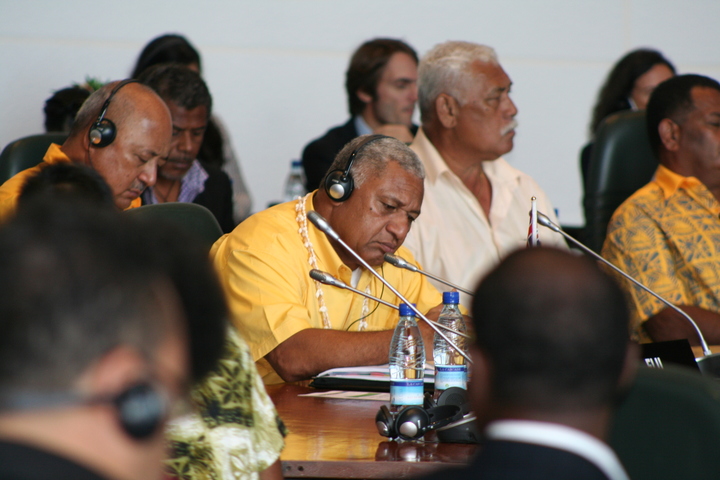
Prime Minister Voreqe Bainimarama says while Australia and New Zealand work out their Trans-Tasman bubble, Fiji’s equal greater success against the Pacific nation into a position to take the lead among island states, reports FBC News.

The Prime Minister revealed that Fiji was working on its own bubble – a “Bula Bubble”, between Fiji, New Zealand, and Australia.

But he made no mention of the rise in covid-19 cases in both Australia – 27 new cases in the past 24 hours – and New Zealand – two in the last 24 hours, taking the number of ac tive cases to seven after 28 “covid-free” days with no new cases.

READ MORE: Al Jazeera coronavirus live updates – Brazil death toll nears 50,000

FBC News deputy manager Ritika Pratap reports that Bainimarama said:

“Working with Fiji Airways and Tourism Fiji, we’ll be welcoming Aussies and Kiwis to holiday in Fiji in a manner that is carefully controlled and safely insulated.

– Partner –

“Everywhere they go will be wholly dedicated to others who match the same criteria, safely guided by what we’re calling ‘VIP lanes’ allowing them to Vacation In Paradise.”

However, the Prime Minister highlighted that to come to Fiji, Australian and New Zealand tourists would have to follow some protocols.

He highlighted that intending travellers must present a certificate from a recognised medical institution certifying their 14 days of quarantine in their home country, along with proof of a negative covid-19 test result within 48 hours of their departure for Fiji.

He said at this point they could immediately start their “Bula Bubble” holiday within confined VIP lanes.

“They can complete 14 days of quarantine at their own cost in a Fijian Government-designated quarantine centre or a hotel of their choosing, after which a negative covid-19 test can clear them to start their “Bula Bubble” vacation.”

He said this Bula Bubble would allow Aussies and Kiwis to once again enjoy the best of Fiji while remaining separate from any other travellers and the general public.

“To be clear, any tourist who comes to Fiji on these terms still won’t be able to move freely throughout the country. All of their movement will be contained within the VIP lanes, starting on the airplane, then from the Nadi Airport onto designated transport to their designated resort or hotel, where they’ll remain throughout their stay.”

Identifying isolated resorts
The Prime Minister said Fiji was currently identifying geographically-isolated resorts that were the best fit for the “Bula Bubble”.

Fiji Airways, in collaboration with Tourism Fiji and the Ministry of Commerce, Trade, Tourism and Transport would announce more details in due course.

RNZ News reports there have been two new cases of covid-19 detected in New Zealand today, both in isolation.

One of the new cases is the child of the couple who tested positive yesterday, and the other is a 59-year-old woman who travelled from Delhi.

The Ministry of Health said in a statement they would not provide the exact age of the child who arrived with its parents from India, but it was under two years old.

“We are pleased to report that all family members are doing well at the Jet Park Hotel, the quarantine facility in Auckland.”

The second case arrived in Auckland on 15 June on flight AI1316.

Seven active cases in NZ
There are now seven active cases in New Zealand.

The total number of confirmed cases is 1161. The combined total of confirmed and probable cases is 1511.

RNZ News also reports that Auckland’s covid-19 isolation facilities have reached capacity, with 4272 New Zealanders in managed isolation and almost 900 more expected to arrive in the country in the next two days.

  • This article is republished by the Pacific Media Centre under a partnership agreement with RNZ.
  • If you have symptoms of the coronavirus, call the NZ Covid-19 Healthline on 0800 358 5453 (+64 9 358 5453 for international SIMs) or call your GP – don’t show up at a medical centre.
  • Follow RNZ’s coronavirus newsfeed
Print Friendly, PDF & Email

Article by AsiaPacificReport.nz

Jakarta files appeal against court’s ruling on Papua internet blackout

By Dewi Nurita in Jakarta

The Indonesian government has submitted an appeal against the Jakarta Administrative District Court’s (PTUN) decision that found President Joko Widodo and the Communication and Information Minister guilty of imposing an internet blackout in the Papua and West Papua provinces last August.

“On June 12, 2020, Defendant I filed an appeal against the Jakarta Administrative Court Decision’s ruling No. 230/G/TF/2019/PTUN-JKT dated June 3, 2020,” wrote the copy of the appeal letter received by Tempo on Friday.

In this case, the Communication and Information Minister Johnny G. Plate acts as Defendant 1, while President Jokowi acts as Defendant 2.

READ MORE: Jokowi ‘violates the law’ for banning internet in Papua

The plaintiffs are the Independent Journalist Alliance (AJI) and the Southeast Asia Freedom of Expression Network (SAFEnet).

AJI advocacy coordinator Sasmito Madrim confirmed that his side also received the appeal letter.

– Partner –

“Yes, I have (received it),” said Sasmito via short message to Tempo on Friday.

As widely reported, the government throttled the internet bandwidth in the West Papua region due to the unrest in August 2019 following mass demonstrations against racism against Papuans.

In early June, the court declared the government guilty of violating the law on emergency conditions.

Moreover, there was no initial announcement regarding the dangerous situation.

The panel of judges then sentenced the government defendants to each paying the court fee of Rp457,000 (NZ$50).

Dewi Nurita is a Tempo reporter, Dewi Elvia Muthiariny is the story English langiage translator and Markus Wisnu Murti editor.

Print Friendly, PDF & Email

Article by AsiaPacificReport.nz

NZ police shooting: Second fugitive captured, murder accused in court

By RNZ News

A woman at the centre of a manhunt after a police shooting in New Zealand yesterday has been arrested in West Auckland.

Police said Natalie Bracken was found just after 3pm today, taken into custody without incident, “and is assisting police with enquiries”.

Natalie Bracken
Natalie Bracken … in custody. Image: NZ Police/RNZ

She was wanted on warrants for driving charges and as an accessory to the murder of Constable Matthew Hunt, and is now due to appear in Waitākere District Court on Monday morning.

READ MORE: NZ shooting of police officer ‘shocking’

Waitematā police officer Hunt, 28, was killed, and another officer was shot in the leg amid a hail of bullets fired after a car they had tried to pull over crashed on Friday, in the West Auckland suburb of Massey.

A man who had been loading things into his car on the roadside at the time was also injured when a vehicle hit him. He and the injured officer remain in a stable condition in Auckland Hospital.

– Partner –

Yesterday a 24-year-old man was arrested and charged with murder, attempted murder and dangerous driving.

He was granted interim name suppression at a court appearance via videolink today, and is scheduled to appear in the Auckland High Court on July 8.

Commissioner of Police Andrew Coster earlier today said the police force across New Zealand was mourning Hunt’s death.

Constable Matthew Dennis Hunt, who was shot and later died in Auckland.
Constable Matthew Dennis Hunt, who was shot and later died in Auckland yesterday. Image: NZ Police/RNZ

The 28-year-old criminology major fullfilled a lifelong dream when he began working as a police officer in 2017, after earlier working as a case manager at Auckland Prison.

Until yesterday, the most recent killing of a police officer in New Zealand was in 2009 in Napier.

This article is republished by the Pacific Media Centre under a partnership agreement with RNZ.

Print Friendly, PDF & Email

Article by AsiaPacificReport.nz

Stop harassing USP protesters, global human rights groups tell Fiji

Pacific Media Watch

The Fiji authorities must respect the rights to freedom of expression and peaceful assembly for university staff and students and immediately cease intimidation tactics, say international human rights groups Amnesty International and Civicus.

About 200 university staff and students held peaceful protests from 8 June 2020 to show support for the vice-chancellor Professor Pal Ahluwalia who was suspended later that day.

The vice-chancellor was suspended because of his role in exposing mismanagement of funds and cronyism at the university and he was reinstated yesterday by the USP Council.

READ MORE: Special reports on the USP leadership crisis

On 9 June, police entered the USP campus to shut down the protest, stating that any continuation of the protest would require a permit.

Following the peaceful protests, the police obtained photos of protesters from journalists.

– Partner –

The police also confiscated some of the photos from the office of The Fiji Times newspaper on 12 June, using a search warrant.

On 16 June 2020, the police questioned staff from the university, focusing on possible breaches of covid-19 rules by participating in the peaceful protests.

Gatherings prohibited
Since March 2020, the Fiji government has prohibited all gatherings of more than 20 people as part of its covid-19 response.

On 5 June 2020, Prime Minister Voreqe Bainimarama announced that all 18 people who had confirmed cases of covid-19 nationally had recovered, and that there had not been a new positive test result in more than 45 days.

Under international human rights law, the right to peaceful assembly may be limited in a public health emergency, but such restrictions must be reasonable, necessary and proportionate to a legitimate aim.

“Given Fiji’s effective response in containing cases of covid-19 in the country, continuing restrictions on gatherings need to be specifically justified and may amount to a violation of human rights,” said Amnesty International and Civicus in a statement.

“Preventing people from protesting collectively in public as a result of covid-19 measures must be a last resort based on compelling needs, and due weight must be given to the importance of the right to peaceful assembly and the need of people to jointly raise their voices.

“There have been a number of instances over the last few years where peaceful protests have been arbitrarily restricted in Fiji, under the Public Order (Amendment) Act 2014, particularly protests organised by trade unions.

“Authorisation under national laws to hold protests have been denied without any valid reasons and often at the last minute.”

The governments of Australia, Nauru, New Zealand and Samoa have issued statements expressing varying degrees of concern about the leadership issues at the University.

Established in 1968, USP is jointly owned by governments of 12 member countries – Cook Islands, Fiji, Kiribati, Marshall Islands, Nauru, Nuie, Samoa, Solomon Islands, Tokelau, Tonga, Tuvalu and Vanuatu. Other international partners, including Australia, New Zealand, the European Union and Japan are key donors to the university.

Print Friendly, PDF & Email

Article by AsiaPacificReport.nz

COVID-19 in Latin America: Growing Challenges in the World’s Most Unequal Region

Source: Council on Hemispheric Affairs – Analysis-Reportage

By Rafael R. Ioris
From Denver, Colorado

Confirming what scientists had been saying for the last several years, a new global pandemic has brought the entire world to a halt in the last three months. The rapid spreading of a new form of Coronavirus, called COVID-19, stalled global commercial chains among countries and forced societies to find new ways to run business, educational systems, and even the very operations of political deliberation. Teleconferencing, online education, and zoom-based legislative sessions became the new normal and no one is certain of when things can go back to the dynamic before the pandemic. Mirroring these events, Latin America has now become the epicenter of the spreading of the new virus, especially in its largest countries, Brazil[1] and Mexico,[2] where contagion rates and death tolls are on the rise.

A continent historically plagued by weak and non-democratic political institutions and entrenched huge socio-economic inequalities, Latin America’s experiences with COVID-19 have been largely defined, very much along the situation unfolding in the US, by political inability and ideological polarization. And even though there are notable exceptions, these factors have mired the region’s ability to cope with the new challenges brought up by the rapid spread of the new virus.

In a general sense, size has mattered in the ways COVID-19 infection rates were manifested in Latin America. Several smaller countries, like Uruguay[3] and Paraguay,[4] managed to almost stop contagion with rigid border controls, something which tragically hardened some nationalist feelings present across the region prior to the arrival of COVID-19. Addition to these strategies, Nicaragua[5] had a different approach, keeping borders open so they could incentivize people coming through border controls and allow examinations by health authorities, something that seems to have been working well so far.

Counter-intuitively, larger countries, like Brazil, which usually possess better public health resources have fared more poorly though it is likely that things would have even worse were it not for institutions such as its Unified System of Public Health (SUS[6]). In effect, conversely to what is undergoing in Argentina,[7] a country with the region’s fourth largest population and where rigid stay-at-home policies were successfully implemented, and echoing events that also hindered the decision-making process in the US, Brazilian president Jair Bolsonaro at first denied the very threat posed by COVID-19 and then continued to undermine efforts promoted by their country’s important scientific, academic and public health professionals. Also in tandem with experiences of the United States, it is likely that Brazil’s federalist constitutional[8] framework helped minimize the impact of COVID-19 in the country as it allowed local governors to act more assertively in mandating stay-at-home policies Bolsonaro’s efforts to maintain commercial activities open, notwithstanding.

In any event, Brazil faces today its most challenging public health crisis. The country has recorded[9] at least 930,000 coronavirus cases, registered a death toll around 46,000, and displays the steepest curve of ascending cases in the world. Intensifying the regional challenges, a country where COVID-19 cases have taken a bit longer to gain momentum, Mexico now sees a rapid worsening of cases, having recorded[10] its worst week since the outbreak, both in confirmed cases (around 150,000) and deaths (around 18,000).

It should be noted that even though any nation with the social stratification existing in Latin America would equally face tremendous hurdles to attend to the many sanitary crises accentuated by the new coronavirus, the lack of efficient, coherent leadership and inclusive decision-making processes present in Latin American has certainly made things much worse. For one, stay-at-home policies could not be put in place in efficient ways since significant portions of workers simply could not afford to stop working in the streets since their very livelihood would thus be denied.

Regionally the informal sector[11] employs from a third to half of each country’s workforce and, especially where government economic aid was not forthcoming or was otherwise insufficient, it became extremely challenging to many not to venture outside in search of some form of remuneration or gain. Much in the same way, the halting of in-classroom education and its replacement for online education, though present across the region, impacted people differently depending on their socio-economic position. To be sure, the manifestation and especially the impacts of COVID-19 in Latin America varied according to people’s zip codes and racial composition. In effect, facing COVID-19 depended largely on one’s socio-economic reality,[12] i.e. one’s economic means, type of employment, educational background, place and type of residence, etc.

In short, being able to have access to online education, managing social or physical distancing, and following stay-at-home policies, all depended on one’s place in the entrenched stratified societies of Latin America. These challenges have been intensified by both the political fragmentation and economic slowdown most countries in the region faced prior to the arrival of COVID-19. Latin America’s political fragmentation[13] is today at its highest degree since the dawn of the 21st century and their most of the region’s domestic political arenas are largely defined by intense political polarization, which means that the anti-COVID-19 policies have been, in most places, mired in ideological disputes and conflicts. Coronavirus will also worsen the mediocre economic growth[14] most countries in the region have seen in the last five years, thus also intensifying existing regional economic disparities.

Adding to the many existing and growing challenges each country in the region faces, regional political coordination, such as the sharing of successful policies put in place in one country, has become a more difficult, though still a potentially important line of action. In fact, even though Latin America, particularly South America, has experienced its most promising period of regional cooperation in the first two decades of the 21st century, regional multilateralism has rapidly eroded in the last two years.

This was a process involving the coordination of US policies to the region in order to undermine rising levels of autonomy created by new regional agencies, such as UNASUR, including by resorting once again to turning the Organization of American States[15] into a diplomatic instrument for the promotion of US interests in the region. The arrival to power of Jair Bolsonaro and its policy of direct alignment[16] with the US has consolidated these new trends. In effect, deepening his xenophobic isolationism, and mimicking Trump’s views and policies, the Brazilian president has recently accused the World Health Organization of being an ideologically driven organization, from which Brazil could possibly withdraw in the near future.[17]

All in all, Latin America’s landscape in the context of the regional spread of COVID-19 is one defined by growing economic, social, sanitary, and political challenges. It is to be expected that heightened short-sighted nationalist views, deep political polarization, and entrenched economic inequalities will harden across the region, impacting more sharply and painfully historically marginalized social segments, such as afro-descendants and indigenous communities. Reversing these disheartening trends will take continued and asserted mobilization of broad sectors of all regional democratic forces. And it is very unfortunate therefore, that in such a challenging context, Latin America’s burgeoning experiences with regional cooperation in the last decade have been severely reversed in the last few years.[18]

Rafael R. Ioris is Associate Professor of Latin American History at the University of Denver.

Patricio Zamorano, Co-Director of COHA, contributed as Editor of this article

[Main photo-credit: Pixabay, open license]


End notes

[1] “Covid cases in Brazil,” https://www.google.com/search?q=covid+cases+in+brazil&rlz=1C1GCEJ_enUS891US891&oq=covid+cas&aqs=chrome.0.69i59l3j0l2j69i57j0l2.1440j0j7&sourceid=chrome&ie=UTF-8.

[2] “Covid cases in Mexico,” https://www.google.com/search?rlz=1C1GCEJ_enUS891US891&ei=vILiXr3ZEIrbtQar2puoBw&q=covid+cases+in+mexico&oq=covid+cases+in+mexico&gs_lcp=CgZwc3ktYWIQAzIFCAAQsQMyBQgAEIMBMgIIADICCAAyAggAMgIIADoECAAQR1CLmwVYvqMFYJemBWgAcAF4AIABaYgBvQOSAQM1LjGYAQCgAQGqAQdnd3Mtd2l6&sclient=psy-ab&ved=0ahUKEwi9p_W6vPrpAhWKbc0KHSvtBnUQ4dUDCAw&uact=5.

[3] “Uruguay quietly beats coronavirus, distinguishing itself from its South American neighbors – yet again,” https://theconversation.com/uruguay-quietly-beats-coronavirus-distinguishing-itself-from-its-south-american-neighbors-yet-again-140037.

[4] “Paraguay Closes Borders and Suspends Flights,” https://www.worldaware.com/covid-19-alert-paraguay-closes-borders-and-suspends-flights-through-april-12.

[5] “Nicaragua battles COVID-19 and a Disinformation Campaign,” http://www.coha.org/nicaragua-battles-covid-19-and-a-disinformation-campaign/.

[6] “While Brazil’s president fights social distancing, its public health system is fighting the pandemic,”  https://www.washingtonpost.com/politics/2020/05/04/while-brazils-president-fights-social-distancing-its-public-health-system-is-fighting-pandemic/.

[7] “How Argentina’s Strict Covid-19 Lockdown Saved Lives.” https://www.wired.com/story/how-argentinas-strict-covid-19-lockdown-saved-lives/.

[8] “Brazil’s President Still Insists the Coronavirus is Overblown. These Governors Are Fighting Back,” https://time.com/5816243/brazil-jair-bolsonaro-coronavirus-governors/.

[9] “Brazil: Coronavirus Cases,” https://www.worldometers.info/coronavirus/country/brazil/.

[10] “Mexico: Coronavirus Cases,” https://www.worldometers.info/coronavirus/country/mexico/.

[11] “It’s time to tackle the informal economy problem in Latin America,” https://www.weforum.org/agenda/2018/03/it-s-time-to-tackle-informal-economy-problem-latin-america/.

[12] “Covid-19 Exposes Latin America’s Inequality,” https://www.csis.org/analysis/covid-19-exposes-latin-americas-inequality.

[13] “Latin America: political change in volatile and uncertain times,” https://www.idea.int/news-media/news/latin-america-political-change-volatile-and-uncertain-times.

[14] “Latin America faces a second ‘lost decade’,” https://www.ft.com/content/07f0e09e-0795-11ea-9afa-d9e2401fa7ca.

[15] “How the Leader of OAS Became a Right-Wing Hawk – And Paved the Way For Bolivia’s Coup,”  https://inthesetimes.com/article/22181/oas-bolivia-coup-venezuela-maduro-trump-luis-almagro.

[16] “Brazil: From Global Leader to U.S. Follower,” https://fpif.org/brazil-from-global-leader-to-u-s-follower/.

[17] “Brazil could quit WHO, warns Bolsonaro,” https://www.thehindu.com/news/international/brazil-could-quit-who-warns-bolsonaro/article31768510.ece

[18] “Is Regional Cooperation Dead in Latin America?,” https://www.americasquarterly.org/article/is-regional-cooperation-dead-in-latin-america/.

USP Council lifts suspension of academic chief – no due process

By Wansolwara staff

The suspension of the University of the South Pacific’s vice-chancellor and president, Professor Pal Ahluwalia, has been lifted by the USP Council following a seven-hour virtual meeting today.

The institution’s highest decision-making body convened a virtual special council meeting to determine whether USP executive committee’s recent decision to suspend vice-chancellor Pal Ahluwalia was valid.

After the seven-hour long discussion, the USP Council set aside the suspension of Professor Ahluwalia by the executive committee, stating it was “not persuaded that due process was followed” in the suspension of the VCP.

READ MORE: Special reports on the USP leadership crisis

Today’s brief University of the South Pacific Council media statement after the seven-hour meeting. Image: USP

“The Council, having considered the decision by the Executive Committee to suspend the Vice-Chancellor & President, agrees that the process prescribed in An Ordinance to Govern the Discipline of the Vice-Chancellor be followed in investigating any allegations against the VC & President of USP,” a statement from the council secretariat said.


Fiji’s Minister for Education, Heritage and Arts Rosy Akbar, who was part of the virtual meeting, said the idea of the meeting was to find a resolution to the issues faced by USP.

– Partner –

“Fiji’s stand has always been on good governance and we still promote good governance and that is why we are part of the council’s decision,” she told local media at USP’s Laucala campus after the meeting concluded.

Before the start of the virtual meeting, journalists were refused entry into the university by security officers at the campus gates, who were following directives that the “media was not allowed on campus”.

Tight campus security
Campus security was also tight at the virtual meeting venue for council members in Fiji.

Concerned staff and students maintained strong support and solidarity for good governance over the past few weeks and welcomed the council’s decision to reinstate Professor Ahluwalia.

In recent weeks, Pacific leaders echoed strong calls for USP Council members to work together to resolve the ongoing challenges currently faced by the region’s premier educational institution.

Professor Ahluwalia was suspended on June 8 by the executive committee for alleged material misconduct, pending an investigation. The decision resulted in numerous demonstrations by concerned staff and students at USP campuses in Fiji, Kiribati, Nauru, Niue, Samoa, Solomon Islands and Vanuatu.

The University of the South Pacific journalism programme is in partnership with the AUT Pacific Media Centre.

Flags of USP’s 12-member countries fly high again outside the USP Students Association (USPSA) Federal Office at Laucala campus. The student body had taken the flags down when the vice-chancellor was suspended on June 8. The flags were raised this morning to support good governance at USP. Image: USPSA/Wansolwara
Print Friendly, PDF & Email

Article by AsiaPacificReport.nz

NZ shooting of police officer – ‘shocking situation’ says chief

By RNZ News

Auckland police will remain armed until they are “satisfied the right people are in custody” following the fatal shooting of an unarmed officer earlier today, says Police Commissioner Andrew Coster.

The male police officer died in a shooting after a routine traffic stop in the West Auckland suburb of Massey this morning. A second officer who was also shot is in a stable condition in hospital.

In a news conference held late this afternoon, Commissioner Coster said police were speaking to “two people of interest” after the fatal shooting.

READ MORE: As it happened: Police officer shot dead

He said a firearm had been recovered.

The two unarmed officers were shot during the incident that happened at around 10.30am on Reynella Drive in Massey.

– Partner –

New Zealand police are usually unarmed. Coster said during his briefing that the police officers were not carrying arms when they made their routine traffic stop.

Until today, it has been more than 10 years since a police officer was killed in New Zealand in the line of duty.

Since 1890, 22 officers have been shot dead in the line of duty, with a further 10 having been killed in other types of attacks.

Multiple shots
Commissioner Coster said multiple shots from a long barrelled firearm were fired at the officers after they approached a vehicle that had crashed after they had tried to pull it over.

He said a “large number of police from across Tāmaki Makaurau [Auckland]” as well as the Armed Offenders Squad were involved in the hunt for the perpetrators.

“Our priority is to hold this offender to account,” Coster said.

The incident saw several schools and pre-schools in Massey locked down while police and other emergency services descended on the suburb.

Coster confirmed the police officer’s death at an earlier media briefing in Wellington this afternoon.

He described the death as shocking and said it was a terrible day.

A member of the public who was hit by a fleeing vehicle has minor injuries.

‘Worst news’ for police
“This is a shocking situation, this is the worst news police and their families can receive.

“The incident points to the real risk our officers face as they go about their jobs every day. Staff safety and welfare are our absolute priority and our whole organisation is in a state of shock as a result of this event.”

Prime Minister Jacinda Ardern said the death of the police officer is devastating news.

“To lose a police officer is to lose someone working for all of us, but also a family member, someone’s loved one and friend. My condolences go to them and to their police whānau.”

Meanwhile in a joint media conference with the Police Association in Napier this afternoon, Police Minister Stuart Nash said the news of the fatal shooting was absolutely gutting.

He said he was heartbroken for the family and colleagues of the officer who had died and described it as a tragic day for the police family.

“Over 10,000 men and woman have lost a valued colleague,” he said.

This article is republished by the Pacific Media Centre under a partnership agreement with RNZ.

Print Friendly, PDF & Email

Article by AsiaPacificReport.nz

USP Council reinstates vice-chancellor Pal Ahluwalia pending inquiry

Pacific Media Watch

The University of the South Pacific’s vice-chancellor Professor Pal Ahluwalia has been reinstated to office and his suspension has been lifted, reports FijiVillage news website.

According to reliable sources, the USP Council agreed to the decision after a full day meeting starting at 9am and ending about 5pm, report news editor Vijay Narayan and reporter Semi Turaga.

FijiVillage said the radio network had been informed that the allegations of material misconduct against Professor Ahluwalia would still be investigated.

READ MORE: Special reports on the USP leadership crisis

However, he would remain in office during the course of the investigation.

The USP Council stated that having considered the decision by the university’s executive committee to suspend the vice-chancellor and president, the council was not persuaded that due process was followed in the suspension of vice-chancellor Ahluwalia.

– Partner –

The USP Council said that it set aside the suspension of the by the executive committee and had resolved that the process as prescribed in an ordinance to govern the discipline of the vice-chancellor be followed in investigating any allegations.

Earlier in the council meeting, USP pro-chancellor Winston Thompson withdrew from discussions due to a conflict of interest as he was chair of the executive committee that had suspended Professor Ahluwalia pending independent investigations.

News media barred
Earlier today, Fiji news media reported tight security at the USP’s Laucala campus in Suva.

Pal Ahluwalia
Reinstated vice-chancellor Professor Pal Ahluwalia … initiated reforms at USP. Image: FBC News

Reporters were barred, including from the university’s journalism programme newspaper and website Wansolwara that usually gives comprehensive coverage to campus issues.

The Fiji Times reports: “A media personnel said [that] when trying to get into the premises to cover the USP Council meeting underway at the Laucala campus in Suva he was told by a security guard that the media was not allowed into the premises.”

Other Fiji media carried similar stories and RNZ Pacific also reported the ban, saying journalists had been barred from entering USP as the full council met to “resolve an impasse at the regional institution”.

Print Friendly, PDF & Email

Article by AsiaPacificReport.nz

Restoring a gem in the Murray-Darling Basin: the success story of the Winton Wetlands

Source: The Conversation (Au and NZ) – By Max Finlayson, Adjunct Professor, Charles Sturt University

Water use in the Murray-Darling Basin has long been a source of conflict. Damage to rivers and wetlands, including fish kills and algal blooms, has featured prominently in the news.

But the Winton Wetlands, in the south-east basin, represents a bright spot. Its restoration provides a sense of hope that reaches beyond the complexities of history.

The wetlands site is about 2.5 hours drive north-east of Melbourne. It’s now a thriving place for plants and wildlife that attracts plenty of visitors – but it wasn’t always like this.

A laughing kookaburra keeps watch on the wetlands. Diana Padron/Flickr, CC BY-ND

From dispossession to decommissioning

The Yorta Yorta people were the original Aboriginal inhabitants of the area. They lost access to the land and water when European settlers took it for farming in the 1860s.

The farmers and the wetlands were displaced in 1970 when a 7.5 kilometre rock wall was built to form Lake Mokoan. The dam project allowed for local irrigation and created a drought reserve for the River Murray. This was broadly welcomed for the economic and recreational values it promised.

It worked for a while, but the resulting flooding killed around 150,000 iconic river red gums, including many Aboriginal scar trees.

River red gum trees died following inundation after the dam was built. Max Finlayson, Author provided

The dam was dried out for downstream supplies in the 1982 drought. Then the 1990s brought massive blue-green algal blooms.

The frequent blooms made it hard to use the water. The Victorian government needed to find water savings for water projects elsewhere and in 2004 decided to remove the dam.

It was a controversial move, opposed by many in the community, including those who lived around the lake, or used the water for recreation or irrigation. But in 2009 a gap was cut through the wall and the water drained.

Local opposition to the decommissioning of the dam. Max Finlayson, Author provided

Restoration of the wetlands

After the dam was decommissioned, it was clear the site had undergone significant ecological and social change. So the government was keen to establish a world-class wetland with close links to nearby communities.

In 2009 an independent, community-based committee of management was formed to renew the site.

The scale of the renewal is significant, covering 8,750 hectares. It’s the first site outside the US to be classed as a Wetland of Distinction by the Society of Wetland Scientists, a leading global voice for wetland science and management.

Importantly, local Indigenous people are actively involved in the project, which recognises Indigenous cultural heritage sites throughout the wetlands.

This runs alongside efforts to document and share the history of the European settlers. The committee recognises that people in the wetlands have more than once moved from occupation to dispossession.

Winton Wetlands aerial views – December 2011.

The ecological renewal is built around specific management actions to establish self-sustaining populations of native fish, waterbirds and other fauna, and aquatic plants. It’s also improving the water quality and reducing the populations of feral animals and weeds.

Native plants returned to the site include the river red gum and cane grass.

Native fish are breeding, as is the majestic white-bellied sea eagle. A rakali (Australia’s answer to otters) and sugar gliders have been sighted.


Read more: A major scorecard gives the health of Australia’s environment less than 1 out of 10


An advisory panel is guiding the science behind the project. It’s supported by research partnerships with universities and an annual science forum, designed as an information exchange between the committee and the wider community.

A cafe and visitors hub are now regularly used for events. People visit the wetlands for walks, bike rides, canoeing, stargazing and birdwatching.

There are 60km of roads, nine bush walks, 30km of cycling trails and artworks celebrating the landscape and its history.

The decommissioning of the dam was not well received by some in the community at first. The restoration project is working hard to repair the connection of people to the site through ecological renewal, art and recreational events.

New trees planted as part of the Winton Wetland revegetation during dry periods. Lance Lloyd, Author provided

If you restore it, they will come

The success of the Winton Wetlands project in involving the community is reflected in increasing visitor numbers to the site. These have grown from 36,264 in 2016-17 to 65,287 in 2018-19.

In addition, the numbers of schoolchildren who visit the site for guided nature excursions has increased from 274 in 2016-17 to 2,013 in 2018-19.

Volunteers are also playing a role with some 4,114 hours of effort in 2018-19 operating the information desk, taking guided walks, organising planting days and other restoration activities. Volunteers support the science work in various ways including long-term monitoring of frog calls.


Read more: Don’t count your fish before they hatch: experts react to plans to release 2 million fish into the Murray Darling


The management committee is determined to rebuild the ecological integrity of the wetlands. But there is a lot still to do, and there are differences of opinion over the priorities and the speed at which things are being done.

The initial funding of A$17 million from the Victorian government will soon be exhausted. Other financial avenues are being pursued. This is necessary to secure a future for this bright spot – a gem of inestimable value – in the Murray-Darling Basin.

The Winton Wetlands represent a bright spot for social-ecological restoration and renewal in the Murray-Darling Basin. Lance Lloyd, Author provided

ref. Restoring a gem in the Murray-Darling Basin: the success story of the Winton Wetlands – https://theconversation.com/restoring-a-gem-in-the-murray-darling-basin-the-success-story-of-the-winton-wetlands-140337

Facebook vs news: Australia wants to level the playing field, Facebook politely disagrees

Source: The Conversation (Au and NZ) – By Tim Dwyer, Associate Professor, Department of Media and Communications, University of Sydney

The Australian government is setting out to develop a “bargaining code” to address power imbalances between news media publishers and digital platforms such as Facebook and Google. The creation of this code was recommended last year in the final report of the Digital Platforms Inquiry held by the Australian Consumer and Competition Commission (ACCC).

The ACCC is planning to publish a draft version of the code at the end of July, but in the meantime it has asked interested parties to contribute their views. Most submissions won’t be made public until the draft code is released, but some stakeholders – including Facebook – have published their submissions themselves.

In Facebook’s submission, it sets out to rebut the ACCC’s understanding of the digital media landscape.

Facebook argues it doesn’t really need news publishers because news content is substitutable, and anyway the platform prioritises content from family and friends in people’s news feeds.

In effect, Facebook is saying it does more good than harm to journalism and news media businesses. The bargaining process hinges on a dispute over the value of news content and exactly what it contributes to the platform’s business – which is currently unclear, particularly to those outside the tent.


Read more: No more negotiating: new rules could finally force Google and Facebook to pay for news


Valuing news

Facebook’s approach plays into a narrative about how consumers and advertisers migrated to the web in the early 21st century, collapsing the 150-year-old advertising model of newspapers.

Historically, news was the “poor cousin” in direct commercial arrangements between advertisers and newspapers (and later broadcasters). News evolved as byproduct of this exchange and so it remains, secondary to the main game, a kind of subsidy and a “filler” to be used by these giant digital machines of platform capitalism.

But news is also acknowledged as a public good with broader societal benefits. Platforms are slowly realising they cannot avoid regulation to reduce the harms that result from their own market dominance.

Facebook’s chief executive Mark Zuckerberg has identified the platform’s key problematic areas as “harmful content” (such as hate speech and inappropriate imagery) and “election content” (such as targeted political advertising).

Facebook itself has moved from strongly opposing external regulatory interventions to guardedly accepting the idea, as long as the particular regulation suits them.


Read more: Media Files: ACCC seeks to clip wings of tech giants like Facebook and Google but international effort is required


A strategic rebuttal

In its ACCC submission, Facebook argues it hasn’t contributed to the demise of news businesses by hoovering up advertising revenue. Instead, it points out the rise of the internet had already sent news media into structural decline.

If anyone is to blame, according to Facebook, it is the news businesses themselves who didn’t see the digital tsunami on the horizon.

Unsurprisingly, Facebook does not mention its own substantial market power: with Google, the social media giant carries the bulk of online advertising. As US media scholar Victor Pickard has noted, Facebook and Google between them collect 85% of all growth in digital advertising revenue, leaving very little for news publishers.

Facebook’s take on the news market

Facebook argues the ACCC, the news industry and the rest of us are all suffering from “misconceptions”. In broad terms these are: that Facebook is responsible for the market failure of news; that it “steals” news content and news publishers have no control over its surfacing; and that there’s a value imbalance between the platforms and news media businesses which favours Facebook, and therefore Facebook should compensate the businesses at commercial rates.

However, Australians are increasingly getting their news via social media newsfeeds. Research from the University of Canberra shows the COVID-19 pandemic has boosted this trend, and Reuters has found older Australians too are increasingly using social media as a pathway to news.

Australians are increasingly getting their news via social media. Shutterstock

Clearly, digital platforms and news media businesses have a symbiotic relationship. But it is far from an equitable one: with a market capitalisation of US$671 billion, annual revenue of more than US$70 billion, and around 1.73 billion users every day, Facebook dwarfs any news media business.

As social media platforms are growing more important when it comes to accessing news, and news is a social good, the ACCC is calling for a more sustainable, if not an aspirationally equitable relationship.

Facebook likes the idea of a new Australian Digital Media Council modelled on the Australia Press Council. It would arbitrate disputes between news media publishers and digital platforms.

But is this a reasonable comparison? Can news publishers be equated with individual complainants who seek remedies?

Trying to dodge responsibility?

The central theme of Facebook’s submission is a refusal to acknowledge there is a power imbalance between news media businesses and Facebook and Google that needs to be addressed.

Facebook questions the idea of even casting their relationship to the news media sector in that way. Indeed, the company appears to in denial about the simple fact noted by Treasurer Josh Frydenberg’s comment on the handing down of the Digital Platforms Inquiry report:

Make no mistake, these companies are among the most powerful and valuable in the world.

If nothing else, Facebook has demonstrated its well-oiled PR machine and the phalanx of people ready to defend its surging revenue base. Its counter-arguments to the ACCC are evidence of this, and also a determination to maintain absolute algorithmic control over the news feed.

From Facebook’s perspective, a key impact of COVID-19 has been that people are now spending increasing amounts of time on their platform.

ref. Facebook vs news: Australia wants to level the playing field, Facebook politely disagrees – https://theconversation.com/facebook-vs-news-australia-wants-to-level-the-playing-field-facebook-politely-disagrees-141043

Australia is under sustained cyber attack, warns the government. What’s going on, and what should businesses do?

Source: The Conversation (Au and NZ) – By Mahmoud Elkhodr, Lecturer in Information and Communication Technologies, CQUniversity Australia

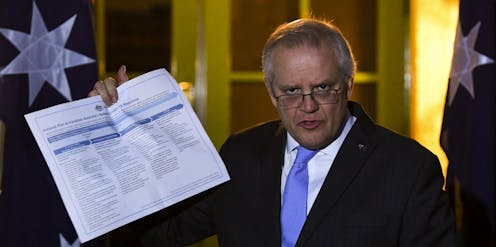
Prime Minister Scott Morrison had some alarming news for Australians this morning: we are under cyber attack. He informed the nation the attacks “hadn’t just started”, and that Australian businesses and governments are being widely targeted.

It is unclear why the government chose today to make the announcement, or indeed what exactly is going on.

The attack is described as “state-sponsored”, which means a foreign government is believed to be behind it. When asked who that might be, Morrison said there is a high threshold for drawing that kind of conclusion, but added:

…there are not a large number of state-based actors that can engage in this type of activity.

This has been interpreted as a coded reference to China, which the Australian government reportedly suspects of being behind the attacks.


Read more: Why international law is failing to keep pace with technology in preventing cyber attacks


What do we know about the attack so far?

An advisory note posted on the government’s Australian Cyber Security Centre website describes the attack as a “cyber campaign targeting Australian networks”.

The advisory says the attackers are primarily using “remote code execution vulnerability” to target Australian networks and systems. Remote code execution is a common type of cyber attack in which an attacker attempts to insert their own software codes into a vulnerable system such as a server or database.

The attackers would not only try to steal information but also attempt to run malicious codes that could damage or disable the systems under attack.

Detecting this is hard, and would require advanced defensive measures such as penetration testing, in which trained security professionals known as “ethical hackers” try to hack into a system in an attempt to find potential vulnerabilities.

What systems have been affected?

The advisory linked the attack to three specific vulnerabilities in particular systems, detailed in the table below. Any business that uses any of these systems is vulnerable to attack. It is too early to tell whether other systems are also vulnerable; other vulnerabilities may emerge as investigations continue.

Author provided

How can businesses protect themselves?

Even though the specific threats are not fully known to the public, there is a range of measures businesses can take in the meantime. These include:

Use available government resources

The federal government has provided extensive cyber safety guidelines for Australian businesses, featuring advice on cyber security and data protection, and information on the various types of cyber threat.

More comprehensive cyber security guidelines can be found at the ACSC website, including detailed advice on secure management of databases, email systems and physical computer assets, among others.

Watch out for spam

Phishing is not just limited to email. These scams can be executed via text messages, social media such as Facebook, and VOIP messaging services such as WhatsApp.

As a general guide:

  • do not open messages or attachments from unknown senders

  • remember that genuine organisations such as banks, government departments and online retailers never ask for personal information via email, and you should always check with them directly (such as by calling them) if in doubt.


Read more: Everyone falls for fake emails: lessons from cybersecurity summer school


Beware DDoS attacks

A “distributed denial of service” (DDoS) attack is the most common type of cyber attack. It works by flooding your website with traffic, preventing genuine customers from reaching your website. Think of it like a traffic jam clogging up a highway and preventing cars from reaching their destinations.

Luckily, there are ways to reduce the impact of DDoS attacks, such as by using intrusion detection and prevention systems. If you are concerned about DoS attacks speak with your internet provider about developing a DDoS response plan.

Have a backup plan

A “continuity plan” ensures important assets such as personnel records, customer databases and network configurations are protected and can be restored quickly in the event of a cyberattack.

Suggested plans are available via the federal and Queensland governments.

Businesses should also follow sensible IT security procedures, which include the following:

What businesses should be doing to minimise their cyber security risks. Mahmoud Elkhodr, Author provided

Regardless of the details, the latest announcement is a reminder that we should not lower our guard against cyber attacks. The latest round of cyber attacks are likely the result of previous “reconnaissance attacks”, which revealed existing vulnerabilities in Australian networks.

Taking the steps outlined above could help prevent hackers mounting similar attacks in the future.

ref. Australia is under sustained cyber attack, warns the government. What’s going on, and what should businesses do? – https://theconversation.com/australia-is-under-sustained-cyber-attack-warns-the-government-whats-going-on-and-what-should-businesses-do-141119

Informal feedback: we crave it more than ever, and don’t care who it’s from

Source: The Conversation (Au and NZ) – By Nathan Eva, Senior Lecturer, Monash University

The COVID-19 crisis has changed the way many of us work. With the switch to working from home, in particular, a fundamental workplace behaviour has gone by the wayside.

Informal feedback.

At the office it is easy to get, and give. But working from home makes it hard. Every interaction requires dialling a number, typing out a message or scheduling a video meeting. That little bit of extra effort means many of us may not bother, given other demands. Indeed a survey of 1,001 US employees in April found lack of communication was a common reason 45% said they felt burnt out.


Read more: It’s not just the isolation. Working from home has surprising downsides


So feedback is especially essential now.

But how to achieve it?

Traditional management thinking would assume the key source of feedback employees need is from supervisors, and put resources into that.

But this might be the time to change that. Our research shows the same organisational benefits can be achieved through a broader culture of feedback between colleagues, making managerial feedback non-essential.

Managers not that important

Our study investigated the degree to which two different sources of feedback – manager feedback and colleague feedback – influenced worker’s willingness to take on more office tasks.

To do so, we surveyed 300 employees and their 64 managers three times over three months in late 2018.

In the first month, employees rated the level of performance and developmental feedback they got from their managers and colleagues, using a “Likert scale” of one to five, one being strong disagreement and five strong agreement. For example, they were asked: “My co-workers provide me with valuable information about how to improve my job performance.”


Read more: Six effective ways to have that difficult conversation at work


In the second month, employees rated their work engagement and whether their feedback expectations were being met. These expectations are part of what researchers call the “psychological contract” between an individual and an organisation – personal beliefs about the reciprocal obligations between the worker and the workplace.

In the third month, we asked the employees’ direct managers to report on any extra tasks those employees had taken on over the past quarter. We asked them to assess if the employee was innovative, such as “creating new ideas” and “transforming the ideas into innovative applications”. We also asked how they helped others, such as “giving their time to help others who have work-related problems”.

Our hypothesis was that receiving high levels of manager feedback would be associated with high scores on these measures.

The results of our analyses did show feedback from managers was important. It increased employee engagement by about 13%.

Unexpectedly, however, our results also showed managerial feedback wasn’t any more important than feedback from colleagues.

That is, employees who rated feedback from managers low but feedback from colleagues high scored just as well on the engagement scores from their managers.

So the source of feedback did not matter, so long as it was there.

Decentralising feedback

Our results are in line with research showing the best feedback for fostering innovation comes from a source that understands the work, is immediate and frequent.

They show the potential of decentralised work cultures to pick up the slack when conditions, such as working from home, mean workers aren’t having their psychological contract fulfilled by managers.


Read more: Say yes to mess – why companies should embrace disorder


Promoting an organisation-wide culture of constructive and supportive feedback is even more important to overcome the hurdles in remote working to getting enough informal feedback.

It will take leadership from the top, and bottom.

But you can do it. And we think someone should, informally, tell you that.

ref. Informal feedback: we crave it more than ever, and don’t care who it’s from – https://theconversation.com/informal-feedback-we-crave-it-more-than-ever-and-dont-care-who-its-from-138932

Humanities graduates earn more than those who study science and maths

Source: The Conversation (Au and NZ) – By Peter Hurley, Policy Fellow, Mitchell Institute, Victoria University

Education minister Dan Tehan has announced changes to funding rates for university courses as part of a plan to create “job ready graduates”.

He said:

Projections prepared before the COVID-19 pandemic showed that over the five years to 2024 it is expected that the overwhelming majority of new jobs will require tertiary qualifications – and almost half of all new jobs will go to someone with a bachelor or higher qualification.

Under the new plan, students doing teaching, nursing, clinical psychology, English and languages will pay 46% less for their degree from next year.

Students in agriculture and maths will pay 62% less, while those studying science, health, architecture, environmental science, IT, and engineering will be 20% better off.

But the student contribution for the humanities will go up by 113%, and the costs for law and commerce will jump by 28%.

The rationale is to encourage students to select courses with the best employment outcomes.


Read more: Fee cuts for nursing and teaching but big hikes for law and humanities in package expanding university places


Tehan said health care is projected to make the largest contributions to employment growth, followed by science and technology, education and construction.

He said these industries are projected to provide 62% of total employment growth over the next five years.

Although there will be no change in course fees for medicine, dental, and veterinary science students.

With a forecasted rise in unemployment due to the COVID-19 pandemic, Tehan is expecting more young people to go to university, and others to return to re-skill.

National figures show about 93% of graduates who are available for work are employed three years after completing their bachelor degree.

While science, technology, engineering and maths (STEM) graduates are a focus of Tehan’s reforms, not all STEM graduates have above-average employment outcomes. After three years, the overall employment rate of engineering graduates is 95%, while science and maths graduates have a 90.1% rate of overall employment.

And science and maths graduates actually earn less than those with a degree in the humanities.

Which university students get jobs?

Undergraduates who study physiotherapy and occupational therapy have the highest level of employment (98.8%) three years after finishing their bachelor degree, while creative arts graduates the lowest (89.3%).

Of the study areas where the government is proposing students contribute more, law graduates (95.8%) and business graduates (95.5%) are employed at rates above the average. Humanities graduates are employed at a rate of 91.1% (above science and maths).

The median salary for university graduates differs as well. After three years, medicine graduates earn the most (A$100,000) along with dentistry graduates (A$97,400).

As the graph above shows, humanities and social science graduates (A$70,300) earn more than maths and science graduates (A$68,900).

Will reforms help the coronavirus class of 2020?

It is unclear whether these reforms will help school leavers facing an uncertain future.

During a recession many people look to study while the employment market remains weak. In his speech, Tehan said:

We know that people turn to education during economic downturns and we also know the Costello Baby Boom generation will begin to finish school from 2023.

In 2017 the Australian government effectively put a cap on university places, after five years of “demand driven” funding (where government essentially funded the amount of places students were enrolled in).


Read more: Demand-driven funding for universities is frozen. What does this mean and should the policy be restored?


In practice, this means there are now limits on the number of government subsidised places at universities.

Because of demographics and previous growth in enrolments, the cap was not expected to restrict the number of people going to university until 2023.

But the COVID-19 pandemic means these assumptions may no longer apply.

Normally school leavers follow a number of pathways into the workforce (including going straight to work, or studying a university of vocational education and training course first). Most young people take the university pathway.

However, these school leavers don’t start their courses at the same time.


Read more: Most young people who do VET after school are in full-time work by the age of 25


Around 20-25% of school leavers who go to university before working take a gap year. Travel restrictions and a weaker employment market may mean this year’s school leavers will bring forward their study plans.

There may also be more school leavers who choose to study at university instead of entering the workforce directly after school. For instance, 44% of 18 and 19 year olds who are not studying work in retail, accommodation and food services, and trade.

These industries have suffered large job losses because of the coronavirus pandemic.

A reduction in new apprenticeships and traineeships, fewer jobs and higher youth unemployment mean school leavers may look to enrol in education and training.

Before COVID-19 hit, domestic enrolments were only projected to go up by around 1-2% in the next few years. However, due to COVID-19, there already has been a reported doubling of year 12 students in NSW applying for a university course compared to the same time last year.

The government believes 39,000 extra university places will be created by 2023 because of these changes. But this number is not specifically designed to meet a projected increase in demand because of the coronavirus. Therefore, it is unclear (without the government lifting the cap) whether there will be enough funded university places for school leavers whose plans have been displaced by the pandemic.

ref. Humanities graduates earn more than those who study science and maths – https://theconversation.com/humanities-graduates-earn-more-than-those-who-study-science-and-maths-141112

VIDEO: Michelle Grattan on cyber attacks, unemployment and branch stacking

Source: The Conversation (Au and NZ) – By Michelle Grattan, Professorial Fellow, University of Canberra

University of Canberra Professorial Fellow Michelle Grattan and Assistant Professor Caroline Fisher discuss the week in politics including: The Prime Minister’s announcement that Australia was under a Cyber attack, Foreign Minister Marise Payne’s speech regarding Australia actively engaged in pushing reform of international institutions, Scott Morrison’s broad agenda of reducing red tape, the unemployment figures, and alleged branch stacking in the Victorian Labor party.

ref. VIDEO: Michelle Grattan on cyber attacks, unemployment and branch stacking – https://theconversation.com/video-michelle-grattan-on-cyber-attacks-unemployment-and-branch-stacking-141124

Black Lives Matter in health care too. But convincing tomorrow’s health workers is tough

Source: The Conversation (Au and NZ) – By Liz Rix, Lecturer/Academic, School of Health & Human Sciences & Gnibi College of Indigenous Australians, Southern Cross University, Southern Cross University

The global Black Lives Matter movement is forcing us all to confront past and current injustices Aboriginal and Torres Strait Islander people face.

It’s also a chance for Australia’s future health workers to acknowledge how colonisation and subsequent injustices shape interactions today between Indigenous Australians and mainstream health services.

By addressing these injustices early in their studies, health students might one day provide culturally appropriate or culturally safe health care. That’s rather than perpetuate well-documented institutional racism that sees many Indigenous people avoid mainstream health care or receive substandard care when they do.

However, our new book chapter brings together a growing body of evidence that convincing largely white, undergraduate students of this is an uphill struggle.

Here’s what we face. And here’s what we can do better if our future doctors, nurses and health workers are ever to help Close the Gap between Indigenous and non-Indigenous people’s health and well-being.


Read more: ‘I can’t breathe!’ Australia must look in the mirror to see our own deaths in custody


Yes, it’s confronting

A new group of health students start their undergraduate degree. Enter the compulsory Indigenous health unit. This may be students’ first exposure to the brutality under which Australia was colonised.

The first weeks expose the British colonisers’ attempts to commit the physical and cultural genocide of Indigenous people.

In the first lecture, some white faces turn paler at the reality of what they are learning. The brutality of “hidden” facts behind colonisation emerges.


Read more: Friday essay: can looking at art make for better doctors?


Most students become immediately engrossed, yet challenged. For the first time many realise they belong to a dominant cultural group that perpetrated the early massacres and continuing attempts to eradicate Indigenous peoples’ language and culture.

Students are shocked to learn Australia was colonised under the lie of terra nullius (land without people), unofficially relegating Aboriginal people to the status of flora and fauna.

Discovering the historical and continuing barriers to Indigenous people seeking health care can also be shocking.

For instance, Indigenous patients are ten times less likely than non-Indigenous patients to go on the waiting list for a kidney transplant, despite being at much higher risk of end-stage kidney disease.

What’s all this to do with Black Lives Matter and health?

To genuinely claim Black Lives Matter, white health students must reflect critically on their own history, culture and worldview.

For instance, when it comes to health care, they need to acknowledge the dominance of Western and biomedical knowledge over traditional knowledge in mainstream health care. Unless forced to think about it, many white health students assume biomedical knowledge is all there is.

Health students also need to examine their unconscious bias towards Indigenous people.

This refers to the instant judgements we make about other people and situations based on our own values, experiences and cultural beliefs. It’s the type of bias that leads people to unwittingly judge Indigenous people more harshly than white people for the same actions, particularly when it comes to criminality, lifestyles or conflict.


Read more: Ms Dhu coronial findings show importance of teaching doctors and nurses about unconscious bias


Students need to unpack their white privilege. Unless students are forced to think about it, it’s easy to deny this privilege exists, despite decades of evidence showing otherwise.

In health care, for example, white clinicians hold the power of their white privilege but also their expert knowledge of the health conditions Indigenous Australians seek support for.

Being aware of all of this is therefore essential if white health professionals are to build positive therapeutic relationships with Indigenous people, based on two-way respect and understanding.


Read more: Australia needs to confront its history of white privilege to provide a level playing field for all


We can’t keep on repeating past mistakes

When confronted with these issues during their studies, some students become angry, fearful, guilty, argumentative or defensive. This common reaction is known as “white fragility”, when white privilege and unconscious bias collide.

Some stay silent, ticking the right boxes to get a “good grade” as a culturally safe health professional.

Robin DiAngelo, author of the book White Fragility, asks people to look beyond terms like ‘I’m not racist’.

The percentage of overtly racist students is low. However their impact on other students and lecturers is damaging.

These students often argue they will treat everyone the same, regardless of their culture. Others make inflammatory statements, along the lines of “just get over it”.

Yet, it is crucial these students examine their unconscious biases, and have these conversations in the “safe space” of a classroom before alienating Indigenous Australians from mainstream health services once they graduate.

Once these students join the workforce, and their attitudes go unchecked, they become complicit in the continuation of institutional racism against Indigenous people.

The lethal impact of institutional racism in health services is ever present. The avoidable death of a young pregnant Aboriginal woman from sepsis tragically illustrates this. This young woman died after being turned away from a NSW hospital on some 20 occasions with increasing pain. Emergency department nurses judged she was seeking drugs.


Read more: Why racism is so hard to define and even harder to understand


We can’t accept racism in the media

When the issue of “cultural safety” was added to nurses’ and midwives’ codes of conduct in 2018, we had a stark reminder of white Australia’s attitude and unconscious biases, as played out in the media. This comment from 2GB’s Michael McLaren was typical:

This all sounds ridiculous to me. What the hell is cultural safety? No one’s ever heard of it.

Cultural safety emerged in the 1990s from the work of Maori nurses in New Zealand. It’s about providing an environment, that’s:

[…] safe for people; where there is no assault, challenge or denial of their identity, of who they are and what they need. It is about shared respect, shared meaning, shared knowledge and experience, of learning together with dignity, and truly listening.

Here’s what we could be doing better

White and Indigenous expert lecturers, working together, need to deliver this material to health students.

If students witness positive cross-cultural relationships and teaching teamwork, this clearly demonstrates two-way understanding and respectful relationships. It also steers clear of an “us and them” divisive culture.

If Australia wants to convince the rest of the world Black Lives Matter, future health workers can acknowledge and reflect on the enduring legacy of colonisation and its expression as institutional racism today. Only then may Closing the Gap become a reality.


We acknowledge and pay our respects to the Bundjalung people on whose lands we live learn, write and teach. We thank the Elders past and present for the learning and knowledge in this article.

The authors use the term Aboriginal and Torres Strait Islander people as the respectful and inclusive term for Australia’s First Nations Peoples. However, the term Indigenous Australians is also used to enable the complexity of this topic to be adequately discussed in this short article.

ref. Black Lives Matter in health care too. But convincing tomorrow’s health workers is tough – https://theconversation.com/black-lives-matter-in-health-care-too-but-convincing-tomorrows-health-workers-is-tough-140631

Young women are hit doubly hard by recessions, especially this one

Source: The Conversation (Au and NZ) – By Angela Jackson, PhD Candidate, Monash University

We are entering our first pink-tinged recession.

The official unemployment figures released on Thursday confirmed that female work has has been more heavily impacted than male work.

Since February 457,517 women have lost their jobs and 380,737 men.

The disparity is likely to be worse when JobKeeper ends. The jobs at risk are concentrated in female-dominated industries.


Employed Australians, total

Includes Australians regarded as still employed because they are on JobKeeper. ABS 6202.0

This might be thought to be reason enough for the government to focus its recovery efforts on supporting female jobs rather than “shovel ready” male-dominated jobs such as those in the construction industry.

But there’s another reason.

Women report poorer mental health than men. When responding to Australia’s Household Income and Labour Dynamics (HILDA) survey 20% of women report having diagnosed depression or anxiety, compared with 13% of men.

Young women suffer doubly

Using almost twenty years of HILDA data (2001-2018) we have compared changes in people’s mental health in locations that are experiencing increased unemployment with changes in other times and locations, controlling for other things that might effect mental health.

Women in their early-20’s and mid-40’s are more affected by local economic downturns than men.


Read more: There’s a reason you’re feeling no better off than 10 years ago. Here’s what HILDA says about well-being


These ages are the ones in which women’s involvement in the labour market is the highest – just before and after having children.

The graph below shows that for women in their early-20’s every one percentage point increase in the unemployment rate is estimated to increase the number of women with poor mental health by about 7%.


Authors calculations from HILDA data

This suggests that an increase in the unemployment rate from about 5% in February to the peak of 10% forecast by the Reserve Bank could increase the number of young women with poor mental health by about 33%.

It would increase the number of young men with poor mental health by about 20%.

Searching for explanations

It might be that because women typically spend fewer active years in the labour market, the effect of unemployment in those years is more devastating.

A spell out of the workforce with children after a spell out of the workforce with unemployment means a woman who lost her job during a recession might never obtain the lifetime earnings she would have expected.


Read more: Women are drinking more during the pandemic, and it’s probably got a lot to do with their mental health


Further analysis of the HILDA data supports this contention. Among young women the association between unemployment and poor mental health is much stronger for those that would like to have children.

Women in their mid 40’s (who are often trying to re-enter the work force after focusing on children) are also much more prone to poor mental health than men during downturns, perhaps because it’s their last chance to build up lifetime earnings.

We need a two-pronged approach

Australia’s last recession, in the early 1990s, hit the jobs of men much harder than those of women. This recession looks different. Women are being hurt more than men, and the effects on the mental health of women aged in their early 20s and early 40s will amplify the difference.

The right approach is to ensure recovery programs are directed towards industries that employ women, and to boost funding for mental health care, especially programs designed for women.

The Royal Commission into Victoria’s mental health care system found it “failed to aid those who are most in need of high-quality treatment, care and support”.

It isn’t a good start.

ref. Young women are hit doubly hard by recessions, especially this one – https://theconversation.com/young-women-are-hit-doubly-hard-by-recessions-especially-this-one-140943

How the Gillard government’s live cattle ban created a headache for Scott Morrison

Source: The Conversation (Au and NZ) – By Matt Harvey, Senior Lecturer in Law, Victoria University

Earlier this month, the Federal Court found the Gillard’s governmnet’s controversial 2011 live export ban was unlawful.

But this is not a problem for the former government, who imposed the ban. It is one the current Morrison government has to grapple with.

Not only do they face millions of dollars in damages, but the Federal Court judgment raises serious questions about the limits of ministerial decision-making.

How did this start?

In June 2011, then agriculture minister Joe Ludwig issued a snap, blanket ban on Australia’s live cattle exports to Indonesia for six months.


Read more: Can meat exports be made humane? Here are three key strategies


This followed a Four Corners report featuring disturbing footage of the treatment of Australian cattle at Indonesian abattoirs.

At the time the footage aired, the minister was already in discussion with exporters about the conditions in abattoirs. Several “closed loops” had been created in which the entire journey of an animal from Australia to the abattoir in Indonesia had been subjected to quality control.

But the footage was so shocking, there was public pressure to do more.

Ludwig issued orders under the Export Control Act to suspend live cattle exports to Indonesia, without exceptions.

Former agriculture minister Joe Ludwig banned live cattle exports to Indonesia in 2011. Penny Bradfied/AAP

While the ban was celebrated by animal welfare groups, it angered the live cattle industry. It caused great difficulties for exporters in the process of shipping stock and they suffered significant losses and additional costs.

In 2014, the Northern Territory-based Brett Cattle Company launched a class action against the agriculture minister and the Commonwealth.

What did the Federal Court find?

The Federal Court handed down its landmark ruling on June 2.

Justice Stephen Rares found the ban was “capricious and unreasonable”, and Ludwig had committed the “tort of misfeasance” in public office by imposing the live export ban without regard to its possible illegality and the losses it would cause.

This means Ludwig either knew the ban was beyond his ministerial power, or was reckless as to whether it was. There was also recklessness regarding the possible harm that might result.

The key element here is the lack of an honest attempt to perform the functions of the ministerial office, with “honest” having the technical legal meaning of genuine belief that your action is lawful.

Rares wrote Ludwig “plunged ahead” with the ban, even though

he knew that he had no advice about whether it would be valid and that there was a real risk that it would not be.

What does this mean?

This means damages will be awarded to the plaintiffs in the class action, unless the former minister or the Commonwealth successfully appeal.

To date, 300 parties have joined the class action, calling for a reported $600m in compensation.

Apart from the price tag, the case is also potentially significant as a major restraint on ministerial discretion.


Read more: The ban on live sheep exports has just been lifted. Here’s what’s changed


While there have been other bans of particular forms of live exports since this one in 2011, ministers now know that they cannot simply impose a blanket ban, but must take legal advice and proceed with caution.

What happens now?

Having made his findings, Rares has now invited the parties to confer on how damages and costs will be calculated.

Ludwig seems unlikely to appeal. He did not give evidence in the case. While he may face personal liability, the Commonwealth is also liable.

The Morrison government is currently weighing up an appeal. The prime minister reportedly told a meeting of Coalition MPs earlier this month the judgement raised “real issues”.

The Morrison government is currently weighing up an appeal against the federal court’s decision. Mick Tsikas/AAP

Earlier this week, Attorney-General Christian Porter said he was still deciding about a possible appeal.

“I take a very cautious approach,” he told reporters in Canberra. “And what I want to understand is what are the potential implications of that decision for a range of industries, including the live animal export industry?”

Even though the current government is highly critical of the 2011 decision, no government would wish to have ministerial discretion restrained in this way.

Appealing is costly, but the Commonwealth has deep pockets.

Their preferred course at this stage, though, may be to reach agreement on damages and costs, rather than leaving these to the court. Porter says he won’t make a decision on an appeal until June 29, when final orders are delivered on the case.

What are the chances of a successful appeal?

An appeal would have to argue the judge made an error of law.

The judgment has been very carefully crafted and may well withstand appeal, but the principles at stake are worth testing.

As Porter reportedly told colleagues, the tort of misfeasance has been applied here in a way not seen before.


Read more: The ban on live sheep exports has just been lifted. Here’s what’s changed


Regardless of whether an appeal is pursued, ministers are more likely to take more advice before acting in future.

However, nine years after the event, it is hard to see this as an effective form of ministerial accountability. The affected exporters look likely to finally get some compensation. But the cattle are long dead.

ref. How the Gillard government’s live cattle ban created a headache for Scott Morrison – https://theconversation.com/how-the-gillard-governments-live-cattle-ban-created-a-headache-for-scott-morrison-140551

Enforcing assimilation, dismantling Aboriginal families: a history of police violence in Australia

Source: The Conversation (Au and NZ) – By Thalia Anthony, Professor of Law, University of Technology Sydney

Readers are advised the following article contains descriptions of violence that may be traumatic.


In July 2018, Western Australia’s Police Commissioner Chris Dawson formally apologised for the mistreatment of Aboriginal people at the hands of police, acknowledging the “significant role” the police played in the dispossession of Australia’s First Nations people. Dawson made particular reference to the way:

forceful removal of Aboriginal and Torres Strait Islander children from their families and communities, the displacement of mothers and their children, sisters, fathers and brothers, the loss of family and resulting destruction of culture has had grave impacts

“Forced removal” references the unique role played by police in many settler colonies such as Australia, Aotearoa/New Zealand, the United States and Canada in relation to First Nations peoples: executing assimilationist policies designed to dismantle First Nations families.

A closer look at the history of policing in Australia helps explain some of the dynamics at play in the Black Lives Matter and First Nations Deaths in Custody movement in Australia and a growing push for alternative models of policing.


Read more: Was there slavery in Australia? Yes. It shouldn’t even be up for debate


The ‘Irish Model’ of policing

Mainstream histories of policing have looked to 19th century British Prime Minister Robert Peel’s London Metropolitan Police “British Model” of policing, with its focus on policing through consensus and “walking the beat”.

There is another model of policing, however, which better reflects the Australian history.

Known as the “Irish Model” from its origins in suppressing dissent in the Irish colony in the 19th century, it set the police against the community, placed them in military style barracks, under a highly centralised and hierarchical chain of command. In general, they were not there to win hearts and minds.

Look to Chris Owen’s magnificent study of policing in the Kimberley region of Western Australia between 1882 and 1905 – titled Every Mother’s Son is Guilty. Policing was based around a highly mobile horse mounted model to cope with the extraordinary distances. As Owen shows, attitudes of the police towards First Nations people were deeply influenced by contemporary beliefs that they were inferior to whites, and a priori criminal.

Many police officers in the frontier colonial era were conscious of being part of a “civilizing mission” and held highly paternalistic attitudes.

One officer who policed the remote regions of Western Australian in the 1920s recalls being

conscientious in my desire for their welfare, for I looked upon them then, as I do now, as children.

Punitive attitudes

Elsewhere, officers exercised often unfettered brutality in punitive frontier expeditions. This was in pursuit of pastoral land grabs, settler occupation and the disintegration of Aboriginal families.

This was a feature of the Native Police Forces that operated in various parts of Australia from the 1830s until the early 20th century.

These forces, responsible for many atrocities against Aboriginal people, consisted of Aboriginal troopers under the command of white officers such as Constable William Willshire whose killings resulted in an unsuccessful murder trial in 1891 and Lieutenant Frederick Wheeler, whose massacres were reviewed by a Queensland parliamentary inquiry in 1861 (which decided to reprimand but not dismiss him).

The inquiry heard evidence of the Native Police Force’s murderous contact with Aboriginal people.

Historical accounts of the Northern Territory’s Native Police, modelled on the Queensland’s Force, documents its fatal force against Aboriginal lives to allegedly defend colonists’ lives and property.

In Western Australia, the 1927 Royal Commission into the killing and burning of Aboriginal bodies in the Forrest River massacre found police were brutal in effecting arrests.

The use of police brutality extended beyond Native Police expeditions, and was characteristic of police powers more widely. The Colonial Frontier Massacres Map documenting massacres of First Nations families across Australia include extensive records of police killings, such as 60 Warlpiri, Anmatyere and Kaytetye women, men and children in the Coniston Massacre in 1928.

Police practices of neck chaining Aboriginal prisoners continued officially into the mid-20th century in parts of Australia.


Read more: Defunding the police could bring positive change in Australia. These communities are showing the way


‘Aboriginal Protection Acts’ were used to control Aboriginal people. AIATSIS, Author provided

‘Protection’

Ideas of law and order formed only a fragment of the colonial police role where Aboriginal people were concerned. Much of it was taken up with implementing the “Aboriginal Protection Acts” or simply “Aboriginal Acts”, which continued well into the 20th century. Examples abound: the Aborigines Protection Act 1886 (Western Australia), the Aboriginal Protection Act and Restriction of the Sale of Opium Act 1897 (Queensland), the Aborigines Protection Act 1909 (New South Wales), the Aborigines Act 1911 (South Australia); Aboriginals Ordinance 1911 (Northern Territory) and The Aborigines Protection Act 1886 (Victoria).

Aboriginal Acts were used in practice to forcibly relocate Aboriginal people to a place of prescribed confinement, which in practice could include on government settlements, reserves, church missions, hospital lock ups, penal islands, cattle stations and other institutions.

Often police officers assumed the role of Aboriginal Protector under these Acts and exercised broad powers over Aboriginal lives.

Police also gained specific powers under legislation that allowed them to remove Aboriginal children from their families under “child welfare” legislation. Testimony from Victoria in the Bringing them Home inquiry into the separation of Aboriginal and Torres Strait Islander children from their families reported that:

From 1956 and 1957 more than one hundred and fifty children (more than 10% of the children in the Aboriginal population of Victoria at that time) were living in State children’s institutions. The great majority had been seized by police and charged in the Children’s Court with “being in need of care and protection”. Many policemen act from genuine concern for the “best interests” of Aboriginal children, but some are over-eager to enter Aboriginal homes and bully parents with threats to remove their children.

Police still play a role in removing First Nations children from their families today. The Family is Culture Report in 2019 noted significant concerns about the use of police during removals, saying:

when police are used for removal, especially riot police, this has historical continuity.

Police powers in the first half of the 20th century extended to the forced isolation and confinement of Aboriginal people on public health grounds, such as in various lock-up hospitals, on the basis of a diagnosis made by a police officer of syphilis or leprosy – or a decision that the person was at risk.

The police acted as the gatekeepers for enclosure in a ubiquity of institutions. At the same time as imposing the law, the police also acted as Protectors of Aboriginal people, distributed rations and blankets, provided pastoralists with Aboriginal workers in remote areas and ensured that they remained on pastoral stations.

Aboriginal people who defied Aboriginal Protection Acts and the rules of reserves and settlements – such as speaking in language, practising culture, marrying without the protector’s permission, or otherwise disobeying orders of the protector – would be sent for punishment to places such as Palm Island. These Acts were often enforced by police officers.

Hope for the future

Moving away from a colonial and assimilationist model of policing in Australia involves restructuring police and honouring First Nations self determination.

Community Patrol models, which are embedded in First Nations communities and work towards the safety and wellbeing of women, children and families, provide a First Nations alternative.

It’s time to consider setting police models on a new course that abolishes force and re-imagines community relationships.

ref. Enforcing assimilation, dismantling Aboriginal families: a history of police violence in Australia – https://theconversation.com/enforcing-assimilation-dismantling-aboriginal-families-a-history-of-police-violence-in-australia-140637

How 80s TV show MacGyver is inspiring doctors during the coronavirus pandemic

Source: The Conversation (Au and NZ) – By Stuart Marshall, Senior Research Fellow, Anaesthesia Teaching & Research, Monash University

Since the COVID-19 pandemic began, health workers globally have been concerned about inadequate supplies of personal protective equipment, ventilators and other essential items of medical care.

So many have created workarounds to fill the perceived gap between what they have and what they need.

Those of us who grew up in the 1980s remember the fictional crime-fighting hero Angus “Mac” MacGyver. He could seemingly create anything to get him out of a sticky situation using common household objects such as a magnifying glass and some duct tape.

MacGyver saves the day with a paper clip, a wing mirror and a pair of binoculars.

Now, we use the verb “to MacGyver”, to make or repair something, using whatever items are at hand.

MacGyvering in health care was rife before the pandemic. But according to images of homemade gizmos on social media, COVID-19 has spurred health workers to make even more equipment using an array of small, common, interlocking devices at their disposal.


Read more: We love reliving the 1980s, but only as farce


Curbing the ‘MacGyver bias’

But there are risks as well as potential benefits of this approach.

Last year, my colleagues and I wrote about the “MacGyver bias”. This cognitive bias means that people who create and use homemade devices are likely to have an emotional connection to their inventions.

It’s related to the better-known “IKEA effect” related to the extra connection we have with flatpack furniture we’ve put together ourselves.

With the MacGyver bias, clinician-inventors might not see the pitfalls and dangers in using their creations. They may downplay the risks and overestimate the benefits. Many of these inventions have also been created and introduced with little or no proof they work or are safe.


Read more: The IKEA effect: how we value the fruits of our labour over instant gratification


Intubation boxes and gadgets for ventilators

One such example during the current pandemic is the intubation box, a clear perspex box that covers a patient’s head during an invasive procedure.

The aim is to better protect health workers from exhaled aerosols containing coronavirus emitted when placing tubes into patients’ lungs to help them breathe.

In the past few months, high-profile journals have published somewhat sketchy, preliminary reports of these devices.

Some of these reports are on actual patients, some under laboratory conditions, giving them an air of legitimacy.

However, more detailed studies, carried out by researchers not involved in making or designing the boxes, show significant potential harms from using them. Intubations may take longer, risking patient safety, and the boxes can damage health workers’ personal protective equipment, risking theirs.

Another example involves using 3D-printed components called splitters to modify ventilators, allowing patients to share machines.

On face value, connecting two critically ill patients to the same life-saving machine seems sensible if ventilators are in short supply.

But a strong consensus statement issued earlier this year by several professional organisations advised against using ventilator splitters because of concerns these patients would be receiving poorer care.

This didn’t stop some clinicians from going ahead, saying “the other option is death”.


Read more: Millions of products have been 3D printed for the coronavirus pandemic – but they bring risks


Stifling innovation?

Many great breakthroughs in medicine have been a result of happenstance and self-experimentation rather than a deliberate program of research.

For example, common surgical instruments and devices have been derived from thumbtacks, spoons and engine carburettors.

Today, it takes a long time to navigate the processes required by medical device regulators, such as the US Food and Drug Administration and Australia’s Therapeutic Goods Administration.

Regulators need to see evidence of rigorous testing to see these devices not only work but are safe.

So, while these novel, MacGyvered devices might indeed save lives, the evidence for their use is often non-existent and raises serious ethical questions about when and how they are introduced.

How could we find a balance?

If regulatory requirements stifle innovation, lives might be lost from a lack of potential new inventions.

Clearly a compromise is needed that doesn’t involve the full and lengthy regulatory process, yet still maintains a rigorous, independent assessment.

This could be a stopgap on the way to full approval, particularly in time-pressured situations such as a pandemic, when even imperfect solutions might be needed.

So what would this process look like?

We commonly use mock-ups of equipment or clinical spaces when educating health professionals. These simulation labs are now finding a new purpose, to test devices and processes before implementing them.

This means we can anticipate many problems before the new device comes close to a patient. By using a structured process, we can find solutions and test them objectively, away from the patient, without harm. This way, we can fail frequently, rapidly and safely to find the ideas (and devices) we might want to actually use.

The COVID-19 pandemic poses difficult questions about how we might deal with innovation in medicine. However, it also provides us with a catalyst to improve safety and implement change.

ref. How 80s TV show MacGyver is inspiring doctors during the coronavirus pandemic – https://theconversation.com/how-80s-tv-show-macgyver-is-inspiring-doctors-during-the-coronavirus-pandemic-140081

Selwyn Manning: National ‘sat on’ vital covid-19 infection information before dropping bombshell

ANALYSIS: By Selwyn Manning, editor of EveningReport.nz

It all boils down to this: The timeline of latest revelations suggests National Party MPs placed their want to GET their opponents – the Ardern Government – ahead of concerns that Covid-19 was potentially un-contained and again infecting New Zealanders. Is this a step too far for the Todd Muller-led party?

We are debating the issue where two women, who had recently arrived from the United Kingdom and were in isolation, were released on compassionate grounds to travel freely between Auckland and Wellington to visit a dying parent – this while infected with the Covid-19 virus.

In the latest revelations to Parliament on Thursday June 18, 2020 (the Government revealed) National Party MP Chris Bishop had lobbied for the two women asking officials to  expeditiously” consider releasing the women from quarantine so they could visit their dying parent.

While Bishop was just doing his job, it set in train a failure by New Zealand officials to follow Government instructions to keep those who have recently crossed our borders isolated and quarantined. That is, until international travellers have proved to be free of Covid-19.

Earlier this week, National MP Michael Woodhouse delivered a bombshell in Parliament. He revealed that two women – who had recently arrived in New Zealand, who had travelled from the United Kingdom to New Zealand via Doha (in Qatar) and Australia – had been released early from quarantine prior to their Covid-19 status being determined.

Woodhouse revealed, citing a “reliable but confidential source” that the two women had now presented as Covid-19 positive, that they had borrowed a car from a friend, had got lost on the Auckland Motorway, were in physical contact with that friend, and had driven from Auckland to Wellington.

As Radio New Zealand reported: Woodhouse said:

“They called on acquaintances who they were in close contact with and that was rewarded with even more close contact – a kiss and a cuddle.” The source also told him the women had borrowed the car, raising the question of whether there was further undisclosed contact.

Once in Wellington, they had visited their dying parent before tests showed they were carrying the deadly virus. It was not clear how many New Zealanders they had actually come into contact with – some reports suggested up to 320 people had potentially been infected with the Covid-19 virus.

Woodhouse’s claims rocked the government. Reeling and on the back-foot, Ministers, including the Prime Minister Jacinda Ardern, scrambled to gather information. Later that afternoon, it was confirmed that Woodhouse was correct. Health officials were summoned. Breaches of the Government’s strict controls were discovered.

The Prime Minister, clearly appalled and fed up with having earlier received official assurances that the controls were being followed, was later informed that that was not the case. Her response? She ordered the military to replace public servants, that Air Commodore Digby Webb would oversee and manage the quarantine and isolation control requirements.

Throughout Wednesday National MPs, supporters, some commentators, and a tribe of social media zealots called for the resignation of the Health Minister, David Clark. The Prime Minister refused and stood by her minister stating he was a part of efforts to fix this issue, and not a part of the problem.

BUT, what Woodhouse did not reveal, was that one of his fellow National Party MPs, Chris Bishop, had lobbied to have the two women released early so they could drive from Auckland to Wellington.

Here’s the crucial timeline as Bishop has now confirmed:

To RadioNZ’s Checkpoint he said:

On Friday (June 12) a “mutual friend” sent him a Twitter message describing to him the plight of the two women who had arrived in NZ to see their dying parent but who were in secure quarantine while their parent’s condition was deteriorating.

“I said [to the mutual friend] they should send me an email.”

“I was contacted on Friday night by the two women via email, when I saw the email on Saturday afternoon I forwarded it to the email address provided to MPs for that purpose, and asked the officials to look at it ‘expeditiously’, I think was the language used.”

Afterwards, Bishop said he emailed the women back to let them know he had passed on their request, and their correspondence ended after that with the pair thanking him.

Bishop added: “I did what MPs are … obliged to do and dozens of MPs from around the Parliament will have done over the last three months or so, I’ve dealt with probably hundreds of inquiries and forwarded them on to the appropriate address, everything from essential businesses to immigration matters through to this case.”

Now, that may have been the case. MPs are often compelled to act on the interests of constituents and citizens. And, it should be said, Chris Bishop is a hard working and well-respected member of Parliament.

But this is where the snakes and mirrors creeps in.

Every Tuesday morning, when Parliament sits, National MPs hold a caucus meeting where, in private, they discuss, among other things, party issues and organise what information they will raise in Parliament later that day.

It is reasonable to realise, on the morning of Tuesday June 16, while at caucus, National’s MPs will have discussed the bombshell. At caucus they would have decided who among them would deliver the blow, a strategy would have been decided upon on how the politics of it all would be handled.

And here, it is likely, where National decided to sit on information until it set this political dynamite alight in the debating chamber.

As vital hours passed, it appears National placed political interests ahead of the public interest.

National’s MPs knew, as the good New Zealand public knows, that Covid-19 is the most deadly virus to have swept the world in our lifetimes. The pandemic is raging offshore as you read this.

It appears, National MPs, and its leadership, willingly withheld information it had acquired from its “reliable but confidential source” from health officials and the Government.

As they stated later, hundreds could have caught Covid-19 in the days the two women were among our communities. And as Radio New Zealand’s political editor Jane Patterson wrote: “The next few days will be crucial. Testing and contact tracing that will be frantically happening should give us a better idea of whether this is limited to just the two women, or if the failures at the border are going to have more wide-reaching consequences.”

Time, when it comes to Covid-19, is crucial.

Morally, on being informed of the two women having tested as Covid-19 positive, National should have immediately informed the Prime Minister’s office of the issue, called a press conference where it cited their informant, exposing the Government’s officials for having placed New Zealanders at further risk, and claimed the political highground.

Instead, it sat quiet, while the hours ticked away, while New Zealanders who may have been in contact with the infected women went about their daily tasks, contacting others, placing more people at risk.

If Covid-19 gets away on us again, New Zealand could return to lockdown. That would cause huge strain on an already strained economy and could see more New Zealanders die.

National’s decision is, in my opinion, beyond dirty politics. It exposes a party to being prepared to put New Zealander’s lives at risk just so it can deliver a political hit job.

In defence of his own actions, on Thursday MP Chris Bishop said: “This was a desperate attempt by the government to distract away from their incompetent management at the border and I think it’s frankly pretty disgraceful that an MP doing their job is being dragged into this.”

Bishop, in my view, on the evidence available so far, has little to apologise for. He was doing his job. But as for National’s leadership team, rather than the Minister of Health resigning, decency would insist they should front-up to explain why they put Kiwis lives at risk by holding on to that crucial information. On the information at hand, it is they, rather than the Minister of Health David Clark, who should resign.

But we all know – despite this revelation – they will not.

Ref. Parliament TV, Oral Questions, Todd Muller to the Prime Minister, June 17, 2020.

Ref. Parliament TV, Oral Questions, Michael Woodhouse to the Minister of Health, June 17, 2020.

Ref. Parliament TV, Oral Questions, Michael Woodhouse to the Minister of Health, June 18, 2020.

Ref. Parliament.nz oral questions, June 17, 2020.

Article by AsiaPacificReport.nz

Suspended USP academic chief calls on council to clear his name

By Lena Reece in Suva

The University of the South Pacific’s suspended vice-chancellor Professor Pal Ahluwalia claims that his suspension was illegal.

In a statement to the USP Council dated on Wednesday, Professor Ahluwalia said his suspension was done without due process and without any proper reason.

Professor Ahluwalia said the council had the chance to clear his name, support him in his role and reinstate him as the vice-chancellor and president of USP.

READ MORE: Special reports on the USP leadership crisis

Pal Ahluwalia letter
Part of Professor Pal Ahluwalia’s three-page letter to USP Council this week. The council holds a special meeting today to consider the leadership crisis. Image: PMC

He also stressed that he did not fear an independent investigation.

Professor Ahluwalia highlighted that in March, 26 charges were levelled against him, adding that his lawyer had advised the deputy pro-chancellor and the council that the charges were out of time and not sustainable.

– Partner –

He claimed that the pro-chancellor Winston Thompson’s report confirmed that the allegations date from 2019 and that many of the accusations against him last year continued to be repeated even though some have been cleared.

Professor Ahluwalia said that the executive committee meeting held last week apparently considered another 33 charges against him.

He claimed that this time the charges were a mix of new and repeated allegations adding that he was not given the opportunity to defend himself and that none of the allegations were sustainable.

The USP special council meeting will proceed as scheduled today.

The meeting will appraise members of the leadership crisis at the Laucala campus in Suva.

The USP pro-chancellor, Winston Thompson, confirmed that one of the items up for discussion was the executive committee’s move to suspend vice-chancellor Professor Pal Ahluwalia last week.

Pal Ahluwalia
Suspended Professor Pal Ahluwalia … initiated reforms at USP. Image: FBC News

Nauru President Lionel Aingimea, who is also a member of the council, earlier highlighted that it should be included in the agenda of the meeting – for council members to determine whether the decision of the executive committee to suspend the vice chancellor was made in bad faith and should be overturned.

A number of USP member countries have indicated

they do not support the suspension of Professor Ahluwalia.

A petition signed by more than 200 staff, former staff and alumni in support of Professor Ahluwalia has also been sent to council.

Jioji Kotobalavu article
Retired Fiji civil servant and former ambassador Jioji Kotobalavu, a lecturer in public law, international relations and diplomacy, writes about “ensuring good governance” at USP in today’s Fiji Times. Image: PMC

The special USP council meeting will be held today at USP’s Laucala campus from 10am-4pm.

Leena Reece is a senior multimedia journalist with The Fiji Times.

Print Friendly, PDF & Email

Article by AsiaPacificReport.nz

Dinosaur footprints show predators as big as _T. rex_ stomped across Australia 160 million years ago

Source: The Conversation (Au and NZ) – By Anthony Romilio, PhD, Independent Researcher, The University of Queensland

Perhaps the most iconic dinosaur is Tyrannosaurus rex, a massive predator that lived in what is now North America. We have now discovered that carnivorous dinosaurs of a similar size existed in ancient Australia as well.

The giant dinosaurs of Queensland were slightly smaller than the largest known T. rex (shown in silhouette). Anthony Romilio, Author provided

Following the footprints

We learned about these carnivores by studying fossils that were discovered up to 90 years ago. Coal miners came across them while digging in the Walloon Coal Measures at Rosewood, near Ipswich and Oakey, north of Toowoomba, Queensland.

The fossils are not bones. They are fossilised footprints, the only form of fossils that record the movements of animals and preserve details of their behaviour and environments they preferred.

While searching through records of fossil footprints in Australia, we came across an archival photograph from the 1930s showing a dinosaur footprint inside a coal mine. While these mines have long since closed, the picture led us to investigate fossil footprints collected at that time and stored in museums, and other footprints like them.

A miner measures footprints found in Rosewood coal mine circa 1966. Queensland Museum, Author provided

Older than T. rex

The specimens we found suggest the richly forested and swampy environment of southern Queensland in the Jurassic Period was home to several types of meat-eating dinosaurs. The smallest would have been the size of an emu, while the largest would have been just under 3 metres tall, almost as large and as imposing as a T. rex.

The footprint of this large dinosaur is almost 80cm long – roughly the distance from the centre of your body to the tip of your outstretched arm. The fossilised track is approximately 160 million years old, 90 million years older than the oldest known T. rex fossils.

This suggests the print belongs to a different predatory dinosaur. While similar to T. rex in size and dietary preference, these massive ancient Australian trackmakers may have been slimmer and more elongated in appearance than the North American dinosaur icon.

A photograph and a false-colour image showing the depth of one of the footprints. Anthony Romilio, Author provided

Fast runners, formidable predators

As well as individual footprints, we found evidence of trackways where multiple footprints made by the same animal are preserved. Based on what we know about how two-legged animals move, we can use the trackways to figure out how the dinosaurs travelled through their environment.

Several of the larger dinosaurs seem to have been moving at a walking pace, as the lengths of their steps are shorter than the estimated lengths of their legs. However, two trackways had the very large step sizes that are typical of animals on the run.

The step distance suggests these large dinosaurs were moving at speeds of up to 35 kilometres per hour. For comparison, the average human can sprint at around 24 kilometres per hour.

These speeds mean the ancient track-makers would have been formidable predators. Unfortunately, no trackway was preserved for the largest track-maker.

Lucky conditions

Not all kinds of ground are equally suited to preserving tracks for fossilisation. What appears to have happened in southern Queensland is the dinosaurs stepped onto mats of swamp plant material that was then overlaid with sand, which results in sandstone filled footprints in a bed of coal. The miners were able to easily remove the softer coal from beneath the sandstone, and to their surprise found these ancient footprints.

If not for the mining of coal and the keen eyes of the 20th century miners who spotted unusual features in the rock, we might never have known about these tracks. It is likely that more hidden treasures are still buried beneath our feet.


Read more: Mysteries of prehistoric Australia: a tough place to hunt dinosaurs and megafauna


Filling in the gaps in ancient Australia

Our discovery fills a gap in the slowly growing record of Australian dinosaurs. While large dinosaur tracks have been documented in various Australian states, so far most belong to plant-eaters. They include tracks of long-necked sauropods similar to Brontosaurus, and ornithopods similar as Muttaburrasaurus, the skeleton of which can be seen on display at the Queensland Museum.

Evidence for meat-eating dinosaurs also exists, but so far the fossil record indicated much smaller animals, ranging from the size of chickens to a little bit smaller than Allosaurus.

Our discovery of the footprints of a huge carnivore adds an important top-level predator to the Australian dinosaur-scape.

ref. Dinosaur footprints show predators as big as _T. rex_ stomped across Australia 160 million years ago – https://theconversation.com/dinosaur-footprints-show-predators-as-big-as-t-rex-stomped-across-australia-160-million-years-ago-140931

Employers, schools, take note. Coronavirus ‘clearance certificates’ are a waste of everybody’s time

Source: The Conversation (Au and NZ) – By Lauren Ball, Associate Professor/ Principal Research Fellow, Griffith University

Last week, my two-year-old niece was sent home from daycare for having a runny nose – a sin that would otherwise be commonplace on a windy winter’s day.

The daycare centre instructed my sister she would need to produce a medical certificate “clearing” my niece of COVID-19 before she would be allowed to return to daycare.

My sister stopped her work to collect my niece before going to the local medical centre and waiting for an appointment with a general practitioner. The GP did not recommend a COVID-19 test and wrote a letter encouraging the daycare centre to allow my niece to return.

This is not an isolated case. Reports in the media, as well as accounts on parenting forums and social media, suggest Australians are being asked to present “clearance certificates” before returning to childcare, school or work after illness.

But there are several problems with this. Chiefly, it places an unnecessary strain on resources when it’s not technically possible for a doctor to “clear” a patient of COVID-19.


Read more: Why do some people with coronavirus get symptoms while others don’t?


Everyone is trying to do the right thing

Schools, workplaces and businesses have appropriately declared ensuring people’s safety is the number-one priority as Australia works to recover from the pandemic.

Businesses have enacted social distancing policies that are now a non-negotiable part of their workplaces.

Similarly, health authorities have advised schools and early childhood centres to be proactive in sending home children who become unwell during the day.

These measures are logical and understandable. After all, no business wants to be at the centre of an outbreak of COVID-19.

Childcare centres have reportedly been asking for COVID-19 clearance certificates. Shutterstock

An unnecessary strain on resources

The added volume of patients coming in for so-called clearance certificates places additional strain on GPs and their clinic staff.

Each time an otherwise healthy worker or child visits a GP for a medical clearance certificate, they may delay other patients in genuine need of medical attention.

It also fills waiting rooms, which are now more limited in their capacity so as to allow for social distancing.


Read more: How can I treat myself if I’ve got – or think I’ve got – coronavirus?


Further, this trend increases costs to the government, which funds Medicare – and to patients themselves if there’s an out-of-pocket fee.

Strictly speaking, it’s not appropriate to be using Medicare funds for these consultations as they’re not medically warranted.

You can’t ‘clear’ a person of COVID-19

GPs cannot give a conclusive, written guarantee that the patient sitting in their office is free from COVID-19. That’s simply not how the science of COVID-19 detection works.

Rather, GPs can report on the results of a COVID-19 test. However, a negative test result doesn’t rule out the possibility of a person having COVID-19. An infection may still be developing at an as yet undetectable level.

It’s important to get tested if you’re experiencing any coronavirus symptoms. But a negative test doesn’t mean you can be ‘cleared’. Shutterstock

The Royal Australian College of General Practitioners (RACGP) has voiced its frustration that employers, schools and daycare centres are continuing to request these certificates.

The RACGP says the notion of clearing someone of COVID-19 is nonsensical and could give false assurance to both the individual and workplace or school that the person is free of COVID-19.

It also notes this practice may mean COVID-19 testing kits are being used unnecessarily. Tests should be reserved for people with symptoms specifically associated with COVID-19, health-care workers, or people who have had close contact with a case.


Read more: How long are you infectious when you have coronavirus?


It’s not a legal requirement

Your employer cannot force you to provide a COVID-19 clearance, chiefly because there is no law mandating it.

As an alternative, the RACGP has developed a letter template that GPs can sign and give to their patients to provide to their employer, school principal or daycare manager.

It suggests employers and schools can help support safe workplaces by allowing flexible workplace arrangements, providing access to sick leave without requiring medical review, ensuring adequate hand washing facilities and upholding social distancing recommendations.


Read more: Immunity passports could help end lockdown, but risk class divides and intentional infections


Of course, if you’re sick and have COVID-19 symptoms such as cough or fever, it’s important you seek a test straight away, and self-isolate if you return a positive test.

But in the absence of COVID-19 symptoms, parents and employees should be trusted to determine when they are well and can safely return to childcare, school or work.

ref. Employers, schools, take note. Coronavirus ‘clearance certificates’ are a waste of everybody’s time – https://theconversation.com/employers-schools-take-note-coronavirus-clearance-certificates-are-a-waste-of-everybodys-time-140929

People need to see the benefits from local renewable energy projects, and that means jobs

Source: The Conversation (Au and NZ) – By Tom Morton, Associate Professor, Journalism, Stream Leader, Climate Justice Research Centre, University of Technology Sydney

The Australian government’s investment roadmap for low-emissions technologies promises more taxpayers’ money to the gas industry but fails to deliver the policy needed for people to support a transition to renewable energy.

It ignores what academic experts, the CSIRO, the Australian Energy Market Operator, the Australian Industry Group and several premiers and energy ministers are all saying: renewable sources of energy are already cheaper than gas or coal generation, and wind and solar could provide up to 75% of Australia’s electricity by 2025. The technologies could also drive employment in a post-COVID renewables-led recovery, enabling Australia to “rebuild stronger and cleaner”.


Read more: Energy giants want to thwart reforms that would help renewables and lower power bills


But policymakers need to make sure the communities bearing the costs of the energy transition also share in its benefits.

Get local people involved

Our research on the social impacts of renewable energy shows a strong emphasis on sharing the benefits with the community and encouraging participation is essential for successful energy transitions.

Wind farms and other renewable energy developments could help drive a post-COVID recovery. Flickr/Indigo Skies Photography, CC BY-NC-ND

The bulk of well-paid, plentiful jobs in renewables come during manufacture and construction, but who benefits from those jobs can be an issue.

Mortlake, in south-west Victoria, is home to two wind farms that won tenders under the state’s Renewable Energy Auction Scheme.

The scheme is successful in making local content commitments, with regional supply chains and training in Geelong, Ballarat and Portland. Local content in this context refers to the Victorian Major Projects Skills Guarantee and the Local Jobs First policy. These government schemes are principally designed to encourage employment in Victoria.

While some construction workers have come from nearby areas, employment is mainly local to the state, not to people living in Mortlake. One of the locals described the experience to us as a “circus coming to town” – not jobs.

Commitments to Australian employment are a step in the right direction, but the term “local” should be used with caution.

The suppliers and tradespeople in a community earmarked for any renewable energy project may lack the specialist training and hence are less likely to get hired. Industry tendering processes still tend to favour large national or international contractors with established supply chains.

The wind industry in Mortlake has become a better listener to community concerns, partly due to lessons learnt from previous local opposition to proposed wind farms. The emphasis now is on local benefits and engagement.

For example, one of the wind farm developers agreed to put the transmission line underground following council lobbying.

Don’t divide communities

Renewable energy projects are often in direct competition with gas for the hearts and minds of communities.

Yet one study found there are many more potential jobs in renewables than in gas in north-west New South Wales.

Solar farms promise jobs, but who gets them? Flickr/Pieter Morlion, CC BY-NC-ND

Narrabri is close to the NSW government’s New England Renewable Energy Zone. According to the AltEnergy database, there have been proposals dating from 2018 for at least six solar farms in the region (three each in Narrabri and Gunnedah).

Together these would produce about 600 megawatts of electricity. Most of the projects have undertaken community consultation and secured planning approvals. Only Gunnedah South, which has secured a power supply contract with Amazon, appears to be imminent, with 150 locally sourced jobs in the construction phase.

Locals we interviewed in Narrabri and Gunnedah in 2018 were sceptical that renewables could deliver lasting jobs. Clearly, there still needs to be evidence on the ground that the renewables industry can create local employment, whether directly or via related ventures and supply chains.

While few people knew of the numerous solar projects or could name the companies involved, everybody we spoke to knew of Santos and its proposal to drill the region for gas.

Santos says it will create “up to” 200 ongoing jobs from its operations. But this is contested and there are concerns about impacts of gas drilling on water and on agriculture.

Opposition to the gas project has been strong. In 2018 the CSIRO found no more than 43% of locals would “be OK with” the proposed gas operation.

Yet Santos has created a sophisticated operation to press its case. The gas giant has its own store in town and donates money to local organisations. As we found, its name is everywhere: on rugby jerseys, at the golf course, in the local newspaper.

Santos in Narrabri.

Locals miss out on the benefits

The real problem with getting acceptance of renewables lies in ownership and participation. If local communities miss out on economic benefits from corporate-owned renewables, their willingness to accept infrastructure, such as an ever-greater density of wind farms, declines.


Read more: Really Australia, it’s not that hard: 10 reasons why renewable energy is the future


The clear lesson is that social legitimacy comes from local benefits. If people see little local benefit and have weak relationships with the energy companies, they are likely to focus on negatives such as disruption to views, ecology and land use.

Improving the quality and stability of jobs would be a good start. Supporting local ownership, making regulation more renewables-friendly and diversifying and democratising energy production would help build a lasting social base for the energy transition we have to have.

ref. People need to see the benefits from local renewable energy projects, and that means jobs – https://theconversation.com/people-need-to-see-the-benefits-from-local-renewable-energy-projects-and-that-means-jobs-138433

Fee cuts for nursing and teaching but big hikes for law and humanities in package expanding university places

Source: The Conversation (Au and NZ) – By Michelle Grattan, Professorial Fellow, University of Canberra

The federal government will fund an extra 39,000 university places by 2023 in a package that will restructure the amounts students have to pay for courses to encourage them to “make more job-relevant choices”.

Under the plan to produce “job-ready graduates”, to be outlined on Friday by Education Minister Dan Tehan, those opting for teaching, nursing, clinical psychology, English and languages would pay 46% less for their degree.

But the student contribution for the humanities would soar by 113%, and the costs for law and commerce would jump by 28%. These are the “more popular” courses, Tehan says in his speech, released in part ahead of delivery.

Students in agriculture and maths would pay 62% less, while those studying science, health, architecture, environmental science, IT, and engineering would be 20% better off.

There would be no change for medicine, dental, and veterinary science students.

“In total, we expect that 60% of students will see a reduction or no change in their student contribution,” Tehan says.

The universities package, which will require legislation, strongly reflects Scott Morrison’s jobs-oriented approach to all main policy areas in the wake of COVID.

Graduates from more vocationally-oriented degrees have higher employment rates. For example those from engineering, education, health, management and commerce and information technology have rates above 75%.

Under the plan, no current student would pay an increased contribution.

Tehan stresses the reform is not deregulating fees.

The government plan provides for an additional 100,000 places by 2030.

Tehan says projections prepared before COVID indicated over the five years to 2024 the overwhelming majority of new jobs were expected to require tertiary qualifications, with almost half of all new jobs going to someone with a bachelor or higher qualification.

The projections have health care making the largest contributions to employment growth, followed by science and technology, education, and construction. As part of a long-term structural shift, these four industries are projected to provide 62% of total employment growth over the next five years, Tehan says.

“Universities must teach Australians the skills needed to succeed in the jobs of the future,” he says.

The government’s measures aim to

  • boost numbers of graduates in areas of expected employment growth, including teaching, nursing, agriculture, STEM and IT

  • lift the education attainment for students in regional areas

  • strengthen relationships with business to drive workforce participation and productivity.

The plan would rectify the “misalignment between the cost of teaching a degree and the revenue that universities receive to teach,” Tehan says. Under the changes the student and Commonwealth contribution would equal the cost of teaching the degree.

It would provide an incentive for students “to make more job-relevant choices, that lead to more job-ready graduates, by reducing the student contribution in areas of expected employment growth and demand.”

Proposed new clusters and bands design

Tehan says the changes are based at a unit level not a degree level, so an arts student could reduce their total cost by including electives in subjects like mathematics, English, science and IT.

“We are encouraging students to embrace diversity and not think about their education as a siloed degree.

“So if you want to study history, also think about studying English.

“If you want to study philosophy, also think about studying a language.

“If you want to study law, also think about studying IT,” Tehan says.

“Existing students set to gain from this policy will be able to do so from next year.

“Students will have a choice. Their degree will be cheaper if they choose to study in areas where there is expected growth in job opportunities,” Tehan says. “A cheaper degree in an area where there’s a job is a win-win for students.”

ref. Fee cuts for nursing and teaching but big hikes for law and humanities in package expanding university places – https://theconversation.com/fee-cuts-for-nursing-and-teaching-but-big-hikes-for-law-and-humanities-in-package-expanding-university-places-141064

Vital Signs: COVID-19 recession is different – and we need more stimulus to deal with it.

Source: The Conversation (Au and NZ) – By Richard Holden, Professor of Economics, UNSW

Australia has done well on the public health front during the COVID-19 pandemic, thanks to decisive action by the National Cabinet in March. Australia has done better than most countries on the economic front, too, thanks to the federal government’s large fiscal measures.

But we are at a crossroads.

By September, we may well have largely dealt with the public health aspects of the pandemic. But the economic recovery will only just be starting. The danger is that misunderstanding the nature of this economic crisis will lead the government to bungle that recovery.


Read more: Eradicating the COVID-19 coronavirus is also the best economic strategy


This recession is not like any recession in living memory.

Those of the 1980s and 1990s were “business cycle” recessions. The economy outpaced its inbuilt speed limit and inflation rose. To curb inflation, central banks pushed up interest rates. Those higher rates ended up choking off investment and spending too much.

The global financial crisis of 2008 was different again. That basically involved a massive dislocation in credit markets due to defaults (or the prospect of defaults) on mortgage debts packaged up and sold as investment products – known as mortgage-backed securities and collateralised debt obligations. When it finally became clear how bad these investments were, global credit markets effectively froze, bringing a range of otherwise healthy companies close to bankruptcy.

COVID-19 Recession

The economic crisis now was caused by a massive supply shock which, in turn, was caused by the virus.

For instance, Sweden’s “self-lockdown” saw economic activity drop 25%. Denmark’s coordinated lockdown resulted in economic activity falling 29%. According to Asger Lau Andersen and colleagues at the University of Copenhagen’s Center for Economic Behaviour and Inequality:

This implies that most of the economic contraction is caused by the virus itself and occurs regardless of whether governments mandate social distancing or not.

This is COVID-19 Recession phase one – a big supply shock while the virus ravages both the community and the economy.

Once the public health crisis has been brought under control, countries will emerge from the supply shock with fractured economies.

Australia will likely be in this position in the next couple of months. Household and company balance sheets will be badly damaged. Consumer and business confidence will be low. Unemployment high. Underemployment higher still. Renters or mortgage holders at greater risk of defaulting on payments.


Read more: The economy in 7 graphs. How a tightening of wallets pushed Australia into recession


This will mark the beginning of COVID-19 Recession phase two.

Supply shocks create demand shocks

In a remarkable paper published in April, economists Veronica Guerrieri, Guido Lorenzoni, Ludwig Straub and Iván Werning develop a theory of what they call “Keynesian supply shocks”.

Their theory demonstrates how supply shocks can create demand shortages when markets are “incomplete” – which is pretty much all markets, all the time.

The COVID-19 supply shock is the shutting down, directly or indirectly, of industries such as hospitality and tourism. Workers in affected businesses lose their jobs and income. If they were on low incomes – as many workers in food and accommodation services are – their “marginal propensity to consume” (rather than than save their income) would have been high. If you don’t earn much, you don’t save much – you just spend. So their drop in consumption will be large unless they borrow to spend.

This is going to lead to an overall demand shortfall unless the workers who still have jobs and steady incomes start spending a lot more. But people typically won’t want to do that for multiple reasons – including the fact the goods consumers ordinarily spend big on – such as exotic holidays – are still not available.

The policy response

This all suggests policy responses to this economic crisis must be different to past responses.

Phase one has required ameliorating the supply shocks as much as possible.

Arguably the Australian government’s JobSeeker and JobKeeper programs have done that reasonably well – although JobKeeper in particular should have been better designed.

Phase two needs to deal with the demand shortfall that will become more apparent as the supply shocks fade.

That will require more stimulus, not less. Any focus on getting back to a balanced budget – encapsulated by Prime Minister Scott Morrison warning the government can’t save every job and needs to be “extremely cautious about expenditure” – is precisely not what is needed.


Read more: The costs of the shutdown are overestimated — they’re outweighed by its $1 trillion benefit


In times of widespread falls in demand, with monetary policy that can no longer respond, fiscal contraction simply makes the crisis worse.

It’s a lesson learnt long ago by economists of all stripes, and immortalised by former US Federal Reserve chairman Ben Bernanke on the occasion of Keynesian critic Milton Friedman’s 90th birthday in 2002:

Regarding the Great Depression. You’re right, we did it. We’re very sorry. But thanks to you, we won’t do it again.

Mr Morrison needs to remember that lesson.

ref. Vital Signs: COVID-19 recession is different – and we need more stimulus to deal with it. – https://theconversation.com/vital-signs-covid-19-recession-is-different-and-we-need-more-stimulus-to-deal-with-it-141037

Friday essay: training a new generation of performers about intimacy, safety and creativity

Source: The Conversation (Au and NZ) – By David Shirley, Edith Cowan University

In his surprisingly dark and often shocking account of life at a New York performing arts school, Alan Parker’s Fame (1980) exposes the way youthful exuberance and vulnerability are easy prey for those who manipulate and abuse their position.

The fim depicts public humiliation, shaming, racism, attempted suicide, drug abuse and homophobia. But perhaps the most horrific sequence is when aspiring actress Coco (played by Irene Cara) is preyed on by a sleazy filmmaker. She turns up for a sham screen test and is coerced into removing her blouse.

“You’re acting like a dumb school kid … I thought you were a professional,” the older man cajoles as he manipulates her inexperience to achieve his own ends. The film’s narrative treats such behaviours as the inevitable reality of a highly competitive and hierarchical working environment.

“Performers aren’t safe,” declares one of Coco’s fellow students shortly after her trauma. “We’re the pie in the face people remember.”

Fame exquisitely captured the vulnerability of creative students in 1980.

Forty years since Fame hit screens, in the wake of the #MeToo movement and as we emerge from COVID-19 physical distancing measures, there is still more that can be done to protect those seeking to pursue careers in the performing arts.


Read more: Don’t stand so close to me – understanding consent can help with those tricky social distancing moments


Harrassment and power

High-profile cases in the industry as well as more recent incidents in the training sector locate sexual harassment and exploitation within hierarchical power structures that provide a fertile breeding ground for abuse.

Within the context of performer training, the blurred boundaries between personal and professional modes of communication – together with a tendency to confuse the need for “professional discipline” with “passive obedience” – produces an atmosphere of uncertainty and self-doubt. Students can feel completely disempowered.

While abusive behaviours are by no means exclusive to the entertainment industry or performing arts education, traditional power structures and outmoded values provide a natural home for offenders.

According to a British Dignity in Study survey conducted of 600 students at specialist drama schools, music colleges, conservatoires, dance colleges and universities in 2018, a staggering 57% had experienced inappropriate behaviour. And 57% of those students did not report the behaviour.

Some perceived it as “culturally acceptable”; others feared the perpetrator or reputational damage. Of the students who did report concerns, 48% remained dissatisfied with the outcome and 79% of this group indicated no corrective action was taken.

If the situation in the UK feels alarming, then that in Australia offers little evidence to the contrary.

Performer Candy Bowers has written about sexually abusive behaviour as a student. When she reported the incident – unwanted comments about her body by an older man who then forcibly tongue-kissed her onstage without consent – her tutors urged to “get used to it, stop being so sensitive, toughen up”, and even to “take it as a compliment”.

Inside the actors’ studio

A number of professional organisations and training institutions have developed detailed codes to confront the issues faced, notably Screen Producers Australia, the Royal Court Theatre in the UK and the University of Sydney. But little work has been done to develop practice-based, experiential approaches to enable and empower the most vulnerable.

Training institutions have tried to communicate standards via lectures, handouts, and pre-rehearsal briefing sessions.

Reams of detailed legal documentation or standardised presentations may reassure institutions they’ve met their duty of care obligations – but how many 18-21-year-old dancers, singers, actors or technicians will actually take the time to fully engage with or read through a litany of complex clauses or phrases, let alone understand them?

Performing arts students have unique tools at their disposal for exploring uncomfortable terrain. Rise/IMDB

If we are genuinely to change the pervading culture, alternative strategies are needed. These strategies should not be solely dependent on intellectual processes, but also engage physicality and the use of gesture, the senses, and emotional intelligence. Sexual harassment, objectification, bullying, humiliation, homophobia and racism are all forms of oppression to be addressed in real, not academic, terms.


Read more: Acting unpleasantly: why harassment is so common in the theatre


Empowering change

Acclaimed Brazilian theatre practitioner Augusto Boal developed forms of theatre practice to bring about social and political change.

Known as the Theatre of the Oppressed, the technique utilises live facilitation, imagery, dialogue and role play to empower communities and find solutions to social problems, such as homophobia.

Using this kind of approach to illustrate, unpick and interrogate the hierarchical structures in our training institutions – between those who have status and power (including professional practitioners, producers, teachers) and those who do not (students, technicians, supporting staff) – could prove vital in moving us forward.

And we can do it with what we do best. Performance has momentum. Using the medium to speak with those who are training in the performing arts could provide the platform from which to initiate change.

The Theatre of the Oppressed tackles homophobia.

At Edith Cowan University’s Western Australian Academy of Performing Arts (WAAPA), we are currently in discussion with the Media Entertainment and Arts Alliance (MEAA) to look at developing experiential, practice-based approaches to #MeToo training for performing arts students.

Those who deliver training at WAAPA will complete #MeToo and intimacy training. Interactive role-play and assertiveness coaching will build emotional intelligence and develop confidence in transactional communication. By “acting out” scenarios of harassment, coercion, or sexism we can experience their impact, test practical responses and make explicit what is not acceptable.

These steps will impart agency to young performers, but also help ensure their safety and welfare. Training that is genuinely creative and empowering liberates self-belief and the confidence to speak.

Instead of assuming that performing arts students are innately possessed of such qualities, we need to think about imparting them from the moment they arrive.

Drama students at York University discuss intimacy choreography and score the intensity of intimacy scenes and actions.

Action on set

The training sector must embrace the important role of the intimacy director. Like fight directors, choreographers or stunt co-ordinators, this role focuses on the need to remove risk and ensure the highest possible standards of safety on film and theatre sets as well as in the TV studio.

Excellent work is being done in this area by organisations such as Intimacy on Set which offers a range of training packages as well as advice on ensuring safe working practices and protocols.

Ita O’Brien, the organisation’s founder, stresses the importance of establishing a safe working environment:

An injury can go from purely physical, to emotional and psychological – when someone’s body has been handled and touched in a way that is not suitable for that person … intimacy coordination work is about everybody being in agreement and consent … and about absolutely every detail serving character, serving story telling.

Referring to her work as Intimacy Coordinator on the BBC/Hulu adaptation of Sally Rooney’s award winning novel, Normal People, O’Brien points to the vulnerability of the drama’s young leading actors (Daisy Edgar-Jones and Paul Mescal) and offers an insight into how she approached early rehearsals.

Actors want to give their best. They want to say yes, but we had to create an atmosphere where they didn’t just say yes because they felt like they needed to …Everyone had the novel, so they knew what was required, but were they happy with it?

In my first rehearsal with director Lenny Abrahamson, and leading actors Daisy and Paul, I gave a presentation and showed all of them our intimacy guidelines. Then we worked on a scene that felt like a body dance. When we were done, everybody left knowing that everything would be handled in a professional way.

Locally, actor Michala Banas is working behind the scenes at Melbourne Theatre Company as an intimacy coordinator and cites O’Brien as a mentor.

If we are to guarantee the physical, emotional and psychological safety of our students during rehearsals and performances, then the guidance of an Intimacy Director is no longer an optional extra, but an absolute necessity.

Intimacy coordinator Ita O’Brien conducted workshops with actors in Australia last year.

Safe space

Fear for our safety or for those around us can only ever be negative and destructive.

In the performing arts, we require those whom we train to be imaginative, courageous and sensitive. We ask them on a daily basis to take risks, to be experimental, to make new discoveries and to trust in the collective power of the ensemble.

Ensuring the establishment of clear and unambiguous boundaries between the personal and professional, together with a working environment that respects the rights of the individual can only ever liberate the work. The right to liberty and security of person is a universally declared human right. The right to resist, openly challenge and report inappropriate or abusive behaviour in the workplace is not a favour that is bestowed upon us by tutors or institutions.

A safe space does not exclude the ardours of rigour and tenacity or even the quest for virtuosity and eminence. Moreover, it does not stifle creativity or artistic freedom. How could it? On the contrary, the freedom, security and trust that a genuinely safe space engenders makes the pursuit of performance excellence tangible and achievable.

ref. Friday essay: training a new generation of performers about intimacy, safety and creativity – https://theconversation.com/friday-essay-training-a-new-generation-of-performers-about-intimacy-safety-and-creativity-132516

“Black Lives Matter” is International: Where there is oppression, there will be resistance 

Source: Council on Hemispheric Affairs – Analysis-Reportage

By Roger D. Harris
From Corte Madera, California

The police murder of George Floyd in Minneapolis on May 25th was the spark that ignited the tinder of accrued injustice throughout the US and globally. This injustice has deep antecedents in the US and indeed in much of what is now called the Global South. There is a shared history of colonial conquest of the Indigenous and the abominable institution of the enslavement of African peoples.

What happened has its roots in systemic oppression that has resonated internationally. Just as the police suffocated George Floyd, US unilateral coercive measures against Venezuela, Cuba, Nicaragua, Iran, Zimbabwe, and nearly one third of humanity are designed to asphyxiate those nations which aspire to pursue an independent course.

International Movement Erupts

Defying coronavirus restrictions on public assembly, people are amassing in solidarity.

  • In the US colony of Puerto Rico, hundreds danced bomba and chanted the names of their martyrs along with George Floyd, Breonna Taylor, Ahmaud Arbery, and so many others. A guillotine was hauled up to the governor’s mansion.
  • In Mexico, where Bill Clinton’s NAFTA decimated peasant agriculture, among the signs affixed to the security fencing in front of the US embassy was one reading, “racism kills, here, there, and all over the world.”
  • Thousands took the streets in major cities in Brazil under the banner Vidas Negras Importam! The anti-racist struggle was connected to criticisms of the rightwing Bolsonaro government’s handling of the pandemic.
  • In Chile, where the indigenous Mapuche leader Alejandro Treuquil was just assassinated, the cry “Mapuche lives matter” can be heard.
  • In Greece, where the EU had wrecked the economy, youth associated with the Communist Party (KKE) lined up in front of the US embassy in Athens and the US consulate in Thessaloniki bearing torches and holding signs reading “capitalism means I can’t breathe.”
  • In England, authorities had long resisted removal of the statue of 17th-century slave trader Edward Colston, but 10,000 protesters marching in solidarity with the Black Lives Matter movement tore the racist symbol down and dumped it into the River Avon. Statues of colonialists Winston Churchill and Cecil Rhodes have been targeted by the movement and may come tumbling down too.In Belgium, statues of King Leopold II are meeting a similar fate as tens of thousands take to the streets in protest. The late 19th and early 20th-century monarch became fabulously wealthy over the dead bodies of millions of Africans, who were subjected to terrible atrocities.
  • Warriors for Aboriginal Resistance and others drew the connection between the police murder of African Americans in the US to the deaths of over 400 Indigenous who are believed to have died in police custody in Australia as protests arose throughout the country.
  • Similar actions took place in New Zealand, where the indigenous Maori are oppressed.
  • In Cape Town, protesters marched on the parliament to pay homage to George Floyd and a local man, Collins Khosa, who was beaten to death by South African police, describing their struggle as part of an anti-neocolonial, anti-imperialist movement.
  • In occupied Jerusalem, an autistic Palestinian man, Eyad Halak, was killed by Israeli police, precipitating demonstrations proclaiming: “Eyad and George [Floyd] were victims of similar systems of supremacy and oppression. They must be dismantled.”

This “historic alliance” of the Movement for Black Lives with the oppressed abroad goes back to their 2016 founding document, which then characterized Israel as an “apartheid” state, condemned US backing for the settler “genocide” against Palestinians, and supported the Boycott, Divestment, and Sanctions Movement against Israel.

Linking Home and Abroad

The militarization of the US domestic police is bringing home the practices that the government perfected in suppressing popular expressions for self-determination abroad. The US’s closest international partner, Israel, is a master of abusive police practices against its own Palestinian population. Development of those practices, partly funded by the US, are then imported back to the US. Over 100 Minneapolis police received training from Israeli law enforcement officers along with other police departments across the country.

Newsweek describes “how America’s police became an army.” Under the 1033 Program, military equipment is transferred to the domestic police, who are then mandated to use the equipment as a condition of the program.

While the police have been shooting rubber bullets and teargas at demonstrators in the homeland, the US military deployed a so-called Security Force Assistance Brigade to Colombia. As the “world’s policeman,” the US has some 800 formal military bases internationally; no other country has more than a handful of foreign bases.

Budgets for both domestic police and the US military are obscenely inflated and continue to grow, receiving bipartisan support. The Black Lives Matter movement questions whether either of these armed forces – police and military – truly serve or protect us. When Hurricane Katrina flooded poor African American neighborhoods in New Orleans, people were left to die stranded on rooftops while the police and the National Guard guarded private property.

Amid the current pandemic, ordinary people are experiencing punishing austerity with the worst yet to come. While the US Fed is doling out hundreds of billions of dollars daily at a 1/10 of one percent interest rate – practically free money – to the banks, the average US citizen is saddled with average  credit card penalty interest rates of just under 30%. Who is doing the real looting?

Likewise, payments of unjust debt – mostly accrued by US-backed military dictatorships – to vulture capitalists from the US and other wealthy countries are stealing the livelihoods of the peoples of Argentina and other nations saddled with socially unsustainable debt burdens.

More people are behind bars in the US than anywhere else in the world, largely due to the so-called war on drugs, which in fact is a war on the most vulnerable and a pretext for the deployment of coercive means of social control. Black and brown people are targeted for arrest, adjudication, and imprisoned disproportionately compared to their numbers in the general population. The NAACP reports African Americans are imprisoned at five times the rate of whites. While poor communities in the US, particularly those of color, are suffering from the plague of drugs, the primary world source of cocaine is the US client state of Colombia and the primary world source of heroin  is US-occupied Afghanistan.

(Photo-credit: Patricio Zamorano/COHA.org)

Delegitimization of “American Exceptionalism”

President Obama unequivocally exclaimed: “I believe in American exceptionalism with every fiber of my being.” In another speech, he proclaimed: “[W]hat makes us the envy of the world…[is] the fact that we’ve given everybody a chance to pursue their own true measure of happiness. That’s who we are.”

That’s not who “we” are, and the chant “no justice, no peace” is exposing that to the world. American exceptionalism is the ideological construct used to extol “American world leadership” based on the vision that the US is uniquely just and therefore has an obligation to endow the rest of the world with its freedom. As George Floyd’s niece Brooke Williams asked, “when has America ever been great?”

The US “leads” the world in incarceration of its own people, in consumption of addicting illicit drugs, in military and police spending, and in foreign military bases. No one elected the US to impose its “full spectrum dominance” on the globe. With the internationalization of the Black Lives Matter movement, this justifying ideology is being challenged, delegitimizing the US imperial project.

The internationalization of the protests reflects an understanding that it is the same US imperialist knee on the neck at home and abroad. Martin Luther King’s indictment that “the United States is the greatest purveyor of violence in the world today,” rang true in 1967 and ever more so now. Appropriately, the movement around Black Lives Matter, which has engaged the popular classes in what Che called the “belly of the beast,” has taken international prominence signifying that where there is oppression, there will be resistance.
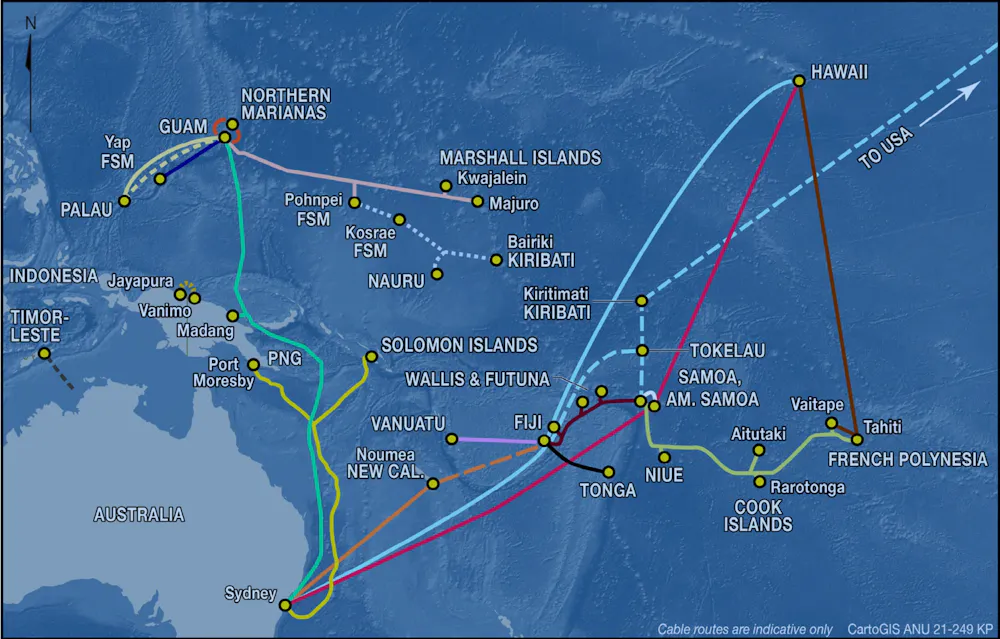
As activist and lawyer Mark P. Fancher observes, “resistance is global.” International solidarity among the oppressed has a long tradition and is gathering momentum based on the understanding there is one struggle for justice with many fronts. “No justice, no peace” is being heard around the world.

Roger D. Harris is Associate Editor at COHA and also part of the Task Force on the Americas, a human rights group working in solidarity with the social justice movements in Latin America and the Caribbean since 1985.

[Main photo-credit: Patricio Zamorano/COHA.org]

(Photo-credit: Patricio Zamorano/COHA.org)

Grattan on Friday: Labor party’s dirty linen on display at bad time for Anthony Albanese

Source: The Conversation (Au and NZ) – By Michelle Grattan, Professorial Fellow, University of Canberra

The notion that Nine’s 60 Minutes revelations about the appalling shenanigans of Victorian Labor power broker Adem Somyurek were a total surprise to ALP insiders deserves a horse laugh.

As one federal source says, anyone with any knowledge of the party’s factions knew this character ran the right in Victoria, based on branch stacks. It was one of those things treated as – well – normal.

But it apparently took journalist Nick McKenzie’s excellent public expose – with pictures, audio, and obvious political cost to Labor – to bring home to the insiders just how bad this was by any normal standards.

Daniel Andrews and Anthony Albanese were quick to react, and over two days state ministerial heads had rolled and the Victorian branch had been taken over by the Labor national executive and delivered into the safe hands of former premier Steve Bracks and former federal minister Jenny Macklin.

Problem smothered, Labor hoped.

Not exactly. This story was not just a drama but a thriller.

Somyurek was brought down by a sting carried out by surveillance, filmed and recorded in the office of Labor federal backbencher Anthony Byrne, who is more important than his status sounds because he’s deputy chair of the parliamentary committee on intelligence and security.

How the “hit” was organised remains unclear. What we do know is Somyurek and Byrne used to be “like brothers” (according to Somyurek), and then fell out, and now the former state minister is not just disgraced but under investigation by the authorities.

But the political death throes of a power broker can be ugly. Somyurek provided the media with a heap of fruity texts in which Byrne talked about wanting one Labor’s figure’s “head cut off” so he could “piss on his corpse”, as well as denigrating Andrews and Bill Shorten, and describing female figure as “dribbling shit”.

Then Somyurek looked into a camera and said “everything I know now about branch work, Anthony Byrne taught me”.

Byrne’s as yet unexplained role in the use of his office has brought into question whether he should retain the committee deputy chairmanship.

So far Albanese is backing him. Byrne has also been given a glowing personal reference by the committee’s Liberal chair, Andrew Hastie. Observers note Hastie and Byrne are joined at the hip on security issues, and, it seems, have drawn close at a personal level.

Asked about Byrne’s suitability, Morrison said, “it really is a test for Mr Albanese as to whether he believes that Mr Byrne should continue to serve on that committee”. Awkward.

The crisis has hit Albanese at the worst time – smack in the middle of the byelection in Eden-Monaro, a highly marginal Labor seat which he desperately needs to hold.

While the federal intervention was absolutely the right way to go, Albanese faltered somewhat in his responses during the week.

On Monday night – a full day after Sunday’s 60 Minutes – when he was asked in whose office the filming was done, Albanese told the ABC, “I’m not aware of all the details of that. That’s a matter for Channel Nine and 60 Minutes”.

Subsequently, he said he hadn’t talked to Byrne because the whole matter was being investigated by the Victorian anti-corruption body. By Thursday, after the Byrne texts has come out, Albanese said he’d “counselled” his federal MP about his language.

Albanese has over the years had a good record on the need for the party to be clean. But this week, while acting strongly for intervention, he also looked as though he was just trying to stay – publicly – as unengaged with the detail as possible.

The federal intervention, though the correct course, makes for a messy situation. The voting rights of party members have been suspended until 2023. All Victorian federal and state preselections in the hands of the national executive, cutting out the say of (legitimate) party members. And it’s unclear how the Victorian branch will be represented at Labor’s national conference, if the coronavirus allows it to go ahead at the scheduled time late this year.

Some point out Albanese might be encouraged by comparisons with Gough Whitlam’s moves against the Victorian ALP that culminated in its restructuring in 1970 (and helped Whitlam to power in 1972). The parallel is limited, however.

For one thing, Whitlam made party reform a long term cause; Albanese has reacted to specific crises, in both NSW (after the affair of the Chinese donor with his cash in the Aldi bag) and in Victoria.

For another Whitlam, in an era when the party organisation had much more control over policy, was pursuing a left wing union-dominated ideological clique in Victoria which was a handbrake on winning government. In this case, it’s the right involved, and no ideology.

For the moment, Albanese may be taking a small degree of comfort from the fact Labor’s latest scandal being in Victoria somewhat lessens the publicity impact in Eden-Monaro.

Against the background of COVID, the Eden-Monaro contest is being conducted in the strangest of circumstances, making it particularly difficult to get a readout on this marginal seat.

Scott Morrison still carries the baggage of his poor performance during the bushfires, which hit this NSW electorate hard, and the problems with the recovery. But he’s been boosted by his management of COVID, and the huge government spending is still cushioning to a degree the devastating economic impact.

On Thursday the jobs figures saw Australia’s unemployment jumping to 7.1%, with 838,000 the total jobs lost in two months. Morrison warned there would be “more in the months ahead”. Millions of people are being shielded through JobKeeper.

Polling in single seats is notoriously unreliable, and this contest is complicated by 14 candidates. But for what it’s worth an Australia Institute poll of 643 on Monday night found Labor ahead on the two-party vote, 53%-47%. Asked which of a list “is the single most important issue for the federal government”, a third of voters selected the economy and a quarter chose climate change.

The byelection stakes have become very high for Albanese. A defeat would lead to muttering within Labor; that in turn would exacerbate the problems he’s having cutting through.

Even now, eyes are watching shadow treasurer Jim Chalmers. A recent flattering profile of Chalmers drew internal attention, and the government is seeking to needle.

Although no one suggests losing Eden-Monaro would mean any immediate challenge to Albanese, some in Labor do believe it would significantly reduce his chance of taking the opposition to the election.

In preparing for that election, Labor could be running against the clock. While not due until early 2022, it could be late next year – which wouldn’t leave the opposition much time to find the stride it is missing at the moment.

ref. Grattan on Friday: Labor party’s dirty linen on display at bad time for Anthony Albanese – https://theconversation.com/grattan-on-friday-labor-partys-dirty-linen-on-display-at-bad-time-for-anthony-albanese-141075

Fighting fire with fire: Botswana adopts Indigenous Australians’ ancient burning tradition

Source: The Conversation (Au and NZ) – By Sam Johnston, Senior Fellow, University of Melbourne

Interest in Aboriginal fire knowledge has been high since last summer’s terrible bushfires. One initiative shows the huge potential benefits of this ancient practice – not just in Australia, but globally.

The International Savanna Fire Management Initiative (ISFMI) is taking the fire management techniques of indigenous northern Australians to the world. Recently, it’s reinvigorated traditional fire management in Botswana, in southern Africa.

Results so far show the Botswana project is likely to prevent significant amounts of greenhouse gases from entering the atmosphere, reduce destructive fires, promote a productive landscape, increase biodiversity and revive traditional culture.

Australia’s bushfire royal commission is currently looking at how Aboriginal knowledge can be incorporated into mainstream fire management. So let’s take a closer look at how it’s already working in Australia and abroad.

An example of traditional indigenous Australian burning. Warddeken Land Management

Reviving an ancient practice

Intense bushfires devastate ecosystems, biodiversity, human health, livelihoods and economies. Climate change will increase the severity, incidence and intensity of bushfires in many regions.

Over thousands of years, Aboriginal people in Australia have used fire to manage natural resources, and as an integral expression of culture.

Burning was often undertaken in the early dry season, when fires can develop gently and be easily controlled. Such burning removed fuels such as grass and leaf litter that might otherwise cause bigger fires. It also retains the canopy and other plant matter, and so preserves habitat for animals.


Read more: Our land is burning, and western science does not have all the answers


Over time, following the colonisation of Australia, indigenous land managers were forced off or left their traditional lands. Their absence has allowed large and intense bushfires in the late dry season to increase.

Traditional fire management techniques were first reintroduced at scale in Western Arnhem, in the Northern Territory, in 2007. Now there are 76 such projects – more than half either owned by, or significantly involving, an Aboriginal community.

Since the projects began, the total area affected by destructive wildfires has fallen. This reduces emissions because fires caused by cultural burning are less intense and extensive than large wildfires. This reduction is recognised by the federal government as carbon credits, generating more than A$90 million for communities so far.

Ranger Ray Nadjamerrek demonstrates early dry season burning techniques in West Arnhem. Warddeken Land Management

Exporting Indigenous know-how

The initiative focuses on fire-prone savanna landscapes which globally account for more than 60% of carbon emissions from fire each year. Principally funded by the Department of Foreign Affairs and Trade, it comprises an active network of indigenous organisations, traditional owners and experts.

Botswana was the first site to prove that transferring this knowledge is possible. Among the reasons it was chosen were its savanna landscapes and a tradition of fire management by its own indigenous people.

The first ranger exchange took place in May 2019, when Indigenous rangers from Northern Australia travelled to Botswana at the invitation of the Botswanan government.


Read more: A surprising answer to a hot question: controlled burns often fail to slow a bushfire


In savannas outside the town of Maun, Botswanan firefighters pitted their controlled burning skills against Australia’s indigenous rangers.

The Botswanans applied European-style fire suppression techniques they’ve adopted over the years. This involved fire trucks and 30 people. They ignited the windward side of their area, let the fire race through and then extinguished the flames.

It was 38℃, the wind was strong and the bush was dry. It was no surprise the fire was intense and all that remained was a charred landscape.

In contrast, two Australian indigenous rangers used hand-held devices called drip torches to weave a path of fire through their area. Their block was gently burnt using the wind, the bush and their skill – clearing out undergrowth and leaving green-topped trees.

Cultural fire leader Otto Champion from Arafura Swamp Rangers, and Bayo Taylor from Karajarri Rangers, demonstrating cultural burning In Botswana. ISFMI

The demonstration emphatically convinced the 300 spectators, who comprised most of Botswana’s firefighting community, that the skills of Australia’s indigenous rangers were effective in Botswana’s savannas.

Indeed, the techniques used by the visitors are not dissimilar to traditional Botswanan fire methods. The common ground was reflected when the two groups exchanged almost identical fire sticks when the rangers visited a nearby community.

Last year, Botswana sent a delegation to Northern Australia to learn more about the techniques.

At pilot sites in Botswana, the communities, indigenous rangers and local fire managers are now experimenting with reinvigorating traditional fire techniques.

Cultural fire leader Otto Champion from Arafura Swamp Rangers exchanging fire sticks with Oabatsha community leaders. ISFMI

Lessons learnt

The degradation of savanna landscapes in Australia following colonisation is replicated around the world.

Globally, bushfire management is dominated by the concept of fire suppression rather than prevention. Fighting fire with fire seems counter-intuitive to many people. But the Botswana experience shows these attitudes can be changed quickly.

Another key lesson is that convincing people and communities to use traditional fire techniques requires real-life demonstrations. Trying to make the point through lectures, simulations and written material has limited impact.

And creating networks is essential to connect the few experts and limited resources. Knowledge of traditional fire management around the world is scarce, and experience even more so. In Botswana for example, only a few community elders still have this knowledge.

The indigenous Australian rangers quickly convinced Botswanans of the merit in their fire methods. ISFMI

The experiences also show scale is key. A couple of small sites, with a few local people involved, is not enough to manage wildfires effectively.

Beyond Botswana

The initiative has demonstrated how Northern Australia-style traditional fire management will be useful in other savanna environments around the world

We are now working on expanding this Australian technology to other promising sites in Angola, Namibia, Zambia, Zimbabwe, Mozambique, Brazil and Timor Leste.

Many other countries are interested in adopting these techniques. New funding, including from the private sector, is needed to scale up traditional fire management internationally.


Read more: Australia, you have unfinished business. It’s time to let our ‘fire people’ care for this land


The following people made important contributions to this article:

– Nolan Hunter, CEO, Kimberley Land Council

– Dean Munuggullumurr Yibarbuk, Warddeken Land Management

– Rowan Foley, CEO, the Aboriginal Carbon Foundation

– Cissy Gore-Birch, Executive Manager Aboriginal Engagement, Bush Heritage Australia

– Professor Jeremy Russell-Smith, Charles Darwin University

– Professor José M.C. Pereira, University of Lisbon

– Professor Guido van der Werf, Vrije Universiteit

ref. Fighting fire with fire: Botswana adopts Indigenous Australians’ ancient burning tradition – https://theconversation.com/fighting-fire-with-fire-botswana-adopts-indigenous-australians-ancient-burning-tradition-135363

Retail won’t snap back. 3 reasons why COVID has changed the way we shop, perhaps forever

Source: The Conversation (Au and NZ) – By John Daley, Chief Executive Officer, Grattan Institute

It’s wrong to expect a “snap-back” at shopping centres, food courts, cinemas and other places where people used to gather to spend money.

We’ve identified three reasons why spending in physical stores on goods like clothes is likely to remain much lower than it was for a long time.

1. Fear, much of it age-based

First, even when governments relax restrictions, lots of people will still be worried and will go out less. Unless there are zero cases for several weeks in a state or city, many people will remain reluctant to go out.

This is why we have previously argued that there is a big dividend in eliminating COVID-19 in the style of New Zealand, the Northern Territory, and South Australia, rather than bumping along with “suppression” – and several new locally-acquired cases a day – as Victoria is still doing.

This reluctance to go out and spend, irrespective of government restrictions, could be seen in Australia before government restrictions were imposed, as shown on the “Consumers and mobility” tab of the Grattan Econ Tracker.


Read more: New Zealand hits zero active coronavirus cases. Here are 5 measures to keep it that way


The effects of fear shouldn’t be underestimated.

Spending in Sweden has fallen almost as much as in Denmark, even when Denmark was in lockdown and Sweden had minimal restrictions. Swedes are afraid to go out, particularly if they are old.

Spending by people aged 70+ has fallen further in Sweden than in Denmark, and 60-69 year-olds have cut their spending by about the same amount in both countries.

This isn’t surprising. COVID-19 is much more deadly for older people.

Age-based fear is a challenge for retailers because older households now spend significantly more than younger households. 25 years ago it was the other way around.

2. Time to form new habits

Second, we are likely to keep spending on different things, and using different channels, even after restrictions are lifted.

Habits tend to form when behaviour changes consistently. They strengthen over time, and are particularly sticky once behaviour has been consistent for a period of months – and we’ve been living with lockdown for that long in Australia.

Once formed, the new habits can persist unless there is another shock.


Read more: Australia’s drive-ins: where you can wear slippers, crack peanuts, and knit ‘to your heart’s content’


Australians have become used to doing more of their purchasing online. They have become used to spending more on living comfortably at home, and less on clothes for the office and to go out.

After the shutdown, people are likely to continue to work from home more often.

The habits of shopping remotely, and spending more on home furnishings and less on clothes, are likely to continue, and they would be likely to continue even if COVID-19 vanished tomorrow.

3. Global recession

Third, irrespective of COVID-19 regulations and behaviours, we are heading into an “old-fashioned”, globally synchronised, deep recession.

For the moment, JobKeeper, the temporarily-boosted JobSeeker payment, and a recent bounceback, have resulted in spending on credit and debit cards a bit more than this time last year.

But unemployment jumped to 7.1% on Thursday. That official rate understates how bad things are.

In May an extra 227,700 Australians lost their jobs (on top of 607,400 in April).

But only 85,000 of them were counted as unemployed. When and if the bulk of those people look for work, the unemployment rate will climb further.


Employed Australians, total

Includes Australians regarded as still employed because they are on JobKeeper. ABS 6202.0

After JobKeeper ends in September (or is phased out as a result of the government’s review) many of the three million people on it will also become counted as unemployed.

Australians who have lost their jobs are likely to spend less than they did before.

After each of the previous two recessions it took years for employment to recover.

Spending need not recover after COVID

These three factors – fear, new habits, and recession – are present in countries and regions that seem to be well clear of coronavirus.

Much of China has been free of most government restrictions for months. Manufacturing and infrastructure spending has largely returned to pre-COVID levels.

But consumer activity is still below pre-COVID levels, and it is inching up only slowly.


Read more: The economy in 7 graphs. How a tightening of wallets pushed Australia into recession


Australia might well see an “opening party” on the day each particular COVID-19 restriction is lifted.

But after that, the best guess is that consumer spending will remain very subdued and refocused for a long time.

For those in the hardest-hit sectors and regions – particularly arts and recreation, hospitality, and clothing – the pain will continue long after the restrictions are lifted.

ref. Retail won’t snap back. 3 reasons why COVID has changed the way we shop, perhaps forever – https://theconversation.com/retail-wont-snap-back-3-reasons-why-covid-has-changed-the-way-we-shop-perhaps-forever-140628

NZ’s covid-19 border botch-up: ‘Next few days will be crucial’

COMMENT: By Jane Patterson, RNZ News political editor

Public confidence in New Zealand’s border controls has been shattered.

The obvious anger of the prime minister when talking about the latest border bungle shows that goes right to the top.

The fate of Health Minister David Clark and potentially Director-General of Health Dr Ashley Bloomfield hang in the balance, having ultimate responsibility for putting the rules in place, and making sure they’re followed.

READ MORE: ‘Raise our game’ warning on NZ border

The case of the two women returning home to see a dying relative that were allowed to leave managed isolation without being tested has laid bare fundamental failings in the way the most high-risk people in the country have been managed.

New Zealanders were assured border controls would be beefed up even more after moving into level 1 – those in managed isolation and quarantine would be tested on day 3 and day 12, and no-one would be given exemption to attend a funeral.

– Partner –


We know now that at least on one occasion that testing did not happen – and it was only because two positive tests were returned this even became known.

It’s a confronting wake-up call that New Zealand is still vulnerable and the dreaded “second wave” could still happen. The government has defended the times it has acted with caution to avoid going back into lockdown, the worst case scenario for an economy already plunging into recession.

‘Kiss and cuddle’
The handling by ministers and officials has not helped; strong initial assurances the women had no close contacts during the drive down the North Island only to be proven wrong by National’s Michael Woodhouse – what would in normal times be an uncontroversial social interaction a “kiss and a cuddle” – now a matter of great political debate.

That contact – still described as “fleeting” – has created even more risk of the virus spreading with more people coming forward by the hour.

The two women though should not be demonised, they followed the rules and by all accounts tried to do all that was expected of them after being granted the exemption to travel to Wellington.

But their case has unleashed even more stories about people in quarantine asking for tests and not getting them, large groups allowed to attend a funeral in contravention of the rules and people given leave to go a funeral taking off and having to be tracked down by authorities.

Composite image - David Clark and Ashley Bloomfield
Health Minister David Clark (left) and Director-General of Health Ashley Bloomfield. Image: RNZ

These are all an indictment of the system New Zealanders have been assured will protect them at the most vulnerable point – the border.

Attendance at funerals in particular has been a pressure point all the way through. Officials were roundly criticised for taking a hard line but had to take another look after a High Court decision questioned the approach being taken and there did seem to have been more of a willingness to allow people to attend – up until the rules were changed again on June 8.

Testing for all arrivals was only made compulsory that same day.

Problems are broader
However the problems are broader than whether people have been tested according to the protocols; there are also serious questions around the laxity of enforcement around quarantining and managed isolation with reports of people mingling with the public on supervised walks and even staff of the Chief Ombudsman needing tests after unexpectedly finding themselves “mingling” with people in a hotel lobby who were supposed be in isolation.

The border was first closed on March 19 and there were problems from the start.

Cabinet Minister Jenny Salesa was dispatched to Auckland International Airport after reports the advice and direction from officials about self-isolating was a shambles, followed later by an admission from police they were not carrying out the checks on people trusted to self-isolate after arriving from other countries.

At that time the government was overwhelmed by the sheer numbers of New Zealanders arriving home, but no such excuse now.

The prime minister’s answer is to bring in the military and bring some organisational discipline and resource to the regime, led by Air Commodore Digby Webb.

However, RNZ understands defence personnel have already been involved in quarantining as part of the operations command centre under former Police Commissioner Mike Bush, including someone from Defence managing one of the hotels being used.

Bringing in the military to manage or exert any kind of control over a civilian population could cause alarm but they’ve been brought for their logistical skills, and the ability to bring in plenty more manpower if needed, not to impose law and order. Appointing Air Commodore Webb to not only run the show but to rake back over what had already happened is a clear vote of no confidence in the health officials.

The next few days will be crucial. Testing and contact tracing that will be frantically happening should give us a better idea of whether this is limited to just the two women, or if the failures at the border are going to have more wide-reaching consequences.

  • This article is republished by the Pacific Media Centre under a partnership agreement with RNZ.
  • If you have symptoms of the coronavirus, call the NZ Covid-19 Healthline on 0800 358 5453 (+64 9 358 5453 for international SIMs) or call your GP – don’t show up at a medical centre.
  • Follow RNZ’s coronavirus newsfeed
Print Friendly, PDF & Email

Article by AsiaPacificReport.nz

EJN teams up with PMC’s Pacific Media Watch on new climate project

By Sri Krishnamurthi, contributing editor of Pacific Media Watch

In an innovative new development Internews’ Earth Journalism Network (EJN) will partner with the Pacific Media Centre on a “climate and covid” project to help improve and enhance the quality of environmental and reporting in the Pacific region.

In a move that could signal future partnerships with New Zealand Pasifika groups, the 12,000-member organisation working in 180 countries is fast growing in response to the need for more in-depth sustainable development and environmental reporting.

“Building on EJN’s work in the Asia and the Pacific Region, the EJN Asia-Pacific project aims to improve the quantity and quality of environmental coverage in the region, thereby contributing to the capacity among local and regional actors to promote greater accountability and sustainable development in relation to the environment and climate in Asia and the Pacific,” says Imelda Abaño, who is content coordinator Philippines and Pacific content coordinator for EJN’s Asia-Pacific project.

READ MORE: InfoPacific – the geojournalism project

CLIMATE AND COVID-19 PACIFIC PROJECT

“We wanted to build and achieve this with the Pacific Media Centre (PMC) and the Pacific Media Watch (PMW) freedom project.

“Under the remit of our EJN Asia-Pacific project, we are open to partnership with New Zealand-Pacific groups and any media and journalists network groups that provide environmental news and information to communities in the Pacific Island and Asian countries,” she says.

– Partner –

Significant step forward
Professor David Robie, director of Auckland University of Technology’s PMC, welcomes the partnership grant, saying: “We welcome this joint ‘Climate and Covid-19’ project as a significant step forward in our Asia-Pacific collaboration projects.

“The Pacific Media Centre has had long-standing initiatives with journalists and journalism schools, especially at the University of the South Pacific, such as the Bearing Witness climate change project and Pacific Media Watch.

“But now we’re delighted to be teaming up with Internews-Earth Journalism Network (EJN), one of the leaders in environmental and climate justice reportage to provide some well-researched articles and multimedia for our diverse Pacific communities across the region.

“We will gain much too from their expertise and experience,” he says.

EJN
EARTH JOURNALISM NETWORK

With many media companies across the globe the impact on climate change reporting, environmental reporting, and covid-19 coronavirus pandemic reporting is being heavily felt.

“In our present situation, media outlets have fewer resources and less time to report on environmental issues,” Abaño says.

Internews
INTERNEWS

“The editors are not assigning journalists to travel and report directly from the communities who are facing the brunt of sea level rise or displaced due to hydropower development and are reliant on press releases and politicians’ speeches for their stories.”

EJN team
Pacific content coordinator Imelda V. Abaño (centre in blue top) with Pacific journalists at an EJN environmental workshop in Suva in 2018. Image: EJN

Worldwide attention on wet market risks
However, if there is a silver lining to the covid-19 pandemic, it is that it has drawn worldwide attention to the Chinese wet markets.

“It has helped to draw worldwide attention to wildlife trade and prompted China to ban wildlife markets and use of pangolin in medicines,” Abaño says.

EJN’s Imelda V. Abaño … The project “has also generated media coverage that examines the tight links between human, animal and environmental health.” Image: EJN

“It has also generated media coverage that examines the tight links between human, animal and environmental health, such as the clean air many cities are experiencing during the lockdown period, how countries can ‘build back better’ and adopt more sustainable development measures, and covid-19’s implications on the world’s struggle with climate change,” the award-winning journalist says.

She was asked by Pacific Media Watch for her opinion on what was perceived to be the predominant threats to climate change, environmental, and covid-19 reportage in the Asia-Pacific region.

“The Internews’ tagline is ‘Information Saves Lives’ and at EJN we believe that timely, accurate and actionable information from trusted sources is crucial for people making important life decisions to address climate change and other environmental threats as well as covid-19,” she says.

“Environmental threats like climate change, biodiversity loss, energy transition, are often considered “slow moving” crises (unlike the covid-19 pandemic) that do not generate as much public interest until they lead to a disaster,” says Abaño.

Abaño has been covering climate change, energy, agriculture, biodiversity and other environmental issues for more than 18 years. She is also founding president of the Philippine Network of Environmental Journalists says.

EJN workshop
Pacific journalists at an EJN workshop. Image: EJN

Among Pacific journalists involved in EJN is Priestley Habru, content coordinator for the Solomon Islands. He is responsible for helping implement EJN activities and projects in the region.

Priestley Habru, content coordinator for the Solomon Islands … helps implement EJN activities and projects in the Pacific. Image: EJN

Habru also currently writes and edits news with specific interests on the environment, health and gender issues.

Disinformation an environmental threat
“Environmental issues are also often technical by nature and the knowledge on these issues is still evolving,” says Amy Sim, EJN Asia-Pacific programme manager.

“Disinformation and misinformation is another threat to environmental reporting. With rumours and falsehood being peddled so casually and widely on social media as well as mainstream news, it is critical for science-based environmental reporting to find ways to rise above the noise and distractions and reach the general public.

“There is always a need for more, higher-quality reporting about the environment, more so during a pandemic,” she says.

EJN for its part is working on developing those much-needed skills sets and training for data journalists and investigative reporting.

“We have webinars focused on coronavirus and climate change; tools to help fact-check and combat misinformation; tools to report remotely and reach new audiences, for instance through engagement or podcasting; financial support, both for individual journalists and media outlets as a whole; safety tips and psychological support; and access to new research and experts,” Sim says.

“It has always been Internews-Earth Journalism Network’s goal to empower and support journalists from developing countries, including those in the Pacific Region, to cover the environment effectively.”

EJN started working in the Pacific in 2017. In that year, climate change and oceans reporting training began with Pacific journalists and the Pacific Environmental Geo-journalism website, Infopacific, was launched.

Pacific environmental network
In 2018, EJN helped establish the Pacific Environment Journalists Network through a sub-grant, and organised a training workshop with local journalists and experts at the Pacific Media Summit in Tonga.

Then last year to the present day, EJN has partnered with the South Pacific Regional Environment Programme (SPREP) and Pacific Islands News Association (PINA) on several climate change workshops for journalists in the Pacific.

EJN has also supported the Climate Change Reporting Project of journalism students of the University of the South Pacific in Suva, Fiji.

“Through this project, selected journalist students traveled to the Solomon Islands to interact with climate vulnerable communities and report first hand on how they are coping with and adapting to climate change. Their stories have been published as a special report by Wansolwara and other Pacific media,” says Abaño.

“This project will bring another batch of students to the Cook Islands later this year to do another round of climate change reporting,” she says.

EJN has also delivered a mobile journalism training to more than 200 journalism students of the USP and this year, they looking to intensify their work in the Pacific region.

“We will partner with USP again on an environmental journalism training workshop for journalism students,” she says.

EJN story grants
EJN has also awarded story grants to six journalists following a competitive call for story pitches opened to Pacific journalists.

Those six Pacific Journalists are Stanley Simpson, Sheldon Chanel, Luke Rawalai (Fiji), Benjamin Kedoga (PNG), Alfred Evapitu and Charles Piringi (Solomon Islands).

They are also looking at partnering with PINA this year for a biodiversity reporting workshop for journalists in the Pacific as well as for the management and content production for the Infopacific website.

These are projects are in addition to the annual region-wide story grants, organisation grants and fellowship opportunities available to individual or group of journalists across the Asia and Pacific region.

Print Friendly, PDF & Email

Article by AsiaPacificReport.nz

- ADVERT -

MIL PODCASTS
Bookmark
| Follow | Subscribe Listen on Apple Podcasts

Foreign policy + Intel + Security

Subscribe | Follow | Bookmark
and join Buchanan & Manning LIVE Thursdays @ midday

MIL Public Webcast Service


- Advertisement -
- Advertisement -
- Advertisement -
- Advertisement -
- Advertisement -